
When Mazda introduced the MX-30 small crossover to its already comprehensive small vehicle family in March 2021, it wasn’t immediately obvious how it fitted in. With the CX-3 looking after the compact SUV crowd, the Mazda 3 taking care of the hatchback audience and the CX-30 filling in any gaps between them, how could the mechanically almost identical MX-30 find any attention at all?
Aside from an extremely mild hybrid system, it’s mechanically very similar to the 2021 Wheels Car of the Year, while its exterior design is mould-breaking in some respects but practicality-compromising in others. And if that wasn’t challenging enough, the MX-30 comes at a price premium to its CX-30 sibling.
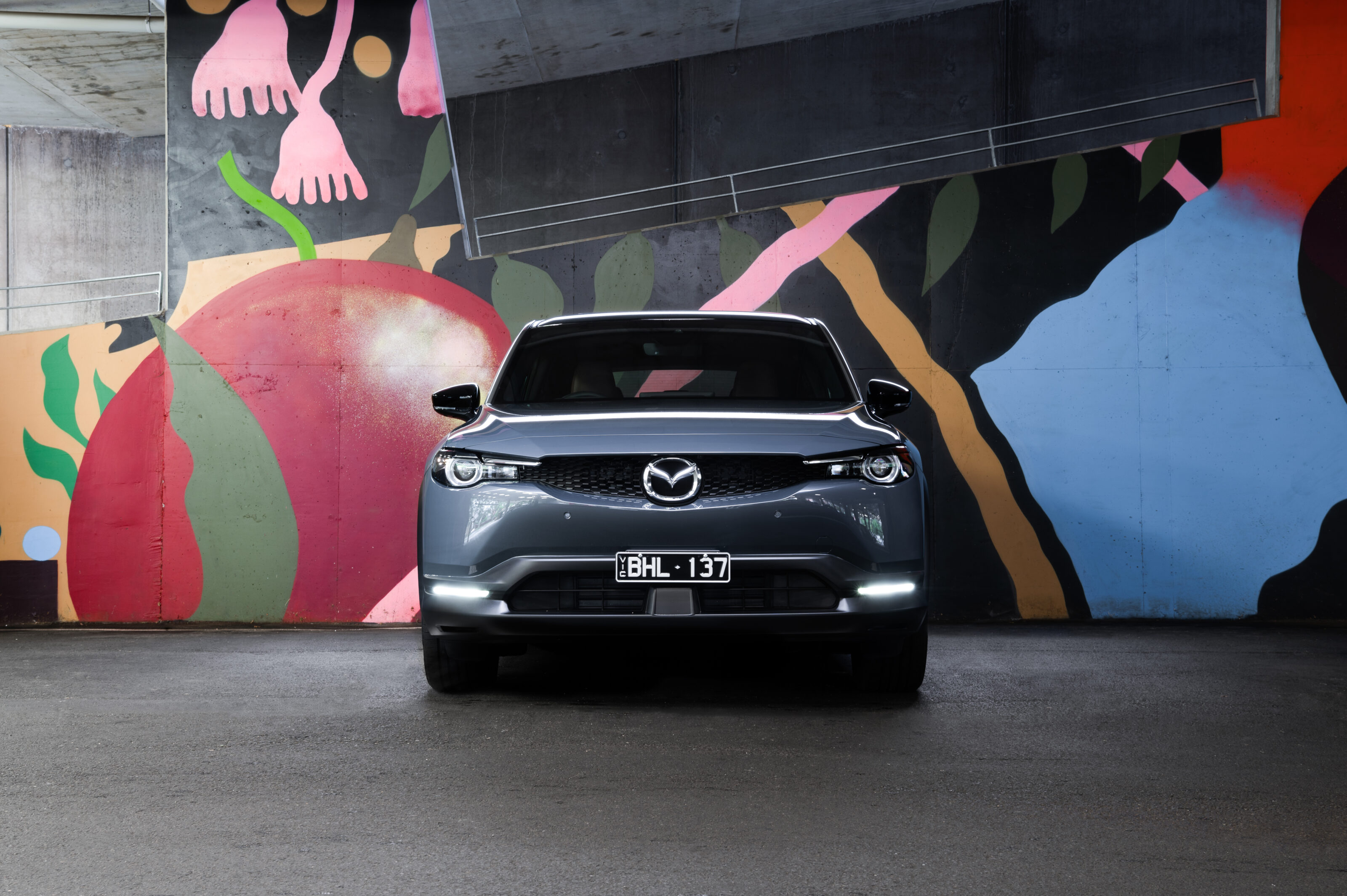
However, the petrol-powered MX-30 was arguably acting as a scout sent to prepare the ground for the main event that is the introduction of Mazda’s first pure-electric vehicle – the MX-30 E35 Astina.
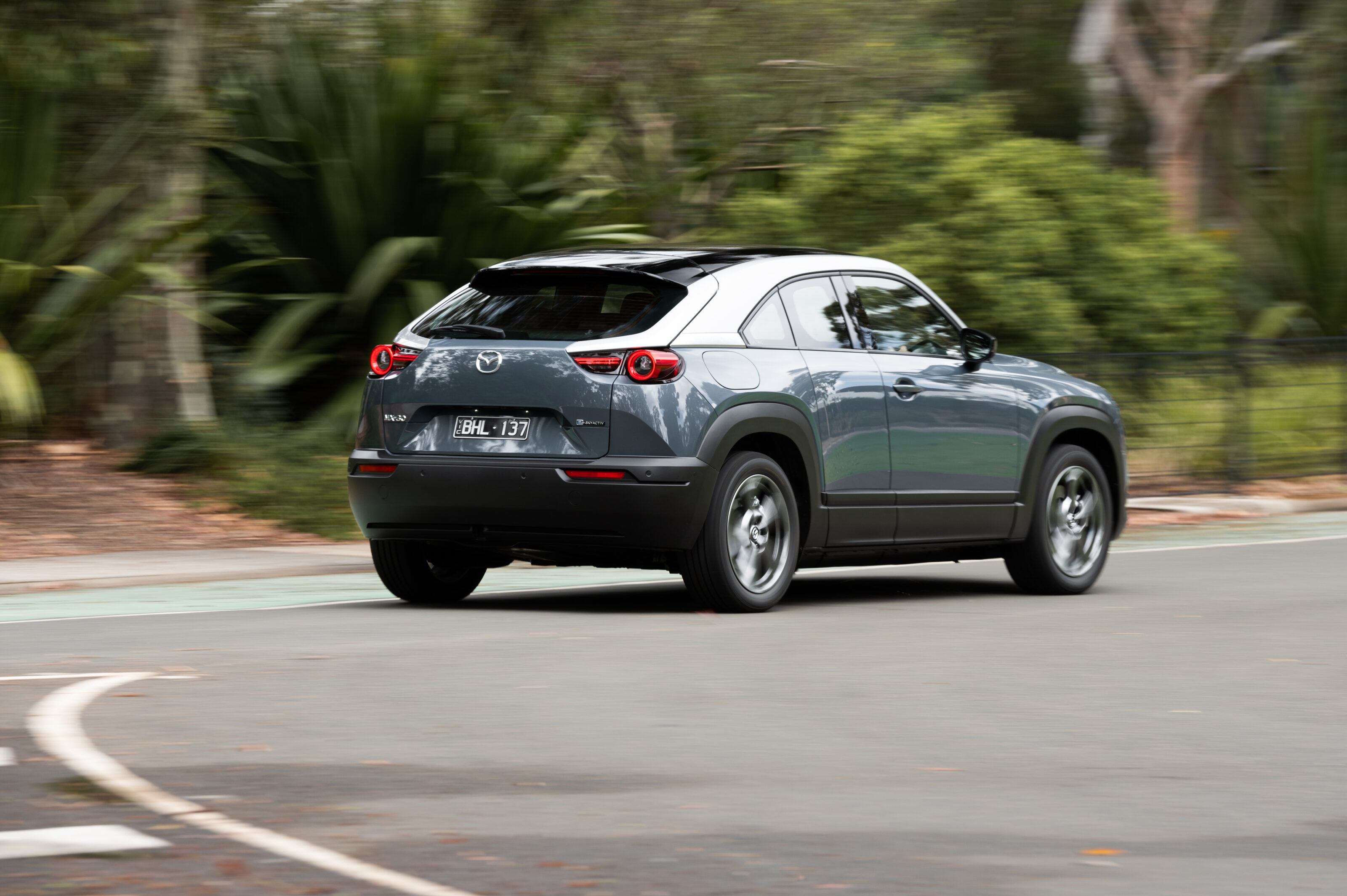
While the petrol versions broke little new ground beyond their attractive façades and interesting interior approach, the newest offering keeps the promises that its radical exterior design made when it was first unveiled.
The MX-30’s shell features the biggest evolution of (or perhaps departure from) Mazda’s Kodo design language yet, with three-tone colour schemes, points chamfered from the signature grille, heavily sculpted light clusters and a nod to the iconic RX-8 with ‘freestyle’ (read: suicide) rear doors.
But the battery-electric drivetrain now found in the flagship E35 Astina is the true gem of the model line.
It pairs a 35.5kWh lithium-ion battery with a single AC synchronous motor on the front axle for a simple but elegant package. Figures on paper are not record-breaking with 107kW and 271Nm but its relatively small battery and motor only adds around 160kg to the petrol version’s kerb weight for a total of about 1650kg.
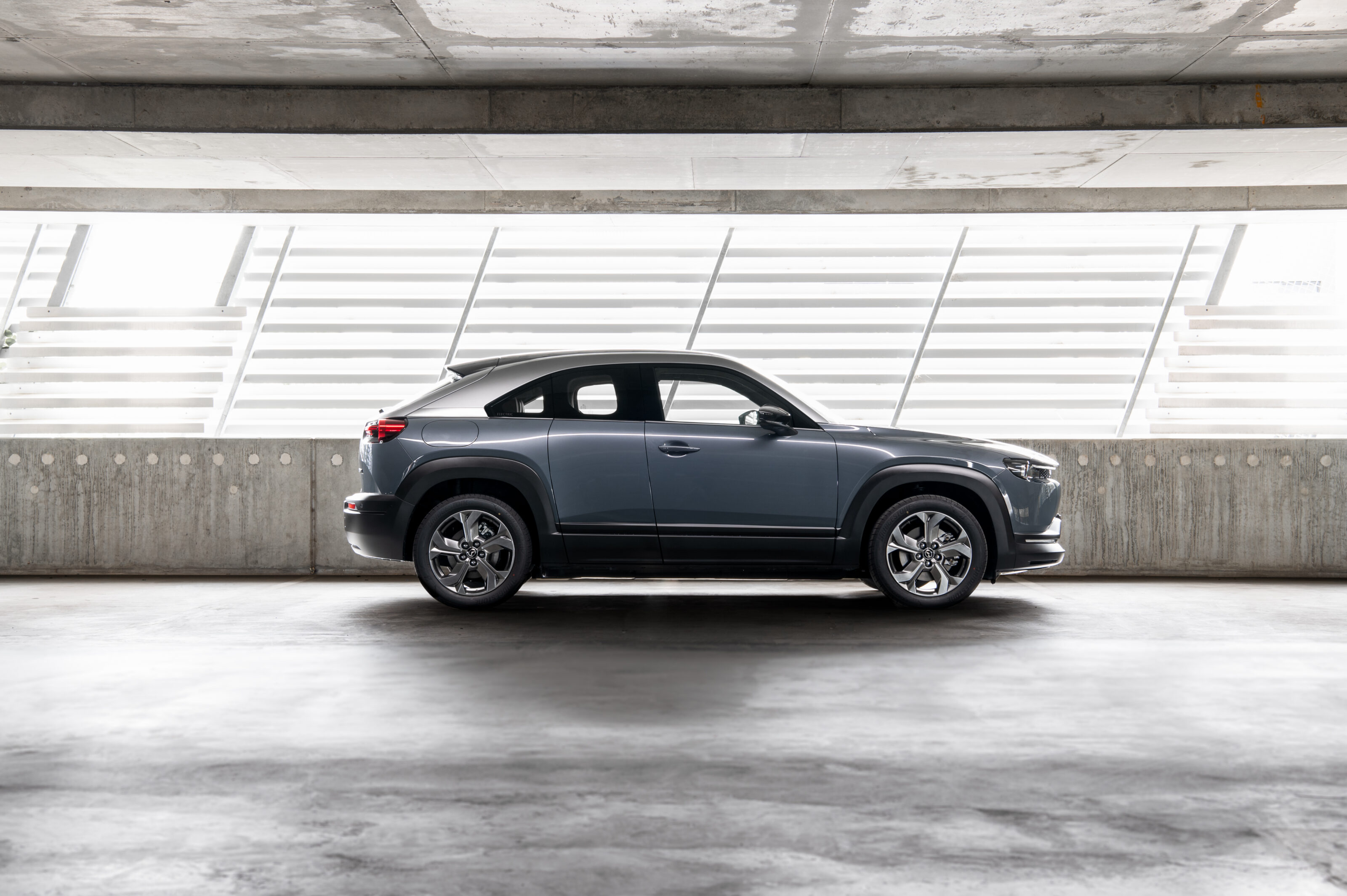
Chuck the keys to an Uber Eats driver and the electric MX-30 would be the end of cold tacos and soggy burger buns
That’s relatively hefty for a small crossover but not for an electric small crossover and that translates to surprising if not incendiary performance. Pin the quiet pedal from standstill and the MX-30 is eager to respond with strong acceleration and will even occasionally chirp the front tyres. There’s less muscle for acceleration at speed but the rapid throttle response is typically EV-sharp in nature.
It’s really the torque figure that has the most influence on the Mazda’s performance, especially when negotiating inner-city traffic where you can also play with the five-level regenerative braking.
In the highest setting, the regen effect is not quite as aggressive as some other EVs such as the Jaguar I-Pace or BMW i3 nor is it quite calibrated for true one-pedal driving, but still efficient enough to maximise battery range.
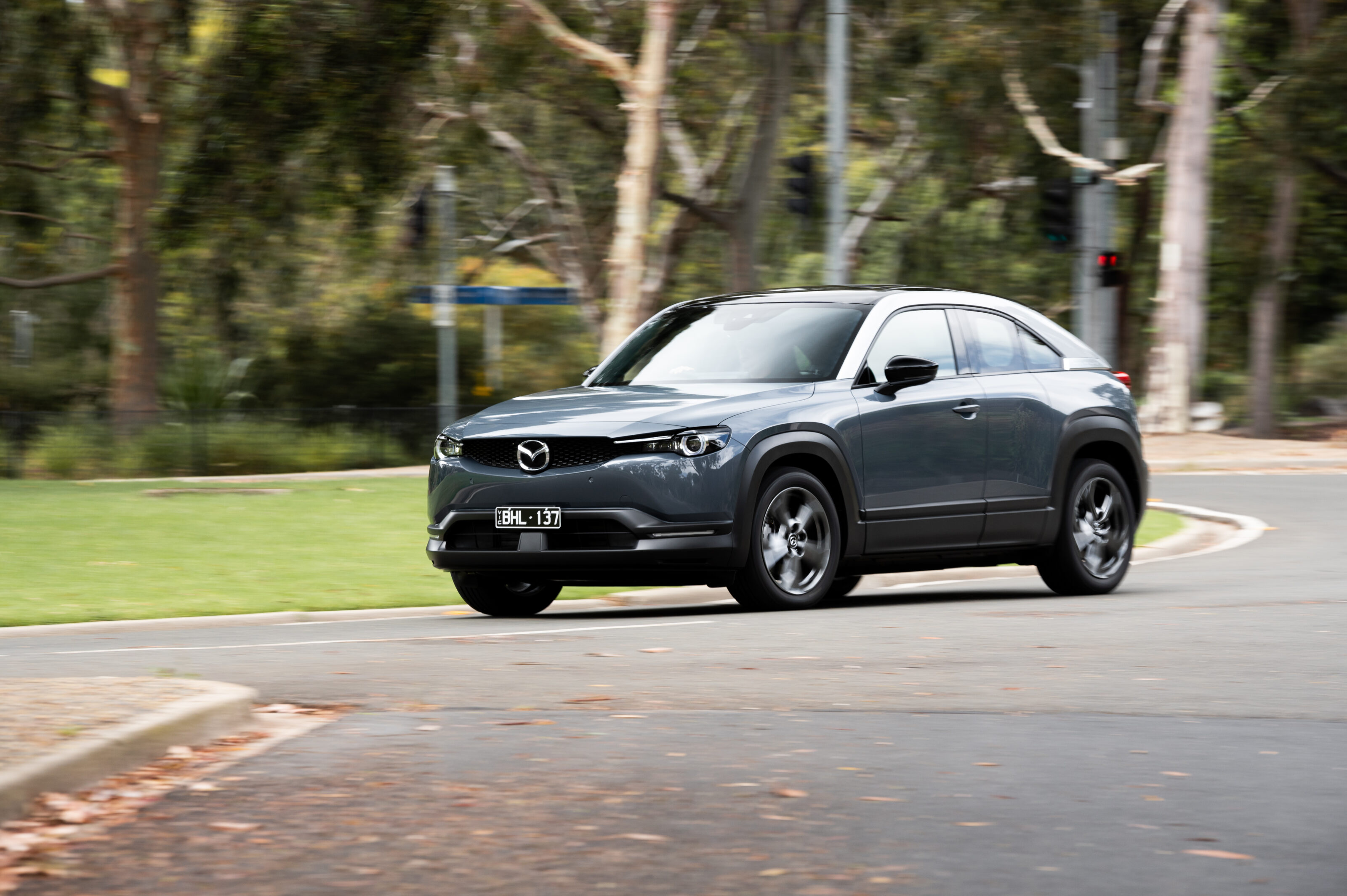
The two coasting modes at the opposite end of the spectrum are arguably even more interesting, creating an eerie but likeable frictionless glide. Both modes will boost battery life depending on the driving style and conditions and, in the middle setting, the MX-30 will behave in a more orthodox manner.
When you have to rely on the brake pedal during more enthusiastic driving the feel is atypically progressive, confident and lacks much of the soggy bounce that’s felt in some other EVs.
The chassis is equally rewarding, the additional weight positioned low down where it helps adds a sense of stability and sure-footedness. As well, the weight feels equally distributed and there’s a surprising resistance to understeer with heaps of front-end grip.
Coupled with a sharp and fast steering tune, the E35 is certainly the pick of the MX-30 range for drivers that like to drive, especially if a majority of their driving duties happen in suburbia.
Its small proportions are a hoot to muscle through city traffic and it’s most at home among the skyscrapers and hook turns of Melbourne CBD. Chuck the keys to an Uber Eats driver and the electric MX-30 would be the end of cold tacos and soggy burger buns.
There’s virtually no electric motor whine on acceleration so Mazda engineered a synthetic noise that’s fed into the cabin via the stereo under load for a distinctly Jetsons report. There’s no low-speed noise produced on the outside a-la Hyundai Ioniq or Mini Cooper SE, which makes my favourite pastime of sneaking up on pedestrians in car parks an absolute breeze.
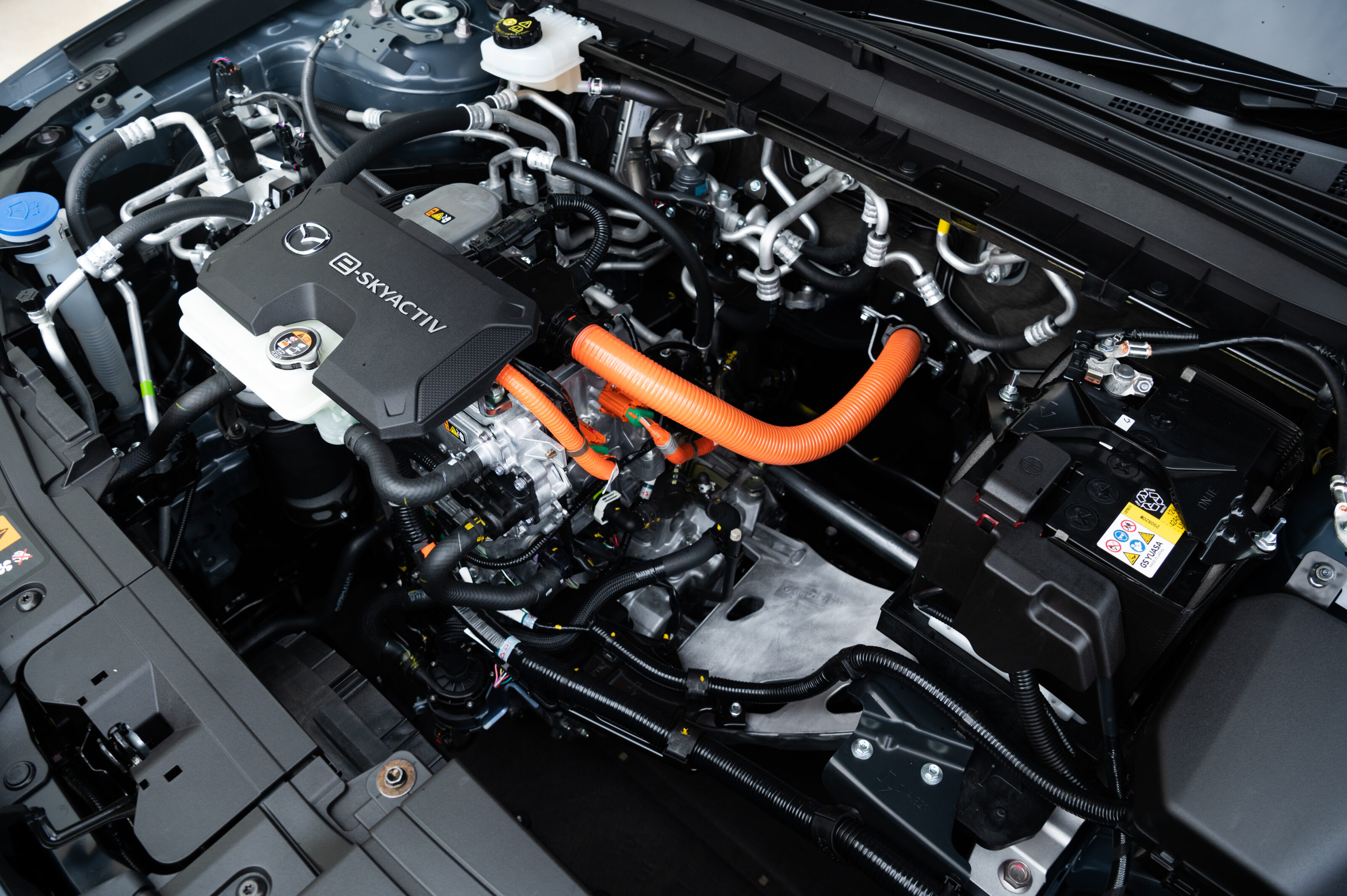
Beyond the involving dynamics, smooth electric drive, and unique design, there’s an intangible charm and personality to the electric MX-30. Perhaps it’s a combination of the risky styling and zero-emissions drivetrain but the E35 has a confidence about it that the G20e doesn’t exude.
Add to that the same range-topping level of equipment you get in the equivalent petrol MX-30 and a boot that only sacrifices six litres of space at 311L. Unfortunately, the front-drive electric powertrain occupies all the under-bonnet space so there are none of the extra front storage advantages you find in some other EVs.
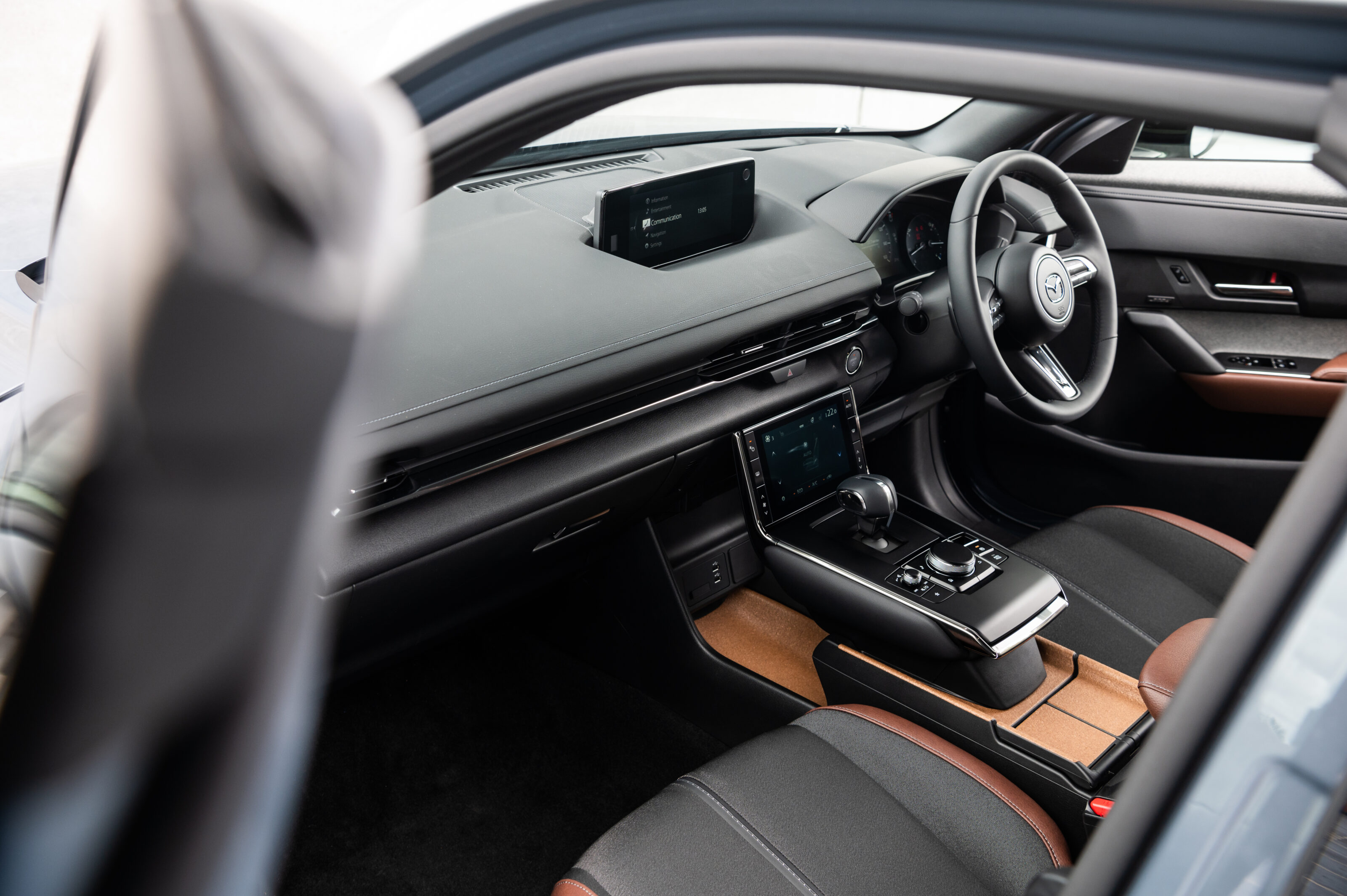
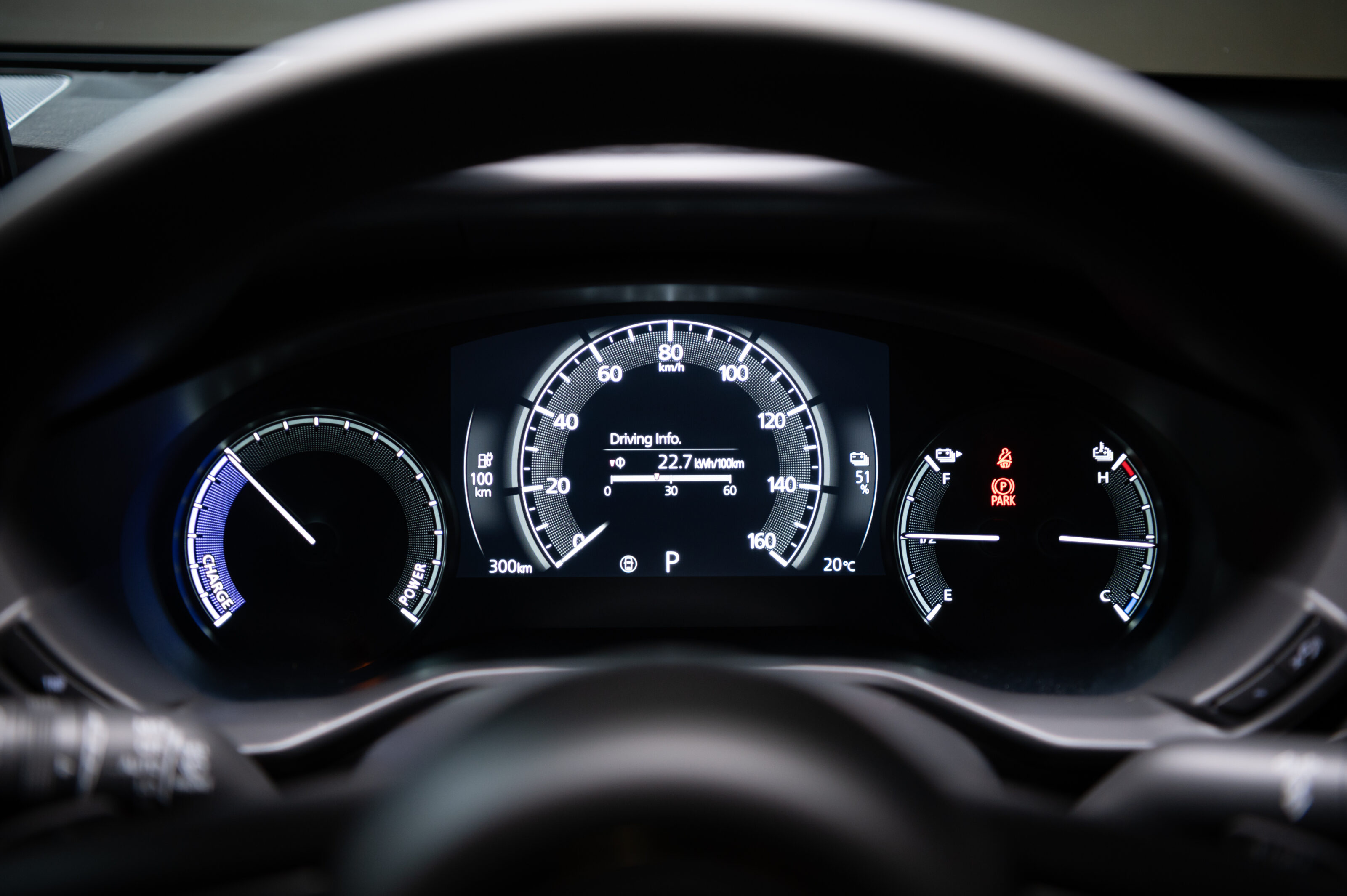
Standard kit highlights include 18-inch alloy wheels, glass sunroof, Bose sound system, adaptive LED headlights and an 8.8-inch central digital display, complemented by a fully digital touchscreen for the climate and comfort settings as well as a 7.0-inch digital display for the driver’s information.
And with an abundance of electricity at its disposal, the E35 has electric almost everything. The steering wheel and front seats are heated while the driver’s seat is 10-way electrically adjustable.
A relatively short range of 224km on a full charge may put off some interested parties but it’ll probably be ample for a majority of city dwellers. That said, if you feel like leaving the big smoke behind you, it’s enough to make a return journey from Melbourne to Ballarat or Sydney to Bowral, for example.
Charge times are correspondingly short with a full charge possible in a little over half an hour with a high-power 50kW charger.
But all of this comes at a price and the new flagship of the MX-30 range will set you back $65,490 before on-road costs, which creates a bit of a sticking point.
Compared with other EVs, that sticker price isn’t wildly out of line, but it is when you compare battery sizes. Nissan’s Leaf E+ costs about the same but its 62kWh battery will go nearly 400km, while Tesla’s base Model 3 has a relatively huge 450km range for about $65,000. Hmmm.
Interestingly, Mazda had the option to bring in a less generously equipped E35 that would have commanded a cheaper price but opted for the Astina grade in a bid to align its electric strategy with the premium end of its product offering, rather than the more affordable point.
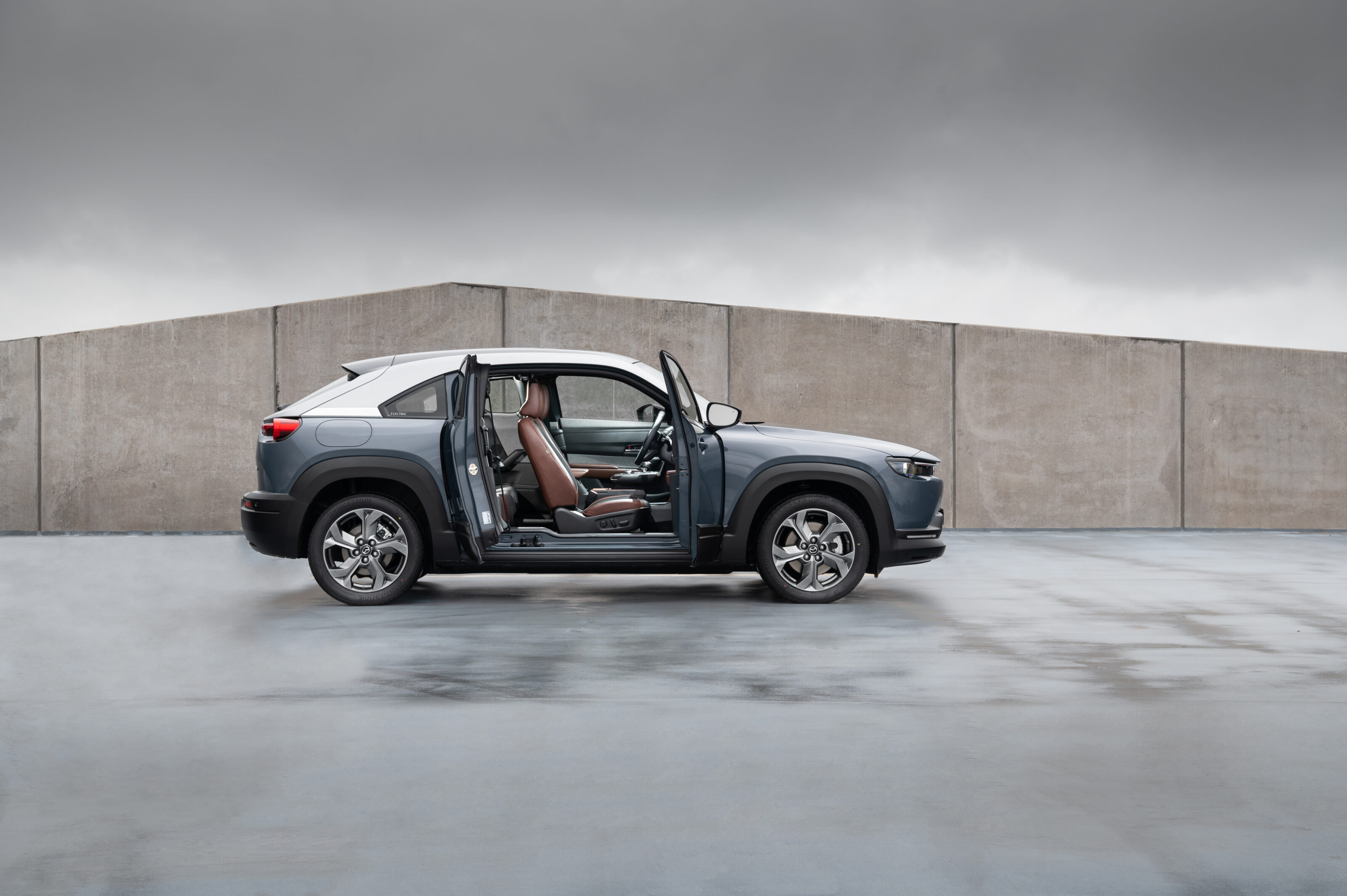
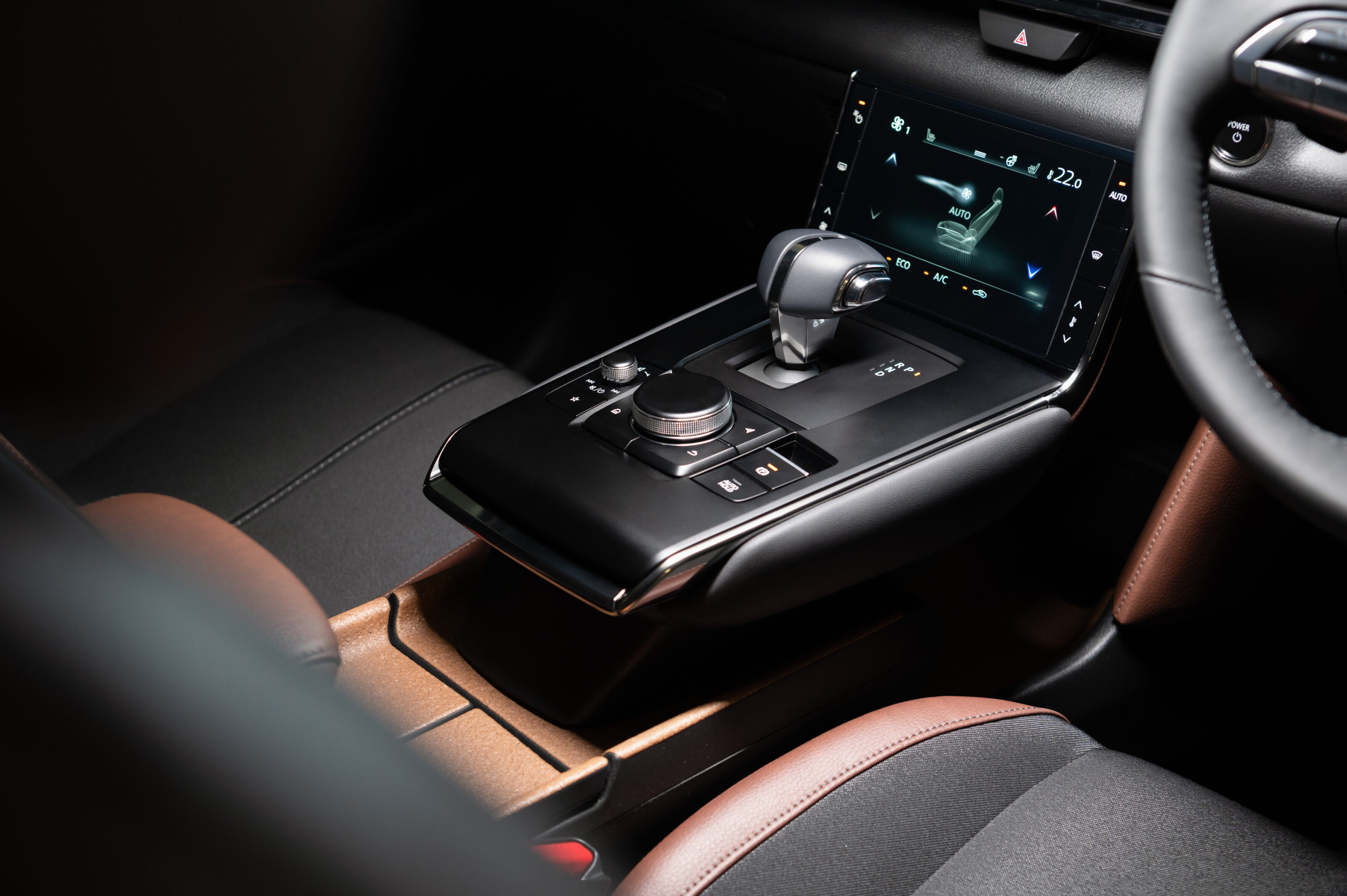
With standout exterior styling, a smart cabin decked out with Maztex synthetic hide, tasteful fabrics and even cork inserts, the electric MX-30 certainly feels premium and takes Mazda another step along the road to premium brand territory.
All versions of the MX-30 sit comfortably alongside the impressive Mazda 3 and CX-30 but the battery version has a unique sense of pride about it.
Finally, the MX-30 has the unique drivetrain to match its unique looks and the entire car feels most complete as an EV. But it comes at a price. At about $15,000 more than the petrol G20e Astina the cost of entry into Mazda’s zero-emissions club is certainly exclusive.
Most authorities agree that the EV tipping point will be price-driven and battery-powered cars won’t be widespread until they reach price parity with petrol and diesel counterparts, so it’s unlikely Mazda’s first electric model will be kick-starting the electric revolution.
And with just 100 allocated to Australia nor could it, even if it was in high demand. Most importantly though, it marks the start of Mazda’s own electric odyssey, and yet another brand to make the switch. Or should that be flick the switch?
The best bit though is that the excitement doesn’t end for the MX-30 range with the arrival of the EV. It’s yet to be confirmed for Australia, but the MX-30 range will gain an even more radical range-extended electric version that generates power onboard using a revenant rotary engine.
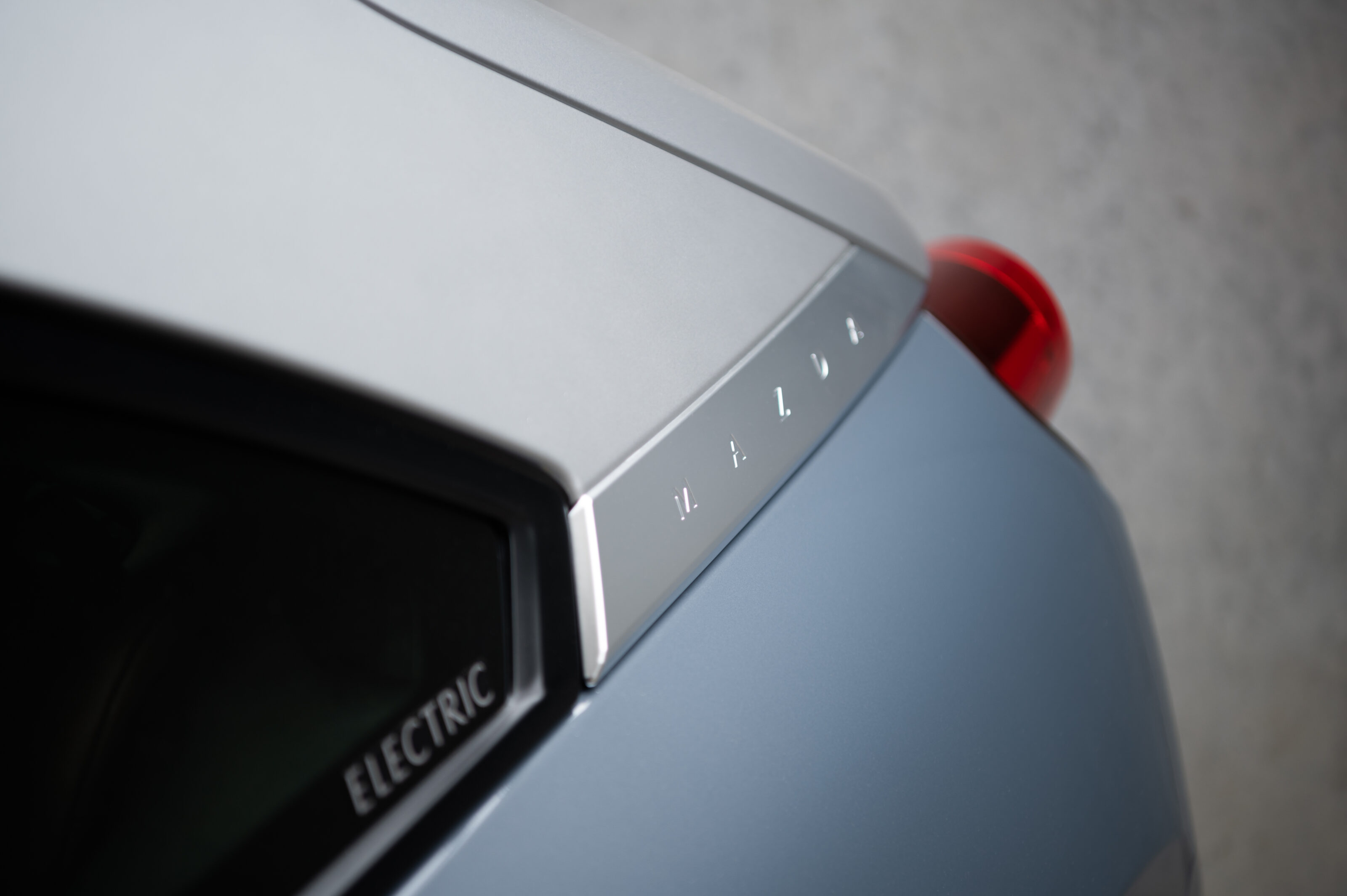
You could argue the very mild hybrid MX-30 is a bit unremarkable, you might think the EV is a little short on range and we’ll have to wait on the verdict of the rotary until we drive it, but what is absolutely without question is that the MX-30 range is unique and deserves to wear the ‘experimental’ MX badge with pride.
Small SUVs are becoming a popular segment for electrification and for the first time in Australia there is a premium option, the new Mercedes-Benz EQA 250 that costs around $10,000 more than the similarly performing Hyundai Kona Electric and Kia Niro EV.
This begs the question – does spending just ten grand over the Koreans actually bring a premium product or are you just paying for the three-pointed star badge?
Mercedes-Benz EQA 250 pricing and features
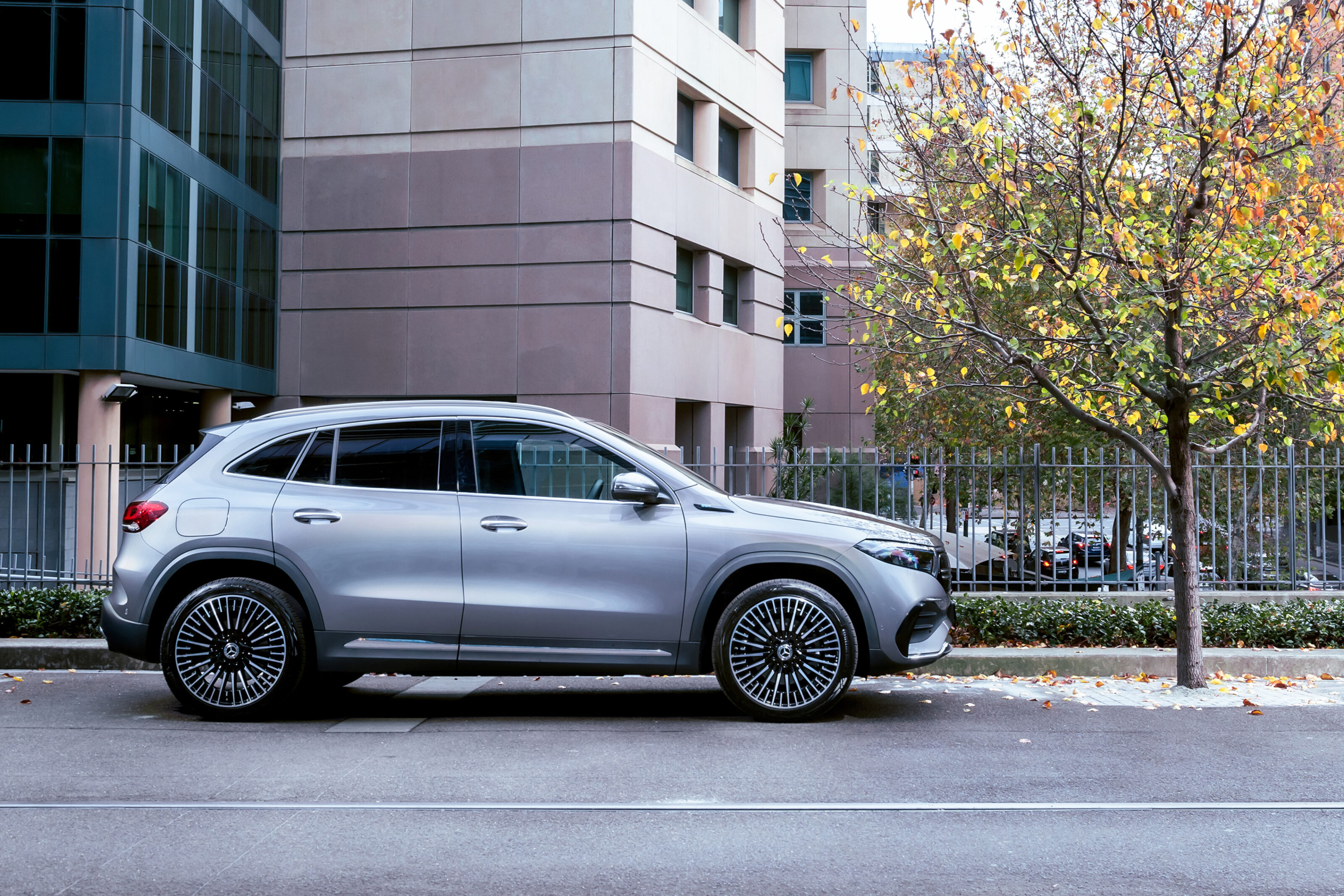
From the outset, the German carmaker’s second and most affordable all-electric model in Australia, after the Wheels Car of the Year-winning EQC mid-sized SUV, represents good value.
It’s closely related to the GLA crossover and comes with a $76,800 (before on-roads) price tag that’s just $7000 more than the GLA 250.
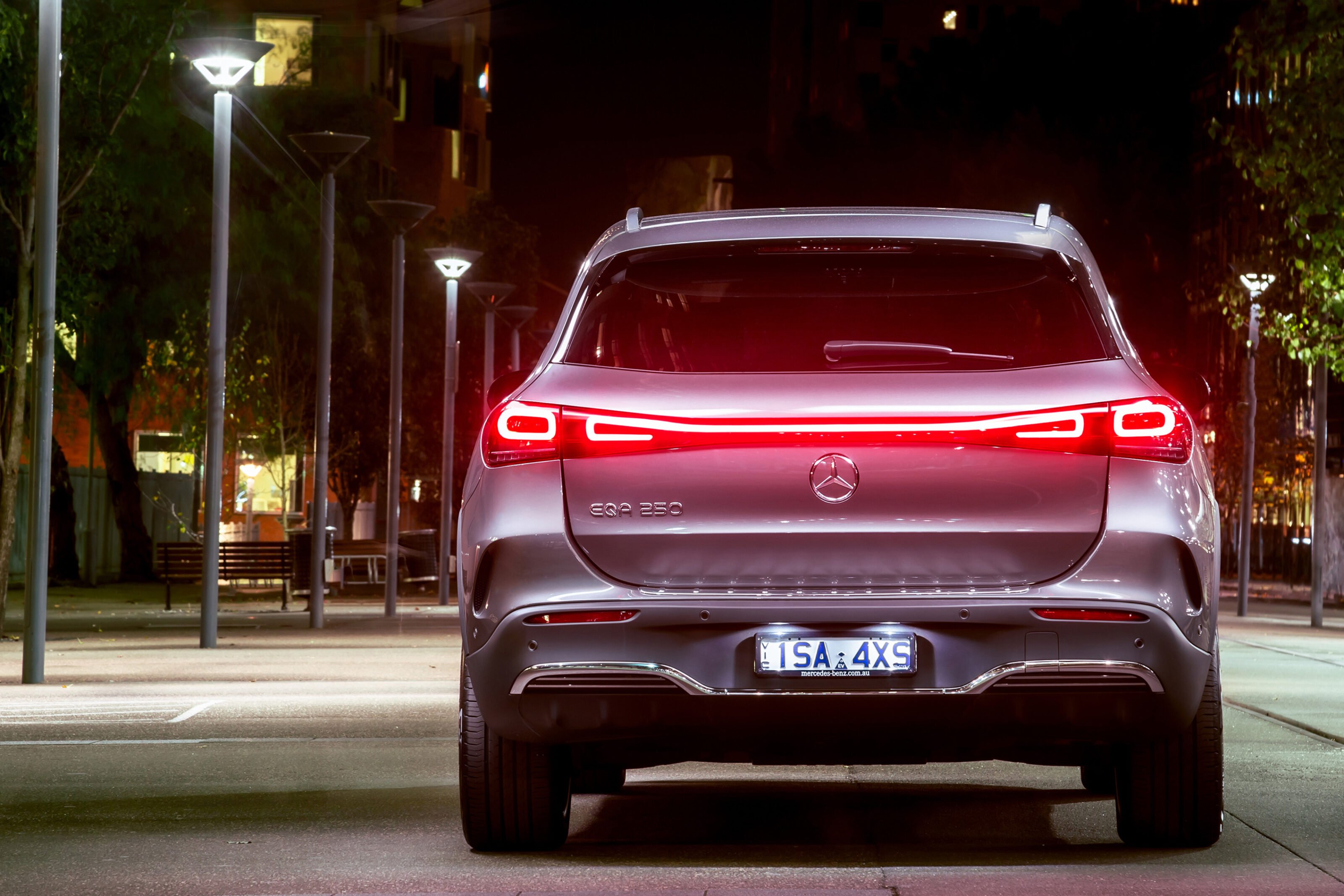
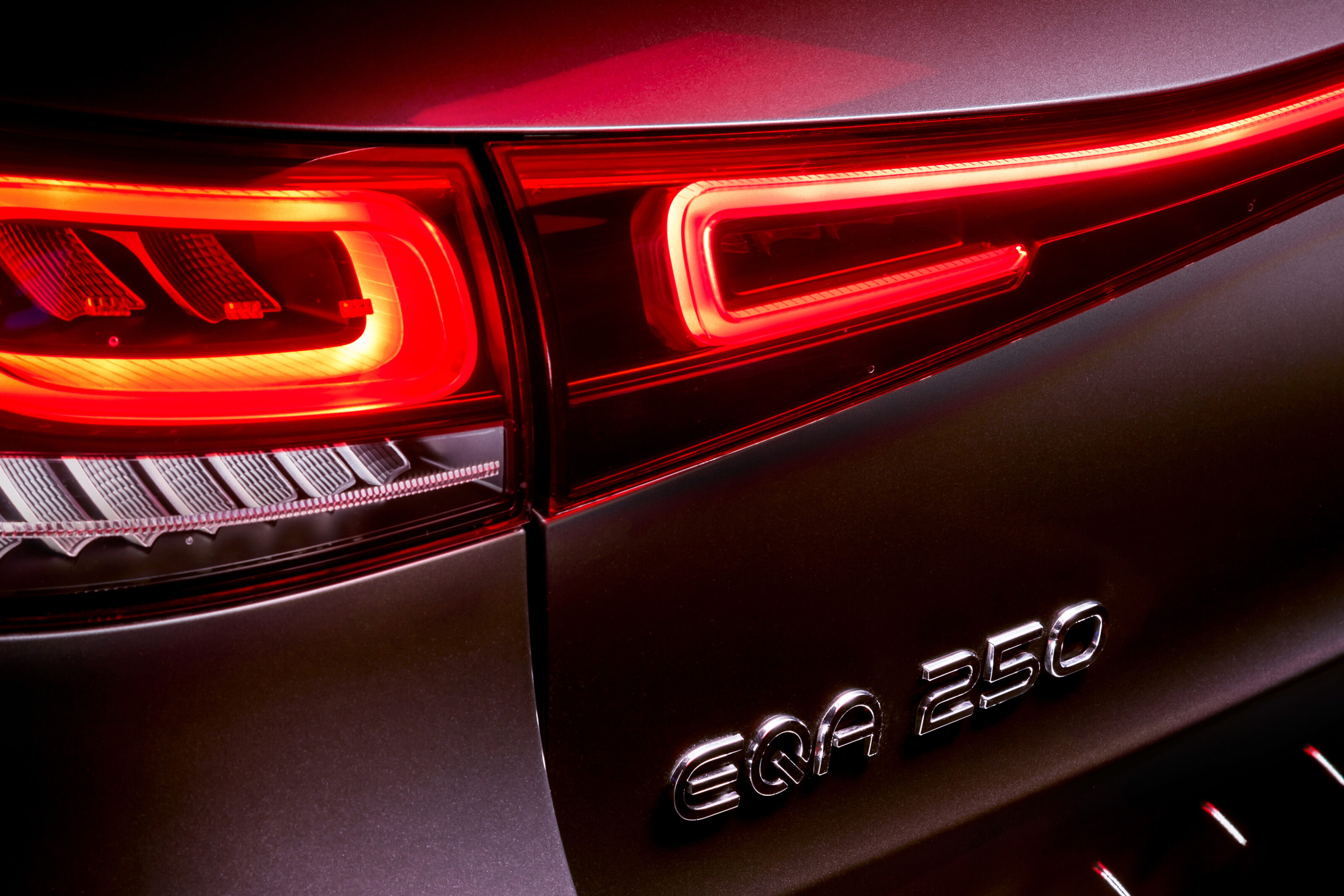
Aesthetically, differences between the EQA and GLA are subtle, the EV displaying a fake black grille that’s split along the middle to provide some visual interest and a fibre-optic light strip running along the top that links the daytime running lights. The rear end also features a light strip running between the taillights and there is an aero-spoiler to increase efficiency.
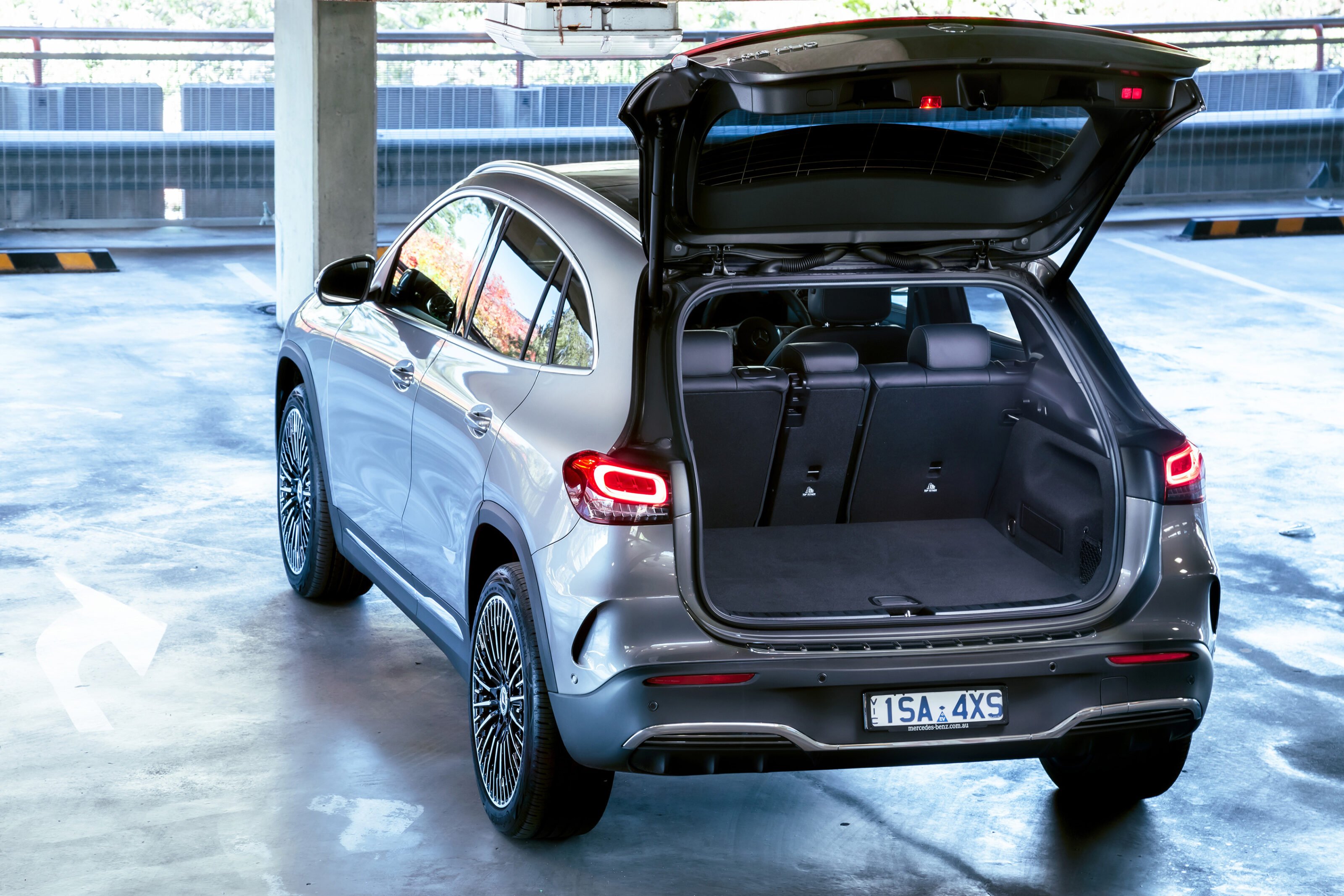
They’re about the same size and each has a 2729mm wheelbase but the EQA 250’s 340-litre boot is 95 litres smaller than the GLA due to the location of the battery pack.
Step inside the cabin and there is very little to differentiate the EQA from its petrol sibling – even the gear shifter stalk behind the steering wheel is the same.
The rest is very familiar, including the 10.25-inch digital gauge cluster and 10.25-inch centre touchscreen that controls the MBUX infotainment system, Artico upholstered powered-operated seats (in beige or black), ambient lighting, wireless phone charging pad and climate control.
Of course, there are a few extra-cost options to tempt you, such as the $2950 AMG-Line Package (pictured) that brings more athletic exterior and interior features including sports leather seats, and the Edition 1 pack that brings a host of luxury extras for an additional $7300.
What is the Mercedes-Benz EQA 250 like to drive?
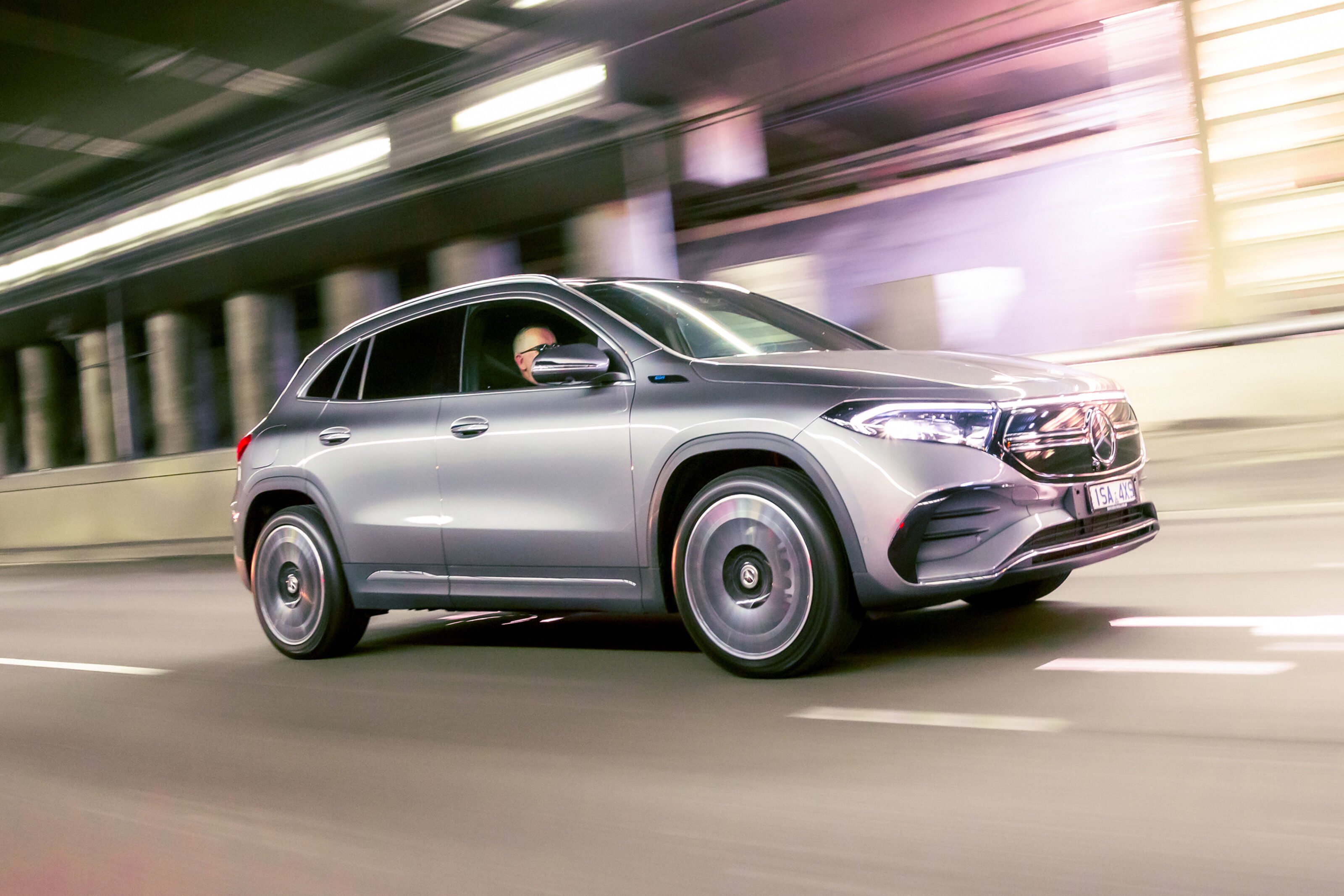
It’s not until you press the start button and foot down that you know you’re in an EV. Acceleration is prompt and silent, though once you get going, the lack of engine sound means you tend to notice road and wind noise more. But even at speed the EQA has excellent NVH properties, helped by keeping the motor physically isolated from the chassis.
While acceleration is immediate, the response feels a little tamer than some EVs, with the vital figures coming in at 140kW/375Nm.
To help driveability and limit torque steer, the electronics don’t allow the full 375Nm to be dumped to the front treads from, the moment you crack open the throttle.
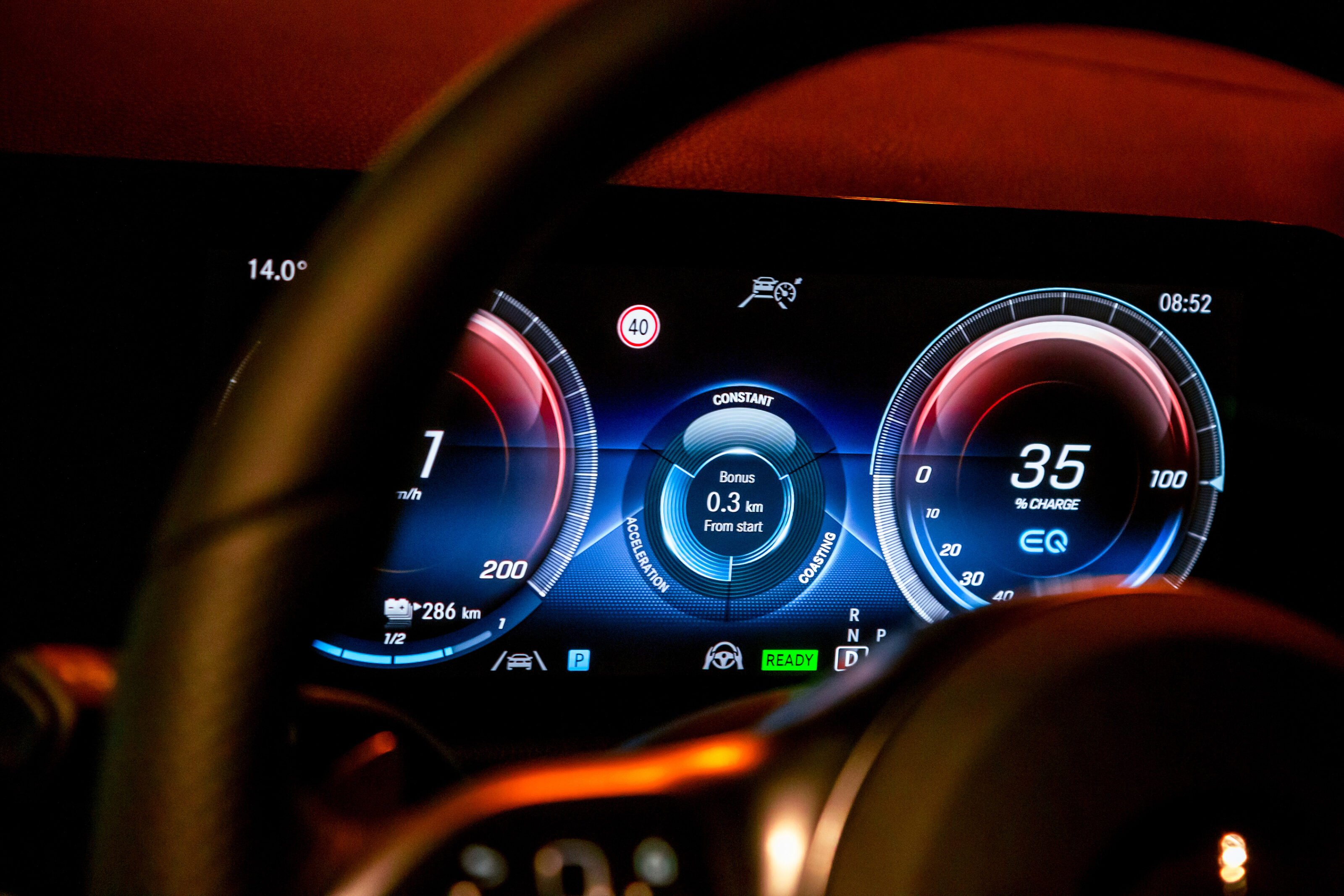
This softer take-off results in a relatively modest 0-100km/h time of 8.9sec, which isn’t helped by the EQA’s hefty 2040kg kerb weight. That’s some 300kg more than the 1.3-second quicker Kona Electric.
But on the move, the EQA still feels livelier and brisker than any comparative SUV burning fossil fuels, responding instantly to even the slightest right pedal movement and providing more than enough power and torque on tap whenever you need it.
To help driveability and limit torque steer, the electronics don’t allow the full 375Nm the moment you crack open the throttle.
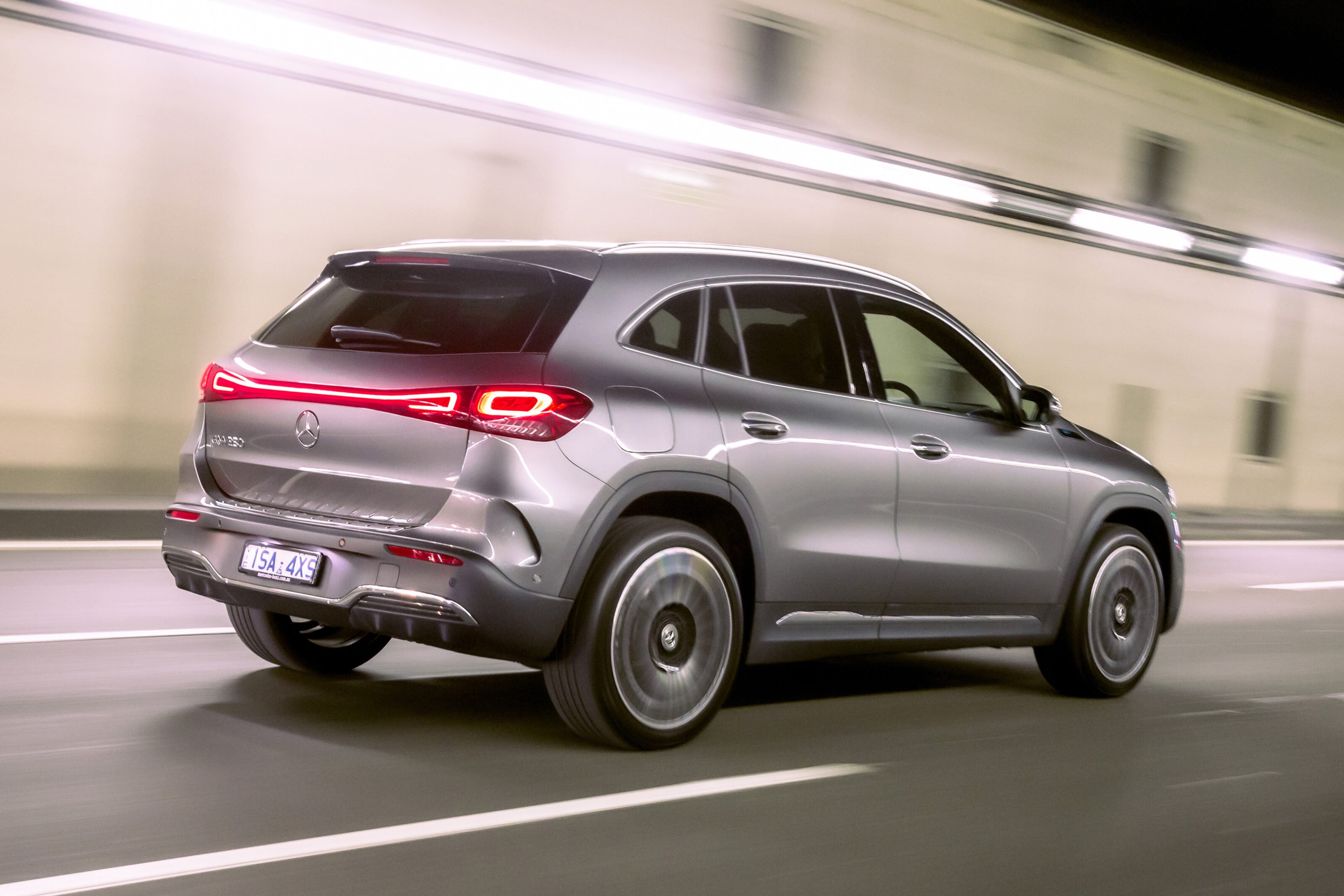
It has ‘Dynamic Select’ driving modes including Eco, Comfort and Sport, with Sport providing more take-off boost while stiffening the steering and the adaptive dampers that are part of the standard equipment list.
Even so, the steering isn’t as direct as I’d prefer through the winding stuff, but it’s perfectly weighted for around town where I imagine most EQA 250s will reside.
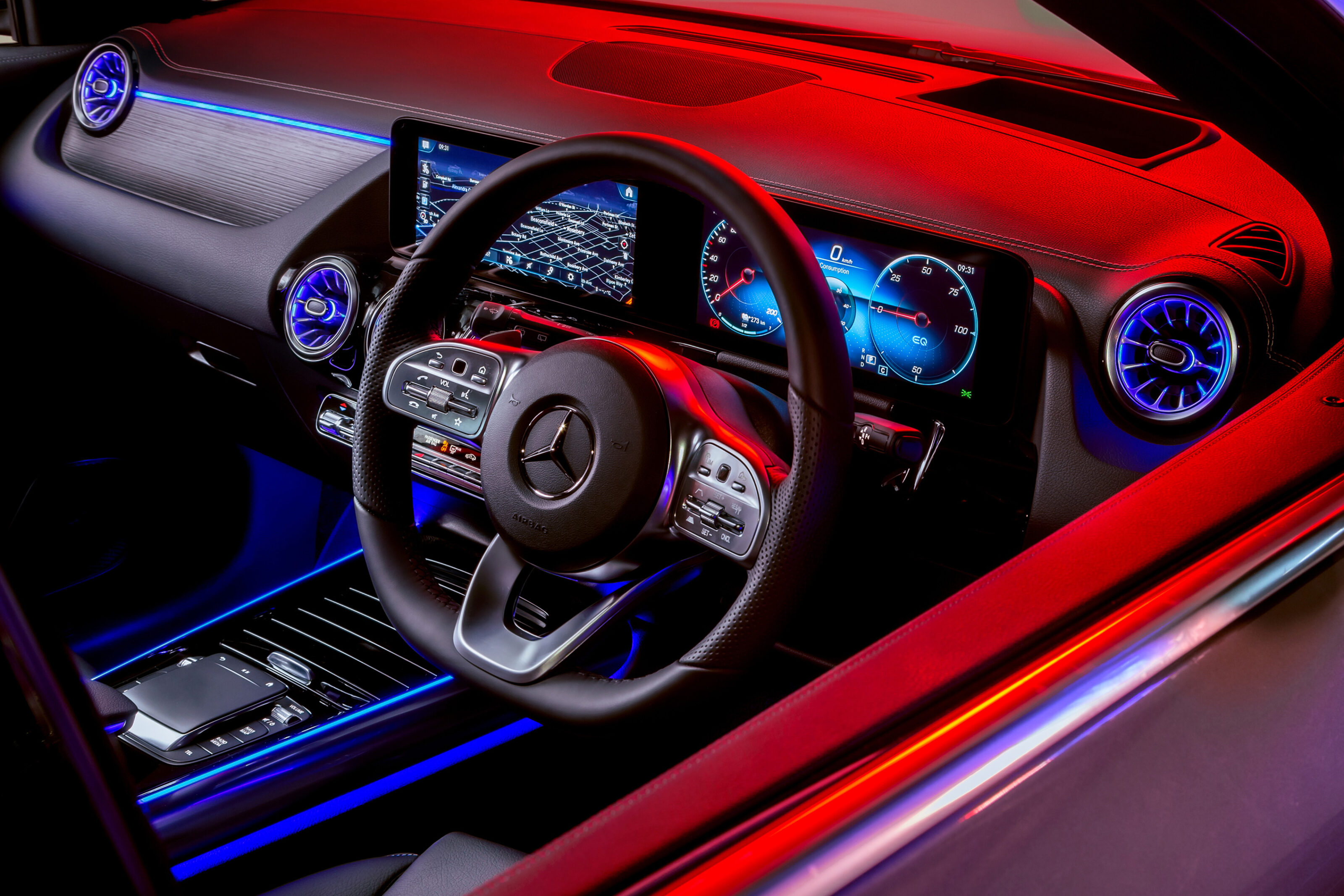
That said, the EQA’s regenerative braking helps inspire confidence in the twisty stuff by allowing you to slow down before reaching bends without having to apply the brake pedal, making you feel more in control.
It has four regenerative braking settings controlled by the paddle-shifters plus a clever Auto setting that uses the active safety radar to choose the appropriate regenerative braking setting based on traffic conditions.
The ride is comfortable on the multilink suspension even when the dampers are stiffened in Dynamic mode, but that plushness doesn’t compromise roadholding.
How long does the Mercedes-Benz EQA 250 take to charge?
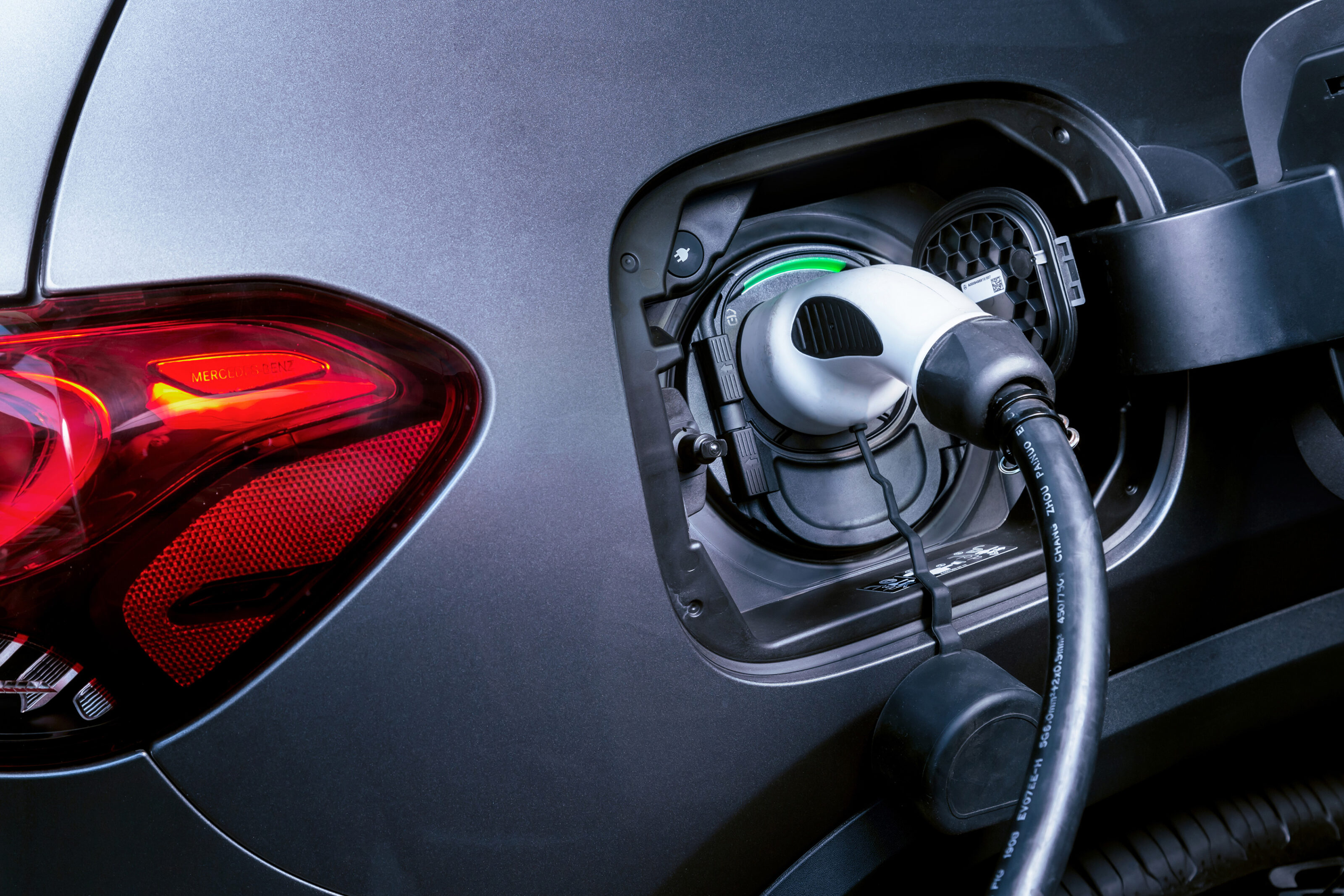
At its heart, the EQA 250 has a ‘double-decker’ 420-volt, 66.5kWh lithium-ion battery with 200 cells that are cooled or heated when required to maintain the perfect temperature range for optimal operation and charging.
It can be charged from both AC and faster DC chargers via the Type-2 CCS port. Charging from 10-80 per cent, which provides 380km of range, takes about 25 hours through a standard 240-volt socket, but if you install an 11kW single-phase AC charger (available from Mercedes-Benz for $1450) that time is dramatically reduced to four hours and 15 minutes.
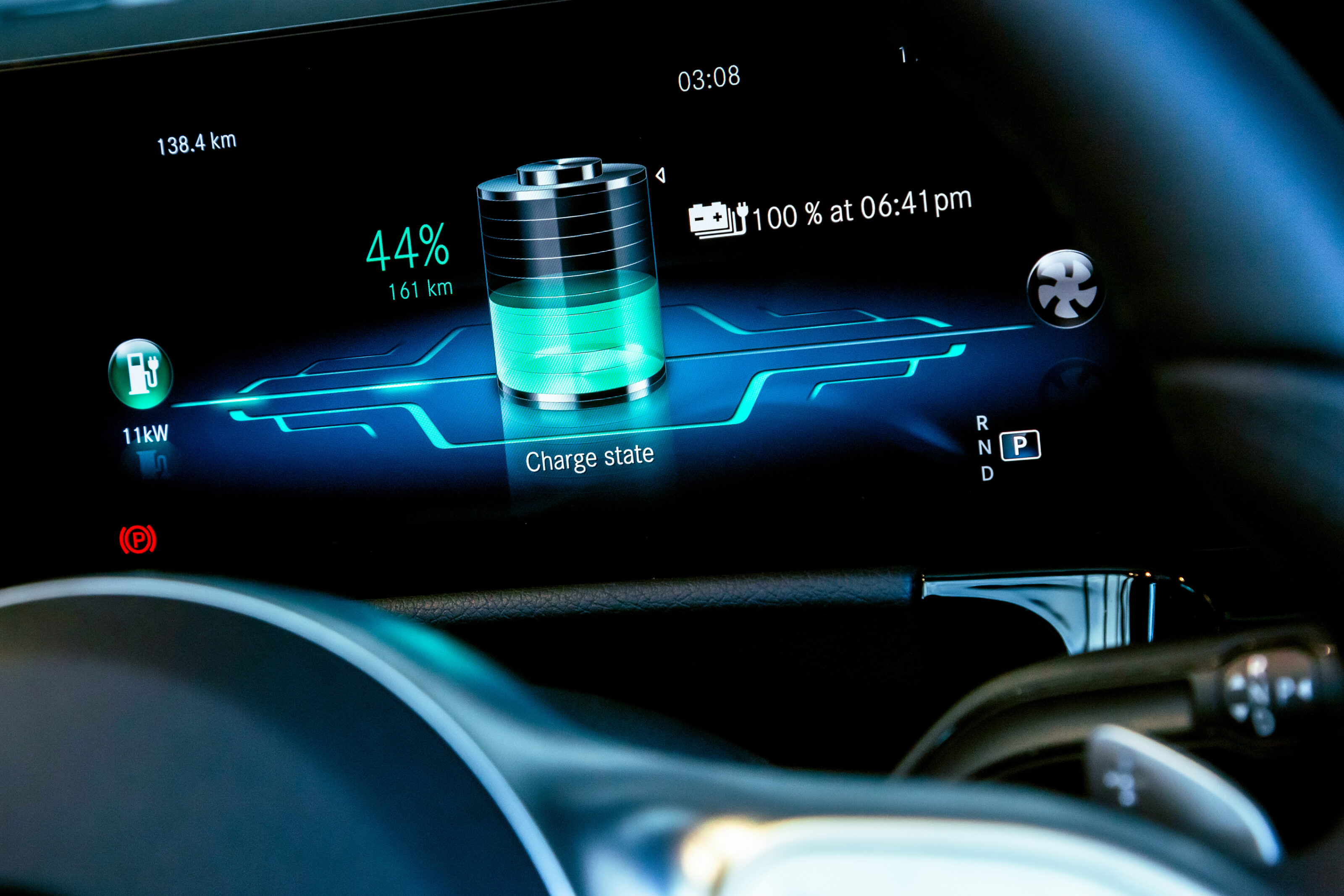
Use an ultra-rapid DC charger capable of charging at 100kW and the same charge will take about 30 minutes. This has the potential to be free as the EQA comes with a complimentary Chargefox subscription providing unlimited access to selected chargers for the first three years.
From a full charge, the EQA 250 has a range of up 480km and its combined electrical consumption is rated at 16.2kWh/100km.
What is the Mercedes-Benz EQA 250 like for safety?
The EQA 250 comes standard with autonomous emergency braking, lane-keep assist, steering assist, blind-spot monitoring, traffic sign assist and nine airbags.
It also has active cruise control with route-based speed adaption that works with the satellite navigation to automatically adjust the speed for various road conditions such as when entering and exiting roundabouts.
The Verdict
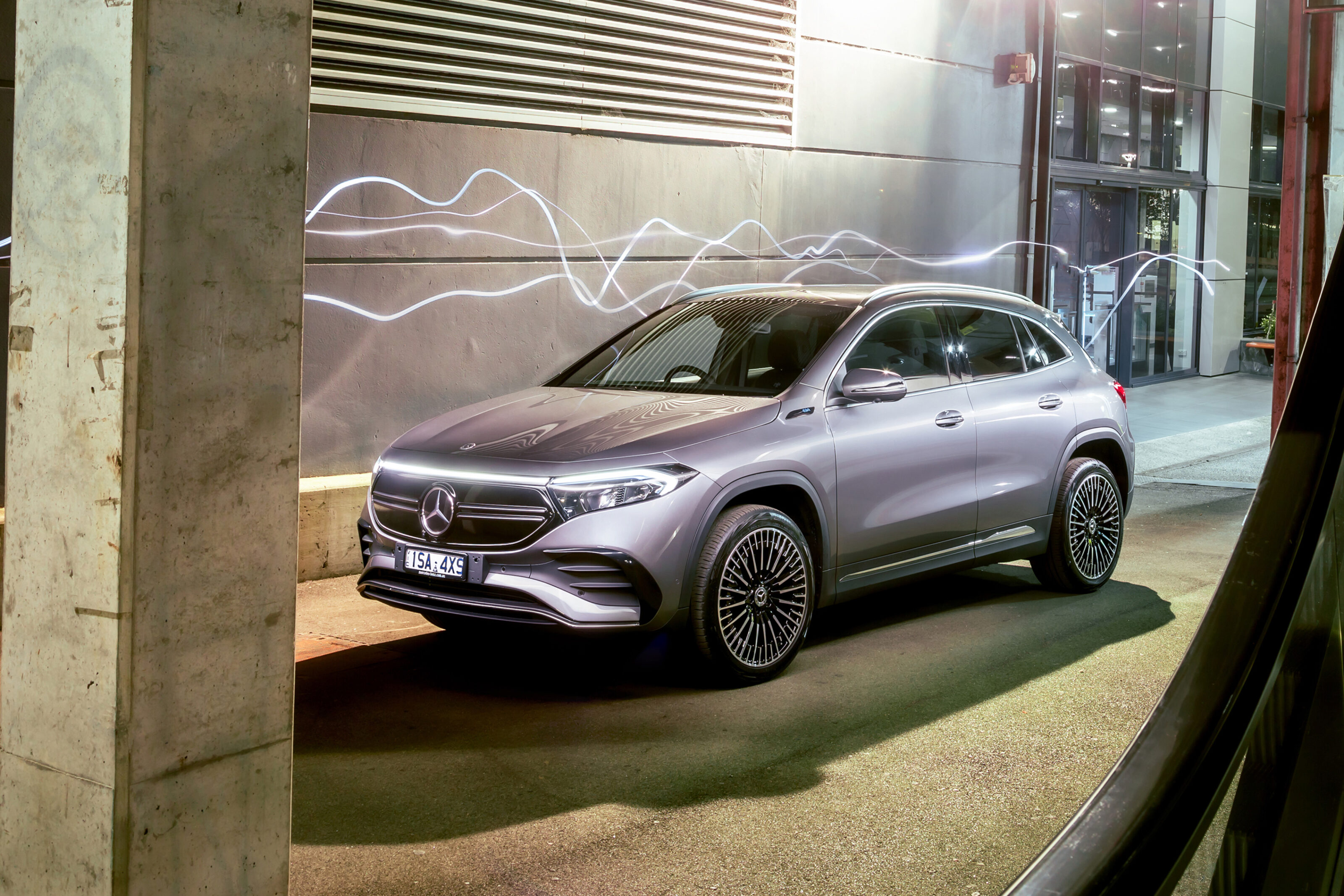
The EQA 250 might be outperformed by its mid-$60K rivals but it doesn’t lack the engineering, technology, build-quality and packaging that you expect from a Mercedes-Benz product.
It also ticks the important boxes including sharp looks, equipment levels, decent driving range and eco-friendliness while offering an enjoyable but relaxing ride.
So yeah, the EQA 250 is certainly a premium product, which makes its $10K markup over the Koreans seem an absolute bargain.
2021 Mercedes-Benz EQA 250 specifications
| Model | Mercedes-Benz EQA 250 |
| Motor | Single, front axle |
| Power | 140kW |
| Torque | 375Nm |
| Battery | 66.5kWh |
| Transmission | Single-speed |
| Weight | 2040kg |
| 0-100km/h | 8.9sec |
| Economy | 16.2kWh/100km |
Snapshot
- Software issue causes problem with the vehicles’ PCS
- Toyota will contact affected owners
- Fault can be rectified with a factory software update
Toyota Australia has issued a recall for 41 examples of its Prius hatch built between July 2020 and May 2021 due to a fault being identified with the vehicles’ pre-collision system (PCS) software.
According to the Japanese manufacturer, “software programming of the PCS may cause a delayed application of the pre-crash brake assist function, resulting in a lower overall vehicle speed reduction than intended.”
Toyota will contact affected owners and ask them to organise a time to bring their vehicle into a preferred Toyota dealership, where the fault will be fixed free of charge.
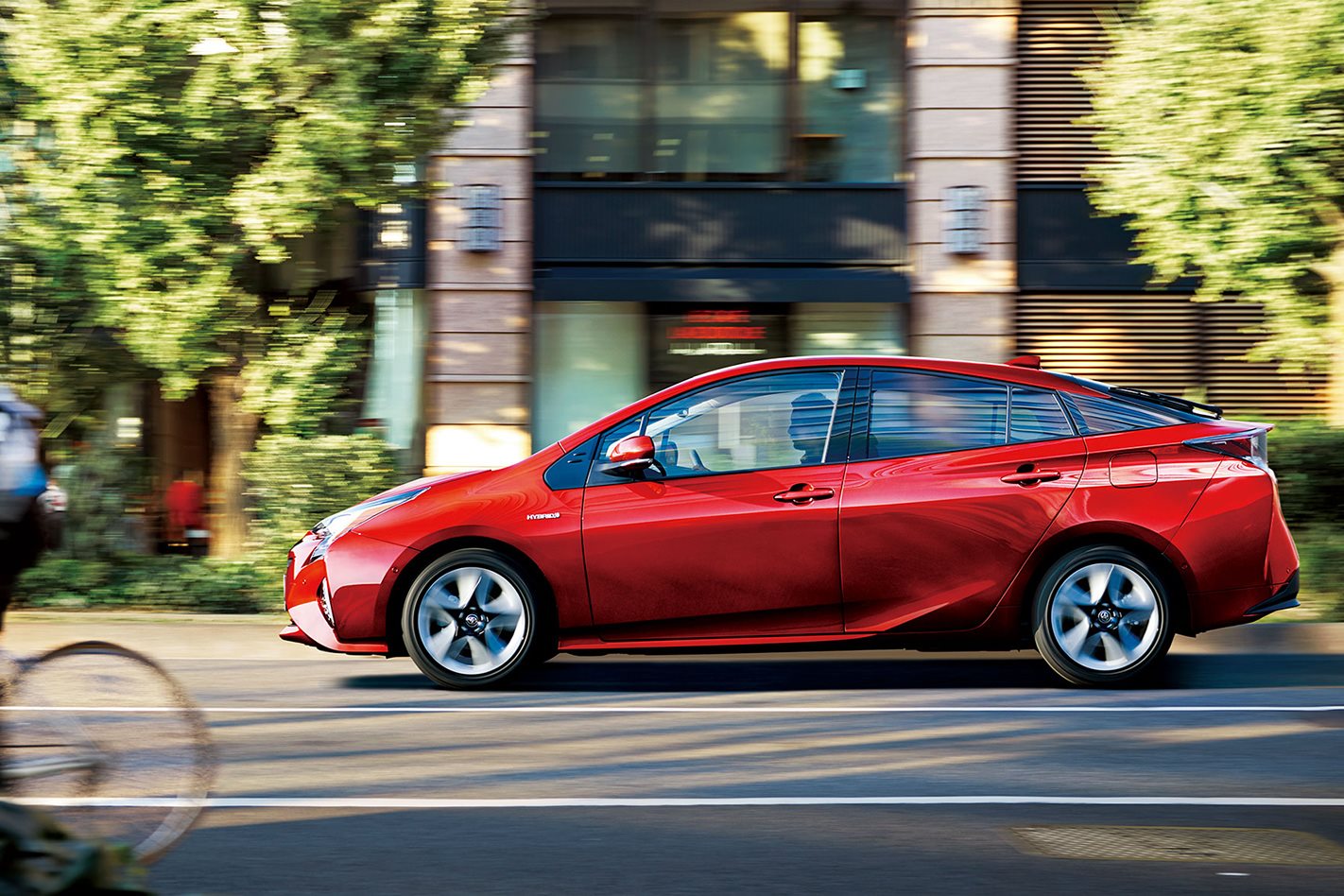
The wait time to fix the said problem will take approximately 45 minutes and requires no new parts.
Anyone with additional questions can contact their preferred Toyota Dealer or the Toyota Recall Campaign Helpline on 1800 987 366.
Affected vehicles’ VINs range from 03094218 to 03095328, and the particular Prius version in question is the ZVW50.
Snapshot
- 250,000 Daimler products allegedly using illegal emission cheating software
- Euro-spec GLC and GLK SUV models affected
- Mercedes-Benz says lawsuit is ‘unfounded’
Mercedes-Benz is being sued in its hometown of Stuttgart by Germany’s Federal Association of Consumers over alleged manipulation of 250,000 Daimler products’ emissions.
In the filing of the class-action lawsuit by Verbraucherzentrale Bundesverband (VZBV) on Wednesday, two Mercedes-Benz models – the GLC and GLK – were identified as allegedly having been equipped with illegal emissions manipulation software.
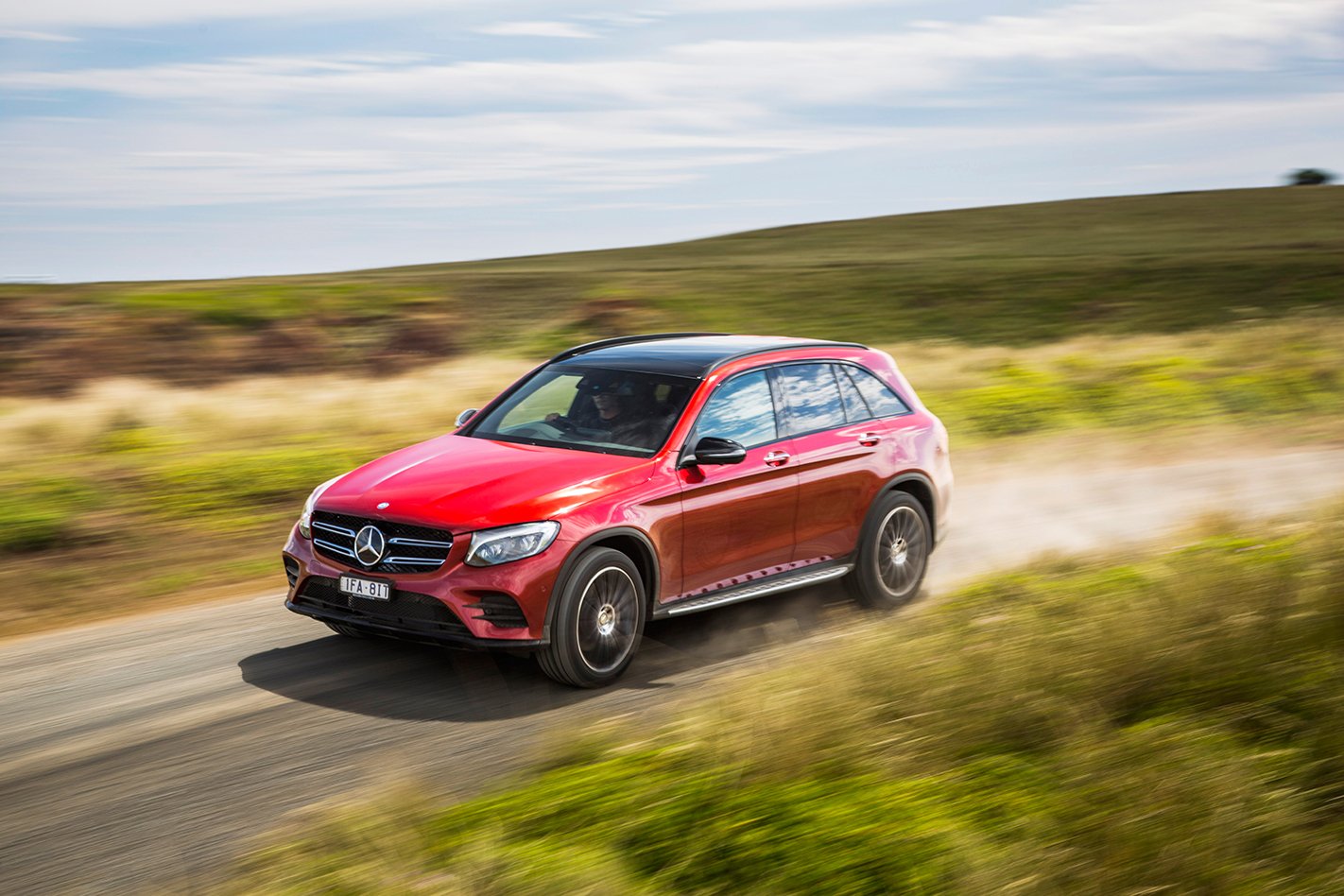
“The reason for this [the lawsuit] is numerous recalls by the [German] Federal Motor Transport Authority (Kraftfahrt-Bundesamt or KBA) of Mercedes-Benz GLC and GLK models with the OM651 engine type due to impermissible disconnection devices,” VZBV said in a statement.
VZBV claims the carmaker used illegal methods, including a ‘thermo switch’ which alters the filtering of exhaust emissions.
“By installing such devices, manufacturers can ensure vehicles comply with the permissible limit values for exhaust gases during type approval. In road traffic, however, they clearly exceed these values,” VZBV said.
Regardless of the KBA’s official recalls, however, Mercedes staunchly denies any wrongdoing, stating the lawsuit is ‘unfounded’.
“Despite official recalls, Daimler continues to dispute it manipulated exhaust emission figures,” Klaus Müller, head of VZBZ, said.
In 2018, Mercedes was forced by the KBA to recall more than 670,000 of its vehicles in Europe, which encompassed several models across its product catalogue, including the C-Class, E-Class, S-Class, GLC, Vito and Sprinter.
A spokesperson for the German company told Autocar: “We have not yet been served with the model declaratory action. We consider the claims asserted against us in diesel lawsuits to be unfounded and will continue to defend ourselves against them – also in the context of a possible model declaratory action.”
A spokesperson for Mercedes-Benz Australia was unable to comment on the matter due to the ongoing overseas legal proceedings.
WhichCar will update this story as more information becomes available.
Snapshot
- Mustang Mach-E GT and Team Fordzilla P1 prototype to make FOS debut
- Ford has pledged all of its passenger vehicles will be all-electric by 2030
- Blue Oval has invested $US1 billion in the creation of a EV manufacturing centre in Cologne, France
Ford is displaying its all-electric European future at this weekend’s Goodwood Festival of Speed, entering the renowned event with electric-only models.
Although in its infancy, Ford’s EV model line-up is already making waves in the automotive world, with its Mustang Mach-E crossover striking a unique chord with enthusiasts and the environmentally conscious.
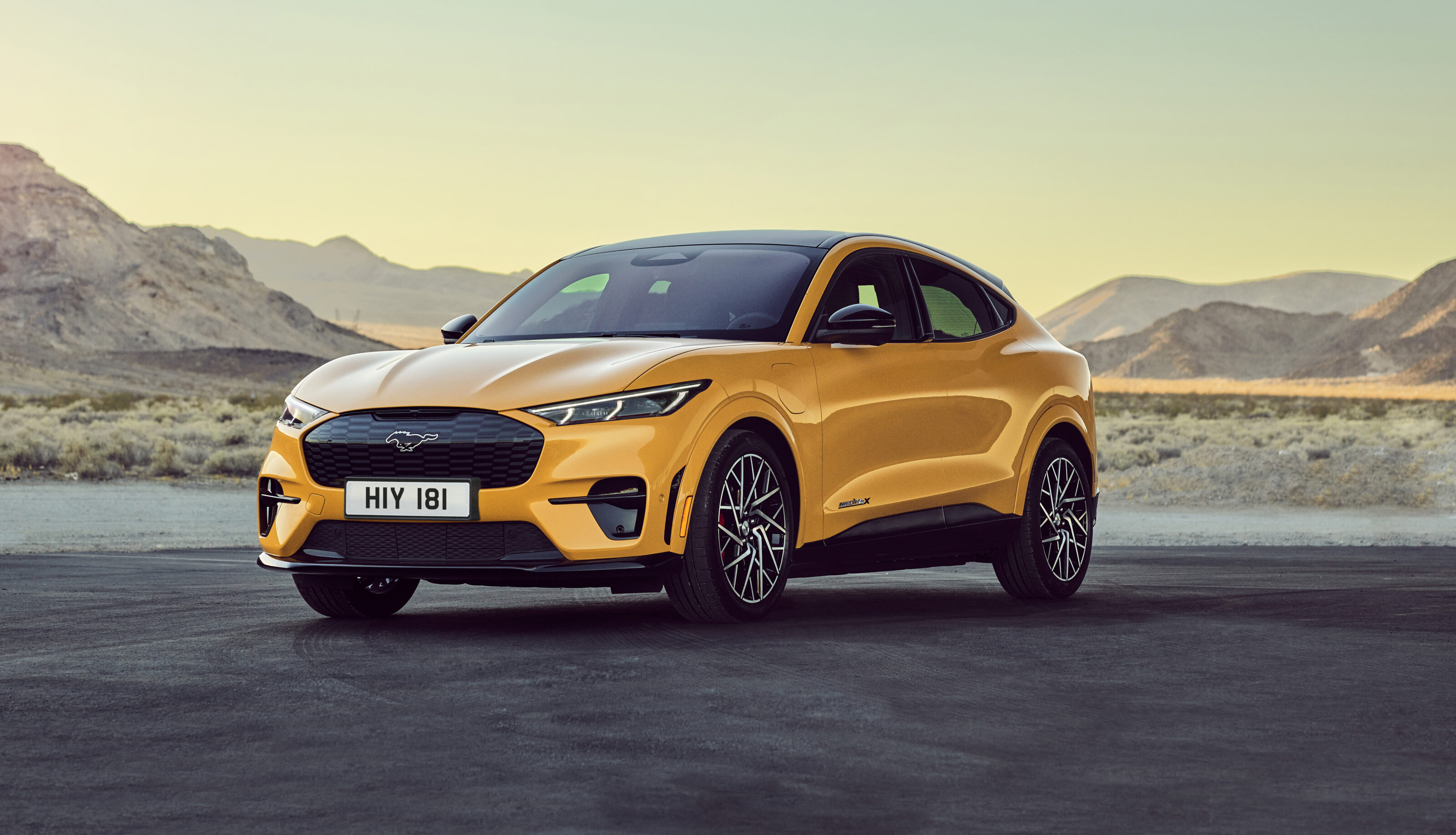
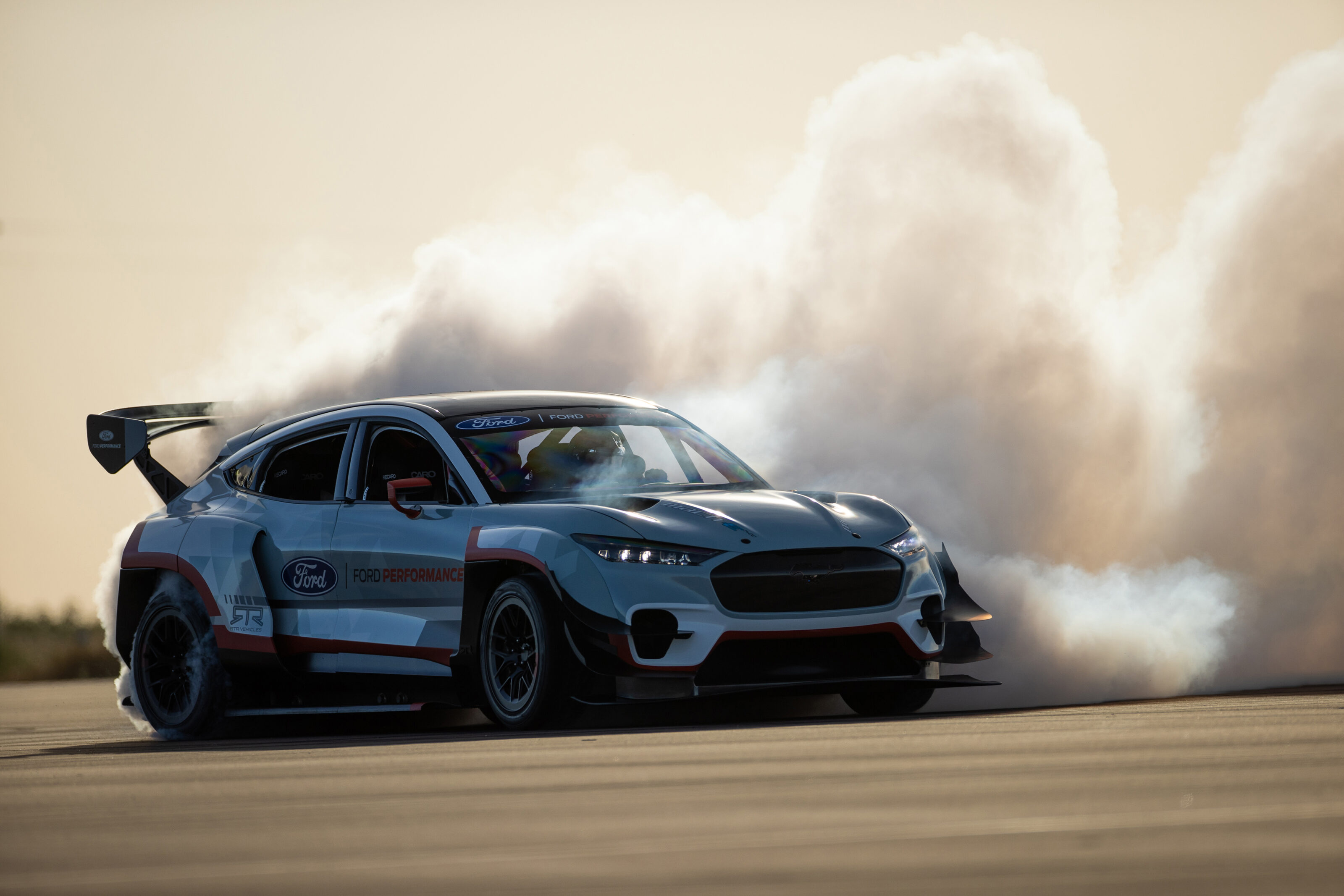
The recently unveiled Mach-E GT will be making an appearance on Lord March’s front lawn, as will its stripped-out sibling, the Mustang Mach‑E 1400.
The 1400 is powered by lithium-ion battery packs which produce a total of 1044kW (1400hp).
This insane power is sent to all four wheels through seven electric motors, turning the 1400 into a tyre-shredding machine like no other.
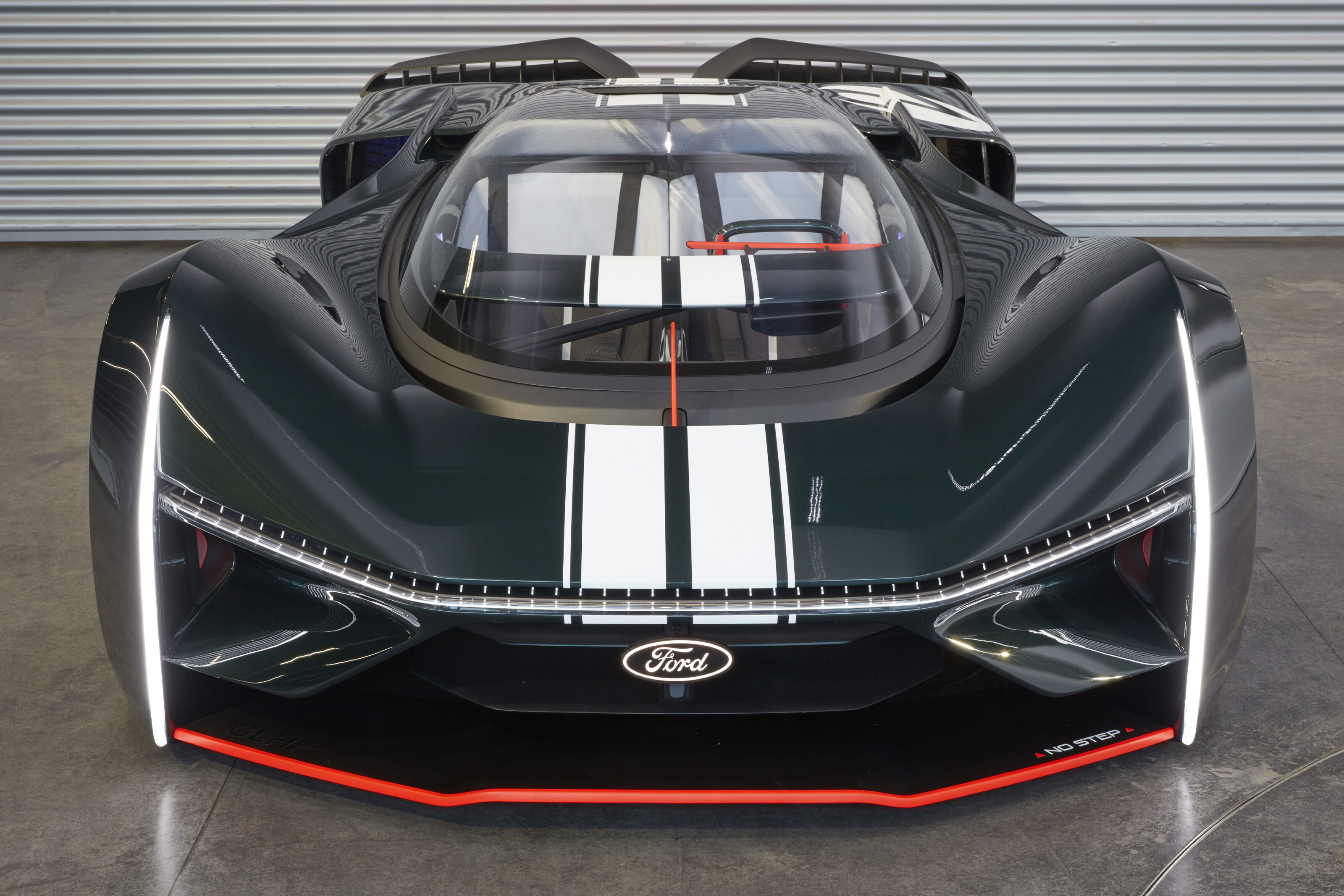
Ford will also be globally debuting its wild-looking Team Fordzilla P1 concept race car at Goodwood.
Collaboratively created by Ford designers and the online gaming community, the Fordzilla P1 is the first of its kind from the automaker.
According to Ford, roughly 250,000 fans took to Twitter to vote on elements of the vehicle’s design including the seating position, cockpit, and drivetrain.
“To build cars that customers love, you first need to truly understand what customers want. We’ve taken that thinking to extremes with the Team Fordzilla P1 race car, and we’ve applied the same innovative approach to creating our Puma ST Gold Edition which customers will actually be able to order later this year,” Amko Leenarts, director of design for Ford of Europe, said.
“It’s exactly this kind of human-centred design which is going to take us to a whole new level of fun-to-drive in the electrified era.”
The news of Ford’s EV-only line-up at the FOS comes hot off the heels of the Blue Oval’s recent pledge that by 2030 all of its passenger vehicles in Europe will be all-electric.
Ford has also committed more than $US1billion (AU$1.34bn) of investment in a new electric vehicle manufacturing centre in Cologne, France, which will open in 2023.
I don’t wish to brag, but I live in Sydney. That will make people who know me spray whatever they’re drinking, because I actually don’t like it here. However, there is one thing I am grateful for since moving back to Australia’s most emotionally insecure town: unlike Victoria, the NSW approach to speed enforcement isn’t psychopathically puerile.
You don’t get done for three over the limit. Just doesn’t happen.
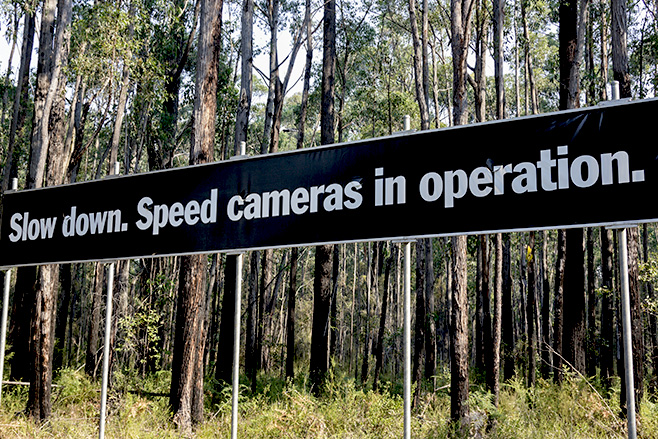
I worry it might, though, as the state gradually winds back its protections for motorists against privately operated speed cameras.
Now, let me set some ground rules. Inappropriate speed on a public road is a bad thing. I am not going to be advocating a zero enforcement attitude any more than I would a zero tolerance attitude. Neither make sense and both get people hurt, or worse, killed.
Additionally, if you get caught and it’s a genuine offence, I think you should pay the fine. If you’re like me and have occasionally indulged in some back-road exploration of a performance vehicle’s talents, just thank your lucky stars you were done for 68 in a 60 zone while listening to a podcast and not…sorry, my lawyer is tapping me on the shoulder to stop talking.
Over the past couple of years there has been a troubling change to the way speed is policed in NSW. The biggest one for me was the November 2020 announcement that the NSW State Government would remove warning signs for mobile speed cameras.
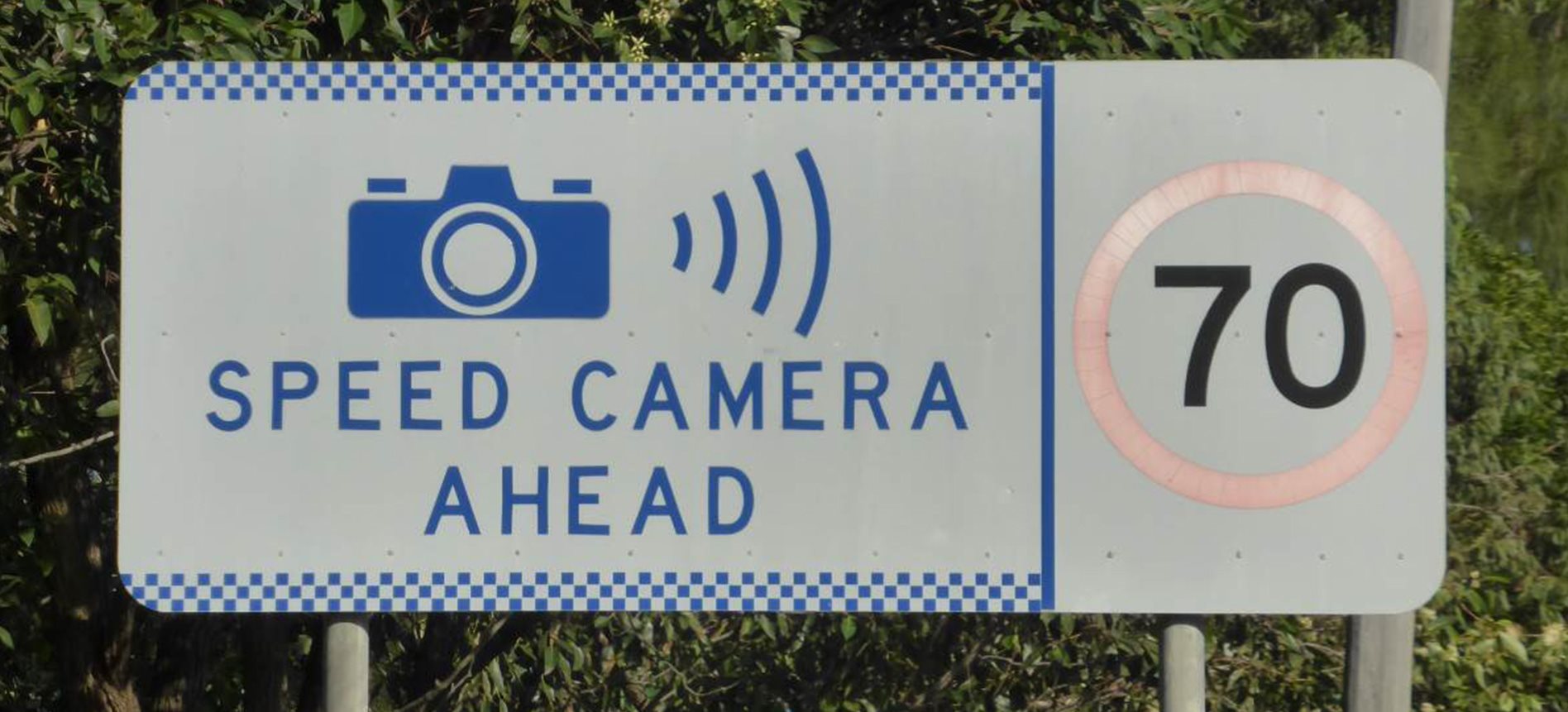
Mobile speed cameras, for the uninitiated, are parked on the side of a road, usually a fairly busy one and often on a grass verge. They are themselves marked with a fairly generic set of coloured stripes, but I often mistake them for the vans which change the advertising posters in bus stops.
The signs themselves weren’t big and were placed on the side of the road before and after the host vehicle. Sometimes – and I’m sure it was purely accidental – behind parked cars, where you couldn’t see them.
My first problem with these vehicles was, and has always been, that they’re privately operated. Last time I looked, it’s the job of the police to deal with speeding – and the best way to do that is to haul someone off the road and have a word with them before handing over the fine. If the offence was especially serious, it ends then and there, your licence shredded and Constable Whatstheirname unscrewing your number plates.
The second problem I have with these mobile speed cameras is that they’re clearly about revenue.
Now, I know this is a boring old trope, but stick with me. Since the removal of the signs, fines for less than 10km/h over the limit stand at 22,742. By contrast, for the first five months of 2020, that figure was 1397, according to the NSW Opposition.
Yes, we had Covid-19 in there, but even a pandemic doesn’t explain an increase of that magnitude and the fact that the first three-or-so months of 2020 were largely unaffected by Covid.
At a minimum of $123 a pop – the kind of money plenty of folks will just pay rather than be forced to take a day off work to fight – the treasury is up by $2.6m in just five months for that low-level offence.
It’s a drop in the ocean for the NSW Government, but not for a private operator.
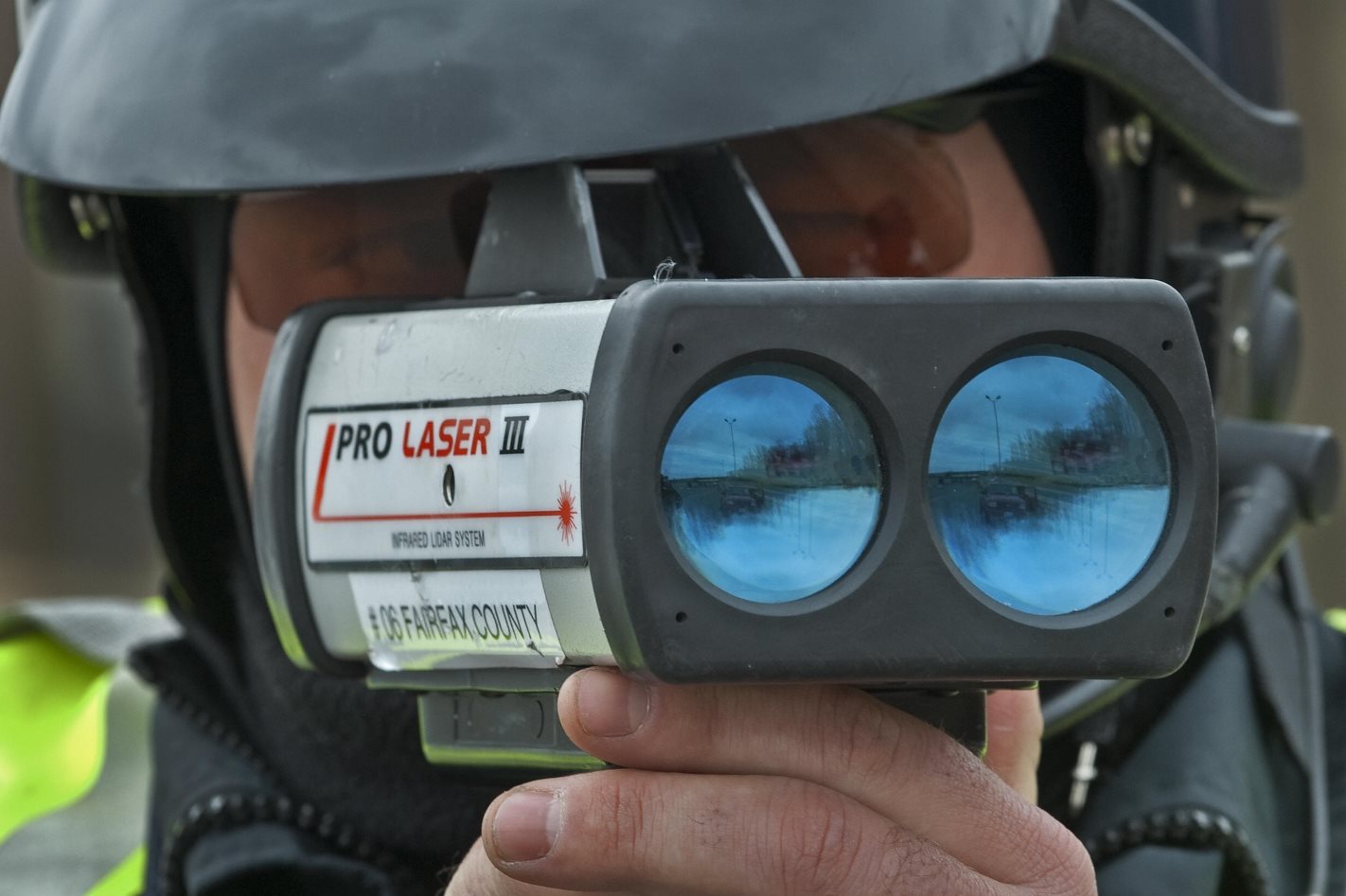
Naturally, I have an anecdote to explain why there are so many more fines. Near where I live, there are three roads which run roughly in parallel. One is a divided road, two lanes in each direction, traffic lights, good lighting at night, that sort of thing. For years, it was a 70 zone – until about a decade-or-so ago, when the limit was reduced to 60 for reasons which aren’t entirely clear.
Everyone, including the cops, travels safely down that road at 70. There is a poorly engineered and surfaced 90-degree bend where there is the occasional accident, but we’re talking once every 18 months or so.
The next main road runs a couple of blocks back and is also a 60km/h road. It has a school, borders a shopping centre, has many bends, pedestrians, more shops, lots of high-density living, playing fields, cyclists and traffic-calming obstructions which endanger cyclists. You get the picture.
How these roads are the same limit is a puzzle for another time because, as with the first road, everyone travels at a speed which is more comfortable, which is 50km/h – 10 under the posted limit. I don’t even shout at them, because it is honestly a safer speed for said road.
The question here is, why does a privately-operated unmarked speed camera sit on the road with the artificially low limit and with far fewer potential problems than the nearby 60km/h road?
Accidents are less common on the former than on the latter – and generally only occur in peak hour at low speeds, because old mate was texting instead of paying attention. Yet the camera cars will sit there for ages until the Waze brigade spots them.
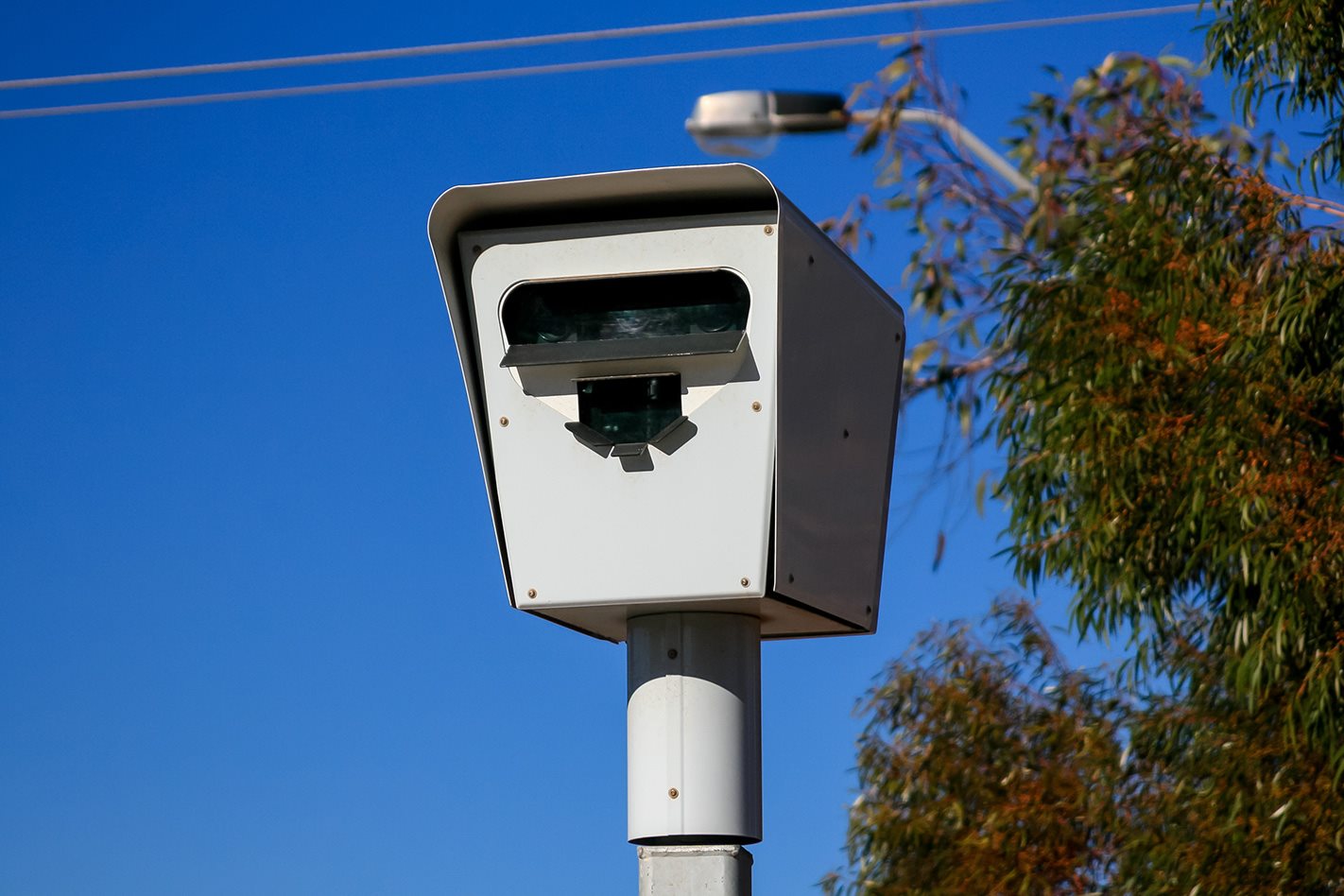
The answer is easy. Money. But not in the old school quota-filling, revenue-raising way of cops hiding behind trees with a radar gun picking you out of traffic and embarrassing you for five or ten minutes before either letting you off with a warning or handing you a fine. That I can live with, even though it’s not much fun being on the receiving end.
The company running NSW mobile speed cameras is a partnership between G4S and Acucensus, which I thought was an acne medication. G4S is a giant security company offering just under sixty grand to its operators to sit in a parked car and pretend not to sleep. Whereas a NSW probationary constable takes in just over $73,000 and costs a lot of money to train and equip. And costs more again for highway patrol.
The margins clearly aren’t there for the State Government, but they are for private enterprise.
Speed limits are arbitrary enough, but when private operators are given targets – which are baked into budget estimates in the same way stamp duty and registration fees are – it has to be made worthwhile. State governments rely on this cash, which is why speed “enforcement” is offered as a franchise to private companies who know how to turn a buck and don’t have pesky rules and unions to deal with, just something they understand: revenue targets.
These companies don’t take this business on if they don’t intend to make money.
They’re not there to contribute to road safety, their targets have nothing to do with lowering the road toll. Their job is to take photos and then an automated process ensures you get a fine in the mail, days or weeks after the offence which, according to Government advertising, you will surely not survive. A machine stamps a NSW Police letterhead with the offence and it’s hugely unlikely a human is involved in these low-level misbehaviours. It’s kind of like Robodebt, but less discriminatory.
State governments aren’t serious about reducing speeding, they need it to pay the bills. They do not spend the revenue on road safety. I know this because when was the last time you were tested, asked to undergo practical training and risk assessment, or offered other useful skills to improve your driving?
How many roads have signs obstructing other signs, huge potholes, poor surfaces, standing water when it rains, blind curves, inappropriate road furniture? The list goes on.
How many cars do you see with bald tyres, damaged or inoperable brake lights and other safety hazards? Heaps. When was the last time Uncle Kevin’s single-brake-lighted Commodore was defected? Never, that’s when, unless Uncle Kevin wears his baseball cap backwards and has a sick system fitted.
Getting the details right is the hard yards of road safety. And it goes right back to design and execution of roads, not just drivers. Again, something to which state governments don’t pay as much attention as they ought.
Paying a faceless company to pay someone else to babysit a camera and not even have to get out of the car and put down two small signs behind parked cars? Easy. Just wait for the cheques to roll in and for little to no improvement in the road toll.
Snapshot
- 20 million Subaru AWD cars produced worldwide
- First model, the Leone 4WD Estate, was launched in 1972
- More than 20,000 vehicles sold locally so far in 2021
Subaru is celebrating a special milestone in its history, surpassing 20 million cars being produced with all-wheel-drive drivetrains since its first all-paw car came out in 1972.
The Leone 4WD Estate was the first mass-produced Japanese car to feature all-wheel-drive and one of the first passenger vehicles in the world to adopt the system, becoming the genesis of Subaru’s long-held reliance on the drivetrain across its model range.
From the time the first Leone 4WD came off the production line in September 1972 until now, all-wheel-drive vehicles have made up for 98 per cent of Subaru’s sales worldwide, all mated with the iconic flat-four ‘boxer’ engine.
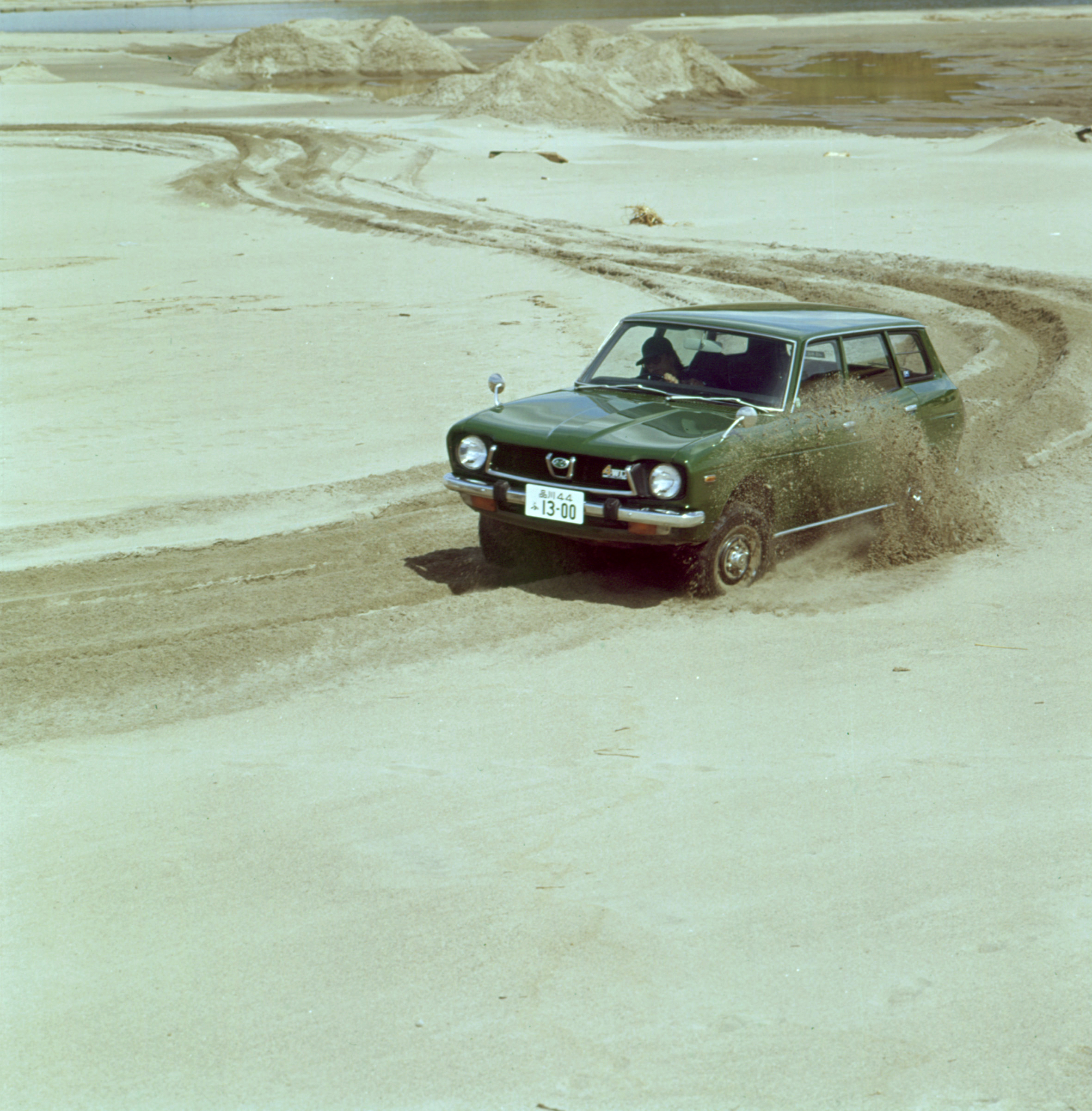
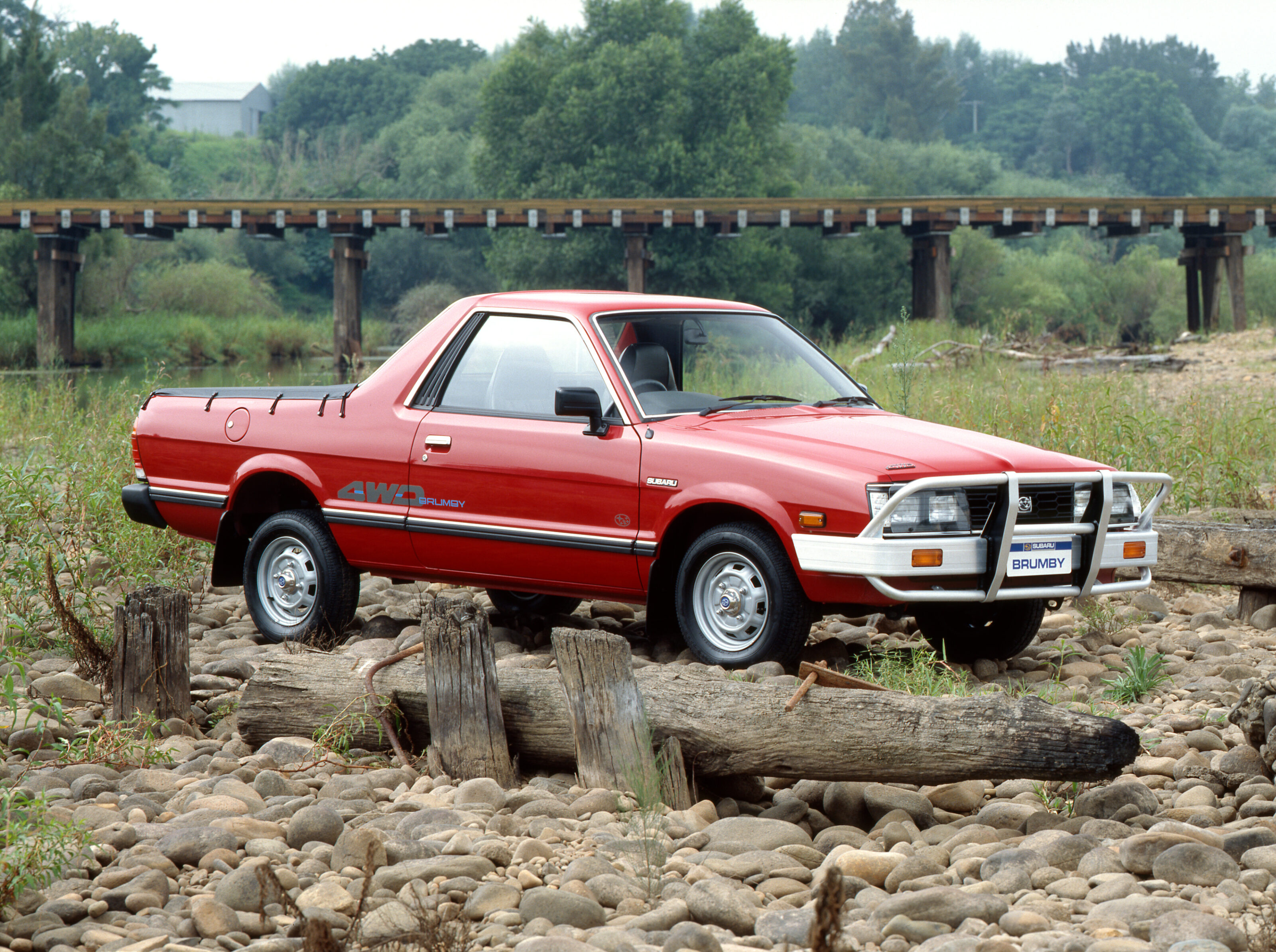
Australia got its first taste of Subaru’s all-wheel-drive when the Leone AWD arrived in 1975, though it was the Brumby ute’s success which really kick-started the brand locally after its arrival in 1978.
From 1998 onwards, Subaru committed to selling only all-wheel-drive cars in Australia – breaking tradition with the joint venture Subaru BRZ/Toyota 86 – a decision current General Manager, Blair Read, says was justified given local driving conditions.
“A key factor for Subaru AWD popularity in Australia is the volume of dirt roads, once you get not far beyond metro areas,” said Read.
“It’s no coincidence Subarus over-index in places like Tasmania, because the sheer grip of AWD is a massive peace-of-mind factor for those hitting the dirt every day.
“Equally, the safety and sense of security of Subaru AWD around town is a critical ingredient in our city success – just ask anyone driving a Subie on a rainy day.
“Generations of Subaru engineers in Japan have honed AWD to a heightened level of competency.”
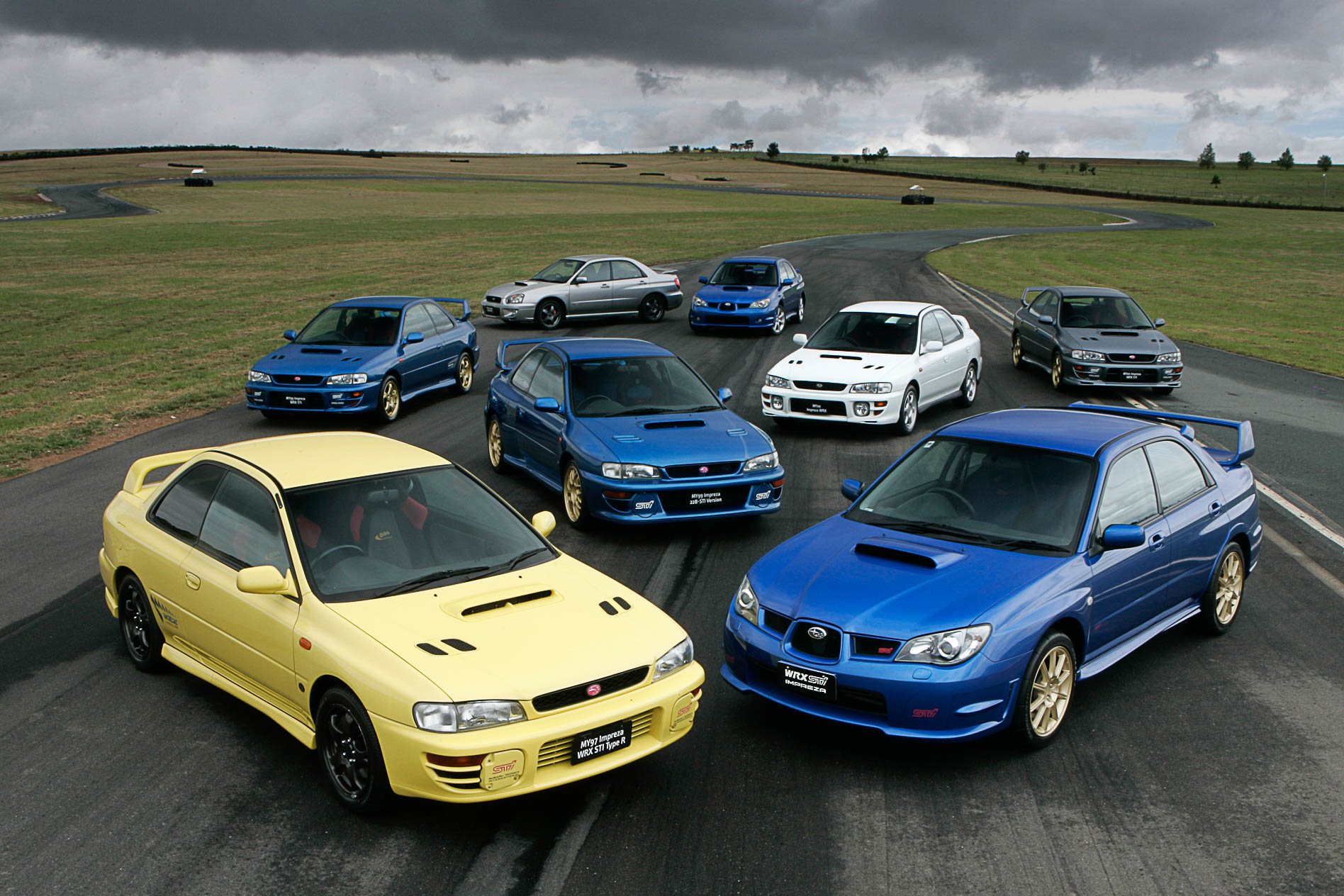
Subaru Australia recently celebrated surpassing 50,000 sales of its WRX-badged cars Down Under since the model’s arrival in 1994, with the original pocket rocket having previously won five MOTOR ‘Bang for Your Buck’ awards.
The WRX STi also reached an important milestone in the back end of 2020, selling over 10,000 units officially since it was first officially imported in 1999.
With 20,093 cars sold year-to-date, Subaru is currently the ninth-highest selling automotive brand in Australia, with the charge led by its Forester compact SUV (7086 sales) and the resurgent sixth-generation Outback lifted wagon (4820 sales).
Snapshot
- New 2 Series’s aesthetics have divided opinion
- 2 Series design sketches point to new M2’s visual potential
- G87 M2 expected for 2022 unveiling
The 2022 BMW 2 Series was unveiled just a day ago, and its looks aren’t sitting right with everyone.
This tweet from motoring Journo Chris Harris, seen below, comparing the compact sports coupe’s rear end to Sid the Sloth from the animated movie Ice Age, is particularly damning.
Harris ponders the rear’s aesthetic, saying, “what in the name of arse cracks happened there?”.
But while the car’s posterior has been a point of consternation for some, others are praising the front fascia and its distinct lack of massive, vertical kidney grilles.
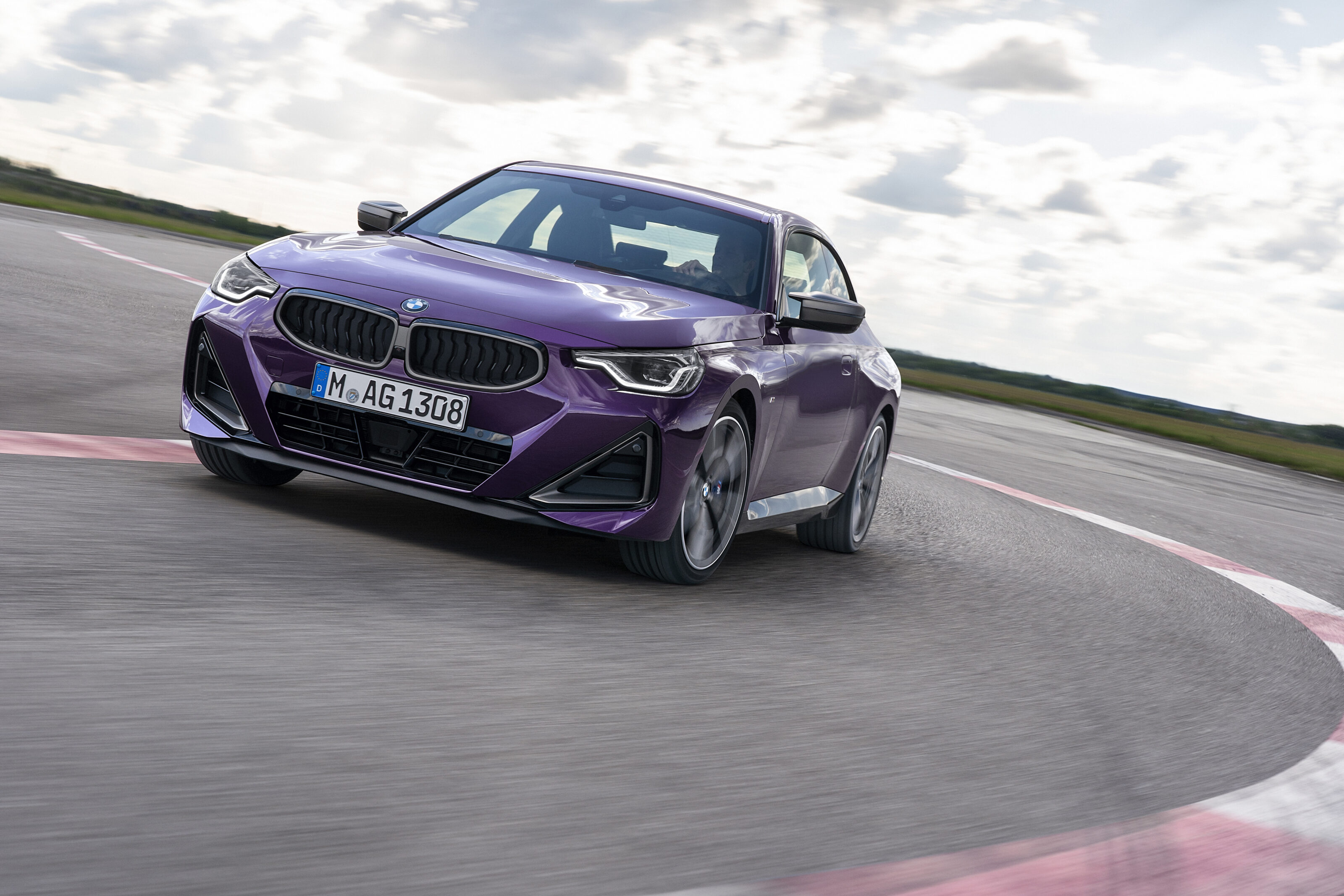
All-in-all, the new 2 Series Coupe, like most modern BMWs, is a divisive-looking automobile.
But something else we learned yesterday from the sports coupe’s launch is just how good it could have looked, and how good the yet-to-be-revealed G87 M2 may still look.
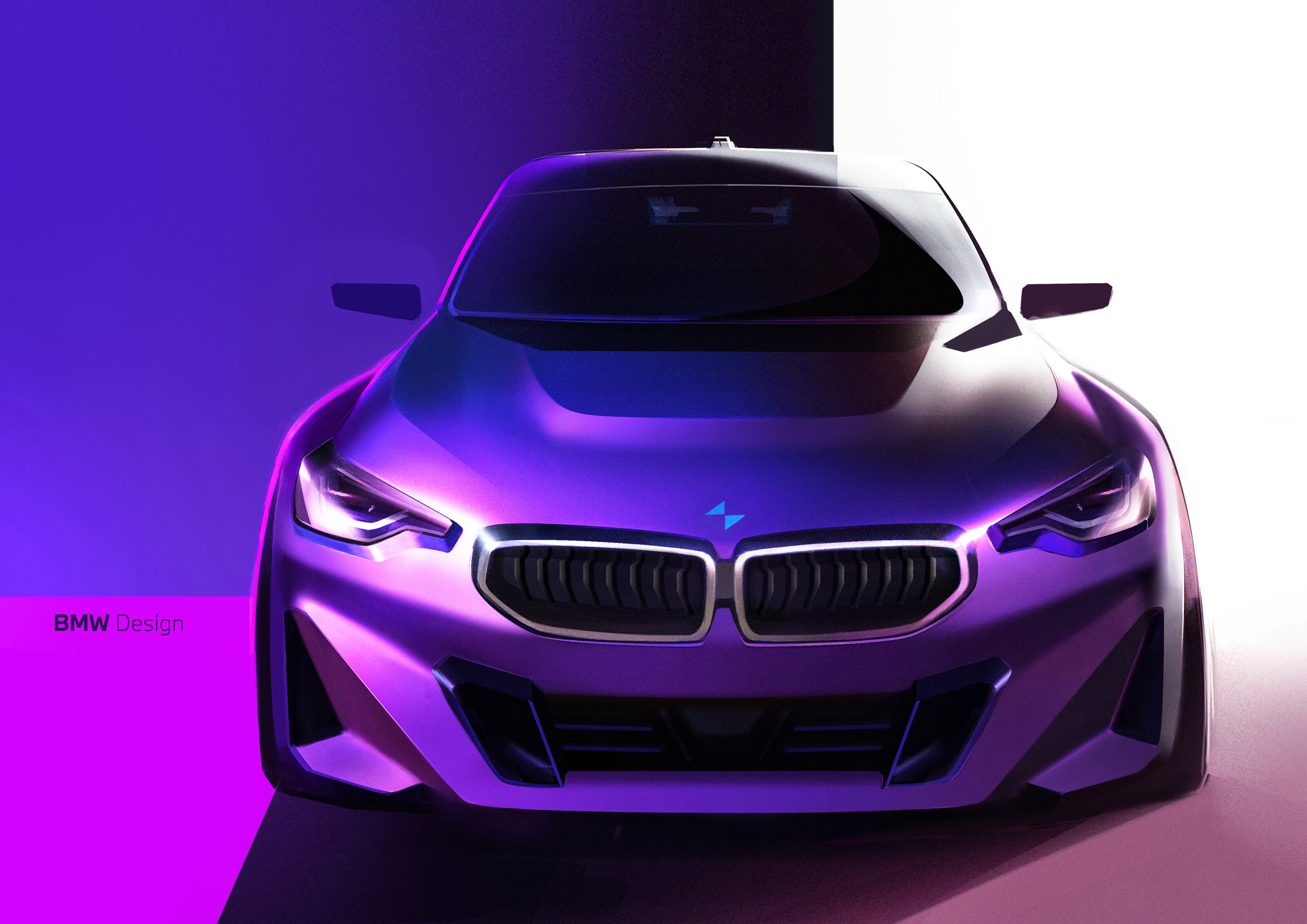
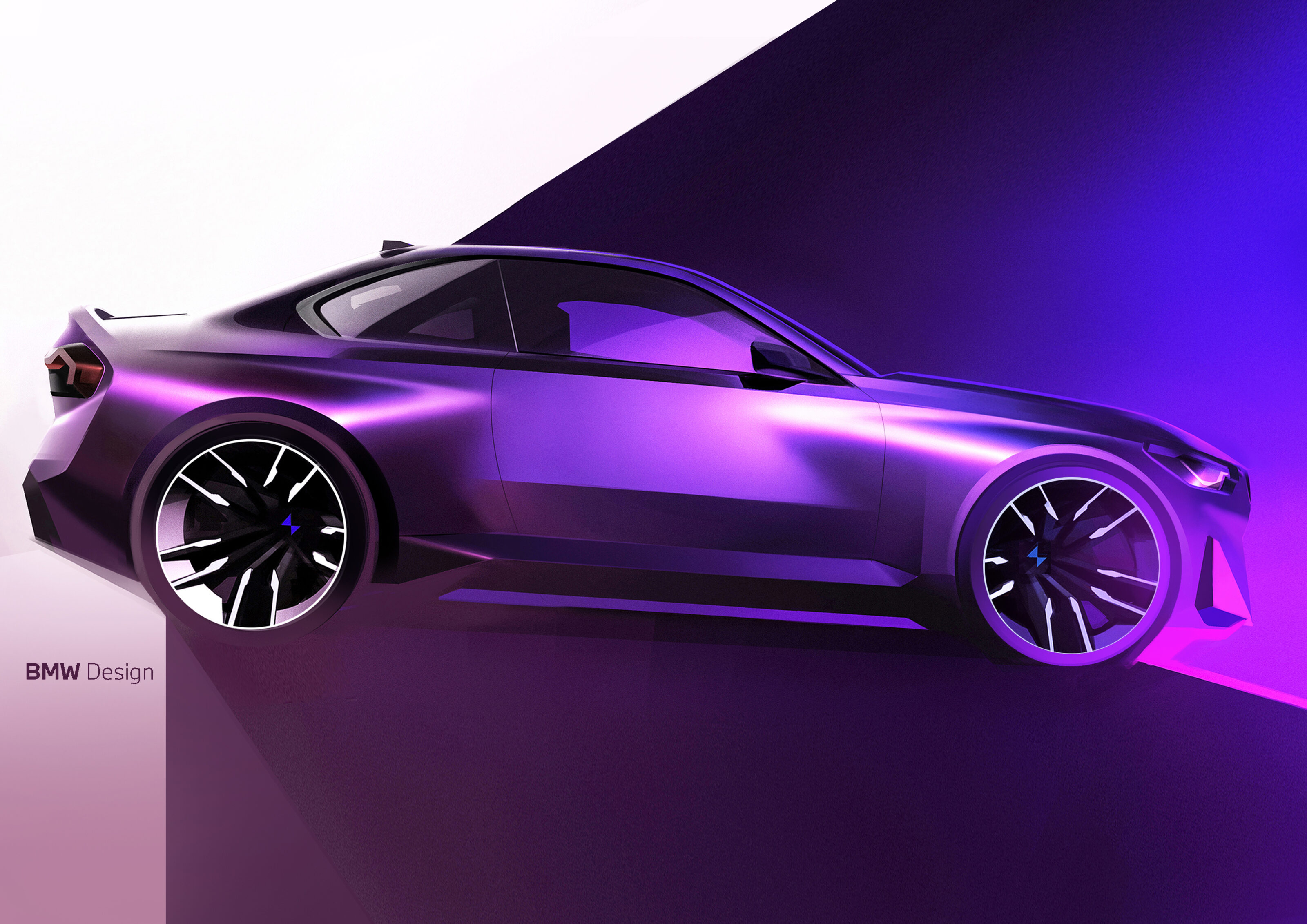
In a series of initial sketches penned by BMW’s in-house design team, we got a glimpse into the ruminations of how the new 2 Series was conceived, with visual themes exploring BMW’s original 2002 from the late 60s, as well as the more recent 2002 hommage, first unveiled in 2016.
The sketches paint a picture of a squat, tough-looking two-door with classic M proportions, and if we didn’t know better, we’d swear they were of the new M2.
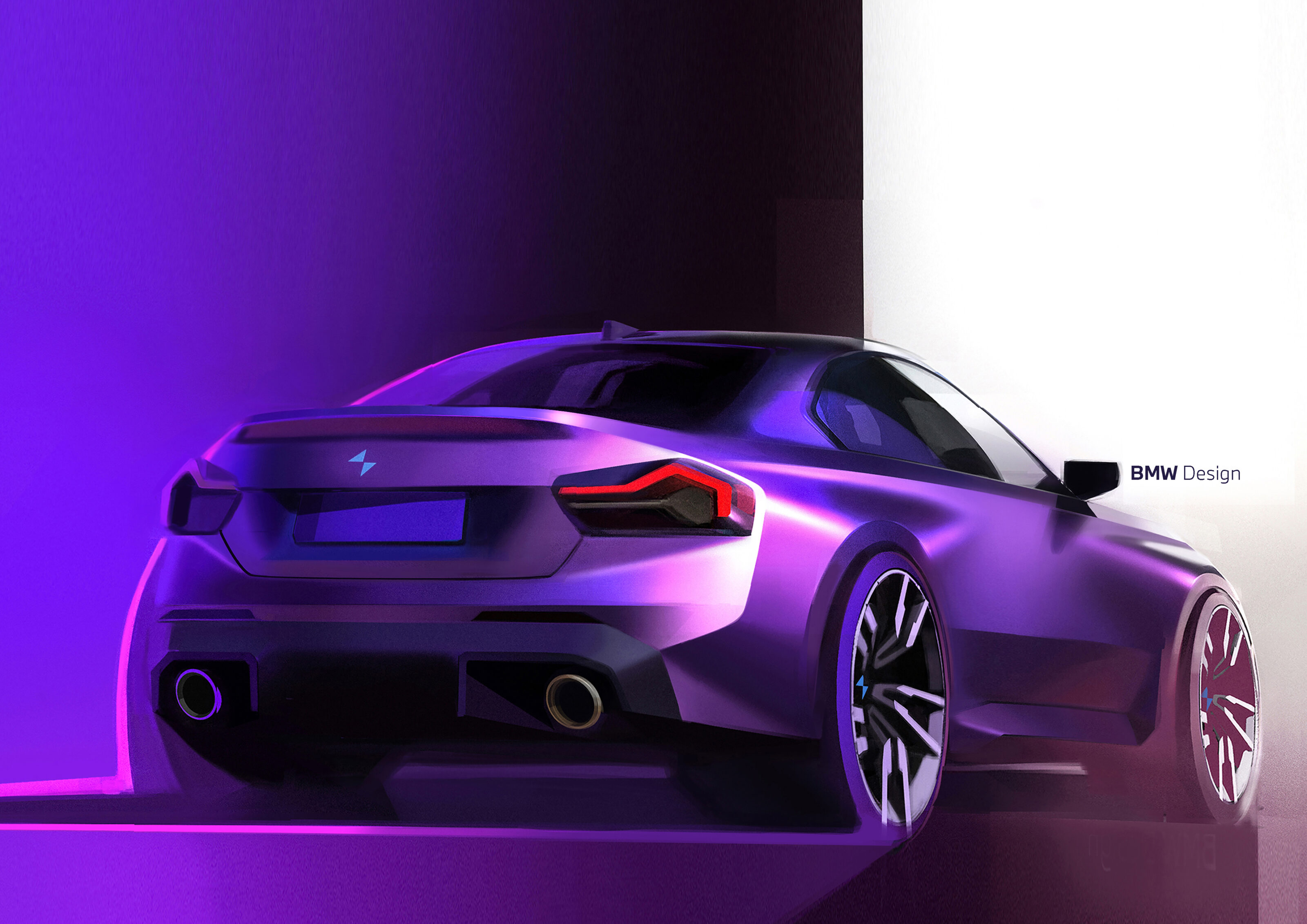
The box-flared wheel arches, swollen rear hips, squat stance, and short overhangs both front and rear all scream M2.
Just look at the two photos below. The first is a sketch of the new 2 Series; the second is a spy shot of the M2. See what we mean?
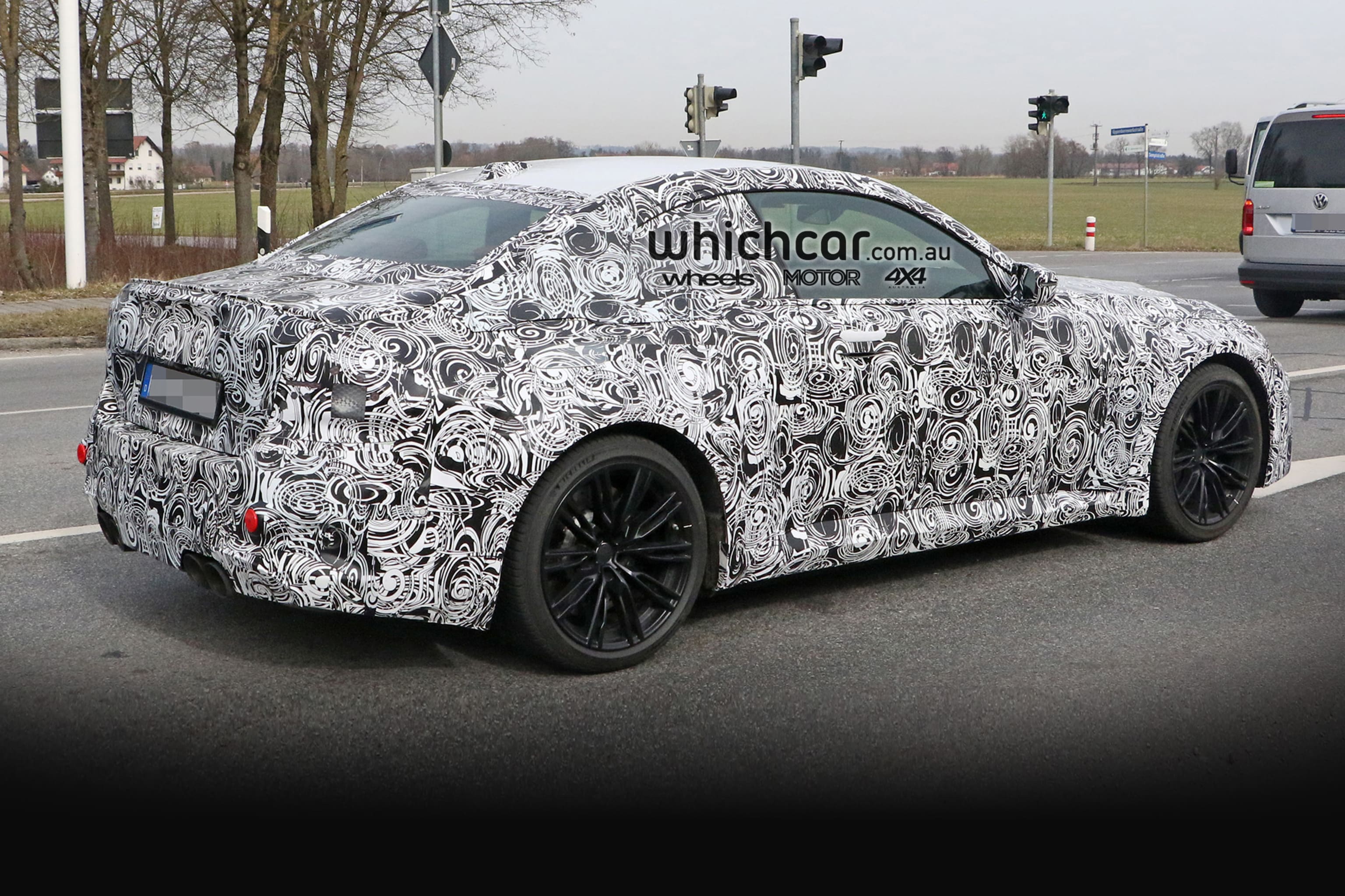
Granted, visual sketches always accentuate the things which naturally appeal to the eye, and these cues seldom make it to the final product.
But the drawings do show that, done right, the next ‘baby M car’ could still be a very good looking piece of automotive design and a worthy successor to the unquestionably brilliant F87 M2.
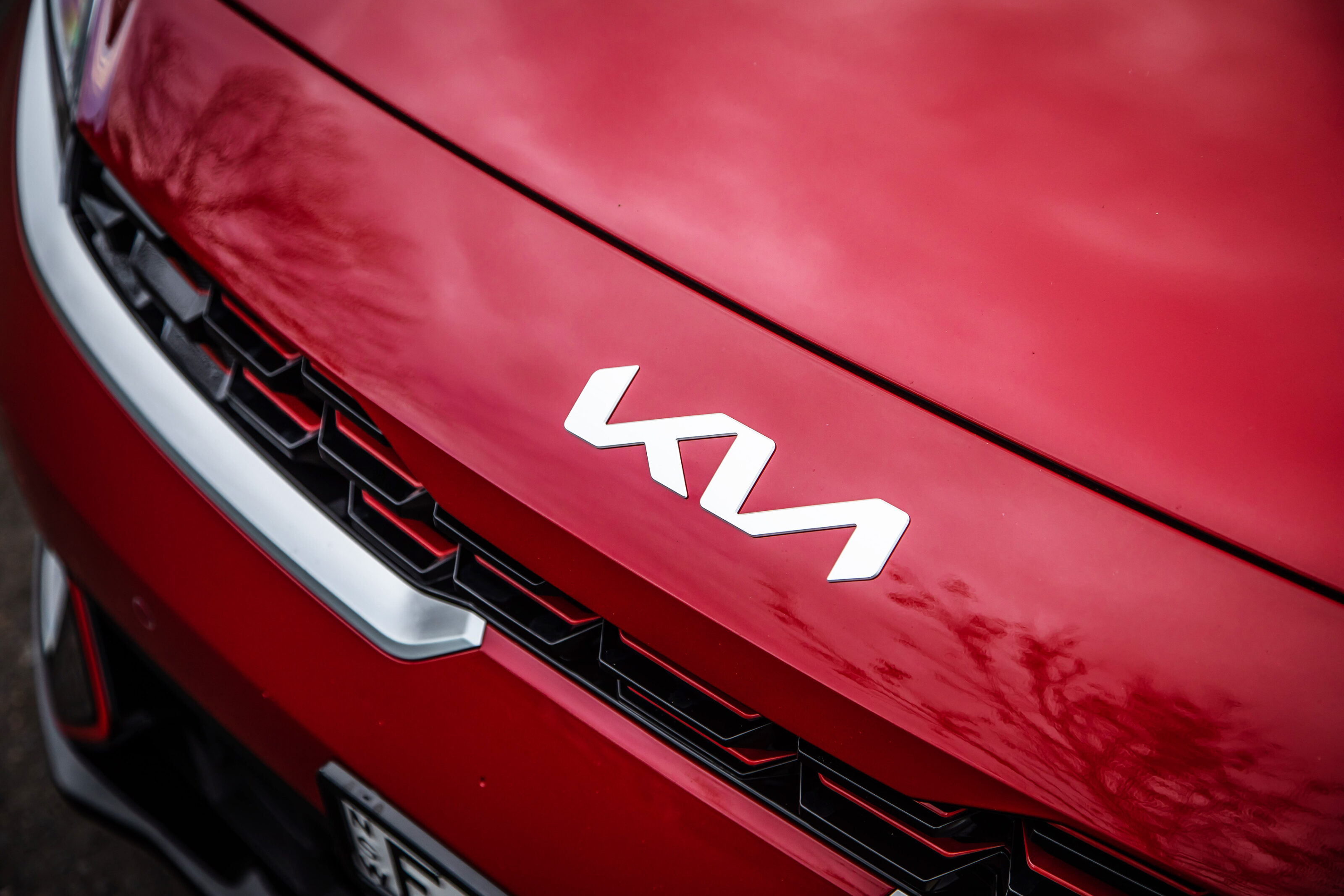
The cover page of MY22 Cerato brochure features a Kia engineer in a spotless studio admiring the flagship GT’s freshly lifted face. Or its new Kia logo. Or, by the look of his gaze, perhaps both. He’s surely admiring another’s handiwork – a Schreyer, a Donckerwolke, a Habib – because, of course, designers of such calibre don’t hang about in lab coats carrying clipboards…
It’s a poetic image of sorts because apart from debuting Kia’s new emblem on remodelled frontage, there’s not much else properly new about the MY22 Cerato GT. Apart, that is, from a modest price rise. Perhaps the other lab-coated being in the rear of the image is a Kia bean counter…
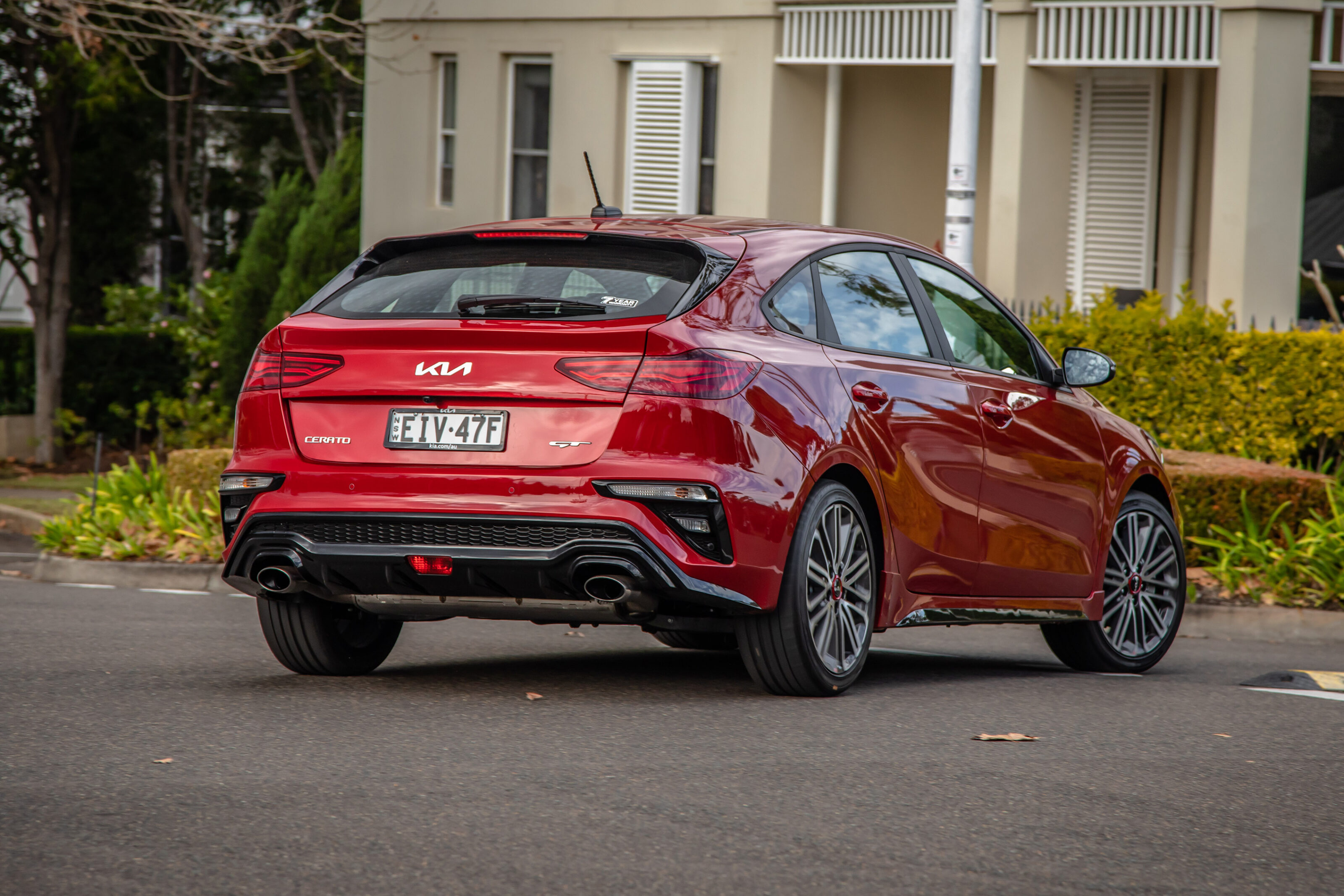
Kia’s had a pretty good thing in K3, or what Australia still insists on calling Cerato, its small hatch and sedan range that has largely propped up the local business for some time. And this facelift is important as it needs to fire hot enough in the presence of stylistic forward pointers such as Seltos and Stonic and the major futuristic shake-up that’s the forthcoming all-new Sportage.
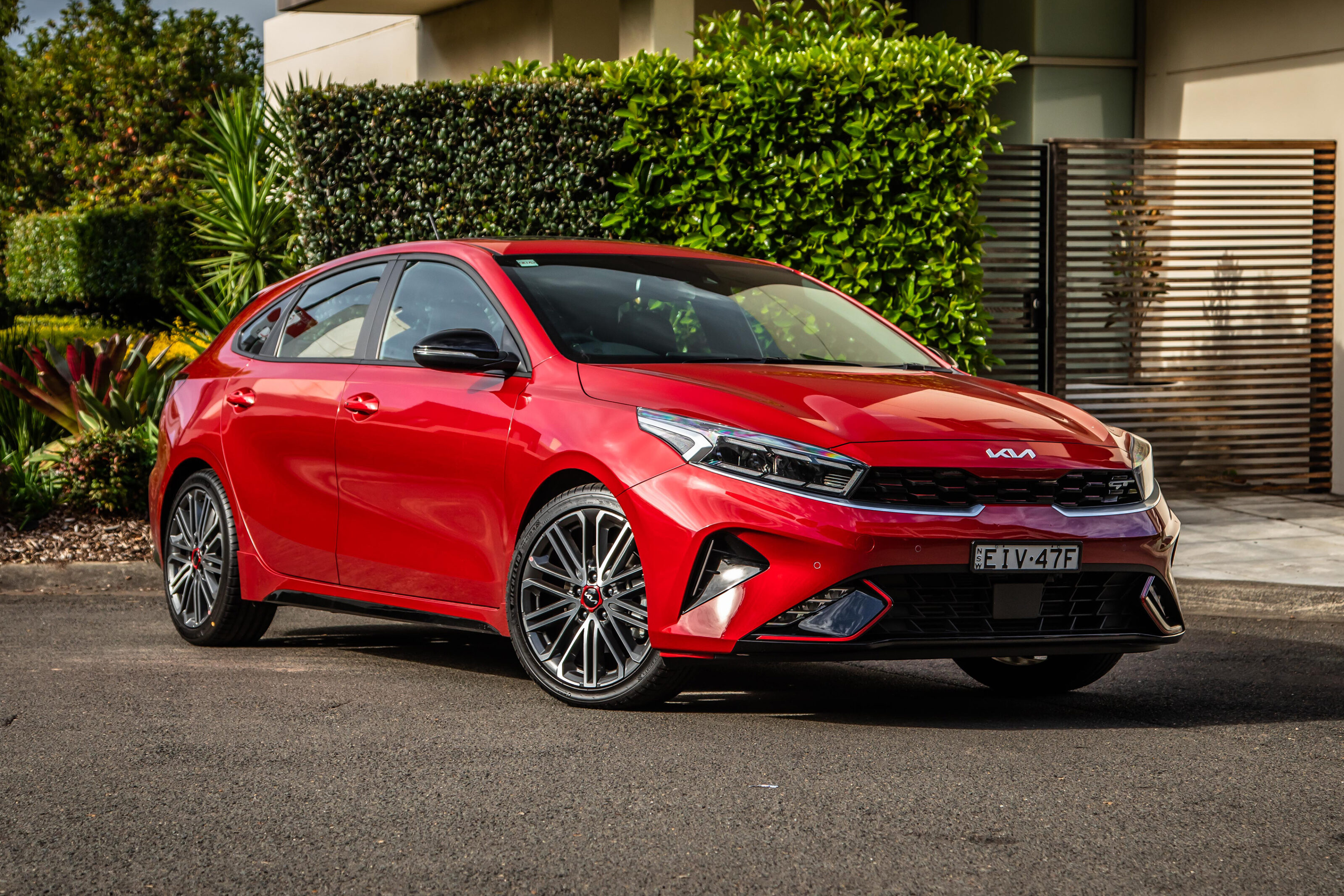
Fancy, fussy, heavy handed: make of the new rhinoplasty what you will but the new ‘swept headlight’ look aims for maximum effect and does wipe away some of the age from what was a pleasing if slightly mundane Cerato/K3 appearance that, in the local market, was merely three years young.
Still, the landscape beneath it moves quickly: the technically related Hyundai i30 was revised last year, Skoda Scala has arrived – plus the coming Octavia revamp if you think outside the box – as well as the eighth-gen Volkswagen Golf and a long-awaited all-new Honda Civic that’s incoming before year’s end. All vying for territory Cerato wants more of and the Toyota Corolla owns.
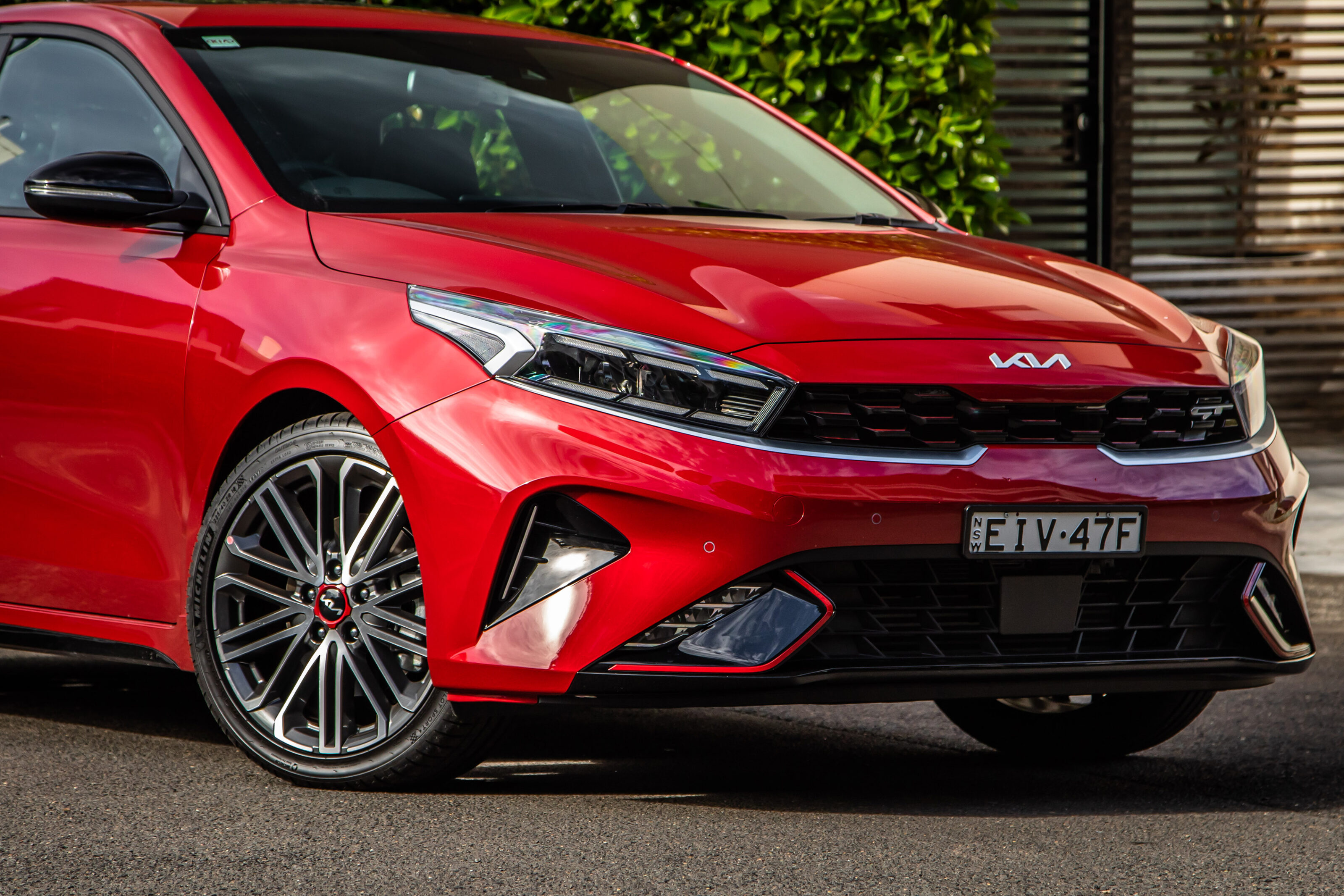
The GT ($35,290 list/$36,990 drive-away) has fair turf to cover as the warm sport hatch covering off the likes of Golf 110TSI R-Line and i30 N-Line Premium that want for similar coin and, in the absence of properly hot i30 N or Golf GTI competitor, its range’s flagship. Perhaps not coincidentally, the auto-only Kia undercuts a DCT-equipped i30 N-Line Premium but is pricier than Hyundai’s manual version for which the GT offers no alternative.
It’s also fair to expect fulsome luxo-sport duality from Kia’s flagship hatch given the connotations of its GT branding and that it sits atop two variants called Sport and Sport+. And its equipment list certain suggests as much. The GT gets the fanciest nose and tail job and is the sole recipient of full LED lighting with tricky integrated indictor jewellery, together with specific body styling and 18-inch wheels shod with Michelin Pilot Sport 4 rubber.
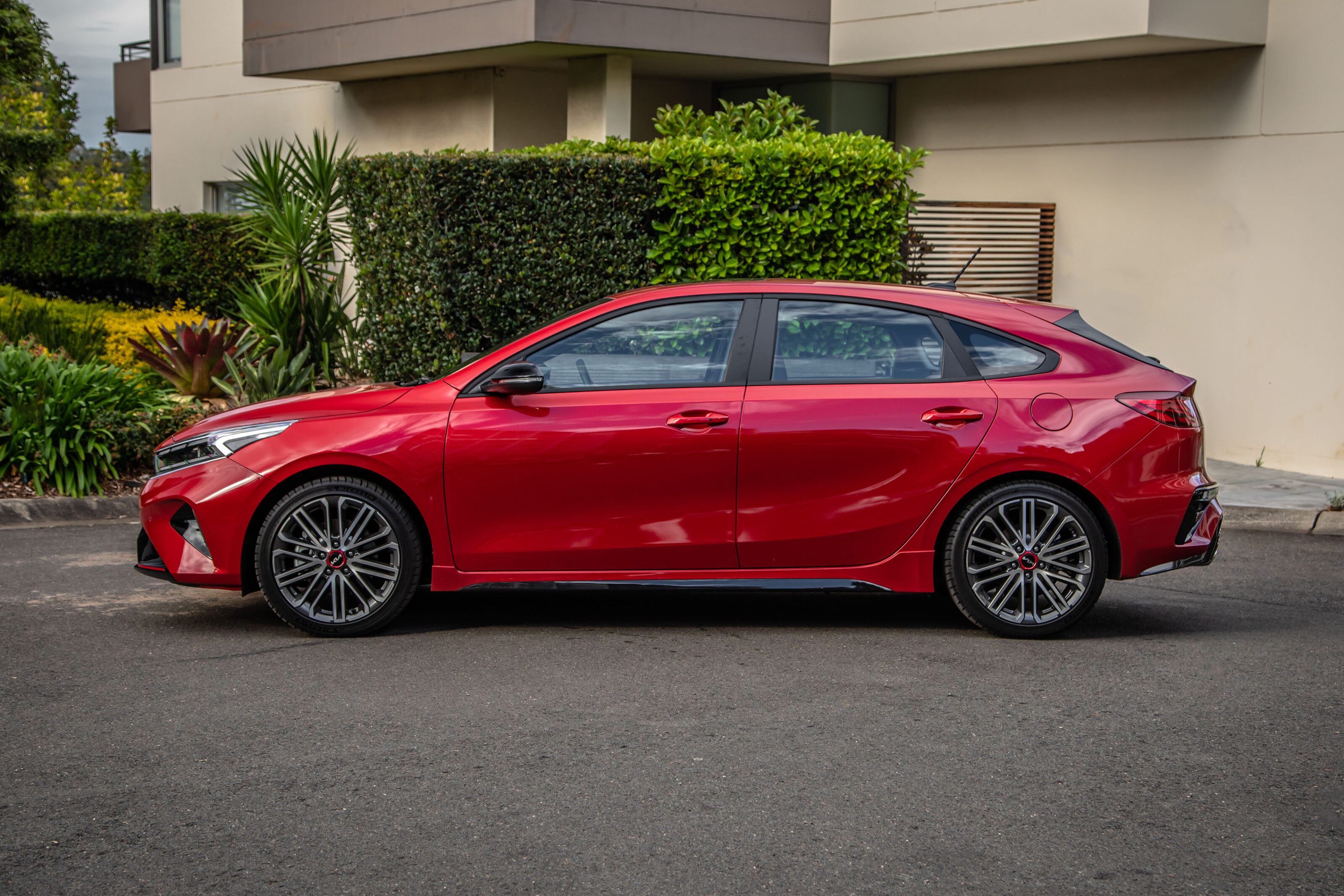
Make of the new rhinoplasty what you will but the new ‘swept headlight’ look aims for maximum effect and does wipe away some of its age
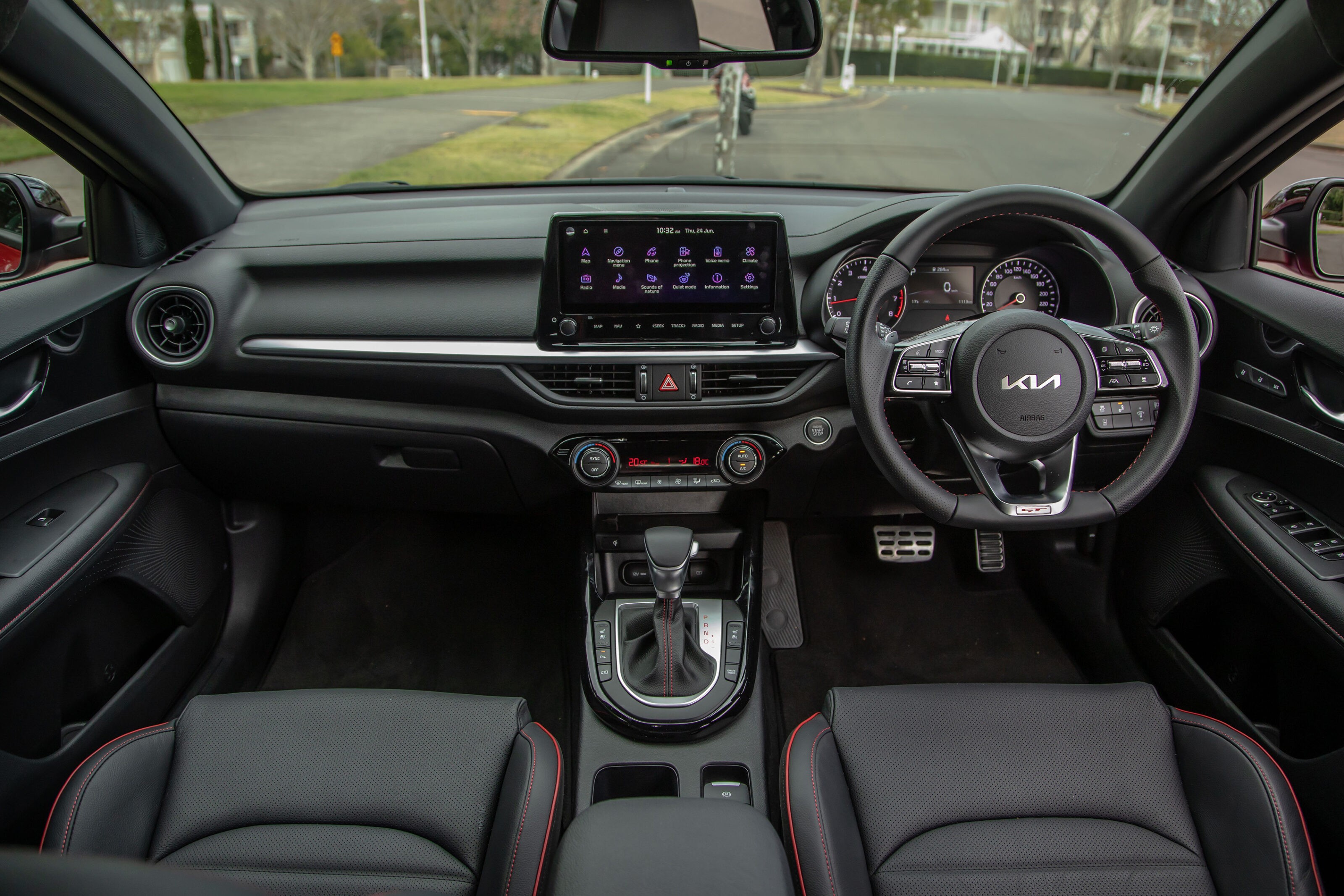
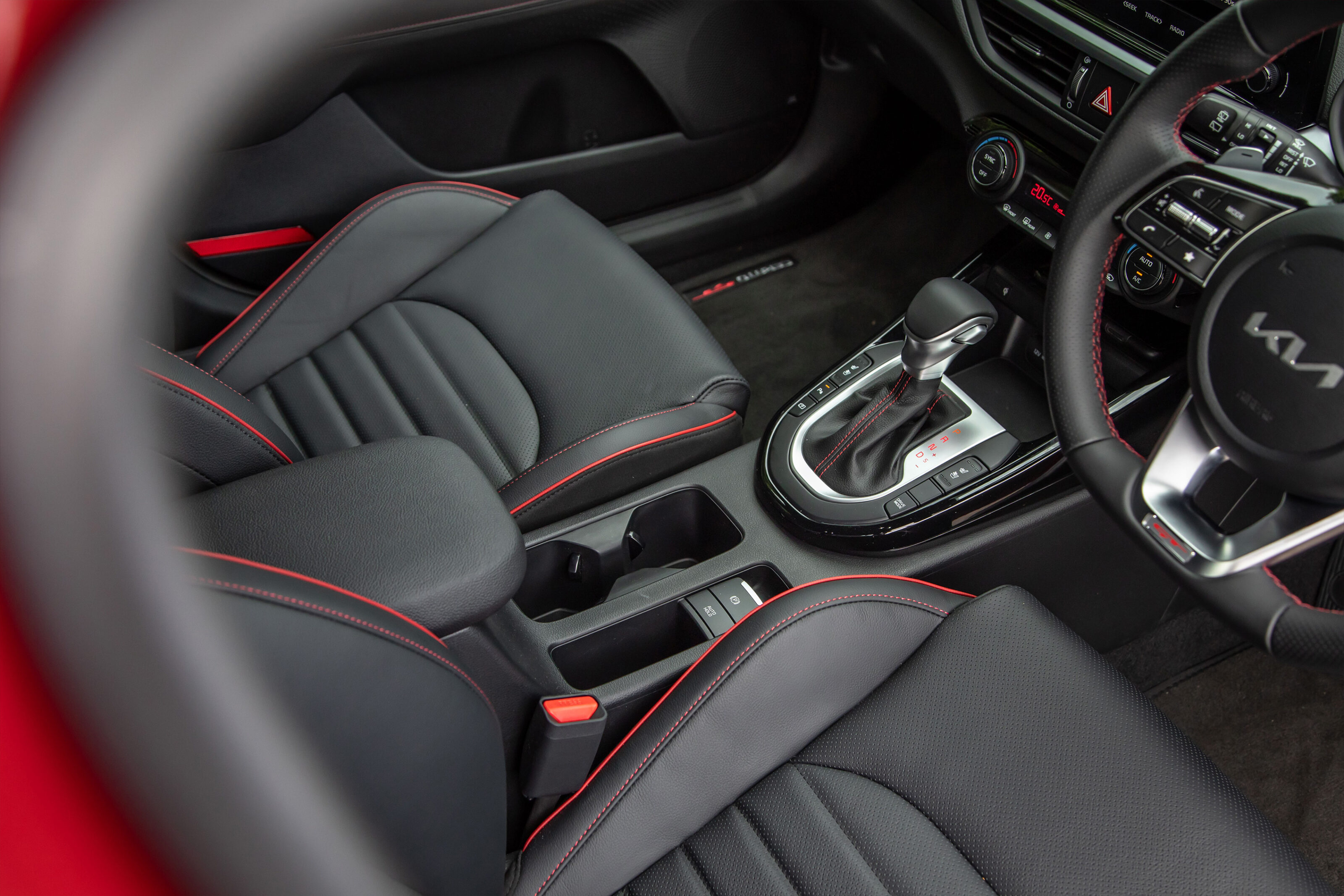
Inside, the cabin departs from the rest of the range with so-called ‘tubular’ ventilated sports seats, paddle-shifters, a tilt-and-slide sunroof, inductive phone charging and JBL premium audio to compliment the high-grade 10.25 touchscreen infotainment system shared throughout the range bar the entry S version. Trim is said to be leather-appointed, the fine print unclear exactly how much of it is “polyurethane and other man-made materials”.
The GT bolsters its tricks bag with a wide-ranging safety suite that includes all-speed AEB with pedestrian and cyclist detection, the related adaptive cruise control, blind-spot monitoring with collision avoidance, rear cross-traffic alert with collision avoidance, lane-keeping and following smarts, safe exit warning and leading vehicle departure alert. Some of these are either optional or absent elsewhere further down the range, leading to a situation where some variants, such as the GT, are five-star ANCAP rated while other less-endowed versions achieved four stars in the 2019 assessment.
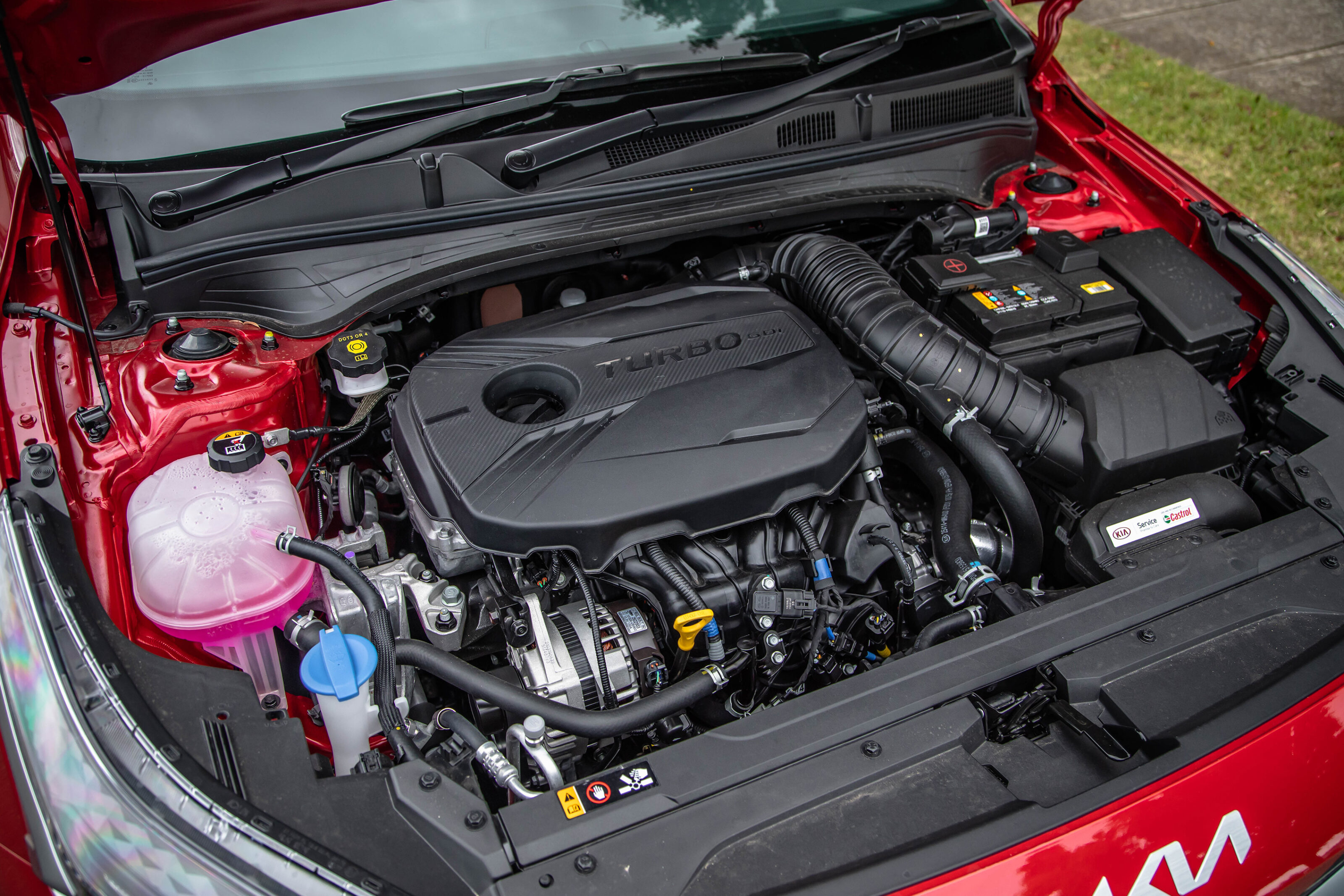
Many of GT’s niceties are shared with the lower-grade Sport+. But the real lure – or perhaps the justification for its $5300 walk-up – is in powertrain and chassis. It’s not just turbocharging by way of its 1.6T-DGI four engine that’s exclusive to the top dog Cerato, but also its seven-speed dual-clutch transmission, dual exhaust format and 305mm/284mm upsized brake set. The GT is the only variant offering a rear multilink axle, its suspension and electric power steering systems both boasting specific ‘sport’ grade calibrations.
As we covered off in our MY22 Cerato launch review, there’s no news under the facelifted skin bar a fiddle to the rear suspension damper compression and rebound to massage out the fierce ride characteristics of its forebear. Dynamically, though, it was surmised that nothing was broken nor required much at all in the way of fixing.
Still, you’d swear it’s louder. At idle, in Normal drive mode, there’s a hornets’ nest rasp I don’t recall being quite so conspicuous in pre-facelift form. And it simply gets more raucous, if not really any more sonorous, when opting for Sport amplification, which brings with it a rather synthetic reduction of the electric steering assistance that robs the tiller a little fluidity on the move.
But my, isn’t it a frisky powertrain. Even in Normal mode, throttle response is crisp and immediate and the dual-clutch gearbox, satisfyingly free of annoying low-speed palpitations, snicks tidily up and down its ratios cleanly and intuitively. There’s real polish in how this powertrain is in final finish.
Sport, too, swings its sense of purpose with decent gusto, feeling feistier than its 150kW (at 6000rpm) might suggest on paper. It really lays on its broad peak torque band, between 1500-4500rpm, thicker than you might expect from just 1.6 litres and at times you’d swear it is plying more than the advertised 265Nm.
Its enthusiasm to march has undoubtedly much to do with a fairly trim 1395kg kerb weight – at least by measure of how long its equipment list is – but the sort of broad-stroke thrust this engine doles out gives it more the feel of a warmed-over turbo two-litre than hard-pushed, smaller-capacity unit.
It gets drive down well through the excellent Michelins, which will cry freedom with enough provocation, though the Cerato remains rock solid with barely a hint of torque steer. It has its driver connection well sorted, with genuine engagement and plenty of precision and feedback in its controls, a machine that responds keenly and progressively should you choose to dig in.
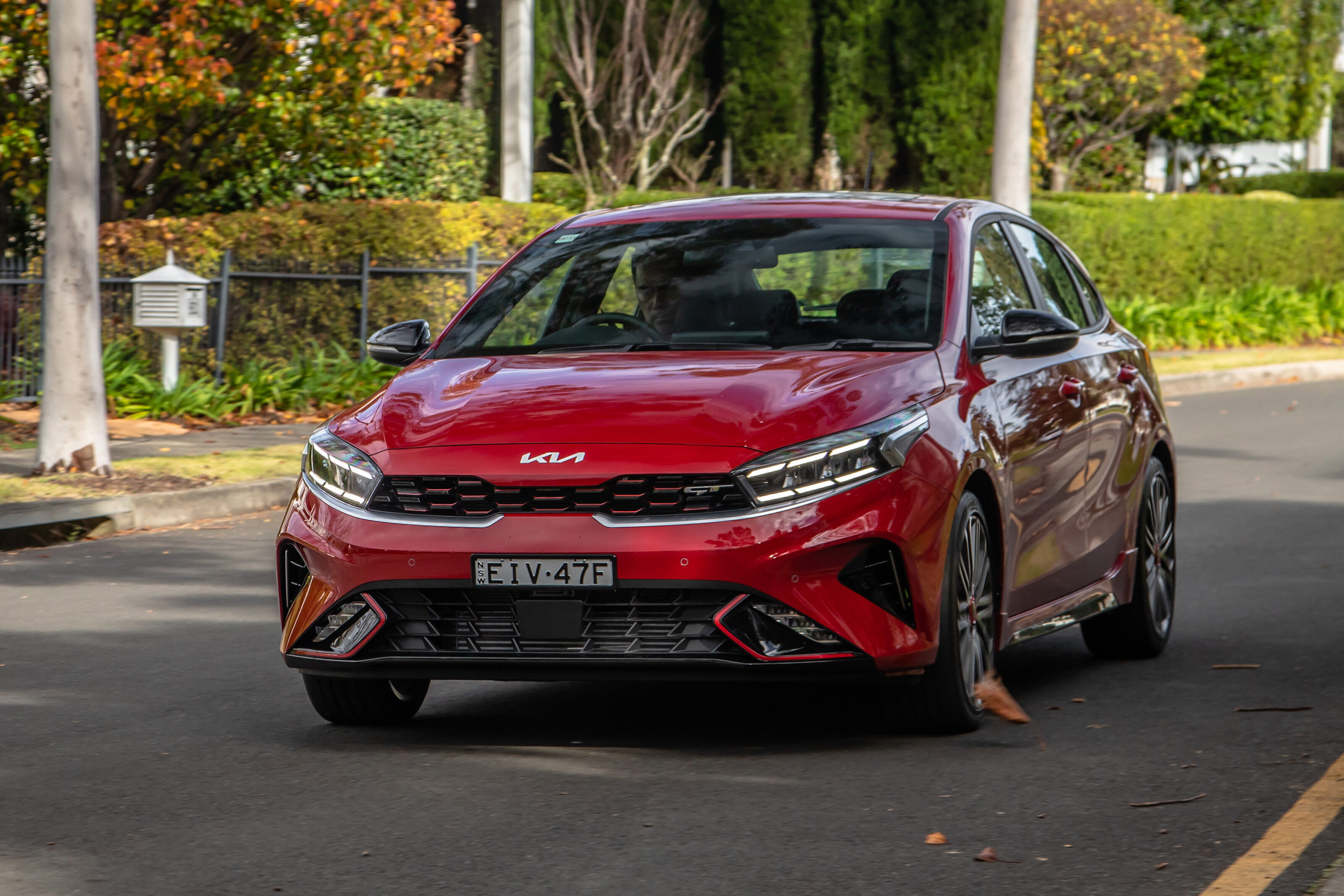
If there’s a minor black mark in its intent to assert itself as a particularly spicy breed of warm hatch, it’s that the brakes are a little overly touchy and even then it’s only really during low-speed activity.
A lot of its frisky spunk feels more applied atop than something seeping through its DNA. It’s applied sportiness, rather than seeming convincingly innate. No foul, simply observation. Push on in the curves and GT does take on a more benign and less colourful character, one favouring surety rather than playfulness. It’s a satisfying thing to throw along a nice and windy piece of bitumen but one that doesn’t necessarily seduce you into doing so.
Where it falls short – and hard – is in striking a proper sport-luxury balance. Despite suspension fiddling, ride quality remains harsh to the point of unsettling annoyance. The chassis seems specifically injected with a permanently rigid state, like some ever-present reminder of sporting intent, and it just throws what might’ve otherwise been a fine all-rounder off kilter with its heavy-handed damping.
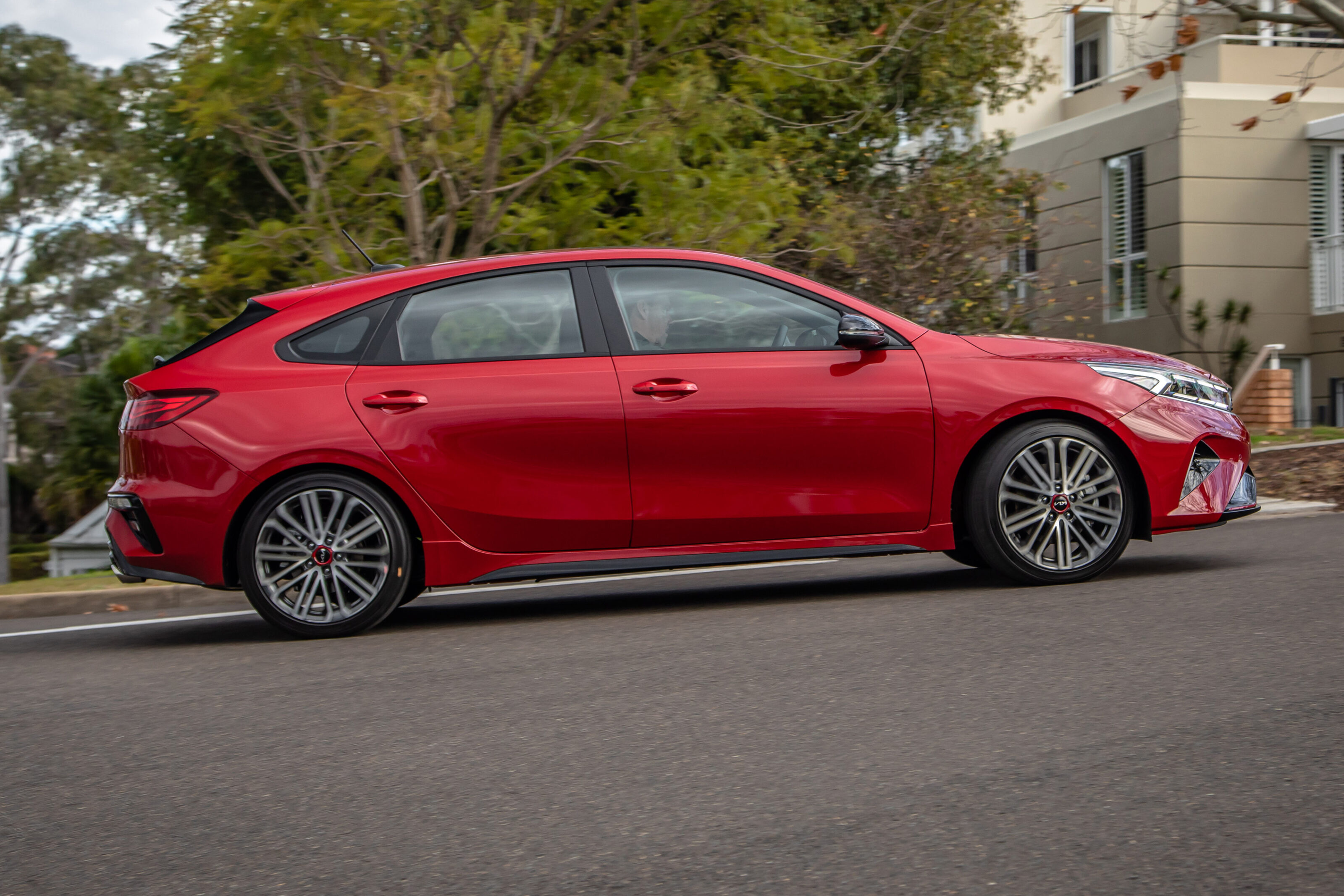
Ride quality and engine rasp apart, it’s a nicely resolved and polished commuter, the cooperative powertrain cooperation equalled by generally fine refinement and its resistance to ambient road and environmental noise.
The only real annoyances are the related lane-keeping and lane-following systems, separate in intent if functionally indistinguishable at times, strong-arming the steering, oftentimes at surprisingly low urban runabout speeds.
At a leisurely pace, the GT isn’t quite faithful to its 6.8L/100km combined consumption claim – more frugal by over half a litre than the naturally aspirated 2.0-litre Cerato – though it’s not far off it, returning low eights on what mostly an urban assessment cycle with a bit of highway driving thrown into the mix. It runs happily on regular or E10, too.
A lot of its frisky spunk feels more applied atop than something seeping through its DNA. It’s applied sportiness, rather than seeming convincingly innate
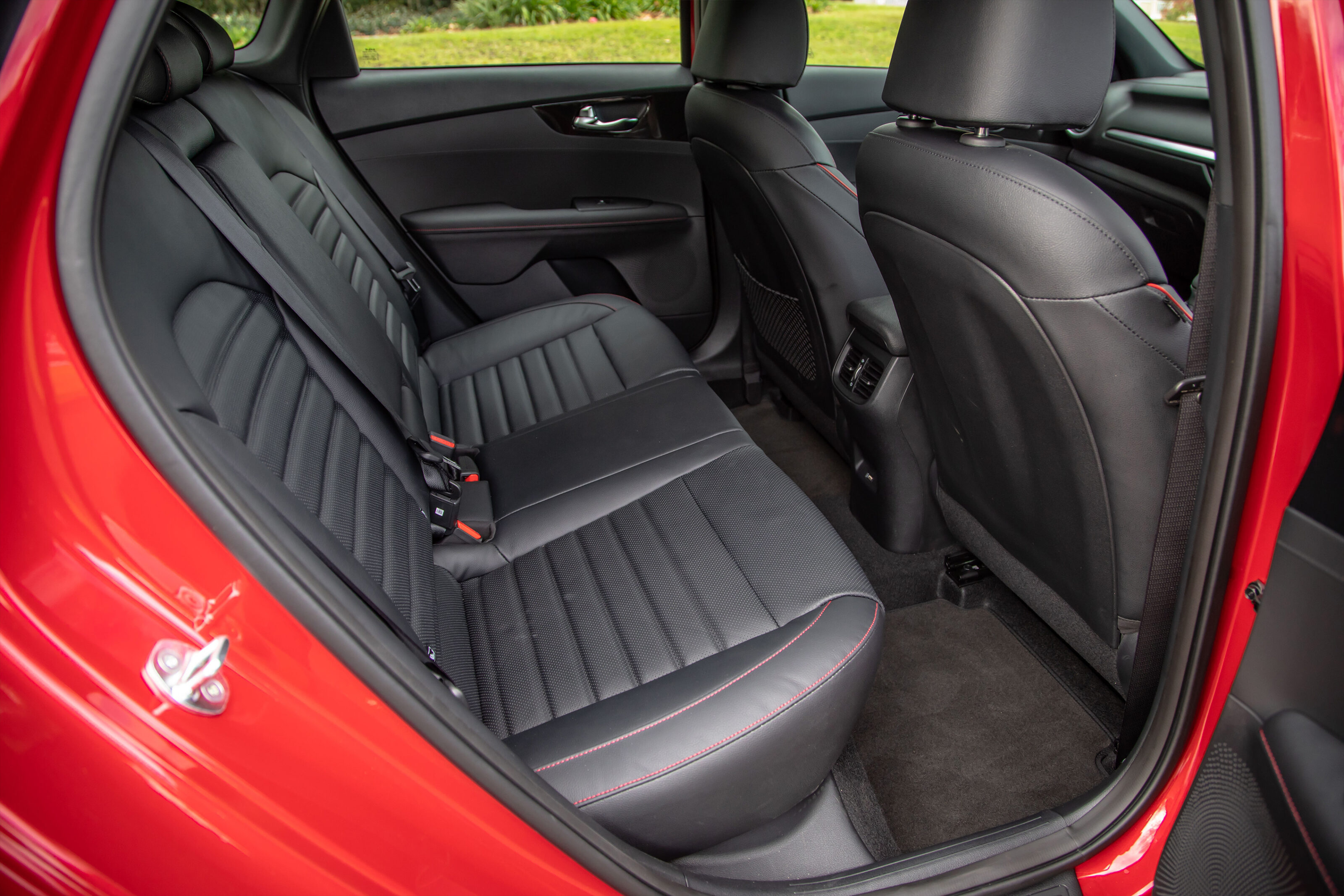
The unchanged cabin remains a charmer, cast in Kia’s favoured ‘almost black’ grey with pleasing if predictable flourishes – red stitching, satin silver highlights, piano black surfaces – in the usually effective places. That the flat-bottom wheel is still vaguely Porsche-like and the circular air vents look Audi-esque, frankly, doesn’t hurt the upmarket façade.
Clarity and legibility have long been Kia cabin design strong suits and it looks and feels thoroughly conventional if to no real fault other than a sense of maturing age. Sound ergonomics and intuitive control placement blends nicely with the concerted sporty spin, right down to the pleasing driving position. It’s a shame the brand’s penchant for red control backlighting makes everything so hard to read in the dark.
It’s a roomy cabin for its class, with seating fore and aft that blend comfort and purpose in equal measure, the trim work decent enough although whatever leather is used is indistinguishable from the fake plastic stuff and of a tactility that won’t be mistaken for some big-dollar Euro.
This is also a solid and seemingly well-made interior bar some conspicuously wavy trim application along some of the seat contours. The rear seatbacks are 60:40 split-folding, converting a decent 428 litres off boot volume into quite a generous and impressively flat load space.
The 10.25-inch touchscreen, resplendent in its oversized frame (with handy shortcut buttons) for maximum effect, is fast and fully featured if quickly becoming less of showpiece because it’s now been rolled out so extensively not just throughout Kia’s stable but across the Hyundai family, too. In fact, it’s also fitted to every Cerato bar the entry S, albeit without the GT’s impressively rich JBL audio. In short, it mirrors the rest of the package: dependable, easy to navigate and largely uncomplicated while not missing many tricks.
Kia still forges ahead with its fine seven-year/unlimited-kilometre warranty and, unsurprisingly, offers a correspondingly lengthy capped-priced servicing program, if with short 10,000km interval caps between visits (that are otherwise every 12 months). At around an average of $470 per visit, ownership is a little on the steep side, too.
Let’s call out MY22 Cerato GT hatch for what it is: a modest yet somewhat effective makeover to prevent what’s still a relatively young generation of small car growing old too quickly as a matter of perception. And because so little of it beyond its fresh face is new or different, there’s little to warrant updating from the old version unless you’re smitten by the revised styling.
Still, the package the facelift is built upon still stacks up impressively well, particularly in a segment that is moving rather quickly, drunk on premium aspirations and upwardly spiralling price tags (a world so strange a healthily optioned Golf GTI now breaches $60k on the road).
In some ways, by largely holding station the Cerato GT hatch looks a little more compelling now. Its powertrain is a gem and certainly outpunches some newcomers on paper, and it’s shoehorned into a package that, some suspension tuning apart, is hard to fault.
2022 Kia Cerato GT Hatch specifications
Body: 5-door, 5-seat hatchback Drive: front-wheel Engine: 1591cc inline four, DOHC, 16v, turbocharged Bore/stroke: 77.0 x 85.4mm Compression: 10.0:1 Power: 150kW @ 6000rpm Torque: 265Nm @ 1500-4500rpm 0-100km/h: N/A Fuel consumption: 6.8L/100km (combined/claimed) Weight: 1395kg (kerb)
Power/weight: 108kW/tonne Transmission: seven-speed dual-clutch automatic Suspension: struts, springs, dampers, anti-roll bar (f); multilinks, springs, dampers, anti-roll bar (r) L/W/H: 4510/1800/1440mm Wheelbase: 2700mm Tracks: 1545/1559mm Steering: electrically assisted rack-and-pinion Brakes: 305mm ventilated discs, single-piston calipers (r); 284mm solid discs, single-piston calipers (r) Wheels: 18 x 7.0-inch (f&r) Tyres: 225/40 ZR18 (f&r) Michelin Pilot Sport 4 Price: $35,290
This is the Toyota GR Yaris-beating hot hatch that Ford is too scared to build – a Fiesta RS!
The official line from Blue Oval executives on the prospect of a more focused sibling to the already brilliant Fiesta ST is ‘wishful thinking’, with the kibosh put on a Fiesta RS for several years now.
Well, at MOTOR HQ, we are big fans of wishful thinking, so we’ve envisaged a world in which the Fiesta hot hatch family exists with a two-tier system.
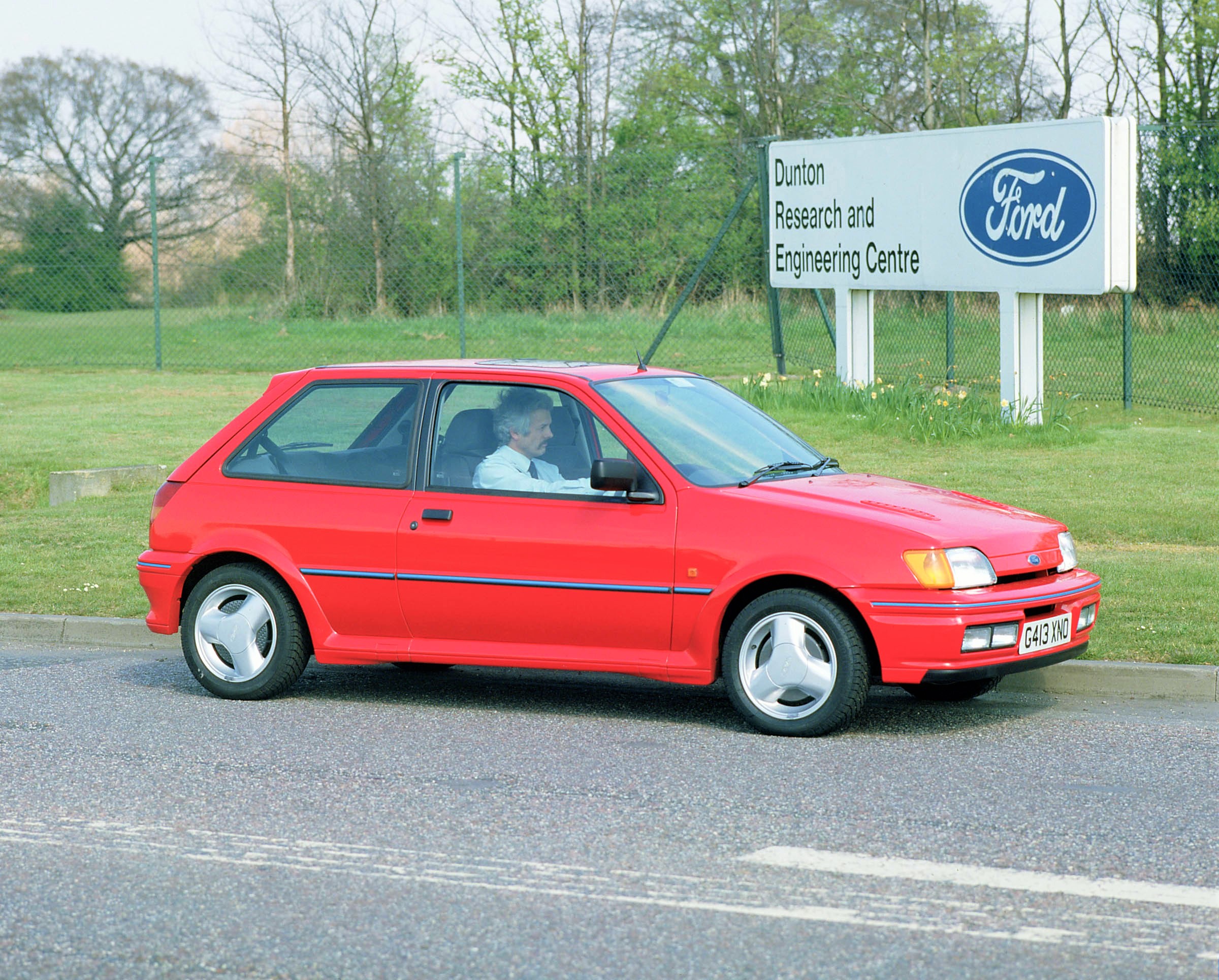
A Fiesta RS isn’t completely unheard of historically, with Ford putting its Rally Sport badge on the back of a blown third-gen XR2 in 1990 to create the Fiesta RS Turbo (pictured below).
While it may seem odd initially for the smaller of Ford’s hatches to become the hotted-up hero, and not the more storied Focus, there are strong motorsport links for a ‘baby’ RS to play on, with the three-door Fiesta bodystyle being a regular rally winner in WRC, and a dominant force in feeder categories (wearing badges R2-R5). As a result, the Fiesta RS would be available only as a three-door – much like the Toyota Yaris GR that would become its main competitor.
The previous generation Focus RS set a high water mark for Blue Oval hot hatches, and it forms the mechanical basis of what could make the Fiesta RS a haunting nightmare for Toyota’s Gazoo Racing division. The Blue Oval already has all the ingredients it needs to build the hypothetical halo, it’s just a matter of making them work in a smaller package.
There are plenty of reasons why the Fiesta RS will remain a figment of our imagination – obliterated profit margins and threats to the Focus’ market position being chief concerns – but hot damn do we wish it would become a reality. How would we make it happen? Read on.
We are incredibly excited that Sweet Dreams has returned to the pages of MOTOR. Want to play fantasy product planner with us? Send your best ideas to [email protected]
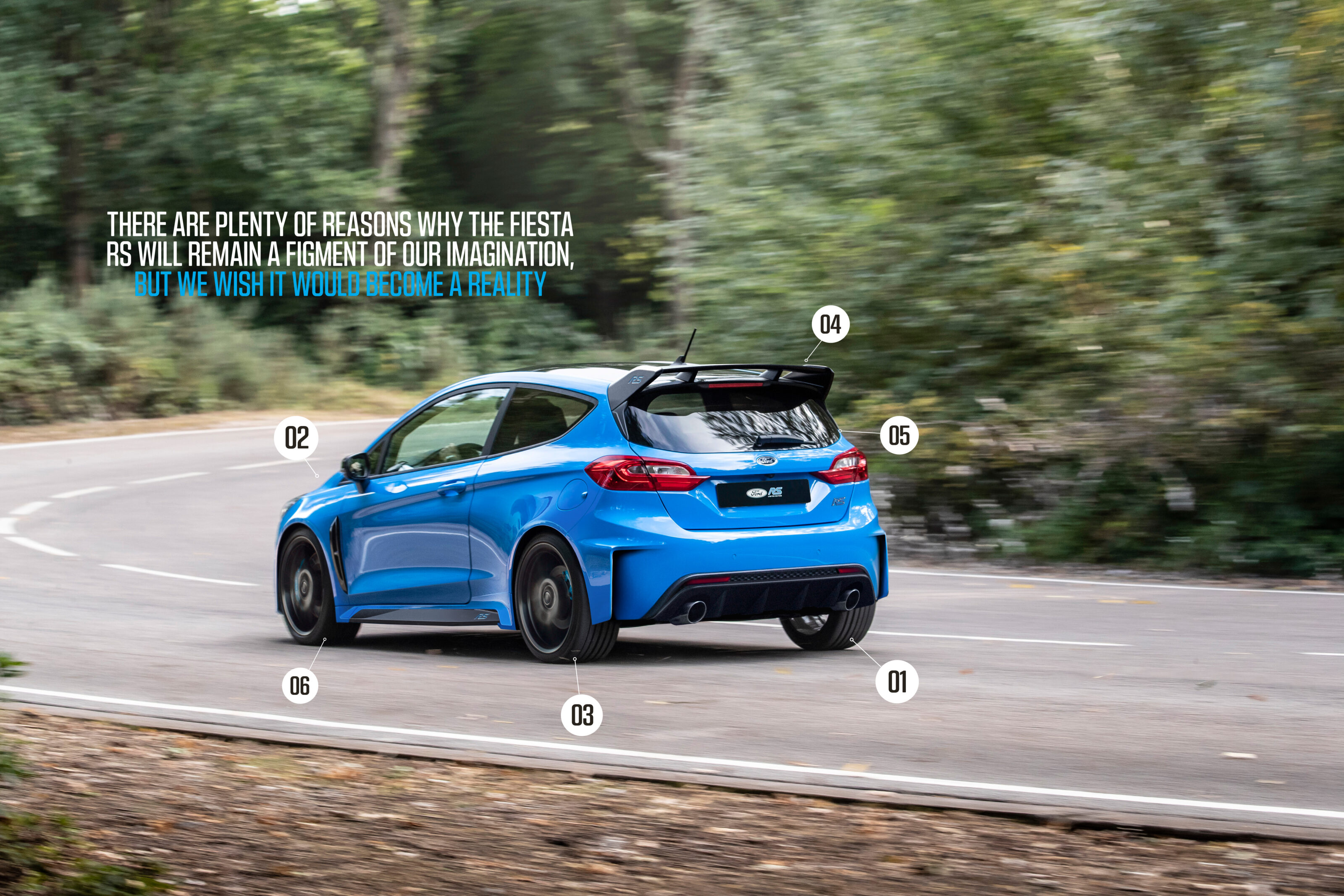
How we’d build it
Rally Inspired
RS badge demands widened bodywork heavily influenced by Fiesta WRC and R5 racers. Rear bumper gets twin exhausts and diffuser treatment. Front lip benefits from aggro spoiler.
Big Block
Gone is the ‘regular’ Fiesta ST’s 1.5-litre three-cylinder, replaced with a 2.3-litre four from the Focus ST, with a slight tune-up to produce 210kW and 440Nm (a lift of 63kW and 130Nm).
Rubbered Up
Where the Fiesta ST has Michelin Pilot Sport 4 tyres in 205/40 specs wrapping 18.0 x 7.5-inch wheels, the RS would add an S to the tyre sidewall and step up to 235/35 rubber on 19.0 x 8.0-inch wheels from elsewhere in the Ford Performance catalogue.
Weight Saver
Fiesta ST already tips the scales at a slim 1217kg. By adding a new, bigger engine, along with a trick all-wheel drive system, the RS will come in nearer 1300kg. A 63kW/130Nm power bump will make up the difference for Power-to-Weight.
What’s the Diff?
Sending power to all four corners is a GKN-supplied Twinster differential set-up similar to the previous-gen Focus RS, along with a six-speed manual transmission. Three pedals ahoy!
The Slow Down
One of our only major criticisms of the Fiesta ST is its lack of braking hardware. Brembo comes to the rescue with the RS, supplying track-ready discs, pads, and calipers front and rear.
