
Talking points
- UK examples of Ioniq 5 will be available in three trim specs u2013 SE Connect, Premium and Ultimate
- Aussie prices expected to be similar
- EV hatchback will launch locally in second half of 2021
The 2021 Hyundai Ioniq 5 all-electric hatchback’s prices and specs have been announced for the UK market.
The British arm of the Korean automaker has kicked off the eagerly anticipated electric vehicle (EV) with an RRP of £36,995 (AU$66,000), and split trim spec into three different levels – SE Connect, Premium and Ultimate.
For £36,995, buyers will be jumping into the Ioniq’s entry-level SE Connect offering, which scores the 58kWh lithium-ion battery pack and rear-wheel drive (RWD) configuration.
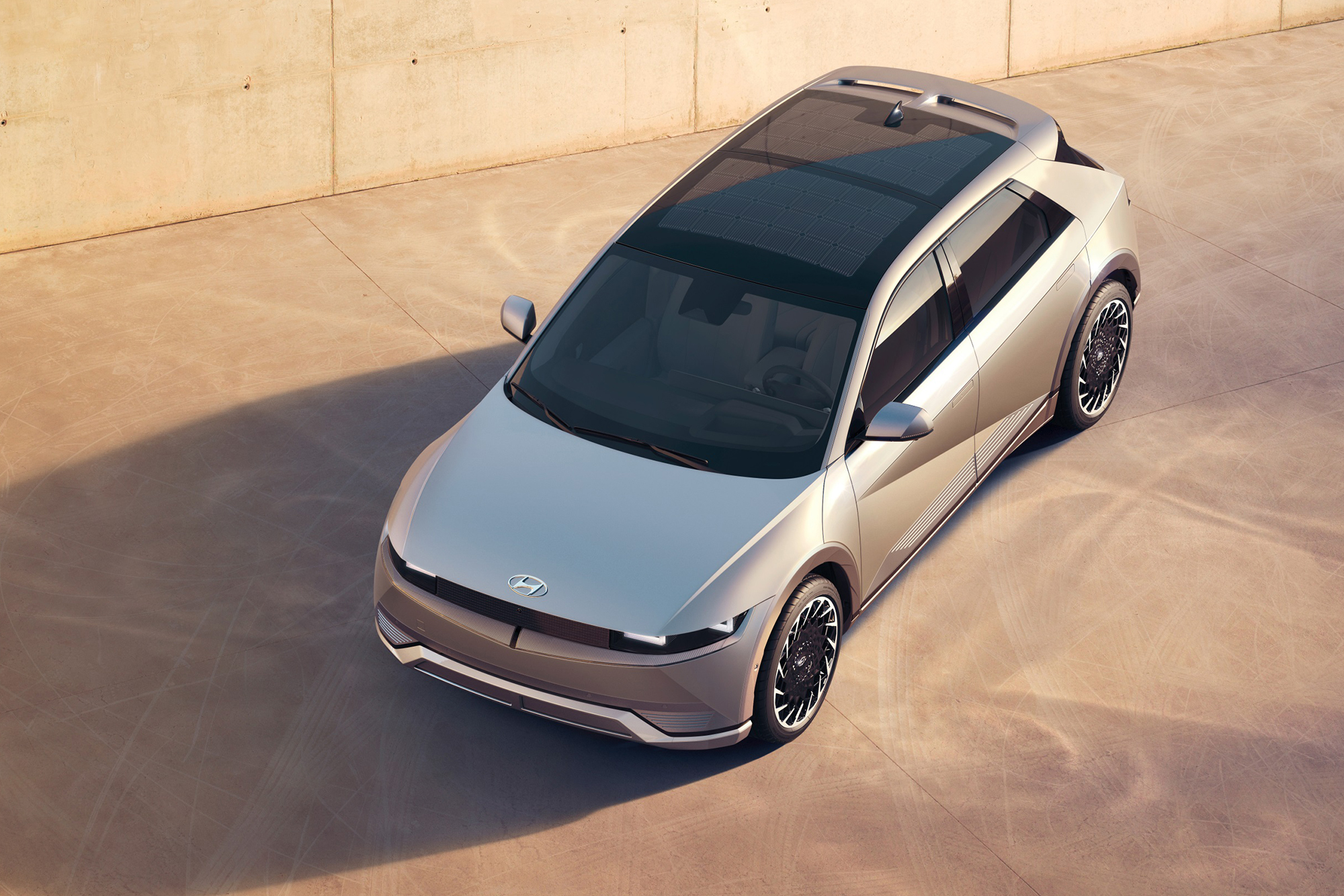
Standard features include 19-inch wheels, dual 12.0-inch digital displays, wireless phone charging, Apple CarPlay and Android Auto, reversing camera and rear parking sensors, and navigation-based intelligent cruise control.
Premium-spec variants will cost from £39,295 (AU$70,000) when equipped with the 58kWh battery and RWD, and from £41,945 (AU $75,000) when optioned with the long-range 73kW battery pack.
Those wanting the Premium Ioniq with the dual-motor, all-wheel drive (AWD) drivetrain will need to fork out £45,145 (AU$81,000).
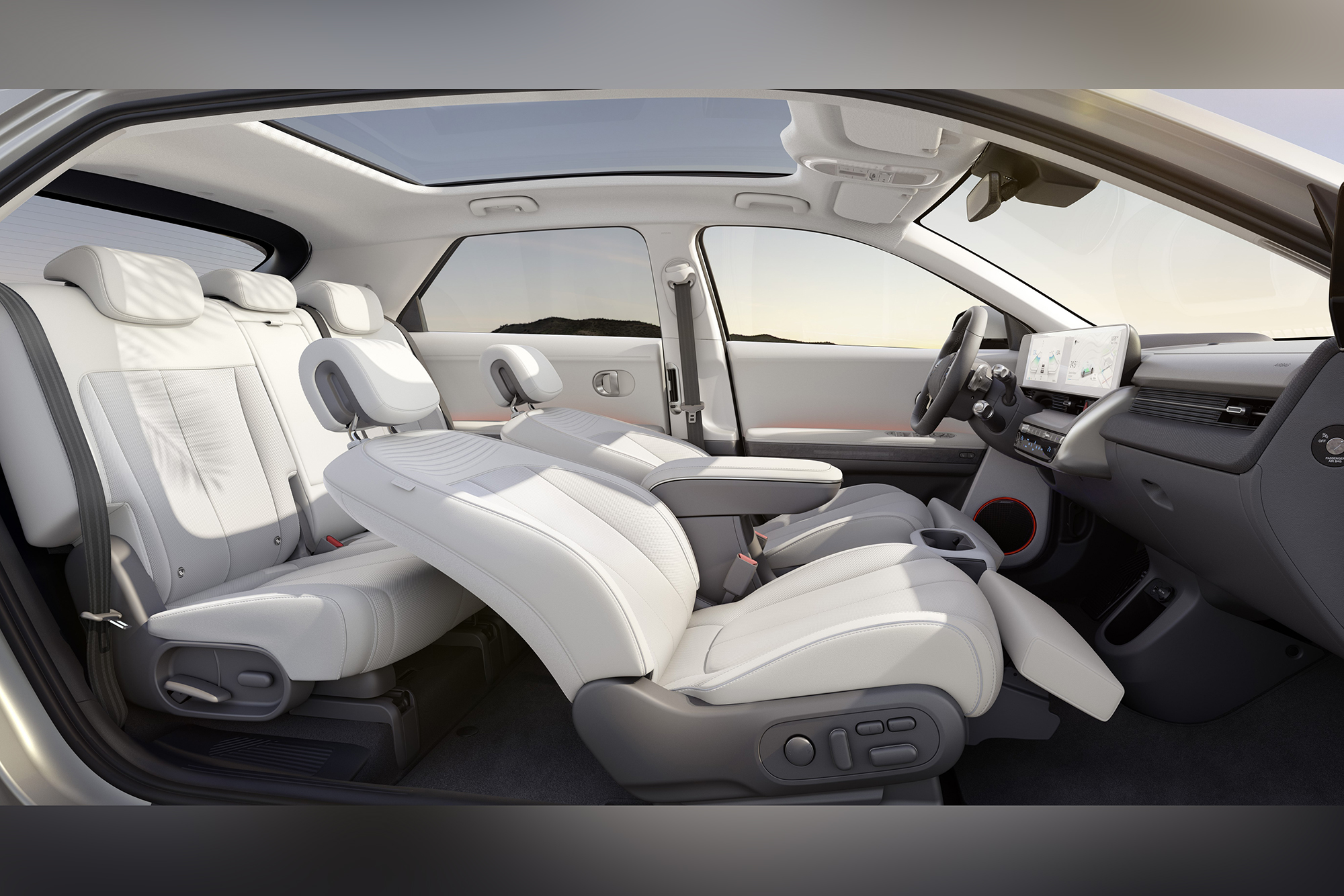
Premium cars get additional features such as powered and heated front seats, smart LED headlights, Vehicle 2 Load (V2L) charging, and added safety/driver assistance features such as Highway Driving Assist Level Two.

The top-shelf Ultimate Ioniq will cost from £42,295 (AU$75,500) for the 58kWh/RWD combo, £44,945 (AU$80,400) for the 73kWh battery and RWD, and £48,145 (AU$86,000) when optioned with the 73kWh battery pack and AWD.
Standard features include a leather interior, power-heated and cooled front seats, heated rear seats, sliding ‘walkway’ centre console, and a Bose premium audio system.
The Premium models will also come with a separate heat pump, which is said to improve battery efficiency in cooler conditions.
Thanks to the Ioniq 5 being based on Hyundai’s E-GMP electric platform, all models will also be equipped with 800V battery technology, which allows for 350kW DC fast-charging.
The only other EV on the market right now with this level of battery and charging tech is Porsche’s Taycan, and it’s darn impressive, allowing the Ioniq 5 to be charged from 10 to 80 per cent in just 18 minutes.
The fast charging will also enable users to add 100 kilometres of effective driving range to the EV hatch in just five minutes.
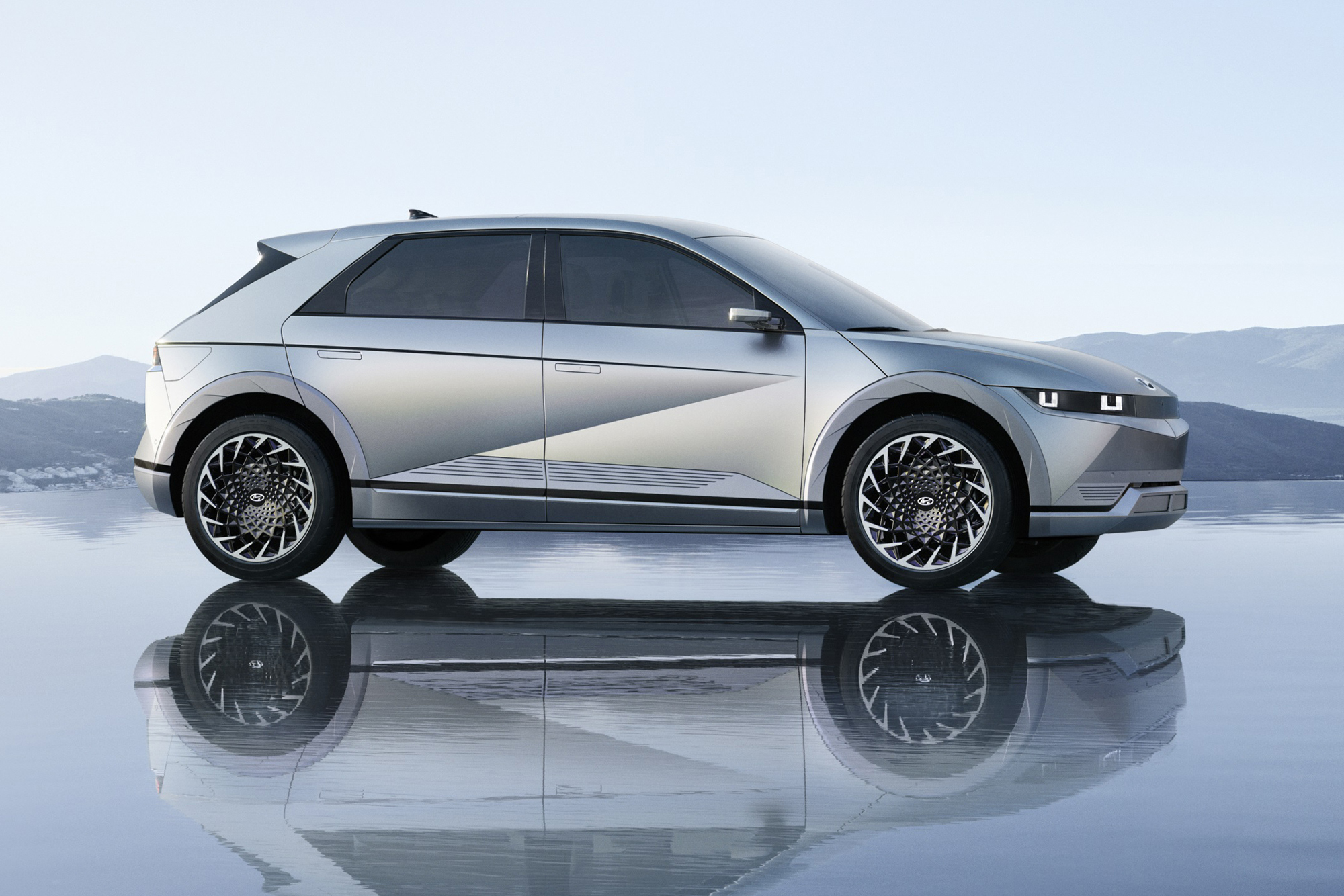
A spokesperson for Hyundai Australia has told WhichCar that we can expect the Ioniq 5 to land Down Under in the second half of 2021.
Model variants and pricing are yet to be confirmed locally, however, given the UK pricing, we reckon the Ioniq 5 will most likely go on sale in Australia with an RRP around the $60-65k mark.
This will mean the new hatchback will cost roughly the same price as the automaker’s current EV offering, the all-electric Kona, which starts from $62,000.
Talking points
- Confirmed for Australia in the third quarter of 2021
- Sleek new wagon set to offer more practicality
- Powertrains likely to include a turbocharged 2.0-litre four-cylinder and a 3.3-litre V6 twin-turbo
The 2021 Genesis G70 shooting brake has been teased in several photos posted on the automaker’s European Instagram page.
Rumoured to be unveiled in the coming days by the luxury automaker, a spokesperson for Genesis’s local arm has confirmed to WhichCar that the G70 wagon will be arriving on Aussie shores in the third quarter of 2021, following its sedan sibling, which is due to arrive this June.
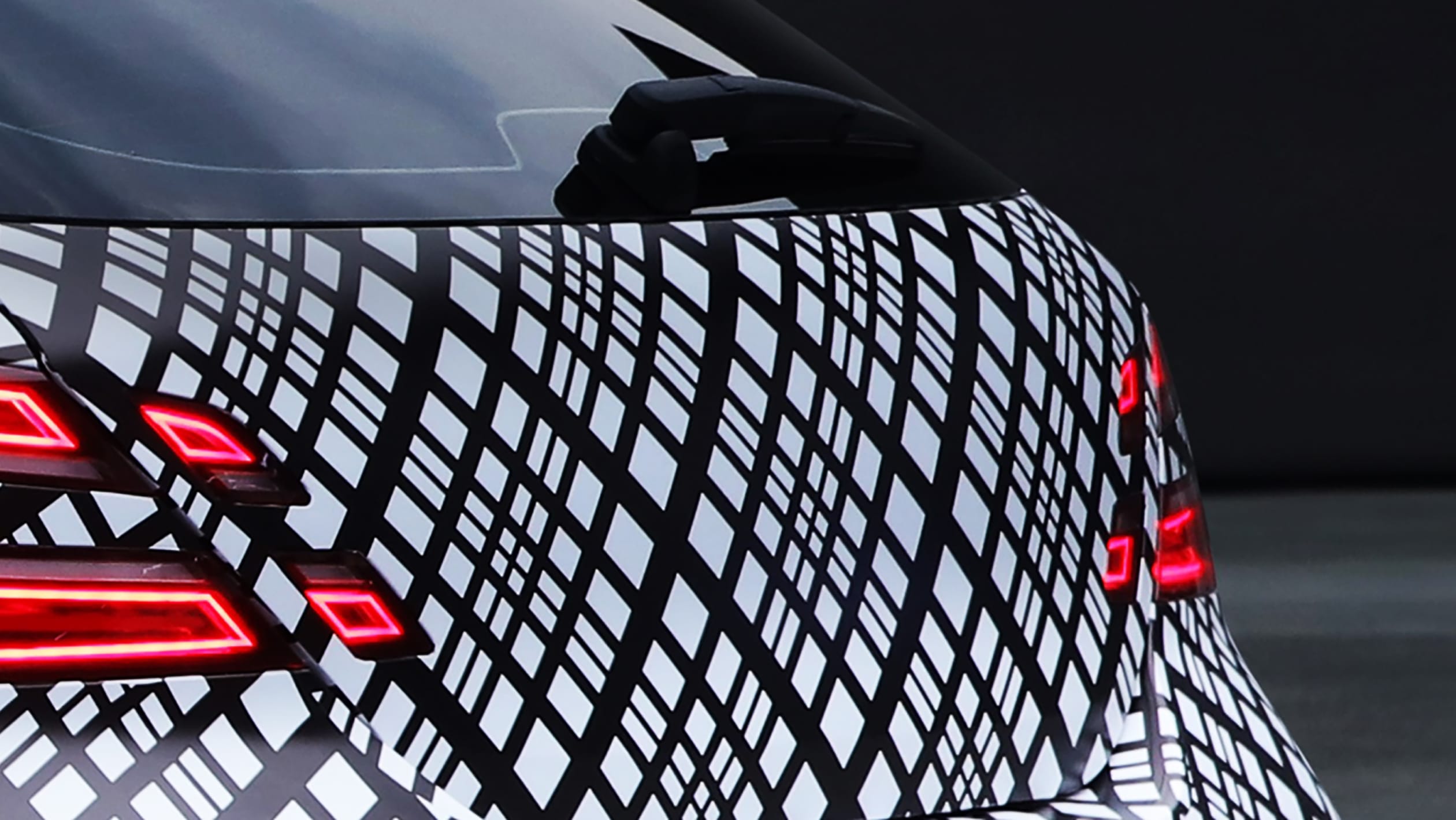
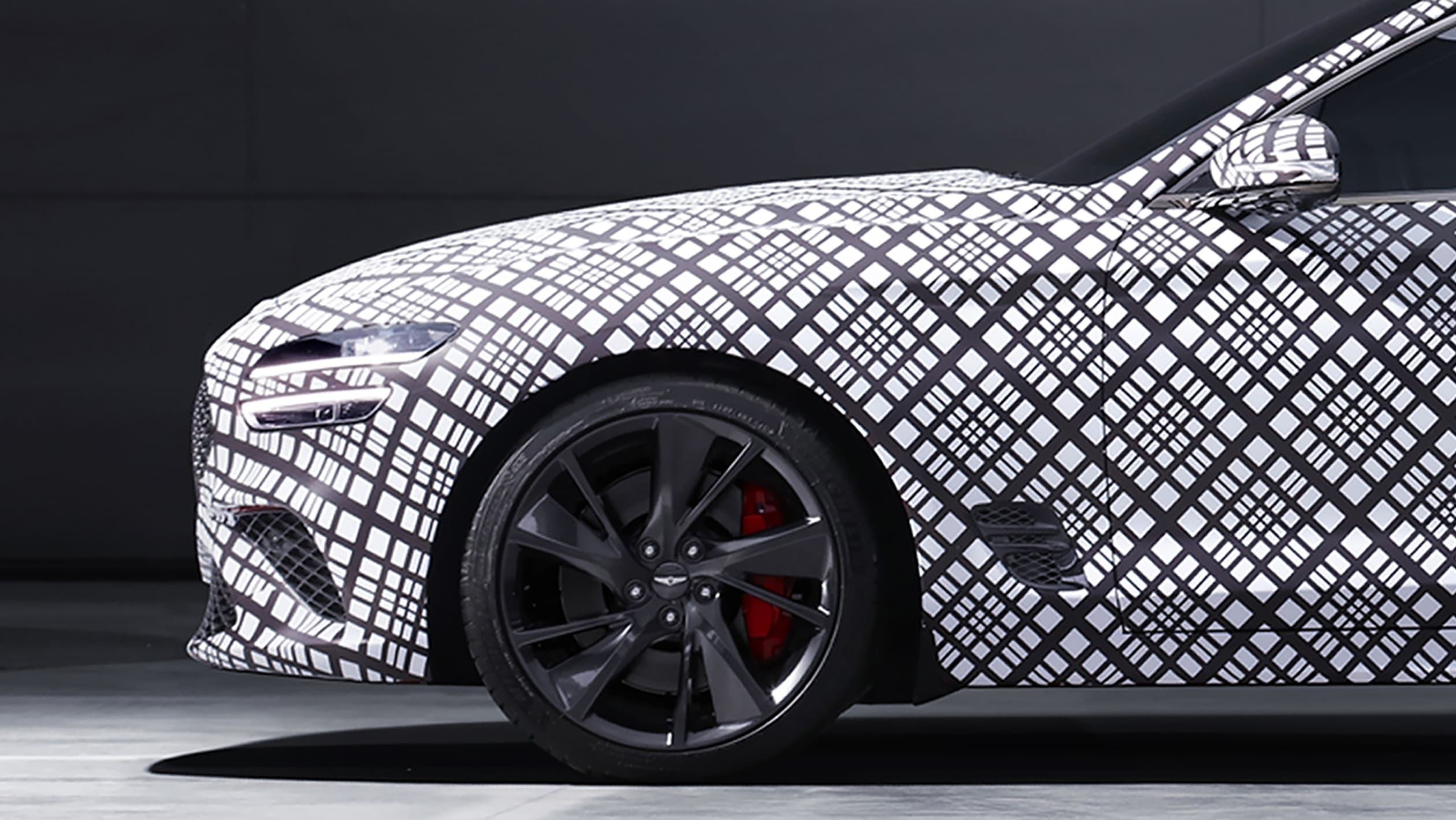
The thinly veiled camo disguise of the shooting brake clarifies what the upmarket wagon will look like from a side profile – and the news is good.
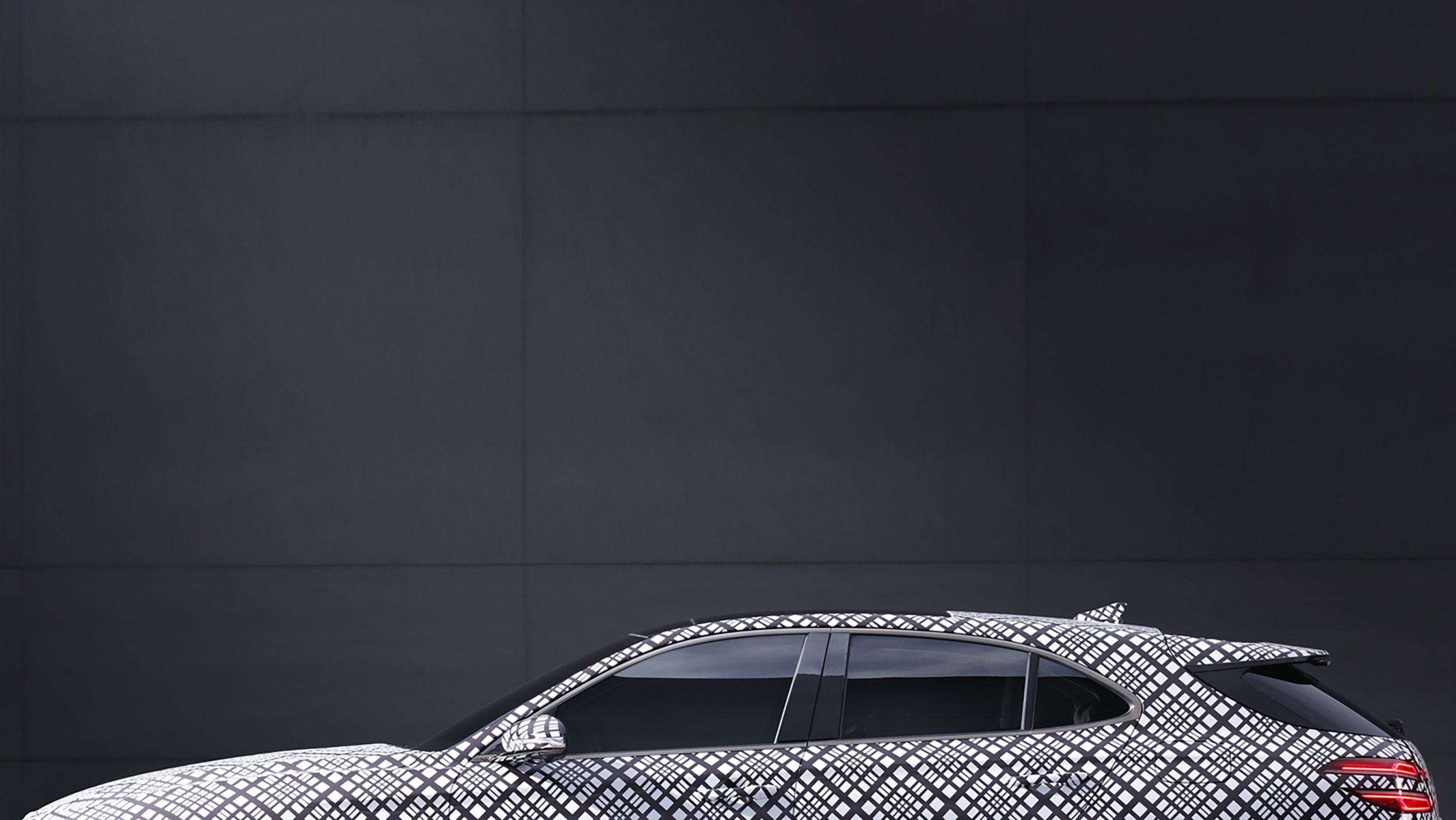
There’s a handsome silhouette on offer, with a low and sleek profile that runs the length of the roof, which then extends into a pronounced, integrated rear spoiler.
Thin, modish dual-line LED taillights wrap around the wagon’s rear quarter panel and bleed across to the car’s tailgate, complementing the dual-lined LED headlights up front.
Like its sedan variant, the G70 shooting brake also looks to get a sporty dual-exhaust set-up, with large, oval-shaped chrome tips blending into a muscular rear bumper.
Powertrains are yet to be confirmed, but we expect the shooting brake to be offered with the same petrol engine options as the sedan.
That means buyers will be able to choose between a turbocharged 2.0-litre four-cylinder producing 185kW and 353Nm, or a punchy twin-turbocharged 3.3-litre V6, which pumps out 272kW and 510Nm.
Prices for the wagon are, at the time of writing, not known either, however, when it goes on sale in June, the cost of the G70 sedan will start from $59,300.
The G70 shooting brake looks like it could be another positive model for Hyundai’s luxury spin-off, and in the case of the 3.3-litre V6 twin-turbo variant, the G70 will take it to other hi-po wagons in the segment like Audi’s S4 and Mercedes’s C43 AMG.
Update One: Say Hello to a Dark Prince
ODO 895km
KM Driven 372km
Average fuel use 7.7L/100km
After this year saw me leave a full-time stint at MOTOR and embark on a new role at WhichCar, it was a WhatsApp message that really drove the change home.
“We need someone to take on the Nissan Qashqai Midnight Edition,” editor Tim Robson wrote. “Keen?”
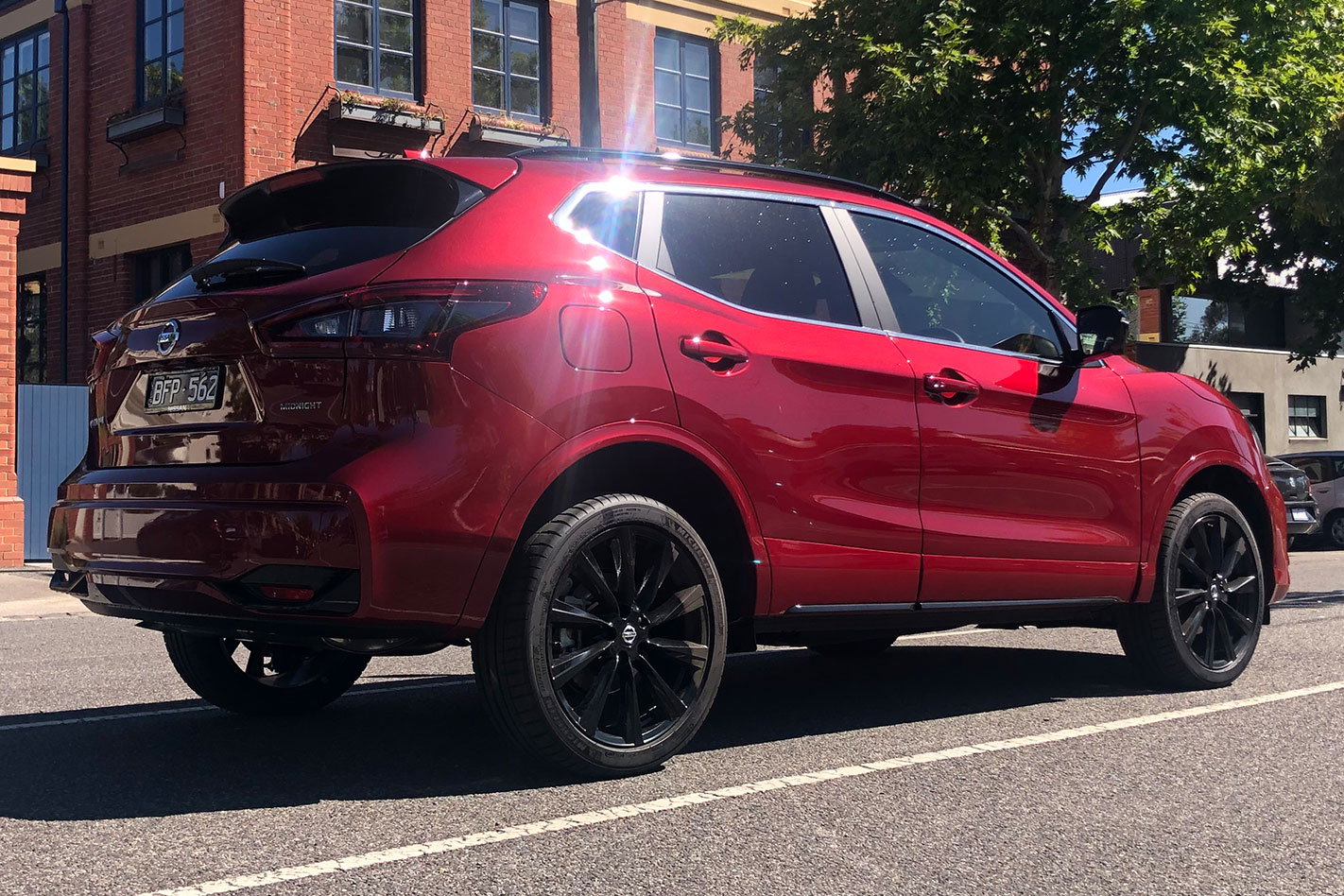
But Nissan’s five-seat small SUV offered a stark change to my last ride.
The Chevrolet Camaro ZL1 I pedalled at MOTOR had eight cylinders, while the Nissan Qashqai Midnight Edition has four.
The ZL1 produced 477kW, whereas the Qashqai is packing 106kW.
The Camaro also had 10 gears, where the CVT-equipped automatic Nissan has none (or an infinite number depending on how you look at it).
Anyway, the point is I’m in completely different territory – but I’m also relishing the chance to discover just how the Qashqai fares in the hotly contested small SUV segment.
For a bit of context, it sits just above the slightly smaller Juke in Nissan’s range, starting at just over $28,000.
It’s not dominating the sales race, but then again it’s not miserably failing either.
The nameplate’s share of sales in the small SUV category has slid from 10.5 per cent in 2015, the first full year it was available, to 7.5 per cent in 2020.
Next year an all-new model with hybrid and range-extender EV powertrains should refire buyer interest in the Qashqai.
But until then, the Midnight Edition is a way to bridge the gap.
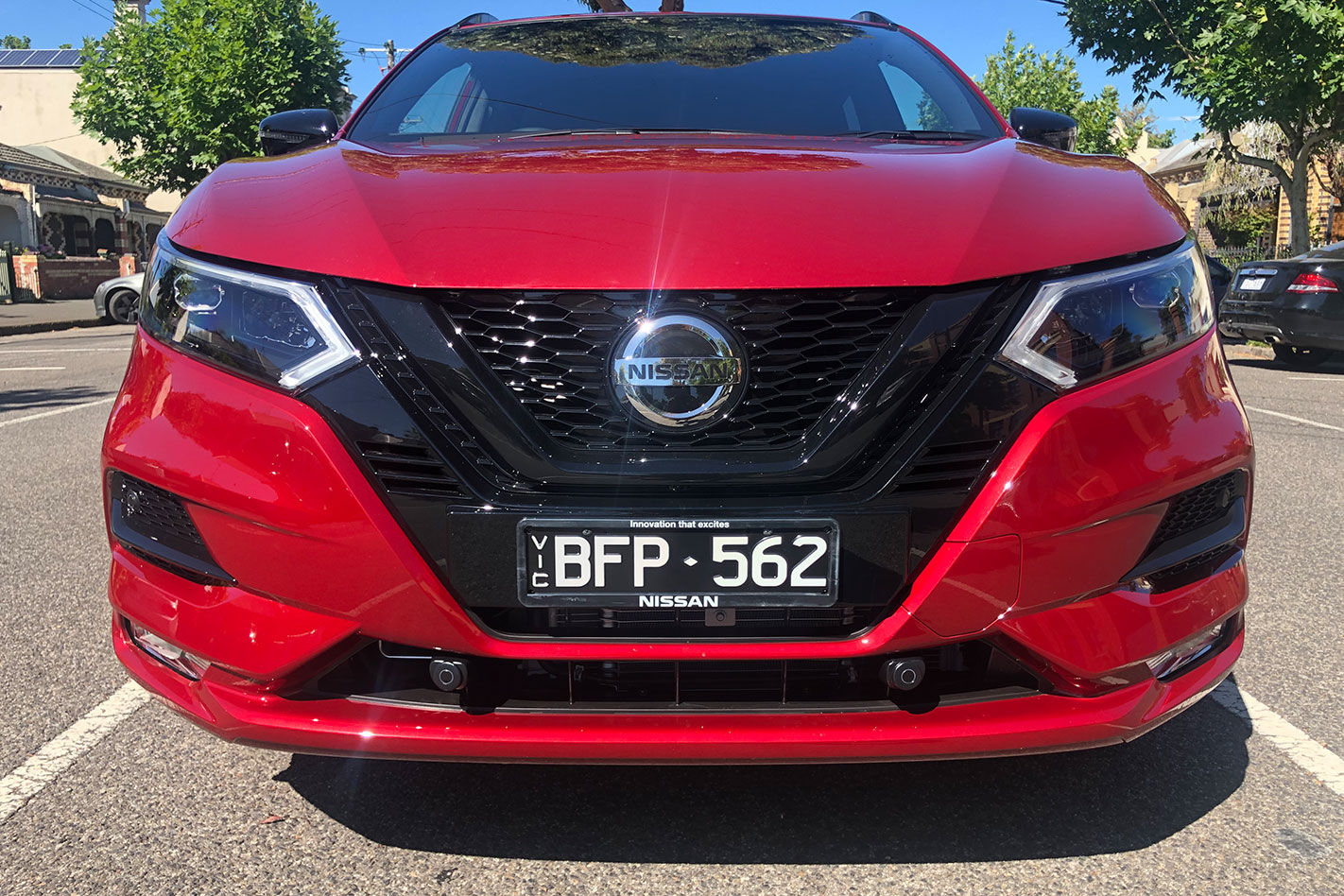
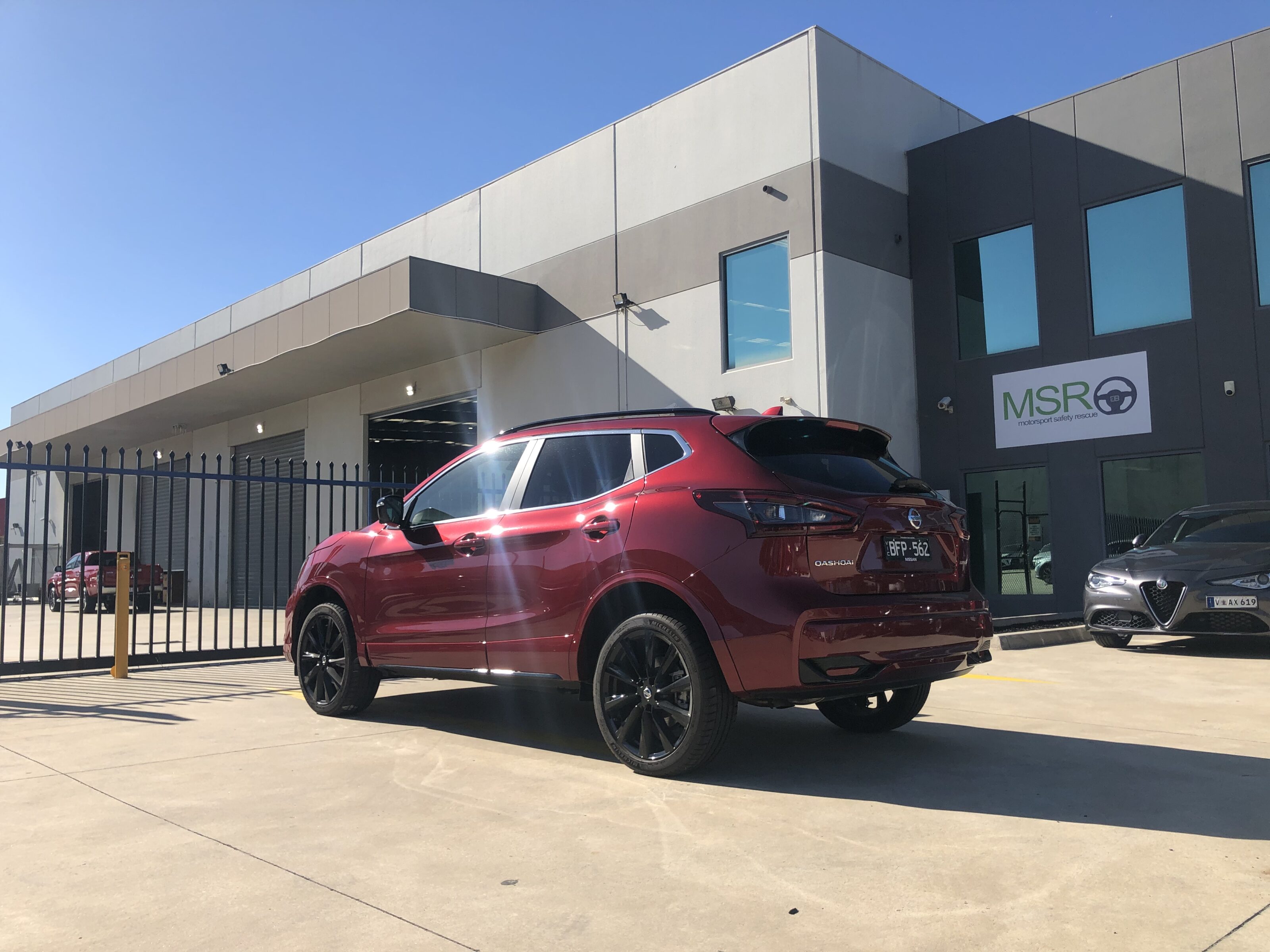
I’m not sure whether Nissan named the Qashqai Midnight Edition ironically, given its late-life timing, but the added features certainly play up its dark side on the exterior.
Nissan has splashed gloss black across the front V-motion grille, on the bumper blades, mirror caps and roof rails.
The gloss hue also adorns interior accents and side body mouldings, matching the darkened LED taillights and headlights.
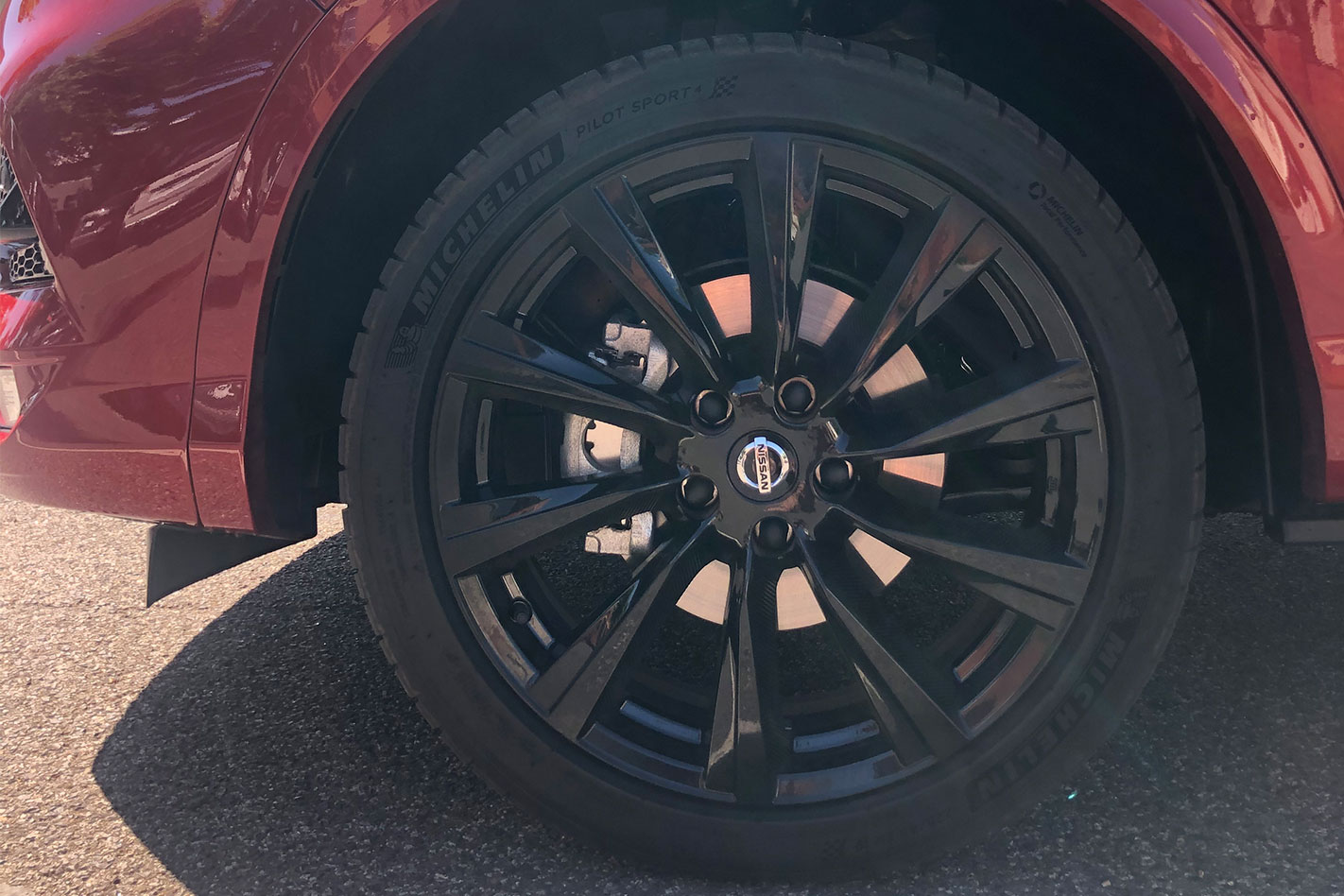
The exclusive black 19-inch wheels tie everything together nicely, and the body-coloured wheel arches and side sills add a touch of sophistication, helping it stand out in city streets.
Mind you, the Midnight Edition ain’t cheap.
At $35,290, it’s $7000 dearer than the entry-level Qashqai ST and priced into the larger X-Trail’s range.
Compared to the Qashqai ST-L variant in its own range, the Midnight Edition adds Alcantara-lined leather seats and carries over its long list of features.
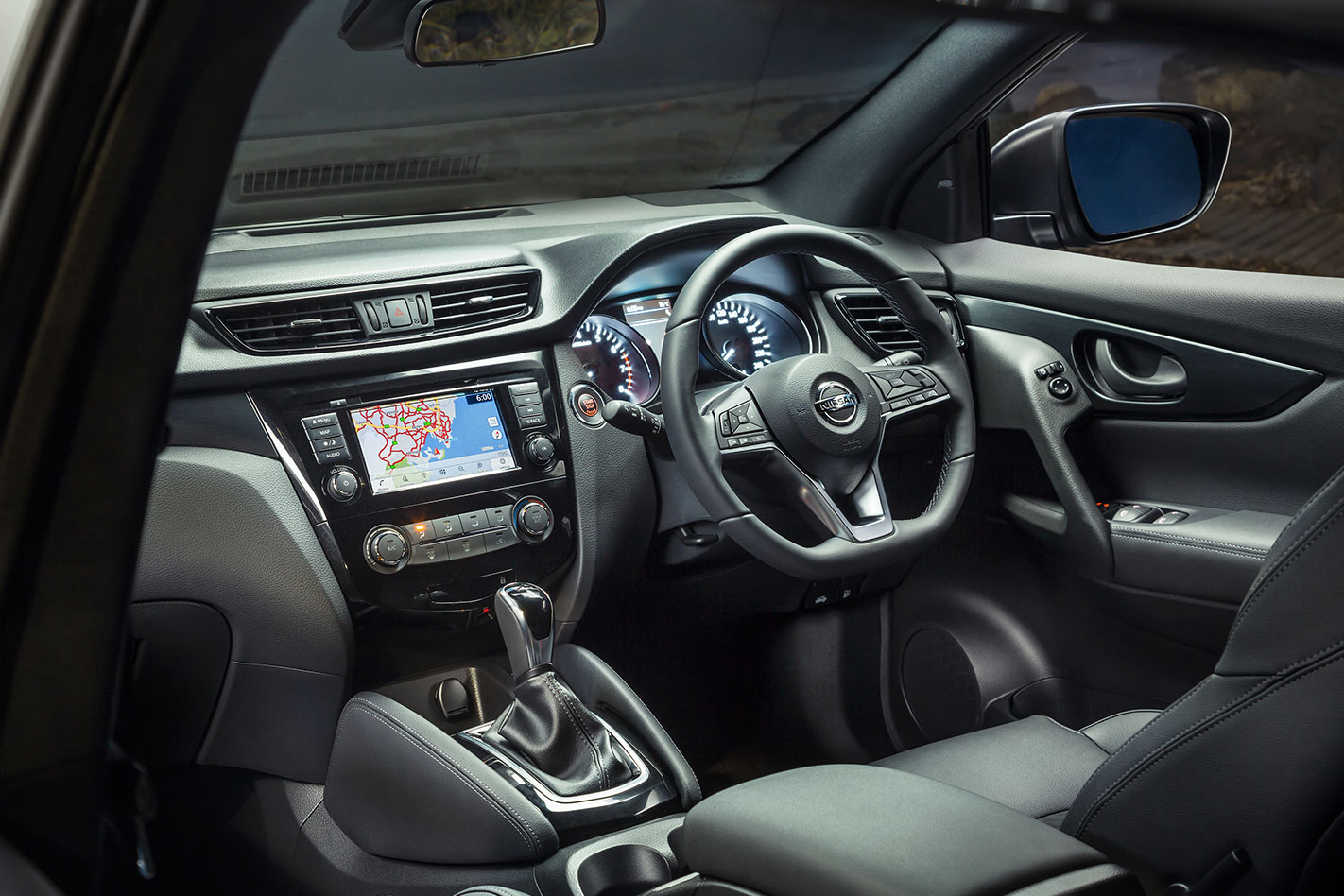
And although most of these technologies are presented in what feels like an ageing cabin, the Midnight Edition does feel particularly full-fruit, even without power driver’s seat adjustment.
What strikes you immediately after settling into the front seats is how roomy the 4.4m-long five-door body feels.
I’ve covered a few kilometres in the first month I’ve had the Midnight Edition, despite spending two weeks away interstate, and it’s surprising how easily it swallows four adults.
That’ll be followed by some time in the hills, to see what Nissan’s engineers had to improve and enhance when working on the new Qashqai’s handling – while also getting to know the Qashqai in a city environment.
Stay tuned.
Update two: The Long Road (or not)
ODO 2010km
KM Driven 1115km
Average fuel use 8.55km/100km
I rarely look forward to tackling the Hume Highway.
Just before Christmas, though, when Australia’s state borders were beginning to open up, the dead straight 900km-odd drive had become a lifeline between my family unit – the dog, girlfriend and I – and loved ones in Sydney.
It would also become the Nissan Qashqai Midnight Edition’s second long-term update, focused on its highway manners during the nine-hour drive up that would magnify any strengths and weaknesses.
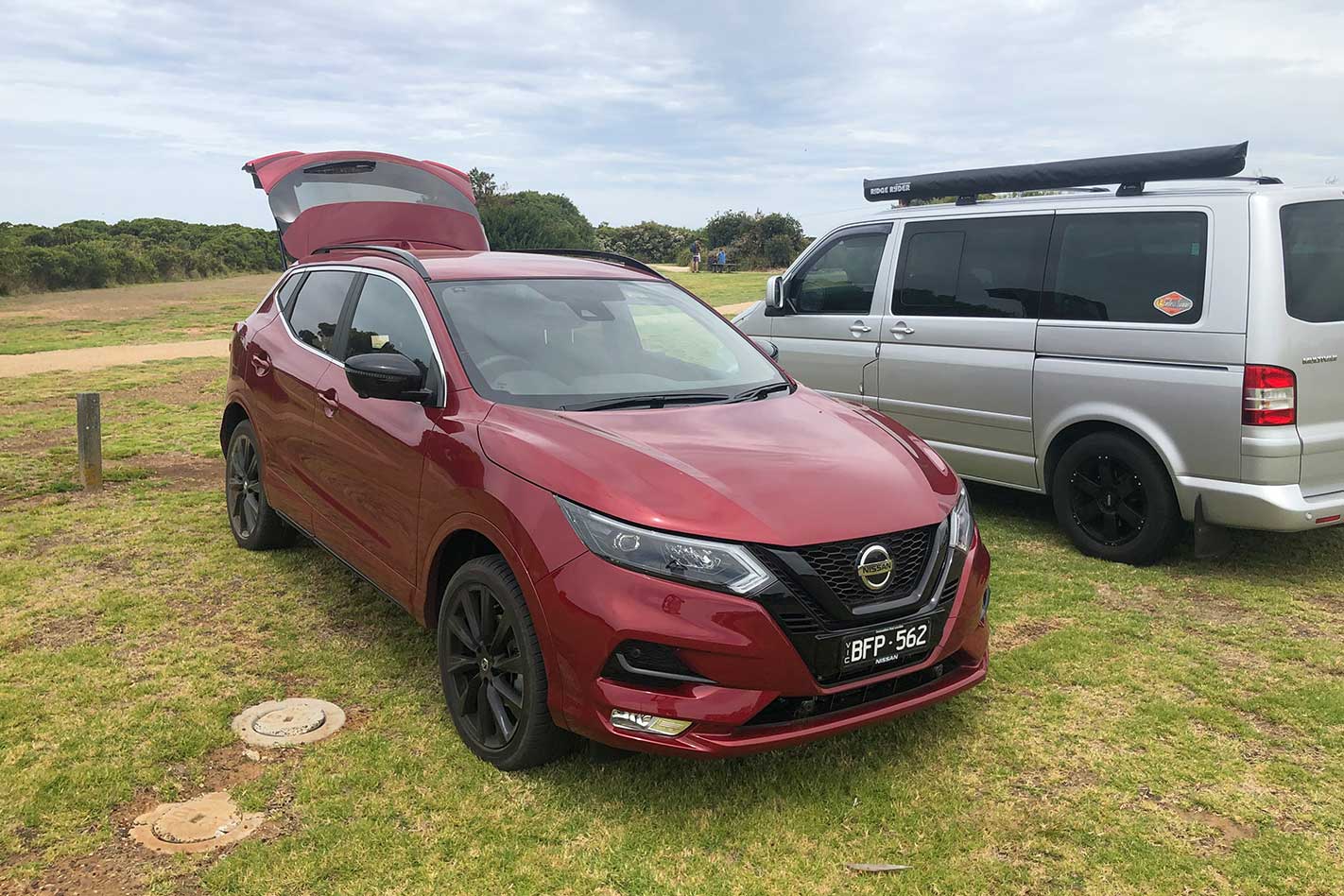
Unable to leave Victoria without enduring hotel quarantine on return, we replaced our Christmas lunch in Sydney with a trip down the Victorian coast.
But it wouldn’t be the only one, with repeated jaunts down the M1 West Gate freeway to Torquay planned for the summer, each offering glimpses at how the Qashqai handles the highway and high speed.
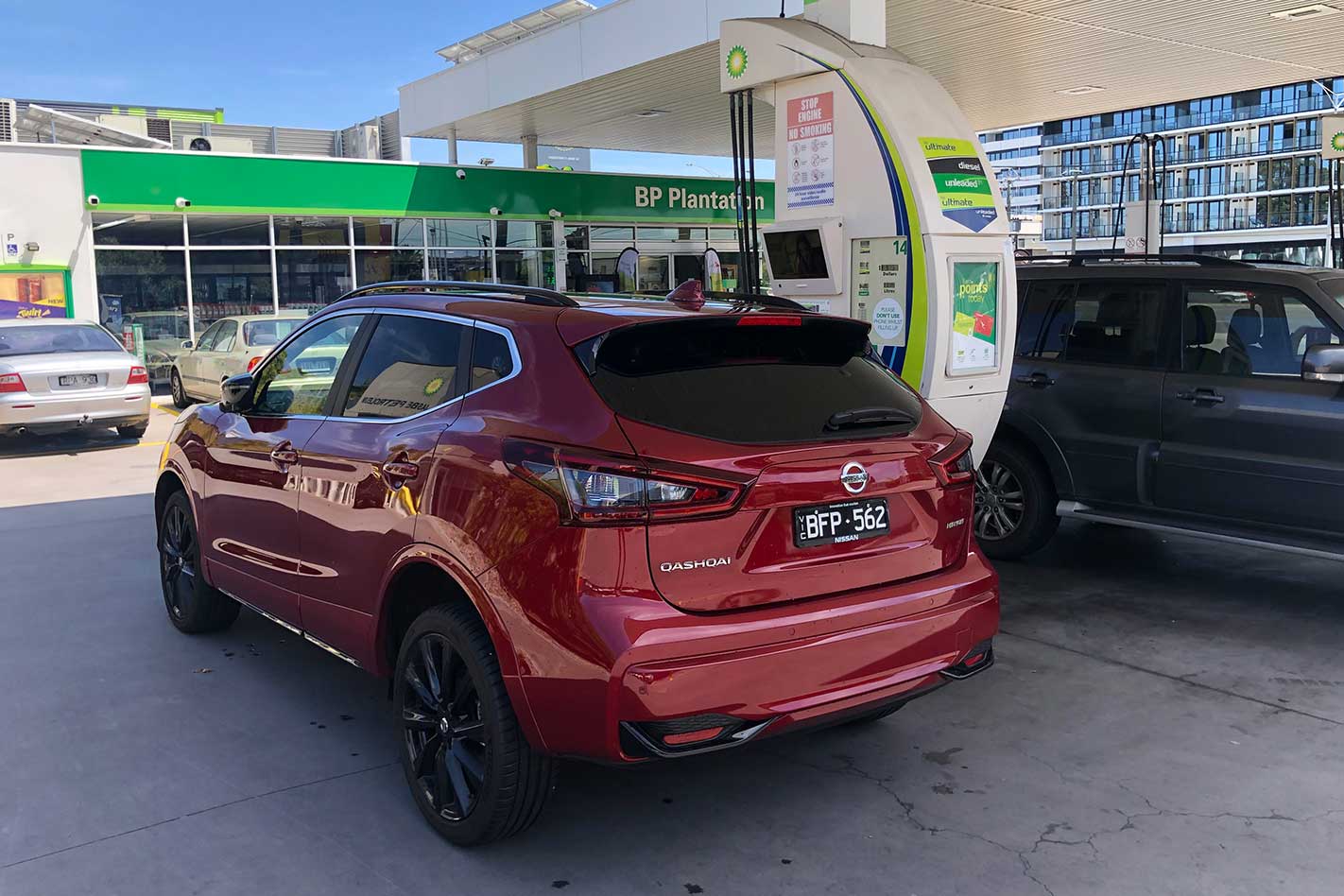
Considering this, it was a good time at the start of the holidays to check the Qashqai’s tyre pressures and learn just how much range you’ll get out of one full tank.
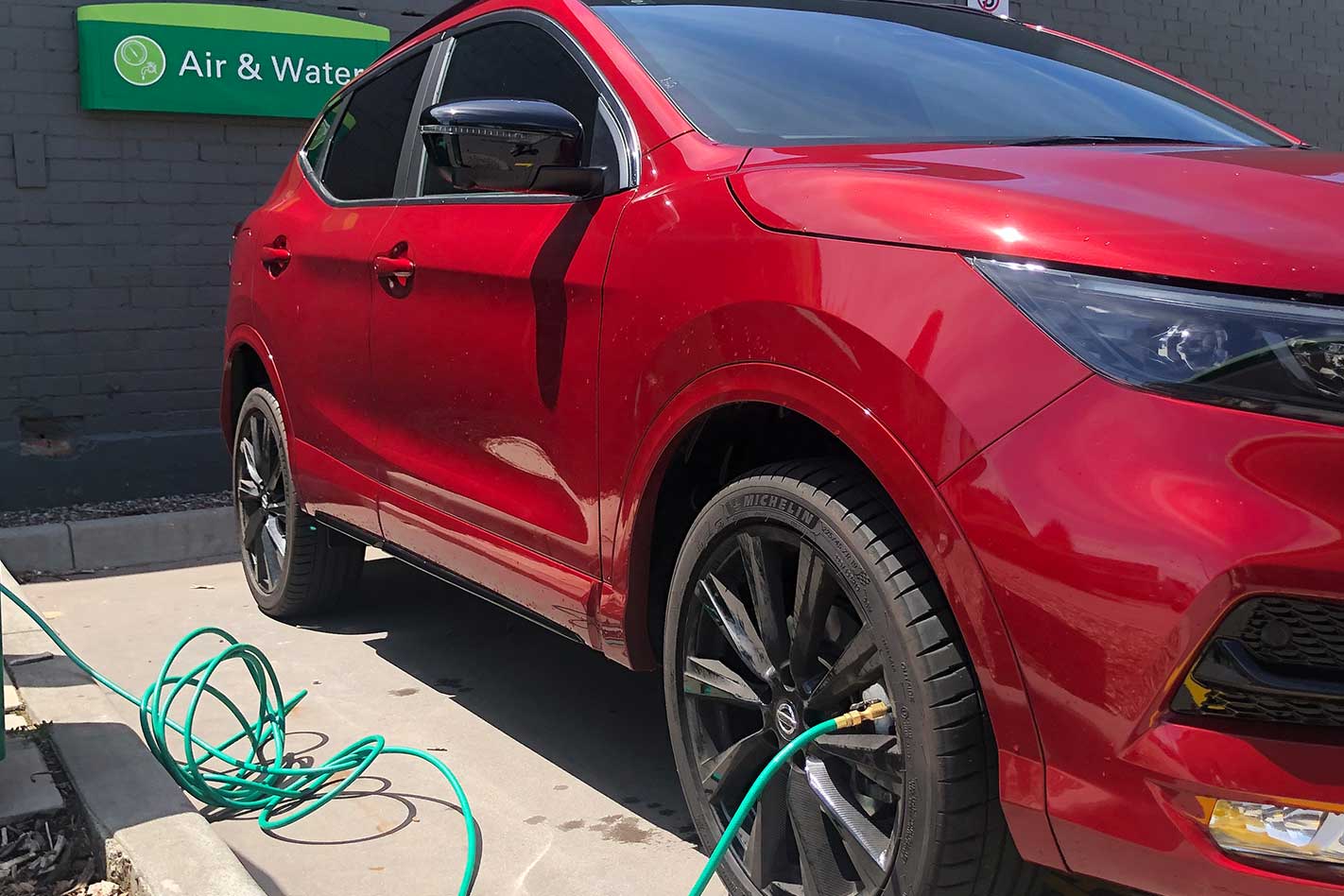
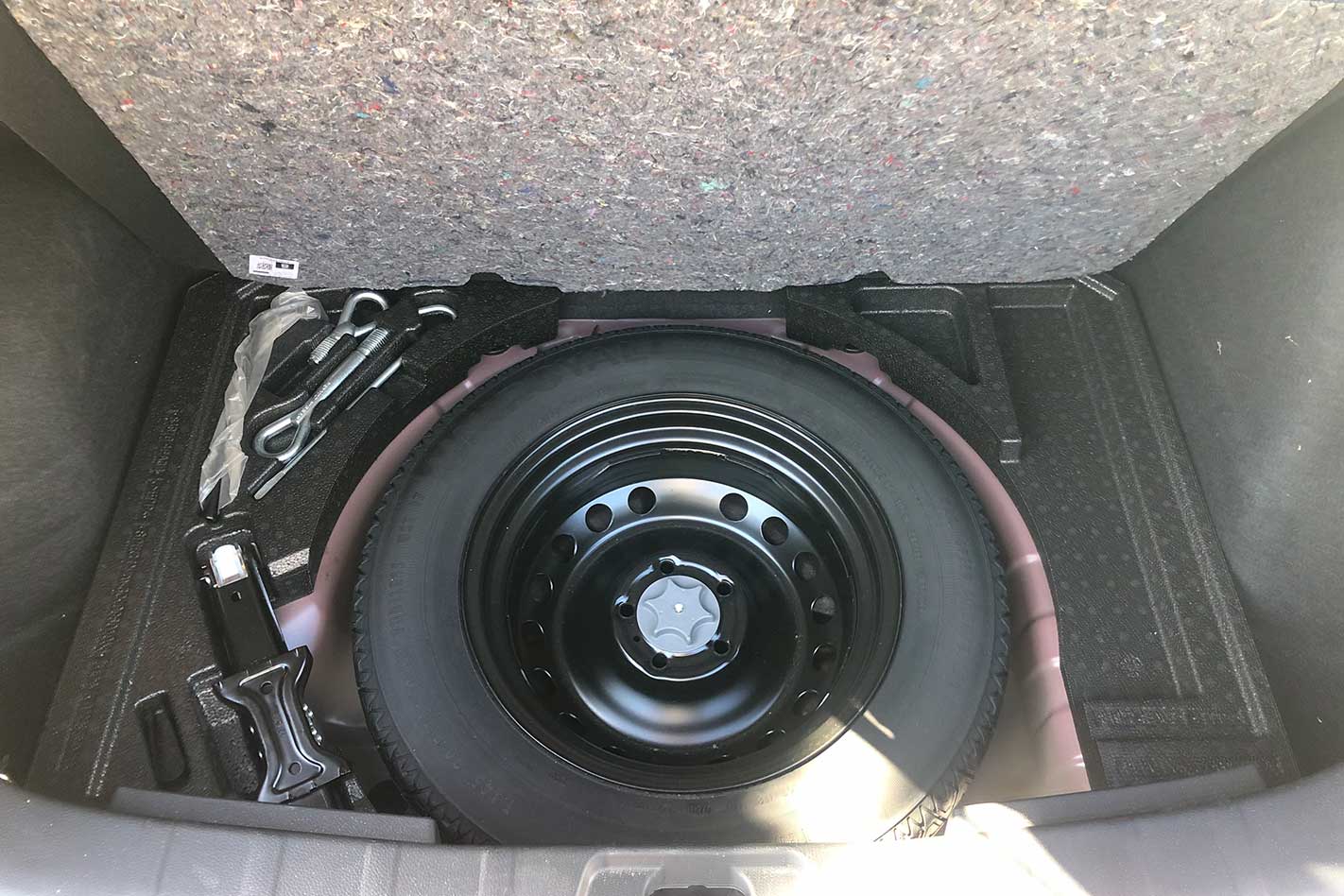
Should any tyre deflate, there’s a 16-inch spare lying under the boot floor.
The fuel tank, meanwhile, can accommodate an impressive 65 litres of 91 octane fuel.
With the Qashqai drinking 8.3L/100km during my city and highway driving so far, you should theoretically be able to extract 783km out of the one tank.
That’s a lot of driving.
However, while the Qashqai offers a good seating position, the pew lacks cushioning and under-thigh support, and you’ll want to spend two hours maximum in the driver’s seat before a break.
After a few trips over it, I’ve learned the Qashqai surfs the series of long, undulating dips that heavy trucks have pressed into the freeway over time with soft damping rebound, where it could almost pass as a comfortably damped sedan.
Such praise is short-lived, though, as sharp, intrusive bumps expose a much harder compression stroke. On balance, the Qashqai’s ride is tolerable enough for long distances.
I was spared navigating the Nissan’s rather old-looking infotainment with Apple CarPlay coming to the rescue, but the tyre noise that drums into the cabin prevents you from hearing a podcast clearly.
We’d put this down to a lack of sound deadening, as a guess, because the car’s 2.0-litre four-cylinder engine – codenamed M20DD – also drills a loud buzz into the cabin under acceleration.
It doesn’t sound particularly bad and quietens right down when pegged at 2000rpm for an indicated 100km/h, but just is obnoxiously loud.
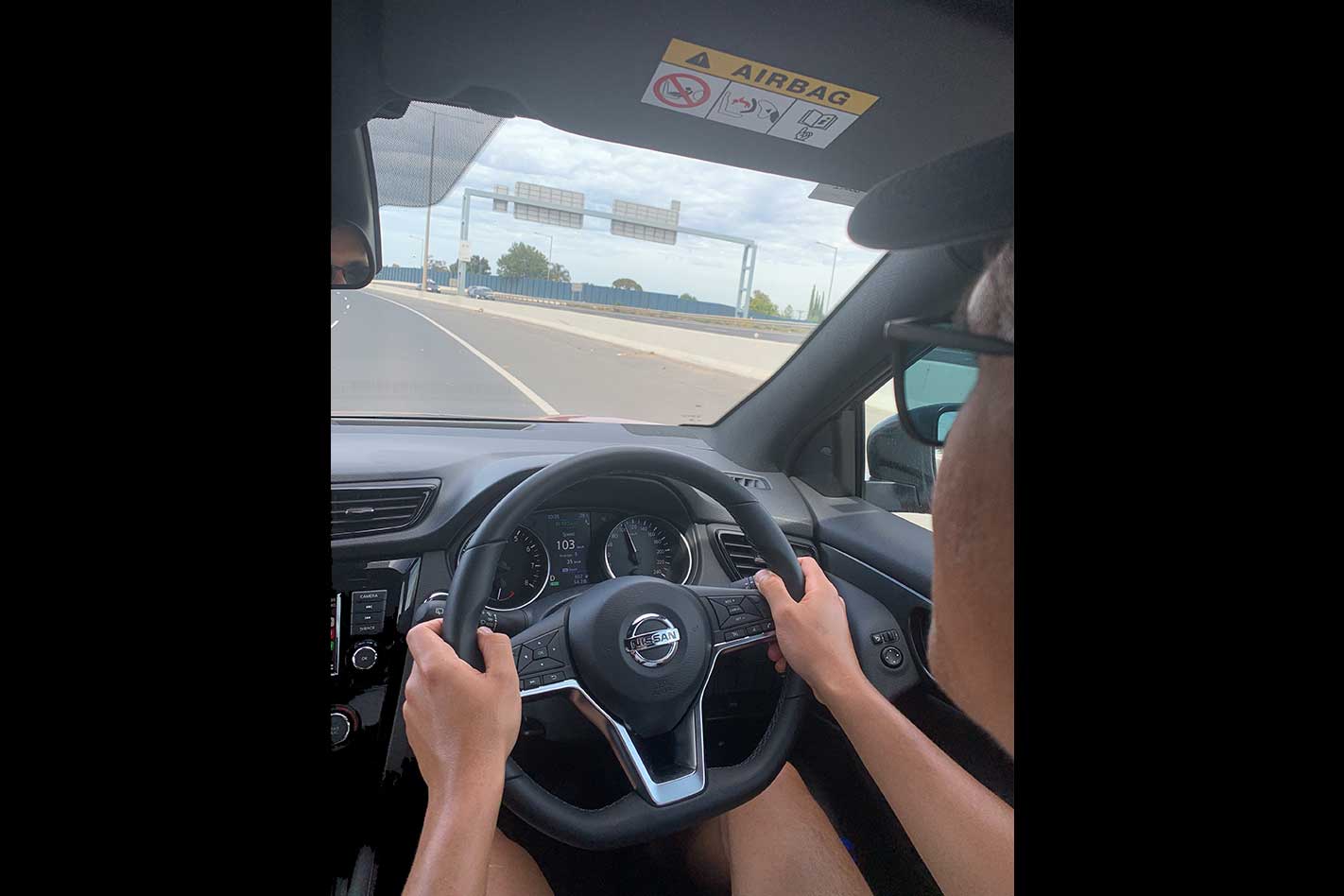
Midnight Editions, despite their premium, miss out on the AEB reserved for top-spec Ti variants, and the Qashqai lacks active cruise control across the whole range.
Maintaining freeway speeds in heavy traffic becomes a game of pressing the cruise control’s Cancel and Reset buttons, something preferable to brushing my Qashqai’s brakes, which are starting to go soft on the top part of the pedal stroke.
After this, I’d recommend the Qashqai for highway driving on occasion while pointing out that its most attractive asset for long drives remains a huge boot.
At 430 litres with the rear seats up, it swallows about 210 litres more than the new Toyota Corolla, 135 more than the new Mazda 3 and 50 more than a MK7.5 VW Golf.
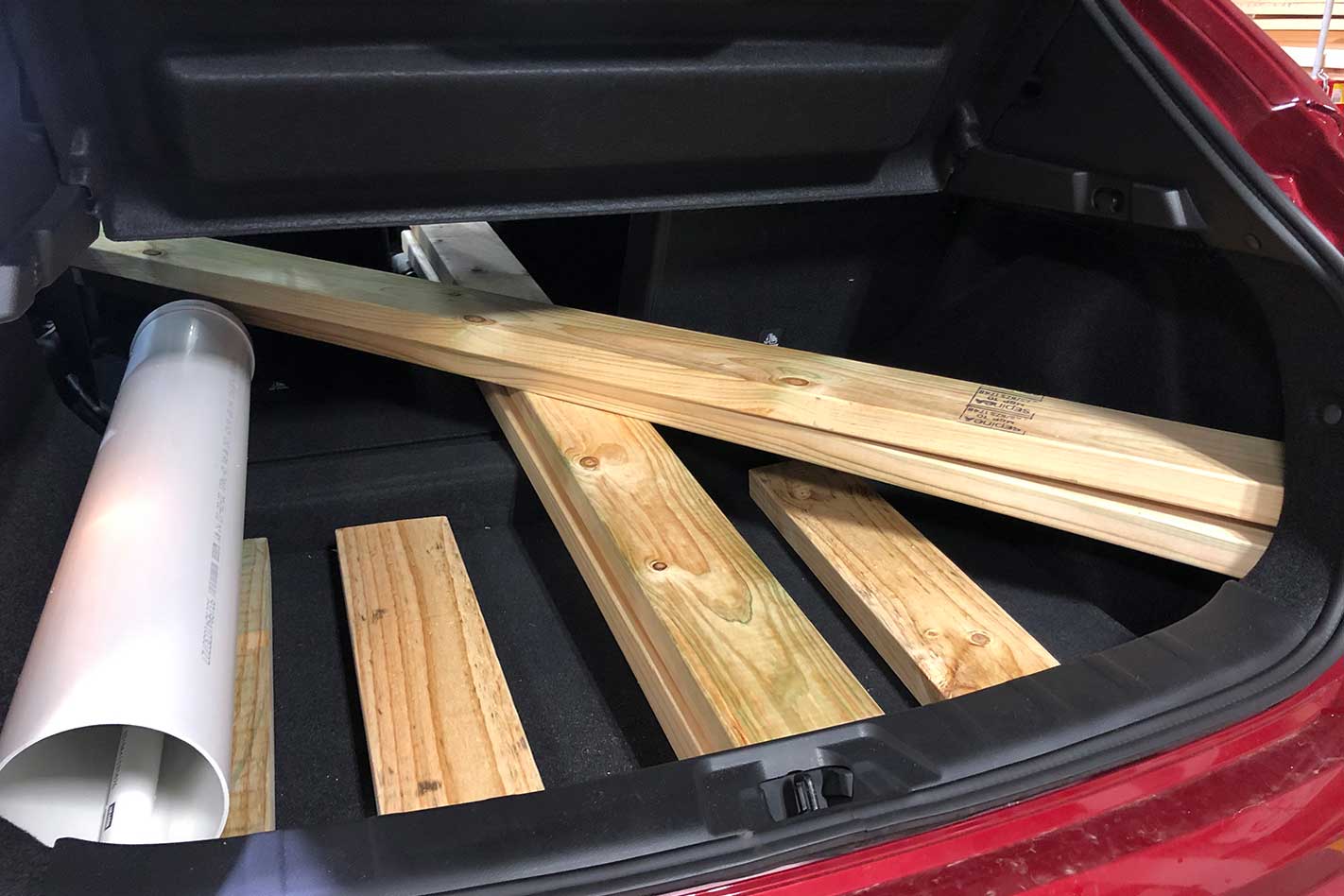
Seen here, it’s taken four 1.8m wooden planks in its boot along with four 60cm planks laid along the floor, as well as a 150mm PVC pipe for good measure. Impressive.
I’ll also add that the Qashqai’s air-conditioning is particularly quick to work, cooling the cabin in a matter of minutes while stationary after a start-up in 30 degrees Celsius.
Next month, though, its boot size won’t matter. I’ll uncork the Midnight Edition on twisty roads and investigate just how necessary those chunky Michelin Pilot Sport 4s are.
Update three: Turning opinions
ODO 2185km
KM Driven 175km
Average fuel use 8.32L/100km
There must be a part of every chassis engineer that dies to know most owners will never drive a car to its full potential.
I thought about this when I was reading up on the all-new Nissan Qashqai, which we understand will hit Australian shores next year.
Between its stiffer chassis and high-end suspension design, it sounds like Nissan has paid a lot of attention to how it drives.
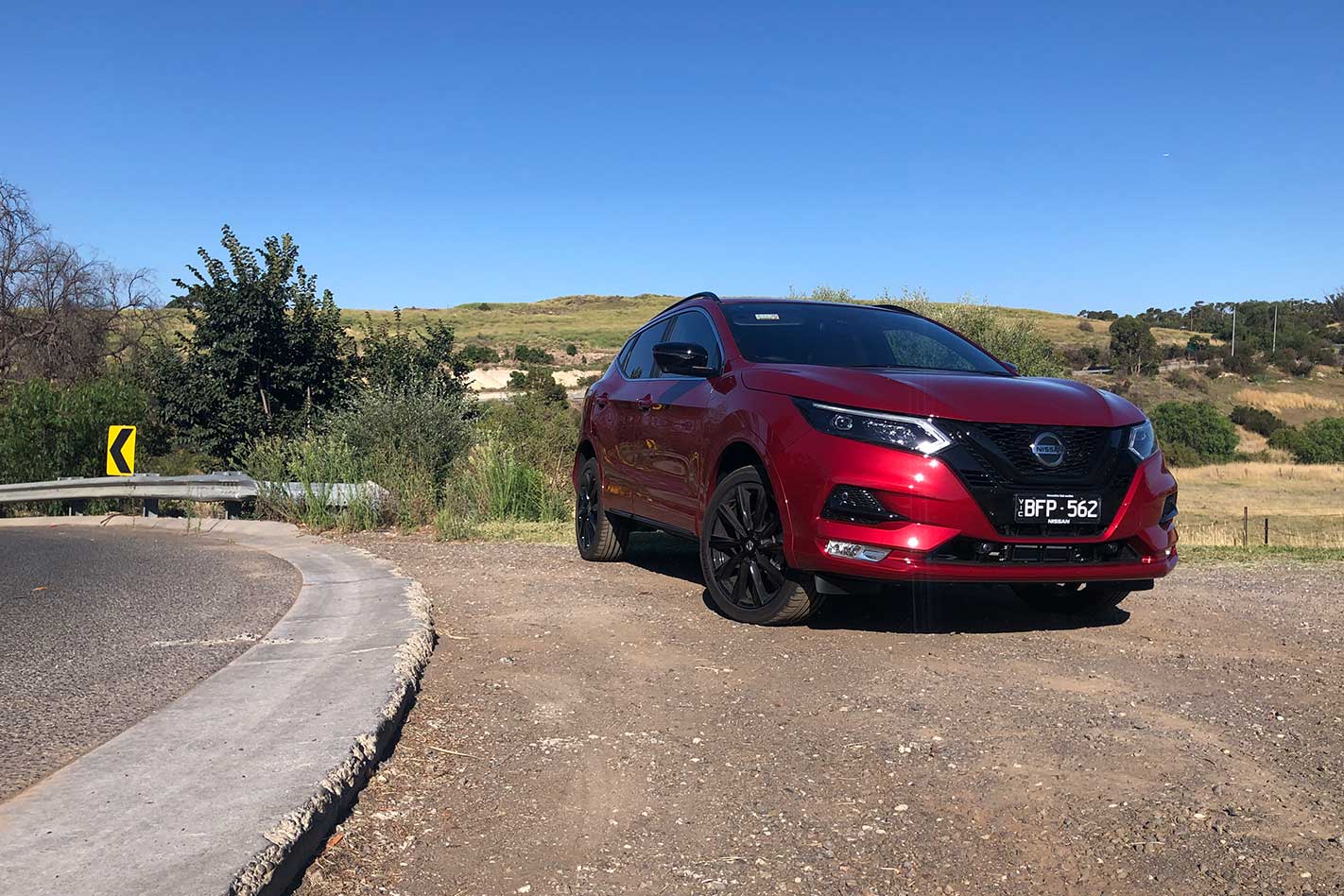
After all, fitting a set of tyres like the Michelin Pilot Sport 4 on any car is making a statement. But Nissan didn’t spend big on rubber and then cheap out on the current Qashqai’s suspension.
Like any small hatch or SUV with a shred of handling ambition, it pairs struts up front with a multi-link rear setup and equips anti-roll bars all around.
Of course, the biggest challenge with SUVs is holding them steady as their mass sloshes around on a higher centre of gravity. Jacked-up roll centres make striking a balance between ride quality and decent handling particularly hard.
Considering this, the Qashqai’s sometimes firm ride should mean the trade-off would be half-decent handling, right? Well, sort of.
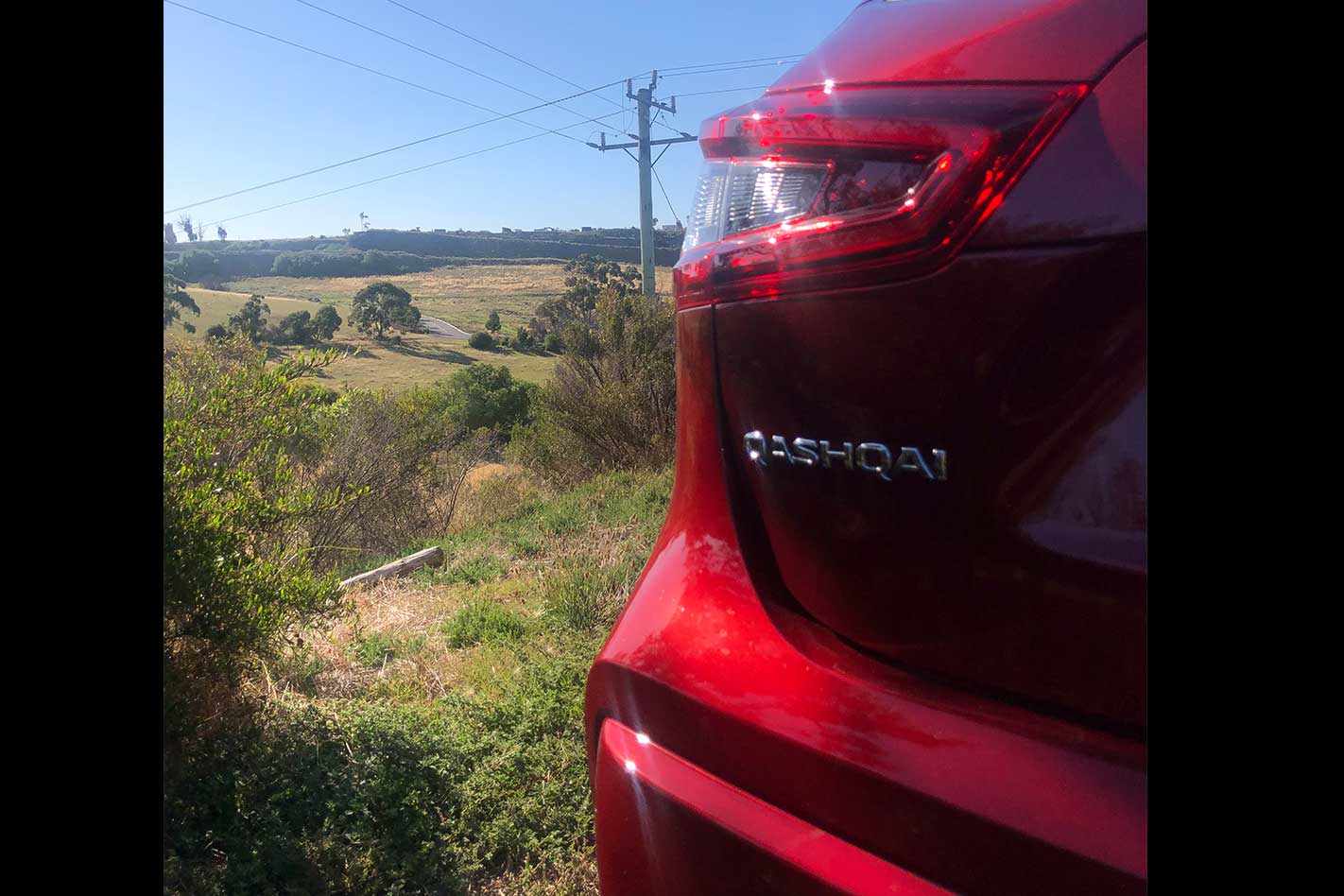
Although the road we found is far from high-speed, the Qashqai is unfazed by off-camber corners and remains planted. The flip-side of this is it also feels relatively inert from turn-in to mid-corner, failing to use the grip on offer to develop a more involving cornering stance.
Something about the Qashqai in corners feels like many Subarus, which hunker down around their ground-hugging all-wheel-drive systems.
Part of me, however, is relieved about how staid it is through corners. The Qashqai’s speed-sensitive steering fails to deliver any useful information about either the road surface or the exact angle on the front wheels.
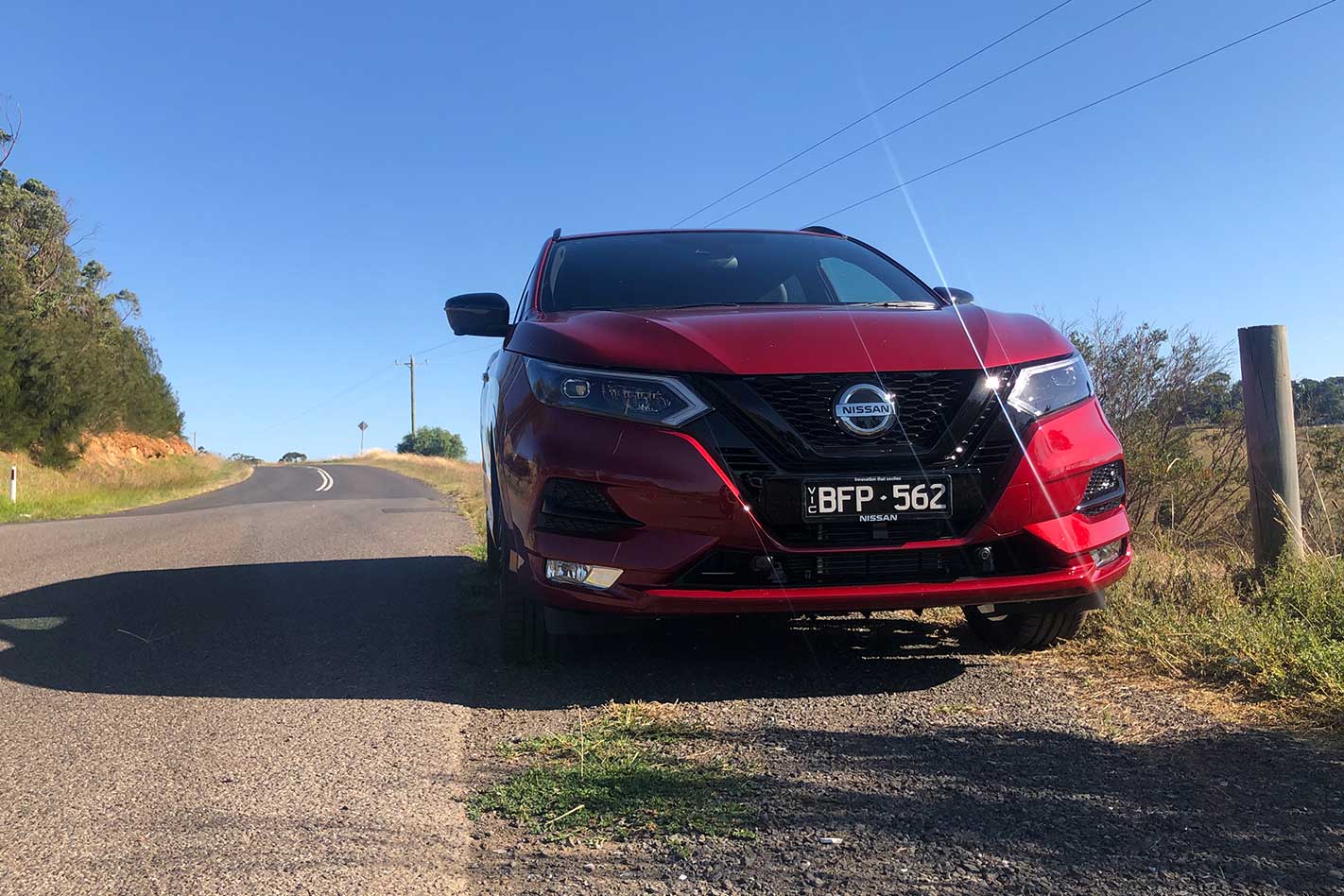
At the end of a short blast, it’s clear the Qashqai’s not a car that you’ll wake early to find empty roads with. Considering Nissan doesn’t market it as a performance car, this shouldn’t come as a surprise, but maybe there’s an engineer in Japan that now feels vindicated.
Update four: The clock strikes midnight
ODO 2360km
KM Driven 125km
Average fuel use 10.32L/100km
After spending three months with the Nissan Qashqai Midnight Edition, our time arrived at an end.
I had planned nothing special to mark the occasion, except a trip past the servo to fill up one last time, record fuel consumption and take the Qashqai through the wash. I collected my thoughts, processing our time together.
My feeling about the break-up was neutral. I had enjoyed getting to know one of the small crossover segment’s more popular cars and was impressed it still ranked seventh in market share despite nearing nine years of age.
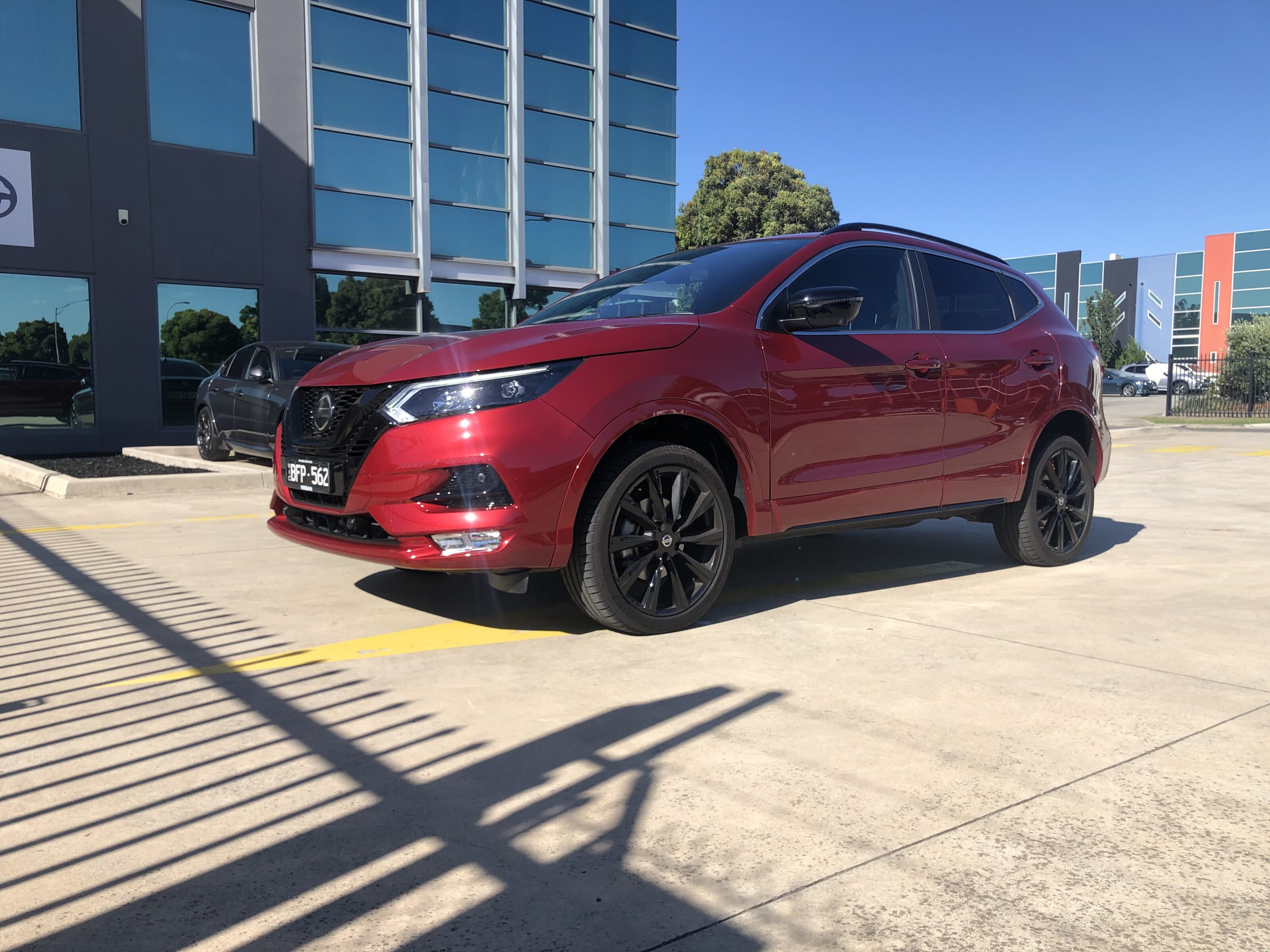
As a small hatchback on stilts, it’s practical. The Qashqai is one of the larger crossovers among its rivals, at 4.4m long, and that had paid dividends when needing to carry cargo or passengers.
My only wish would be for more grunt from the powertrain. That 2.0-litre atmo four-banger liked to rev, but some more low-down urge would help driveability around town where it can feel breathless in the cut-and-thrust world of rush hour.
Our 10.24L/100km overall fuel consumption is thirstier than you’d like for something with a CVT, but there was no fundamental issue with the transmission, with its subdued character suiting the car’s civil nature well.
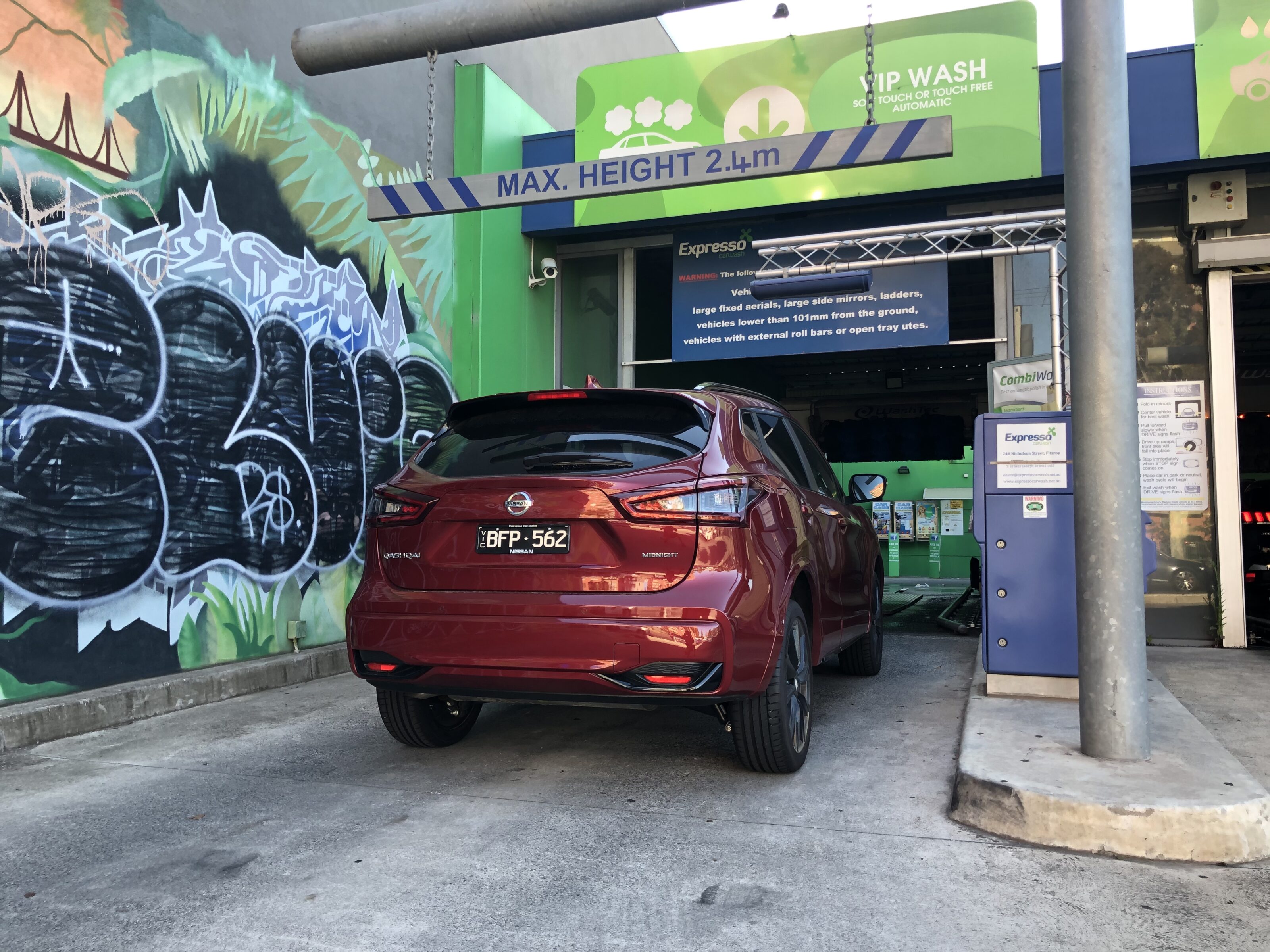
Personally, I had come to like some little things: such as the steering wheel size and the button tactility, the dependable air conditioning, a central locking button on the front doors and rear tailgate, and the small slits in the centre glove box giving cables un-crimped passage.
While there were also things that got on my nerves: the Qashqai would beep after I locked the car, the sensitive driver’s auto window, the sole USB input hiding in the glovebox and how the reading light buttons clacked.
Ultimately, when I had to weigh up the Qashqai Midnight Edition against some rivals in my mind, it fell short of a $35,200 price tag. It has foes that are cheaper (like the MG ZS), more sophisticated (like the Mazda CX-30) and a better balance of both (Hyundai Kona).
Of course, a segment naturally begins to outperform ageing models, and that’s what has happened here. But the Qashqai still demands a look because it’s undeniably roomy and actually one of the cheaper all-wheel-drive crossovers – if that really matters.
Now we wait for the all-new car, which should make some impact with its EV-inspired powertrains when it lands early next year.
Thanks for the welcome to a new world, Qashqai. But it’s goodbye for now.
If you ever have the incredible privilege of meeting me, one of the first things you’ll notice is that I am the colour of toasted caramel. It might be a tan or simply an all-over melanoma but either way, it came from the lovely Australian sun, and that’s partly because I absolutely adore convertibles.
There’s just something so innocently indulgent about moving around in what would be a perfectly normal car only minus its roof. It’s the automotive equivalent of skinny dipping, or wearing no pants at your work desk.
Doesn’t everyone do that or at least want to? Imagine how thrilled you would be if you could mow the lawn with a flame thrower or go fishing with a fistful of hand grenades. That’s what convertibles do. They take what many see as an unavoidable or pedestrian part of life and make it awesome, and the magic works whether you’re sitting in traffic or blasting your favourite B-road.
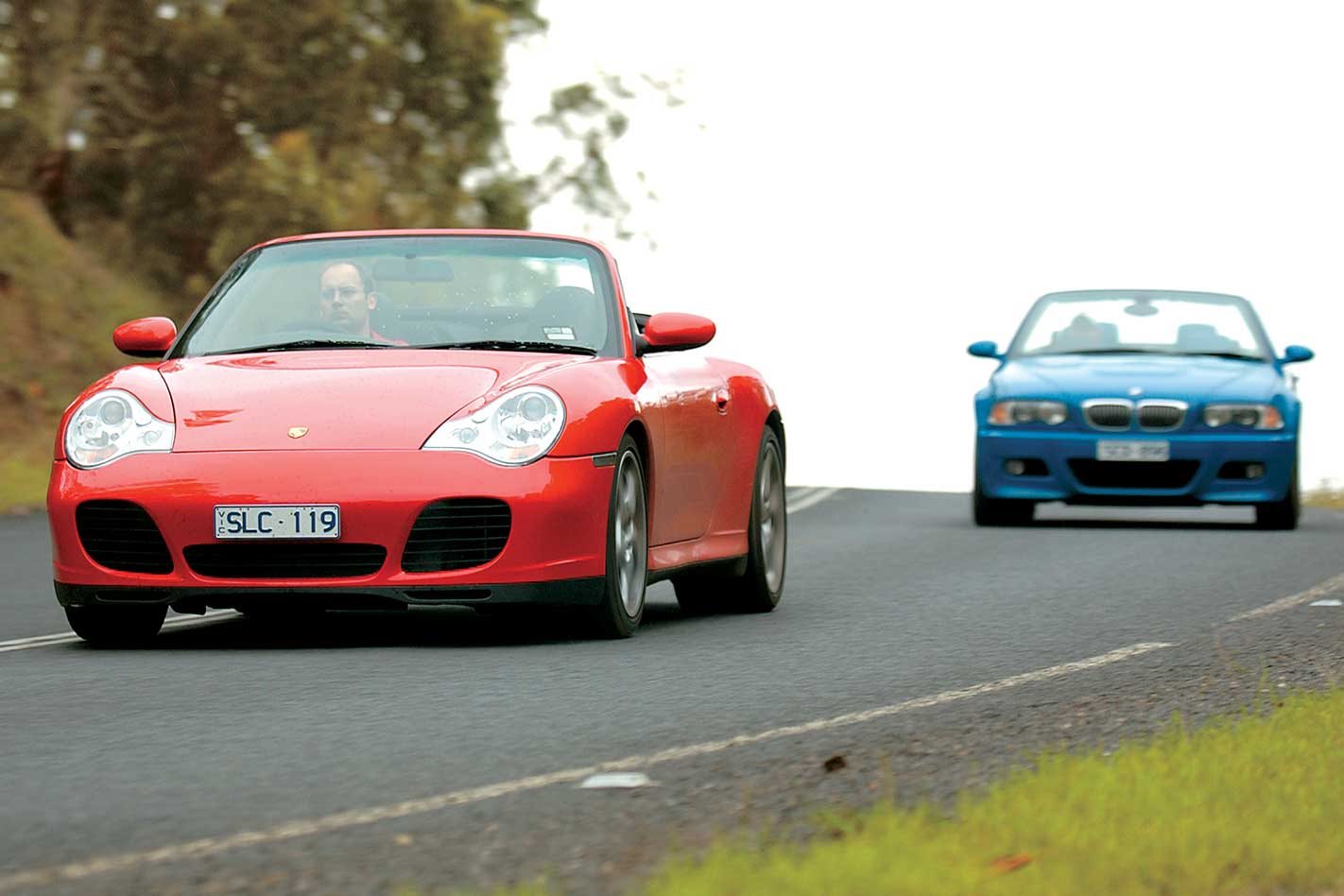
My first car was a convertible and, unless it was literally raining cats, dogs and horses, I would always, always, always have the roof down. Now, that might not sound like such a badge of honour in Australia where we are blessed with a decent climate, but I was raised in the southwest of England where the curious glowing orb in the sky was somewhat of a mystery and an infrequent visitor even in the height of ‘summer’.
Light rain was not a problem as I would just keep pressing the accelerator through a rusty floorpan until the necessary speed was achieved to simply blow the falling water over the top before it had a chance to spoil my Hugh Grant do. Even if I did put the roof up, it was so full of holes that the exercise was largely ceremonial and the same massive gaps would let more cold in than the feeble heater could pump out. I actually drove home one night sitting in a sleeping bag with the toe unzipped so I could get to the pedals.
So you can probably imagine how annoyed I am when people get convertibles wrong. We’ve all seen them. It’s a perfect 27-degree, clear-blue-sky day and the roof of their Audi TT cabriolet is snapped shut with the air-conditioning blasting. The police should pull these owners over and impound the car.

I’ll let you in on a secret though, the very best time to let the sky into your car is on a balmy summer night. When the sting of the Southern Hemisphere UV has sunk into the sea, the pulse of traffic has eased, and the evening air still holds the warmth and smell of baked Australia, that is when top-down motoring is simply unbeatable.
But perhaps, as a MOTOR reader, you feel you aren’t allowed to drive or express any fond feelings for the fun of topless motoring. After all, doesn’t removing the roof instantly render a coupe a flaccid automotive antichrist devoid of any decent dynamics?
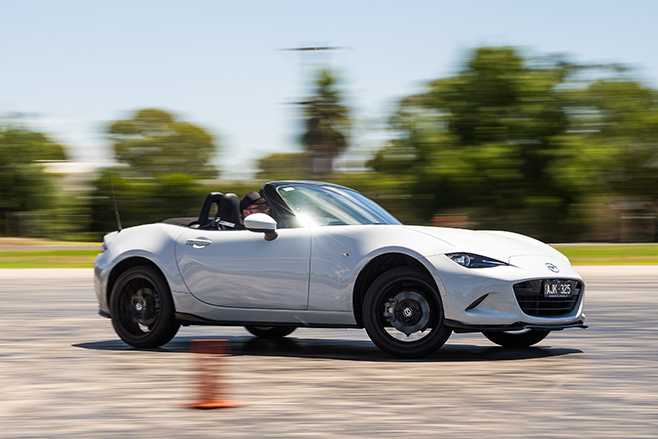
Well I’ve been spending a lot of time in cabriolets lately and it’s reminded me that this theory is largely a load of bollocks. Do a few laps of Broadford in an MX-5 Roadster and the resounding impression is ‘Wow, the MX-5 is a sensation’ not ‘Hmmm the RF would have been better’, because it’s not. The retractable hard top is still a hoot but it’s heavier and offers negligible torsional stiffness. The soft top is simply better. And any closet cabriolet fan who argues that they genuinely care about the dynamic difference between the Porsche Cayman and Boxster or tenths of a second on the circuit is the sort of person that turns up to track days already wearing their driving shoes and gloves.
Cars as recent as the previous-generation Audi A5 were hugely compromised when their tops were chopped off and an embarrassing shadow of the coupe’s manners.
But things are different now and if you really do enjoy the sensation of wind in the hair, there is nothing shameful about lusting after a sexy cabriolet. When it comes to outright performance, coupes will probably always wear the trousers, but you can still be a proud driving enthusiast with your top off.
Throughout my tenure at Unique Cars, I’d often get asked how to pick a collectible vehicle.
There’s no hard and fast answer, but collectors of anything will generally gravitate towards the first, the last or a significant out of character departure within a particular model of interest.
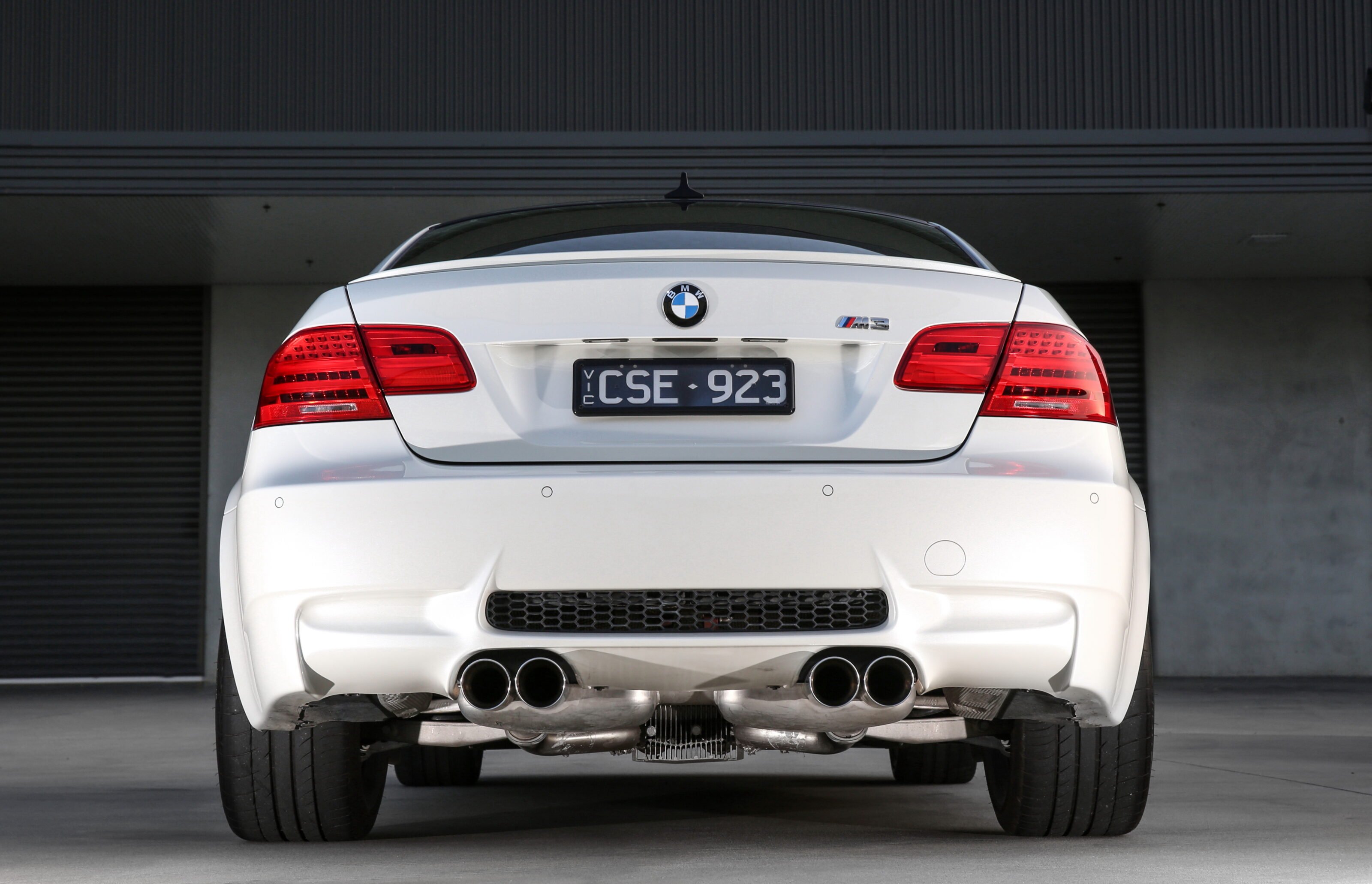
The fourth-generation BMW E92 M3 is a car of lasts, and a radical departure from all M3s before – and after – it.
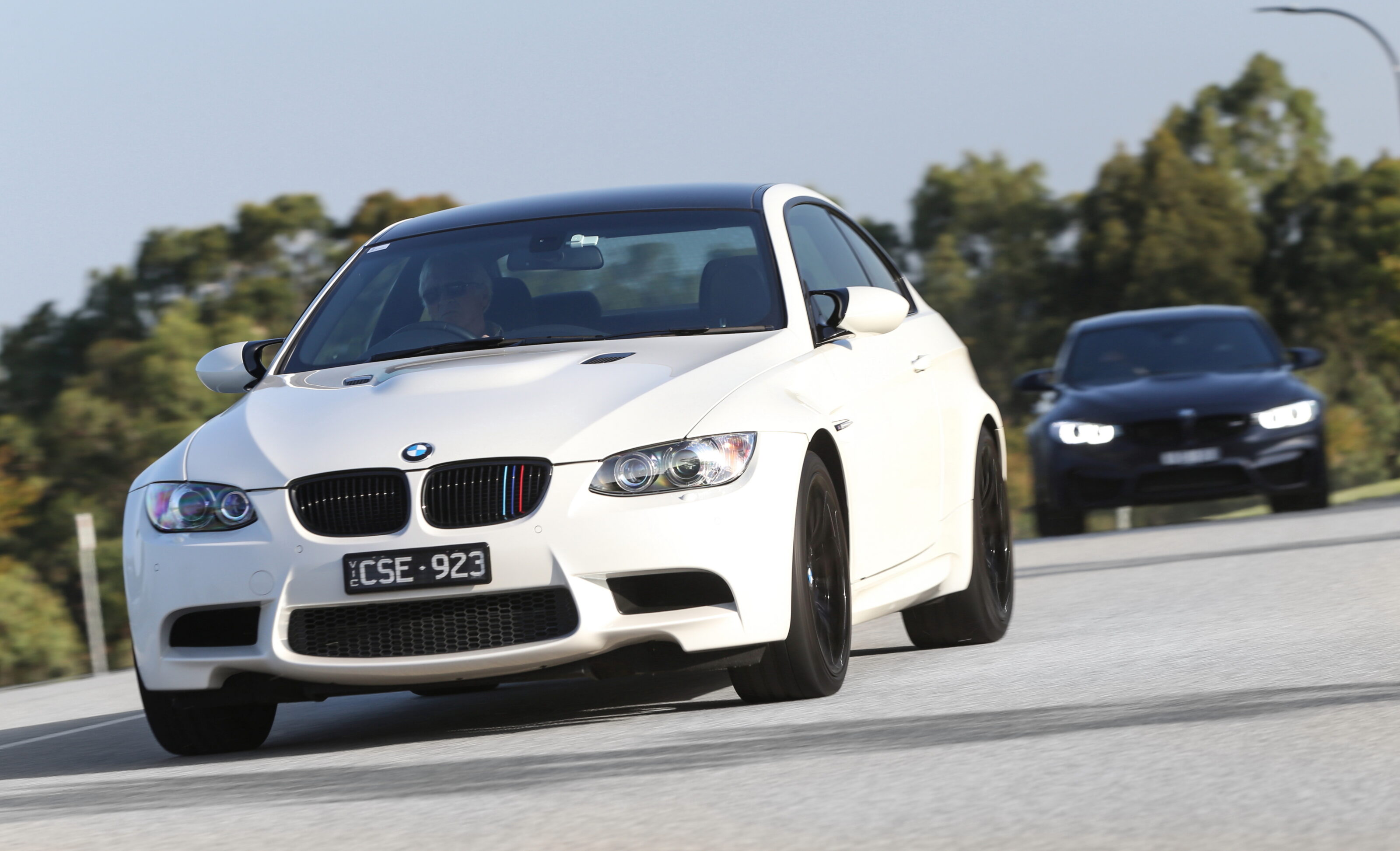
It’s the last M3 coupe, and it’s also the last naturally aspirated M car we might ever see – and its sizzling 4.0-litre V8 – made for a truly unique distinction within the M3 lineage. And boy, did it cause controversy at the time.
The BMW M3 is a lot like the Porsche 911, whereby whenever a new model is announced, purists inevitably seem to denote the old model as ‘the last good one’.
So you can imagine the conversation surrounding the then-new M car when it came out that its traditionally refined inline-six would be replaced by a blue-collar V8.

“The E92 M3 scorched the lap times at MOTOR’s 2008 PCOTY, and ultimately finished second”
But that unusual V8 might just be the reason you should get into one soon.
Debuting at the 2007 Frankfurt Motor Show, the new M3 coupe sported an all-new, all-alloy 4.0-litre S65 V8 capable of 309kW at 9300rpm and 400Nm at 3900rpm, which catapulted the svelte coupe to triple digits in 4.5 seconds in DCT guise (4.7 for the manual).
Though perhaps less engaging than the six-speed manual, the DCT-equipped E92 scorched the lap times at MOTOR’s 2008 PCOTY, and ultimately finished in second place overall – an impressive effort.
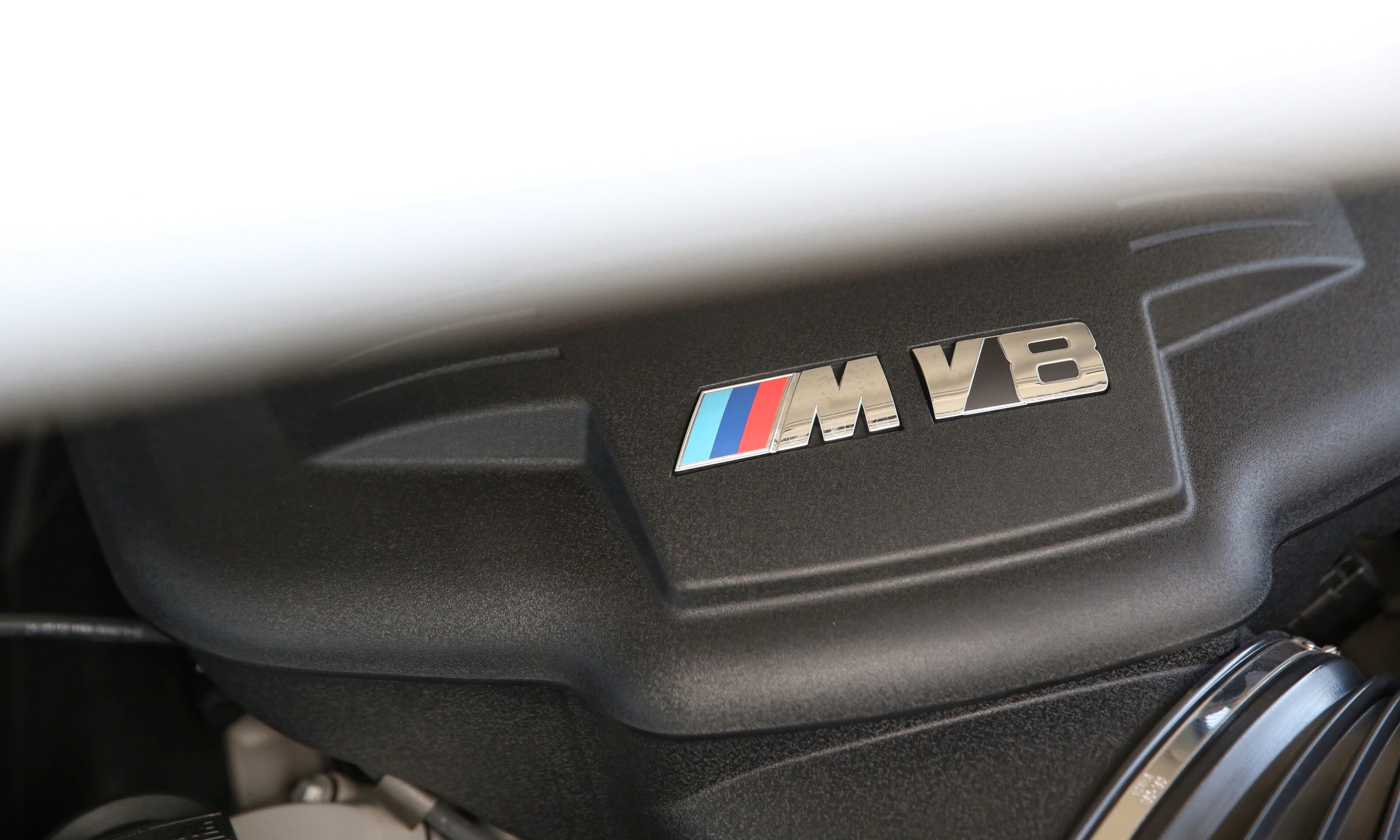
Down on power against Mercedes-Benz’s popular W204 C63 of the time, the M3 was far lighter, especially sans the optional sunroof which saw a slick carbon fibre piece grafted in its place. The two rivals ultimately yielded a near identical power-to-weight ratio.
In the modern age of downsized powerplants and turbocharged technology, the E92 will be remembered as the veritable capstone of a naturally aspirated era in BMW M division. What’s more, in the face of the successive F82 M4, and the divisively styled G82, we suspect that many will grow to revere the E92’s graceful styling and burly S65 V8 through the long lens of time.
Essential checks
In the market
While we’ve primarily been speaking on the two-door E92 coupe, this generation of M3 was also available in sedan and convertible configurations (denoted by chassis codes E90 and E93 respectively).
Pre life-cycle impulse (BMW speak for mid-life update) examples are prevalent and easily found asking between $40-$60,000 with no discernible discrepancy between the rare manual versions and the predominant DCT-equipped examples. Post-2011 LCI examples carry a premium and quickly approach $70,000 and upwards, and feature minor trim changes, a superior iDrive system, LED tail lights, white halo headlights and a marginal performance increase.
Values are already on the move, as we’d have been talking between $35-$45,000 as little as two years ago.
Body & Chassis
As a modern contraption, there shouldn’t be much to go wrong in the way of obvious external degradation. However, inspecting for accident damage is always good practice. Inspect uniformity of paint finish, panel gaps and front and rear bumpers for signs of removal and refitting. Front headlights are also known to fill with moisture and water.
Engine & Transmission
BMW’s S65 was produced at the Landshut foundry in Germany, parallel to the F1 engines the firm was supplying to Sauber at the time. Despite adding two more cylinders, the S65 weighed 15kg less than the outgoing inline-six.
Dreaded VANOS faults aren’t as prevalent as in the preceding E46, although they aren’t entirely unheard of.
Particular attention should be paid to service history (saved on the key and viewable on the internal display), as the S65 is known to drink oil under regular circumstances, and missed oil changes can lead to catastrophic failure. Oil leaks are a known fault and often occur around the valve covers and the transmission’s plastic sump. With no dipstick to be found, engine oil level (as well as status of brake pads, fluids and cabin microfilter) is checked through BMW’s iDrive system.
One of the most common faults are failing throttle body actuators, which can lead to obvious error codes as well as a loss of power and engagement of limp mode.
Suspension & Brakes
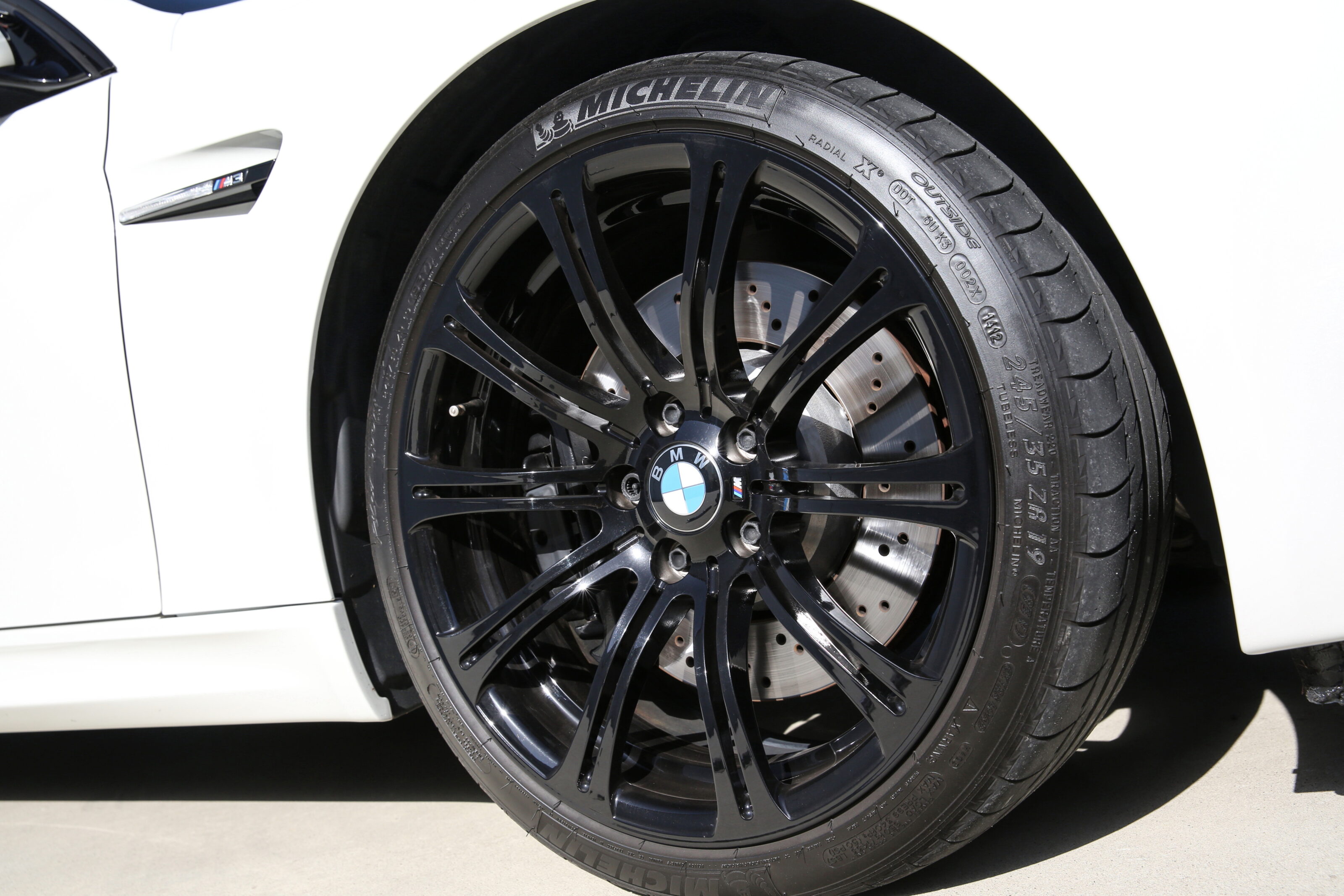
Dampers, either standard or optional EDC (electronic damper control) should be inspected for leaks, and EDC modes should too be tested for functionality.
Many cars on the market display quite meagre odometers, so bushings should still be in good health. Significantly uneven wear between all four tyres can indicate misaligned suspension geometry from sustained hard use or hard knocks with kerbs.
Interior & Electronics
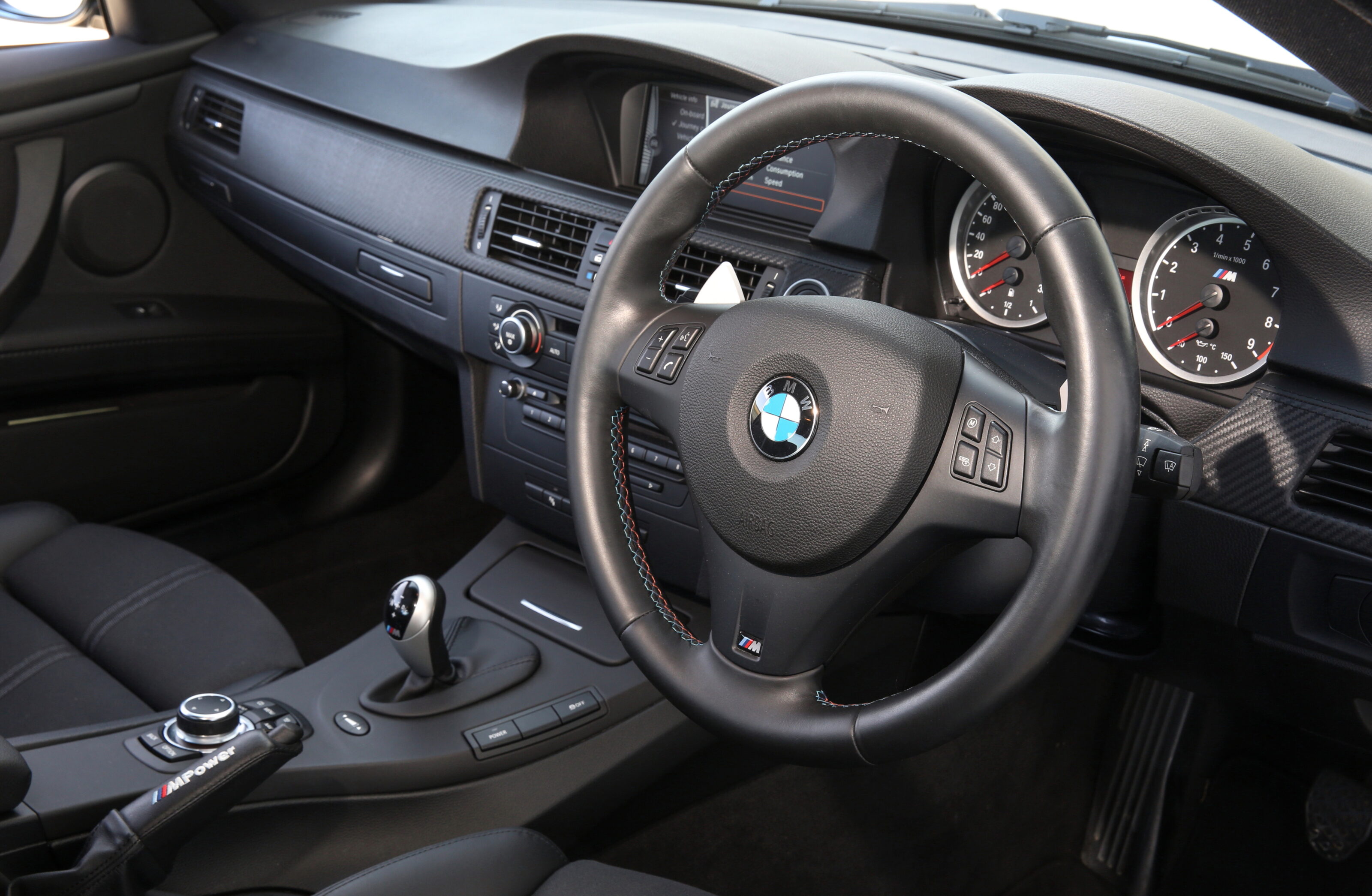
Old iDrive infotainment systems have been known to develop issues, often pertaining to navigation. As an aside, the post-LCI iDrive system offers a vastly nicer experience than the old ‘flying saucer’ interface.
Ensure all adjustable configuration modes (throttle response, steering, EDC and traction control) are operational. Pre-saved driver settings may too give an indication on the previous owner’s driving style.
Three other options you may consider
- Mercedes-Benz W204 C63 AMG
- HSV Clubsport R8
- Lexus IS F
BMW E92 M3 specs
Body: 2-door, 4-seat coupe Engine: 3999cc quad-ohc 32v V8 Power: 309kW @ 8300rpm Torque: 400Nm @ 3900rpm Transmission: 6-speed manual/7-speed DCT Weight: 1665 kg Used range: $40,000-$70,000
Regular readers might recall that the current lap record at South Australia’s The Bend Motorsport Park is held by the heroic Porsche 911 GT2 RS.
Well, there’s been a development: the GT2 RS – and its record 3:24:079 lap of The Bend’s full 7.7-kilometre layout, set by our man Warren Luff – has been surpassed, by none other than the new 2021 Porsche 911 Turbo.
That’s not a bad way for the GT2 RS to go, really, and a clear sign that Weissach hasn’t been sitting on its thumbs when it comes to improving the breed.
Setting a new benchmark time of 3:22.066, the 911 Turbo stands out as the new king of the hill. To its credit, Porsche acknowledges that the track has benefited from improvements in grip and speed.
Sam Shahin, Managing Director of The Bend Motorsport Park, said: “Since the first lap record set by Porsche at The Bend, our 7.7 kilometre GT Circuit has seen a lot more use, including a round of the Asian Le Mans Series.”
Catch the new record video lap in our gallery above, and our pricing/specs story below.
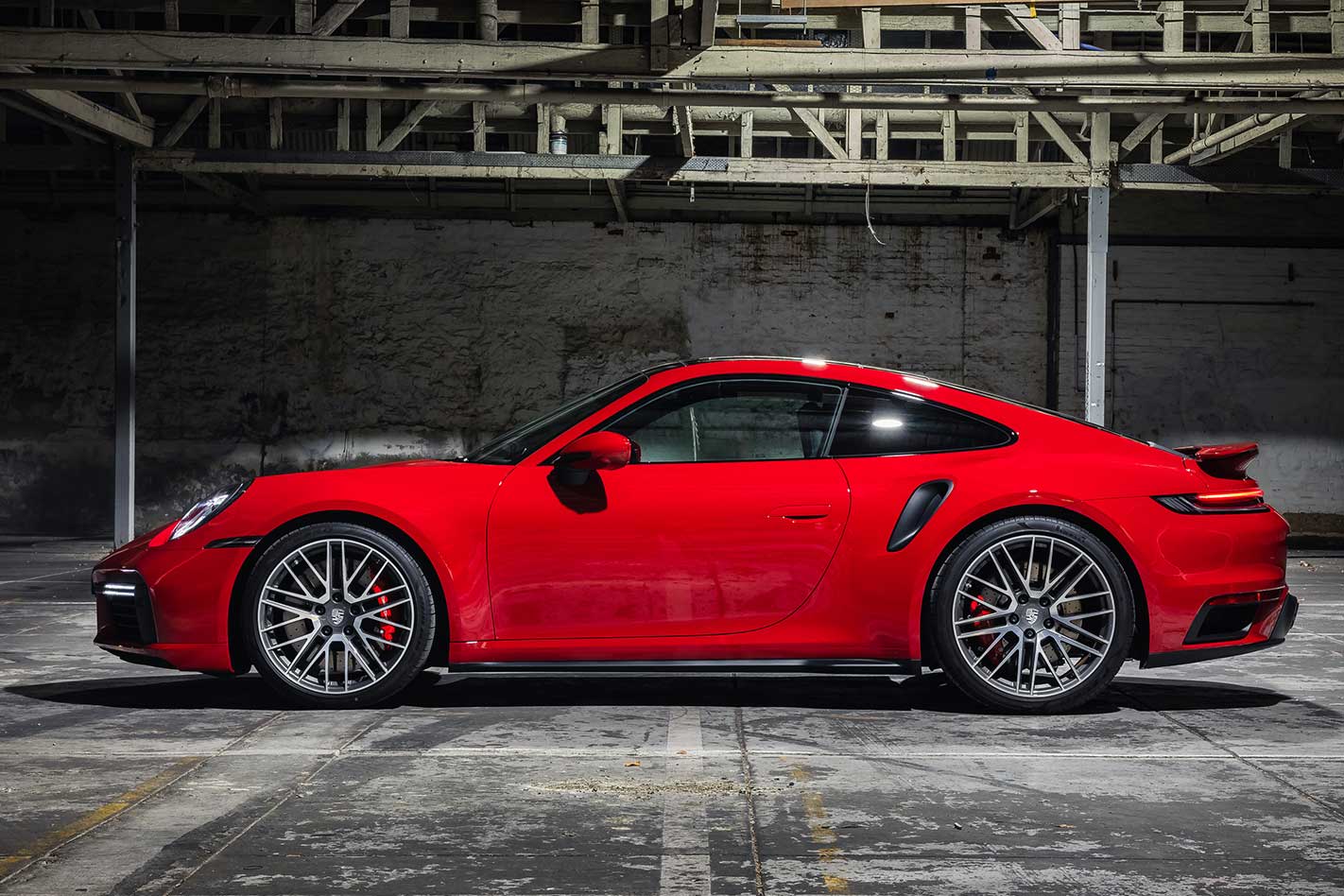
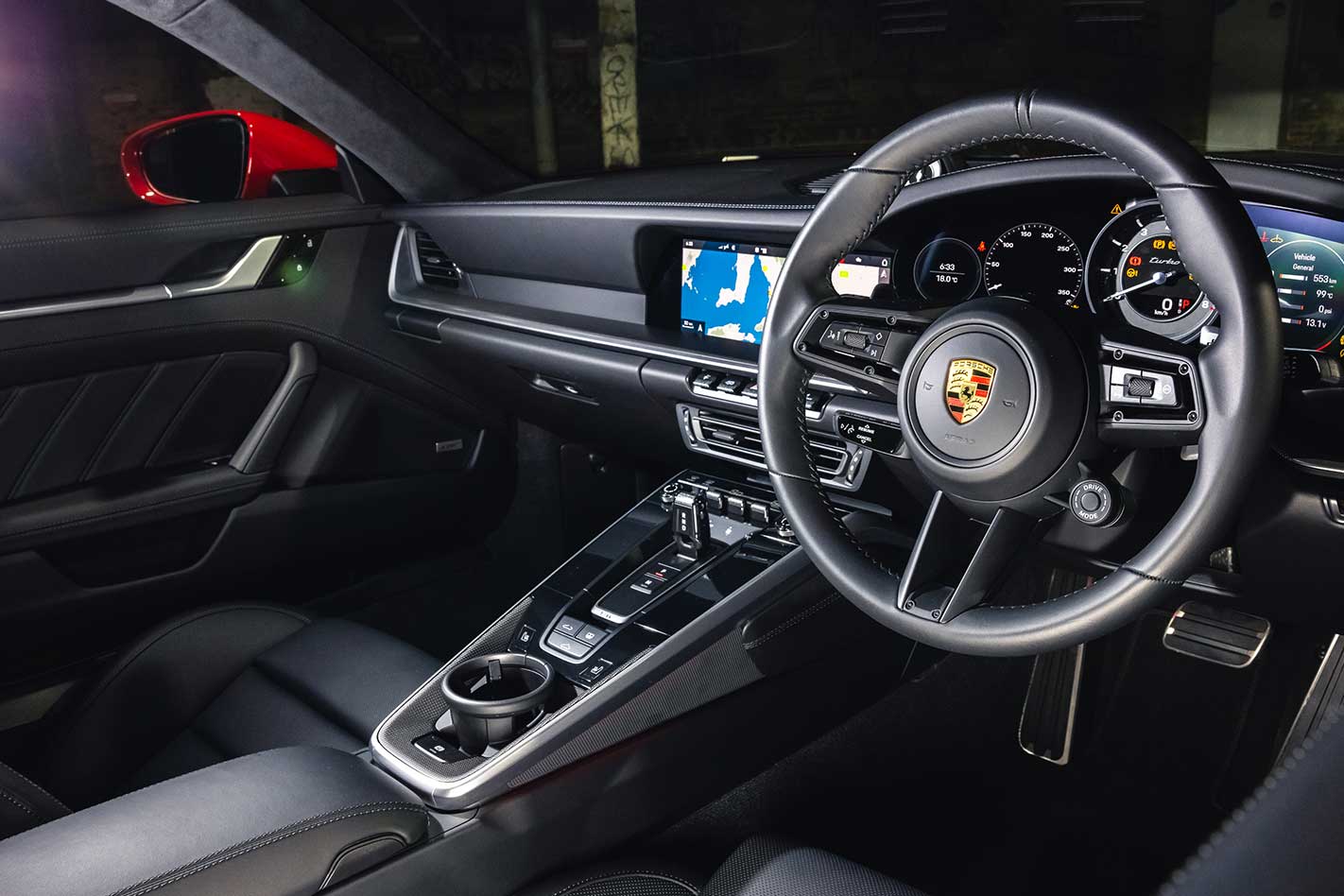
April 7, 2021: The new 2021 Porsche 911 Turbo Coupe and Cabriolet models have landed on Australian shores, priced from $396,500.In a break from tradition, Porsche released the more potent 911 Turbo S variants first but the traditional Turbo is hot on its heels offering mind-bending performance with a more ‘grand touring’ bent than some of the sportier 911 models.Nevertheless, performance is far from lacking, the new 911 Turbo’s 3745cc twin-turbo flat-six is offering an extra 30kW and 40Nm over its predecessor for totals of 427kW and 750Nm, matching the previous generation 911 Turbo S.
The torque figure is now available at all times rather than as an over-boost which, combined with the new eight-speed dual-clutch gearbox, cuts the 0-100km/h claim to just 2.8sec for the Coupe and 2.9sec for the Cabriolet. Top speed remains 320km/h.Virtually no aspect of the chassis has gone untouched, the wider body allows for a much bigger footprint.
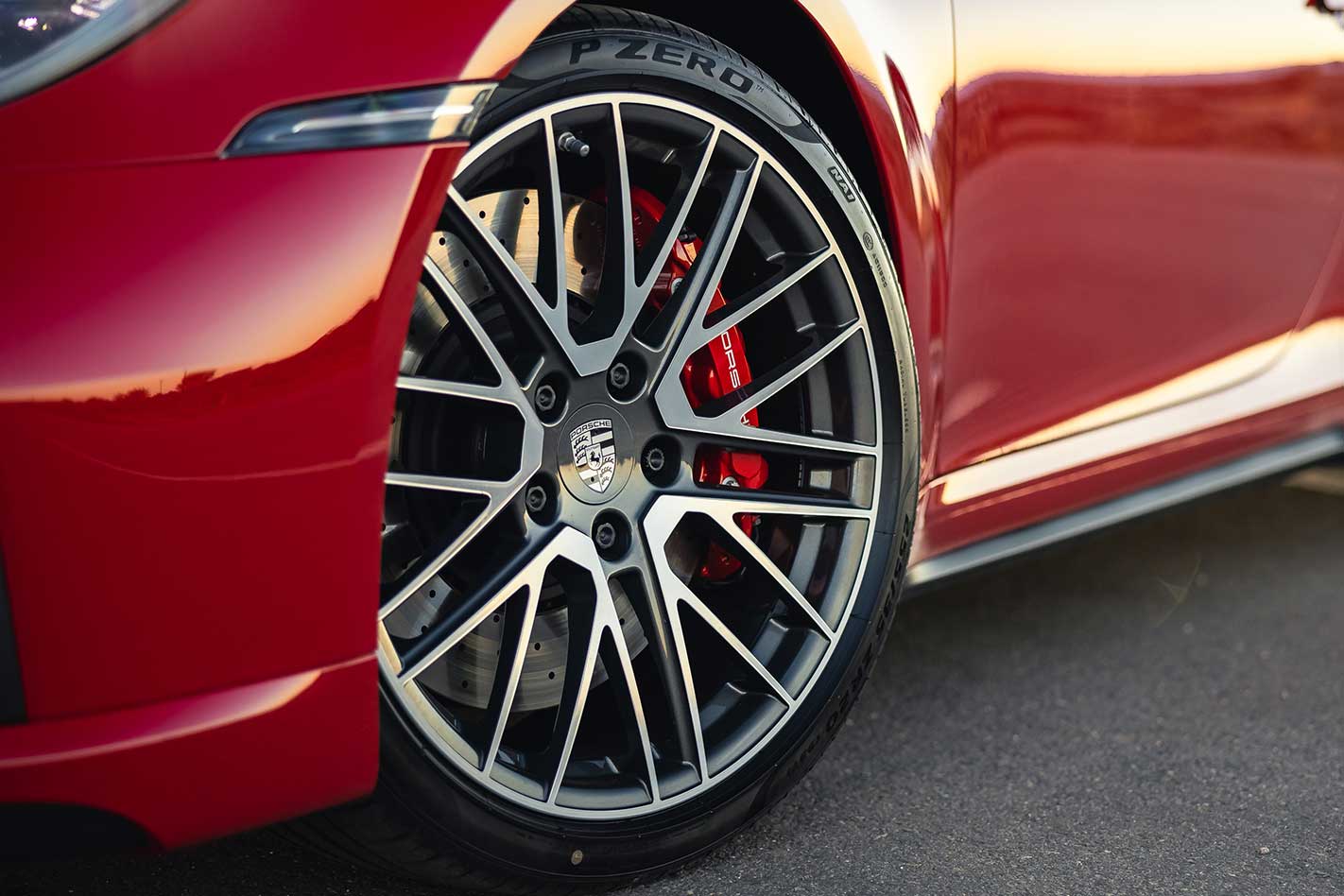
There’s an extra 45mm of track at the front and 10mm at the rear while the staggered rims (20 x 9.0-inch front; 21 x 11.5-inch rear) wear 255/35 and 315/30 tyres respectively.
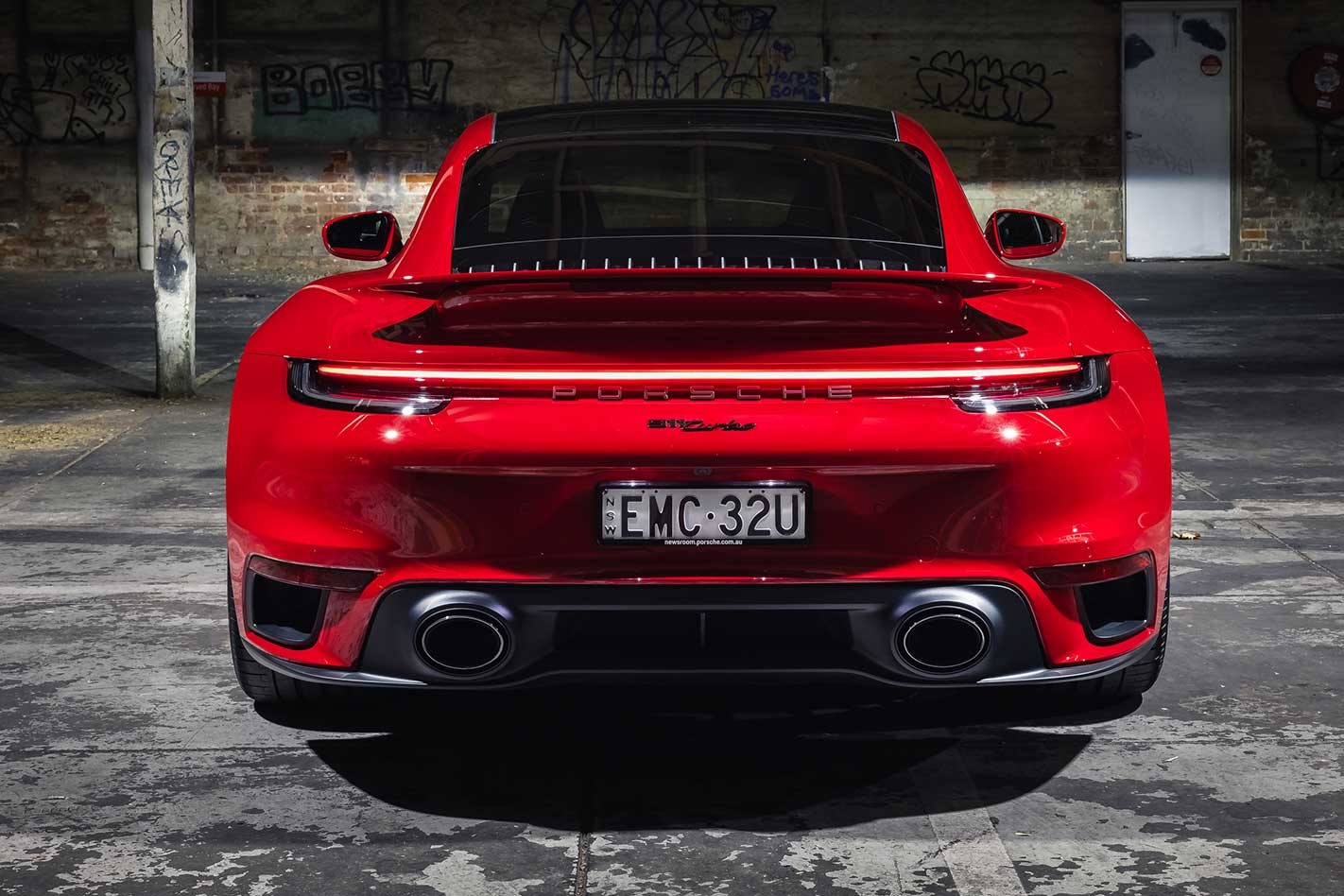
The downside of the expanded dimensions is an increase in weight, the Coupe weighing in at 1640kg and the Cabriolet 1710kg.Hiding in plain sight behind those wheels are monster brakes: 408mm discs with six-piston calipers at the front and 380mm discs with four-piston calipers at the rear.
The former drops the ride height by 10mm and stiffens the suspension for sharper responses, while the latter extracts more volume from the flat-six engine.
Talking points
- Based on Chevrolet Colorado chassis
- Powered by GM’s eCrate electric motor with 150kW and 360Nm on tap
- ISV rides on trick MultiMatic Dynamic Suspension Spool Valve dampers
General Motors’s Defence sub-brand has just unveiled a tough-looking fully electric Infantry Squad Vehicle (ISV).
Called the All Electric Concept Vehicle, the one-off ISV is powered by GM’s eCrate electric motor, which churns out 150kW and 360Nm from a 60kWh, 400-volt lithium-ion battery pack.
The same motor also powers the automaker’s Chevrolet Bolt hatchback and Bolt EUV small SUV.
Batteries line the floor of the vehicle, while the motor is mounted at the front of the chassis underneath the bonnet.
Under normal conditions, drive is sent to the rear wheels, however, there’s also a four-wheel drive mode for when the going gets bumpy.
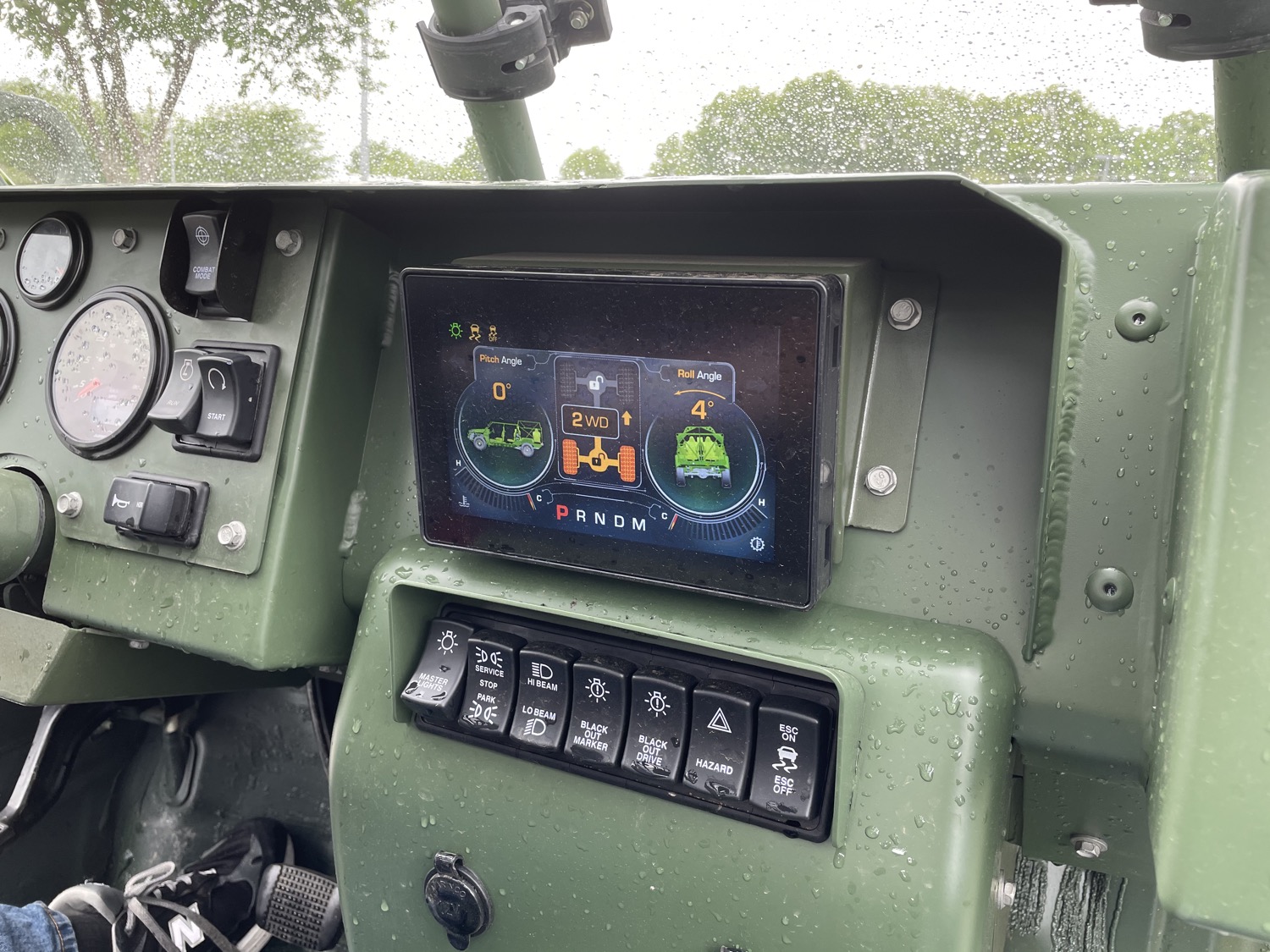
The chassis itself is largely based on Chevy’s regular road-spec Colorado platform.
In fact, GM says that 90 per cent of the military-spec EV is made from commercial-off-the-shelf parts, utilising equipment like the automaker’s MultiMatic Dynamic Suspension Spool Valve dampers.
The EV ISV does, however, score a much larger tray than the standard Colorado thanks to GM using the ‘GMC CarbonPro box’ found on the GMC Sierra pick-up truck.
Driving range is said to be rated at between 110-250 kilometres, although this figure will vary greatly depending on what sort of terrain the ISV is being driven on.
Unfortunately, GM hasn’t said whether or not they’ll build the radical-looking ute, but with the automaker’s catalogue looking greener by the day, there’s every chance they will.
Talking Points
- Petrol, electric and hybrid drivetrains expected
- Don’t expect it in Australia anytime soon
A NEW entry-level Jeep is expected to go into production in Q4 of 2022.
Reports from Automotive News Europe indicate the crossover SUV, codenamed Project 516, will be built in Poland and will sit below the Renegade in the Jeep hierarchy.
The Renegade SUV is currently unavailable in Australia, with the CX-3 rival axed locally by Jeep Australia early in 2020 due to poor sales.
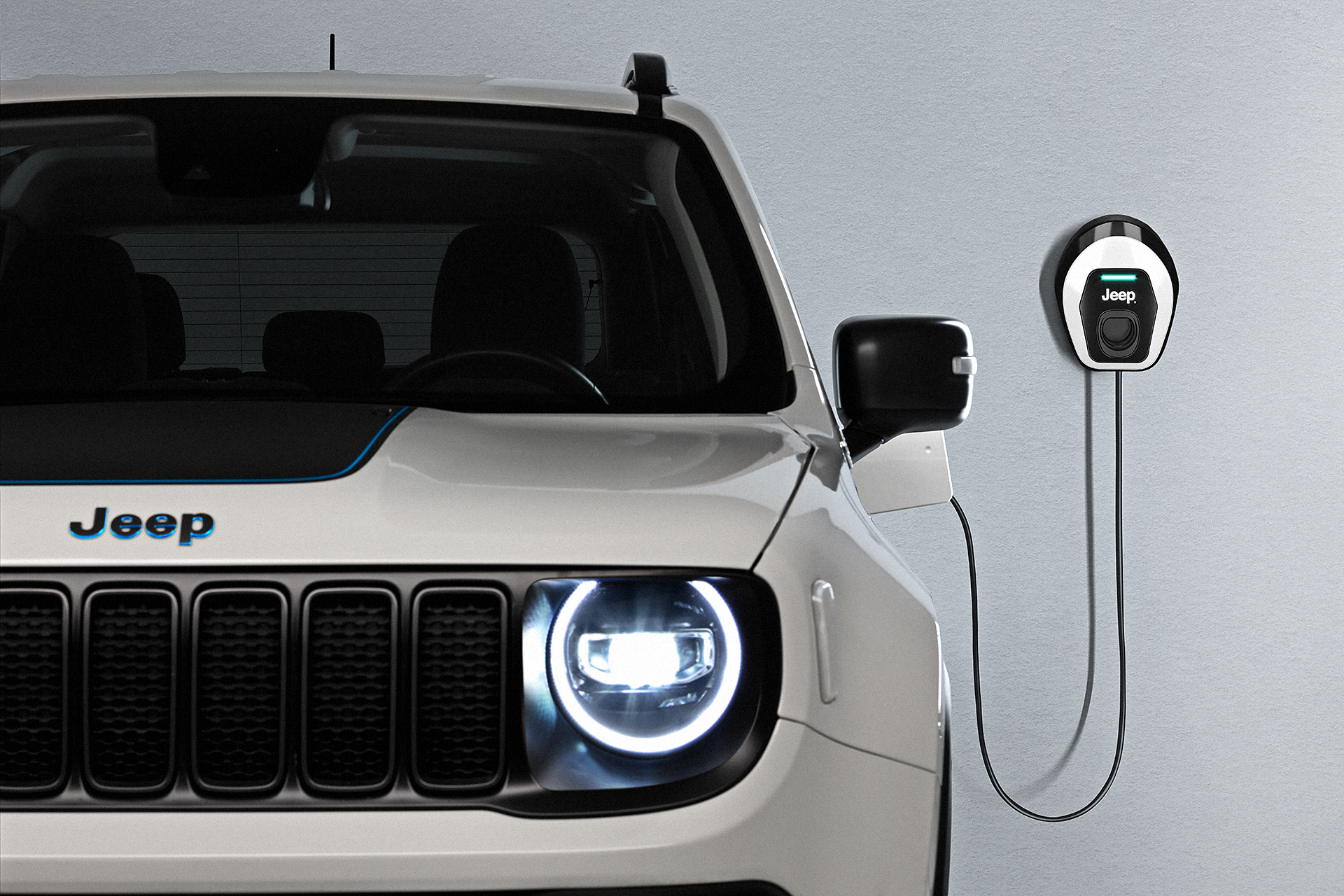
The compact SUV was on sale for five years in Australia, clocking only 70 sales in its final year on the market in 2019.
Specific details are scarce at this stage, but reports suggest the new Jeep will initially be launched with petrol engines.
An electric variant is also on the cards, with production of the electrified models slated to begin early in 2023. As is a mild-hybrid variant, expected further down the track.
Whatever the case, the baby off-roader will surely be unleashed on European soil first. And don’t count on it arriving in local showrooms anytime soon.
Just our luck. We’d rocked up to Heathcote’s drag strip with a flock of fast metal, and there were centimeters of standing water on the venue’s newly-resurfaced start line.
A quick test run by fearless Editor Enright had the Alfa Romeo Giuia Q reduced to a crawl while its rear wheels spun into disarray on the slick surface.
But what else do you do when you have an empty drag strip at your disposal and a couple of fast cars? You find a way to race. Rain, hail or shine.
Running our race in reverse on the coarse tarmac of Heathcote’s runoff area made for much better results. This is a real world test, after all – you’re not going to get perfectly dry cool conditions at every traffic light grand prix.
The rain did ease, giving us a precious few moments of useable tarmac; but in these conditions, both of the four-door powerhouses were found to be severely traction limited.
In a battle of twin-turbo sixes, the parings seemed neck and neck on paper; with the same kW output and just 50Nm between them. The difference came in the tech.
The BMW M3 Competition has one of the most drawn out traction control procedures we’ve come across, but once Dan eventually got it working it proved invaluable in getting the 1705kg German saloon off the mark.
Andy in the much lighter Giulia Q, had no such assistance; and was forced to throw the full bag of tricks at the red hot Italian in attempting to coax it off the line.
Even walking the Alfa Romeo off the line and short shifting into third wasn’t enough to keep the rear tyres purchased to the ground. The gap was closed in the default mode street start, but the M3’s superior launch management system saw it dismantle the unwieldly Italian in surgical fashion.
In diabolical conditions, the Alfa Romeo bested a 5.5 second sprint to 100km/h, and past the 400m mark in 13.1 seconds at 192km/h.
BMW’s newest star athlete, however, managed a best 0-100km/h time of 4.8 seconds, and blew past our finish line in 12.4 seconds at 197km/h.
Watch the full video above to see all the dramatics, and subscribe to the MOTOR Youtube for more drag battles, comparisons and reviews!
The MG ZS bounced back from the depths of COVID-19 lockdown to hit the first quarter of 2021 running with a 300 per cent jump in sales to leapfrog the likes of the Hyundai Kona and Mitsubishi ASX with a bullet to be Australia’s biggest selling small SUV.
With a starting price of $20,990, the ZS brings a box-fresh package for a used-car price and in the process has beaten the ASX at its own game.
Late last year MG introduced a more sophisticated variant called the ZST, which brings more power and more high-tech features to take on upper-spec turbocharged small SUVs.
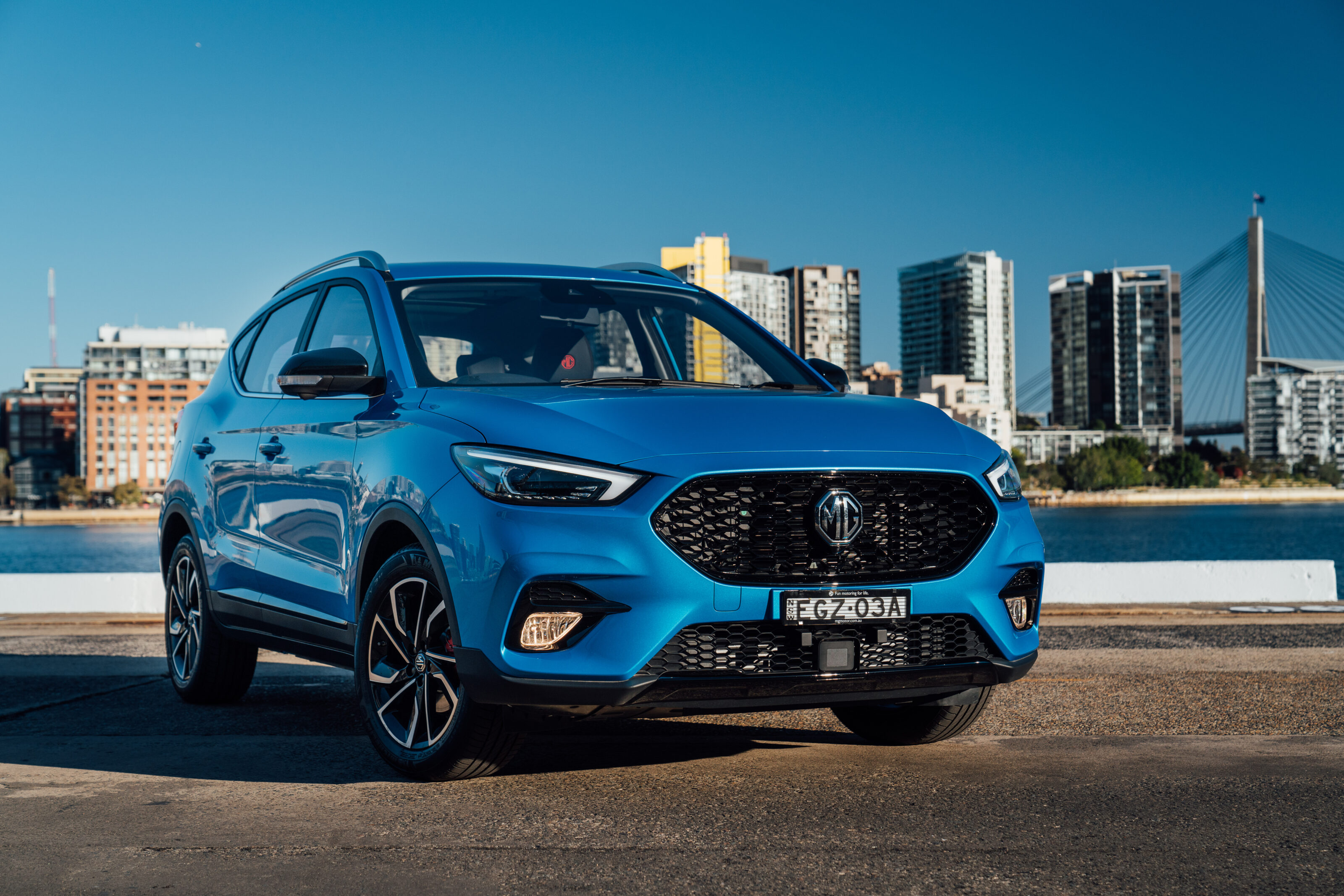
The ZST comes in two flavours, the Excite and Essence. The Excite retails for $28,490 with that price bringing a punchy 1.3-litre, three-cylinder turbocharged petrol engine, LED headlights and taillights, MG Pilot advanced driver assistance with AEB and adaptive cruise control, a 360-degree camera and keyless entry with push-button start.
For $3000 more you can get the ZST Essence that has all that plus a full-sized panoramic sunroof, digital instrument cluster, front-seat heating, and powered driver’s seat adjustment.
To get all that in a Kona or Seltos you’d have to spend around $40,000 while even the top-spec ASX with its not-so lively 2.4-litre engine will set you back $33,490.
“The ZST defies any prejudices people may have about Chinese-built cars.”
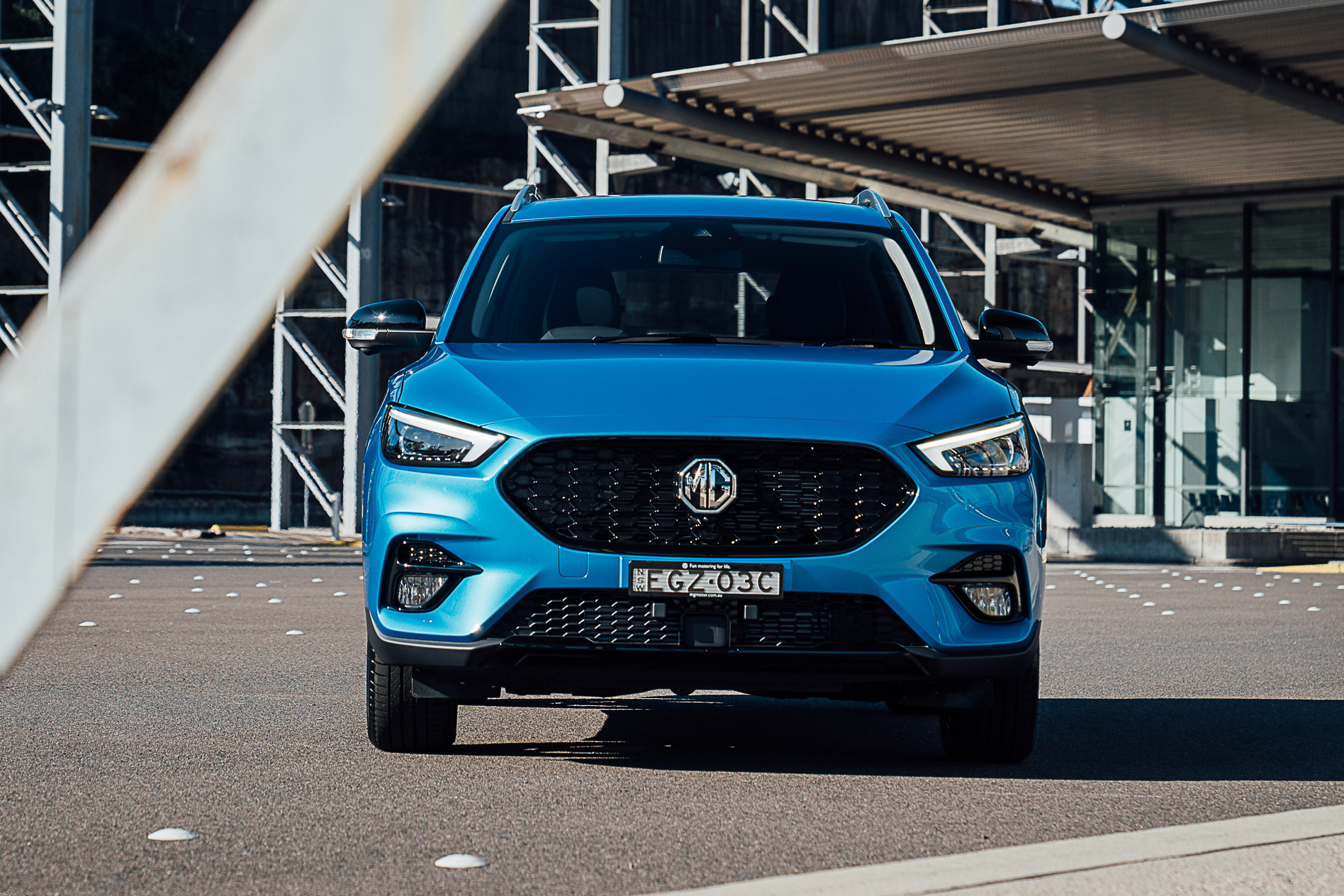
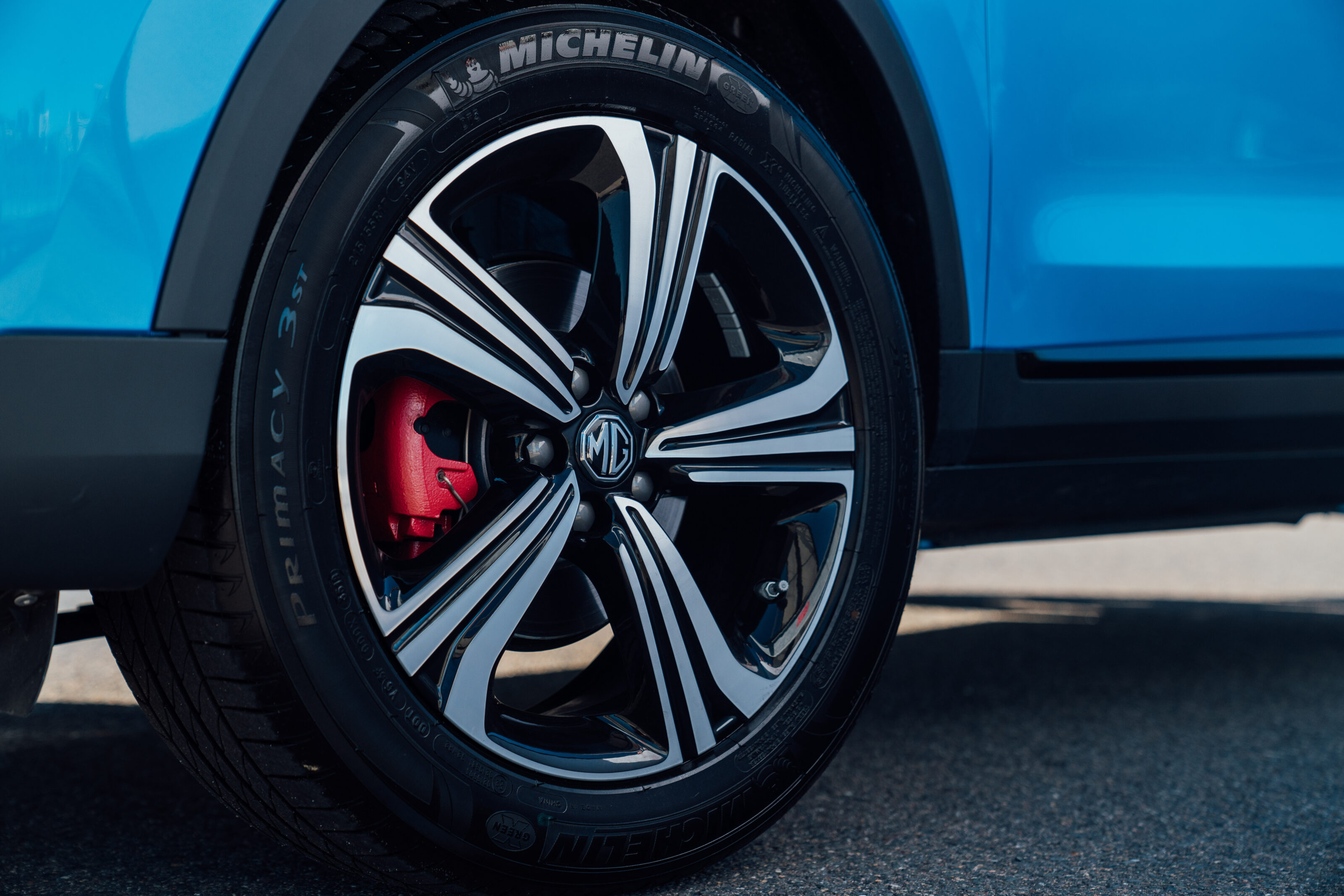
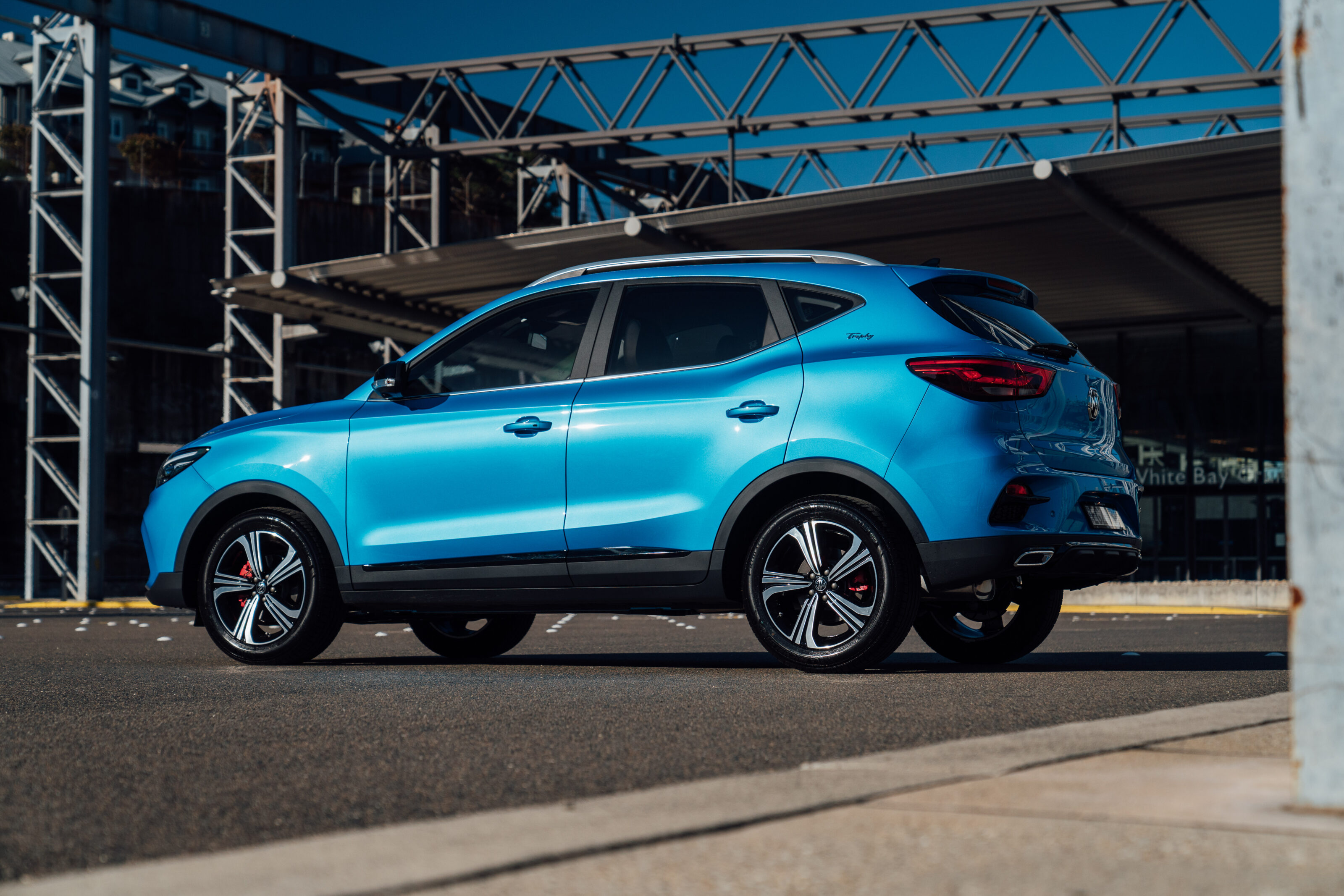
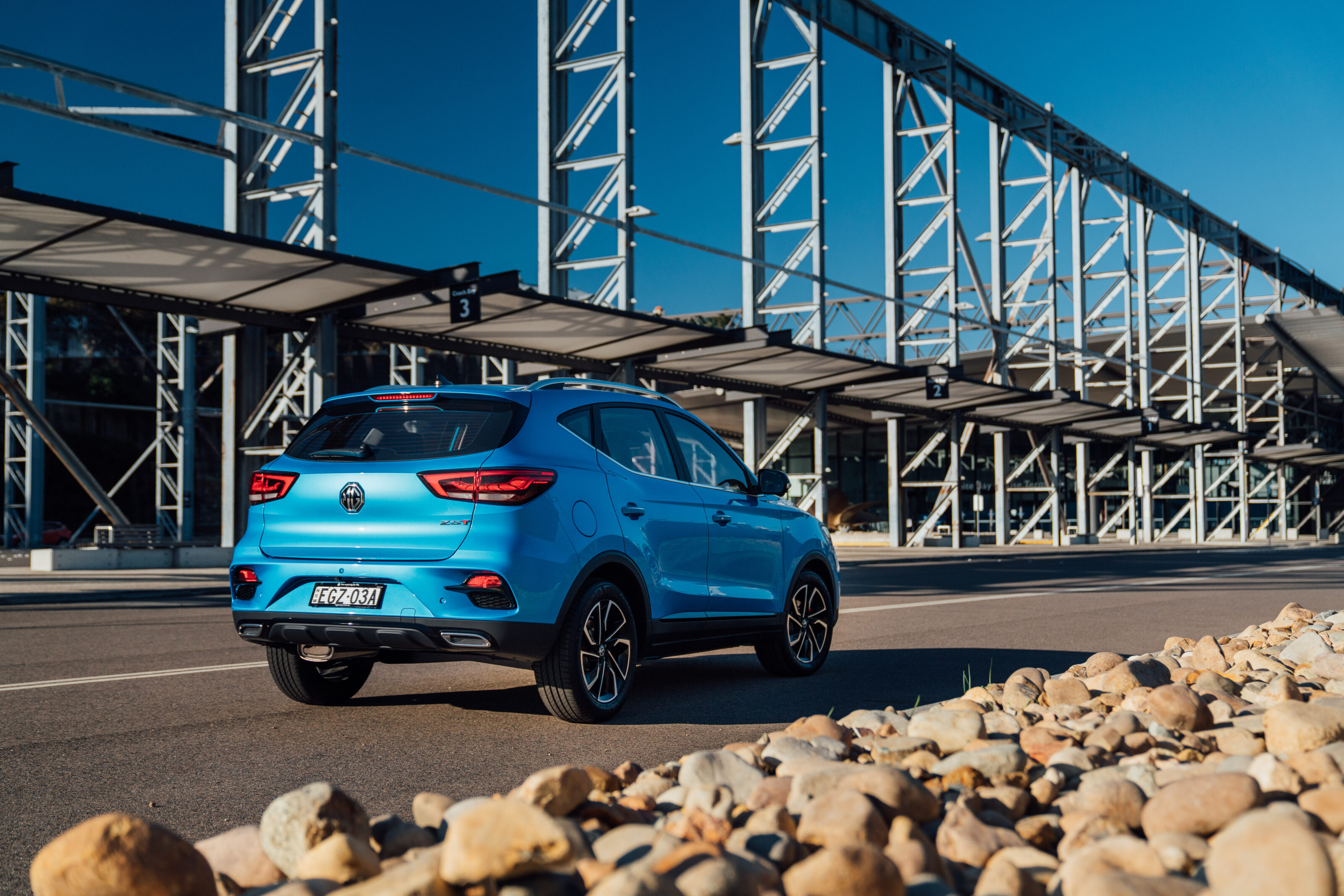
Outside the ZST differs from the standard ZS with a sportier front end and fancy black garnish on the grille, mirrors, side mouldings and bumper inserts, LED exterior lighting and 17-inch alloy wheels behind which are sporty red brake calipers.
The ZST defies any prejudices people may have about Chinese-built cars. It’s well put together and there’s a nice solid thunk when you close the doors or tailgate.
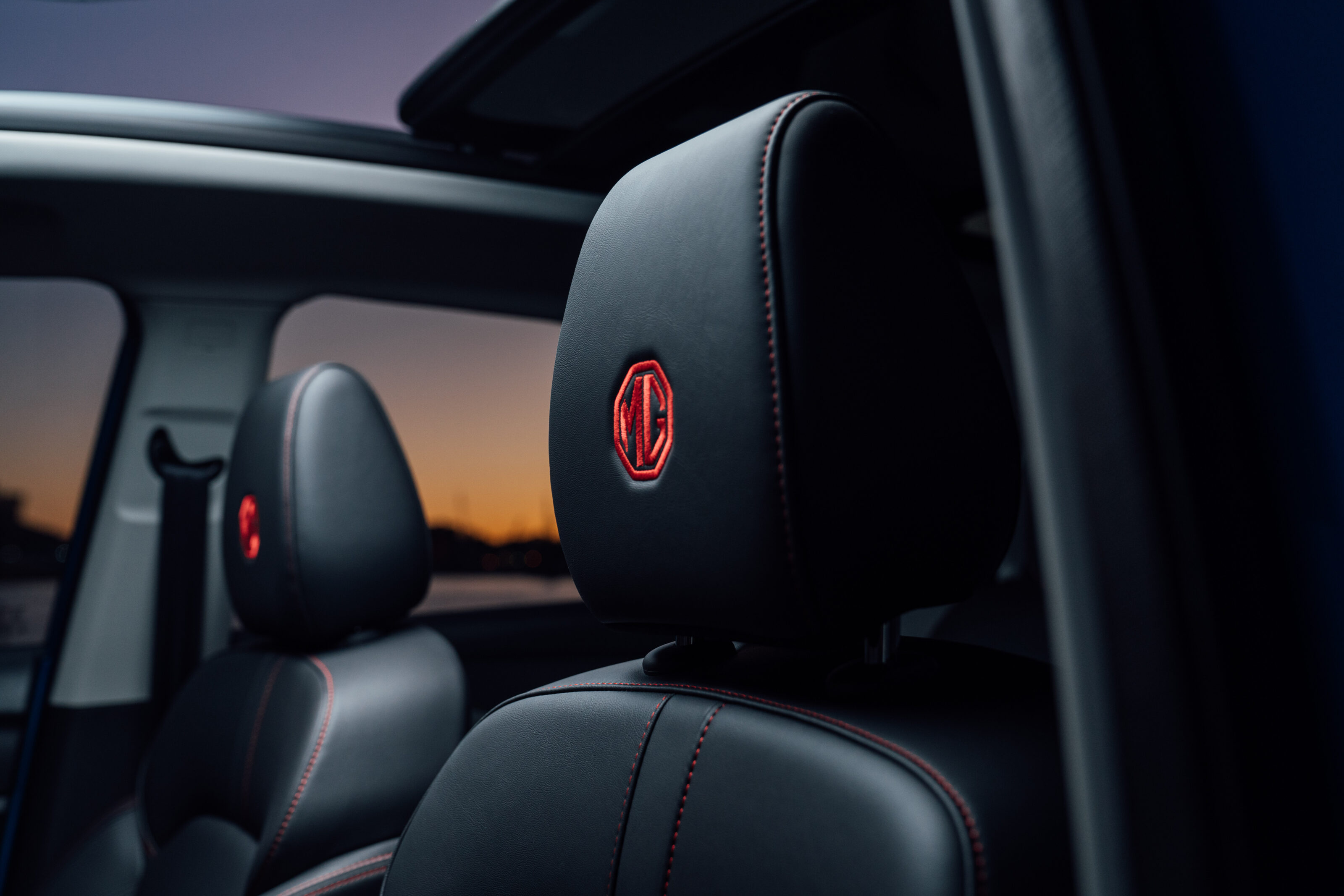
But it’s inside where the ZST represents the most showroom appeal to anyone on a $30k-ish budget, starting with the attractive clutter-free interior featuring synthetic leather seats and full-grain leather steering, each with contrasting stitching.
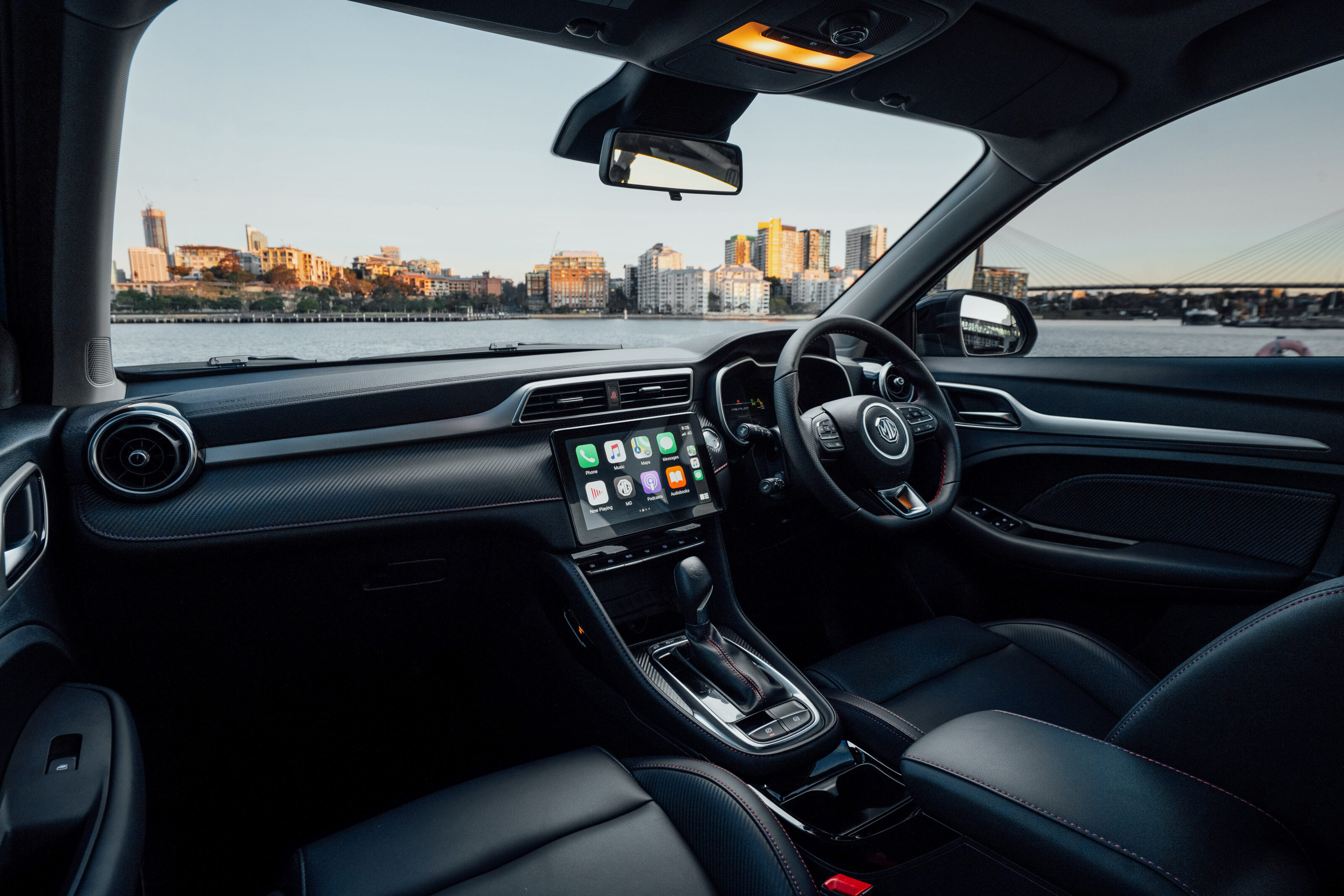
The overall quality is an improvement over the more affordable ZS versions and it looks fresher too – the ZST actually feels like an updated version of the ZS rather than simply an upper-spec version. There are some hard plastics on the doors but touchpoints are soft, as is the dashboard top and fascia.
A floating 10-inch touchscreen replaces the smaller one in the ZS that’s embedded in the dashboard. It displays in-built satellite navigation, audio, air-conditioning and other assorted settings plus your favourite apps and music via Apple CarPlay and Android Auto.
It’s big and bright and is tilted towards the driver but it is mounted a little low, meaning you have to look down while navigating.
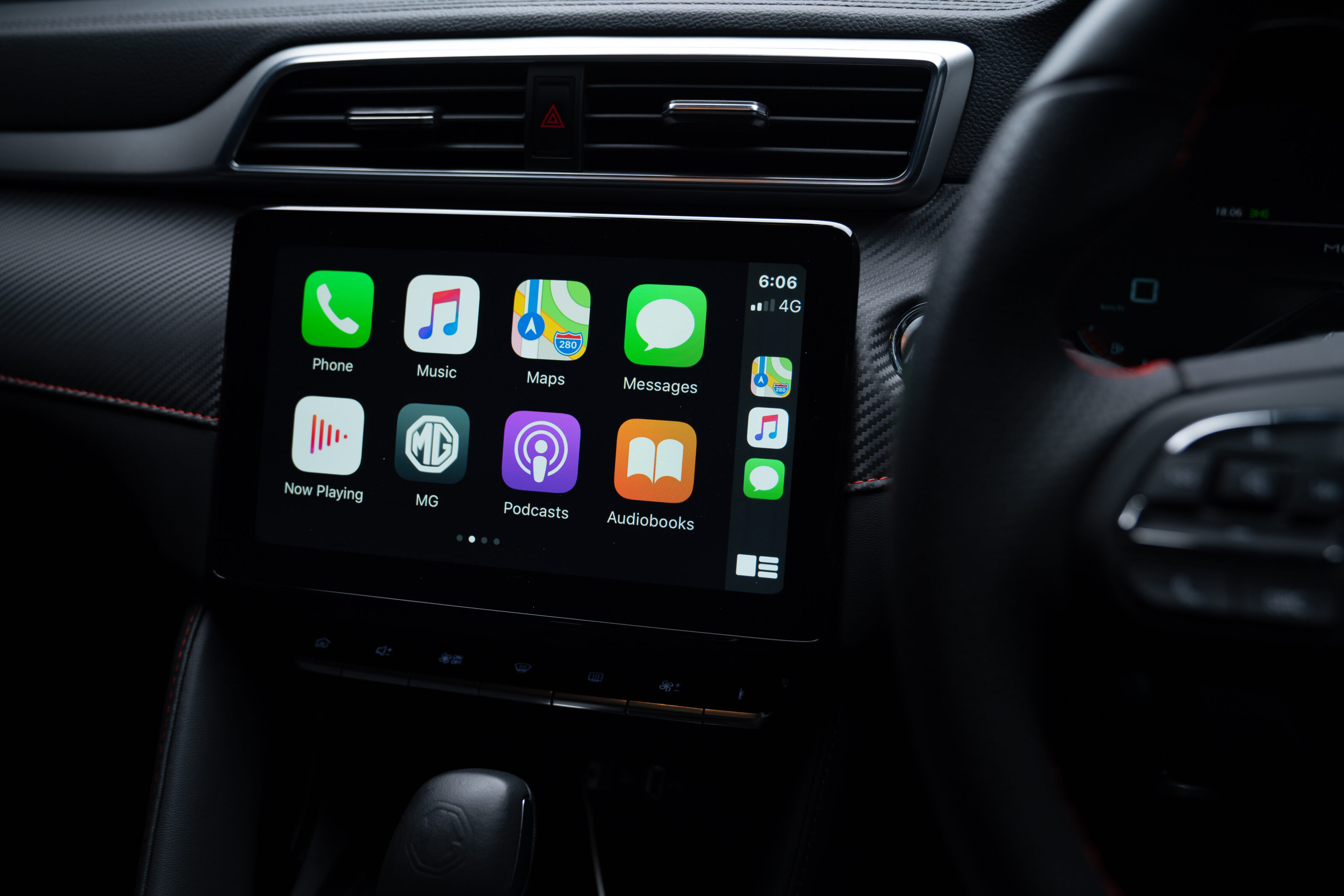
The touchscreen in this Essence version is complemented by an attractive digital gauge cluster that’s pretty basic in terms of the functions it displays and the stalk-mounted adaptive cruise control switches rely on feel, though you do quickly get the hang of things.
Despite being leather, the good-looking steering wheel feels a little hard. It’s also let down by only being height adjustable, which can make things difficult if you have long arms or legs.
The ZST’s synthetic leather seats are soft and comfortable. The backrests and cushions provide good side and hop bolstering but they’re broad enough that anyone with wider hips doesn’t feel squished in.
There are physical buttons for audio and air-con too as well as a couple for the 360-degree camera, traction control electronic park brake and auto start-stop system but all other functions are easily operated from the screen.
The front seats are heated and the driver has power settings, though these do not extend to lumbar support.
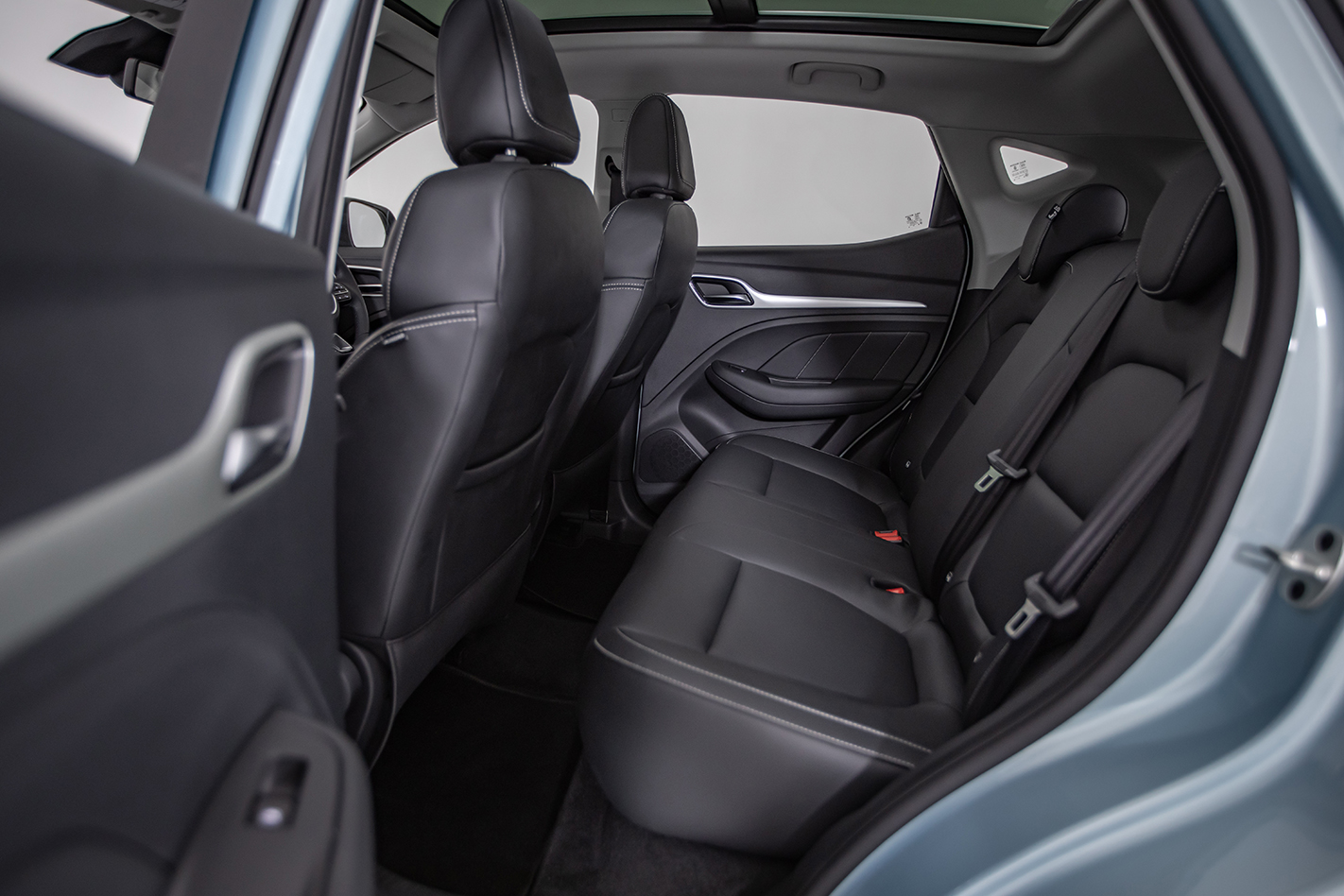
Down back you’ll find one of the roomiest rear-seat spaces in a small SUV. Leg and knee room is great for a small SUV and that space between the front and rear pews helps with getting in and out or loading children into car seats.
The seats are also soft with good under-thigh support. The backrests don’t adjust but are raked back enough so you don’t feel as though you’re on a park bench.
There is no fold-down centre armrest and while you wouldn’t want to try and squeeze in three adults, three kids would fit just fine. If you need to use child car seats there are ISOFIX anchors at the outboard seats and three top tethers.
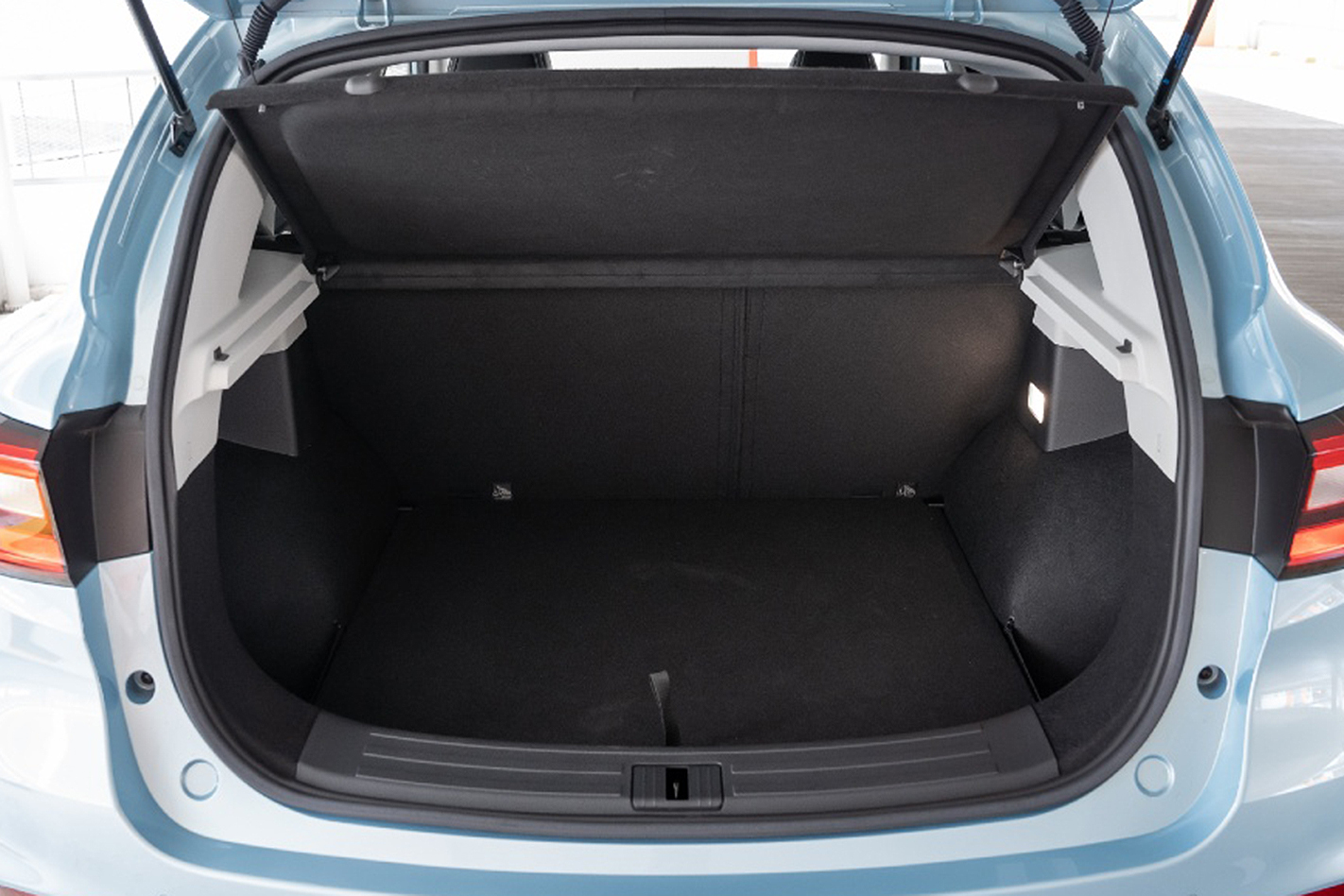
Boot space is a handy 359 litres, which is about average for a small SUV.
There is a narrow space-saver spare wheel below the boot floor, which allows it to be adjusted so it’s sitting level with the boot lip or deeper for when you want to carry more, while folding the 60:40 split seats extends available cargo space up to 1187mm.
The MG ZST’s 1.3-litre turbo-petrol engine has an official combined fuel consumption of 7.1 litres/100km.
Warranty on the ZST is seven years with unlimited kilometres, with seven years of roadside assistance included that isn’t tied to having your car being serviced at an MG dealer.
Service intervals are 10,000km or 12 months, whichever comes first. There’s no fixed-price servicing structure in place as yet but the average cost of a regular service over the first seven years on the ZST is about $300, subject to the condition of the car.
What is the MG ZST Essence like to drive?
The ZST is nippy around town and happy on the highway. Its 115kW/230Nm 1.3-litre turbo is 40 per cent more powerful than the 1.0-litre turbo engine in the rest of the ZS range and is one of the more powerful three-cylinder engines found in a small SUV.
It’s coupled with a six-speed automatic transmission that sends power to the front wheels smoothly and rarely leaves you waiting for the right gear, particularly in Sport mode that allows for higher revs before upshifting and gets up to speed sooner.
Athough it’s not as advanced as some dual-clutch autos in some of its turbocharged rivals, it feels better than the continuously variable transmissions (CVT) found in others.
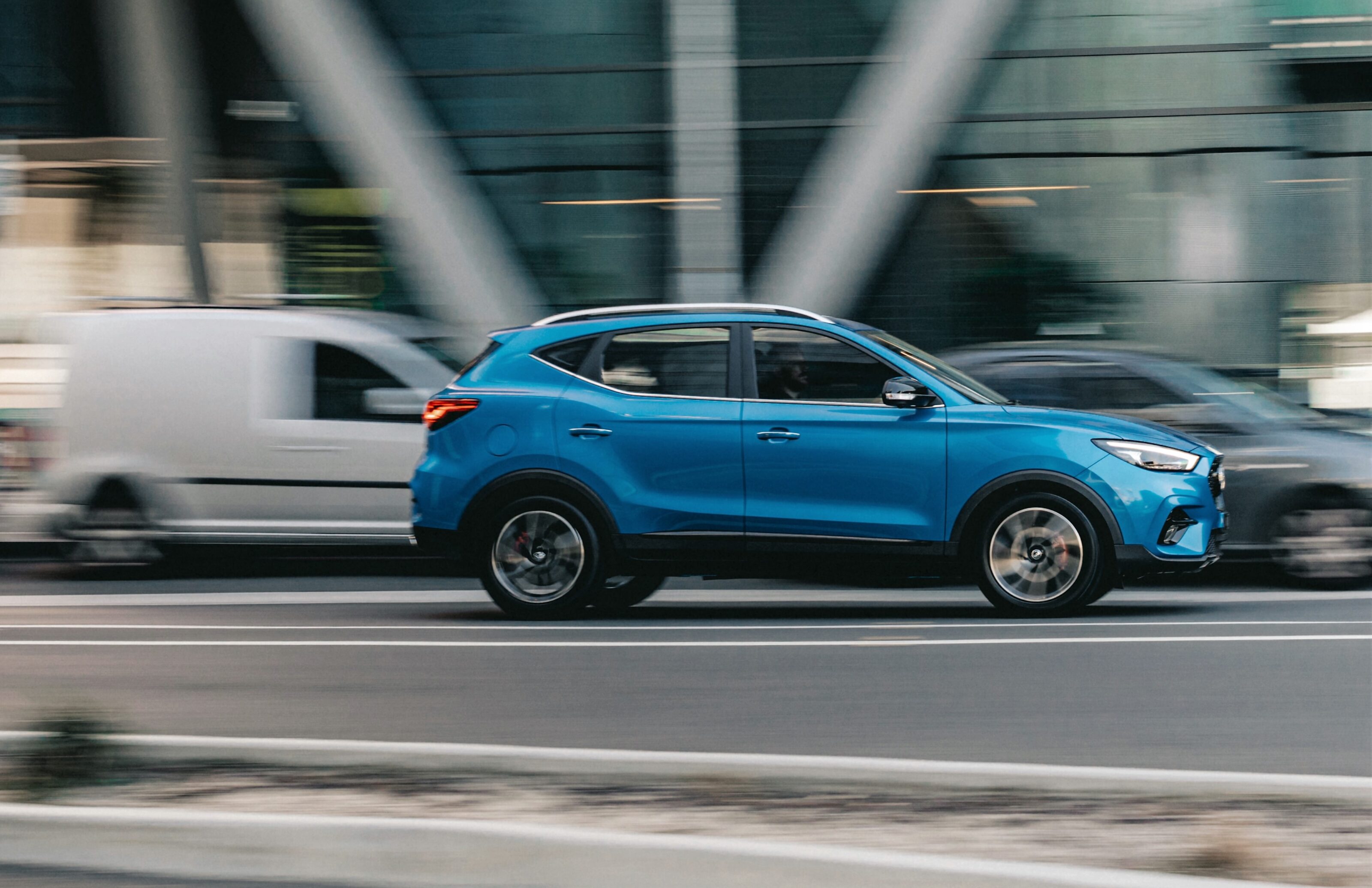
With MacPherson struts at the front and rear torsion beam, the suspension is pretty basic. The damping feels a little firm, probably to give it sporty handling characteristics, so you do tend to feel every bump but things settle quickly.
The ZST rolls on 17-inch alloy wheels with Michelin Primacy 3 rubber also help smooth things out and are excellent in the wet.
Its steering is light and responsive but there is a little play in the steering wheel and the gear shifter feels a little wobbly and cheap.
What about safety in the MG ZST Essence?
The MG Pilot active safety suite is quite extensive and includes autonomous emergency braking, adaptive cruise control with stop-and-go function, lane departure warning with lane-keeping assist, blind-spot detection, rear cross-traffic alert and auto high-beam.
It also has and speed sign recognition that can be set to limit your speed to the prevailing limit
The ZST provides good all-round vision which helps when parking and has a 360-degree parking camera to help ensure you don’t bump into anything or anyone hidden in your blind spots.
ANCAP has given the MG ZST a four-star safety rating but it’s worth noting that this is because it shares the 2017 ANCAP score given to the ZS, which at the time did not have any active safety features.
The verdict
The MG ZST appeals to the budget-conscious but it’s more than just an Aldi SUV. It’s well put together, drives well and if you are worried about how it will hold up over time it’s worth bearing in mind that it does come with a seven-year warranty.
So how does it bring key features that can only be found in upper-spec turbocharged rivals worth up to $10,000 more?
From what I can tell the main reason is that it comes with all the important technology while leaving things like the transmission and suspension as relatively basic, which appeals to the many small SUV buyers who just want something to get them from A to B safely albeit with a few creature comforts thrown in.
It’s that balance between features and affordability which makes this quite a good value proposition that won’t have you feeling like you’ve compromised on quality. And on top of that, it’s a reasonably fun little car to drive.
MG ZST Essence specifications
Body: 5-door, 5-seat SUV Drive: FWD Engine: 1349cc, 3-cyl, 12v Power: 115kW @ 5200-5600rpm Torque: 230Nm @ 1800-4400rpm Fuel consumption: 7.1L/100km (combined) Weight: 1295kg Transmission: 6-speed automatic Suspension: MacPherson strut/torsion beam L/W/H: 4323/1809/1653mm Wheelbase: 2585mm Brakes: Front ventilated discs (280mm) / Rear solid discs (280mm) Tyres: 215/55 R17 Michelin Primacy 3 Wheels: 17-inch alloy Price: From $31,490
