
Snapshot
- Registration, sales tax, fuel excise, luxury taxes, licence fees would all be scrapped
- New tracking systems would charge road users based on travelling distance, time, and location
- Paper also recommends the federalisation of road use under one centralised umbrella
The Federal Chamber of Automotive Industries has unveiled a new Road User Charging (RUC) paper that, if adopted, promises to revolutionise the way Aussies pay to drive.
Under the proposal, vehicle registration, sales tax, fuel excise, luxury taxes and licence fees would all be scrapped – and in their place, a new set of road user charges would be applied for all vehicles.
Essentially, the increasing technological development of vehicle connectedness means that road users can be tracked and charged (using embedded or tethered vehicle connectivity) according to distance and time travelled.
A “location-based congestion charging” system for city centres, similar to the ones used in Singapore, London, Milan, Stockholm, and Norway, would also be employed.
The paper adds: “Connected vehicles provide a once in a generation opportunity to utilise these systems to support Road User Charging to become a practical reality.”
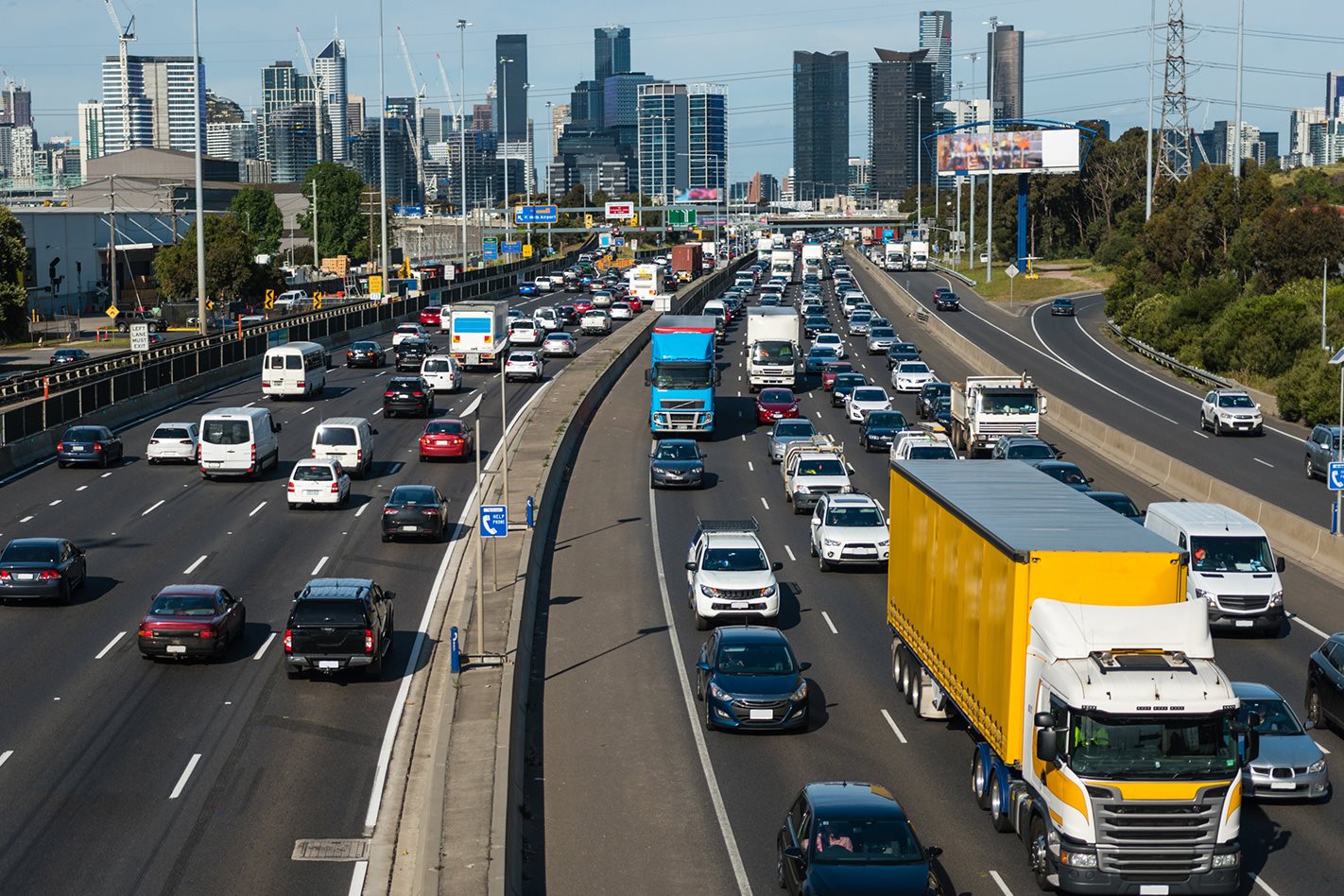
The FCAI says the rapid development of more fuel-efficient and electric vehicles has been the catalyst for the tariff rethink.
“Our powered mobility options have been bound to the internal combustion engine for more than 100 years yet today we are witnessing technological advances such as electric and fuel cell technology that will set up society for the next hundred years,” Tony Weber, FCAI CEO, said.
“The future of mobility is transforming rapidly. Against this revolution, now is the time to look ahead in the areas of regulation and funding and for governments to have the courage to overhaul outdated practices.
“An efficient road user charging scheme can address all vehicle users regardless of the type of vehicle they drive, how often it is driven and the purpose of the travel. For example, it could be based on vehicle mass, distance travelled, time of travel or a combination of factors.”

According to the paper, the new RUC rules would also seek to federalise road use under one centralised umbrella and enable the government to phase out aforementioned antiquated tariffs like fuel excise, while also trimming the fat surrounding admin costs.
“A nationally consistent scheme would provide consumer confidence and administration simplicity leading to acceptance if applied appropriately and equitably,” the paper states.
“From a Government perspective there is significant opportunity to reduce a range of inefficient Federal and State taxes and charges along with the administration reduction and associated cost savings that will result – this could provide the win-win solution.”

This isn’t the first time a new tax of this nature has been proposed – back in 2019, the Australian Automotive Association posited that the federal government’s fuel excise tax should be abolished and that a distance-based charge on motorists should be implemented.
We have requested comment from the Department of Infrastructure and Transport, along with state transport departments, and we will update this story as more details come in.
Let us know what you think of distance, time and location-based road use charges in the comments below.
The Australian new-car market has set a new April sales record as it continues to rebound from the Covid-19 pandemic and defy a global parts shortage.
Last month’s 92,347 vehicle sales surpassed the country’s previous best April in 2016, when 87,571 units were sold.
Sales are up 137 per cent compared with the same month last year, though April 2020 was the first month to be heavily affected by the then emerging pandemic.
A year-to-date increase of 31 per cent is a stronger indicator of the market’s progress, with 355,995 vehicle registrations only 6485 sales short of the January-April period of 2017 that contributed to Australia’s record year.
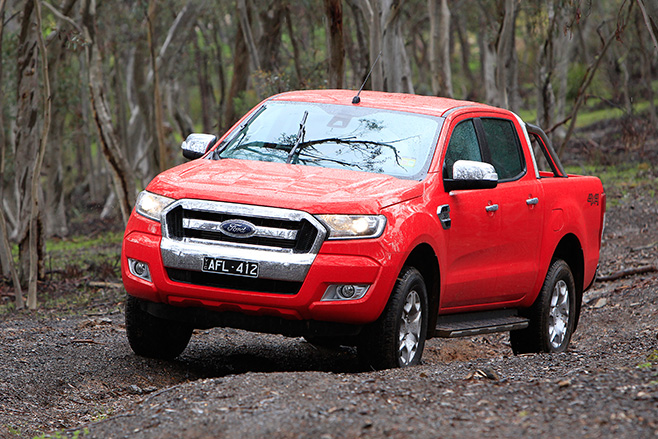
The Federal Chamber of Automotive Industries (FCAI) expects the new-car market to continue growing for the rest of 2021.
“New vehicles sales are a direct reflection of the performance of the broader economy in terms of consumer and business confidence,” said FCAI chief executive Tony Weber. “This time last year we were seeing significant impacts from COVID-19 with less customer activity and inquiries to dealerships.
“Historically, the April result is between 70,000 and 80,000 vehicles, so the 2021 result is very significant. This sales trend is expected to continue as we enter the final two months of the financial year.”
Australia’s vehicle imports have yet to be significantly affected by the global shortage of semiconductors, the essential computer chips that are the ‘brains’ of vehicle electronics.
SUVs again dominated the market, with 49,176 sales, and light-commercial vehicles continued their 2021 trend by out-selling passenger cars – 21,714 versus 18,064.
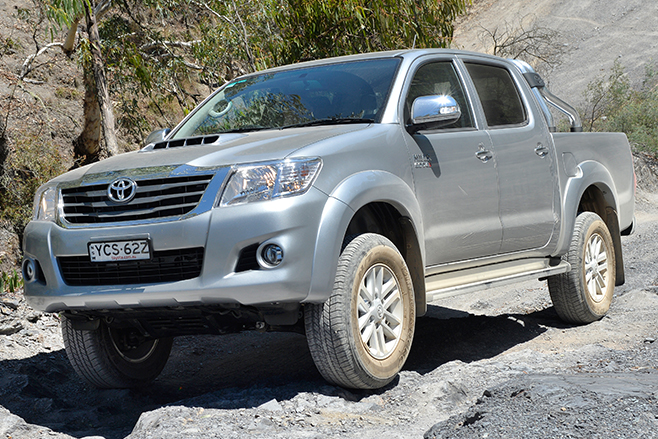
4×4 Utes were Australia’s most popular vehicle type last month, accounting for 17,099 units to edge out Medium SUVs that registered 16,686 sales.
Small SUVs (13,217 units) and Large SUVs (11,074 units) were the two other vehicle segments to hit five-digit figures in April.
Light SUV was the sixth most popular segment with 5079 units and is Australia’s fastest-growing vehicle category with 132 per cent growth year to date.
Micro cars – very much a micro segment with just three vehicles and 746 sales in April – is the second-fastest-growing area, with the Kia Picanto and Mitsubishi Mirage largely responsible for a 102 per cent year-to-date increase.
The 2.5-3.5-tonne Van category is the third with 88 per cent growth, though for now it remains outside the top 10 individual vehicle segments.
Small-car sales sit fifth in the list with 8282 units, though their decline continues – down eight per cent compared with the same period last year.
Australian new car market: Best Aprils
- 2021 – 92,347
- 2016 – 87,571
- 2013 – 85,117
- 2008 – 84,061
- 2017 – 83,135 (Currently the record year overall)
- 2018 – 82,930
- 2015 – 81,656
- 2010 – 81,401
- 2014 – 80,710
- 2012 – 79,097
Top 10 models
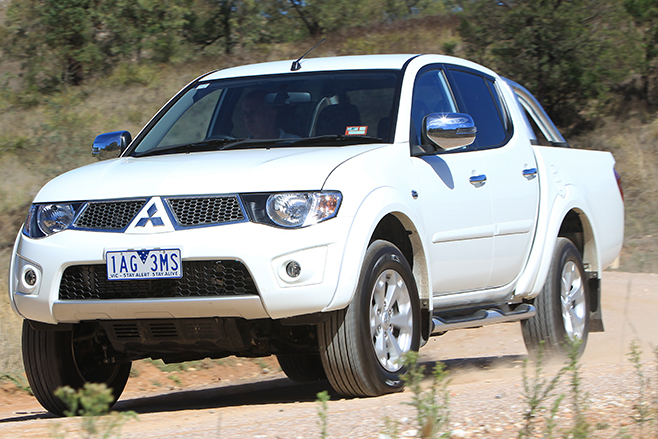
The Ford Ranger was Australia’s favourite vehicle in April, displacing the country’s usual No.1 the Toyota HiLux.
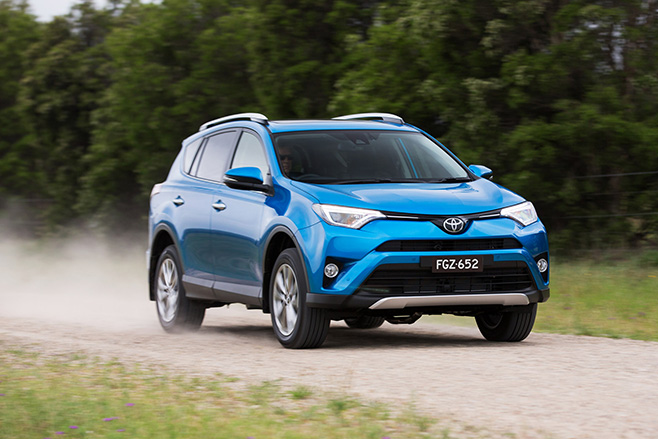
Ford sold 5021 Rangers last month to repeat a feat it last achieved in September 2020. The HiLux (4222 sales) was also overtaken last month by another Toyota after the RAV4 medium SUV registered 4506 sales.
Remarkable demand continues for the outgoing Toyota LandCruiser SUV as buyers snap up the last ever V8 model. The vehicle placed fourth in April with 2595 sales.
The Mitsubishi Triton and Isuzu D-Max retained their customary places in the Top 10 chart.
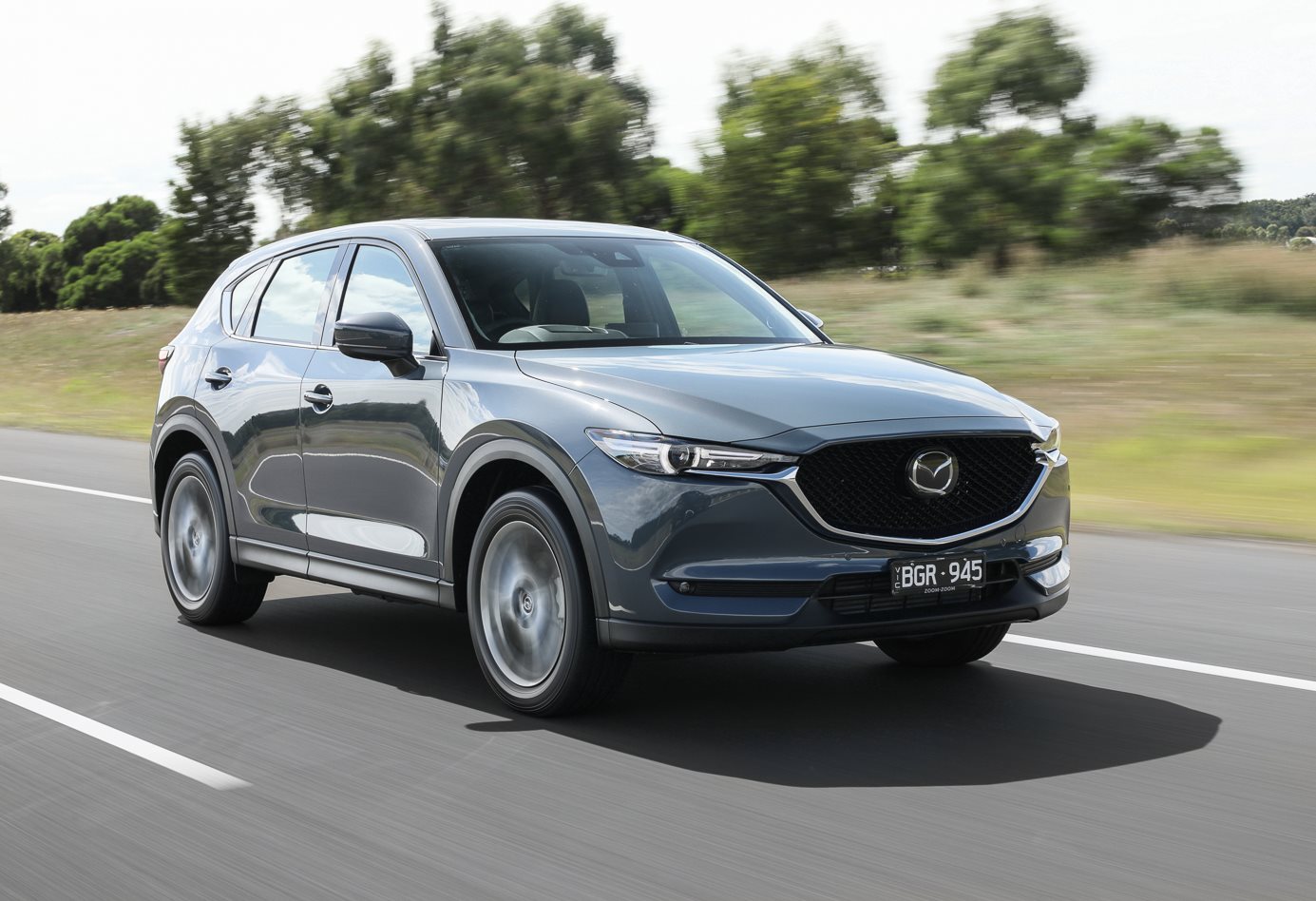
Mazda’s mid-sized SUV, the CX-5, continues its stellar 2021, with year-to-date growth at 53 per cent for a model that has always been popular.
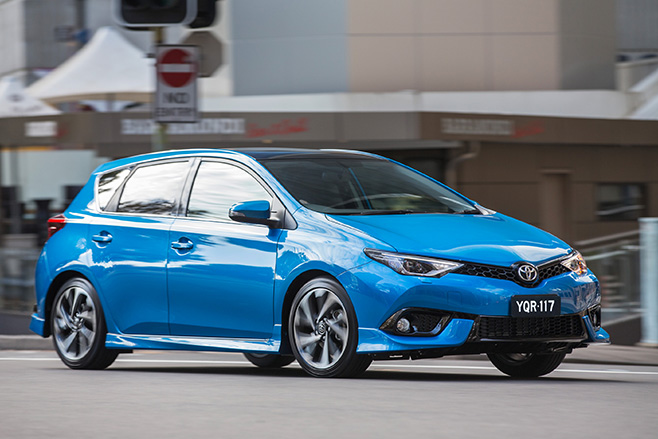
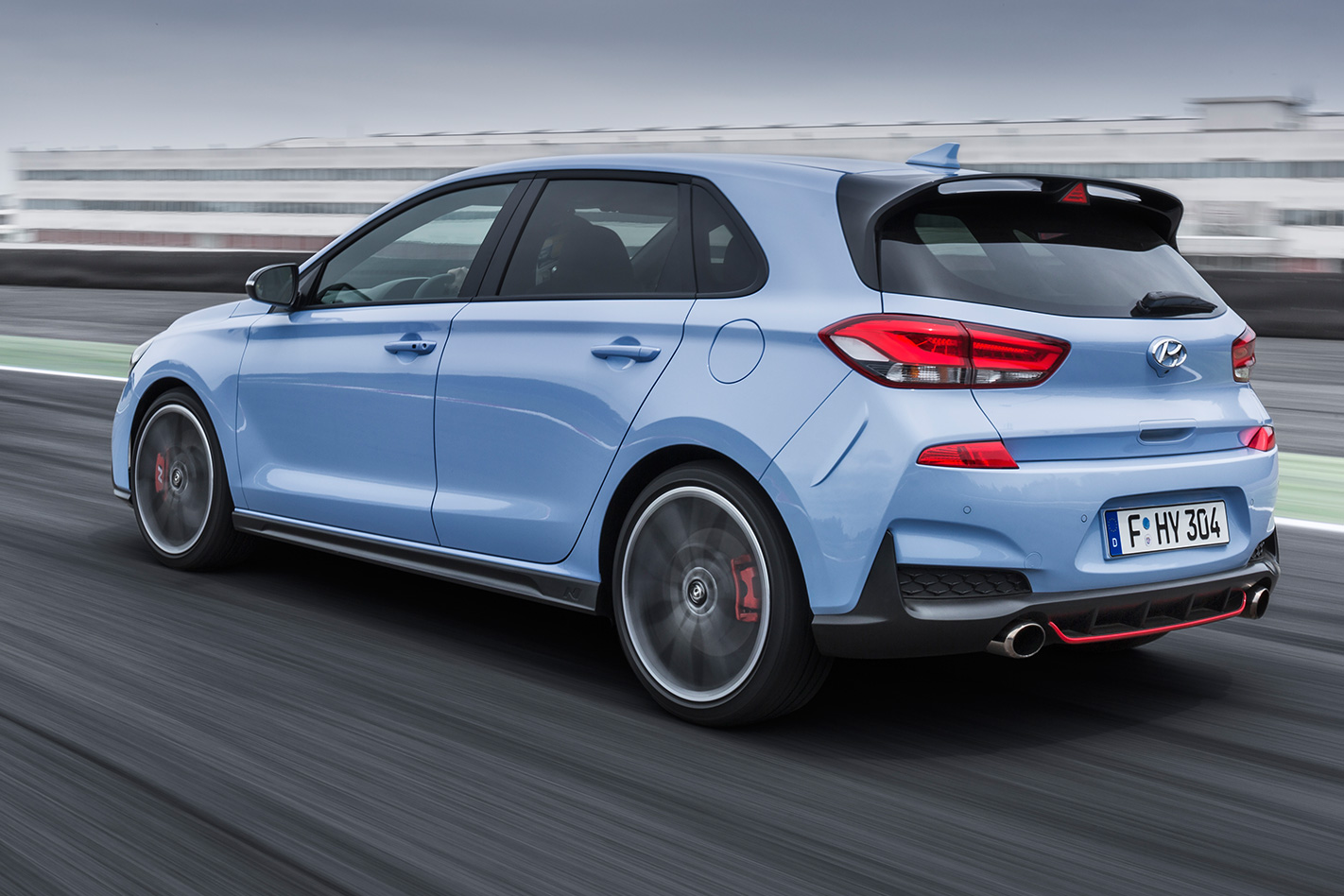
Although the Toyota Corolla and Hyundai i30 also remain in a monthly Top 10 chart, both small cars dropped down the order and outside the top six for the first time this year.
Mitsubishi’s ASX continues to defy its age, appearing in the Top 10 for the second time in 2021 (and a place higher than it finished in February).
Despite the Ranger’s heroics in April, the HiLux still has a clear lead in the overall 2021 sales race.
Top 10 models – April 2021
- FORD RANGER – 5021 – up 226%
- TOYOTA RAV4 – 4506 – up 135.8%
- TOYOTA HILUX – 4222 – up 80.5%
- TOYOTA LANDCRUISER – 2595 – up 180.8%
- MITSUBISHI TRITON – 2458 – up 424.1%
- MAZDA CX-5 – 2353 – up 263.1%
- TOYOTA COROLLA – 2073 – up 73.5%
- MITSUBISHI ASX – 2028 – up 482.8%
- HYUNDAI i30 – 2005 – up 188.5%
- ISUZU D-MAX – 1999 – up 163%
Top 10 models – Year to date 2021
- TOYOTA HILUX – 18,262
- FORD RANGER – 15,024
- TOYOTA RAV4 – 13,844
- MAZDA CX-5 – 9504
- TOYOTA COROLLA – 9454
- HYUNDAI i30 – 8681
- MITSUBISHI TRITON – 8619
- TOYOTA LANDCRUISER – 7664
- ISUZU D-MAX – 7580
- MAZDA CX-3 – 6246
In charts
APRIL 2021 – TOP 10 MODELS & GROWTH
Top 10 brands
Mitsubishi was one of the big movers in April, ousting Hyundai from its usual third spot courtesy of 7513 vehicle registrations.
Hyundai’s lowest monthly result so far in 2021 (5772 sales) allowed Mitsubishi to also move in behind leader Toyota and second-placed Mazda in the year-to-date table.
Mitsubishi models performed consistently well last month, contributing to 333 per cent growth that’s impressive even when being compared with Covid-hit April 2020.
Aside from the ASX and Triton occupying their usual positions in the Top 10 Vehicles chart, the Mirage micro car (up 495 per cent month on month), Pajero 4WD (up 396 per cent) and Eclipse Cross SUV (up 205 per cent) were all notable.
Hyundai also slipped to fifth in April’s Top 10, with Ford (7146 units) moving into fourth. Ford enjoyed a 218 per cent month-on-month increase compared with 157 per cent for Hyundai.
Ford’s year-to-date growth is now up to 42 per cent, with Hyundai also going well at 31 per cent.
April 2021 – Top 10 brands YTD (Infogram funnel chart)
Sister brand Kia, Nissan and Toyota have similar growth so far in 2021 – each up by 27 or 28 per cent.
Subaru’s excellent 2021 continues – up 169 per cent when comparing April 2021 with April 2020, and year-to-date growth at 48 per cent.
The latest-generation Outback continues to hit the ground running, the only other Subaru besides the Forester to register 1000-plus sales last month.
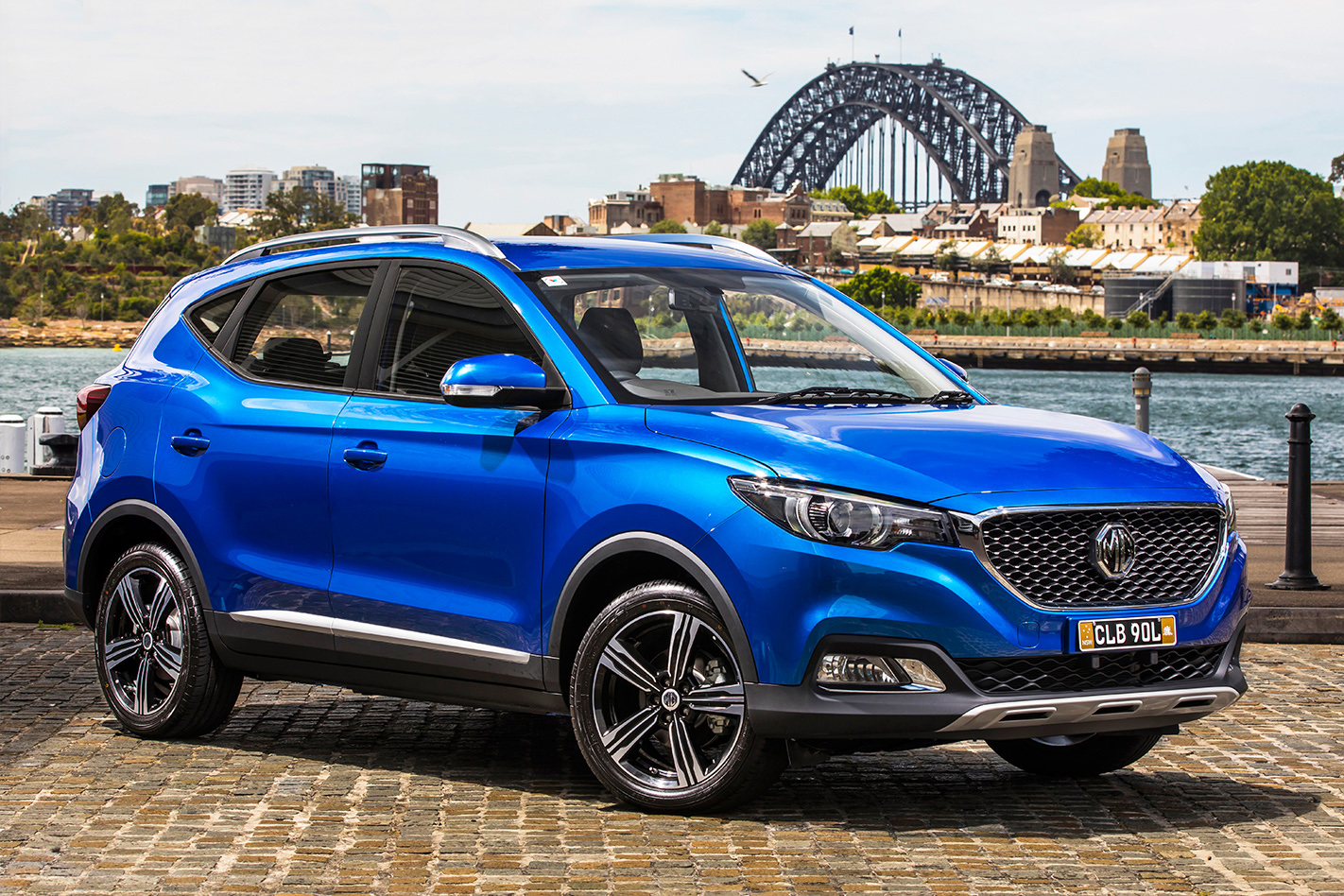
MG achieved a third consecutive month in the Top 10 Brands list, but April’s sales now push the Chinese-owned British brand into the year-to-date list for the first time – replacing Mercedes-Benz, just. MG’s total 2021 sales so far are 11,735; Mercedes-Benz (including its commercial vehicles) sits on 11,657.
Top 10 brands – April 2021
- TOYOTA – 20,208 – up 95.7%
- MAZDA – 10,052 – up 232.6%
- MITSUBISHI – 7513 – up 333.3%
- FORD – 7146 – up 217.5%
- HYUNDAI – 5772 up 156.8%
- KIA – 5707 – up 129%
- NISSAN – 3500 – up 138.4%
- SUBARU – 3451 – up 169.2%
- VOLKSWAGEN – 3123 – 135.5%
- MG – 3007 – up 626.3%
Top 10 brands – year to date 2021
- TOYOTA – 76,721
- MAZDA – 37,667
- MITSUBISHI – 25,324
- HYUNDAI – 24,827
- FORD – 22,934
- KIA – 22,880
- NISSAN – 15,639
- SUBARU – 13,525
- VOLKSWAGEN – 12,212
- MG – 11,735
In charts
Overall segment sales
Category sales: April 2021 v April 2020
Category sales, year-to-date 2021 v 2020
Top brands year-to-date
Talking points
- Production of ride-hailing EV expected in third quarter of 2023
- Uber pledges to offer fully electric transportation services across Europe and North America by 2030
- Current Uber drivers helping to design the new EV
UK-based electric vehicle start-up Arrival has partnered with US ride-share giant Uber to create a bespoke electric vehicle.
The EV, according to Arrival, will be an “affordable, purpose-built electric vehicle for ride-hailing, and will be designed in partnership with Uber drivers”.
Named the ‘Arrival Car’, the London firm says manufacturing of the electric vehicle is expected to commence in the third quarter of 2023, and current Uber drivers are now invited to join the design process, to ensure the final product meets their needs.
The announcement comes as Uber commits to being a fully electric transportation provider in London by 2025, and across Europe and North America by 2030.
Uber users in the UK can also currently specify to ride in an electric vehicle at no extra charge, and the tech giant says that even though this option has only been around for a short time, more than 3.5 million Uber rides across London have been performed by an electric vehicle.
The Arrival Car will be developed from the ground up with three key principles in mind – driver comfort, safety, and convenience.
A premium experience for occupants will also be prioritised, and a final design is expected to be unveiled before the end of 2021.
The EV maker has also previewed what the Arrival Car could look like with a bird’s-eye view rendering of the vehicle. Judging from the image, it would appear that a minimalistic, spartan and avant-garde design philosophy has been implemented.
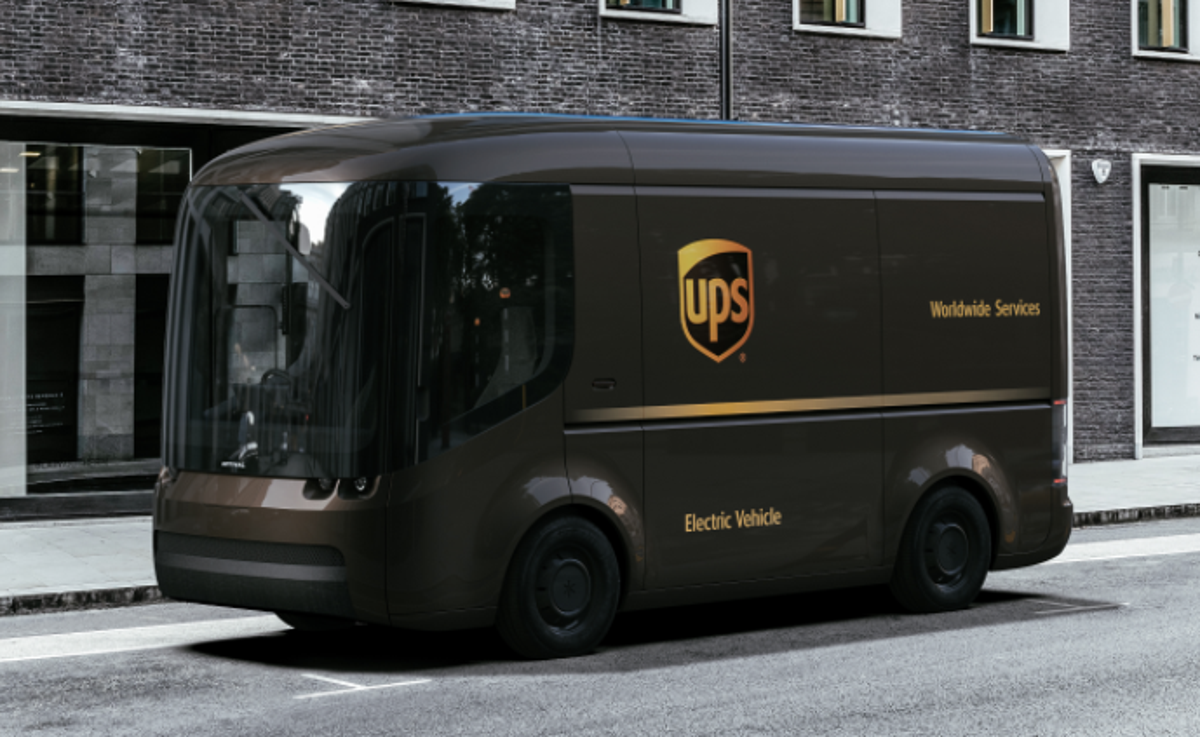
Arrival will utilise its previous expertise in creating zero-emissions commercial transportation solutions, such as its bus and van products, in the manufacturing process of the ride-hailing car.
The London-based outfit has already partnered with other large-scale American service providers like UPS, and according to Tom Elvidge, senior vice president of Arrival, it’s hoped this new endeavour with Uber will spark another success in the zero-emissions world of mobility.
“We are confident that electrifying ride-hailing vehicles will have an outsized impact on cities, and we are keen to support drivers as they manage this transition,” Elvidge said.
“We have a great partnership with UPS to create a best-in-class electric delivery vehicle, and we hope to replicate that success with Uber as we develop the best possible product for ride-hailing that elevates the experience of the passenger and improves drivers’ health, safety and finances.”
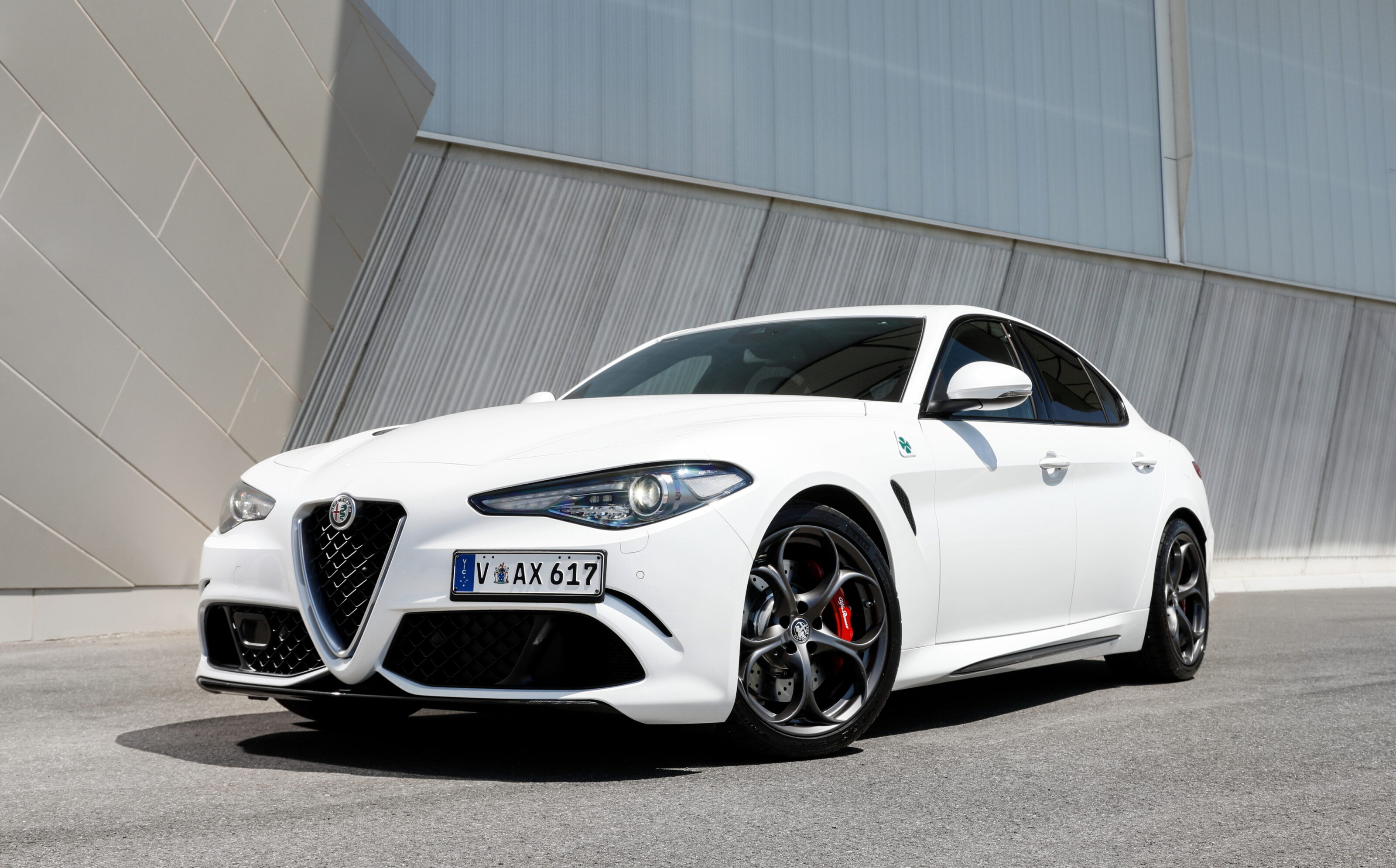
If a cursory glance at the 2021 Alfa Romeo Giulia Quadrifoglio’s mid-life update leaves you scratching for signs of change, there’s a good reason for this – it hasn’t changed much at all.
That’s because the handsome and frisky Italian has, over the past four years, proven itself as a fiery, yet everyday-friendly high performer. It’s imbued with an exotic enthusiast appeal, but is increasingly left wanting for techy convenience and safety features. So while it’s relatively slim pickings on the MY21 dynamics menu, it addresses some of the latter stuff.
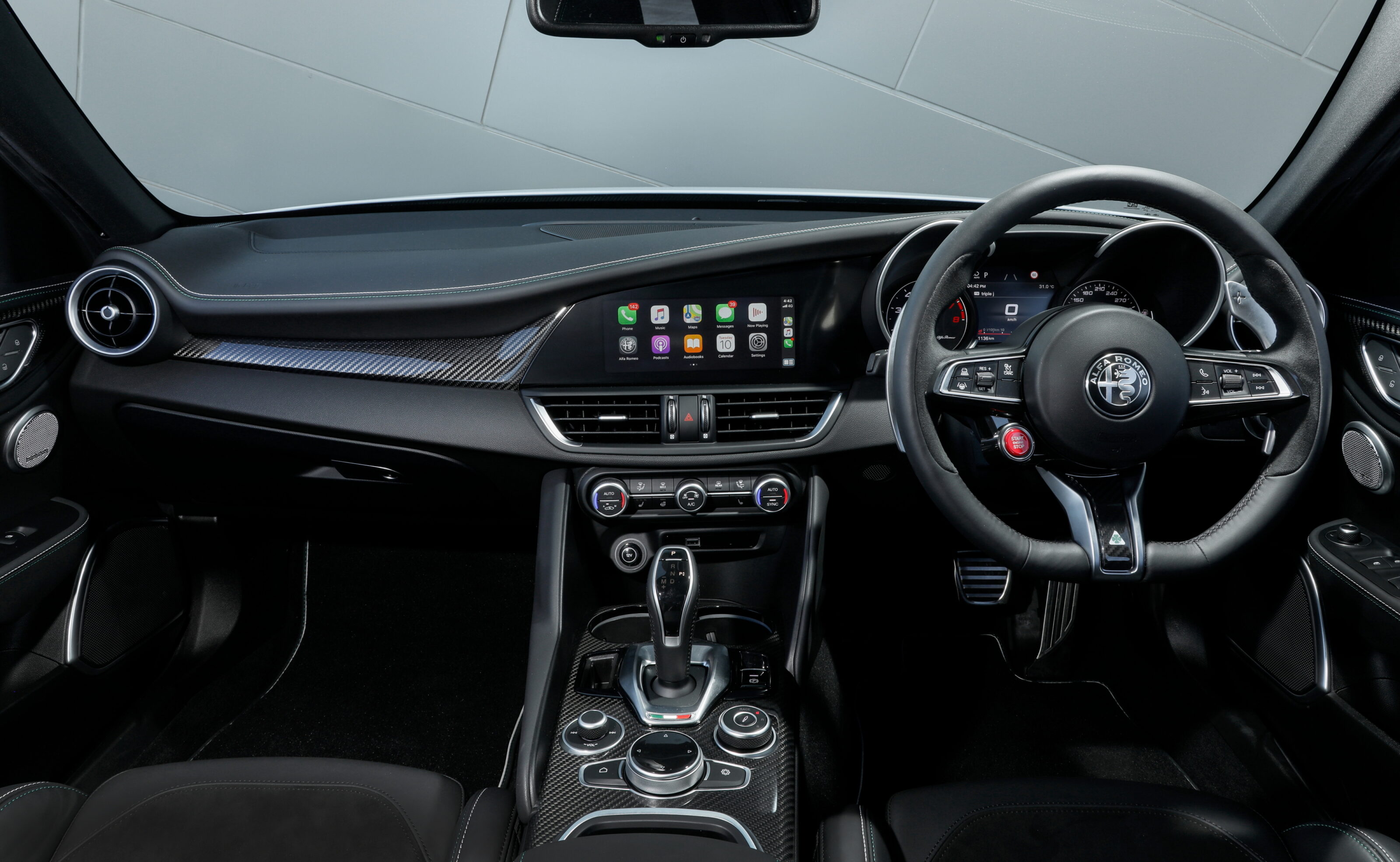
The new 8.8-inch, smartphone-mirroring infotainment system and broader active safety will hardly send the Alfisti rushing to showrooms. That said, it’s a bit of a case of ‘if it ain’t broke, don’t fix it’. But there’s now just a little more sweetener in terms of spec to combat the likes of the box-fresh BMW M3 as well as the stalwart Mercedes-AMG C63 S.
“CLEARLY IT’S A MACHINE HONED MORE FOR REAL-WORLD ROLLING PUNCH THAN THE DRAG STRIP STAND-OFF”
One thing the flamboyant Italian definitely has on its side is price. And now more so than ever, with the hot Giulia receiving an almost $7K cut to its sticker. Admission now starts at $138,950, meaning the Alfa significantly undercuts the $150,900 Audi RS5 Sportback, $154,900 BMW M3 Competition and $168,300 Mercedes-AMG C63 S. Only the ‘base’ manual M3 comes close to the Q at $144,900.
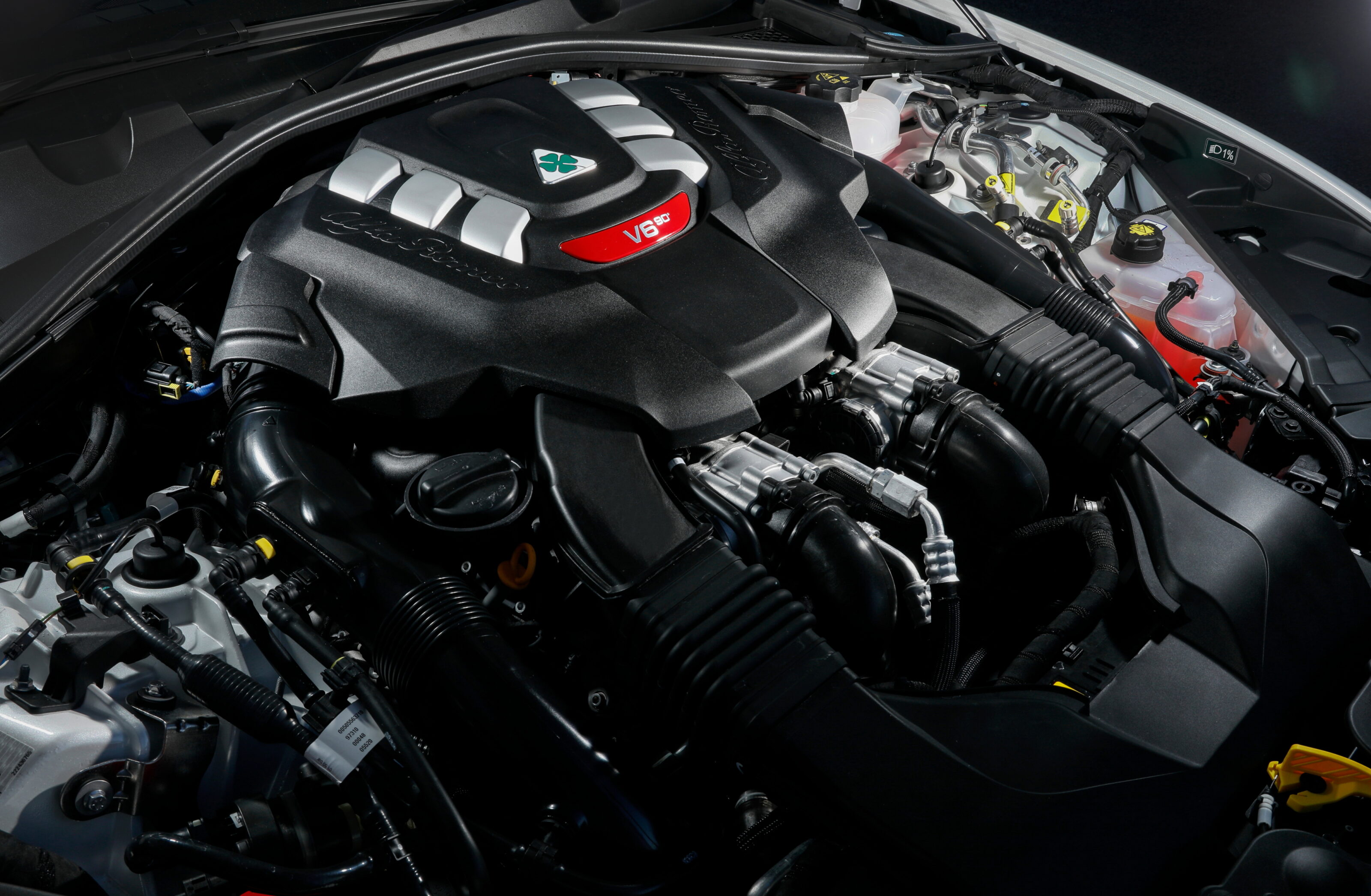
Yes, there’s nothing much new to report in the go-faster department, but then, it didn’t really have to alter. The Giulia’s brutal 375kW and 600Nm 2.9-litre twin-turbo V6 remains unchanged. And thankfully so. Alfa hasn’t felt the need to best its competition by adding more grunt, instead opting to retain the proven package’s heart-warming nature and the metallic-tinged soundtrack like nothing else in its class. It’s a big drawcard, and one of the reasons you should make the near-$140K investment.
It’s still debatable just how much Ferrari DNA courses through its oil galleries – the official line was “Ferrari inspired” and “developed by engineers with a Ferrari background” at the then QV’s 2017 launch. Yet, its finely honed, smooth-revving manner nails the requisite character. It’s virtually lag-free in response and with a more linear delivery than I remember.
Speaking of DNA, dial up Dynamic on the drive-mode controller, trounce the loud pedal and it mounts its peak torque enthusiastically, the assertively clipped upshifts of the tightly stacked eight-speed auto launching it out of the hole hard. It uses stepped-torque in lower ratios to stop the Pirelli P Zero Corsas from scrabbling too much, where it feels a touch stymied, but into third gear and on a roll the thrust is palpable.
Clearly it’s a machine honed more for real-world rolling punch than the drag strip stand-off and if it can match its 3.9-second 0-100km/h claim I’d like to see (and feel) it. Through the 2018 PCOTY filter, the former QV’s best was a more leisurely 4.3s to 100km/h on its way to a handy 12.2s quarter mile. On the move and on the boil, though, it’s plenty swift by the seat of the pants.
Venture much beyond the 6500rpm redline and thrust tapers off. In fact, its mid-range is such that in-gear punch feels equally as potent, the pace similarly swift with a bit of short shifting. You’re compelled to pause a little longer before selecting another gear once on a twisty road. This is because of the Giulia’s fitment of column-mounted paddle-shifters – though they are lovely long alloy units – rather than a wheel-mounted design. Opinions vary on this, but I prefer ‘em to move with the wheel.
The auto’s manual-shift execution is pleasingly assertive and crisp, although there’s a touch of disobedience in the downshifts if you’re so deep into the brake pedal that the ABS triggers.
As we’ve discovered in the past, if you dial up Race and unshackle the safety nets on track, it’ll liquefy the rear hoops with more enthusiasm than perhaps its Corsas ought to allow. It’s really in this zone, totally uncorked, that the Giulia Q demonstrates just how lively its nature can be and yet just how sublimely co-operative its dynamic talents are.
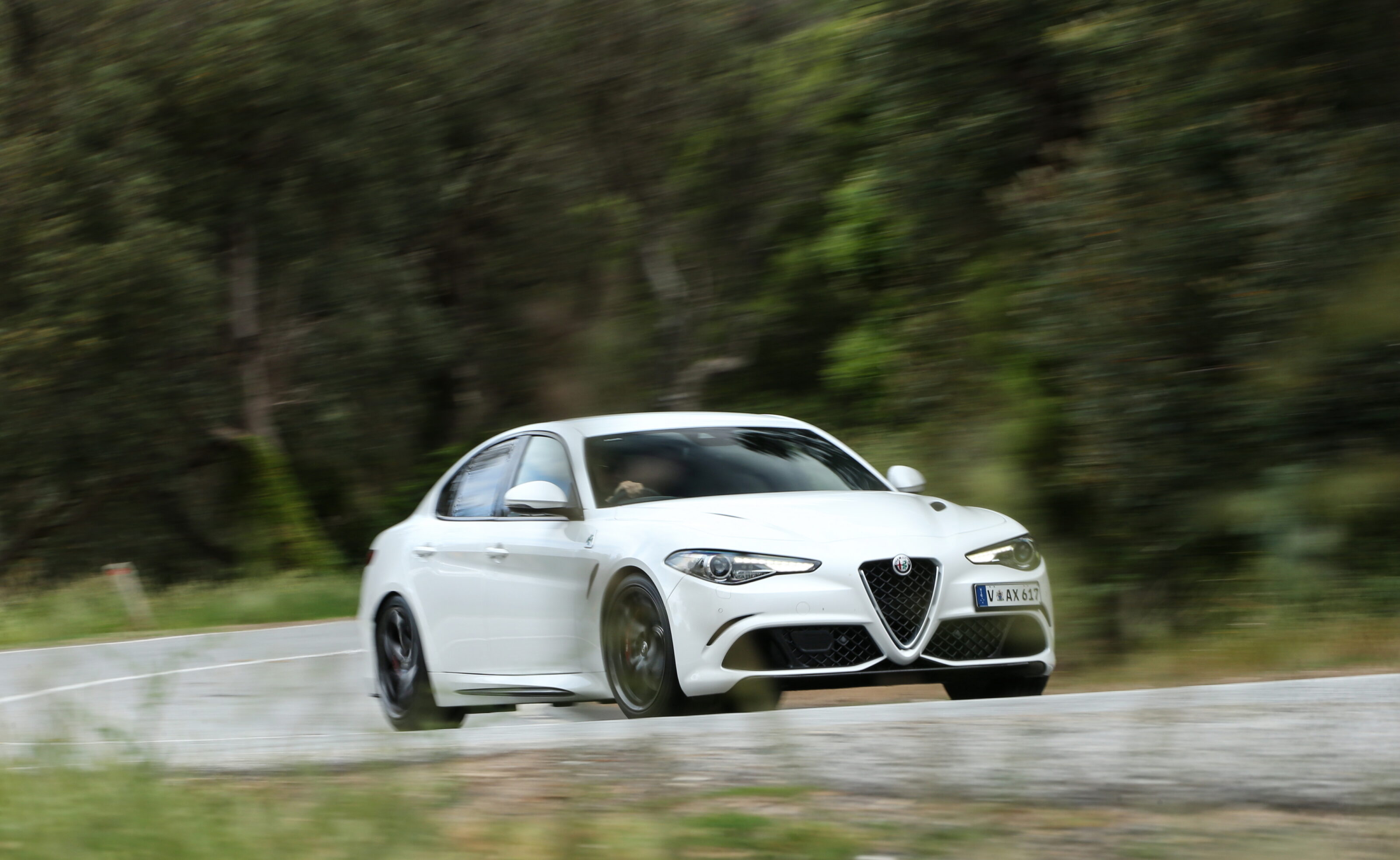
Given that the so-called Chassis Domain Control system works silently in the background tying together the adaptive suspension, torque vectoring, Integrated Brake System and active front aero splitter, its responses are quite convincingly organic. Thing is, there’s plenty of bite to its character, so much so that it does demand the driver to dial into the Giulia Q’s feisty groove.
For its natural 50:50 static weight split there’s an assertive amount of front-end point, meaning it’s hyper alert the instant the steering is a smidgen off centre. It’s keenness to alter its line and trajectory is downright frisky and its confidence to turn in remains faithful and unflappable, even leaning on the nose hard.
The rear end will shimmy in Dynamic or cry for freedom in Race mode depending on your right foot’s level of enthusiasm and there’s ample scope for heroic attitude in between. Both axles are nicely in sync once the tail does get loose, but you must prepare to catch it. Basically, you receive big rewards with serious commitment, though the mid-sized four-door is also amply lithe and engaging when you dial down the heat for spirited back-road punting. Thankfully the Giulia Q rewards with a decent amount of poise and control blended into its overtly adventurous streak.
Maybe more so than its key German rivals, the Alfa rewards in ways the other can’t. It has uncanny compliance, meaning the Giulia Q’s Corsas are capable of maintaining solid adhesion to the road even across abrupt mid-corner bumps. It’s certainly quick and capable between apexes once you build trust in the rear-end grip. The rewards are mega.
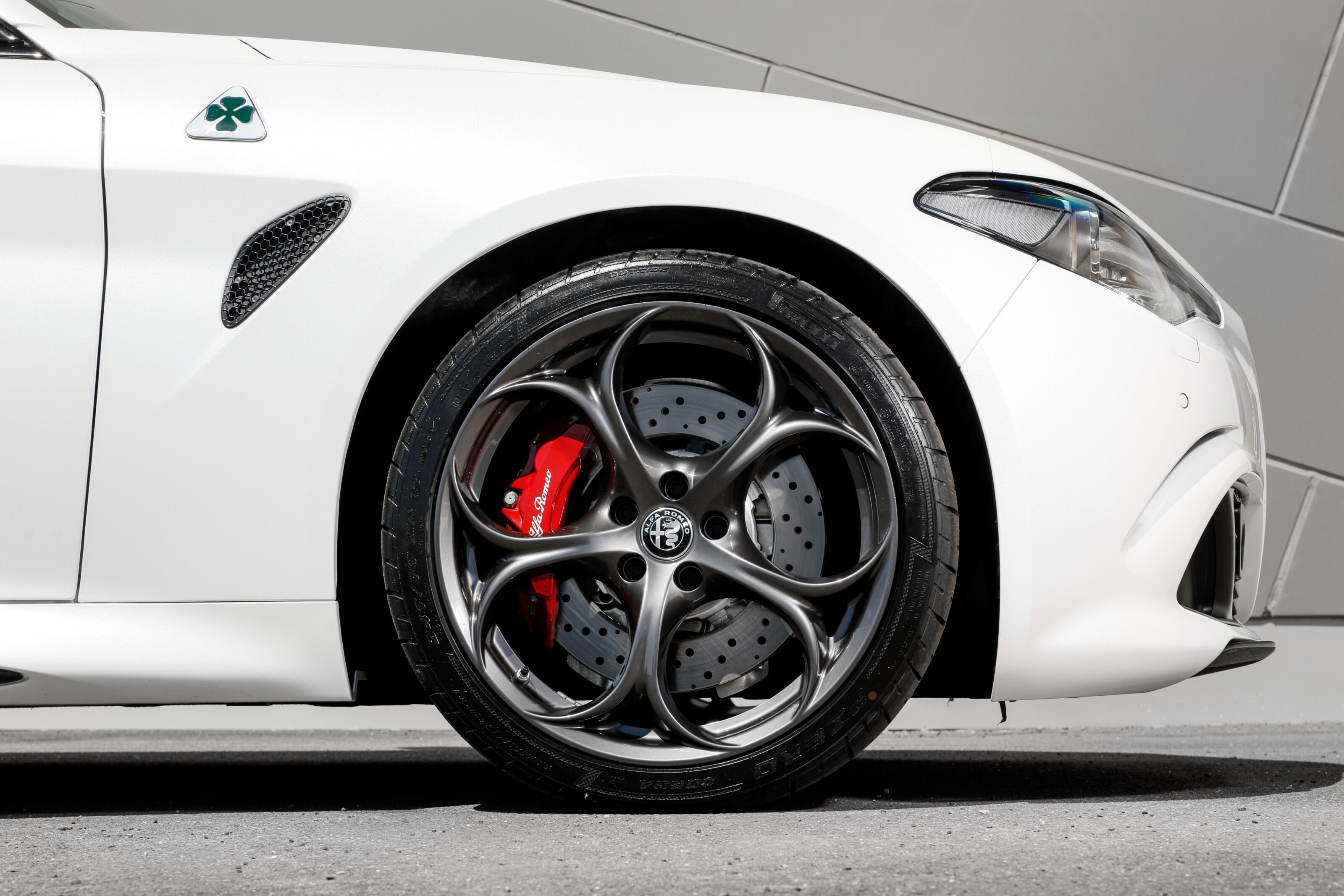
If there’s one area that constantly seems to test trust and confidence even more it’s the brake-by-wire system. The Brembos are certainly powerful enough but, be it the core technology or the way it’s calibrated, their strange wooden feel robs progression and linearity, leaving you second-guessing response and retardation.
I suspect this characteristically foreign brake feel can’t be tuned out of the engineering. The anchors aren’t exactly terrible at pace, but they’re nigh on infuriating during low-speed driving and manoeuvring. It’s been criticised so consistently since the Giulia QV first arrived that, one imagines, it’ll take a new generation donor with wholesale re-engineering to improve upon.
Braking apart, there’s little to complain about in the Giulia Q’s around-town manner. The bi-modal exhaust turns whisper quiet without completely neutering the boosted V6’s spirit, the auto slips sedately and smoothly through the ratios and the powertrain maintains keen response and dignified flexibility when tooling about. The tacho needle often rarely bothers to rise above 2500rpm.
The really impressive bit is the low-speed CBD ride comfort. It’s remarkably adept at smothering general road acne. It’s properly soft and almost limousine-pliant where so many contemporary high-performance sedans only offer a transition from firm to fierce. It’s not so much that the Giulia offers a proper Jekyll-to-Hyde transformation at a twist of the DNA controller, but more that it presents a tangibly wide range between extremes.
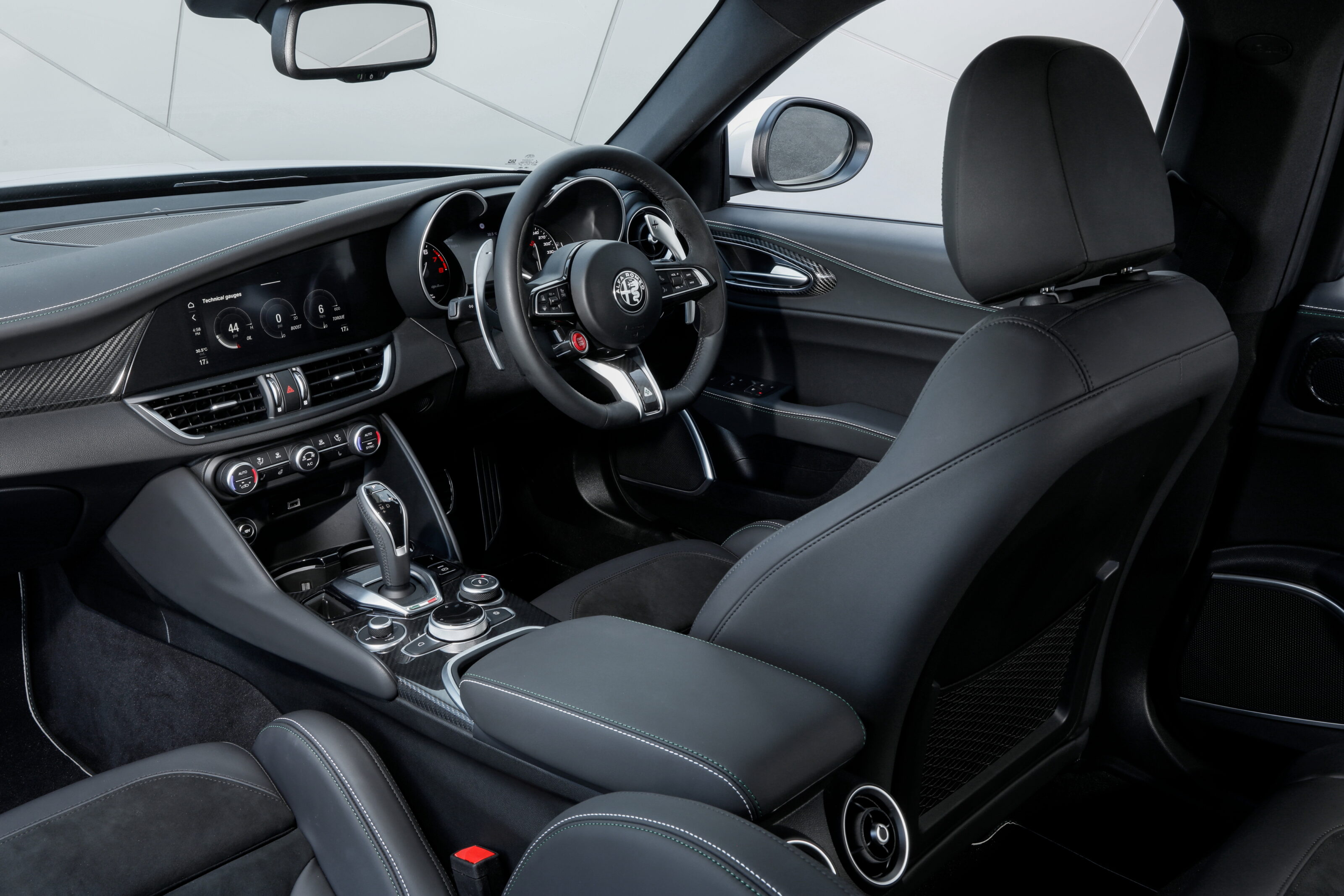
The cabin design is where Alfa Romeo’s renaissance poster child has copped the most flak. Bland and underdone? Perhaps, but the fact it eschews the sort of eye-dazzling digital showboating and overt fussiness its German contemporaries have immersed themselves in isn’t such a bad thing. The Giulia’s analogue-gauged and conventionally staid classicisms mightn’t seem nearly as fancy, but it’s oh-so Italian and perhaps endearingly so to tastes who care little for the Teutonic techno approach.
It’s a proper driver’s cockpit, attaining that feel with great seats, a fetching tiller and control-focused ergonomics. Despite the particularly heavy-handed carbon-fibre work, the Quadrifolgio theme is tempered by restraint and, in some eyes, embodies a certain old-school elegance.
It’s just a shame that many other areas of the interior are a bit ho-hum, including the new infotainment. As one of the Giulia’s few notable updated features, the 8.8-inch touchscreen system is an arm-roll of modest functionality and clarity, complete with a frankly terrible reversing camera. Some areas are substandard for a vehicle of this stature, specifically the flimsy and flaccid feel of the audio and mirror controls.
As mid-life makeovers go, this MY21 touch-up misses the enthusiast gaze if it dares to blink by bringing little new and fixing next to nothing, even if its few changes make for a slightly more pragmatic and safer offering that, importantly, has robbed none of its inimitable character and mojo.
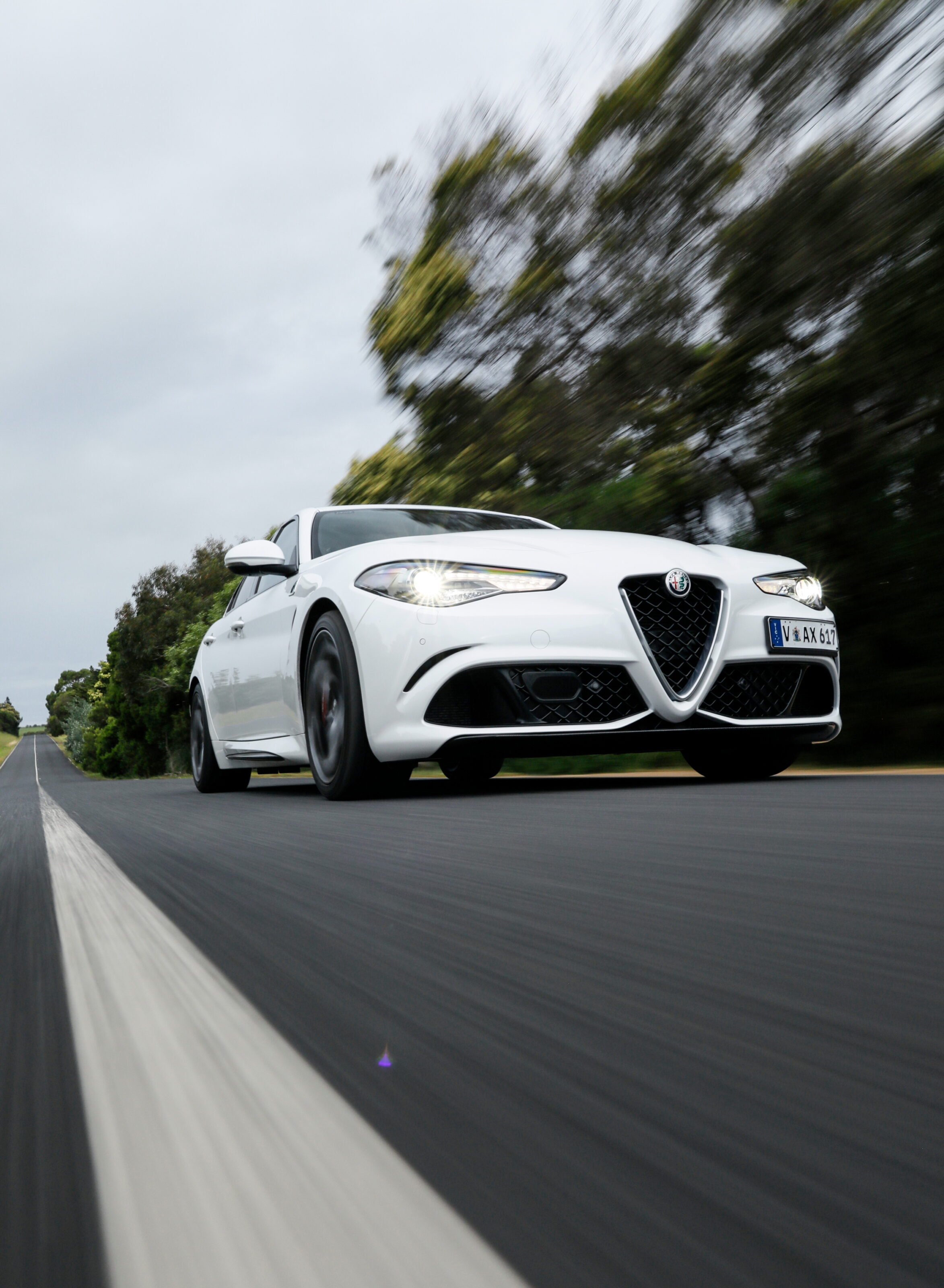
However, what remains the most compelling lure of the Giulia Q’s remit is that the Italian is, in important ways, as much the antithesis of the usual German suspects as it is an alternative.
Despite the obvious resistance to a conspicuous evolution of the breed – safety assistance notwithstanding – the four-leaved firebrand seems to more comfortably occupy its own distinctive patch of the mid-sized high-performance sedan playground four years on.
In some ways, then, the Giulia Q is more appealing than ever.
Snapshot
- Only top-spec MX-30 coming to Australia for now
- Starting price of $65,490 before on-road costs
- 200km claimed range from a 107kW/271Nm drivetrain
Mazda will bring the electric MX-30 to Australia in an initial run of only 100 units, all of which will be the top-spec E35 Astina, priced from $65,490.
While Astina denotes the high level of trim found in this variant of MX-30, E35 signifies the specific powertrain, a 107kW/271Nm EV motor at the front wheels, using a 35.5kWh lithium-ion battery pack.
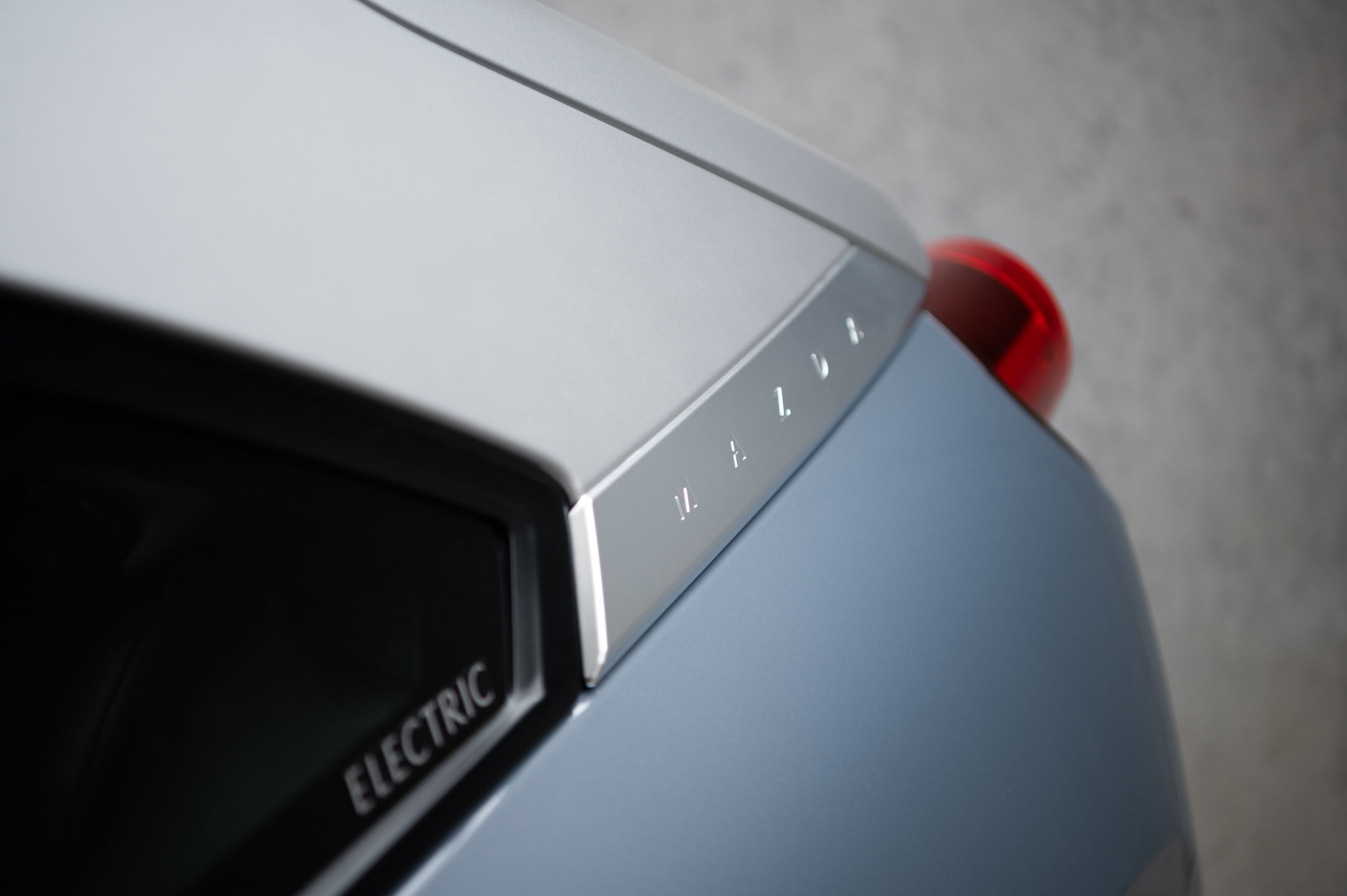
Mazda says this will deliver a 200km driving range, which comes down to the brand’s ‘well-to-wheel’ philosophy it says minimises environmental impact from the resources used in construction right through to the usage, charging, and eventual battery disposal.
At a home power-point, Mazda says the MX-30 will charge from 20-80 per cent in around nine hours, though that time drops to three hours using an AC wall-box or public charger, and 36 minutes using a 50kWh DC charger.
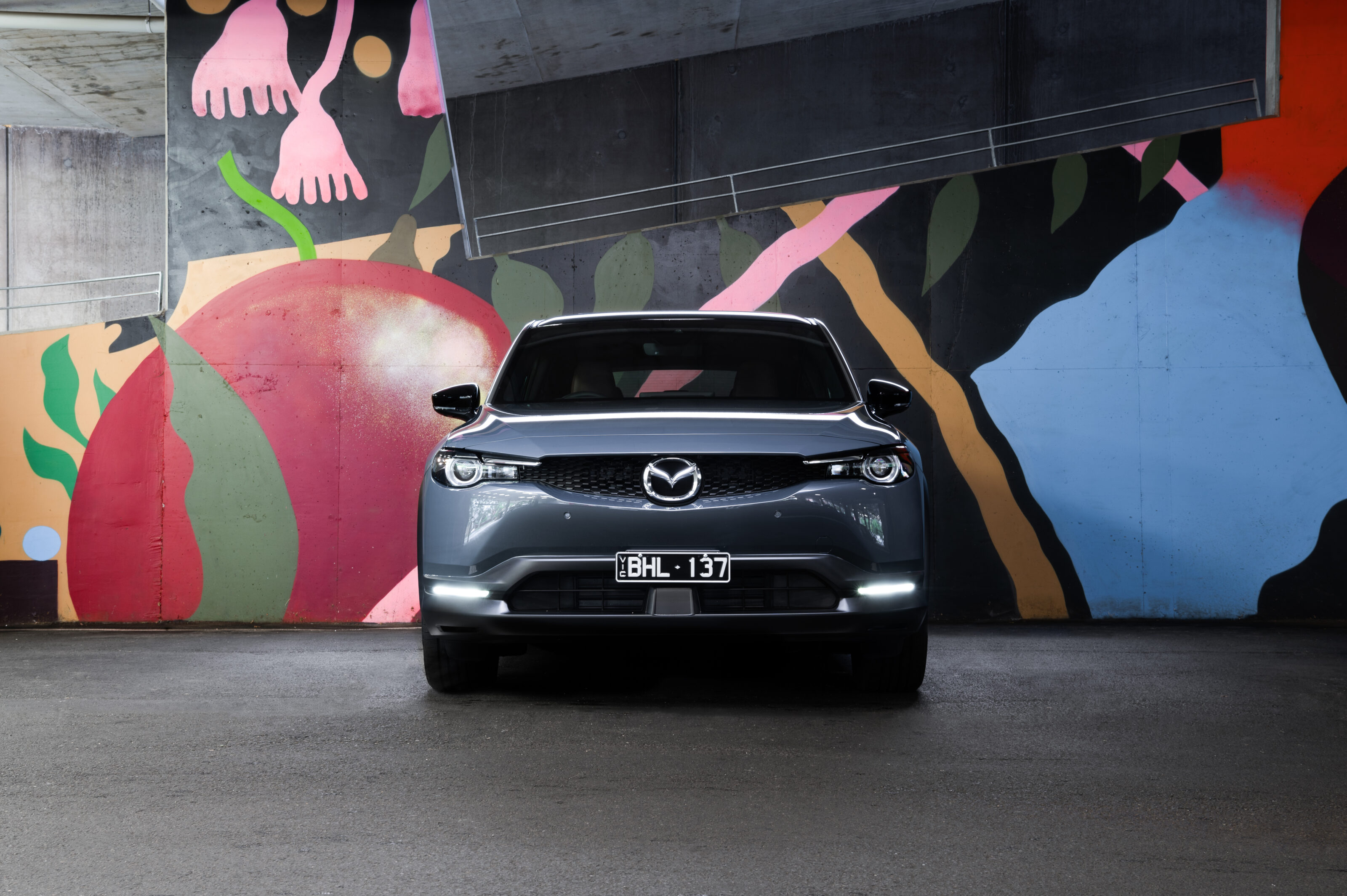
Wheels spoke with Mazda Australia’s marketing director, Alastair Doak, and asked if the brand expected high demand for a rather pricey EV with a relatively low driving range.
“It was our choice to bring it in one spec, but the EV market in Australia is very much in its infancy. It’s our first EV ever, so we think bringing it in this spec is putting our best foot forward,” Doak said.
“It’s incredibly well-specified for its price point, and there are things in there that other products don’t have, and I think we’re the only car in that class around the price that has a 2020 five-star ANCAP rating too.
“This will be a niche model for us, so we don’t have huge sales aspirations, but if the demand is there then we’ll be able to supply it.”
Doak is correct, Mazda MX-30 is the only EV ANCAP has tested since the end of 2019, though more than a dozen other EVs have been tested since 2014, and all have scored five stars.
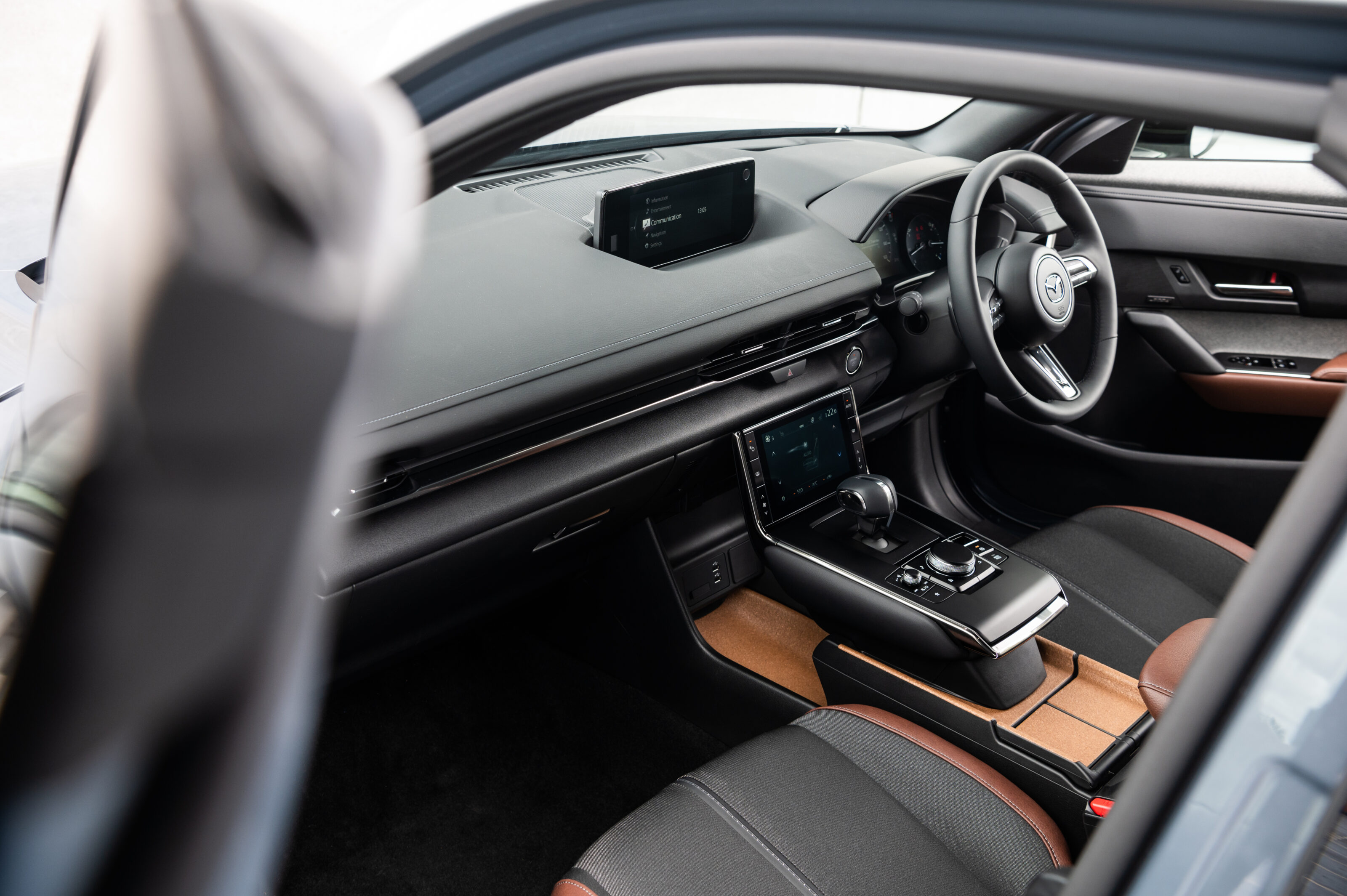
More on the high level of fitout in the MX-30 though, and while the list of mod-cons is decent (glass sunroof, heated seats, keyless entry, electrically adjustable seats, and a 12-speaker Bose audio system), the appointment and design of the car appears to be what more immediately makes the MX-30 feel a little luxurious.
Brown ‘Maztex’ faux leather and black cloth combine for the seating and other interior touch-points, while cork features in the centre console area as a nod to when Mazda used to manufacture…well, cork.
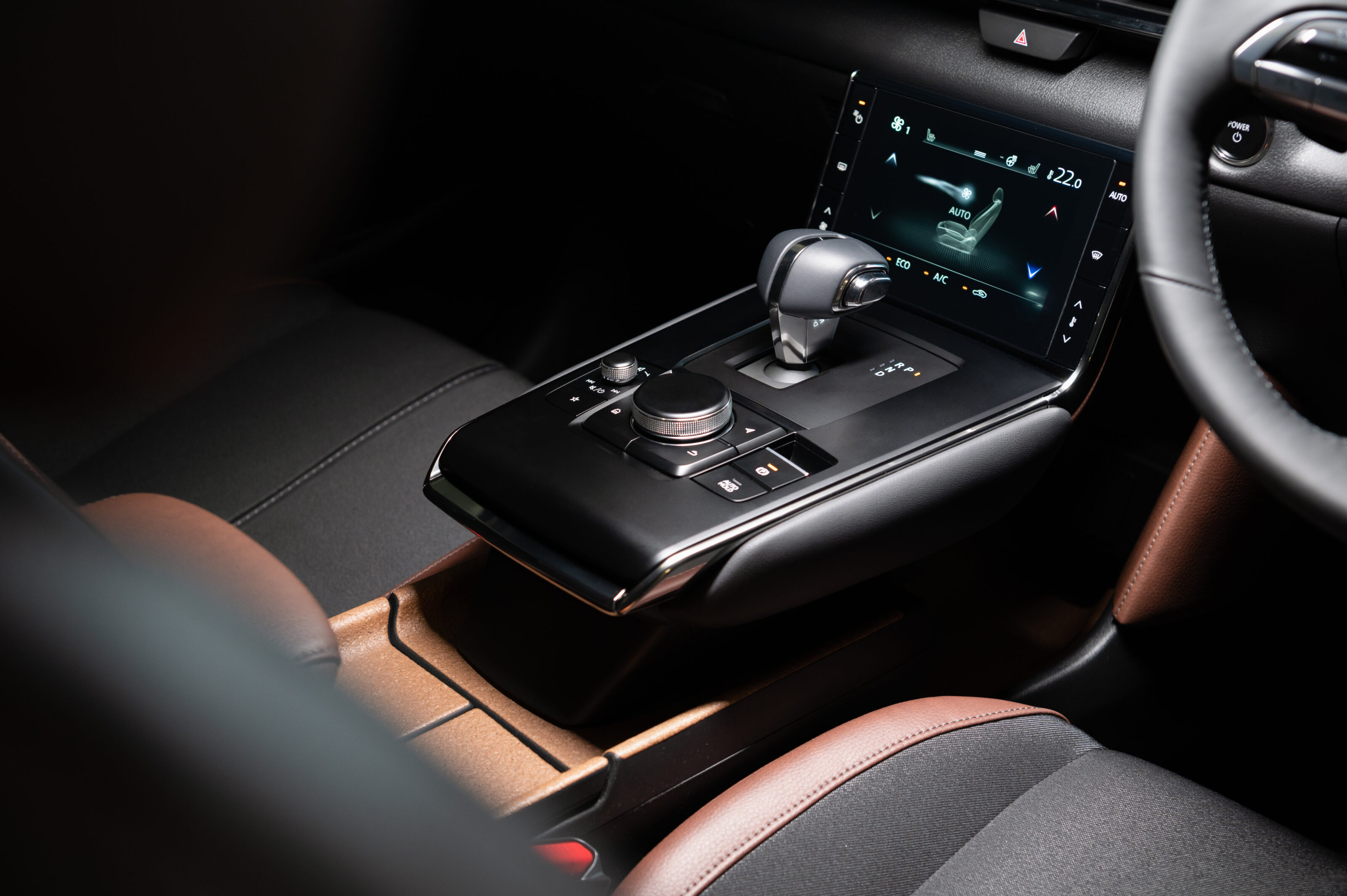
Doak says the MX-30 range is ”obviously a car that’s caught people’s interest”, with one MX-30 EV already having been sold prior to the books officially opening.
“It’s early days and we’ve had the mild hybrid MX-30 models on sale, and they’re going well, the enquiry has been good. With EV we’ve been communicating with existing customers and we’ve had enquiries at dealerships. And we’ve had 100 of our dealers put their hands up and say they want to sell EVs for us. We were pleasantly surprised by how much interest dealers had to support it.
“We actually just sold our first MX-30 EV in Sydney to existing Mazda owners which is great.”
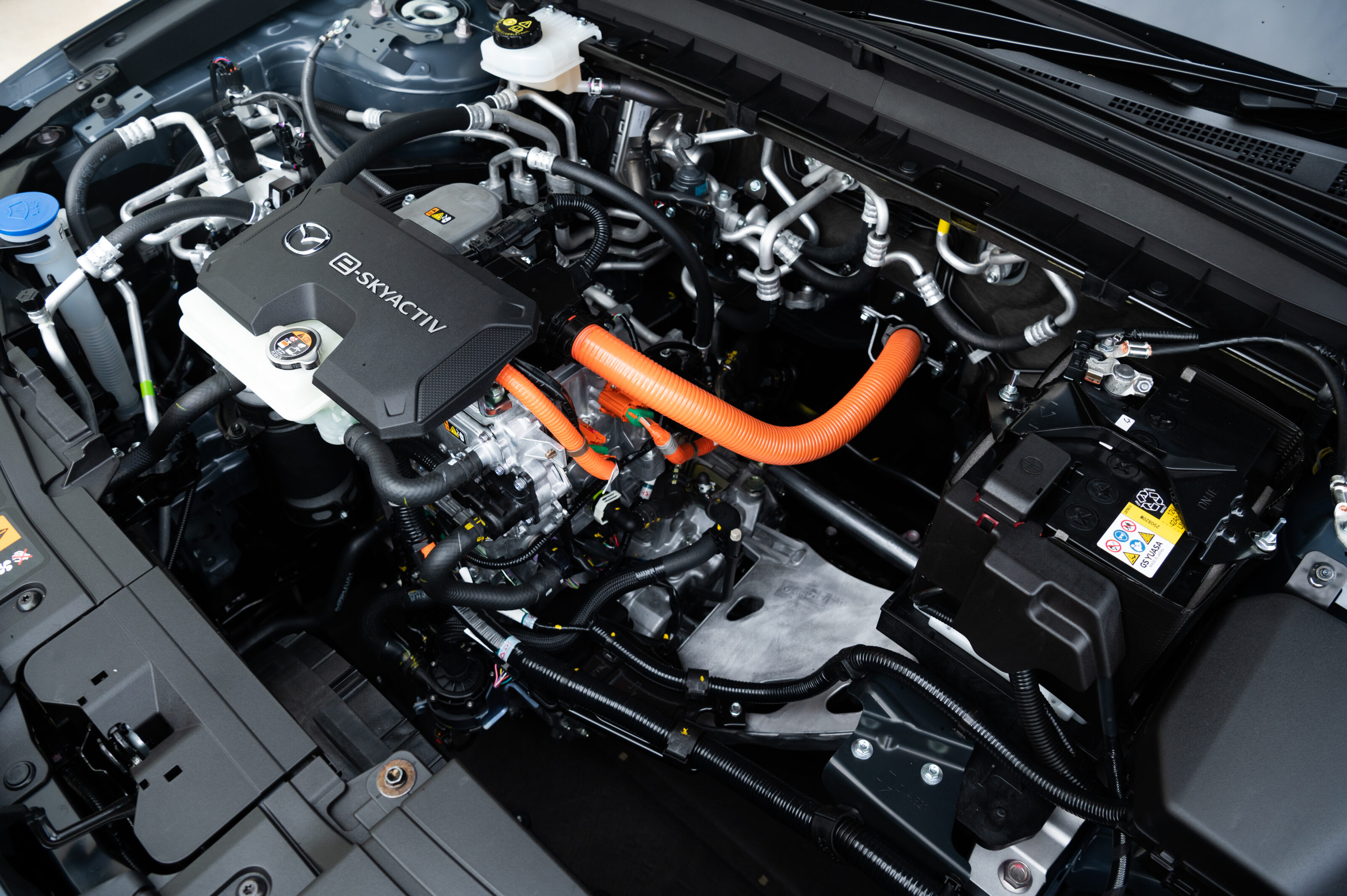
Doak adds more electrified Mazdas are on the way, next on the list being the range-extender MX-30 – though other models will eventually see EV powertrains introduced.
“We’ll expand the MX-30 line-up here too, we’ve put our hand up for the rotary range-extender version which starts its global production next year, and we very much want to bring that to the market once it’s available to us.
“Even though the market take-up is very small at the moment, we still felt it was important to fly the flag here, and to give our customers a choice should they want it.”
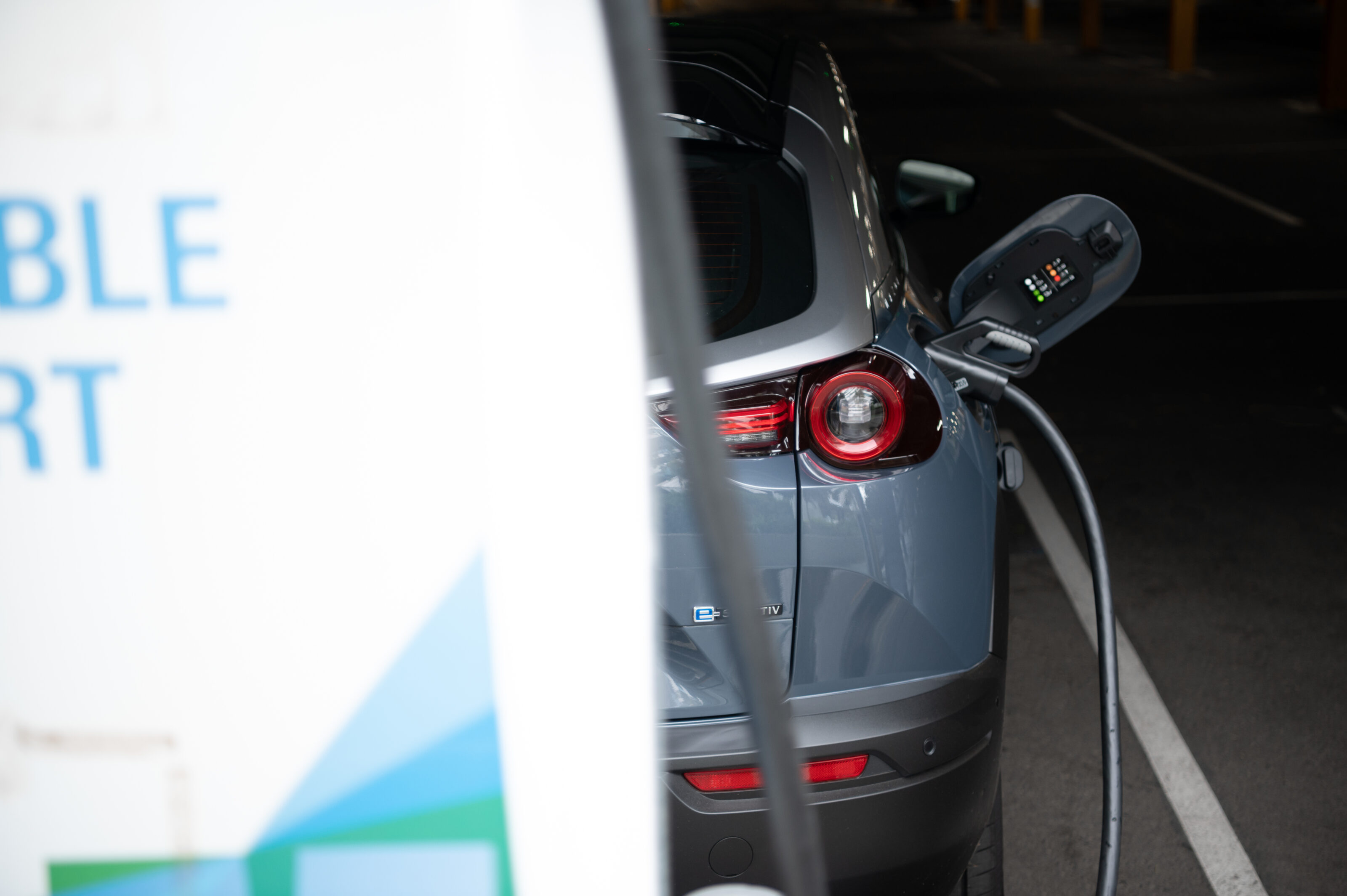
As Hiroshima’s first EV, the Mazda MX-30 EV includes a couple of new developments to the way Mazda says its cars drive, the first of which is the e-GVC Plus system, an evolution of Mazda’s G-Vectoring Control system, which now uses the electric motors’ torque to balance the chassis through cornering.
Essentially, the MX-30 will slightly reduce torque during cornering to lean into the front wheels and do the opposite once the driver straightens the wheel.
The second is what Mazda calls a motor pedal, which “realises the desired vehicle speed based on the driver’s intended amount of acceleration or deceleration,” which sounds an awful lot like a regular accelerator, though the system actually works with the brakes to intelligently regenerate energy for the battery, which can be adjusted by wheel-mounted paddles.
Mazda says the MX-30 will be covered by its five-year, unlimited kilometre warranty, and can be bought with a five-year servicing plan priced at $1,274, which covers intervals of 12 months or 15,000km, whichever comes first.
Mazda says customers should visit the brand’s website to express interest in the initial release of 100 models.
Talking points
- EV6 starts from u00a340,895 (AU$73,500) in UK
- Addition of EV6 GT-Line S variant
- UK customers reportedly taking EV6 deliveries from October 2021
- Aussies will have to wait until 2022 for deliveries to begin, due to ADR compliance and local ride and handling program
The 2022 Kia EV6 has gone on sale for the UK market, and it’s clear the Korean automaker is aiming its new EV to compete with Tesla and its popular Model 3.
As WhichCar previously reported, the electrifying EV6 will come in three different guises from launch – EV6, EV6 GT-Line, and EV6 GT.
For Britain, however, there will also be an EV6 GT-Line S variant, that will sit above the GT-Line but below the range-topping, hi-po GT.
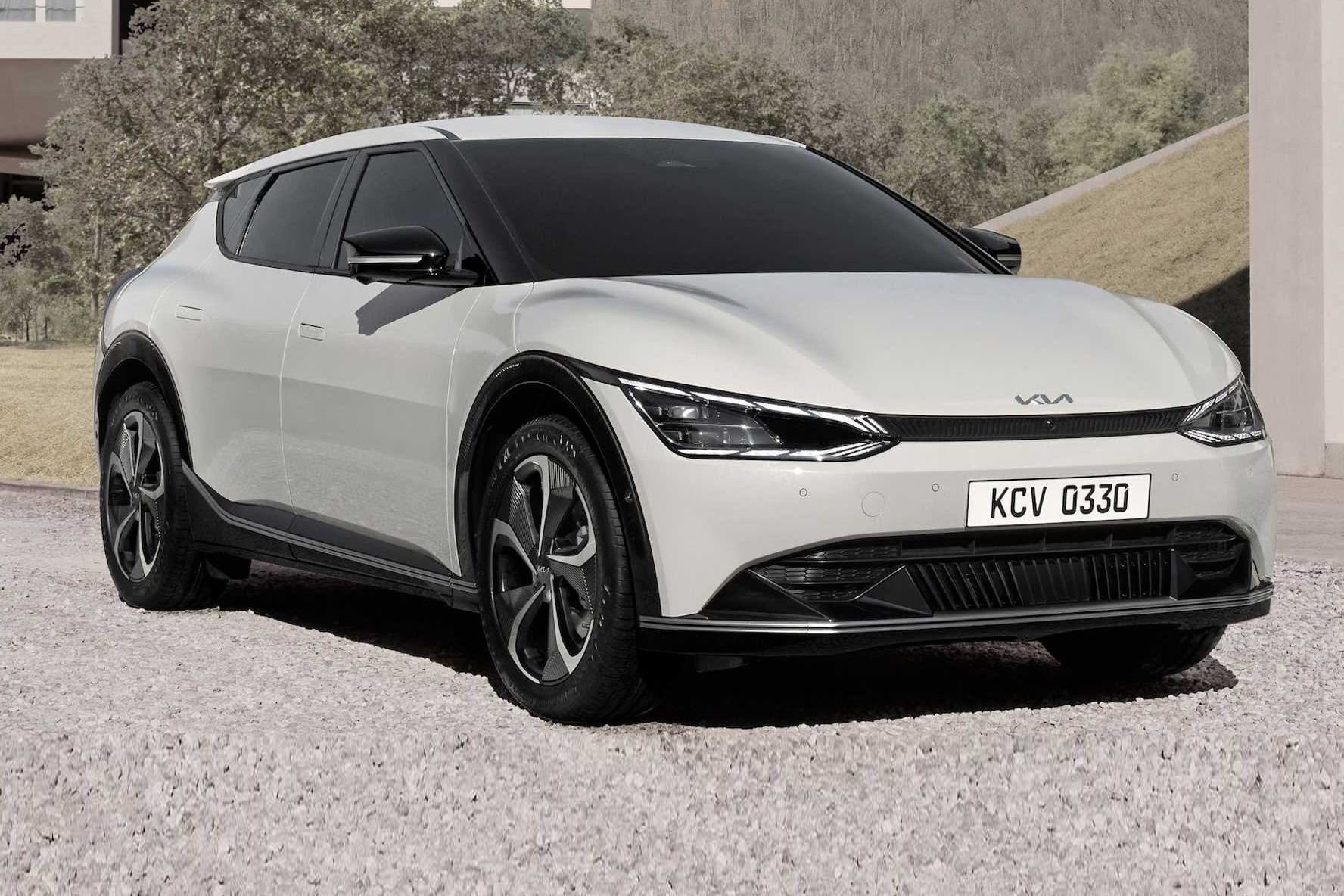
The base EV6 in rear-wheel drive form will start from £40,895 (AU$73,500) and come equipped with standard features such as 19-inch diamond-cut alloy wheels, LED daytime running lights, headlights, and taillights, black vegan leather upholstery, ambient lighting, heated front seats, heated steering wheel, and dual-zone climate control.
Standard safety features include highway driving assist, as well as forward collision-avoidance assist with pedestrian, cyclist, and junction-turning functionality.
The price of the higher-spec EV6 GT-Line will start from £43,895 (AU$78,700) for the RWD variant and £47,395 (AU$85,000) in all-wheel drive guise.
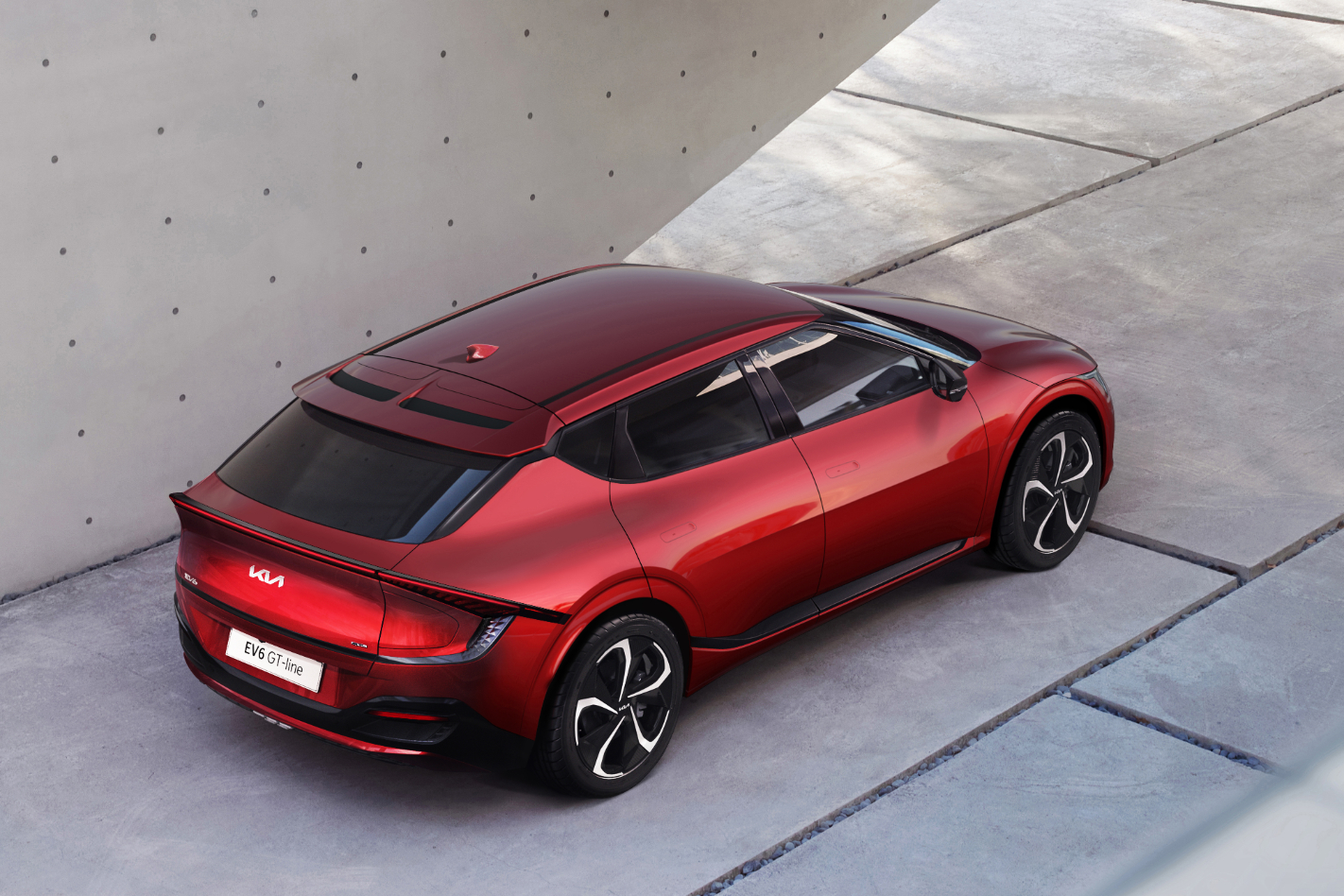
Building on the standard kit of the entry-level EV6, the GT-Line will bring with it; tinted windows, front parking sensors, black suede and light grey vegan leather interior, premium relaxation seats and dual-LED headlamps with adaptive high-beam.
Brushed metal driving pedals, power and memory front seats, vehicle-to-load (V2L) charging, wireless phone charging, and blind-spot monitoring also come as standard.
EV6 GT-Line S models are also available with either the RWD or AWD drivetrain, with the former costing £48,395 (AU$86,000) and the latter costing £51,895 (AU$93,000).
S models benefit from improvements such as 20-inch wheels, heated and cooled front seats, heated rear seats, 14 speaker Meridian hi-fi, panoramic sunroof, power tailgate, smart park assist, parking collision-avoidance assist, Highway Driving Assist 2, forward collision-avoidance assist and head-up display with augmented reality capabilities.
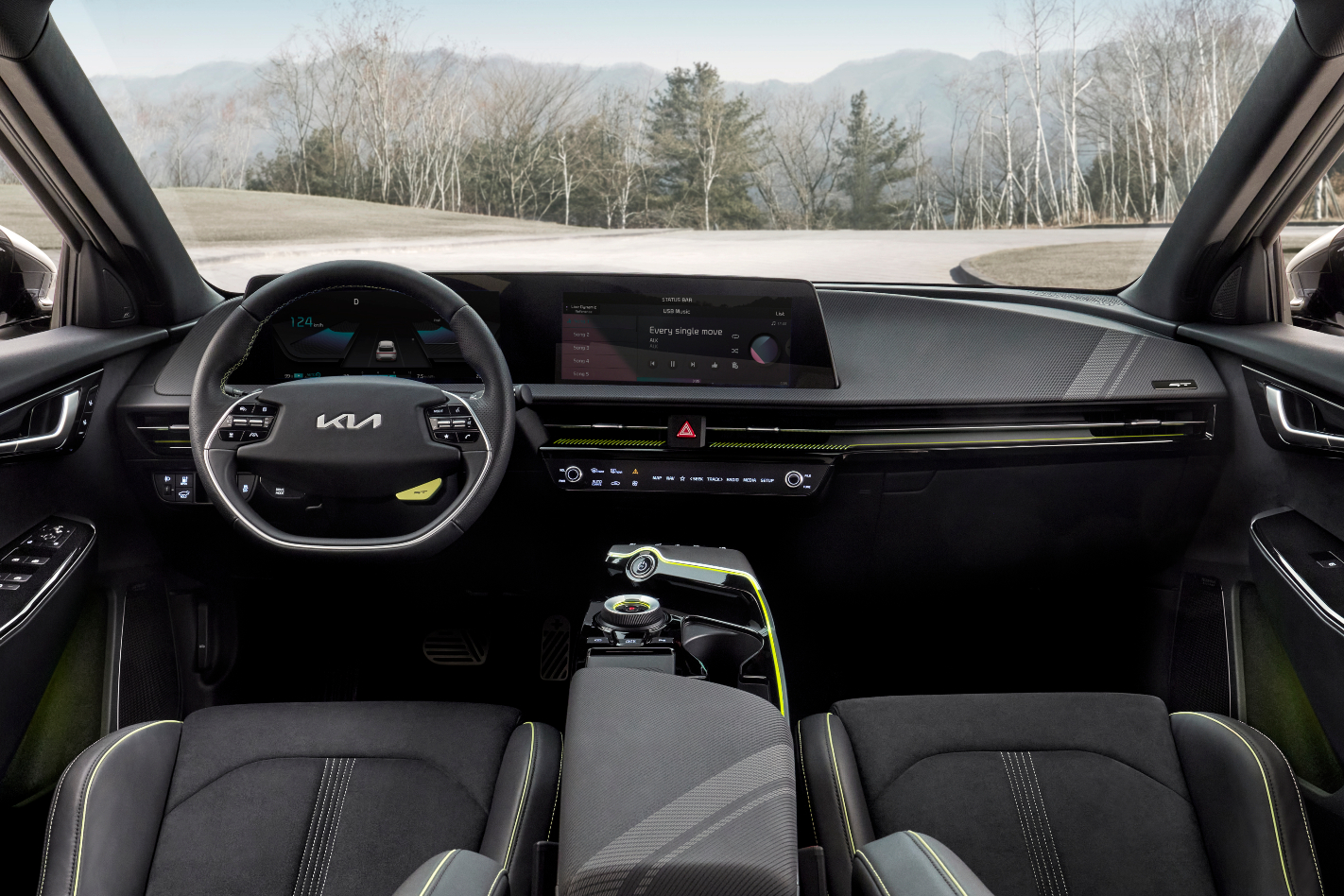
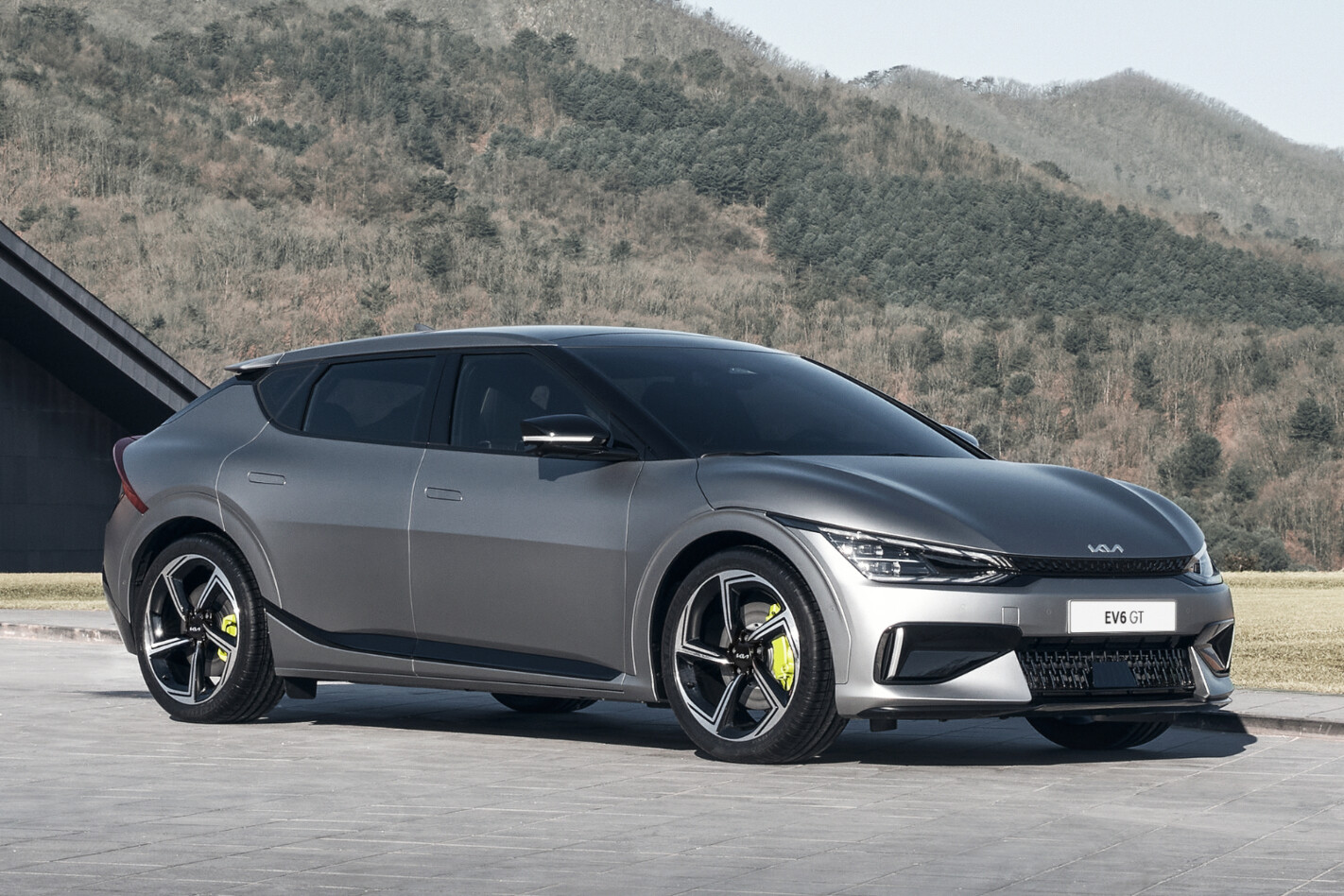
The range-topping, Porsche Taycan 4S-beating EV6 GT will set UK buyers back at least £58,295 (AU$104,500), and for that significant outlay, they’ll get; 21-inch alloy wheels, unique exterior styling, an electronic limited-slip differential, different driving modes and adaptive dampers.
EV6 GT buyers will also be scoring a car capable of sprinting from 0-100km/h in a claimed 3.5 seconds, thanks to a dual-motor set up that produces a combined 430kW and 740Nm.
According to Auto Express, UK customers can expect to take delivery of their EV6s in October of 2021, which, typically, is several months ahead of the anticipated timeline for Australia.
Speaking to WhichCar, a Kia Australia spokesperson said Aussies can expect the EV6 at a later date for several different reasons – including the electric crossover still needing to pass ADR compliance and Australian-specific ride and handling program. In addition Kia has a busy schedule for other new products being launched in 2021.
As such, pricing and delivery timing for the Australian market is still under consideration. Watch this space as WhichCar brings you the latest on Kia’s EV6.
Mercedes is recalling 11 of its VS30 Sprinter vans over an issue with the vehicles’ transmission.
According to Product Safety Australia, the gear recognition function may not function as intended in some vehicles manufactured between September 2018 and January 2021.
The problem, which affects 11 Sprinter vans built between 2019 and 2021, may cause the reversing lamp to stop working until the next time the ignition is turned on or engine started.
If the reverse lights are not able to be seen, other drivers won’t be able to tell the vehicles are reversing, increasing the risk of an accident occurring.
The carmaker has compiled a list of affected VINs.
Owners should contact their preferred Mercedes-Benz dealership to arrange an appointment for the vans’ software to be updated.
To find a local Mercedes-Benz dealer, visit: https://www.mercedes-benz.com.au/passengercars/mercedes-benz-cars/dealer…
Talking points
- Jeep confirms Grand Cherokee SRT and SRT Trackhawk are sold out
- We understand chip shortages have played a factor
- Hemi V8 still sold in Grand Cherokee S-Limited
The Jeep Grand Cherokee SRT and Trackhawk have sold out for the foreseeable future, ending the availability of an SRT branded Hemi V8 in Australia…for now.
A spokesperson for Jeep says sustained high demand for both SRT Grand Cherokee variants has exhausted local stock, which we understand was already struggling under chip-shortage strains. The two performance SUVs have been deleted from the Jeep website.
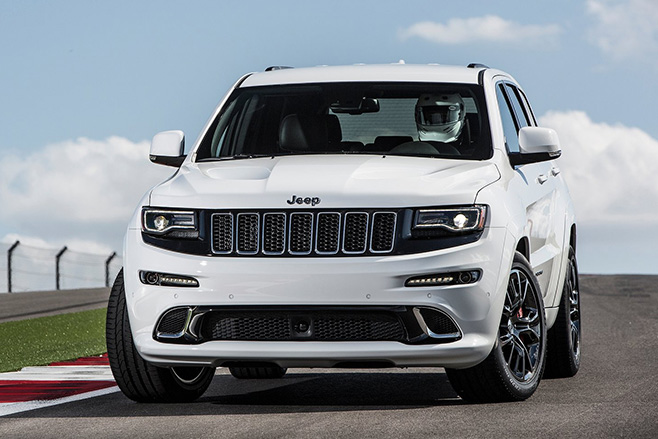
This leaves the Grand Cherokee S-Limited as the sole V8-powered Jeep on sale today, and the market an engine short of another keenly-priced V8 after the Chrysler 300 SRT was pulled from showrooms earlier this year.
Jeep could not say when stock for the SRT Hemi might again become available, but the all-new Grand Cherokee’s arrival might cut-off the time for a Grand Cherokee SRT and Trackhawk return in this model’s lifespan.
The 6.4-litre Hemi V8 that powered the SRT and SRT-8 versions of the Grand Cherokee has been a mainstay in Jeep’s performance range since the SRT-8 was introduced in 2006.
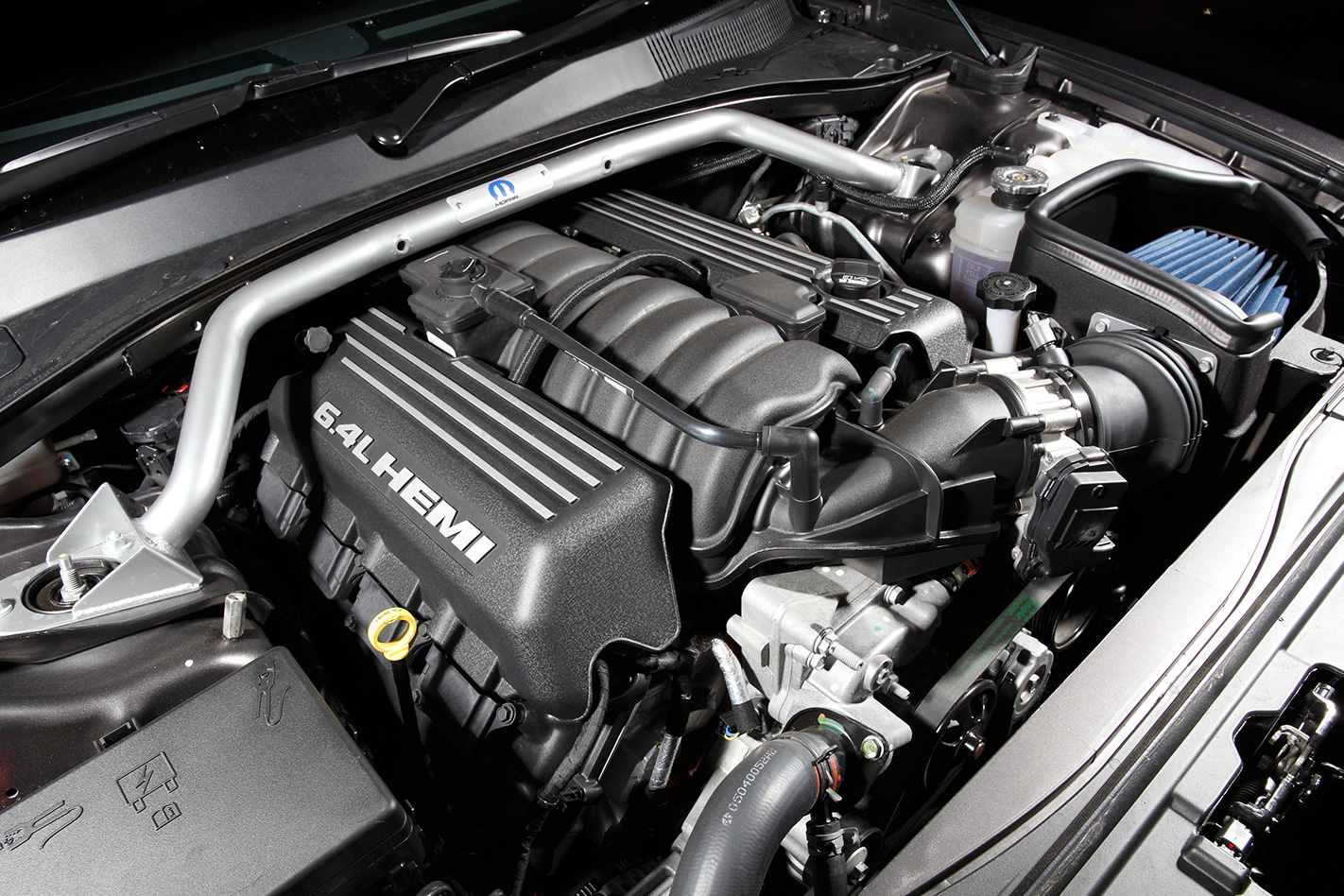
Powering the Grand Cherokee SRT-8 all those years ago the Hemi 6.4 first produced 313kW and 569Nm, before stepping up to 344kW and 624Nm in the upgraded WK-Series Grand Cherokee in 2012.
Jeep introduced the berserk supercharged 6.2-litre Hemi V8 powering the SRT Trackhawk in 2017 to rave reviews, with 522kW and 868Nm gifting the yank tank supercar-baiting acceleration.
MOTOR understands the new WL-series Grand Cherokee, as it’s known, will arrive towards the end of 2021.
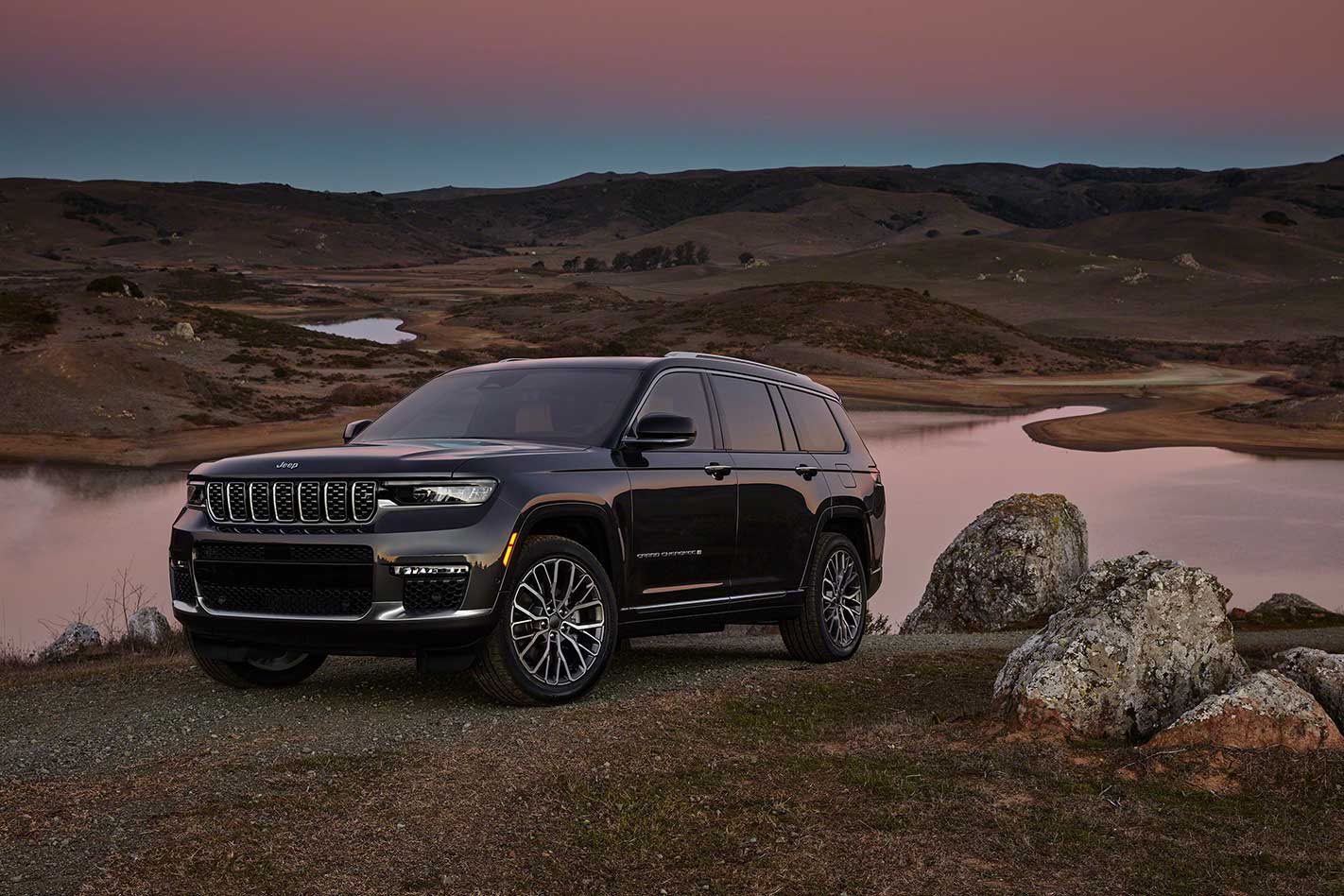
It’s too early to confirm whether we’ll see another SRT Hemi V8 in the next generation Grand Cherokee. It is based on the Giorgio platform that underpins the Alfa Romeo Giulia and Stelvio. They both use a twin-turbo V6.
It’s widely speculated, however, the SRT brand will continue in the new model alongside a base variant powered by the 5.7-litre Hemi V8 from the current generation S-Limited. The engine also powers the Dodge Ram 1500.
The S-Limited arrived in 2019 as a limited edition before being instated permanently in the Grand Cherokee range. It produces 259kW/520Nm.
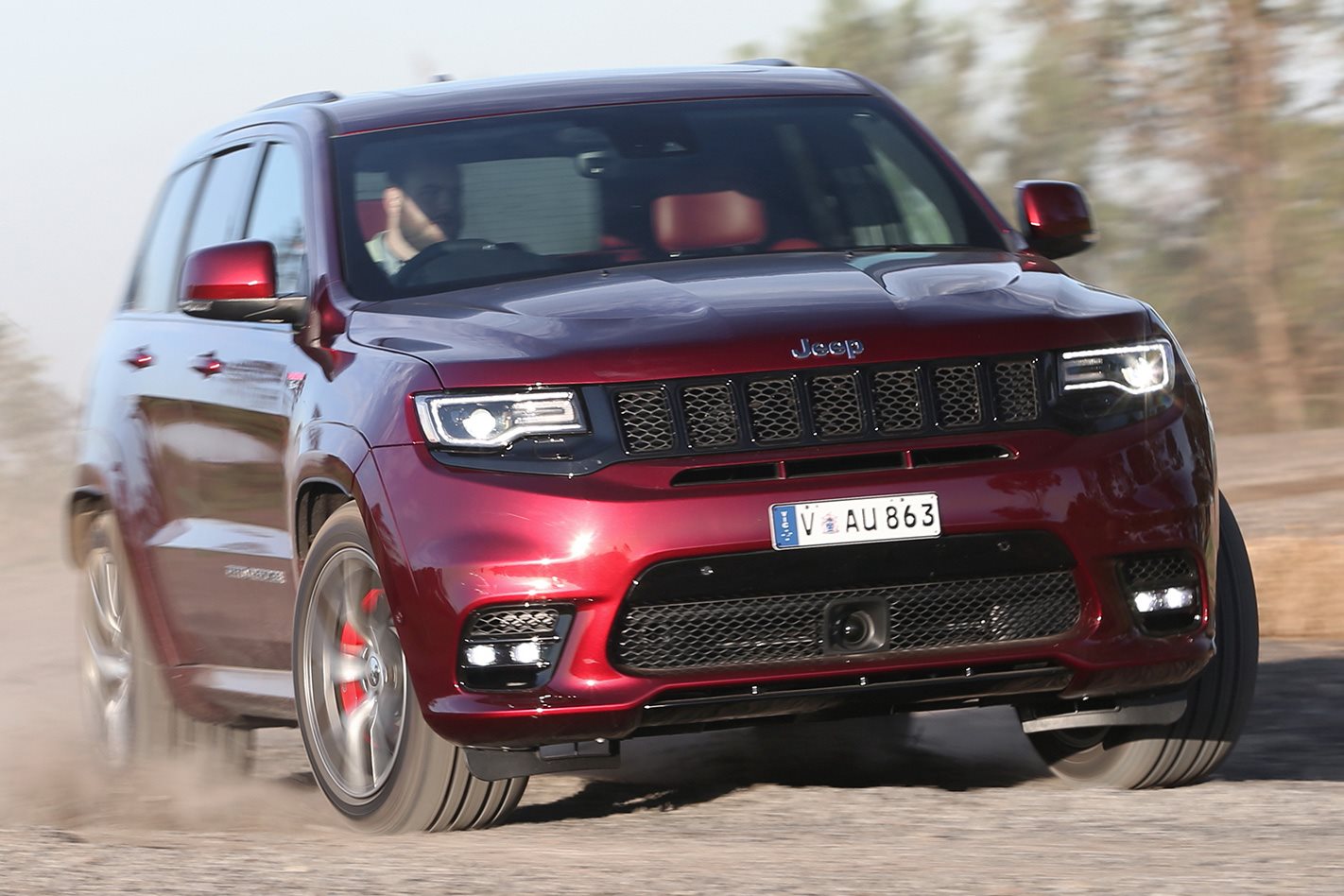
Sales for the Grand Cherokee have dropped to a fraction of their popularity several years ago.
In 2013, Jeep sold 12,931 Grand Cherokees. In 2014, it sold 16,582 GCs while last year in a COVID-ravaged 2020, it sold only 2870.
Victorians are now being offered $3000 off the ticket price of an electric (or hydrogen) car in a Government bid to go green – but for the $69,000 spending limit, what can you actually buy in Australia right now?
For all the excitement over recent reveals of EVs across the world, the answer is unfortunately not much. There are some great options, but variety is limited.
Here’s what’s available Down Under. Prices all are driveaway after the $3000 subsidy has been applied.
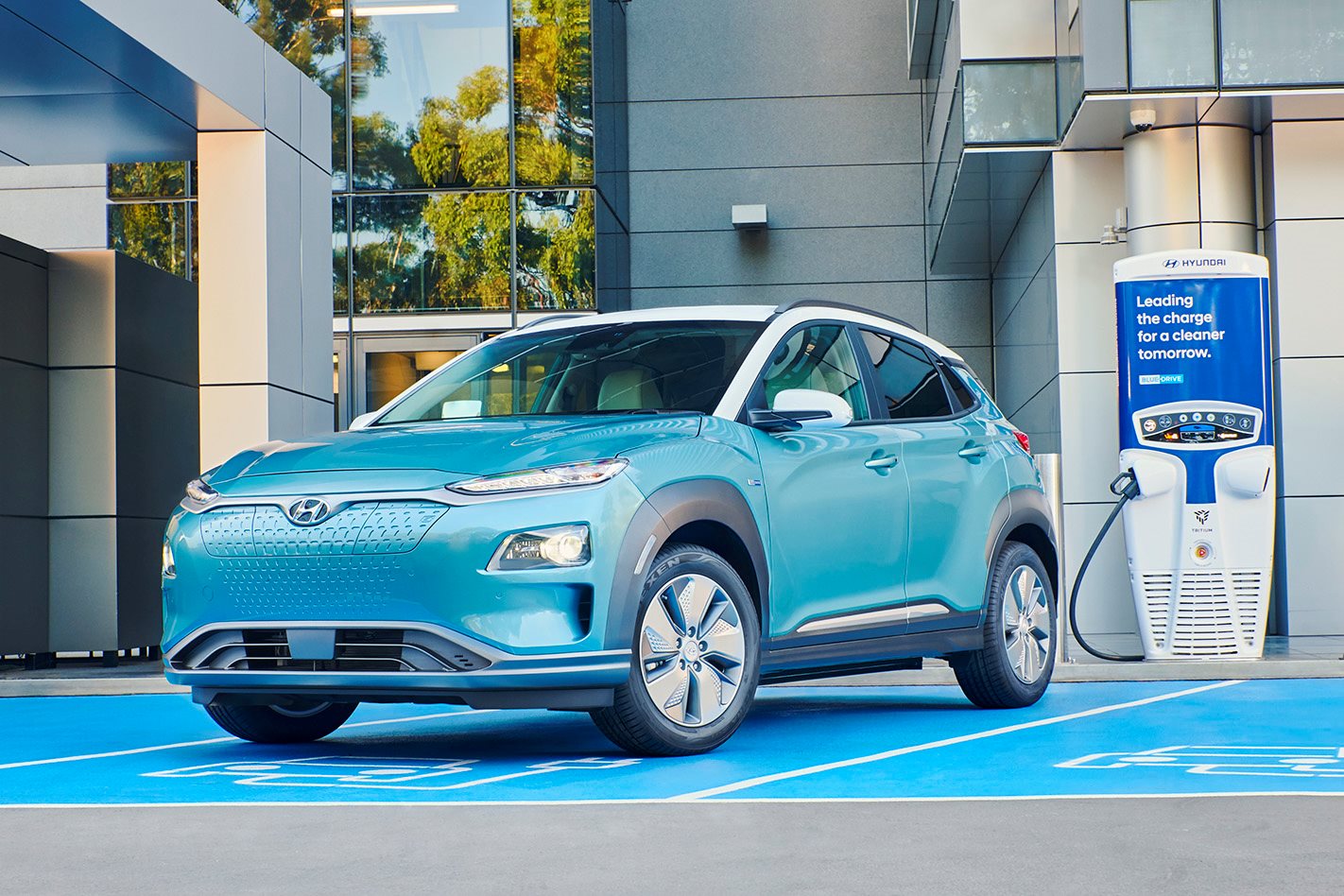
Hyundai Kona
The facelifted 2021 Hyundai Kona Electric went on sale in April costing $68,320 for its range-topping Highlander and $64,152 for the Elite variant.The Kona Electric Elite and Highlander are powered by a 65kWh battery that drives the electric motor and provides exceptional power and torque.
It is one of the most efficient electric vehicles, with a driving range of about 440kms, or about 320km when charged at 80 per cent.
Some EVs have longer ranges, but they also have bigger batteries that take longer to charge. Charge time is claimed to take 47 minutes when done with a 100kW DC fast charger.
The Kona Electric comes with a five-year, unlimited kilometre warranty.
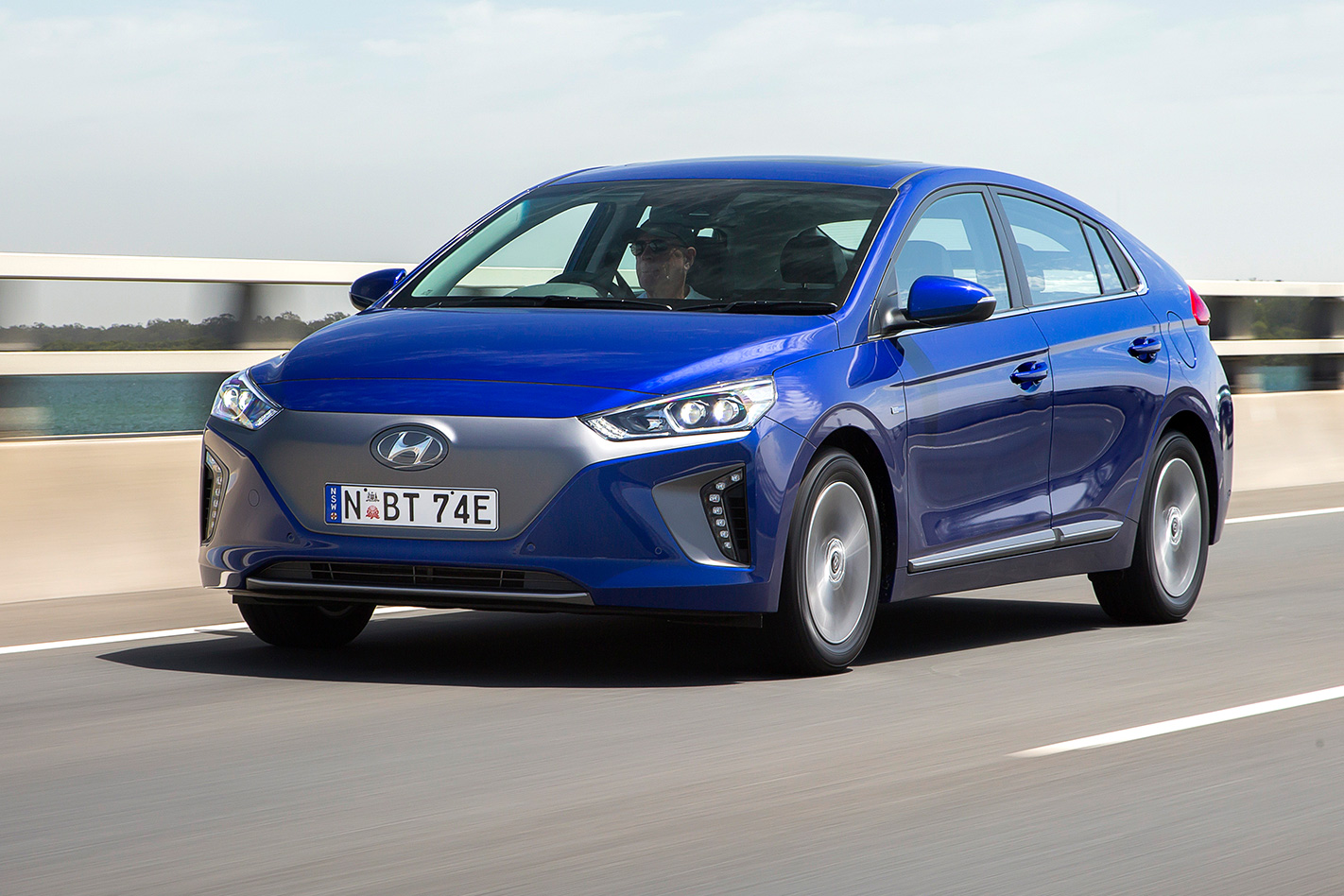
Hyundai Ioniq
Like its Kona sibling, the Ioniq is also available in two variants – Premium and Elite.
The 2021 Hyundai Ioniq Electric costs $54,784 for the Premium version and $50,576 for the Elite.Both are powered by a 38.3kWh battery. Its electric motor produces 100kW of power and 295Nm of torque.
It has a claimed driving range of about 311kms (WLTP combined) and a charge time of approximately 6.5 hours using a 7.2kW charger.
The Ioniq Electric also comes with a five-year, unlimited km warranty.
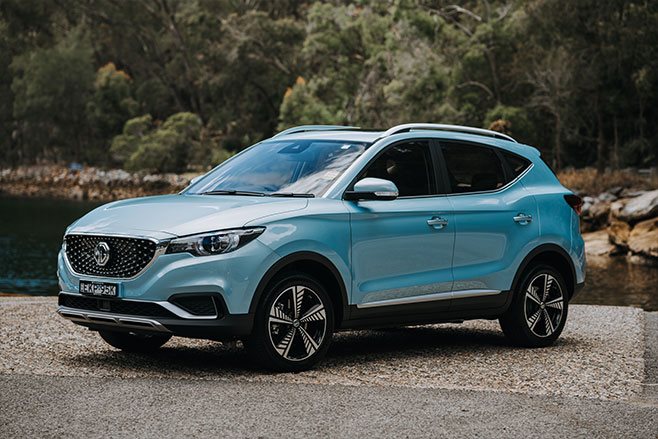
MG ZS EV
Already the cheapest EV on sale in Australia, the MG ZS EV will now cost eligible Victorian buyers $40,990.
The 2021 MG ZS EV is powered by a 44.5kWh battery and provides 105kW of power and 353Nm of torque.
It has a claimed driving range of about 263kms (WLTP combined) and a charge time of approximately seven hours using a 7kW charger.
The ZS also comes with a five-year, unlimited km warranty. As for the battery warranty, that’s covered for eight years or 160,000km.
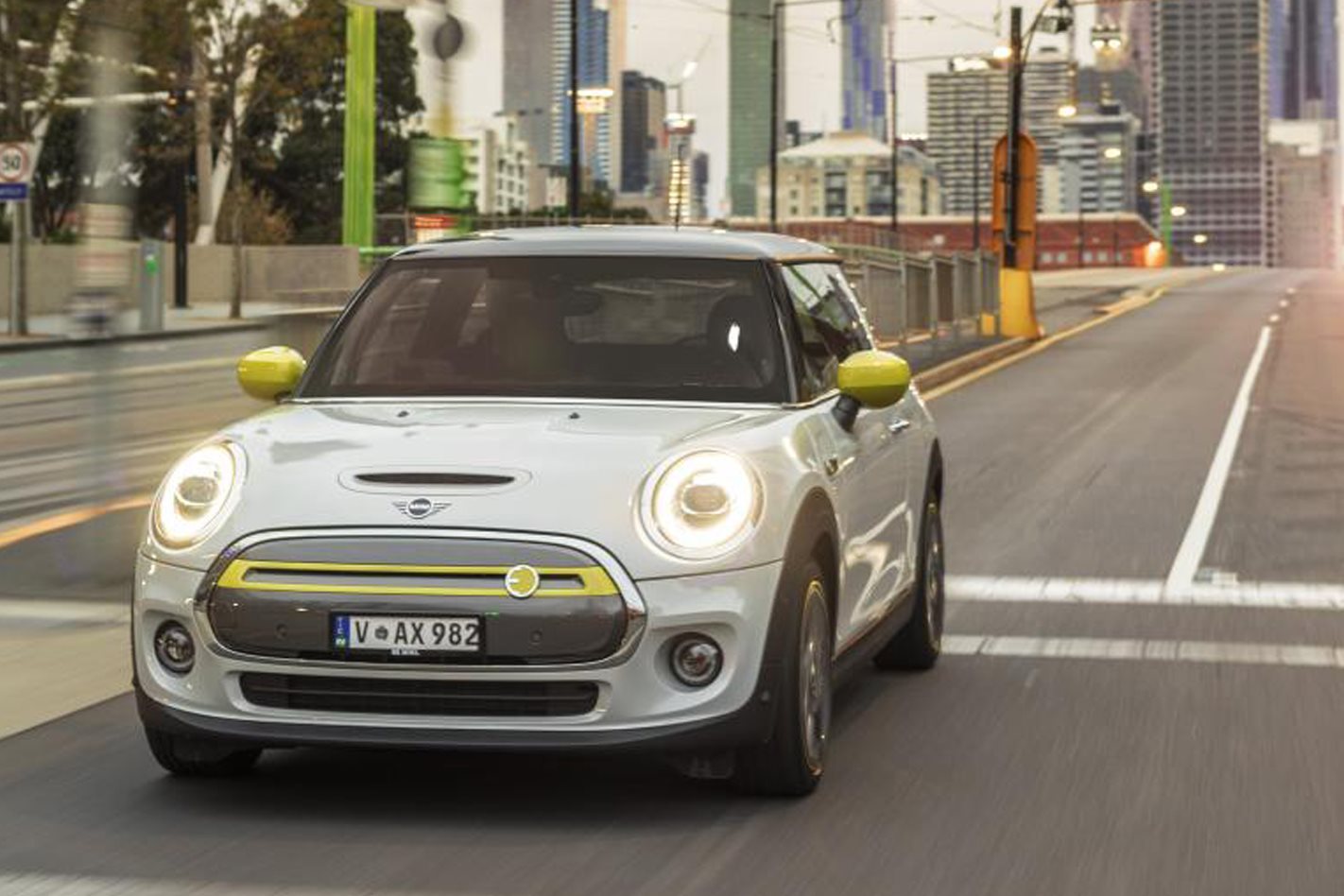
Mini Cooper Hatch SE First Edition
Mini’s electric hot hatch has sold out in Australia for the moment – but expect to see it hit our shores very soon with orders being accepted on new deliveries now (expected no later than September) costing $58,467 for the Classic trim and $65,945 for the higher-spec Mini Yours.
The 2021 Mini Cooper SE is powered by a 33kWh battery, making 135kW of power and 270Nm of torque.
It has a claimed driving range of about 233kms (WLTP combined) and a charge time (up to 80 per cent) of approximately 3.5 hours using a 7.4kW AC charger.
The SE comes with a three-year, unlimited km warranty.
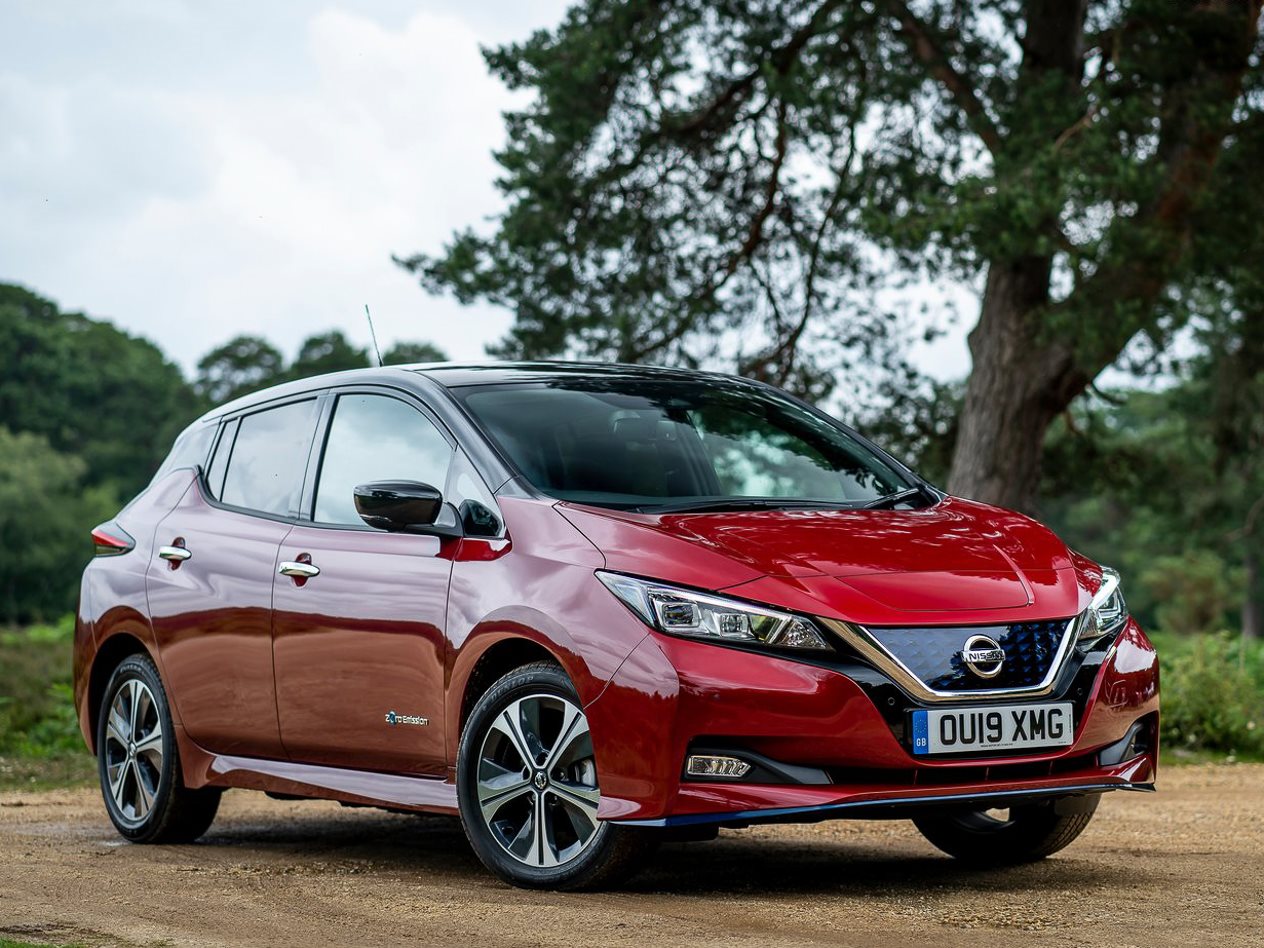
Nissan Leaf e+ ZE1
The Nissan Leaf e+ went on sale in April costing $61,990.
It features a 62kWh battery (up from 40kWh) that can propel the small five-door 385 kilometres on a single charge (WLTP combined), representing a 110-kilometre improvement over the standard Leaf.
It produces 160kW of power and 340Nm of torque, and has a claimed charge time of approximately 11.5 hours using a 6.6kW on-board charger or 32A wall box.
The Nissan Leaf comes with a five-year, unlimited km warranty.
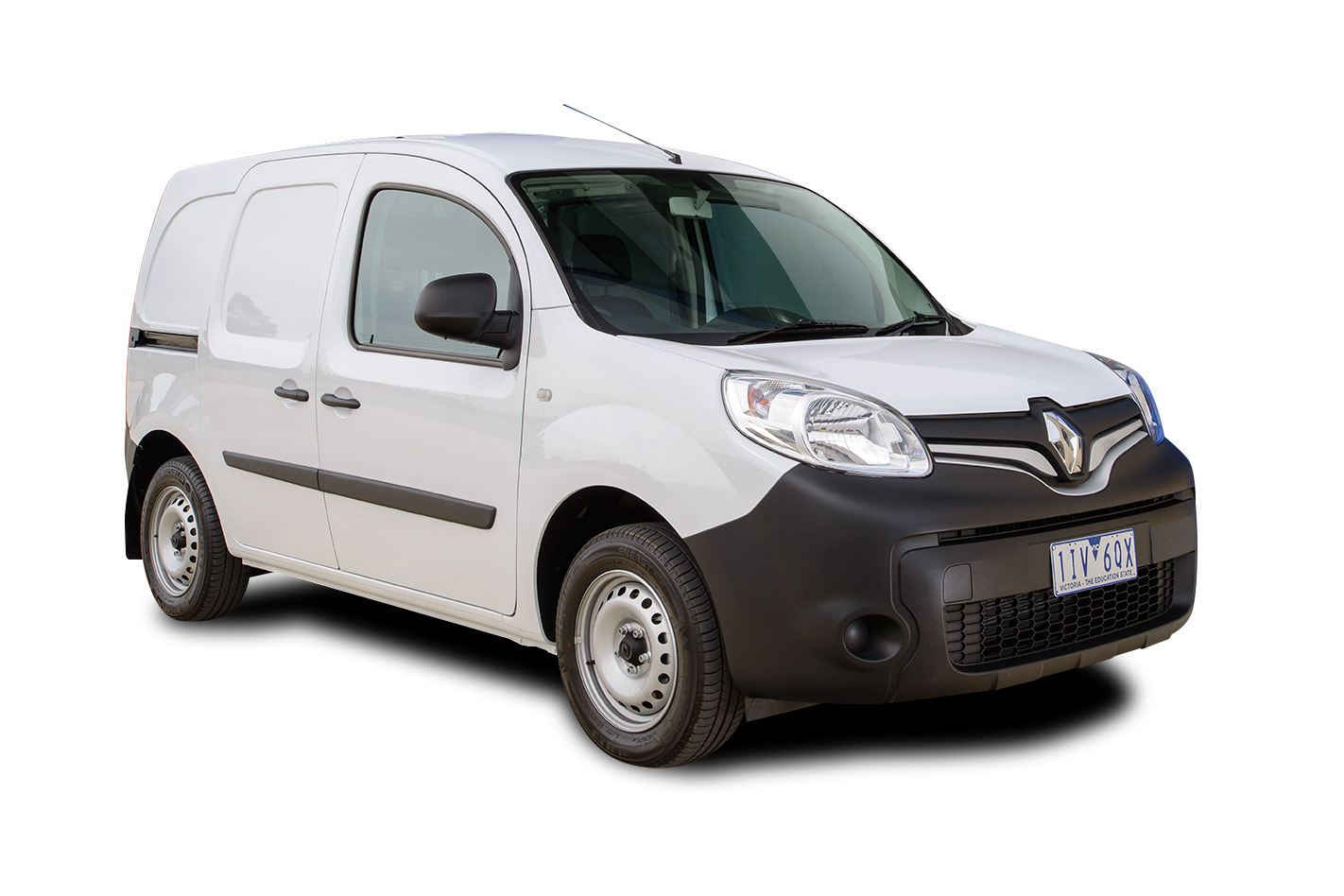
Renault Kangoo Maxi Z.E LWB
The only electric van in this line-up, the Renault Kangoo Maxi Z.E costs $51,684.
The electric Kangoo is fitted with a 33kWh battery and provides 44kW of power and 225Nm of torque.
It has a claimed driving range of about 200km and charges in approximately six hours using a 7kW wall box.
The Kangoo Maxi Z.E comes with a three-year, unlimited km warranty. The battery warranty lasts for five years or 100,000km.
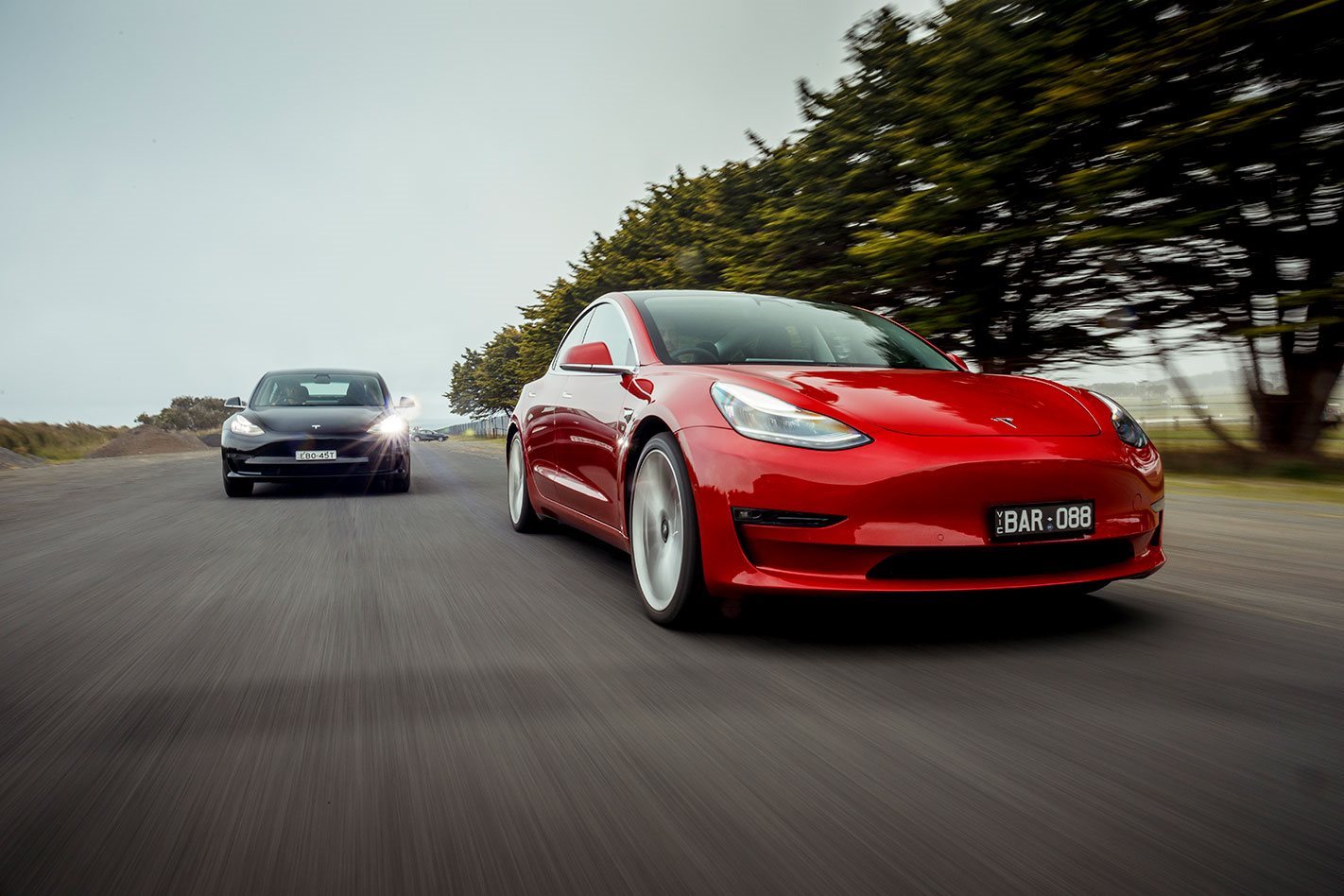
Tesla Model 3
The Tesla Model 3 will now set you back $65,094 for the Standard Range Plus. Unfortunately its Long Range and Performance variants are above the Vic Government’s $69,000 cap.
This ‘entry level’ RWD model has a 50kWh battery, generating 190kW of power and 375Nm of torque.
It has a claimed driving range of about 508km (although it’s worth noting that Tesla still officially quotes this as an NEDC-achieved figure) and a charge time of approximately 5.5 hours using an 11kW AC charger.
The Standard Range Plus comes with a four year or 80,000km warranty, and eight year or 160,000km battery warranty.
Talking points
- On sale now and priced from $48,950
- 1.75-litre turbocharged four-cylinder petrol engine produces 177kW and 340Nm
- 0-100km/h sprint takes just 6.0 seconds, top speed rated at 244km/h
The 2021 Alfa Romeo Giulietta Edizione Finale has been unveiled as the swansong to the Giulietta hatchback range.
Limited to just 35 examples in Australia, the hot hatch scores a bevy of bespoke styling tweaks both inside and out that elevate the overall look of the moniker to new heights.
Available in three distinct exterior colours – Alfa White, Anodized Blue and Magnesium Grey Matte – the hatchback also gets splashes of yellow paintwork that can be found on the brake calipers, as well as the front and rear bumper.
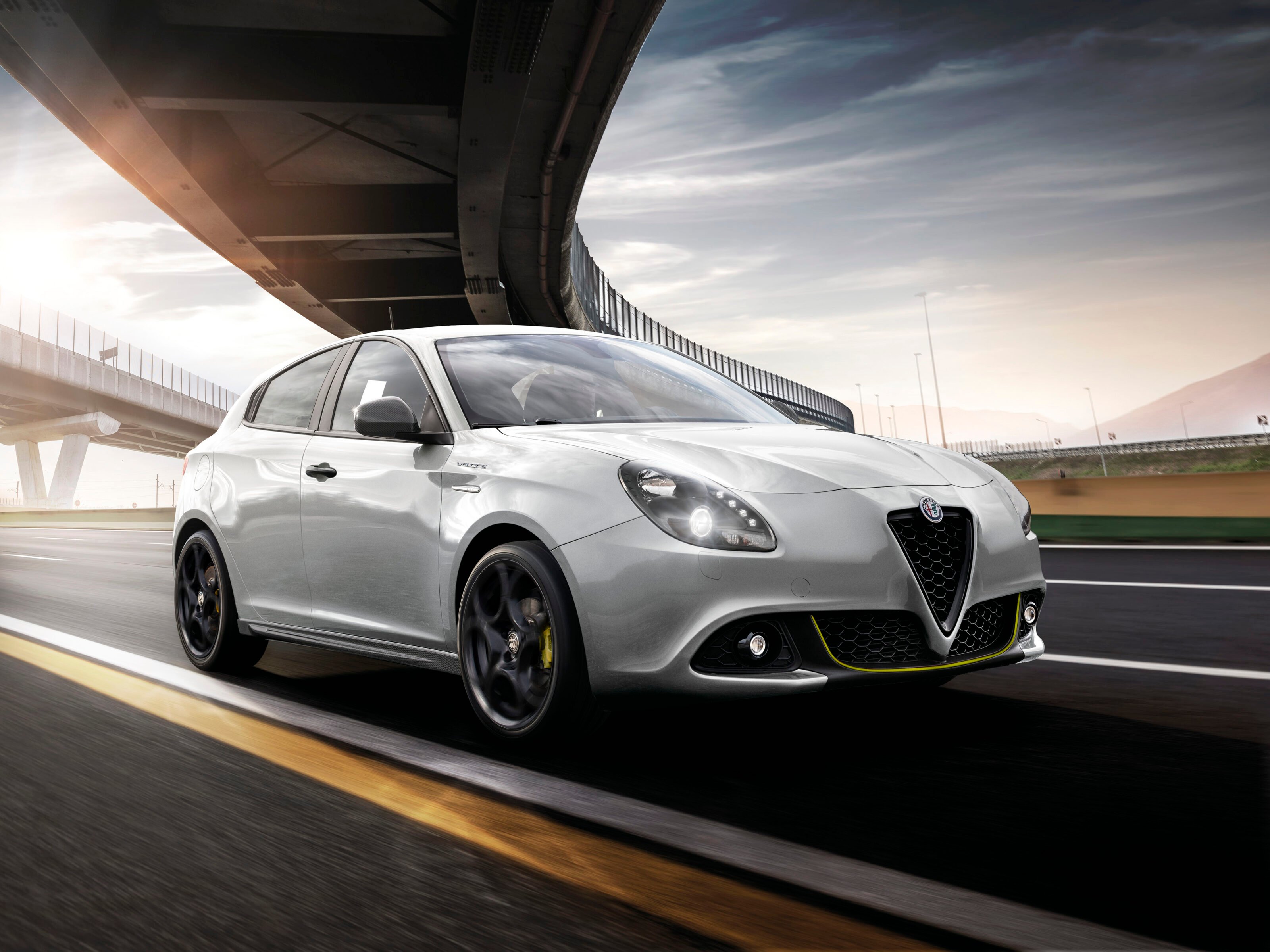
The Edizione Finale benefits from carbon-effect side mirror caps, front grille, and side sills as well, and has even been fitted with a unique Magneti Marelli ‘Elaborazioni 1919’ sports exhaust system and ‘dark miron’ 18-inch wheels.
Inside, the interior has been treated to complementing carbon-look trim pieces, a leather-wrapped steering wheel and exclusive floor mats both with yellow stitching, power sunroof, and power-adjustable and heated leather front sports seats.
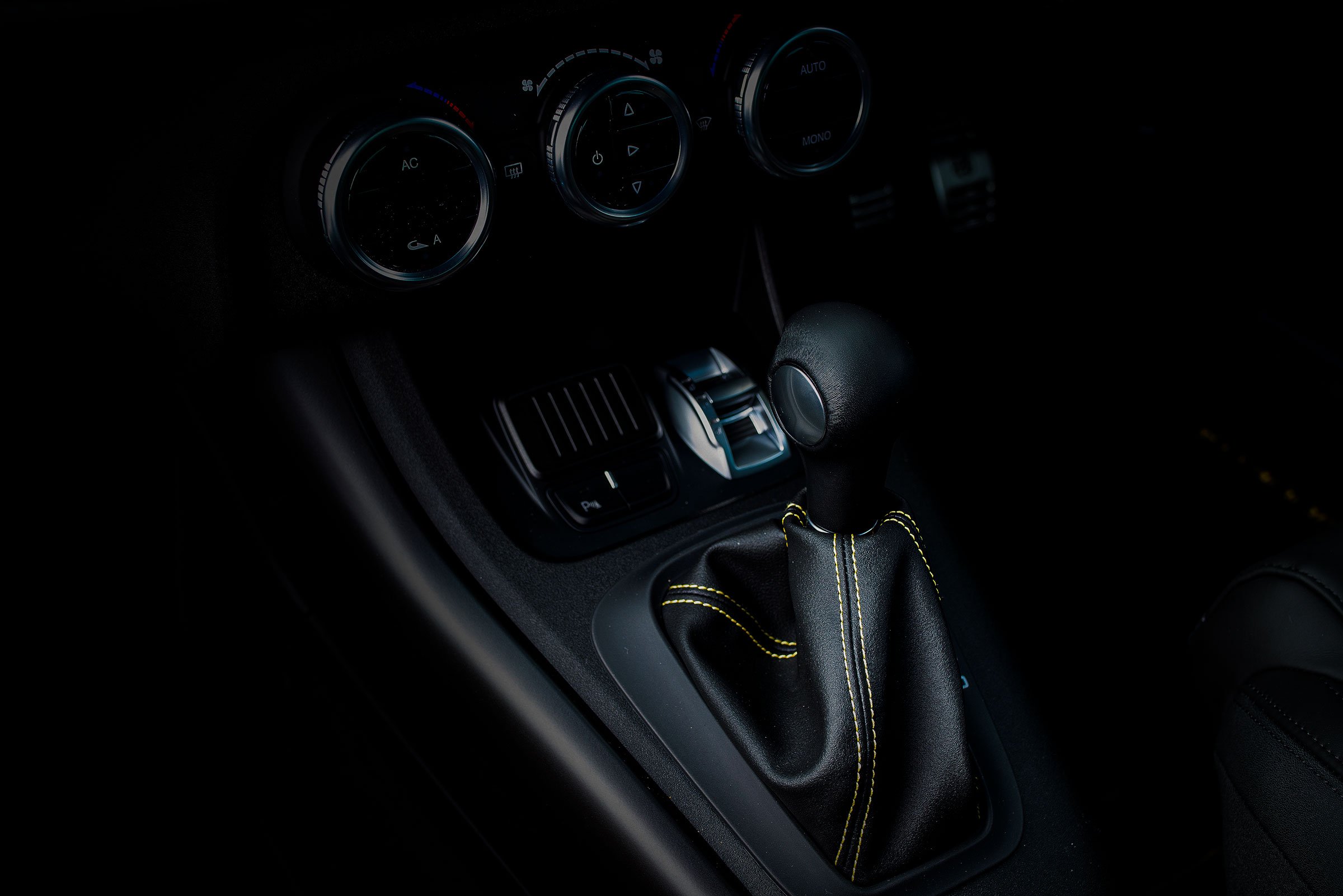
Under the bonnet the final edition of the Giulietta is the same 1.75-litre turbocharged four-cylinder petrol engine found in previous iterations of the hatch like the Veloce.
The turbo four-pot pumps out 177kW and 340Nm, sending its shove exclusively to the front wheels via a six-speed dual-clutch transmission and limited-slip differential.
0-100km/h claims to be taken care of in just 6.0 seconds, and flat-out the Giulietta is said to nudge 250km/h.
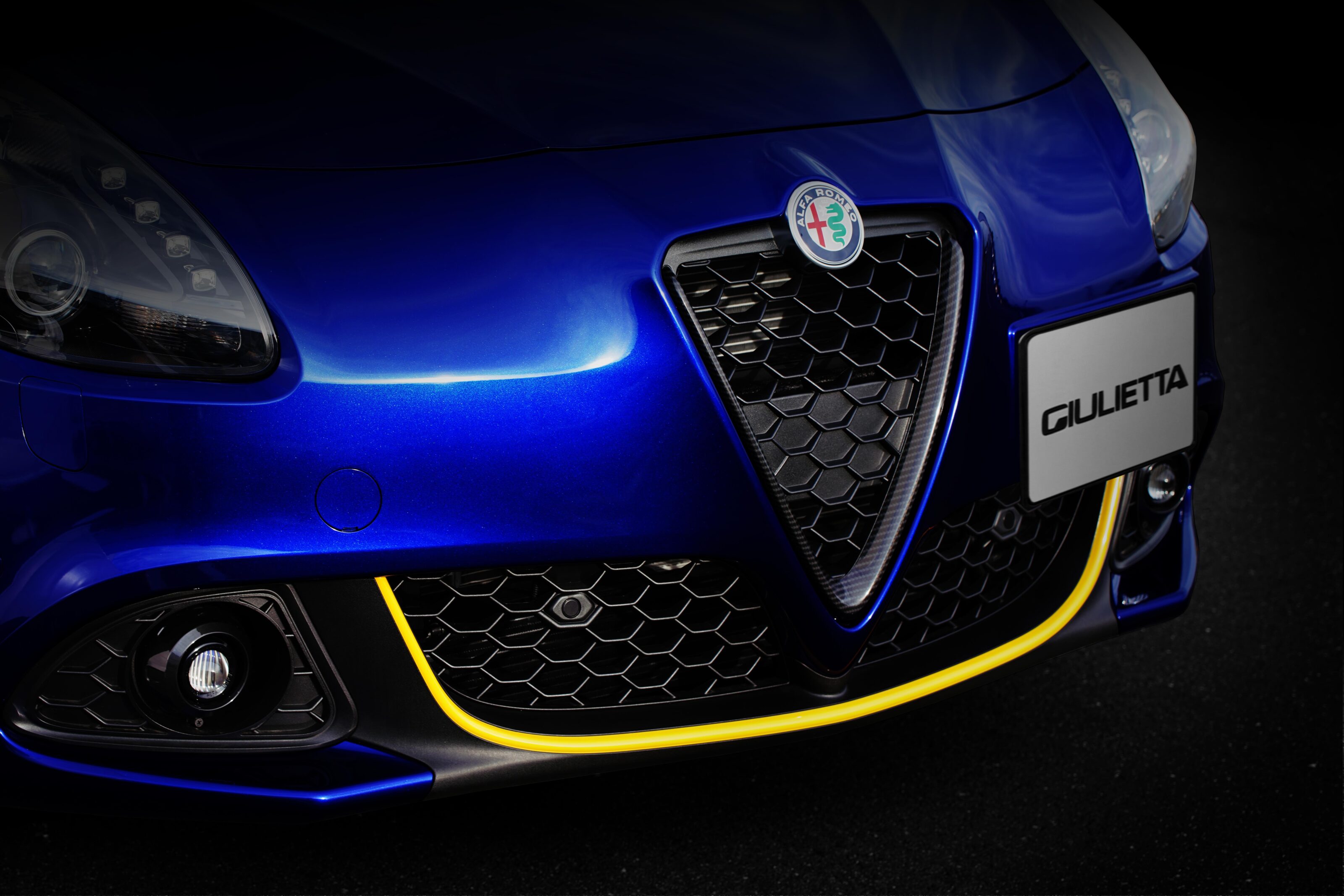
Other features include adaptive dampers, Bose premium audio, Pirelli tyres and Brembo brake calipers.
The first Alfa Romeo Giulietta was revealed in 1954 at the Turin Motor Show. The Giulietta name took on many forms over the last 60 years, before it was reimagined in 2010 as the five-door hatchback we know today.
The 2021 Alfa Romeo Giulietta Edizione Finale is available to order now, with prices starting from $48,950 before on-road costs and customer deliveries are currently underway.
