
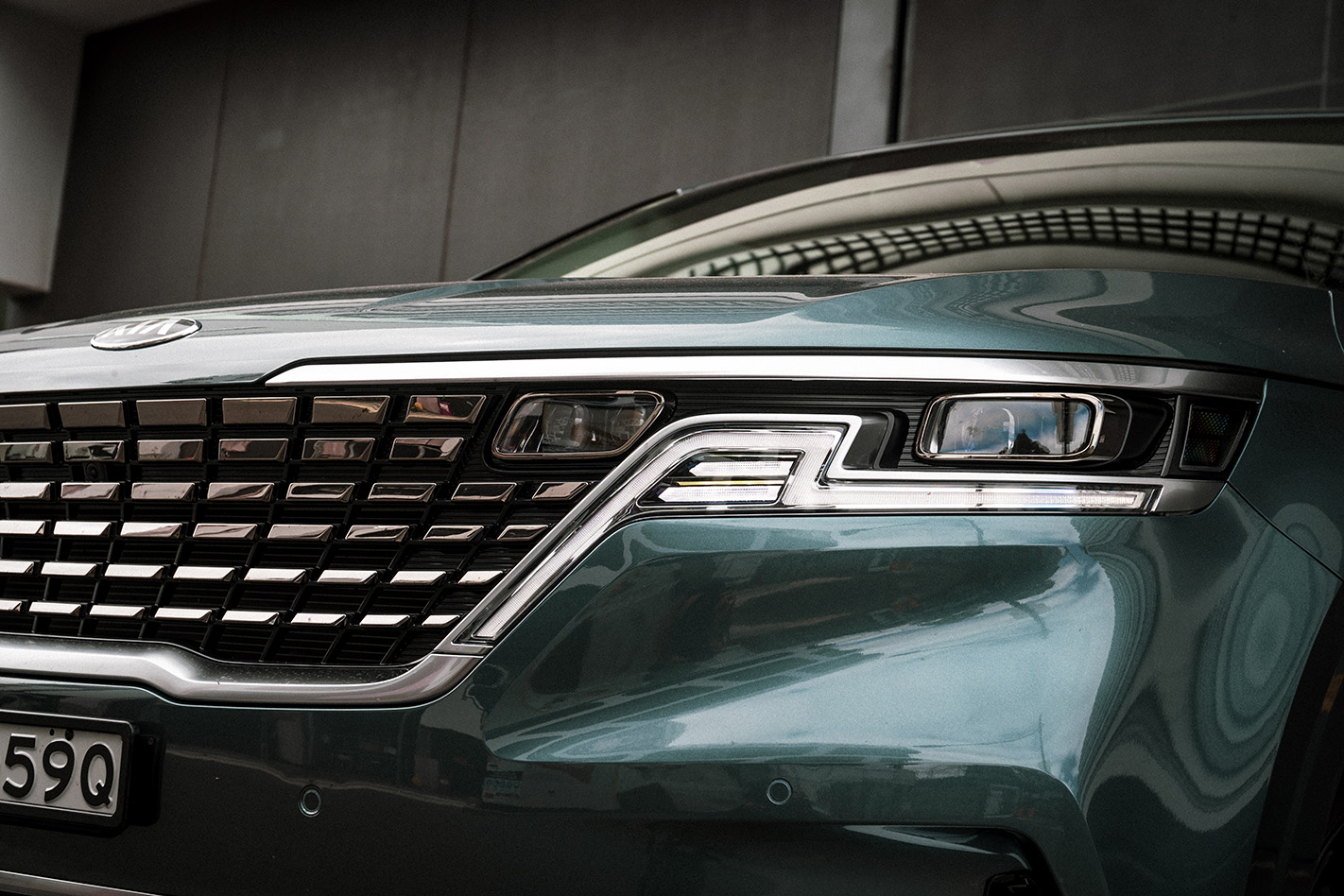
Korean brand Kia will be thanking its stars that history hasn’t repeated itself, with the new 2021 Kia Carnival landing a 5-Star ANCAP safety rating this week.
Keen readers may recall the previous Carnival landed in hot water back in 2015 when it was given a 4-Star rating where top marks had been expected – because of a miserable 10.48 score out of 16 in the critical ‘offset frontal’ crash test.
The brand redeemed itself quickly, however, rolling out an update in 2016 that corrected the engineering issue that resulted in the unexpected score. For all models built from December 23, 2015, a 5-Star rating applied.
Here in the present, with an impressive new-generation Carnival now on the market in Australia, ANCAP has today announced a 5-Star rating for the new model right out of the gate.
The new Carnival scored 90 per cent for adult occupant protection and 88 per cent for child occupant protection, while vulnerable road user protection was given a score of 68 per cent. Safety-assist technologies were rated at 82 per cent.
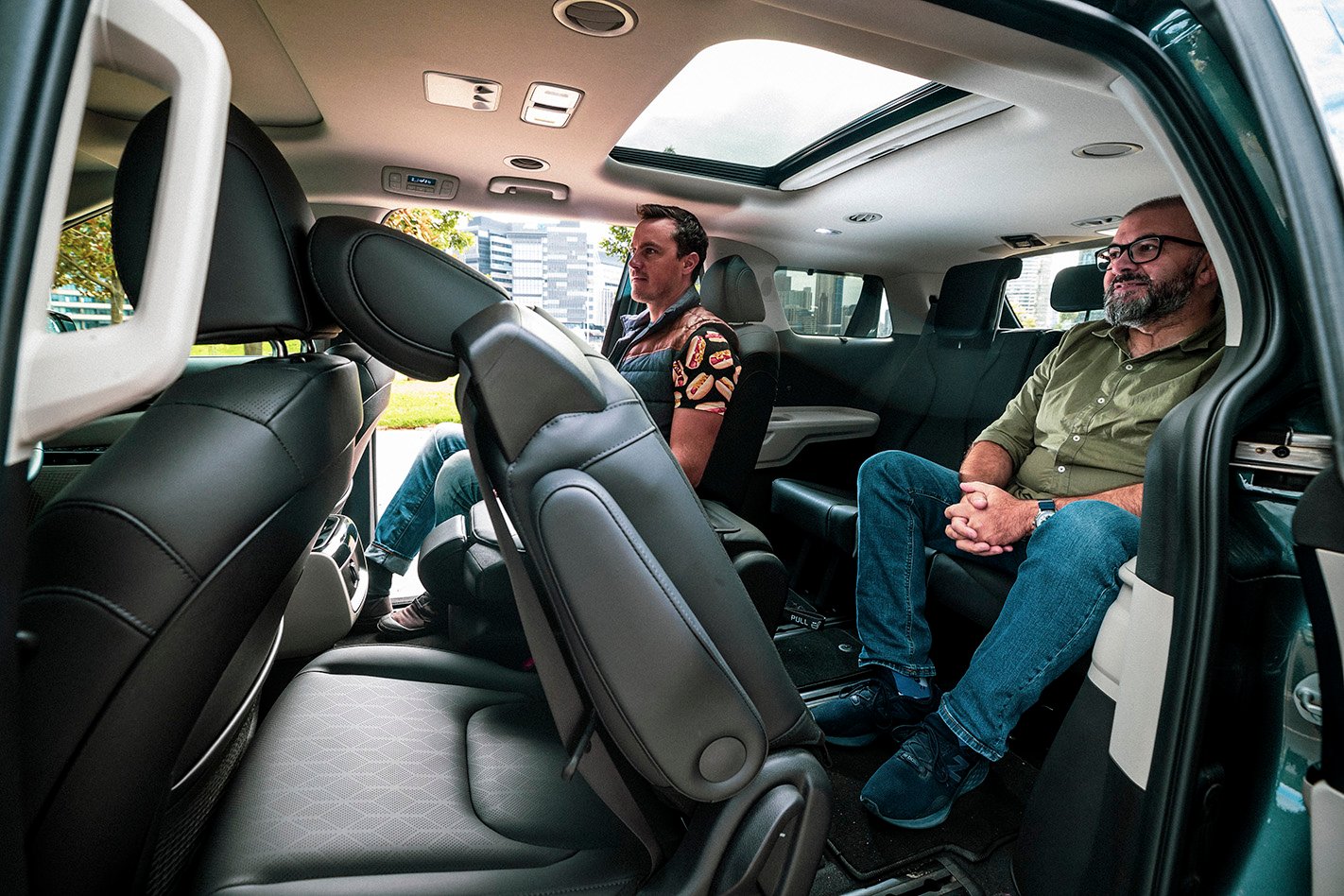
“The Carnival also provides a well-rounded safety specification, offering head-protecting airbags and intelligent seat-belt reminders for all three seating rows, autonomous emergency braking, active lane keeping, and fatigue monitoring as standard,” the report reads.
The 5-Star score applies to all eight-seat variants of the Carnival.
Talking Points
- Three variants u2013 Tucson, Tucson Elite, and Tucson Highlander
- Three drivetrain options
- N-Line styling pack option
- Higher entry-level pricing
The 2021 Hyundai Tucson range has officially gone on sale in Australia, starting from $38,338 driveaway.
The mid-size SUV will be available in three different variants from launch – the baseline Tucson, Tucson Elite and Tucson Highlander.
There will be three different engines and three different gearboxes on offer for the Aussie market too, depending on the variant chosen.
These will become available over time, with the naturally-aspirated 2.0-litre petrol-powered Tucsons the first to go on sale Down Under, the turbo 1.6-litre petrol engine due between May and June, and the turbo-diesel-powered variants expected in Australia from about July.
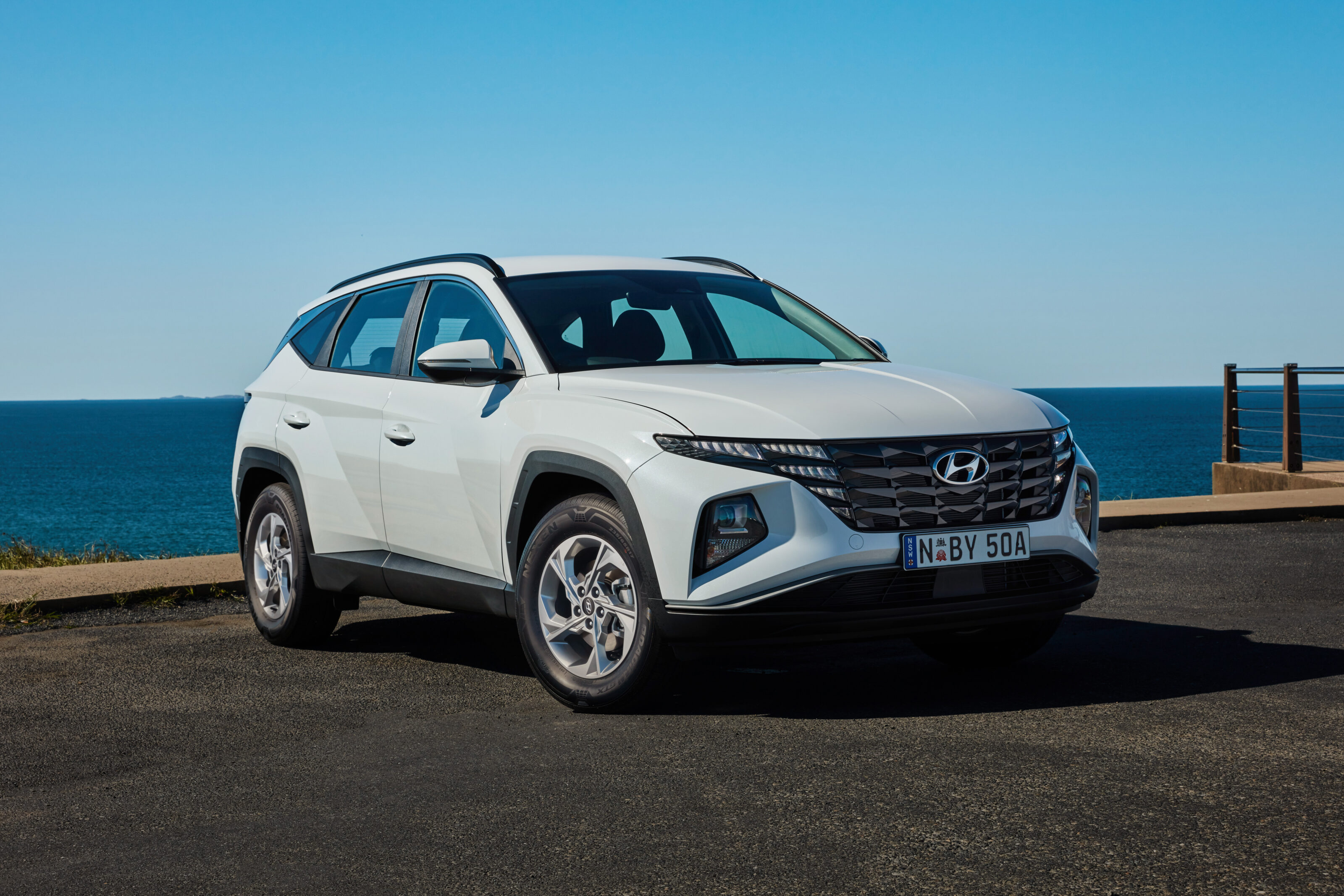
The 2021 Tucson range starts with the eponymous entry-level Tucson, which will only be available with a naturally aspirated ‘SmartStream’ 2.0-litre four-cylinder petrol engine mated to a six-speed torque converter automatic only – the six-speed manual will no longer be offered, which means you’ll have to pay more to enter the Tucson club.
Power is rated at 115kW and 192Nm, with the drive being sent exclusively to the front wheels.
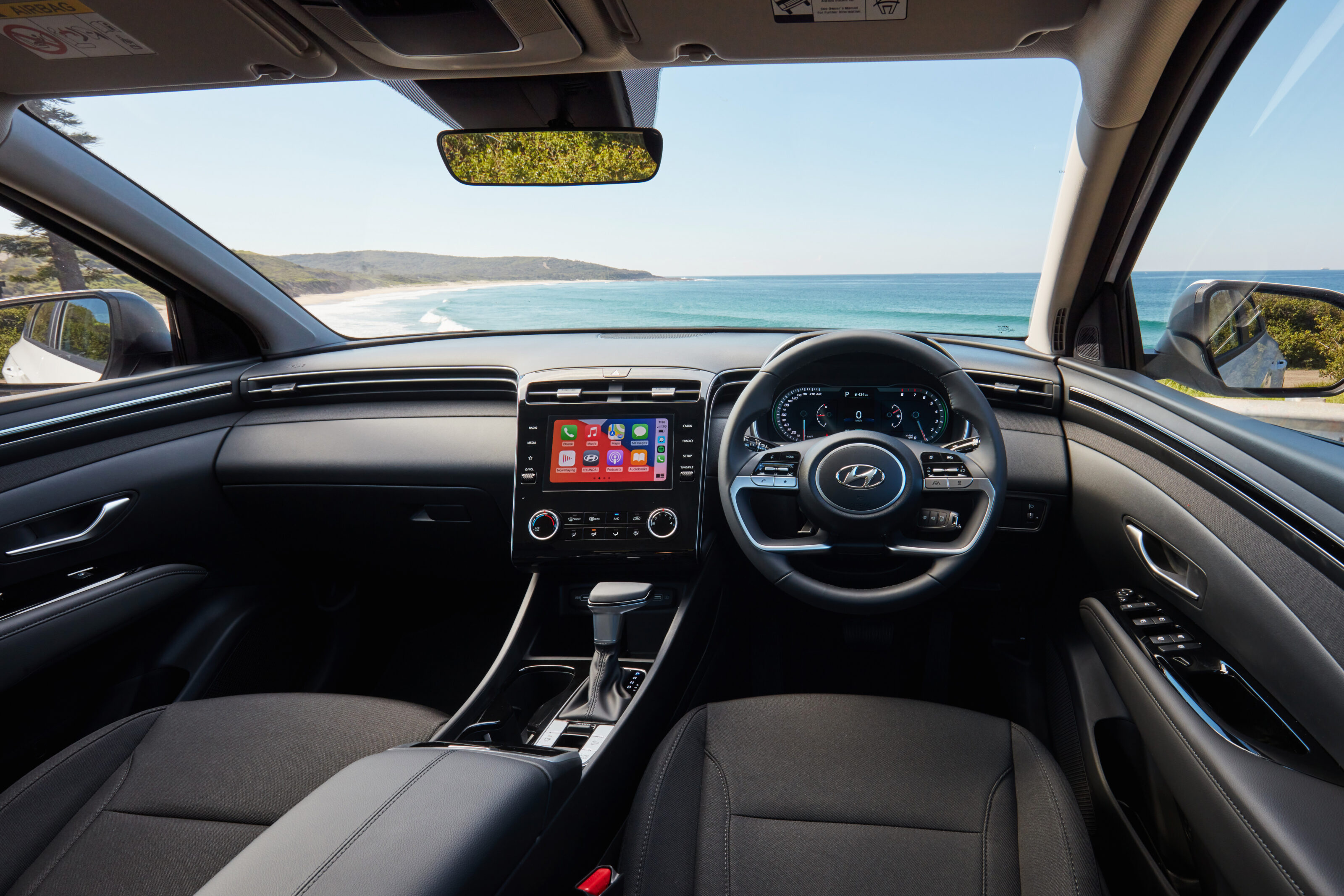
The base variant comes standard with an eight-inch multimedia unit with wireless Apple CarPlay and Android Auto, a 4.2-inch supervision cluster, power-folding automatic side mirrors, 17-inch alloy wheels, dusk-sensing headlights and LED daytime running lights (DRLs).
The cheapest Tucson also comes with Hyundai’s ‘SmartSense’ advanced driver assistance system (ADAS) that includes:
- Blind-Spot Collision Warning (BCA)
- Lane Keeping Assist (LKA)
- Autonomous Emergency Braking with Junction Turning function
- Intelligent Speed Limit Assist
- Rear Parking Distance Warning
- Leading Vehicle Departure Alert
- Rear Cross-Traffic Collision-Avoidance Assist
- Rear Occupant Alert
- Tire Pressure Monitoring System
- Rear View Monitor
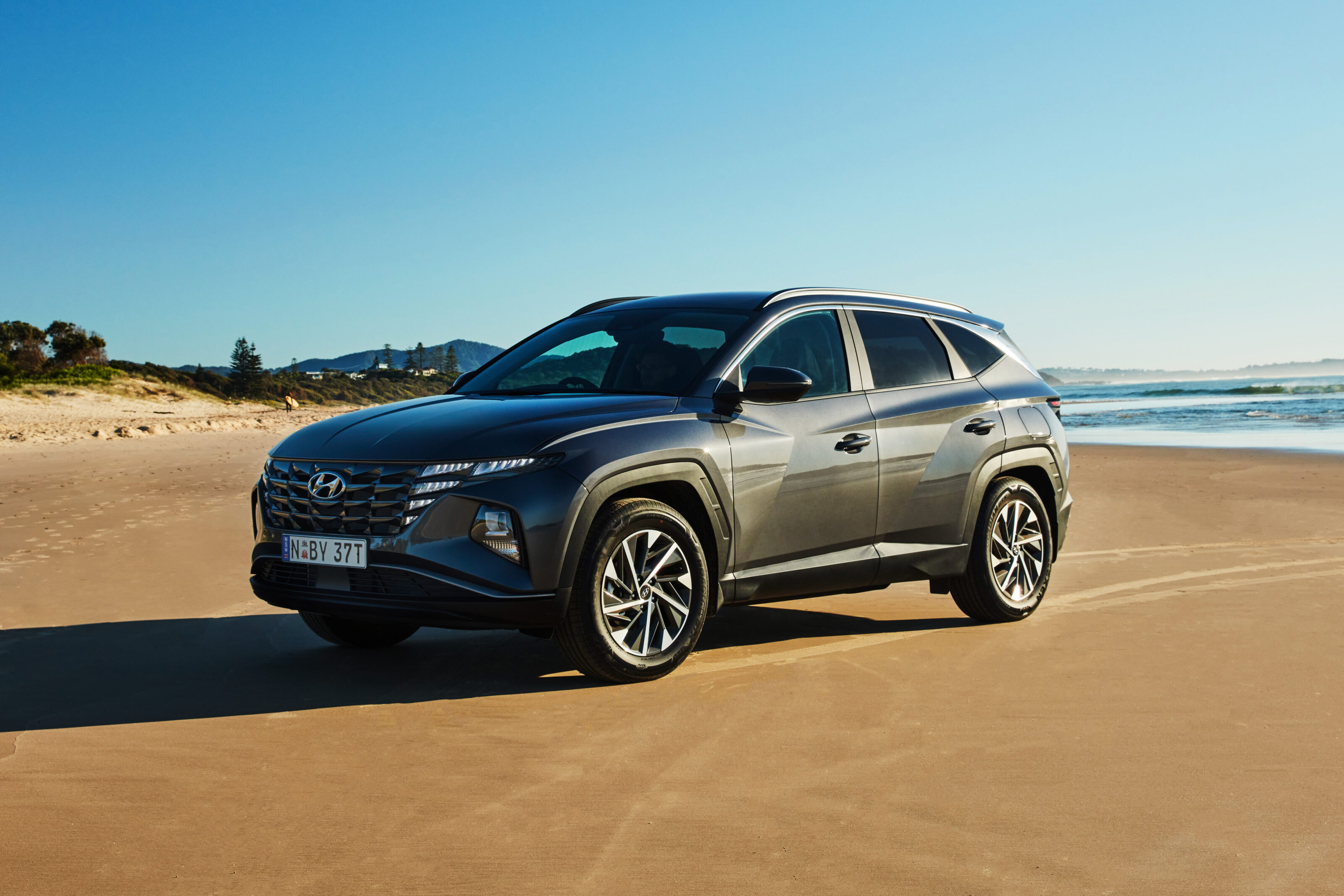
The mid-spec Tucson Elite can be had with the same four-pot and FWD configuration, or a turbocharged 1.6-litre four-cylinder engine that sends its power (132kW/265Nm) to all four wheels through a seven-speed dual-clutch transmission.
The Elite will also be available later this year with the 137kW/416Nm 2.0-litre turbo-diesel four-cylinder engine and an eight-speed torque-converter automatic that will also power all four wheels.
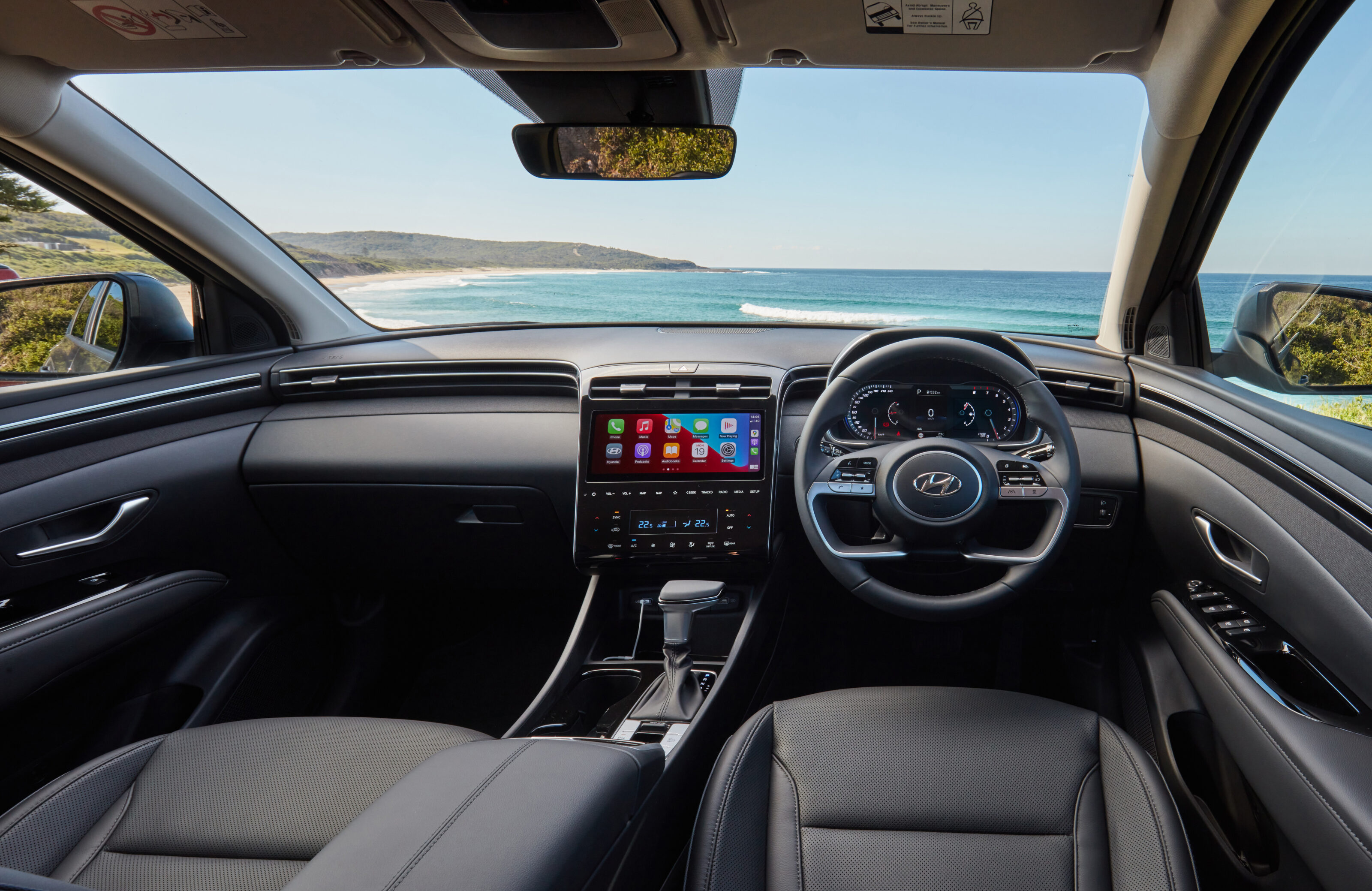
Equipment-wise, the Elite gains a 10.25-inch navigation multimedia unit, leather upholstery, heated front seats and a powered adjustable driver’s seat, dual-zone air-conditioning, Smart Key with push-button start, rain-sensing wipers and 18-inch alloy wheels.
It also gains additional ADAS functions, namely, Rear Occupant Alert and front parking sensors.
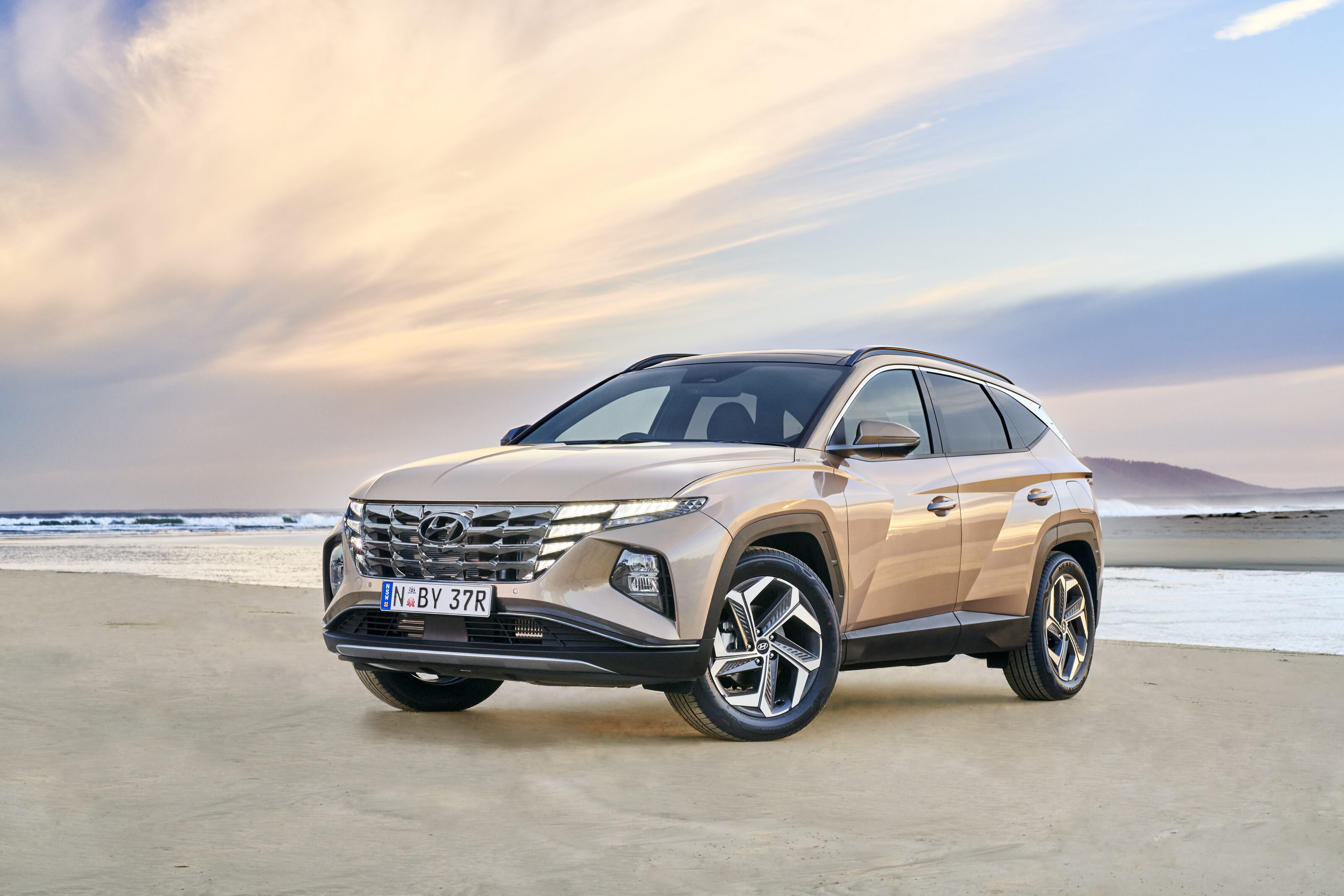
The Tucson Highlander also be available with all three drivetrain options.
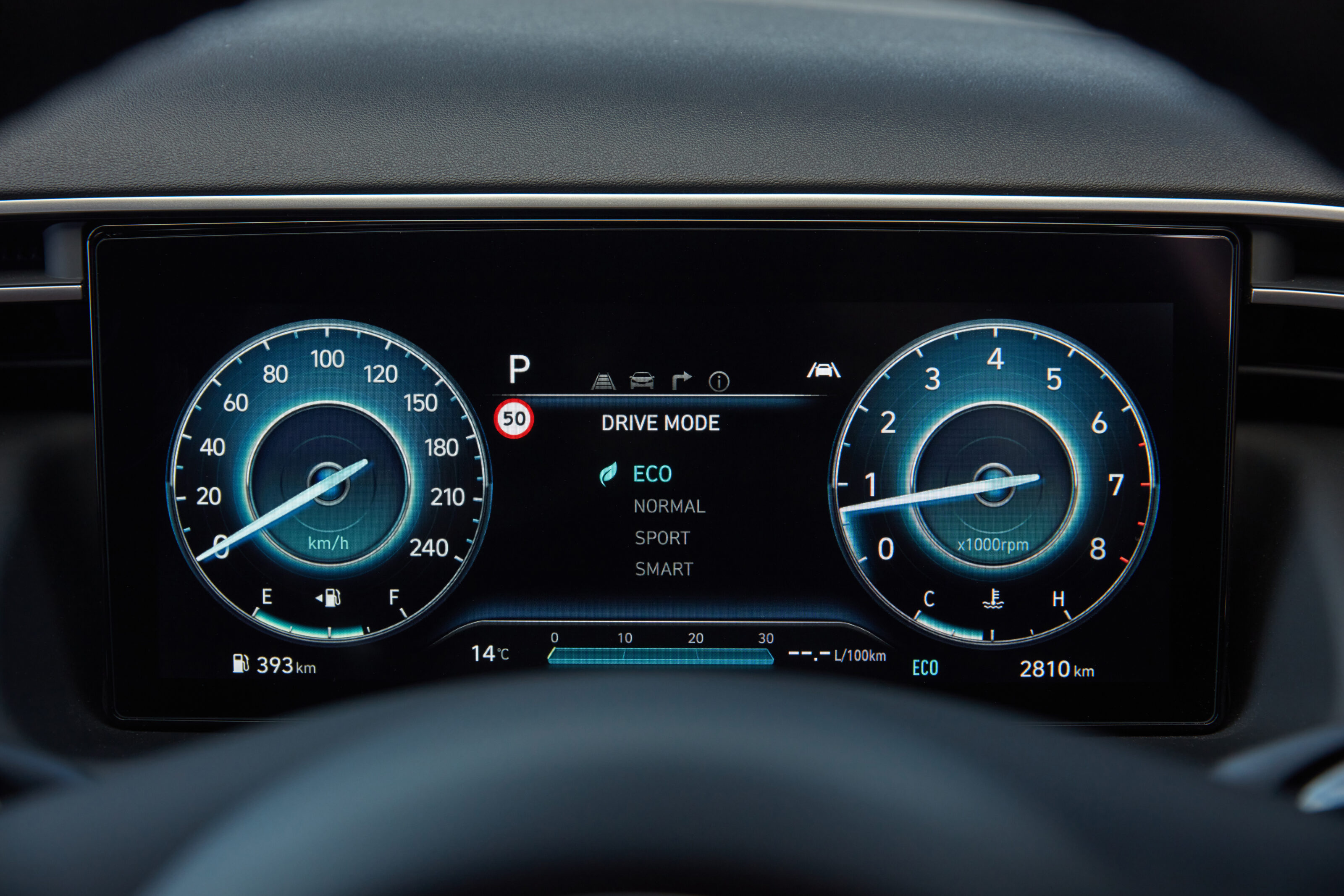
The range-topping Tucson features a futuristic, 10.25-inch LCD instrument cluster display, a panoramic sunroof, a heated steering wheel, heated and ventilated front seats, and heated rear seats.
There is also a memory driver’s seat, an eight-way powered passenger seat, BOSE Premium Audio, LED cabin lights and ambient mood lighting, and smart power tailgate.
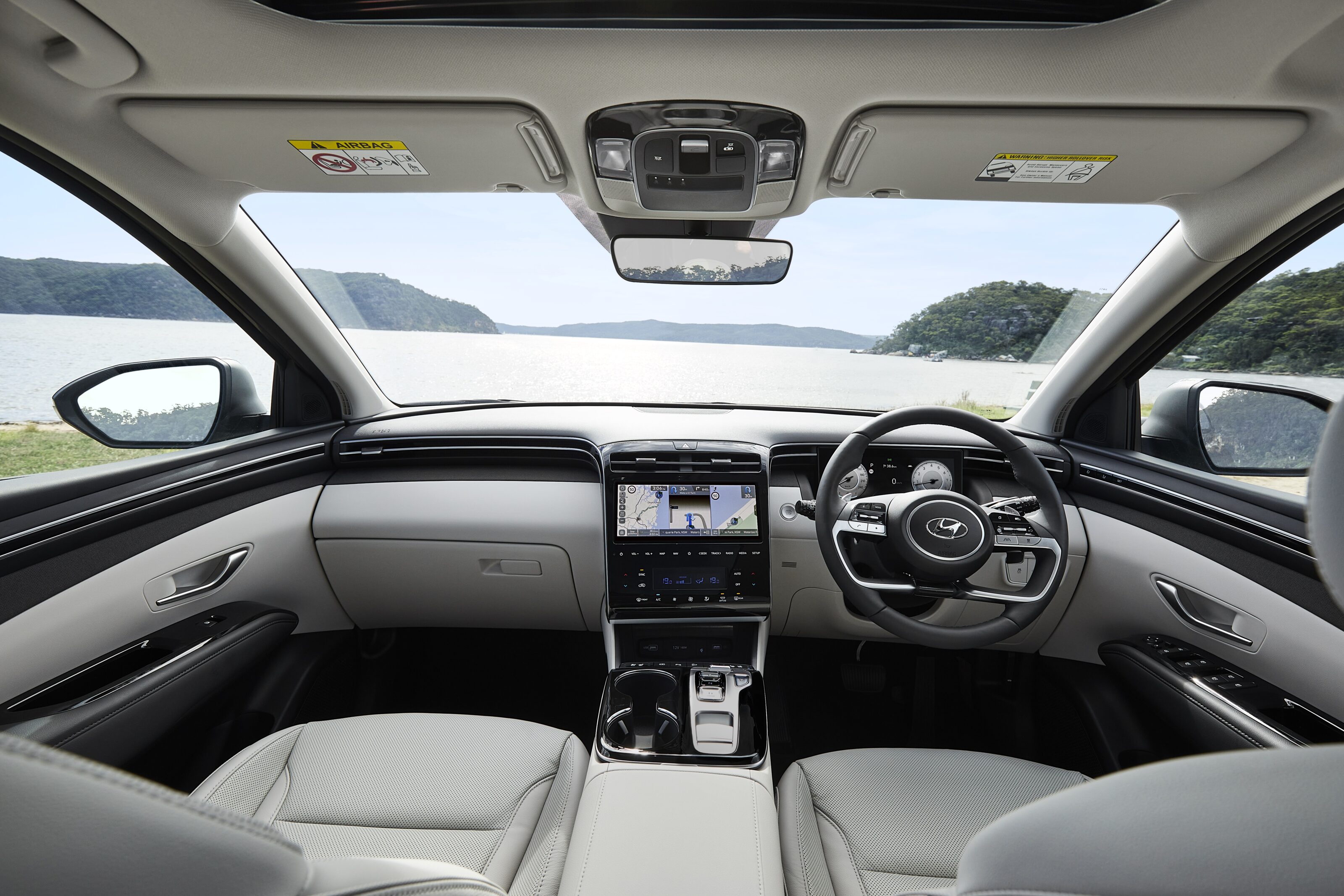
It also gains Parking Collision-Avoidance Assist, 360-degree Surround View Monitor, and a Blind-Spot View Monitor.
The Highlander stands from the outside too with Multi MFR LED headlights, LED tail-lights, a dark chrome grille with hidden DRLs, a silver-painted skid plate, and 19-inch alloy wheels.

An N Line styling pack be available later in 2021 for all variants and adds the following features:
- 19-inch N Line alloy wheels
- N Line exterior body kit
- LED headlights and taillights (if not already available on donor variant)
- Gloss Black grille with hidden DRLs
- Silver-painted N Line skid plates
- A 10.25-inch LCD instrument cluster display (if not already available on donor variant)
- Leather and suede upholstery
- N Line steering wheel
- N Line badging.

Specifying the N-Line pack adds $3500, $2000 and $1000 to the price of the entry-level, Elite and Highlander variants respectively.
The all-new Tucson is also offered in a choice of eight mica and metallic exterior colours including Crimson Red and Deep Sea Blue that cost an additional $595.
The 2.0-litre petrol 2021 Hyundai Tucson variants are on sale right now across Australia.
2021 Hyundai Tucson pricing
- Tucson 2.0L FWD – $34,000
- Tucson Elite 2.0-L FWD – $39,000
- Tucson Elite 1.6L turbo AWD – $43,000
- Tucson Elite 2.0L turbo diesel AWD – $45,000
- Tucson Highlander 2.0L FWD – $46,000
- Tucson Highlander 1.6-L turbo AWD – $50,000
- Tucson Highlander 2.0-litre turbo diesel – $52,000
- Tucson – $3500
- Tucson Elite – $2000
- Tucson Highlander – $1000
- Premium paint – $595
- Grey interior trim – $295
- Brown interior trim – $295
Nissan Australia is recalling Jukes built in 2019 over a fault affecting the airbag.
The issue, which affects 56 F15 Jukes manufactured between April and May 2019, involves the heat shield.
According to Product Safety Australia, which has a list of VIN numbers for affected vehicles, the heat shield may not be in the proper position around the front driver airbag’s inflator.
That means that when the airbag is triggered, hot gas could damage it or cause it to tear which could cause occupants seriously injury or even death if they were involved in an accident.
Owners are advised to contact their preferred Nissan dealer to organise for the driver’s airbag assembly to be replaced, free of charge.
For further information, contact the Nissan Customer Service Centre on 1800 035 035 (Monday to Friday, 8.30am to 6.00pm AEST) or visit: https://www.nissan.com.au/find-a-dealer
Talking Points
- Iconic performance brands turning electric
- Big power for future four door models
- Tesla Model S Plaid+ boasts crazy performance figures
A new era of performance sedans is about to begin, with the three German powerhouses of Mercedes-AMG, Audi RS, and BMW M moving into the full-electric segment, and using hybrid power to offset dwindling cylinder counts.
AMG is a perfect encapsulation of this inevitable change. Previously a key accelerator of the power wars amongst the German manufacturers (and the remaining V8 hold-out in the mid-size performance sedan segment), the in-house tuners for Mercedes-Benz are about to ditch one of its most popular engines and also build its first performance EV.
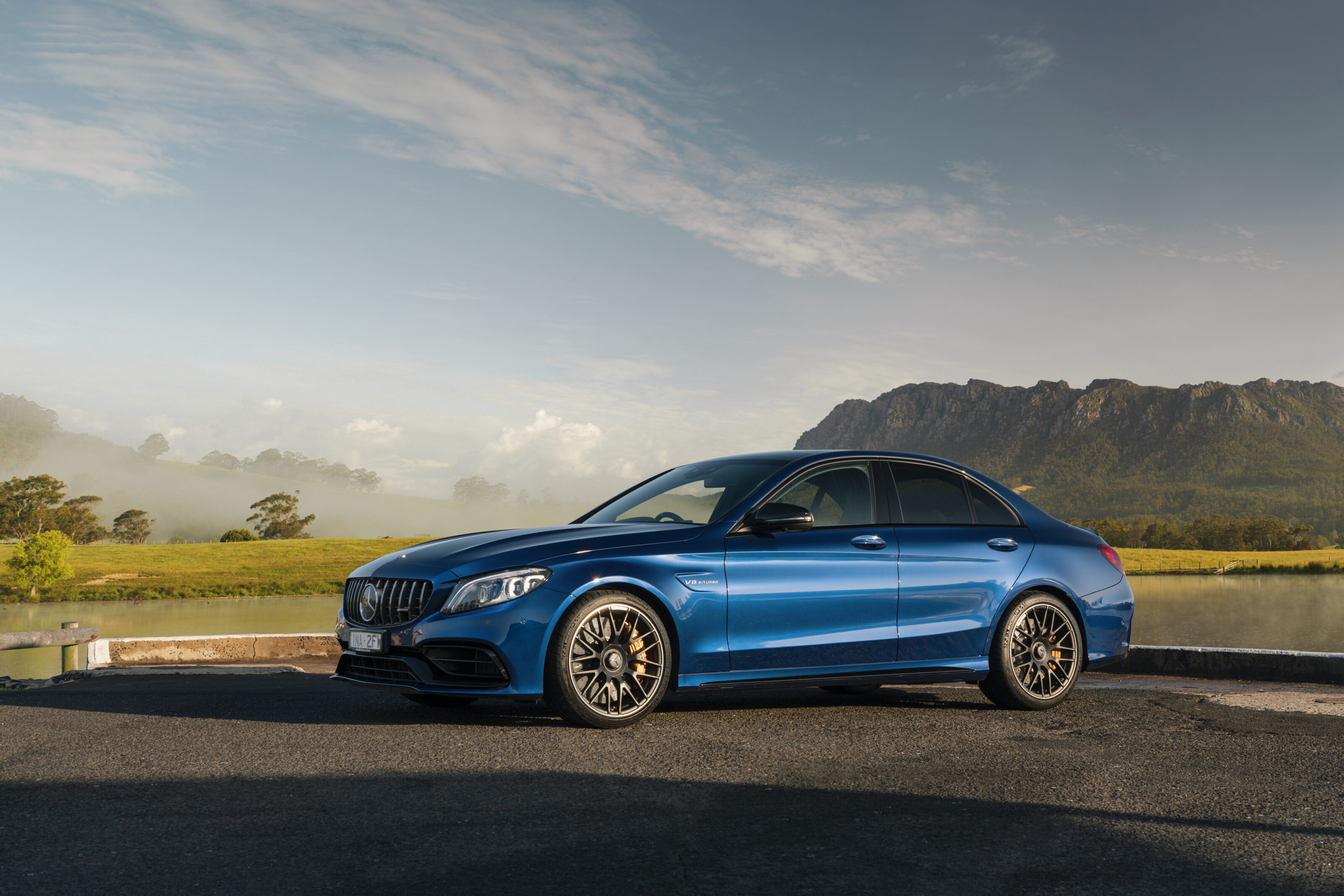
We now know the entire C-Class family of models will be powered by four-cylinder engines exclusively. Yes, even those with AMG badges on the boot. That means no more 4.0-litre twin-turbo M177 powerhouse. Instead, a potent four-cylinder engine will be paired with a battery pack for combined total system outputs in excess of 480kW at the apex of the range. For reference, the current-gen C63 S is rated at 375kW/700Nm. It is unclear what this shift means for the future of the M177/178 in other AMG products.
Taking one of its most popular models, removing its bent-eight USP, and going hybrid is just the beginning, AMG preparing its first fully electric models at the same time. Mercedes-Benz COO and R&D boss Markus Schäfer confirmed recently that AMG will be developing and launching performance variants for a number of the company’s fully electric EQ models (like the forthcoming EQA).
“An electrical platform in the direction of AMG is coming,” he confirmed, adding “there will be performance variants of the EQA, B, S, E.” The last two will be electric performance siblings to the S63 and E63, while the EQB is based on the GLB seven-seat SUV.
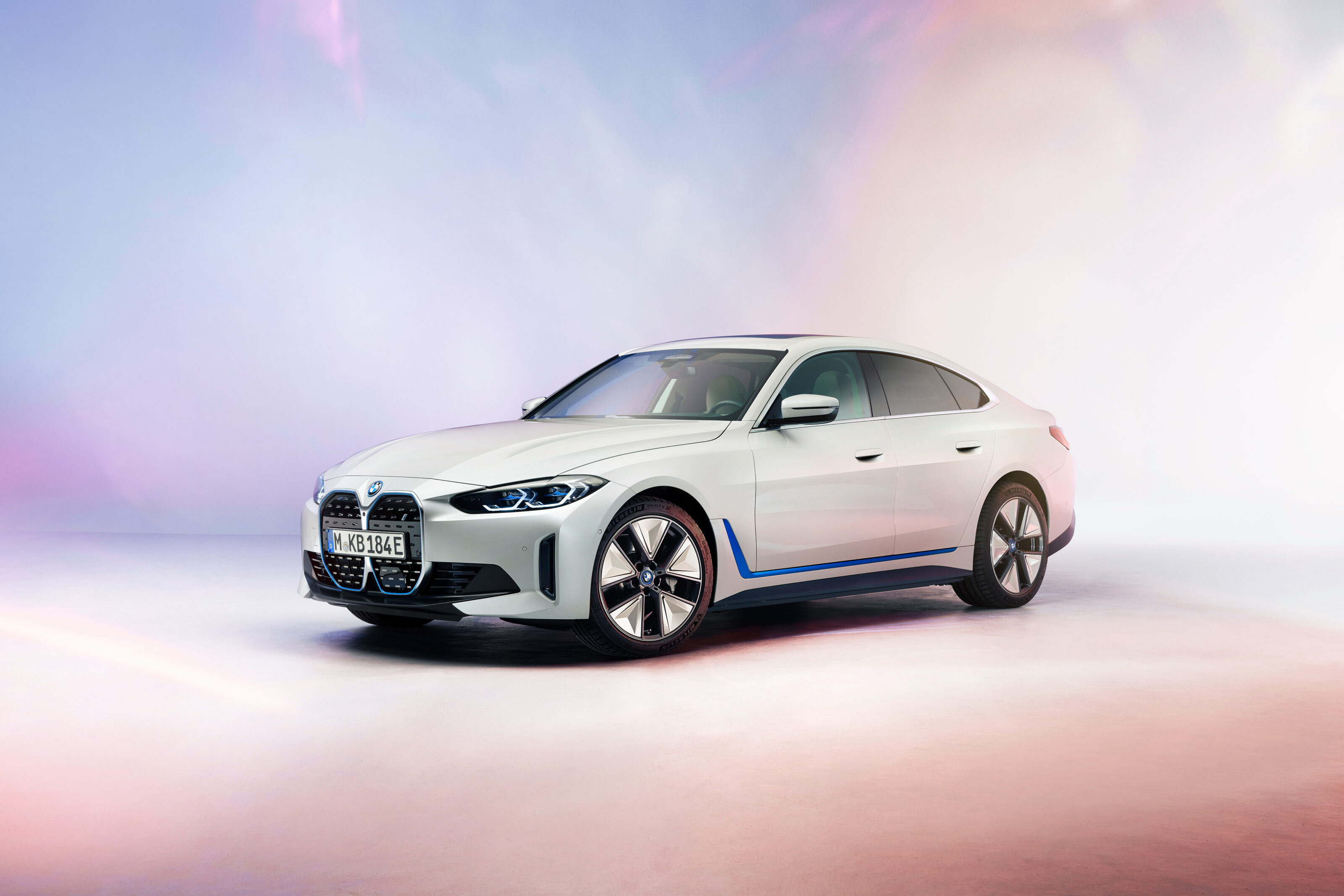
In Munich, BMW has its M division working on the fully electric i4. Despite packing 390kW and a 4 sec 0-100km/h sprint, CEO Markus Flasch has downplayed the outright performance credentials of the first M car to be produced sans internal combustion. “It’s not just about power output and longitudinal performance,” he said last year.
While AMG and M are yet to reveal its first EV performance sedan, their native rivals at Audi have already stolen a march with the RS e-tron GT, which uses motors on the front and rear axles for a total system output of 440kW/830Nm, power peaking to 475kW during what Audi calls ‘overboost’. This equates to a claimed 0-100km/h of 3.3 seconds and 0-200km/h of 11.8 seconds.
The AMG, RS, and M EVs will all have a single American benchmark to beat, the Tesla Model S Plaid+, which was recently revealed, with production set to begin imminently (though right-hand drive production could be a while away).
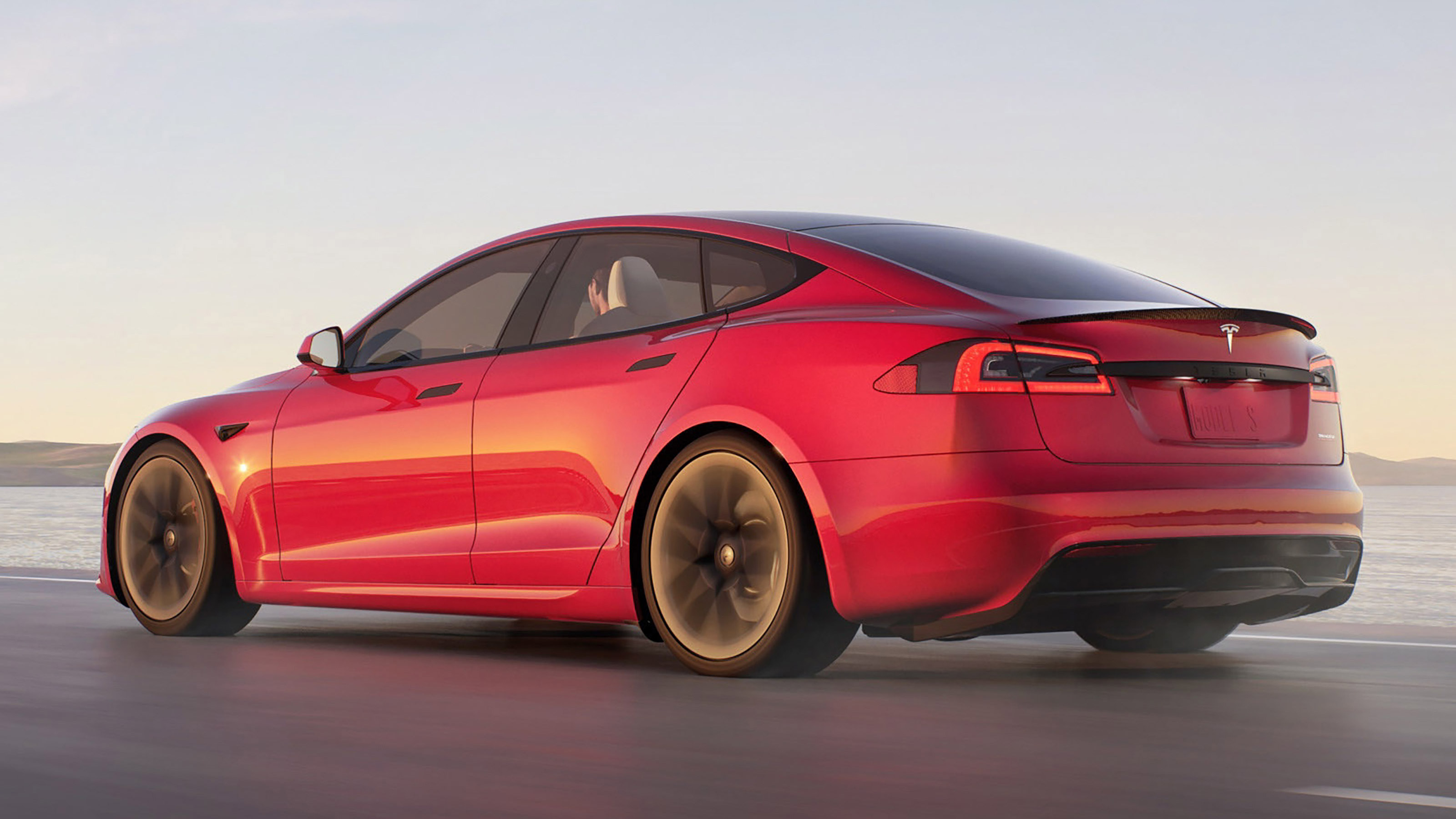
The fastest Tesla to date uses three electric motors for a total system output of 820kW with Tesla claiming a 0-100km/h time of less than two seconds, and quarter mile timeslip of 9.23 seconds. That’d get you kicked out of your local drag strip in short order. Top speed is claimed to be 320km/h.
Note that Tesla’s figures subtract a 1-foot rollout from its 0-100km/h claim. Add a couple tenths at least for the full-fat figure. In its release, Tesla has attempted to return fire at Porsche by stating the new powertrain is “capable of back-to-back, consistent 1/4 mile runs” which seems a tacit admission that the old Tesla powertrain wasn’t capable of the same feat.
The Tesla Model S Plaid+ already has local pricing of $237,970.
It’s an intriguing time. Some manufacturers are hedging while others are pushing all the chips in on EVs. The winners are car buyers who, in the medium term at least, will be offered a level of choice we’ve never seen before.
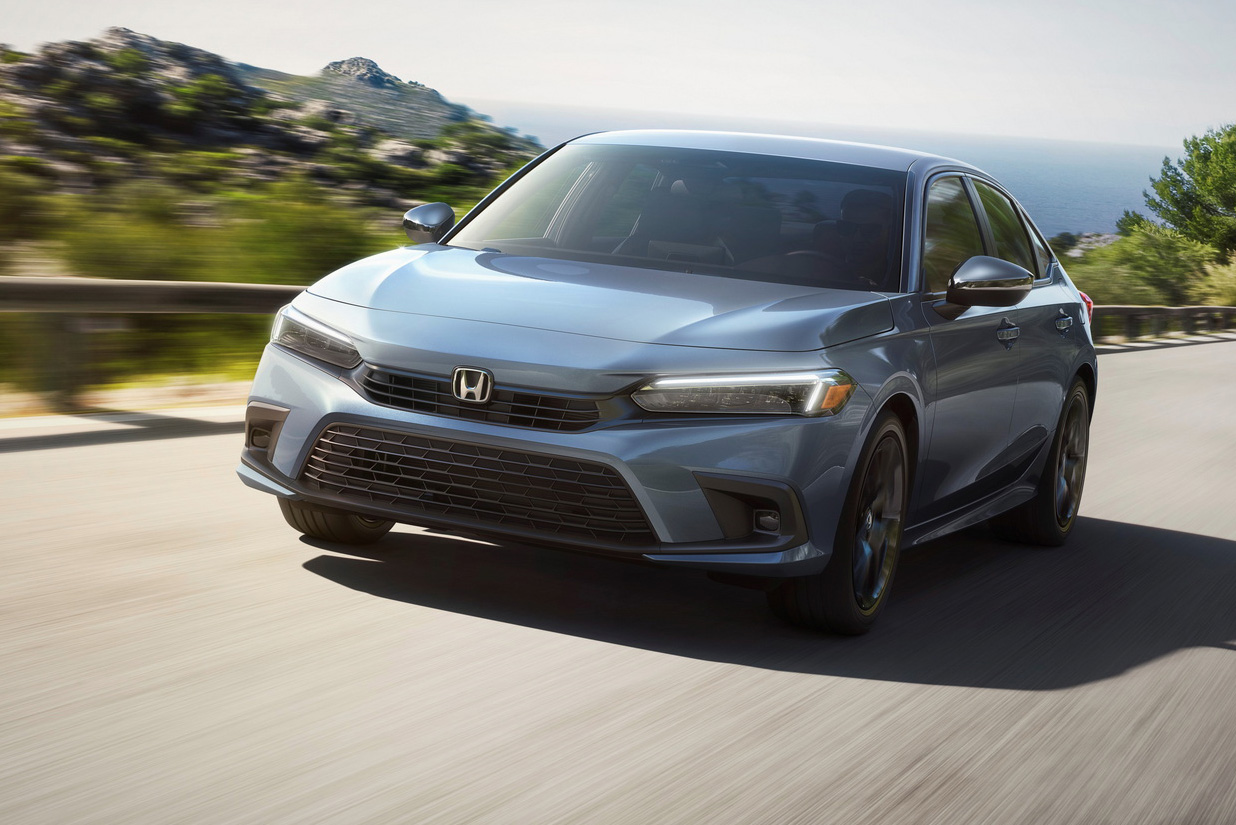
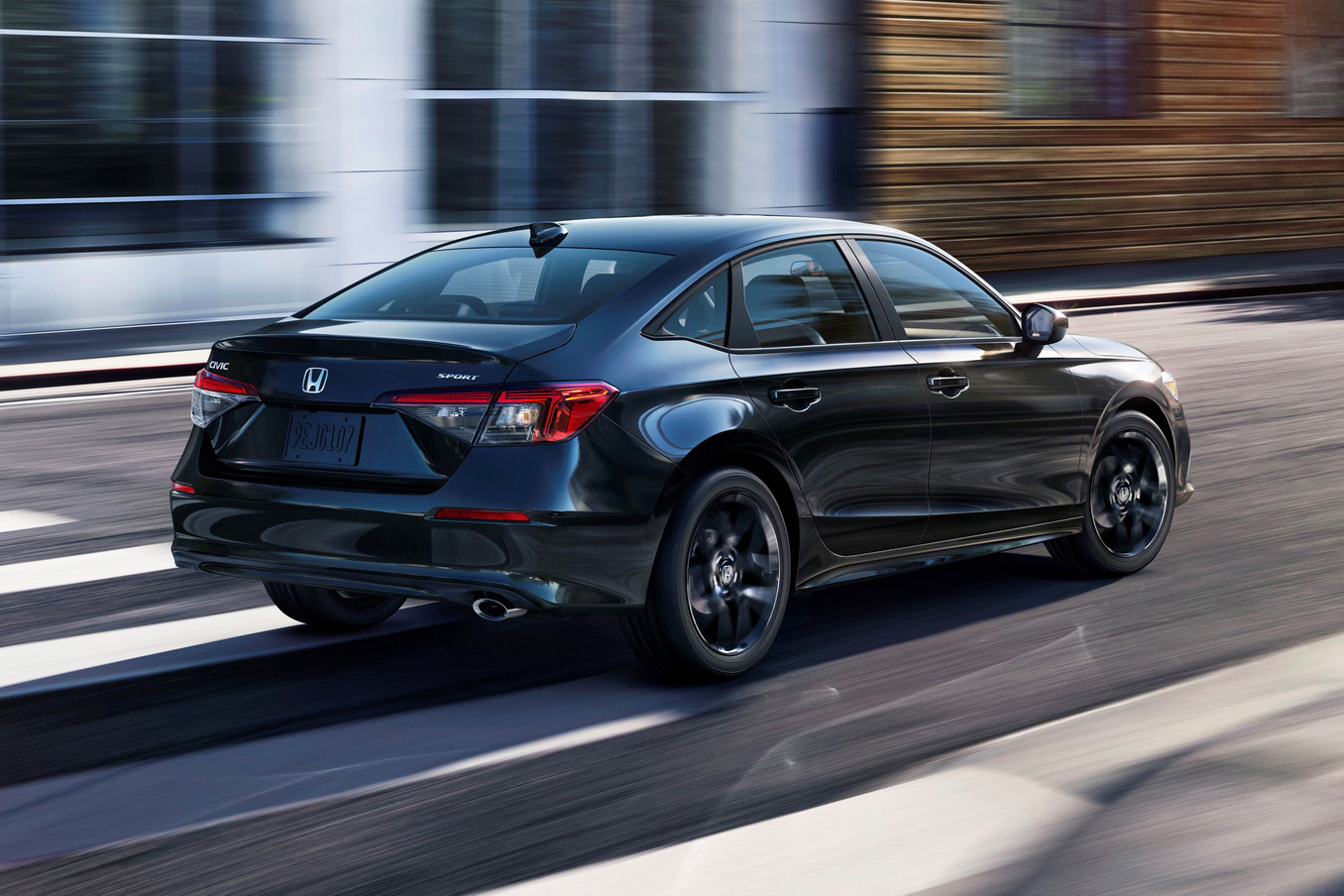
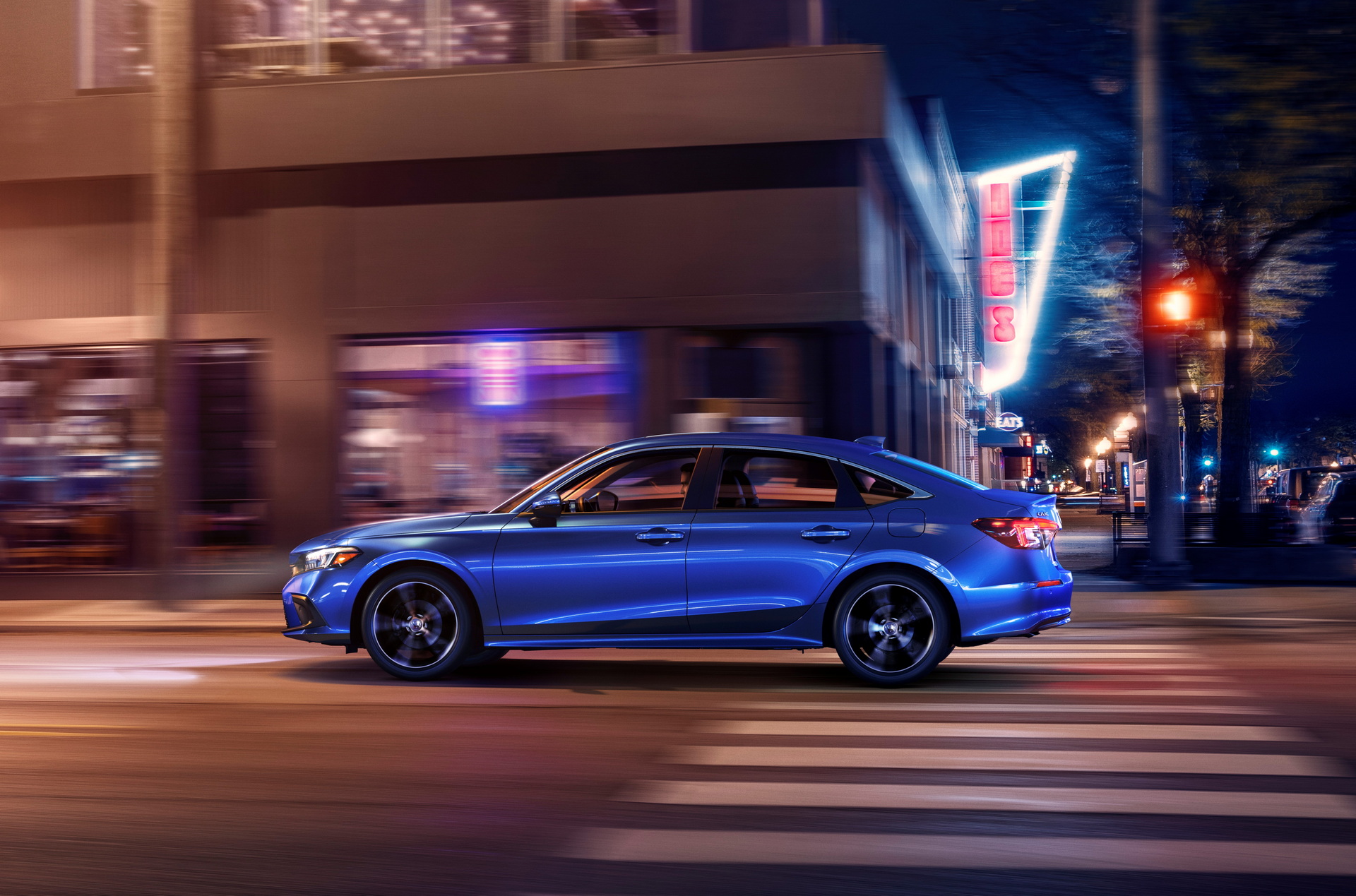
The 2022 Honda Civic sedan has been revealed today, showcasing a more understated exterior design and a subtly retro-themed interior.
Looking just-about identical to both the prototype we saw last year, and the recently leaked images of the Chinese-made version of the sedan, the only real differences this Civic presents appear to be; a new alloy wheel design, a marginally less angular top portion of the front fascia and an ever-so-slightly tweaked grille.
Honda says the look of the new Civic Sedan was designed through a revived philosophy, first used for a much earlier Honda design project in 1978: Man Maximum, Machine Minimum.
The idea then was that the ideal car design should go beyond the traditional human-machine relationship.
That project resulted in the Honda City, styled around a “tall boy” concept that eventually brought dozens of compact but somewhat upright passenger cars to market – like the Jazz, now sadly retired. SUVs, of course, now play that role.
This time around, Honda has looked to that Man Maximum / Machine Minimum philosophy to develop what it describes as a “thin and light” body design.
That means simpler lines and more curves, replacing the sharp angles and heavy creases of the edgy outgoing model – and, in many respects, returning to the simple styling of earlier generations.
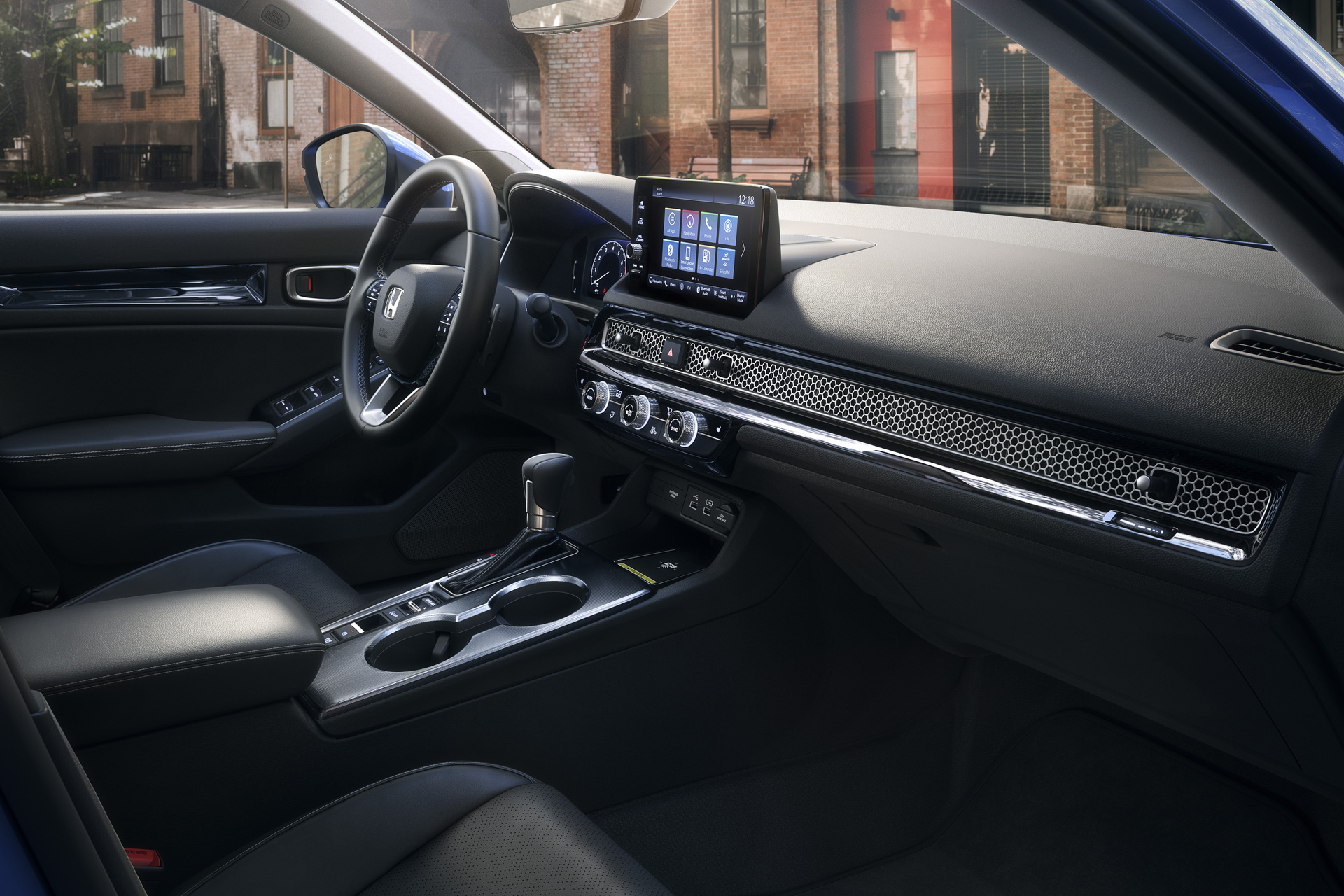
Inside, the new Civic boasts a dash design that is equal parts retro and modern, with a classic honeycomb grille running the length of the dashboard. The neat trick there is that the air-conditioning vents are essentially hidden behind the grille.
On the driving front, the bigger new Civic benefits from a wider track, growing by 13mm at the rear and 36mm at the front.
The wider track will improve driving dynamics, but the new Civic also gains new high-strength steel and aluminium components, while torsional and bending rigidity have been improved by eight and 13 per cent respectively.
In America, where today’s big reveal was focused, the Civic will get familiar 118kW/187Nm 2.0-litre and 134kW/240Nm 1.5-litre engines, the former being a naturally-aspirated unit and the latter benefiting from turbocharging.
Power is again sent to the front wheels through a CVT automatic transmission, which Honda claims will offer buyers a more conventional geared feeling – including a ‘downshift’ feel when slowing and braking.
Will the 2022 Honda Civic Sedan come to Australia?
As previously reported by WhichCar, Australia won’t be seeing the four-door Civic, with the Japanese automaker confirming it has no plans to deliver it locally.
For the Aussie market, Honda will the five-door hatch variant of the 11th-generation Civic, as it believes this model strikes a better chord with local consumers.
The sedan will be built in a number of locations across the globe, including Ontario, Canada; and China, the latter of which is where it will be jointly built by Honda and Chinese automaker Dongfeng.
Meanwhile, the Civic hatch will, for the first time, be built at the automaker’s Indiana factory in America, taking over the role of Britain’s Swindon plant which is due to permanently shut later this year.
The hatch will also be constructed in Honda’s Thailand factory, which will likely produce the regular variants of Australia-bound Civics, while the eagerly anticipated Type R will be made in Indiana.
Details about the Civic hatch remain scarce, but an official unveiling is rumoured to be mere months behind the sedan’s release, with a local launch likely to happen early in 2022.
Watch this space as WhichCar brings you all the latest updates on the 2022 Honda Civic.
Talking points
- 5G sim cards will improve sound quality
- Experts working on object-oriented 3D sound
- Sonos speakers being rolled out across compact A and Q range this year
- EVs pose new challenges for sound development
‘Audi-ophiles’ will be transported from the driver’s seat to a concert hall possibly as early as 2024/25 – the date by which the German automaker plans to have high-speed 5G sim cards built into its cars capable of vastly improving sound quality.
At an Audi Tech Talk on Tuesday, the manufacturer revealed the next big thing it is working on in the sound and acoustics world is implementing 5G across its range.
While most people currently use their smartphones to listen to music or podcasts in the car because it is convenient, the bandwidth of Bluetooth wireless technology is limited and creates a bottleneck that can cause a loss of sound quality.
Audi claims that in the near future, for the first time, it will use its cars as receivers – via the built-in SIM card and a high-performance receiver module – to open up new, higher-quality streaming channels.
Dr Tobias Gründl, who joined Audi as Head of Development for Sound and Acoustics in 2019, says: “Audi is a leader in creating a unique, three-dimensional stereophonic experience – to that end, an extremely wide range of technologies will be used in the future.
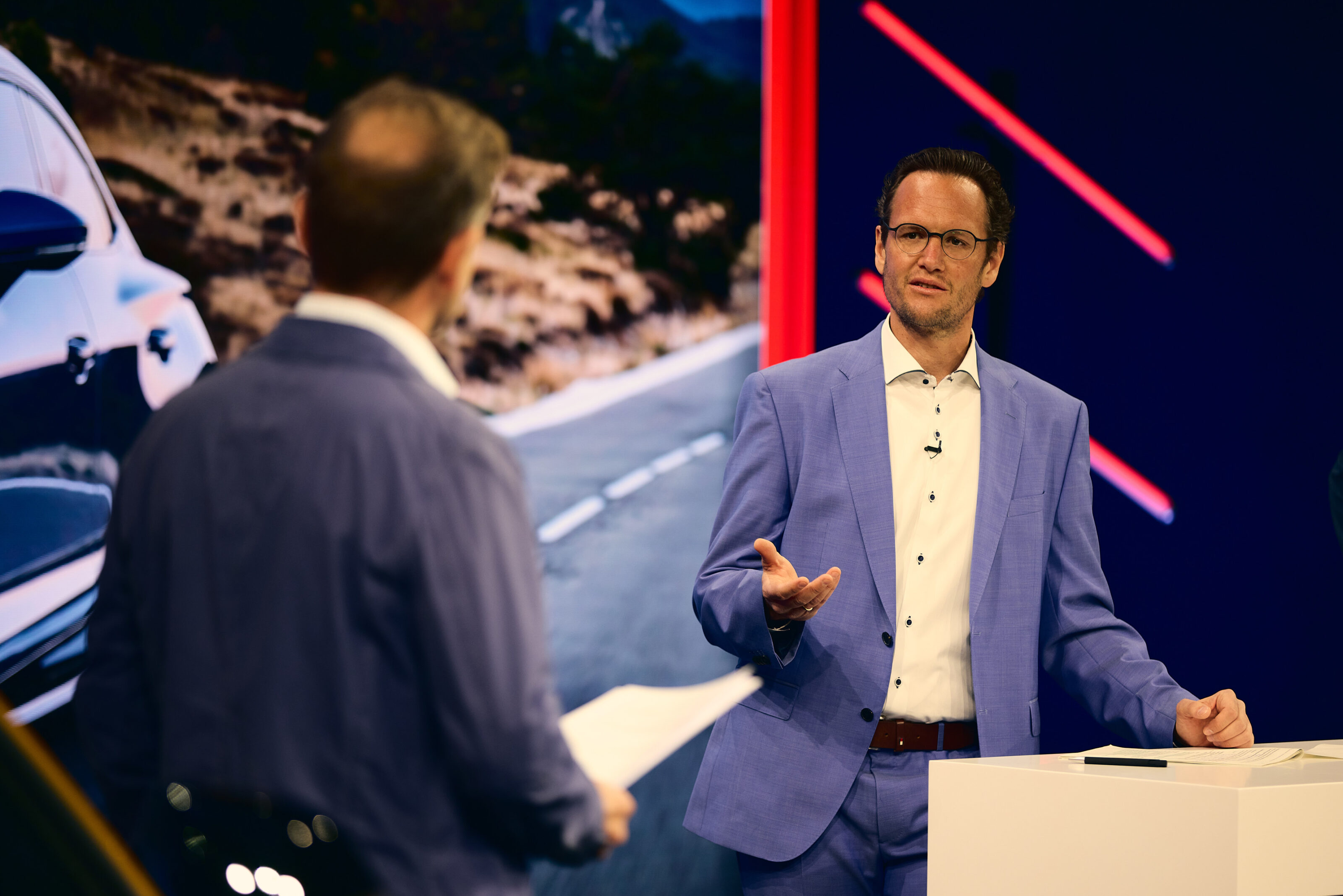
“Software gives us a lot of new possibilities for sound presentation because the hardware is already there. In the future, the interior will become more and more like a concert hall and the passengers will be sitting in the middle of it.”
The quality of sound in cars has come a long way in the past few decades.
Back in 1989, in the age of stacked out amps and speakers, the Audi 200 was the first to have Bose speakers, and many years later in 2006, the Audi A8 teamed up with another luxury brand for the first time – Bang and Olufsen.
The new partnership for 2021 though is with high-end brand, Sonos. Recently revealed as the music system fitted in the new Q4 E-Tron, it will also be rolled out across Audi’s other compact A and Q models mid-year, offering a youthful and more bass-heavy sound, while Bang and Olufsen remain the system of choice for Audi’s mid and full-size models from A4 upwards.
Speaking about the partnership, Audi says: “Sonos’s authentic, energetic sound fits perfectly with our sound philosophy and our compact models. The new Q4 E-Tron is Audi’s entry point into the premium world of electric vehicles.
“It is increasingly aimed at younger generations and young families. And those customers know Sonos from home. Now, for the first time, we’re bringing Sonos where people like listening to music most.
“At the start of our collaboration, we are presenting a few exciting new features: for the first time, people can use familiar sound settings to make tonal changes in the timbre that will make the interior more emotional. The back seat can have more bass and be filled with louder sound while the driver and front-seat passenger can listen at half the volume and a more neutral balance so they can concentrate more on traffic – or spare their nerves.”

The premium car brand is also continuing to improve its sound and acoustics in other ways, working on what it calls an “immersive 3D sound” which will create a more “holistic experience”, as well as tackling the challenges posed by the differences between internal combustion engine and electric-powered vehicles.
“The Audi sound is distinctive. The challenge for us has been to create this sound pattern in every vehicle segment with their different kinds of spaciousness. Whether they get into an A1 or an A8, it always sounds uniquely like an Audi,” adds Dr Gründl.
Since the current Q7 model generation was introduced in 2016, Audi has offered Bang and Olufsen systems with conventional 3D surround sound using a channel-oriented playback. What the German carmaker is now working on is an immersive 3D sound which is object-oriented.
Using this approach, the sounds in the audio files are already linked with metadata which contain precise information on how and where the corresponding sound should be heard in the car in an attempt to reflect how it was recorded.
According to Audi, however, we won’t be able to properly enjoy the full experience until its cars are driving themselves because we’ll be too busy…well, driving.
It’s funny how time can make even the most assured comments soften like a rotting peach. Take my remark on the manual version of Porsche’s sensational Cayman GT4 from last year: “It means – and I can’t believe I’m saying this – that perhaps the GT4 to buy will be the automatic version…”
Even now it reads like blasphemy (manual > auto right?), but in my defence the only criticism I could fairly level at the manual GT4 was that its gear ratios felt too long.
The top of second redlined at just under 140km/h, meaning that should you wish to exploit every last rev from the new atmo 4.0-litre flat six – and trust me, you did – you were effectively resigning yourself to the fact that, at some point, you’ll be having an uncomfortable conversation with the police.
Consider that and the prospect of a punchier, quick-shifting auto with an extra ratio didn’t sound too bad.
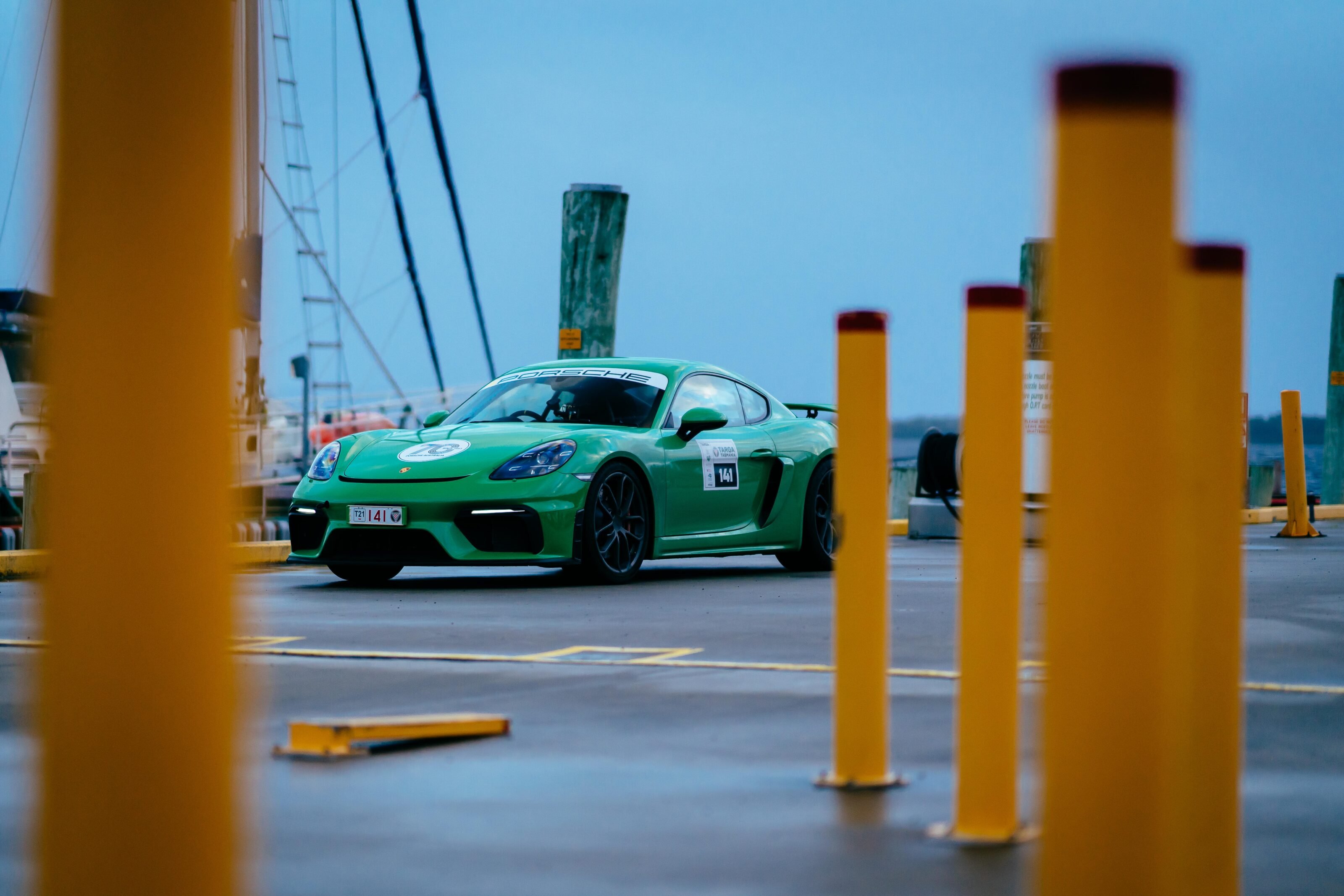
Now though, as I prepare to drive the first PDK GT4 to arrive in Australia at Targa Tasmania, seeds of doubt are beginning to creep in. “The ratios weren’t that long, were they?” a voice whispers, before adding “have you forgotten how sweet the manual gearbox is? It’s close to perfect!”
To quell the growing chorus of #savethemanuals ringing in my head, I switch my attention to the one area where the PDK is unquestionably superior: speed.
Opting for the PDK trims a full half second from the GT4’s 0-100km/h time, meaning this is a 3.9 second car. Keep your right foot buried and the PDK retains a four tenth advantage both to 200km/h and over the quarter mile.
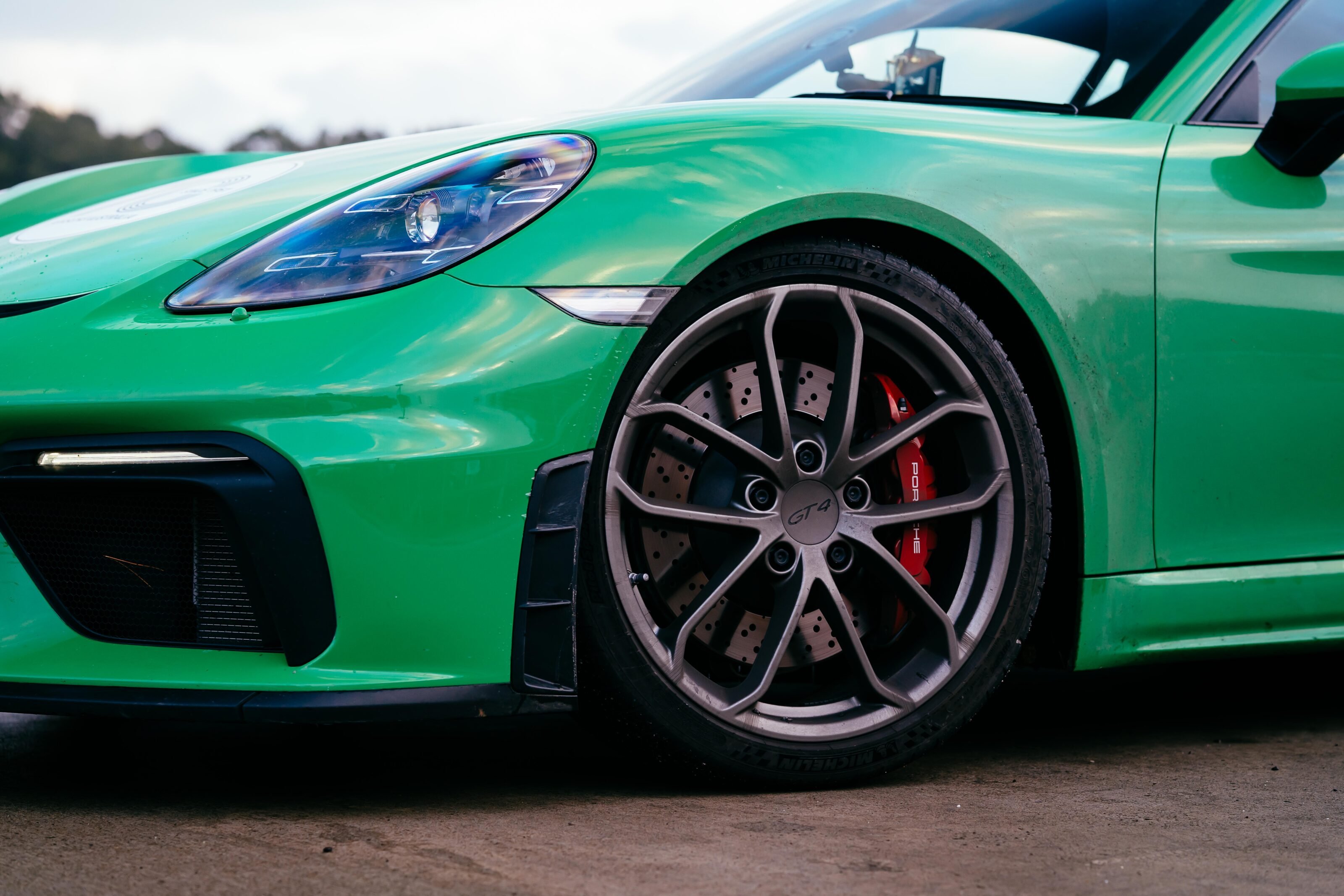
The PDK unit itself is a seven-speed dual-clutch and is paired to exactly the same 4.0-litre flat-six as the manual GT4.
Power is unchanged at 309kW @ 7600rpm, although the 430Nm torque figure has crept north by 10Nm, which helps to offset a 30kg weight gain compared with the manual.
The price is up too, with PDK versions adding $4580 to the GT4’s sticker, not that it’s likely to curb demand. Porsche Australia wouldn’t speculate on the potential sales split, but if the GT3 is any guide, expect the PDK to make up the majority of sales.
But the question remains – has the PDK’s additional ratio fixed the Cayman’s primary flaw? Well, not really… The good news is the gear ratios are shorter, but they’re just not short enough to make a tangible difference.
Second gear still tops out well beyond the national speed limit, with redline arriving at an indicated 128km/h.
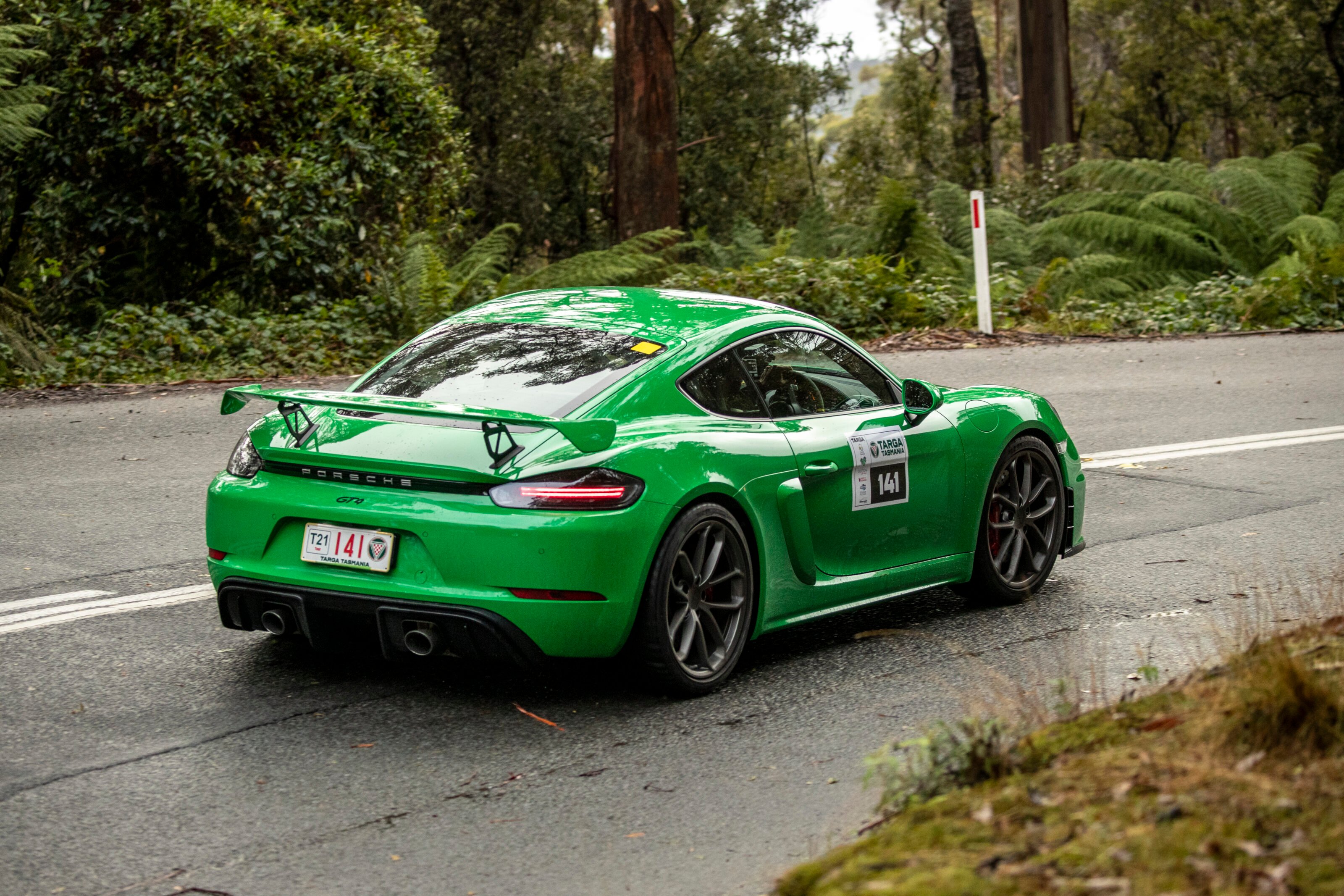
The silver lining is that this is a gem of an automatic. Smooth and soft-edged around town, it’s also telepathically fast and intelligent when you’re driving quickly.
There are two maps for the gearbox: normal, which instantly shifts into the highest ratio possible, and Sport, which will happily hold onto lower gears and keep the revs high.
There are paddles to play with, and we did appreciate their greater control through some of Targa’s more technical sections, but leave the ‘box alone and it does a stellar job of selecting the correct ratio at precisely the right time.
The PDK also has no qualms about dropping back to first (with a dramatic flair of revs) for Targa’s tighter hairpins where a driver of the manual GT4 would likely opt to stay at the very bottom of second.
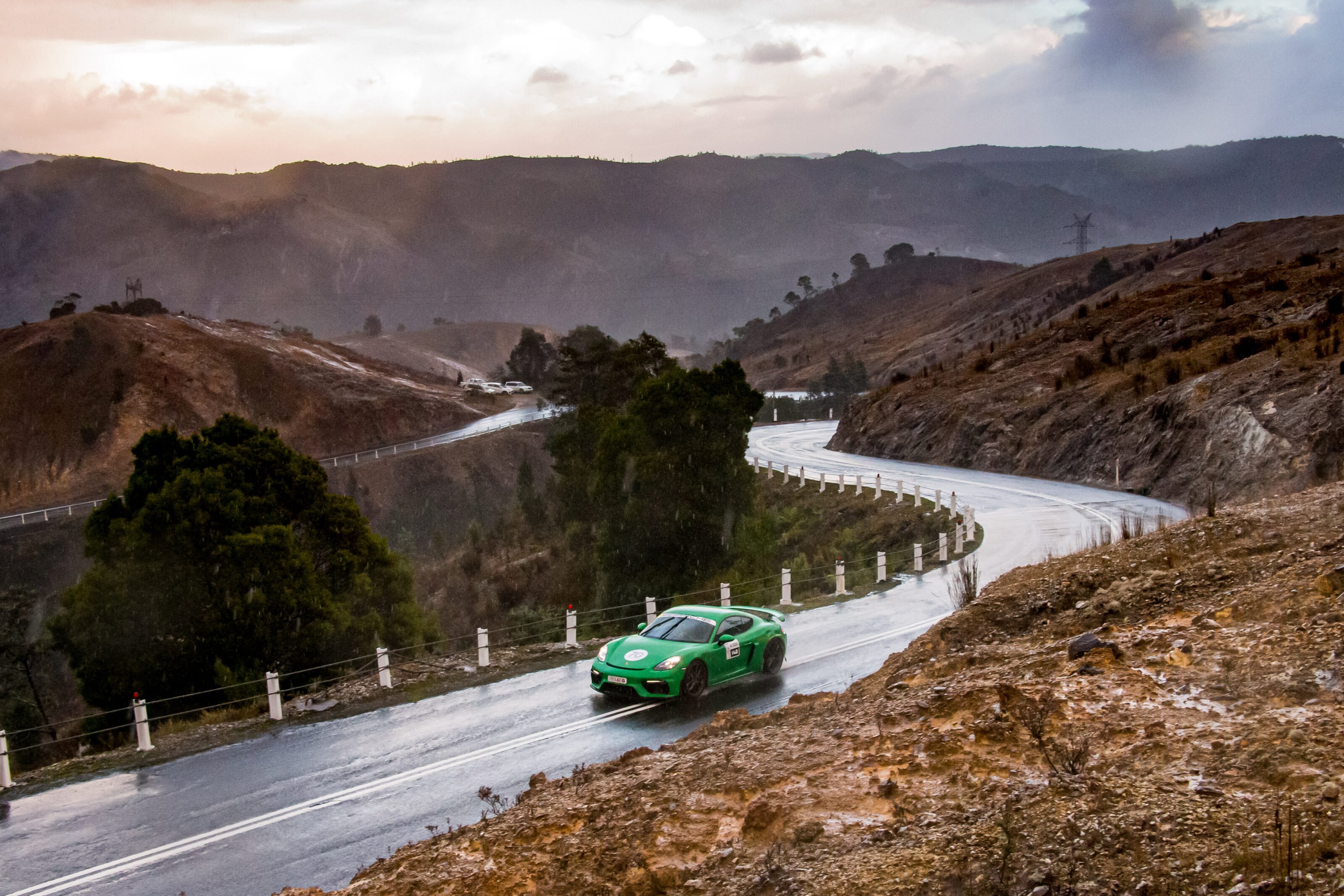
What I wasn’t expecting, however, is how much the deletion of the third pedal shifts the GT4’s character.
Drive the manual GT4 hard and a big chunk of its joy comes from the sensation of nailing crisp upshifts and revelling in the accuracy of the shifter as you juggle heal-and-toe downshifts.
Pedalling the PDK version yields a different kind of satisfaction. With no lever to consider, your focus moves to maximising the other elements at your disposal.
You lean more on the chassis; your gratification now linked to how much speed you can carry into and out of bends.
It’s a subtle but significant personality shift that brings the GT4’s sense of balance and connection even more to the fore.
Michelin Cup 2s are the standard tyre, and in the dry, there’s a vast amount of grip to play with. You have significantly less grip in the wet (Cup 2s need heat to be at their best) but keep your inputs smooth and the GT4 never feels unpredictable or snatchy.
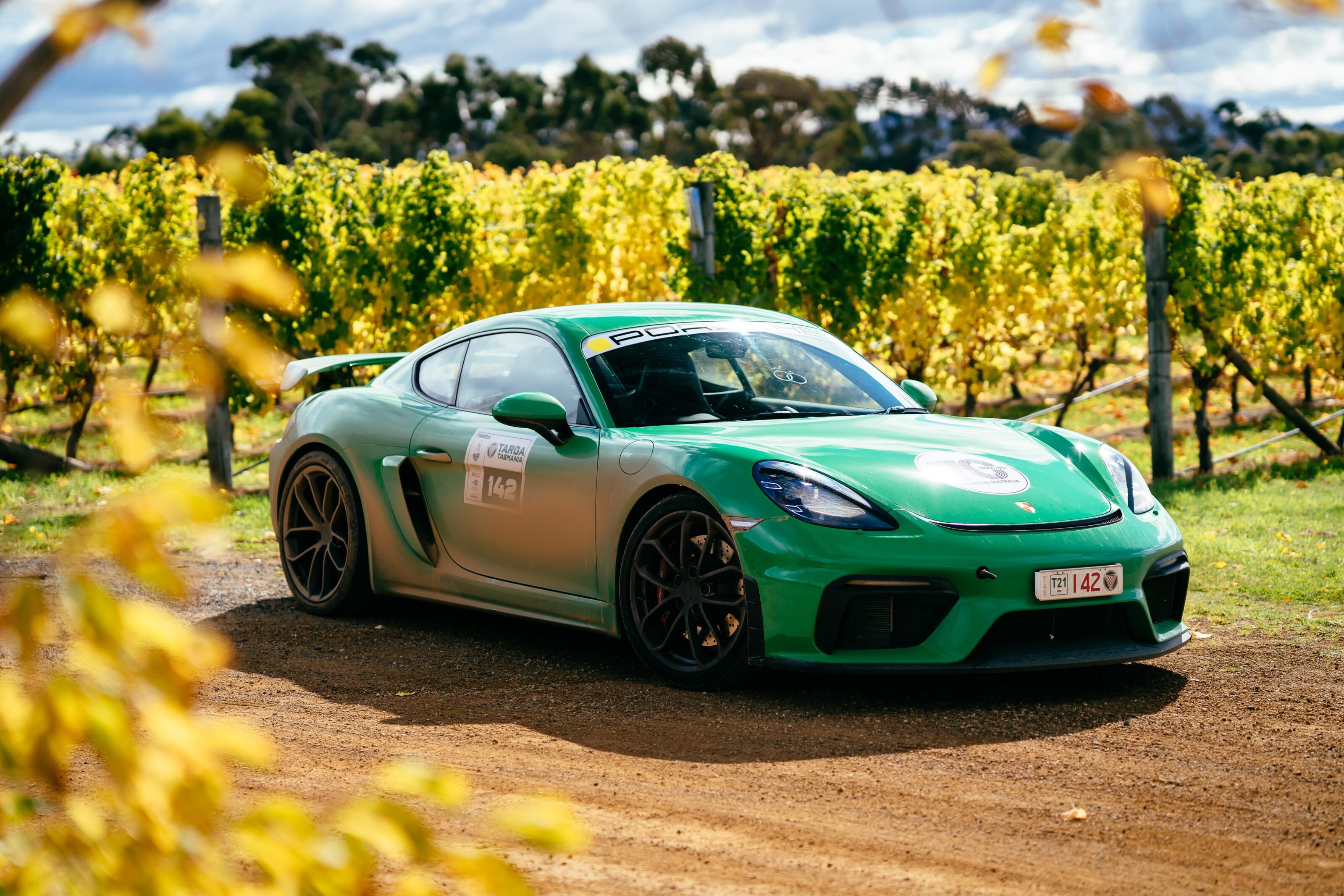
And the braking performance from standard steel rotors (carbon-ceramics are optional) is exemplary, both for stopping power and for feel through the pedal.
That the PDK is a faster car is unquestioned, but is it a better car than the manual? That depends on where you seek your satisfaction.
If speed and eking out every last tenth are your priorities, the PDK is superior. But if you place just as much emphasis on the experience of driving as you do outright performance, then the manual reigns supreme.
Talking Points
- Four new platforms include sportscar and hypercar
- All-electric ‘Type 132’ SUV slotted for 2023 unveling
- Lotus-Alpine electric ‘E-Sports’ car rumoured for 2024 launch
UPDATE, March 30, 2022: Lotus has finally unveiled its new electric SUV, the Eletre. Get the full story at the link below.

The story to here
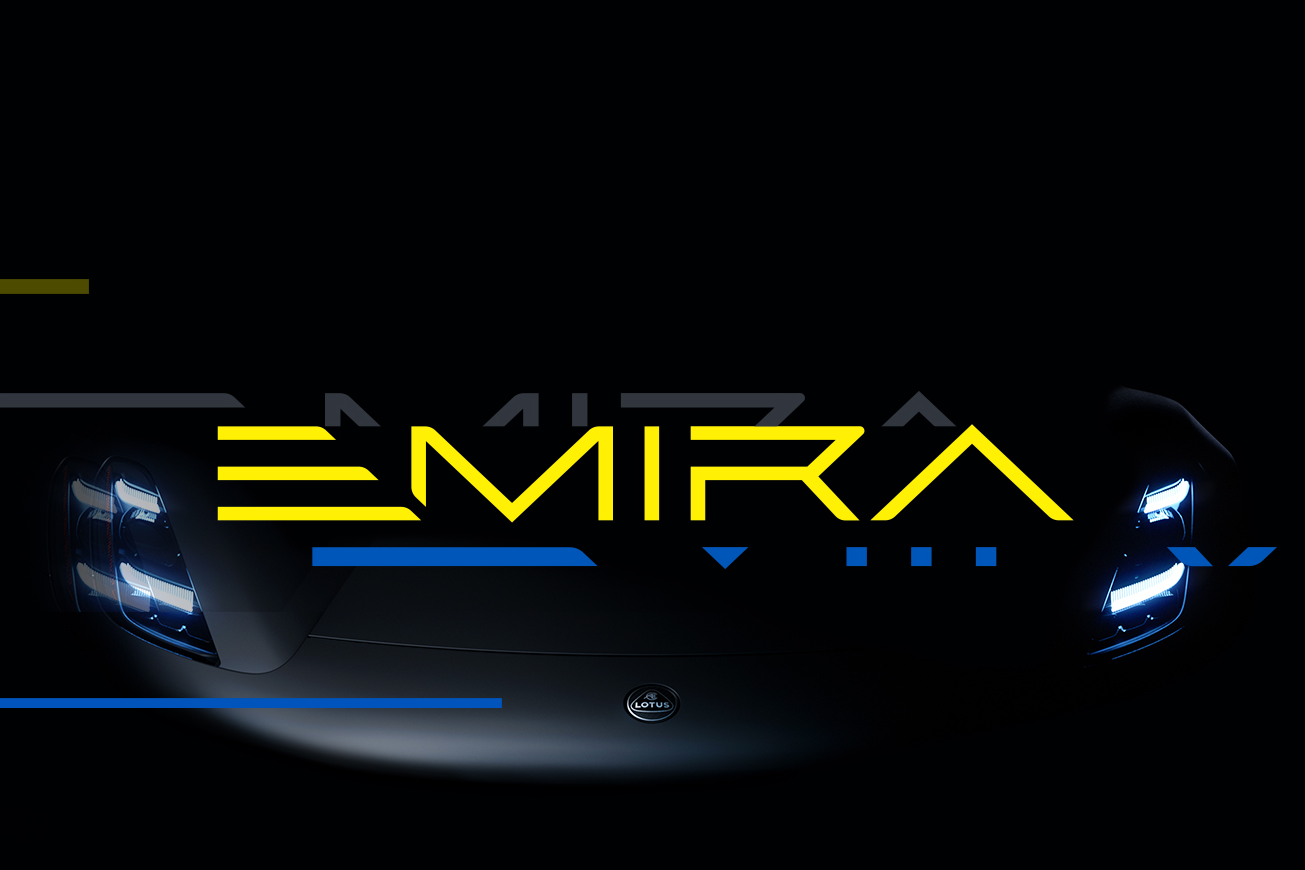
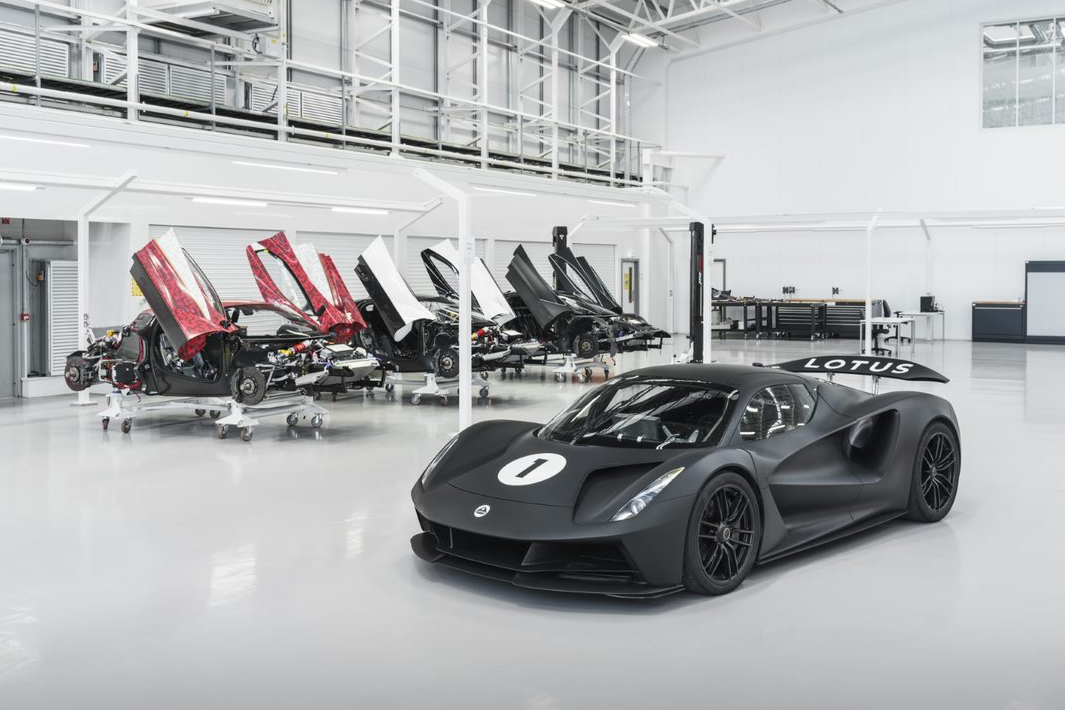
Hot off the heels of the sneak preview and name reveal of its brand new sportscar, the Emira, Lotus has released details of four new chassis architectures that will underpin its entire future product line-up.
Split into four different categories – sportscar, hypercar, premium, and electric sports architecture – the Geely-owned automaker aims to re-establish itself as a key player in the sports car market.
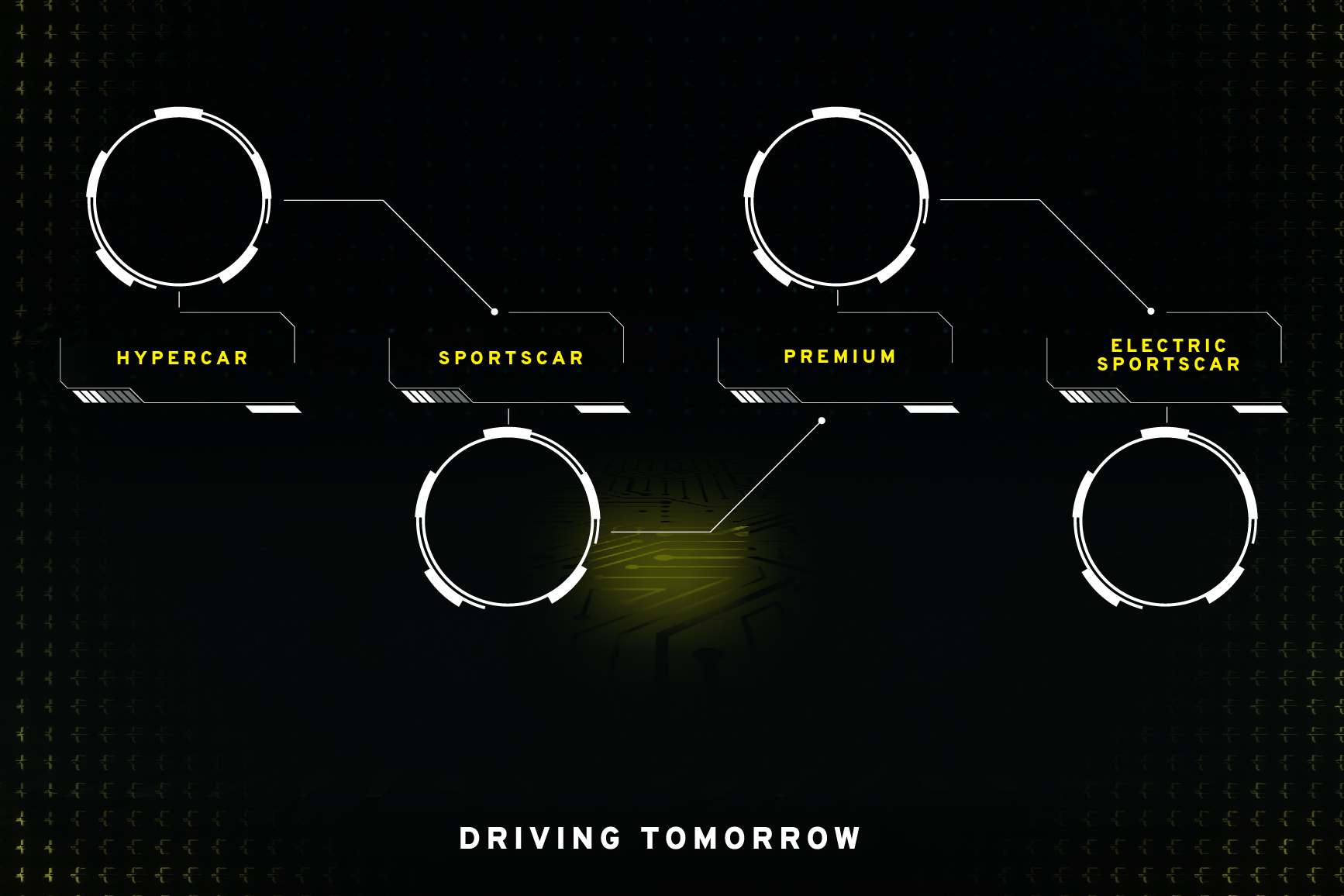
The first has been donned the ‘Elemental’ architecture and will serve as the base for the all-new Emira.
Made using Lotus’s considerable expertise in extruded aluminium architecture, the chassis promises to deliver both a lightweight and dynamic platform for what will be Lotus’s last vehicle powered by an internal combustion engine.
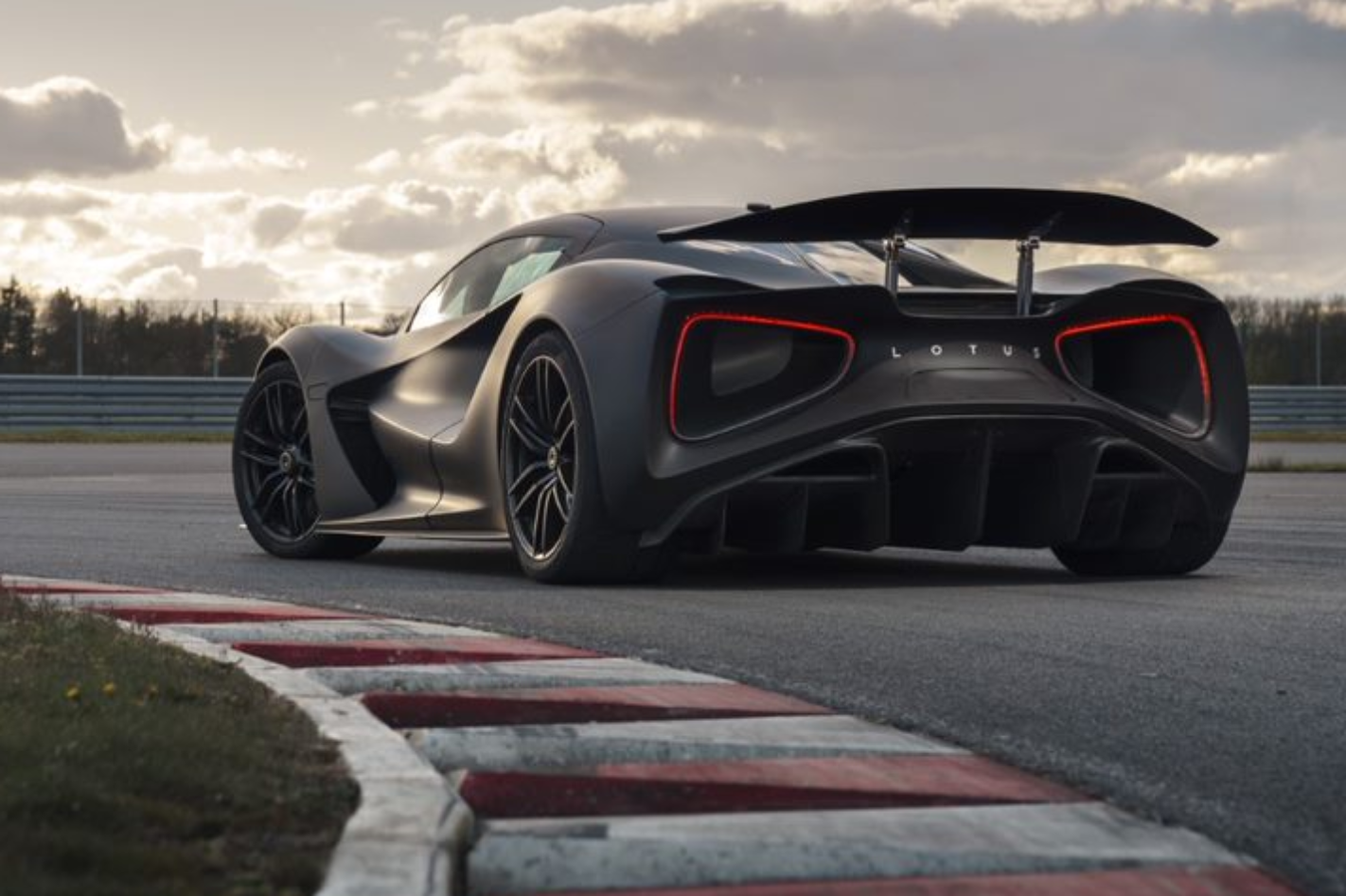
Lotus’s ballistic 1470kW EV hypercar, the Evija, will utilise the second of the Hethel firm’s new chassis architectures, donned the ‘Extreme’ platform.
The Extreme architecture is an important one for Lotus, as it’s the automaker’s first-ever carbonfibre monocoque chassis.
Built by CPC in Modena, Italy, the complex and lightweight chassis goes a long way to ensuring the Evija’s kerb weight, which is said to be just 1630 kilograms.
That may sound like a lot, but considering the Evija will be jam-packed with a whopping 2000kW lithium-ion battery pack slung directly behind the cabin, it is remarkably light.
The third architecture is being described as ‘the first-ever truly global automotive architecture’ made by Lotus.
Called the ‘Evolution’ platform, Lotus says it will form the basis for a range of lifestyle vehicles, including an all-electric SUV, that will push the British brand into new markets and segments.
Designed by Lotus at its British headquarters with support from teams in China, Sweden, and Germany, the automaker is hoping the cars spawned from the Evolution platform will drive sales and profitability in a way the Hethel outfit hasn’t experienced before.
The fourth and final new architecture is one being jointly developed between Lotus and Renault’s EV performance spin-off, Alpine.
Referred to as the ‘E-Sports’ platform, it’s understood the Anglo-French modular chassis will act as the foundation for both a Lotus and Alpine fully-electric sportscar.
Collaborations between carmakers are becoming more and more commonplace across the automotive landscape, however, Lotus says this new EV sportscar will retain much of the characteristics synonymous with the brand.
“The E-Sports architecture will be flexible and modular, and will generate an exciting new sportscar for the Lotus brand, with contemporary styling, class-leading ride and handling, explosive performance and that unmistakable Lotus character – a pure dynamic experience that is for the drivers,” said Matt Windle, Lotus Cars managing director.
“I have challenged our teams to target the same weight as our latest combustion engine sports cars.”
Lotus has, of course, announced grandiose plans like this before, only to have them completely fall apart (Dany Bahar, anyone?).
However, since Chinese auto-giant Geely bought the ailing marque, it would appear as though things are finally looking up for the legacy sportscar brand – just look what Geely has been able to accomplish with Volvo and Polestar.
Exact timing for these new models is still murky, with the Emira due to be globally revealed in July, which is around the same time the Evija should also be launched.
The aforementioned lifestyle SUV, codenamed the Type 132, is likely to be unveiled in 2023, and the Lotus/Alpine amalgamation should follow the year after in 2024.
Be sure to watch this space as WhichCar brings you all the latest updates on the Lotus Emira and Evija.
Nissan’s performance-enhanced Leaf e+
- 2021 Nissan Leaf e+ launches at $60,490 before on-road costs
- Lithium-ion battery capacity boosted 55 percent
- Price jumps by more than $10,000
- Original 40 kWh battery version still available
I’ve never relished in the ageing of a vehicle more than the Nissan Leaf. Not because I want to watch it wither and yield to a rising army of newer electric vehicles, but because an old EV is an ironic symbol of progress.
While the unstoppable momentum of new zero-emissions vehicles builds exponentially, there are few that can claim to have dipped their toe in the water earlier than the little Japanese hatchback, and even fewer are still going strong today. But how strong?
Among other brands, Porsche’s Taycan has categorically proven electric can be fast and aspirational, Audi and Mercedes and Jaguar will sell you an SUV of sorts, while Tesla offers a model that will travel more than 600km on a single charge. The Leaf however, has spent a decade mastering the art of blending in.
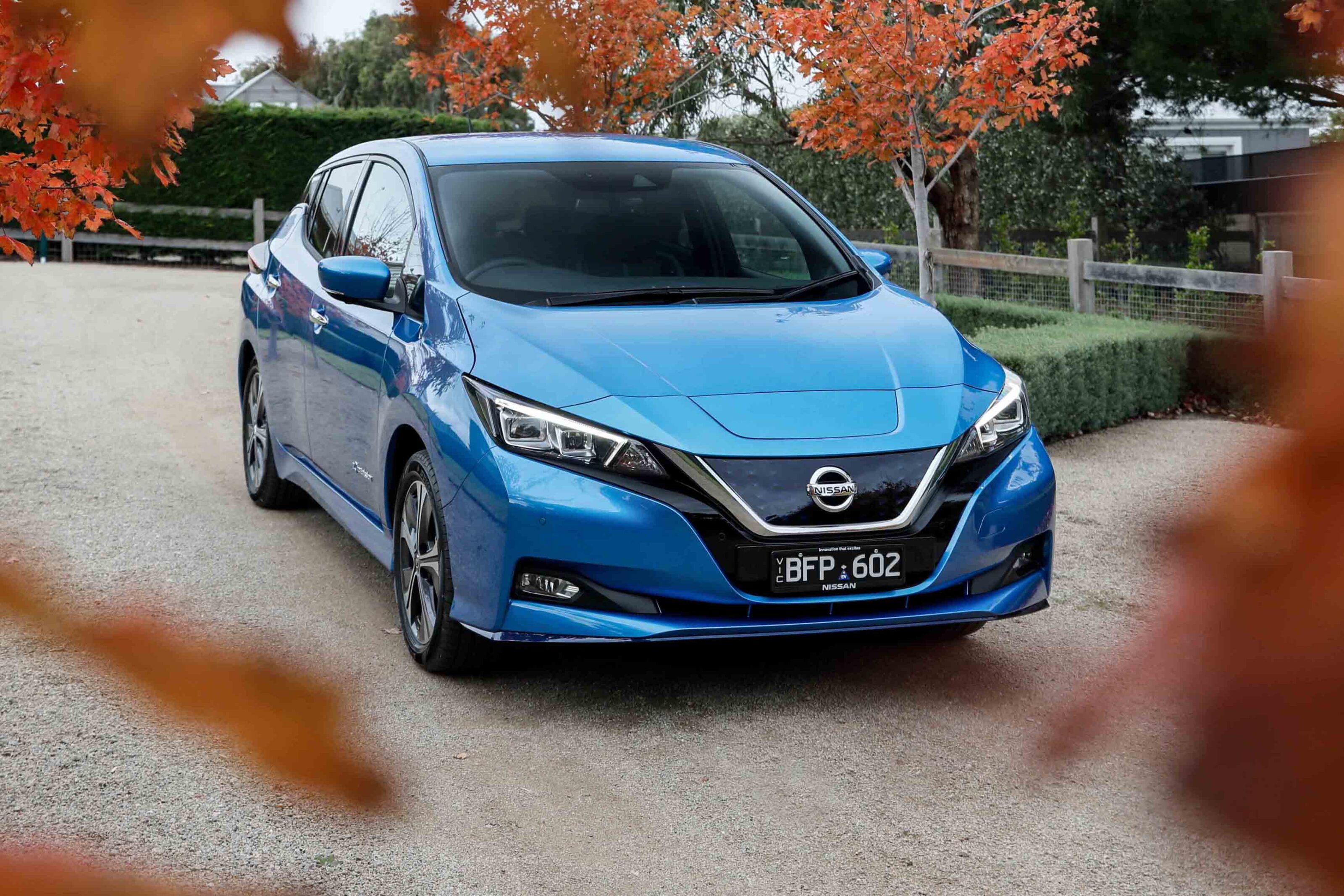
That’s not a criticism. For a vast majority of Australian drivers, a car falls into the same category as a fridge and lawnmower – an unremarkable device that has a simple job to do – and basic electric vehicles will doubtless be the ones that eventually kickstart the revolution on Australian roads.
But that won’t happen until transitioning to a battery-powered car makes financial sense – and that brings us to the new Nissan Leaf e+.
You can still buy the same second-generation model that arrived in 2017 powered by a 40kWh battery for a sniff under $50,000 which is not far off Australia’s cheapest EV – the $44,000 MG ZST – but it is still a whole heap of cash for a small Japanese hatchback.
But now there’s this, the Nissan Leaf e+. To get into one, you’re looking at $60,490 before on road costs.
For that 21 per cent increase in price, the e+ ups battery capacity by 55 per cent – to 62kWh – and that means more of everything.
Power is up from 110kW to 160kW, torque has increased from 320Nm to 340Nm.
Range is also now significantly longer, with up to 385km of driving range possible on a single charge, versus 270km from the 40kWh Leaf.
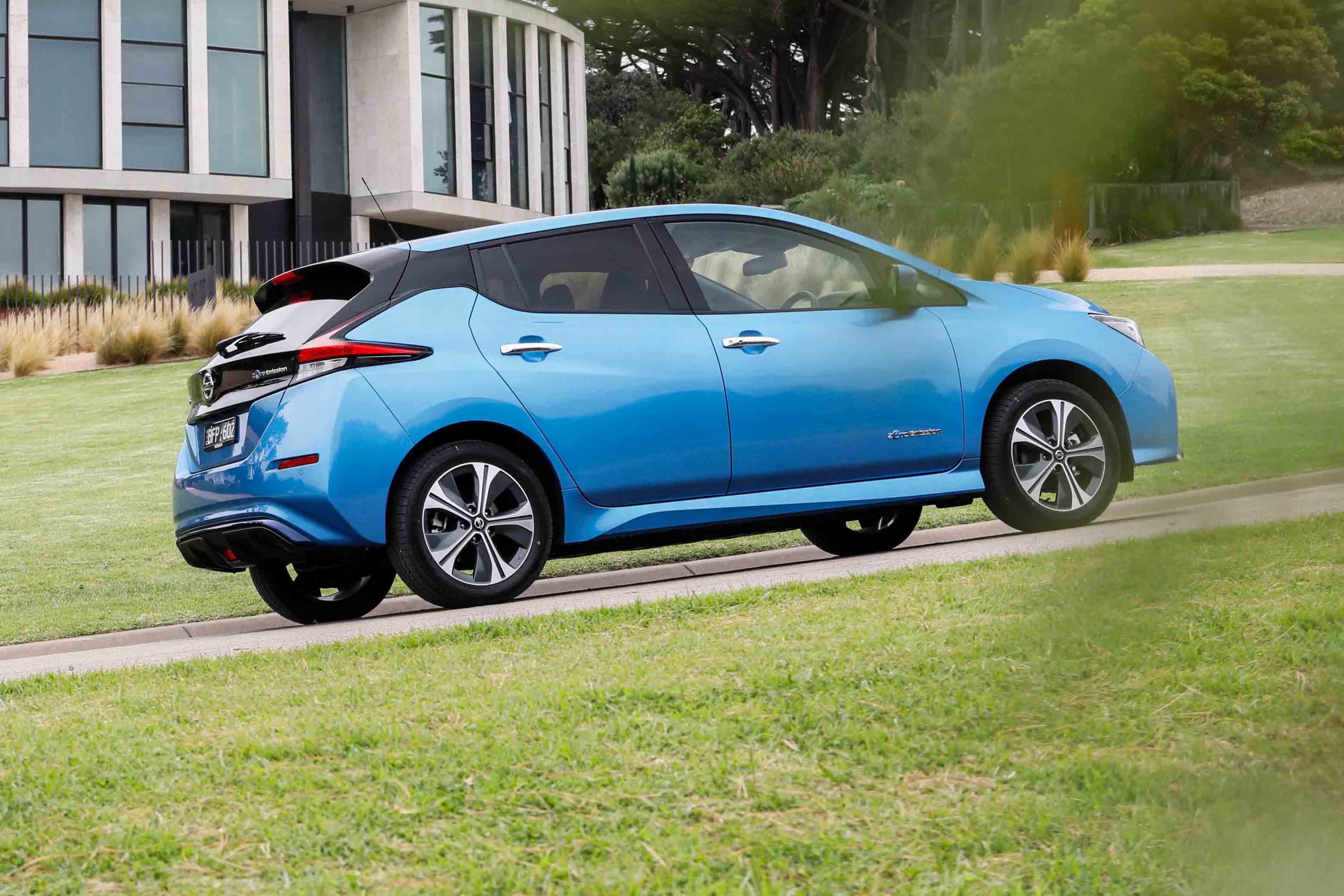
For context, the Leaf e+ will go further than a $48,970 Hyundai Ioniq, but won’t match the 449km range of a $62,000 Hyundai Kona electric.
As to whether 385km is sufficient for your daily or weekly travel purposes, or whether the original 270km would do, you alone can answer that. What’s easier to examine, however, is the boost to performance that the ‘bigger’ battery has brought.
While the original version would hit the benchmark 100km/h from standstill in 7.9 seconds, the e+ needs a whole second less, putting this small hatchback in a different performance class. On paper, that’s about the same as a Mini Cooper S but the power delivery and feel is very different. As you might expect.
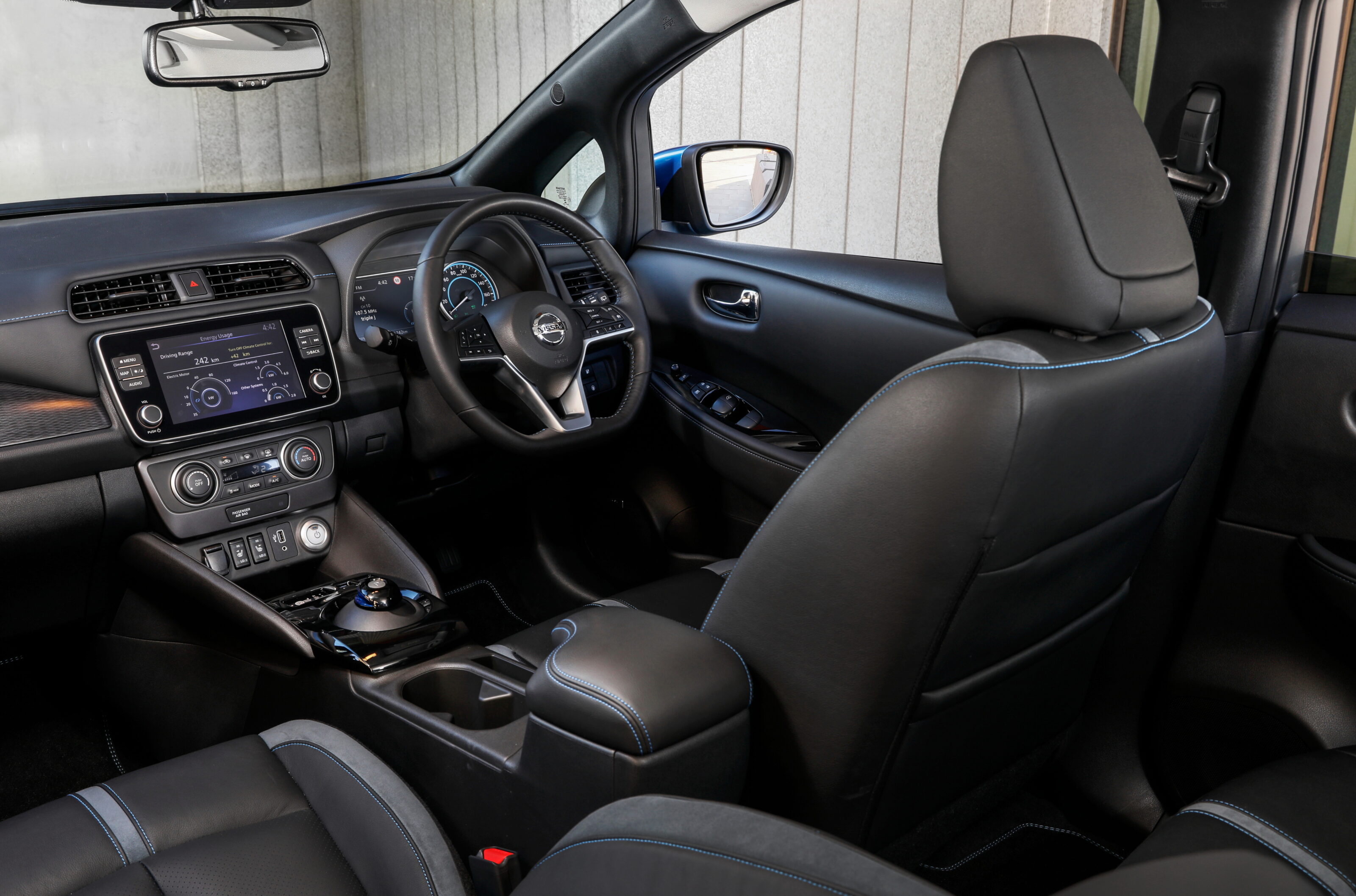
In more efficiency-focused modes, the Leaf e+ hides a large part of the full performance behind a step in the pedal that feels a little like a heavy kick-down. Push through it and the Leaf has a new level of energy and eagerness that was missing from previous versions.
The Leaf has always rewarded the enthusiastic driver with instant off-the-mark torque but the added power available in the e+ blends that initial surge into a longer-lasting blast of acceleration. This alone makes the updated Leaf feel far happier out on the open road and away from what many would consider its preferred habitat.
Its zero-emissions drivetrain and single-pedal driving style is still very applicable to the urban commute and shorter about-town missions, but with a significant step up in performance matched with a greater range, the Leaf is a proper escape pod at last.
The cruising ride is smooth and relaxing with little noise from the tyres and only slightly more wind noise from the door mirrors. Of course, there’s nothing to be heard from the drivetrain other than a satisfying whistle under hard acceleration from low speed.
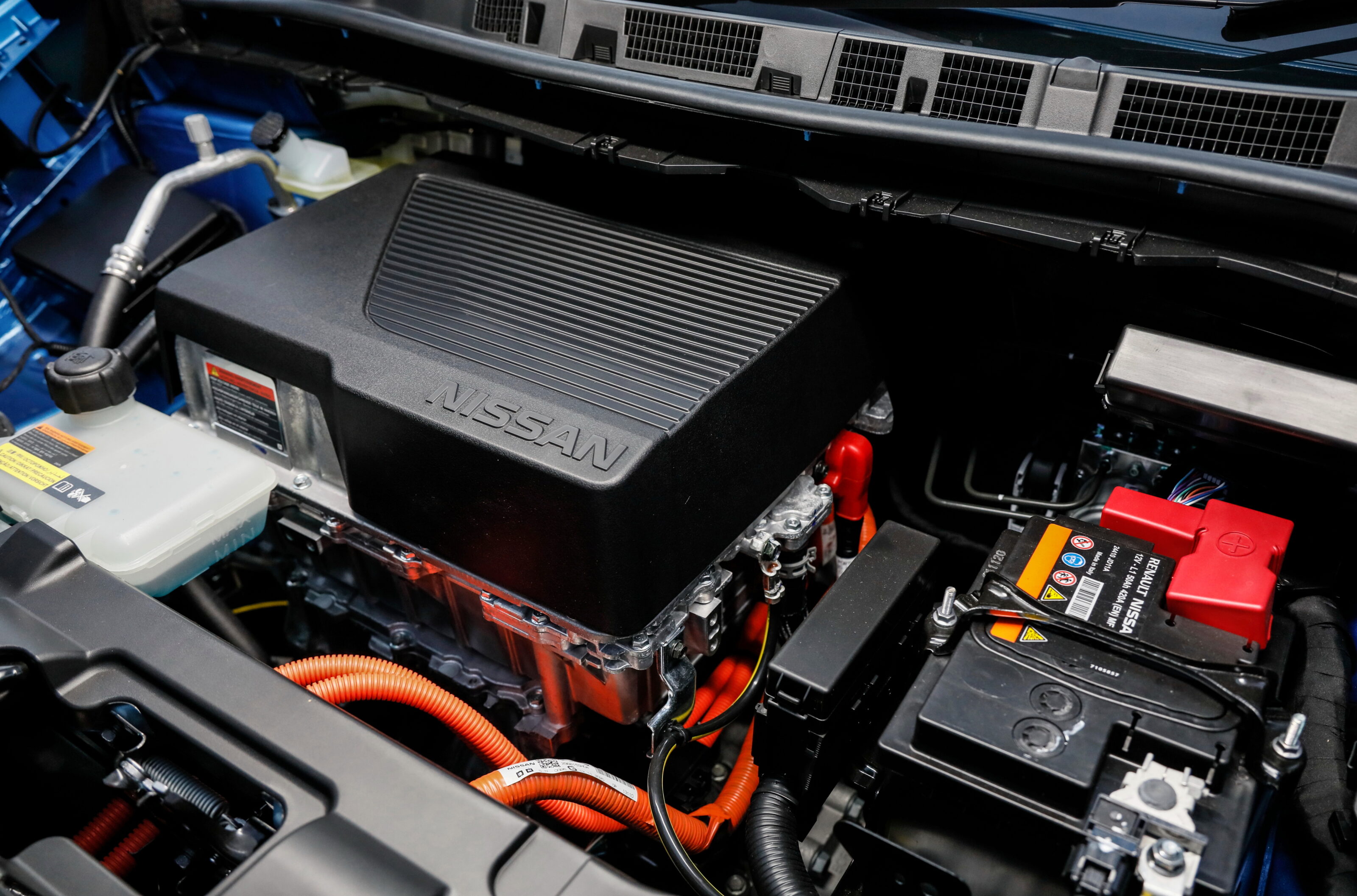
Nothing significant relating to the Leaf’s chassis has changed with the introduction of the beefier battery, but the extra grunt enables the dynamics to be more fully explored and enjoyed. The 62kWh battery is actually no physically bigger than the 40kWh unit, although it has added about another 150kg to the kerb weight. But it’s hard to tell as the weight is offset by the extra performance.
It’s as if the Leaf suspension was tuned from the start to deal with more power and arriving at corners with a little more pace doesn’t bother grip levels or overwhelm the front end control or decent communication through the steering.
Less than desirable driving conditions were encountered during our Leaf road trip and although there’s nothing ostensibly unsettling about the dynamics in cold and wet conditions, it doesn’t encourage the limits to be found.
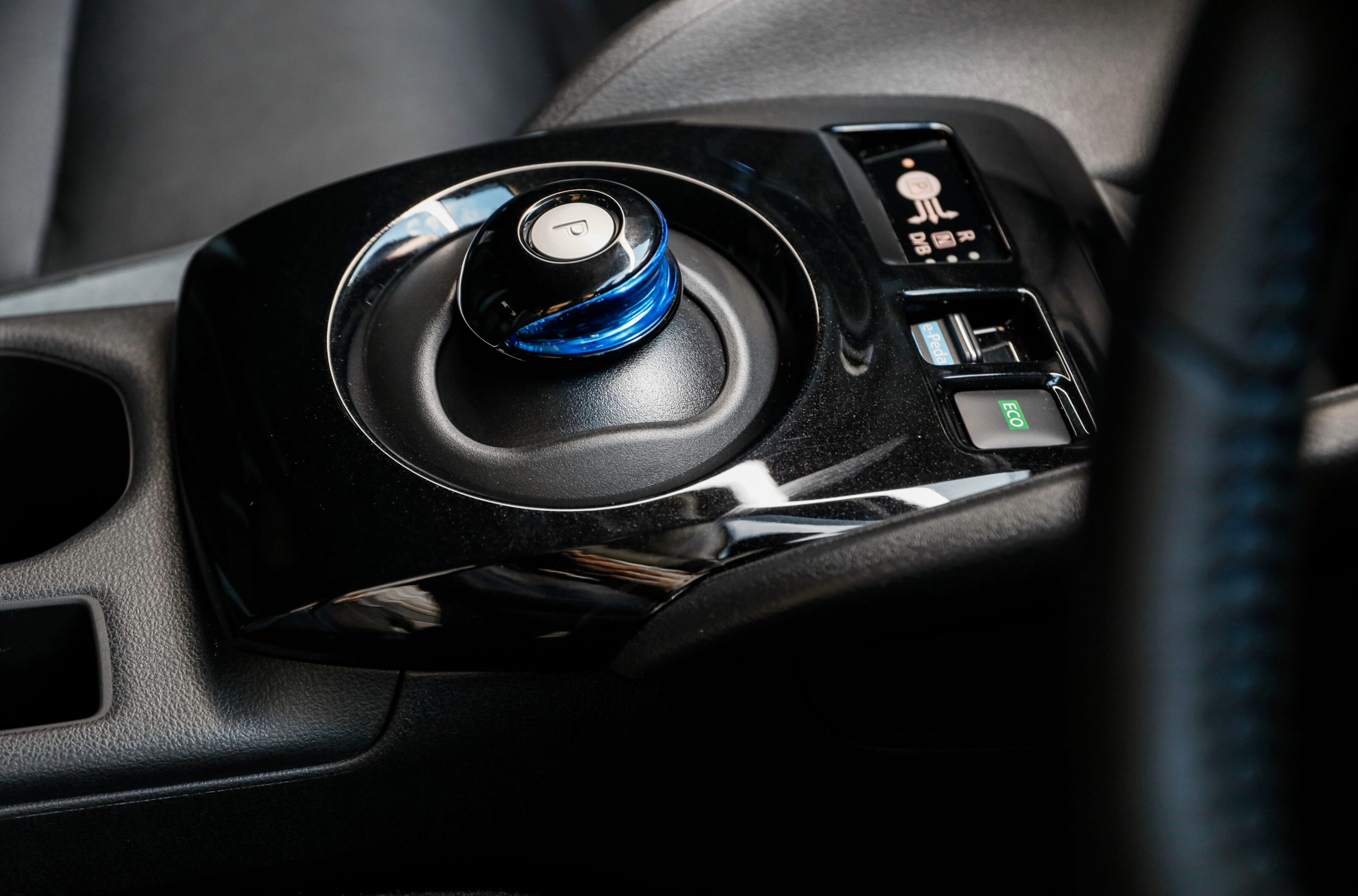
The e-pedal driving mode allows the accelerator to be used as both accelerator and brake – backing off engages aggressive regenerative braking which is effective and enjoyable in more sedate driving but is best switched to the more orthodox two-pedal arrangement when more braking power is required.
An initial prod of the left pedal is confidence-inspiring, lacking the weird soggy bounce of many EVs and hybrids, but push through for more braking force however and the progressiveness falls off a cliff. And while we are bemoaning brake pedals, the Leaf is still equipped with a foot-operated parking brake.
I don’t consider this an automotive cardinal offence, especially as the often-cited safety criticism doesn’t appear to apply here, with a full five-star rating awarded to the Leaf by ANCAP in 2018.
Its decent safety rating is thanks in part to a respectable suite of Nissan’s Propilot semi-autonomous safety tech, which includes autonomous emergency braking, lane-keep assist, blind-spot monitoring, rear cross-traffic alert and, a 360-degree camera and active cruise control.
Almost without exception, that kit is either dormant unless a serious situation looms or works relatively unobtrusively to keep everything pointing the right way. Apart from the lane-departure warning. Not only is the system wildly hyperactive, but the vibration warning feature is also annoyingly noisy. Ironic that the Leaf is powered by electricity but its lane-departure system sounds like it’s a diesel.
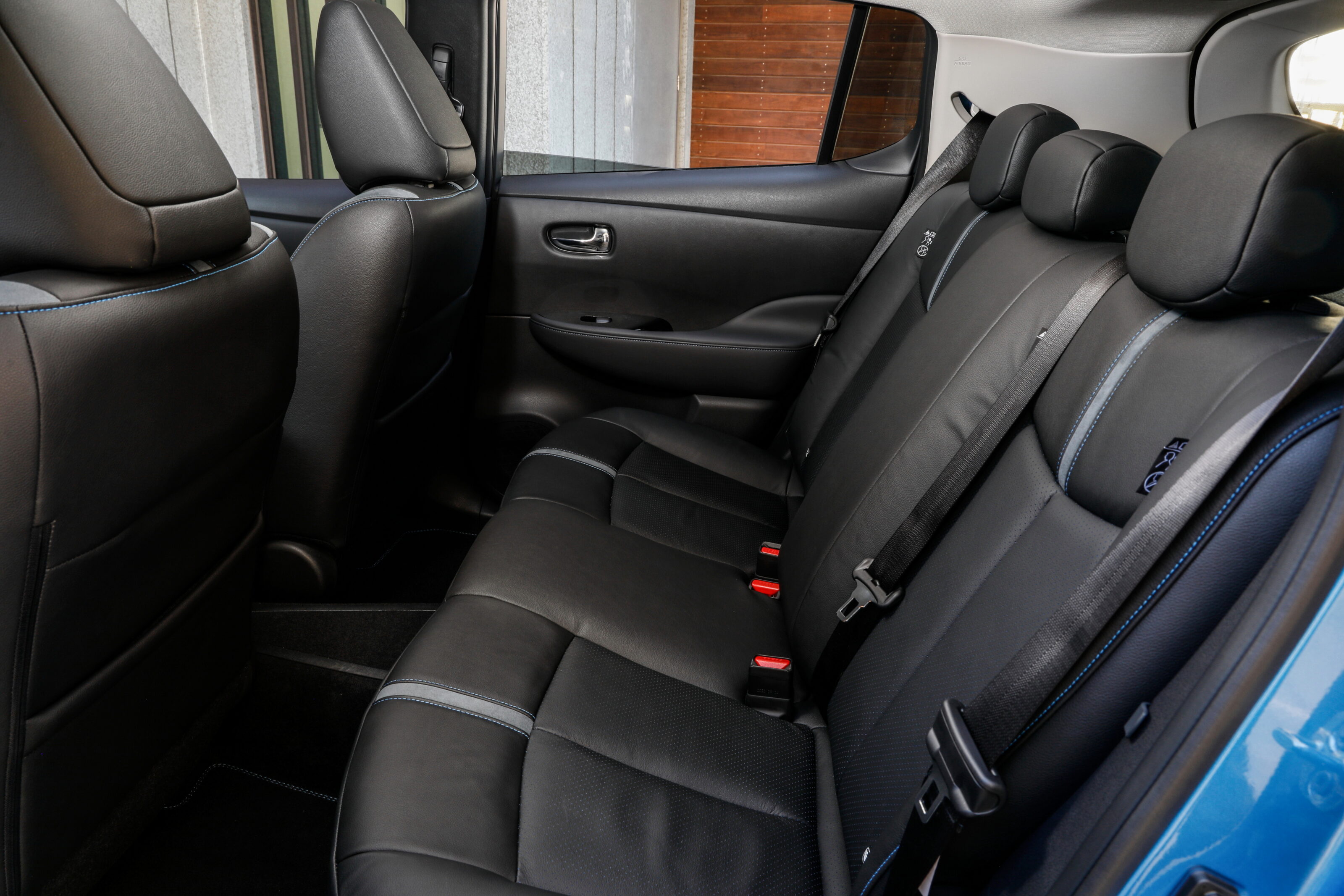
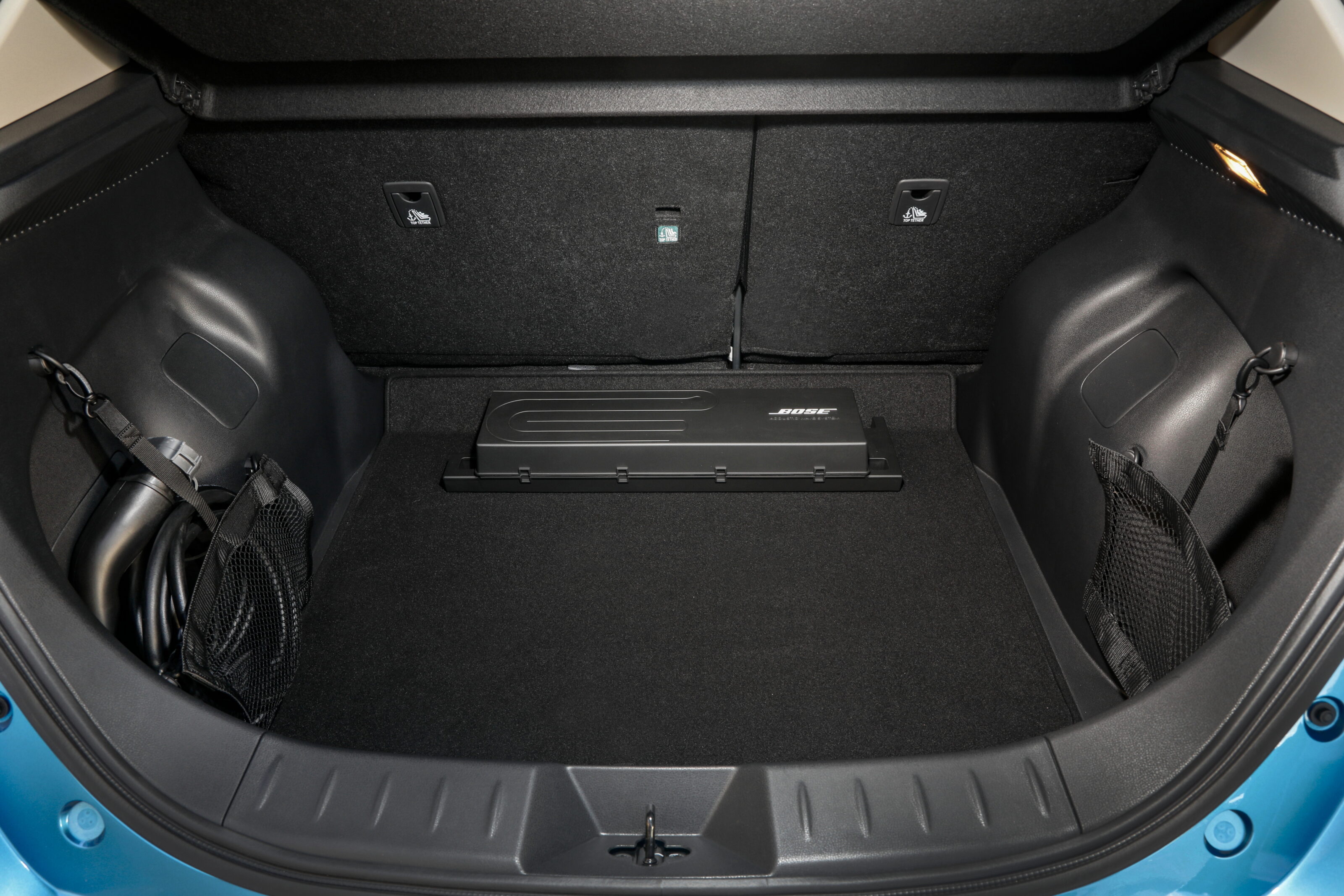
There are better examples of practical features. At the back, the Leaf e+ boot measures 405 litres in volume and hides a space-saver wheel, while the cabin is generous and light. Only the curious quarter-lights in the somewhat thick A-pillars limit the view out.
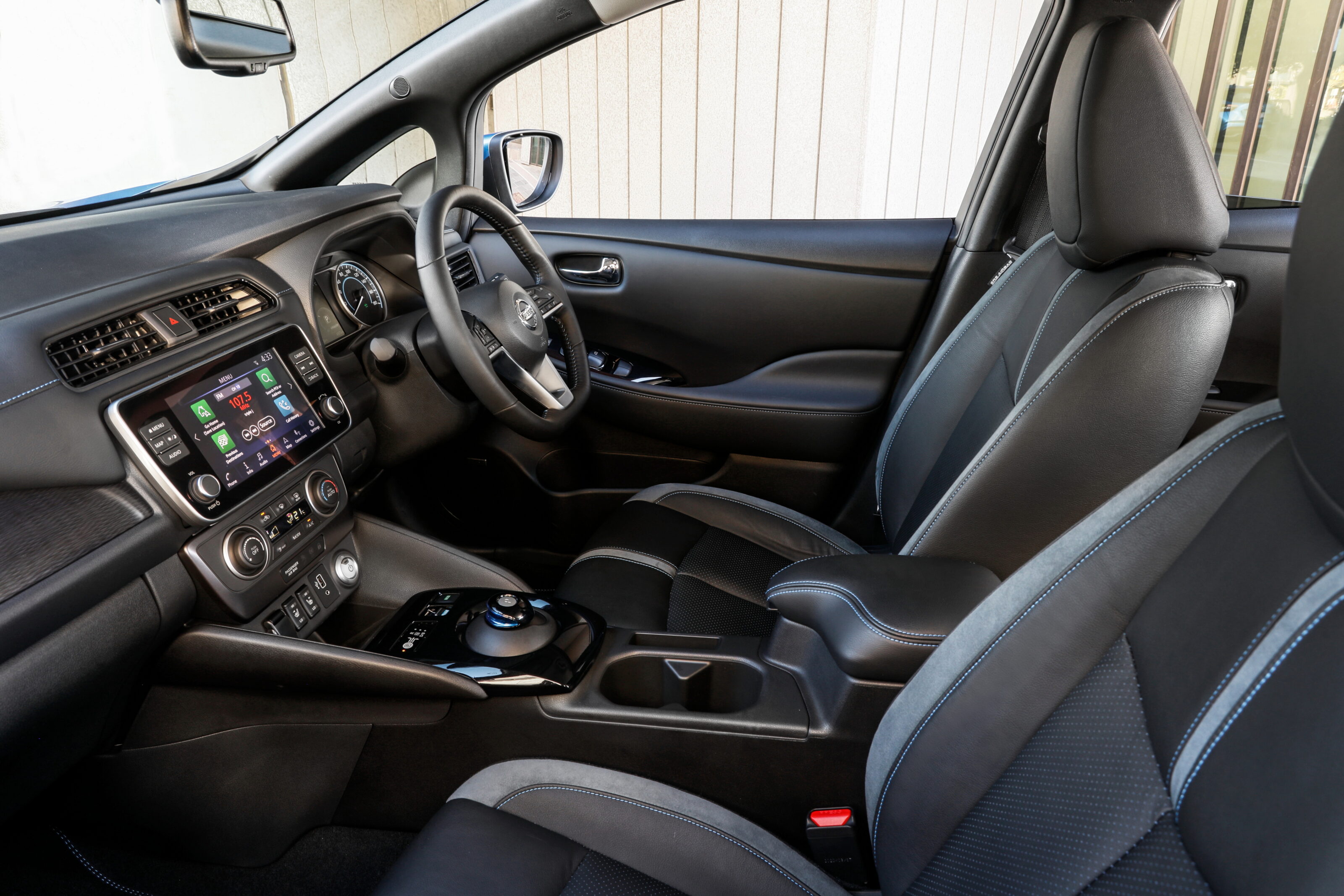
From a design perspective, the Leaf’s cabin was never knee-weakening and it is now starting to show its age. The eight-inch touchscreen and cute gear-shift lever are perfectly functional but just a little dated, especially when viewed in the context of most modern hatchabcks.
The use of some cheap plastics further dents the cabin feel and quality and while the front seats are generally comfortable, there’s no tilt or height adjustment – presumably to accommodate the battery that hides under the floor.
All of these elements combine to make the Leaf feel somewhat aged and its futuristic exterior can only hide its years to an extent. Despite a decade in the game though, the Leaf is still the car that’s closest to offering true car-to-grid flexibility.
Contained within its complicated power management systems is the ability to not just draw power from the grid, but the option to return energy to it. This opens up a range of power use possibilities including better exploitation of off-peak power electricity tariffs, home solar-generation optimisation and even emergency power solutions.
There’s still a little work to be done from the energy provider’s end but the Leaf? It’s ready.
As far as more conventional charging goes, the Leaf e+ takes a step up over the 40kWh version and is now chargeable with up to 100kW infrastructure. While the smaller battery version has a maximum charge rate of 50kW and can receive an 80 per cent fill in an hour, the e+ manages the same in 45 minutes. So that’s a greater maximum range topped up in less time.
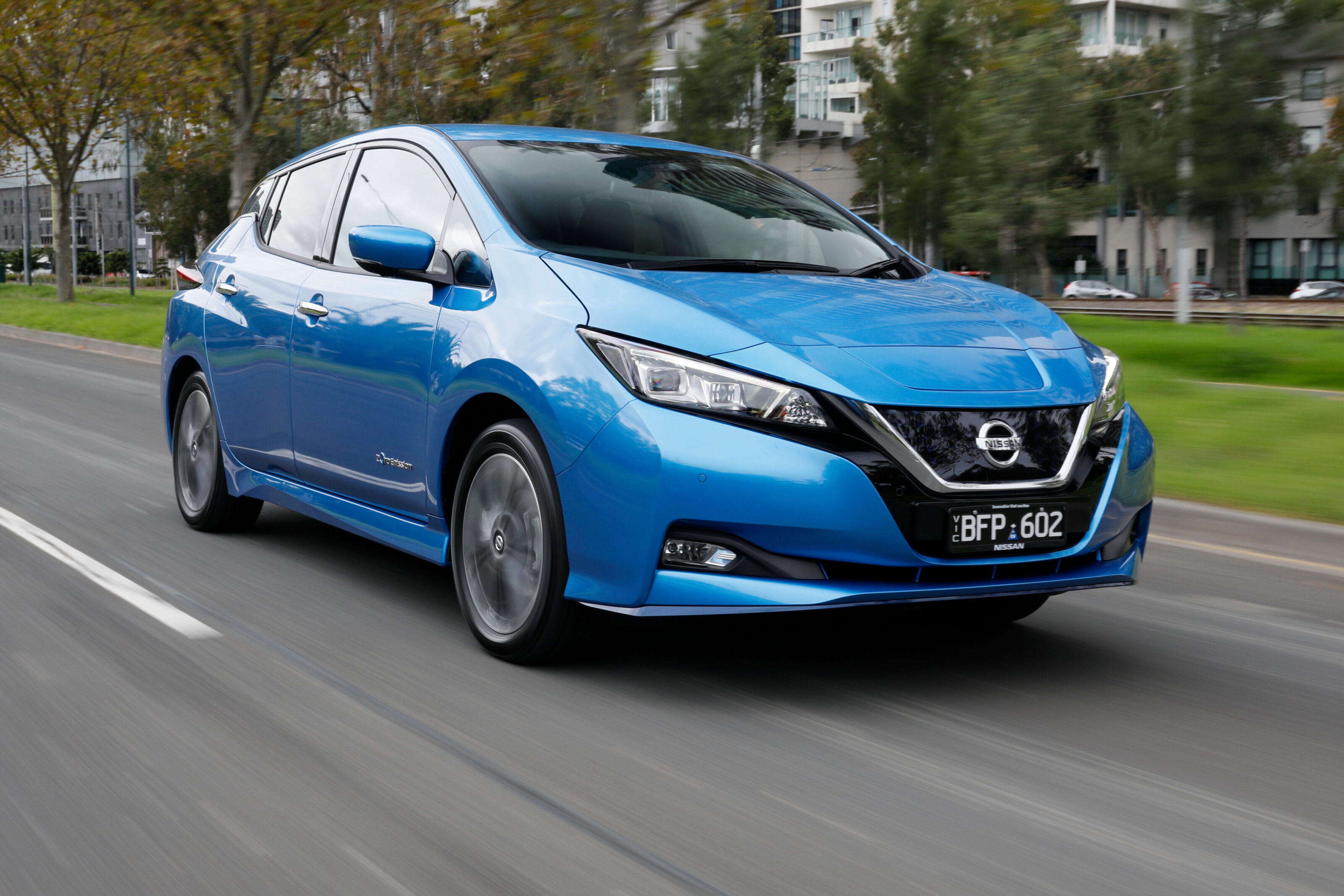
Of course, overindulge in the heated seats, steering wheel and cabin heating, occasionally clear the windows with the air-conditioning and fully exploit the extra performance, and the Leaf won’t quite return the new extended range or the 400km that our test car was claiming on departure.
But if you frequently travel more than 300km in a single trip and can justify the hefty price for a small hatchback, the Leaf might finally make its way onto your EV consideration list.
Even with its new more potent e+ option, the Leaf is getting a bit long in the tooth but that doesn’t mean Nissan – one of the pioneers of ‘affordable’ electric transport – is being left behind in the EV race. Before long, the Ariya will introduce a crossover right when the market demands it, and the third-generation Leaf will continue the model’s bloodline into more contemporary territory.
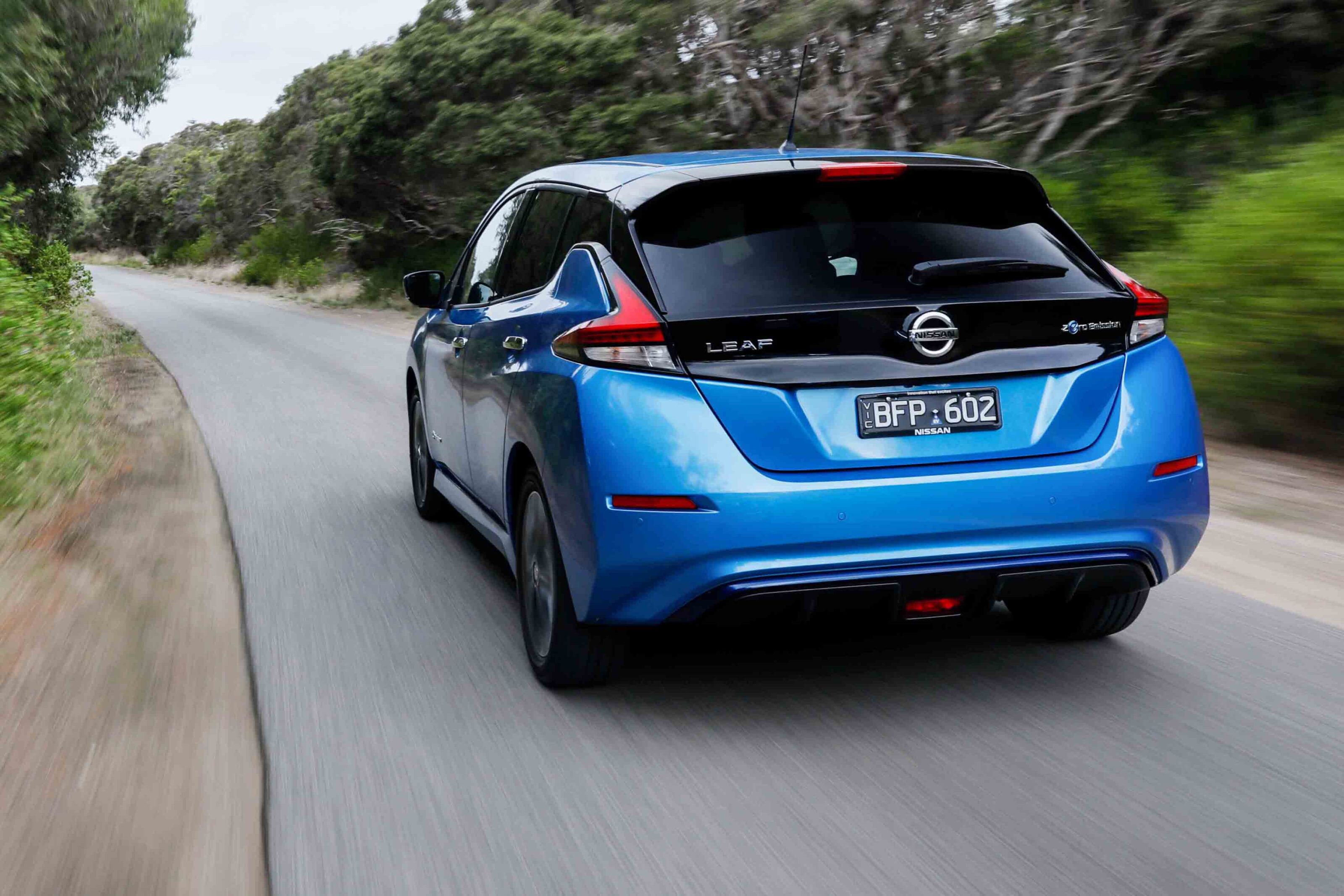
But even in its twilight form, the Leaf represents so much more than an electric hatchback. An old EV is proof that the concept is standing the test of time and Nissan’s commitment to zero-emissions transport is paying off.
I might be jumping the gun, but with the arrival of a new more versatile Leaf, I’m starting to fantasise about finding a forgotten example under a dusty sheet in a barn somewhere many years from now.
Talking points
- Bigger-capacity battery boosts performance
- Range rises to 385km
- Price rises more than $10,000, but original 40kWh version still on sale
Nissan has introduced a new e+ high-performance variant of its electric Leaf hatchback wired with a more advanced battery that manages to squeeze in more than 50 per cent capacity, but the extra punch comes at an eye-watering increase in asking price.
For the 2021 update, the Japanese car maker has slotted in a special lithium-ion unit that grows from 40kWh to 62kWh with corresponding improvements to charging times, power and torque outputs as well as range.
But the higher-density battery adds a whopping $10,500 to the Leaf’s bottom line for a new starting price of $60,490 before on-road costs, representing a 21 per cent increase over the standard version.
Leaf fans that can’t stretch to the significant extra budget though, are still offered the original 40kWh version for $49,990 before on-road costs.
Nissan expects the new e+ to represent 40 per cent of Leaf sales which, if numbers from previous years can be repeated, will total about 150 Leaf e+ sales over a year. Meanwhile, the standard Leaf will make up about 250 sales – certainly not cash-cow figures for the brand but still important, says Nissan Australia’s managing director Stephen Lester.
“The Nissan Leaf is one the world’s most popular electric vehicles, the new Nissan Leaf e+ will only further that appeal by delivering more of what our customers love about their EV,” he said.
With its beefier battery, the e+ AC synchronous motor output rises from 110kW to 160kW, while torque rises from 320Nm to 340Nm.
The extra poke has slashed its 0-100km/h acceleration by a whole second from 7.9 seconds to a claimed 6.9 seconds, putting the new Leaf into performance hatch territory.
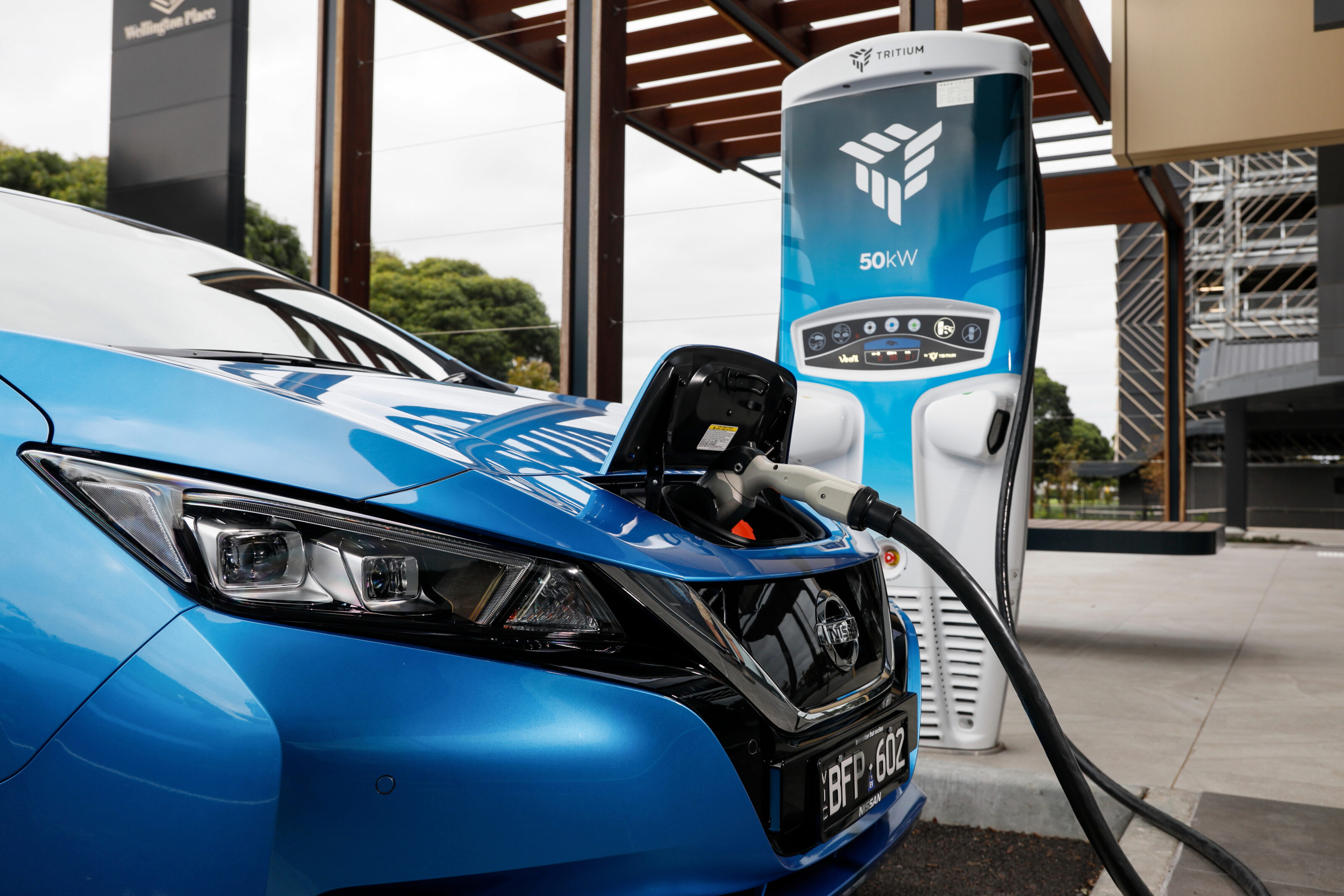
Driving range and charging
Additionally, the higher-capacity unit has increased the distance a Leaf can travel on a single charge from around 270km for the 40kWh battery version to 385km for the new e+.
That shifts the Leaf into a new endurance rank with a range that’s ahead of the Hyundai Ioniq (311km) but shy of the Audi E-Tron 55’s 400km maximum.
Despite its 55 per cent increase in capacity over the original Leaf battery, the new higher-density unit is physically only fractionally larger and has not impacted the Leaf’s cabin or luggage space. It does however, add about 150 extra kilograms to the kerb mass – now approximately 1730kg.
Faster charging options also accompany the uprated-battery Leaf. While the 40kWh version has a maximum charging rate of 50kW, the new 62kWh system supports 100kw charging.
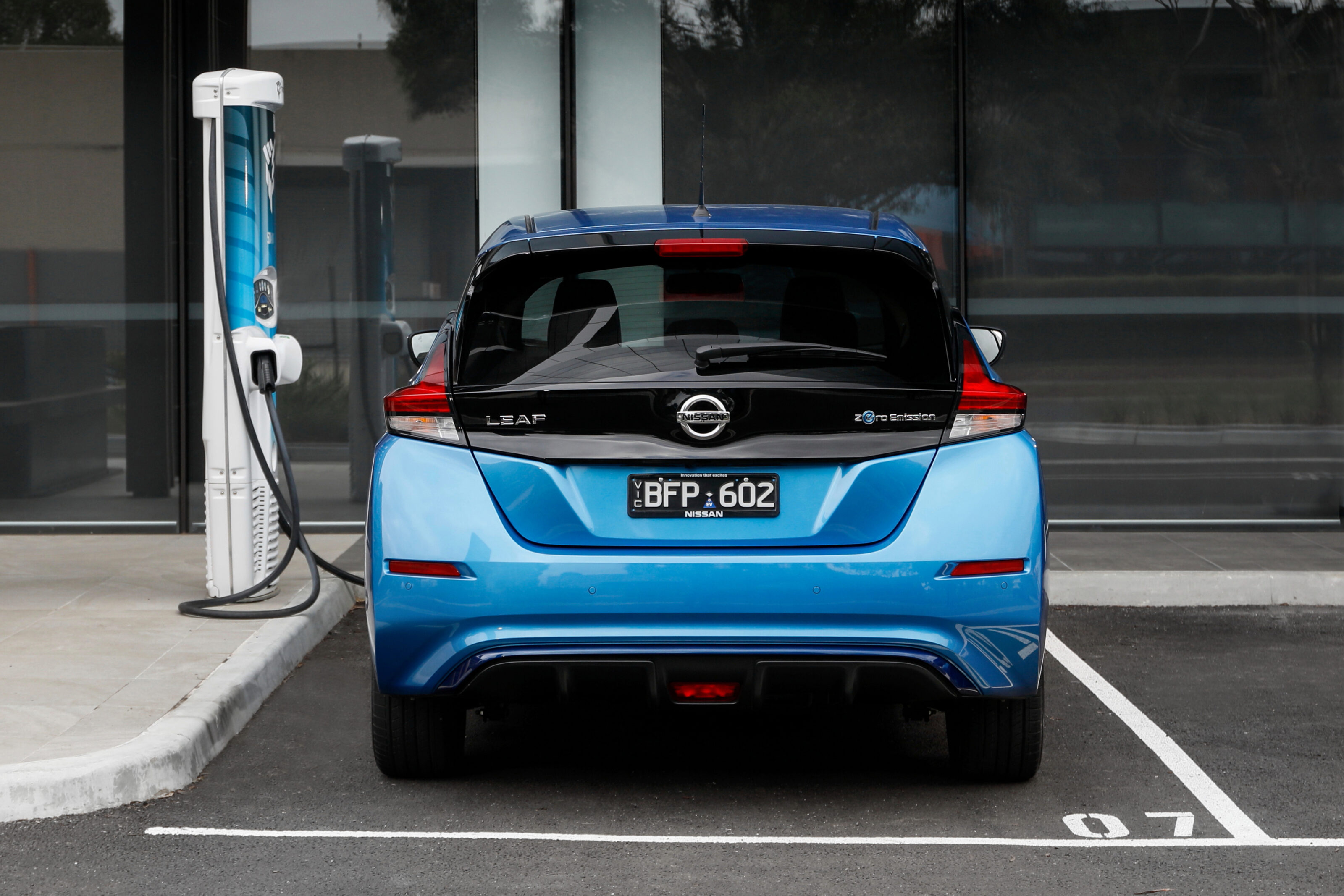
The correct fast-charging infrastructure is capable of topping up the Leaf battery from 20 per cent to 80 per cent in 45 minutes, while 50kW chargers will pump in the same in 1.5 hours.
With the most potent 7kW home charging system, 20 per cent to 80 per cent is complete overnight and a standard 230-volt home connection needs 32 hours for the same charge.
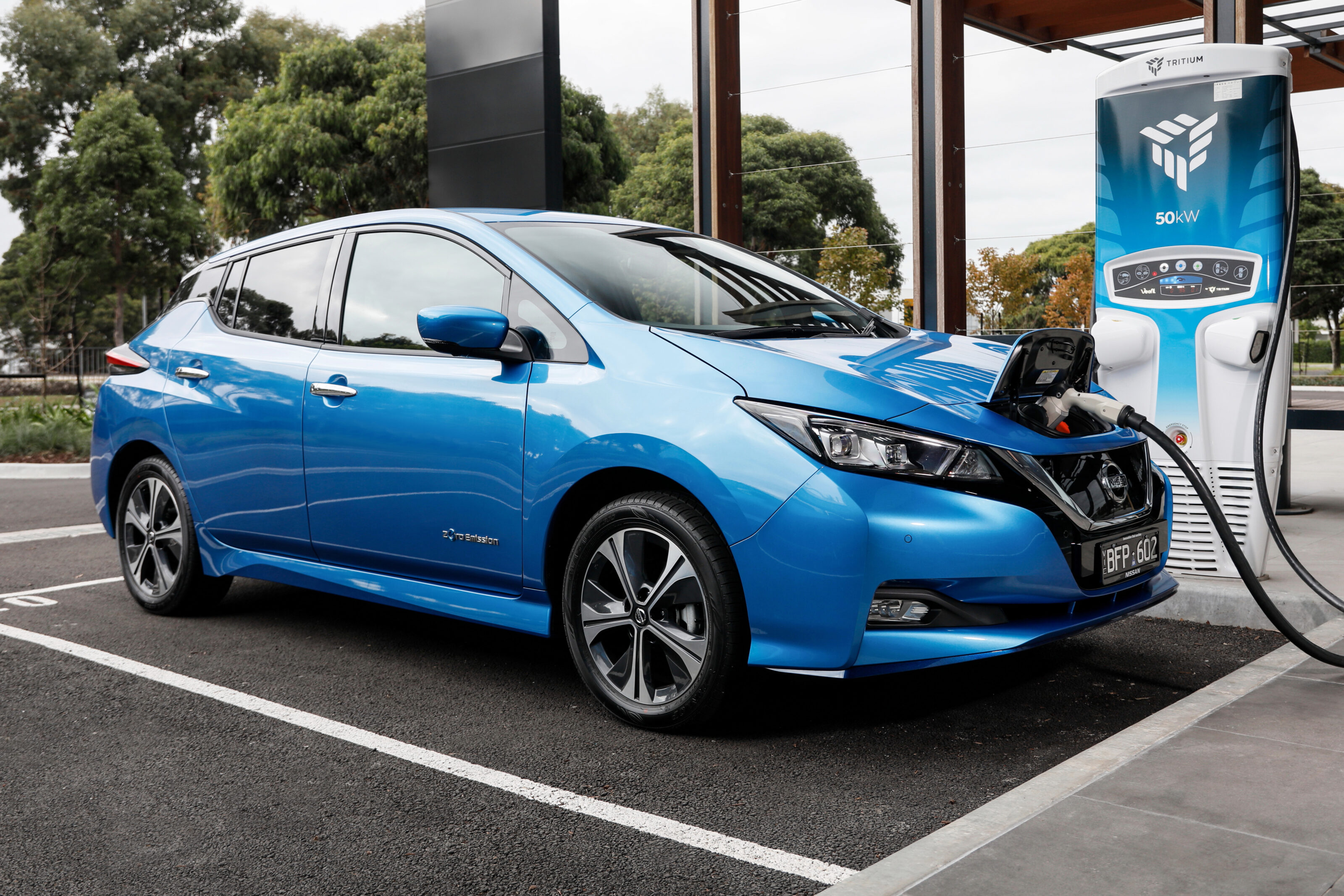
As before, the Leaf is still the only electric car that offers bi-directional charging options from the factory, says Nissan. That means the Leaf can not only draw power from the national grid or a home power-generation source, but it can also supply power back into the grid.
This so-called vehicle-to-grid, or V2G, enables Leaf owners a new level of energy flexibility, exploiting off-peak power prices, home power generation, and even emergency electricity supply, using the Leaf’s battery as a large power storage bank when parked at home – although the final logistics are still being worked through.
Any other updates?
Beyond the 2021 major powertrain update, the second-generation (ZE1) Nissan Leaf continues on unchanged. There’s room on board for five people, a 405-litre boot which expands with folding second-row seats and a space-saver spare wheel.
Convenience and safety technology features include; a half-digital-half-analogue drivers display, shift-by-wire gear selector, an 8.0-inch central touchscreen with navigation and smartphone mirroring, Bose sound system, heated steering wheel, front and rear seats, LED headlights and 17-inch wheels with low-resistance tyres.
It’s the same generous list of electronic safety and driver assistance kit as in the previous generation Leaf, which includes; autonomous emergency braking, lane-keep assist, blind-spot monitoring, rear cross-traffic alert and as mentioned, a 360-degree camera and active cruise control.
Capping it all off is a deal-sweetening five-year vehicle warranty, whereas the battery is covered by an eight-year guarantee that includes battery degradation.
