
Two people driving a 2019 Tesla Model S have died in a crash in Texas over the weekend, with local authorities suspecting the vehicle was on ‘Autopilot’ at the time.
As KRPC 2 Click2Houston first reported, the Tesla failed to make a turn at an intersection, went off the road, and hit a tree at speed.
Authorities said that one person was located in the front passenger seat, while the other was found in the rear – suggesting neither occupant was actually driving the car at the time of the crash, although this hasn’t yet been confirmed.
The impact of the collision was so severe the electric vehicle burst into flames, and it took emergency services over four hours to get the blaze under control.
Firefighters went through 32,000 gallons of water and even attempted to contact Tesla directly for any information that could assist them with putting out the flames.
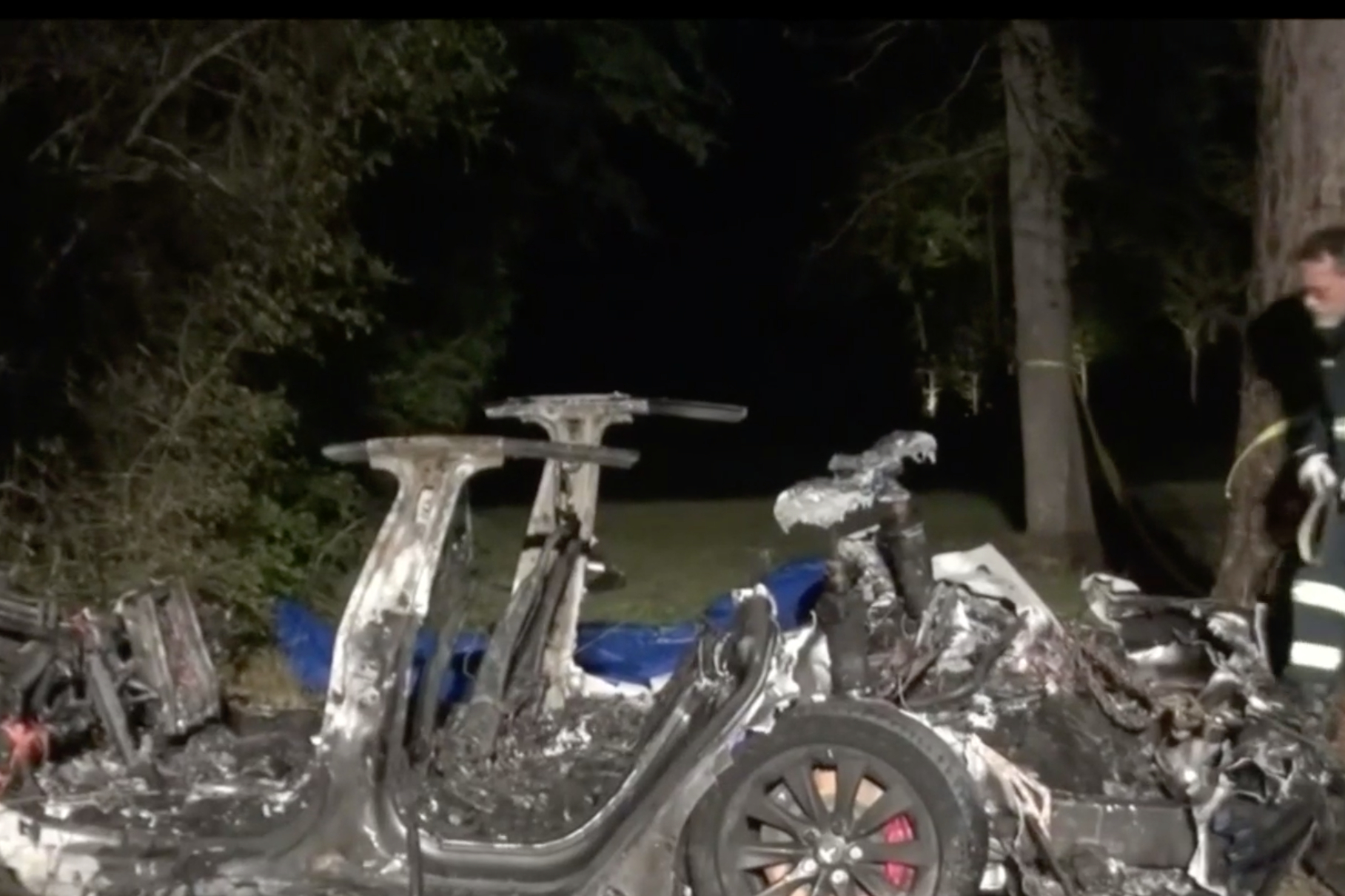
America’s National Highway Traffic Safety Administration has reportedly investigated over 20 car accidents involving Tesla’s Autopilot driving function, however, this looks to be the first instance of its kind.
The news comes just weeks after WhichCar reported another high-speed crash in America that was allegedly caused by the EV maker’s Autopilot function, which involved a Model 3 or Model Y slamming into a stationary police highway patrol car.
Tesla has also come under fire recently due to the naming of its most advanced autonomous driving technology – Full Self-Driving Beta (FSD) – which, despite the name, isn’t fully autonomous at all.
This became apparent when the automaker’s lawyers sent a letter directly to the Californian Department of Motor Vehicles’ head of Autonomous Vehicles, stating that: “Currently, neither Autopilot nor FSD Capability is an autonomous system, and currently no comprising feature, whether singularly or collectively, is autonomous or makes our vehicles autonomous.”
It is not known whether the Model S involved in this latest crash was installed with the new Full Self-Driving Beta technology.
WhichCar has contacted Tesla for comment about the crash but has yet to receive a response.
MORE: Model S stories MORE: All Tesla stories
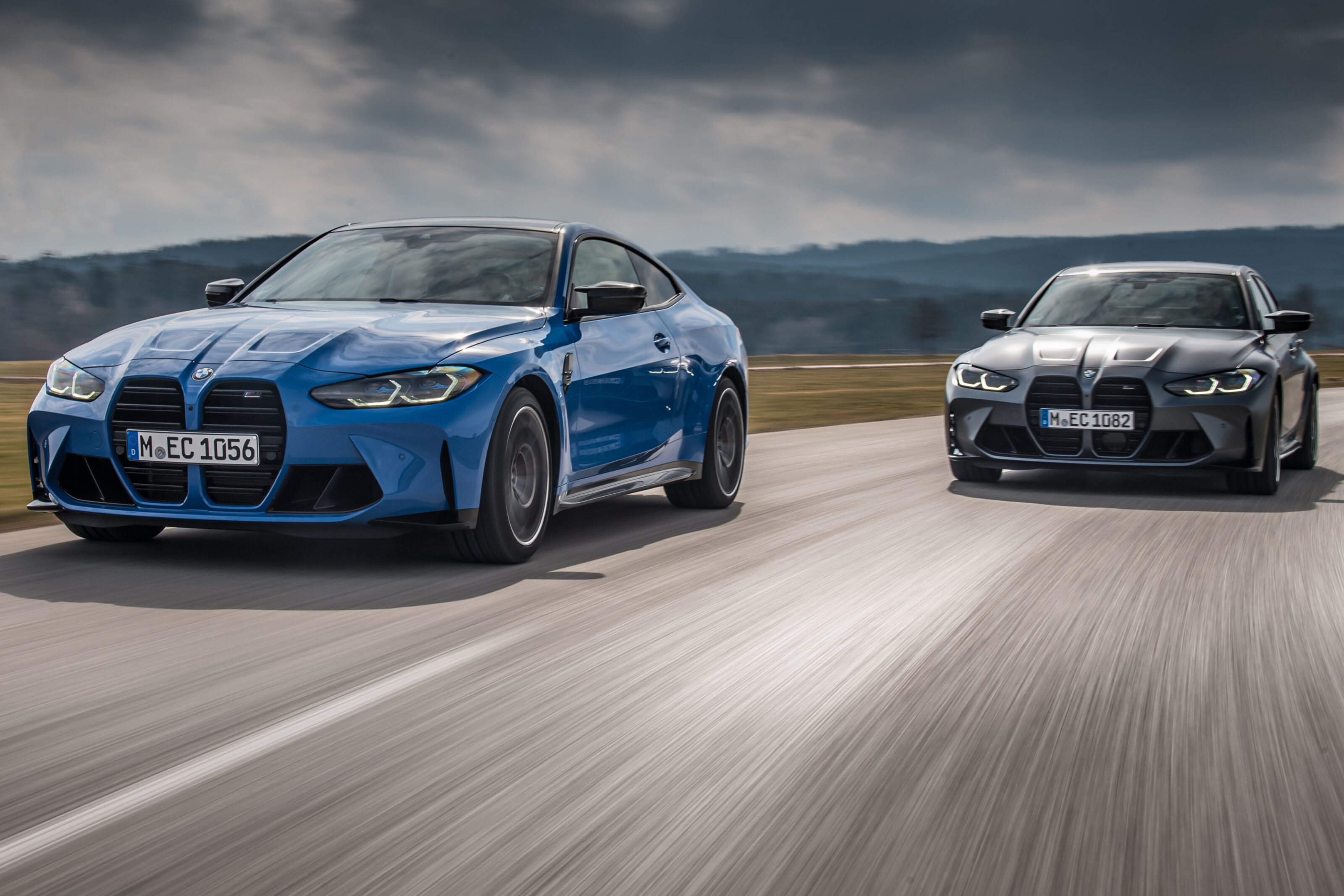
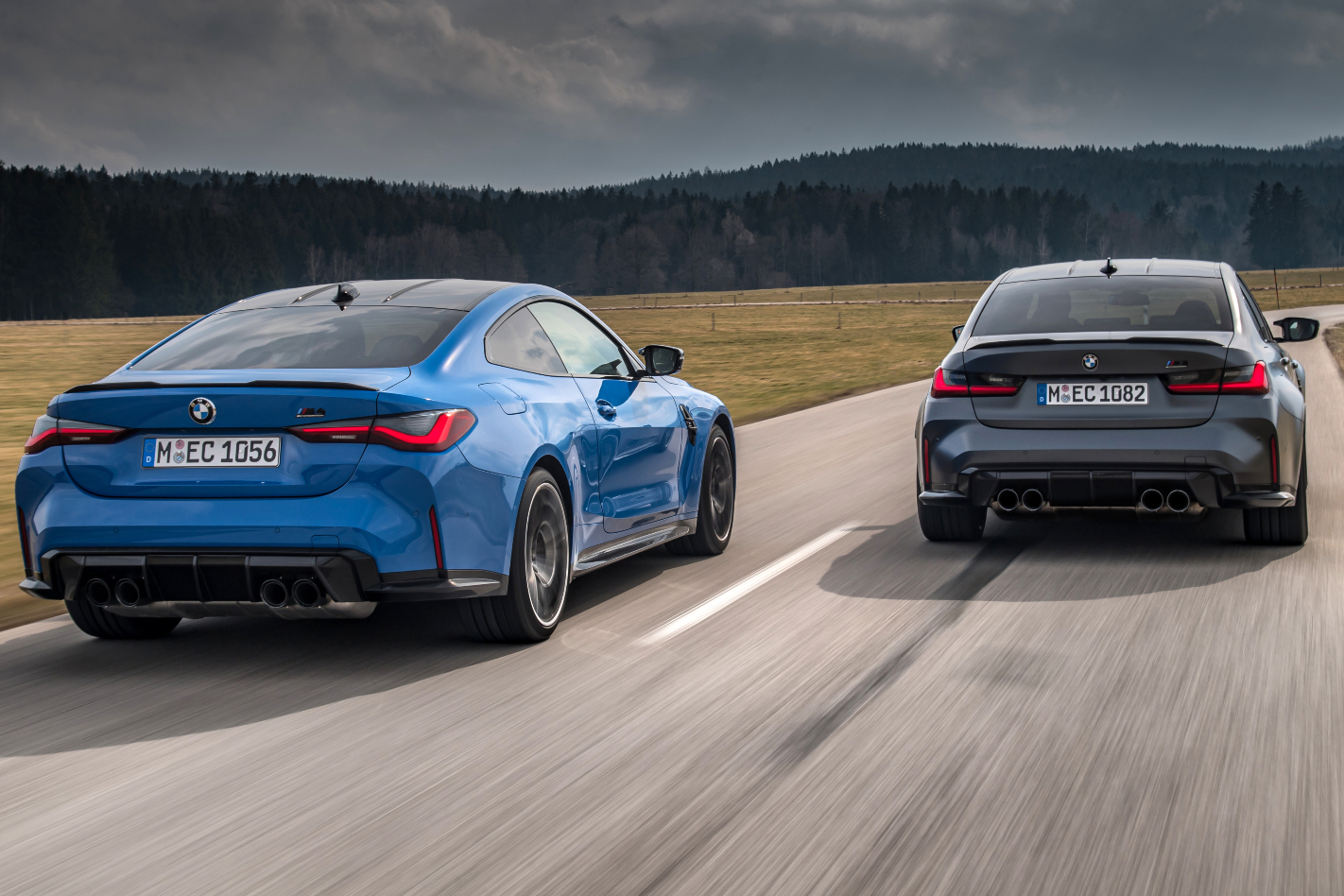
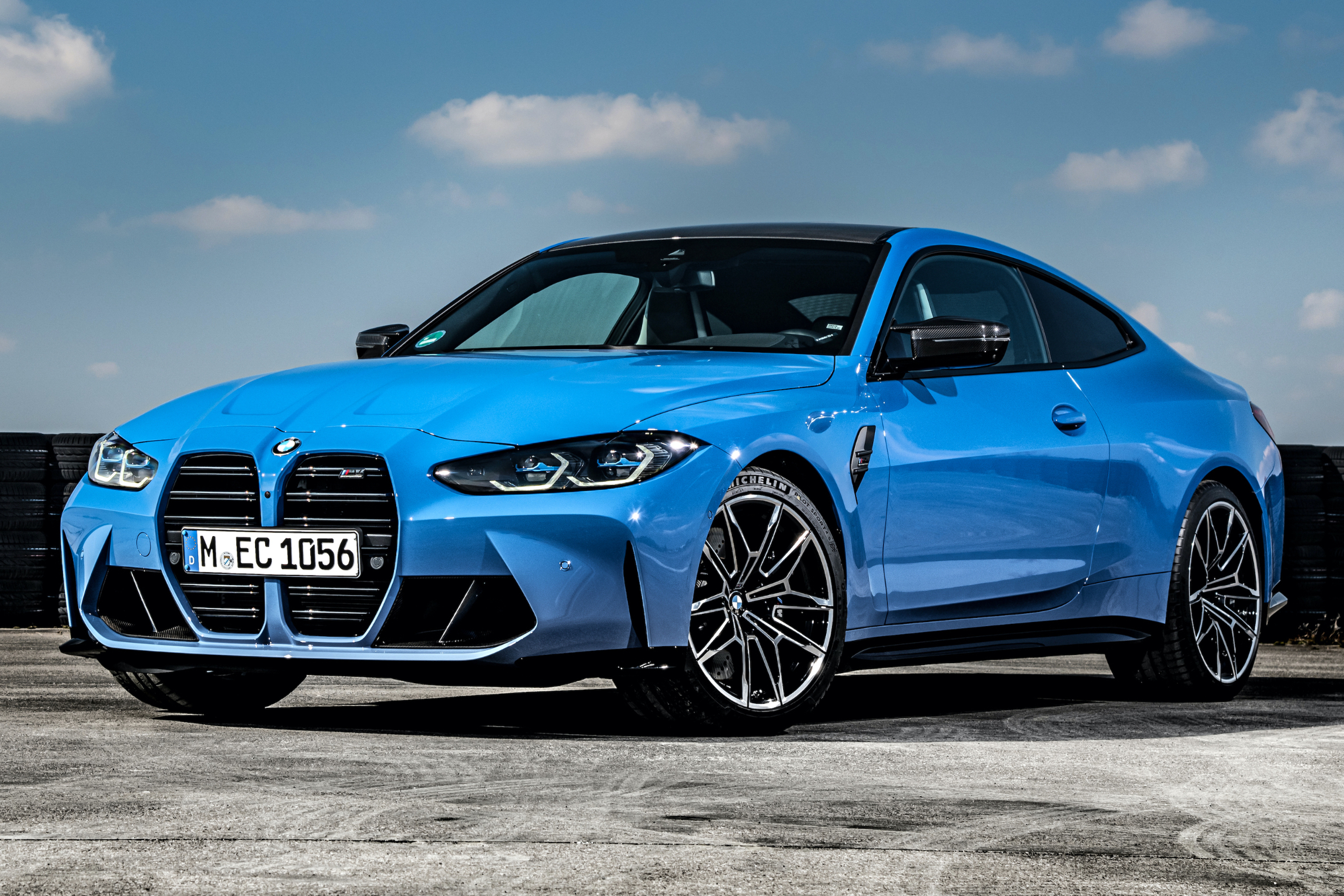
The 2021 BMW M3 and M4 Competition xDrive have officially been unveiled, and the super sedan and coupe come packing some serious performance figures.
Chief among the bonkers numbers is the claimed 0-100km/h time, which for both the M3 and M4 is rated at just 3.5-seconds, 0.4 seconds faster than their rear-wheel drive counterparts.
Powering the xDrive models is the same ballistic S58 TwinPower Turbo 3.0-litre six-cylinder engine we’ve seen in the RWD cars, which still churns out 375kW and 650Nm.
However, the thumping horses are sent to all four wheels via ZF’s eight-speed torque converter automatic transmission, and for those thinking BMW has merely added power to the front wheels – think again.
The AWD system used in these new cars is uber-complex, utilising an electronically controlled multi-plate clutch in the transfer case to distribute power between the front and rear axles.
The multi-plate clutch’s oil supply has also been modified to ensure that it’s still capable of sending power in the right direction even in demanding conditions on the track.
A unique control unit with integrated wheel slip limitation has been fitted to the transfer case too, which enables it to adjust for variations in rotational speed between the front and rear axles in rapid time without having to employ the car’s Dynamic Stability Control (DSC).
xDrive then works in conjunction with a rear-mounted Active M Differential and M-specific traction control system, which also communicates with the vehicle’s DSC, to create an experience BMW claims offers supreme vehicle dynamics and stability.
Like other high-performance AWD systems on the market, 100 per cent of drive is sent exclusively to the rear wheels in normal conditions, with power only being sent forwards when traction has been exceeded at the rear.
However, there are also three different M xDrive modes that owners can use to further tailor their preferences on the road or track.
In its default AWD setting, power is rearward-biased, but ultimately focuses on traction and getting the power down.
In AWD Sport mode, more of the turbo six’s torque is dumped on the rear wheels, even when traction has been exceeded.
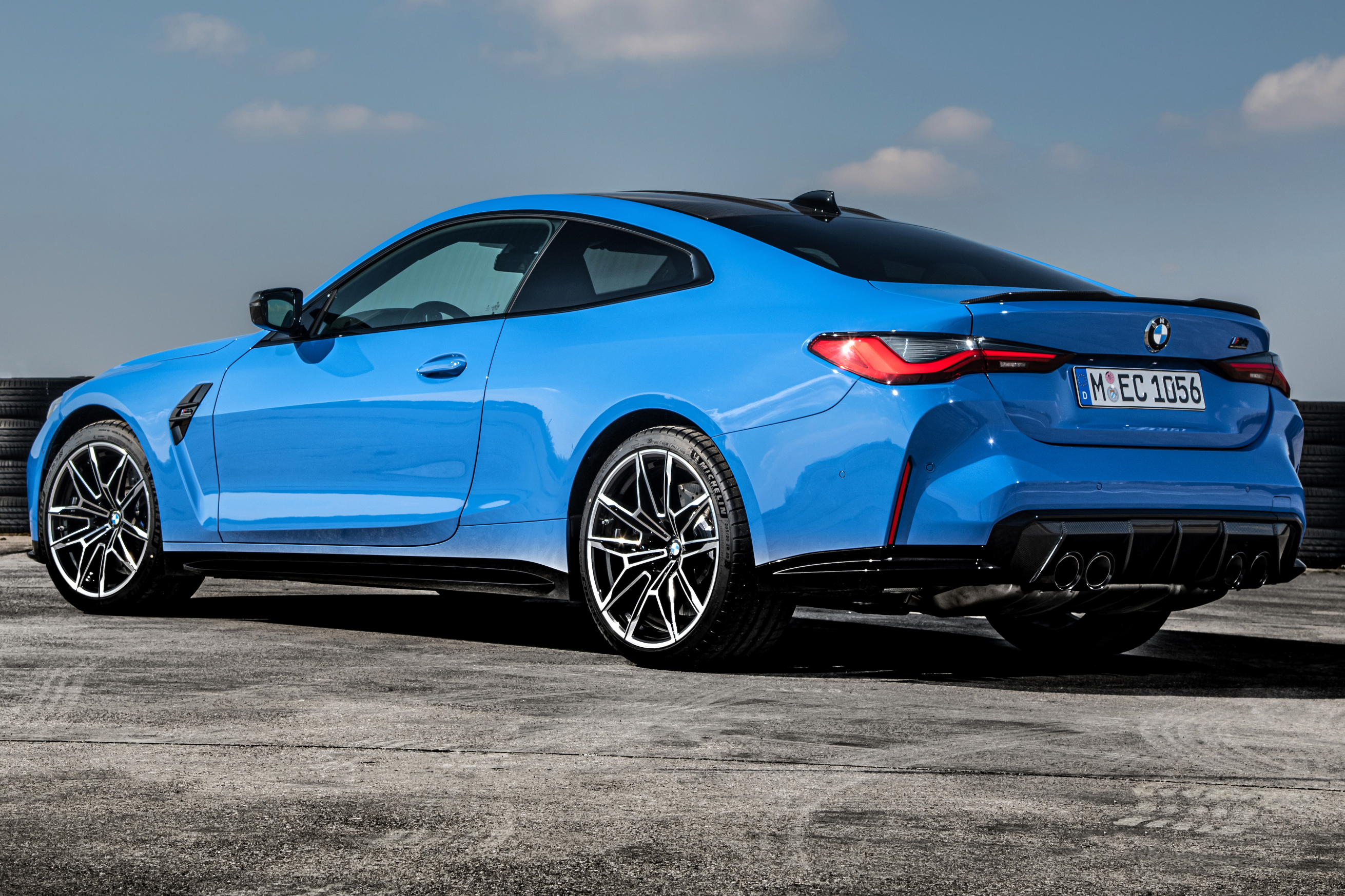
Finally, for owners keen on getting around corners completely sideways, there’s a 2WD Mode, which locks out the front axle and sends all 650Nm to the rear wheels.
Caution should be advised when doing this, however, as the car’s DSC needs to be switched all the way off to activate 2WD mode.
And for those wanting to adjust how much slip happens at the rear without the vehicle ending up facing the wrong way, the M3 and M4 Competition xDrive come with BMW’s M Traction Control as standard, which allows for 10 incremental stages of traction intervention.
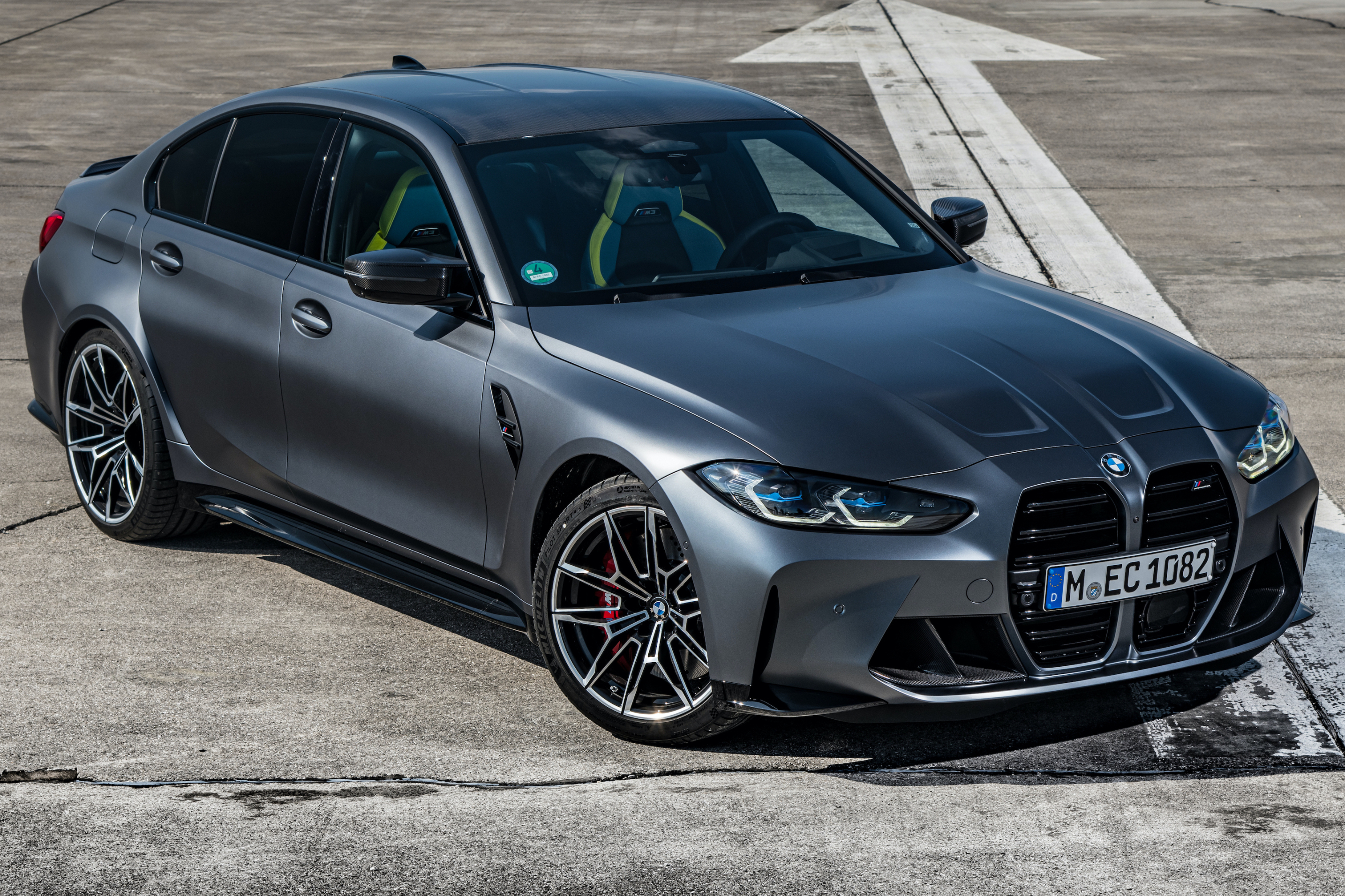
The all-paw M cars also come equipped with a completely bespoke double-joint spring strut front axle with unique geometry, a newly tuned steering ratio, new driveshafts and output shafts to make the most of the trick AWD set-up.
BMW is yet to confirm how much more the M3 and M4 Competition xDrive will weigh compared to the already laden RWD variants of the performance cars, but we expect an additional 50-100 kilograms of heft is likely, which would bring the total kerb weight close to 1800 kilograms.
To put that in perspective, the BMW X3 M Competition is 1970 kilograms, which means these new 4WD sedans and coupes could end up weighing just 170 kilograms less.
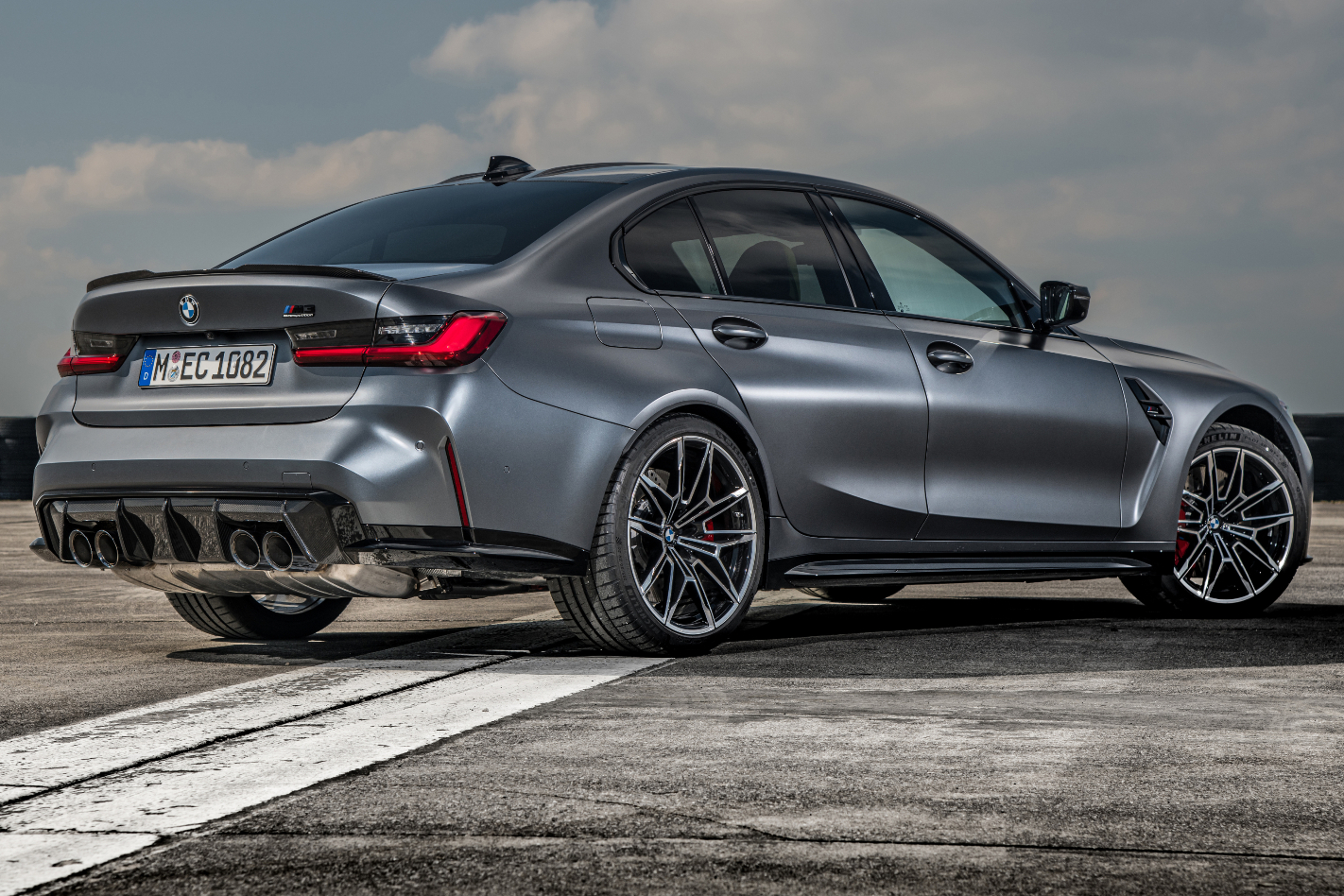
When will the all-wheel-drive M3 and M4 come to Australia?
BMW Australia has told WhichCar the new M3 and M4 Competition xDrive will be launching in Australia in the fourth quarter of 2021, with pricing and specifications to be confirmed closer to the local launch date.
MORE: M3 stories MORE: M4 stories MORE: All BMW stories
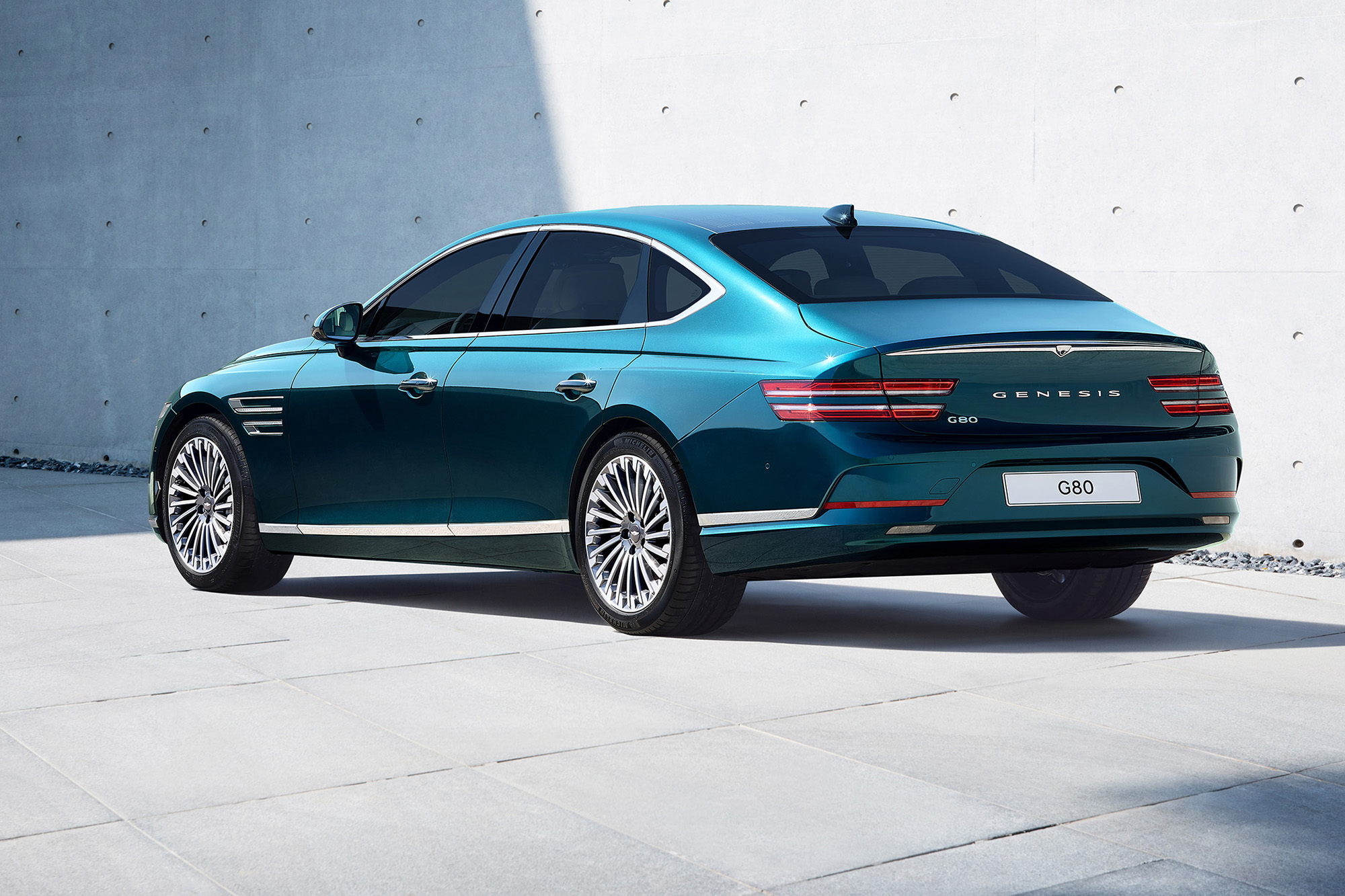
In the automotive world, the term ‘electrified’ can often refer to the hybrid models that combine petrol or diesel engines with an electric motor. But, in the case of the newly revealed 2022 Genesis Electrified G80, it’s an all-electric affair.
Unveiled at this week’s Shanghai motor show – marking the brand’s China debut – the Electrified G80 swaps the new-generation sedan’s petrol drivetrains for a pair of electric motors combining to deliver 272kW and 700Nm.
The motors are mounted at the front and rear, giving the electric G80 an all-wheel drive configuration and a claimed 0-100km/h time of just 4.9 seconds.
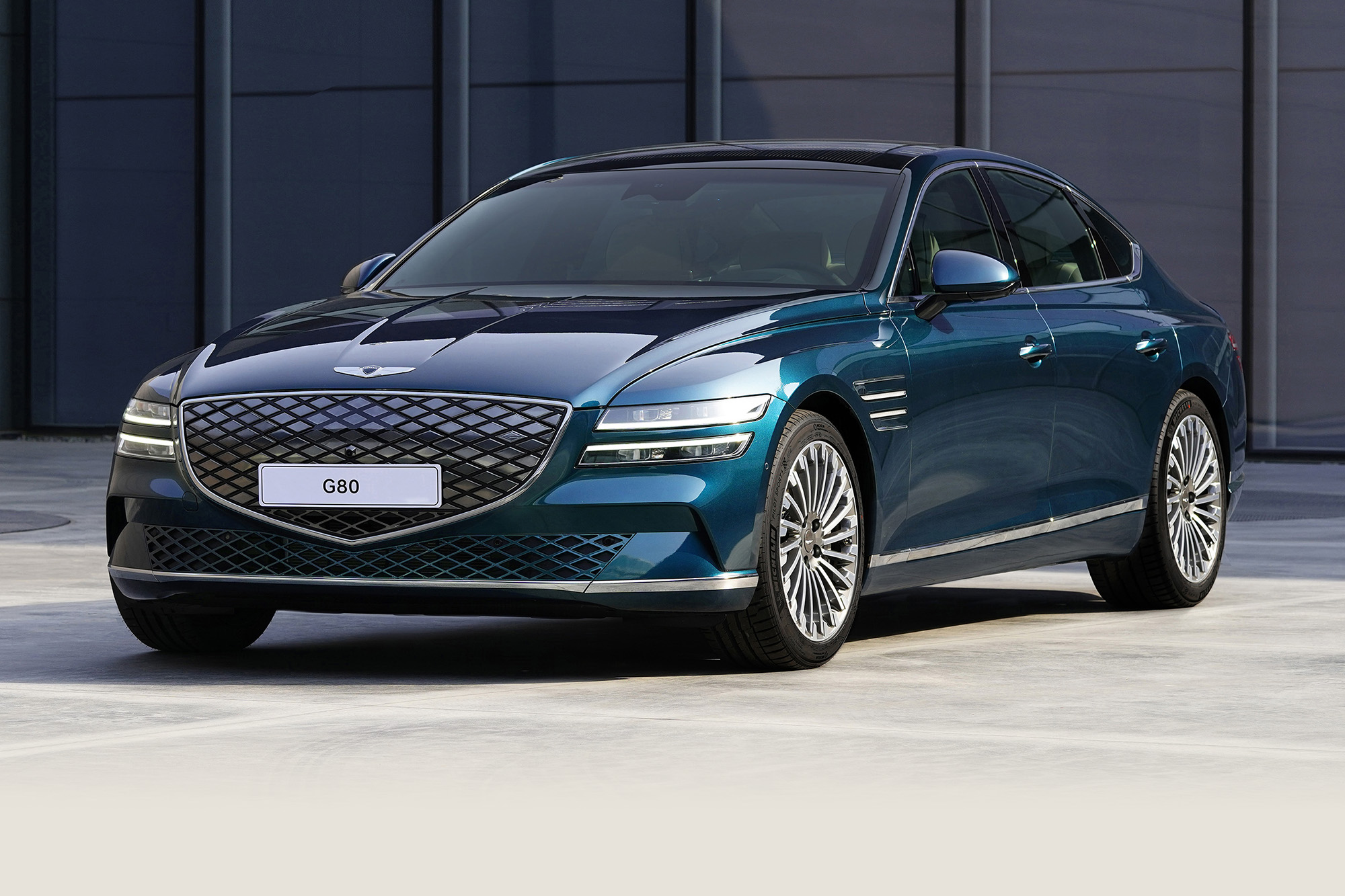
To be clear, that beats both the RWD 224kW/422Nm 2.5- and AWD 279kW/530Nm 3.5-litre turbo petrol versions of the G80, which claim 6.0 and 5.1-second sprints respectively. (Neither should be considered slow, of course.)
Genesis has yet to reveal the battery capacity of the Electrified G80, but it claims a driving range of 500 kilometres from one charge.
It should be noted, however, that this number is based on the older NEDC test cycle rather than the WLTP standard now widely used in Europe. Indeed, the Korean test program delivered a result of 427km.
Whatever the final certified figure, the Electrified G80 will have drivers back on the road as quickly as any car can claim, thanks to its 350kW rapid charging capability. With its fastest-possible connection enabled, the Electrified G80 can charge from 10 to 80 per cent in 22 minutes.
The Electrified G80 also benefits from a 400V/800V multi rapid charging system, allowing owners to charge with different available infrastructures without an additional converter. The 800V system is the electric G80’s more optimised technology, however.
Range can be assisted further through the equipped Disconnector Actuator System, which can instantly and automatically switch from all-wheel- to two-wheel drive where appropriate.
Like the upcoming Hyundai Ioniq 5, the Electrified G80 offers a Vehicle-to-Load (V2L) mode which can supply up to 3.6kW of power, allowing it to charge electric devices like personal transportation gear, camping equipment or power tools.
As with its Hyundai-badged cousin, the electric G80 can also lend some charge to other EVs.
Another feature first revealed with the Ioniq 5 is the availability of a solar roof, allowing the Electrified G80’s power system to feed energy back into its battery pack.
Underscoring the G80’s luxury bent, the Electrified G80 also gets the brand’s Active Noise Control-Road system, using four sensors and six microphones in the cabin to calculate and create sounds at opposite phases to those coming in from outside.
There’s also a Preview Electronic Control Suspension system, using data supplied through the front camera and the navigation system to prepare ride comfort in advance.
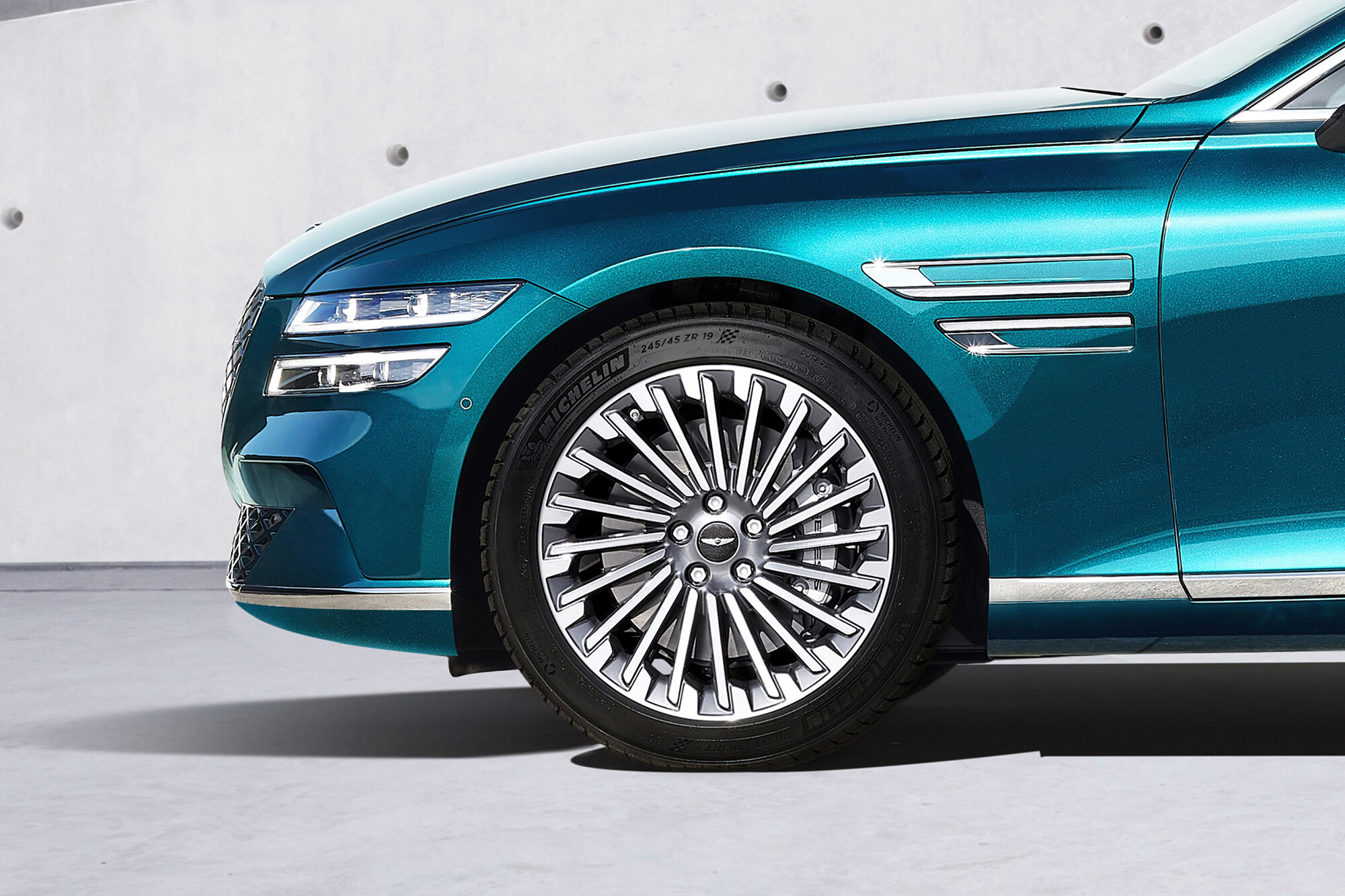
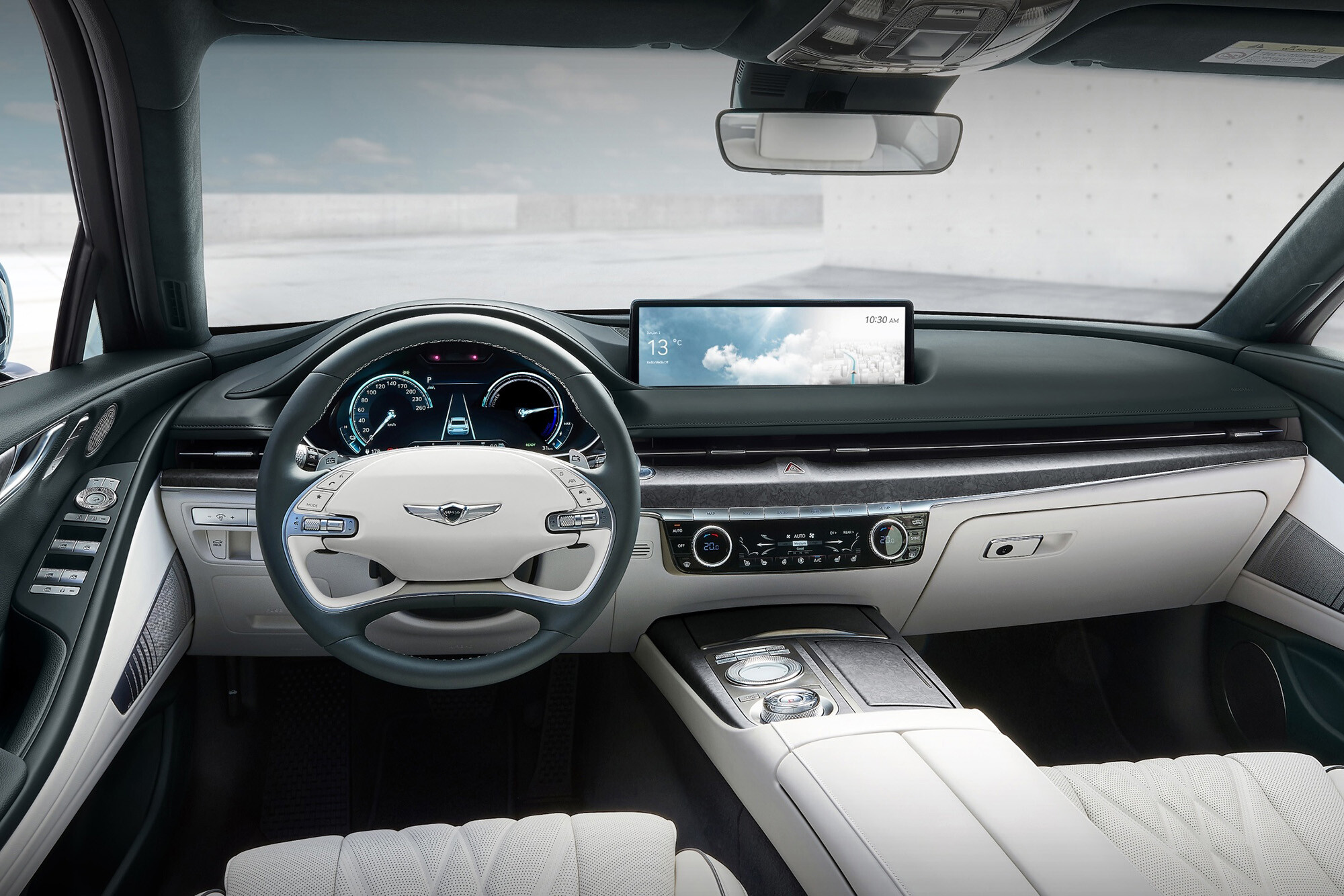
On the styling front, the Electrified G80 gets an almost reversed version of its grille mesh design to create the brand’s own take on the familiar closed-off look featured on most electric vehicles.
Two new colour options are specific to the Electrified G80: Matira Blue for the outside, and a Dark Green Two-Tone for the cabin.
Will the Genesis Electrified G80 come to Australia?
As part of its global debut today, Genesis confirmed we’ll see the Electrified G80 in Australia in “early” 2022.
Specific timing and details are still to be revealed, but, given the G80 3.5T AWD begins in Australia at $99,900 before on-road costs, we could expect the Electrified G80 to land closer to the $110,000 to $120,000 point – if not beyond.
Watch for more to be revealed in the months ahead.
MORE: G80 price and features MORE: G80 news and reviews MORE: All Genesis stories
The 2021 Audi Q2 will go on sale in Australia from May, boasting a new engine and facelifted design.
The model, which first arrived Down Under in 2017, will benefit from a new, more efficient, 1.5-litre 35 TFSI four-cylinder petrol turbo engine, joining the existing 2.0-litre 40 TFSI petrol turbo S Line Quattro.
As revealed late last year, the Q2’s headlights now have a more distinctive lighting signature, and the large air inlets in the front bumper are now even more pronounced, particularly if choosing the S line. All 40 TFSI Quattro S line models have this fitted as standard.
The octagonal single-frame grille is slightly lower than before, giving the front a wider appearance. Round the back, the hatch and diffuser have been given a more angular look to match the character lines of the profile view.
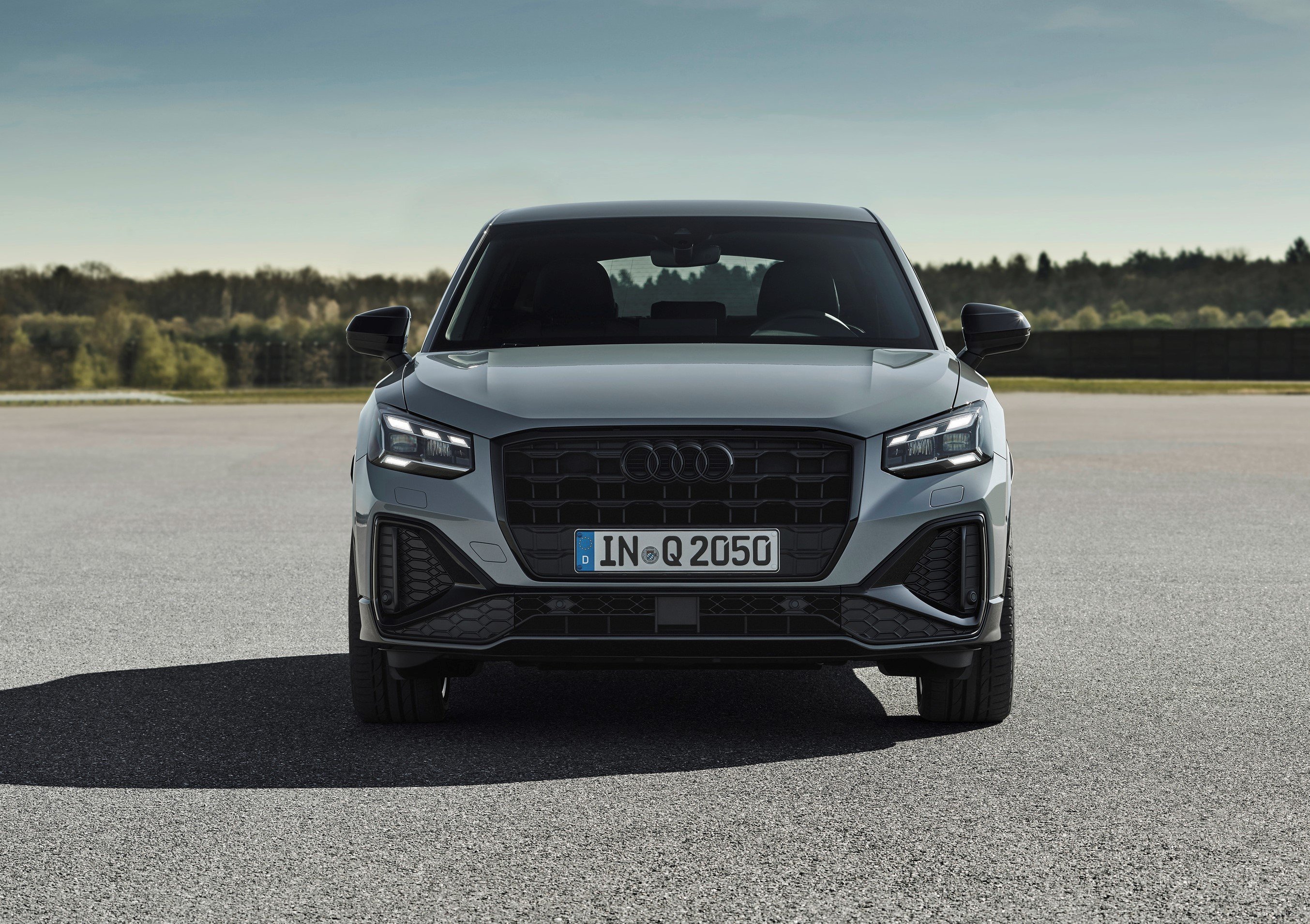
Depending on the model, the Q2 is available in 11 exterior colours and two interior colour combinations.
Inside, both the 35 and 40 TFSI now include heated exterior mirrors and hands-free remote central locking with push-button start as standard, as well as MMI Navigation Plus with an 8.3-inch MMI touchscreen display.
The 35 TFSI continues to offer LED headlights, contrasting bumpers and C-pillar, leather-appointed seats and steering wheel, dual-zone climate control, digital driver information display as well as Audi Smartphone Interface and phone box light wireless charging.
The facelifted Q2 now wears 18-inch alloy wheels as standard across the range. Those wanting to upgrade to the 40 TFSI Quattro S Line get new Audi Sport 18-inch alloys, Audi Drive Select, electric tailgate, sport front seats, auto-dimming interior mirror and aluminium interior accents too.
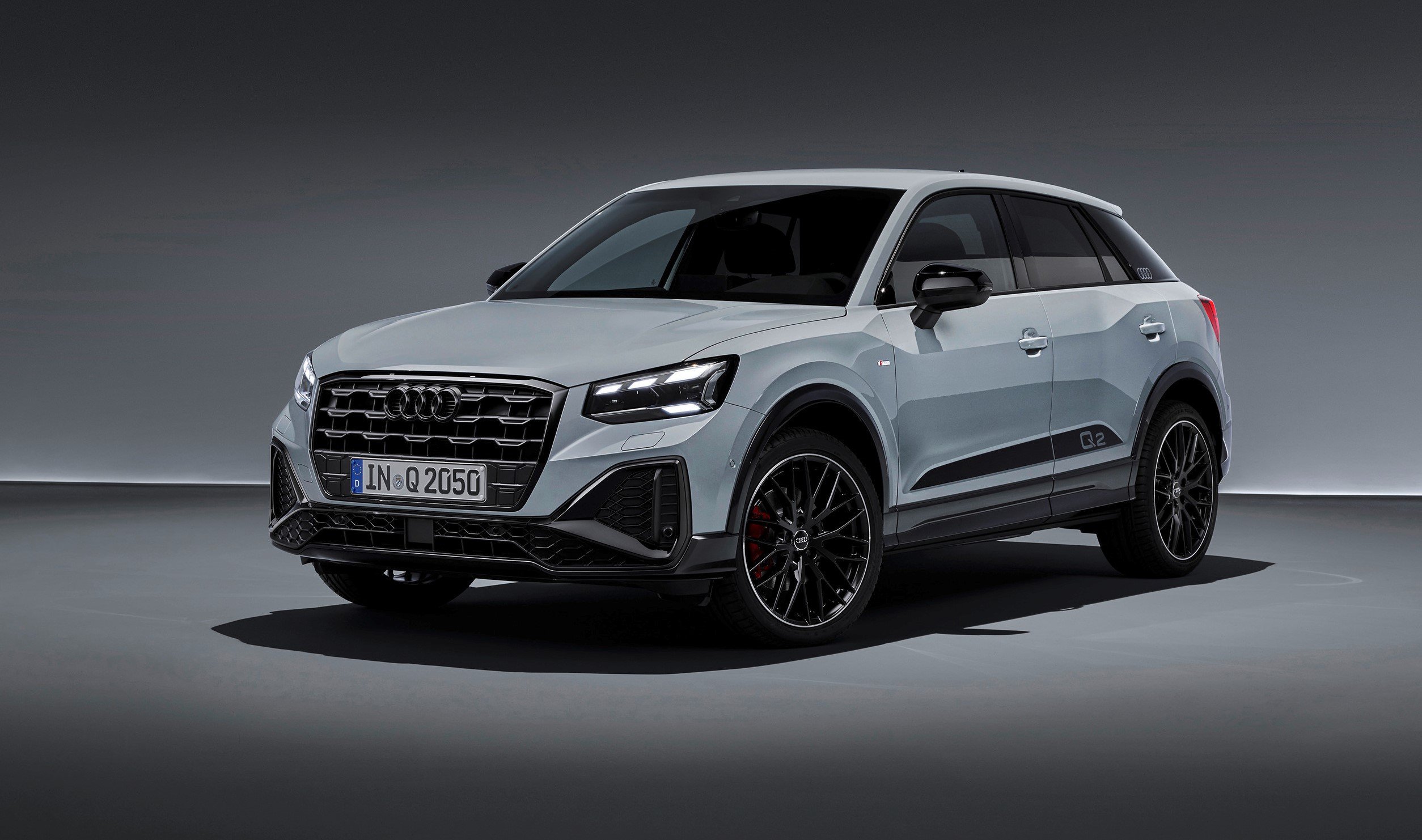
However, it’s the 35 TFSI model that benefits from the most significant upgrade, with a new 1.5-litre TFSI turbo petrol sitting beneath the bonnet.
Delivering 110kW and 250Nm, Audi claims the 1.5-litre TFSI’s Cylinder-on-Demand (CoD) function can shut down two of its four cylinders imperceptibly at low throttle load and engine speeds, resuming full power seamlessly as needed. It claims a 0-100km/h time of 8.6 seconds, while its fuel consumption is listed at a low 5.2L/100km.
The 40 TFSI Quattro S Line model will continue to feature the 2.0-litre TFSI engine that produces 140kW and 320Nm, which is enough to take it from 0-100 km/h in just 6.5 seconds, with a fuel consumption of 7.0l/100km.
Both engines are mated to the familiar and snappily-shifting seven-speed S tronic dual-clutch transmission.
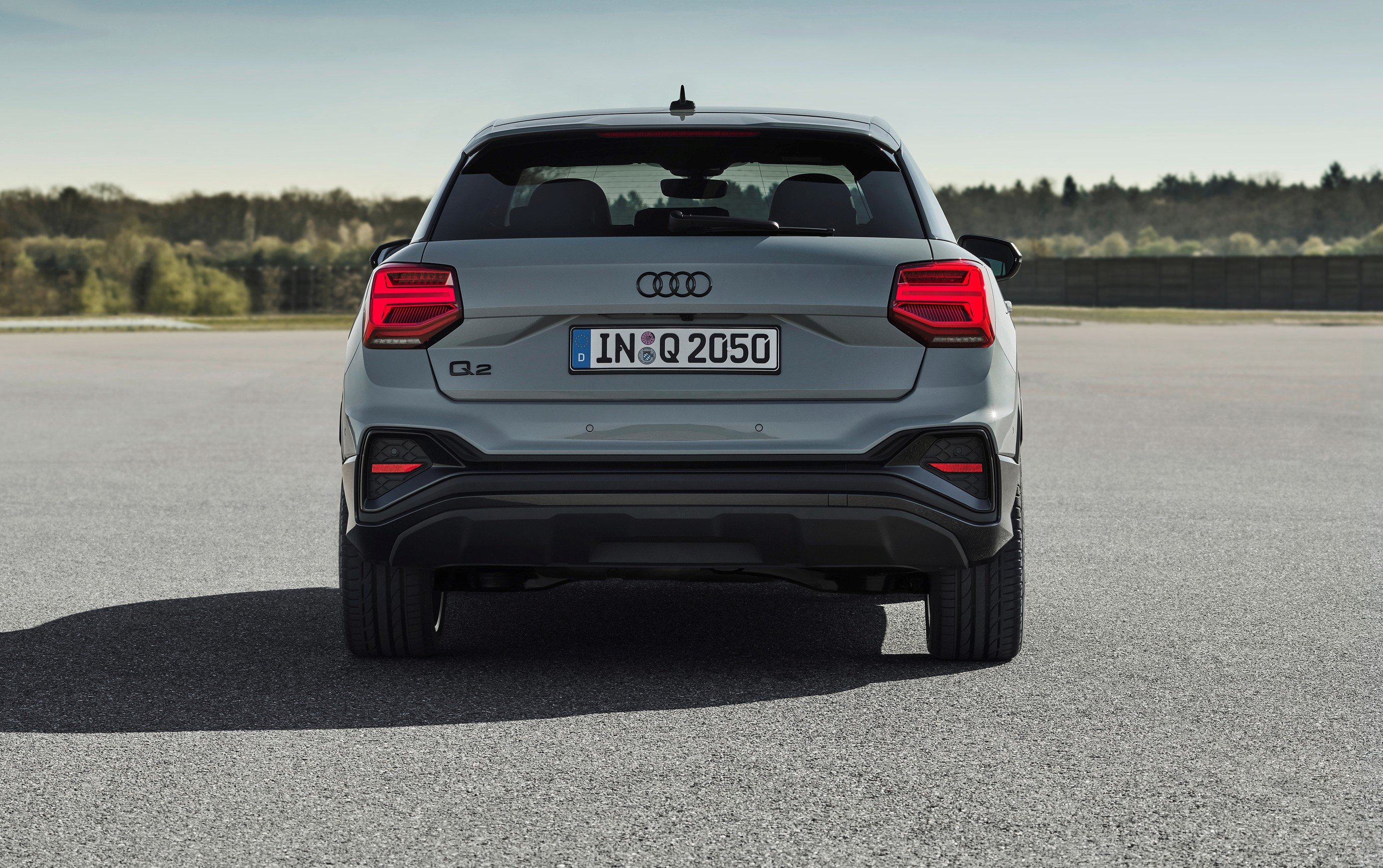
The Q2 has previously been awarded a five-star Euro NCAP and ANCAP safety rating and comes equipped with a host of safety features including; Audi pre-sense city (AEB) with pedestrian detection, side assist, cruise control, parking system plus with sensors and rear camera, as well as tyre pressure indicators and six airbags as standard.
Optional extras in the form of a ‘style package’ and separate ‘premium package’ are also available for both models.
2021 Audi Q2 pricing for Australia
- Audi Q2 35 TFSI – $42,900
- Audi Q2 40 TFSI Quattro S Line – $49,900
- Audi SQ2 – $64,400
MORE: Q2 news and reviews MORE: All Audi stories
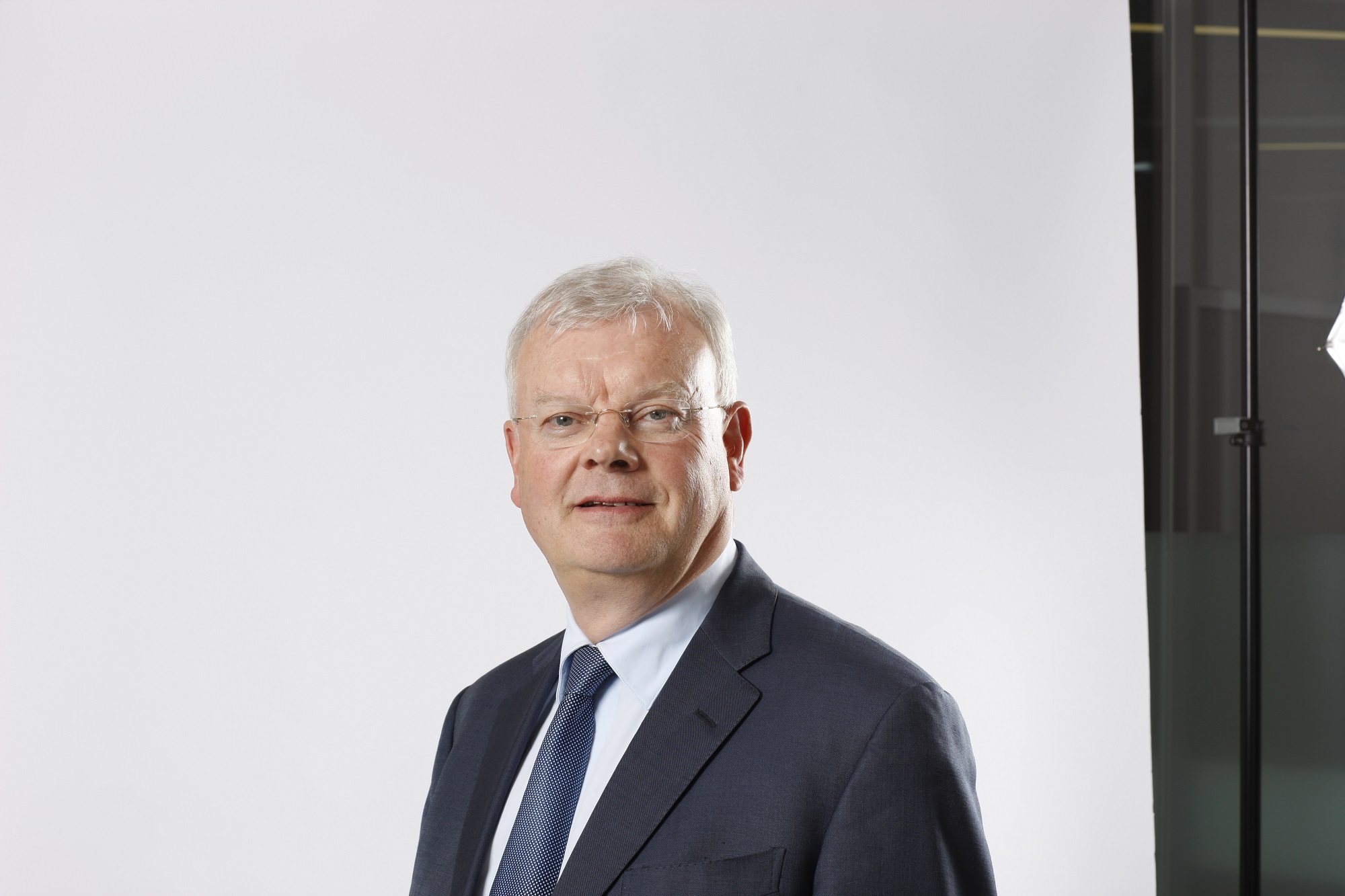
Richard Parry-Jones, the engineer who reinvigorated Ford’s reputation for sparkling chassis dynamics, has died aged 69.
The hugely influential and much-loved Ford lifer had retired from the car industry and was killed in an accident on his farm in Wales.
The car you drive is better because of Richard Parry-Jones. It doesn’t matter which company built it. If it was conceived in the last twenty years, it has a genius Welsh engineer to thank for the way it goes down a road, in an indirect regard at the very least.
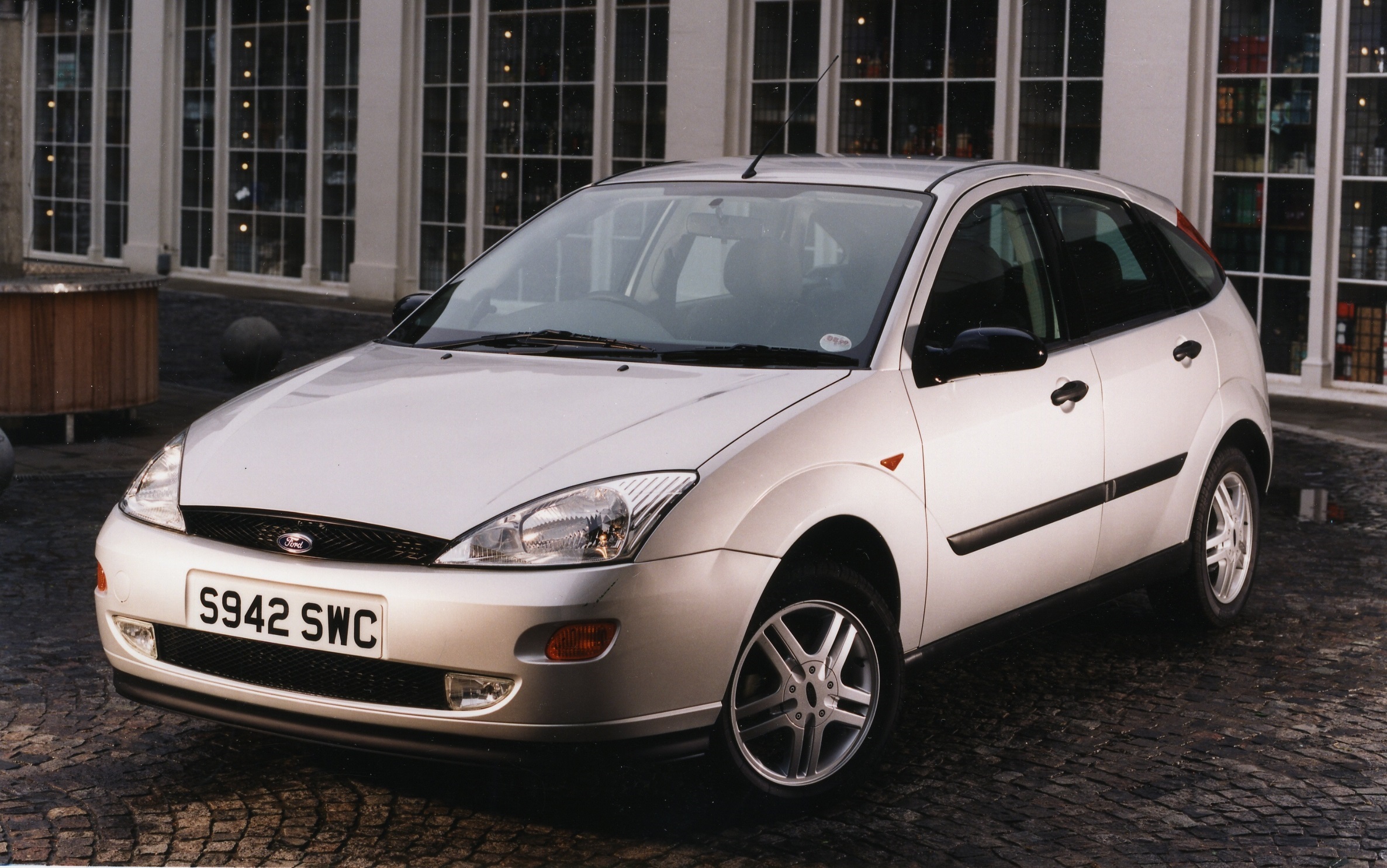
So revolutionary was his approach to vehicle dynamics that his 1998 Ford Focus was the most significant step forward in the way that cars drove that from that point on, the rules across the industry changed.
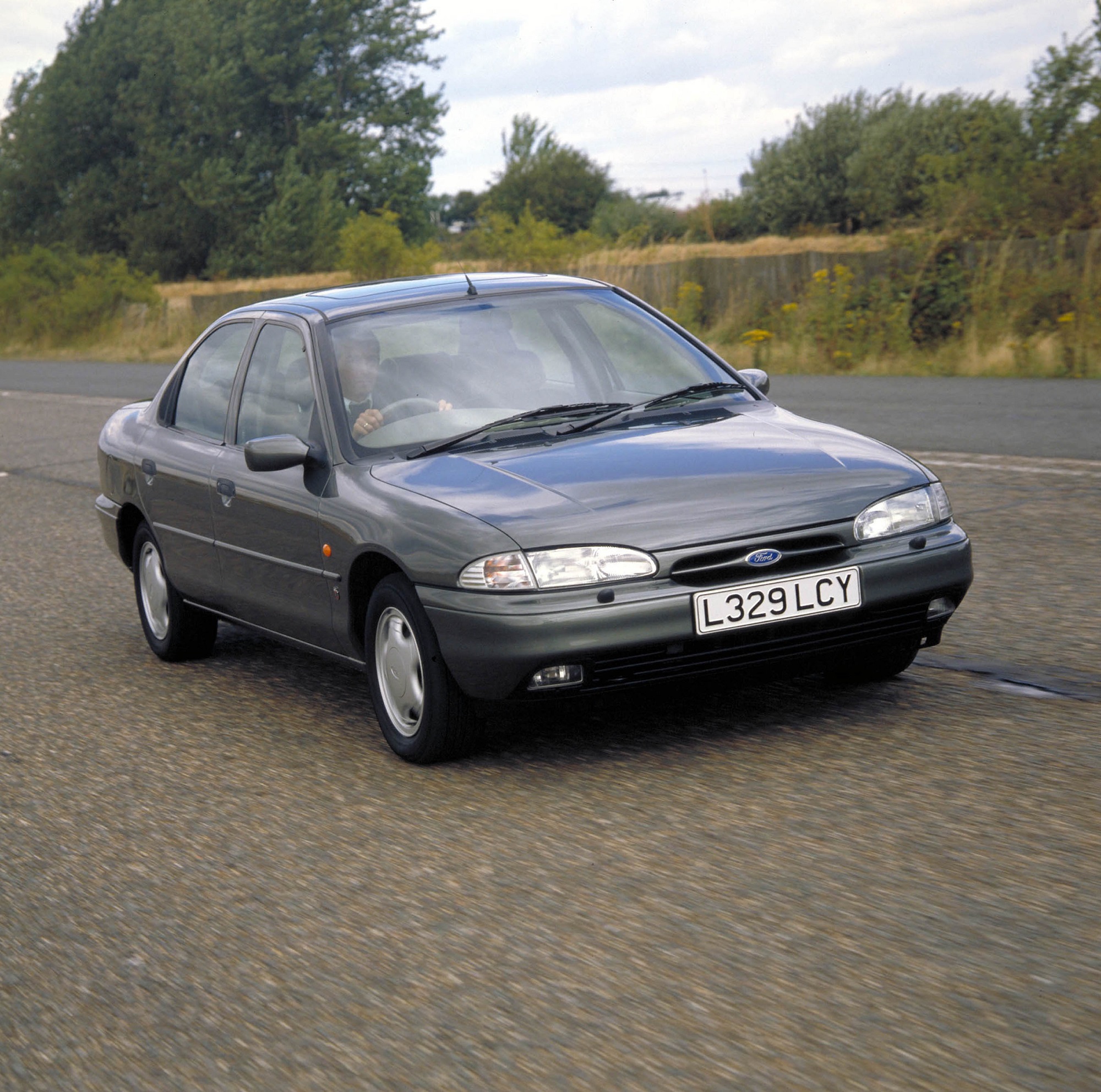
Parry-Jones was a rarity. Not only was he a gifted engineer and a talented driver but he was a brilliant communicator as well, this combination of attributes seeing him come to prominence with the Mondeo project in 1993, of which he was chief engineer.
RP-J, as he was universally dubbed, realised that excising cost from the Sierra had seen it become a vehicle unattractive to operate, with coarse engines, a lumpen ride and dull steering.
He also predicted at this stage that the medium-car market would drift towards premium badges and that Ford needed to offer a convincing counterpoint. Making the Mondeo better to drive than an entry-level BMW 3 Series or an Audi 80 changed the script.
Rather than become engaged in a low-margin race to the bottom of the sector, Ford could instead add value and charge more. Detroit backed his vision, investing A$6.7bn on the Mondeo project.
The subsequent Fiesta and Puma hatches bore his imprimatur but it was the Focus that created a seismic shift in the industry.
Its sophisticated control-blade multi-link rear suspension, crisp steering and incredible body-control made everything else in the Focus’ class seem instantly leaden and dull-witted.
Volkswagen, realising that it had been outplayed, recruited Parry-Jones’ protégé, Uli Eichorn, from Ford along with a swathe of other chassis engineers and created a facsimile of Ford’s suspension on its Mk5 Golf. Eichorn’s inherited zeal for dynamics then transformed Bentley before he was promoted to chief engineer for the entire VW Group.
By then, Parry-Jones had moved to Dearborn to spread the good word across all of Ford’s platforms. As VP of Global Product Development, he was, in effect, responsible for changing the engineering philosophy of all FoMoCo brands, which at that stage included Jaguar, Land Rover, Lincoln, Mazda, Volvo and Aston Martin.
He was a great proponent of what he called ‘the 50-metre test’, which he reckoned was more important to buyers than the car’s behaviour at the limit. He was adamant that most drivers could tell within 50 metres whether or not they were driving a good car, and his products had a matter of seconds to create that impression.
My favourite memory of Parry-Jones was lending him a Lotus Exige back in 2000, when the vehicle had just been launched. We were at the Nordschleife on a chilly Sunday, but rather than flog the Lotus round the track, RP-J did about fifty passes on a seemingly undistinguished stretch of back road near the old Sudschleife track, obsessing over nuances of steering, damping and suspension geometry.
“Did you feel what it did there in bump?”, he’d yell over the K-Series lump. I had to admit that I hadn’t, but it was incredible to watch him upload data in this matter. It only ended when an irate farmer brought a halt to proceedings by driving a herd of cows up the road in protest.
Parry-Jones’s enthusiasm and insight will be missed by many. Ford executive chairman Bill Ford described him as a “rare talent who left an indelible mark on Ford and the industry”.
“His passion for great cars and love of motoring inspired legions of engineers and enthusiasts in Europe and around the world,” he said in a statement on Ford’s social media channels.
UPDATE, October 2022: Mercedes-Benz EQB Australian review
The Mercedes-Benz EQB is finally in Australia, and we’ve driven it. Get our full story at the link below, and check out our video too.
Story continues: EQB revealed
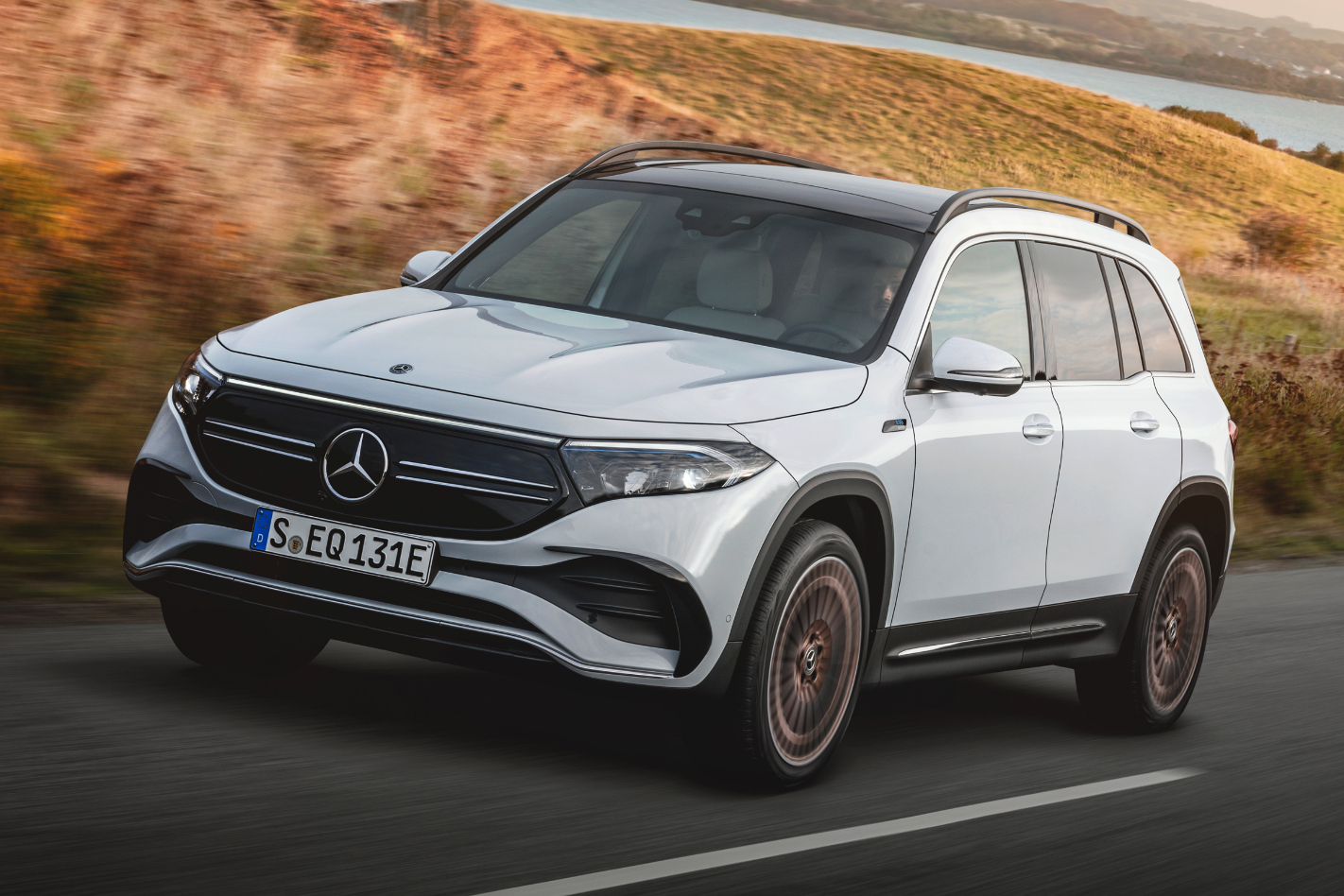
The 2022 Mercedes-Benz EQB all-electric compact seven-seater SUV has officially been unwrapped.
It represents the third EV the German brand has released in 2021 so far, following the compact EQA SUV and range-topping EQS limousine.
Sharing the same MFA2 platform and body as its petrol- and diesel-fueled GLB sibling, the new EQB will be constructed at Mercedes’s Hungarian plant in Kecskemét, where the European-spec CLA and CLA Shooting Brake plug-in hybrid are both currently made.
The MFA2 architecture has been modified accordingly to accommodate the EQB’s floor-mounted battery pack, acting as a structurally integral component of the platform and negating the need for the usual underfloor cross members.
To protect the energy storage unit from being damaged or pierced by foreign objects while driving, the EQB benefits from a a battery guard in the front area of the battery pack.
The EQB will also be built in China by Beijing Benz Automotive Co., as part of a joint venture between Mercedes’s parent company Daimler and Chinese automaker BAIC Group.
Mercedes has invested heavily in the success of the EQB and all of its fully-electric EQ models in the world’s most populous country, where the demand for EVs is growing exponentially every day.
It is for this reason the EQB has made its global debut in China at Auto Shanghai.
“China is not only the most important passenger car sales region for us, it is also the world’s leading market for electric cars,” said Hubertus Troska, Daimler AG board member responsible for Greater China.
“With its seven seats, the new EQB meets the needs of very family-oriented customers.
“In addition to the right products, our local production footprint is one of the decisive factors for sustainable growth in China. That’s why we are looking forward to producing the all-electric EQB in Beijing.”
Several variants in both front-wheel and 4MATIC all-wheel drive will be available across different markets from launch, with power rated as high as 200kW.
Powering the EQB will be a bank of lithium-ion battery packs with capacities starting from 66.5kWh. Mercedes says that a “particularly long-range version is also planned”.
The batteries will be made in-house by Daimler at its manufacturing facilities in Kamenz, Germany, and Jawor, Poland.
In China, the compact electric SUV will come as a fully-specced, range-topping variant with an AMG Line package and a power output rated at 215kW.
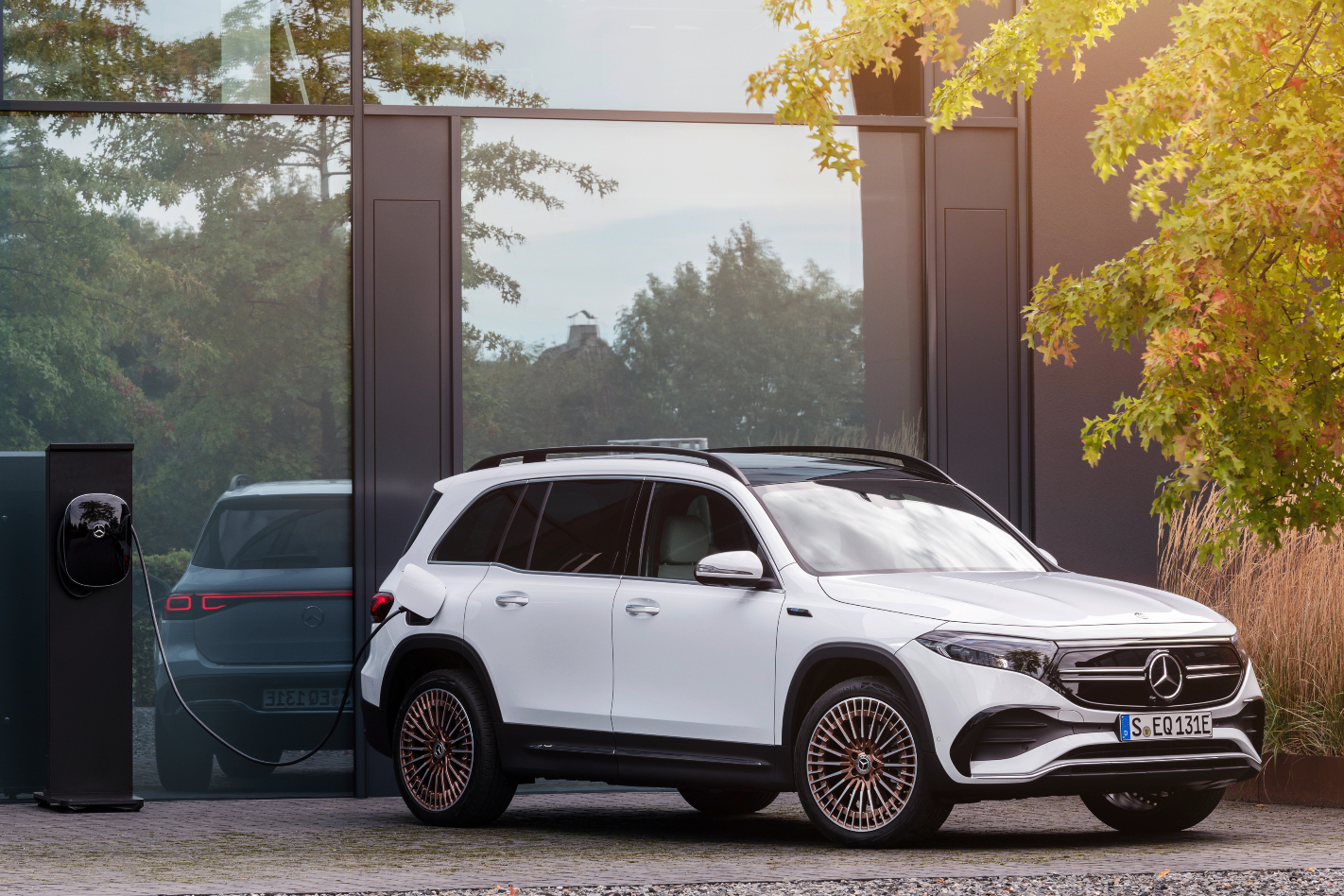
Thanks to the GLB/EQB’s long wheelbase (measuring 2829 millimetres), the China-only model will also come with a third row of seats as standard, making it capable of carrying seven passengers in total.
In other markets across the globe, a two-row/five-seater set-up will be the norm, with a third row available to purchase as an optional extra.
In Australia, it is likely the local market will receive a front-wheel drive EQB 250 model and a top-of-the-range EQB 350 4MATIC model.
European-spec EQB 350 4MATICs will have an effective driving range rated at 478km (WLTP) from a single charge, so expect about the same for the Aussie-delivered model.
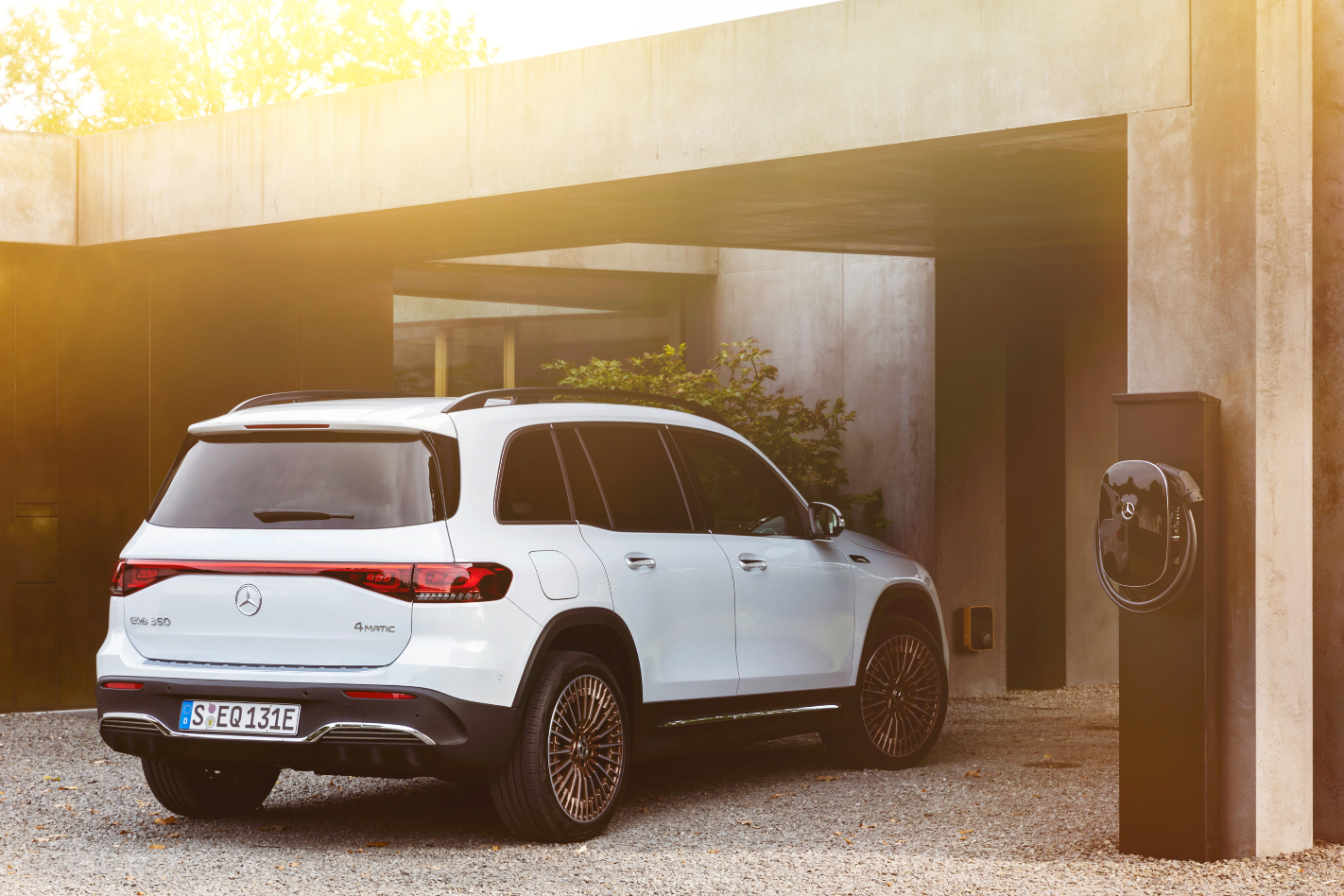
There will be several different charging options for the EQB, including an onboard charger that allows up to 11kW with an alternating current (AC).
Mercedes also says that using one of its wall-box chargers will significantly increase the rate of charging compared to a household socket.
At direct current (DC) charging stations, the time needed to top up the EQB is even less, with the Stuttgart firm claiming that in the right conditions, the SUV’s state of charge can grow from 10-80 per cent in just over 30 minutes.
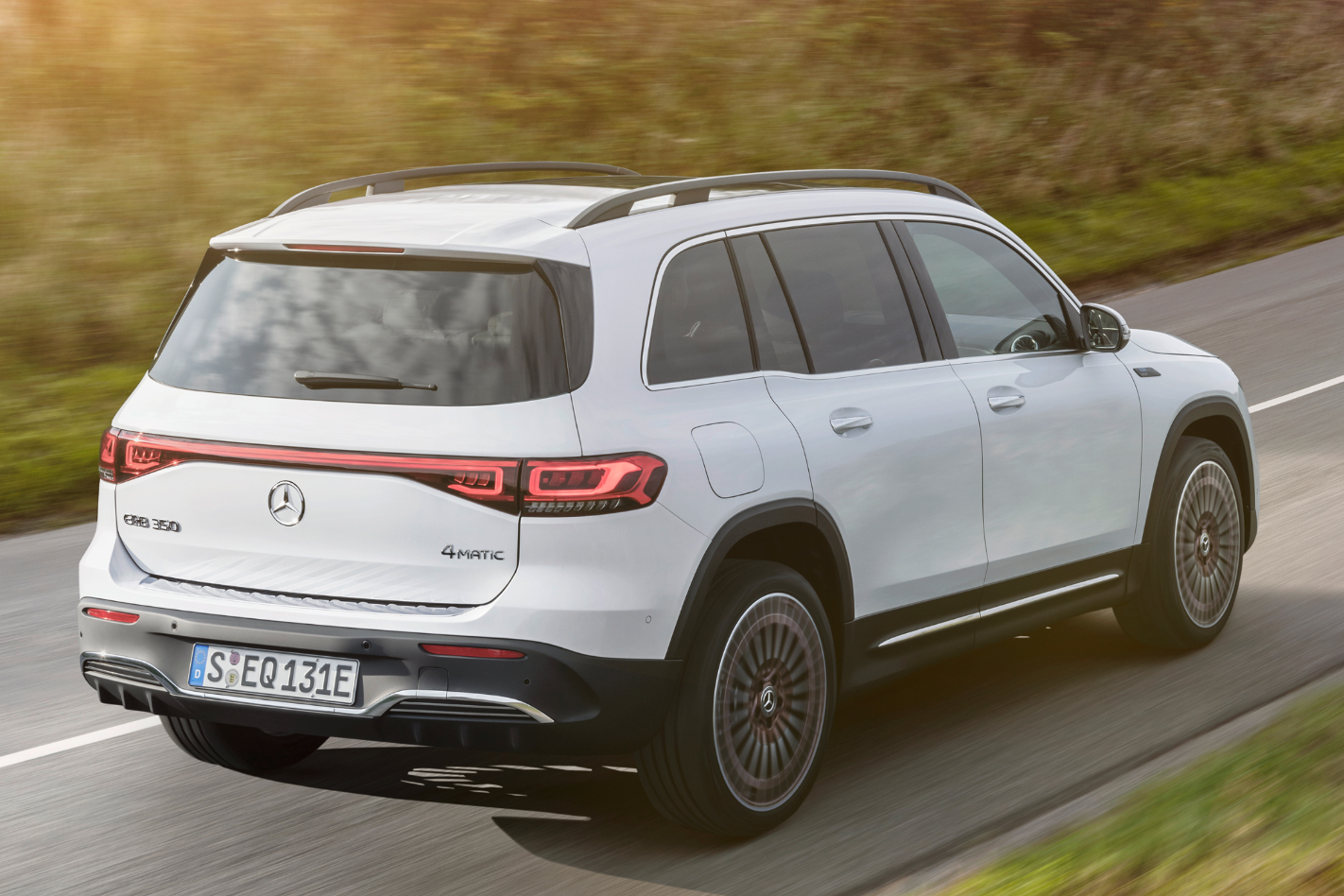
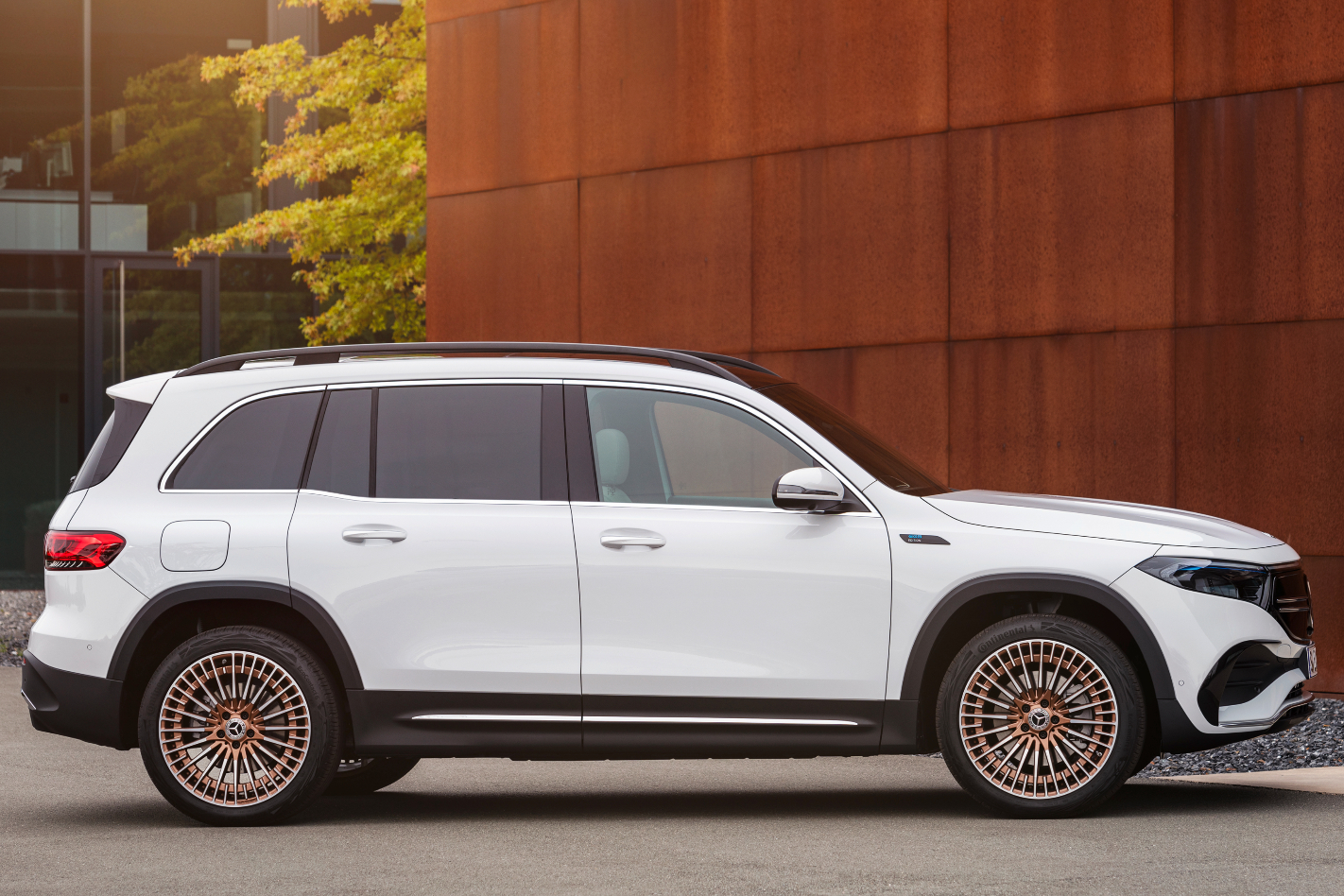
The exterior of the EQB is, rather obviously, very similar to the GLB, with the main visual difference between the two vehicles being the completely closed over front grille, which helps the EV to achieve its extra slippery drag coefficient of 0.28.
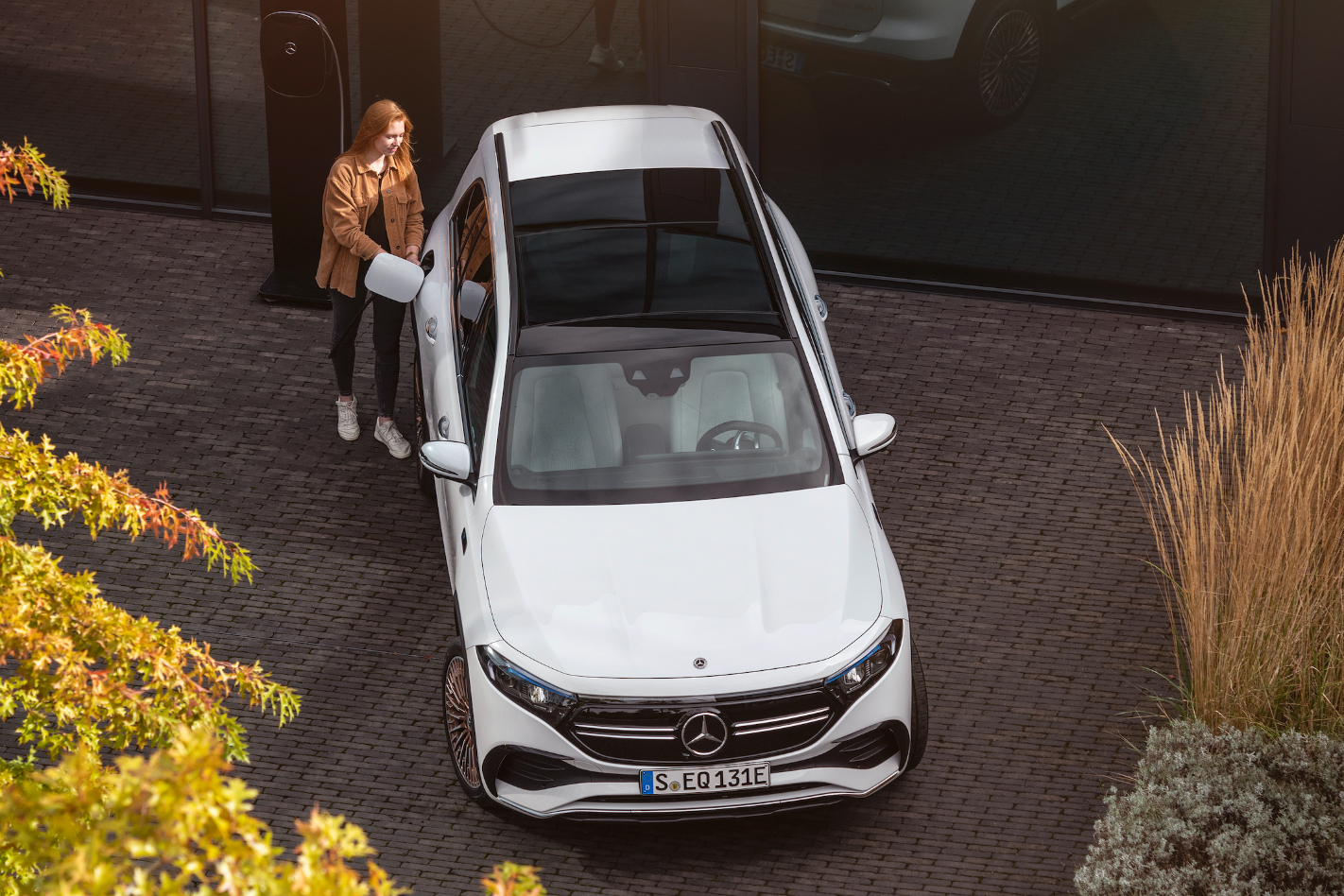
Other exterior features include; a newly designed front spoiler and rear diffuser – which both promote better aerodynamic efficiency, as does the almost completely enclosed underbody – bespoke front and rear wheel arch spoilers and special aero-optimised alloy wheels.
The EQB also has redesigned headlight and taillight configurations that bring it into line with the rest of the EQ product range.
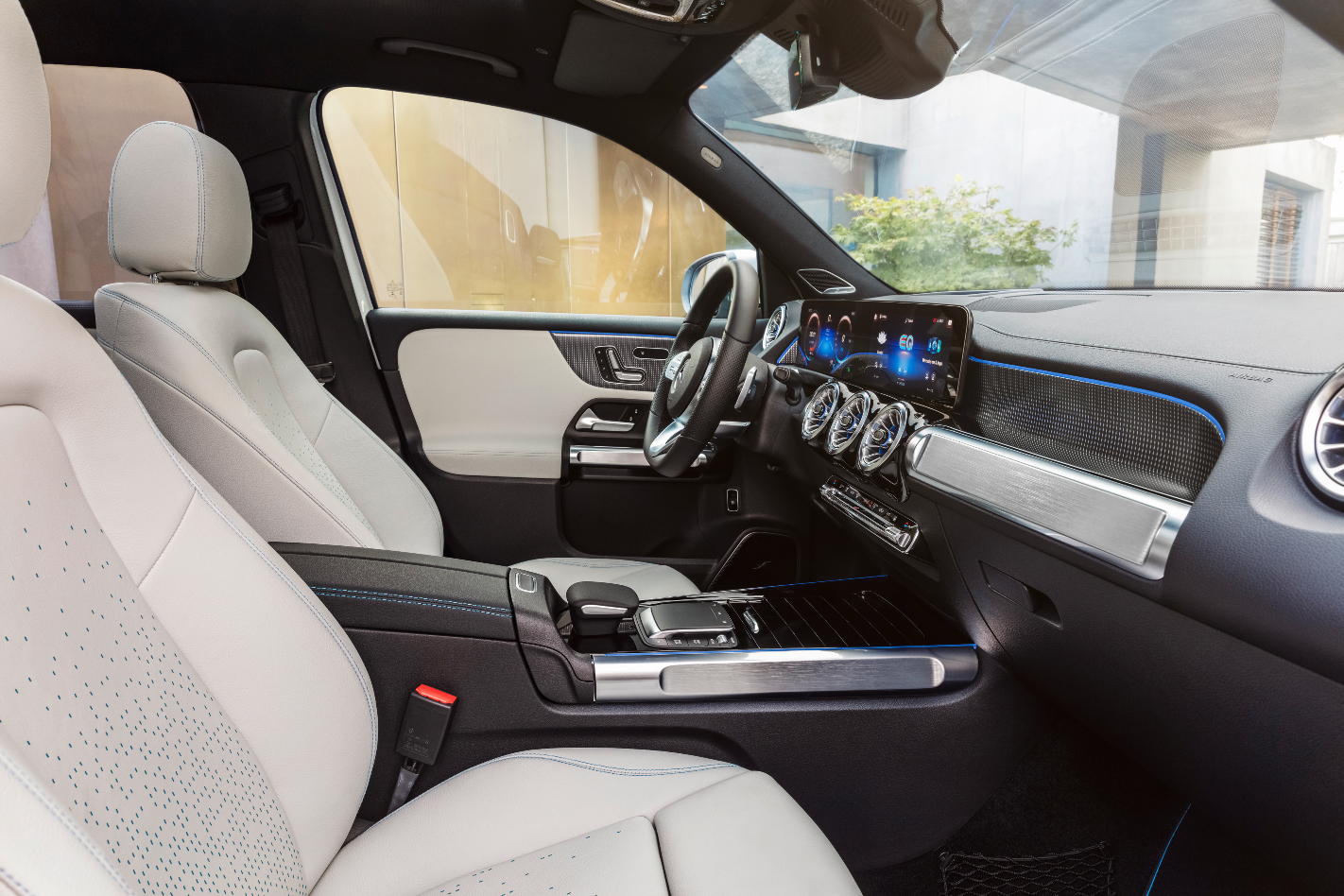
As is the case with the GLB, the EQB’s interior will come equipped with dual 10.3-inch digital displays, with the central one being a touchscreen, enabling users to interact with Mercedes’s MBUX infotainment system. ‘Hey Mercedes’ voice activation will also come as standard.
Other features of the interior include Apple CarPlay and Android Auto, wireless charging, and USB-C charging stations.
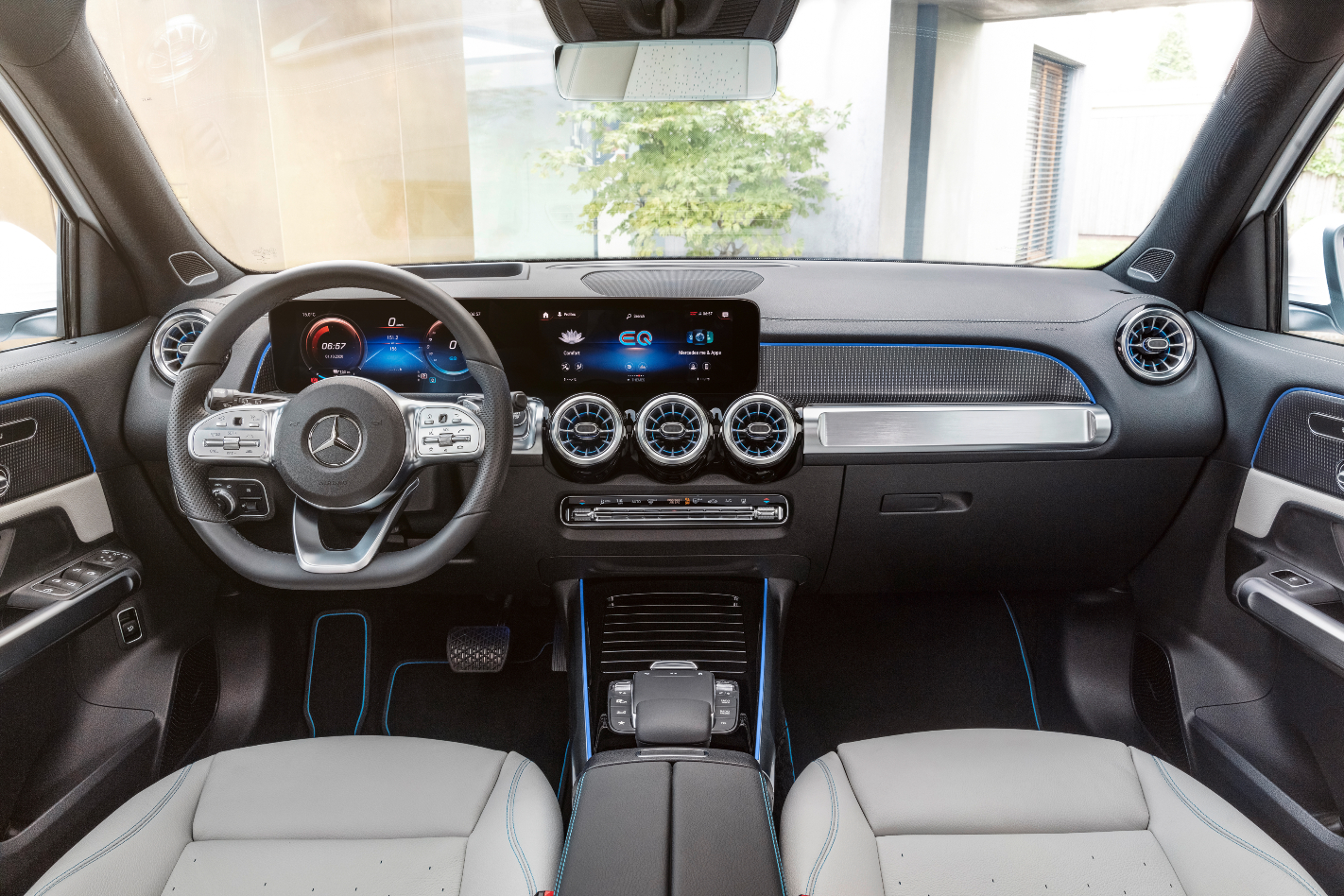
It’s not known yet what else will come as standard on the electric SUV for Australian-delivered vehicles, but for anyone familiar with purchasing a Mercedes locally, expect to pay extra for bundled features like an AMG Line pack, Vision pack and Driving Assistance pack.
Safety features as standard include active lane-keeping assist, active brake assist, blind-spot assist and parking assist.
Mercedes has had a strong roll-out of all-electric vehicles in 2021 so far, and there’s still more EQ models to come – with EQE, an executive sedan, due to be unveiled later this year.
It may sound like a lot of EVs in a short amount of time, but as Mercedes has previously stated, by 2030, it expects more than 50 per cent of its products to be plug-in hybrid electric or fully electric vehicles.
There’s no word yet about local availability or pricing for the EQB, however, a representative for Mercedes-Benz Australia has told WhichCar the electric compact SUV won’t be landing Down Under until 2022.
Be sure to watch this space as WhichCar brings you all the latest updates on Mercedes’s newest SUV.
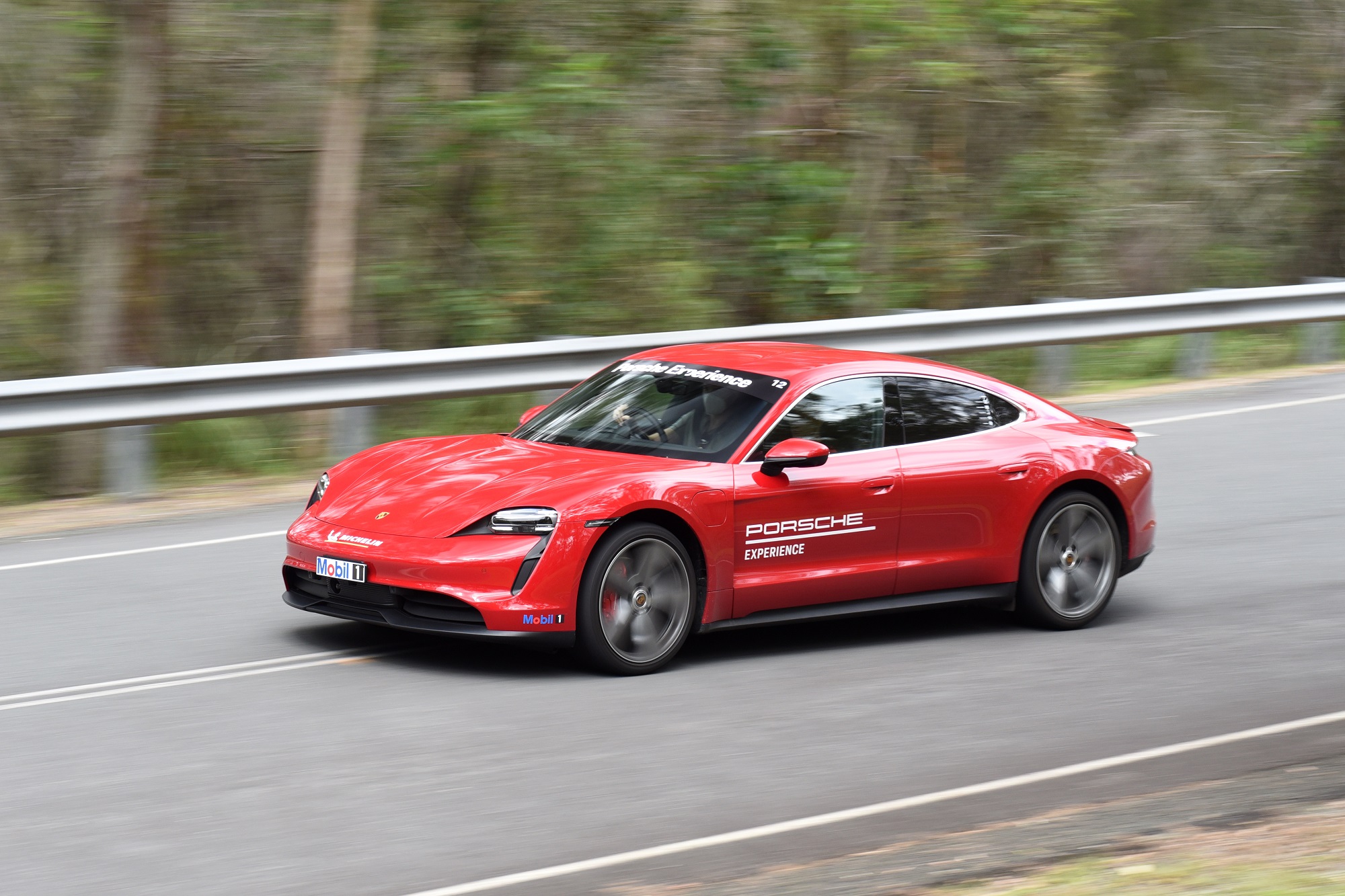
The 2021 Porsche Taycan has been added to the German automaker’s Track Experience in Australia.
Drivers wanting to take part in the Precision and Precision Plus programs on offer with Porsche Down Under can now experience the marque’s first all-electric sportscar.
Since April 10 the Taycan has taken to the track at Mount Cotton in Queensland.
The Taycan 4S is now available for customers to drive as part of selected modules. The Taycan Turbo also makes an appearance, serving as a hot lap car for ride-alongs during Precision Plus days.
“Our first group of guests for the year did not know that Taycan had been introduced to the program. It was fantastic to see their reactions after driving it,” said Toni Andreevski, Director of Marketing and Motorsport at Porsche Cars Australia.
Porsche launched the new Taycan in Australia earlier this year, with three models available for the local market; the Porsche Taycan 4S, Turbo and Turbo S.
To book an experience with Porsche visit: porscheevents.com.au/Track-Experience
MORE: Taycan news and reviews MORE: All Porsche stories
What is the Ford Escape Vignale AWD?
This is the fancy top-spec variant of the Ford Escape medium SUV that for just shy of $50,000 comes with almost everything Ford has to offer.
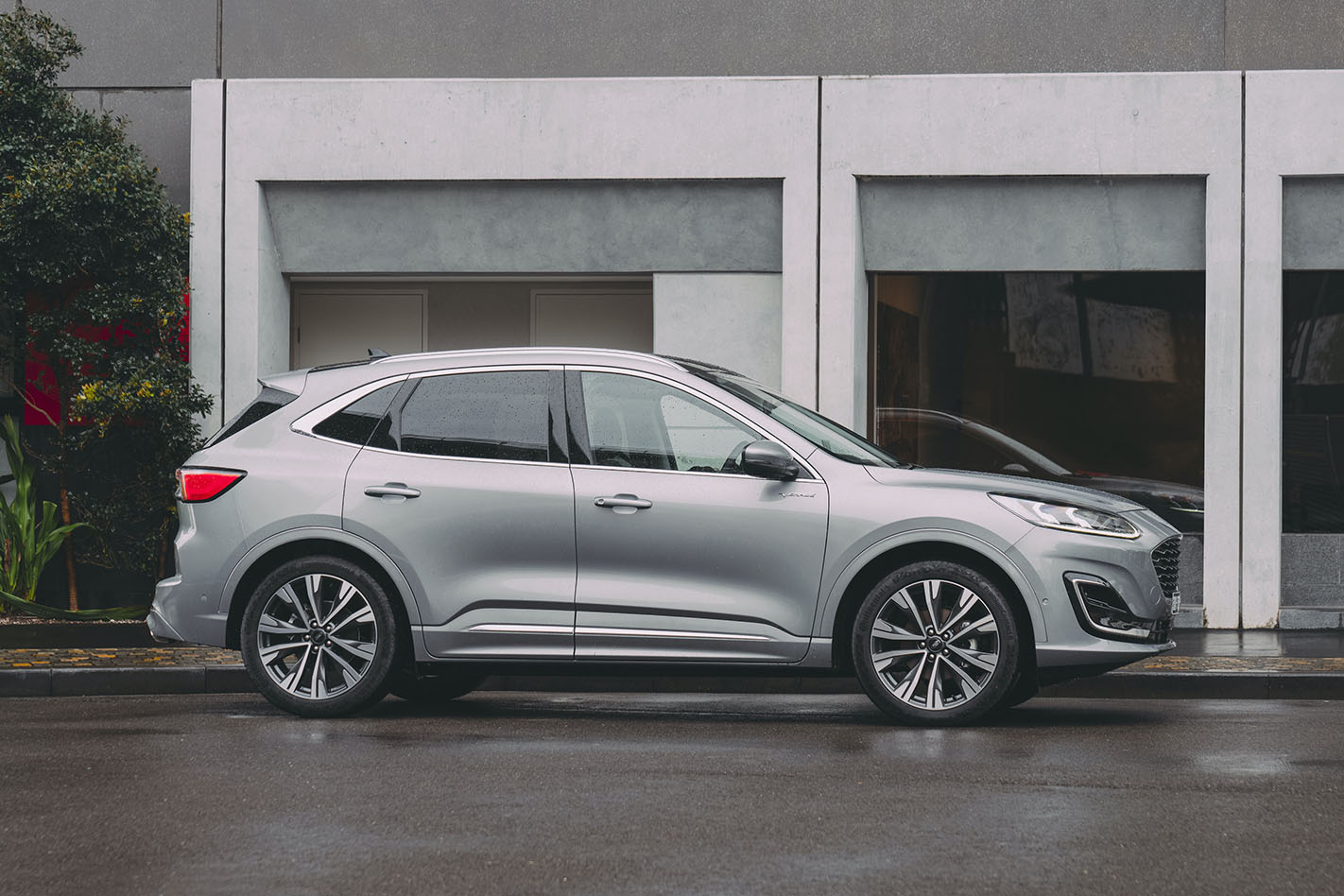
Pronounced Vin-yaleh, the Vignale is a direct rival to the Mazda CX-5 Akera Turbo in terms of trappings and performance, bringing a very lively 2.0-litre Ecoboost engine to the table.
While it looks small, it’s actually a little bigger than the previous model, with interior space benefitting from a 20mm longer wheelbase and sleeker interior fit-out resulting in more space and comfort.
What is the Ford Escape Vignale AWD like to live with?
The Ford Escape stands out for anyone who wants extra space and comfort over a lively hatchback without necessarily missing out on the fun driving experience.
In range-topping Vignale AWD trim it brings plenty of extra tech and creature comforts to retail for $49,590, which is $3000 more than front-wheel-drive (FWD) Vignale, while the entry-level Escape FWD costs $35,990 and the ST-Line AWD $40,990.
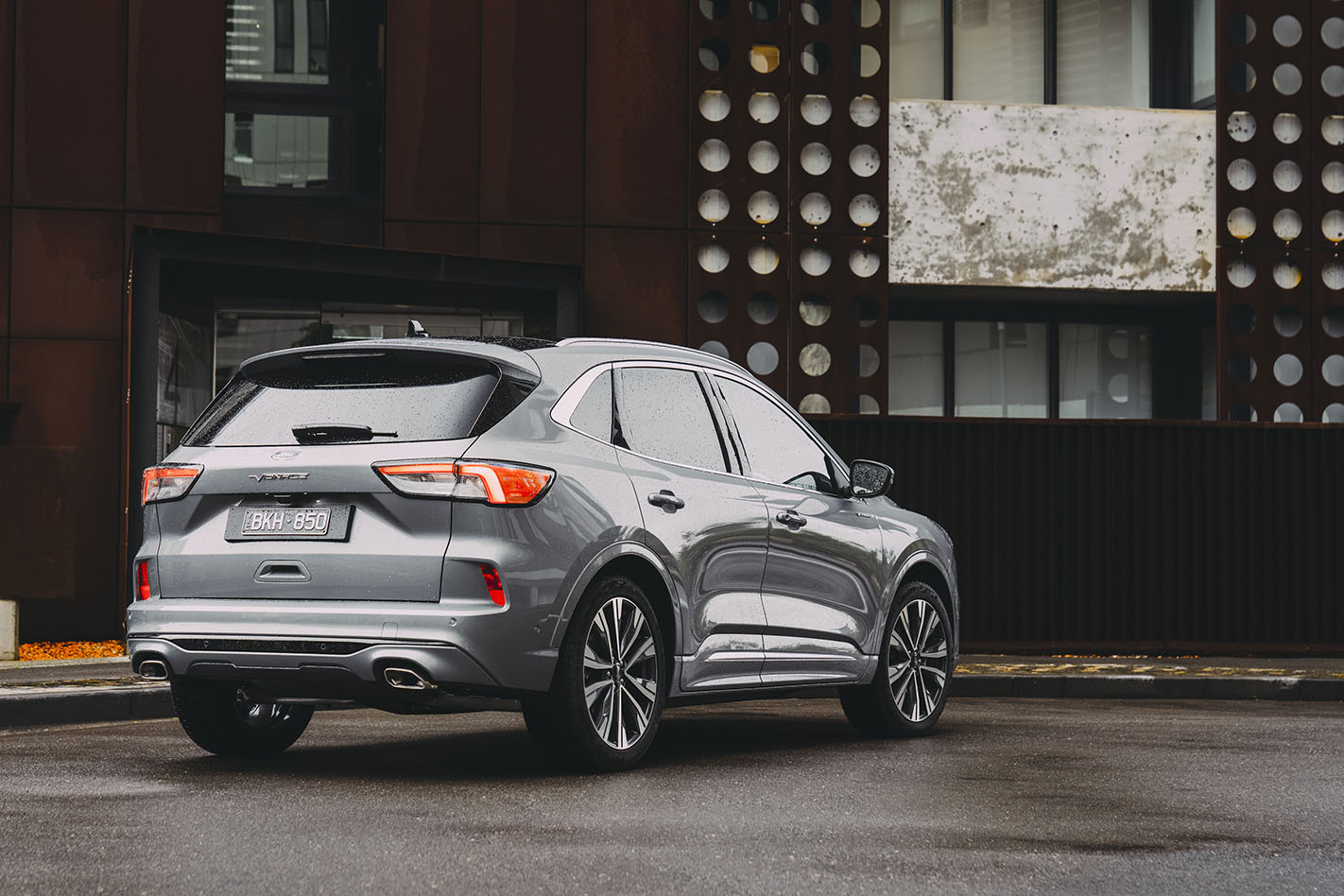
The Viglane’s extras over the Escape’s already generous standard features list include advanced keyless entry, heated leather-wrapped steering wheel, leather-accented seats, 10-way power-adjustable front seats, heated front and rear outboard seats, panoramic sunroof, head-up display, hands-free power tailgate, 180-degree rear-view camera, 19-inch alloy wheels, advanced automated park assist, 10-speaker premium audio system, chrome exterior embellishments and LED quad-projector headlights.
Interior design of the Escape is virtually identical to the Ford Focus and the clutter-free dashboard seems a couple of generations newer than the previous model’s bulky fascia that prematurely dated what was quite a good SUV.
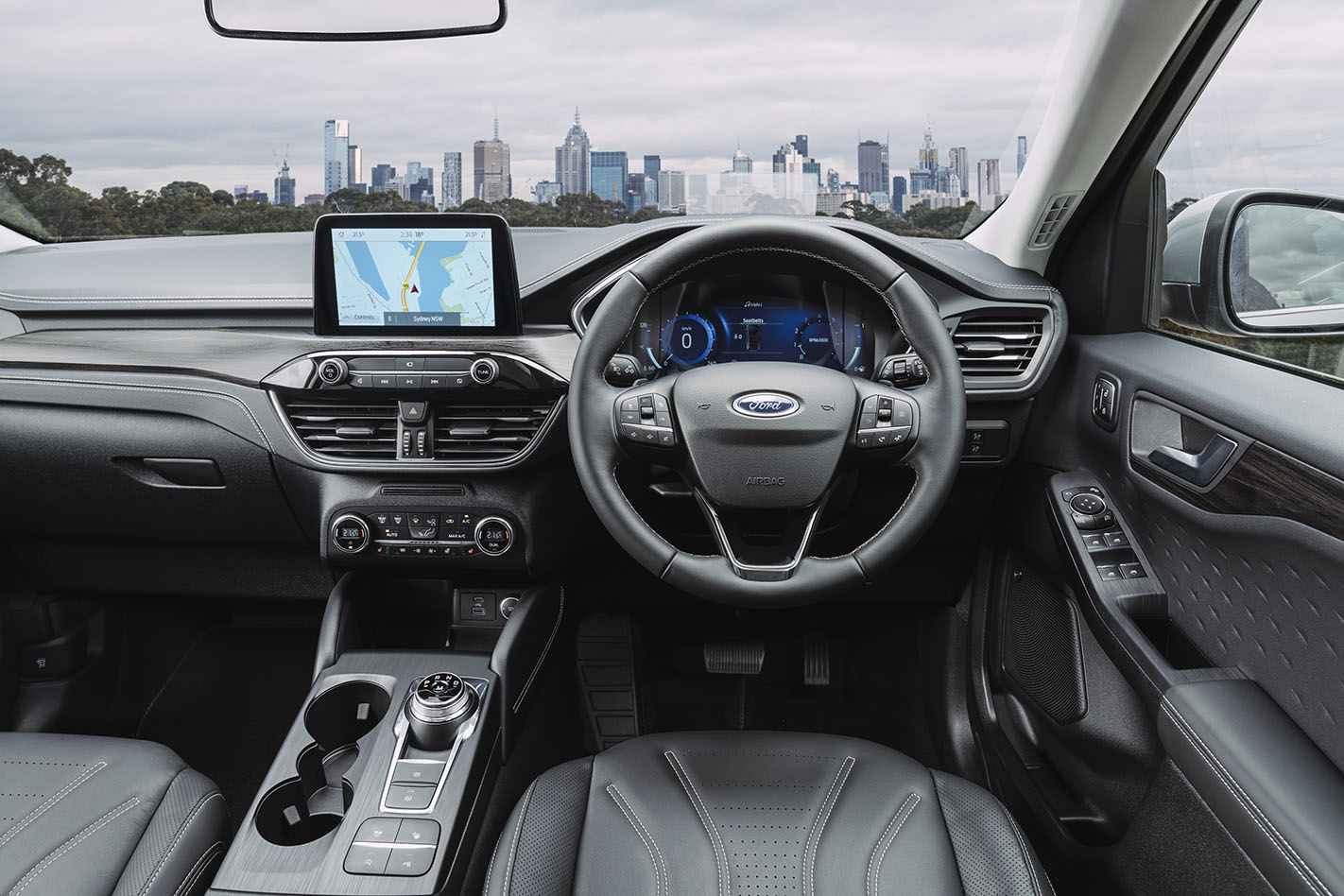
That said it is a little bland, though the Vignale brings some additional trim features such as faux polished timber and patterned door-card trim to provide a little visual interest and the panoramic sunroof brightens things up.
The centre console is well designed, the rotary gear shifter and electronic parking brake freeing up plenty of space. There is a deep bin with a padded lid/centre armrest a roomy spot up the front to plug in your phone or place it on the wireless charger and, of course, a couple of cup holders.
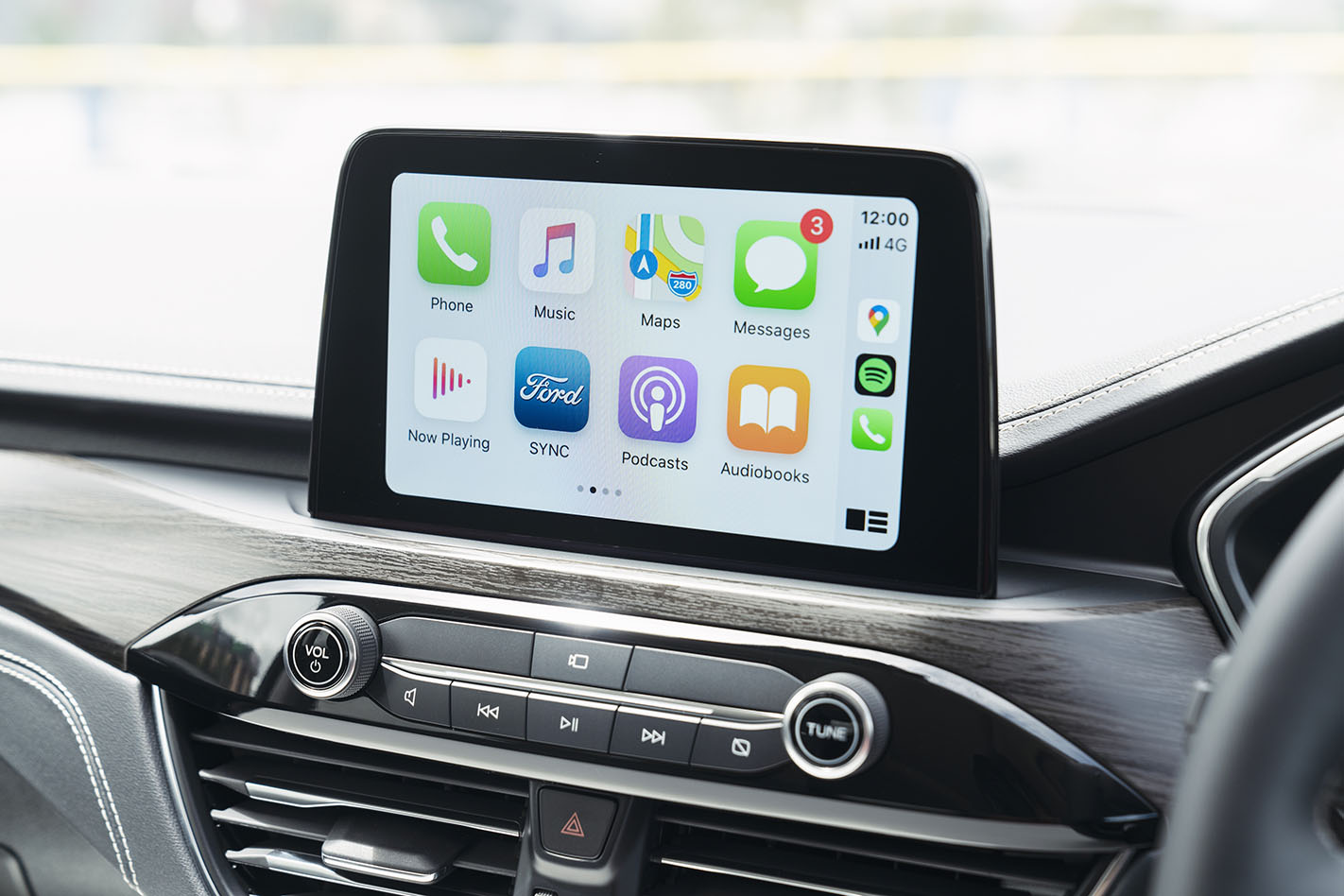
A floating 8.0-inch touchscreen sits above the dashboard line and displays Ford’s Sync3 infotainment system with Apple CarPlay/Android Auto, digital radio and in-built satellite navigation. Audio quality through the 10-speaker Bang & Olufsen sound system is excellent and had me driving around the block on a couple of occasions to hear out the end of a song.
The Vignale also has an attractive 12.3-inch digital gauge cluster that changes colour with the different driving modes and is complemented by a head-up display.
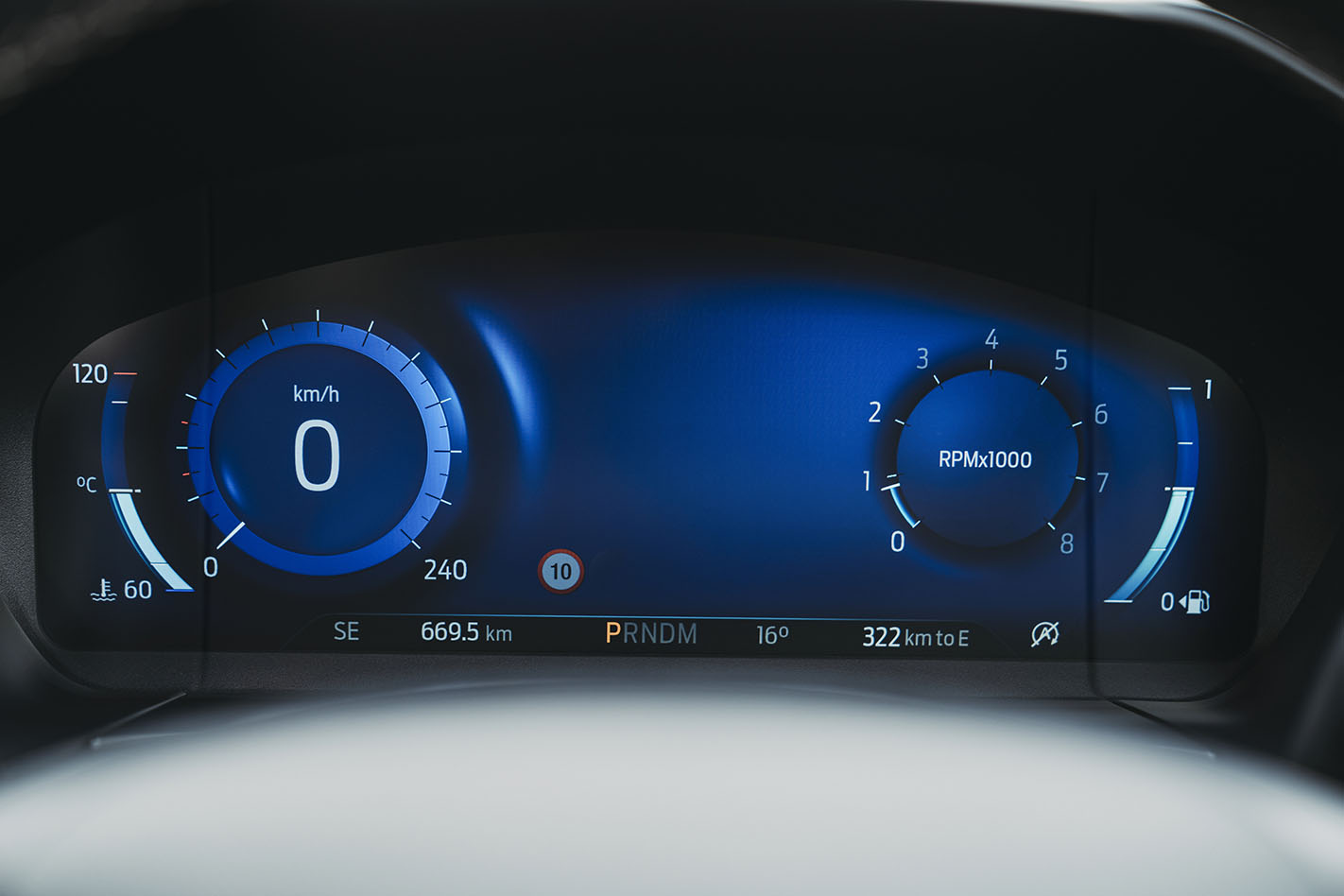
Driver display, audio and adaptive cruise control functions are easily controlled via buttons in the leather-wrapped steering wheel that feels nice in hand. Curiously the indicator/light stalk is on the left-hand side of the tiller, not on the right like most Fords, including the entry-level Escape.
Like the previous model, the driver’s seat is comfortable and offers a good upright driving position and excellent front vision, which many people are looking for in an SUV.
The front passenger seat has manual settings, but the backrest has a dial adjustment to get the positioning just right and there’s lumbar support.
Down back, the rear seats fit two adults comfortably and you’ll have no trouble fitting three children.
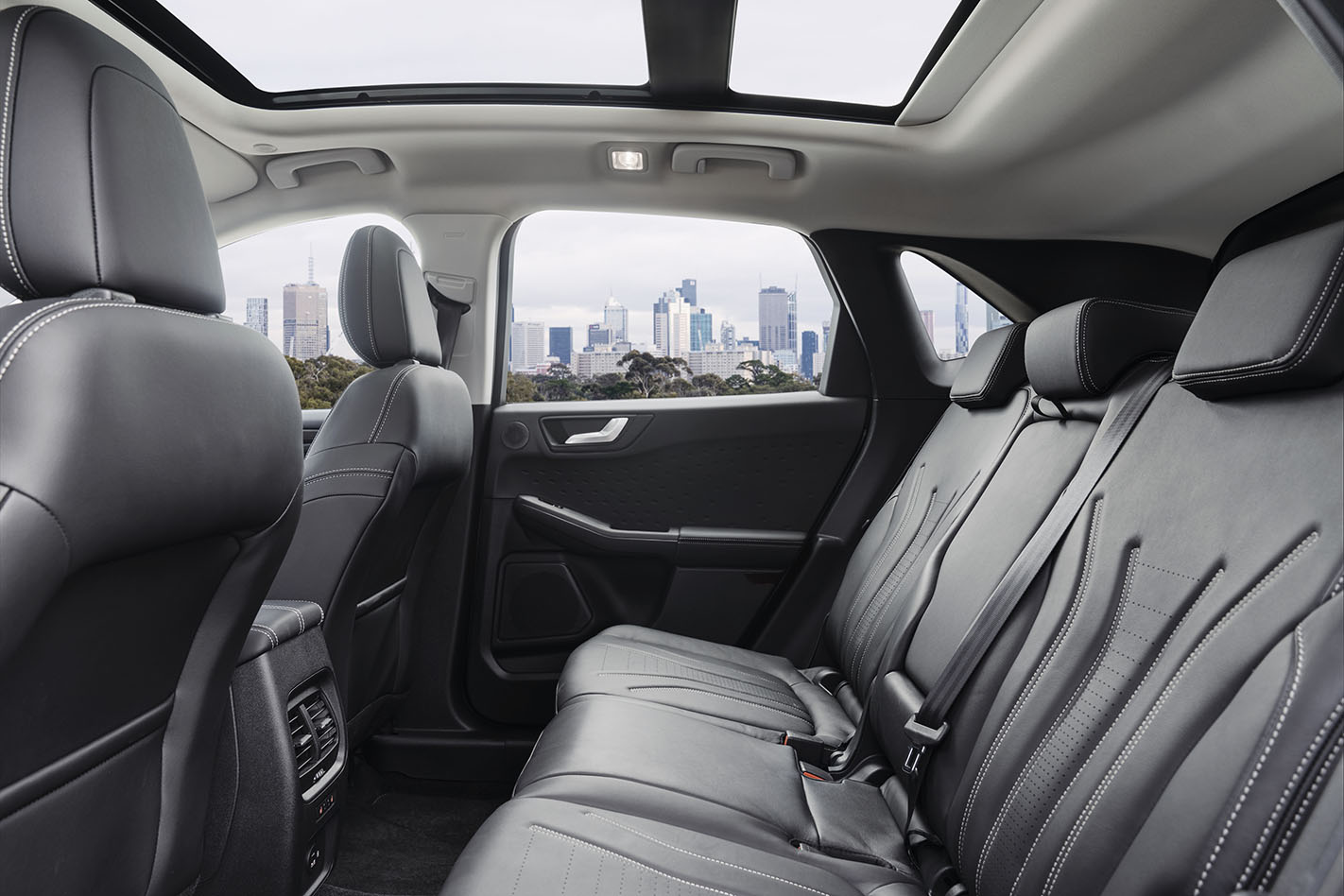
If you have smaller children there are two ISOFIX anchors and three top tether points.
The rear seats are slightly raised, affording good frontal vision and the window-line is low enough so smaller kids can see out.
There is plenty of legroom and plenty of space under the front seats to put your feet. The plush floor mats are a nice touch, as are the sculpted front seatbacks that bring additional knee room. The second-row backrests can recline a little and slide back and forth and there’s a pull-down centre armrest with cup holders.
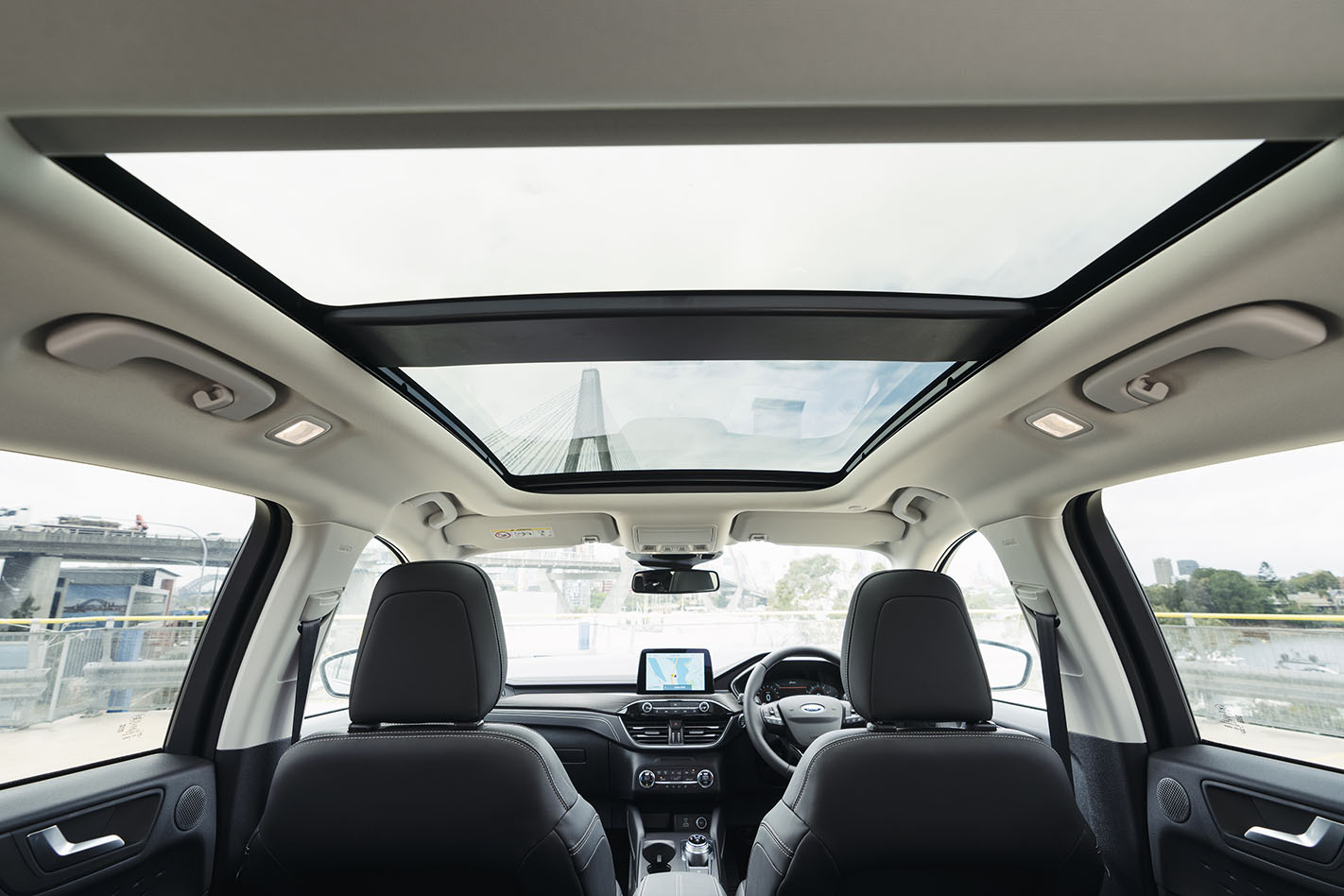
As well as the outboard heated seats, rear passengers also get air vents, USB and USB-C sockets, and small door bins to put stuff including a cup or bottle.
The Escape has a big 526-litre boot and you can carry up 1426 litres with the 60:40 split rear seatbacks lowered using quick-release levers. There’s a 12-volt socket in the boot to run a car fridge or other appliances and you’ll find a space-saver spare wheel under the floor.
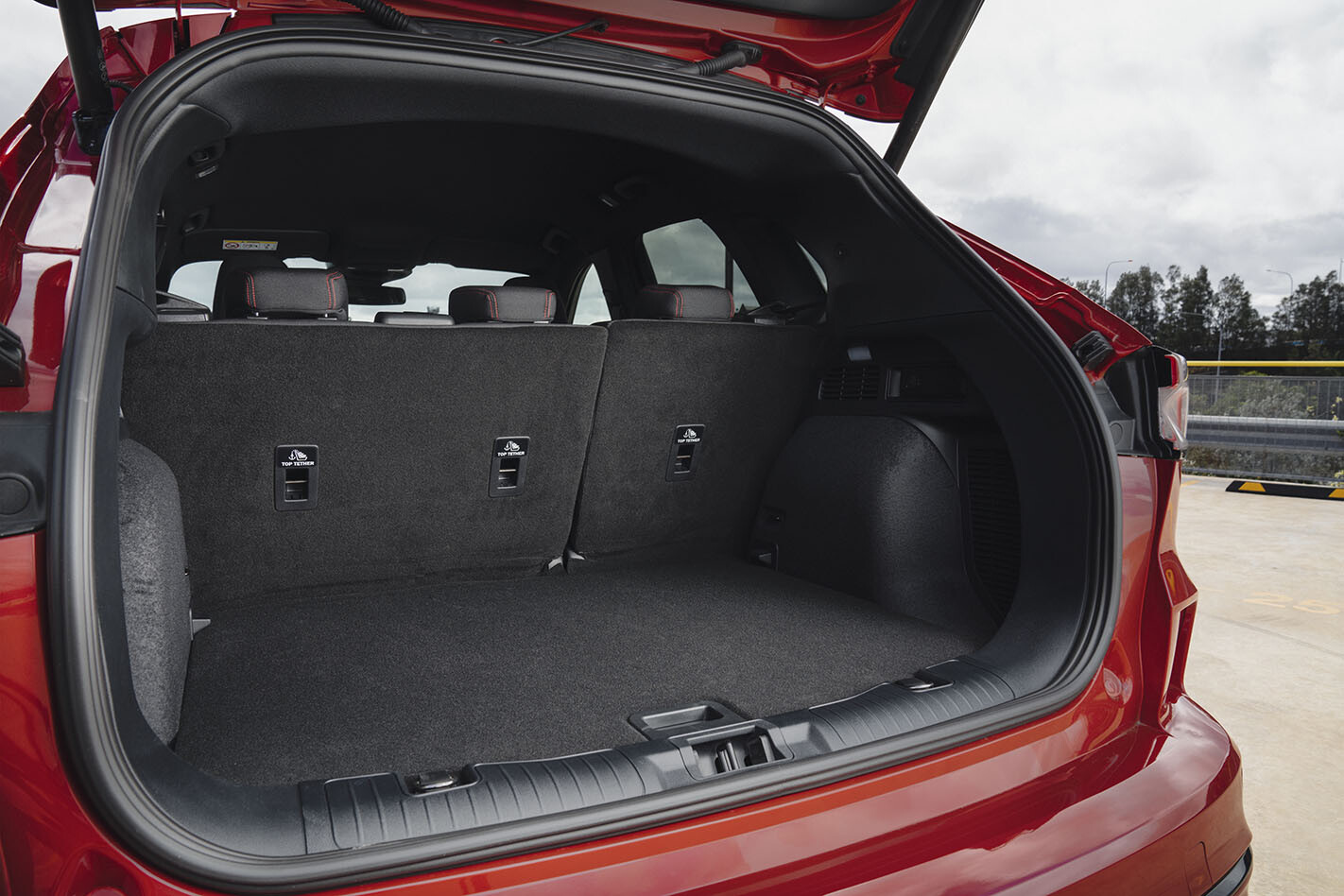
If you need to carry more the Escape has a maximum braked towing capacity of 1800kg and 750kg unbraked.
With official combined fuel economy of 8.6L/100km, the Escape’s punchy 2.0-litre turbo is a little on the thirsty side.
Service intervals are 12 months or 15,000km and when done through a Ford service centre cost just $305 during four of the first five visits but the fourth, at 60,000km, is a major service that will set you back $525. Another advantage of having your Escape serviced at a Ford dealer is you get a free loan car.
All Escape versions also come with the new FordPass Connect embedded modem system that brings remote vehicle functionality and connected services such as remote vehicle lock and unlock, key vehicle information and the ability to schedule your next service, all from a dedicated phone app.
The Ford Escape is covered by a five-year, unlimited-kilometre warranty.
What is the Ford Escape Vignale AWD like to drive?
The previous model Ford Escape – known as the Kuga in pre-facelift form – was one of the better mid-sized SUVs when it came to driving dynamics, so much so that it always did well in the Wheels SUV mega-tests right up to the end of its lifecycle.
So this new Escape has quite a bit to live up to, and doesn’t disappoint. It’s certainly quicker than the old model, delivering brisk off-the-line acceleration from the 187kW/387Nm 2.0-litre four-cylinder turbocharged petrol engine that’s coupled with an eight-speed automatic transmission.
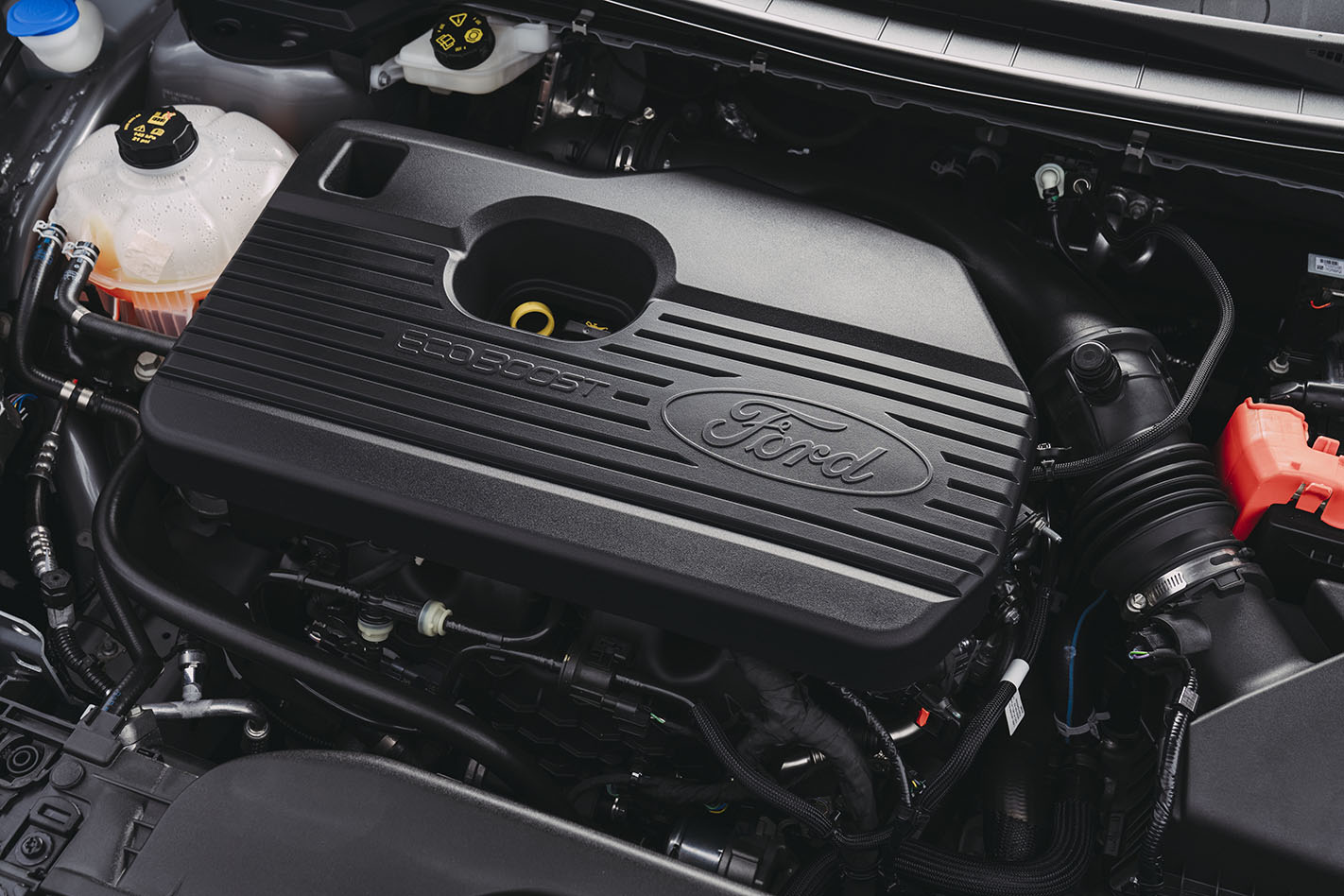
In the Sport driving mode, it spools up the revs before upshifting and is almost EV-like in its acceleration. There’s actually too much torque for the FWD drive versions, which are subject to a bit of chirping on take-off particularly if there has been a spot of rain.
The AWD contains it well to the point where the oomph in this thing is rather impressive. And it doesn’t run out of puff once you get speed, with plenty in reserve for overtaking. So, while it might be tempting to save $3000 and opt for the Vignale FWD, don’t – you won’t think you’ll need AWD until you do.
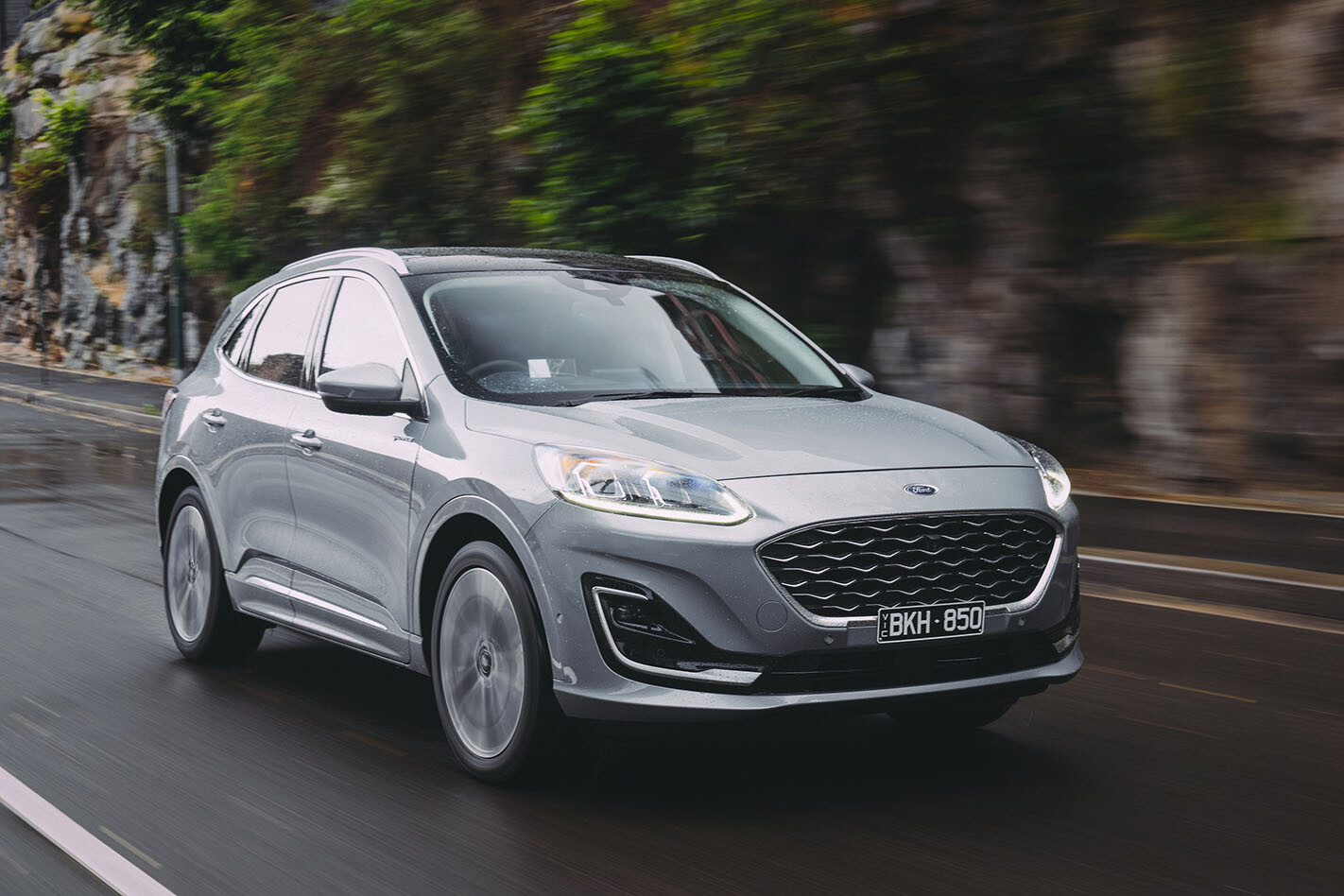
It rides on the same C2 platform as the Ford Focus and seems to think it’s a hatchback with direct and responsive steering, sharp handling and excellent body control.
The suspension, which consists of struts at the front and independent arms at the rear, offers a good balance between handling and ride comfort, but can get a little busy on uneven surfaces; unlike the older model that absorbed such surfaces particularly well.
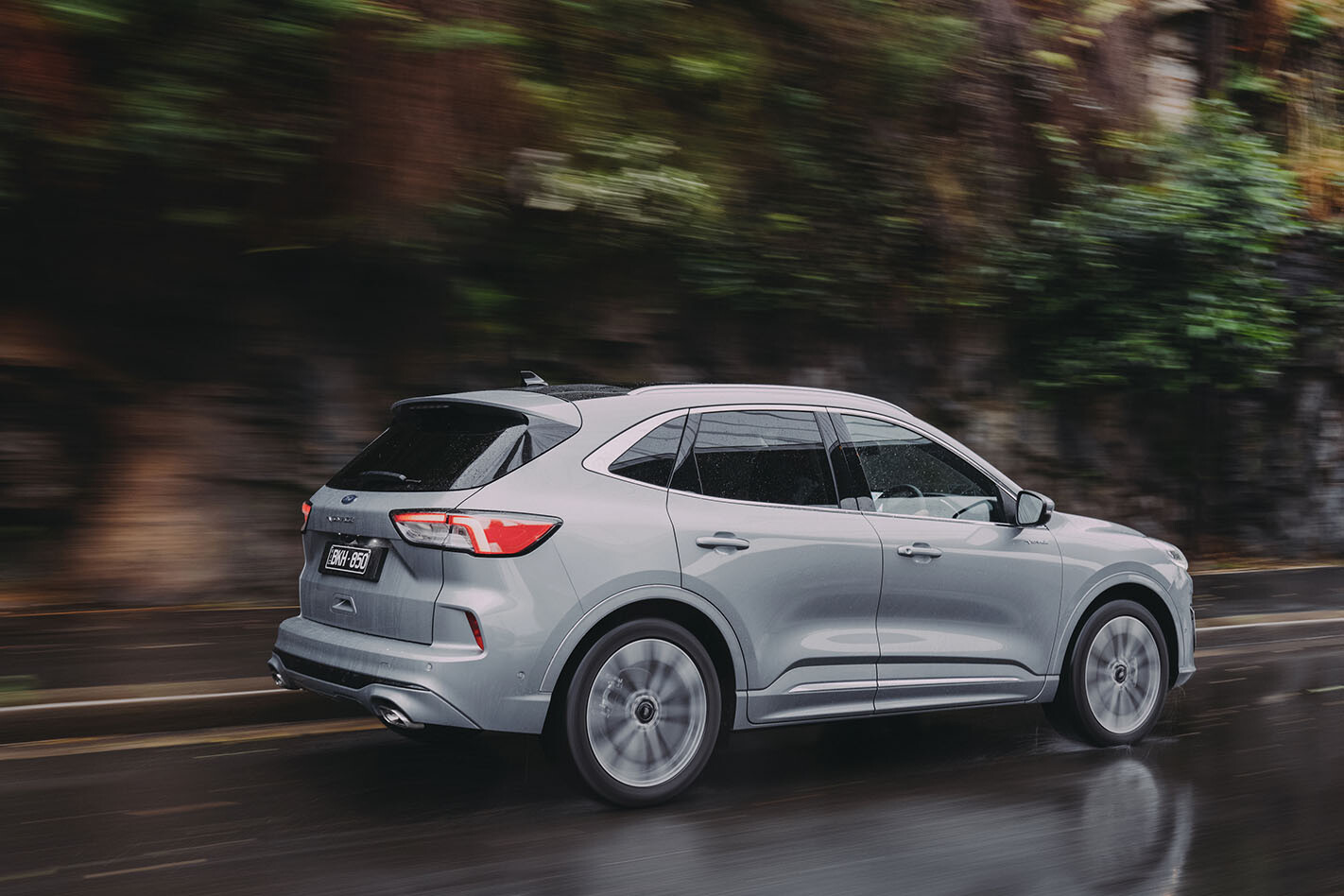
With AWD the Escape is noticeably better planted to the road than the front-drivers and makes better use of the five selectable drive modes – Normal, Eco, Sport, Slippery, Deep snow/sand and Trail – that alter the engine’s rev mapping and traction control accordingly. I didn’t get to test all its settings but it always felt grippy on wet roads and on gravel, with consistently good traction over looser surfaces and corrugations.
The Escape retains the fun factor around town, where it’s nimble and small enough so parking is never a chore. It has good all-round vision and a 180-degree parking camera and, just in case you find a particularly tight spot, there is an automated park assist that still amazes me no matter how many times I use it.
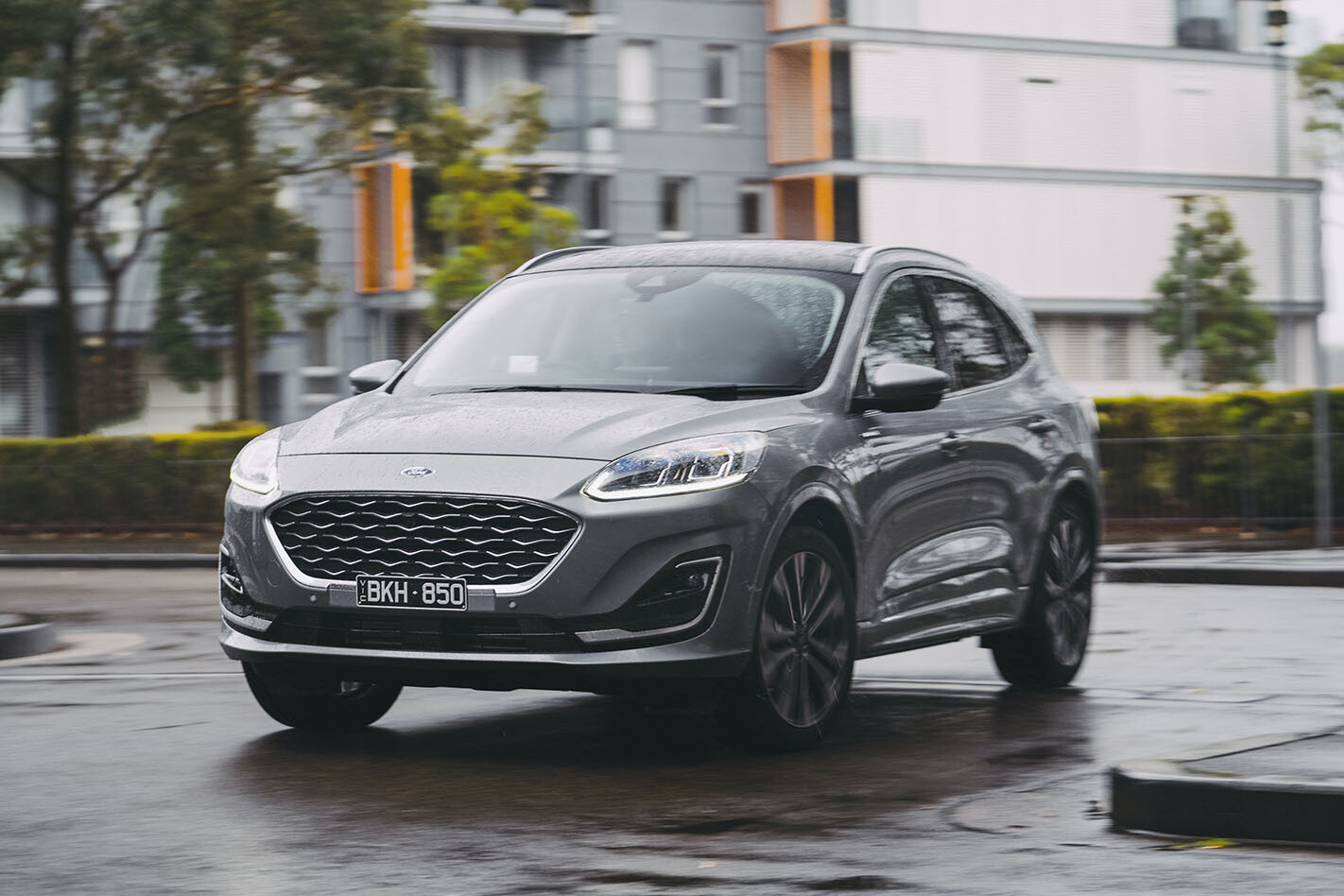
Unlike some park assist systems that can be quite confusing to operate, this latest version is quite simple – once it detects an appropriate spot you put turn the gear shifter to neutral and hold the Auto Park button down as it turns into your spot. All you have to do, apart from show plenty of faith, is apply the brakes.
What about safety in the Ford Escape Vignale AWD?
One good thing about all newer Ford models is the amount of standard advanced driver assistance technology, and the Escape is no different.
Standard safety/driver-assist features include adaptive cruise control with Stop & Go, speed sign recognition, lane-keeping assist, auto high beam, blind-spot monitoring, rear parking sensors, front/rear cross-traffic alert, autonomous emergency braking, evasive steering assist, forward collision warning and post-collision braking.
There are six airbags – driver and front passenger, front side, front curtain and rear side curtain.
The Ford Escape has a five-star ANCAP safety rating that was awarded in 2019 based on Euro NCAP testing.
Verdict
Like the rest of Ford’s new-generation SUVs, the Escape offers a nice mix of practicality and driveability. It also comes with a lot of standard features, which means that if you do fork out extra for the Escape Vignale you’ll be rewarded by plenty more equipment that would extra-cost options in more expensive premium SUVs.
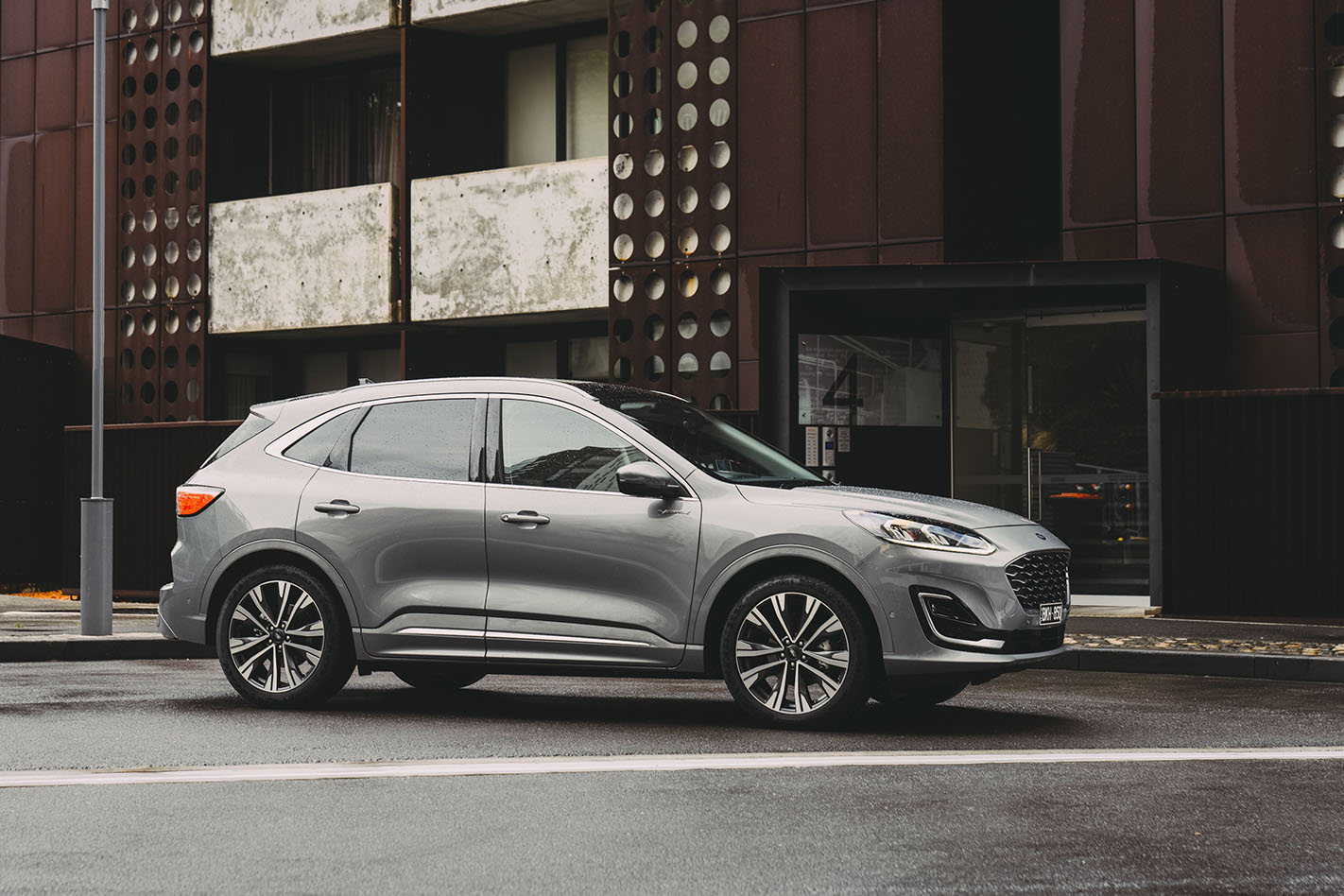
The Escape Vignale also has a certain spunk to it, which can’t really be said about similarly priced and powered top-spec medium SUV rivals such as the CX-5 Akera or Honda CR-V VT-LX.
Ford Escape Vignale AWD specifications
Body: 5-door, 5-seat SUV Drive: AWD Engine: 1999cc 4-cyl, 16v, turbo Power: 183kW @ 5700rpm Torque: 387Nm @ 3100rpm Fuel consumption: 8.6L/100km (combined) CO2 emissions: 199g/km Compression ratio: 10:1 Weight: 1690kg Transmission: 8-speed automatic Suspension: MacPherson strut/Independent L/W/H: 4629/11883/1680mm Wheelbase: 2710mm Tracks: 1597/1588mm Brakes: Front ventilated discs (330mm / Rear discs (302mm) Tyres: 225/55 R19 Continental Premium Contact6 Wheels: 7.5×18 Price: From $49,590
Fiat Chrysler Automobiles (FCA) Australia has recalled eight of its Jeep Grand Cherokee (WK) model over a crankshaft issue.
In the small number of affected vehicles, made between 2018 and 2020, the signal from the crankshaft position sensor may fail, according to Product Safety Australia.

The fault could result in the engine stalling, the driver being unable to restart it, or total loss of engine power, increasing the risk of an accident happening.
When parts become available, FCA Australia will contact owners of the affected model advising them to take their vehicle to their preferred Chrysler, Dodge and Jeep dealer for repair, free of charge. For further information, owners can call 1300 133 079 or contact Jeep online: www.jeep.com.au/contact-us.html
MORE: Grand Cherokee news and reviews MORE: All Jeep stories
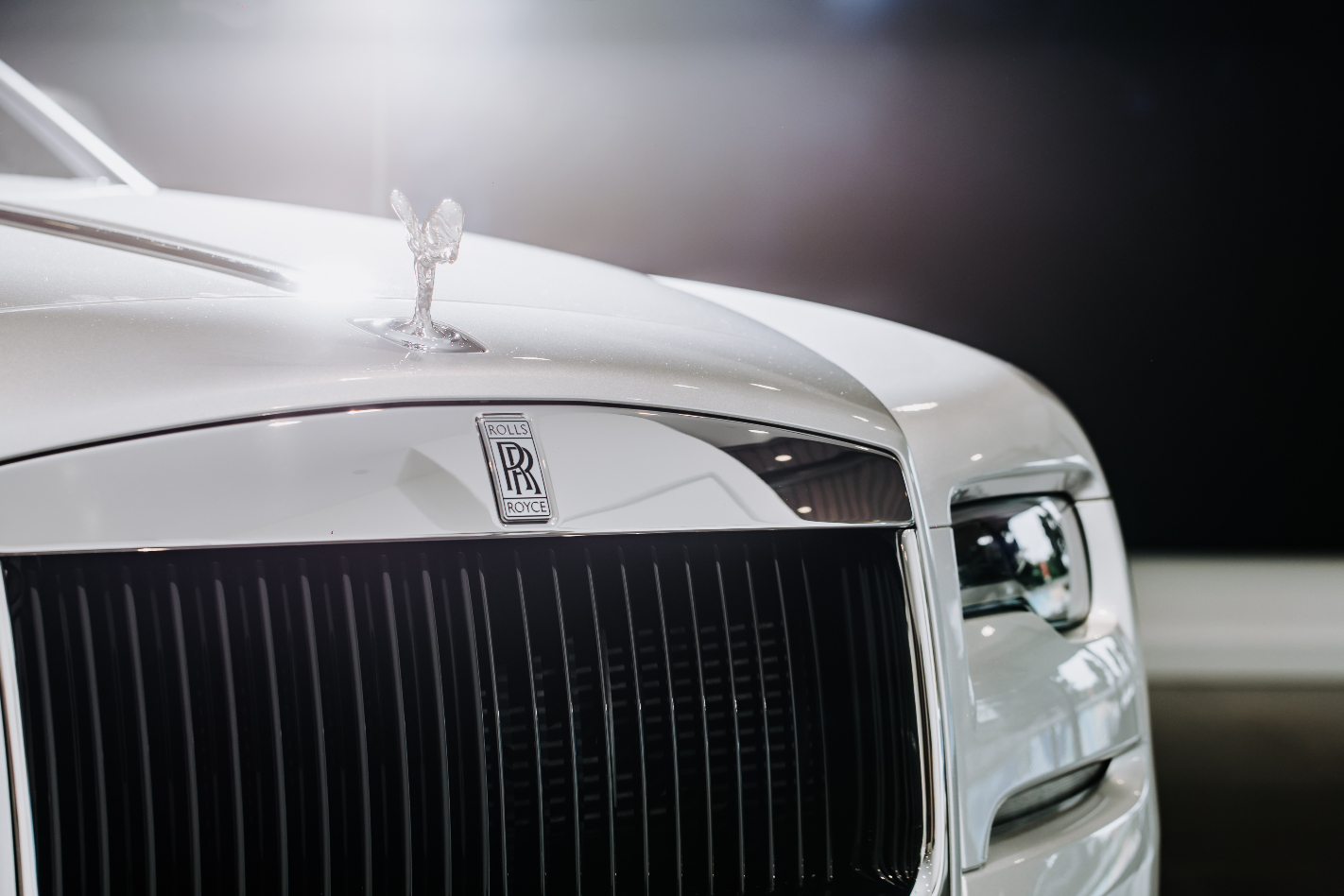
The Rolls Royce Dawn Silver Bullet – one of the company’s most exclusive roadsters ever created – has officially landed on Aussie shores.
First unveiled in March of 2020, the sleek new Roller harkens back to iconic Rolls Royce’s of the roaring ‘20s.
The undeniably attractive homage is based on the British automaker’s standard Dawn convertible. However, the Silver Bullet’s rear seats have been removed, and in their place is a set of aero cowlings covered in Casden Tan cowhide and complimented by a titanium windbreaker.
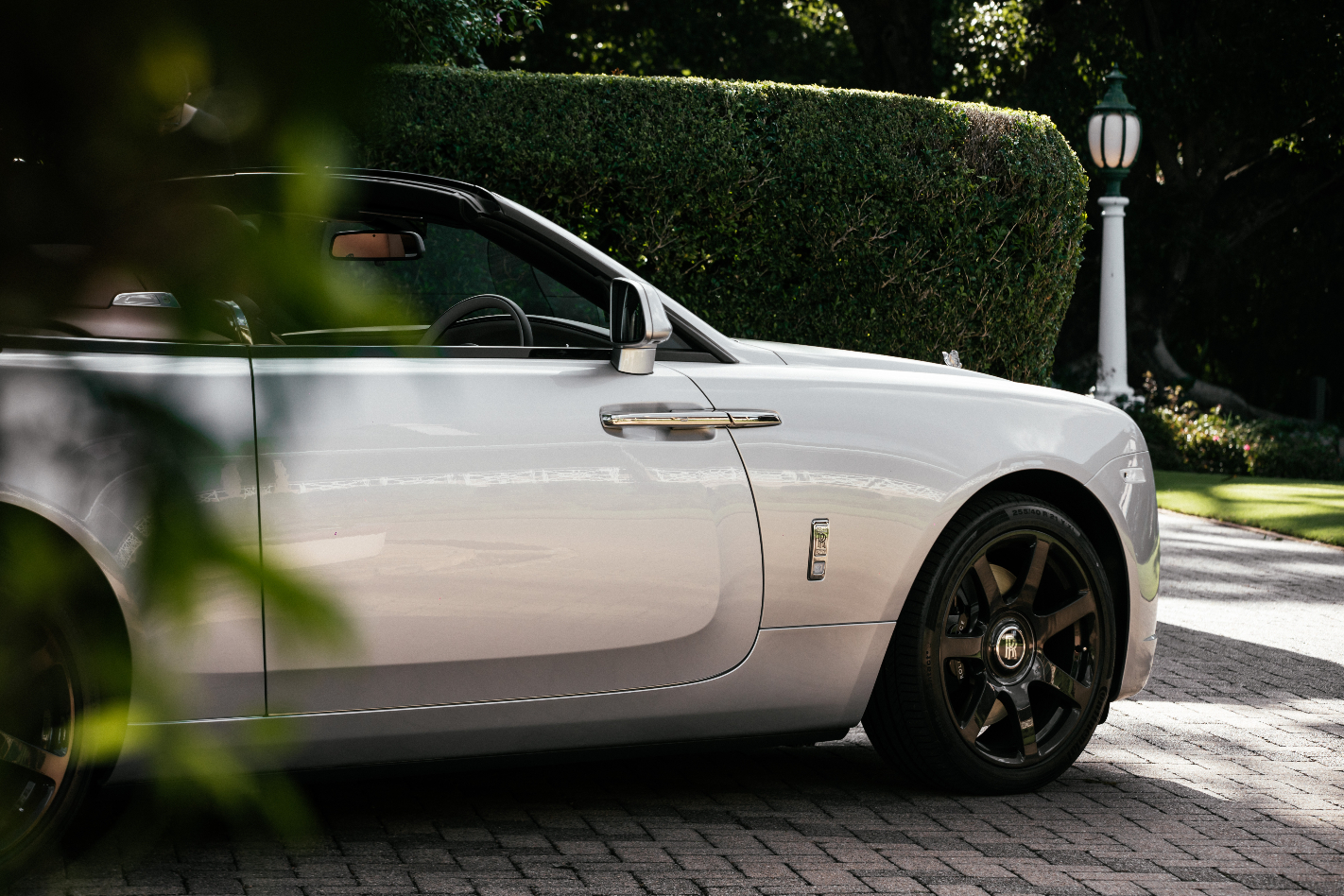
Inside, the interior trim is finished in complementing Casden Tan with Selby Grey highlights, and also features contrast piping and stitching, and even lambswool floor mats.
The exterior is painted in a gorgeous shade of ultra-metallic silver coined ‘Brewster Silver’, and contrasted by a blacked-out grille and seven-spoke, partially polished, 21-inch wheels.
Under the elongated hood lies the same twin-turbocharged 6.6-litre V12 found in the standard Dawn, which churns out a herculean 420kW and 820Nm.
This prodigious oomph is sent to the rear wheels via ZF’s brilliant eight-speed torque-converter automatic gearbox.
And despite its hefty 2630 kilogram weight, the svelte roadster can hitch up its silvery britches and sprint from 0-100km/h in just 5.1 seconds.
Just 50 examples of the Rolls Royce Dawn Silver Bullet have been produced worldwide, with a local sticker price of $893,000.
MORE: Dawn stories MORE: All Rolls-Royce stories
