
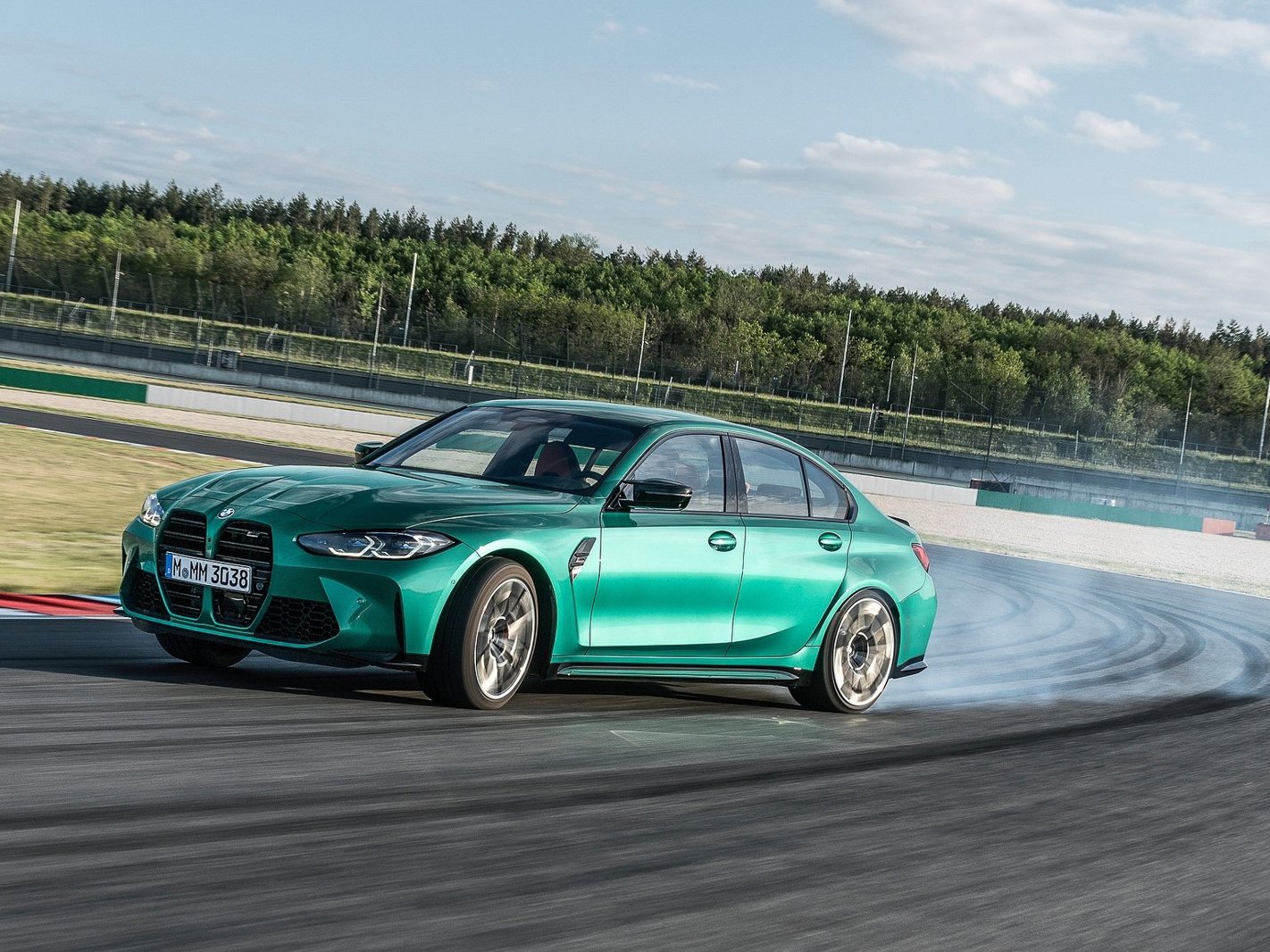
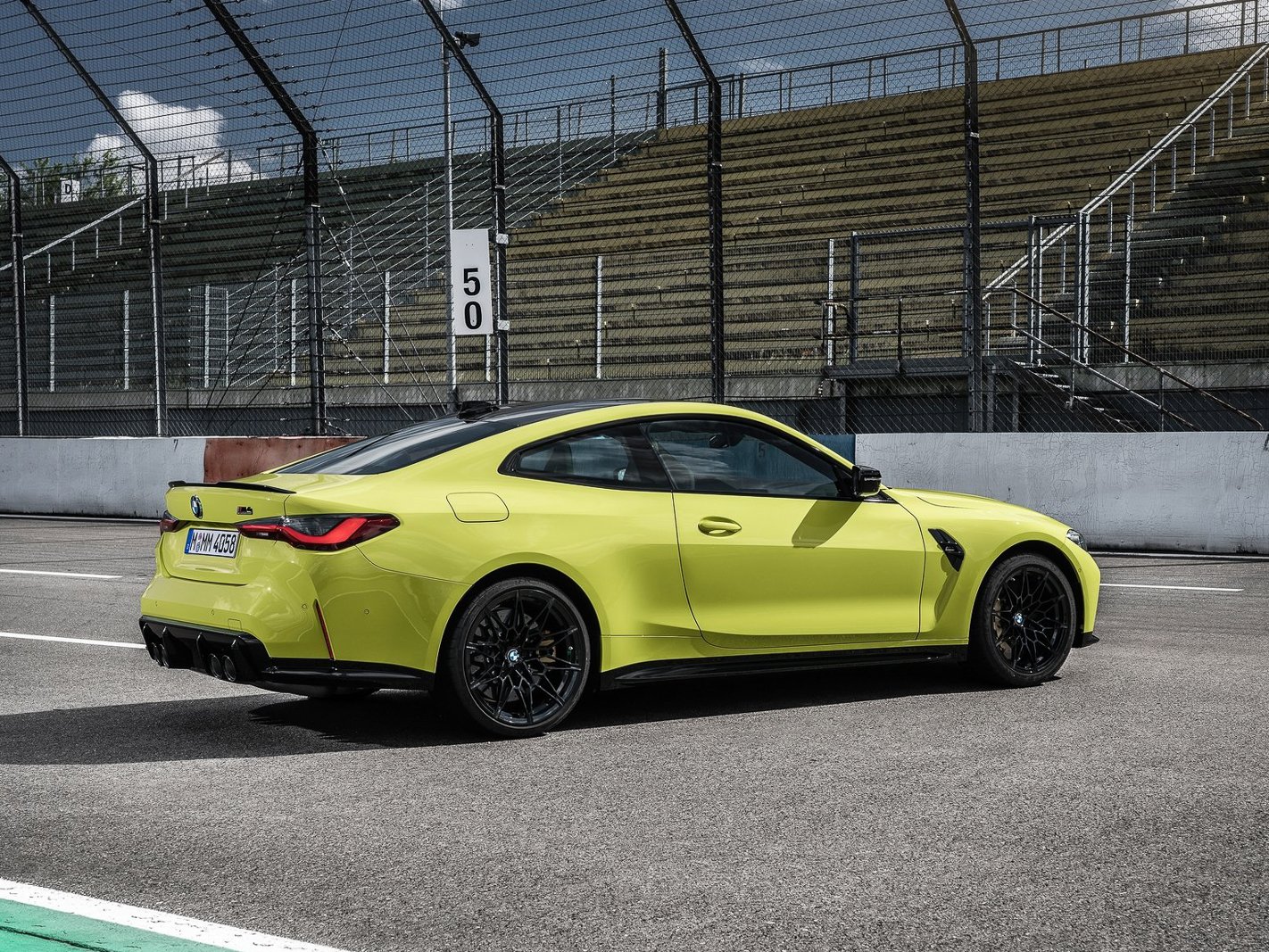
North American BMW representatives have issued a recall of some new generation BMW M3 and M4 models that left the factory with improper welding, resulting in the loss of ABS and braking assistance.
Describing the defect, the United States’ National Highway Traffic Safety Administration states that the “integrated brake system units may not have been produced to specifications due to an unexpected deviation during the welding process of the system’s rotor and shaft sub-assembly.”
As a result, they could separate under hard braking and lead to a “reduction in braking assistance” and possible failure of the ABS.
“Fully mechanical braking (without assist) is not affected. Additionally, the emergency function of brake force distribution is maintained to help control vehicle stability,” the recall states.
Testing and durability analyses were conducted on parts, which indicated that some of these parts could have been installed in vehicles.
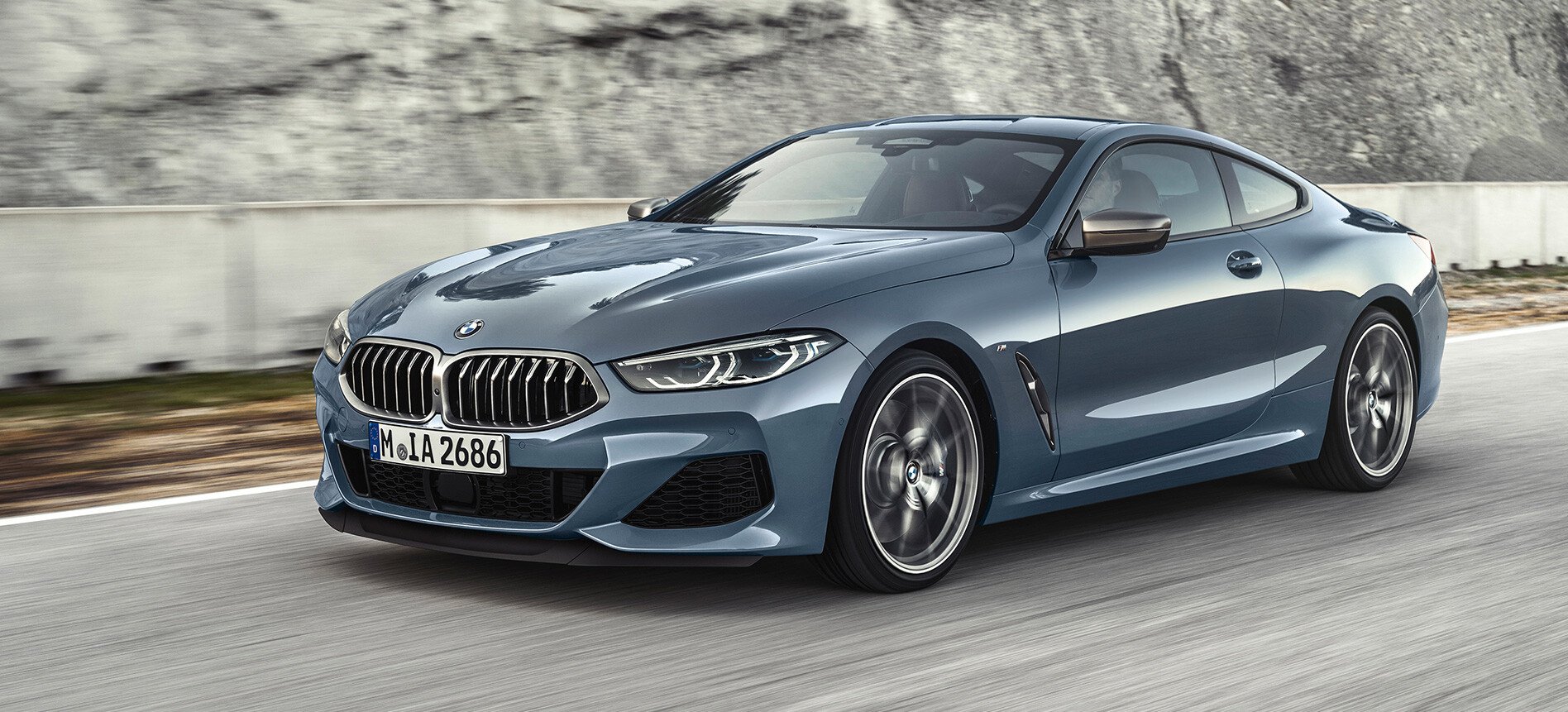
In addition to the 2021 BMW M3 and M4, the recall also affects some examples of the 8 Series, M8, 7 Series, X5, X5 M, X6 and X6 M.
A total of 901 vehicles were identified, with an estimated defect rate of 12 per cent.
BMW first noticed the problem during testing in October 2020 at one of its facilities. Subsequent investigation revealed the need for a recall which BMW issued on February 3, 2021.
Owners will be notified by mail and the repairs will involve the replacement of the integrated braking system – free of charge.
We’ve contacted BMW’s local arm to find out whether any Australian examples of the M3, M4, 8 Series, 7 Series, X6 or X5 are affected. This story will be updated with its response.
Tardy to the EV party – especially for a brand endlessly spruiking Vorsprung Durch Technik – the e-tron is Audi’s delayed response to the established Tesla Model X and Jaguar I-Pace, as well as 2020’s COTY-winning Mercedes-Benz EQC. No pressure, then.
Based on Audi’s MLB Evo architecture underpinning most models from the A4 up, it’s also the entrée to a buffet of upcoming EVs, with most expected to switch to an all-new specific platform still under development.
Like the EQC then, the e-tron SUV and its swoopier Sportback twin (imagine an electrified BMW X6 rival) aren’t strictly bespoke, although – incredibly – the e-tron is currently the only EV offering a choice of bodystyles. It slots between the Q5 and Q7 in size, though not pricing.
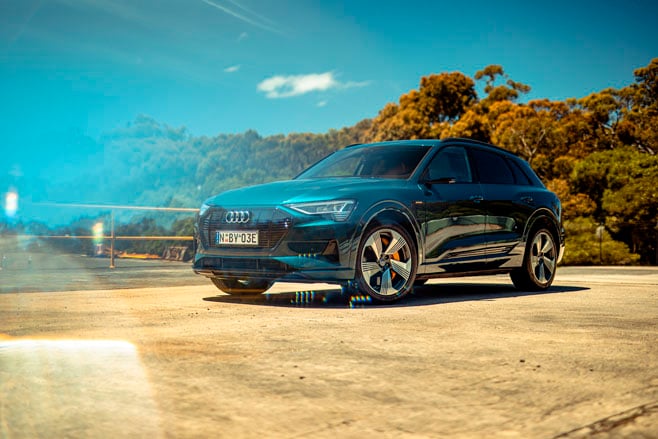
Two versions are available: a 50 quattro (from $137,100) and 55 quattro (from $146,100), with the Sportback adding $11,000. Not cheap, but competitive against the other luxo SUV EVs, and generously equipped to boot.
Visually, both e-trons look comparatively ‘normal’, with the only way-out elements living in the details – like the grille, alloys and available mirror cameras. No Spock shock here, and less futuristic than EQC, never mind the radical I-Pace.
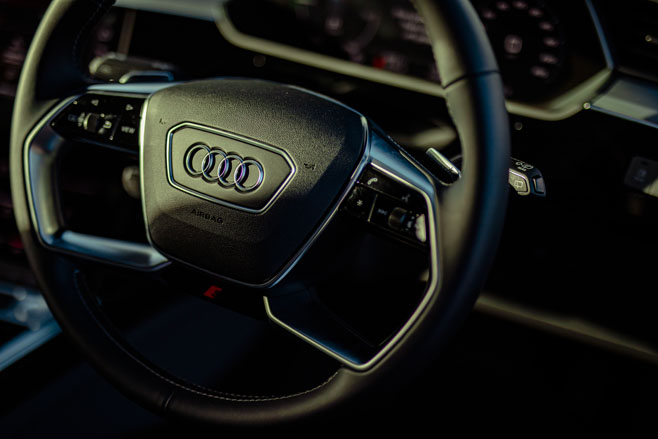
The spacious five-seater cabin, meanwhile, also aligns with brand convention, integrating established design themes and family-friendly practicality (including a vast cargo area) with dual touchscreens and other digital tech for most functions. Again, up-to-the-moment, but with minimal intimidation. But some cheap (for an Audi) materials are also jarring missteps.
All e-trons feature an electric motor on each axle, but the rears are always driving at least 60 percent of the time, depending on the given traction requirements.
To approach the EQC’s seat-bracing acceleration, avoid the smooth and silent 230kW/540Nm 50 and stretch to the stronger 265kW/561Nm 55 instead. Though only marginally quicker to 100km/h (6.6 seconds versus 6.8), a brief 35kW/103Nm ‘Sport’ spurt slashes that to 5.7s, for significantly more muscle across the spectrum.
With a 71kWh battery, the 50 can average 300km of range whereas the 55’s 95kWh unit breaches 400km-plus; finding a 150kW charger (good luck with that) brings 80 percent charge in 30 minutes, or a ‘full tank’ in 45 minutes.
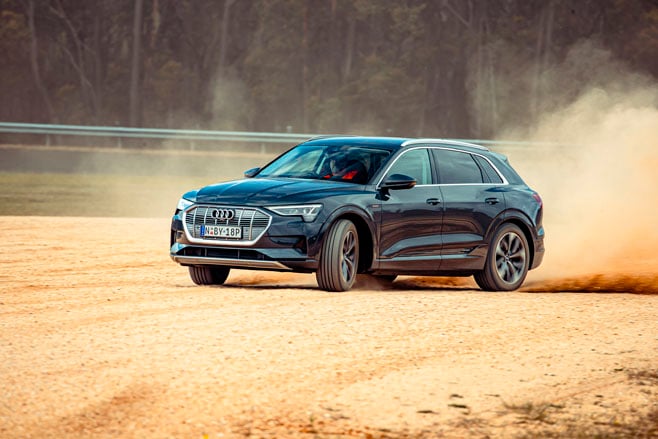
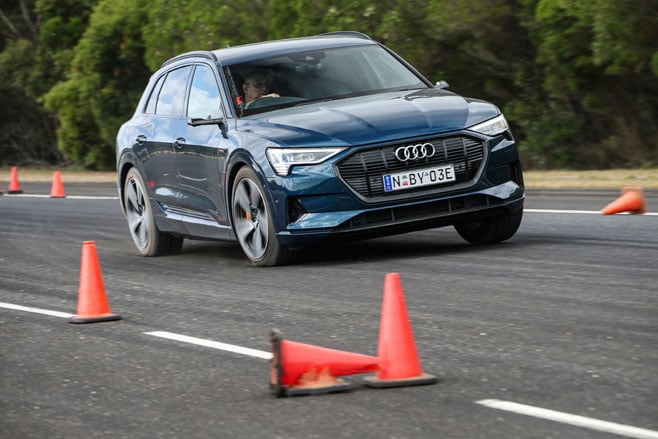
Unlike the EQC, the e-tron includes air suspension on both axles, not just the rear; working with a multi-link arrangement, it provides exceptionally flat and controlled handling, together with outstanding isolation over some very demanding road surfaces.
Conversely, at other times, the Audi also occasionally rides with an obvious firmness, and doesn’t really encourage being hustled through fast corners. The light-footed vitality of the EQC and I-Pace is missing. The three-year warranty is well behind the best, too.
MORE Virtual mirrors on the e-tron – do they work?
Still, six years’ complimentary charging and servicing is included, along with a home-station for a handy six-hour full recharge, so maybe this Audi’s more for the head than the heart.
Ultimately, though super competent and even truly compelling, the e-tron doesn’t quite progress forward enough from its older rivals. In the rapidly evolving EV scene, the COTY criteria demands that – a year on – at least some boundaries be busted.
Richard Ferlazzo on the Audi e-tron’s design
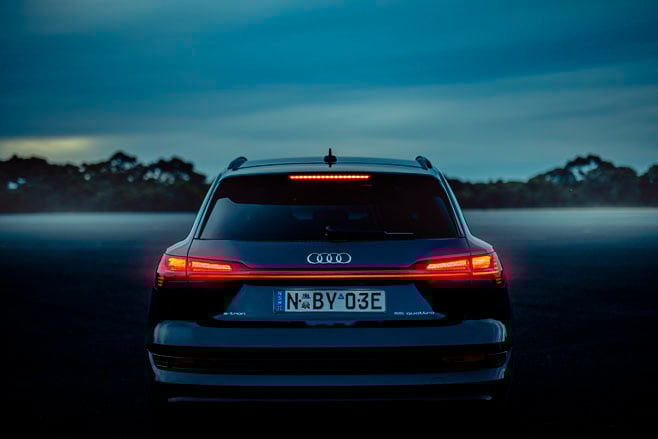
“Cuts an imposing figure with substantial proportions set on big wheels and rubber. Crisp sheet-metal and exquisite lamp technology creates a genuine luxury feel.
“There are some subtle technical touches like the shutter grille vanes but they haven’t gone overtly ‘electric’ with the styling.
“The classy interior has a sci-fi theme with very few conventional buttons. But I’m not convinced by the ‘virtual mirrors’ in the door panels. The screens almost feel like portholes.”
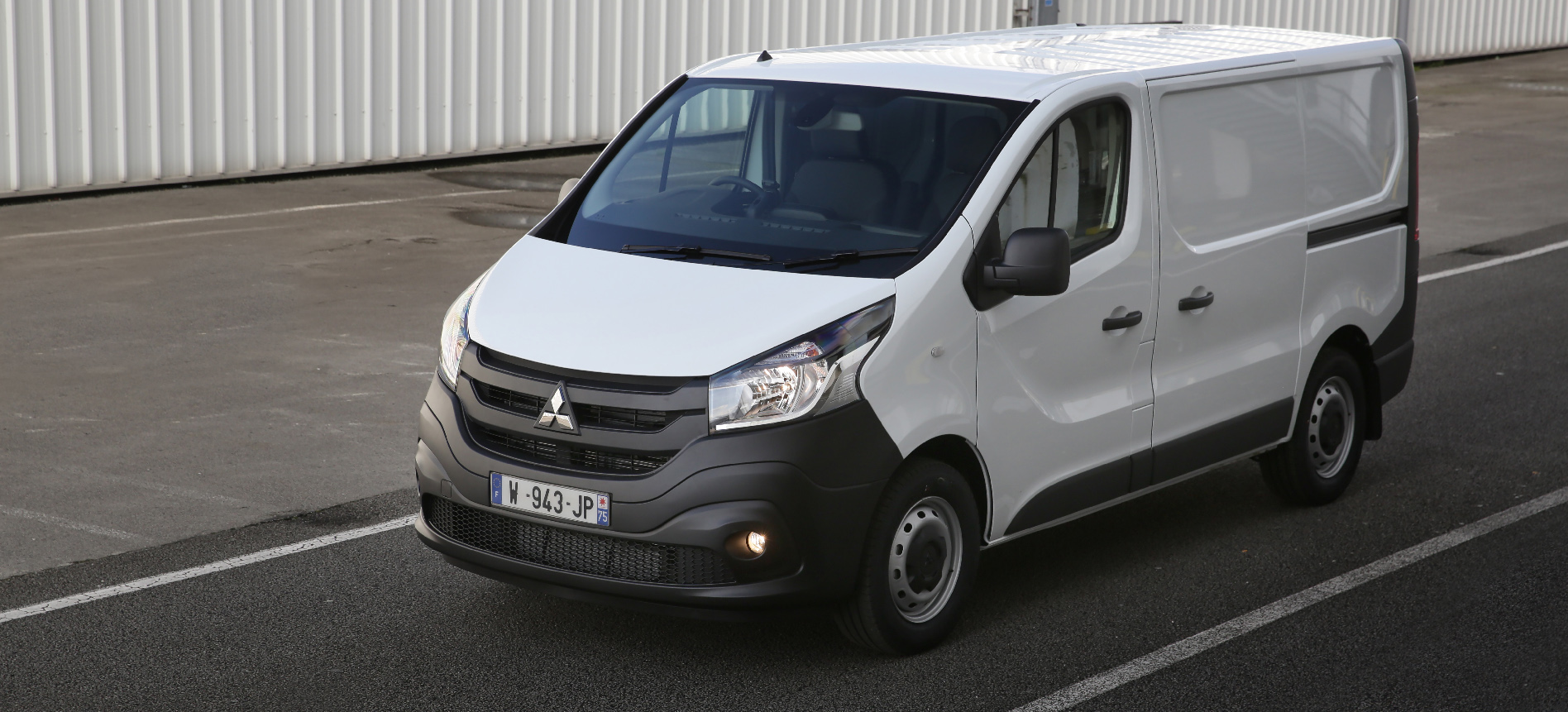
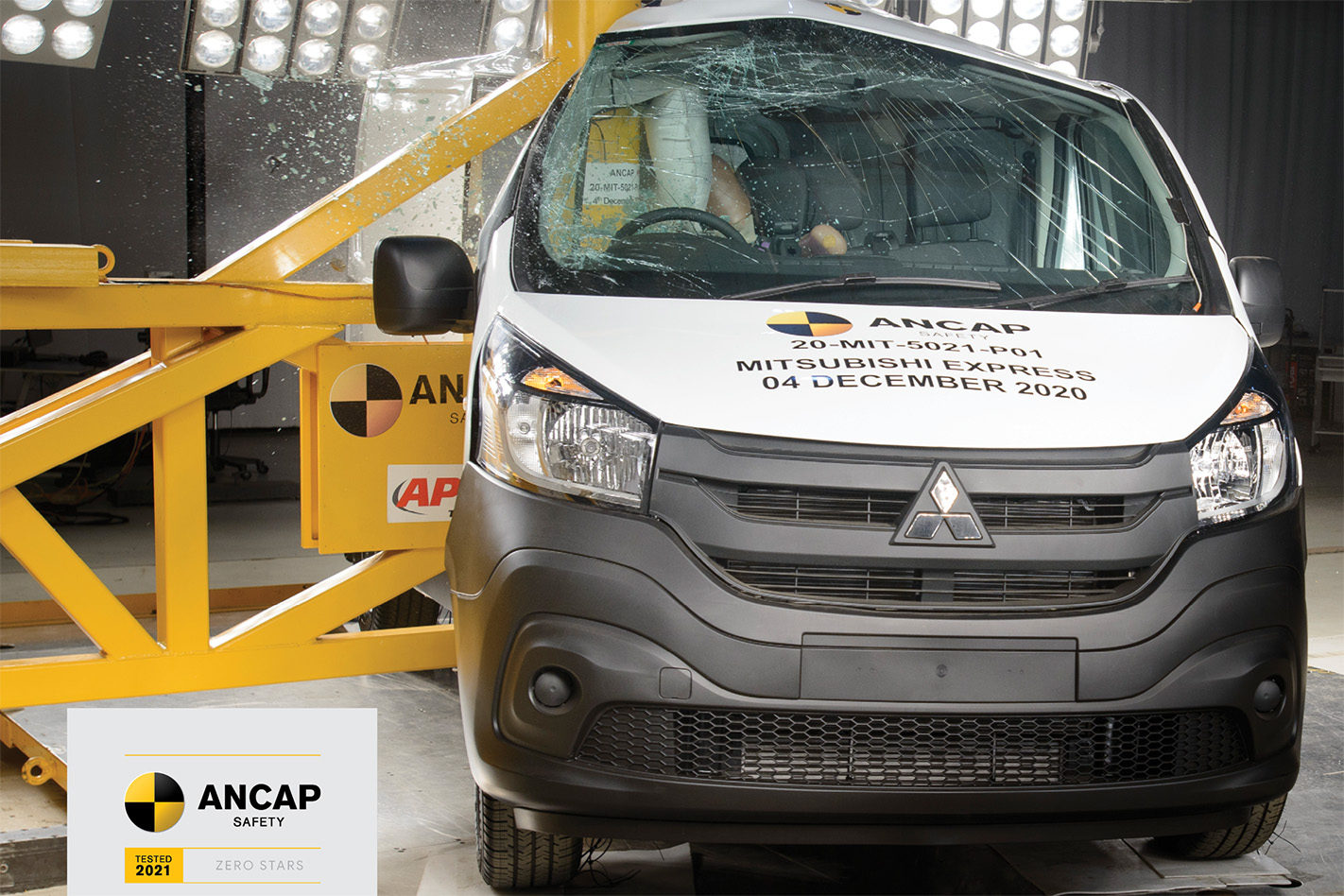
The 2021 Mitsubishi Express van has made history by being the first vehicle to score a zero-star ANCAP rating.
The Express, which is popular with tradies and commercial fleets, failed to earn a single star because of the absence of active safety systems such as autonomous emergency braking and forward collision warning.
It also delivered “marginal performance” in physical crash tests and “lacks basic safety features that consumers have come to expect in a newly released model”, according to independent crash-testing body, Australasian New Car Assessment Program (ANCAP).
Mitsubishi Australia reintroduced the Express nameplate in 2020 after a seven-year hiatus. However, instead of bringing an all-new van, it rebadged the ageing Renault Trafic – Mitsubishi is able to do this because it is part of the Renault-Nissan-Mitsubishi strategic alliance.
The Renault Trafic had received a three-star EuroNCAP rating 2015, before such testing took active safety features into account. It still holds that rating in Europe.
A Mitsubishi Australia spokesperson pointed out the Express was designed in accordance with the 2015 NCAP protocols but was tested to ANCAP’s stringent 2020 testing regime, which places importance on technology that was unavailable in such vehicles six years ago.
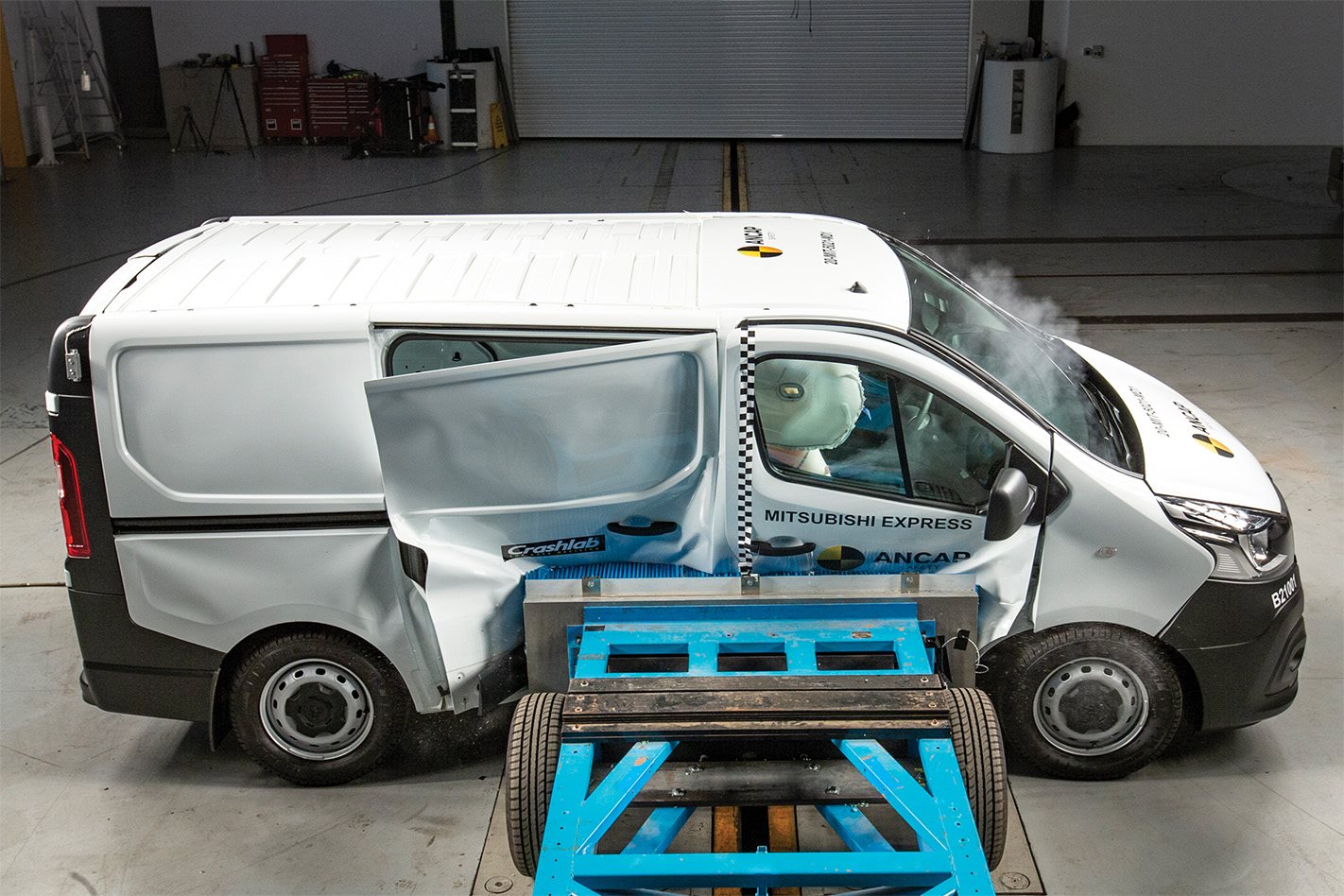
“Compared to competitor peers of a similar age, the vehicle holds a competitive position in terms of NCAP rating,” the spokesperson said. “It holds a three-star (2015) rating in Europe, ANCAP did not report NCAP’s earlier rating.”
“The technology included in the vehicle reflects the lifecycle cycle of commercial vehicles, which is generally eight years or more.”
However, ANCAP Chief Executive Carla Hoorweg said the Express’s specifications do not align with today’s safety expectations.
She added that while ANCAP often awards ratings solely based on EuroNCAP scores, the Trafic commercial van remained unrated in Australia as the European testing applied specifically to 8-9 seat people mover offered in Europe.
And even if the Renault Trafic van earned three stars here, ANCAP does not carry over vehicle ratings across brands if the new vehicle is released in a calendar year more than two years after the date stamp of the original assessment.
“The ANCAP rating system has evolved to move the industry forward, and with the Mitsubishi Express being newly released into the Australasian market just last year, it has been assessed against our current [2020-2022] criteria,” Hoorweg said.
But the zero-star rating could seem harsh considering that, as the Mitsubishi spokesperson points out: “The Express meets all Australian Design Rules (ADR) standards for vans, and the results of the crash testing by ANCAP indicates a good level of occupant protection.”
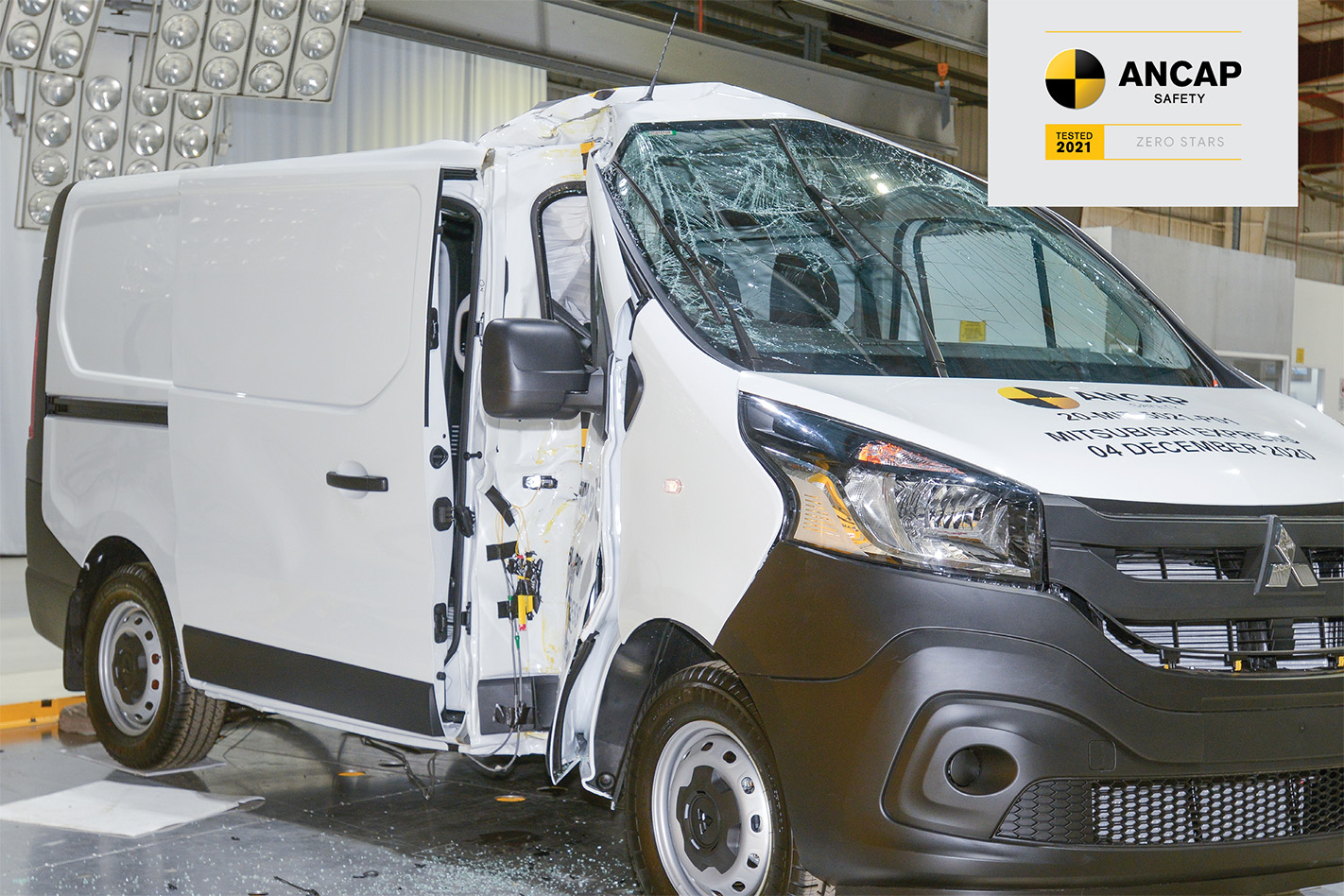
Hoorweg disagreed: “Unfortunately we saw below par performance for protection of occupants and vulnerable road users from the Express, with results lowered even further due to a fundamental lack of active safety systems.”
ANCAP’s technical report, which the safety body initiated and funded without Mitsubishi’s involvement, found “physical crash performance of the Express was marginal in areas, with notable risk of serious injury to the chest of the driver in three of the four destructive crash tests (frontal offset, full width frontal and oblique pole tests)”.
While ANCAP recognised the zero-star rating will have a dramatic impact on Mitsubishi Express sales – it will become ineligible for purchase by a wide range of fleet and commercial buyers – it remained unapologetic.
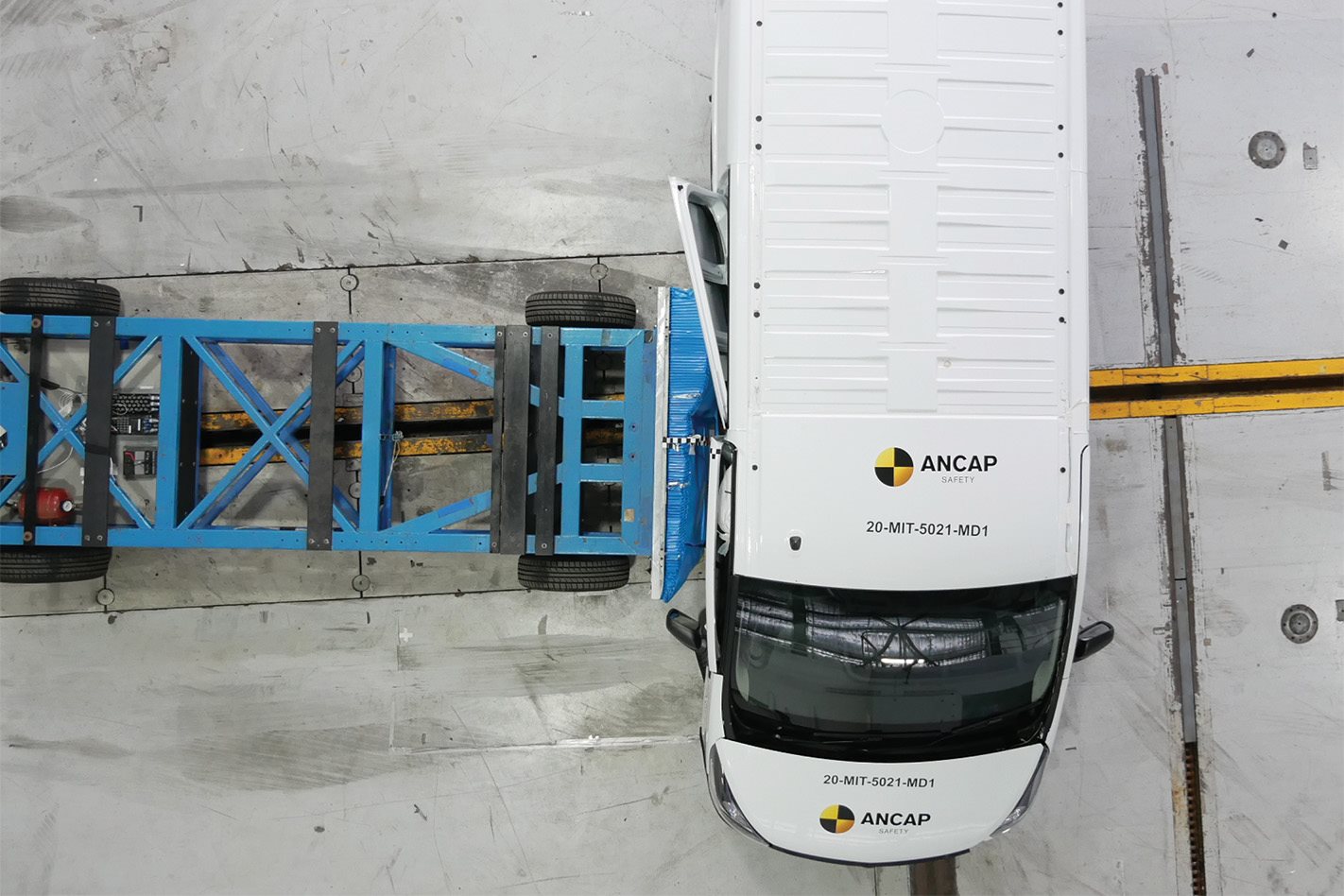
“The Express’s poor result sends a clear signal to manufacturers and their global parent companies that safety must be prioritised in all segments offered to the Australasian market,” Hoorweg said.
“Safety rating criteria and consumer expectations have evolved, as have manufacturers’ desire and ability to introduce improved levels of safety. We know Mitsubishi can deliver vehicles with high levels of overall safety and a wide range of modern safety technologies, and we encourage them to accelerate the introduction of these features into their van product.”
Interestingly, the previous model Express had been removed from sale in Australia in 2013 because of safety concerns. Mitsubishi Australia stated at the time that it “flew in the face of the company’s philosophy on crash safety”.
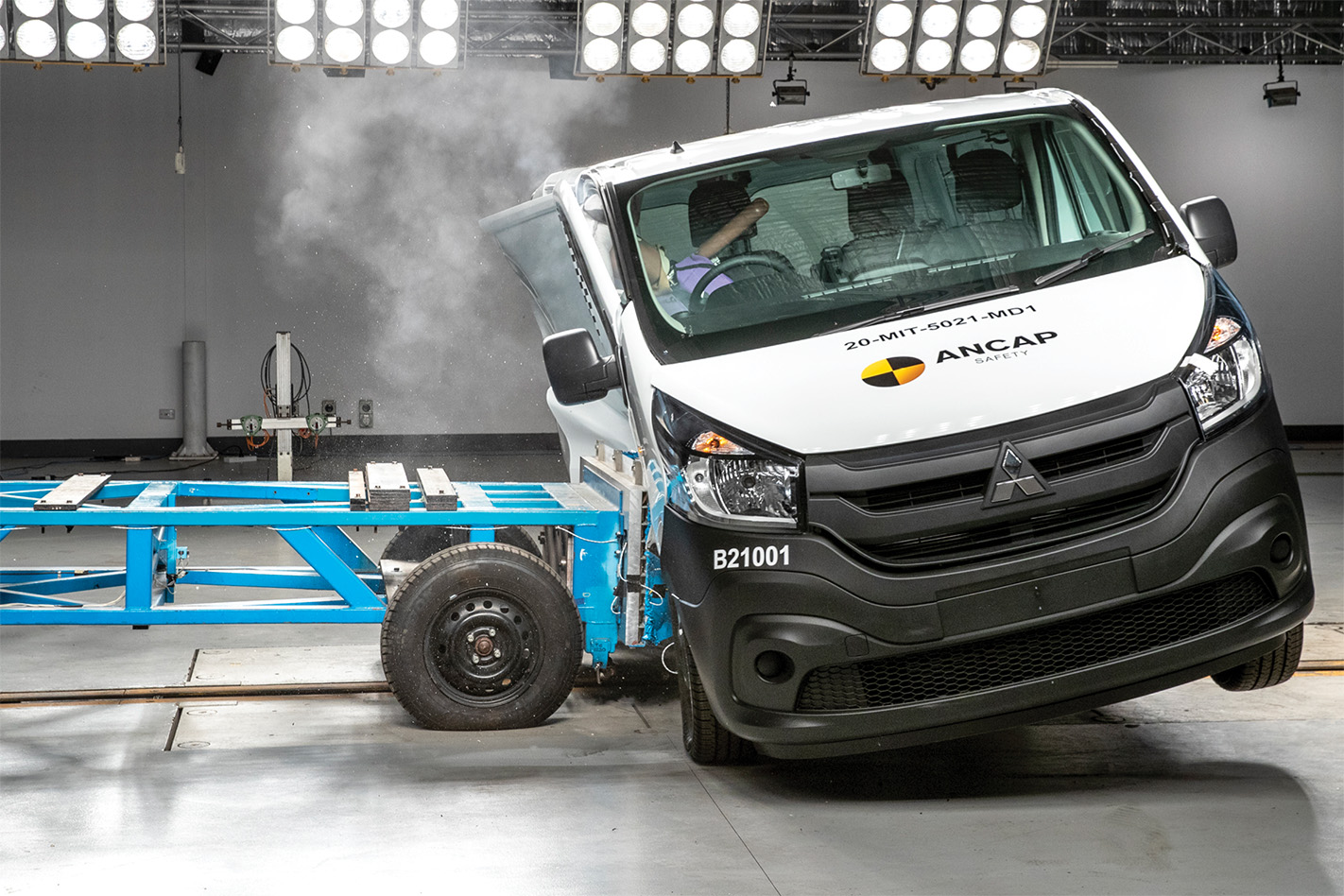
“The reason behind the decision is that we are focussing our product strategy on safety features, and we’re trying to achieve five-star across the range,” Mitsubishi said in 2013.
The zero-star 2021 Mitsubishi Express ANCAP rating applies to all variants introduced in Australia from June 2020 and in New Zealand from October 2020, which includes short- and long-wheelbase versions with either the 1.6-litre or 2.0-litre diesel engine.
More vans under ANCAP’s spotlight
While this is bad news for Mitsubishi, ANCAP has been at pains to point out that there are several vans on the market that carry safety ratings from as far back as 2011 that may not fare any better than the Express if they were tested today.
In December 2020, the organisation declared it could no longer recommend vans that were still available with minimal active safety systems, including the Express, Hyundai iLoad, Renault Trafic, Renault Master and Iveco Daily.
Mitsubishi Express ANCAP test key points
The Mitsubishi Express achieved the following scores in key areas:
- Safety assist – 7.0 percent
- Adult occupation protection – 55 percent
- Vulnerable road-user protection – 40 percent
- Child safety protection – N/A
Airbags
The Mitsubishi Express is fitted with dual frontal and side head-protecting (curtain) airbags are standard. A side chest-protecting airbag is also standard for the driver only. The Mitsubishi Express has three front-row seating positions.
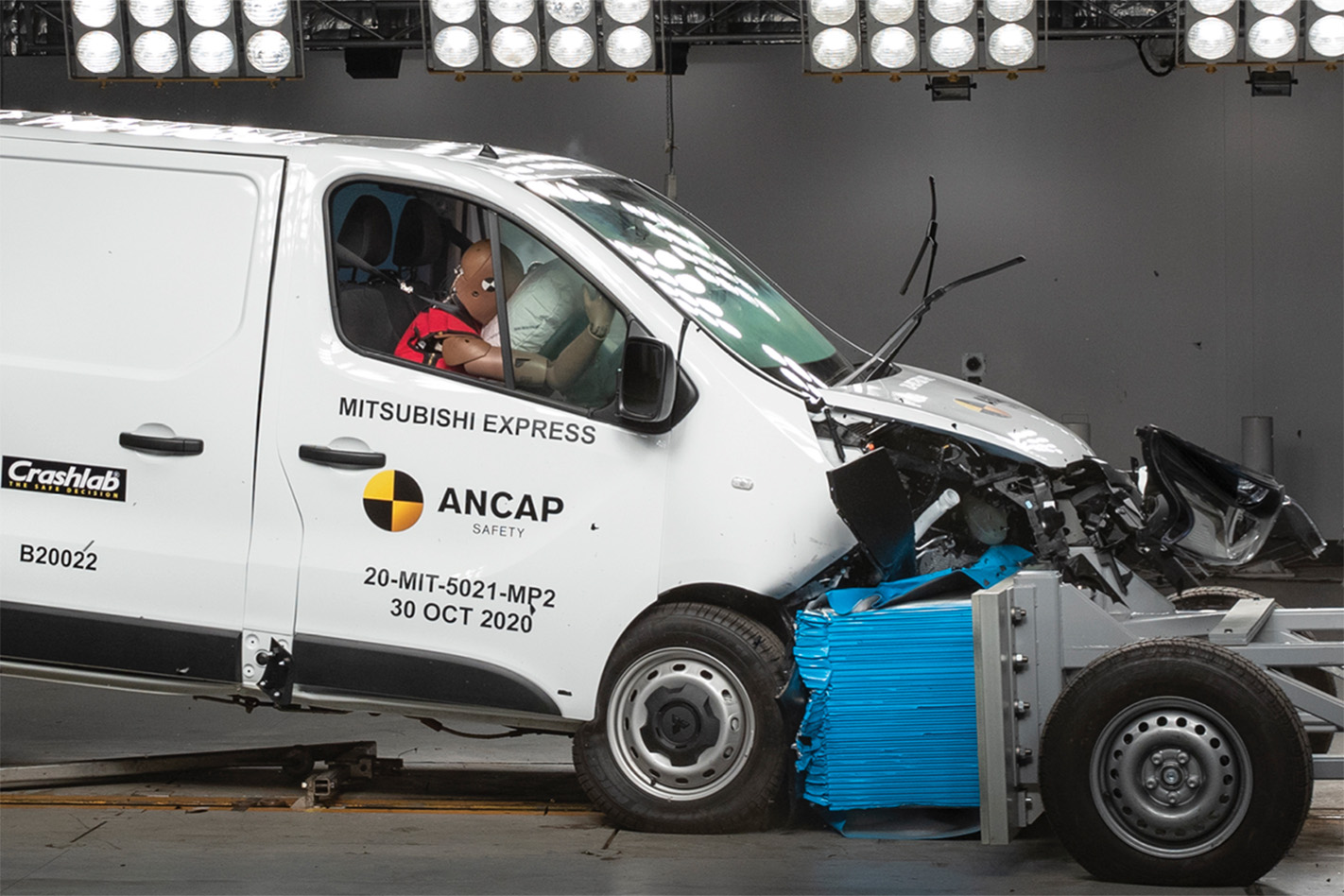
Chest protection is not provided for the front row passengers. A centre airbag to prevent occupant-to-occupant interaction is also not available, nor is a frontal airbag for the centre passenger seating position.
Safety assist features
The Mitsubishi Express is fitted with a manual speed limiter and seatbelt reminder (driver only), however important active safety systems including autonomous emergency braking (AEB) capable of detecting and preventing collisions with other vehicles, pedestrians or cyclists is not available. An active lane support system (LSS) is also not available on any variant.
Vulnerable road user protection
The protection provided by the bonnet of the Mitsubishi Express to the head of a struck pedestrian was predominantly adequate, with weak and poor results recorded at the rear and sides of the bonnet and on the stiff windscreen pillars.
Protection of the pelvis was mixed, with areas of good to marginal performance. Protection to pedestrians’ legs provided by the bumper was also mixed with areas of good to weak performance.
UPDATE, April 12: Video game developer Milestone has just dropped the first gameplay footage of its eagerly-anticipated Hot Wheels Unleashed title.
The footage looks similar to the theatrical trailer we saw last month, albeit with a little less visual appeal (let’s hope it looks better on PS5/XBOX Series X).
The gameplay itself paints a fun picture, with familiar tropes you’d expect from a racing game such as this.
And there appears to be a good amount of nostalgia thrown into the mix as well, which we’re sure will capture the imagination of anyone who’s ever spent a Sunday afternoon bashing Hot Wheels cars around the living room floor with family and friends.
Hot Wheels Unleashed will be released on September 30. Be sure to watch this space as WhichCar brings you a full review of the racing video game.
MARCH 1: Question for the audience: while it mightn’t be socially acceptable to play with Hot Wheels toys as an adult, is playing the Hot Wheels video game alright?
Hot Wheels certainly hopes so, as its made the jump from toys to the video game world with an arcade-style racing game, set to go on sale later this year.
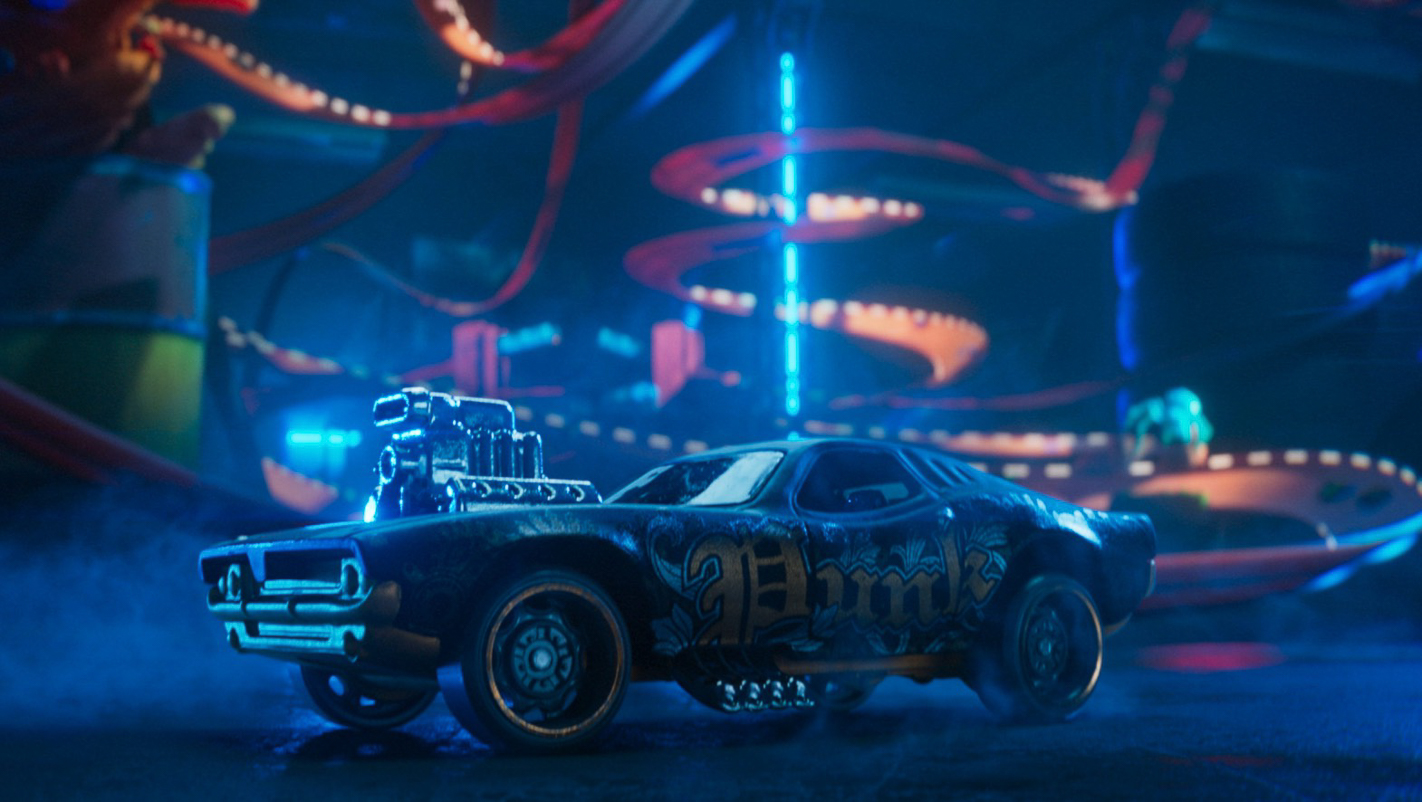
Unveiled with a teaser trailer touting everything you know and love about Hot Wheels – but in digital format – Hot Wheels Unleashed will be available on Xbox Series X, Playstation 5, PC and Nintendo Switch.
The teaser trailer doesn’t show any actual gameplay, but the press release suggests Hot Wheels Unleashed will allow players to drive the cars as if they were playing with the toys themselves.
That means all manner of loop-de-loops, jumps, figure-eights and custom layouts will feature, made out of the famous orange tracks.
It’s being developed by Italian game studio Milestone, which has previous experience with the official MotoGP racing series, so it’s not a newcomer to the racing game style.
The game promises an extensive choice of Hot Wheels vehicles, which can be modified to your heart’s content. There’s also a track editor option that should allow you to make crazy layouts to race upon with friends online.
A Hot Wheels expansion pack was previously offered with the Forza Horizon series, which allowed players to drive and race on wild orange tracks with other players online.
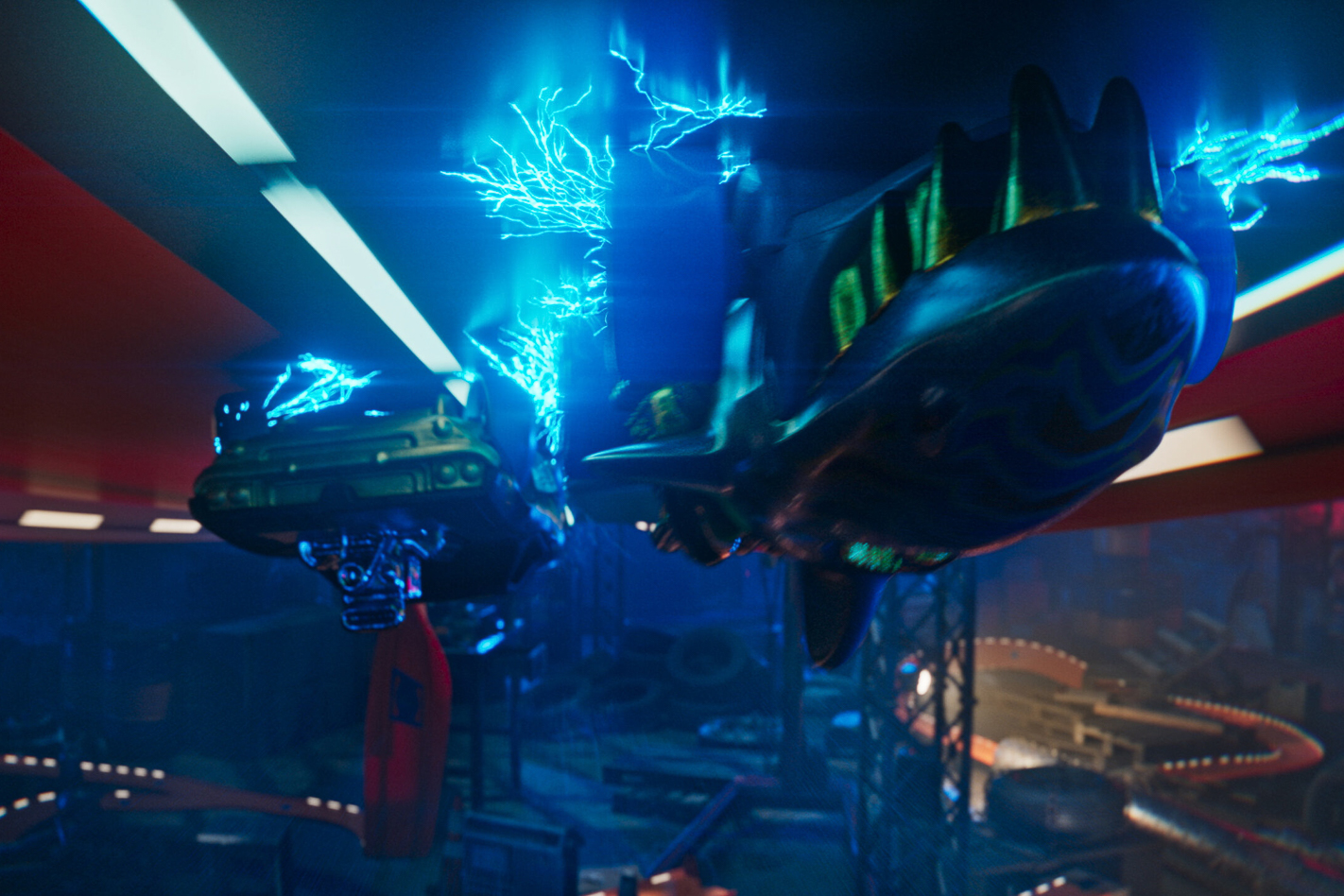
Questions remain over how exactly the game will be played. The trailer only shows cinematic racing, so we’re keenly awaiting further details that explain just what elements will be included in the actual game.
The game will launch on September 30, 2021 on Xbox, Playstation PC and Nintendo consoles.
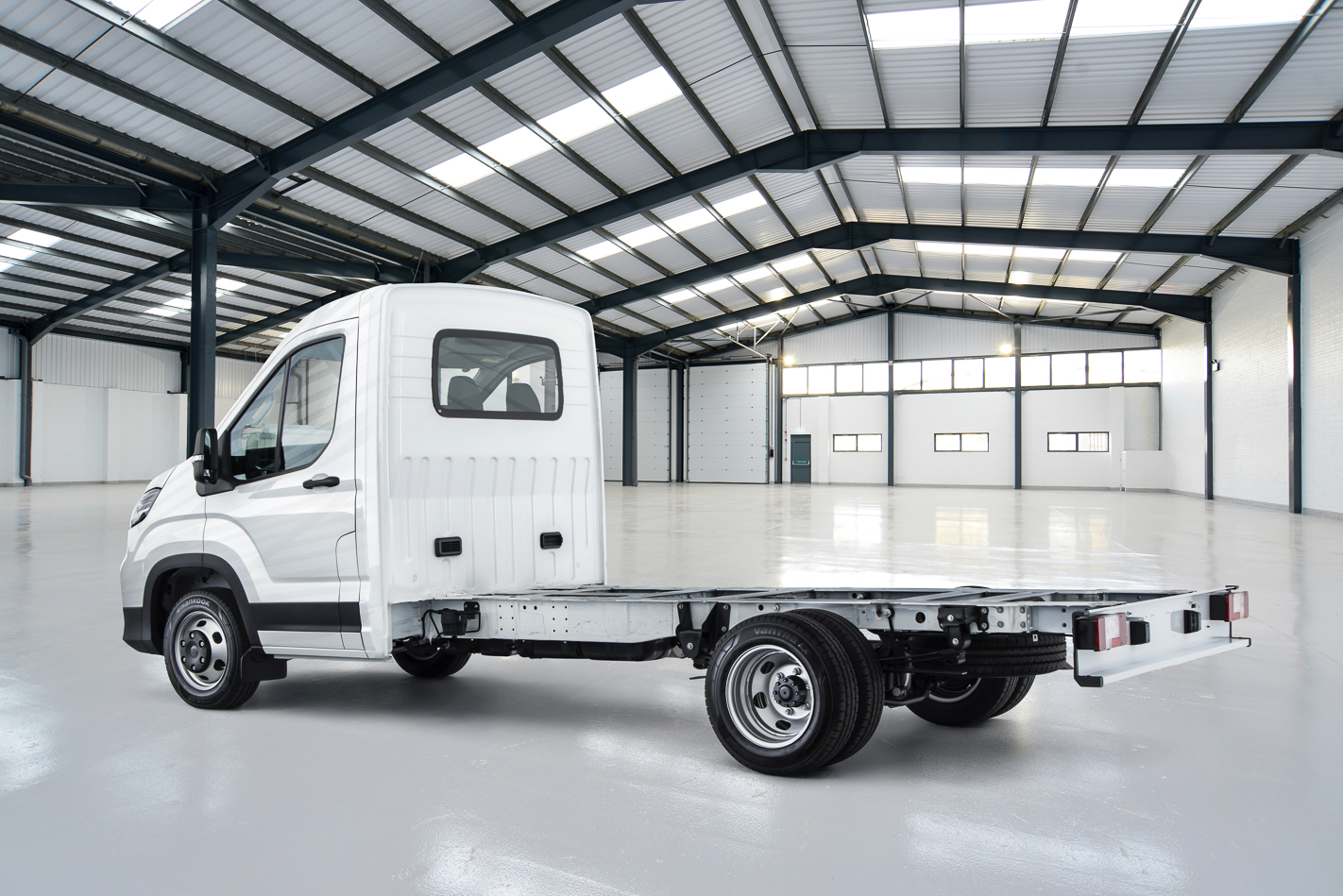
The Australian LDV Deliver 9 van range has expanded to welcome a new bus and cab chassis variant.
Firstly, the Deliver 9 Bus joins the range and can be had in either mid- or high-roof body style, in mid- or long-wheelbase forms – and there are 11- or 14-seat configurations.
Pricing begins at $55,779 drive-away for the mid-roof, 11-seater, medium-wheelbase grade.
The Deliver 9 Bus features safety equipment that includes Bosch’s electronic stability control, autonomous emergency braking, lane departure warning and cruise control as standard.
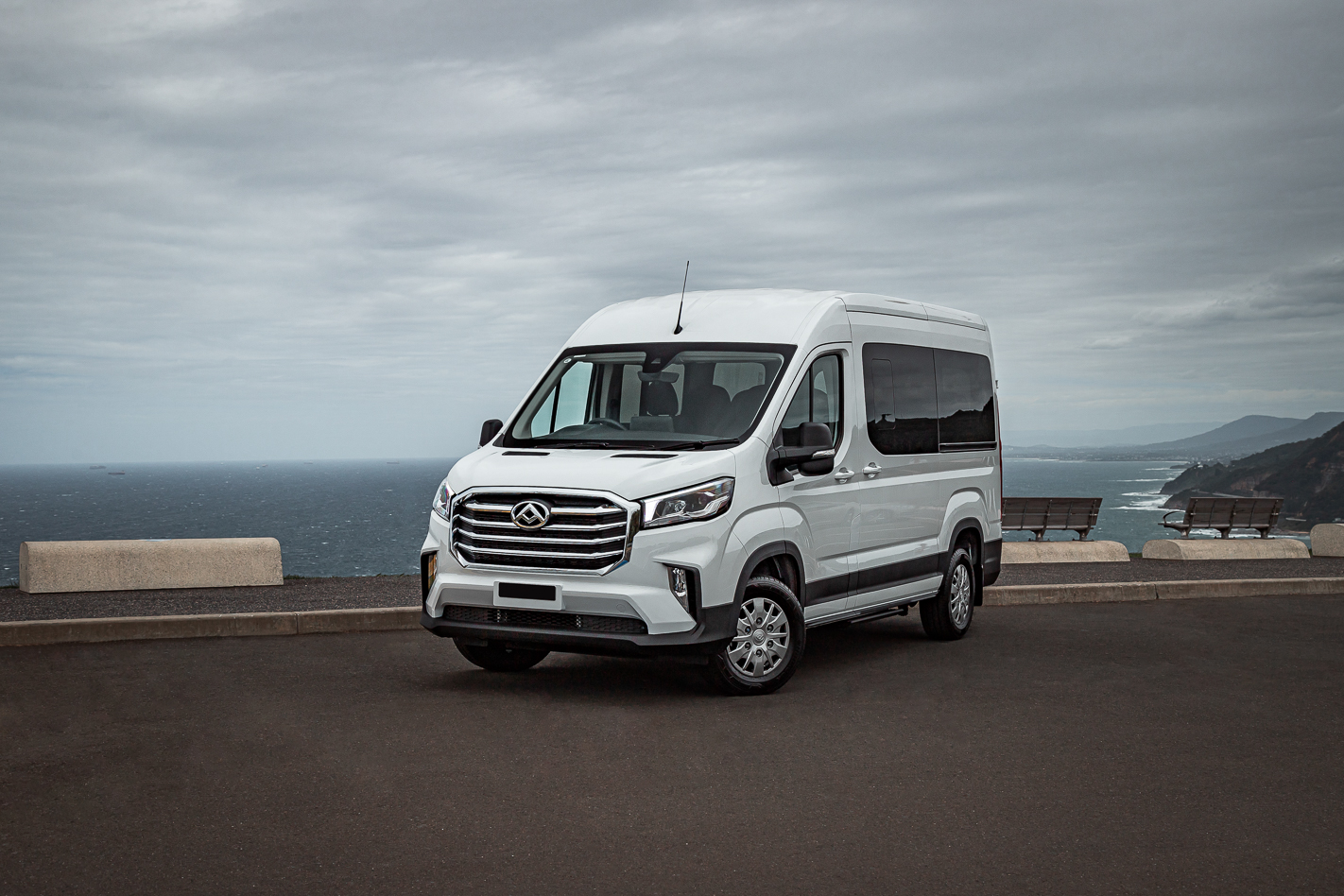
There are six airbags in the front row (including curtain airbags), and passengers are protected with three-point seat belts.
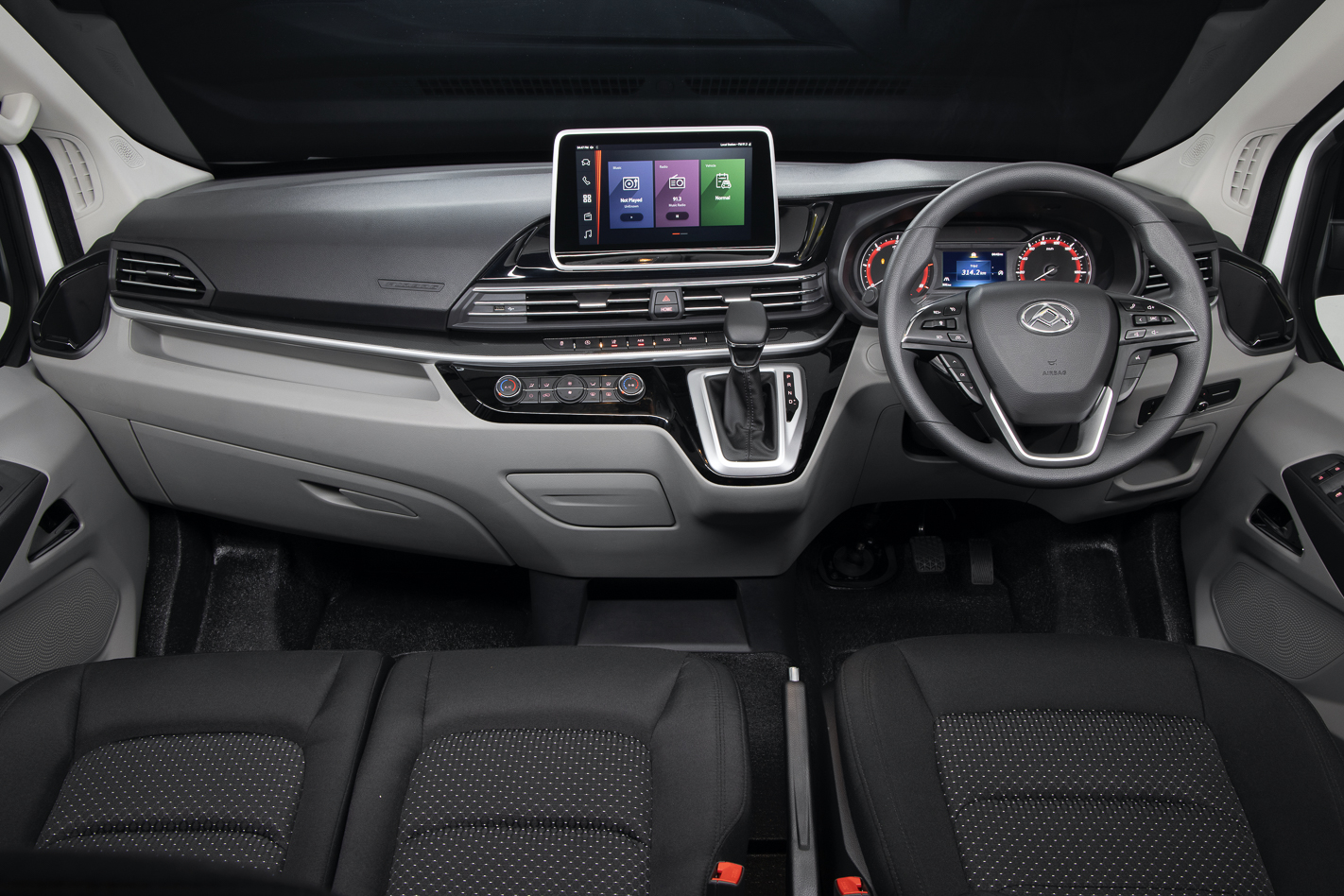
The 10.0-inch infotainment display features Apple CarPlay and Bluetooth connectivity.
It uses the same 2.0-litre turbocharged four-cylinder diesel engine as the Deliver 9 van, which outputs 110kW/375Nm to the rear wheels.
It comes mated exclusively to a six-speed automatic transmission.
Meanwhile, the Deliver 9 cab chassis shares the same engine and safety equipment, though adds a more affordable six-speed manual option.
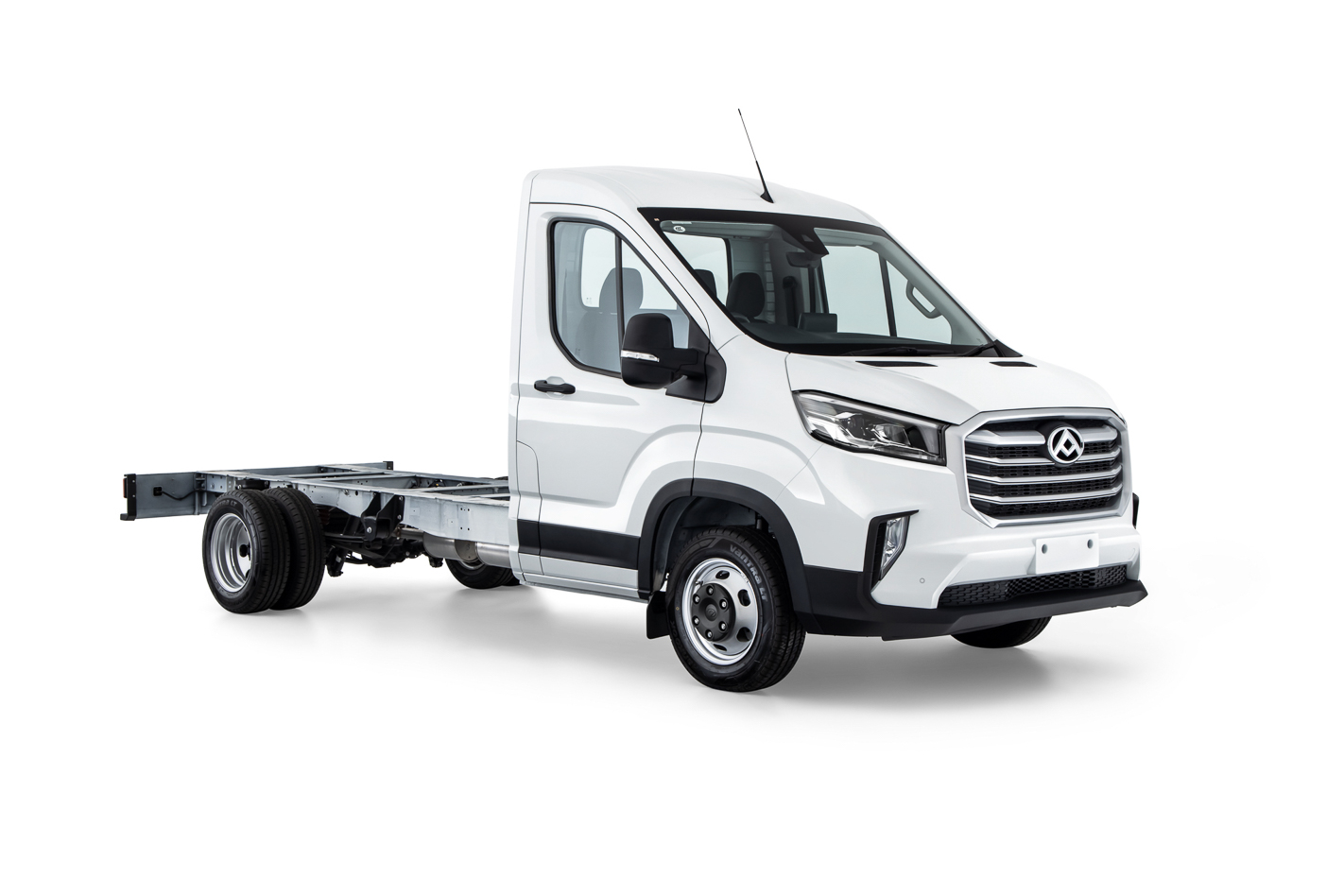
Braked towing capacity is rated at 2800kg, and dual rear wheels below the cab chassis stand ready to accept custom body solutions for business requirements.
Despite a restricted supply of vans – according to the brand – the newly-offered LDV Deliver 9 van range outsells large van rivals such as the Renault Master and Volkswagen Crafter, year-to-date.
2021 LDV Deliver 9 Bus and cab chassis Australian pricing
- Deliver 9 Bus LWB mid-roof 14-seater – $57,884
- Deliver 9 Bus LWB high-roof 14-seater – $59,990
- Deliver 9 Cab Chassis m/t – $42,095
- Deliver 9 Cab Chassis a/t – $44,726
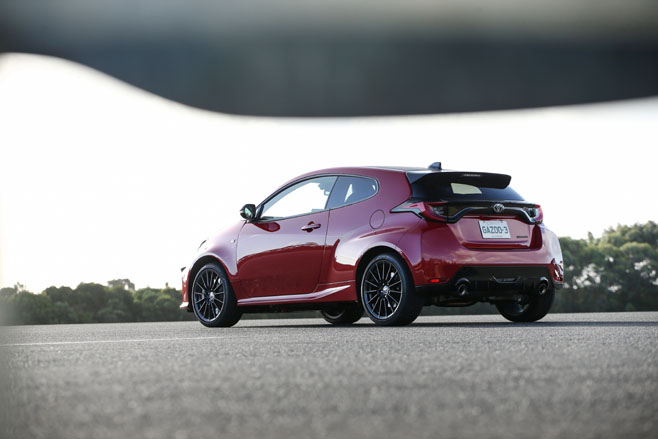
It’s as if the Yaris took a trip at an ’80s WRC after party with the Audi Quattro Sport, Lancia Delta HF Integrale and Austin Metro 6R4, emerging days later still jacked and with only its original lights, mirrors and some dashboard bits intact.
Everything else about this Gazoo Racing homologation project is unique – from the aero-enhanced three-door, four-seater body, significantly more coupe-like (think original Honda CRX) carbonfibre-roofed silhouette and aluminium doors, bonnet and hatch, to a Corolla/C-HR rear platform, complete with multi-link suspension.
At the other end is a fierce 200kW/370Nm 1.6-litre three-pot turbo/six-speed manual combo, providing a dazzling 156kW/tonne power-to-weight ratio and 5.2sec 0-100km/h capability.
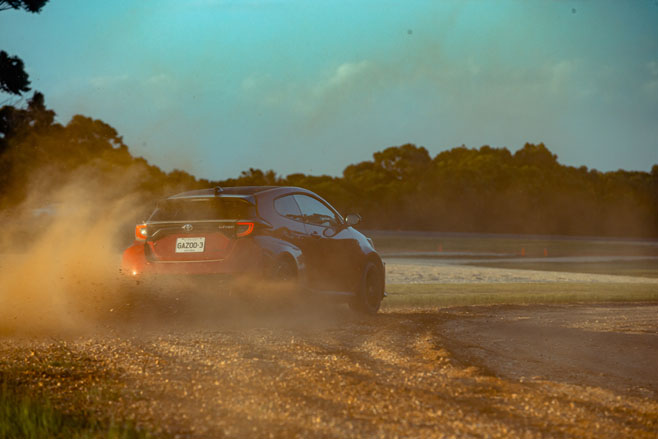
Permanent all-wheel-drive tech includes a 50/50 front/rear torque-split Track mode, 30/70 front/rear in Sport and 70/30 front/rear in Normal, though 100 percent either way is possible, backed up by beefy brakes.
Ultimately, splitting the GR from the regular Yaris is a no-brainer for Wheels COTY. How could we not? Insanely fun on dirt in skilled hands and yet still flattering even with an ape behind the wheel, the GR upends the (admittedly much cheaper) Fiesta ST/Polo GTI hegemony with its raw and rabid power delivery, decisive gearshift and finely spaced ratios that allow the driver to exploit the frenetic little funster’s fruity, flexible powerband.
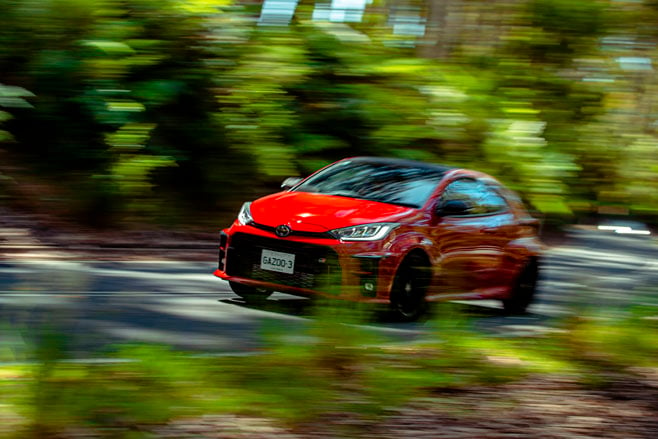
Precision steering, handing verve and endless traction further underline GR’s singular vision, with the multi-mode AWD providing nuanced sideways scenery once this all-weather wonder’s grip eventually releases. Supernatural fun aplenty awaits along with big smiles.
Conversely, there’s disarming docility, decent comfort, quality materials and full safety tech. And the frameless doors, ‘Shooting Brake’ glasshouse, low ceiling and cramped legroom are pure coupe tropes. A tiny boot, dreary instruments, nosebleed seating and missing return-position memory during rear-seat entry/egress annoy, in this otherwise incandescent motoring experience.

If the $50K ask irks, consider that Subaru’s Impreza WRX in 1994 cost $80K in today’s dollars, putting the sub-supercar GR Yaris into sharp focus.
It’s the affordable, sensational, unhinged WRC weapon we thought we’d never see in this millennium.
The Yaris has grown so sophisticated it sparked a philosophical debate about pricing versus value.
Just in case you missed the big news, the base grade now costs $7000 more than before at $22,130, while the flagship ZR is now nearly $10K heavier on your wallet.
Buyers are already voting with their feet. By the end of 2020, sales had halved. Toyota’s response is that – with Yaris adopting the Corolla’s TNGA platform technologies for dramatic advances between the third and fourth generations – price hikes are unavoidable.
From a COTY perspective, surely this would kill it on value grounds alone? Even a new Volkswagen Polo or Suzuki Swift cost $3K less. Time to dig a little deeper.
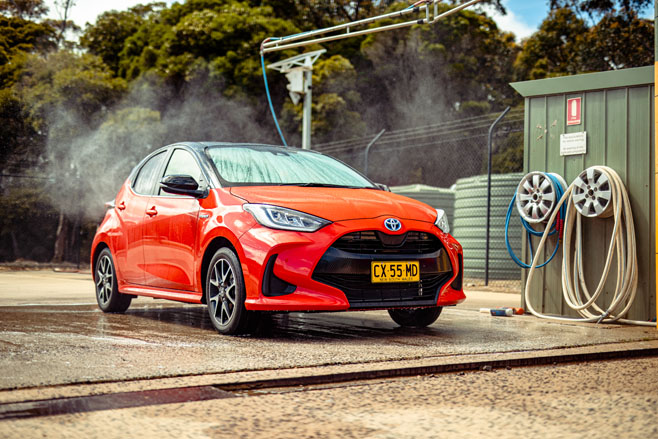
Yes, Yaris is now substantially more expensive. Adjusted for inflation, the Ascent Sport costs $3300 more than the then-new third-gen five-door equivalent did in 2011.
Yet, besides being usefully roomier, today’s model brings eight airbags (including a segment-first front-row centre SRS), AEB with pedestrian/cyclist detection, secondary collision braking, adaptive cruise, auto high beam, road-sign recognition, active lane-keep and cornering, a central touchscreen with reverse camera, Apple CarPlay/Android Auto and digital radio. Specify a Polo accordingly and watch its pricing lead go poof!
The reality is, no new car democratises so much safety and technology. That’s three COTY criteria ticked off.
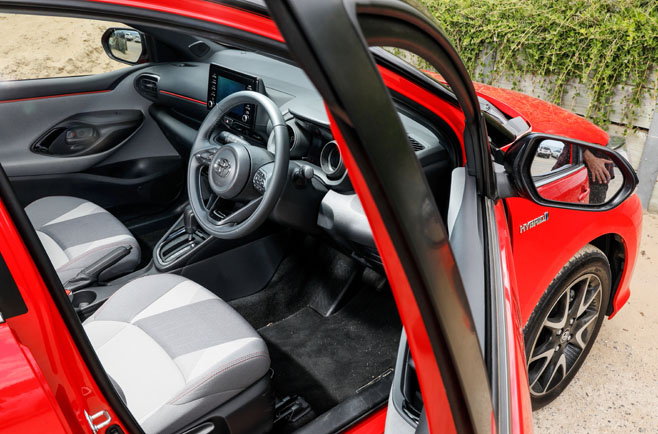
Then there’s efficiency, thanks to the Yaris’s two all-new powertrain choices, both provided by a 1.5-litre three-cylinder naturally aspirated petrol engine, available in 88kW/145Nm (Ascent Sport) or 85kW/120Nm (ZR Hybrid) guises.
Whether via a natty six-speed manual or unobtrusive continuously variable transmission (CVT), this unit is a real cracker, with a willing, unburstable nature to its power delivery that never lets up, resulting in smooth, flexible performance. In Sport mode, the CVT even steps off the line like a normal torque-converter auto, and can achieve a pleasing 4.9L/100km.
Yet the $2000 optional (starting in mid-level SX from $29,020) hybrid alternative manages a spectacular 3.3L/100km, while also ushering in a creamy, muscular, electrified torque boost in the process.
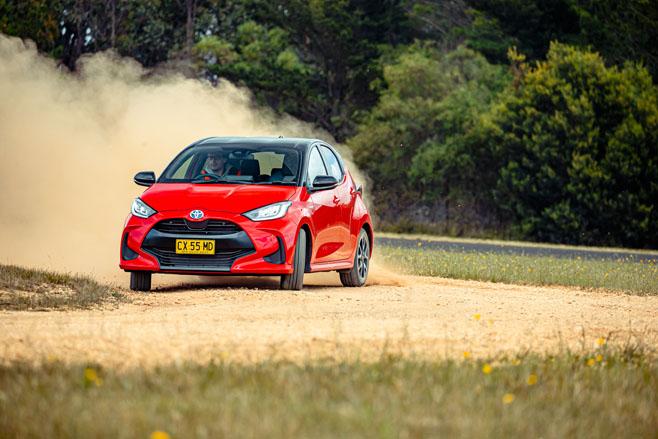
Reliability and durability, long brand strengths, can probably be assumed here, but from a driving perspective, the Yaris/Echo/Starlet lines have fell short at times, especially for refinement.
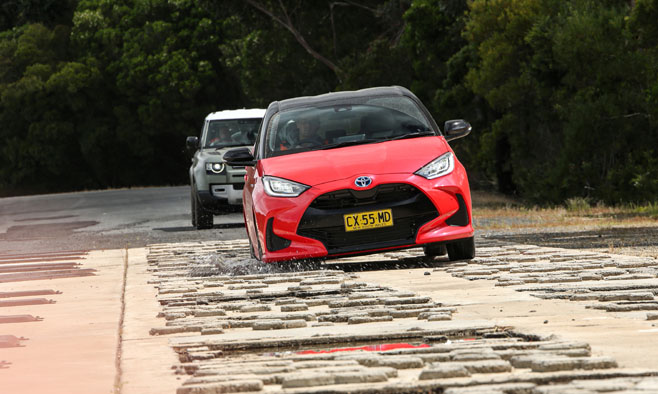
The good news is that the latest Yaris chassis far exceeds its modest engine outputs. Linear, well-weighted steering makes the most of the agile yet secure handling, resulting in an endlessly chuckable supermini. In sudden-avoidance manoeuvres, there’s a new-found fluency to the chassis, backed up by a decent level of suspension absorption. Finally, there’s something for keener drivers to sink their teeth into.
In contrast, the 55kg-heavier Hybrid isn’t as dynamic, but it is noticeably quieter. Our Ascent Sport sounded hollow (but never tinny) over gravel – but then, at 1050kg, it is light, even by city-car standards. Both are leagues ahead of the noisy old Yaris.
Finally, the smallest Toyota aces functionality, thanks to a comparatively spacious cabin offering comfy (if somewhat too lofty for taller folk) seating, and featuring an attractively styled dash that’s on a par with current Euro alternatives. The instrumentation looks swish, too.
That the boot capacity actually exceeds big-bro Corolla hatchback’s is a bonus, but it’s far from being the class champ here. And while we’re nit-picking, the base hubcaps are disgraceful, rear-seat ambience falls short of the ZR Hybrid’s $32,100 ask, more sound-deadening wouldn’t go astray and the ESC gravel calibration borders on paranoia.
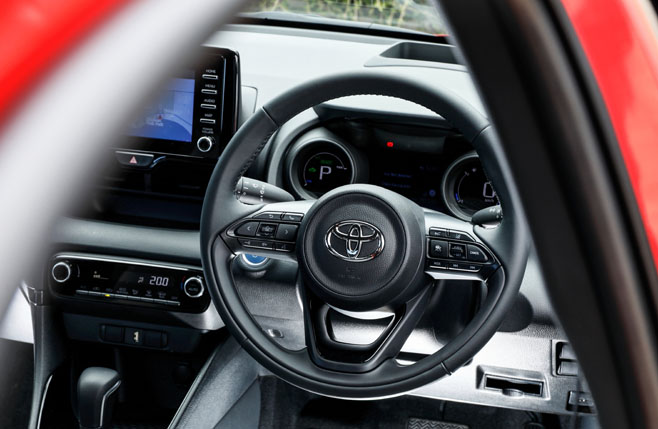
Despite us seeing its intrinsic value, many buyers can’t or won’t, and – feeling betrayed – will instead ignore Toyota’s best-ever light car because of inaccessible pricing.
Perhaps true democratisation can only occur if something’s actually in reach of all, and that’s quite a rare misstep for Australia’s number one carmaker.
Cultivated as it now is, this is why the Yaris cannot quite make it over the line to claim a COTY crown.
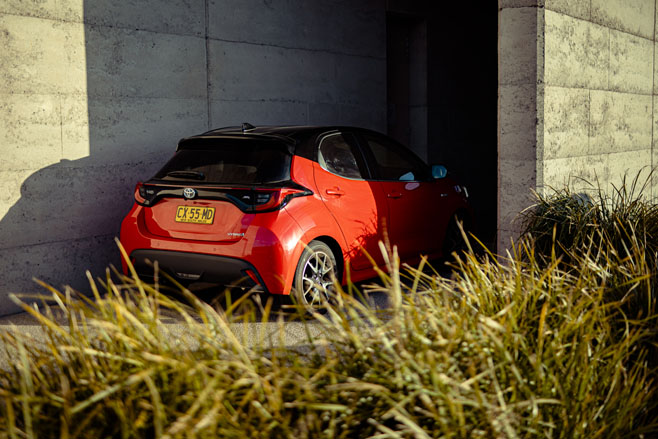
Richard Ferlazzo on the Toyota Yaris’ design
“The regular five-door Yaris line-up sports a funky new look but I wouldn’t call it attractive.
“The overall egg shape is fairly inoffensive but the front face is mostly a huge black grille with twisty bits of body colour surrounding it in an arbitrary manner.
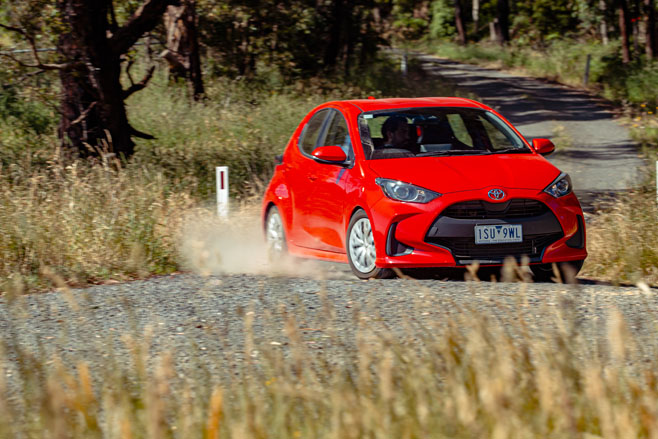
“The rear is more successful with a generous lamp graphic which stretches across its full width.
“Overall, it just seems a bit try-hard and difficult to determine which demographic Toyota is chasing. The styling is youthful but the new price tag is more suited to older buyers looking for an up-spec small car.”
Mercedes-Benz will bring another G-Class variant to Australian dealerships from mid-2021, positioning the G400d as a more affordable alternative to the Mercedes-AMG G63.
Instead of the mighty 4.0-litre twin-turbo V8 of its AMG stablemate, the G400d packs a 3.0-litre diesel six-cylinder engine which outputs 243kW/700Nm to all four wheels.
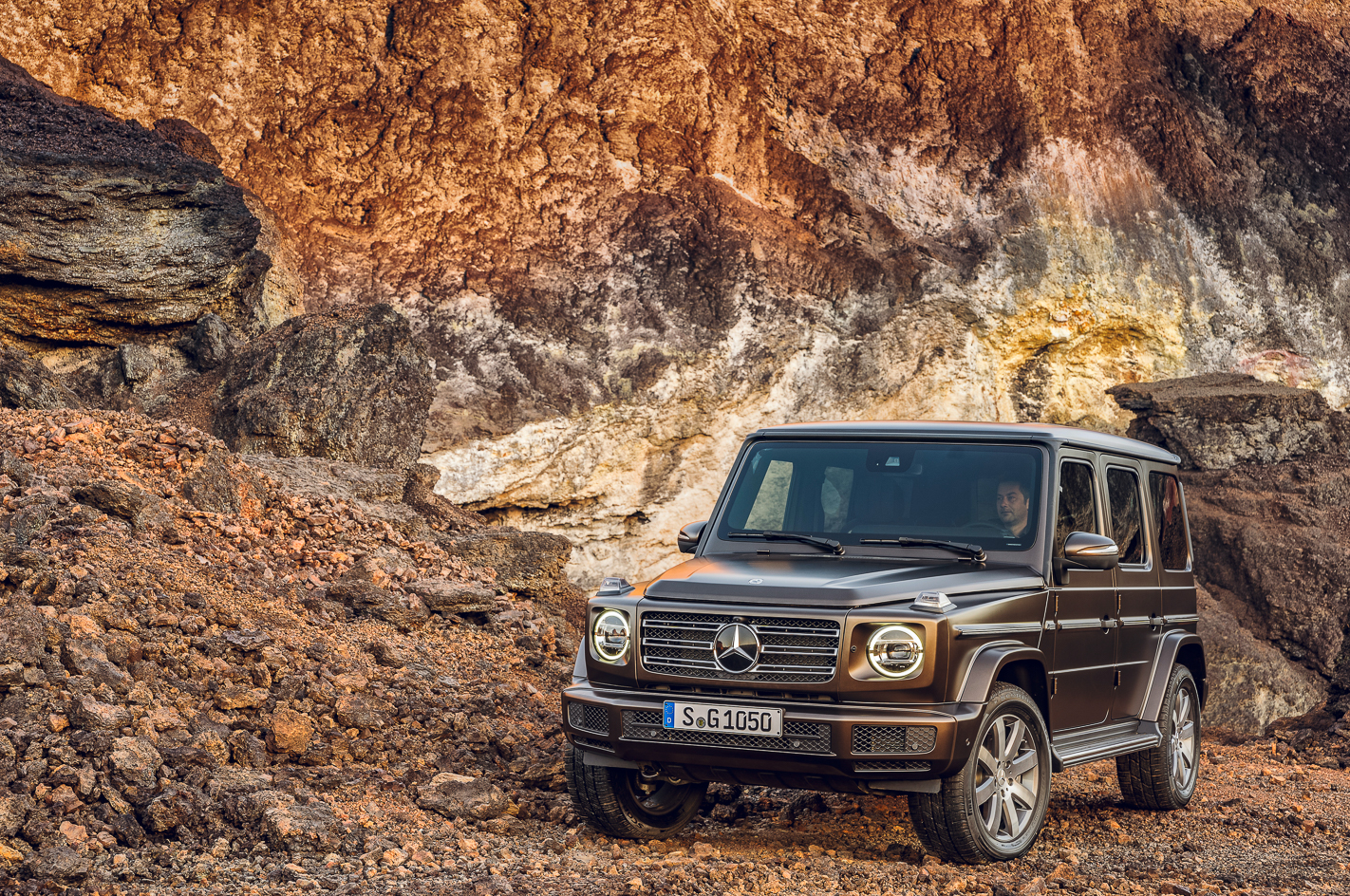
While it’s no AMG, Mercedes says that this engine is the most powerful diesel it has ever fitted to a passenger car.
Other driveline features include three differential locks for the all-wheel drive system, low-range gearing which is switchable on the move and a nine-speed automatic transmission. Suspension with adaptive dampening is standard.
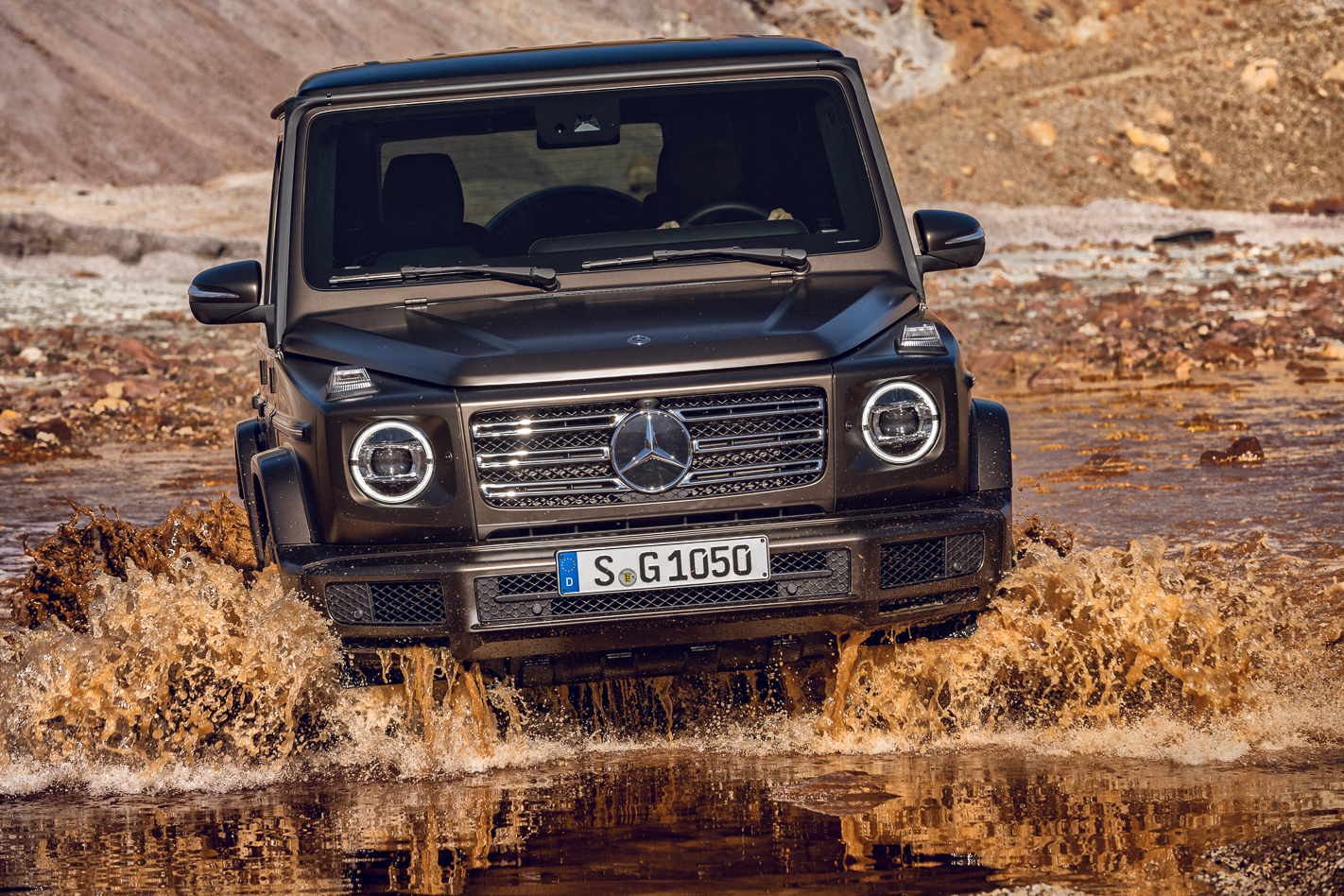
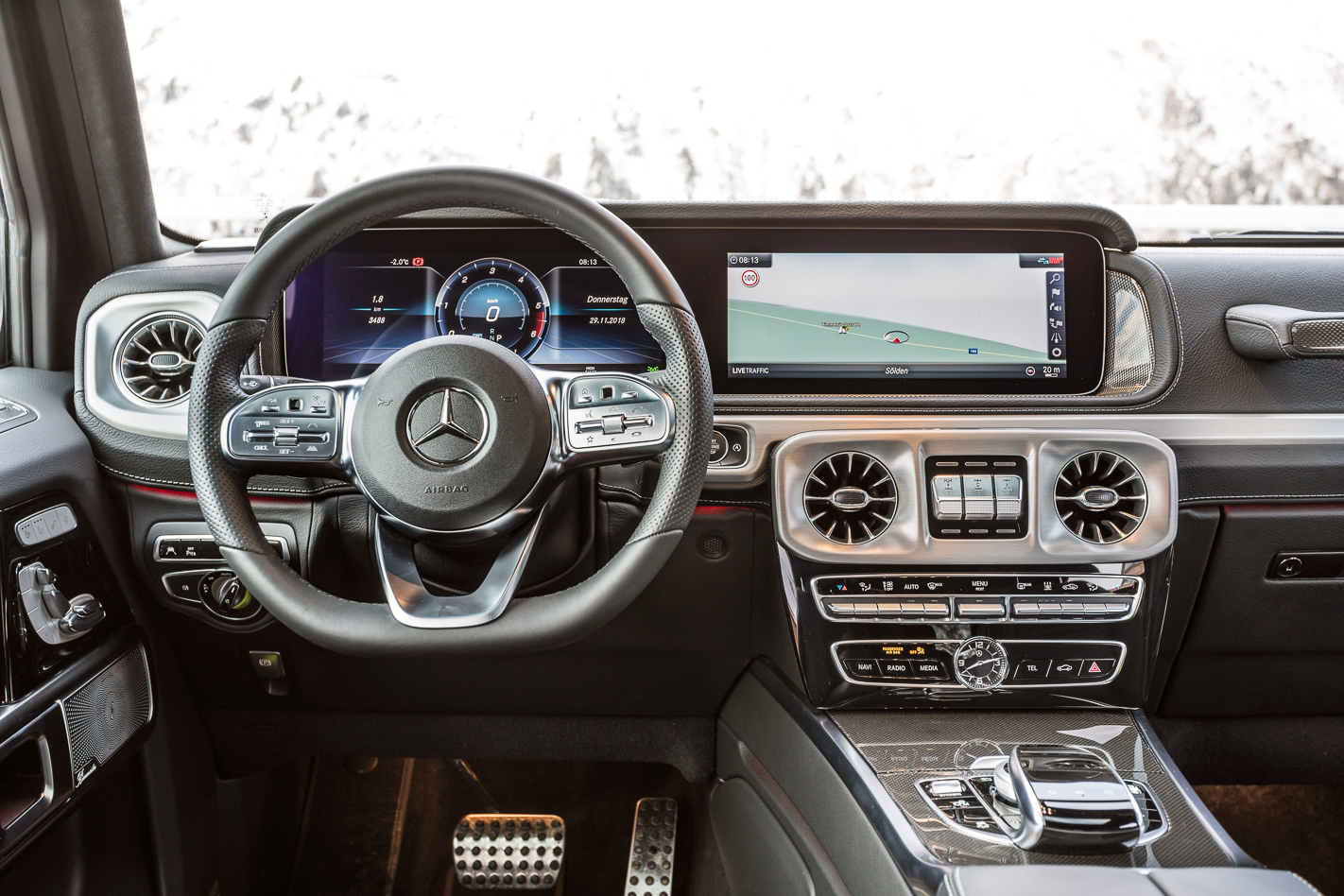
Standard features also include a 15-speaker Burmester sound system, electrically-adjustable heated front seats, off-road information (including altitude, compass, body angle, wheel angle and inclination), sunroof and two 12.3-inch screens to display infotainment and the digital instrument cluster.
This infotainment system features the old COMAND software rather than current-gen MBUX system, though it does still feature Apple CarPlay and Android Auto smartphone mirroring.
Safety equipment includes adaptive cruise control, blind spot assist, lane-keep assist, traffic sign recognition, and ‘PRE-SAFE’ system that pre-tensions the safety belts if an accident is detected.
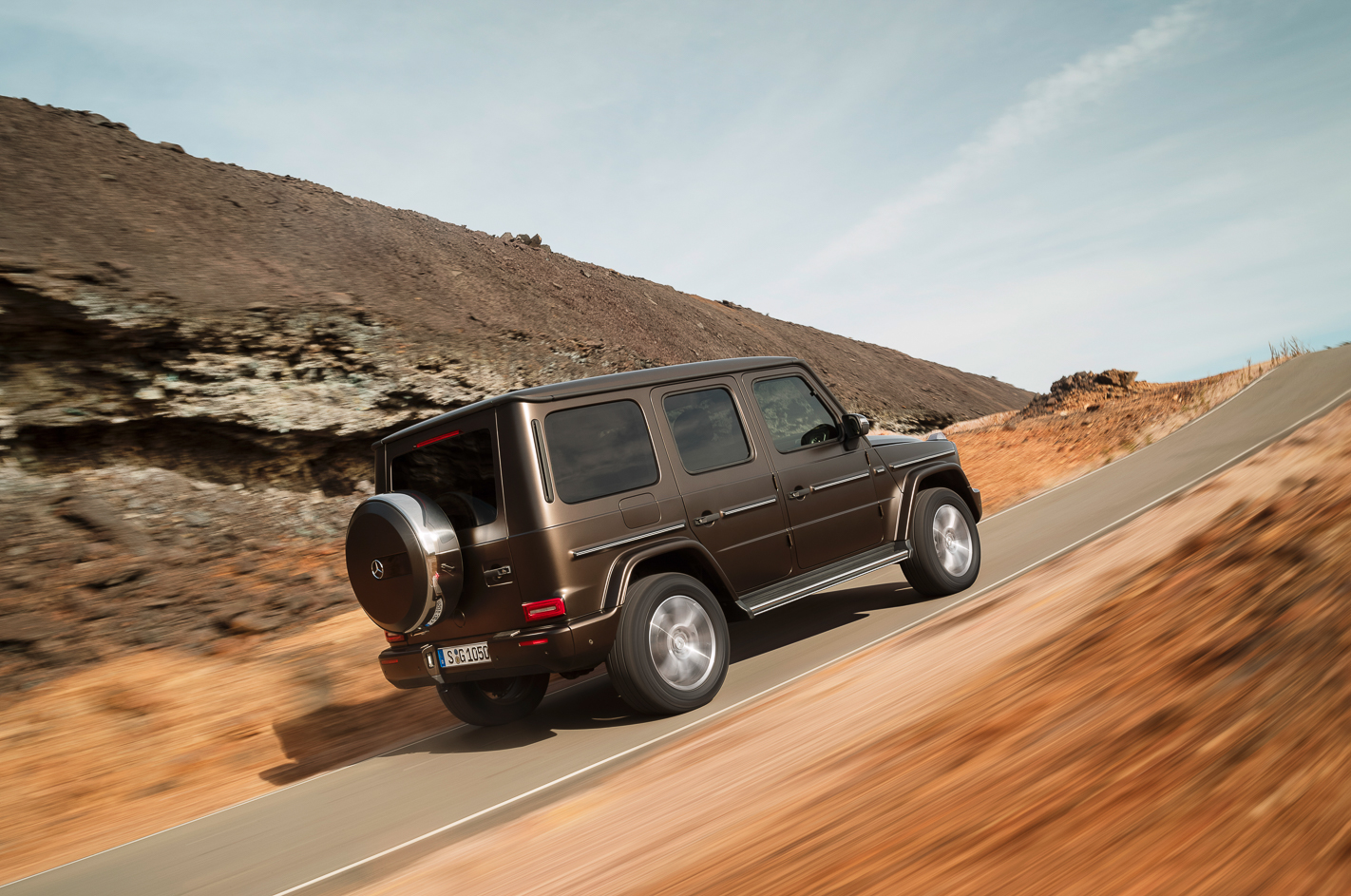
Externally, the G400d can be picked out by its stainless steel package which equips exterior protective strips, side running boards and a spare wheel cover. Plus, elements in the radiator trim are finished with chrome. It also gets metallic paint and 19-inch eight spoke alloy wheels.
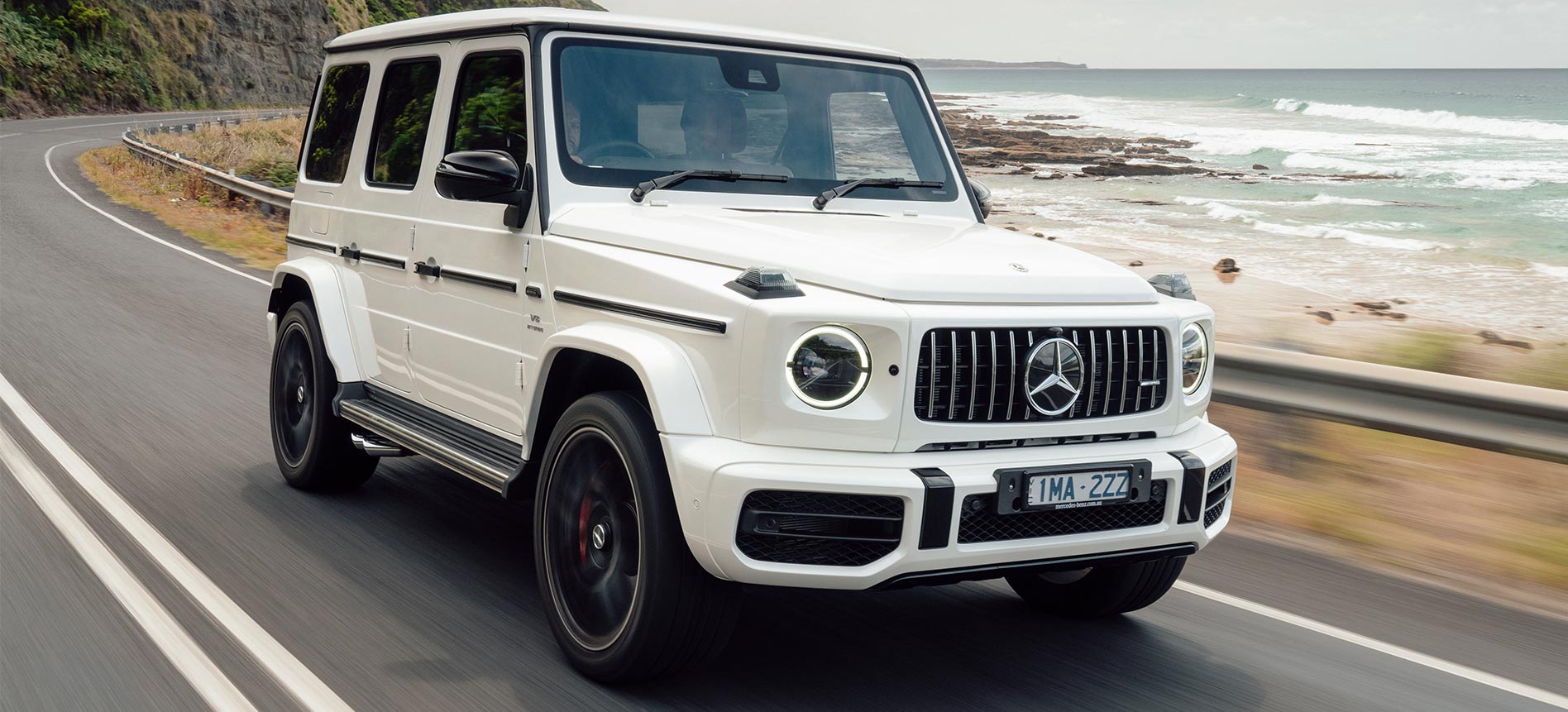
The Mercedes-AMG G63 is still available as before. It builds upon the above specification by adding Nappa leather upholstery, microfibre headliner, digital TV tuner, performance steering wheel, a 4.0-litre twin-turbo V8 (430kW/850Nm), 21-inch AMG alloy wheels, and AMG body styling.
The new Mercedes-Benz G400d will cost $233,900 (before on-road costs) and is expected to arrive in Australian showrooms in July 2021.
The Mercedes-AMG G63 is available now, priced at $289,900 (before ORCs).
2021 Mercedes-Benz G-Class range Australian pricing
- Mercedes-Benz G400d – $233,900
- Mercedes-AMG G63 – $289,900
Try telling someone how good the new BMW G22 4 Series Coupe is to drive – very much living up to old Ultimate Driving Machine tag-line – and all they will want to talk about is the bloody grille.
It’s fair enough. Plastered to the front of the new Bavarian two-door, the courageous, vertiginous, Bugs Bunny intakes scream that BMW is chasing a new customer with its 4 Series, and neither of them are likely you nor me. Yet find yourself behind the wheel and you’ll discover the engineers haven’t forgotten us. Far from it.
Attempting to nab what would only be BMW’s second COTY award (after the i3’s win in 2014), the three-tiered 4 Series range fronted our testing with two variants: the entry-level turbo 2.0-litre rear-drive 420i, packing 135kW/300Nm; and the big daddy 3.0-litre turbo straight-six M440i xDrive (all-wheel drive), with a somewhat more alluring 285kW/500Nm.
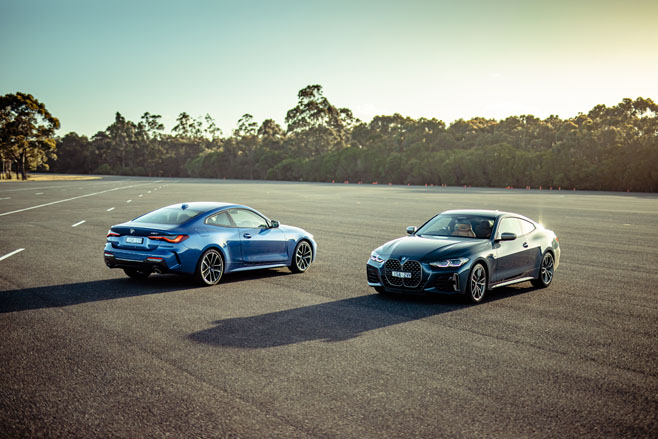
Against the criteria, function is where the 4 Series excelled for the judges. It’s intended to be a statement-making sporty coupe with grand touring ability, comfortable or fun to drive, whatever your mood demands, and in that regard, it was a big tick for both variants. The softer 420i on its standard passive dampers offers a more classic rear-drive sports experience, pitching and yawing on less tenacious tyres but in a pleasing way. And, enjoyably, with just enough power to tax the chassis.
Where the 420i feels ‘lovely’, the grunt-packed M440i xDrive is plain old mean. Cornering lower and flatter, on firmer suspension and much stickier tyres, it’s a more serious and agile device, replacing relaxed cabin conversations with a tense quiet intermixed with roaring straight-six engine noise and tyre squeal.
BMW claims 285kW/500Nm from the 3.0-litre turbo B58 straight-six, but with a stated 0-100km/h time of just 4.5sec (versus the 420i’s relatively sedate 7.5sec) they must have measured against the fittest horses in all of Europe. And few powertrains combine muscle, flexibility and buttery, unflappable smoothness quite like the one in the traction-packed, utterly rapid M440i.
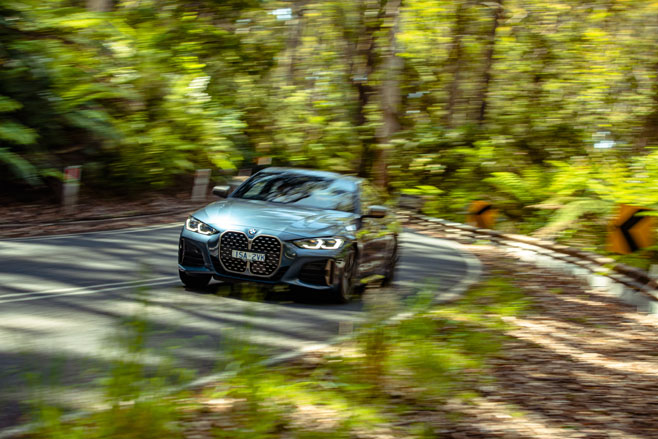
But either car encourages you to drive it – and rewards. And when you’ve had enough, flick back into Comfort mode and you’ve got a very relaxing sled to get you home, with good ride quality (surprisingly good in the adaptive damper-shod M440i) and a beautifully appointed – and built – high-tech BMW interior. More than two-plus-two, the newly enlarged 4 Series is almost a proper four-seater, too, with plenty of leather, space and amenities for the rear occupants. And further aft of the rear bench, a decent-sized boot.
For safety, it’s a big tick, too. No 4 Series has yet been hurled at any solid objects by ANCAP or NCAP, unlike the G20 3 Series, which has scored five stars in both. Fair to say it’d be the same outcome for the 4 Series which offers six airbags (although rear passengers only get head protection), AEB, adaptive cruise, lane-keep and reversing assist. And some of the most clever ESC and ABS of all the cars we tested.
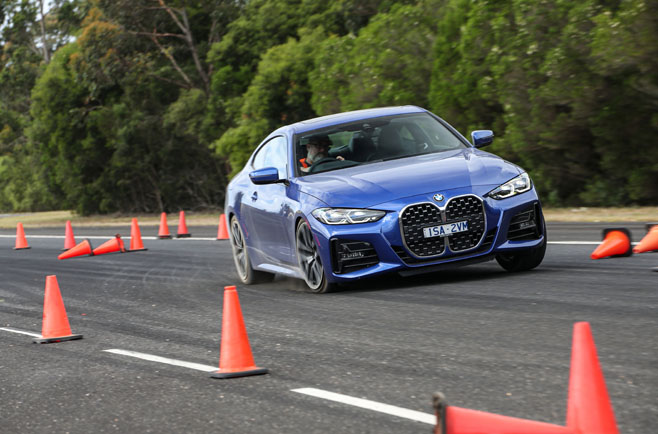
While the 4 Series nails its sports-touring coupe brief, and is plenty safe, it’s against the remaining criteria it falls short. For technology, the 4 Series has every gadget you could ever want – including two 12.3-inch displays, for instruments and infotainment, however it doesn’t really move the game forward in any particular way. For efficiency, the 420i claims a combined 5.6L/100km and the M440i 6.9L/100km, but that’s if you go nowhere near the performance of your new sporty coupe.
The 4 Series also didn’t score highly for value. While it’s all relative, $70,900 MSRP for the 420i is pretty steep for something with ‘just’ 135kW. And $116,900 MSRP is also a fair ask for the M440i, even if it could be considered a cheaper, more comfortable M4. Plainly, both represent luxury purchases that would be a stretch if you asked the average Aussie punter.
Not that they’re likely to give much of a response; too busy talking about a certain something else.
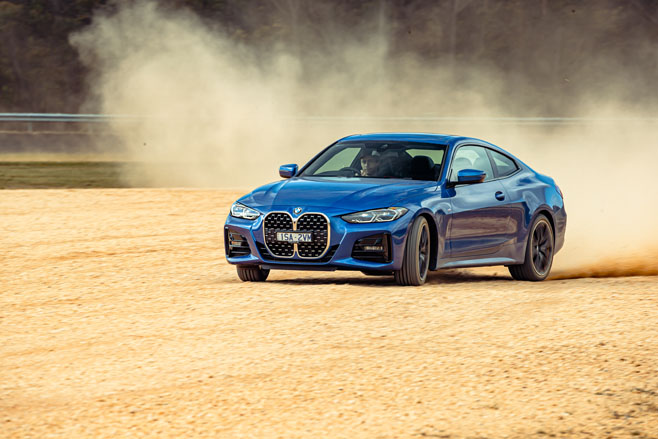
Richard Ferlazzo on the BMW 4 Series’ design
“Firstly, where is the Hofmeister kink in the C-pillar? That kind of brand design cue is gold; I’d be loathed to relinquish it. Accordingly, the side view, while sleek and elegant, now looks a little anonymous.
“Likewise, the interior is beautifully executed but feels a bit sedan-like. Even the grunty M440i feels a lot more luxury than sport, except for the sport steering wheel which has the girth of a bratwurst.
“Oh, you asked about the grille? Hmmm…. I think it works better on an SUV.”
LEAF THROUGH the ‘Hot Source’ data section in the back the latest edition of MOTOR and the more eagle-eyed of you may well notice a quiet omission. Peugeot has vanished.
With the demise of the 308 GTi, it offers no dedicated performance cars in this market. Thankfully, it’s not a permanent position and more of a sabbatical, thanks to the announcement of the Peugeot Sport Engineered line, due to be rolled out across every model in the Peugeot range.
The company has already put a toe in the water with the potent 265kW/520Nm Euro-market Peugeot 508 Sport Engineered sedans and wagons, which feature a 147kW 1.6-litre turbo up front augmented by an 11.5kWh lithium-ion battery and twin electric motors of 81kW on the front axle and 83kW at the rear. All-wheel drive grip endows this model with a punchy 5.2sec 0-100km/h capability.
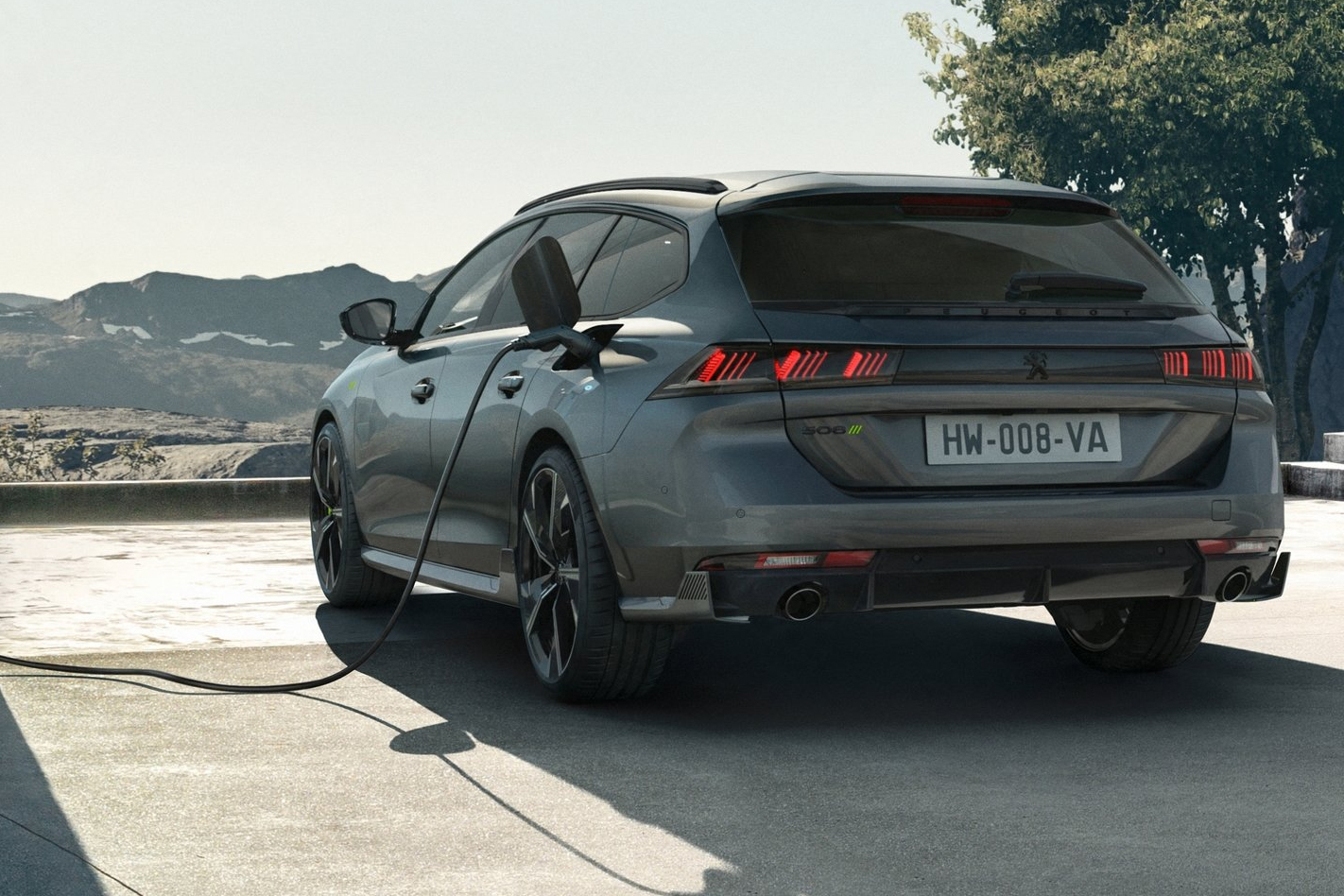
Kate Gillis, general manager of Peugeot Citroën Australia, has previously gone on record supporting the launch of the hot 508 in Australia. “I can say that study has been favourable in supporting the local introduction of the 508 Sport Engineered,” she stated.
“Groupe PSA are also keen to see it in a market that’s all for performance.”
She may well have to consider petitioning for other Peugeot Sport Engineered products. In an interview with UK title Auto Express, outgoing Peugeot CEO Jean-Phillipe Imparato outlined plans to revitalise Peugeot’s enthusiast offerings.
“With each and every car, starting with 508, I’m aiming to put as an umbrella a performance/sporting version of the car. We will launch at the beginning of 2021 with the 508 Peugeot Sport engineered to send a message to the market,” he said.
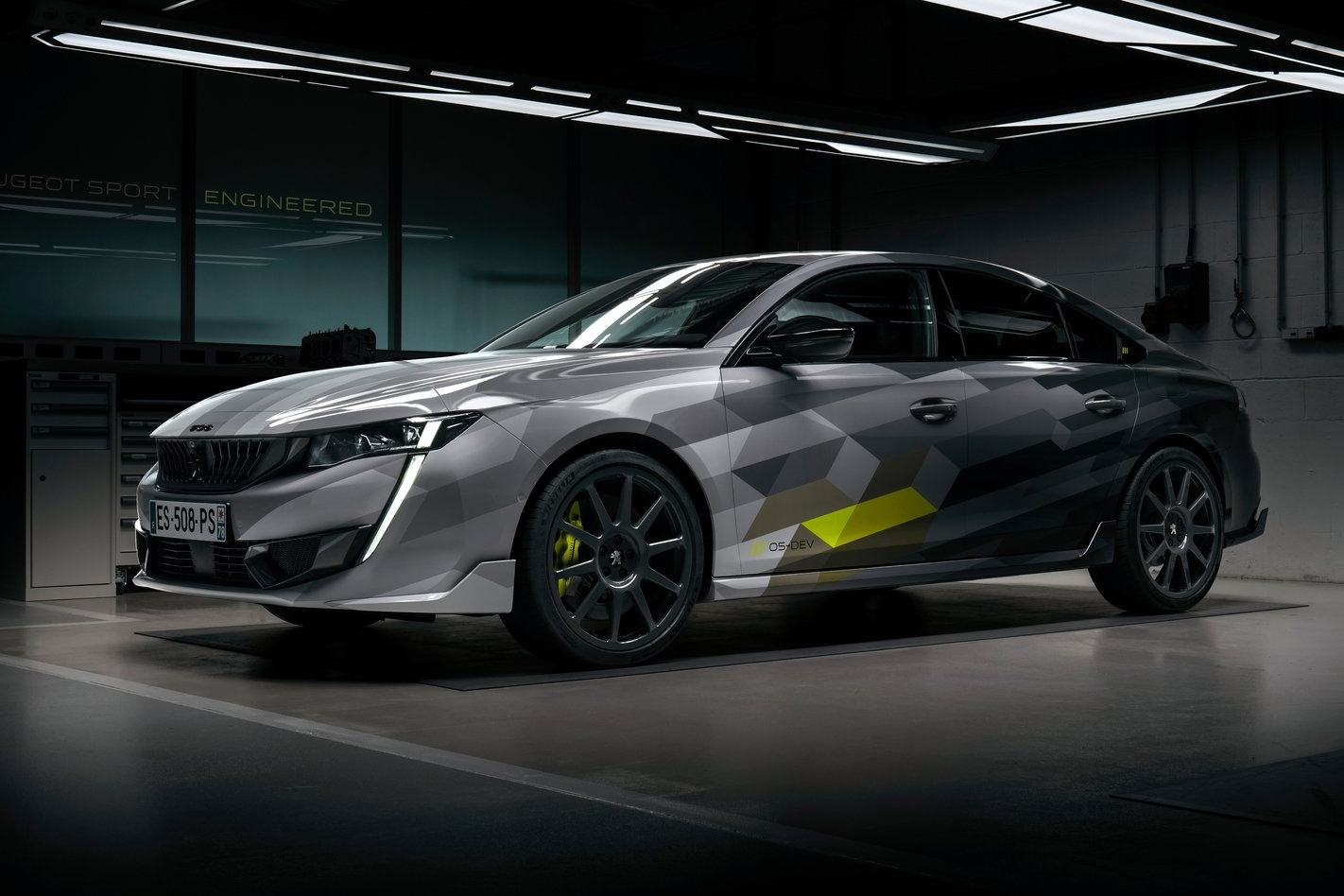
The roll-out of PSE versions is slated to feature one new launch per calendar year, with a hot version to follow the unveil of the next-gen 308 hatch set to be unveiled in March. As reported in MOTOR last month, strict new French carbon dioxide emissions-based taxation rules have forced Peugeot’s arm into electrifying its higher performance models. However, Imparato flatly denies that batteries will act as a drag on Peugeot’s trademark agility and spirit.
“It puts something on top of our range that sends a message to the world that we don’t want the EV transition to be boring – we want to have fun even if we have CO2 below 50 grammes,” he stated.
It’s likely that the forthcoming Peugeot Sport Engineered version of the 308 will utilise a breathed-on version of the plug-in hybrid powertrain seen in the 3008 and 5008 Hybrid4 plug-in SUVs.
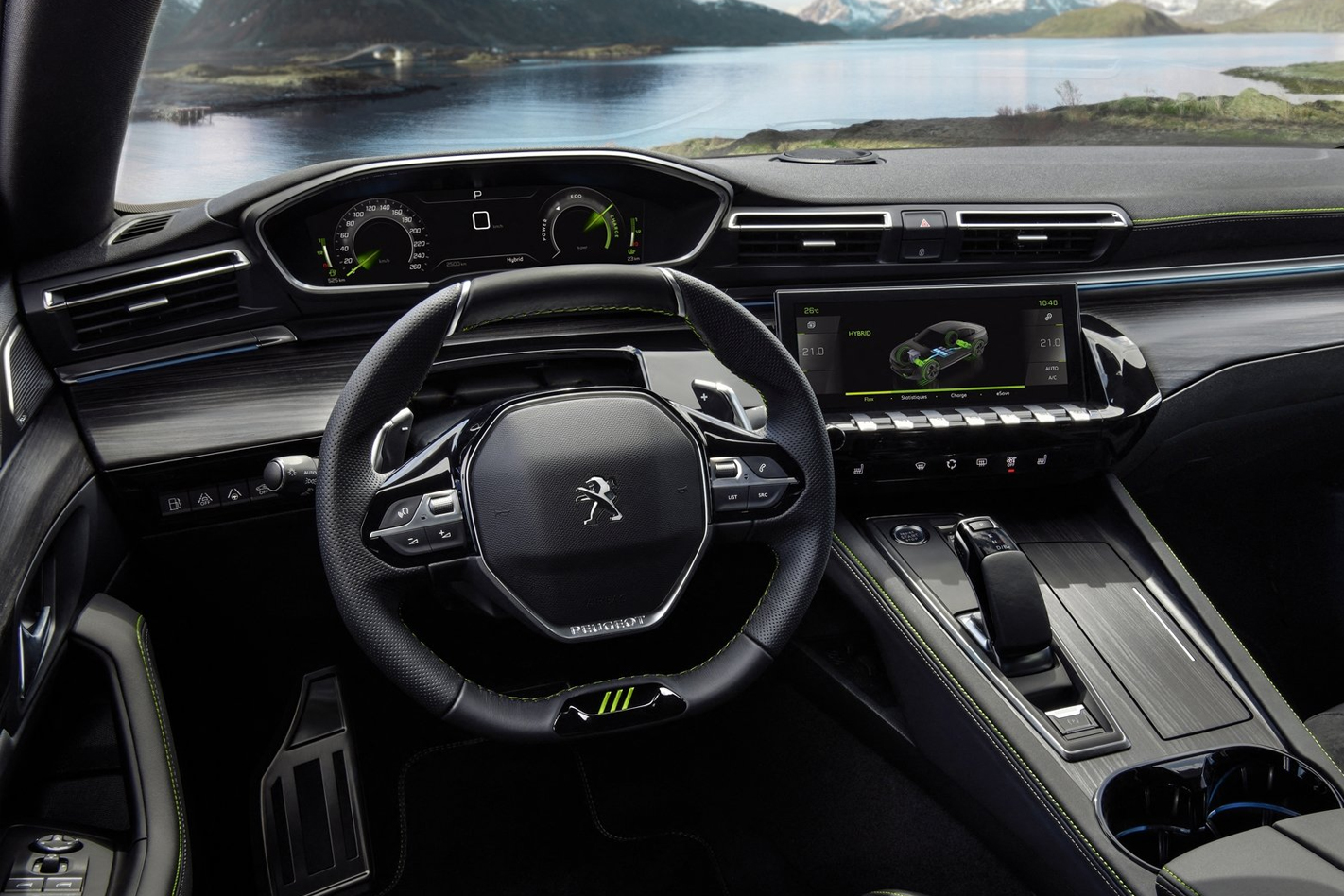
In those models, the venerable 1.6-litre turbo four-cylinder unit is paired with two electric motors for a system output of 220kW, Peugeot looking for an equivalent power-to-weight figure to the outgoing 200kW 308 GTi.
This announcement will likely be Imparato’s last, with umbrella company Stellantis shuffling the pack and sending the veteran to Alfa Romeo, with former Citroën CEO Linda Jackson taking up the reins at Peugeot.
