
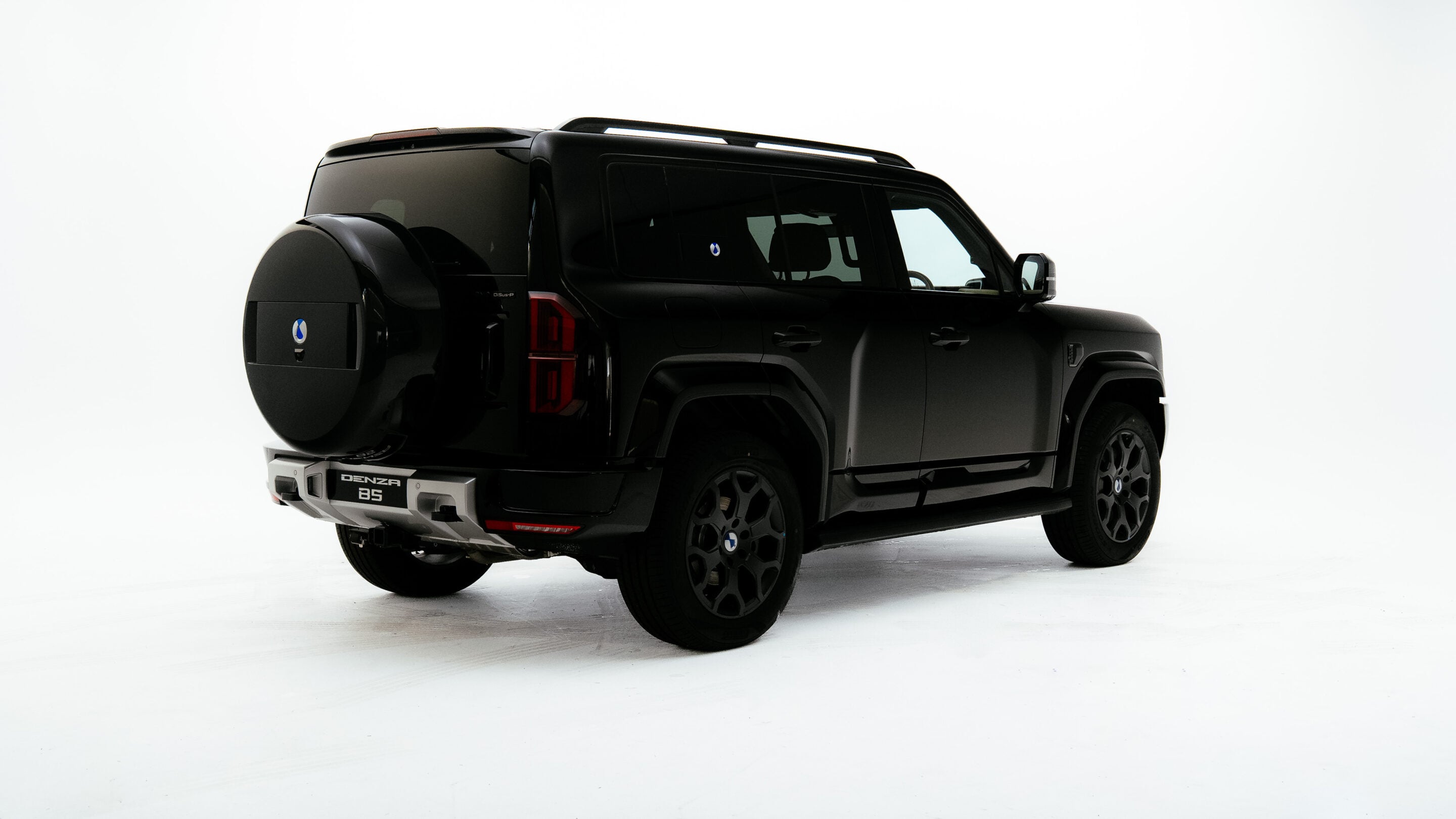
DENZA has confirmed Australian pricing and opened orders for its first local models, the B5 and B8 Super Hybrid SUVs, ahead of first deliveries later this year. The pair were shown publicly for the first time at the brand’s new Sydney outlet in Rushcutters Bay and will tour new dealership sites nationally this week.
The mid-size B5 will be sold in two grades, Standard and Leopard. Above it sits the larger B8 flagship, offered with either seven seats (7S) or a six-seat (6S) layout aimed at buyers who want extra second-row space.
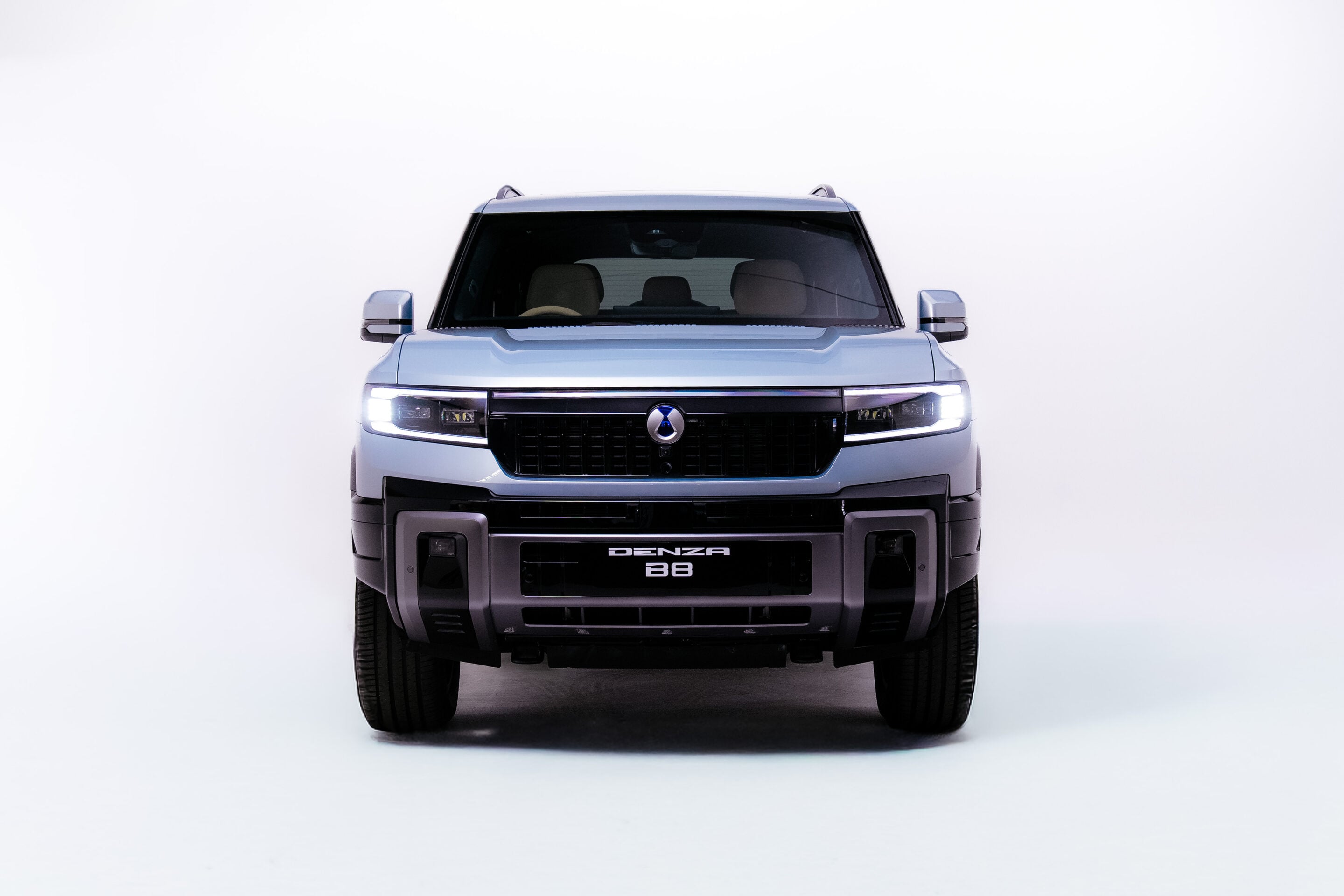
Both vehicles use BYD’s DM-O (Dual Mode Offroad) super-hybrid architecture. The system prioritises electric running for day-to-day driving, then blends in the petrol engine when needed. DENZA says the set-up enables close to 1000km of combined driving range, positioning the SUVs as long-distance tourers while retaining EV capability for city use.
Power comes from a dual-motor all-wheel-drive arrangement working with BYD’s Blade Battery. An optional DiSus-P hydraulic suspension system will be available, intended to improve ride comfort and body control on rough tracks as well as sealed roads.
DENZA Australia chief operating officer Mark Harland said the company believes there is room in the market for a premium-leaning “new energy” SUV that can handle touring and off-road work without relying solely on charging infrastructure. He noted about 5000 people have registered interest in the brand since it was announced.
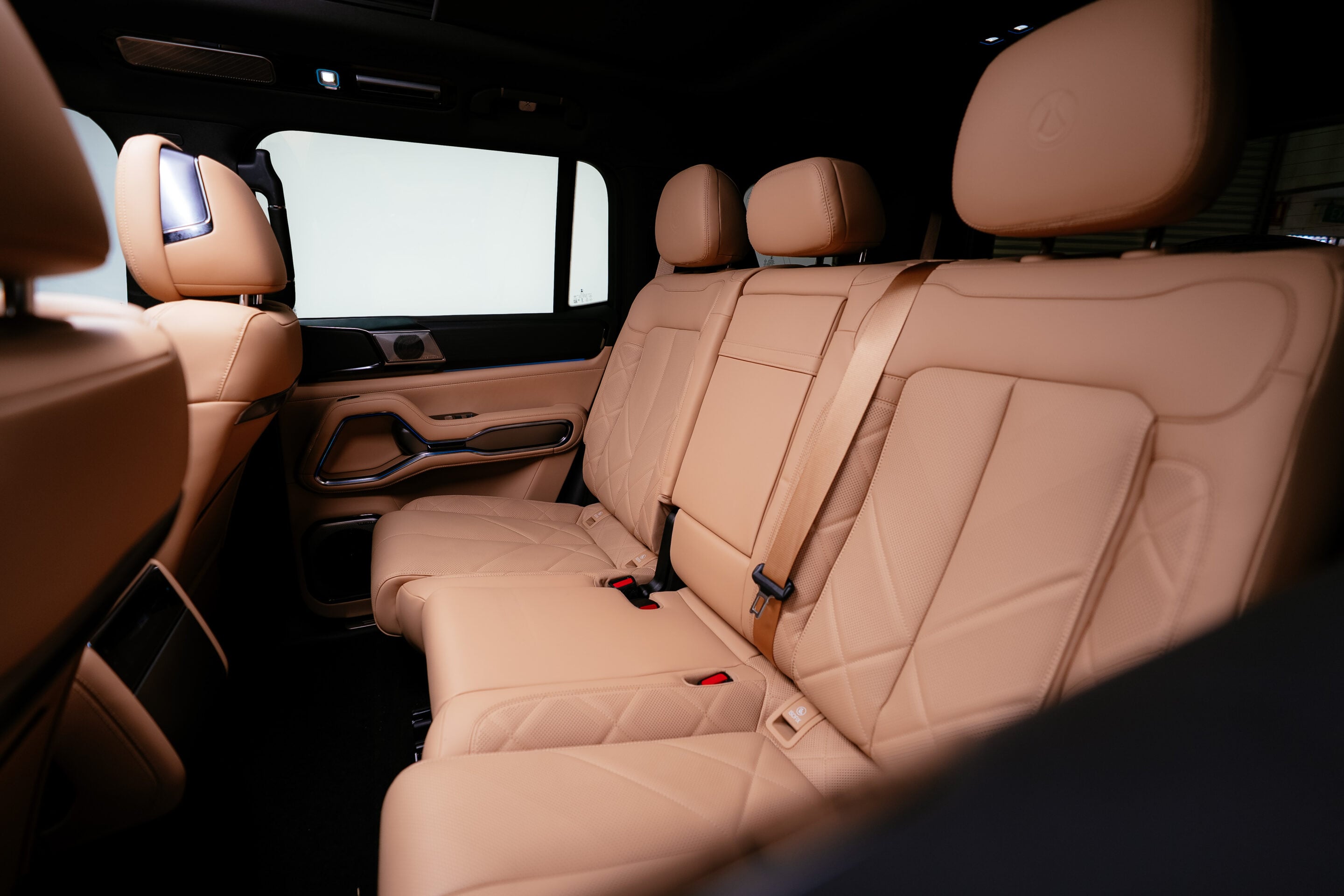
Alongside the vehicles, DENZA is rolling out “House of DENZA”, a network of retail spaces and events designed to support owners and prospective buyers, similar to hospitality-style brand hubs used by other luxury marques.
Early buyers of the B5 will be offered an incentive package: the first 2000 orders include a premium exterior paint and interior trim upgrade, valued at around $1818, at no extra cost.
Pricing
| B5 | $74,990 |
|---|---|
| B5 Leopard | $79,990 |
| B8 – 7 Seat (7S) | $91,000 |
| B8 – 6 Seat (6S) | $97,990 |
BMW Australia’s #NextTech Mentored Apprenticeship Program has been recognised at the Apprenticeship Employment Network (AEN) Apprentice Training Awards, taking out the Group Training Organisation Service Excellence Award. The award highlights the program’s results in a sector facing a persistent shortage of qualified technicians.
Launched in 2021, #NextTech was created to address the growing demand for skilled light-vehicle mechanics and auto electricians, particularly as workshops adapt to hybrid and electric drivetrains. BMW runs the program with group training organisation NextGen Jobs and the Bendigo Kangan Institute Automotive Centre of Excellence, combining formal study with dealership-based experience.
Since inception, 167 light-vehicle apprentices have enrolled nationally. BMW says retention has stayed above 80 per cent, a strong result against a broader industry completion rate around 50 per cent. The first cohort of 37 apprentices has now graduated with dual qualifications in light-vehicle mechanical technology and automotive electrical work.
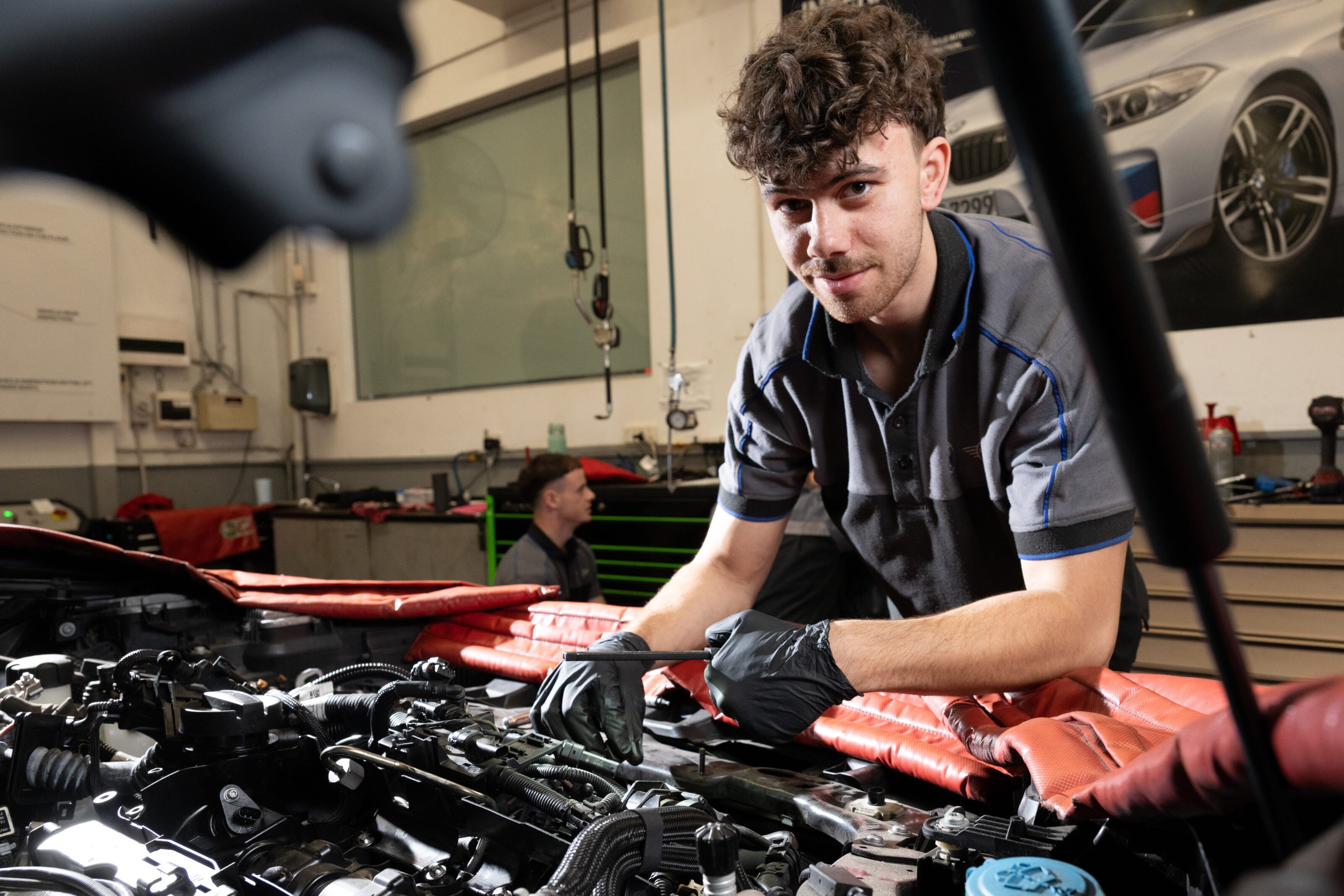
Female participation has also been notable. Women make up 12 per cent of the program’s apprentices, compared with an estimated industry average of about 2.6 per cent in trade roles. Third-year apprentice Sophia Kim, based at Brisbane BMW, said the mix of mechanical and auto-electrical training, plus mentoring inside a dealership environment, helped build confidence in a traditionally male-dominated field.
BMW Group Australia’s aftersales general manager Brett Hocking said the company views the scheme as a practical response to a national technician shortfall, with tens of thousands of roles currently unfilled. He added that apprentices need strong high-voltage and software-diagnostics foundations as electrified vehicles become more common.
The structure of #NextTech is designed to accelerate qualifications. Apprentices complete a Certificate III in Light Vehicle Mechanical Technology within three years while also working toward BMW’s internal Registered Technician certification. Those who continue into a fourth year can add an automotive electrician qualification focused on high-voltage systems, finishing as BMW Certified High Voltage Technicians.
Demand for the program has been high since day one. BMW says its inaugural intake was oversubscribed, with the first vacancy filled within an hour of opening. Graduates such as Al Gonzalez and Travis Taylor credited the program’s workshop immersion and brand-specific training with giving them a clearer pathway into dealership careers compared with standard training routes.
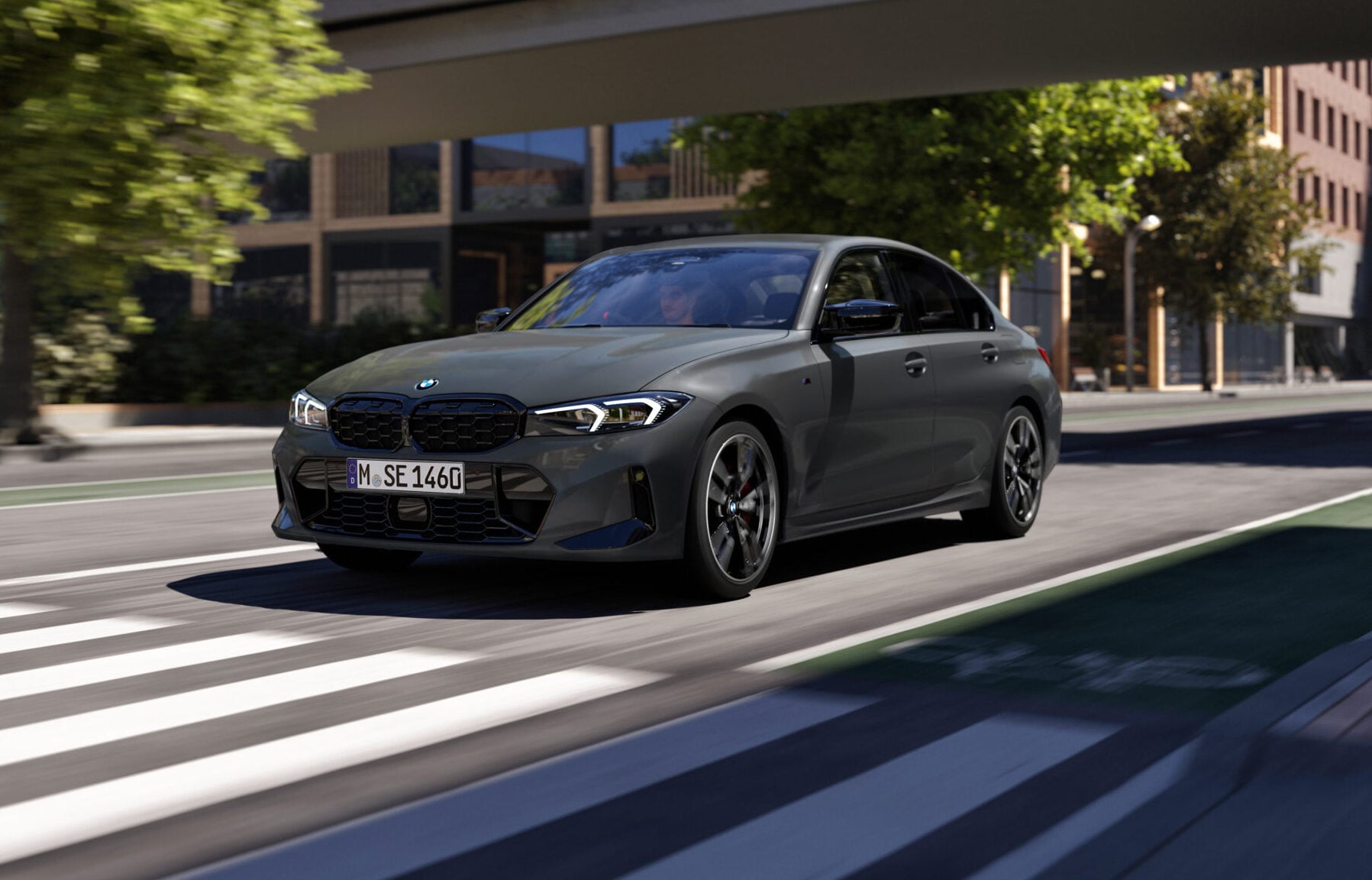
From 2026, BMW will broaden #NextTech to include body-repair and BMW Motorrad (motorcycle) apprenticeships. A new Brand Immersion Scholarship will also send two top apprentices each year to BMW headquarters in Munich for additional training.
NextGen Jobs head Andrew Robson said the expansion reflects the program’s early success and offers a model for tackling skills gaps through closer industry-education partnerships.
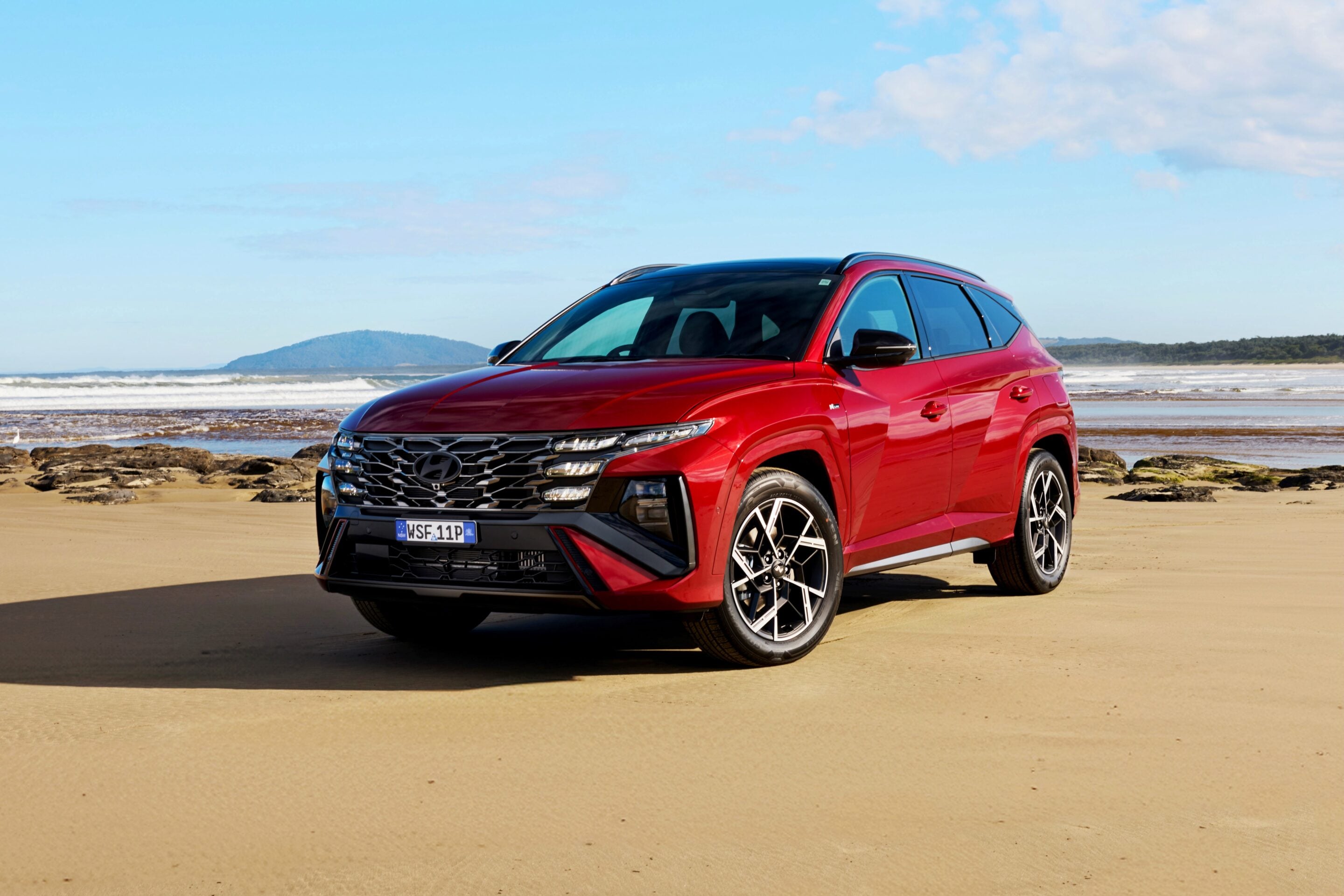
While most of our spec battles at WhichCar by Wheels involve comparison of two rival products in the same segment, it’s also instructive to do one between variants of one popular model to see which suits your needs. With that in mind, if you’re searching for a mid-size SUV, which Hyundai Tucson should you buy?
The Tucson won the Wheels Best Medium SUV 2025 thanks to a variety of factors, including its value, efficient hybrid drivetrain, long list of features, awesome practicality and pleasant driving experience. If that piqued your interest in the Tucson, the question runs to which you should buy: the entry-level or top-spec Premium?
Pricing
2026 Hyundai Tucson pricing (plus on-road costs):
- Tucson 2.0L 2WD: $38,100
- Tucson 1.6T hybrid 2WD: $42,600
- Elite 2.0L 2WD: $43,100
- Elite 1.6T hybrid 2WD: $48,100
- Elite N Line 1.6T hybrid 2WD: $50,600
- Elite 1.6T hybrid AWD: $50,600
- Elite N Line 1.6T hybrid AWD: $53,100
- Premium 1.6T hybrid AWD: $58,100
- Premium N Line 1.6T hybrid AWD: $59,600
| Tucson 2.0L 2WD | Tucson Premium hybrid AWD | |
|---|---|---|
| Starting price | $38,100 plus on-road costs | $58,100 plus on-road costs |
| Premium paint | $750 – $1000 extra | $750 – $1000 extra |
| Warranty | Five-year/unlimited km (+ two extra years if serviced at Hyundai) | Five-year/unlimited km (+ two extra years if serviced at Hyundai) |
| Service intervals | Annually/every 15,000km | Annual/every 15,000km |
| Five-year service cost | $1871 ($374 per year) | $2042 ($408 per year) |
| Roadside assistance | 12 months, extended another 12 months with each dealer service | 12 months, extended another 12 months with each dealer service |
Dimensions
Regardless of model chosen, the Tucson is a decently-sized medium SUV with ample room for at least four people and their luggage. In hybrid form, the Tucson has one of the largest boots in the segment at 582 litres with the seats up and a huge 1903 litres with them folded.
Despite not featuring a battery or rear differential, the petrol drivetrain’s boot is actually 43 litres smaller and that’s because it – almost uniquely in the segment – features a full-size alloy spare wheel versus the hybrid’s space saver.
| Tucson 2.0L 2WD | Tucson Premium hybrid AWD | |
|---|---|---|
| Length | 4640mm | 4640mm |
| Width | 1865mm | 1865mm |
| Height | 14665mm | 1665mm |
| Wheelbase | 2755mm | 2755mm |
| Weight | 1495kg | 1686kg |
| Luggage space | 539/1860 litres | 582/1903 litres |
Equipment
Of course, the more expensive model is bound to feature more standard features than the entry level car. But the Tucson Premium is particularly well equipped in the segment, offering seemingly everything you could ever want in a mid-size SUV. Highlights include leather trim, heated/ventilated front seats, a heated leather steering wheel, dual-zone automatic climate control, 19-inch alloy wheels, a panoramic sunroof and five USB-C chargers with a wireless phone charger as well.
That’s not to say that the base model Tucson is badly equipped, far from it, but it does have less kit as you’d expect for $20,000 less. Instead of leather trim, there’s cloth, smaller wheels, basic reflector LED headlights, manual wipers and no sunroof. But there’s still access to the Bluelink app to remote start the car, electric lumbar adjustment, climate control with rear air vents and five USB-C ports. The Premium justifies its extra spend here, but the base model is still well equipped for its positioning.
| Tucson 2.0L 2WD | Tucson Premium hybrid AWD | |
|---|---|---|
| Wheels | 17-inch alloy with a full-size alloy spare | 19-inch alloy with a space-saver spare |
| Headlights | LED reflector | LED projector with adaptive high beam |
| Wipers | Manual | Rain-sensing automatic |
| Front seat adjustment | Six-way manual driver with electric lumbar adjustment, four-way manual passenger | 10-way electric driver with memory, 8-way electric passenger |
| Upholstery | Cloth | Leather (with heated and ventilated front seats, and heated rear seats) |
| Steering wheel | Leather | Leather (with heating) |
| Push button start | Yes (with remote start) | Yes (with remote start) |
| Climate control | Dual-zone automatic with rear vents | Dual-zone automatic with rear vents |
| In-car charging | 5 x USB-C (front and rear) | 5 x USB-C (front and rear), wireless charger |
| Sunroof | No | Panoramic |
Powertrains
For the 2026 model year, Hyundai Australia is only offering two powertrains in the Tucson range: a naturally aspirated 2.0-litre or a turbocharged 1.6-litre turbo hybrid. While the hybrid is available in each Tucson model, the 2.0-litre petrol engine is limited to the base and mid-spec Elite.
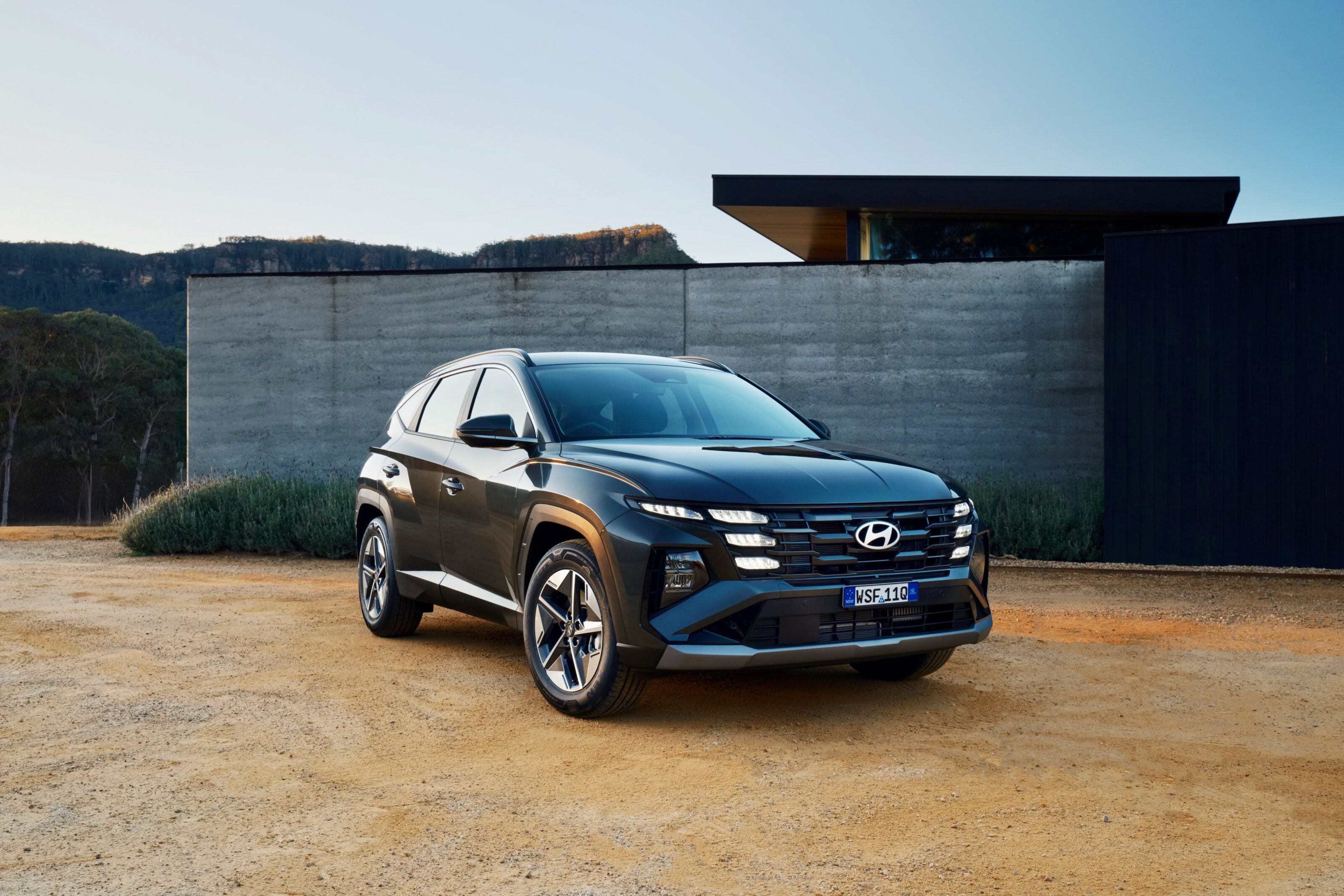
Both use a six-speed automatic transmission as standard, and while the petrol is front-drive only, Elite buyers can choose the hybrid in front- or all-wheel drive and the Premium is all-wheel drive only. Despite pushing out a lot more grunt, the hybrid is also significantly more fuel efficient with a 5.3L/100km claim versus the petrol’s 8.1L/100km claim. The hybrid also emits a lot less: 121g/km versus 184g/km and the benefits of the hybrid drivetrain are so clear, we wonder why Hyundai is offering the petrol engine.
| Tucson 2.0L 2WD | Tucson Premium hybrid AWD | |
|---|---|---|
| Engine | 2.0-litre four-cylinder petrol | 1.6-litre turbocharged four-cylinder hybrid |
| Peak outputs | 115kW/192Nm | 172kW/367Nm |
| Combined fuel consumption | 8.1L/100km | 5.3L/100km |
| Transmission | Six-speed automatic | Six-speed automatic |
| Claimed emissions | 184g/km | 121g/km |
| Fuel type/tank size | 54 litres/91RON regular unleaded | 52 litres/91RON regular unleaded |
Safety
The Tucson range earned a five-star ANCAP rating in 2021 when this generation was released and since then, Hyundai has only added to its standard safety list. Regardless of the model, the Tucson is very well equipped with safety features – kit like AEB, adaptive cruise control, blind-spot monitoring, rear cross-traffic alert, driver attention monitoring, front and rear parking sensors and a reversing camera are standard.
Stepping up to the Premium does add more safety features, but they’re not necessarily must-haves. Above the base Tucson, the Premium adds a blind-spot camera, 360-degree camera, adaptive high beam and automatic low-speed rear braking – all are nice to have, but not exactly necessary when the entry Tucson is otherwise so well equipped on the safety front.
| Safety | Tucson 2.0L 2WD | Tucson Premium hybrid AWD |
|---|---|---|
| Airbags | Seven | Seven |
| Adaptive cruise control | Yes (with stop and go) | Yes (with stop and go and navigation guidance) |
| Autonomous emergency braking | Yes (with car, pedestrian, cyclist, direct oncoming and intersection monitoring) | Yes (with car, pedestrian, cyclist, direct oncoming and intersection monitoring) |
| Lane-keep assist | Yes (with adaptive lane guidance) | Yes (with adaptive lane guidance) |
| Blind-spot monitoring | Yes | Yes (with a camera system) |
| Rear cross-traffic alert | Yes (with braking) | Yes (with braking) |
| Driver attention monitoring | Yes | Yes |
| Parking sensors | Front and rear | Front and rear (with automatic low speed rear braking) |
| Reversing camera | Yes | Yes (360-degree camera) |
| ISOFIX | Outboard rear seats | Outboard rear seats |
Technology
Part of the mid-life update for the current generation Tucson that launched in 2025 was a big interior redesign with a new dashboard layout and new technology. All Tucson models now feature a 12.3-inch touchscreen with wireless Apple CarPlay and Android Auto, as well as AM/FM/DAB+ digital radio, though the base model is not equipped with satellite navigation.
Impressively, all Tucson models are equipped with the company’s ‘Bluelink’ live services with over-the-air updates and remote functionality through a smartphone app. Owners can also unlock, lock and start their Tucson using its remote key feature, which is quite handy. Above that, the Highlander adds a 12.3-inch digital instrument cluster, as well as navigation and a punchy Bose sound system.
| Tucson 2.0L 2WD | Tucson Premium hybrid AWD | |
|---|---|---|
| Driver’s display | 4.0-inch with analogue gauges | 12.3-inch digital |
| Touchscreen | 12.3-inches | 12.3-inches |
| Satellite navigation | No | Yes (with live traffic) |
| Radio | AM/FM/DAB+ | AM/FM/DAB+ |
| Smartphone mirroring | Wireless and wired Apple CarPlay and Android Auto | Wireless and wired Apple CarPlay and Android Auto |
| Sound system | Six-speaker | Bose eight-speaker |
Conclusion: Which Hyundai Tucson should you buy?
Choice is a great thing to have and with the Hyundai Tucson, there’s a pleasing one to make. Unlike some other mid-size SUVs, hybrid power is available in each model so that those with perhaps smaller budgets will still have access to it. Though it is a steep $4500 upgrade, it’s still worth the extra spend because it’s much quicker, more refined and more efficient than the 2.0-litre petrol engine.
As for which model Tucson to buy is dependent on your budget and your needs. Is a panoramic sunroof a need for your next car? If so, the Premium is the only model in the line-up you can buy. Do you need leather upholstery? It’s minimum mid-spec Elite for you. Considering just how much extra equipment the Premium adds, and that it’s standard with the hybrid drivetrain, we think it justifies its $20,000 extra spend. But regardless, the Tucson is great value for money in any spec level and it’s currently the best mid-size SUV on the market.
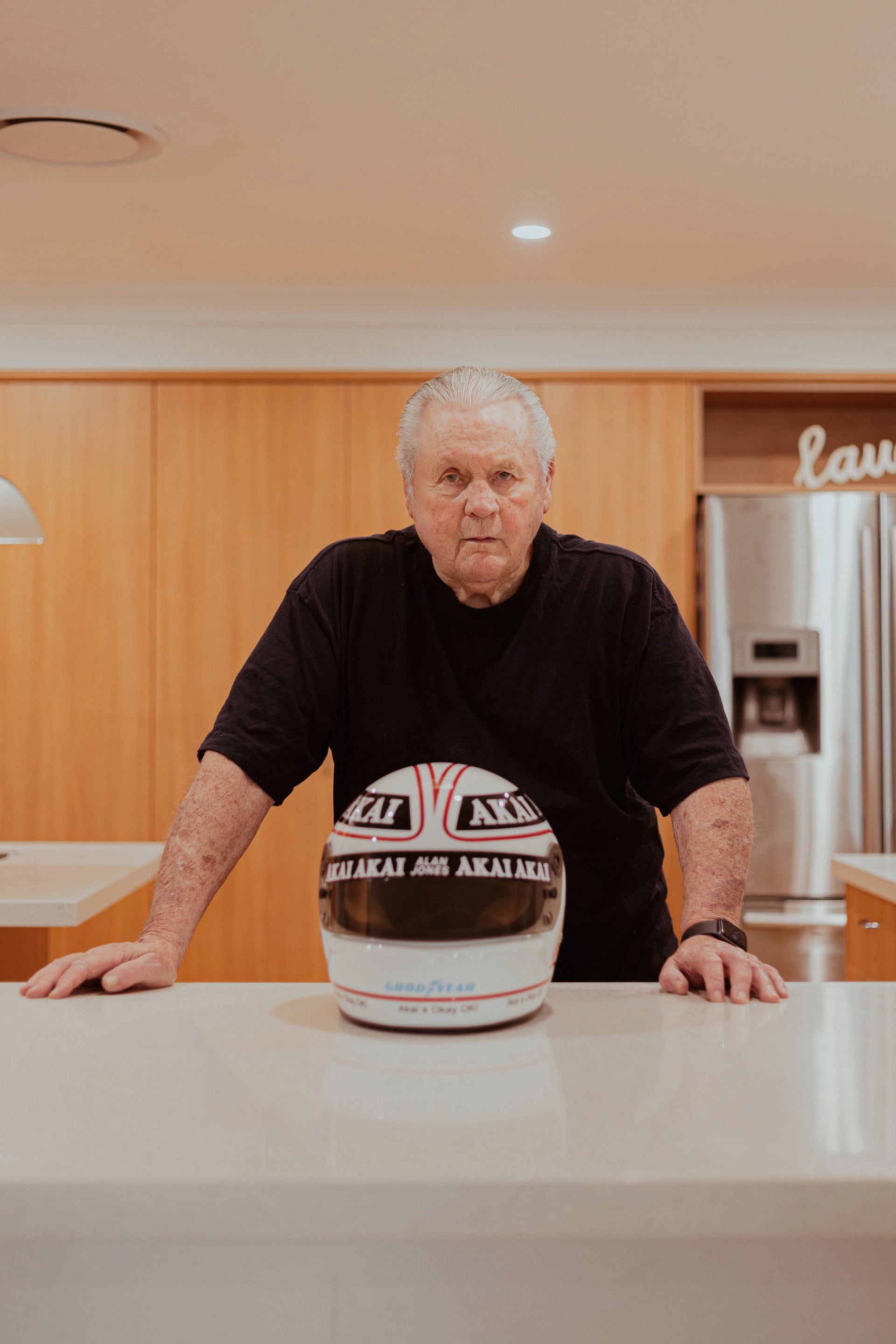
Alan Jones has some typically direct advice for Oscar Piastri.
“He just needs to keep the dickheads away. Not let things get under his skin,” Jones says bluntly.
The 1980 world champion knows the kid is good and confidently predicts he will be a world champion at some stage during his Formula One career. That’s a big vote of confidence from one of the toughest racers to ever strap into a grand prix car.
So, here is some history and context. Jones is brutal and honest. He has no time for BS and, even at 80 years of age, delivers his opinions like a one-two punch in the ring. There were times when he really let his fists do the talking, once in a road-rage confrontation in London and another time when he dropped a belligerent car dealer after the South African Grand Prix. There was also a stoush with a circuit official who tried to stop ‘AJ’ on a race weekend in Australia…
Famously, he worked against his Williams team-mate Carlos Reutemann in the 1981 title decider as payback after the Argentine had ignored team orders earlier in the season and stolen a win from Jones. Nelson Piquet, driving for Brabham, claimed his first world title thanks to Jones and his mind games.
“Reutemann was f***ed in the head and gave up,” Jones recalls, speaking with Wheels at his home on the northern Gold Coast. “I lapped him in that race, which was ridiculous.
“I’m still hated in Argentina to this day. Back then I needed a police escort from the airport to the hotel, and taxi drivers – and even marshalls at the track– were flipping me the bird.”
Many said Jones was even tougher than Australia’s original gritty world champion, Jack Brabham. Sir Jack was known for dropping his car’s back wheels off the track to fire stones at his racing rivals, a trick he learned in dirt-track speedway at home in Sydney. Jones? He was tough. Uncompromising. Driven. Successful.
“I was a pretty aggressive driver. If someone passed me, I took it personally. If they touched me up, that was fine. I’d just tell them ‘I’ve got you in my book for next time’,” Jones said. “If somebody asked how I’d slept I’d tell them like a baby, even if I’d been awake all night worrying about something. Never show weakness, that was my mantra.”
Jones turned 80 shortly after this interview and lives a quiet life with his second wife, Amanda, and their three dogs and a cat. He’s had a tough time after suffering a heart attack this year that has slowed him down but not beaten him. He loves MotoGP racing, monitors the Supercars scene, and tracks Piastri in F1. “What gets me up in the morning is certainly not mowing the lawns,” he laughed.
Jones grew up in a motoring family. His father Stan was a car dealer in Melbourne and won both the Australian and New Zealand grands prix as a driver. But he was never supportive of his son’s ambitions and AJ – with his first wife Beverley – resorted to renting rooms at their home in London and selling second-hand cars to fund his racing.
He scored his big breakthrough in the Austrian Grand Prix in 1977 driving an unfancied Shadow, before being recruited to lead Williams Grand Prix. “I always thought I was good enough,” he remembers. “But Formula One has never been easy. At the end of the day, there have always been 20 million young men around the world who want to put their arse into 20 cars on the grid.
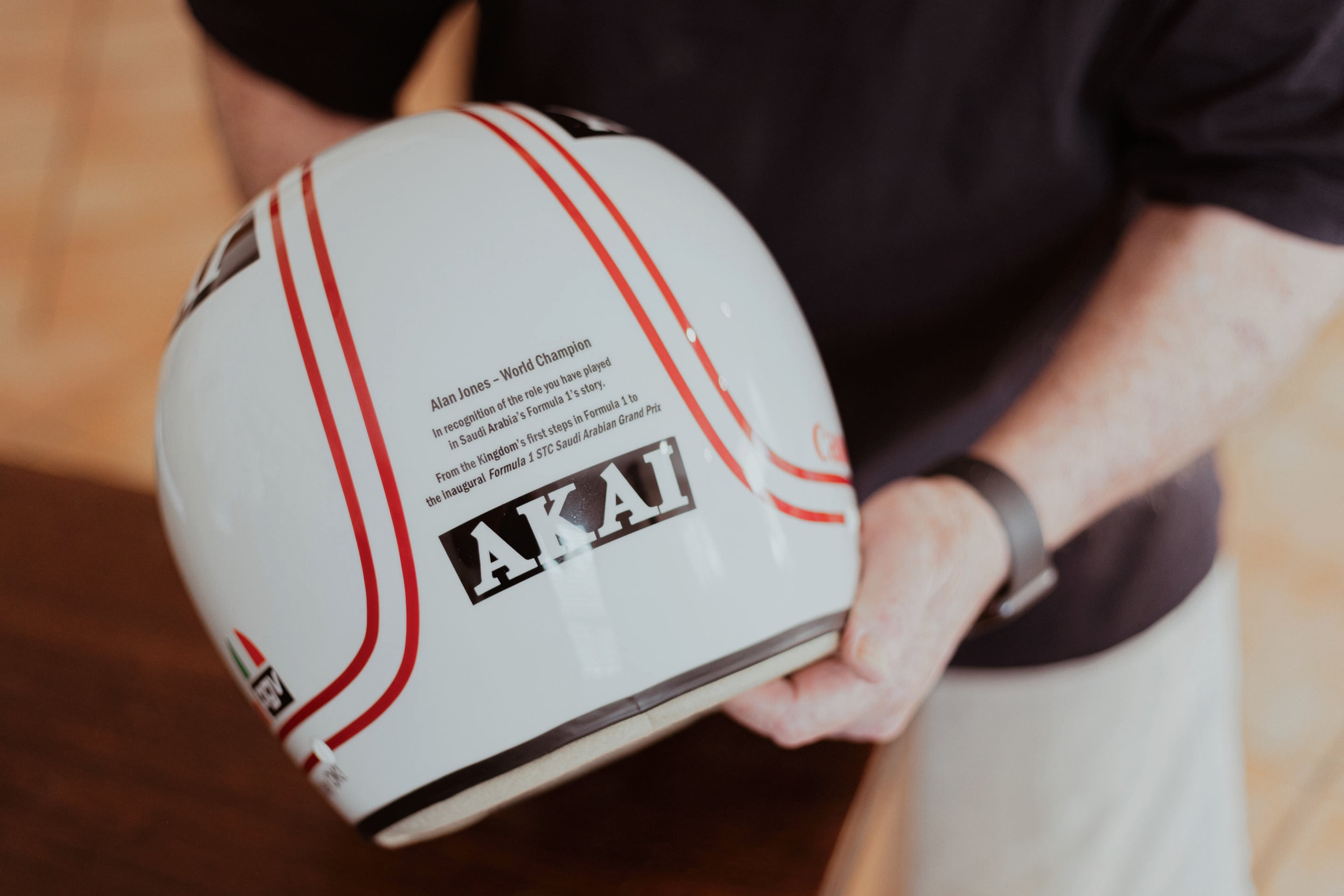
“A lot of it is luck. And the other thing is, when you get to that place, you’ve got to be able to take advantage of it. There are quite a few young buggers with enormous talent who will never be able to show it.”
Jones had already starred in brutally fast V8 Can-Am sports cars in the USA and he loved the challenge of getting the best from the original ground-effects F1 racers, which used inverted wings to suck themselves to the road. He muscled his way to the front, much like Nigel Mansell in a later generation. He took the same approach off the track.
“If you’re a real racer you just want to put your arse in a car and race. All the rest is justification. I hated doing the PR stuff. “If had to go to a dinner, and I was sat next to the MD’s wife, she might ask if I’d had any bad accidents. So I would say ‘There was that time when my left arm was ripped off, but it’s amazing what they can do with micro-surgery.’ I would just have some fun, to get through the meal.”
His view of modern F1, therefore, is no surprise. “I couldn’t stand being in F1 now. I would love the money and the private jets. But not the rest of it, like turning up to the interview pen after the race.
“I don’t want to be one of those ‘in my day’ people, but I’ve lost it with Formula One to a certain degree.
If you saw a gap you went for it. You rubbed wheels. Now there is a bloody inquest, or you get fined 3500 grid positions into the next five races.
“It’s called racing. Now you’ve got to be careful, you can’t do this and you can’t do that. A good old ‘brake test’ to someone behind never hurts.”
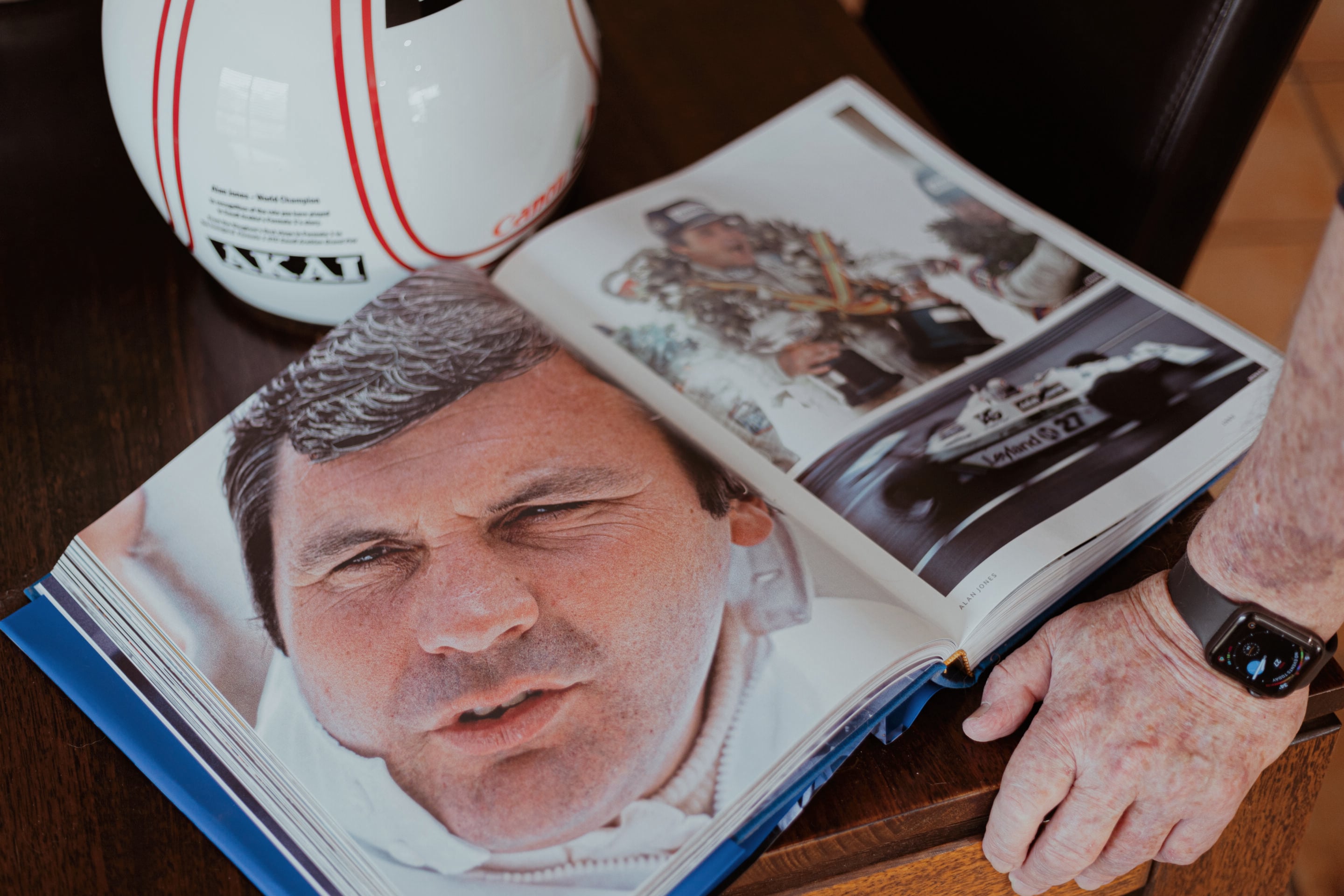
Jones bailed on F1 because he was homesick and frustrated, but he tried two comebacks. The first with the Arrows team was a total disaster, starting from a cockpit that was too small and had him resorting to a hammer to make space. Then came a big-money deal with the Beatrice food conglomerate in the USA, along with a Lola chassis and a Ford V8 engine.
“I’ve always given 110 per cent in my racing and the only thing I ask is 110 back. If the owner or team put in 110, then I would be happy. But the Ford Motor Company were so full of shit. Their engine wouldn’t pull the skin off the proverbial.”
Things were so bad Jones deliberately drove off the road and into an early retirement at the Portuguese Grand Prix in 1985.
“It took me three goes to get the stupid thing bogged. I thought I might hurt myself.”
He had dabbled at home with some touring car racing and, after his full-time return to Australia – there is no time to talk about the failed attempt at farming, or his boat dealership – was a regular through the 1990s in what has become Supercars.
“When I was back in Australia I thought I might as well go and race something. I loved racing the Porsche 935 for Alan Hamilton and won the Australian Championship (with 16 wins from 16 starts). You always enjoy it when you’re winning, but it was a beast of a thing to drive… we had a good team and Alan was a ripper bloke.”
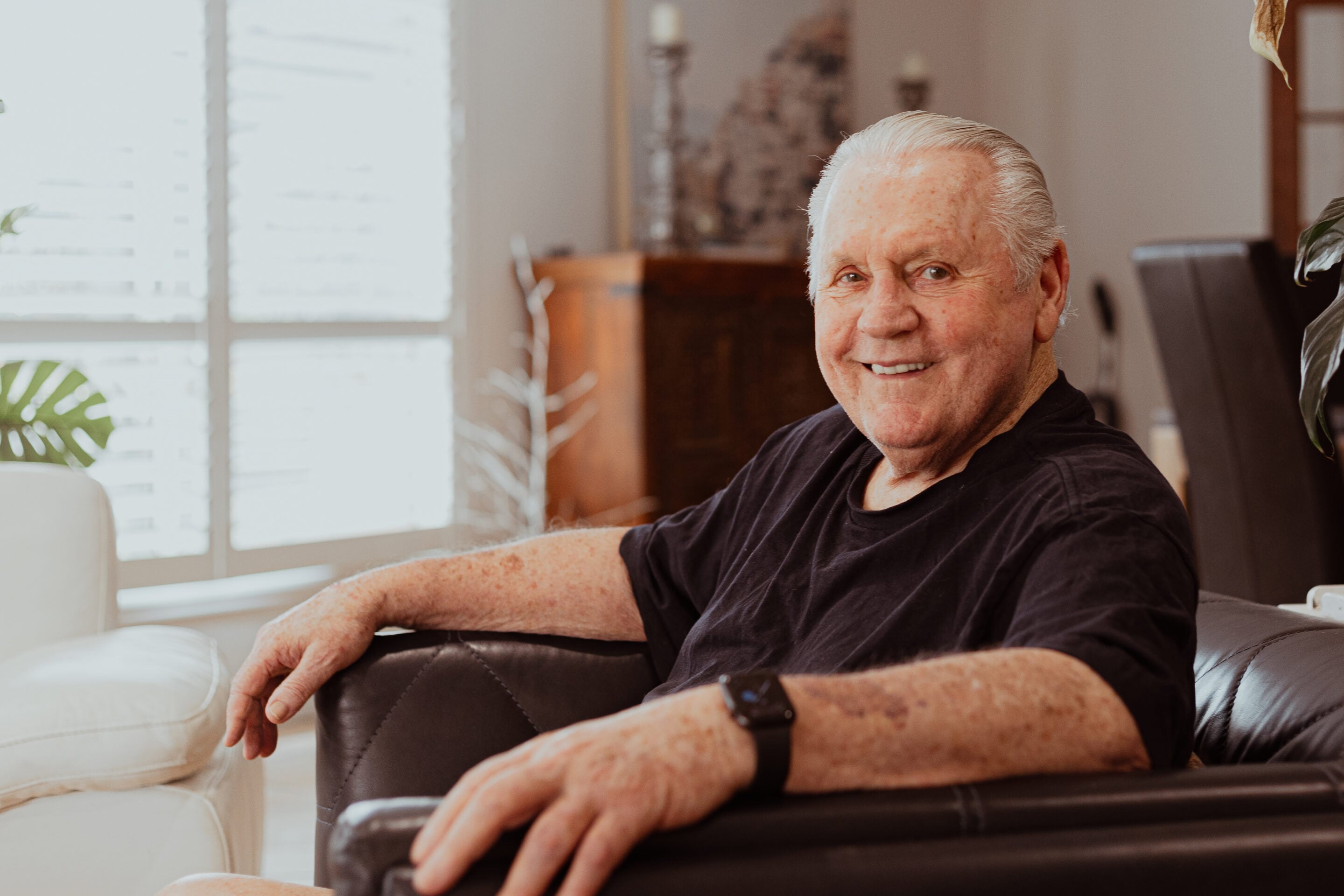
He raced Commodores and Falcons, even a Mazda RX-7, but never threatened the scorers at Bathurst and couldn’t mount a successful touring car campaign.
“It’s amazing the things you forget. At Bathurst in ’94 I was dicing with Brockie in the wet. We were inches away from each other for 15 or 20 laps and it was great. He was clean and never did anything dirty.”
Life on the Gold Coast in 2025 is not great, but Jones is pragmatic and honest. There are no signs of trophies and just a couple of pieces of memorabilia. The real memories are in his head.
“What can you do with trophies? You can’t eat them. Nigel also sold all his trophies. I’ve been very fortunate. I’ve got a very active wife who is very clever with computers. Amanda has given me twins, who keep me on my toes, and Zara is into horses and Jack is mad on his golf. There is also Christian (his adopted son with Beverly). I have a daughter in New York who is a solicitor and another much older daughter in Tasmania, and a couple of grand-daughters. “They are all interesting,” he laughs.
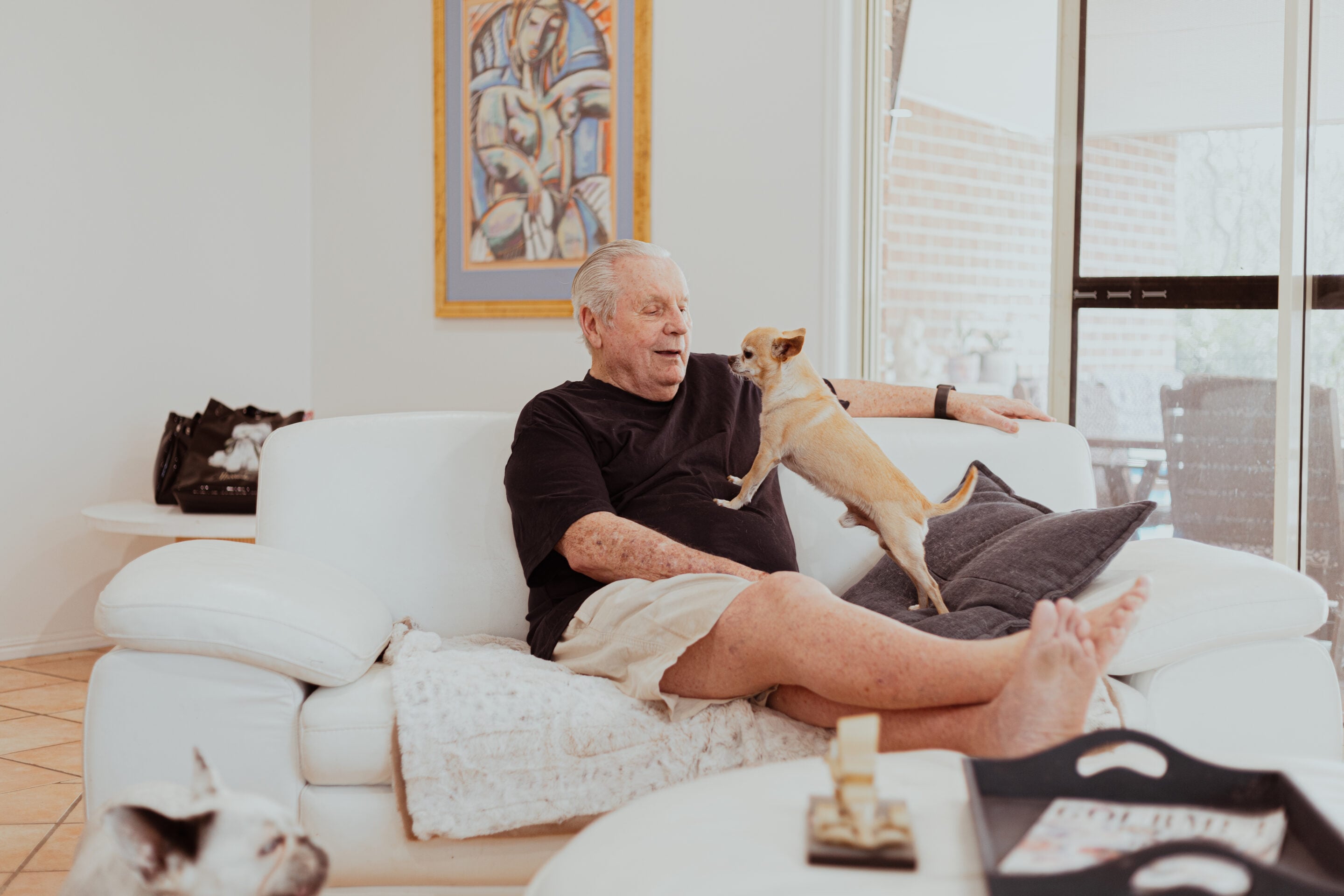
Despite the absence of sentiment and silverware from his career, he is chasing down his F1 trophy – it’s a replica, after the original was sold – after loaning it to Motorsport Australia and nearly losing it.
Asked to reflect, Jones has straightforward views on other Aussies in F1.
“Jack Brabham was a pretty straightforward sort of a bloke. When I first got to England I asked if I could look through the factory, and he said ‘Don’t bring any of your mates’. I like [former Aussie early ’70s F1 driver] Tim Schenken, even if a lot of people don’t. He was a bloody good driver and outside F1, he drove works Ferrari sports after all.
“I don’t have a great deal to do with Mark Webber. He’s nice. I never really rated him at the beginning, but I took Christian to a go-kart race in Canberra a thousand years ago and this kid came up and asked how to get to F1. I probably gave him a smart arse answer, as I would have in those days, and it was him.”
What about Piastri, then, and the battle for the 2025 world championship?
“He’s obviously doing a good job. He keeps cool. He’s fast,” said Jones. “He’s pretty savvy with his handling of the press. When I was ahead in the standings people were already saying ‘Good luck champ’. I used to hate that.”
What then, is Jones’ view of the championship battle. At the time of this interview with Wheels there were still four races of the season still to run, and Jones was optimistic.

“I don’t know what is going to happen. To be honest, I think mentally he (Piastri) is the stronger of the two. I certainly felt that way four or five races ago. But Lando has bounced back. Two or three races ago I would have said Oscar is quicker. But now I think they are on a par. Mentally, if it gets down to the end then I would back Oscar. I think he is stronger.
“But what’s making it really interesting is Max Verstappen coming back. I think he’s stronger than the two of them put together.”
Even so, no matter where the title goes for 2025, Jones says it’s not even close to over for Oscar Piastri. “Really, it’s only his second year, and he is only 24. With the talent he’s got there will be people chasing him. They all wouldn’t mind having him in their team.
“I think he will have other chances. But he should go for it anyway. Then again, if I say ‘Go for it now’ then what has he been doing up to now?”
The article originally appeared in the December 2025 issue of Wheels. Subscribe here and gain access to 12 issues for $109 plus online access to every Wheels issue since 1953.
Australia is changing, and probably faster than we think. In fact, it’s about to get one hell of a hurry-up as these two former staples of our daily life – the Ford Falcon and Holden Commodore – cease to exist in their current form. In the Holden’s case, it’ll morph into a large German-built, front- or all-wheel drive hatchback or wagon, still wearing the Commodore nameplate, but the big Ford will soon disappear into an uncaring world hell-bent on championing SUVs.
For the bread-and-butter stuff, that’s no huge deal. A Mondeo Ambiente is better than a boggo Falcon at carting people around in quiet, efficient, luxurious comfort, underpinned by a Ford of Europe chassis brimming with sophisticated spirit. But at the other end, replacing high-performance rear-drive Falcon and Commodore variants is going to be nigh on impossible. Which, tissues please, brings us to this – the last-ever Wheels Falcon versus Commodore comparo.
Guaranteed some of you will be thrilled to bits, cultural cringe in full bloom, relieved that other products may soon dominate the cover. But not us. Not when Ford’s final Sprint-badged XR6 Turbo and XR8 are bowing out boasting best-ever acceleration and finest-ever handling talent, and Holden’s excellent SS-V Redline is re-writing the global rulebook for value-for-money performance and dynamic ability. So it’s not just with a heavy heart that we’re farewelling Australia’s fiercest and longest-running rivalry; it’s with a legitimate cause for celebration because these rear-drive brutes have never been better.
Or faster. While FPV’s last-ever car – the 351kW GT-F – was a smidge perkier than today’s 345kW XR8 Sprint, the difference is so insignificant as to be virtually redundant. On a perfect surface at the You Yangs speed bowl in 2014, we clocked 0-100km/h in 4.68sec for the GT-F automatic and a 12.68sec standing 400m number at 186.7km/h. Yet here we have the same Smoke Grey XR8 auto that struggled to get its power down at Sydney Dragway a month ago managing to rip through the same increments in record time for this test. And that’s despite its launch control having gone to a long Friday lunch, never to return.
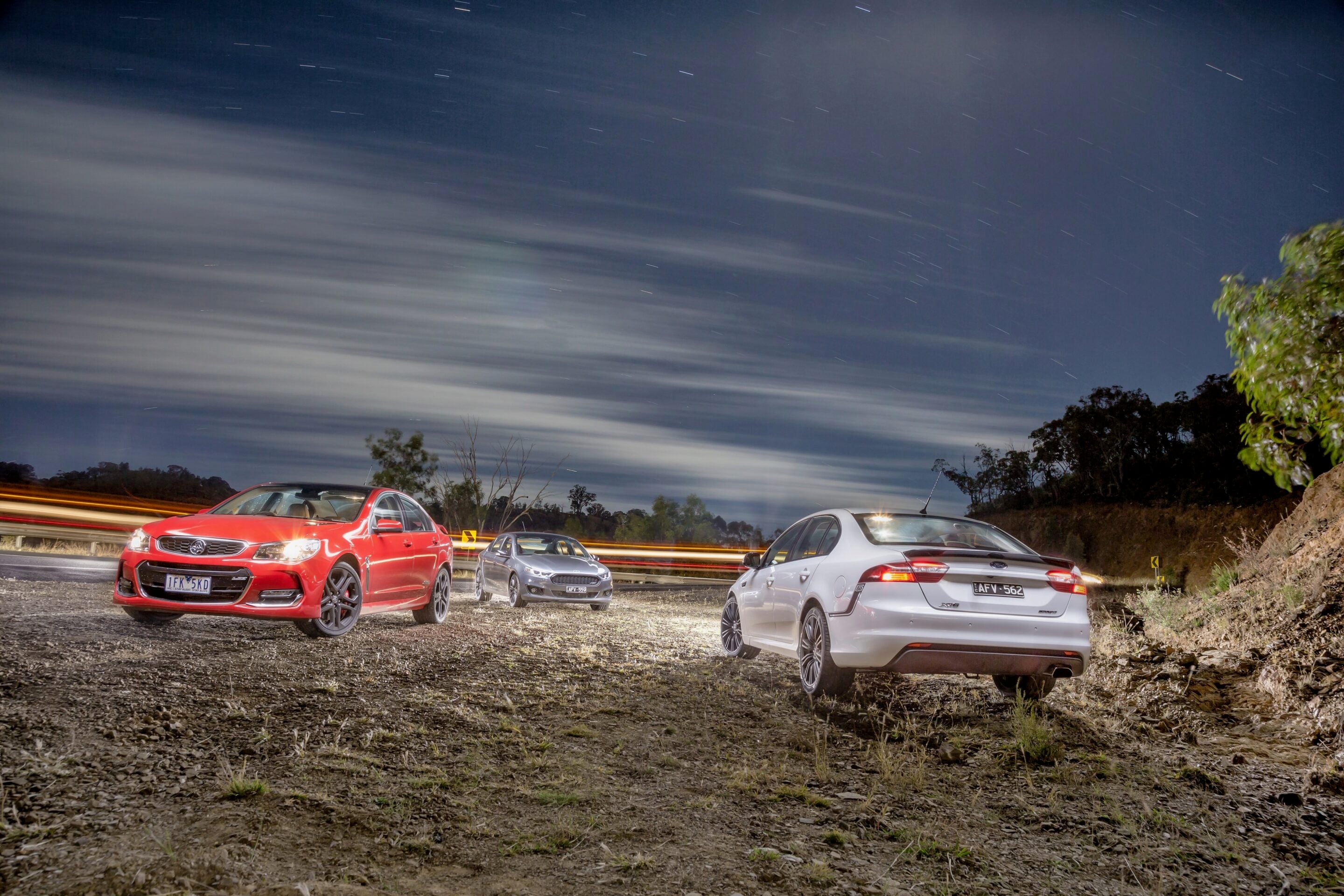
Using a man-made launch technique of giving a touch of throttle while being held on the brake, then squeezing on the power as the XR8 produced the perfect amount of wheelspin from its 265/35ZR19 rear Pirelli P Zeros, that very same XR8 auto nailed 100km/h in 4.78sec and the 400m marker in 12.72sec at 186.8km/h. And it felt fast too, revving out cleanly in its first two gears but feeling particularly buxom at the upper end of its speed dial, nailing 0-220km/h two seconds faster than its Aussie teammates. All to the tune of subtle blower whine and a crackling exhaust blurting at each upshift.
Interestingly, the mega-boosted six-pack Falcon couldn’t beat its V8 stablemate. With launch control at full fitness, the 325kW XR6 is pretty much neck and neck with the XR8 until 70km/h, when the eight begins to assert its dominance. Even at 100km/h, the XR6 is still only eight-tenths behind (at 4.84sec) but the 400m time tells the true story, registering 12.93sec at 181.5km/h.
And there’s something about the turbo six’s power delivery that never feels as natural. It won’t rev as freely as the blown V8, as if its ECU is trying to dial back boost pressure – even with 370kW available when overboost is cranking – and it doesn’t sound as characterful either, unless you prefer a whooshy soundtrack. Yet it remains super-strong and beautifully smooth, overlaid with lush exhaust blurting on upshifts, and some turbo whistle for good measure. And there’s always its 80-120km/h time to fall back on – just 2.5sec, identical to the XR8’s.
Holden’s strident 304kW V8 Commodore mightn’t have the on-paper muscularity of the Fords, or their rolling start ferocity – clocking 80-120km/h in 3.0sec – but it’s an extremely faithful and consistently strong performer. Off-the-line purchase is much less of a black art and it’s actually the fastest car here to 50km/h (by one tenth over both XRs), but thereafter it gradually concedes ground to the XR8. Yet who can seriously argue with 4.93sec to 100km/h and a 13.07sec quarter from a $55K automatic sedan?
And if you could hear it, no one would complain about the way today’s VF Series II V8 sounds. I began my Wheels career driving Gen III-engined VTIIs and VXs that were relatively weak at the bottom end and way too quiet everywhere, which is something you could never say about this LS3. Right foot flat, it trumpets a bent-eight bellow into the cabin while thrilling bystanders and passengers alike with its fruity, crackle-laden quad-exhaust note. And every time you back off the throttle, there’s a hint of overrun crackle too. GM will need to perform some serious R&D surgery on this engine’s V6 successor if it’s ever going to get close to this.
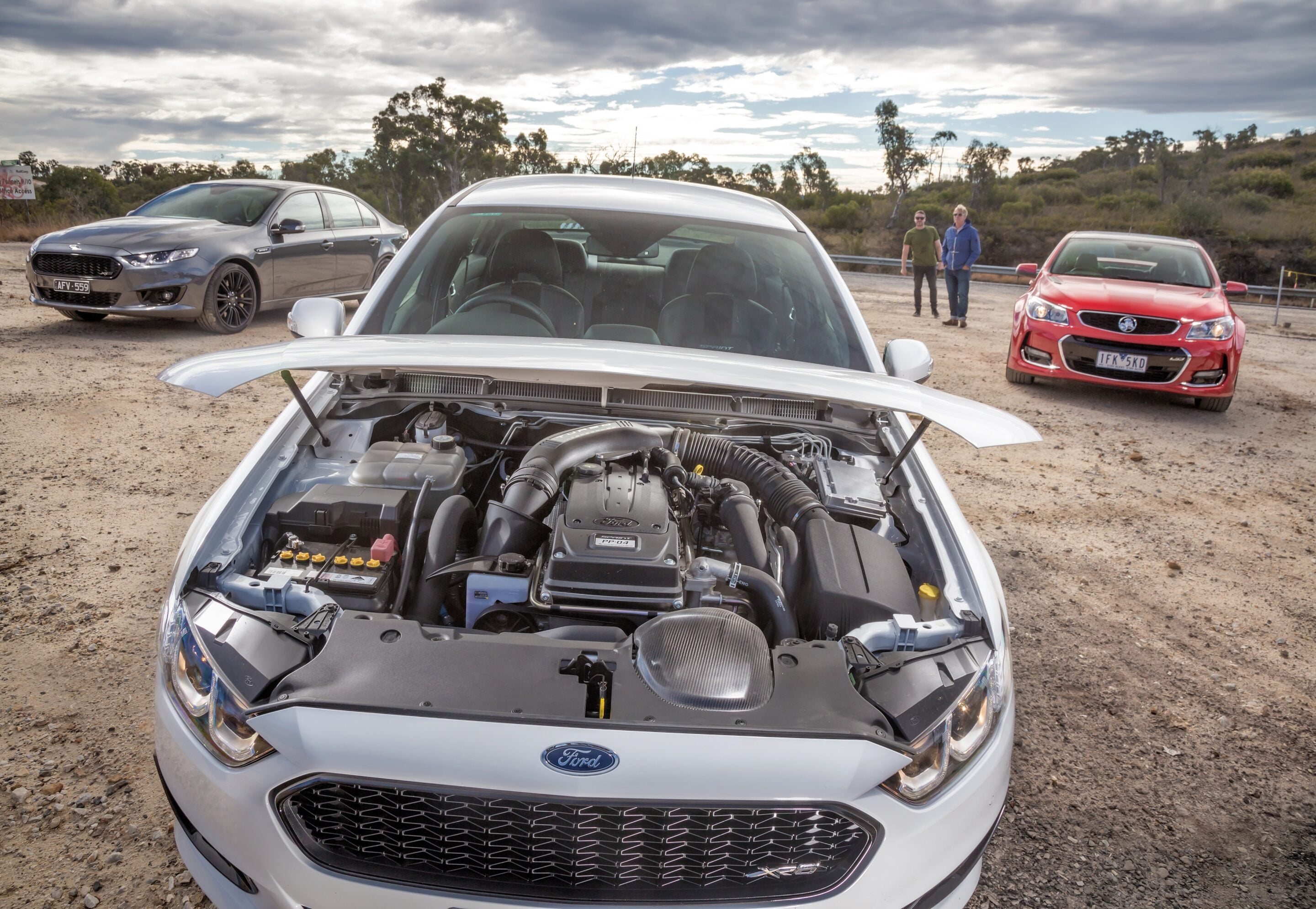
Given the XR6 Sprint’s auto-only status, we chose automatic versions of the XR8 Sprint and SS-V Redline for this test. All are six-speeders that have since been retired in other markets – long ago in the case of the German-made ZF auto fitted to up-spec Falcons since 2005’s BF update.
Back then, the ZF shared its posh credentials with high-end Euros like the Audi A8 and Jaguar’s XJ and XK, but they upgraded to eight ratios long ago, leaving the Aussie Fords with a smooth, yet ageing transmission that neither matches revs on downshifts or offers flappy paddles.
The Commodore, too, relies on GM’s decade-old 6L80E six-speed auto that debuted on VE. But it has received several refinements over the years, included a significant recalibration and downshift rev-matching to coincide with the VE Ute intro in 2007, and, finally, steering-wheel paddles on VFII in 2015. Because of these improvements, it’s a more versatile ’box than the ZF, and a more cohesive match to the LS3 V8, with a more effective ratio spread, particularly for track work or really tight roads.
The forced-induction Falcons are significantly taller-geared than the atmo Commodore, but with a rev ceiling of 6700rpm versus 6250rpm, the Holden can stretch its shorter legs further to almost match the Fords’ speed in first gear. Cut-out in second will see 123km/h in the Fords and only 110 in the Holden (or just 99km/h at the 6000rpm redline, hence its half-second deficit in rolling start acceleration), while third gear will stretch to a leggy 190km/h in the Fords and 170 in the Holden.
But it’s cruising in top that defines the difference between the two. The Fords are geared for 66.9km/h per 1000rpm compared to 58.1, enabling greater use of their torque reserves when devouring country roads … providing you aren’t relying on cruise control.
Where the Commodore’s cruise will kick down a gear, and sometimes two, to maintain speed, filling its cabin with induction richness, the test Falcons – particularly the XR8 Sprint – struggled to fulfil the brief. Too much speed would wash off before the electronic throttle would open the gas, but in the XR8’s case, a really steep hill would result in hunting between fifth and sixth, and a drop in pace to as low as 85km/h.
If you interfered and accelerated back up to 110 or so, the cruise would pick up where it left off, but it didn’t make for relaxed highway motoring. And this isn’t an isolated incident. The standard XR8 auto we drove from Melbourne to Bathurst back in late-2014 did exactly the same thing…
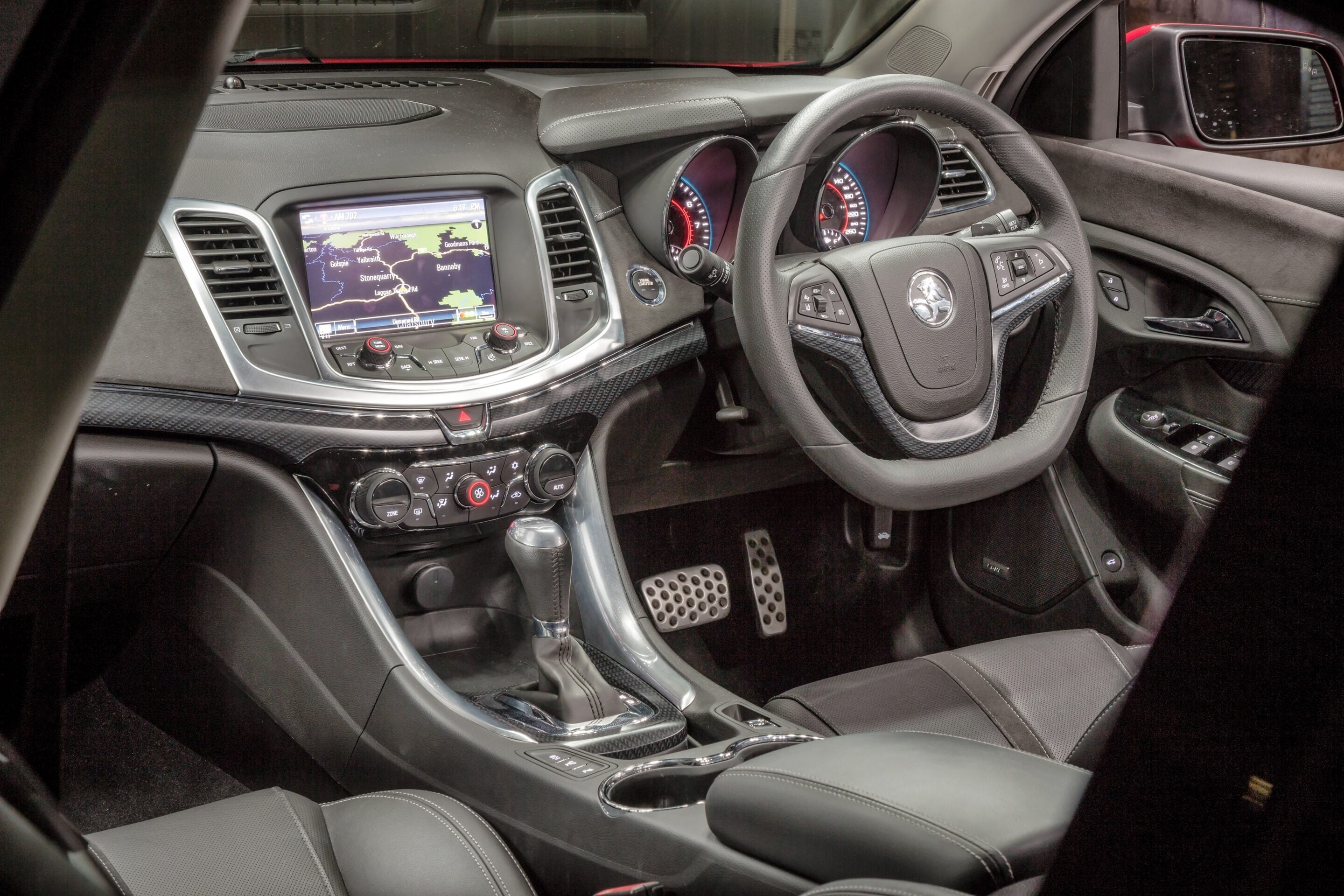
Whether this affected fuel consumption or not is anyone’s guess, but there’s no escaping the Falcons’ greater kerb weight – 1818kg for the XR6 and 1872kg for the XR8 auto versus 1803kg for the SS-V Redline auto – though all of them are built like brick outhouses. And given the performance on offer, their economy is bloody good. The SS-V Redline pipped the XR6 by a tiny margin (13.57L/100km against 13.58!) over more than 1000km, with the XR8 not far behind at 14.26L/100km.
Three litres of additional tank capacity gives the Commodore a greater range, though the Falcon offers a larger 535-litre boot with a handy centre indent to stop cargo sliding around, and a proper split/fold rear backrest compared to the Holden’s broad ski-port with built-in cupholders. But did you know that this very ski-port originated in a Falcon? It was one of the ‘new’ features on the 1984 XF…
Where the Commodore has truly had the upper hand in recent years is chassis dynamics. While the sweet spot in the Falcon line-up has long been the atmo XR6, the Commodore has traditionally shone brightest in its most powerful V8 form, and that still applies to the VF Series II. It’ll be no secret to Wheels readers that in areas like driving position, front-seat comfort, mid-corner grip and corner-exit power-down, the Commodore offers solutions to the Falcon’s compromises. But Ford’s comprehensive rethink of the Sprint’s underpinnings has definitely closed the gap.
The biggest surprise, however, is that the XR8 is more polished than the XR6. While feedback from the Sprint media launch on snaking Tasmanian roads nominated the XR6 as the pick of the bunch, the reality in the real world is actually the opposite.
Indeed, it’s only on really twisty roads that the XR6 clearly holds a dynamic edge. And it’s all down to its lighter nose. Where the XR8 can wash wide if your cornering approach lacks patience and placement, the XR6’s affinity with nailing tight corner apexes is stronger, and it tucks in tighter until its rear end inevitably lets go.
While the turbo six feels more on its toes in corners, with excellent balance, it suffers from a nervousness that isn’t there in its more planted, less boosty V8 sibling. Its poise on corner exit, however, is dependent entirely on the condition of its 265/35R19 rear Pirellis and the efficacy of its ESC, rather than the inherent purchase of Ford’s ‘Control Blade’ rear end.
Slightly worn tyres and stability control switched off results in an oversteer arc perfectly in tune with the XR6’s ballsy engine ramping up boost. But it does this vigorously, without the desired throttle progression, making an enthusiastic strafe without an electronic safety net all about oversteer minimisation.
Leave ESC on, however, and the XR6 Sprint keeps it together when pushing hard, with much less electronic intrusion than a non-Sprint XR due to its greater dynamic finesse. But you still need to be considered with steering inputs because the XR6 is very keen to change direction. Perhaps too keen.
In terms of flat-knacker precision and placement, the XR8 Sprint isn’t quite the six’s equal, but that’s arguably a good thing. Its chassis feels more settled, its power delivery is more progressive, and its steering is meatier, making it an easier car to live with.
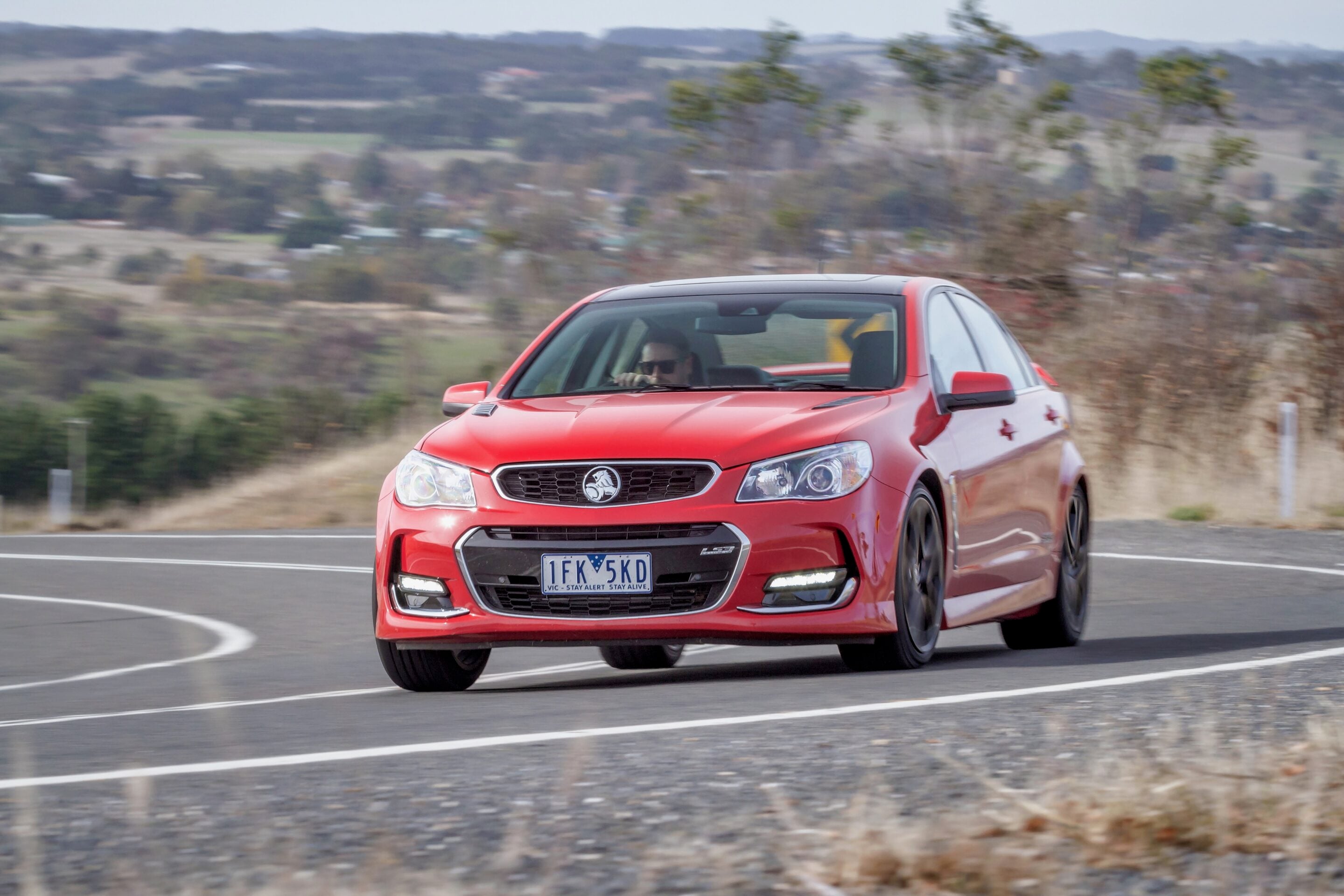
There’s a cohesion to the XR8’s dynamics that the XR6 somehow lacks. Even though it concedes ultimate change-of-direction agility, it loves being hustled on faster roads and actually comes alive the harder you drive it. Chuck it really hard into a corner and you can feel the additional weight up front, but it’s so easy to neutralise with a squeeze of throttle. And it keeps getting better the more time you spend with it.
But it’s the SS-V Redline that again takes the ‘driver’s car’ gong. Not only does its engine sound gloriously boisterous when you’re up it, the atmo V8’s more progressive grunt delivery means you can give the Commodore the full boot out of corners much earlier, without the threat of snagging its ESC system – incorporating a unique Competition mode that allows greater slip angles – and impeding its fluency.
The SS-V Redline has more to give through a corner too. Its chassis is more faithful and chuckable than the Blue Oval duo’s, with higher grip limits, more consistent balance and an encouraging nature that goads you to drive it harder. It’s more of a young person’s V8, if you will, and yet it’s also smoother riding, more luxurious and much quieter, with a more expensive feel and next-level comfort.
Inexplicably, the XR8 has a much more fluid ride than the jiggly XR6. It feels more relaxed at all speeds, regardless of the load on board, whereas even carrying four adults, the knobbly XR6 never quite settles. And then there’s the XR8’s additional steering meat we mentioned before, which seems to gel better with its suspension tune. Faced with a big-distance bash, we know which one we’d choose.
Right about now I should probably be talking about interiors, and which car has the best seats, the better stereo and all that comparo gumpf, but none of that really matters anymore. Not when this is the end of the line for both Falcons, both of which sold out almost immediately. There’s probably a regular XR8 still hovering about in a dealership somewhere, not to mention an XR6 Turbo or G6E Turbo, but it’s the Sprints that will always be certified as the last, and the best.
Of the two, it’s no surprise by now that we prefer the eight over the six. While the XR6 has its moments, the greater polish of the XR8 wins out for us. Its delicious engine and exhaust backing track, mixed with an overlay of blower whine, is utterly addictive – more so than the turbo six’s whistle – and that great big bonnet bulge up front gives it more presence too. But the smaller build number of the XR6 (500 units for Oz, compared to 750 for the XR8), and its well-liked sticker pack, means there’s a strong chance it’ll be the one to hold onto in the future.
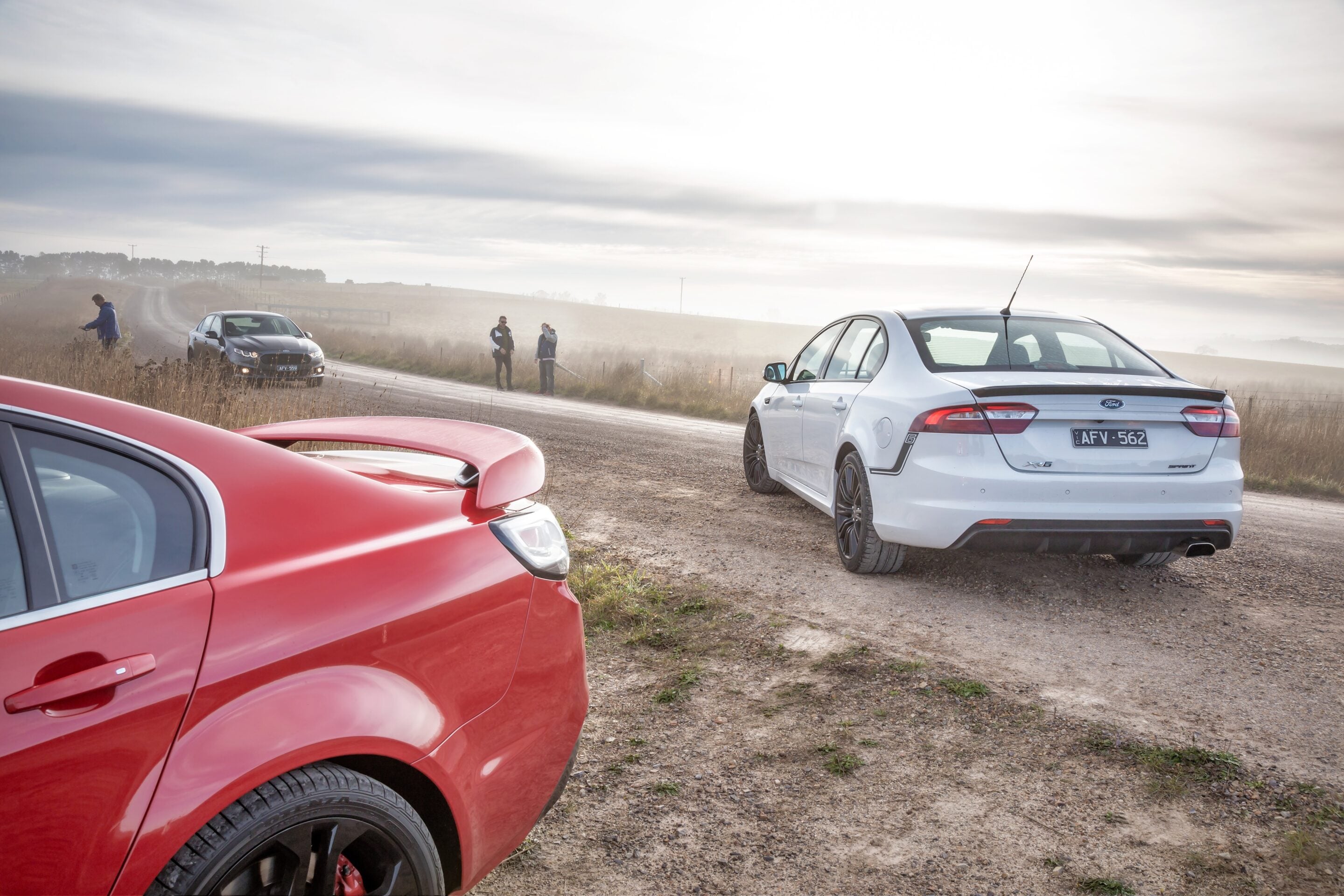
It’s hard to believe it was only 10 years ago that Holden spent a billion Aussie dollars developing the all-new, Zeta-platformed VE, intended at the time to underpin a vast swathe of global GM products that never ultimately eventuated. But if the byproduct of that engineering thoroughness is the bank-vault solidity of our 13,500km-old test Redline – one that has surely been ‘run-in’ with great enthusiasm by the media – then every cent was money well-spent.
Indeed, if the legacy of the Australian auto industry is the VFII Commodore SS-V Redline, then what a way to go out. It’ll be an incredibly hard act to follow when performance versions of the next Opel Insignia replace it, but I bet the Aussies working on the project are fighting hard for something at least as good as this. Holden’s most complete performance car ever. As for the similarly superb SS-V Redline ute, well, there’s still more than 12 months left in the tank to snap one up. And then crickets…
Ford versus Holden, blue versus red, XR battles SS, Broadmeadows or Fishermens Bend. In a generation or so, there’s a strong chance the young-uns won’t even know how political the rivalry used to be, and probably won’t care either. But given the depth of our love for hot-blooded Aussie sedans, what you see on these pages isn’t about to be cotton-woolled away for eternity. Not when it’s all about the driving.
Kia has already rolled out a steady stream of new models and concepts in 2025, but it’s squeezed in one more curtain call before the year ends: the Vision Meta Turismo concept.
Revealed as part of Kia’s 80th anniversary showcase, the Vision Meta Turismo made its debut at an exhibition inside the brand’s “Vision Square” learning centre in Yongin, South Korea. The car had only been hinted at days earlier, but the full reveal offers a clear pointer to where Kia’s design team wants to take its next wave of electric cars.
The Vision Meta Turismo is an all-electric four-door sedan – a body style Kia hasn’t really played with since the Stinger bowed out in 2023. Kia isn’t directly pitching this concept as a Stinger replacement, but the Stinger was featured prominently in the exhibition’s “Identity” section. That feels like a quiet acknowledgement that the brand still sees a future for sleek, driver-focused saloons, even as SUVs dominate sales charts.
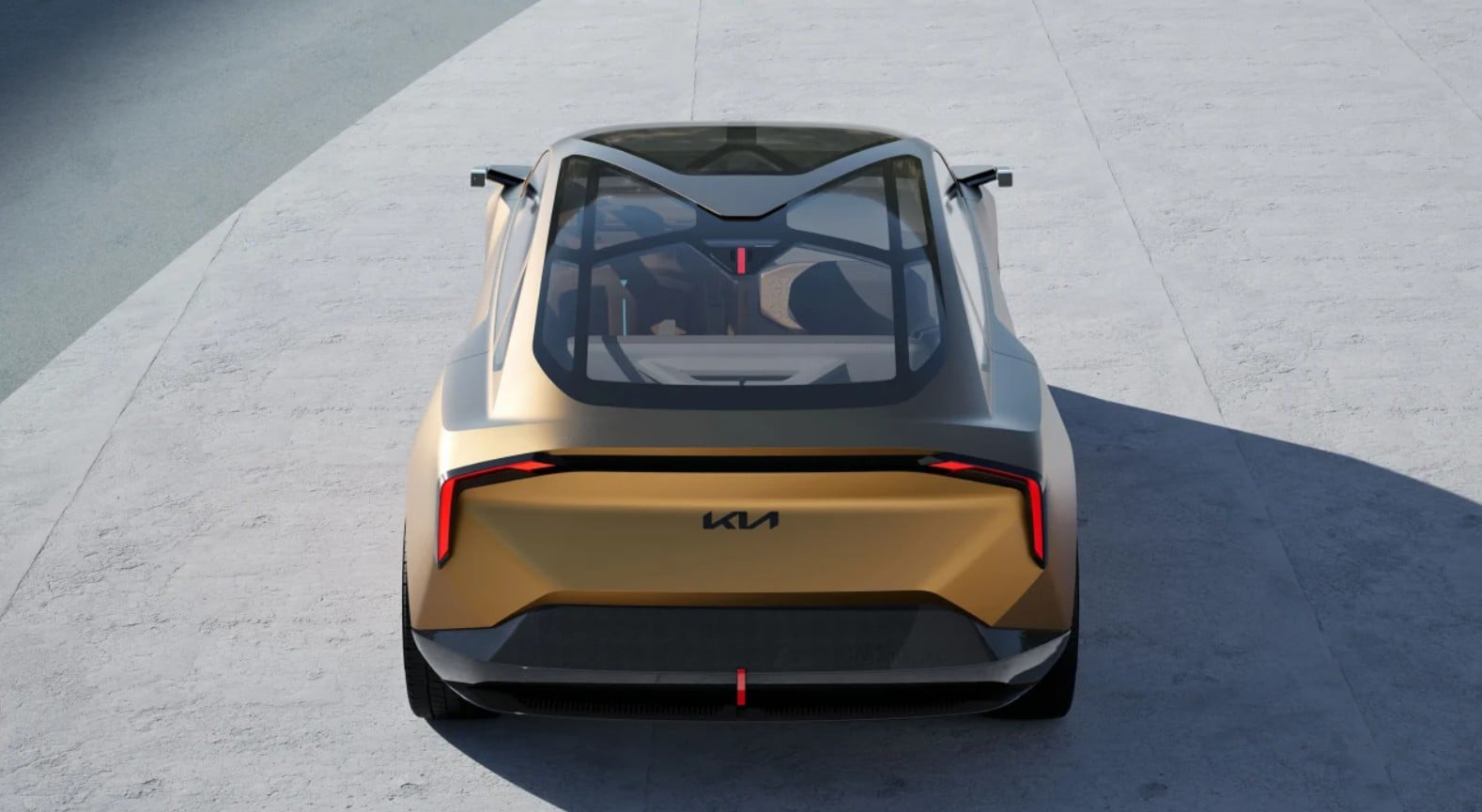
Kia hasn’t confirmed whether the Vision Meta Turismo is production-bound, but it hasn’t ruled it out either. The company says the concept is intended to preview its next phase of mobility and design. Where it could sit in the lineup is still unclear. Kia has already introduced the EV4 and EV5 this year, while the EV7 and EV8 nameplates remain unused – leaving room for this concept to foreshadow a new flagship sedan in that gap.
Stylistically, a road-ready version would bring a fresh silhouette to Kia’s EV family, but it’s not a total break from the brand’s current look. The car carries the same “Opposites United” cues seen on other recent EVs, just stretched into a lower, longer shape. Up front, the familiar “Star Map” lighting signature is there, though the headlamps sit unusually high on the bonnet line. At the back, slim horizontal LED elements mirror what Kia has used on the EV3, EV5 and EV9, giving the concept a clear family link despite its different proportions.
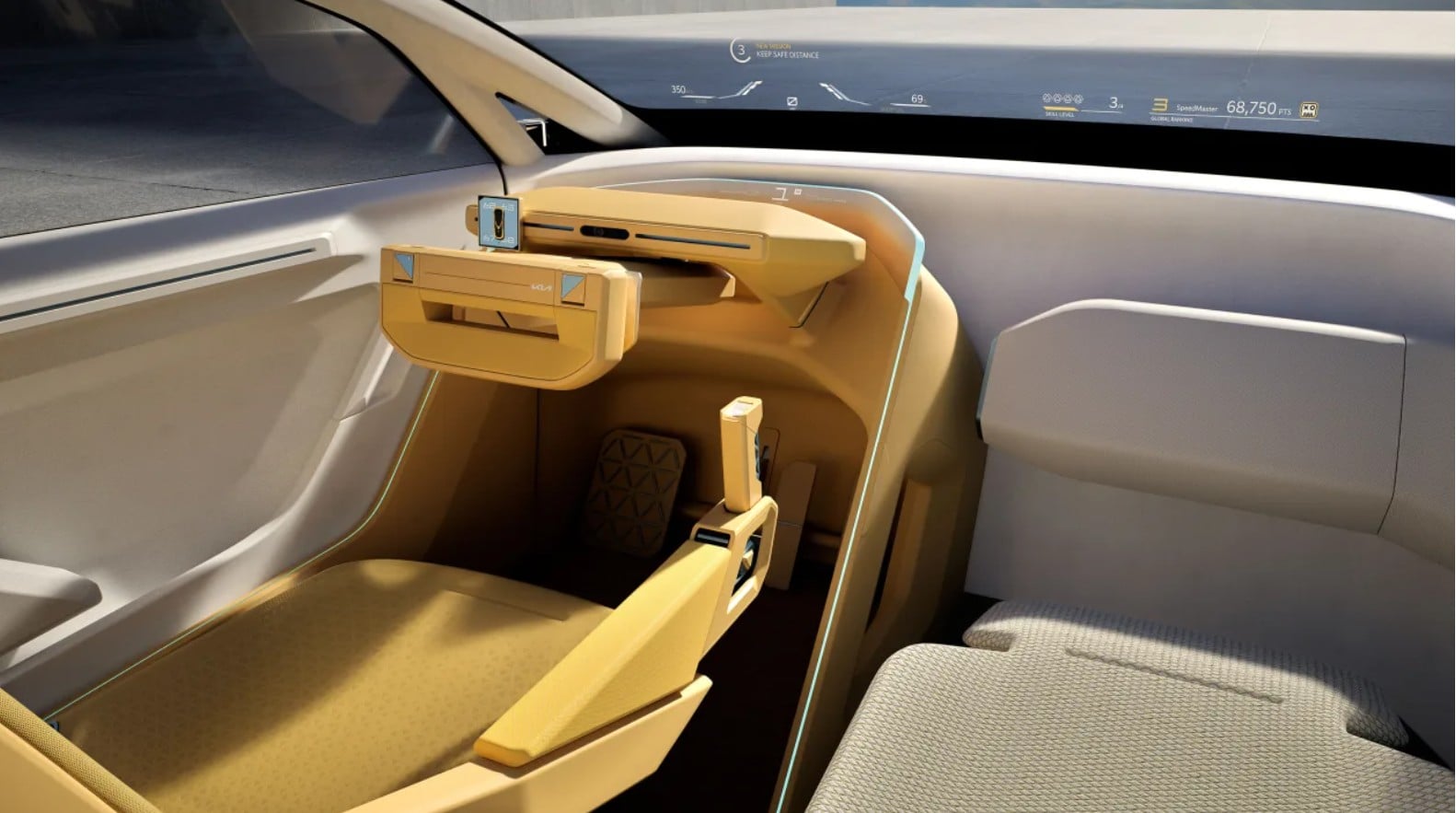
Kia describes the Vision Meta Turismo around three themes: performance driving, a digitally “immersive” cockpit, and an interior meant to feel more like a lounge than a traditional cabin. The inside certainly leans into that brief. The driver’s position gets a unique bucket-style seat, paired with a yoke-like steering wheel and a joystick-style secondary controller that looks more like something from a simulator than a commuter car. A large augmented-reality head-up display projects graphics into the driver’s sightline, which Kia says appear to float above the road surface.
There are also three selectable digital environments – labelled Speedster, Dreamer and Gamer – though Kia hasn’t yet explained what changes between them. Expect more detail later, because the company is treating this as a rolling concept rather than a one-off showpiece.
The concept’s long wheelbase is another clue about intent. Kia’s biggest current battery pack is the 99.8kWh unit used in the EV9, and the Vision Meta Turismo appears sized to take something similar if it ever reaches production. If that happens, the sedan’s low, slippery body could deliver a noticeably longer driving range than the blockier EV9, which currently tops out at about 562km on a charge.
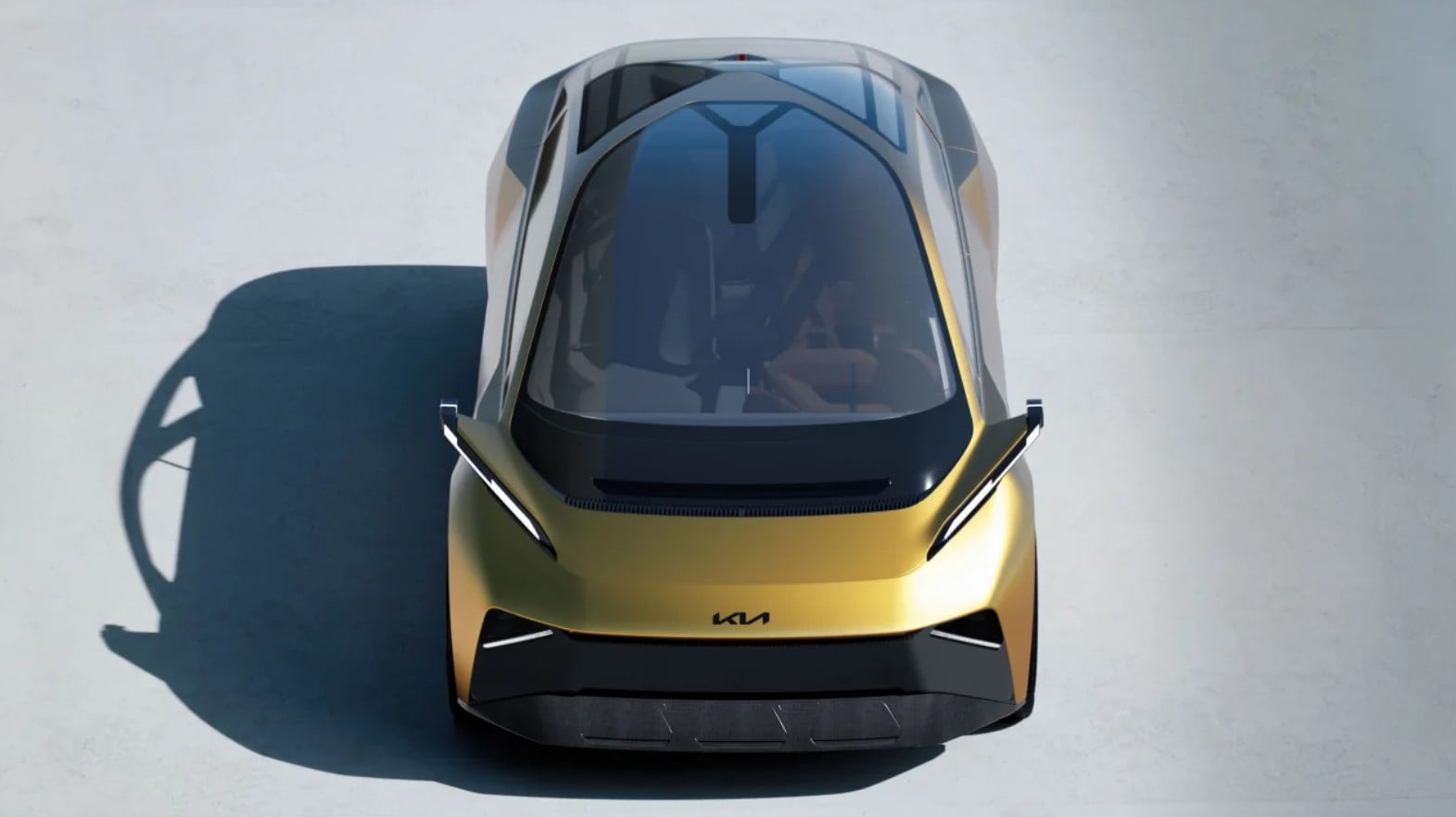
For now, the Vision Meta Turismo is best read as a design and packaging statement: Kia reminding everyone it can still do low-slung sedans in the EV era, and testing the waters for a potential new flagship beyond its expanding SUV-heavy electric line-up.
Lexus has revealed a new battery-electric sports car study called the Lexus LFA Concept, offering the clearest indication yet that the brand is preparing a flagship EV coupe. The concept has been shown before in near-identical form as the “Lexus Sport Concept” at Monterey Car Week and the Japan Mobility Show in 2025, but this is the first time Lexus has attached the LFA name and shared more detail about its engineering direction.
The company says the project is being developed alongside Toyota Gazoo Racing’s GR GT road car and GR GT3 racer, and that the three vehicles share underlying technology and development methods. The link is significant: Toyota has confirmed the GR GT program uses a new aluminium body structure and a 4.0-litre twin-turbo V8 hybrid set-up, while the Lexus concept explores how far a similarly focused platform can be pushed without an internal-combustion engine.
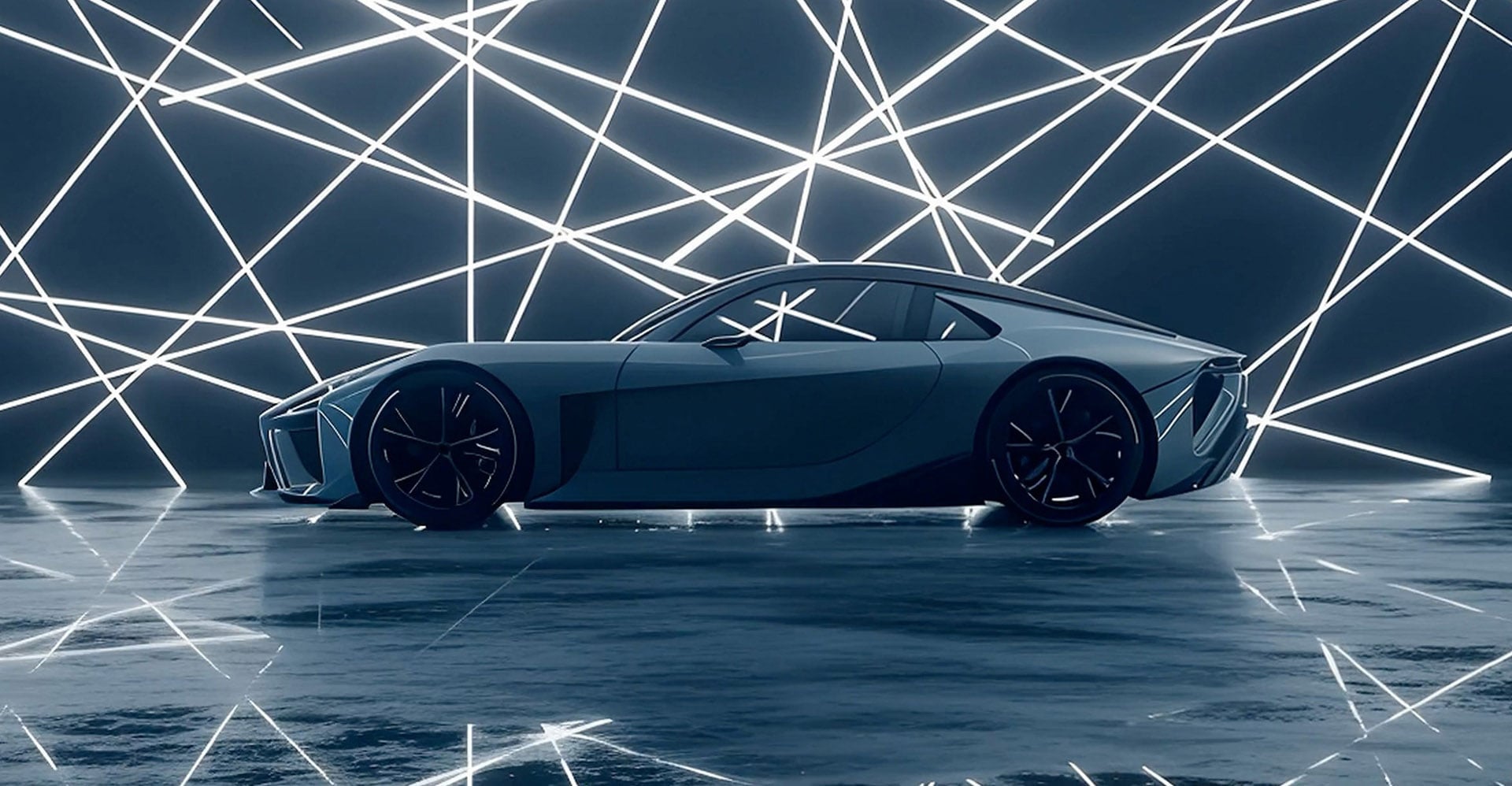
Lexus is framing the LFA Concept as a spiritual successor to the original Lexus LFA, and to Toyota’s earlier 2000GT, positioning it as a showcase for the brand’s most advanced performance and chassis ideas in the electric era. The choice of name matters. “LFA” is not being used here to describe a specific powertrain type, but rather a top-tier performance model intended to carry forward techniques and know-how from the company’s last generation of halo cars.
While Lexus hasn’t released hard figures on battery size, motors or output, it has outlined the same engineering priorities Toyota is using for the GR GT program: low centre of gravity, low mass paired with high structural rigidity, and aerodynamics designed around performance requirements rather than styling alone. The LFA Concept is also said to use an all-aluminium body frame derived from GR GT development, suggesting Lexus wants a lightweight, stiff base before adding battery and motor hardware.
The packaging benefits of a dedicated EV layout are obvious in the car’s proportions. The concept sits low with a long, flowing roofline and wide stance, and there is no bulky engine bay. Lexus says this allowed a more cab-rearward cockpit position and a driving posture aimed at matching what its test drivers see as ideal for high-speed control. The silhouette intentionally echoes the original LFA’s coupe shape, but with cleaner surfaces and a more tapered nose, reflecting the lower cooling demands of an EV.
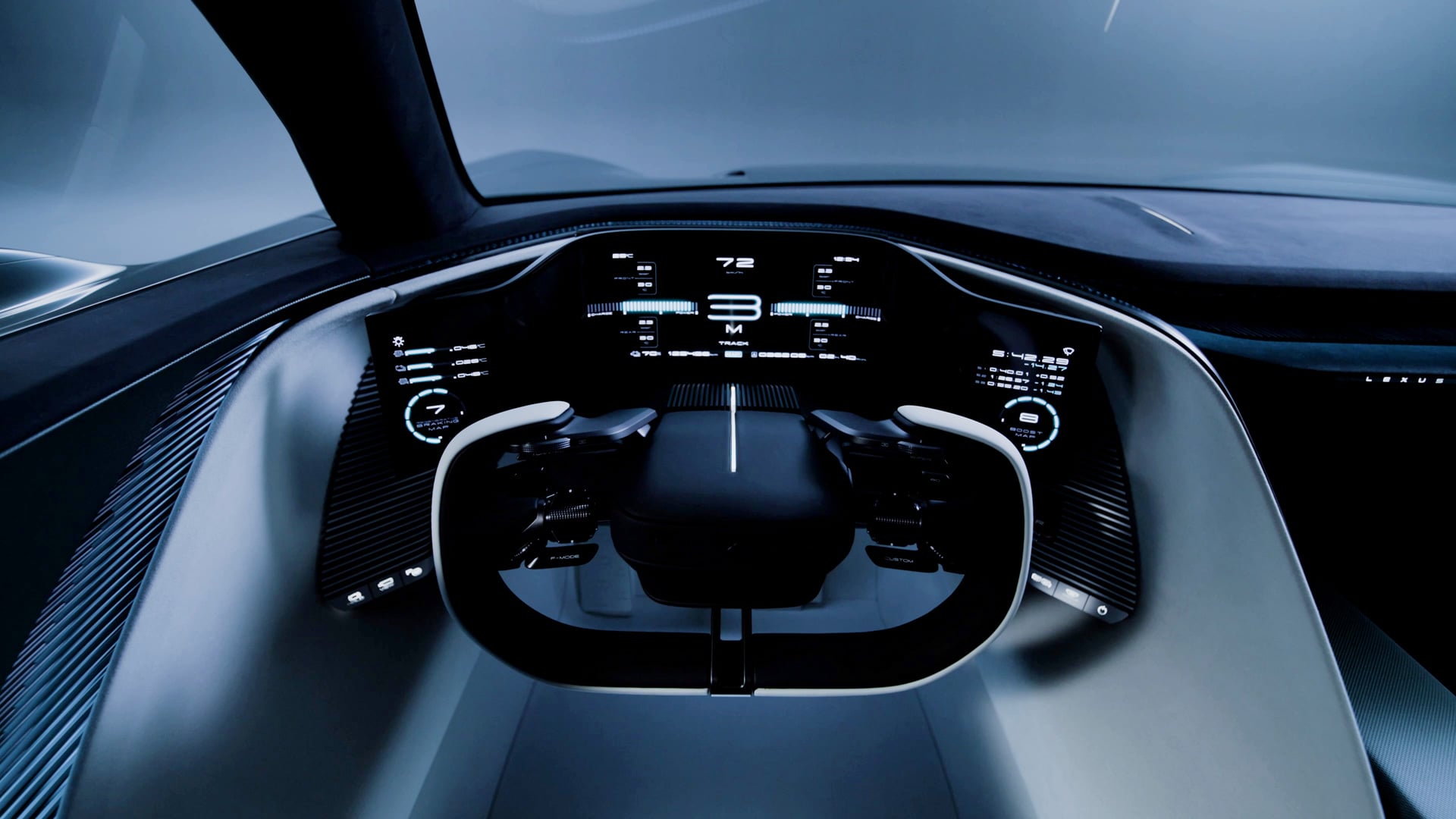
Inside, Lexus describes a pared-back cockpit that clusters key controls close to the driver. Images show a compact steering wheel and a minimalist dash, with most switchgear reduced or moved to ensure quicker access while driving. Lexus argues that this approach is meant to improve visibility and reduce distraction, while still keeping the cabin usable for everyday road driving.
Beyond the design, the bigger story is what the concept signals about Lexus’s direction. The brand has already committed to broad electrification and has indicated that performance models will be part of that shift. By openly tying the LFA Concept to Toyota’s GR GT/GT3 program, Lexus is emphasising that its future halo car will be developed with the same motorsport-influenced processes as Toyota’s next petrol-electric flagship — just translated into a fully electric format.
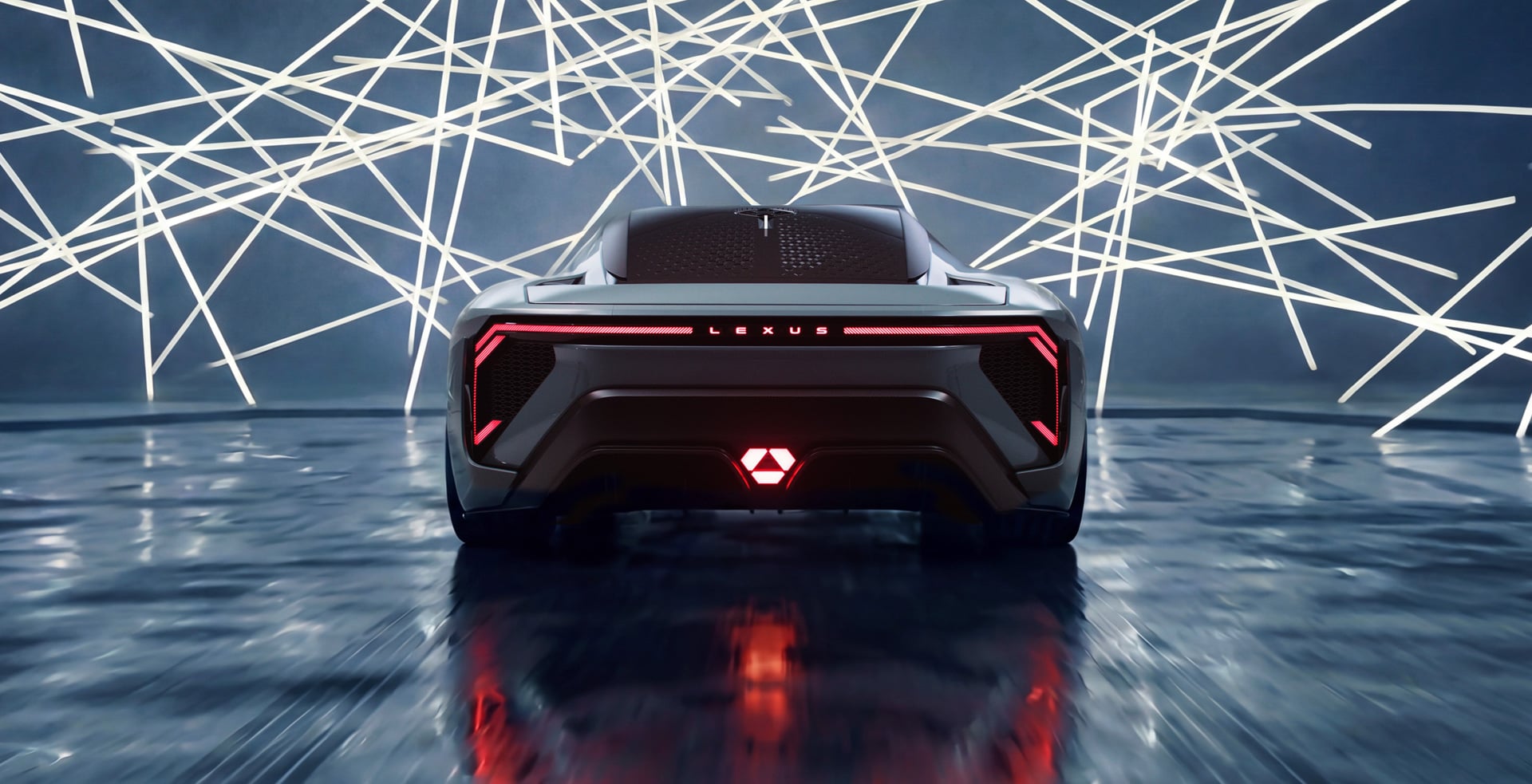
There is no confirmed production timeline, but the GR GT program is targeting a launch around 2027, and Lexus’s close collaboration suggests a similar window could apply here if the concept makes it to showrooms. For now, the LFA Concept stands as Lexus’s most direct statement yet that an LFA-level performance car can exist in a battery-electric world — and that the company is actively working out what that should look and feel like.
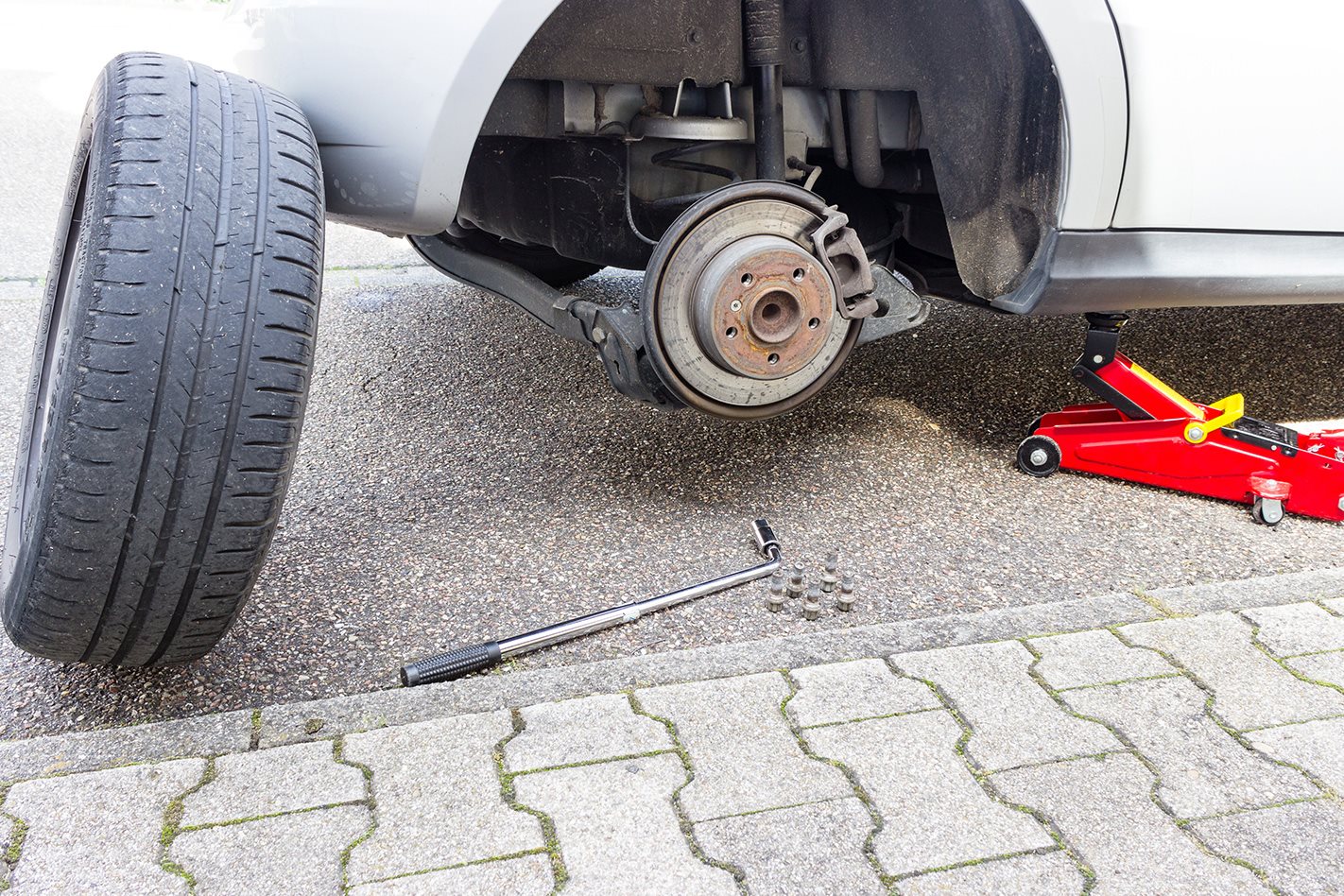
When I was younger I could change a flat tyre in less than two minutes… on my own.
There was a reason for this youthful speed and efficiency, as I was driving rally cars and they were prone to punctures. Every second wasted with a flat tyre meant a big hit in the results. So I learned to do a rapid change on my own, from the wheel nuts to the jack – not forgetting to ‘chock’ a wheel – through to re-packing the boot.
I was reminded of my flat-tyre routine when I stopped recently to help a bloke and his boy who were struggling with a flat. Their first mistake was jacking the car before loosening the wheel nuts . . .
Then I read a survey from the UK which said around half of all motorists there cannot change a tyre, a number that rises to 75 per cent for millennials. Many people didn’t even know if their car had a spare tyre . . .
Then a friend told me about the time he had a $150,000 garden ornament at his house for a weekend. It should have been a lovely Sunday fun run in a BMW speed machine, but a stray nail meant a flat tyre and a wait of several days to find and fit a suitable replacement.
At a time when Australia is in the middle of a pothole pandemic there have never been more people dealing with flat tyres. This is also the time when carmakers are pivoting – rapidly – away from spare tyres in their products.
Dumping the spare can make a lot of sense for the bean counters and engineers at head office. It frees space for the battery in a hybrid car, it cuts vehicle weight in any car, and it saves money because tyres and rims are expensive.
Looking around showrooms, the flat-tyre remedies now range from a full-sized spare matching the original alloys to an identical replacement with a steel rim, a space-saver, a deflated space-saver with a tiny pump, or a can of tyre sealant. Or nothing.
Did I mention run-flats? There is a reason…
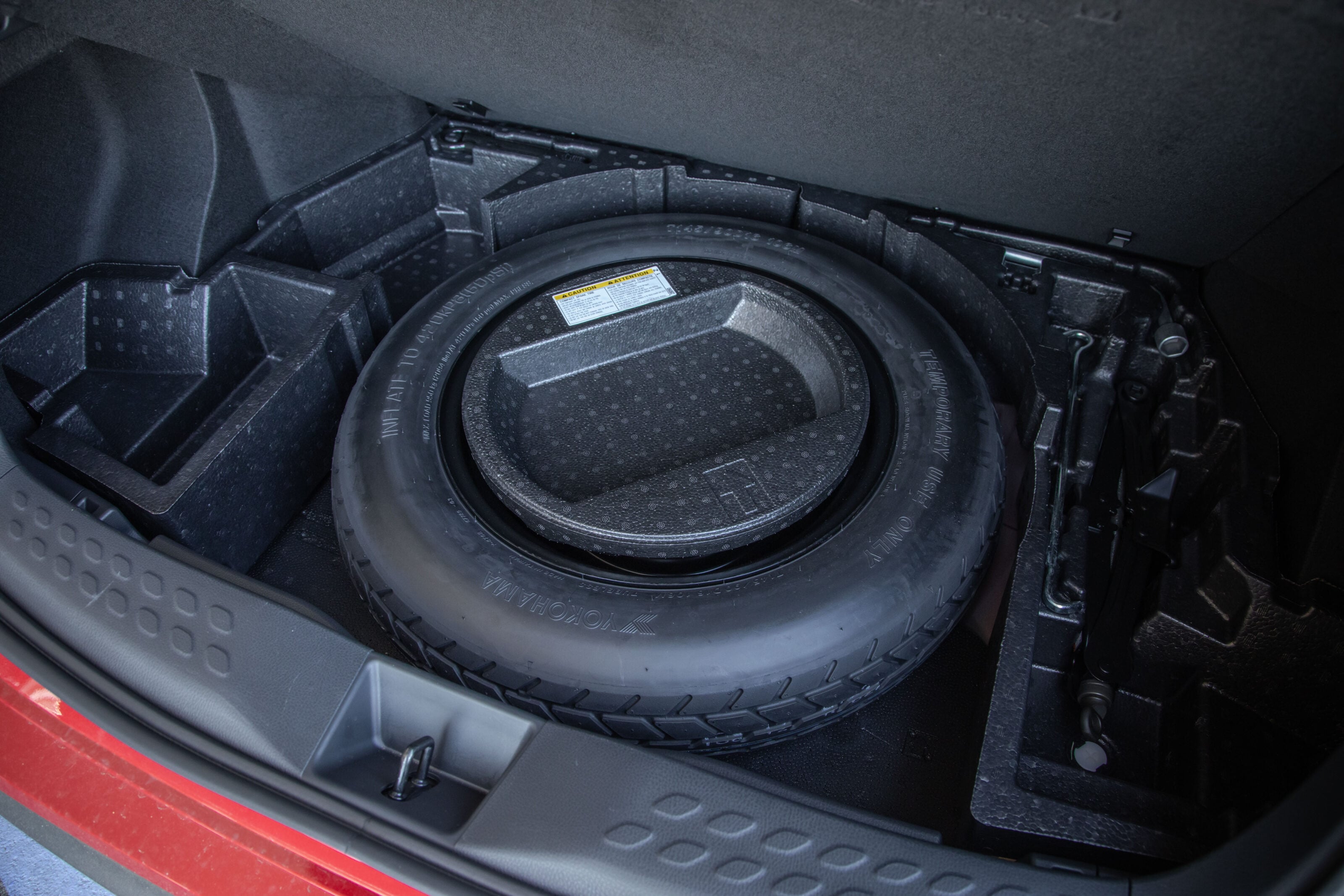
Apart from the tyre, there are wildly varying approaches to jacks and tools and a way to get air back into the tyre. And then you have to wonder if any of it matters. Australians are turning rapidly to ‘roadside assist’ when they hit a puncture problem, with local survey numbers suggesting more than eight million Aussies now cannot change a flat. It’s another of the lost arts of motoring, like doing your own hill starts and reverse parking instead of relying on a button in the car.
On the flat-tyre front, about 84 per cent of Boomers can do the job, falling to 65 per cent in Gen X, 53 per cent in Gen Y and only 49 per cent in Gen Z. No wonder Roadside Assist is now so critical. But, although it might work for new-car buyers who expect it as part of their warranty coverage, what about older cars – or even near-new ones just out of warranty and cut from the Roadside Assist lifeline?
They won’t be going on the back of a flat-bed truck to the nearest town for a replacement tyre while the driver grabs a latte. And here comes another pothole in the road – supplies of tyres.
As rims have become bigger, and tyres have become lower-profile and more specialised, the chance of finding the right tyre in the right place has become smaller. Tyre dealers are not going to stock a range of 18 or 19-inch rubber on the off-chance they will get to sell it sometime soon.
Rod Jane, who knows a bit about the rubber business through his T-Mart connections, says sourcing and delivering tyres to stranded motorists is becoming tougher and tougher in Australia. And he doesn’t see it getting any easier, while admitting his stores are seeing more and more victims of flat tyres.
The article originally appeared in the December 2025 issue of Wheels. Subscribe here and gain access to 12 issues for $109 plus online access to every Wheels issue since 1953.
The death of the Ford Falcon, one of Australia’s most legendary cars, is still a touchy subject among Ford enthusiasts. Even today, more than nine years after the last one was produced, the death of the Falcon hits hard.
But what if it was still produced today? What would the line-up look like? We turned to AI to create a virtual 2026 Ford Falcon. Take a look:
Sedan, wagon and ute bodystyles

The sedan is obviously the best-selling Falcon model, but both the wagon and ute have parts to play in the line-up. AI helped us imagine the sedan looking very much like a contemporary Ford sedan: the big corporate grille, sleek angular headlights and a classic sedan shape with big tail-lights that are not too dissimilar to the last FG X model.
Even though car-based smaller utes in Australia died with the Falcon and Holden Commodore, with mid-size trucks now very popular instead, the Falcon ute would still play an integral role in the 2026 model’s range.
Same with the wagon. Although wagons no longer sell as much as they used to – possibly due to the Falcon and Commodore no longer existing – there’s still a market for them in Australia, especially for somebody that wants a practical car but doesn’t need the off-road ability of the Everest SUV.

As for drivetrains, Ford would likely again offer a wide range of powerplants. The 4.0-litre Barra straight six, the backbone of the last Falcon models, would likely not meet emissions any longer so we imagine that the 2.0-litre EcoBoost turbo-four would be the standard engine like the Falcon EcoBoost.
Ford still makes V6s for many global markets, so perhaps the turbocharged 2.7-litre unit available in the US-spec Ranger would be a good fit for those wanting more power. Finally, a hybrid would have to be part of the range, so the 185kW 2.5-litre drivetrain available in the Escape overseas would likely be a good fit for the Falcon.
As for model availability, we’d likely see entry-level Falcon Active, mid-spec Trend, bodykit special Sport based on the Trend (like the XR6 was), sporty XR6 Turbo, luxury Platinum and high-performance XR8.
What’s inside the 2026 Ford Falcon?

On the inside, the 2026 Ford Falcon by AI takes many clues from recent Ford models sold globally, including the Focus (rest in peace!), Ranger/Everest and North American Explorer with a portrait touchscreen, digital driver’s display and practical details such as huge door bins.
Importantly, this interior depiction shows many physical buttons, important for usability, and unlike the Chinese-made Mondeo, screen size is modest and doesn’t cover the whole dashboard. It’s familiar but also modern, and we think modern Ford drivers would quite like it.
What about a performance model?

Of course, a Ford Falcon line-up wouldn’t be complete without performance models and here, AI has imagined the XR8 as part of the range. The iconic ‘double scoop’ headlights of Falcon XR models has been imagined here as a double DRL, which looks menacing, and the bodykit adds more aggression to the Falcon imagined above.
As with the sedan, we got AI to imagine a wagon version too, which looks a bit more subdued than the sedan above, so maybe that sedan could be an XR8 Sprint against the wagon’s regular XR8 model.
As for drivetrains, Ford Australia has a lot of choice in the Ford world, from the Ranger Raptor’s 292kW 3.0-litre turbo V6 for an XR6 Turbo, or the Mustang’s 345kW ‘Coyote’ 5.0-litre V8, with a factory supercharger kit available in the USA to boost power even further. Naturally, both manual and automatic transmissions would be offered, likely the six-speed Tremec manual and 10-speed auto from the Mustang range.
Saying Australians are fond of powerful utes is like saying water is wet or snow is cold. We have a long and unique tradition of wanting a massive boot and as much grunt as possible, typified by the final supercharged V8 offerings from HSV and FPV.
Today’s utes may ride higher and drive all four wheels, but customers are still demanding big horsepower. While we’re denied the monstrous 537kW/868Nm Ford F-150 Raptor R and the equally wild 523kW/882Nm RAM TRX has now ceased production, power-hungry punters still have plenty of options, though in true clickbait style, number one will surprise you!
Here are the top 10 most powerful utes available in Australia, ranked by power output.
10. Ford Ranger Raptor – 292kW/583Nm

For the second-generation Ranger Raptor, Ford almost doubled its horsepower, the 157kW/500Nm 2.0-litre bi-turbo four-cylinder diesel replaced by a 3.0-litre twin-turbo V6. It almost halved its 0-100km/h time to a hot hatch-baiting 6.0sec, too.
Not everyone is a fan of the sound, though it’s very similar to the Alfa Romeo Stelvio Quadrifoglio it was benchmarked against, but what’s more remarkable is the chassis is a match for the massively increased punch.
9. Ford F-150 – 298kW/678Nm

Aluminium construction and a super-strong 3.5-litre twin-turbo V6 make the enormous Ford F-150 faster than it has any right to be, but that’s not the strangest thing about it.
For some reason, instead of leaning into its force-fed six-cylinderness, Ford gave it a – very convincing – fake V8 soundtrack through the speakers.
Nevertheless, any ute this large that can hit 100km/h in under six seconds is worthy of respect.
8. GWM Cannon Alpha PHEV – 300kW/750Nm

Plug-in hybrid technology has changed the game when it comes to dual-cab power outputs, the Cannon Alpha PHEV teaming a 180kW/380Nm 2.0-litre turbocharged four-cylinder petrol engine with a 120kW/400Nm electric motor.
At around 7.0sec to 100km/h, it’s perhaps not as quick as the outputs suggest – though that’s far from shabby – but it has the added benefit of up to 115km of pure-electric range.
7. Chevrolet Silverado 1500 – 313kW/624Nm

The Silverado 1500 takes a completely opposite approach, subscribing to the ‘there’s no replacement for displacement’ school of thought. A 6.2-litre naturally aspirated V8 not only provides plenty of performance but an appropriately muscle car soundtrack.
Like the Nissan Y62 Patrol, it’s a huge part of the Chevrolet’s appeal and no doubt it has led to plenty of buyers signing on the dotted line. Chuck a supercharger on top and the Silverado not only would top this list but really lifts its skirts.
6. RAM 2500 Laramie – 313kW/1458Nm

The monster heavy-duty RAM matches the Silverado with 313kW but offers almost 235 PER CENT more torque from its absurd 6.7-litre six-cylinder turbodiesel. Despite a kerb weight nudging four tonnes, it can jet to 100km/h in around 7.0sec.
Of course, the traffic light grand prix isn’t what the RAM 2500 is designed for. It’s intended to tow really, really heavy stuff and no vehicle will make lighter work of 4500kg. In fact, add a gooseneck tow hitch and you can haul up to 8000kg!
5. BYD Shark 6 – 321kW/650Nm
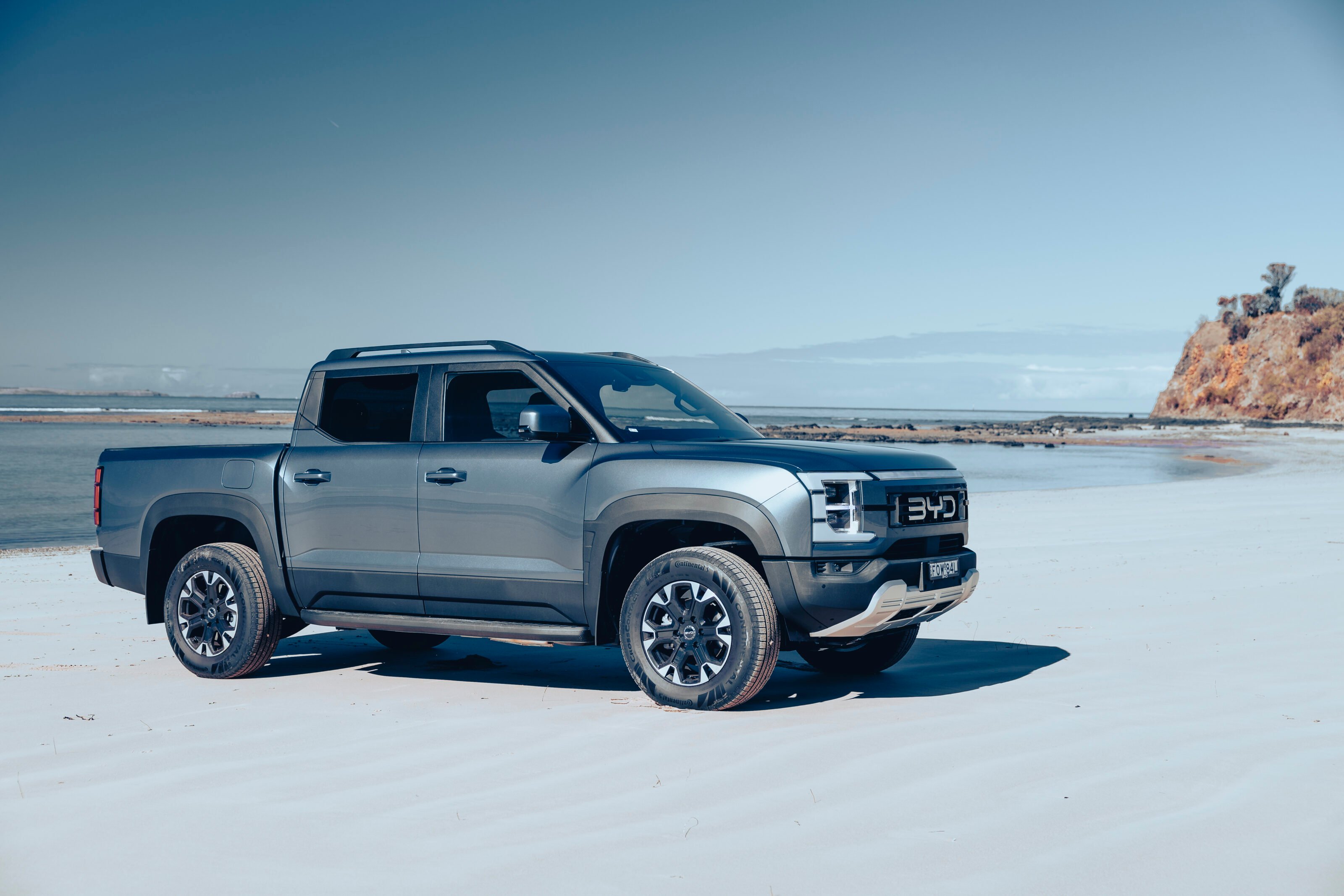
When it comes to power-per-dollar, the BYD Shark 6 is the king – not since the supercharged FPV GS ute have you been able to score so much grunt for so little coin.
With a pair of electric motors fed by a 29.6kWh battery, which in turn is generally charged by the onboard 1.5-litre turbocharged four-cylinder petrol engine, the Shark 6 has response, acceleration and refinement that is a quantum leap compared to your typical diesel dual-cab.
4. Toyota Tundra – 326kW/790Nm

Match a 3.4-litre twin-turbo V6 – yes, Toyota calls it a 3.5-litre but it’s 3445cc – generating 290kW/649Nm with a 36kW/250Nm electric motor gives the Tundra a mighty 326kW/790Nm to play with.
It can motivate 2800kg of Toyota to 100km/h in around 7.0sec – this does seem to be where most of these utes land regardless of outputs – and will perform a similar role in the new hybrid Toyota LandCruiser.
3. Chevrolet Silverado 2500 HD LTZ Premium – 350kW/1322Nm

Like its RAM rival, the big dog Silverado uses a massive diesel engine – in this instance a 6.6-litre Duramax turbocharged V8 – to produce enough grunt to tow your house around Australia should you wish.
Once again, the maximum tow rating with a conventional (70mm) tow ball is 4500kg, a figure far beyond most typical dual cabs but one that the Silverado 2500 makes light work of.
2. RAM 1500 Limited Crew Cab – 403kW/707Nm

The wild, whining supercharged RAM TRX might have now ceased production, but the ‘High Output’ version of RAM’s new Hurricane 3.0-litre twin-turbo inline-six is a pretty good successor.
It increases outputs from the regular version’s 313kW/635Nm – no slouch in its own right – to a whopping 403kW/707Nm, which rockets 2700kg-plus of American truck to 100km/h in just 5.0sec. Is this necessary? No. It is awesome? Yes.
1. Deepal E07 Multitruck – 440kW/645Nm

Bet you didn’t see this one coming. Proving that new-age electrification can beat the best of internal combustion when it comes to performance, the quirky Multitruck can hit 100km/h in 4.0sec in range-topping dual-motor guise.
With a 300kg payload and 1500kg maximum braked towing capacity, there will be those that scoff at its utility credentials – and there’s the feeling the Silverado and RAM 2500 would try and steal its lunch money – but this list was about power, not practicality, and the Deepal is number one. For now.
