
In the midst of the pre-Christmas rush I’m asked if I can do one final shoot and test drive for the year of the 2025 Mahindra Black Edition.
Why not, I thought? Navigating packed shops in the quest for Christmas food, gifts and final location shoots should give me a fair impression of the capacity of this substantial seven-seat family SUV to cope with the business of daily life.
Priced from $43,990 drive-away, the Mahindra Black Edition is currently a limited edition and costs $4k above the variant it’s based on, the XUV700 AX7L.
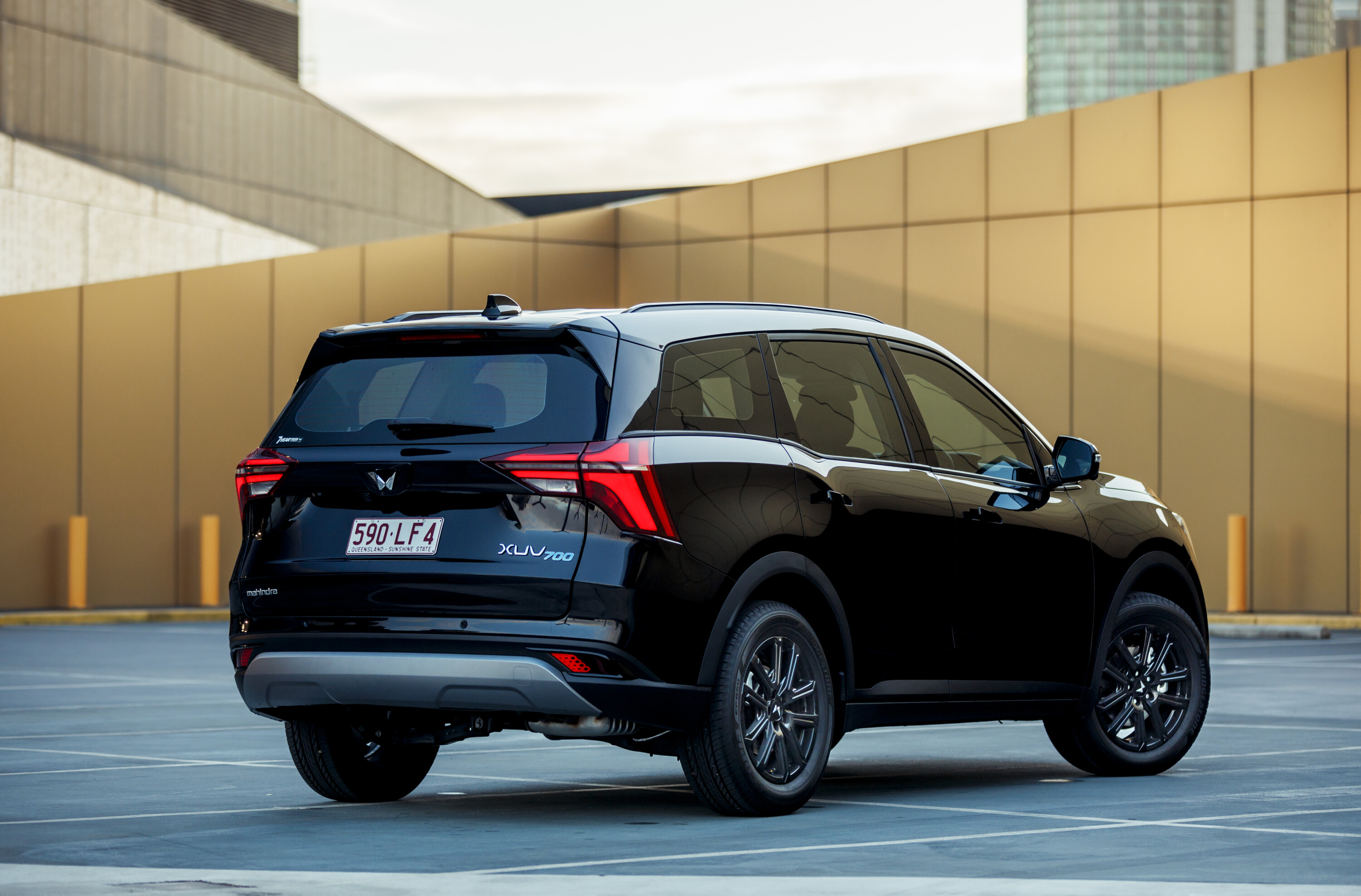
First impression on collecting it for the drive was wow, it’s stealthy! Black gloss paint, black 18-inch alloy wheels and blacked-out front grille make it hard to recognise what brand it is at first glance.
Mahindra is not exactly new to Australia but it’s certainly not immediately recognisable in the Black Series variant. That didn’t matter once on the road – it certainly turned heads.
JUMP AHEAD
Sleek and modern interior
The new interior presents as modern and sleek with black synthetic leather-look upholstery, dark chrome trim on the steering wheel, interior door handles, air vents and gloss black interior accents. A bonus for the Black Edition is ventilated front seats, which is a blessing on hot days where leather and bare skin don’t match.
A 10.25-inch infotainment touchscreen allows – in the Black Edition – both Wireless Apple CarPlay and Android Auto. The high resolution digital instrument cluster provides pages of information including full screen navigation via smart phone. A dial control on the centre console works a treat for changing modes and volume. A minor quibble is the rather small font size of the infotainment display but that may just be old age.
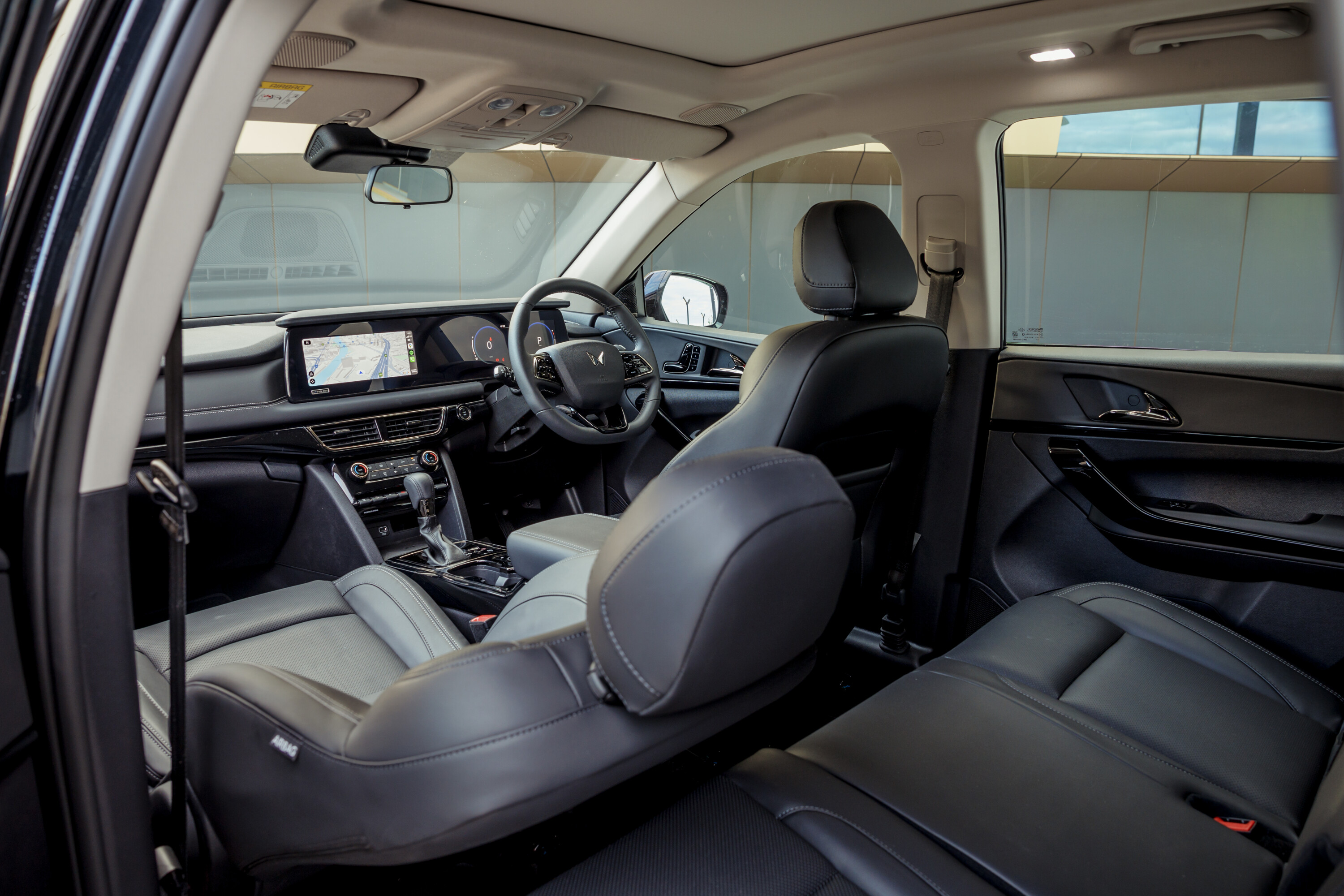
As with many new vehicles, the charge pad can make your phone quite hot to the touch so opting for a USB cable is a good option.
Other standard features include dual-zone climate control, keyless entry and push-button start, six-way power-operated driver’s seat and a panoramic glass sunroof. The exterior boasts automatic LED headlights, LED taillights, and daytime running lights with dynamic indicators.
Safety and drive quality
As you’d expect from an SUV pitched at larger families, the Mahindra Black Edition is packed with the safety and drive assist features, including traffic sign recognition, adaptive cruise, EAB, lane assist, high beam assist and smart pilot assist.
My favourite feature is the blind-spot view monitor which activates a live feed with the indication right or left. It’s ideal when driving in inner-city traffic where rampant electric bike delivery riders can quickly catch you unaware.
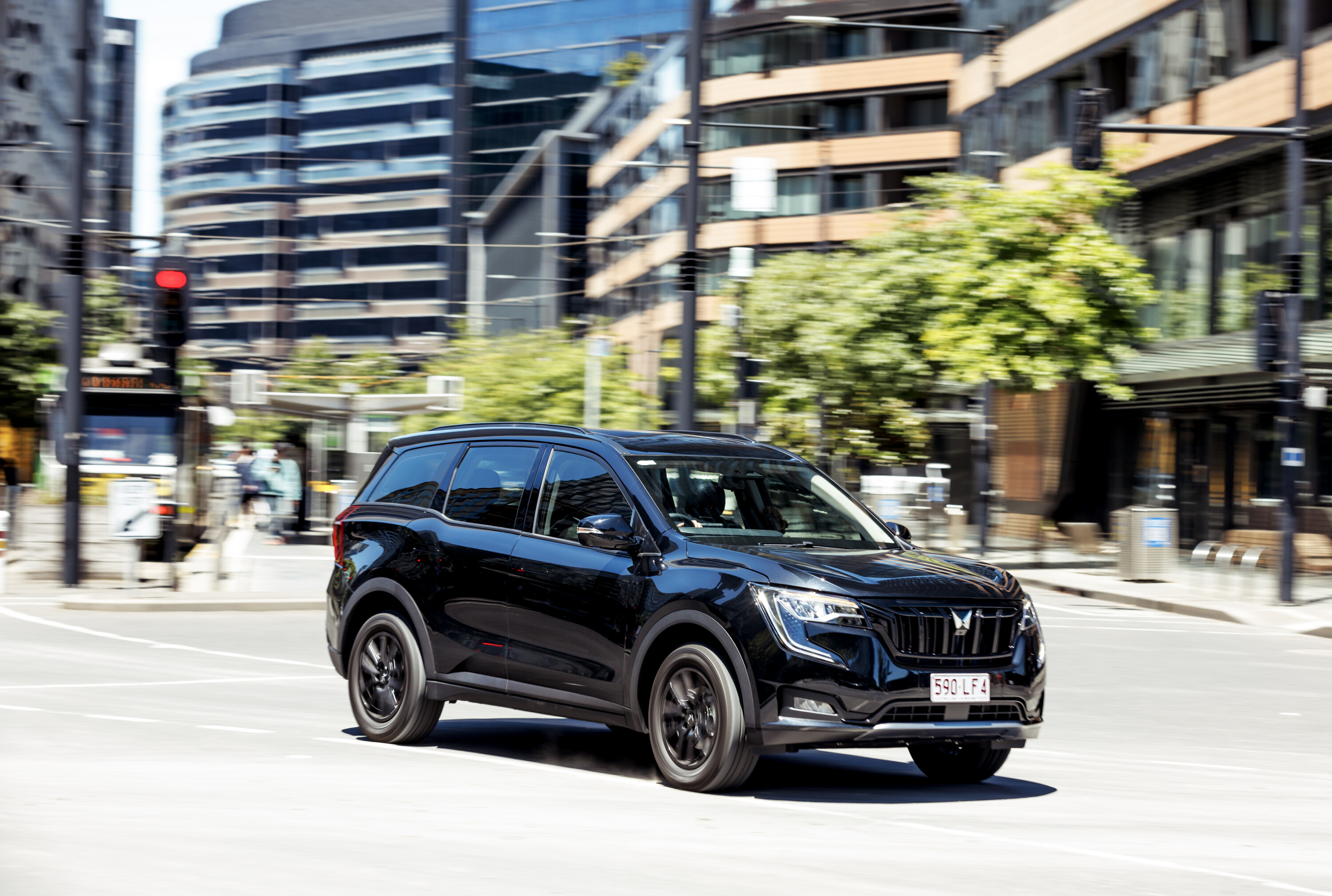
Rear vision can be impeded by the centre headrest but this is easily resolved by removing it when not carrying a passenger in that spot. The 360-degree view parking cameras, however, are excellent, making parking the 4695mm-long vehicle a breeze.
Powering the Black Edition is a 2.0-litre four-cylinder turbo engine which delivers power of 149kW and torque of 380Nm. That translates to satisfying off-the-mark acceleration and enough grunt for daily commuting. Despite a tendency to lurch a little at start up and into first gear, it’s an otherwise comfortable driving experience. The steering is light and takes some getting used to but is helpful in busy urban environments when a quick response is required.
On a dash out of town the Mahindra can feel heavy on the tighter corners – unsurprising for a vehicle this size – but the ADAPTIVE cruise control works well out on the highway. Back in urban environs the dampers adjust beautifully with the numerous speed bumps any city driver now has to navigate.
What’s fuel economy like?
Driving around 576km over the week and fuelling up 47.01 litres, the fuel economy was around 8.16km/l. That roughly compares with the model’s official rating of 8.3L/100km on the combined cycle. It’s not particularly thirsty but it would be good to have a hybrid option down the track.
Warranty
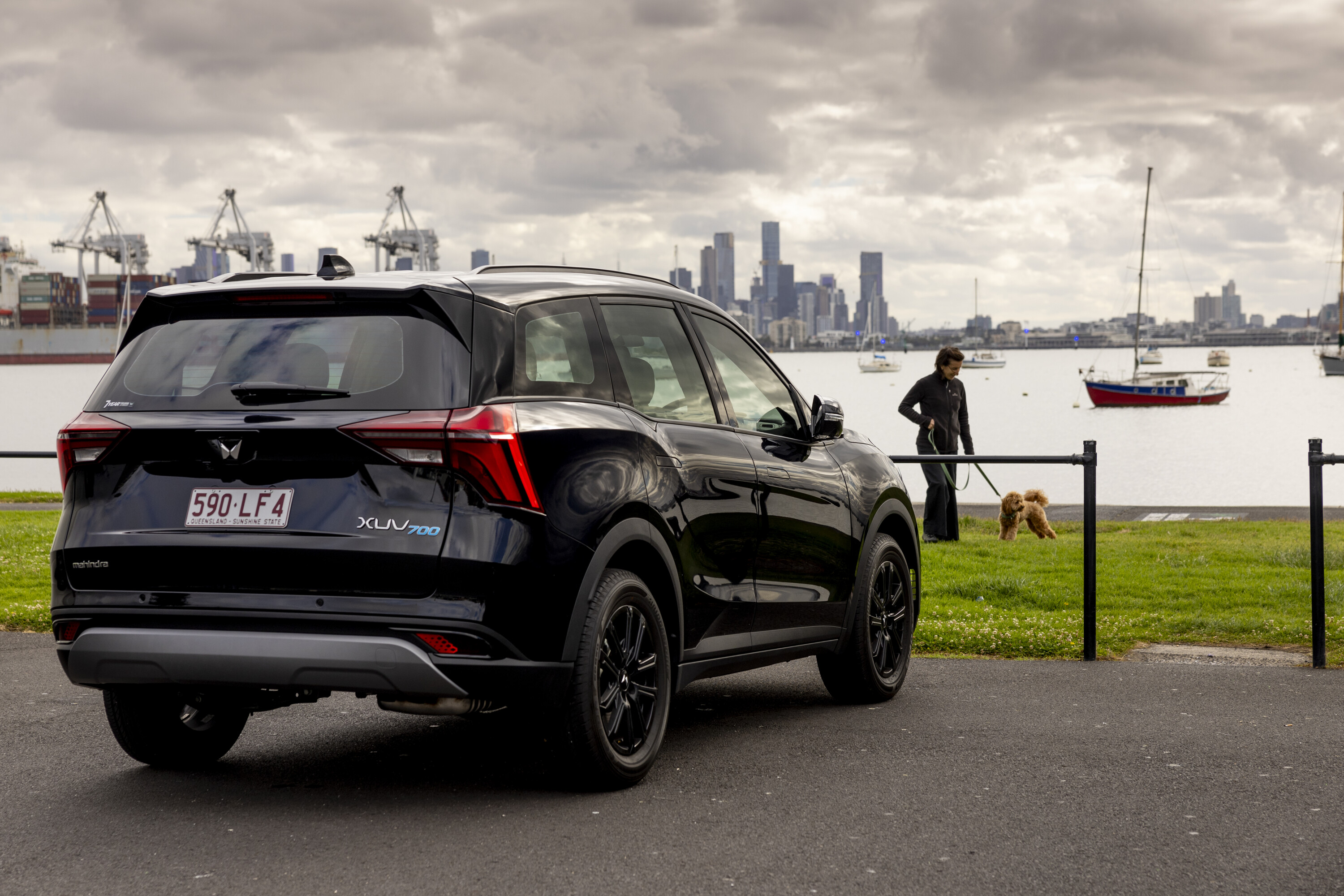
The Mahindra Black Edition’s most compelling selling point, of course, is the price. Not only feature-rich, it’s one of the most affordable seven-seaters available and includes a seven-year, 150,000km warranty as well as seven years of roadside assist.
Key rivals
Equipment and specs
- $43,990 drive away
- 2.0-litre four-cylinder turbo-petrol
- Six-speed automatic
- Power/torque 149kW/380Nm
- Fuel efficiency 8.3L/100km (ADR Combined)
- Ventilated front seats with active cooling
- Wireless Apple Car Play and Wireless Android Auto
- Black out grille
- Black out chrome side trims
- Black 18” Alloys
- Black Interior Trim
- Blind View Monitor
- 3D Audio with 12 Speakers
- 360º Surround View
- Stop and Go function in Adaptive Cruise Control
- Telescopic steering
Australians battling the cost-of-living crunch have been reminded they can still buy one new car on the market for under $20 grand.
MG is in the final month of runout sales on the popular MG3 light hatchback which it says is the cheapest new car – and possibly the last – to be priced at $19,990 driveaway.
As WhichCar reported back in June 2024, MG started pricing for the third generation of the best-selling hatch at $23,990 for the MG3 Excite. That was justified on the basis of a significant upgrade in standard equipment, including major additions to the MG3’s safety arsenal.
Driver warning systems (forward collision, lane departure), multi-monitoring (blind spots, rear cross traffic, tyre pressures, “unsteady driver”), and assistance features (adaptive cruise, speed-limit notification, emergency lane keeping) were among the key additions.
All models – Excite and Essence, in either petrol or hybrid engines, include stylish 16-inch alloys and provide dashboards graced with a digital display combination of central 12.25-inch infotainment screen and 7-inch driver cluster.
In reminding about the final month of the runout deal, MG Motor Australia’s Chief Commercial Officer Giles Belcher said: “The MG3 Auto is likely to be the last new car Australians can buy for under $20,000 drive away price.
“Once these models are sold, that will be it for this model of the MG3.
“With ever growing development and production costs, we don’t expect to offer a car for under $20,000 in Australia again.”
The MG3 Auto comes with MG’s industry leading 10- year/250,000km warranty and fixed price servicing. MG anticipate the last of the sub $20,000 MG3 Auto’s to sell out in February. Buyers can visit mgmotor.com.au to find a local dealer.
Buyers of the next-generation Mercedes-Benz CLA due later in 2025 will take advantage of the brand’s upgraded MBUX Virtual Assistant using Google Cloud’s new Automotive AI Agent, allowing them to have “personalised conversational engagement” over multimedia functions including navigation, search and media.
Based on Google Gemini and incorporating Google Maps data, the improved Virtual Assistant will use natural language understanding to deliver a more customised navigation experience, says Mercedes-Benz.

Users can converse naturally with their car and get answers to questions like: “Could you guide me to the nearest fine-dining restaurant for a unique culinary experience?”; “Does the restaurant have good reviews?”; and even, “What is the chef’s signature dish?”
The integration with Google Maps will allow the assistant to access fresh information about 250 million places around the world. Google claims that the map is updated almost in real time, with over 100 million updates made daily.
Because it also remembers past conversations, users are able to continue conversations and reference information throughout their drives. Want to ask the car about the restaurant you were curious about last week? It’ll remember and be able to give you information such as reviews and directions to it as well.
Mercedes is yet to fully reveal the new CLA, but has confirmed that it will feature both electric and hybrid drivetrains, as well as its new ‘MB.OS’ operating system. Australian details are yet to be announced.
The Tesla Model S hasn’t been available in Australia since early 2023, when the American company stopped producing the big electric sedan in right-hand drive.
It continues on in North America, however, and our mate Georg Kacher drove the hero Plaid model not long after it was scrubbed from the Aussie model list.
There appears no sign of a retirement plan for the Model S, but with the 12-year-old EV’s 2021 facelift starting to look a little long in the tooth, we could see another update in the near future.
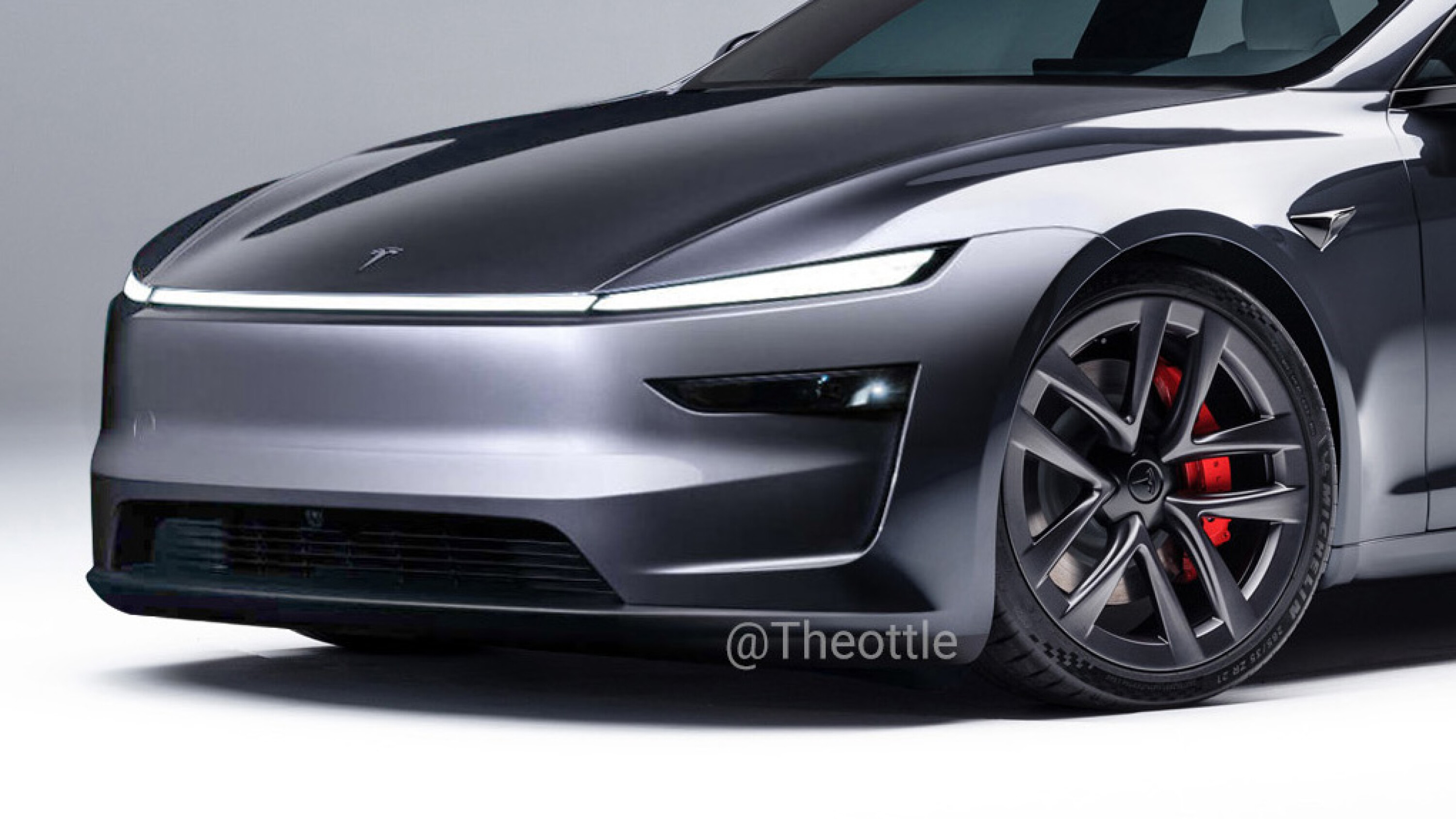
The question becomes: how will the updated Model S look? Will it take its cues from the refreshed Model 3, or this week’s facelifted Model Y?
The latter may be more likely, given that it would bring the S a little closer in appearance to the big Cybertruck.
The Cybertruck’s overall look has proven polarising, but as the new Y shows, some of its elements – particularly the slim lighting at the front end – can be worked into a smoother shape.
As our mate Theottle shows in his latest rendering, it could indeed work.
Would you be into this look for the Model Y?
You can watch Theo’s short video here, or in the embedded player below.
Electric motors, fake engine noises and programmed paddle shifters. Hero or heretic?
Snapshot
- Dual electric motors produce 320kW and 780Nm, powered by a 62kWh Leaf NISMO battery
- Gains 357kg over the original, now weighing 1787kg with R35 brakes and NISMO suspension
- Nissan confirms no plans to commercialise or offer EV conversion kits for the R32
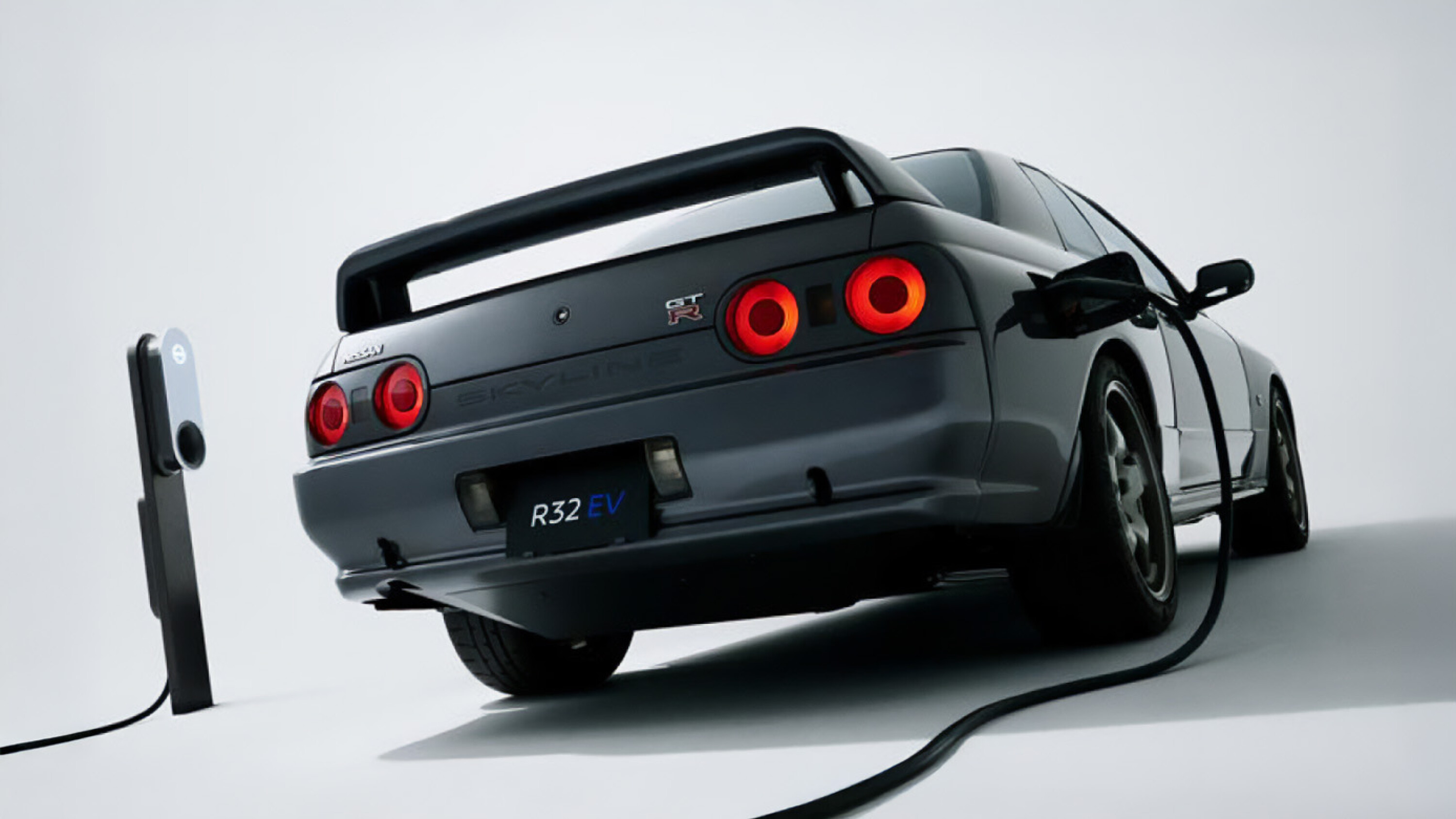
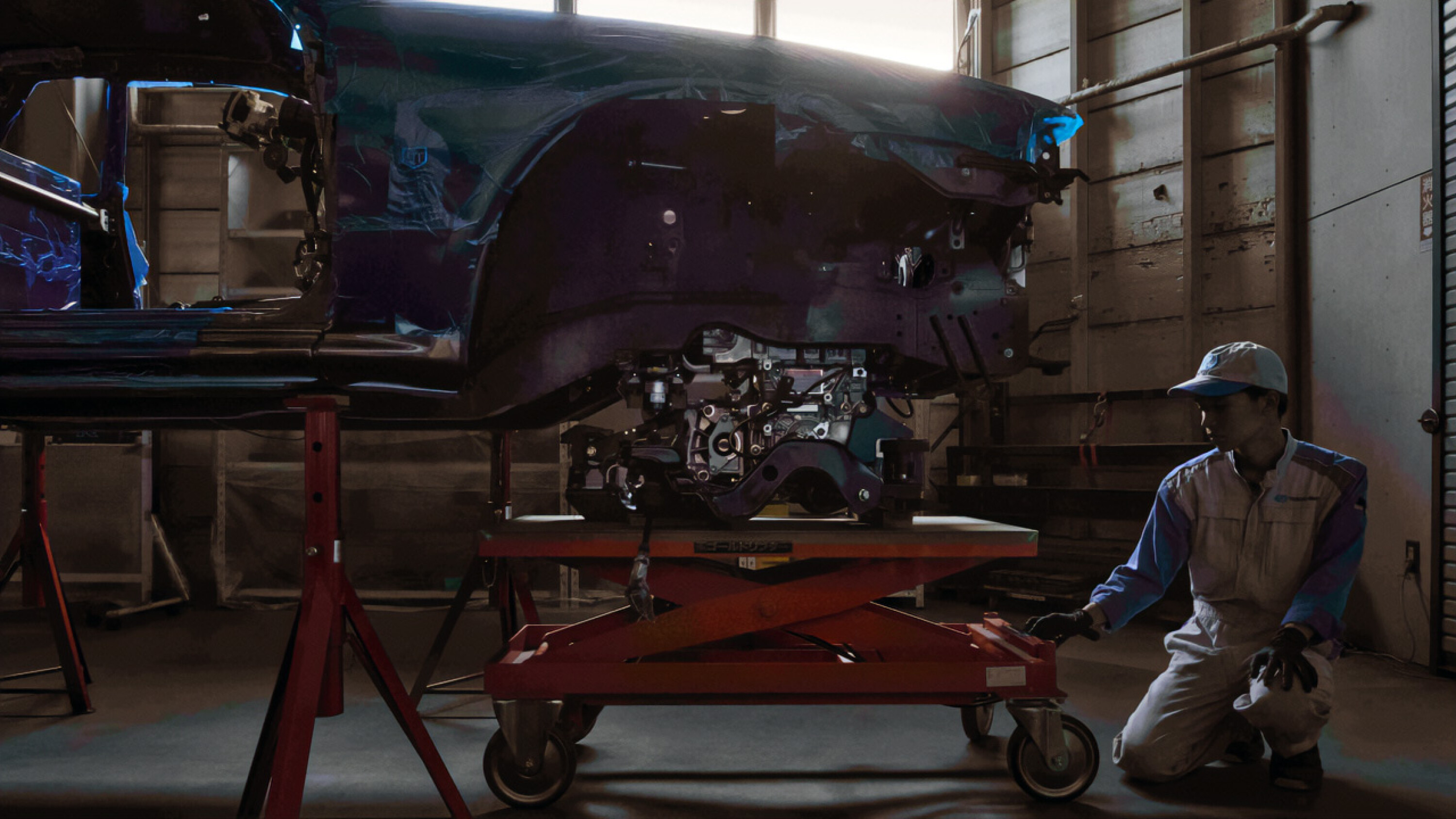
Nissan has unveiled its electric R32 Skyline GT-R at the 2025 Tokyo Auto Salon, replacing the hero coupe’s iconic RB26DETT engine with a dual-motor electric drivetrain.
If you can still read through that sudden outbreak of tears, here are the details. Maybe sit down first.
The R32 EV is a fully restored and modified version of the original Skyline GT-R, with front and rear electric motors delivering 160kW and 340Nm individually – combining for a total of 320kW and 780Nm.
The original R32 GT-R launched in 1989 with a claimed 206kW and 353Nm from its 2.6-litre twin-turbo inline-six – although actual outputs were believed to be higher, as Japanese brands were engaged in a ‘gentleman’s agreement’ at the time to limit outputs.
Nissan says its engineers have worked to tune the R32 EV’s figures to match the original R32 GT-R’s torque-to-weight ratio.
Powering the new motors is a 62kWh battery pack borrowed from the Nissan Leaf NISMO race car, with its charging port hidden behind the traditional fuel filler flap.
The original five-speed manual gearbox and ATTESA E-TS all-wheel drive system has been ditched, of course, with the twin motors now doing that system’s work.
Weighing in at 1787kg, the R32 EV gains 357kg over the standard model’s 1430kg kerb weight, tipping the scales beyond even the R35 GT-R’s initial 1750kg figure.
Braking has been upgraded with larger units sourced from the R35 GT-R, now tucked behind 18-inch wheels designed to mirror the original alloy design.
A NISMO sports suspension package with Öhlins dampers has been fitted to improve handling characteristics.
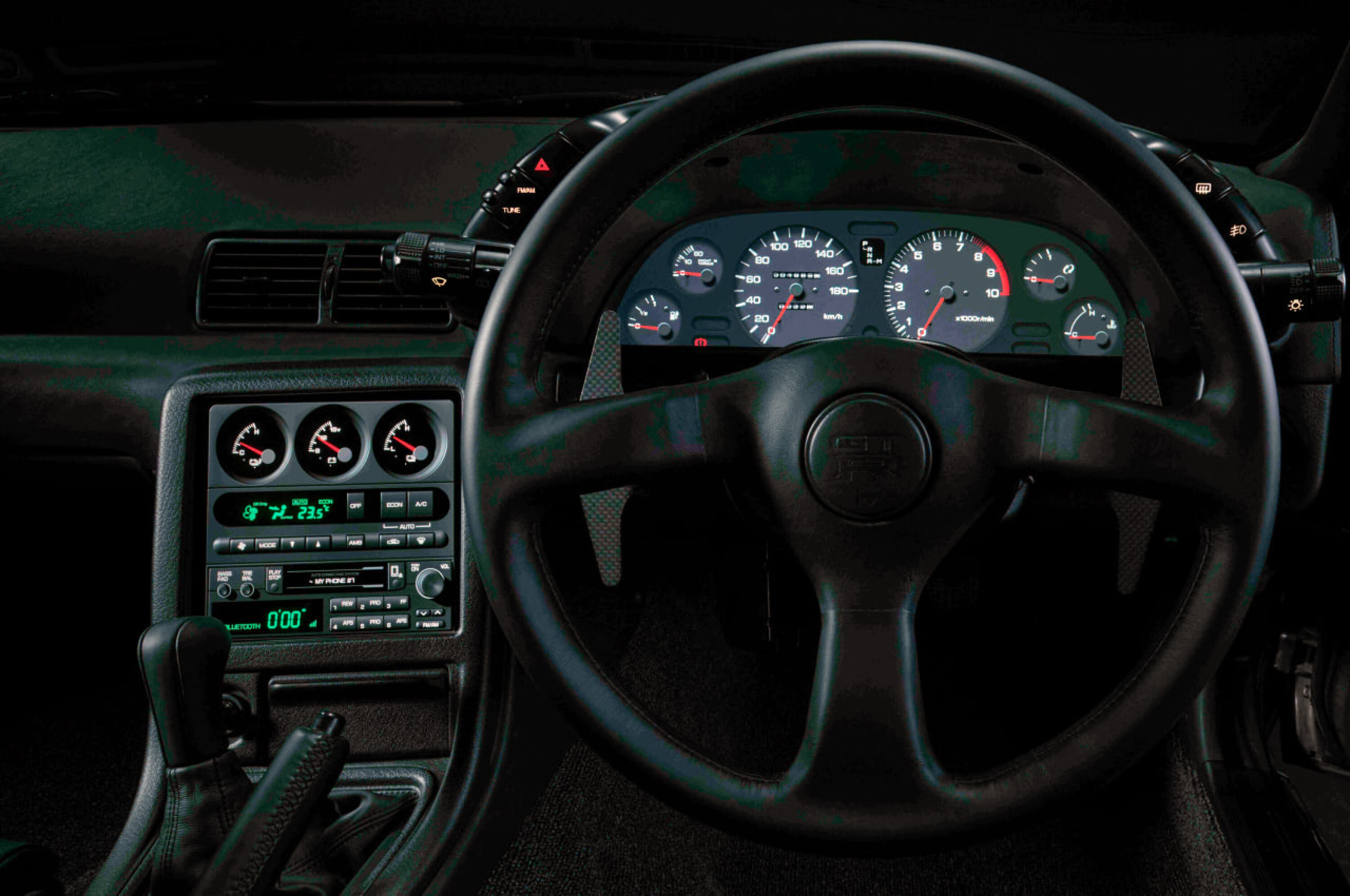
Inside, the rear seats have been removed to accommodate the battery pack, while the centre console now features a tall touchscreen in place of the original analog controls.
To ‘recreate’ the driving experience of the original RB26 engine, the R32 EV includes a sound system that simulates engine noise and a paddle-activated simulated gear shift program.
Is the R32 EV a hint of things to come?
Despite the extensive engineering of this project, Nissan says it has no further plans for the system used in the R32 EV.
The project, initiated in March 2023, was developed purely for internal research and development.
Looking ahead, Nissan’s future for the GT-R badge remains uncertain. The Hyper Force concept, revealed at the 2023 Tokyo Motor Show, hinted at a 1000kW electric GT-R powered by solid-state batteries. Reports from Japan suggest the next-generation R36 GT-R could adopt either a fully electric or hybrid drivetrain.
Nissan has committed to launching 27 electrified models – including 19 electric vehicles and eight hybrids – across its Nissan and Infiniti brands by the 2030 fiscal year.
All of this, of course, will depend on the outcome of Nissan’s merger talks with Honda.
| Specifications | R32 EV | R32 GT-R |
|---|---|---|
| Length (mm) | 4,545 | 4,545 |
| Width (mm) | 1,755 | 1,755 |
| Height (mm) | 1,340 | 1,340 |
| Weight (kg) | 1,797 | 1,430 |
| Motor/Engine | Twin electric motor | RB26DETT |
| Transmission | N/A | 5-speed manual |
| Max power | 160 kW motor x 2 | 206 kW (280 PS; 276 hp) |
| Max torque | 340 Nm motor x 2 | 353 Nm (260 lbu22c5ft) |
| AWD system | Twin motor AWD | ATTESA E-TS |
| Brakes | Upgraded R35 ventilated discs and calipers | Ventilated discs |
| Wheels | 235/45R 18 | 225/50R16 |
| Seats | 2 | 4 |
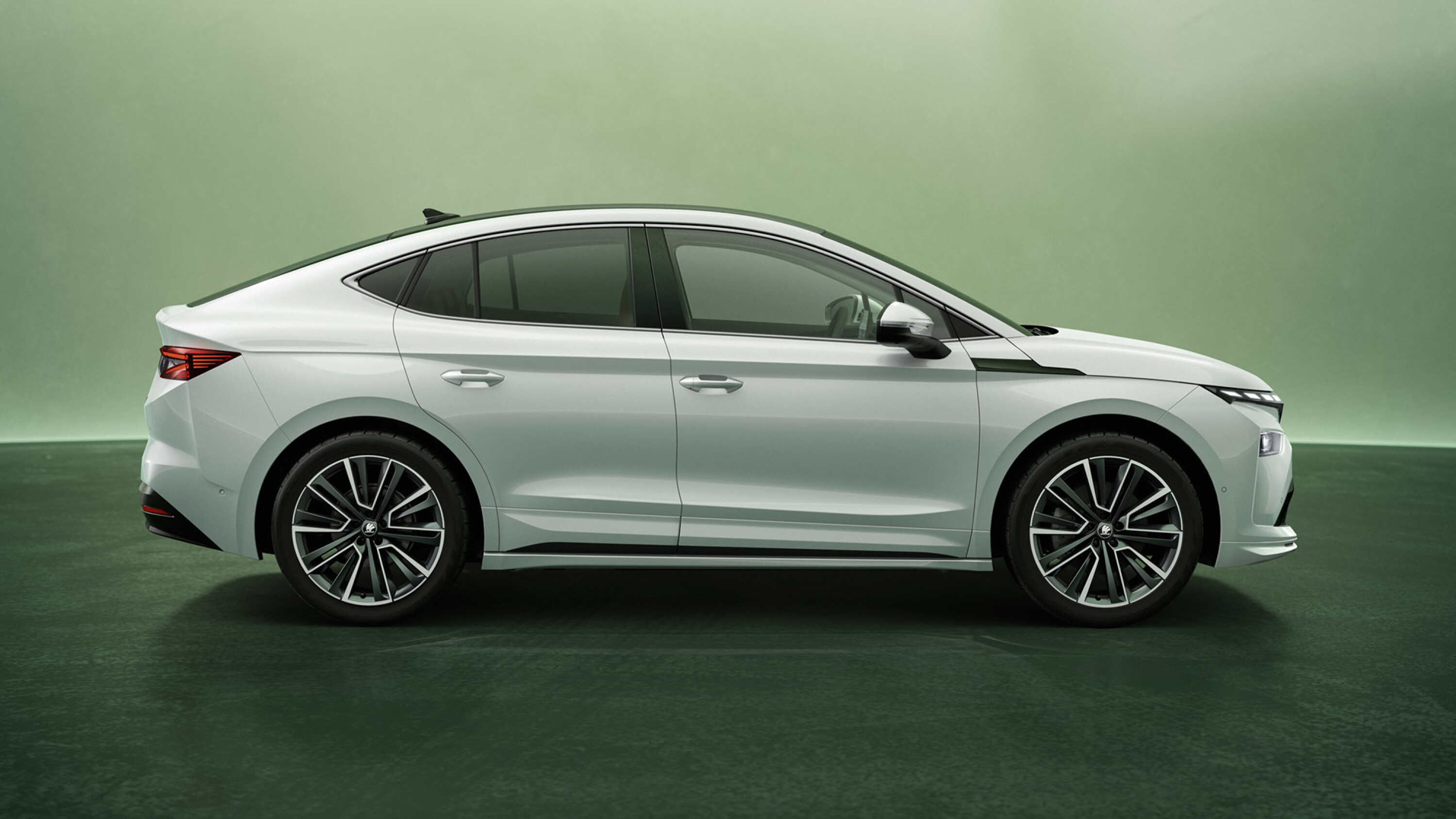
Škoda has unveiled the updated Enyaq and Enyaq Coupe, introducing its Modern Solid design language that debuted last year with the small Elroq.
Overseas, the refreshed line-up again offers two battery sizes and three powertrain configurations, delivering outputs between 150kW and 210kW, with all-wheel drive available on higher variants.
As before, the Australian range will likely continue to focus on the Coupe, with that higher-output option and rear-wheel drive – along with whatever changes are made to the RS model that currently boasts 250kW and all-wheel drive.
The Enyaq Coupe debuted in early 2022, but its Australian launch was delayed until late 2024. This updated model is expected to reach Australia later this year.
Battery, charging and driving range
Europe’s updated Enyaq range includes the rear-wheel-drive Enyaq 60 and 85, and the all-wheel-drive Enyaq 85x.
The Enyaq 60 features a 63kWh (gross) lithium-ion battery and a 150kW/310Nm electric motor.
The larger 82kWh (gross) battery in the Enyaq 85 and 85x powers a 210kW motor with 545Nm. The dual-motor Enyaq 85x offers all-wheel drive, but maintains the same output and torque as the 85.
Škoda claims a maximum WLTP driving range of up to 596km for the Enyaq Coupe 85, with the 85x rated at 558km.
Both numbers are improved over the outgoing model, listed at 576km and 548km respectively.
DC fast charging supports up to 165kW for the Enyaq 60 and 175kW for the 85 and 85x, enabling a 10–80% charge in 24–28 minutes.
Acceleration from 0–100km/h is claimed at 8.1 seconds in the Enyaq 60, while the 85 and 85x list a 6.7-second run – the 85x’s AWD advantage seemingly undone by the weight it adds.
Styling
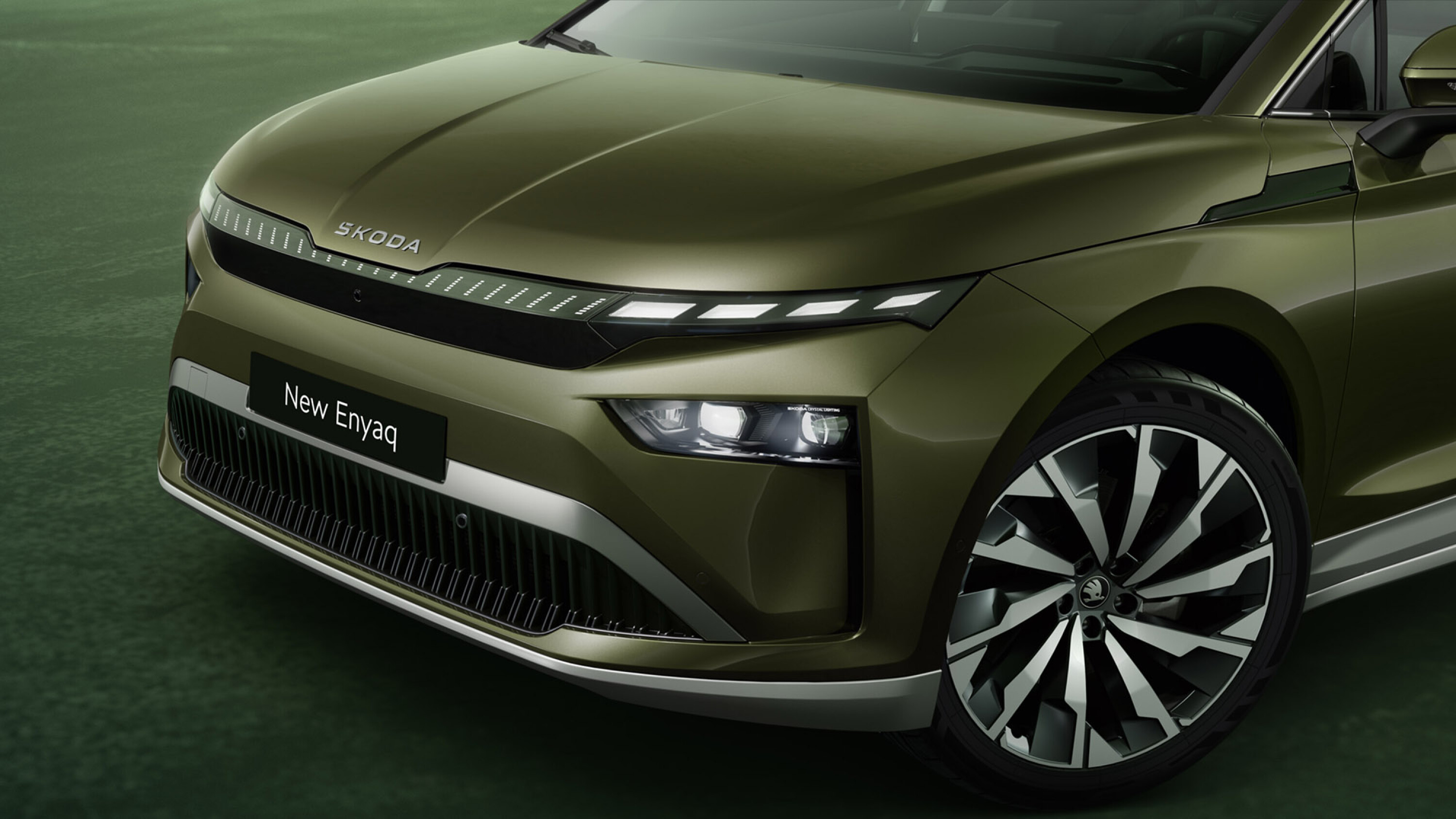
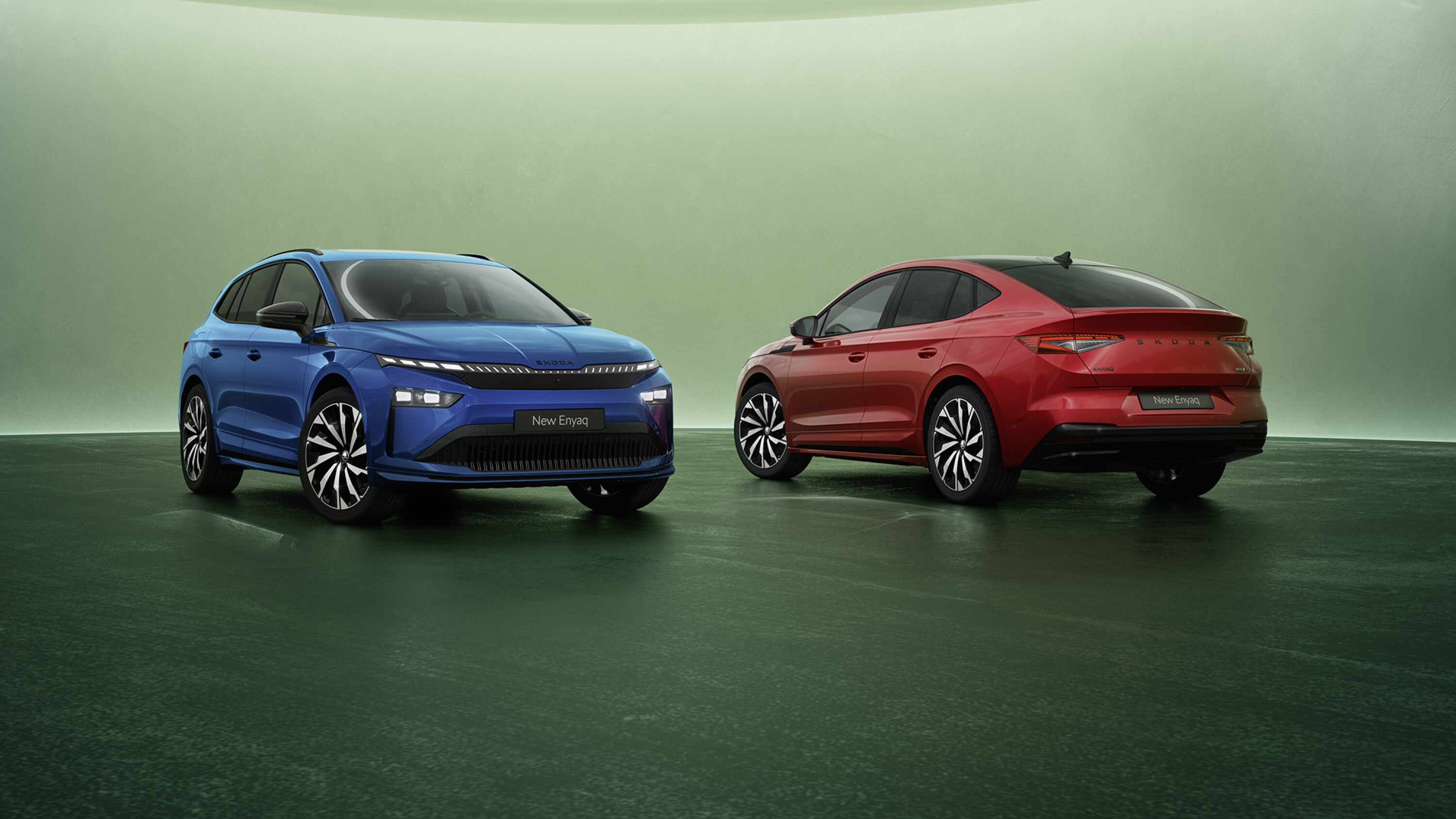
The 2025 Enyaq adopts Škoda’s new Modern Solid design themes, with the most obvious change being at the front end, showcasing what the company calls its ‘Tech-Deck Face’.
Dark chrome replaces traditional badging, and a new Olive Green metallic paint joins the colour palette.
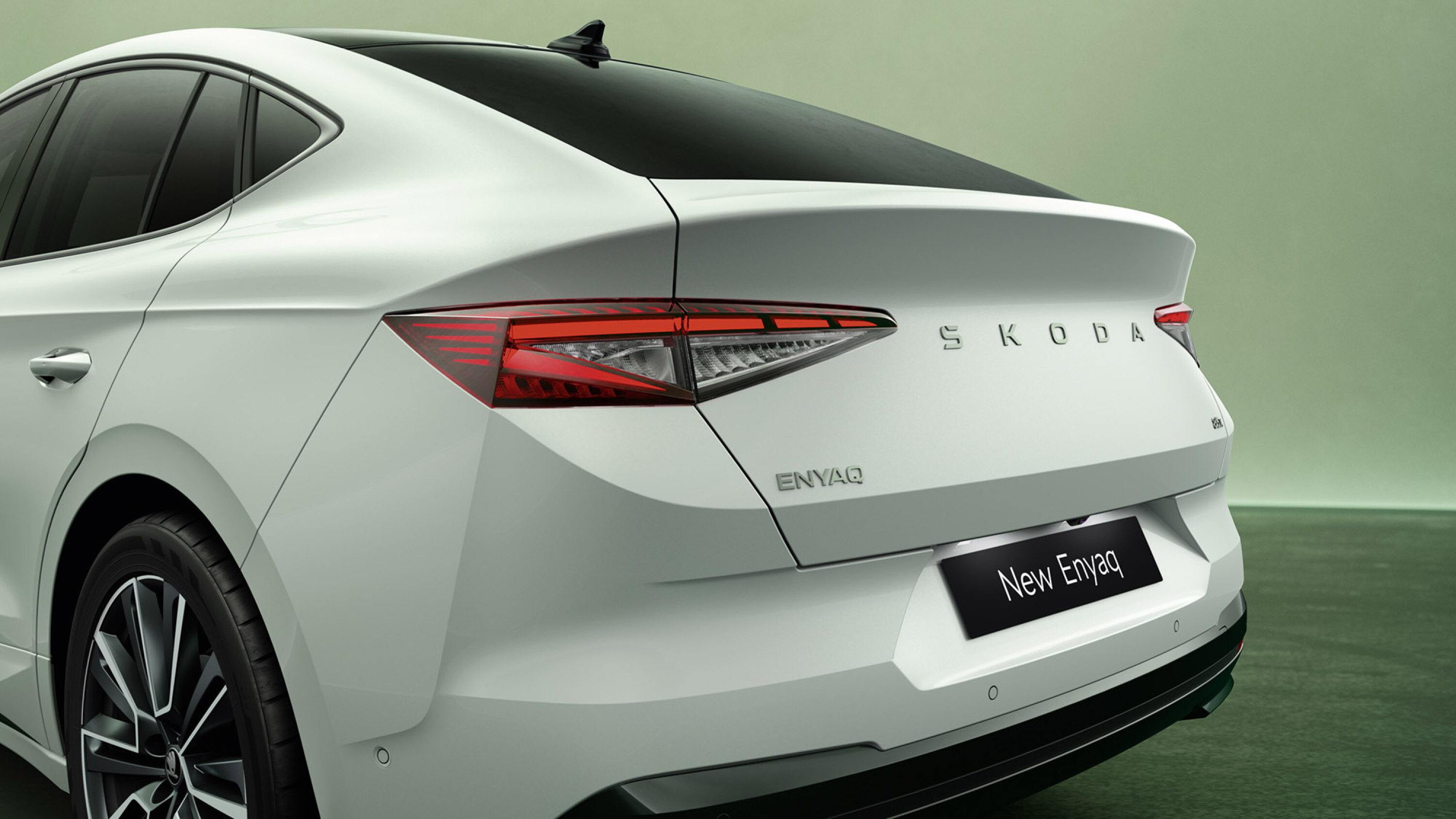
Alloy wheels range from 19 to 21 inches, with redesigned aerodynamic profiles contributing to a drag coefficient as low as 0.245 for the SUV and 0.229 for the Coupé.
Škoda’s traditional winged arrow logo has also been replaced all over with a simple ‘ŠKODA’ badge.
Interior and equipment
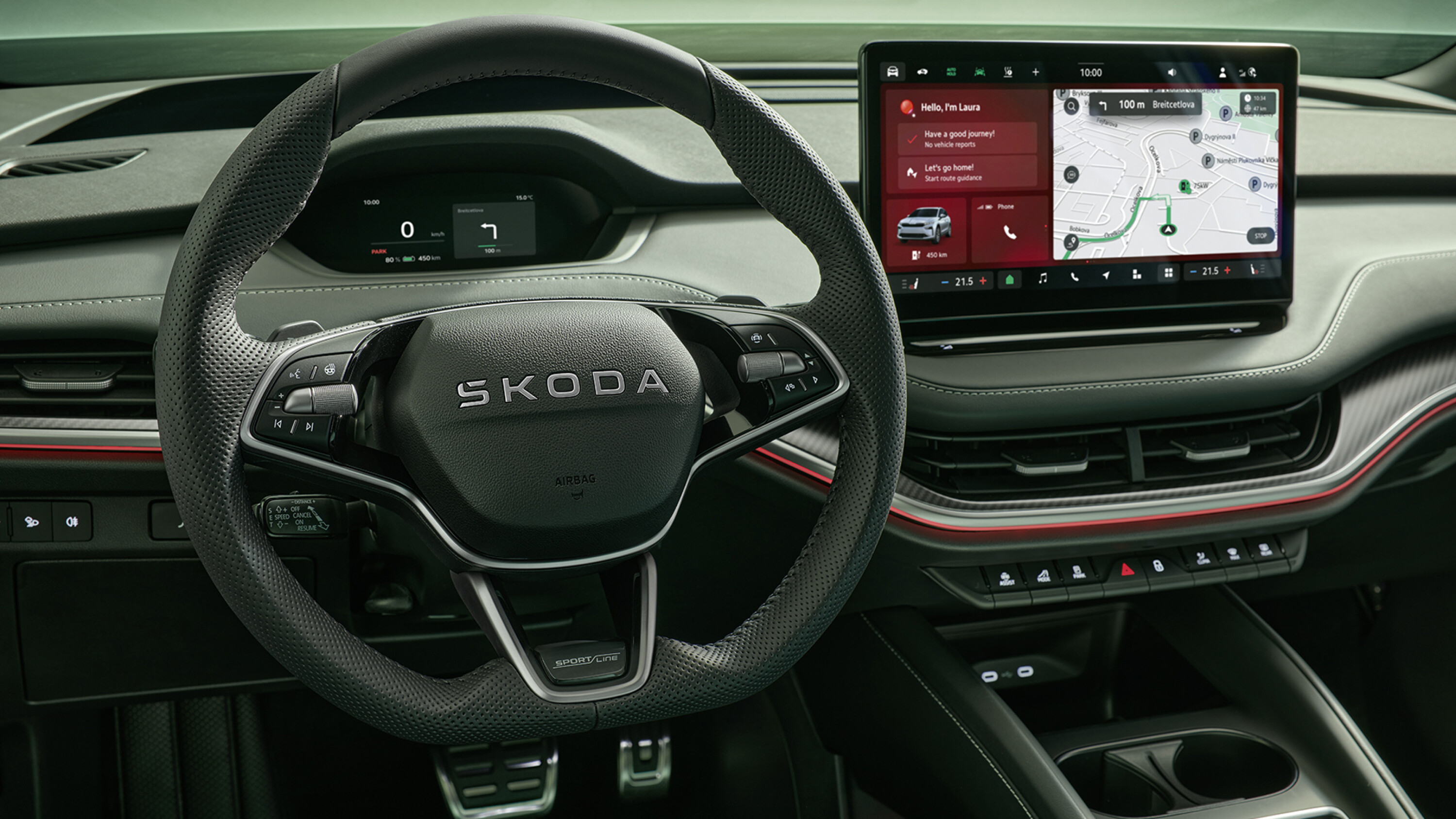
Standard features for the Enyaq include heated front seats and steering wheel, tri-zone climate control, keyless entry with walk-away locking, adaptive cruise control, blind spot detection, wireless charging with active cooling, rear USB ports, and a power tailgate with Virtual Pedal activation.
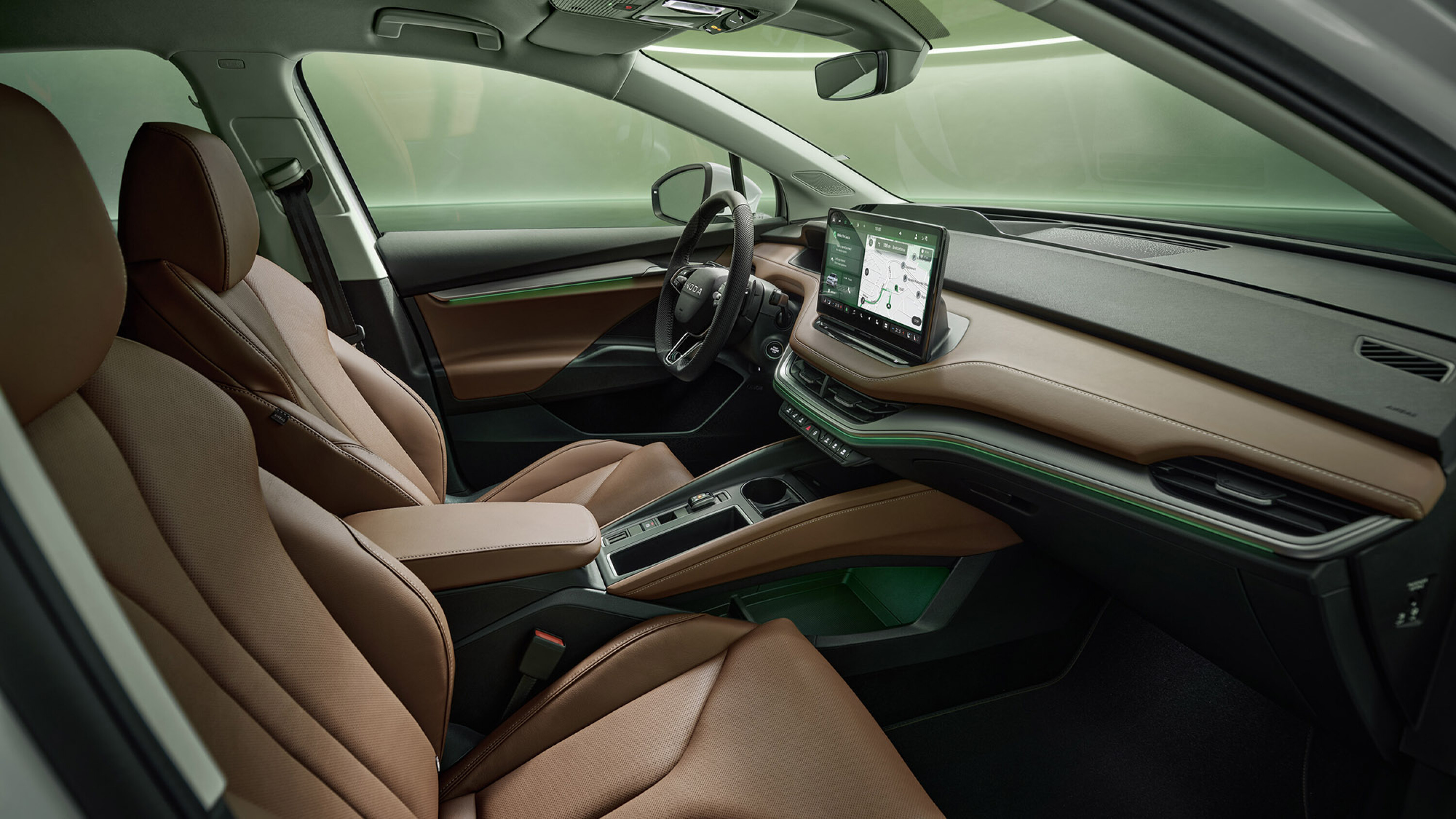
Six interior design options are available, including the new Lodge Design Selection, which incorporates sustainable materials like Econyl recycled yarn.
A 13-inch central infotainment screen and 5-inch digital cockpit are standard, with an optional augmented reality head-up display.
Skoda Enyaq boot space
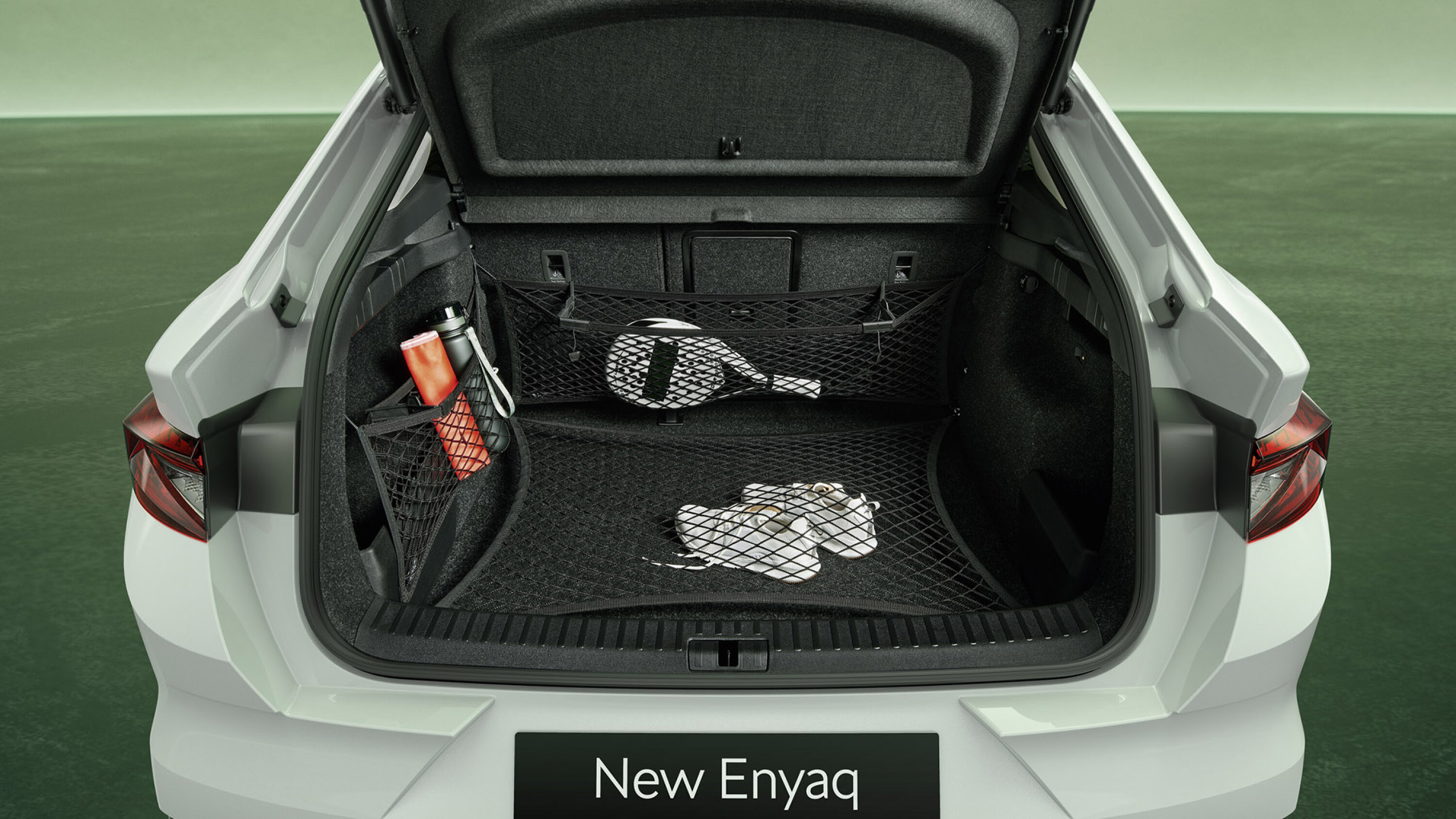
Interior space remains generous, with boot capacities of 585L–1710L in the SUV, shrinking only slightly to 570L–1610L in the Australia-bound Coupe.
Safety and driver assistance
Standard safety features include Predictive Adaptive Cruise Control, Blind Spot Detection with Rear Traffic Alert, and Crew Protect Assist.
The updated Travel Assist now leverages swarm data from other Volkswagen Group vehicles for more accurate driver assistance. Front Assist with pedestrian and cyclist detection, Lane Assist Plus, and Collision Avoidance Assist are also standard.
Optional Remote Park Assist allows the Enyaq to park autonomously while being controlled via the MyŠkoda smartphone app. Trained Parking enables the vehicle to memorise and autonomously repeat specific parking manoeuvres up to 50 metres long.
When will the 2025 Skoda Enyaq come to Australia?
The updated Enyaq is expected to reach Australia sometime in the middle of 2025.
In its current form, the Enyaq is priced from $69,990 plus on-road costs.
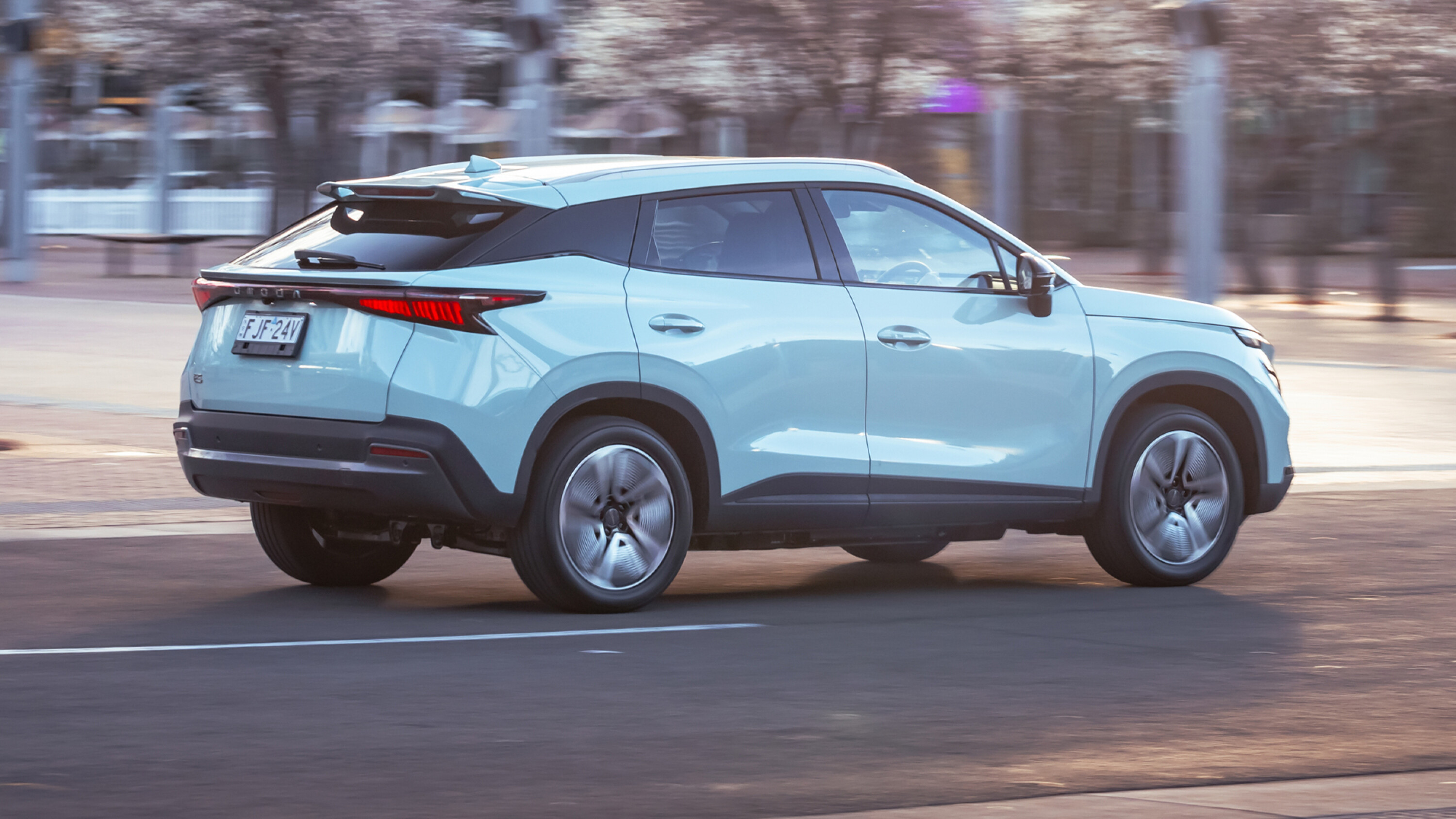
Chery Australia has announced a $6000 reduction in the price of its Omoda E5 electric SUV, for a limited time.
This price cut lowers the starting price to $36,990 before on-road costs for the entry-level BX variant, positioning the Omoda E5 as the most affordable electric SUV in the Australian market.
Snapshot
- 61kWh battery delivers 430km WLTP range with 150kW/340Nm output
- Standard features include dual 12.3-inch displays, wireless charging, and a full-sized spare wheel
- 5-star ANCAP safety rating with 18 advanced driver assistance systems
Power, battery, charging and driving range
The Omoda E5 is equipped with a single electric motor delivering 150kW of power and 340Nm of torque.
Energy is provided by a 61kWh lithium iron phosphate (LFP) battery, providing a WLTP-rated driving range of 430km.
Energy consumption is listed at 15.5kWh per 100km on the WLTP cycle.
Charging capabilities include a maximum AC charge rate of 6.6kW (single-phase) or 9.9kW (three-phase), and a maximum DC charge rate of 80kW, allowing for a 30-80% charge in around 28 minutes. 
Interior and user tech
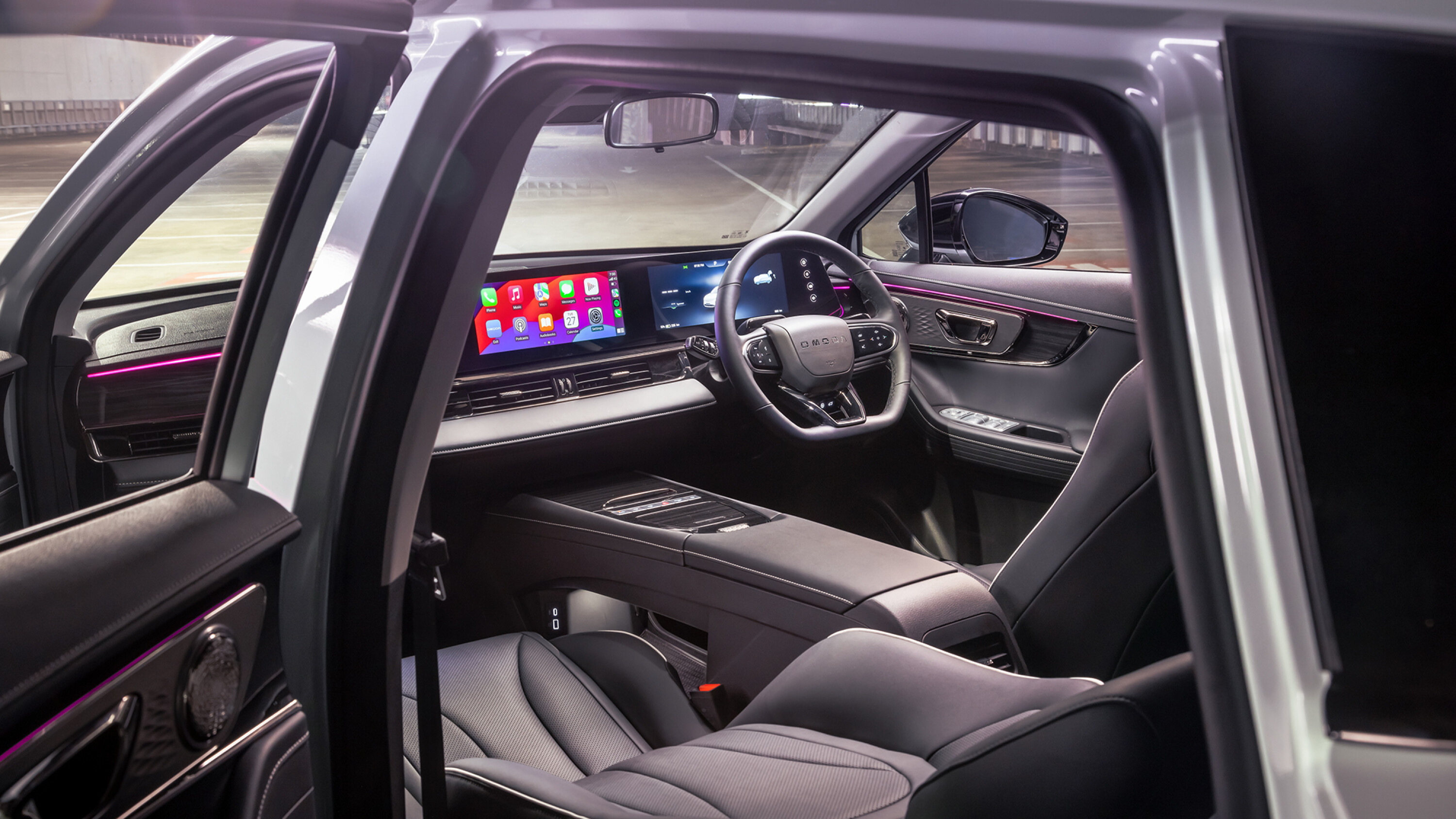
Inside, the BX variant offers manually adjustable seats with cloth and artificial leather trim, a curved widescreen display combining two 12.3-inch digital screens, and an in-built satellite navigation system.
The EX grade adds heated front and rear seats, ambient lighting, a panoramic sunroof, and an 8-speaker sound system.
Both variants include wireless charging capability and the ‘Hello Omoda’ intelligent voice command system for hands-free operation of various functions. 
Boot space
The Omoda E5 offers 300 litres of boot space with all five seats in use, expandable to 1079 litres (up to the roof) with the rear seats folded.
An extra 19 litres of hiding space is available under the bonnet up front.
Safety
The Omoda E5 is equipped with a suite of safety features, including seven airbags and 18 advanced driver assistance systems (ADAS).
Key safety technologies encompass autonomous emergency braking, adaptive cruise control, traffic jam assist, lane departure prevention, emergency lane keeping, blind spot detection, lane change assist, and rear cross-traffic alert. The Omoda E5 also carries a 5-star ANCAP safety rating. 
Availability
The Omoda E5’s $6000 price reduction is available for a limited time, although the company has not said exactly when it will end.
New variants have seen the BYD Dolphin dip below $30,000 in Australia, while the Atto 3 is now below $40K.
Snapshot
- Dolphin Essential starts at $29,990 and Atto 3 Essential at $39,990, with orders opening January 13 and deliveries from March
- Dolphin Essential has a 44.9kWh battery with 340km range; Atto 3 Essential uses a 49.9kWh battery with 345km range (WLTP)
- Both models lose premium features like heated seats, panoramic roofs, and wireless phone charging to lower costs
BYD has expanded its electric vehicle (EV) line-up in Australia with new entry-level Essential variants for the Dolphin hatchback and Atto 3 SUV, intensifying the EV price war.
The new Dolphin Essential starts from $29,990 before on-road costs, undercutting the previous entry-level Dynamic by $6900. This makes the Dolphin Australia’s most affordable EV, beating the already competitive MG 4 Excite, which now starts at $34,990 drive-away.
Buyers seeking something more family-oriented are treated to a similar saving, with the new Atto 3 Essential priced from $39,990 before on-road costs – $4509 less than the outgoing Standard Range model.
Battery and driving range
Both Essential models retain the same powertrains as their higher-spec counterparts.
The Dolphin Essential features a single 70kW/180Nm front-mounted electric motor paired with a 44.9kWh Blade lithium iron phosphate (LFP) battery, offering a claimed WLTP driving range of 340km.
The Atto 3 Essential uses a more powerful 150kW/310Nm front-mounted electric motor with a 49.9kWh Blade battery, providing a claimed WLTP driving range of 345km.
What do you miss out on?
To hit those lower prices (and to motivate you to choose up), BYD has removed several comfort and convenience features.
Dolphin Essential goes without:
- Power-folding exterior mirrors
- Panoramic glass roof
- Wireless phone charger
- Heated front seats
- Rear privacy glass
Atto 3 Essential loses:
- Panoramic sunroof
- Power tailgate
- Roof rails
- Heated front seats
- Music rhythm function for ambient lighting
- Wireless phone charger
Standard equipment
| Dolphin Essential u2013u00a0$29,990 before on-road costs | |
|---|---|
| 5.0-inch digital instrument cluster | Autonomous emergency braking |
| 12.8-inch touchscreen infotainment system | Blind-spot monitoring |
| Wired Apple CarPlay and Android Auto | Child Presence Detection |
| Leatherette upholstery | Lane-keep assist |
| Keyless entry and start | Front and rear cross-traffic assist |
| Front, front-side, curtain, and driveru2019s far-side airbags | Safe exit warning |
| Tyre pressure monitoring | Surround-view camera |
| Adaptive cruise control | Traffic sign recognition |
| Atto 3 Essential u2013u00a0$39,990 before on-road costs | |
|---|---|
| 5.0-inch digital instrument cluster | Front, front-side, curtain, and driveru2019s far-side airbags |
| 12.8-inch touchscreen infotainment system | Tyre pressure monitoring |
| Wireless Apple CarPlay and Android Auto | Surround-view camera |
| Satellite navigation | Adaptive cruise control |
| Leatherette upholstery | Autonomous emergency braking |
| 6-way power driveru2019s seat and 4-way power passenger seat | Blind-spot monitoring |
| Power-folding exterior mirrors | Lane-keep assist |
| Keyless entry and start | Rear cross-traffic assist |
| Multi-colour ambient lighting (without music rhythm function) | Safe exit warning |
| LED headlights with Adaptive Front Light | |
Availability
Orders for the Dolphin Essential and Atto 3 Essential open on Monday, January 13, with deliveries expected to begin in March.
The 2025 edition of the popular large SUV is expected to hit Australian shores in the first quarter of 2025.
The facelifted 2025 Isuzu MU-X has been revealed with upgrades similar to those recently applied to the D-Max dual-cab on which it’s based.
Debuting in Thailand where it’s produced, local details are yet to be confirmed, but the 2025 MU-X is expected to hit Australian shores in the first quarter of 2025.
It’ll land in a fiercely competitive off-road SUV segment competing with the new Toyota LandCruiser Prado, segment-leading Ford Everest, similarly updated Mitsubishi Pajero Sport as well as newcomers like the GWM Tank 300 and 500.
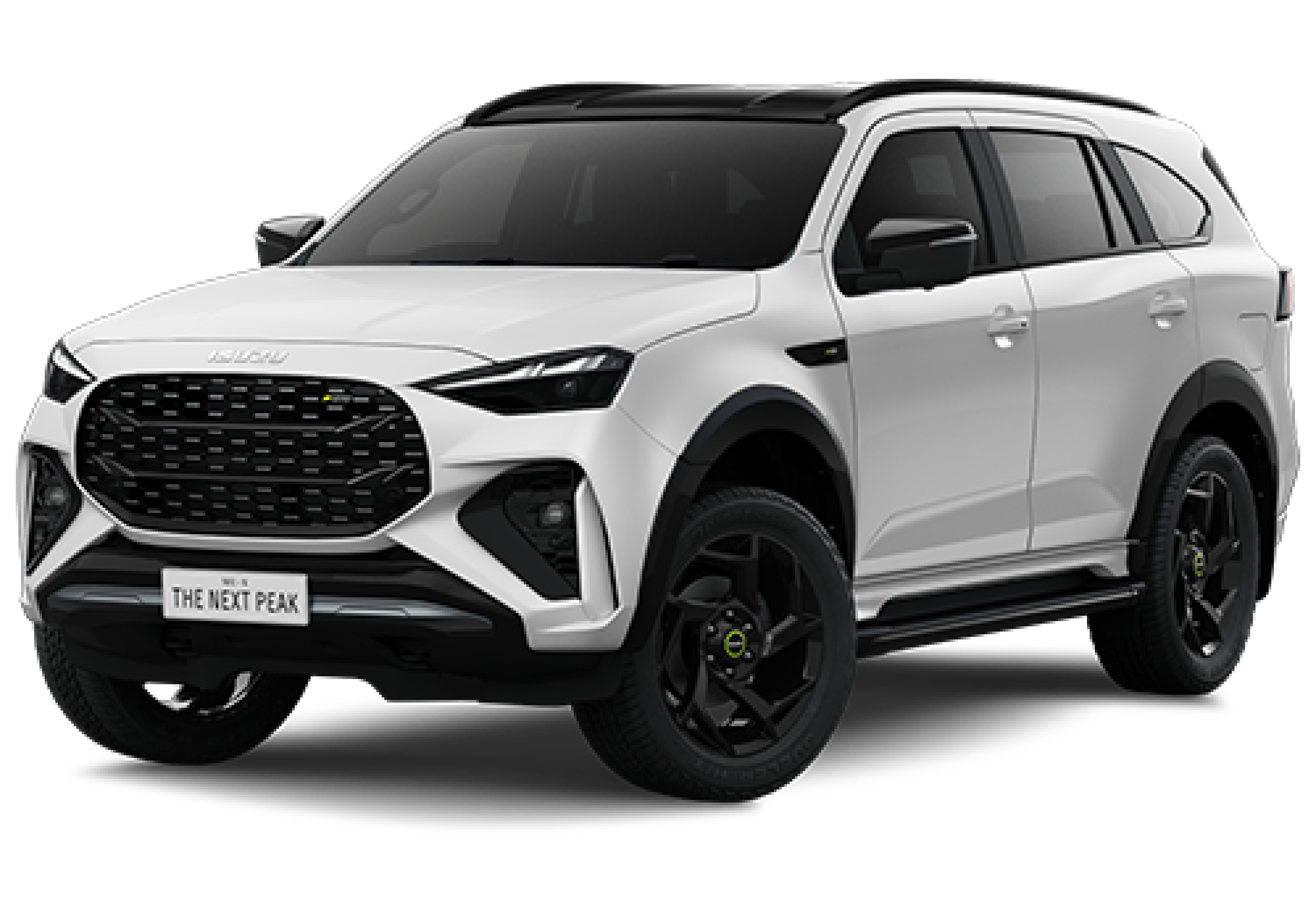
The most obvious change is the refreshed exterior, including sharper, more aggressive LED headlights, a larger grille and air curtain for improved aerodynamic efficiency, while new wheel designs in either 18 or 20 inches also appear. Redesigned taillights are linked by a black bar.
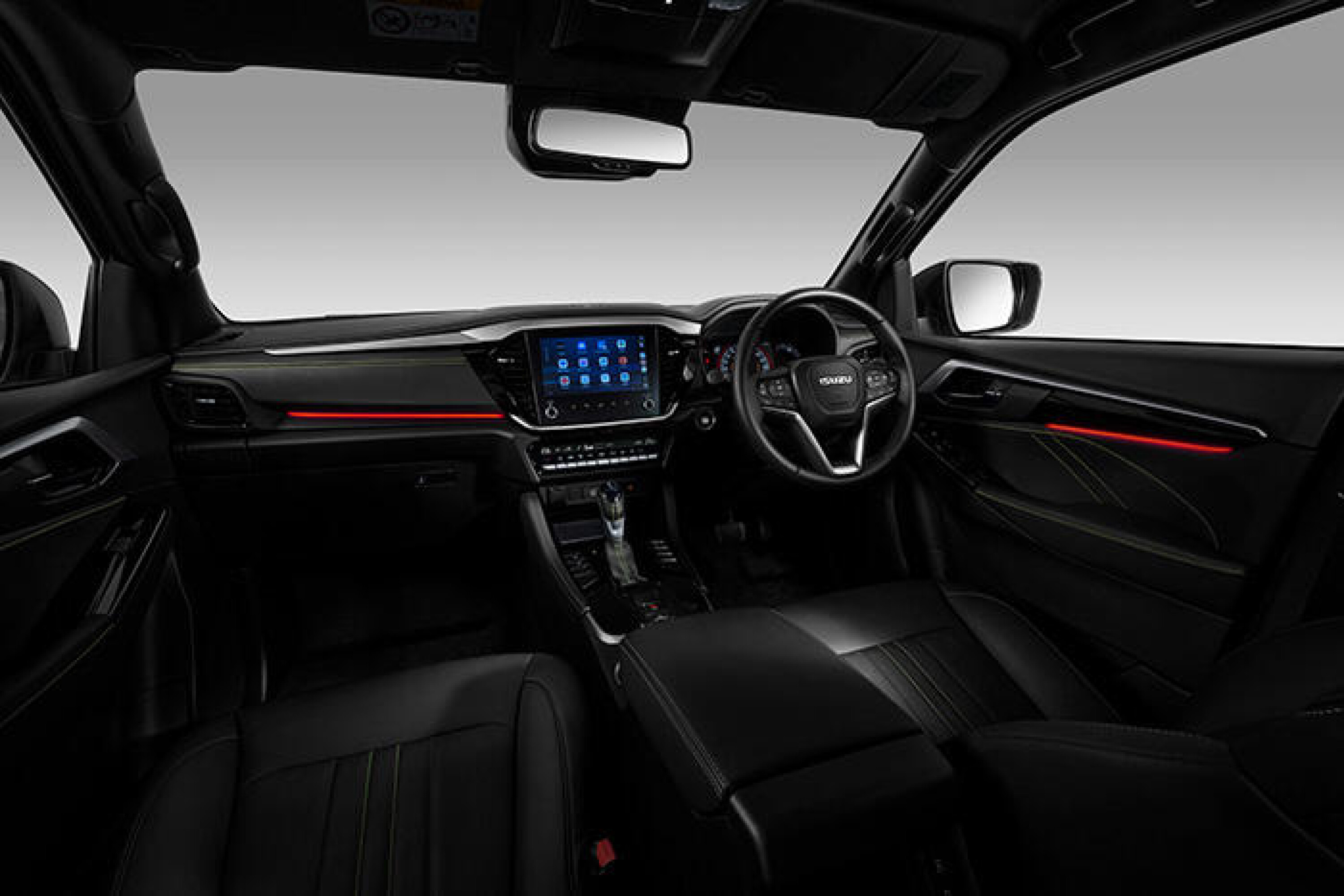
Inside, there’s a larger 9.0-inch infotainment screen with physical volume and tuning buttons, while wireless Android Auto joins the existing wireless Apple CarPlay capability.
USB-C ports replace the prior USB-As and a larger 7.0-inch digital instrument display now incorporates the speedometer, pushing the analogue tachometer and fuel and temperature gauges to the side.
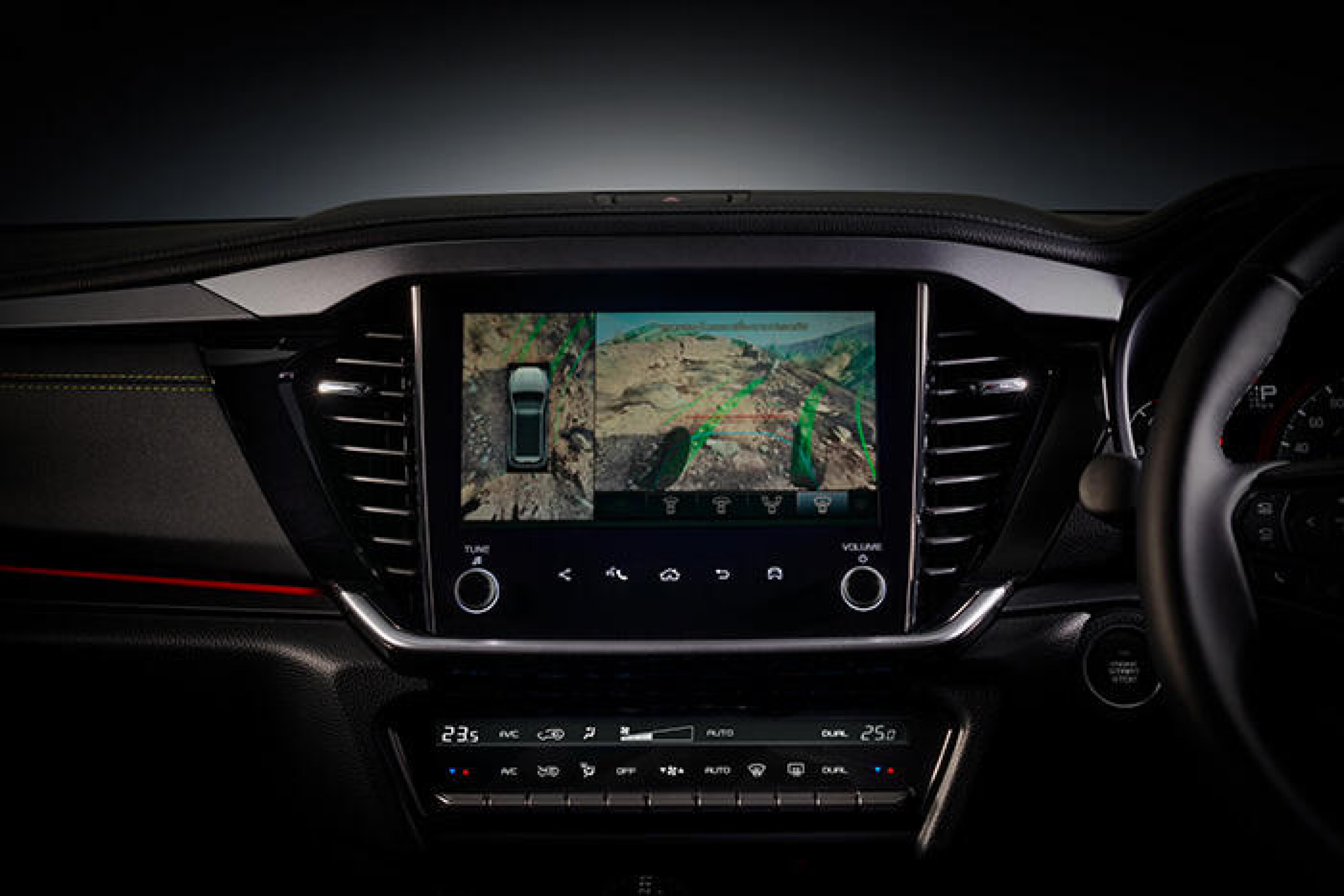
Safety is enhanced by a next-generation stereo camera that improves the existing features, such as autonomous emergency braking and adaptive cruise, while adding new ones including pedestrian detection at junctions, rear cross-traffic braking and a 360-degree camera with ‘transparent bonnet’ view.
Speaking of the bonnet, it was expected that under it would remain a choice of the 110kW/350Nm 1.9-litre or 140kW/450Nm 3.0-litre four-cylinder turbodiesels, both utilising a six-speed auto.
However, Isuzu has since announced a new 120kW/400Nm 2.2-litre turbodiesel, a development of the 1.9, attached to an eight-speed automatic. Like the vehicle itself, Isuzu Australia is keeping tight-lipped about the new engine, so it’s unclear whether it will replace the entry-level 1.9 or the much-loved 3.0 in a bid to meet the forthcoming NVES regulations.
We’ll bring you Australian specification and pricing details for the 2025 Isuzu MU-X as soon as they are made available.
The popular Tesla Model Y has finally been given a new look, five years since its American debut and three years after it first touched down in Australia.
The Model Y SUV’s facelift follows the Model 3’s makeover back in 2023, and while it was believed the Y would be given the same look, Tesla has instead invested in a more distinctive design at both ends.
Known online – but never announced – by the codename ‘Juniper’, the Model Y takes a small cue from its wedgerific Cybertruck brother with a slender new light bar up front, flanked by tightly hooked lights.
The actual driving lights, however, are likely to be the more conventional units tucked into the outboard intakes below.
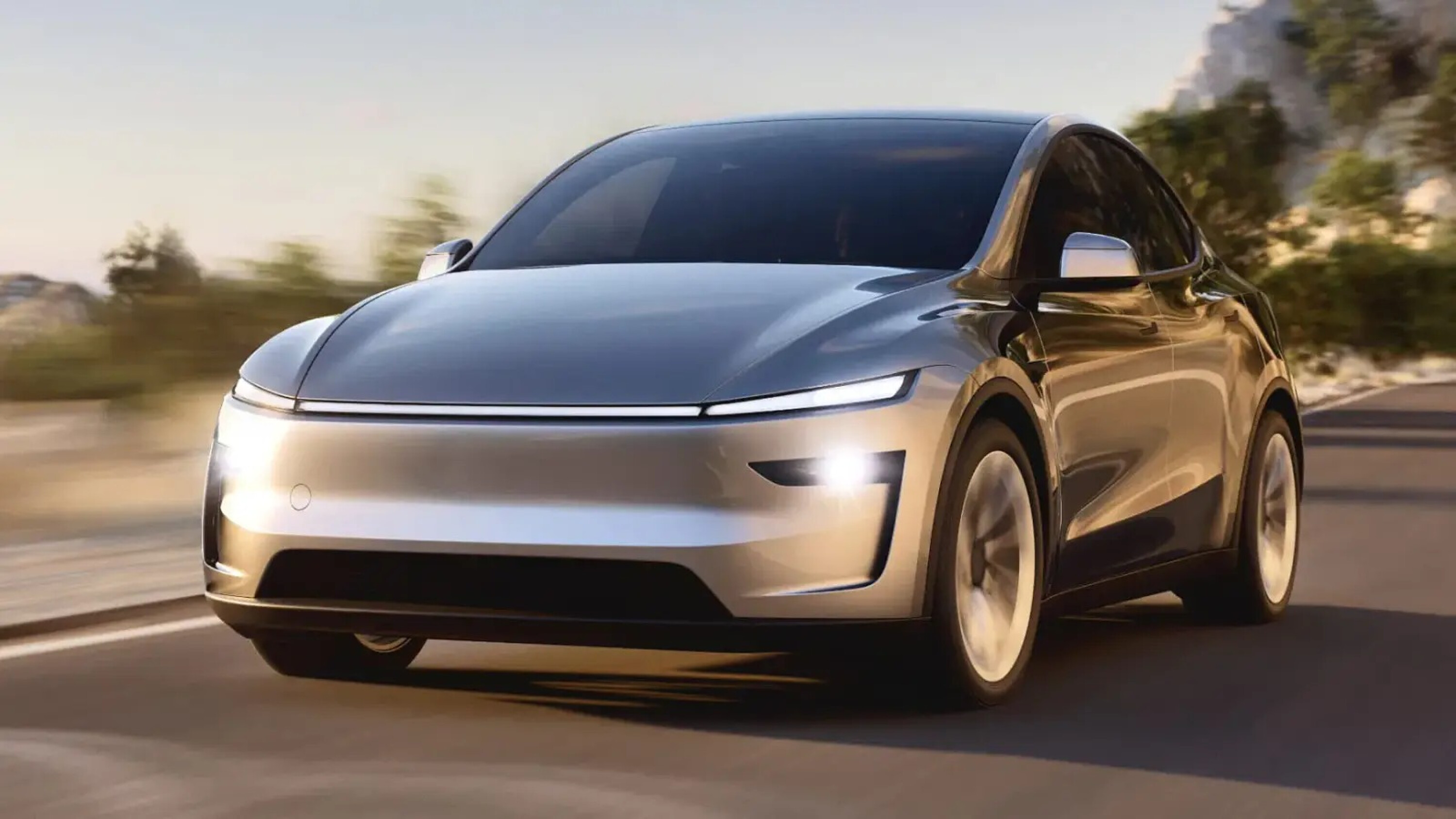
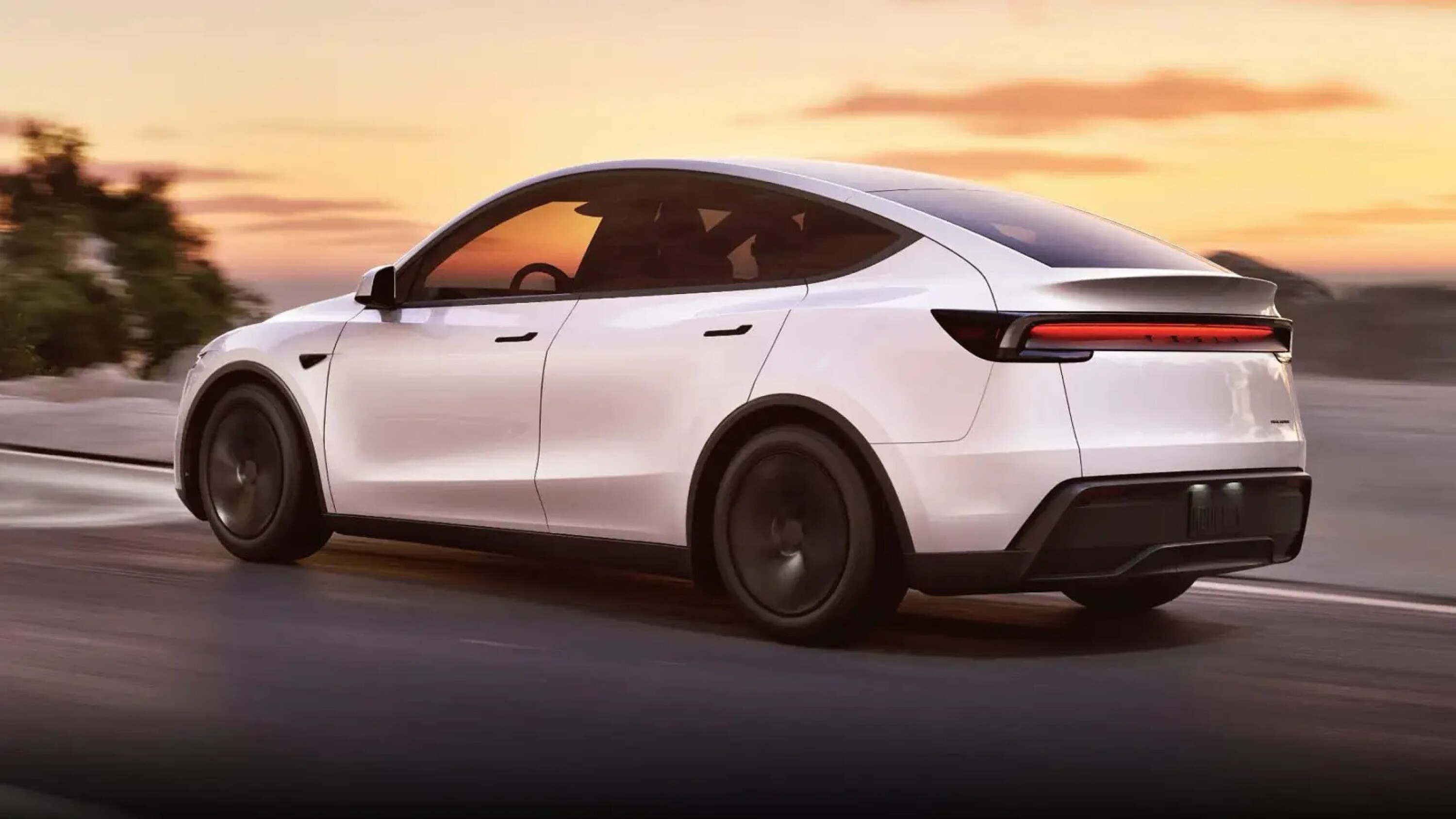
At the rear, the 2025 Model Y wears the same hooked tail lamps as the updated Model 3, but with a large light bar and frame connecting the two corner lights.
Interestingly, the Model Y in these official images wears no Tesla badge at the front, which could mean a ‘debadged’ look will be in for 2025.
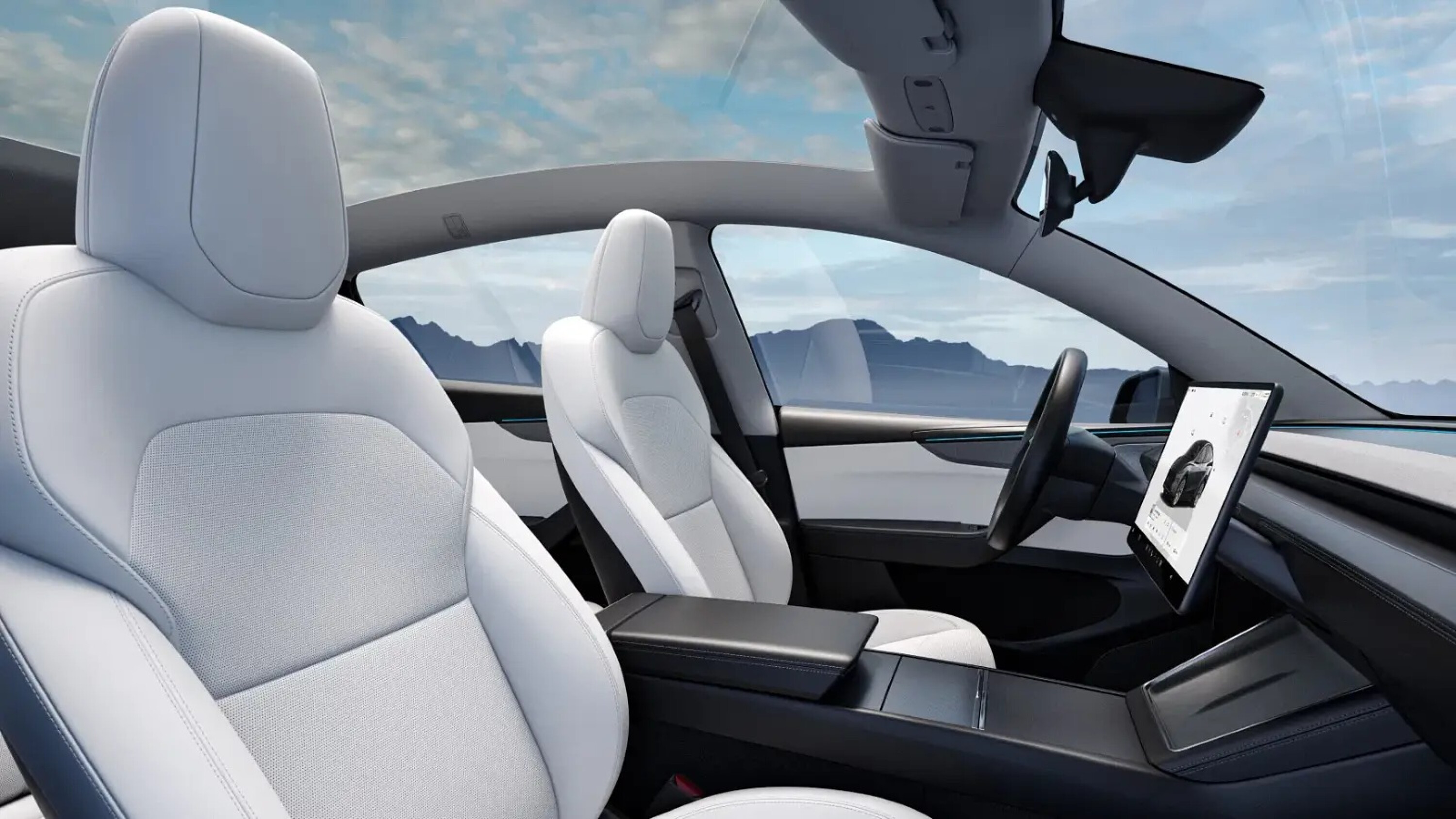
The updated Y’s centre section is unchanged, but moving inside reveals changes more in line with the Model 3.
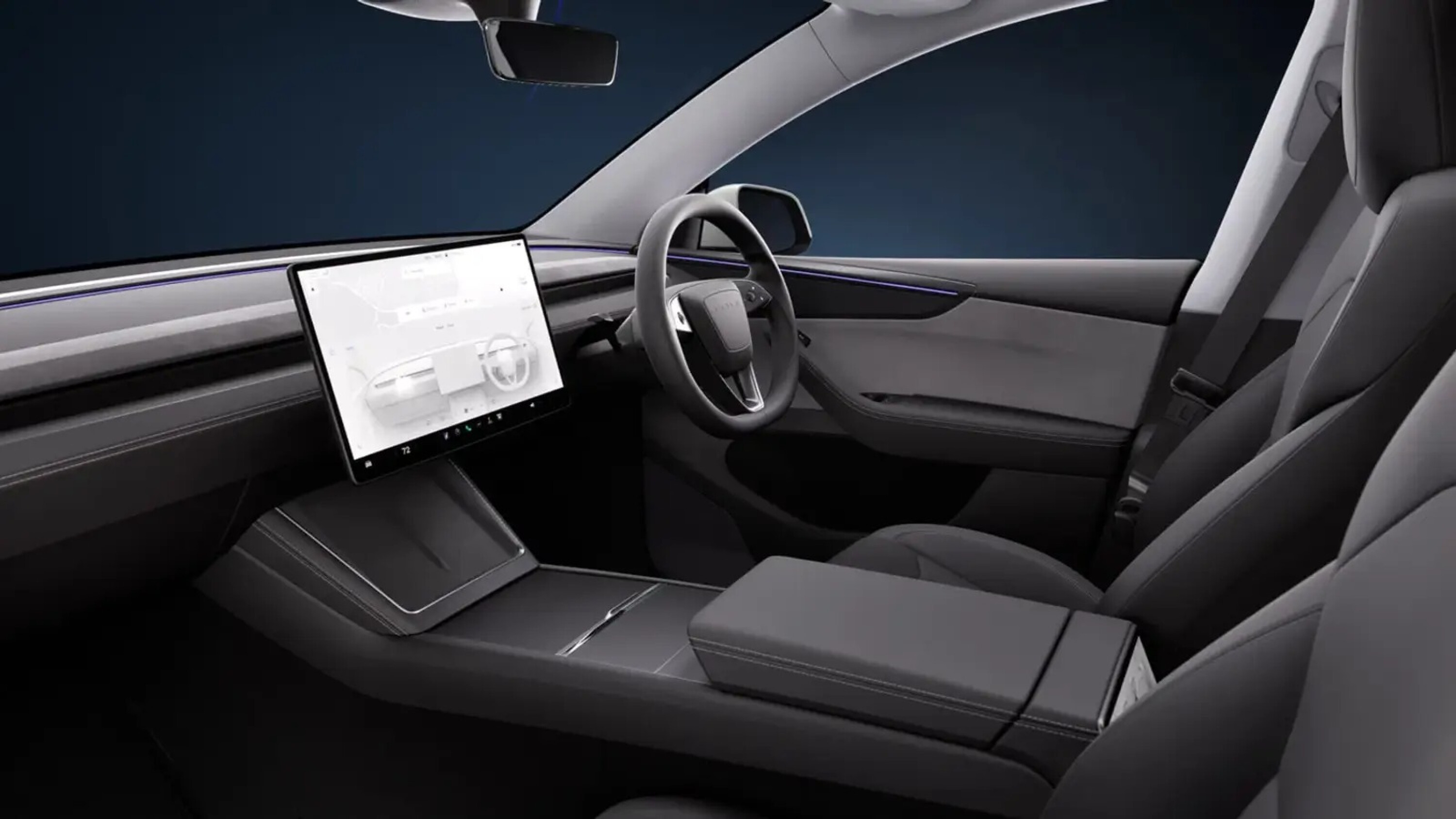
As with the 3, the Y shifts its gear shifter to the touchscreen. However, Tesla appears to have responded to owner feedback by keeping the physical indicator stalk – rather than following the 3 by moving its function to the steering-mounted buttons.
The Model Y’s core drive system is unchanged, which means the regular RWD model gets a 60kWh LFP battery pack while the Long Range packs a 79kWh NMC unit.
Despite this, WLTP-tested driving range in the RWD is improved to 466km (up from 455km) and to 551km for the Long Range (up from 531km).
In Launch Series form – the only models available for now – the Y includes the Acceleration Boost upgrade that delivers 0-100km/h times of 5.9 (RWD) and 4.3 (LR) seconds.
Ride comfort has also been tweaked, again, with Tesla promising a 51% improvement in bump absorption on rough roads.
As for panel gaps – a common point of criticism for Tesla – the company says it has significantly reduced the number of body parts through new casting methods, which should result in more consistent lines.
When will the 2025 Tesla Model Y come to Australia?
The updated electric SUV is available to order in Australia now as a ‘Launch Series’ offering, priced from $63,400 and $73,400 respectively – before on-road costs.
Buyers who opt for the Launch Series are expected to receive their vehicles in May, with metallic paint and 20-inch wheels included in the price.
