More and more ‘legacy’ brands want buyers to know they’re all-in on EVs, revealing not just one concept at a time, but a whole family of futuristic electric show cars.
The likes of Skoda and Lexus have taken this route, and now Kia’s in the game too, with the ‘Kia EV Day’ coming this evening to showcase two new electric concepts.
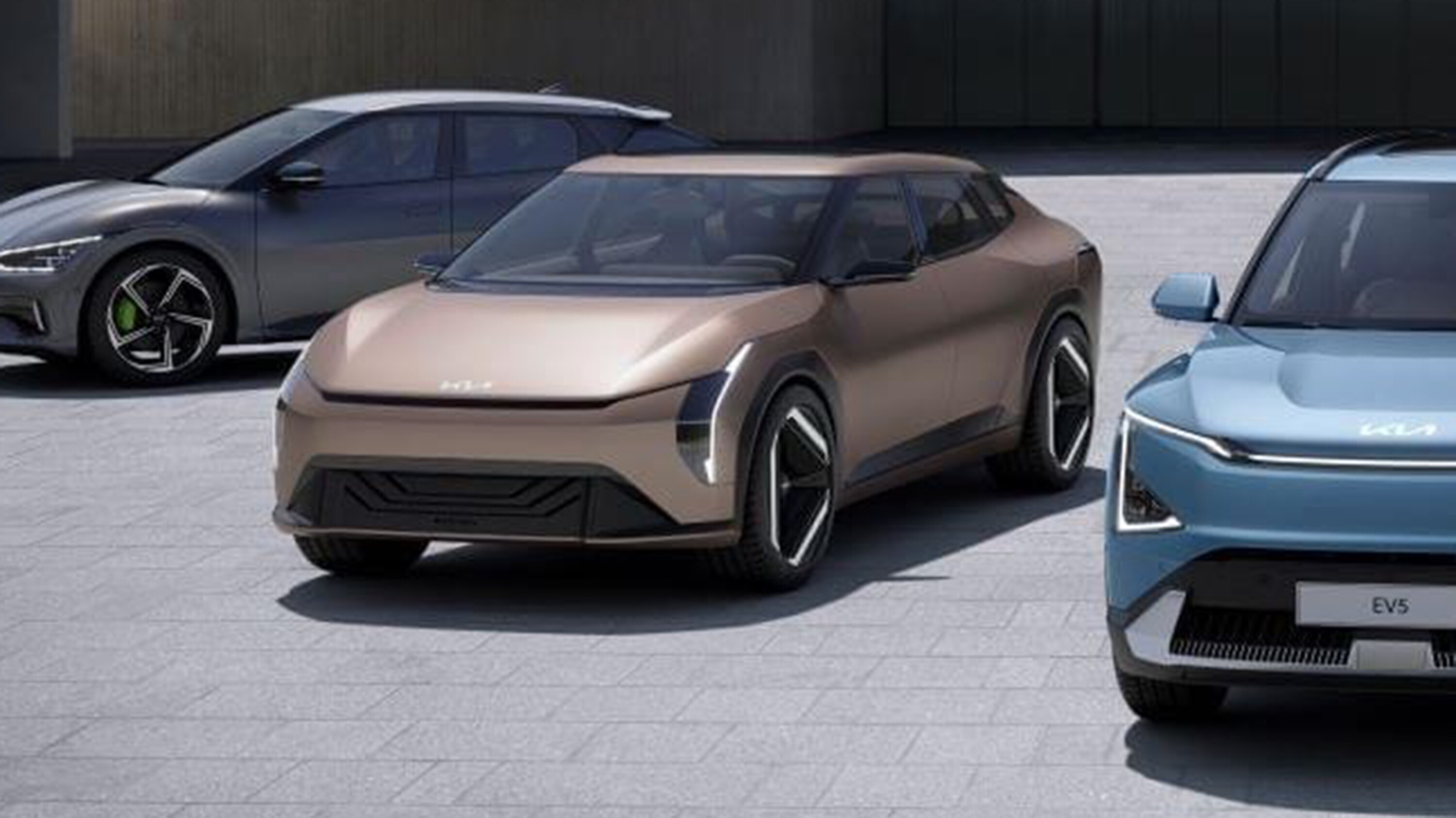
But, too soon, an image of Kia’s new electric family has surfaced online [↗], giving webizens a first look at the incoming stars.
Neither concept wears a nameplate in this image, but we might expect EV3 and EV4 to appear as obvious choices. EV3, in particular, has been touted widely as the next badge to appear, and these spy photos with the UK’s Auto Express [↗] suggest it isn’t far from going on sale.
1
Left of frame, positioned between the EV6 – our 2022 Car of the Year – and the recently unveiled, Sportage-sized EV5, is a bronze number that gives off ‘jacked-up four-door coupe’ vibes.
If ever one mashup of design ideas were ever in vogue, it’s this look right now.
It’s unclear from this image if this ‘EV4′ is smaller or larger than the EV6, but good ol’ foreshortening tells us it’s likely smaller – and that would line up with expectations that this is a Cerato-sized EV.
1
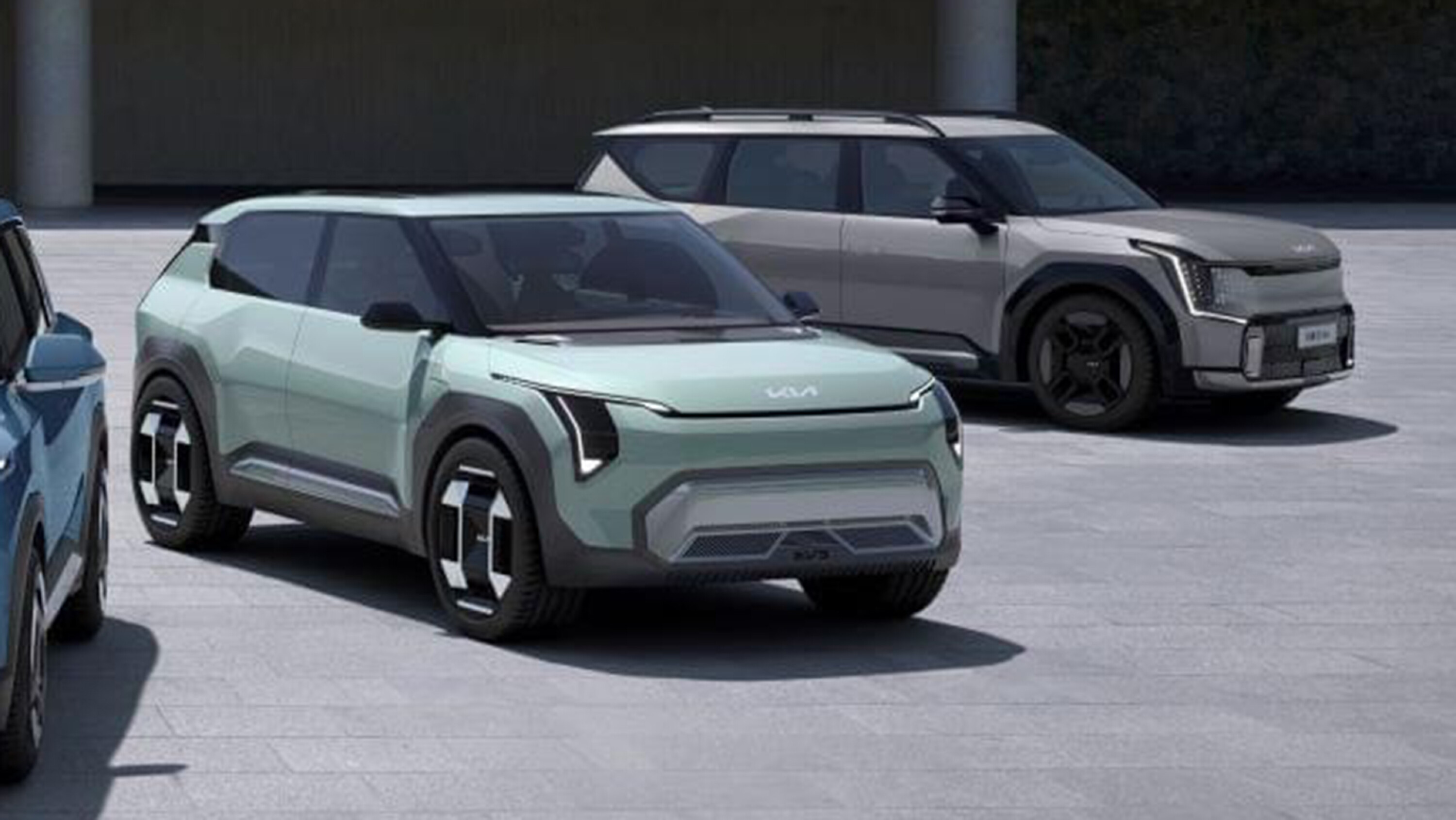
To the right, sitting forward of the massive EV9, is a more conventionally-shaped small SUV, which would effectively replace the Soul EV that was never offered in Australia. (The Niro is notably absent from this group…)
Finished in a light mint green, this concept previews a Seltos-sized (oh lordy, shall we call it the Mentos?) model to sit opposite the Kona EV in the Hyundai Kia group stable.
Unlike the Kona, however, this new small EV is sure to be built on the group’s new, post E-GMP electric platform, to be known simply as eM.
The EV5 will be the first model built on that new architecture, with the EV6 and EV9 riding on the existing E-GMP platform – which is still very well-regarded, and only three years-old.
Models built on the eM platform are expected to be budget-focused – as far as affordability goes in the EV world – with a lower-voltage 400V or 500V electrical system, rather than the fast-charging 800V design found in E-GMP models.
Watch for more on Kia’s future EV plans to be announced later today.
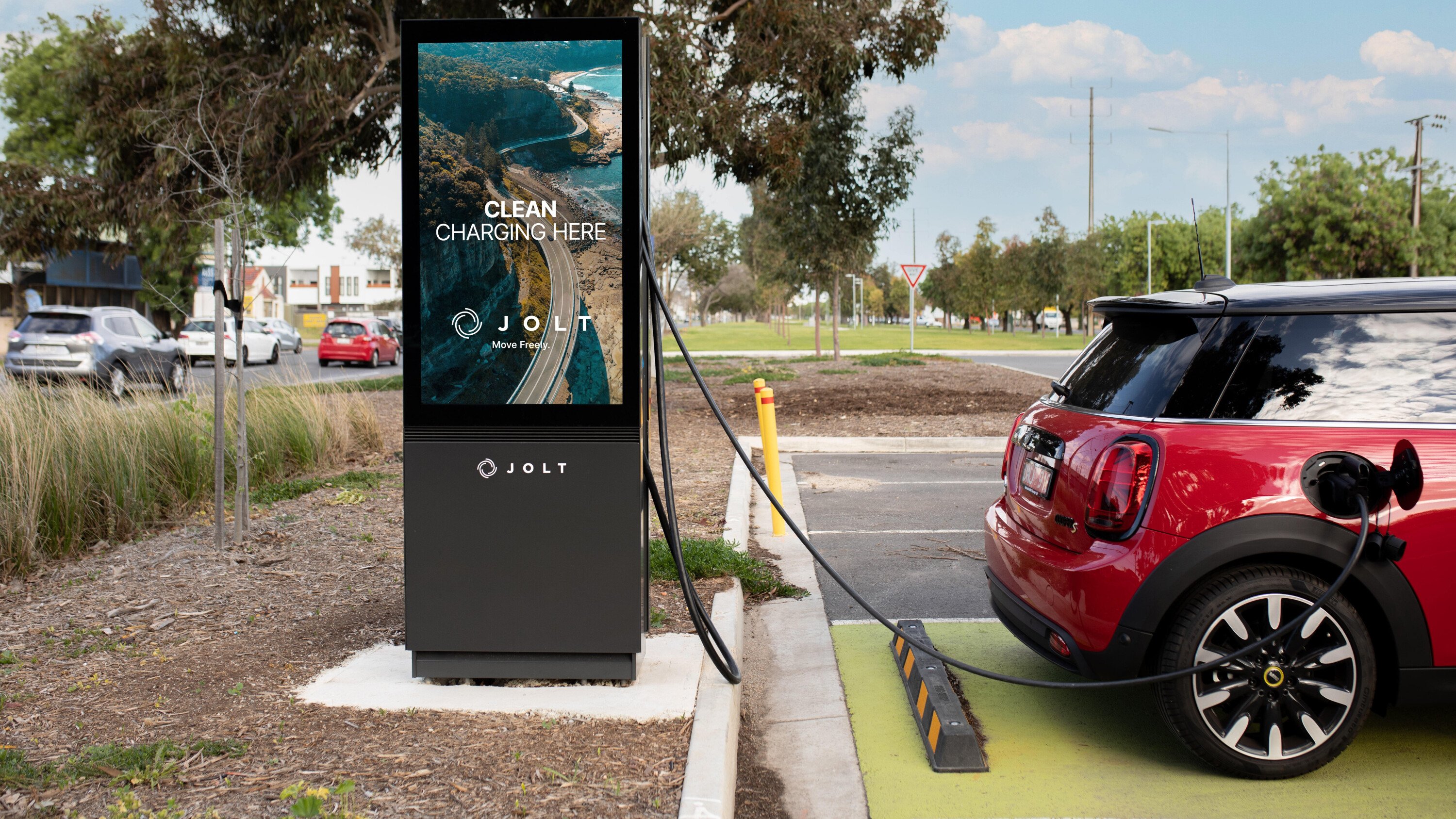
Australian electric vehicle charge point operator Jolt has outlined key lessons in designing effective public charging infrastructure.
The study was part of a two-and-a-half year $2 million trial – with almost half co-funded by the Australian Government’s Australian Renewable Energy Agency (Arena) – involving installing 21 public EV charging stations in South Australia.
High-visibility marked and painted EV charging bays – there was a “significant decline” in internal combustion engine (ICE) vehicles erroneously occupying the designated spaces, compared to only using council-erected signs
Longer cables – varying EV model charge port placements and driver parking behaviour resulted in the original four-metre cables being upgraded to seven-metre units in order to reach vehicles
Wheel stops – helped prevent collisions with charging equipment and improved alignment with the charging station
Remote monitoring – allowed Jolt to check its network performance, conduct diagnosis and maintenance, and improve its services such as predicting peak demand periods which “offers opportunities to integrate renewable energy sources”
Customer service – providing customers with information, such as frequently asked questions, troubleshooting instructions, and how-to videos reduced the number of customer support contacts
Some Tesla Supercharging locations in Australia have removed the wheel stops instead in order for its short-cabled V2 and V3 stalls to reach non-Tesla EV models at select sites, but is expanding its latest V4 model globally with longer cables.
It uniquely converts some streetside electricity power boxes and displays digital advertising to offer free charging for the first seven kilowatt-hours (kWh) per day.
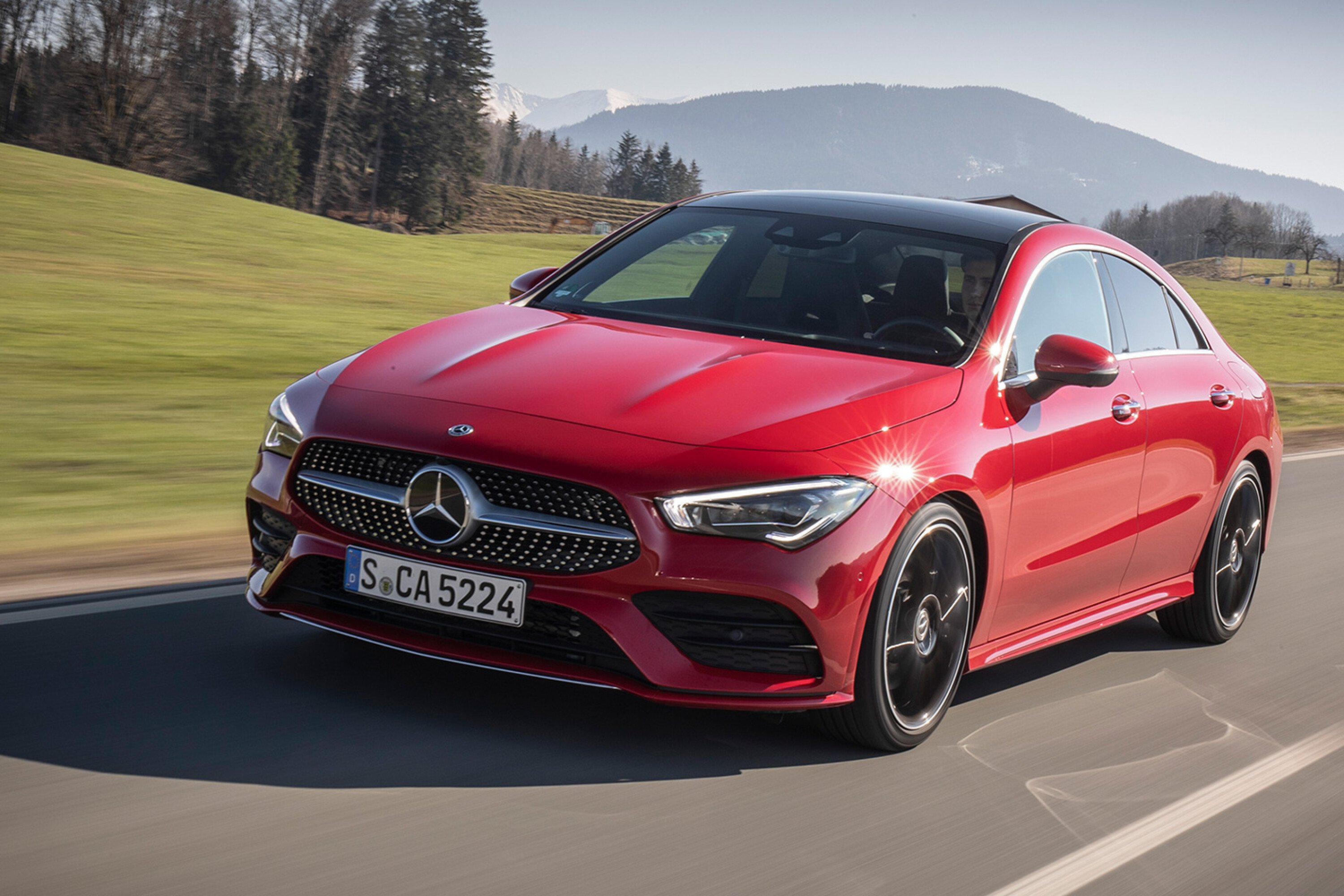
Looking as clean and fresh as it does today, you might be surprised to recall that the current CLA has been around since 2019 – and that it’s based on the first-gen CLA from 2013.
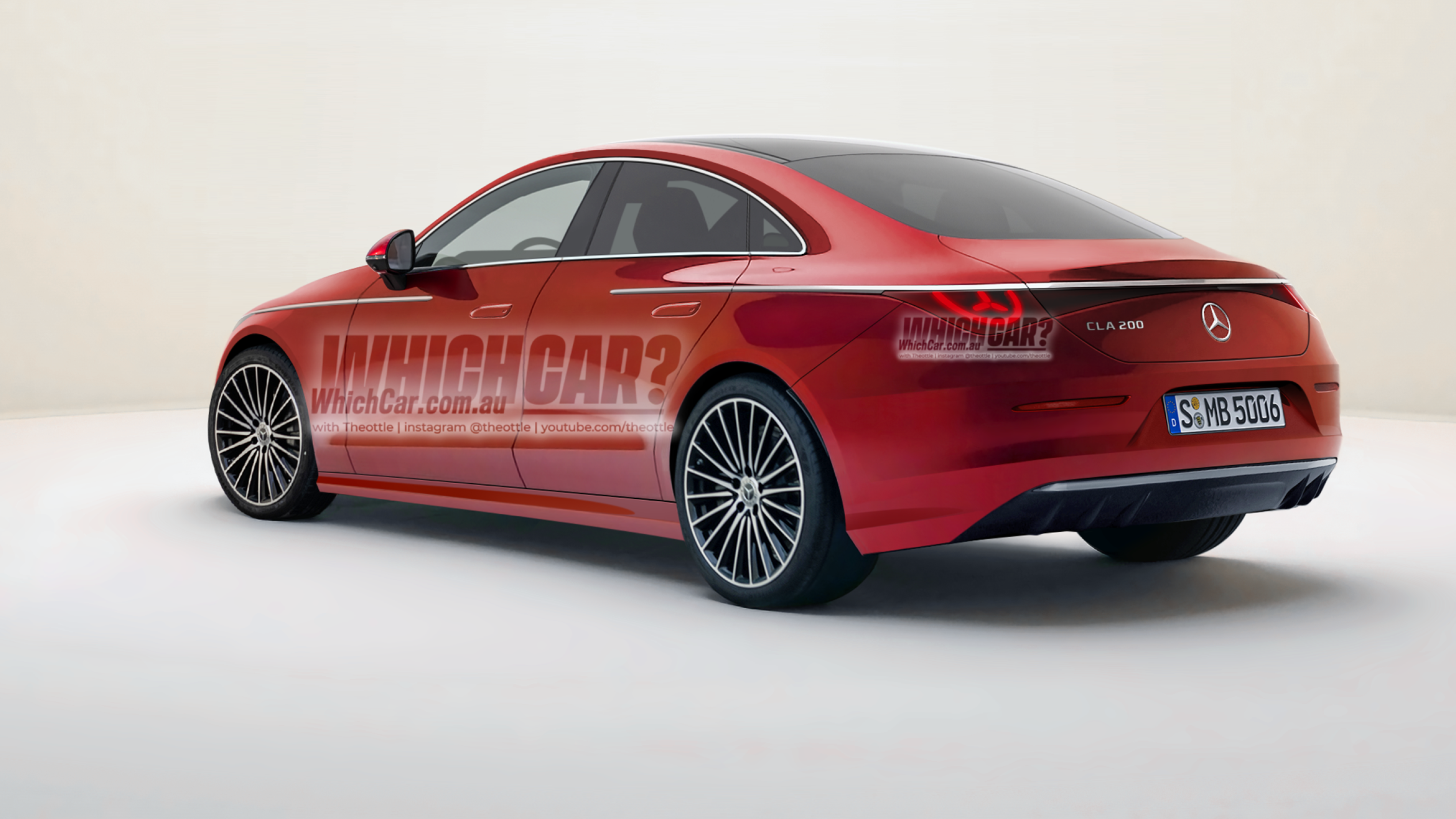
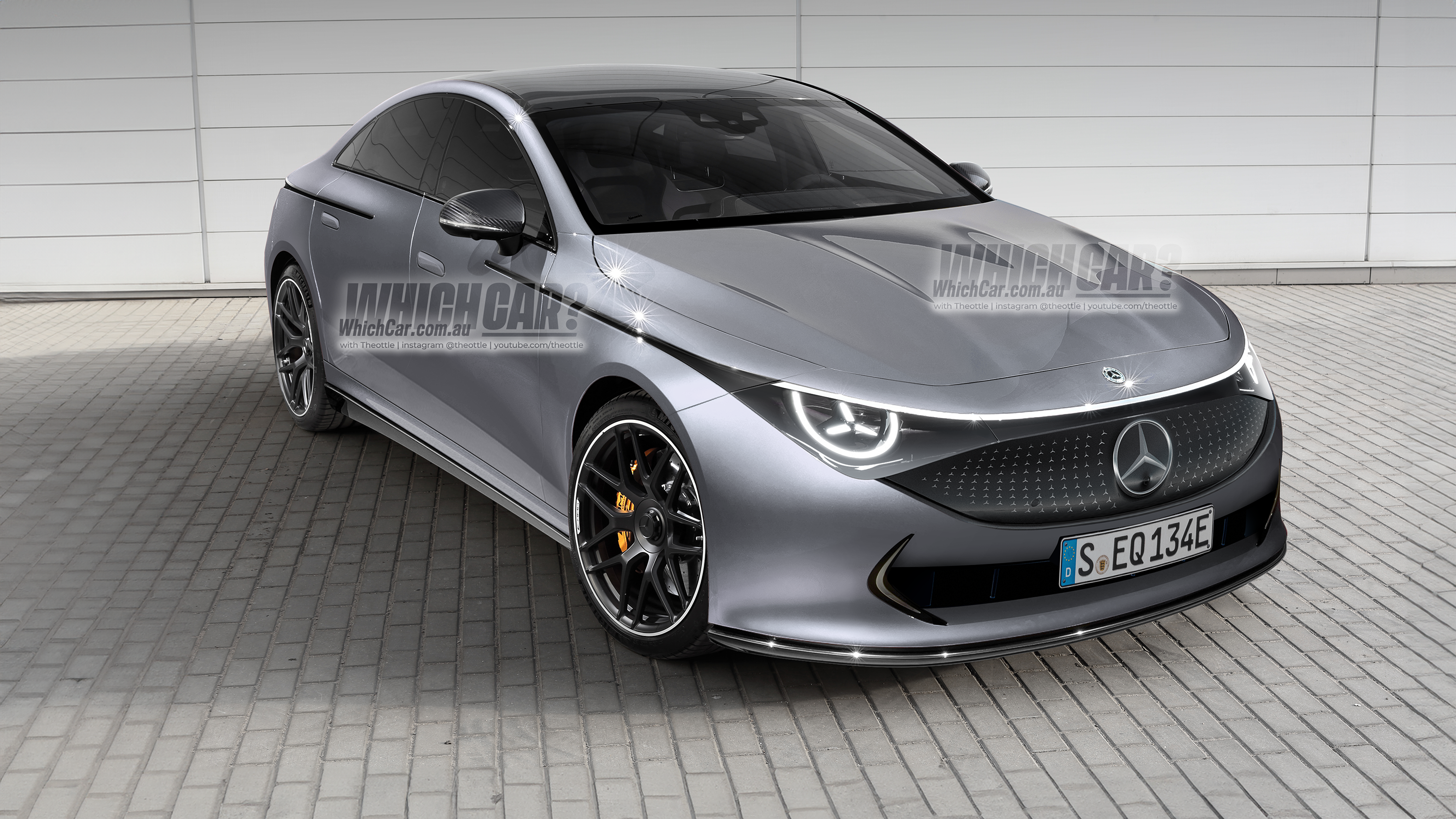
It’s not surprising, then, that Mercedes-Benz continued with the CLA sedan’s basic theme and form for the 2023 Concept CLA, smoothed, modernised, and adjusted to fit the new Mercedes-Benz Modular Architecture, with a smattering of concept car baubles and frippery.
As concepts go, Benz says this take on the CLA is a “close-to-production insight into the upcoming family of vehicles that stands at the gateway to the brand”.
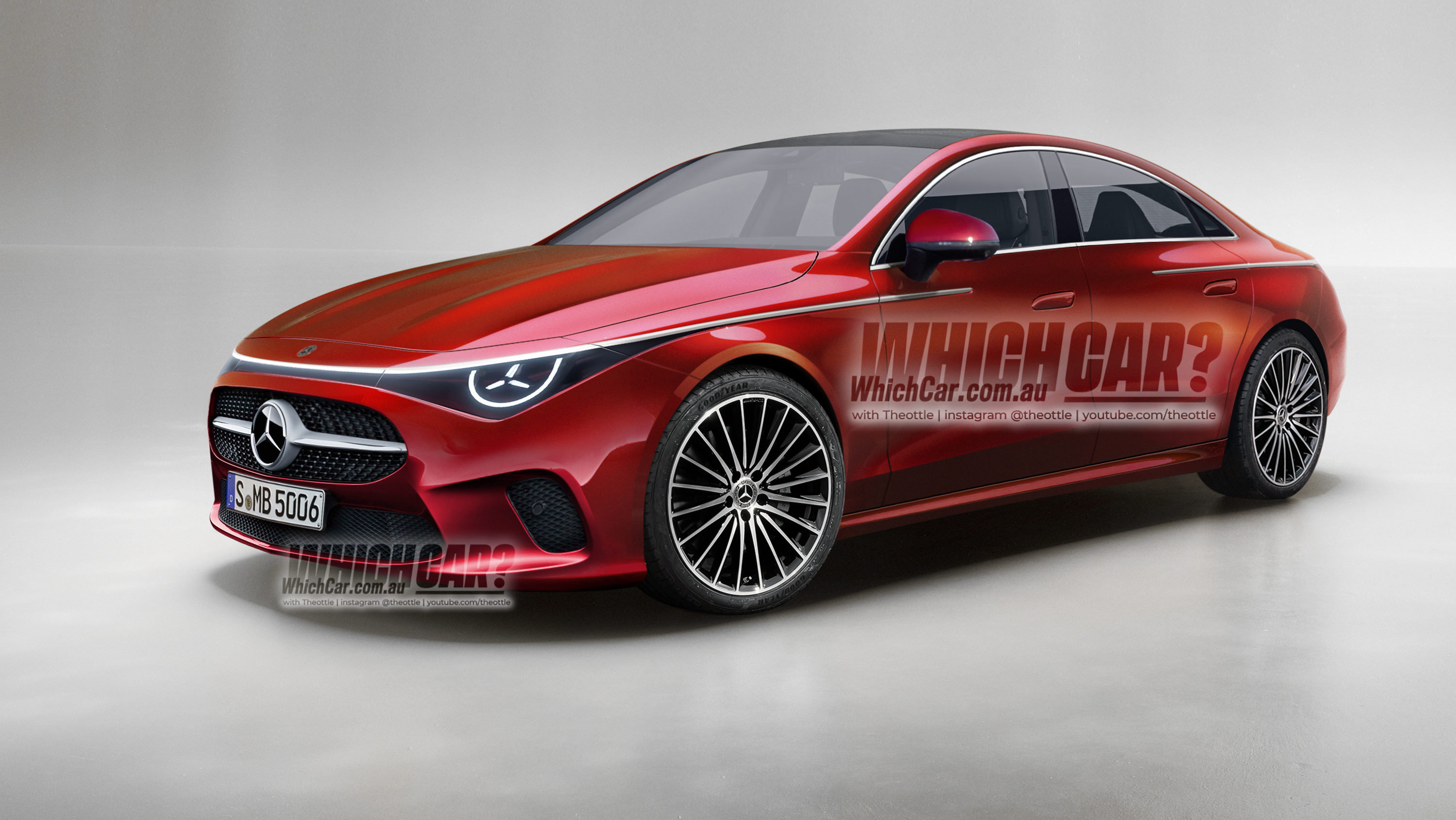
To get it there, our CGI guru, Theottle, has removed the show-car baubles and frippery to reveal how the concept design will likely translate to the cars we’ll be able to buy.
The Concept’s huge ‘A-shape’ grille featuring many, many tiny star motifs is gone. Theo replaced it with Panamericana- and EQ-style grilles, reflecting that the MMA will underpin ICE and EV variants.
1
On the money?
How close these renders are to the actual 2025 CLA might depend on just how much bling the brand’s design boss wants to show off…
Theo’s interpretations are less confronting and polarising than the concept, but Mercedes design boss Gorden Wagener reckons the “star motif [repeating] as animated light bands in the A-shape grille design […] are defining features of our future look,” so who knows? Maybe the CLA show car’s grille is closer to the final design than one might expect.
In the transition to a more market-ready look, Theo has replaced the wheels and roof of the concept – both of which featured many, many tiny star motifs – with cleaner, less detailed and stylised items.
1
Are we looking at new brand-wide signature elements?
Interestingly, Theo’s interpretation retains the star motif headlights and taillights – these would be the smallest headlight globes in production that I can recall. (In Theo’s defence, I asked him to keep these! – Stevo.)
He’s also kept the chrome strips over the swollen wheel arches, which could become a signature of several future M-B models. We’ll see how that bet pays off…
1
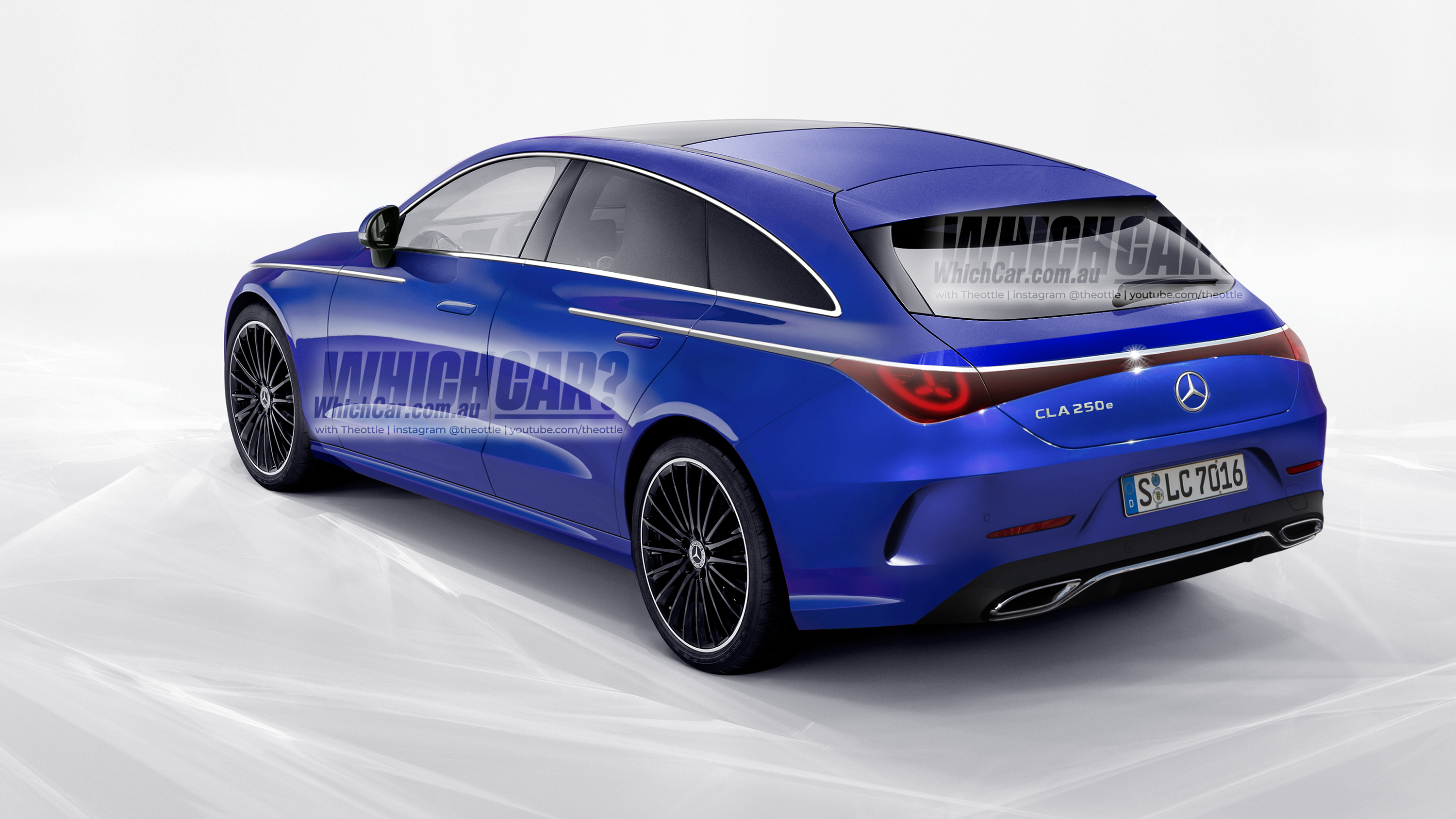
Kombi-Fanatiker, rejoice!
A new MMA-based CLA Shooting Brake wagon has also been confirmed, and Theo has had a crack at that one, too. If you need to transport something fancy, clean – and quite small – this could be a good option.
1
The CLA has been hugely successful here and abroad. Has Mercedes-Benz done enough with the 2024 model (as rendered by Theo, at least) to continue that success? Or should they have moved the game on a bit more?
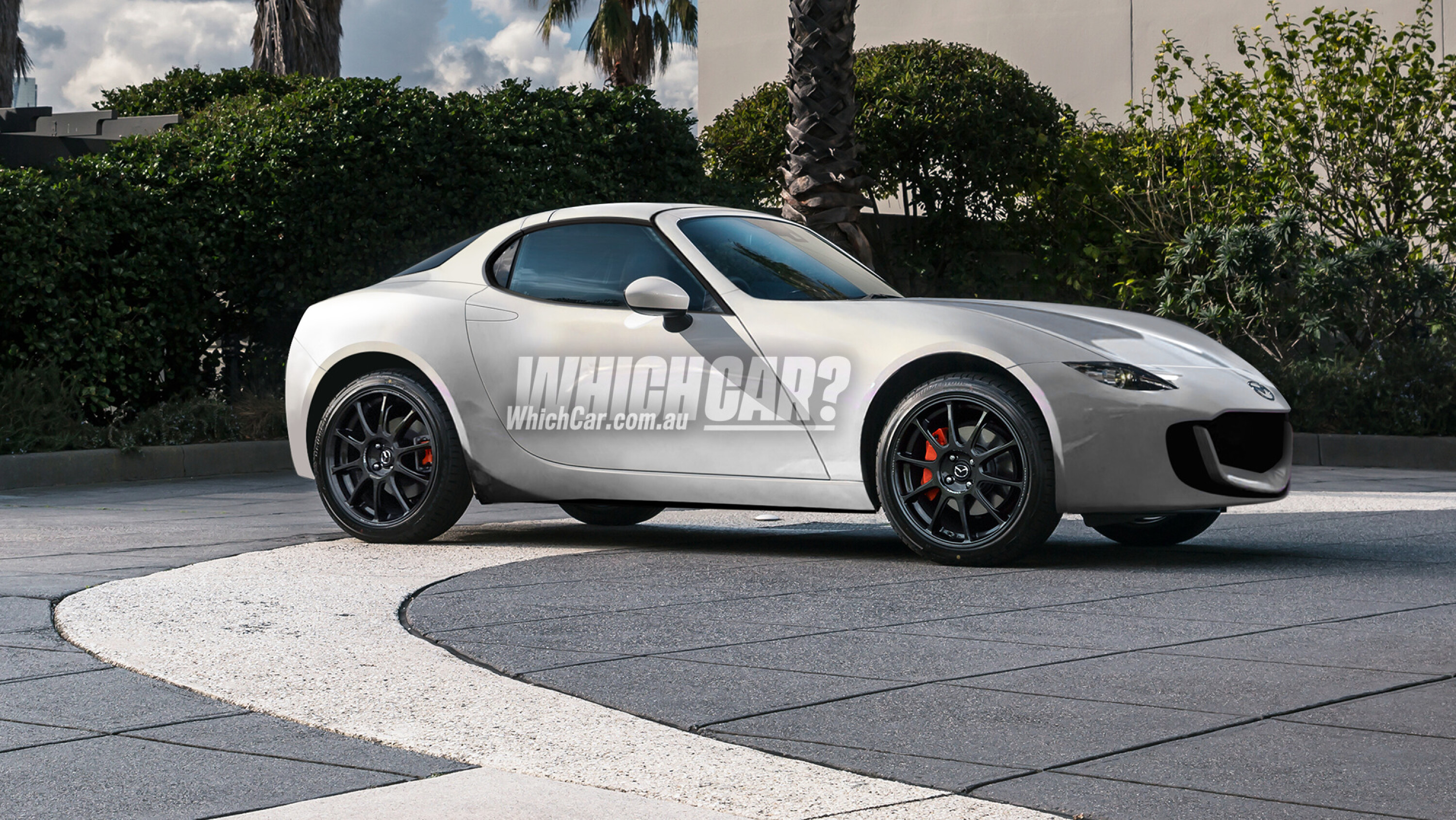
Mazda’s presence at the 2023 Japan Mobility motor show opening on 28 October will be pitched at enthusiasts via its iconic MX-5 sports car.
The Japanese brand has stopped only one step short of confirming the concept on show – likely a development of November 2022’s Vision Study – previews the next-gen ‘NE’ MX-5.
However, with the brand’s stand built around the “love of cars” in the future and the new concept “designed to symbolise the exhibit theme”, a new-gen MX-5 is a fair assumption.
Visually, the teaser image’s rounded LED taillight signature and unique sports car rear proportions tie it to both the Vision Study car from late 2022 and the ND MX-5.
It’ll be joined on the stand by a first-gen ‘NA’ MX-5, a two-thirds scale roadster for kids to enjoy, the recently updated ‘ND’ MX-5, and a hand-control version of that car.
Mazda has previously told Wheels it’s looking into how to effectively electrify the next-gen MX-5.
Given Mazda’s current technology, it’s unlikely to be a fully electric sports car like the MG Cyberster. We also know it won’t use the CX-60’s 3.3-litre inline-six.
Instead, a version of an inline four-cylinder petrol engine with a hybrid boost, or perhaps a down-sized three-cylinder with the same tech, is more likely.
“It will, at the time, be some kind of electrification so we need to investigate the most appropriate strategy for the future MX-5 which will not betray our passionate fans’ expectations,” Mazda director and senior managing executive officer Yasuhiro Aoyama told Wheels in December 2022.
“The next-generation MX-5 we may have to think about electrification as well there and if that’s the case the car has to be lightweight, of course, and it still has to have an MX-5-ness,” said Mazda design boss Akira Tamatani in December 2022.
“So how can we satisfy both of those things we need to really run a good study on that so we don’t have a clear answer to that yet.”
We assume Mazda has found some clarity on the above statement – all will be confirmed later this month.
Revamped infotainment system with enhanced graphics inside
An extra 60kW and 235Nm for Pro variants to challenge Model Y
More range from the same 77kWh batteries
Further tweaks to chassis and adaptive damper settings
Still due in Oz July 2024
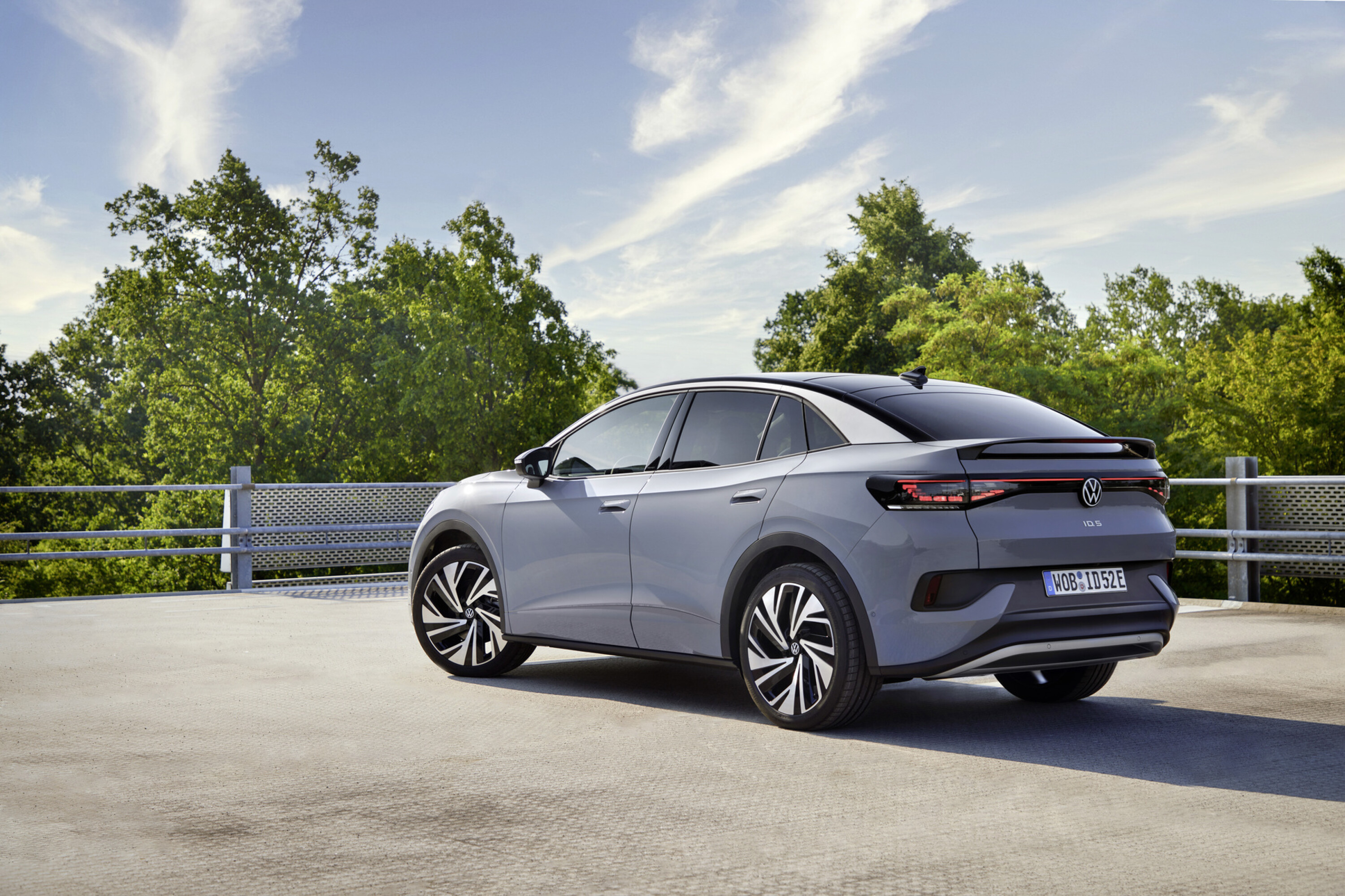
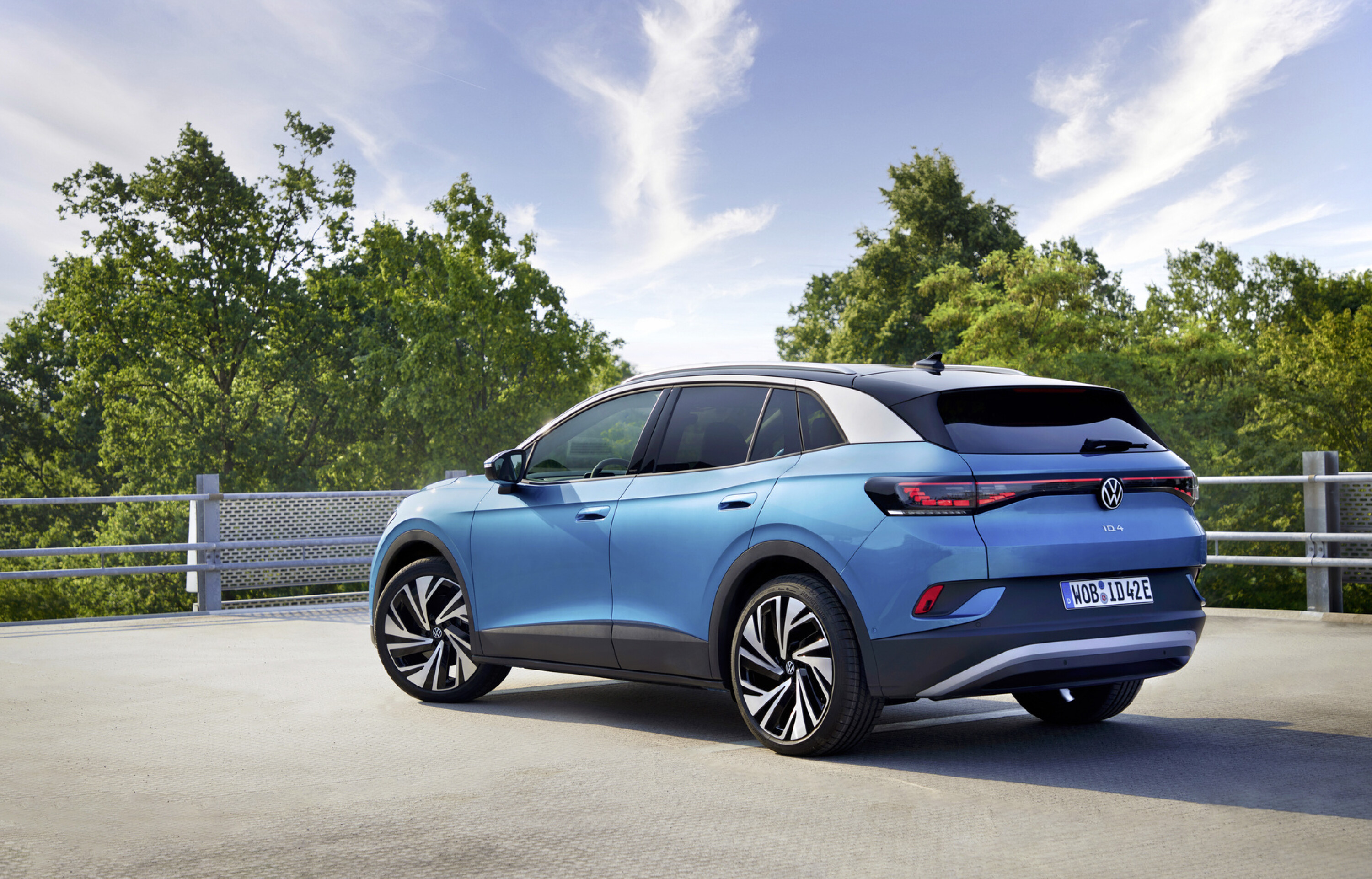
Volkswagen has detailed an early-life tech tweak for its ID.4 and ID.5 electric medium SUV range, just two years after their market launch.
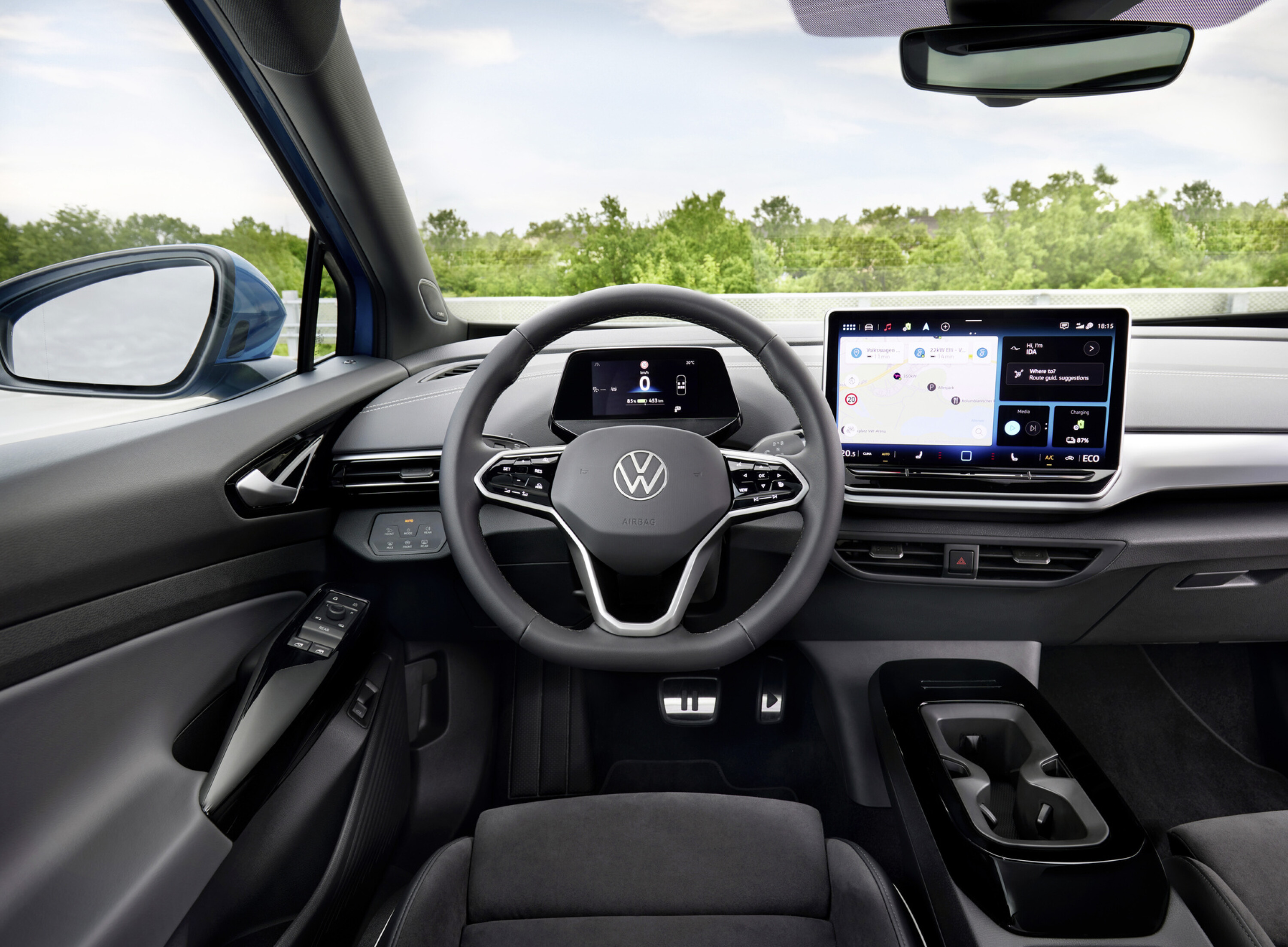
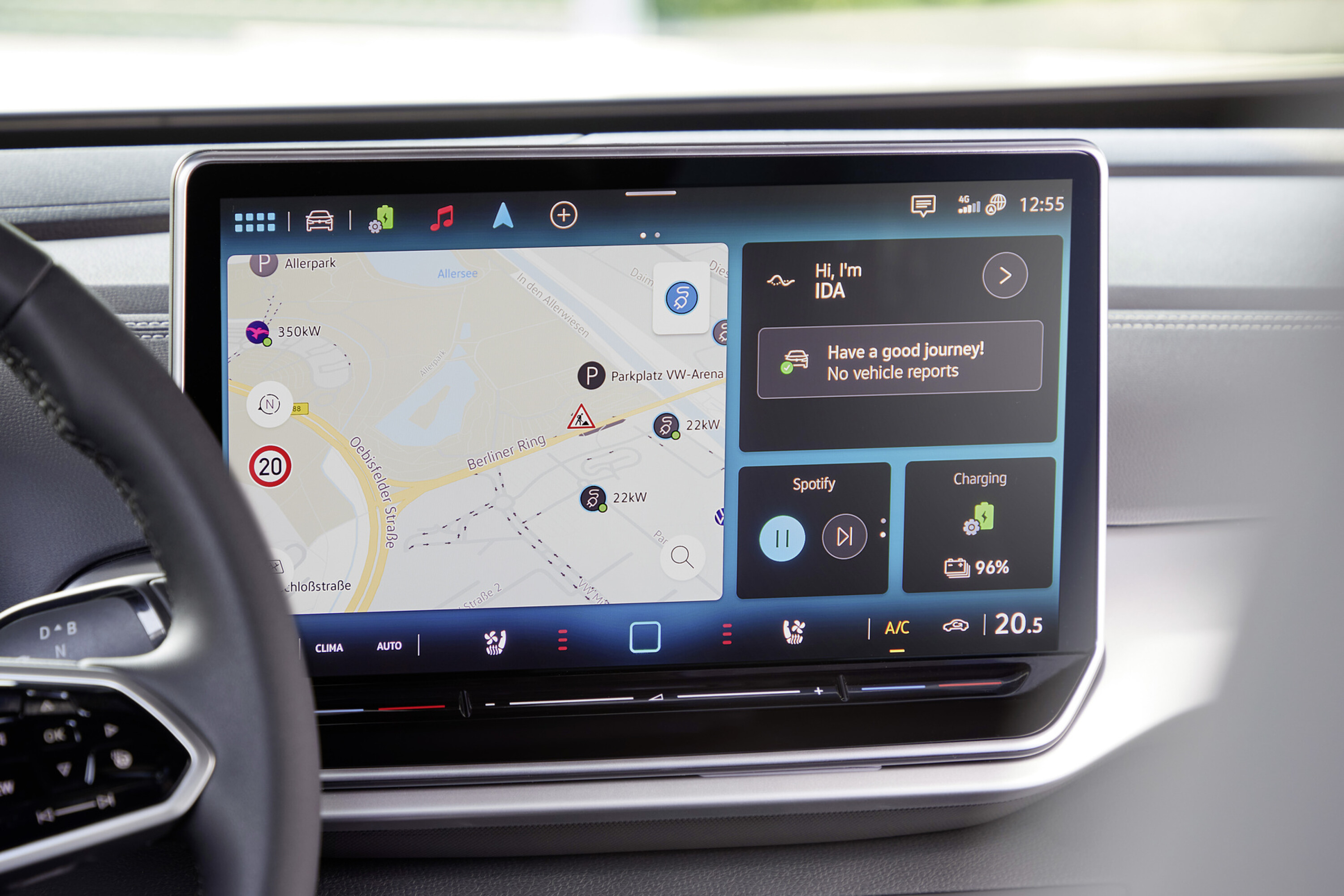
There are no changes to the metal outside. Instead, Volkswagen has redesigned the HMI that now runs through a larger 12.9-inch touchscreen.
VW has also slotted more efficient motors into the Pro and GTX models – as Skoda did with the Enyaq – enhancing outputs (by up to 60kW/235Nm) and improving the WLTP driving range by up to 17km.
The ID.4 SUV and ID.5 coupe SUV will launch in Australia in July 2024 in updated guise with a target starting price of the Pure Performance around $60,000 – or on par with the combustion-engined Tiguan.
“Our customers can look forward to exceptional technical performance with the new ID.4 and the new ID.5. Software and infotainment are state-of-the-art. In addition, there are extensive assistance systems that leave nothing to be desired.
1
“The further improved ID.4 and ID.5 models are at the top of the segment with their new technologies and the acknowledged balance of driving, comfort and spaciousness”, said member of the board of management for sales, marketing and aftersales Imelda Labbé.
This update is crucial for Volkswagen’s performance in Europe. The Tesla Model Y is Europe’s best-selling vehicle this year, proving electric family SUVs have huge sales potential, yet the ID.4 doesn’t even feature in the top 10. VW has even had to scale back production of its electric cars due to low demand [↗].
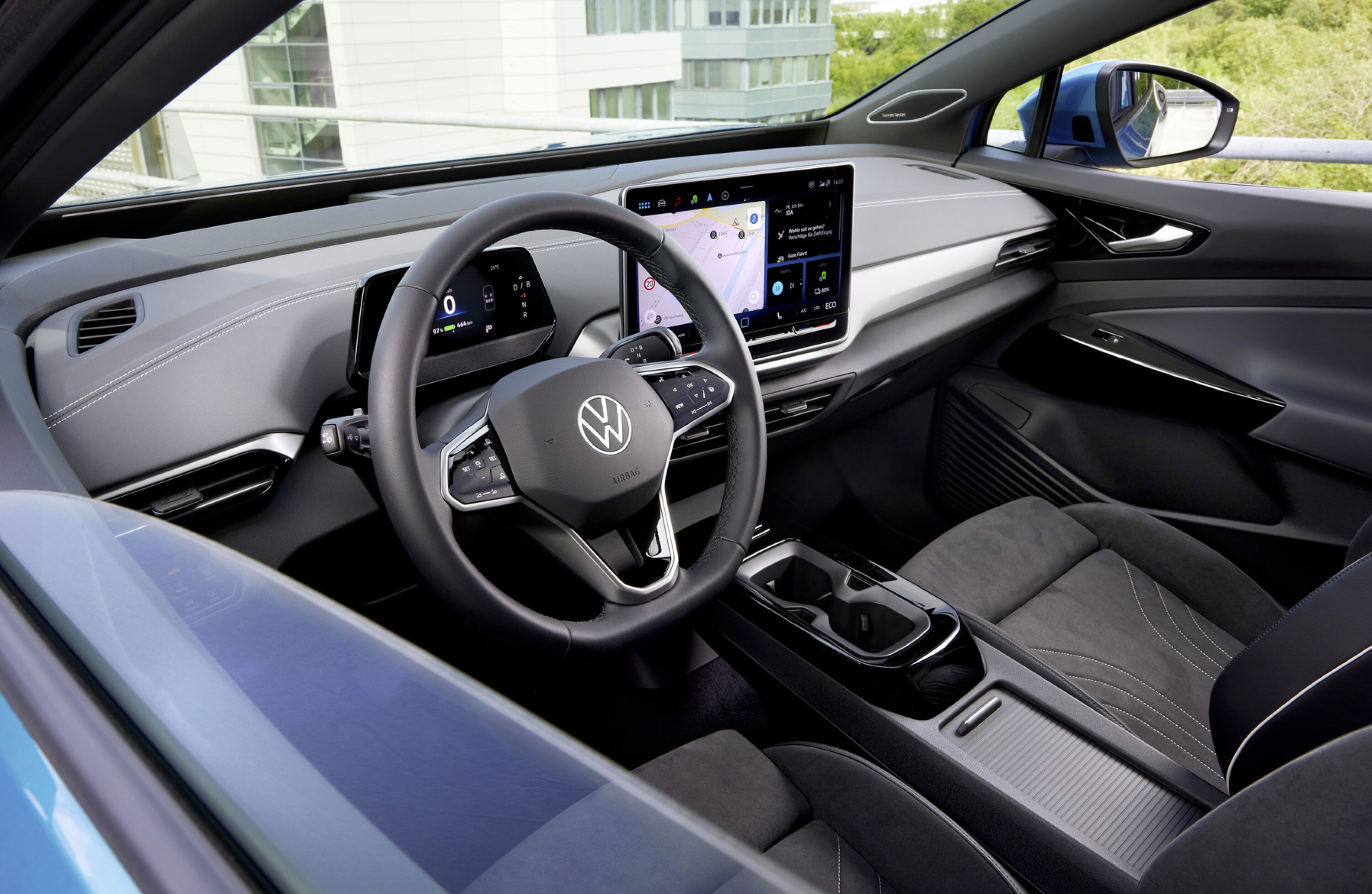
Volkswagen’s calling it a ‘brand new generation’ and it’s built around a new 12.9-inch touchscreen (previously 12.0 inches).
The new software has been designed to be more intuitive to use; starting with illuminated sliders for the HVAC controls, while further settings such as seat heating settings and recirculation look to remain gathered in a persistent bar at the bottom of the screen. There are menu shortcuts at the top right, too.
The head-up display has been revised, as has the ‘ID’ digital driver’s display with the drive-mode selector moved from its awkward position on the cowl to a stalk behind the steering wheel. Touch capacitive buttons feature on the steering wheel, unlike the updated ID.3.
1
VW has put work into the ID.4 and ID.5’s voice control, with more natural responses as well as the integration of online weather information, sporting fixtures, and even stock market prices for conducting business(TM).
A new 10-speaker 480-watt Harman Kardon sound system becomes available with Relax, Pure, Speech, and Vibrant sound settings.
1
New motors improve efficiency and performance
The ID.4 and ID.5 Pure models are unchanged, with a 125kW rear-mounted motor driven by a 52kWh battery for 345km WLTP driving range.
It’s the ID.4 and ID.5 Pro that benefit from most of the changes, with power for the rear-drive variants up 60kW to 210kW, and torque now at a substantial 545Nm (from 310Nm).
The sporty GTX models climb by 30kW, too, now rated at 250kW. This drops their sprint from 0-100km/h to 5.4 seconds – a 0.8-second improvement. Pro 4Motion all-wheel drive variants also output 210kW, up 15kW from before.
Stats
MY23 ID.4 Pro Performance
MY24 ID.4 Pro
Tesla Model Y RWD
Kia EV6 Air RWD
Hyundai Ioniq 5 RWD
Price (before on-road costs)
~$60,000
$72,300
$67,990
$70,500
Battery size
77kWh
77kWh
57.5kWh (estimated)
77.4kWh
77.4kWh
WLTP Range
522km
556km
455km
528km
507km
10-80% fast-charge (DC)
33 minutes (135kW)
Around 25 min (175kW)
25 min (170kW, estimated)
18 minutes (200kW+)
18 minutes (200kW+)
Power
150kW
210kW
Not stated
168kW
168kW
Torque
310Nm
545Nm
Not stated
350Nm
350Nm
1
Despite picking up a bunch more grunt, the more efficient motors also improve range – the ID.4 is now rated at 550km (up 17km) in combined WLTP testing, and the ID.5 556km (up 11km).
Pro and GTX variants fitted with the 77kWh battery are able to charge at 175kW DC rather than 135kW, meaning you’ll be able to add 178km of driving range in 10 minutes at a suitably powerful ultra-rapid charging station.
Finally, the ID.4 and ID.5 benefit from small tweaks to their chassis, with refined adaptive dampers that feature a broader range between full soft and full hard.
Volkswagen Australia is yet to confirm pricing or the exact launch date for the updated ID.4 and ID.5. Expect the range to start as low as $60,000-$65,000 and climb to $90,000 for the flagship GTX grades when they arrive in July 2024.
What does it say about a car when it’s the most popular model on TikTok? If one is posted to TikTok more than any other, should you buy it?
That’s a hard nut to crack without diving into the literally billions of posts associated with cars, but whether they’re lemons or lemonade, these are the cars getting the most traction on TikTok, in specific categories.
The most popular cars on TikTok
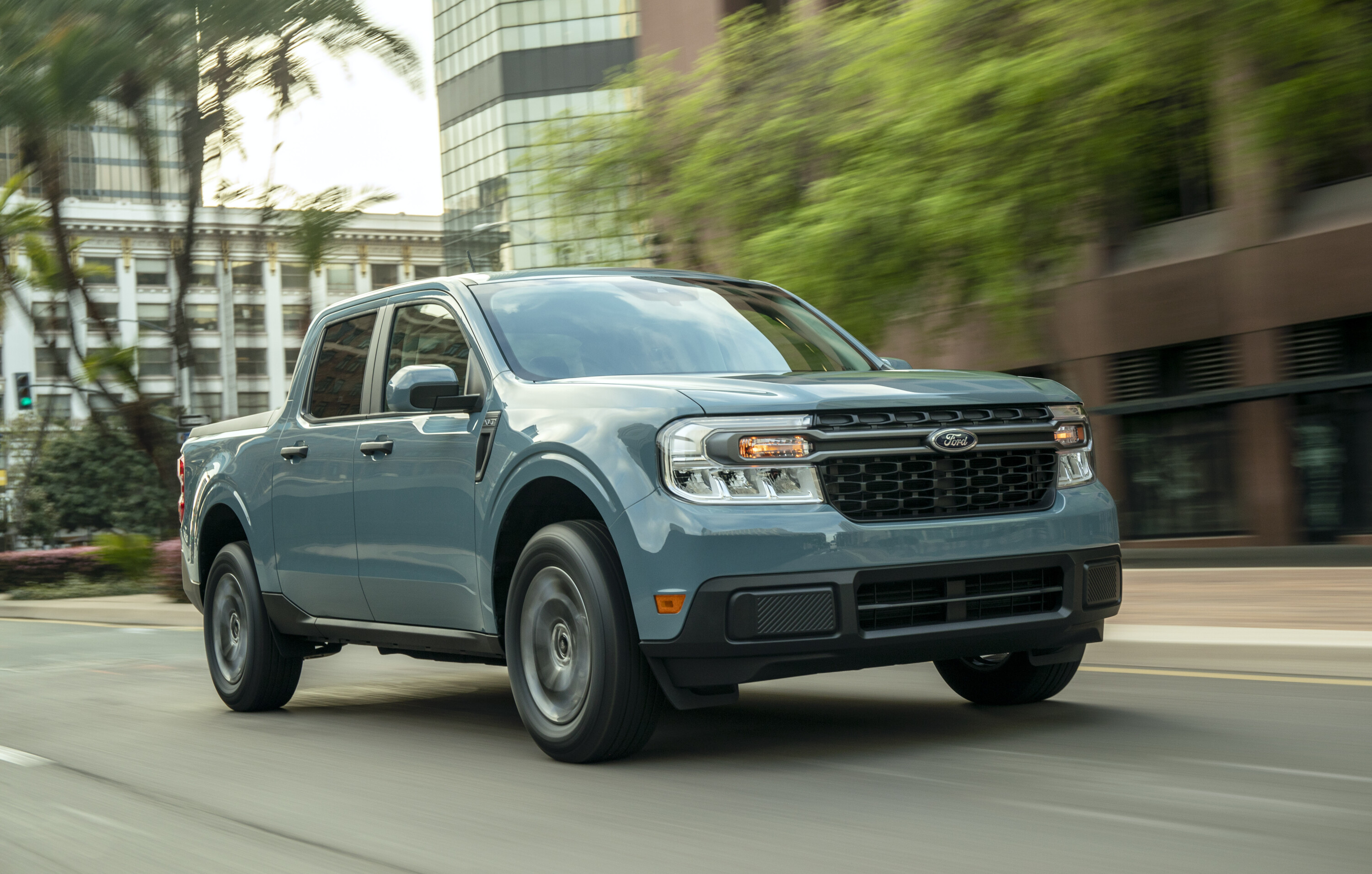
Ford Maverick – 11.3 billion posts
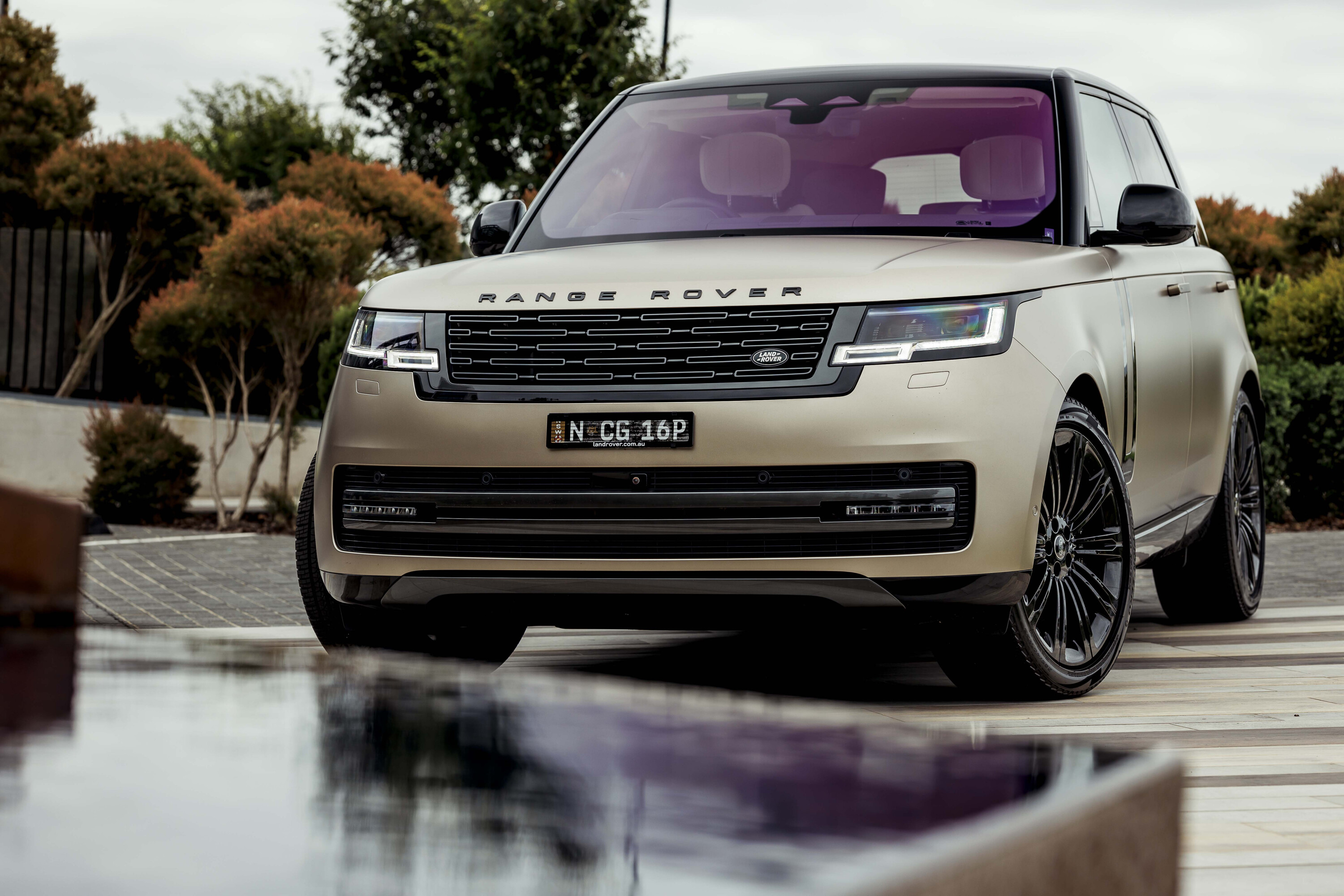
Range Rover – 7.2 billion posts
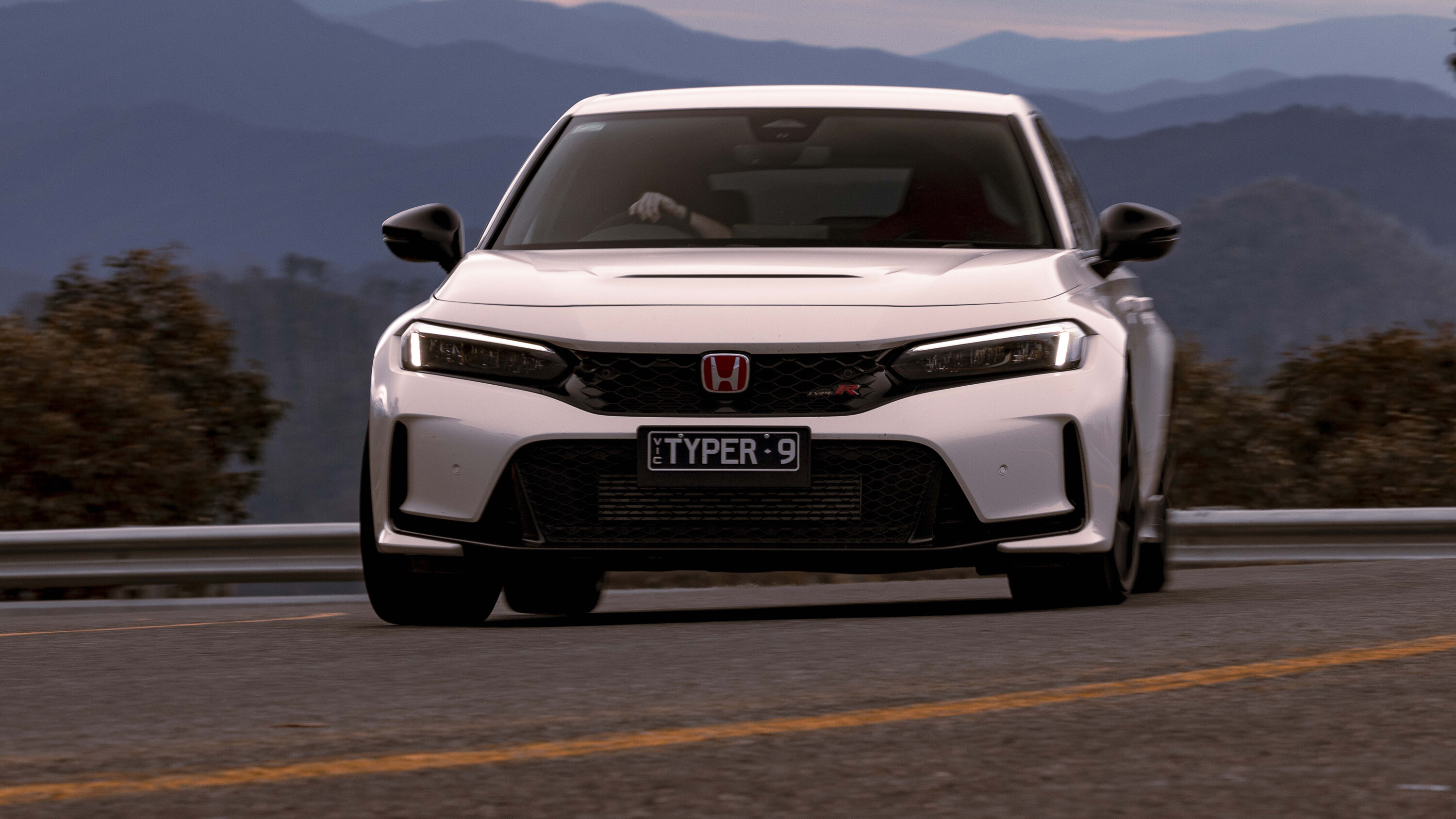
Honda Civic – 7.1 billion
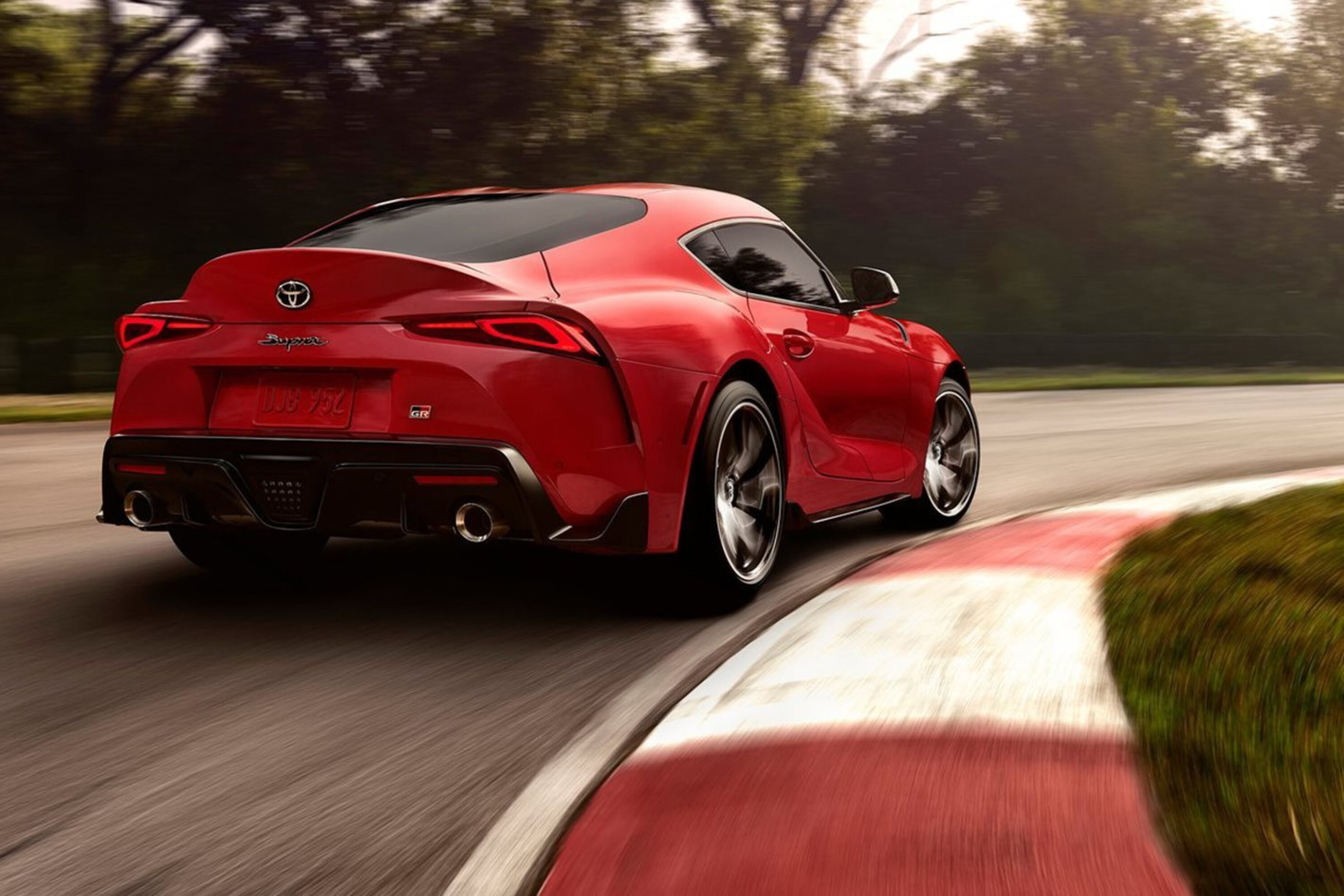
Toyota Supra – 4.1 billion
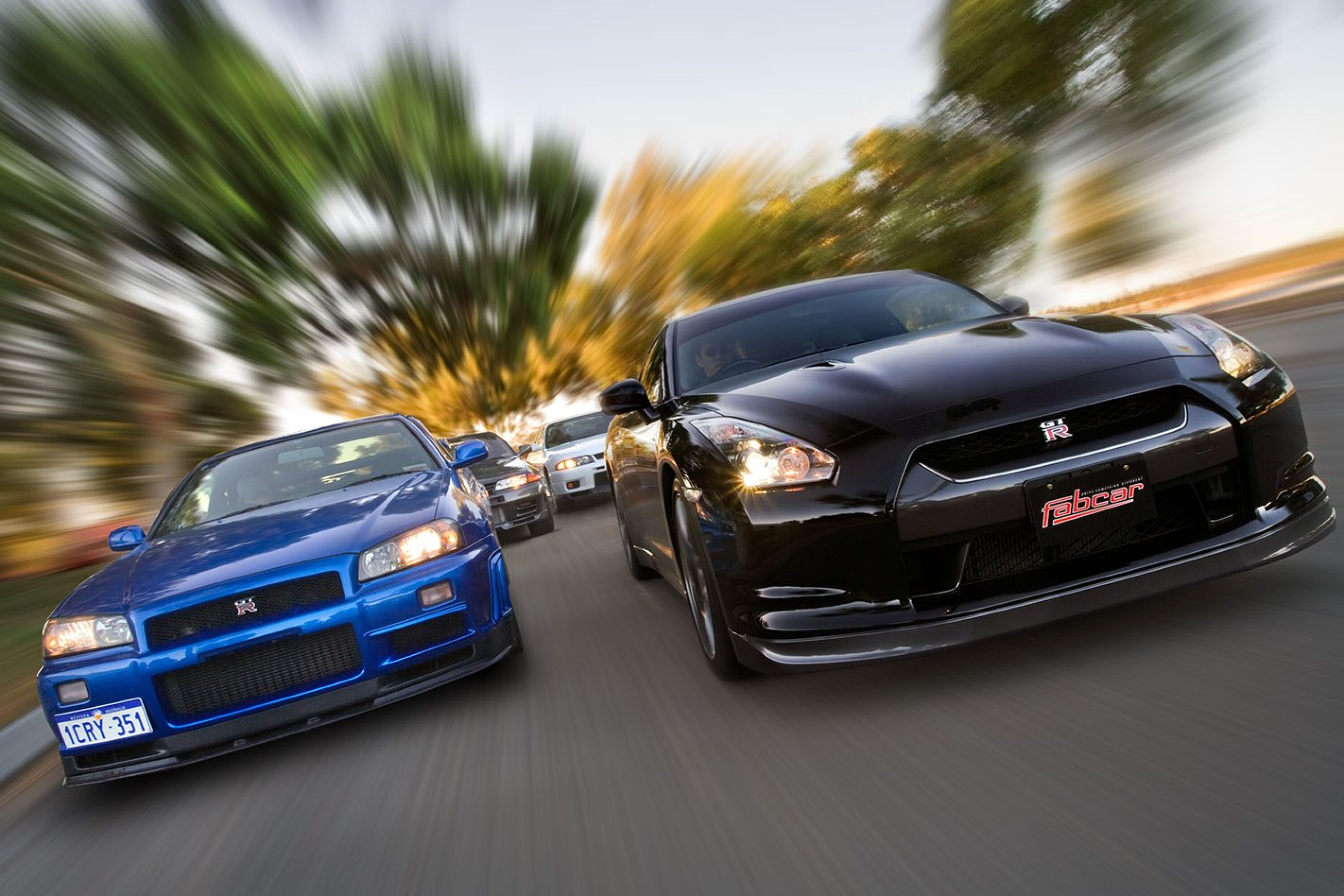
Nissan GT-R – 4 billion
1
1. Ford Maverick
According to learner-driver testing resource Zutobi.com [↗], the most popular car on TikTok is the Ford Maverick – a car-based small ute sold in North America. Not a bad result for a car you can’t even buy around the world! Mind you, who knows how many of those posts are about the sleek original 1970-77 Ford Maverick sedan and coupe [↗]…
1
2. Range Rover
Next up is Land Rover’s Range Rover – although it’s unclear which specific body style tops the pops, given there’s the big daddy Range Rover, the Range Rover Sport, the Range Rover Velar and the Range Rover Evoque.
1
3. Honda Civic
Honda’s small Civic takes third place, which might seem surprising here in Australia, but it’s long been one of America’s most popular cars. It helps, of course, that America gets the sporty Si model between the regular variants and the hero Type R – while Australian buyers must live with the huge gulf between in both performance and price.
1
4. Toyota Supra
Another all-time favourite for American buyers is the Toyota Supra, a badge made famous through the Fast & Furious movies – but it’s always been a popular offering over there, thanks to the huge power and reliability of the iconic 2JZ-GTE turbo petrol inline-six engine. The latest ‘A90’ generation is powered by a BMW mill, but it’s no less beloved.
1
5. Nissan GT-R
Last on the list is the monstrously capable Nissan GT-R. The ‘current’ R35 is an old rig now, largely retired, but with the legendary R34 GT-R now available to be registered in the US, the Godzilla flag is flying high once again with enthusiasts.
If you hadn’t seen this list, what do you think the top 5 would look like for cars on TikTok?
Interesting that there’s not a single Tesla on the list…
1
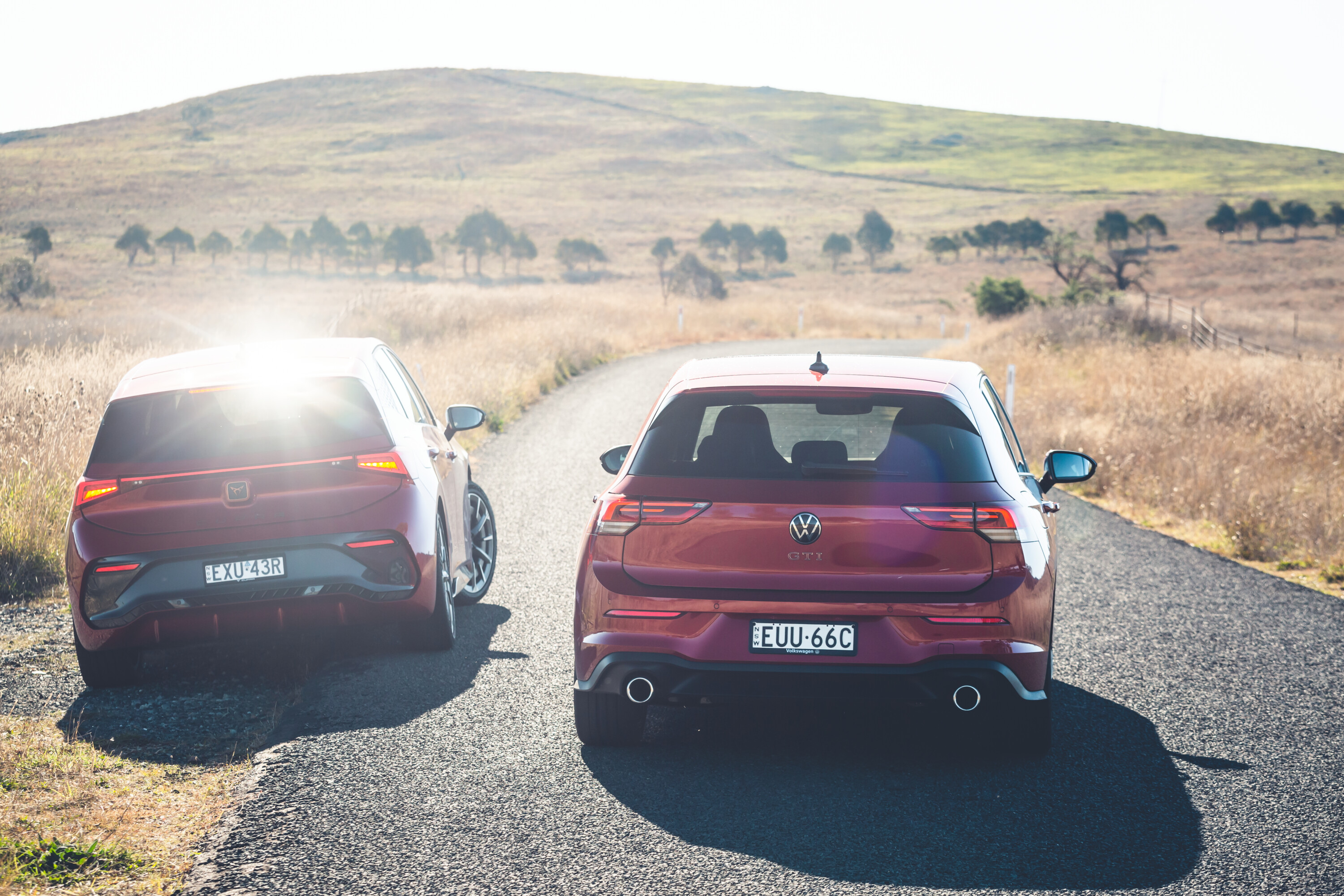
As the countdown begins for the baton pass from petrol power to all-electric propulsion, some unexpectedly intriguing options are beginning to present themselves for hot-hatch fans.
All of which begs the question: “Should my next spicy five-door be a rasping turbocharged petrol or should I explore what’s out there from the new ‘silent generation’ – the torque-rich battery electric vehicle?”
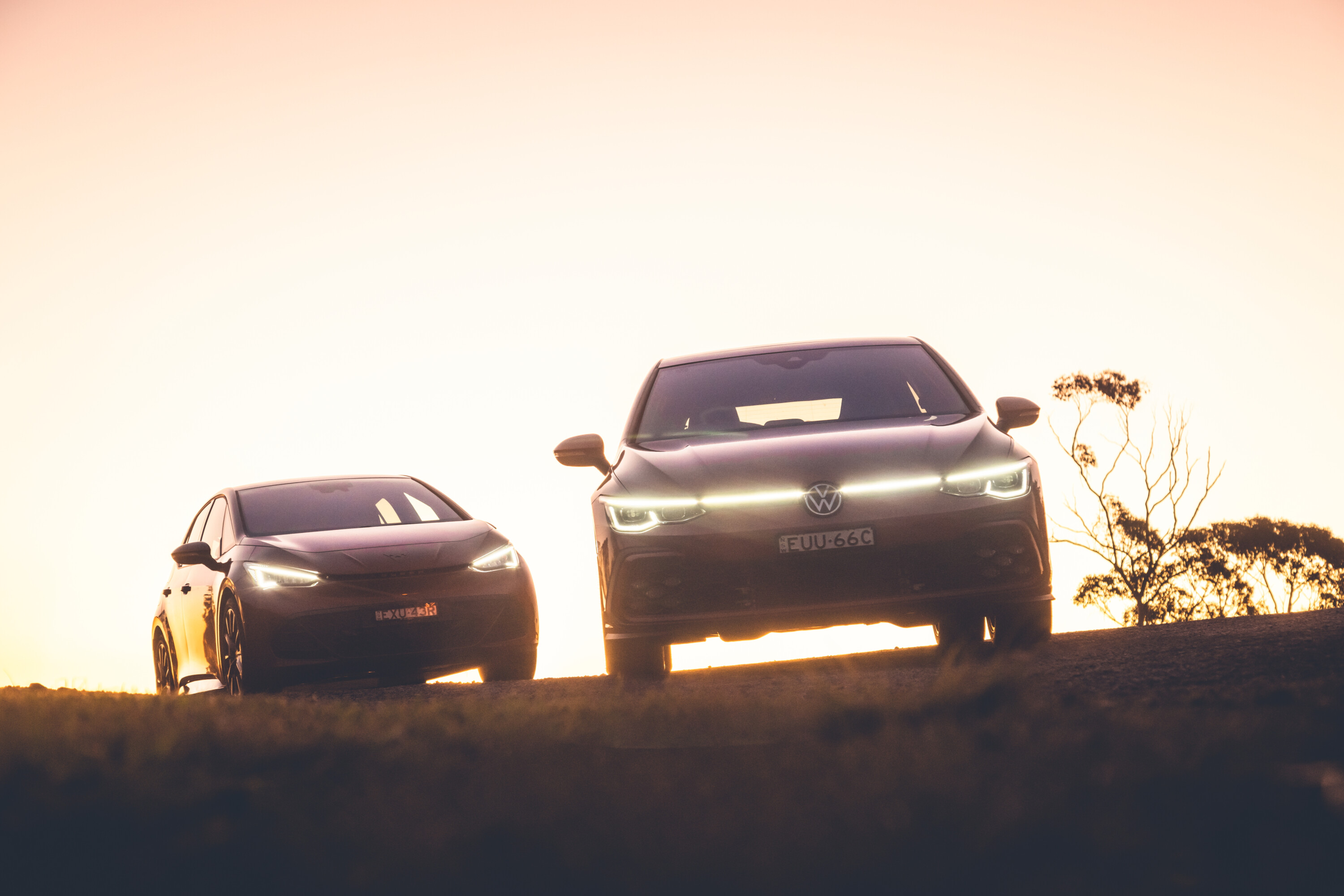
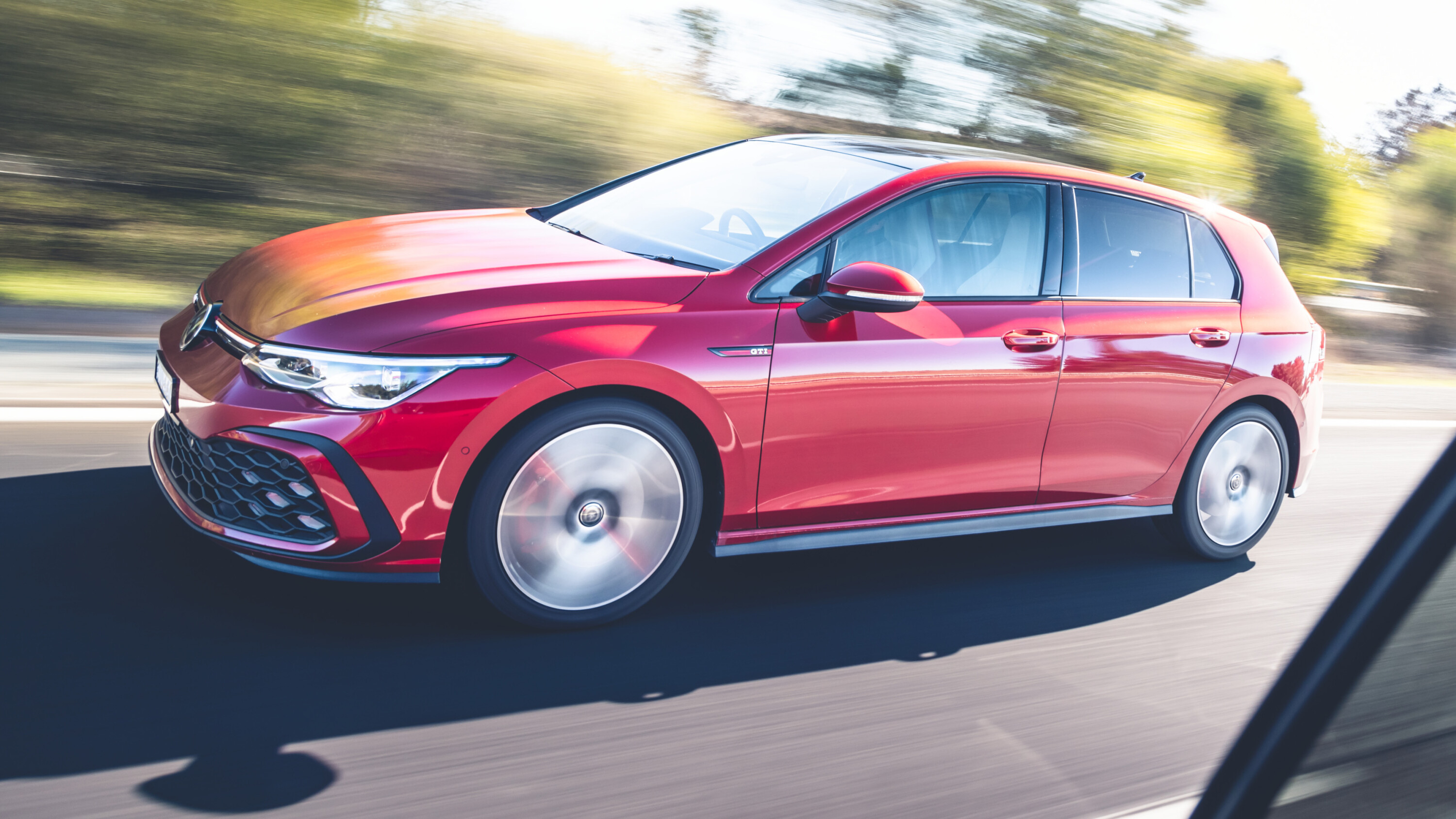
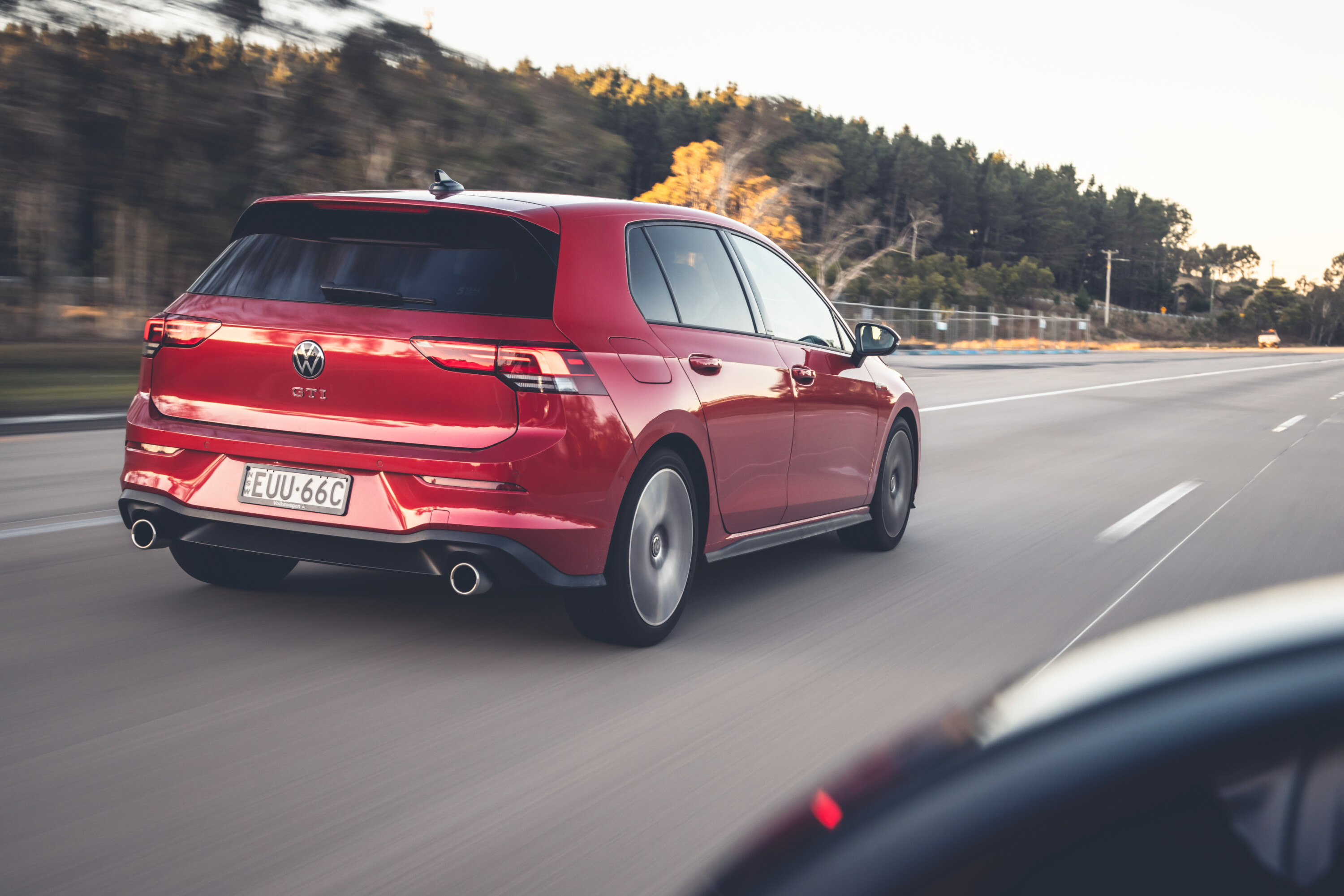
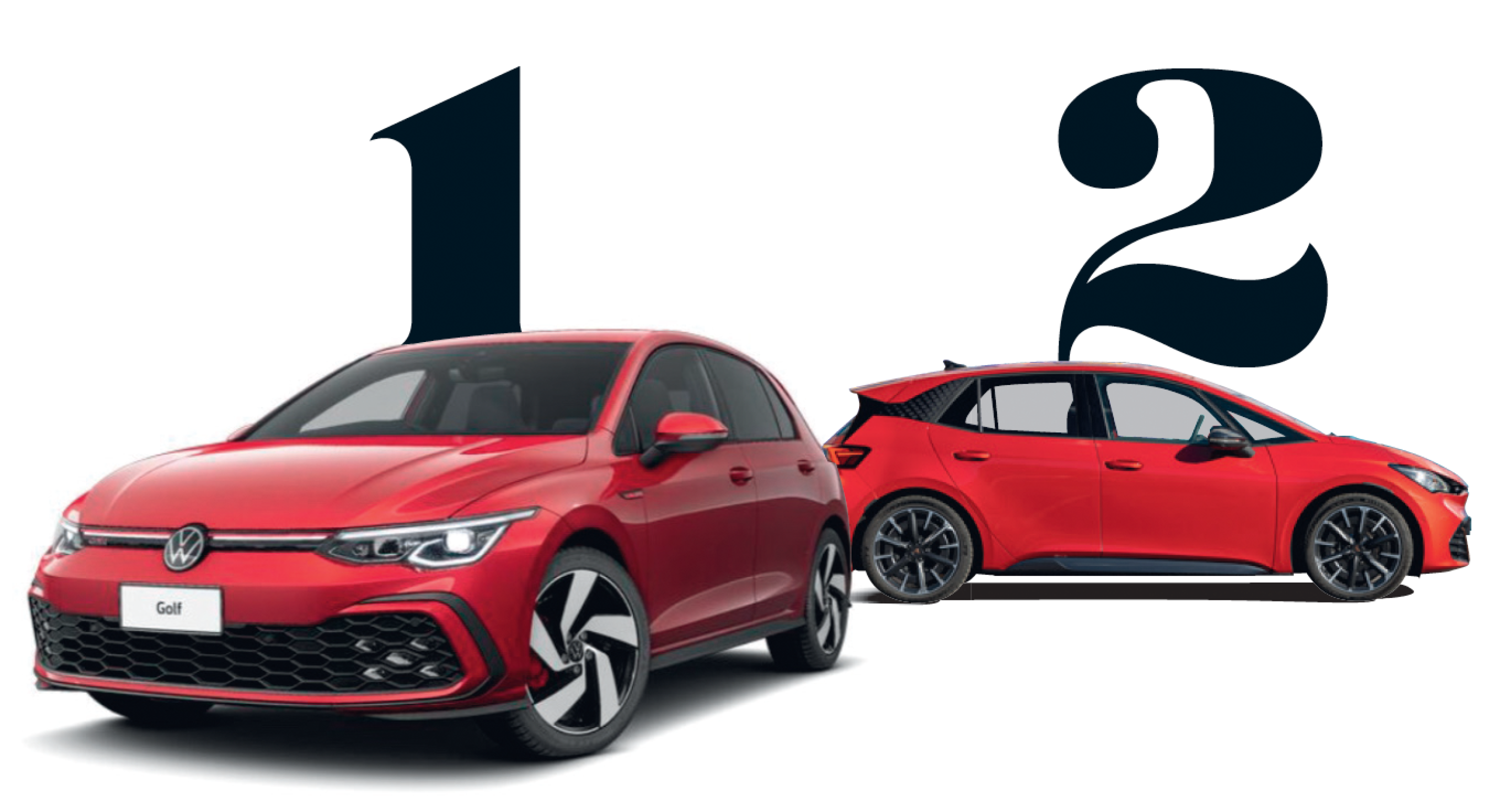
Performance purists will argue that buying a proper performance hatch while you still can is the only answer. The eighth-generation Volkswagen Golf GTI you see here will likely be the last all-petrol model in a lineage that stretches back almost 50 years – apart from an imminent (and final) mid-life facelift for the Mk8 – before the iconic Golf nameplate transitions towards electrification.
1
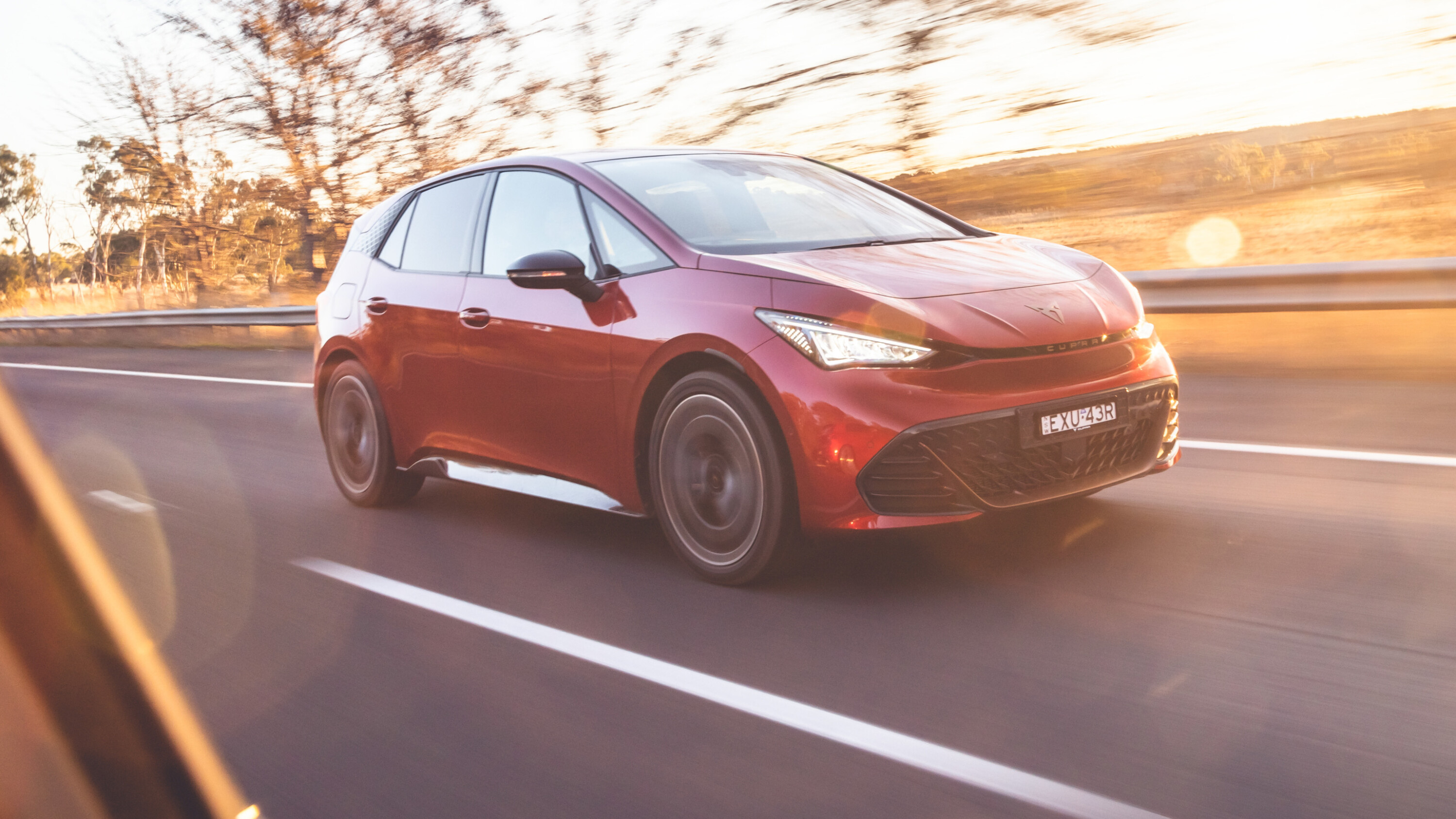
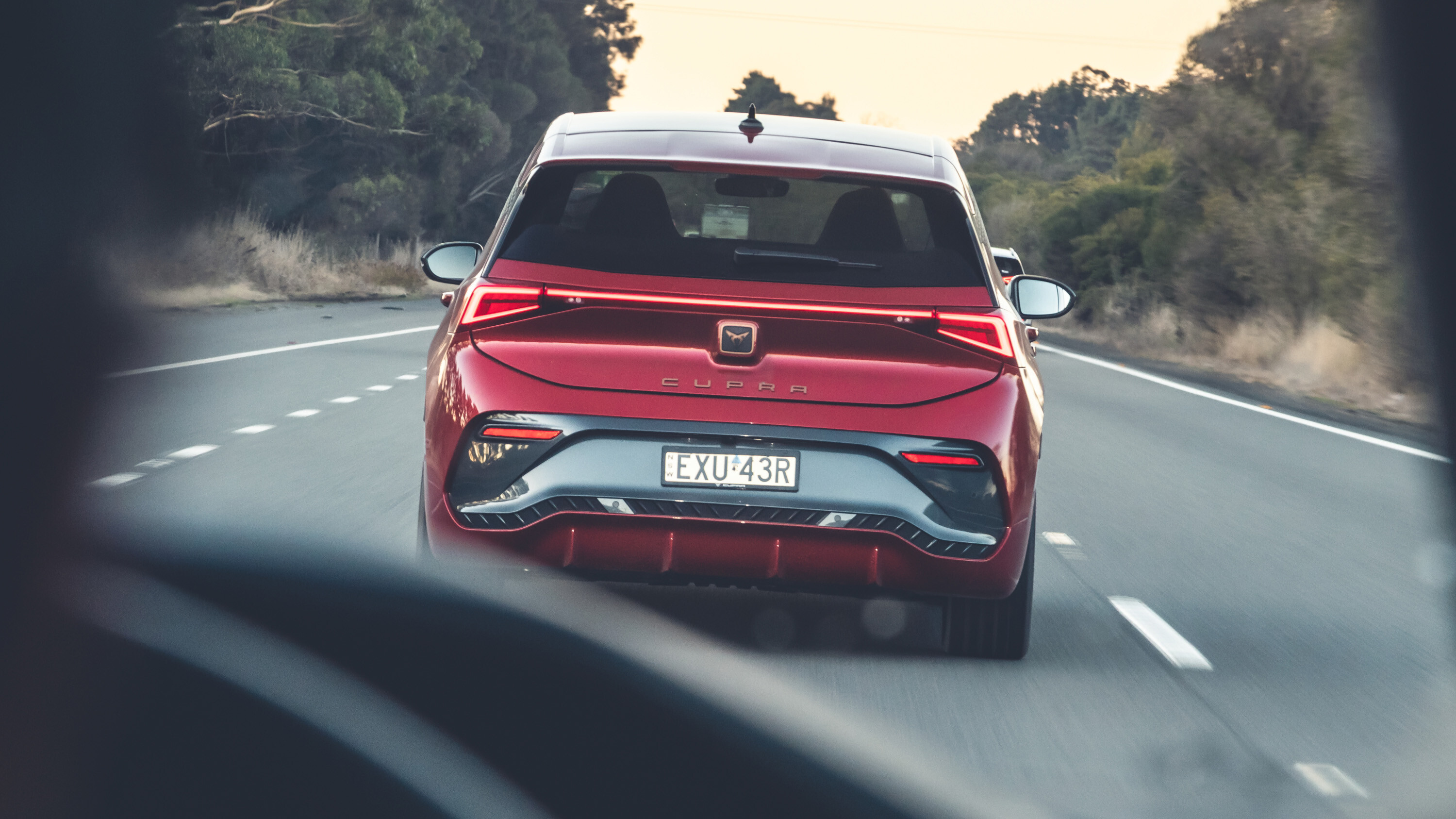
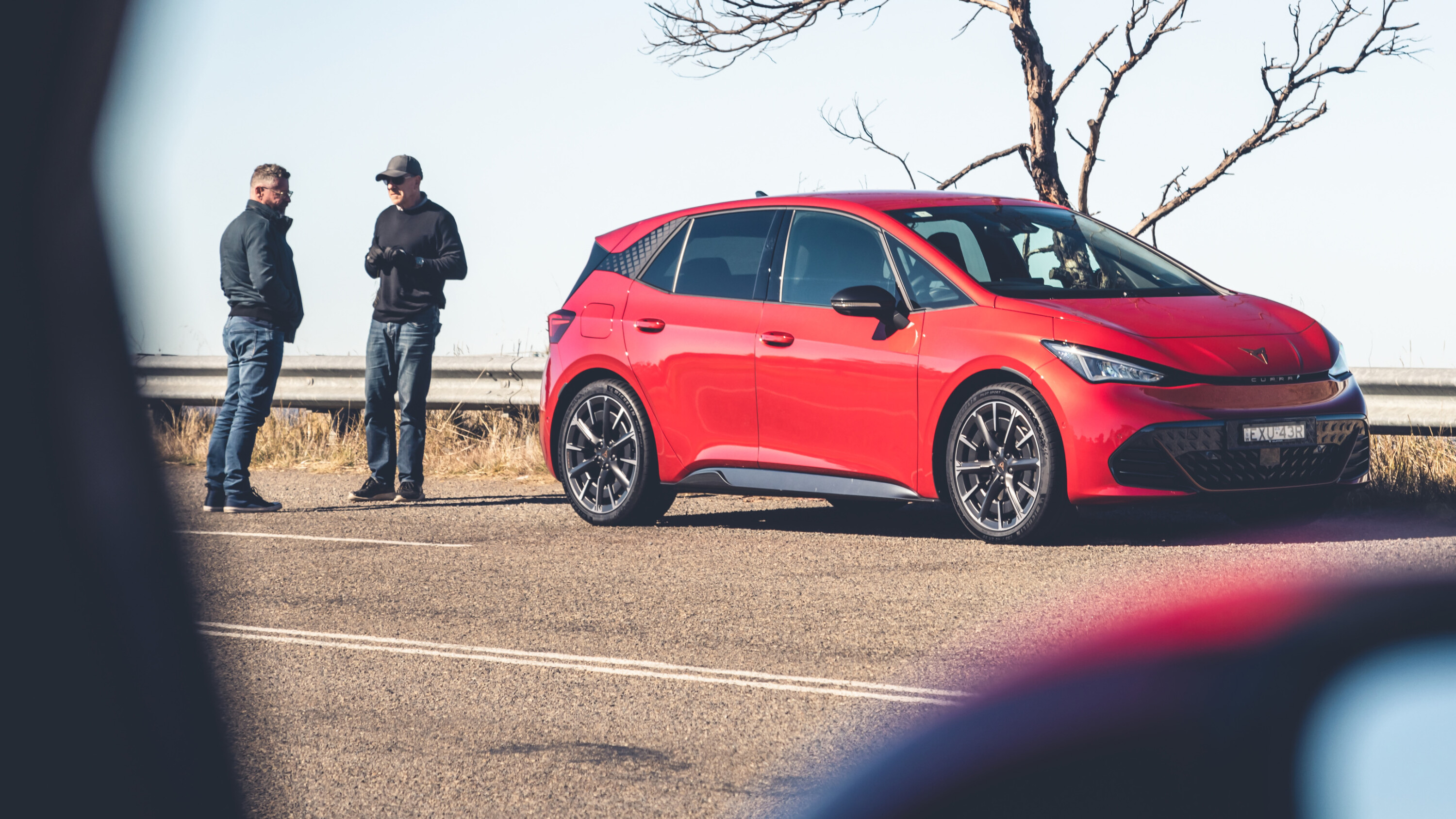
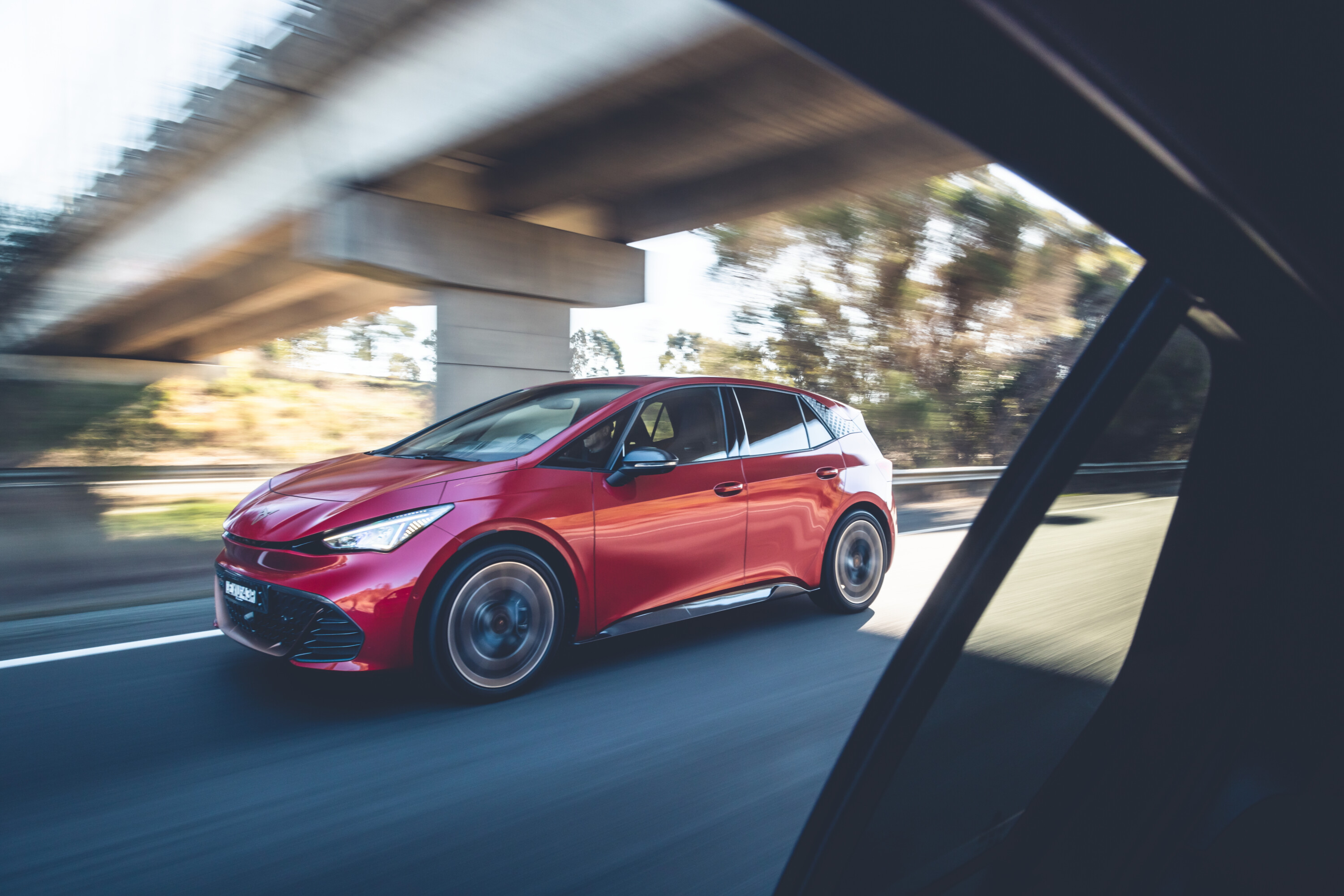
But from the greater Volkswagen Group’s own stable comes the Cupra Born – a Spanish-bred EV being touted as the first-ever electric hot hatch.
So what we’re here to investigate is whether this potentially inflated claim contains more hot air than a wind farm, or whether the Cupra Born truly is the blueprint for our hot-hatch future.
Given that today’s Golf GTI leans more towards the hardcore end of the hot-hatch spectrum – trading the supreme all-rounder status of past GTIs for a louder, edgier, more focused ‘Clubsport’-style experience – the whisper-quiet Cupra Born will need an ace up its sleeve to offer a similar level of thrills.
And if it doesn’t, what will it take for future hot EVs to satisfy the generations of car fanatics raised on the explosive flavour of fast combustion-engined hot hatches?
1
1
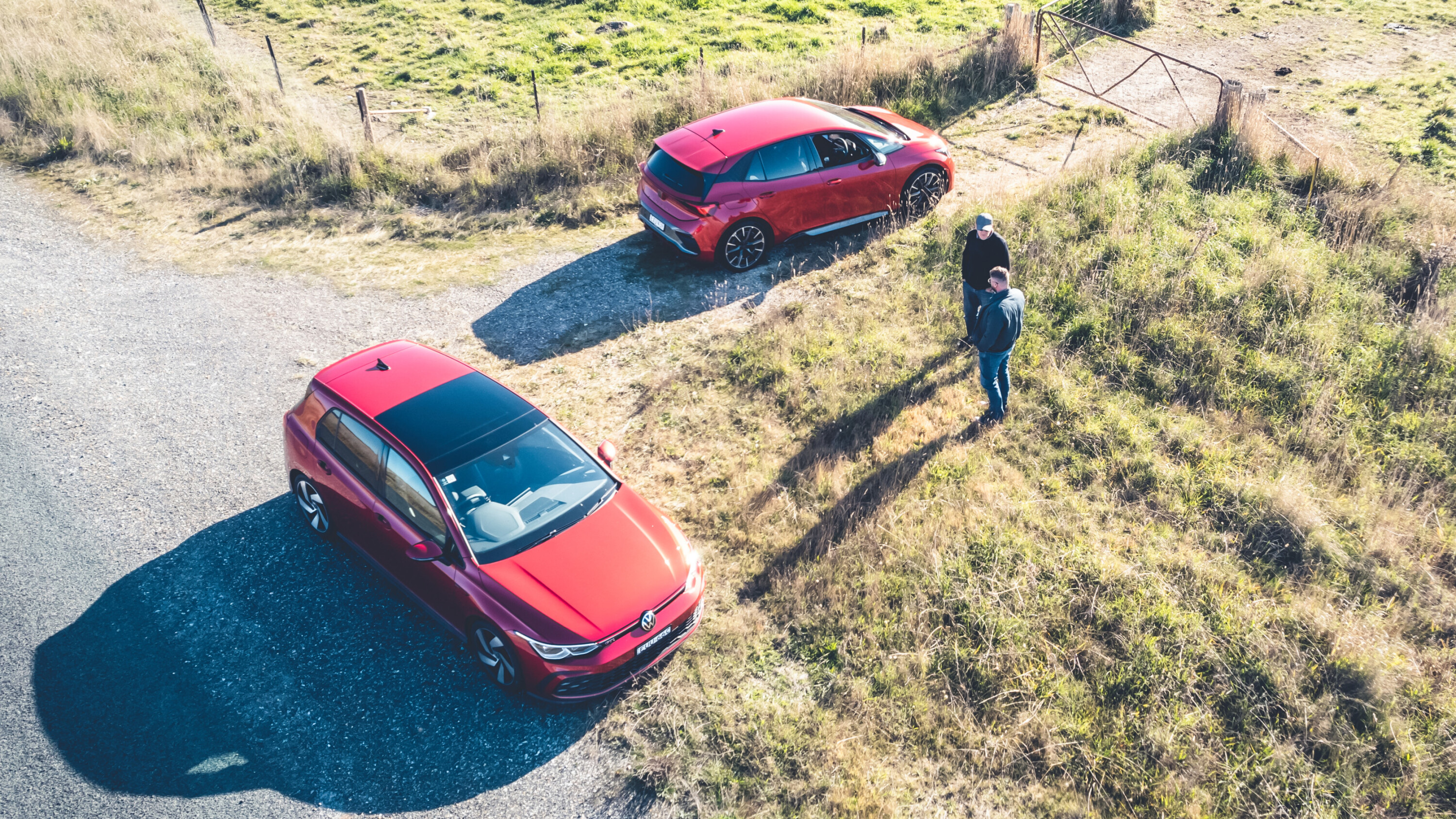
On paper, the comparison between the two is clearer than a smog-free skyline.
As tested, they’re priced within a few grand of each other – $62,590 for the Cupra Born with optional Performance package ($2600); $59,790 for the Golf GTI with optional Luxury package ($4000) and metallic paint ($300) – and in terms of overall size, they’re also surprisingly close.
The Born feels like more of a mini-MPV given its dash-to-axle ratio, its lengthy wheelbase, elevated height (it’s 77mm taller than the Golf), higher hip point, very deep windscreen and additional windows between its A-pillars and front doors, whereas the Mk8 Golf is the definition of a traditional small hatchback in both look and feel.
Yet the difference in their overall length is just 37mm (favouring the larger Cupra) and their boot volumes are near-identical. So in practicality terms (for the most part), they’re on par.
Interiors: Golf GTI
Excellent front buckets mounted lower than Cupra, and dashboard quality is superior. Likewise audio quality, though fiddly switchgear interfaces overly complex, storage areas more difficult to access.
Like Cupra, temperature slide controls lack night lighting. Slightly more rear toe room than Born but tighter for leg room, similar for overall comfort and under-thigh support.
Shares two rear USB-C ports with Cupra but gains rear air vents with temp control, better door storage (though lower-grade finish compared to front doors, and rear-seat leather deletes centre perforation).
1
Interiors: Born
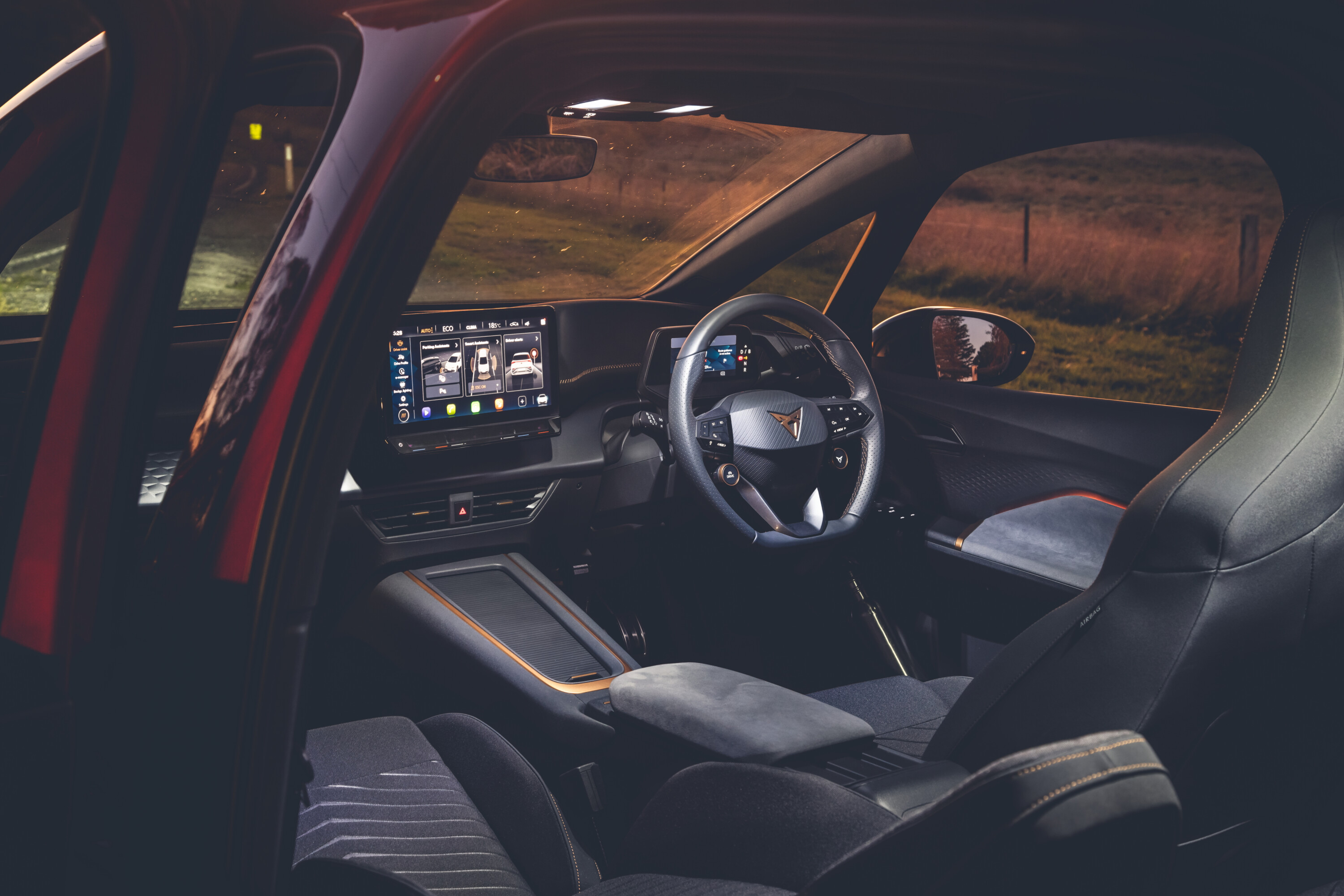
Doesn’t really have Golf’s feeling of expense – feels cheaper, more junior inside. Padded Alcantara on doors and centre armrest, but door pressings are rock hard plastic, take large water bottles.
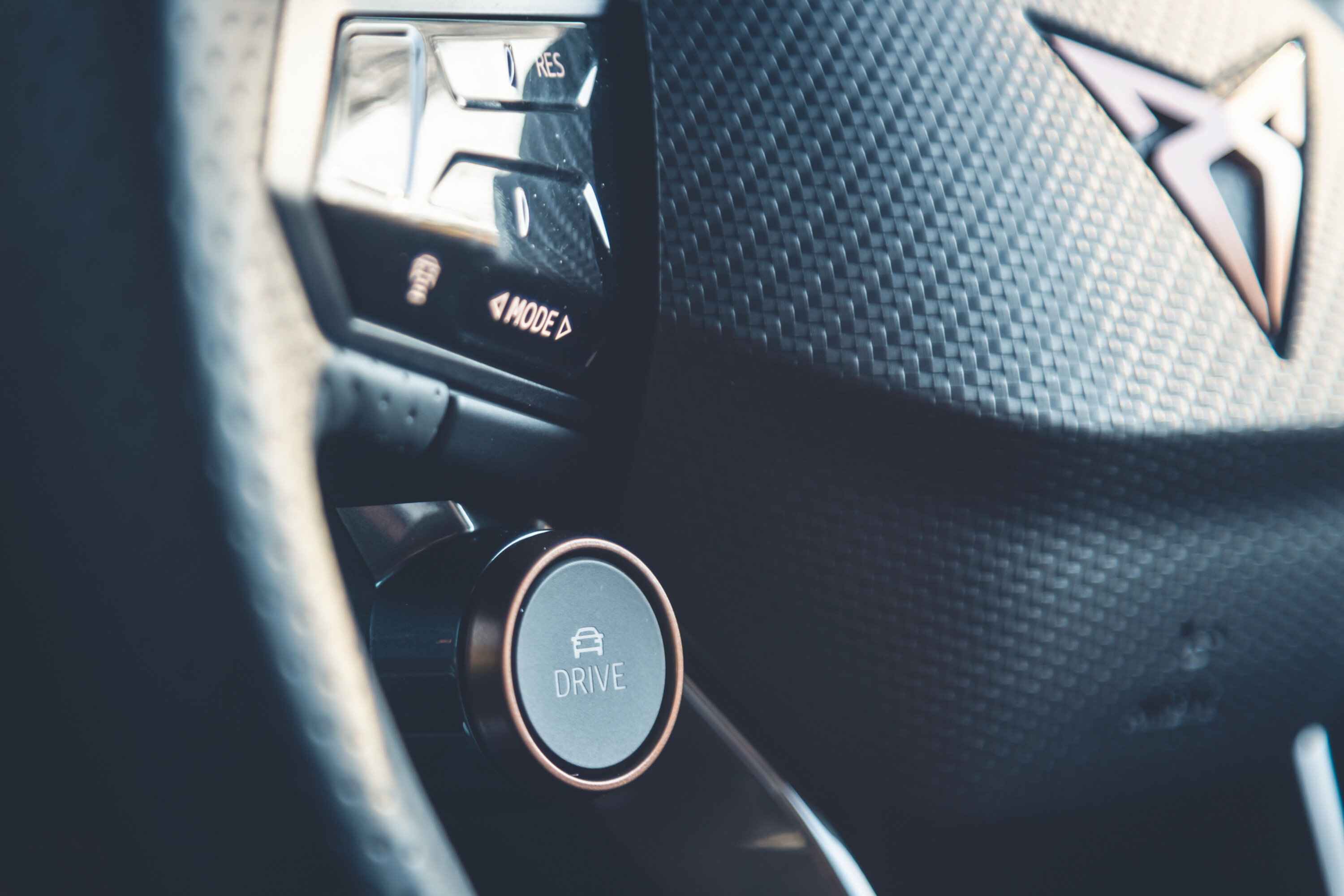
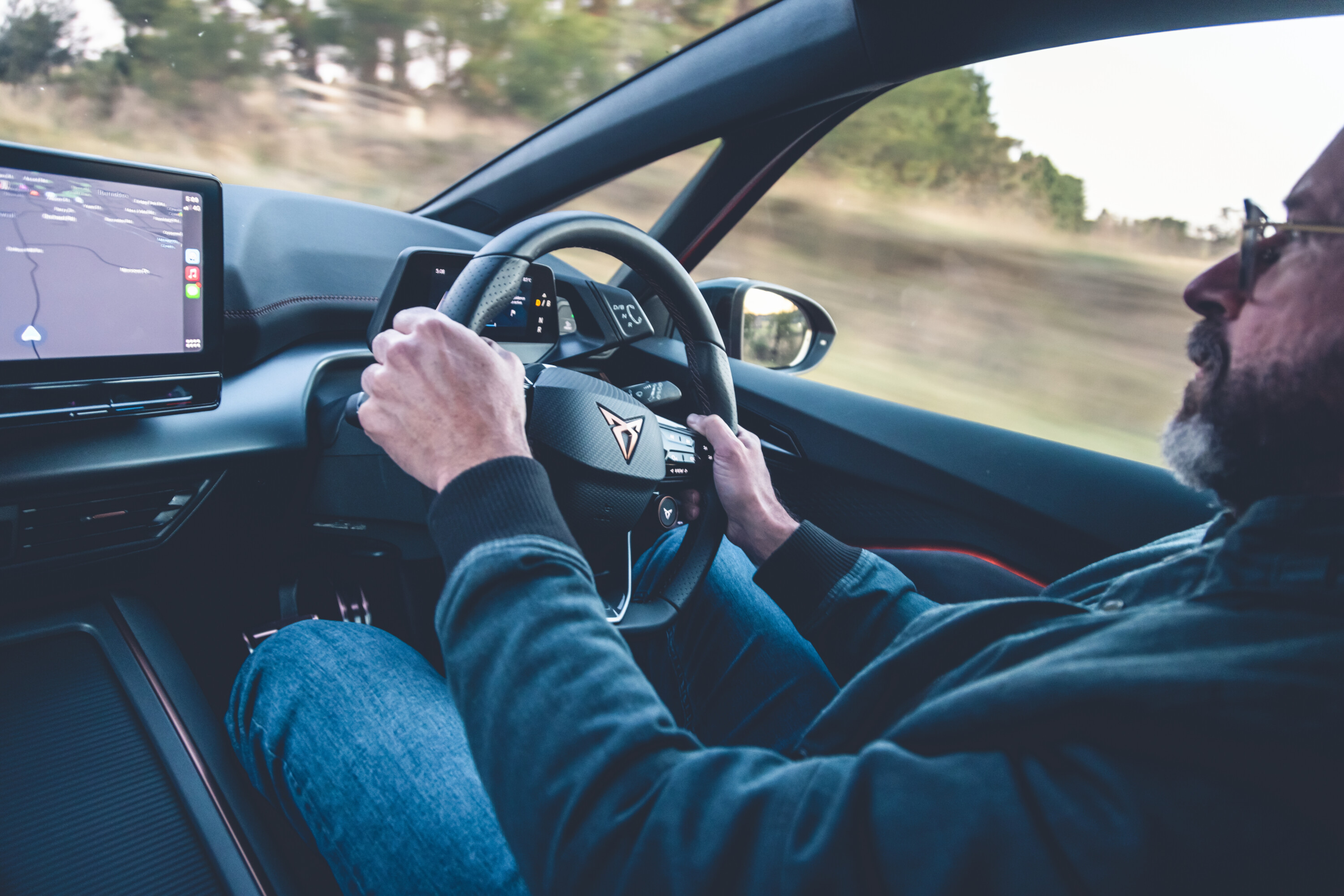
Superb steering wheel has Drive Mode button on the left, ‘Cupra’ sport button on the right, but capacitive switches too close to your thumbs, ‘twist’ gear selector on binnacle hidden by wheel spoke. Rear buckets almost as comfortable as front pair.
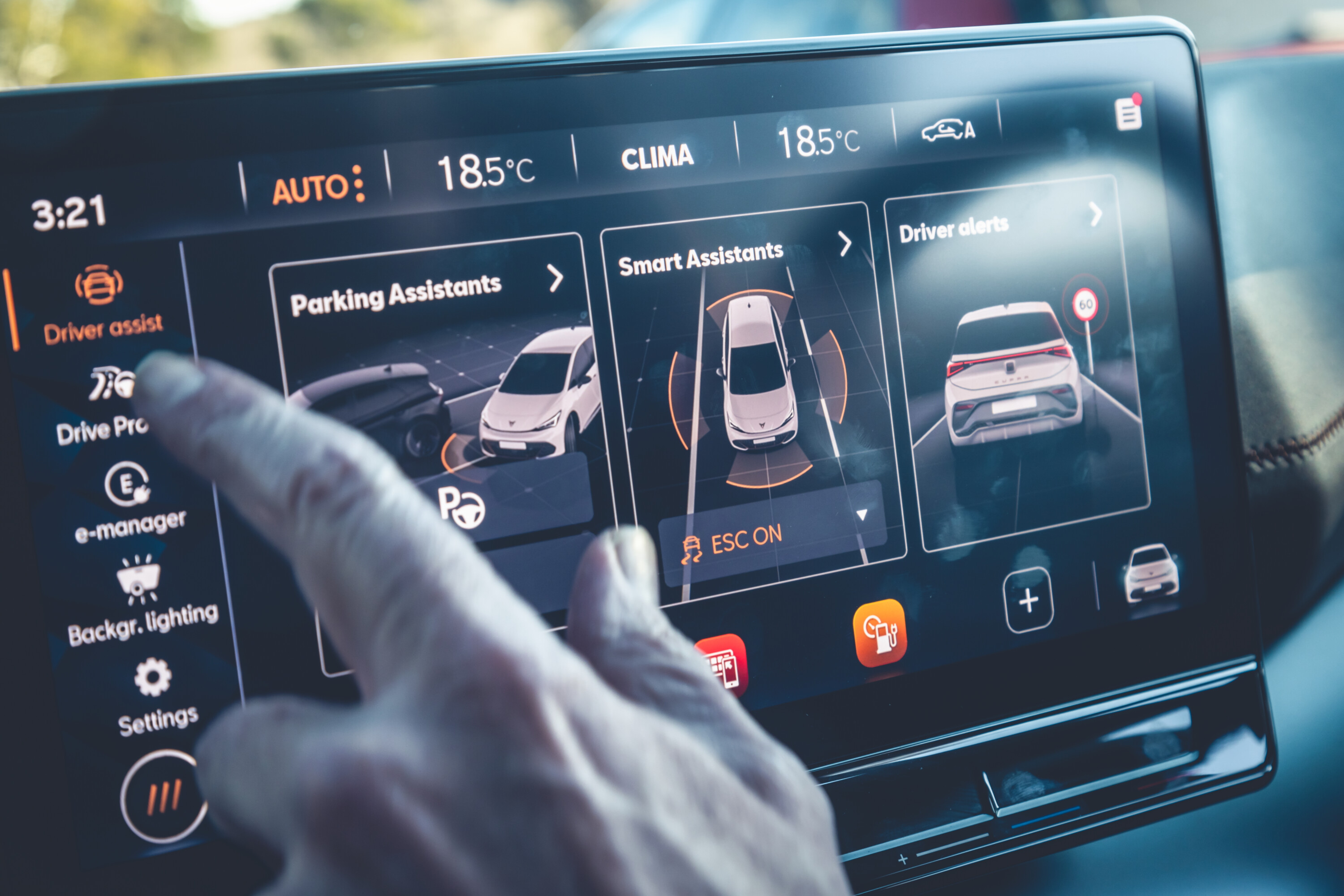
Larger multimedia screen easier to use than Golf’s. Likewise the angled wireless charging pad.
1
Of course, it’s the driving experience we’re ultimately here to scrutinise.
So does the Born truly achieve what the Golf GTI does? And is an electric hot hatch a viable alternative to a turbo-petrol one in 2023?
Firstly, performance. Believe the manufacturer claims and the difference in their acceleration isn’t huge – 0-100km/h in 6.4sec for the Golf versus 7.0sec for the Born – thanks to the electric Cupra’s instant torque off the line and its rear-wheel-drive traction. Indeed, Cupra claims 0-50km/h in 2.8sec, which is proper hot-hatch urgent, because the Born’s performance flavour really is all about the launch.
Its drivetrain is smoothly unobtrusive – all the things you want in an EV – and overall acceleration is strong, but the Born is far from neck-snapping and offers nothing to feel inspired by.
1
Purists will argue that buying a proper performance hatch while you still can is the only answer
Once its digital speedo reaches three digits, its performance perception begins to fade, and being electric, it lacks the upshift blurting of the Golf, or any of the petrol car’s spirit. In comparison with the Volkswagen’s unrelenting accelerative urge, the Cupra serves up more of a brisk gathering of momentum.
With the traction-enhancing smarts of its ‘extended’ electronic front differential lock, the front-drive Golf GTI hauls itself from a standing start and never lets up. In Sport mode, it hammers towards the horizon – lunging forward with every upshift, rasping from its engine and exhaust, while ultimately smashing the Born for hard-driven pace.
The greater your commitment, the greater its reward … which is the opposite of its electric rival. Indeed, today’s 180kW Golf GTI rivals the previous Golf R for pace, while delivering a better soundtrack.
1
You don’t need to be ? Albert Einstein to understand the Golf has physics in its favour.
It weighs 550kg less than the 170kW/310Nm Cupra, and while it doesn’t offer instant torque, it doesn’t take long to appreciate the richness of its 370Nm from 1600-4300rpm. Yet the much heftier Cupra uses its weight to great effect when it comes to refinement and ride.
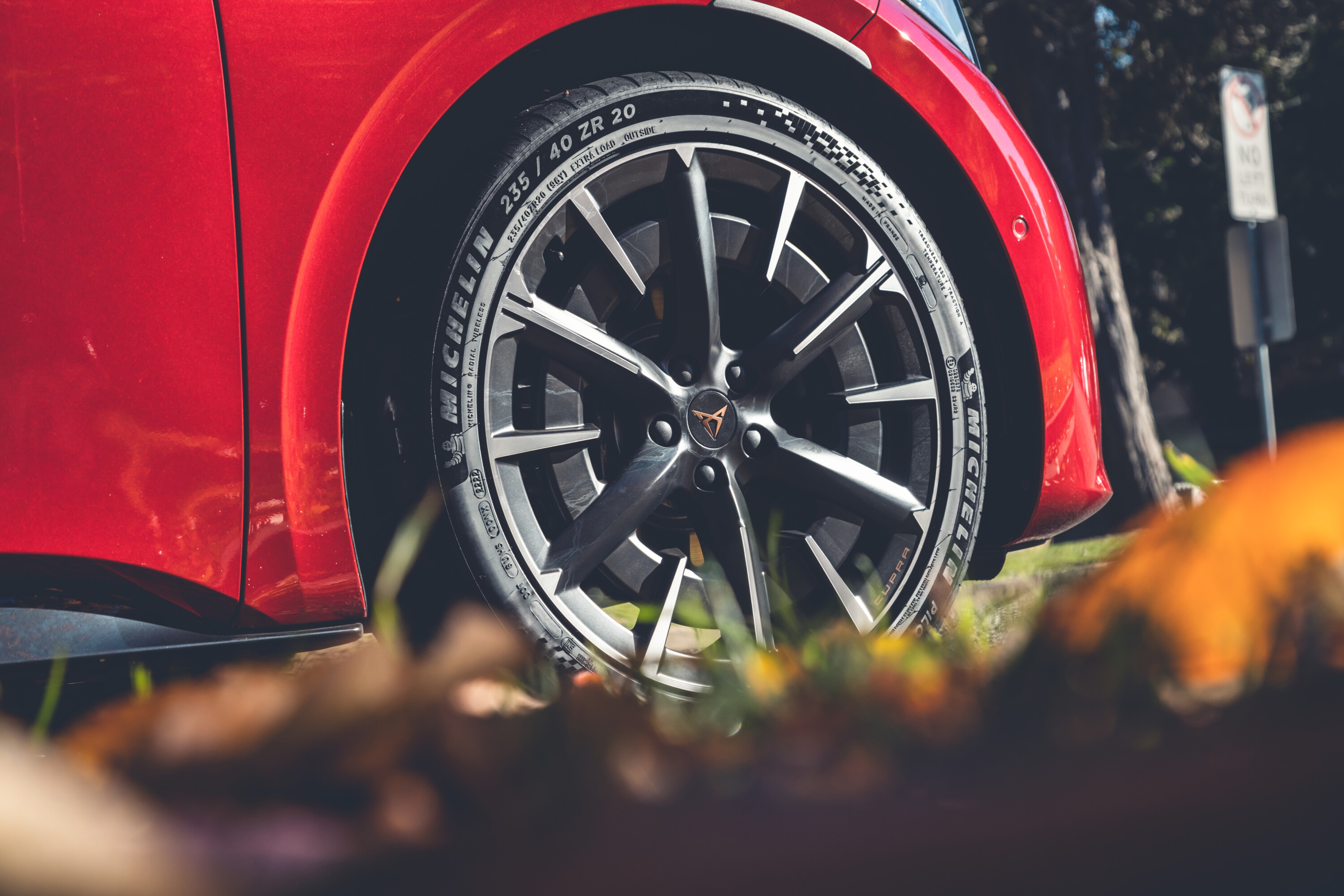
On the freeway, even when fitted with 20-inch wheels (wearing 235/40ZR20 Michelins) and adaptive dampers – both part of the optional Performance package – the Cupra in Comfort mode is quieter and much more plush than the Golf, to the point where it feels like a higher-end car. The difference is quite dramatic.
Compared to the Cupra’s soothing absorbency, even Comfort mode can’t save the adaptively damped Golf from feeling constantly firm – lower and stiffer than the Cupra, but also broader and more planted. And much louder.
1
Even Comfort mode can’t save the adaptively damped Golf from feeling constantly firm
Its 225/40R18 Goodyear Eagle F1s produce loads of tyre noise – ramming home that this is an uncompromising hot hatch with the grunt to match – whereas the Cupra defines the quietness and unobtrusiveness of an EV, which isn’t really a hot-hatch thing… yet it does handle – especially in its favoured environment.
With all that battery weight mounted low, rear-wheel drive and its electric motor mounted transversely across its rear end, the Born offers close to 50:50 weight distribution, which bodes well in tight corners where you can feel the dynamic flavour of its rear-drive balance and thrust.
The harder you push, generally the better it gets – never really feeling like it’s on 20-inch wheels or that it weighs almost two tonnes. But your selected drive mode is crucial to getting the best from it.
1
On our back-to-back test loop, its dynamic sweet spot was Individual mode, with its damping resistance positioned mid-way between the Comfort and Performance settings.
In Comfort alone, the Born might be superb on the freeway but it produces too much body movement on challenging roads, like it’s shifting around on its bushings, whereas Performance mode is completely driveable but pretty firm. The most extreme ‘Cupra’ setting is simply too stiff for most Australian country roads, even taking into account the Born’s hot-hatch focus.
Yet the Cupra’s steering needs to be set to Performance to complement its handling balance – again best achieved via Individual mode. In Comfort, the Born’s eager steering (with 2.6 turns lock-to-lock) is simply too light, doesn’t load up properly and never feels entirely natural.
The most extreme ‘Cupra’ setting is simply too stiff for most Australian country roads, even taking into account the Born’s hot-hatch focus.
1
In comparison, the Golf GTI feels much more dynamically focused, though with seemingly less bandwidth. Even in Comfort mode, it’s a firmly suspended car with firmly weighted steering and a degree of dynamic aggression that places it more towards a Golf R in personality than what we’d come to expect from previous GTI generations.
There’s no doubt that the last all-petrol Golf GTI is going out on a high note, though whether its chassis has the all-round subtlety and polish of its finest forebears is another thing.
In trying to be more unapologetically track-focused, it feels like it has lost a dimension in terms of feeling great at all speeds, though as a balls-out hot hatch, it has the steering meat, the handling smarts and the ballistic pace to enhance its thrill factor. But you need to be going so much faster than previous generations to even approach its dynamic limit.
1
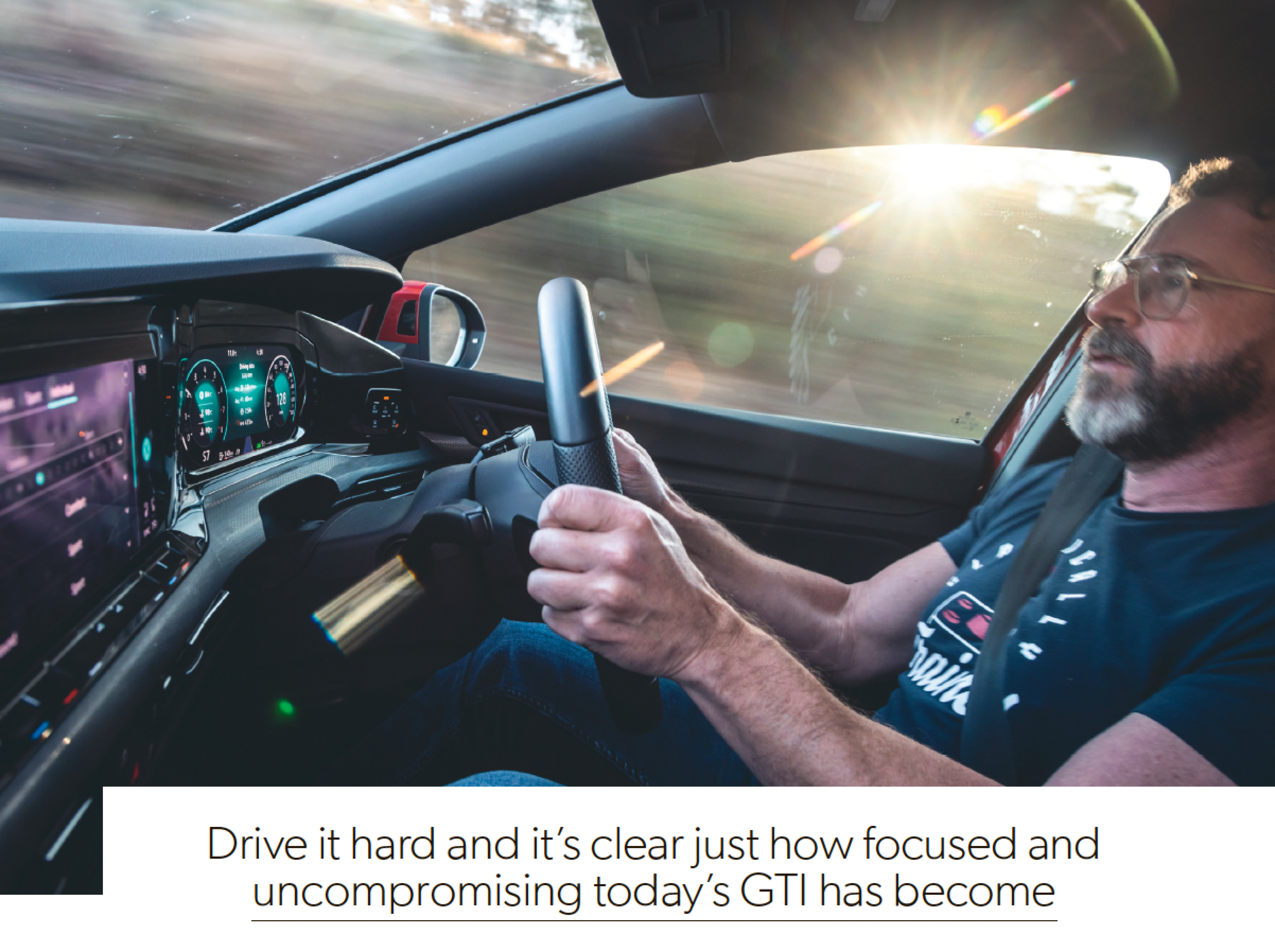
Driving hard on a tight road shows just how focused and uncompromising today’s GTI is – from its drivetrain performance to its brakes, its steering feel and even its front-wheel traction.
But on more open, flowing roads, the Cupra can show the Volkswagen a thing or two about dynamic character.
While the Born’s steering isn’t as communicative as the Golf’s, with no real feel at straight ahead or even when you’re turning in, it’s undeniably quick to respond. And once you’re turning through that numbness, its agility and change-of-direction are really impressive.
Its rear-mounted battery and rear-wheel drive can be used to great effect, and when you combine that with a dynamic nuance that allows you to adjust the Cupra’s balance with your right foot, you can see how, on the right road, the Born is worthy of being labelled an electric hot hatch – even though it doesn’t quite have the engagement of the Golf.
1
It’s a different flavour to what we’re used to and takes time to both discover and appreciate.
The interiors of each car also reinforce that there’s a philosophical difference here. The dash depth and the windscreen cowl of the Cupra are way in front of where the Golf’s are positioned, and you feel quite elevated even with its (full manual) seats cranked all the way down, making it feel like a bit of a mini MPV, rather than a hot hatch.
It’s also less premium in its finishes, with lower-grade plastics that make it feel like a Polo relative rather than anything from the Golf class. Cue single-piece, hard-plastic door pressings, a relatively junior-looking 5.3-inch driver’s display and a lack of much in the way of surprise-and-delight touches.
1
The Born is worthy of being labelled an electric hot hatch – even though it doesn’t quite have the engagement of the Golf.
A Cupra Leon has a much nicer cabin ambience than the Born does, though the simplicity of all its controls is admirable, in an era where everything seems to have become more difficult to get your head around – particularly its larger 12-inch multimedia screen.
But the Born’s standard five-speaker stereo is disappointing, with relatively thin bass production, though a nine-speaker, 395-watt Beats audio system is optional (part of a $2900 Interior package).
In contrast, the Golf feels much plusher, with higher-quality materials and screen displays, a stronger stereo (a six-speaker set-up, with a 480-watt Harman Kardon system optional), rear-seat air vents, more practical rear door designs and a proper three-person rear bench seat (the Born with Performance package gets two rear ‘buckets’ instead).
Seating number aside, they’re also pretty much on par for room, though the Golf’s fiddly switchgear set-up (via the main touchscreen and capacitive switches) is far from ideal.
1
What clearly works in the Golf’s favour, however, is the elephant in the room in this whole petrol versus electric stoush – overall range.
Even with a modest 50-litre fuel tank, our test car’s 7.9L/100km average translated to 633km per tank, which is already way beyond the Born’s official WLTP range of 470km (with Performance pack fitted). Using the GTI’s official combined figure of 7.0L/100km as a guide, its range is 714km.
We noted down three readings for the Born – one for the first full battery charge (22.9kWh/100km average) which included 120km/h of steady-throttle freeway driving and our dynamic back-to-backs, meaning 336km of total range (based on 77kWh of useable battery capacity).
The second leg consisted of a casual drive back to Sydney (17.0kWh/100km, or 453km of range) while the total energy consumption over 709km of driving worked out at 21.0kWh/100km (or 367km of range). As for charging time, Cupra says the Born takes 36 minutes to go from five to 80 percent battery capacity using a fast charger.
1
And so?
What we’re left with here is two different classes of car competing at a similar price point for essentially people who are hot hatch buyers, but in the Cupra’s case, may not necessarily be.
The Mk8 Volkswagen Golf GTI is absolutely a hot hatch for people who love hot hatches – those who will relish its ragged edges and the character that it has, particularly its brilliant drivetrain. In its latest generation, it has become a more hardcore, more track-honed hot hatch – more of a Golf R-lite, if you like. But whether it has the nuance in its dynamics that it once had is another thing.
Today’s Golf GTI has morphed beyond the all-things-to-all-people all-rounder that it once was, to the benefit of its purist appeal but to the modest detriment of its day-to-day liveability. It’s never been faster or more focused, but it’s also never been firmer. Or more expensive.
However, if this is to be your last-ever petrol hot hatch, you’re unlikely to be disappointed … aside from its flawed dashboard control interfaces.
1
The Born, on the other hand, is an intriguing proposition. In styling detail it looks like a hot hatch, but it often doesn’t really feel like one.
Yet it has layers that gradually reveal themselves. It has more nuance in its dynamics and its drivetrain is silky smooth, but it doesn’t have the level of spirit we probably expected, or the overall performance.
Ultimately, the Golf GTI and Cupra Born aren’t chasing the same buyer. The person who finds the Cupra particularly appealing is perhaps a little less performance-oriented, and perhaps a little bit older than the person who wants to make the Mk8 Golf GTI their last new petrol-engined hot hatch.
If only the Cupra were a bit quicker and a bit more communicative, with more sophisticated cabin finishes. And if only the Mk8 GTI offered a little more comfort and refinement than it does. But the fact is that a true electric hot hatch – one with the performance and dynamic edge that the finest of this vehicle type are famed for – is still a dream of the future.
1
A true electric hot hatch – one with the performance and dynamic edge that the finest of this vehicle type are famed for – is still a dream of the future.
Floor-mounted battery, rear-mounted electric motor, rear-wheel drive
Capacy
1984cc
82kWh battery
Power
180kW @ 5000-6200rpm
170kW
Torque
370Nm @ 1600-4300rpm
310Nm
Gearbox
7-speed dual-clutch
1-speed reduction
CHASSIS
Body
steel, 5 doors, 5 seats
steel, 5 doors, 4 seats
L/W/H/Wu2013B
4287/1789/1463/2631mm
4324/1809/1540/2766mm
Track (F/R)
1535/1513mm
1537/1513mm
Weight
1409kg
1960kg
Boot
374 litres
385 litres
Fuel
95 RON / 50 litres
n/a
Economy
7.9L/100km (tested)
21.0kWh/100km (tested)
Suspension
Front: struts, A-arms, adaptive dampers, anti-roll bar
Front: struts, A-arms, adaptive dampers
Rear: multi links, coil springs, adaptive dampers, anti-roll bar
Rear: multi-links, coil springs, adaptive dampers
Steering
electric rack-and-pinion
electric rack-and-pinion
Brakes
ventilated discs (340mm)
ventilated discs (340mm)
Rear brakes
solid discs (310mm)
drums (280mm)
Tyres
Goodyear Eagle F1
Michelin Pilot Sport EV
Tyre size
225/40R18 92Y
235/40ZR20 96Y
SAFETY
ANCAP rating
5-stars
5-stars
PERFORMANCE
0-100km/h
6.4sec (claimed)
7.0sec (claimed)
VERDICT
8.0/10
7.5/10
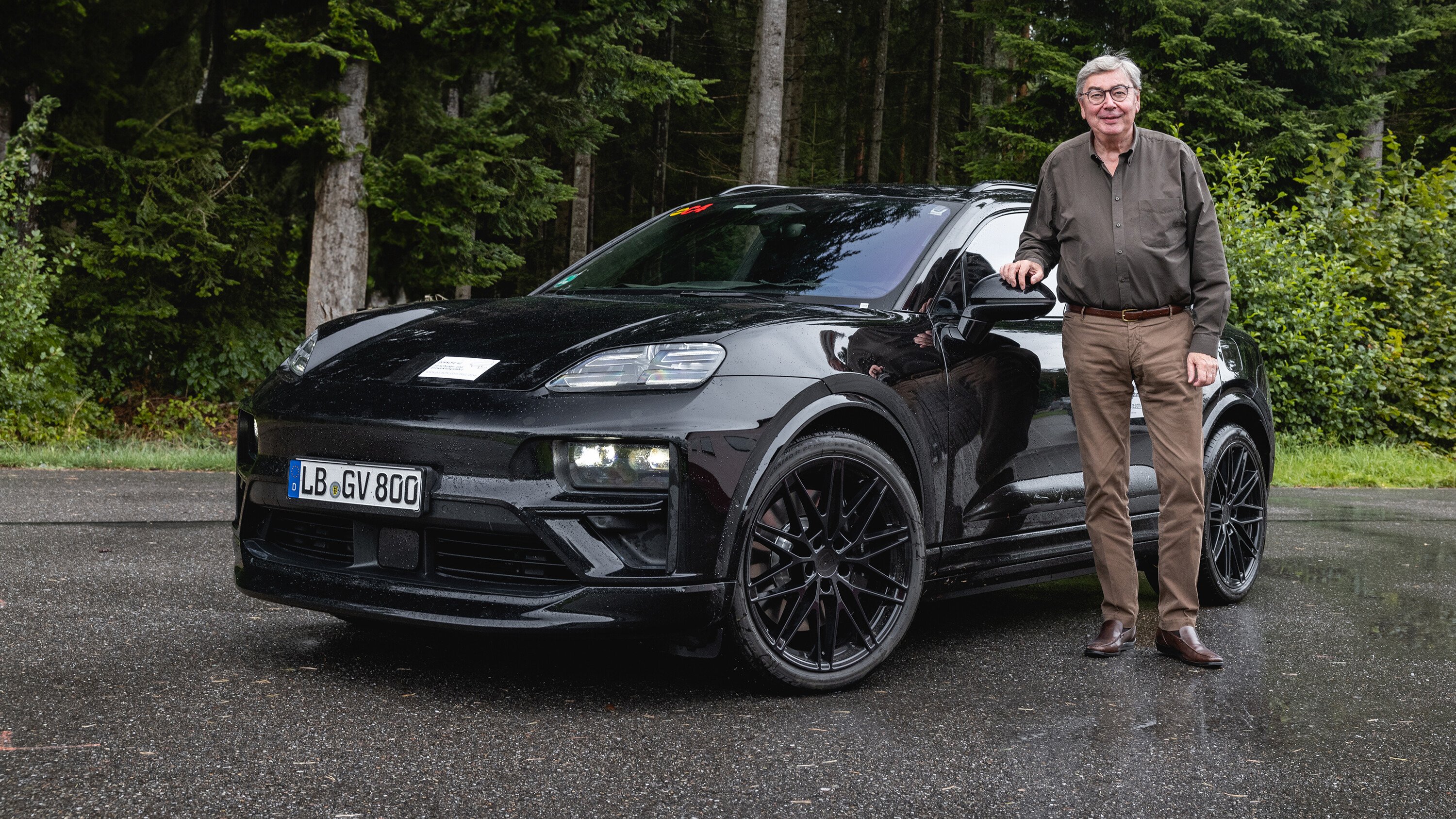
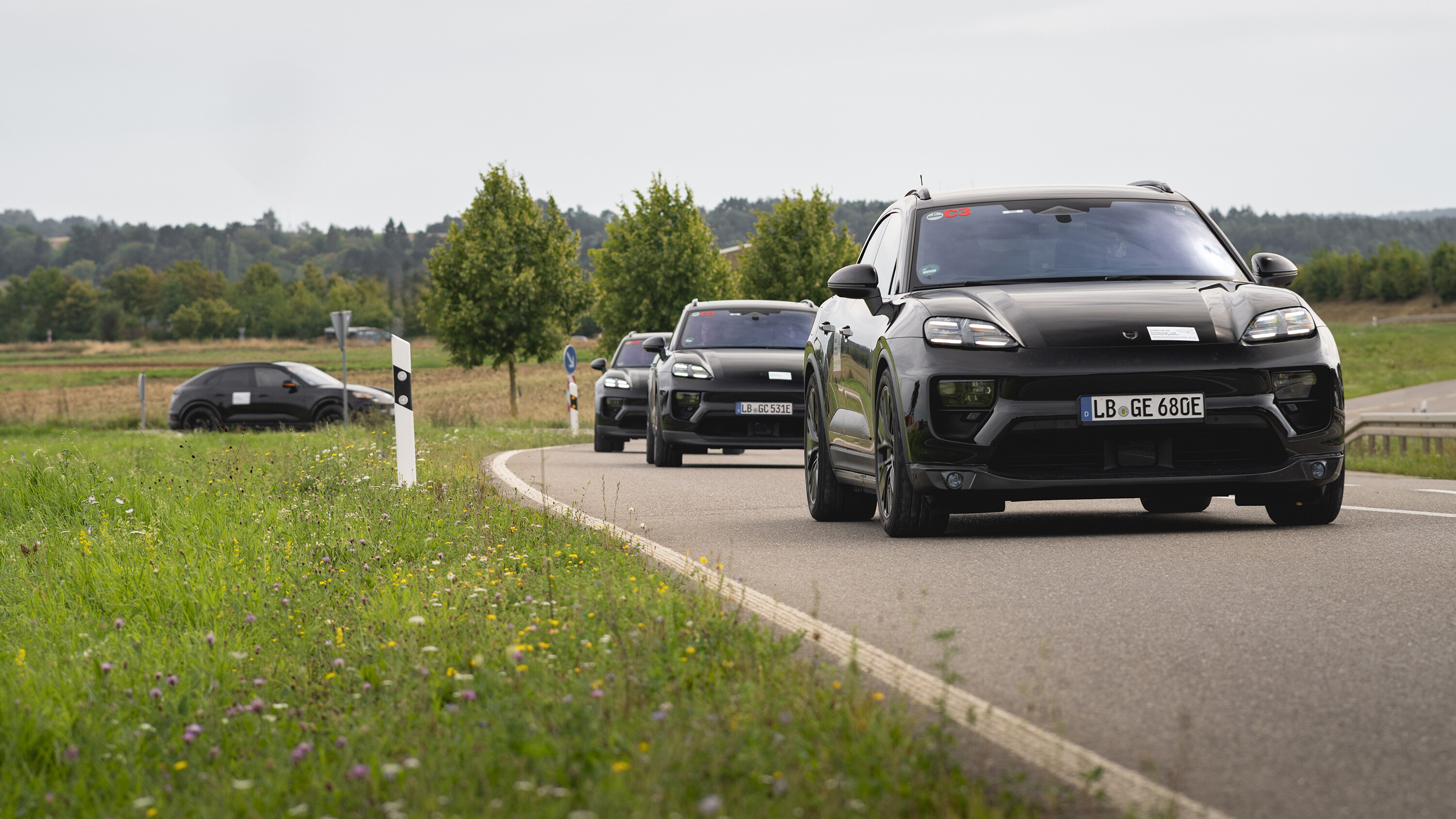
After a nearly two-year delay through persistent software issues, the electric Porsche Macan is close to going on sale.
It will become the most radical variant yet of the popular luxury SUV badge that will be a decade old in 2024, yet is second only to the Cayenne in global Porsche sales.
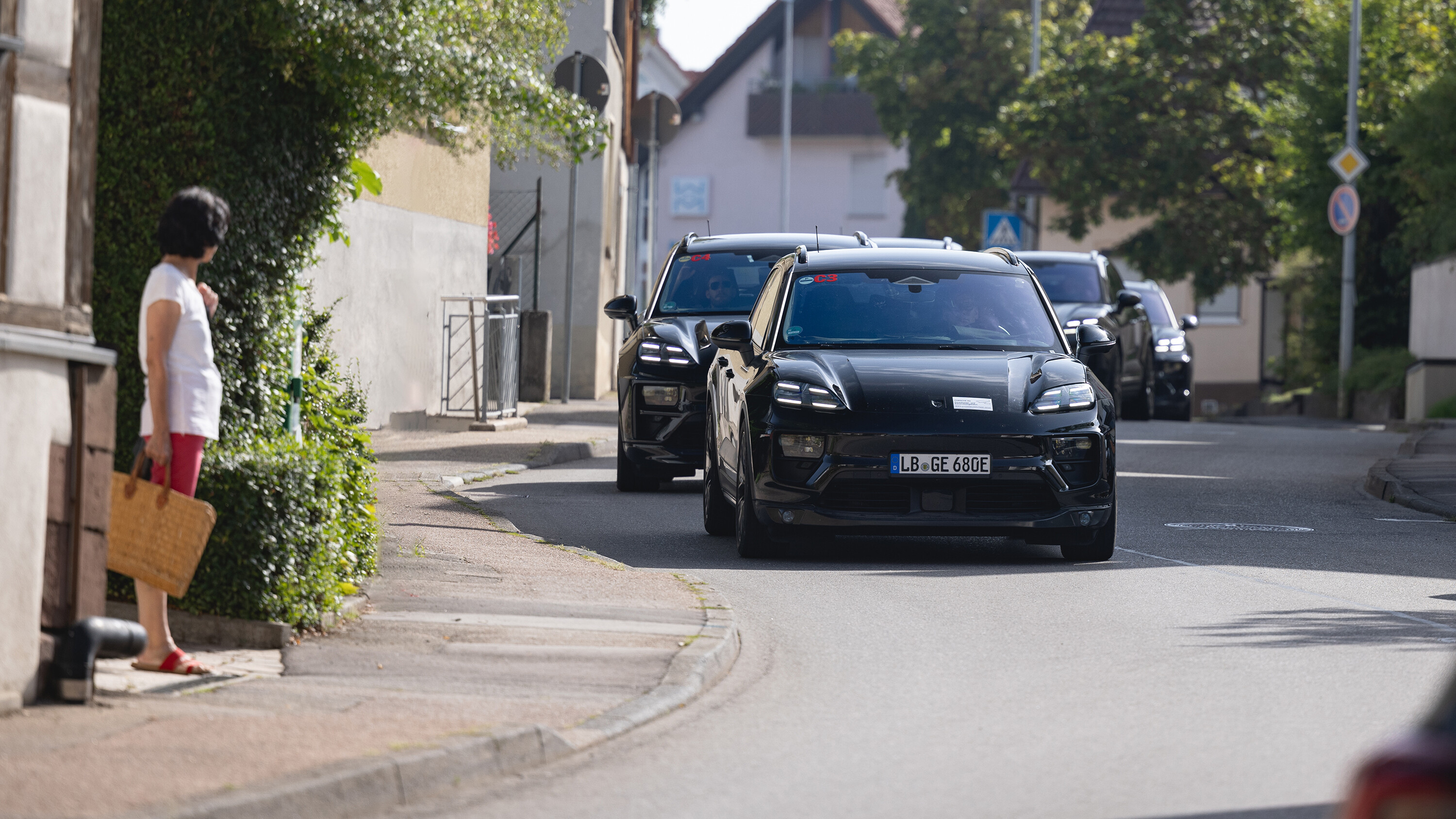
With Porsche still in the final stages of signing off the electric Macan – and its official badge name yet to be revealed – we drove two mildly camouflaged pre-production cars in Germany: the entry-level 280kW version and the top-of-the-line 456kW Turbo. (Just note that no data is 100 per cent official at this point.)
December 2023: First official interior shots released
Story continues…
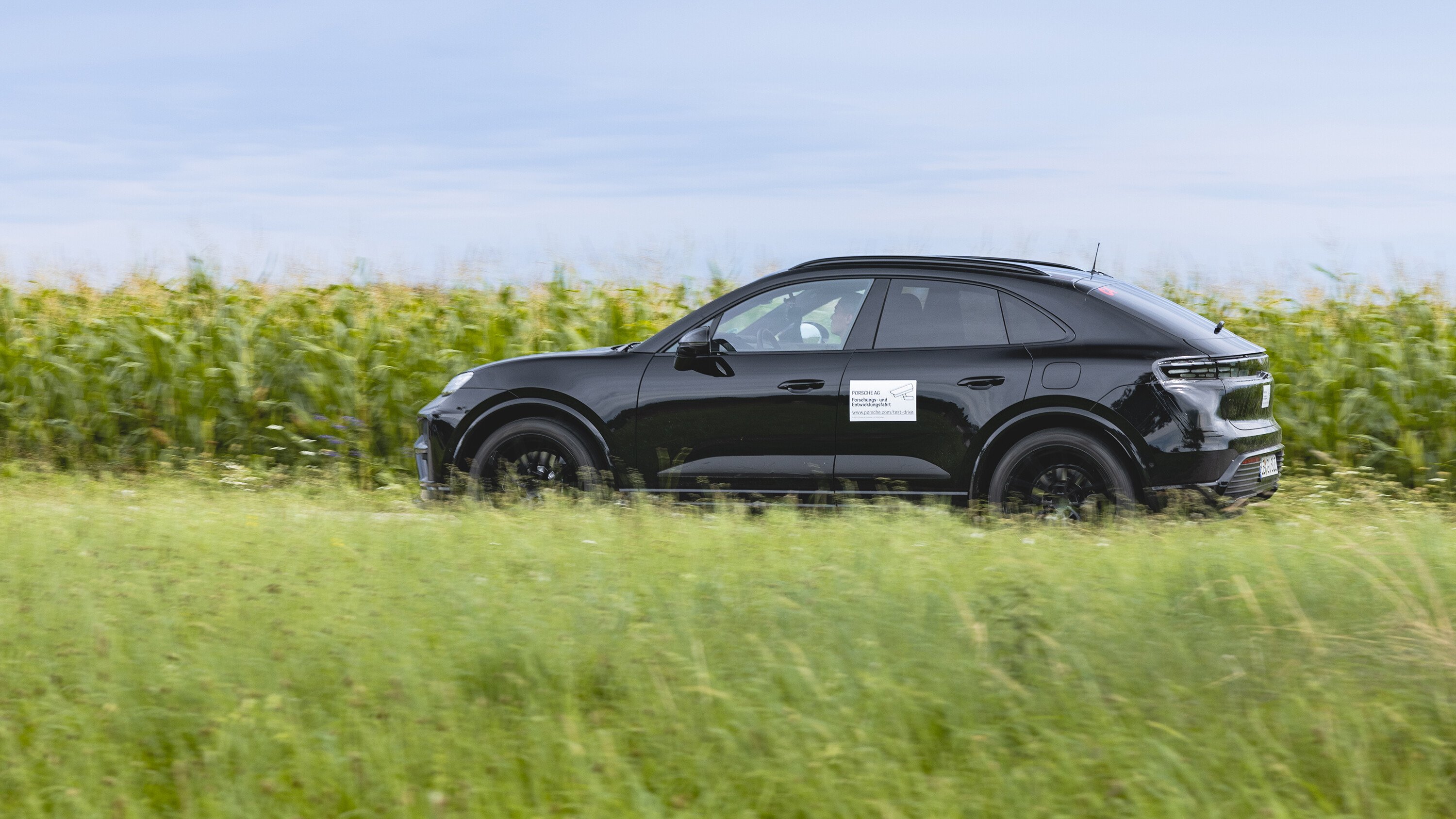
While the petrol Macan is one of the finest-handling SUVs around, Porsche claims the version we’ll dub Macan E for now is an “even sportier CUV with shorter overhangs, broader shoulders and a fast-dropping flyline”.
The smaller frontal area and a lot of work in the wind tunnel resulted in a more favourable drag coefficient of 0.24 – crucial for maximising battery range.
1
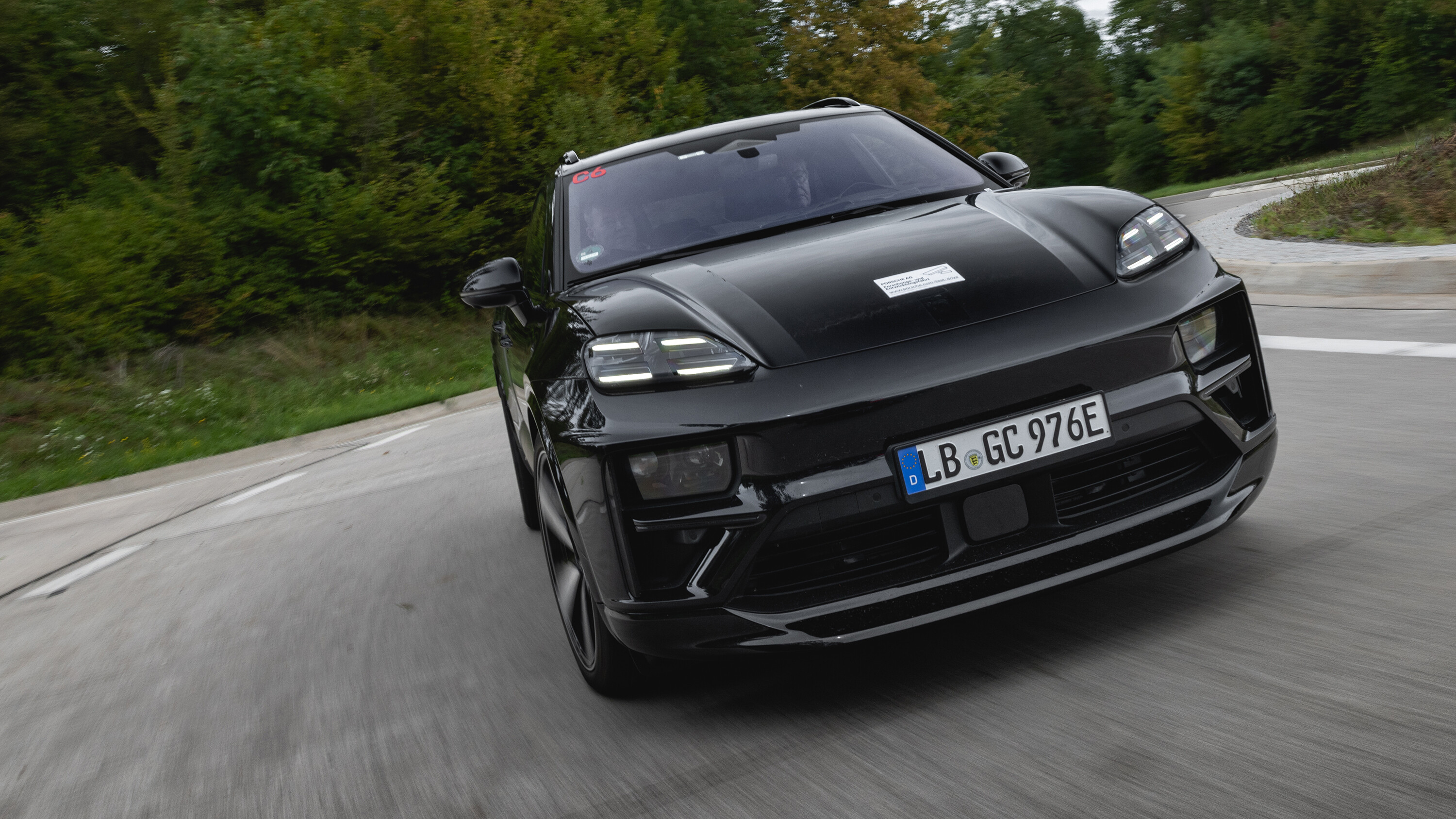
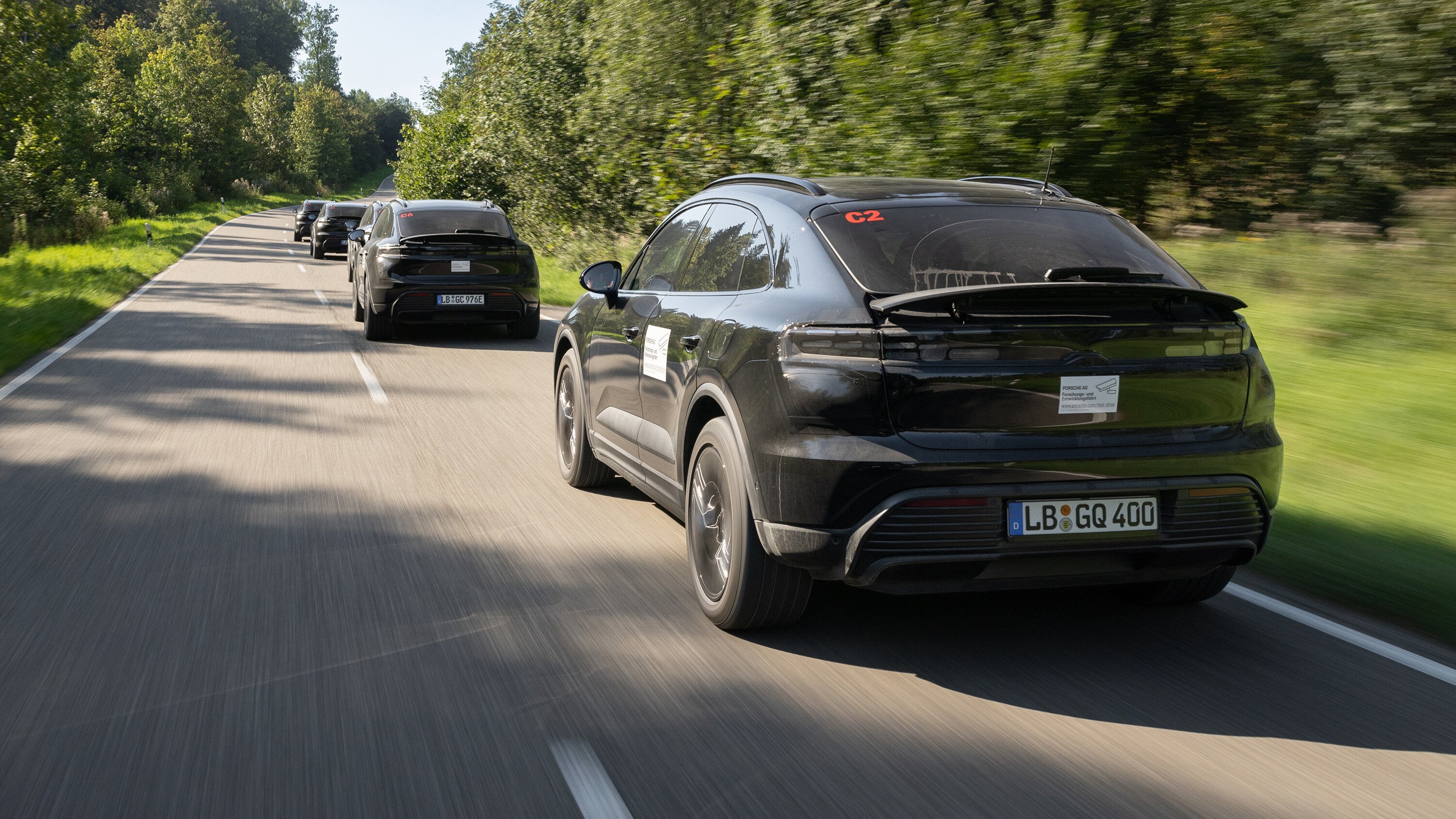
With Porsche still in the final stages of signing off the electric Macan, we drove two mildly camouflaged pre-production cars in Germany
The entry-level model shares the advanced Premium Platform Electric (PPE) with the Audi Q6 E-Tron that will also be available as a sloping-roof ‘coupe’ when it arrives next spring.
Although both cars were developed by a joint project team, maximum differentiation was a key target. As a result, the brands not only opted for different sheet metal and interiors but also for bespoke drivetrains, steering systems and suspension set-ups.
The main uniting factor is the software that keeps troubling all members of the VW group.
Unique to the Macan E are the Turbo’s active rear spoiler, the selectively blocked nasal air intakes, and the stacked headlights comprising upper trademark four-dot DRLs and lower adaptive short- and long-range projectors.
1
Starting in the Turbo, the most powerful electric Macan gives the driver access to a total of 477kW (once a ten-second, full-boost 20kW charge is factored in) plus an excess of 1000Nm relayed to all four wheels via ultra-fast on-demand vectoring.
Combining a steel platform with a body made of several different materials, the Macan E is not exactly a featherweight five-seater, but thanks to the massive overflow of power and grunt, the crossover shrinks in size and weight the instant you put the right foot down hard.
In combination with the optional rear-wheel steering, the SUV is even more chuckable through the twisties and every bit as stable through sweeping Autobahn esses at unrestricted speeds.
Although the Macan E is about 250mm shorter than the Taycan, the SUV sits on a longer, 3000mm wheelbase. As a result, it offers more rear legroom and a bigger boot than the lower and wider sedan.
1
In combination with the optional rear-wheel steering, the SUV is even more chuckable through the twisties
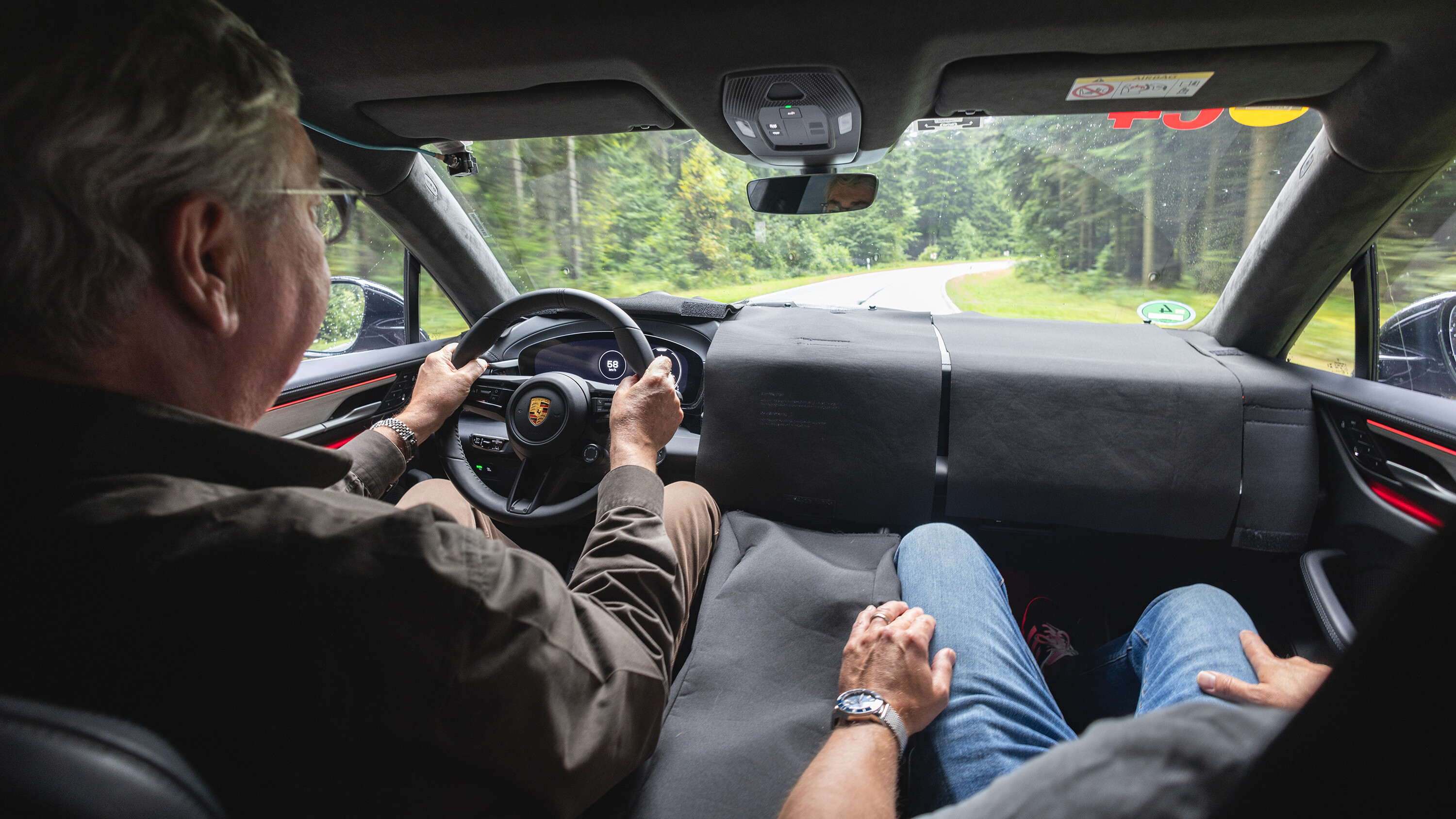
Customers can tick common Porsche options such as head-up display, Sport Chrono pack, Porsche digital key, Burmester sound, and the Innodrive assistance system, but there’s also a separate passenger-side monitor tailormade for discreet viewing and gaming activities.
The seating position is now 24mm lower and the seat itself is also new; take your pick between a lightweight race-style bucket and a comfort chair.
Flanked by the start-stop button on the left and the small stubby gear selector cum parking brake on the right, the main instrument binnacle houses three round multi-functional dials that relay all the trip- and drivetrain-relevant information you could ask for.
A steadily increasing number of icons and apps is vying for attention in the rectangular centre monitor positioned above the climate-control panel, which contains five physical and thus largely failsafe rocker switches.
A few more buttons and thumbwheels can be found on the steering wheel that also accommodates the circular drive-mode selector but is devoid of shift paddles – and that’s a shame.
After all, they would have come handy for on-demand coasting and fingertip changes between the three regenerative-braking stages.
If there is one thing Porsche does as a rule better than just about everyone else, it’s the calibration of the steering, and the Macan E is another point in case.
At 2.5 turns from lock to lock, the direction finder is even a smidgen quicker than the Taycan’s and on par with a 992 Carrera S. It’s a truly compelling interface, the Macan E’s number one confidence-inspiring factor and a key smiles-per-mile element.
Shod with 295/40ZR21 and 295/35ZR22 Michelin Pilot Sport tyres, the ride experienced in the Turbo was crisp, perhaps even brittle. Surprisingly, Porsche is not willing to add a Comfort setting to the Porsche Active Suspension Management (PASM) system.
1
In Sport, the Macan E corners as flat as a Hovercraft, hangs on to the chosen line like a monorail and translates torque into traction like a rack railway on steroids.
Step up the pace and slacken the reins by switching off stability control, and the 48:52percent front-to-rear weight distribution will encourage – at least in the wet – a mild controlled slide kept alive forever by that inexhaustible torque flow.
The so-called rear performance chassis module houses the second e-motor positioned ahead of the locking e-diff, and the extra-cost rear-wheel steering that operates up to 80km/h at an angle of five degrees (a 15 percent increase over the Cayenne).
Both motors are of the liquid-cooled PSM kind featuring higher power density, best-in-class stability and repeatability, and a faster switch frequency thanks to modified pulse inverters.
1
Fed by an 800-volt system common to all Premium Platform Electric (PPE) models, the 100kWh CATL battery can be charged with up to 270kW.
Boosting the energy content from five to 80 percent takes about 25 minutes. In case you’re stuck at a less potent 400V charger, the so-called bank charging system saves precious time by splitting the 800V power pack into two 400V cells. Clever.
Due to the absence of the fuel tank, the Macan E can swallow more luggage than the petrol-fed version. The frunk on the other hand is rather small, but the Integrated Power Box (IPB) that accommodates the on-board AC charger, high-voltage heater and DC/DC converter is a welcome space-saving innovation.
While Porsche is still mum about the efficiency, we checked the on-board computer of both hard-charging Turbos on our drive – one returned 31.1kWh/100km, the other averaged 35.7kWh/100km.
Ho-hum figures, so Porsche will no doubt be counting on most Macan E buyers to be impressed by the Turbo’s ability to accelerate from 0-100km/h in less than four seconds.
The base Macan E we also sampled is allegedly barely slower than the soon to be discontinued Macan GTS. The maximum power output is about 280kW, or 298kW on maximum boost.
These numbers are on the conservative side.
1
The official driving range between two recharging pit stops is in excess of 505km for the Turbo, placing the zero-emission Macan in the same ballpark as the Tesla Model Y Performance, the Taycan 4S, the BMW iX M60 xDrive, and the upcoming Audi SQ6 e-tron.
The non-turbo version was fitted with 235/55ZR20 and 285/45ZR20 Bridgestone tyres which helped the ride but neither the wet grip nor the steering precision.
Although we did not have the opportunity to try the base steel suspension, there was a choice of standard and carbon-ceramic brakes to be sampled.
Predictably, the compound stoppers were superior in all respects once they had eventually reached their proper working temperature.
1
VERDICT
If this first hands-on encounter is anything to go by, the battery-powered Macan has got what it takes to become a winner.
It goes like an express, handles like a dream, and holds the road like a moving magnet. In other words, it’s a proper Porsche through and through.
But is that enough? Does the near-silent driver environment enlightened at times by a synthetic sound generator provide the same emotional experience as the hectic, blat-blat V6?
Does the awesome performance and the sensational chassis really give this model a clear enough edge over ever-improving, constantly emerging Chinese rivals, some of which are even more potent and may be quicker still in a straight line?
At least the electric Macan is at last coming to prompt such questions.
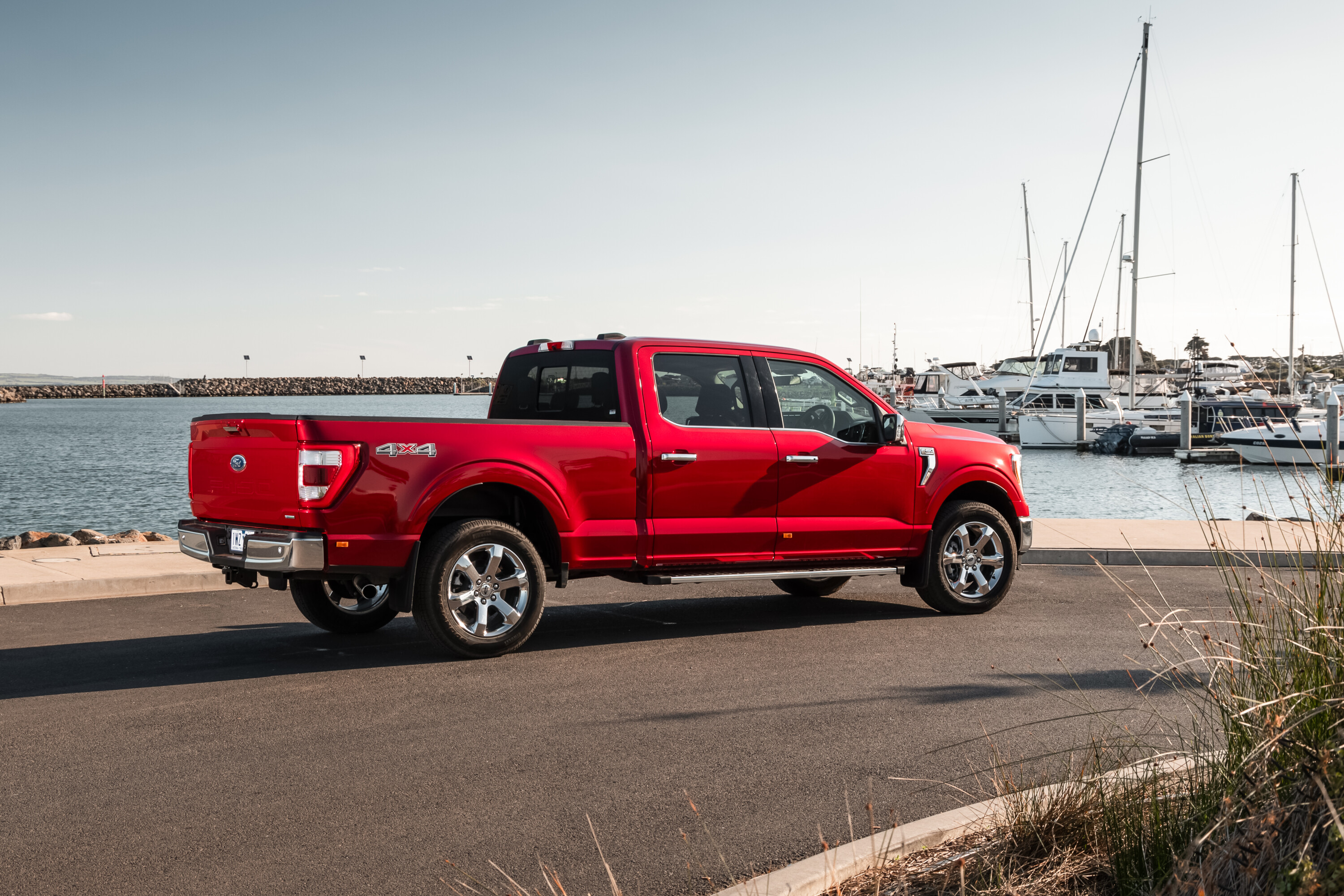
Australia’s appetite for full-size American pick-up trucks is growing at a staggering rate, with the arrival of the iconic Ford F-150 set to almost double the size of the booming segment.
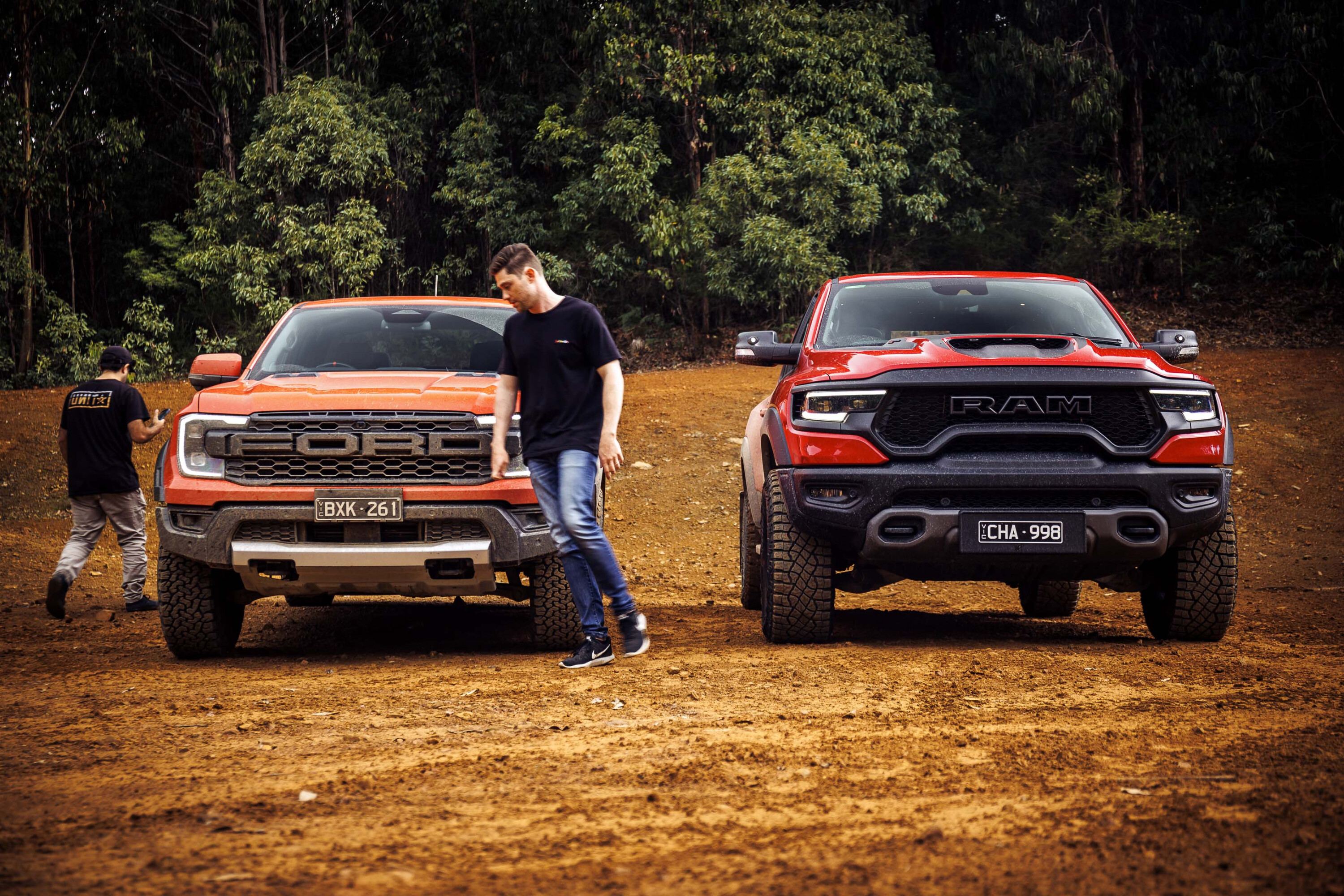
Ford is predicting it will sell at least 5000 units of the F-150 per year Down Under, meaning it will challenge the RAM 1500 as the most popular full-size US pick-up offered in Australia.
And tellingly, Ford says it has plenty of capacity to convert more F-150s should demand for its big truck continue to rise.
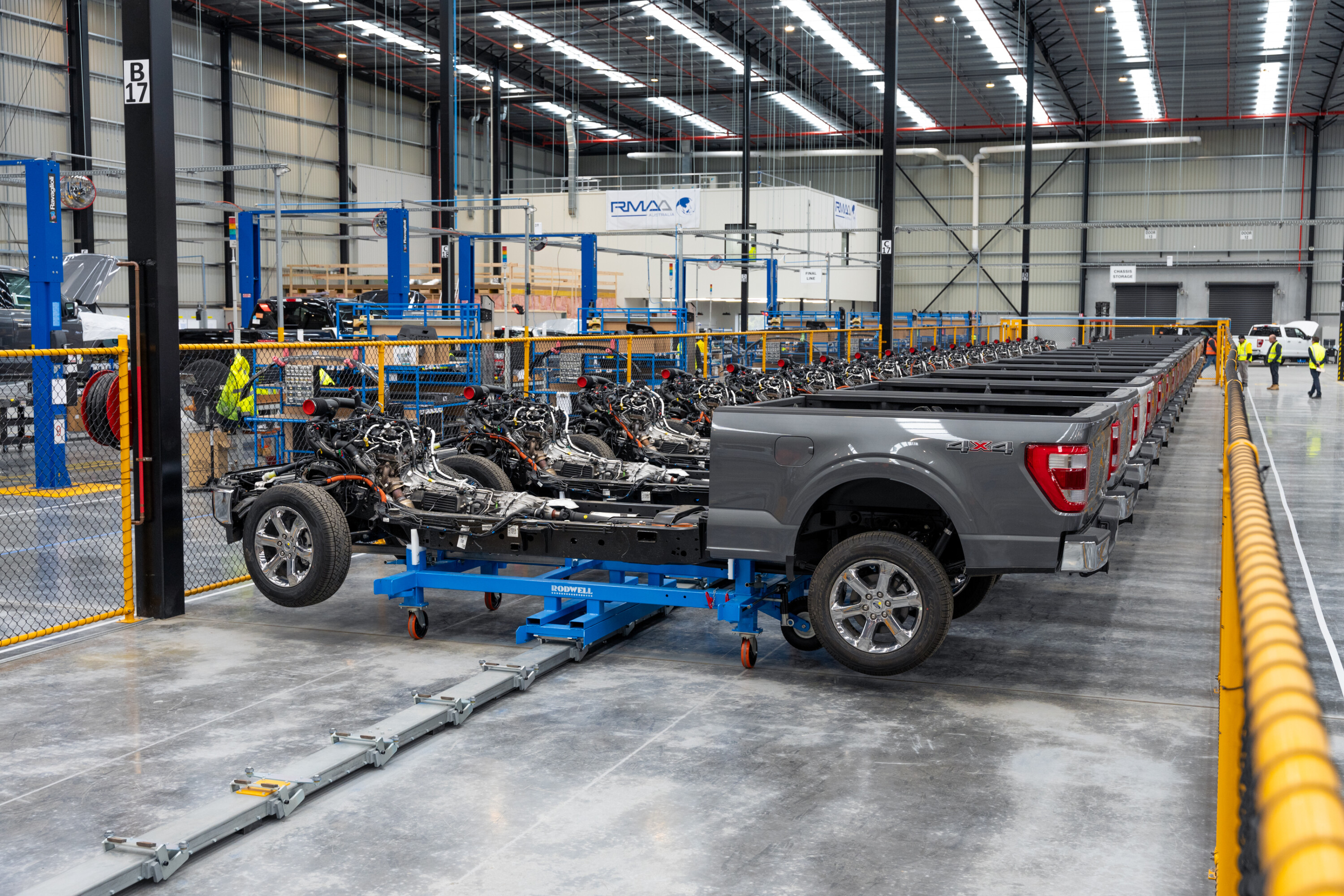
The F-150 is converted to right-hand drive by Ford’s remanufacturing partner, RMA Automotive, who has confirmed it can add a second shift, and possibly even a third, to boost output if required.
“We’ve got 200 people and we make 20 per day,” said RMA Automotive’s general manager Trevor Negus. “It’s about a 2.5 day system [to fully convert an F-150].”
1
Negus confirmed those figures are for a single shift and said adding a second or third shift is possible.
“Absolutely,” he said. “The whole facility has been built with other products in mind. So we’ve got the capacity to take larger F-Series, we’ve got the capacity to take other vehicles and, as you pointed out, we’ve got another shift to go to.”
Last year, Aussies bought 8538 full-size American utes and the segment is continuing to boom in 2023 with sales already up 42 percent year-to-date in September.
Currently the most popular full-size ute is the RAM 1500, which notched up 5481 sales in 2022 and is already well on track to gazump that figure this year.
RAM 1500 sales are up by 38 percent year-to-date and already sit at 5022 units with three months left in the calendar year. For context, the RAM 1500 is outselling smaller 4×4 dual-cabs like the Volkswagen Amarok (3848) and is virtually on par with the Nissan Navara 4×4 (5230)
Ford admits RAM’s runaway success – and the healthy profits that come with it – played a big role in its decision to import and reengineer the F-150.
SALES GROWTH OF US PICK-UPS
2020
2021
2022
2023 (YTD)
RAM 1500
3299
3819
5481
5022
RAM 2500
13
194
614
642
RAM 3500
8
12
54
65
Chevrolet Silverardo
36
2411
1823
1478
Chevrolet Silverado HD
0
4
566
888
1
How big is the full-size segment in Australia?
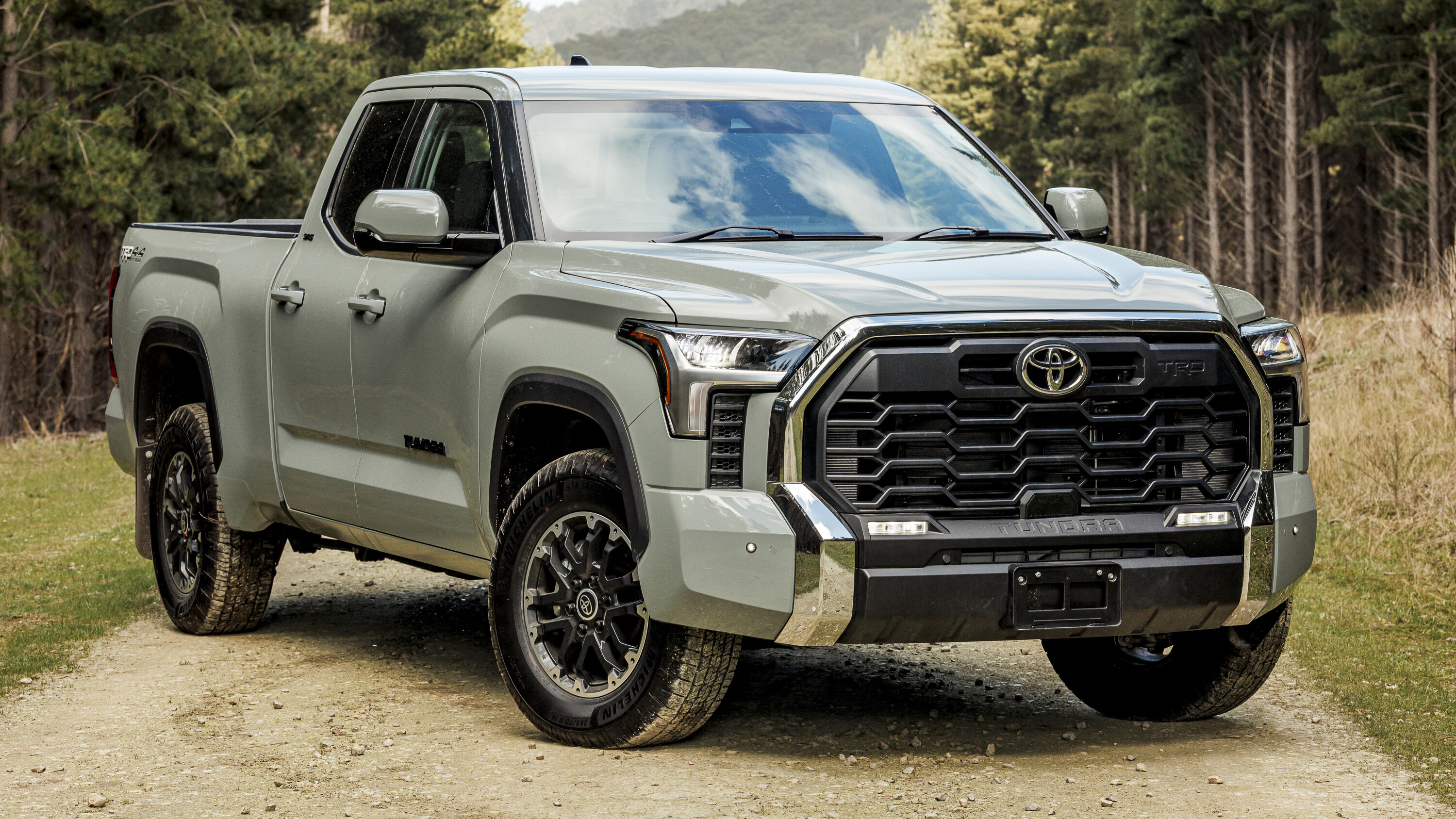
If Ford can hit its predicted sales of 5000 units per year, it will effectively double the size of the segment. And that’s before you factor in sales juggernaut Toyota, which will wade into the full-size ute landscape later this year with the Tundra.
Like the RAM 1500 and Chevy Silverado, the Tundra will be converted to right-hand drive by Walkinshaw Automotive and is powered by a 3.5-litre V6 hybrid powertrain.
1
“What we know is RAM have done a really good job,” said Ford Australia boss Andrew Birkic. “Walkinshaw and RAM have done a super job and opened up the segment. We think we’ve got a pretty good truck so it’s about to get interesting isn’t it? We won’t talk sales volumes, we don’t do that, what we will focus on is building the right product.”
Despite Birkic’s reluctance to talk numbers, it’s clear Ford is hoping to convert around 5000 F-150s annually based on RMA’s output of 20 units per day. That means the entirety of the full-size segment should easily topple 10,000 total sales in 2024 and it could even approach 15,000 if demands continues to grow.
1
That’s still a shadow of the mid-size 4×4 segment, which is dominated by the Toyota Hilux and Ford Ranger, of course, which notched up 173,883 sales in 2022.
But despite their size (or perhaps because of it) and the fact they carry six-figure price tags and are powered by big and relatively thirsty engines, the popularity of American trucks is showing no signs of slowing.
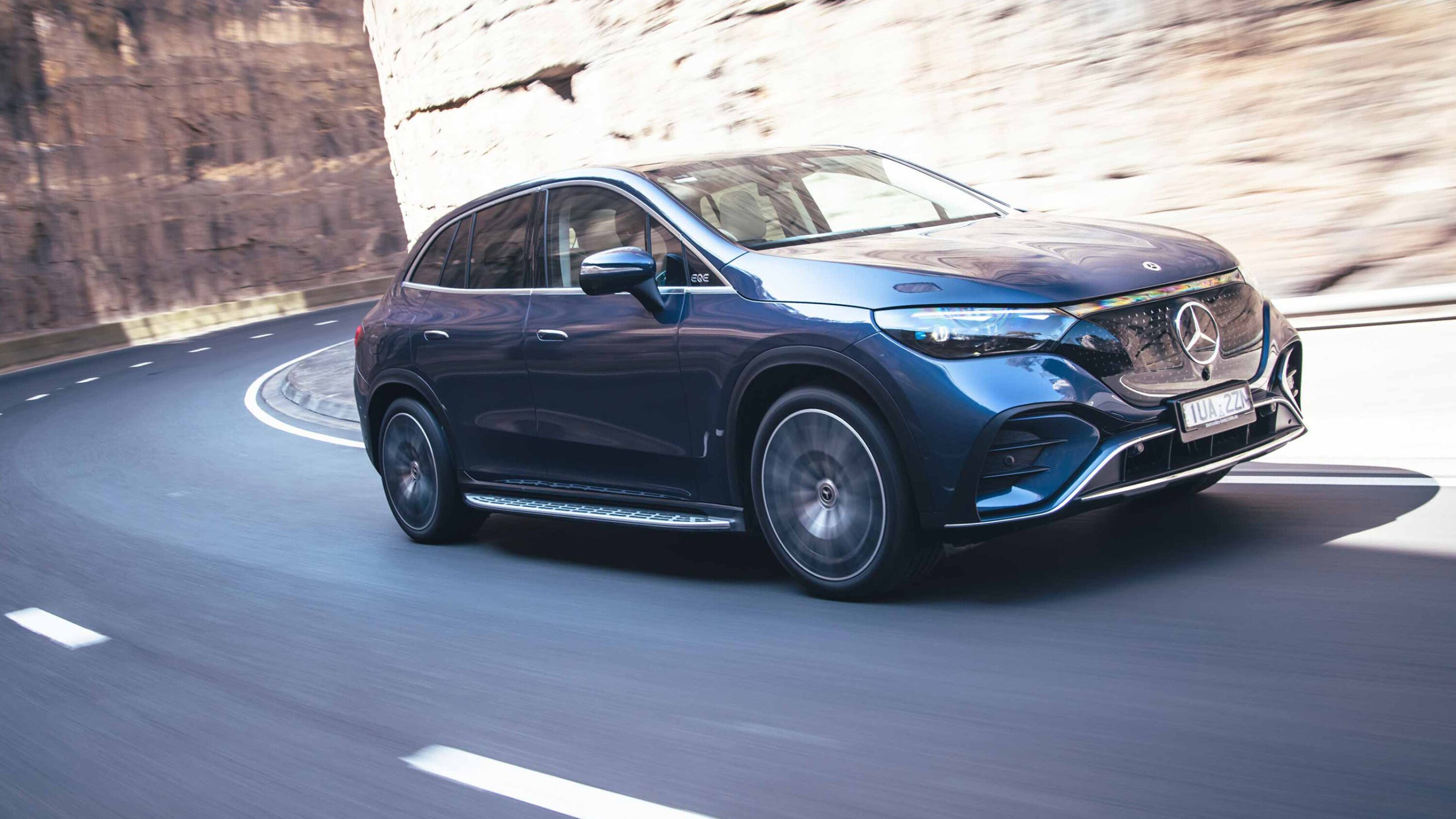
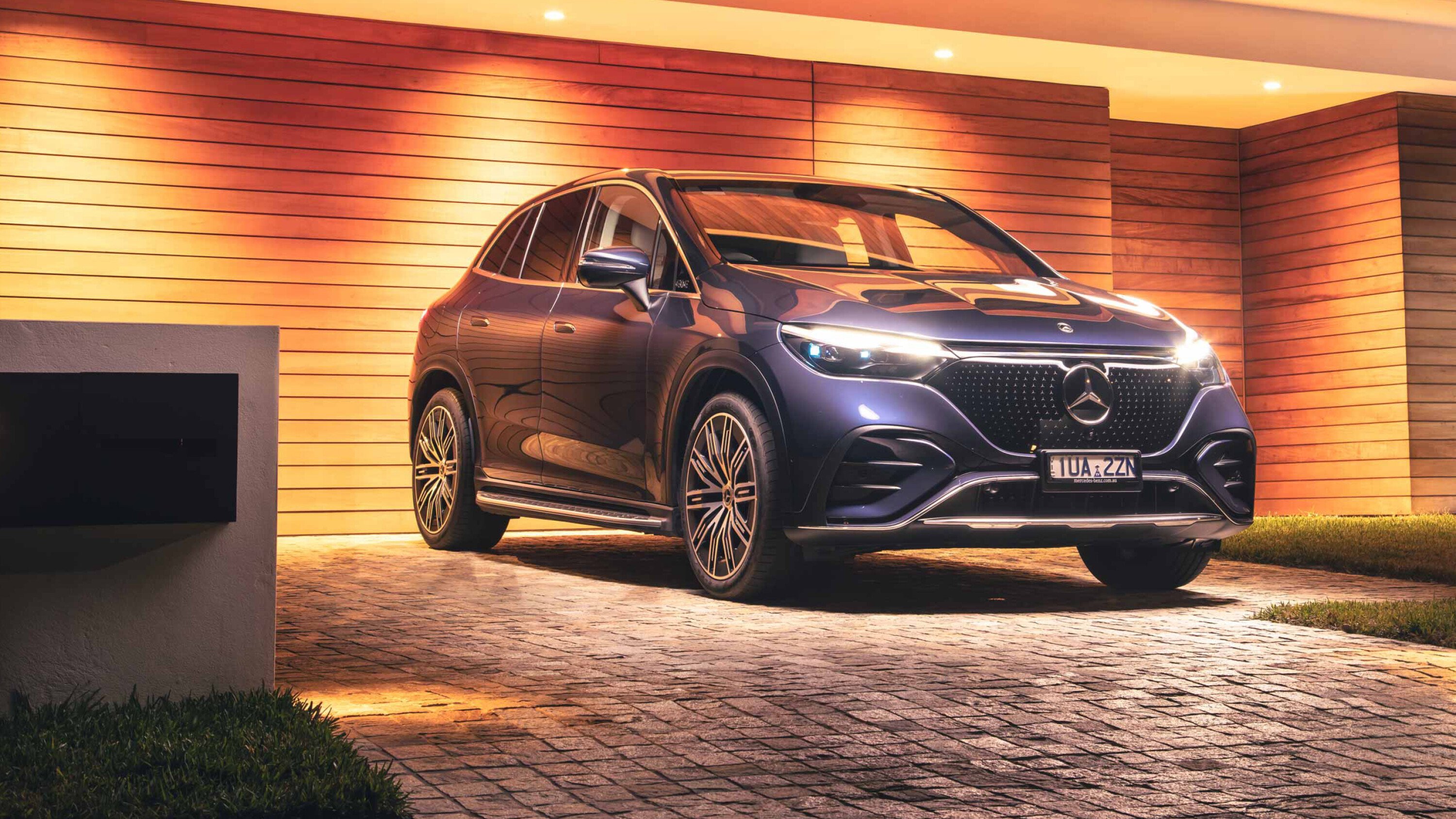
Mercedes-Benz is putting together a faintly dizzying range of stylistically similar EVs in myriad shapes and sizes – offering more choice in models than any other brand in the market.
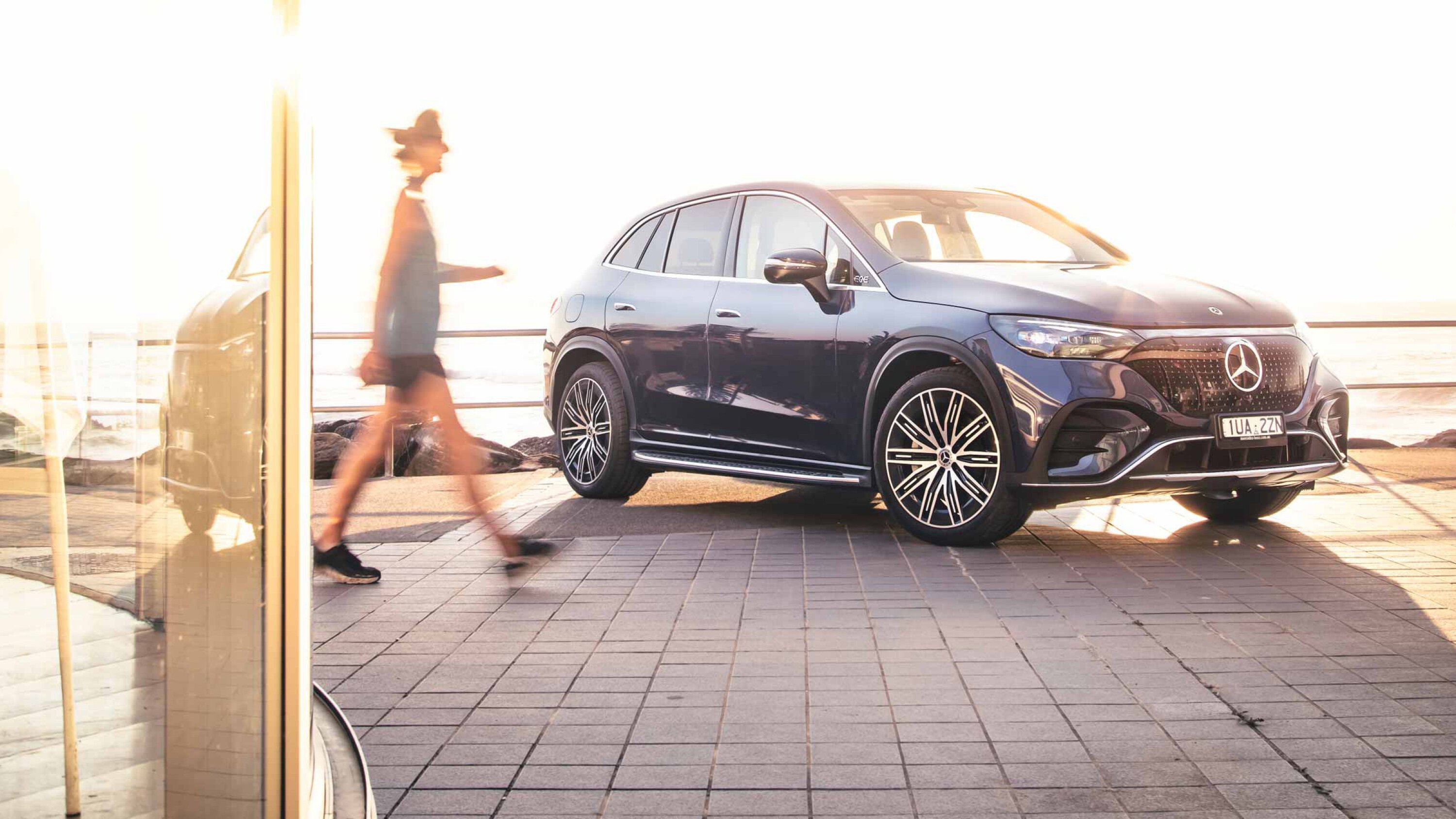
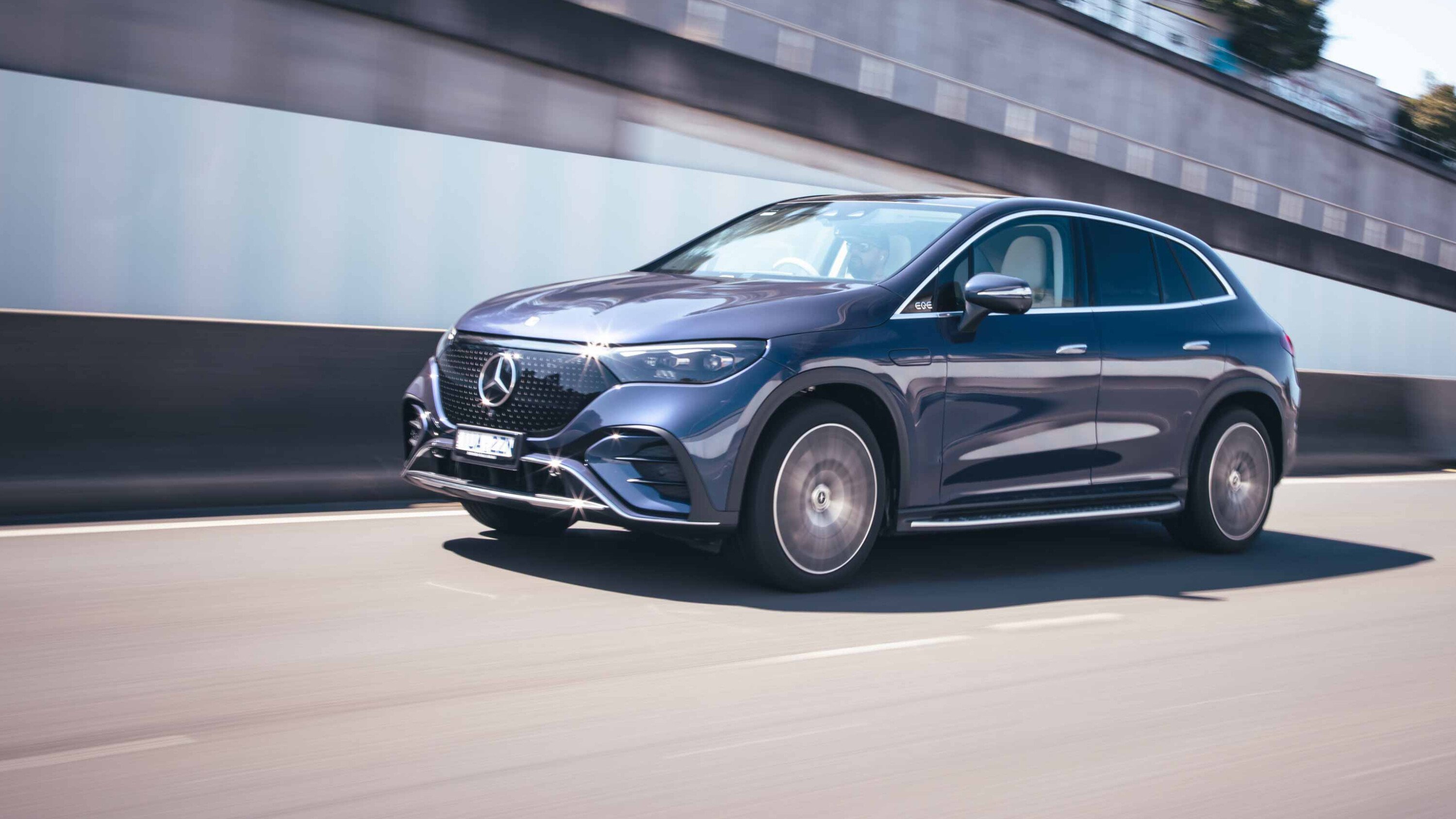
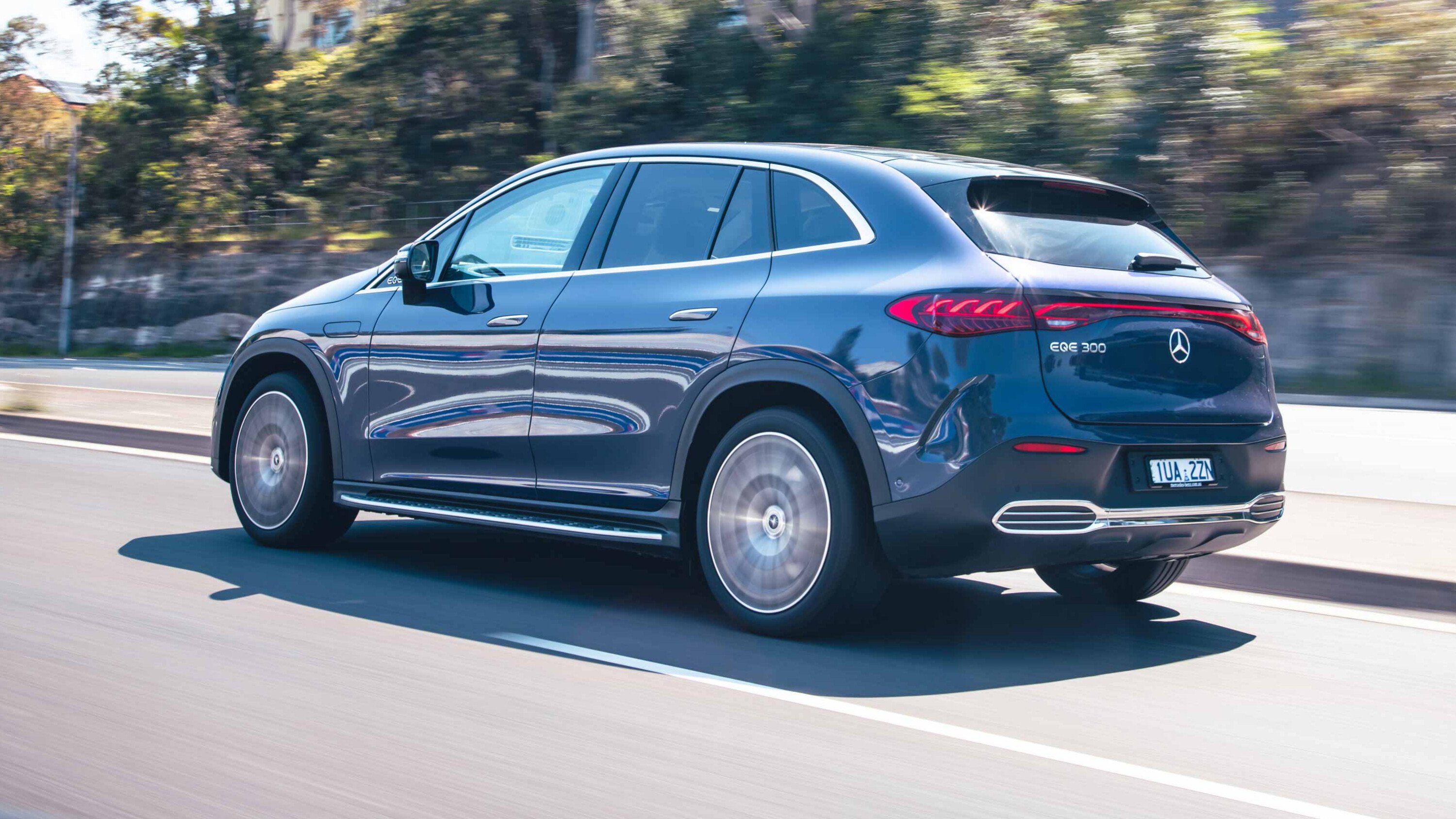
Its latest entrant is the EQE SUV, not to be confused with the EQE sedan…
As the last letter in its name suggests, the EQE SUV is bigger than the (out-of-production until a new one arrives) EQC, and smaller than the EQS which sits upon the same all-electric architecture, filling what the company regards as a sweet spot in today’s luxury market.
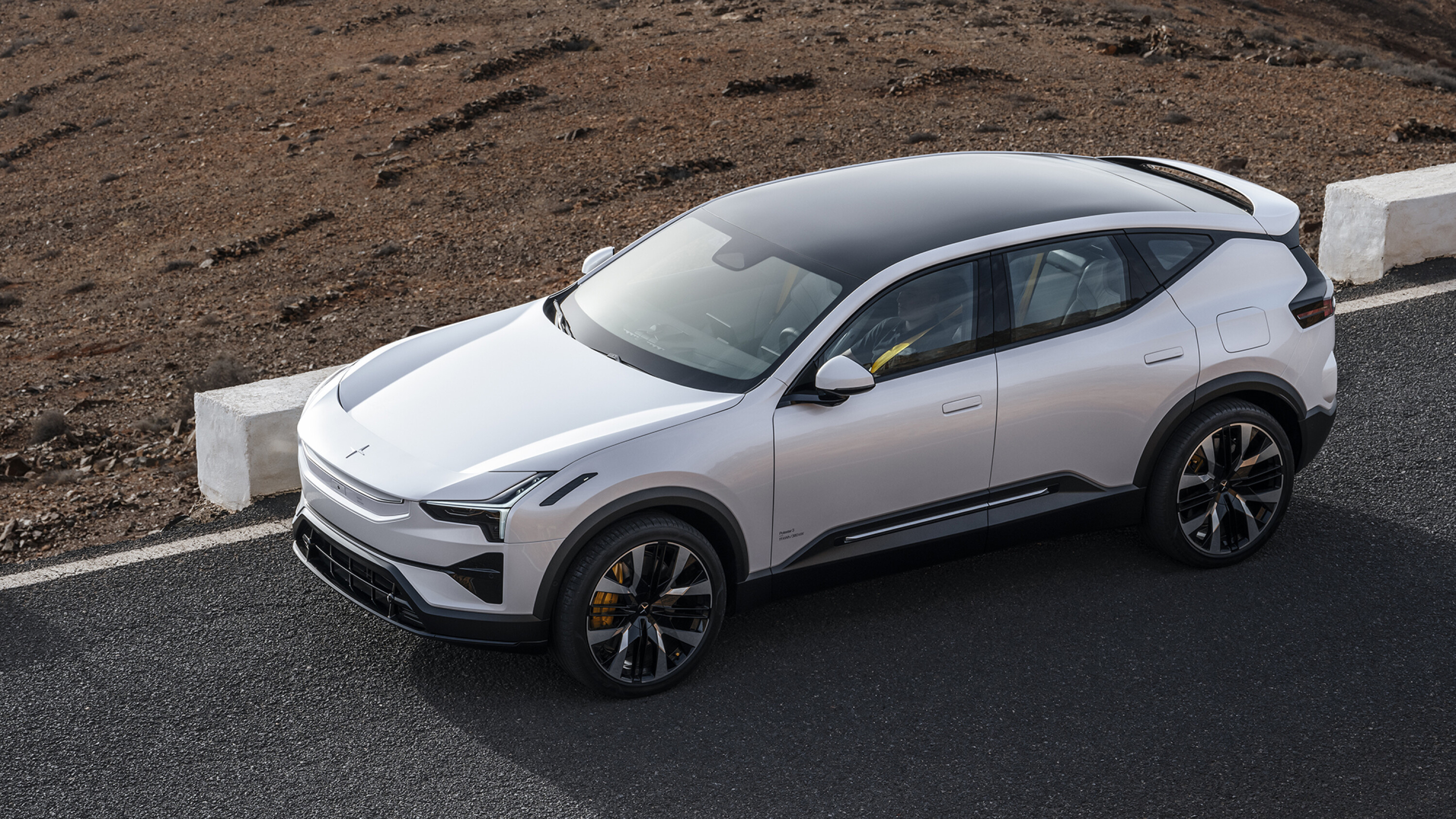
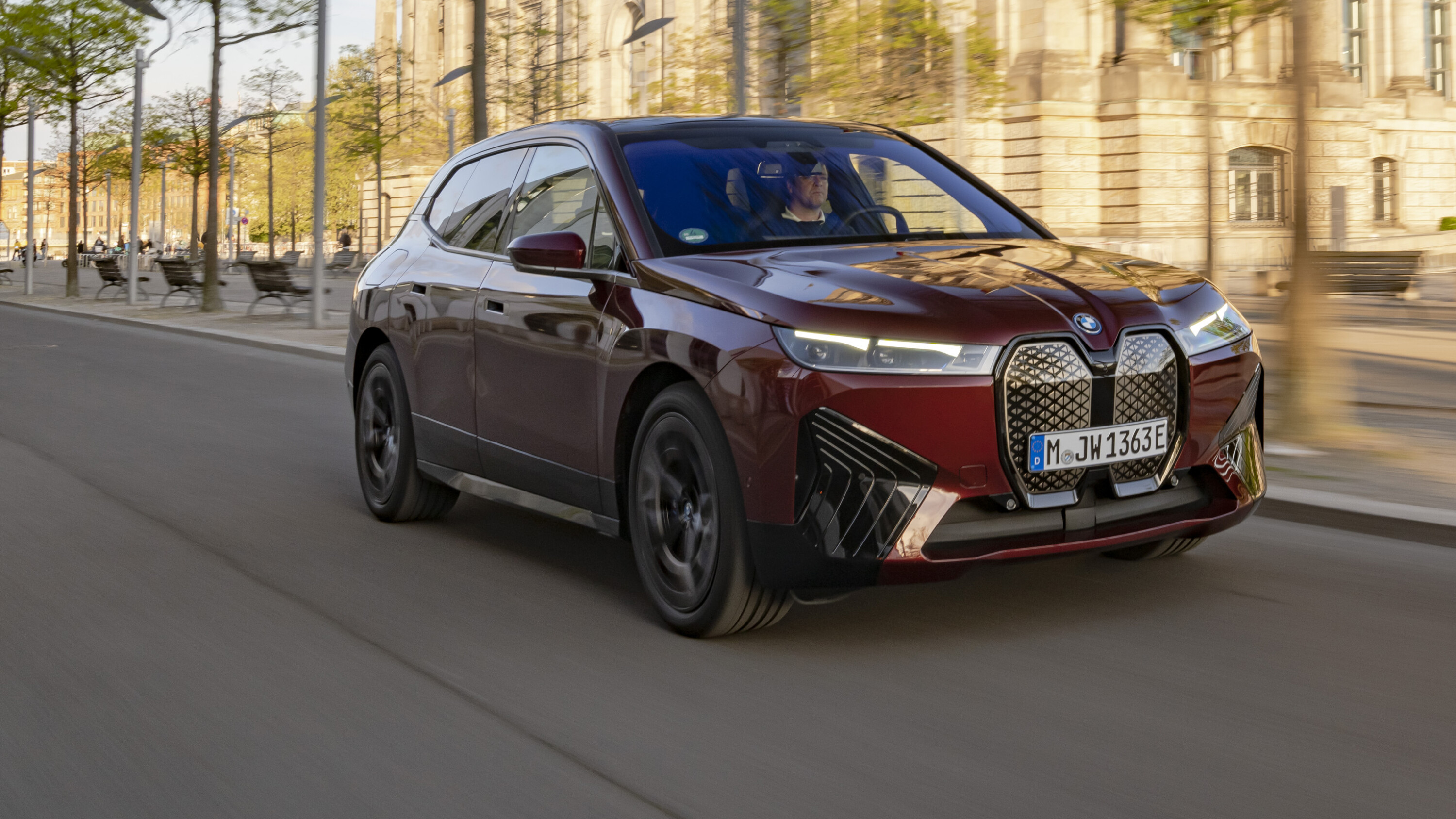
As well as lining up against the all-electric BMW iX, Polestar 3, Audi Q8 E-Tron and Lexus RZ, the EQE SUV also looms as a potential alternative to, or replacement for, the internal combustion Mercedes-Benz GLE that’s a common sight in private school carparks and ski lodges across the nation.
Mercedes-Benz’s challenge is thus twofold: to be more compelling than a strong (and growing) list of competitors, and to convince the company’s existing loyal owners to make the switch to something directly powered by electrons and not dead dinosaurs.
While the Mercedes-Benz EQE SUV range will be offered with a choice of four drivetrains, including a hotted-up Mercedes-AMG EQE 53, the only version available on the recent Australian launch event was the entry EQE 300 rear-wheel drive variant.
1
How much is it, and what do you get?
Mercedes-Benz EQE 300 SUV key features
21-inch AMG Line alloys
Panoramic sunroof
Privacy glass
Digital Lights (headlights)
12.8-inch OLED touchscreen
Projecting head-up display
Sat-nav with augmented reality
Leather upholstery
Burmester 3D surround-sound
Parking Package with 360 cameras
Similar feature lists across the Benz-branded line-up, with upgrades focused on range and performance.
The EQE 300 SUV is priced at $134,900 before on-road costs, climbing to $144,900 for the more powerful EQE 350 dual-motor AWD; $164,900 for the even more powerful EQE 500 limited edition; topping out at $189,900 for the AMG 53 4Matic+ flagship.
Mercedes-Benz Australia sells its vehicles through agents with set pricing, meaning there’s no scope for individual haggling. All prices listed above are before on-road costs such as stamp duty and registration, but inclusive of luxury car tax and GST.
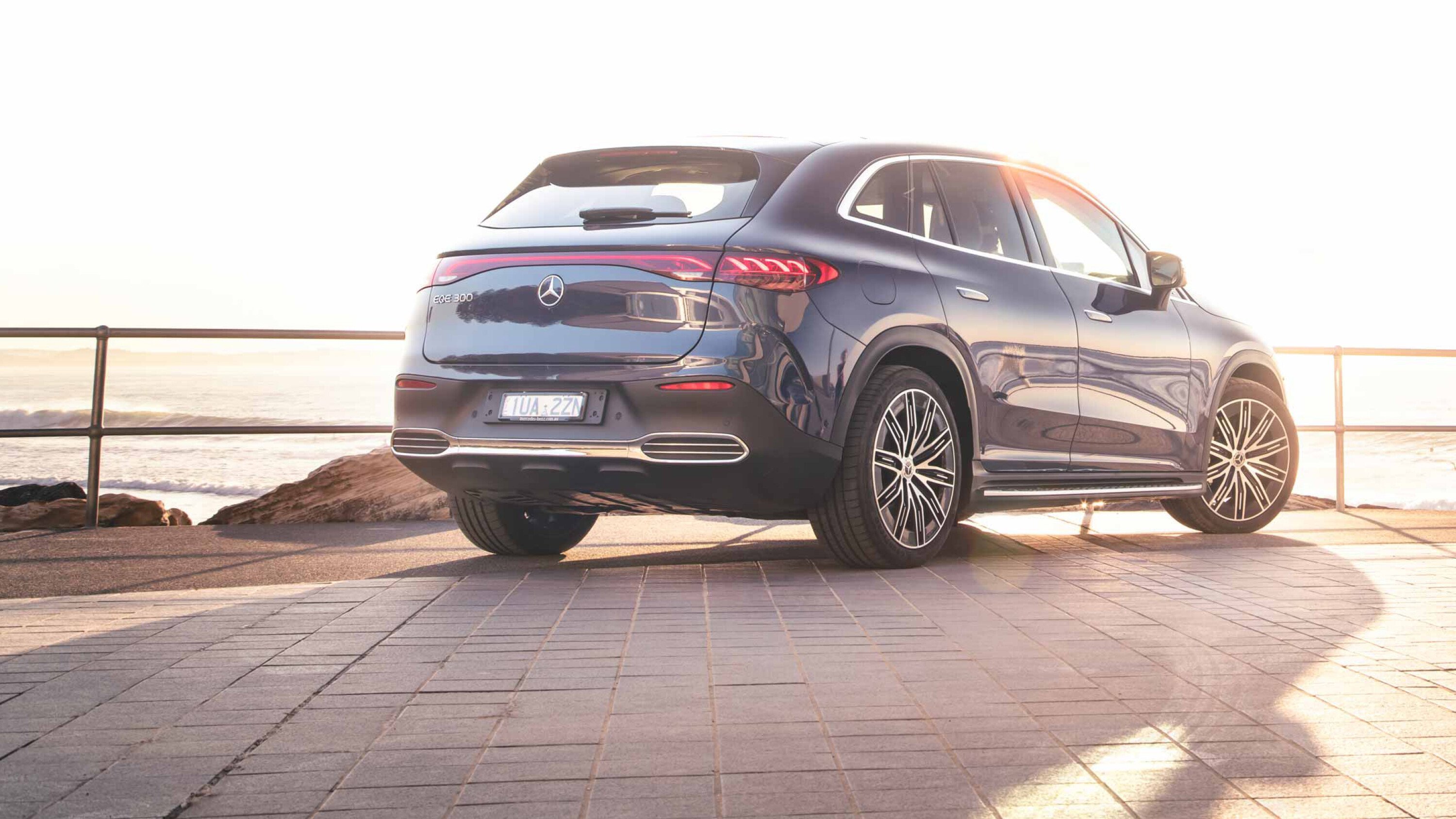
Standard equipment for the EQE 300 includes 21-inch AMG Line wheels, panoramic glass sunroof, proximity sensing key fob, powered tailgate, heat-insulating dark tinted glass, illuminated aluminium-look running boards, and an EQ-specific ‘grille’ insert with a cluster of Mercedes-Benz three-pointed star logos.
It also comes standard with the Digital Light package, an adaptive high-beam assist system with a staggering one million micro-reflectors within each headlight unit to give “precise and highly responsive” light distribution. Ideal for those doing country night driving.
1
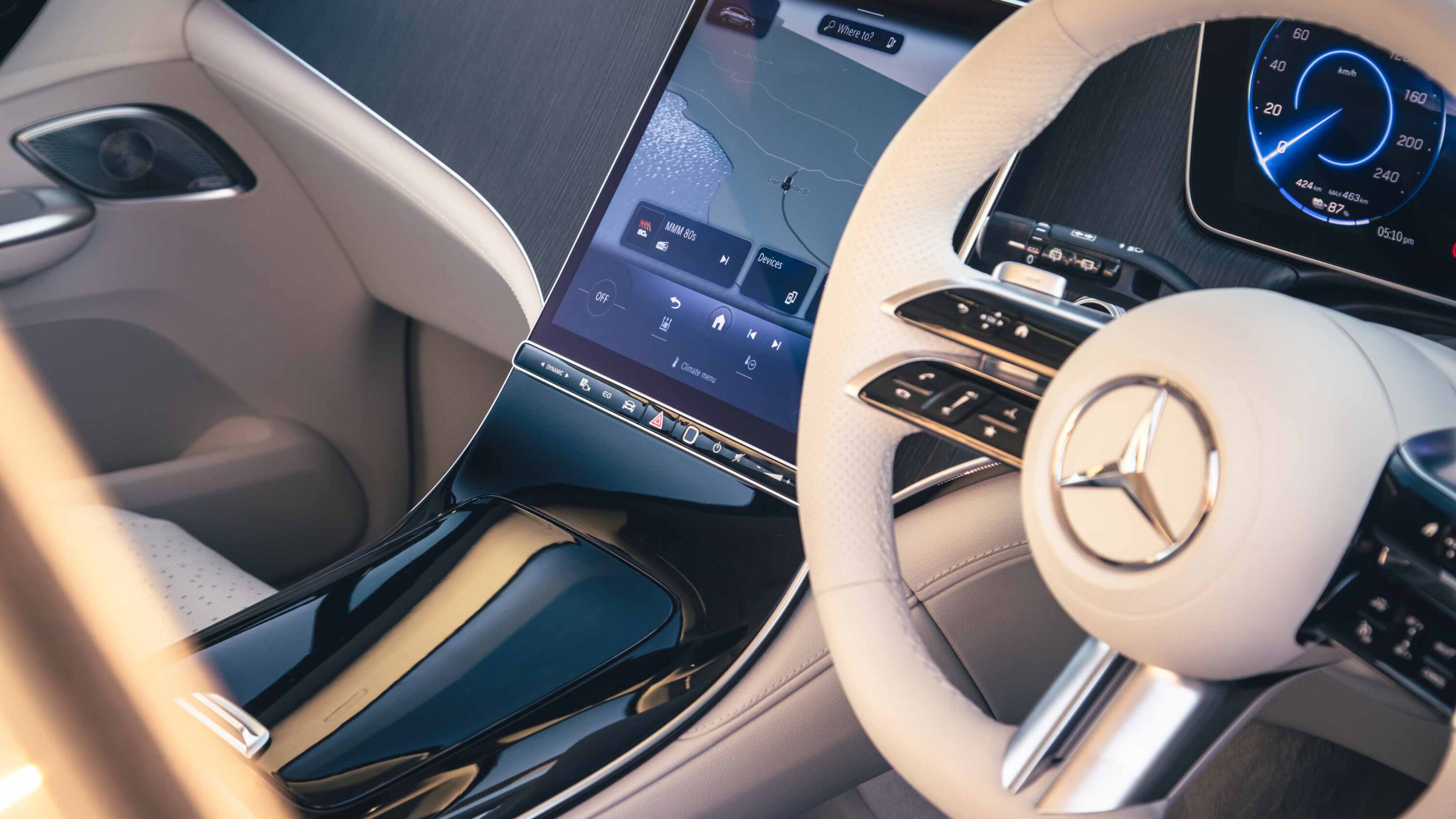
On the inside you get twin screens including a 12.8-inch OLED centre touchscreen running MBUX infotainment with conversational voice commands, satellite-navigation with augmented reality overlay, smartphone integration, wireless charging, a projecting head-up display, a Burmester 3D surround sound system, ambient cabin lighting with 64 colours, a 360-degree parking camera, and leather trim with heated front seats.
Those who fancy ticking some options boxes should note that the EQE 300 variant is not available with the massive MBUX Hyperscreen that takes over the dash. One feature you can add, however, is rear-wheel steering ($2900) that can reduce the turning circle from 12.3m to 10.5m. There’s also available Airmatic air suspension for $3400.
2024 Mercedes-Benz EQE SUV range pricing
All prices exclude on-road costs.
Where is this model in its lifecycle?
Brand new EQE SUV comes with all weapons loaded
The EQE SUV uses the same newly developed base architecture as the larger and more luxurious EQS SUV and EQS sedan family, and unlike the older-design EQC, was never developed with internal combustion in mind.
As well as being brand-spanking-new from the ground up, Mercedes-Benz Australia says the supply situation should be adequate to meet demand, some of which is coming from buyers who are new to the brand.
1
How do rivals compare on value?
Ballpark value next to shorter-range rivals, but there’s a trade-off when it comes to acceleration.
No surprise, Mercedes-Benz is not the sole luxury brand convinced this is a fertile corner of the market for electric SUVs.
The $134,900 (MSRP) EQE 300 SUV competes against the base BMW iX xDrive40 ($135,900), Polestar 3 Long Range ($132,900), and Lexus RZ450e Luxury ($123,000), and undercuts the cheapest Audi Q8 e-tron (the $153,900 e-tron 55).
1
However each of these competitors come standard with dual-motor AWD unlike the single-motor EQE 300 variant, and are subsequently punchier and more versatile. The positive trade-off is the Mercedes-Benz’s longer range claim.
Features-wise, we should mention that the EQE 300 has a more generous list of equipment than the entry GLE 300d diesel which Mercedes-Benz sees as a candidate for cross-shopping, given its roughly $15,000 lower sticker price will be offset by higher running costs. Note, it also costs about the same as a GLE 450 petrol ($133,670 MSRP).
Interior quality, comfort, space and storage
Brash, bright and highly capacious for five occupants.
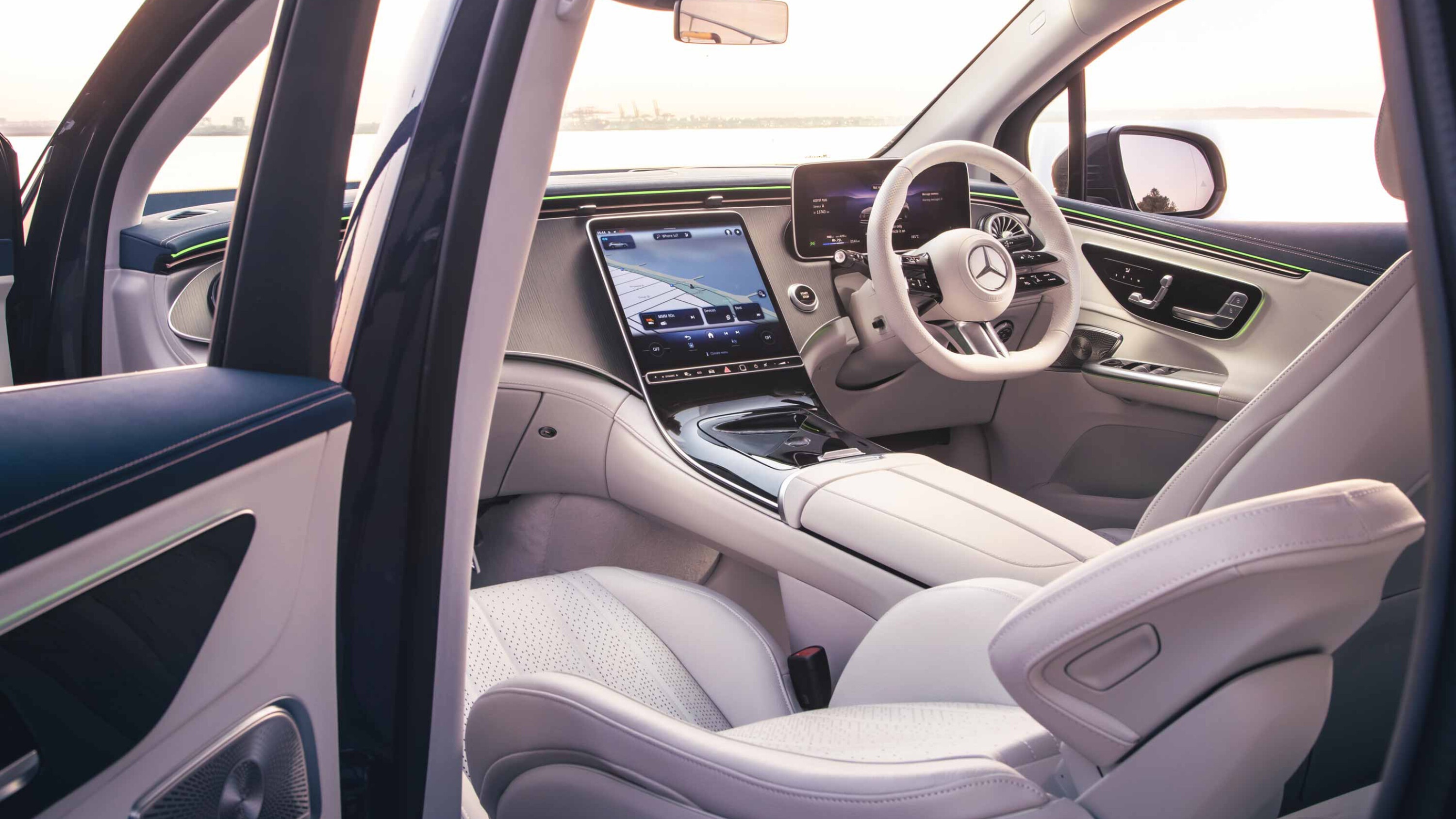
All told, while the new generation of Mercedes-Benz interiors eschew the old world design cues and bank-vault-matching fit-and-finish, they offer uber flashy displays and are generally well thought-out once you scratch beneath the surface.
1
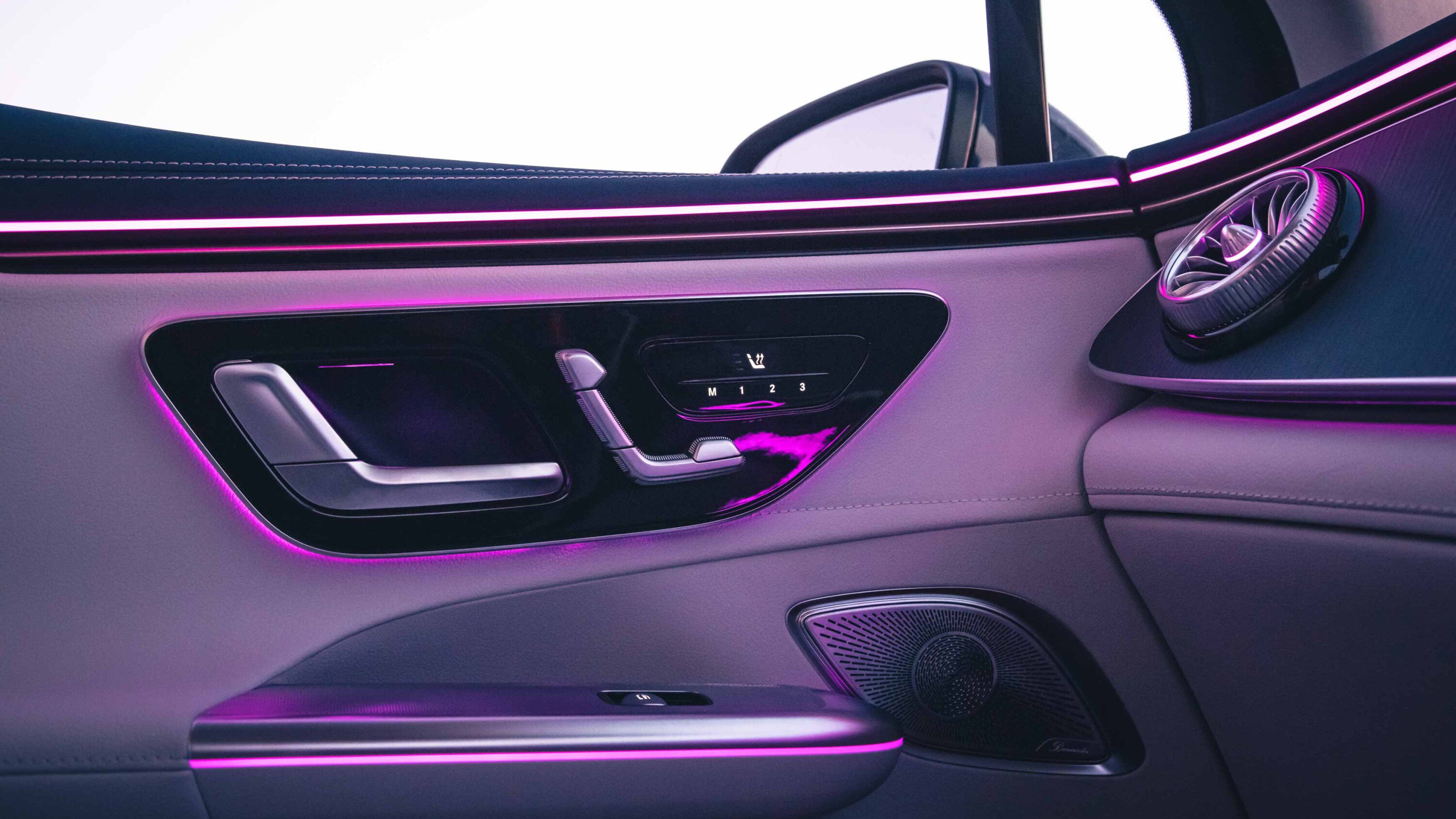
The Mercedes-Benz EQE SUV offers a premium experience even in base guise, with extensive use of quality materials such as suede-like door inlays, leather upholstery, brushed aluminium and dark wood trims, flashy light piping that runs the width of the dash into the doors, and contrast red stitching. The speaker covers look like art.
You’ll never convince this writer that such liberal use of glossy piano black trim pieces makes sense however, since they’re a magnet for dust, smudges and sun glare.
Storage solutions abound, including a large open section beneath the transmission tunnel enabled by the flat floor, a relatively large twin-lidded centre console, and a lidded section below the centre fascia with cup holders and a wireless charging pad.
1
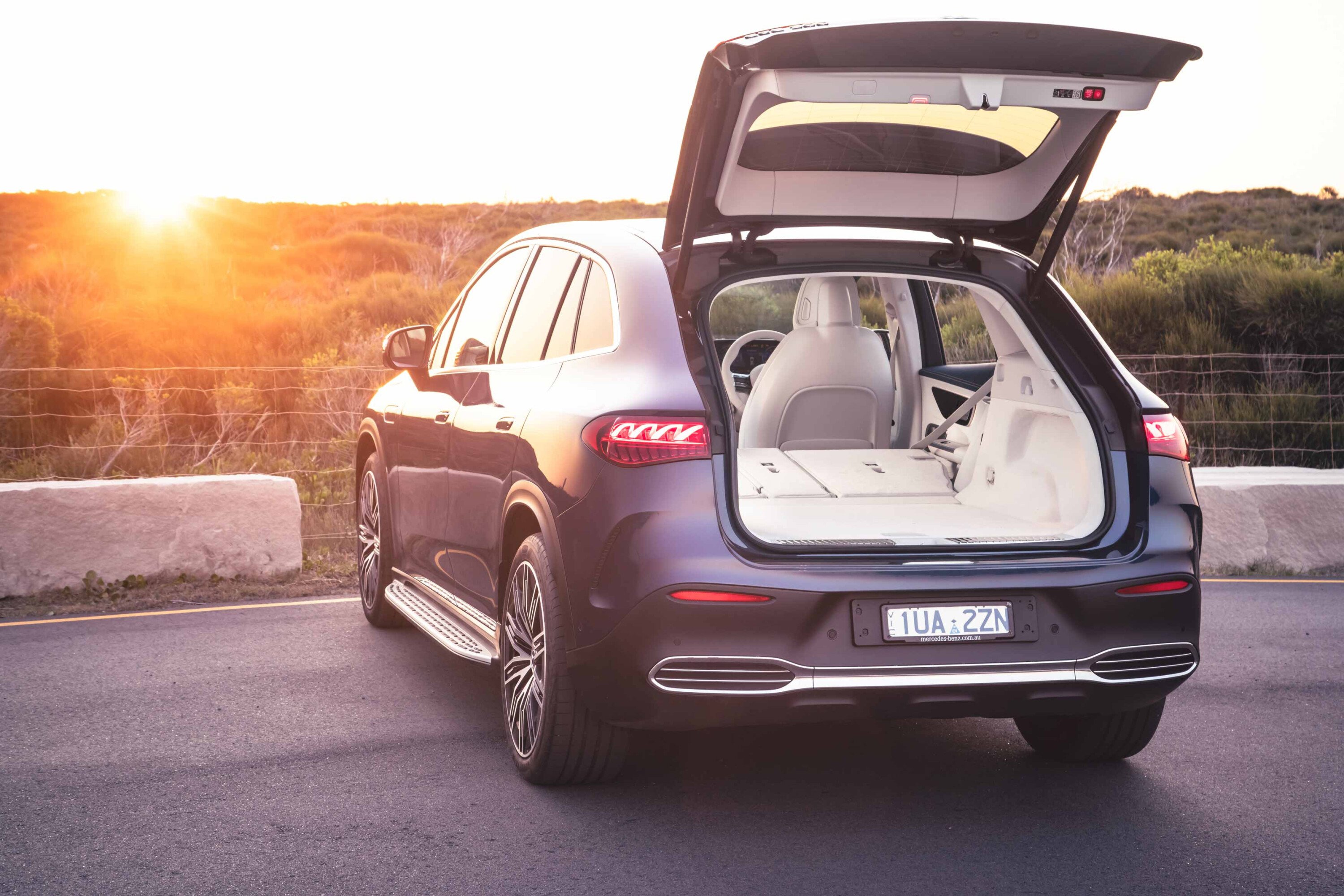
The EQE SUV offers no seven-seat option, meaning there are just the two rows of seats.
At 194cm or 6 feet 4 inches, this writer is quite lofty, yet there was plenty of headroom and toe room in the back, and the flat floor means no driveline hump ruining legroom for the centre seat.
Amenities in the rear include reading lights, air vents and two USB-C ports – bringing the total number of USB-C ports (with blue surround lighting that are helpful at night) to eight!
1
Boot space
Boot capacity for the EQE SUV is 520 litres, which is thereabouts with its closest competitors but not exactly massive given the EV platform. It’s also 110L less than the GLE’s claim of 630L.
The back seats fold in three sections (40:20:40) to create more storage space for longer items. There’s room for your charging cable beneath the loading floor.
Mini matchup
MODEL
WHEELBASE
BOOT
Mercedes-Benz EQEu00a0
3030mm
520-1675L
Mercedes-Benz GLE
2995mm
630-2055L
BMW iX
3000mm
500-1750L
Polestar 3
2985mm
484-1411L
1
Technology in the cabin
If you’re into tech, this interior will blow your mind.
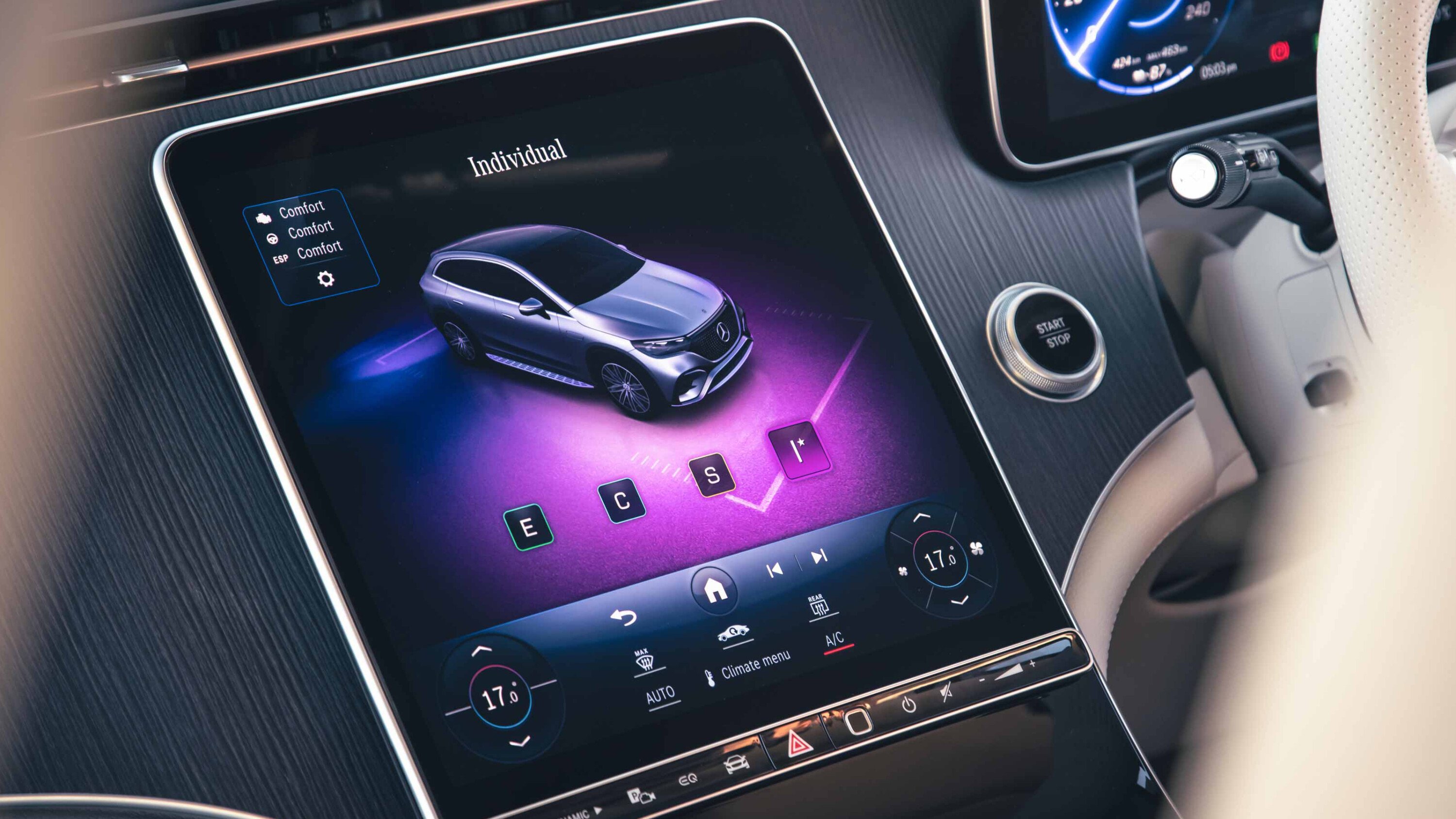
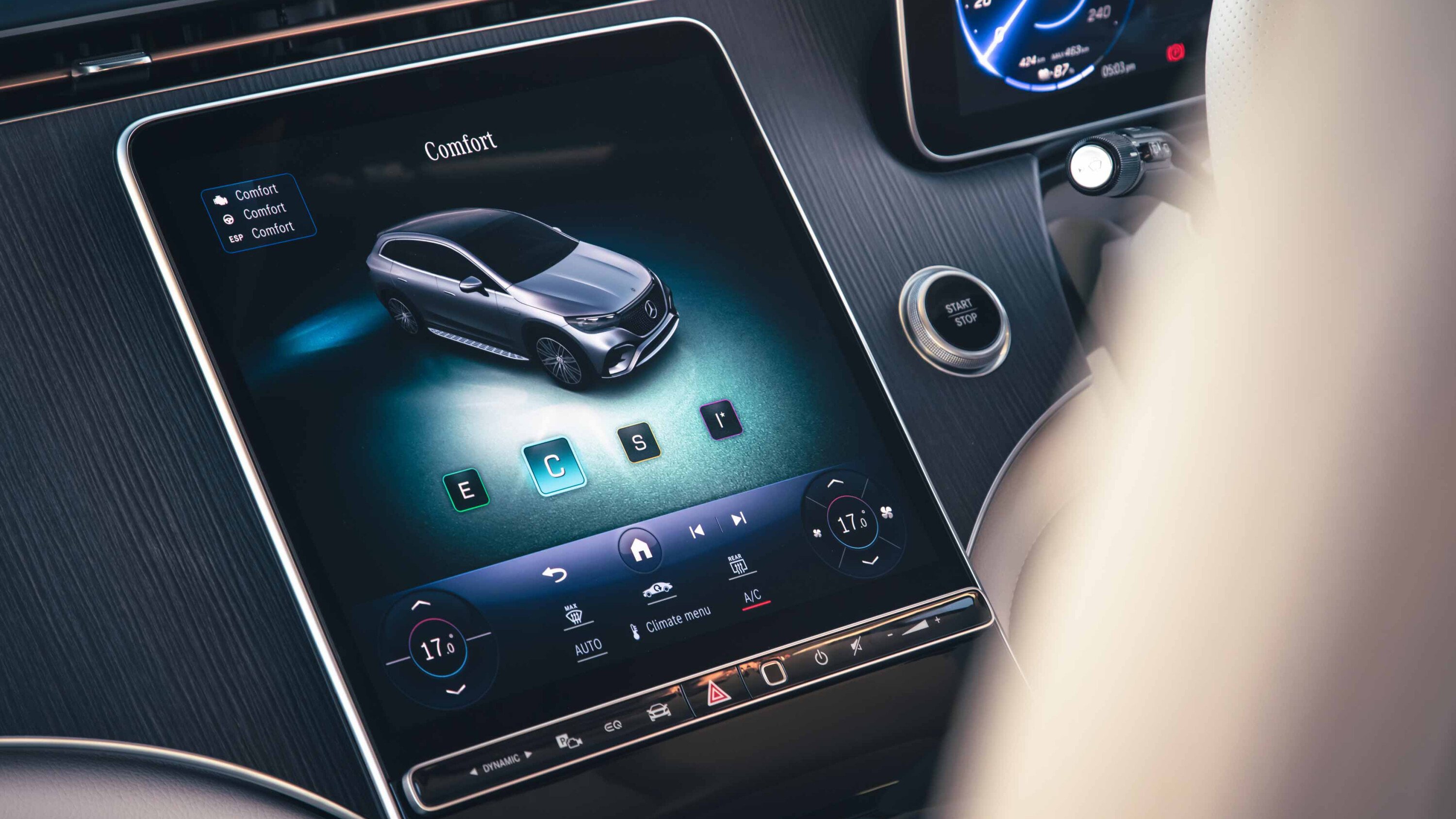
Mercedes-Benz is right near the top of the pile when it comes to in-car displays, even without the Hyperscreen being available in the EQE 300. The portrait-oriented tablet has an OLED display and super bright and sharp graphics, with impressive loading speeds and responses to tapping, pinching and swiping.
1
It’s also really simple to operate, with the climate control panel always situated on the lower section rather than being buried in sub menus, floating tiles on the main menus that direct you to key functions, and the presence of conversational voice commands activated by a ‘Hey Mercedes’ prompt, which can do things like change the interior temperature and open/close the sunroof on command.
Infotainment comprises wireless phone mirroring, which in this writer’s case means Android Auto that takes up all the real estate (meaning everywhere except the fixed climate control bar), as well as satellite-navigation with AR overlays and a forward camera view at traffic lights. The 360-degree parking cameras are crisp-resolution, too.
1
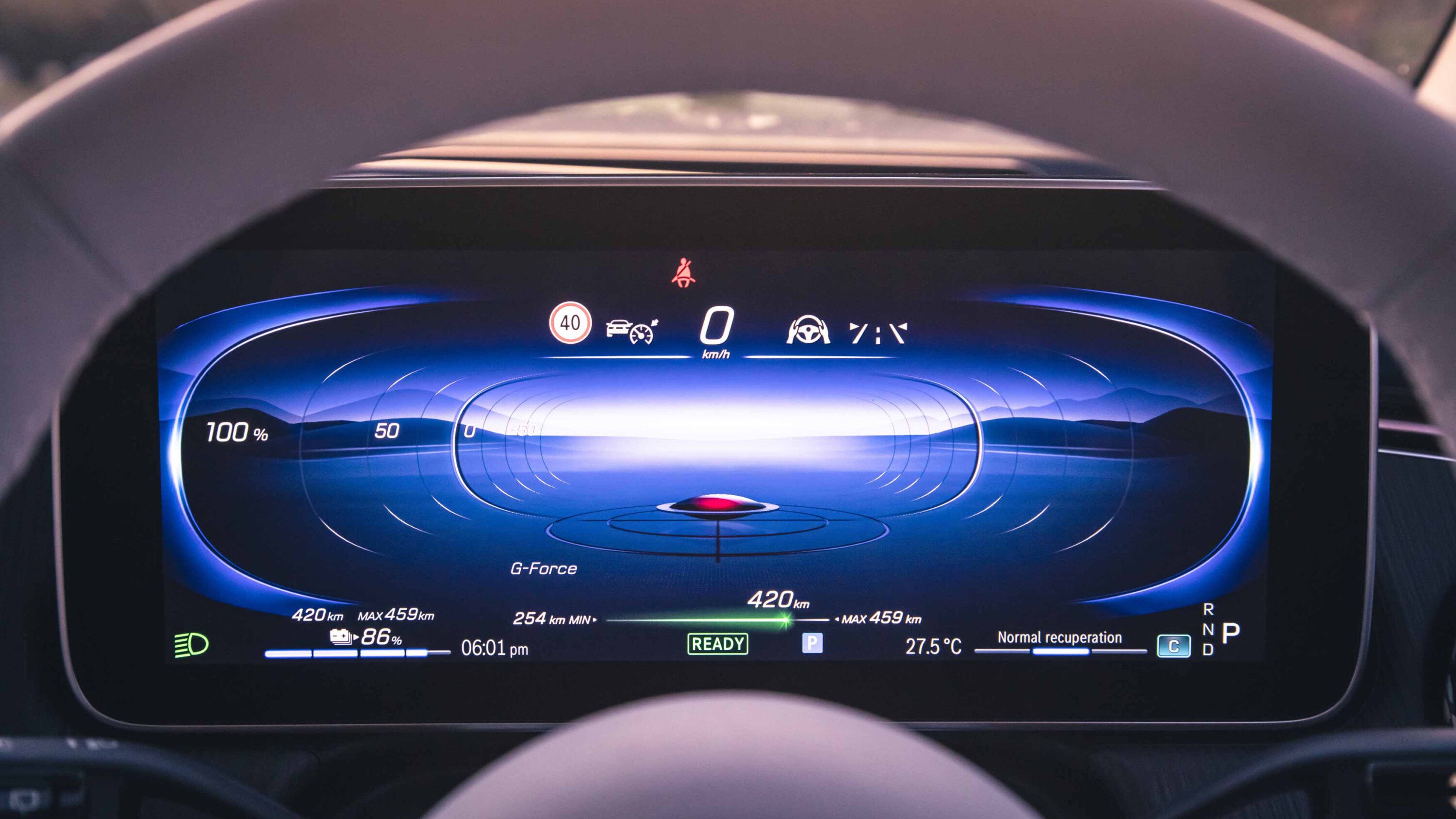
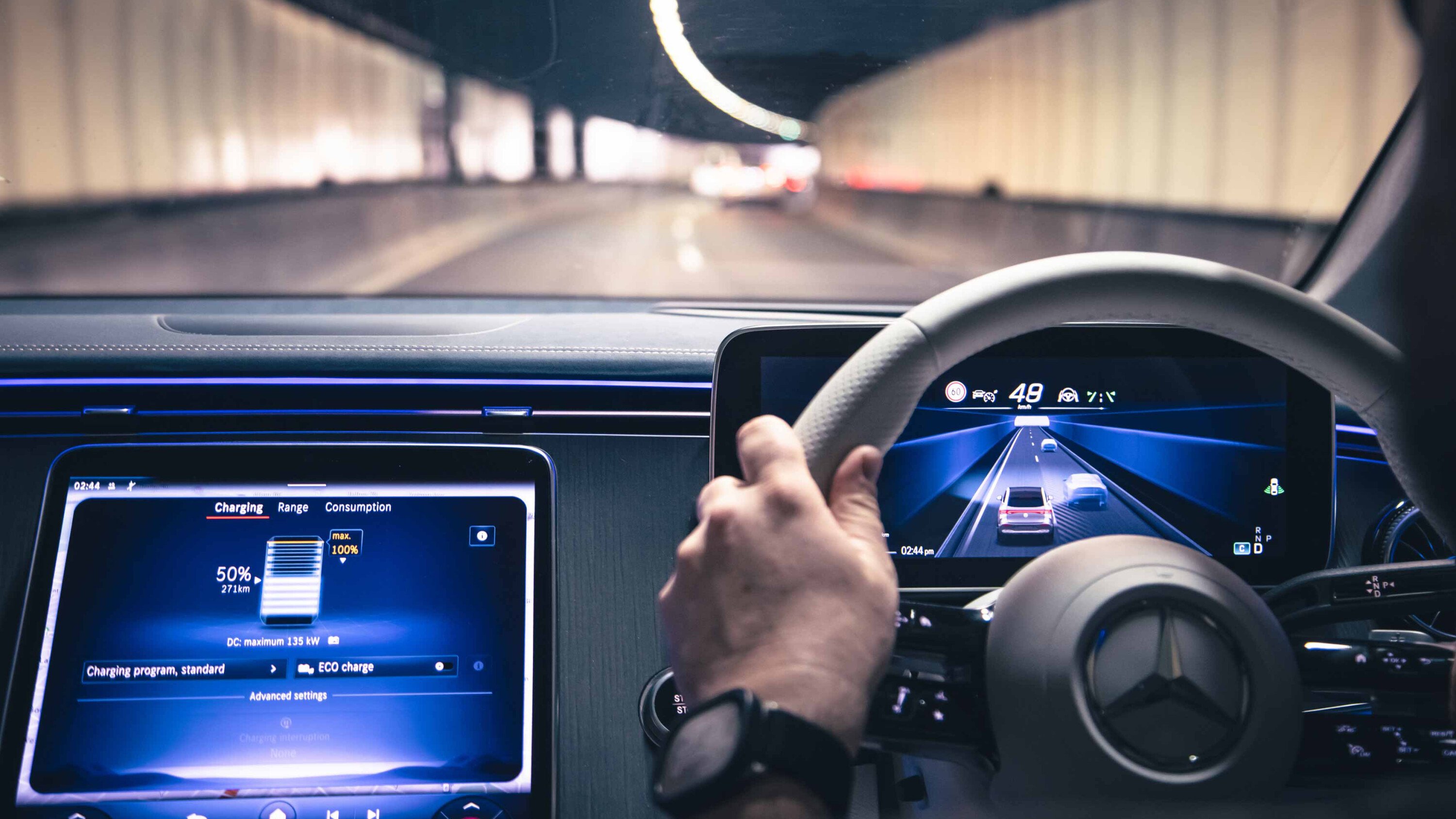
Behind the five-spoke steering wheel with slightly fiddly haptic touchpads that you strike with your thumb, is a 12.3-inch digital display that offers a full-size map view and various display ‘themes’, augmented by a big projecting head-up display on the windscreen to ensure your eyes stay on the road for longer.
It’s quite an event inside the cabin even without the twin screens, given there are 64 lighting colours to choose from, piped around the dash and doors, plus two entry themes or ‘soundscapes’ – to use Mercedes-Benz’s terminology.
The Burmester-branded audio system has 3D surround-sound, but if you use Apple Music you also get Spatial Audio with Dolby Atmos, billed as the next level in soundscapes.
1
What is it like to drive?
Serenity now. The EQE 300 isn’t anyone’s idea of sporty, but it’s a silent, wafting experience.
The EQE 300 is the base variant in the range, with a single (rear) motor making 180kW and 550Nm. Those outputs fall short of its twin-motor competitors, not to mention the 215kW and 765Nm EQE 350 4Matic variant that costs $10,000 more.
While it won’t set any land speed records given its 2.6-tonne mass, a 7.3-second zero to 100km/h time is hardly sluggish, and as per usual with any EV the response is instantaneous and unerringly quiet. For suburban duties with plenty of stopping and starting, a battery-powered drivetrain is perfect. Plus, no NOX tailpipe emissions when idling at the school pickup point.
1
I was impressed by the EQE SUV’s refinement, with the suppression of road and wind noise seemingly good on our launch drive down the Victorian coast, imbuing the right sort of ambience. And while there’s a bit of lean in corners, body control for a large and luxury-focused SUV felt stable.
The ride quality was also better than expected, given the low-profile run-flat tyres and lack of standard Airmatic air suspension, with only occasional firmness over sharp inputs like expansion joints interrupting the experience. Personally I’d consider the rear-wheel steering option to really tighten up that urban turning circle, and the air suspension for maximum plushness.
If there’s a criticism to be found based on this quick launch drive, it’s the brake pedal, which feels very doughy on application, and perhaps not as smoothly paired to the motor’s regeneration system as it might be. My size 13 boot also kept collecting a hard point somewhere in the foot well, rather than pressing the middle pedal, which was irksome.
1
How efficient is the electric drive system?
While it’s a big and heavy vehicle, the EQE 300 SUV’s low drag coefficient and single motor boost expected range.
Mercedes-Benz claims energy consumption of 18.9kWh/100km helped by a proprietary Mercedes motor design and super-low drag coefficient, and a 539km maximum driving range on the NEDC/ADR test from its 89kWh battery that outstrips all rivals bar the 610km Polestar 3. This is very optimistic though.
The more realistic WLTP-rated driving range is 446km, which our 21-22kWh per 100km consumption suggested was realistic. For the vast majority of owners this will be totally fine, but if you do a lot of long road trips, just consider if you’ll have charging options.
1
For the vast majority of owners, this (446km driving range) will be totally fine
For winter driving, the onboard heat pump takes waste heat from the inverter and electric motor to supplement the vehicle’s internal heating system, reducing draw on the onboard battery and thus optimising driving range.
For charging, Mercedes-Benz will sell you an AC wallbox (up to 22kW output, if connected to three-phase power), while DC charging offers the prospect of taking charge from 10 to 80 per cent in about 30 minutes using ultra-rapid charging with a 170kW maximum speed. A Mode 3 cable is supplied.
A nifty infographic shows you the maximum allowable DC charging draw available at any given moment, since a fuller battery can generally handle less charge.
Mini matchup: Fuel consumption
MODEL
RANGE CLAIM
EFFICIENCY CLAIM (COMBINED)
Mercedes-Benz EQE 300 SUV
539km
18.9kWh per 100km (ADR/NEDC)
BMW iX (dual motor)
420km
22.5kWh per 100km (WLTP)
Polestar 3 (dual motor)
610km
20-21kWh/100km (WLTP)
How safe is it?
As you’d expect, it comes with all the driver-assist features
There aren’t many safety features missing in what is ostensibly a family vehicle. There’s the full gamut of airbags (10 all up) including a front centre ‘bag for side impacts, Pre-Safe systems that tighten up the occupants’ belts for impact in the blink of an eye, and a suite of driver-assist aids including:
Attention assist, autonomous emergency braking, active lane-keeping aid with steering and lane changing helper, automated parking assist, adaptive cruise control, blind-spot alerts, and traffic sign assist. There are also Digital Lights with adaptive high beam.
We await the ANCAP crash test results.
Warranty and running costs
There’s a five-year warranty with roadside assist, plus eight years for the battery up to 160,000km.
Mercedes-Benz advises a five-year service plan (75,000km) costs $3555, whereas a three-year term is $1950. The company provides a five-year unlimited kilometre warranty and roadside assist for the car, and eight years or 160,000km for the high voltage battery in case of excessive degradation.
2
VERDICT
To be blunt, the Mercedes-Benz EQE 300 looks a bit too similar to the EQA and the EQS for this writer’s liking, with slightly anonymous and borderline blobby looks against some pretty shapely competitors. But this is strictly subjective.
On the downside I found the brake pedal feel numb, the lack of available Hyperscreen on the base model a shame, the non-air-suspended ride slightly firm at times, and that 539km range claim overly optimistic. Its direct pricepoint rivals also offer more powerful dual-motor drivetrains as standard.
But on the other hand, the EQE 300 wafts along with a serenity the GLE could never hope to match, has some wow-inducing interior displays and driver assists, and plenty of interior space for five occupants. Not to mention a coveted badge. Few surprises here, then.