
Tesla has released figures on how its Full Self-Driving (Supervised) tech has worked in Australia and New Zealand after driving 160 million kilometres over the course of 12 months – and the safety findings are highly impressive.
The company’s data compares how models using FSD fared against manually driven cars that travelled 2.4 billion kilometres with their active safety features enabled. Results showed major reductions of up to 90 per cent in a range of safety-related categories.
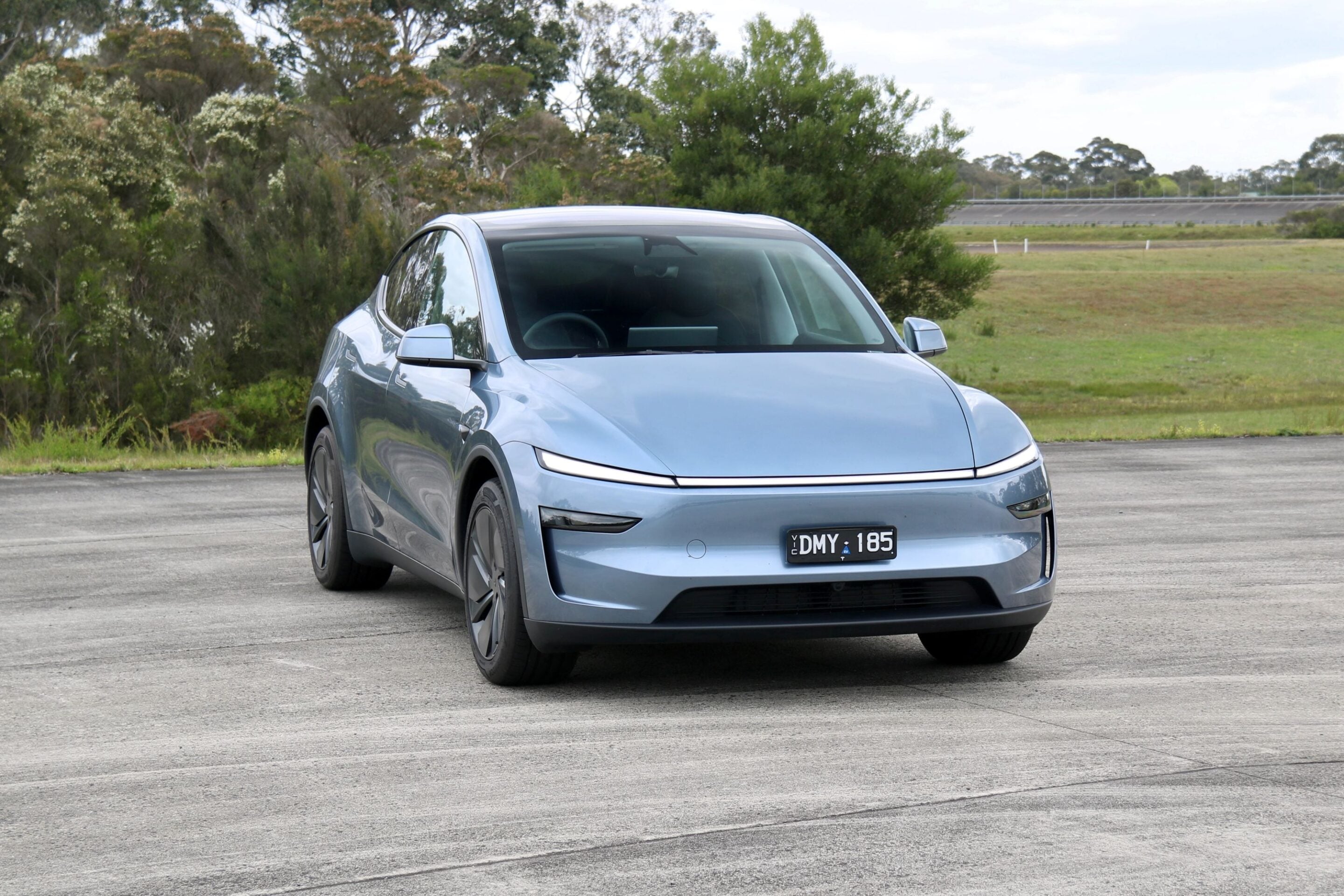
Most importantly, Tesla’s figures show vehicles with FSD had a 40 per cent reduction in major and minor collisions in comparison with the non-FSD cars. The tech reduced the rate of a collision from one every 1.07 million kilometres travelled to one every 1.78 million kilometres driven.
Every category related to driver interventions and abrupt moves on the road saw a drop when FSD was used.
Use of automatic emergency braking fell by 66 per cent in Teslas using FSD. Harsh acceleration fell by 86 per cent, harsh lateral acceleration saw a drop of 76 per cent, and horn usage fell by 80 per cent.
The biggest improvement was a 90 per cent reduction in harsh braking, which occurred once every 180km with manual driving but just once every 1823km with FSD in operation.
FSD is not a fully autonomous driving system like the software used in Tesla’s CyberCabs. Instead, it allows vehicles to navigate by themselves on set routes with driver supervision.
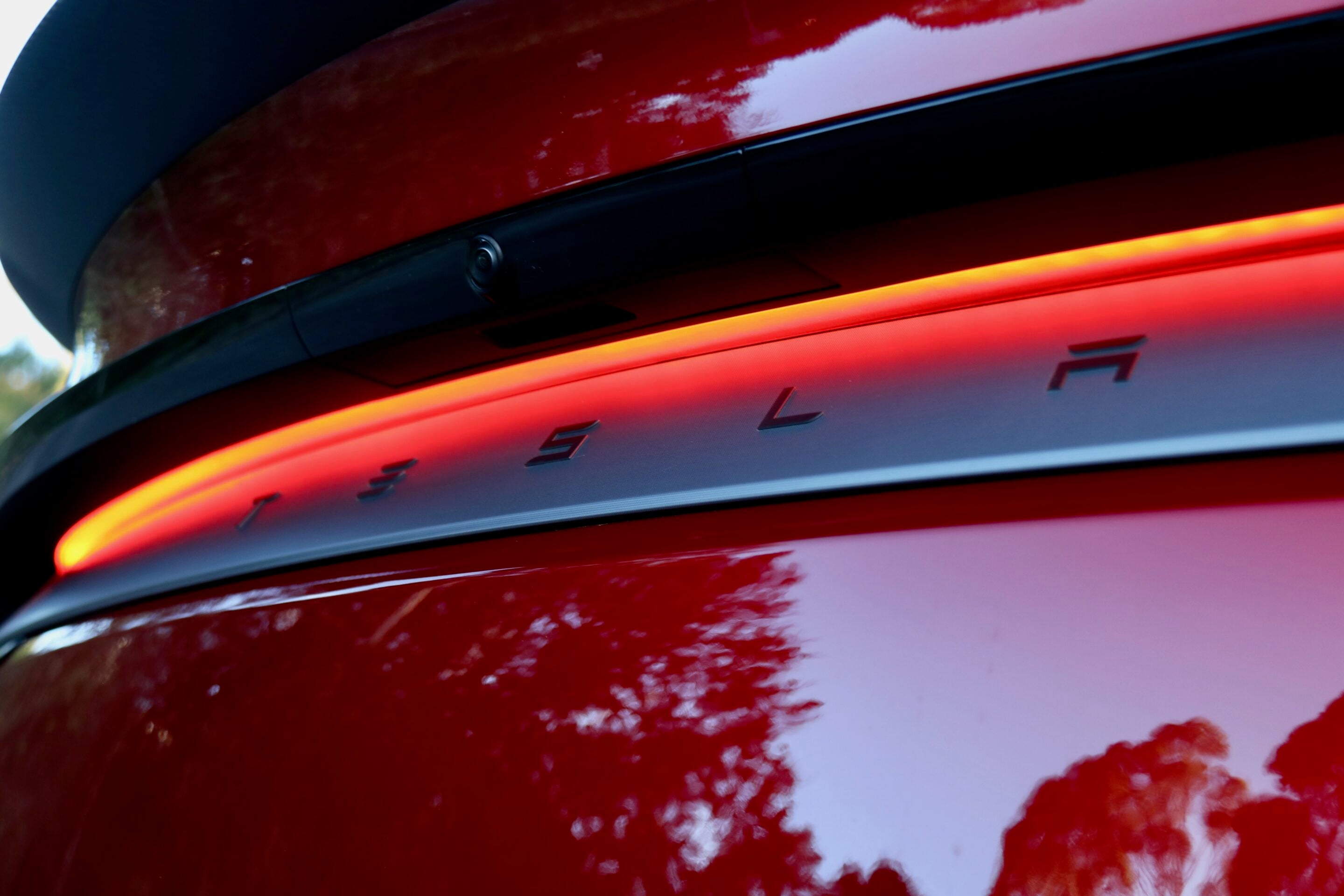
Tesla rolled out Version 14 of the technology in Australia and New Zealand in June, and it’s estimated that about 50 per cent of all Aussie Tesla owners have purchased the tech.
The road safety numbers come soon after it was revealed that one of Australia’s biggest insurance companies is cutting the price of coverage for Tesla drivers who use FSD.
Zurich made the decision to offer the discount “due to the reduced risk associated with supervised self-driving”, according to the company’s head of general insurance, Alex Morgan.
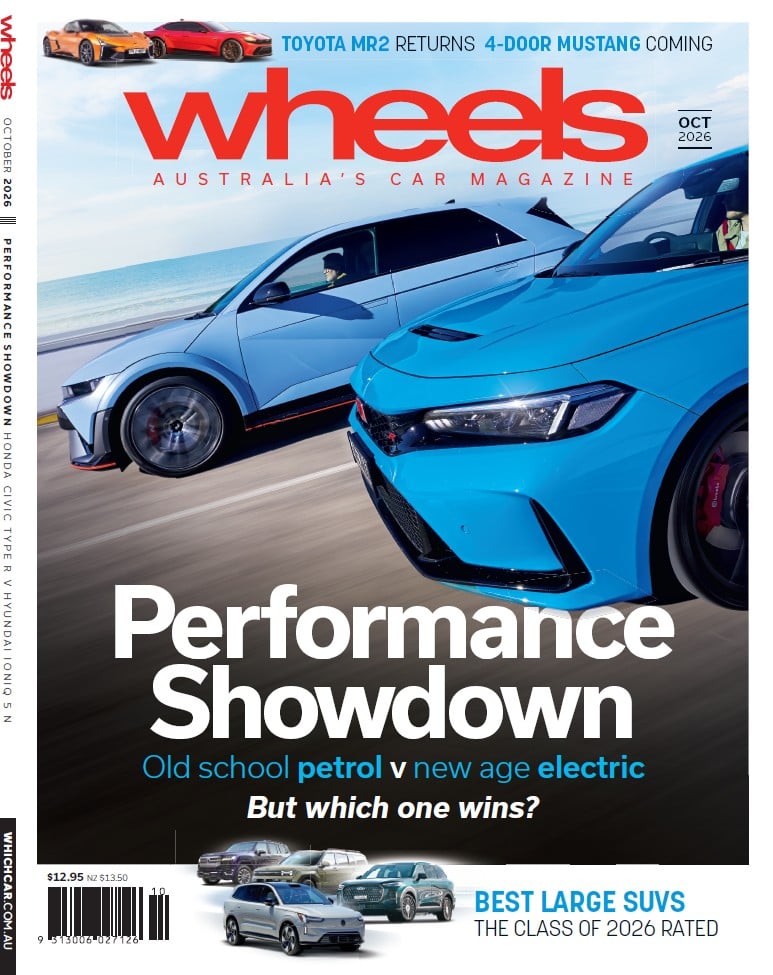
Performance takes centre stage in the October 2026 issue of Wheels, headlined by a fascinating showdown between two very different interpretations of the modern performance car.
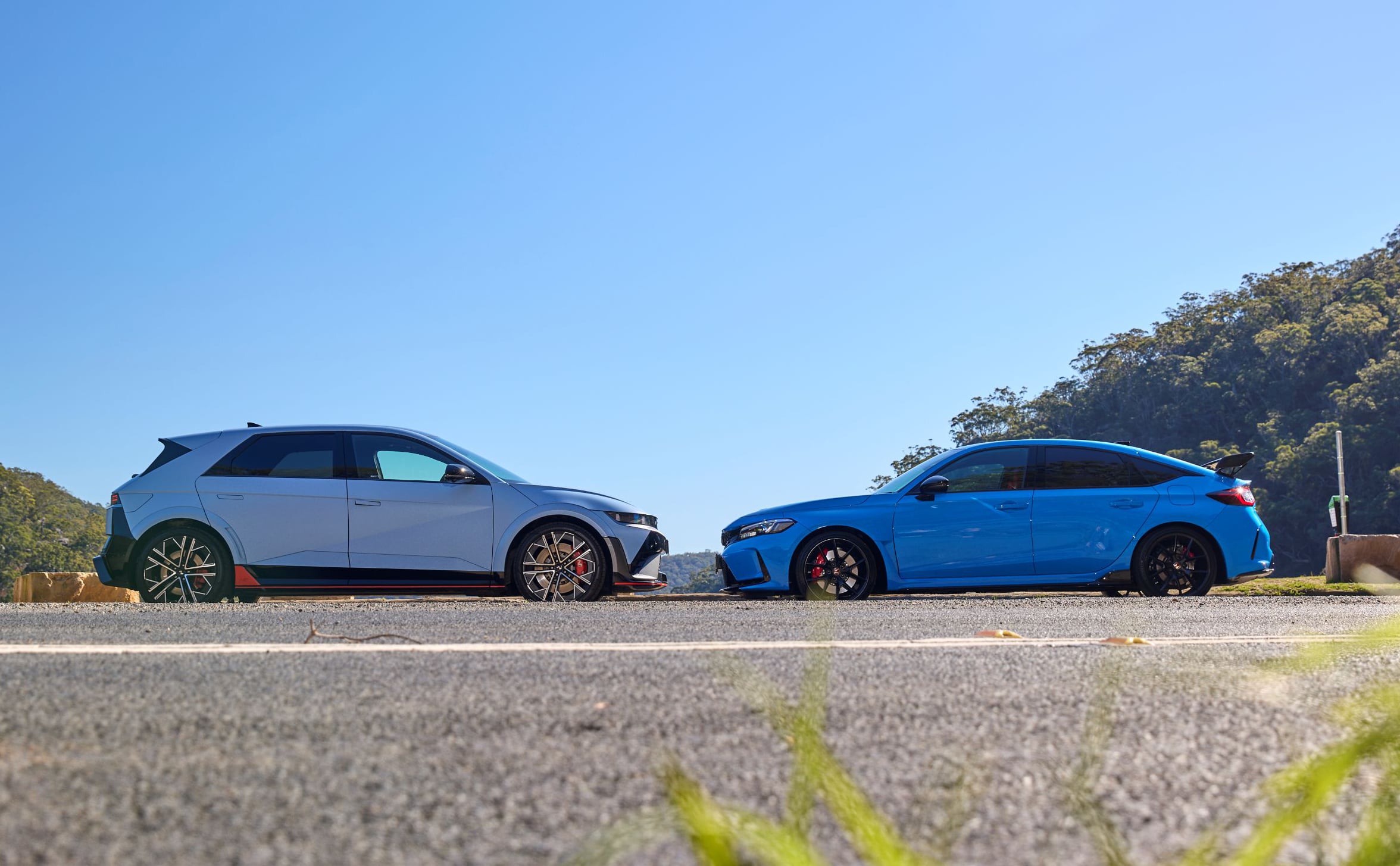
The cover story pits the electric Hyundai Ioniq 5 N against the Honda Civic Type R, asking whether a powerful battery-electric SUV can genuinely match one of the finest front-wheel-drive hot hatches. It’s a contest that goes beyond outright speed, examining whether the Ioniq’s electronic trickery can deliver the involvement and entertainment traditionally associated with the lighter, petrol-powered Honda.
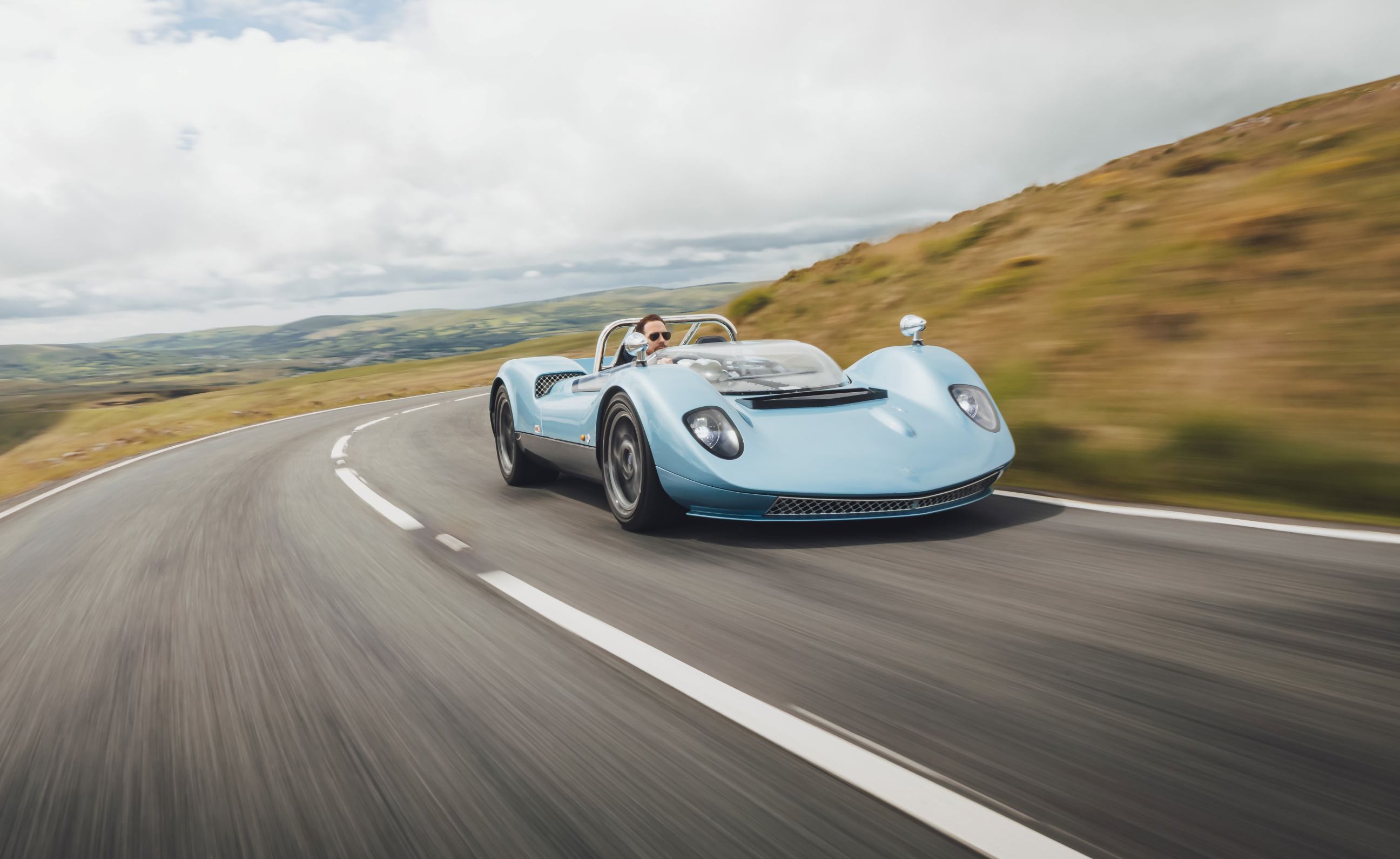
Keeping the performance theme running, Dan Prosser gets behind the wheel of the Nichols N1A (below). Created by former McLaren F1 designer Steve Nichols and inspired by the 1960s McLaren M1A Can-Am racer, the 522kW road car brings old-school proportions and philosophy to a thoroughly modern performance machine.
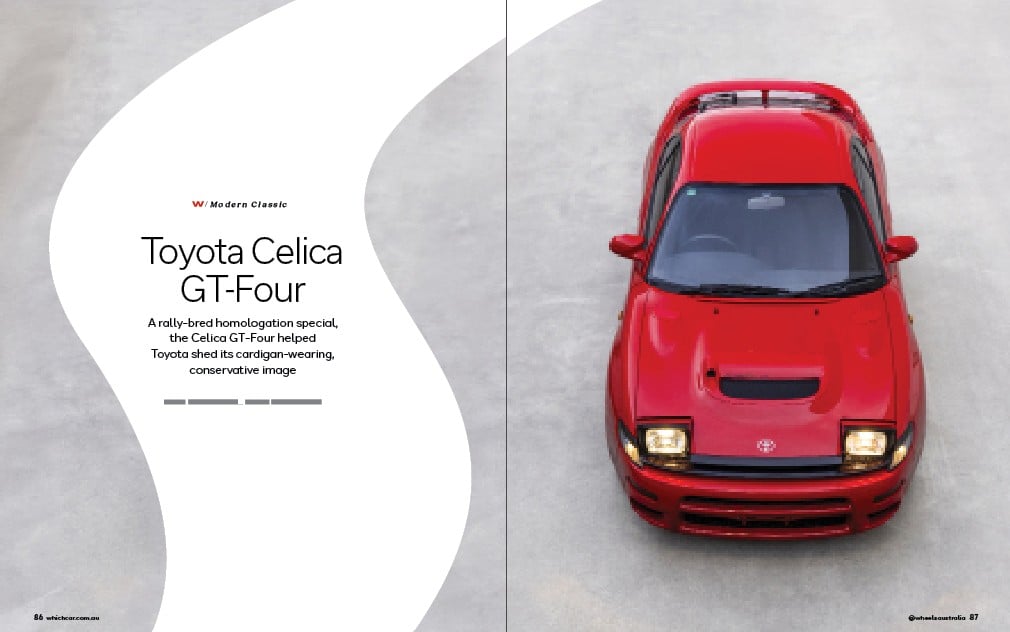
The Modern Classic spotlight falls on another competition-inspired hero, the Toyota Celica GT-Four, revisiting the rally-bred homologation special that helped transform perceptions of Toyota.
At the more practical end of the spectrum, Wheels selects its Best Large SUVs for 2026, covering everything from value and hybrid or electric power to luxury, family practicality and serious off-road ability.
There’s also a celebration of the humble delivery van, looking at the best-selling workhorses that became such familiar sights on Australian roads they ultimately transcended their commercial origins.
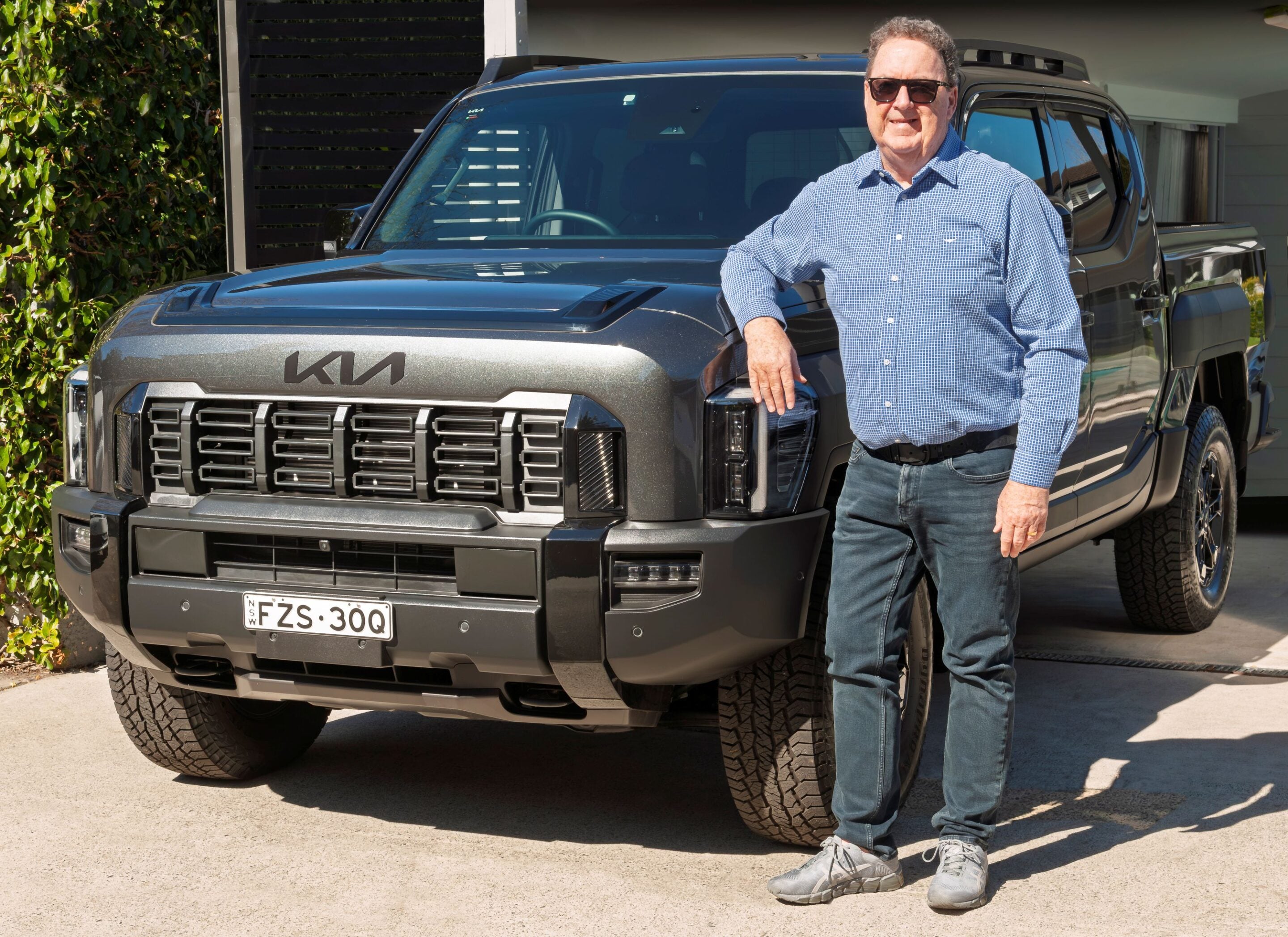
This month’s Wheels Interview features former Kia Australia chief and the man who pushed hard for the Tasman ute for Australia, Damien Meredith (below), who reflects on his automotive career and considers how established manufacturers can respond to a rapidly changing industry.
First Drives brings another diverse selection of new metal. The all-new Lexus ES attempts to step further out of the Toyota Camry’s shadow, while GWM bucks industry trends with its new 3.0-litre diesel engine. The Kia EV4 faces its first assessment, Honda’s petrol-only ZR-V is reconsidered in an increasingly electrified market, and the Jaecoo J8 gains seven seats and plug-in hybrid power.
Rounding out the group is the updated Mercedes-AMG GLC 53, which swaps its four-cylinder engine for six-cylinder power.
Regulars include the Garage, Marketplace, Buyer’s Guide and Wayback Machine, which returns to October 1975 to revisit Datsun’s challenge to Holden.
There is a recent trend for hypercars to have four-wheel drive, with engines typically in their middle and supplemented by electric motors at the front. And with good reason, because more than 1000bhp (745kW) is an awful lot for two wheels to deal with by themselves. Some engineers say that to get the best out of so much power, it must be distributed through four tyres.
McLaren’s engineers don’t feel the same. This is the W1, McLaren’s latest Ultimate Series hypercar and the third in the lineage of ‘1’ cars, after the F1 and P1 (and only the second ‘1’ during the new iteration of McLaren’s road car division).
Like those, it is carbonfibre-tubbed and mid-engined – and it is exclusively rear-wheel drive. As with the P1 it’s a hybrid, but this time it can’t be plugged in, because that would make it heavier. McLaren has taken a different path from some of its competitors by attempting to rule out anything that adds unnecessary weight. So, as with equipping it with rear-wheel drive only, it has opted for a mechanical layout that makes the car as light as is realistically possible. McLaren claims a lightest dry weight of 1399kg (I’d prefer a wet kerb weight, but rivals use this number too). Anyway, you can imagine how hard they’ll have worked for the last kilo.
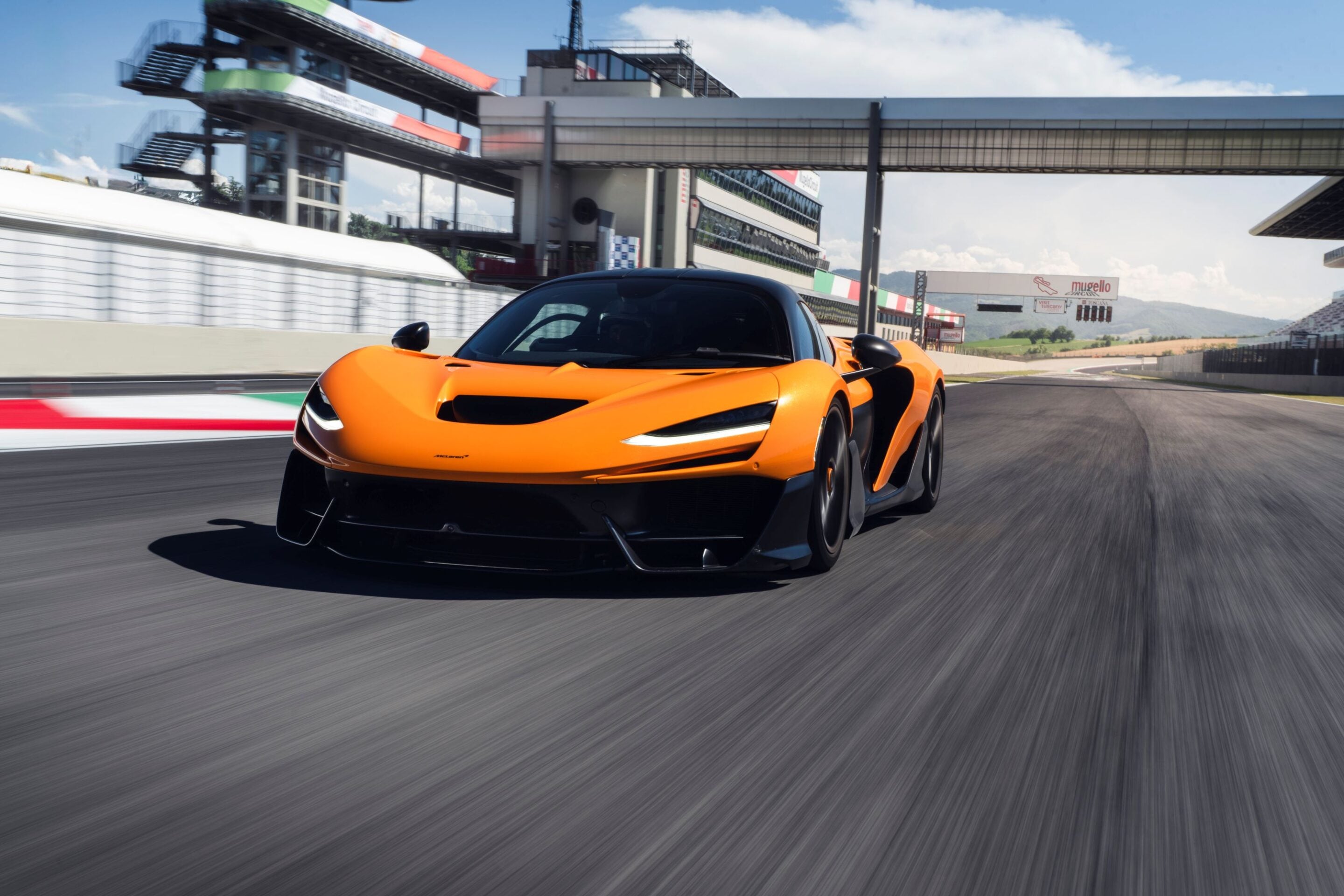
The W1’s chief engineer, Andy Beale, showed me around an unclothed W1 in the garages at the Mugello circuit, which is just 113km from Ferrari’s home in Maranello. You can read something into that if you like: it isn’t the first time McLaren has, figuratively or literally, arrived on Ferrari’s patch – although it may just be due to circuit suitability and availability for this car and at this time of year.
At the W1’s front there’s an aluminium crash structure, which also holds the bodywork and some of the W1’s (many) cooling radiators, but the suspension and steering rack are both mounted directly to the carbonfibre tub. This is laid up using resin-pre-impregnated (pre-preg) carbonfibre, the first in a road-going McLaren since the F1 because it’s such a labour-intensive process. McLaren tubs are usually laid up dry, then resin is injection-moulded using a high-pressure tool, which is more suitable for high volumes. The W1, given they’re only making 399 (they’re all sold at A$3.81 million each, with an average A$1.14 million options spend), is not a high-volume car.
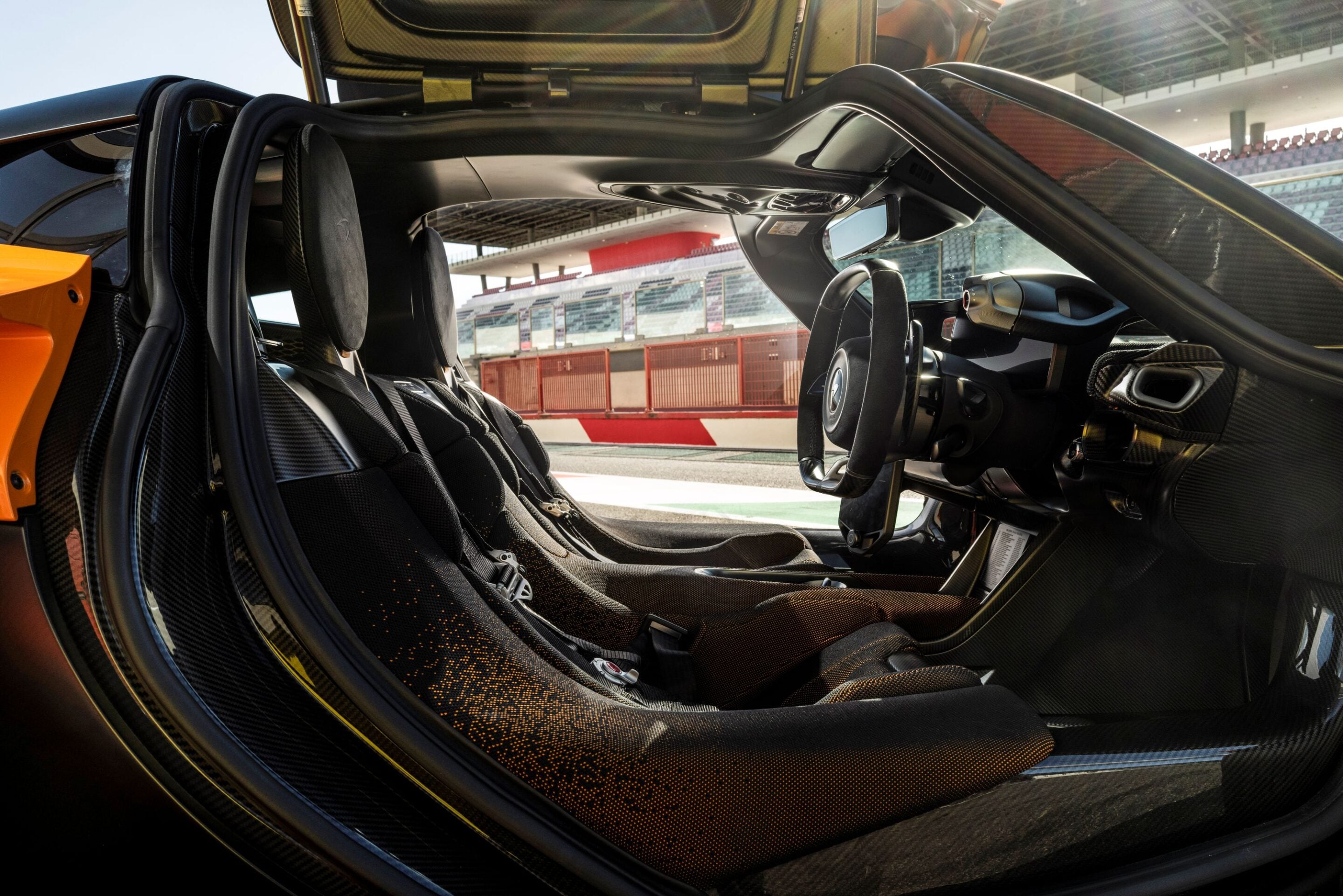
Torsional rigidity is a claimed 44kNm/deg, and the tub, including all of its metal inserts, weighs 70kg. It houses two seats and, as with the Aston Martin Valhalla, the Ferrari F80’s passenger seat and the Morgan Super 3, their structure is fixed rigidly into the chassis; the pedal box moves instead. This is lighter and more space-efficient than a sliding seat (you only have to worry about head room at a single point), and while the seatback angle doesn’t adjust, McLaren says the decrease in weight and the increase in rigidity (because all seats will flex a little under load) make it worth it.
Squabs for cushions are inserted into the W1’s spaces, and a space in the carbonfibre box under your thighs is where they put the subwoofers. There’s a gap in the seat squab in case you want to fit the optional five-point harness; with three-point inertia belts in place, an insert can cover the hole, which is helpful for not losing wine gums, pens or – ask me how I know– microphones, which then stay lost for many miles to follow. Suspension is by double wishbones front and rear, with coil springs and adaptive dampers.
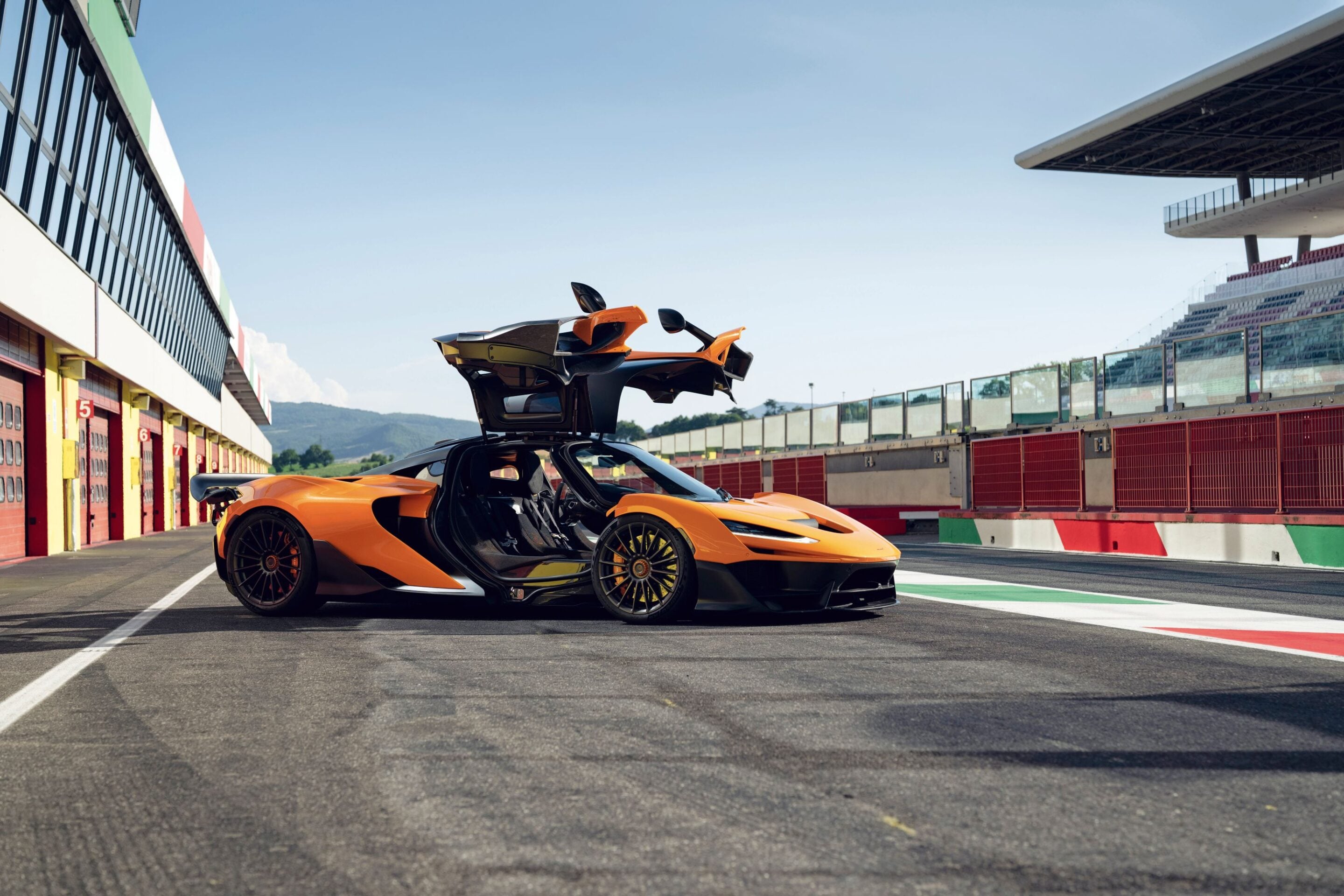
There is no 48V trickery or linked hydraulics or stuff like that. By the time you’ve added inverters and so on, says Beale, it all gets too heavy.
But there is some suspension magic going on (see breakout below). At the front the W1 is low, and there are pushrods because that helps keep the damper units lower, so the scuttle is lower and the driver lower, and yet visibility remains fine. Pushrods also keep the unsprung mass down, and those and the inboard ‘heave bar’ (again, see that breakout box) help clear space around the wheel well, which is used to channel air through to the sides of the car to cool the brakes along the way.
For this same aero reason, McLaren’s trademark dihedral-opening doors aren’t here: their hinges would be in a high airflow area because McLaren directs it out from the front splitter and onto the bodywork. So there are gullwing doors. There’s a movable front splitter and a big active rear spoiler, whose full extension moves the rear wing 300mm backwards, where its underside takes up some of the flow from the diffuser (and in which form it’s not road-legal, so its use is geofenced for circuits or static display). Overall downforce is 1000kg. That figure is capped, so its effect bleeds off at speed.
Then there’s the engine. McLaren calls this all-new, “and when we say new, we really mean new”, says W1 product manager Heather Rhodes. Designated MHP-8, it’s an oversquare 4.0-litre flat-plane-crank V8 (92mm bore, 75mm stroke and 3988cc capacity), made from aluminium, with spray plasma-coated bores rather than sleeves, which means the cylinders can be closer together and the block something like 40mm shorter. It’s heavily turbocharged and makes 683kW on its own – electric turbos would add 30kg where they don’t want it, so it doesn’t get them.
There is, though, assistance from a radial-flux electric motor mounted to the side of the eight-speed dual-clutch automatic gearbox (driving onto either shaft) and it makes an additional 255kW. In Comfort mode it torque-fills so you ‘only’ have access to the V8’s power peak. In other modes it chips in further around the rev range, up to the 9200rpm rev limit. Peak power is 938kW. In most modes the W1 tries to retain a bit of oomph in the 1.384kWh battery for torque-filling (and reverse), with a Boost button that gives you the lot. Or there’s a Sprint mode in which it lets you flatten the battery, should you need to do one urgent hot lap.
Brakes and steering are hydraulic, which is now very unusual in the hypercar sphere (the electric Lotus Evija is the same), because, says Beale, the “connected feel can’t be bettered”. McLaren thinks modern driving enthusiasts want this interactivity, simplicity, perhaps honesty. That the front axle is not driving means the rack is uncorrupted. The rack is mounted to the tub too, which enables the car’s wheelbase to be shorter (80mm shorter than a Valhalla’s) and everything, overall, lighter. There’s no torque vectoring to try to make the car feel more agile. It just – the thinking goes – will be, naturally. At the back there’s a relatively straightforward electronically controlled hydraulic limited-slip differential. Brakes are 390mm discs with six-piston front and four-piston rear calipers. Wheels are 9.5Jx19in fronts, 12.0Jx20in rears, with bespoke Pirelli P Zeros, stickier Trofeos or even winter tyres, all of them 265/35 R19 and 335/30 R20 respectively. We drove with the Trofeos on both road and track.
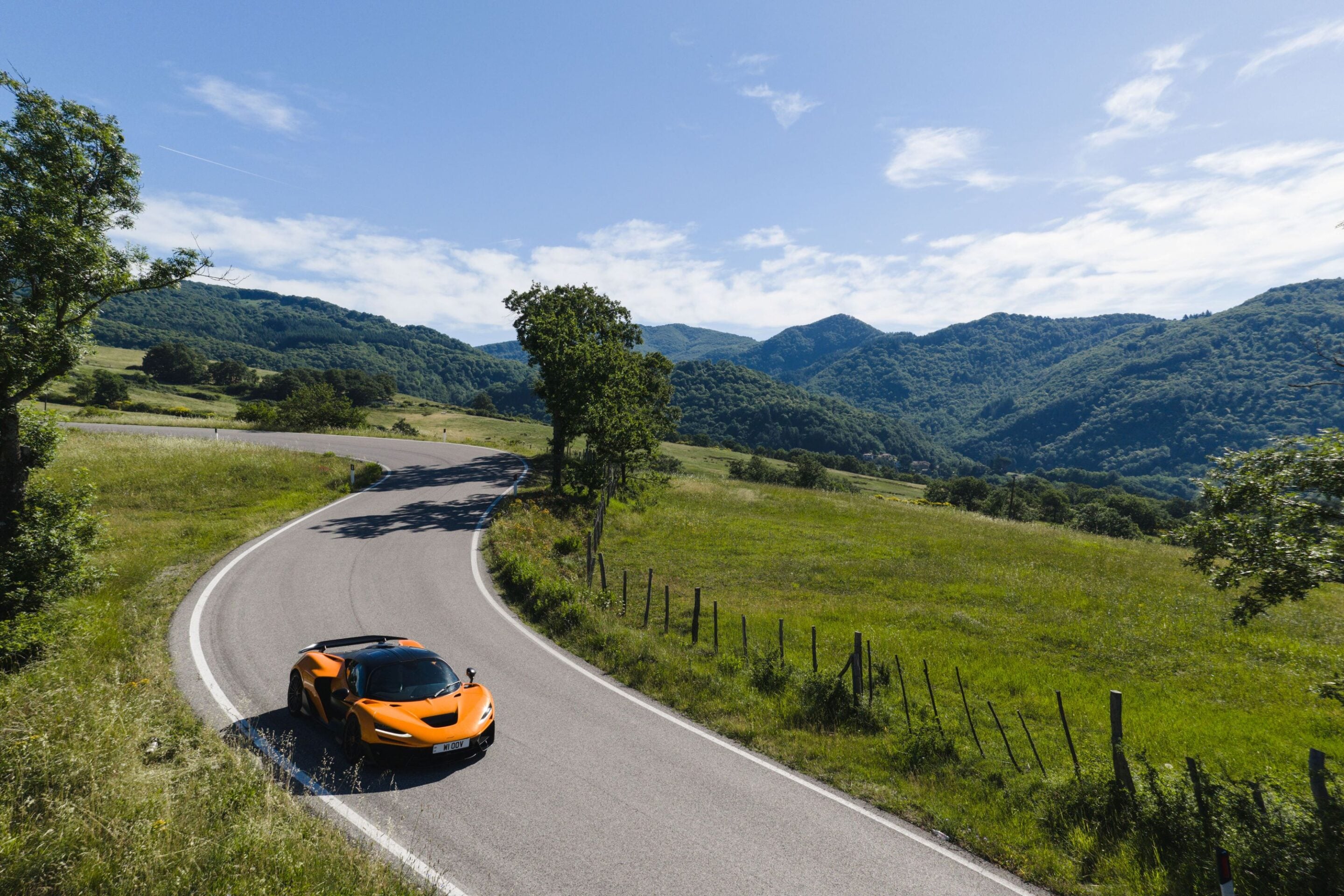
The W1 is 4635mm long and 2191mm wide across the mirrors (2074mm with them folded), which is one gnat wider than body width, so this is quite a wide car. I find it easy enough to duck beneath the doors for entry – I don’t suppose forgetting they are there is a mistake one makes too often – and into the non-adjustable seats. The pedal box is sprung, so you push it away until it’s comfortable. As is the McLaren way, the brake pedal is far left enough for comfortable left- or right-foot braking. The steering column and instrument binnacle adjust electrically, with a wheel that, they say, is as round as they can make it while allowing clearance for legs and flattening the top for better visibility.
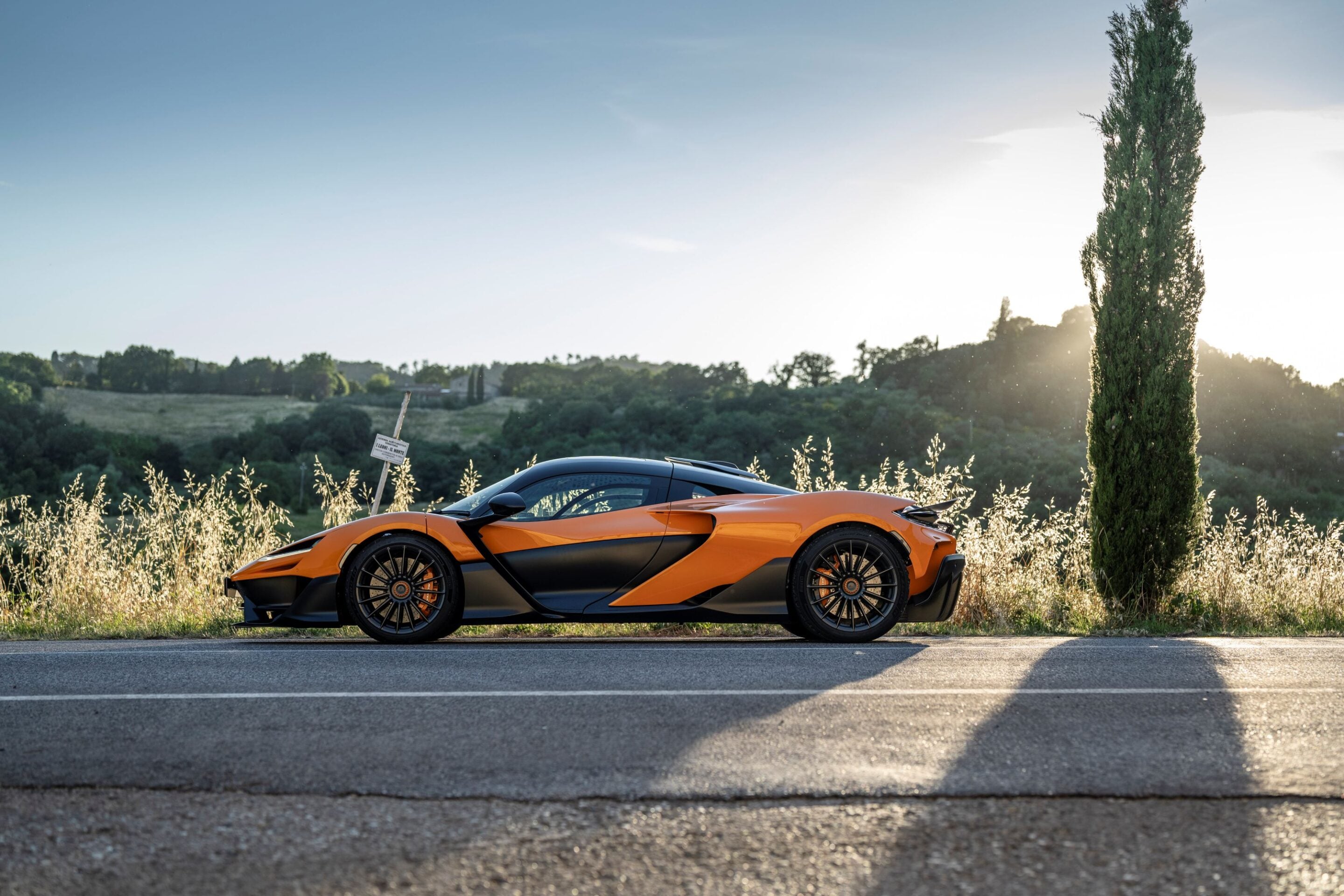
Given how low you are, visibility is good. You can see the front haunches, the A-pillars are said to be McLaren’s thinnest, the mirrors are big and, while there’s no rear glass, there is one of those mirror-camera thingies, plus space behind the occupants for a bit of luggage.
The W1 really is a car you could use to cover decent distances in comfort. Beale tells me it will “breathe with the road”, and he’s not kidding. Most road-going McLarens ride well, but given this one’s focus – “equally good on road and track”, says Rhodes – I’m still surprised to find just how compliant it is. Italy’s roads are poor in places (maybe not quite as bad as ours overall, but pretty dodgy here and there) but the W1 is absorbent and composed, with a tiny bit of noticeable front-rear pitch now and again. It steers beautifully, though. Brakes well. Talks to you. Engages you. The engine note is more hollowly bwoap-ish than those of previous V8 McLarens. More appeal in its tone.
When you have a car with this much power and which can hit 100km/h in 2.7sec, 200km/h in 5.8sec and, apparently, 300km/h in 12.7sec, there is a requirement, says McLaren, to make it agreeable and enjoyable even if you’re not trying to reach its 350km/h, electronically limited top speed (to go faster would need a different tyre structure, and that would make it worse as a road car – these Pirellis let it genuinely mooch). It’s the same if a sports car has 300kW or 900kW. On the road – and it doesn’t matter if it has four-wheel drive or not – you’re never going to be using all of it, so the trick is to make the car enjoyable without using all of the horsepower it has. I think McLaren has pulled that off.
Hopefully, as with the F1 and P1, we’ll add a full road test to our time with the car, but for now, two short stints around Mugello is our initial chance to get to know what the W1 is like when you do give it the lot.
First let’s talk about the ridiculous amount of power. Can the rear tyres handle it? Yes. Does it feel rear-driven? Also yes. Will it overwhelm them at some point, if you allow that to happen? Of course, yes. But what strikes me is how usable this much poke and two-wheel drive feels. Conditions will help. The liveliness of a mere 515kW in a Porsche 911 GT2 RS lives in my memory. But there’s nearly a decade of tyre tech and traction control advances in the interim, and that Porsche drive was in England in November. This drive is hot and sticky, on a fast, smooth, flowing high-speed circuit.
And the W1 is fantastic, really impressive. Above everything, it is agile and involving in an honest way, a linear way. A bit more effort is required in steering it than whatever you might consider to be the norm in this segment, but feel and feedback are amped up as a result.
I love how uncorrupted the steering and brakes feel too. Modern tuning of electric assistance and the blend of motors and brakes is something else, but I think McLaren is right: there’s not quite a substitute for the real thing.
In faster corners you can feel the aero doing its work. Even in its Race+ mode it will ride kerbs, but the ride is tied down, to the extent that there’s some diagonal pitch in quick bends, but I suspect there’s a mode or a driving style that would work around it. Trailing the brakes into a turn will unsettle it; you can use the power to straighten things on the exit. I’d want to mess around with it more to say how happy it is transiently. But the vibe is good.
Of the cars that exist around it that I’ve driven, the Aston Martin Valhalla feels more willingly silly, somewhat less serious and quicker to move around, although conditions were colder when I drove it. The Ferrari F80 will move around too, but it feels as though it most likes to be driven as an aero-heavy race car: precise and fast.
The good thing is that they represent three very enjoyable and different ways to achieve the same goal. Line up all three in a pit lane for the day and I imagine you’d come away having spent serious time getting to know all of them. Which is ‘best’? I still couldn’t tell you. But I love the W1’s straightforwardness of feedback, and its built-in natural agility.
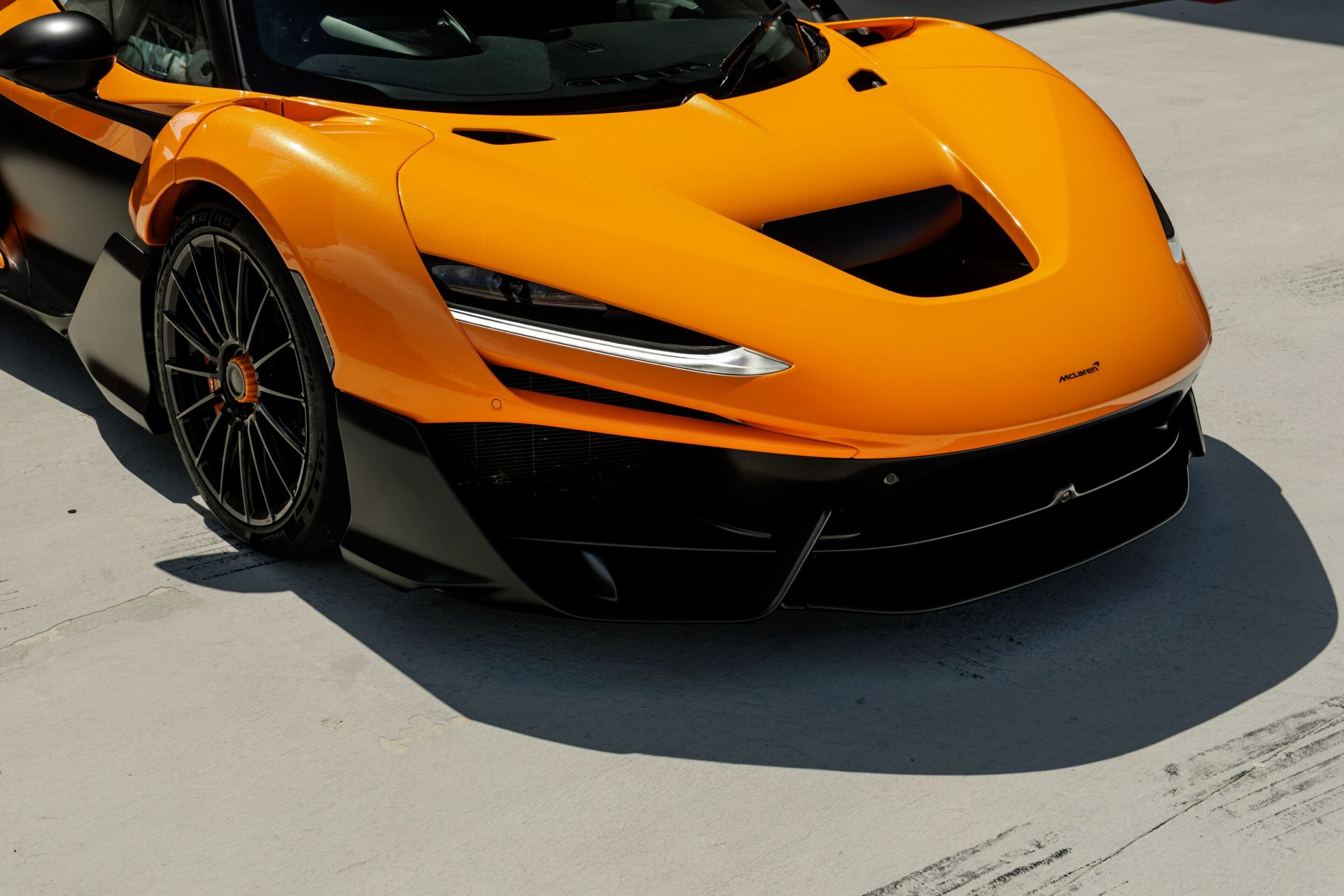
Heave bars explained
McLaren’s Andy Beale had to explain the suspension to me twice before I totally got it, but here goes. In the standard ride height there are two drive modes available – Comfort and Sport. The only difference between them is damper stiffness.
In Race or Race+ modes, however, the ride height is lower – 37mm at the front, only 17mm at the rear, because they want to change the angle of attack too.
There is a blank section within the spring/damper unit that gets compressed when the ride height is dropped. It doesn’t affect the coil spring, whose rate is unchanged. However, McLaren wanted the spring rate to increase when Race mode/height was engaged. So there are what look like anti-roll bars and what McLaren calls ‘heave bars’ front and rear.
At the front, the bar is telescopic and attaches to the suspension via thin torsion rods. When the suspension moves, in high ride mode, the bar is free to slide, unlocked, so its ends move entirely freely, and only the main springs are doing any resisting.
In low ride height mode, however, that bar is locked in position, which brings the torsion rods to which it is attached into play: suspension forces not only have to overcome the regular springs, but now they also have the resistance of these wee torsion bars, thus significantly increasing the spring rate.
At the rear the theory is the same, but the application is slightly different: a transverse heave bar, mounted high, is not engaged until its drop links are made rigid, as they are in Race mode. Otherwise they slide.
That sounds easier to explain than at the front, but they work on the same principle – and packaging that means they’re different front to rear. At the back there’s a lot of engine and transmission stuff to lift the heave bar over.
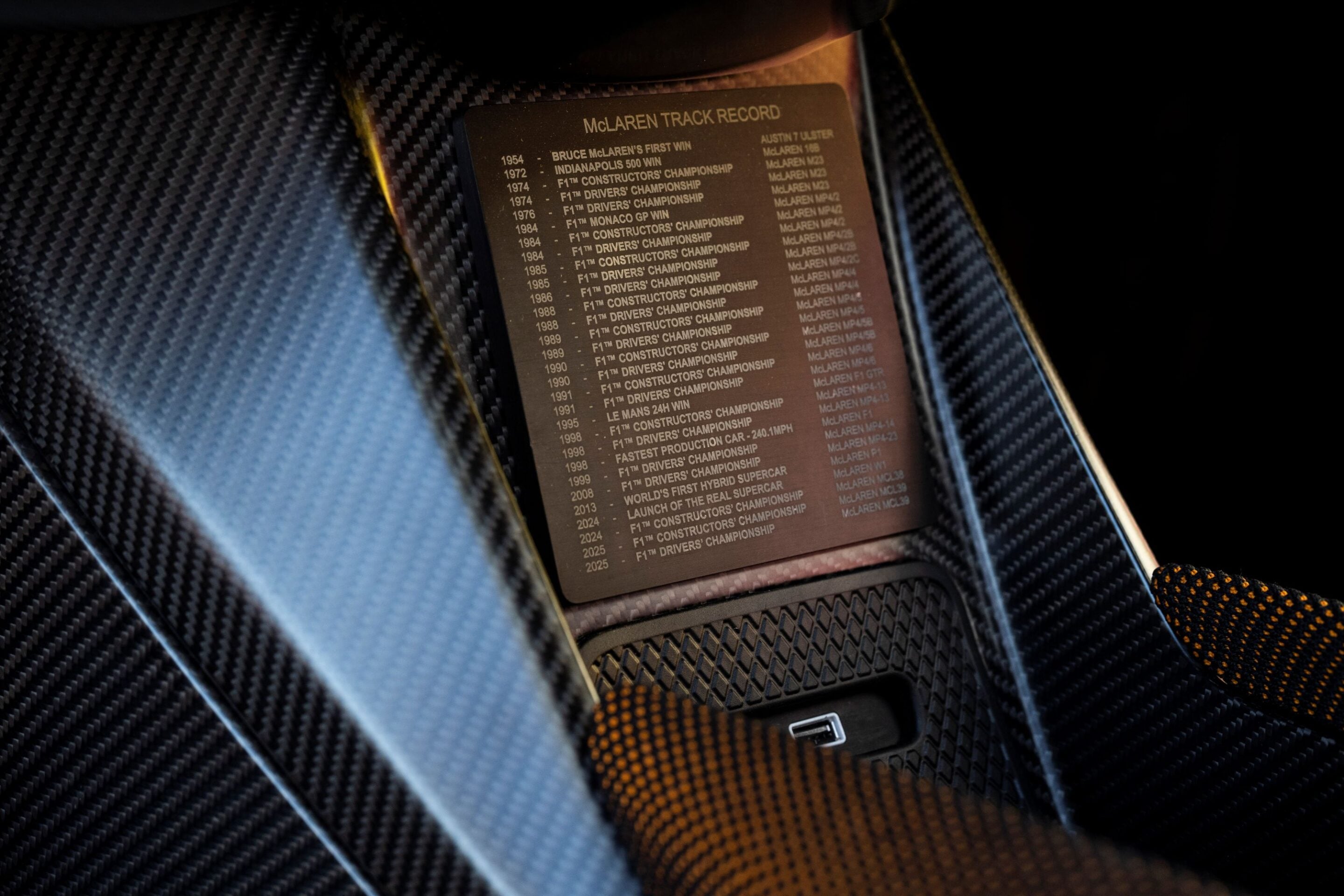
This story first appeared in the September 2026 issue of Wheels magazine, now on sale. Subscribe here and gain access to 12 issues for $109 plus online access to every Wheels issue since 1953.
One of the highlights of MG’s stand at Sydney’s Everything Electric show was the chance to get hands-on with the brand’s all-new U9 EV ute. You can look at photos and videos of a vehicle for days on end but still be surprised when you see it in the flesh, and that was the case when WhichCar by Wheels had a look under the bonnet.
For all its impressive looks, build quality, gear and all-electric drivetrain, the feature that stuck out was the gaping luggage compartment in the frunk. A quick look at the specs list will tell you it comes in at a giant 236 litres, but that’s a bit of an abstract number until you’re standing in front of it.
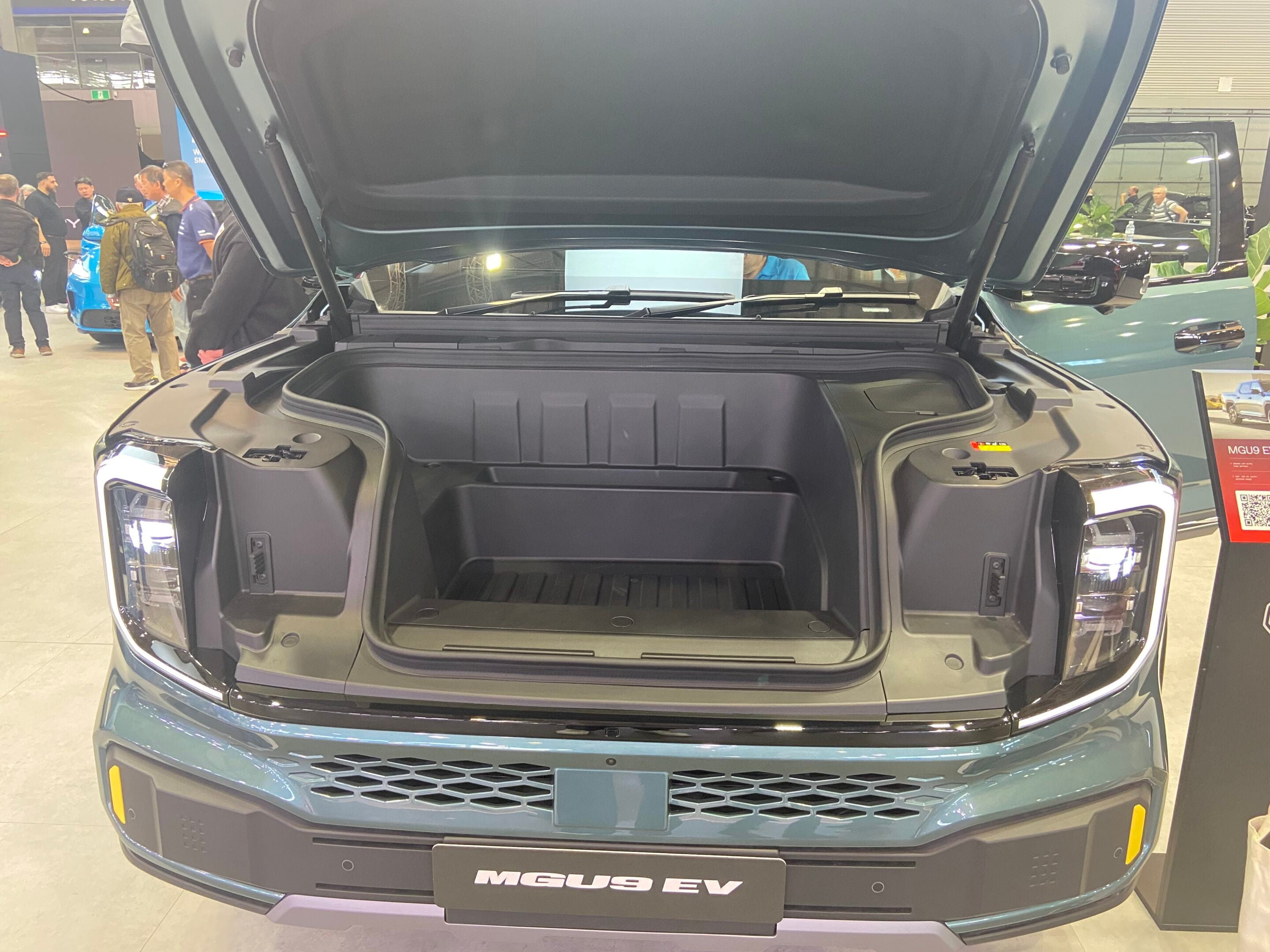
We’re fond of saying that the rear row of an SUV can accommodate a tallish grown adult when we review cars, and now we can apply the same term to that storage space. Of EVs sold in Australia, only the Ford F-150 Lightning – which, unlike the U9, has to be imported and converted to right-hand drive – can top it.
Couple of suitcases to stow away for a weekend trip? The frunk has you covered. Large suitcases. The type you have to sit on to close because they’re so full.
We weren’t alone in being stopped in our tracks by the frunk, with plenty of attendees also taking the time to have a good look.
Of course, the up-front storage is just one of the highlights of the vehicle, which is making its world debut down under. Price is another, with the U9 going for $78,990 before on-roads.
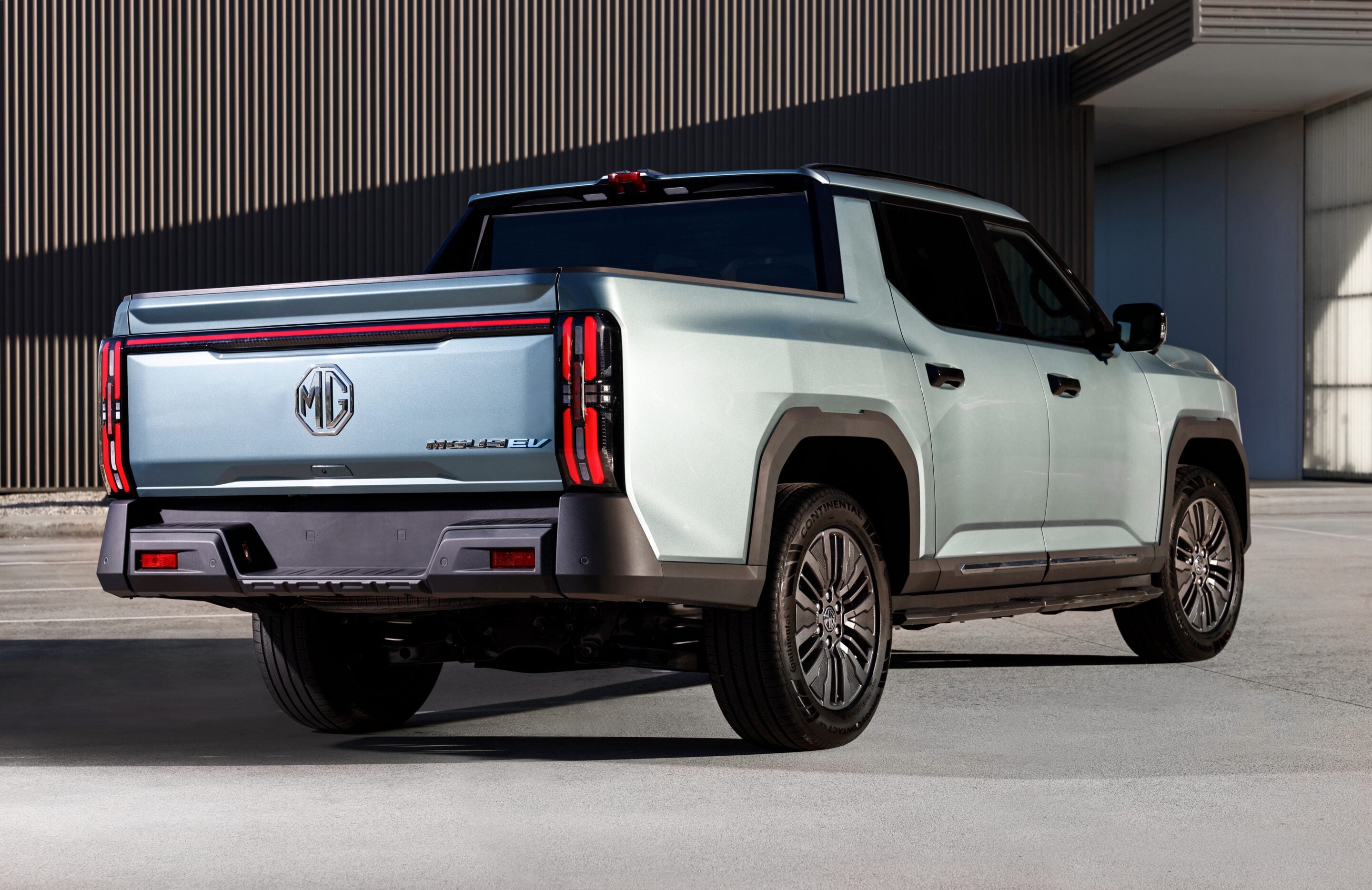
Crucially for its market segment, it also boasts a WLTP range of 430km, 3500kg braked towing capacity, a payload rated at 685kg, and vehicle-to-load functionality so you can use it to power outdoor gear on a camping trip or power tools while you’re working.
Our time sitting in the cabin brought home the U9’s high levels of trim, and the switchgear fits in with the tough but stylish look of the exterior. A highlight here is the trick gear selector, which looks like something out of the Millennium Falcon.
The U9 is due to go on sale in the last quarter of this year as it tackles rivals like Toyota’s BEV HiLux and the KGM Musso.
If ever there was a pivotal decade for BMW, then the late 1950s was it. Bowed and cowed by the ravages of World War II, the Bavarian carmaker had seemingly missed Germany’s Wirtschaftswunder (the economic miracle) that was in full swing and brought not only economic stability, but outright prosperity, to a country recovering from having lost two world wars in the space of three decades.
BMW was especially hit hard following the end of World War II. As a major supplier of aircraft engines to Germany’s Luftwaffe, BMW was banned from producing aircraft and motorised vehicles, both cars and motorbikes, immediately after the war. To survive, the once-proud Bavarian manufacturer resorted to making bicycles, household hardware, and kitchen utensils.
The ban on motorised vehicles was lifted by 1948 and BMW was once again manufacturing motorbikes. Cars followed in 1952, the first post-war model the BMW 501, a series of luxury saloons, coupes and convertibles with dated styling and an expensive price tag.
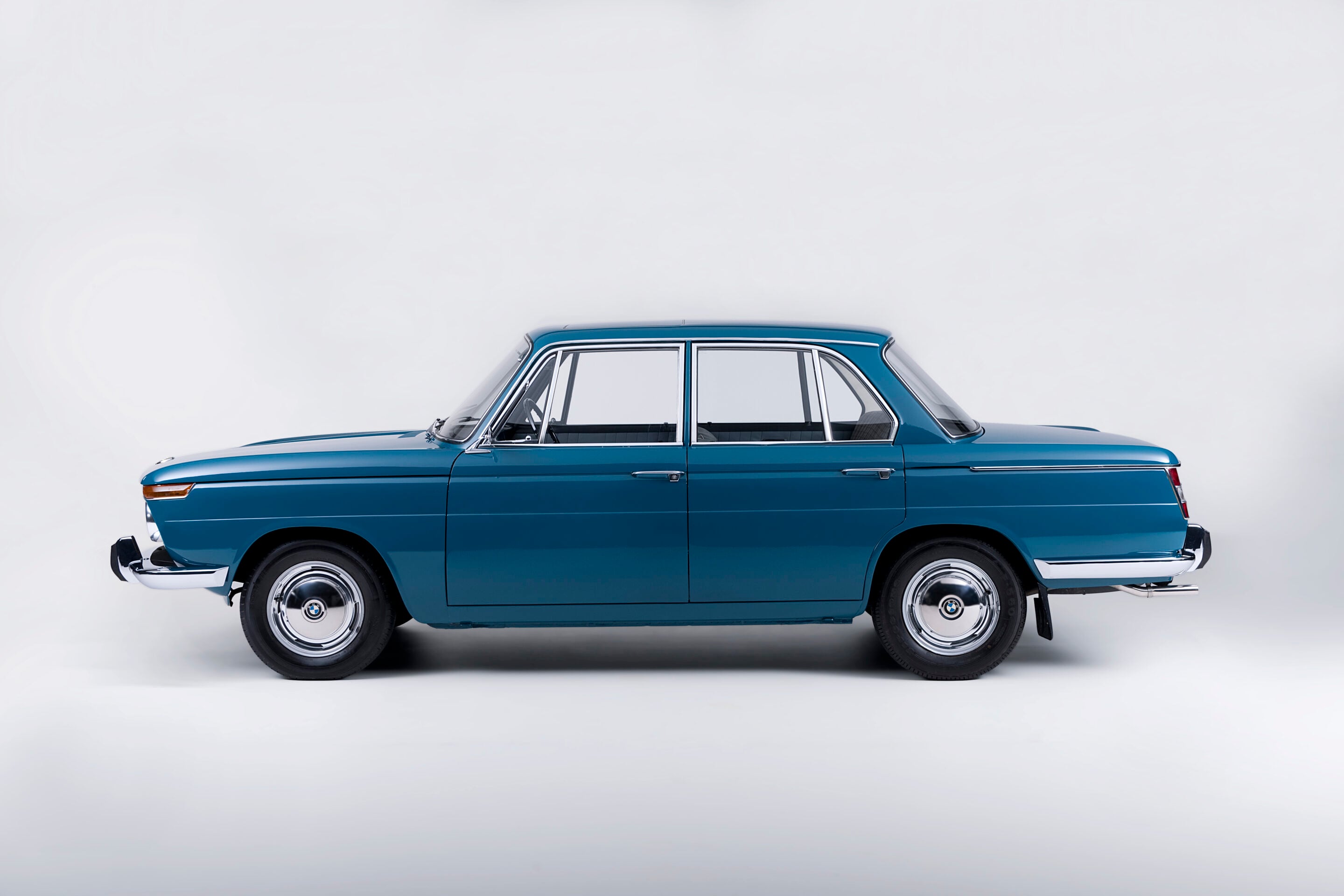
Cheaper cars followed in 1955, including the quirky – but affordable – BMW Isetta microcar, built under license from the Italian brand. The stunning 507 roadster was launched – primarily for the US market – in 1956 with a price tag of close to DM30,000. Even then, with the 507’s meticulous construction, high production costs saw BMW lose money on every 507 sold, and in 1959 the German automaker was facing financial ruin after posting an annual loss of DM15 million.
That forced the company, at the behest of its creditors, to agree to a deal in principle for Daimler Benz, parent company of Mercedes-Benz, to take over the ailing Bavarian.
As BMW revealed years later, “Sales problems in the automobile and motorcycle business had put the company in serious difficulties.
“At the Annual General Meeting in December 1959, the sale of the company to Daimler Benz AG appeared to be already a foregone conclusion. However, it failed with a last-minute reprieve as a result of committed small shareholders putting up spirited resistance to the restructuring plan that was part of the takeover.”
Among those “small share holders”, Herbert Quandt and his half-brother Harald took a majority stake in the ailing company and under their leadership, saved the proud Bavarian company from the ignominity of falling into Stuttgart’s hands.
The Quandts’ investment bought the company time to reshape its future while the BMW 700, launched in 1959, provided an unlikely saviour, the small rear-engined compact selling in steady if unspectacular numbers.
But behind the scenes, a shift was taking place as the company sought to tap into the increasingly lucrative market for mid-size cars, a shift driven by West Germany’s growing prosperity.
Work had already begun on the car that would define BMW’s future – and present – when the Quandts took over the reins. But under Herbert Quandt’s leadership, an injection of fresh engineering and management talent would pay dividends that set the company on a path to its present-day success.
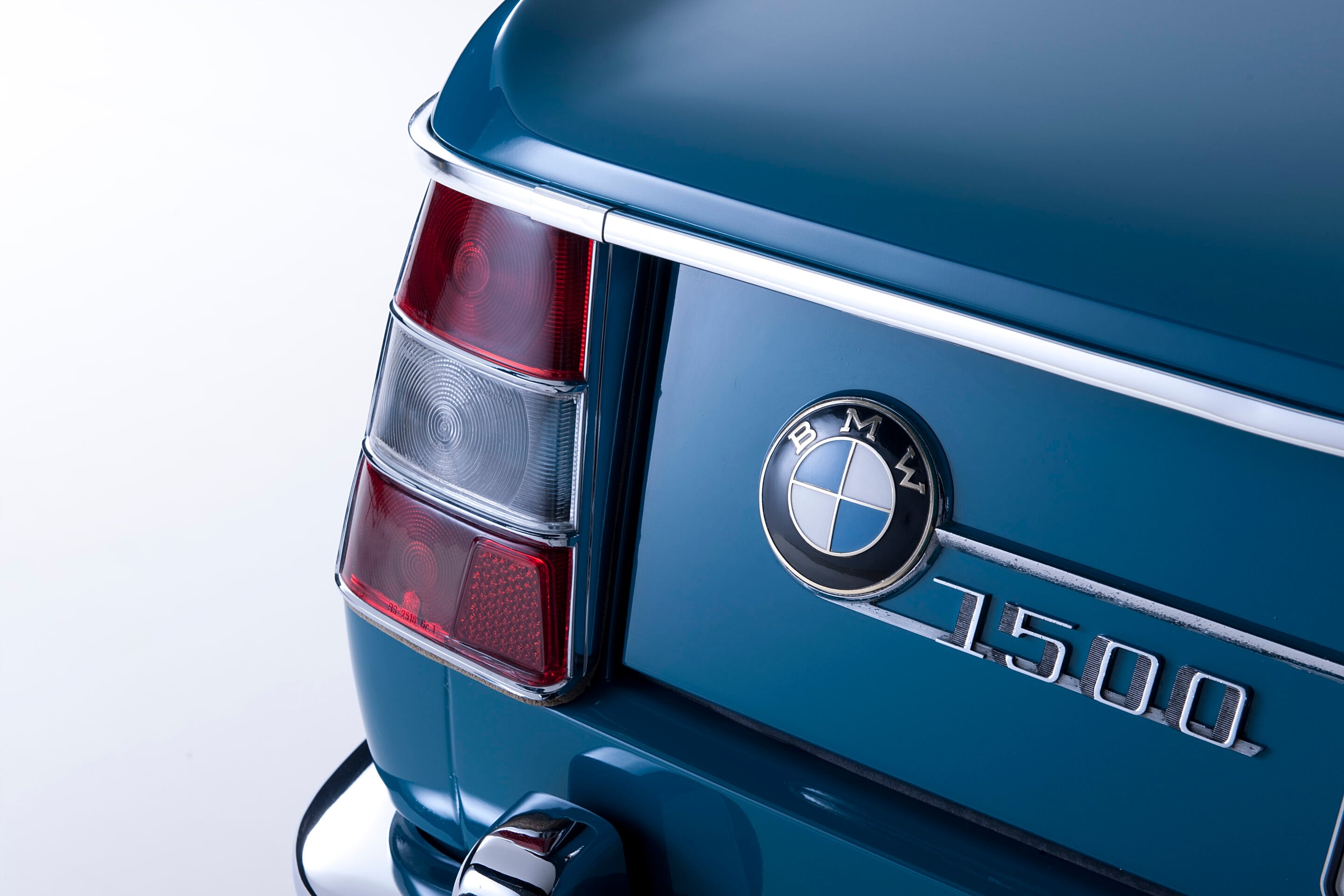
A new engineering team, led by Fritz Fiedler, began working on what would become the BMW 1500. Eberhard Wolff was in charge of chassis design while Wilhelm Hofmeister led the styling and design team and Alex von Falkenhausen went to work on the 1.5-litre, four-cylinder engine that would go on to
become the M10, the legendary cornerstone of BMW’s line-up for decades.
BMW didn’t seek to redefine the automotive world with the 1500, opting instead for a conventional approach and focusing its energies instead on quality, reliability and most importantly, saleability. Wolff favoured a unibody construction – which had debuted on the BMW 700 – for the 1500 with front disc brakes and a MacPherson strut suspension setup up front. Out back, he opted for a less conventional independent rear suspension with coil springs and semi-trailing wishbones that pivoted from a cross beam that also hosted the diff housing.
Von Falkenhausen’s M10 1.5-litre wasn’t groundbreaking either but slanting it at a 30-degree angle to the right of vertical was. That allowed the design team the freedom to play with the 1500’s shape and here Hoffmeister had the presence of mind to bring in Giovanni Michelotti, the Italian who had earlier penned the 700 for the German manufacturer.
While Hofmeister is credited as the designer of the 1500, it was Michelotti’s work that shaped BMW’s newest sedan including what would go on to define every BMW for decades, the ‘shark nose’ front with twin grilles flanking the brand’s signature, nieren (kidneys). So immediately enduring were those elements, they remained firmly in place on nearly every BMW well into the 1990s.
Hofmeister, for his part, contributed another design element that has passed into legendary status and not only underpinned every BMW since, but has also been widely copied by nearly every manufacturer – the ‘Hofmeister Kink’ – a forward-angled rake at the base of the C-pillar that added strength and rigidity, as well as aesthetic harmony.
To be fair, the Hofmeister Kink had been around for years, featuring on several American cars from the 1940s and ’50s, but it was the German who inspired its name, a name that has stuck to this day.
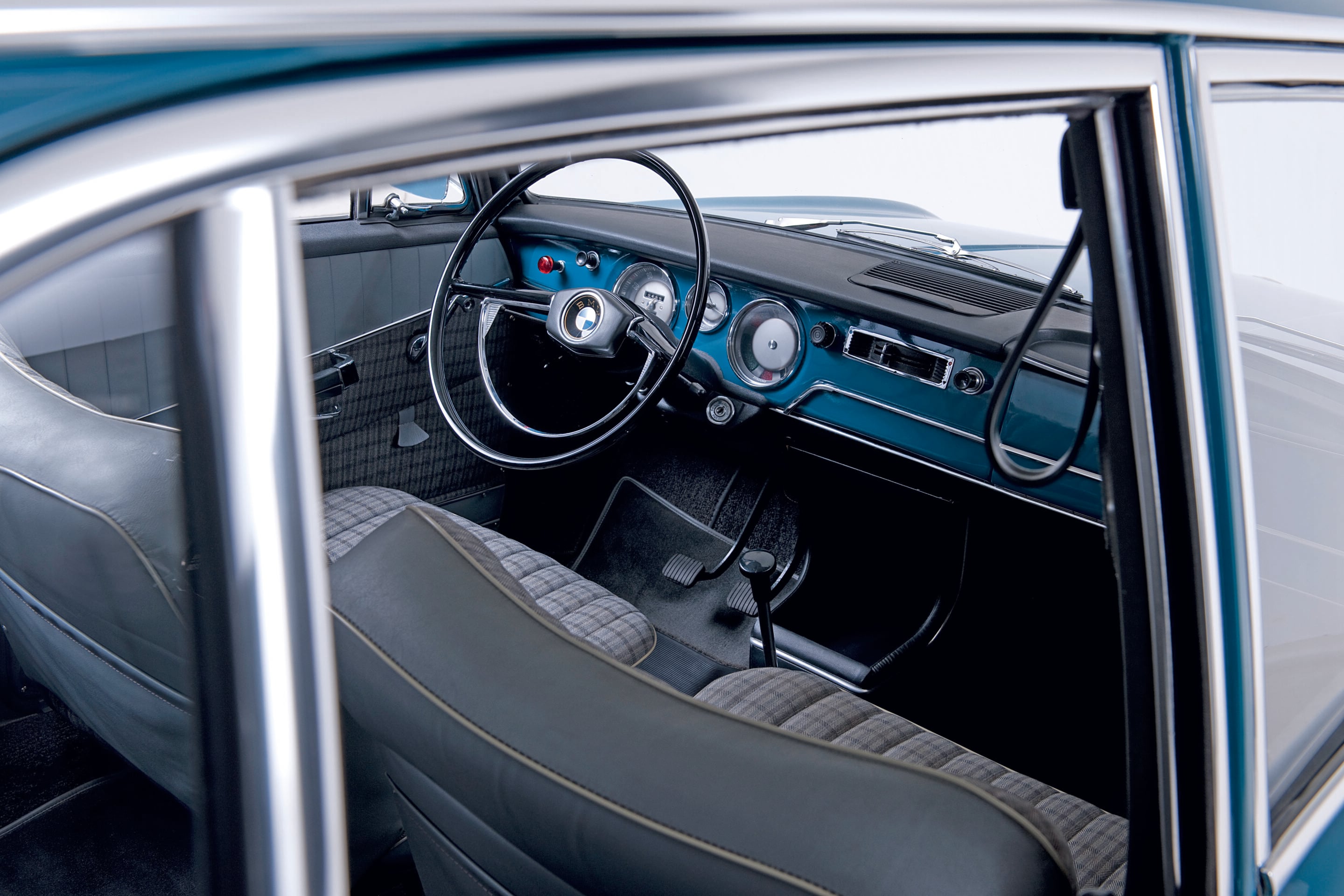
Inside, BMW had opted for plush modernity, with herringbone cloth trimmed individual bucket seats and a clean body-coloured painted dash with chrome accents. A slender two-spoke steering wheel featured a chromed horn push while the dials (also ringed in chrome) played into the 1500’s sporting aspirations.
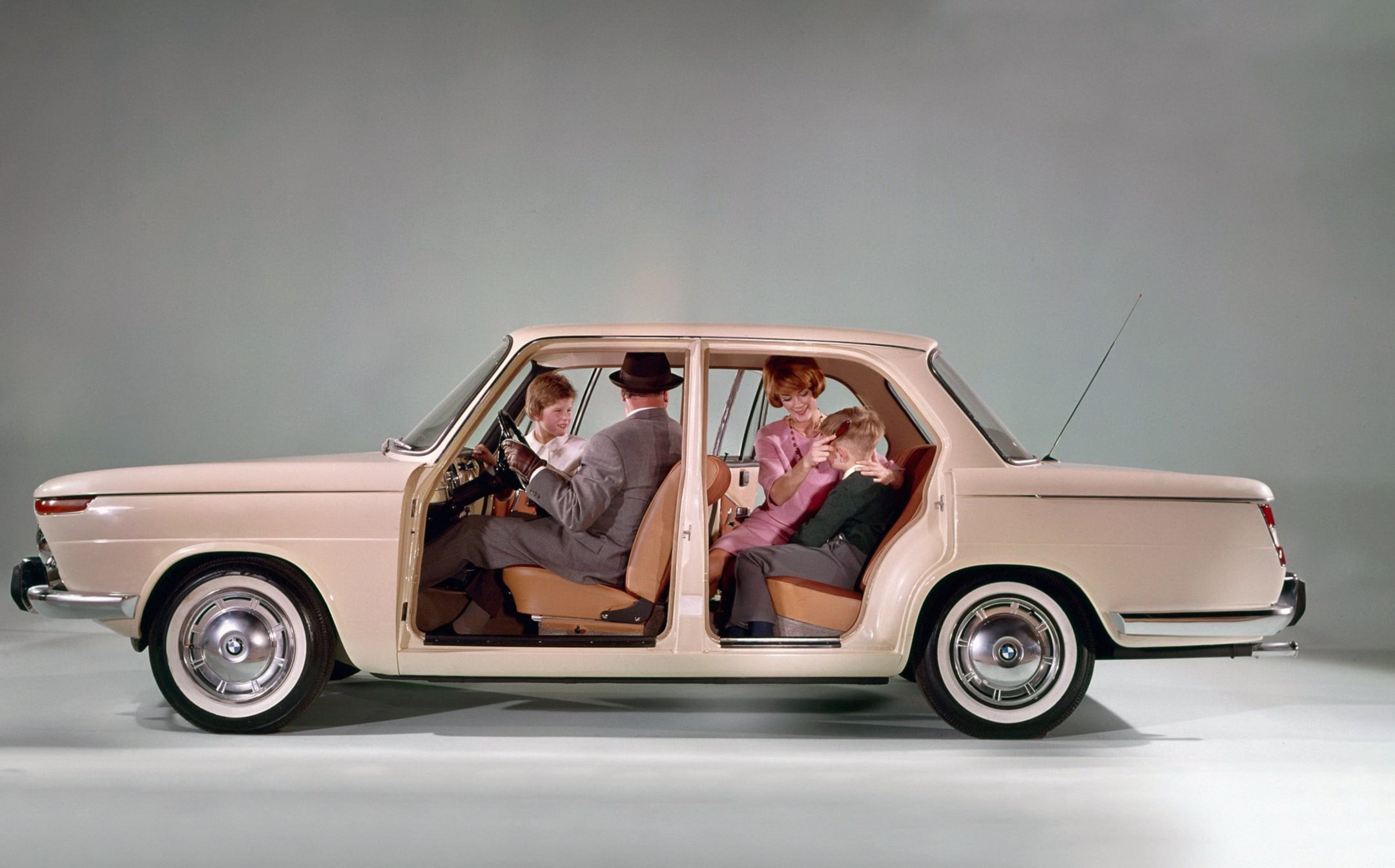
Cabin proportions were generous, adding to the premium air BMW was looking for, while the 1500’s big glasshouse afforded decent visibility all round. A massive boot offered more than enough space for a family of five’s luggage.
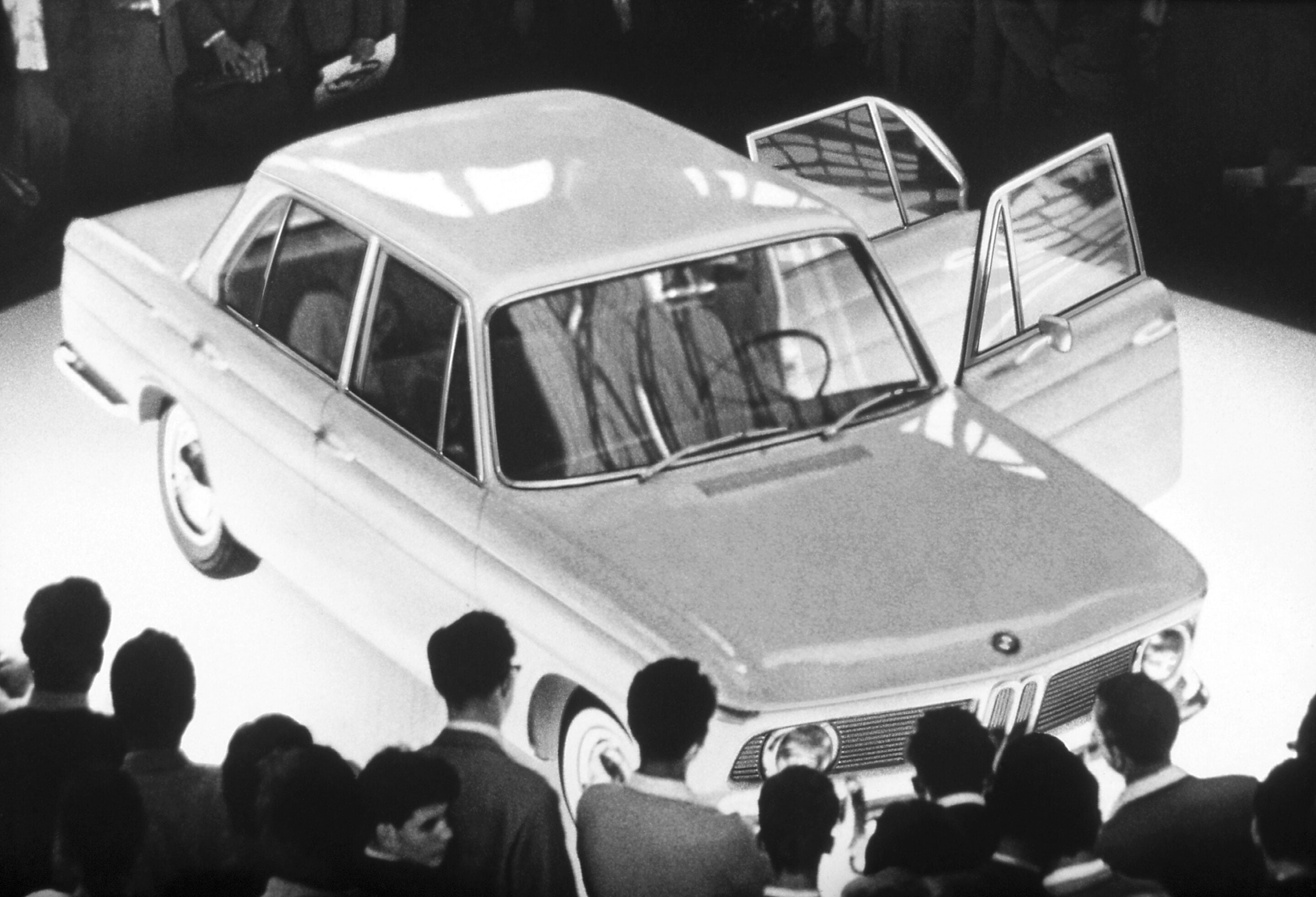
The covers came off at the 1961 Frankfurt motor show and the response from the public was immediate. Priced at DM9000 at launch, BMW was soon tripling production – from the initial 50 cars per day – for the svelte four-door.
It garnered rave reviews from the motoring press too, who praised its performance and handling as well its modern design.
Wheels’ 1963 review was effusive in its praise: “In design… the sleek lines manage to be contemporary without copying the corvair mode. The car looks modern yet is easily and immediately identifiable and should wear well thanks to a minimum of gee-gaws and maximum of pure styling. Also, the
stylists managed to incorporate the traditional twin-oval grille into a modern horizontal pattern.”
BMW’s new 1.5-litre came in for praise too, as did its sporty handling: “This powerplant is one of the most pleasant things about the BMW 1500… two hours of virtual full-bore action down an autobahn resulted in nothing but 150 miles of ground covered with no fuss or bother.
“Underway, the BMW likes fast bends better than tight ones and will track sweeping curves with the same on-rails feeling it displays along the straight; side winds be damned. It leans on really tight turns if pushed very hard and will, finally, skip a bit at the rear if you insist, but that only comes with a driving style BMW has not planned.”
With a winner on its hands, BMW broke even in 1963 before turning a profit the following year, paying its shareholders dividends for the first time in 20 years.
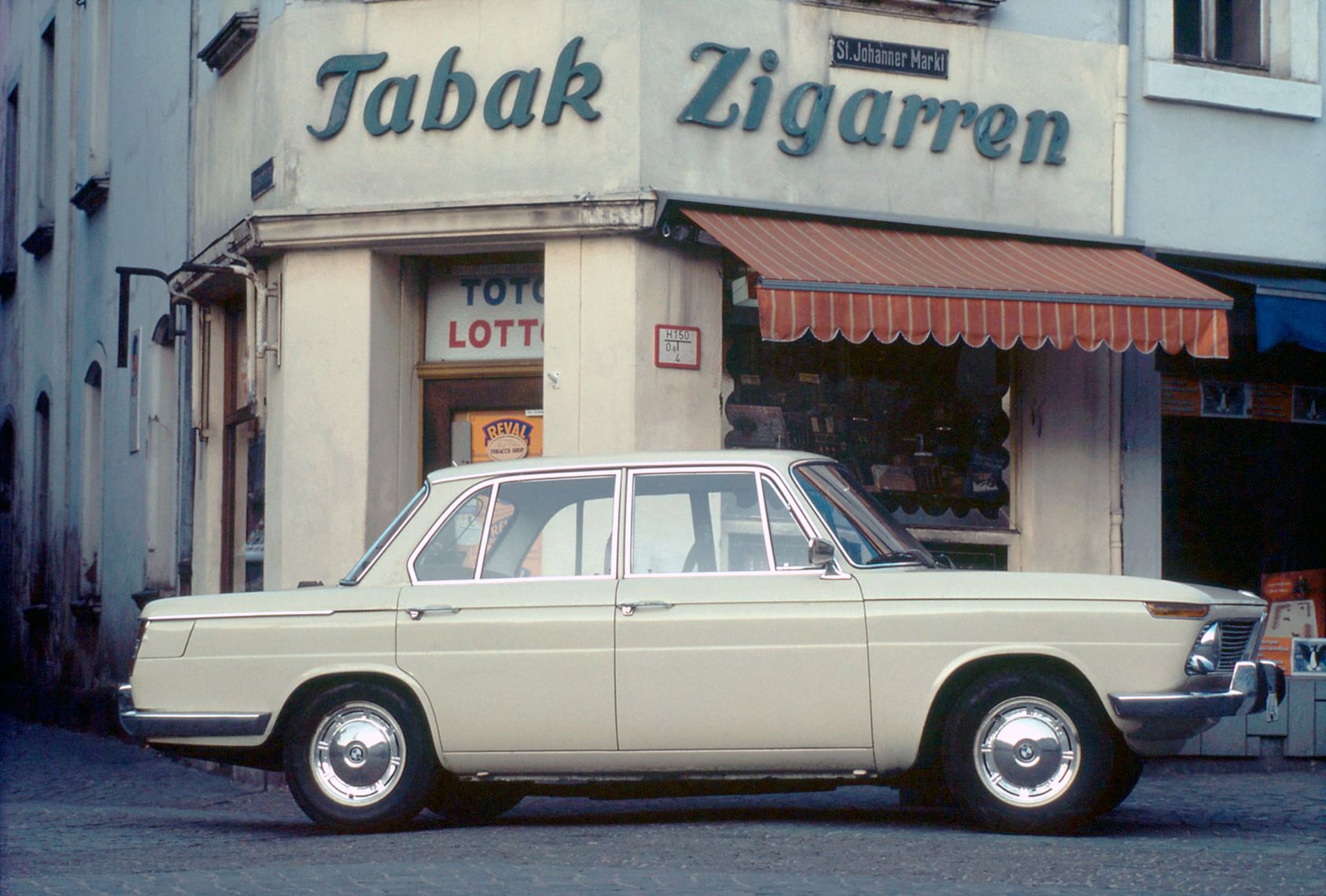
But one thing missing in this story to date was the term Neue Klasse (New Class) as a noun for BMW’s series of new cars. While it’s true that brochures and literature referred to ‘a new class of car’, it was not until 1964 when BMW’s marketing department capitalised the two-word slogan for use in advertising that the Neue Klasse as we know it today, was born.
Simply, BMW was spruiking its ‘new class’ of car to a buying public clamouring for a touch of premium flair wrapped in a sleek body and with the go to match the show.
Von Falkenhaus had not been resting on his laurels either, and in 1963 BMW added the sportier 1800 to the Neue Klasse range, featuring an uprated and larger 1.8-litre inline-four based on his M10 building blocks.
Power and torque had increased to 67kW and 144Nm (up from the 1500’s 59kW and 118Nm) resulting in a top speed in excess of 160kmh.
The brawnier 1.8-litre wasn’t the only new mill in the Neue Klasse range, with a 1.6-litre making its debut in 1964 in the BMW 1600, the replacement for the 1500.
The Neue Klasse model onslaught continued in 1966, BMW releasing the 1600-2 (later shortened to just 1602), a two-door version of the 1600 sedan. That same year, the new luxury flagship BMW 2000 made its debut and promised 74kW and 157Nm from its newly worked M10 2.0-litre unit.
That led to the launch of what is now the legendary 2002Tii in 1968, almost by accident. BMW’s product planning chief Helmut Bönsch and M10 godfather von Falkenhausen had both – independently – crammed the 2.0-litre from the 2000 into their personal BMW 1602 two-door company cars. A good idea turned into a great one when both realised what the other had done and hatched a plan to present the progenitors of what would become the 2002 to BMW’s board of directors. Greenlit, the 2002 was an instant hit, and in Tii form, gave the first inklings of what would eventually become the M sub-brand.
As Wheels wrote of the pocket-rocket, “If you said you’d driven the world’s top 10 cars, then we’d ask if they included the BMW 2002… and if you said ‘no’, then we’d have to suggest that your list was incomplete.
“This incredible little two-door Bavarian, with its no-nonsense styling, V-bomb performance and mono-rail handling, is exactly what true motoring is all about.”
The Neue Klasse line was nearing the end of its useful life by the mid-1970s and BMW’s new product lines including the 5 Series (in 1972) and subsequently 3 Series (1975) set the brand on the road to becoming a global luxury car powerhouse, in stark contrast to the abyss the company faced at the start of the 1960s.
The Neue Klasse might have been hastily born out of necessity, but its lasting legacy on not just BMW, but the automotive world, cannot be underestimated.
The neue Neue Klasse
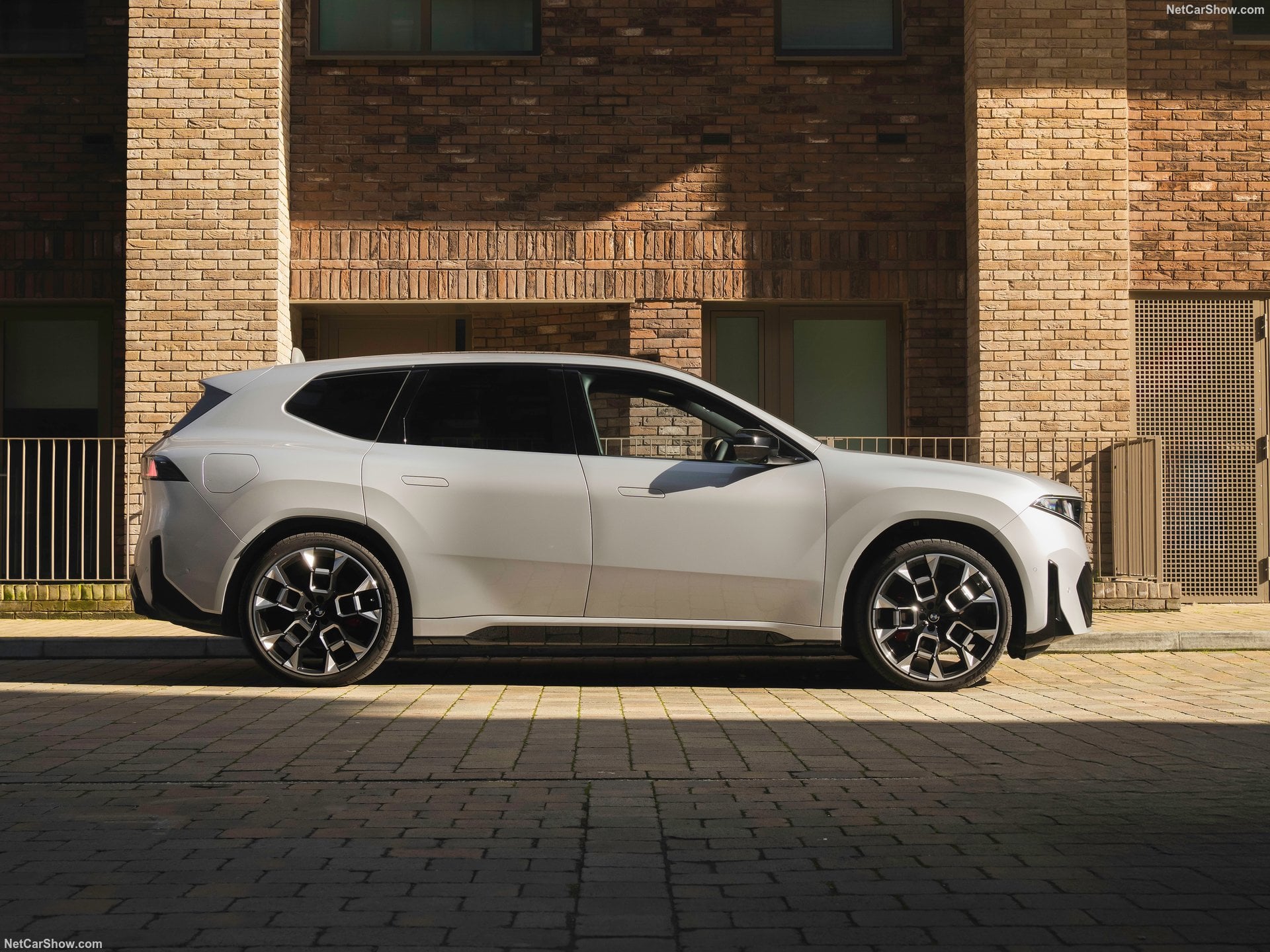
Looking to the past to guide the future is a double-edged sword. But that’s exactly what BMW has done with its modern-day interpretation of Neue Klasse, the name underpinning the brand’s electric future.
BMW makes no apologies for borrowing from its rich heritage. In its own words: “The Neue Klasse is not just a new car. It represents the redefinition of the BMW brand and thereby the whole new model generation being launched with the new BMW iX3. The Neue Klasse is the logical dawn of a new era of individual mobility for the BMW Group.”
BMW is promising around 40 new, or updated, electrified models by the end of 2027, an astonishing number in two years.
The BMW iX3 SUV got the new Neue Klasse (Neue Neue Klasse?) ball rolling in 2025 (mid-2026 in Australia) but the headline-grabber will undoubtedly be the i3 sedan, an electric version of the brand’s halo 3 Series range that will go on sale in late 2026 globally before landing in Australian dealerships in early 2027. It will be sold alongside petrol 3 Series models.
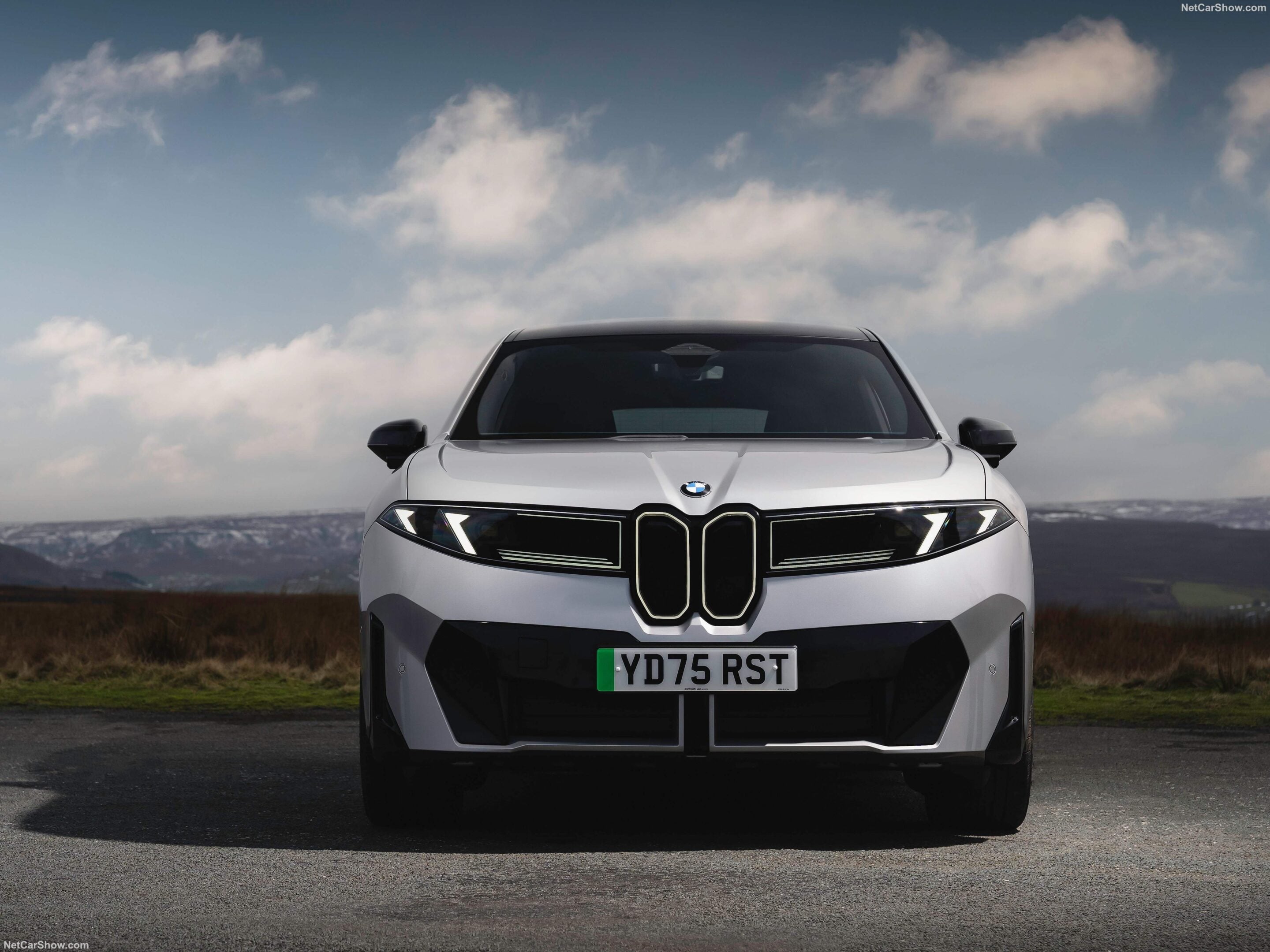
An electric M3, likely called i3 M is set to follow in 2027 and while BMW has remained tight-lipped about final specifications, it has promised to scale new heights in power and torque, setting a “new benchmark in the high performance vehicle segment”.
BMW is not just rebirthing a name that served it so well over 60 years ago, however. Instead, the new Neue Klasse range is an overhaul of how the German brand builds its cars, with electrification at the forefront.
It’s a significant rethink, one that will shape BMW’s future for the next decades. Just like the original Neue Klasse, then.
This story first appeared in the June 2026 issue of Wheels magazine, now on sale. Subscribe here and gain access to 12 issues for $109 plus online access to every Wheels issue since 1953.
The 427C had a short but thrilling life after it was unveiled at the Sydney Motor Show in 2002. The racing version went on to win two Bathurst 24 Hours races but dreams of Aussies driving a V8 Supercar-light production version died on the vine thanks to its price tag of around $200,000.
First published in the November 2002 issue of Wheels magazine, Australia’s best car mag since 1953. Subscribe here and gain access to 12 issues for $109 plus online access to every Wheels issue ever printed.
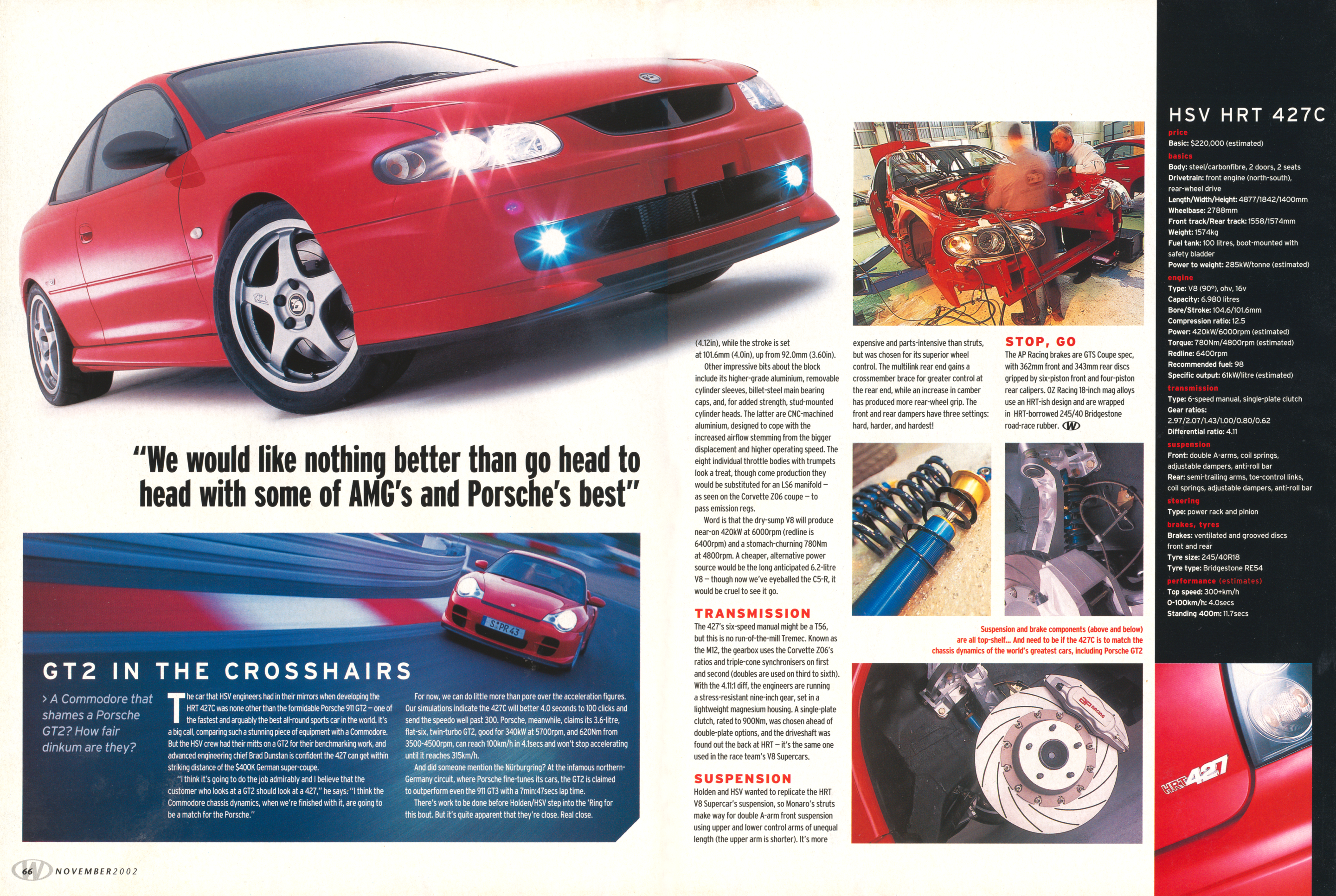
Holden and HSV’s self-satisfied grin is about to break into an evil cackle. The two companies have joined forces to create the awesomely ambitious HRT 427C – potentially the fastest and most powerful ‘production’ car ever to emerge from a mainstream manufacturer in Australia.
It’s a show special at the moment, with a mild make-over of the Monaro skin, but most of the $400,000 heaped onto this HSV road racer is aimed at pushing it out from under the bright lights and on to the mean streets … and Mulsanne Straight.
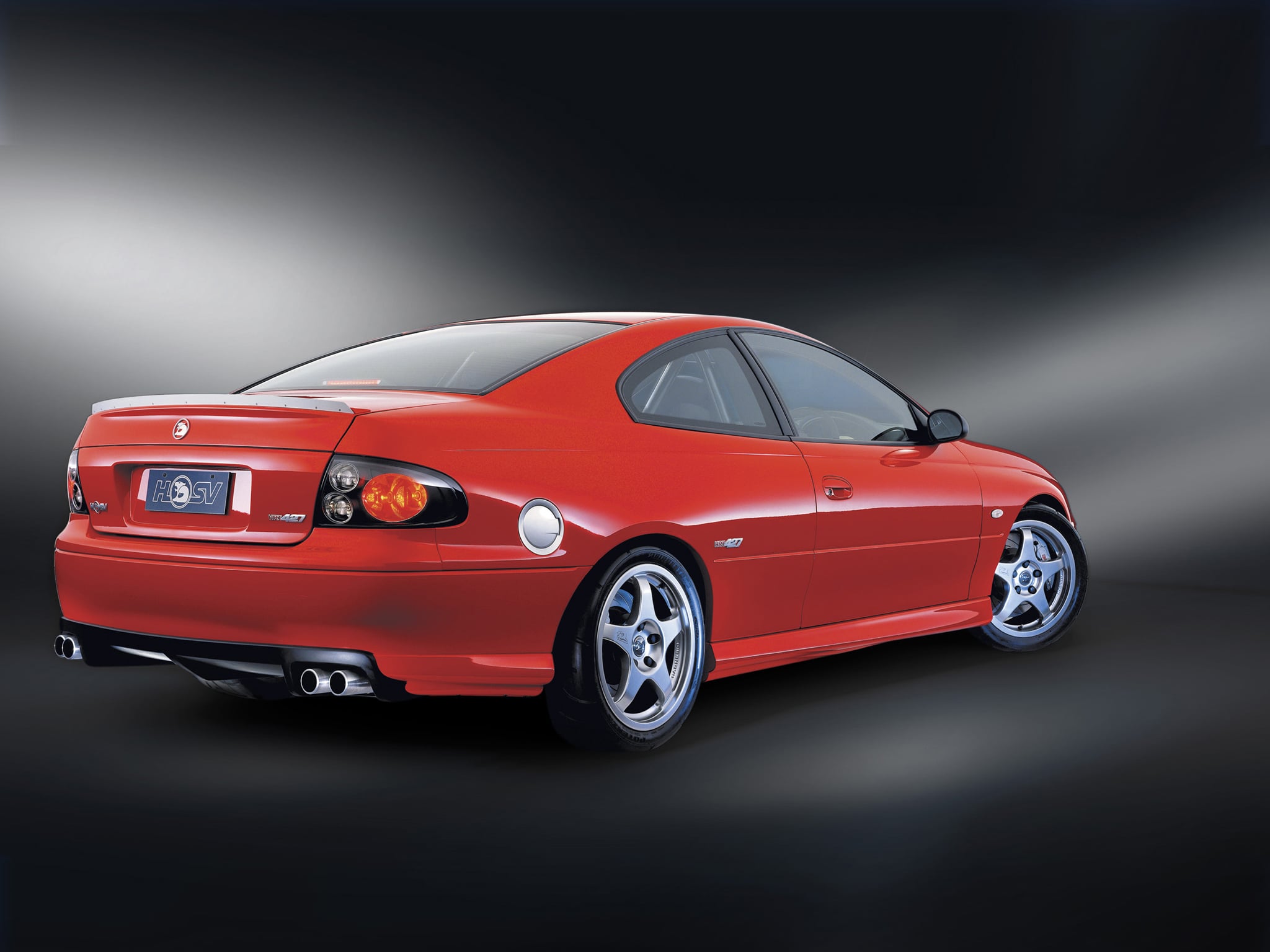
Consider this: An insane 7.0-litre V8 – based on the Le Mans-winning Chevrolet Corvette C5-R race car – that, according to Wheels sources, is capable of producing close to 420kW; lightweight components; new front suspension; aero aids front and rear. There is enough built into this blood-red Commodore to make cynics like us listen respectfully as engineers start rattling off performance attributes and times that could see it lick some of the finest road-going sports cars in the world.
“People should not misunderstand what this car is,” declares HSV general manager Chris Payne. “We would like nothing better than to put this car on a plane or a boat to the Nürburgring and go head to head with some of AMG’s and Porsche’s best.”
He means the 911 GT2, one of the fastest and perhaps best all-round road racers on the market. His team of Holden and HSV personnel has used the Porsche as its benchmark for the HRT 427C over the past six months.
Both Holden and HS\/ had been entertaining the idea for some time. HSV wanted to rekindle the GTS-R spark, and Holden was looking to bridge the gap between its VS Supercar domination and mainstream consciousness. To achieve these goals, the pair had to produce something special.
And this is. The determination to build a limited-volume $220,000 car for enthusiasts to want, collect, and race has seen the comfy stuff disappear – rear seats, radio, air-con, ABS, airbags, traction control, that sort of thing – and substantial engineering improvements made across the board in collaboration with the Holden Racing Team.
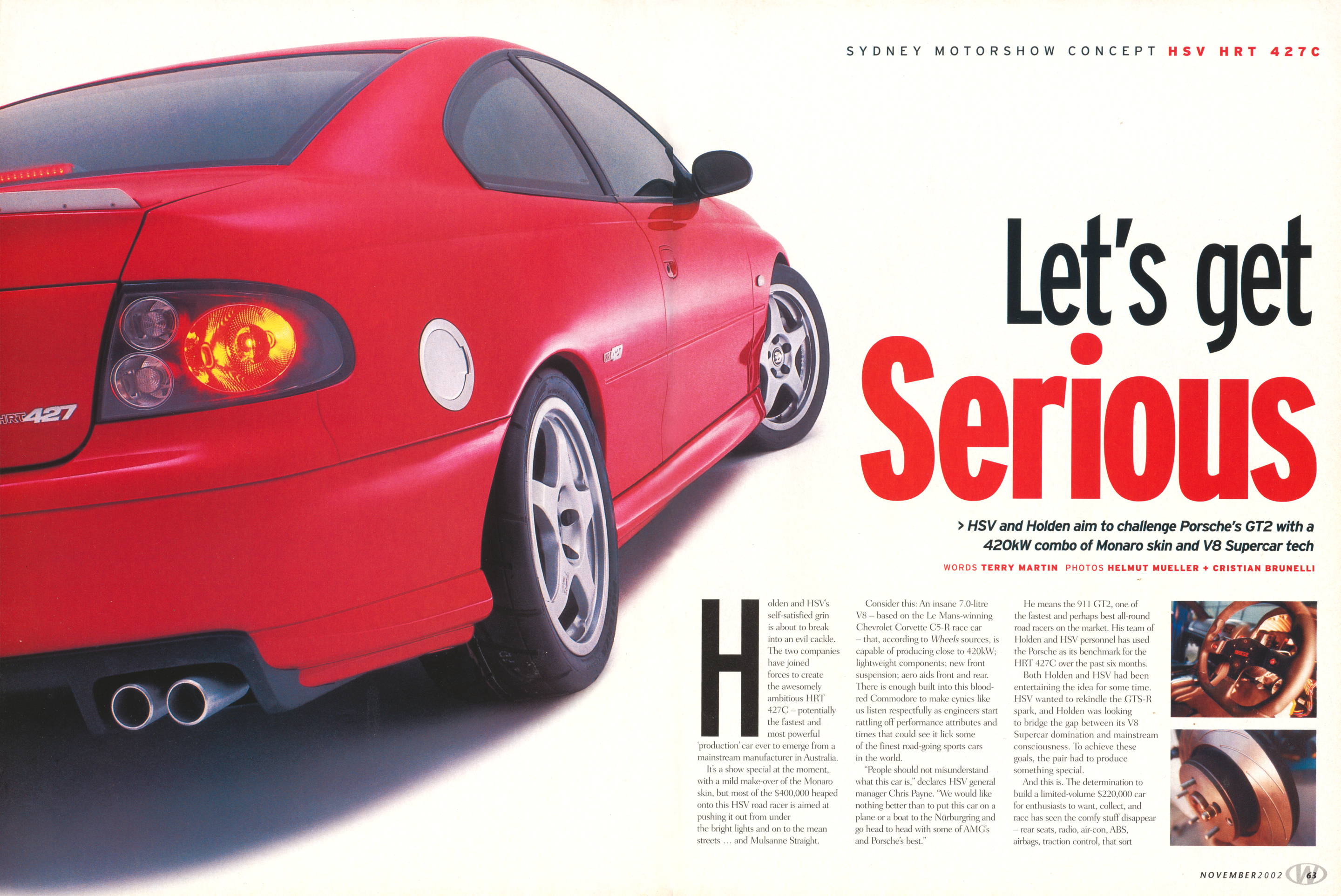
There’s much more to this car than a massive meat-and-potatoes clonk. Stuff like a carbonfibre bonnet, magnesium cliff housing, race-inspired double A-arm front suspension, front air splitter, and a full race interior with rollcage are listed.
As for the engine, the C5-R is the biggest, strongest and most powerful of all Chev Gen IIIs, displacing 427 cubic inches and reckoned to produce around 420 kilowatts at 6000rpm, stirring memories of American big-blocks from the ’60s and, for the rest of us, prompting the inevitable question: What’II she do?
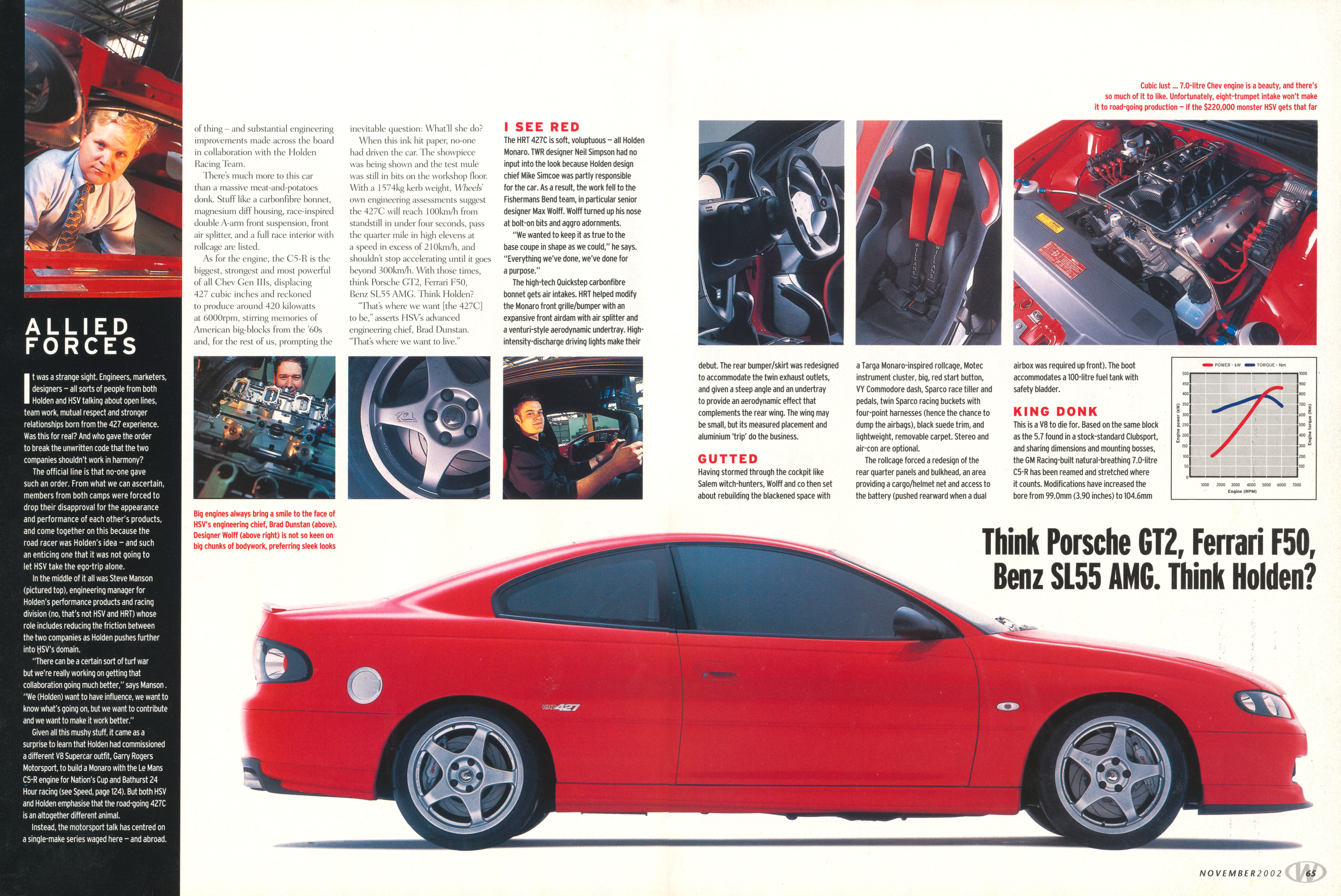
When this ink hit paper, no-one had driven the car. The showpiece was being shown and the test mule was still in bits on the workshop floor. With a 1574kg kerb weight, Wheels‘ own engineering assessments suggest the 427C will reach 100km/h from standstill in under four seconds, pass the quarter mile in high elevens at a speed in excess of 210km/h, and shouldn’t stop accelerating until it goes beyond 300km/h. With those times, think Porsche GT2, Ferrari F5O, Benz SL55 AMC. Think Holden? ‘That’s where we want [the 427C] to be,” asserts HSVs advanced engineering chief, Brad Dunstan. “That’s where we want to live.”
I SEE RED
The HRT 427C is soft, voluptuous – all Holden Monaro. TWR designer Neil Simpson had no input into the look because Holden design chief Mike Simcoe was partly responsible for the car. As a result, the work fell to the Fishermans Bend team, in particular senior designer Max Wolff. Wolff turned up his nose at bolt-on bits and aggro adornments.
“We wanted to keep it as true to the base coupe in shape as we could,” he says. “Everything we’ve done, we’ve done for a purpose.”
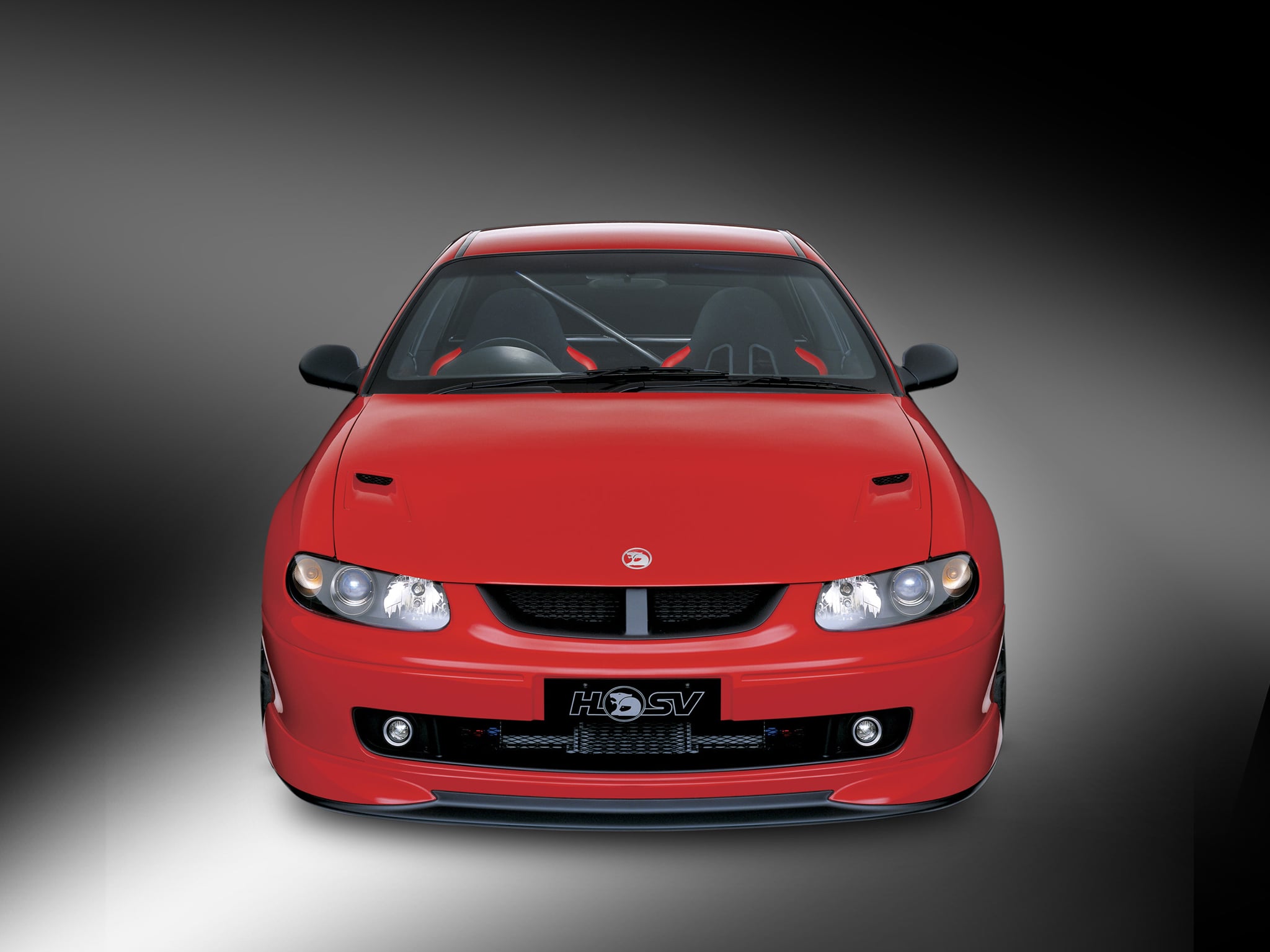
The high-tech Quickstep carbonfibre bonnet gets air intakes. HRT helped modify the Monaro front grille/bumper with an expansive front airdam with air splitter and a venturi-style aerodynamic undertray. High-intensity-discharge driving lights make their debut. The rear bumper/skirt was redesigned to accommodate the twin exhaust outlets, and given a steep angle and an undertray to provide an aerodynamic effect that complements the rear wing. The wing may be small, but its measured placement and aluminium ‘trip’ do the business.
GUTTED
Having stormed through the cockpit like Salem witch-hunters, Wolff and co then set about rebuilding the blackened space with a Targa Monaro-inspired rollcage, Motec instrument cluster, big, red start button, VY Commodore dash, Sparco race tiller and pedals, twin Sparco racing buckets with four-point harnesses (hence the chance to dump the airbags), black suede trim, and lightweight, removable carpet. Stereo and air-con are optional.
The rollcage forced a redesign of the rear quarter panels and bulkhead, an area providing a cargo/helmet net and access to the battery (pushed rearward when a dual airbox was required up front). The boot accommodates a 100-litre fuel tank with safety bladder.
KING DONK
This is a V8 to die for. Based on the same block as the 5.7 found in a stock-standard Clubsport, and sharing dimensions and mounting bosses, the GM Racing-built natural-breathing 7.0-litre C5-R has been reamed and stretched where it counts. Modifications have increased the bore from 99.0mm (3.90 inches) to 104.6mm (4.12in), while the stroke is set at 101.6mm (4.0in), up from 92.0mm (3.60in).
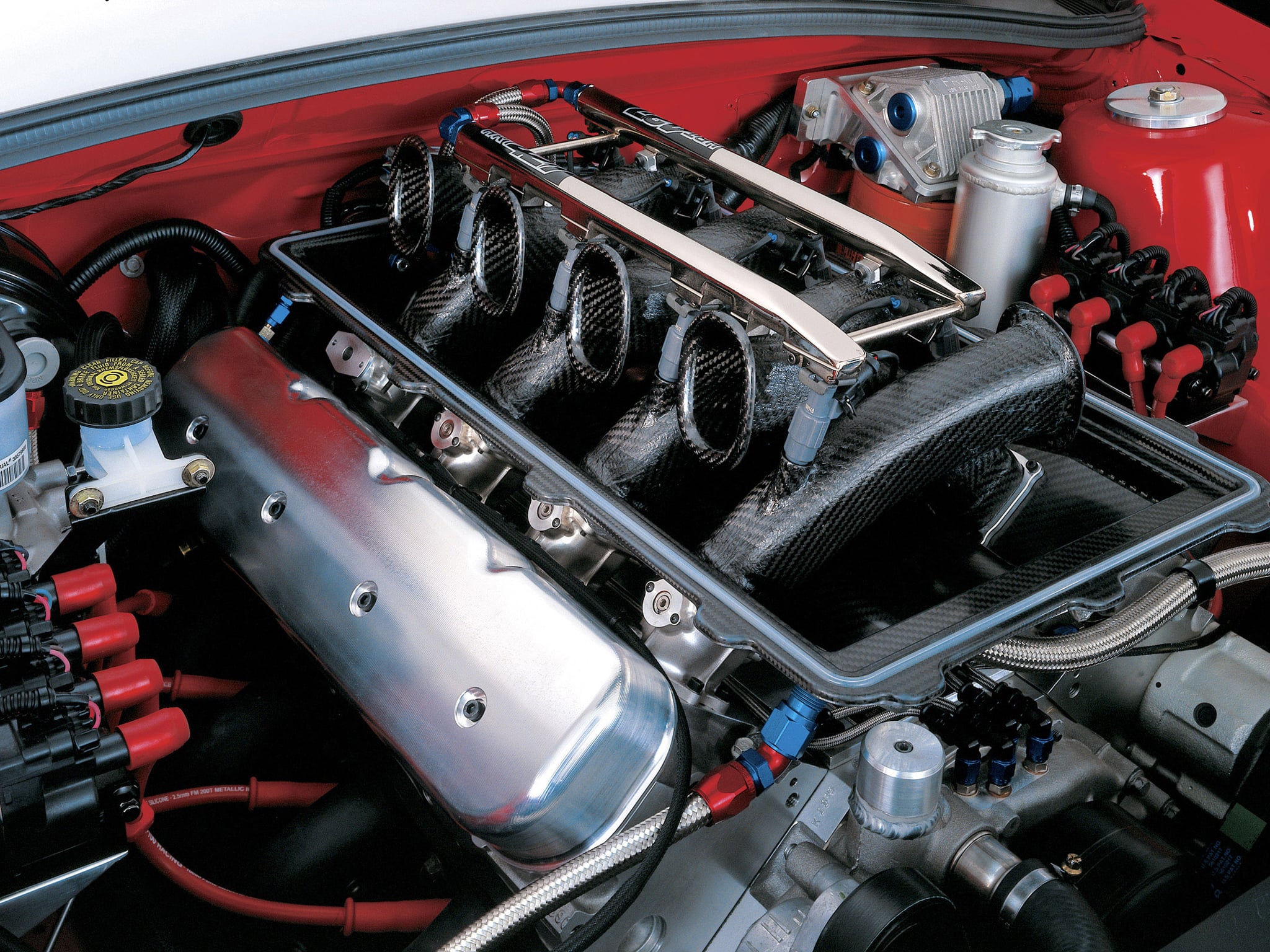
Other impressive bits about the block include its higher-grade aluminium, removable cylinder sleeves, billet-steel main bearing caps, and, for added strength, stud-mounted cylinder heads. The latter are CNC-machined aluminium, designed to cope with the increased airflow stemming from the bigger displacement and higher operating speed. The eight individual throttle bodies with trumpets look a treat, though come production they would be substituted for an LS6 manifold – as seen on the Corvette Z06 coupe – to pass emission regs.
Word is that the dry-sump V8 will produce near-on 420kW at 6000rpm (redline is 6400rpm) and a stomach-churning 780Nm at 4800rpm. A cheaper, alternative power source would be the long anticipated 6.2-litre V8 – though now we’ve eyeballed the C5-R, it would be cruel to see it go.
TRANSMISSION
The 427’s six-speed manual might be a T56, but this is no run-of-the-mill Tremec. Known as the M12, the gearbox uses the Corvette Z06’s ratios and triple-cone synchronisers on first and second (doubles are used on third to sixth). With the 4.11:1 diff, the engineers are running a stress-resistant nine-inch gear, set in a lightweight magnesium housing. A single-plate clutch, rated to 900Nm, was chosen ahead of double-plate options, and the driveshaft was found out the back at HRT – it’s the same one used in the race team’s V8 Supercars.
SUSPENSION
Holden and HSV wanted to replicate the HRT V8 Supercar’s suspension, so the Monaro’s struts make way for double A-arm front suspension using upper and lower control arms of unequal length (the upper arm is shorter). It’s more expensive and parts-intensive than struts, but was chosen for its superior wheel control. The multilink rear end gains a crossmember brace for greater control at the rear end, while an increase in camber has produced more rear-wheel grip. The front and rear dampers have three settings: hard, harder, and hardest!
STOP, GO
The AP Racing brakes are GTS Coupe spec, with 362mm front and 343mm rear discs gripped by six-piston front and four-piston rear calipers. OZ Racing l8-inch mag alloys use an HRT-ish design and are wrapped in HRT-borrowed 245/40 Bridgestone road-race rubber.
GT2 IN THE CROSSHAIRS
The car that HSV engineers had in their mirrors when developing the HRT 427C was none other than the formidable Porsche 911 GT2 – one of the fastest and arguably the best all-round sports car in the world. It’s a big call, comparing such a stunning piece of equipment with a Commodore. But the HSV crew had their mitts on a GT2 for their benchmarking work, and advance engineering chief Brad Dunstan is confident the 427 can get within striking distance of the $400K German super-coupe.
“I think it’s going to do the job admirably and I believe that the customer who looks at a GT2 should look at a 427,” he says. “I think the Commodore chassis dynamics, when we’re finished with it, are going to be a match for the Porsche.
For now, we can do little more than pore over the acceleration figures. Our simulations indicate that the 427C will better 4.0 seconds to 100 clicks and send the speedo well past 300. Porsche, meanwhile, claims its 3.6-litre, flat-six, twin-turbo GT2, good for 340kW at 5700rpm, and 620Nm from 3500-4500rpm, can reach 100km/h in 4.1 secs and won’t stop accelerating until it reaches 315km/h.
And did someone mention the Nürburgring? At the infamous northern-Germany circuit, where Porsche fine-tunes its cars, the GT2 is claimed to outperform even the 911 GT3 with a 7min:47secs lap time.
There’s work to be done before the Holden/HSV steps into the ’Ring for this bout. But it’s quite apparent that they’re close. Real close.
Mat Armstrong took a huge risk by buying a one-of-a-kind Bugatti Veyron that would not start properly or select a gear. Now he’s laughing all the way to the bank after fixing the hypercar with parts that cost just $74.
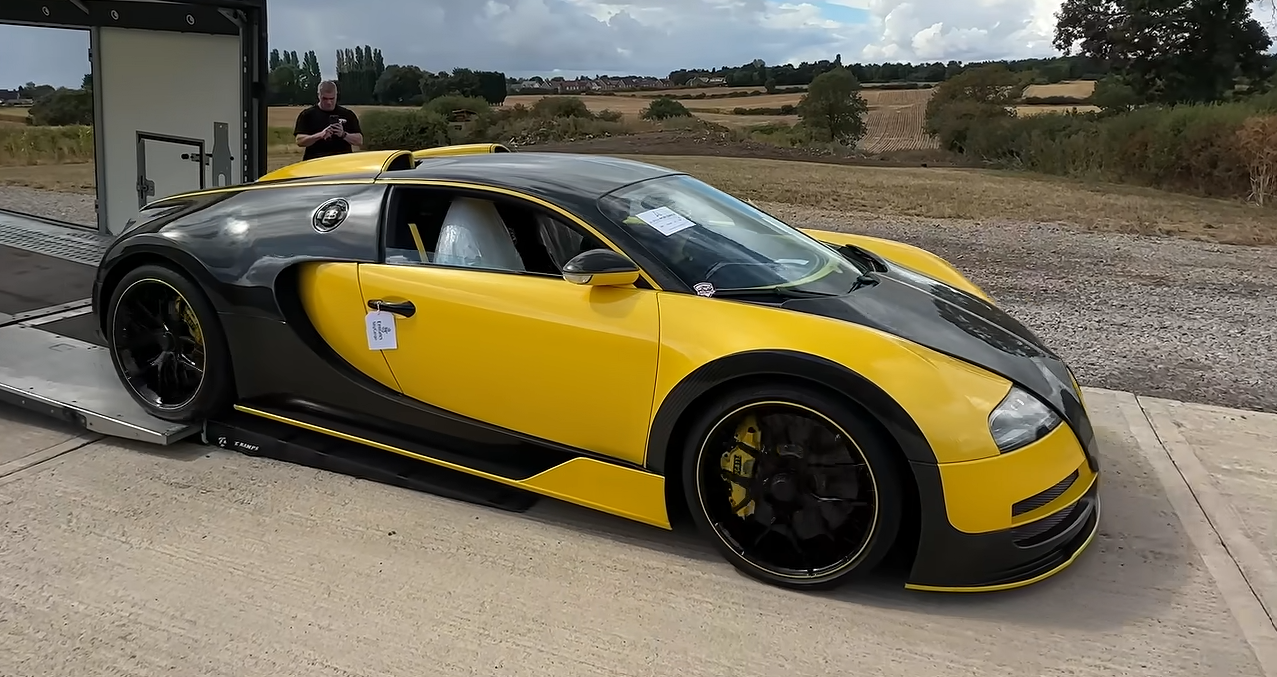
The YouTuber, whose channel has more than seven million subscribers, went from England to Dubai and briefly inspected the vehicle before deciding to make the $1.67 million purchase. He could only turn the engine over very briefly before it conked out, and he could not select a gear for love nor money, which explained why it was hidden away at the back of a showroom instead of being prominently displayed.
“This car doesn’t start, which could mean anything, and we know these Bugattis could be hundreds of thousands of pounds to repair – but sometimes the fixes are really simple,” Armstrong said on his YouTube video detailing the car’s journey back to health, which has been viewed 13 million times.
Adding spice to the story is the fact that this is no ordinary Veyron. Armstrong had chanced upon an Oakley Design variant, a one-off example that has been clad in a fully exposed carbon-fibre body and re-tuned to make 1200 horsepower (895kW) and 1584Nm.
Armstrong knew there was a good chance that the repairs would be extremely cheap, as he had experienced almost identical problems with a Veyron he had already fixed for next to nothing.
He found that the car wouldn’t start because the fuel hose that sits on the pump inside the tank had been worn away over time due to the high-ethanol petrol it ran on, and it just needed a simple replacement hose.
The company that delivered the Bugatti to Armstrong in the UK had to drain the fuel from the petrol tank as part of the process. They realised it was his car, saw the video explaining how he fixed the problem on his other Veyron, and actually performed the procedure for him.
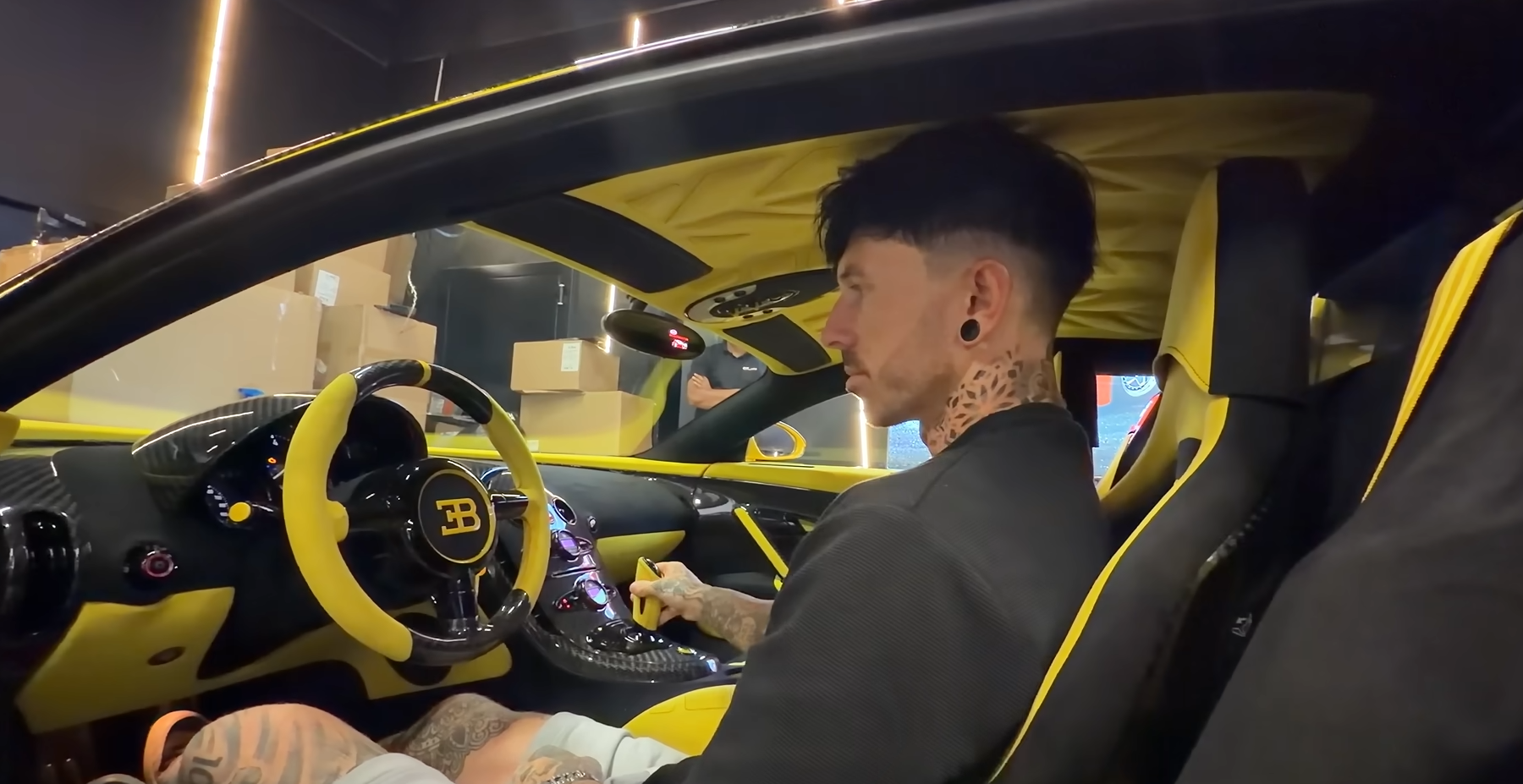
However, they used the wrong clamps on the hose, but that was another relatively simple fix for the YouTuber. Armstrong also had to source the original key for the car after the one it was shipped to him with proved faulty. He just had to put a new battery in the original item.
The toughest part of the repairs came when he found the ignition switch was faulty, meaning he had to take apart most of the dash to get at and install a replacement that cost about $21. The final stage was getting rid of an airbag warning light with a bit of rewiring.
Once everything was sorted, Armstrong took the Veyron to a supercar dealer to have it valued. The result? It’s now worth a cool $2.8 million.
MG Motor Australia has used the 2026 Everything Electric Sydney show to showcase two significant new models, beginning with its new electric ute soon to arrive in Australia along with its huge luxury SUV that could preview what’s next to come for Australian fans of its premium IM brand.
While MG didn’t debut as many models as other brands such as Chery, its two important new models show how the brand is expanding beyond its small car and SUV electrified line-up.
MG U9 EV
Taking centre stage was the new MG U9 EV, which made its first Sydney appearance ahead of Australian deliveries beginning in the fourth quarter of 2026. Australia will be the first market globally to launch the electric ute, and MG even announced its local pricing at the show.
Priced from $78,990 before on-road costs, the EV sits above the existing combustion-powered U9 but swaps its turbo-diesel engine for a 102.2kWh LFP battery and dual electric motors making 325kW/700Nm outputs, which are enough for a claimed 0-100km/h time of just 5.8 seconds.
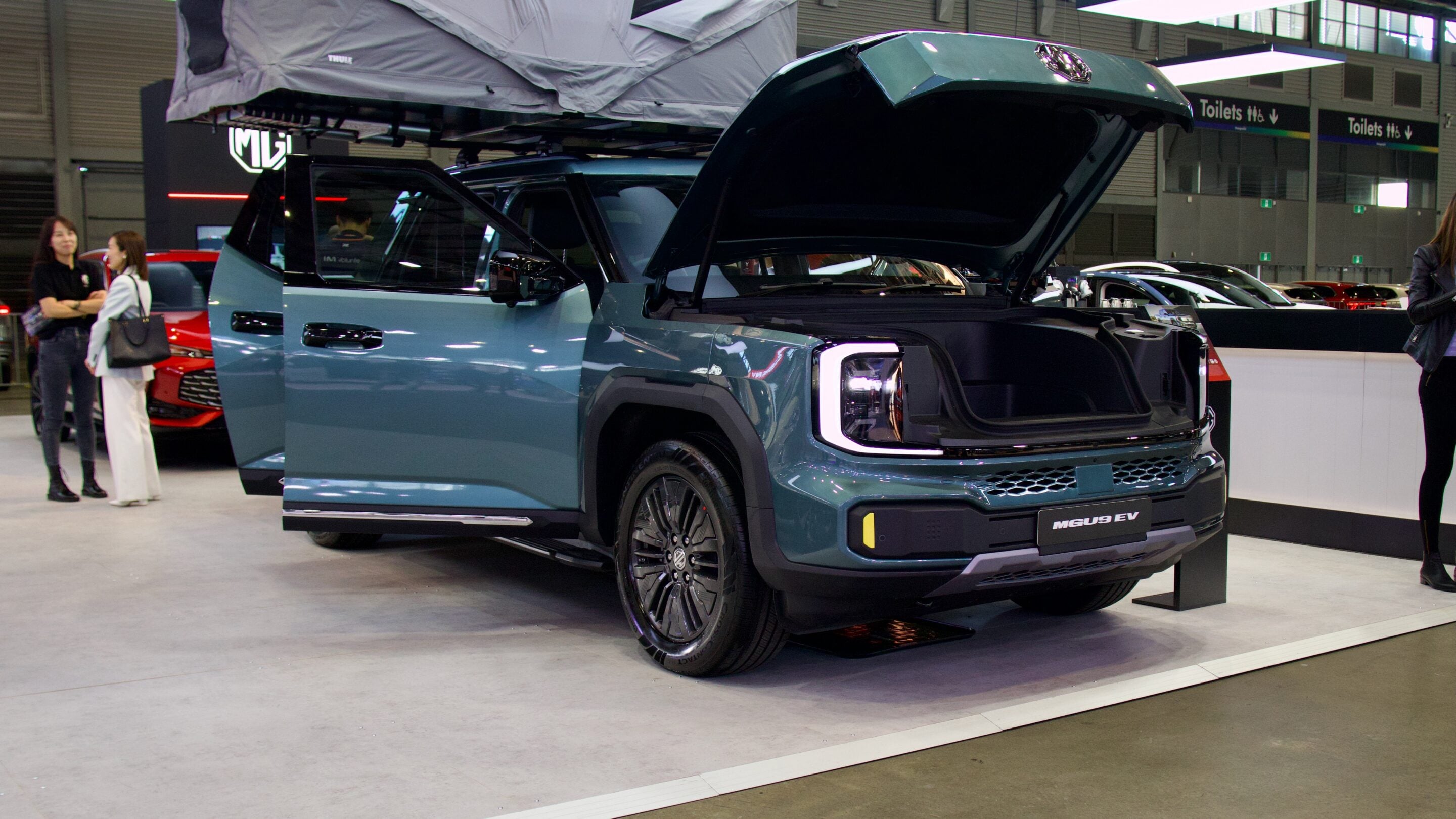
Its WLTP claimed range is 430km, while it can also tow up to 3500kg braked and offers a 685kg payload. Its massive 236-litre front storage compartment also adds some extra practicality. It also features air suspension, twin 12.3-inch displays, wireless Apple CarPlay and Android Auto, JBL audio and leather upholstery.
The unit on the show floor was fitted with some accessories such as a roof rack and a big roof tent, which further displayed its usability. Its party piece is the bonnet opening, revealing a huge and useful 236-litre boot. The cabin of the U9 EV is almost identical to the diesel U9, making it comfortable, good quality and quite spacious for its size.
IM LS9 Hyper
Offering just two models currently, the IM5 sedan and IM6 SUV, MG’s premium arm IM is in need of product expansion and the next model it sells locally may have been seen at the show: the LS9 Hyper. It’s a huge six-seat SUV that – unlike the IM models underneath it – uses an extended-range drivetrain with a 1.5-litre turbo-petrol engine and tri-motor all-wheel drive that draws power from a 65.9kWh NMC battery.
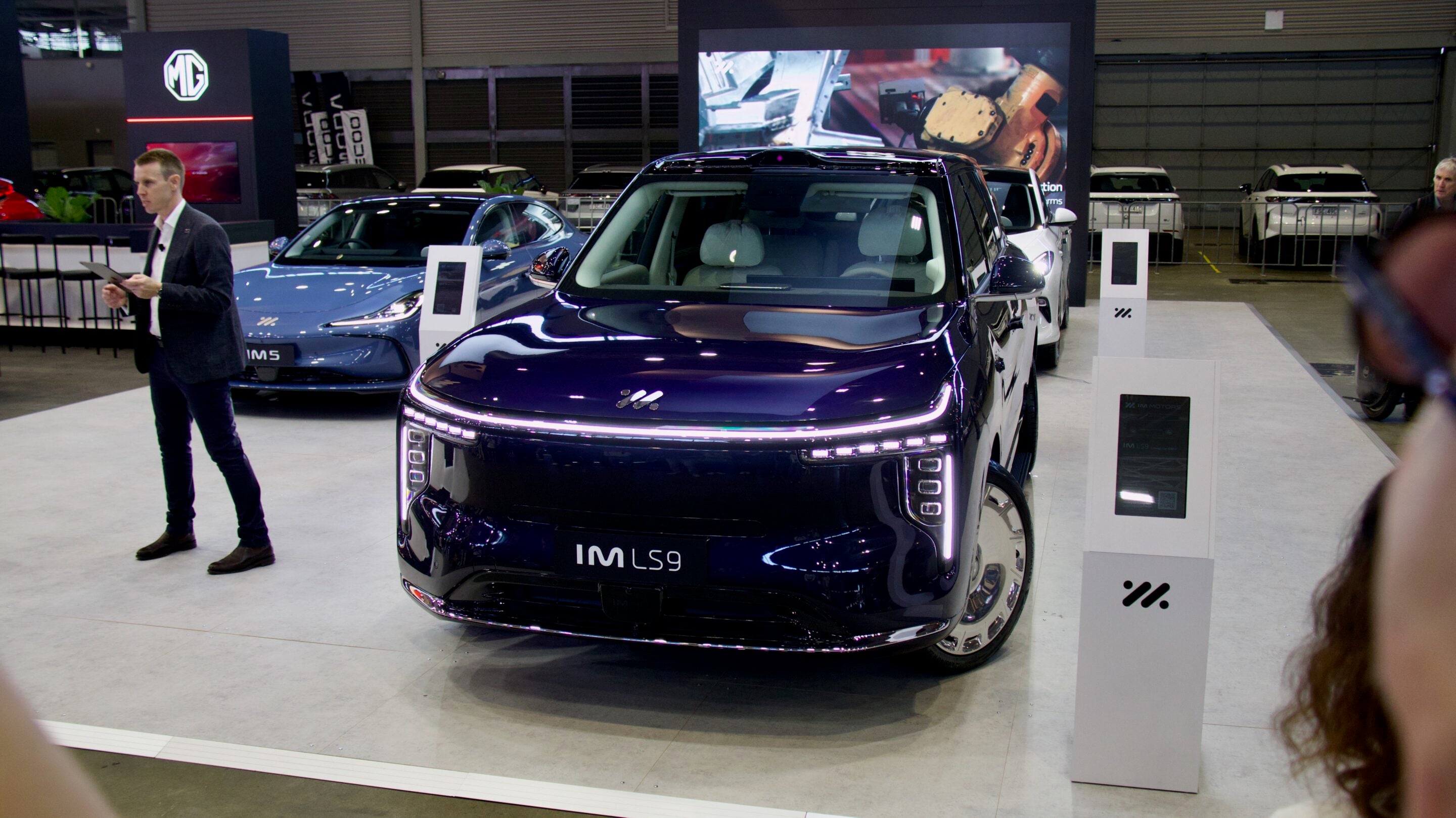
It measures close to 5.3 metres in length – or the same sort of length as a Rolls-Royce Cullinan – and it’s positioned as the flagship for the IM brand. Having said that, we shouldn’t get too excited just yet as MG’s local arm is yet to confirm it for our market. It’s not the first time that it’s been seen here – it was featured at the Melbourne Motor Show earlier this year, so it appears that the company is at least considering a local introduction.
The LS9 features a large 27.1-inch dual screen set up for the driver and then a separate 15.6-inch touchscreen for the passenger, a plethora of leather-covered surfaces, a 25-speaker Bang & Olufsen sound system and a six-seat layout with electrically adjustable seats.
Both the MGU9 EV and IM LS9 are on display alongside MG and IM’s broader electrified range at Everything Electric Sydney, which runs at Sydney Showground from September 18-20.
Toyota has revealed more details of its hydrogen fuel-cell HiLux, confirming the alternative-powered ute is targeting more than 400km of driving range and a 2500kg towing capacity when it arrives in 2028.
The fuel-cell electric vehicle (FCEV) will become another member of the ninth-generation HiLux family, joining diesel, 48-volt mild-hybrid and battery-electric versions as Toyota pursues multiple powertrain technologies. Toyota has confirmed the FCEV for Europe and Oceania from 2028.
Toyota’s latest targets give the hydrogen HiLux some notable advantages over its battery-electric sibling. The FCEV is aiming for more than 400km of range and up to 2500kg towing, while the European-spec HiLux BEV offers around 257km of range and a 2000kg towing capacity. Hydrogen refuelling should take about five minutes, compared with roughly 30 minutes for the BEV to recharge from 10 to 80 per cent.
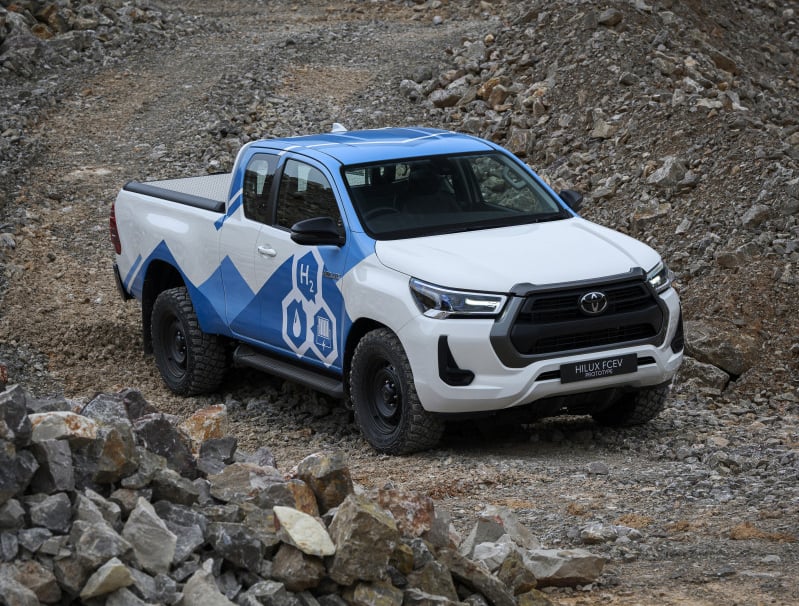
The production vehicle follows a development program that produced 10 prototype hydrogen HiLux utes at Toyota’s Derby factory in the UK during 2024 (above), with support from the British Government.
Those prototypes used technology derived from the Toyota Mirai passenger car, including three high-pressure hydrogen tanks mounted within the ladder-frame chassis. A 330-cell fuel-cell stack supplied electricity to a 134kW rear-mounted electric motor. The prototypes carried 7.8kg of hydrogen and were initially expected to achieve around 600km of range.
Toyota has not yet detailed the final production powertrain, meaning outputs, hydrogen capacity and drivetrain configuration remain unconfirmed.
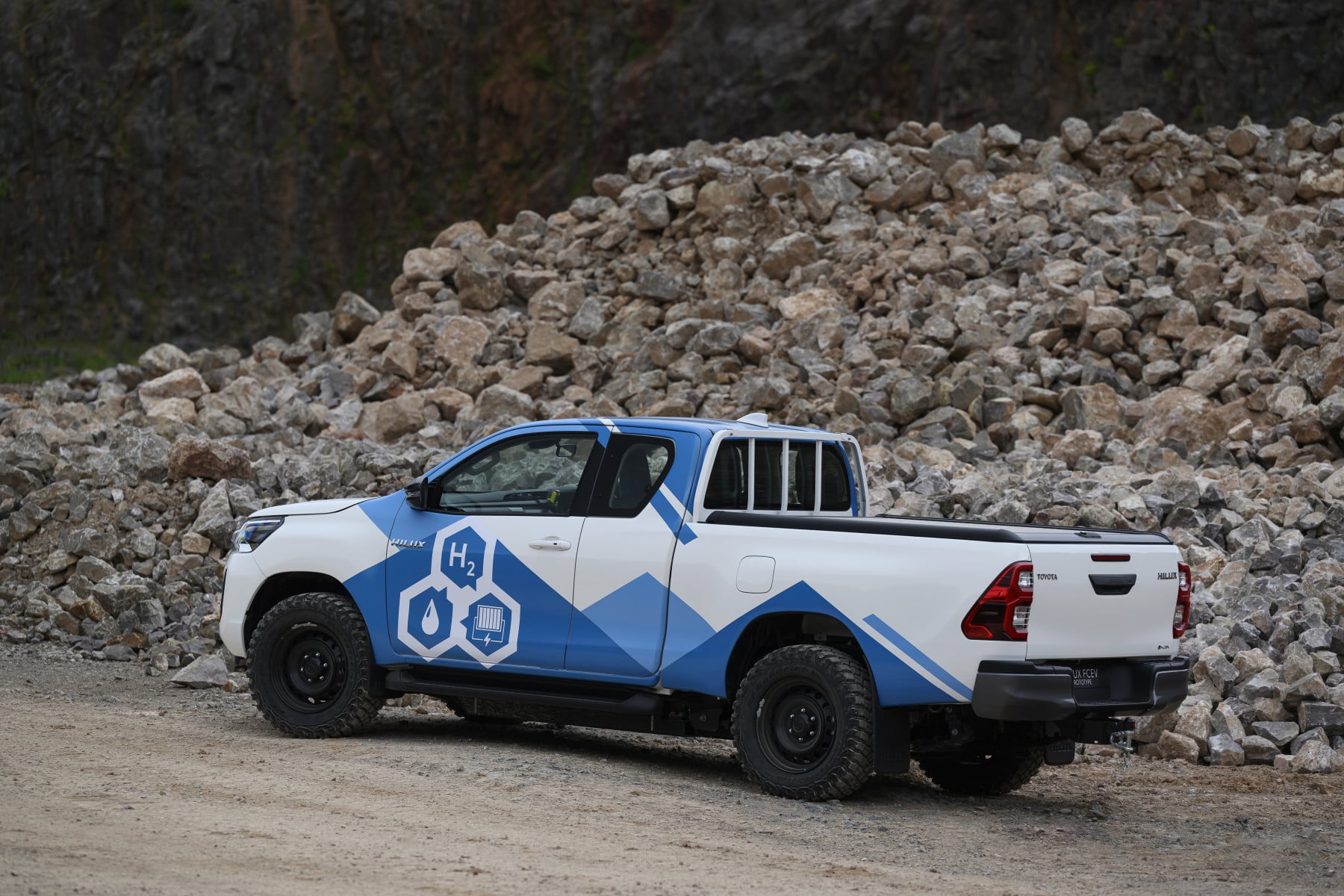
Infrastructure may prove the greater challenge. According to The Next Web, Europe and the UK currently have just 179 hydrogen refuelling stations, while some existing 700-bar passenger-vehicle facilities are being replaced or reconfigured for heavy trucks and buses.
European regulations call for hydrogen stations at intervals of no more than 200km along the core road network by the end of 2030 – two years after the HiLux FCEV is due to launch.
Toyota is also taking hydrogen HiLux development into motorsport, with a fuel-cell version planned to contest the Dakar Rally’s Future Mission 1000 category in 2027.
Pricing and detailed specifications for the production model have yet to be announced.
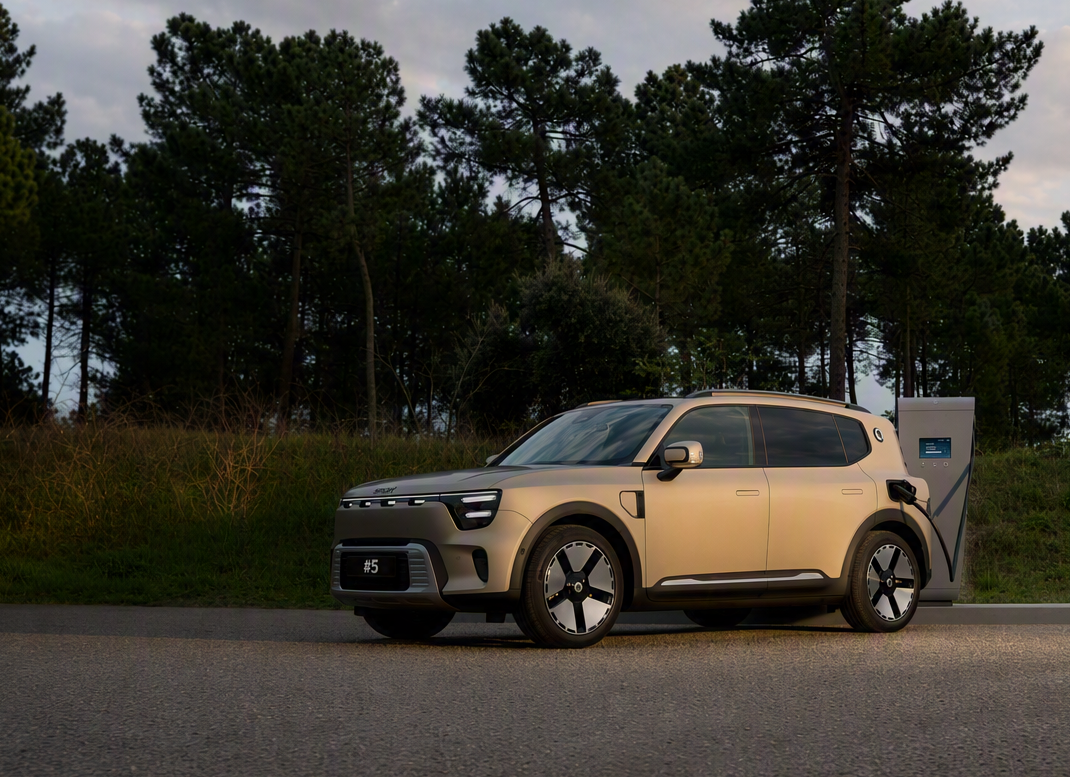
Smart has launched its new #5 electric SUV in Australia, with the brand’s largest model to date priced from $58,900 before on-road costs.
The mid-size SUV will be offered in three grades, starting with the #5 Pro+ at $58,900. The Premium+ costs $63,900, while the performance-focused Brabus sits at the top of the range at $73,900. Australian customer deliveries are scheduled to begin in November through distributor LSH Auto Australia.
Designed by Mercedes-Benz’s global design team, the #5 adopts a more upright, boxy shape than Smart’s smaller #1 and #3 models. Short overhangs and wheels positioned towards the corners are intended to maximise cabin space, while the rear seats can fold flat to increase luggage capacity.
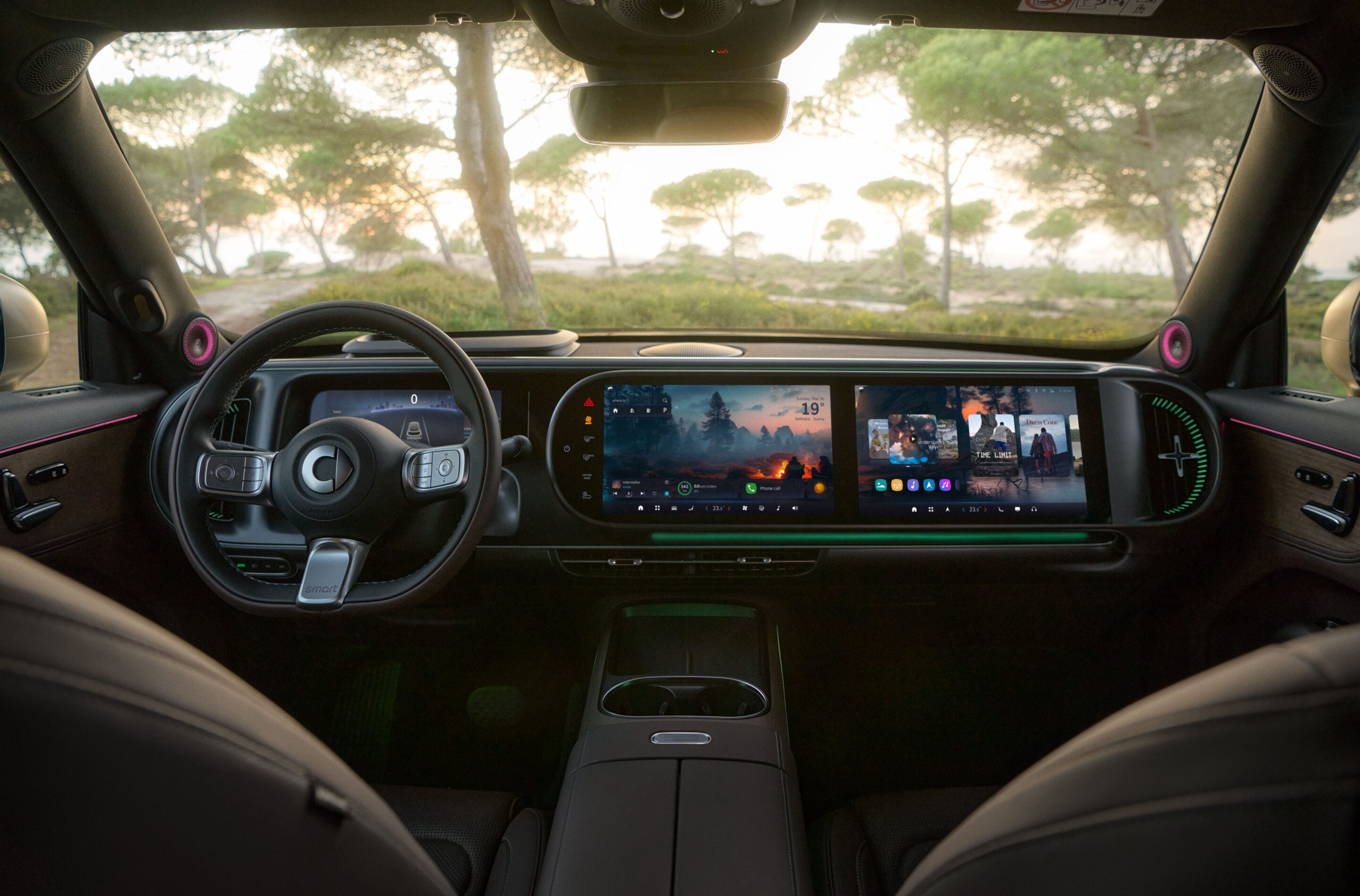
Inside, the #5 features multiple digital displays powered by an AMD V2000 processor, along with a Sennheiser audio system, leather upholstery and 256-colour ambient lighting.
The major technical change is an 800-volt electrical architecture. A 100kWh battery supports a claimed 10-to-80 per cent DC fast charge in less than 18 minutes under suitable conditions.
Maximum driving range is quoted at up to 590km on the WLTP test cycle, although range and performance vary between variants.
The chassis uses double-wishbone front and five-link rear suspension, with multiple drive modes. Vehicle-to-Load functionality is also included, allowing the battery to power compatible electrical appliances and equipment.
At the top of the line-up, the #5 Brabus uses a dual-motor all-wheel-drive system and can accelerate from 0-100km/h in a claimed 3.8 seconds. Full Australian power and torque figures were not included in Smart’s launch announcement.
Driver-assistance technology includes Smart Pilot Assist, which uses dual Nvidia Orin X processors to support the vehicle’s various active safety systems.
The #5 has already received a five-star Euro NCAP safety rating and was named the organisation’s Best in Class large SUV for 2025.
Its arrival significantly broadens Smart’s Australian range, moving the brand beyond smaller urban-focused EVs and into the increasingly crowded electric mid-size SUV market.
