Features

Gallery 1
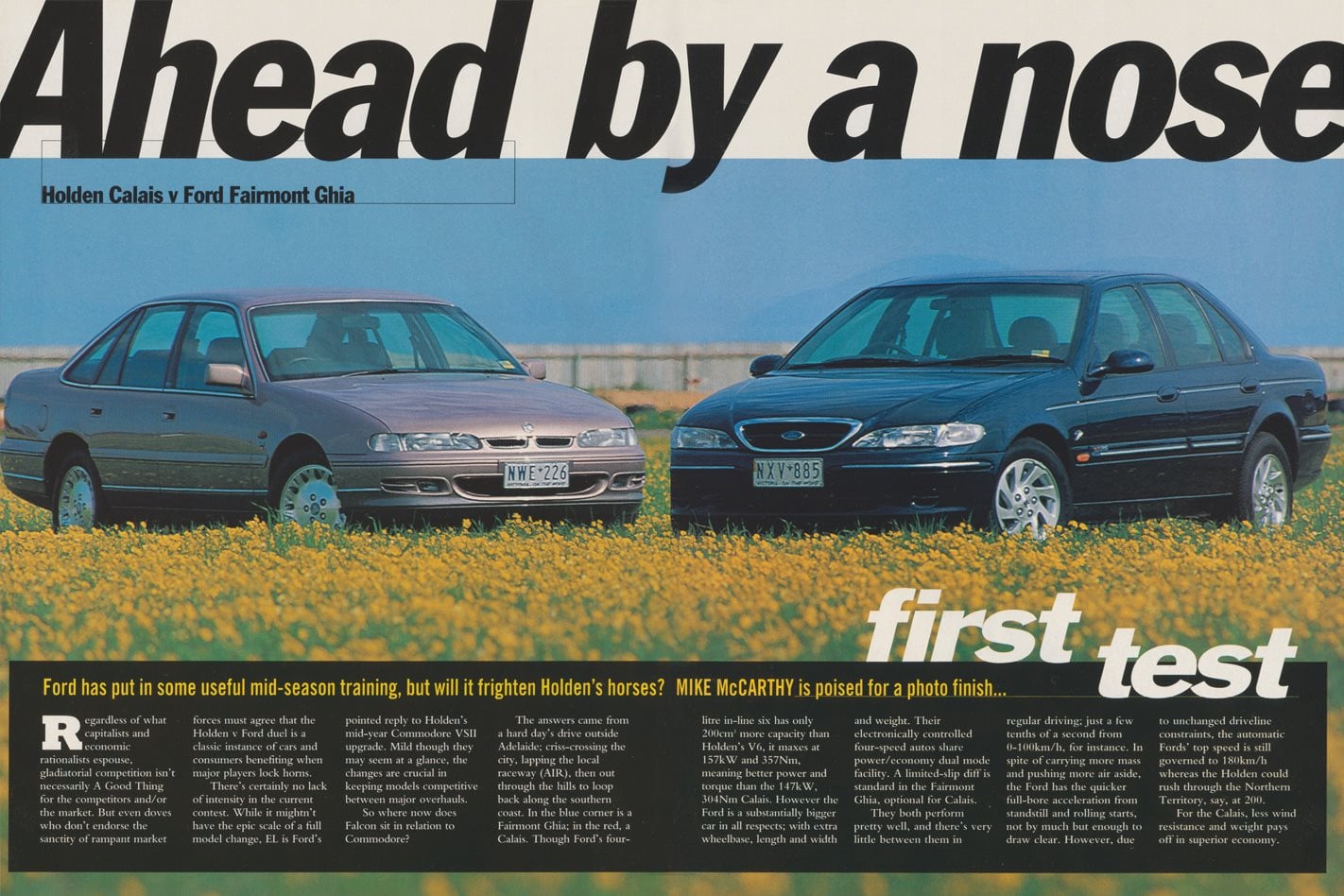
Regardless of what capitalists and economic rationalists espouse, gladiatorial competition isn’t necessarily A Good Thing for the competitors and/or the market.
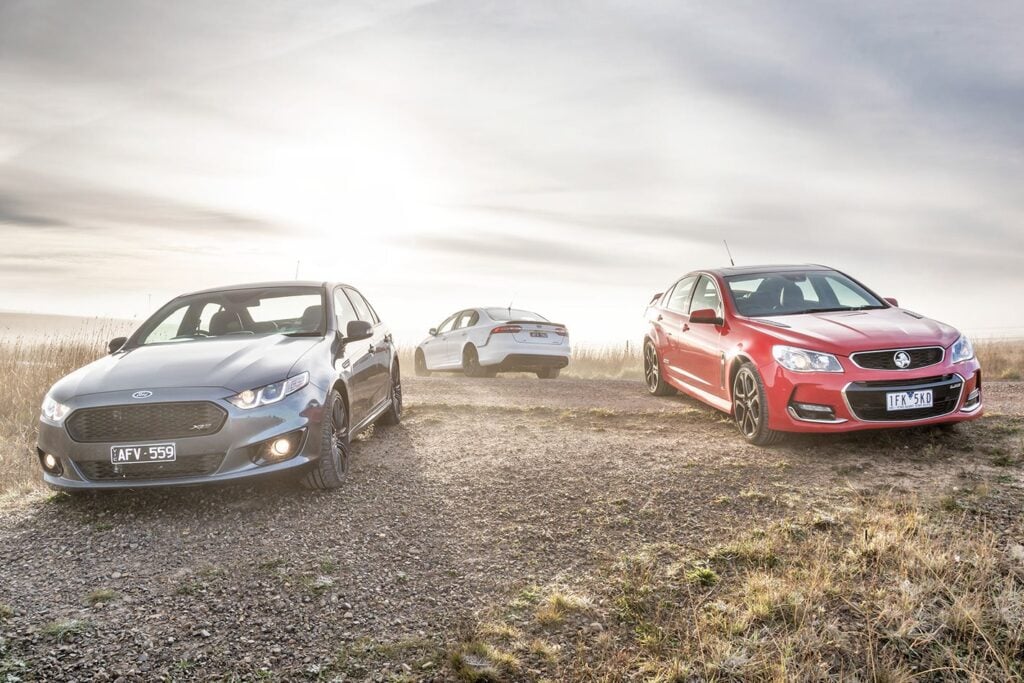
But even doves who don’t endorse the sanctity of rampant market forces must agree that the Holden v Ford duel is a classic instance of cars and consumers benefiting when major players lock horns.
There’s certainly no lack of intensity in the current contest. While it mightn’t have the epic scale of a full model change, the EL Falcon is Ford’s pointed reply to Holden’s mid-year Commodore VSII upgrade. Mild though they may seem at a glance, the changes are crucial in keeping models competitive between major overhauls.
So where now does Falcon sit in relation to Commodore?
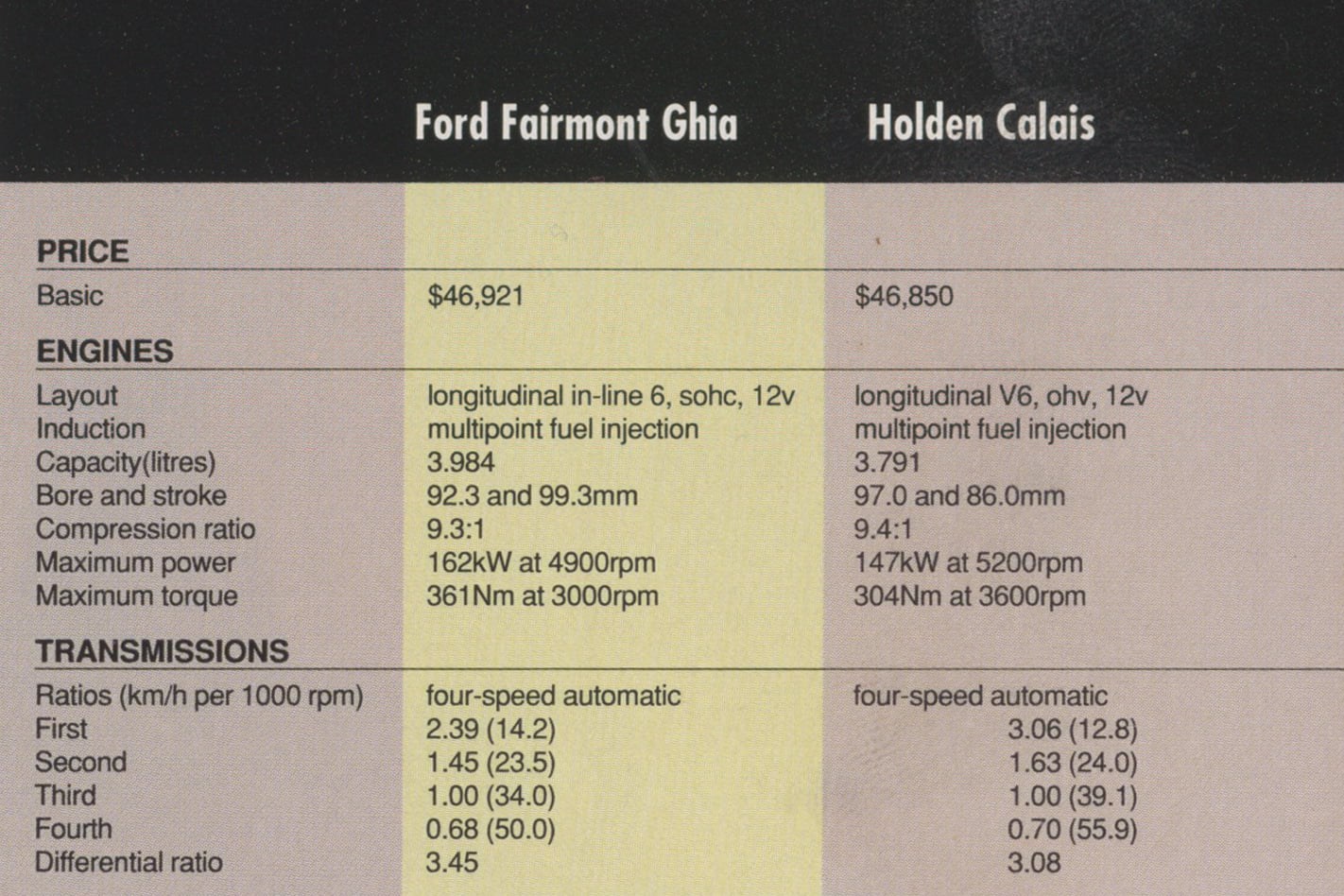
They both perform pretty well, and there’s very little between them in regular driving; just a few tenths of a second from 0-100km/h, for instance. In spite of carrying more mass and pushing more air aside, the Ford has the quicker full-bore acceleration from standstill and rolling starts, not by much but enough to draw clear. However, due to unchanged driveline constraints, the automatic Fords’ top speed is still governed to 180km/h whereas the Holden could rush through the Northern Territory, say, at 200.
For the Calais, less wind resistance and weight pays off in superior economy.
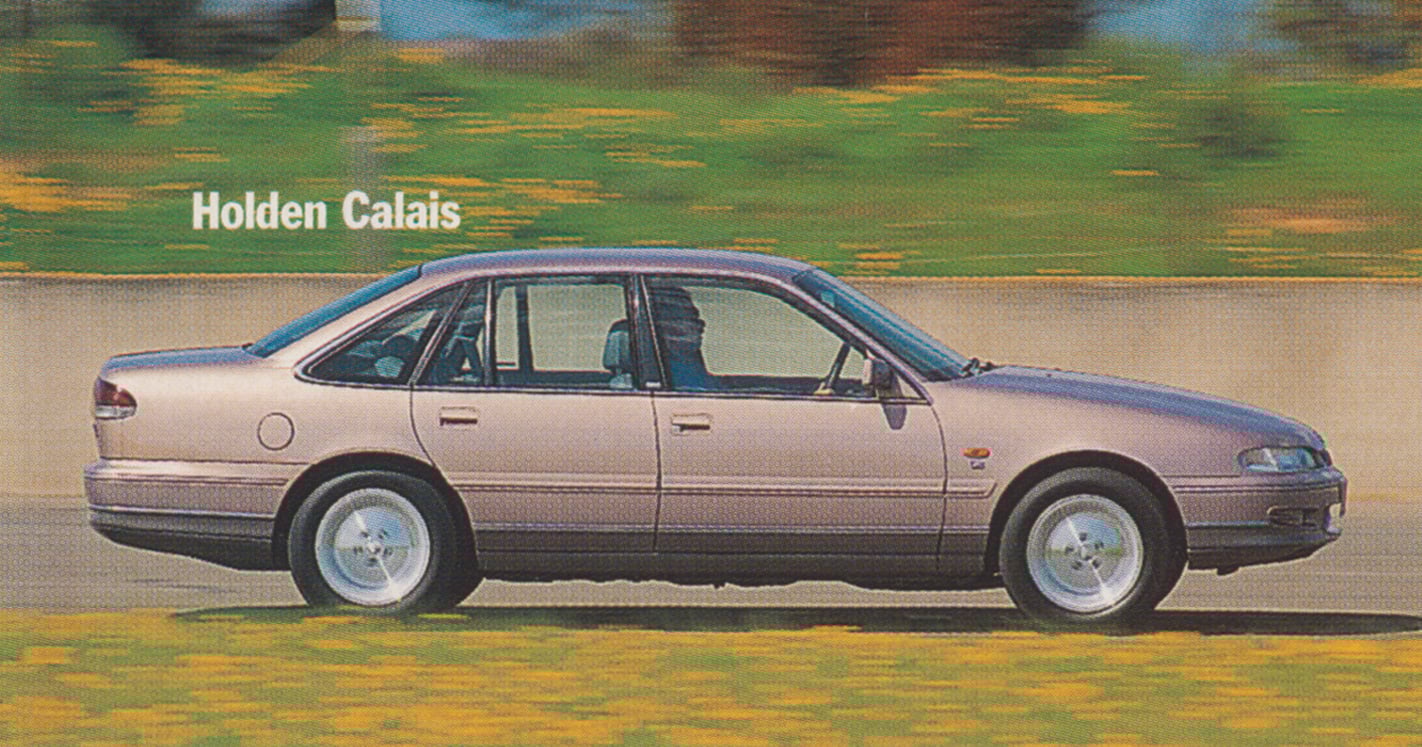
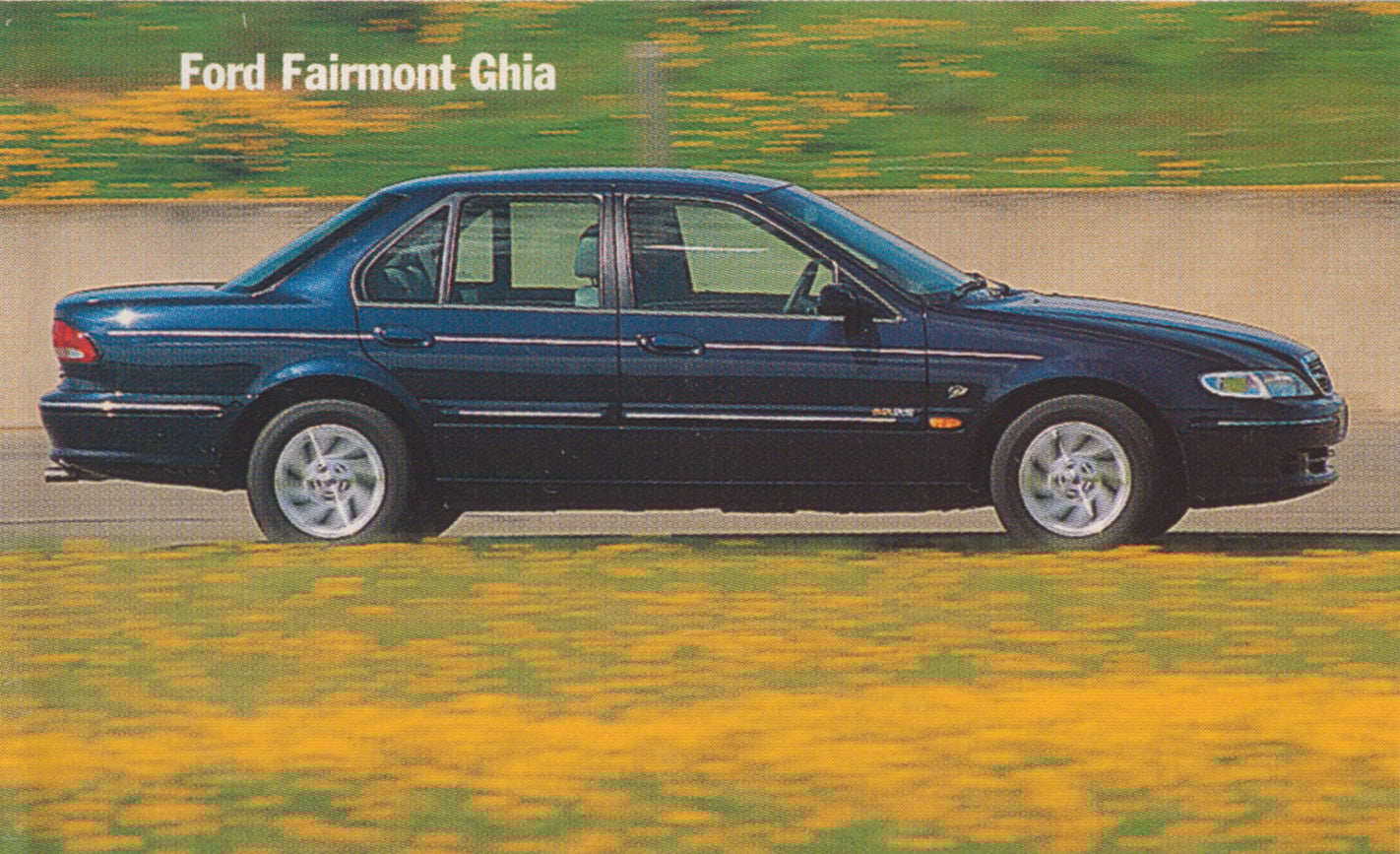
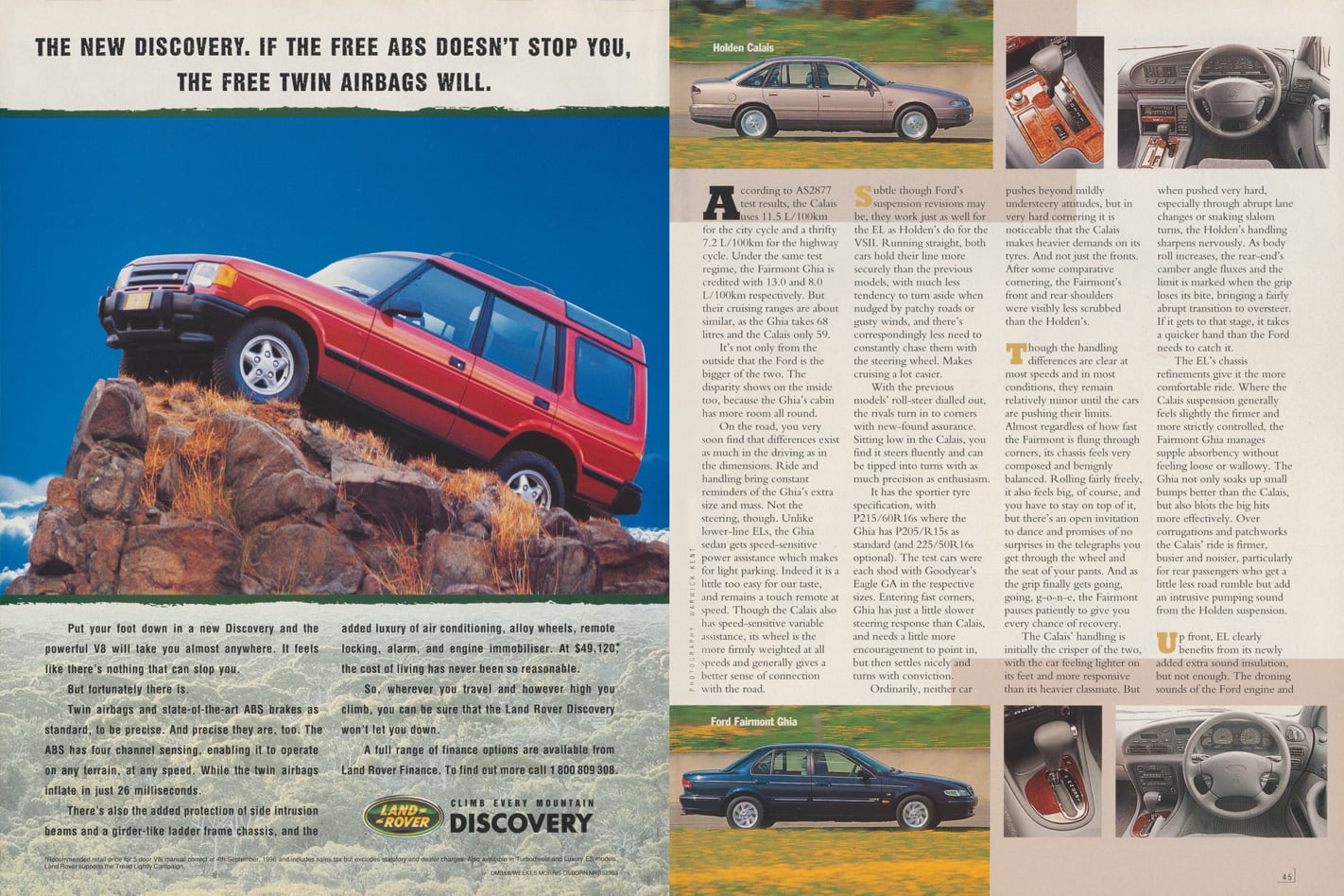
It’s not only from the outside that the Ford is the bigger of the two. The disparity shows on the inside too, because the Ghia’s cabin has more room all round.
On the road, you very soon find that differences exist as much in the driving as in the dimensions. Ride and handling bring constant reminders of the Ghia’ s extra size and mass. Not the steering, though. Unlike lower-line ELs, the Ghia sedan gets speed-sensitive power assistance which makes for light parking. Indeed it is a little too easy for our taste, and remains a touch remote at speed. Though the Calais also has speed-sensitive variable assistance, its wheel is the more firmly weighted at all speeds and generally gives a better sense of connection with the road.
With the previous models’ roll-steer dialled out, the rivals turn in to corners with new-found assurance. Sitting low in the Calais, you find it steers fluently and can be tipped into turns with as much precision as enthusiasm.
It has the sportier tyre specification, with P215/60R16s where the Ghia has P205/R15s as standard (and 225/SOR16s optional). The test cars were each shod with Goodyear’s Eagle GA in the respective sizes. Entering fast corners, Ghia has just a little slower steering response than Calais, and needs a little more encouragement to point in, but then settles nicely and turns with conviction.
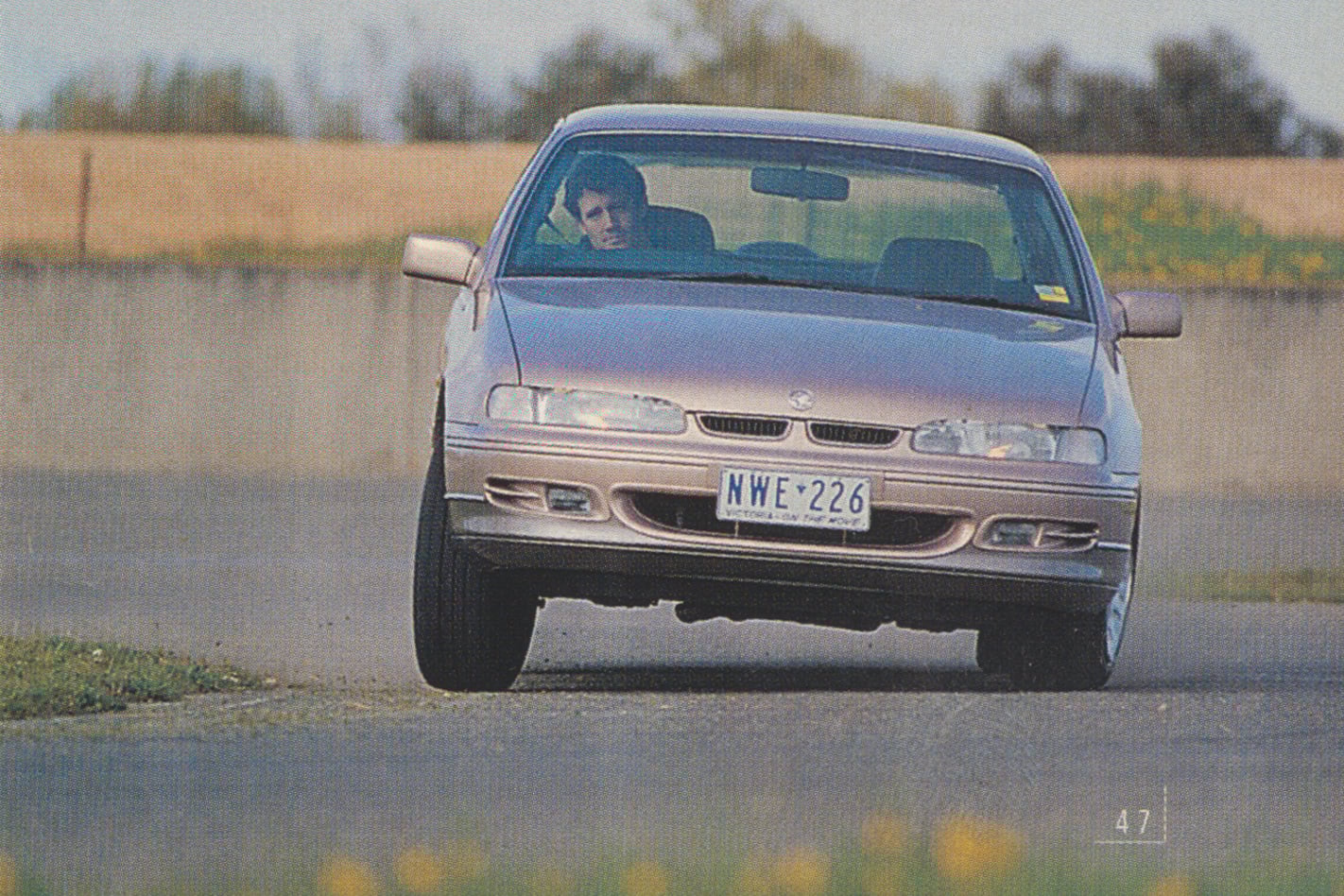
After some comparative cornering, the Fairmont’ s front and rear shoulders were visibly less scrubbed than the Holden’s.
Though the handling differences are clear at most speeds and in most conditions, they remain relatively minor until the cars are pushing their limits. Almost regardless of how fast the Fairmont is flung through corners, its chassis feels very composed and benignly balanced. Rolling fairly freely, it also feels big, of course, and you have to stay on top of it, but there’s an open invitation to dance and promises of no surprises in the telegraphs you get through the wheel and the seat of your pants. And as the grip finally gets going, going, g-o-n-e, the Fairmont pauses patiently to give you every chance of recovery.
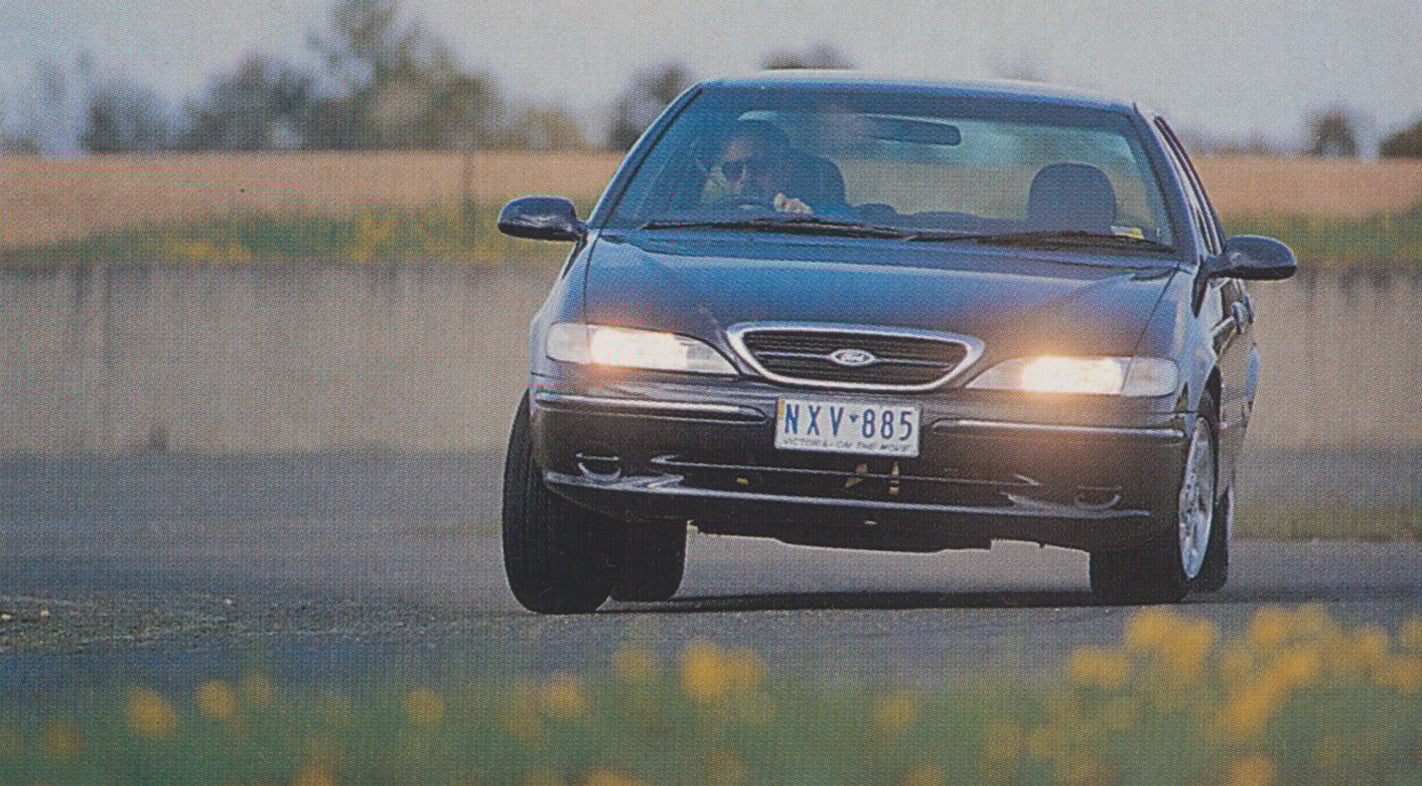
The EL’s chassis refinements give it the more comfortable ride. Where the Calais suspension generally feels slightly the firmer and more strictly controlled, the Fairmont Ghia manages supple absorbency without feeling loose or wallowy. The Ghia not only soaks up small bumps better than the Calais, but also blots the big hits more effectively. Over corrugations and patchworks the Calais’ ride is firmer, busier and noisier, particularly for rear passengers who get a little less road rumble but add an intrusive pumping sound from the Holden suspension.
Up front, EL clearly benefits from its newly added extra sound insulation, but not enough. The droning sounds of the Ford engine and wheezy transmission are slightly dimmed but as agricultural as ever. It’s still far louder and coarser than the Holden drivetrain which is perceptibly quieter, smoother and always feels several degrees more refined.
In back to back runs over the same very varied stretch of winding road, the Fairmont Ghia’s rear seat got the thumbs-up from our passengers. The Calais isn’t cramped by any means but the Ghia has more room in every direction and a more comfortable, more supportive bench as well. You tend to sit on, rather than in, the Calais cushion which also gets marked down for its raked backrest angle, non-adjustable headrests and poorly placed door armrest.
When it comes to arm-wrestling, the Ford wins hands down. Even if you can get your hand through the Holden’s squeezy door grip, the mould parting-line’s rough burr is dissuasive. Same for the front doors grips.
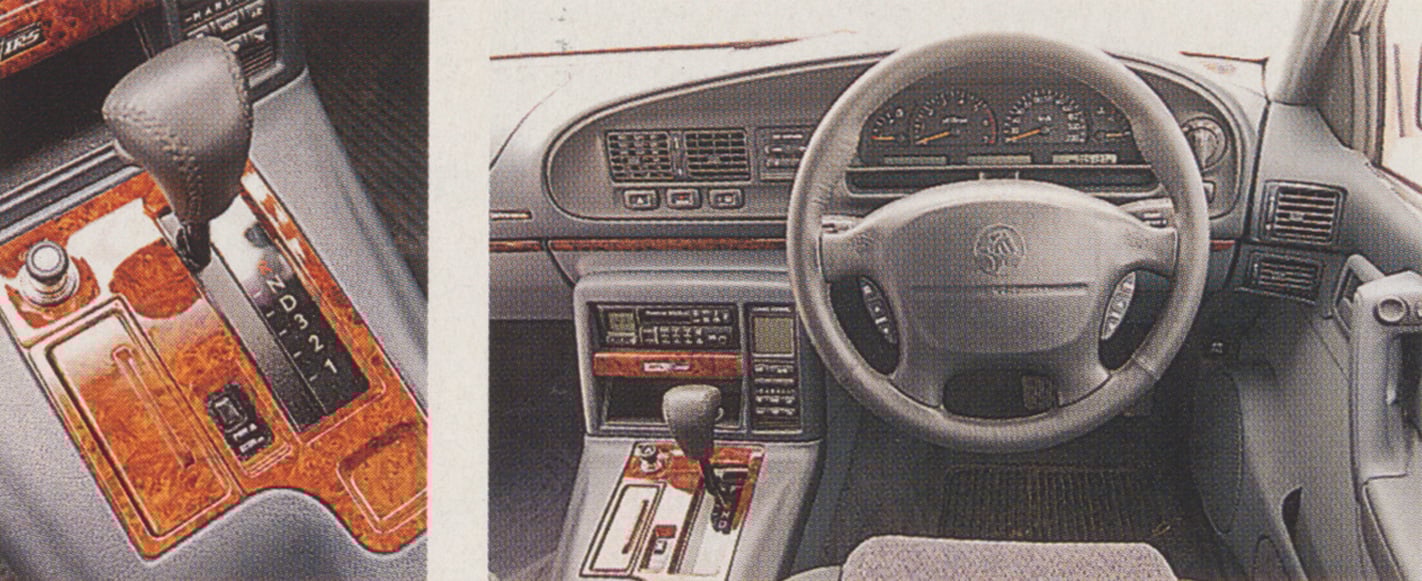
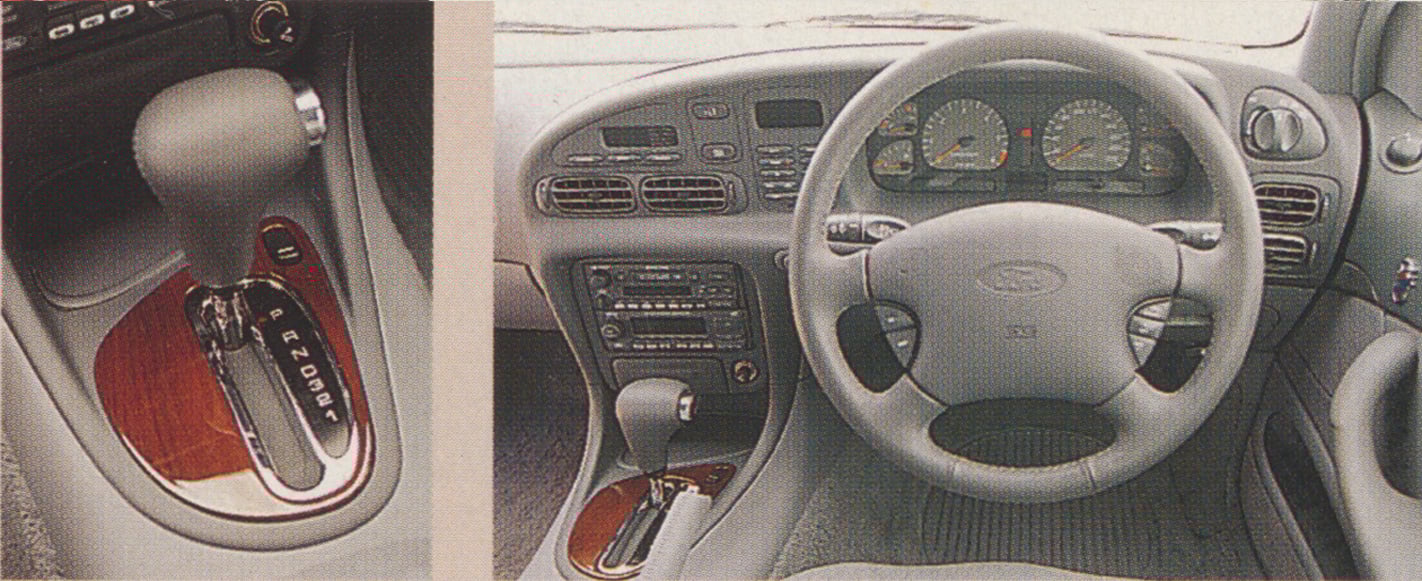
Indeed it’s difficult to find any two different areas of the Calais interior with the same grain finish, let alone the same colour.
Throughout the Ghia’s interior, the trim and tones are well matched. The Calais cabin has never looked better, but is still uncoordinated. The Ford’s integration and modernity reflect a cohesive team effort. The use of polished woodgrain is revealing: it’s complementary in the Ghia, almost an afterthought in the Calais.
At this stage of the contest Ford’s features out-point Holden not only for feel and function but also in numbers. Ghia includes cupholders and extra instruments, for instance, and adds many details such as vanity mirror illumination and auto-off battery saver (to prevent an errant light from draining the juice). In the end the Calais shows good form, the Ghia even better. Their equipment lists are so long and lush that both leave most other models eating their dust for value.
Meanwhile, the champs continue to slug it out. As yet, early in the round, the ringside judges unanimously have the Fairmont Ghia ahead on points.
1
Follow WhichCar/Wheels on Google
Click the button below to make WhichCar by Wheels a preferred source for your news.