Features

Gallery 1
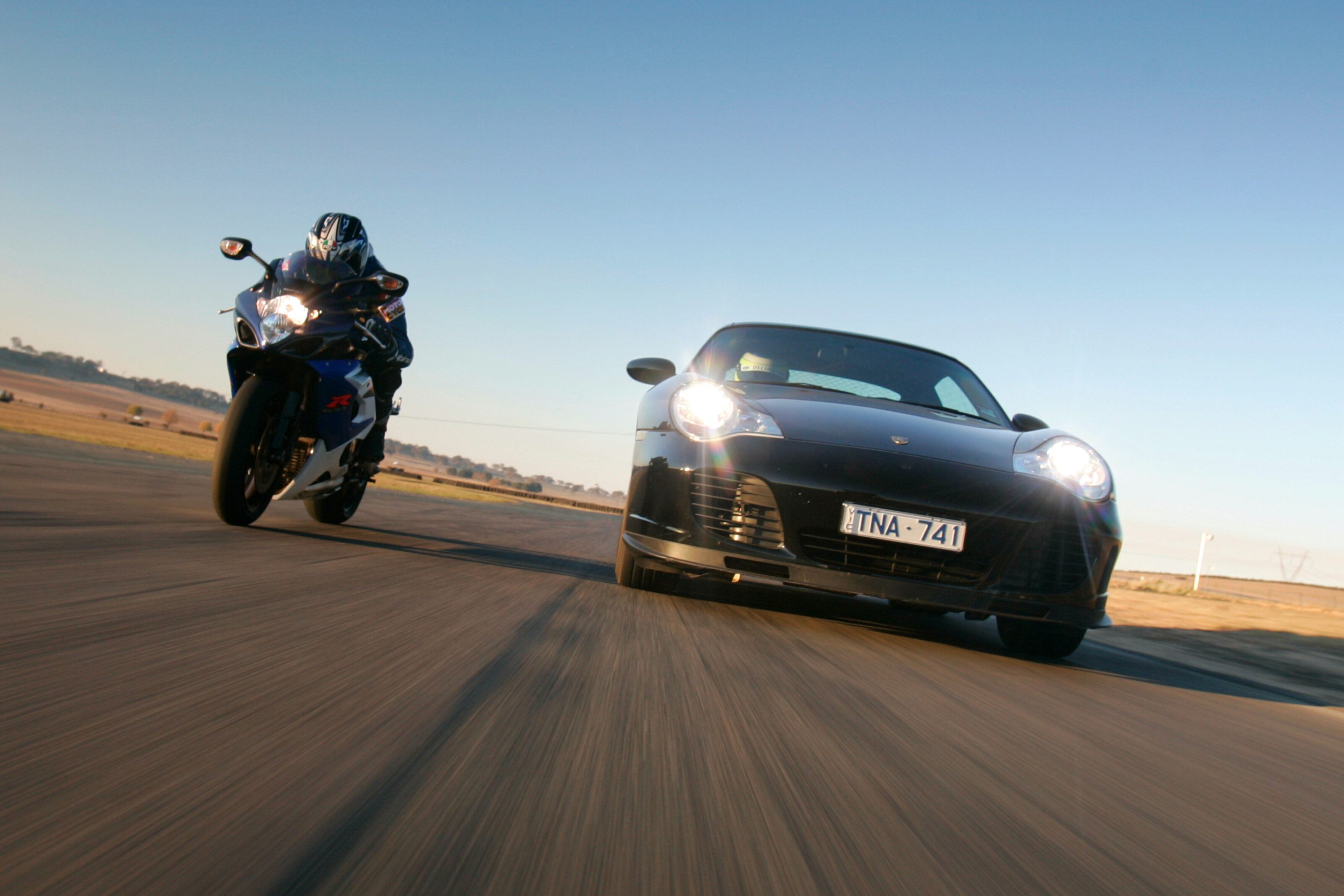
The two-wheeled and four-wheeled worlds don’t come into contact that often, but when they do, the results can be incredible. Motorcycle engines, because of their small displacement and high-revving nature, are quite different from the ones usually found in cars. Typically, they make spectacular power per litre, but their torque figures aren’t as impressive as they carry a lot less weight than a car engine.
But that’s not to say that their characteristics can’t be useful in cars as well, as the below prove. Here are five times where motorcycle engines made their way into production cars, resulting in some memorable creations:
Peel P50
3
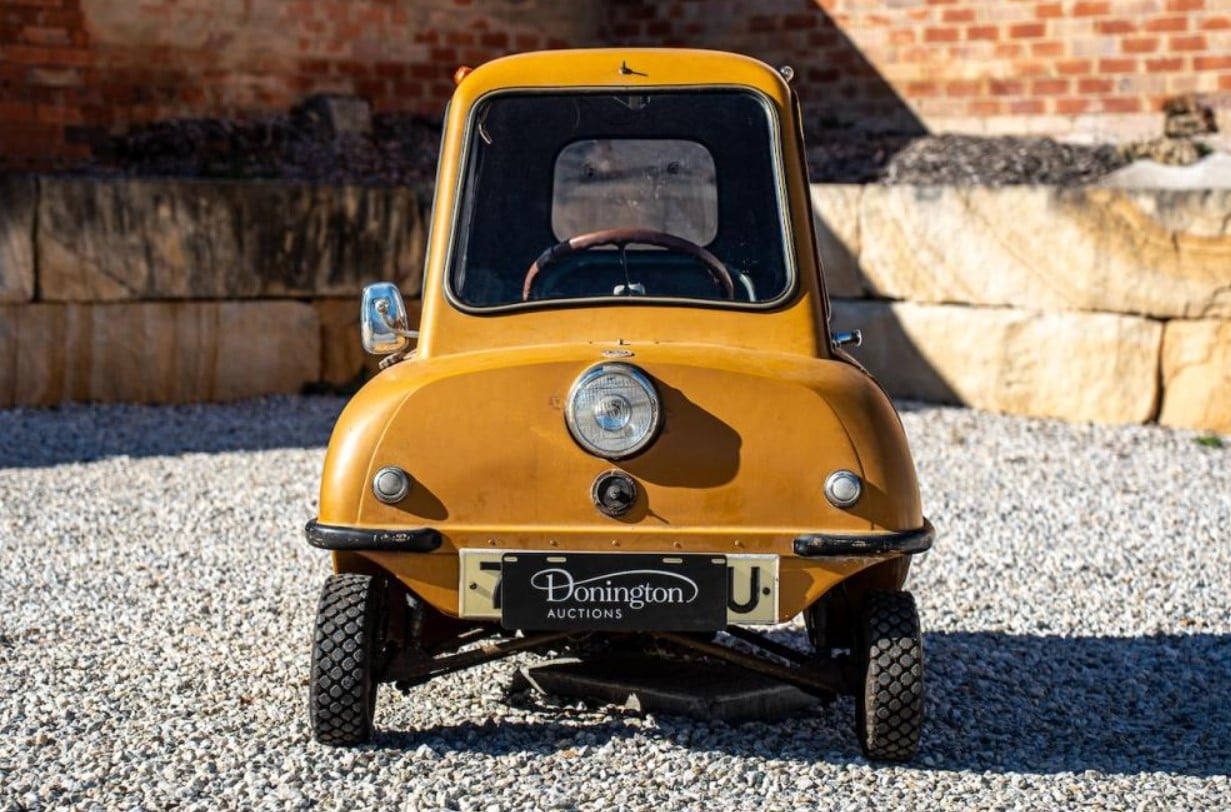
The Peel P50 is one of the most famous cars in the world and is listed in the Guinness World Records as the smallest production car ever made. Measuring just 137cm long, 99cm wide, 100cm tall and weighing just 59kg, the P50 was made between 1962 and 1965 on the Isle of Man. It used a 49cc moped engine that made a whopping 3.1kW of power, giving it a top speed of about 45km/h. Fifty units of the original were produced, of which 27 are believed to still exist.
In 2010, a new version of the P50 was launched by a company called Peel Engineering. Similar to the original with the same dimensions and weight, it now uses a 49cc four-stroke engine making 2.5kW – or an electric motor making 2.3kW. Since production started in 2011, around 15 examples have been made per year and pricing starts at around £15,000 (A$30,000), making it an expensive – but very characterful – runabout.
BMW Isetta
3
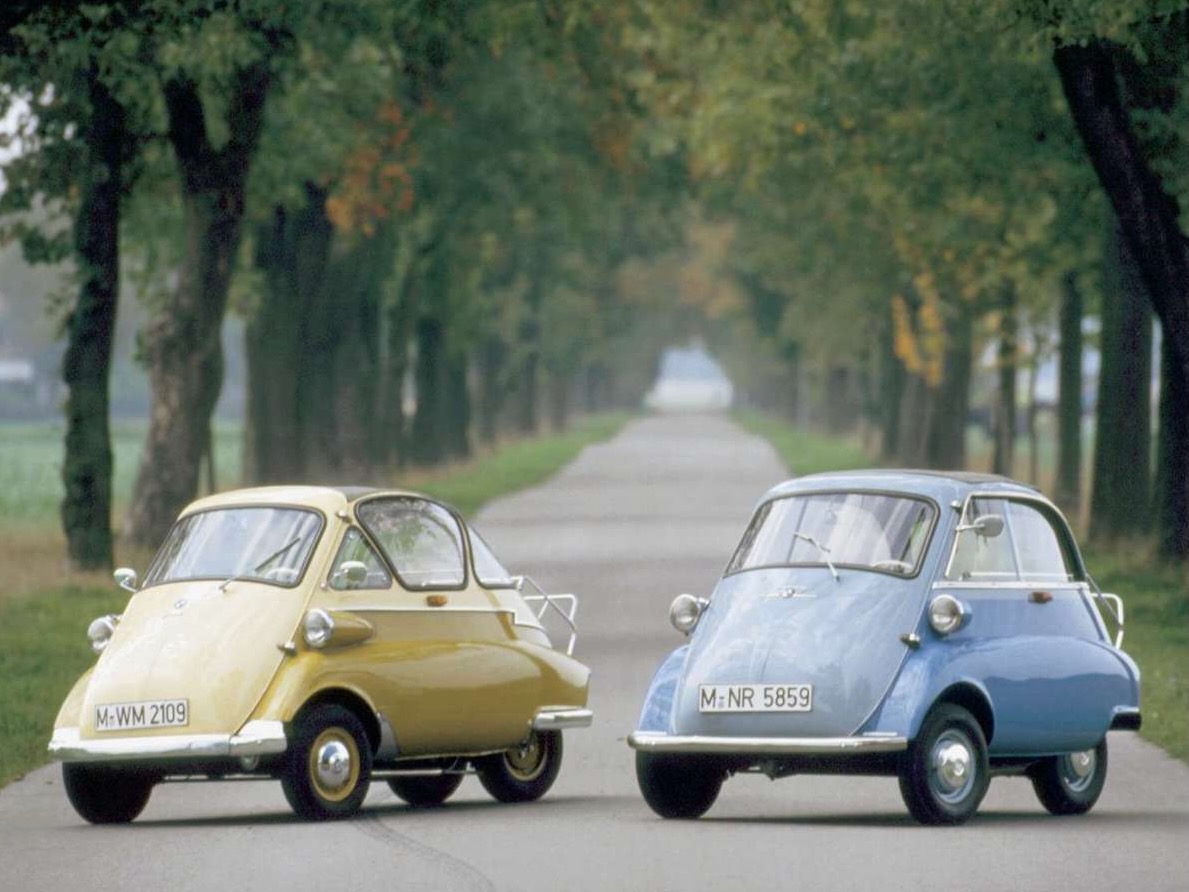
The BMW Isetta – the ‘bubble car’, as it was known – appeared in 1955 as a BMW-badged and engineered version of the Italian Iso Isetta, which it built for West Germany under licence. It differed a lot from the original, including fixed headlights on the side and the BMW badging. The BMW version also featured a one-cylinder four-stroke motorcycle engine that make 9kW of power, giving it a top speed of 85km/h.
There were several versions of the BMW Isetta produced, and it saved the company from bankruptcy. The original was called the 250, which was replaced by the 300 a few years later. A larger stretched-wheelbase version with four doors called the 600 was launched, too, and it featured a larger 582cc boxer motorcycle engine for 14.3kW of power and a top speed of 100km/h. Over 200,000 combined units of the Isetta and 600 were produced, making them one of the most successful single-cylidner engined cars ever made.
BMW i3 REx
3
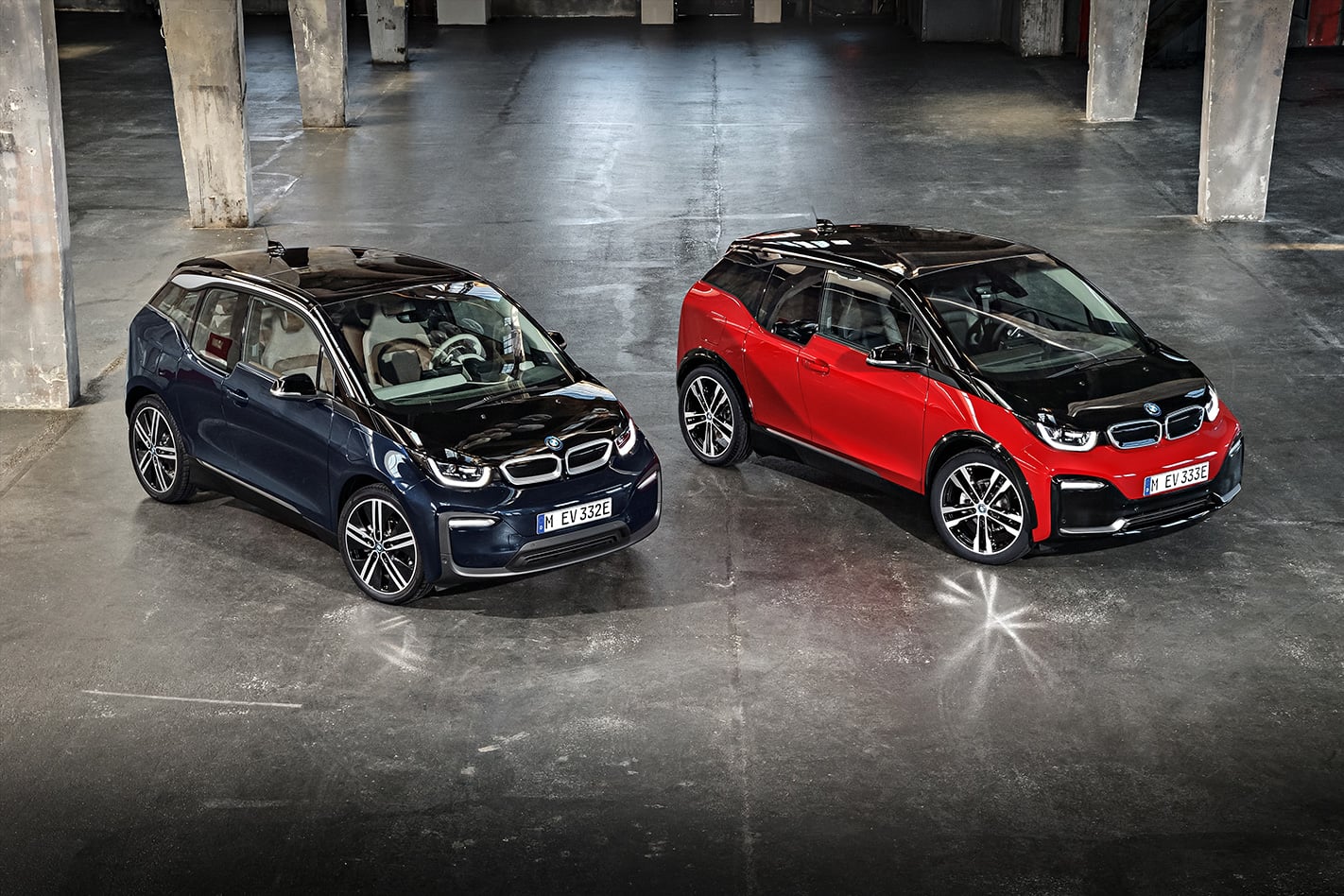
BMW’s first production electric vehicle was launched in 2013 and also launched the company’s ‘i’ zero emissions sub-brand, winning the Wheels Car of the Year award in 2014. It’s a very unusual-looking vehicle thanks to its tall-and-thin dimensions and futuristic lighting. But what’s more unusual is that while it featured an electric drivetrain, making it one of the first mass-produced EVs, there was actually a ‘REx’ range-extender version available that used a 647cc inline two-cylinder engine that was fitted to a BMW scooter.
The range extender engine operated once the i3’s battery level got below a certain level, and charged the battery to provide propulsion. This allowed for an extended range that was unavailable in the electric version, and its nine-litre fuel tank allowed for a total range of 320km, or around 120km more than the EV. The i3 was discontinued in 2022 with over 250,000 units produced.
Ariel Atom V8
2
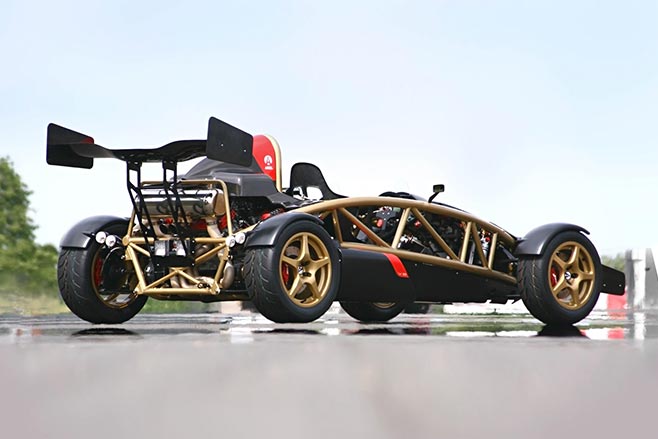
The Atom V8 is a little unusual – duh, just look at it – in that it doesn’t use just one motorcycle engine but two. That’s correct, two 1.5-litre four-cylinder Suzuki motorcycle engines were combined to make a 3.0-litre V8 engine, which made 373kW (500hp) of power. Combined with the Atom V8’s light 550kg kerb weight, it had a power-to-weight ratio of 678kW per tonne – or more than a Bugatti Veyron.
The standard Ariel Atom was already one of the quickest cars ever made with its supercharged Honda engine, but the V8 made it even quicker with a 0-100km/h time of just 2.3 seconds – and that was in 2008, or before fast EVs like the Tesla Model S came along. In 2011, it set a lap record on the Top Gear test track of 1.15.1, a record that stood for another two years until the Pagani Huayra beat it. Just 25 units of the Atom V8 were produced.
Morgan 3-Wheeler
3
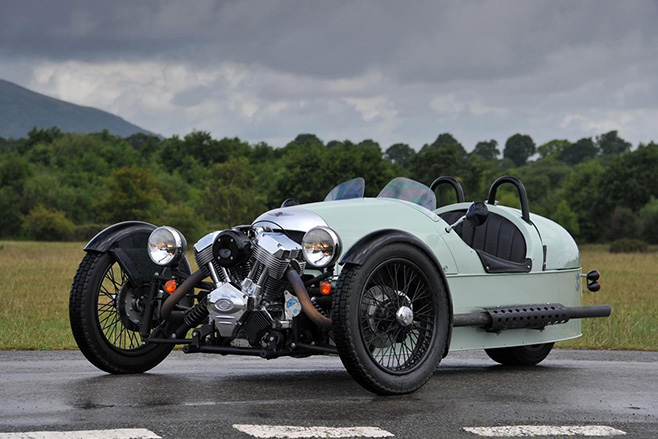
The Morgan 3-Wheeler is the latest car that featured a motorcycle engine, having ended production as recently as 2021. A reincarnation of the previous Morgan 3-Wheeler made from the 1932 to 1952, the modern version used a 2.0-litre V-twin engine from American company S&S that made 60kW of power and 140Nm of torque. Thanks to the 3-Wheeler’s light 550kg kerb weight, it launched to 100km/h in 6.0 seconds seconds and on to a top speed of 185km/h.
The 3-Wheeler is much loved thanks to its excellent handling and huge fun factor, and more than 2,500 units were built in its 10-year production run. The 3-Wheeler was replaced by the Super 3, which was launched in 2022. The Super 3 looks not too dissimilar to the 3-Wheeler, though no longer uses a motorcycle engine – instead, an 85kW 1.5-litre three-cylinder engine from Ford provides propulsion.
Bonus: Almost-production Volkswagen XL Sport
3
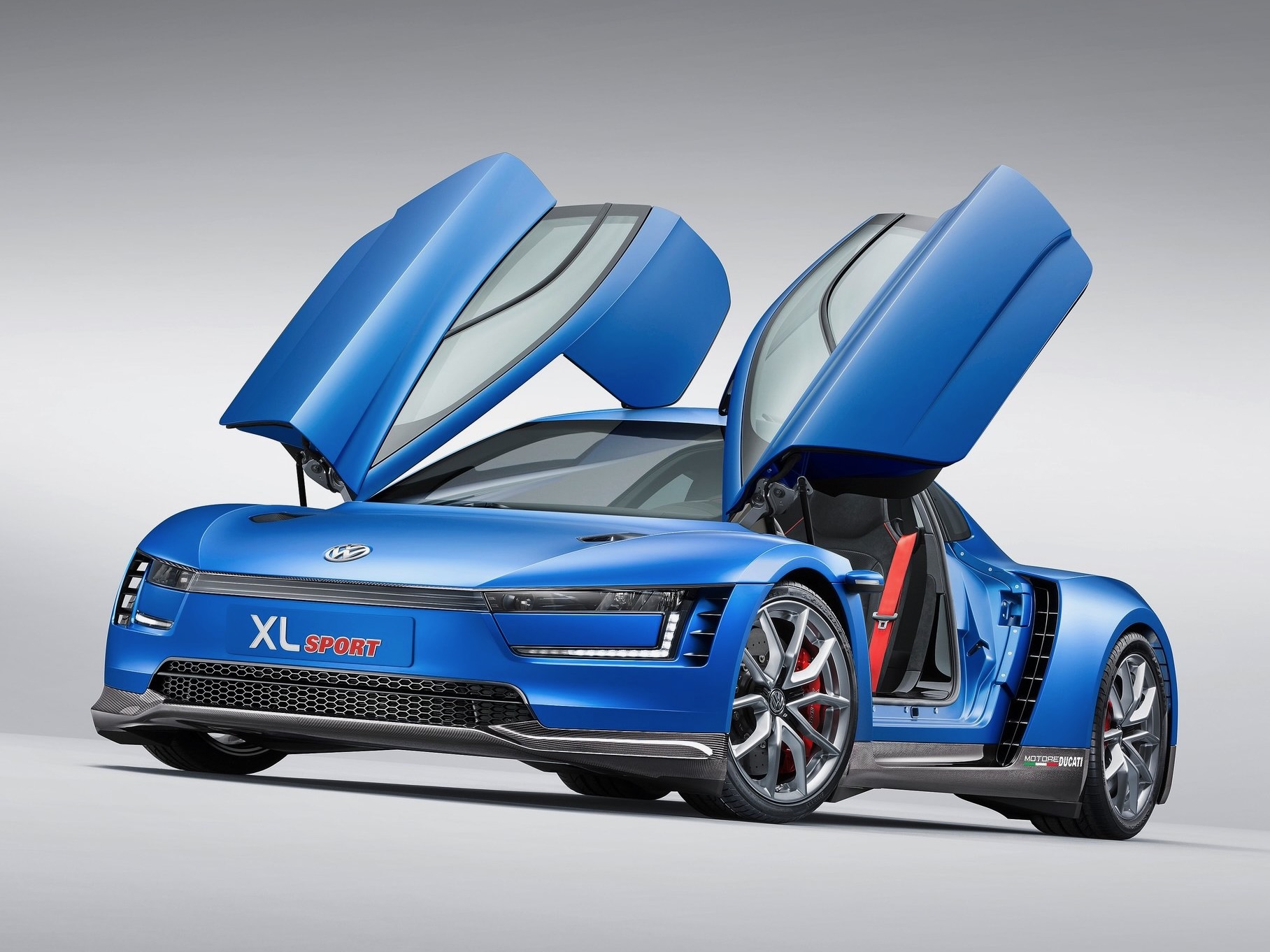
The Volkswagen XL Sport was a concept version of the XL1 two-seater production car, which used a two-cylinder turbo-diesel plug-in hybrid drivetrain to use just 0.9L/100km of fuel. For the XL Sport concept, Volkswagen canned the XL1’s diesel drivetrain and instead installed a high-revving 1199cc V-twin engine from the Ducati 1199 Superleggera. Volkswagen had just purchased Ducati, and the XL Sport was seen as a celebration of the union.
That gave the XL Sport significantly better performance than the XL1, with a claimed 0-100km/h time of 5.7 seconds and a top speed of 270km/h. The XL Sport was built using the XL1’s carbon fibre monocoque, but was longer and wider, and even featured ceramic brakes. Alas, although it appeared to be production-ready, the XL Sport was sadly never put into production.
Follow WhichCar/Wheels on Google
Click the button below to make WhichCar by Wheels a preferred source for your news.

We recommend
-
 Features
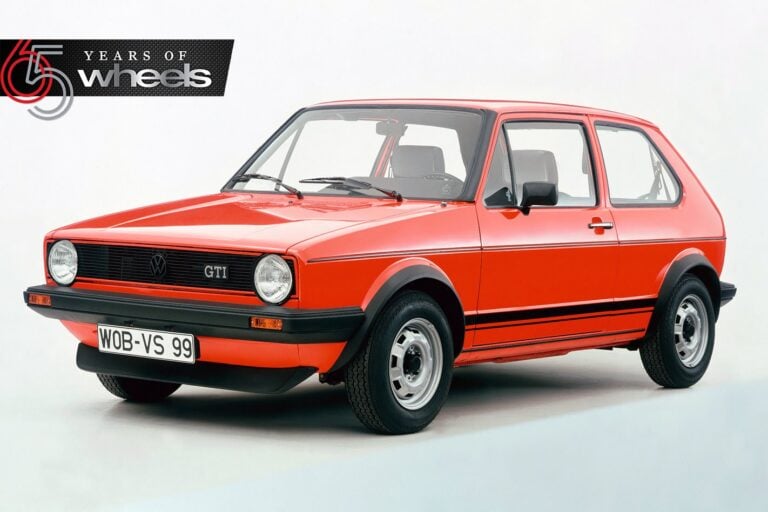
10 cars that changed the world: 65 Years of Wheels
Pick just 10 cars that exerted a lasting influence on the global automotive landscape? Tough call, but we made it
-
 Car Style
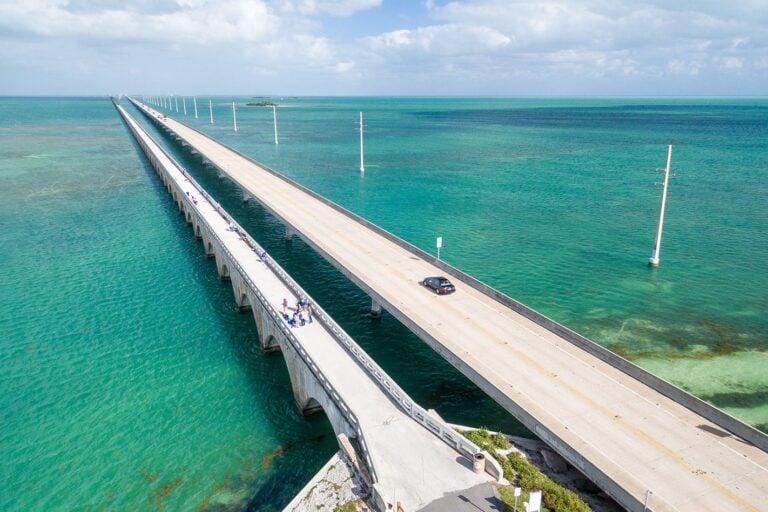
10 of the world's most spectacular drives
There’s nothing quite like a road trip. These are a few you need to add to your bucket list, if they’re not already on there. So what are you waiting for?
-
 Features
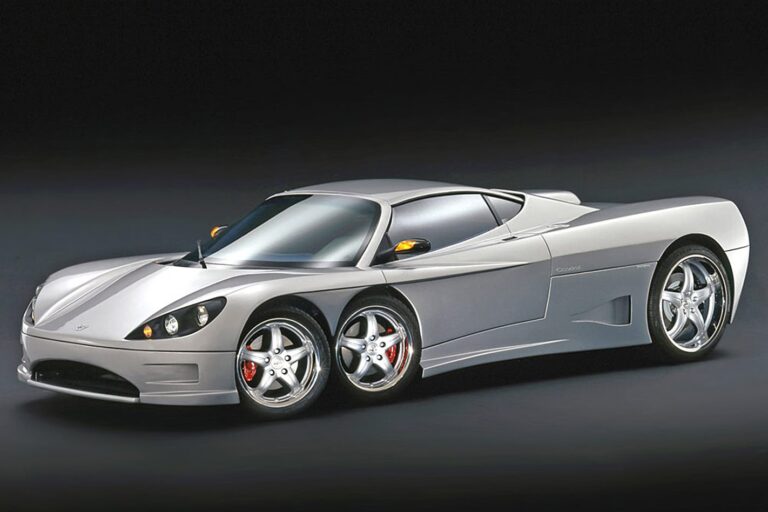
12 Bonkers Supercars
Outrageous speedsters bound to raise a smile