
There aren’t very many TVR Cerberas in Australia. Why would there be? There aren’t that many in the UK.
From a high of 1023 licensed vehicles there back in 2003, there were only 276 left on British roads by the end of last year.
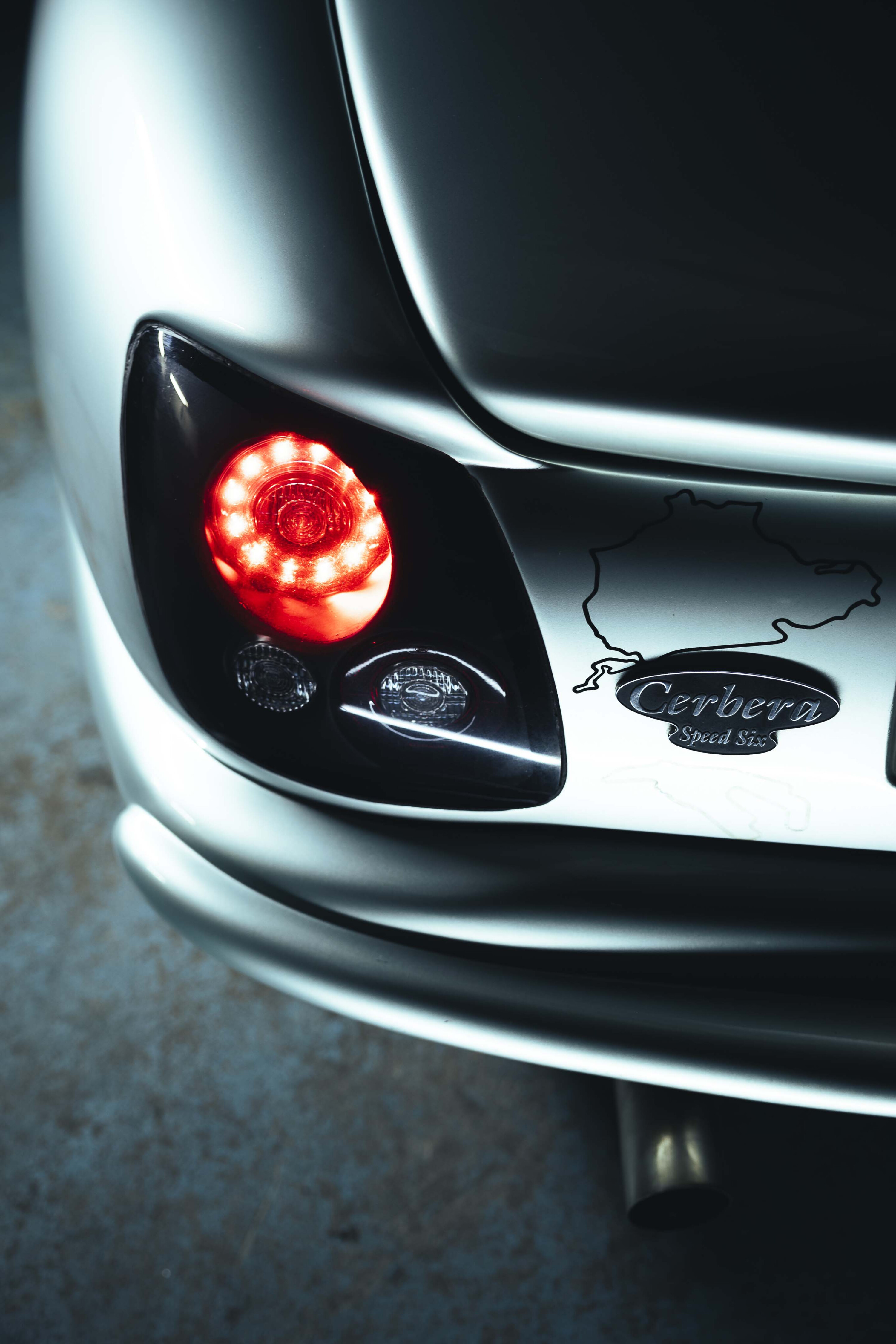
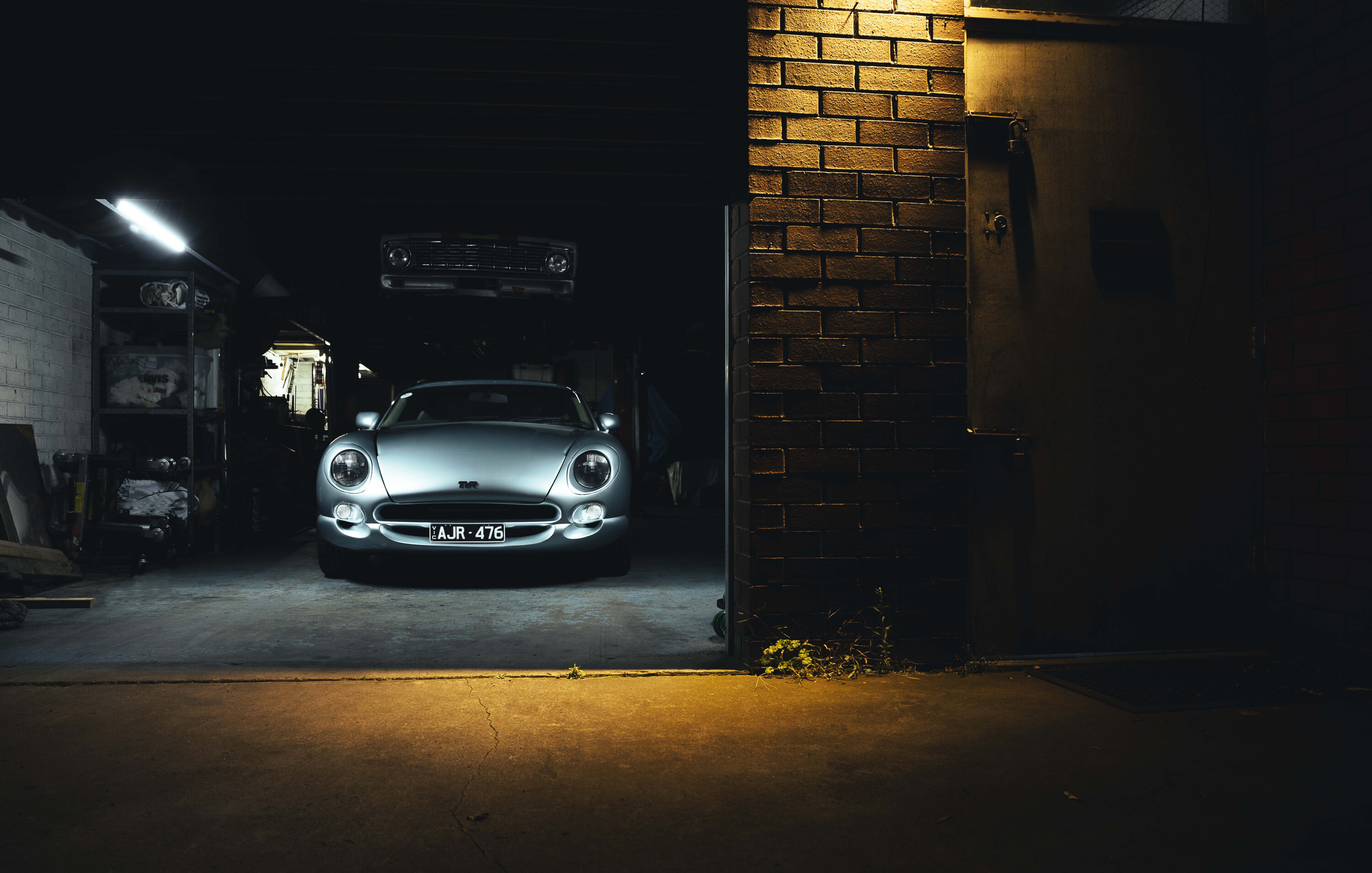
In other words, the magnificent Cerbera is becoming a very rare vehicle everywhere. Flawed but fabulous, it’s a car with such breathtaking audacity and ambition that it certainly deserves to be saved, so when we tracked down this beautiful Cerbera Speed Six in Melbourne, we were determined to give this Blackpool unicorn its moment in the spotlight.
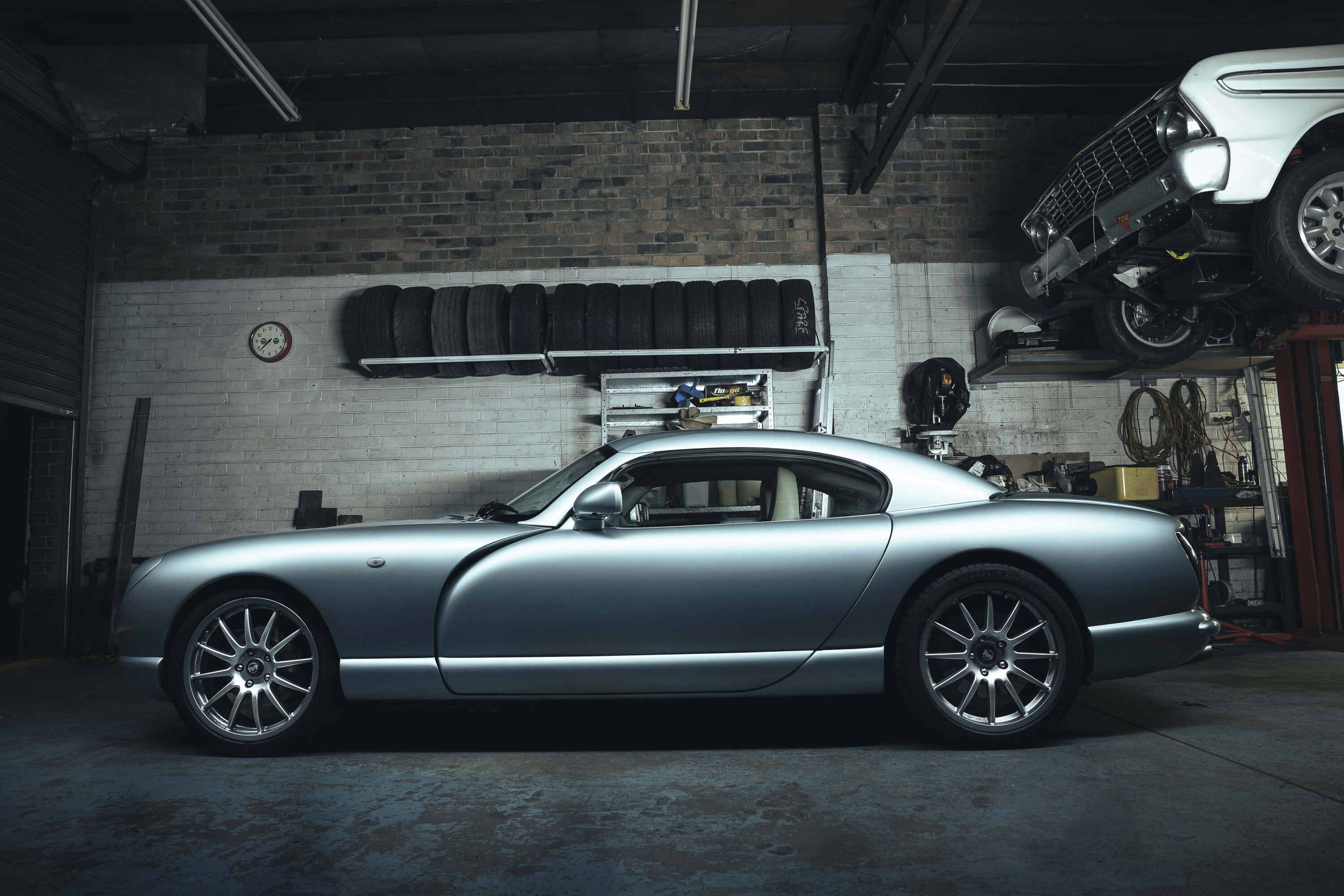
The Cerbera developed a reputation as a metronomically unreliable car. Owners wanted a classic British sports coupe. What they got was a classic British project.
When asked what they would like to see improved on the Cerbera, owners cited better ventilation, rear suspension that was more accommodating, a handbrake that worked, brighter air conditioning LEDs, less wind noise, a better stereo and windscreen wipers, fewer electrical problems with doors and security, a clutch footrest, non-vibrating rear-view mirrors, better rear ground clearance and less brake squeal. Oh, and you only got a one-year warranty from new. That’s if the dealers would entertain your claim.
That was then. It’s fair to say that any Cerbera still perambulating the roads will likely have had most, if not all, of its snagging points fixed at least once by now.
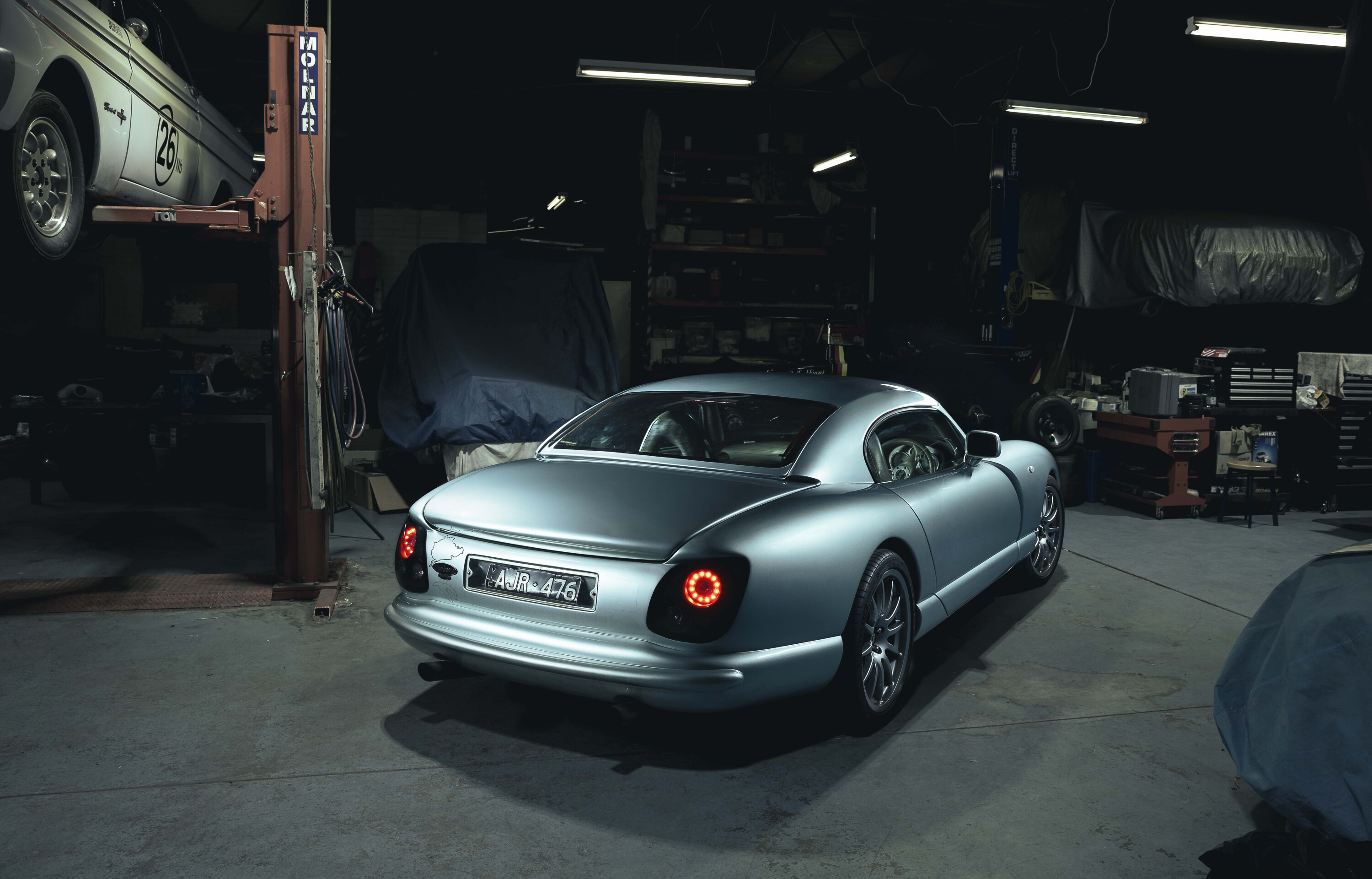
Given that nobody buys a TVR to cover big mileages, they’re now in a comfy spot where they become event cars – the sort of thing you’d take to a car meet, to an owners club event, down the pub of a weekend or just to squirt around when the sun’s out.
After more than 30 years, the Cerbera might have settled comfortably into its niche.
Although the Cerbera was first unveiled in 1993 at the London Motor Show, its lineage can be traced to when then-38-year-old Peter Wheeler parked himself behind the TVR chairman’s desk in 1982. Ironically, it was unreliability that had landed him there. He’d just sold his company, ETA, a business that sold desalination gear to the North Sea oil industry, and his flaky TVR Taimar Turbo was due another visit to Blackpool to be fixed.
While chatting to staff he had come to know rather better than he had initially expected, he realised that the company was on its uppers. Rather than blow his bulging bank account on a Scottish hunting estate, as was the original plan, Wheeler instead bought TVR.
Out went Ford engines and in came Rover V8 units – a smart and practical decision that helped elevate the company’s performance credentials. The old M Series cars were replaced by the wedge-shaped Tasmin bodies, reaching their apogee with the wild 420 SEAC. In 1988, TVR sourced a 5.0-litre Holden V8 through HSV. The engine was installed in the TVR White Elephant (see Fast Facts below) and whetted Wheeler’s appetite for even higher performance.
A turning point arrived in 1990 with the beautiful Griffith. Gone was the angular wedge design language of the Eighties and in came a classic lozenge-shape, retro-tinged roadster.
It featured a grunty Rover V8, a bulletproof Borg Warner manual ‘box and not a whole lot else. It was followed by the even more successful Chimaera which saw more than 1000 cars rolling from the gates of the Bristol Avenue plant.
Being deluged in orders from enthusiasts who couldn’t get enough of a great-looking British sports car with aV8 under the bonnet created a moment of extreme ambition. Some would call it insanity. TVR made the decision to start building its own engines and the first car to receive them would be the Cerbera.
While he was clearly a talented chemical engineer, perhaps Wheeler had failed to fully acknowledge the budgets required to thoroughly design, test and build your own engines.
The first engine on display was the Speed Eight – an all-alloy, flat-plane-crank 4.2-litre V8 that was good for 268kW and 434Nm.
That was ample in a car that weighed just over 1100kg, or about the same as a modern MX-5. This later morphed into a 4.5-litre V8 – good for either 313kW or, in Red Rose trim, a hefty 328kW.
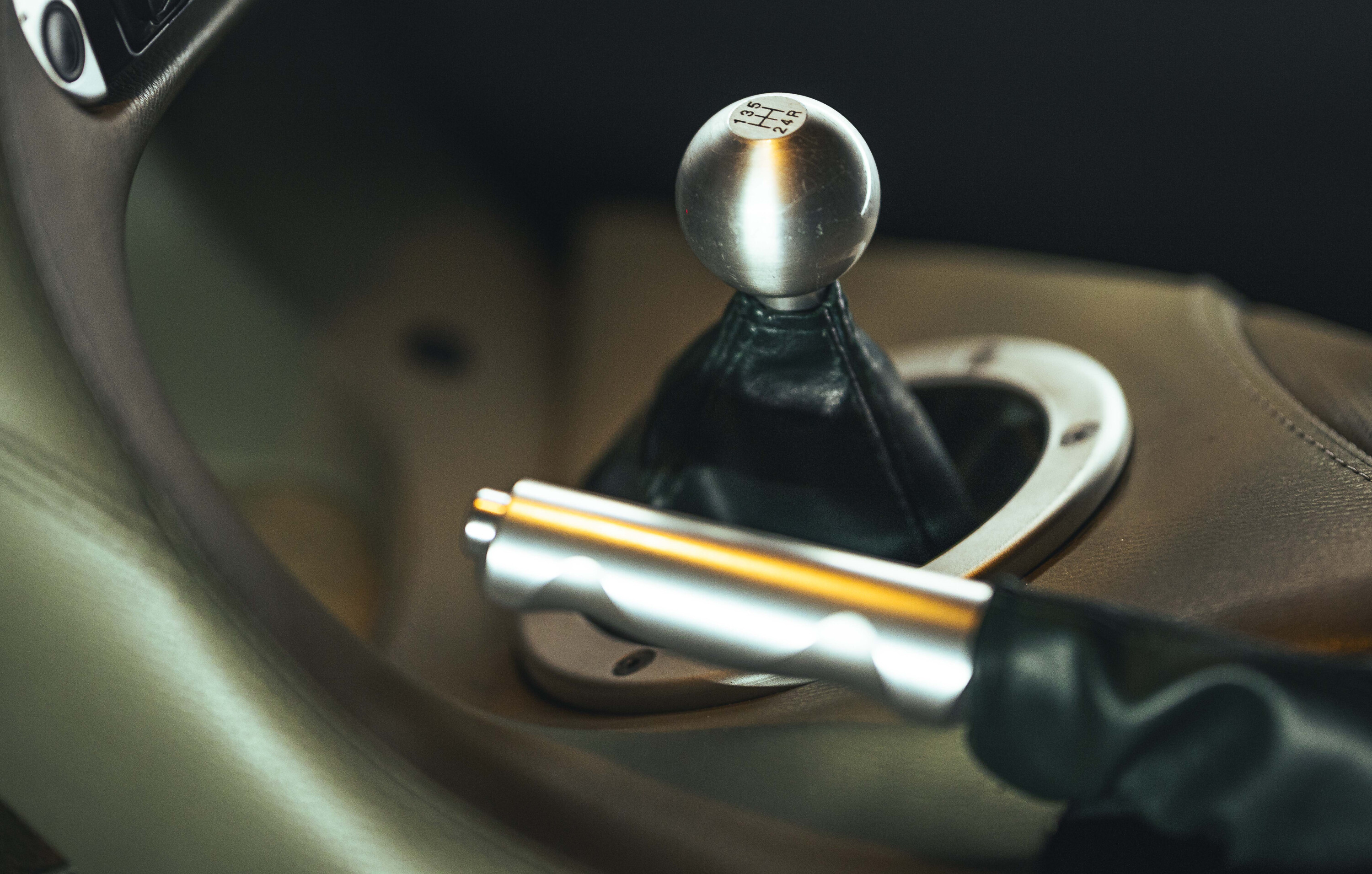
Buyers got a limited-slip differential as standard, or could pay extra for a viscous Hydratrak diff. What you couldn’t pay for were anti-lock brakes, traction control or airbags. It was just you to figure out how that torque curve, the Borg Warner T5 manual ‘box, a long-travel throttle pedal and four contact patches made nice with each other. Get it all right, keep the power pouring through its 6500rpm peak and a 4.4-second 0-100km/h time was theoretically possible.
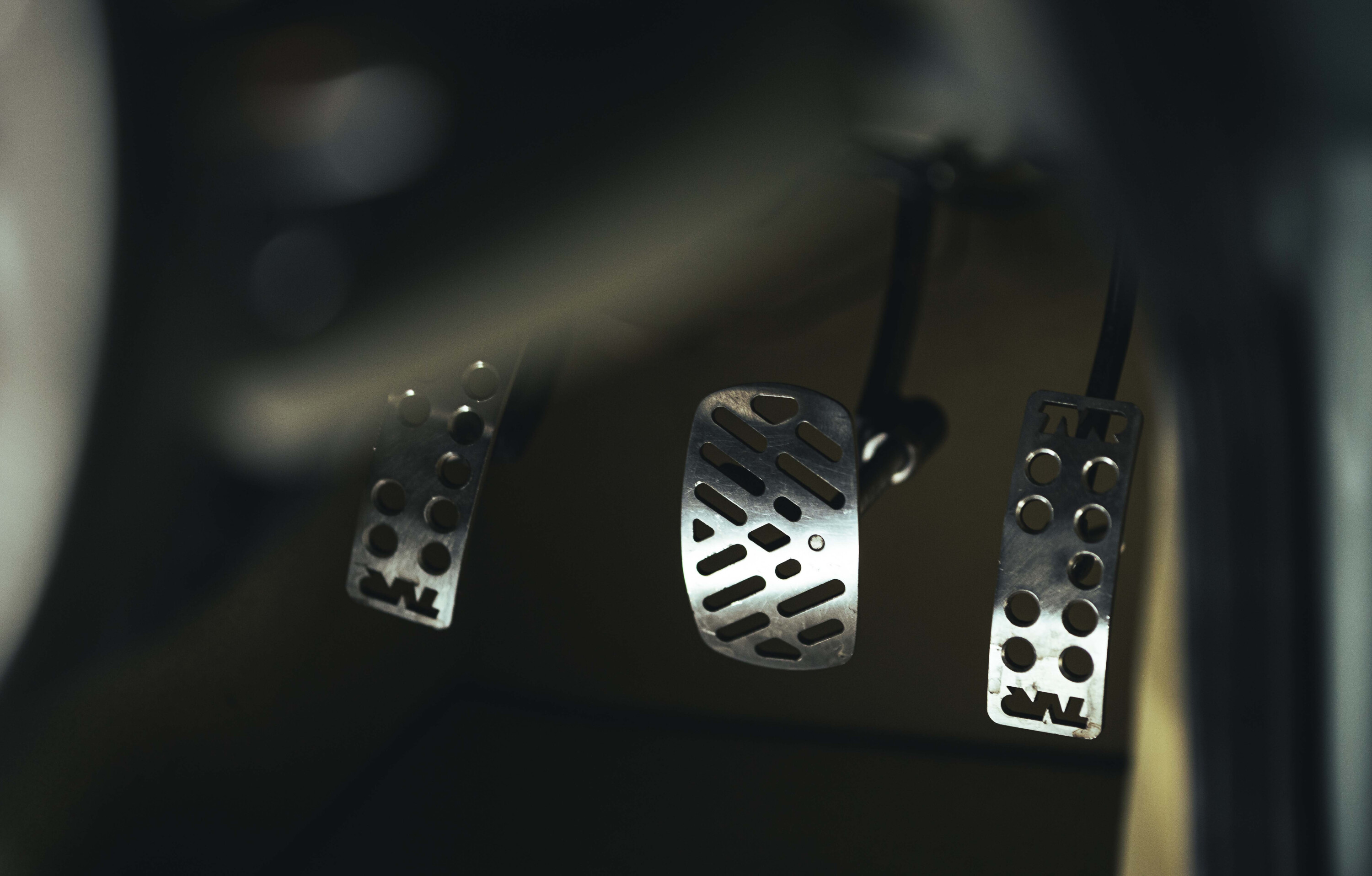
The performance may have been searing, but quite a few of those initial press demonstrators ended up on a flatbed back to Blackpool, plagued with some gremlin or another.
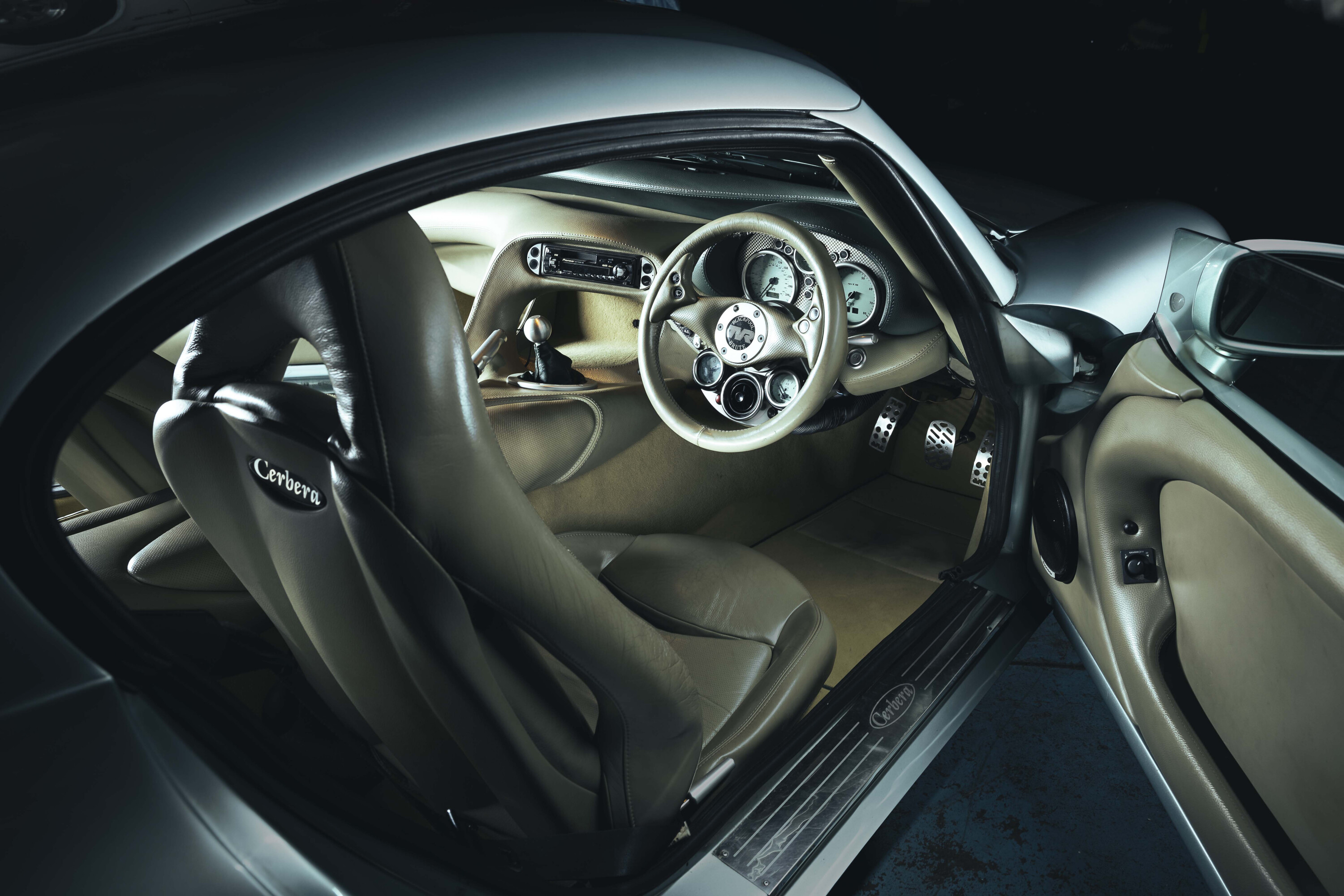
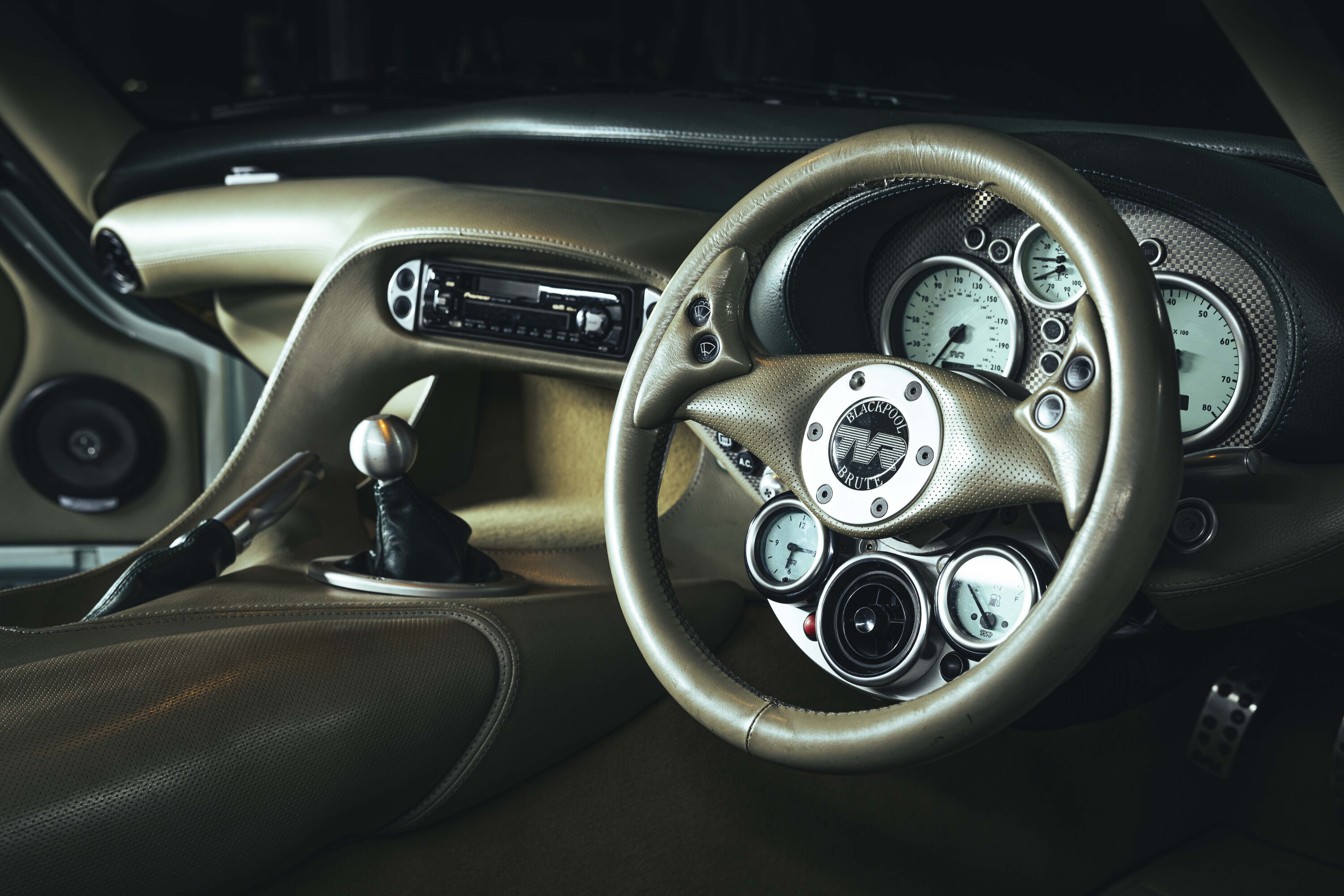
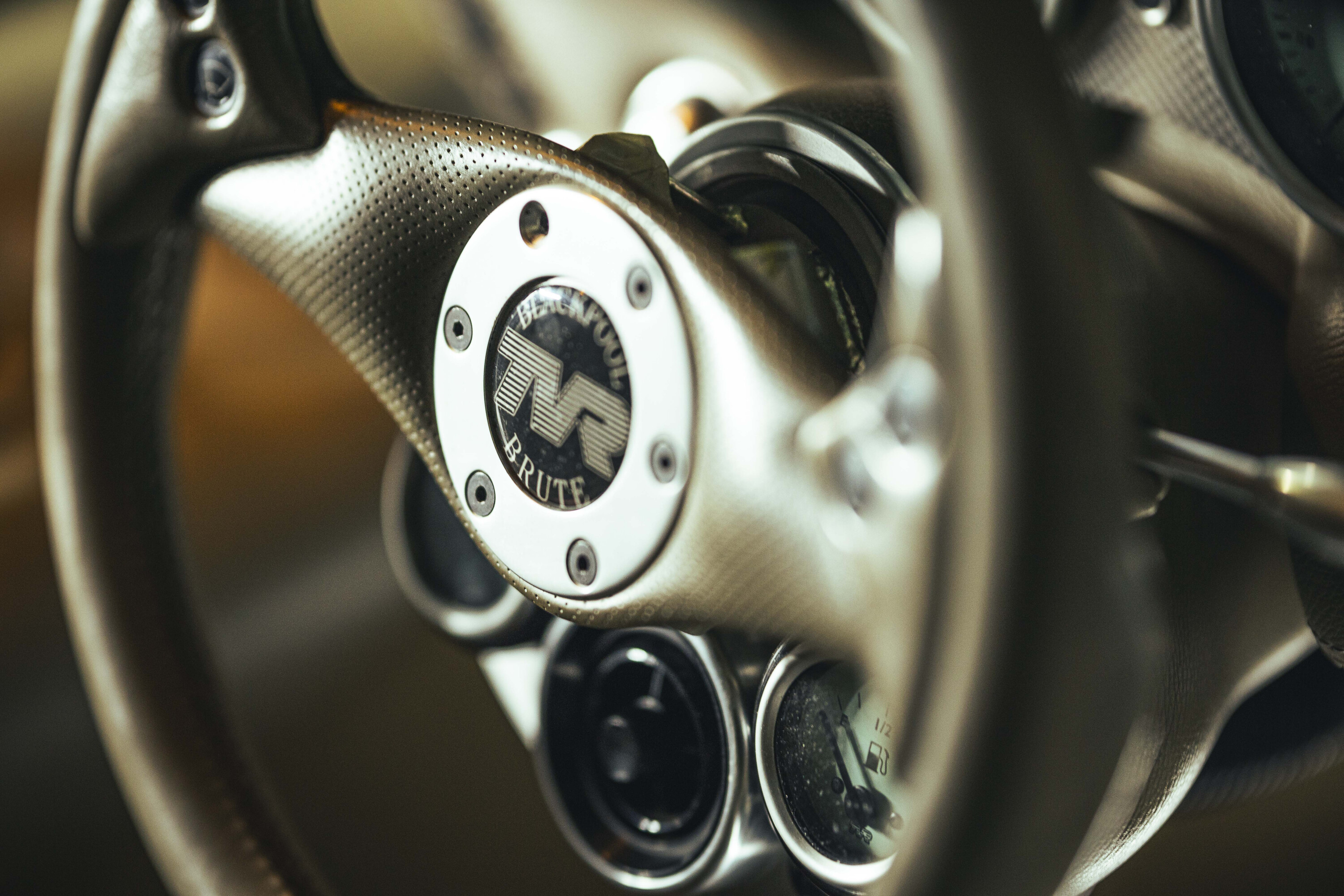
If the decision to build an engine family was bold, that left-brain creativity was on full display in the Cerbera’s design. A long, low 2+2, it shared little with the Chimaera and the cabin still has the capacity to shock. And there are rituals. The steering wheel holds push-button controls for lights, washers, wipers and horn. Once you’ve worked out which switch does what, it’s surprisingly intuitive.
The back seats are best reserved as additional luggage space, unless you plan to make a habit of transporting people who have no heads or legs. There is, however, a surprisingly generous amount of stowage space around the fascia.
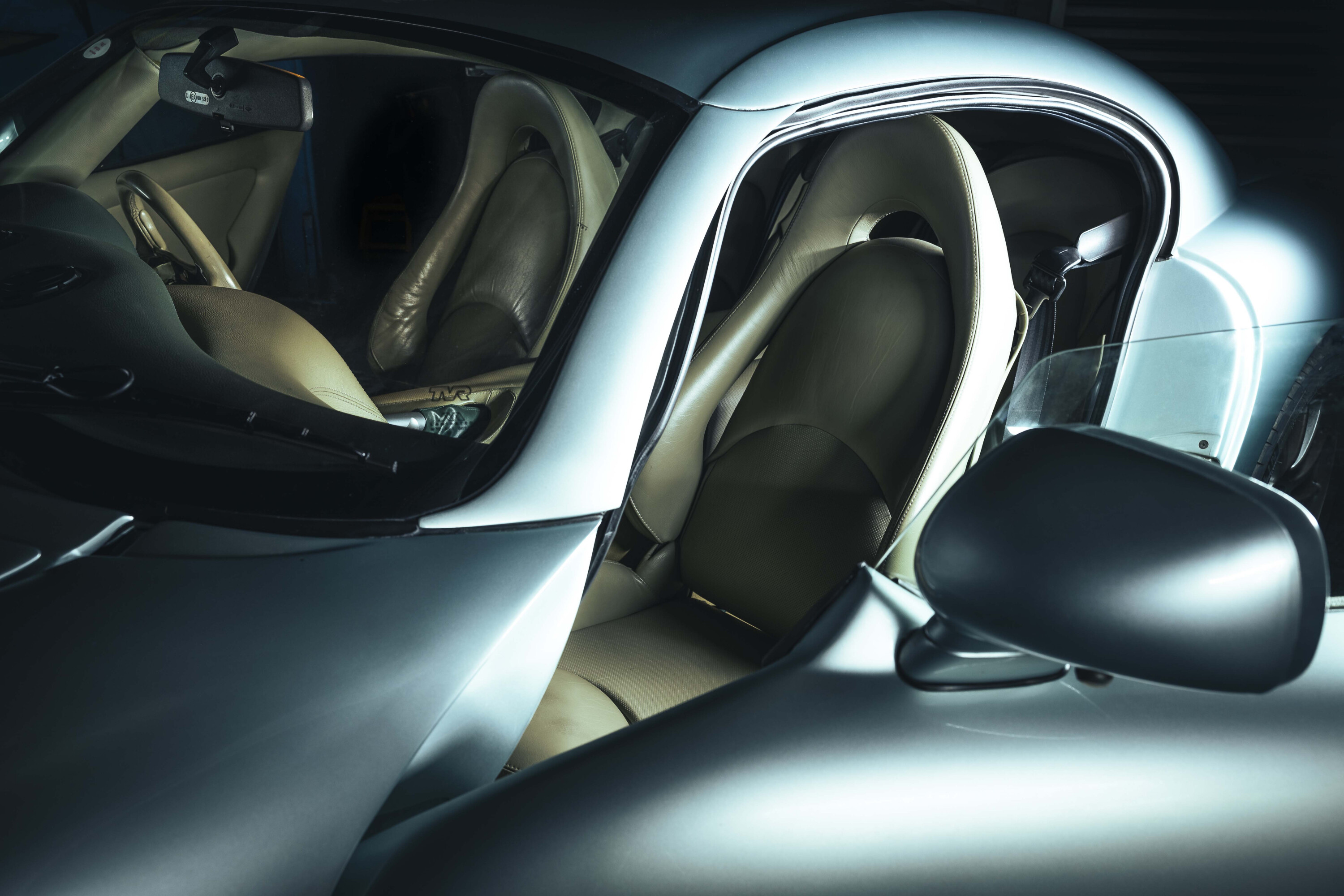
Before you take a test drive in the Cerbera, it’ll boost your credibility enormously if you know the procedure for getting out of one. There’s no internal door handle.
Where the Griffith used a little lever on the transmission tunnel and the Chimaera had a rotating aluminium pastille next to the gear lever, the Cerbera has something different. On the door’s side pocket is a tiny button which you’ll need to press to make the door spring open.
To get in you must deactivate the alarm and press a button on the underside of the door mirror. To start the car, press a black button below the fuel gauge. Hold it in, wait for the electronic diagnostics to do their stuff and then listen to the engine spring into life. Pressing the red button under the steering wheel cuts the ignition. The engine stops instantly, like a racing car.
Perhaps the more interesting engine that TVR developed was the Speed Six, which debuted in January 1999.
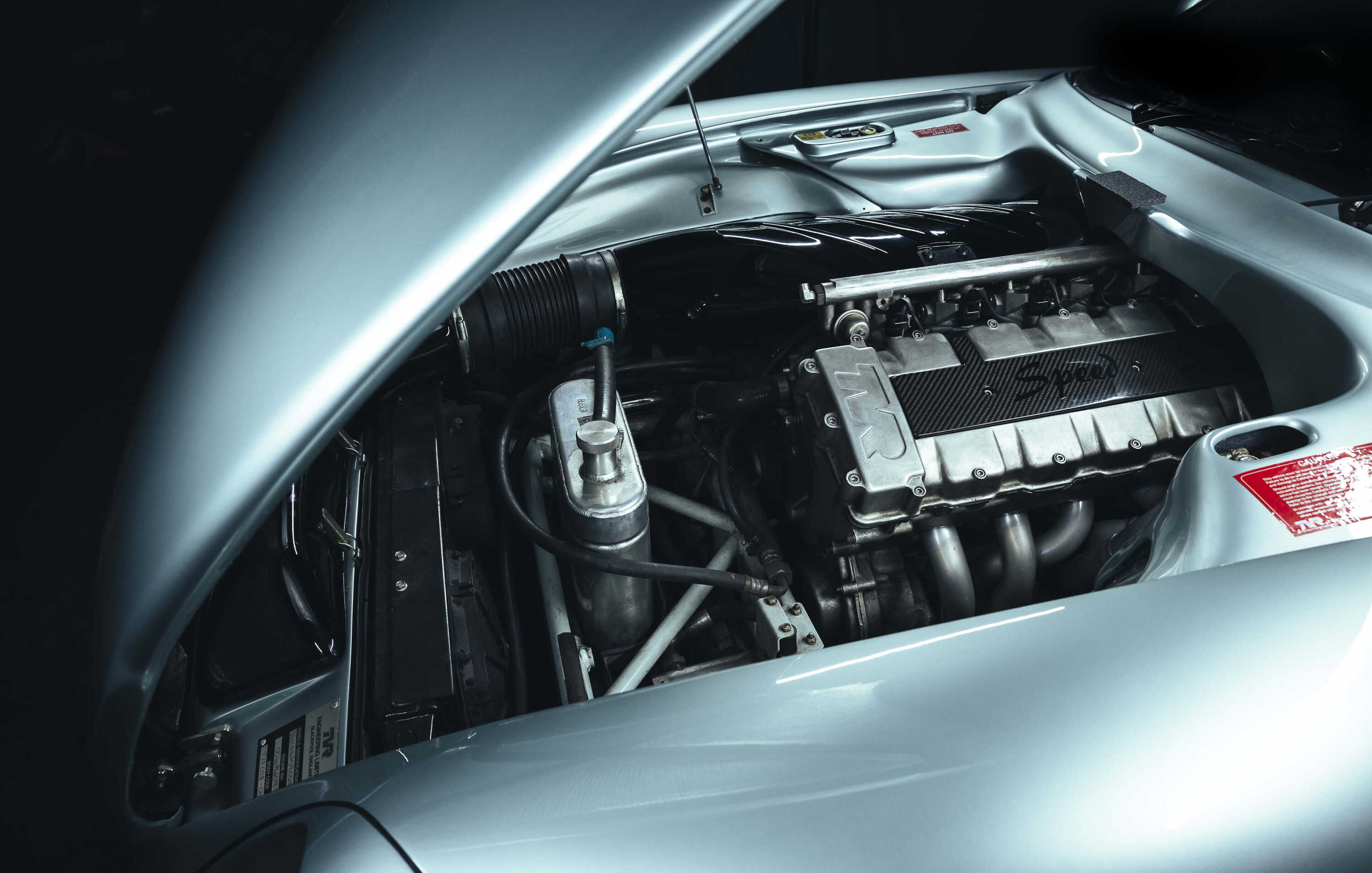
Until the Porsche 996 GT3 arrived, the 4.0-litre Speed Six was the most powerful normally-aspirated six-cylinder engine in the world, good for 261kW at 6800rpm and 447Nm at 5000rpm. Another Al Melling design, its genesis was troubled, with TVR’s engineers at times overriding Melling’s design work and altering his specifications, often with little to no consultation.
Melling had initially proposed a turbocharged V6 to Wheeler, a move that was rejected due to its two-valve head design. Wheeler wanted a straight-six reminiscent of the old XK Jaguars and Bentleys. A power figure of 298kW at 7000rpm was originally mooted.
The best of the opposition was making 89kW per litre from a normally-aspirated six. In the end, Melling settled on a design that had been seen on his previous work on the Suzuki GSX motorbike engine: the same oil-cooling architecture, the same twin overhead cams with finger-type followers.
A quick calculation yielded a potential output of 97KW per litre. The size of the 24V cylinder head, with those followers and springs, was going to be the issue, so in order to keep weight down, it all had to be built from aluminium.
This was becoming a seriously exotic piece of engineering. Melling insisted that despite having certain racing design cues, that the AJP6 would only ever be a roadgoing powerplant. The basic design just wasn’t structurally tough enough to cope with the rigours of competition.
Things weren’t helped when TVR’s engine development team altered the placement of the camshaft. And then insisted on water cooling rather than Melling’s clever oil-cooled design.
The engine was canted over in the engine bay to aid oil flow in the head. When siting the engine in the bay, a crossmember meant that there was no space for a traditional wet sump so, much to Melling’s delight, a dry-sump system was engineered, something he had wanted at the outset but had initially been told there was no capacity for.
TVR’s engineers – a team that Melling dismisses as “the undergrads” – then started further fiddling with the engine. The oil filter position was changed, with the effect that oil flow to the drilled pathways on the inlet side of the block casting was fine, but the drilled holes were removed on the exhaust side, strangling lubricant flow to the cams and finger followers.
Construction materials, cam profiles, combustion patterns and the positions of the cams over the valves were all changed in-house, with the result that Melling eventually insisted that TVR take his company MCD’s imprimatur off the production engines and that the AJP6 be renamed.
In Melling’s view, the engine was ruined, and dealers were soon flooded with questions from owners that the putative engine designer was in no position to answer. The headlines wrote themselves in the automotive media: Wheeler’s hubris had come back to bite him. Thing is, that wasn’t anything like the whole story.
The good news is that there are those who can, in effect, retro-engineer the Speed Six to Melling’s original, or near original, specifications. No, they can’t have the six-speed sequential gearbox that was originally envisioned, but the problems with the Speed Six’s lubrication are solvable.
Later versions of the Speed Six would develop up to 303kW in the Typhon, Sagaris and Tuscan S.
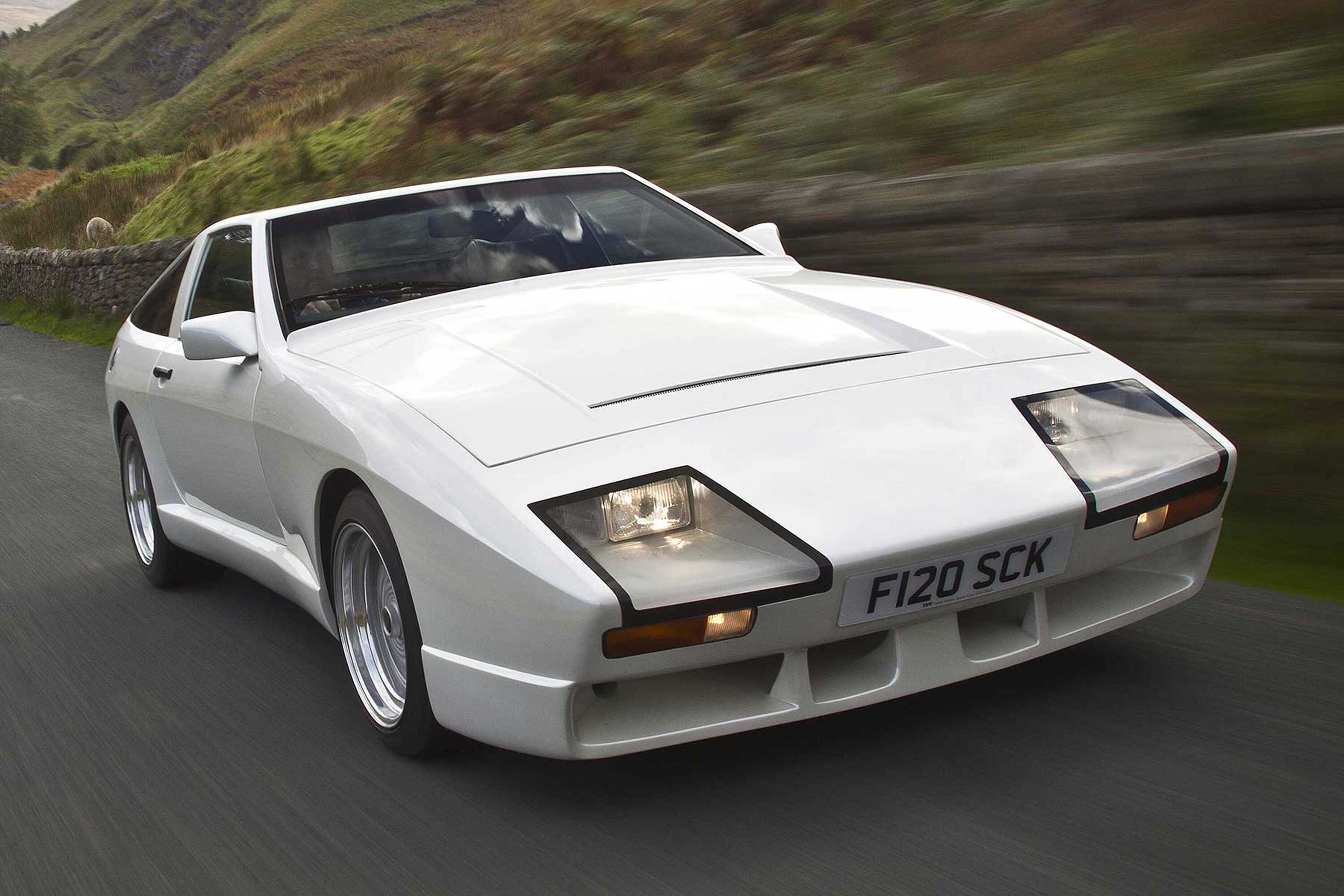
In 2000, TVR tweaked the Cerbera formula, replacing the classic round lights with an ungainly compound unit, in order to create a family resemblance to the Tuscan. The 4.5-litre cars were also offered with a lightweight option, comprising lighter body panels and a reworked interior. Then there was the outlandish but stillborn Speed Twelve, which is probably another story for another day.
So what’s it like to run a TVR Cerbera in Australia? ‘Involving’ might be the best answer. Owner Andrew McCarthy has clearly put considerable effort into fettling this Speed Six.
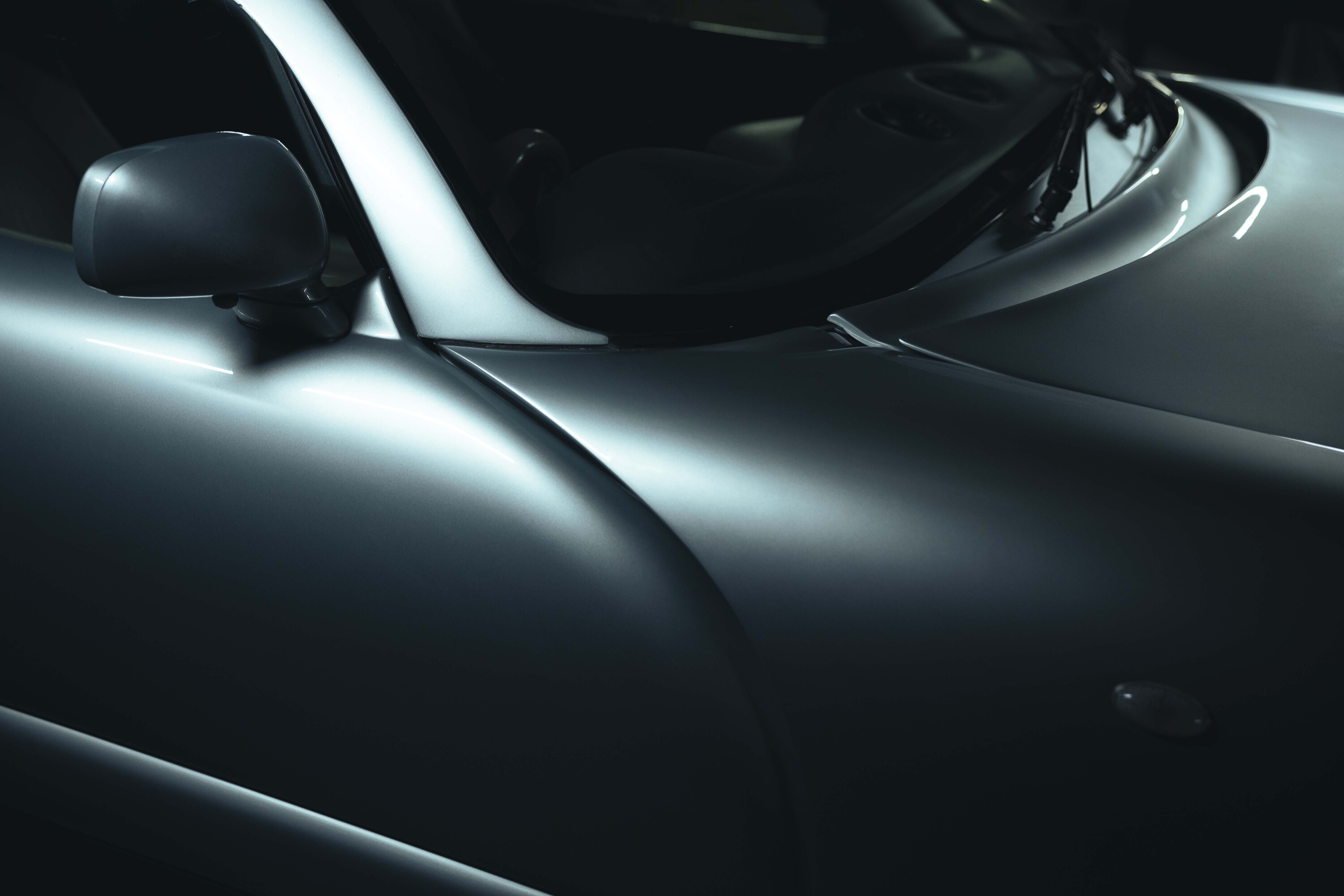
Since he acquired it, he’s brought the car back to near showroom spec by replacing worn shells, shot synchros and tired carpets, and then gone on to rectify many of the issues that TVR never seemed inclined to.
Key to that exercise was acquiring the original blueprints with parts numbers from a source in the UK. From there, McCarthy was able to rectify the rod ratio, change the halftime bearings and throttle-position sensors. He also realised that the finger followers fitted to his engine were 25 percent smaller than those shown on the blueprints and installed an additional flexible oil line.
He uprated both front and rear springs, finding that an extra 25lbs in spring rate worked a treat. The cable stretch on the handbrakes of the Cerbera is a recurring issue that will need some more thought.
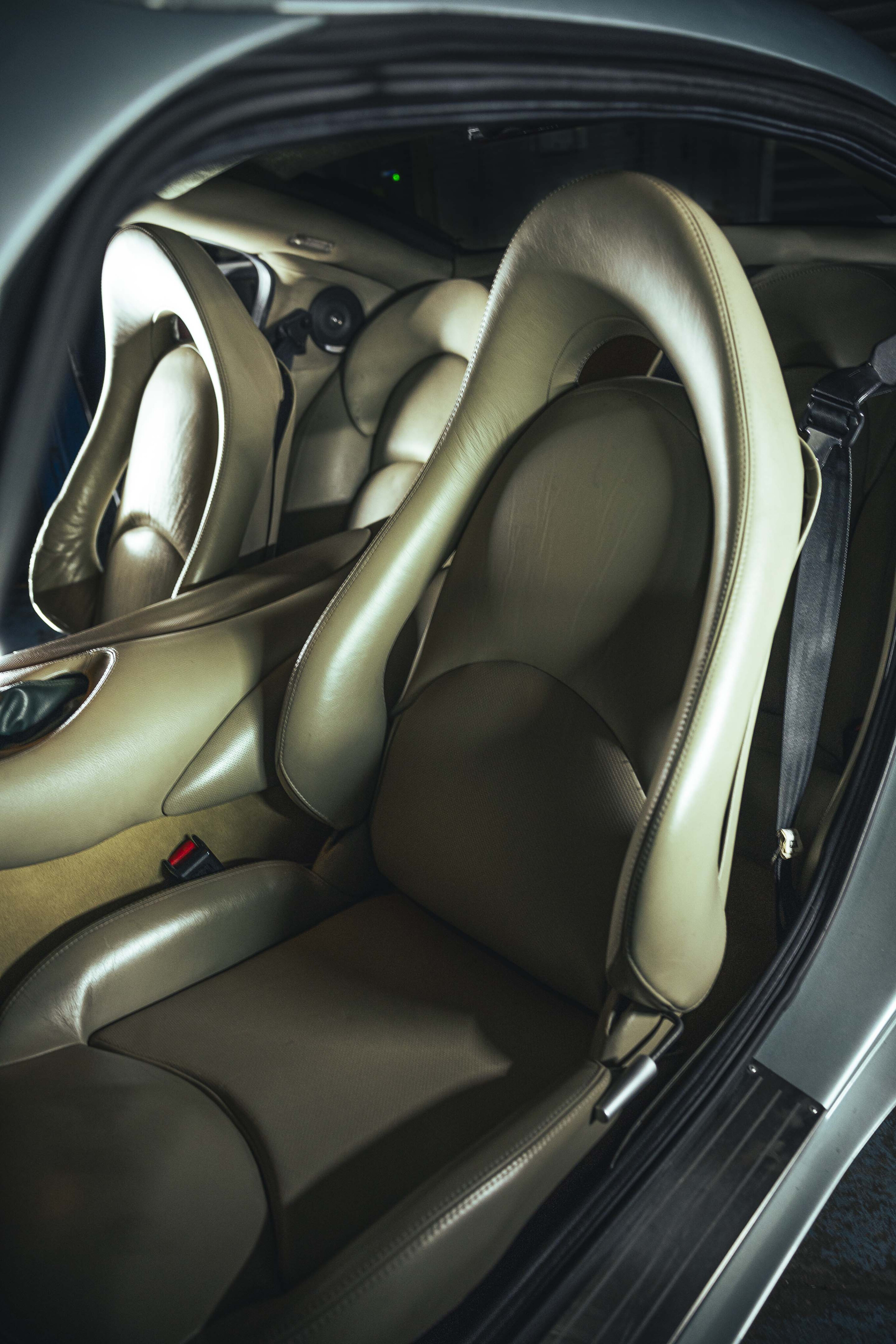
“I’ve done about 10,000km in it now,” he says. “The six is such a fantastic-sounding engine. Not even Lotus designed and built their own engines.”
He claims it’s a wonderful engine to work on although “getting to number six spark plug is a pain” due to the engine being set so far back in the bay. With a background in open-wheeler racing, it’s clear that he’s across the issues of this engine and takes great satisfaction in problem solving.
“I can understand Al Melling being a bit precious about his design,” he notes, pointing out that the lubrication issues don’t tend to be a problem if the engine gets some revs, but acknowledges that the original Indian-sourced cam lobes could have been more durable, hence his workaround oil line.
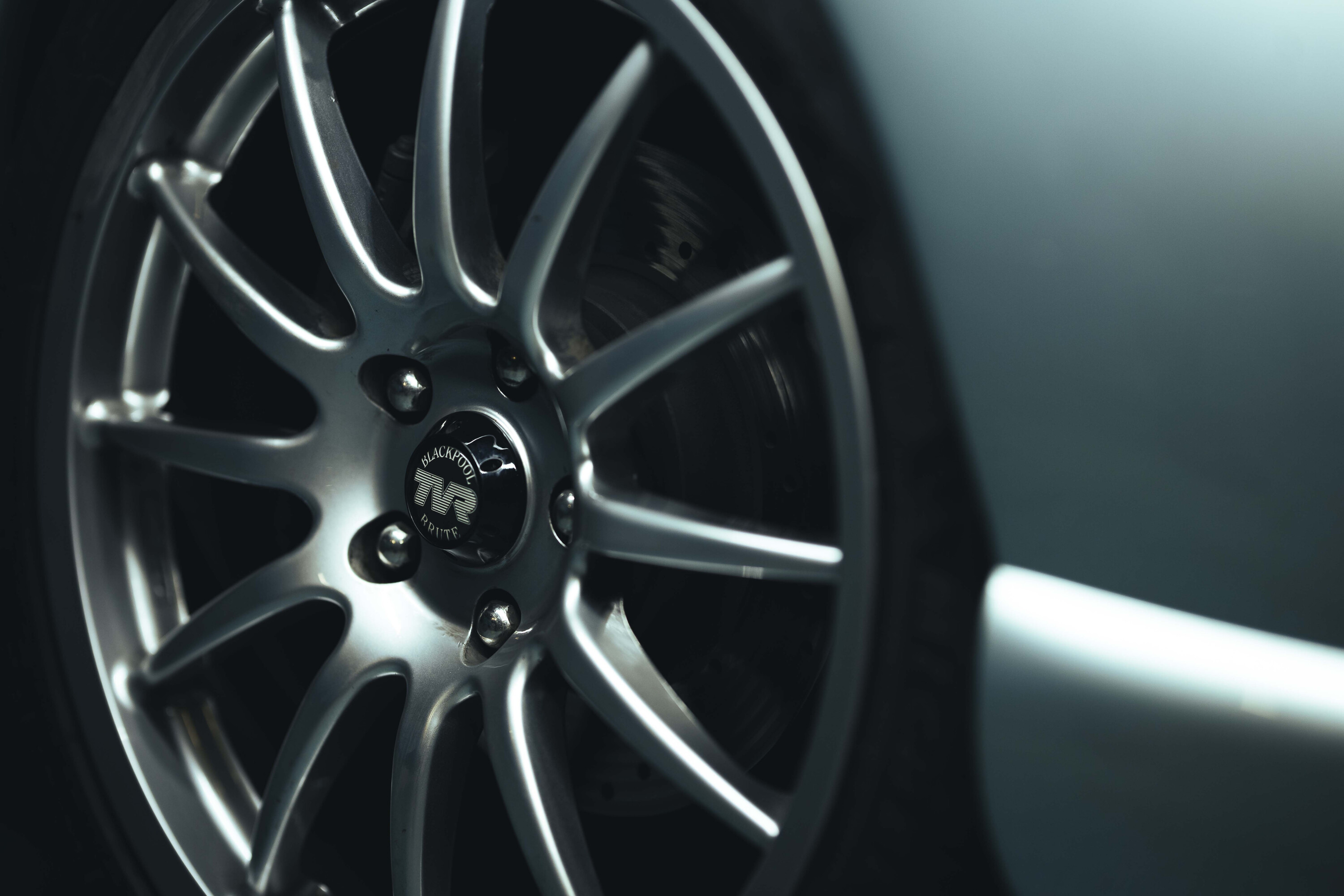
“Parts are fairly readily available from the UK but the LEDs in the dash can be problematic,” he notes. “I recently had a low-speed bump in traffic and damaged the bonnet. Rob at South City Motors in Southbank was able to do wonders with the fibreglass repair, fixing all the cracks in the gel coat.”
Indeed, McCarthy is a typically well-informed owner. The Cerbera is not a car for the mechanically timid, and a close-knit network of capable enthusiasts has taken advantage of the price softness that has stemmed from its somewhat unnerving reputation.
Should the idea of a beautiful, charismatic and exotic 2+2 that always offers an opportunity to get hands on with the tools appeals to you, there’s a lot to be said for the Cerbera. Know what you’re getting into and you’ll be richly rewarded.
Fast facts
The ‘White Elephant’ is a one-off 1988 TVR prototype powered by the same 5.0-litre V8 Holden engine from the VL ‘Walky’.
It was commissioned and driven for 18 months by Peter Wheeler, who came to the conclusion that the wedge-shaped styling was too similar to the outgoing Tasmin and that the logistics around sourcing the Aussie engines could also be an issue.
As a result, the the project was shelved and, 12 months later, the TVR Griffith was born, spawning a modern-classic design philosophy that would lead to Cerbera. The Elephant was rescued from a dumping ground at the rear of the factory two weeks before Peter Wheeler sold the company to Nikolai Smolensky in July 2004.
| TVR Cerbera Speed Six | |
|---|---|
| Engine | 3996cc 6cyl, dohc, 24v |
| Max power | 261kW @ 6800rpm |
| Max torque | 447Nm @ 5000rpm |
| Transmission | 5-speed manual |
| Weight | 1130kg |
| 0-100km/h | 4.4sec |
| Price (now) | from AUD $65,000 |
As a young writer (many years ago) I was given a sage piece of advice: “As a journalist, you don’t need to know the answer to everything, you just need to know where to find the answer.”
It’s a principle that applies well to many things and a rule that’s served me well over the ensuing years. But just occasionally, a question pops up that can’t be answered via the usual oracles and it happened again recently: “What is a supercar?”
You might initially think this is one of the easiest car problems to solve but as I stood there considering the response, it became clear that there is no universal definition, and even the term itself is a subjective concept coined by I’m not even sure who or what. What do you think?
I’ve run the question past a few car people since and a variety of suggestions have been thrown into the mix, only to be spat back out again as inconclusive.
Power was one – perhaps a supercar needs to possess a mandatory minimum horsepower figure to qualify. But if this is true then what’s the milestone output, and surely it can’t apply to all vehicles can it? The Alpina XB7 has in excess of 600 horsepower but no one would label the seven-seat SUV a supercar would they?
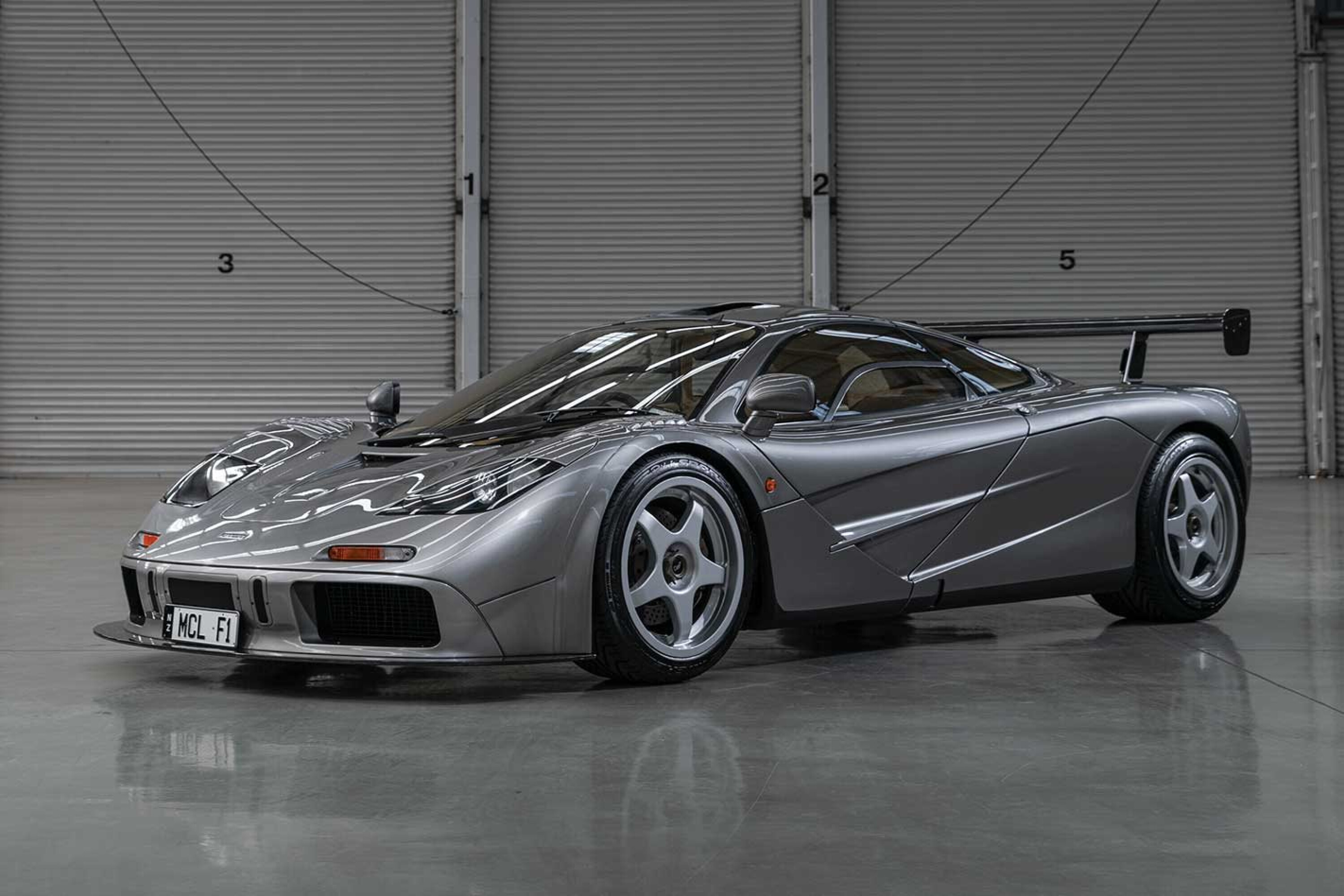
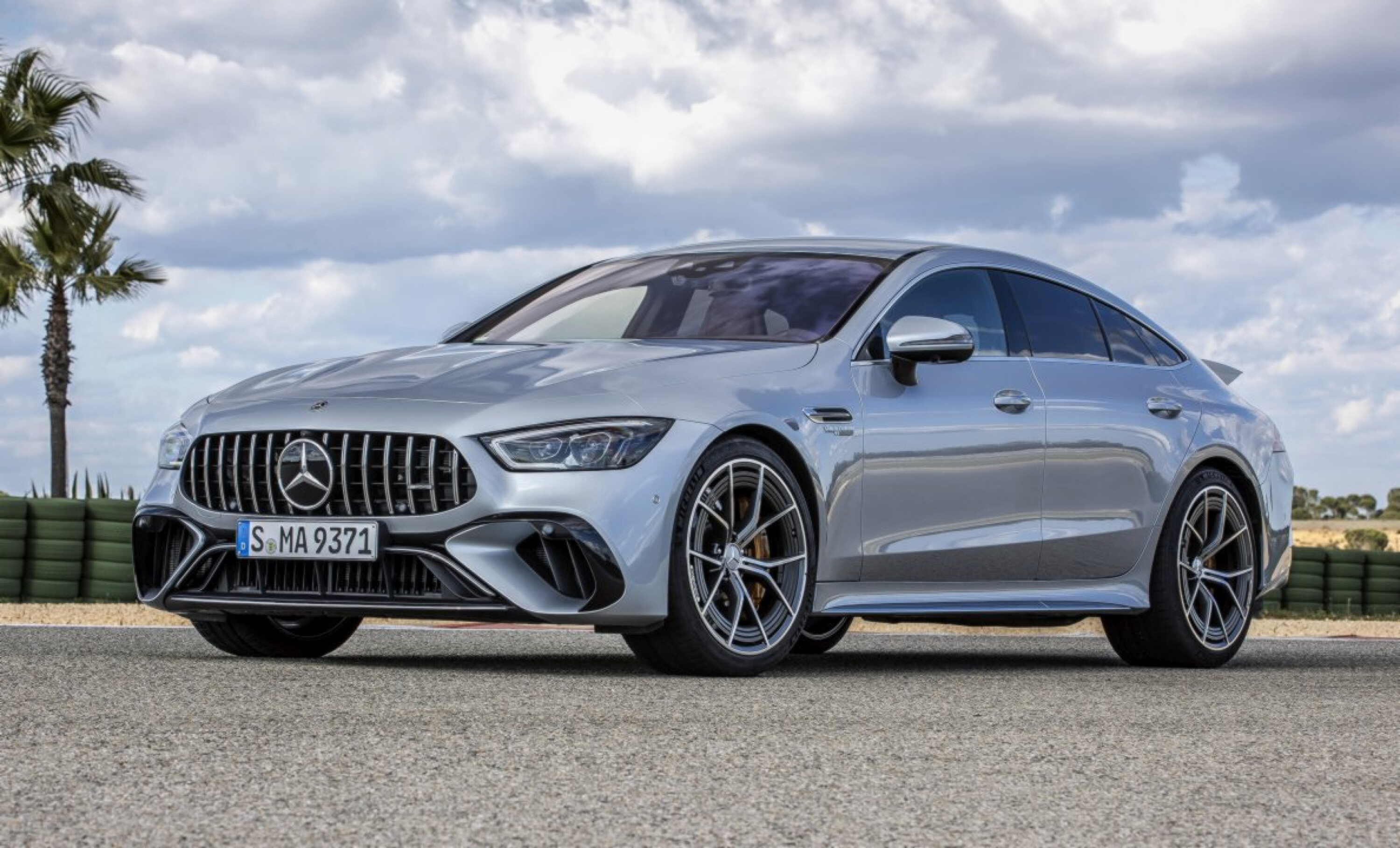
What about acceleration then? Here, too, you might choose the Mercedes-AMG GT Four Door coupe that’ll get to 100km/h from standstill three tenths faster than a McLaren F1. But a supercar? I think not.
Perhaps it comes down to outright track prowess and being able to demolish any mere high-performance cars in lap times.
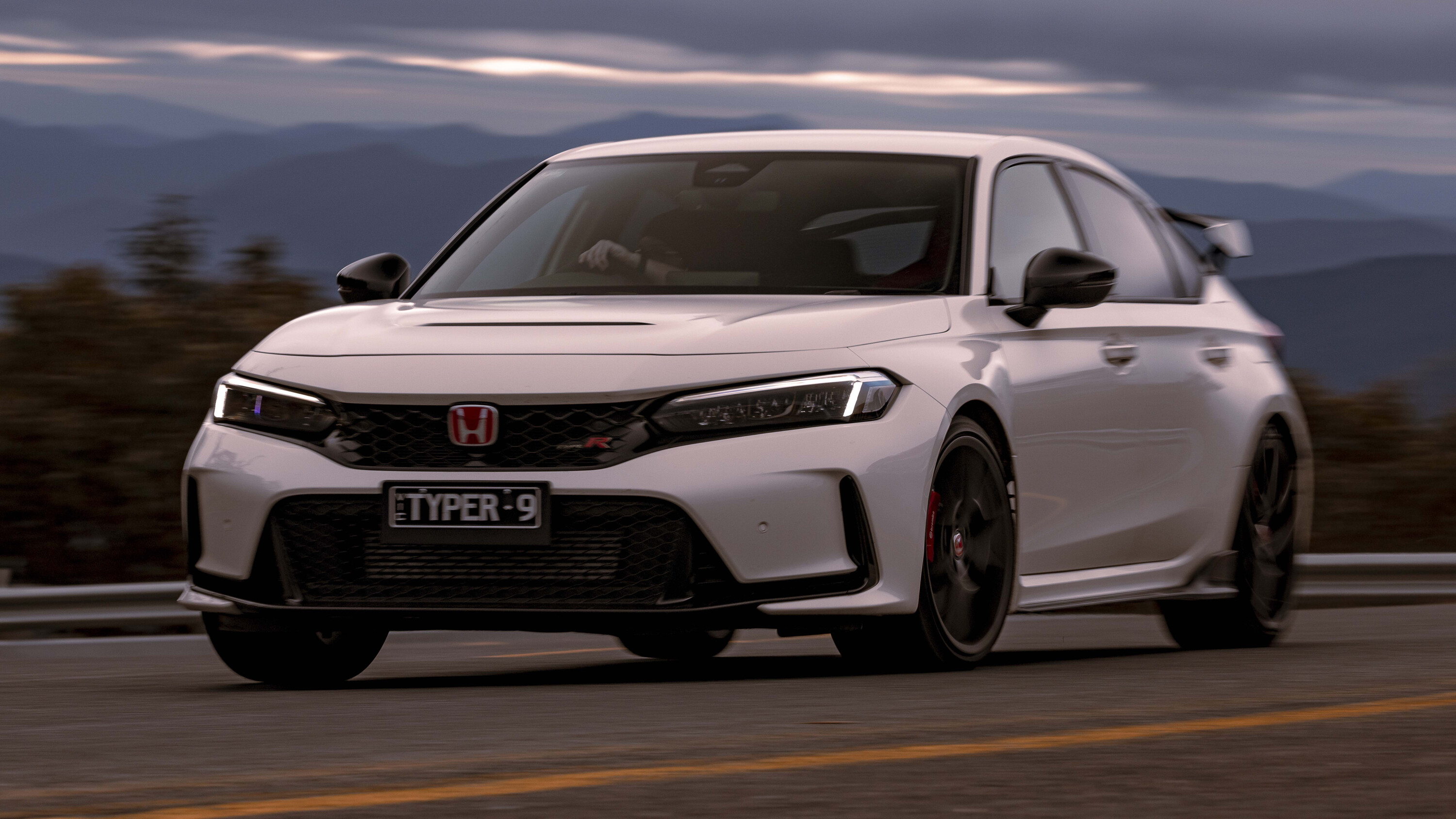
Here, too, it’s a little tenuous as there are plenty of so-called supercars that wouldn’t necessarily be your first pick if you had to set a benchmark lap and, more importantly, there’s a chance they’d get licked by a serious hot-hatch in the technical stuff. Put a Honda Civic Type R against a Lamborghini Aventador SVJ on Lake Mountain and I’d put money on the Japanese hatchback doing victory (reverse) doughnuts in the summit carpark before the $950,000 Lambo.
Which brings me to price and perhaps the easiest variable to debunk. In the world of cars, a high asking price guarantees only one thing – a lighter wallet.
High-end models can be expensive for a variety of reasons and, more often than not, the thing you’re paying for is not super-ness.
Certainly, performance has something to do with it as supercars are never slow and always powerful, but I think the key to the essence of a supercar is that it rolls in an equal part of hyperbolic style and won’t compromise on either in the name of practicality.
Yes, a McLaren GT has a combined luggage space bigger than a Toyota Camry’s boot, but if you try shoving a fully assembled Ikea chest of drawers in above its mid-mounted V8, you’ll be disappointed.
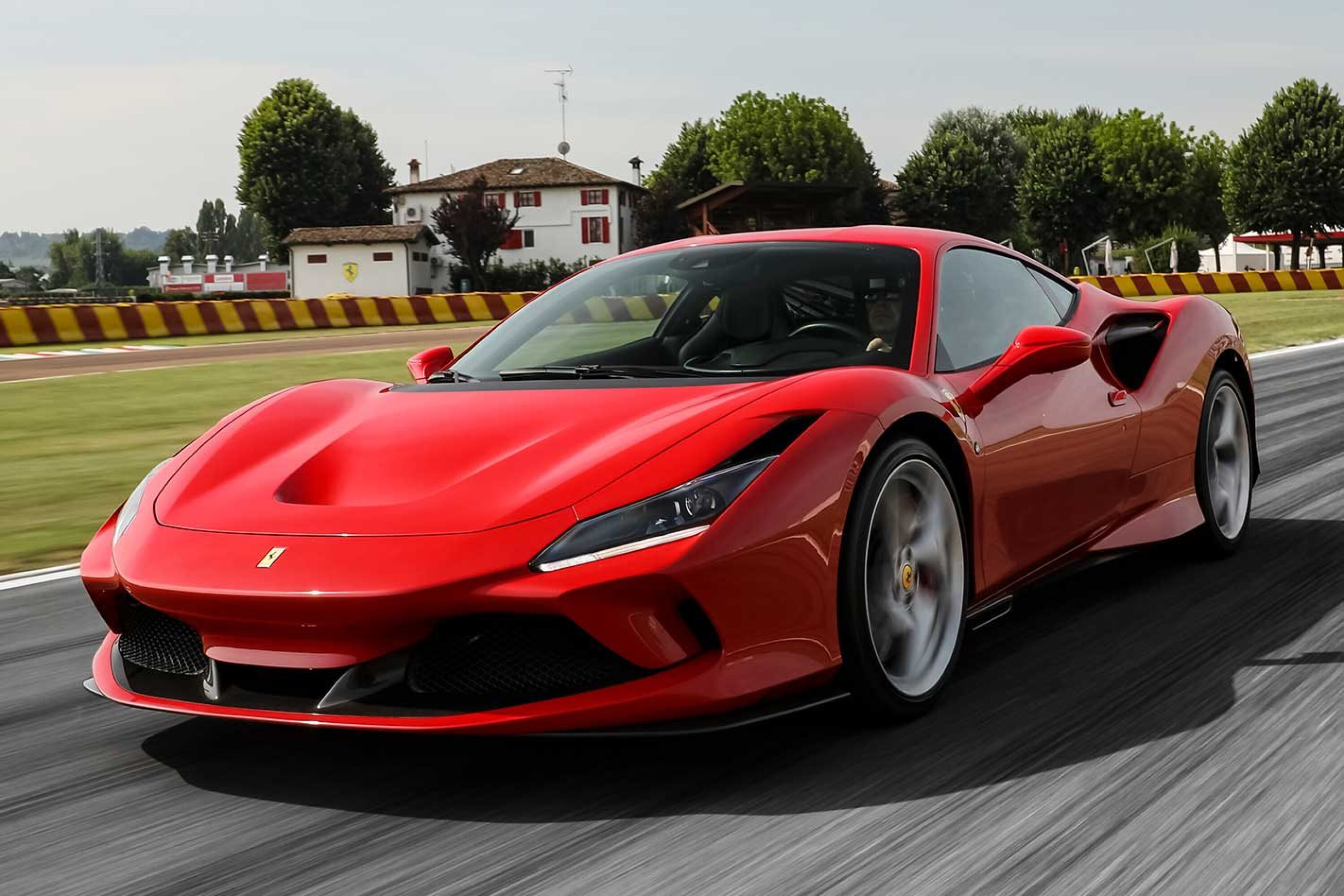
And yes, a Ferrari F8 has a button to lift the front suspension but any undulation in the road bigger than a speed bump will scupper it like it’s hit a tank stop.
The true core of a supercar lies not just in what it can do, but what it can’t. Supercars are compromised – that’s the point, but it still leaves us without a clear genotype. And that’s before we’ve even thrown the ‘what is a hypercar?’ curve ball.
If what you have moored in Monte Carlo measures 100 feet or more, it’s a superyacht. And if you can unleash a fiery hell on an unsuspecting city at the push of a button, you’re a superpower. Defining a supercar, however, is not quite as clear cut…
Snapshot
- Priced at $139,900
- AMG Line elements added for aggressive looks
- Includes sunroof, head-up display and unique upholstery
Mercedes-Benz is adding to its GLE range by introducing a limited number of Night Edition versions, all based on the diesel GLE 300d 4MATIC.
Aligning with the Night moniker, the car wears a premium black gloss trim on the mirror housings and around the window lines. Black 22-inch wheels complete the theme. Mercedes’ adjustable damping AIRMATIC suspension has been implemented to cater for those massive wheels.
Aluminium running boards derived from AMG also are added to the car’s exterior, to heighten its presence and provide a more aggressive stance.
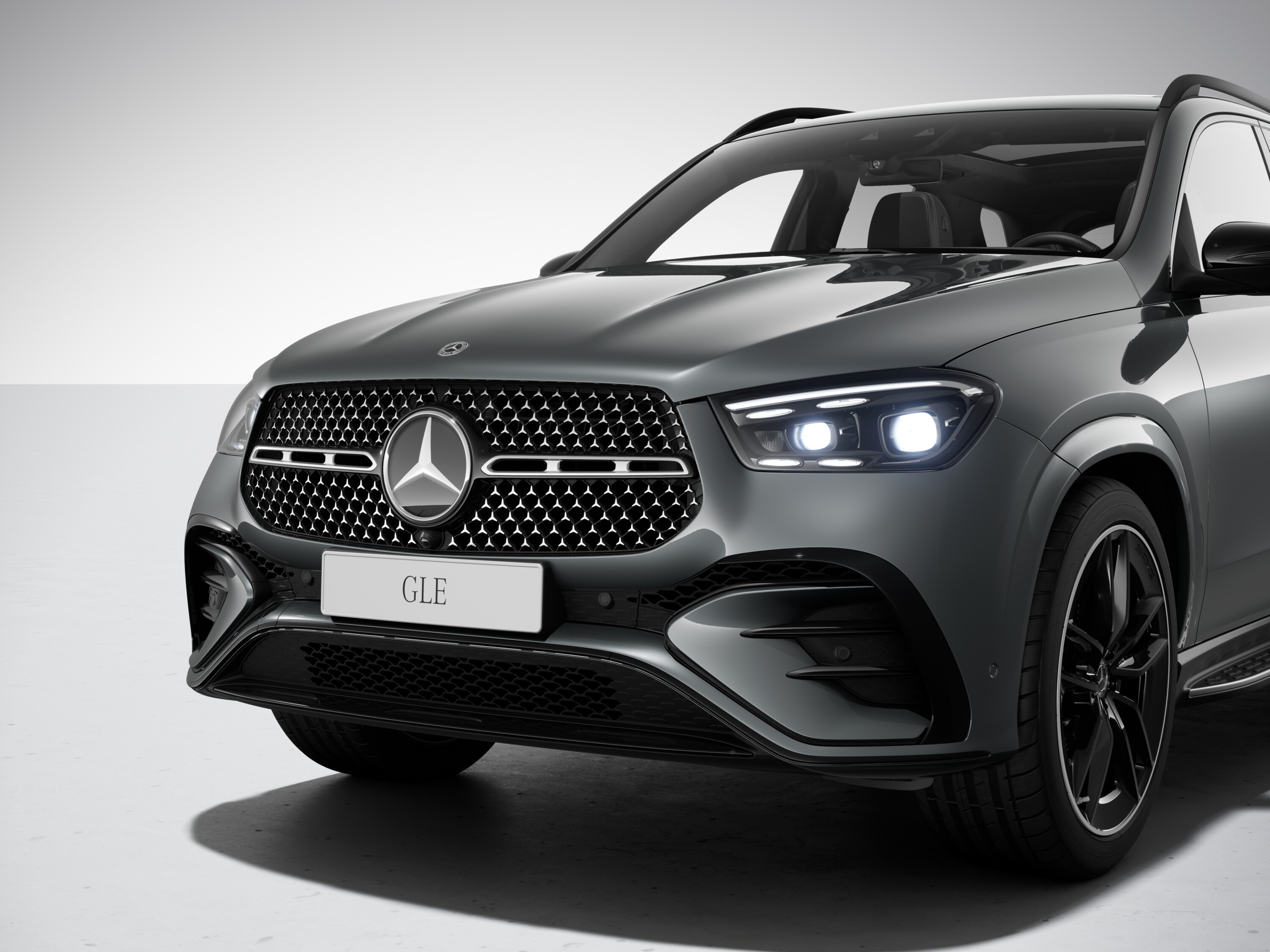
For the interior, the car will feature a panoramic sunroof, head-up display, Mercedes’ MBUX infotainment with Apple CarPlay and Android Auto, privacy glass, and heated front seats.
An added Mirror Package includes an auto-dipping rear-view mirror, and exterior mirrors that project the Mercedes-Benz logo on the ground as puddle lights.
The Night Edition also features LED headlights with adaptive high-beam assist, a 360-degree camera, and a ‘transparent bonnet’ feature that provides an aerial view of the environment in front of the vehicle, helping overcome obstacles when off-road or negotiating urban carparks.
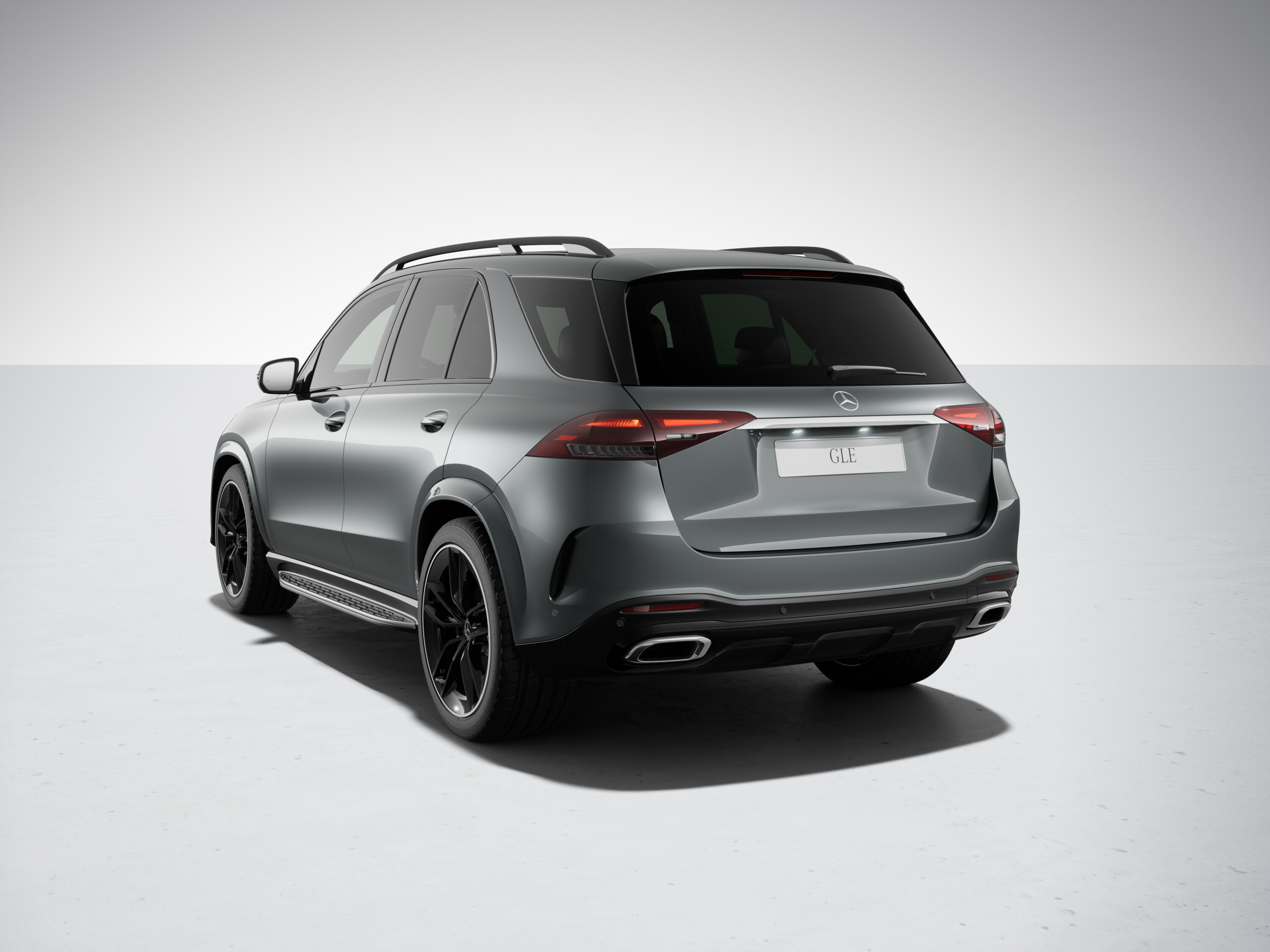
As with the GLE 300d, the Night Edition uses the same 2.0-litre turbo-diesel engine delivering 198kW and 550Nm via Mercedes-Benz’s 9G-TRONIC nine-speed automatic. This engine is claimed to deliver a 0-100km/h time of 6.9 seconds, while sipping the tank at 6.6L/100km.
While the exact number of cars produced has not been revealed, the Mercedes-Benz GLE 300d Night Edition is priced at $139,900 before on-road costs.
Snapshot
- Two new battery sizes to boost range
- N Line pack adds exclusive stying options
- Prices start from $69,800
Hyundai has revealed the 2025 updates for its boldly styled Hyundai IONIQ 5 electric SUV. Changes include design revisions, safety upgrades and increased range.
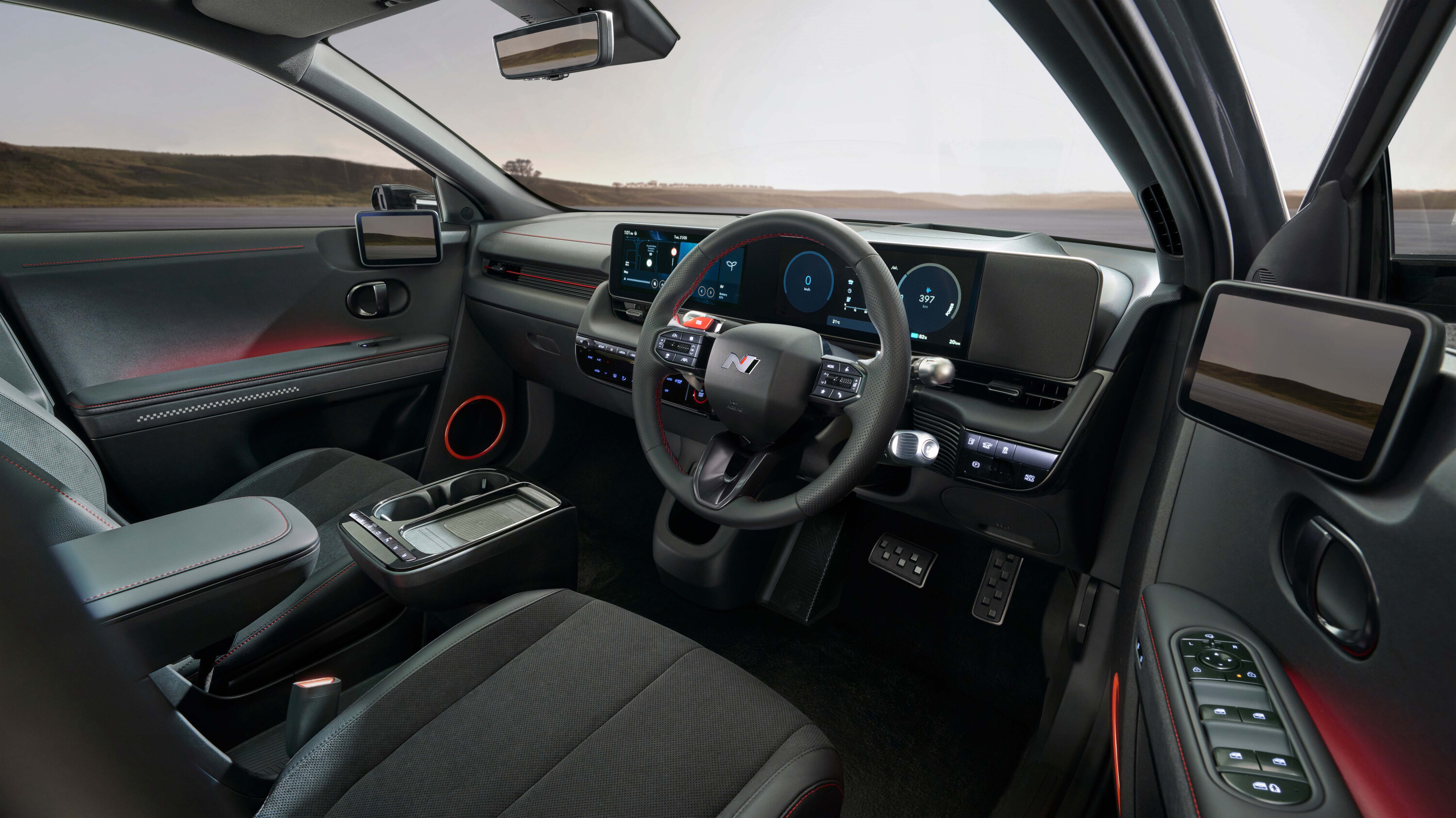
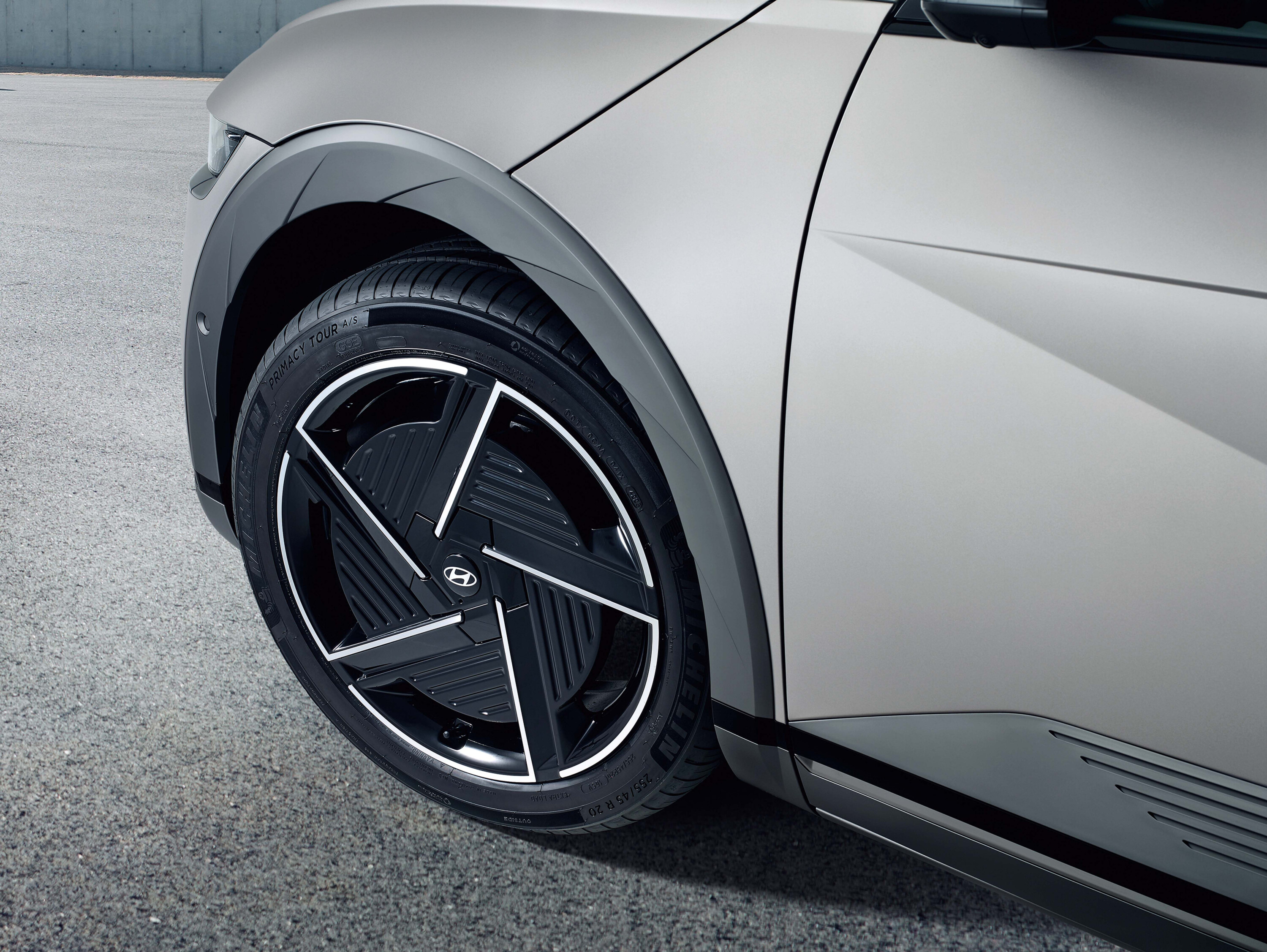
A new front and rear bumper, rear spoiler and an additional windscreen wiper are now added to the variants, along with revised 19- and 20-inch alloys wheels. Also available for the Dynamiq and Epiq variants are an N Line option which adds exclusive bumpers, glass black mirror housings, and N Line specific 20-inch wheels.
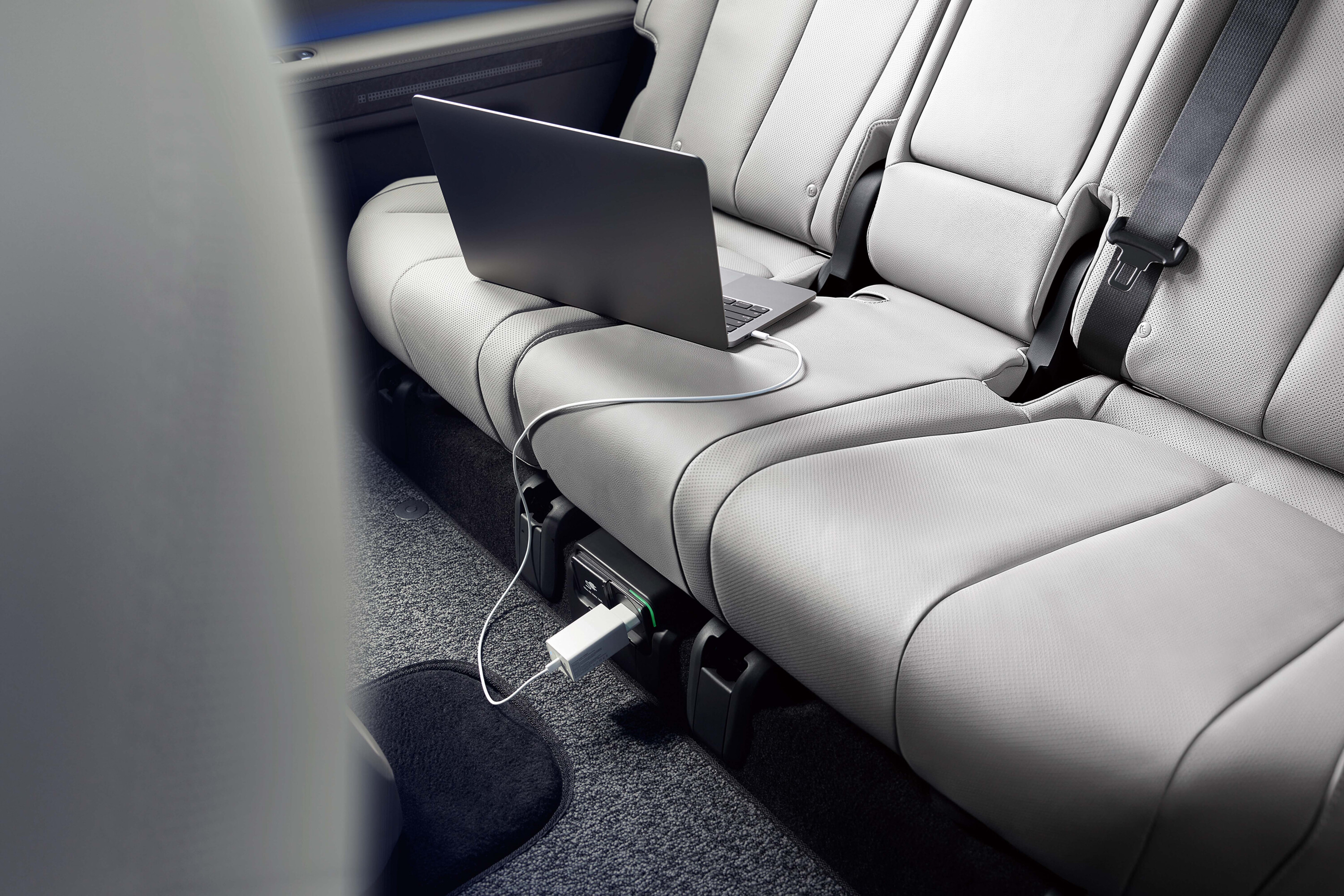
Fans of physical buttons will enjoy knowing the revised centre console now includes controls for the seat heating and ventilation systems, while touchscreen aficionados will be satisfied with wireless Apple CarPlay and Android Auto.
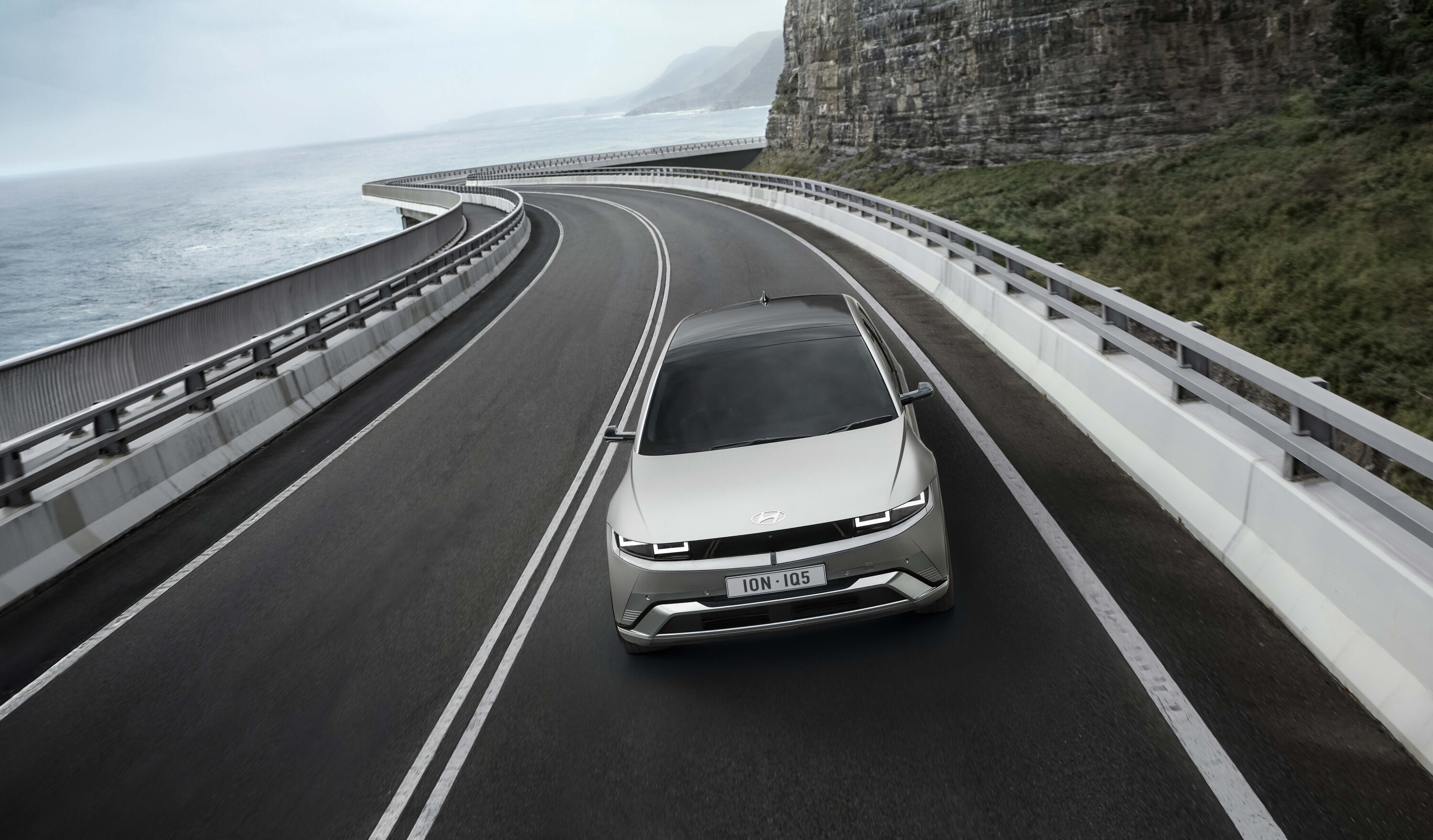
“With greater range and an array of safety and technology upgrades, the refreshed 2025 iteration of our award-winning IONIQ 5 gives EV buyers an even more persuasive SUV package,” Hyundai Motor Company Australia Chief Executive Officer, Ted Lee said.
Known for its extensive testing on local roads, Hyundai claims the 2025 IONIQ 5 will have improved ride and handling through a comprehensive revision to chassis rigidity and suspension tunes. This seeks to improve NVH, stability and the all-important criteria of steering response and handling.
Two larger battery sizes are now being offered to deliver more range, with Standard Range variants coming with a 63kWh battery and the Extended Range receiving the same 85kWh unit from the bonkers IONIQ 5 N.
This will provide the Standard Range model with a WLTP range of 440km, and the Extended Range up to an expected 570km. Power figures for the Standard Range have the car delivering 125kW and 350Nm, while the Extended Range providing 168kW and 350Nm.
2025 Hyundai IONIQ 5 battery and powertrain
| Battery | Standard Range 63 kWh | Extended Range 84 kWh | |
|---|---|---|---|
| Drive | Rear Wheel Drive | Rear Wheel Drive | HTRAC Dual Motor AWD |
| Motor power | 125 kW | 168 kW | 74 kW + 165 kW |
| Motor torque | 350 Nm | 350 Nm | 255Nm + 350 Nm |
| WLTP Range | 440 km (19u201d wheel) | 570 km (19u201d wheel) 530 km (20u201d wheel) 512 km (N Line) | 500 km (20u201d wheel) 495 km (N Line) |
Pricing
| Battery | Drivetrain | IONIQ 5 | DYNAMIQ | EPIQ |
|---|---|---|---|---|
| 63kWh | 2WD | $69,800 | – | – |
| 84kWh | 2WD | $75,800 | $80,800 | $84,300 |
| AWD | – | $85,300 | $88,800 |
Options
| 2025 Hyundai IONIQ 5 option pricing | |
|---|---|
| Matte Premium Paint | $1,000 |
| N Line Option Pack – Available on DYNAMIQ variants onwards | $2,500 |
| Digital Mirror Pack – Available on EPIQ variants | $3,000 |
Safety inclusions for the revised IONIQ 5 include forward collision avoidance, smart cruise control, and intelligent front lighting (IFS).
Orders are now open for the 2025 IONIQ 5, starting at $69,800 before on-road costs.
Snapshot
- Pricing starts at $63,900 before on-road costs
- Includes premium extras such as panoramic sunroof and heated seats
- Elevated ride height and 18-inch wheels
Mercedes-Benz has detailed pricing for its new GLA 200 variant, the City Edition.
Updates to the compact premium SUV include revisions to the exterior, such as chrome trim around the grille, bumpers and tailpipe surrounds, and aluminium roof rails. The City Edition also features an elevated ride height and five twin-spoke 18-inch wheels.
Other features include a glass sunroof, electric-adjust front seats with memory and heating, and a 360-degree camera. These are in addition to the standard GLA 200 features that include Apple CarPlay and Android Auto, wireless charging, MBUX infotainment, dual-zone climate control, and adjustable ambient lighting.
The GLA 200 City Edition remains powered by a four-cylinder engine, delivering 120kW and 270Nm through a seven-speed dual-clutch transmission.
The car includes nine airbags, Mercedes’ DISTRONIC auto cruise control, lane keep assist, traffic sign assist, dimming mirrors, and blind spot assist. For extra help with night driving, the car also includes LED headlights with adaptive high beam assistance.
Pricing for the GLA 200 City Edition start at $63,900 before on-road costs and delivery; although, drivers looking to add Mercedes’ compact SUV to their garage should contact dealers for local driveaway pricing.
Order books open on July 23.
The 2025 BMW X3 will arrive in Australia for customer deliveries early next year, bringing new looks and new tech inside-and-out, along with updated powertrains.
At least initially, the new BMW X3 will launch with just two power options, both of them petrol: the entry-level 20 xDrive and the powerful M50 xDrive.
There won’t be an electric iX3 with this generation, as that badge will be worn by the upcoming, all-electric ‘Neue Klasse’ SUV – expected to launch sometime in 2025.
Design and Dimensions
The new BMW X3 adopts an all-new look inside and out, featuring a high-quality interior with sustainable materials.
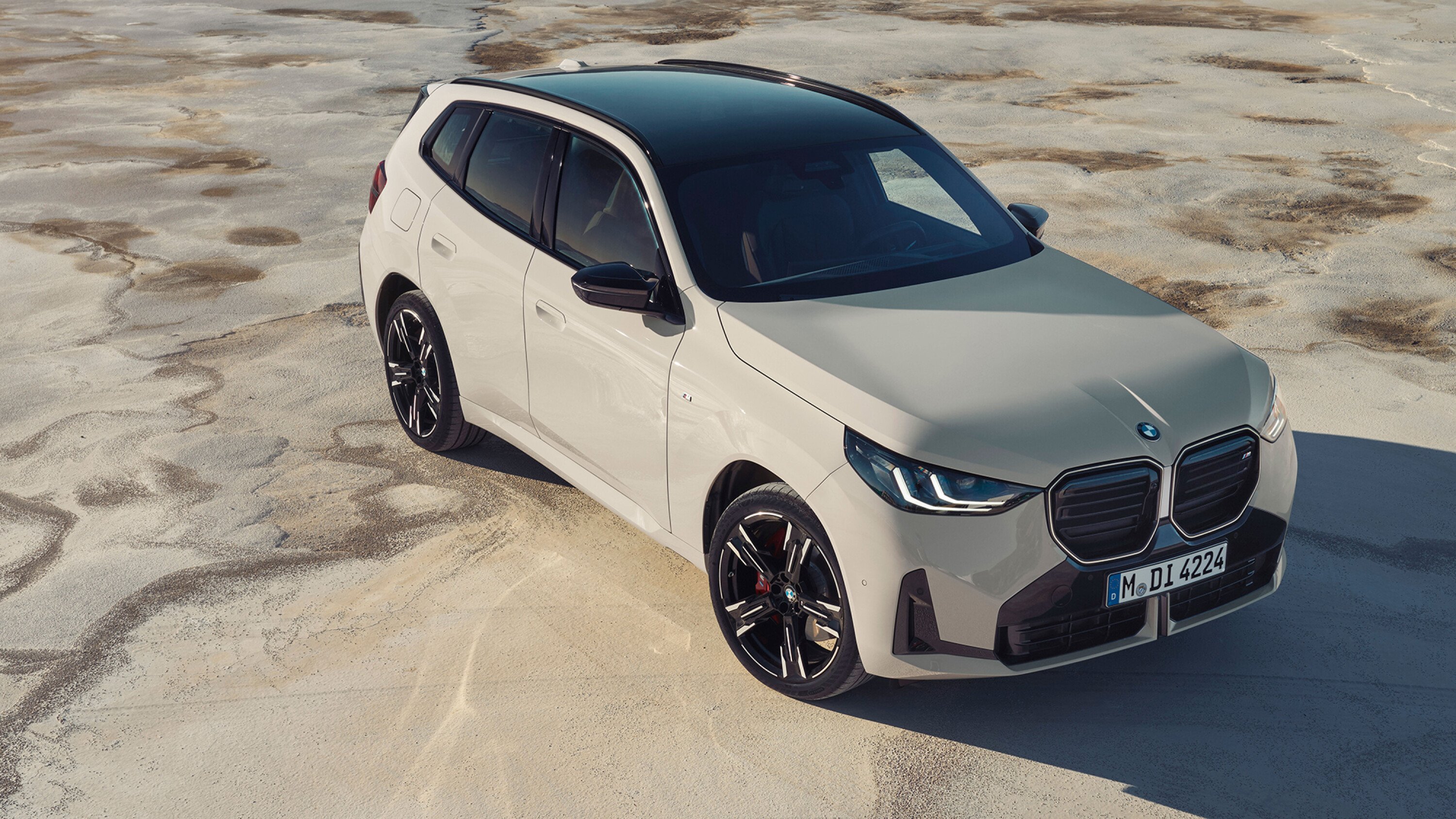
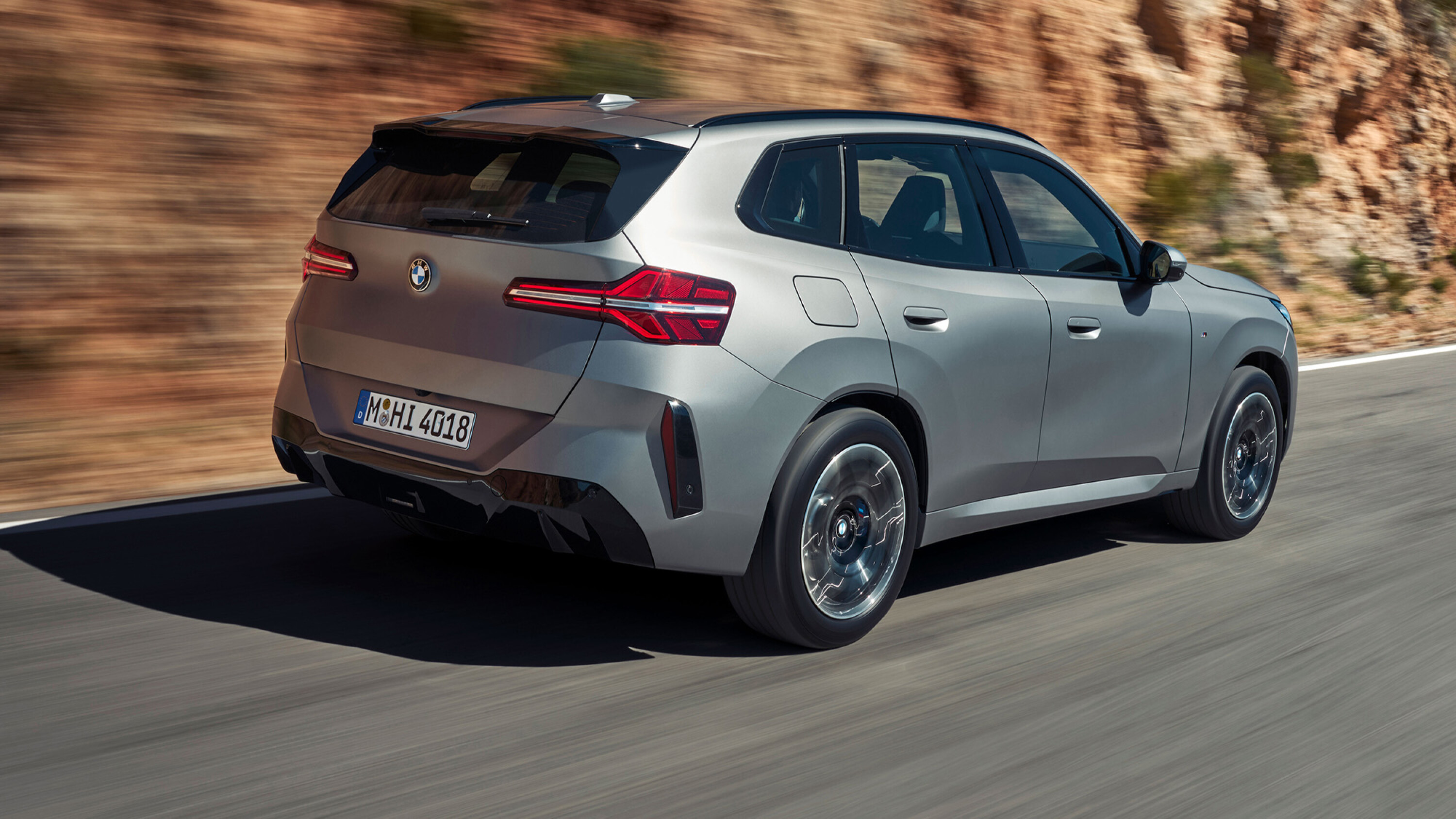
The vehicle’s length has increased by 34mm to 4,755mm, and its width has grown by 29mm to 1,920mm, while its height has been reduced by 25mm, enhancing its sporty profile.
Powertrains and Performance
BMW Australia will launch the X3 with two variants: the X3 20 xDrive and the X3 M50 xDrive.
Both models come standard with BMW’s xDrive all-wheel-drive system and feature 48-volt mild hybrid technology for increased efficiency.
X3 20 xDrive: Powered by a TwinPower Turbo inline four-cylinder petrol engine, the X3 20 xDrive delivers 140kW and 310Nm of torque, claiming a 0-100km/h time of 8.5 seconds.
X3 M50 xDrive: The hero model (pending a proper X3 M) is driven by a 3.0-litre M-tuned turbo petrol six-cylinder engine, producing 293kW and 580Nm. For this model, BMW claims a 0-100km/h 4.6 seconds – 0.2 seconds faster than X3 M40i it replaces.
Interior and Technology
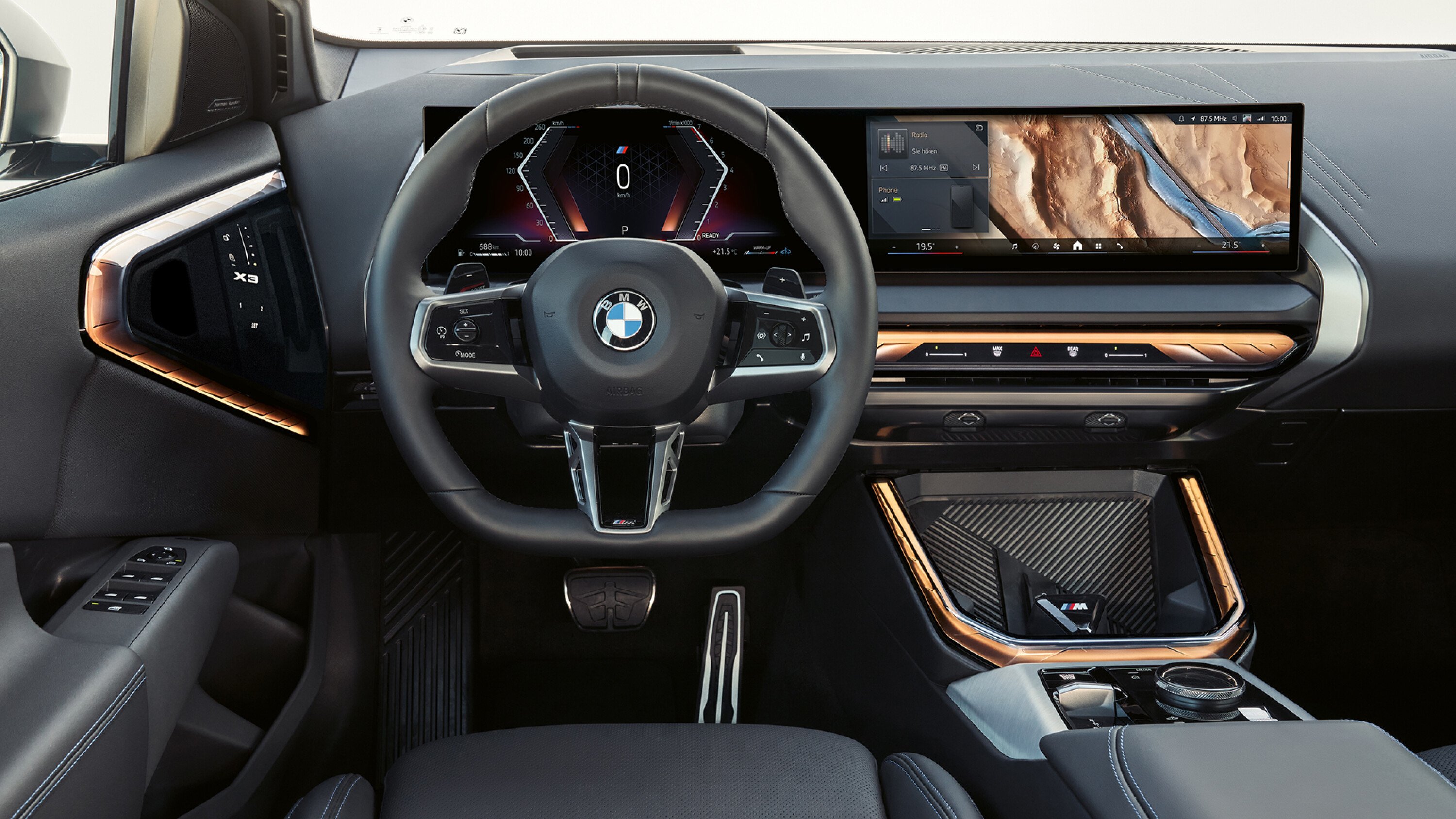
Inside, the 2025 BMW X3 features the BMW Curved Display, BMW Interaction Bar, a flat-bottomed steering wheel, and a new gear selector lever.
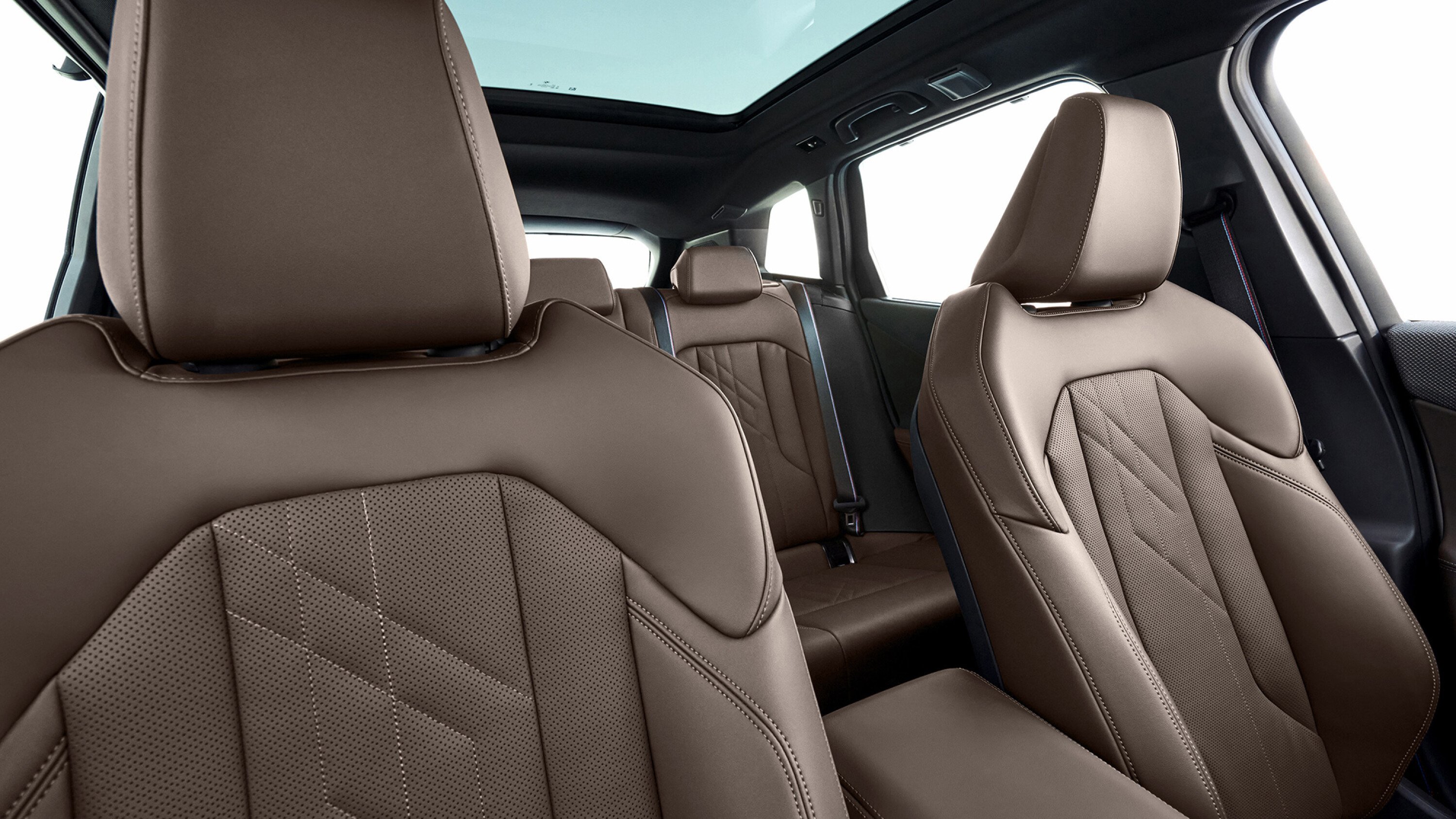
For this new generation, BMW is talking up the X3’s sustainable interior materials, such as Veganza upholstery (a leather alternative made from recycled plant material), which requires 85% fewer CO2 emissions to produce than traditional leather, and a new instrument panel made from recycled polyester.
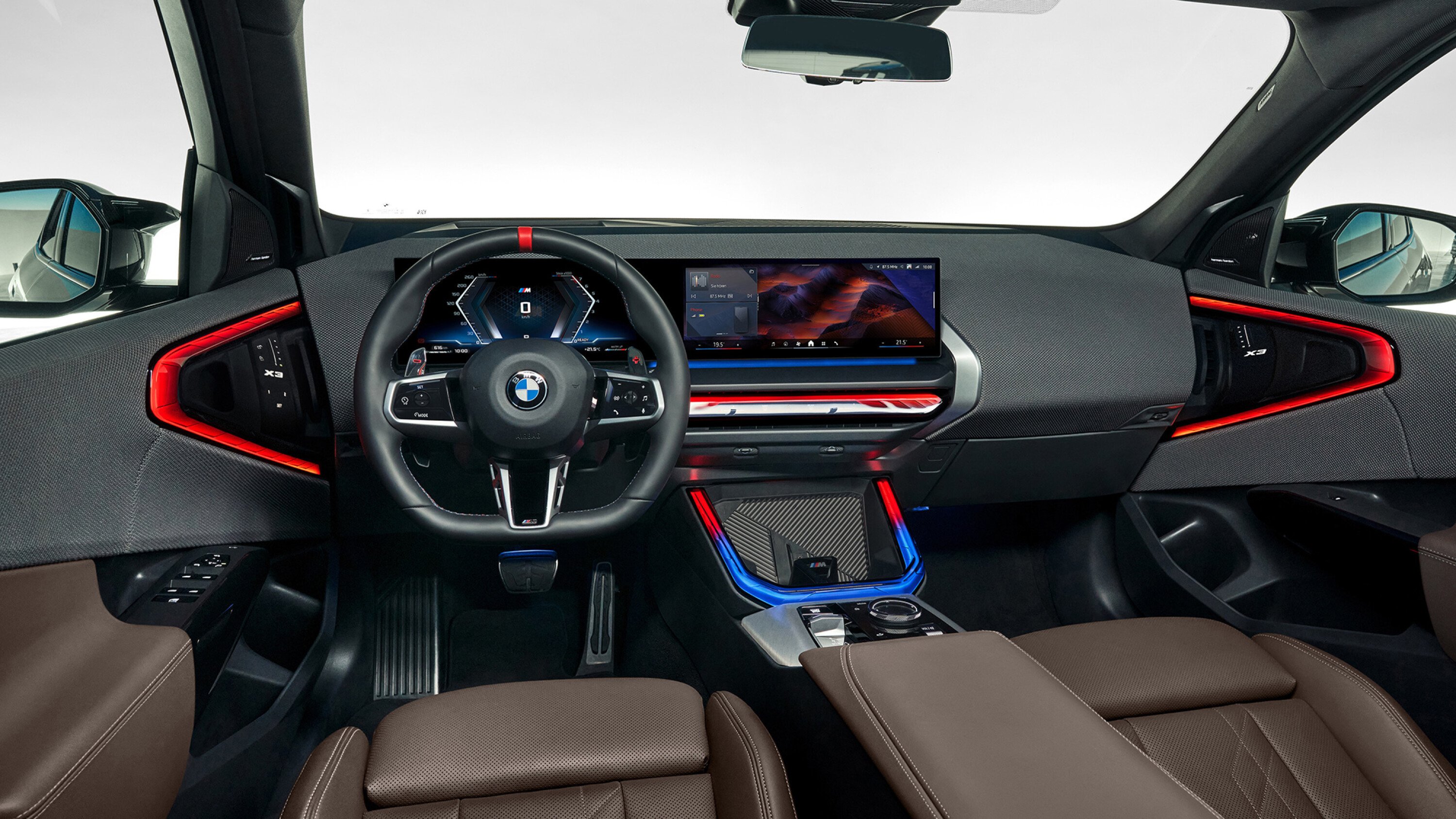
Advanced driver assistance systems are standard, with features including front collision warning, Steering and Lane Control Assistant, Lane Departure Warning, Driving Assistant Professional, and Parking Assistant Plus with a surround view camera.
On the infotainment front, the new X3 includes the latest BMW iDrive system with Operating System 9 and QuickSelect, allowing for direct function activation without submenus. Adaptive suspension is also standard – usually an option overseas.
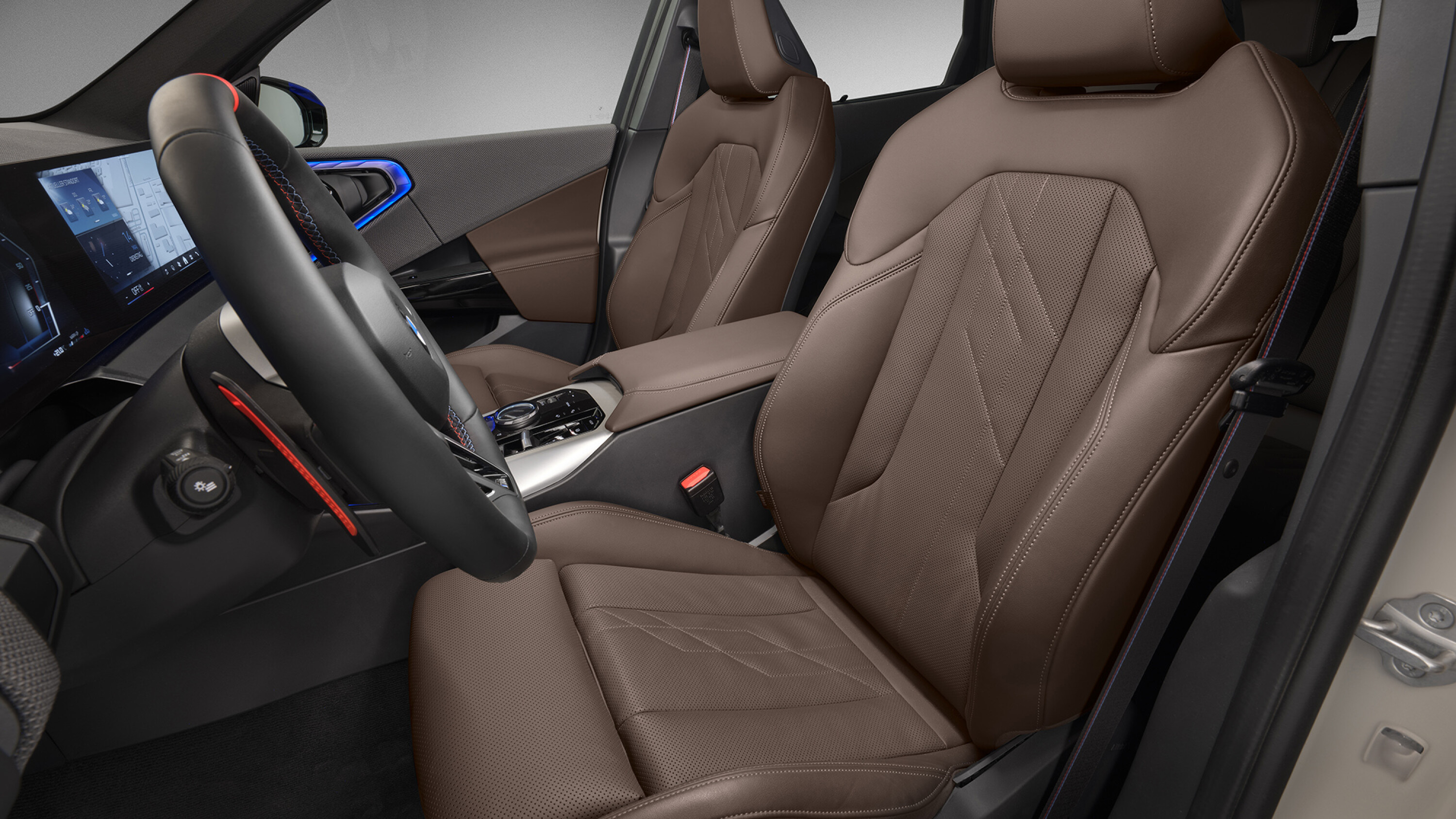
2025 BMW X3: Pricing and equipment
Pricing for the new X3 starts at $84,500 for the X3 20 xDrive. Below are the highlights of the standard equipment for each variant.
X3 20 xDrive
- 48V mild-hybrid engine technology
- 19” M light alloy wheels (w/run flat tyres)
- BMW xDrive intelligent all-wheel-drive system
- 3-zone automatic climate control
- 6-speaker 100-watt Hi-Fi system
- Acoustic glazing
- Adaptive LED headlights
- Adaptive Suspension
- Automatic tailgate
- BMW Digital Premium (90-day trial)
- BMW Iconic Glow illuminated kidney grille
- BMW Intelligent Personal Assistant
- BMW Live Cockpit Professional with 14.9” + 12.3” BMW Curved Display, featuring Operating System 9
- Comfort Access and Digital Key Plus
- Driving Assistant Professional inc. Steering and Lane Control System, Active Cruise Control inc. Stop&Go and Blind Spot Monitor
- DAB+ Digital Radio
- Electric Seat function, front row
- BMW Head-Up Display
- M headliner in anthracite
- M Sport Package
- M Sport leather steering wheel
- Mirror package, inc. anti-dazzle function
- Parking Assistant Plus, inc. Surround View camera, Reversing Assistant and Drive Recorder
- Remote Software Updates
- Seat heating, front row
- Tyre pressure monitoring system
- Upholstery, Veganza
- Wireless Apple CarPlay and Android Auto
- Wireless smartphone charging
X3 M50 xDrive
- Metallic paint
- 48V mild-hybrid engine technology
- 21” M light alloy wheels (w/standard tyres)
- 15-speaker, 750-watt harmon/kardon surround system
- Quad exhaust outlets
- Panorama glass roof (fixed)
- M specific kidney, mirror caps and aerodynamic elements
- Privacy glass
- Roller blinds for rear side windows
- M Sport Pro package – M braking system, featuring red callipers – M seat belts – M Shadowline headlight and extended contents
- Steering wheel heating
- Seat ventilation for driver and front passenger
- Seat heating for rear (outer) seats
Customisation Options
Exterior finishes
Non-metallic
- Alpine White (no cost option)
Metallic – $2,000 for 20 xDrive, no-cost option for M50 xDrive
- Black Sapphire
- Arctic Race Blue
- Sophisto Grey
- Dune Grey
- M Brooklyn Grey
- Fire Red
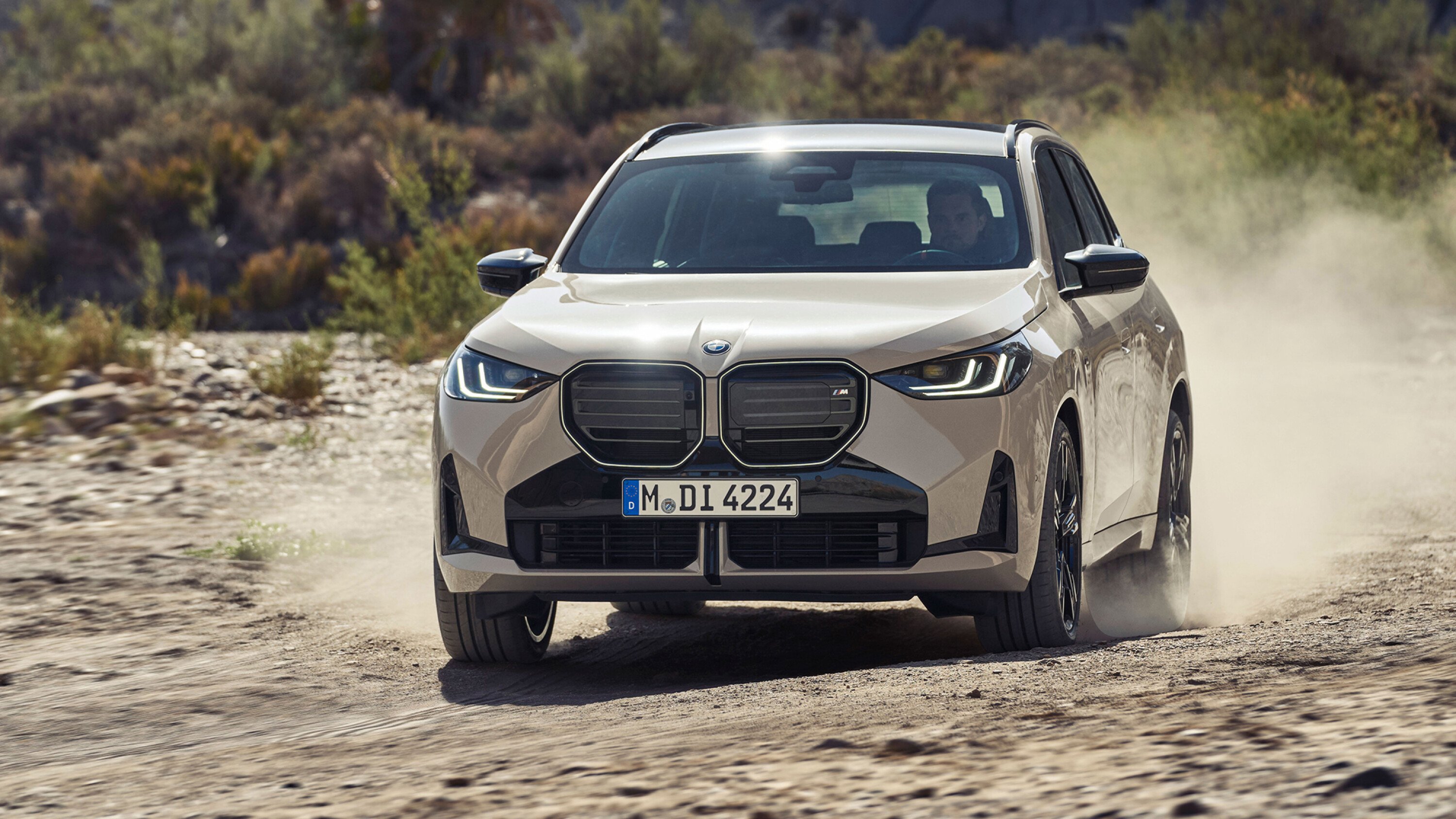
BMW Individual
- Tanzanite Blue – $4,000 for 20 xDrive; $2,000 with Enhancement pack and $2,000 for M50 xDrive
- Frozen Deep Grey or Frozen Pure Grey metallic – $6,000 for 20 xDrive; $4,000 with Enhancement pack and for M50 xDrive
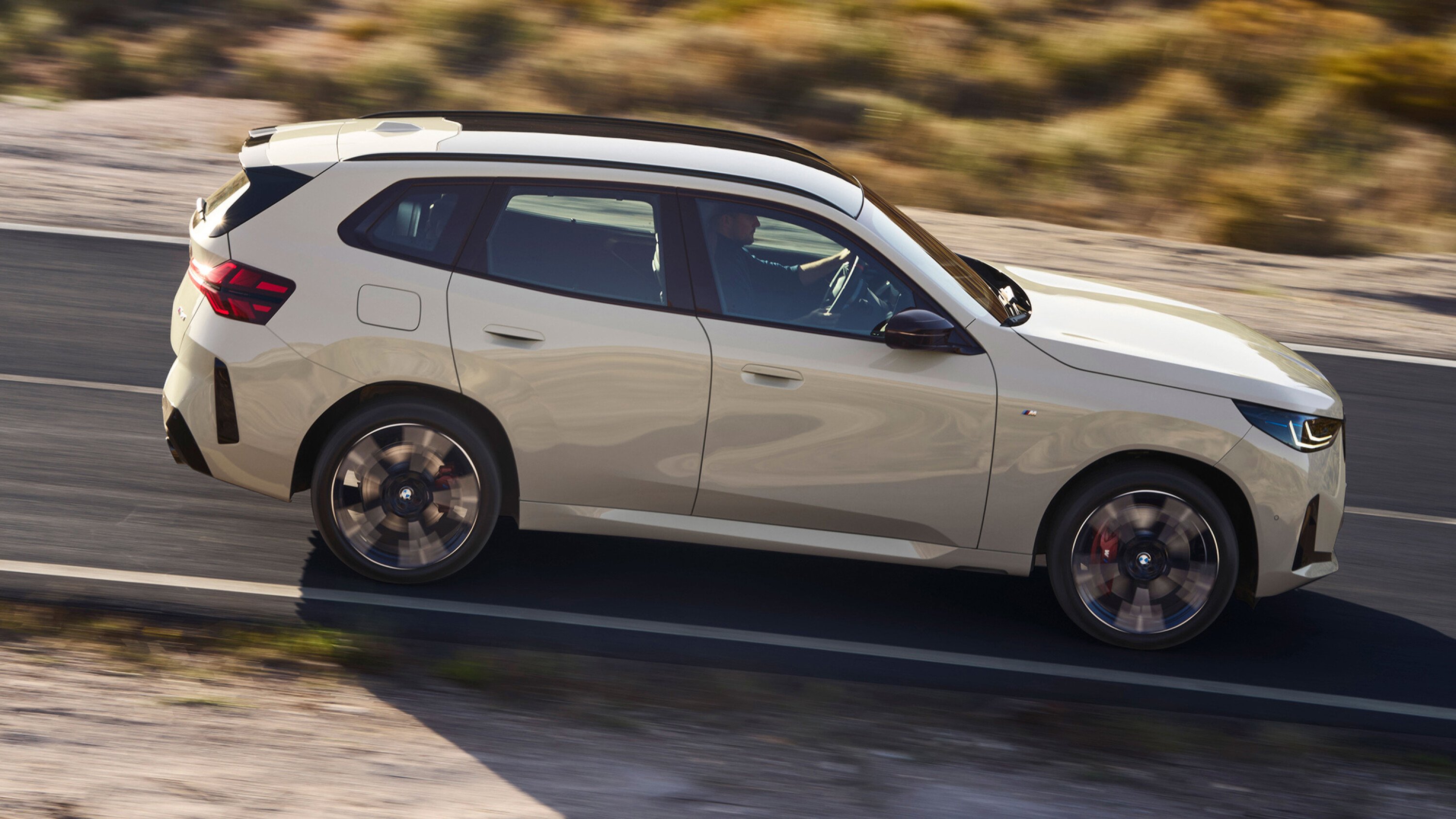
Alloy wheels
- 19” M light alloy wheels Y-spoke style 1035 M Bicolour – Standard on 20 xDrive with runflat tyres; snow chains can be fitted
- 20” M light alloy wheels Double-spoke style 1036 M Bicolour – $2,000 for 20 xDrive; not available with runflat tyres and snow chains cannot be fitted
- 21” M light alloy wheels Star-spoke style 1037 M Bicolour – Standard for M50 xDrive
- 21” M light alloy wheels Star-spoke style 1037 Jet Black – No cost option for M50 xDrive
Seat upholstery: ‘Veganza’ (plant-based leather)
All no cost options for both variants
- Black
- Calm Beige
- Espresso Brown
- M Alcantara/Veganza combination
Seat upholstery, BMW Individual Leather ‘Merino’
$4,000 for both variants
- Black/Atlas Grey
- Amber/Atlas Grey
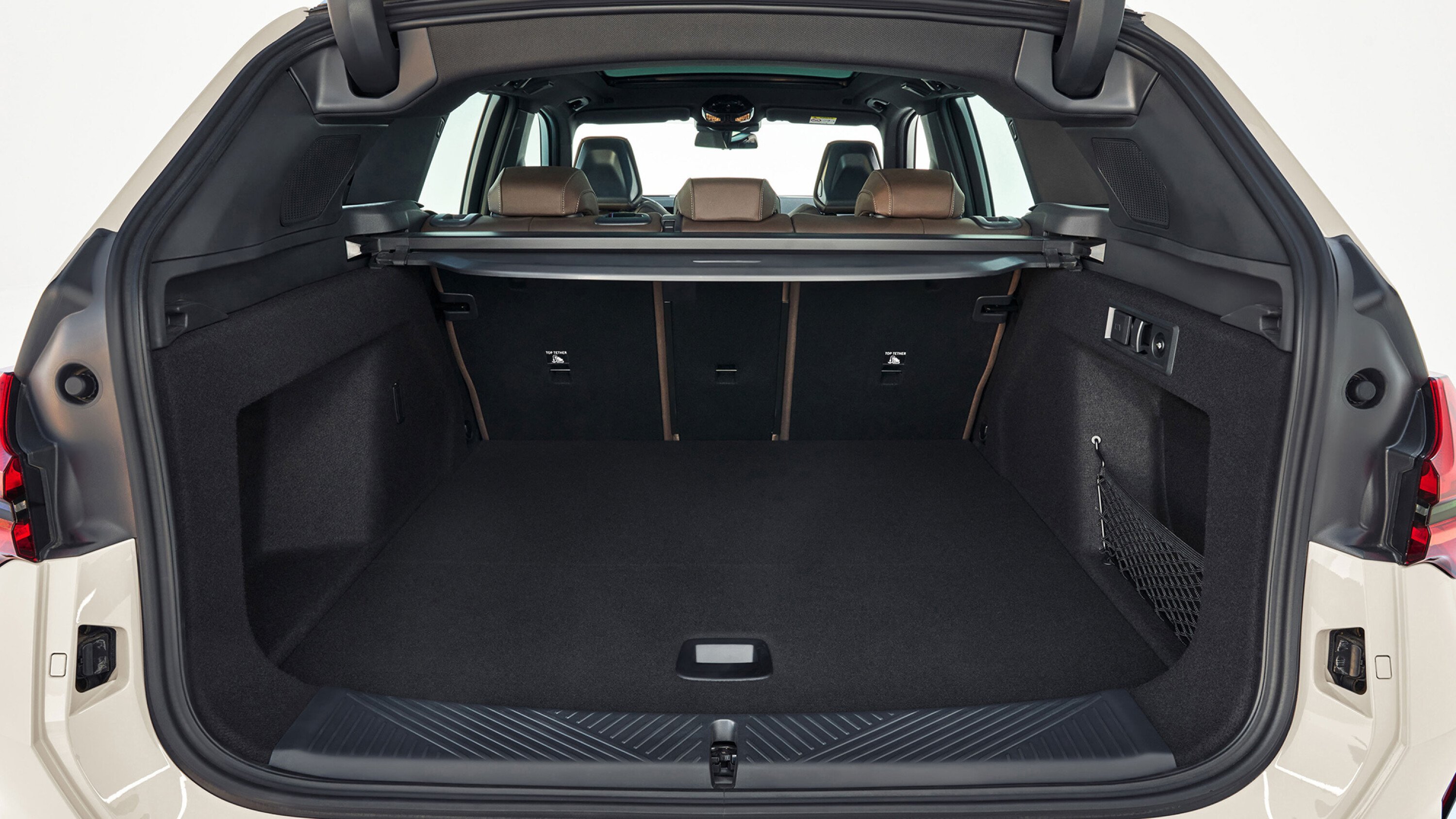
Interior trims
No cost options for both variants
- M interior décor Fine-Brushed Aluminium
- BMW Individual Magnolia fine-wood trim with fine print
Interior trim upgrade
$1,200 for both variants
- Knitted textile instrument panel with material extending into upper door panels
Customisation packs
X3 20 xDrive Enhancement – $6,000
- Metallic paint
- Alarm System
- Panorama glass sunroof
- harmon/kardon surround sound
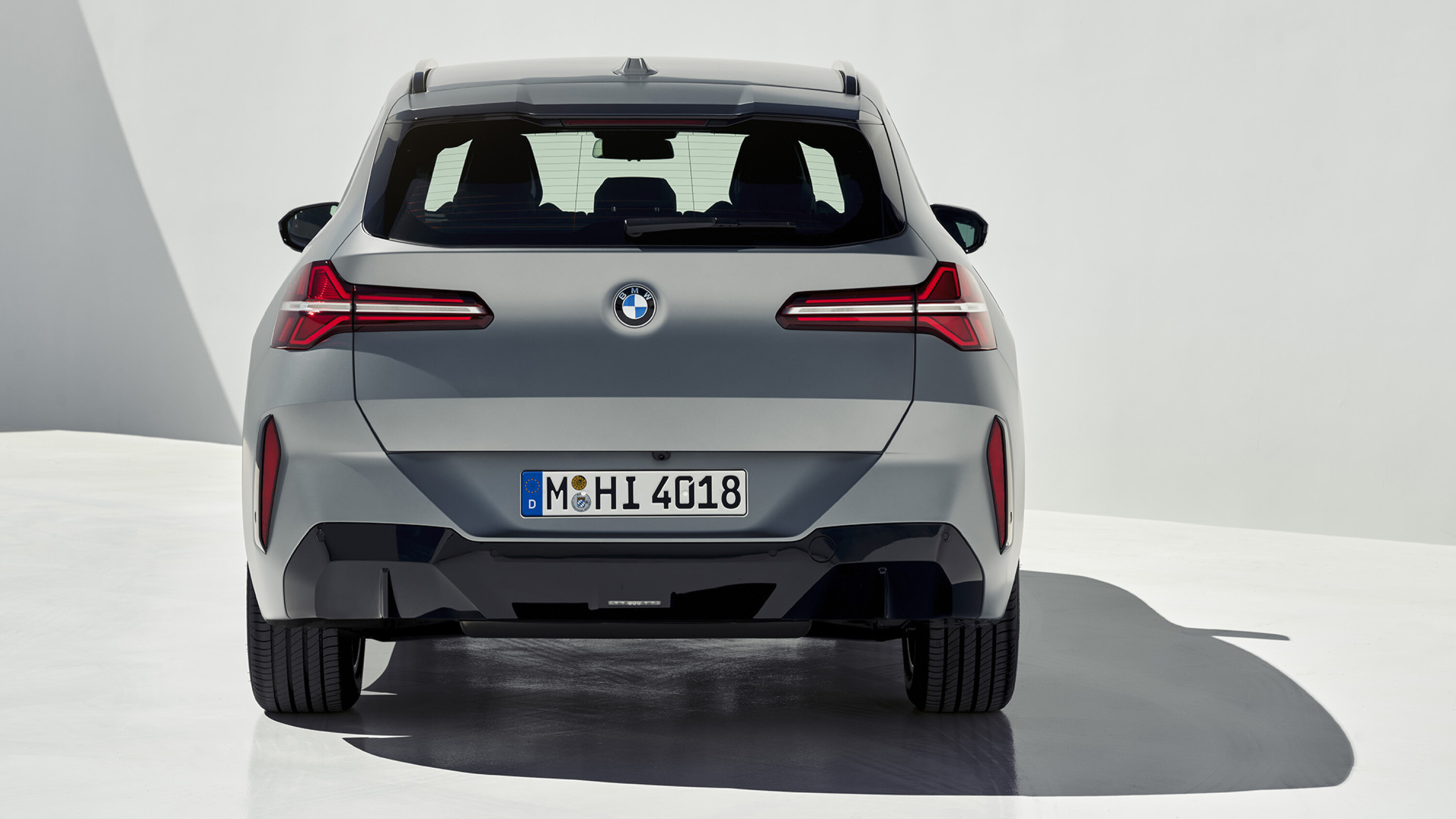
X3 20 xDrive Comfort – $4,000
- Seat heating for 2nd row passengers
- Roller sunblind for rear side windows
- Active seat ventilation
- Heated steering wheel
- Privacy glass with sun protection glazing
- Luggage compartment separating net
X3 20 xDrive M Sport Pro – $3,000
- High-gloss Shadow Line with extended contents, inc:
- Radiator grille frame and struts
- Trim detailing in tail light
- Tailpipe trims
- M Lights Shadow Line
- M Sport brakes, Red high-gloss (also available in blue)
- M Seat Belts
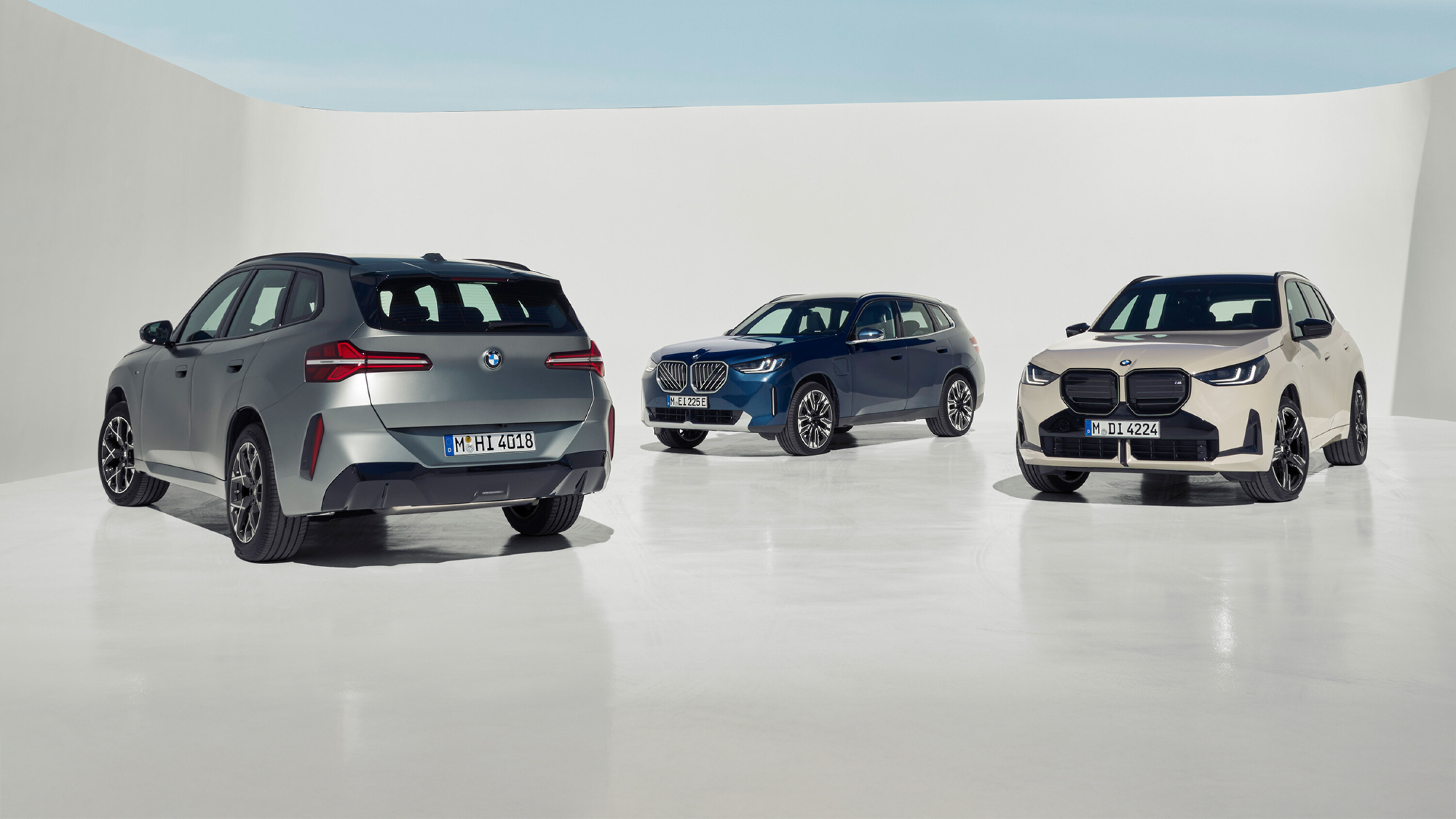
2025 BMW X3 PRICING
- BMW X3 20 xDrive – $84,500
- BMW X3 M50 xDrive – $126,900
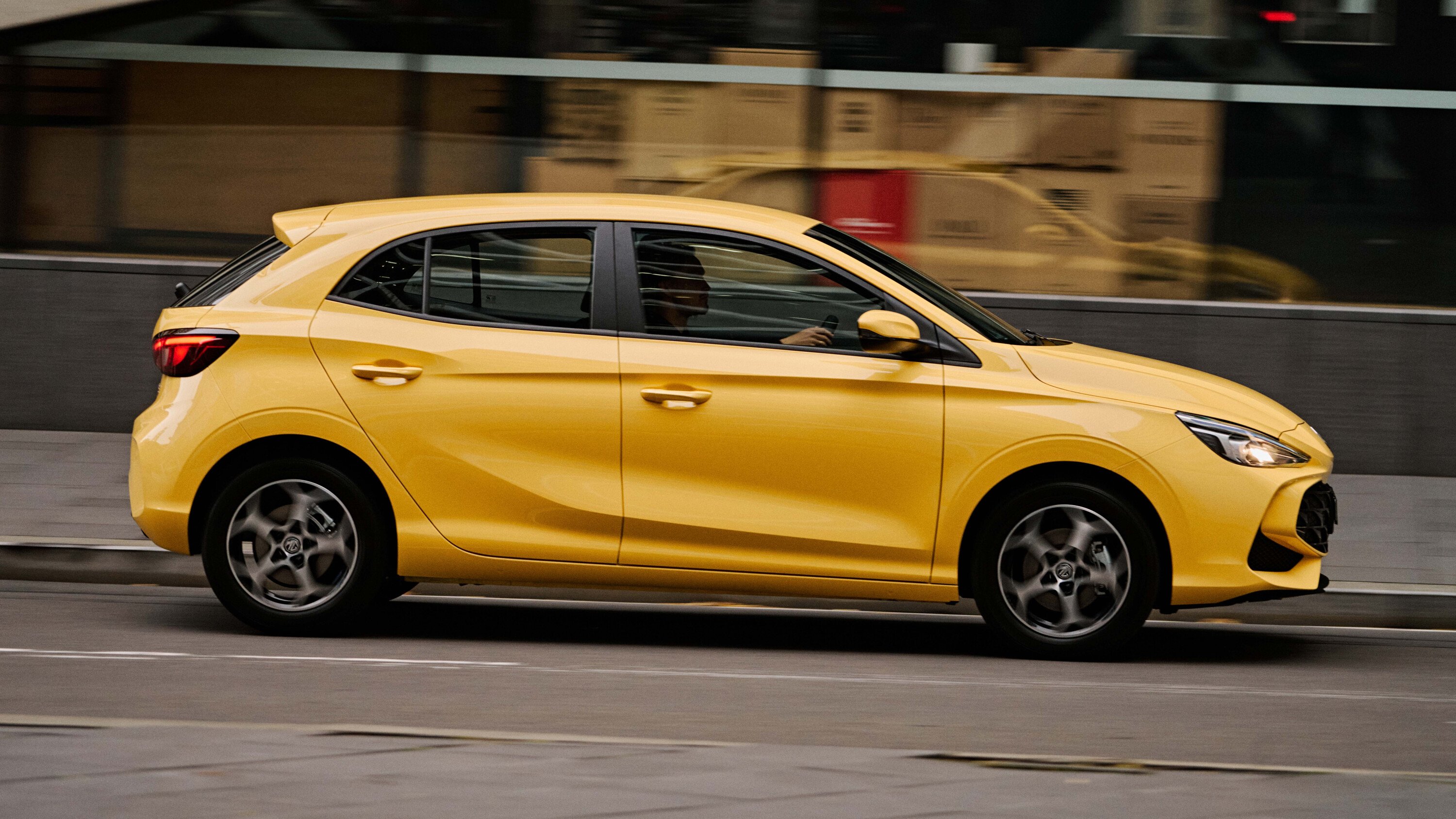
The MG 3 petrol model range consists of the base Excite and flagship Essence, with prices for the new non-hybrid models taking a big step up for the new-generation range.
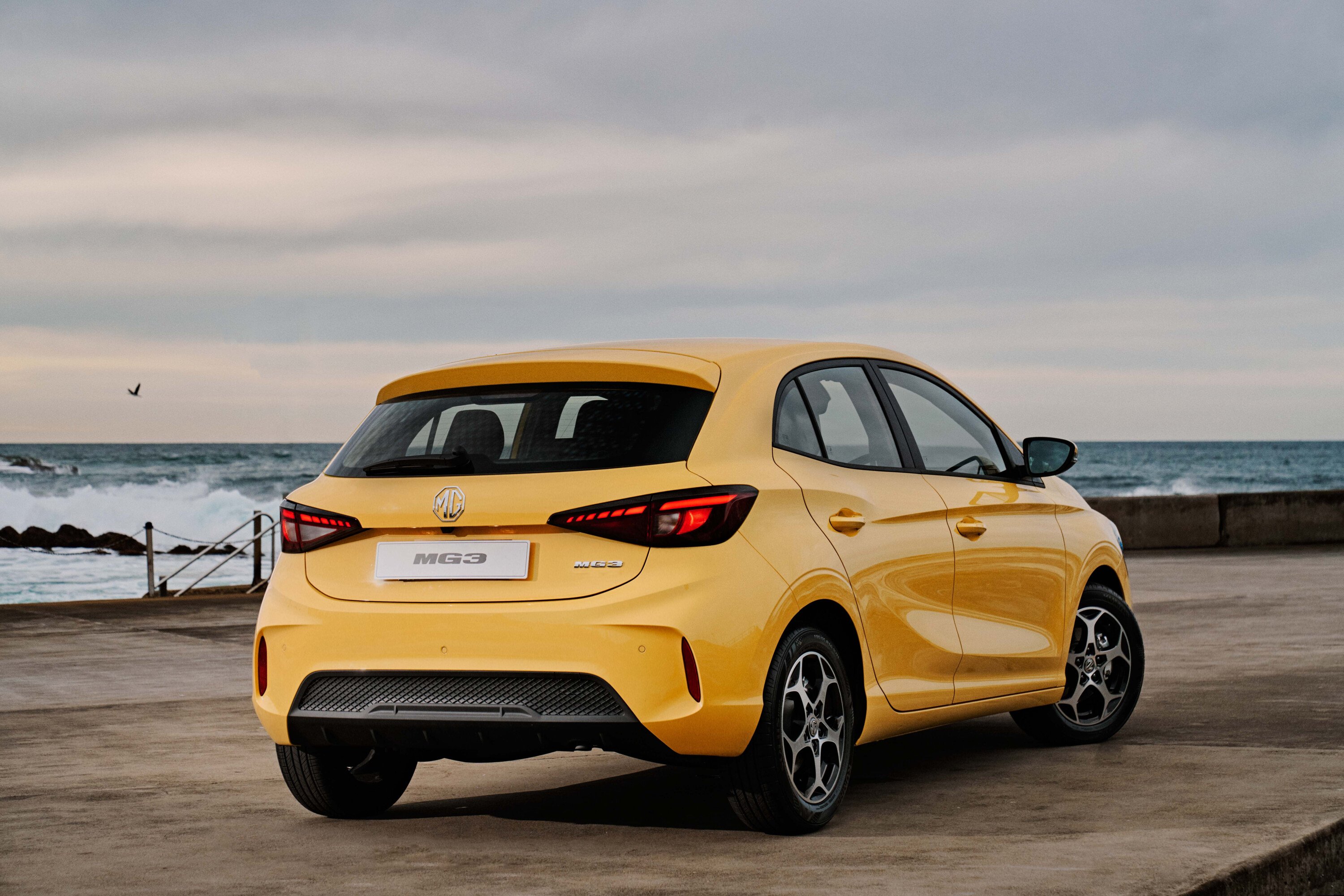
JUMP AHEAD
- Pricing and features
- Safety
- Interior
- On the road
- Key rivals
- Should I put it on my shortlist?
- Specifications
Pricing and features
The new-gen MG 3 petrol models start from $23,990 (MSRP) or $24,990 drive-away for the Excite, while the high-grade Essence adds $2000 to the asking price.
The base model gets auto halogen lights (really?!) and LED daytime running lights, 16-inch alloy wheels with a space-saver spare, a rear fog light, push-button start, manual front seat adjustment, a 10.25-inch multimedia touchscreen with Apple CarPlay and Android Auto (both wired), a 7.0-inch driver info screen, a reversing camera and rear parking sensors, plus heaps of new safety tech – see below.
The Essence adds LED headlights, a sunroof, rain-sensing wipers, keyless entry, sat nav, DAB digital radio, fake leather and cloth trim, leather steering wheel, sunglass compartment, rear map pockets, a front centre armrest and a 360-degree surround-view camera – $2000 well spent, I reckon.
Safety
There’s no ANCAP or Euro NCAP rating yet, but it comes way better equipped with safety gear than the first MG 3.
Standard is autonomous emergency braking (AEB), lane departure warning with lane keep assist (and emergency lane keep), adaptive cruise control with traffic jam assist, blind-spot monitoring and rear cross-traffic alert, and a system called ‘intelligent speed assist’, which will beep to tell you when it thinks the speed zone has changed. It’s pretty annoying, that one.
There’s also a reversing camera and rear parking sensors in the Excite, and the Essence adds a surround view camera.
The MG 3 has six airbags – dual front, front side and full-length curtains.
Interior
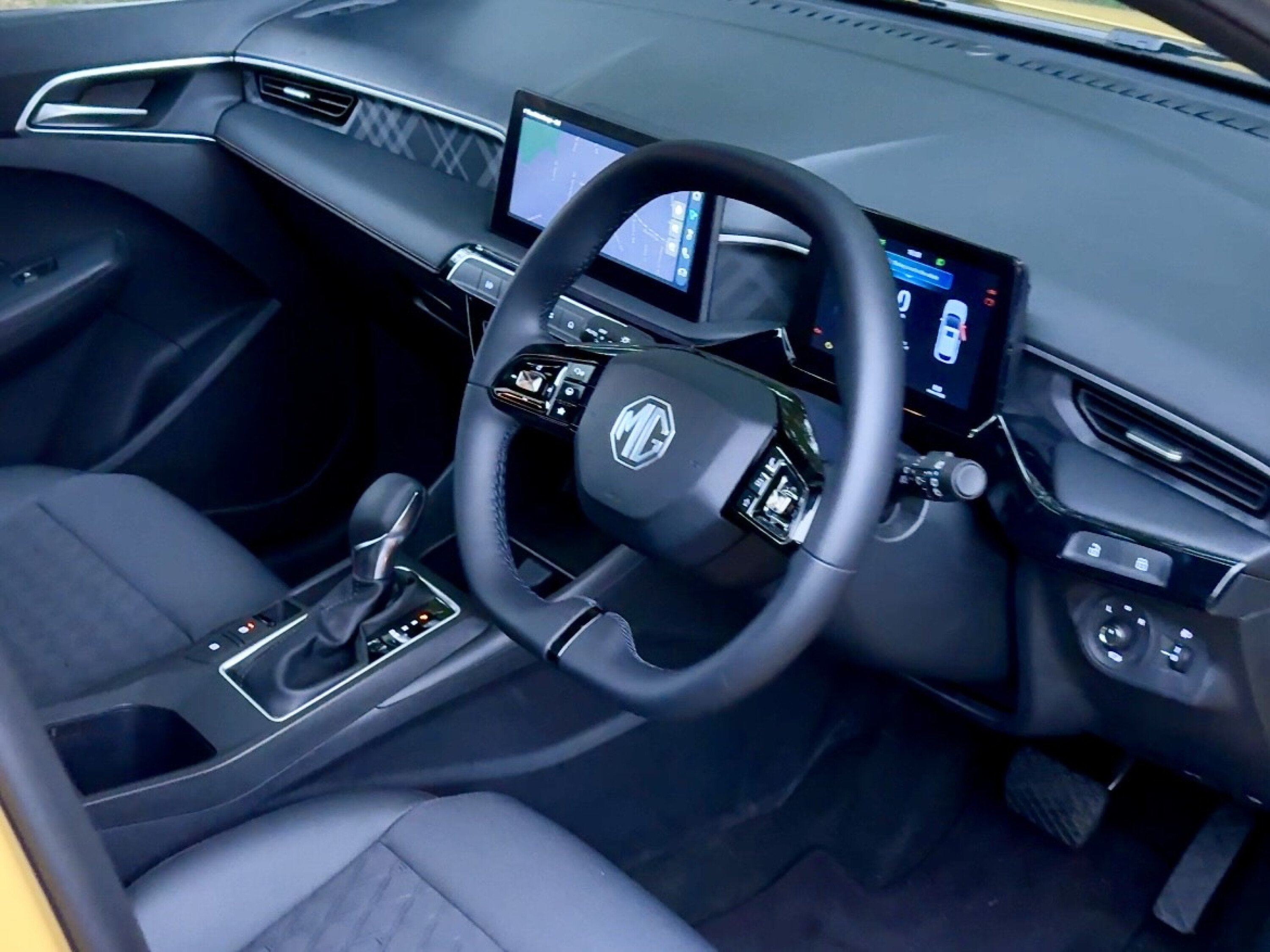
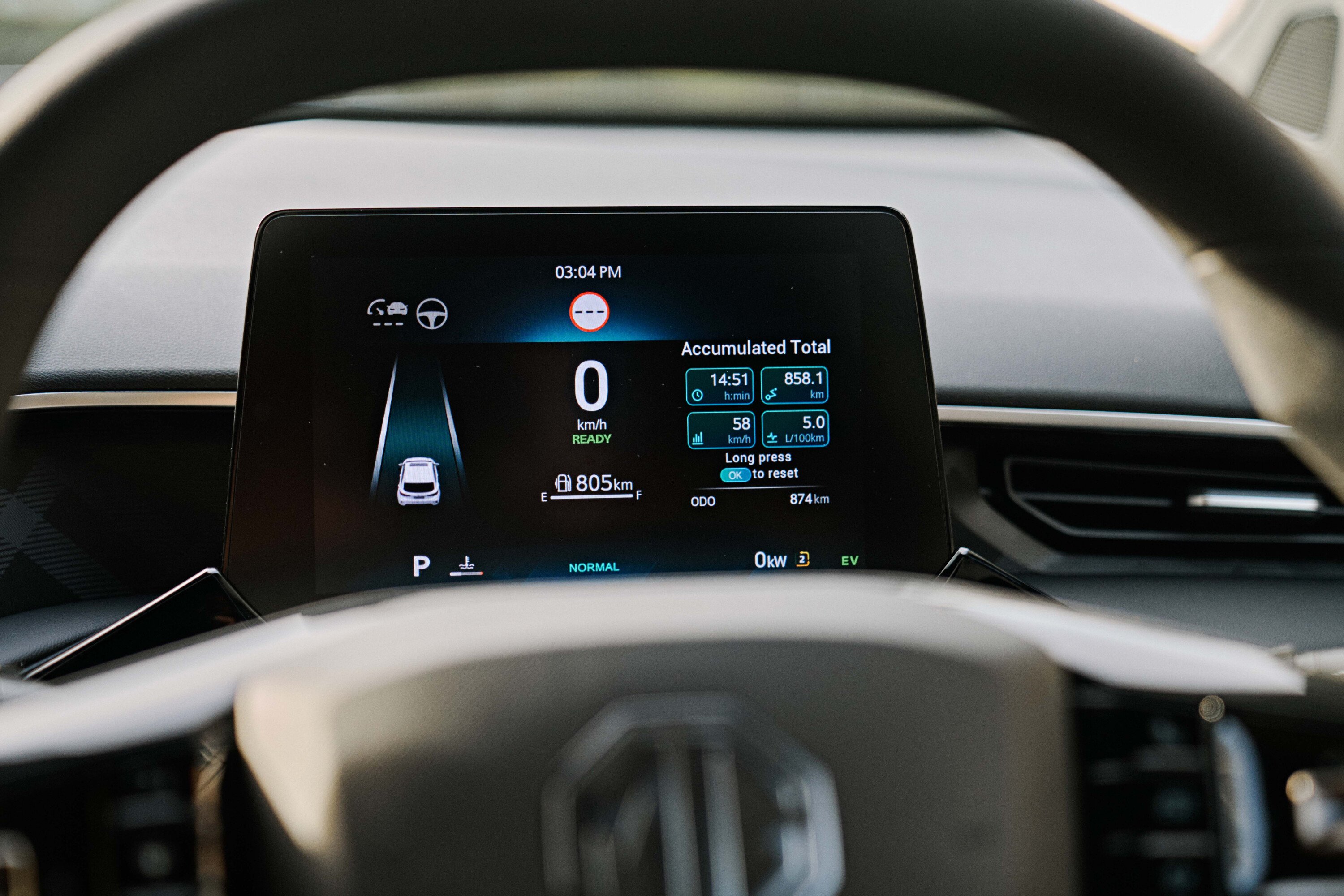
It looks the part, with a pair of digital screens: a 10.25-inch multimedia unit and a 7.0-inch driver info display.
While the infotainment screen includes buttons for volume, A/Cand demisters, you still have to make fan and temperature adjustments through the screen. The system features Apple CarPlay and Android Auto – however, it’s wired rather than wireless, which is a miss for younger buyers, and there’s no wireless phone charger, either.
The oversized steering wheel has gloss black plastic controls that attract fingerprints and the controls are somewhat tricky, with the steering wheel icon being your cruise control trigger, and a ‘pages’ icon for the driver info screen, which can also adjust A/C fan speed and temperature.
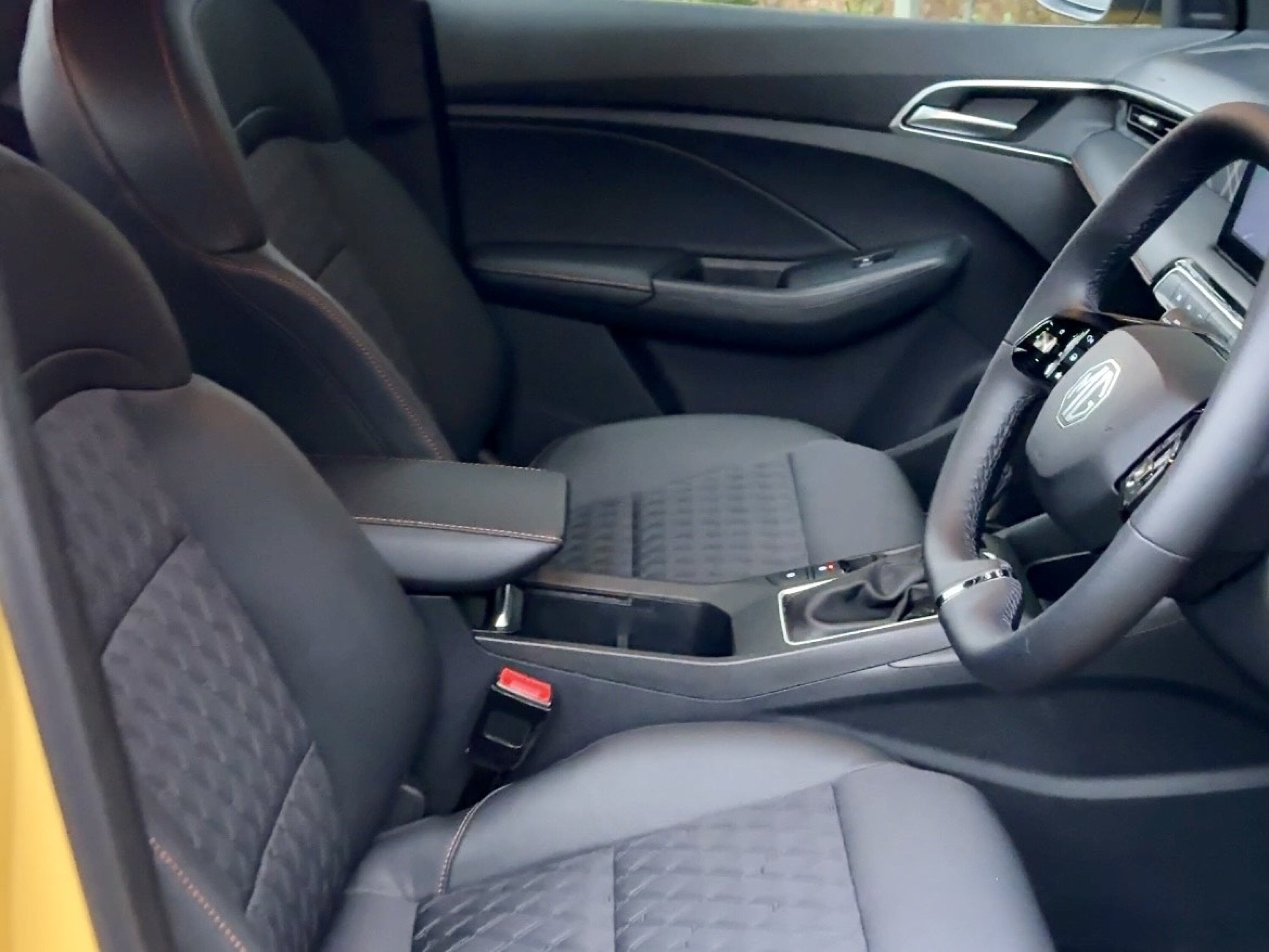
However, these controls can malfunction when smartphone mirroring is active.
The petrol model includes a traditional gear selector, cupholders, a sliding storage tray, a comfy centre armrest, and bottle holders, but the hard, shiny plastics may cause items to rattle. The seats are comfortable but have a hard plastic edge that might be uncomfortable on your backside when you’re getting in or out.
The steering wheel features tilt adjust, but doesn’t do reach. And while the black-on-black design offered for some colour choices might suit you, it is a dark environment. At least the crosshatch design on the dash – referencing the last model – is a nice touch.
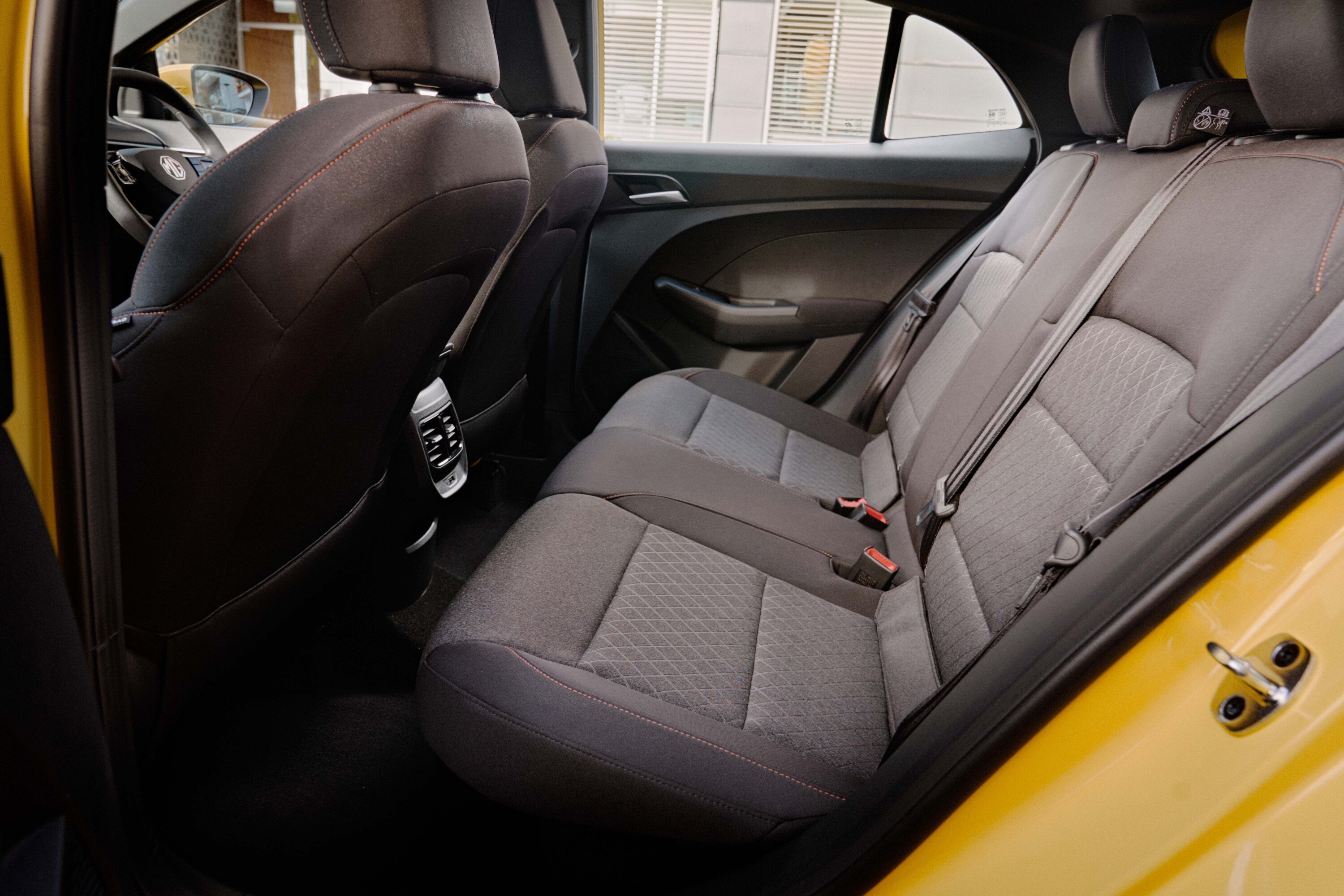
Notably, there is no auto-dimming rearview mirror, but a USB-A port in the mirror housing allows for a dash cam to be fitted in a tidy manner. Additional USB ports are below the infotainment screen.
Rear seat space is impressive, accommodating a 182cm/6’0” adult with ease behind someone of a similar size. Three small adults can fit in the back, though three child seats might be tight – or impossible. There are, however, ISOFIX points in the window seats and top-tethers for all rear seats.
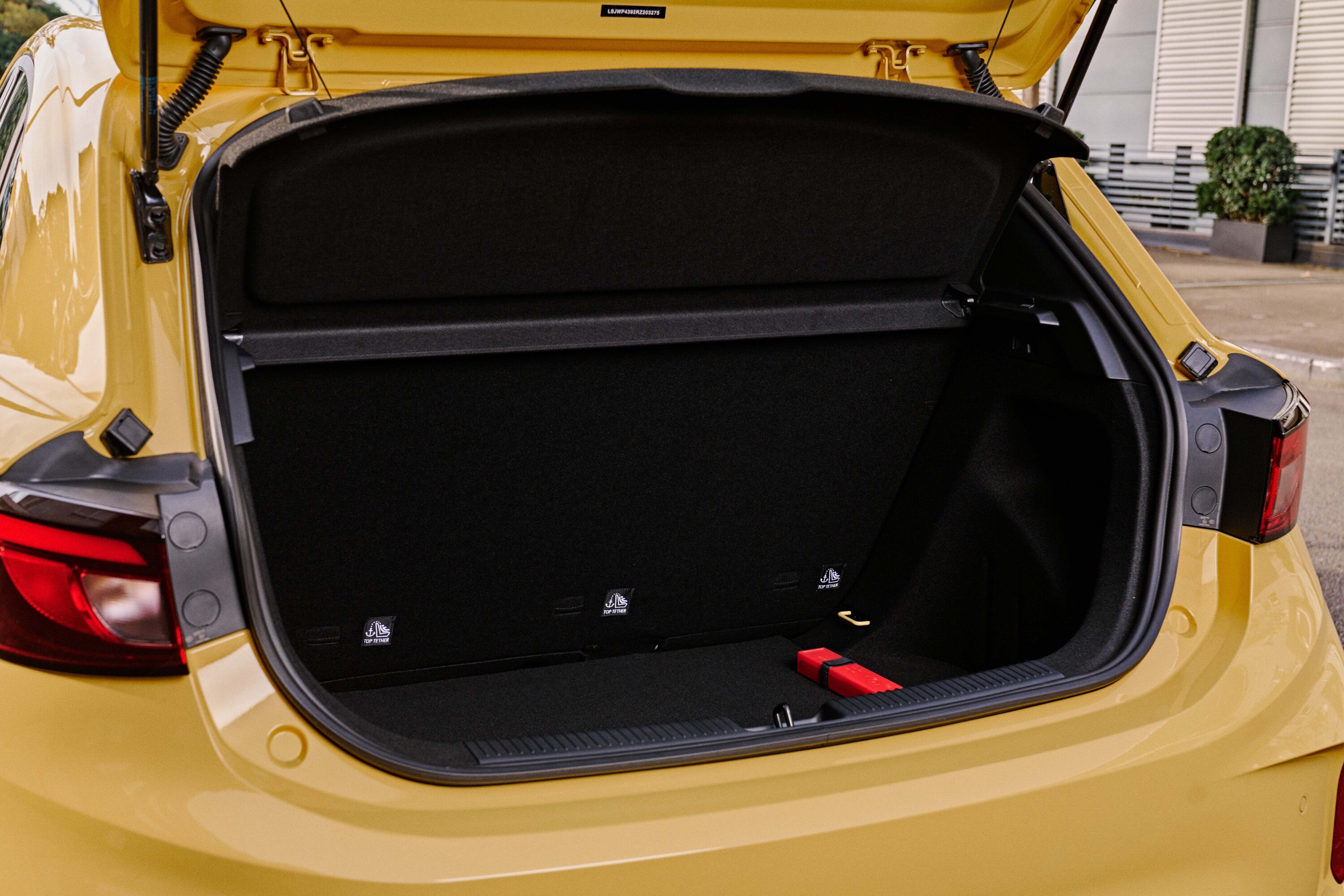
The boot, with 293 litres of cargo capacity, includes a lamp and shopping bag hook. Petrol models have a space-saver spare, too.
On the road
The new MG 3 shows significant improvements to the drive experience, with the petrol model being a decent option, although not as impressive as the hybrid.
The 1.5-litre four-cylinder engine isn’t particularly powerful, and some may dislike the shift to a CVT automatic from a traditional torque-converter. However, this CVT is relatively quiet, addressing the common issue of CVTs being droney.
While not as zippy as the hybrid, it accelerates decently at speed, though it shows some lag in slow situations. The CVT has eight ‘shift’ points, maintaining a smooth drive, though parking can reveal a minor hesitation in shifting gears.
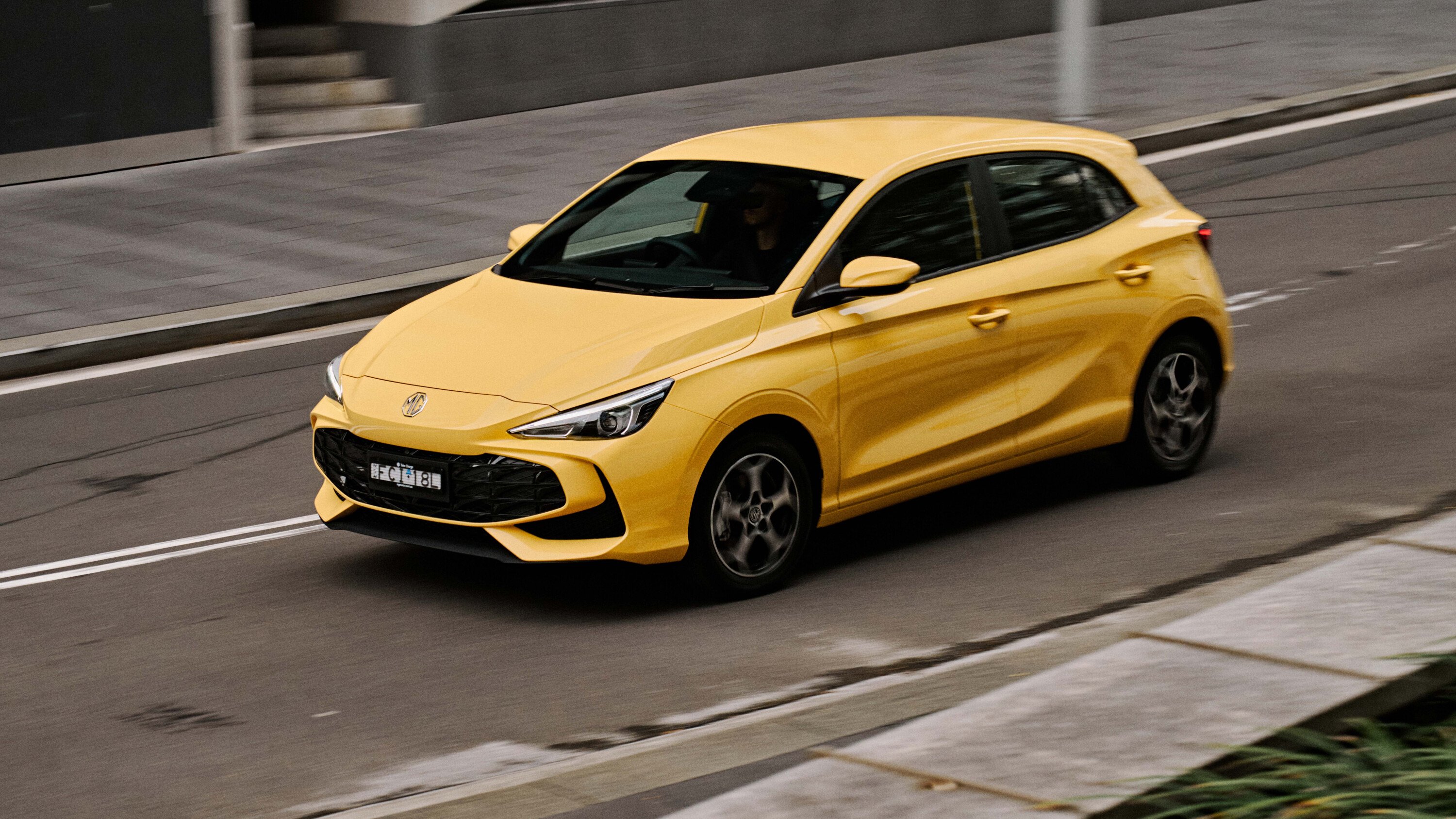
Braking is more responsive and confident compared to the hybrid, which has regen brakes that interfere with the feel to the driver’s foot.
The new MG 3’s longer wheelbase and wider track improve its stability and comfort over the previous model. The suspension handles urban driving and bumps better, though it’s not the most supple for a small car.
The steering wheel feels oversized for the car, diminishing its nimbleness but remains predictable and easy to park.
Safety systems are mixed; the emergency lane keep system is too intrusive, and the speed-sign recognition system can be inaccurate. Road noise at highway speeds could be an issue for commuters.
Key rivals
The best alternative if you want a cheap, fun little car is the Kia Picanto (from $17,890 MSRP), and it has a manual or auto, and a cool GT-Line model, too.
Should I put it on my shortlist?
It’s better than the last one by a margin, but whether it’s worth this much money? You tell us what you think in the comments.
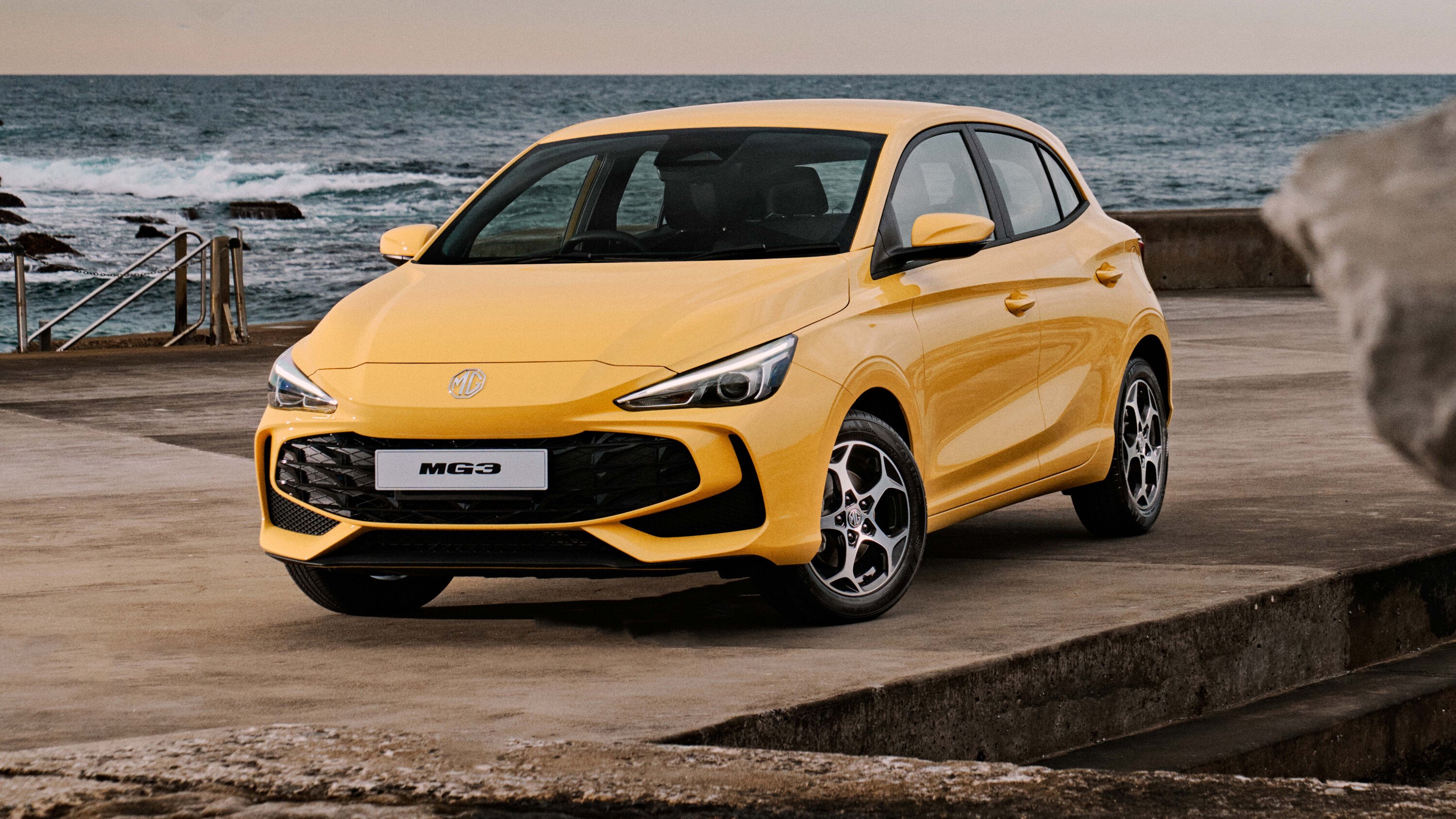
| 2024 MG 3 petrol specifications | |
|---|---|
| Powertrain | 1.5-litre petrol 4-cyl |
| Max power | 81kW |
| Max torque | 142Nm |
| Drivetrain | CVT auto, front-wheel drive |
| Fuel consumption | 6.0 litres per 100km claimed |
| Price | from $23,990 plus on-roads / $24,990 drive-away |
“We were somewhere around Barstow on the edge of the desert when the drugs began to take hold. I remember saying something like ‘I feel a bit lightheaded; maybe you should drive….’
“And suddenly there was a terrible roar all around us and the sky was full of what looked like huge bats, all swooping and screeching and diving around the car, which was going about a hundred miles an hour with the top down to Las Vegas.”
I now feel I have an inkling of how Hunter S. Thompson must have felt. The other day, I drove a Mini off the edge of a platform into space. There I was, blithely assessing the ride quality of the new Mini Cooper SE, when the road just sort of ran out and I sailed out into nothingness.
Fortunately, for me at least, I lived to be able to tell the tale. That’s testament to the fact that all four of my tyres were still firmly adhered to a gravel car park somewhere on the outskirts of Sitges, in Spain.
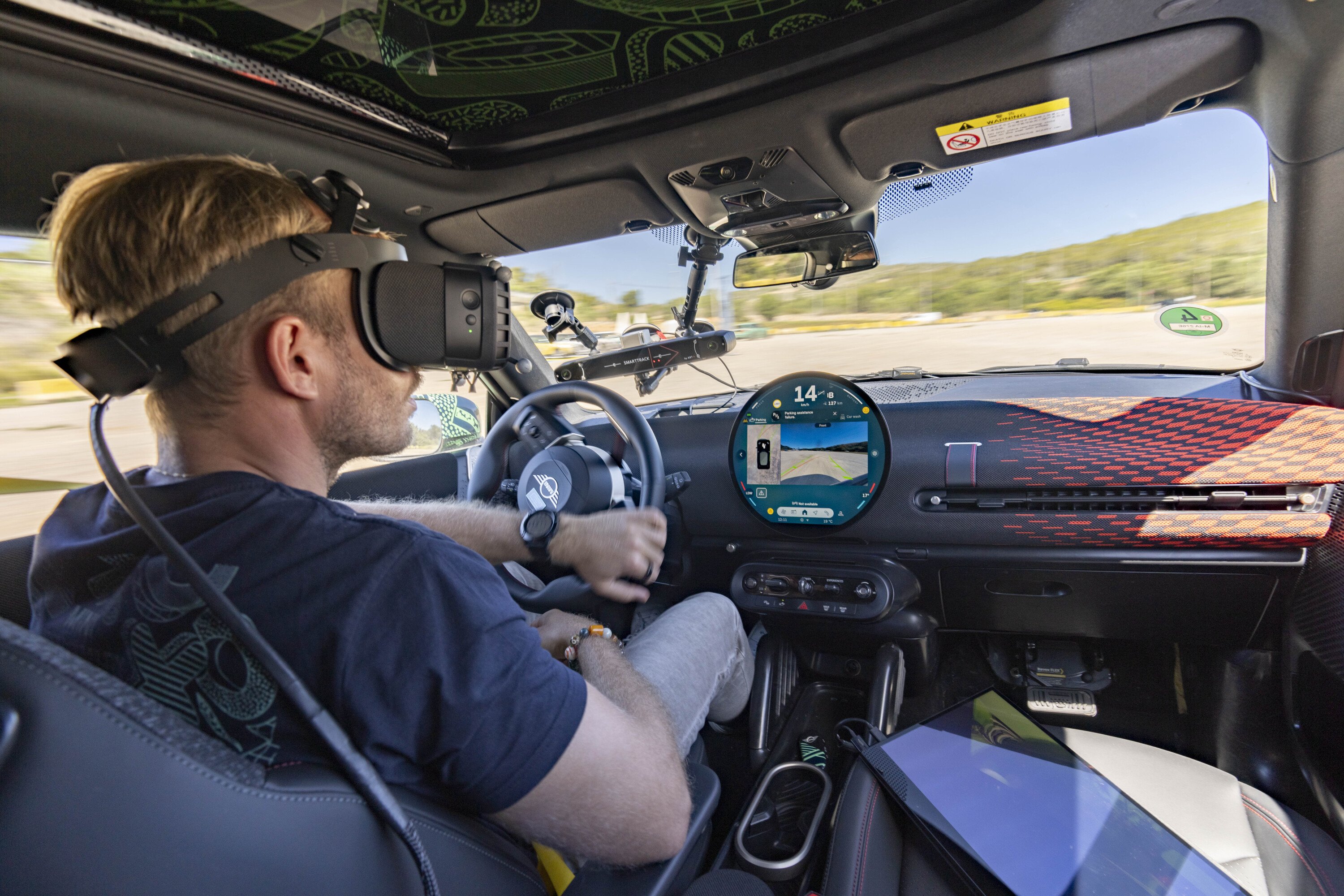
My view was what Mini called ‘mixed reality’ and it was, to be frank, one of the most bizarre driving experiences I’ve ever had.
Here’s how it works. You’re presented with a grey camo Mini called Jim. In the boot is a massive computer with all manner of wiring spooling out of it. In the passenger seat is a Mini engineer who, thankfully, is also equipped with a brake pedal.
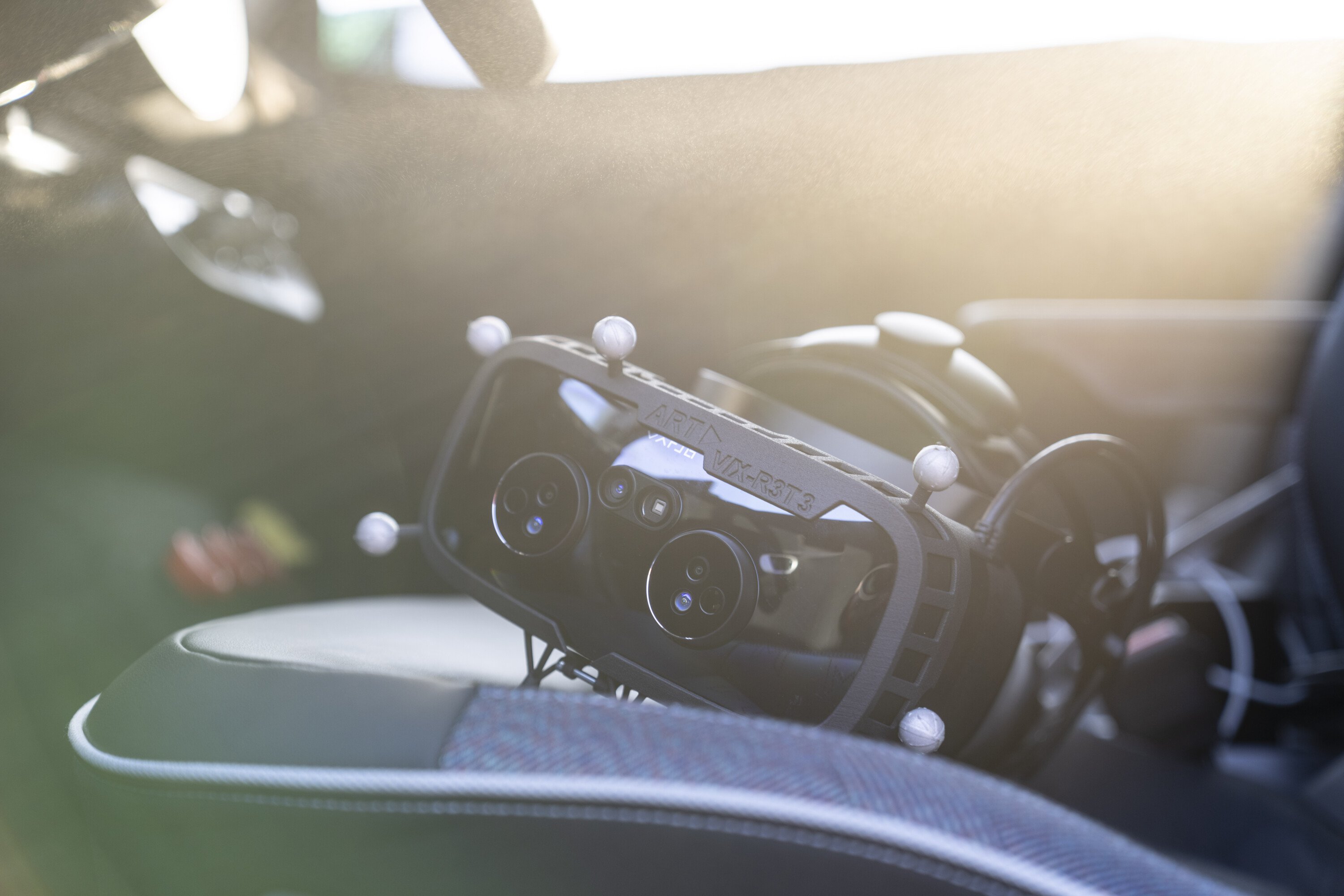
You can’t see a lot out of the car, because running across the windscreen is what looks like a home hi-fi soundbar. It’s a head-tracking system that figures out where your noggin is pointed.
You don a wholly opaque VR headset which as a couple of cameras mounted on the front of it. This is key, because it renders a live image of what’s going on in the car to the VR headset. Initially everything seems fairly normal. You’re looking at a slightly lower-res version of normality as you bump the car around some cones.
Then the whole world goes wacky.
The car park is gone. The Mercadona supermarket across the way has vanished. The dull overcast skies disappear. Instead you’re in a technicolour virtual world. Whales swim by in the sky. Giant condors sail overhead. The track ahead of you is festooned with giant playing cards, floating coins and chrome balls that you can nerf out of the way as you drive.
Look down and you can still see the car’s interior, your hands and feet, the infotainment system and to your right you won’t find your lawyer, Raoul Duke, but rather the Mini engineer, still poring intently over his laptop.
Look out of the windscreen, windows, through the sunroof and into the mirrors and it’s a very different story. What’s more, to get to the next ‘level’, you have to drive off a gantry into space.
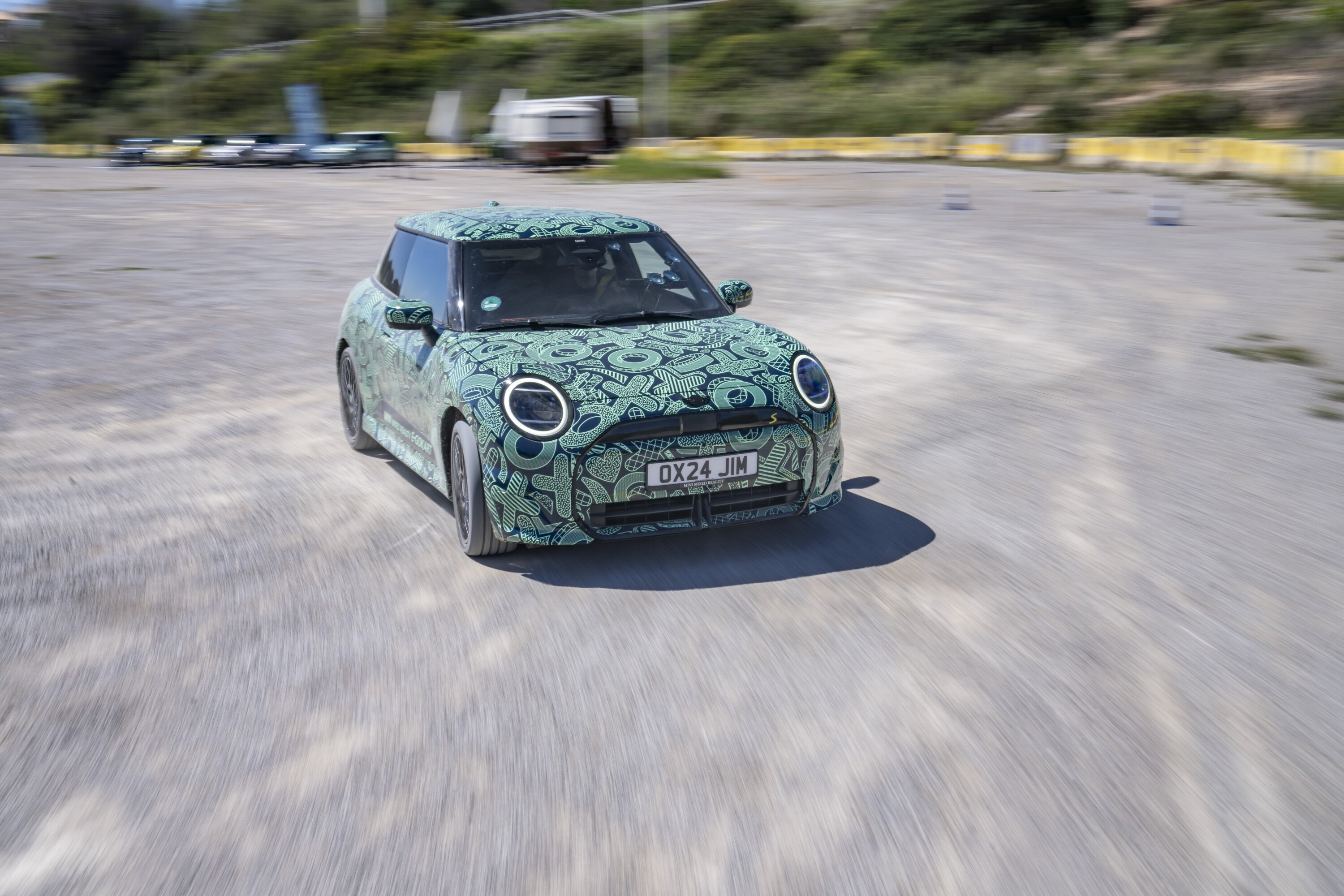
Even though you know it’s just a virtual render, every fibre of your being is telling you not to drive off the ledge, with this yawning abyss below.
All of your proprioceptive instincts are expecting the nose of the car to lurch downwards. And no matter how many times I do it, I couldn’t shake that expectation.
Not everyone reacts the same way. I aim to keep the car on the sometimes vertigo-inducing track. I even apologise for kerbing a virtual alloy as I nudge up against the side of the track once.
The initial reaction of the lady in the car before me was to try to drive clean off the virtual world, almost driving the Mini into the coffee truck parked nearby, because motoring journalists cannot survive for 15 minutes without caffeine and savoury finger food.
Mini claims this is a demonstration of what can be done with the car’s inputs and outputs, linking to a virtual world. I guess that, in time, you could make a shlep up the Monash freeway look like a drive across the Masai Mara.
Or, if you’re more cynically minded, it could be a lucrative way to sell space on virtual billboards, with ads tailored to you. I’m not sure. I expected quite a lot of the new Mini Cooper SE and it didn’t disappoint. I just didn’t expect to be overtaken by a flying whale while driving one.
By now you’ve probably seen the Mini Cooper JCW prototype that raced at this year’s Nurburgring 24 Hours event. That was a disguised petrol-engined model, but Mini has confirmed that it is also working on an electric counterpart that will run on a completely different chassis.
The electric version of the JCW was a topic of some interest at the recent Cooper SE electric launch in Spain, and Wheels took the opportunity to prod Mini’s dynamics engineer Patrick Haussler a little on what that car could look like.
Given that the Cooper SE already puts a chunky 160kW and 330Nm through its front treads, we wondered whether the JCW could at some point be packaged with an all-wheel drive chassis. Haussler seemed cool on that prospect.
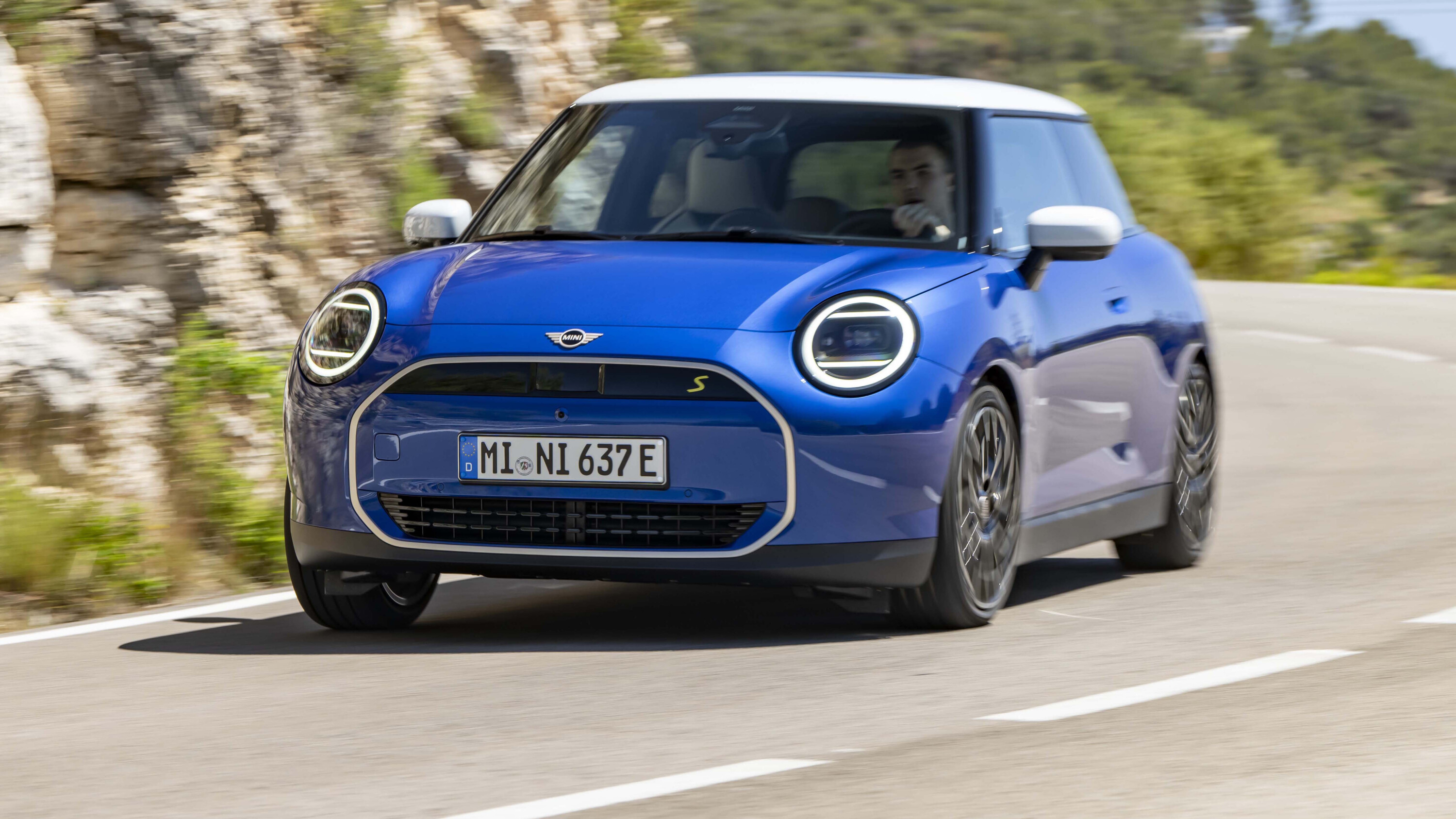
“Mmm. Is it possible? I think it will be possible but on the other hand, I’m not sure if we need it,” he mused.
“I mean, what do you do? You have two electric engines, one in the front, one in the rear – it’s even more weight. Four-wheel drive, I understand where you’re going to, but I’m not sure we really need that.”
Granted, the Cooper SE runs on a low-rolling resistance Michelin e-Primacy tyre and a lot of gains can be made in fitting more focused sporting rubber to the JCW, so all-wheel drive isn’t a priority right now.
“You know we will make a John Cooper Works, so some time you will be able to try that one, but for now I think we are fine without all-wheel drive but never say never. Maybe in some years they will want all-wheel drive.”
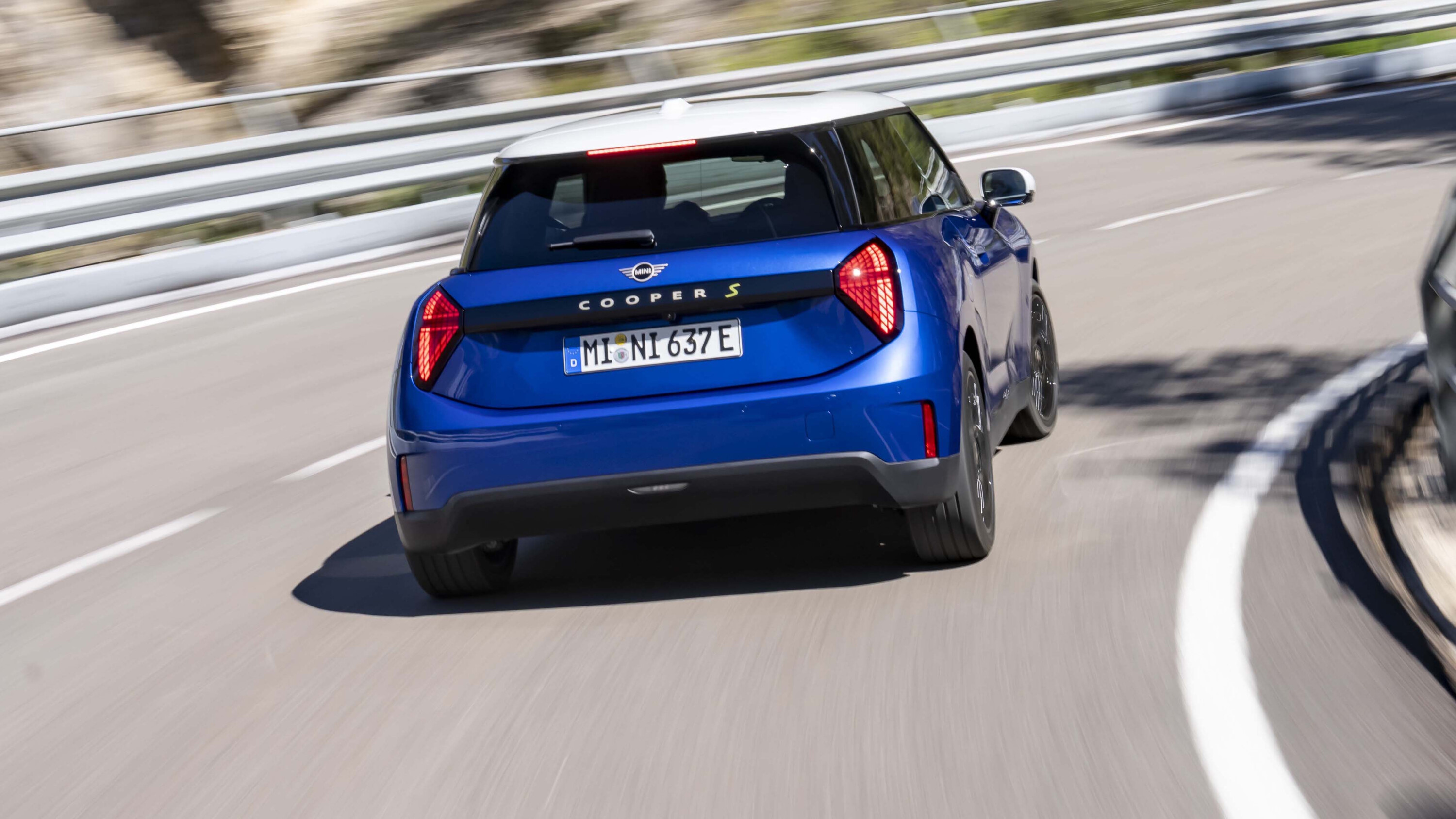
When quizzed on the progress of the electric JCW, Haussler was happy to expand. “We are working on it right now. I’m sure if you like the car right now (the Cooper SE), the Johnny is another step. I’m also very happy about it and I’m really looking forward to it.
One thing it won’t get is an artificial manual gearshift system like the Ioniq 5 N. Not that Mini is opposed to the idea in principle.
“It’s a really cool idea and I like it. I think it would fit very good to Mini. In the future, but for this one it was too late. We started five or six years ago with the development (of this vehicle).”
The new JCW is rumoured to get the same size 54.2kWh battery pack as the Cooper SE, and it also shares that car’s stiffened chassis, something Haussler highlighted as the key dynamic hurdle the development team had to negotiate.

“You need a good basis for the driving dynamics, and that’s the body. If you have a rigid and stable and stiff body, and not only the overall but the global torsion, friction and stiffness, but especially on the mounting points – the local stiffness.”
“You can see in the engine compartment a strut bar. Every car has a strut bar and this helped a lot to stiffen it out so we can have this direct reaction of the car.”
“If the whole body is not rigid, then you get wobbly or get a phase or the rear axle not responding on time. So this is very important. We already started that in the simulator to predict how it will drive and that helped in the very early phases of development.”
Power output for the JCW, due for an early 2025 launch, is mooted to stand at 186kW. That’s up 26kW on the Cooper SE, a vehicle capable of a 6.7 sprint to 100km/h. Fit a grippier tyre and a time in the fives ought to be possible for the electric sports flagship.
The Mazda CX-5 is the brand’s breadwinner – both globally and in Australia.
Before the current, hybrid-dominated Toyota RAV4 appeared in 2019, the CX-5 was Australia’s best-selling SUV. It has now slipped behind the RAV4, other midsize SUVs like the Mitsubishi Outlander, and the cheap MG ZS small SUV.
Still, the CX-5 sells in big numbers – around 30,000 annually in Australia – and it’s Mazda’s best-selling vehicle.
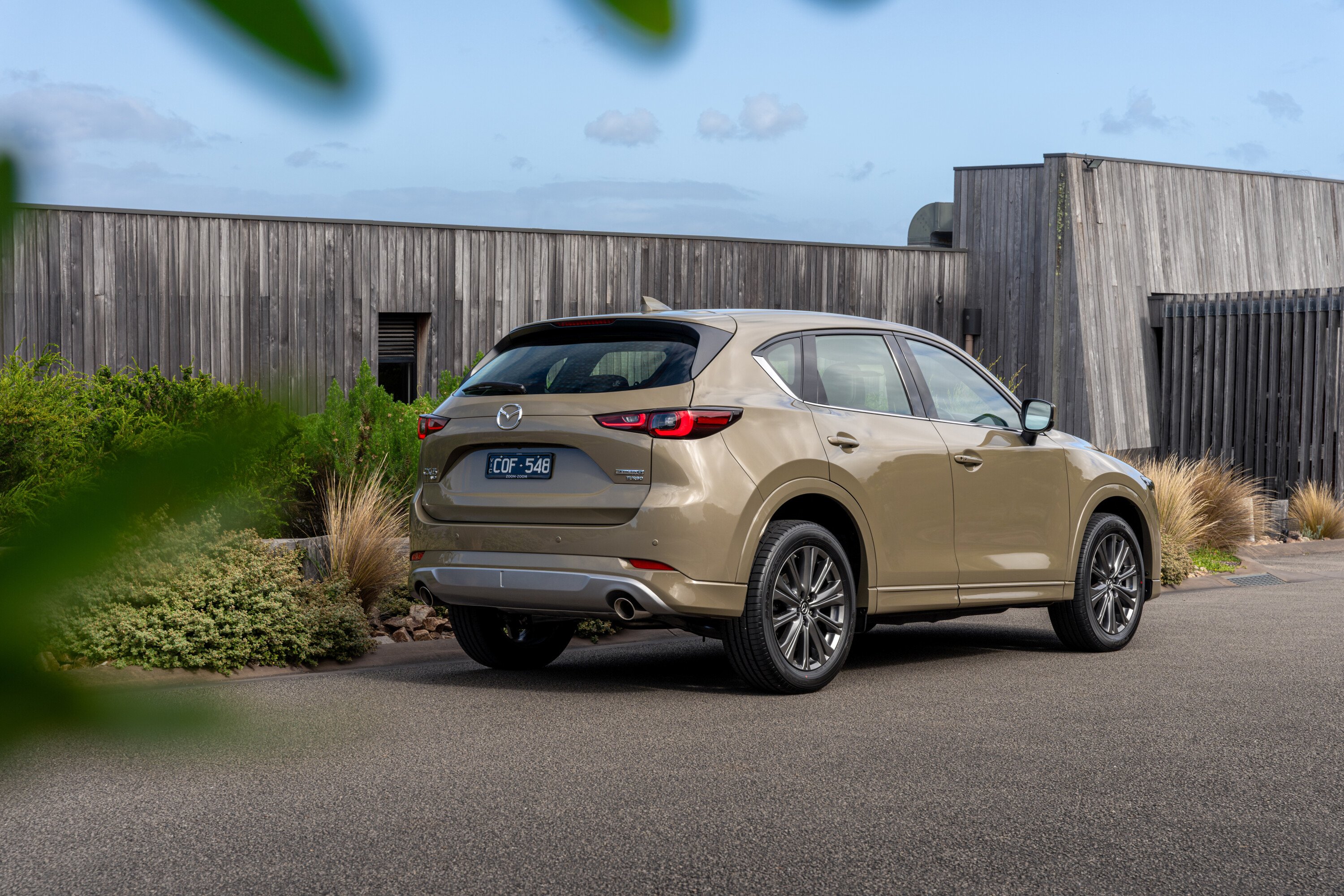
First launched in 2017, the second-generation Mazda CX-5 – a heavily updated version of the first CX-5 unveiled in 2011 – is approaching the end of its lifecycle, with Mazda confirming a third-generation CX-5 is in development with a crucial petrol-electric hybrid option.
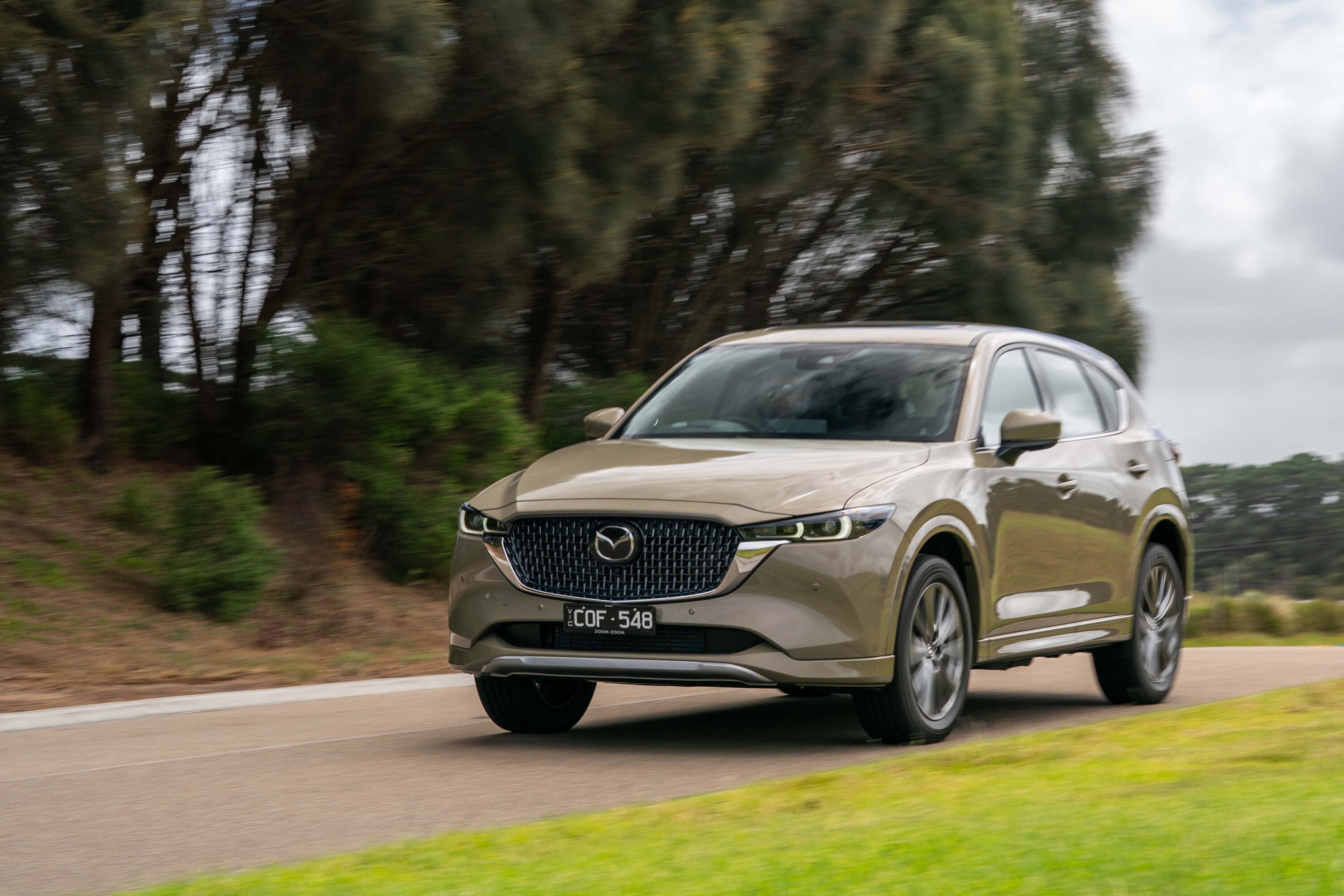
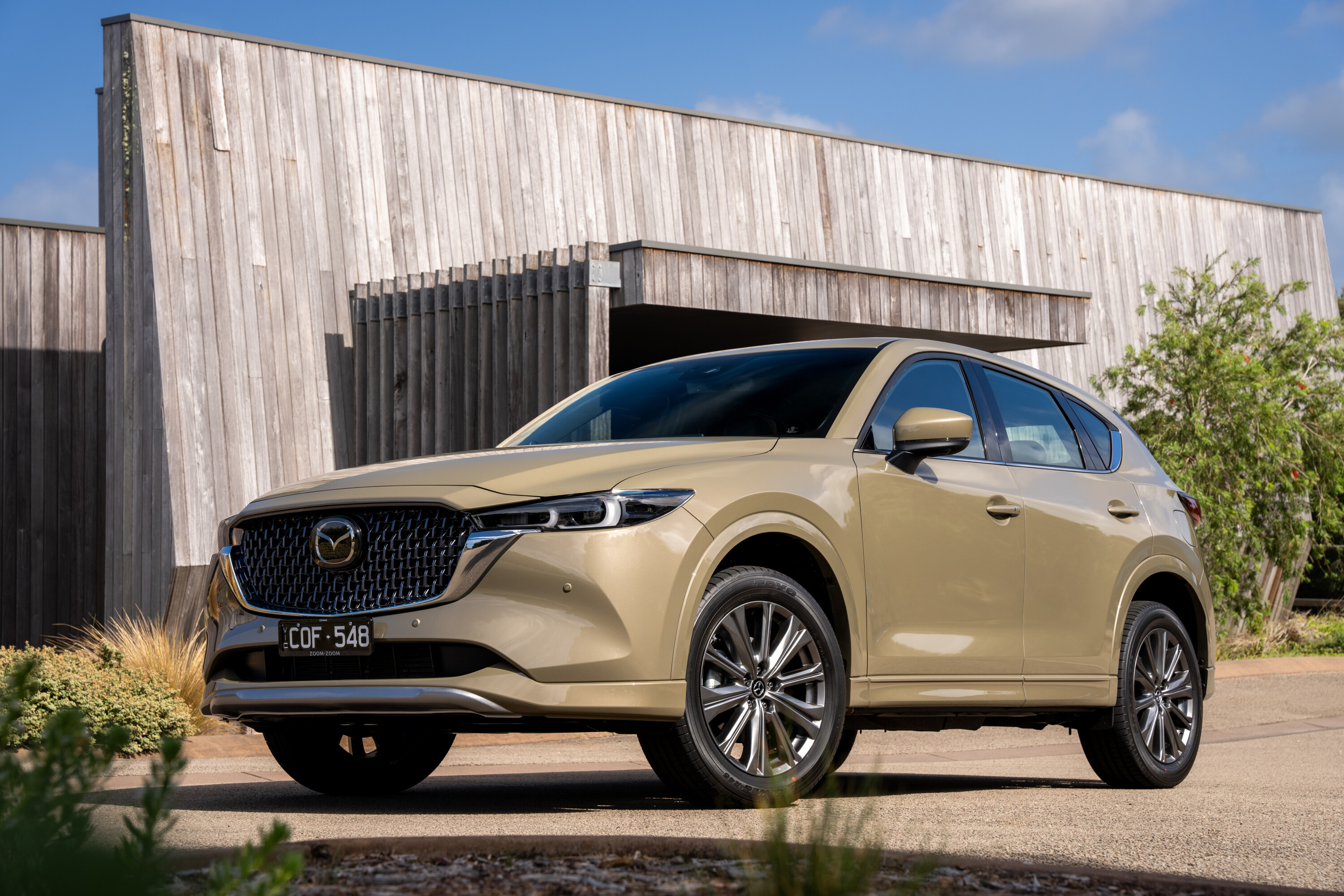
Until the all-new model arrives, we jumped behind the wheel of the 2024 Mazda CX-5 G35 Akera turbo AWD to see if it’s worth adding this midsize SUV to your consideration list.
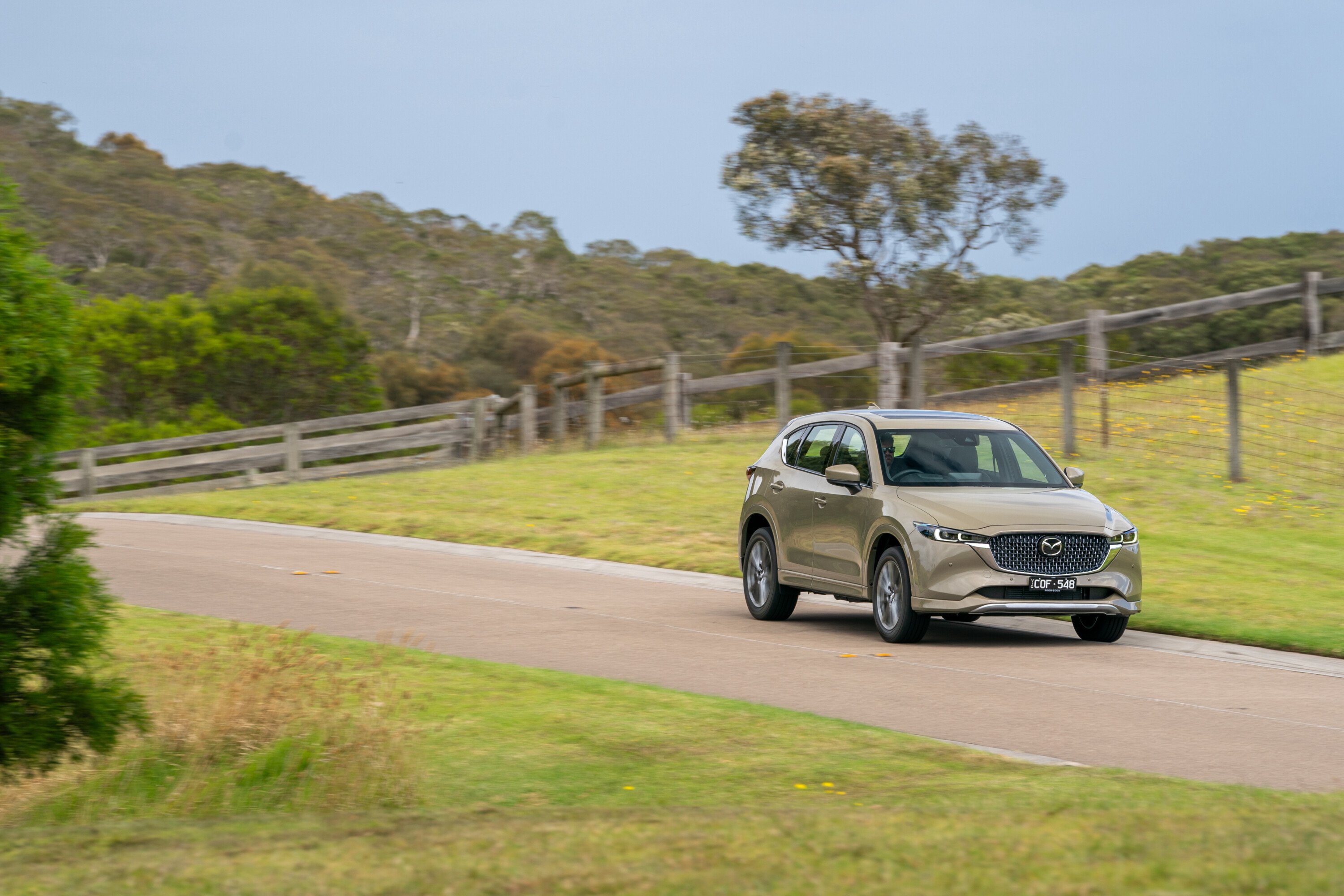
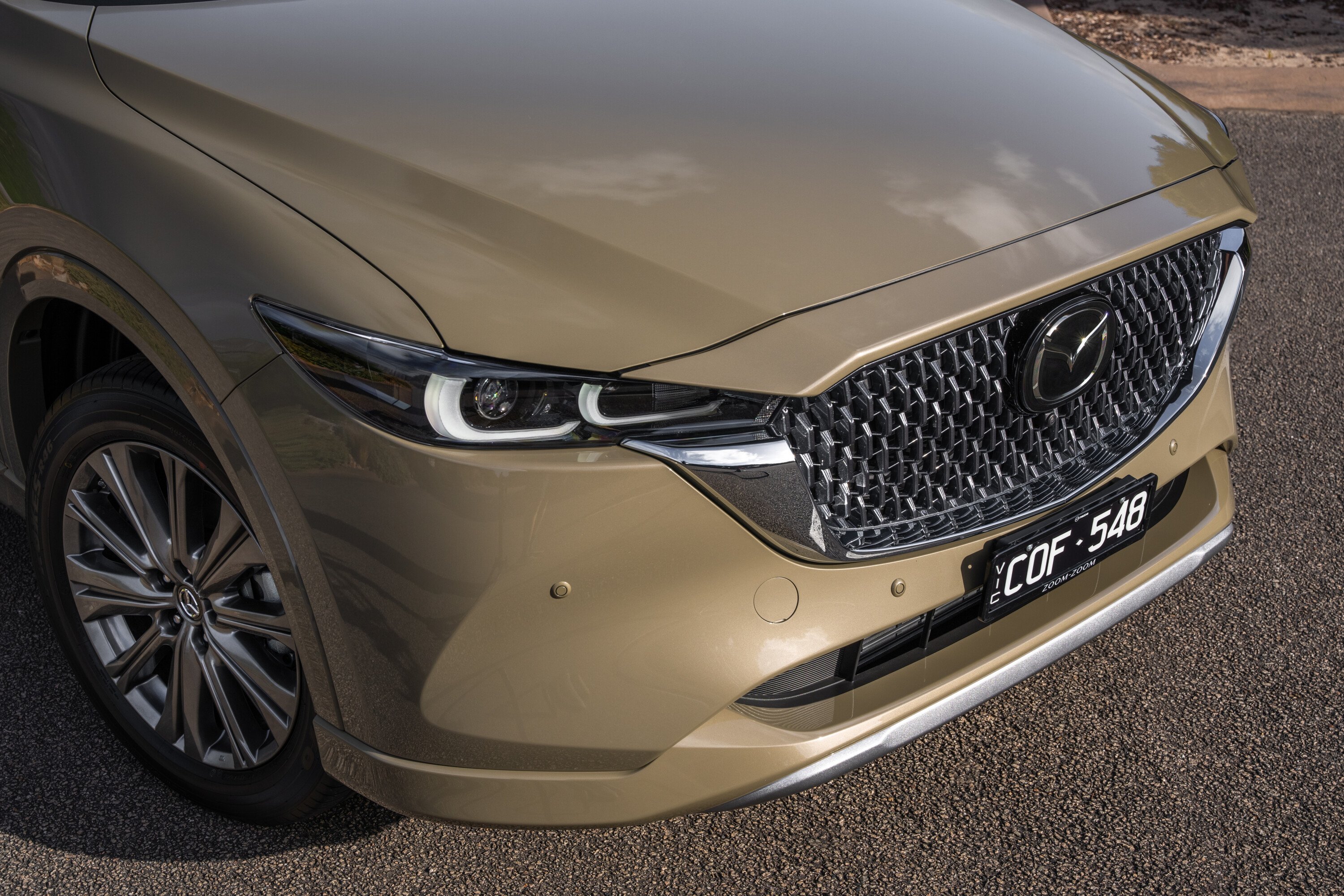
Changes applied to the Akera for 2024 include touchscreen functionality when using Apple CarPlay or Android Auto, a hands-free function for the electric tailgate (previously removed due to the semiconductor chip shortage), a new-look front grille, chrome accents for the lower bumpers, and a ‘Platinum Quartz’ colour replacing ‘Sonic Silver’.
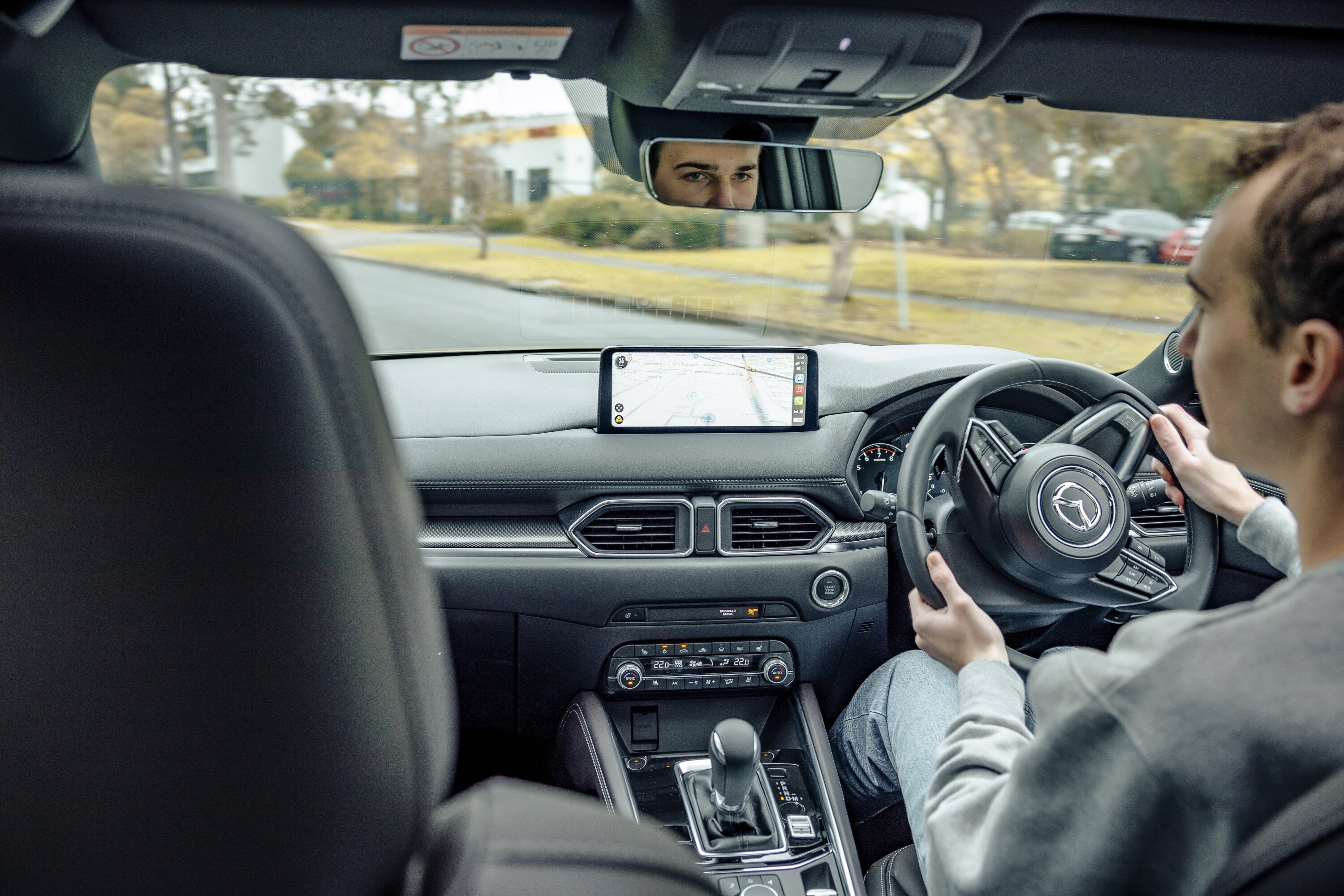
JUMP AHEAD
- How much is it, and what do you get?
- Where is this model in its lifecycle?
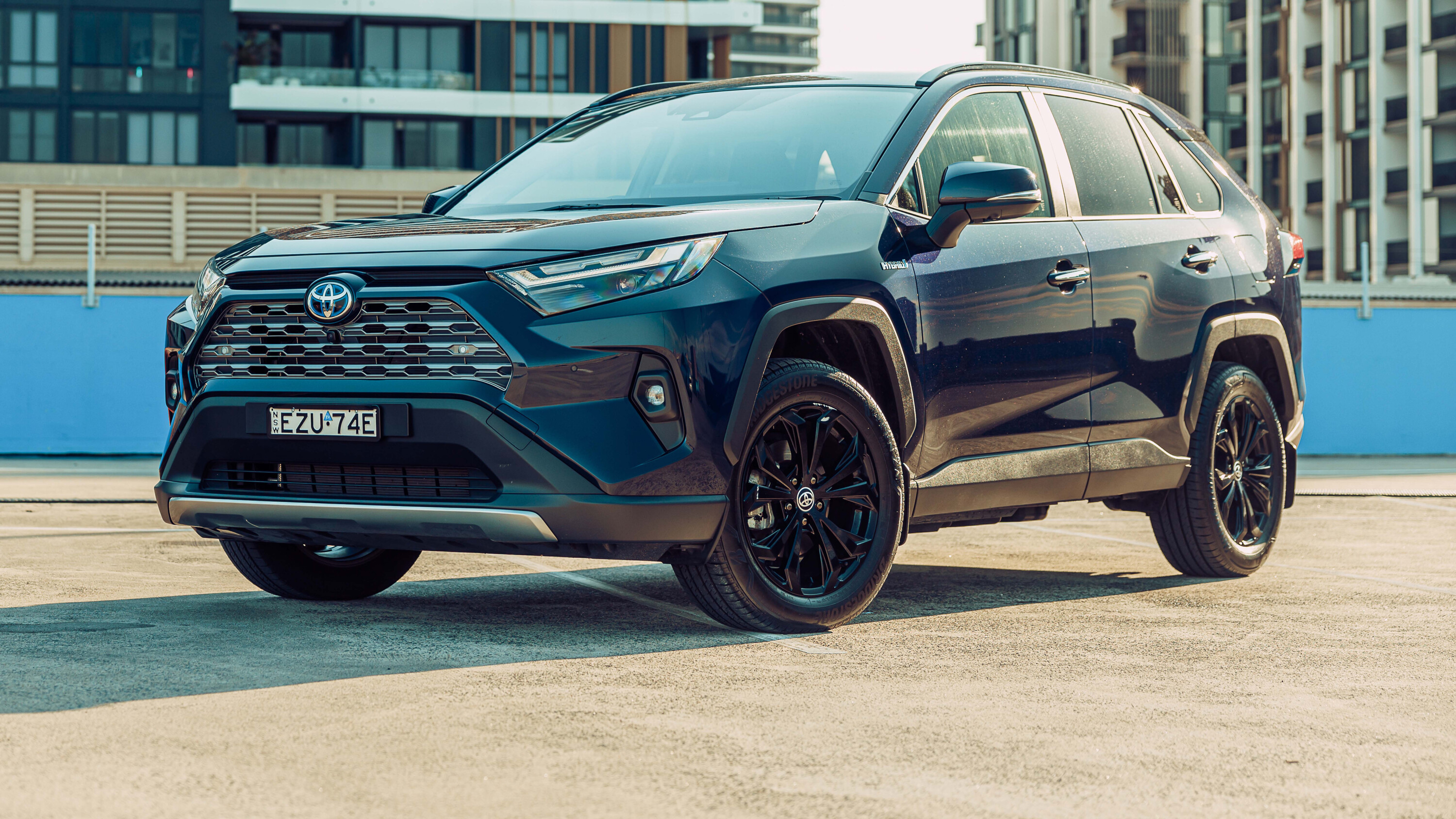
- What are the Mazda CX-5’s rivals?
- Interior quality, comfort, space and storage
- Technology in the cabin
- What is it like to drive?
- How is it on fuel?
- How safe is it?
- Warranty and running costs
- VERDICT
- Specifications
How much is it, and what do you get?
| 2024 Mazda CX-5 G35 Akera features | |
|---|---|
| 19-inch alloy wheels | Heated front and outer rear seats; steering wheel |
| 10.25-inch Mazda Connect infotainment system | LED headlights |
| Wireless Apple CarPlay and Android Auto | 7-inch semi-digital instrument cluster |
| 10-speaker Bose audio system | Dual-zone climate control |
| Dark brown Nappa leather upholstery | 360-degree camera system |
The G35 Akera turbo is the most CX-5 you can buy in Australia, priced from $55,000 before on-road costs.
The CX-5 line-up – available with a lethargic 2.0-litre non-turbo petrol, a class-acceptable 2.5-litre non-turbo petrol or the more-powerful 2.5-litre turbo-petrol found here – starts from $36,590 before on-roads. The 2.2-litre twin-turbo diesel was axed for 2024.
Top-of-the-range Akera variants are fully loaded, adding a 360-degree camera, ventilated front seats, heated outer rear seats, a heated steering wheel, Nappa leather upholstery, a frameless rear-view mirror, and colour-matched body cladding over the GT SP.
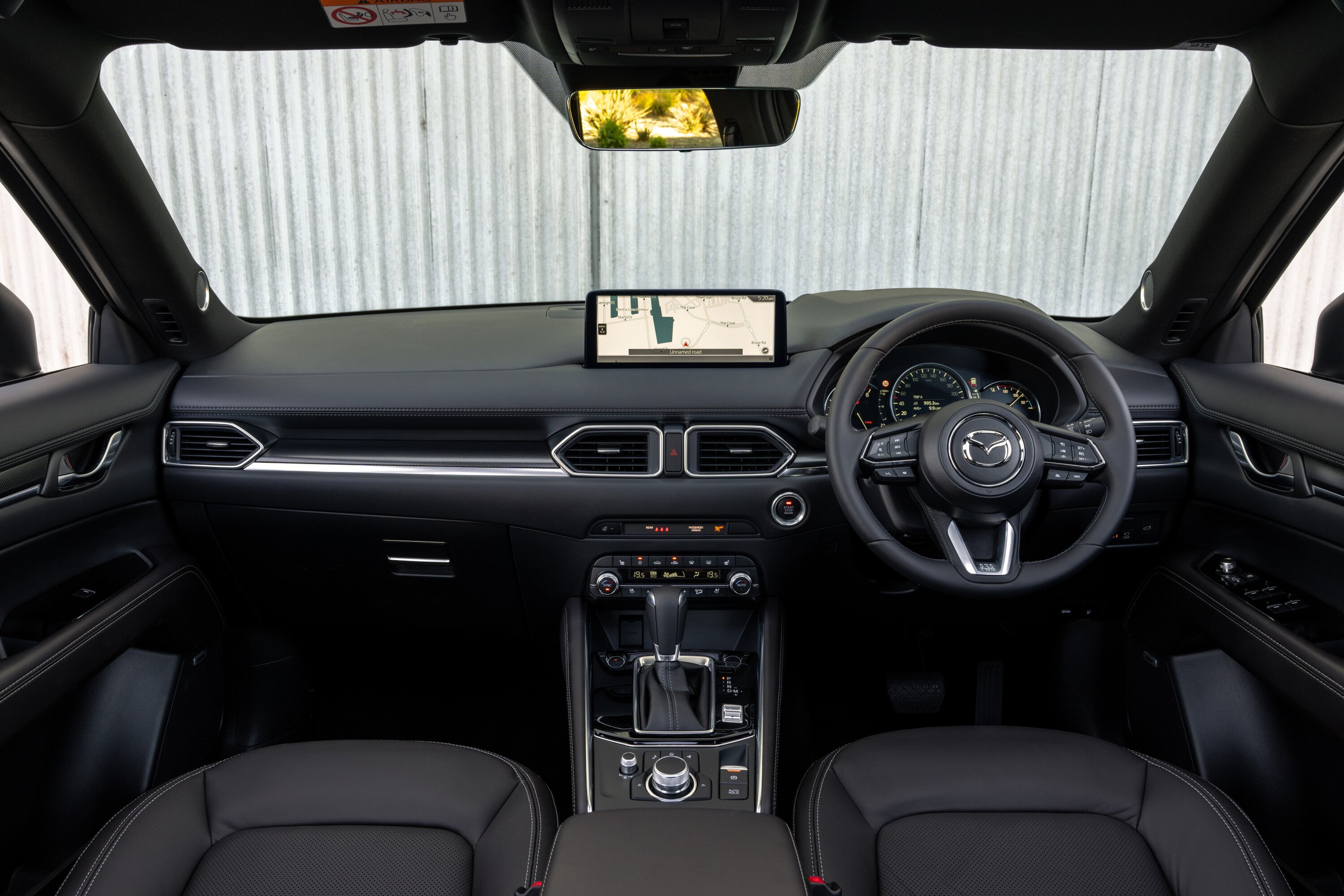
While the 360-degree camera, ventilated front seats and heated rear seats are handy additions, the GT SP could represent better value.
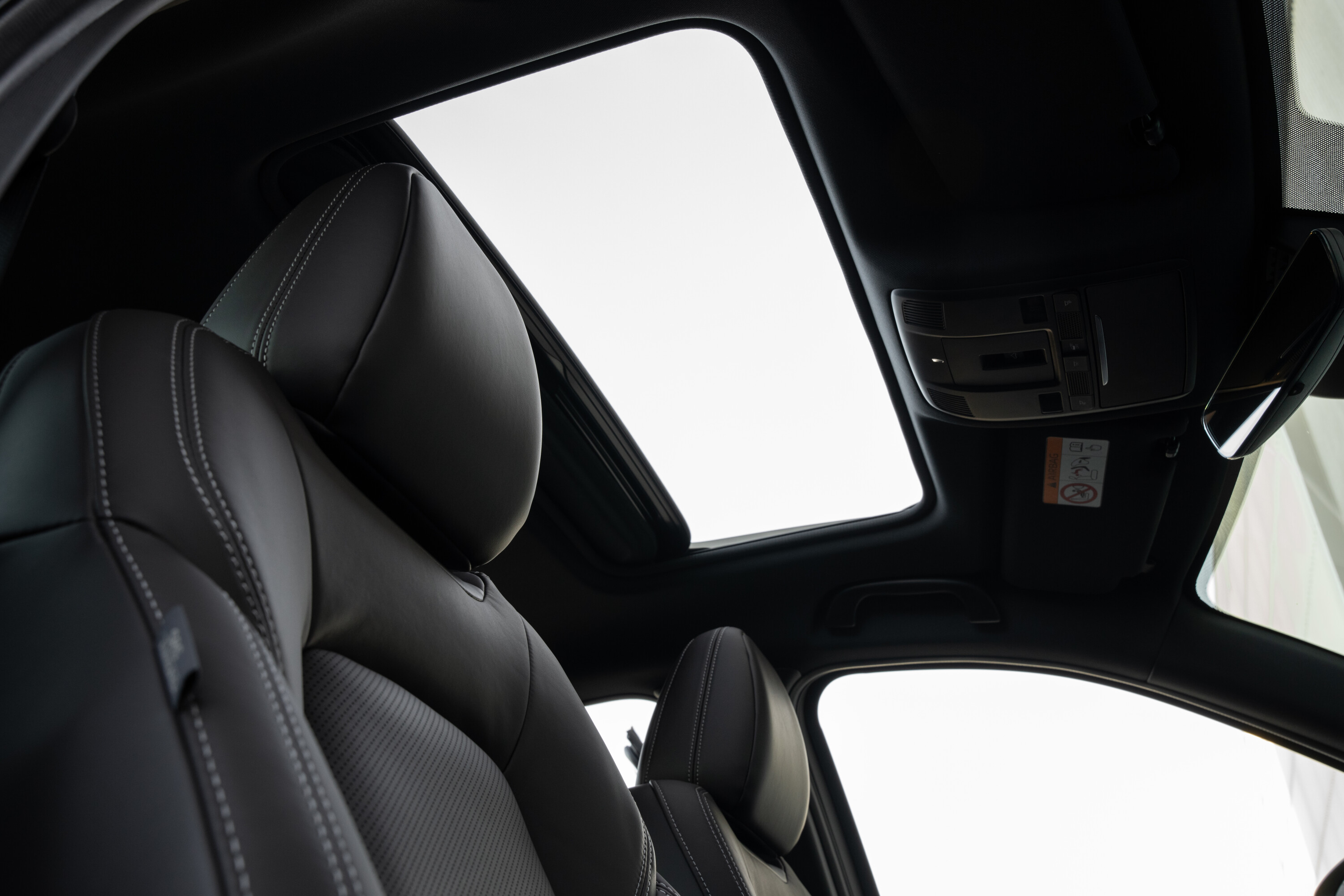
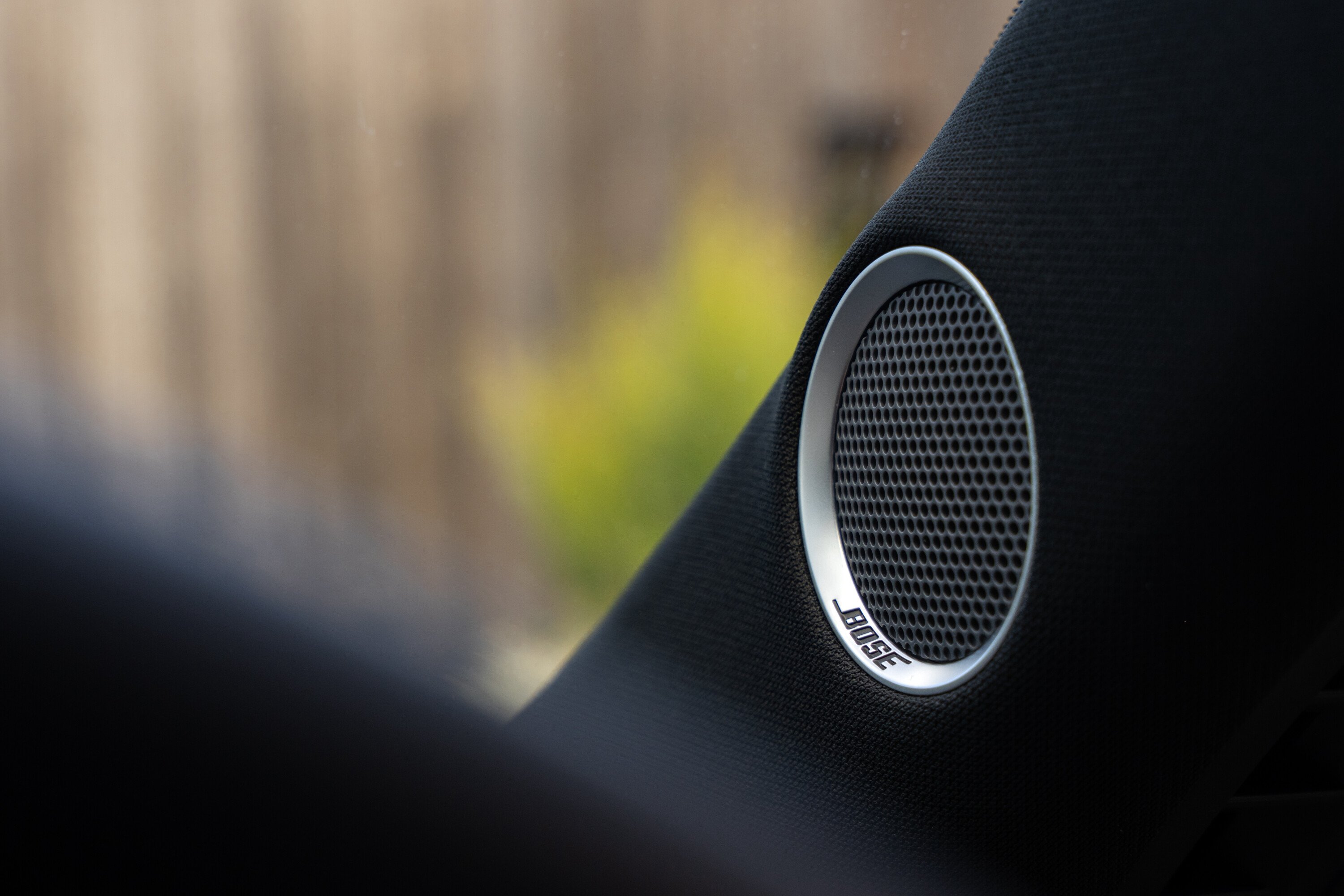
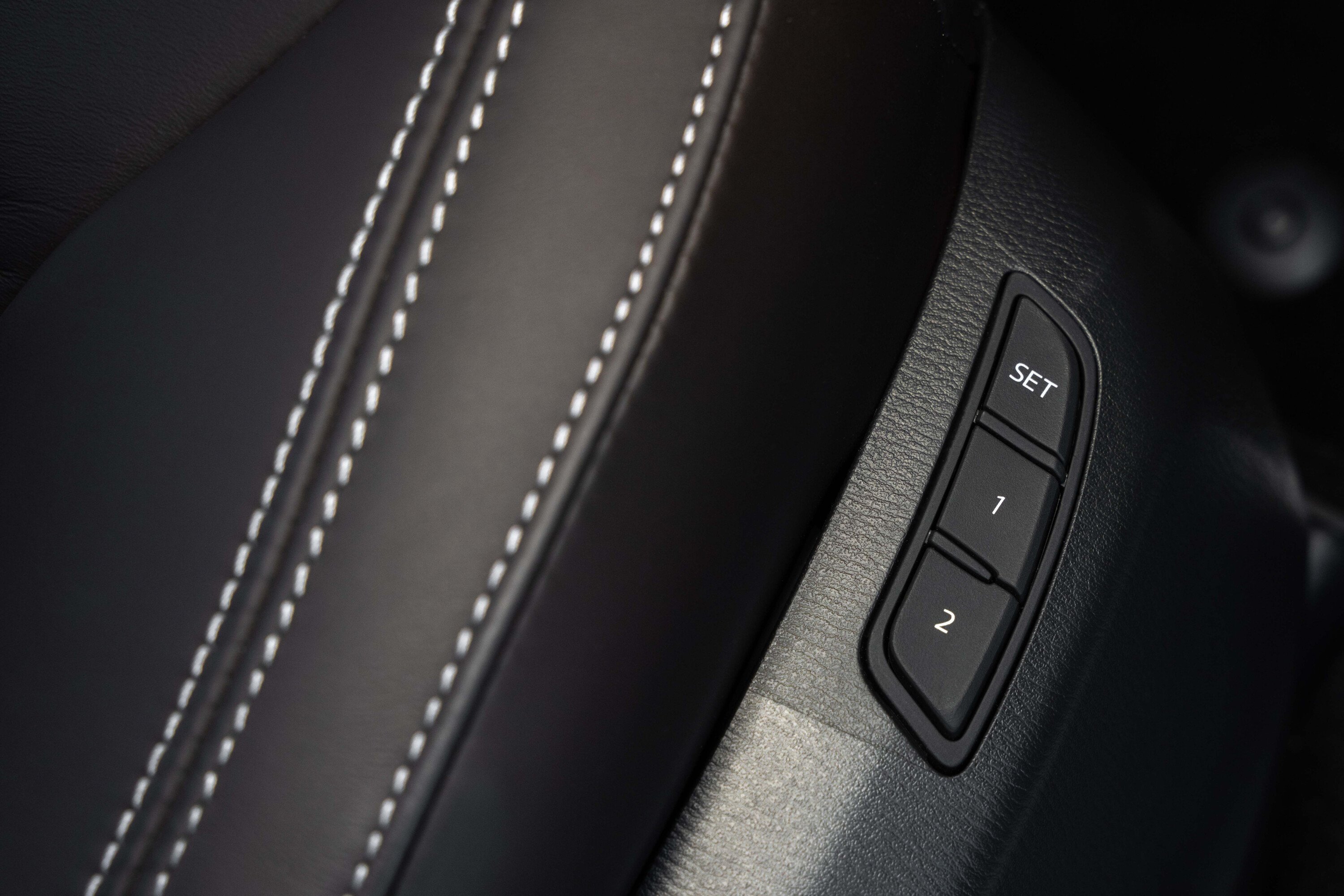
The GT SP still includes features like a 10-speaker Bose audio system, a hands-free electric tailgate, a sunroof, leather upholstery, heated front seats, and electric adjustment for the front seats with two-position driver’s seat memory.
A 10.25-inch Mazda Connect infotainment system, a 7-inch semi-digital instrument cluster and a windscreen-projected head-up display are standard across the CX-5 line-up.
There are four no-cost exterior colours available for the CX-5: Jet Black, Eternal Blue, Deep Crystal Blue and Platinum Quartz. Rhodium White, Machine Grey, Polymetal Grey, Soul Red Crystal and Zircon Sand (our tester’s colour) cost $795 extra.
Where is this model in its lifecycle?
The current second-generation ‘KF’ series Mazda CX-5 was unveiled in late 2016 and appeared in Australia in March 2017.
It is a heavy refresh of the first CX-5, which debuted in 2011 on the same wheelbase and platform as the last Mazda 3 hatch.
Mazda has applied several revisions to the CX-5 line-up, usually annually, including the addition of the 2.5-litre turbo-petrol in 2018 and a significant facelift at the start of 2022.
However, there is only so much that can be changed, and the CX-5 is starting to feel a little old – although it has at least aged well, in our eyes.
An all-new, third-generation Mazda CX-5 has been officially locked in with an available hybrid powertrain. It is expected to debut in 2025 as a Model Year 2026 vehicle.
The new model should be larger in most dimensions – addressing one criticism of the current model, which has a tighter cabin than its newer rivals that continue to grow larger.
What are the Mazda CX-5’s rivals?
The Mazda CX-5 sits in the crowded midsize SUV segment in Australia.
The main rivals to the top-of-the-range CX-5 G35 Akera include the:
- Toyota RAV4 Cruiser Hybrid AWD ($54,410 before on-roads)
- Volkswagen Tiguan 162TSI R-Line AWD ($60,590 before on-roads)
- Hyundai Tucson Premium Hybrid AWD ($59,600 before on-roads)
- Honda CR-V E:HEV RS FWD ($59,900 drive-away).
Interior quality, comfort, space and storage
A standout feature of the Mazda CX-5 is its high-quality cabin materials, with a solid door thunk, a soft dashboard, (mostly) tactile switchgear, and padded leather on the front and rear door cards.
The dark brown Nappa leather upholstery in the Akera is soft and comfortable, with this writer experiencing no discomfort on a lengthy drive, and we think the more-pronounced silver stitching added for 2024 looks quite tasteful.
Also new is a black honeycomb-look trim on the dashboard and door panels, replacing the previous wood finish. It’s an interesting decision, as we think the old wood trim looked more premium.
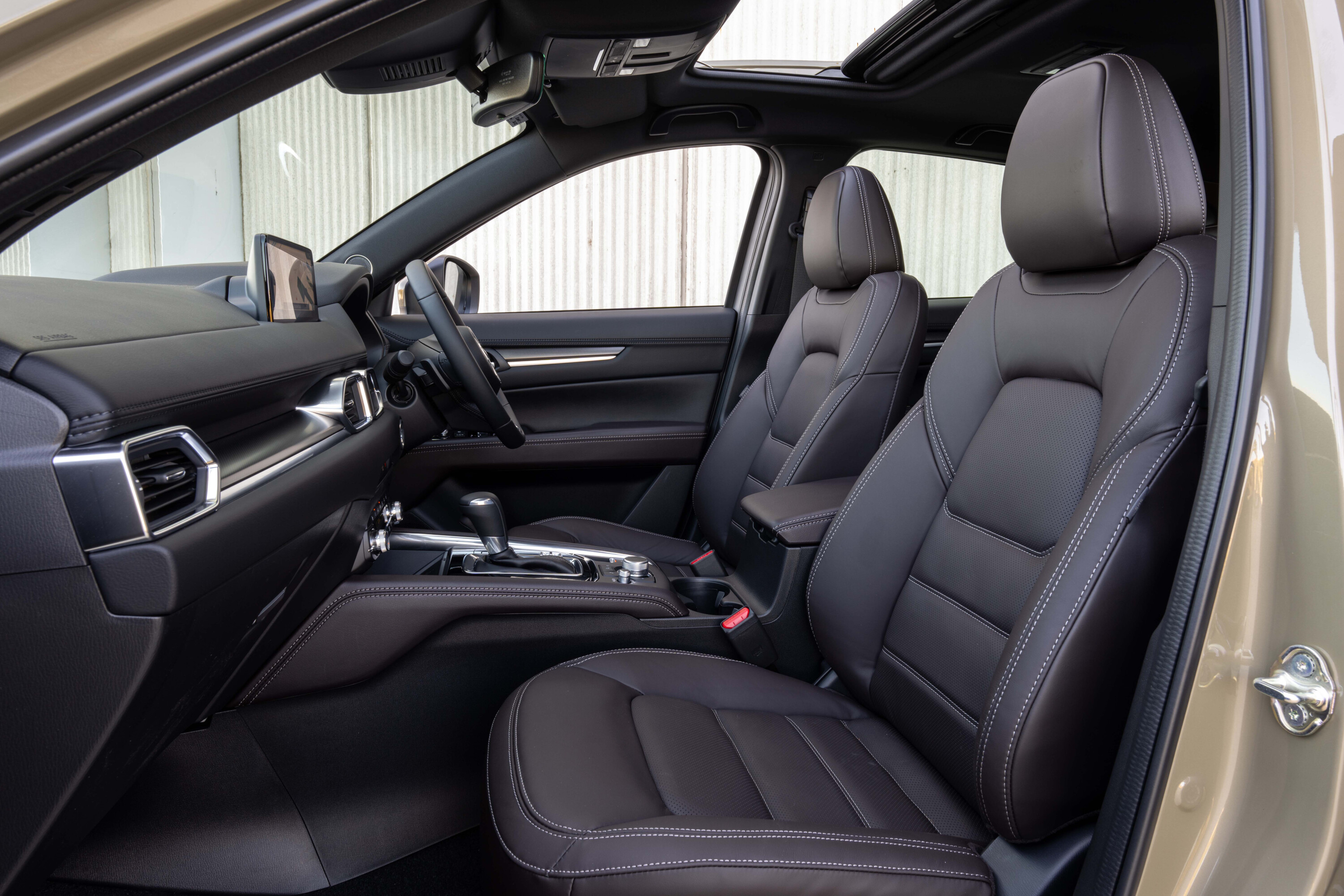
Most switches in the CX-5 are nicely weighted, though the wiper and indicator stalks feel lower in quality than newer Mazda models like the CX-30 and CX-60.
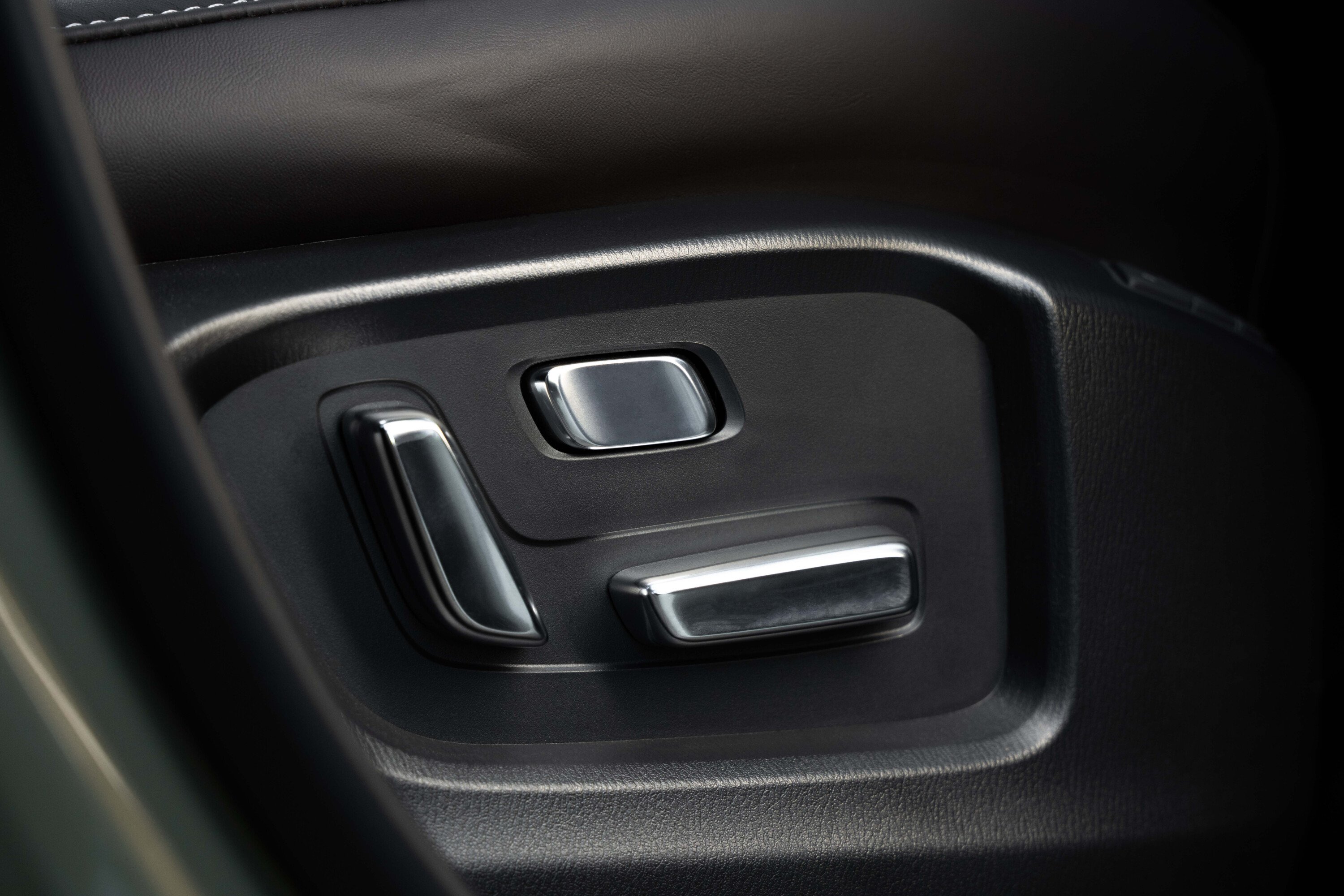
The driver’s seat can be electrically adjusted 10 ways with two-position memory, while the passenger seat can move six ways. We appreciated the heated seats and steering wheel during Melbourne’s current winter chill, while the ventilated front seats work well in summer from our past experiences with the CX-5.
Rear-seat space is fine for occupants under 180 centimetres, but people who are taller will face limited head and kneeroom.
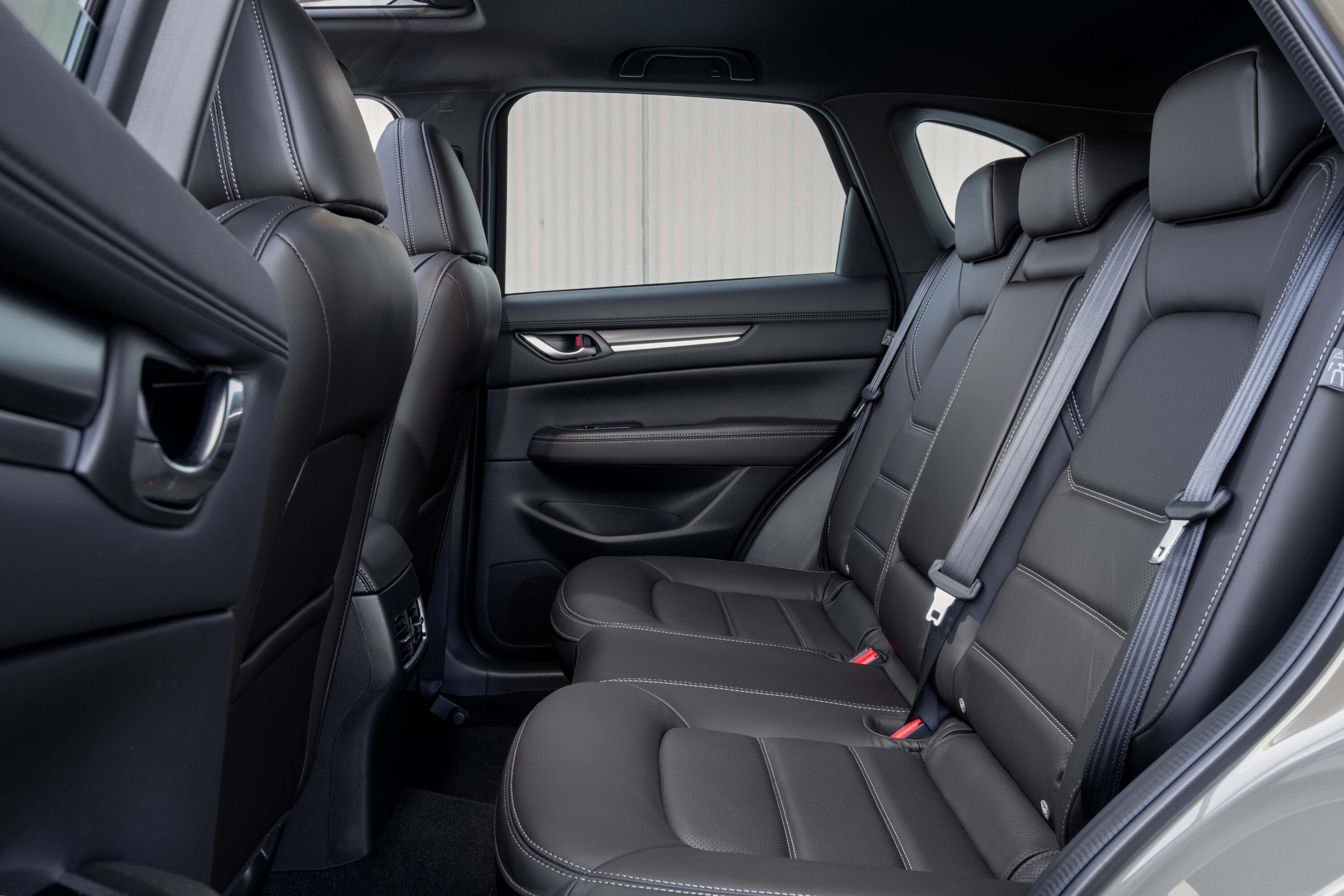
Thanks to the CX-5’s narrower body, it’s also quite cosy if there are three adults sitting abreast. Toe room is accomodating, and the Akera includes a subtle white LED ambient light under the front seats.
The CX-5 includes three top-tether anchors and two ISOFIX points for child seats, adjustable rear air vents, storage pockets behind each seat, and 90-degree wide opening rear doors.
Storage is best described as adequate, with a centre console bin that could be larger, two cup holders that get in the way of the rotary controller if you have anything taller than a standard-sized coffee cup or soft drink can, bottle holders in the doors, and a small glovebox consumed by the handbook.
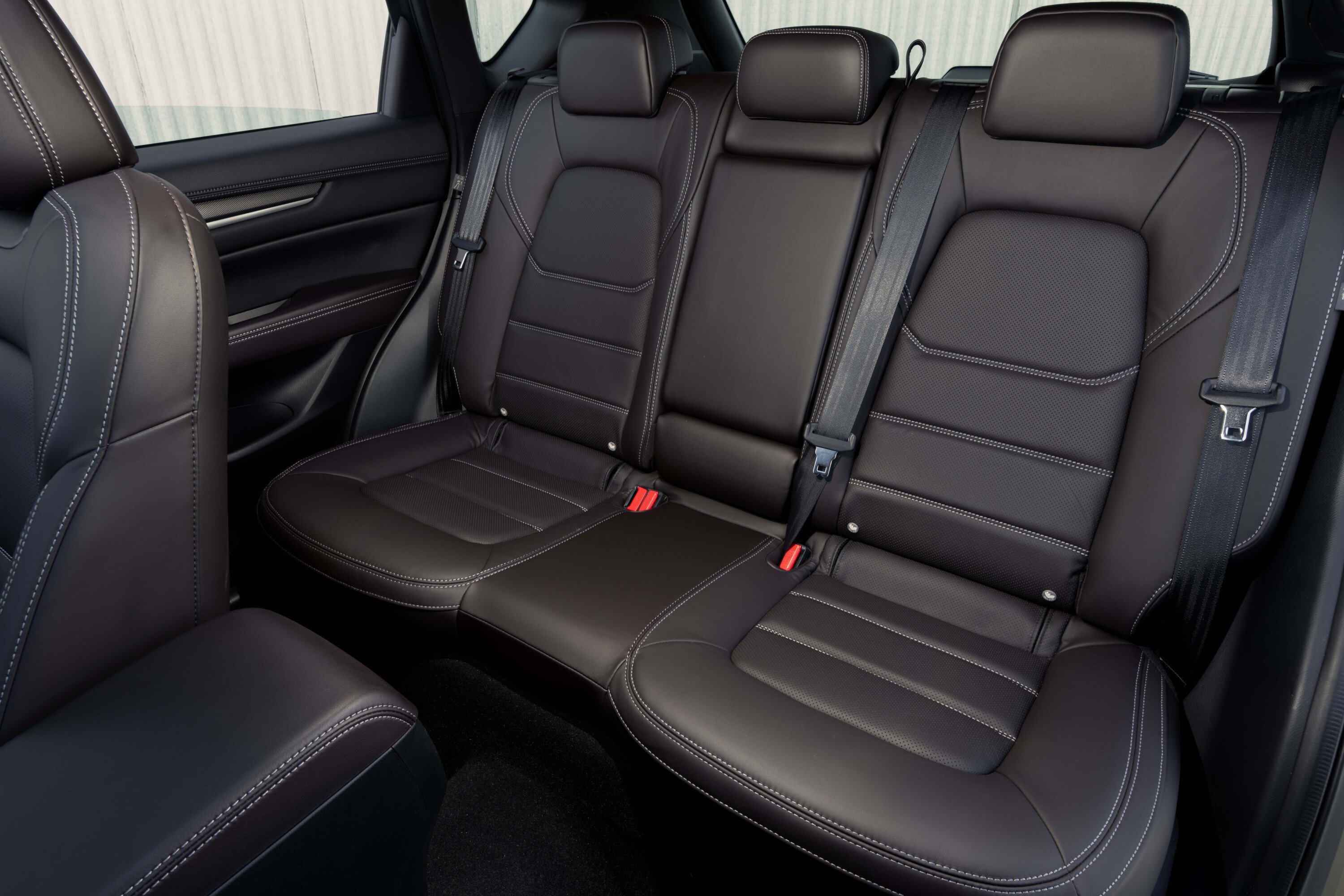
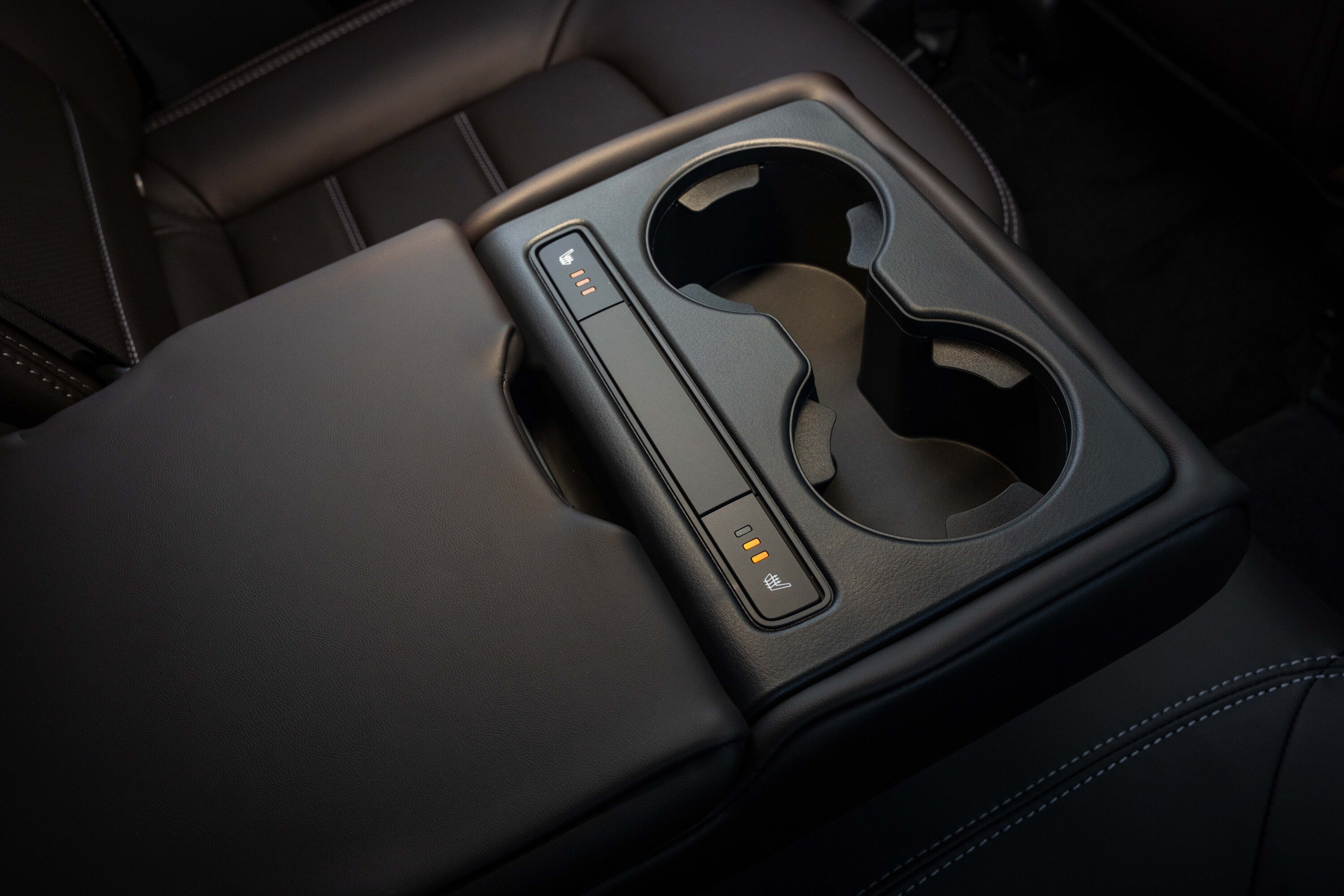
Second-row amenities include two USB-A ports and three-stage controls for the heated seats found in the fold-down centre armrest.
This restricts their use when a person is sitting in the middle seat, and the heated seat controls being positioned right above the armrest can lead to them being activated or deactivated inadvertently – not ideal on a hot day.
Mazda’s latest SUVs – the CX-60 and CX-90 – have USB-C ports throughout, with the second-row outlets and heated seat controls positioned on the back of the centre console instead of the fold-down armrest, which will hopefully soon filter into the next CX-5.
Boot space
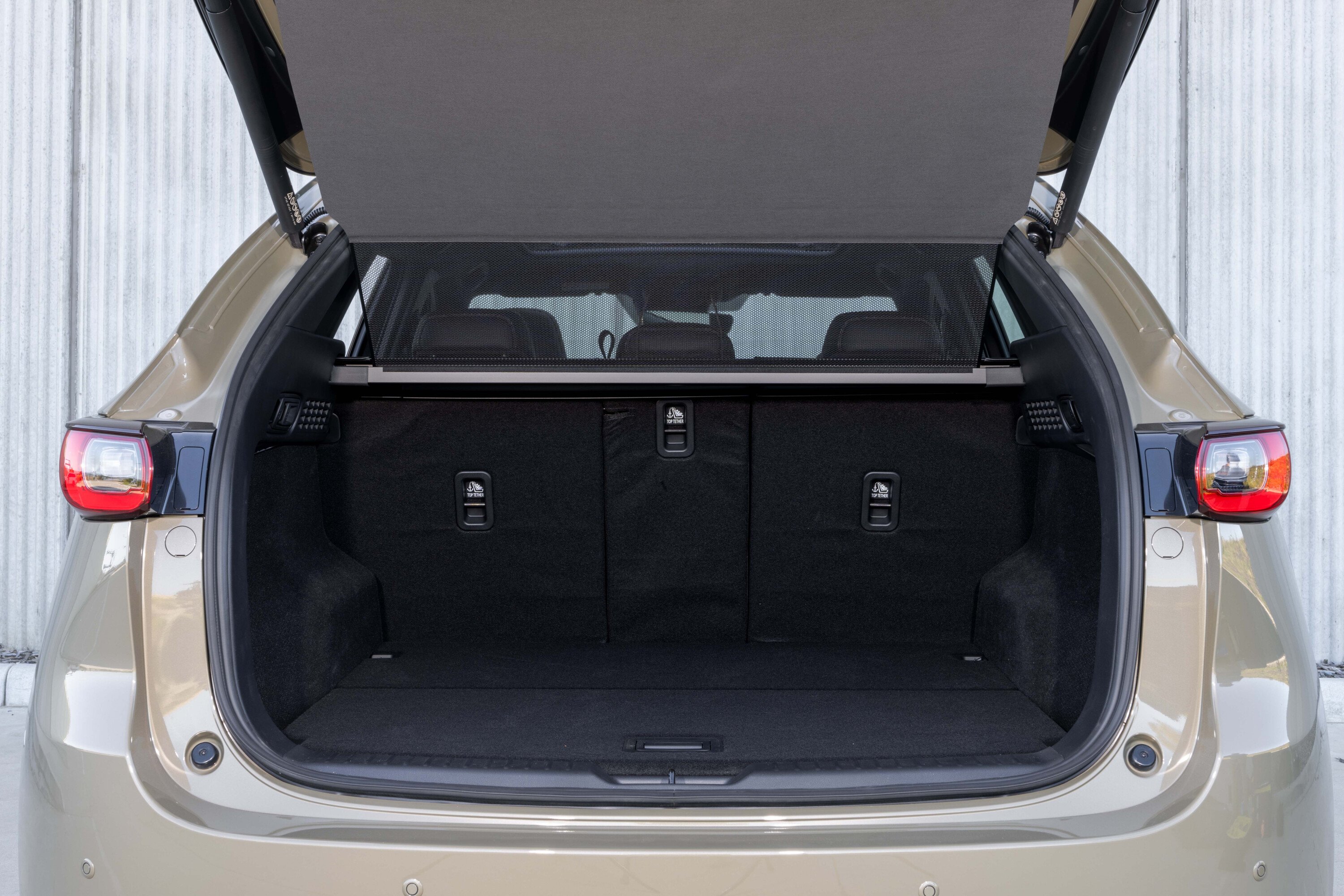
The Mazda CX-5 has a 438-litre luggage capacity with all seats in place and the boot floor in its lowest position, rising to 1340L with the second-row folded.
A handy addition to the CX-5 is the two-position boot floor, which can allow for a flush loading lip or be moved lower for more depth, and reversed between a carpeted finish or a water-resistant hard plastic side for wet or dirtier items.
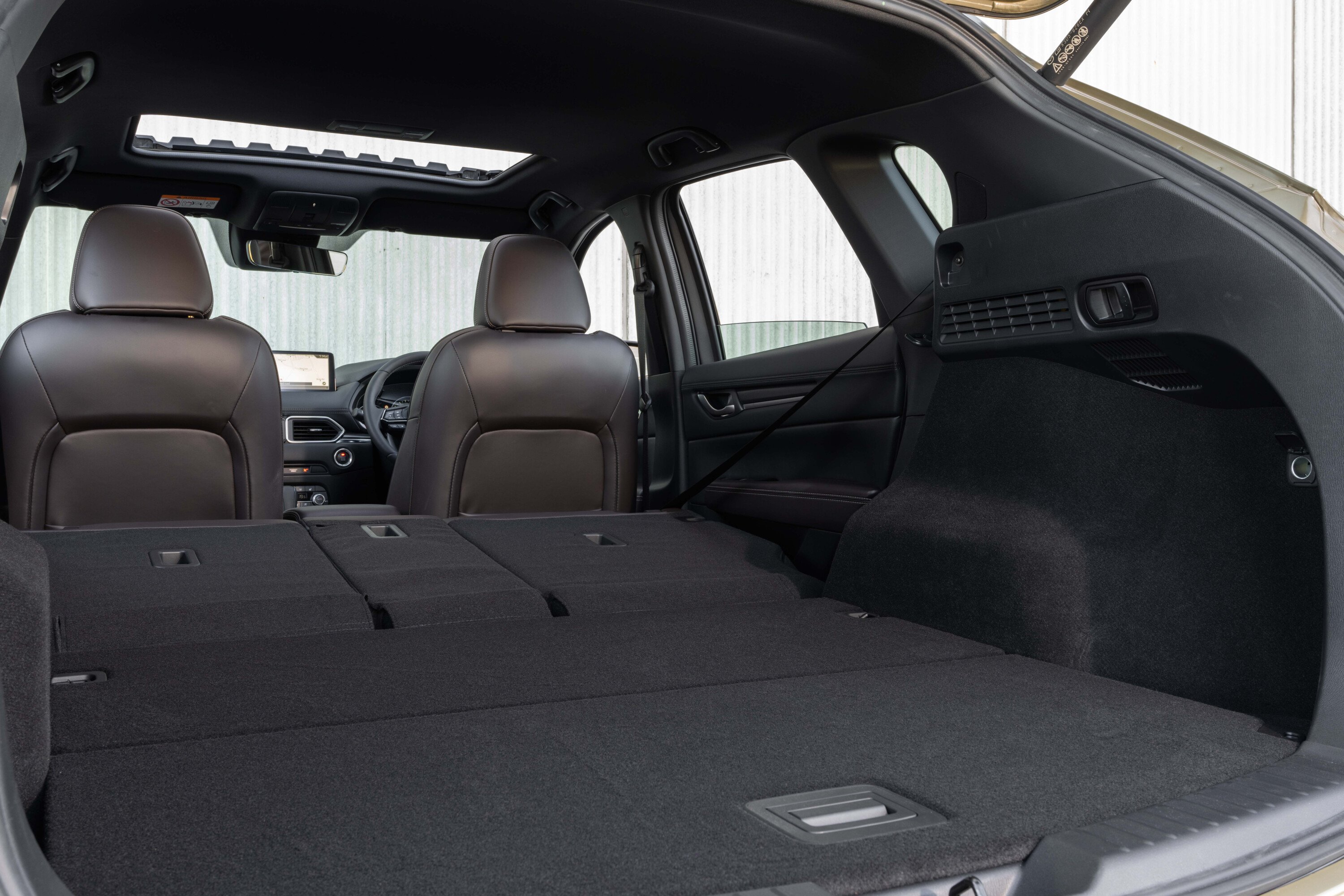
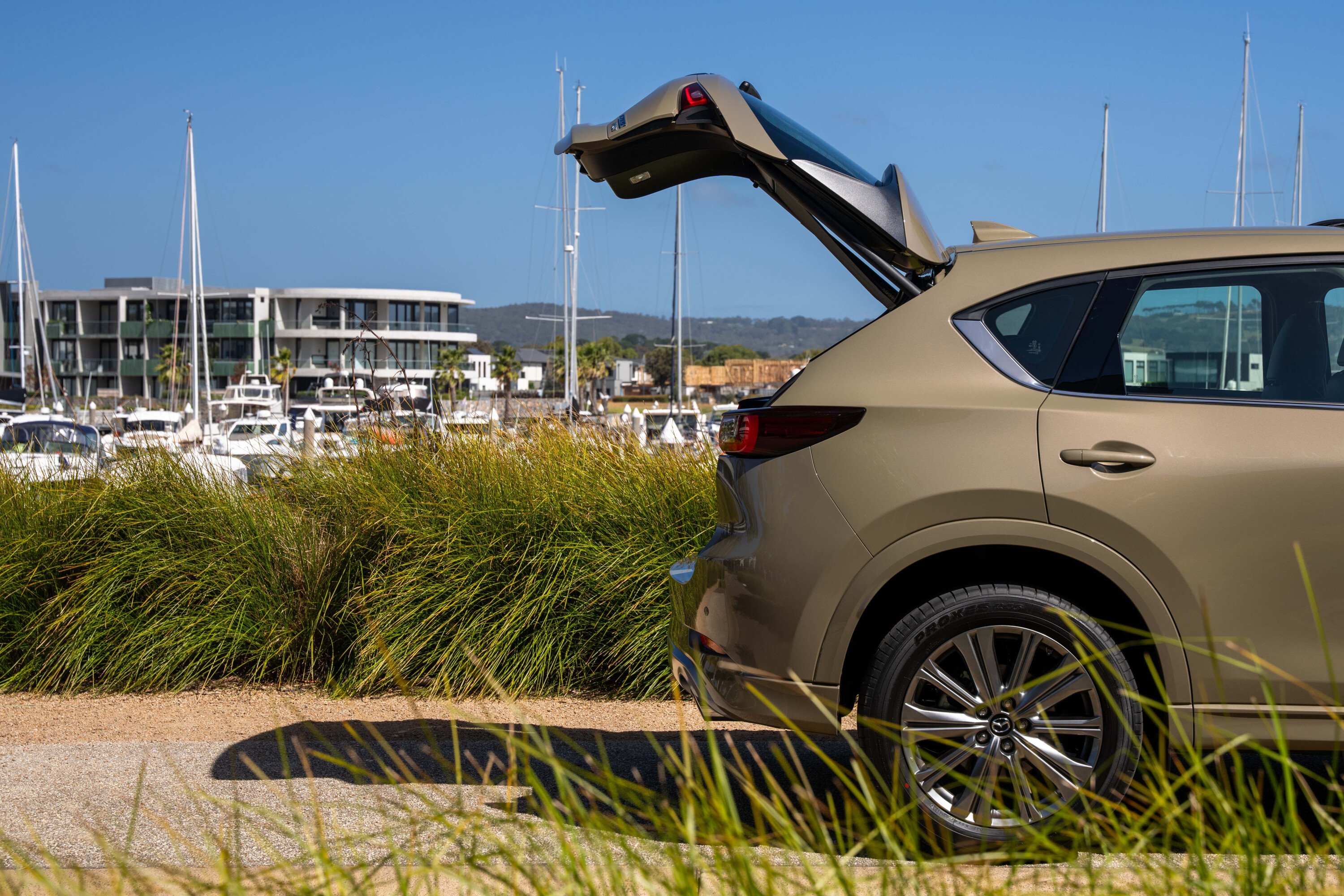
We’re also fans of the retractable cargo cover, which lifts out of the way when attached to the tailgate, and the remote handles to control the 40:20:40 split-fold rear seats from the boot.
Compared to its rivals, the CX-5 has a smaller boot – it’s less than some small SUVs like the Kia Seltos and GWM Haval Jolion – with a narrower opening. This could limit its appeal for people who frequently carry bigger things, such as prams, bulky luggage or a large-size dog.
A space-saver spare wheel is included under the boot floor.
Mini matchup: Boot space
| MODEL | WHEELBASE | BOOT |
|---|---|---|
| Mazda CX-5 | 2700mm | 438-1340L |
| Toyota RAV4 | 2690mm | 580-1690L |
| Volkswagen Tiguan | 2681mm | 615-1655L |
Technology in the cabin
Inside the cabin is where the CX-5 starts to show its age, despite Mazda’s attempts to keep it fresh.
Ahead of the driver is a 7-inch semi-digital instrument cluster, which sits between an analogue tachometer, a fuel gauge and an engine coolant temperature reading.
Its customisation is limited, with the screen always displaying an analogue-look speedometer and a fuel distance indicator. Driver’s can then select between a trip computer, a second distance-to-empty indicator, a maintenance monitor, or an adaptive cruise control display.
The next CX-5 is likely to feature a full-digital instrument cluster with more customisation, similar to that seen in the CX-60 and CX-90, bringing the CX-5 in line with most other vehicles in the class.
The standard windscreen-projected head-up display offers acceptable clarity and a legible display when wearing polarised sunglasses. It isn’t as detailed as the 12-inch unit available in the new Hyundai Tucson Premium.
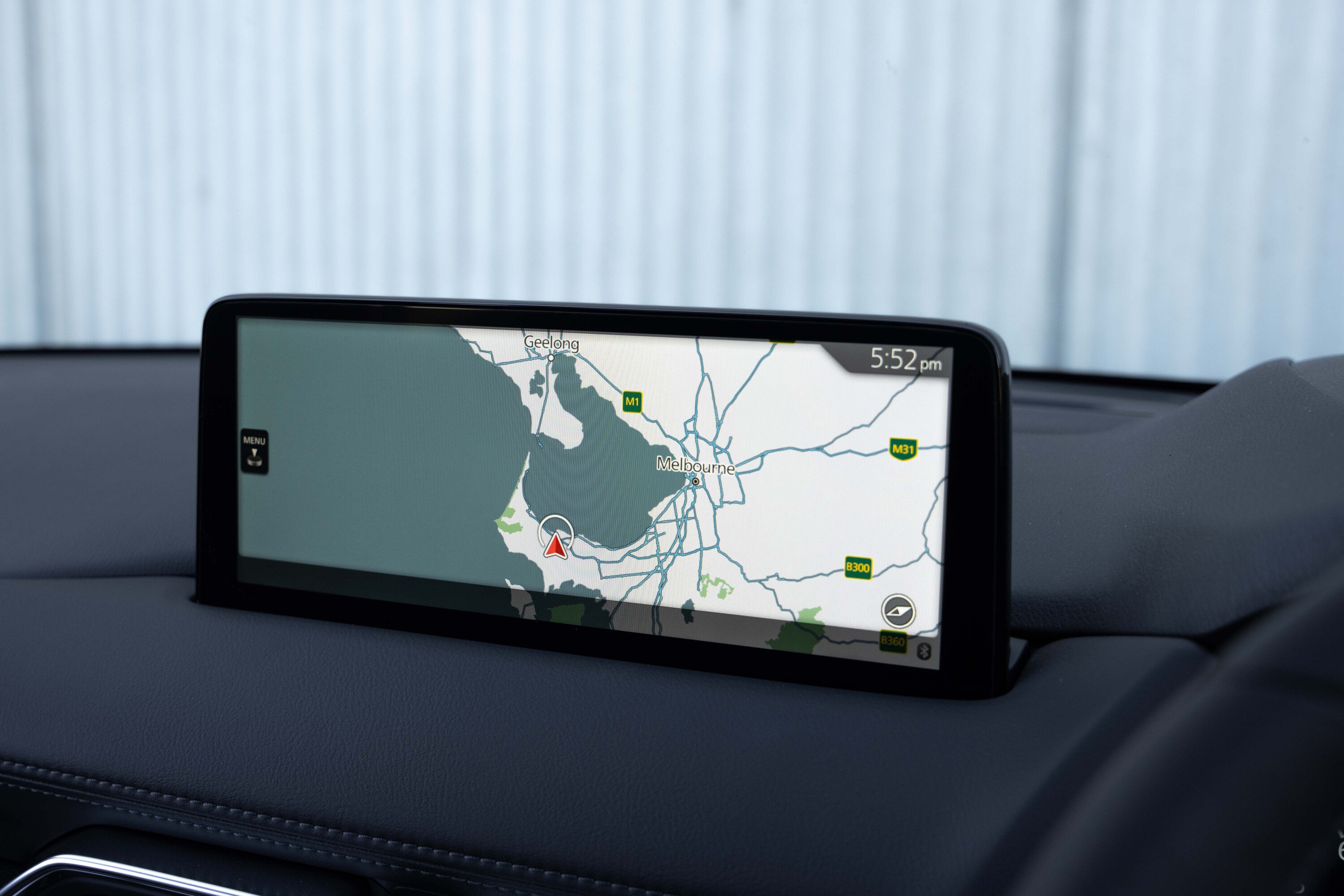
All CX-5 variants include a class-average 10.25-inch widescreen Mazda Connect infotainment system. Rivals like the Tucson and Sportage offer a larger 12.3-inch screen while others such as the Outlander and CR-V have smaller displays.
It includes DAB+ digital radio, wireless or wired Apple CarPlay and Android Auto, built-in satellite navigation
The CX-5 now offers touchscreen functionality when connected to Apple CarPlay and Android Auto – including while on the move. While this is handy for inputting addresses or other information while stationary, or quickly moving back to the home screen, the infotainment system is positioned too far back for comfortable use.
Instead, as with other vehicles with Mazda’s own infotainment, there is a BMW-esque rotary controller on the centre console to control the system. It can feel overwhelming at first – especially if your current car is touchscreen-only – but it is easy to get used to, and there are some shortcut buttons.
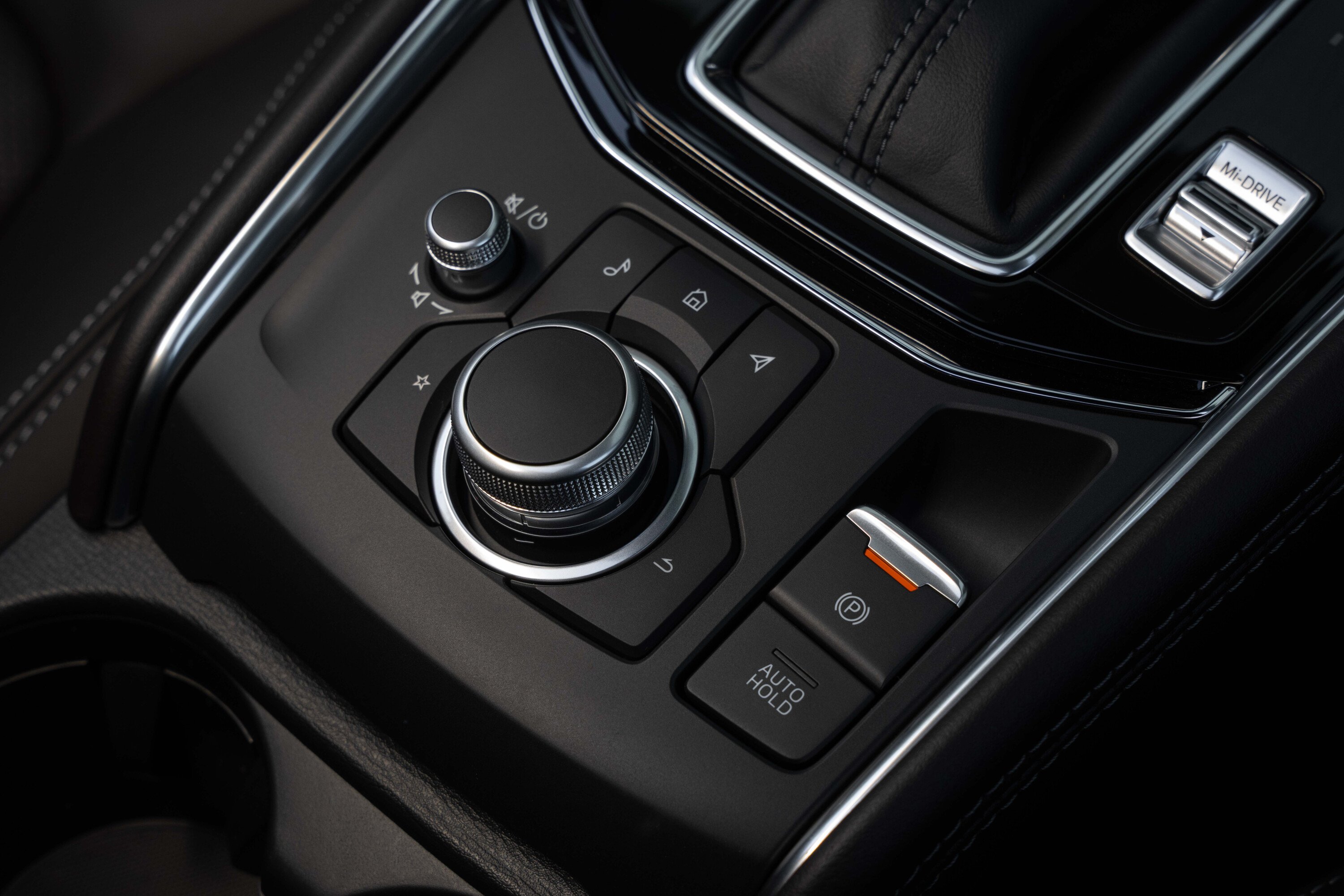
The built-in system must be controlled with the rotary controller.
The CX-5 lacks the newer version of the dial found in the CX-30 and CX-60, which feels more intuitive in the hand and also allows the volume dial to be pushed sideways to skip forward or back.
We found the wireless Apple CarPlay connection to be reliable during our test drive. The connection will default to wireless, even when plugged into USB, but you can select a wired-only connection when pairing your phone if desired.
In contrast, the wireless phone charger is temperamental, requiring some adjustment to find the correct position for a successful charge.
It’s also set on an awkward angle – it has essentially been retrofitted into the CX-5’s older cabin – and we found our phone would slide out of place at times. The wireless charge speed is very slow, failing to adequately charge a phone on a several-hour drive.
While plugging in is less convenient, you’ll have no trouble with charging failures or slow charge times when connected to one of the 15-watt illuminated USB-C ports in the centre console.
The 10-speaker Bose audio system provides good clarity and includes a subwoofer.
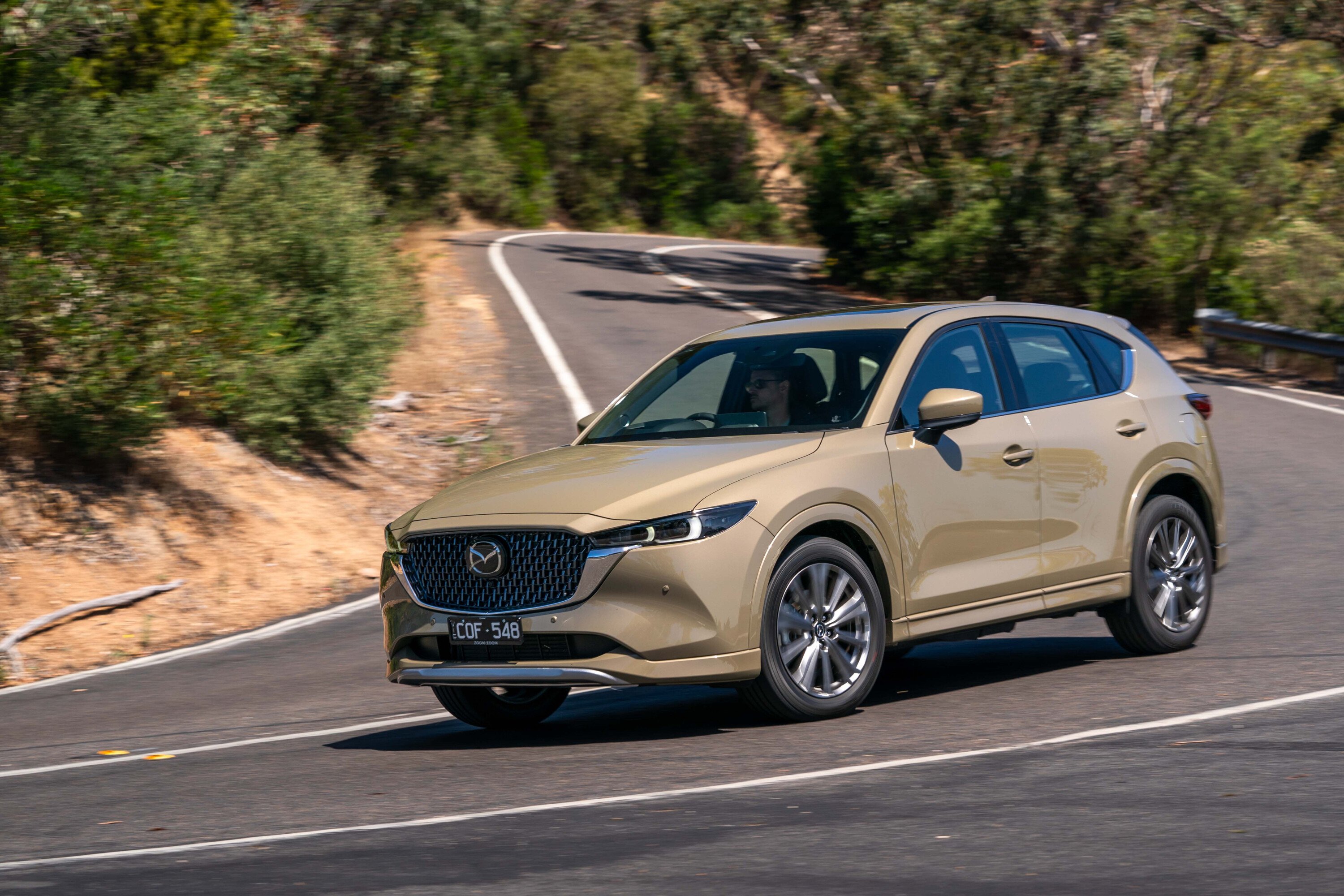
What is it like to drive?
Under the bonnet, the CX-5 G35 Akera features Mazda’s 2.5-litre turbocharged four-cylinder borrowed from the now-departed CX-9.
With 170kW and a diesel-like 420Nm on tap, it’s no slouch, with the 0-100km/h dash taking around eight seconds. The high torque output – available from 2000rpm – is the real benefit of the turbo with little hesitation when the accelerator is pushed.
The 0-100km/h dash in the G35 will take approximately 7.5 seconds compared to around 10 seconds for non-turbo ‘G25’ models.
The six-speed torque-converter automatic transmission is smooth and well-tuned – it’s not exactly a brand-new innovation – but it would be nice to see an eight-speed auto to improve acceleration and potentially reduce fuel consumption.
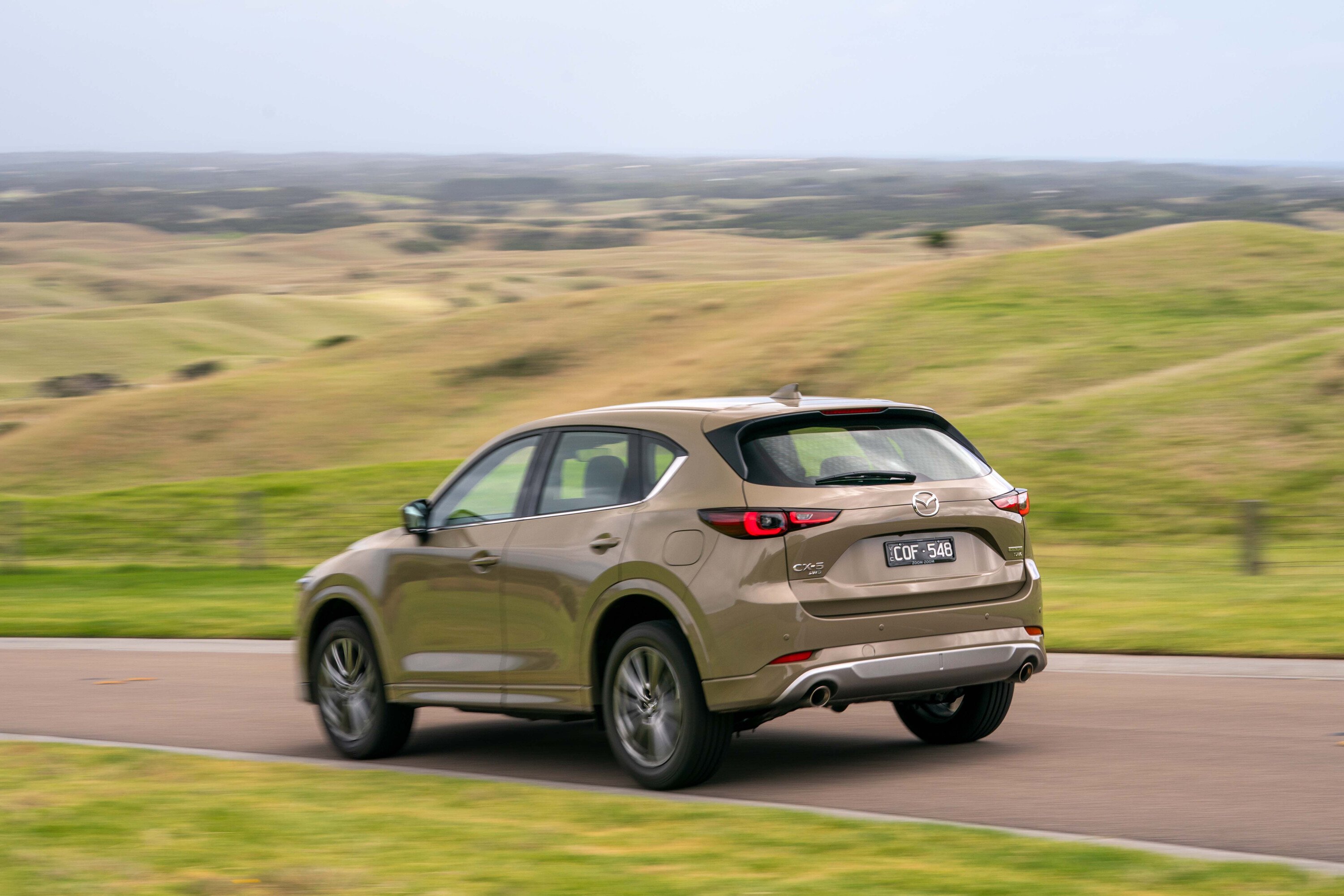
Putting the car in Sport mode will hold the gears for longer and add some weight to the steering for a more-engaging drive, if at the expense of fuel economy.
If you’re looking for a midsize SUV that is enjoyable to drive, the CX-5 is one of the better options in the segment. It has been continually refined over the past decade, with accurate and confidence-inspiring steering at higher speeds. Turn-in is also great, with assistance from the G-Vectoring Plus system to shift the vehicle’s weight forward in corners.
The addition of more sound deadening over the years means road noise is now quite minimal, and the multi-link rear suspension absorbs speed humps and undulations well.
Opting for the turbo brings a higher braked towing capacity at 2000 kilograms versus 1800kg for naturally-aspirated models.
How is it on fuel?
The 2.5-litre turbo-petrol in the G35 Akera is one of the thirstiest choices in the segment – especially compared to its hybrid rivals like the RAV4 and Tucson, which still offer a similar level of performance.
Officially, the CX-5 turbo is rated to use 8.2L/100km on a combined cycle, 6.9L/100km on the highway (this would be very hard to achieve, based on our testing), and a thirsty 10.3L/100km in low-speed, frequent-stop urban environments.
After a 536-kilometre road test, a fuel top-up revealed we achieved 8.3L/100km – the trip computer displayed 8.6L/100km – but this included a significant highway drive, which contributed towards the lower number.
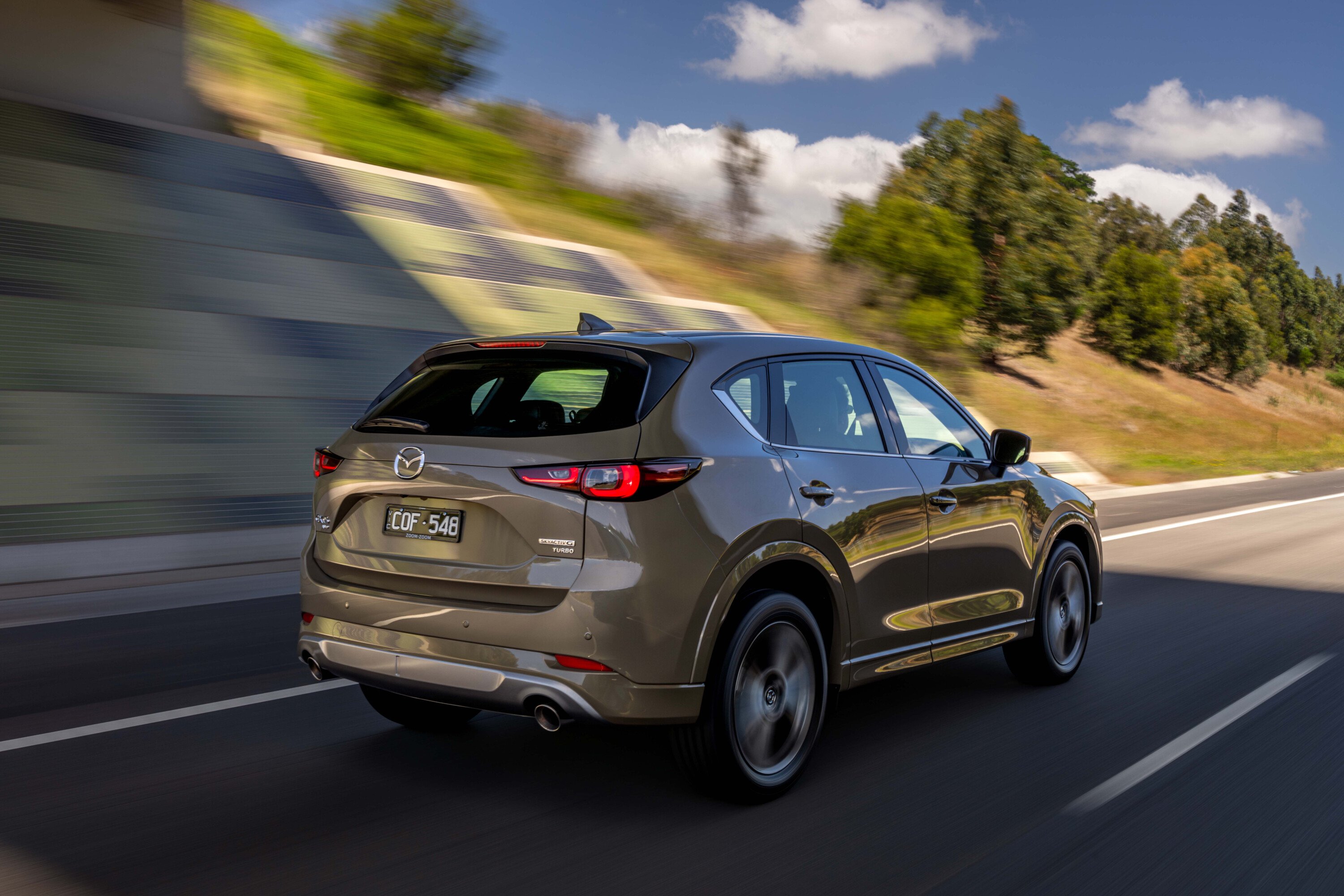
Frequent real-world driving in lower-speed urban areas or shorter highway stints are likely to see fuel use sit closer to 10L/100km.
We asked the owner of a three-year-old CX-5 Akera turbo about their average fuel use, who said it sits between nine and 11 litres per 100 kilometres from driving around 30 kilometres daily in urban and highway conditions, enabling a 550 to 600-kilometre range from its 58-litre fuel tank. Each situation will vary, of course.
We’d recommend the more-efficient 2.5-litre non-turbo ‘G25’ powertrain if you don’t spend much time on the open road, which is where the turbo shines.
The CX-5 G35 turbo can be fuelled with 91RON unleaded, and includes an idle stop/start system.
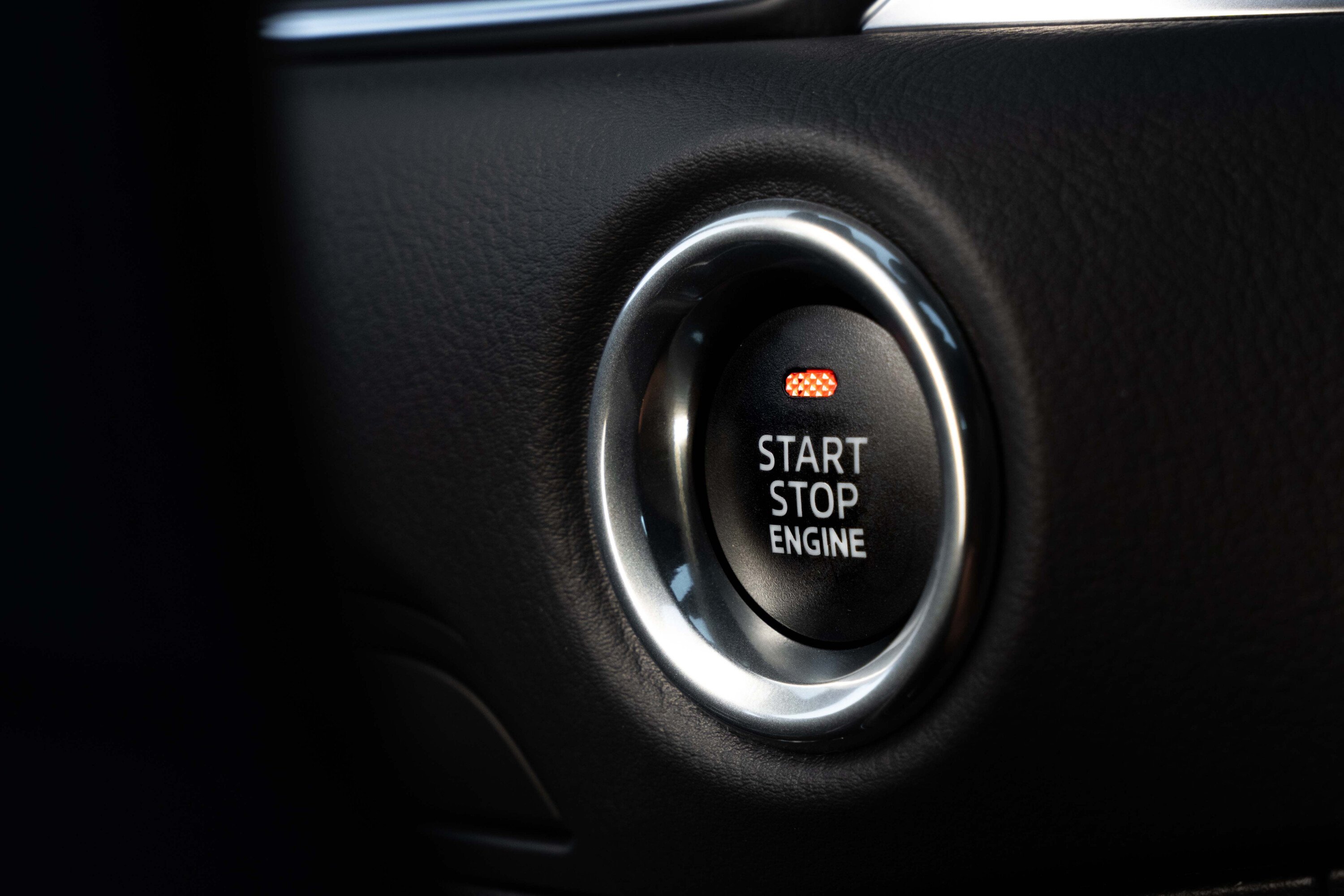
Mini matchup: Fuel consumption
| MODEL | MIN RON | COMBINED FUEL CONSUMPTION |
|---|---|---|
| Mazda CX-5 G35 Akera | 91 RON | 8.2L/100km |
| Toyota RAV4 Cruiser Hybrid AWD | 91 RON | 4.8L/100km |
| Volkswagen Tiguan 162TSI R-Line | 95 RON | 8.5L/100km |
How safe is it?
Mazda CX-5’s built from January 1, 2024 are not covered by an ANCAP safety rating.
That’s because ANCAP has introduced a six-year datestamp limit, which means the CX-5’s five-star rating achieved in 2017 doesn’t apply to vehicles built after December 31, 2023. Mazda has no plans to submit the CX-5 for a retest under ANCAP’s latest 2023-25 criteria.
While there’s no doubt the CX-5 is still a safe car, it is missing some features found in newer rivals that have achieved five-star ANCAP ratings under more stringent criteria, such as a front-centre airbag to limit head clashes in a side-impact collision and more-advanced AEB detection for motorcyclists and when turning at intersections.
The CX-5 has six airbags (dual front, curtain and side).
We had no troubles with the CX-5’s safety systems during our test. The lane-keep assist is well-calibrated and keeps the car in the centre of the lane on freeways, and the traffic sign recognition also works well to detect speed limit, stop and no-entry signs.
Vehicle speed, traffic sign and lane-keep assist information are shown in the head-up display to reduce distraction. It also shows turn-by-turn directions when the built-in navigation is set – but not when using Apple CarPlay or Android Auto maps.
The adaptive cruise control didn’t react to slowing cars in another lane, unlike some other cars we’ve tested – though it keeps a wider gap than we’d like, even in the lowest setting, inviting cars to slot in and push you further back.
| 2024 Mazda CX-5 G35 Akera safety features | |
|---|---|
| Autonomous emergency braking (vehicle, pedestrian and cyclist) | Traffic jam assist |
| Lane-keep assist | Adaptive high beam |
| Lane departure warning | Traffic sign recognition |
| Blind-spot monitoringu00a0 | Driver attention alert |
| Rear cross-traffic alert | Front and rear parking sensors |
| Adaptive cruise control | 360-degree camera system |
Warranty and running costs
As with all Mazdas, the CX-5 is covered by a five-year/unlimited-kilometre warranty.
It has five years of capped-price servicing and complimentary roadside assistance, with no requirement for annual dealer servicing to retain it, unlike some other manufacturers.
The CX-5’s service intervals now align with most of its competitors at 12 months or 15,000 kilometres, whichever occurs first – up from 10,000km.
In total, the Mazda CX-5 G35 turbo will cost $2576 to service at the dealer over a five-year period, with the dearest service being the four-year/60,000km interval at $849 due to the requirement for new spark plugs.
The Honda CR-V and Toyota RAV4 are cheaper to service at the dealer over the same period at $995 and $1300, respectively, while a Volkswagen Tiguan 162TSI AWD will cost $4390 – or $3650 with a pre-paid five-year service plan.
VERDICT
The Mazda CX-5 might be getting old, but it’s still an excellent midsize SUV – especially with its class-leading dynamics and strong 2.5-litre turbo-petrol.
We’d recommend the G35 GT SP if you’re after the extra power from the turbo – it still has enough standard equipment to keep you happy – or suggest sticking with a non-turbo G25 model instead if the turbo’s added grunt (and higher fuel consumption) is less appealing.
With its smaller size and older cabin technology, up-to-date rivals like the Toyota RAV4, Hyundai Tucson and Honda CR-V should also be considered with most alternatives also offering the choice of a hybrid.
Ulimately, as nice as the CX-5 is, it needs a tech refresh, more space, and a fuel-efficient hybrid option to truly compete in this crowded segment – things the next-gen model expected in 2025 should address.
Specifications
| 2024 Mazda CX-5 G35 Akera turbo AWD automatic | ||
|---|---|---|
| Engine | 2.5-litre turbocharged four-cylinder petrol | |
| Power @rpm | 170kW @ 5000rpm | |
| Torque @rpm | 420Nm @ 2000rpm | |
| Transmission | Six-speed torque converter automatic | |
| Body | Midsize SUV, five-door | |
| L/W/H | 4575mm/1845mm/1680mm | |
| Wheelbase | 2700mm | |
| Boot space | 438L / 1340L | |
| Weight | 1693kg | |
| Fuel / tank | 91 RON / 47 litres | |
| Fuel use L/100km | 8.2L (claimed) | 8.3L (on test) |
| Suspension | Front: MacPherson strut / Rear: Multi-link | |
| Steering | Electric rack-and-pinion; 11.0M | |
| Brakes | Front: ventilated discs / Rear: solid discs | |
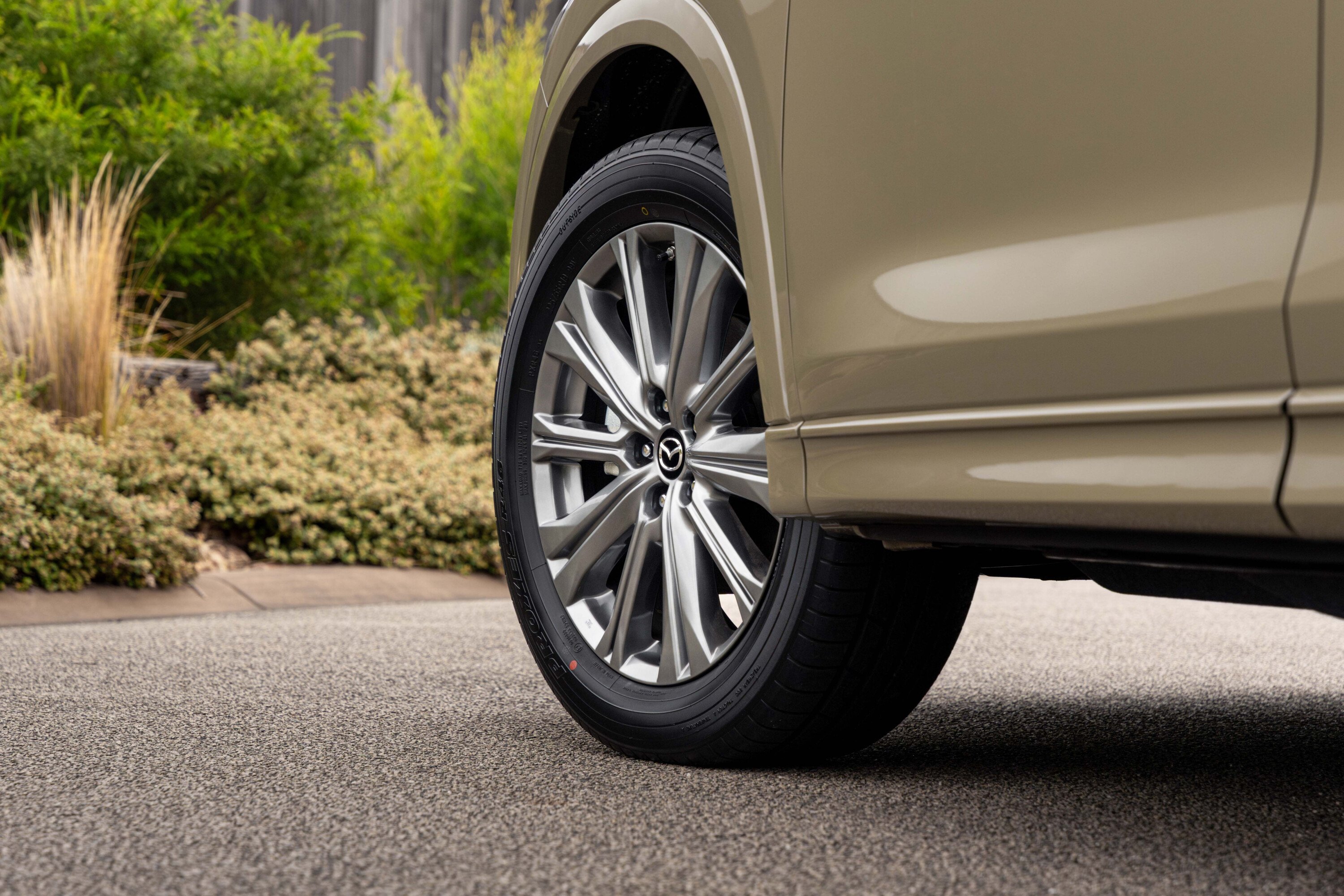
| Wheels | 19-inch diameter / 225mm width | |
| Tyres | Toyo Proxies R46 | |
| Tyre size & spare | 225/55R19, space-saver spare | |
