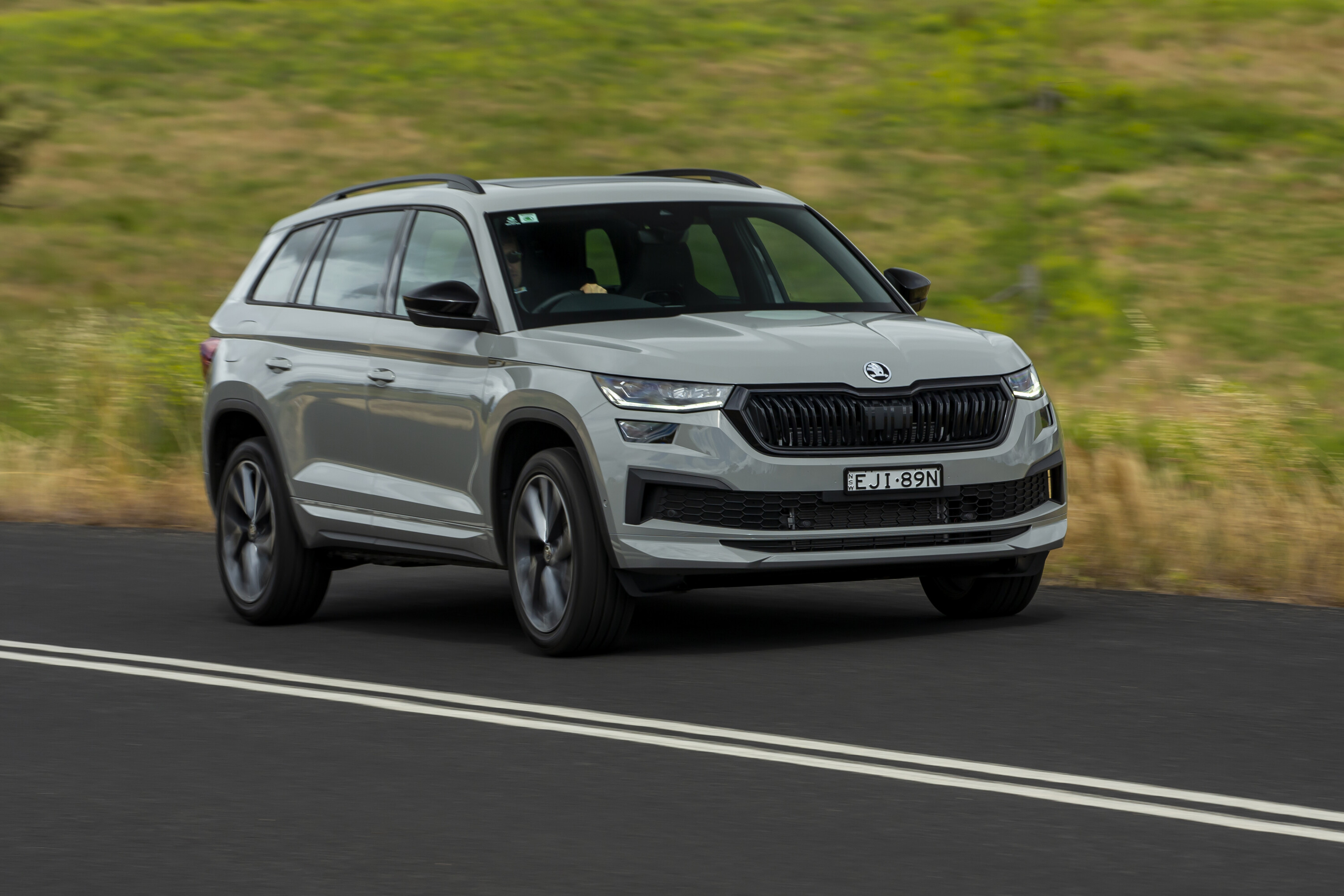
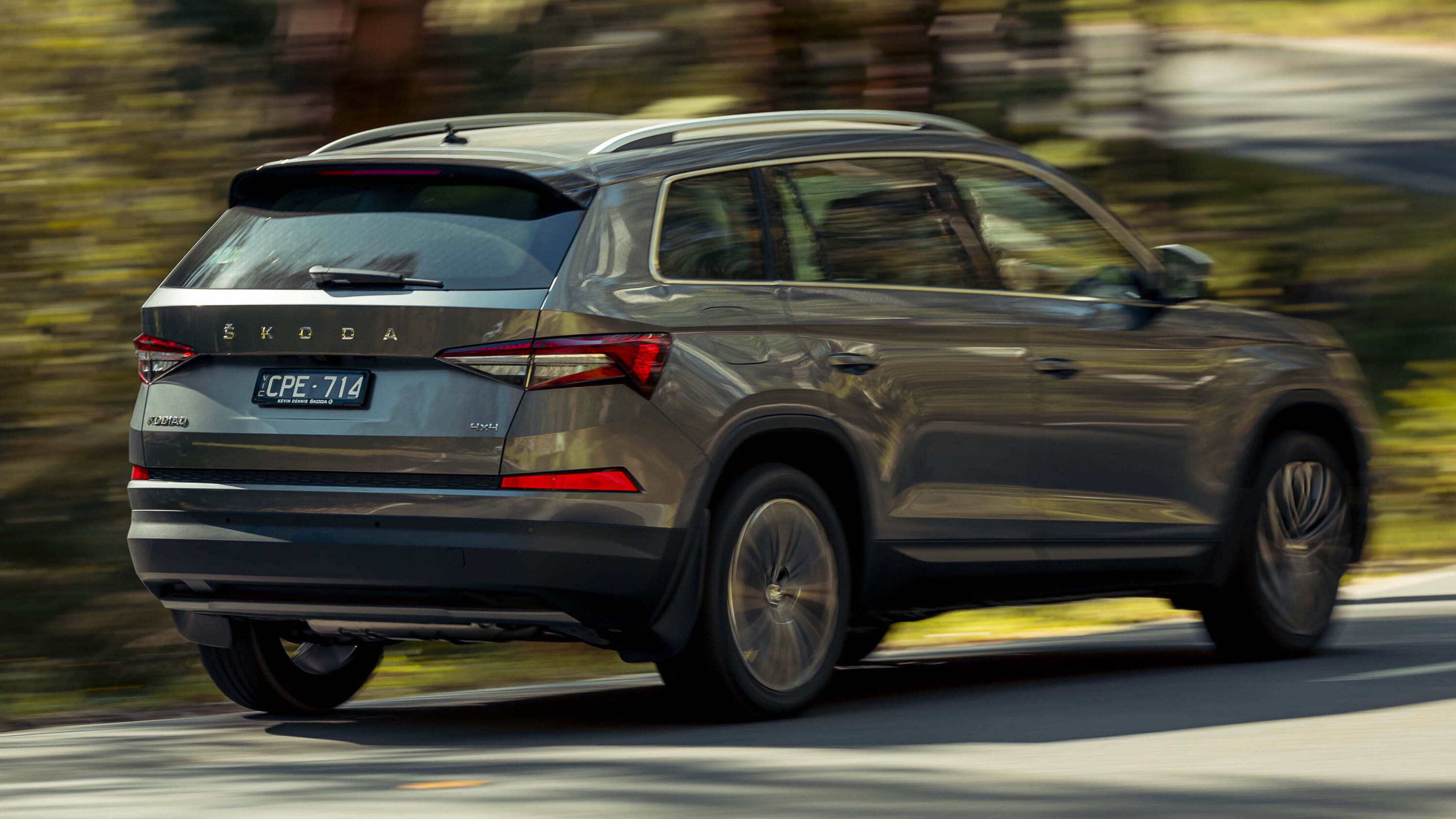
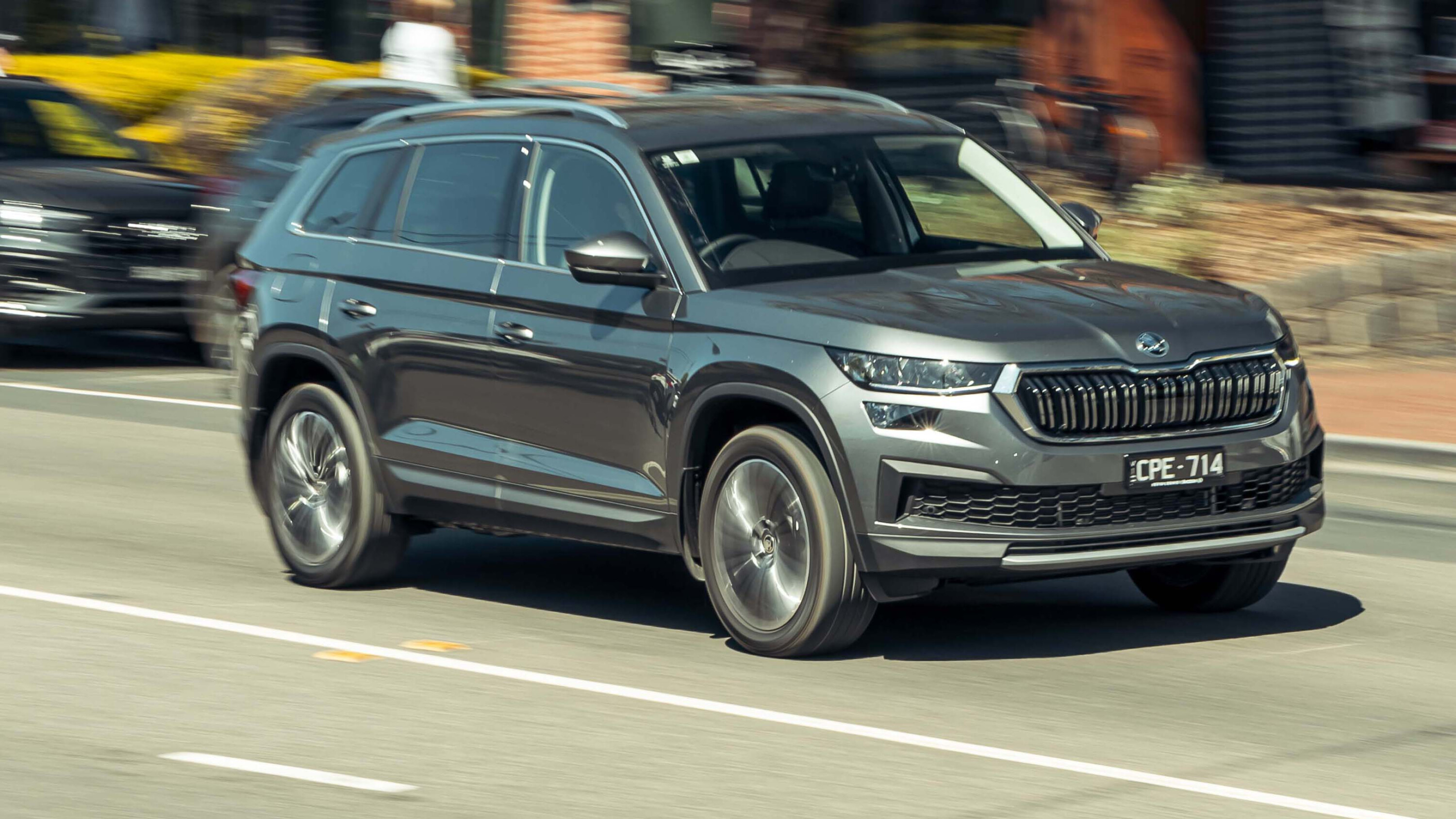
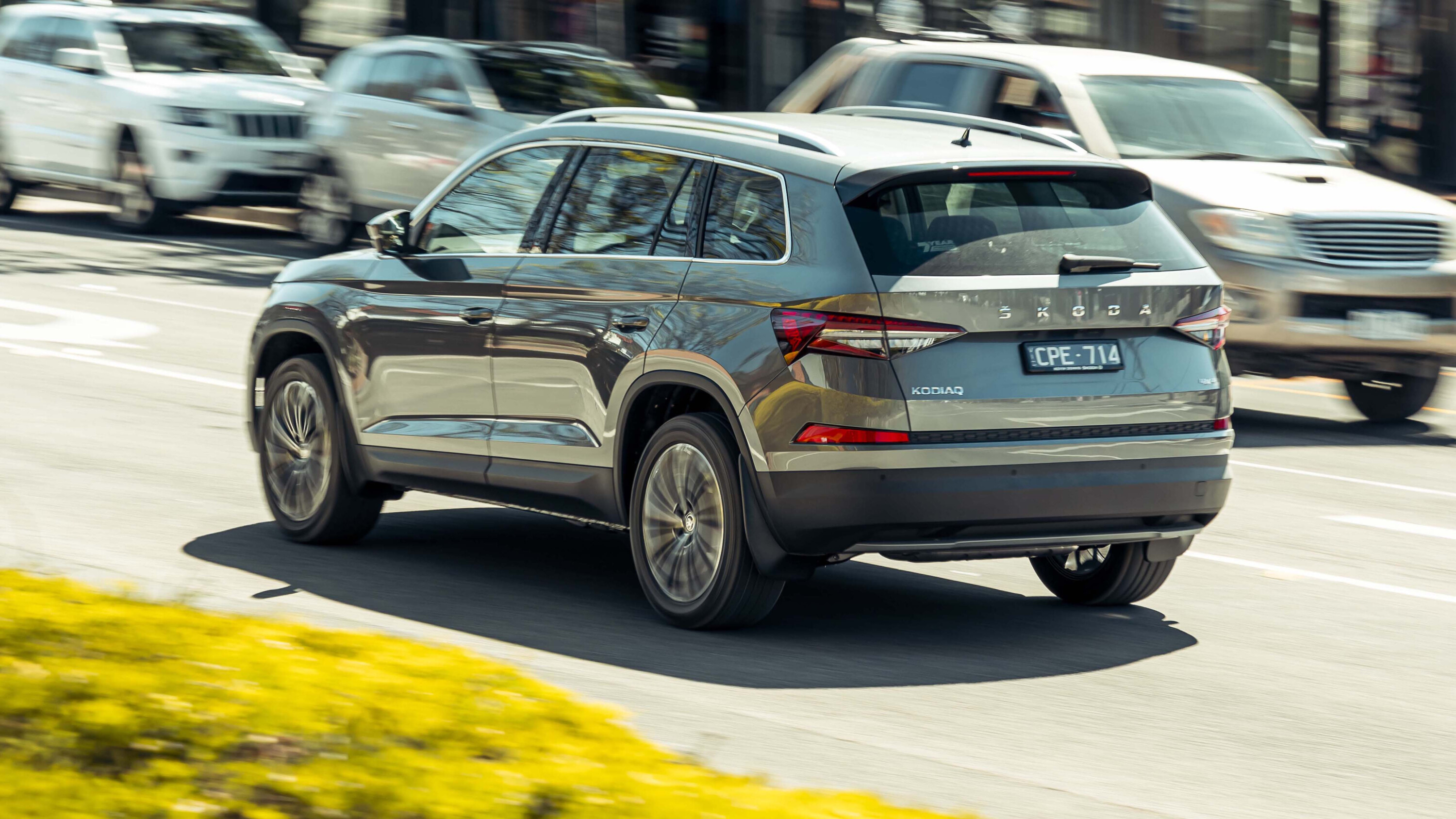
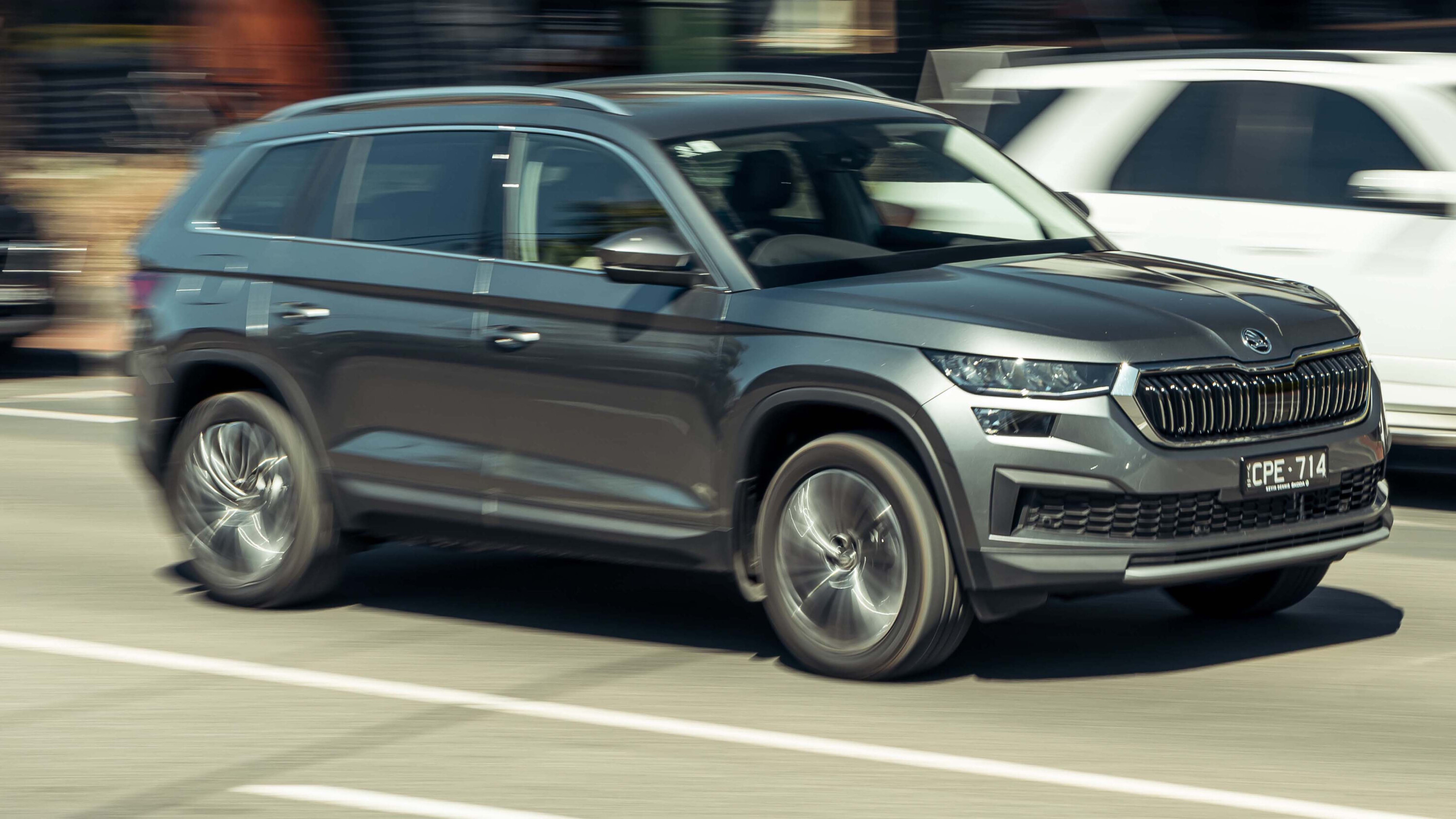
Although we anticipate the arrival of a new Skoda Kodiaq in late 2024, the current model is impressively maintaining its graceful aging. And with new model prices a given at this point, the current Kodiaq could have you in your new family SUV for less.
What’s noteworthy is that, in contrast to recently refreshed competitors, the Skoda’s exterior still exudes a youthful and timeless charm.
In our 2023 evaluation for the Best Large SUV under $60k category, the Skoda emerged as the victor, surpassing even brand-new rivals.
However, before we delve into the upcoming update for this seven-seater family SUV, let’s take a closer look at what the mid-level Sportline variant has to offer.
Pricing & Features
The Style kicks off the Kodiaq range, before the Sportline and flagship RS trims– at $56,490 drive-away.
Moving to the Sportline for an extra $500 adds an array of features.
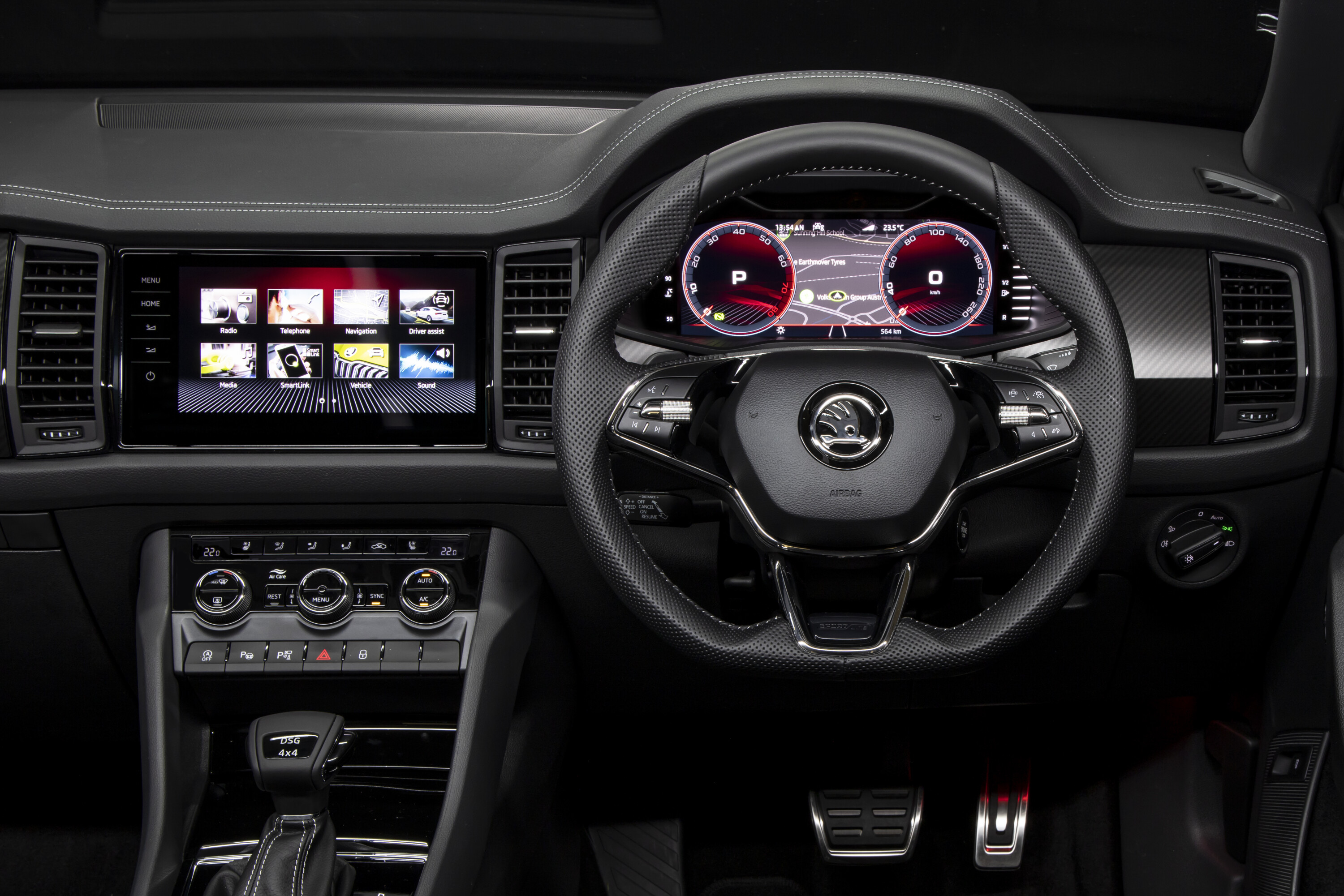
As a base grade the Style is well equipped, with a long list of standard features including 19-inch alloys, 9.2-inch screen, wireless Apple CarPlay, LED day-time running lights, wireless phone charger and an electric tailgate.
The Sportline adds:
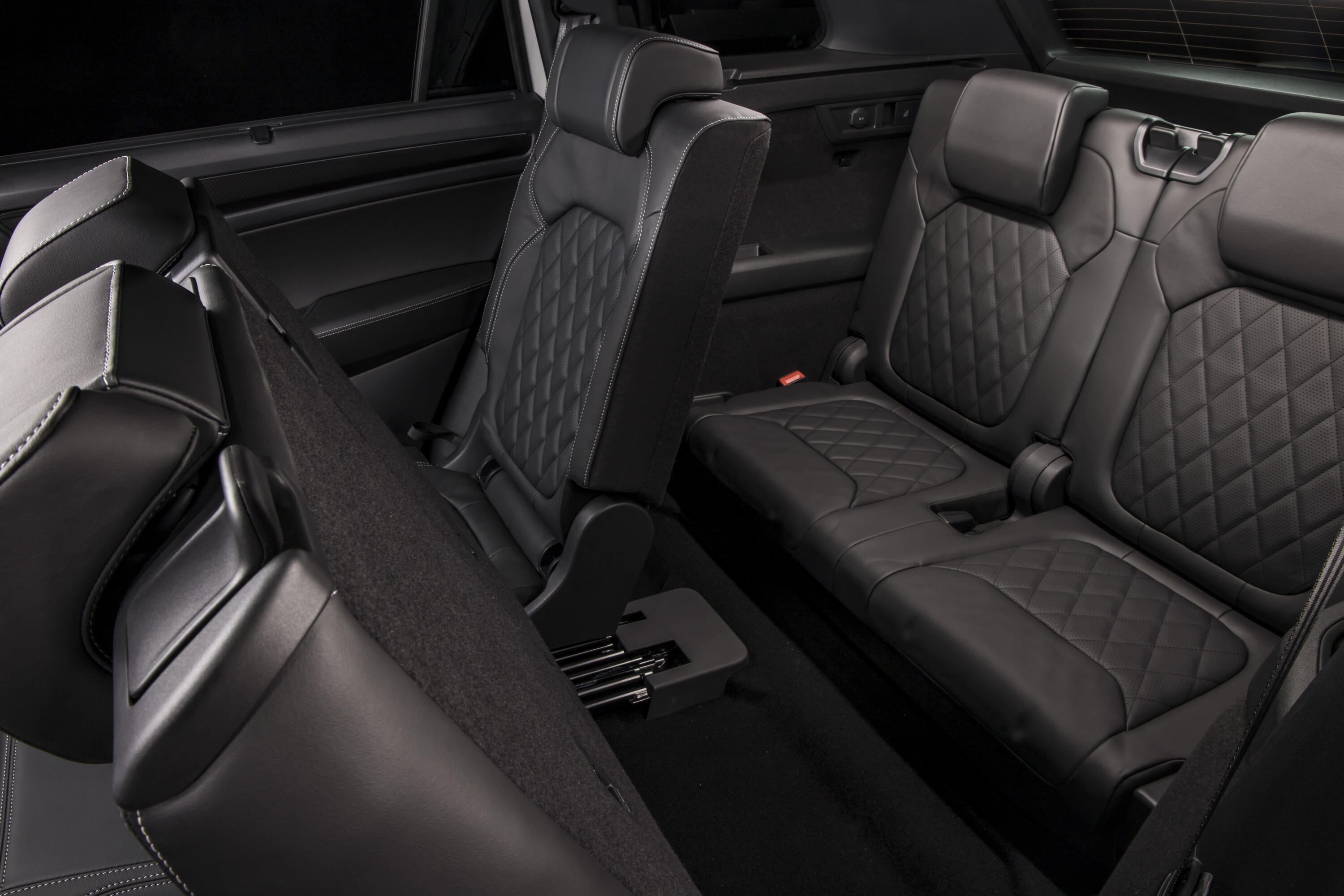
Sports style seats
Sports style steering wheel
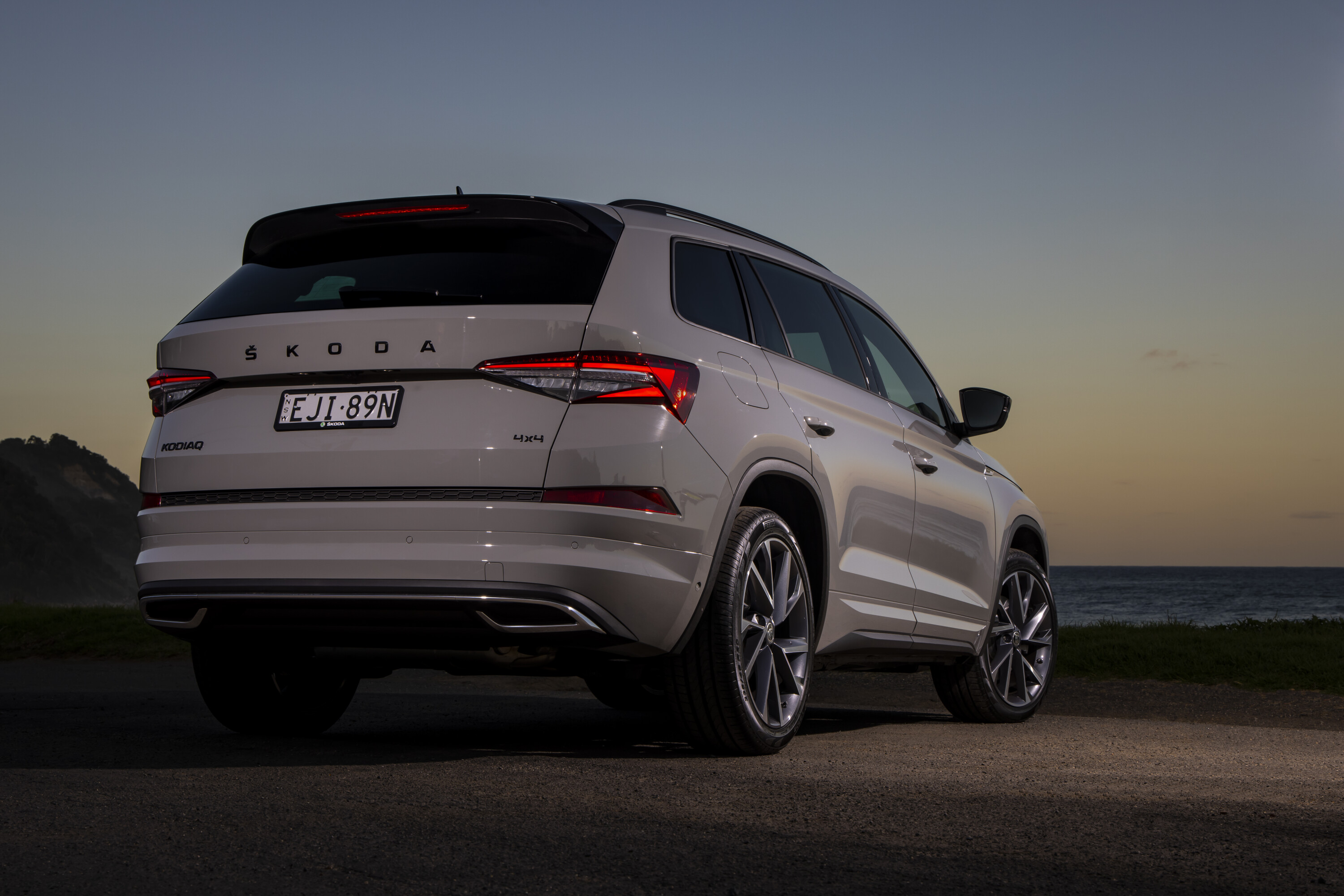
Black sporty design elements
Power adjustable front seats
Black roof rails
Cornering lights
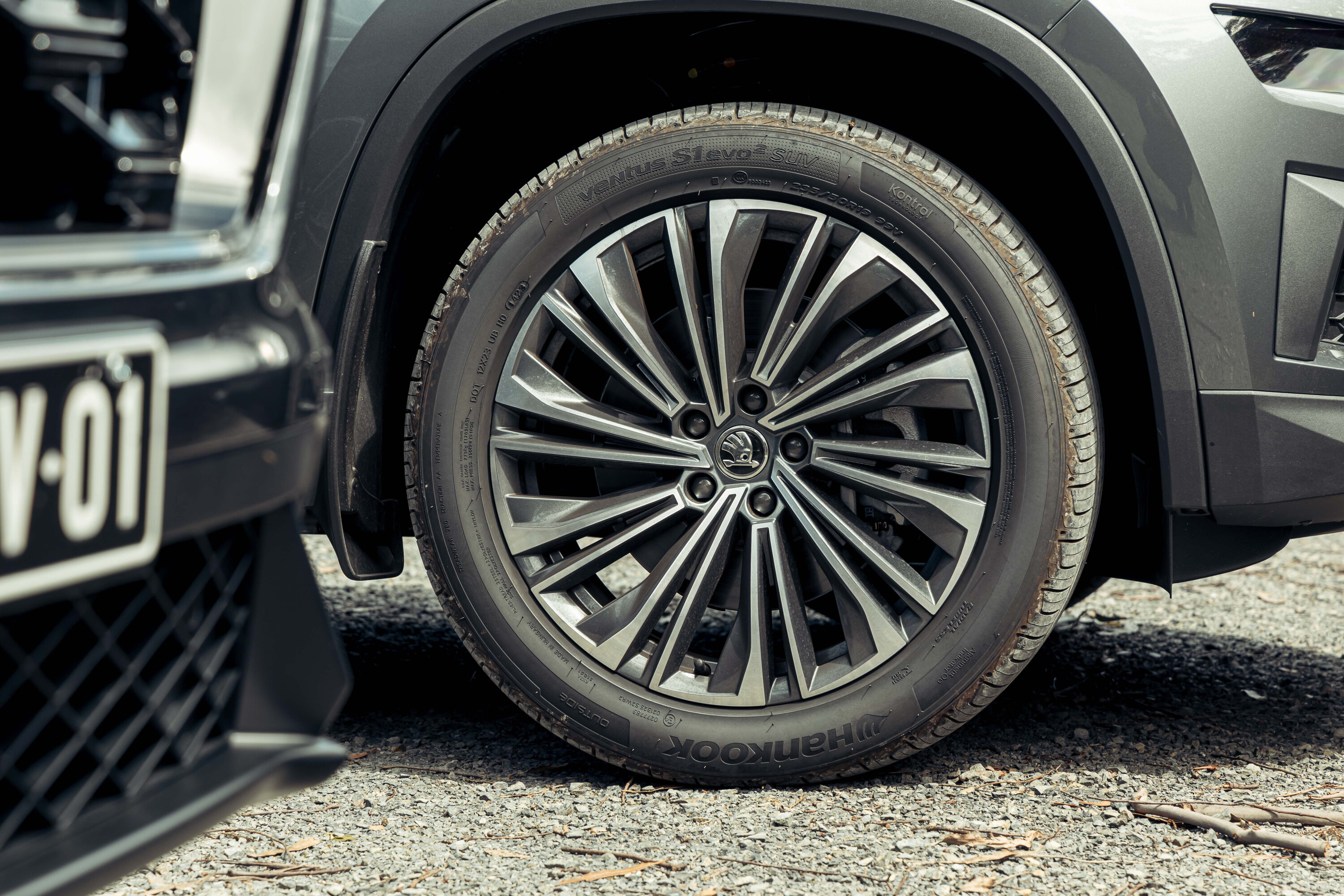
20-inch alloy wheels with unique design
Steel Grey is the standard paint colour on the Kodiaq, with all other options adding $770-$1100 to your drive-away price.
1
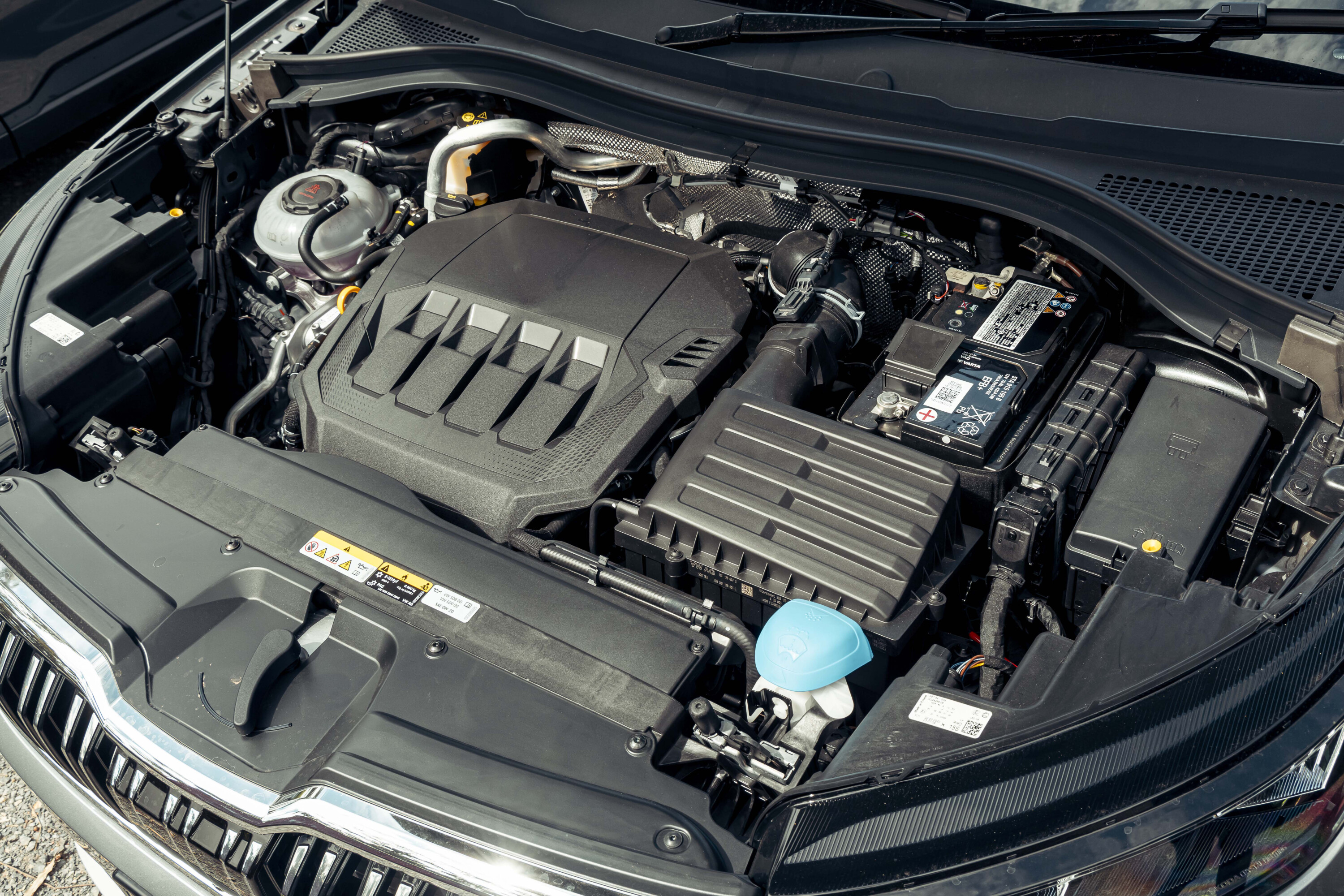
Powering the vehicle is the well-known 2.0-litre turbocharged petrol engine, producing 132kW of power and 320Nm of torque. This engine is mated to a seven-speed dual-clutch transmission and offers variable all-wheel drive.
The Tech Pack at $3000 adds adaptive suspension, hands-free tailgate and more while the Luxury Pack brings features such as tri-zone climate control, electric leather front seats and massage function seats for an additional $6900. You can even chuck on a panoramic sunroof or leather seats as an extra.
1
Safety
The Skoda Kodiaq Style currently lacks a rating from ANCAP, as the six-year window for reassessment has elapsed. However, it previously obtained a five-star rating based on evaluations conducted in 2017.
This rating comprised notable scores, including 92 percent for adult occupant protection, 77 percent for child occupant protection, 62 percent for pedestrian protection, and 54 percent for safety assist.
1
Standard safety features are robust and include adaptive cruise control, driver attention monitoring, blind spot monitoring (a recent addition), nine airbags, as well as front and rear parking sensors.
One notable absence is the lane keep assist feature, which may be conspicuous in a vehicle of this size. However, it can be added by opting for the Luxury Pack if desired.
Key Rivals
Examples of notable competitors encompass other well-received seven-seater models:
The 2024 Skoda Kodiaq Sportline stands as an outstanding option for individuals in search of a sporty-styled family SUV that seamlessly merges spaciousness and some European finesse.
Remarkably, even as it nears the conclusion of its product cycle, it maintains its competitiveness when compared to more recent rivals.
Its fusion of practical amenities and sophistication positions it as a standout within its category. If you’re in the market for an SUV that harmoniously combines fashion with functionality, the Kodiaq Style should unquestionably be on your list for consideration.
GR Yaris gets eight-speed auto option and 24kW more power
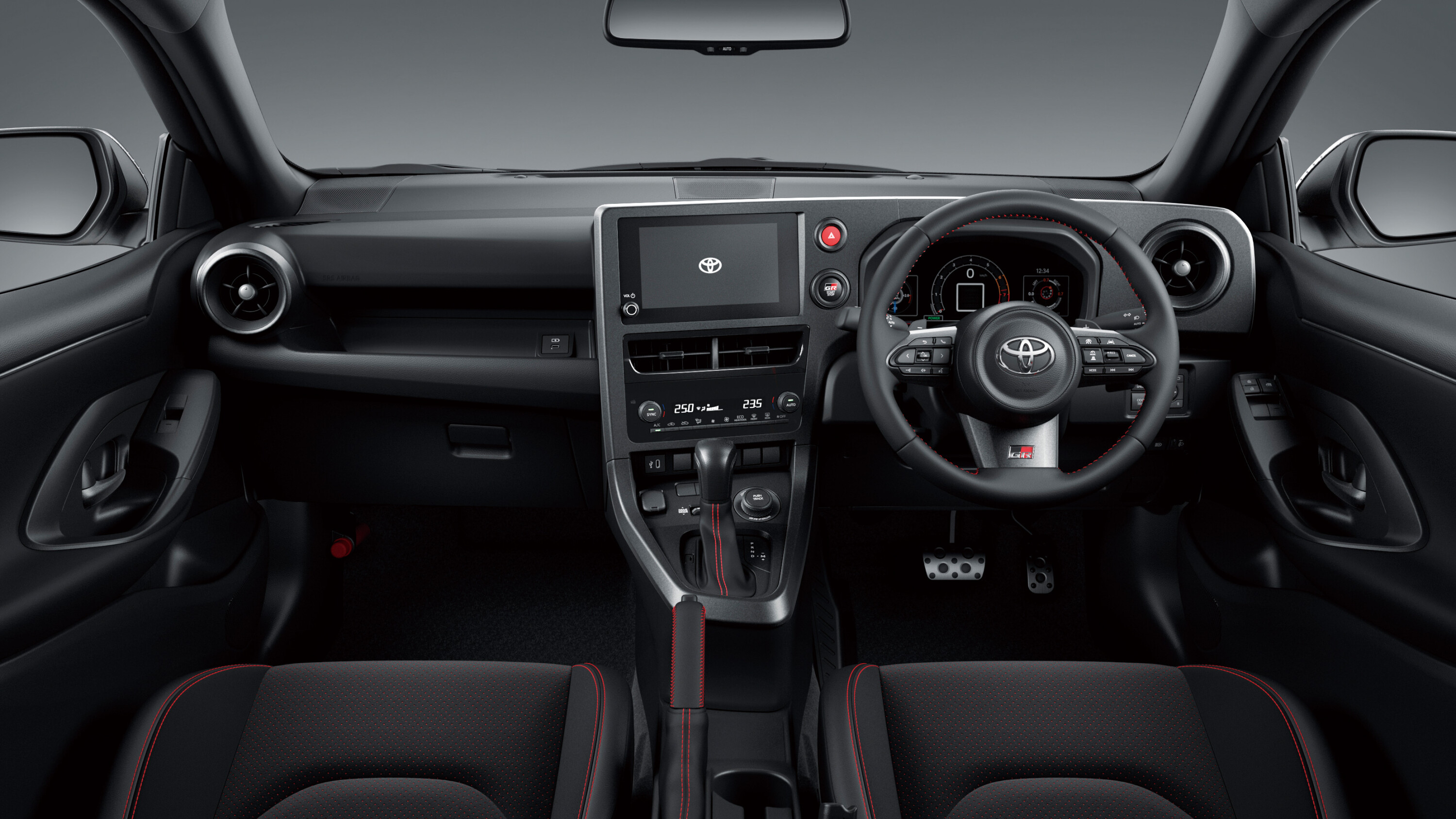
Enhanced ergonomics inside with lower seat and better visbility
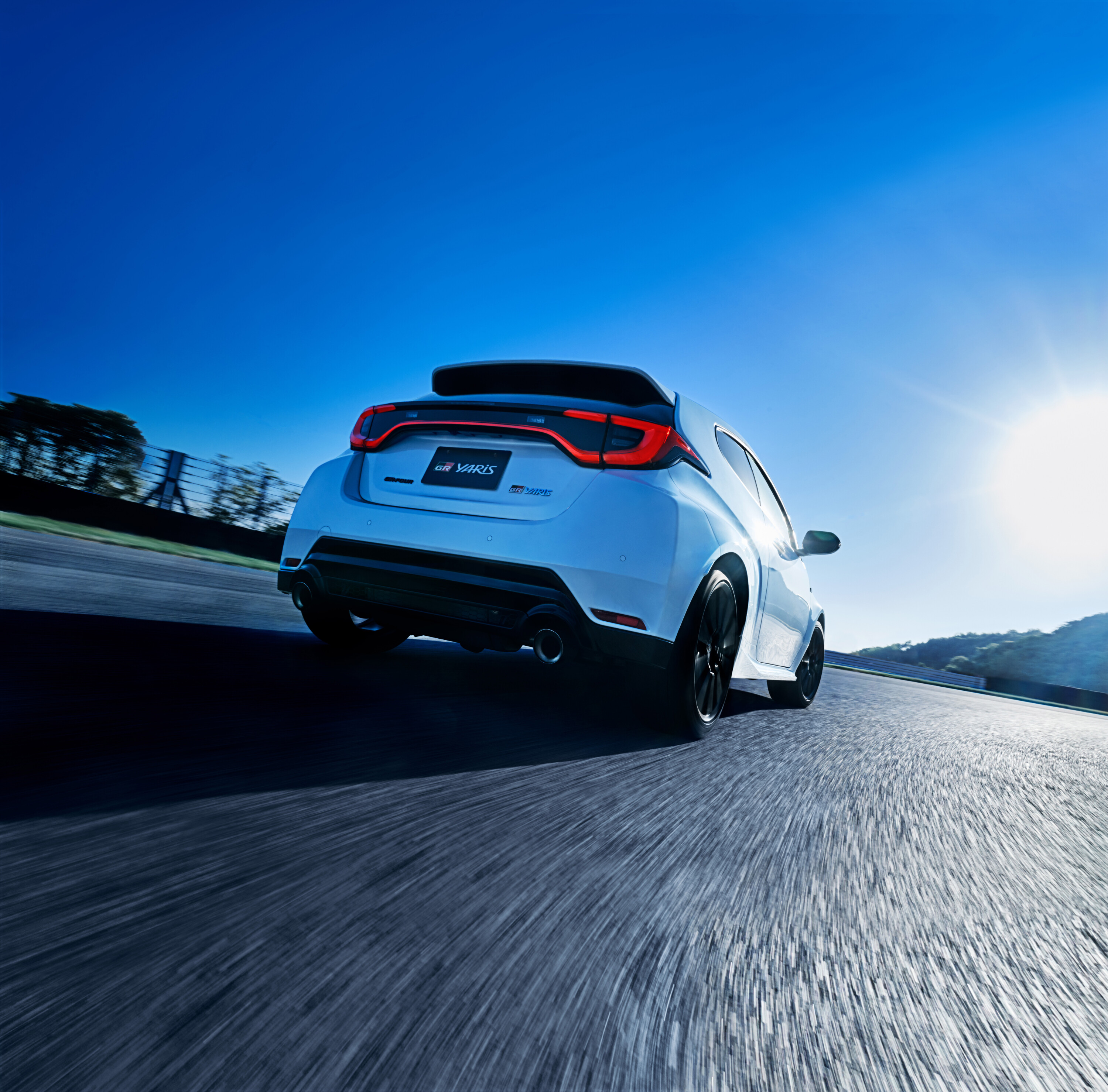
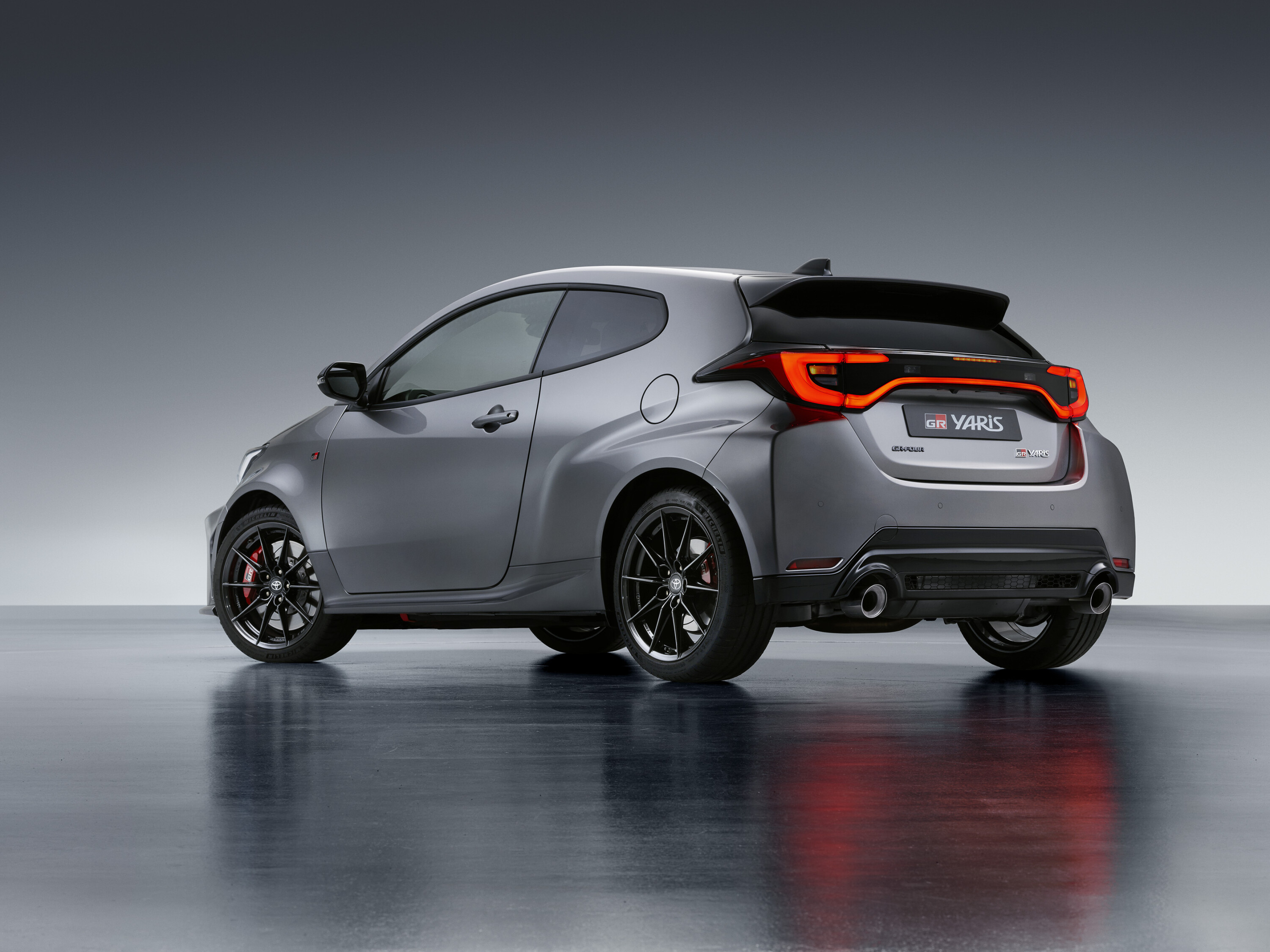
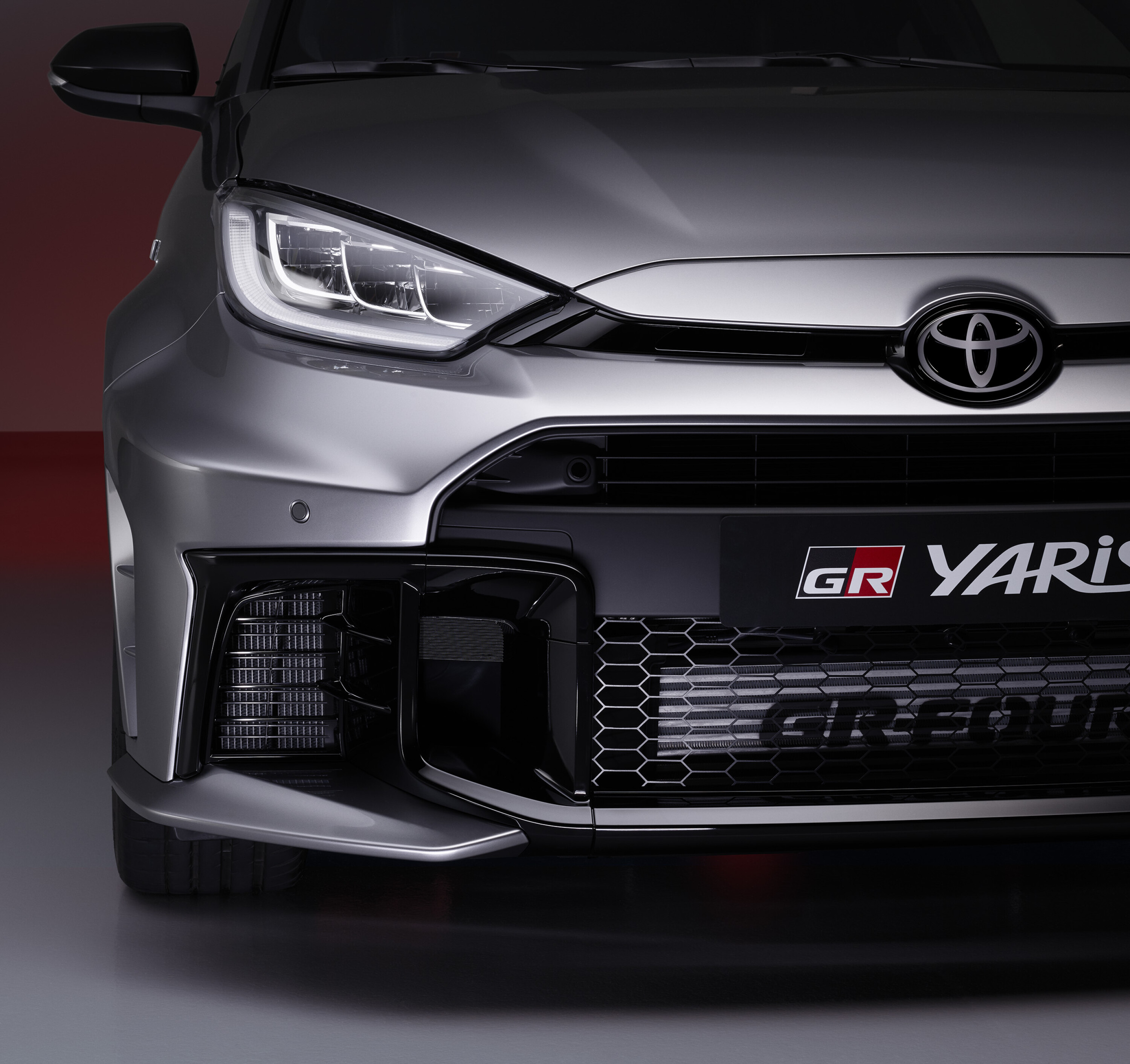
Updated exterior styling with a focus on cooling and aerodynamic performance
Australian deliveries expected to begin towards the end of 2024
The facelifted 2024 Toyota GR Yaris has debuted with confirmation that the long-rumoured eight-speed automatic will be offered. Australian-spec production will begin later this year.
There was an assumption it would be an Aisin or ZF-sourced torque converter transmission adapted from existing parts, but GR doesn’t do things by halves. Instead, we’ve been served what Toyota calls a ground-up eight-speed ‘Direct Shift’ torque converter automatic in the facelifted version.
Along with the new transmission option (a six-speed manual will continue to be offered) and updated visage, the GR Yaris climbs in grunt by 24 kilowatts and 30Nm, exceeding the GR Corolla’s outputs at 224kW and 400Nm.
Despite significant hikes in power, the 1.6-litre G16E-GTS turbo three-cylinder remains tractable, with peak power at 6500rpm and peak torque spread from 3250-4600rpm.
Taking advantage of the additional grunt are the eight shorter ratios in the available automatic. Toyota says the transmission has been honed in motorsport through a “breaking and fixing” philosophy.
The goal was to make downshifts as fast and smooth as possible, while also making the driving experience natural. Therefore, the ‘box’s electronic brain takes steering angle, brake force, and driving style into account in automatic mode.
1
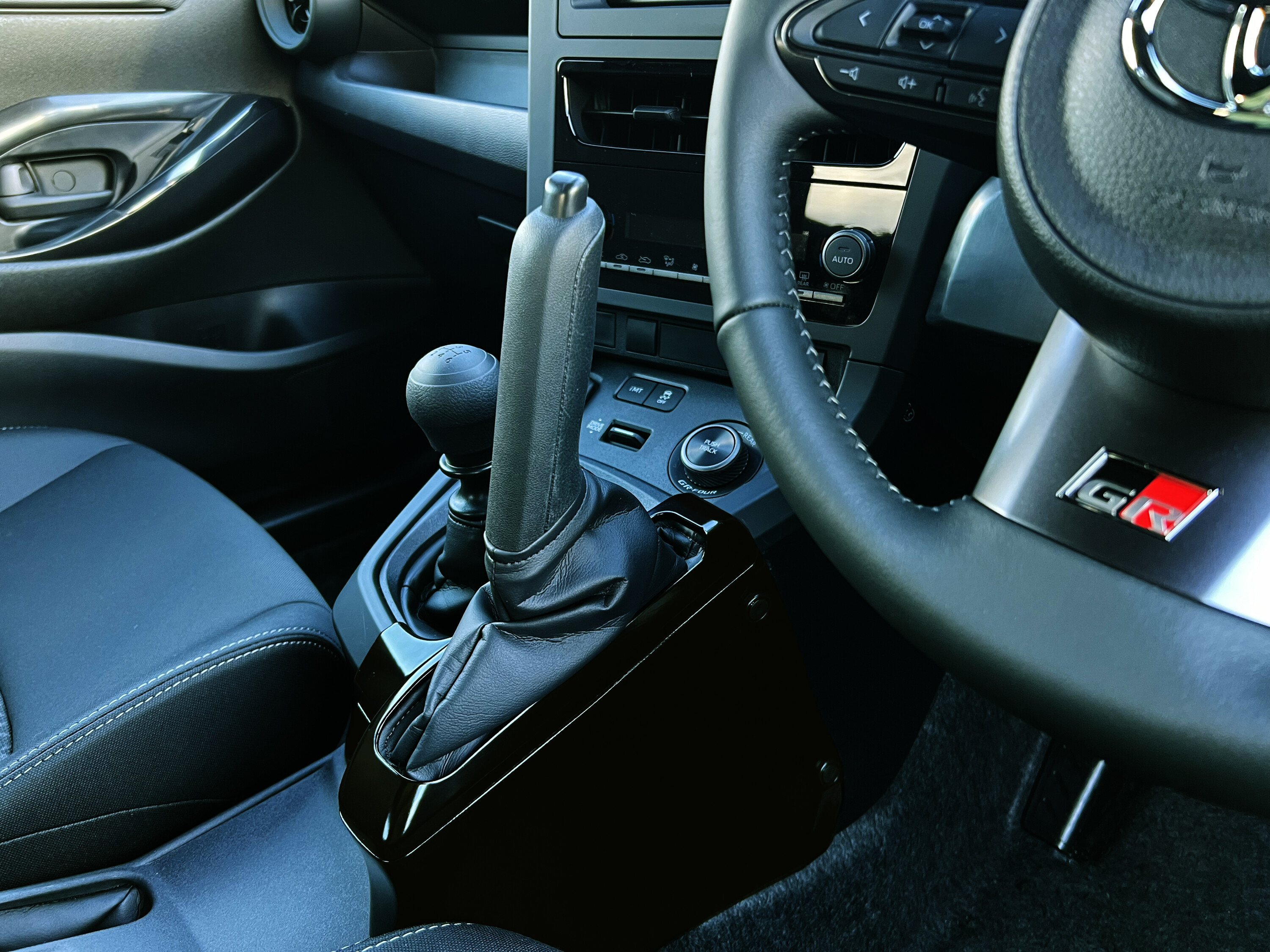
For the lever, GR has reversed the direction of shifting from normal Toyotas, so pushing forward shifts down a gear in line with natural g-forces.
Opting for the auto adds an extra 20kg to the GR Yaris’s kerb weight, bringing it up to 1300kg.
The remainder of the GR-Four AWD system is unchanged, and it sounds like the open differentials of the regular GR Yaris will be dropped and all examples, like the existing Rallye, will pack Torsen locking differentials front and rear.
There’s no official word on whether the auto will be offered in the GR Corolla, but Gazoo Racing would be silly not to broaden the rally-bred hot hatch’s appeal (and give it extra firepower against the VW Golf R).
The torque converter automatic also features in an LBX concept revealed at this year’s Tokyo Auto Salon.
1
Following the GR Corolla’s lead, the upgraded GR Yaris gets more drive modes, with Eco, Normal and Sport adjusting throttle, sound and steering characteristics – plus the GR-Four AWD mode selector.
There’s also Circuit mode that uses GPS to detect when the car is on a racetrack – at least in Japan – which deactivates the 180km/h speed limiter (Japan only) and activates an anti-lag feature.
Toyota has directly addressed issues with GR Yaris ergonomics. The bucket seats are set 25mm lower and the steering wheel position has been adjusted.
A new “easier to pull” vertical handbrake will be offered for Japan’s track-focused RC trim level to enable quicker operation by placing it closer to the gear shifter and steering wheel.
1
A new centre stack angled 15º towards the driver opens up more space between the infotainment system and mirror to aid visibility.
To enhance stiffness, Gazoo Racing has increased the number of spot welds by 13 per cent, and structural adhesive by 24 per cent.
Visually, the updated GR Yaris is differentiated by a new lower grille with steel mesh designed to be more easily replaceable, and enlarged cooling vents on the side.
These enlarged inlets also feed fresh air to the sub-radiator and cooler for the automatic transmission. This can be enhanced by a factory cooling package option that brings intercooler water spray, among other features – though again, this may be limited to Japan.
1
Local timing and pricing are yet to be revealed. Australian examples of the facelifted GR Yaris won’t begin rolling off the production line until late 2024.
Expect a launch in the fourth quarter of this year, or early 2025 for the all-paw pocket rocket.
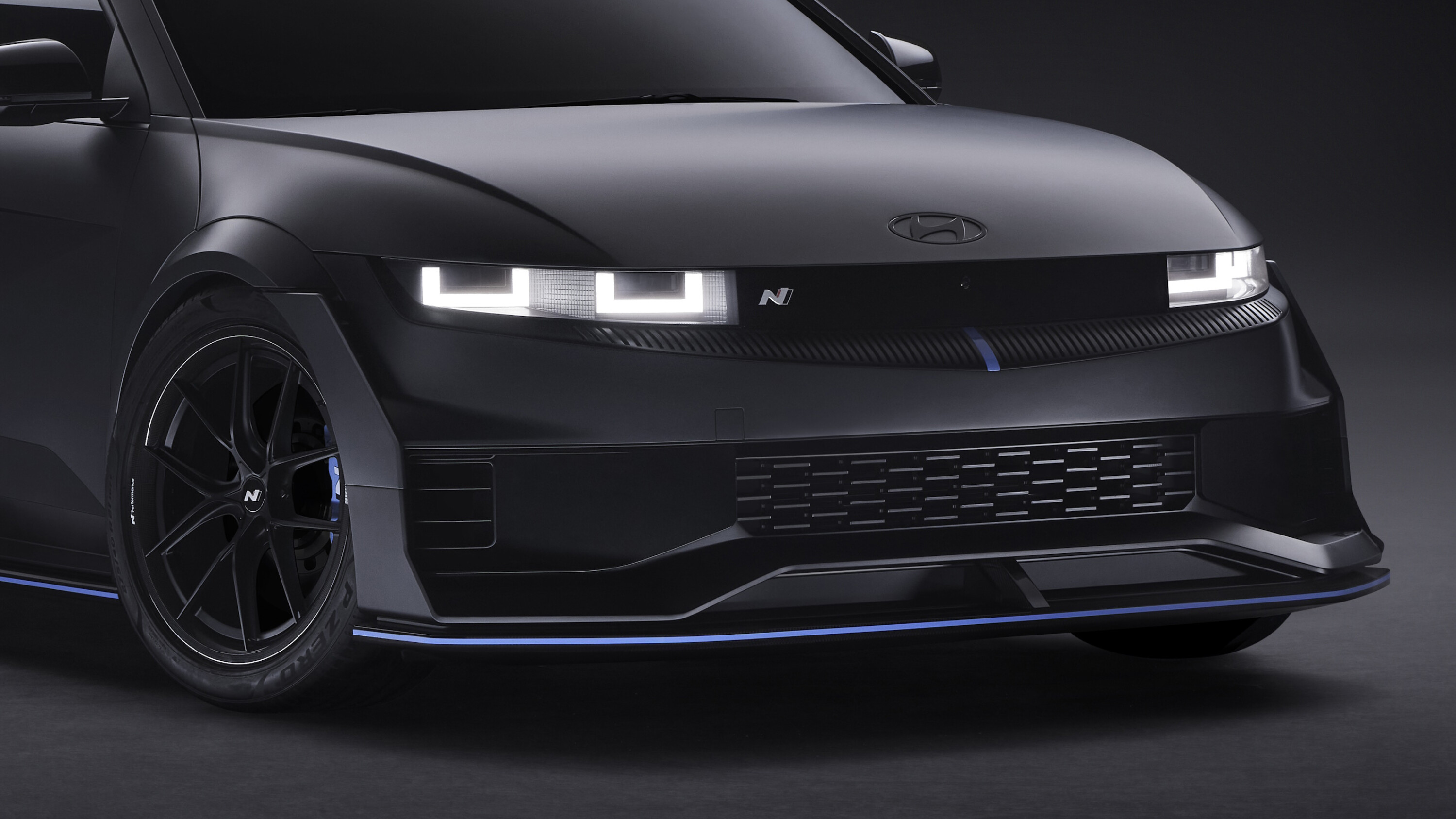
Korean powerhouse Hyundai has used Japan’s premiere tuning and style show, Tokyo Auto Salon, to showcase new N Performance Parts destined for the options list of the Ioniq 5 N in the near future.
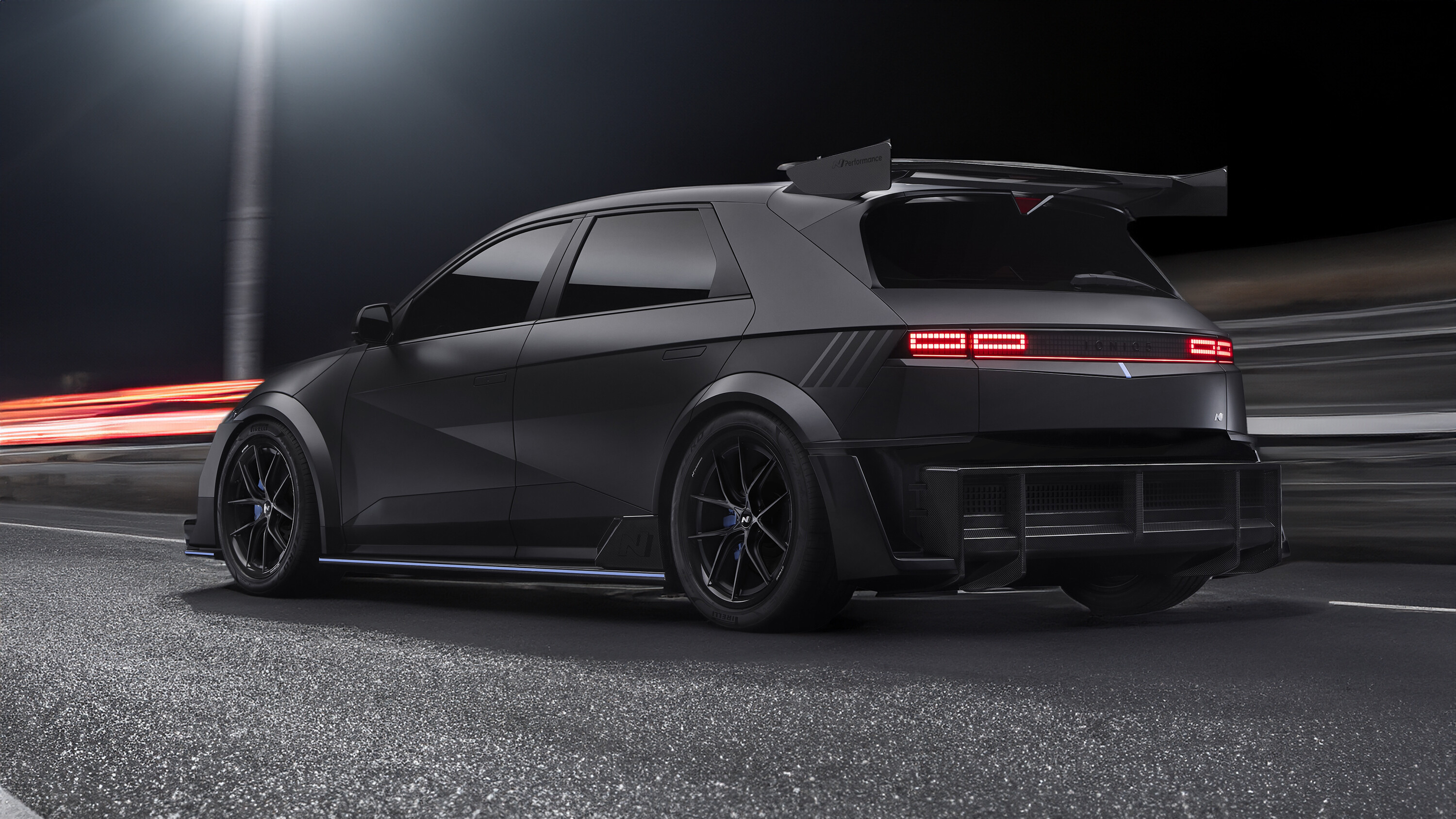
Decked out on an existing Ioniq 5 N to create what it calls the ‘IONIQ 5 N NPX1 concept’, the new N Performance Parts include – at a glance – new wheels and a new body kit to set the flagship EV apart from its regular form.
1
Among them are a carbon-fibre front splitter, skirts, rear diffuser and rear wing, while new hybrid carbon wheels are tucked at each corner in front of new “high-performance” brake pads and lowered springs. Specific details on those features, however, have not been offered.
These parts will all be made available later in 2024, followed by a similar range of N Performance Parts upgrades “for all N models”.
1
Sound off!
Back to the Ioniq 5 N, N brand vice president Joon Park said buyers can also look forward to the availability of over-the-air updates including sound packs (the current Ioniq 5 N’s surprisingly rorty note is based on the i30 N) and new configurations for the vehicle’s power and ride calibration.
Park says these options “will open a completely new category of EV customisation for an exciting future ahead for the tuning community”.
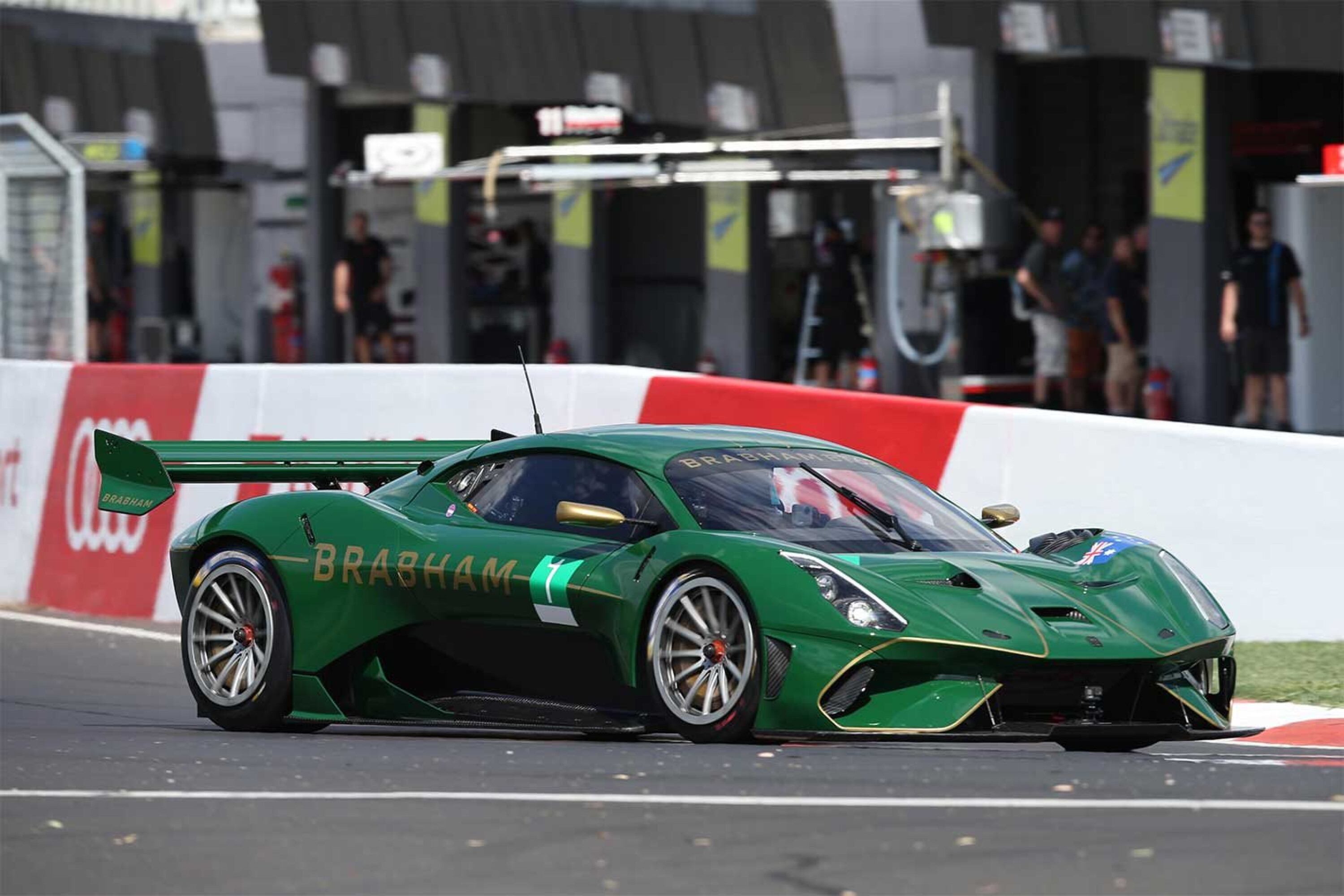
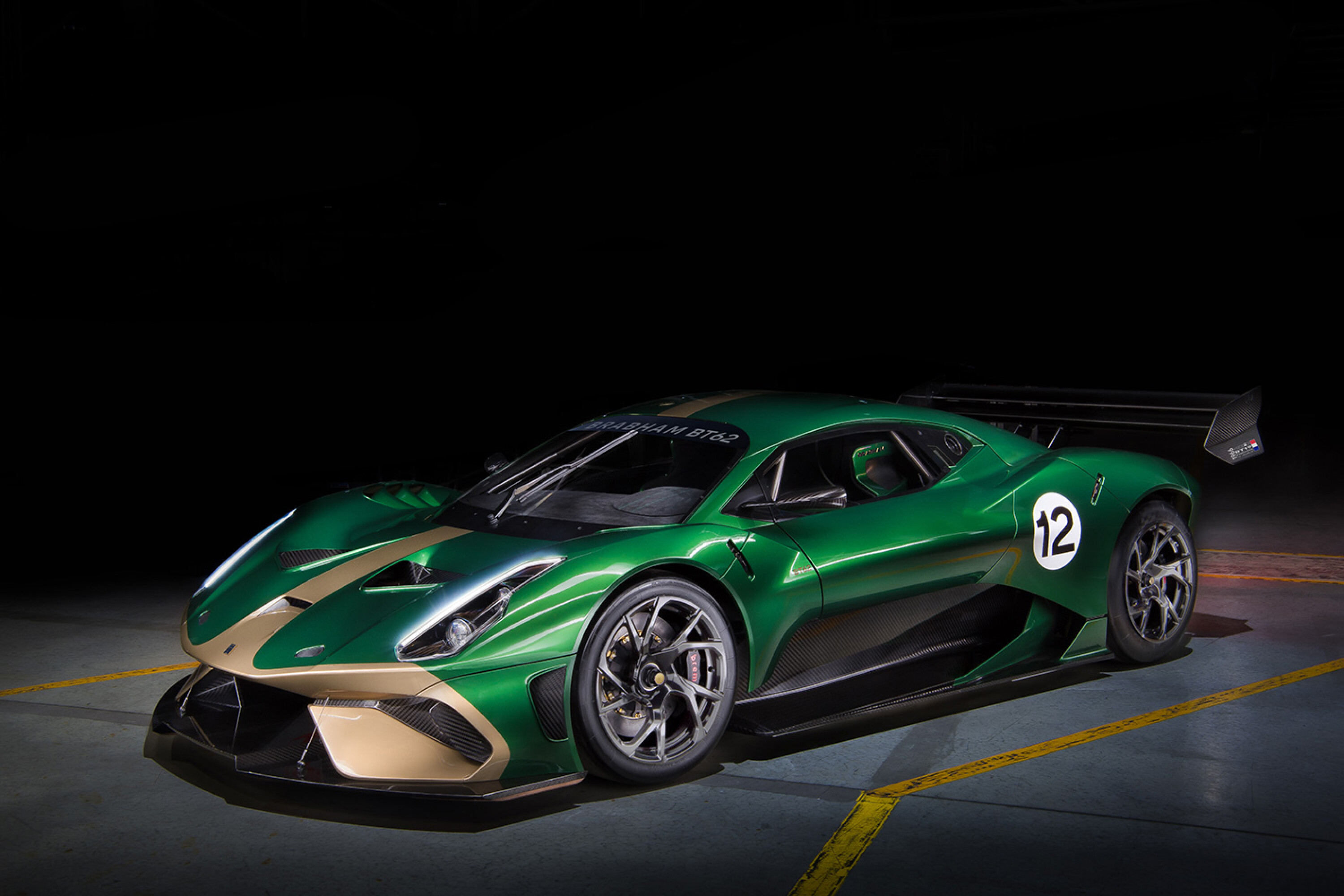
The future of Australia’s only supercar maker, Brabham Automotive, is on shaky ground after the Adelaide-based outfit announced a split with its sole investor Fusion Capital.
Brabham Automotive and Fusion Capital have been partners since 2016 with the collaboration producing track-focused cars like the Brabham BT-62 and BT-63.
Fusion was the “majority shareholder, sole funder, and operator of the Automotive company that bears the famous Brabham name”, meaning its exit leaves the carmaker’s future in limbo.
1
Diverging ideas on the strategic direction for Brabham Automotive are cited as the reason for the split, with Fusion Capitol’s chairman Mat Fitch saying the “strategic direction of both groups did not align.”
“My family and I have invested in automotive and manufacturing for over 40 years and we will continue to do so with what we have created in the last six years. Powertrains are evolving and the opportunity to challenge the mainstream OEMs has never been greater. What we have created provides the perfect platform for the future.”
1
Fitch’s comments suggest the Brabham BT-62 will continue to be built but will carry a different name moving forward. The Brabham family holds the exclusive rights to the Brabham name which was made famous by three-time Formula 1 champion Sir Jack Brabham.
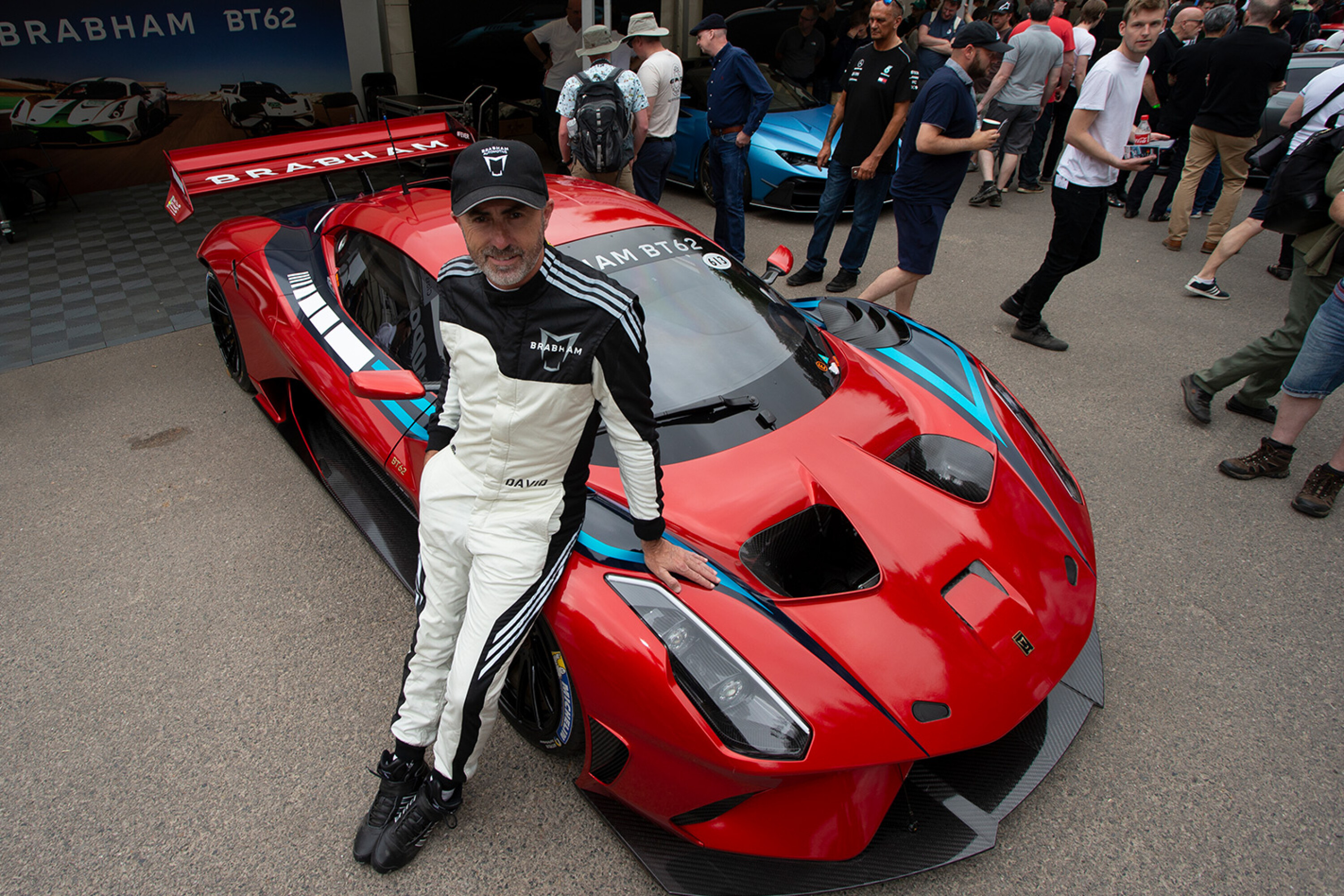
David Brabham, who is Sir Jack’s son and director of the Brabham Group Limited, said he’s keen for the family name to continue to have a presence in world motorsport.
“While it is regrettable that our relationship with Fusion Capital has come to an end, the collaboration helped further evolve ‘Brabham’ to a new and exciting future,” he said. “With the brand license for Automotive ended, it opens the doors for future business ventures in the motorsport, automotive and heritage sectors.”
1
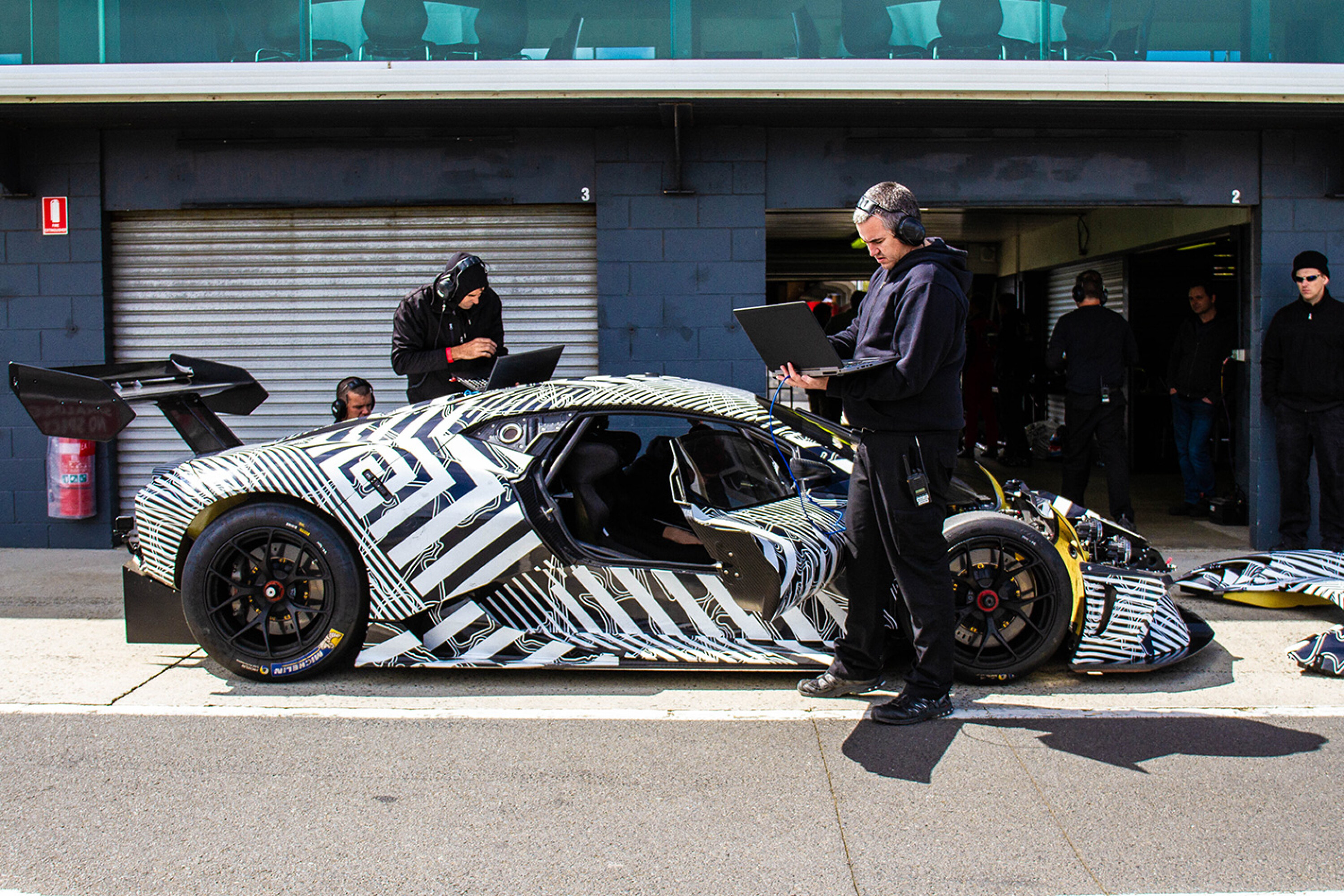
The track-only Brabham BT-62 is built in Adelaide and is powered by a modified 5.4-litre Ford V8. Initial plans to build a road-going version of the BT-62 never materialised meaning it is ineligible for most major racing categories around the world.
It has enjoyed some on-track success in categories with limited regulations, however, and in 2019 it broke the lap record at Mount Panorama with a time of 1:58.679 with Luke Youlden at the wheel.
The BT-62 was also the cover star of Wheels in May 2018 and we’ll admit we’re sad to see the project bite the dust. So raise your glass, tip your hat, and hit play on the video above to hear the BT-62 in action around Bathurst. It’s an epic lap.
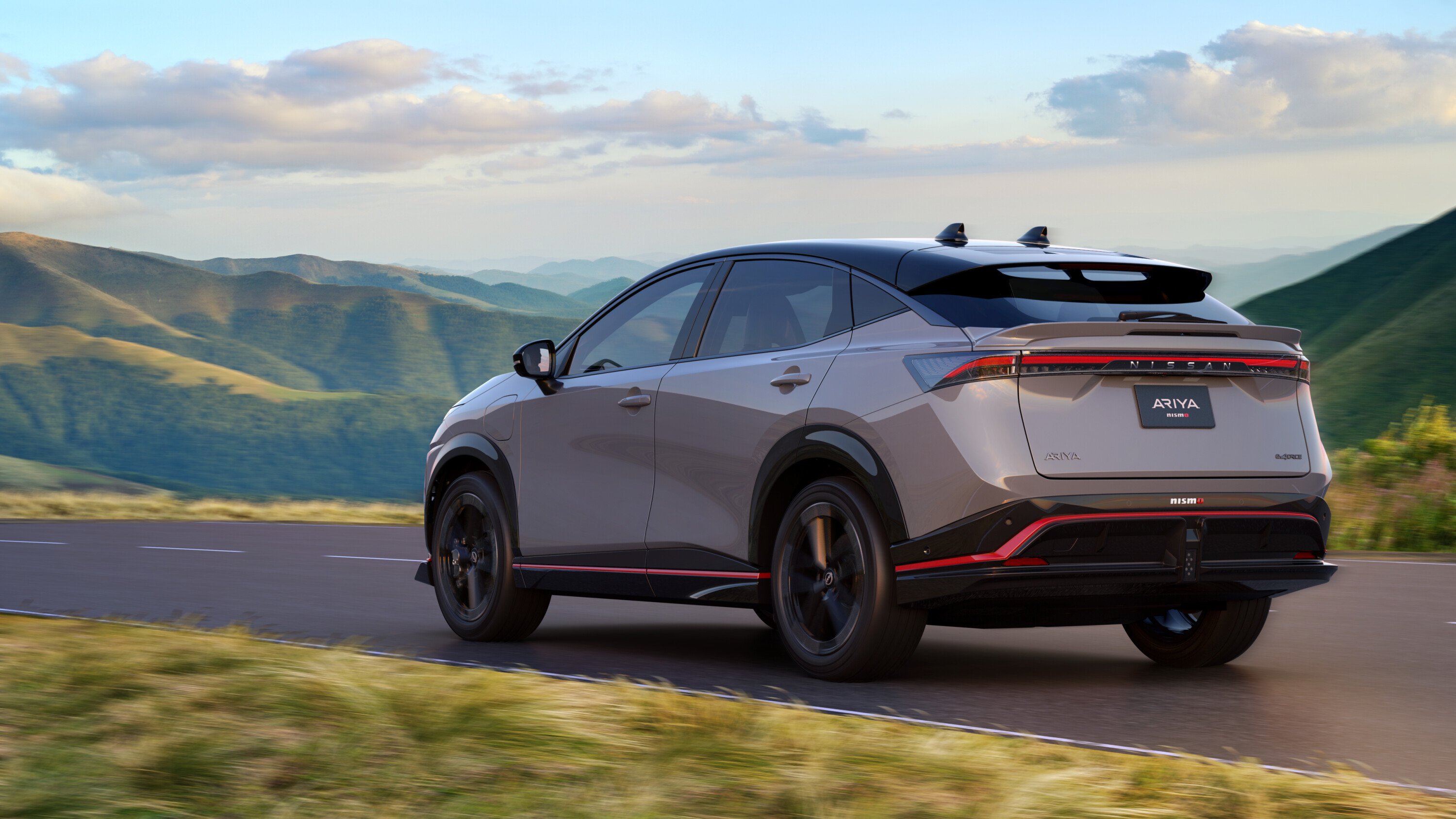
The 2024 Nissan Ariya Nismo has debuted at the Tokyo Auto Salon ahead of its Japanese launch later this year.
Performance enhancements for the tuned mid-size Ariya electric SUV include more-powerful electric motors for quicker acceleration, a sports-tuned Nismo drive mode, a retuned chassis, Formula E-inspired race tyres, and improved aerodynamics.
The Ariya Nismo is the latest vehicle in the performance sub-brand’s line-up, with other model including the Z Nismo, GT-R Nismo, Skyline Nismo (sold as the Infiniti Q50 outside of Japan), Patrol Nismo in the Middle East, and the Note Nismo hatch.
Two variants of the Ariya Nismo will be offered: The ‘Nismo B6 E-Force’ with a 270kW/560Nm electric motor and 66kWh lithium-ion battery, and the ‘Nismo B9 E-Force’ that ups power to 320kW/600Nm with a larger 91kWh battery.
1
While the Nismo B6 is slightly down on the most-powerful version of the standard Ariya, the 290kW/600Nm E-Force Performance, the Nismo B9 becomes the most-potent version of the mid-size SUV sold to date.
Nissan has not confirmed acceleration times for either of the Nismo models, but the Nismo B9 will likely have a 0-100km/h sprint time in the four-second region, an improvement over the E-Force Performance’s 5.1-second claim.
Nismo said the “special tuning for each chassis component” and dedicated Michelin Pilot Sport EV tyres have allowed the car to provide “superior stability and turn-in ability as well as better line-tracing and enhanced cornering ability at high speeds”.
1
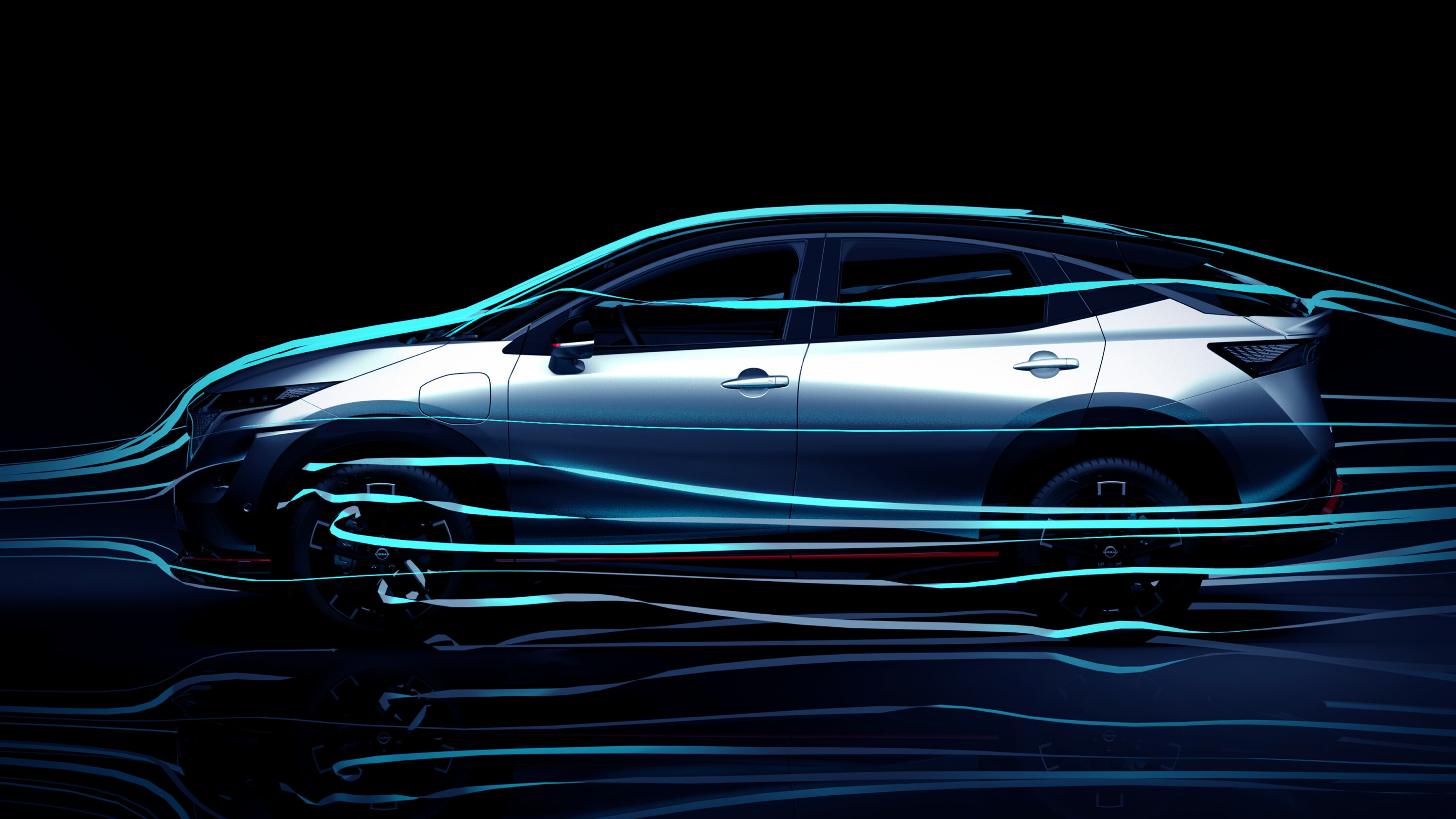
Aerodynamic performance has been improved using “race-derived technologies” from Nissan’s Formula-E team, which is claimed to reduce drag and “provide greater resistance at higher speeds”.
Design enhancements include a new lower front bumper with a splitter for added downforce, a race-inspired rear diffuser, new-design 20-inch alloy wheels, and red striping that wraps around the exterior.
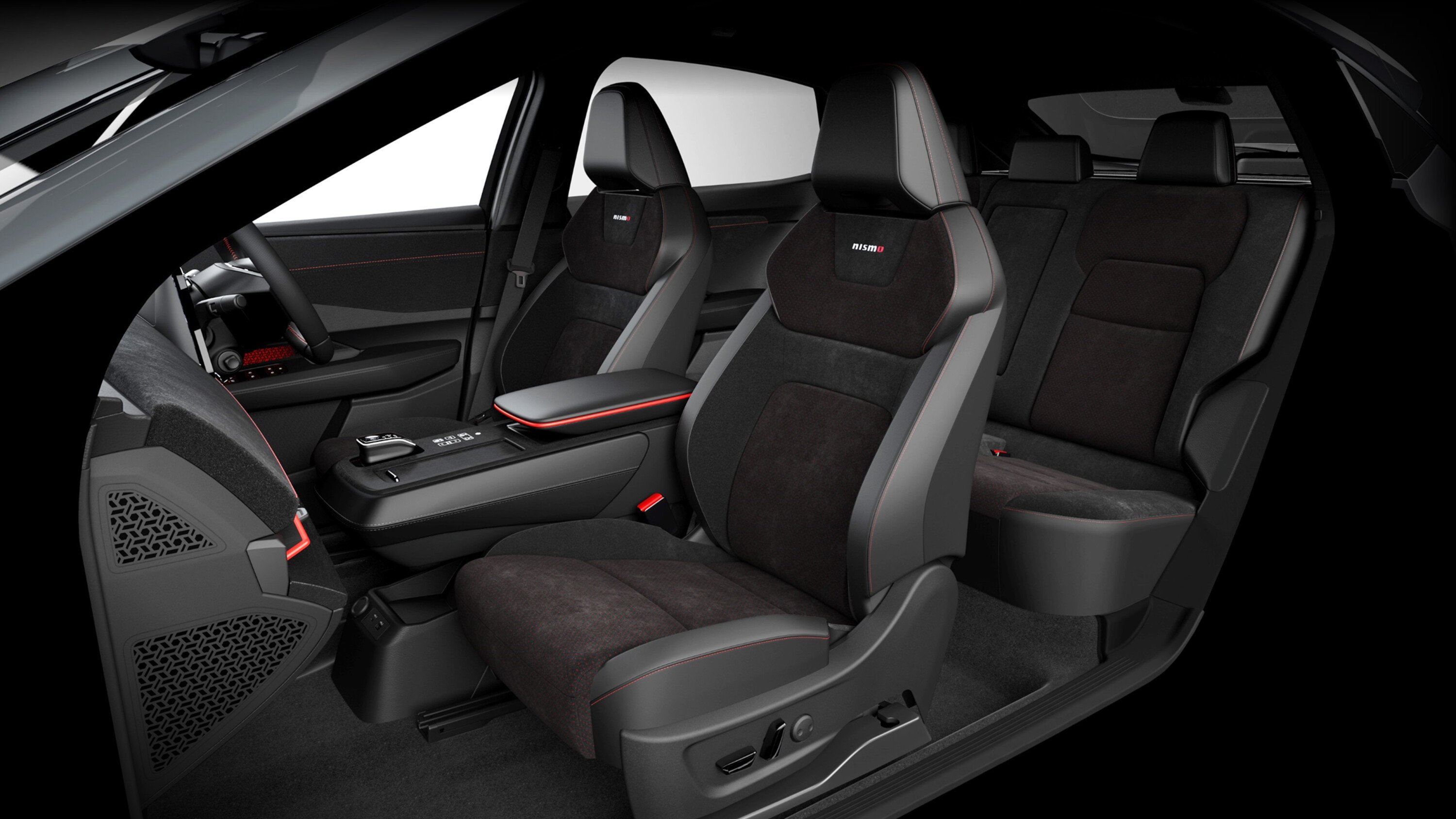
Inside, the Ariya Nismo receives sportier front seats with part-suede upholstery and Nismo badging on the backrests, red accents throughout, and updated software.
1
The 2024 Nissan Ariya Nismo electric mid-size SUV will launch in Japan in the Northern Hemisphere spring (September to November).
It is currently unclear if the Ariya Nismo will be offered outside Japan, though the most-powerful ‘B9 E-Force’ model could act as a rival to the Tesla Model Y Performance, Kia EV6 GT and Ford Mustang Mach-E GT in other markets.
Nissan Australia has not confirmed the local line-up for the Ariya, with exact launch timing still unclear as its arrival remains held up by global demand and Australia’s relaxed fuel efficiency regulations.
Uber will expand its Comfort Electric service across Australia from later this month, allowing all passengers to directly choose an all-electric ride.
This move follows the launch of the Uber Green service for both hybrid and all-electric vehicles in 2023, which has become the second most-popular option in Australia – behind the mainstream UberX service.
“Uber Green has been the fastest growing product I’ve ever been involved in, with Aussies notching up more than half a million trips across hybrid and electric vehicles in one week last year alone,” said Uber Australia and New Zealand managing director Dom Taylor.
The expansion of the Comfort Electric service to all customers forms part of Uber’s commitment to becoming a “zero-emissions platform” in Australia by 2040.
Comfort Electric was first launched for business customers in 2023. It is limited to selected electric cars, including certain Tesla, Audi, BMW, BYD, Hyundai, Kia, Mercedes-Benz, Polestar and Volvo vehicles.
Following a substantial multi-year investment to increase the number of electric vehicles in its fleet, Comfort Electric will be available first for Uber One subscribers from January 11, before expanding to all Uber personal account holders across Australia from January 29.
Kia Australia and Uber have also partnered to offer complimentary rides in the Korean brand’s electric vehicles to and from the Australian Open from January 14 until the tournament’s conclusion, exclusively for Uber One members.
The complimentary rides, supported by 30 examples of the EV6 and EV9, are capped at AU$100 within five kilometres of Rod Laver Arena in Melbourne’s CBD, and will only appear if there is a vehicle available.
1
“Riders will not be charged for the trip (up to $100 AUD) but the driver partners will receive one hundred per cent of the fare with Kia covering the cost of the ride,” said Uber Australia.
“We’ve chosen Melbourne to launch this experience because despite doing thousands of EV trips nationally every day, the adoption of EVs on our platform has been slower than we’d hoped in Australia’s unofficial sporting capital,” added Taylor.
To boost EV uptake in Victoria, Uber has added additional places to its service fee reduction program for all-electric driver partners in the state. This initiative sees service fees reduced by 50 per cent, up to $3500 per financial year, until June 2025.
EVs can tow and, in some cases, itu2019s better than diesel
But, expect a noticeable range drop, payload compromises
Hybrid and PHEVs are viable alternatives
Diesel cars have long been seen as the best powertrain for towing, but is it the Achilles heel for electric vehicles?
Australians love the outdoors (well, some of us do) and travelling with a trailer, caravan or boat is part of the ticket of freedom to enjoy our vast history-rich land and seas.
Yes. In theory, electric vehicles should be ideal for towing, but the current reality shows challenges.
While traditional diesel internal combustion engines (ICE) deliver torque at a low rev band to suit towing, electric cars offer it instantly from zero revolutions per minute (rpm).
Additionally, with typically higher power and torque outputs, this makes towing almost seamless in an EV.
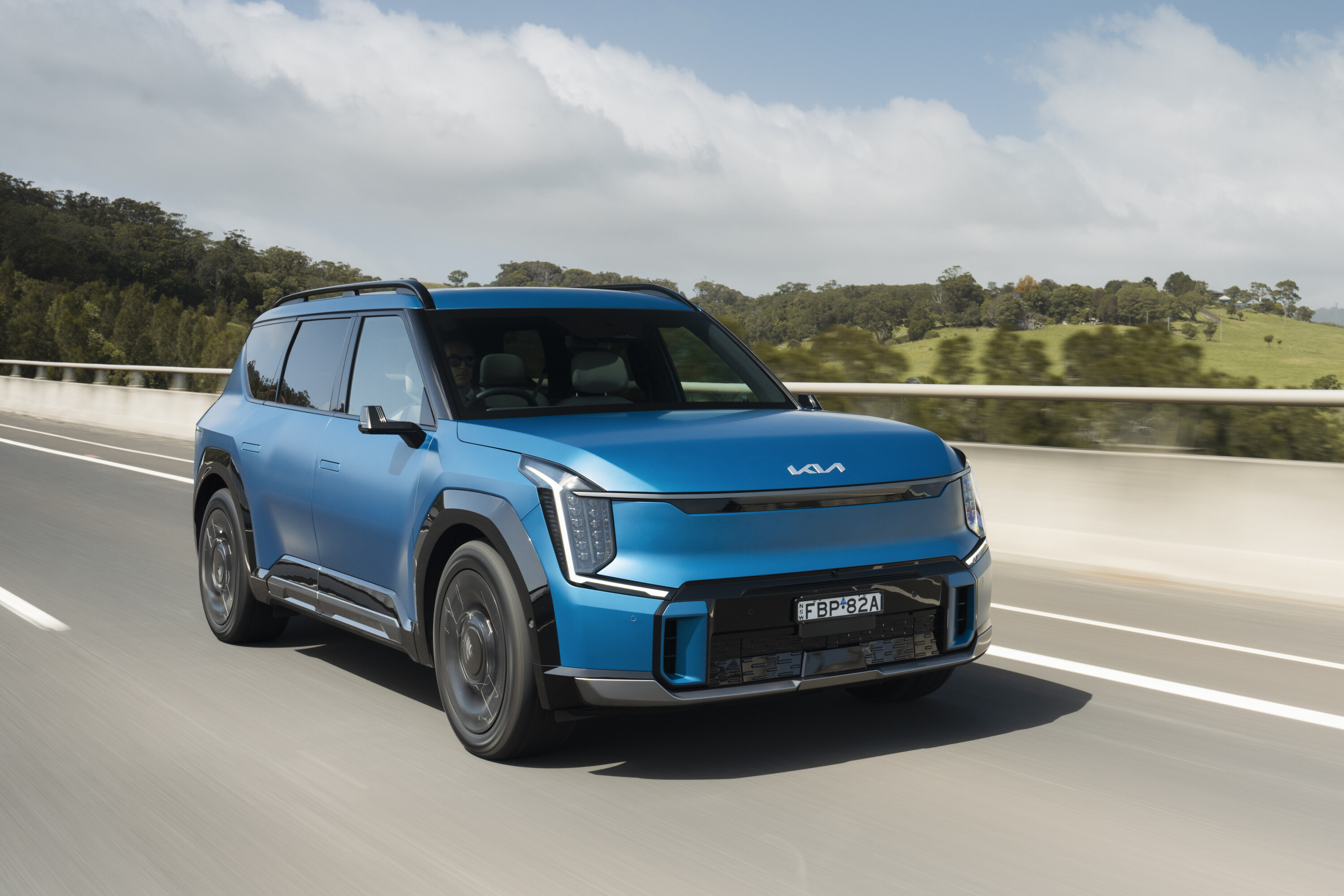
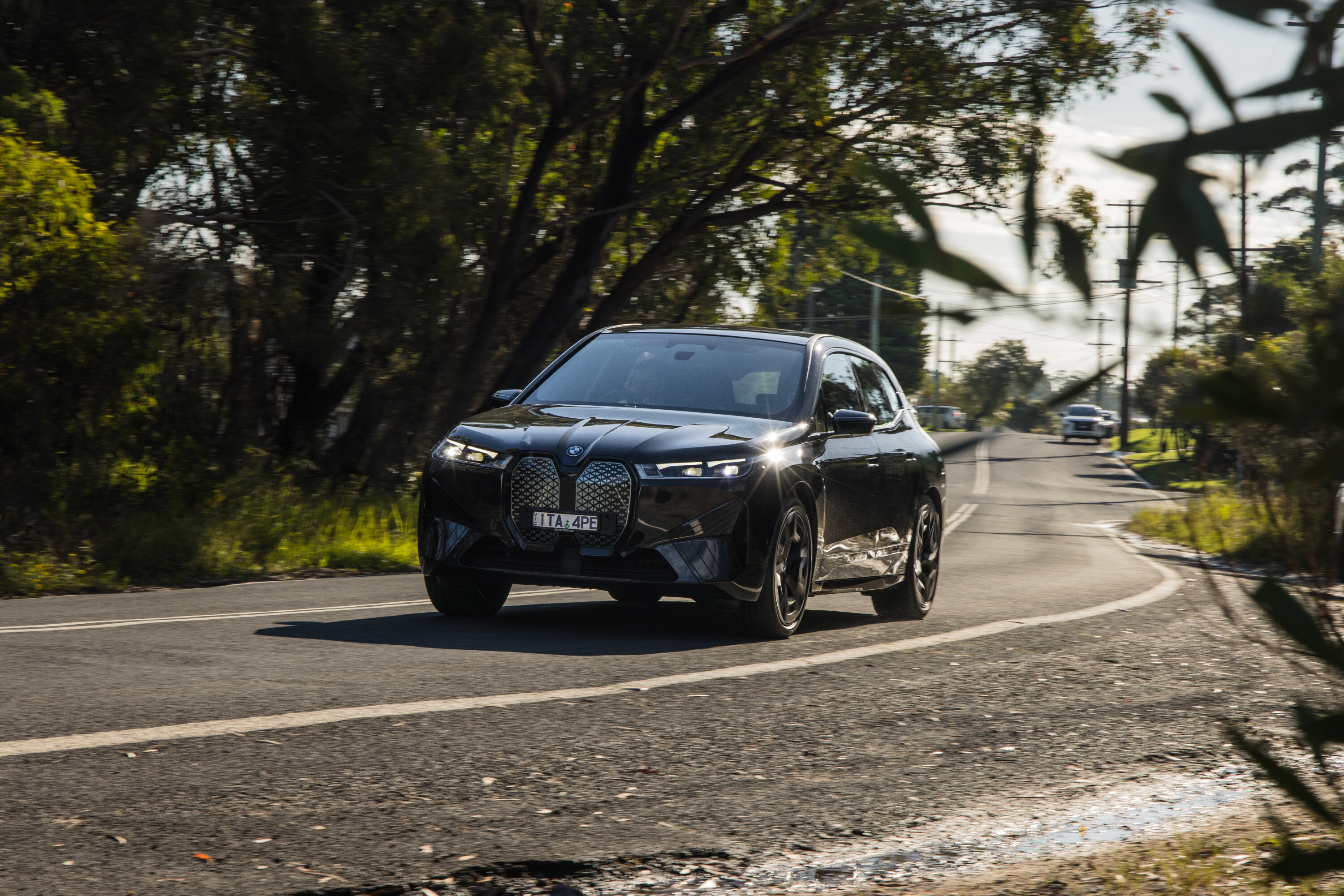
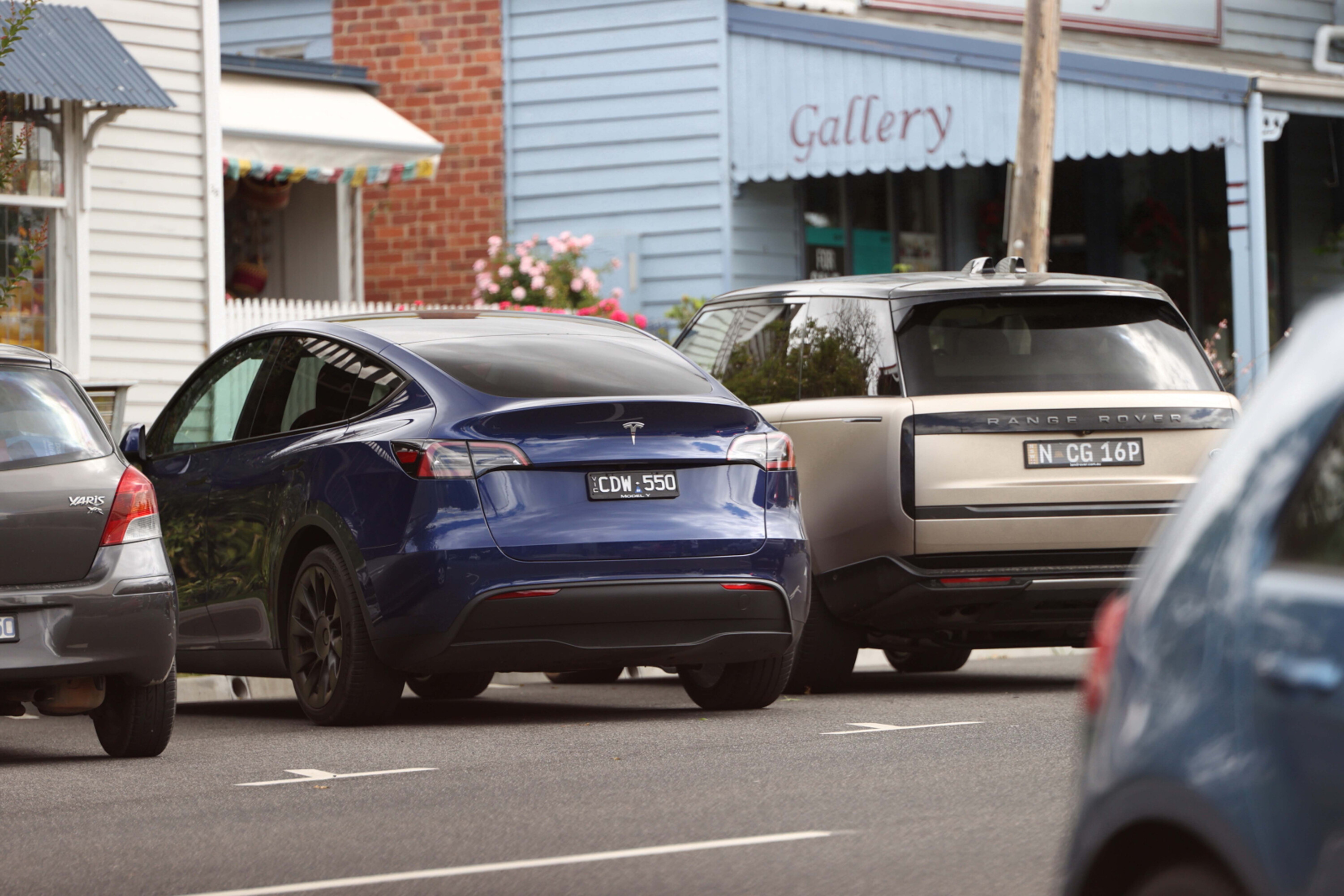
A range of EVs are already capable of towing. The MG 4 small car can tow up to 500kgbraked and unbraked, the Tesla Model Y medium SUV at up to 1600kg braked/750kg unbraked, and both the Kia EV9 and BMW iX large SUVs are rated to lug up to 2500kg braked/750kg unbraked loads.
“It can be done”
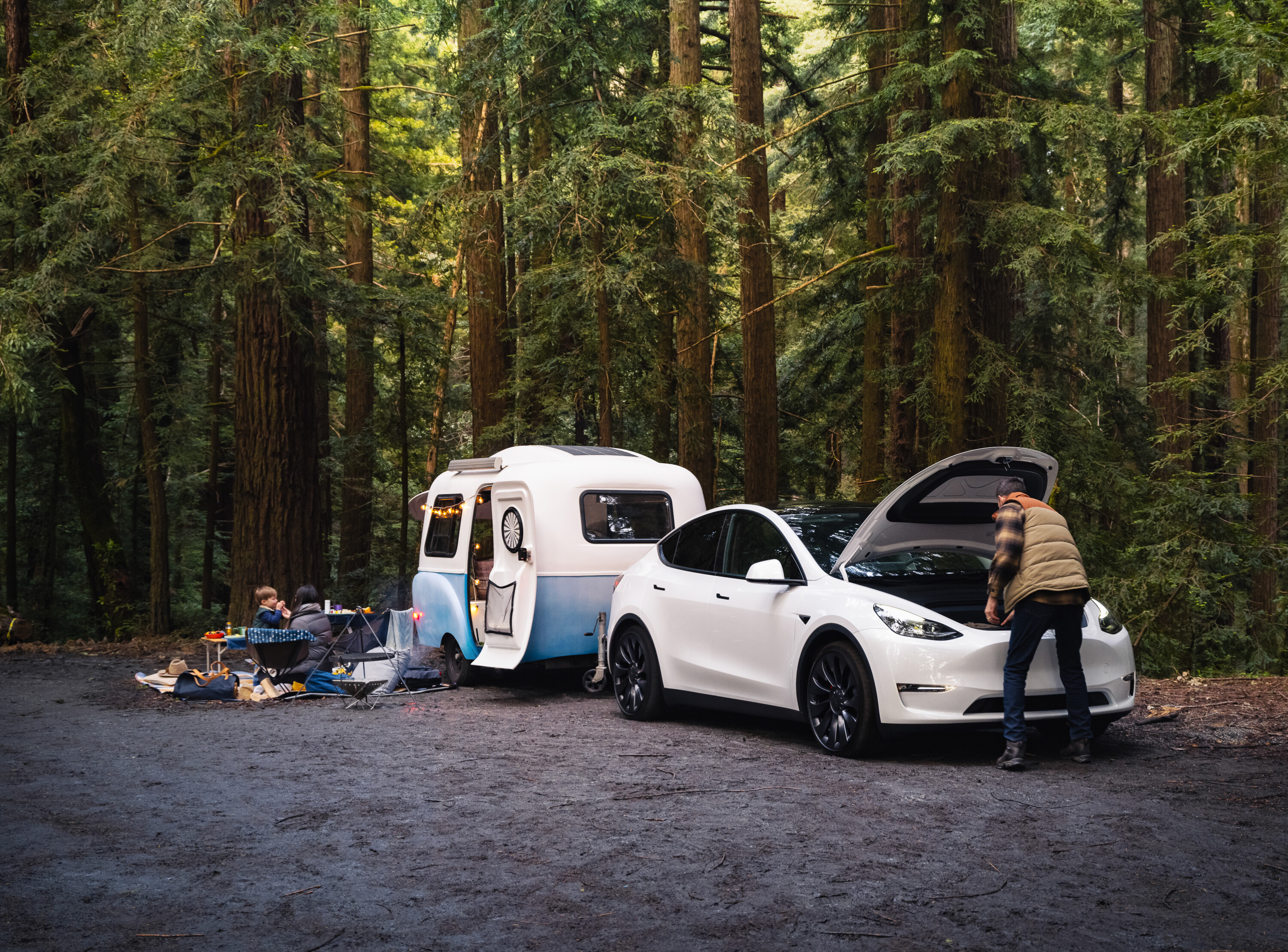
EV owner Anneliese Alexander and her Sydney-based family of five has embarked on multiple long-distance EV road trips towing a light box trailer, including return trips to Adelaide, Lightning Ridge, and Coonabarabran.
“While a diesel car is a good towing vehicle, it’s nothing compared to the electric torque. It’s instant,” Alexander told WhichCar.
“When you’re overtaking a B-double truck, barrelling down the highway at 120km/h, I would much prefer to do it in an EV because the diesel takes a little bit of time to get to that acceleration point where you can confidently tackle it.
“It can be done [road tripping in an EV while towing]. Yes, you do have to be more organised. Yes, it does take a hit to the range. But, that doesn’t mean it’s impossible.”
Since electric cars are naturally heavier, payload is more limited when towing.
Depending on the size, current battery technology adds around 300kg to 600kg of weight to an EV, which compromises the payload capabilities compared to an equivalent ICE car.
Payload includes the weight of all occupants, cargo, accessories such as roof racks, and the towball down weight which is usually ~10 per cent of the trailer weight.
In context
By pulling a heavier 2500kg braked trailer on the base BMW iX eDrive40 (the maximum rated load), you’ll only be left with 395kg of payload – with the towball download weight accounted for.
This means, you’ll be able to carry four 80kg adults in the vehicle, but not have much remaining to safely load travel bags and suitcases, and no allowance for fitting bikes or skis on a roof rack.
However, a lighter trailer enables more payload. Lugging a 1600kg braked trailer on the base Tesla Model Y RWD (the maximum limit), you’ll have around 480kg of payload available after the tow bar download is deducted.
Then, there’s the question of reduced driving range.
This is supported by Australian Electric Vehicle Association Queensland chair Jon Day [YouTube ↗], who found energy consumption can more than double if driven at higher speeds.
The test involved lugging a 1700kg boat on the highway using the Volvo XC40 Recharge small electric SUV.
1
Tesla Model Y owner Anneliese Alexander told WhichCar that it also depends on the driving conditions, as going downhill will improve energy efficiency and utilise regenerative braking.
“It does take a [range] hit… You do have to be organised. You can’t just jump in and off you go. You have to think about where you’re going and how long you’re going to spend charging at each place. And, you have to be strategic about it,” Alexander said.
It’s worth noting that traditional diesel-powered vehicles can also use almost double the fuel consumption, depending on the trailer weight.
However, the advantage of ICE cars is that they typically have more driving range than EVs (with larger fuel tanks) and, when a refill is required, fuel stations are generally more available, accessible and reliable than public charging stations.
Unfortunately, most public EV charging stations in Australia aren’t designed to accommodate trailers, so be prepared to take more time.
Few locations offer side-mounted stalls with drive-throughability – where both the front and back of the charging spot is unobstructed – to suit those towing in an EV.
But, the majority of public chargers are positioned behind a bay and the various charging port positions on EV models makes plugging-in tricky with a trailer attached.
The best option is to unhitch the trailer in a spot nearby in order to access a charging station.
Otherwise, you may park sideways, but potentially block multiple parking or charging spaces – which is poor etiquette.
Additionally, the increased energy consumption means charging only up to 80 per cent(the recommended method) may not be ideal, as more charging stops and trailer unhitching will be required.
“One of the things that we found is that, at times, each charger was [about] 150 kilometres apart, which is fine generally speaking,” Alexander said.
“But, if you’re pulling a trailer and your range has been cut down to 250 kilometres, you’re not going to make that 300 kilometres… So, you need to charge every 150 kilometres, which is not really pleasant for anyone.
“We need [public] charging infrastructure that’s closer together. So if it was every 50 kilometres, for example, then I can decide to charge when I want to, not when I need to.”
Alexander added her family used camping sites’ AC power to plug in and slow charge the EV overnight, as “you just need to get to the destination and then electricity is everywhere”.
Towing isn’t impossible in an electric car, but it’s not perfect. What are the alternatives?
British used electric car dealer R Symons still uses a diesel-powered Mitsubishi Triton to haul EV stock, and transport wheels and tyres.
The founder and director of the Hampshire-based company Richard Symons said it’s because there is no pure electric ute alternative on sale yet that can lug up to 3500kg.
“EVs are actually great for towing, but do halve the range with a trailer, so it’s not as practical quite yet. Plus, we need more drive-through chargers,” Symons told WhichCar.
The business owner added a plug-in hybrid electric vehicle (PHEV) ute wouldn’t be a viable substitute, as they only use it for towing purposes and therefore won’t be able to run on electric-only mode.
1
“It’s not as practical quite yet”
Most traditional hybrids and PHEVs can tow, while providing electric-only driving in some scenarios and the ability to use commonplace fuel stations for longer distance driving.
However, similar to pure EVs, there’s generally still some towing and payload capability compromises due to the added weight of the small battery and electric motor.
In context
It all depends on the model.
For traditional hybrids, the entry-level Toyota RAV4 GX medium SUV is available in three powertrains:
Petrol-only 2WD: Up to a 800kg braked/750kg unbraked trailer with a 575kg max payload
Hybrid 2WD: Reduces towing capability to 480kg braked and unbraked, with a 535kg payload capacity
Hybrid AWD: Boosts towing to 1500kg braked, but has a more limited 525kg payload
Similarly, the outgoing Hyundai Santa Fe Elite diesel AWD drivetrain provides 2500kg braked / 750kg unbraked towing capacity with a 667kg payload. However, the hybrid AWD variant is limited to 1650kg, 750kg and 647kg respectively.
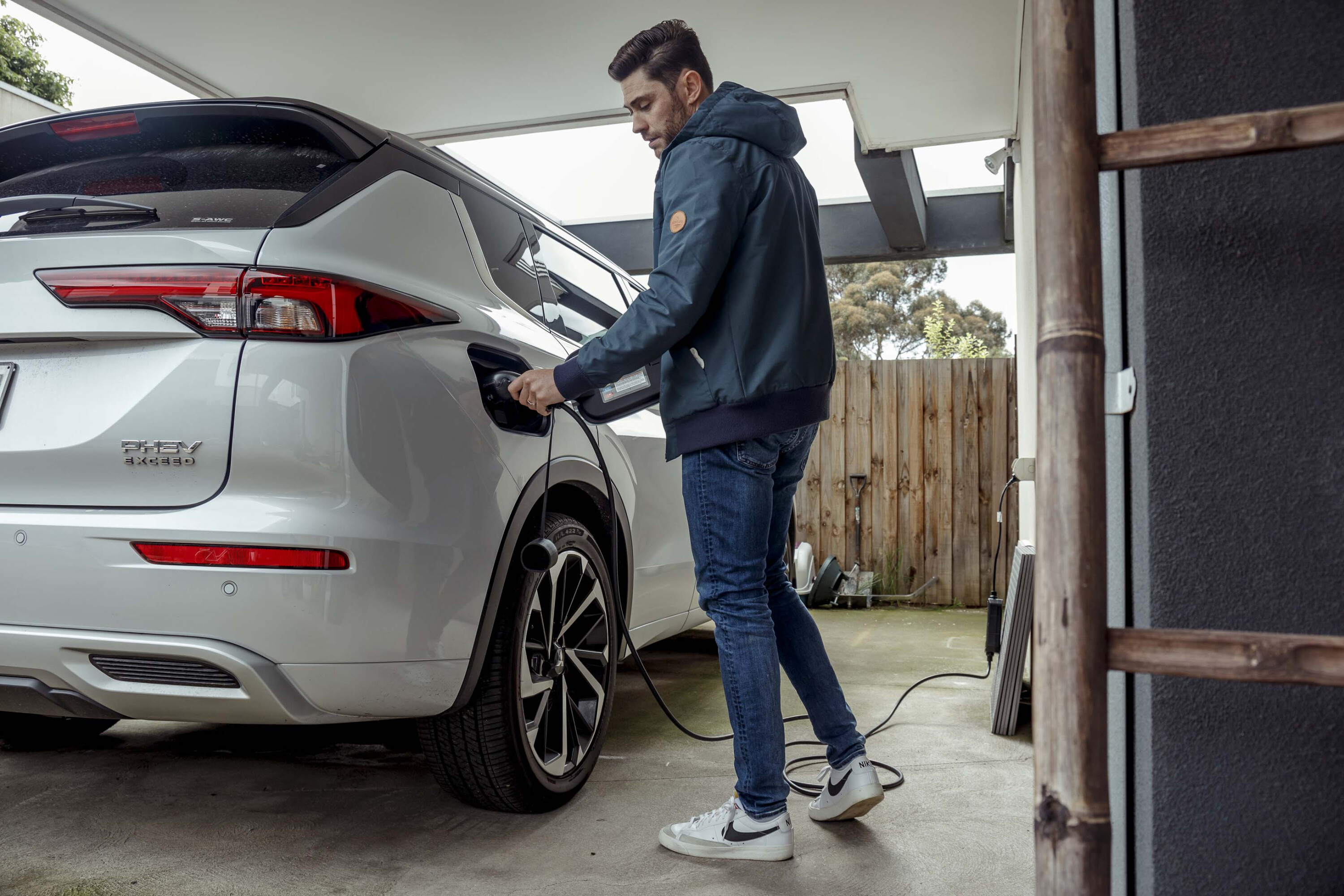
As for PHEVs, the five-seat Mitsubishi Outlander ES is offered in three powertrains – all of which can tow up to 1600kg braked/750kg unbraked. However:
Petrol 2WD: Boasts the best 670kg max payload
Petrol AWD: Reduced to 615kg payload
PHEV AWD: Bumps up to 630kg payload
Remember: these figures don\u2019t account for the ~10 per cent<\/strong> tow bar download reduction on the payload.
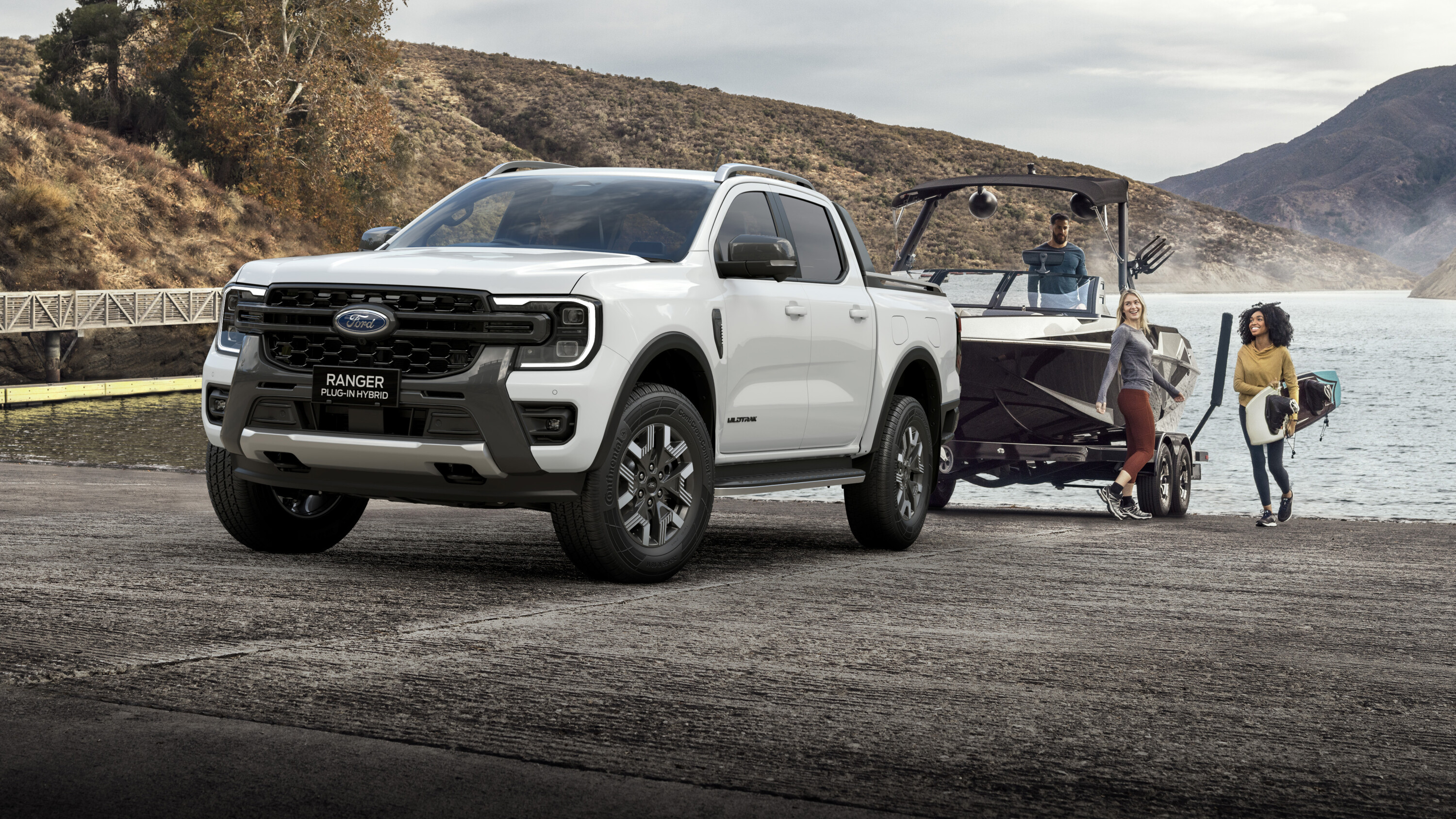
Meanwhile, Ford promises the upcoming petrol-electric Ranger PHEV will have the same towing and payload capabilities as the regular diesel (which engine is still unknown), while the new Ram 1500 Ramcharger targets identical towing with only 34kg less payload, and BYD’s new petrol-electric ute is said to feature a unique hybrid setup that’s a more suitable alternative to pure diesel.
Synthetic fuels are on the horizon to keep ICE vehicles alive amid strict emissions reduction targets globally, but similar to hydrogen, will likely be reserved for niche applications such as long-haul utes, trucks, and supercars.
On the other hand, a new breed of aerodynamically-designed caravans with built-in electric motors are emerging to limit the range impact on pure EVs, albeit at an expensive price.
As the world waits for somebody, anybody to confirm a Days of Thunder sequel [↗], Netflix has announced it will premiere a new documentary series, NASCAR Full Speed, on January 30.
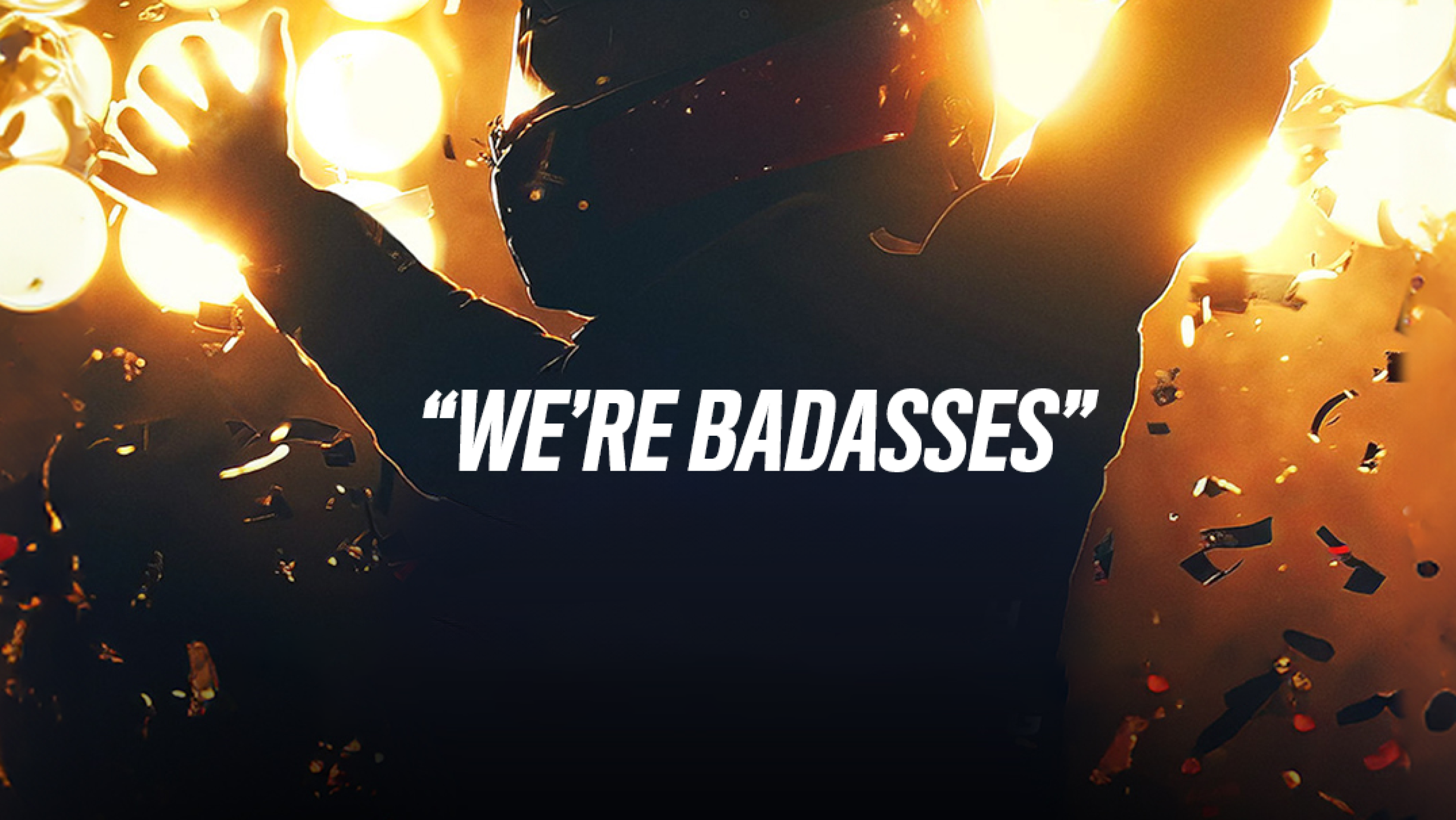
The first trailer for the series sees race footage overlaid with the voice of sports journalist Marty Smith saying: “If you’re a race car driver, you have the opportunity to be hurt — or killed. And you do it anyway. Think about what a badass that is”. The more things change, the more they stay the same: TV viewers love badasses.
“We’re badasses,” Trackhouse driver Ross Chastain says in Netflix’s announcement. “This sport has a whole garage full of the best mechanics, the best engineers, the best everything. This is it.”
Badass, got it. Not sure how that isn’t the slogan for the series, but hey.
1
Netflix’s announcement makes no mention of its massively successful F1-focused series Drive to Survive, but there can be no mistaking the inspiration for this new property.
The list of executive producers on the series doesn’t appear to feature any key names from Drive to Survive, although the formula is likely to be much the same – and it doesn’t hurt to have NASCAR legend Dale Earnhardt Jr on the team, either.
The five-part series premieres on Netflix on January 30.
Now about Days of Thunder…
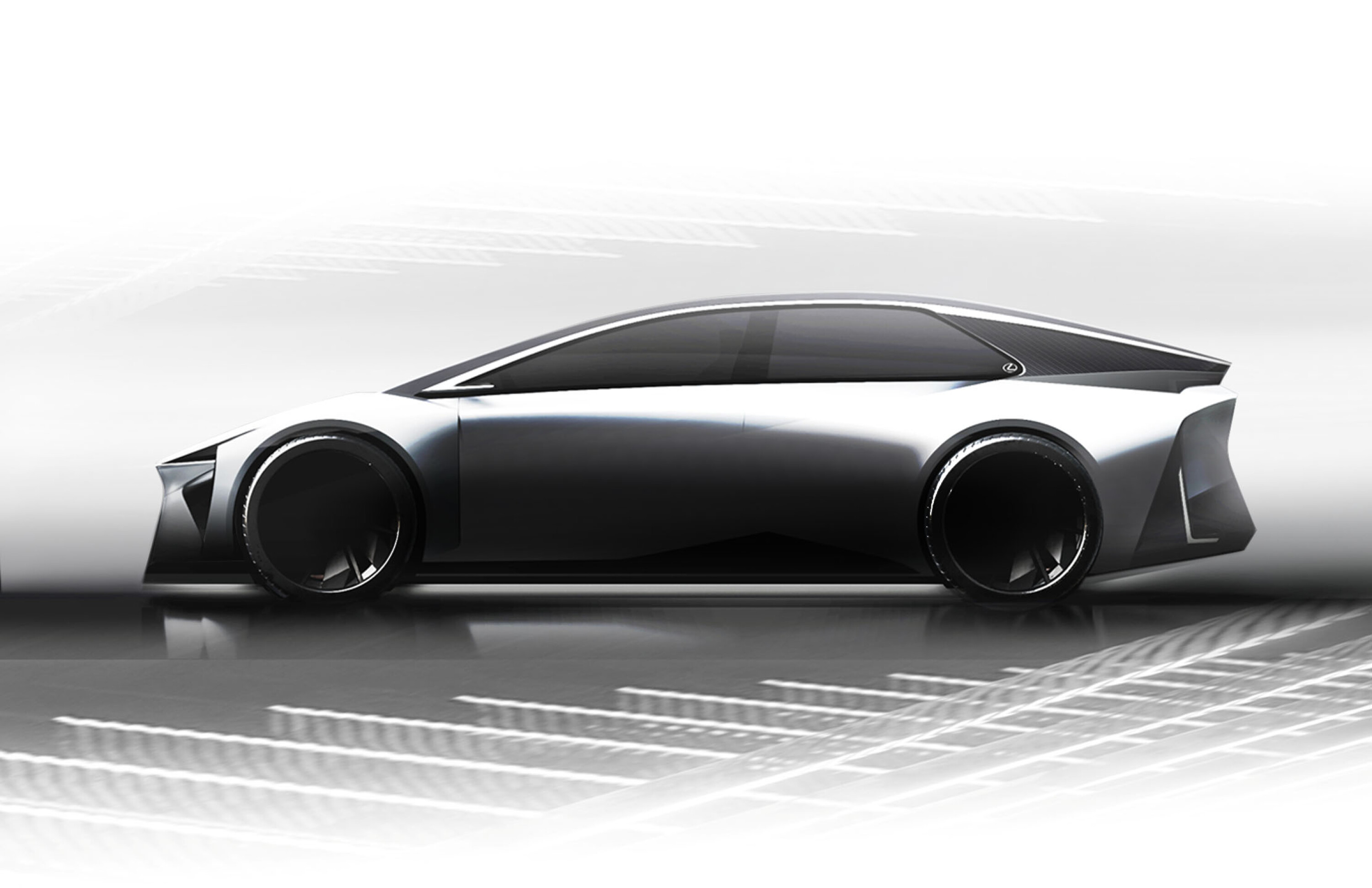
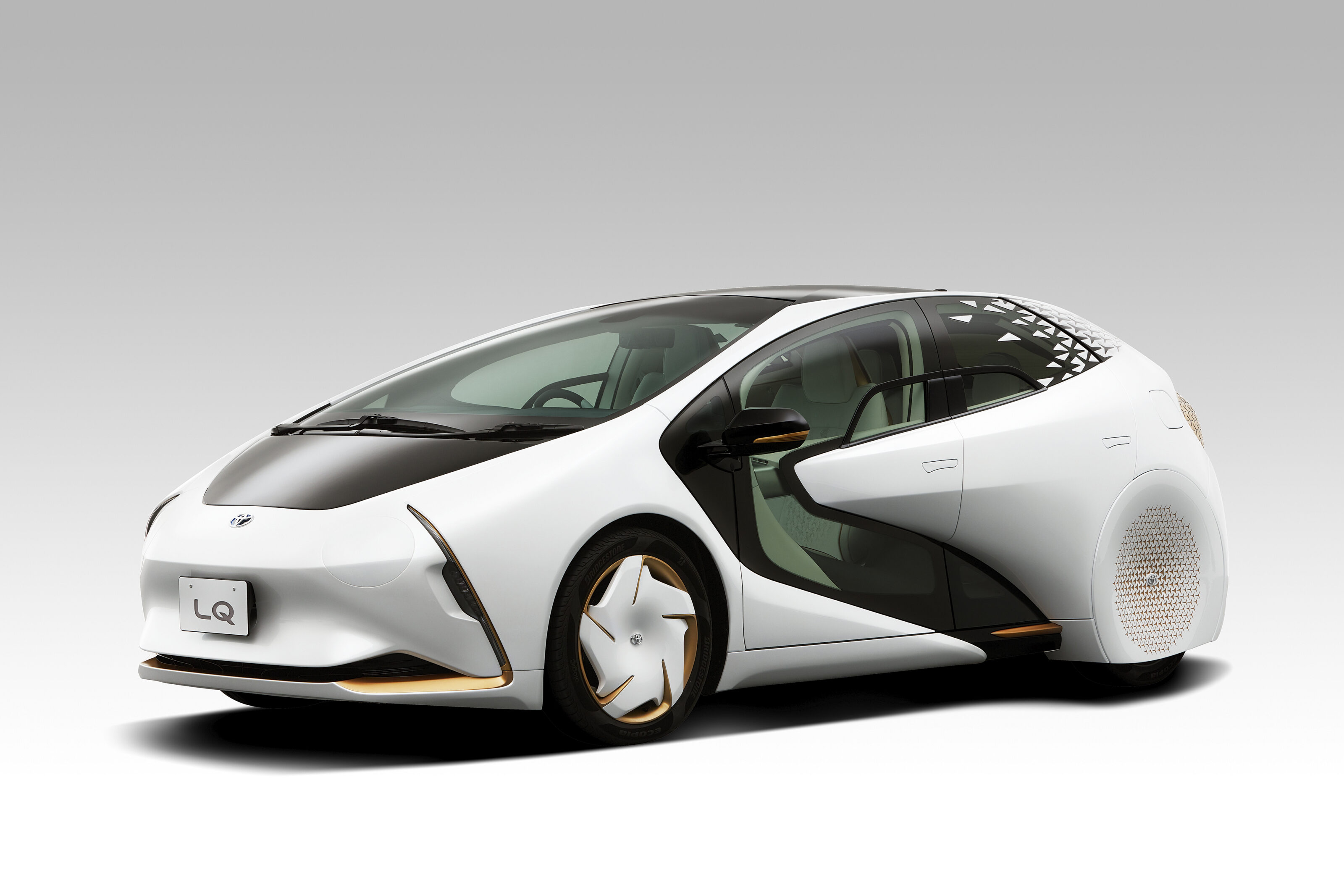
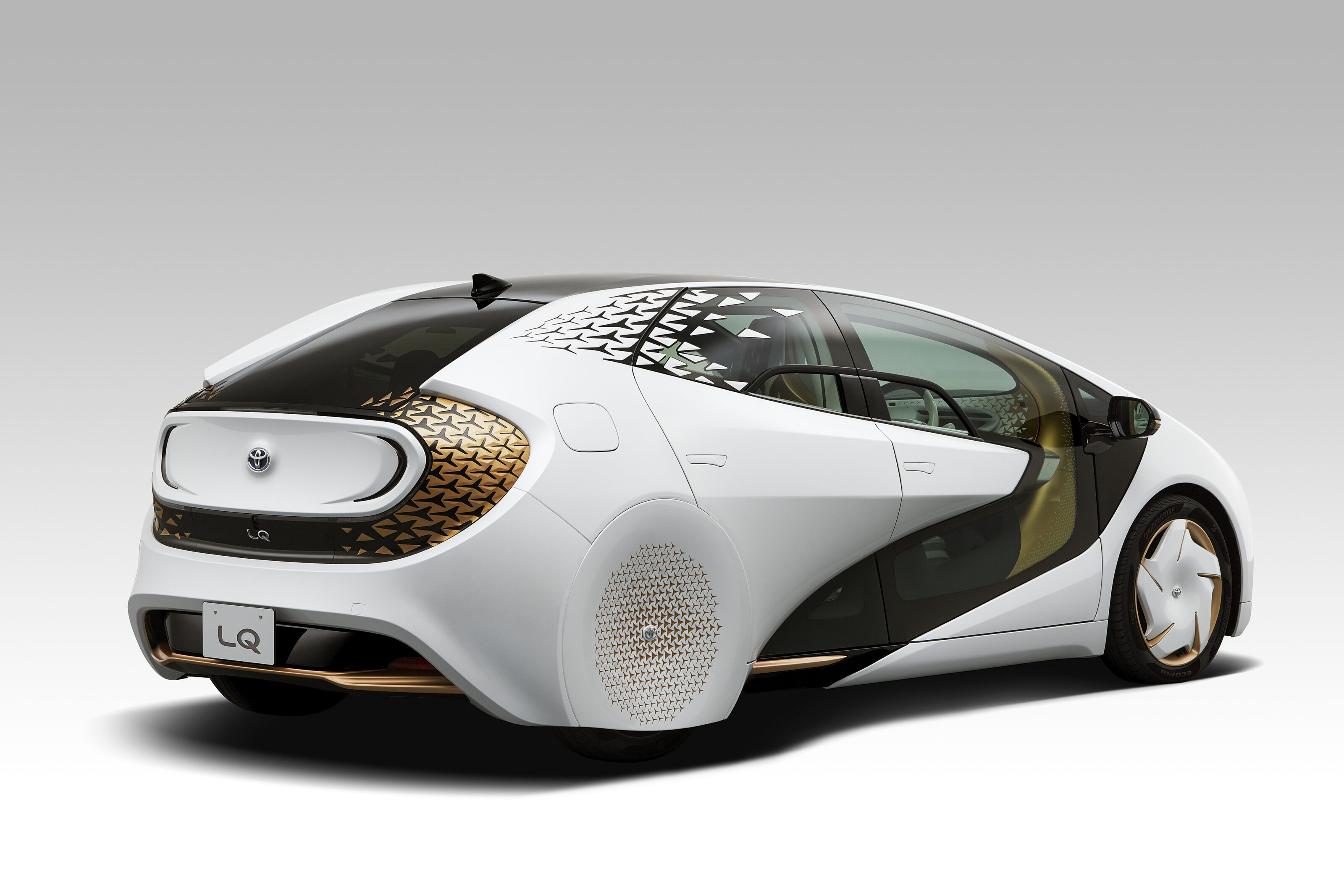
Toyota’s plan to become a global leader on solid-state batteries seems to be gaining momentum, with an executive from India claiming the company will introduce the new tech “in a couple of years.”
Toyota currently trails its rivals when it comes to EV production and sales — competitors like Tesla, BYD and Volkswagen are all ahead of the Japanese giant — yet it sees solid-state batteries as an opportunity to regain lost ground.
1
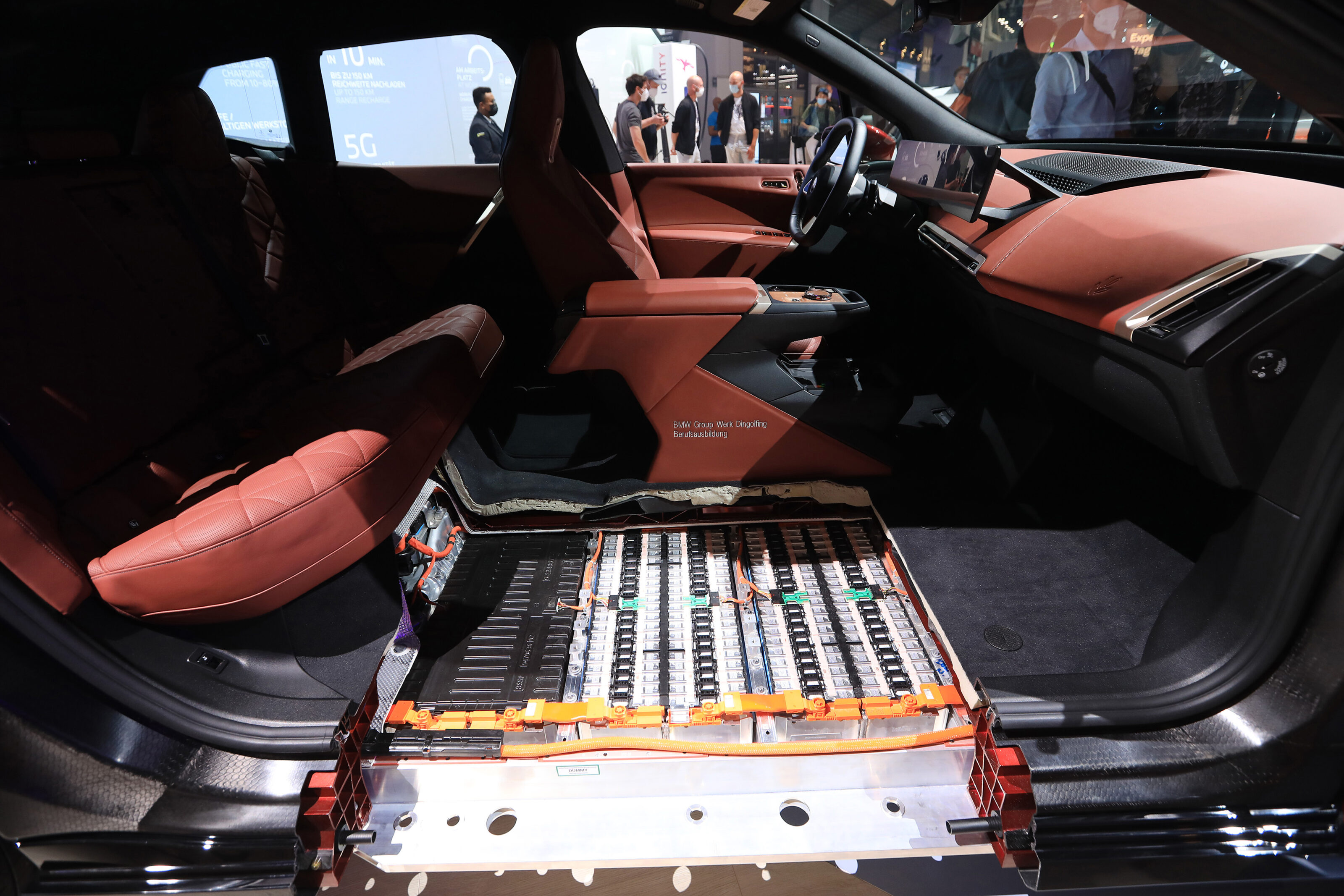
Promising faster charging times, better performance and longer battery life, solid-state batteries should also lower the purchase price of electric vehicles, leading many to tout them as the next great leap in EV powertrains.
“We will be rolling out our electric vehicles with solid-state batteries in a couple of years from now,” said Vikram Gulati, India’s head of Toyota Kirloskar Motor. “It will be a vehicle which will be charging in 10 minutes, giving a range of 1200km and life expectancy will be very good.”
Toyota isn’t the only brand developing solid-state batteries, of course. Hyundai, Kia, Volkswagen, Honda, Tesla and Mercedes are just some of the rivals investing heavily in the new battery tech, yet Toyota is quickly proving to be ahead of the curve.
Gulati’s comments were made at the Vibrant Gujarat Global Summit and it’s worth noting his suggested timeframe is much earlier than previously indicated. Until now Toyota has said it is aiming to achieve mass production of solid-state batteries towards the end of the decade.
In September last year, Toyota revealed its ‘advanced battery technology roadmap’ which mentioned a “breakthrough in sold-state battery technology”. At the same time, Toyota announced it had teamed up with Japan’s second-largest oil refiner, Idemitsu Kosan, to develop and mass produce solid-state batteries, with the partnership aiming to introduce the new batteries in 2027 and 2028.
Why solid-state batteries are the holy grail
If you could own an electric vehicle that could travel more than 1000km on a single charge, retained nearly all its battery capacity after three years, can operate normally in a wide range of temperatures, could be recharged in 10 minutes, and cost the same as an equivalent combustion-powered car, would you?
That is the situation that will be thrust upon consumers when solid-state battery technology begins being mass produced midway through this decade. Toyota is hoping to get ahead of the curve, pushing a number of solid-state battery electric vehicle prototypes into service with the aid of partner Panasonic.
With more than 1000 patents relating to solid-state tech, Toyota is putting most of a $18.7 billion investment toward its advancement and eventual large-scale production. It’s not hard to understand why. The benefits of solid-state batteries over current lithium-ion designs are clear cut. Solid-state units are safer, have a higher energy density, reduce both size and weight, and can operate in a wider temperature window.
2
Lithium-ion batteries use a liquid electrolyte solution that if not properly managed, or is damaged, can swell in size or spontaneously combust. These events are rare, but they do occur. With certain lithium-ion batteries, as much as a third of the storage capacity can degrade after a decade.
In both battery designs the electrolyte is a chemical mixture that allows current to travel between the cathode and anode (or more simply the positively and negatively charged electrode respectively). In lithium-ion batteries this separator is a liquid solution, where a solid-state battery uses a solid electrolyte.
Liquid electrolytes are what cause those spectacular and hard-to-dose fires when things go wrong. Solid-state alternatives alleviate all these issues and bring a massive increase in the amount of power that can be stored within a battery. This gives manufacturers two options; reduce the size of a battery, saving space and weight with no loss of energy, or retain the current dimensions with a boost in outputs.
1
The fact that a solid lithium metal anode increases energy density has been known for nearly half a century, but it is only now that we have had the technology to make it a reality. That’s because using lithium metal with a liquid electrolyte has a risk of creating stalagmite-like formations that can puncture the separator between the anode and cathode which results in a nasty chemical explosion.
A variety of solid-state electrolytes are now available that work as a ceramic separator and have the same conductivity without the risk of exploding.
A prototype non-automotive solid-state battery from Samsung has an energy density of 900Wh per litre, while the very best lithium-ion units are only capable of roughly 700Wh per litre. The company says using this in an electric vehicle would allow the car to travel up to 800km on a single charge. With a life cycle of 1000 charges that puts the battery’s lifespan at 800,000km. Your uncle’s LandCruiser might struggle to match that.
1
Going even further, US-based QuantamScape, of which Volkswagen has a 5 per cent stake, released a study late last year that demonstrated its solid-state battery cells have an energy density of more than 1000Wh/L.
On top of that, it was shown the batteries can charge to 80 per cent capacity in 15 minutes, while retaining more than 80 per cent of its capacity after 800 charge cycles. The secret? Pure lithium metal as the anode. A production-spec version of the battery isn’t expected until 2024.
Toyota’s claims are simple. Twice the range of an equivalent lithium-ion unit, while retaining 90 per cent of its performance after 30 years. Continuing its bold claims, Toyota says its solid-state batteries will be capable of charging from zero to full in just 10 minutes. Toyota says its solid-state battery won’t hit mass production until 2025.
Like others in the solid-state arms race, that’s because while the technology is almost ready for large scale use, the production capacity isn’t there yet. Unlike current batteries, solid-state units require different machinery and techniques in the manufacturing process. Additionally, simply not enough raw lithium is being produced – of which the world has a finite amount (see breakout).
1
Toyota also has a government-funded advantage. Japan’s government has created a ¥2 trillion (A$24.7 billion) war chest which it is using to fund manufacturers’ efforts in creating new decarbonisation technologies. A large portion of the money will go toward solid-state batteries, in particular acquiring the lithium needed. Additionally, two Japanese mining and oil companies, Mitsui Kinzoku and Idemitsu Kosa, are building infrastructure to produce solid electrolytes.
This is all in an effort to gain an advantage over China and South Korea in the battery production arms race, with the global market for next-gen tech that outguns current lithium-ion designs expected to grow in value from $53.6 million a year to $34.6 billion in 2035.
Why the rapid expansion? You, the average car buyer. In 2035 you’ll be faced with that dilemma that started this, and there are big players betting they know which option you’ll choose.
1
Seeing glass
The University of Bayreuth is working with Tesla Germany and Varta Microbattery to develop lithium-ion battery separators made of glass. The project dubbed GlasSeLIB (meaning glass separators for lithium-ion batteries), hopes to use glass electrolytes instead of ceramics to increase the safety and service life of lithium-ion batteries.
The hybrid dilemma
Toyota has copped plenty of flak for dragging its feet on full battery electric vehicles – opting instead to favour traditional hybrids. In response, the manufacturer says its 18.1 million hybrids produced so far are responsible for the same carbon dioxide reduction impact as 5.5 million BEVs, while using the battery components needed to build just 260,000 BEVs. That said, by 2025 Toyota promises to have 15 different BEVs in production.
1
Nickelpack
Despite the focus on solid state batteries, Toyota hasn’t completely abandoned lithium-ion or nickel-metal hydride designs. Its that latter which the Japanese brand has recently announced a breakthrough with, creating ‘bipolar electrodes’ that allow for the battery to shift from a group of separate cells to a single stack. The new design can fit 1.4 times the amount of cells, producing 1.5 times the power compared to previous gen nickel-metal hydride batteries.
Mine craft
Regardless of design, batteries for EVs require the use of lithium, of which there are only 80 million tonnes of reserves identified globally. Bolivia sits atop the largest lithium reserves with 21 million tonnes, ahead of Argentina (17m), Chile (9m), the USA (6.8m), and Australia (6.3m).
In 2019 we were the largest exporter of lithium in the world, with 42,000 tonnes being shipped overseas that year, most of it going to China (who has the sixth largest reserves at 4.5m tonnes). The next biggest exporter was Chile, which offloaded 18,000 tonnes.
1
The Skoda Kodiaq is the Czech brand’s answer to the large SUV question, yet it’s not a typical response to the requirements.
Being only just a little larger than American-focused medium SUVs like the Kia Sportage, it’s the way this seven-seater deals with interior space that’s most impressive.
An all-new Kodiaq (well, strictly speaking, a heavy revision of this car’s existing engines and MQB underpinnings) is due in late 2024 with a more digitised cockpit, but the current car is ageing with panache.
Following its recent success as a large SUV under $60K, we’ve taken a closer look at the base model Style 132TSI to see if it’s the pick of the range.
Skoda talks in drive-away pricing for its cars in Australia and, at $56,490 this Style initially seems a little steep for a ‘base model’ large SUV.
But with seven seats and a lengthy equipment list (MY24 models now have all the semiconductor-restricted items back on board), the Style arrives with plenty of kit.
2024 Skoda Kodiaq 4×4 Style standard features
Full-LED head and tail lights
Adaptive cruise control
Dynamic rear LED indicators
Rear cross-traffic alert
Gloss black spoiler
Blind-spot monitoring
19-inch Cursa alloy wheels
Nine airbags
Suede-cloth and leather-appointed seats
9.2-inch Columbus infotainment system
Three-spoke leather steering wheel
10.25-inch virtual cockpit
Aluminium effect trim
Wireless Apple CarPlay and Android Auto
Power tailgate
USB-C port for infotainment, plus one in the rear-view mirror for dash-cams.
You can venture into Skoda’s option packs to unlock some extras. They include the $6900 Luxury pack (tri-zone climate, lane-trace assist, heated steering wheel with paddles, matrix LED headlights, power-adjust front seats with heating, ventilation and memory, leather upholstery, and 360-camera).
1
There’s also the $3000 Tech pack which brings adaptive dampers and drive mode selection, hands-free power tailgate, auto-parking, off-road assistant, and a premium Canton sound system.
Those looking for sportier options can go for the Sportline ($61,490 drive-away) which retains the 2.0-litre engine but adds 20-inch alloys, black exterior styling, and more aggressive bumpers or there’s the more focused RS model featuring a grunty 180kW 2.0-litre turbo-petrol replete with fruity (augmented) soundtrack.
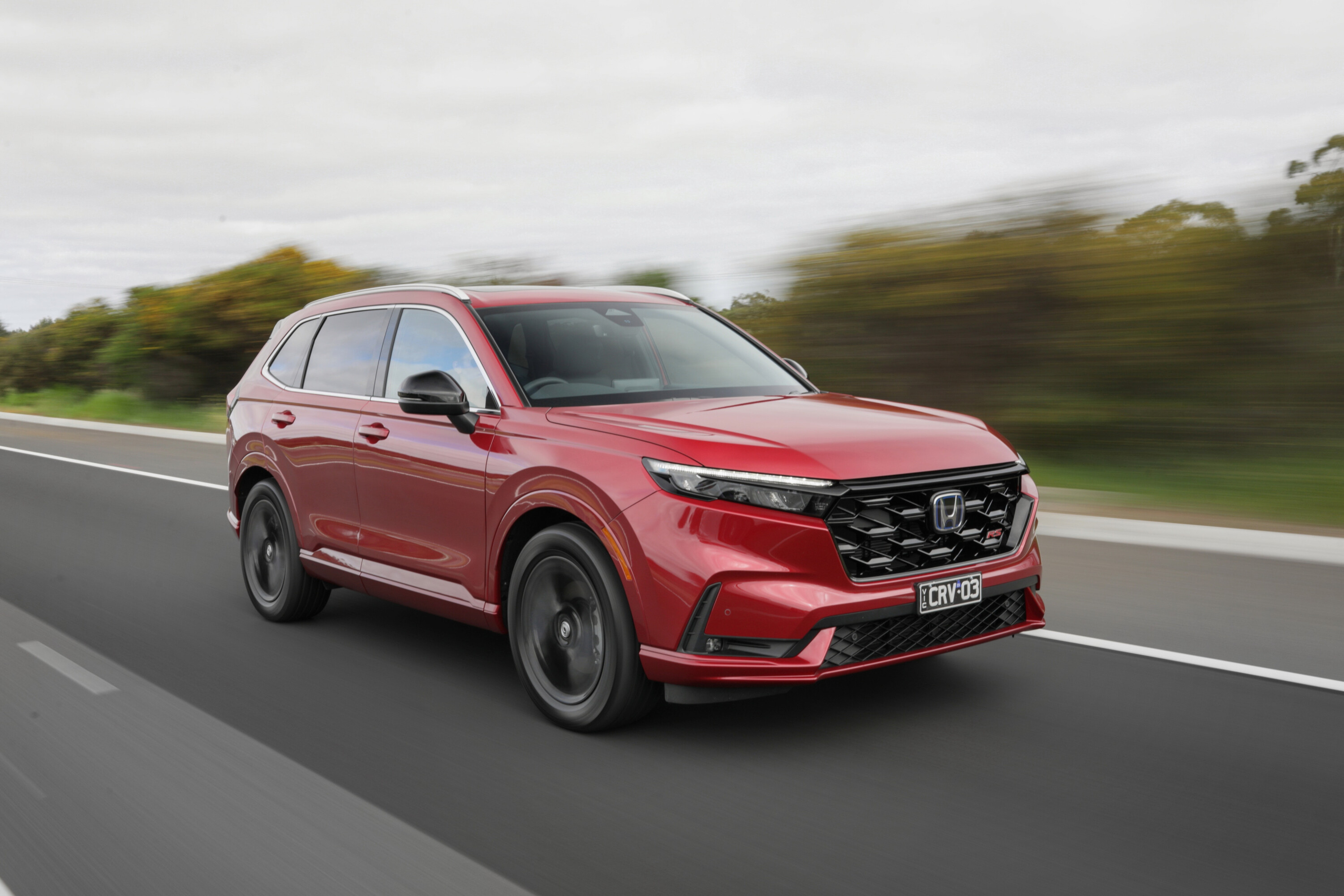
The all-new Honda CR-V runs the Skoda close for value, especially considering that the Honda’s $57,000 drive-away price gets you the top-spec VTi LX AWD.
Hold on a second, though, because the Kodiaq is only a ‘base’ model as it’s where the range starts in Australia.
In truth, the Style has equipment you’d find on mid-spec (or higher) rivals including AWD, a 2.0-litre turbo engine, height adjustment for both front seats, power tailgate, and a 9.2-inch touchscreen with navigation and wireless Apple CarPlay. It’s only missing leather upholstery, a sunroof, and power-adjust seats to match the top-spec Honda.
Other large SUVs, such as the Toyota Kluger GX and Hyundai Santa Fe Active, are bigger inside but that matters only if you’re regularly using the third-row for full-size adults. And compared to the Skoda’s cabin, the Kluger GX feels cheap indeed.
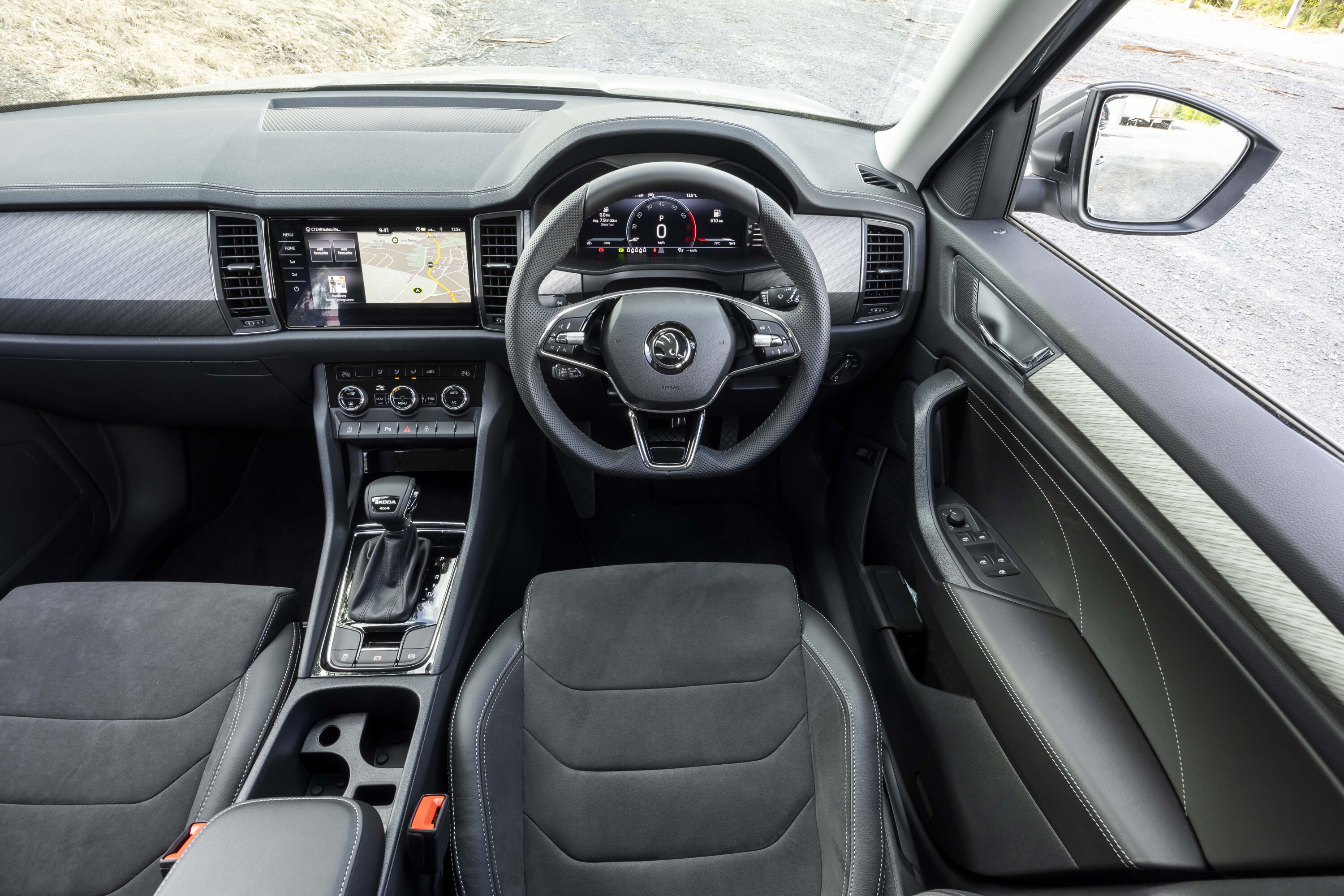
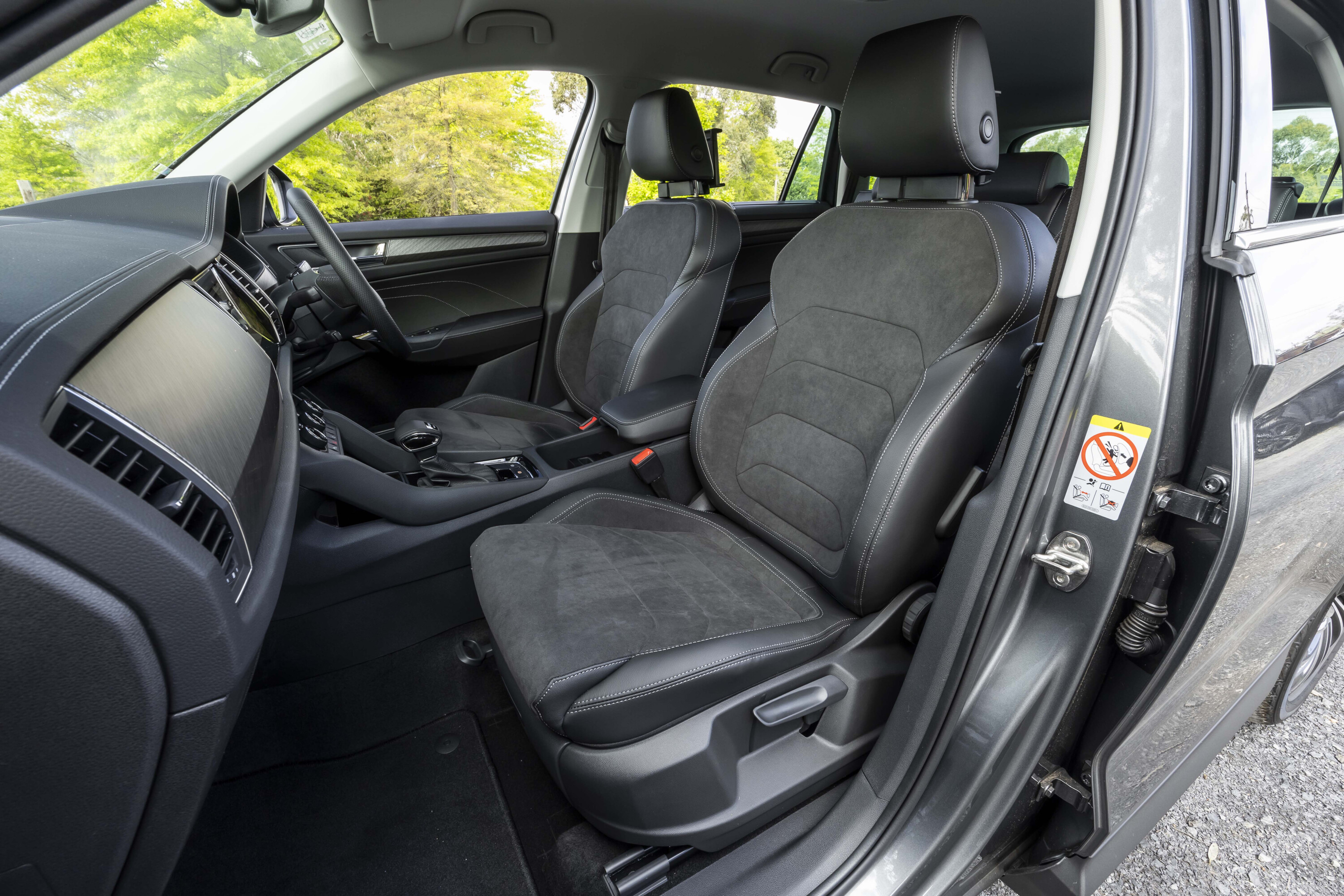
The Kodiaq’s cabin is impressive: high-end materials and mostly solid build quality are what you notice right away, but there are many more delights as you dive deeper – this feels like a car designed and engineered for family use.
Those front seats may be manually adjustable, yet they’re appointed in expensive-feeling suede-cloth upholstery and are terrifically comfortable with passenger seat height adjust.
The cabin is ergonomic and useful with two gloveboxes, generous flocked door pockets, deep ‘Megabox’ centre storage bin with two cup holders, wireless Apple CarPlay, twin USB-C ports and a wireless phone charger.
1
The centre touchscreen strikes a welcome balance between touch-swiping and physical buttons, however, Skoda’s ‘Columbus’ infotainment system feels dated next to crisper systems in the Kia Sorento.
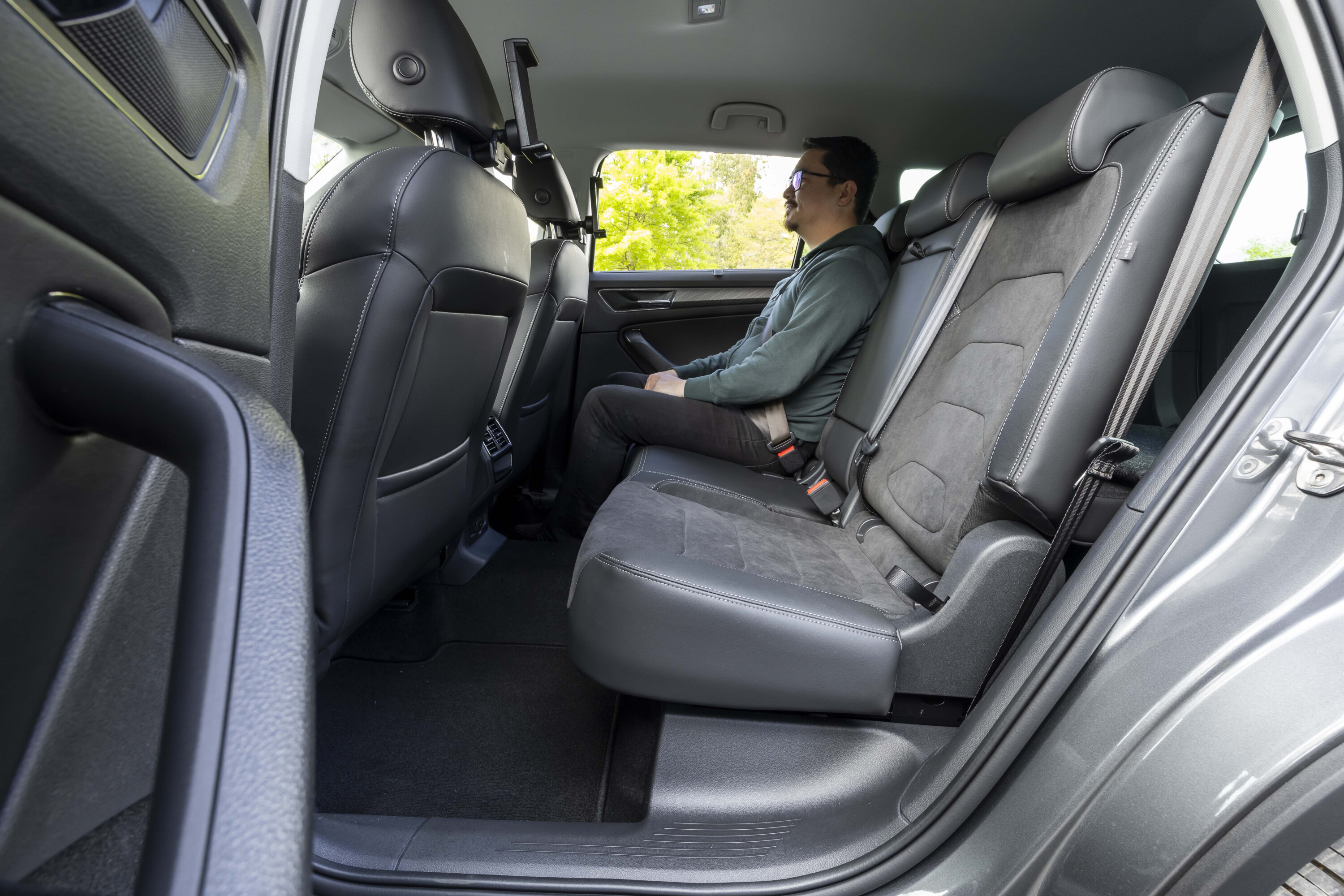
The Kodiaq’s middle row, which is on rails, is equally comfortable and thoughtfully executed thanks to one-touch access to the third row, ample space for adults, standard window blinds (yep, even in the ‘base’ model) and accessory tablet holders. There are no extra USB ports, however, which betrays the Kodiaq’s age a little.
You also score a third row of seats which fold flat into the boot floor. The third row itself isn’t super roomy – think of the Kodiaq as a five-plus-two rather than a genuine seven-seater – but headroom is okay for shorter adults and you score cupholders and storage cubbies.
1
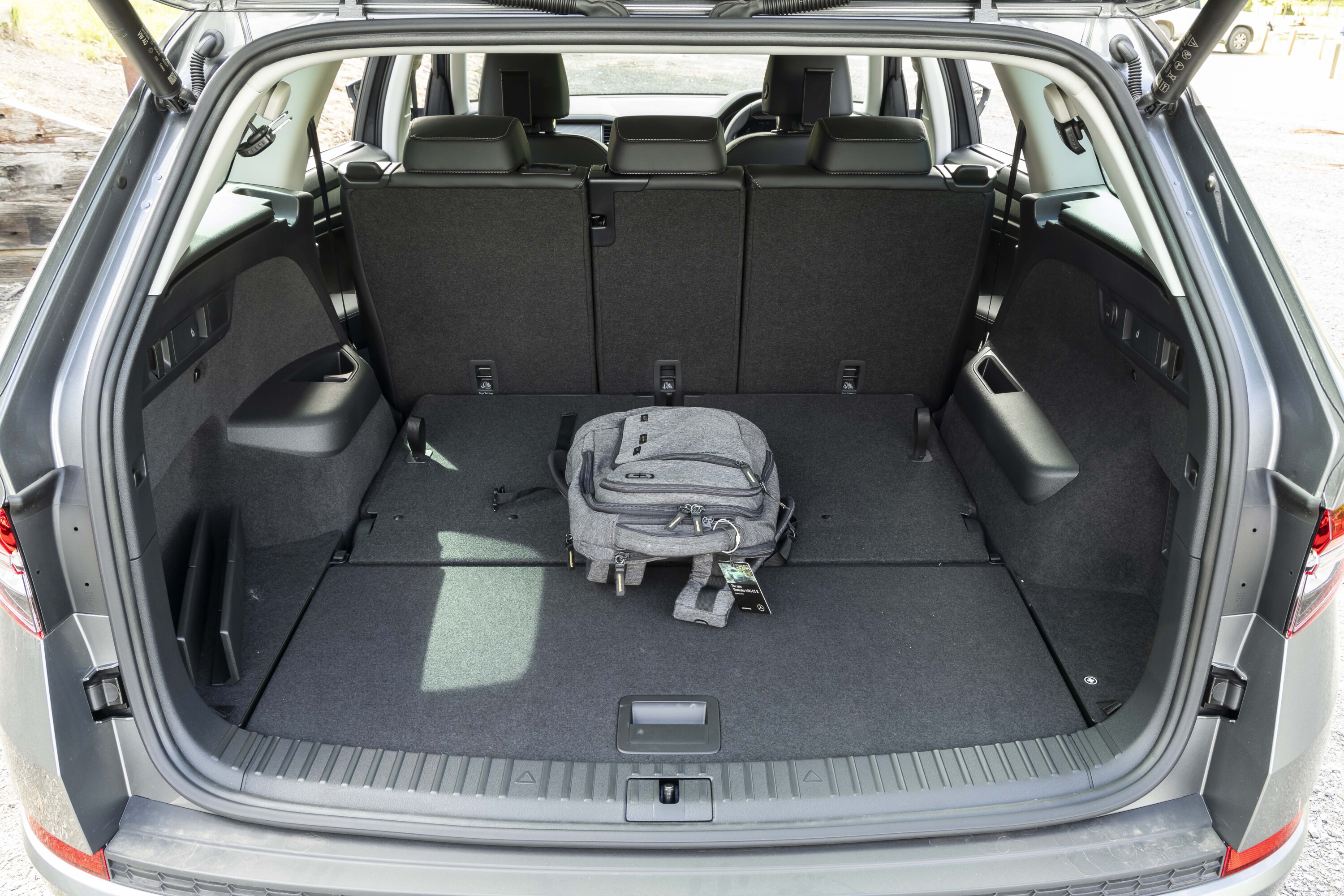
If you need more boot space, the middle row folds completely flat and there’s a huge, reversible mat that extends from the boot lip to just behind the front seats – ideal for keeping dog hair off the carpet.
There are a few shortcomings for the Kodiaq, including a lack of top tether points in the third row (though this is common across most rivals), and only a space-saver spare tyre under the boot floor.
Yet thoughtful touches extend into a boot that’s not only large (765L) and deep but it includes lidded cubbies on either side, an ingenious solution for storing the cargo blind, levers to electrically drop the back seats and velcro dividers that stick to the boot floor. All things typically sold as dealer add-ons by other brands.
With seven seats up there’s even enough space for school bags – the VDA rating is 270L, exceeding that of a Toyota Corolla hatch.
Driving the Kodiaq is a mostly pleasant experience, with a smooth ride and responsive engine that packs adequate grunt.
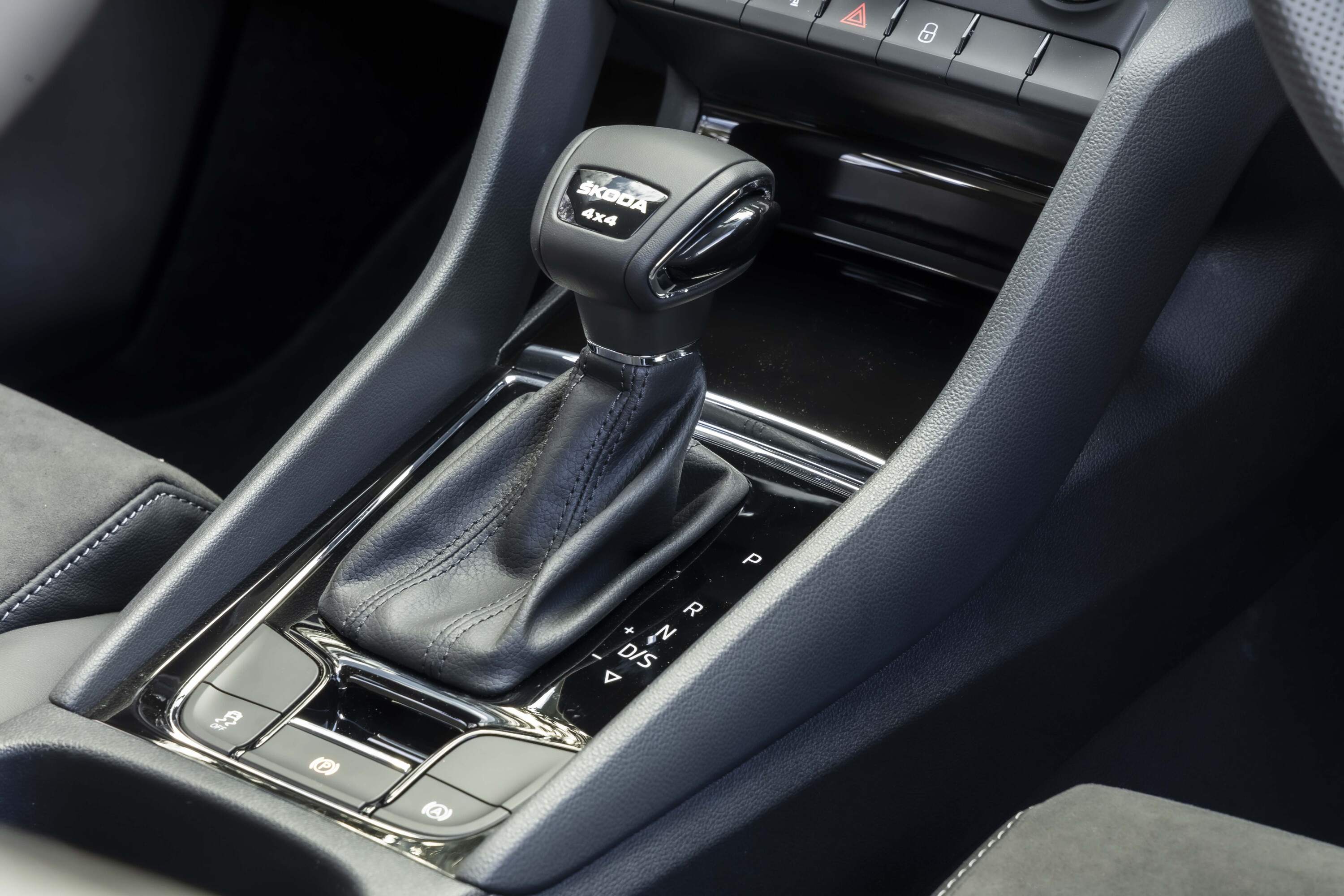
The light steering is great around the suburbs though it doesn’t inspire huge confidence at higher speeds. The inverse is true of the seven-speed dual-clutch transmission which is very slick on the open road and tends to be a little laggy in town – especially when shifting from first to reverse in a hurry.
Under the bonnet is the VW group’s ubiquitous EA888 2.0-litre turbo-petrol four-cylinder, featured here in 132kW/320Nm trim. Skoda claims that’s enough punch to get the Skoda from rest to 100km/h in a brisk 8.4 seconds.
1
We’ve found the amount of grunt to be lacking compared to some diesel rivals when heavily laden (the 1855kg Kodiaq Style is rated to tow 2000kg) though because it revs cleanly and responds keenly it’s plenty of engine most of the time.
When out in the countryside, the Kodiaq’s ride is controlled and insulating and the 19-inch ‘Cursa’ alloy wheels shod in chubby 235/50R19 tyres help around town where its independent rear suspension and front struts make light work of road imperfections.
Noise insulation is also good and, thanks to the traditional boxy shape of the Kodiaq the view out is good and it’s easy to park.
As of January 2024, the Skoda Kodiaq is officially unrated by ANCAP, though the three-row SUV scored five stars in June 2017.
The Kodiaq Style misses some safety kit that is now required for a five-star rating. Lane-keep assist, lane-trace assist, and stop-and-go for the adaptive cruise control are included in the $6900 Luxury pack.
Regular adaptive cruise control, blind-spot monitoring, rear cross-traffic alert, a reverse camera, and AEB (including low-speed reverse) are all included.
Skoda has one of the longest warranties in the game: seven years and unlimited kilometres for all its vehicles.
Servicing is due every 12 months or 15,000km, whichever comes first. Skoda offers discounted service packs at purchase time, the five-year plan costs $2200 and the seven-year $3200.
The Skoda may be a little dearer to buy than rivals, and there remains the usual cloud of doubt for many Australians about European reliability, but affordable service plans and a long warranty ought to calm nerves.
As for which grade is best, the sporty RS is a great choice but pushing $80K on the road makes it rather expensive. Instead, we’d stick with the base Style with its comfy ride and smaller wheels, while potentially ticking the Luxury pack box.
Whichever grade you choose, the Kodiaq’s ‘simply clever’ touches are the sort of thing that endear a vehicle to you over time – especially if there’s an ever-growing family involved.
With clever packaging that squeezes in a third row of seats into a body that’s fractionally shorter than a new CR-V, a highly-regarded 2.0-litre turbo engine, plus an excellent all-round drive, it’s clear the Kodiaq still has plenty of appeal despite imminent replacement.