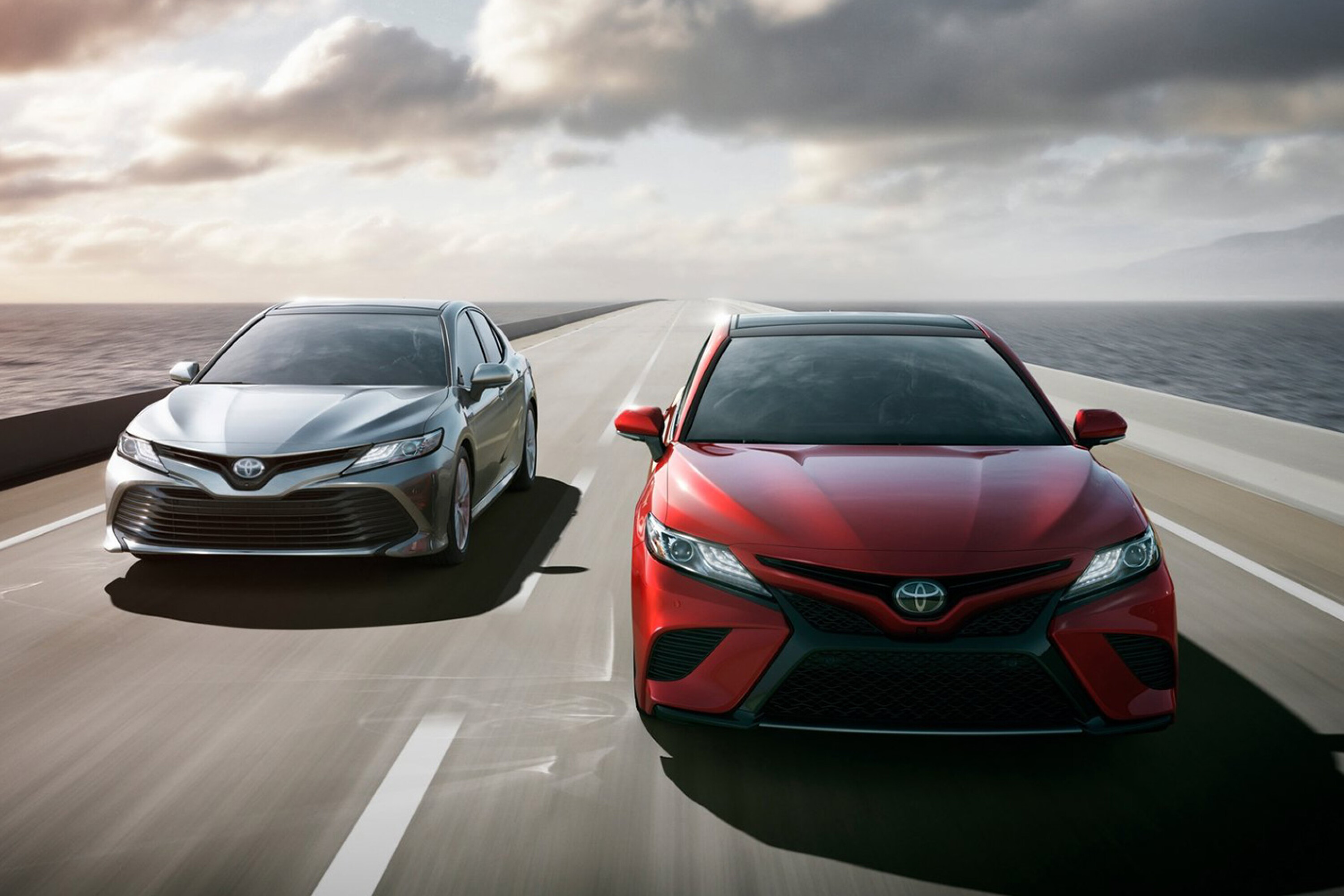
Toyota and Lexus have confirmed no Australian-market vehicles are affected by a recall for one-million vehicles sold in the United States.
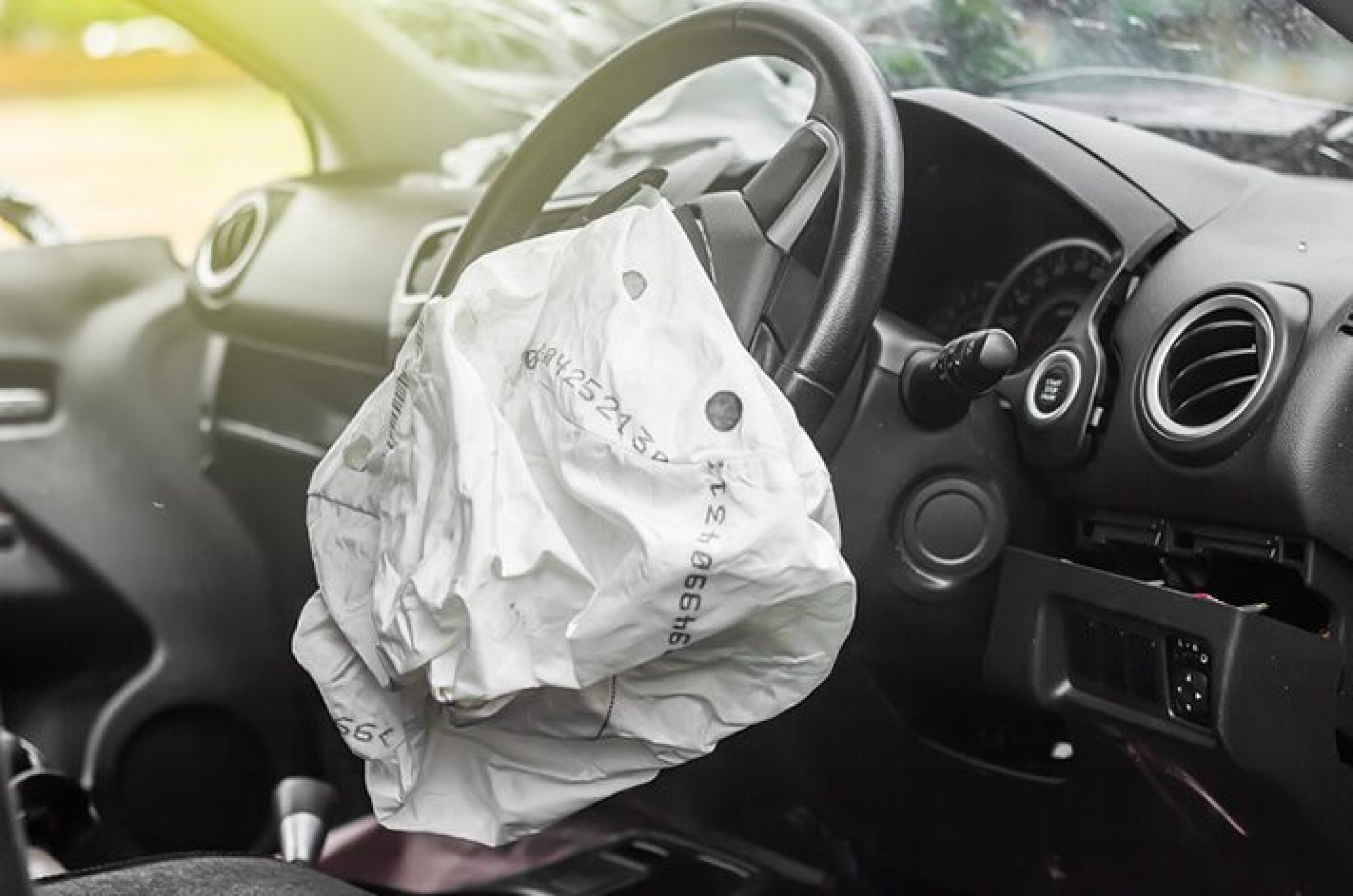
The safety recall, affecting “approximately 1 million” 2020-2022 model-year Toyota and Lexus vehicles, concerns front-passenger seat occupant sensors which could short circuit and cause the airbag to not deploy as intended.
“We are informed that there are no models involved in the Australian market,” confirmed a Toyota Australia spokesperson.
1
Affected vehicles sold in the United States include the Toyota Corolla, Camry, Avalon, RAV4, Highlander (Kluger) and Sienna, along with the Lexus ES and RX.
“The subject vehicles have Occupant Classification System (OCS) sensors in the front passenger seat that could have been improperly manufactured, causing a short circuit,” said Toyota USA.
“This would not allow the airbag system to properly classify the occupant’s weight, and the airbag may not deploy as designed in certain crashes, increasing the risk of injury.”
Carmakers are pushing America’s National Highway Traffic Safety Administration (NHTSA) to resist announcing a recall on potentially faulty airbags, insisting there is not enough evidence for a decision.
Snapshot
Airbag recall could affect 45 million cars in the US alone
Manufacturer has refused voluntary action, carmakers resisting
Australian impact appears minimal, if any at all
The NHTSA is investigating reports that airbag inflators made by the company ARC Automotive have ruptured in a crash, injuring or killing passengers on several occasions.
With the the massive, global Takata airbag recall still haunting them, a number of carmakers are concerned that the NHTSA’s anticipated decision – expected to be made in early 2024 – will lead to more than AU $15 billion in costs without sufficient proof that the airbags are defective.
In comments delivered to the NHTSA, General Motors said the regulator’s initial opinion “falls far short of the agency’s technical and procedural standards, especially in major defects enforcement cases.”
1
In a letter to ARC Automotive and carmakers [↗], the NHTSA said that an eight-year investigation had revealed nine cases of injury from ruptured ARC airbags made before 2018.
Seven of those incidents occurred in the US, between 2009 and 2023, while another was in Canada (a 2009 Hyundai model in 2016) and the last in Turkey (a 2015 Volkswagen Golf in 2017).
In response, ARC wrote back [↗] that NHTSA investigators had failed to identify and “systemic or prevalent defect” in the inflators, relying instead on incidents that resulted from “random ‘one-off’ manufacturing anomalies”.
ARC vice president for product integrity, Steve Gold, said that the company had cooperated with the NHTSA’s investigation and tests over eight years, noting that none of the 918 un-detonated inflators extracted from retired or wrecked cars had ruptured in the tests it ran with the NHTSA.
“Accordingly, the test program demonstrated with 99 per cent reliability and 99 per cent confidence that the inflators in the subject population would deploy without rupturing,” he wrote.
GM clearly accepts that some batches of its ARC-made airbag inflators may be faulty, having already carried out a voluntary recall of “over one million” cars this year at the NHTSA’s request, after a driver in a GM-made vehicle suffered facial injuries from a ruptured airbag in March.
The American carmaker says a mandatory recall could extend to “as much as 15% of the over 300 million registered motor vehicles in the United States”.
How many of those ~45 million cars would be GM models is not clear, but Ford has said it would expect any mandatory recall would affect Ford models built between 2005 and 2017.
By comparison, the Takata recall – the world’s largest recall by a significant margin – has affected “an estimated” 100 million cars globally, according to the Australian Competition and Consumer Commission. [↗] The total cost to carmakers is unclear, but in 2016, Takata said a worst-case scenario would be around AU $35 billion. (Takata filed for bankruptcy in 2017. Its assets were bought by Chinese-owned, US-based company Key Safety Systems.) The Takata airbags caused “at least” 18 deaths and more than 400 serious, life-altering injuries.
The NHTSA initially requested in early 2023 that ARC Automotive perform a voluntary recall of 67 million inflators [BBC ↗] – as part of the same request GM acceded to – but the company refused, leading the regulator to begin the process of formalising a mandatory recall.
ARC airbags are used in models made by GM, Ford, the Stellantis group, Tesla, the Volkswagen group, Hyundai & Kia, BMW, Maserati, Mercedes-Benz, Porsche and Toyota.
As a matter of course, Wheels Media will contact relevant brands for local context on this type of news. However, given the long-running nature of the NHTSA’s investigation, Wheels Media acknowledges the May 2023 reporting of Neil Dowling [↗] for industry journal GoAuto News, diving deep into the Australian models that could be affected. The short version is that all brands are confident no local models are affected.
If there’s one thing Christmas road trips and Tetris have in common, it’s that letting things pile up in the wrong way will lead to a sorry ending.
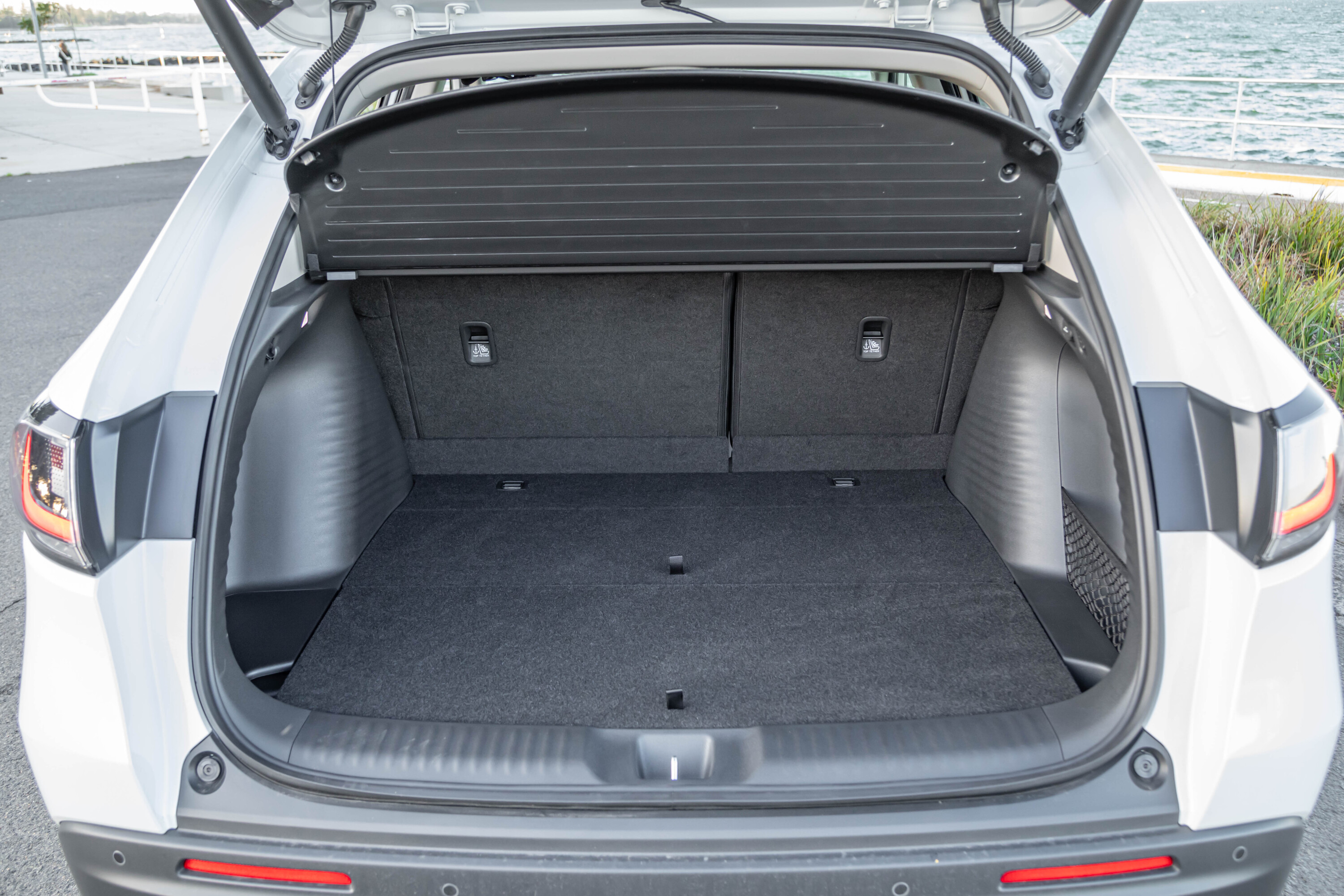
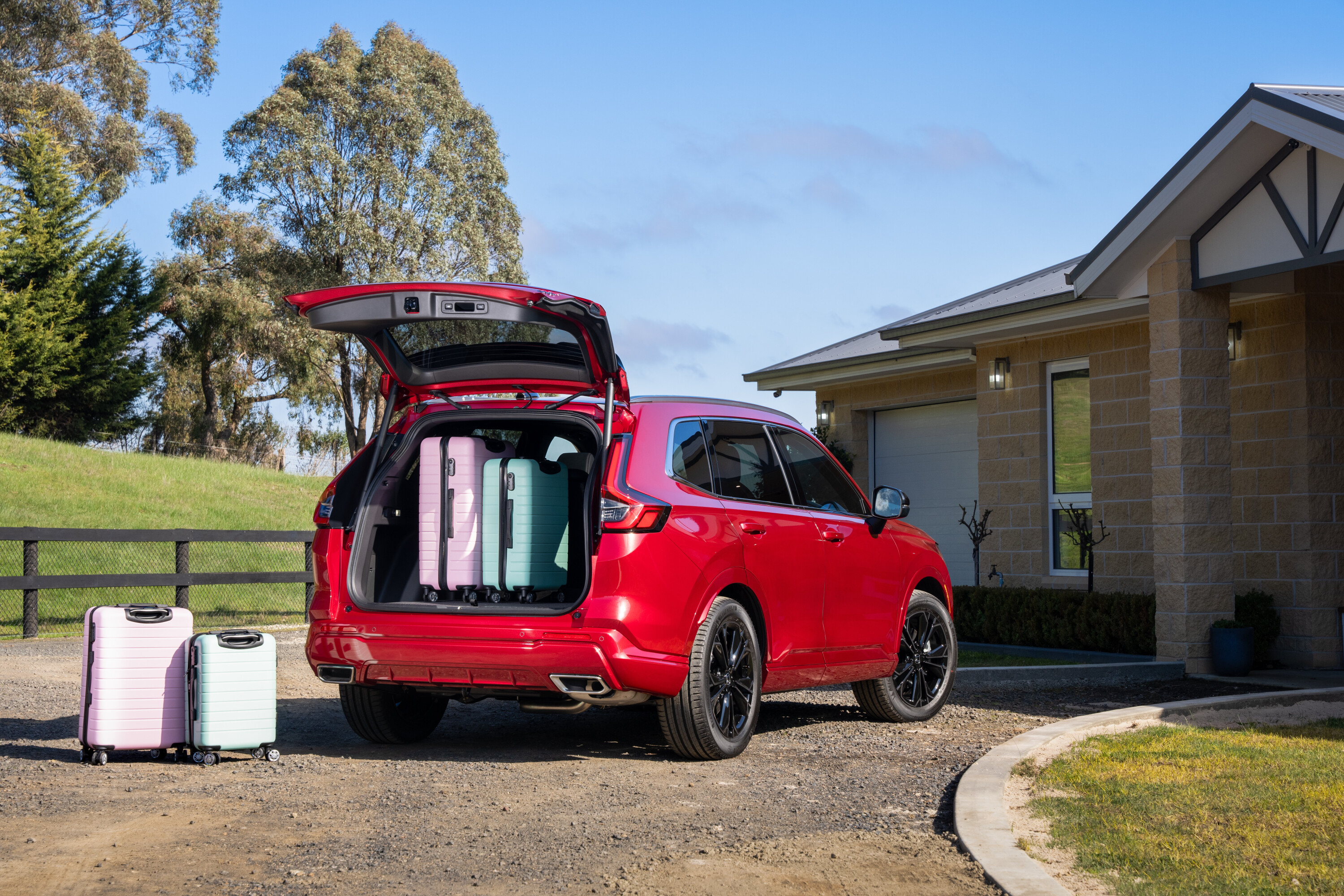
Fitting all the Christmas luggage into the car can be an awkward and tiring affair, even when owners have the versatility of Honda’s Magic Seats to help them out.
Jumping onto a well-worn joke, Honda has consulted a competitive player of the classic puzzler Tetris for advice on making the best use of a car’s space.
‘DanV’ first started playing Tetris on his Nintendo Game Boy in 2003, but has recently joined the competitive circuit in 2020 with the aim to play in the annual Classic Tetris World Championship.
1
“When packing items into a car, you can think of it in the same way: if something doesn’t fit, you can make it work, whether that is rotating a big box, or re-arranging the order you have placed items in,” he says.
Offering the idea of treating the boot and cabin as two separate Tetris boards, DanV details important considerations on which items should be on top, such as snacks that will need to be retrieved easily from the boot during stops on longer journeys.
While a game of Tetris challenges players with differently-shaped pieces at random, there is an inherent advantage with boot packing by knowing the order of the different shapes that are to be packed.
“The ‘O piece’ can be the perfect piece to start out with…” Dan says, referring to the 2×2 square piece that often Tetris throws at players, “… ‘O pieces’ have a reputation as a piece you’d rather not have, as it always seems to come at the wrong time.”
1
An iconic creation of Soviet-era software engineer Alexey Pajitnov, Tetris appeared on many different gaming platforms before becoming the must-have game to accompany Nintendo’s pioneering Gameboy portable gaming system.
While it is possible to beat the puzzler, fitting all the Christmas needs into your car is not quite as arduous, especially with the luxury of having pliable and softer items.
“Smaller items can either go in the backseat, or be squeezed into any gaps boxes may have left behind, to ensure you use up as much space as possible.”
We’d suggest you not get it exactly right, of course. You might see a row of suitcases disappear before you eyes…
1
Clever Christmas marketing or a bit cringe?
Honda has long been known for its clever internals, offering segment-leading cargo space and other innovative ideas – like those Magic Seats and doors that open to 90 degrees to help with access.
Consulting with a Tetris dynamo on matters relating to cargo only seems like a natural partnership, although even the experts can have troubles with oddly-shaped items, such as a Christmas tree.
“The T-piece is one of the trickiest blocks to deal with. If you don’t know what to do with a T-piece, you’ll most likely find yourself in trouble.” DanV says.
Gotta say though, Honda, we’re pretty disappointed there’s no video to go with this…
As if buying a new car weren’t nerve-wracking enough…
According to a new report by the Australian Competition and Consumer Commission, scammers have recently intercepted emails between dealerships and customers – and then forging invoices to have payments directed to their own bank accounts.
Known as “business email compromise scams”, the ACCC says in 2023 – between 1 January and 30 September – approximately 981 cases had been reported, amounting to $13 million of losses.
The scam involves impersonating a legitimate business after intercepting their emails and directing their targets to deposit money into their account, leading the customer to believe the funds are going toward their purchase.
1
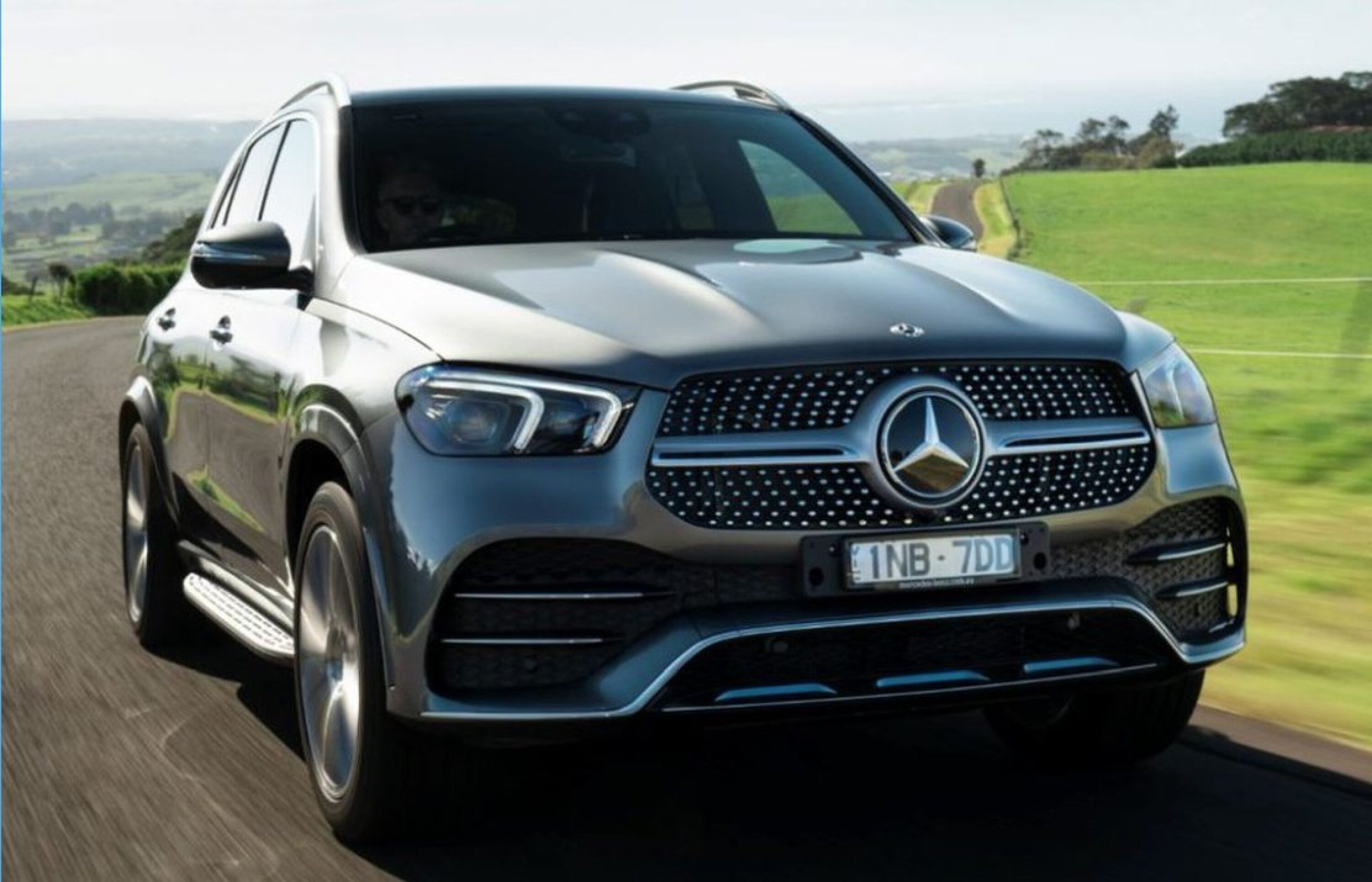
A Victorian couple were scammed out of $139,000 after they made multiple payments on what they believed to be a purchase of a Mercedes-Benz GLE 400d, but the payment details on the invoice had been doctored, leading to the funds instead being directed to the scammer’s account.
This case followed a similar incident in June 2022 where Georgina Smith of Melbourne fell victim to a similar scam, only realising the problem on the day of delivery when the dealership called to tell her that the deposit for her Mercedes-AMG A35 had not been received.
Upon receiving the call, Smith had asserted that the $38,500 deposit had been made – but when she was then sent a copy of the invoice from the dealership via SMS, it was discovered that the bank account details did not match those received on the emailed invoice.
On this occasion the scammers had duplicated the invoice to give all appearances of authenticity – including the company name and the vehicle’s VIN details – amending only the bank information to direct funds to the scammer’s account.
Speaking with GoAutoNews, Brian Hay, Executive Director of Cultural Cyber Security, indicated that these kinds of scams cost Australians upward of $132 million in 2020.
“Do not use the phone number that may be printed on that potentially bogus email. So make sure you get a phone number that’s been sourced independently because, if the invoice is coming from the crook, you could be calling the criminal to validate the banking details. So you have to get independent verification of the bank details,” Hay told GoAutoNews.
In the case of the Mercedes-Benz GLE 400d, the Victorian County Court is reviewing the issue to make a determination on whether the customer or Mercedes-Benz are to incur the losses.
In the meantime, car buyers are encouraged to be diligent when making large payments, and to verify details directly with dealerships through a salesperson with whom they have built trust.
A State-of-Origin-style numberplate battle is underway after Lloyds Auctions announced the first Queensland Heritage Plate ‘Q1′ is joining New South Wales’ equivalent, which has already exceeded $10 million in the bidding process.
Lloyds says it is almost 40 years since the ‘Q1’ plate, among the first plates issued in Queensland, last went under the hammer.
Bidding has already reached $3 million within half a day of the number plate being made available.
It still has some way to go to match the current $10m bid for the ‘NSW 1’ numberplate, which Lloyds described as “the most sought-after Heritage Plate in Australia”.
“This is an extremely rare occurrence for 1, let alone 2, heritage plates with such history and rarity to be offered at auction ever in a single auction, it is unheard of in Australian history ever,” said Lloyds Auctions’ COO, Lee Hames.
“The amount of enquiry from right around the country of people wanting to sell their heritage plates after the ‘NSW 1’ was listed is phenomenal and out of that came this ‘Q1’ heritage plate. Who knows what else might be brought forward to auction between now and the end of January.”
Lloyds believes there have been only two owners of the ‘Q1’ plate, first issued more than a century ago in 1921.
The auctions for both heritage plates will be completed over the Australia Day weekend in January 2024.
Porsche Cars Australia has confirmed the petrol-powered Macan SUV will be dropped from its line-up in 12 months’ time to make way for the new electric Macan E.
Porsche Australia will open order books for the Macan E early next year, with the electric SUV replacing petrol-powered versions when it arrives here in the final quarter of 2024.
“Production of the petrol Macan, bound for Australia, will conclude in Q3 2024,” a company statement issued to Porsche’s local dealers confirmed.
It’s almost two steps forward with the move to electric power for Macan, as the decade-old SUV hasn’t been offered even in hybrid for yet.
Factory orders for the current petrol-powered Macan line-up, which offers a 195kW/400Nm 2.0-litre turbocharged four-cylinder petrol engine as well as a 2.9-litre twin-turbocharged V6 petrol in 280kW and 324kW guise, are expected to continue until at least mid-2024.
Beyond this, availability will depend on existing stock levels.
The introduction of the Macan E has been delayed several years after supply issues, but it’s set to arrive in 2024 using the Premium Platform Electric (PPE) platform shared with the Audi Q6 E-Tron.
The gives Macan E 800-volt electrical architecture with an electric motor on each axle – varying between trim levels – and a single standard battery pack across the line-up.
Provisional figures suggest the Macan E will see an entry-level model producing 280kW, with a ‘Turbo’ version delivering 447kW to easily eclipse the current flagship Macan GTS’s 324kW.
Australian spec and pricing for the all-electric 2025 Porsche Macan E will be announced early next year.
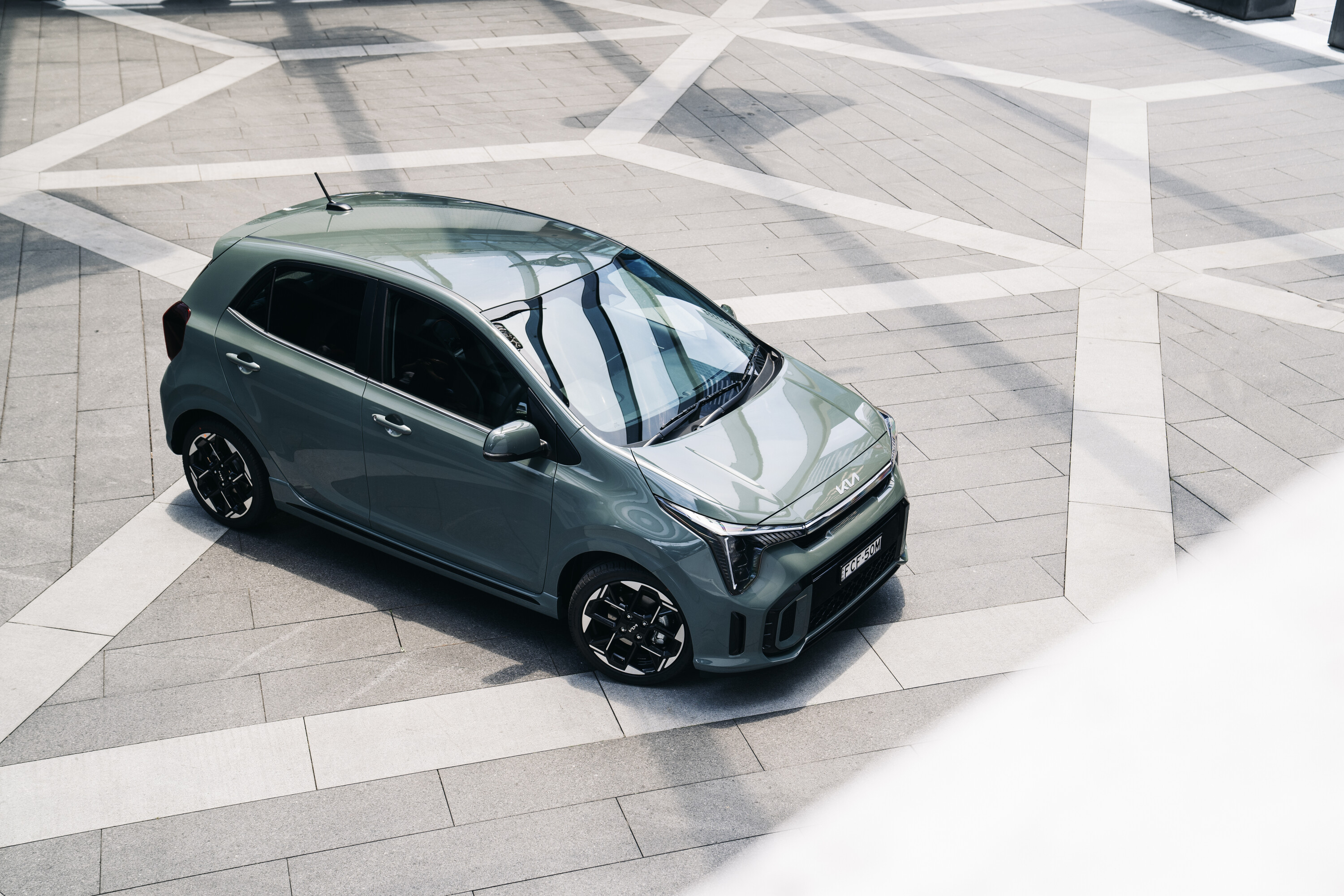
If you want a very small car with a relatively small price, the Kia Picanto is just about the only worthwhile model you should look at.
December: 2024 Picanto pricing announced
The facelifted 2024 Kia Picanto micro hatch has arrived in Australia with price rises and more standard active safety features – but no more GT turbo flagship.
Prices have increases between $1600 and $1950 for the updated Picanto with all variants now priced above $20,000 once on-road costs are added.
This sees the title for Australia’s cheapest new car handed to China’s MG 3 hatchback, which is priced from $19,990 drive-away.
UPDATE: 2024 Kia Picanto details officially confirmed
Kia Australia has provided official details for the facelifted Picanto micro car. This article, first published on December 4, has been updated to reflect the latest information.
The base S has been replaced by a better-equipped Sport variant priced at $17,890 before on-road costs for the manual – up from $16,290 plus on-roads for the S manual.
The Picanto Sport four-speed automatic is priced at $19,490 before on-road costs.
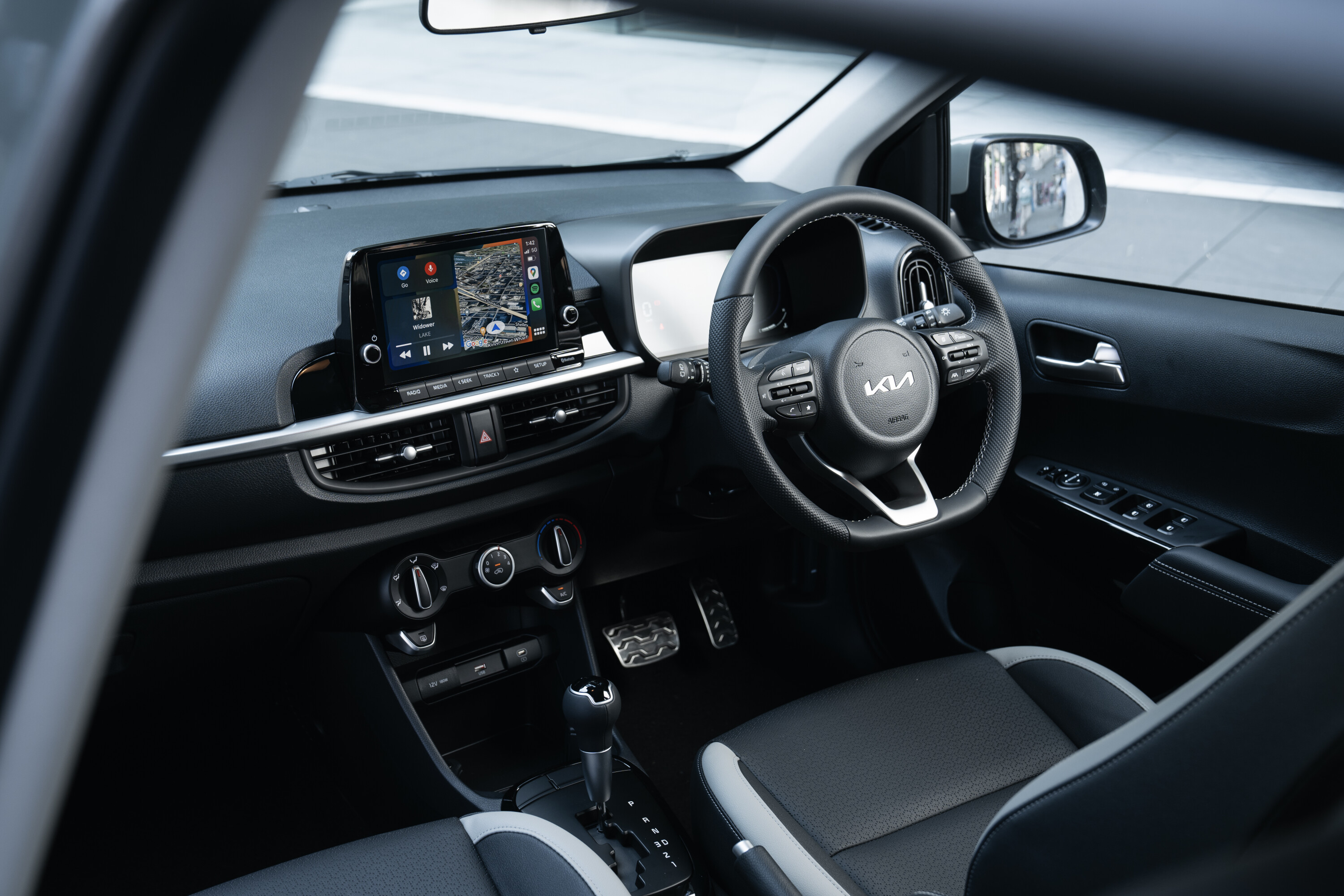
Lane-keep assist, lane departure warning, blind-spot alert, rear cross-traffic alert, a 4.2-inch semi-digital instrument cluster, a leather-accented steering wheel and gear shifter, power-folding side mirrors, and a rear fog light are new additions for the Sport.
The existing vehicle-only autonomous emergency braking system is expected to be updated with pedestrian, cyclist and intersection detection. Adaptive cruise control is not offered in Australia.
1
The GT-Line offers the same safety tech improvements and semi-digital cluster, along with rear USB-C charge ports, a D-cut steering wheel, and LED headlights replacing halogen units – joining already standard LED daytime running lamps.
It is priced at $19,340 before on-road costs for the GT-Line manual, rising to $21,290 plus on-roads for the GT-Line auto – more than the now-axed $20,790 1.0-litre three-cylinder turbo GT manual.
New colours include sporty blue and adventurous green, joining existing aurora black, astro grey, signal red, sparkling silver and clear white options.
All Picanto variants remain powered by a 62kW/122Nm 1.2-litre naturally-aspirated four-cylinder petrol, matched to a five-speed manual or a four-speed torque-converter automatic sending power to the front wheels.
1
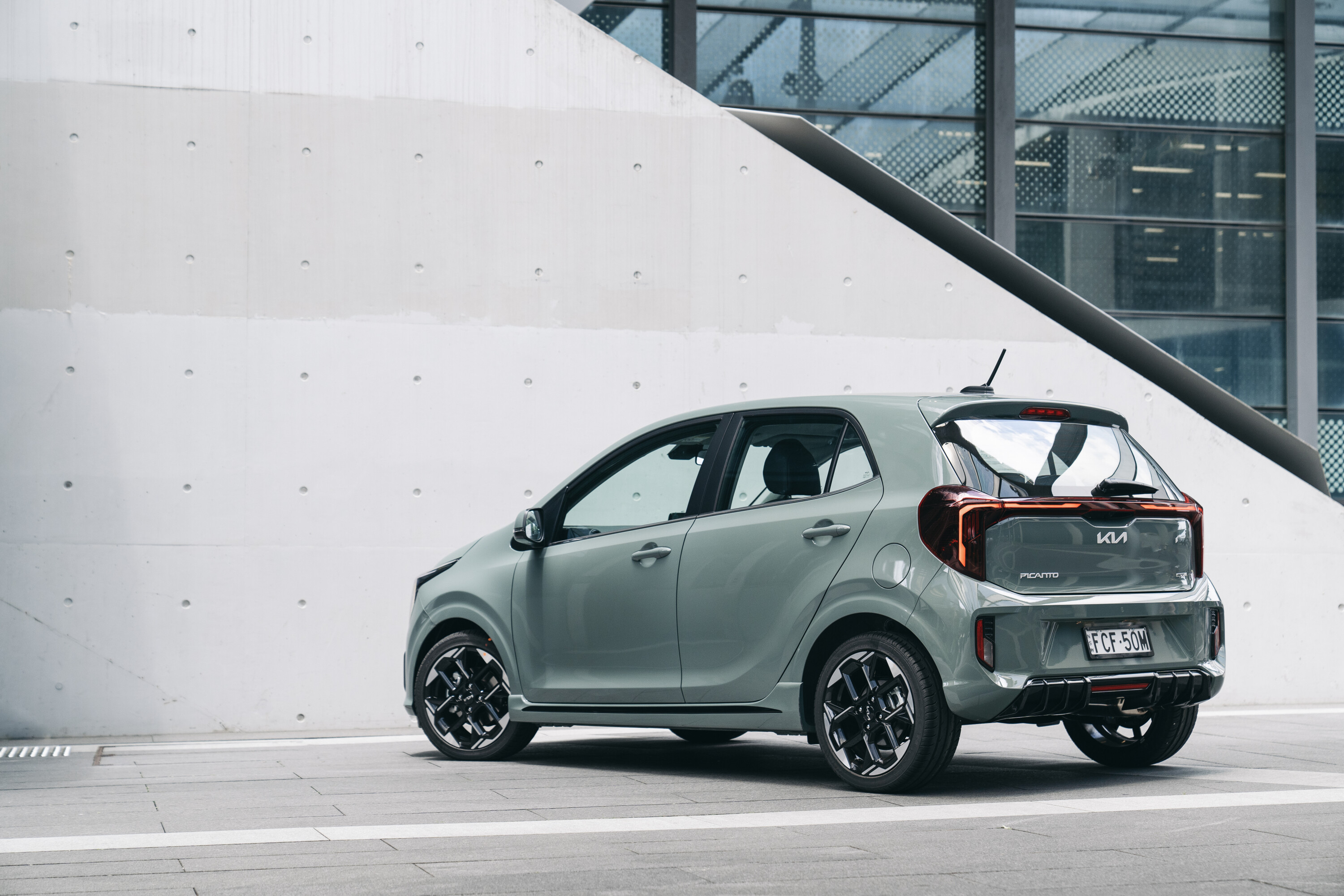
As detailed in July, the facelifted Picanto features an EV9-inspired ‘digital tiger nose’ front fascia with a slimmer bar, vertical headlights, and a revised lower bumper design.
The rear features revised tail-lights connected by a full-width strip, an updated lower bumper, and new badging. The GT-Line also receives new-look 16-inch alloy wheels.
The Kia Connect vehicle service or built-in satellite navigation will not be offered in local versions of the updated Picanto.
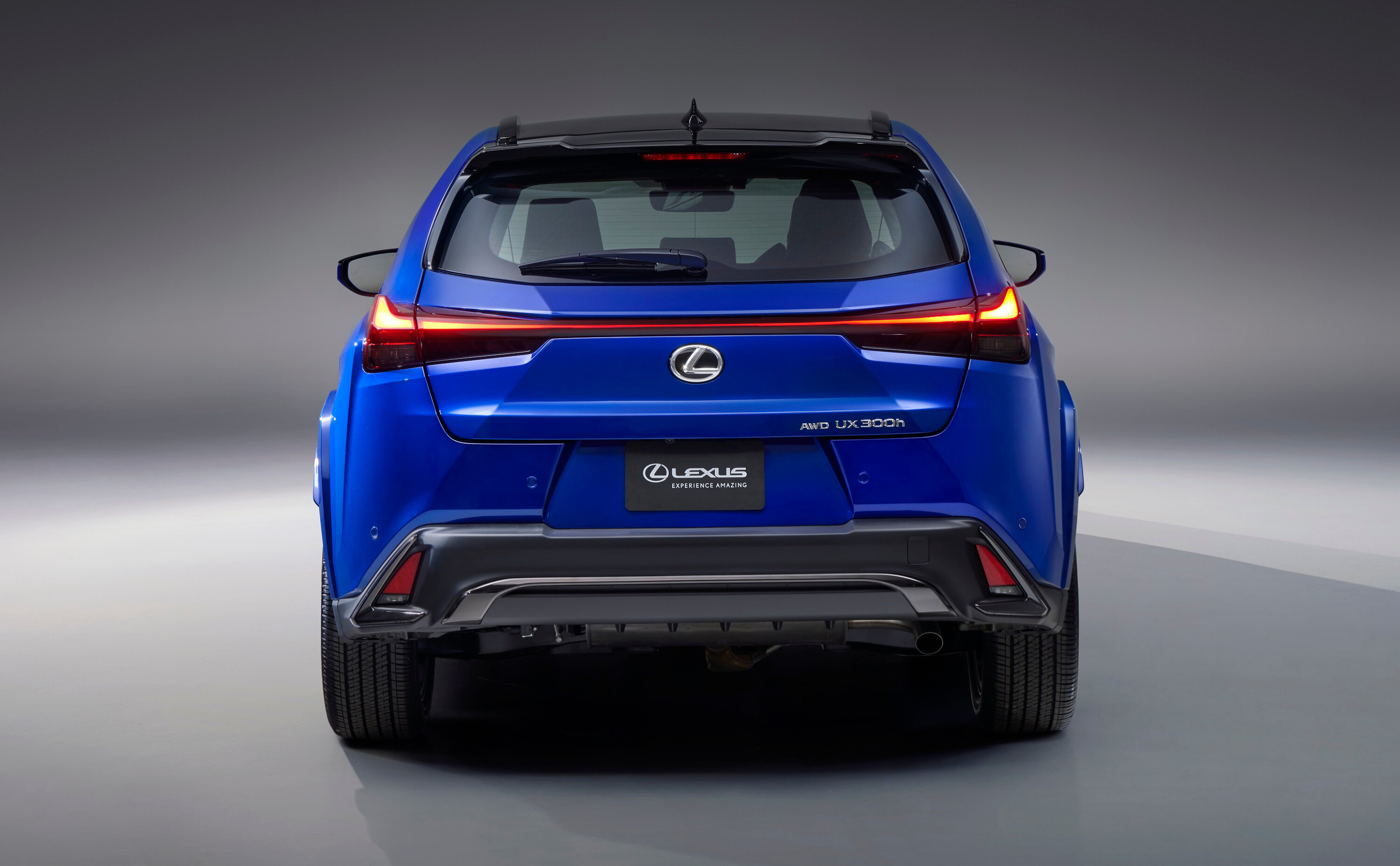
The 2024 Lexus UX small SUV has debuted overseas with an updated hybrid system.
Due to launch in North America early next year, the UX receives the ‘fifth-generation’ hybrid system from the related Toyota Corolla Cross, with a new UX300h badge to replace the UX250h.
Retaining the current 2.0-litre non-turbo four-cylinder and electric motor, total system power for the UX300h is up from 131kW to 146kW with a “new hybrid transaxle” and a lighter lithium-ion battery pack replacing nickel-metal hydride to provide “more responsive performance”.
1
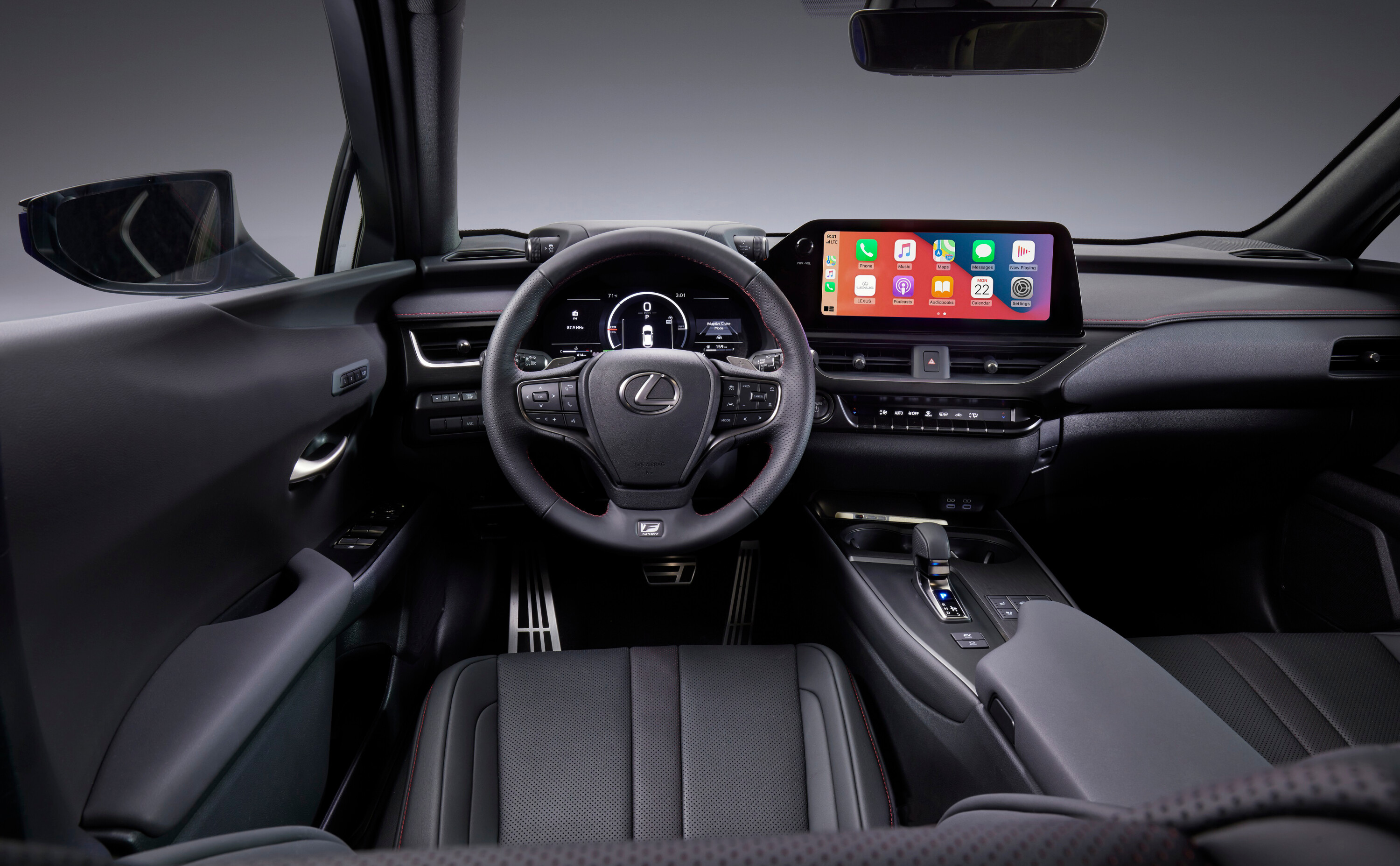
Other changes include a larger 12.3-inch full-digital instrument cluster – up from 8 inches – a shift-by-wire gear shifter, a new copper crest exterior colour, and revised door panel switches.
It also adds an updated active safety suite with “risk avoidance” emergency steering assist, daytime left-turn oncoming vehicle braking, and proactive driving assist to “support driving tasks such as distance control between the vehicle and a preceding vehicle, pedestrian or bicyclist”.
While the US-market UX line-up is limited to the hybrid UX300h, it is also offered in petrol-only UX200 and all-electric UX300e forms in Australia.
1
A Lexus Australia spokesperson said the brand could not comment on the updated UX “at this time”, adding that “different markets have different product cycles”.
The last update for the Lexus UX launched in Australia in mid-2022 with a new infotainment system, wireless smartphone mirroring, Lexus Connected Services, an improved stop-start system for the petrol model, and improved rigidity for F Sport variants.
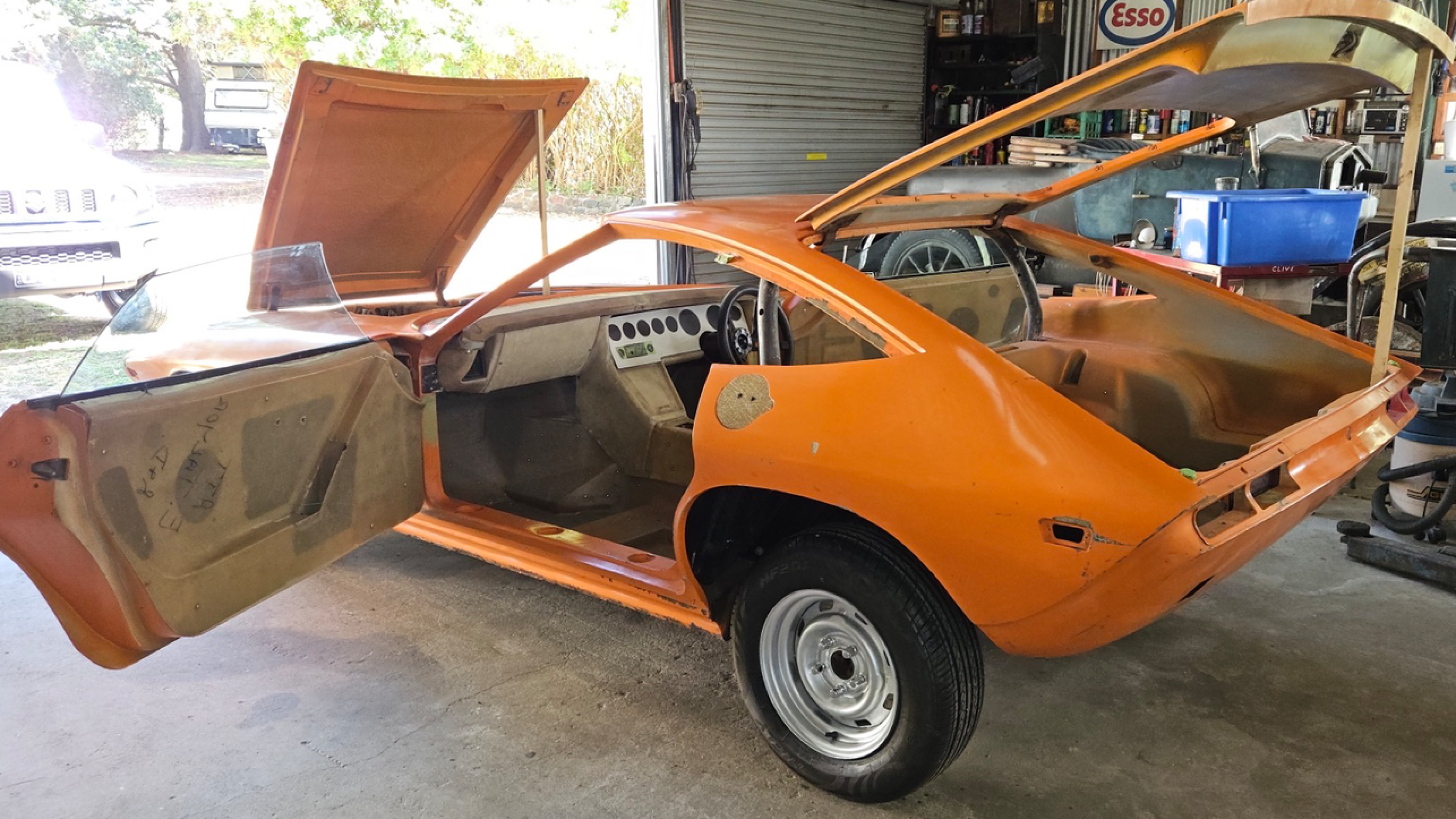
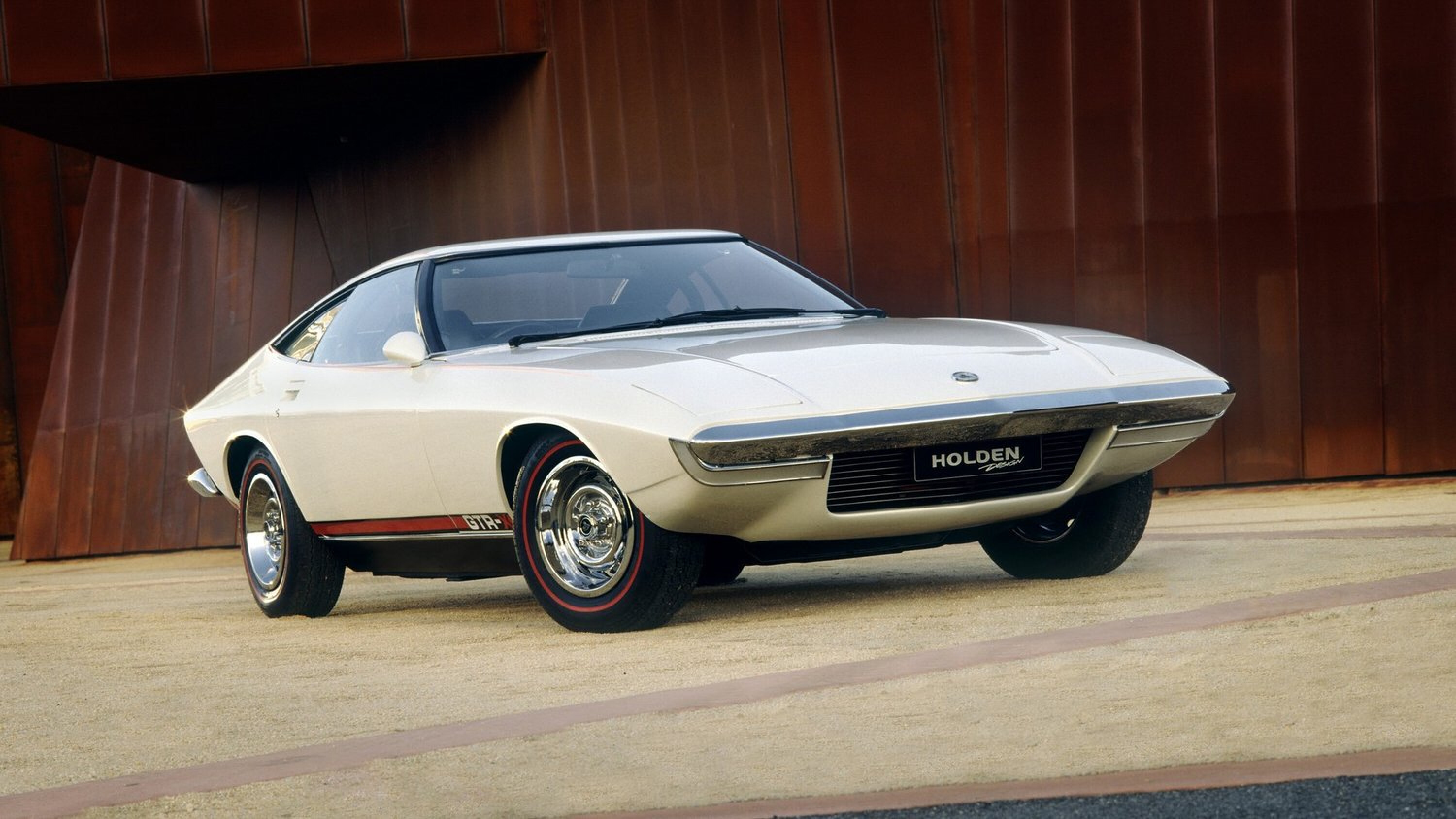
A rare 1970 Holden Torana GTR-X that Holden never quite finished building has been put up for sale.
An example of arguably the most advanced, mature and globally fresh designs to emerge from Australia, only three Torana GTR-Xs were built, with one destroyed leaving two in existence more than fifty years after its scheduled production was cancelled.
The Queensland-based Bowden family, who own some of Australia’s rarest and most collectable production and race cars as well as a car care products company, have put the third GTR-X built [↗] – so named Lone O’Ranger for its orange paintwork – up for sale.
1
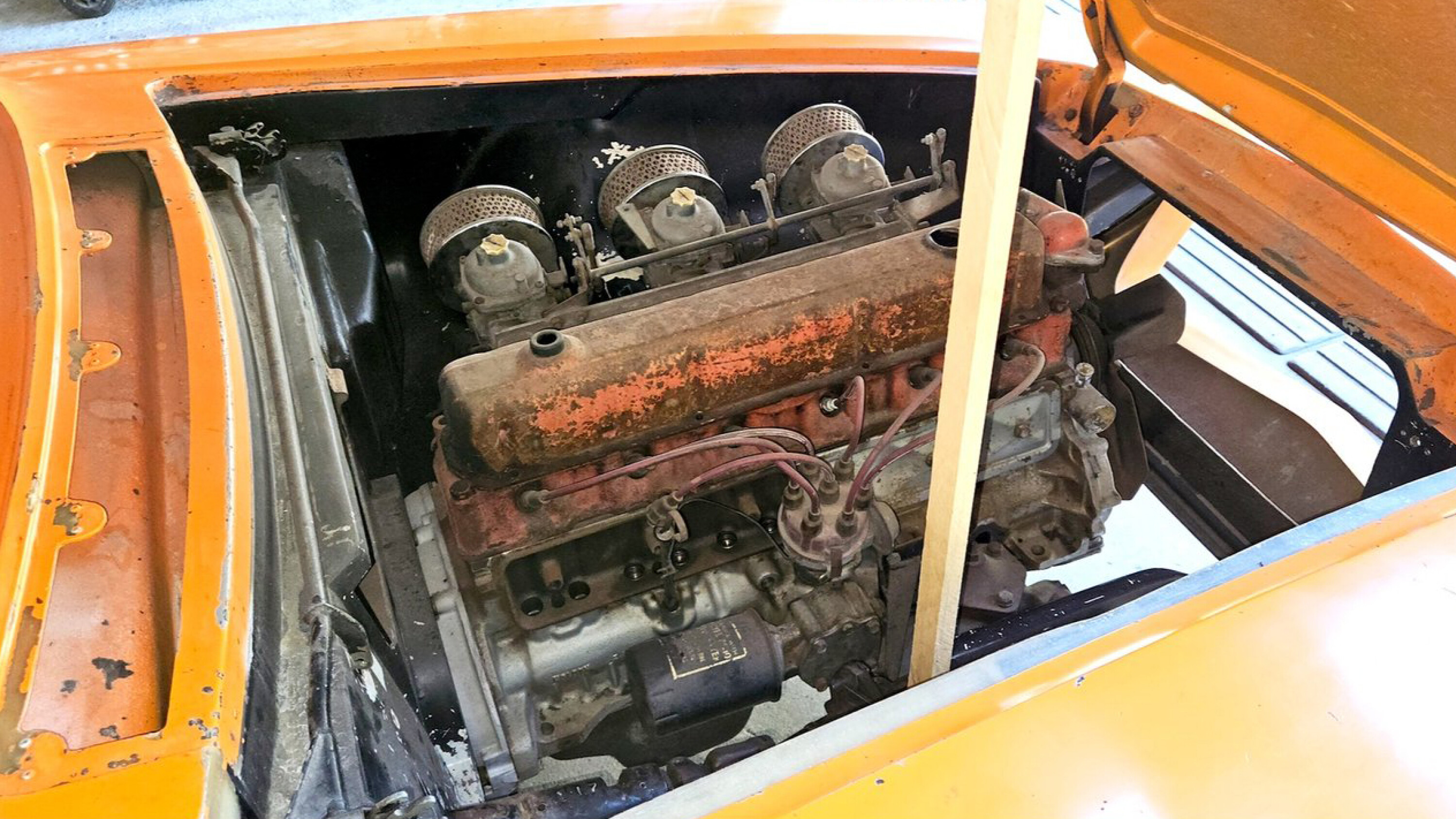
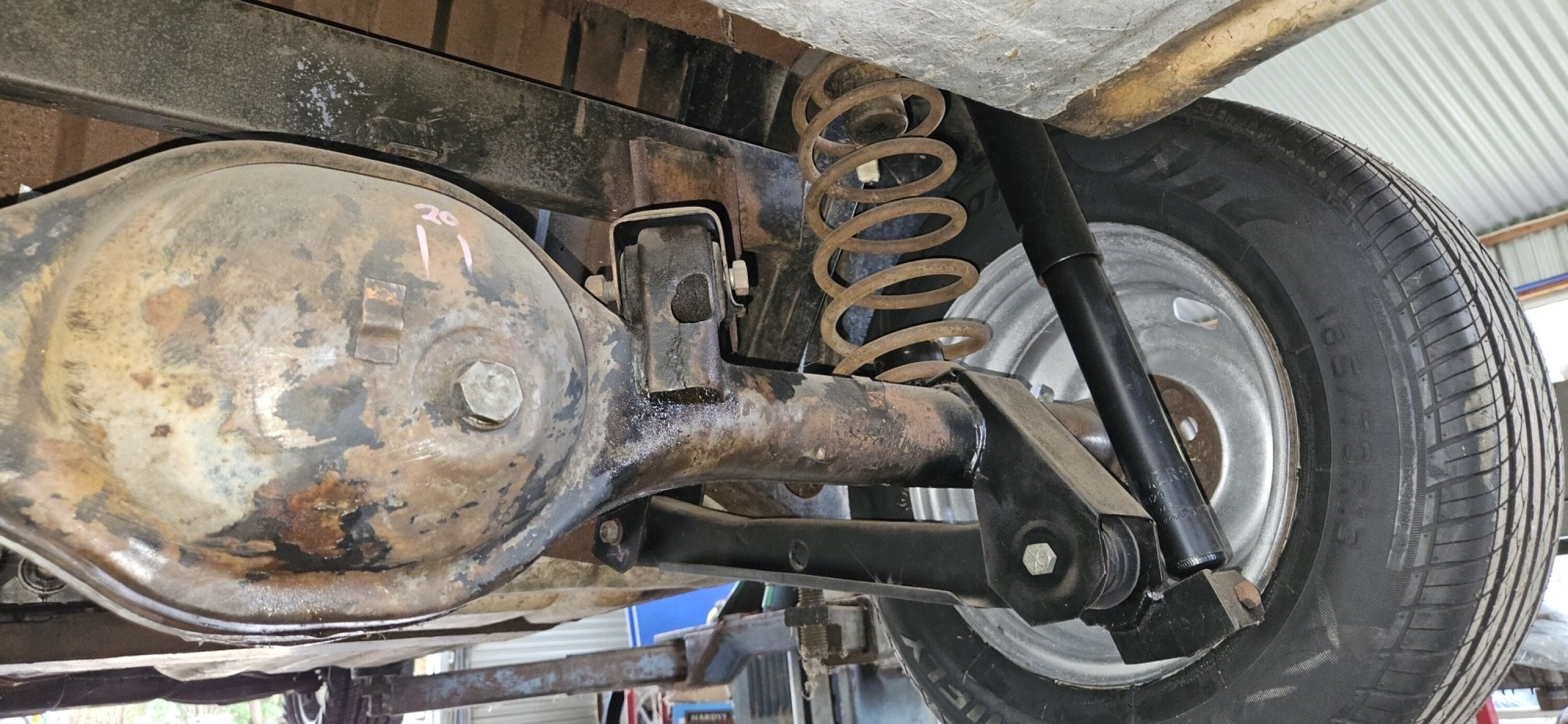
According to the Bowdens, this pilot-build vehicle was never completed and was sold to a Holden employee in 1987 – posing a conundrum for its new buyer as to whether to leave it in its current state or finish the car…
The vehicle was being restored last decade in Melbourne before the Bowden family acquired it, with the rare machine being offered in its current incomplete state.
The only other GTR-X remaining is currently on display at the National Motor Museum, alongside landmark Holdens across the car maker’s 1948-2017 manufacturing era, at Birdwood in South Australia [↗].
1
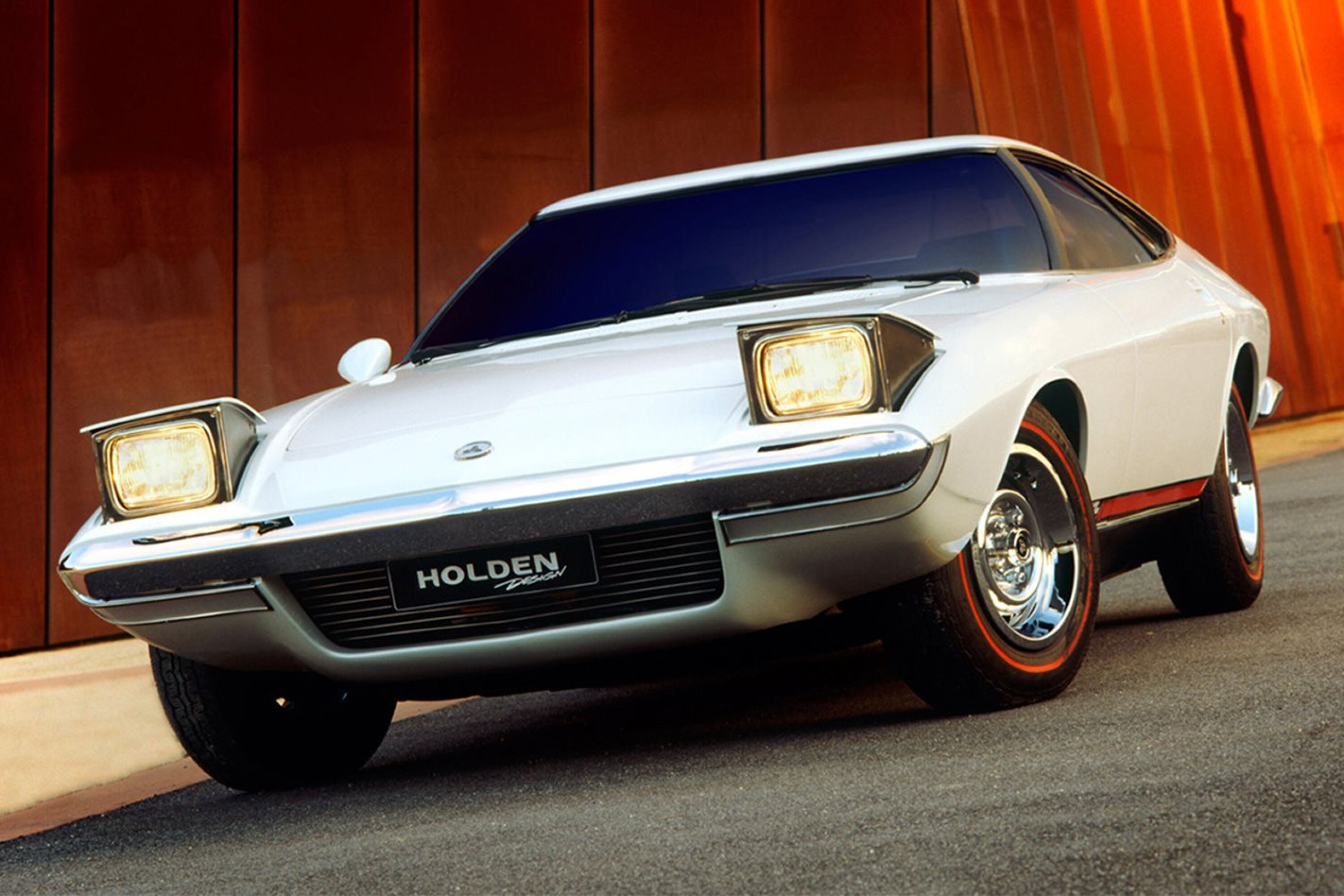
The GTR-X’s strikingly modern design was clearly of the era of the wedge-shaped vehicles and far more sophisticated than the LC Torana on which it was built.
In hindsight, it looks contemporary against supercars and sports cars of the era, including the Ferrari 308 GT4, particularly if the Holden concept’s steel bumpers evolved.
Penned by a young Phil Zmood, who later became the first Australian to be appointed head of Holden design, the GTR-X body wrapped LC Torana GT-R XU-1 mechanicals that Holden was using in rally and road racing as its Bathurst rivalry with Ford and Chrysler became more intense.
1
The LC GTR XU-1 endowed the GTR-X with a capable powertrain – Holden’s 186-cube inline six with triple Stromberg carburettor, and a four-speed gearbox driving the rear wheels – with estimates of an 8.5-second 0-100km/h sprint and an estimated 210km/h v-max – in 1970, remember.
The stunning elegant design came courtesy of a lighter body than the steel two-door XU-1.
Zmood was inspired by a thriving design department, with Holden’s first dedicated design studio opening at Fishermans Bend in 1964.
While tending to road-going machinery for Holden and other GM global brands, GM Australia Design pumped out the wild 1969 Holden Hurricane concept car – only a year after it wheeled out all-new HK range and the same year Australia had its first local V8 engine.
1
Finished in eye-catching orange, Hurricane was a 39-inch high, wedge-shaped sports car showcasing the locally-made and developed 253 cubic-inch (4144cc, badged 4.2-litre on road cars) engine that would be fitted to the HT Monaro that year.
The striking metallic orange two-seat Hurricane was made of fibreglass, with a hydraulic struts raising a Perspex canopy to access its cabin where there was sat-nav and, in the centre console, a monitor replaced a rear-vision mirror – a forerunner to today’s reversing camera.
That captured Zmood’s imagination – fibreglass construction and all – and after convincing Holden heavyweights, development of a production Torana GTR-X began.
1
While the exterior is much lauded, the interior also upped the ante over the XU-1, with a machined dash that would end up in the 1971-74 HQ Monaro GTS.
With production slated for 1973, the GTR-X was cancelled – perhaps in part due to the ‘supercar scare’ but most point the finger as a more convincing package, the 1970 Datsun 240Z, arrived in showrooms.
Regardless, the GTR-X is a star of local design, but one of Australia’s most influential and masterful designers in Zmood.
Whatever it fetches, this Torana GTR-X will be worth it.
March 27, 2024: Updated Toyota Yaris Cross launched in Australia
December 21, 2023: Toyota Yaris Cross goes hybrid-only
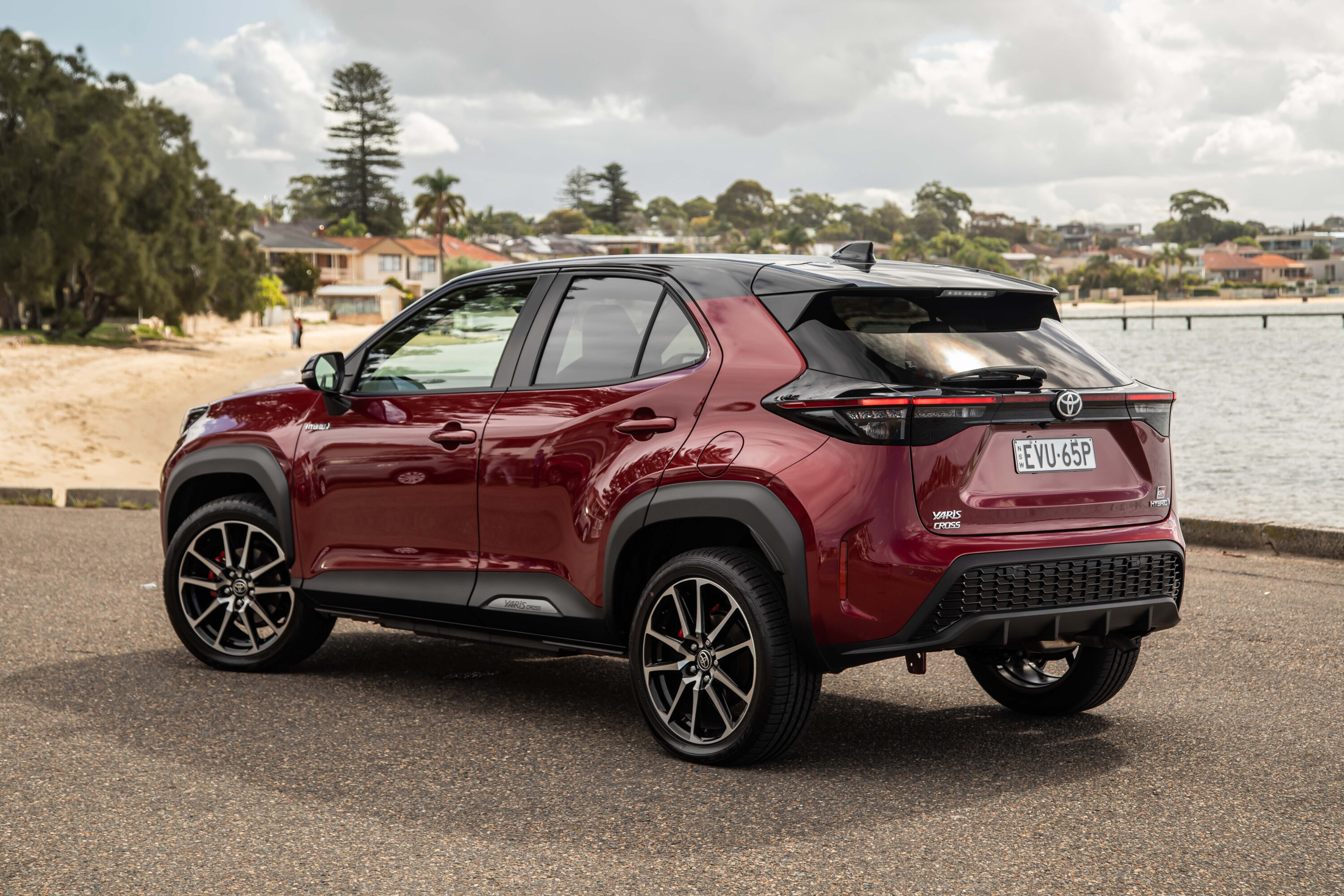
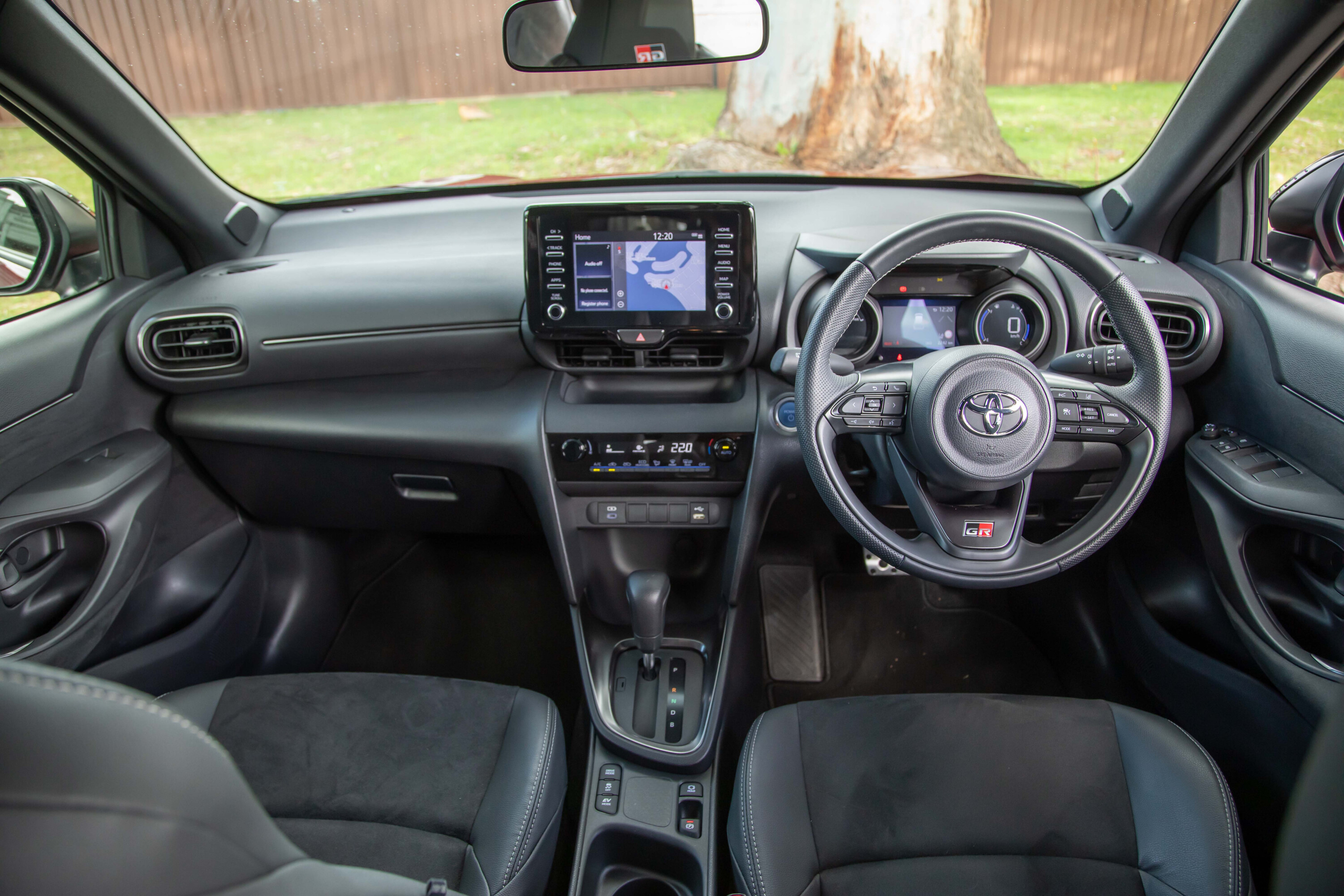
The 2024 Toyota Yaris Cross light SUV has gone hybrid-only, with petrol-only variants deleted from the line-up due to strong demand for the electrified powertrain.
“Production of Yaris Cross petrol variants for global markets ended this month (December 2023) in response to overwhelming demand for hybrid-electric variants,” said a Toyota Australia spokesperson.
“As a result, Toyota Australia stopped taking orders on petrol variants. We have sufficient stock of petrol variants in dealer hands and in transit to meet current orders.”
1
Pricing for the existing hybrid variants remains unchanged following a previous increase earlier in 2023, though the cost of entry has risen by $2000 with the removal of the non-hybrid models.
The Yaris Cross line-up now starts from $30,000 before on-road costs for the GX FWD hybrid, rising to $39,000 plus on-roads for the Urban AWD hybrid.
GX, GXL and Urban grades are available with front- or all-wheel drive, while the GR Sport variant – added in 2022 – is FWD-only.
Front-drive hybrids use a 67kW/120Nm 1.5-litre Atkinson cycle petrol engine paired with two electric motors, for a maximum combined 85kW power output.
All-wheel-drive versions use the same hybrid engine and battery set-up as the 2WD hybrid, but add an electric motor to the rear axle.
This variant can send up to 100 per cent of the power to the front wheels, or split delivery 40 per cent to the front and 60 per cent to the rear.
1
Combined fuel consumption is rated at 3.8L/100km for front-wheel drive models and 4.0L/100km for all-wheel drive models.
The deletion of non-hybrid variants sees the Yaris Cross become the third Toyota nameplate on sale in Australia to feature hybrid-only powertrains, following the new-generation C-HR and Camry models due locally in 2024.