
NOTE: This review incorporates the Outlander’s mild 2024 price and spec changes into a review carried out in July 2023.
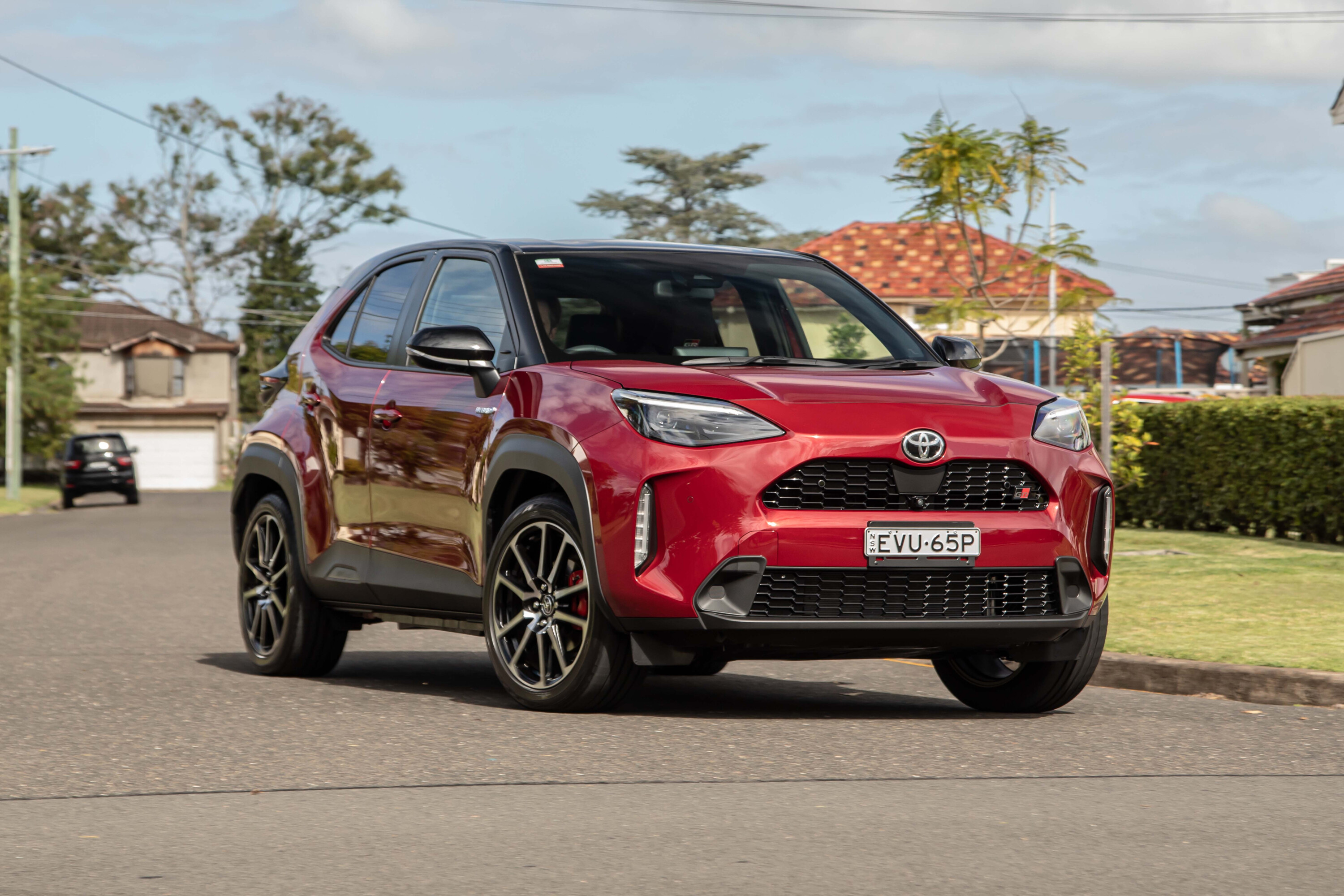
The Toyota Yaris Cross arrived in Australia in 2020 as the trend towards SUVs continues to grow. The past few years has created an opportunity for manufacturers to introduce high-ride versions of much loved small classics, such as the Yaris.
A few years after the launch, the range expanded to add the GR Sport version of this popular passenger vehicle.
The GR Sport lineup is positioned beneath the high-performance GR models and places greater emphasis on suspension and visual distinctions, as opposed to alterations in engine performance and drivetrain.
1
The added comfort of an SUV comes from a higher view point on the road, and ease of entry and exit. You’re also often getting an increased cargo capacity, legroom and headroom.
The light and small SUV segments are some of the fastest growing in Australia right now, and Toyota aren’t the only brand to jump on the bandwagon.
So let’s find out what you’ll pick up in the current-generation Yaris Cross GR Sport.
1
Pricing and features
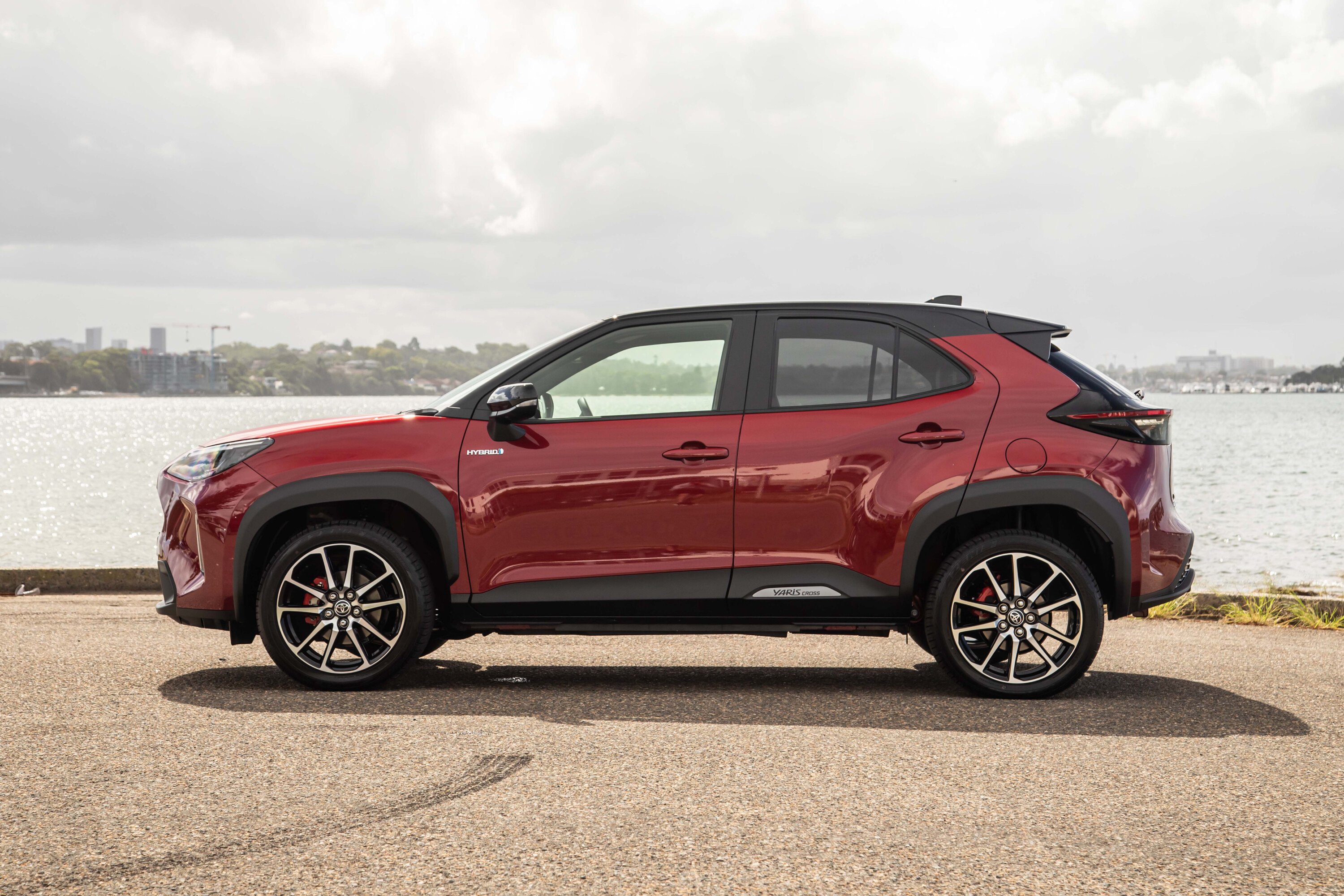
The Yaris Cross GR Sport sits at the top of the line-up, priced at $36,000 before on road-costs.
In a single hybrid powertrain, the 1.5-litre engine produces a combined 85kw and 120Nm and can get as low at 3.8L/100km for fuel economy. Buyers only have the choice of a front-wheel drive.
1
Based on the mid-range Yaris Cross GXL FWD hybrid, this variant sits at an $850 premium over the top-tier Urban FWD hybrid.
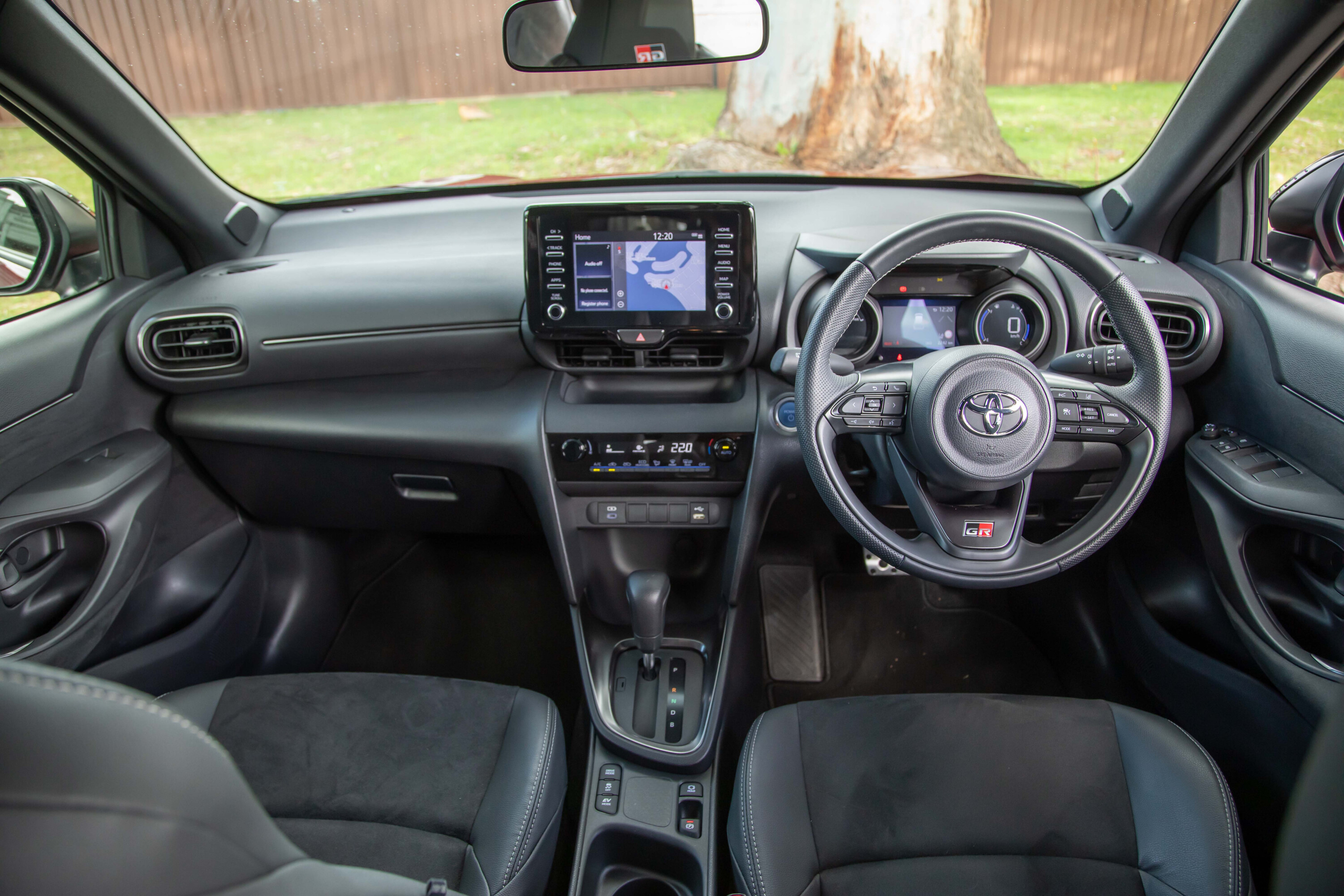
Features carried over from the GXL include keyless entry and start, a leather-wrapped wheel with paddle shifters, a 7-inch touchscreen, LED headlight, Apple CarPlay and Android Auto, satellite navigation, auto-folding mirrors and rear privacy glass.
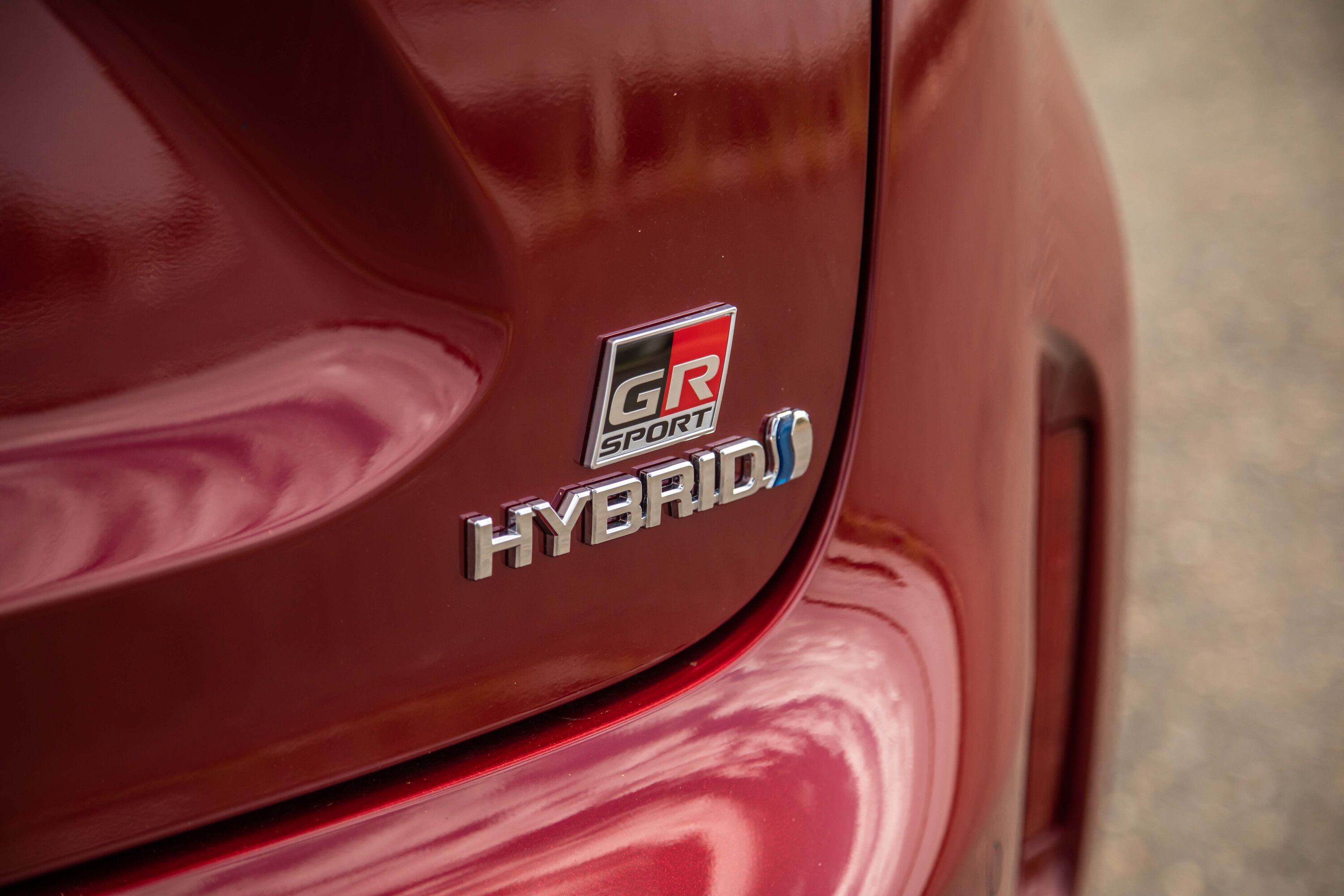
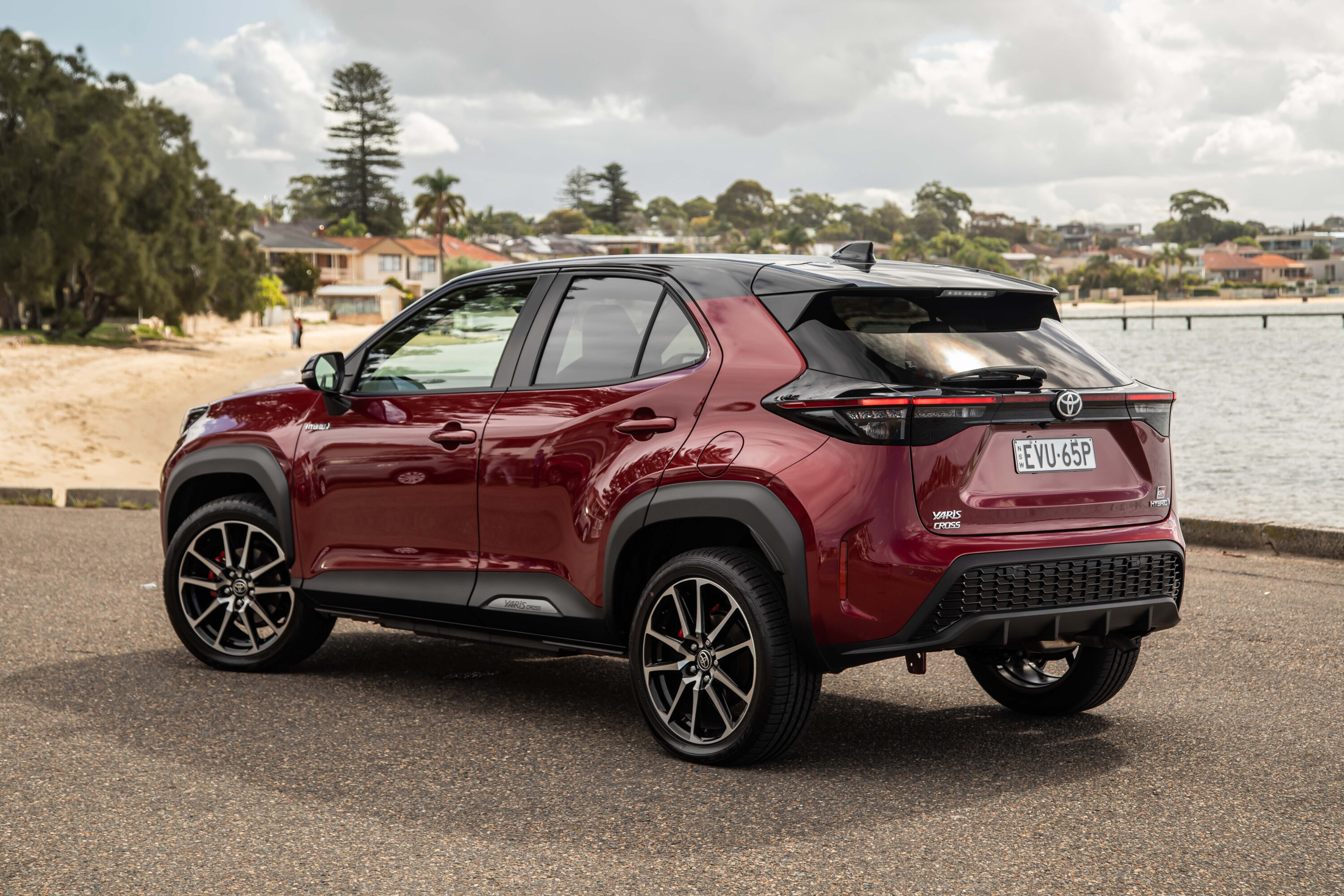
The GR Sport adds unique 18-inch alloy wheels, a suspension that’s been lowered by 10mm and fine-tuned, GR Sport badging both inside and outside the vehicle, a distinctive front grille featuring a mesh design and black side mirrors.
1
Further additions include red brake calipers, synthetic leather and suede black upholstery, aluminum pedals, and underfloor bracing.
If you’re after additional creature comforts like a power driver seat, heated front seats, a head-up display and power tailgate, you’ll want the Urban variant– which is actually the exact same price.
It’s up to you if you can look past the questionable brown leather trim in the Urban.
1
Safety
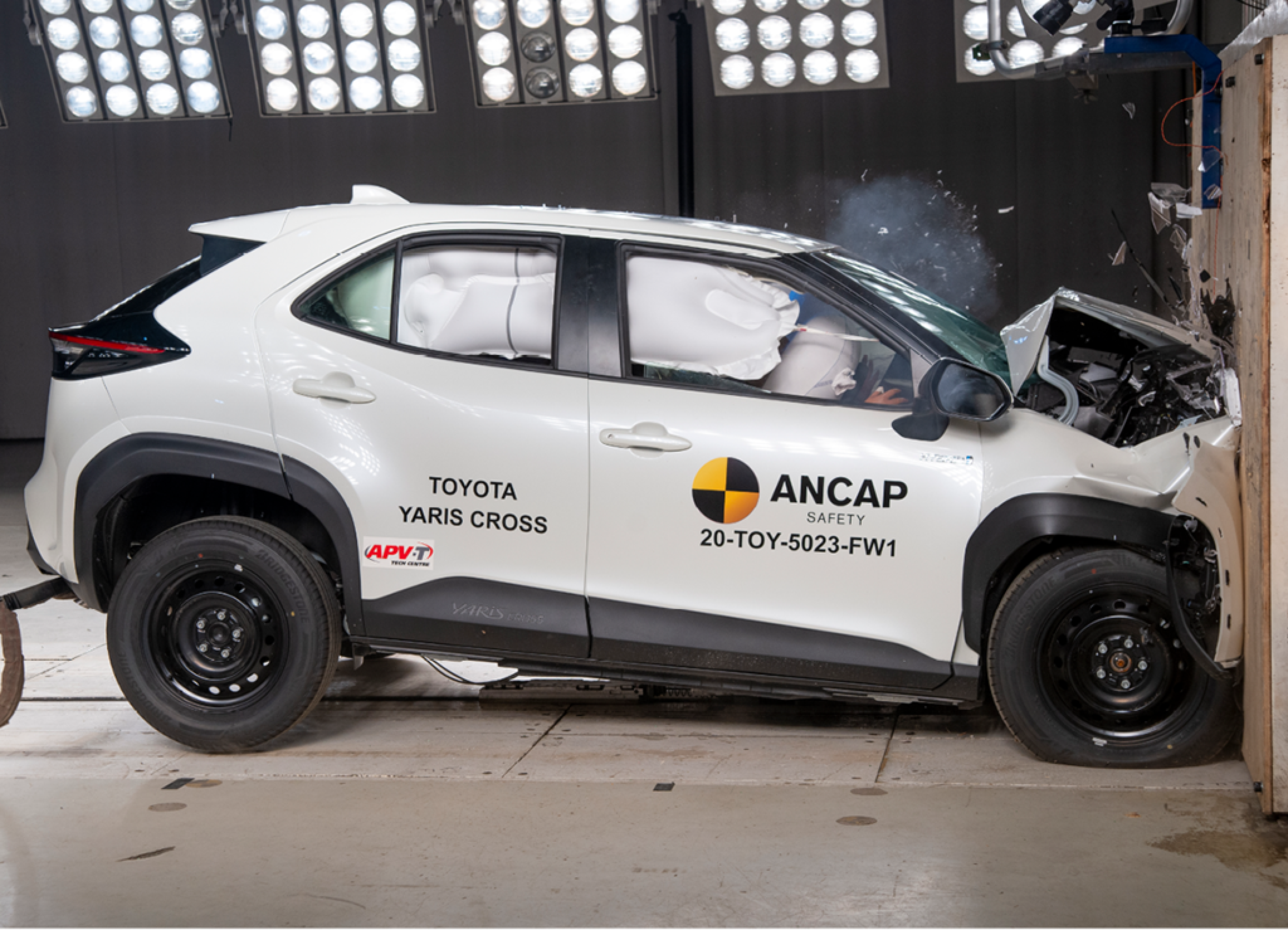
A five-star score was awarded to the Toyota Yaris Cross with testing conducted in 2021.
The light SUV scored an 86% score for both adult and child occupant protection.
Toyota Safety Sense suite of features is available across the range, which includes active cruise control, autonomous emergency braking, intersection turn assist, lane keep assist, lane-departure warning and fatigue reminders.
Buyers also pick up 8 airbags, a reversing camera, front and rear sensors, rear cross traffic alert, a panoramic view monitor and blind spot monitors.
1
Key rivals
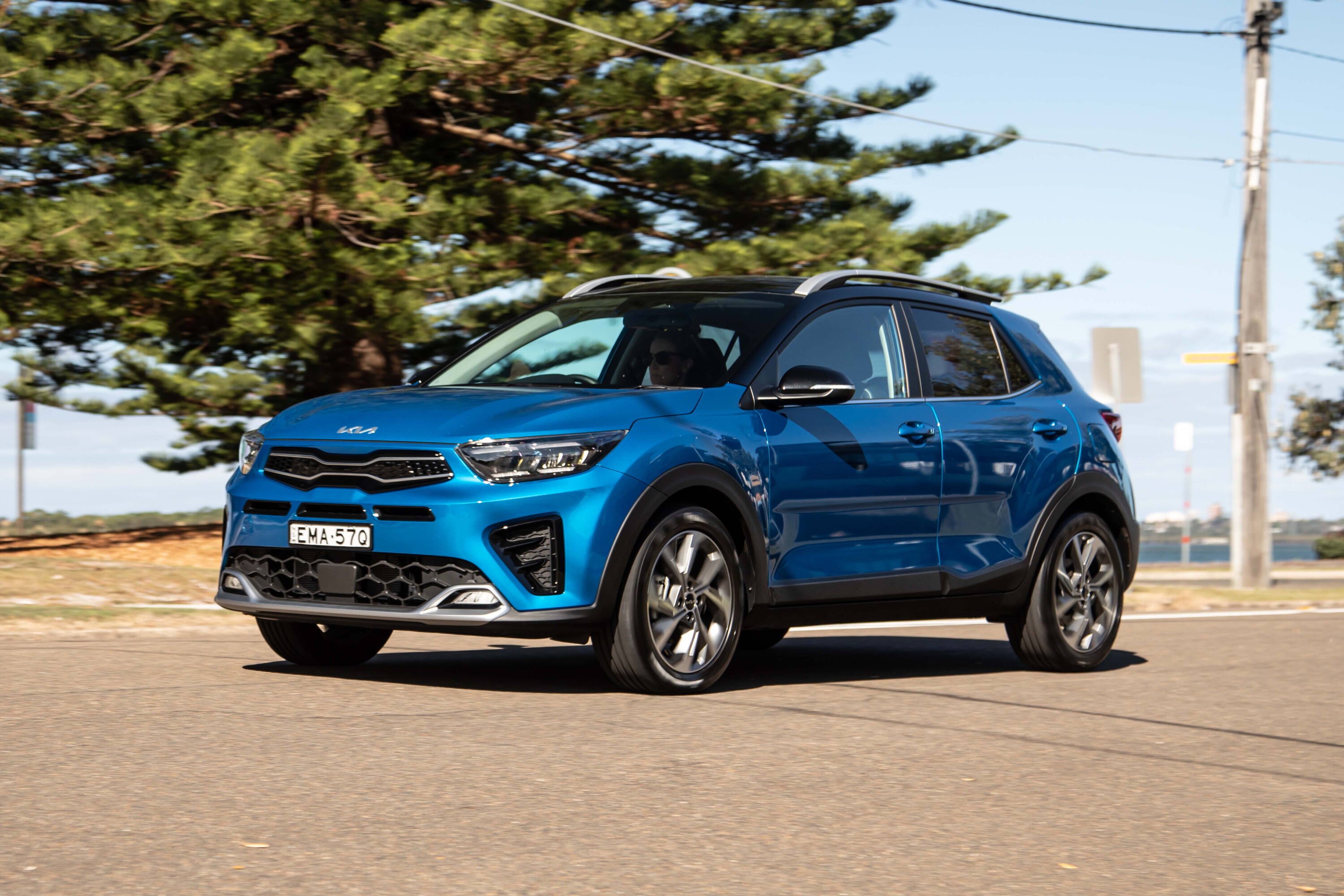
There is no shortage of light SUVs available in Australia, such as:
1
Should I put it on my shortlist?
The Yaris Cross is a highly competitive option for someone looking for a small city runabout thanks to its stellar fuel economy and compact proportions.
If you’re after a small car with some sporty pizzazz, this SUV could be just what you’re after. But it really depends on what you value.
At the same price, the Urban hybrid FWD offers arguably more value to city drivers. But ultimately it feels like there isn’t a wrong choice when it comes to the Cross line-up.
If you’re looking for an SUV that’s nimble, efficient, has a sporty design and backed by Toyota’s leading quality, the Yaris Cross GR Sport is worth a look.
The new Mitsubishi Outlander has proved itself a turning point for the always-popular mid-size SUV.
Where the previous model soldiered on for a decade with regular updates, it did so because it was cheap and there is a part of the market that was happy with a basic machine.
You would hardly have called the plug-in hybrid version basic, with its innovative powertrain, although the dowdy interior did its best to convey that impression. It was by far the best of the line-up, the gap widening when the diesel went away. And before COVID, you could grab a tidy used one for less than the cost of a new Corolla, promising a useful electric range even if it missed a couple of seats.
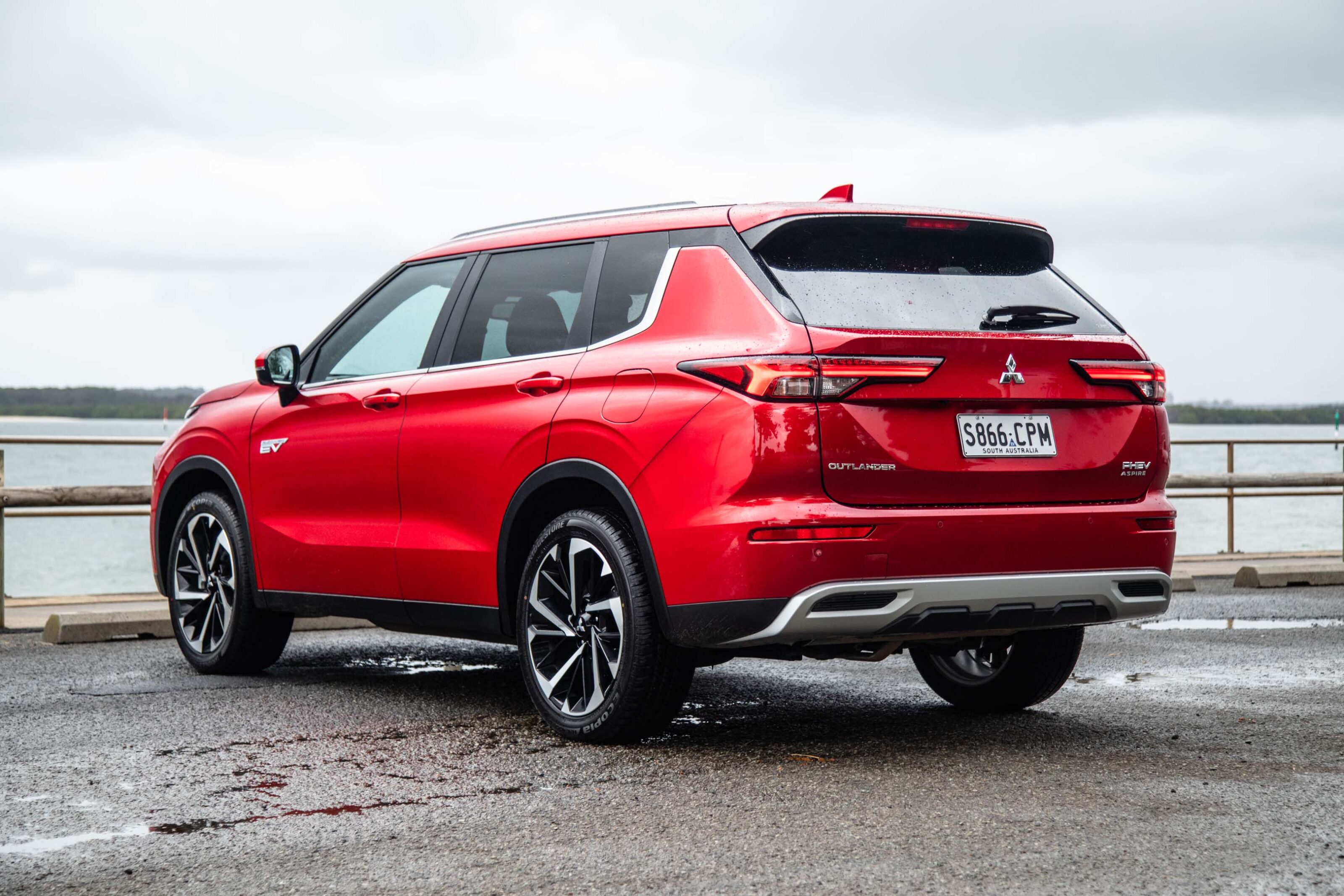
How things change. The new Outlander PHEV took a while to arrive, but it’s here at last – and now in a lightly updated 2024 form.
1
JUMP AHEAD
- How much is it, and what do you get?
- How do rivals compare on value?
- Interior comfort, space and storage
- What is it like to drive?
- How is it on fuel?
- Battery and charging
- How safe is it?
- Warranty and running costs
- VERDICT
- Specifications
How much is it, and what do you get?
The 2024 Outlander PHEV range starts with the entry-level ES PHEV at a reasonable $57,290 before on-road costs.
Breaking the sixty-thousand-dollar barrier is the mid-spec Aspire tested here with a $63,790 sticker (before on-road costs), but that’s still considerably below the Exceed and Exceed Tourer seven-seater versions with all the gear.
| 2024 Mitsubishi Outlander Aspire PHEV key features | |
|---|---|
| 20-inch alloy wheels | Auto wipers |
| Keyless entry and start | Adaptive LED headlights with auto high beam |
| Suede/imitation leather trim | 6-speaker stereo |
| Leather gear selector | Apple CarPlay (wireless) |
| Leather steering wheel | Android Auto (wired) |
| Electric front seat adjustment | 12.3-inch digital dashbaord |
| Heated front seats | 9.0-inch central touchscreen |
| Power windows and mirrors | 10.8-inch head-up display |
| Satellite navigation | |
How do rivals compare on value?
Plug-in hybrids are thin on the ground in this part of the market, and it’s about to get smaller when the Escape PHEV leaves.
Despite looking pretty chunky, the Outlander squeezes itself into the mid-size SUV market with cars like the Mazda CX-5 and Toyota RAV4.
The most obvious powertrain rival, however, is the Ford Escape ST-Line PHEV (long-term review here, comparison here) priced at $54,940 before on-road costs – but you’ll need to spend nearly the same on the Ford to come up to the specification level of the Outlander and you still won’t get all-wheel drive. It does have a real-world 58km EV-only range, which measures up well with its claimed range.
The Escape range will be leaving Australia by year’s end, too.
MG’s HS Plus EV is also in the ring, starting at $49,690 drive-away for the entry-level Excite and moving up to $53,690 for the Essence. It certainly brings value to this part of the market although doesn’t have the polish of any of its rivals. Having said that, it’s perfectly good transport, on paper at least.
1
Despite years in the hybrid game (and overseas availability of a PHEV), Toyota won’t sell you a plug-in RAV4 for a variety of complicated reasons that I think boils down to the local operation not believing anyone will buy it over the hybrid, possibly reinforced by the local market largely ignoring the aforementioned Escape.
If you’ve got a bit more to spend, you can stretch another twenty grand or so to the Peugeot 3008 PHEV with its extremely cool interior and hot hatch looks and performance.
Mazda has just leapt over the ropes with the CX-60, which, like the Peugeot, is a lot more expensive than the Outlander but very stylish inside and out – and, again, fast.
Interior comfort, space and storage
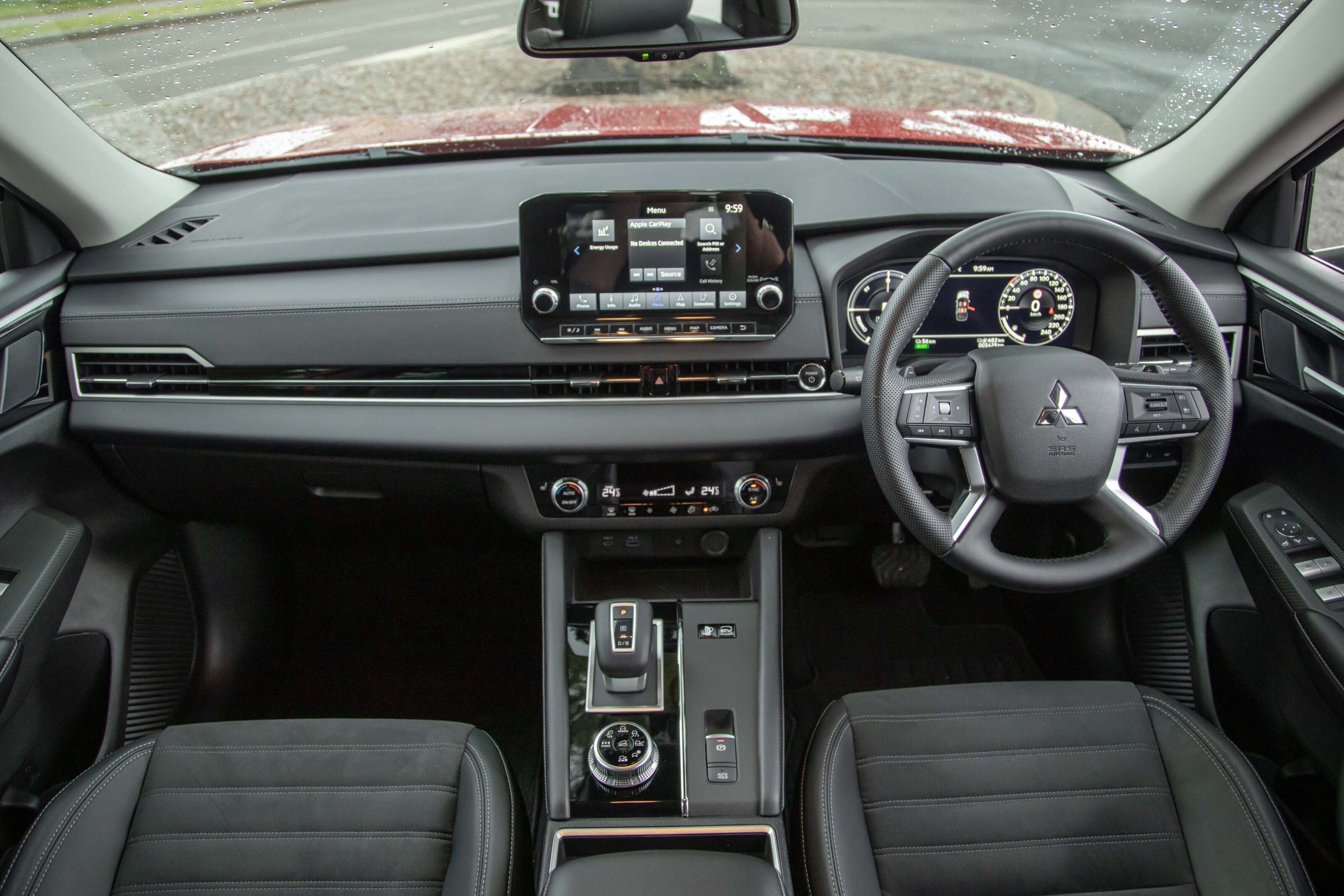
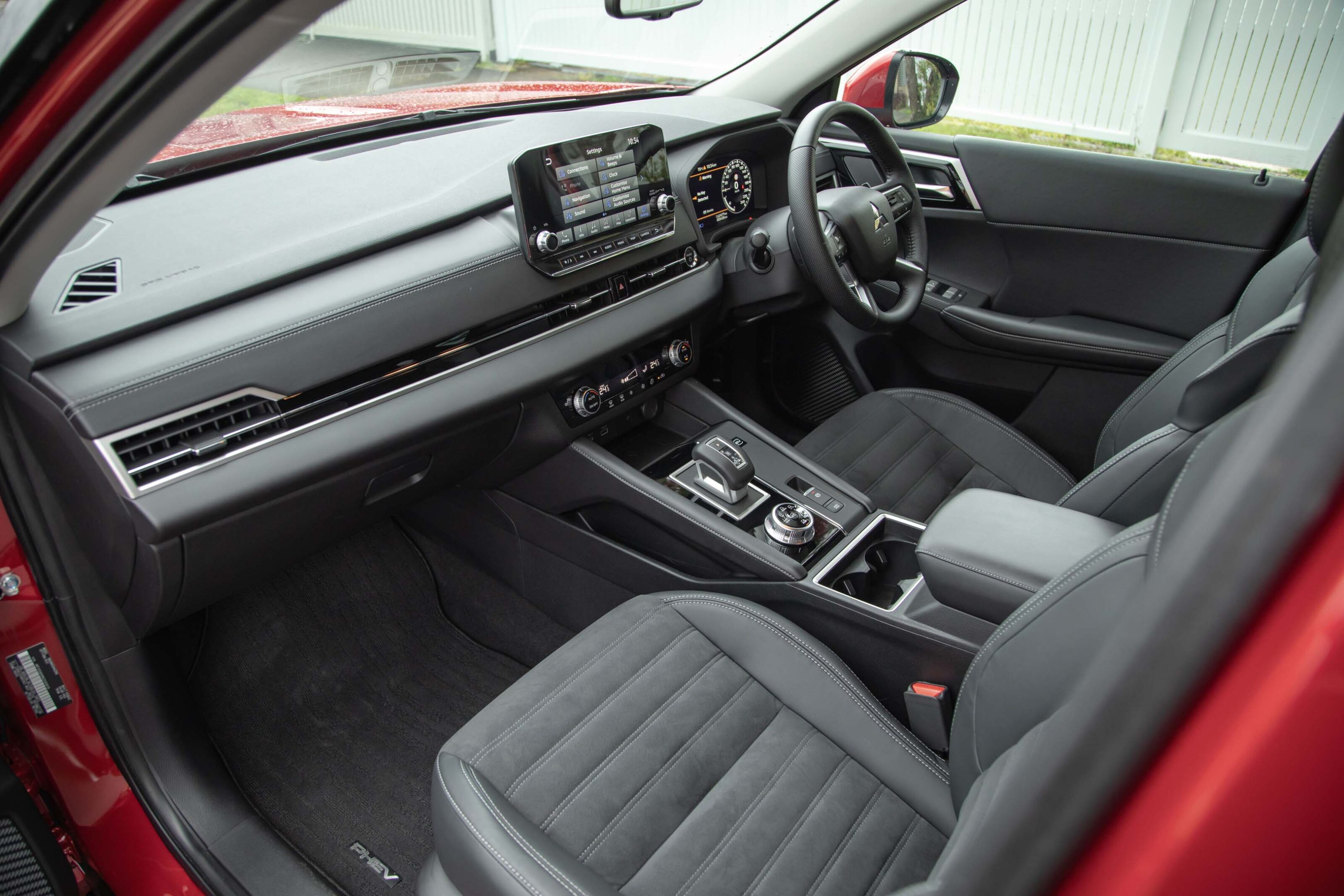
The new Outlander’s cabin is an interesting proposition when compared to the old car.
That old beast was badly hamstrung by sharing its underguts with every other Mitsubishi SUV (except the Triton-based Pajero Sport), rendering it too narrow for three across the rear.
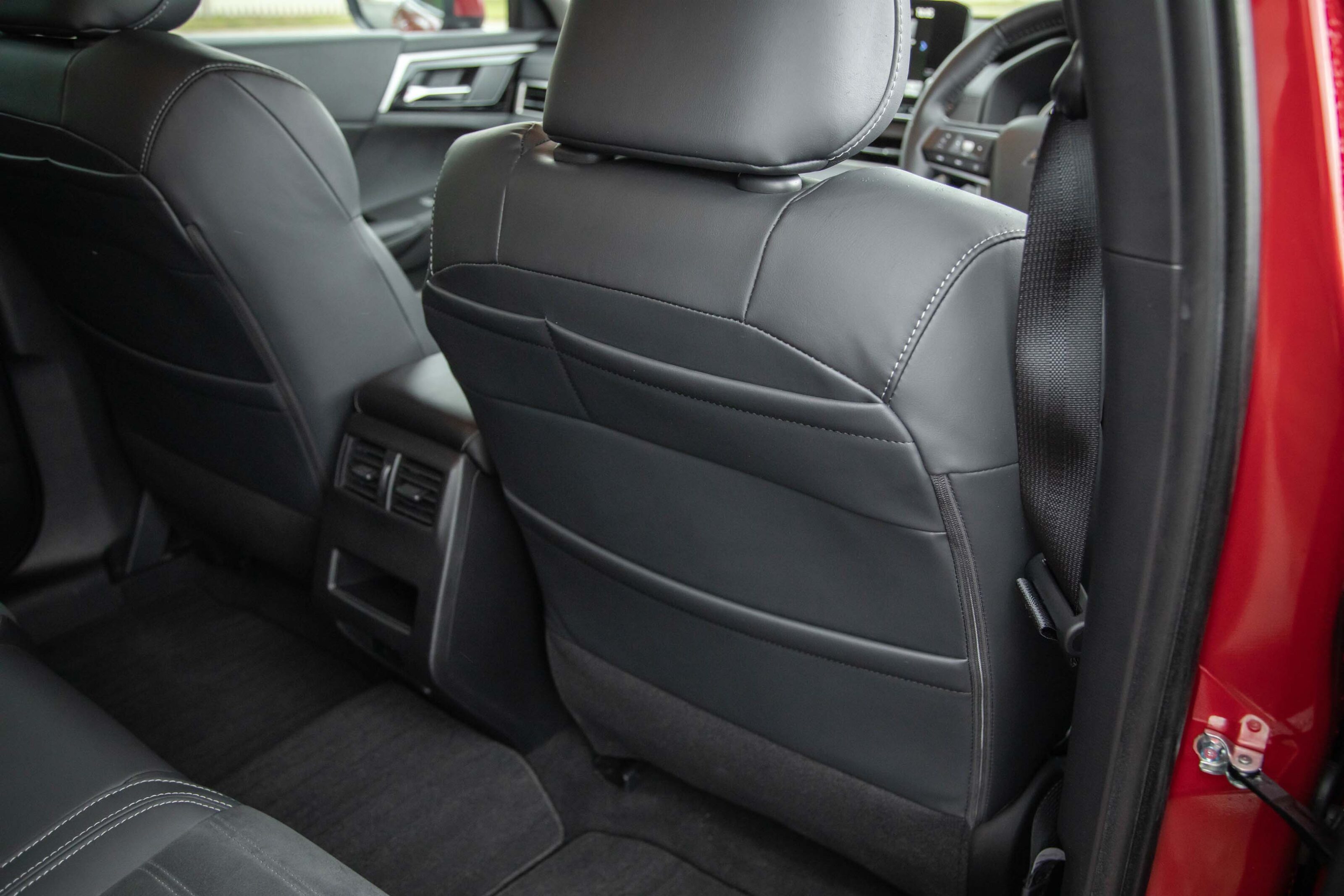
Now, this new machine is far better proportioned as a five-seater, with bigger, more comfortable rear seats. They work far better in the lower-spec models that don’t have a sunroof because you sit high in them. Headroom goes from marginal in the Exceed to rather good in the Aspire.
Legroom is also fine for up folks up to 180cm but you’re out of luck for USB ports. You do get bottle holders in the doors and a 240-volt power plug, though.
1
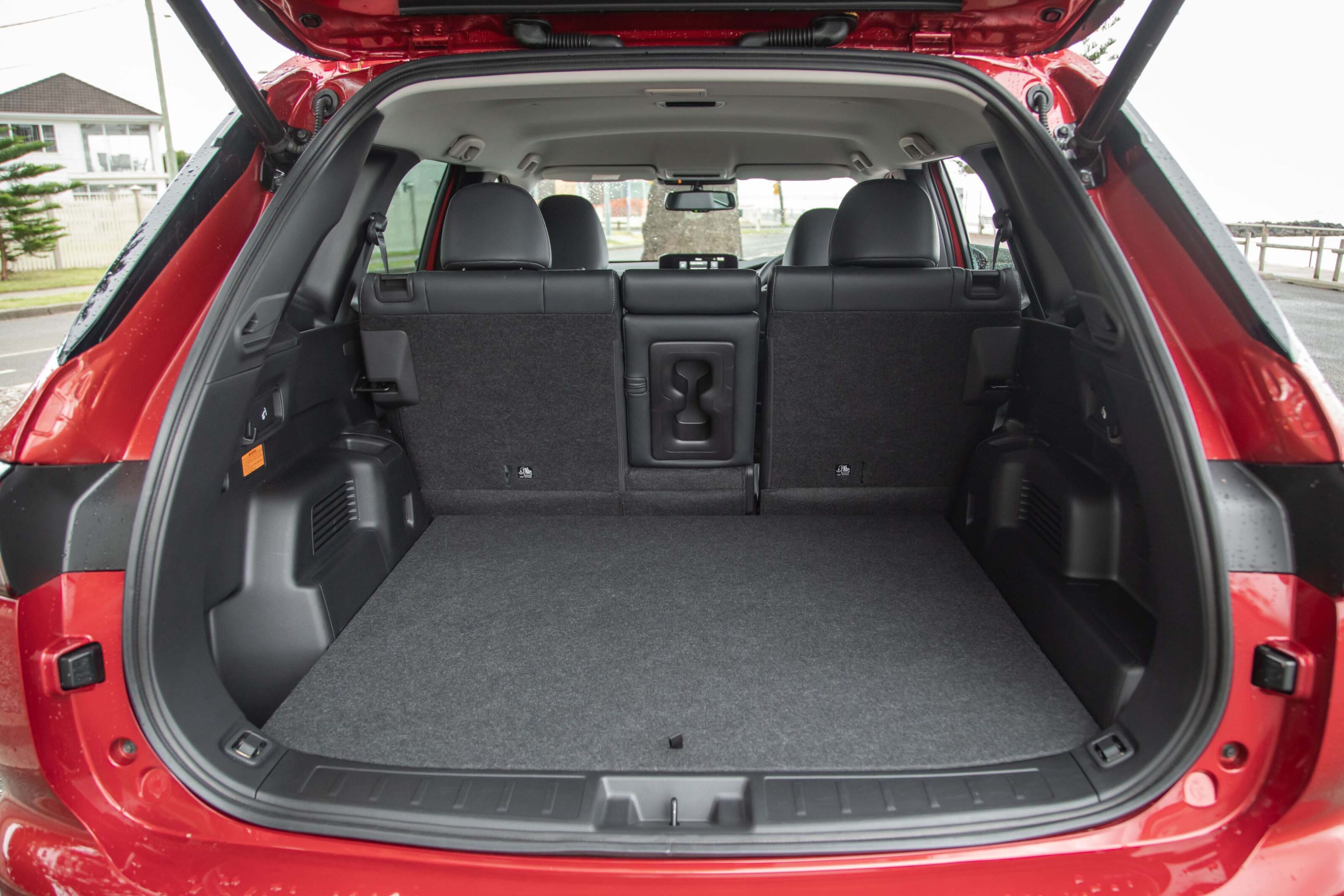
The cup holders aren’t in an armrest, but in the 20 part of the 40:20:40 split fold backrest, so the whole thing has to come down to get to the beverage receptacles. Better than nothing, I guess, but tricky if you have a boot full of, I dunno, balls for a ball pit. Or a dog.
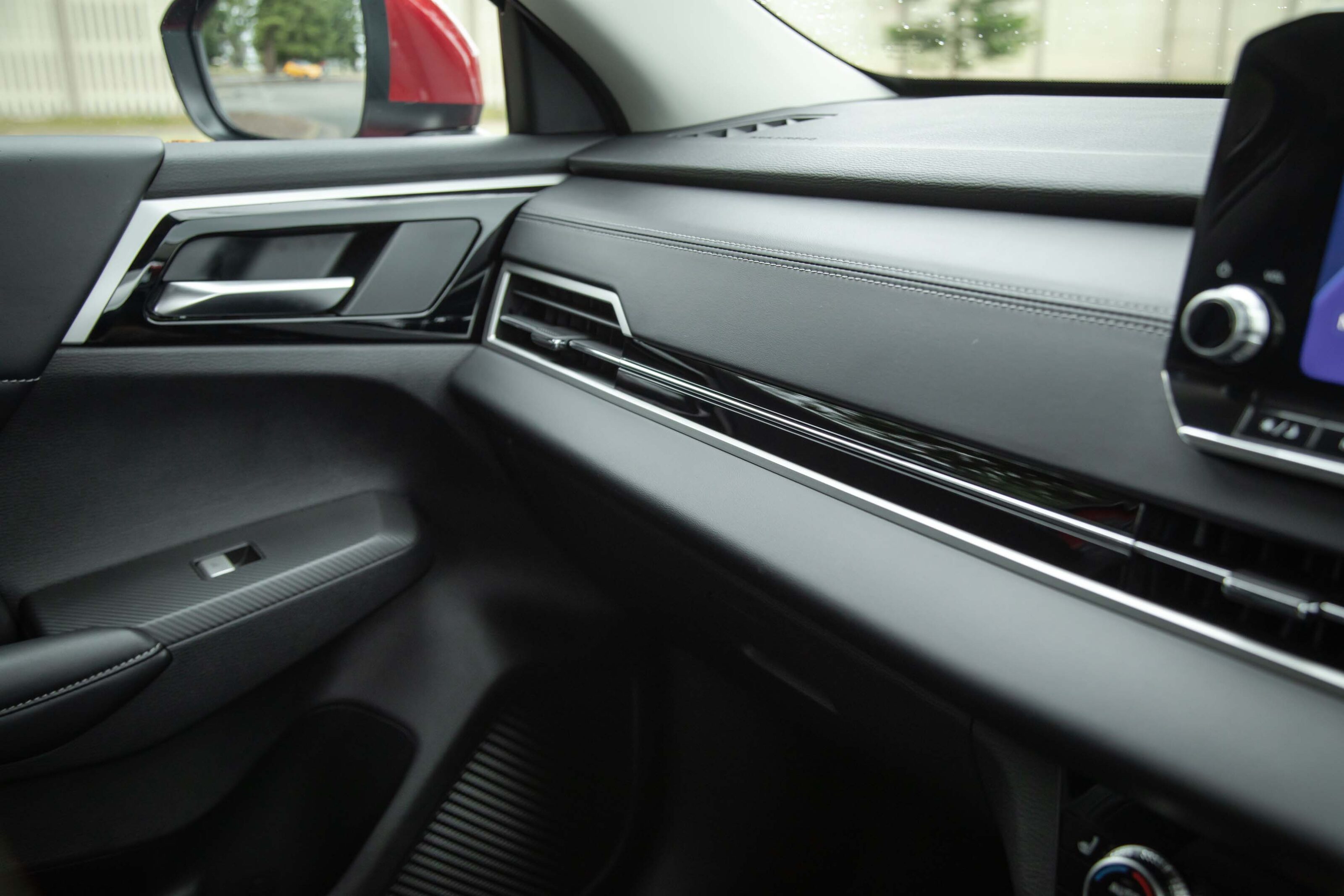
Up front is a pair of very comfortable seats and a largely attractive dash. Mitsubishi can’t help itself with the physical knobs on the entertainment system which are shiny cheap-looking plastichrome, but a rare mark on an otherwise well-judged interior. You get USB-A ports, wireless phone charging and plenty of storage space under your elbow and in the doors, along with a pair of cup holders.
Boot space
You get a respectable 485 litres of space in the boot, which isn’t loads for this segment, but the battery has to go somewhere.
It eats the spare tyre, too, but there is at least some dedicated space for charging cables under the floor.
1
What is it like to drive?
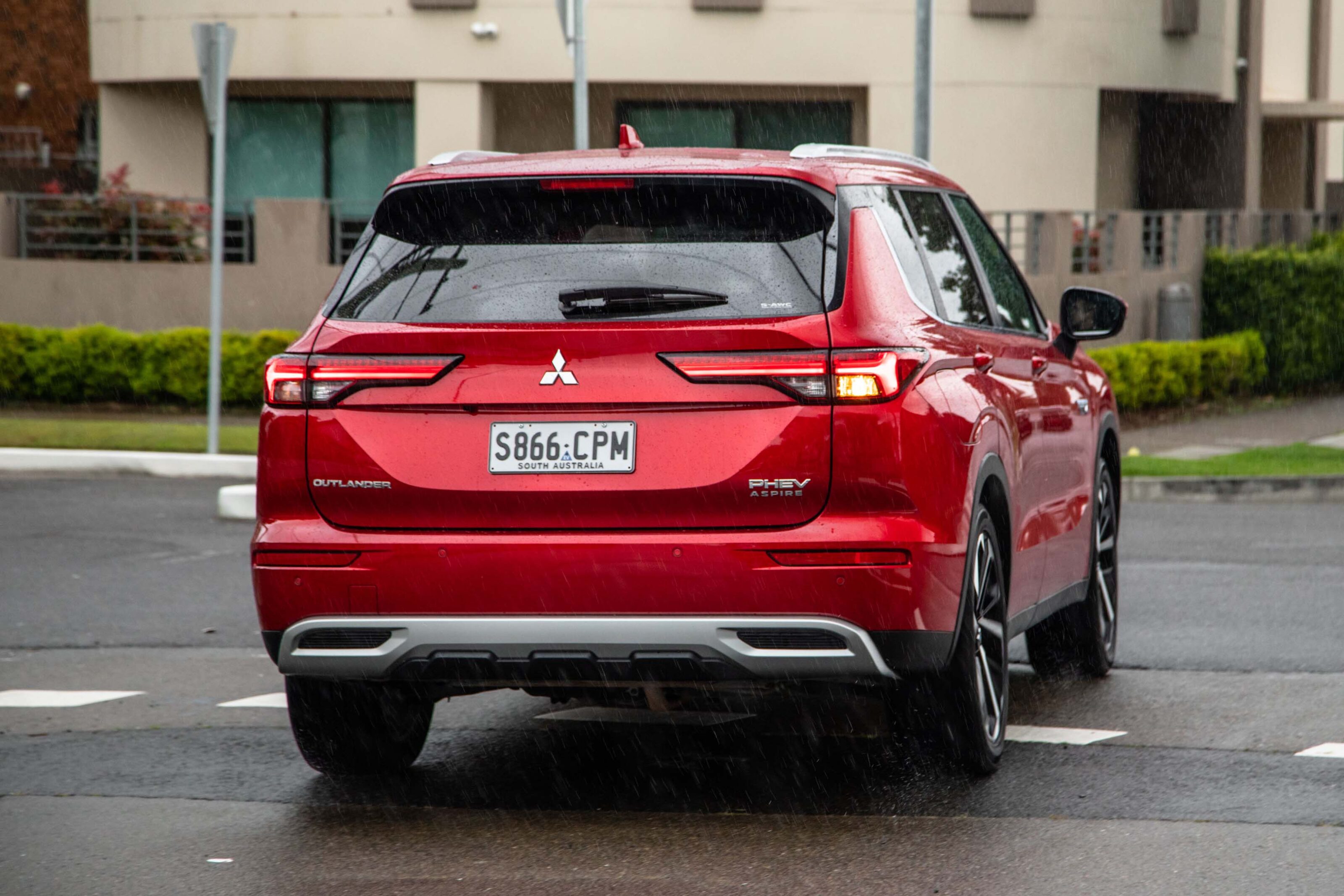
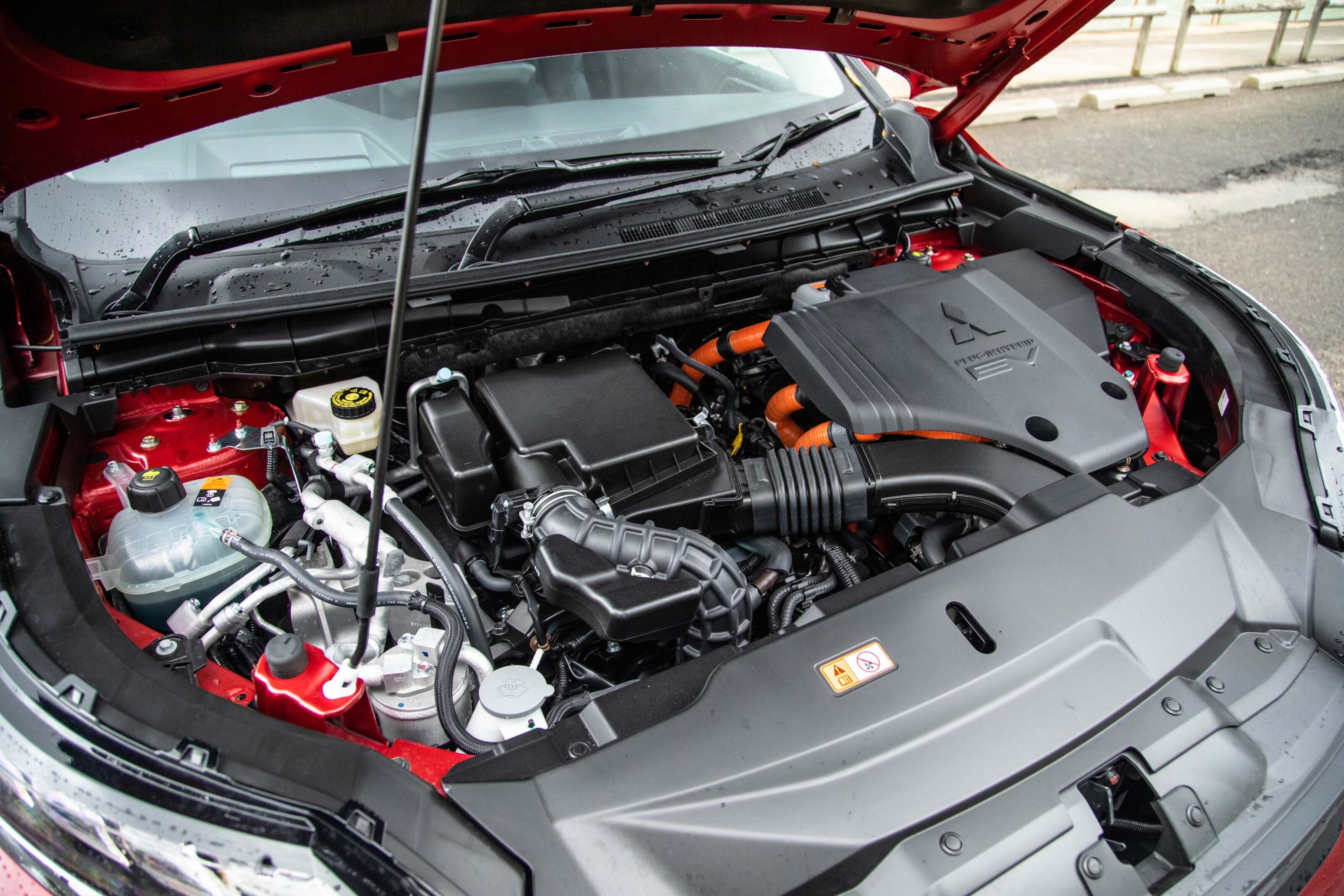
The second-generation Outlander PHEV drivetrain looks pretty similar on paper but with the uprated electrified motors and battery plus Mitsubishi’s 2.4-litre petrol four along for the ride, things are bound to be better.
Which is just as well, because it’s a lot more expensive.
My week with the Aspire was marred by my wife having a scorching case of COVID, which meant I wasn’t able to go with the disciplined approach.
Instead, the PHEV ended up being used as an errand mobile, as many do. In a fairly stressful week caring for a stubborn patient and keeping the house stocked with food she could eat and food I could just chuck in the microwave, the Outlander was a place of serenity.
The PHEV drivetrain is really very smooth indeed. As I keep saying, the new-generation Outlander is a vast improvement over the old, but the petrol-only version still labours with not enough power and a CVT that does its best, but it feels slow.
The basics
| Body | 5-door, 5-seat medium SUV |
| Drive | all-wheel |
| Engine | 2.4-litre four-cylinder (ICE) |
| Battery capacity | 20kWh |
| Combined power & torque | 185kW / 450Nm |
| AC charging | 9.5 hours (100%) / 6.5 hours (100%) with wallbox |
| DC Charging | 38 mins 0-80%, CHAdeMO |
| Energy consumption: | 21kWh/100km |
| Fuel consumption (official ADR figure) | 1.5L/100km |
| Fuel consumption (combined): | 7.6L/100km |
1
With EV step-off, even when the battery is flat, the Aspire’s easy torque wafted me off down the street.
How it goes about its battery usage is an interesting contrast to the Escape PHEV I ran for a few months. The Escape would view the battery as its primary form of propulsion (unless you told it otherwise) and run it down to “empty” before calling on the engine (unless your right foot demanded more, of course).
The Outlander seemed more content with the idea of running as an EV-biased hybrid but it actually took a while before I noticed the seamless intervention of the combustion engine. It can run in several different combinations of internal combustion and electric.
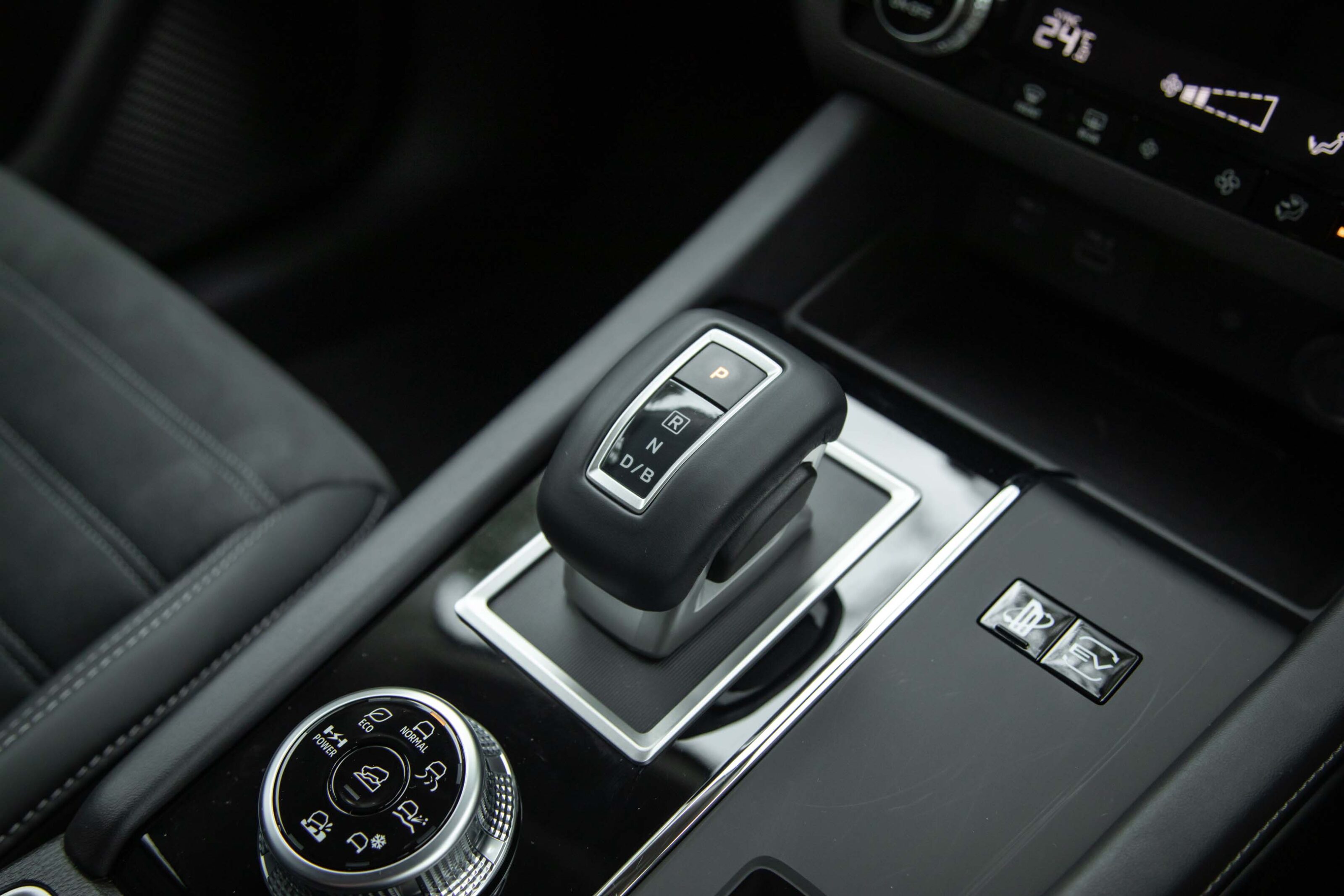
At urban speeds (up to 70km/h), electricity is the primary form of propulsion. The engine can act as a generator to keep the battery topped up so you’ll hear it chime in every now and again. Flat to the floor, the single-gear transaxle will directly engage with the front wheels alongside the electric motors as long as engine speed matches wheel speed to provide a bit of extra oomph. It’s complicated, as you can see.
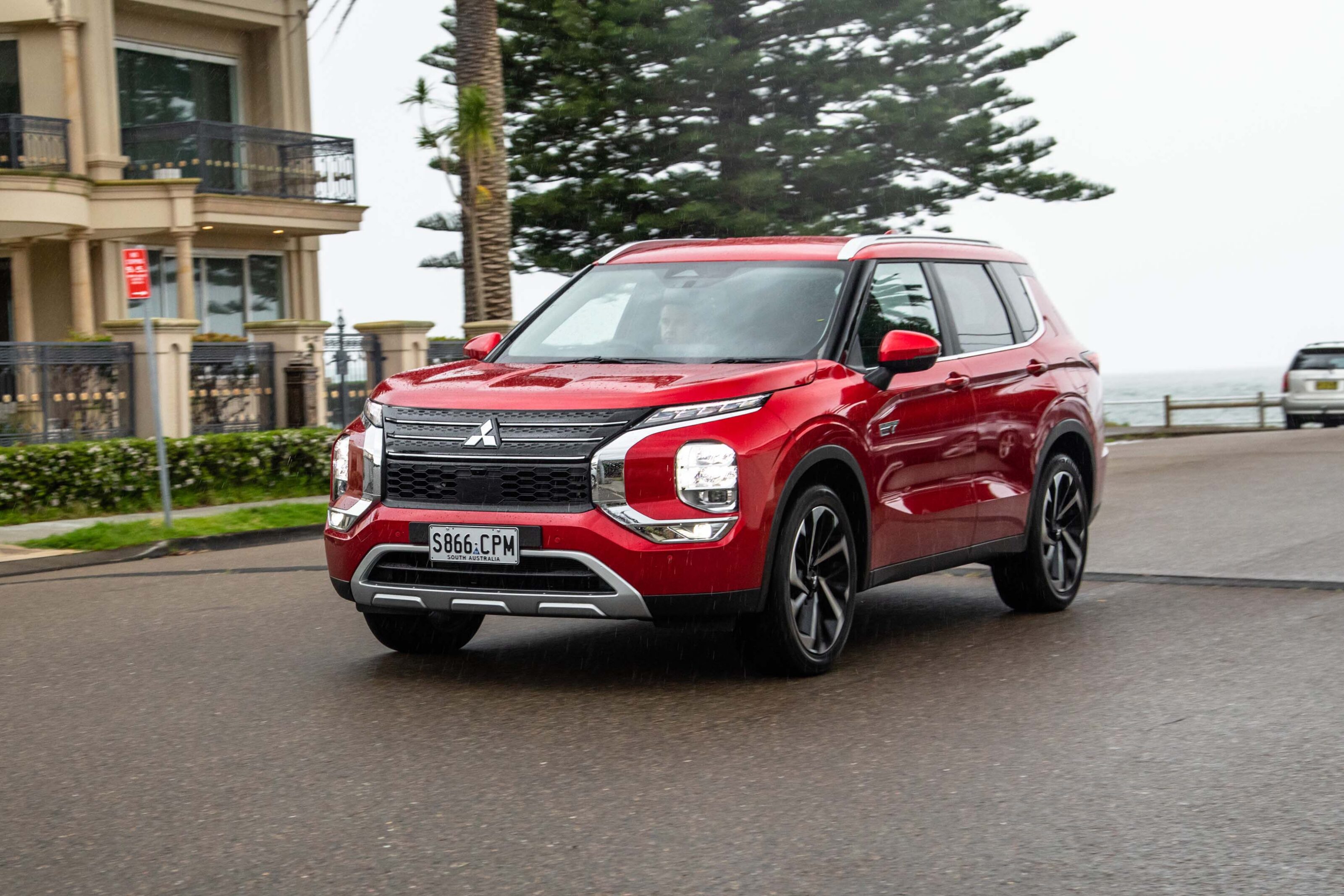
1
Put it in Power mode and you’ll hit 100km/h in 8.2 seconds, which is two seconds up on the 2.5-litre ICE-only cars.
Stay out of Power mode and you’ll get a slower figure, but you’ll hardly notice that around town.
Once you’re over 70km/h, the parts of the system work together but the petrol engine spends more time in action as electricity runs out more quickly as road speed rises.
When settled at the legal limit, the effect of having a single-speed transmission stymies performance. You don’t get that torque hit because the system defaults to electric-only propulsion, with the motor keeping the electrons flowing. It’s fine if you’re cruising, but you’ll need to be patient on single carriageways if you’re stuck behind a truck because it takes quite a while to build overtaking speeds.
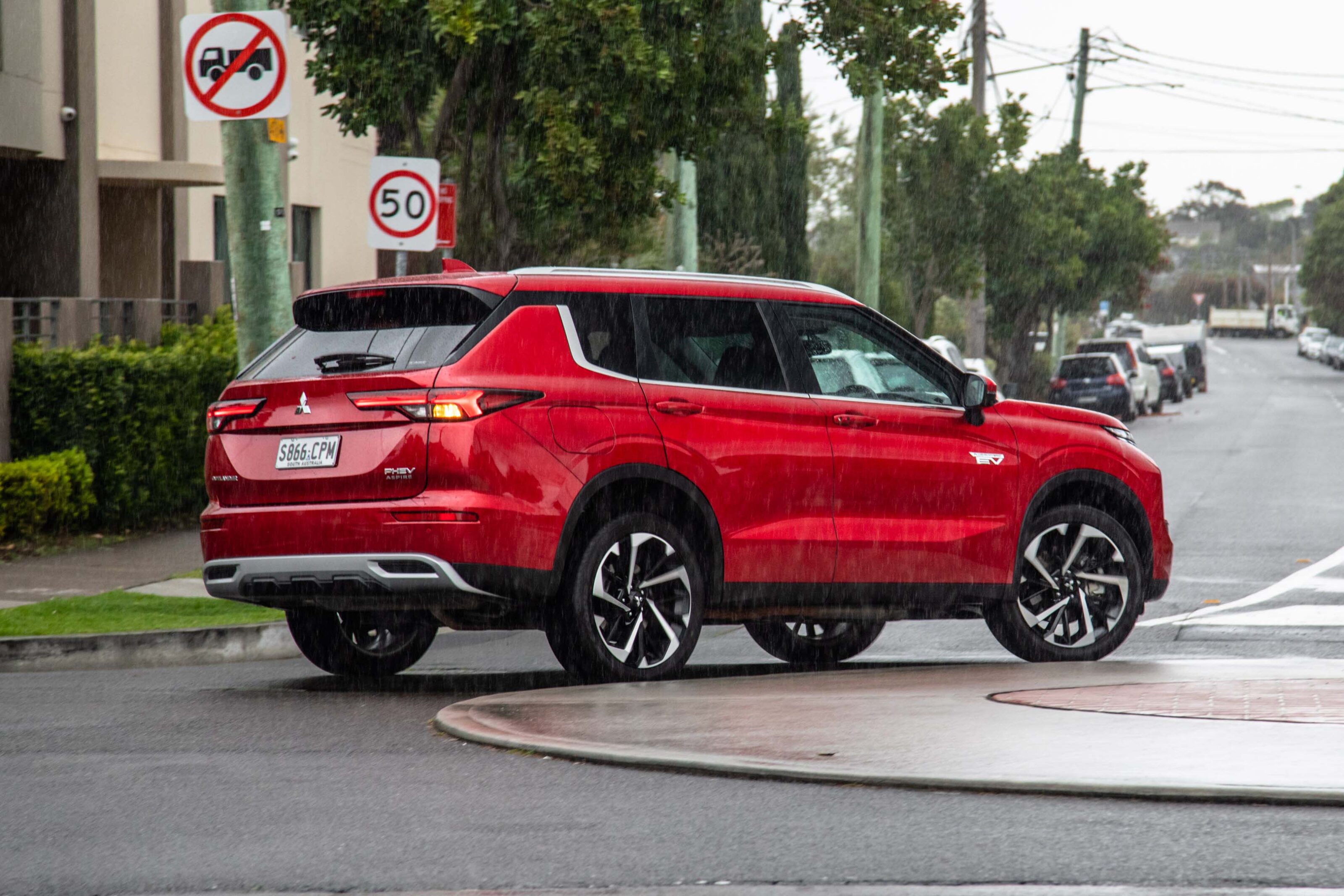
1
Like many electrified cars, you can choose the level of regenerative braking and in turn, that affects the driving experience and energy consumption.
Even at its highest level, which you select with the steering wheel mounted paddles, it’s not quite enough for one-pedal driving unless you’re a really early braker in traffic. Having said that, it’s hardly a chore to modulate the brake pedal.
As with the non-PHEV Outlanders, this new car is much better to drive. The steering is good, the rear suspension is put to far better use and with the rally-bred (cough) ‘super all-wheel control’ using torque vectoring to sharpen up steering response, you can turn into corners quite quickly.
1
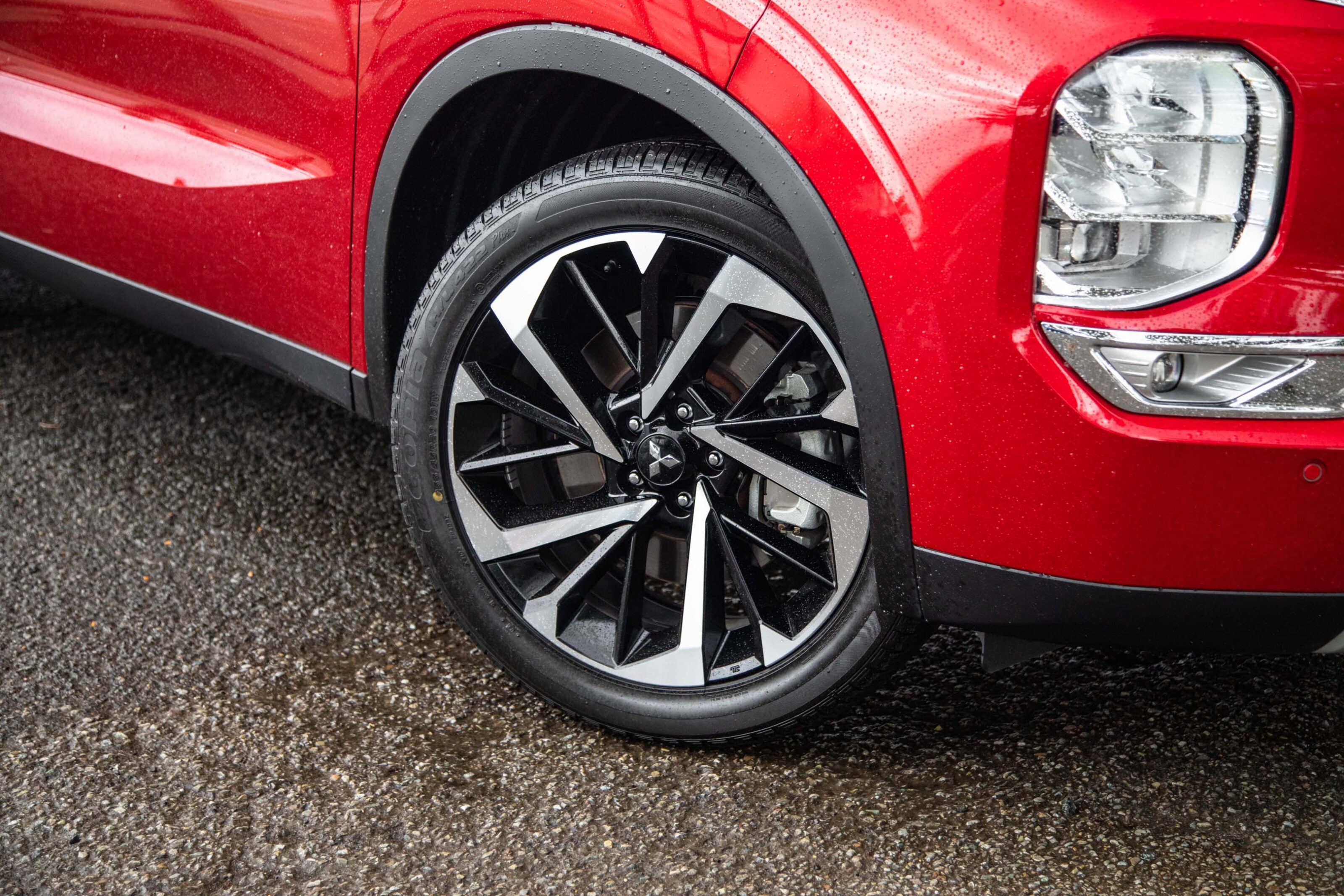
Rolling on 20-inch alloys is always going to have an impact; you will feel that as things get a bit busy on rougher urban surfaces. It stays quiet, though the suspension never settles and even when it’s smooth, there is a firm feeling. I don’t mind firm, others may not be so enthusiastic about it.
I did also notice the weight of the PHEV system could result in some awkward weight shifting in corners, but nothing to worry about.
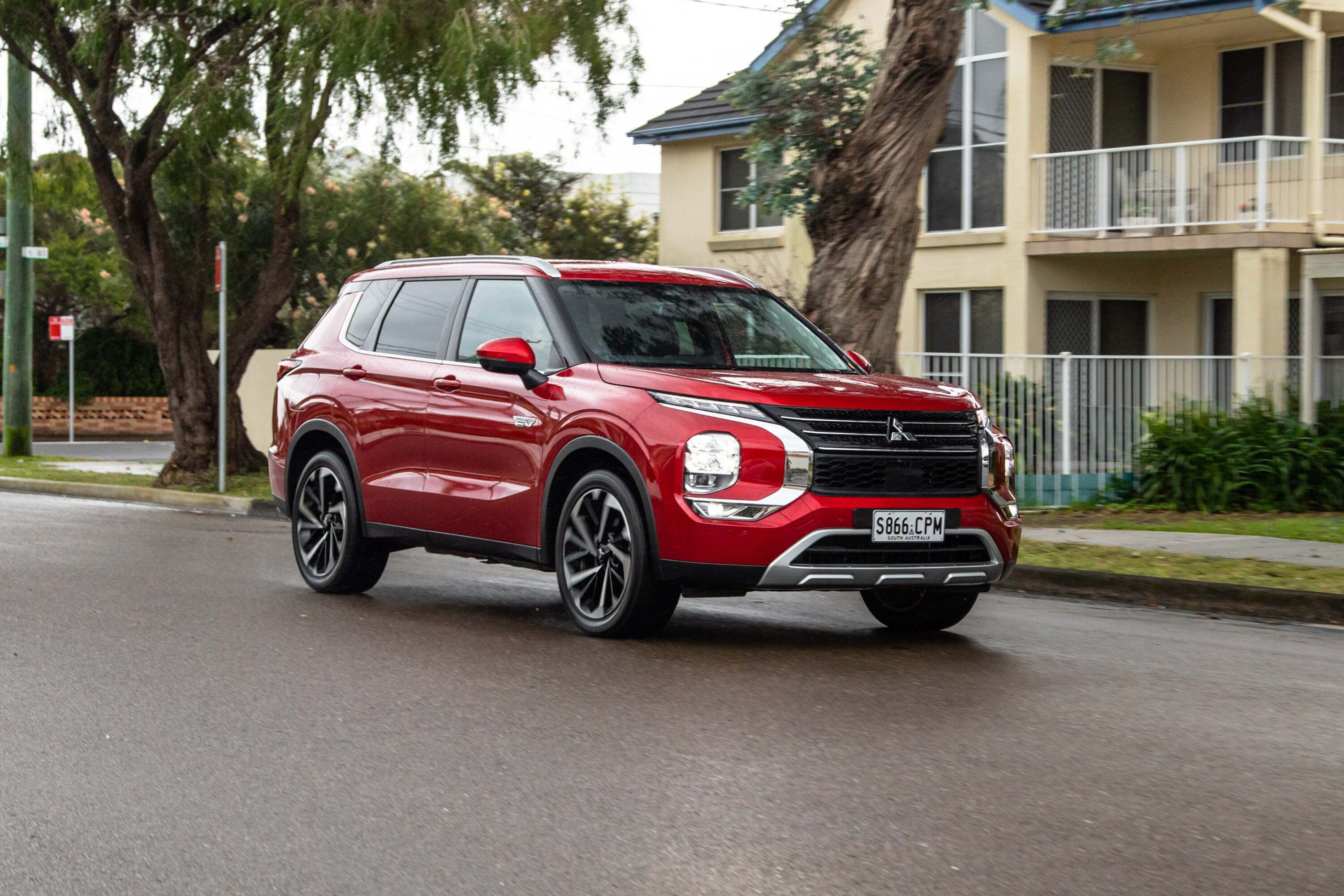
Also worth noting is that the PHEV can tow 1600kg, just like its petrol-only brothers.
1
How is it on fuel?
Well, this isn’t a simple question.
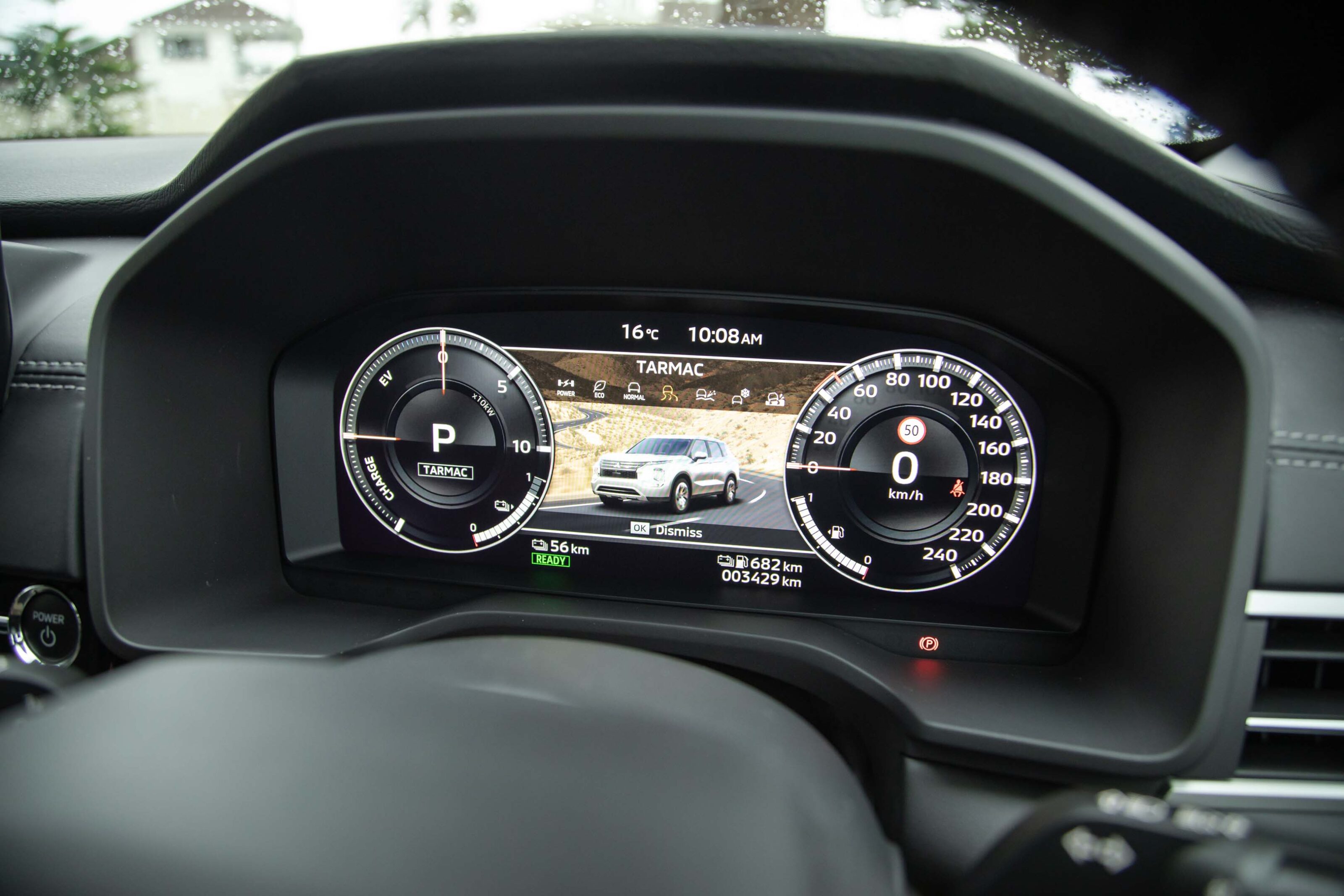
Mitsubishi’s ADR testing yielded a scarcely believable 1.5L/100km, which you could almost get in the old car if you didn’t mind hypermiling on the hard shoulder with your hazards on. In normal driving over a whole tank, you wouldn’t see that, but it was commendably frugal.
With an EV-only range of 84km, you still won’t see 1.5L/100km over a whole tank if you point your car out the driveway on a 1000km road trip. With discipline – and Mitsubishi says close to 100 per cent of Outlander PHEV owners have it – your daily commute will be covered by the battery if you fall into the average 30km round-trip to work.
Mitsubishi sensibly offers a more realistic figure of 7.6L/100km as a more accurate figure where the battery has run down and you empty the tank without recharging.
1
So after all of that, I got 5.0L/100km – as I was curious to see how it went once the battery “runs out” in the city. As with many PHEVs, once the dash shows empty, there’s still some charge in the battery – in this case 20 per cent – for the car to act as a regular hybrid and keep saving fuel.
For a 2.2-tonne car, that’s a good figure. Drive carefully, charge often and you’ll further reduce consumption.
Battery consumption is rated at 21kWh/100km, which isn’t exactly industry-leading but this SUV is hardly slippery through the air. My average was 27.7kWh/100km, but I wasn’t hypermiling.
1
Battery and charging
Mitsubishi’s second PHEV Outlander features some very useful upgrades to the electrified propulsion bits.
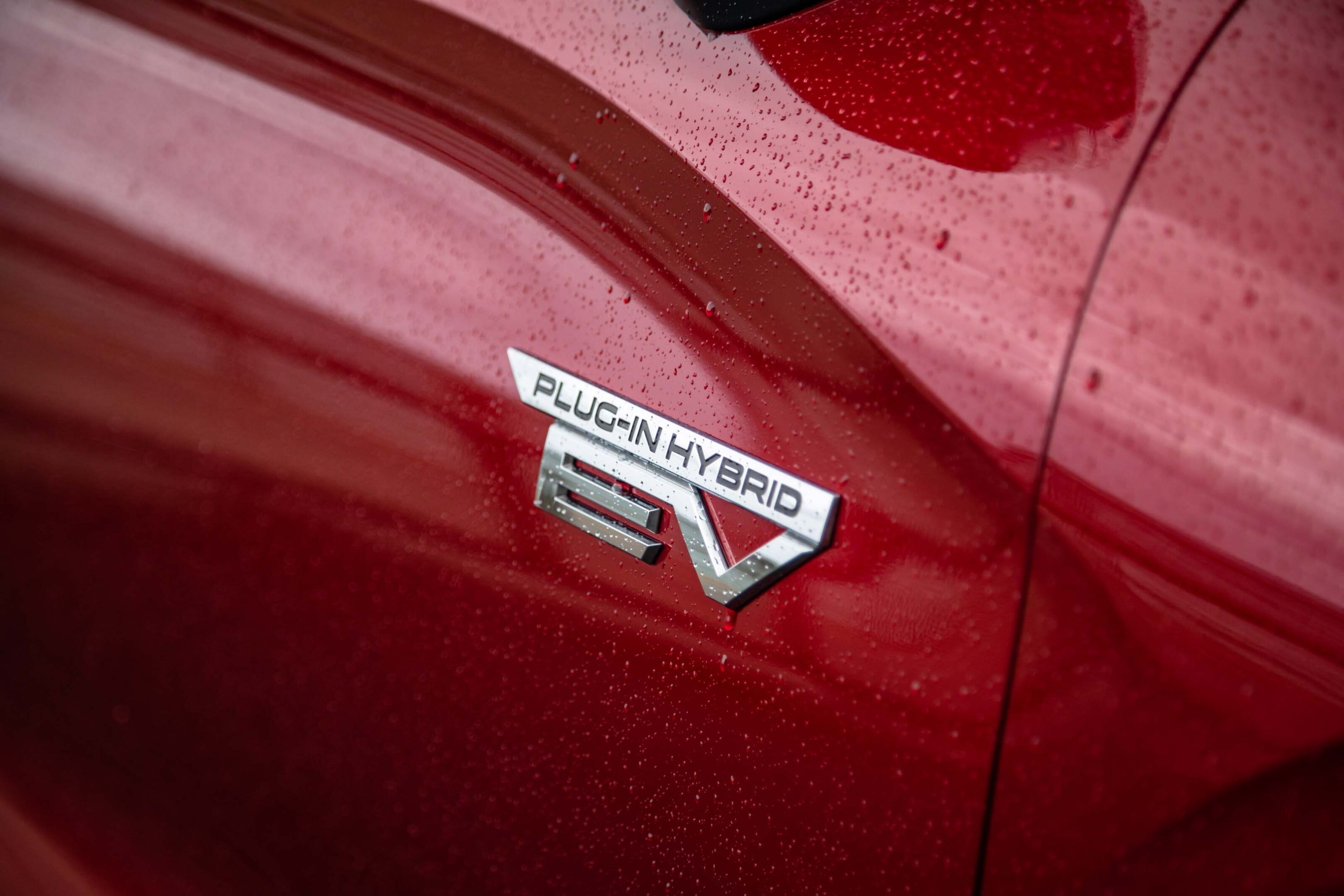
The battery is much bigger, now rated at 20kWh, up from the old car’s 13.5kWh and delivering a claimed EV range of 84km, up from 50km.
Two electric motors provide drive to the front and rear axles, with 85kW up front and 100kW at the rear. Combined with the petrol engine, total power is 185kW and 450Nm to shift 2.2 tonnes of Outlander.
Charging is via either the usual 240-volt AC, which will give a full charge in nine and a half hours. A wallbox brings that down to around 6.5 hours. If you can find a CHAdeMO plug (Ampol’s chargers have those), you can fast charge from empty to 80 per cent in 38 mins.
1
Like its Alliance stablemate Nissan, Mitsubishi is sticking with the oddball CHAdeMO charging standard to provide vehicle-to-X (load or grid) capability when that becomes available.
This means you can fit a plug while you’re out and about to run appliances or plug it into your home and integrate it into your power setup.
For context on how useful that might be, a fully-charged 20kWh battery can supply a day’s worth of electricity to a modest house in the event of a blackout (or you’re a tricksy load-shifter). We have a Tesla Powerwall in our home rated to 13.5kWh and that certainly does the job for us in concert with the rooftop solar.
1
How safe is it?
The Outlander scored five ANCAP stars in January 2022.
It received scores of 83 percent for adult occupant protection, 92 percent for child occupant protection, 81 percent for vulnerable road user protection, and 83 percent for safety assist.
All variants feature identical safety gear, though the Aspire adds surround-view cameras, while the flagship Exceed variants have a semi-autonomous ‘Mi-Pilot’ system with traffic jam assist for highway steering.
| 2023 Mitsubishi Outlander active safety features | |
|---|---|
| AEB with pedestrian, cyclist and reversing detection | Eight airbags |
| Emergency lane assist | Front and rear parking sensors |
| Lane departure warning and prevention | Reversing camera |
| Blind spot warning | ABS |
| Traffic sign recognition | Stability and traction controls |
| Reverse cross-traffic alert | Forward collision warning |
| Automatic high beam | Reversing camera |
| Driver fatigue monitor | Front, side and rear cameras |
| Adaptive cruise control | Trailer sway control |
I personally think rear AEB and reverse cross-traffic alert are very important and should be on every single car on sale today because not backing into things is not just great for convenience, but it could save a life, so it’s great that Mitsubishi has now added this safety technology to the base ES variant.
The airbag count includes a front centre airbag, which deploys in a side impact between the front passengers to try and prevent head clashes.
1
Warranty and running costs
The Outlander enjoys Mitsubishi’s headline-grabbing 10-year/150,000km warranty.
For most buyers that is going to be just fine thanks very much given the vast majority will spend their lives in the city. If you do break the limit, your warranty reverts to five years/unlimited, which is competitive.
Getting the full decade of cover also depends on you returning to the dealer every 12 months/15,000km for each and every service (skipping the dealer also reverts you to the five-year warranty).
The battery pack’s warranty is shorter than the vehicle warranty, with eight years/160,000km. If the battery degrades to less than 66 (!) per cent of its original capacity during the eight years, Mitsubishi will replace it.
Capped-price servicing lasts for the ten-year warranty duration, with most services landing at $349 and then some hefty ones arrive at either $749 or $849 in the regime’s later years. The first five services come in at $1845, which is not bad.
1
VERDICT
If you can be a disciplined driver, that hefty premium might just be worth it.
Does the PHEV establish itself as the best Outlander? Absolutely. The gap isn’t as wide as it was, partly because the overall experience of this car is so much better than before. Hugely better interior, driving dynamics and looks all conspire to close the gap.
There’s still daylight, though, and that’s because the 2.5-litre in the ICE cars is a bit underdone and plugged into a CVT that isn’t really at home in such a big car (though, again, better than before).
What you really get here is an everyday EV with a range-extending petrol engine. You could conceivably drive all year on electricity until you load up the kids and head for the hills.
That’s pretty good going. But, as ever, the value is only unlocked by discipline. If Mitsubishi’s own research is anything to go by, past owners are hugely disciplined and get the most out of their PHEVs. If you can do it, that hefty premium might just be worth it.
Specifications
| 2024 Mitsubishi Outlander Aspire PHEV | |
|---|---|
| Body | 5-door, 5-seat medium SUV |
| Drive | all-wheel |
| Engine | 2.4-litre four-cylinder (ICE) |
| Transmission | single-speed reduction gear |
| Power | 98kW @ 5000rpm |
| Torque | 195Nm @ 43000rpm |
| Compression ratio | 12.01 |
| Bore/stroke | 88.0 x 97.0 |
| Battery capacity | 20kWh |
| EV power | 85kW front / 100kW rear |
| EV torque | not stated |
| Combined power | 185kW |
| Combined torque | 450Nm |
| AC charging | 9.5 hours (100%) / 6.5 hours (100%) with wallbox |
| DC Charging | 38 mins 0-80%, CHAdeMO |
| 0-100km/h | 8.2 sec (claimed) |
| Energy consumption | 21kWh/100km |
| Fuel consumption (official ADR figure) | 1.5L/100km |
| Fuel consumption (combined) | 7.6L/100km |
| Weight | 2144kg |
| Suspension | MacPherson strut front / multi-link rear |
| L/W/H | 4710/1862/1745 |
| Wheelbase | 2706mm |
| Tyres | 255/45 R20 |
| Wheels | 20-inch alloy, no spare |
| Brake | 350mm discs (f); 330mm discs (r) |
| Price | $63,790 + on-road costs |
Snapshot
- Volvo EM90 luxury electric people mover not for Oz
- Designed for mainland China u2013 electric Alphard rival
- Based on Zeekr 009
The Volvo EM90 electric luxury people mover van has been leaked, but don’t expect it to land in Australia.
A Volvo Cars Australia spokesperson confirmed to Wheels the Lexus LM and Toyota Alphard pure EV rival is targeted at mainland China only, with other markets “yet to be decided”.
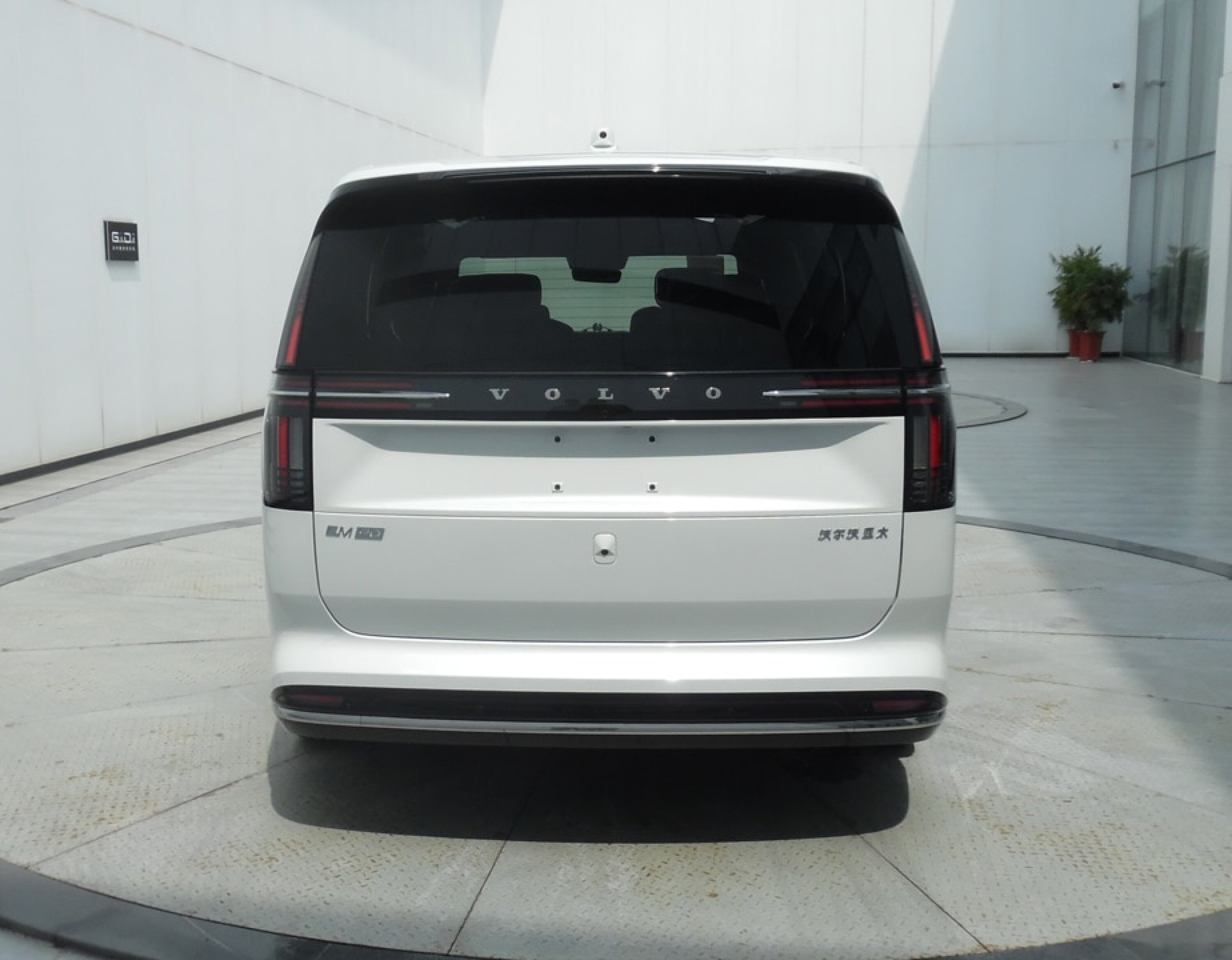
An official filing to the Chinese Ministry of Industry and Information Technology (MIIT) [via CarNewsChina ↗] reveals the EM90’s exterior design in line with the Sino-Swedish automaker’s latest design theme, as featured on the EX30 and EX90 electric SUVs.
1
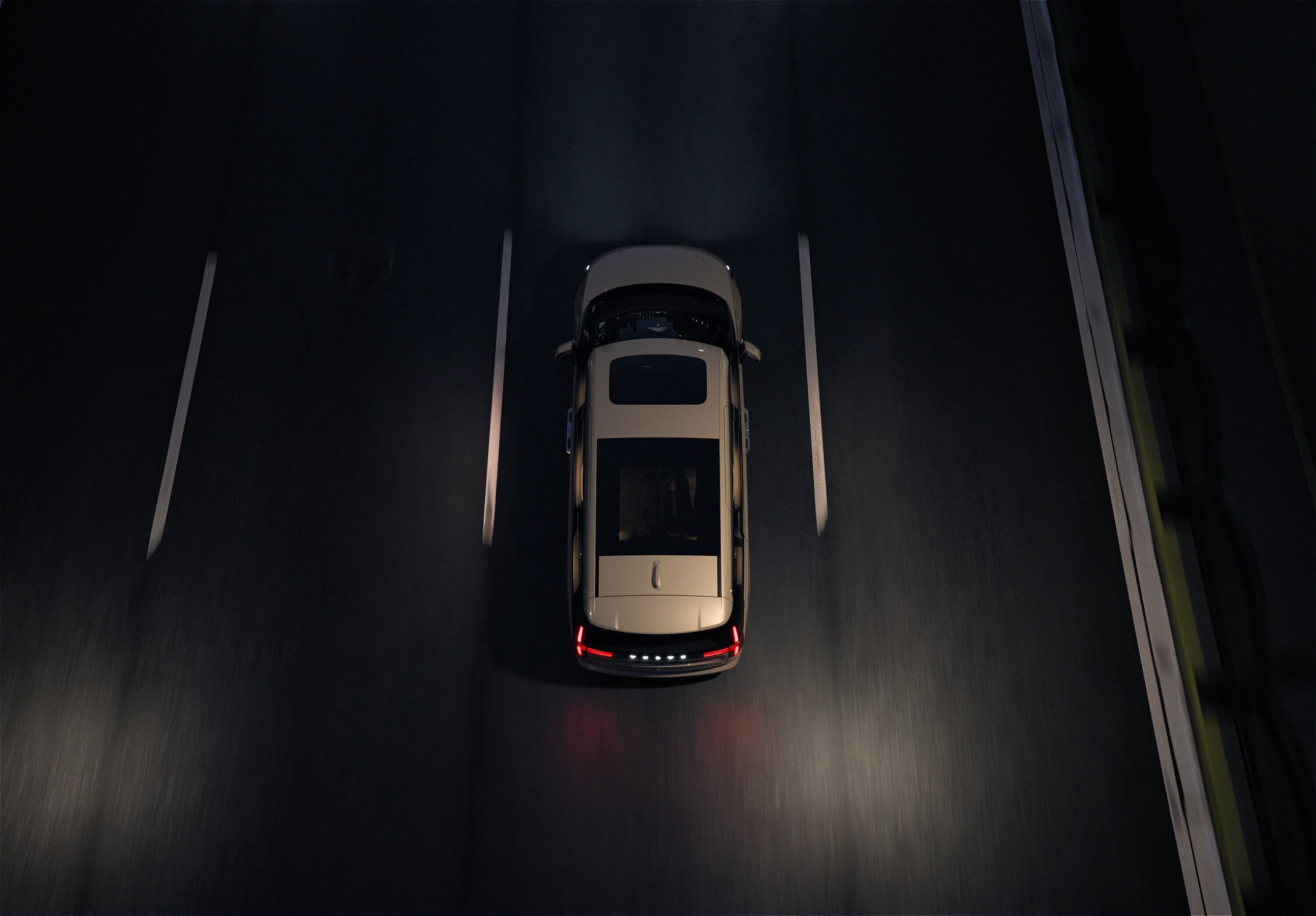
It includes; the new segmented Thor’s hammer LED daytime running light signature, a closed-off grille with a pattern of rectangular indents, a kink at the C-pillars, and requisite vertical tail-lights that stretch into the tailgate.
There are also aerodynamic-looking wheel designs ranging from 19 to 20 inches. The filing also stated the Volvo EM90 has a single electric motor producing up to 200kW to the rear wheels.
| 2024 Volvo EM90 dimension specs (filed to the MIIT) | |
|---|---|
| Length x width x height | 5206 x 2024 x 1859mm |
| Wheelbase | 3205mm |
| Kerb / gross weight | 2763kg / 3245kg |
1
Destined for China, not Australia
The Volvo EM90 is aimed squarely at the petrol-powered Toyota Alphard and Vellfire in mainland China, where ultra-luxurious people movers are popular.
However, some car brands have decided there is a market in Australia for luxury people movers. The LDV Mifa and Mifa 9 EV are already on sale, Lexus will deliver the $160K-plus LM early next year, and there is a market for imported Toyota Alphards and Vellfires.
It’s expected the EM90 will be based on its Zeekr 009 corporate counterpart in the Geely family.
That model is available with a 116kWh lithium-ion battery with a nickel-manganese-cobalt (NMC) cathode, which offers up to 702 kilometres of claimed driving range on the lenient China light-duty vehicle test cycle (CLTC).
A larger 140kWh ‘Qilin’ battery is available that claims to deliver a diesel-like 822km CLTC driving range.
The Volvo EM90 will officially debut on November 12.
MORE
Everything Volvo
Snapshot
- 2024 Mazda CX-5 pricing and features
- Diesel engine, Touring Active variant axed
- Updated mid-size SUV due in January
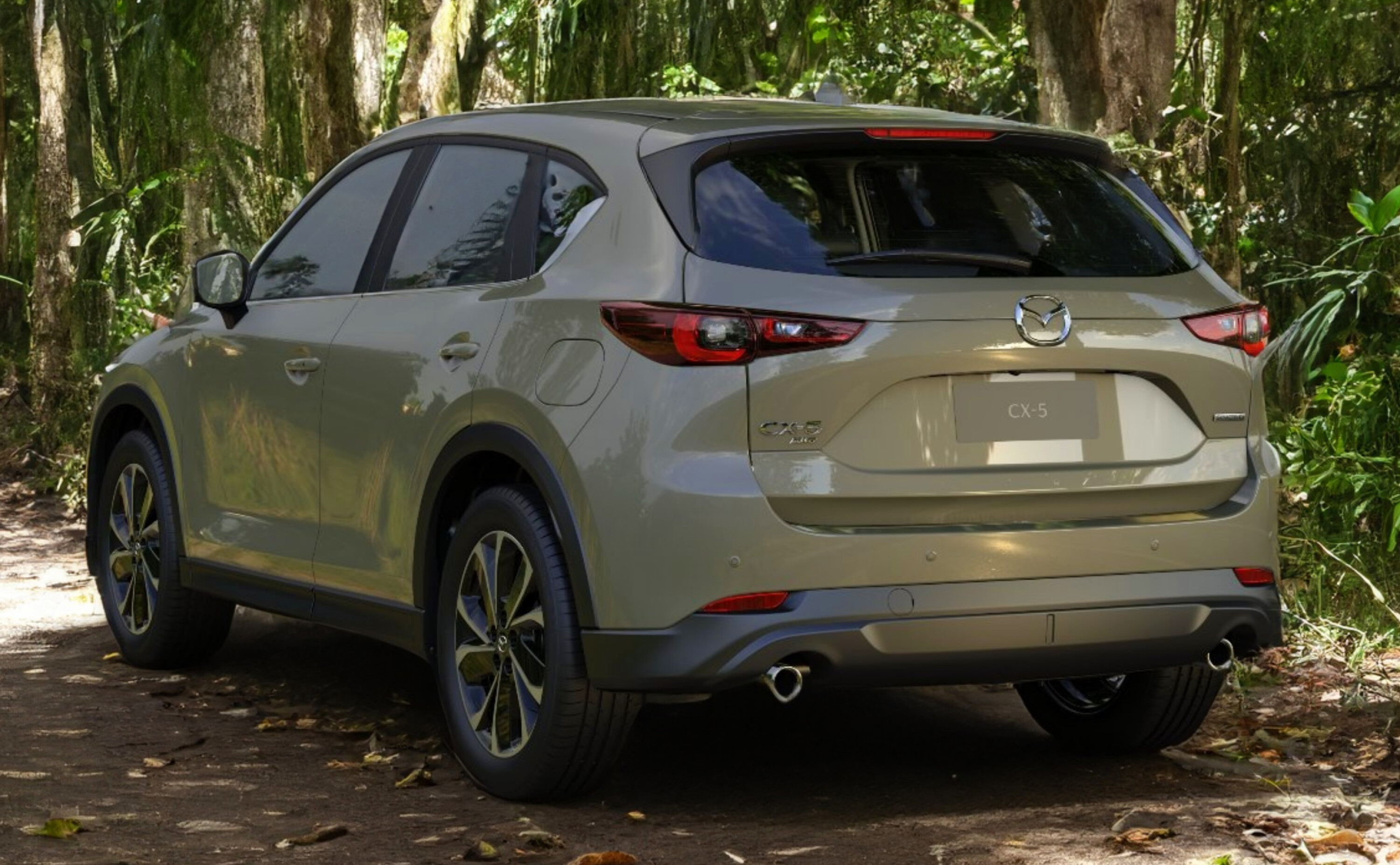
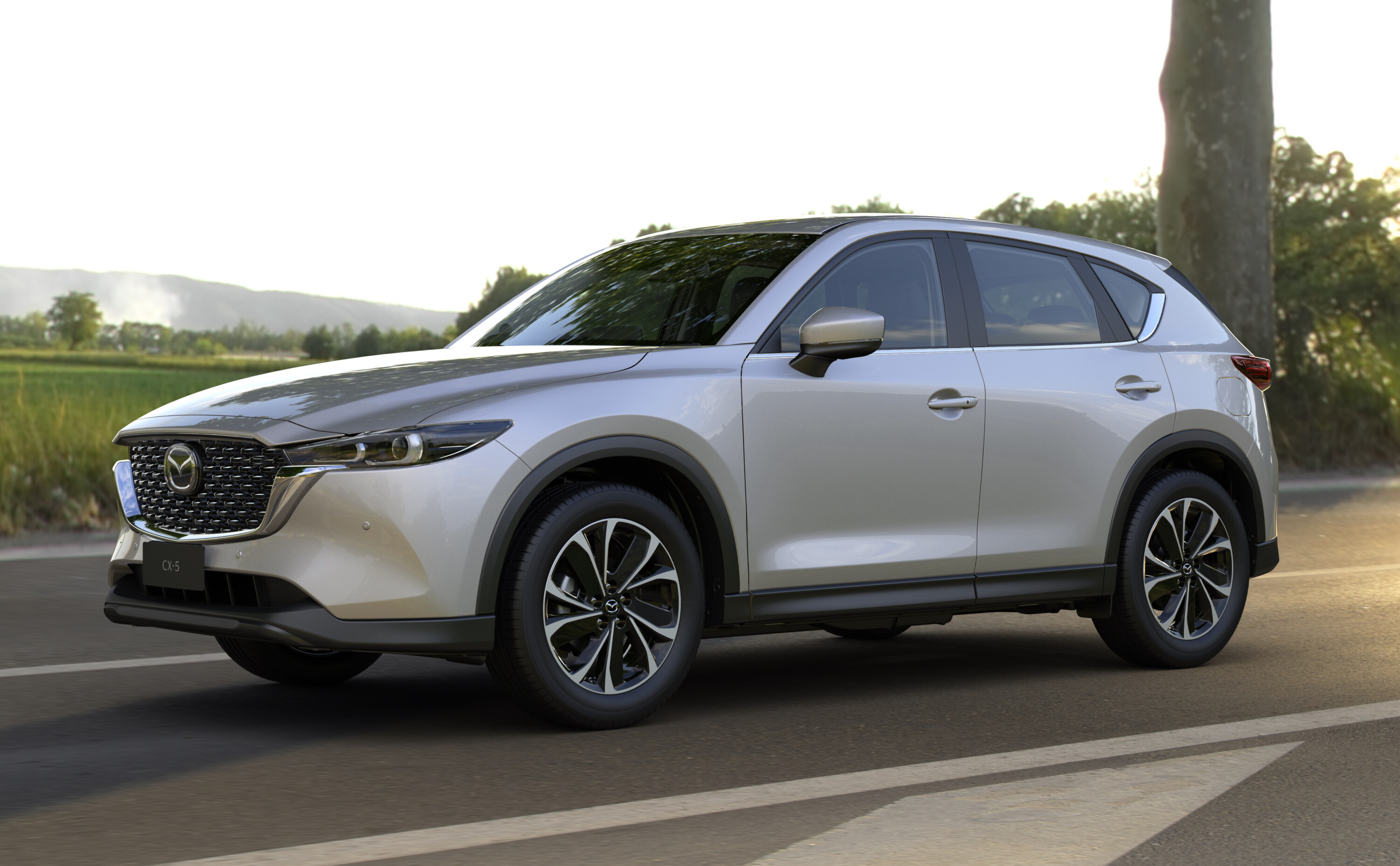
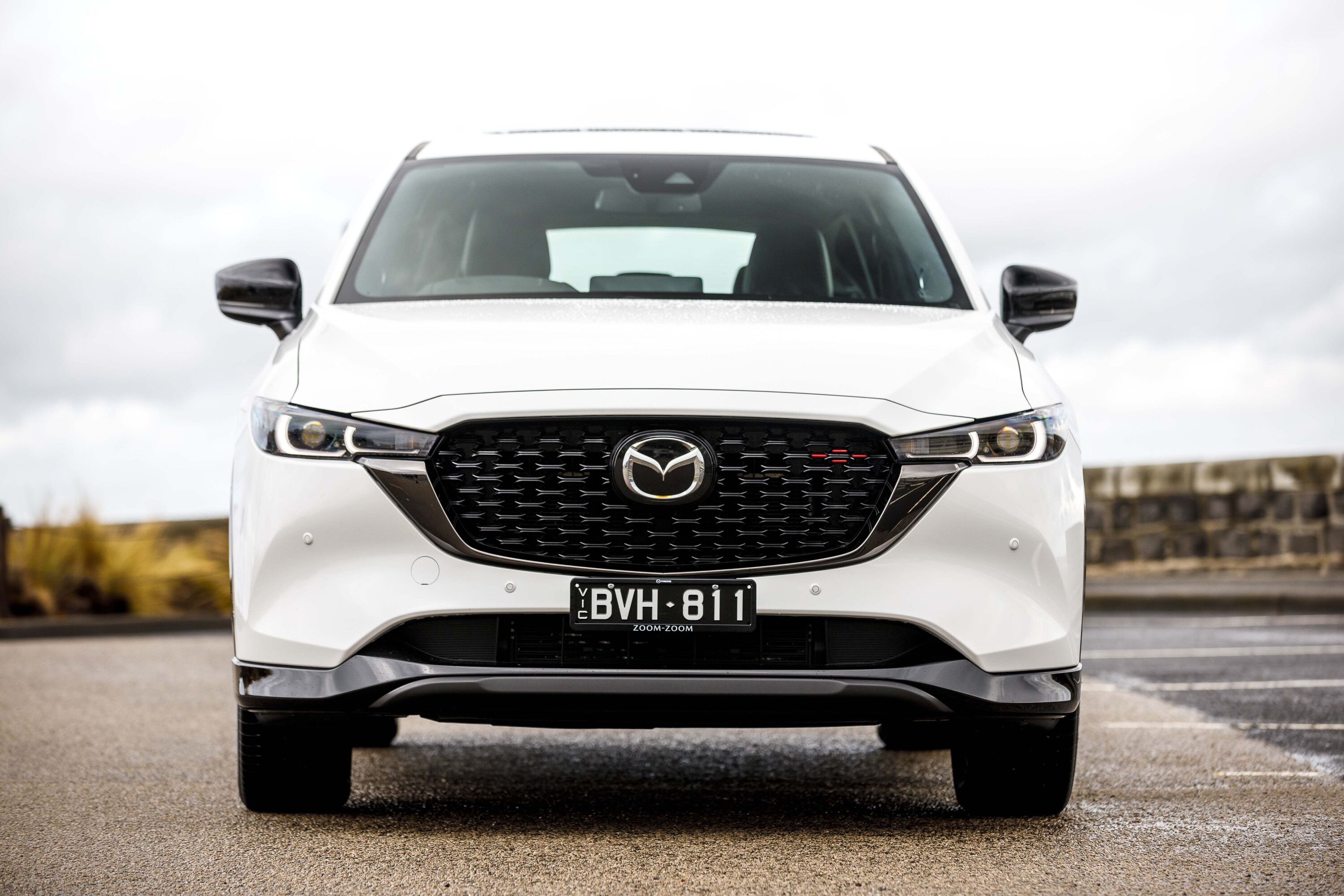
The 2024 Mazda CX-5 mid-size SUV has been detailed for Australia.
Due to arrive in local showrooms in January 2024, the updated CX-5 sees more equipment across the board and the deletion of the final two ‘D35’ diesel variants.
Earlier this year, Mazda Australia managing director Vinesh Bhindi told Wheels offering diesel was a “strategy of choice”, and the CX-5 Touring Active and Akera diesels would continue to be offered.
1
“Even if there’s a small number of customers who want a particular powertrain because of their specific need, if we can offer it, then it makes sense to us,” he said.
But with declining sales and the recent arrival of a diesel CX-60, the CX-5 diesel has been officially axed in Australia.
A Mazda Australia spokesperson said diesel accounted for less than four per cent of CX-5 sales in 2022 and YTD 2023.
It follows the deletion of the price-leading manual transmission from the CX-5 line-up for 2023 in a rethink of slower-selling variants across Mazda Australia’s wider range over the past 12 months.
1
Prices have increased between $370 and $620 over the pre-update model, ranging between $36,560 and $54,970 before on-road costs.
Revisions include touchscreen functionality when using Apple CarPlay and Android Auto, which now support a wireless connection for the G20 Maxx – matching higher variants.
The Touring Active variant – with lime green accents – has been deleted, while the Touring has larger 19-inch machined alloy wheels and full ‘Maztex’ black leather-accented upholstery.
1
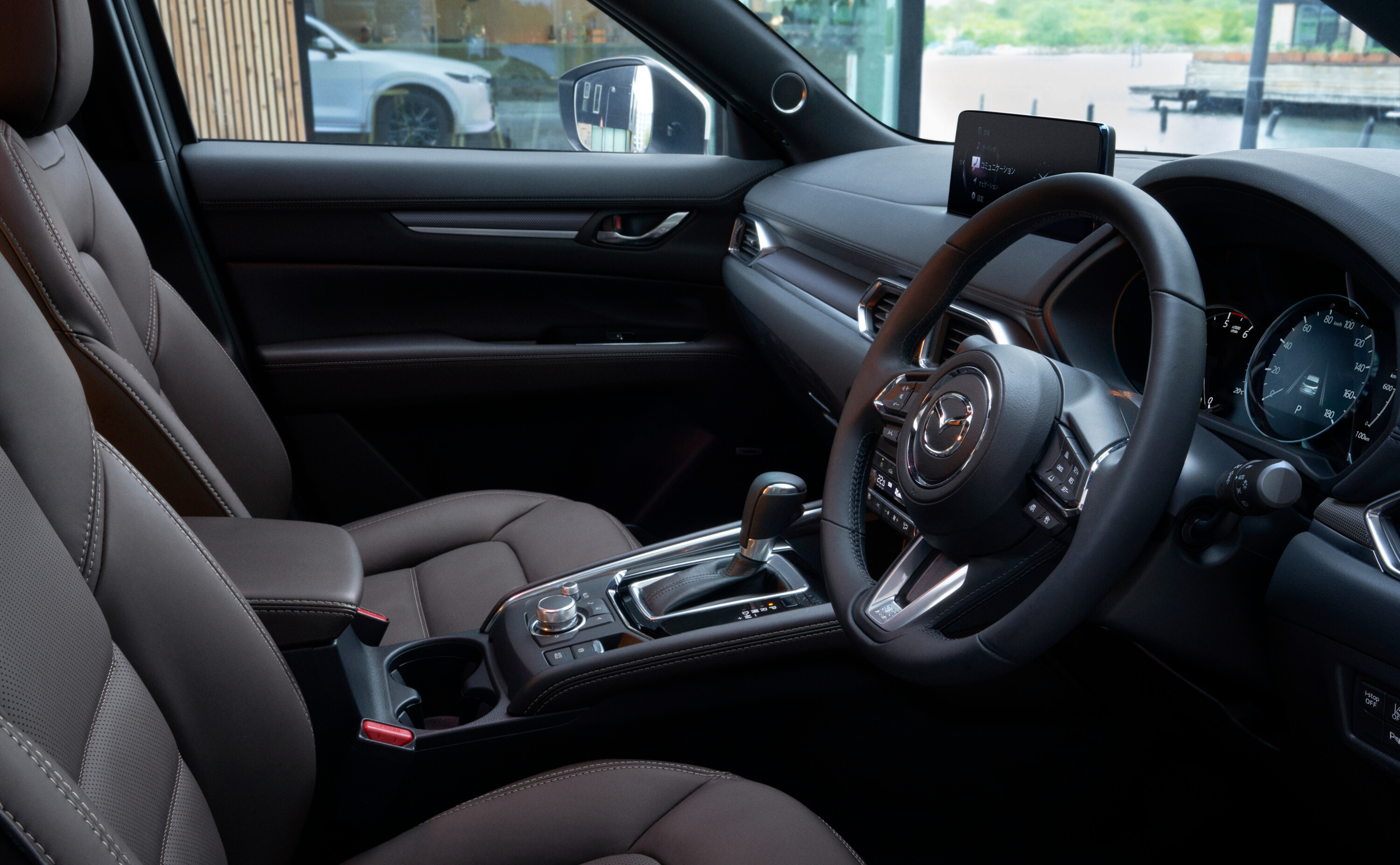
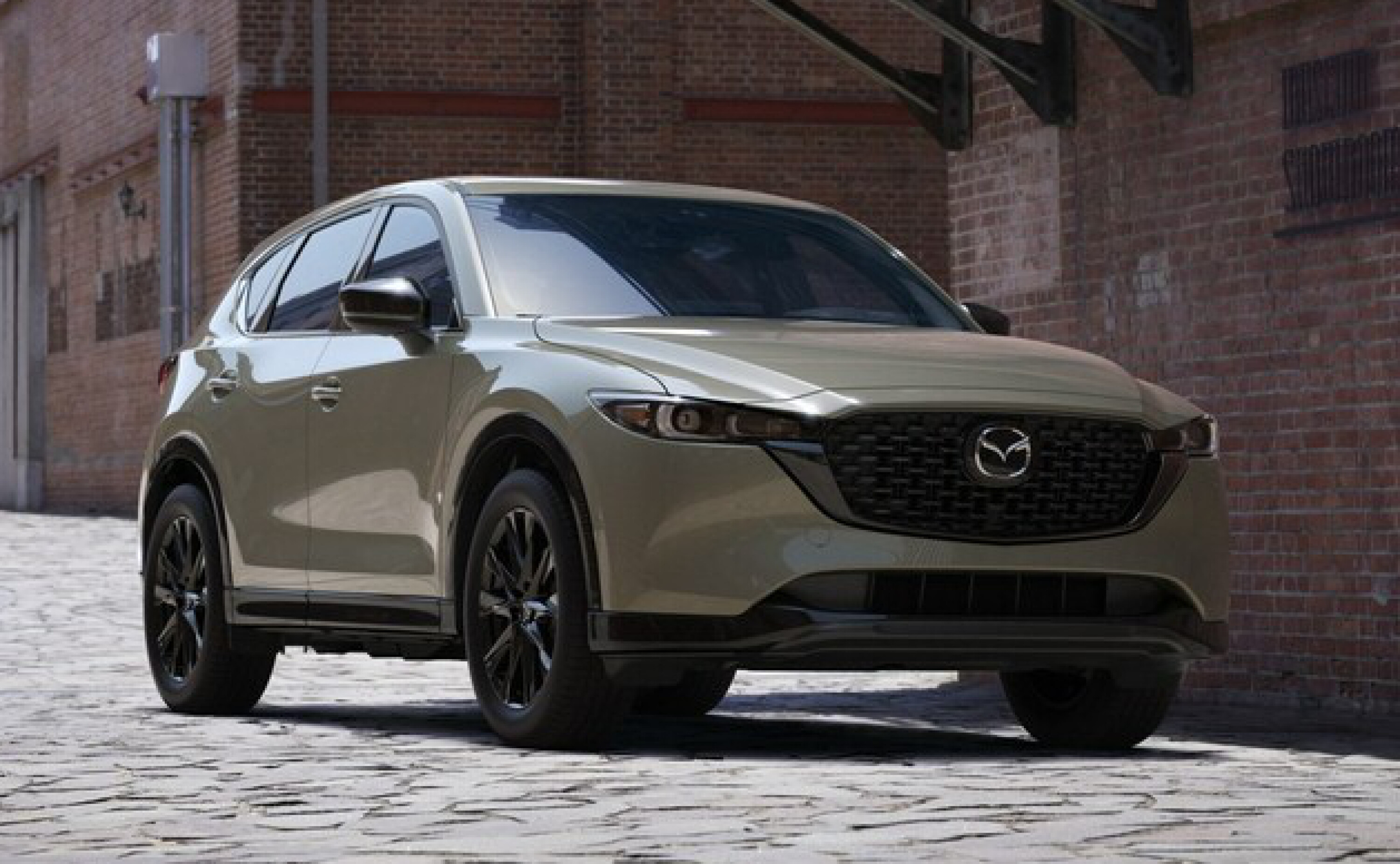
The GT SP and Akera have a new mesh-pattern grille finish from the related, three-row CX-8 and the return of hands-free functionality for the electric tailgate after it was removed in mid-2022 due to a parts shortage.
A new colour, platinum quartz, replaces sonic silver, and the flagship Akera receives honeycomb-look interior inlays, replacing the previous wood finish.
VFACTS new-car sales data reveals the Mazda CX-5 is the third-best-selling mid-size internal-combustion SUV in Australia to the end of September with 16,895 registrations – down 20 per cent compared to 2022.
This places the CX-5 behind the Toyota RAV4 (22,388) and Mitsubishi Outlander (17,762) but ahead of the Hyundai Tucson (16,173), Subaru Forester (12,113) and Kia Sportage (11,113).
It is Mazda Australia’s top-selling vehicle, ahead of the BT-50 ute (13,438), CX-3 light SUV (12,239) and CX-30 small SUV (9581).
JUMP AHEAD
- 2024 Mazda CX-5 pricing
- 2024 Mazda CX-5 features
- 2024 Mazda CX-5 colours
- Engine, drivetrain, and fuel economy
- Safety
- Dimensions
- Warranty and servicing
- Availability
1
2024 Mazda CX-5 pricing
Prices exclude on-road costs.

1
2024 Mazda CX-5 features
| 2024 Mazda CX-5 Maxx features | |
|---|---|
| Wireless Apple CarPlay and Android Auto (new) | Full-LED headlampsu00a0 |
| 17-inch alloy wheels | Front USB-C portsu00a0 |
| 10.25-inch Mazda Connect infotainment system | Keyless window open |
| FM/AM/DAB+ radio | Push-button start |
| Six-speaker audio system | Rear parking sensors |
| 7-inch semi-digital instrument cluster | Leather-wrapped steering wheel and gear selector |
| Rain-sensing wipers | Adjustable rear cargo floor |
| Black cloth upholstery | Tyre pressure monitoring system |
| Head-up display | |
2024 Mazda CX-5 Maxx Sport features
| In addition to Maxx | |
|---|---|
| Dual-zone climate control | Traffic sign recognition |
| Rear centre armrest storage with USB-A charging ports (2x)u00a0 | Paddle shifters |
| Satellite navigation | Auto-dimming rear-view mirror |
2024 Mazda CX-5 Touring features
| In addition to Maxx Sport | |
|---|---|
| 19-inch alloy wheels (new) | Reversible floorboard in cargo area |
| Black u2018Maztexu2019 leather-accented upholstery (new) | Keyless entry |
| Heated side mirrors | Front parking sensors |
| Wireless phone charging | |
2024 Mazda CX-5 GT SP features
| In addition to Touring | |
|---|---|
| 19-inch alloy wheels (black) | Heated front seats |
| Adaptive front lighting system | Black side mirrors |
| 10-speaker, 249-watt Bose audio system | Traffic jam assistu00a0 |
| Glass sunroof | LED interior lighting |
| Hands-free electric tailgate | Black headlining |
| Black leather seat trim with red stitching | Larger rear exhaust tailpipes |
| 10-way power-adjustable driveru2019s seat | Red grille accent |
| Two-position driveru2019s seat memory function | Gloss black wheel cladding |
| Six-way power-adjustable passenger seat | |
2024 Mazda CX-5 Akera features
| In addition to GT SP | |
|---|---|
| Honeycomb-look door and dashboard trim inserts (new) | Brown nappa leather upholstery |
| 19-inch alloy wheels (silver) | LED ambient lighting |
| 360-degree camera system | Frameless rear-view mirror |
| Adaptive LED headlampsu00a0 | Unique overhead console |
| Ventilated front seats | Body-coloured wheel cladding and lower bumpers |
| Heated rear seats | LED globebox illumination |
| Heated steering wheel | |
1
2024 Mazda CX-5 colours
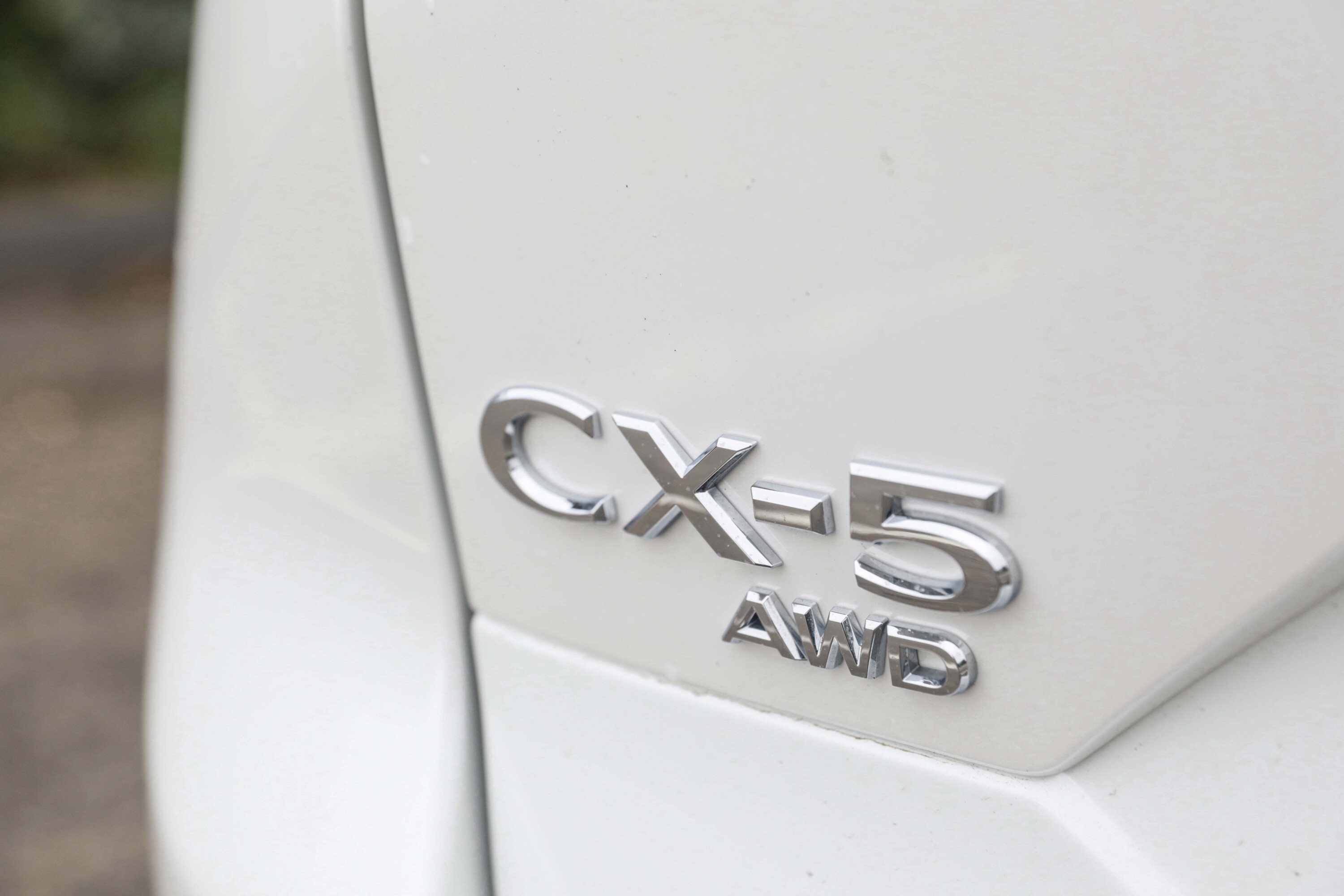
| Platinum quartz (new) | Soul red crystal |
| Jet black | Eternal blue |
| Deep crystal blue | Rhodium white* |
| Zircon sand* | Machine grey* |
| Polymetal grey* | * Metallic paint, $795 |
1
Engine, drivetrain, and fuel economy
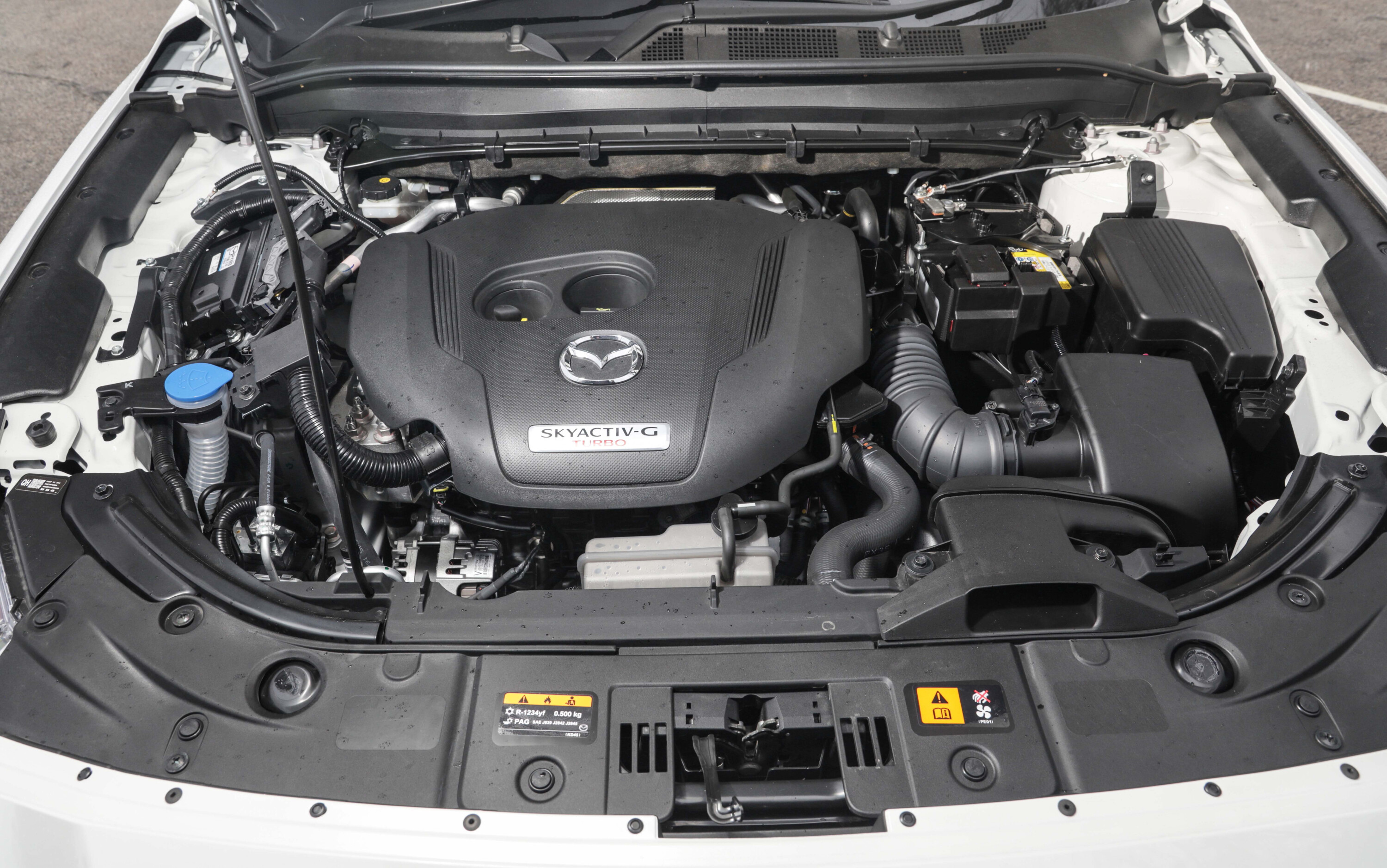
Engine options include a naturally-aspirated 2.0-litre and 2.5-litre petrol mills and a 2.5-litre turbo-petrol. The 140kW/450Nm 2.2-litre twin-turbocharged diesel has been axed.
The 2.0-litre naturally-aspirated ‘G20’ petrol engine is exclusive to the Maxx variant, producing 115kW and 200Nm.
Stepping up to the naturally-aspirated ‘G25’ 2.5-litre engine – available on all CX-5 variants above the Maxx – power outputs rise to 140kW/252Nm.
1
The turbocharged ‘G35’ 2.5-litre petrol further boosts numbers to 170kW/420Nm and braked towing capacity from 1800 kilograms to 2000kg.
A six-speed automatic transmission is standard-fit across the CX-5 range.
| 2024 Mazda CX-5 fuel economy | ||
|---|---|---|
| G20 FWD (2.0L) | 6.9L/100km | 161g/km |
| G25 FWD (2.5L) | 7.2L/100km | 167g/km |
| G25 AWD (2.5L) | 7.4L/100km | 172g/km |
| G35 turbo AWD (2.5T) | 8.2L/100km | 191g/km |
1
Safety
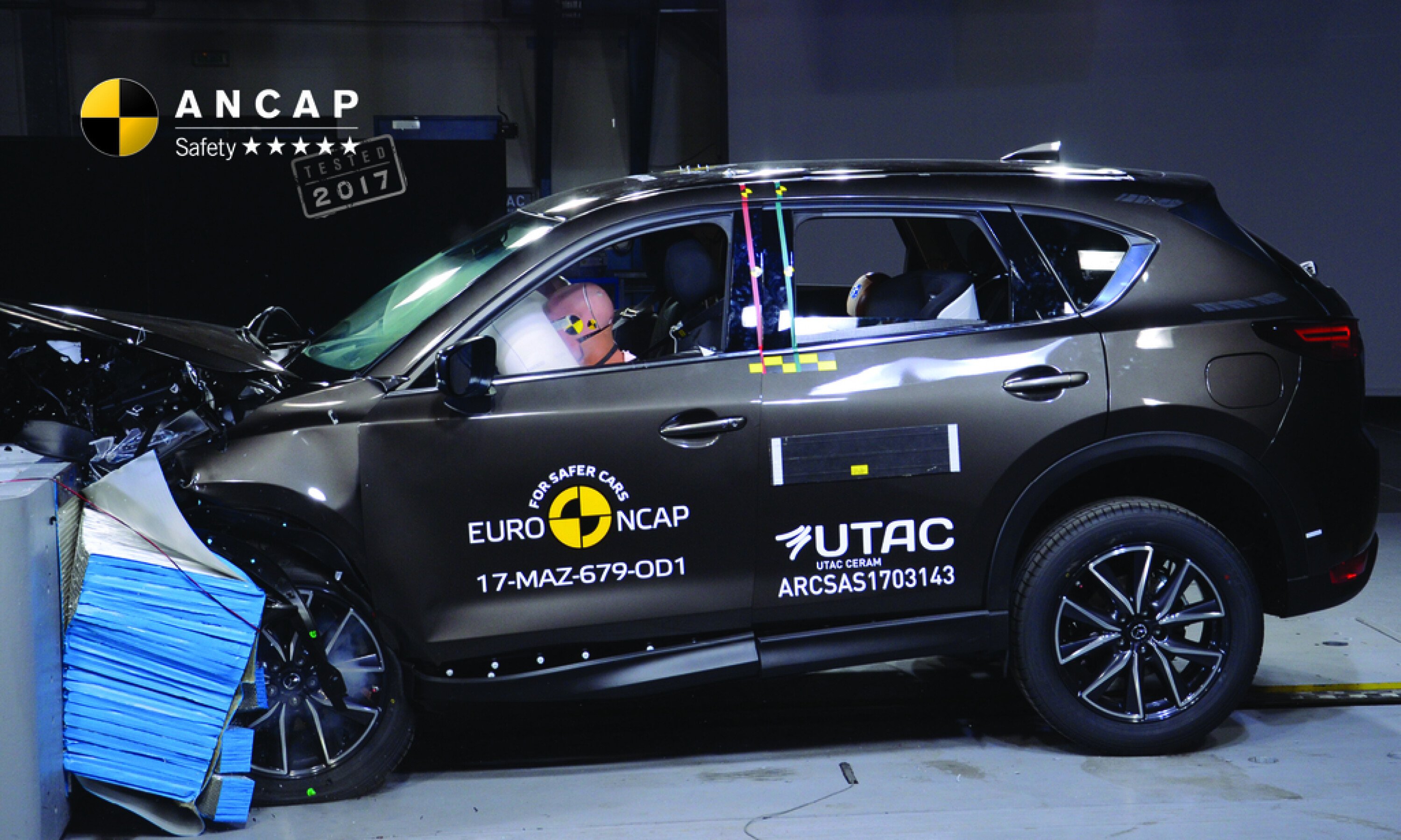
The entire Mazda CX-5 range is covered by a five-star ANCAP safety rating, based on testing conducted in 2017.
This rating expires on December 31, 2023, in line with ANCAP’s six-year date-stamp limit. Mazda has no plans to submit the CX-5 to be retested under the latest criteria.
Six airbags (dual front, side and curtain) feature across the line-up.
| 2024 Mazda CX-5 active safety features | |
|---|---|
| Autonomous emergency braking (vehicle, pedestrian, cyclist, reverse) | Rear cross-traffic alert |
| Lane-keep assist | Adaptive cruise control |
| Lane departure warning | Automatic high beam |
| Blind-spot alert | |
1
Dimensions
The Mazda CX-5 measures 4575mm long and 1845mm wide with a 2700mm wheelbase.
Variants with 17-inch alloy wheels are 1675mm high, while grades with larger 19-inch wheels are 1680mm tall.
2024 Mazda CX-5 boot space
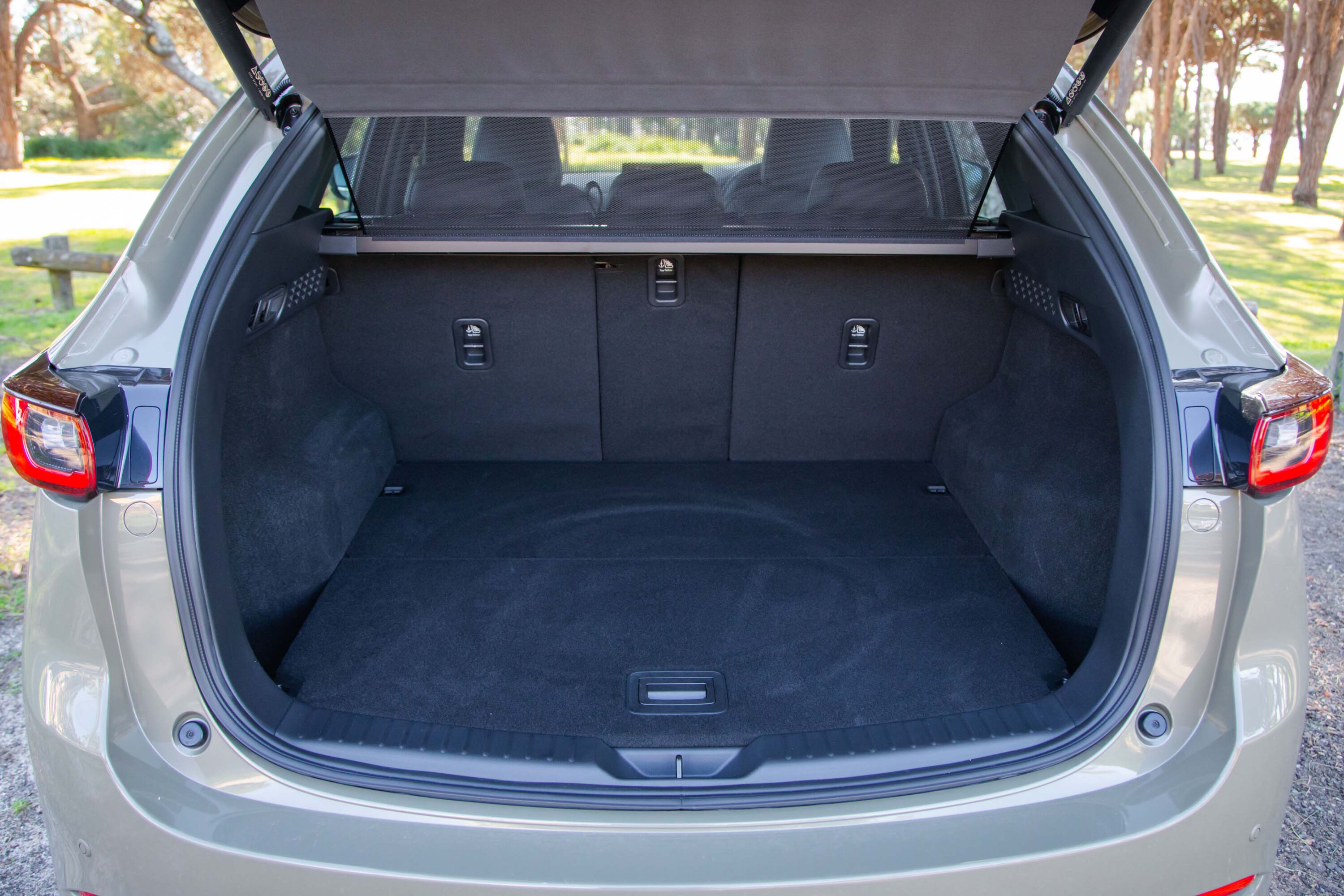
The 2024 Mazda CX-5 has a claimed 438-litre boot capacity, extending to 1340L with the rear seats folded.
Warranty and servicing
The CX-5 is covered by Mazda’s five-year/unlimited-kilometre warranty, and a complimentary five-year roadside assistance program.
The service schedule for all 2024 Mazda CX-5 variants is 12 months or 15,000km, whichever occurs first.
Availability
The 2024 Mazda CX-5 will arrive in Australia in January 2024. It is now available to order.
MORE
Everything Mazda
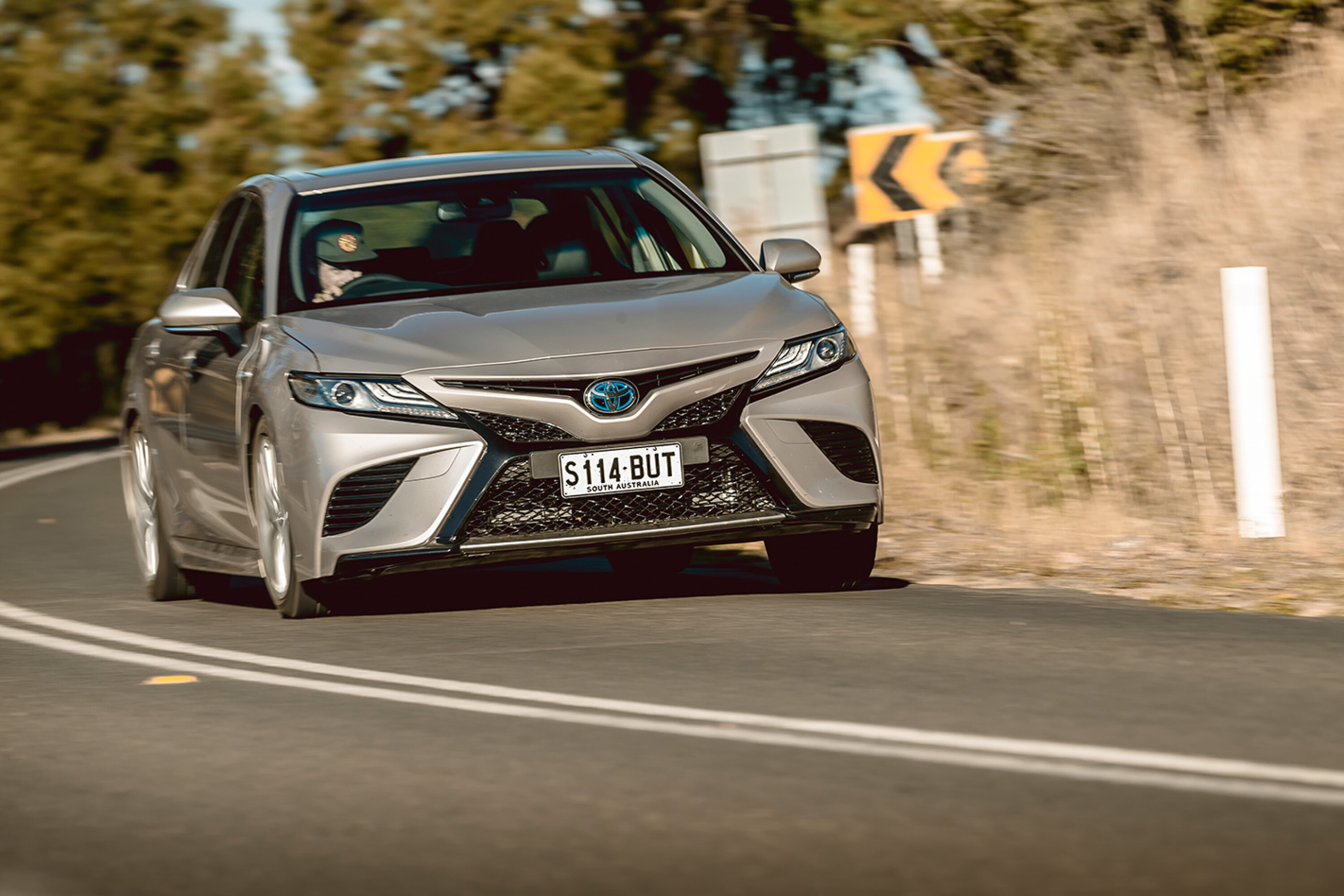
Customer orders for the Toyota Camry Hybrid have been paused in Australia owing to “extraordinary demand” that has pushed waiting times past two years.
The petrol-electric variant is immensely popular with fleet, taxi and ride-share drivers and dominates sales of the Japanese brand’s midsize sedan.
Toyota says nine out of every 10 Camrys sold here is a Hybrid, a fact that is unlikely to surprise anyone who regularly uses Uber and Ola ride-share services.
The company dropped V6 petrol versions of the Camry in 2021 to focus on a mainly petrol-electric range, with four variants comprising Ascent, Ascent Sport, SX and SL – priced from $36,820 to $50,320.
It leaves a singular Camry available to purchase for now – the entry-level, $34,320 Ascent sedan that’s powered by a 2.5-litre four-cylinder petrol engine.
Toyota Australia’s vice president of sales, marketing and franchise operations, Sean Hanley, said the company was committed to being transparent with customers.
1
“I want to assure all Toyota customers that we are doing everything possible to increase supply for Australia and to expedite delivery of vehicles as they arrive,” he said.
“Our global production teams have consistently adopted countermeasures that have improved the supply of components affected by global shortages, such as semiconductors.
The Camry Hybrid becomes the second Toyota model to have orders halted until further notice, joining the LandCruiser 70 Series V8.
Toyota said it wasn’t possible to say how long the orders-pause would last, when asked by Wheels.
“We can’t provide an estimate today, but we will continue delivering as many vehicles as quickly as possible so that we can enable customers to resume placing orders as soon as possible,” said a company spokesperson.
“At this stage, we have no plans to introduce an order pause on other [Toyota] models. We are committed to being transparent and keeping our customers and dealers informed of any developments.”
Just over 7000 Camrys have been sold this year to the end of September 2023, a figure that’s a long way short of the Toyota’s heydey but that keeps it as Australia’s second most popular midsize sedan behind the Tesla Model 3 (15,540).
Its main price competitors are the Mazda 6 and Skoda Octavia, but with the affordable BYD Seal arriving the Camry’s place as a sales giant could be in jeopardy.
Toyota announced earlier this year that the Camry would be discontinued in its home market of Japan, but with exports continuing for markets including Australia.
Snapshot
- Nissan Qashqai E-Power arrives as new flagship small SUV
- One-pedal driving and EV quietude without range anxiety promised
- Priced from $51,590 before on-road costs
The 2024 Nissan Qashqai range has grown with the addition of the new hybrid E-Power Ti flagship.
Sitting above the regular Qashqai Ti, the $51,590 (before on-road costs) E-Power swaps combustion-engined propulsion for electric motor drive with a petrol engine as a generator. Orders open on 2 November ahead of Q1 2024 arrivals.
The E-Power model commands a $4200 premium over its petrol-engined Ti equivalent and benefits from a different front grille, E-Power badging and active noise-cancelling technology inside. See the link below for full Qashqai pricing and features.
That hybrid premium means the Qashqai crosses over with its larger sibling, being dearer than the X-Trail E-Power ST-L ($49,490) and not far off the E-Power Ti ($54,190 all before on-road costs).
Unlike its X-Trail larger sibling, the Qashqai’s hybrid won’t initially be available on lower trims. However, as with the X-Trail’s late ST-L hybrid addition, Nissan Australia is monitoring demand for more affordable variants in the future.
“We know Australians love the driving dynamics of the X-Trail E-Power, and we are thrilled to offer this innovative technology on a second model, expanding its potential further,” Nissan Australia managing director Adam Paterson told Wheels.
1
Nissan Qashqai E-Power Ti features
| 19-inch alloy wheels | Roof rails |
| Multi-link rear suspension | Premium graphite rear bumper finisher |
| Panoramic glass roof with electric sunshade | Rear LED turn signals |
| Automatic LED headlights with adaptive driving beam | Automatic dimming rear view mirror |
| LED Daytime running lights | Automatic rain-sensing front wipers |
| LED front fog lights | Privacy glass (second row & rear windows) |
| Intelligent Key with push-button engine start | Rear spoiler |
| Dual-zone automatic climate control | Quilted leahter upholstery |
| Heated, auto-folding door mirrors with reverse tilt & memory | Leather-accented knee pad |
| Heated leather-accented steering wheel | Black roof liner |
| Heated front seats | Two front and two rear USB charging ports (USB A & C) |
| 8-way power adjustable driveru2019s seat w/ 4-way lumbar, memory & massage | 6-way power adjustable passenger’s seat w/ 4-way lumbar, memory & massage |
| Multiple driver profiles for Intelligent Key system | 10.8-inch Head-Up Display |
| 12.3-inch TFT Advanced Drive-Assist Display instrument cluster | 12.3-inch high-definition digital infotainment screen |
| Wireless Apple CarPlay (wired Android Auto) | Satellite navigation |
| 15W wireless smartphone charger | 10-speaker Bose sound system with subwoofer |
| Centre console with tray | Rear air vents |
| Rear seat armrest with two cup-holders | Divide-N-Hide configurable cargo system |
| Hands-free power tailgate | Luggage hooks |
| Nissan ProPilot and full safety suite with AEB, RCTA, LKA etc. | Auto parking |
| e-Pedal Step | Premium front grille |
| Acoustic pedestrian warning | Active noice cancellation |
1
How does the E-Power hybrid system work?
The E-Power system is a unique solution next to parallel hybrid rivals such as the Toyota Corolla Cross, Honda HR-V and Haval Jolion.
Rather than being able to power the front wheels using electric, petrol, or a combination of both, Nissan’s E-Power system exclusively uses the 140kW/330Nm electric motor for propulsion.
The 116kW variable compression ratio (8:1 – 14:1) 1.5-litre three-cylinder turbo-petrol runs as a generator to keep the onboard battery topped up at all times, theoretically allowing better NVH insulation.

1
Compared to the 1.3-litre four-cylinder Qashqai, the E-Power hybrid develops an extra 30kW and 80Nm – not numbers to be sniffed at.
Nissan has not claimed a 0-100km/h sprint time, but it should be quicker than the petrol Qashqai’s 8.9-second sprint.
Fuel consumption also improves from the petrol’s 6.1L/100km in the combined ADR cycle to a (yet-to-be-homologated locally) 5.3L/100km rating for the hybrid.
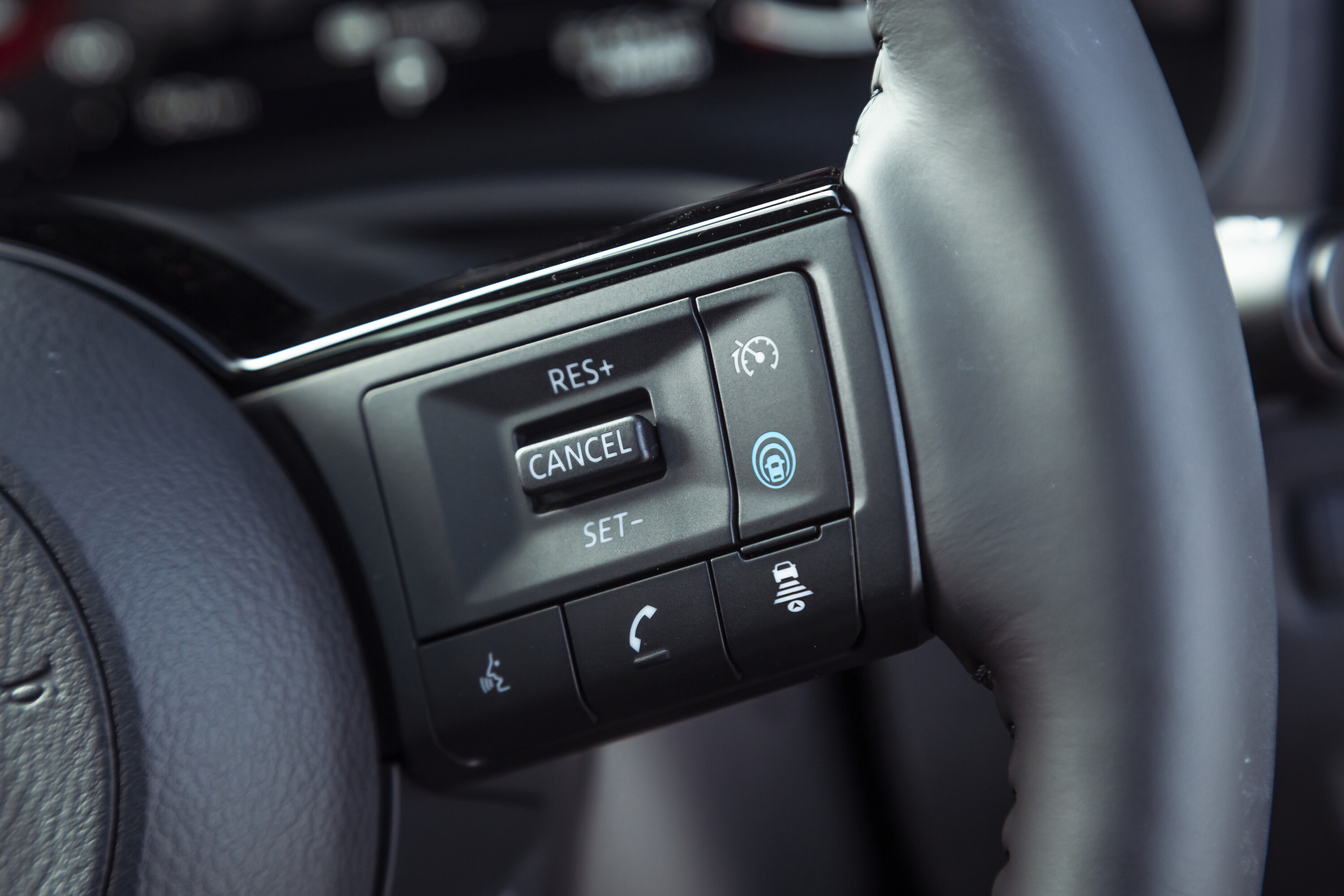
The electric motors also allow for a semi-one pedal driving experience, offering up to 0.2g of acceleration, though the e-Pedal Step won’t completely stop the Qashqai.
MORE
Everything Nissan
Snapshot
- Tesla software update brings clever predictive Supercharging
- Estimates availability and waiting times
- Tesla vehicles still have the advantage for long-distance driving
A new software update for Tesla electric vehicles has introduced a clever feature to alleviate public charging concerns.
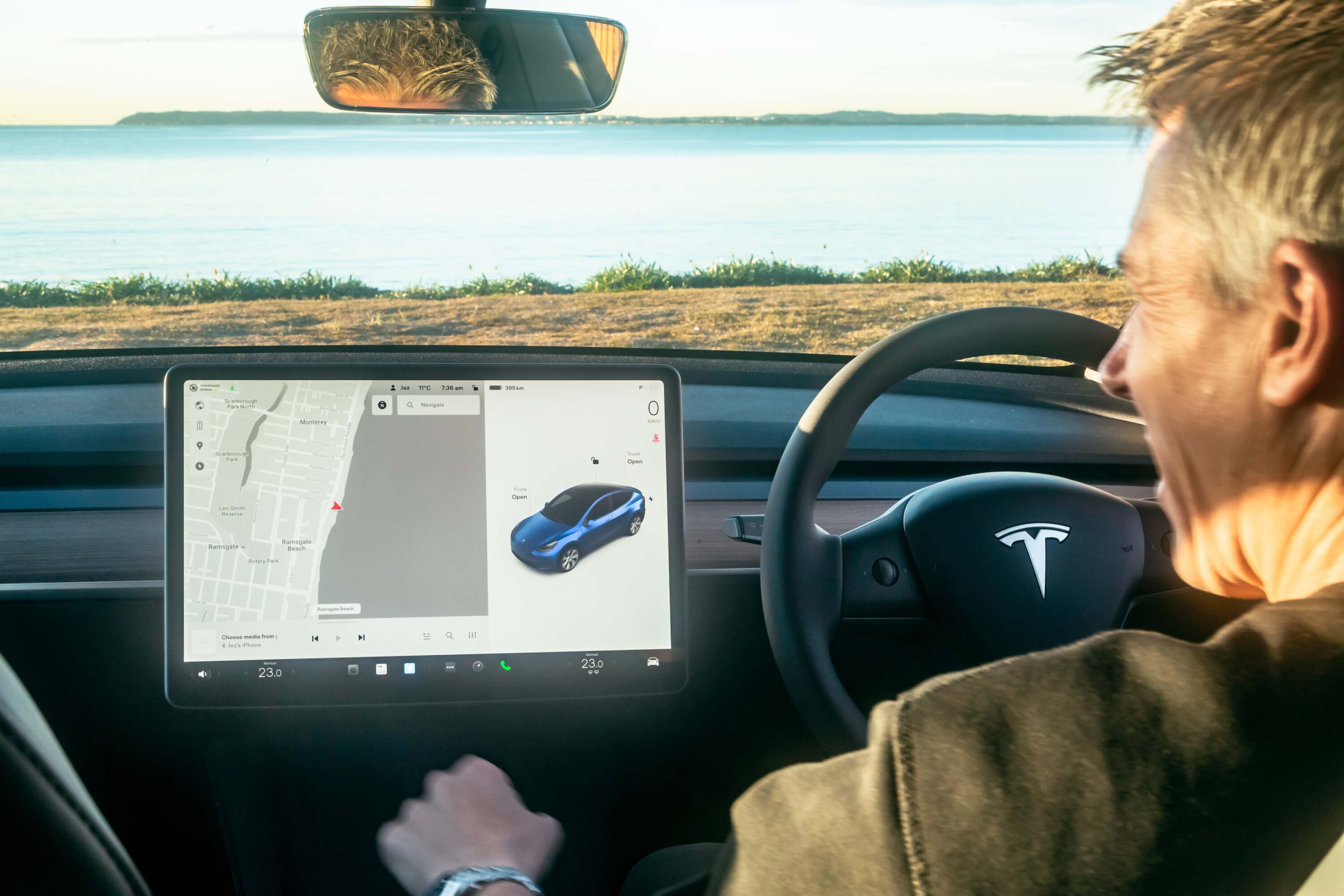
According to Not a Tesla App [↗], update 2023.38 is rolling out to some owners globally with an algorithm that predicts how many Tesla Supercharging stalls would be available once a driver reaches the station set on the navigation system.
If the Supercharging location is full, it will estimate a queuing wait time – an already available feature.
1
The company uses live data from all Tesla vehicles using or navigating to a Supercharger to determine an estimate.
It’s unclear if the feature will be available in Australian Teslas.
Tesla vehicles, including the popular Model 3 sedan and Model Y SUV, already display how many stalls are in use, the mapping system automatically routes drivers to less busy Supercharging stations, and predicts when locations are most congested.
Some Supercharging locations in Australia change the pricing rate depending on the time of day and demand.
Tesla Superchargers still unmatched
Tesla’s vertically integrated software and hardware ecosystem remains a key selling point to offset driving range and charging concerns on long-distance trips.
Google’s Android Automotive system also plots public charging stops using a variety of third-party networks on models, such as the Polestar 2 liftback, Volvo XC40 Recharge SUV and Renault Megane E-Tech crossover.
However, Tesla’s Supercharger stations are reportedly more reliable – with more stalls at each location – and quicker to restore if offline.
While more than half of Superchargers in Australia are now open to all EV models, Tesla vehicles still benefit from automatic charging stop route planning, cheaper charging price rates, and seamless ‘plug and charge’ functionality without needing a smartphone app or RFID card.
MORE
Everything Tesla
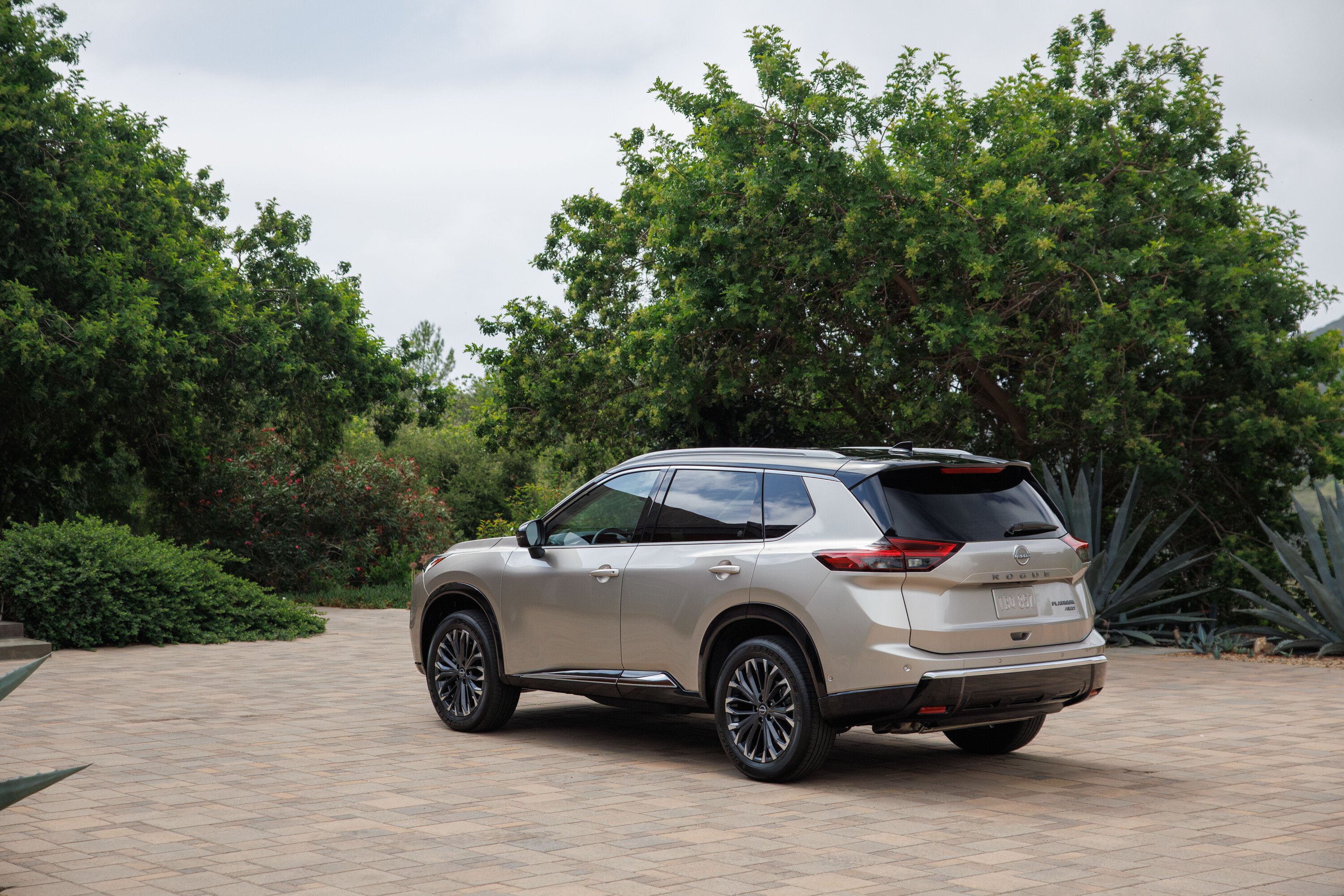
UPDATE: The 2024 Nissan Rogue has been officially revealed for North American markets with most of the changes visible to the naked eye.
The X-Trail’s brother of another name will be available early next year in the States, though a Nissan Australia spokesperson told Wheels the updated SUV is still a way off Aussie shores.
“Nissan North America has recently announced details of mid-life revisions to its segment-leading Rogue SUV which was launched late in 2020” said the spokesperson.
1
“There are no imminent mid-life revisions yet finalised for X-Trail here where it is still relatively new in the marketplace – keeping in mind the most significant difference is that Nissan offers the X-Trail here with the advanced E-Power electrified powertrain, which isn’t available to Rogue buyers in North America”, the spokesperson added.
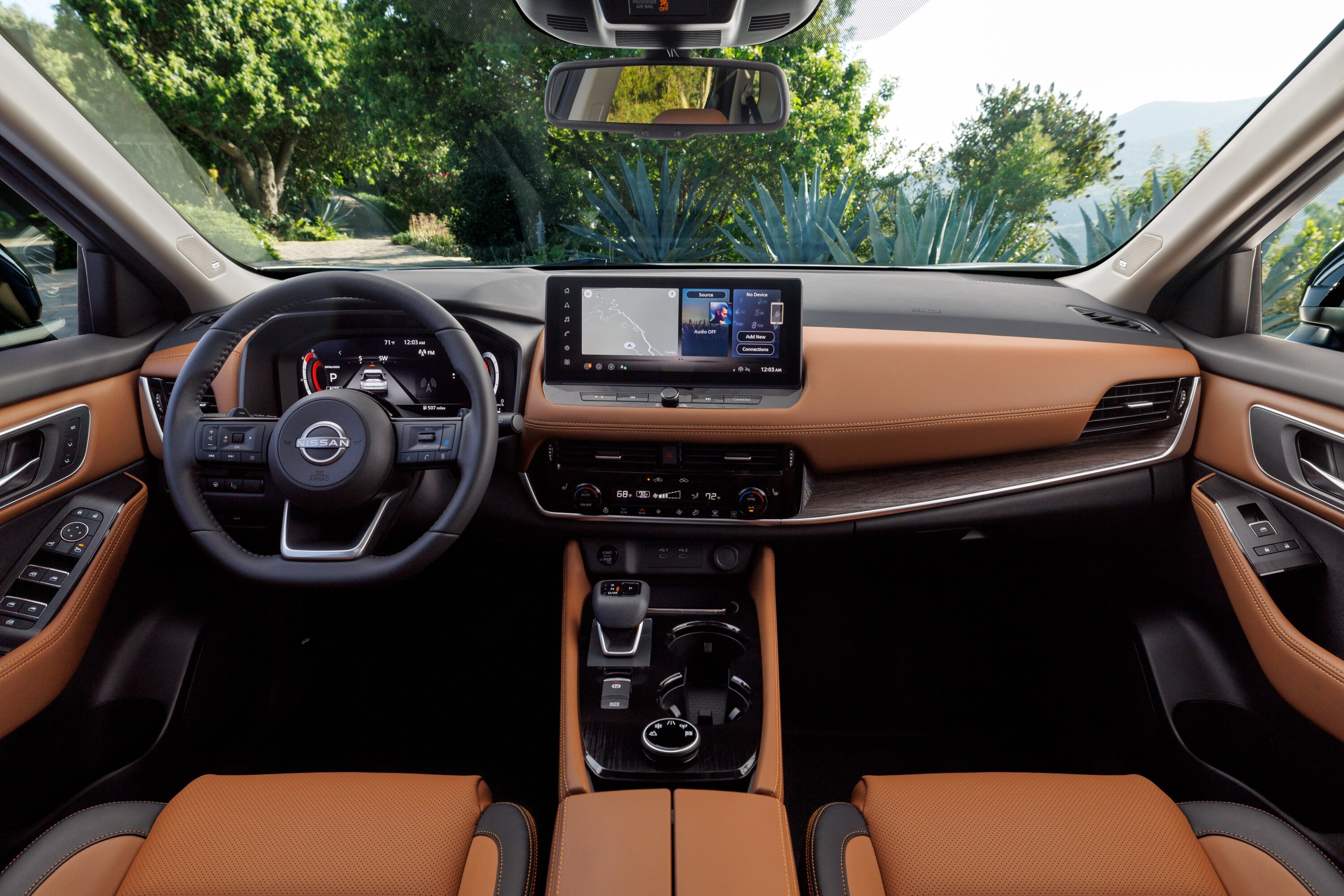
Inside, upper-spec North American Rogues are now fitted with the same 12.3-inch touchscreen found in Aussie cars.
The revamped HMI now integrates Google applications, such as Maps, Play and Assistant meaning you don’t need to connect your smartphone for connected applications.
1
There’s also now built-in Amazon Alexa, with USB-C charge points for the front seats where standard UBS-A plugs once were.
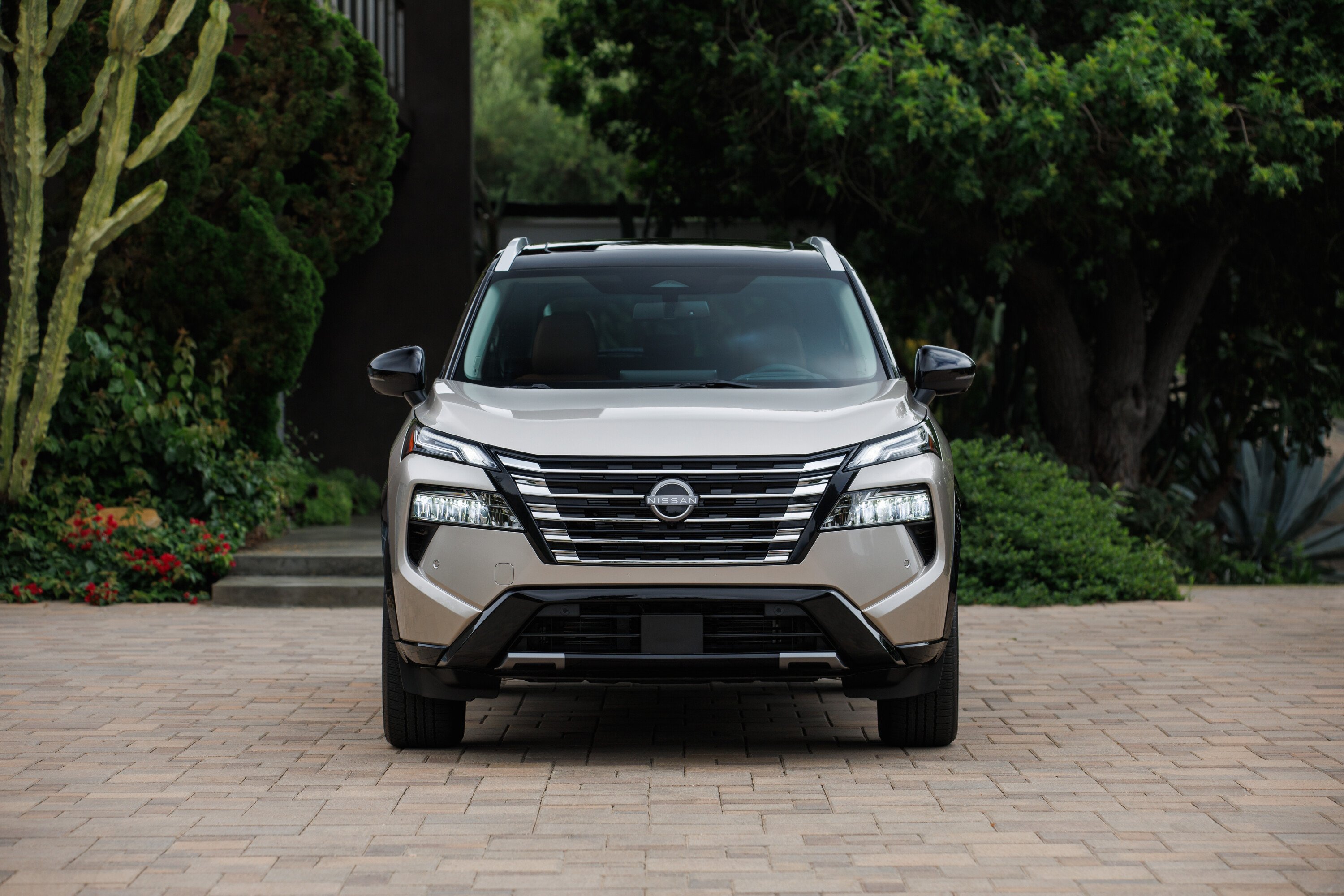
Visually, the Rogue picks up a new, broader V-Motion grille design at the front, and updated bumpers. The result is a lower-looking body, thanks to the grille’s extra width.
Redesigned alloy wheels feature across the range, too.
Nissan is yet to indicate when – and if – Australian models will get treated to the new look.
1
Our original story, below, continues unchanged.
16 October: 2024 Rogue revealed in leaked image
Snapshot
- Mid-life Nissan Rogue medium SUV facelift leaked
- Sleeker front end and new wheels design
- Likely to carryover to global X-Trail eventually
The facelifted Nissan Rogue has been revealed in an image leaked to American outlet CarScoops [↗].
The X-Trail has been known as the Rogue in North American markets since 2013, and is essentially identical – it’s safe to expect our version of Nissan’s medium SUV will adopt this styling in the future.
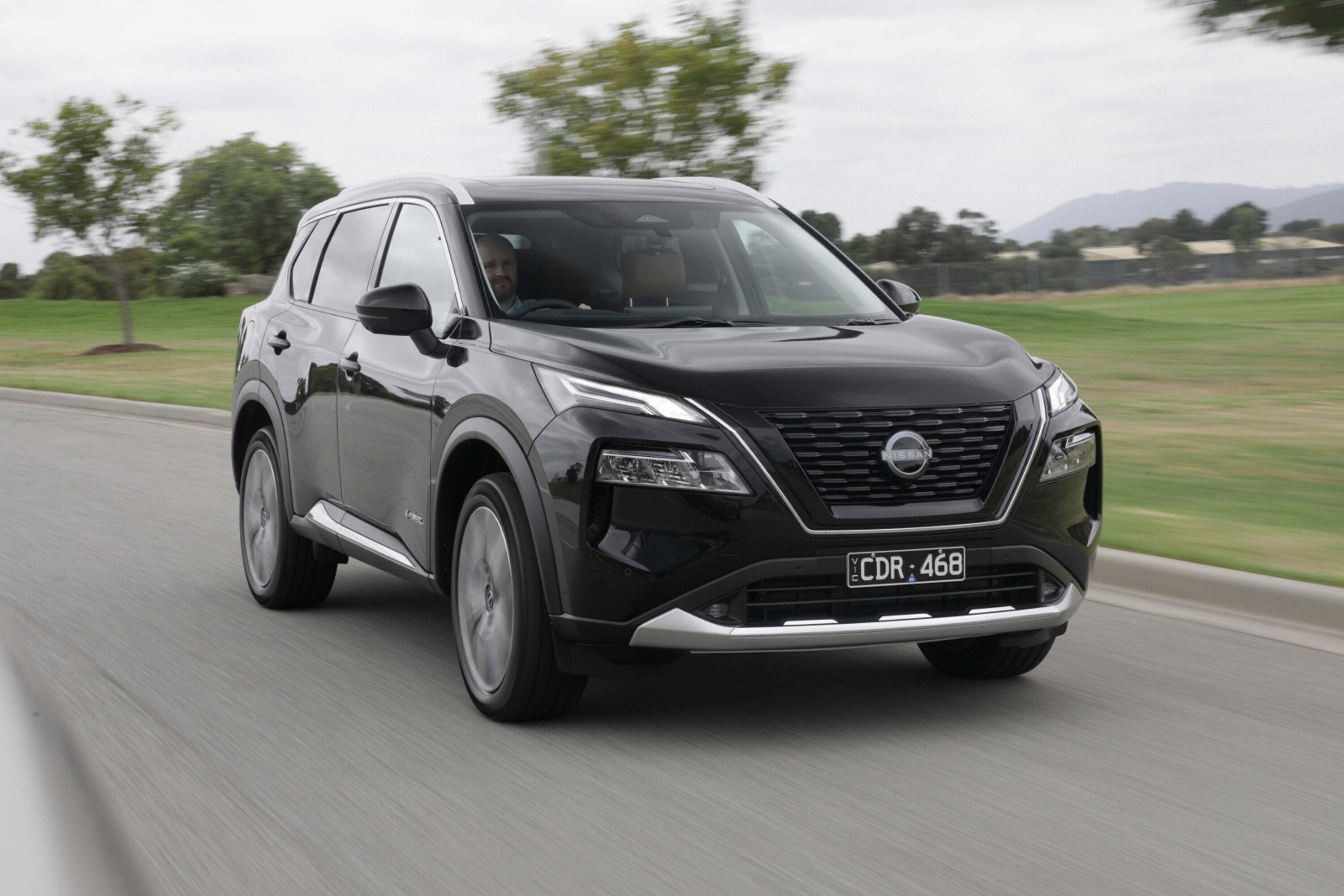
At the front (the only angle we can really see in this photo of a screen) the new Rogue is quite a departure from the existing vehicle. Ditching the visually tall V-motion grille for a wider item with horizontal slats to emphasise the SUV’s width.
The upper-LED light details are similar but the lower lamps and valance into which they’re set are tougher, with elements of Pathfinder. There are new wheels with chrome-tipped spokes on this high trim, and it looks like the door pressings and rear end stay fairly similar.

1
1
Why such a short life cycle?
Well, in North America’s case, it actually isn’t. The Rogue was revealed in June 2020, taking nearly two years to reach Australia as the fourth-gen X-Trail in May 2022.
The Rogue is fitted with an 8.0-inch touchscreen and spy images have shown it to pick up the 12.3-inch item fitted to Australian and Japanese cars.
Typically, X-Trail generations hang around for about seven years, with a mid-life facelift at three to four years. That means we can expect the new US-market rogue to be fully revealed either just before the end of the year, or in early 2024.
The US also doesn’t get the e-Power hybrid version sold locally, so that may be on the cards, too. Nissan insiders have also indicated a rugged off-road version, like the Pathfinder Rock Creek or N-Trek in Oz, may be coming to take the Subaru Forester Wilderness head-on.
MORE
Everything Nissan
The all-new 2024 Citroen E-C3 electric light car has been unveiled for Europe with a sharp €23,300 ($38,700) starting price.
Snapshot
- New Citroen E-C3 electric car revealed for Europe
- Attainable circa-$30K variant coming in 2025
- French to directly rival Chinese-made EVs from BYD, MG, GWM
- Not available to Australia
An even more affordable smaller-battery variant will join a year later with a €19,990 ($33,200) price tag to further undercut competitive Chinese-made EVs, including the BYD Dolphin, MG 4, and GWM Ora.
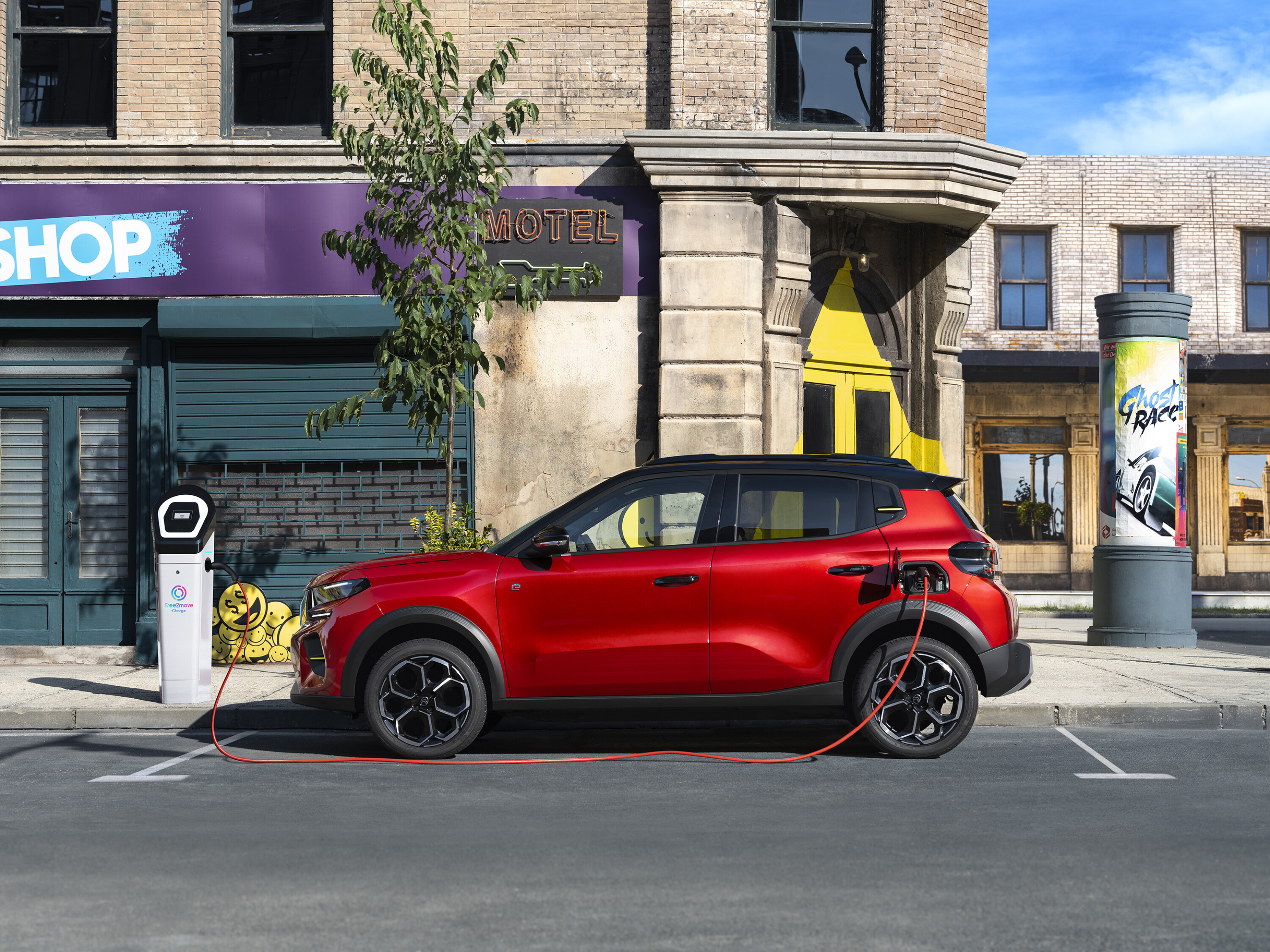
In Europe, the E-C3 will launch with two variants featuring a 44kWh (gross) battery based on the cheaper and longer lasting lithium-iron-phosphate (LFP) chemistry, which delivers up to 320 kilometres claimed WLTP range.
1
Recharging speeds are capped at 11kW AC and 100kW DC.
A single electric motor produces 83kW of power and propels the electric city hatchback from 0-100km/h in about 11 seconds.
Meanwhile, the cheaper 2025 E-C3 variant will provide up to 200km of claimed WLTP driving range, with full specifications to be announced.
1
SUV styling
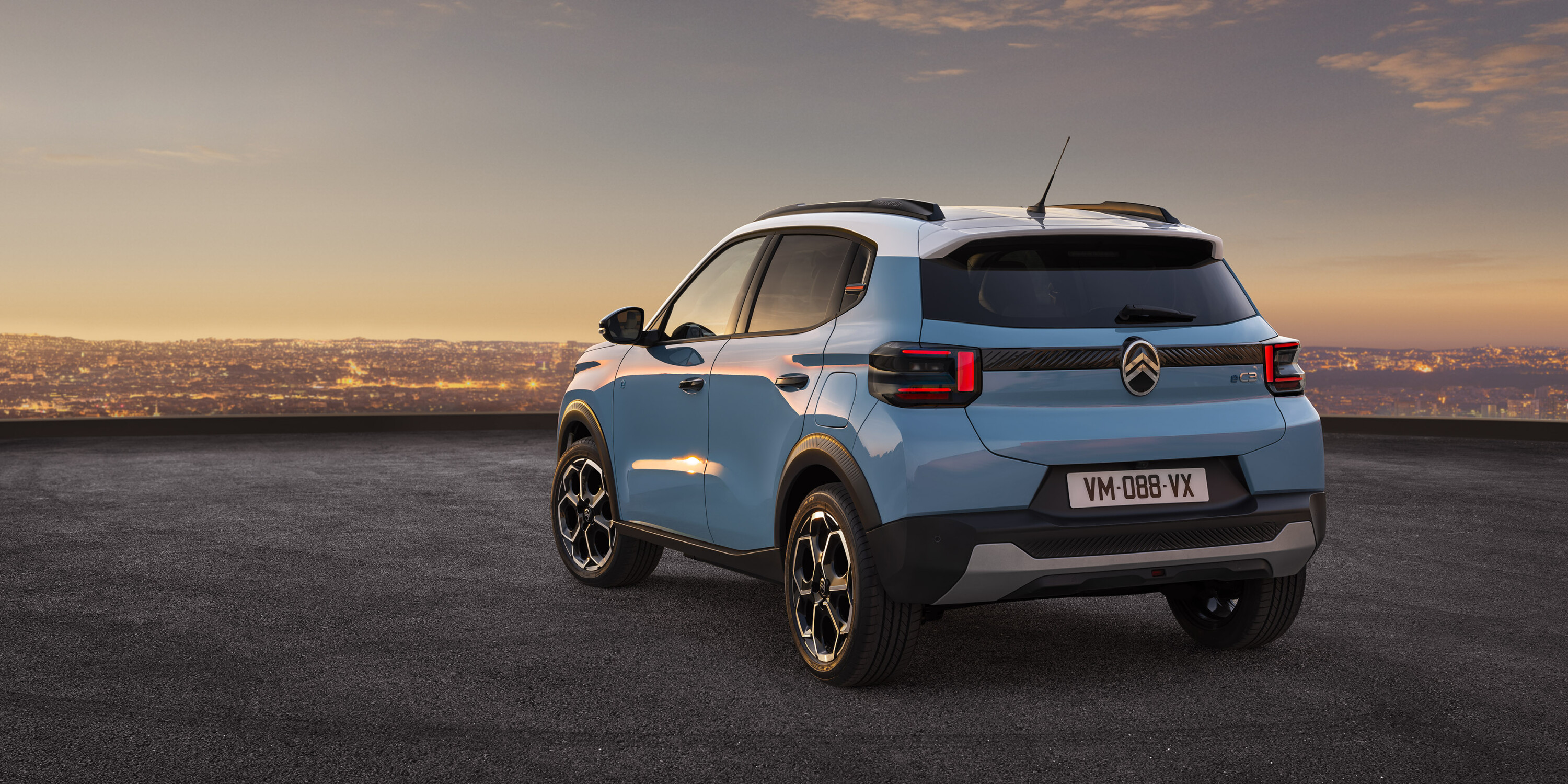
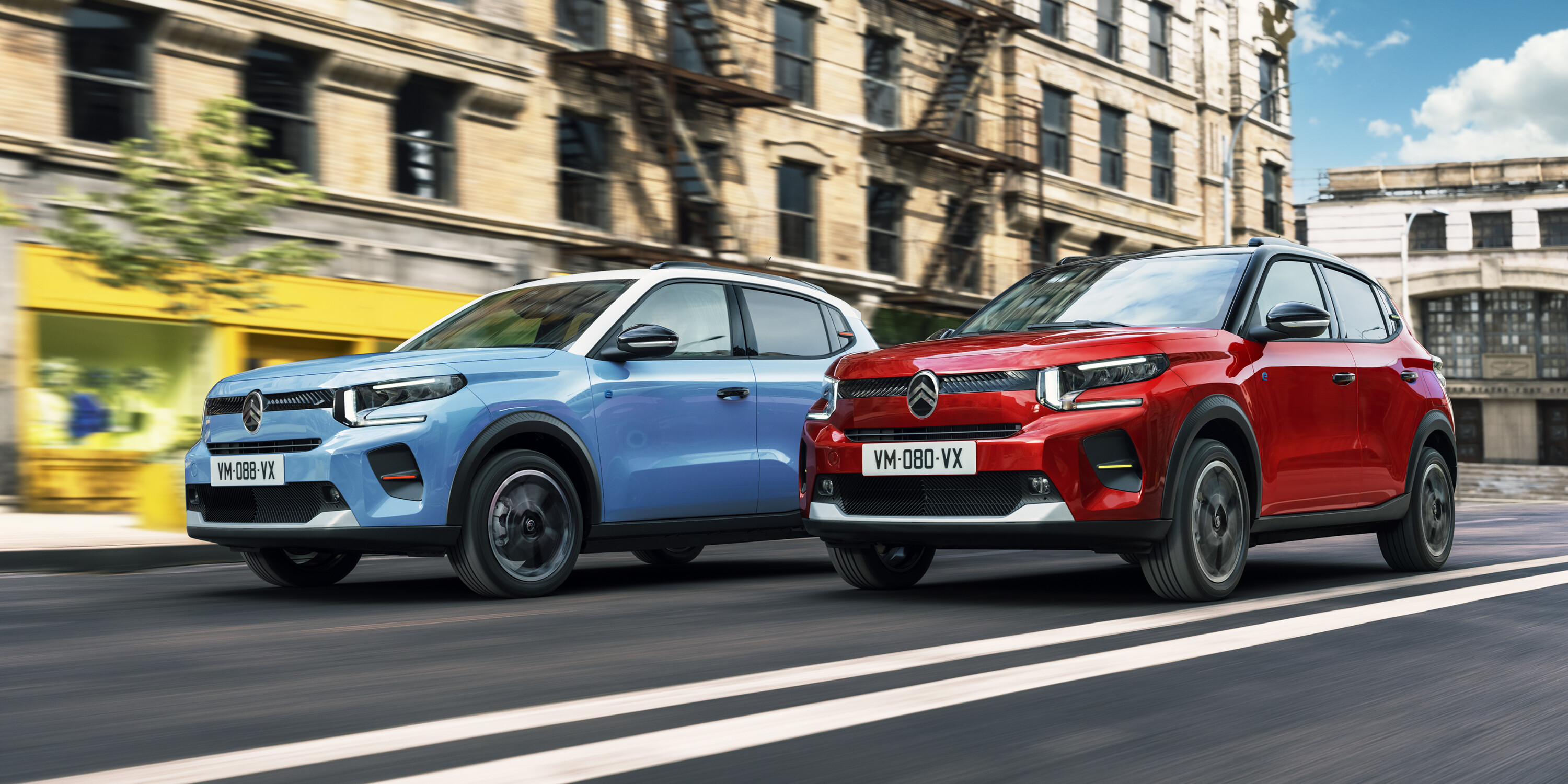
Based on the current Indian-spec Citroen E-C3, the European version gains a design overhaul while maintaining the rugged SUV-style look.
It adopts Stellantis’s ‘Smart Car’ global platform, said to be designed as an EV from the start, but can accommodate traditional internal combustion engines.
With a Suzuki Ignis vibe and 4010mm length akin to the MG 3, the Citroen E-C3 also features contrasting colour accents on the C-pillars and front bumper similar to the facelifted Mazda 2 – but can be swapped with a different colour.
Compared to the outgoing petrol-powered C3, the French company claims interior space has improved in nearly every dimension with a 100mm higher seating position, 163mm ground clearance, and 310-litres of boot space.
Citroen has also fitted its Advanced Comfort Suspension and Progressive Hydraulic Cushions as standard to offer a more comfortable ride.
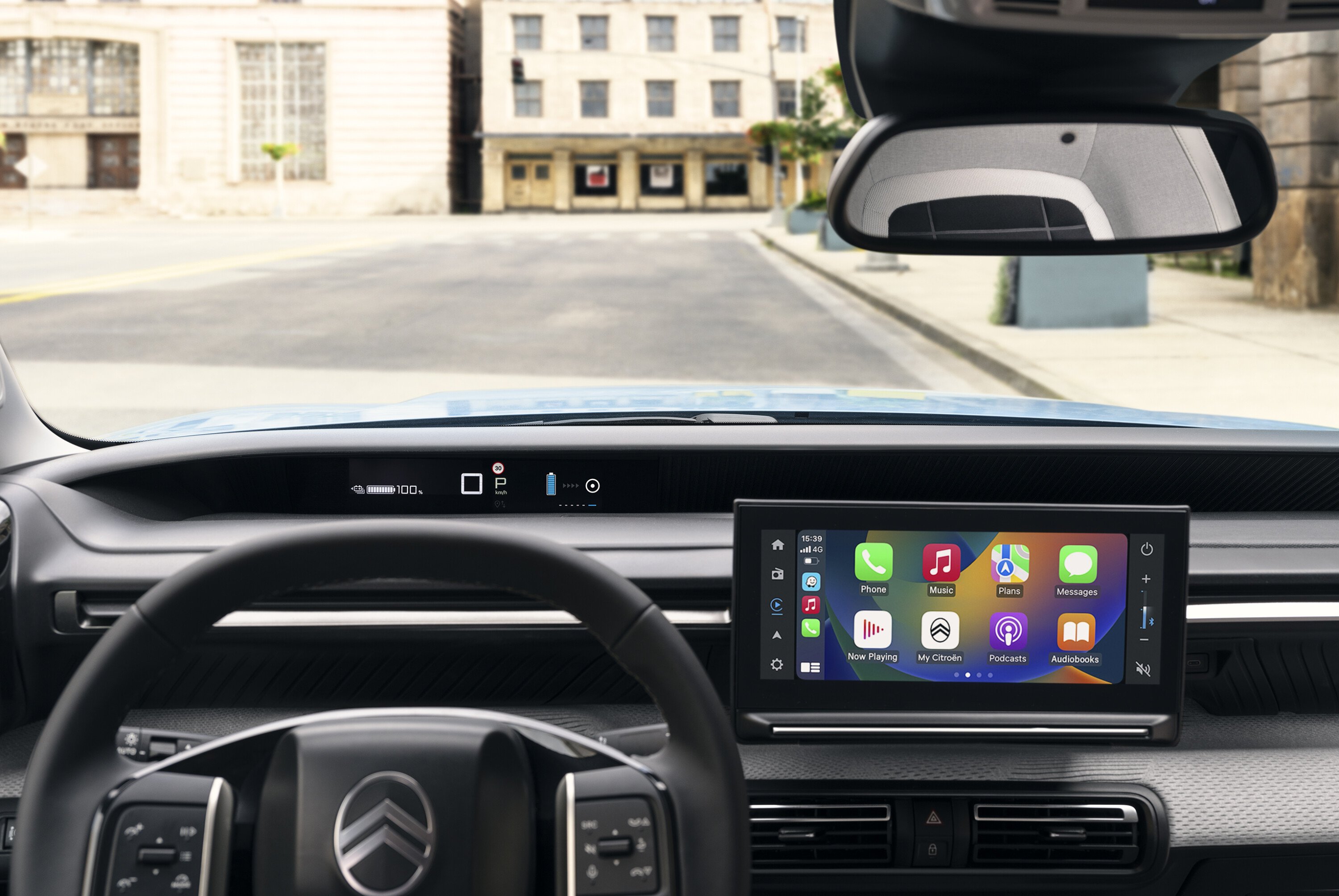
Inside, there’s large windows, a compact steering wheel and a fabric-wrapped dashboard to provide a ‘lounge-like’ theme.
1
Tech and safety
Despite the budget-friendly price, the E-C3 still offers a range of technology and safety assistance features.
It’s available with a 10.25-inch touchscreen with wireless Apple CarPlay and wireless Android Auto, while a slim heads-up driver instrument display is standard.
A suite of safety assistance technologies are also featured, including auto emergency braking with vehicle, pedestrian and cyclist detection, lane departure assist, speed sign recognition, and standard cruise control.
2
Will the Citroen E-C3 launch in Australia?
Nope. Or, at least, not anytime soon.
The affordable Citroen E-C3 will launch in Europe in the second quarter of 2024, with the cheapest circa-$30K variant set to join in 2025.
As for Australia, the brand’s local distributor has confirmed with Wheels Media that the E-C3 is simply not available to our market. They’d be keen to look at it, however.
“Should the Citroën ë-C3 become available for the Australian market, of course we would be interested in closely evaluating its suitability for local introduction,” a spokesperson said.
If it does launch in Australia, the E-C3 will bring new European competition to the entry-level EV scene.
Currently, the Chinese-made BYD Dolphin, MG 4, and GWM Ora electric hatches cost around $40K before on-road costs. The cheapest European-made EV is the Nissan Leaf, which is priced from $50,990 before on-roads.
Volkswagen has also vowed to launch the ID.2 with a circa-$40K price in Europe by around 2025.
MORE
Everything Citroen
October 18: BYD Seal Australian pricing revealed
BYD’s Tesla Model 3 rival will land in Australia with razor-sharp pricing. Find all the details at the link below, and continue reading here for our full first-drive assessment.
September 1: BYD Seal driven ahead of Australian launch
What’s significant about the 2024 BYD Seal?
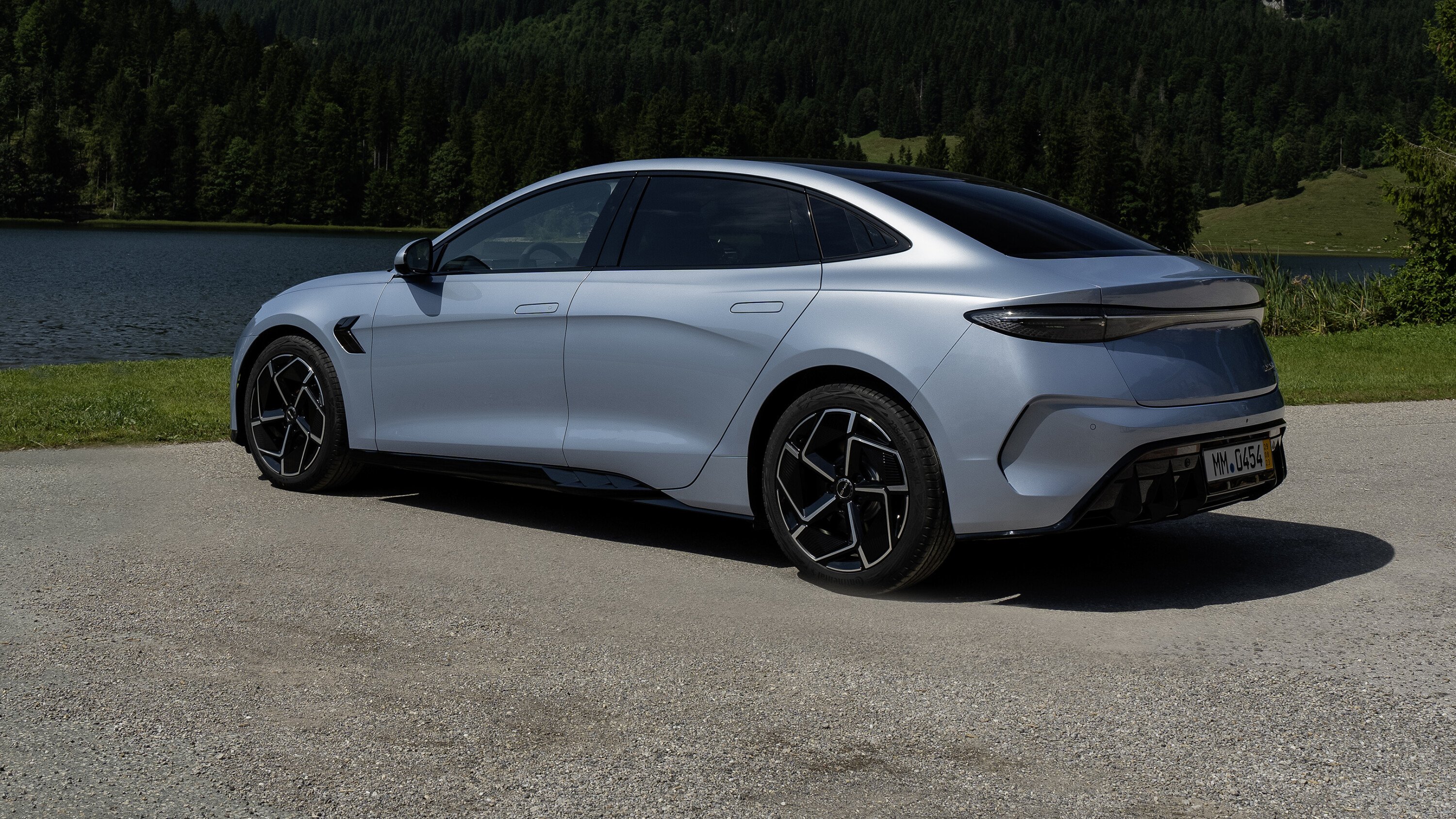
It’ll be the third car BYD brings to Australian shores, and one that’s a little sultrier in its styling than the more prosaic Atto 3 and Dolphin before it.
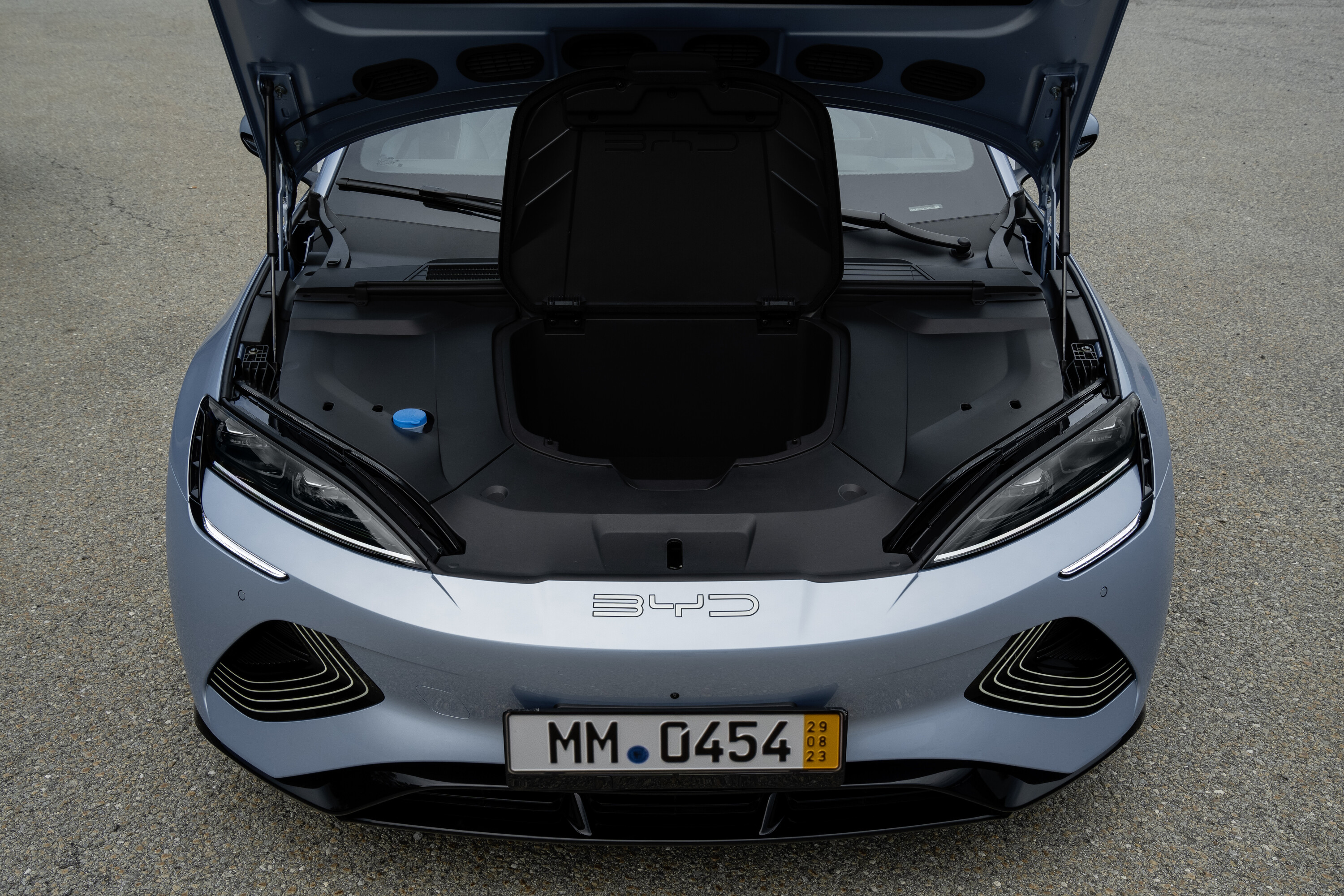
Like those, it’s fully electric and based upon BYD’s clever ‘blade battery’ technology that’s said to come with numerous benefits; chiefly safety (due to the strength of its composition) and space (it’s assembled directly to the car’s platform to free up more cabin room).
The slippery aero of its smart-looking body allies with an 82.5kWh battery for range figures of up to 570km on the European WLTP cycle, while 150kW DC charging capability enables battery replenishment from 10 to 80 per cent in under 30 minutes.
But hey, it’s a dynamic-looking thing. You’re probably keener to know about the less mundane stuff.
1
What else is beneath the skin?
The Seal launches in both rear-wheel drive and all-wheel drive iterations, the latter deploying torque vectoring. The RWD ‘Design’ offers that headline 570km range alongside 230kW peak output for 0-100km/h in a claimed 5.9 seconds.
A few grand more will get you the dual motor, AWD ‘Excellence’ for which power peaks at 390kW, taking a chunk out of both its range figure (520km) and 0-100km/h sprint (3.8sec). To hammer the point home, it wears a ‘3.8s’ badge on the boot lid. We’ve mixed feelings about that…
There’s clearly an abundance of tech, too. BYD is a ginormous company with iPad and smartphone production in its wheelhouse, so connectivity was always going to be a focal point.
1
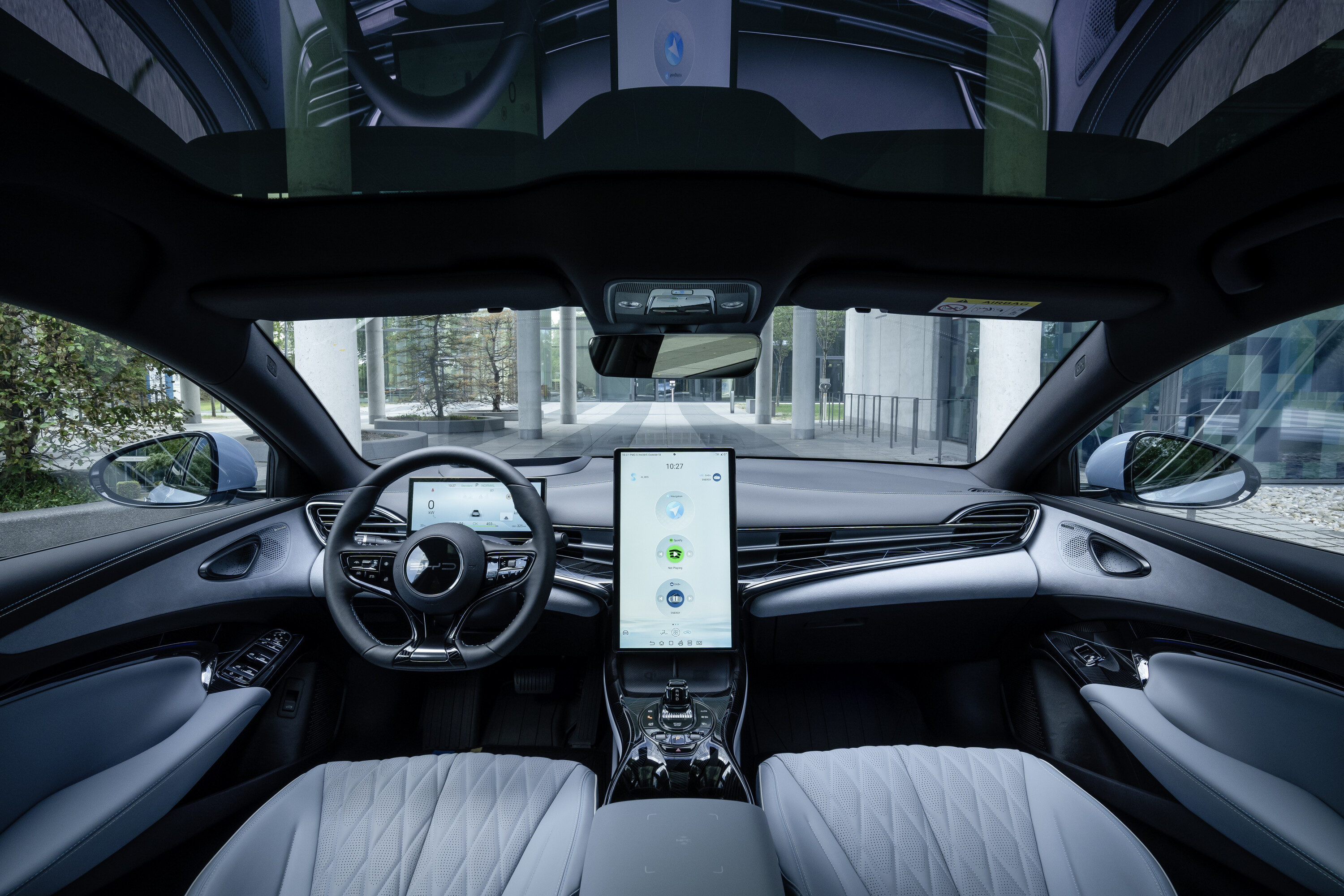
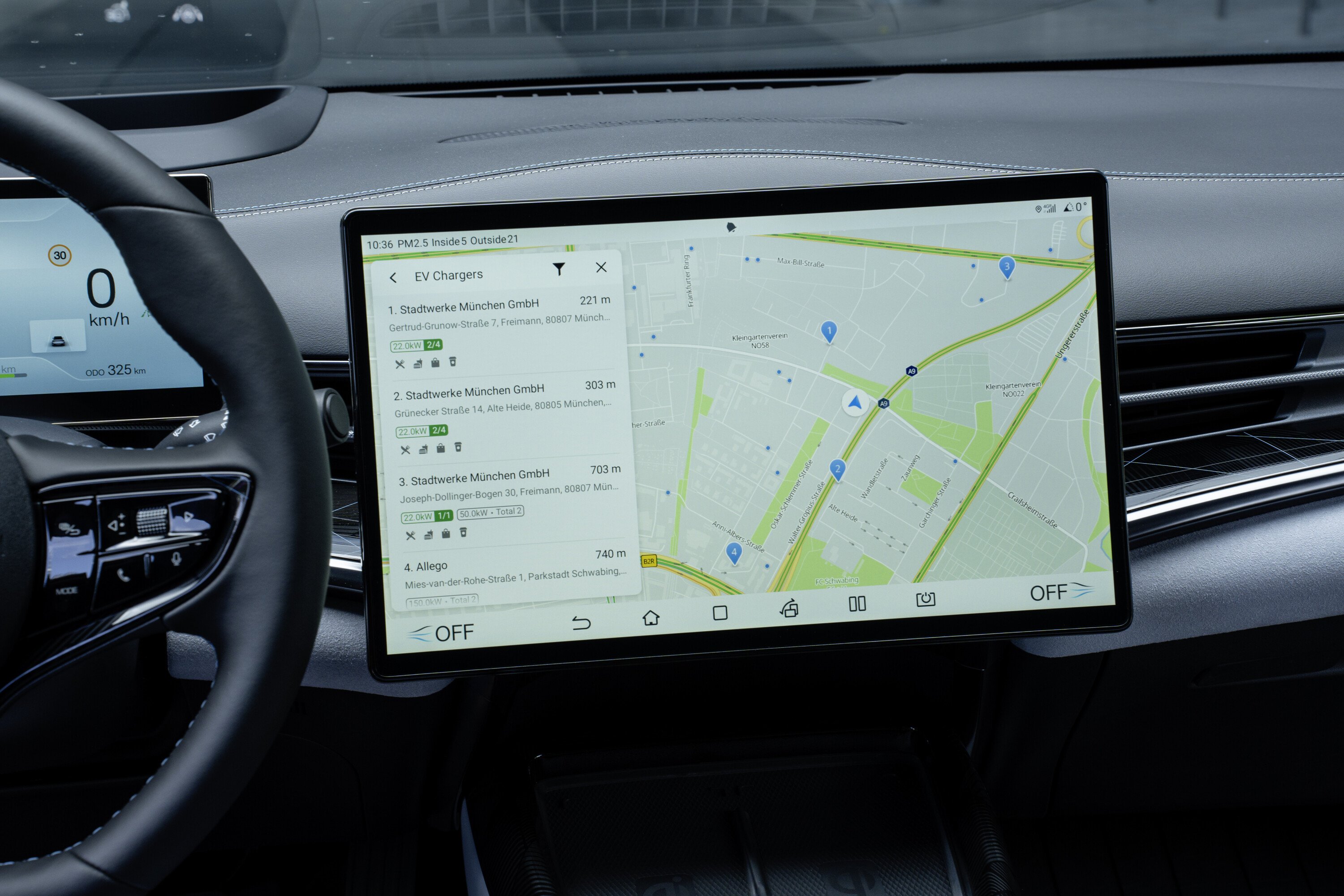
Inside you’ll find the same curious steering wheel design BYD has carved out elsewhere, alongside a rotating 15.6-inch touchscreen – press a button and it flips between portrait and landscape – and a full-length panoramic glass roof to help increase the sense of space.
The screen hoovers up almost all functions and while it takes some time getting accustomed to its numerous menus, it’s imperative that you do.
1
When is the 2024 BYD Seal due in Australia?
UPDATE, October 18: Seal pricing confirmed for Australia
We didn’t know when this story was first published in early September, but now we do: the BYD Seal will launch in Australia from a sharp $49,888 before on-road costs, with deliveries to begin in early December.
That positions the Seal neatly below its most direct rivals, the Tesla Model 3 and Hyundai Ioniq 6 and like the Atto 3 SUV, that’s sure to make more than a few people take a close look at BYD’s new sedan.
1
What’s it like to drive?
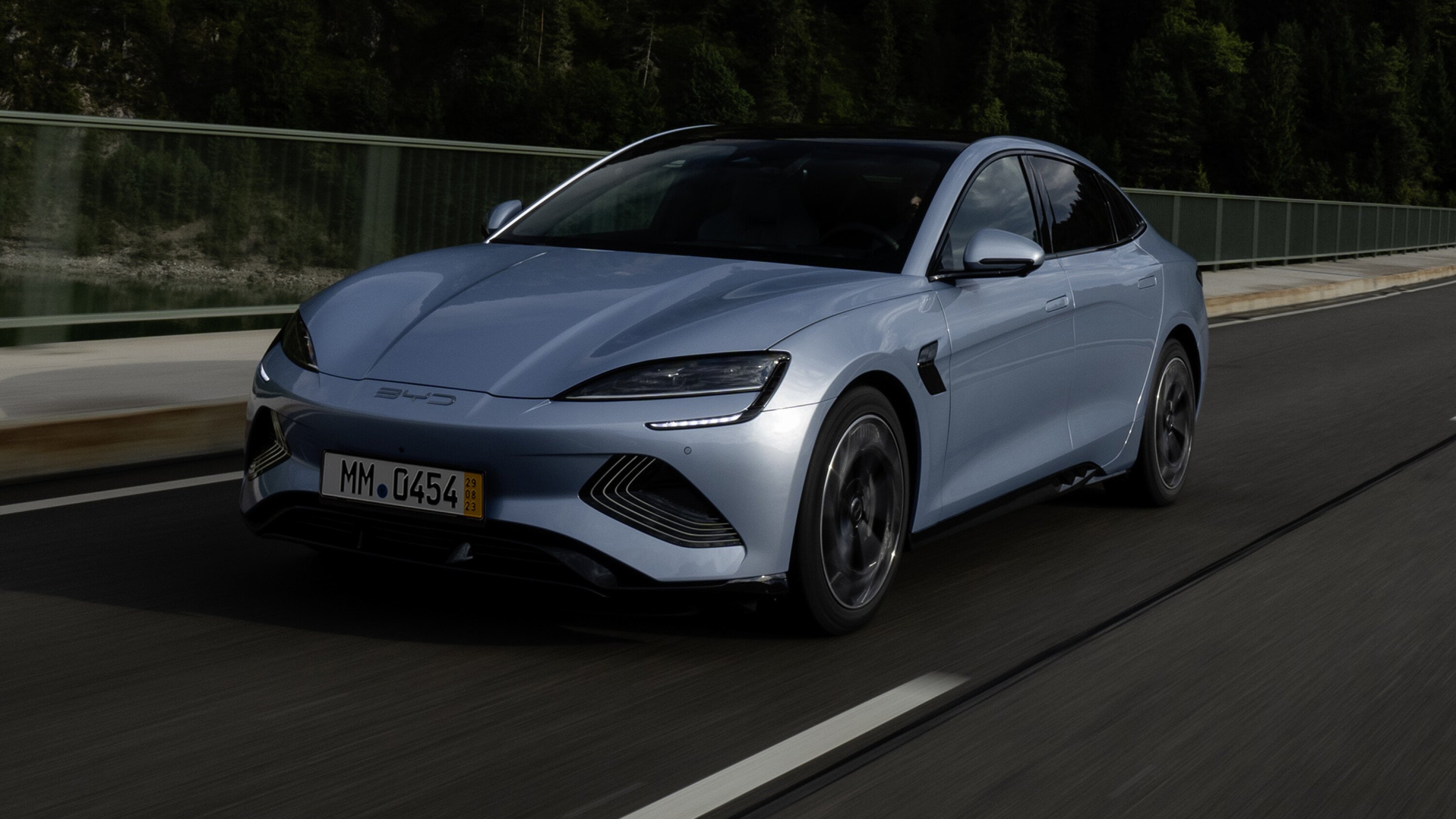
The fundamentals of the Seal are good, its trick battery yielding perfect weight distribution to keep its two-tonne mass firmly in check.
BYD’s focus for this car has been on comfort and safety – the latter being ‘the ultimate luxury’ in an EV, according to BYD – making it somewhat useful that the German countryside enjoyed some particularly torrential rain for the entirety of our test drive.
Perhaps it should be no surprise that a Seal thrives in wet conditions, both RWD and AWD cars putting their power down cleanly. Neither exhibited any great thrills, going around corners deftly just with no obvious engagement – a fact not helped by their lack of paddles to toggle through different levels of regenerative braking.
You’ve one option, and it’s accessed through the occasionally fiddly touchscreen. Enthusiasts ought to look elsewhere.
1
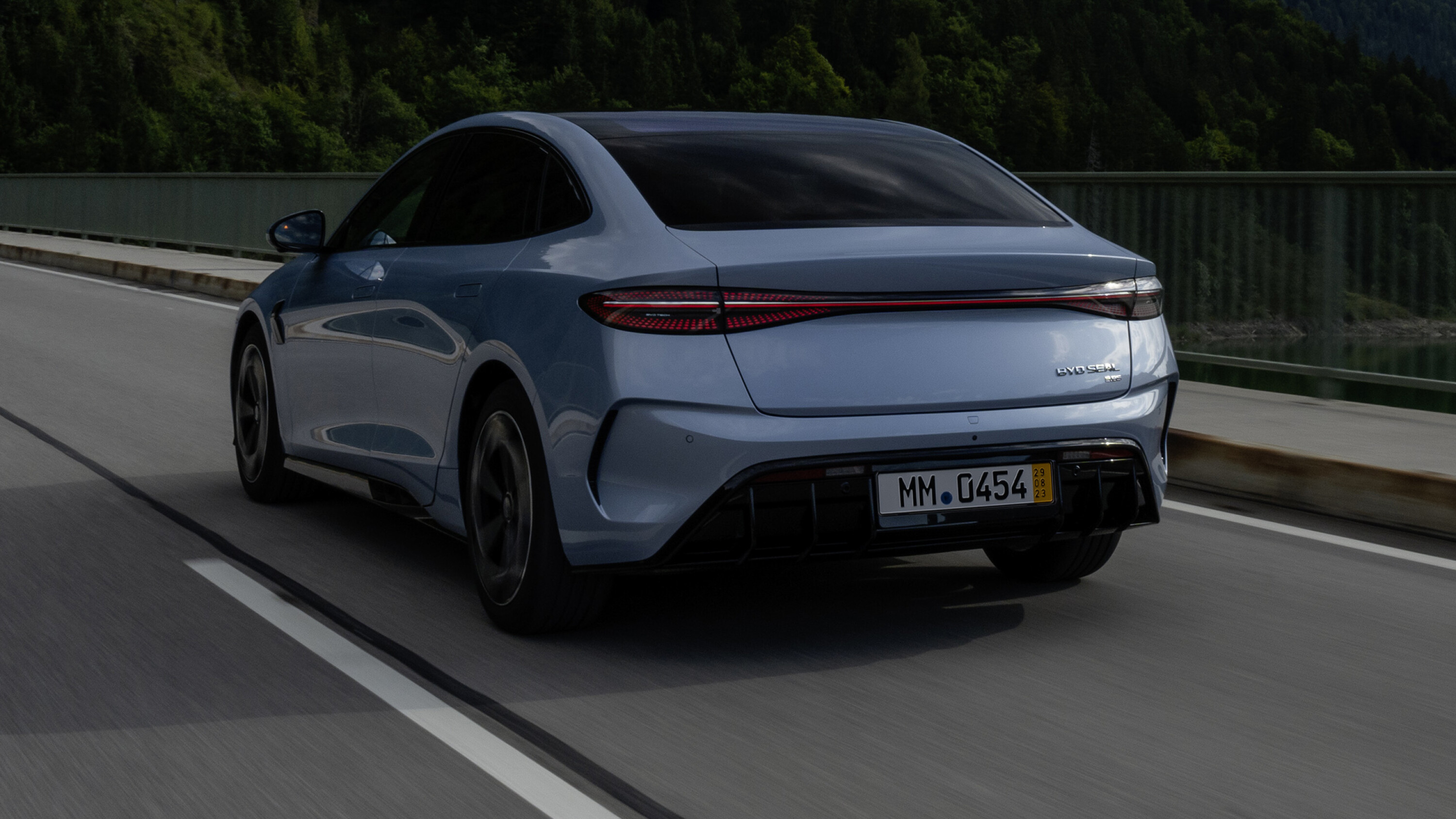
Refinement is strong, however, with double-glazed windows and a swish powertrain bringing an uncommon level of calm to brisk progress.
This, however, makes it all the more irritating when the Seal’s over-zealous active safety systems interrupt proceedings, the beeps and bongs of its speed limit detection – which sometimes admonishes you when you’re doing nothing wrong – and the occasional writhing of the wheel as the lane-keep assist picks up on rogue lines certainly shattering the peace.
You can turn them off, of course, but they reactivate each time the car is started. BYD isn’t alone in this issue, and modern crash testing demands such things for an exemplary score. But other rivals slip their systems in with a little more subtlety.
1
Is it worth waiting for the 2024 BYD Seal?
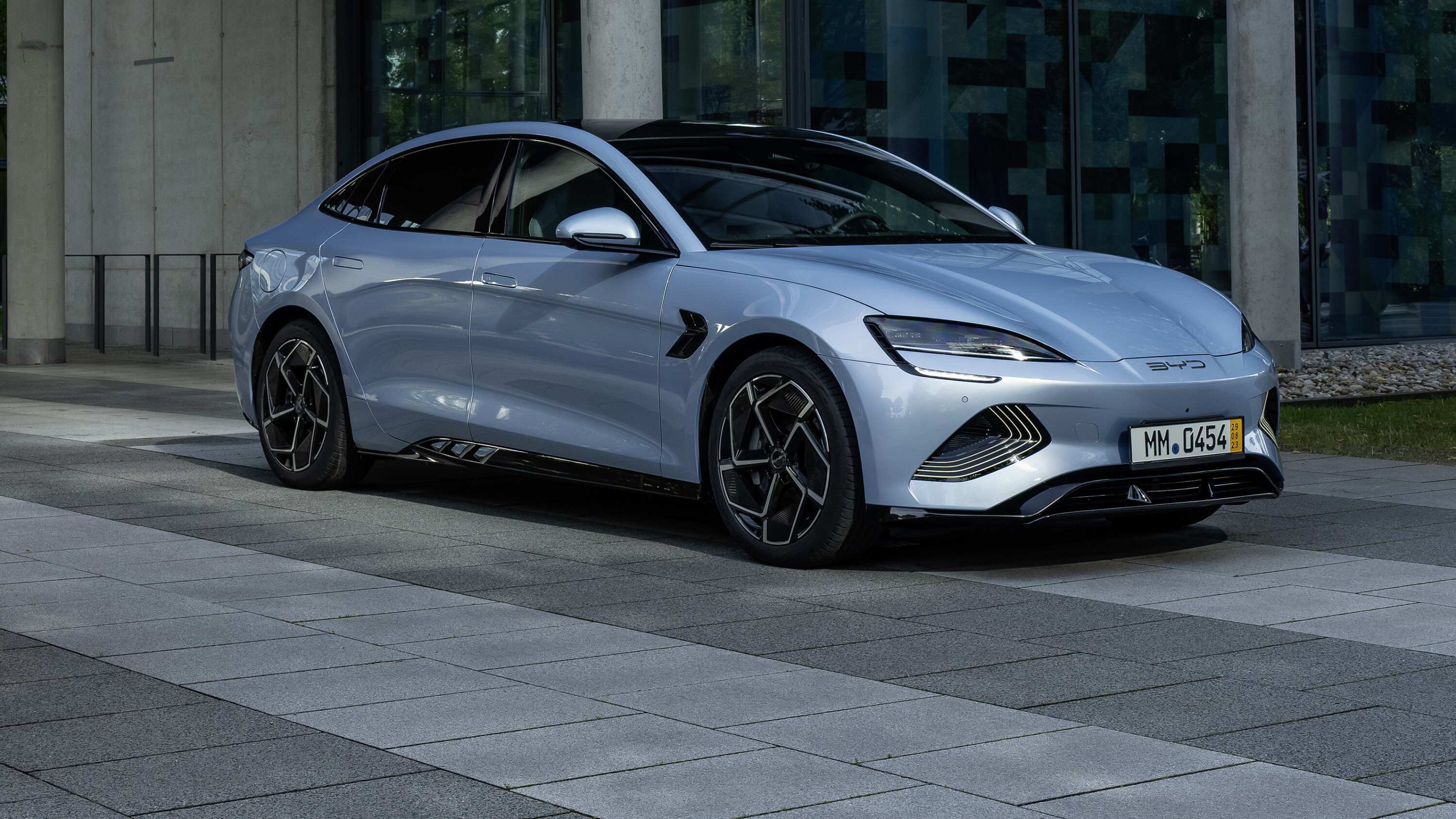
If the Tesla Model 3 simply strikes you as too ubiquitous, too Musky or you’re a little worried by reports of poor build quality – all valid concerns – then the BYD Seal could just be the car you’re waiting for.
The company’s engineers have no qualms about naming the Silicon Valley sedan as their number one rival, and the Seal clearly cribs (and improves upon) some of what the Model 3 does, in terms of commendable interior quality and refinement.
It just lacks any real heart or soul. The handling is surefooted, but the car is short on engagement and those assistance systems need to chill – this will be a purchase made to appease your head rather than your heart.
With that keen pricing, though, the Seal could just fit your criteria.
1
MORE
Everything BYD
MORE
Electric Cars
