In a landmark verdict handed down in the Australian High Court, Victoria’s Zero and Low Emission Vehicle Distance-based Charge Act (2021) has been deemed invalid under the Australian Constitution.
The high court has found that the charge levied on owners of electric and plug-in hybrid vehicles in the state constitutes an excise under Section 90 of the Australian Constitution – and as such, falls under the jurisdiction of the federal, not the state, government.
In addition, the court reopened and overruled a 1974 case for its “anomalous and unsustainable” conclusion that a tax on the consumption of goods was not an excise.
The chief justice, Susan Kiefel, along with justices Jacqueline Gleeson, Stephen Gageler and Jayne Jagot, ruled in favour of the plaintiffs in a 4-3 decision.
Victoria was ordered to pay costs.
The core of the dispute brought by Equity Generation Lawyers on behalf of EV owner plaintiffs Christopher Vanderstock and Kathleen Davies was the imposition of the excise for “use of the ZLEV on specified roads”.
The scheme, administered by Victoria’s Department of Transport and Planning, charges users of both battery-electric vehicles and plug-in hybrids at the rate of 2.8c and 2.3c per kilometre travelled, respectively. Both amounts were increased on 1 July this year.
It was designed to replace the federally administered fuel levy, which is currently charged at 44.8c a litre on all fuel products.
The tax had recently come under fire from the Victorian Ombudsman, Deborah Glass, who said that “thousands of people have been affected by the charge since it came into effect in 2021, many of them unfairly.”
According to the high court, the Commonwealth Attorney-General, Mark Dreyfus, and the Australian Trucking Association intervened in support of the plaintiffs, while the Attorneys-General of each other State and of the Australian Capital Territory and the Northern Territory intervened in support of the defendant.
Two-year court battle
The case was filed in September 2021, and was heard by the full bench of the high court in February this year.
However, the high court found for the plaintiffs, ruling that the road tax was in fact an excise, which the states and territories could not implement.
“The ZLEV charge is a tax on goods because there is a close relation between the tax and the use of ZLEVs,” read a judgement paper from the court.
“And the tax affects ZLEVs as articles of commerce, including because of its tendency to affect demand for ZLEVs.”
The finding not only throws into doubt plans by NSW and South Australia to levy a similar charge on its EV users, but it may set off a flurry of actions against state and territory governments over a wide variety of state-levied charges, including car registration and waste disposal fees.
Politicians are already calling for the Victorian government to refund all of the taxes collected since 2021.
Plaintiff “thrilled” by verdict
Ms Davies told the ABC [↗] that she was “thrilled” to have won the constitutional challenge.
“Now is not the time to be taxing electric vehicles — it’s the time to be doing everything we can to encourage people to make the switch to cleaner cars.”
“The electric vehicle industry warned the Victorian government this policy was muddle-headed years ago,” the Electric Vehicle Council’s chief executive Behyad Jafari said.
“There is nothing inherently wrong with road user charges, but they should never be calibrated to discourage the take-up of electric vehicles.”
“There aren’t enough chargers.”
Insufficient public charging infrastructure is a common argument for not buying an electric vehicle today.
But, is it valid, or just uninformed confusion? Well, it might be a little of both.
Snapshot
Yes, there arenu2019t enough public EV chargers in Australia u2013 in numbers and reliability
But, itu2019s rarely needed because you should charge at home u2013 the cheapest method
Of course, that doesn’t work for everyone and it is a challenge
Throughout history, just about every piece of new technology has stirred fear, uncertainty, and misinformation. From the industrial revolution to the internet, ‘futuristic’ and unfamiliar electric cars are now at the centre of debate.
Among a variety of EV concerns, how Australians can conveniently charge an EV has been contentious. So, how many chargers are out there, is it a valid excuse, and why isn’t it just about the numbers?
According to EV charging finder PlugShare[↗], there are now more than 390 charging locations in Australia.
This includes slow (AC) and fast (DC) public charging stations from charge point operators, networks and businesses, but excludes caravan camping sites that require your own industrial-level cable or the odd ‘a random plug is there’ listing.
Note that the number is for charging locations. Each site may likely offer more than one station and plug, so the actual number of EVs that can charge publicly is far greater. A report from the Electric Vehicle Council (EVC) estimated that there were nearly 5000 individual charging plugs in 2022 nationwide.
1
⛽️ The new fuel stations
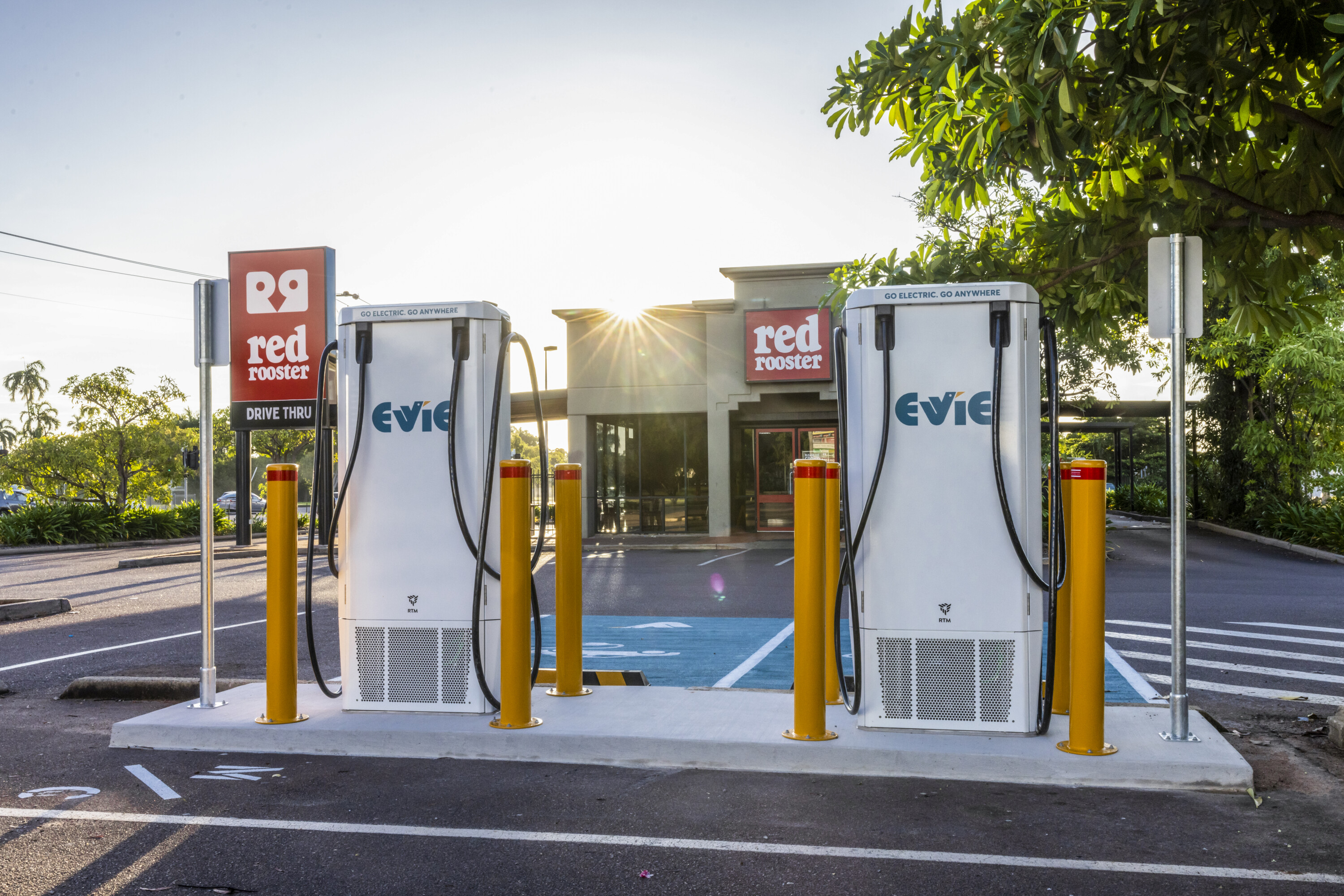
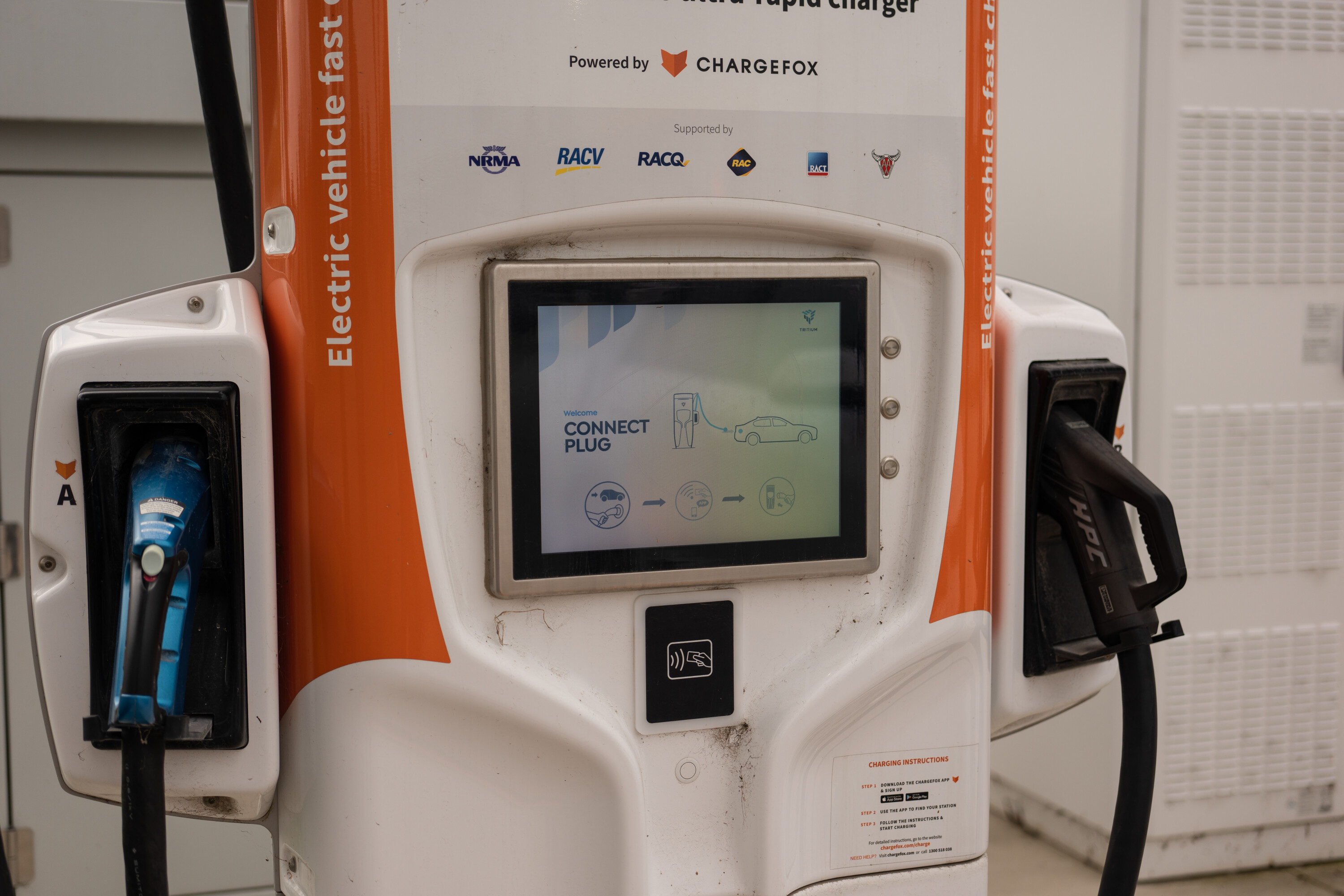
Public EV charging stations substitute traditional fuel stations, with major networks including; Chargefox, Evie Networks, BP Pulse, Ampol AmpCharge and Tesla Superchargers (which are half-locked to Tesla vehicles only in Australia), along with Jolt, Exploren, EVUp, and Everty.
However, they are not required if you can ideally charge at home. For more read on.
Critically, most charging locations are limited to offering one or two stations.
Many stations can only juice up one vehicle at a time, despite offering two different plugs.
Exacerbating this issue, if two vehicles power-share from one stall, then the peak charging speed will be limited on both – extending charging times.
For example, plugging in two EVs on a 75kW DC station will split the power to 50kW on one and a slow 25kW on the other – yet users will still pay the same price.
And, when a DC fast-charging unit is too busy or out-of-order, there may be a working AC charging station nearby. However, this will prolong the charging time even further to several hours, which can be inconvenient if you’re not occupied with other tasks and need a full recharge.
Therefore, for a country spanning 7.7 million square kilometres with more than 100,000 EVs in circulation, it’s clear there still aren’t enough public chargers to satisfy today’s demand – let alone keep up with ever-growing sales spearheaded by Tesla and BYD.
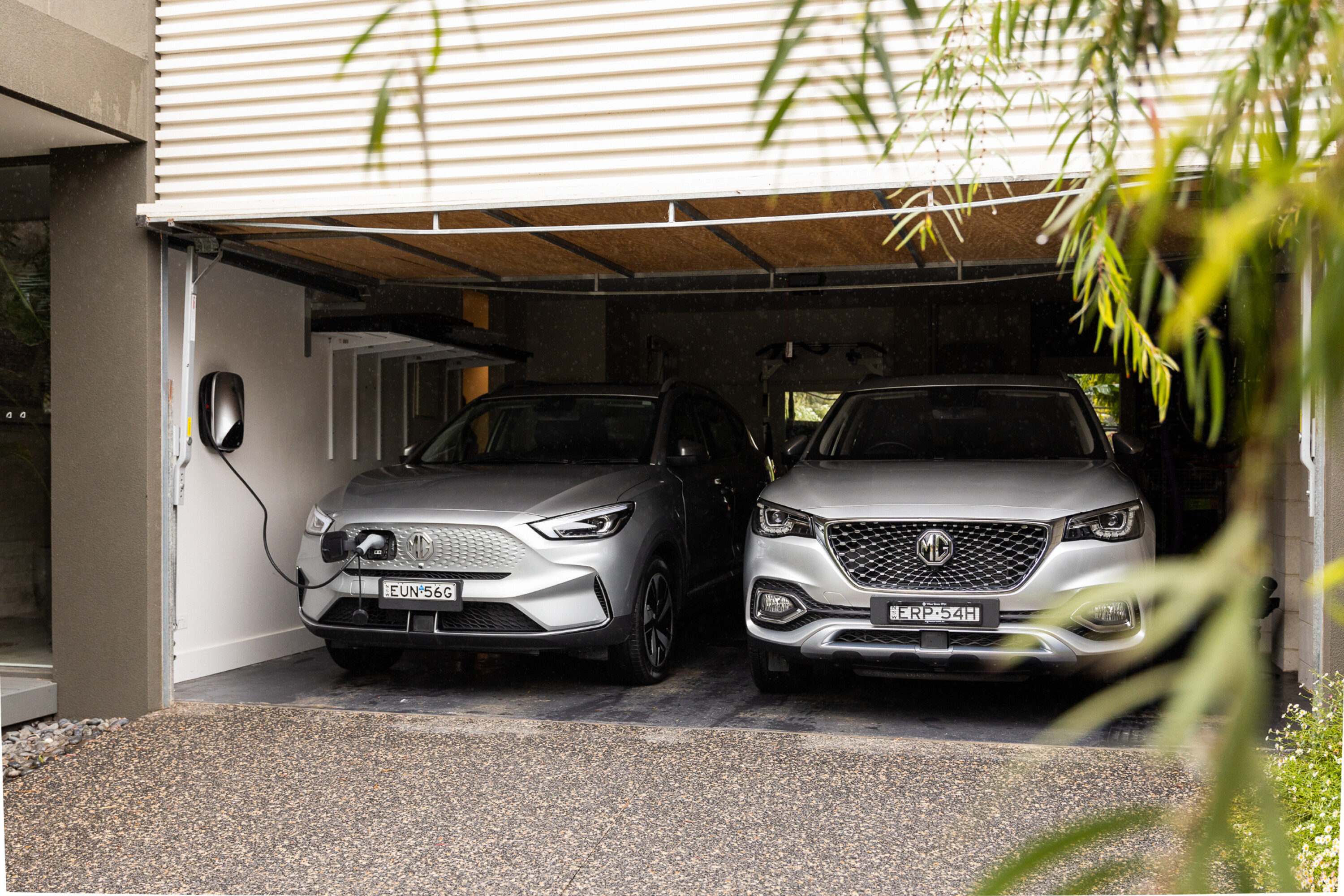
While Australia’s public EV charging infrastructure is still limited, the most convenient, cheapest and reliable way to recharge is at home or work.
It’s important to consider: Internal combustion engine cars must typically be refuelled at a dedicated fuel station, yet EVs can be charged at home.
So… how often will you really need to stop beside the road to recharge and wait?
Even without a dedicated wall box unit, any three-pin power socket at home (yes, the same wall-plug your appliances use) will add enough range for the average 30 to 40km daily driving needs.
This means we can assume the majority of Australian homes can safely and legally access a power plug at home, provided they have off-street parking.
As a long-distance EV rideshare driver told WhichCar, using public charging stations is the most expensive way to own an electric car – and the typical Australian would only need to use public infrastructure on longer road trips, where the distance exceeds the model’s range.
With the average new EV today providing around 450km claimed range (albeit on a combined urban and highway test), drivers can comfortably make a return trip from Brisbane to the Gold Coast, Sydney to Newcastle, or Melbourne to Bendigo without needing to stop and charge.
However, for Australians who regularly need to travel long distances, a traditional petrol-electric hybrid or plug-in hybrid may be a more suitable alternative than pure diesel.
Of course, many Australians can’t charge at home, which is a valid barrier to making the electric switch.
If you live in a home with only shared or public street parking, owning an EV can be tricky.
Few buildings have AC charging equipment installed, but the National Construction Code now requires all newly-constructed buildings to have EV charging provisions ready.
However, for most older apartments and homes, it’s recommended that you negotiate with all stakeholders – such as the body corporate, owners and neighbours – to work through legal hurdles and prove the value to install charging infrastructure in your car park space, even if it’s just a regular three-pin plug.
There’s also the potential time and financial costs for proving that the plug is safe and isolated from other units (even before installation has started), especially if the car park space isn’t near the power metre box.
Critically, if you’re a renter, it could be even more of a headache due to limited property rights.
And, despite all this, your efforts might be rejected, even though a growing number of property owners are beginning to see the value in offering charging facilities. It’s a case-by-case basis.
If you can’t charge at home, EV owners will need to rely on public charging stations – which, while expanding in numbers, is still problematic in some areas.
? Reliability
Charging stations – particularly the fast DC units – are complex electrical systems and can suffer faults as more drivers use them.
Repair times can also be prolonged due to an arduous diagnosis-to-repair process, but charging providers and manufacturers are working to improve ‘uptime’ rates with more reliable and serviceable modular machines that can cope with higher loads.
Faults can range from simply a disconnected electricity grid, to worn out plugs and problematic internal parts.
The most common Tritium stalls have been notorious for reportedly sub-par reliability – but less problematic with its latest modular units – whereas Tesla’s Supercharger network has been lauded for its dependability. More charging models are coming online in Australia too, including from ABB and Kempower.
However, as EV owners and the lobbyists have long advocated, Australia also needs more ‘redundancy’ at each location when stations do inevitably go offline.
This includes offering large EV charging hubs as seen overseas – instead of the paltry one or two common today – and more sites geographically spread out, so drivers can comfortably rely on nearby backup stations without low-battery ‘range anxiety’.
While EVs are cheaper to own over the long run, that selling point is less compelling if public charging stations are too expensive – forming a clear disadvantage for those who can’t charge at home.
Some BP Pulse and Tesla Supercharging locations vary pricing by the time of day, which corresponds with station demand. Meanwhile, the RAA and Engie have trialled on the Chargefox network to prioritise cheaper charging during daylight and encourage utilising renewable energy.
There are also still some free chargers remaining, and often council or state government operated stations – such as Queensland’s Electric Super Highway (QESH) network – are cheaper than most.
Public EV chargers also need to be more physically accessible, especially for older motorists and people with impaired mobility.
DC fast-charging stations in particular often have heavier and shorter-length cables, which can be a challenge for people who are less able.
Meanwhile, there’s no mandated standard requiring carmakers to position charging ports on any particular side of the vehicle – it varies from the front face, front-quarter wheels, rear-quarter panel, and even beside the tailgate depending on the model – so it can make plugging-in tricky.
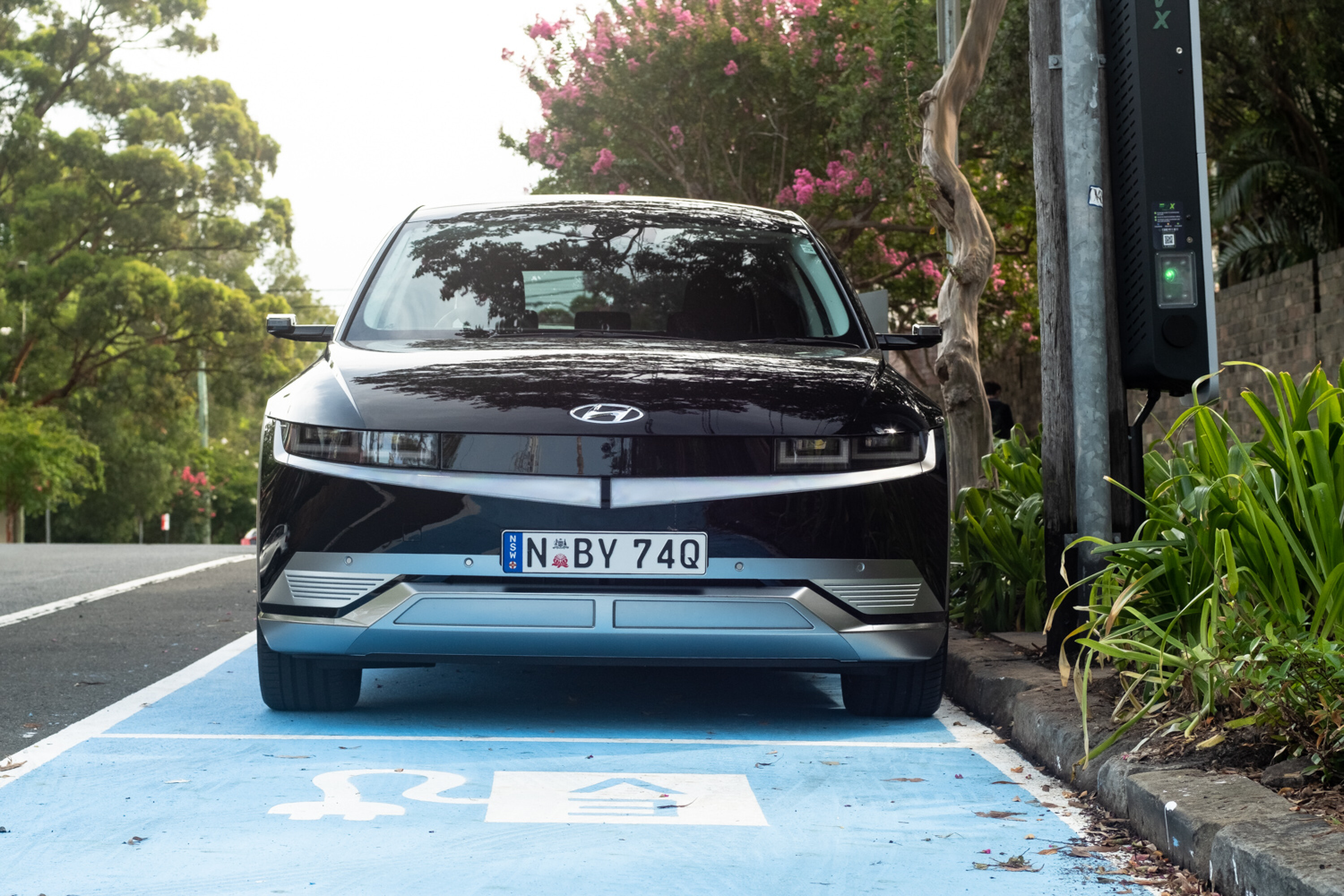
Additionally, differences in the charging station position, orientation, kerbs or steps, safety bollards, and narrow parking spaces can all be barriers to plugging in an EV.
The older Tritium RT50 model also requires users to press a flashing start button on the unit after initiating via a smartphone app or RFID card, which isn’t clear-cut to EV newcomers.
Since EVs can take up to an hour to fully charge at a fast station, questions have been raised about personal safety and services while at EV charging locations.
This especially applies at night, where proper lighting and security cameras aren’t always guaranteed.
Some charging sites are secluded at the edges of a car park, with charging operators needing to contend with vandalism as networks expand.
Because of this, most EV charging hubs still lack traditional fuel station amenities, such as cover from the weather, water buckets and squeegees, tyre air pumps, and hand wipes.
Evie Networks guarantees that all its charging locations have lighting and security provisions in place, while BP and Ampol mostly place their EV stations at the side of their fuel station forecourts where there are safety provisions.
Some owners can become impatient and discourteous to others, as EVs simply take longer to charge than pumping fuel, and there aren’t enough public stations to meet the demand today.
Importantly, this mainly applies to busier charging locations during busy holiday periods, where disorderly queues may form.
For a full guide of public EV charging etiquette tips, check out the link above.
Yes, there aren’t enough public EV charging stations in Australia.
But, as long as you can plug in at home and don’t commute extra long distances every day, it shouldn’t be a worry.
Unfortunately, if you can’t charge at home, owning a pure electric car today isn’t ideal – as you’ll be relying on a patchy, pricier and inconvenient public charging network.
More residential properties, local businesses and councils are also installing EV charging stations to attract drivers and support their environmental, social, and corporate governance (ESG), too.
It will take some time for public EV charging infrastructure to become as ubiquitous as fuel stations. But, the best charger is at your own home.
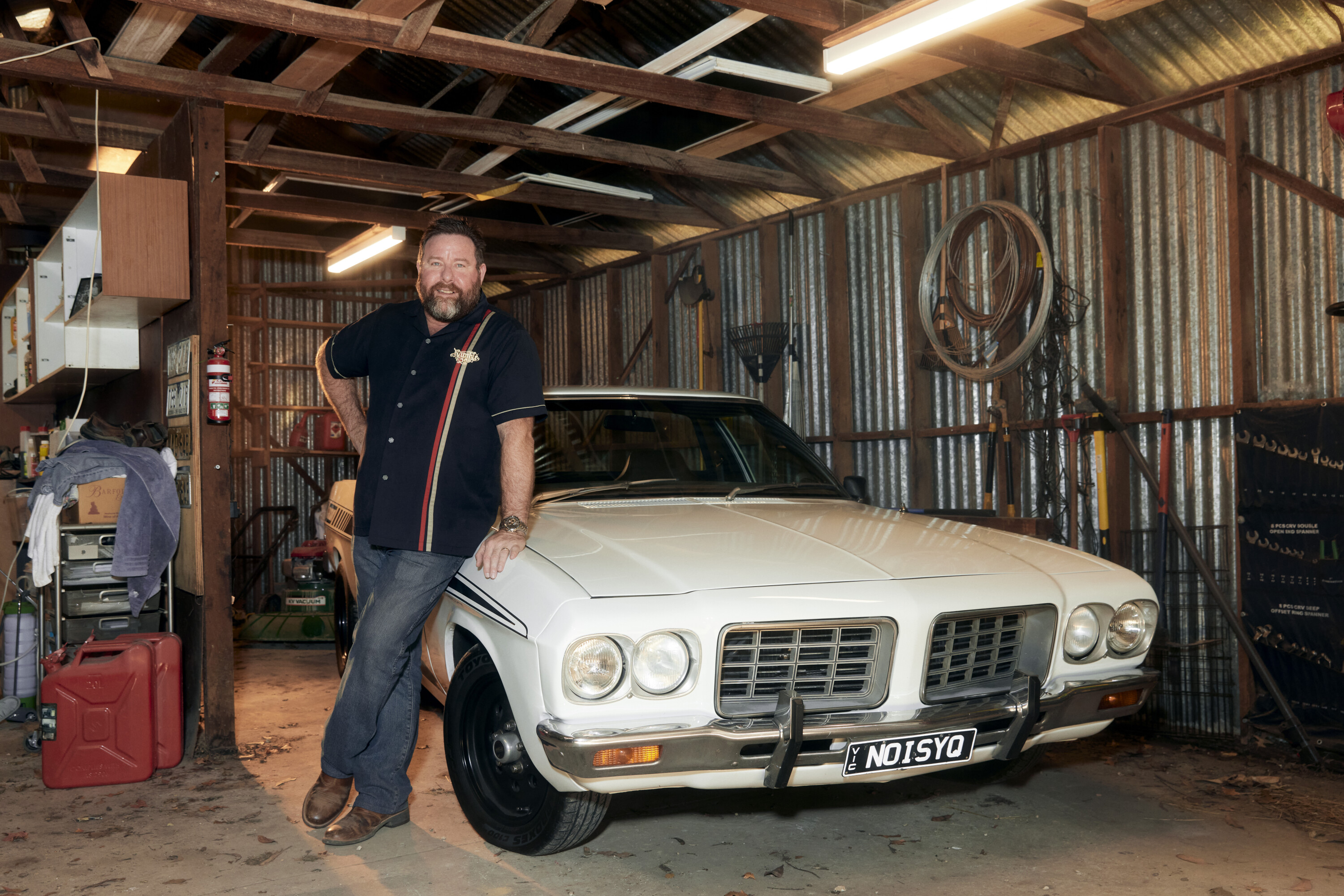
Does anyone really care enough any more to engage with Ford V Holden?
A new movie-length doco on the epic automotive rivalry that was the battle between Ford and Holden is set to hit cinemas later this month.
1
The pic itself was produced by the same people who created the excellent 2020 Peter Brock biopic Brock: Over The Top, but the timing of this release feels somewhat odd.
If it had dropped in the near-wake of the closure of Holden, the film – narrated by noted petrolhead and former Top Gear Australia host Shane Jacobson, with commentary from a brace of industry insiders from over the decades – would have certainly held its own in what was dramatic and emotional times.
It will likely stand as a compelling documentary for students of cultural and industrial history of those turbulent times, when viewed through an older lens.
1
Now, though, the Holden brand already feels like nothing more than a cautionary tale of a company failing to keep up with a rapidly changing market
Ford’s continued push into the ute space, meanwhile, drives it further and further away from the consciousness of new-car buyers. Certainly, it’s very unlikely that there will be any memorable family Christmas bust-ups over either brand this year.
The list of voices you’ll hear runs heavy with motorsport luminaries, too, which provides an idea of the likely content mix. Indeed, the trailer focuses strongly on the annual Bathurst rivalry between the two brands.
The appearance of current Ford Australia CEO Andrew Birkic is a welcome inclusion, while the insights of former Holden head of design Richard Ferlazzo and the brand’s former PR master John Crennan will also likely add spice to the subject.
However, it remains to be seen if the subject matter – as important as it was at the time – can resonate with a wider audience who has likely moved through all stages of grief at the rivalry’s demise all the way to acceptance.
Ford V Holden will screen in cinemas nationwide from October 19.
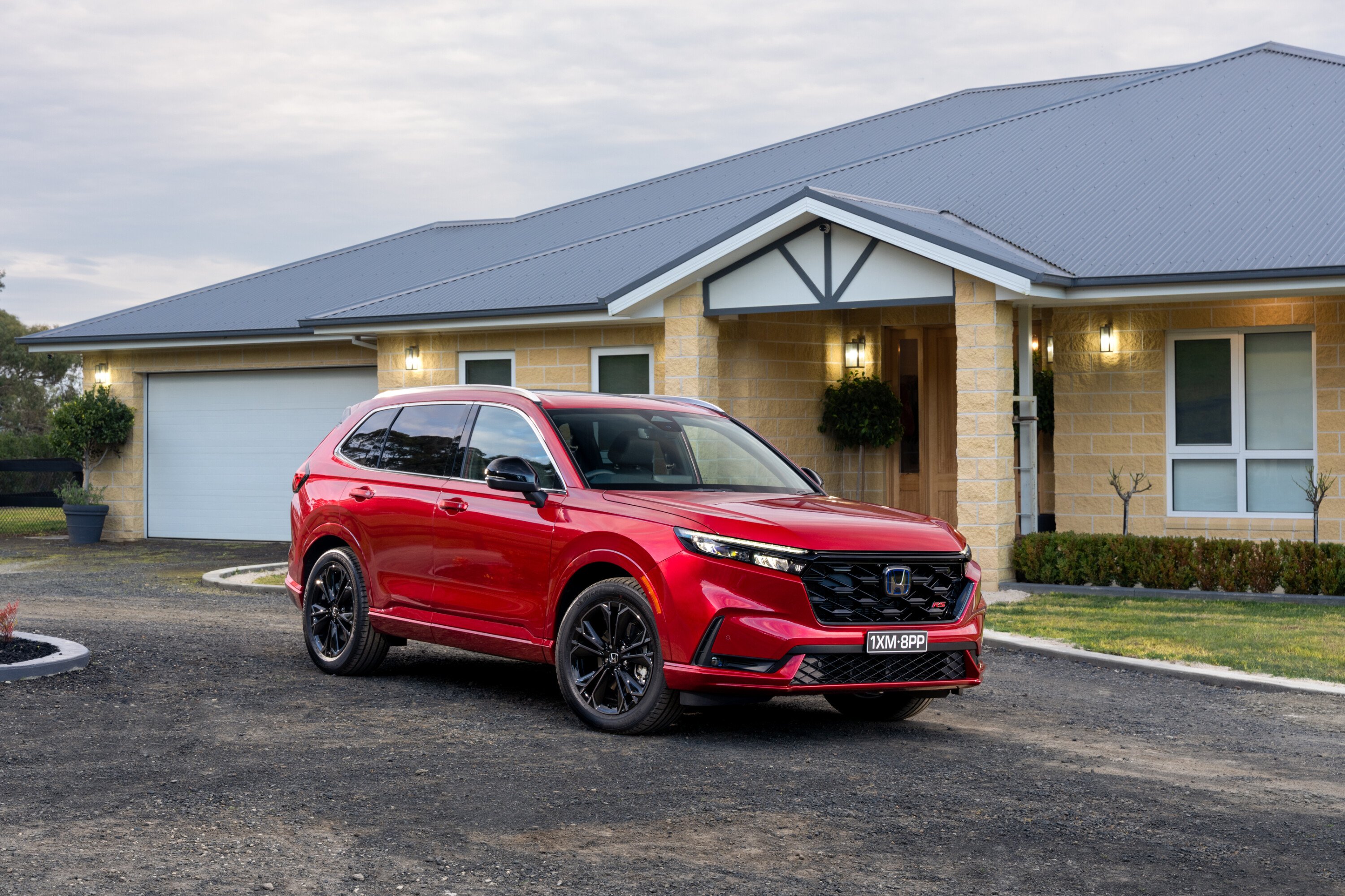
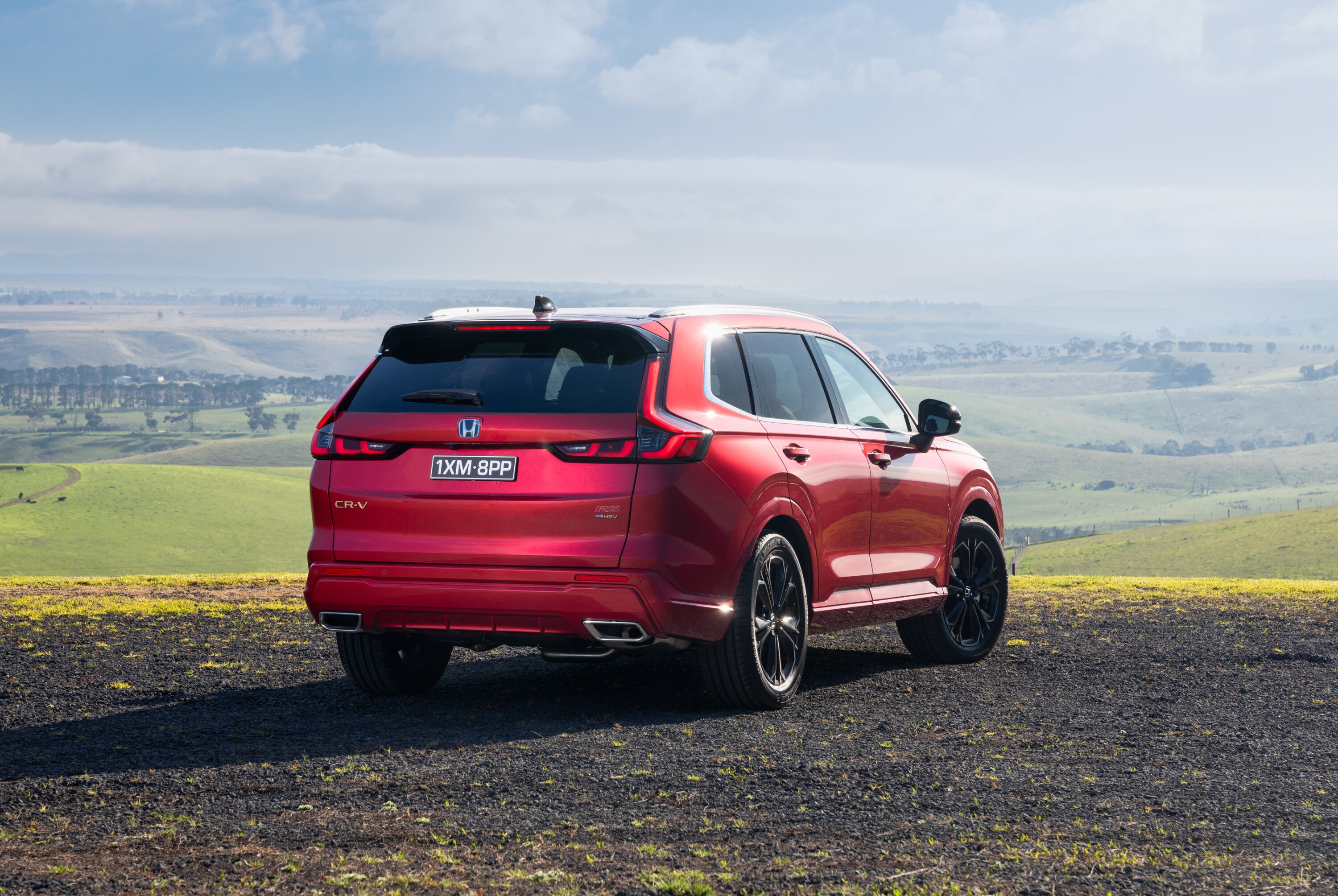
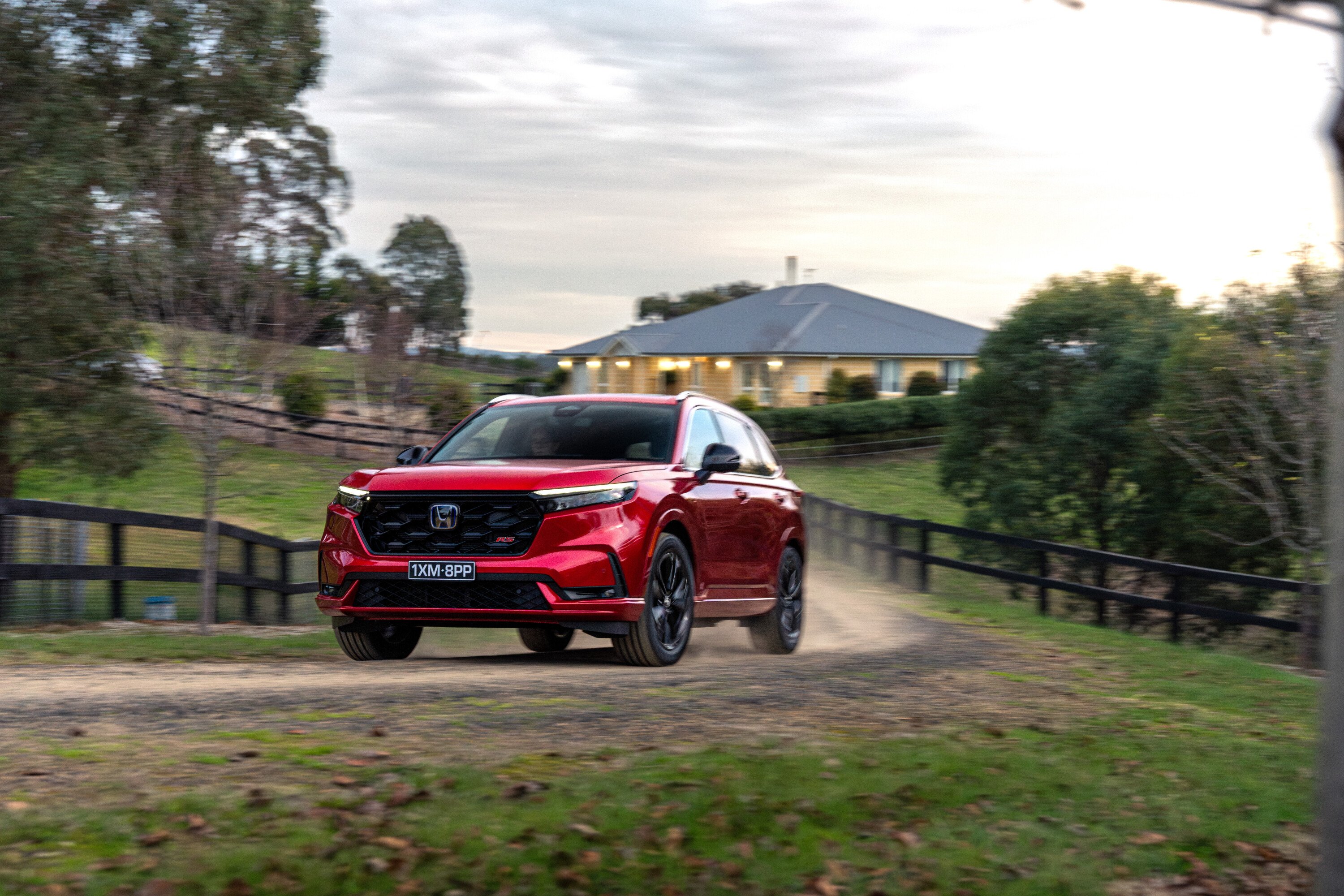
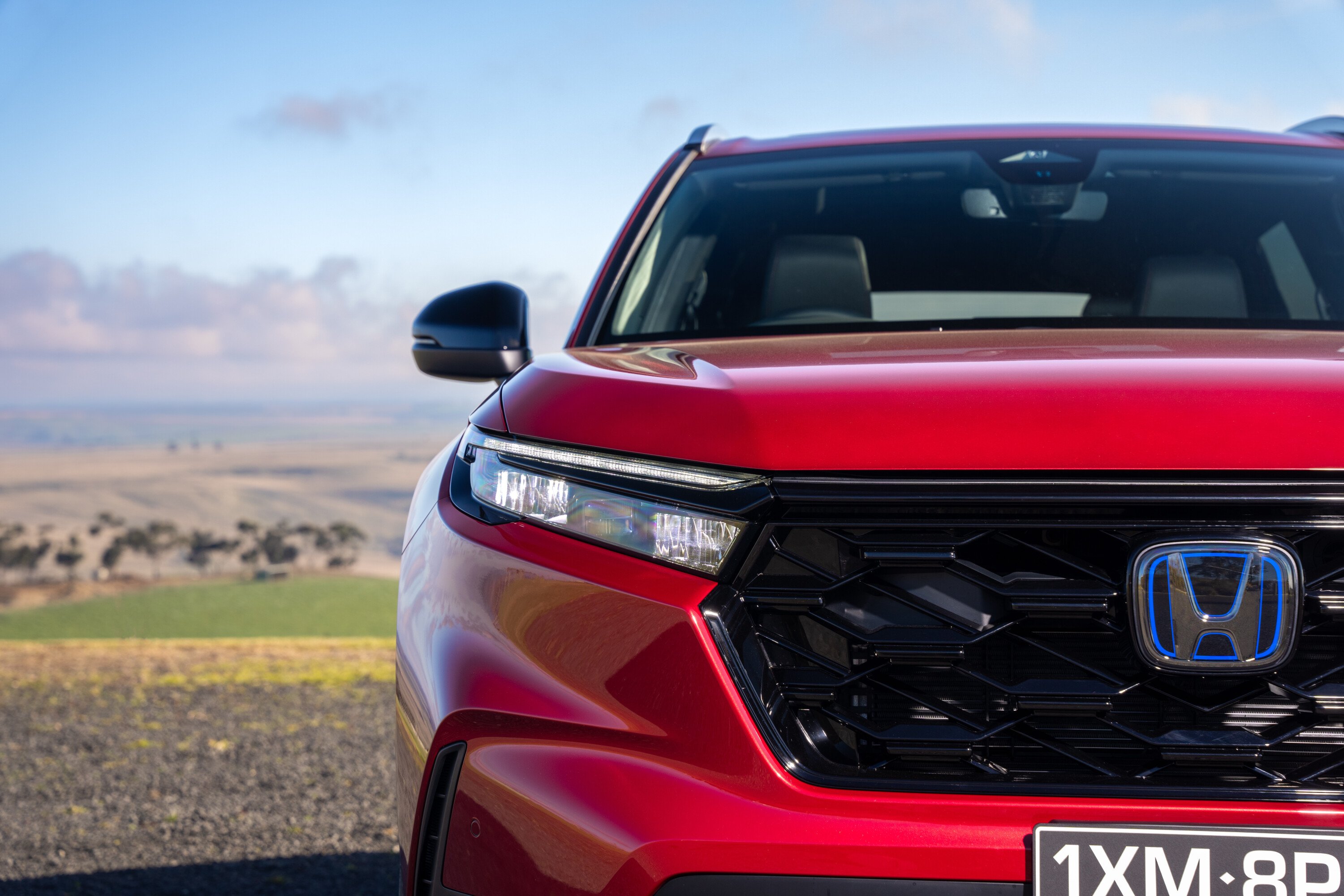
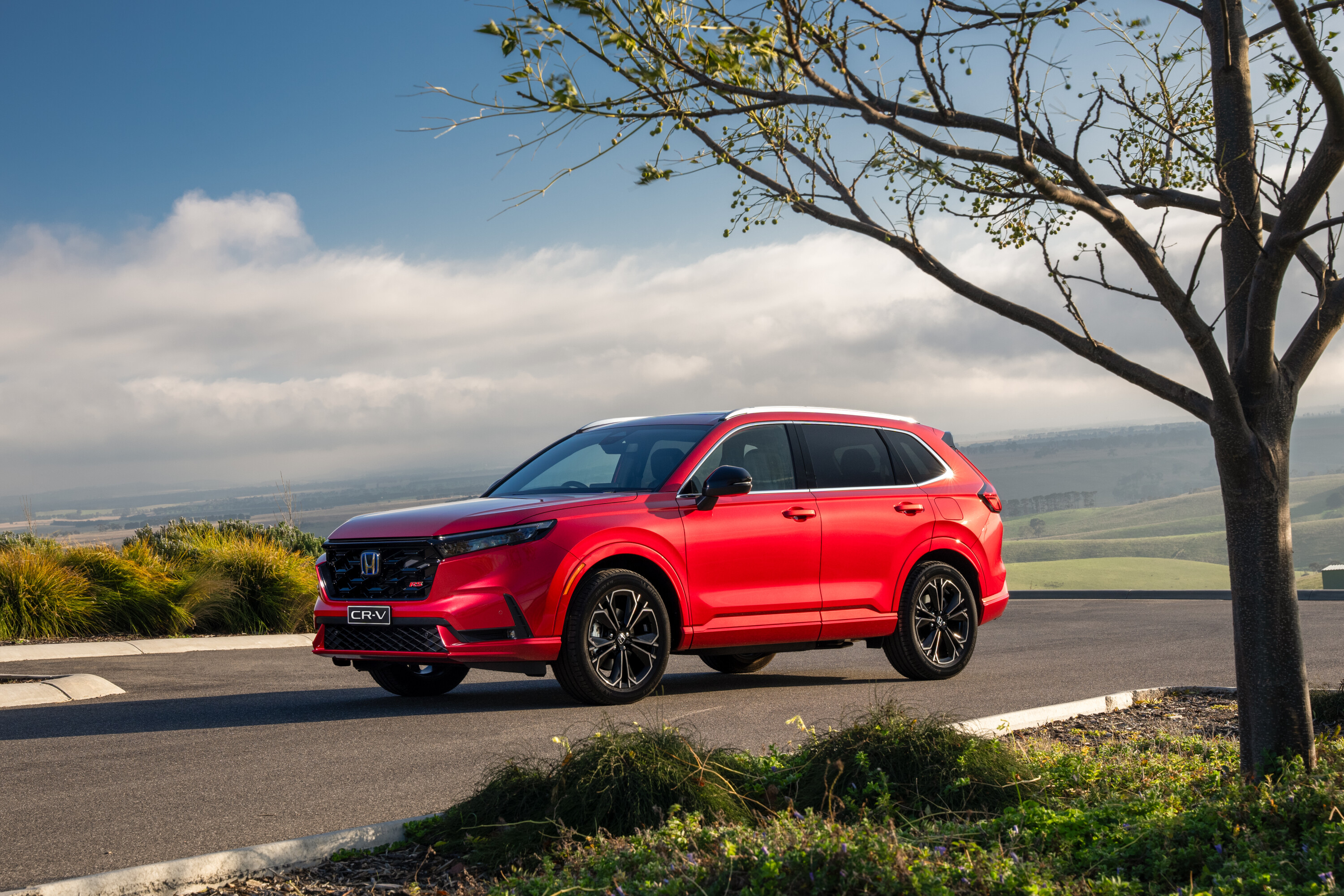
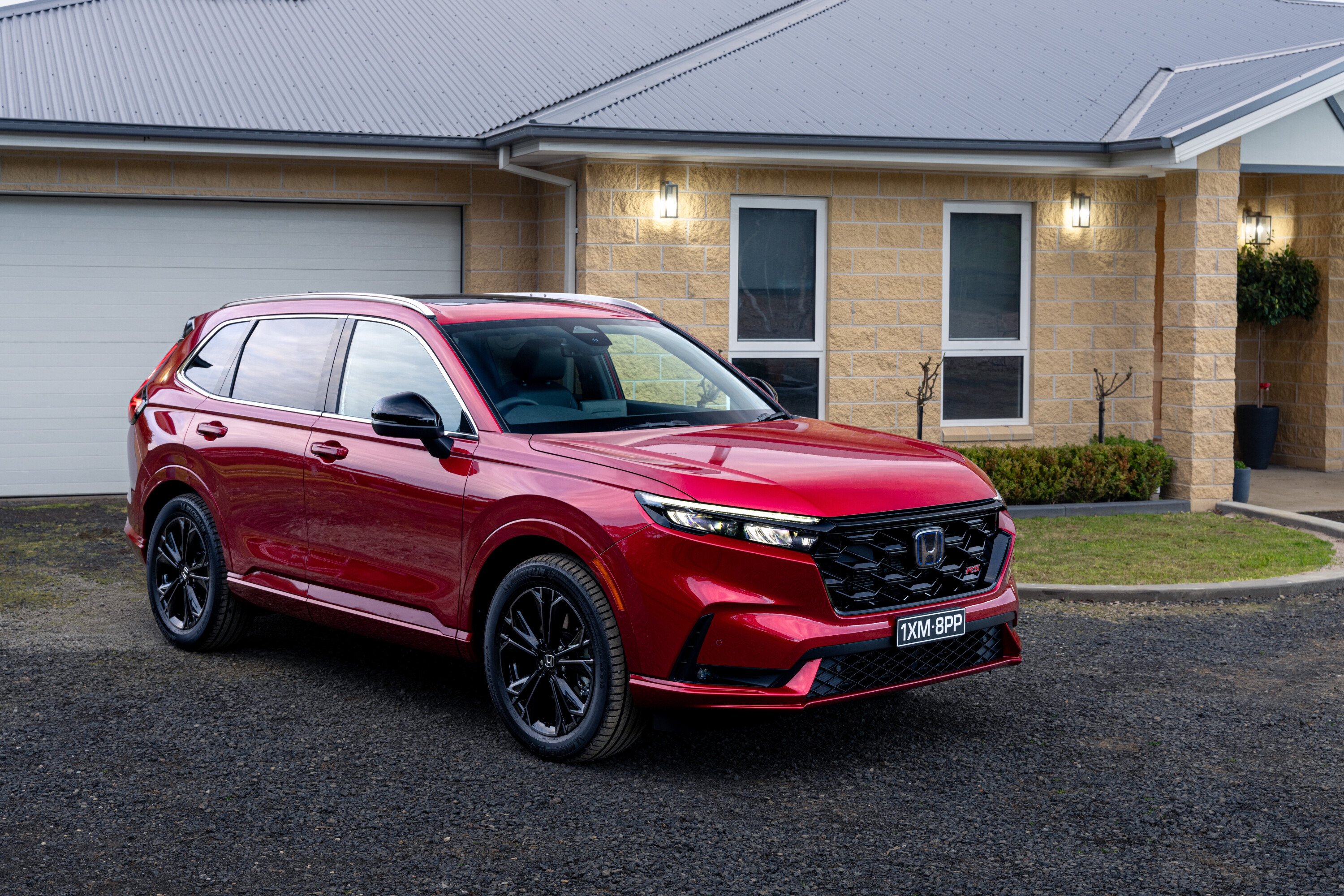
The sixth-generation Honda CR-V has landed in Australia with a pretty big job on its hands for the Japanese brand.
In 2022 – Honda’s first full year of adopting an agency sales model with fixed pricing – the once hugely popular brand recorded its all-time lowest new-car sales in Australia.
The Japanese automotive titan, which consistently held a position in Australia’s top 10 biggest-selling car manufacturers for the past two decades, today sits in 20th place on the ladder.
With that being said, Honda seems to be turning a corner.
1
The updated Civic is brilliant to drive and the new ZR-V is sensibly priced, not to mention being Honda’s best SUV contender in years. Pair this with the recently redesigned HR-V and you’ve got a line-up that is set to impress almost any buyer.
And now we have a new generation of CR-V, Honda’s leading model globally, which continues the trend.
It’s now bigger than ever, has excellent dynamics and the option of seven seats, front- or all-wheel drive and a hybrid powertrain.
Is it the sales saviour Honda so sorely needs? Let’s find out.
The new CR-V line-up – consisting of seven grades – begins at a drive-away price of $44,500, marking an increase of $6000 over the previous generation.
Serving as range flagship is the e:HEV RS hybrid priced at $59,900 drive-away.
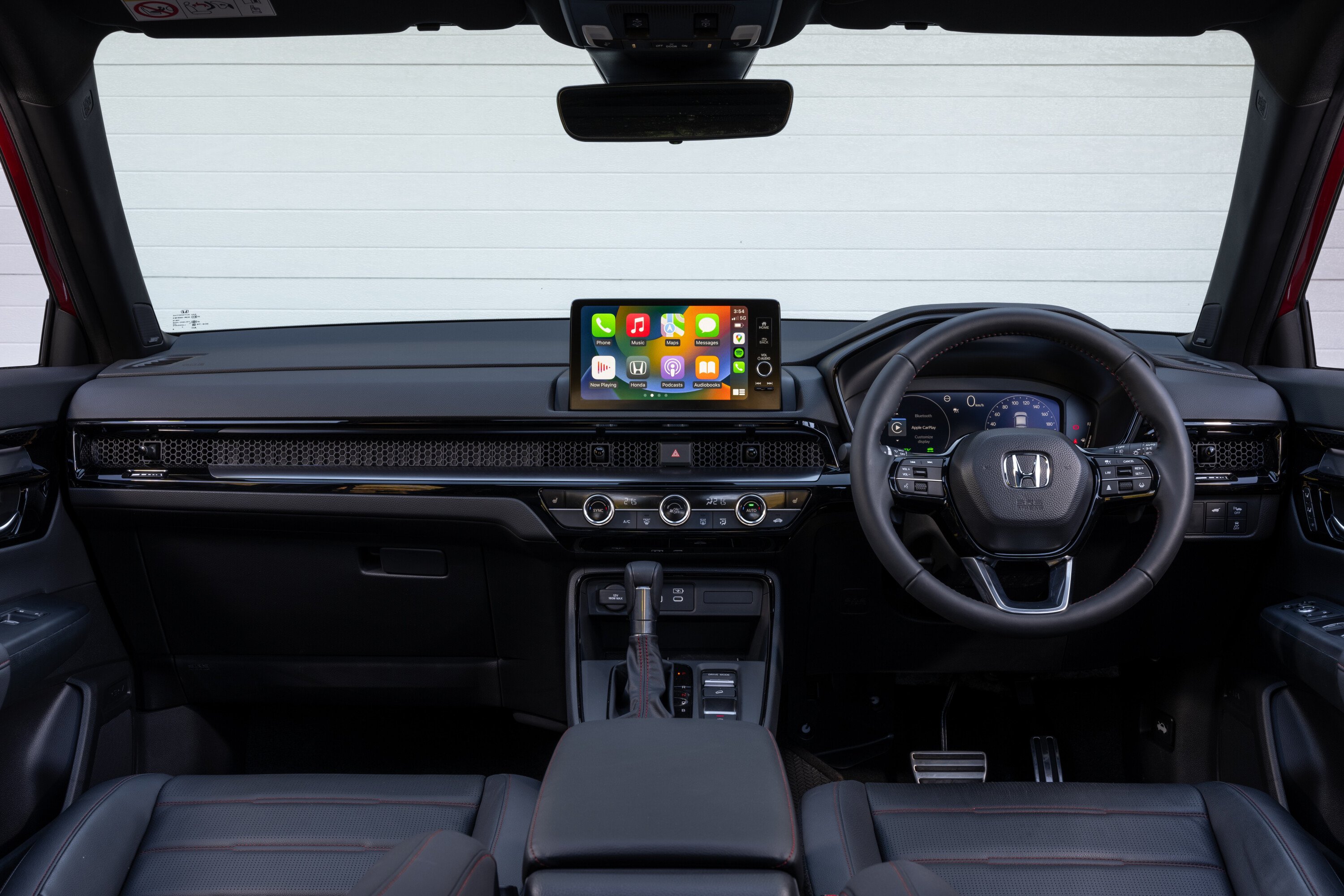
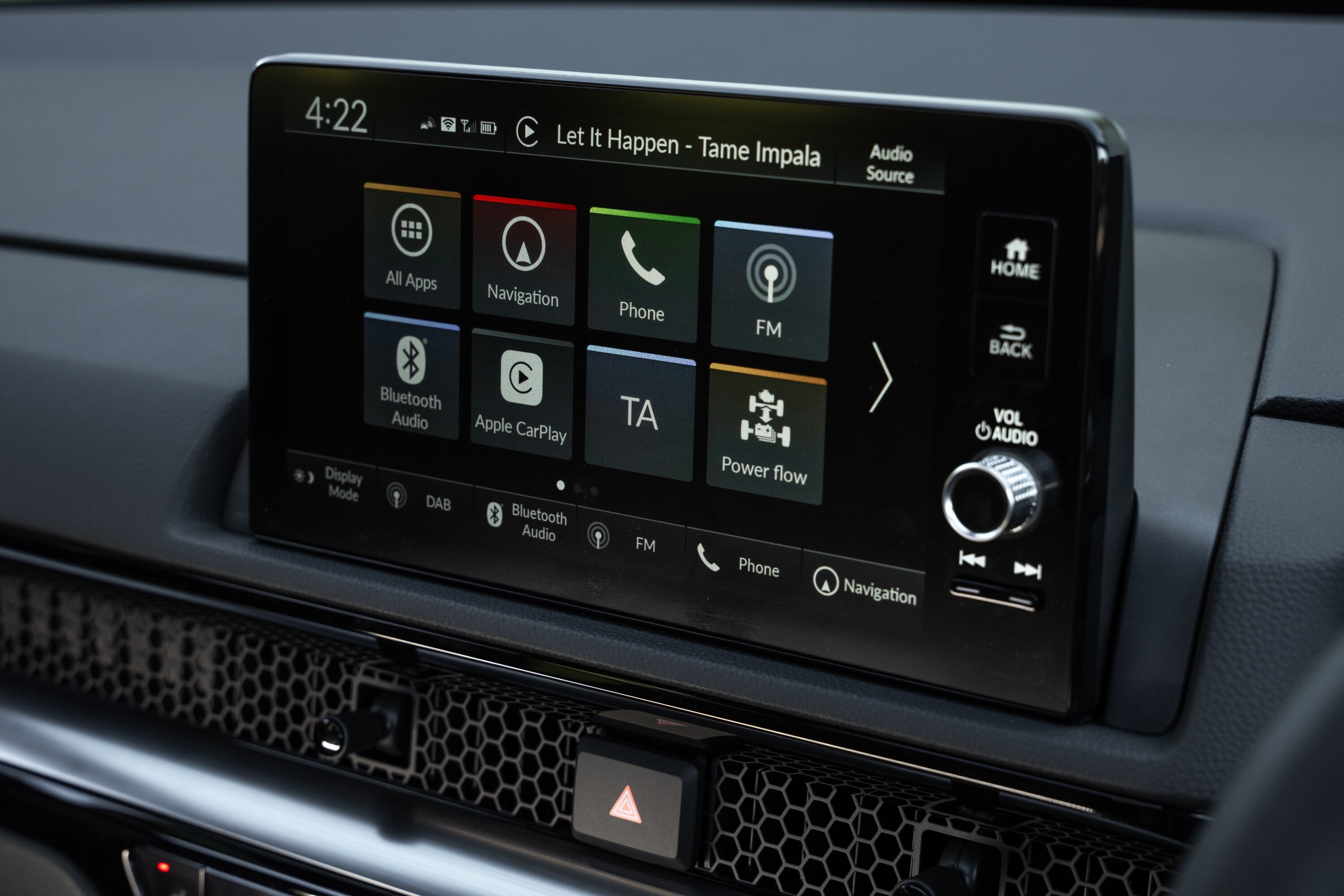
The entry VTi X offers 17-inch alloy wheels, a 9.0-inch infotainment system, wireless Apple CarPlay and wired Android Auto, an eight-speaker audio system, wireless phone charger, front and rear parking sensors and an eight-way power-adjustable driver’s seat.
1
Available across the entire range is a hands-free electric tailgate with walk-away function, so the press of a button is all it takes for the boot to close itself and the car to lock when you wander off with your hands full of groceries.
Spending $2300 more for the VTi X7 adds third-row seating (hence the ‘7’ in the name) and also includes additional safety features such as blind-spot monitoring and rear cross-traffic alert.
1
This additional safety tech also comes standard when choosing the VTi L which also includes larger 18-inch wheels, rear privacy glass, roof rails, leather-appointed seats, rain-sensing wipers and heated front seats.
Again, the VTi L7 adopts third-row seating, but this time the extra outlay of $4200 over the front-drive L also brings a panoramic sunroof and tri-zone climate control above the VTi L.
Seven-seaters do, however, lose the full-size spare that comes with five-seat versions.
1
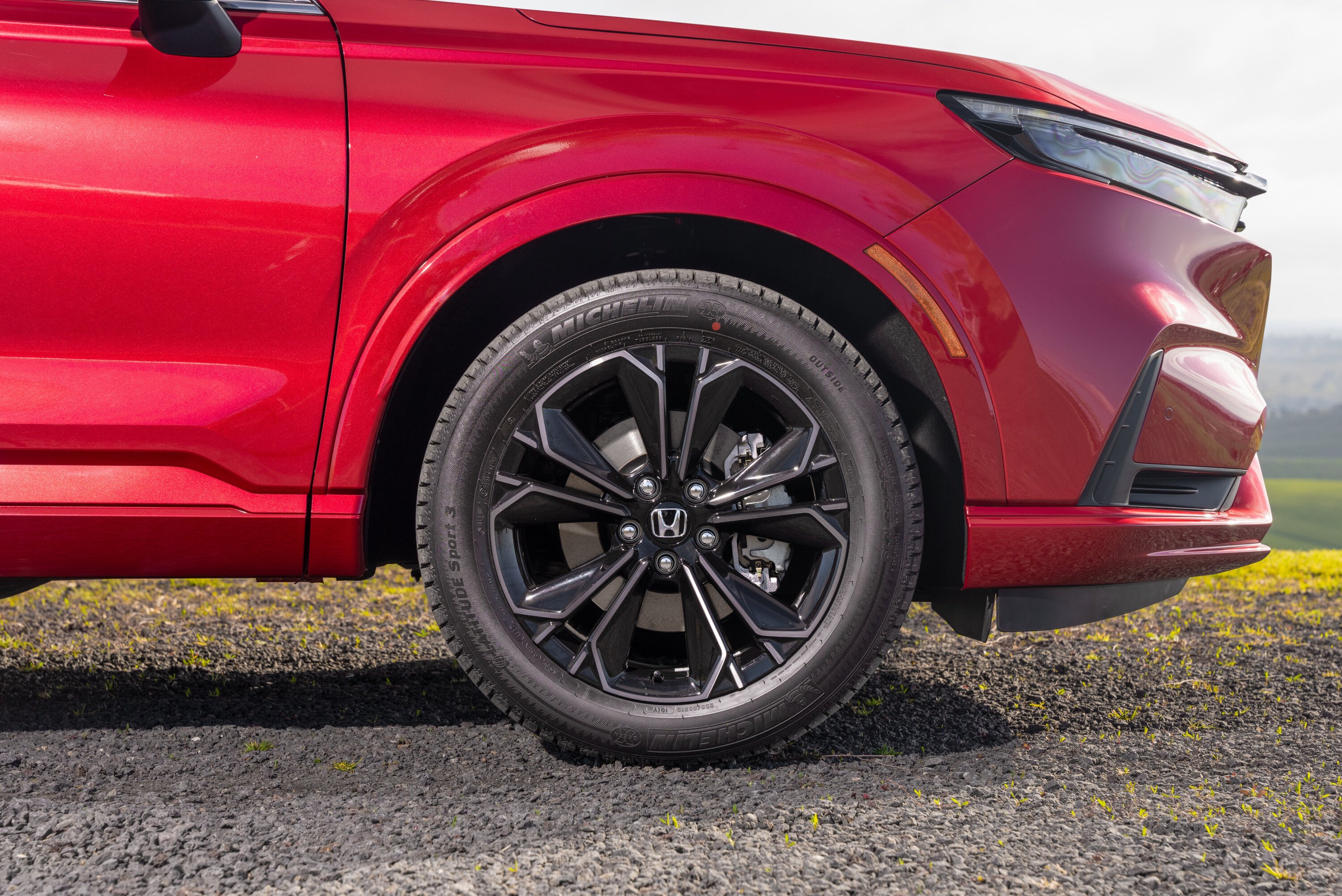
Topping the petrol range, the VTi LX AWD gains 19-inch alloys, a 12-speaker Bose sound system, 10.2-inch digital instrument cluster, panoramic sunroof, ‘sport’ bumpers and ambient cabin lighting.
Not counted among the dozen audio system speakers in the VTi LX are the three dedicated to a noise-cancelling function that is standard across the CR-V range.
1
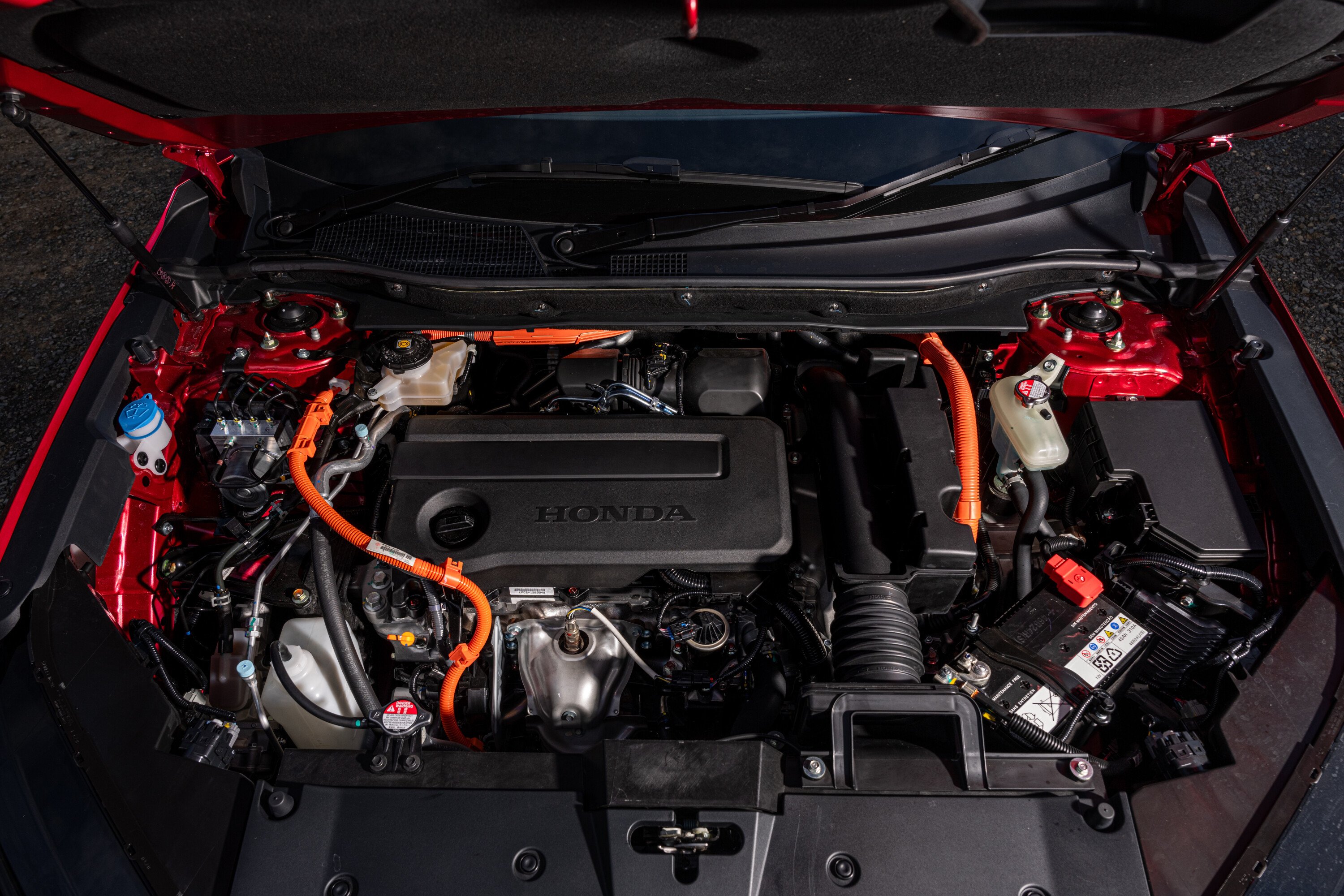
The new range-topping e:HEV RS variant features a two-motor hybrid system (one per axle) paired with a 2.0-litre direct injection Atkinson cycle four-cylinder engine, creating combined outputs of 152kW and 335Nm.
Honda Australia is working with its head office in Japan to expand the hybrid offering across various grades and other models.
Although Honda sells battery electric vehicles overseas, the brand’s electrification strategy in Australia will remain focused on hybrid technology for the time being.
1
Colours
All colours across the CR-V range, like with all Honda models, are included at no extra cost. The new Canyon River blue appears for the first time on the CR-V.
2024 Honda CR-V colours
Platinum white (all variants)
Lunar silver (all variants)
Meteoroid grey (all variants)
Ignite red (all variants)
Canyon river blue (excl. VTi X)
Crystal black (excl. VTi X)
1
2024 Honda CR-V pricing
Honda’s ‘One Price Promise’ means the drive-away price of every model is standard across all national dealerships.
This is due to the recently adopted agency sales model that eliminates haggling and shopping around – something Honda says it has received positive customer feedback on.
The sixth-generation CR-V is the biggest ever and is now 69mm longer than before, offering two seven-seat versions.
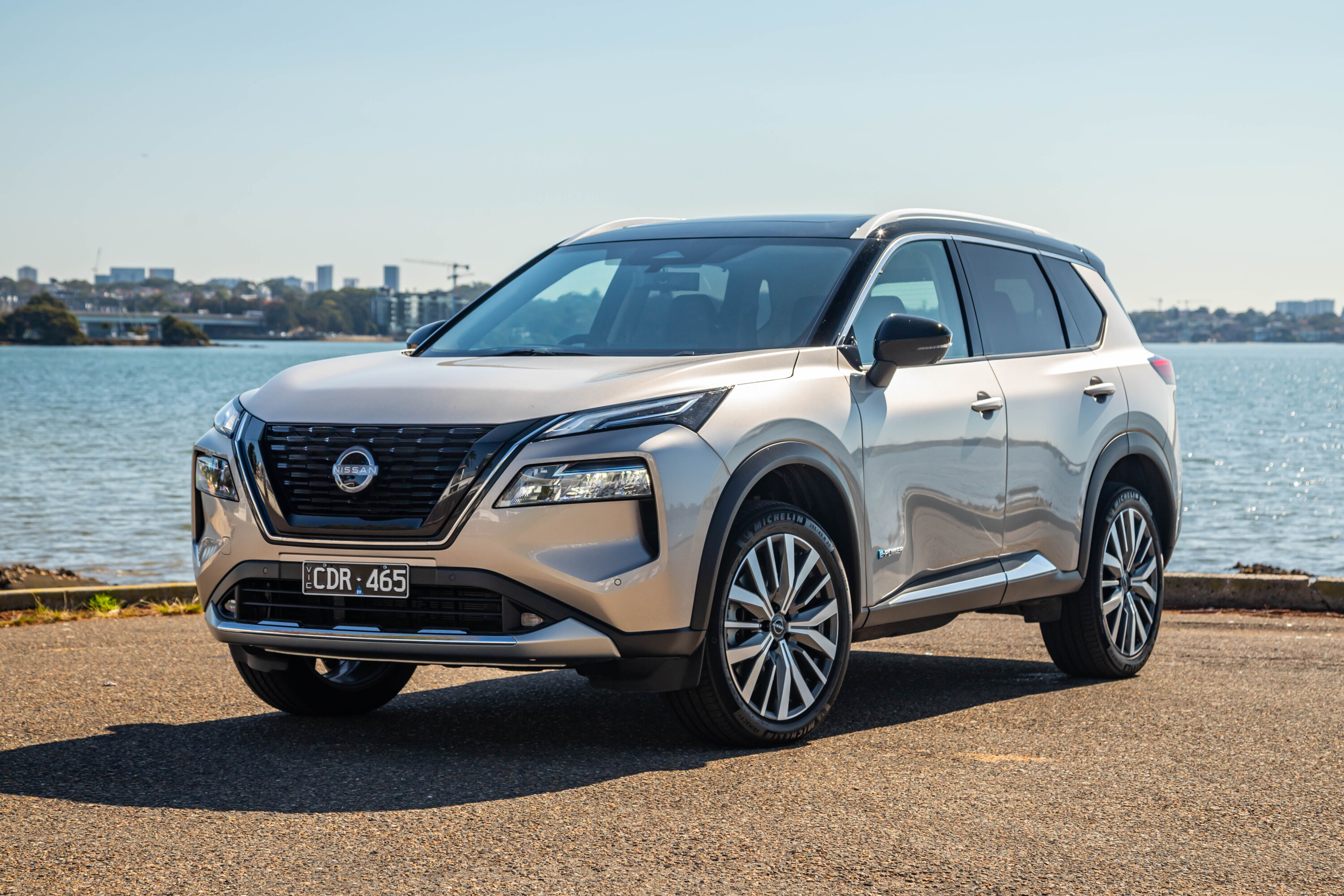
And on first look, this extra size seems to set it against slightly larger medium-segment SUVs like the Mitsubishi Outlander and Nissan X-Trail, as well as those at the smaller end of the large SUV category such as the Hyundai Santa Fe, as its core rivals.
Honda said it has plenty of CR-V stock rolling into showrooms in the coming months, and that customers can have one at home as early as Christmas.
1
“Customers that may not have test-driven a Honda, might be more likely to do so”
Talking about competitors with long wait times on hybrid models, Honda Australia general manager of automotive Matthew Evans said: “If they don’t have stock and we do, customers that may not have test-driven a Honda, might be more likely to do so.”
Honda Australia director and chief operating officer Carolyn McMahon affirmed that the company’s focus is “very much on Honda to Honda” in terms of customer acquisition but did joke that she wants to “pinch as many customers as [she] can” from rival brands.
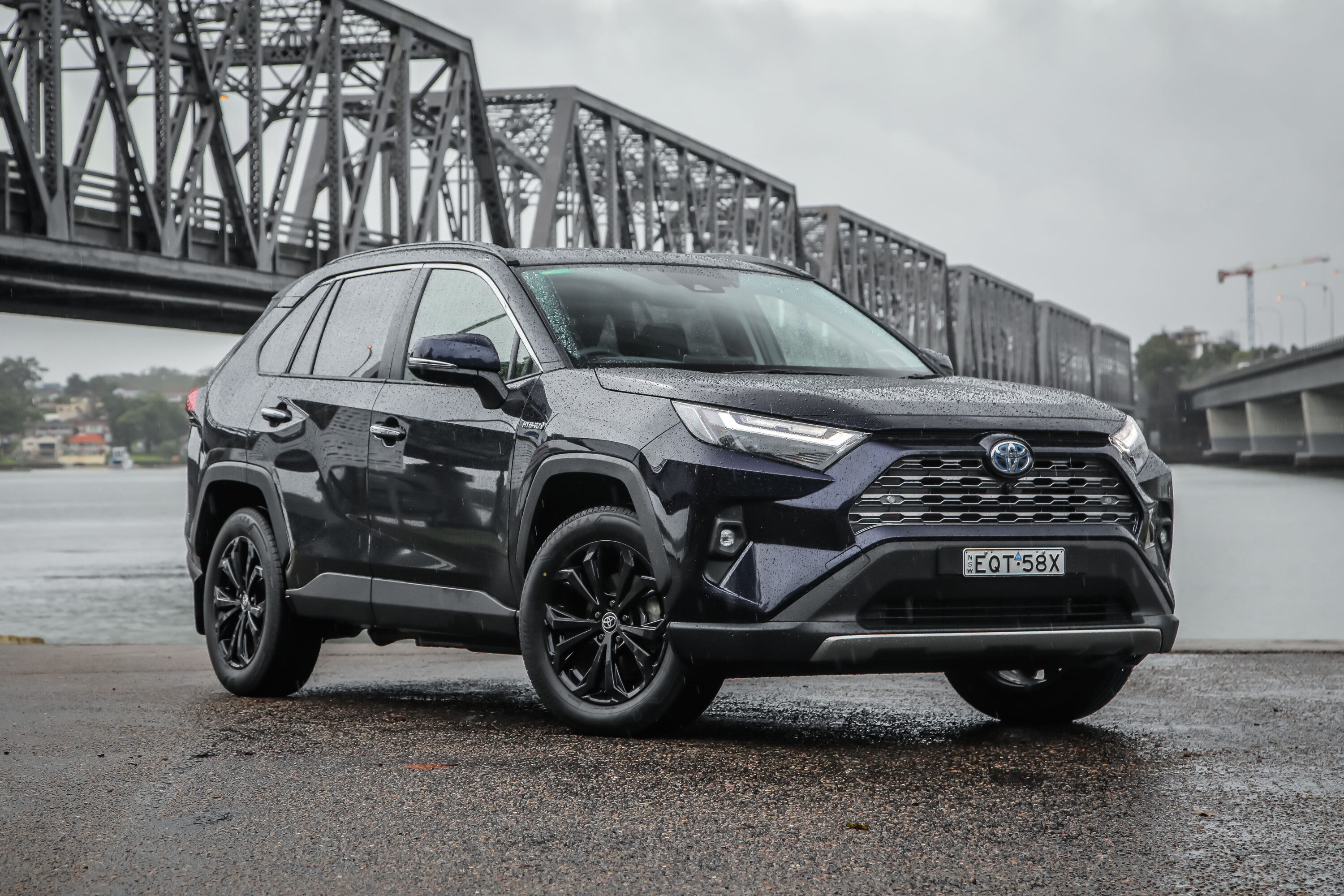
The segment-leading Toyota RAV4, for example, is $44,382 based on a Melbourne postcode for a petrol 2WD GX since Toyota’s recent-ish general price increase. Compared to $44,500 drive-away for Honda’s entry variant, it’s a very like-for-like scenario.
1
However, Toyota offers hybrid tech for an additional $2600. The only hybrid CR-V available is almost $60K.
When considering the range-topping CR-V hybrid, the e:HEV RS, its closest equivalent RAV4 Cruiser 2WD is priced at $57,219 with a very similar list of specs – albeit with a wait time of up to 18 months.
A 4.7L/100km combined-cycle figure fuel economy is what puts the RAV4 on the map, compared to the CR-V hybrid’s slightly thirstier 5.5L/100km.
1
Honda’s total value package also needs to be factored in. Every new CR-V comes with a five-year warranty, five years of roadside assist, fixed low-price servicing at only $199 a pop and complimentary metallic paint.
Consider all that and the CR-V’s value equation is quite competitive.
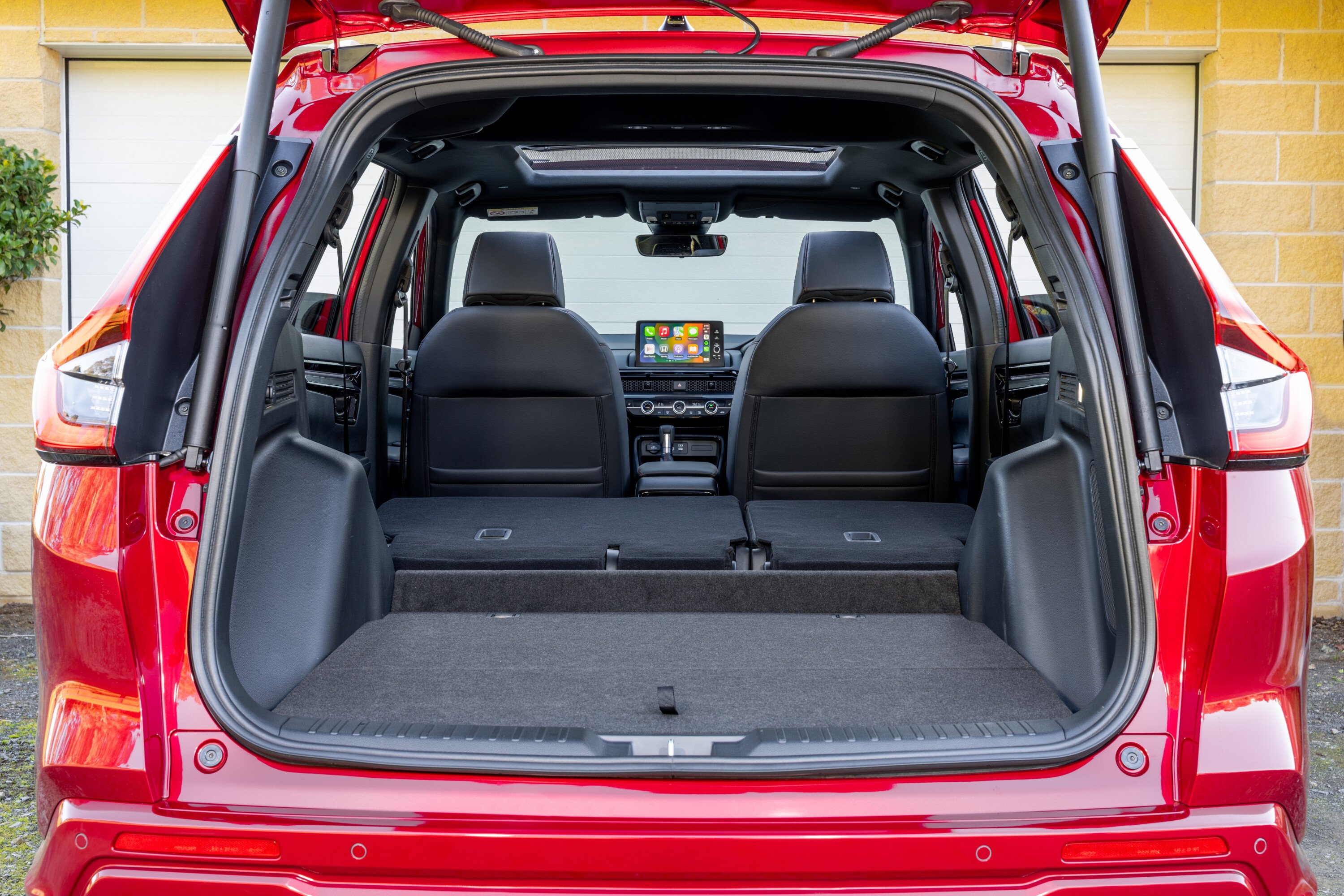
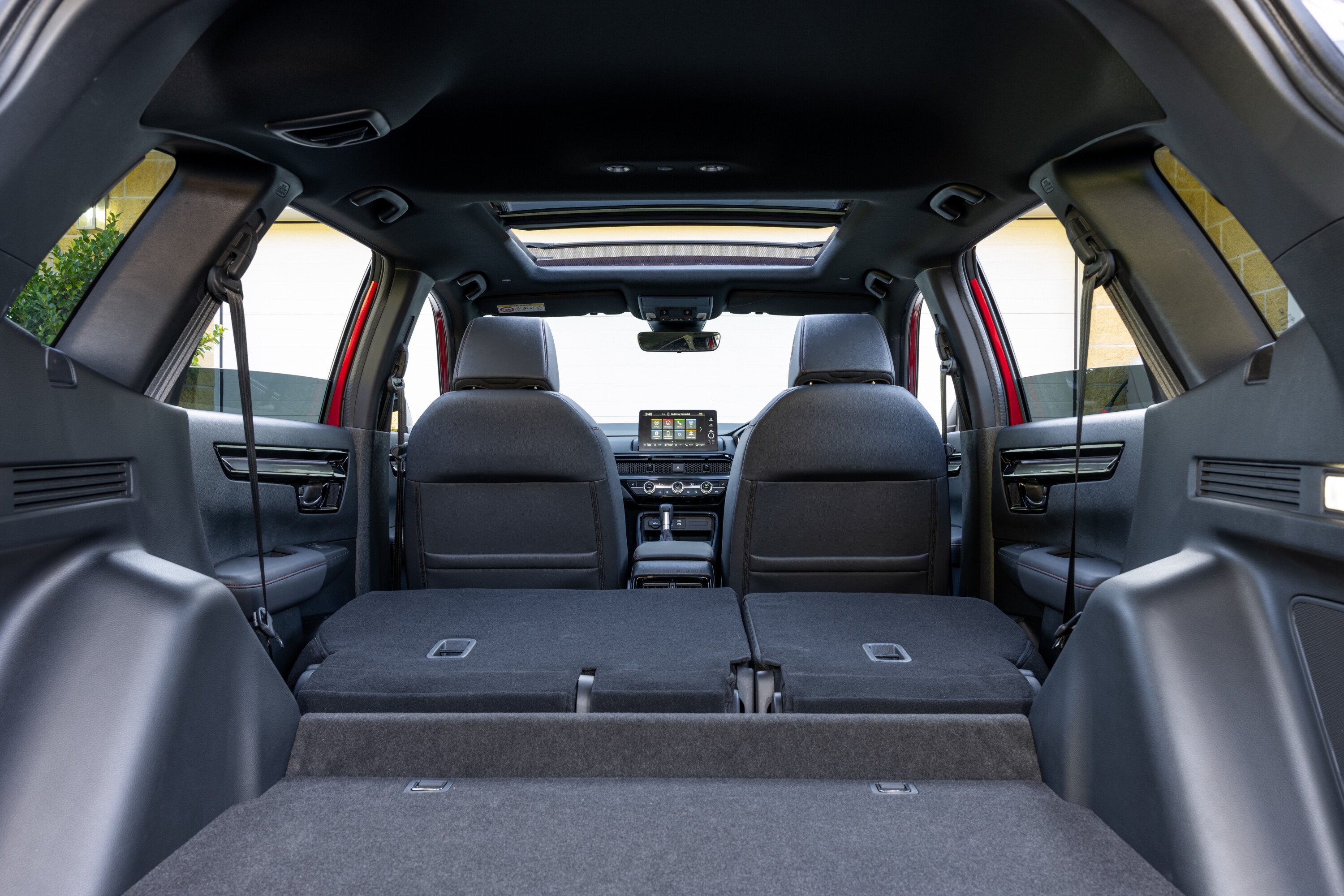
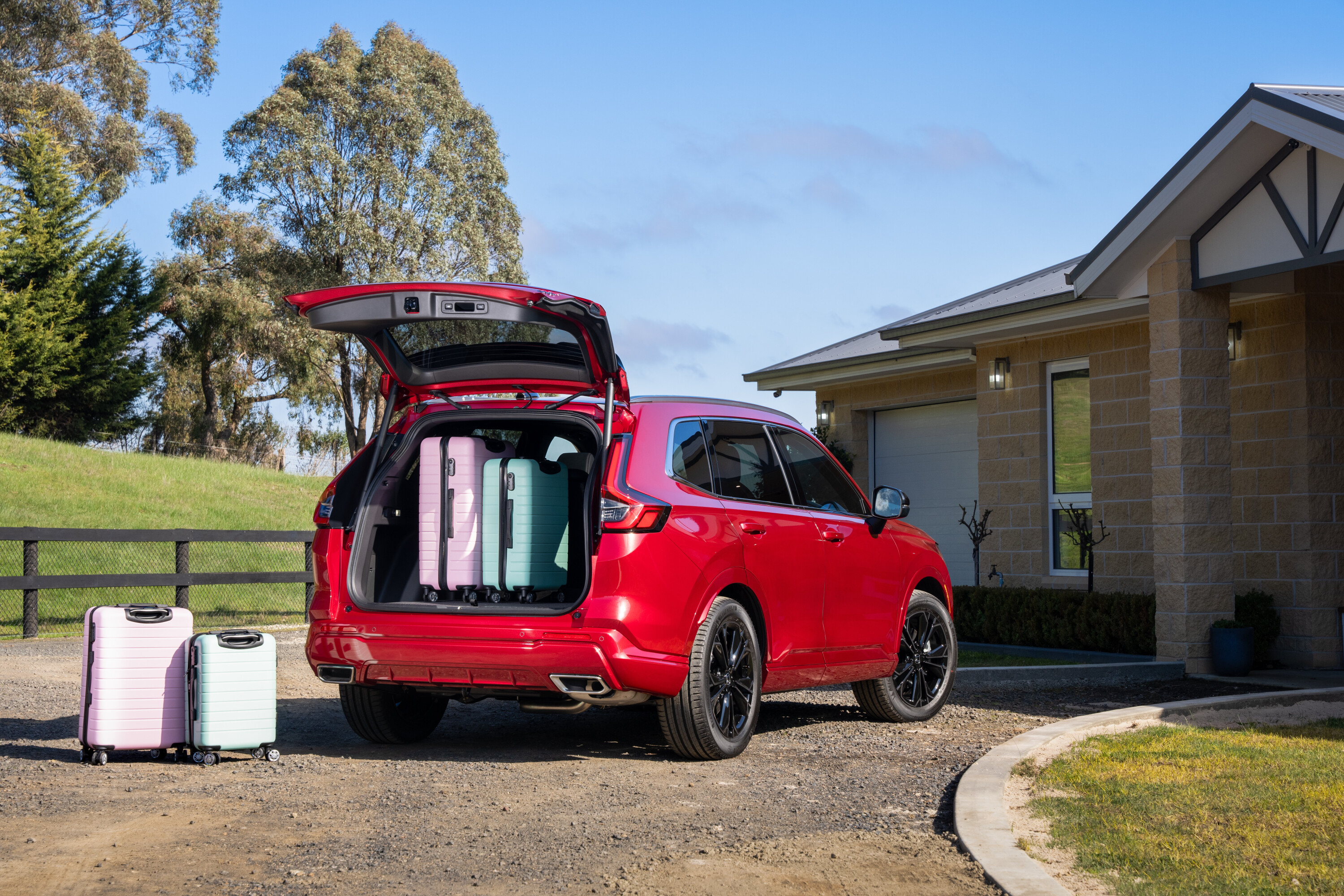
You’ll also get class-leading cargo capacity, which makes a world of difference when packing up prams and kids’ bikes, thanks to a boot that offers 589L of capacity in all five-seater variants, up 67 litres from the outgoing model.
1
For comparison, the segment-leading RAV4 has 542L of cargo capacity when the luggage liner is set to the upper level, or 580L at the lower position (excluding GX variants with a full-size spare wheel).
The Mazda CX-5, on the other hand, only offers 438L in the lower position.
And while there’s no escaping that the CR-V hybrid’s pricing is on the high side, petrol-powered versions offer excellent value. The entry-level VTi X in particular offers an impressive amount of standard spec for a price point pretty much identical to key competitors.
On the inside, the CR-V cabin is now bigger and roomier.
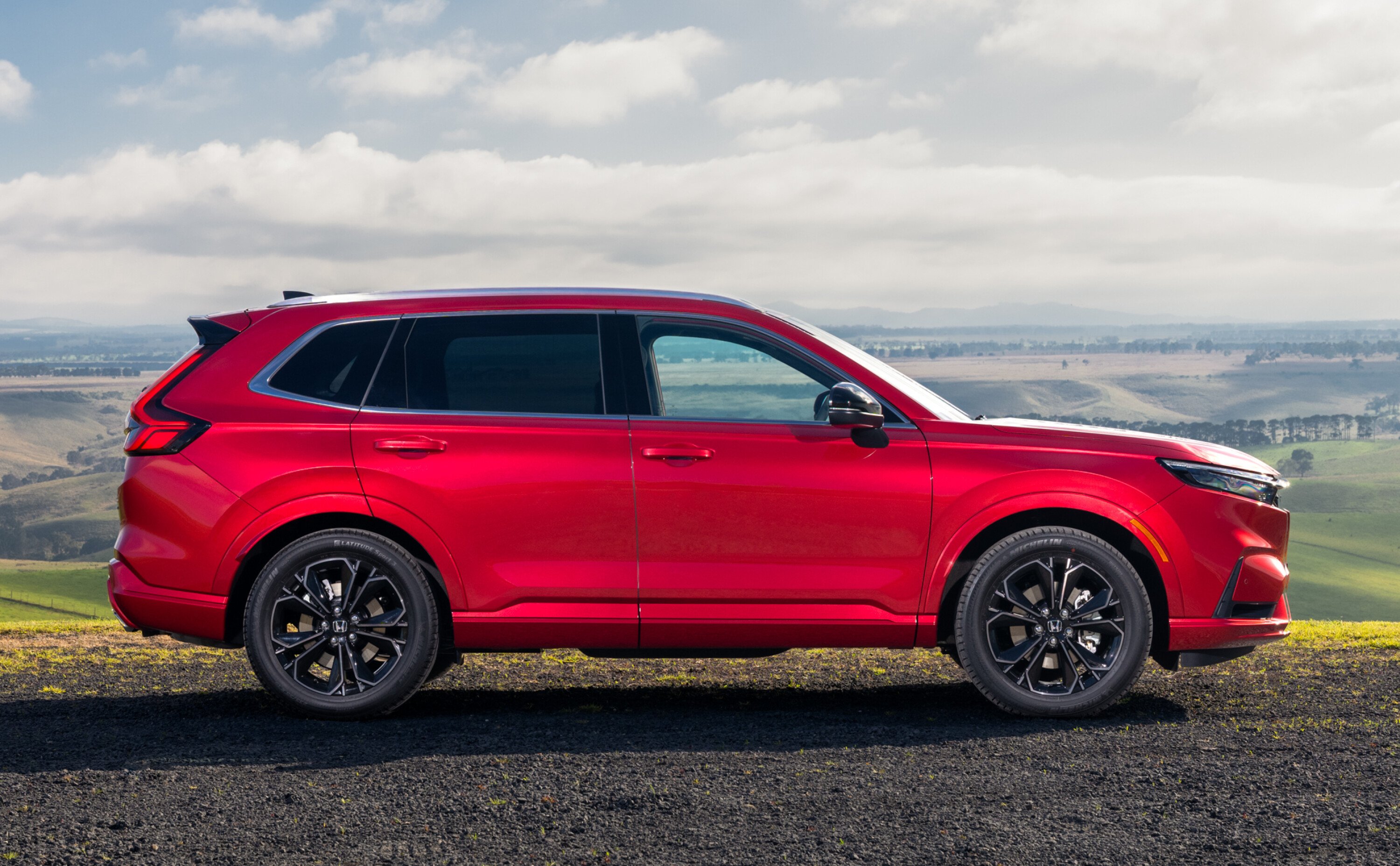
The new CR-V is 69mm longer overall, 10mm wider and 2mm taller, all on a 40mm-longer wheelbase.
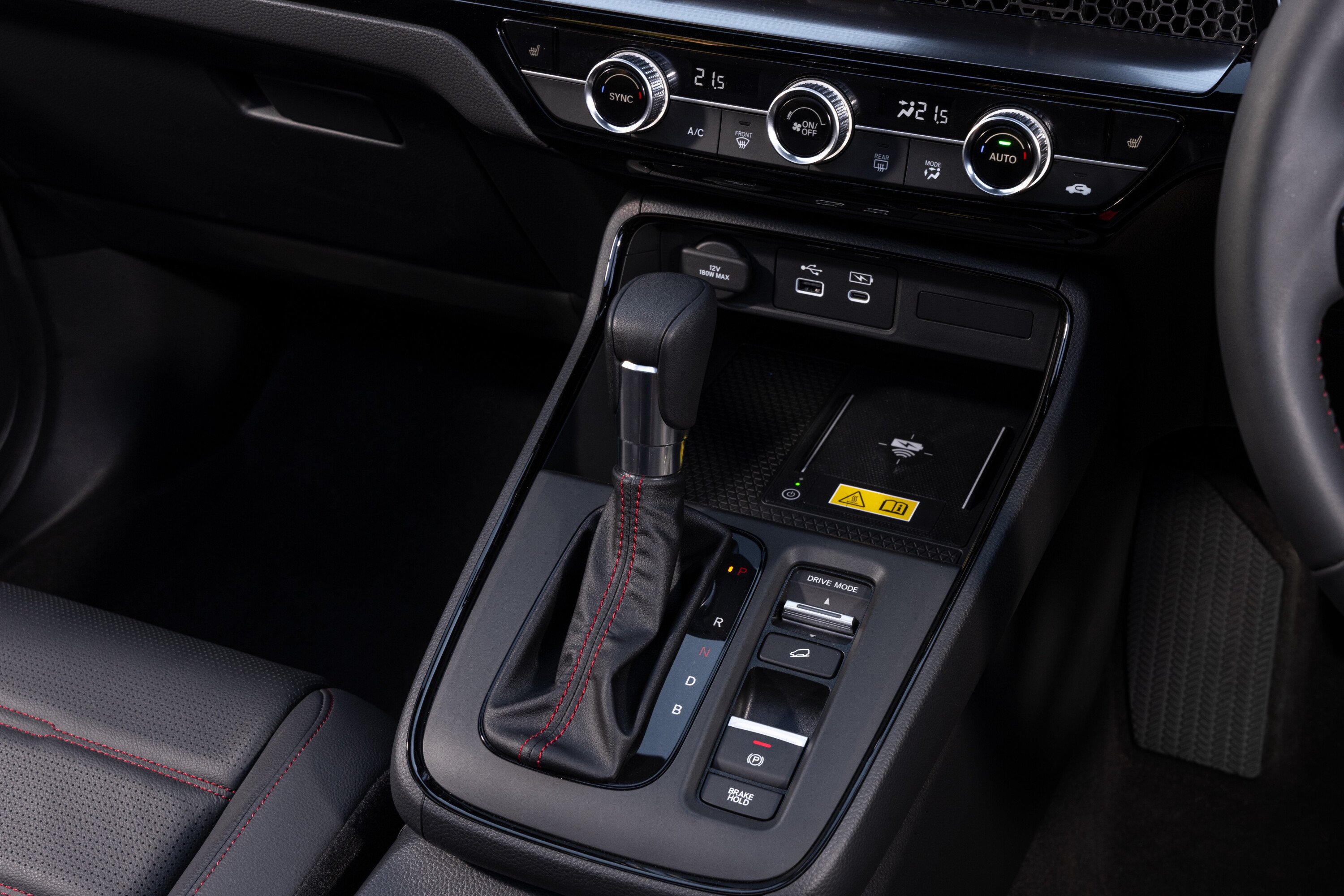
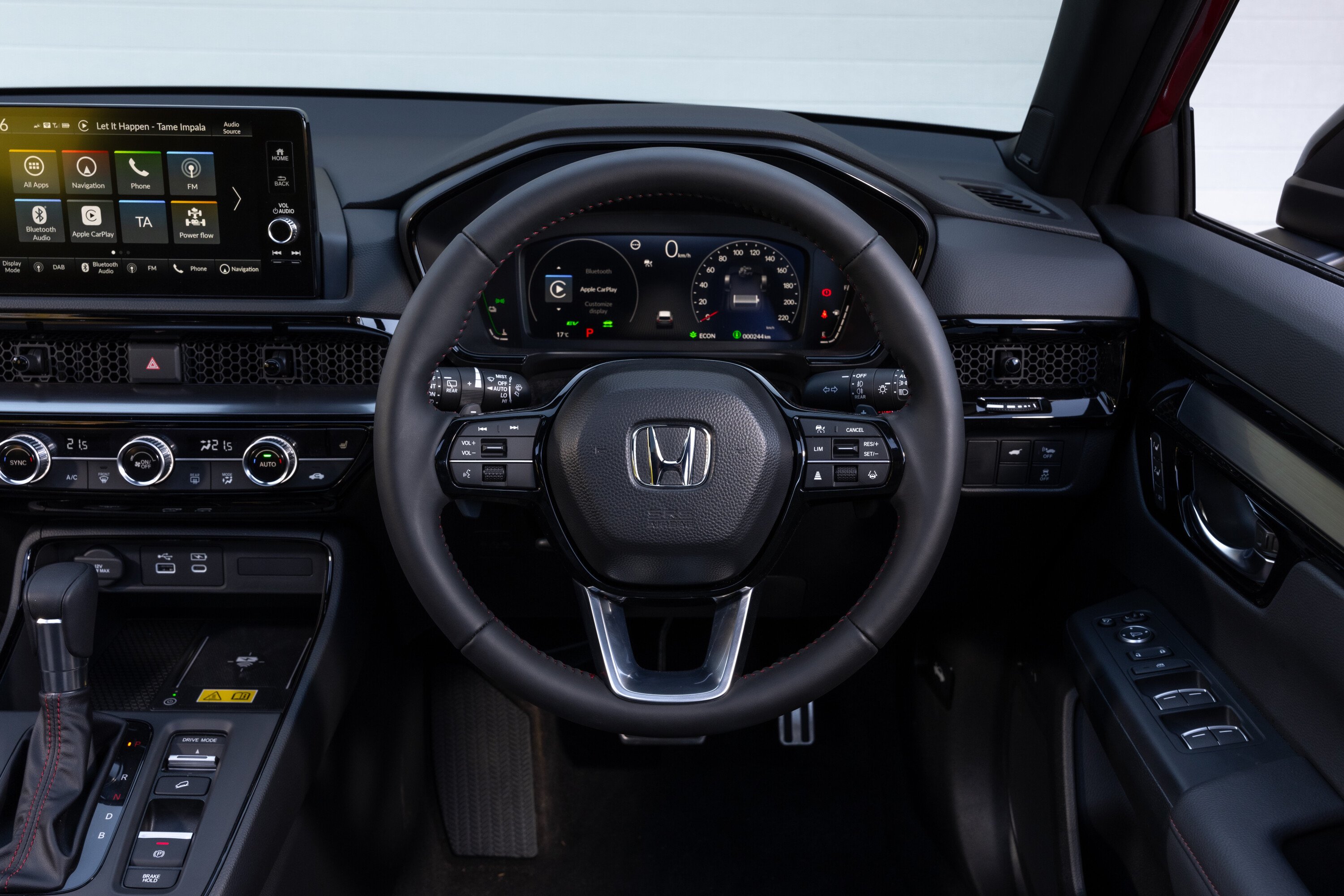
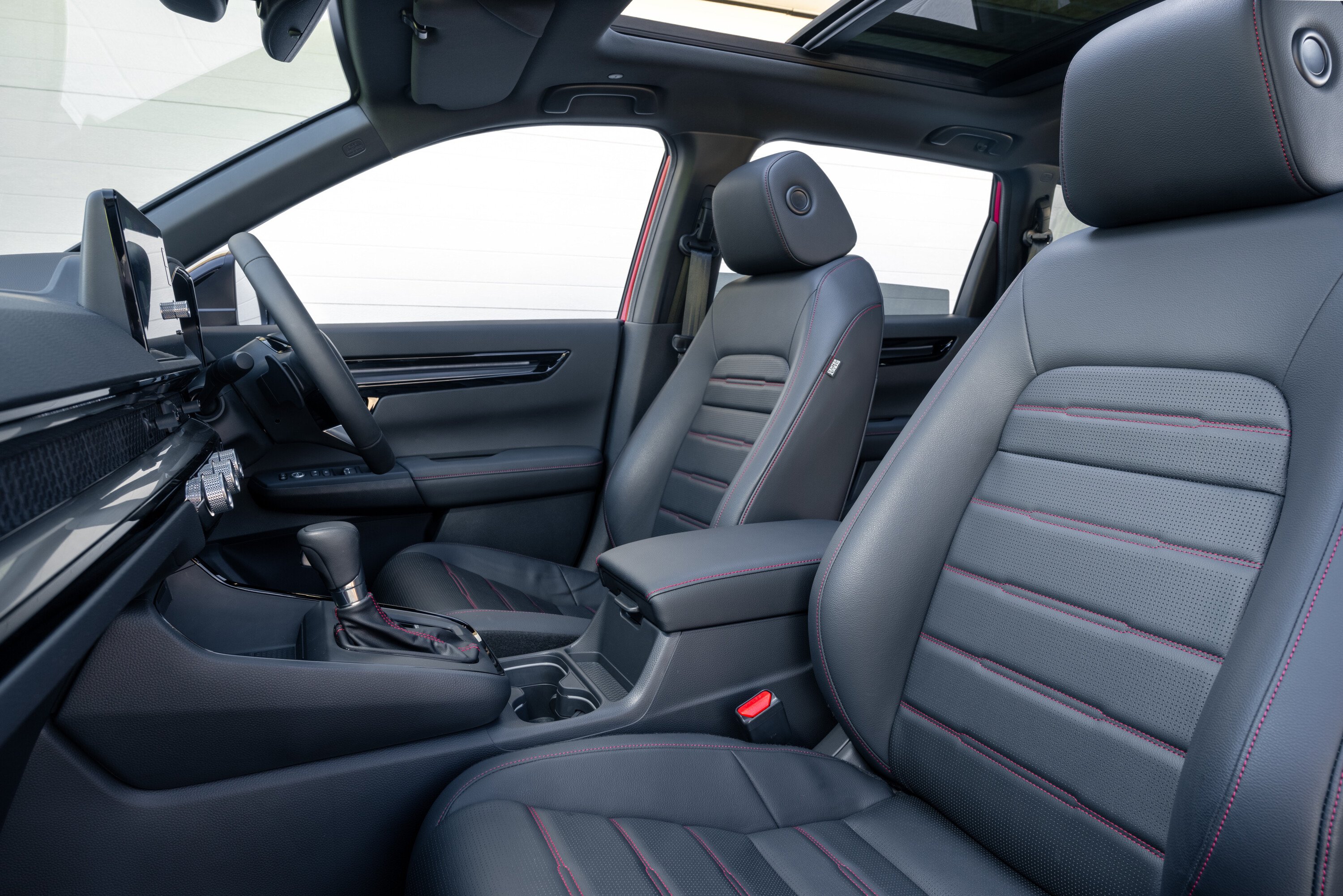
Its cabin architecture has been designed with simplicity and ease in mind. There are no distracting design features and nothing feels superfluous.
The infotainment system connects easily to Apple CarPlay and the touchscreen is responsive enough. Android Auto is only available through a cable. There is also a volume dial close to the driver, which we love here at Wheels.
1
It took a while to find a comfortable driving position and in one instance I was left with a sore back, so the adjustable lumbar support in higher grades was a very welcome aid.
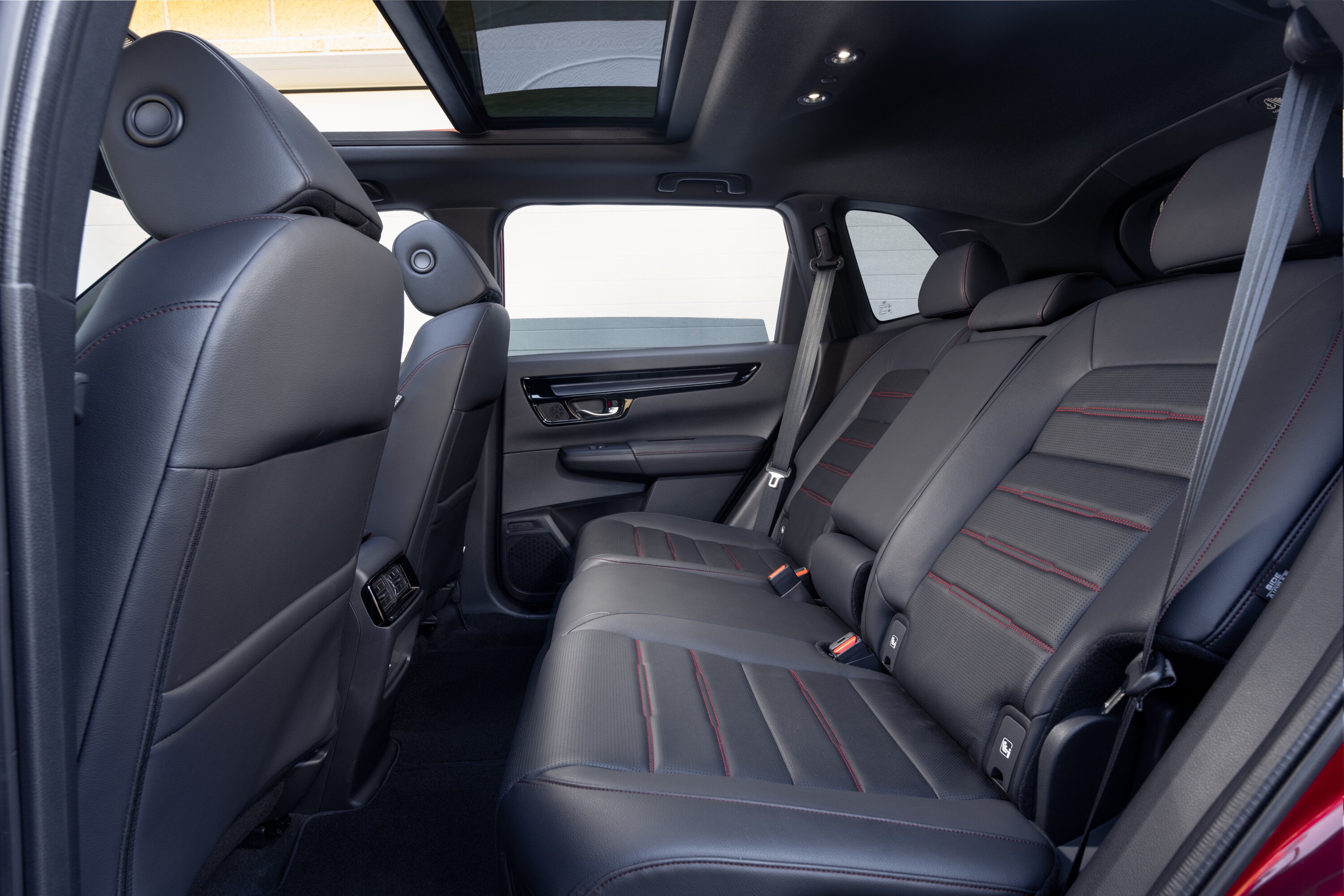
For your passengers, the CR-V’s second row is ample for foot, leg and headroom and there are rear HVAC outlets. Rear legroom has been increased by 15mm and the seats now offer 16 reclining positions for added comfort.
The cargo area has seen an increase in space to a generous 589 litres in five-seat models (for both petrol and hybrid), and up to 1072 litres with the second-row seats folded. Combined with a nice low loading bay and a full-size spare it’s a very well-designed family boot.
1
As expected, seven-seaters sacrifice some cargo space but nothing shocking at 472 litres with rear seats folded down. This is significantly reduced, to 150 litres, with the rearmost seats up.
Honda claims that adults up to 170cm will be comfortable in the third row of seven-seat CR-V variants. We weren’t able to test a seven-seater at launch but will assess this with our next review.
There are two sets of ISOFIX points in the rear seats the spec sheet says there are three top tether anchors although only two are located on the backrests.
We’ve already established the new CR-V offers strong value (hybrid model aside), is well equipped and offers loads of cabin space but it’s how it drives that really sets it apart.
Every version across the broad model range offers excellent steering and engaging handling, and both powertrain options are smooth and effortless.
The 1.5-litre turbo-petrol develops 140kW/240Nm and drive is sent through a smooth continuously variable transmission (CVT). In most situations, it’s a quiet and unobtrusive powertrain but not what you’d call overly powerful.
1
In fact, it doesn’t actually feel turbocharged… which Honda says is quite deliberate.
Honda’s engineers have tweaked the torque curve to be like a naturally aspirated engine and at times it feels a touch lacking in torque, especially low in the rev range. It means you have to work the engine quite hard to get the best from it and it can occasionally get quite vocal.
1
Hybrid versions of the CR-V feel marginally more muscular. Thanks to the immediate response of its twin e-motors and healthier outputs of 152kW/335Nm, it’s not only quieter but more efficient.
No matter which powertrain you go for, every CR-V is surprisingly engaging to drive. Excellent steering, tidy handling and a ride/handling balance that strikes an ideal compromise between comfort and control are the key takeaways.
Driving the car at launch didn’t allow us to properly gauge fuel consumption but based on ADR combined-cycle figures, the VTi LX tested uses 7.7L/100km in all-wheel drive format.
The e:HEV RS claims to use 5.5L/100km on the combined cycle. During the launch, we used as little as 5.8L/100km while heading down the Mornington Peninsula Freeway.
Honda is currently working through plans to get an ANCAP rating for the 2024 CR-V.
Also yet to be evaluated by Euro NCAP or ANCAP is the mid-size Honda ZR-V, while the smaller HR-V received a four-star rating.
The CR-V is packed with the Honda Sensing suite of safety features including lane departure alert, lane tracing assist, traffic jam assist, adaptive cruise control and traffic sign recognition.
1
During testing, we noted the lane-keep assist feature to be a touch distracting as it would slightly wobble side to side rather than smoothly adjust the steering to help you stay in your lane.
Rear cross-traffic and blind-spot monitoring are omitted from the base VTi X grade.
The e:HEV RS variant builds on the standard safety with an acoustic vehicle alert system and adaptive headlights.
The new CR-V – like all Honda vehicles – is covered by the brand’s five-year/unlimited-kilometre warranty.
Five years of premium roadside assistance provides round-the-clock help with breakdowns, emergency fuel delivery, flat tyres or dead batteries, including towing and even car hire or accommodation when required.
All variants of the CR-V also receive five low-price services at $199 per visit, valid for five years from the date of purchase.
The servicing interval is 12 months or 10,000km, whichever comes first, meaning servicing over five years is $995 if you drive less than 10,000km a year.
1
New RAV4 servicing is capped at $1300 over five years, or an average of $260 per service albeit with longer 12 months/15,000km intervals.
Also complimentary for the five-year period is a Honda Connect subscription, enabling owners to remotely connect to their vehicle via a smartphone app.
It means you’re able to remotely turn on climate control, unlock and lock the car, control the lights and more. The Connect functionality is now available across 75 per cent of Honda’s vehicles.
The 2024 Honda CR-V could not come at a better time for the company.
As with most updated vehicles, the prices have risen, but Honda has thrown in plenty of additional value to help justify the increase.
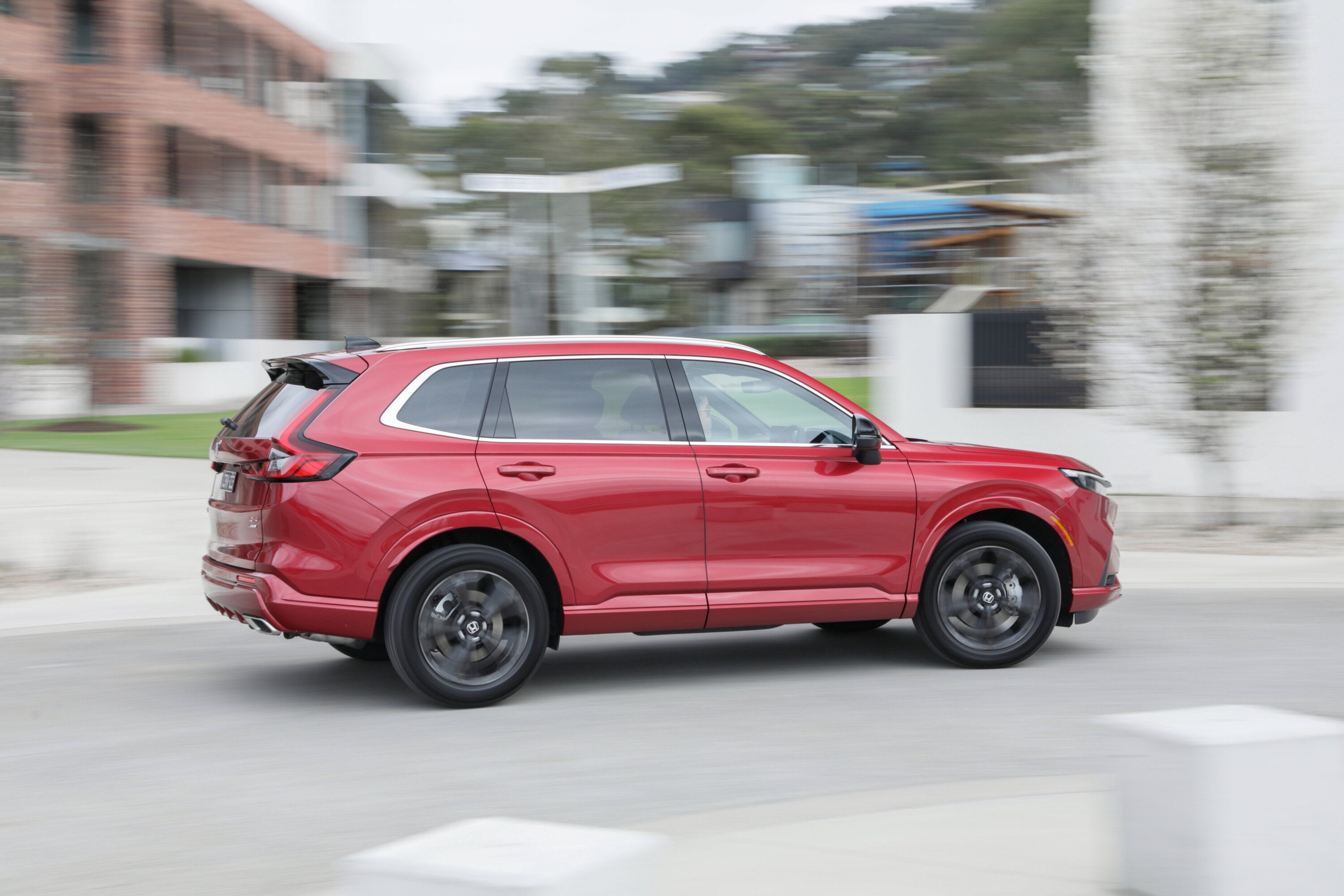
With some stylish accents such as the rear taillight (homage to the first-generation CR-V), the new design has brought the SUV into line with (and even ahead) of many competitors.
1
With family front of mind, Honda has developed a vehicle that has many thoughtful touches making it an ideal hauler for your little ones such as 90-degree rear opening doors and a nice low cargo loading bay with ample space.
Satisfying driving dynamics also means there’s more to this family hauler than meets the eye.
As with most new Honda models, the cabin has successfully meshed high-quality materials and design with functionality.
1
Without driving the seven-seater, our pick of the bunch would be the VTi L.
It offers an impressive list of standard specs at a competitive price.
Additional safety specs such as blind-spot monitoring come in handy for a vehicle of this size. The overall package also feels quite premium with the heated leather seats, rear privacy glass, larger 18-inch alloy wheels and roof rails, making this a fantastic family all-rounder.
We reckon the new CR-V might just be the answer to Honda’s prayers.
November: Subaru Solterra Australian pricing confirmed
The Solterra has been priced below key electric midsized SUV rivals, with a starting point of $77,990 before on-road charges.
October 2023: Solterra STI flagship in the works?
The Subaru Solterra electric SUV could gain a sporty, rally-inspired STI version in mid-2024.
Snapshot
Subaru to reportedly launch Solterra STI in mid-2024
Cosmetic additions, suspension changes rumoured
Tesla Model Y rival to launch before yearu2019s end
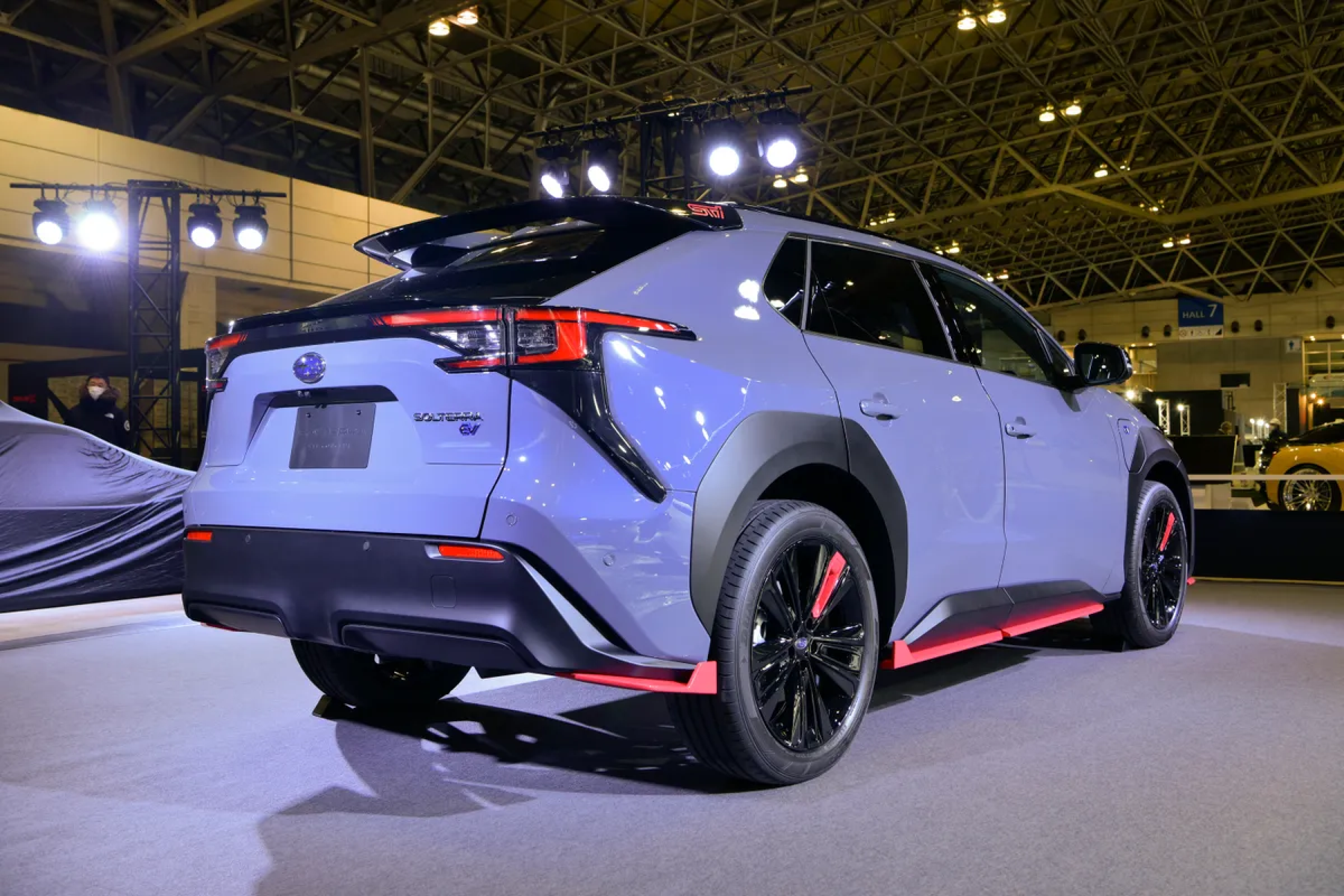
Japanese publication Best Car [↗] reports the automaker is set to put its Solterra STI concept car – which was revealed at in early 2022 – into production with ‘mainly suspension’ changes.
The concept previewed cosmetic additions to the Tesla Model Y-rivalling medium electric SUV, including; a unique blue exterior colour, cherry red side skirts and bumper accents, gloss black wheels with a red spoke, and a larger rear spoiler.
The Japanese company already offers a catalogue of STI accessories for most models, ranging from the Crosstrek small SUV to WRX sports sedan.
When Subaru Australia previously confirmed the latest WRX won’t be sold in a STI guise, it said in a media release: “Loyal Australian Subaru fans will be able to continue their love for STI through STI inspired performance and styling parts [and] special limited edition vehicle offerings.”
Alongside the Subaru Solterra STI concept, it also revealed the STI E-RA concept at the 2022 Tokyo Auto Salon show to demonstrate the company’s commitment to the rally badge for electric vehicles.
2024 Subaru Solterra to launch soon
After some delay, the Subaru Solterra electric SUV is expected to launch in Australia before the end of this year.
It’ll likely launch in Australia with a dual-motor all-wheel drive configuration producing 160kW of power and 336Nm of torque.
A 64kWh usable (71.4kWh gross)lithium-ion battery yields up to 460 kilometres claimed WLTP driving range on a full charge. Recharging speeds are capped at 6.6kW AC and 150kW DC.
It shares the same Toyota-developed platform with the Toyota BZ4x and Lexus RZ.
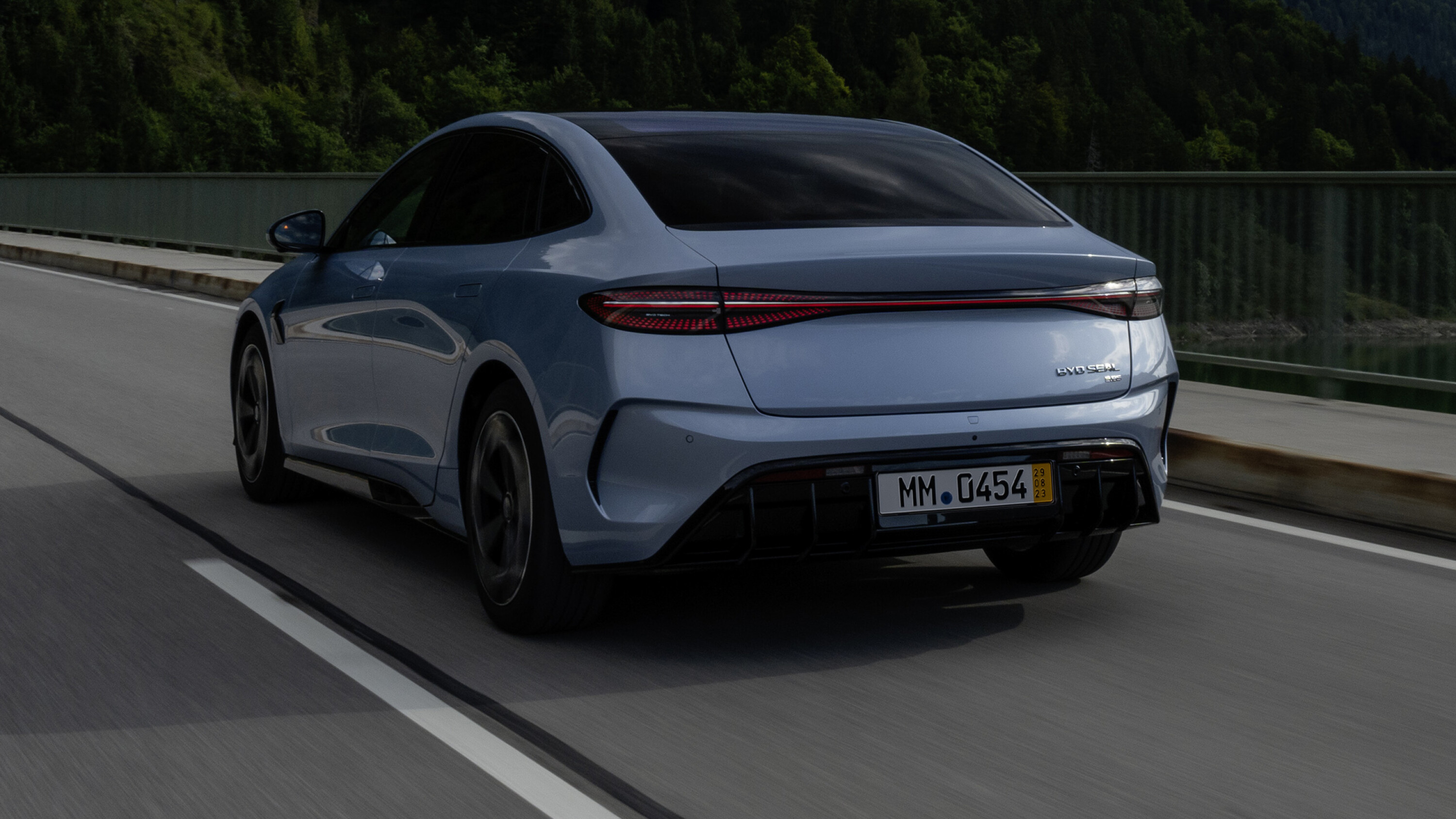
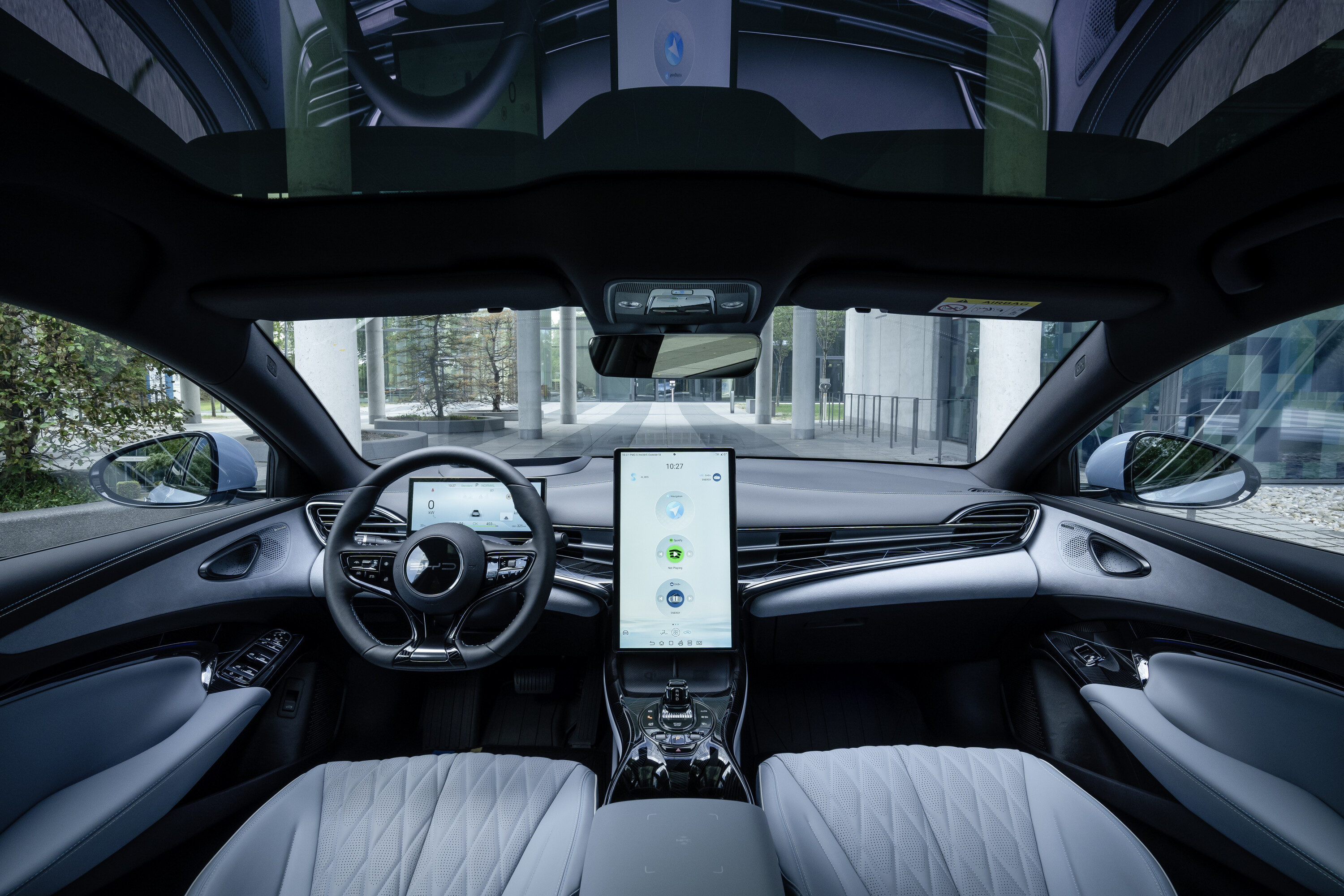
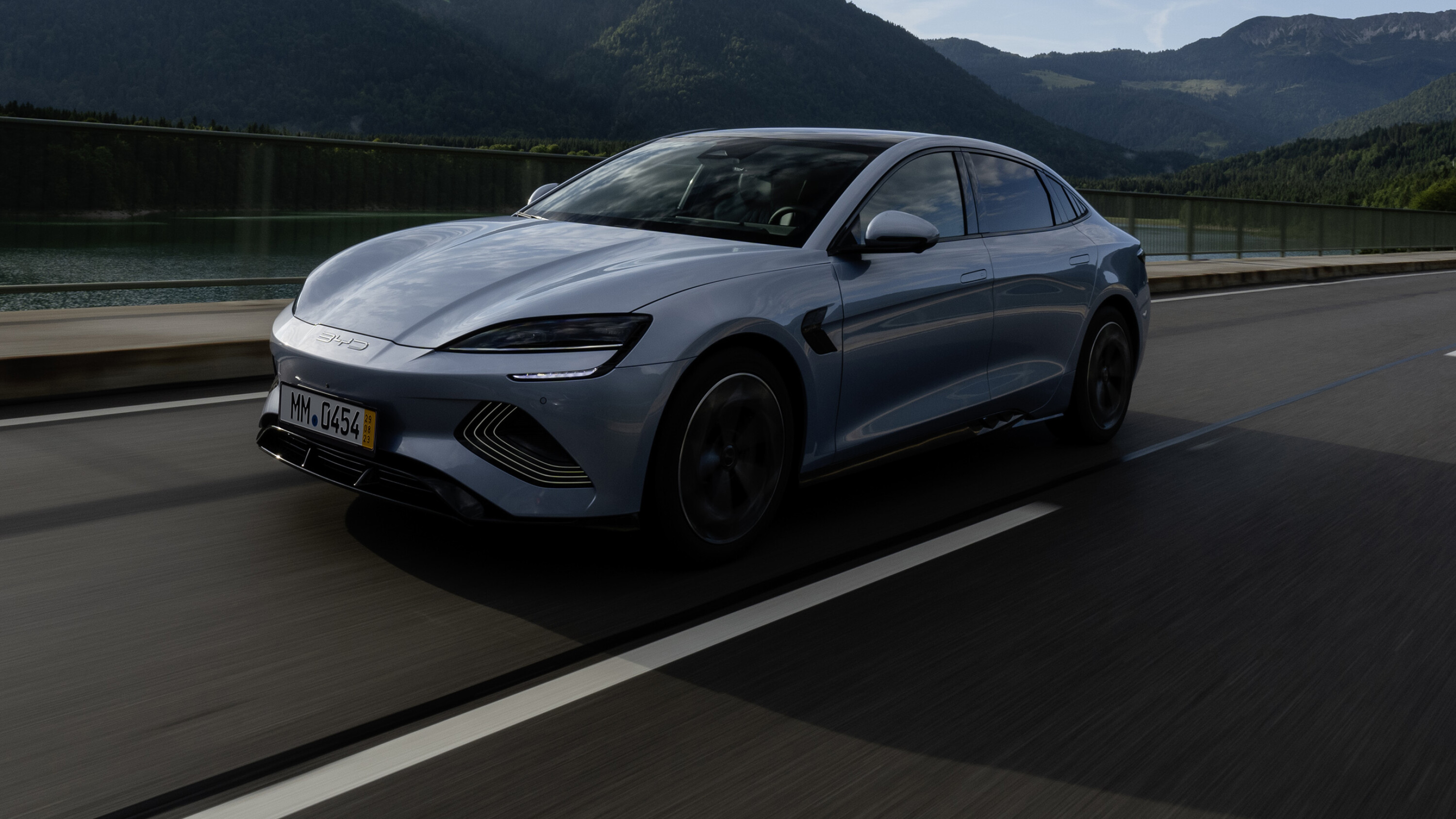
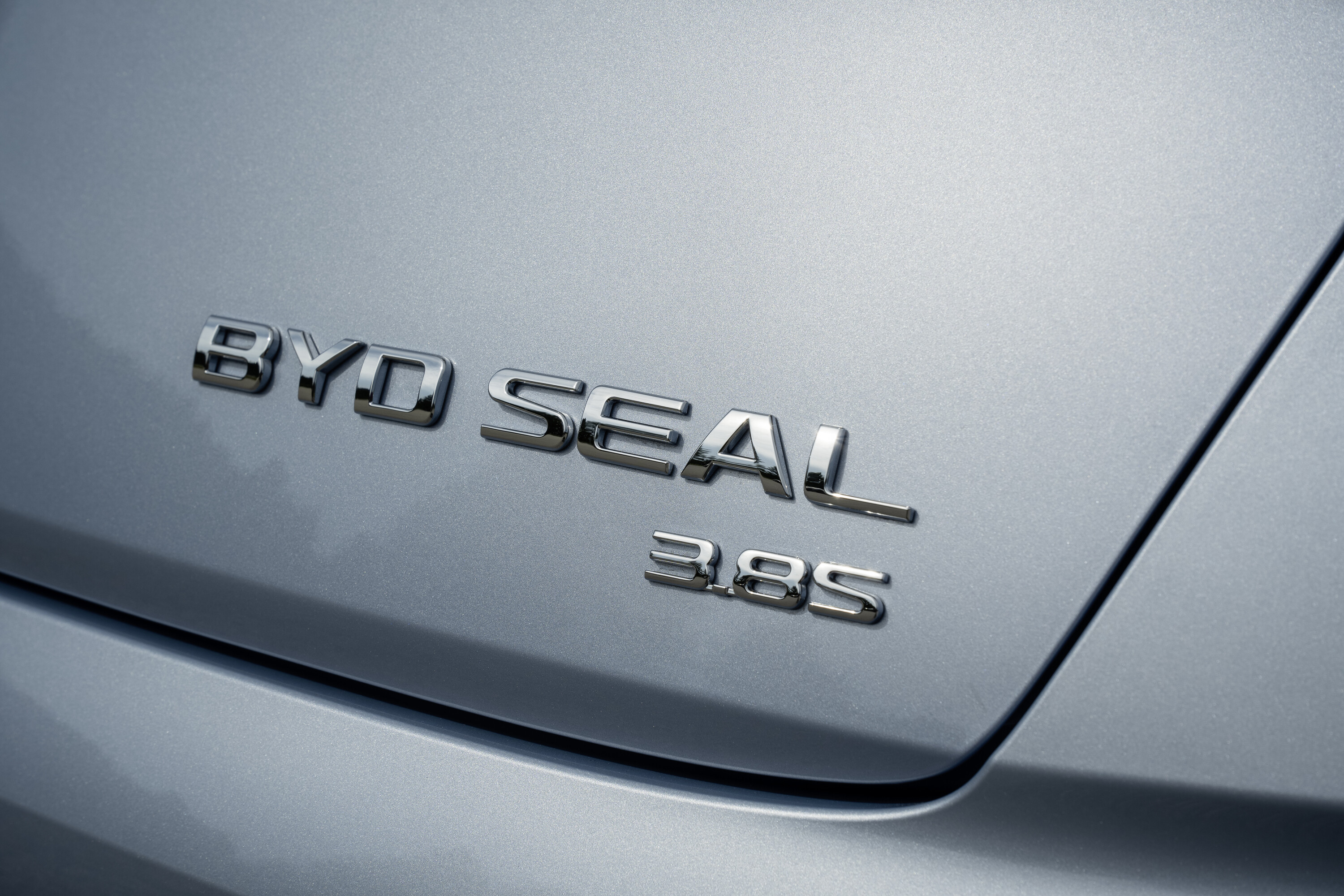
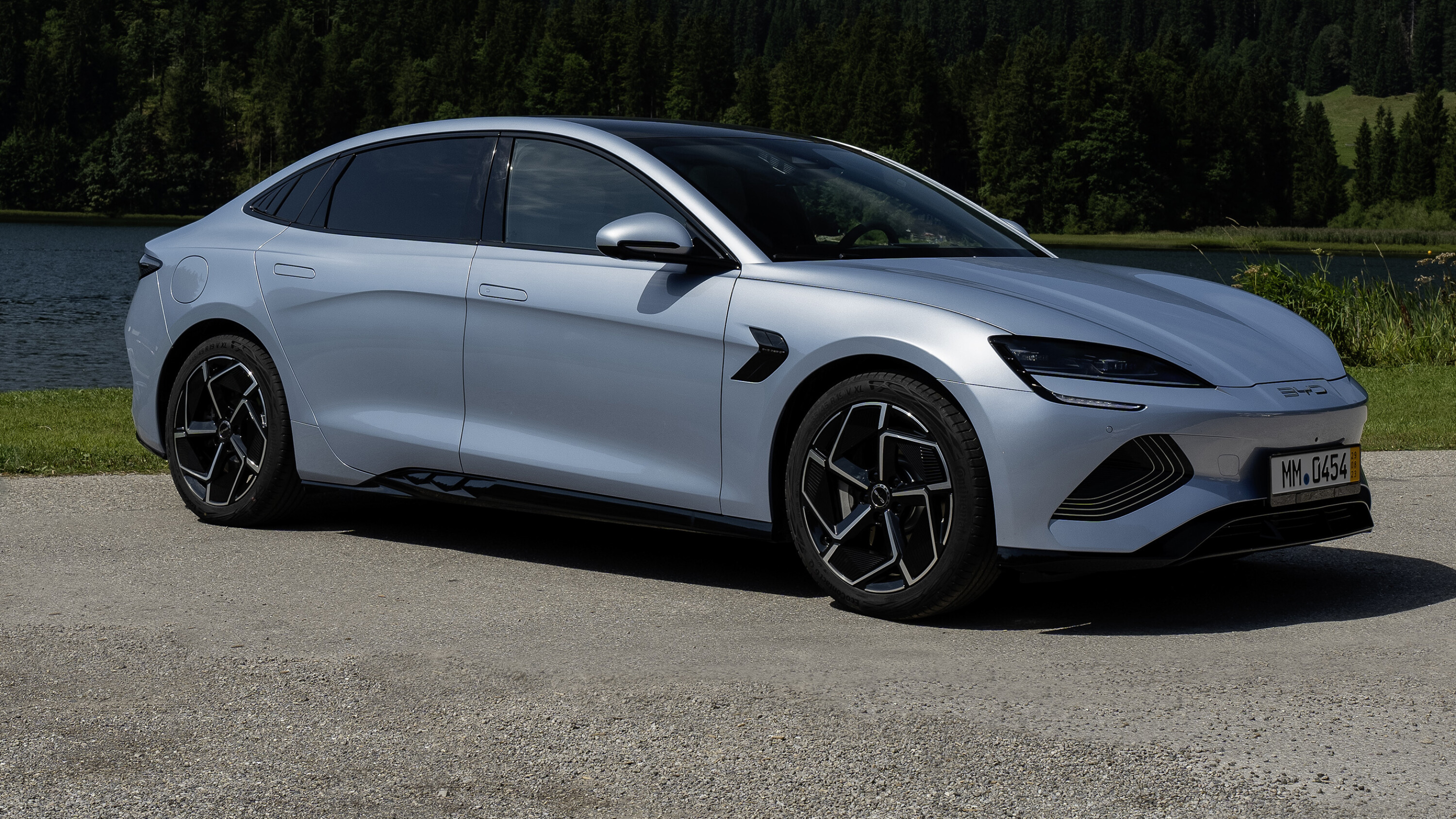
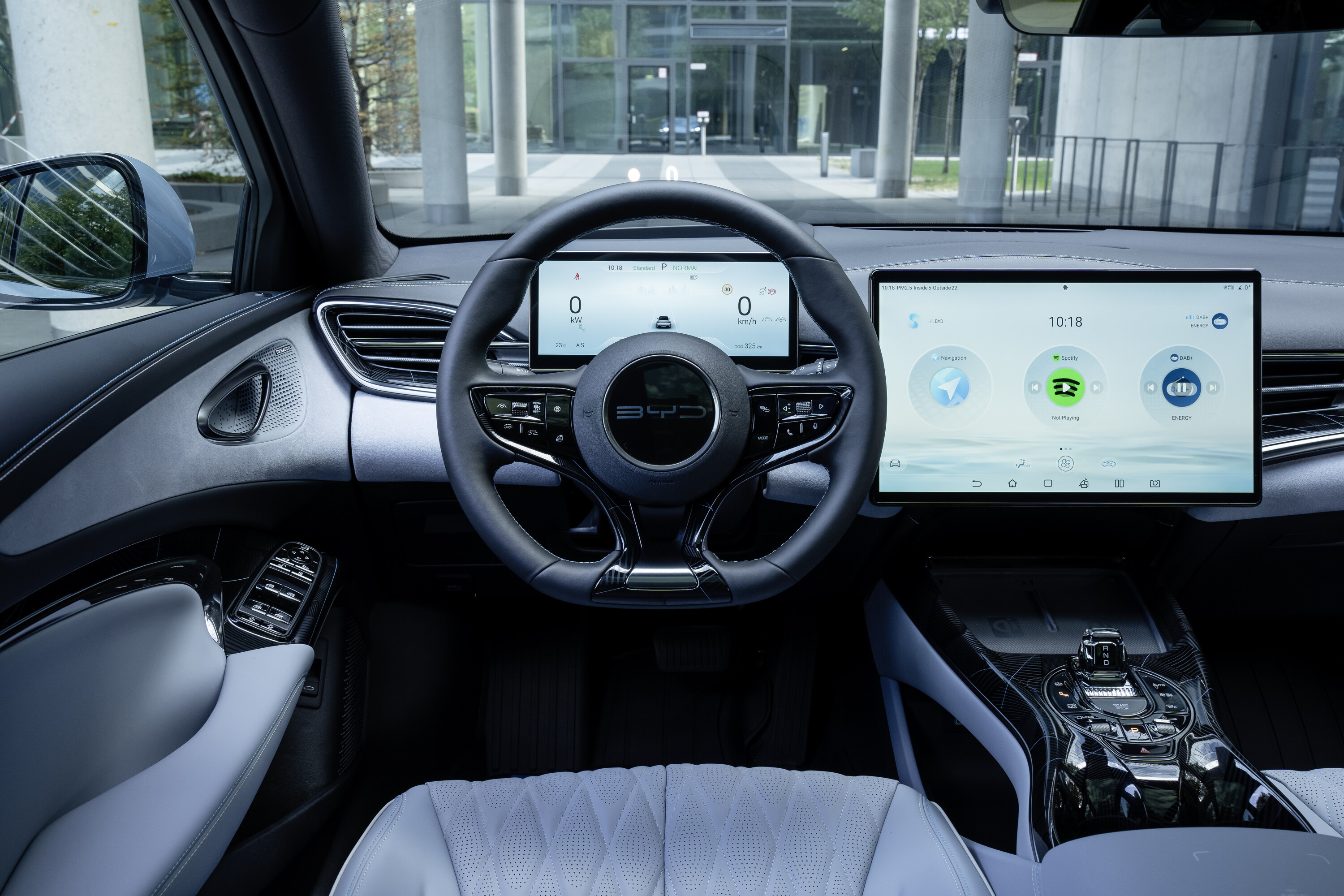
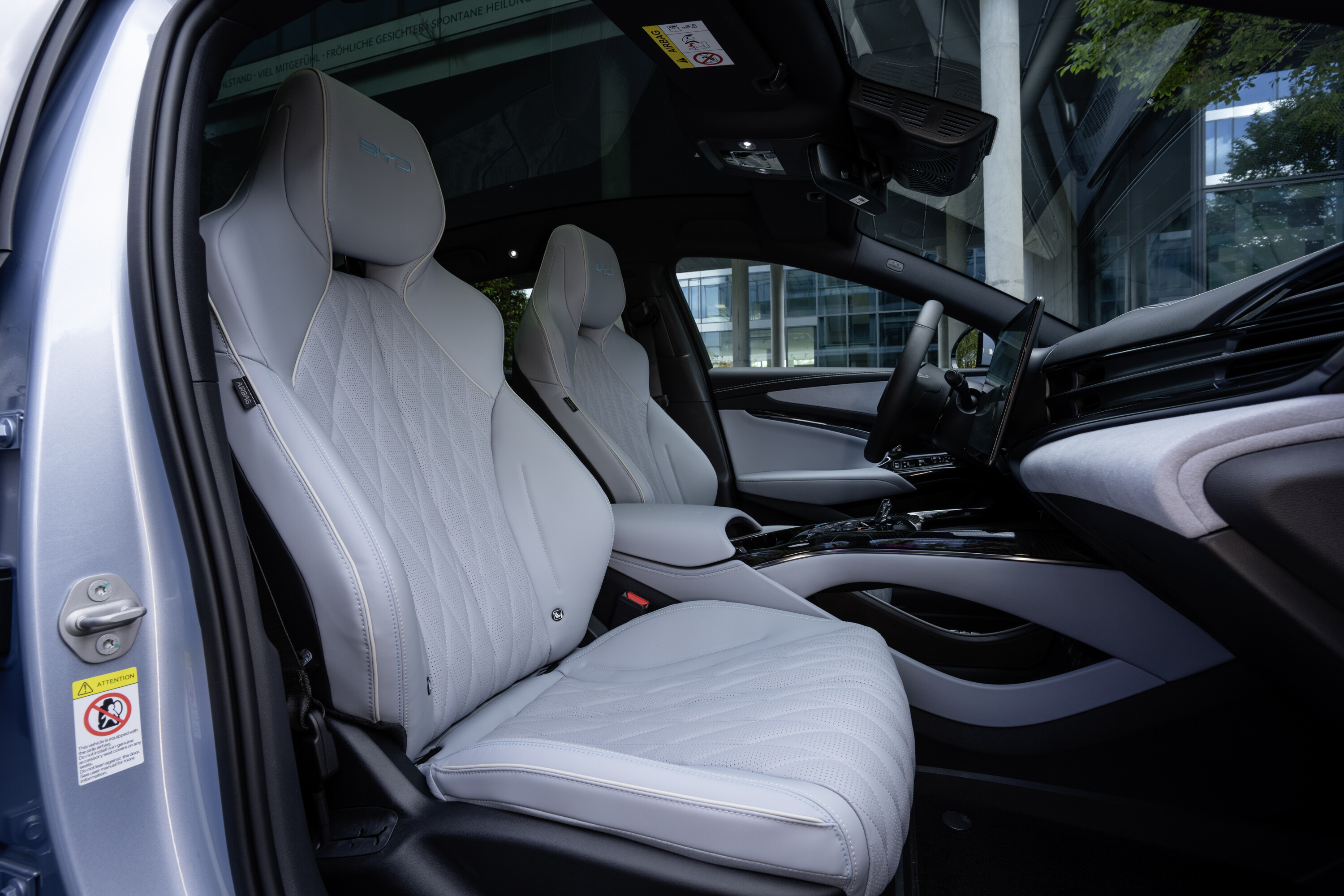
The 2024 BYD Seal electric sedan has been detailed for Australia.
Priced from a sharp $49,888 before on-road costs, the Seal – an arch-rival for the Tesla Model 3 and Hyundai Ioniq 6 sedans – will commence local deliveries in early December.
That is circa-$12,000 less than the cheapest Model 3 and $24,000 less than the most affordable Ioniq 6 – and similar to a top-of-the-range Toyota Camry hybrid.
Three variants are available: Dynamic, Premium and Performance.
All offer different powertrains, from the 150kW rear-wheel-drive Dynamic to the $68,798 390kW all-wheel-drive Performance capable of a 3.8-second 0-100km/h sprint.
The mid-spec Premium, comparable to a Tesla Model 3 Long Range, is priced at $58,798 plus on-road costs – less than the entry-level Model 3, which currently starts from $61,900 before on-roads following a recent update.
The Seal Dynamic has a 61.4kWh battery pack and 150kW/310Nm single electric motor sending power to the rear wheels. The claimed WLTP range is 460 kilometres, with a 0-100km/h time of 7.5 seconds.
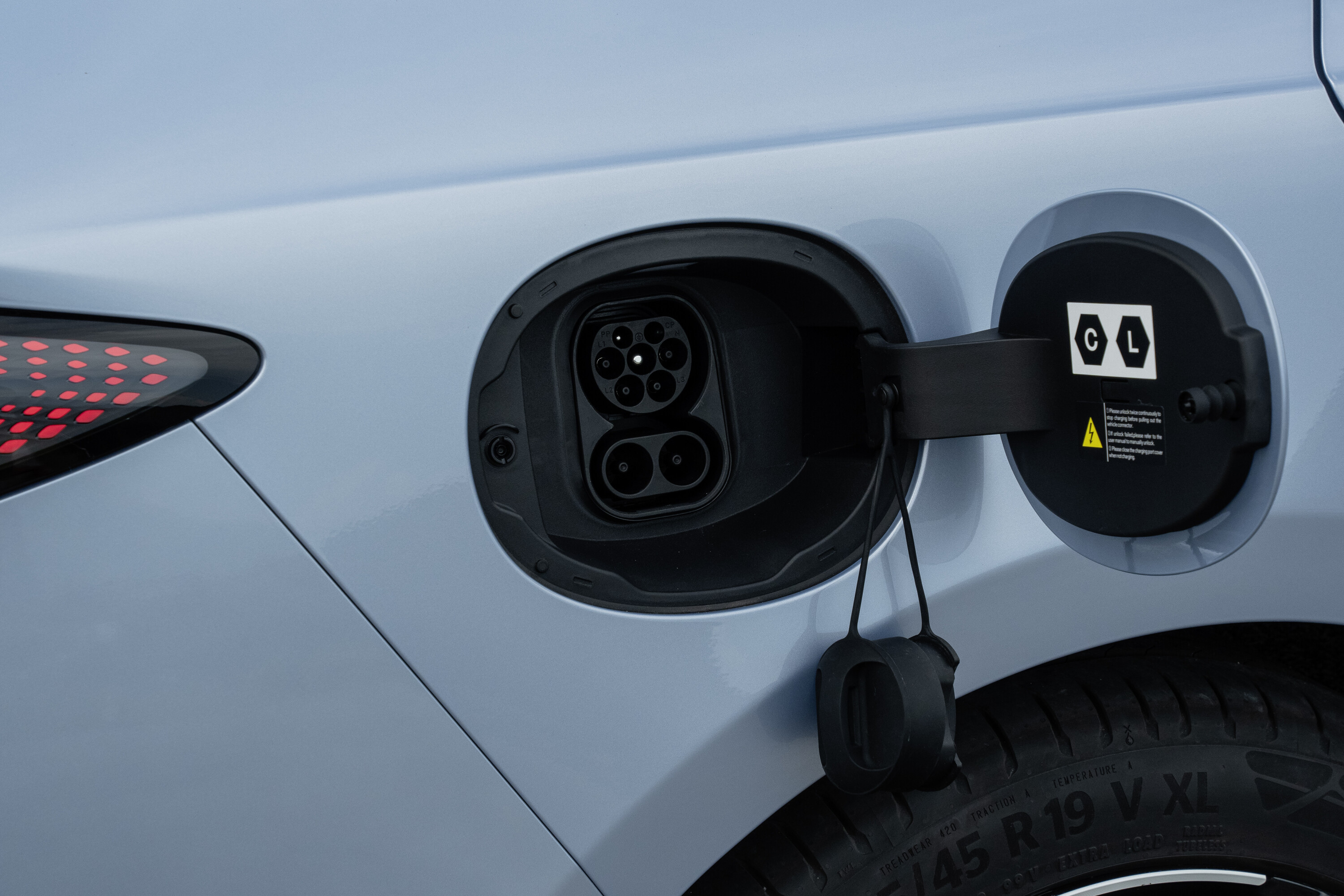
Fast DC charging maxes out at 110kW, while AC charging is limited to 7kW.
Stepping up to the Premium long-range variant brings a larger 82.5kWh battery and a more powerful 230kW and 360Nm motor, with a claimed 0-100km/h time of 5.9 seconds and 570km range.
It supports 150kW DC fast charging, allowing for a 10 to 80 per cent top-up in 37 minutes
The dual-motor, all-wheel drive Performance has a 230kW rear and 160kW front motor for a 390kW/670Nm total system output, allowing for a 3.8 second 0-100km/h time and 520km range.
1
Both the Seal Premium and Performance become the two fastest vehicles sold by BYD in Australia, beating the “sub-seven-second”, limited-run Dolphin Sport hatch due in 2024.
The Seal is underpinned by BYD’s ‘e-Platform 3.0’ electric vehicle architecture, with its proprietary lithium-iron phosphate ‘Blade’ batteries to improve durability and lifespan.
Mini match-up: BYD Seal v Tesla Model 3 v Hyundai Ioniq 6
Seal Dynamic
Model 3 RWD
Ioniq 6 Dynamiq
Seal Premium
Model 3 LR
Ioniq 6 Techniq
Seal Performance
Pricing (+ ORCs)
$49,888
$61,900
$74,000
$58,798
$71,900
$83,500
$68,798
Power
150kW
208kW*
168kW
230kW
366kW*
239kW
390kW
Torque
310Nm
420Nm*
350Nm
360Nm
493Nm*
605Nm
670Nm
0-100km/h (claimed)
7.5s
6.1s
7.4s
5.9s
4.4s
5.1s
3.8s
Battery size
61.4kWh
57.5kWh*
77.4kWh
82.5kWh
75kWh*
77.4kWh
82.5kWh
Driving range (WLTP)
460km
513km
614km
570km
629km
519km
520km
* Model 3 powertrain and battery capacity figures are based on data from the Federal Government’s vehicle regulator and EV Database.
Measuring 4800 millimetres long, 1875mm wide and 1460mm tall, the BYD Seal is around 160mm longer but 58mm slimmer than a Model 3 – and similar in size to a Toyota Camry. It has a 2920mm wheelbase.
2024 BYD Seal boot space
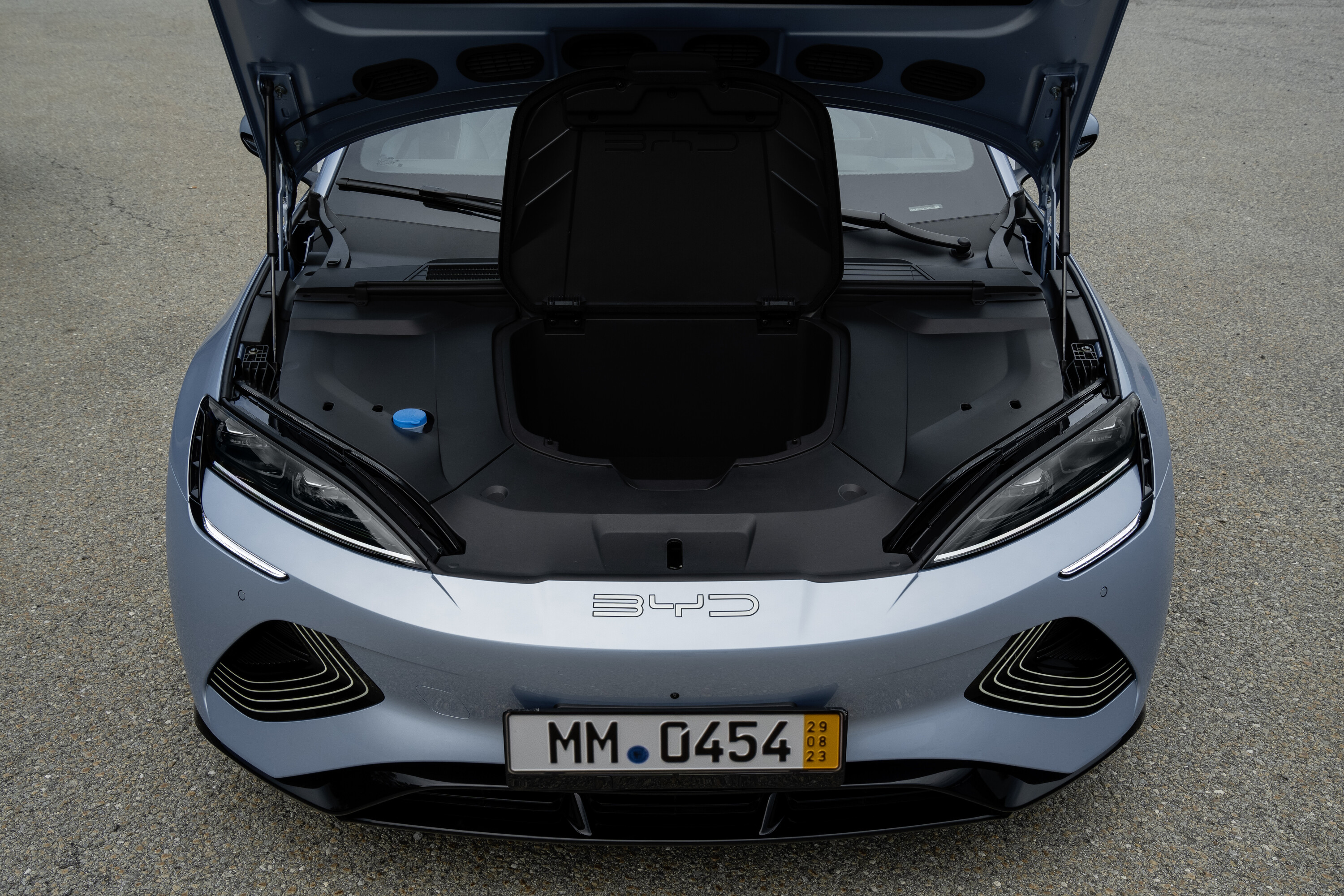
The BYD Seal has a 400-litre boot and 53 litres of front storage under the bonnet.
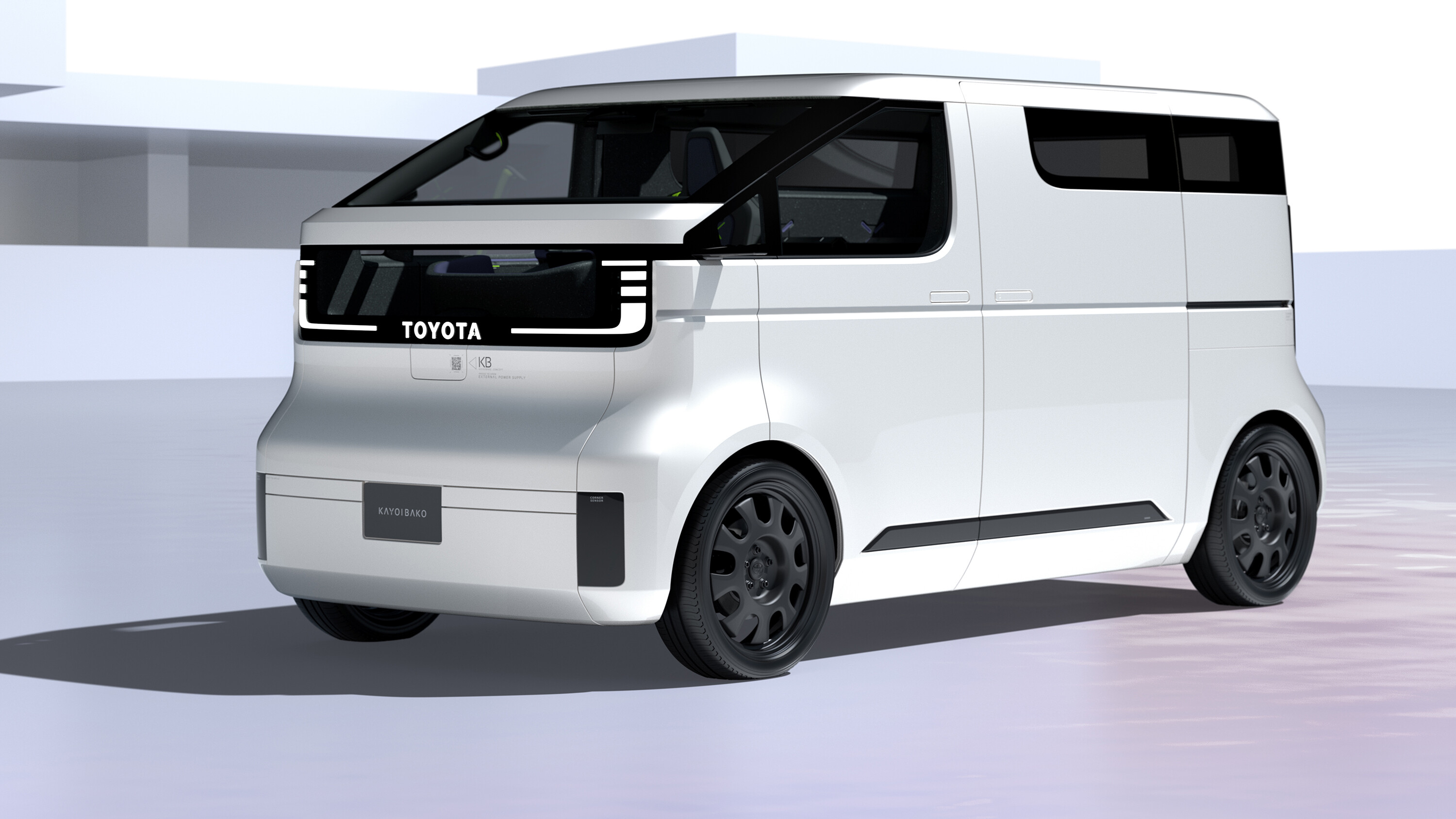
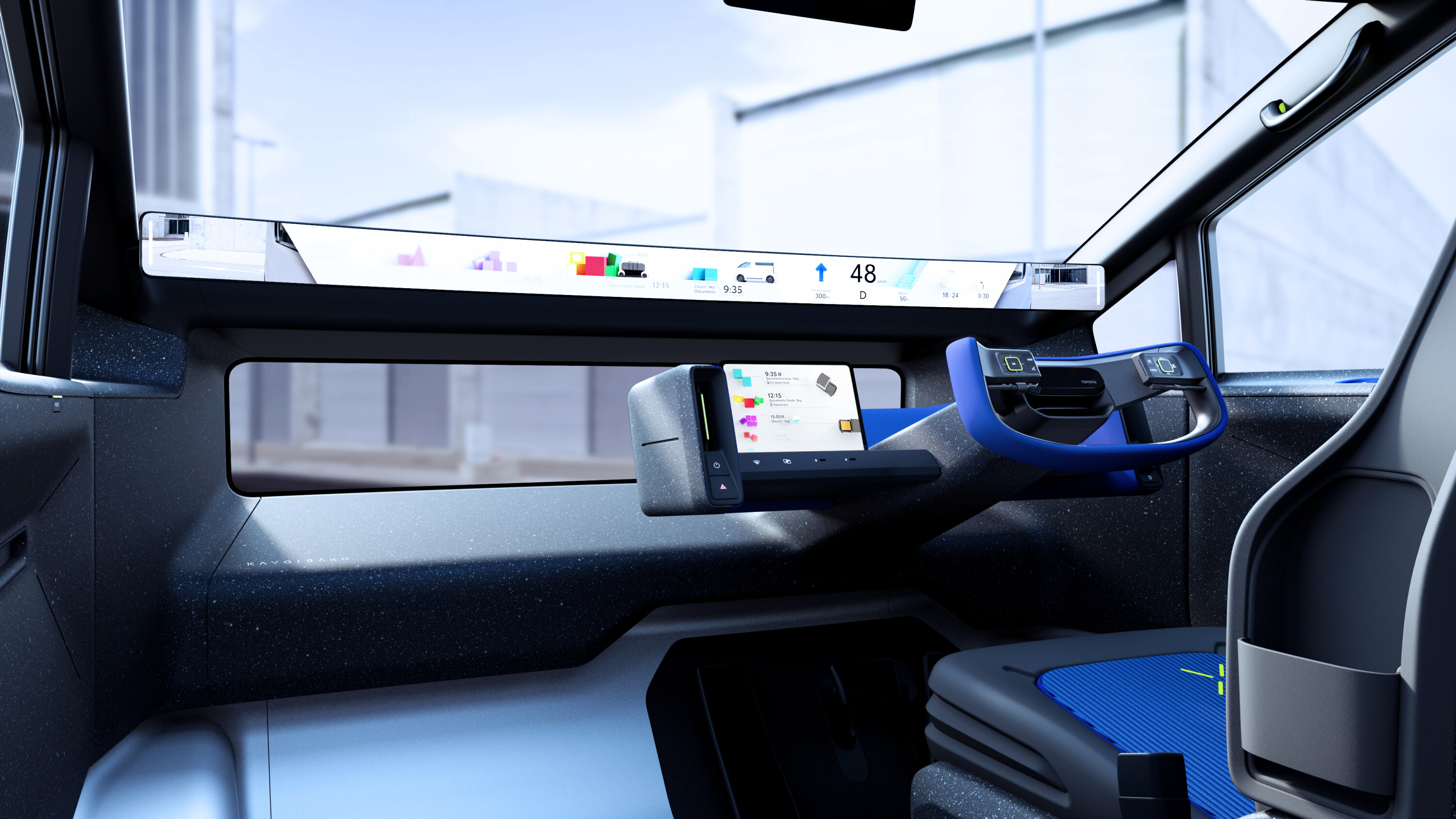
This is the Kayoibako concept, Toyota’s take on the ‘jack of all trades’ EV for the future – but will it matter if this little van is also a master of none?
Luckily, The Bard’s full quote reads “A jack of all trades is a master of none, but often times better than a master of one“, and that looks to be Toyota’s angle here.
The Kayoibako is so named because the word, in Japanese [↗], refers to the modest concept of a reusable shipping carton – although Toyota puts it thus: “The word kayoibako refers to configurable shipping containers for safely and efficiently transporting parts and products between facilities, sized to eliminate waste and able to meet diverse needs with changeable inserts.”
12
Toyota says it conceived the Kayoibako as a “quality base unit” packaged as a solid interior and exterior package, without bending your wallet over.
Its expandable design would let you tailor it to all sorts of roles, making it a flexible player in the game.
The design is said to be ultra-expandable, allowing for various customisations – and while there’s no getting around the fact that it looks like nothing more than a van, it’s a cool-looking van.
4
So what is it for?
Business or pleasure
The Kayoibako was designed to connect with smart grids and other systems that go beyond just getting you from point A to B. In a business context, this could mean efficient last-mile logistics or even a mobile shop with built-in product display shelves.
2
For personal use, the van is intended to be heavily customisable, both from a styling and a functional, accessible perspective. Wheelchair access? No worries. Off-roading? Apparently, yes.
As with many dedicated EVs, the Kayoibako boasts some bizarre dimensions – although, as a van, its specs make sense. It’s only 3990mm long, making it shorter than the compact Yaris Cross, but its 2800mm wheelbase is just 50mm shy of the big Kluger’s footprint. And, at 1855mm tall, it’s comfortably taller than both. Interior space, check.
1
Toyota Kayoibako dimensions
DIMENSIONS
Toyota Kayoibako
Toyota Yaris Cross
Toyota Kluger
Length / Width / Height (mm)
3990 / 1790 / 1855
4180 / 1765 / 1560
4950 / 1930 / 1730
Interior Length / Width / Height (mm)
3127*2 / 1485 / 1437
Wheelbase (mm)
2800
2560
2850
When will the Toyota Kayoibako be available to buy?
Toyota isn’t offering any word on whether the Kayoibako is destined for production, but it clearly offers a glimpse into the sort of adaptable automotive future many brands want buyers to expect from their EVs.
5
Watch for more to come at the 2023 Japan Mobility Show, opening on October 25.
Our man John Law will be there, so expect a walkaround review video on our socials.
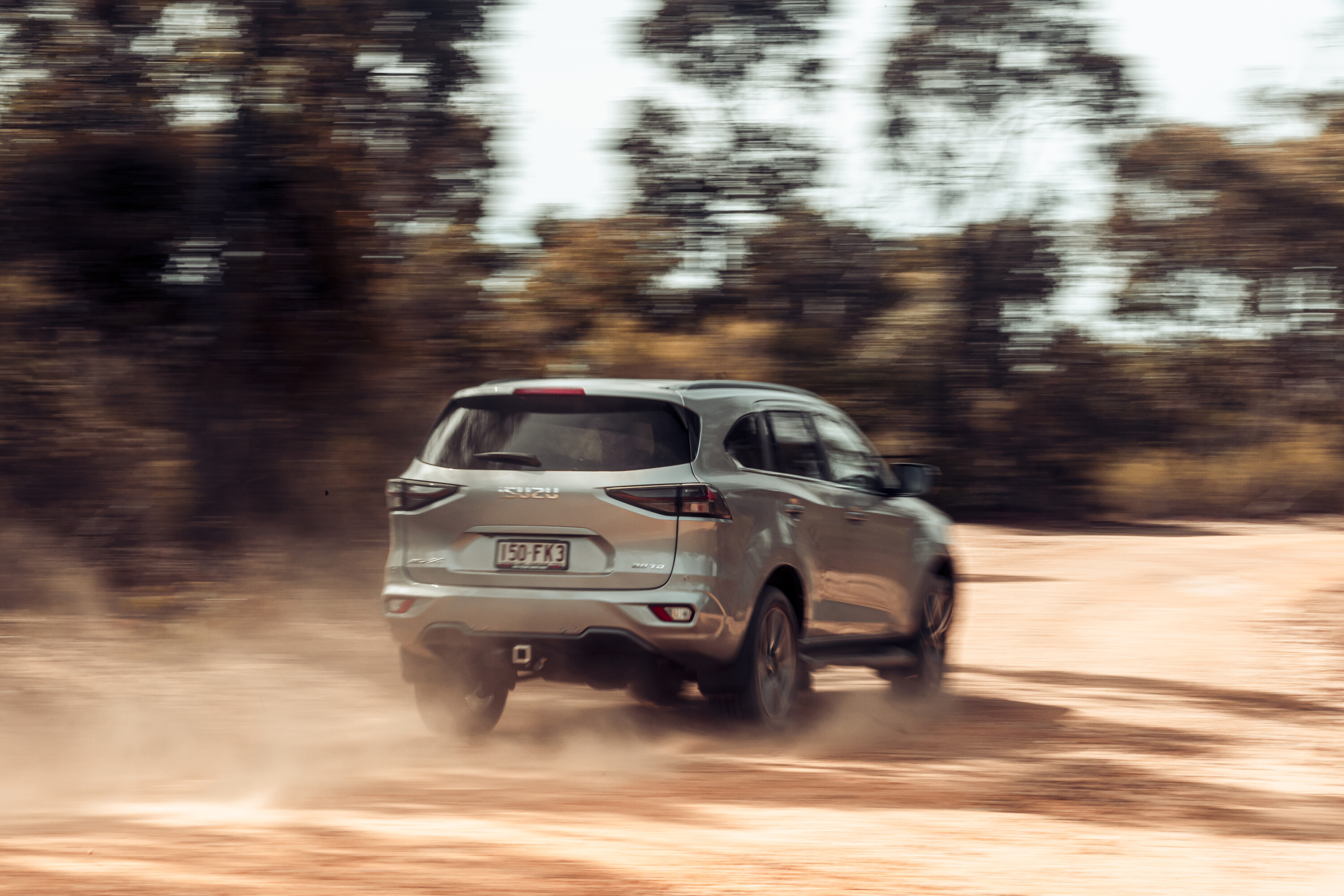
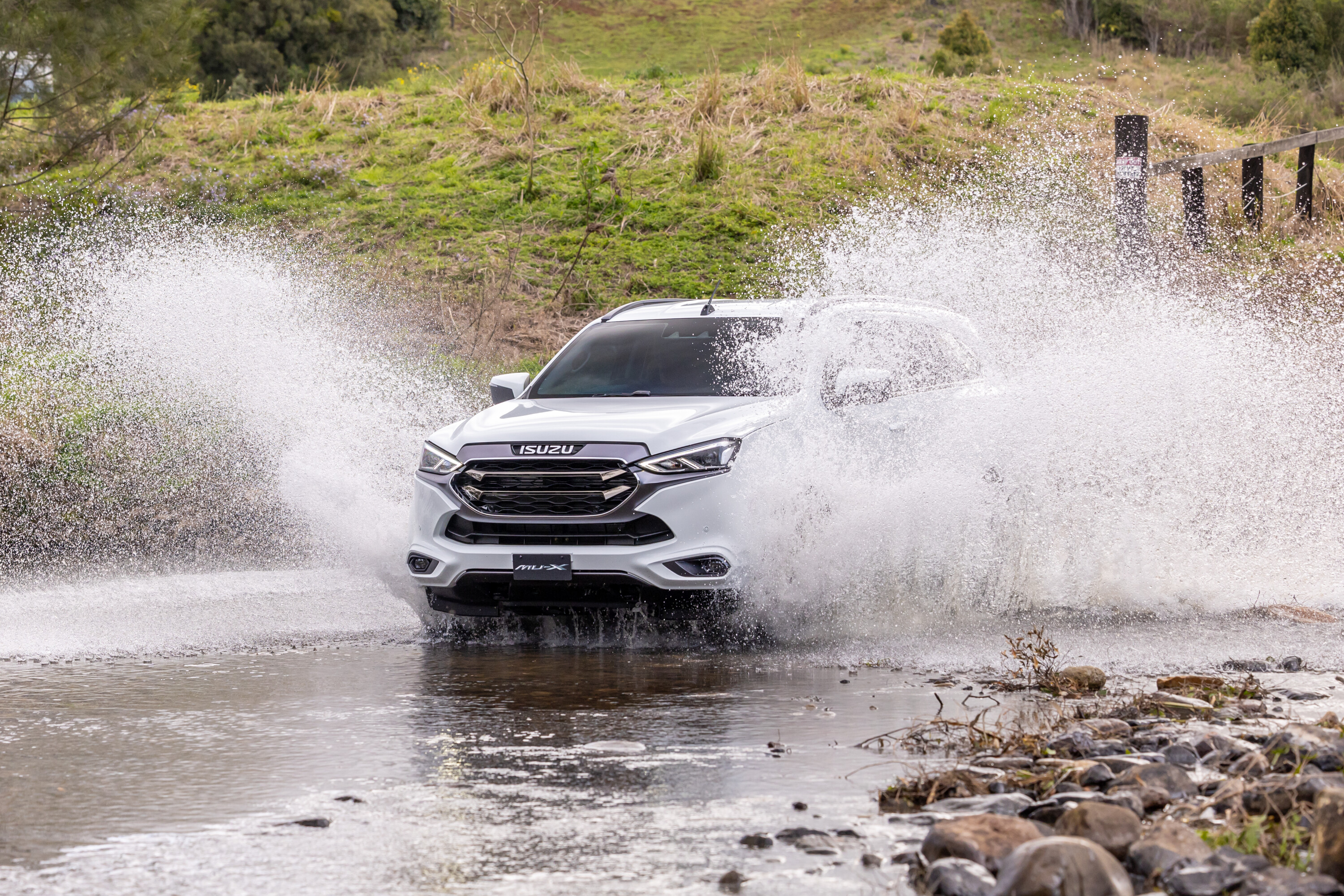
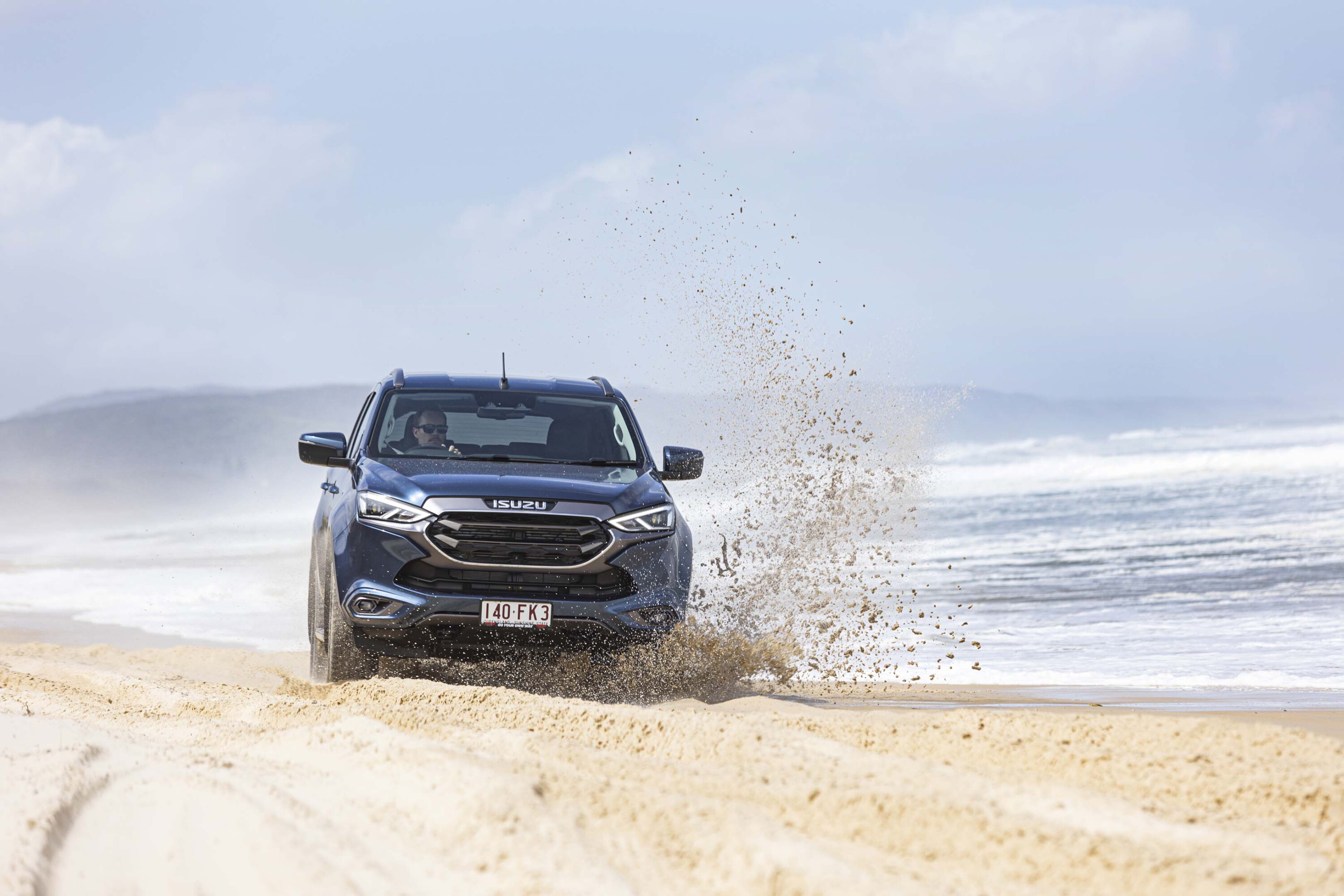
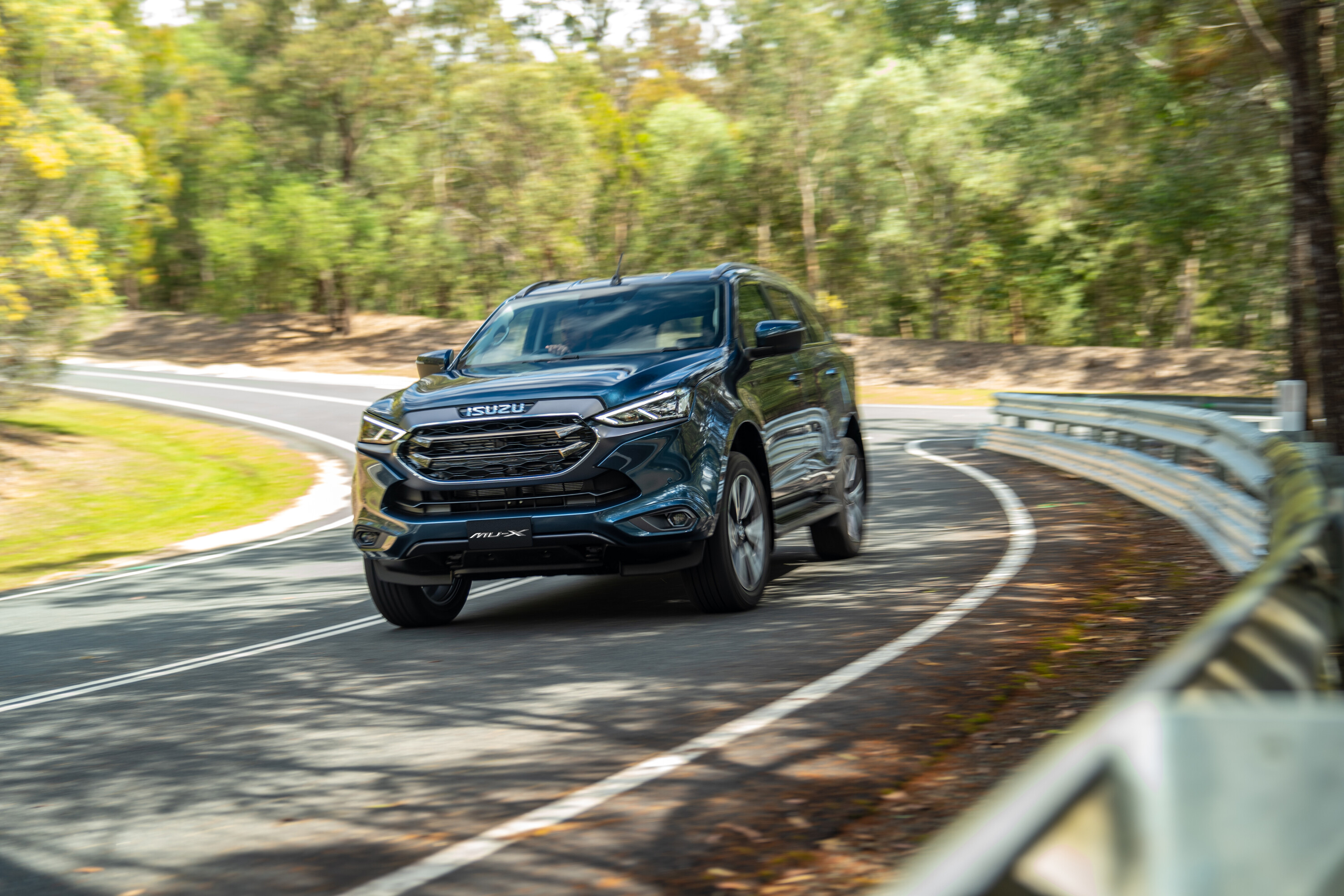
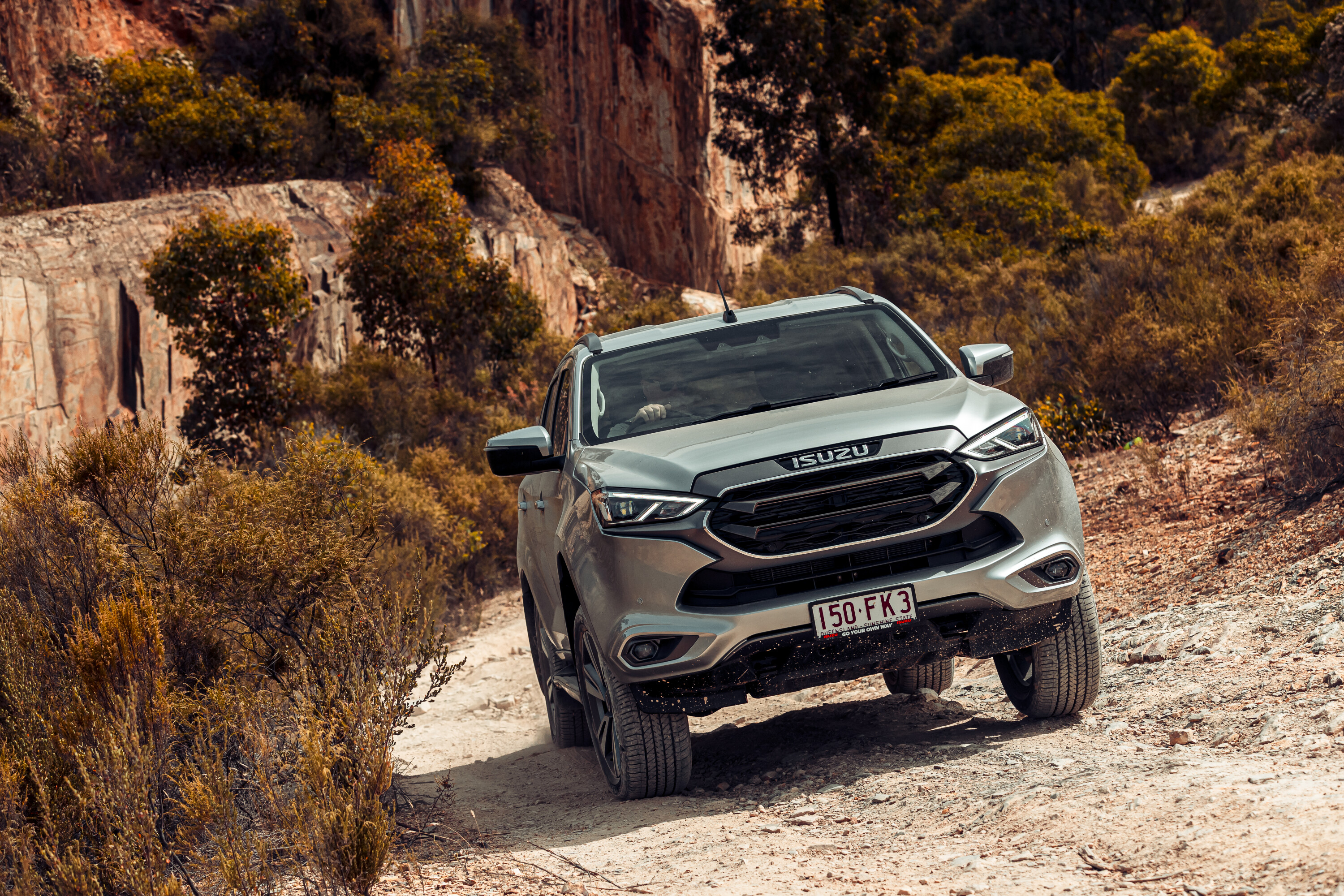
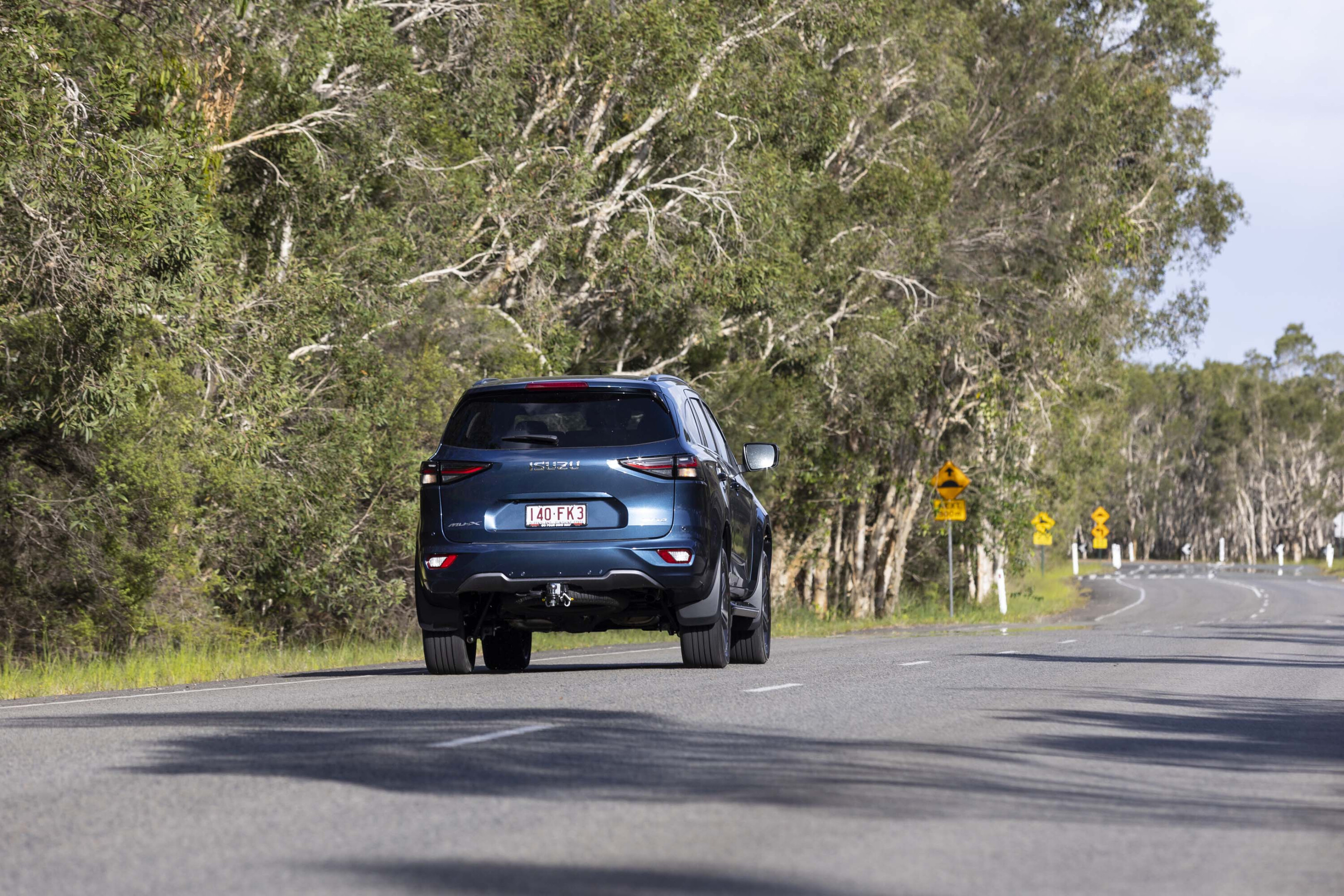
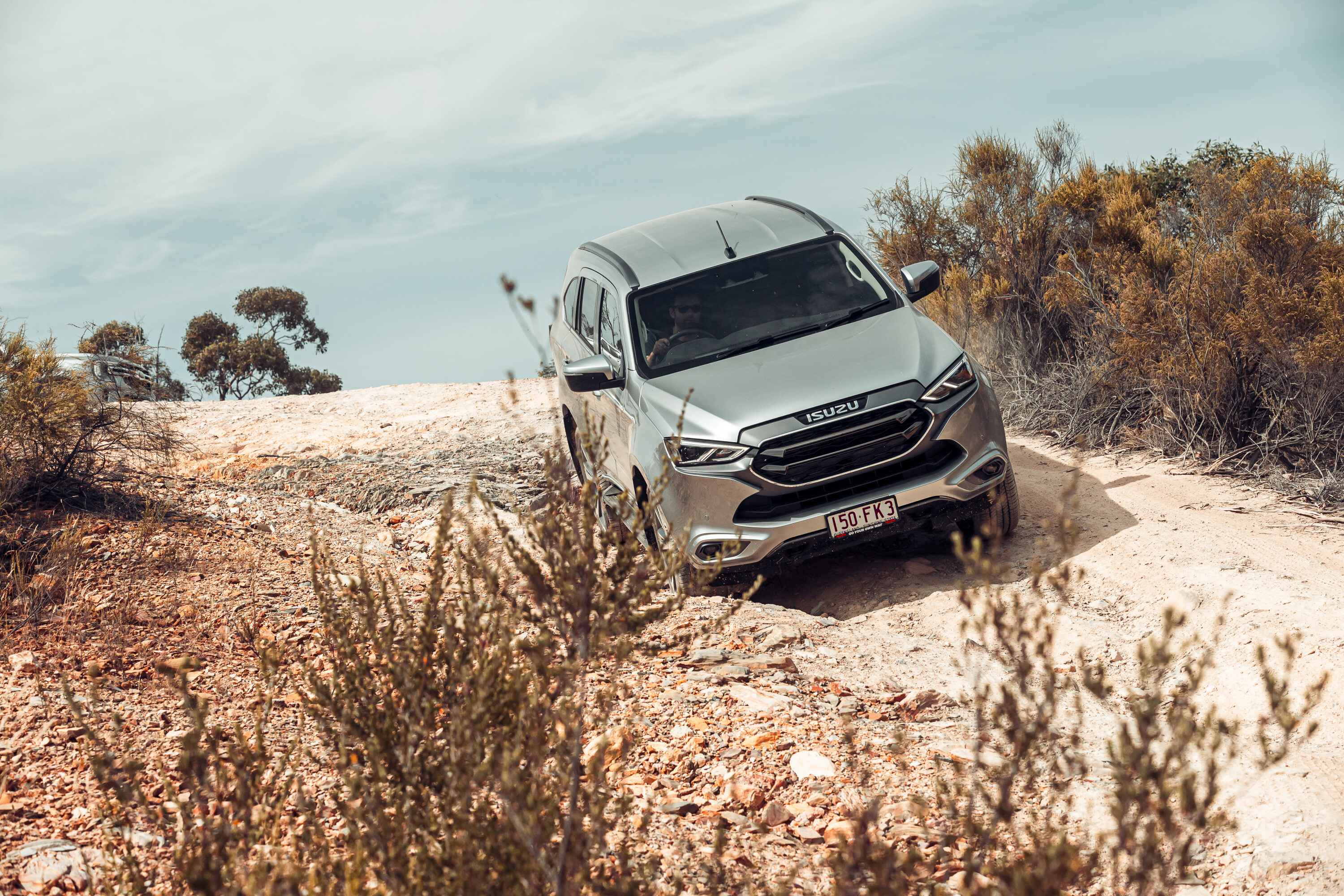
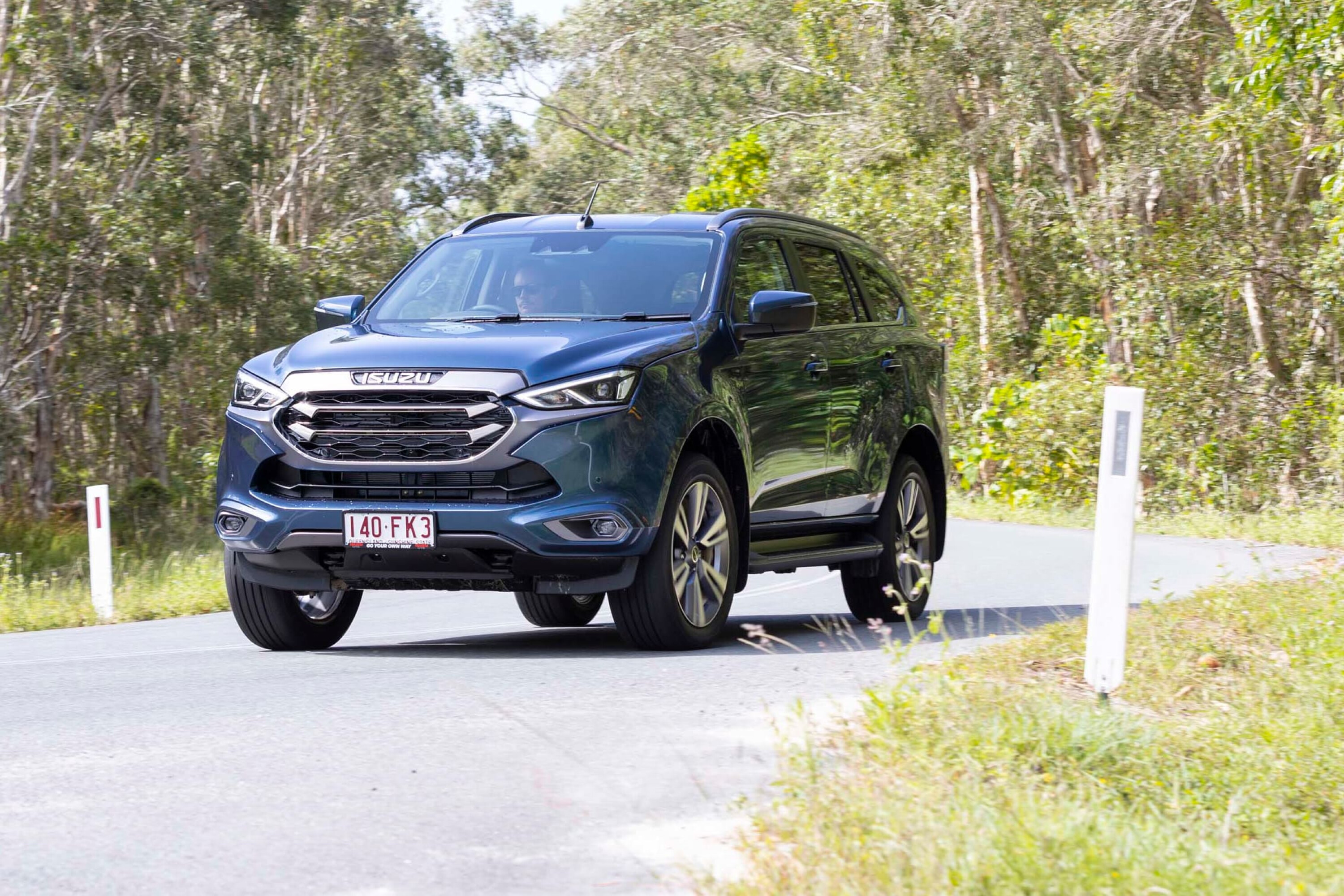
The Isuzu MU-X is a large SUV that is spacious and comfortable for up to seven occupants and is generally smooth and quiet to ride in.
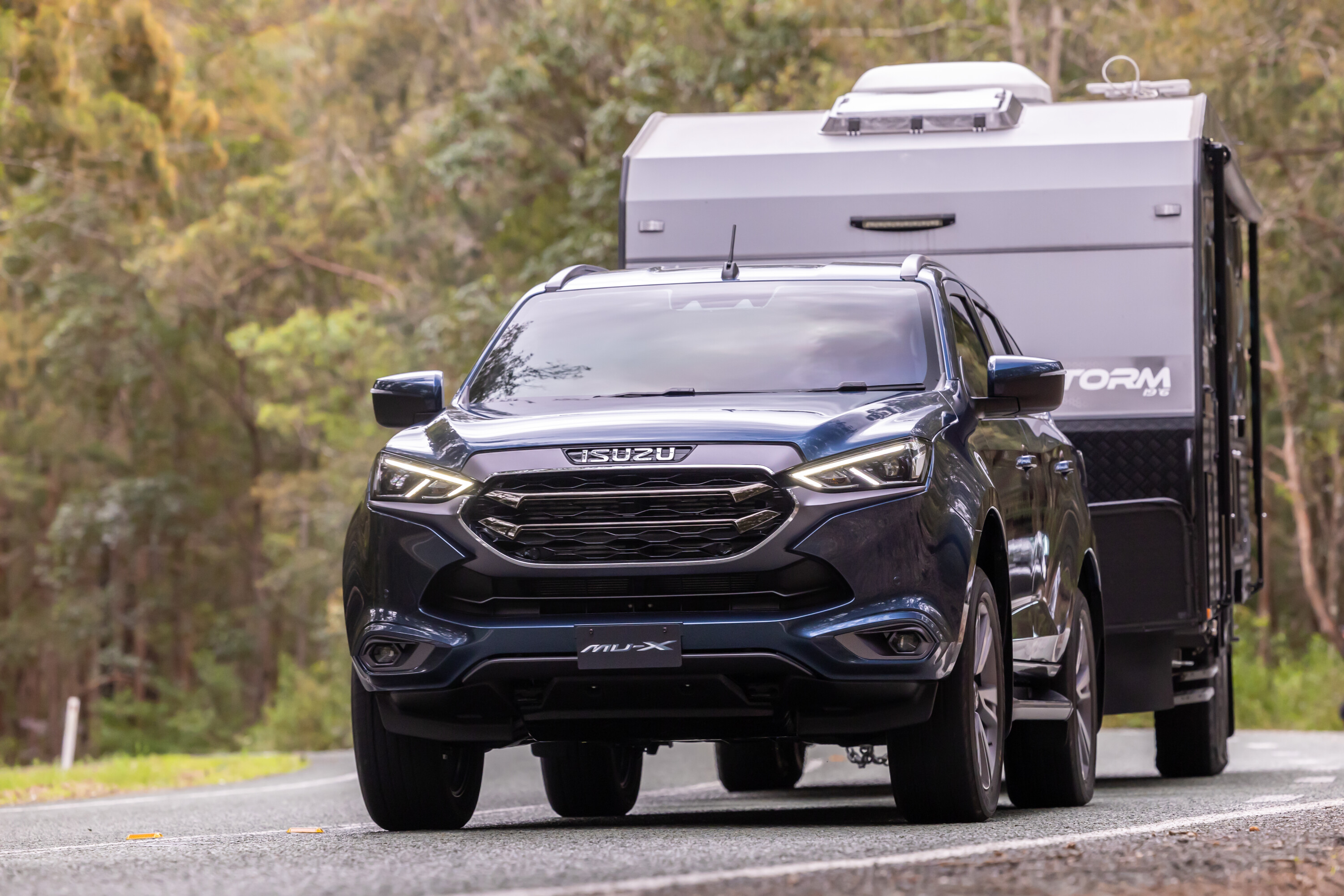
This is one of the better ute-based SUVs for driver engagement and up-to-the-minute standard safety equipment, as well as being a strong heavy towing candidate with its 3500kg (braked) capacity.
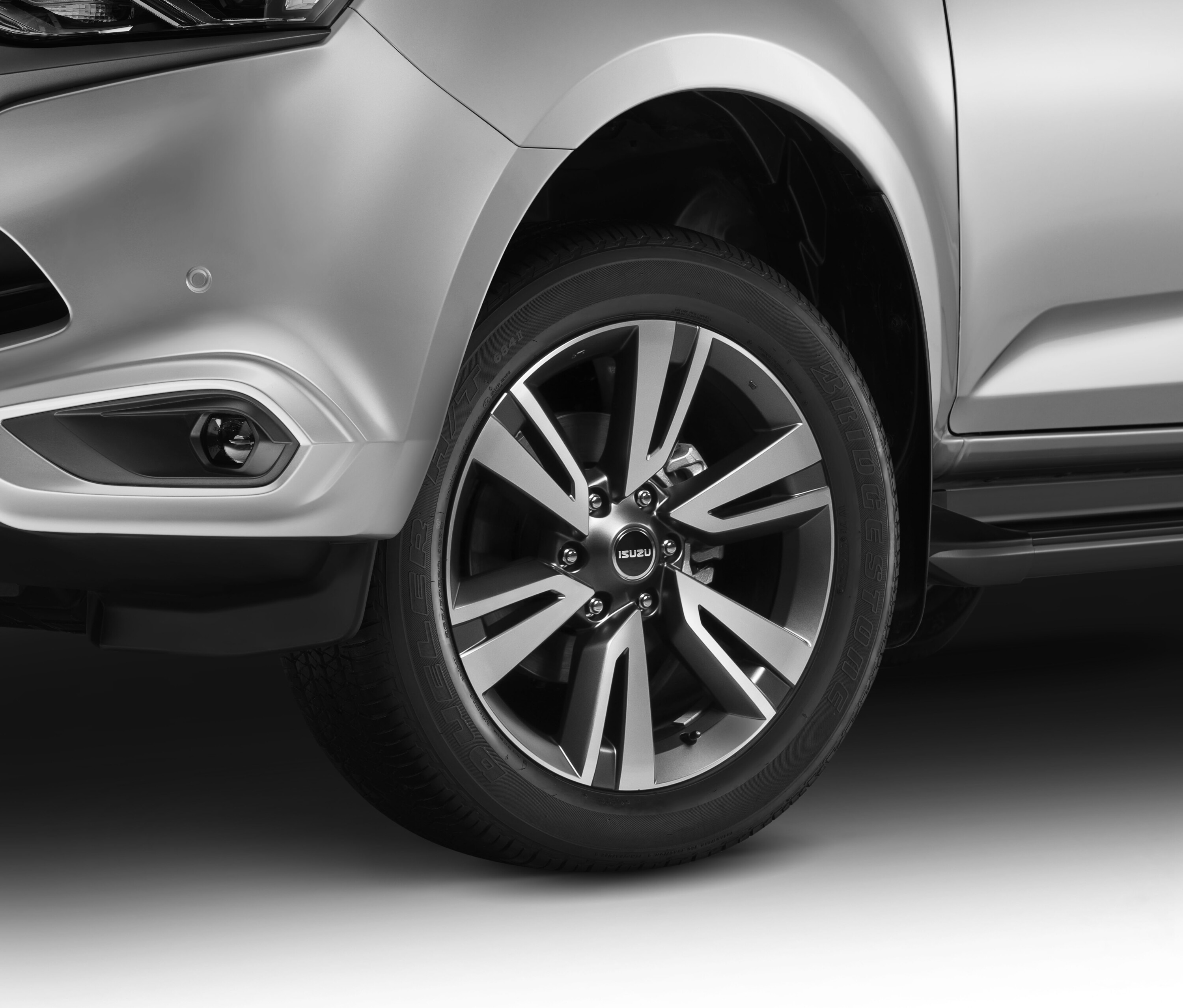
Updated in late 2022 for MY2023, it has a new grille and taillights across the range and a new road wheel design in base LS-U and top-shelf LS-T trim. Equipment levels have also improved.
The MU-X’s powertrain, all diesel automatic, in 4×2 or 4×4 versions, provides a good spread of torque and acceptable power with good fuel economy. Every MU-X comes with the convenience of Apple CarPlay and Android Auto connectivity. The Isuzu six-year/150,000km warranty is better than average.
Prices exclude on-road costs, except the LS-T 4×4 which has drive-away pricing under a long-running promotional offer that, depending on your location, makes it about the same price or less expensive than a lower-spec the LS-U 4×4 after on-road charges have been factored in.
What body styles are available for the Isuzu MU-X?
Five-door SUV only. The MU-X drives either its rear wheels or all four wheels, depending on the version.
It is classed as a large SUV, and aside from obvious sheetmetal changes, different trim specs and the use of a coil-sprung rear axle instead of leaf springs, it shares much with its Isuzu D-Max ute sibling.
The features listed below are standard in the entry-level LS-M model and will appear in higher-grade models, unless replaced by more premium equivalent features.
Colour seven-inch touchscreen, one 12v auxiliary and two USB input sockets.
Rear parking sensors
17-inch alloy wheels
Urethane steering wheel, gear shifter, and handbrake
Full-size steel spare wheel
Cloth upholstery
7-inch infotainment system
Seven seats in three rows
Wireless Apple CarPlay
Manual air conditioning
Wired Android Auto
Rear air vents u2013 second and third rows
DAB+ digital radio
Keyless start
Four speaker audio system
Rain-sensing wipers
Front USB-A port
Powered side mirrors
Second-row USB-A x2 ports
An automatic transmission
LED head and tail-lights
Rear differential lock (4×4 only)
1
What key features do I get if I spend more?
The cheapest MU-X, the LS-M, has cloth seats, a 7.0-inch touchscreen, seven seats and 17-inch wheels.
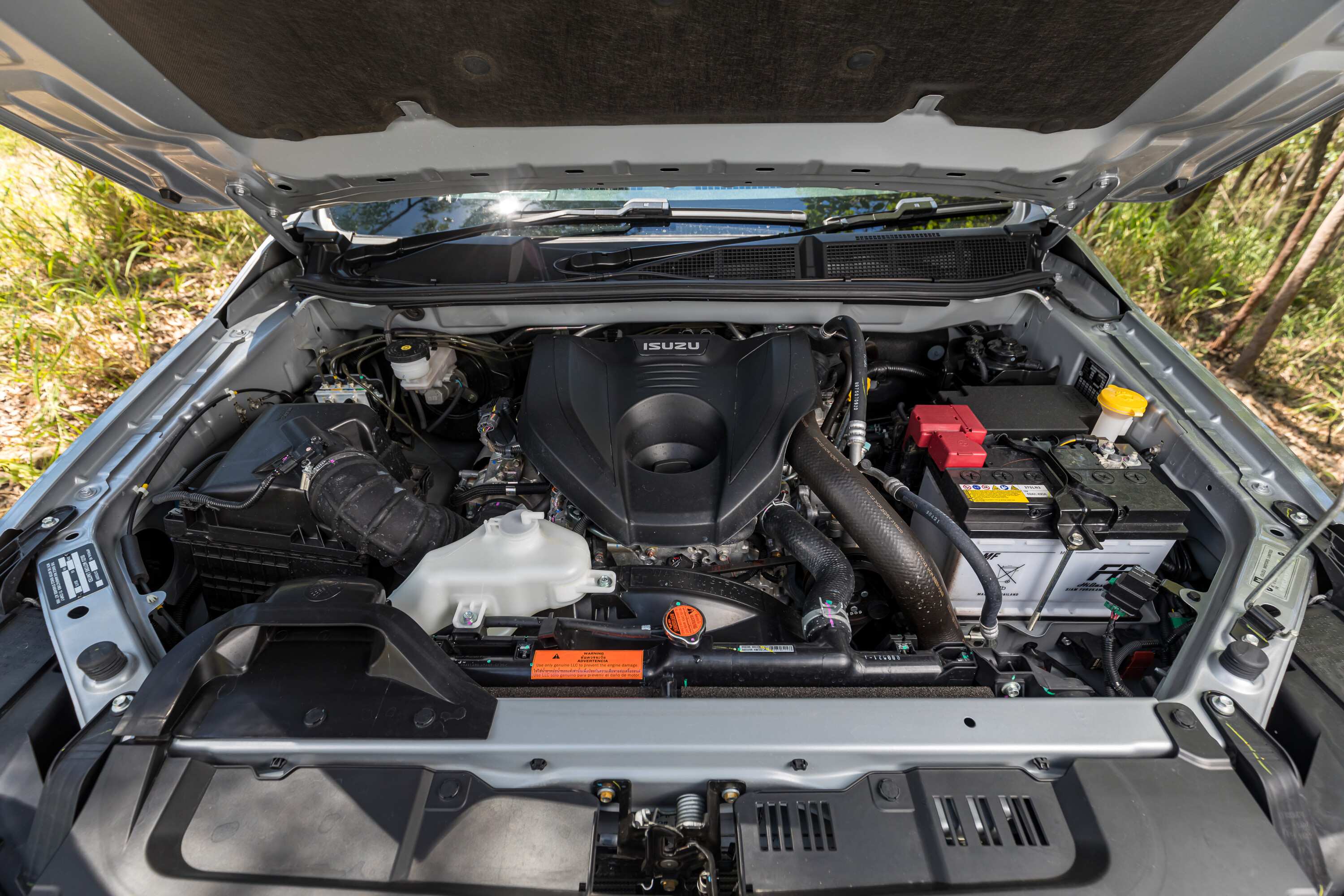
Mechanically, all Isuzu MU-X variants share the 3.0L turbo-diesel four-cylinder engine and six-speed automatic transmission combination, and the only major mechanical option for all of the three trim levels is to choose either the 4×2 (rear-wheel drive) or part-time 4×4.
Aside from the locking rear diff only available on 4x4s (where is it standard on all spec levels), there is no difference between 4×2 and 4×4 in trim line features.
For extra equipment over LS-M, you could spend more for an MU-X LS-U, where the extra money brings a power tailgate, heated body-colour side mirrors and rear privacy glass.
1
The LS-U also brings:
2023 Isuzu MU-X LS-U features
A bigger 9.0-inch touchscreen with satellite navigation so you donu2019t have to rely on a phone app
Tyre pressure monitoring system
Dual-zone climate control
Auto-dimming rear-view mirror
Keyless entry
Sun visors with vanity mirrors
Walk-away locking
Front parking sensors augment those at the rear
Welcome home lighting
Roof rails
Leather steering wheel
Bigger, sportier-looking 18-inch alloy wheels
Power lumbar control, driveru2019s seat
1
The top model is the MU-X LS-T, which gets you those features plus:
2023 Isuzu MU-X LS-T features
Leather accents on all seats
Heated front seats
Eight-way power-adjustable driveru2019s seat
Remote engine start, so you can start the engine to warm or cool the interior before getting in
The MU-X has a comprehensive safety assist features list for all models from LS-M 4×2 up.
This includes autonomous emergency braking (AEB), a lane support system (LSS) with lane-keep assist (LKA) and emergency lane keeping (ELK) functionality that helps steer the MU-X within the road markings.
Its AEB system can initiate a full emergency stop automatically from speeds of up to 80km/h if the system senses you are in danger of driving into something. First, it sounds a warning and if you ignore that, it applies the brakes partially. If you still do not intervene it applies maximum braking.
The AEB is capable of detecting and reacting to vulnerable road users such as pedestrians and cyclists, in both daylight and low light. There’s rear cross-traffic alert but no rear AEB.
1
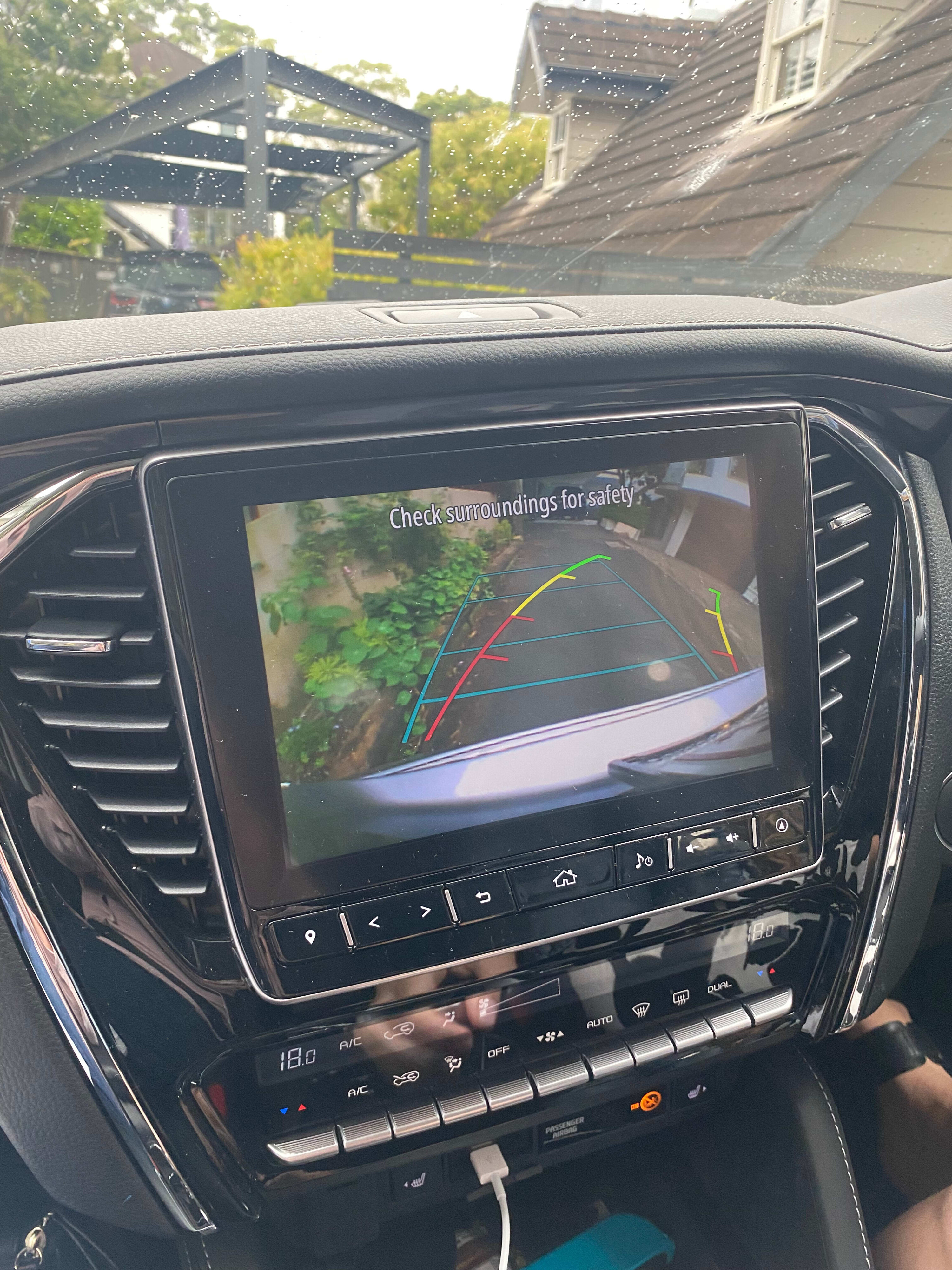
Adaptive cruise control with stop-and-go function, auto high beam, roll-over mitigation and driver attention assist are also part of the safety suite in all MU-X variants There’s also a standard reversing camera and a seatbelt monitoring for every seat.
Dusk-sensing headlights, eight airbags and the mandatory stability control (plus trailer sway control, to add confidence when towing up to its maximum 3500kg braked capacity) complete an excellent standard package.
Both LS-U and LS-T grades add front parking sensors to what is already quite the comprehensive safety feature package on the base LS-M.
The Australasian New Car Assessment Program (ANCAP) rated all models of the current-generation MU-X at five stars for safety, its maximum, in 2022.
The MU-X is a big vehicle and, in its second iteration, is roomy and – more importantly – a better-packaged car than the old one.
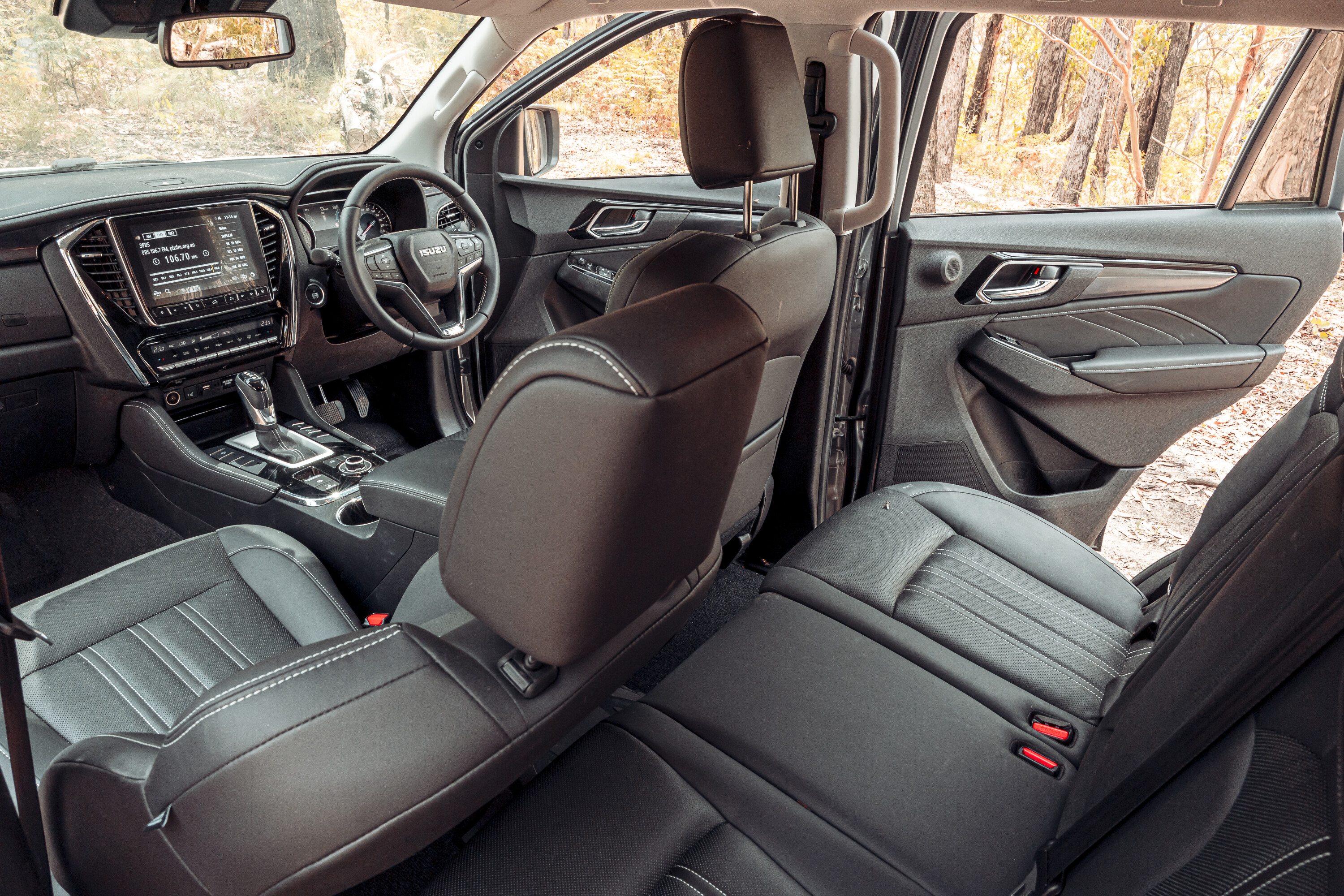
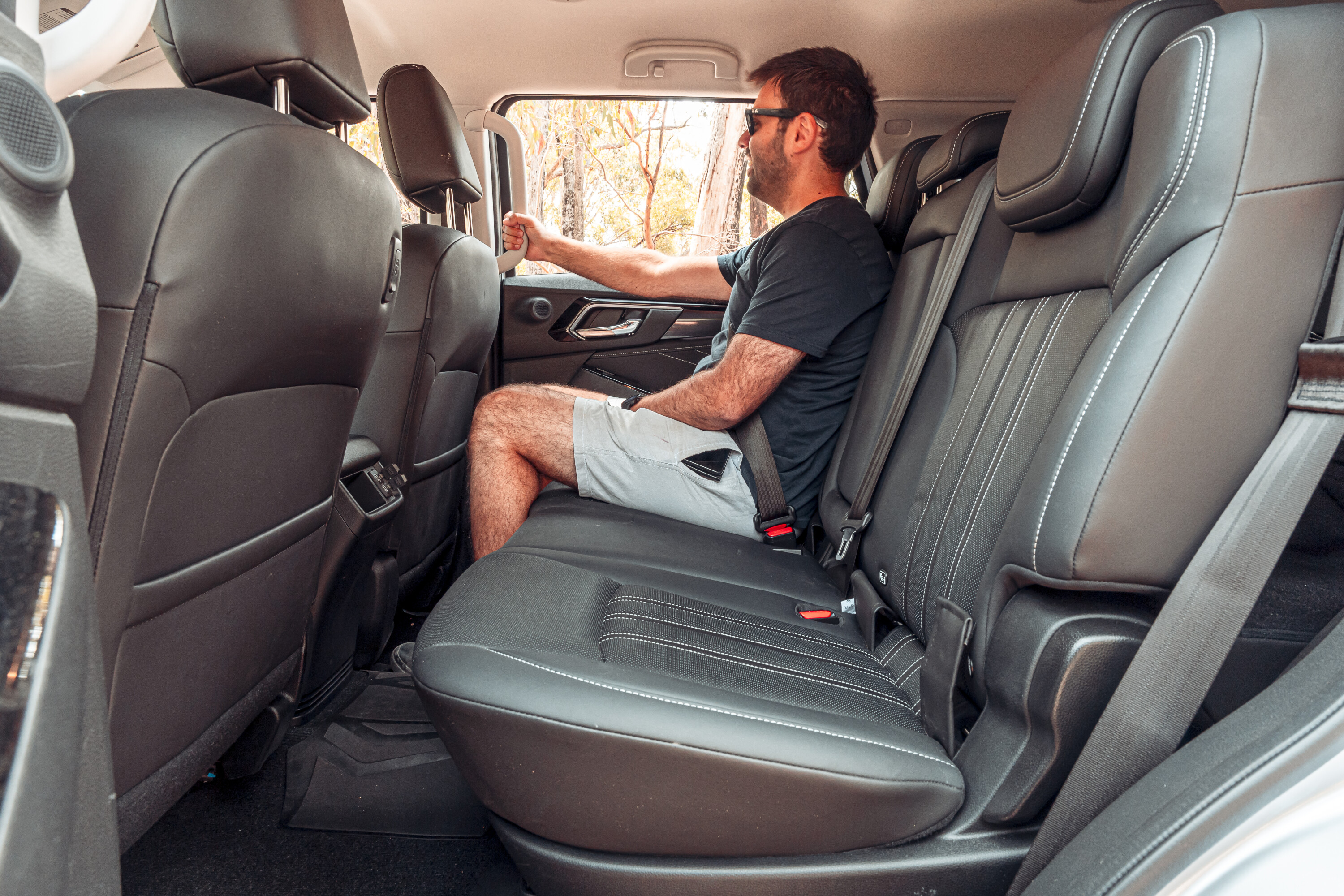
Its middle row flips and tumbles with the pull of a lever and once you’ve hoisted yourself up and in, it’s reasonably easy to step into the back row and choose one of the two seats.
Both seats score cup holders, a bit of storage and air vents. There’s also a footwell so your knees aren’t right up in your face, meaning it’s reasonably comfortable for a third row.
1
Middle-row seating is pretty firm but you get cup holders in the armrest and bottle holders in the doors, as well as air vents and hefty grab handles. Once you count up all the cup holders, you’ll need two extra fingers, because there are twelve of them.
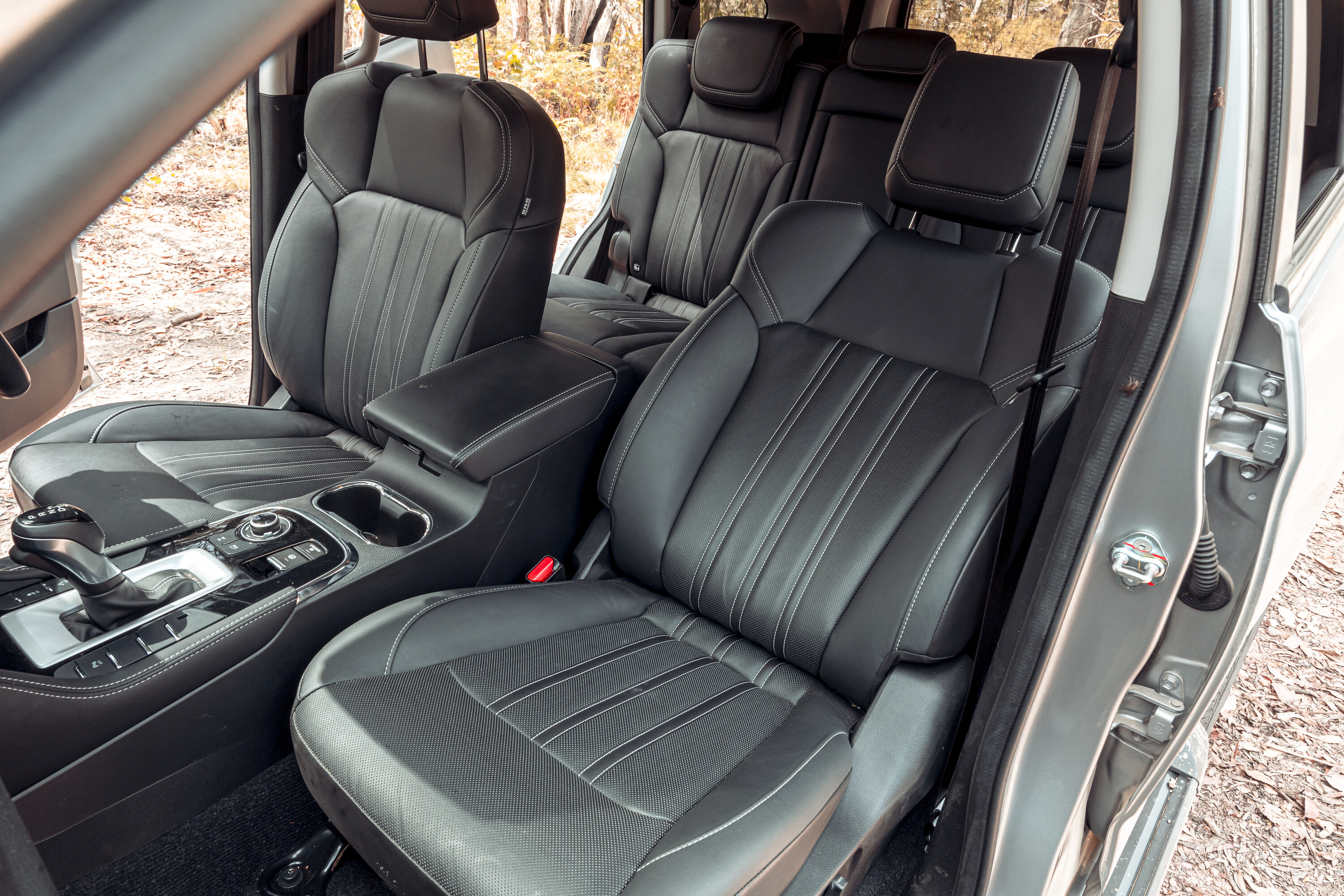
Front occupants share a pair of cup holders in the centre console plus another two that pop out from below the outboard air-con vents. Both perch on comfortable – if firm – seats. The word perch is carefully chosen because you are a long way off the ground in an MU-X, for that old-school 4×4 feeling.
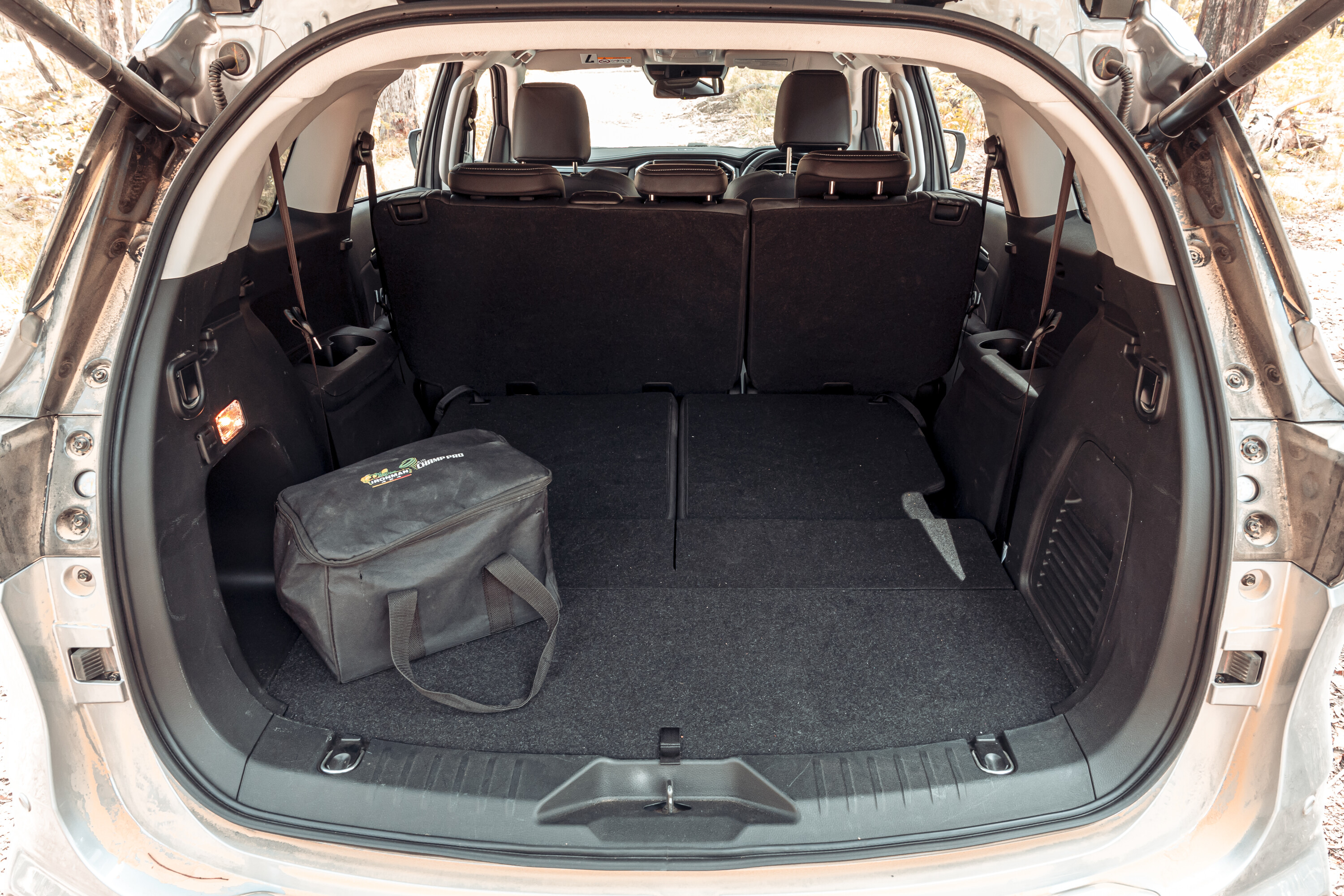
With the third row in use, boot space measures 311 litres, which is larger than many small hatchbacks. And some compact SUVs, as it happens.
Folding the third row is easy – pull the tapes on the seatbacks and they flip forward and hinge down to create a flat floor and 1119 litres are at your disposal.
There is also a storage box under the aft section of the floor at the loading lip, which means the spare is under the car. Fold everything flat and you have 2138 litres, which is a tremendous amount of space.
Yes. The Isuzu MU-X is no sports car but is among the more satisfying large SUVs to drive.
The MU-X has a four-cylinder turbo-diesel, and it’s a bit of a whopper at 3.0 litres, the biggest four-pot out there since the Mitsubishi Pajero and its 3.2-litre diesel was discontinued.
With 140kW and 450Nm, the Isuzu unit is lazy in the good way you want when one wheel is deep in a rut and another waving in the air. This also makes it very relaxed on the freeway and, due to the way it delivers torque, doesn’t take much effort to get the MU-X moving.
1
It’s still really noisy, especially when cold. Once you’re on the move the sound pretty much vanishes, making it a quiet, long-legged cruiser. With the engine settled, you just hear a bit of rustle from the big wing mirrors.
Even with a determined prod of the throttle, it’s not quick off the line, rather getting on with the job of creating forward motion without getting too bothered about 0-100km/h nonsense. The Aisin six-speed automatic is a slicker, quicker shifter than the old car, handling the dollops of torque dispatched by the engine really well.
The new MU-X shares a lot of its ladder-frame underguts with the D-Max, which arrived late in 2020. The MU-X’s rear subframe is different, though, with a multi-link suspension set-up delivering a comfortable ride. It will tow 3.5 tonnes of braked load and Isuzu reckons more than half of MU-X buyers actually tow something pretty hefty.
1
Steering is a bit woolly, though, and achingly slow when you’re doing a three-point turn, but again, given owners actually do muddy, filthy stuff with an MU-X, it’s the right choice for the car.
You’ll never escape the height and weight of the MU-X but the suspension does a good job of keeping the body in check. Along with the comfy ride, the way such a big unit can be made to handle in a predictable and secure-feeling way is pretty impressive. The MU-X holds the road quite well.
What it doesn’t feel like is a ute in a suit, which some other ute-based SUVs can feel like.
The 80-litre fuel tank promises good on-paper range, with a combined-cycle average of 8.3L/100km.
If you can achieve the official highway figure of 7.3L/100km, you can comfortably get between Sydney and either Brisbane or Melbourne on a tank. 4×2 versions use about half a litre less in each measurement cycle.
The Isuzu MU-X has a braked towing capacity of 3500kg, with a towball rating of 350kg.
1
How long is the warranty and what are the Isuzu MU-X’s servicing costs?
While it doesn’t have the industry’s longest warranty, the Isuzu MU-X still comes with one of the more competitive offers on the market – that is, six years / 150,000km, with free roadside assist for 12 months.
If you participate in the seven-year capped price service programme for its duration, you also get roadside assist for up to seven years.
Averaged out over the seven services, the MU-X works out at $527 per year for the capped-price servicing offer, assuming you do no more than the limit of 15,000km between services per annum.
Which version of the Isuzu MU-X does Wheels recommend?
Given Isuzu throws in on-road costs for free at the moment on the MU-X LS-T, it’s hard to go past this range-topping model for value.
Were it not for the drive-away offer it would be hard to justify the extra expense of the LS-T unless you really want some of its extra creature comforts.
Once that offer expires, it would not be difficult to call the LS-U a sweet spot in the range.
Unique design changes compared with petrol Omoda 5
Up to 450km claimed range for BYD Atto 3 rival
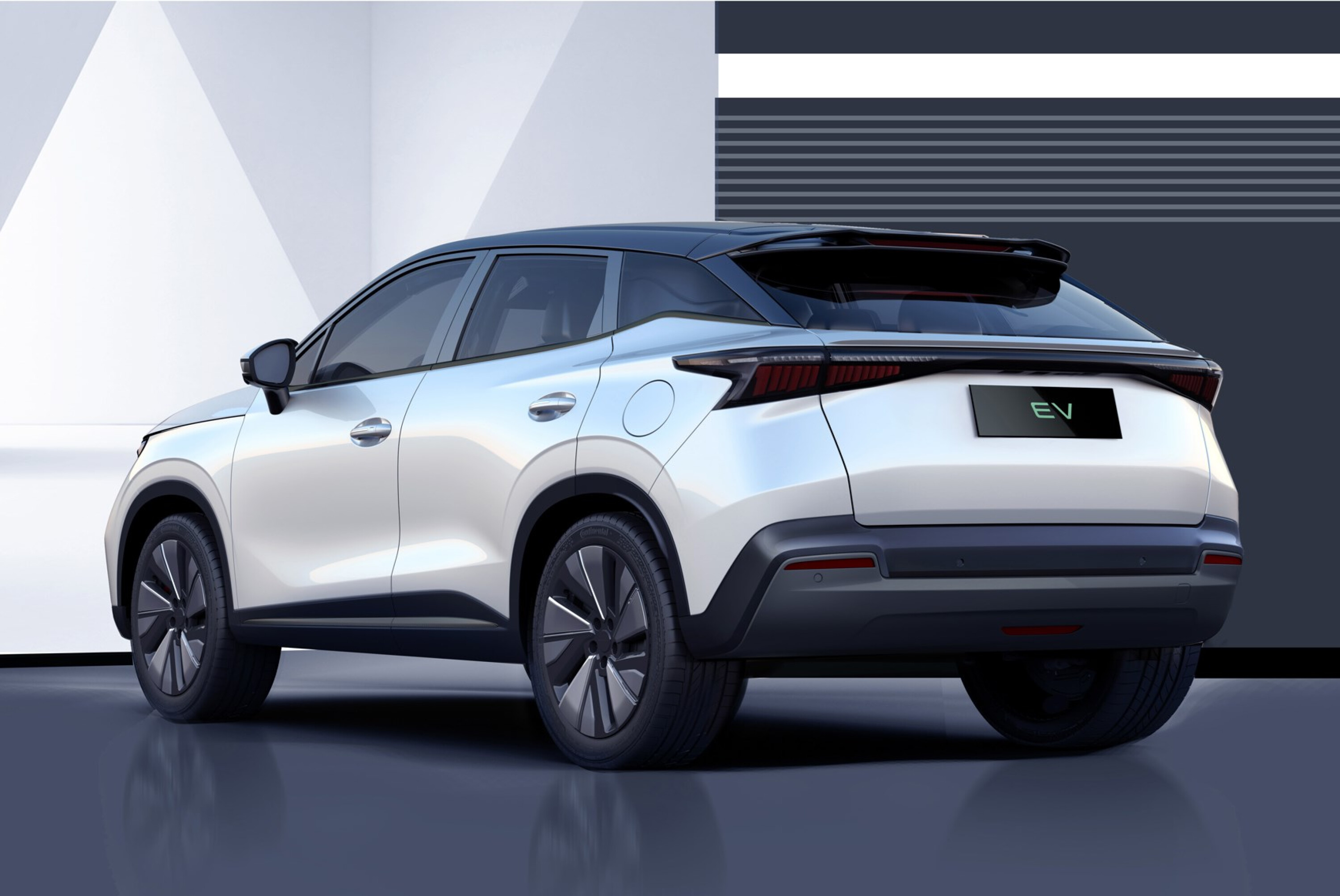
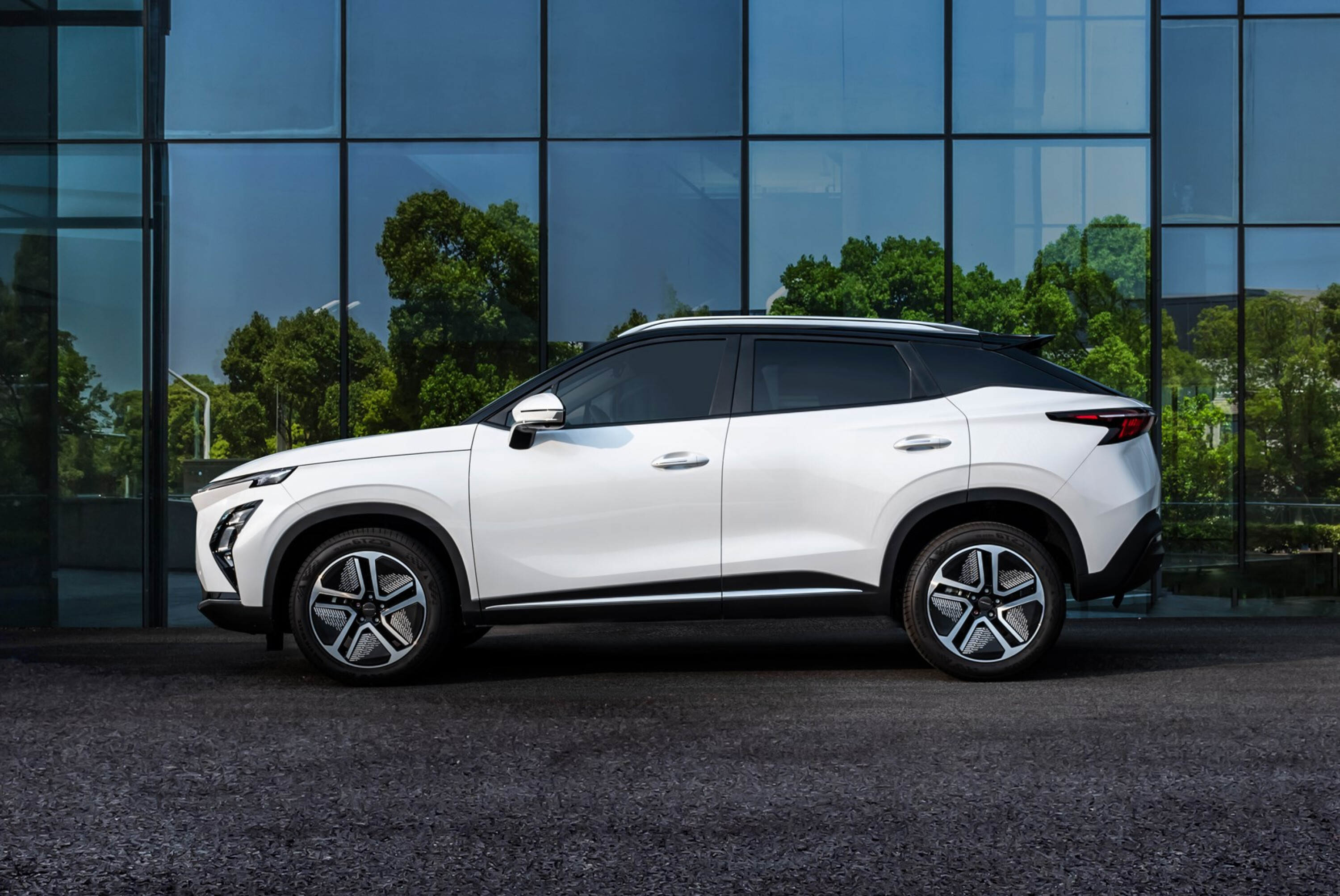
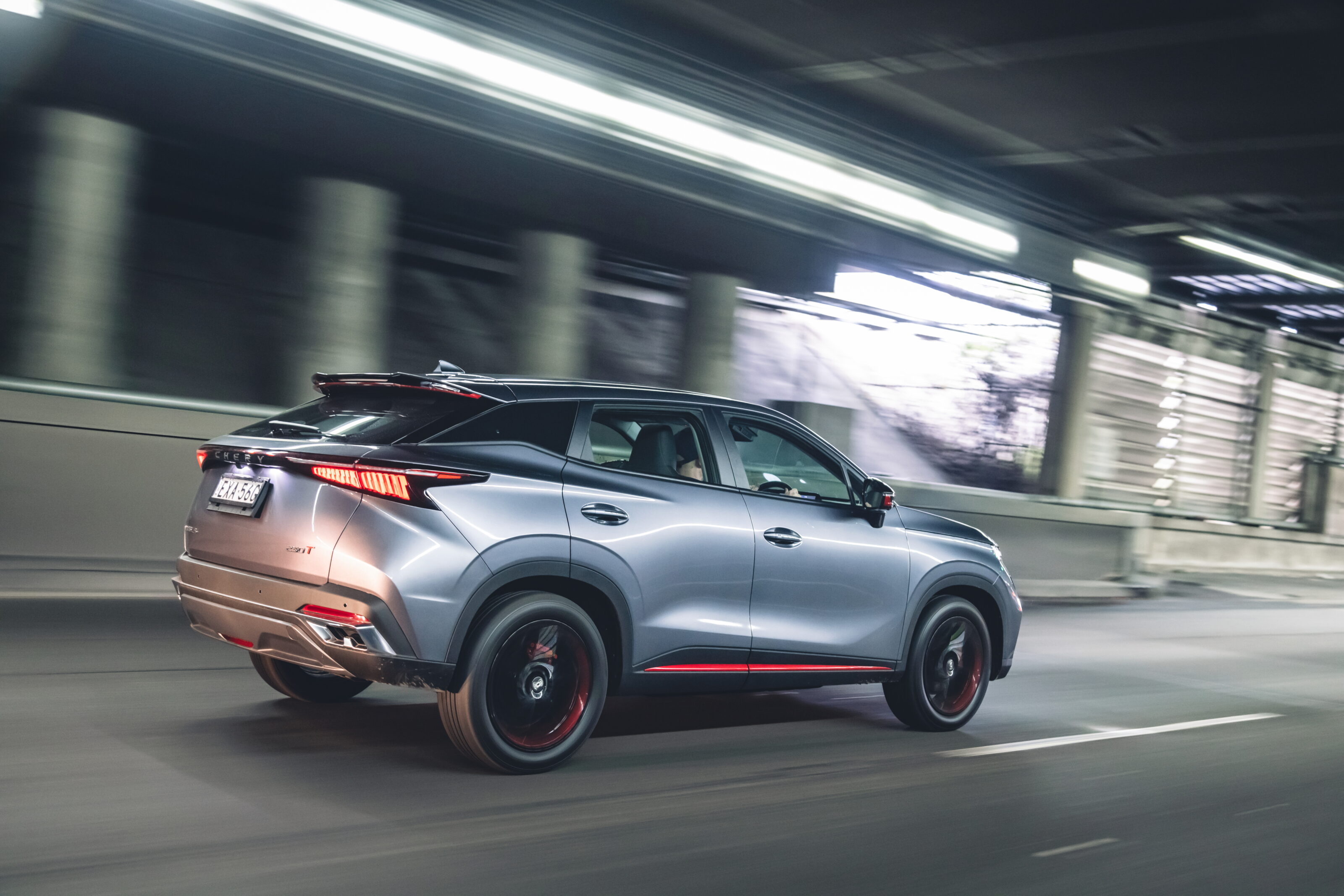
The all-electric version of the Chery Omoda 5 small SUV will launch in Australia mid next year.
Overseas, the Omoda 5 EV uses a 61kWh battery pack to provide up to 450 kilometres claimed WLTP driving range. It’s unclear whether that quoted battery size is a gross or more realistic usable (net) figure.
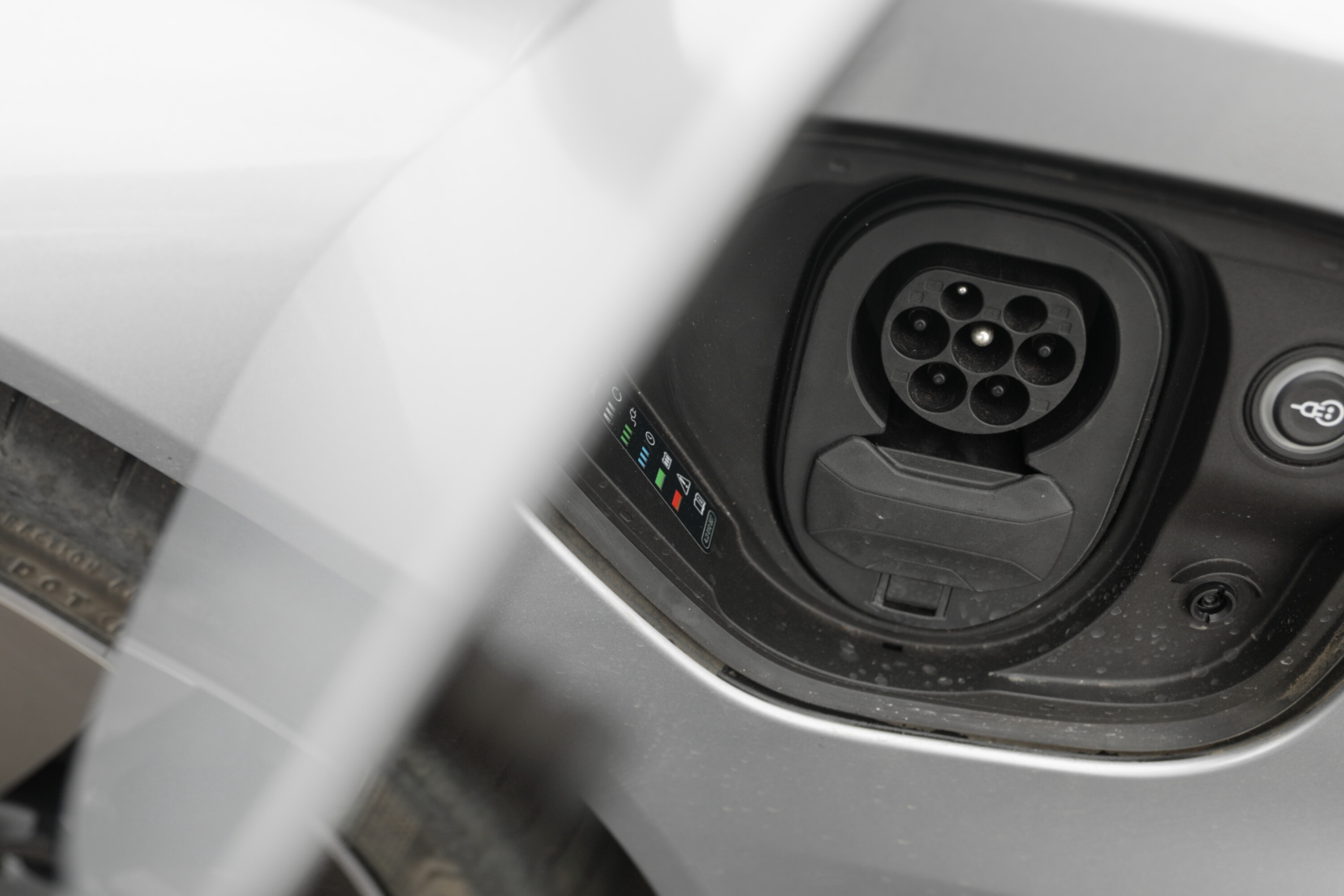
The Chinese-made electric SUV is capable of 110kW peak DC fast charging speeds, which takes around 30 minutes to charge from 0 to 80 per cent.
1
The Omoda 5 EV is powered by a single electric motor producing 150kW and 340Nm for a claimed 0-100km/h acceleration in 7.6 seconds.
Additionally, design differences compared with the petrol-engined Omoda 5 include a smoothed-out front end, longer and more angular LED daytime running lights, restyled headlights, and more aerodynamic-looking wheels.
Pricing and features for the BYD Atto 3 and MG ZS EV rival will be detailed nearer its local launch.
Chery re-launched in Australia earlier this year with the petrol-powered Omoda 5 wearing a sharp $32,990 drive-away starting price. The Tiggo 7 Pro medium SUV is set to join within months.
Following combustion-engined variants will be a BEV
No word on driving range, power, or charging yet
Expected in the first half of 2024
Chery’s Australian relaunch has been kick-started by the Omoda 5 small SUV, and we’re promised a battery-electric variant will arrive in early 2024.
Chery doesn’t offer an electric vehicle globally, so it’s hard to accurately speculate on figures. The Omoda 5 EV’s driving range wasn’t talked about either, but to make it competitive a 350-450km distance capability and a 50-65kWh battery capacity will be necessary.
As the Omoda 5 is unlikely be a long-range EV, we can expect DC fast-charging speed of around 150kW if we’re optimistic, or 80kW if we aren’t.
1
Pricing is a long way from being confirmed, but to compete on level-pegging with rivals, a short-range model’s price will need to start in the mid-to-high-$40K region.
Like its MG ZS EV rival, it will sit on a converted internal-combustion engine platform – sharing the same underpinnings as the regular Omoda 5. This will make the Omoda 5 different from other, value-oriented Chinese-built EVs including the BYD Atto 3, Tesla Model 3, and forthcoming MG 4, though it does match the path taken by the Polestar 2 and GWM Ora.
Unlike rival Chinese carmaker GWM, which is investing in its own battery technology, Chery will instead purchase its batteries from an OEM supplier such as CATL.
Ahead of the electric Omoda’s launch, the range will grow in mid-2023 with the introduction of a more powerful turbo-petrol version with AWD, and two more models – the Tiggo 7 and Tiggo 8.
Chery is a Chinese manufacturer which built 1.2 million cars last year and is the country’s largest vehicle exporter, selling 450,000 in global markets.
The brand was active in Australia between 2011-2014 and specialised in low-priced vehicles. South America, South Africa, and Malaysia are key markets where the brand’s Tiggo range is currently on sale.
Jet Charge launches monthly subscription service for businesses
Covers hardware, installation, reporting and maintenance
Almost half co-funded by the federal government
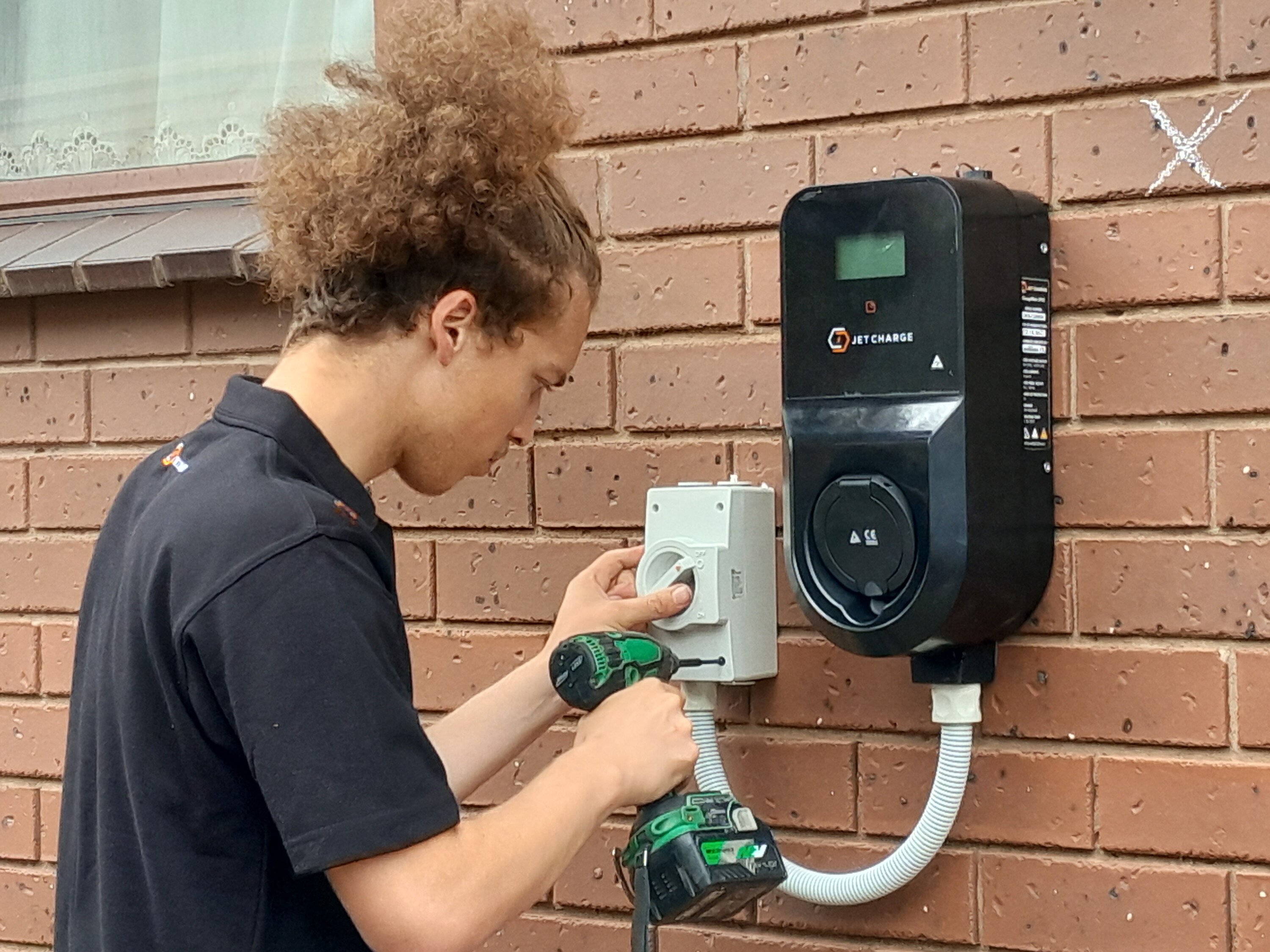
Jet Charge has launched a subscription service that allows business fleets to install electric vehicle charging infrastructure at reduced cost pressures.
The Australian EV charging equipment company’s Charging as a Service (CaaS) model will allow businesses to install, report – and importantly maintain – EV charging stations in return for a fixed monthly fee, instead of a one-off upfront cost.
The $24.9 million project will last for three years and claims it will introduce more than 3100 new EV chargers.
The Australian Government’s Australian Renewable Energy Agency (Arena) has co-funded the project to the tune of $12 million.
1
While the exact cost of each install depends on fleet requirements, Jet Charge offers a subscription for installing units at both employees’ homes and commercial sites, divided into what’s known as a ‘Starter Pack’ and ‘Deployment at Scale’.
Jet Charge chief executive Tim Washington said it is a “game-changing model” for Australian business vehicle fleets.
“We know that fleets are looking for a way to electrify and that infrastructure is a key barrier,” Washington said.
“Our CaaS project will not only increase affordability but also demonstrate what running private charging networks will look like at scale.”
1
“Dramatically reduces dwindling excuses”
Meanwhile, Greenpeace Australia Pacific welcomed the new subscription model to lower the barrier for fleets to make the electric switch.
“It’s time for big business to step up on transport by committing to 100 per cent electric cars and trucks. Increased investment in charging-as-a-service dramatically reduces dwindling excuses from the business sector,” a Greenpeace spokesperson said.
“Fleets play a critical role in Australia’s transition to electric vehicles as their cars make up over 40 per cent of new car sales and are only used for three to five years.
“So when a business commits to going electric, that means more everyday Aussies will be able to buy second-hand EVs sooner and start driving toward cleaner, healthier streets.”
Combined with solar-generated energy, charging becomes almost free for fleet operators, allowing them to cut expenses and reduce their lifetime environmental footprint.