Mercedes-Benz has officially launched its MANUFAKTUR Exclusive program in Australia, bringing an unprecedented level of personalisation to some of the brand’s most prestigious models.
Available now for the Mercedes-Benz S 580 L, Mercedes-Maybach S 680, Mercedes-AMG SL 63 Roadster, and Mercedes-AMG GT 63 2-door Coupé, the program offers an array of handcrafted paint finishes and interior upholsteries – designed for customers after a genuine bespoke automotive experience.
With more than 50 special exterior finishes on offer, MANUFAKTUR draws on Mercedes-Benz’s design archives and past customer favourites. Options span Solid, Metallic, MAGNO, and Bright finishes, allowing owners to choose from revived heritage colours or daring contemporary hues.
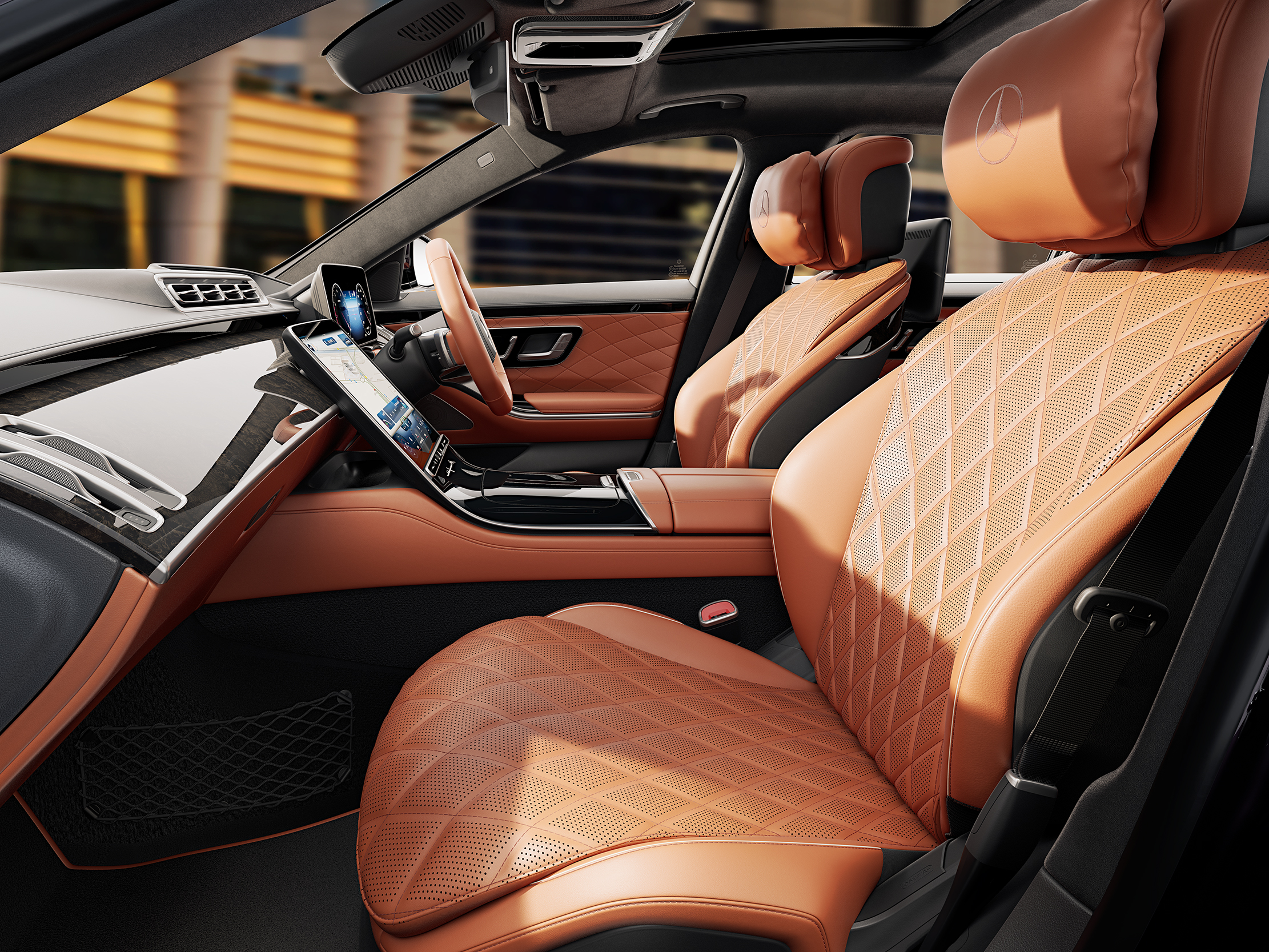
For S 580 L and Maybach S 680 customers, personalisation extends into the cabin with over 20 new upholstery combinations, including striking two-tone layouts and four unique shades of red. Ranging from elegant neutrals to vivid statement tones, each interior is crafted to deliver an unmistakably individual atmosphere that mirrors the exterior’s character.
Pricing and Packages
The MANUFAKTUR Exclusive paint option is priced at $24,300 MRLP and is available on all four eligible models.
The MANUFAKTUR Exclusive upholstery option, available on the S 580 L and Maybach S 680, is priced at $27,600 MRLP. On the S 580 L, it must be paired with either the Business Class Package ($13,100 MRLP) or the newly introduced MANUFAKTUR Exclusive Interior Package ($4,600 MRLP).
The MANUFAKTUR Exclusive Interior Package for the S 580 L enhances the bespoke upholstery with a suite of luxury-focused features, including:
- Chauffeur package
- EASY ADJUST luxury head restraints (driver/front passenger)
- Front passenger seat adjustable from the rear
- PRE-SAFE® impulse protection
- Executive seat configuration
- Designer belt buckles (front and rear)
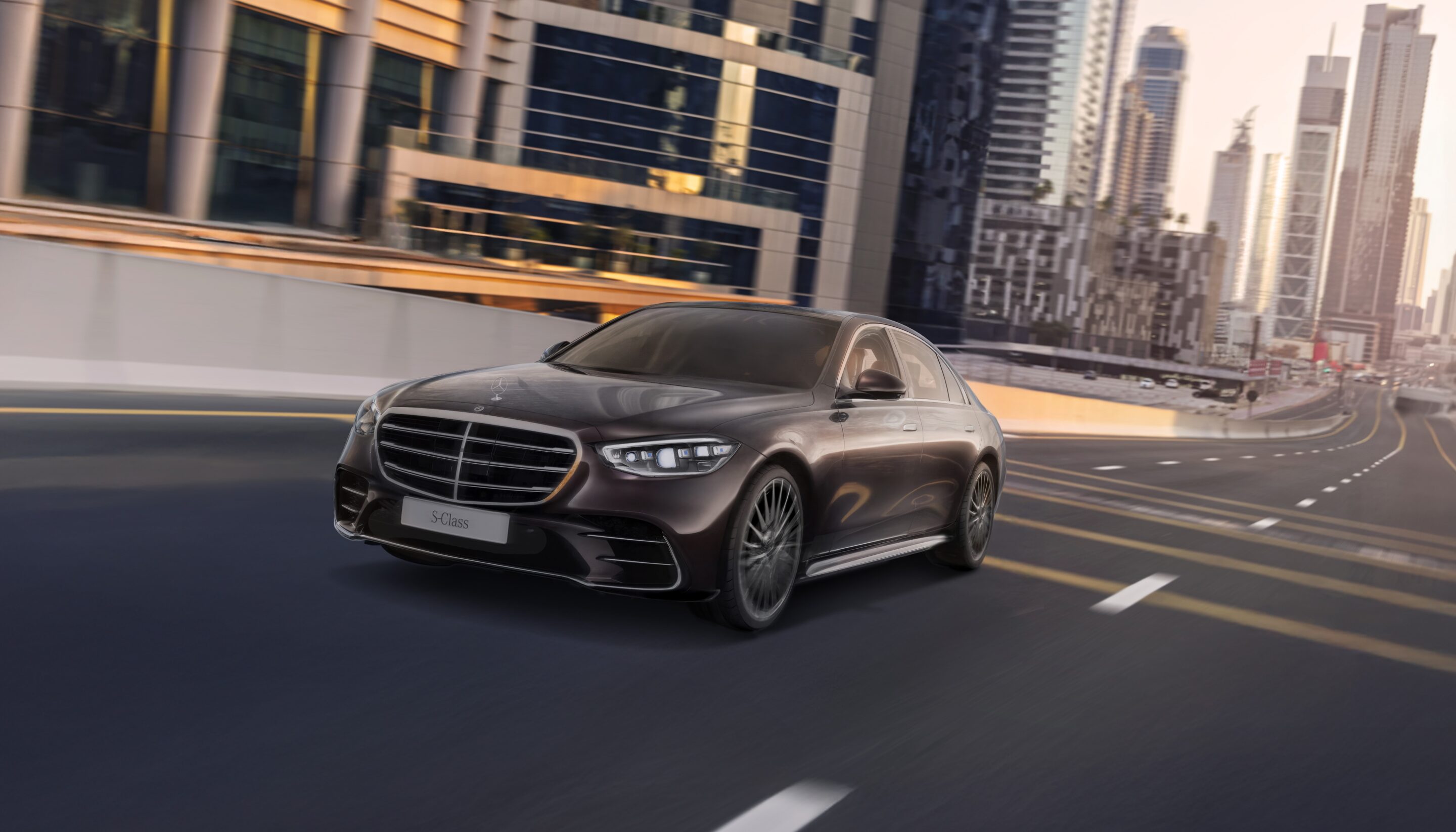
Mercedes-Benz Australia says the MANUFAKTUR Exclusive program is designed to “elevate personalisation to a new level,” giving customers the opportunity to create a car that reflects their unique style. With handcrafted finishes, heritage-inspired colourways, and finely tailored interiors, the brand’s flagship and performance models can now be as distinctive as their owners.
Customers can explore the full MANUFAKTUR palette and upholstery selection via the Mercedes-Benz Car Configurator.
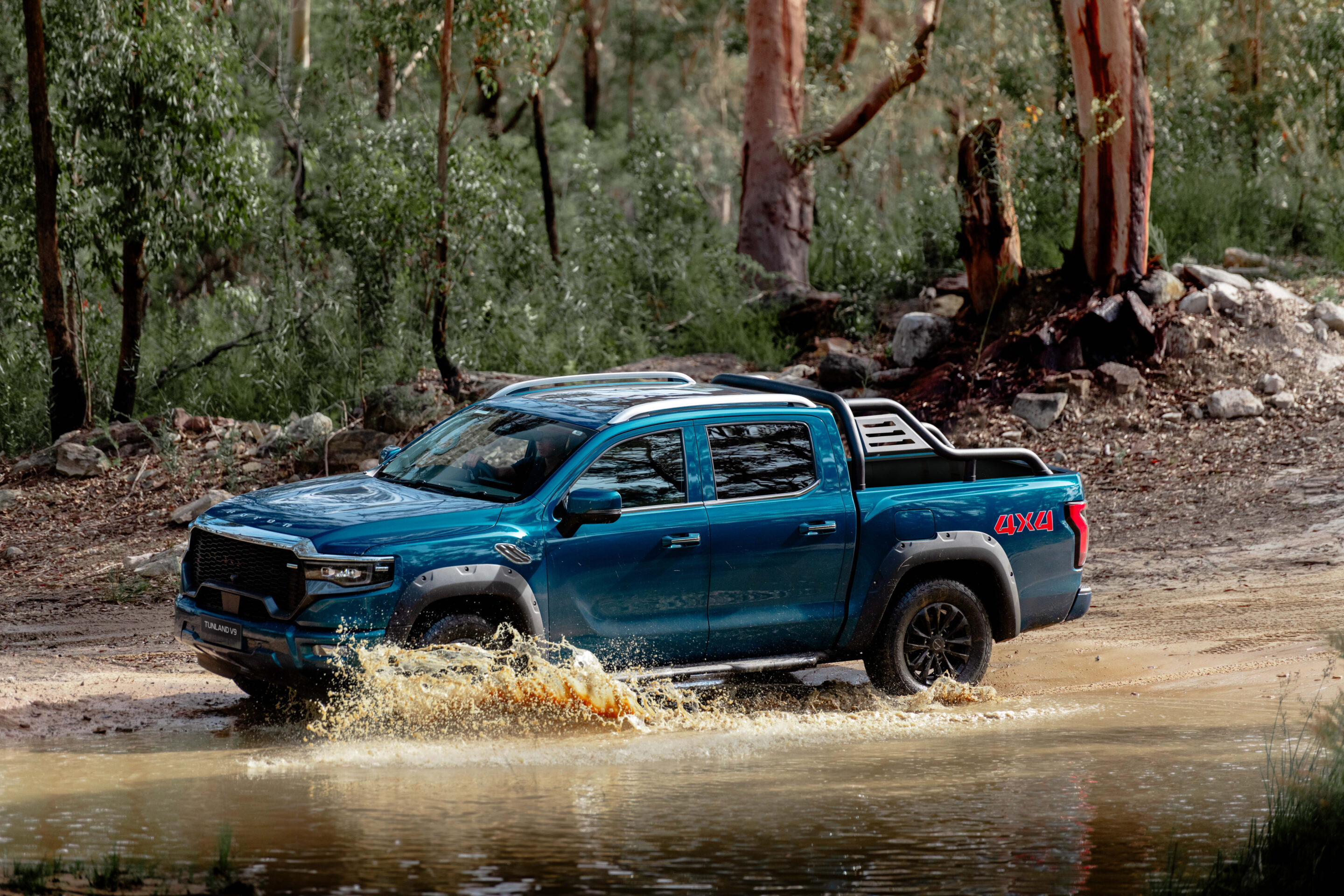
Foton Australia has confirmed pricing and key specifications for the all-new hybrid Foton Tunland, a new entrant in the nation’s fiercely competitive Ute market.
Slated for first arrivals in the third quarter of 2025, the Tunland is aimed squarely at drivers who want the muscle and space of a larger workhorse with the efficiency and practicality of a traditional dual-cab.
Built from the ground up and drawing on Foton’s global truck-building pedigree, the brand says the Tunland combines commercial-grade toughness with SUV-like comfort. Powered by a 2.0-litre Aucan turbo-diesel engine matched to 48V mild-hybrid technology and a refined ZF 8-speed automatic, the new Ute delivers a balance of performance and efficiency while offering a braked towing capacity of up to 3,500kg.
Two model grades will be available – V7 and V9. The V7 prioritises durability and payload capacity for fleet and trade buyers, while the V9 raises refinement with multi-link rear suspension and a more comfort-oriented feature set. All models will come with a seven-year/unlimited kilometre warranty.
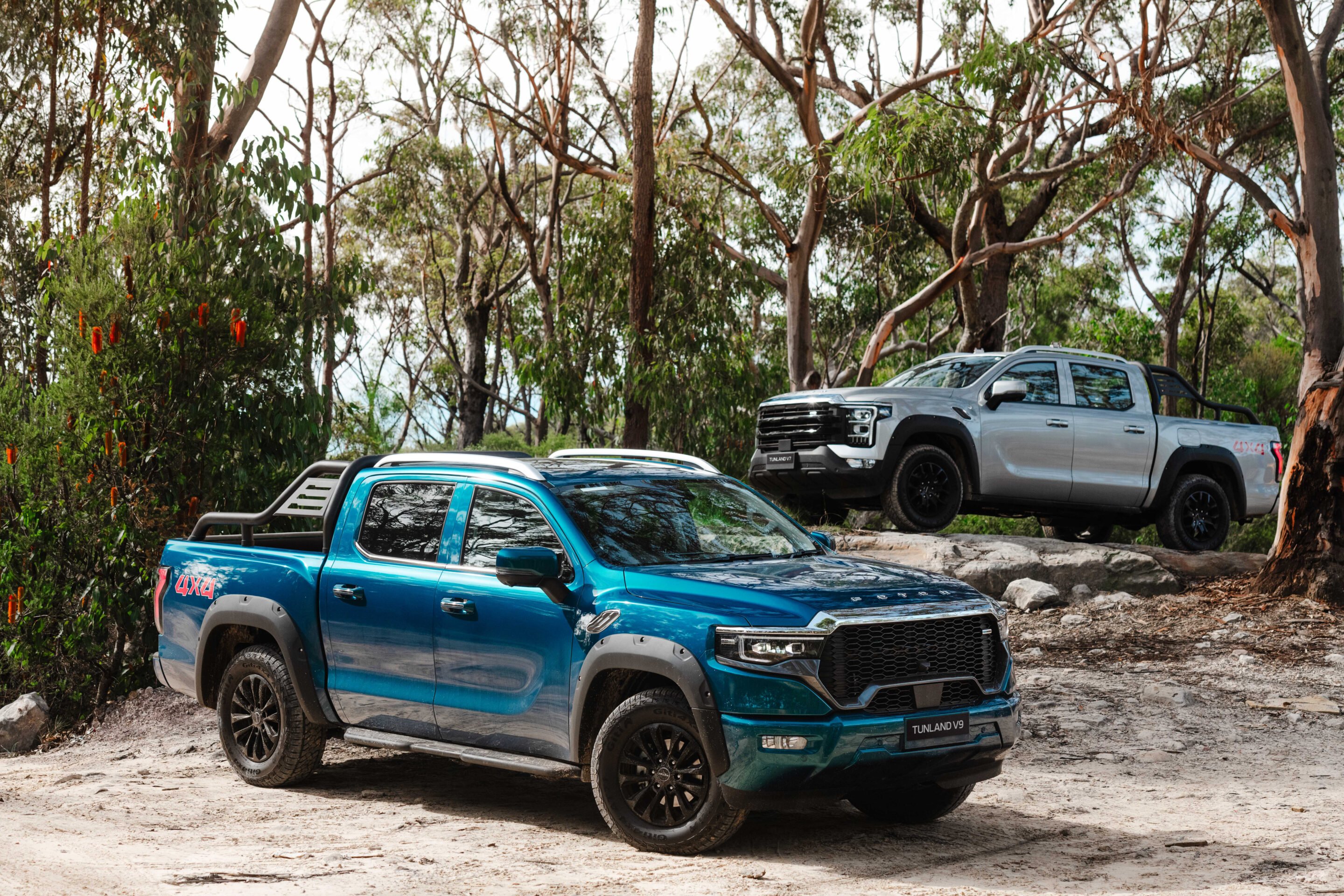
The Tunland’s capabilities have been proven through extensive local testing on sealed and unsealed roads, steep inclines, and challenging off-road terrain. With 240mm of ground clearance, 28-degree approach and 26-degree departure angles, and a chassis with commercial DNA, it is designed for both weekday worksites and weekend adventures.
“The all-new TUNLAND hits the sweet spot — the goldilocks of Ute sizing. It blends toughness, space and technology into a package tuned specifically for Australian drivers,” said Glen Cooper, General Manager of Foton Australia.
Model line-up and pricing
| V7-C 4×2 | $39,990: Value-driven workhorse for fleets and trades, over 1,000kg payload. |
|---|---|
| V7-C 4×4 | $42,990: Adds four-wheel drive, rear diff lock, extra drive modes, and enhanced versatility. |
| V9-L 4×4 | $45,990: Multi-link rear suspension for improved ride comfort. |
| V9-S 4×4 | $49,990: Range-topper with front and rear diff locks, panoramic sunroof, and premium comfort features. |
FOTON is building a rapidly expanding dealer network across all major states and territories in preparation for the Tunland’s launch.
Change can be slyly deceptive. It’s been nearly nine years since Wheels last ran a comparison featuring people movers, or multi-purpose vehicles (MPVs) if you prefer. That test, in the October 2016 issue, featured a bunch of them alongside the latest seven-seat SUVs, and Nathan Ponchard introduced the piece by suggesting that you might but an MPV if you’d given up on life and would choose a more thrusting SUV if you still had any semblance of lead in your pencil.
Fast forward to now, and SUVs are everywhere. They’re no longer the edgier choice. In fact, were you to choose any of the MPVs we’ve gathered here, it’s probably the case that parenthood hasn’t robbed you of your capacity for independent, practical and reasoned thought.
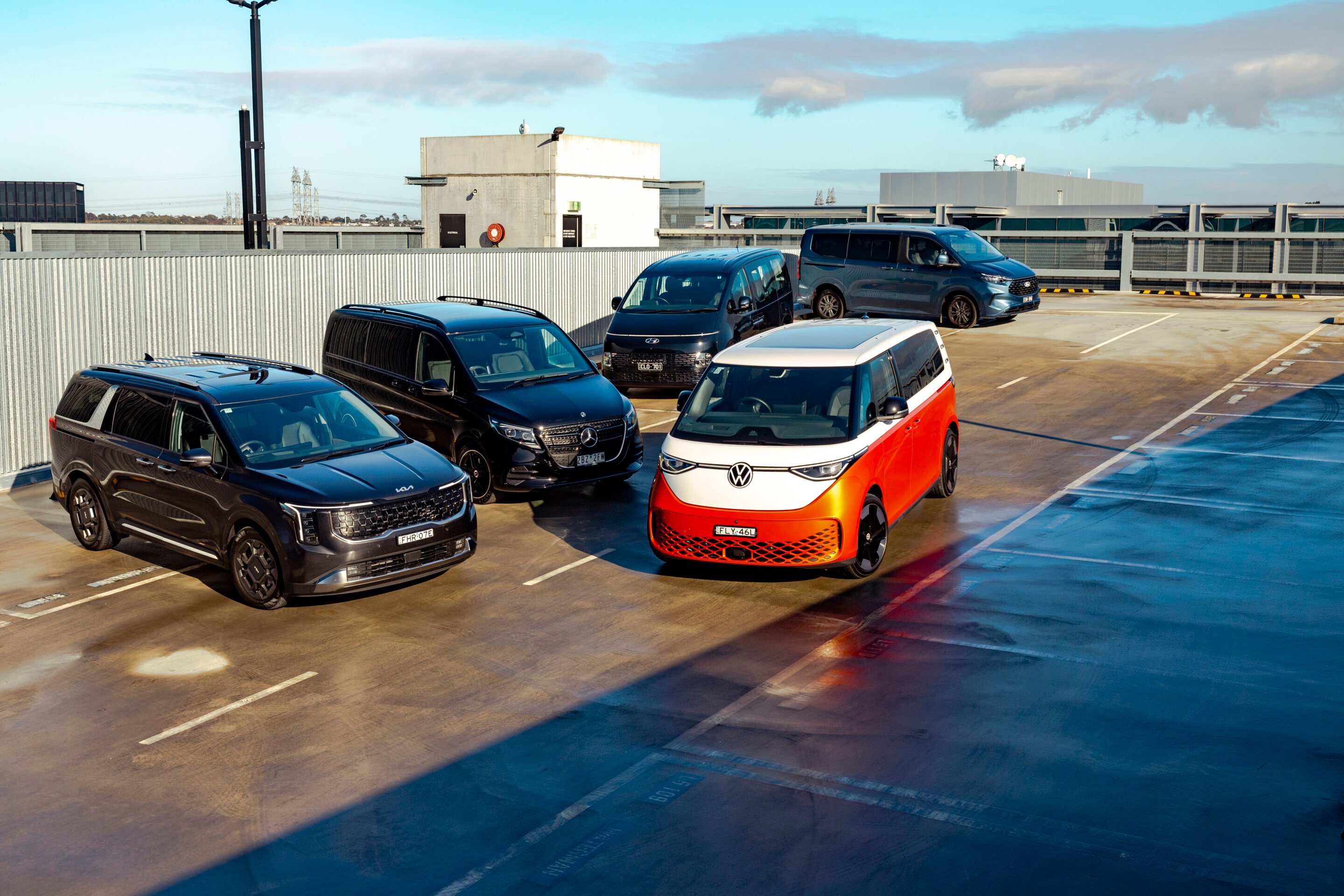
They’re a disparate bunch, ranging from the flagship Hyundai Staria Highlander CRDi at $67,500 right up to the Mercedes-Benz V300d AMG at a heady $139,927. Because you’re Wheels readers, by definition endowed with a decent level of nuance, you’ll figure out how best to parse this particular smorgasbord on offer for your personal ends. If nothing else, it’s a fascinating insight into the current state of the market.
We’ve deliberately left out two very interesting contenders, namely the Lexus LM and the Zeekr 009, largely because their pricing elevates them some distance from these vehicles and we’d like to get them together at a later date when we get to chew over the meaning of modern luxury.
If the all-wheel drive Staria represents the affordable end of this bracket, the box-fresh $70,990 Ford Tourneo Titanium X is the next cab off the rank. It represents Ford’s most concerted effort in this market sector since the Galaxy, which went out of production in 2020 after a 27-year lifespan. Sadly, this excellent vehicle was never imported to Australia, Ford pinning their hopes on the seven-seat Everest instead, but the eight-seat Tourneo represents something bigger and bolder that may well pique the interests of Aussie buyers.
For many people, the modern people mover is best exemplified by the Kia Carnival, which is represented here by the range-topping $76,210 GT-Line Hybrid variant. It’s the only one of this bunch not to be spun off a commercial vehicle and this simple fact is what has kept it popular. In fact, such is the market dominance of the Carnival that it outsells the rest of the people mover market in Australia combined. So it’s instantly positioned here as the pre-event favourite at virtually unbackable odds.
While the Carnival introduces a degree of electrification to this review, the $91,290 Volkswagen ID Buzz Pro LWB isn’t dithering, relying on a 91kWh battery pack to drive its rear wheels. It’s a welcome pop of colour, character and frivolity in a line up that otherwise looks like a convoy of diplomatic vehicles en route to a G7 conference. But is it style over substance? That’s what we’re looking to discover today.
The Mercedes-Benz V-Class might be more targeted for the chauffeur market than cash-strapped parents, but it’s nevertheless a smart and practical solution, especially if your kids are older and you certainly need two rows of seats. It feels a cut above the others here in terms of interior ambience, as perhaps you’d expect at its asking price. What’s more, it represents a formula that has matured very nicely into its particular niche.
All of the contenders here carry five-star safety rating, as you’d expect given that they’re hauling your family around, so we’re not going to dive too deeply into safety features unless certain features represent an omission or are otherwise worthy of comment.
5. FORD TOURNEO TITANIUM X
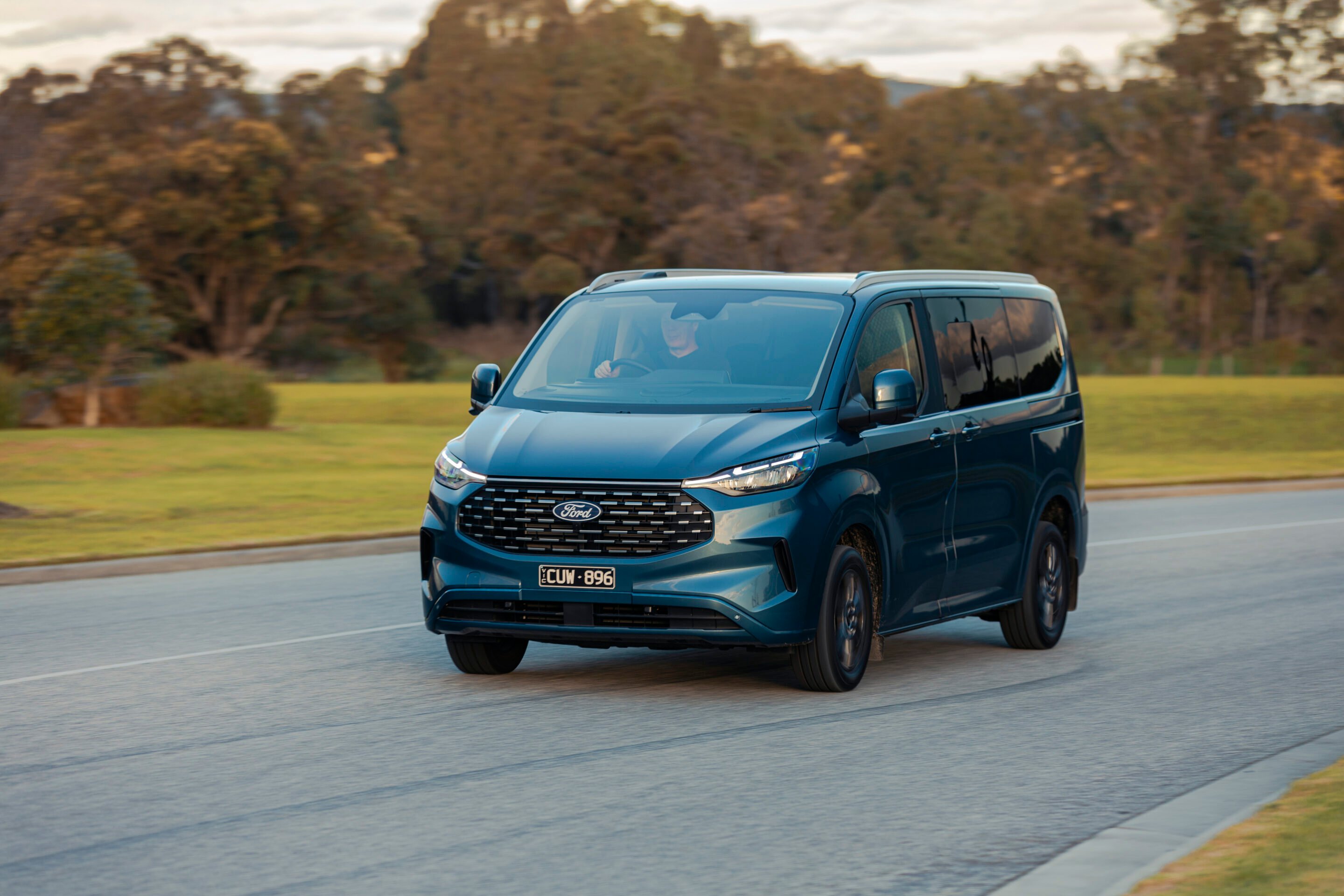
Rarely has 125kW and a vehicle the size of Jeff’s Shed felt like quite such an appealing combination but if you were asked to take one of these MPVs for a country drive on great roads, it’d be the Ford’s keys you’d reach for first. Why? Because Ford can’t help themselves. The company has a certain reputation for vehicles that steer well and the Tourneo is no exception. That’s both a blessing and a curse.
Without getting too road-testery, what’s happened here is that the Tourneo’s chassis team have prioritised body control over ride comfort. So the big Ford is a hoot to pitch into a corner, with firm and positive steering and a chassis that communicates exactly what’s going on at the slightly tortured contact patch of its front tyres. The thing is, you pay for that sort of connection with rigid damping that’ll have you wincing in anticipation the moment you spot a speed hump ahead. That’s exacerbated by a noticeable rattle from the tailgate.
Upon first acquaintance, the cabin feels slightly Spartan, but it’s clear that a good deal of thought has been put into the practicalities. There’s a tray atop the dash panel that even gets its own USB-C ports,and every one of the six rear seats can be removed and reconfigured as required. Three facing three? No problem. The rear bench splits 60/40 and unless you’ve been hitting the gym a bit, it might be better advised to enlist a helper to lug that heavy section out.
If you ever need to use the Tourneo as a van, you can just leave the seats in the garage and have at it. The front seats are laterally supportive but there’s not an excess of padding, which can make them feel a little unyielding. On the plus side, with no centre stack between the two front seats, it’s easy to clamber into the back to retrieve gear if necessary. The 14-speaker B&O stereo has no issue filling the big cabin either.
There are some parts of the finish that are a little unrefined though. The window within a window opens with a cheap feeling tilt clip, and if you raise the steering column, shoddy-looking exposed wiring is visible under the dash through the steering wheel. The big screen – with its inset vehicle starter button – is a winner, with clean and easy navigation and decent responsiveness.
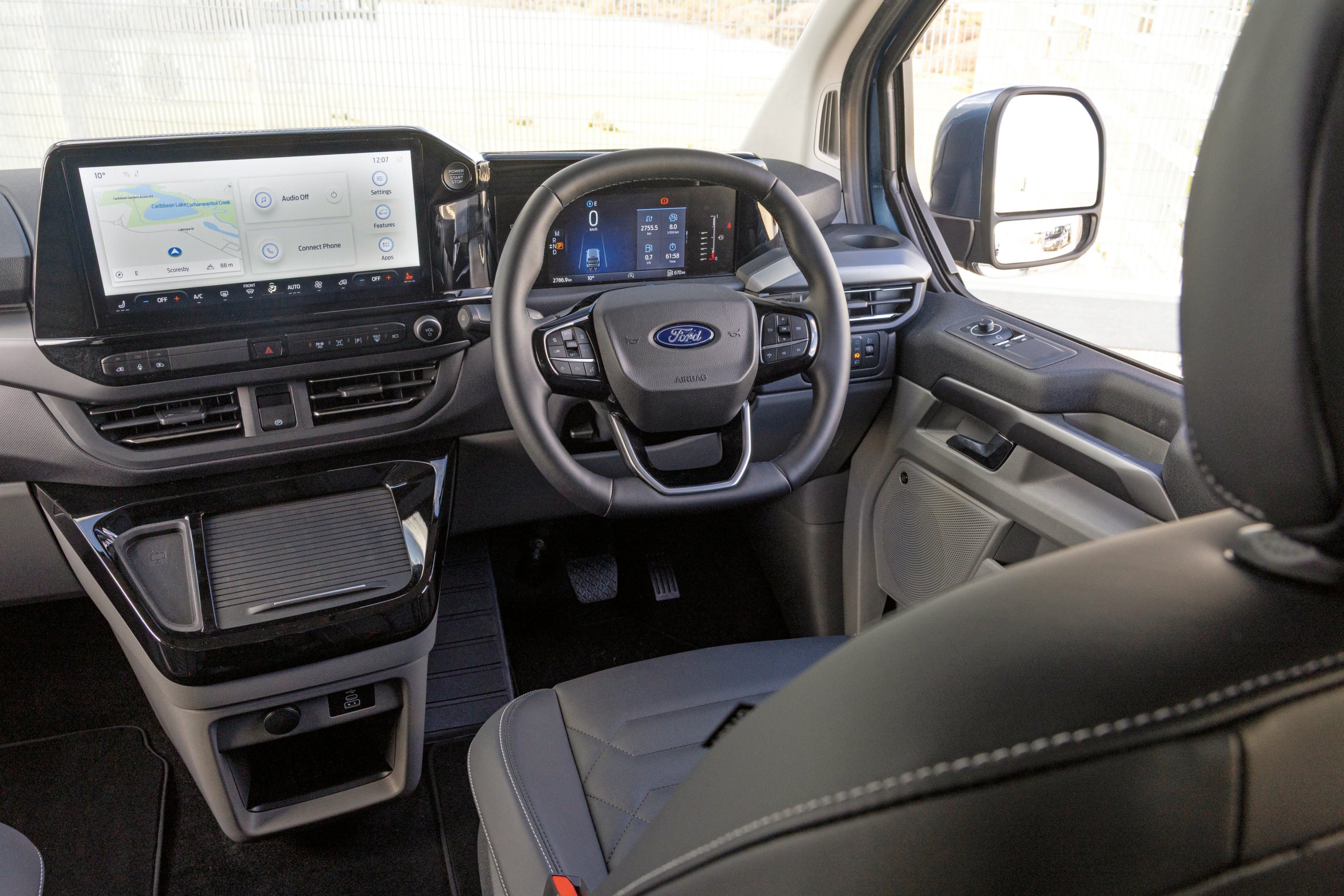
Quite how the massive glass roof copes with an Aussie summer given that it has no retractable sunshade is open to question. You don’t get tray tables on the backs of the front seats either. The front seats have seat heating and the outboard second row also has a seat heater button mounted low and on the nose of the seat cushion. Everyone gets USB-C access, but the rear seat requires the middle berth to be tumbled forward and feels a good deal more claustrophobic than the airy Staria.
Ultimately, the Tourneo struggles to set a great deal of distance from its commercial origins. It’s the only one of this group without a powered tailgate and it’s easy to mistake it for a van with its dark privacy glass at the rear. If you’re looking for an eight seater that’s keenly priced and which feels agreeably lively to drive, it’s well worth a look. Family buyers may well be looking for something a little more cosseting in feel though, which is why in this instance and for that specific purpose, it finishes fifth.
| Model | Ford Tourneo Titanium X |
|---|---|
| Engine | 1995cc inline-4, DOHC, 16v, turbodiesel |
| Power | 125kW @ 3500rpm |
| Torque | 390Nm @ 1750-2500rpm |
| Transmission | 8-speed automatic |
| L/W/H/WB | 5050/1876/1986/3100mm |
| Cargo | 672-1045 to third row, 2102-2408L to second row, 4683L to first row |
| Weight | 2348kg |
| Towing | 2500kg braked |
| Fuel economy | 7.4L/100km (combined) |
| Tyres | Goodyear EfficientGrip Cargo 2 215/60 R17 |
| Warranty | 5 years/unlimited km |
| Price | $70,990 |
4. MERCEDES-BENZ V300d AMG
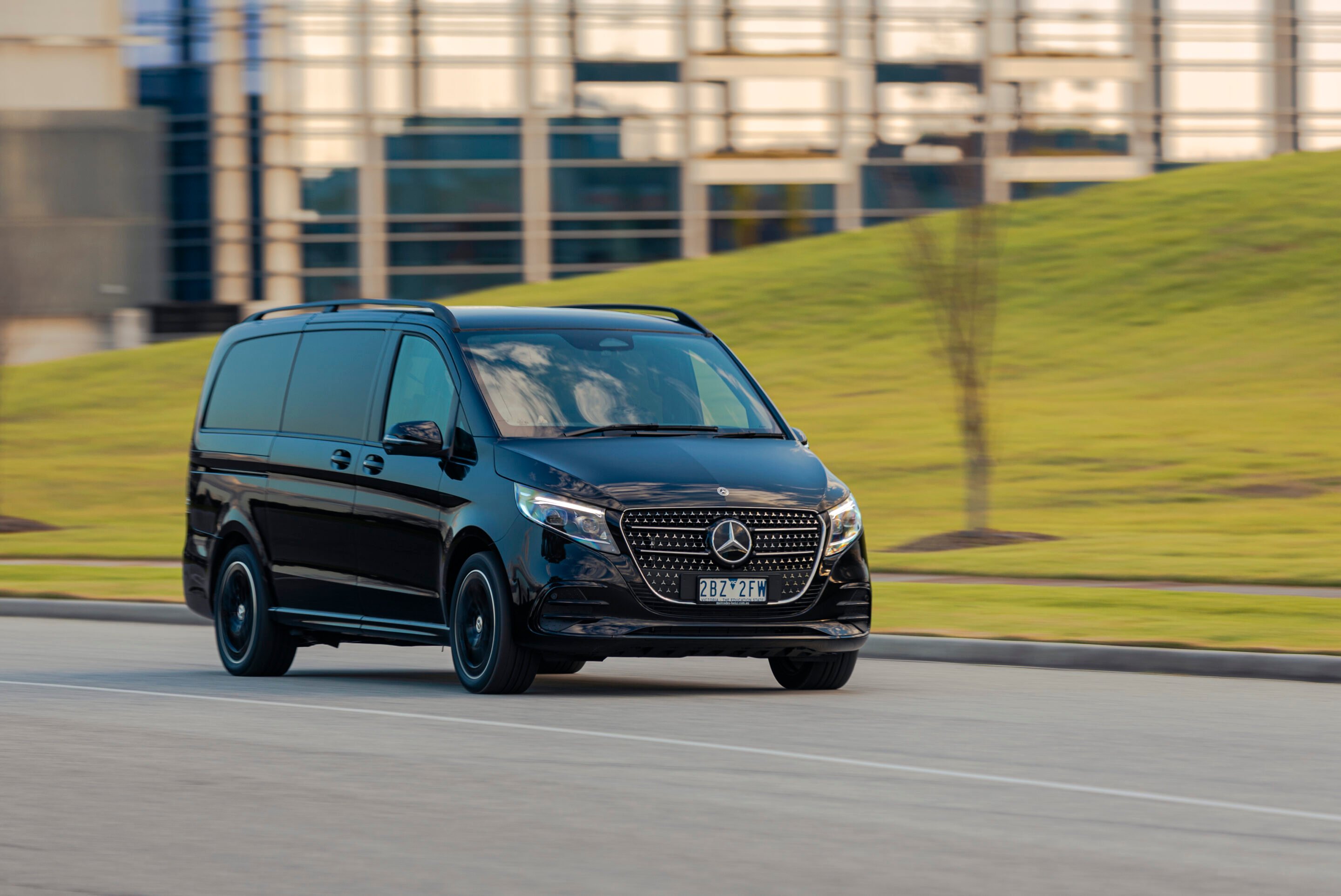
Firstly, an acknowledgment that the V-Class isn’t exactly playing on home turf here. If you’ve just landed at a foreign airport and are expecting a chauffeur to whisk you and your family to the comfort of your hotel, there’s absolutely nothing here you’d rather waddle out of the terminal and see idling in the Kiss & Fly than a V-Class. It’s going to get you, your family and all your gear there quickly, reliably, safely, comfortably and with a reassuring degree of polished discretion.
But that’s not why we’re here today. This is all about how well the vehicle fits as family transport, and while it may be a niche player among private buyers, there does exist a slice of that market who appreciate the qualities the three-pointed star brings and are quite willing to spend up in order to acquire them.
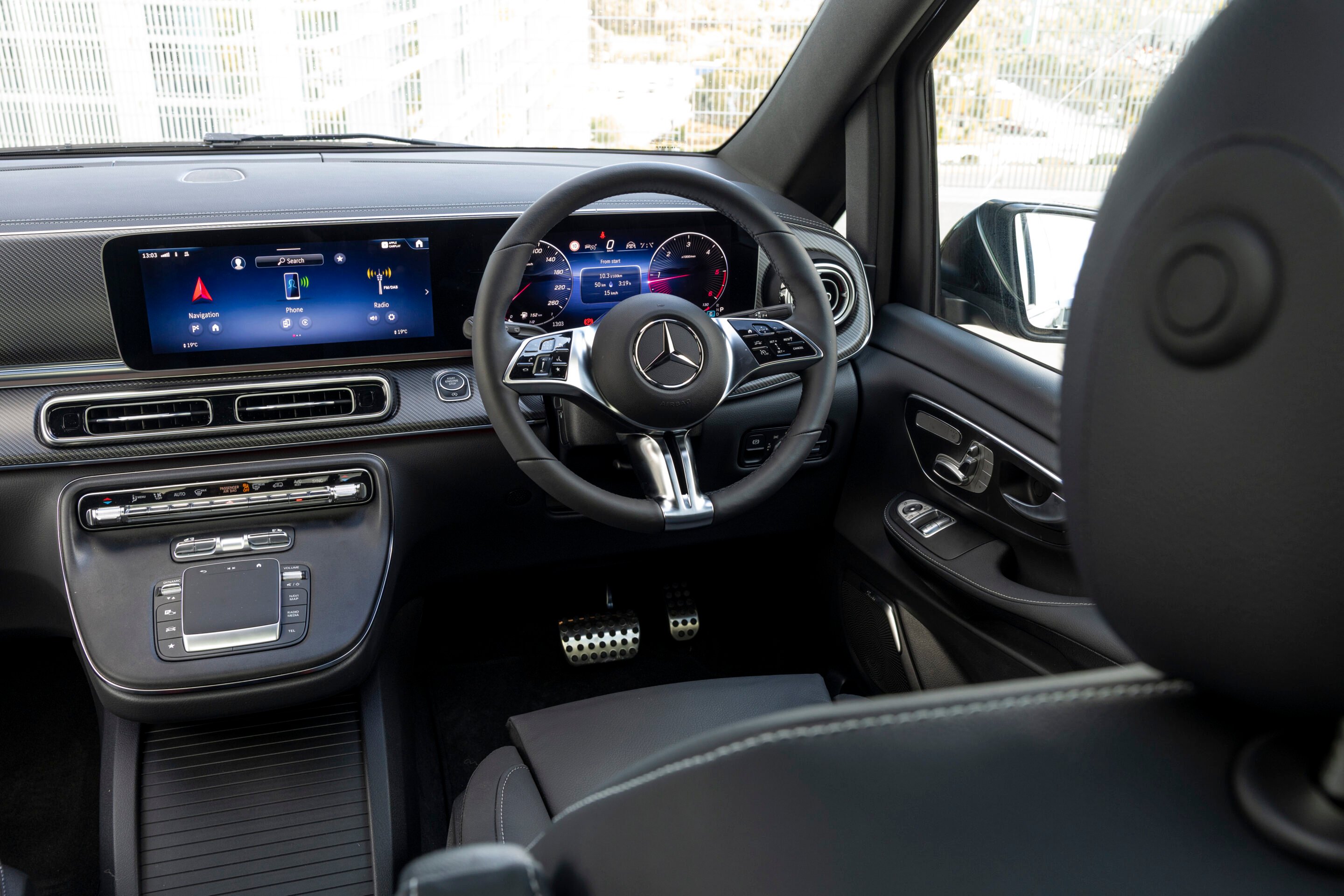
Park yourself behind the wheel and there’s no question that there’s a certain level of reassuring feel-good factor about the big V. The dash is finished in a matte carbon fibre effect that looks hardwearing and easy on the eye, although the plastic surround next to the touchpad controller is a big slab of scratchy hard plastic. At least it’s not piano black though. Small mercies and all that.
The Lugano leather seating feels agreeably plush, and the ambient lighting and jet-turbine like air vents lift the cabin ambience way beyond the norm for this class, as you might expect when you’re handing over nigh-on $140k.
A pair of 12.3-inch digital displays now sits atop the dash, integrated into one broad sweep, and while both wireless Android Auto and Apple CarPlay are available, the Mercedes software suite is one of the few that’s good enough to make using native apps no particular issue.
The second row seating is easy to access, but there’s a marked lack of amenity, with some fairly pinched toe room, a lack of USB charging sockets, no opening side windows and no central cupholders. An overhead air-con control panel and a couple of reading lights is about your lot.
The third row trades the second’s recline function for a bit more space for your toes, along with detachable cup holders, side storage bins and a pair of 12v sockets. Each row can fold and slide, and while the all-metal adjustments look as if they’ll never fail, the stiff and snappy mechanisms aren’t things you’d probably want the kids trying to manipulate. Moving round to the back, there’s a horizontally split luggage bay, with a clever basket system built into the vestigial parcel shelf. The 542 litres of space available with all seats in place trails the other big ’uns in this test, the Ford and the Hyundai.
On the road, it’s much as you were, with a relatively low driver’s seat for a commercial-based product, a carryover turbodiesel powertrain and a polish to the feel of the major controls. Were we choosing, we’d probably skip the racy-looking 19-inch AMG alloys in favour of something with a little more sidewall, as the ride can be firmish on poor surfaces and open-pore concrete roads transmit a fair degree of noise into the cabin. The excellent Burmester stereo can help see to that though.
While the V-Class feels agreeably upmarket inside, it lacks the sort of extra-mile practicality that distinguishes the top three here when it comes to family transport. Were you reasonably price insensitive and looking to make a statement, the V-Class more than stands up, but in this context, it’s beaten by three talented specialists.
| Model | Mercedes-Benz V300d AMG |
|---|---|
| Engine | 1950cc inline-4, DOHC, 16v, turbodiesel |
| Power | 174kW @ 4200rpm |
| Torque | 500Nm @ 1600-2400rpm |
| Transmission | 9-speed automatic |
| L/W/H/WB | 5140/1928/1880/3200mm |
| Cargo | 542L to third row, 1030L to second row, 4630L to first row |
| Weight | 2519kg |
| Towing | 2500kg braked |
| Fuel economy | 6.9L/100km (combined) |
| Tyres | Continental PremiumContact 6 245/45 R19 |
| Warranty | 5 years/unlimited km |
| Price | $139,927 |
3. HYUNDAI STARIA HIGHLANDER CRDi
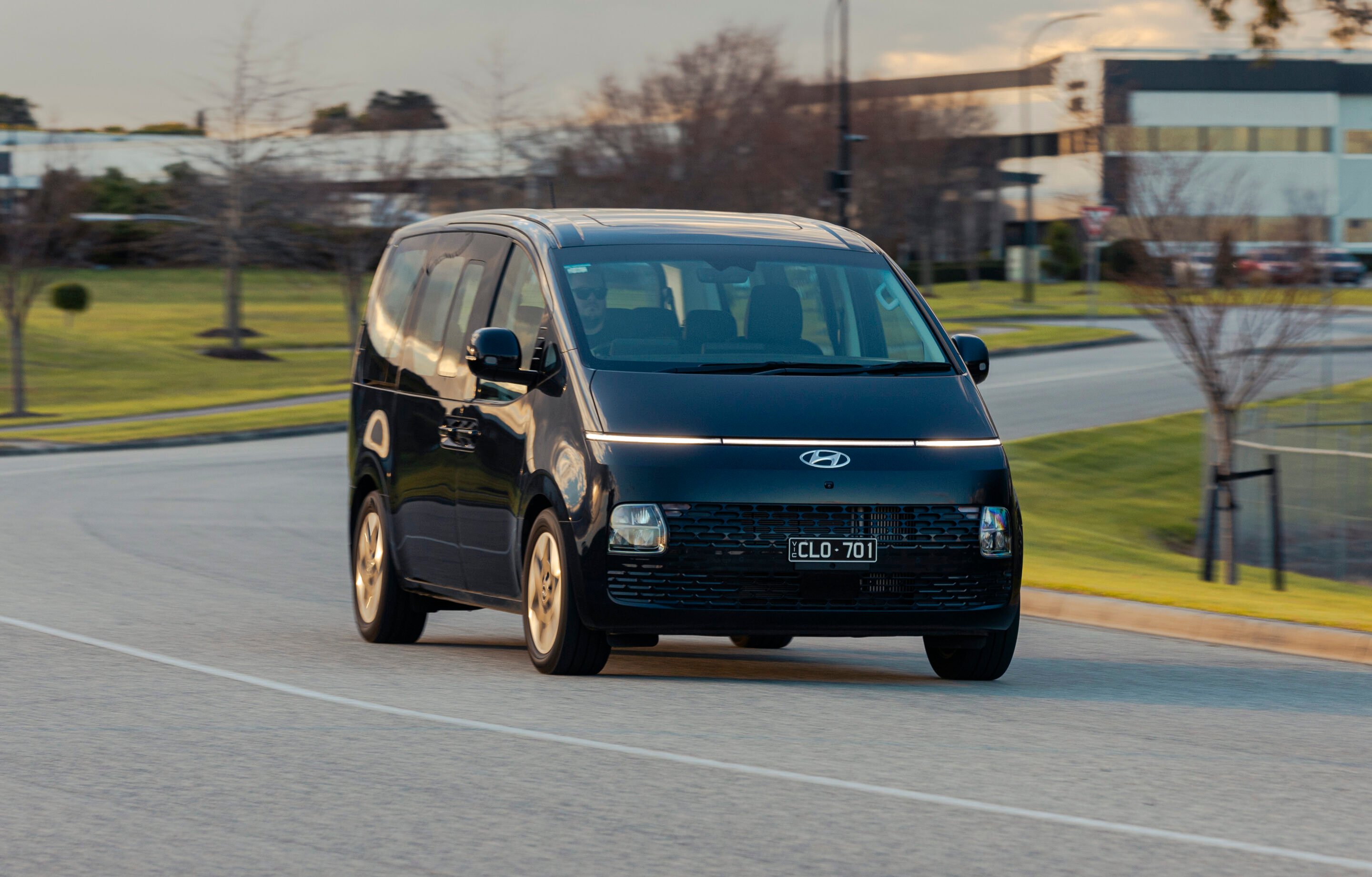
Full disclosure: Hyundai has just treated the Staria to a very modest refresh, but didn’t have the new vehicle available at the time of this review.
This vehicle is the last of the outgoing models and the update includes rain sensing wipers, Bluelink connected car services, a revised key fob, aluminium exterior badging, USB-A ports replaced by USB-C, and the Blind-Spot Collision-Avoidance Assist (BCA) has been replaced with Blind-Spot Collision Warning (BCW). So worthwhile, but fairly modest and in no way affecting the outcome of this comparison.
Otherwise it’s much the same as the Staria that’s been with us since 2021. The styling is bold and adventurous, with its sci-fi visage. It’s also surprisingly divisive, which is odd given that it’s had this long to bed in with consumers. Jump inside and the sheer amount of glass is still a bit of a shock. The side windows are so deep that it feels as if other drivers can see your knees.
This volume of glazing and low scuttle line gives the Staria cabin a beautifully airy feel, helped by the
fitment of a dual panel glazed roof. Hyundai’s been in the people mover business for more than a quarter of a century, the 1999 Trajet being its first attempt, so it has picked up plenty of experience in building something large and practical. In certain places however, despite this being the flagship model, it’s possible to see where the Staria has been built to meet a price.
The cabin plastics aren’t anything to get too excited about and there’s a nostalgic 1990s smell to their gradual denaturing. The piano black finishes will get a bit sebaceous in short order, the rear row doesn’t slide or recline and there are no power options in the luggage bay. You need a cable too if you want to mirror your smartphone. From there, the news gets better.
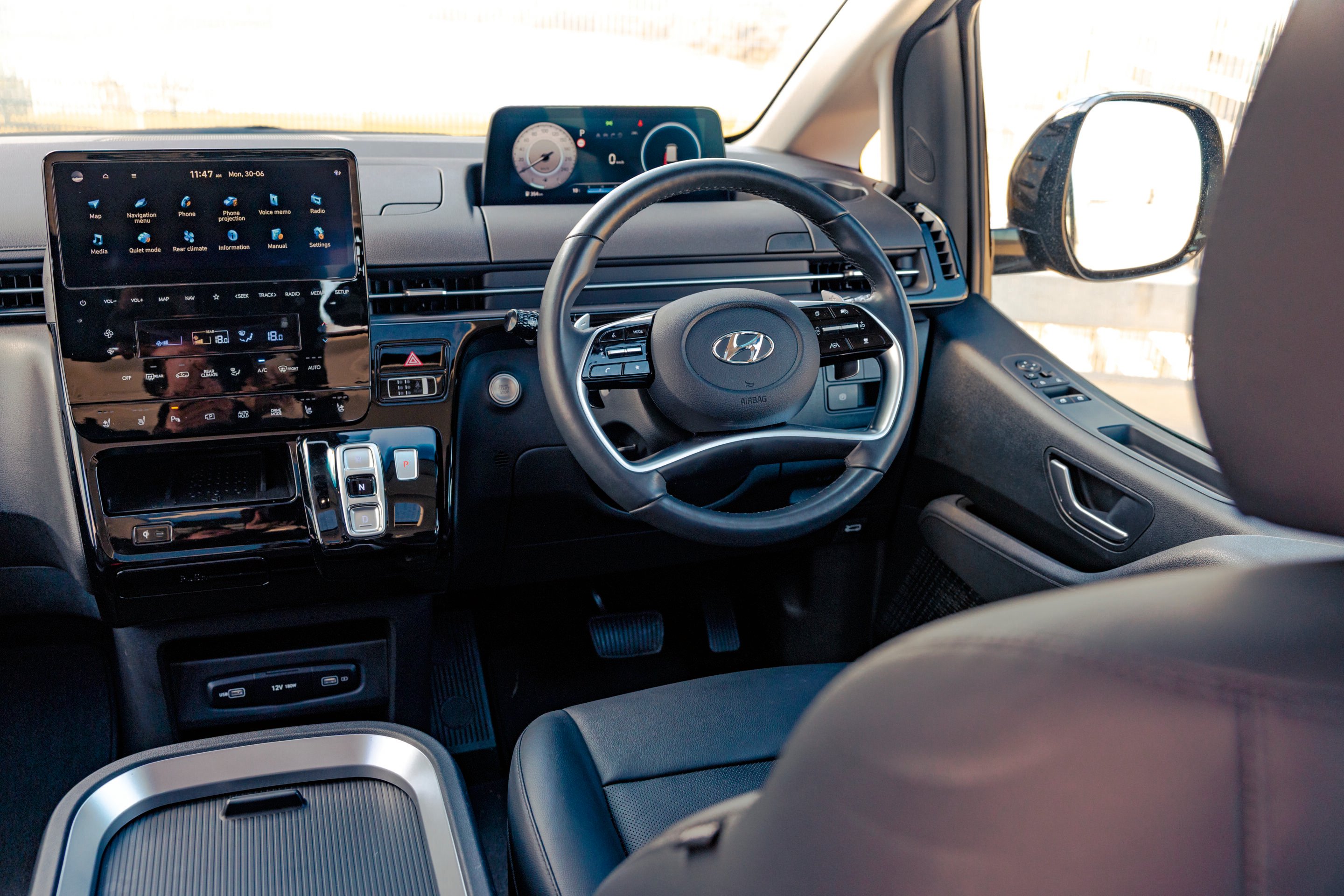
You’re certainly not found wanting for cabin storage, with three glove boxes in and around the dash panel, a huge deep centre bin, big door pockets with bottle holders and handy cubbies for the rear passengers. This Highlander is also equipped with dual 10.25-inch screens, a wireless phone charger, leather upholstery, heated and cooled front seats, a heated steering wheel, that dual power sunroof and a 12-way adjustable driver’s seat. I counted no fewer than 16 cup holders, six USB chargers and you get powered sliding doors and tailgate. There’s even a rear seat supervision camera fitted.
Refreshingly, there’s even a decent amount of luggage space when all seats are in place. You get 831 litres, which might not mean a whole lot without context, so imagine you’re tossing up whether to buy a Staria or a big seven-seat SUV like a Hyundai Santa Fe. With all three rows in place, the Santa Fe’s luggage space is so tiny Hyundai seems too embarrassed to quote a figure for it. Fold the rear row and that space steps up to 628 litres, whereas if you drop the rear row in a Staria you have pretty much double that at 1303 litres. It really is a night-and-day difference in practicality. What’s more it does all of that while still packaging a full-sized spare wheel and tyre.
The only all-wheel drive vehicle in this test, the Staria majors on comfort. It’s an endearingly soft thing to pedal along, and the 2.2-litre turbodiesel can be a bit vocal when pressed, but as long as you manage weight transfers sympathetically, your family will love its cosseting nature. The push-button gear selection system is foolproof and its only drawback is that it sometimes plugs you into a gear too high, causing the engine to labour somewhat. Fortunately, there are also paddle shifters behind the wheel to snick the eight-speed epicyclic auto down a gear manually. Road noise does find its way into the cabin though, as the Kumho PorTran tyres aren’t the quietest. It’s no match for the slick Kia Carnival in that regard.
The Staria emerges with a stack of credit. It’s big, friendly, easy to operate and well equipped for the price. The styling is a bit Marmite but if, like me, you’re an admirer of its modern brutalist design, the big Hyundai offers a blend of talents that easily make it the value pick of this particular bunch.
| Model | Hyundai Staria 2.2 CRDi Highlander |
|---|---|
| Engine | 2199cc inline-4, DOHC, 16v, turbodiesel |
| Power | 130kW @ 3800rpm |
| Torque | 430Nm @ 1500-2500rpm |
| Transmission | 8-speed automatic |
| L/W/H/WB | 5253/1990/1997/3273mm |
| Cargo | 831L to third row, 1303L to second row, 2017L to first row |
| Weight | 2255kg |
| Towing | 2500kg braked |
| Fuel economy | 8.2L/100km (combined) |
| Tyres | Kumho PorTran KC53 235/55 R18 |
| Warranty | 5 years/unlimited km |
| Price | $67,500 |
2. VOLKSWAGEN ID BUZZ PRO LWB
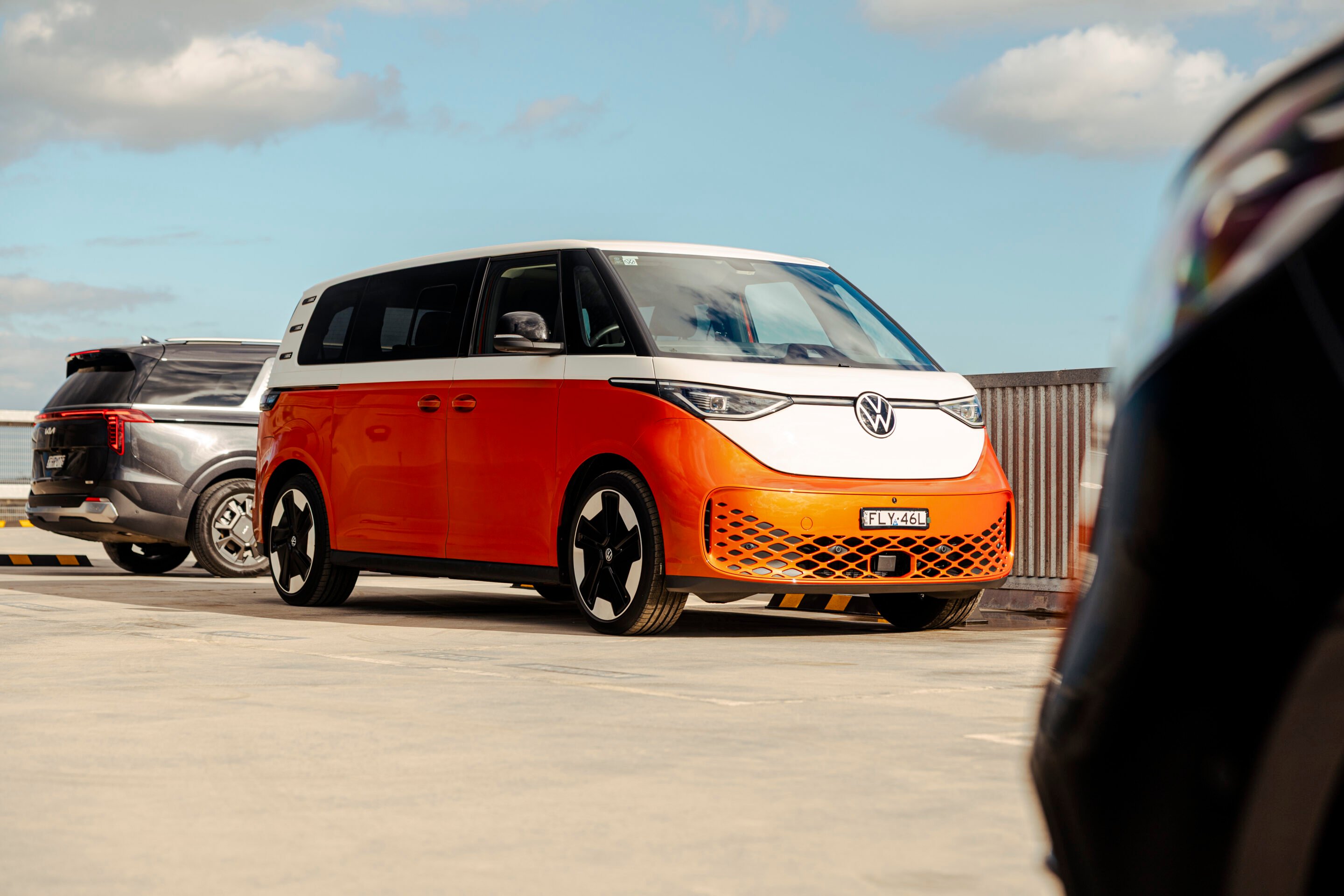
It’s usually a good indicator as to how desirable a vehicle is when the road testers are wheedling for the keys at the end of the test. Upon wrapping up the last of the group shots it was the Volkswagen ID Buzz that everyone wanted to take home. To look at it is to understand why. Everything else here is resolutely sensible, even a little po-faced. The Buzz’s bright beach bus vibe and punchy power delivery endeared it to everyone. It’s one of those vehicles that your kids will absolutely fall over themselves for.
Whether they’ll be quite so amazed by it after the initial novelty wears off remains to be seen. As the only seven-seater in this test – everything else can seat eight in a 2-3-3 formation – the ID Buzz gets slightly marked down on ultimate utility and if you do have all the seats in place, the 306 litres on offer is good but considerably less than half of what the Staria bowls up. So you need to amend your expectations somewhat if you’re looking for the last degree of practicality. Likewise, there will be some who may not feel that their domestic arrangements are an ideal fit for an EV.
These caveats aside, there’s a lot to like about the Buzz. It’s probably not priority one for MPV buyers, but it’s worth noting that it’s a lot of fun to drive, and any vehicle’s worth is multiplied if you simply look forward to using it. If you resent a ‘distress purchase’ of an MPV, then the Buzz is the perfect antidote and represents a fresh and viable lifestyle alternative to the ubiquitous seven-seat suburban SUV.
With a 91kWh (86kWh net) battery affording a claimed 452km, it’s got a fairly decent range, and it’ll recharge from 5-80 per cent at its peak 200kW DC rate in 26 minutes.
It’s worth keeping an eye on the options you choose. This car swaps the standard 19-inch alloys for 21-inch items ($1900) and adds two-tone paint ($4100). The reason why it’s worth a bit of consideration when box-ticking is that this version of the Buzz just squeaks beneath the 2025 Luxury Car Tax threshold for fuel-efficient vehicles of $91,387. Start piling on options and you’re gifting the ATO a big slice of that additional spend.
There’s decent space inside with presentable access to the third row, the second seat tumbling forward and leaving a sizeable gap for the kids to clamber through. A fairly well hidden fabric pull tab even allows the third row to recline by up to 16 degrees, affording an expansive view overhead through the glass roof. This features a laminated film that dims to a milky opacity at the touch of an overhead haptic slider. There are sliding side windows to vent the second row and seat-back tables.
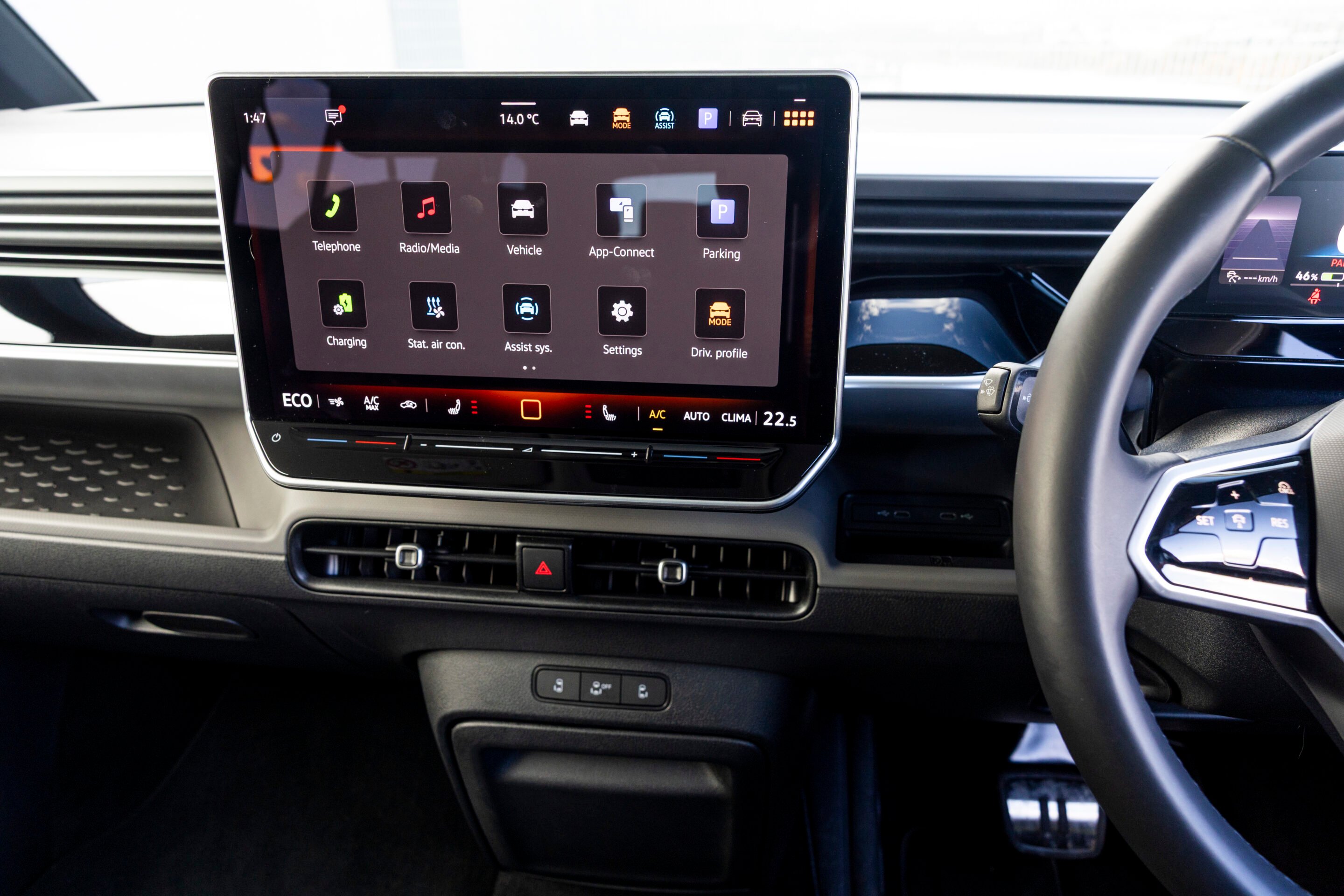
Between the front seats is the removable ID. Buzz Box, a plastic cubby system which features a five-litre drawer as well as cup holders, an ice scraper and a bottle opener. It’s simple to unlatch and lift out if you’d prefer through access to the rear, although re-attaching it requires a steady hand and some precision to get its latch and eye system to re-engage.
The second row is a good place to be, with a sliding seating system affording a stack of legroom which, when paired with generous seat recline, makes the Buzz a great ‘third place’ to wind down in comfort.
The tailgate of the ID.Buzz is powered and the boot is somewhat pinched when all three rows are in place, with just 306 litres available. In five-seat guise there’s a hefty 1340 litres available. You can option a Multi-flex board that raises the boot floor but allows for two storage boxes that slide beneath, keeping valuables out of sight. Alas, no spare wheel and tyre set.
There’s more substance to the ID Buzz than at first meets the eye. It’s a great family option, albeit one that can afford to sacrifice outright space for an element of sass and style. We love it, but accept that it’s not going to be to everyone’s taste.
| Model | Volkswagen ID Buzz Pro LWB |
|---|---|
| Motor | Rear-mounted permanent magnet brushless |
| Battery | 91kWh (86kWh net) lithium ion NMC |
| Power | 210kW |
| Torque | 560Nm |
| Transmission | Single-speed reduction gear |
| L/W/H/WB | 4962/1985/1924/3239mm |
| Cargo | 306L to third row, 1340L to second row, 2469L to first row |
| Weight | 2692kg |
| Towing | 1000kg braked |
| Range | 452km (WLTP) |
| Tyres | Hankook Ventus S1 evo3 EV 265/40 R21 (as tested) |
| Warranty | 5 years/unlimited km |
| Price | $91,290 |
1. KIA CARNIVAL GT-LINE HEV
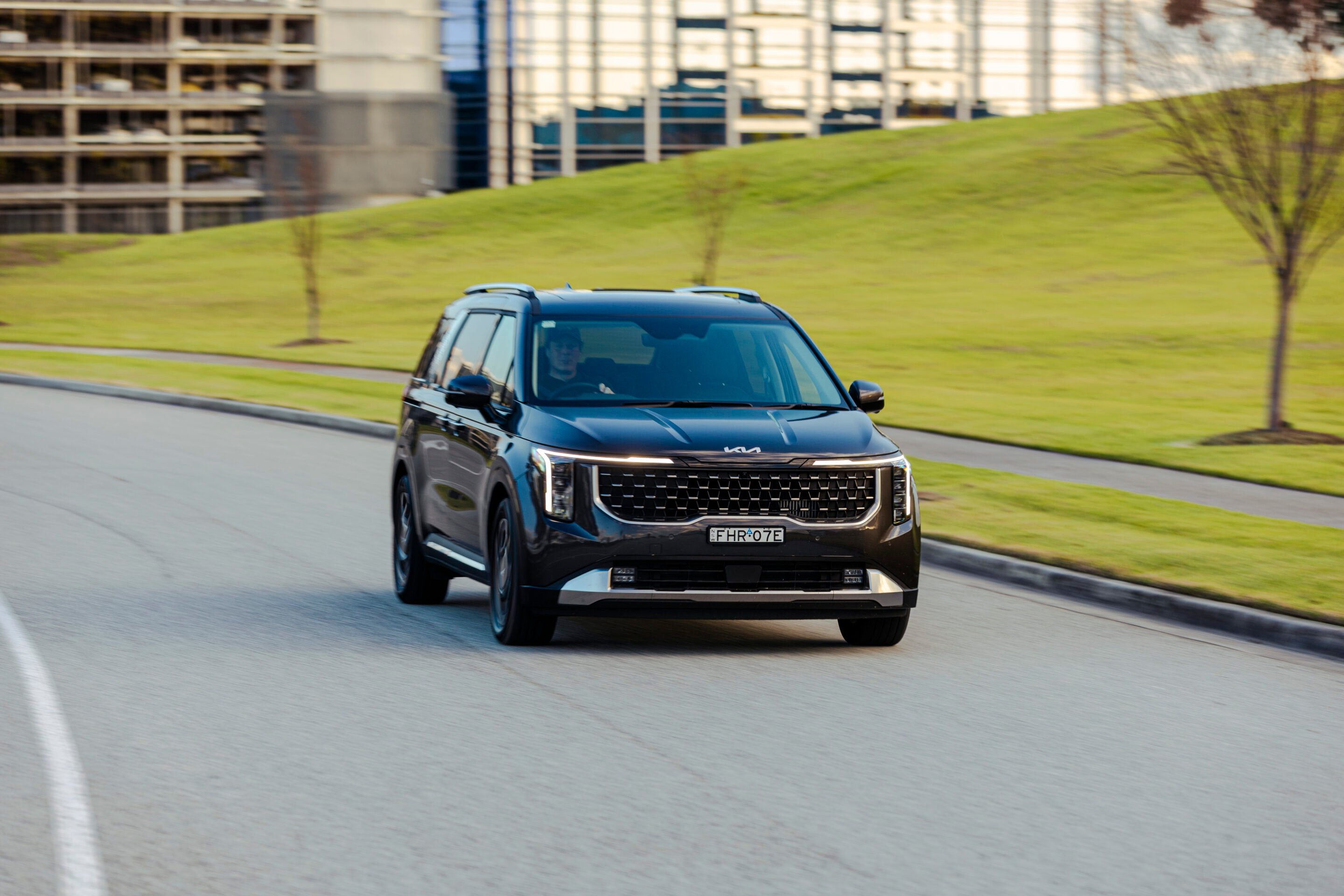
It’s called the frequency illusion. Once you’ve taken the time to take notice of a thing, you start seeing that thing (previously almost invisible to you) everywhere. The Kia Carnival is a case in point. It was only after this test that I paid attention to the sheer density of these things on Australian roads.
Last year, Kia sold 5173 Carnivals. The next best-selling vehicle in this test, the Hyundai Staria, registered 565 units. That market dominance, as evidenced by a massive 82.3 per cent market share, coupled with the fact that this KA4 generation Carnival has been with us since 2020, explains why the local school run is chockers with them. They just work. Really well. And not one is even out of warranty yet.
This hybrid version is a bit different, having debuted last year. It’s a beautifully refined 1.6-litre petrol-electric powertrain that betters the fuel economy of the existing 2.2-litre CRDi diesel, the major downside being that it’s only offered in flagship GT-Line guise at a hefty $76,210. If Kia could bin the existing solus-ICE engined Carnivals and start the range with a hybrid at around $55K, the world would be an incrementally better place.
It’s easy to see why buyers flock to them. The driving position is car-like, removing the feeling that you’re driving a fenestrated plumber’s van. Even with all the seats in place, there’s a reasonable level of space, and it even makes all sorts of sense if it’s just going to be used as a two-row with bags of storage. The luggage bay is ultra deep, the rearmost seats flipping into that hole to give a near flat load floor to the second row.
The kit list is impressive. Wireless phone charging, wireless Apple CarPlay and Android Auto, stacks of USB-C connections, a punchy Bose stereo, fan control and ceiling vents for each row, individual sliding and folding second row seats, rear electric windows and four ISOFIX mounts are a combo unmatched by any of the other vehicles here.
The hybrid drive system packages a 1.5kWh battery where the spare tyre would reside in ICE
Carnivals, so you only get a can of sealant to help you out if you get a puncture. This, coupled with the 72-litre fuel tank and a 5.8L/100km fuel consumption figure means you probably won’t be on first name terms with the guy at the servo. You also get 180kW and 366Nm system output, with the front electric motor chiming in with peaks of 45kW/304Nm. That grunt goes to the front treads via a six-speed automatic gearbox. One downside of the hybrid drive system is that you only get 1000kg of braked towing capacity versus double that for the ICE-engined variants.
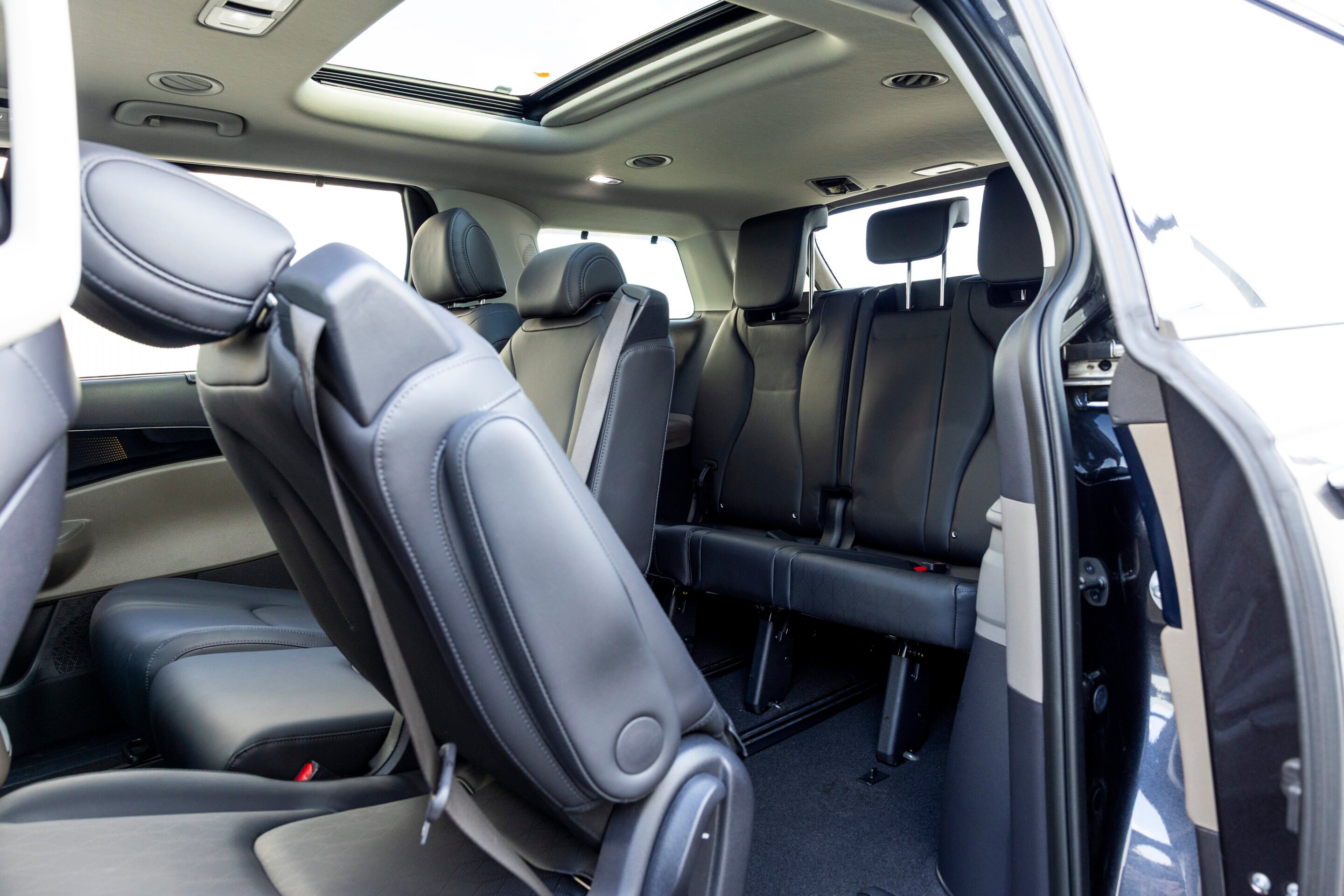
There are bigger MPVs in this test, there are more extrovert ones and there are significantly more affordable ones. But building an MPV has always been about managing compromises smartly, and no vehicle does that here quite as adroitly as the Kia Carnival. As it stands, with the hybrid system only available on the flagship, most buyers will still gravitate to one of the diesel variants, but there’s a silken polish to the hybrid’s dynamics, marred only by an overly snatchy brake pedal that’s particularly noticeable if you engage the auto-hold function. With familiarity it becomes something you accustom yourself to.
Big enough but not too big, slickly presented without appearing ostentatious and beautifully finished, the Carnival adds the cherry on top with the best warranty of any of the vehicles on test. It wins, and by some margin, proving there’s plenty of life in the MPV form factor when it’s done well.
| Model | Kia Carnival GT-Line HEV |
|---|---|
| Engine | 1598cc inline-4, DOHC, hybrid |
| Power | 132kW @ 5500rpm |
| Torque | 265Nm @ 1500-4500rpm |
| Transmission | 6-speed automatic |
| L/W/H/WB | 5155/1995/1785/3090mm |
| Cargo | 627L to third row, 1624L to second row, 2827L to first row |
| Weight | 2288kg |
| Towing | 1000kg braked |
| Fuel economy | 5.8L/100km (combined) |
| Tyres | Continental CrossContact RX 235/55 R19 |
| Warranty | 7 years/unlimited km |
| Price | $76,210 |
This article originally appeared in the August 2025 issue of Wheels magazine. Subscribe here and gain access to 12 issues for $109 plus online access to every Wheels issue since 1953.
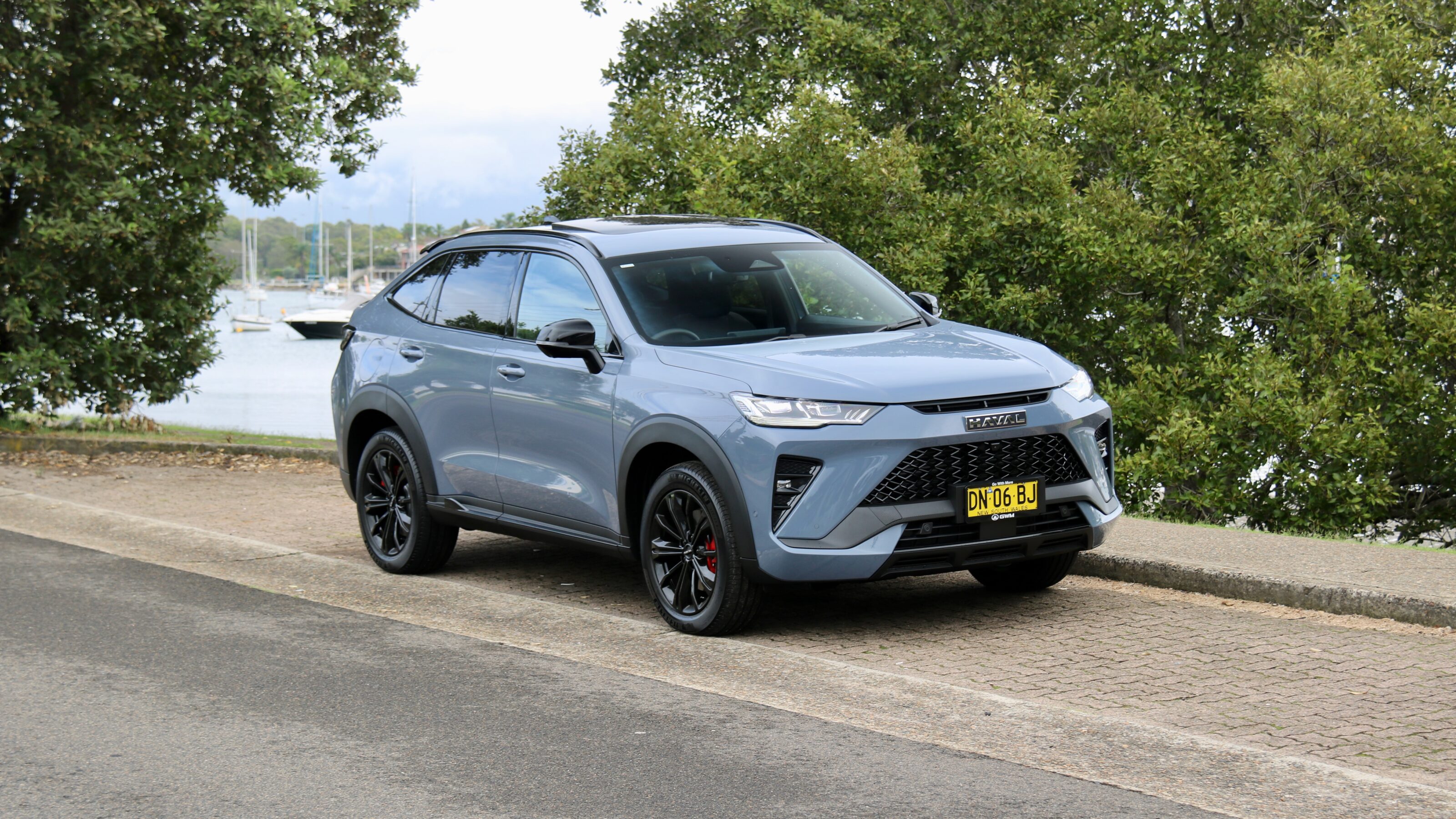
Australia’s new car market continues to show remarkable resilience in 2025, with July posting the strongest monthly result for the month on record, according to the latest VFACTS data released today.
A total of 103,097 vehicles were delivered across the country in July – up 3.6 per cent compared with the same month last year – as renewed consumer confidence drives sustained demand.
Federal Chamber of Automotive Industries (FCAI) chief executive Tony Weber said the robust numbers reflect a positive mindset among new car buyers.
“We are now seeing confidence return to the market, supported by a recent interest rate reduction and anticipation of further easing,” Weber explained. “Consumers are responding with interest across most segments, particularly utes and SUVs.”
Among the most notable trends in the 2025 market is the explosive growth in plug-in hybrid electric vehicle (PHEV) sales, up a staggering 183 per cent year-to-date. With more than 50 PHEV models now available locally, they are proving to be an appealing middle ground for drivers who want a taste of electric power without fully giving up the traditional internal combustion engine
“They offer the ability to drive short distances on electric power while retaining the flexibility and range of a conventional engine,” Weber added.
In contrast, sales of fully electric vehicles (EVs) have plateaued in 2025, holding below 8 per cent of total market share despite increasing choice and investment in infrastructure.
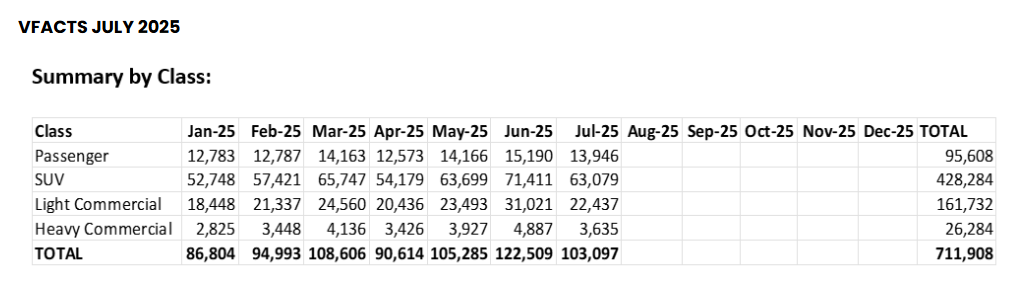
SUVs continue to dominate over passenger cars, with sedan sales plunging 27 per cent year-to-date. For every two passenger vehicles sold so far in 2025, Australians bought around nine SUVs. In July, the Toyota Corolla was the only sedan to make the top 20 list.
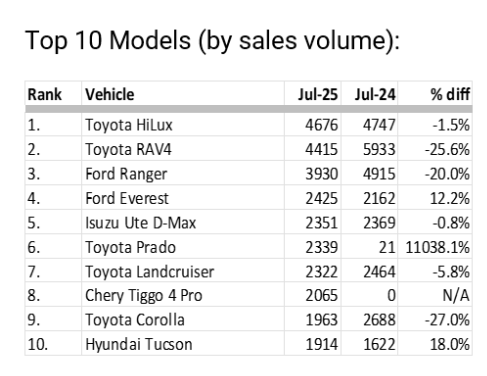
Toyota held onto its position as market leader with 21,722 sales, ahead of Mazda (7,452), Kia (7,402), Ford (7,279) and Hyundai (6,687).
Most states and territories posted year-on-year sales increases, with the Northern Territory leading gains at +10.6 per cent, followed by Queensland (+8.9 per cent) and New South Wales (+1.9 per cent). Only South Australia (-1.4 per cent) and Tasmania (-1.0 per cent) recorded minor declines.
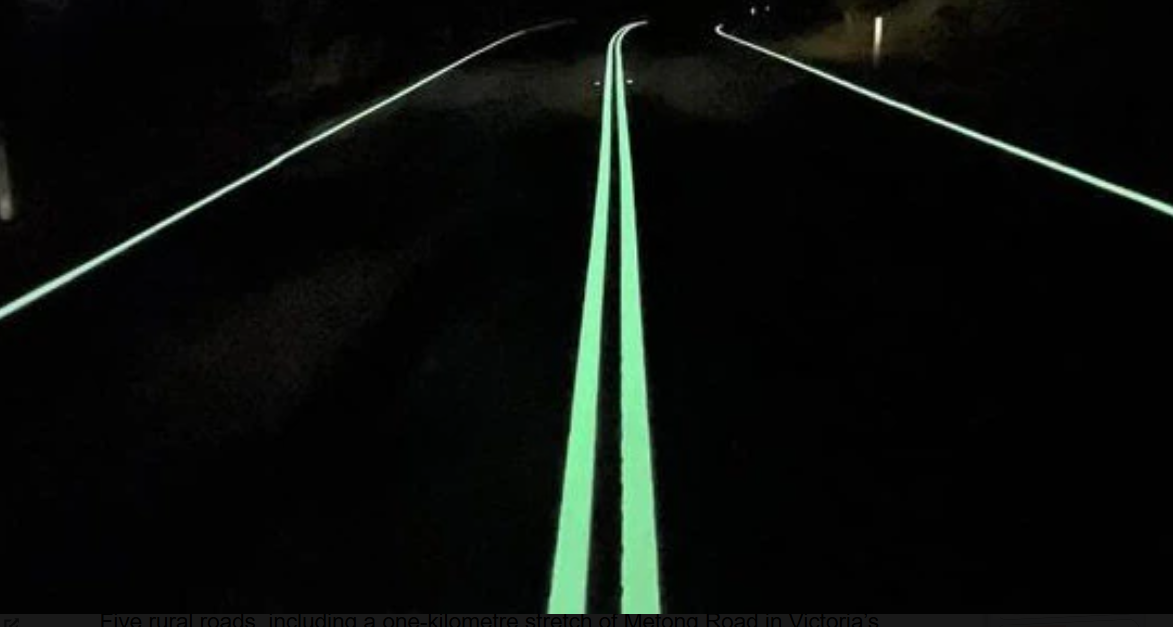
A glow-in-the-dark road safety innovation trialled in New South Wales has been hailed a success, with authorities confirming plans to expand the photoluminescent line markings to other high-risk areas across the state.
The luminous markings, which absorb sunlight during the day and emit a soft glow at night, were first tested in December 2024 on a 200-metre section of Bulli Pass – a steep and winding stretch south of Sydney known for frequent near misses. The location, frequently used by trucks and motorcyclists, recorded 125 near-accidents in just 12 months prior to the trial.
Installed partway down the pass to improve visibility around a sharp bend, the markings have significantly improved night-time safety. Transport for NSW told Yahoo News that the site recorded a 67 per cent drop in near misses during dark hours. The trial’s early success has prompted the agency to identify and assess further sites where the technology could be deployed.
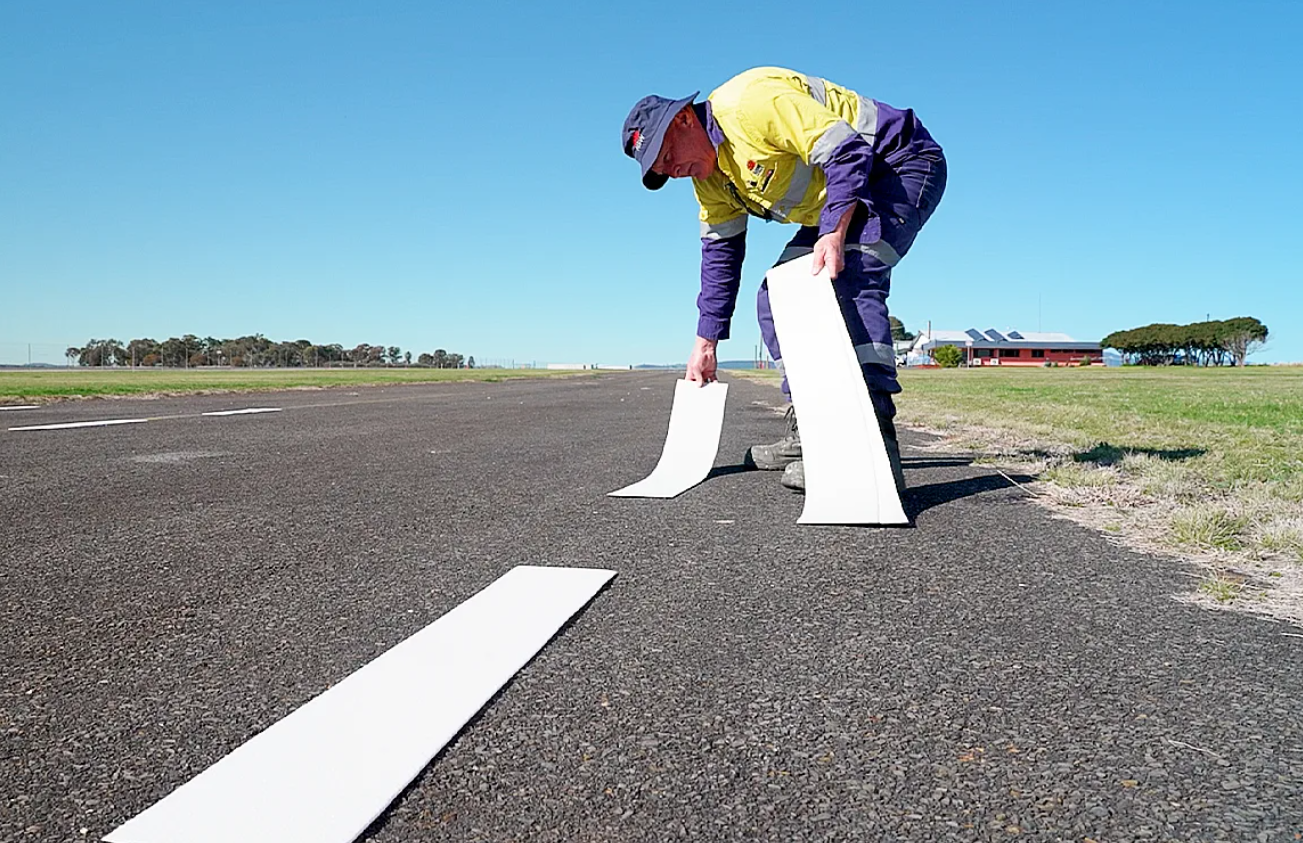
A Transport for NSW spokesperson explained the glow markings aim to improve visibility in low-light and poor weather conditions, particularly on roads where traditional street lighting is impractical. “The benefit of the glow was greatest in improving visibility beyond the range of vehicle headlights,” the spokesperson said. “When fully charged, it increased line detectability to just below daylight levels.”
Community feedback has also been positive. Around 83 per cent of surveyed drivers reported feeling greater confidence navigating the hazard-prone descent thanks to the glowing lines.
Advocates say the technology could support broader road safety objectives, such as Australia’s target to eliminate serious road injuries and fatalities by 2050.
Clive Todd, founder of glow-paint company Lihten, said the environmentally friendly technology has wide potential. “It could be used anywhere visibility is critical – roads, bike paths, airstrips, even helicopter pads,” he said. “It saves energy, reduces risk, and ultimately, could help save lives.”
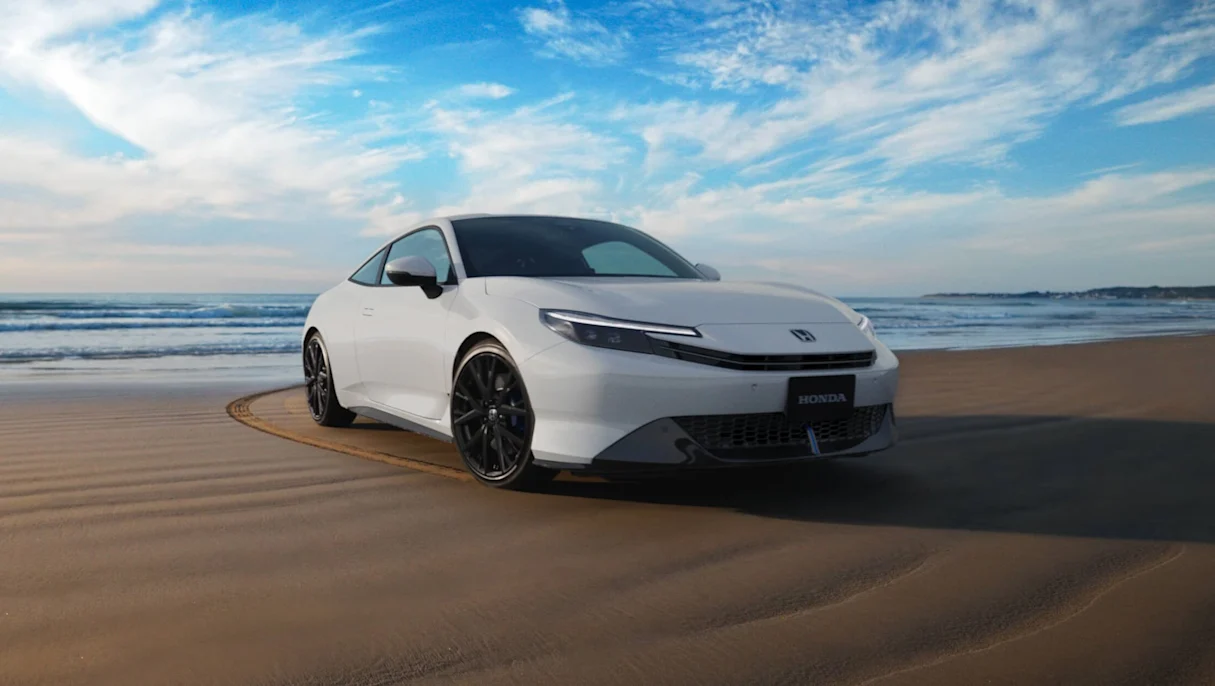
Honda Australia has announced details of its local product roadmap, with confirmation that 2026 will usher in the return of a legendary nameplate and the debut of the brand’s first fully electric vehicle (BEV) for the Australian market.
The headline news is the resurrection of the Honda Prelude, a name that resonates deeply with performance and design enthusiasts. Slated for a mid-2026 arrival, the all-new Prelude is expected to combine Honda’s rich motorsport heritage with the company’s cutting-edge hybrid and electrified technology.
Joining the Prelude will be Honda’s inaugural Australian-market BEV, launching in the second half of 2026.
These milestones are part of a broader strategy that will also see updated versions of the popular CR-V and ZR-V SUVs in early 2026, including an expansion of the brand’s hybrid lineup, the introduction of a new all-wheel-drive hybrid system, and enhanced connectivity features via Honda Connect Gen2 with built-in Google functionality.
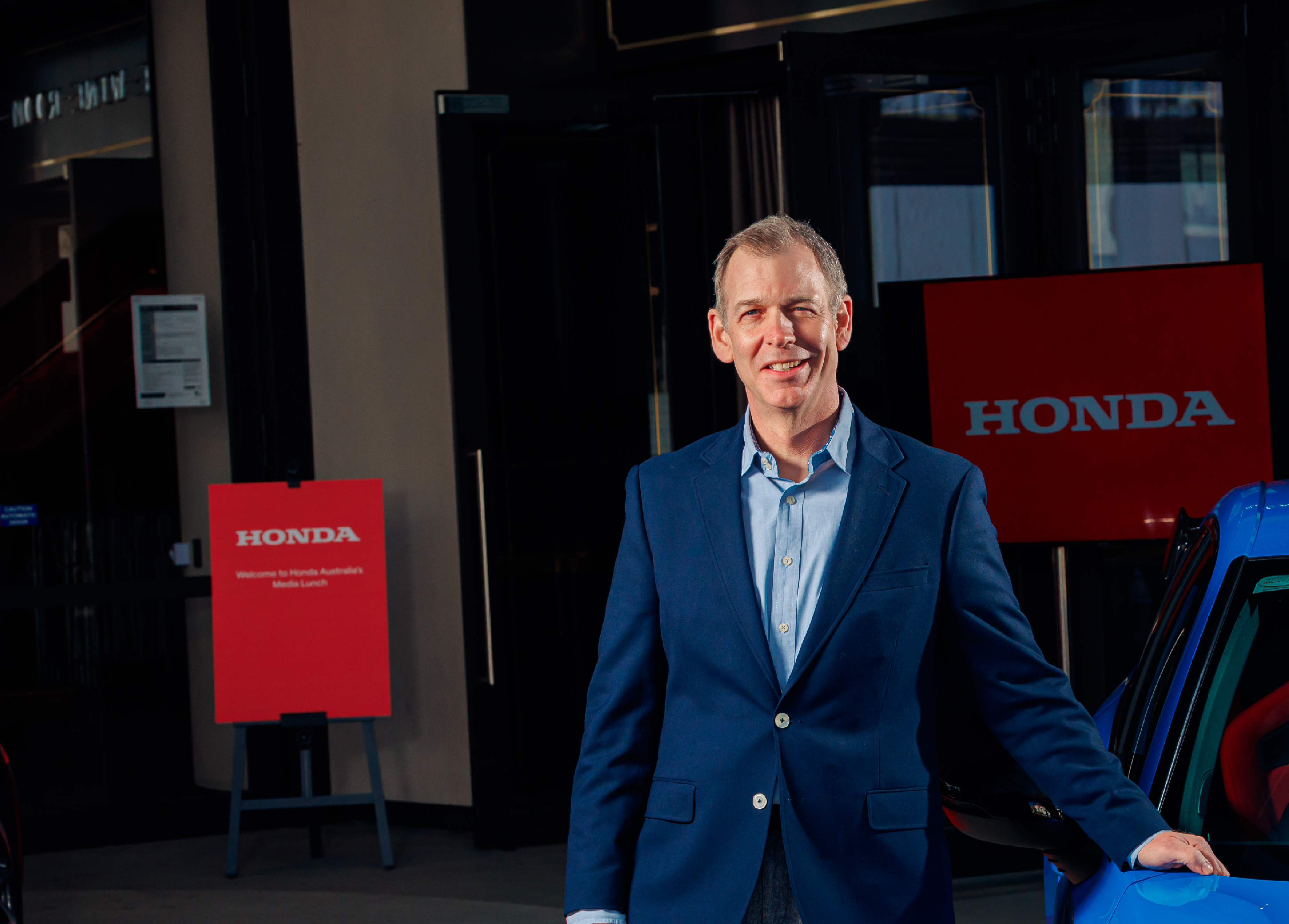
Honda Australia President and CEO Jay Joseph described the upcoming changes as pivotal to the company’s future in Australia. “This is an exciting time for Honda. We’re delivering stylish, fun-to-drive, high-quality vehicles, while preparing for the next stage of electrification,” he said.
Director Rob Thorp added that the 2026 line-up marks a clear signal of intent. “This new era brings the best of Honda innovation to Australian roads, with customer-focused ownership programs to match,” he said.
These product announcements build on a strong year for Honda in Australia. Hybrid sales made up half of the brand’s volume in June 2025, highlighting growing consumer demand. With the Prelude, its first EV, and expanded hybrid offerings on the way, Honda expects electrified vehicles to account for nearly 90 per cent of sales by mid-2026.
The ongoing rivalry between Ford and Chevrolet has intensified once again – this time at Germany’s legendary Nürburgring Nordschleife. Ford’s Mustang GTD, which set a blistering 6:52.07 lap earlier this year, has now been eclipsed by the Corvette ZR1 and the even more extreme ZR1X, which have taken the crown as the fastest American cars to lap the track.
The all-wheel-drive ZR1X completed a lap of the full 20.8km layout used for official attempts in 6:49.275, while the rear-wheel-drive ZR1 completed the lap in 6:50.763.
In response to the Corvette team’s announcement, Ford CEO Jim Farley took to Instagram with a succinct message: “Congrats to the Corvette team. Game on!”, reported Motor1. The friendly but fiery statement suggests Ford isn’t ready to bow out of the high-speed duel.
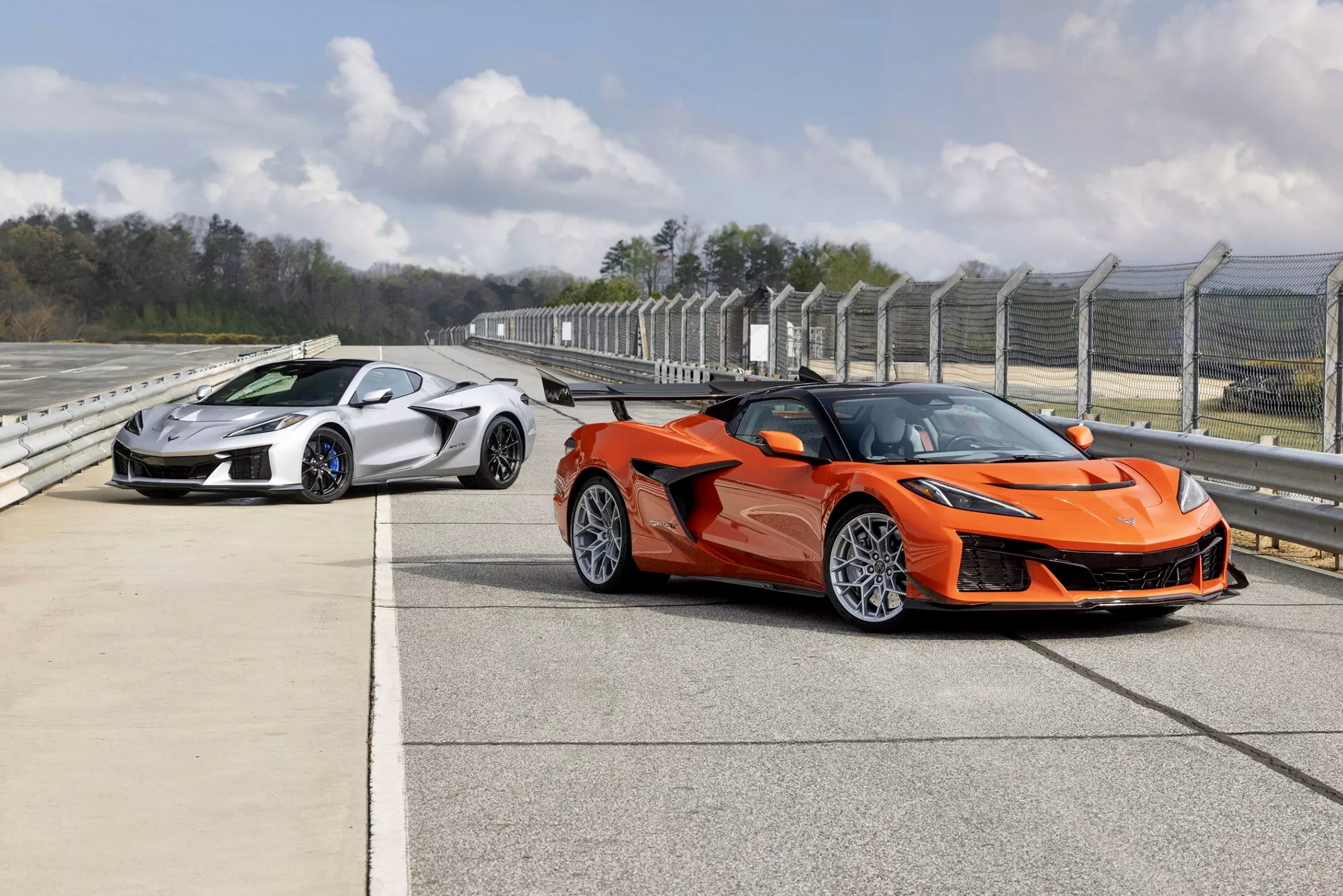
Ford may consider returning to the Nürburgring with the GTD, but it faces an uphill challenge. Despite the GTD’s cutting-edge technology ZR1X including active aerodynamics with a drag-reduction system and a motorsport-derived suspension – its substantial weight of over 1950kg makes it a heavier contender. Meanwhile, the ZR1 tips the scales at just under 1746kg, and while Chevrolet hasn’t revealed ZR1X figures, expectations are that it’s still lighter than Ford’s offering.
On the power front, the Mustang GTD delivers an impressive 608kW from its supercharged V8. Yet Chevrolet’s ZR1 outputs 793kW, and the ZR1X raises the stakes further with a claimed 932kW.
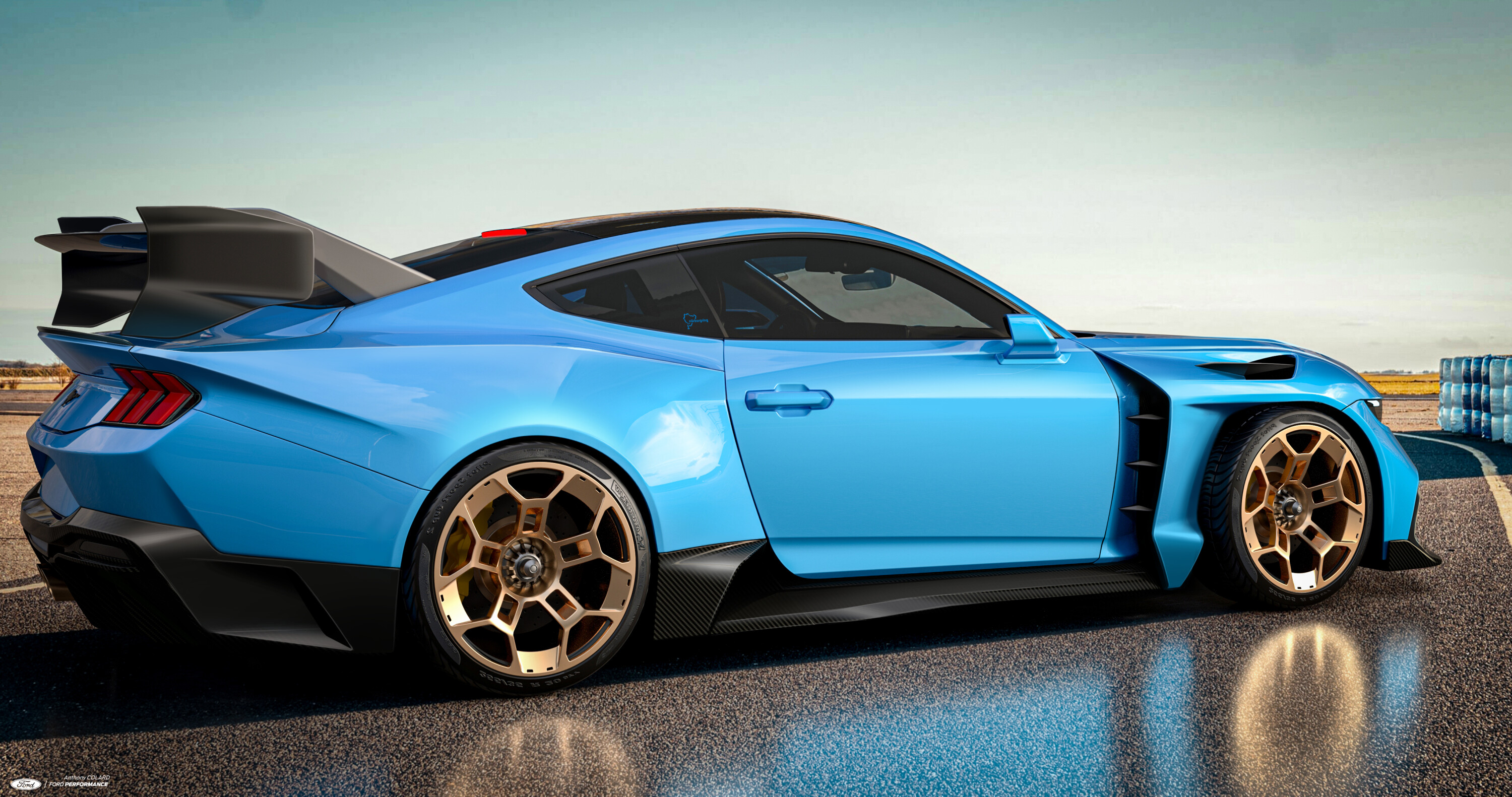
While numbers aren’t everything on a track as complex as the ‘Ring, they matter – especially in a game of hundredths. Whether Ford returns with a tweaked GTD or prepares an all-new weapon, the company will likely wait until it has a serious contender before re-entering the fight.
One thing is certain: America’s supercar rivalry is alive and well – and Nürburgring bragging rights are once again up for grabs.
The modern image of Porsche is that of affluence. In recent years, it has typically raked in revenues of around €40billion (A$67 million) but this financial safety blanket wasn’t always guaranteed.
Back in 1991, the company’s revenue at the end of the year totalled, and when converted to Euros – was €15 million (A$26.9m). In other words, it was 2666 times smaller than today. It was, by most measures, on life support. This was the situation that new CEO Arno Bohn had acquired. A man with no previous motor
industry experience, the former IT professional had a formidable task on his hands.
Porsche faced all sorts of challenges, chiefly around the entry-level models. The contract with Audi to build the four-cylinder 944 model line at Neckarsulm expired at the start of 1991 and Porsche figured the cars – which accounted for a third of its sales – could be built more cheaply at its Zuffenhausen plant. The company knew it had to refresh the ageing 944, which had been in production since 1982, but had precious little funds to do so.
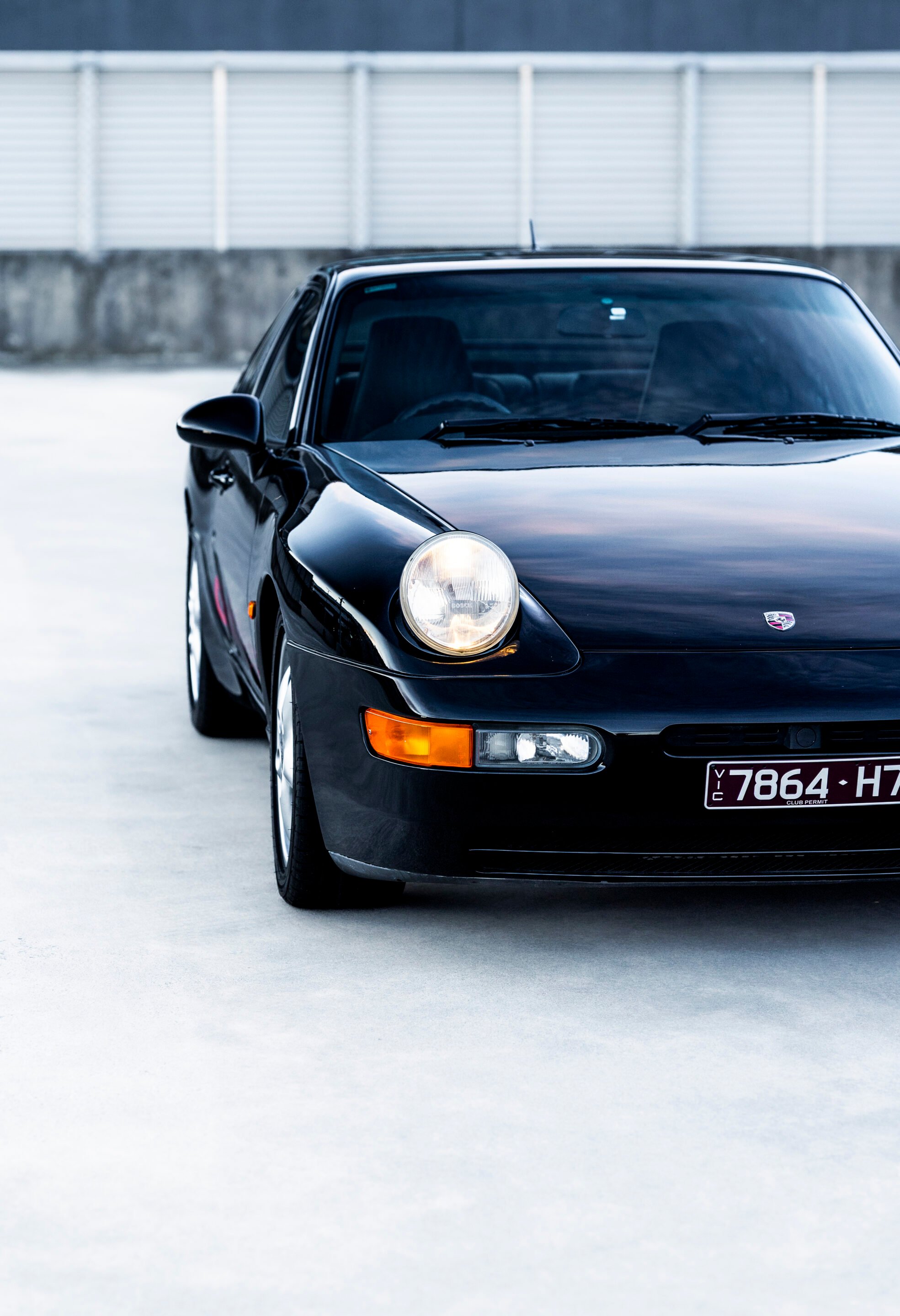
The powerplant was a longstanding sticking point. Porsche had an eight-valve 2.5-litre turbocharged engine in the 944 Turbo, which had just been axed in the repatriation of the line back to Zuffenhausen, and a sixteen-valve 3.0-litre unit in the 944 S2. Porsche had tried to engineer a 16-valve turbo unit back in 1987, but it created all sorts of headaches. In order to pass stricter EPA tests, the cylinder head would need to be rotated 180-degrees to ensure the shortest possible catalyst light-off. After a review, it was realised that nearly every component bar the cylinder block and sump would need revising, and Porsche canned the 16v turbo unit on the grounds of weight, complexity and cost.
Porsche also had the option of a 2.7-litre V6 that was effectively three-quarters of the 3.6-litre V8 it was developing for R&D boss Ulrich Bez’s 989 project, in effect the four-door 911. This looked promising, with engineers suggesting a 249bhp power output from the naturally-aspirated six. That all came to naught: the 989 project hit the buffers at the end of 1991 when supervisory board member Ferdinand Piëch cancelled the costly project, claiming it would cannibalise sales of the Audi A8. As Bez acidly commented, “I had a one-to-one meeting with him. You just can’t out-argue Ferdinand Piëch in that situation.”
A cheaper option was to buy in an engine from another manufacturer. This would allow the company a six-cylinder option to level with the likes of the new Toyota Supra and Nissan 300ZX, both of which were gorging on the 944’s market share in the key US market. Porsche first looked at the all-aluminium 3.0-litre inline-six it was developing for Volvo. This was little bigger than the four, lighter and 30 per cent cheaper to build, and would develop 200bhp for the entry-level car. Porsche’s board nixed the development in 1988.
The final attempt to buy in a powerplant came via a chance chat with BMW engine designer Karlheinz Lange, who had been in charge of developing the M50 2494cc straight-six. By late February 1990, Porsche had received an M50 engine and installed it into the 944 but as impressive as it proved in terms of refinement and tractability, it lacked the aggression necessary for a Porsche sports car engine and was shelved.
Porsche committed to a 944 S3, realising that it had to develop this model on the cheap and would need to squeeze yet more from the naturally-aspirated 3.0-litre engine. They targeted the 1992 model year for this new(ish) car, which needed to not only offer more power, but needed to do so while improving fuel efficiency and lowering emissions.
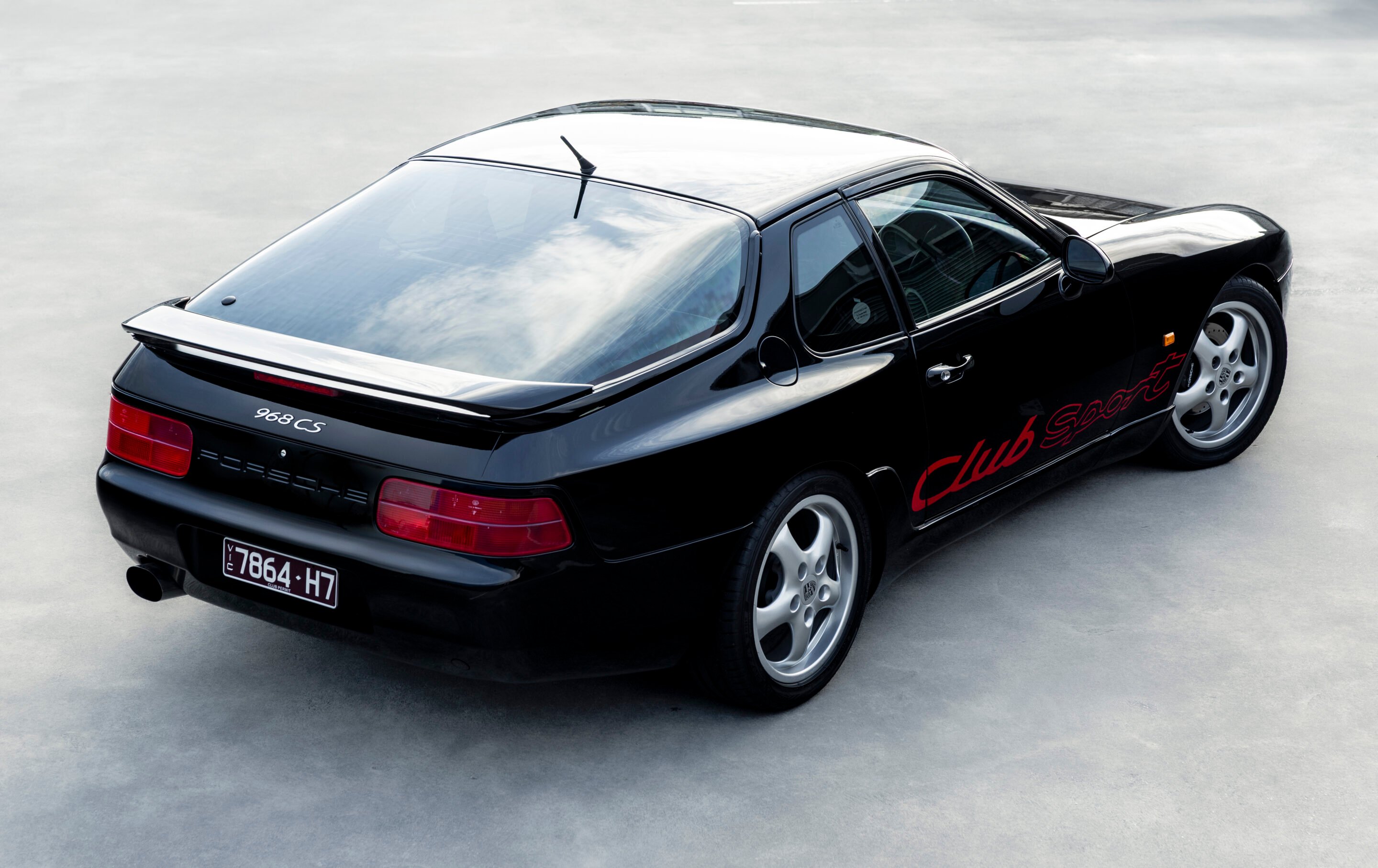
Designer Harm Lagaaij had returned to Porsche from BMW in 1989 and was tasked with the styling of the new model. Lagaaij was keen to bring the aesthetic of the entry-level sports cars closer to that of the 911 and 928. “I was looking for some design cues, some links to familiar Porsches,” he noted. The fold-up circular headlights gave him that opportunity, aping the 928 and giving the car a more familiar Porsche face.
At the back, the old bumper assembly of the 944 was ditched in favour of a smoother polyurethane fascia, concealing an integral bumper as seen on the 928. Cooling ducts in the front clip directed air to the bigger brakes, while the front suspension featured adjustable rebound dampers and air deflectors to channel yet more cooling air to the brakes. Rear three-quarter windows were now bonded into place, a more aero-efficient door mirror design was developed and, at Arno Bohn’s request, noise damping was added around the starter motor in order to make it sound “less Japanese”.
The solution for more power came from an unlikely source. Porsche had commissioned Hydraulik-Ring GmbH, a small company on the outskirts of Stuttgart, to develop a chain tensioner for the 944 S2. In 1989, the company entered into talks with Porsche to assess whether this cam-drive chain could perform a dual purpose and also vary the inlet valve timing. The result was an elegant piece of engineering that used an oil-pressure driven shoe to move the tensioned side of the chain by 5.8mm, tightening it, and doing the opposite for the slack side. This would then advance the inlet camshaft with respect to the exhaust side, advancing inlet valve timing between 1500 and 5500rpm. Helped by a new inlet manifold configuration, improved cooling, forged rather than cast con rods, a lighter crank, a freer-breathing exhaust and a redesigned flywheel, peak torque was rated at a healthy 225lb/ft at 4100rpm and peak power to 240PS at 6200rpm.
An Audi-designed Torsen limited slip differential was supplied by Getrag, and a C90 six-speed manual gearbox, also developed by Audi under consultation with Porsche, was also readied. At this point, Porsche had been working on a dual-clutch PDK transmission, but it wasn’t production ready by 1989, so the company developed a version of the ZF 4HP18 four-speed automatic ’box, labelled it Tiptronic and offered it with the option of a clutch-pack limited-slip diff.
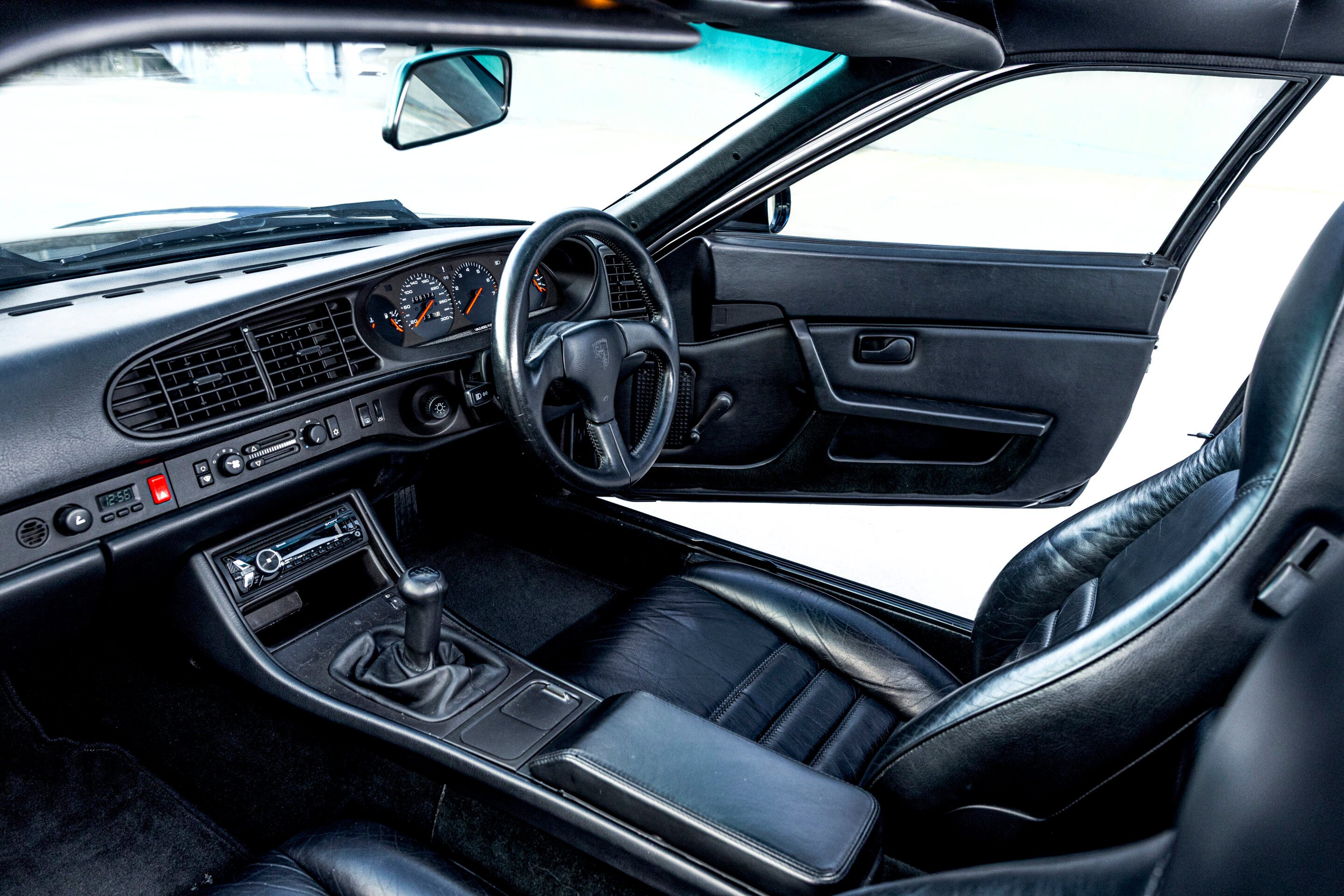
But what would it be called? Given the amount of new content in what ostensibly started out as an extensive facelift, Ulrich Bez felt that the 944 S3 moniker was inadequate. “We needed to give it a new name to push it,” said Bez. “It was not the most desirable thing to do but we couldn’t just stop with the 944.”
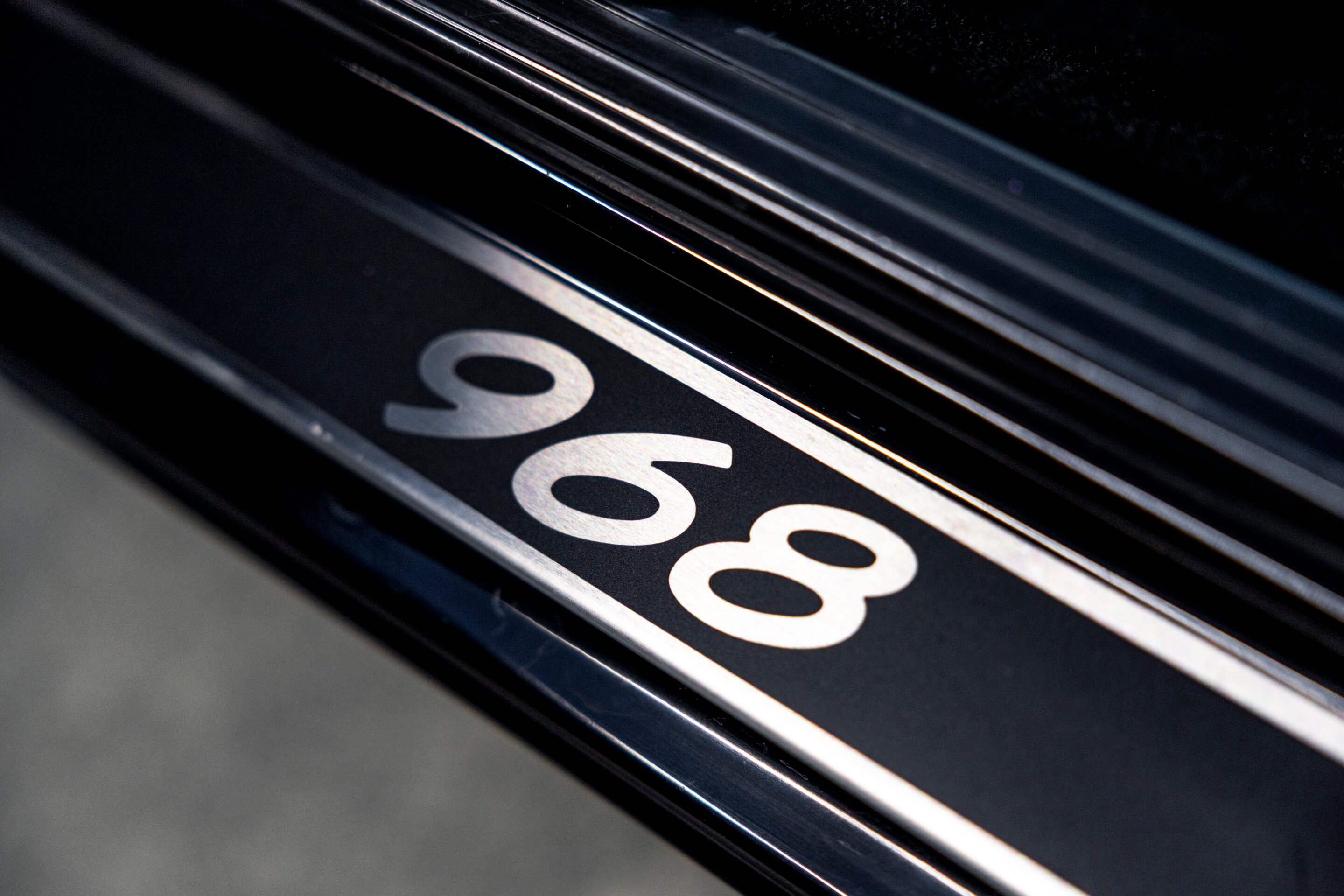
His equivocation showed clearly that there was some discomfort within Porsche as to whether the public would be fooled by this modest sleight of hand. In the end, the 968 badge was arrived at. Don’t ask what it means. It was merely a vacant number.
A brief appearance
Vacant wasn’t a word that could be used to describe the Porsche stand at the 1991 Frankfurt Show, however. It was rammed with every variant of the 968 it could lay its hands on. Coupes, cabriolets, manuals and Tiptronics were all present, with the messaging very clear.
“Fully 82 per cent of the components are newly developed,” said one brochure, keen to distance the 968 from its predecessors which, if we recall, initially sprung from Porsche being saddled with the 924 – a customer project rejected by Audi. For years it was the very definition of the problem child. While the 968 didn’t represent the clean sheet reboot that would later come with the Boxster, it nevertheless wiped enough of the slate clean. Or at least Porsche thought it did.
Others were not quite so convinced. Road tests grumbled about the fact that Porsche had paired a lugging torque monster of an engine with a six-speed manual. The fact that the Tiptronic could only register an 8.9-second 0-100km/h time versus the manual’s 6.6-second showing also drew comment. Engine resonance was an issue as were the interior ergonomics. Scattered switchgear was a particular 944 weakness and the 968 did nothing to address it. Many reviewers felt that, in the face of more vibrant competition from Japan, the 968 was too dear and not special enough, no matter how sparkling its ride and handling were.
Demand proved slack. After enormous cost-creep in its development, the 968 was not paying for itself back. Porsche had predicted production at 35 cars per day, split equally between the coupe and the Cabriolet but, in reality, it was a good day if Porsche built 12. Even after its initial publicity blitz, firm orders didn’t make four figures for 1991. Arno Bohn, after months of internal bickering over the renewal of his contract, resigned at the end of September 1992. If Porsche thought the 924 was a problem child, the 968 was all of that and more.
His successor was former board member for production, Wendelin Wiedeking, and one of his first jobs wasto axe the 968. “I made the decision to stop its production to clean up the lines,” he told Karl Ludvigsen for his book series Excellence Was Expected. “After checking, we found that at those volumes we couldn’t make a go of it. It was not an easy decision… Also the 968 was only on the market for a year and a half when we made the decision. The doctor had to cut off the legs to save the patient. We had to write off the huge investment that had already been made.”
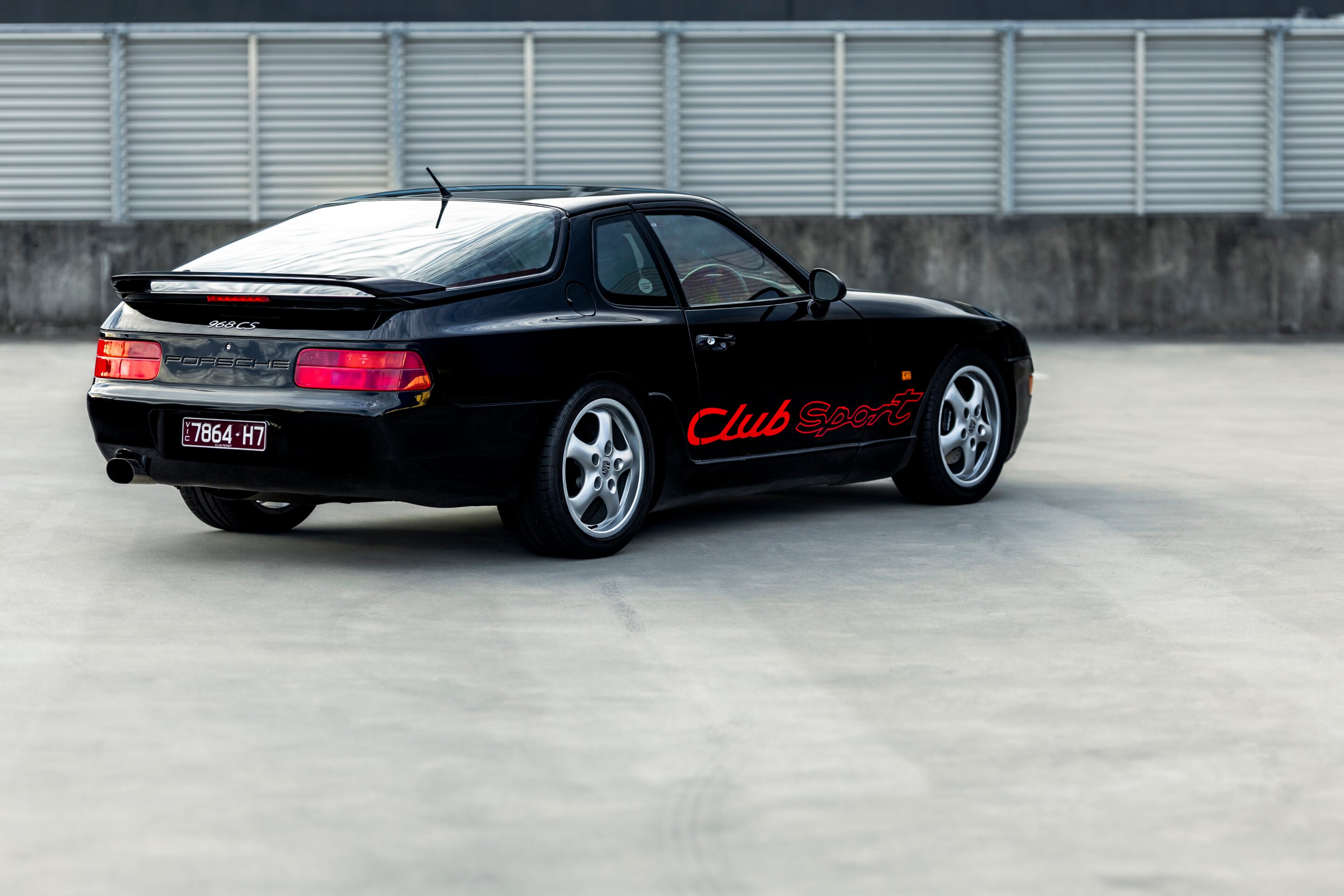
Despite being on death watch, for model year 1993 the 968 enjoyed its final flourish, the Club Sport. Porsche had used the CS badge before, on the delayed and confused 928 CS of 1988, but this time round, it coalesced into a far more cohesive package. Porsche did what should have been done long before: cut cost out of the vehicle and made it more exciting to drive.
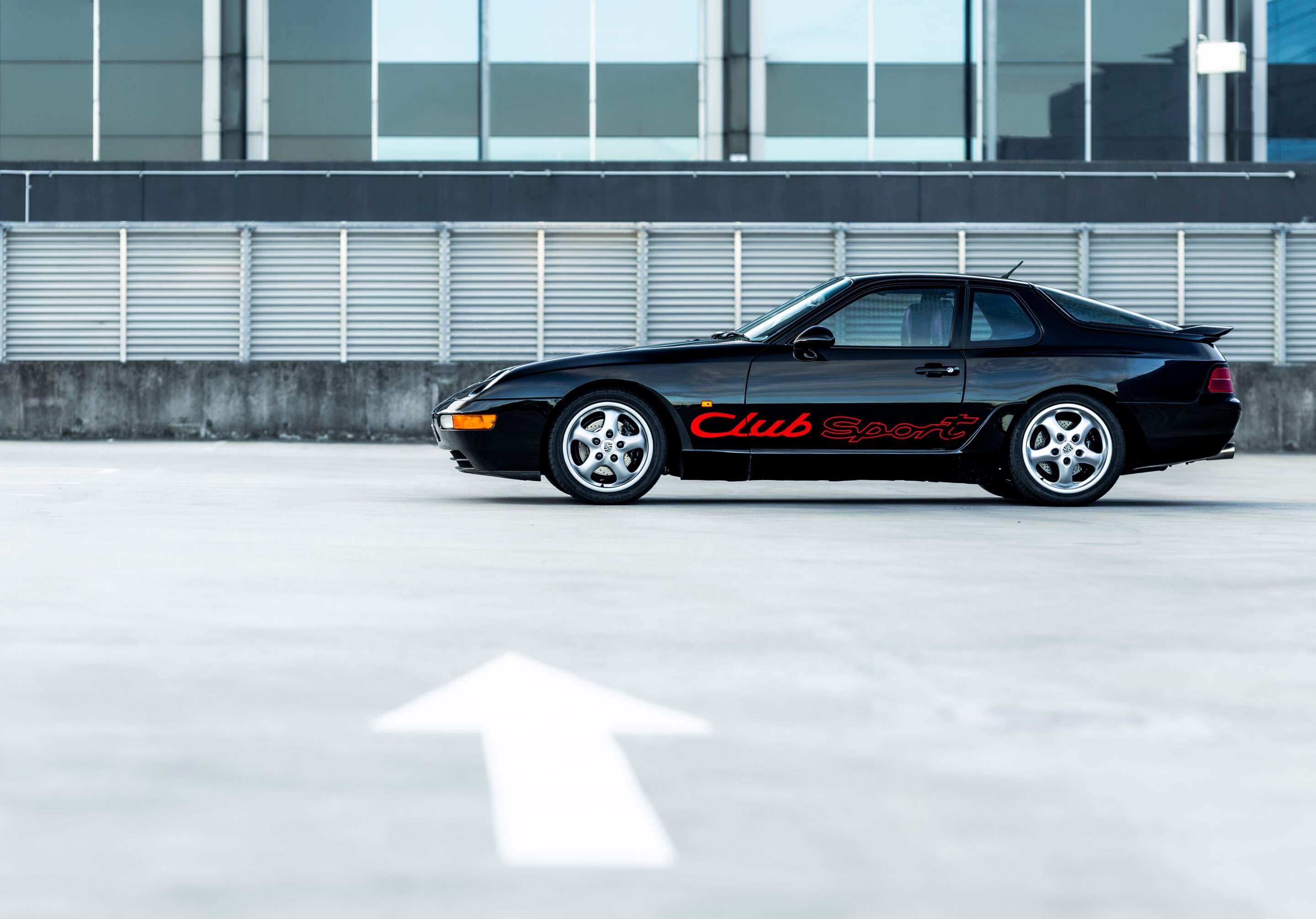
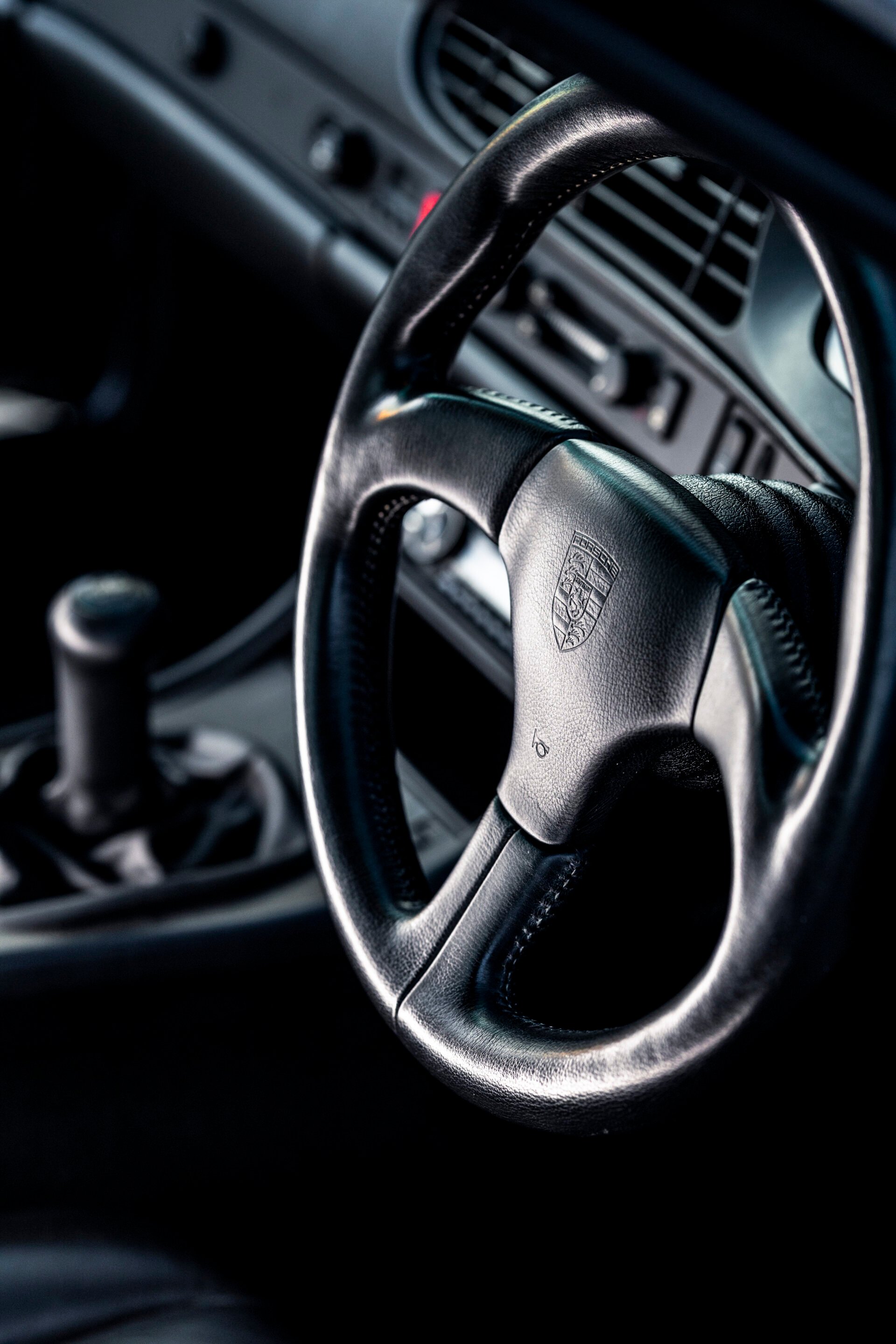
The expensive and heavy electrically-adjustable seats were the first thing to go, replaced by hard-shelled fixed-back Recaro buckets with the rears painted in one of the five standard body colours (Paint To Sample was a rare option). Rear seats? Gone. Also nixed were the rear speakers, the electric hatch release, the climate control, the electric adjustment for the door mirrors and the heated washer jets. Even the driver’s airbag was deleted, along with the electric windows, a decent percentage of the cabin soundproofing and – as long as air conditioning wasn’t optioned – the car’s battery was switched for a smaller version. Porsche claimed a weight saving of 50kg, although quite how many cars left the factory in such an attritional specification is debated.
The engine and transmission was left alone, as by this time the budget for developing this model was minuscule, but the suspension did come in for some attention. Ride height was dropped by 20mm, and options included a Torsen limited slip differential, an even stiffer spring and damper package,
fatter anti-roll bars and cross-drilled brake discs.
The acid test
Wheels first got its hands on a 968 CS in the April 1993 issue, where it was pitted in a handling test against the likes of the Nissan Skyline R32 GT-R, Mazda’s RX-7 and MX-5, the Honda NSX, the BMW M5 and the Ford Falcon GT and ZR6 models. Dick Johnson was tasked to assess the vehicles on track at Eastern Creek, and the results brooked little in the way of dissent.
“Figures and feel agree that the best handling car your money can buy is the Porsche 968 CS,” Mike McCarthy and Mark Fogarty’s feature concluded. “It’s Dick’s pick and the only car rated in the top three on the track, on the road and by the [Correvit data logging] computer.”
“I think it was a foregone conclusion… the Porsche is purpose-built for this sort of thing,” noted Johnson. “So the 968 wins on the basis of its sheer consistency, speed, precision and grip,” the feature noted. “There is a downside, however. Handling harmony is at the cost of a Spartan interior and a rock-hard ride.”
Others agreed. The Club Sport emerged victorious in UK magazine Performance Car’s comparison with the BMW E36 M3 and the Audi S2, and then aced the field at that title’s well-regarded Performance Car of the Year award, despite being crashed during the track exercises at Cadwell Park, damaging the front end and then being dropped from the tow truck, nerfing the rear. That one really lived up to the Club Sport’s advertising strapline “Weight reduced. Pulse raised.”
Autocar opined that “there is no better drive around today”, while Germany’s Auto Motor und Sport declared that, “In its dynamic qualities, the 968CS even challenges a Carrera and simply drives away from many other cars that are hierarchically above it.”
The fact that the brilliant Club Sport, due to its spared-back equipment list, was priced here at $119,900, fully $20k cheaper than the standard 968, helped its cause, although it couldn’t approach the value proposition of the $75k Mazda RX-7 or, for that matter, the $72k Nissan 300ZX.
Story arcs like this are rare. The hero car that finally came good after massive adversity seems altogether too Hollywood to ring true, but that’s exactly what the Porsche 968 Club Sport represented. It not only rehabilitated the image of the 968, but also spawned the vanishingly rare Turbo S (17 produced) and the unicorn Turbo RS (four built) versions of the 968.
It also served to raise expectation for what Porsche could do with its successor, the Boxster. A total of 1371 Club Sports rolled out of Zuffenhausen before the final car came off the line in 1995, representing around 12 per cent of all 968 production. A grand total of 19 were officially imported by Porsche Australia.
A true modern classic in every regard, the Porsche 968 Club Sport remains an undervalued gem. Used prices start at around $80,000, which is less than opening book for a used garden-variety 718 Cayman 2.0-litre four. That’s faintly unbelievable, given the storied position of the 968 Club Sport. It remains the most highly regarded of all the transaxle cars, the apotheosis of a 20-year development story.
Today’s 718 Cayman GT4 RS owes much to the lessons learned from the 968 Club Sport program. The old stager may not have saved Porsche financially, but it helped rehabilitate its reputation exactly when it needed it most. It’s hard to put a price on that.
A question of Sport
So what, then, is the 968 Sport? It doesn’t exist, at least according to the Dr. Ing. h.c. F. Porsche AG. An enterprising character at Porsche Cars GB figured out that they could order Club Sports from Germany loaded with options. So these luxury versions left the factory as genuine Club Sports, with Club Sport VINs. Eventually Porsche conceded and listed an option code P35 for all of the parts that were put back in to make the Sport model, as listed on the build sheet. It was a success too, outselling the Club Sport by 306 units to 179 in the UK, and as a result aren’t worth quite as much as an original CS. Many have retrospectively been partially decontented towards a Club Sport level of trim.
Specs
| Model Porsche | 968 Club Sport |
|---|---|
| Engine | 2990cc inline-4, DOHC, 16v |
| Power | 176kW @ 6200rpm |
| Torque | 305Nm @ 4100rpm |
| Transmission | 6-speed manual |
| Weight | 1320kg |
| 0-100km/h | 6.5s |
| Price (now) | from $80,000 |
This article originally appeared in the August 2025 issue of Wheels magazine. Subscribe here and gain access to 12 issues for $109 plus online access to every Wheels issue since 1953.
One of the feathers in the hat of Holden was that it was one of only a handful of locations in the General Motors empire that had the ability to design, engineer and manufacture a car from the very first line on a piece of paper all the way to the finished product in showrooms.
It used this capability to good effect over the years by creating some jaw-dropping concept cars, often previewing future design directions, sometimes testing out ideas on the public and occasionally just for the sake of it.
Here is our list of Holden’s top 10 concept creations, presented in chronological order.
1969 Holden Hurricane
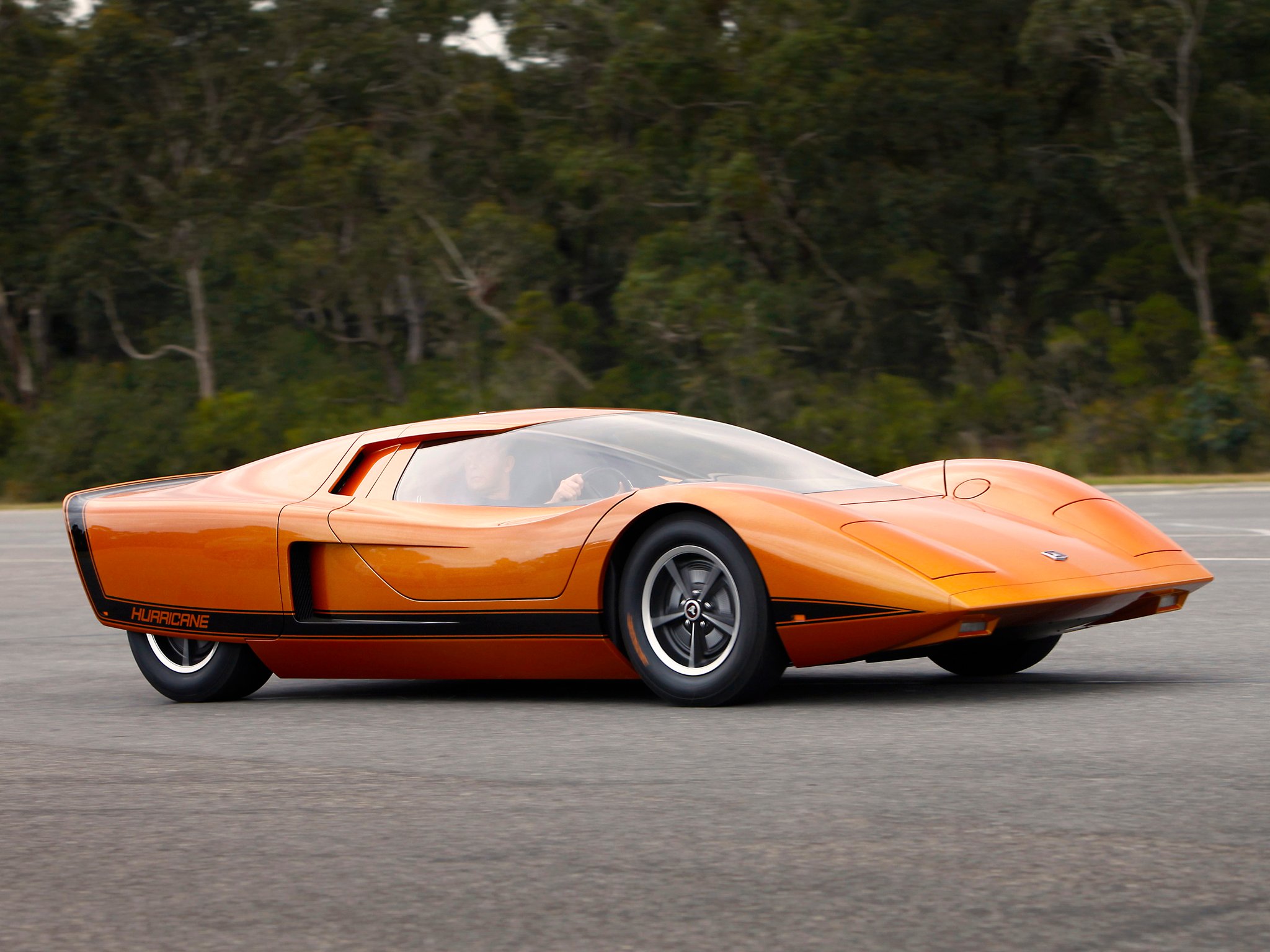
Holden’s first concept car was also its most outlandish. Its ground-hugging dimensions and supercar layout – the iconic 253ci V8 sitting midships – were wild enough, but it included air-conditioning, a rear-view camera and even an early iteration of navigation (though involving magnets rather than satellites).
Having been stuck in storage, pilfered for parts and shuffled around various museums throughout the 1970s, ’80s and ’90s, the Hurricane was reacquired by Holden in 2006 which completed a comprehensive restoration, unveiling it at the 2011 Motorclassica at Melbourne’s Royal Exhibition Building, the same venue in which it had wowed crowds 42 years earlier.
1970 Holden GTR-X
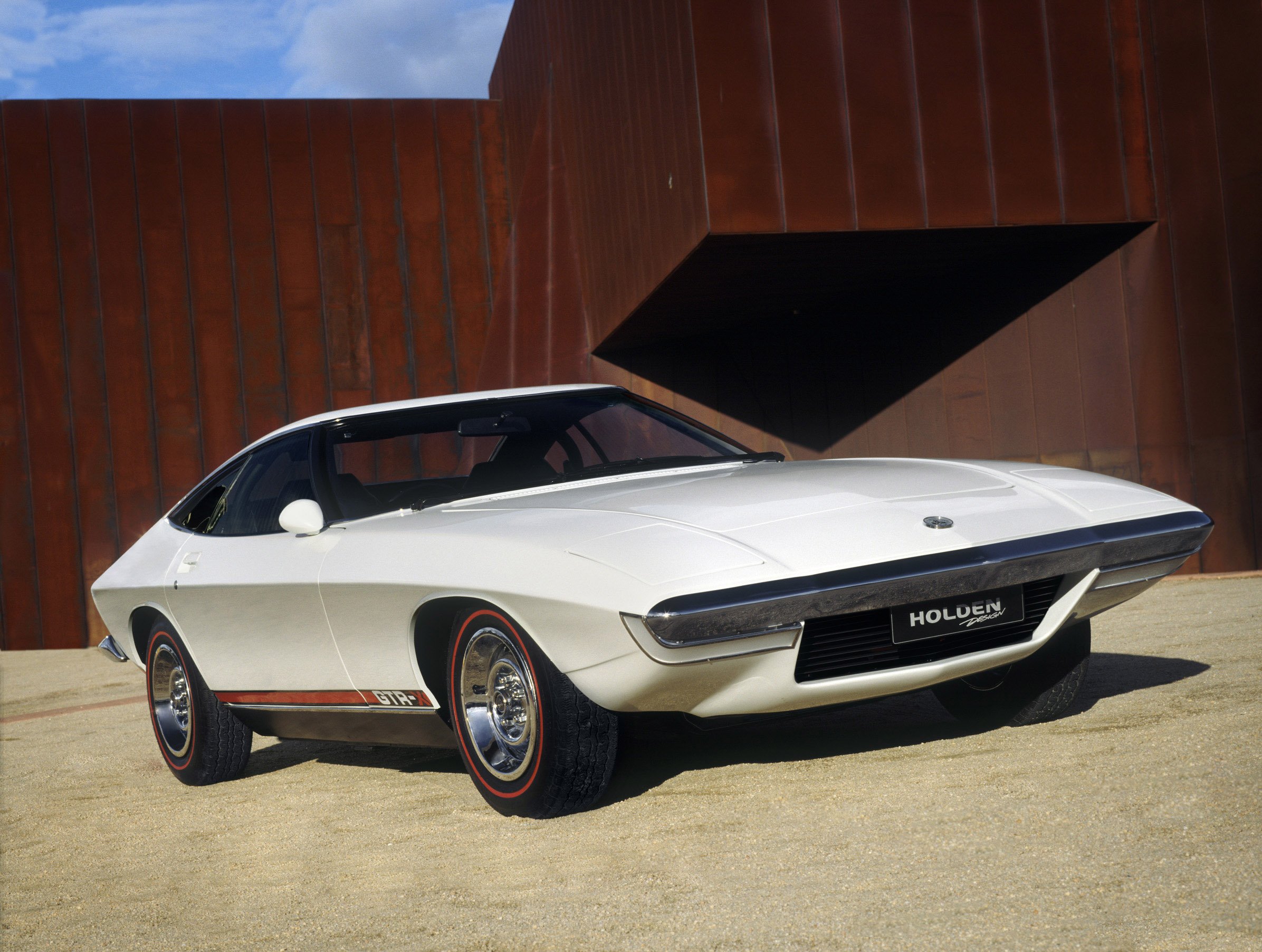
Just a year later Holden did it again with the stunning GTR-X, a Torana-based wedge that would’ve been Australia’s first true sports car. Penned by Phil Zmood, it was intended to use the running gear from the LJ GTR XU1 and while there was plenty of momentum behind the project, the planets never quite aligned.
Three prototypes were built, though one was crashed and another never completed, but the projected price tag was too high and the projected sales volumes too low to get it over the line, especially once the Datsun 240Z arrived offering basically the same package at a lower price.
1998 Holden Coupe
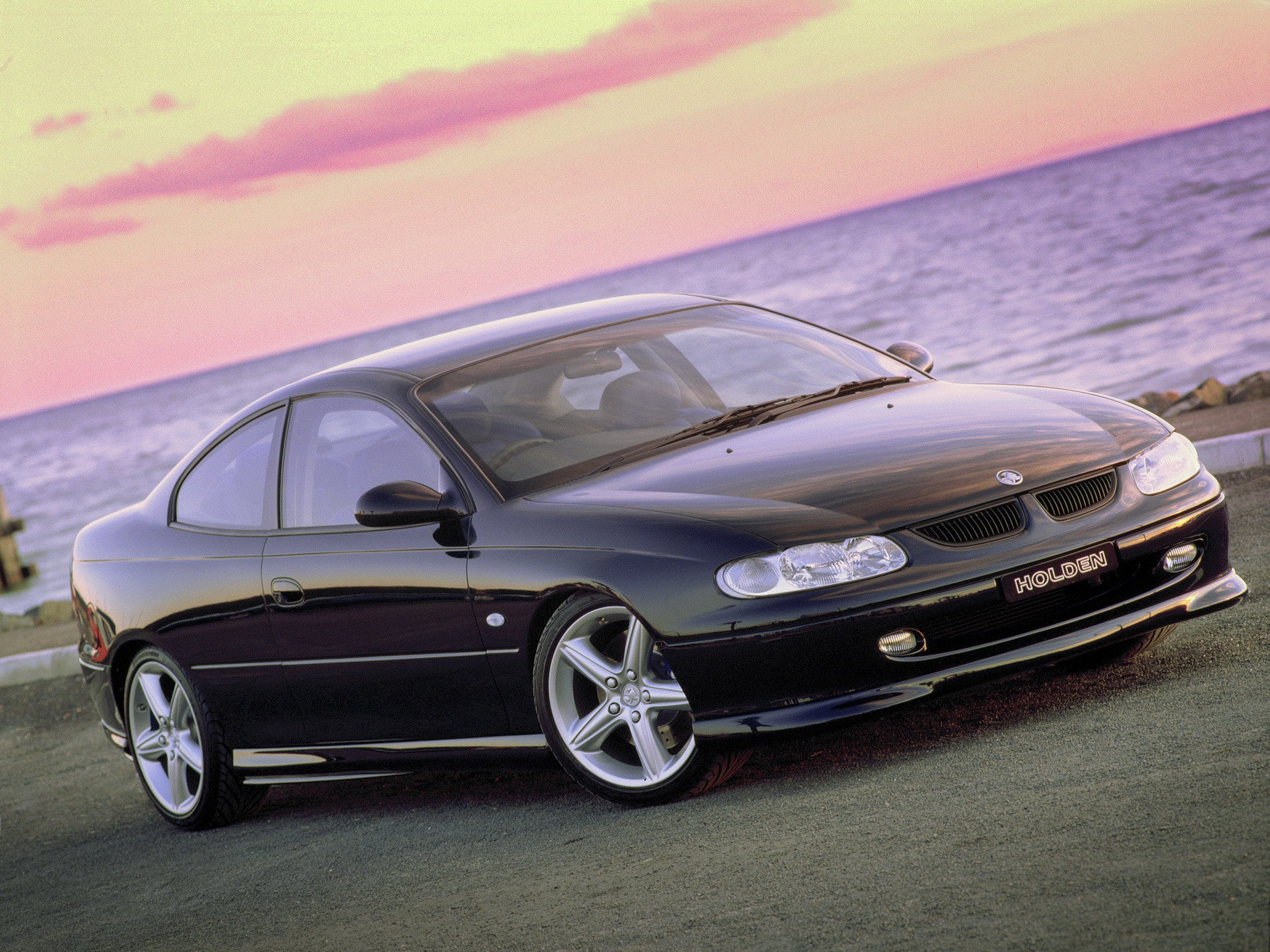
At the 1998 Sydney Motor Show Ford unveiled the AU Falcon. Holden, on the other hand, took the covers off the Coupe Concept aka The New Monaro. While the years have been kind to the AU, at the time it was the sublime and the ridiculous.
Created in secret, the VT-based concept had an elegance that the later – still very handsome – production Monaro lacked. The public went nuts for it and made the decision to revive one of Holden’s most famous nameplates a no-brainer.
2001 Holden Jack8
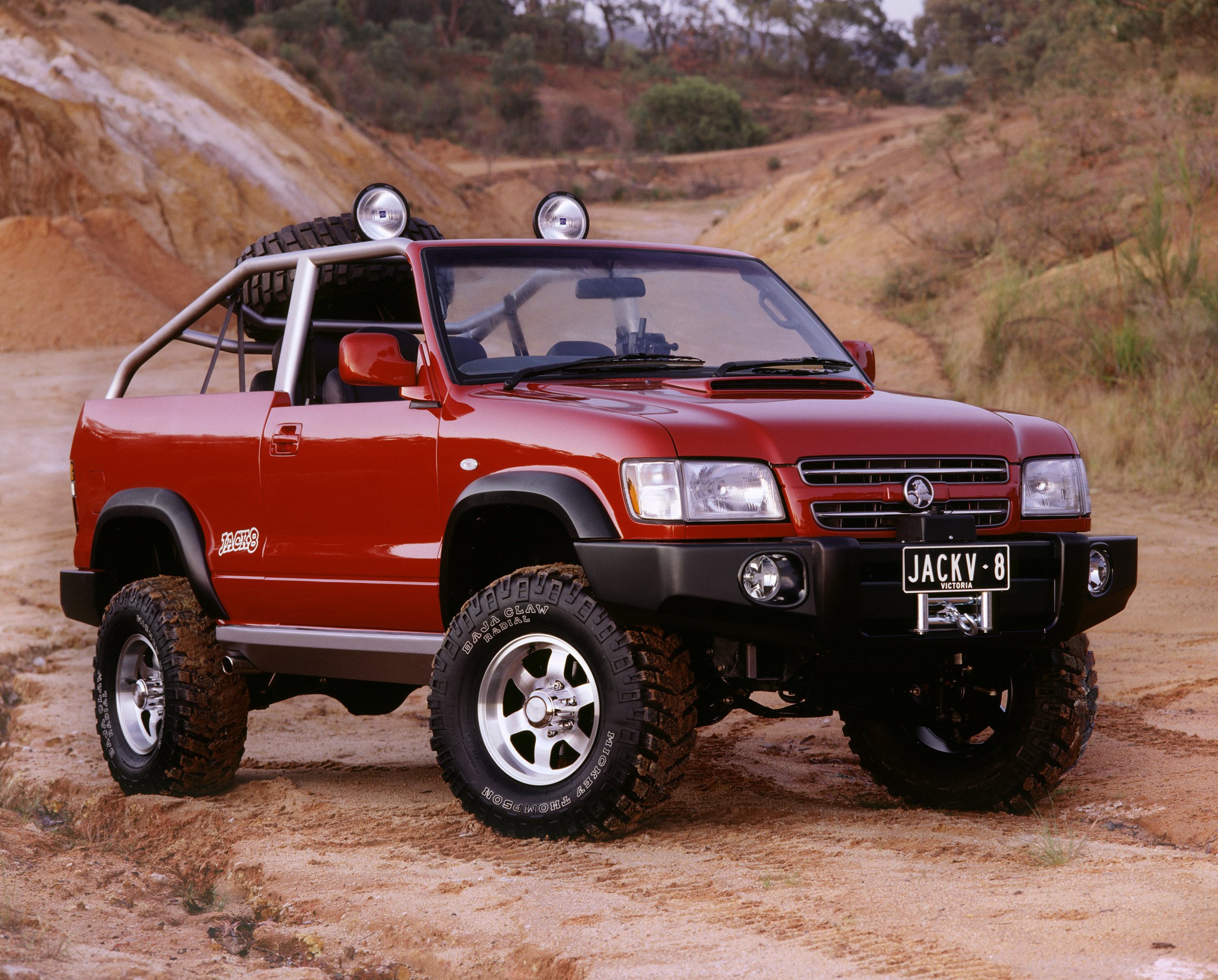
Looking like something Jeep would take to its annual Jamboree, the Jack8 concept was revealed in 2001 to revive interest in Holden’s aging Jackaroo off-road SUV. A hatchet was taken to a standard four-door wagon, elongating the front doors 200mm and smoothing off the rears and the tailgate.
A 50mm lift and Mickey Thompson Baja Claw tyres took care of the stance, inside there were Monaro bucket seats and a fully sick stereo system with subwoofer, while under the bonnet the standard diesel made way for a 225kW Gen III V8.
2001 HSV HRT Maloo
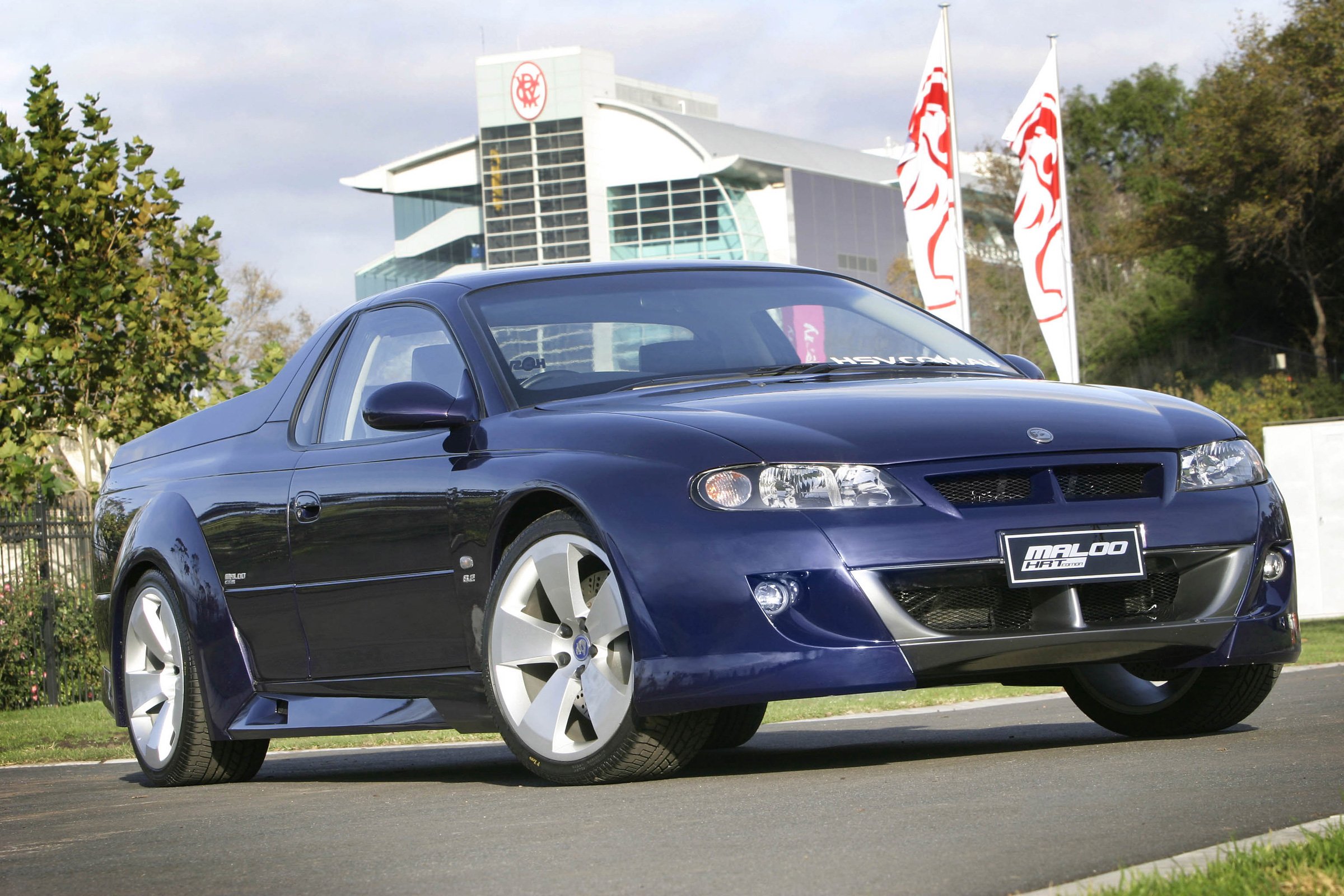
Concept cars are rarely shrinking violets, but even by the standards of the breed the HSV HRT Maloo Edition was wild, sitting on the stage at the 2001 Sydney Motor Show like it was the final round of the Mr Olympia judging.
If anything, the go outweighed the show, with an enlarged (and fully functional) 6.2-litre V8 producing 350kW/600Nm attached to a six-speed manual. Wider tracks, tyres and monster brakes rounded out the package. A wilder ute wouldn’t reach production until the HSV Gen-F GTS Maloo.
2002 Holden SSX
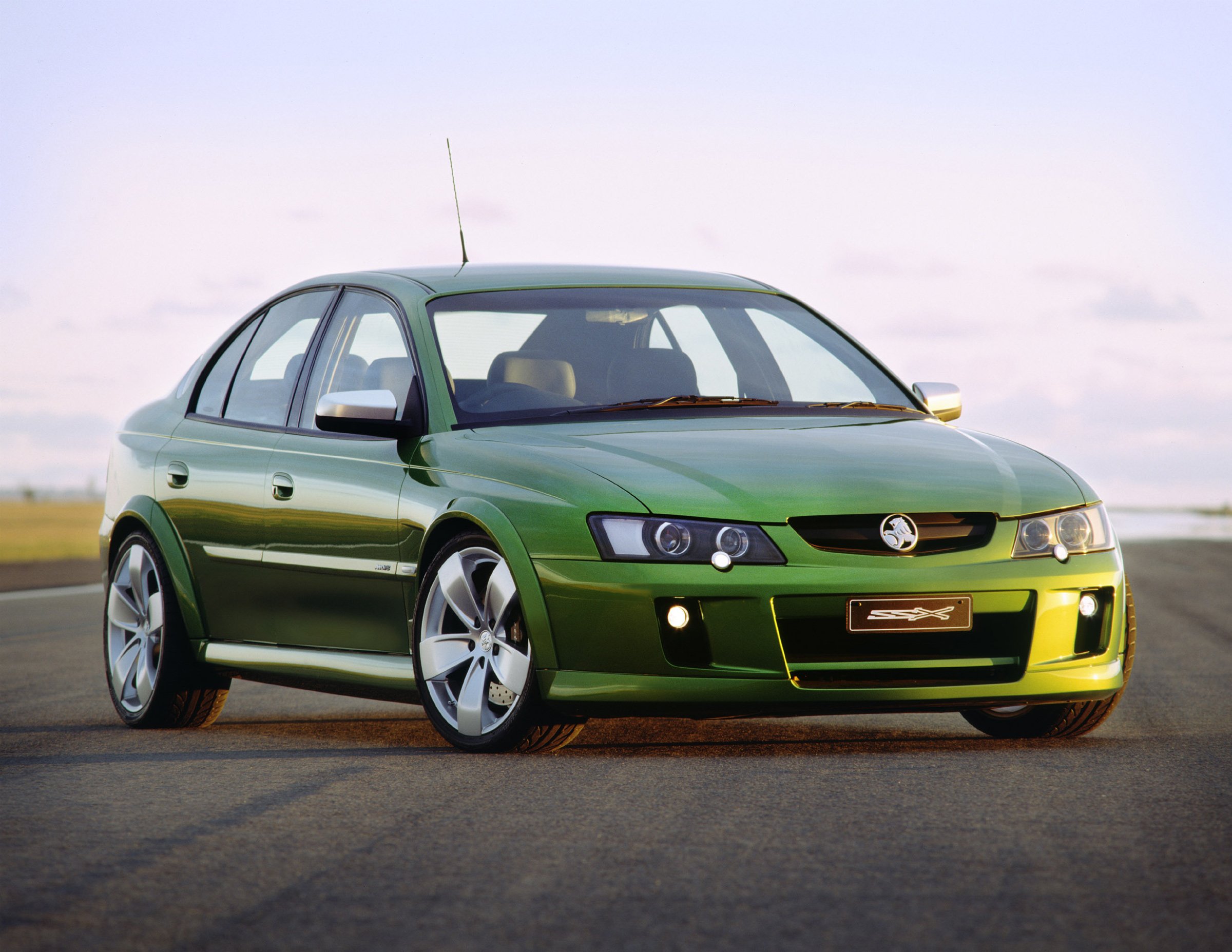
At a cursory glance the SSX looks like a mildly tweaked VY SS, but there are plenty of devils in the details. The only panel it shared with a regular Commodore was the bonnet, the pumped guards required to cover the wider tracks necessitated by its hidden party trick – all-wheel drive.
Using the drivetrain that would debut a year later in the Adventra, the SSX also floated the idea of a split hatch tailgate, as much to draw the punters’ gaze to the concept as anything. While the SSX never made production, the idea of a high-performance all-wheel drive did emerge from Clayton in the form of the HSV Coupe4.
2002 HSV HRT 427
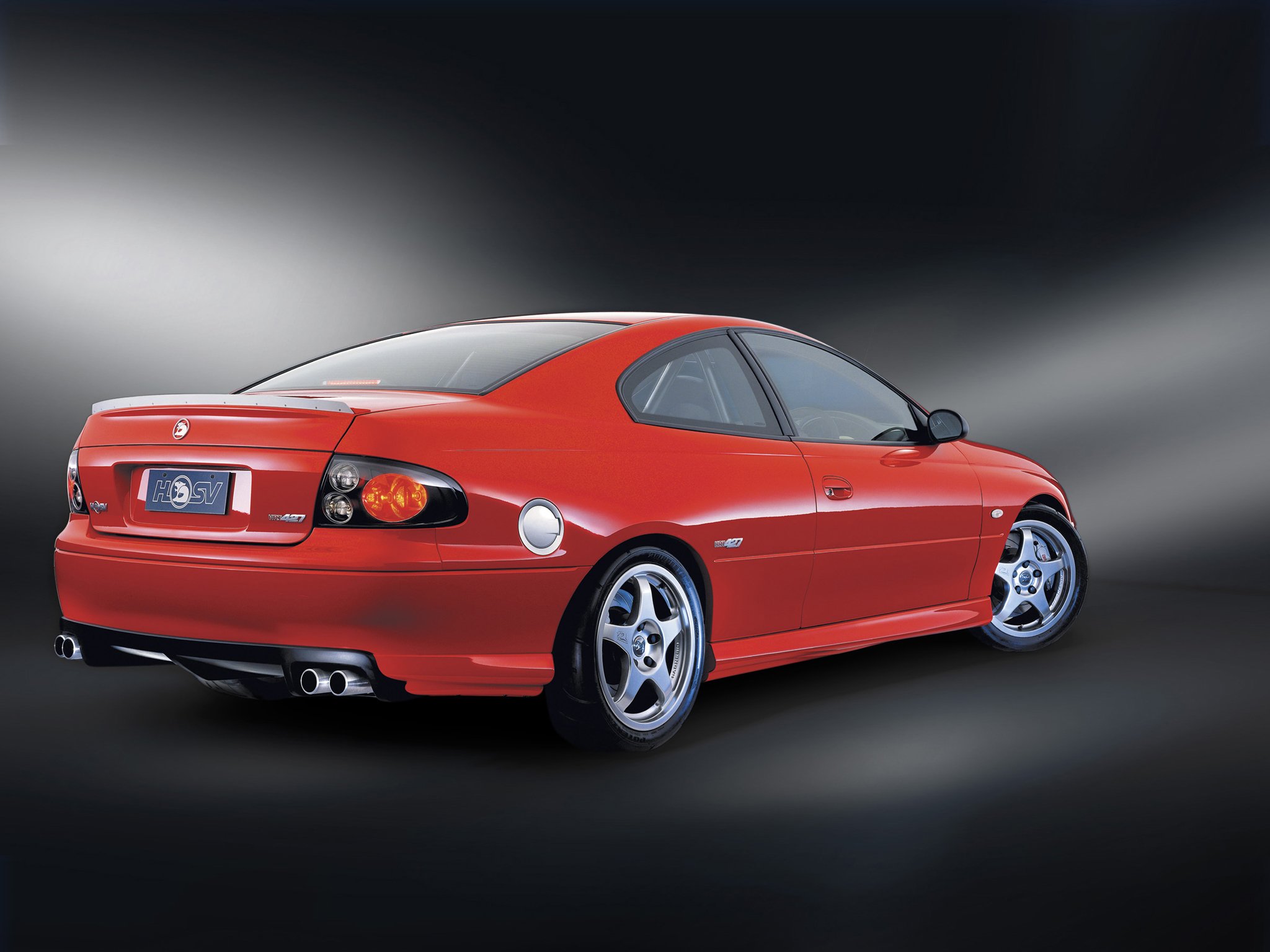
Is this Holden’s greatest ‘what if’? A car that, if produced, had a chance of butting heads with the 911 GT2 as the wildest road-racer of the early 21st century. Powered by the 7.0-litre V8 from the Corvette C5R with brakes and suspension to match, HSV announced it planned to build 50 at $215,000 apiece.
While an extraordinary amount of money at that time, it wasn’t enough to make the project financially feasible. With hindsight, HSV coulda-woulda-shoulda upped the price and the production run but perhaps the difficulty it had shifting its eventual 7.0-litre production car, the W427, suggests it made the right call after all.
2004 Holden Torana TT36
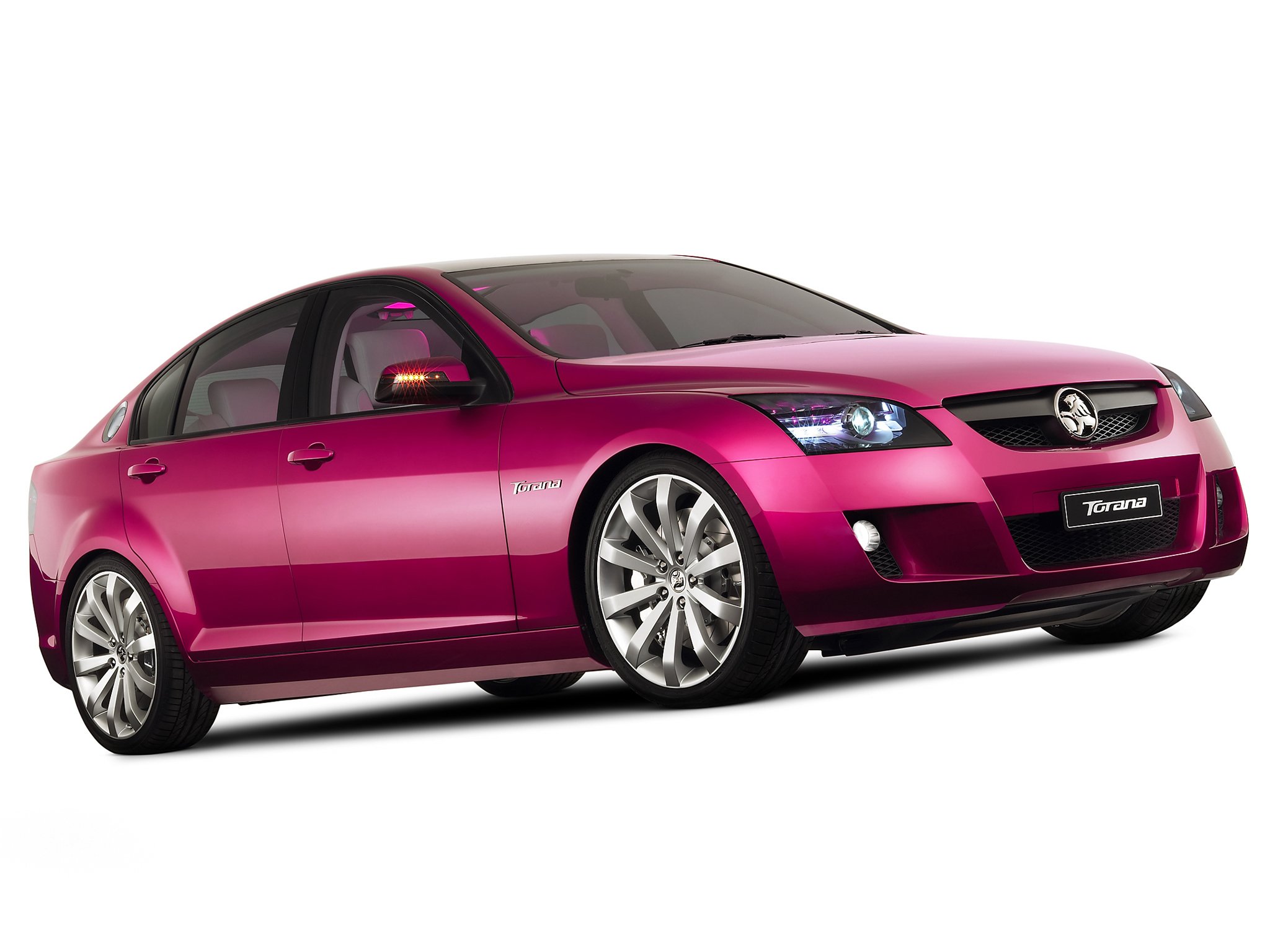
The TT36 gave the world its first look at the exterior and interior design language that would appear on the VE Commodore, but its wider purpose was to allow General Motors to consider a small, premium rear-drive sedan for global sales – a Holden 3-Series, if you like.
Unfortunately, bar some of the styling, none of it made production, not even the 280kW/480Nm 3.6-litre twin-turbo V6 that would’ve given Holden and HSV a direct competitor to the Falcon XR6 Turbo and FPV Typhoon.
2005 Holden Efijy
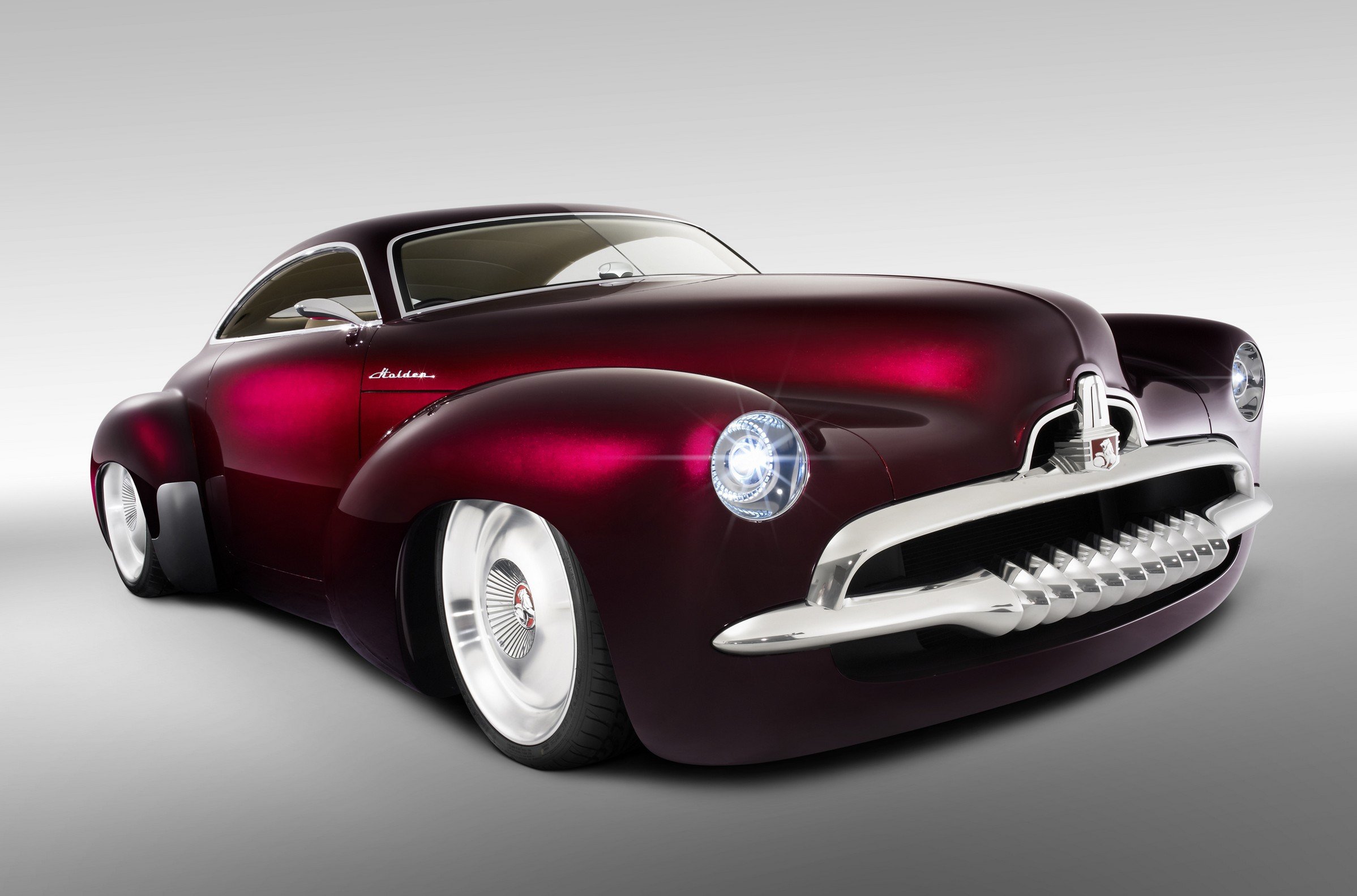
It’s rare that manufacturers allow themselves true flights of fancy. It’s a business, after all, and every dollar must be accounted for, but it’s fair to say the publicity the mind-blowing Efijy generated paid for itself many, many times over.
The brainchild of Holden designer Richard Ferlazzo, it was a car that would’ve comfortably sat in the Summernats Elite judging hall, with its wild proportions – inspired by the iconic CadZZilla owned by ZZ Top guitarist Billy Gibbons – beautifully trimmed interior and 480kW/775Nm supercharged Corvette engine.
2008 Holden Coupe 60
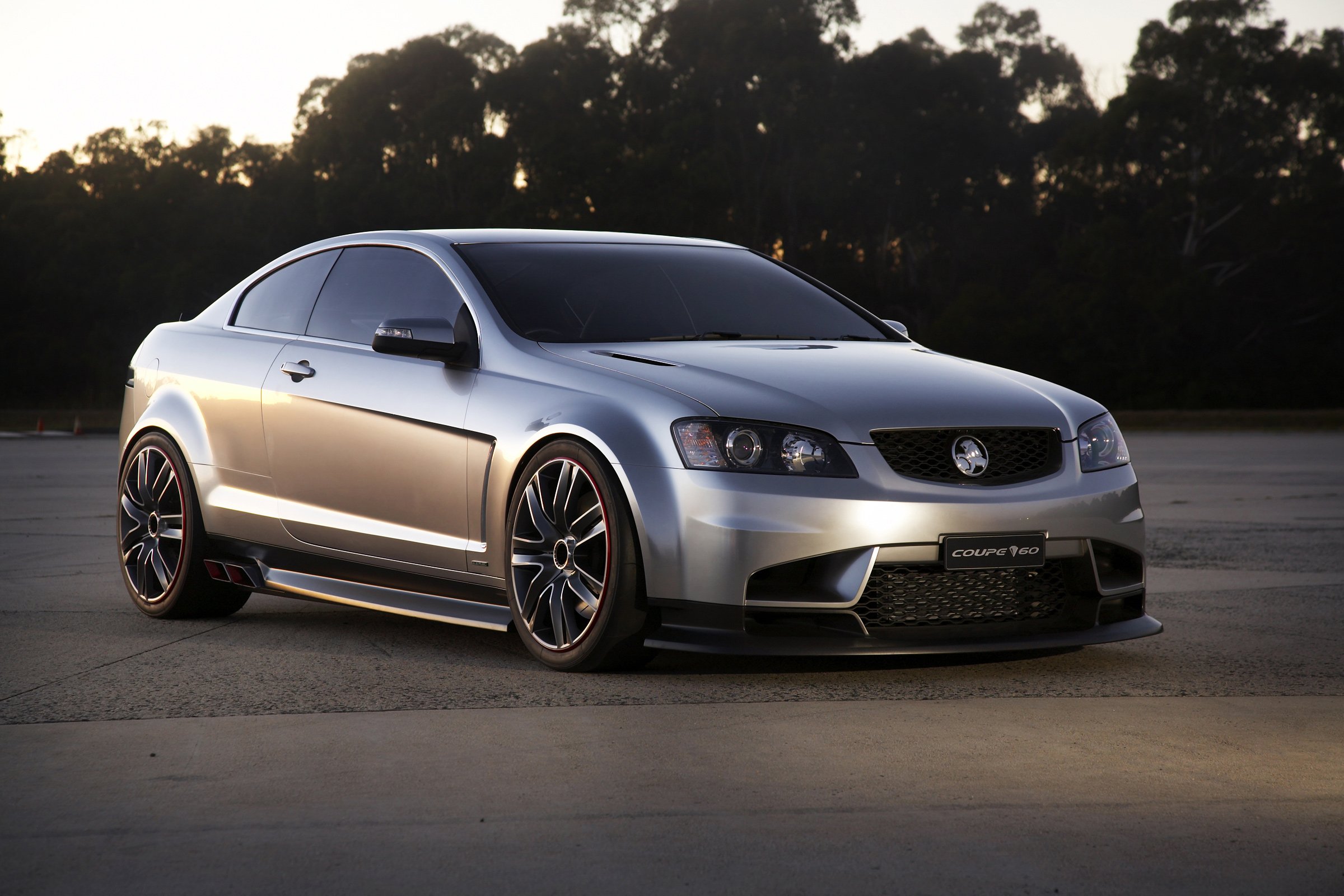
Riding high after the launch of the VE Commodore, Holden managed to keep the muscular Coupe 60 a secret right up to the very eve of the 2008 Melbourne Motor Show. Aiding in this was the fact that the car was actually built in Japan, but the two-door VE – or let’s face it, the third-generation Monaro – did its job.
An SS V prototype was chopped in height and length and fitted with the 307kW/550Nm 6.0-litre V8 that did duty in the E-Series HSVs at the time, but despite the positive response the automotive world was a different place compared to 10 years earlier and the sums on a production version never stacked up, especially with the fifth-generation Camaro imminent.
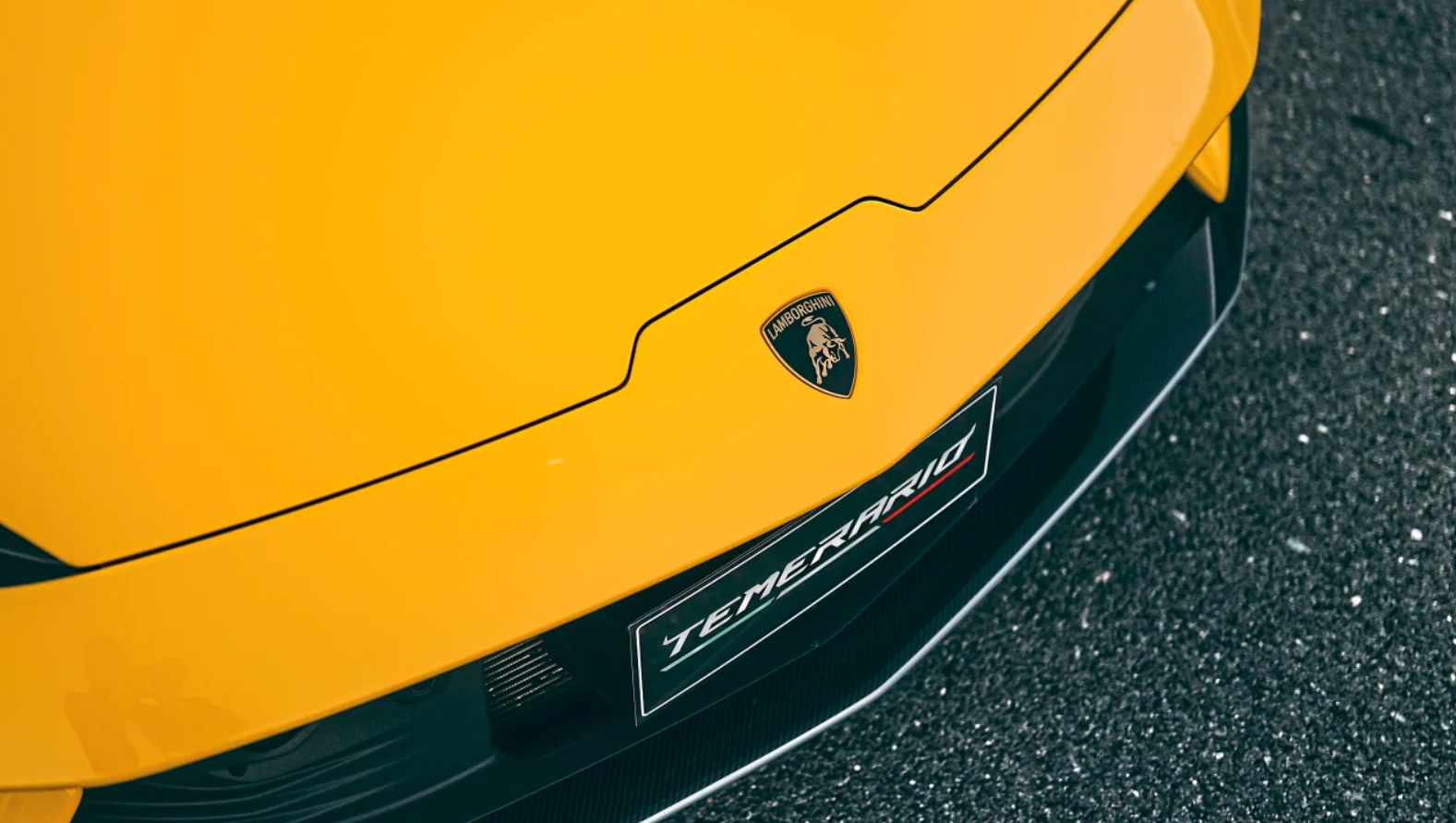
When Lamborghini confirmed that the new Temerario would replace the much-loved Huracán and ditch the V10 for a hybridised V8, the reaction from purists was swift and sceptical. But the Italian marque promised a bold evolution rather than a compromise – and after our first experience behind the wheel, it’s clear that promise has been kept.
Gone is the naturally aspirated, high-revving V10. In its place is a bespoke twin-turbo 4.0-litre V8, developed specifically for the Temerario – not borrowed from the Urus or any other VW Group sibling.
Paired with three electric motors and a flat-plane crankshaft, it revs to a staggering 10,000rpm, delivering a total output of 907bhp (676kW). That’s enough to place it above the Ferrari 296 GTB and McLaren 750S in outright power, and just shy of the V12-powered Revuelto.
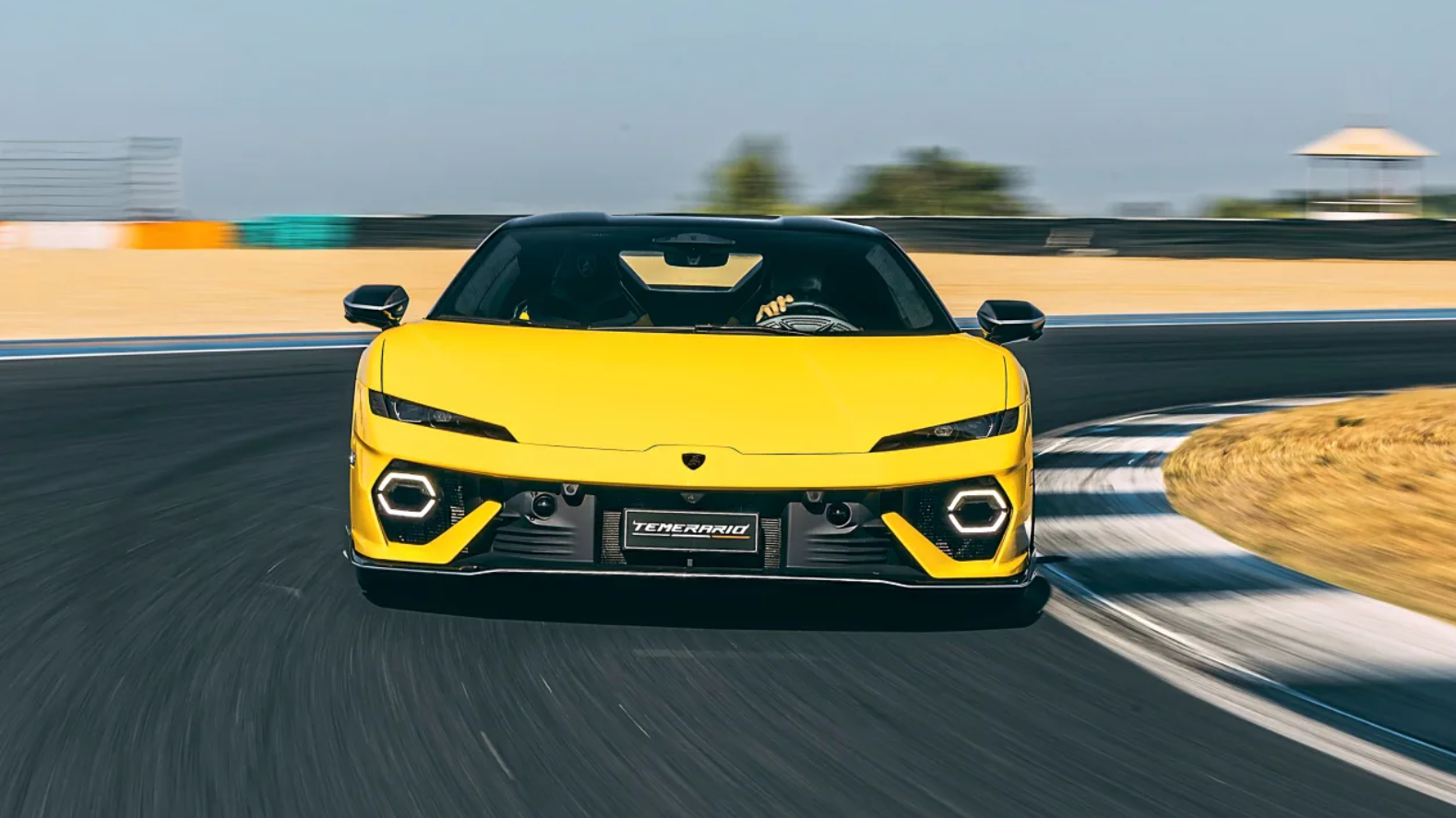
From the moment you fire up the engine – via a jet-fighter-style switch – you’re greeted by a deeper, angrier tone than the V10’s wail. It’s not as sonorous, but it’s undeniably dramatic, thanks in part to a titanium exhaust system.
Our first encounter took place on the Estoril Circuit in Portugal, where we jumped straight into Corsa mode using a selector inspired by the Revuelto. Despite its size – the Temerario is 4.71 metres long – it feels nimble and well balanced, thanks to dual front electric motors with torque vectoring, progressive steering, and revised suspension. A dry weight of 1690kg (around 1800kg with fluids) isn’t feather-light, but the car hides it well.
Throttle response is astonishing. The electric motors effectively eliminate turbo lag, providing near-instant torque delivery. The V8 builds to a frenzy in the final 2000rpm, encouraging you to push harder and hold each gear to the limit. On Estoril’s front straight, we glimpsed 184mph (296km/h) before relying on massive carbon-ceramic brakes shared with the Revuelto.
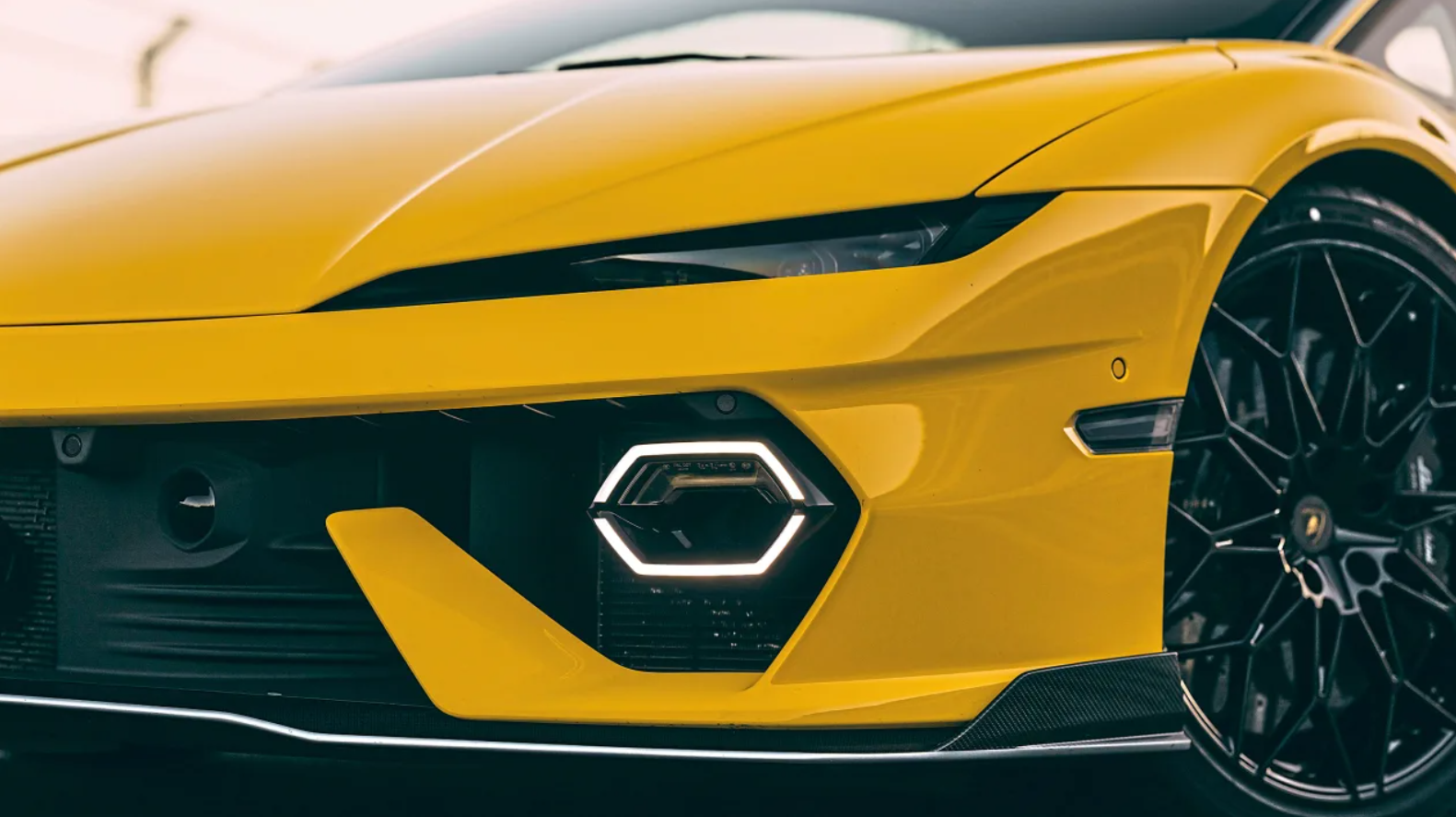
With 13 drive and drift modes, Lamborghini’s engineers have worked wonders with powertrain integration. Unlike older models, traction and stability interventions are seamless and barely noticeable. The result is a car that feels alive, responsive, and – surprisingly – more playful than its larger V12 sibling.
Set to arrive in early 2026, the Temerario marks a daring new chapter for Lamborghini. If this is the starting point, we can only imagine how extraordinary the story will get.
Specs
| Model | Lamborghini Temerario |
|---|---|
| Price | A$534,169 |
| Powertrain | 4.0-litre, V8 turbo petrol, 3.8kWh battery, 3x e-motors |
| Power/torque | 907bhp/730Nm (V8 engine only) |
| Transmission | 8-speed dual-clutch auto, all-wheel drive |
| 0-100km/h | 2.7 seconds |
| Top speed | 212mph (341.9km/h) |
| Economy/CO2 | 25.2mpg/272g/km |
| Size (L/W/H) | 4,706/1,996/1,201mm |
| On sale | Now |