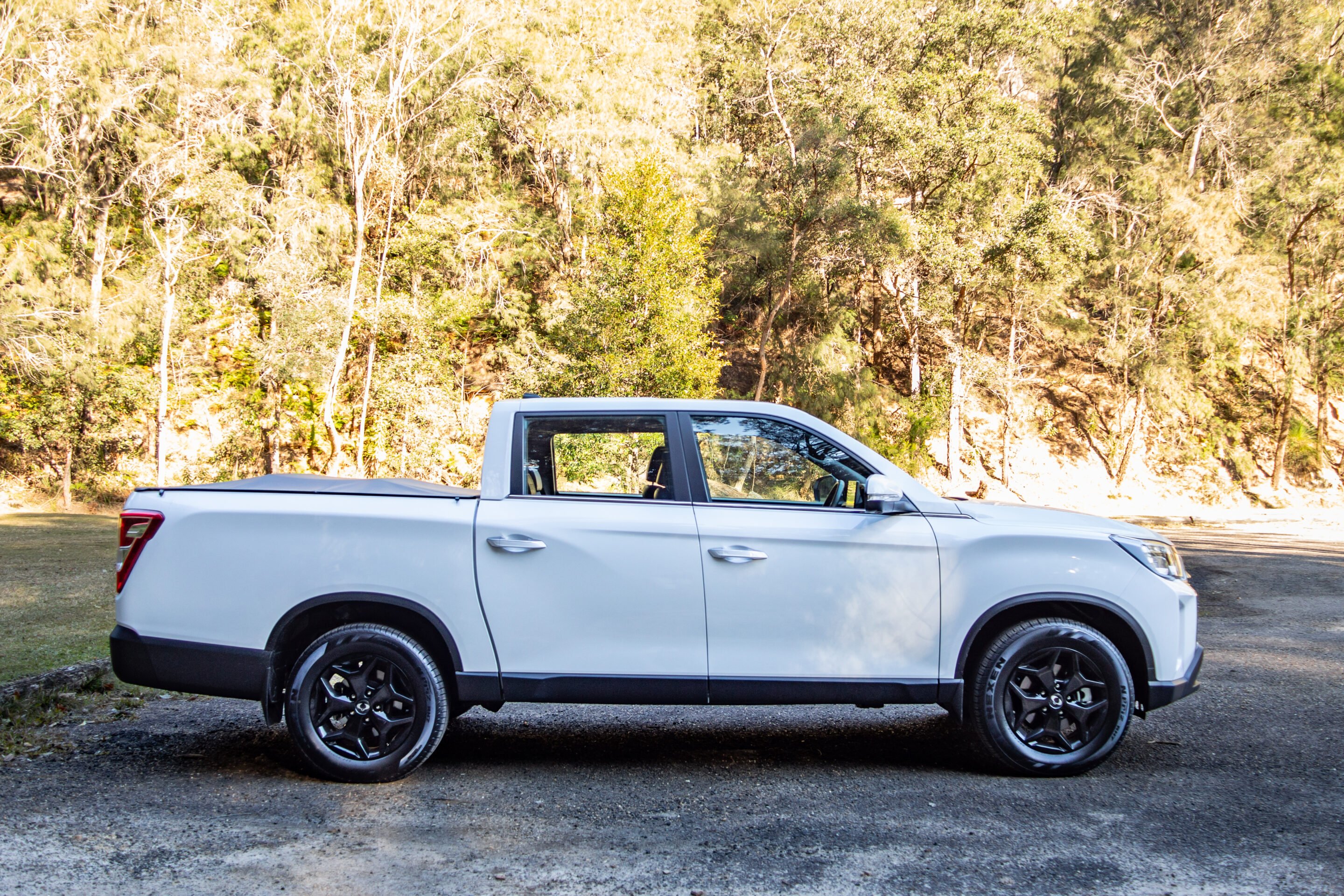
Australians’ love affair with utes means there are now over 20 to choose from in this market. While many stick with the big sellers such as the Ford Ranger and Toyota HiLux, there are now more options in the sub-$60,000 segment if you’re on a tighter budget. The KGM Musso, which starts at under $40,000 drive away, is one of those to consider…
Formerly under the now-retired SsangYong name, the KGM Musso recently the best under $50K category of the Wheels Best Dual-Cab Ute awards for 2025. Is there more to the Musso than just its excellent value for money?
Price and equipment:
KGM Australia is offering the Musso in three specifications: entry-level ELX, mid-spec Adventure and top-spec Ultimate, with each also available as an XLV that adds extra length for $1500 more. We tested the top-spec Ultimate XLV for this review, which is priced at $43,500 drive away, or $41,500 for ABN holders.
2025 KGM Musso pricing (drive away):
| ELX | $38,000 |
|---|---|
| Adventure | $41,500 |
| Ultimate | $42,000 |
KGM Musso Ultimate standard equipment:
- 18-inch alloy wheels with a full-size spare
- Dusk-sensing HID headlights with front and rear daytime running lights (DRL)
- Rain-sensing automatic wipers
- Assisted tailgate
- Heated and auto-folding mirrors
- Heated leather steering wheel
- Keyless entry with push button start
- Synthetic leather upholstery
- Heated and ventilated front seats
- Manual air-conditioning
- 12.3-inch digital driver’s display
- 12.3-inch touchscreen
- Wired Apple CarPlay and Android Auto
- Six-speaker sound system
- 2x USB-C ports
- Cruise control
- Eco, sport and winter driving modes
Musso Ultimate safety features:
- 6x airbags
- Autonomous emergency braking (AEB) with forward collision warning
- Lane departure warning
- Blind-spot monitoring with rear cross-traffic alert
- Safe exit warning
- Driver attention monitoring
- Lane change collision warning
- Auto high beam
- Front and rear parking sensors
- 360-degree camera
- Tyre pressure monitoring
The KGM Musso is yet to be crash tested by ANCAP or Euro NCAP and is therefore unrated for safety.
Musso Ultimate options:
- XLV package with extra length and 20Nm more torque: $1500
- Luxury Package with dual-zone automatic climate control, sunroof, leather upholstery, an electric driver’s seat with lumbar adjustment and heated rear outboard seats: $3000
- Metallic paint: $700
Interior, practicality and tray
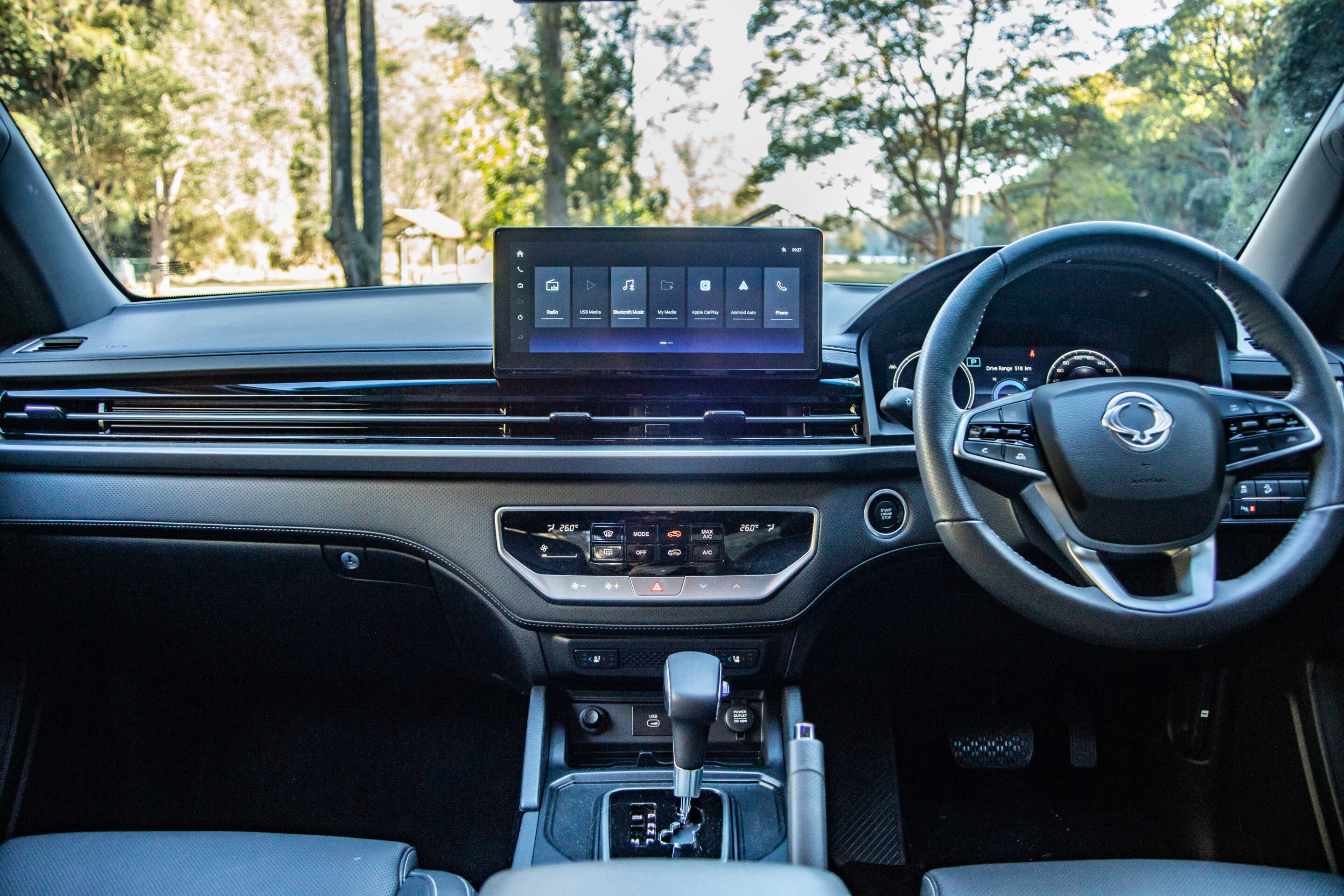
The interior of the Musso is attractive and well finished with quality that’s above a lot of its competition. While there aren’t soft touch materials everywhere, it still has a soft touch dashboard lower trim, and it’s screwed together quite well. It feels more like an SUV than a ute, though it could feature more storage.
Centre of the cabin is a new 12.3-inch touchscreen with features such as wired Apple CarPlay and Android Auto, Bluetooth connectivity and AM/FM radio. It’s a very easy system to use and screen is also high resolution for the segment but it would be good to see features such as DAB+ digital radio, satellite navigation and wireless smartphone mirroring added.
The digital driver’s display also measures 12.3-inches and looks good, though is also limited for functionality with just a few menu layouts to choose from and no map integration.
The Musso is not a small vehicle but it is easy to see out of thanks to big windows and large mirrors, and its front seats are quite comfortable. The synthetic leather trim on our Ultimate test car is comfortable and hard-wearing, while it even features heated and ventilated front seats – plus, choosing the optional Luxury Package adds electric adjustment for the driver and real leather trim.
The rear of the Musso XLV is spacious and two tall adults will be quite comfortable thanks to ample seat bolstering, a central armrest with cup holders, map and door pockets and air vents. The optional Luxury Package even adds heated outboard seats, though still no rear USB ports for device charging. Three top-tether points and two ISOFIX points also feature for child seats. Unfortunately, all Musso models still use a lap sash rear centre belt.
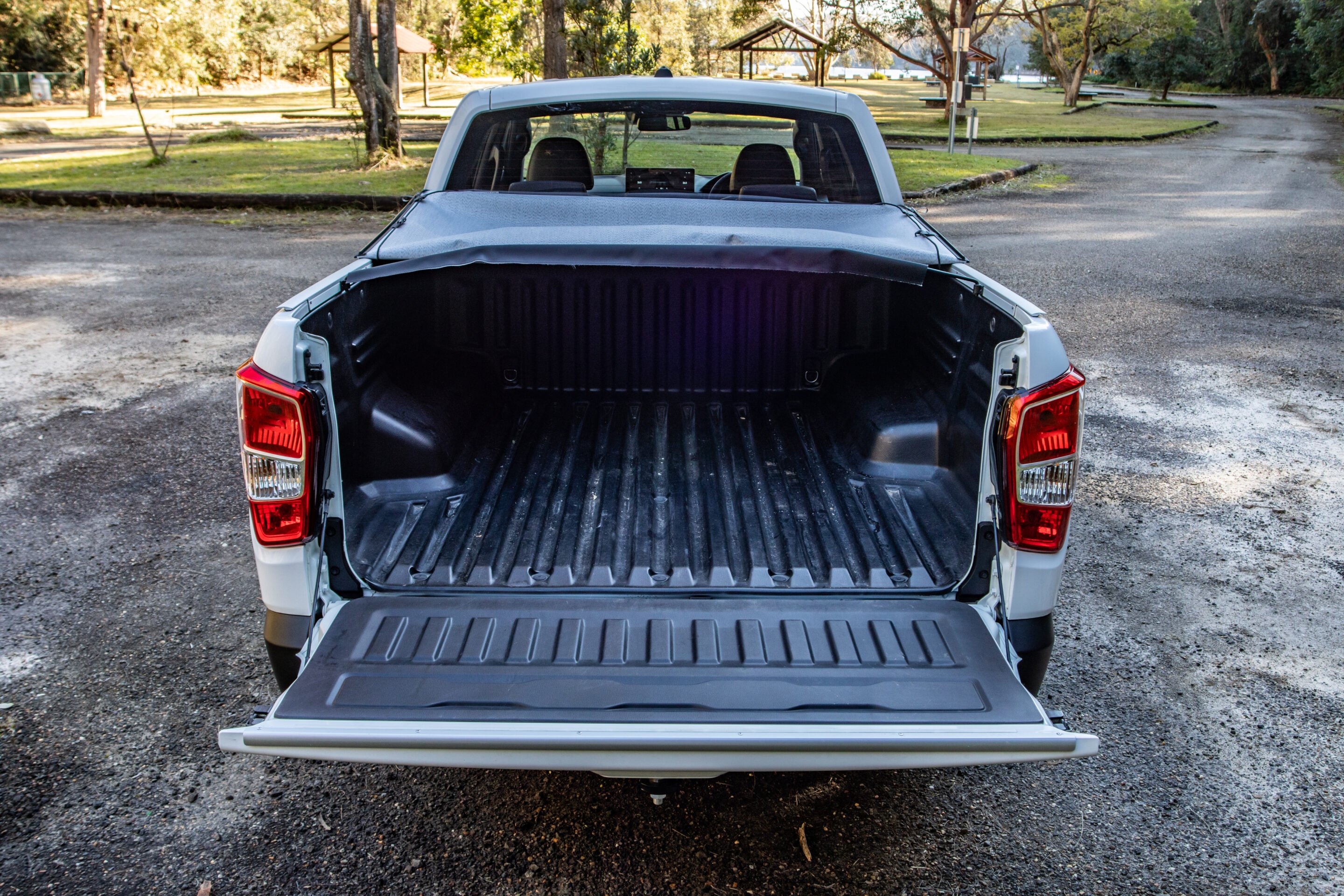
The Musso’s tray is generous and also has four tie down points. But if you need more space, the XLV adds a 300mm longer tub for an extra 251 litres of capacity (1600mm long and 1262L in total), as well as a 110mm-longer wheelbase for extra interior space. The whole Musso range also features an assisted tailgate to make it easier to operate, and it feels quite light as a result, and a full-size spare wheel lives underneath.
Performance and fuel efficiency
The KGM Musso range uses a 2.2-litre four-cylinder turbo-diesel engine that’s mated to a six-speed automatic transmission and a part-time four-wheel drive system with high and low range. It makes 133kW of power and 400Nm of torque, with the XLV adding 20Nm more torque to account for its extra weight.
KGM claims combined fuel consumption of 8.6L/100km (9.0L/100km for XLV) and CO2 emissions of 226g/km (XLV: 236g/km). All Mussos feature a 75-litre fuel tank and in our testing, we beat KGM’s claim with an impressive 8.5L/100km result.
On the road
Based on the same body-on-frame platform as the seven-seat Rexton SUV, the Musso drives well for the ute segment. While it’s not as dynamic as the Ford Ranger, it’s still comfortable and pleasant to drive, in part due to a coil spring rear suspension set-up, which is still quite rare in the ute segment. The ride quality can be a touch sharp at times, but it’s still comfortable.
While the engine’s outputs could be beefed up to match the Rexton (148kW/441Nm versus 133kW/420Nm in the Musso XLV), the Musso’s secret weapon is just how quiet it is. The sound deadening used is fantastic and only under full acceleration is the engine really heard – it is far quieter than rivals like the Triton, BT-50 and D-Max.
The six-speed automatic is not the fastest-shifting transmission on the market, but it does its job well with no fuss, providing clean and intuitive shifting, though we’d like to see the eight-speed unit from the Rexton added to the Musso for closer gear ratios.
While we didn’t test the Musso for its off-road capability, we’ve seen quite positive reports of its driving experience off road. While it doesn’t feature off-road driving modes like some other utes, hill descent control and high- and low-range gearing is standard, as is an auto-locking rear differential.
The safety systems used in the Musso Ultimate are effective, especially the lane departure warning, auto high beam and high-resolution 360-degree camera. However, we’d like to see features such as lane keeping assistance and adaptive cruise control added to the Musso’s feature list like in South Korea, as well as a proper middle rear seatbelt.
Service and warranty
The KGM Musso is covered by a seven-year/unlimited km warranty with five years of roadside assistance. Its service intervals are once-yearly/every 15,000km and a five-year/75,000km service cost is $2298 ($459 per service), though there are also “mandatory service items” that will add further cost (KGM doesn’t quote those on its website).
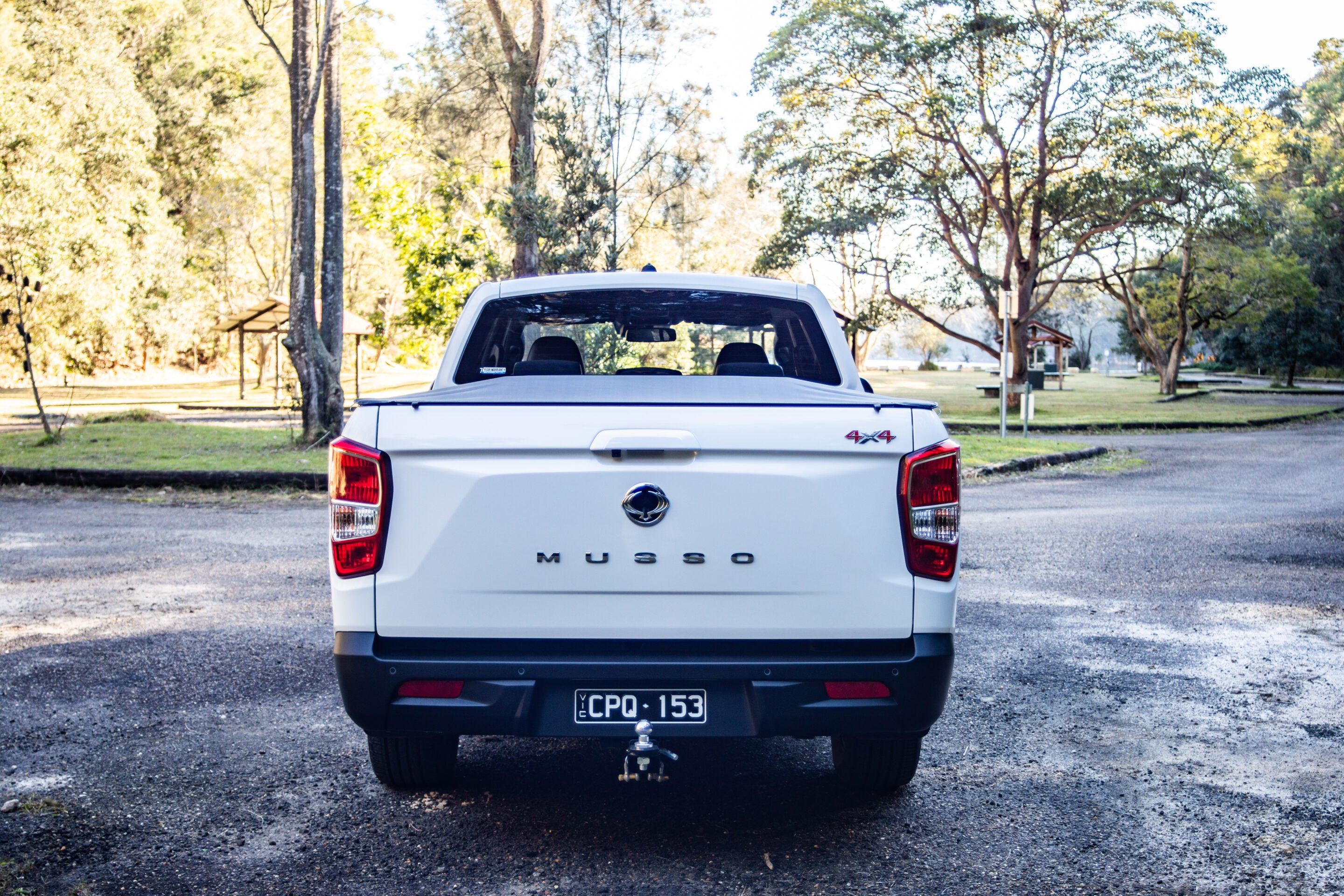
Verdict: Should I buy a KGM Musso Ultimate XLV?
While it could be more powerful and offer more safety features such as adaptive cruise control and a proper rear middle seatbelt, the KGM Musso is definitely a product that you shouldn’t overlook. Its chief drawcard is its amazing value proposition – that you can get a top-spec dual cab 4×4 diesel automatic ute for comfortable under $50,000 drive away is amazing in 2025. Even with the XLV and Luxury Packages, the Musso is priced comfortably under equivalent models such as the Mitsubishi Triton GSR and Mazda BT-50 GT.
But unlike some rivals, the Musso is actually relatively refined and mostly pleasant to drive. Its cabin is good quality, its warranty is long, it’s quite practical and offers solid payload and towing capability. On the checklist for a well-rounded dual-cab ute, the KGM Musso ticks an awful lot of boxes and is well worth consideration if you’re in the hunt for one.
Musso Ultimate XLV rivals
Specs
| Model | KGM Musso Ultimate XLV |
|---|---|
| Engine | 2157cc 4-cylinder turbo-diesel |
| Power | 133kW (@ 4000rpm) |
| Torque | 420Nm (@ 1600rpm – 2600rpm) |
| Transmission | 6-speed automatic, four-wheel drive |
| Fuel consumption (claimed/as tested) | 9.0L/100km, 8.5L/100km |
| CO2 emissions (claimed) | 236g/km |
| Fuel tank size | 75L |
| Dimensions (length/width/height/wheelbase) | 5415/1950/1885/3210mm |
| Kerb weight | 2110kg |
| GVM/GCM | 2980kg/6480kg |
| Payload | 880kg |
| Braked towing capacity | 3500kg |
| Warranty | 7-year/unlimited km, 5 years of roadside assistance, annual/every 15,000km intervals |
| 5-year service cost | $2298 |
| On sale | now |
Mercedes-Benz will introduce its latest electrified model, the GLA 250 e plug-in hybrid, to Australian showrooms from July 17, 2025, offering a refined and versatile option in the compact luxury SUV market.
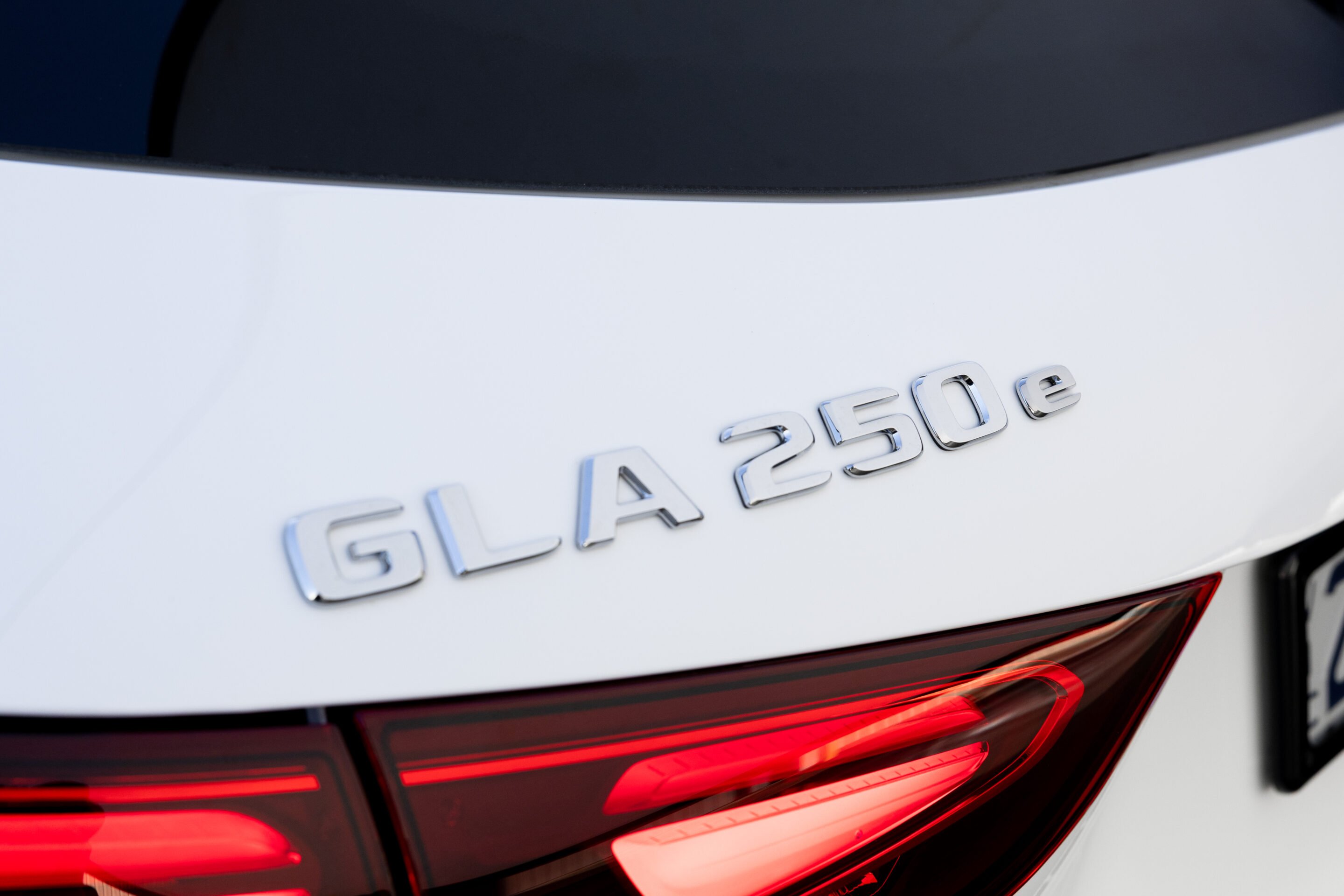
Priced from $78,000 (MRLP), the GLA 250 e blends electric efficiency with the flexibility of a petrol engine, expanding the brand’s EQ hybrid portfolio alongside recent additions like the C 350 e.
Underpinned by an advanced hybrid drivetrain, the GLA 250 e delivers a combined system output of 160 kW and 450 Nm, pairing a 1.3-litre turbocharged petrol engine (120 kW) with an 11.5 kWh lithium-ion battery. Drivers can enjoy up to 65 km of pure electric driving (WLTP-tested), making it well-suited for everyday around-town commuting, with easy hybrid functionality for extended journeys.
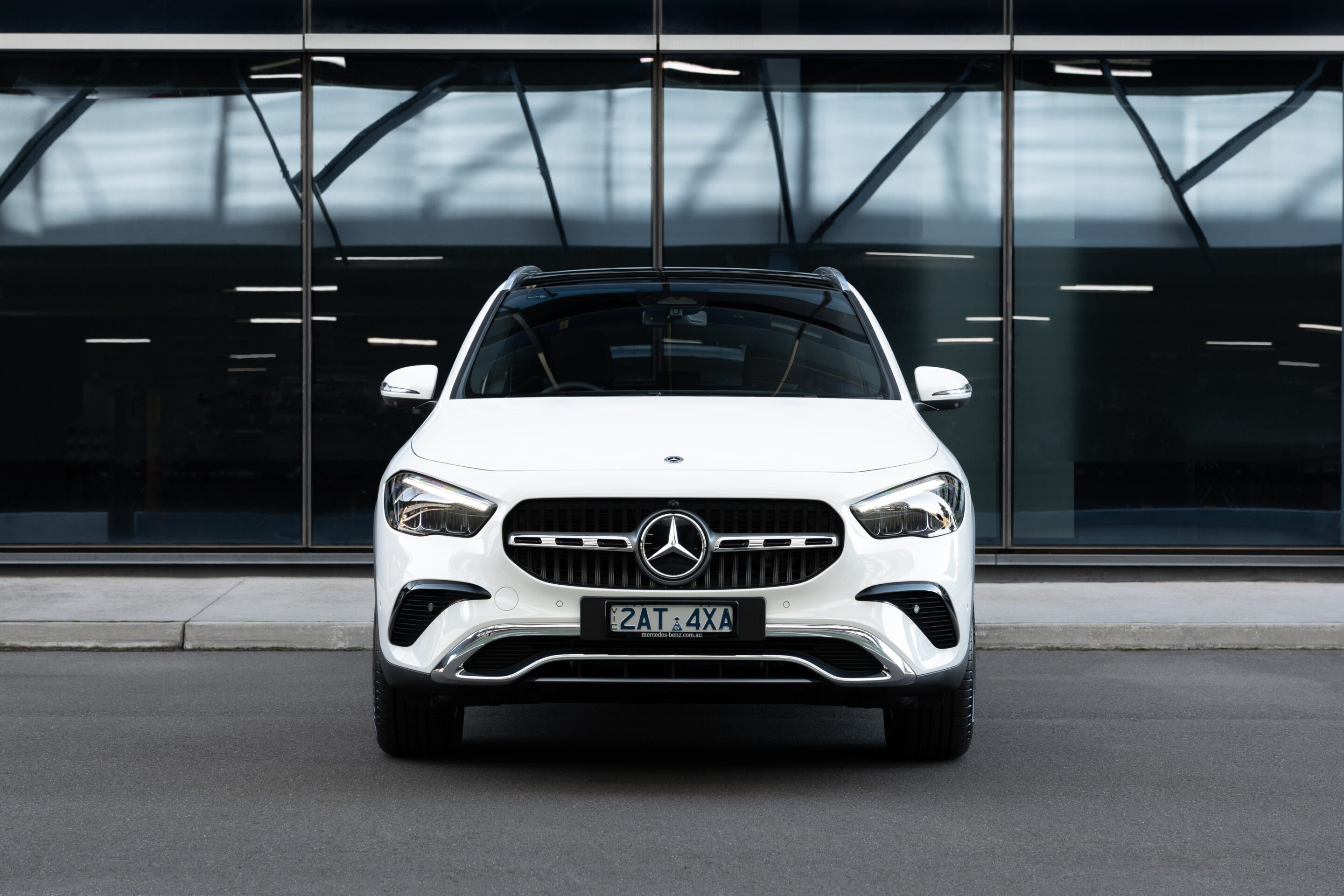
Charging flexibility is also built-in. Two cables come standard – one for home outlets and another for wallboxes or public stations. While the standard 3.7 kW AC charger suits overnight charging, buyers can opt for an upgraded 11 kW AC charging system ($800 MRLP) for faster top-ups.
The GLA 250 e’s standard equipment is generous and tech-forward, featuring:
- PROGRESSIVE Line exterior styling with 18” alloy wheels
- Panoramic sunroof and dark-tinted heat-insulating glass
- 360° Parking Package, KEYLESS-GO, and ambient lighting
- Heated and memory front seats in ARTICO trim
- DISTRONIC Active Distance Assist with Lane Keeping Assist
- Blind Spot Assist, PARKTRONIC, and THERMOTRONIC 2-zone climate control
- Wireless phone charging and full hybrid-specific cockpit data displays
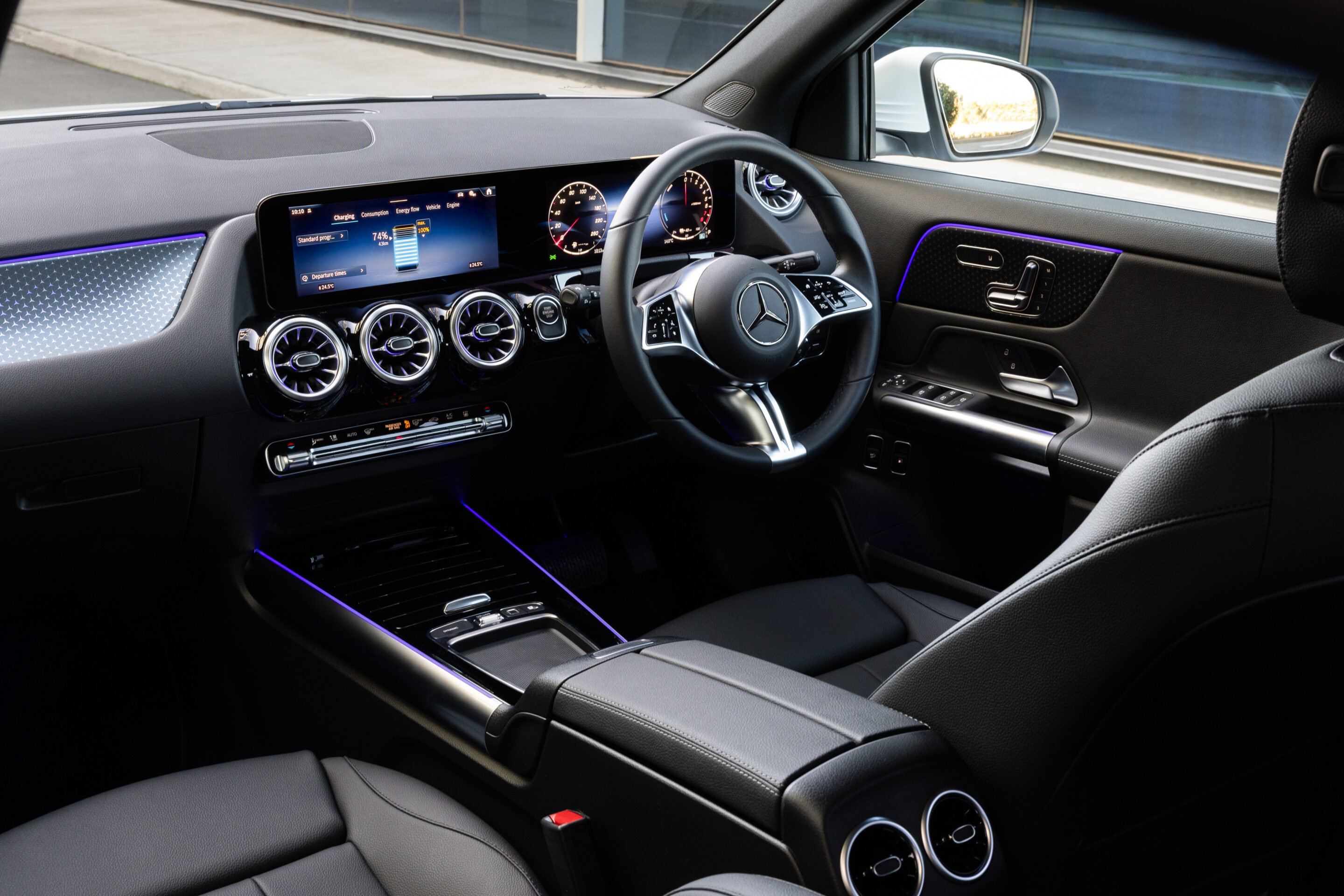
For those seeking extra flair or advanced features, optional packages include:
- Plus Package ($3,847 MRLP): Burmester® sound, MBUX Augmented Reality, head-up display, MULTIBEAM LED lighting and more
- AMG Line Package ($2,500 MRLP): Sport seats, Nappa leather steering wheel, AMG floor mats, sports suspension and styling
Orders for the 2025 Mercedes-Benz GLA 250 e open online and through dealerships from 17 July, bringing a compelling new hybrid option for interested premium SUV buyers.
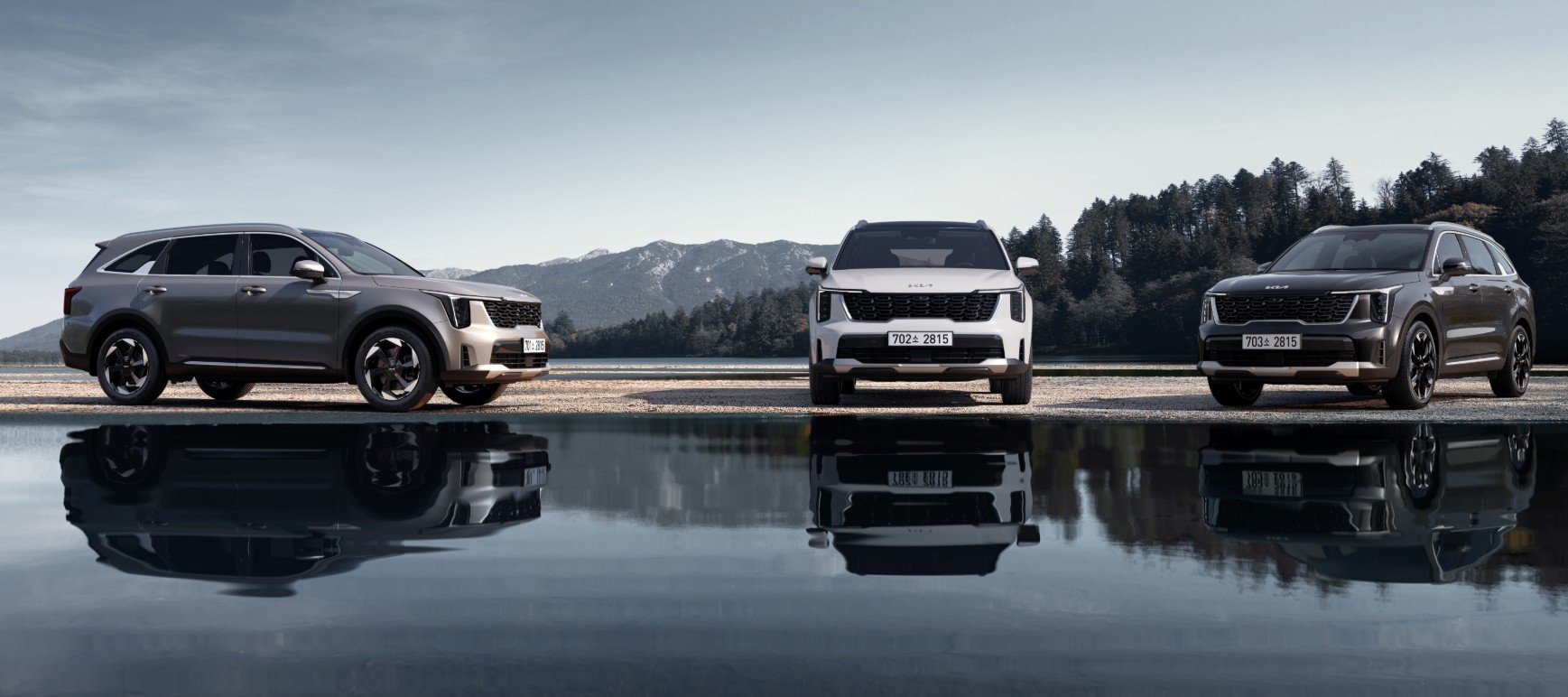
Kia has officially launched the 2026 Kia Sorento in South Korea, unveiling a refreshed take on its best-selling mid-size SUV.
The new version introduces upgraded driver-assistance systems, new tech features, and premium design enhancements aimed at reinforcing the Sorento’s position as a standout in the three-row SUV segment.
Among the most notable updates is the standardisation of Lane Keeping Assist 2 (LKA 2) and steering wheel grip detection across all trim levels. These improvements elevate safety and driving confidence for all buyers, regardless of which variant they select.
Kia has also increased standard equipment from the Noblesse trim upwards, including the addition of the Digital Key 2 system and touch-type exterior door handles, offering greater convenience and tech-forward usability.
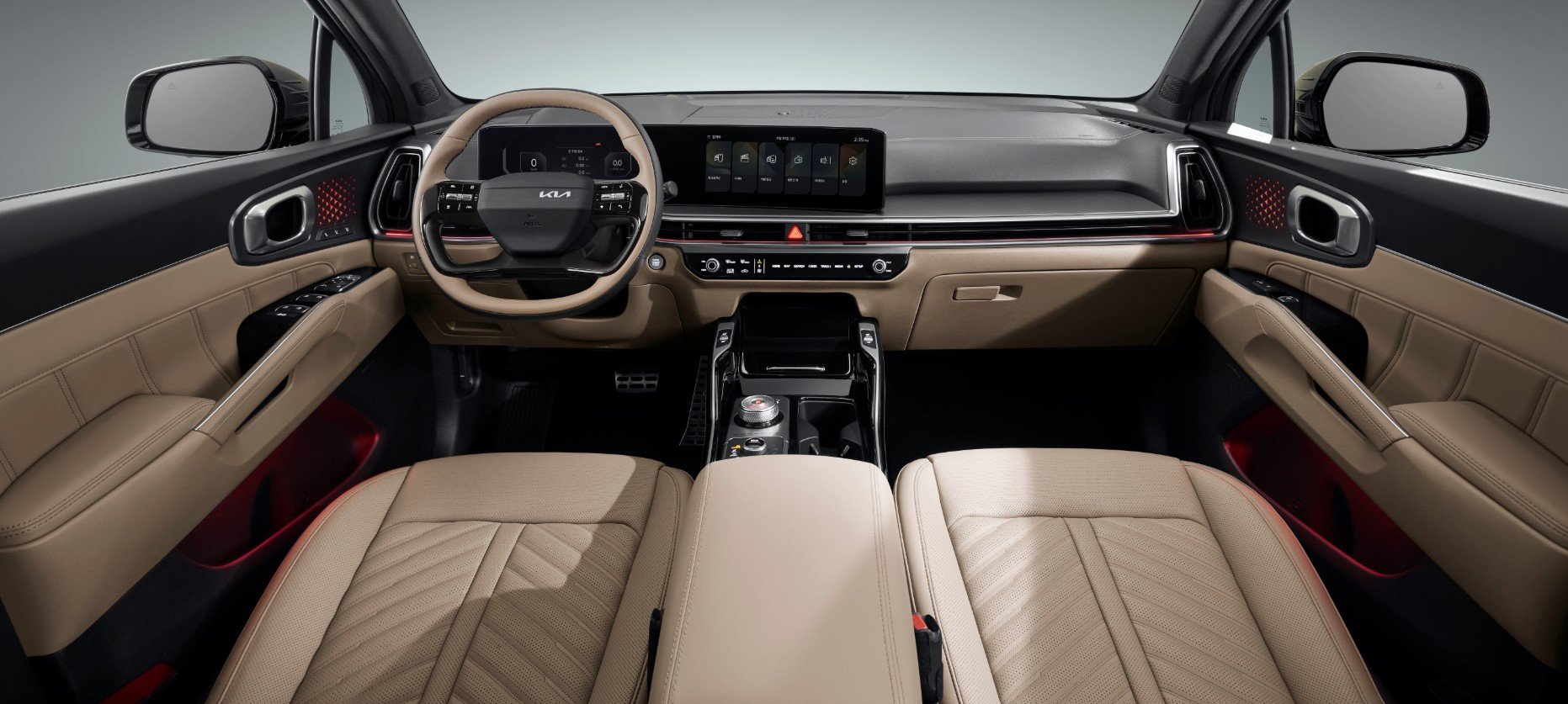
Inside, the 2026 Sorento features a new four-spoke steering wheel and expanded ambient lighting, now extending to the front door map pockets. These updates enhance the vehicle’s cabin ambience and premium appeal.
Visually, the hybrid model gains a new set of distinctive 19-inch alloy wheels starting from the Signature trim.
In a key branding shift, Kia has renamed the rugged Gravity variant to X-Line, giving it a more adventure-oriented identity with blacked-out emblems and wheel caps for a tougher aesthetic.
The model is expected to retain its current range of powertrains on arrival in Australia. This means the line-up will continue to include the naturally aspirated V6 (200kW/332Nm), 2.2-litre turbo-diesel (148kW/440Nm), as well as the 1.6-litre turbocharged hybrid and plug-in hybrid variants – both delivering a combined output of 195kW and 350Nm.
Kia Australia has confirmed the upgraded 2026 Sorento will arrive in local showrooms before the end of 2025, joining the growing line-up of refreshed SUVs set to hit the market with greater technology and a bolder presence.
The facelifted Sorento continues Kia’s strategy of blending family-focused practicality with advanced features and strong design cues, but it faces increasing competition in this segment from the likes of MG and Chery, and established models like the Toyota Kluger and Hyundai Santa Fe.
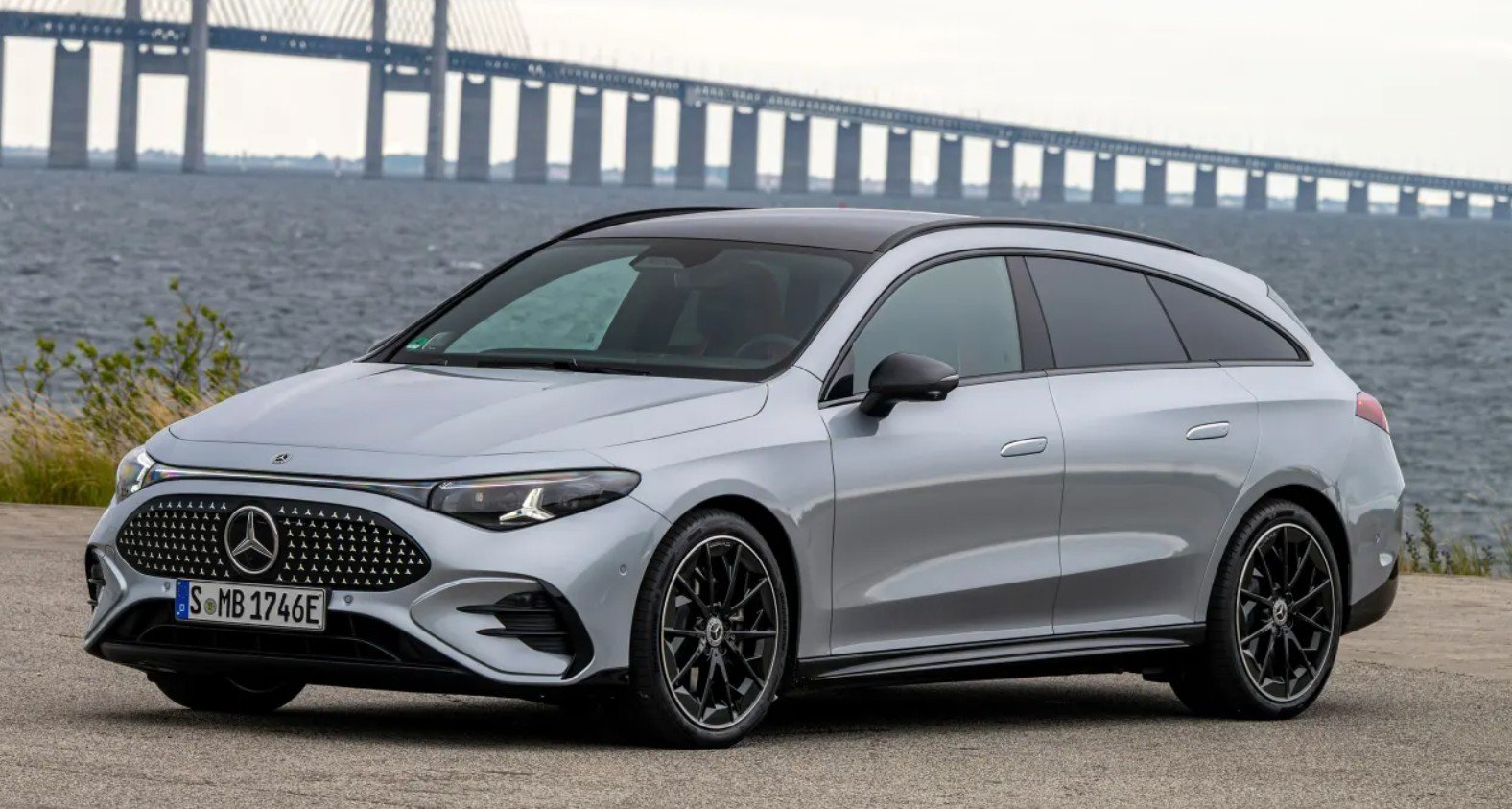
Mercedes-Benz will expand its compact portfolio early in 2026 with the arrival of the CLA Shooting Brake – a sleek, wagon-style companion to the new CLA four-door coupé.
The newcomer will launch first with a highly efficient battery-electric drivetrain, while plug-in hybrid, mild-hybrid and high-performance AMG variants are slated to follow within a year. It’s believed the CLA Shooting Brake will be considered for the Australian market after its European debut.
The Shooting Brake trades the coupé-style boot for a longer roofline and a powered tailgate, opening up 455 litres of cargo space (1290L with the rear seats folded). Electric versions add roughly 100L of under-bonnet storage for cables and smaller items. A taller roof also improves second-row head-room, while roof rails (75 kg rating) and an optional tow-bar (1800 kg capacity) broaden the car’s weekend versatility.
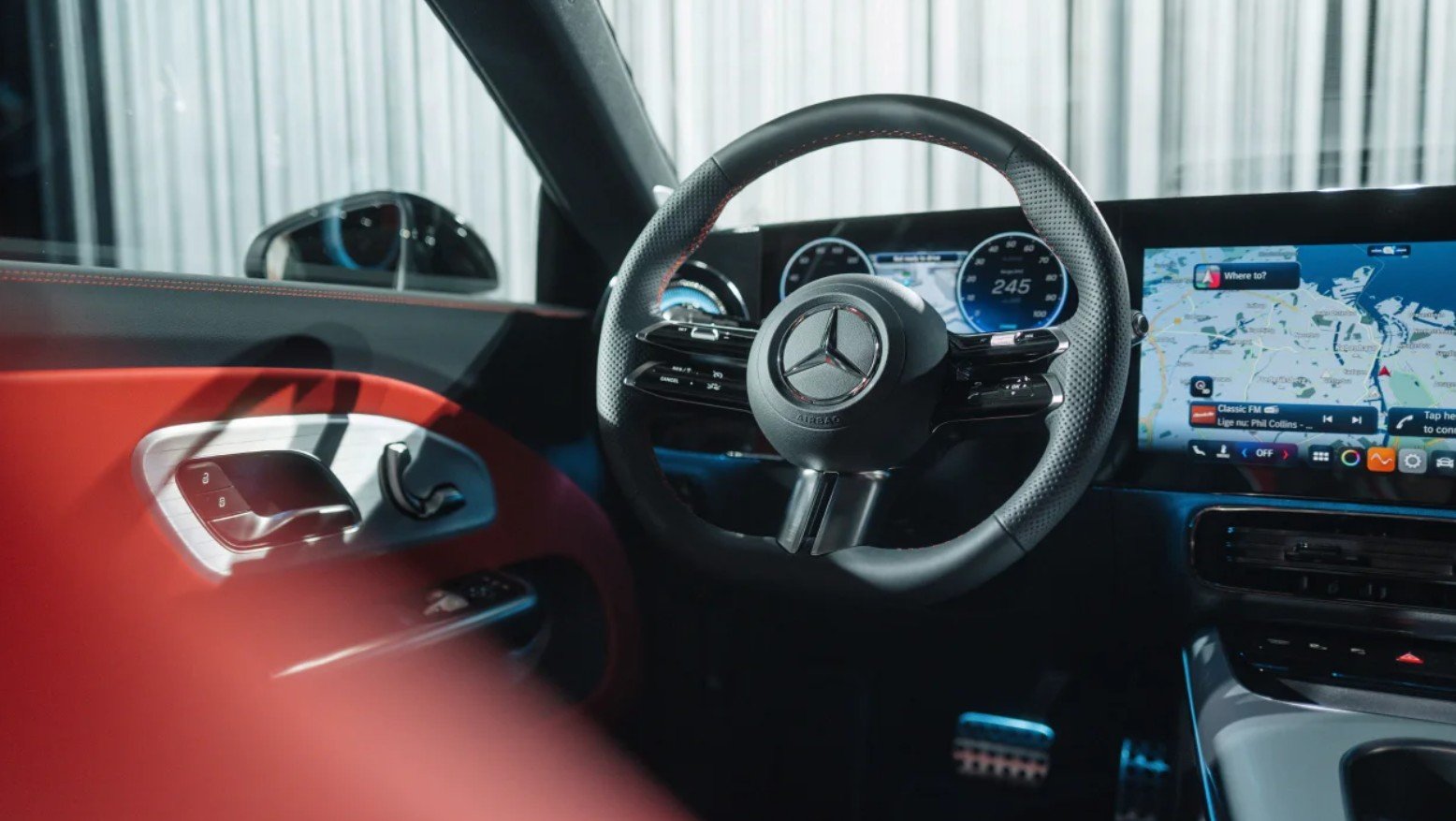
Mercedes has given the CLA cockpit a light refresh that carries over to the Shooting Brake. A new steering wheel with tactile roller controllers replaces touch-sensitive pads, and the panoramic glass roof now features electro-chromic dimming plus a star-pattern illumination linked to the ambient-lighting system.
Up front, a 14-inch central display is paired with a 10.25-inch driver screen under a single glass panel; a second passenger screen will be offered later. The new electrical architecture supports faster over-the-air updates and an AI-based voice assistant.
The launch version – badged CLA 250+ – combines a rear-mounted 200 kW electric motor with an 85 kWh battery. Mercedes targets up to 760km of WLTP range, only marginally shy of the coupé’s figure and well ahead of rivals such as the Tesla Model Y or Volvo EC40. An 800-V system enables 320 kW DC fast-charging, good for roughly 320 km of added range in 10 minutes on a compatible charger.
More variants incoming
- CLA 350 dual-motor (around 260 kW, 0-100 km/h in ~5.0 s) retains more than 720 km of range.
- CLA 250 with a smaller battery will offer a sharper entry price.
- AMG versions and hybrid petrol options will round out the line-up, catering to buyers not yet ready to go full EV.
With its blend of style, utility and class-leading efficiency, the CLA Shooting Brake shapes up as a compelling alternative to compact SUVs – proving you don’t need extra ride height to enjoy genuine practicality.
Jeep Australia has launched the 2025 Jeep Wrangler, now available in dealerships nationwide with a drop in pricing and bold new colour choices.
The updated Wrangler Rubicon 2-Door and 4-Door variants now start at $79,990 and $82,990 MSRP, respectively – marking a significant price drop compared to the previous model year ($82,950 MSRP and $89,450 MSRP, respectively).
Though mechanically unchanged, the 2025 Wrangler introduces two vibrant paint colours – Mojito and 41 – expanding the palette to eight options including staples like Bright White, Black, and Firecracker Red. This minor aesthetic refresh ensures more choice for Jeep fans eager to personalise their rigs.
Under the bonnet, the 2.0-litre turbocharged petrol engine continues to deliver 200 kW of power and 400 Nm of torque, with excellent low-end response and improved fuel efficiency – good news for both highway cruising and technical trails.
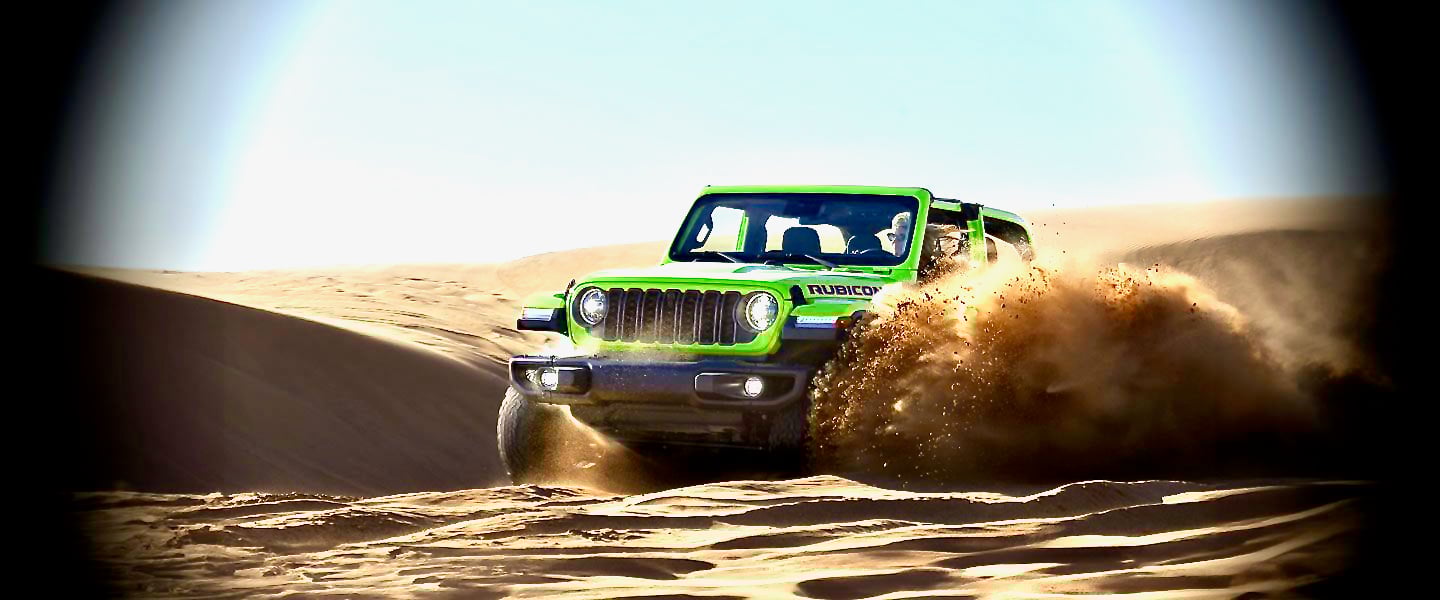
Staying true to its heritage, the Wrangler retains its Trail Rated® credentials, thanks to rugged features like Dana solid axles, Rock-Trac® 4×4 system with a 77.2:1 crawl ratio, and four skid plates. The next-gen Dana 44 full-float rear axle enhances weight distribution and supports larger aftermarket tyres – always a consideration for serious off-roaders.
Inside, the Wrangler offers a modernised cabin anchored by a 12.3-inch Uconnect 5 touchscreen, the largest ever in a Wrangler. It supports wireless Apple CarPlay®, Android Auto™, and multiple user profiles for custom convenience. A forward-facing TrailCam adds extra confidence while navigating rough terrain.
Safety features include side curtain airbags (front and rear), electronic stability control, and rear seat reminder alerts in the 4-door version.
With removable roof panels, the Wrangler delivers a sense of open-air freedom, enhancing its appeal for adventurous Australians and backed by Jeep Wave, the brand’s premium ownership program.
The 2025 Jeep Wrangler Rubicon range is available now.
| Model | Engine | Drive | Fuel | MSRP |
|---|---|---|---|---|
| Rubicon 2DR | 2.0L Turbo | 4×4 | Petrol | $79,990 |
| Rubicon 4DR | 2.0L Turbo | 4×4 | Petrol | $82,990 |
Options
| Option (MSRP)* | 2DR | 4DR |
|---|---|---|
| Premium paint** | $1,145 | $1,490 |
| Sky-One-Touch Power Top (STJ) | – | $6,450 |
Mercedes-Benz has unveiled revised pricing and upgraded standard specifications for two of its popular C-Class models in Australia – the C 300 sedan (above) and the Mercedes-AMG C 43 4MATIC (below) – now available to order nationwide.
The C 300 sedan receives a generous boost in standard equipment, offering enhanced safety, technology, and premium in-cabin experience. Notable inclusions are the Driving Assistance Package Plus, MBUX Augmented Reality for Navigation, DIGITAL LIGHT system with Adaptive High Beam Assist Plus, and a Burmester® 3D surround sound system. With this suite of advanced features, the C 300 now carries a Manufacturer’s Recommended List Price (MRLP) of $98,200.
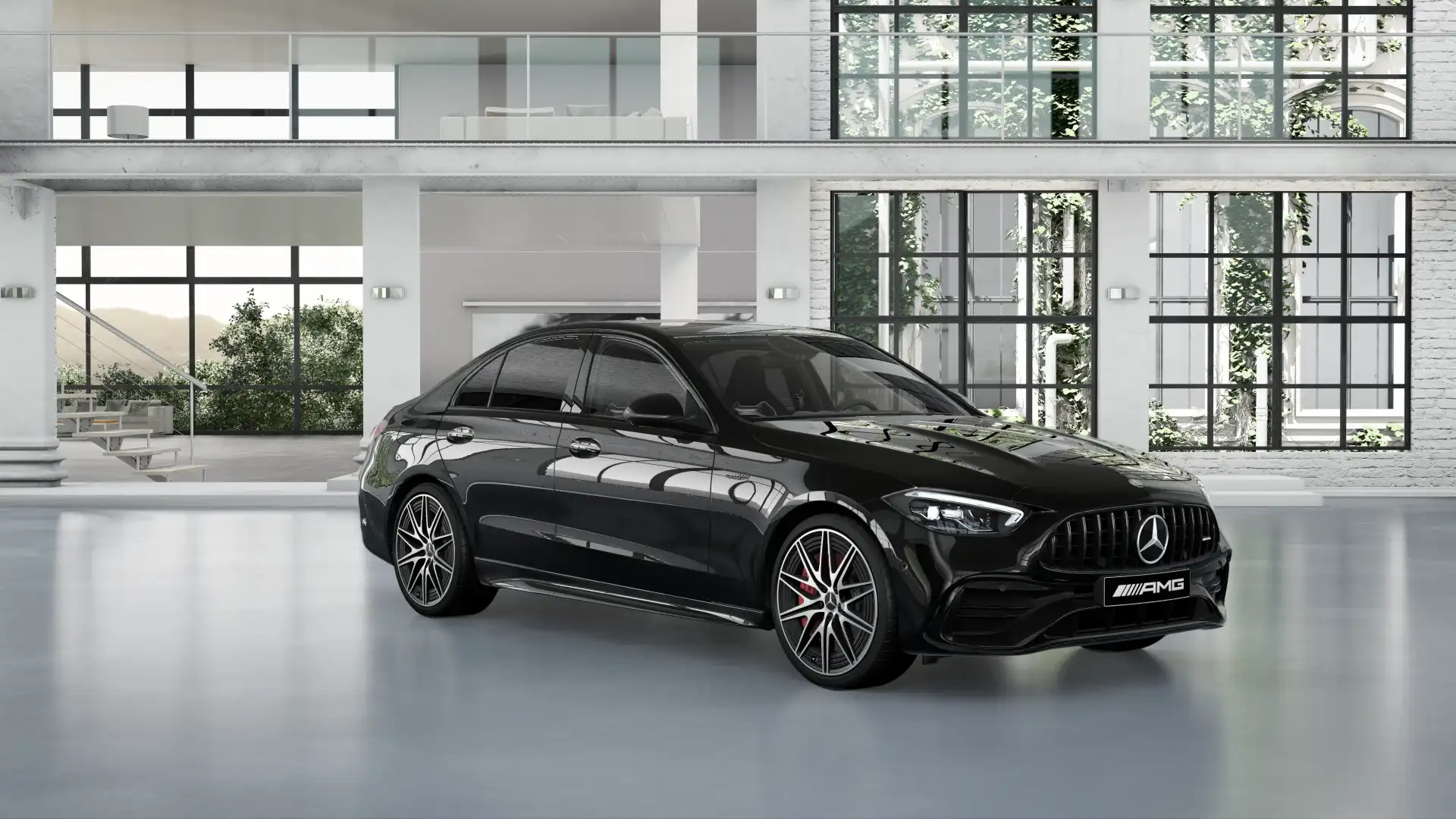
Meanwhile, the Mercedes-AMG C 43 4MATIC arrives with improved performance and additional driver-focused features at a sharper price. Building on the popularity of the previous Edition R, the new model benefits from a revised engine tune, adding 10 kW of extra power to reach 310 kW and achieving 0-100 km/h in just 4.3 seconds.
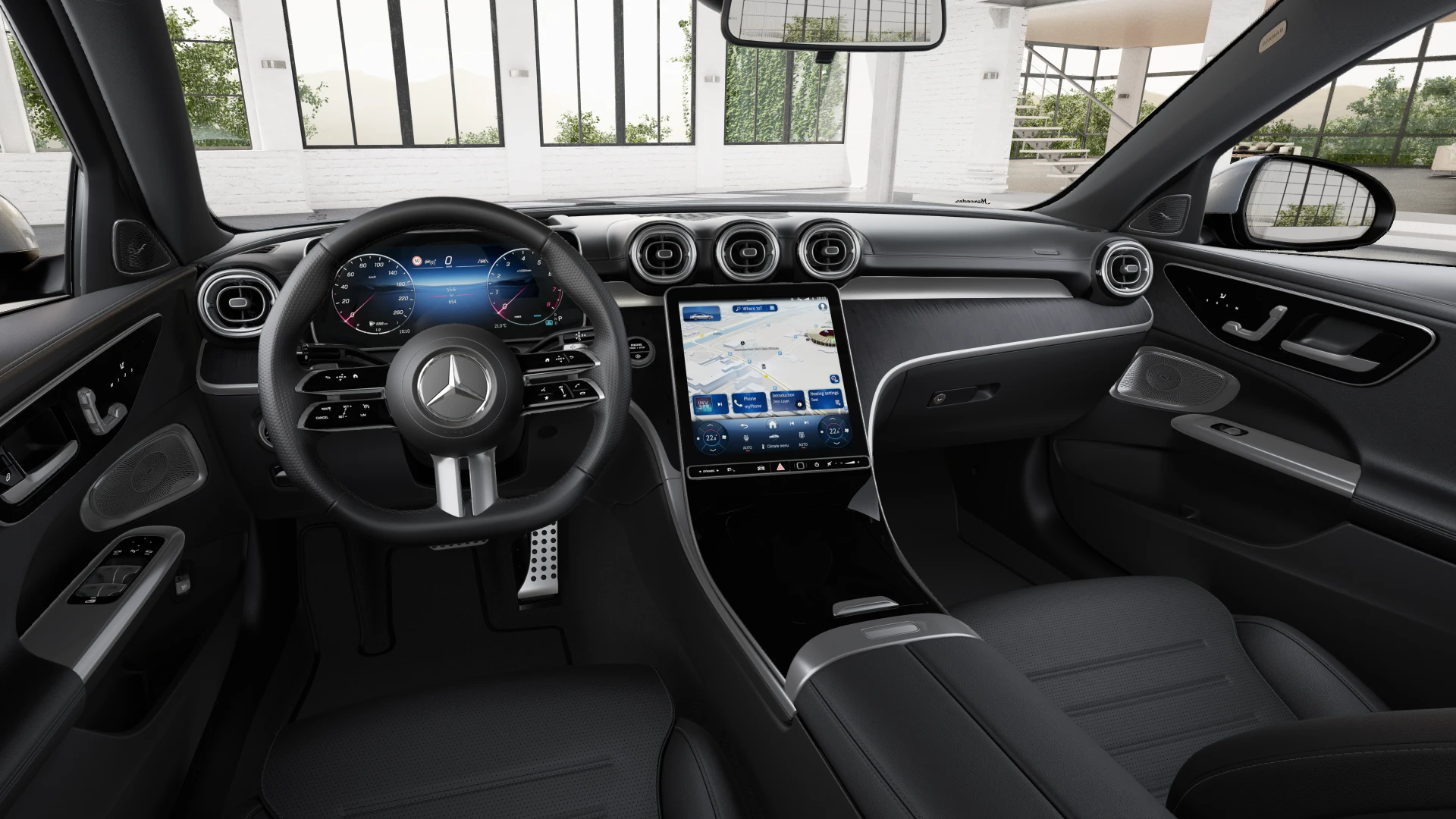
Standard features for the C 43 now include the Night Package II with darkened grille and badging, the AMG DYNAMIC PLUS Package with red brake calipers and RACE mode, and AMG Performance Seats and Steering Wheel. Also included are the AMG TRACK PACE telemetry system and Metal Structure Trim throughout the cabin. The updated C 43 4MATIC is priced from $123,800 MRLP.
Both models are available for order from Mercedes-Benz agents or online from today.
New South Wales’ introduction of average speed cameras targeting light vehicles has already had a substantial effect on reducing speeding, with recent trial data showing a marked drop in driver offences even before fines were issued.
After a nine-week testing phase, Transport for NSW has confirmed that speeding incidents decreased by an average of 38 per cent across two high-risk regional corridors, reported Yahoo News.
These new average speed enforcement cameras – located on a 15km stretch of the Pacific Highway between Kew and Lake Innes and a 16km section of the Hume Highway between Coolac and Gundagai –are the first of their kind in NSW to apply penalties to light vehicle drivers. Previously, average speed cameras were used exclusively to monitor trucks and other heavy vehicles in the state.
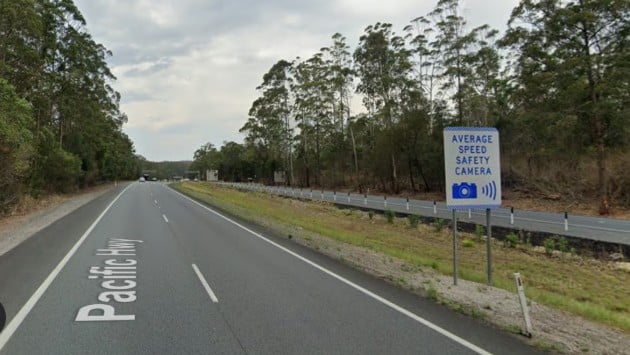
The technology, known as point-to-point enforcement, calculates a vehicle’s average speed between two fixed locations. If the result exceeds the posted speed limit, a fine is automatically triggered.
This approach is widely regarded as one of the most effective tools for reducing speeding-related incidents and is already in use across several Australian states, as well as in countries such as the UK, Norway, Italy, and the Netherlands.
From July 1, the trial transitioned to full enforcement mode. Motorists caught speeding by the cameras now face fines of up to $2,959 and the loss of six demerit points, depending on the severity of the offence.
But what’s notable is the degree of compliance before enforcement officially began. Transport for NSW observed a 48 per cent drop in speeding on the Pacific Highway by the end of week seven of the trial, with just one in 235 drivers exceeding the limit. On the Hume Highway, speeding dropped by 37 per cent, with only one in 194 drivers caught speeding. Across the full trial period, a steady 38 per cent average reduction in speeding was maintained between the two routes.
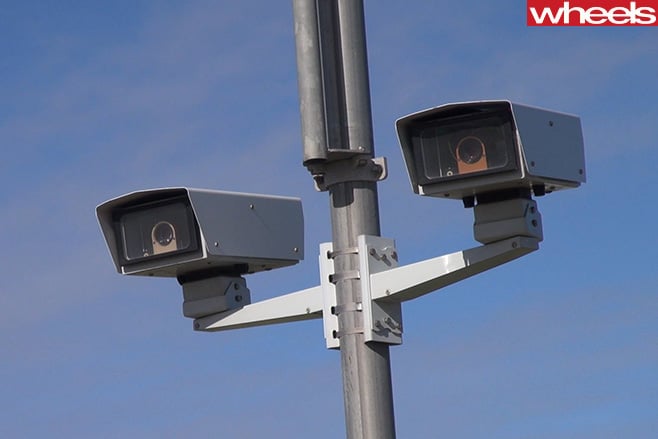
“This shows that motorists were taking the cameras seriously even without the threat of fines,” a state government spokesperson told Yahoo. Authorities say the initiative has already delivered “a big drop in speeding at both sites”.
All revenue generated by the new cameras, as with other traffic enforcement measures, will be directed to the Community Road Safety Fund, which supports education and road safety programs throughout NSW.
By discouraging excessive speeds over longer distances rather than single moments, average speed cameras are predicted to not only improve compliance but also enhance safety outcomes. The trial results suggest a further expansion of the program could be on the horizon in NSW, at least.
One of the most iconic cars from The Fast and the Furious franchise has just changed hands for a staggering price. A 1992 Mazda RX-7 FD used in The Fast and the Furious: Tokyo Drift has sold for £911,000 – equating to approximately A$1.78 million – at a Bonhams (images below) auction.
This particular RX-7 is believed to be one of just two surviving examples used during the production of the third film in the high-octane series. It was famously driven by the character Han, portrayed by actor Sung Kang, and was featured in close-up and static scenes. The car still bears evidence of its time on set, including mounting marks from camera equipment and “#71 HANS” production labels scattered throughout the vehicle.
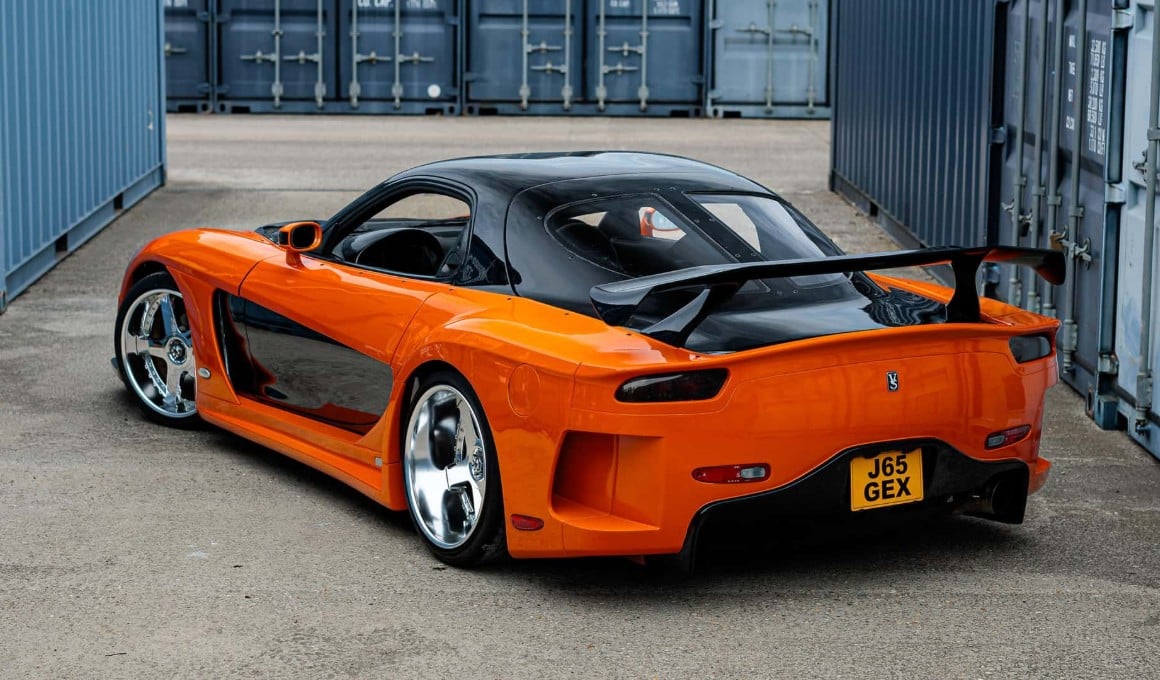
The Mazda wears a distinctive VeilSide Fortune wide-body kit from the Japanese tuning house of the same name, radically altering its proportions. It now measures over 200mm wider than the standard FD model and retains only the original roof and tailgate panels. The body is finished in a pearlescent orange paint and rides on 19-inch Andrew Premier Series Racing Evolution 5 wheels, wrapped in ultra-wide Pirelli P Zero Nero tyres at the rear.
Before heading to auction, the car underwent an extensive mechanical restoration, including a rebuild of its twin-rotor turbocharged engine by Japanese rotary specialists RE-Amemiya. While the odometer shows 66,785 miles (about 107,500 kilometres), only 8000 kilometres have been added since the refurbishment. It’s noted, however, that the car has been largely stationary for some time since the rebuild.
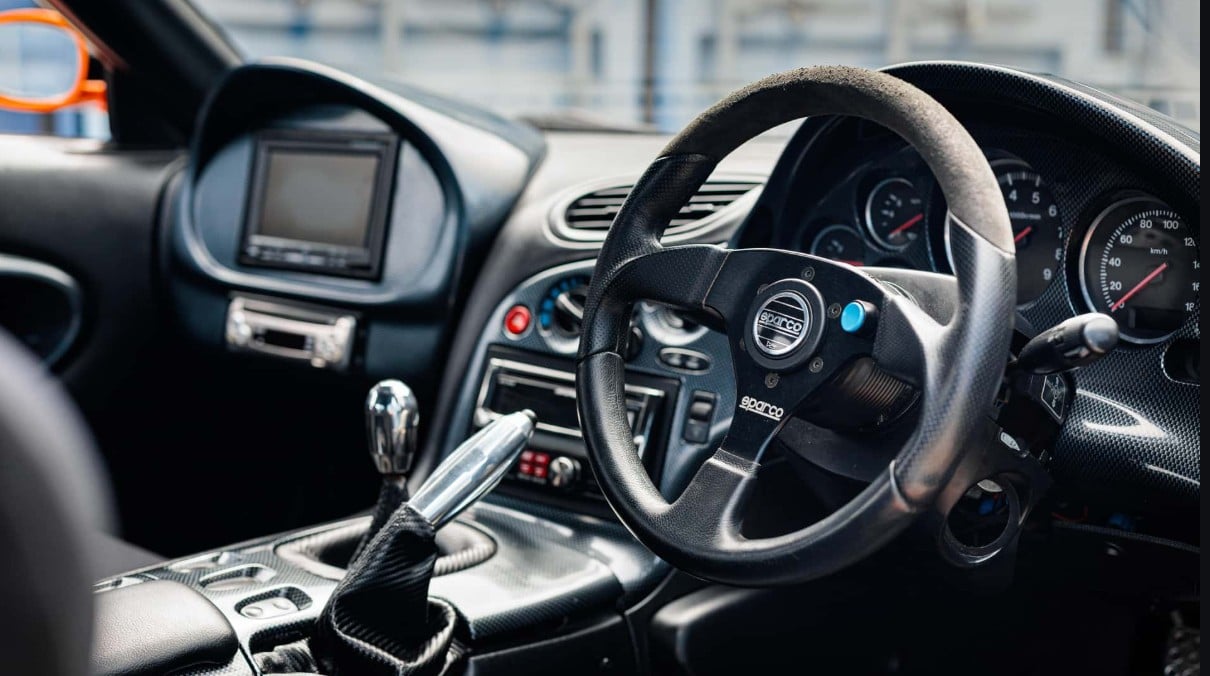
This sale puts the RX-7’s value well above that of the 1994 Toyota Supra driven by the late Paul Walker in the original films, which sold in 2021 for around A$820,000. Still, it doesn’t surpass the record set in 2023 by another of Walker’s cars – a 2000 Nissan Skyline R34 GT-R, built by Kaizo Industries – which sold for a whopping A$2 million.
The sale confirms the enduring appeal of Fast and Furious movie cars among collectors, especially those with strong links to fan-favourite characters.
The Hyundai IONIQ 9 electric large SUV has been launched in Australia as the most expensive Hyundai car ever sold here. Priced from $119,750 plus on-road costs, Hyundai Australia has elected to sell only the top-spec Calligraphy model, with lower spec models offered overseas not yet available.
Measuring 5060mm long, the Hyundai IONIQ 9 is the twin to the Kia EV9, though it’s even larger overall than its cousin. Seven seats are standard, but a six-seat layout is optionally available as well, as are camera mirrors and special matte paint.
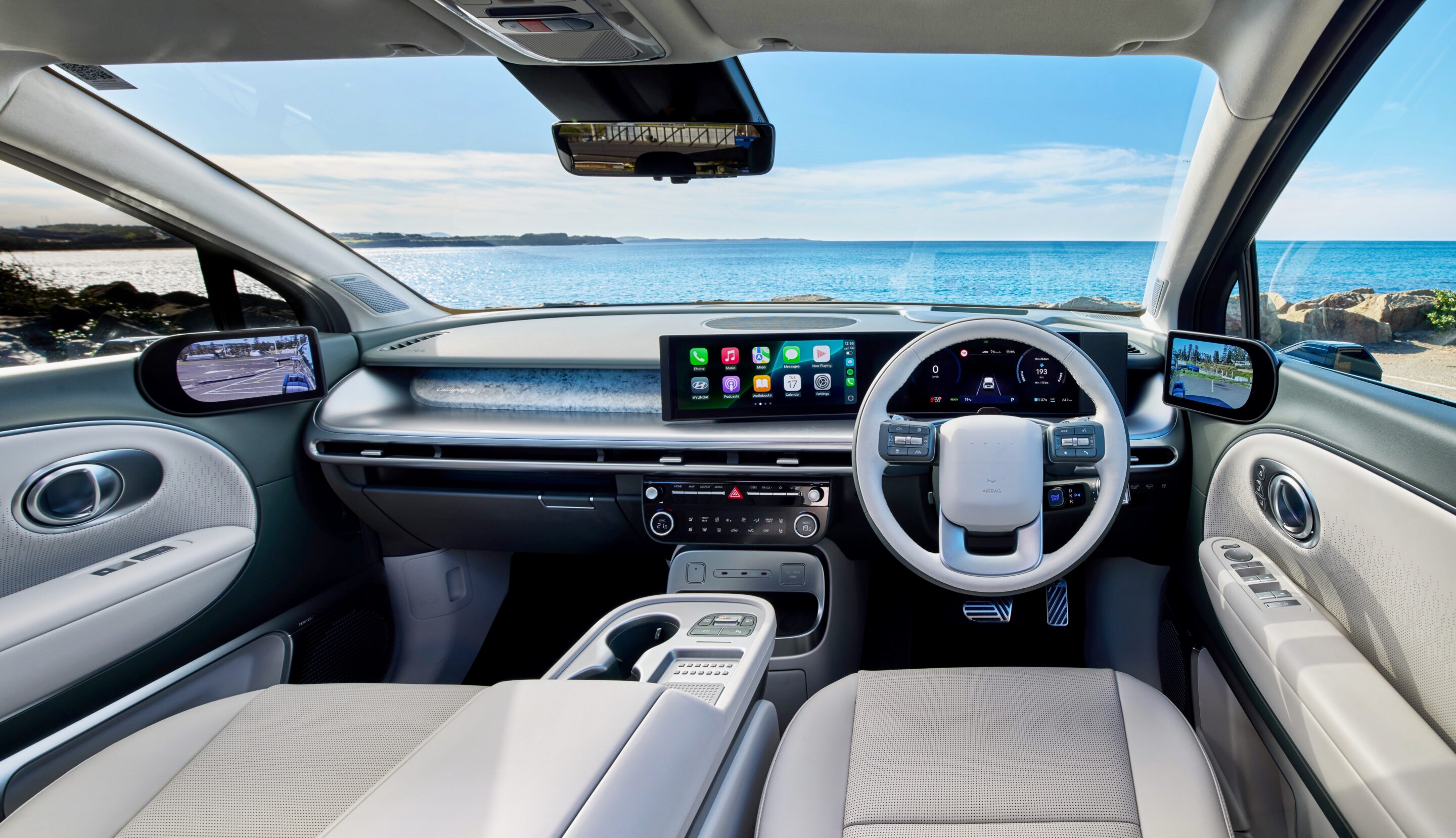
Under the floor of the Hyundai IONIQ 9 is the same ‘E-GMP’ platform as the smaller IONIQ 5 and IONIQ 6, this time using a 110.6kWh battery that can be charged at up to 233kW on a DC charger for a 10-80 per cent charge in as little as 24 minutes. Its claimed WLTP range is 600km.
The IONIQ 9 is powered by two 157kW electric motors, combined making 314kW of power and 700Nm of torque, enough for a claimed 0-100km/h sprint time of 5.2 seconds.
The IONIQ 9 is the first Hyundai vehicle in Australia with digital key functionality, allowing buyers to lock, unlock and start the vehicle using near-field communication and ultra-wideband technology. Google Places Search has also debuted in the IONIQ 9, allowing users to use text search such as “restaurants near me” for navigation.
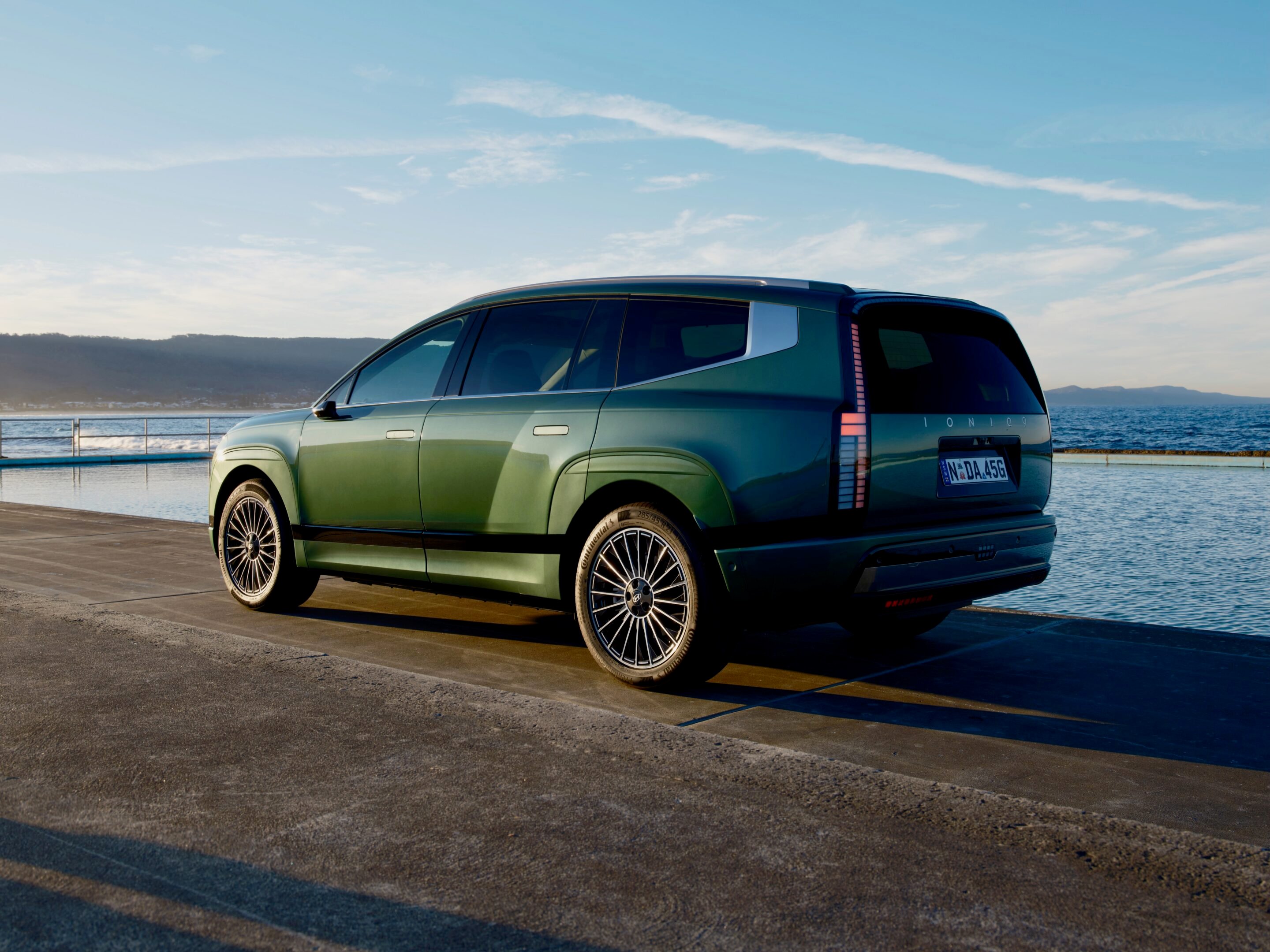
Hyundai IONIQ 9 pricing (plus on-road costs):
- Calligraphy: $119,750
Hyundai IONIQ 9 Calligraphy standard features:
- 21-inch alloy wheels with a tyre repair kit
- Dusk-sensing automatic LED lighting
- Rain-sensing automatic wipers
- Panoramic sunroof
- Hands-free power tailgate
- Roof rails
- Keyless entry with push button start and digital key access
- Rear privacy glass
- Heated/auto-folding mirrors
- Leather-wrapped steering wheel with power column adjustment
- Nappa leather upholstery
- 16-way electric ‘Premium Relaxation’ front seats with ventilation, heating and driver’s memory
- Tri-zone automatic climate control
- Heated and ventilated outboard middle row seating
- Power-folding and reclining third-row seats
- 12.3-inch digital driver’s display
- 12.3-inch touchscreen with live services and over-the-air updates
- Satellite navigation with Google Places Search integration
- Wireless Apple CarPlay and Android Auto
- AM/FM/DAB+ digital radio
- 14-speaker Bose sound system
- Wireless phone charger
- UV steriliser
- 6x 100-watt USB-C charging ports
- Digital rear mirror
- Head-up display
IONIQ 9 Calligraphy safety features:
- 10 airbags
- Autonomous emergency braking (AEB) with pedestrian and cyclist, junction turning/crossing, lane change oncoming and evasive steering assistance
- Adaptive cruise control with traffic jam assist
- Lane keeping assistance
- Adaptive lane guidance
- Blind-spot monitoring with a blind-spot camera
- Rear cross-traffic alert
- Intelligent speed limit assist
- Low-speed automatic rear braking
- Driver attention monitoring
- Rear occupant alert
- Safe exit assist
- Adaptive high beam
- Front and rear parking sensors
- 360-degree camera
- Tyre pressure monitoring
IONIQ 9 options:
- Digital side mirrors: $3000
- Six-seater layout with second-row ‘Premium Relaxation’ seats with electric adjustment: $2000
- Metallic paint: $750
- Matte paint: $1000
- Two-tone interior: $295
The Hyundai IONIQ 9 is now on sale in Australia, with the first deliveries due to commence soon.
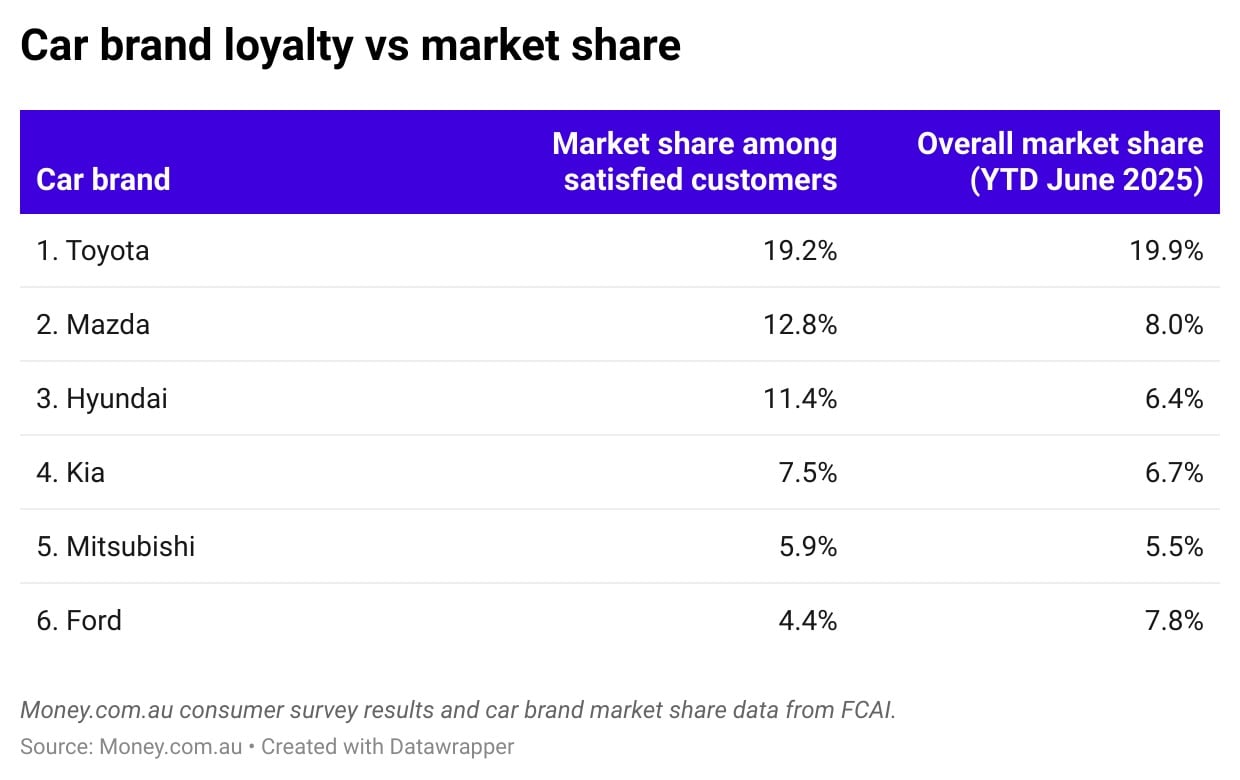
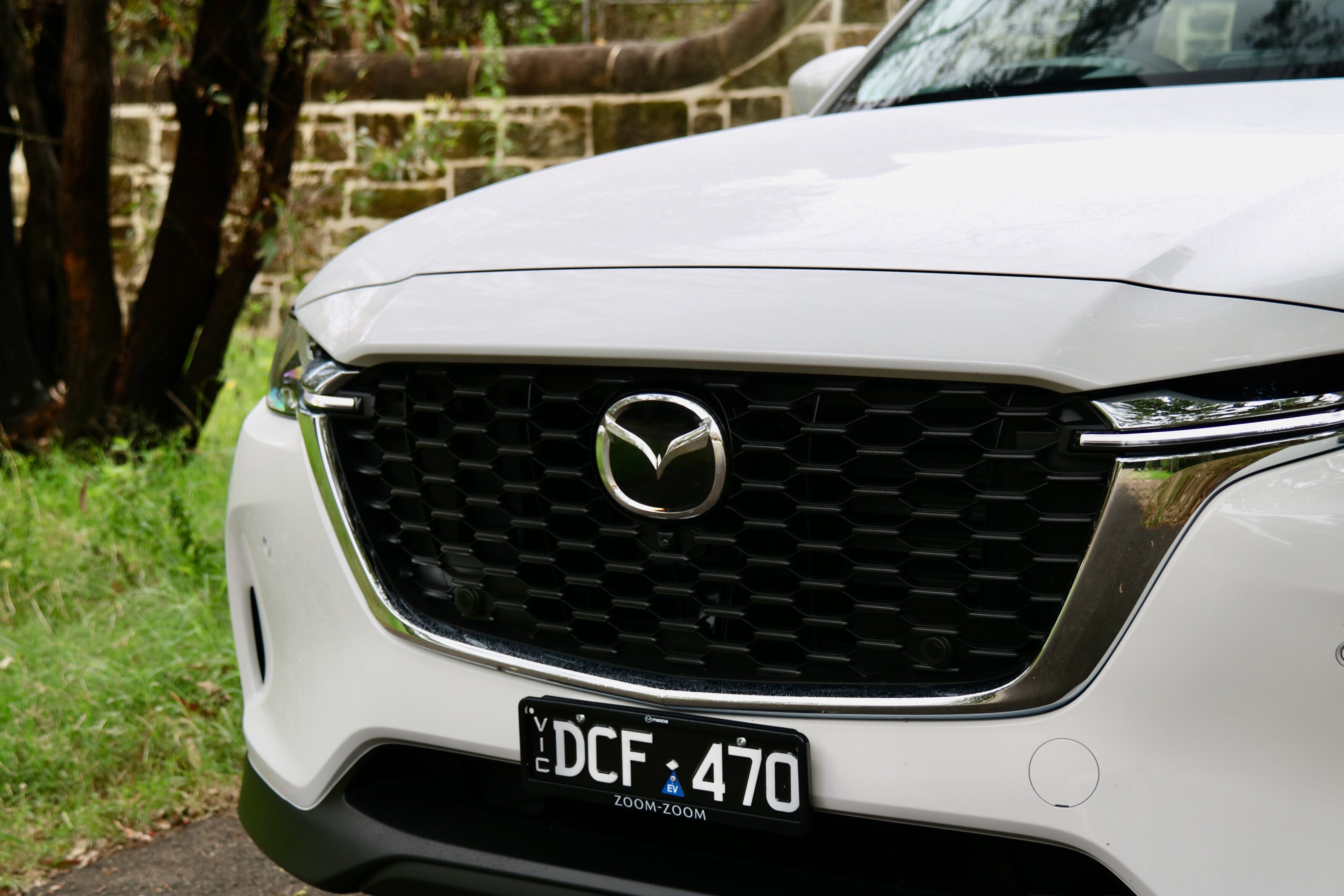
Sixty-five per cent of Australians would buy their current car brand and model again, according to a survey of 1000 people by financial comparison platform Money.com.au.
Toyota topped the list, making up 19.2 per cent of satisfied owners, followed by Mazda (12.8 per cent) and Hyundai (11.4 per cent) – both of which punched above their weight relative to their market share.
Money’s Finance Expert, Sean Callery, says most Australians are effectively becoming repeat customers when it comes to their car brand. “Cars are one of the biggest household expenses, especially when purchased through finance and paid off with interest over several years. That nearly two-thirds of Australians would buy the same car again shows strong confidence in the value and reliability of their vehicle,” he said.
“Aussies want cars that won’t let them down or cost a fortune to run. That’s why brands
generally known for value and reliability like Toyota and Mazda are coming out on top.
“These brands already hold a large share of the Australian market and the data shows that’s unlikely
to change any time soon as drivers aren’t just buying them, they’re likely to stay loyal to
them.”
Other findings from the survey included that car satisfaction was highest among Baby Boomers (75 per cent) and then Gen X (64 per cent), while younger generations were slightly less satisfied, with 61 per cent of Millennials and 53 per cent of Gen Z agreeing they would stick with the brand they currently own.
More than a quarter of Aussies (26 per cent) regret their car choice, with the top reasons being that it doesn’t suit their needs (11 per cent), it’s too expensive to maintain (8 per cent) or that they overpaid for their vehicle (7 per cent). Interestingly, the site said that around 8 per cent of Aussies surveyed said they don’t own a car.
Key findings