
Contenders
Winner – Isuzu D-Max X-Rider
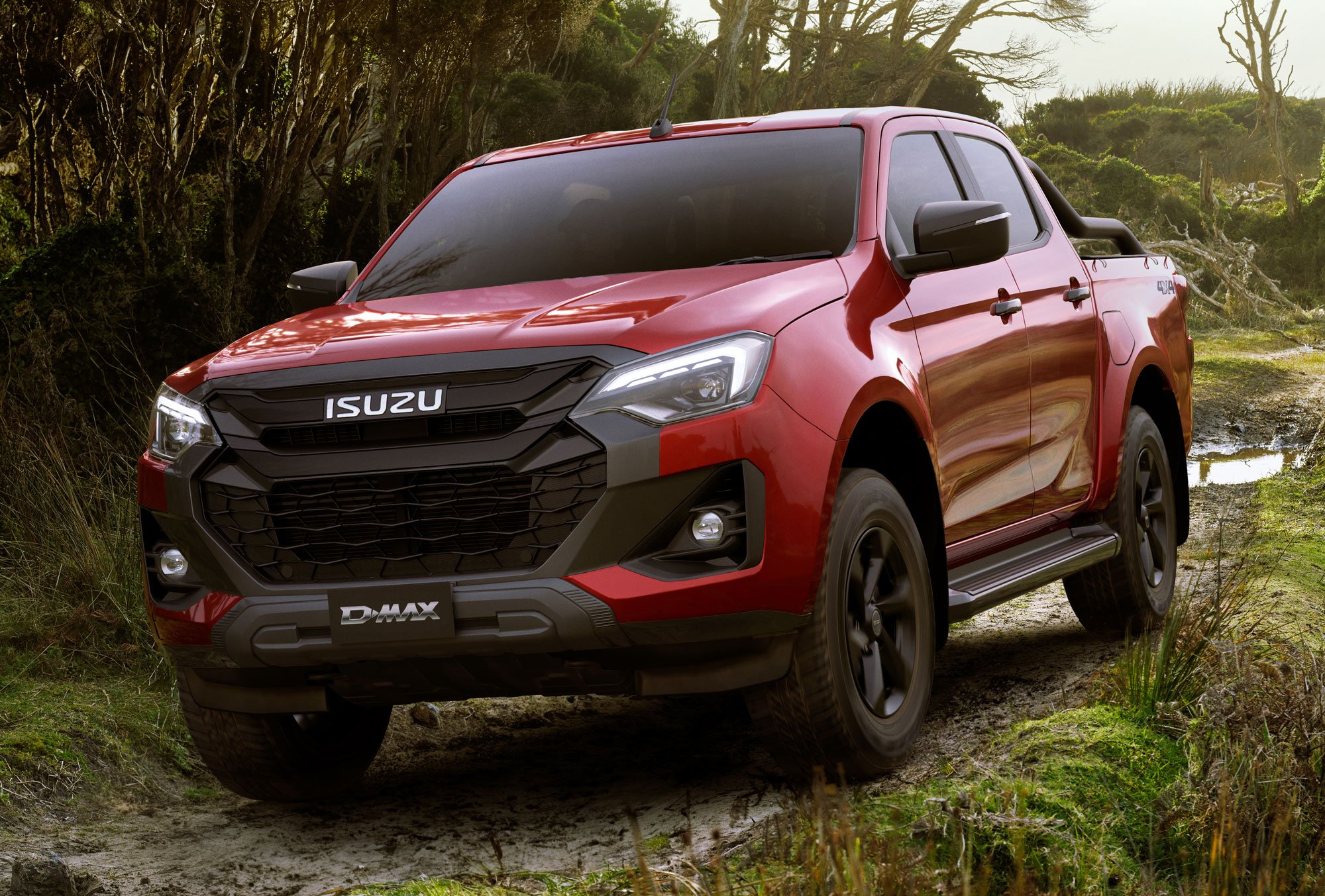
- Price: From $32,700 plus on-road costs (SX High-Ride 4×2 single cab manual) to $78,900 +ORC (Blade 4×4 dual cab auto); X-Rider from $57,990 drive away
- Drivetrain/economy/CO2 emissions: X-Rider – 3.0L turbo diesel: 140kW/450Nm, 6-speed auto, 4WD, 8.0L/100km, 207g/km. Also in the range – 1.9L turbo-diesel: 110kW/350Nm, 6-speed manual or auto, 2WD or 4WD, 6.7-7.0L/100km, 177-184g/km; 3.0L turbo diesel: 140kW/450Nm, 6-speed manual or auto, 2WD or 4WD, 8.0L/100km, 207g/km
- Dimensions: X-Rider 5280mm long, 1870mm wide, 1785mm tall, 3125mm long wheelbase
- Towing capacity/GVM/GCM: 2800kg -3500kg/3000kg – 3100kg/53700kg – 6000kg
- Warranty/roadside assistance/service intervals: Six-year/150,000 km, up to seven years months of roadside assistance with each dealer service, annually/every 15,000km
- Five-year service cost: $2,245 ($449 per year)
| Driving | |
|---|---|
| Interior | |
| Practicality | |
| Overall value |
Things we like
- Excellent safety equipment across the range
- Modern and feature-packed cabin
- X-Rider spec is great value for money
Not so much
- Trusty 3.0L diesel is loud
- Huge range can get confusing
- X-Rider misses out on leather wheel, climate control, etc
It’s easy to pigeonhole the Isuzu D-MAX as a crude but endearing workhorse that has built its own minor cult following. That’s to underplay the incremental development that has seen that D-MAX comfortably occupy the third spot in the Australian dual-cab ute sales charts for 2024, netting a near 12 per cent share of the market. That’s more than double the sales of the next best contenders, the Mitsubishi Triton and the Mazda BT-50. So Isuzu is clearly doing something very right.
No, the D-MAX can’t hold a candle to the Ford Ranger in terms of sophistication, but it’s not so very far off a Toyota Hilux. What’s more, it comes with a six-year warranty, although it does carry a 150,000km limit, which is something to consider if you’re cross shopping versus Toyota’s five-year, unlimited kilometre deal.
The X-Rider stands out, value-wise, because it adds a lot of exterior swagger to the lower-spec LS-M. The X-Rider is equipped with a 140kW/450Nm 3.0-litre turbo-diesel with six-speed automatic transmission, with four-wheel drive system. While the engine could be more refined, it is relatively fuel efficient in the real world with under 7.0L/100km fuel consumption easy to achieve on highways.
The 1.9-litre 110kW/350Nm powerplant that’s fitted to the SX Crew Cab entry-level versions should probably be given a wide berth, as for $2000 you can upgrade to the 3.0-litre with 140kW/450Nm. That’s money very well spent, as it nets you a far more flexible and relaxed engine. Because Isuzu only sells two models – this and the MU-X SUV – it keeps itself busy with a fully fleshed-out range of variants for each.
Therefore the steps from one model to the next are small and it pays to do your homework on which of the trims – SX, LS-M, X-Rider, LS-U, X-Terrain and Blade – is right for your requirements. The good-looking X-Rider Crew Cab is largely a dark-finish cosmetic pack above the LS-M grade, and will doubtless appeal to those who want a little more bling. The LS-M is $3700 cheaper and comes with Bi-LED headlights, 17-inch alloys and higher grade cloth interior. As you ascend the range, the price tag begins to look a little more self-conscious, with the flagship $73,990 Blade being the off-road focused one, broadly adjacent to a Ranger Tremor or a Hilux Rogue.
With a thriving owner community and a wide range of accessories available, plus parts support in some of the more remote reaches of Australia, the D-MAX does a lot to appeal to those who prize capability and aren’t afraid to take their ute off the beaten track. It might not be the number one pick here, but it’ll be the first port of call for many who are looking for something that more than punches above its weight.
JAC T9 Haven
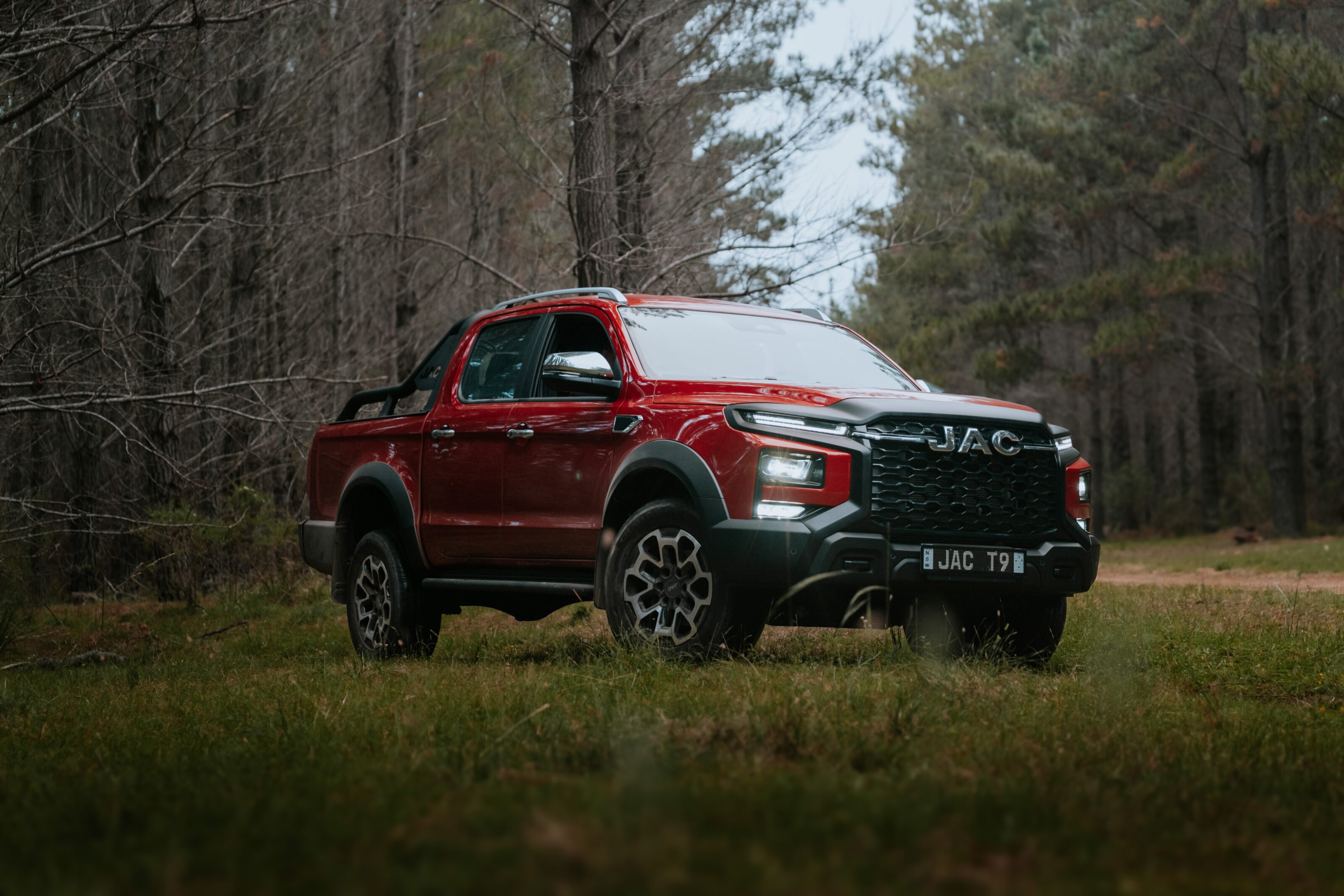
- Price: From $42,662 plus on-road costs (Oasis) – $45,630 +ORC (Haven)
- Drivetrain/economy/CO2 emissions: 2.0L turbo-diesel: 120kW/410Nm, eight-speed auto, 4WD, 7.6L/100km, 202g/km
- Dimensions: 5330mm long, 1983mm wide, 1920mm tall, 3110mm long wheelbase
- Towing capacity/GVM/GCM: 3200kg/3100kg/5630kg
- Warranty/roadside assistance/service intervals: Seven-year/unlimited km warranty, seven years of roadside assistance, annual/15,000km
- Five-year service cost: $2133 ($426 per year)
| Driving | |
|---|---|
| Interior | |
| Practicality | |
| Overall value |
Things we like
- Excellent value for money
- Great warranty and service package
- Feature-loaded across the range
Not so much
- Needs more grunt
- Rivals can tow more
- Ride quality needs finessing
The JAC T9 is a brand new product to the Australian market, having launched locally earlier this year. It offers not quite the same level of capability as segment leaders, but it is priced significantly less than them at just $42,662 plus on-road costs for the entry-level Oasis.
Under the bonnet of the T9 is a 120kW/410Nm 2.0-litre turbo-diesel engine that’s mated to a ZF eight-speed automatic transmission, which is noticeably less grunt than most competitors and as a result, its 3200kg braked towing capacity is 300kg less than its main rivals. On the road, the T9 is surprisingly refined and comfortable, though the ride quality is too stiff.
Inside the T9 Haven is a good quality and feature-packed cabin that compares well with rivals. Centre of the cabin is a large 10.4-inch touchscreen with features such as Apple CarPlay and Android Auto and it’s easy to use, though could feature more kit such as satellite navigation. The 7.0-inch digital driver’s display is small, however, and could use more functionality.
The T9 range is covered by a seven-year/unlimited km warranty with seven years of roadside assistance and five years/75,000km of servicing costs $2133 or $426 per annum, which is low in the segment. Overall, there are some clear improvements that need to be made to the JAC T9: more grunt for more on-road and towing performance and a smoother ride quality are the big ticket items. But if they’re no issue to you, the JAC T9 is worth consideration against more expensive rivals and the top-spec Haven model makes most sense as it includes a lot for under $50,000 drive away.
LDV T60 Max Mega Tub Plus
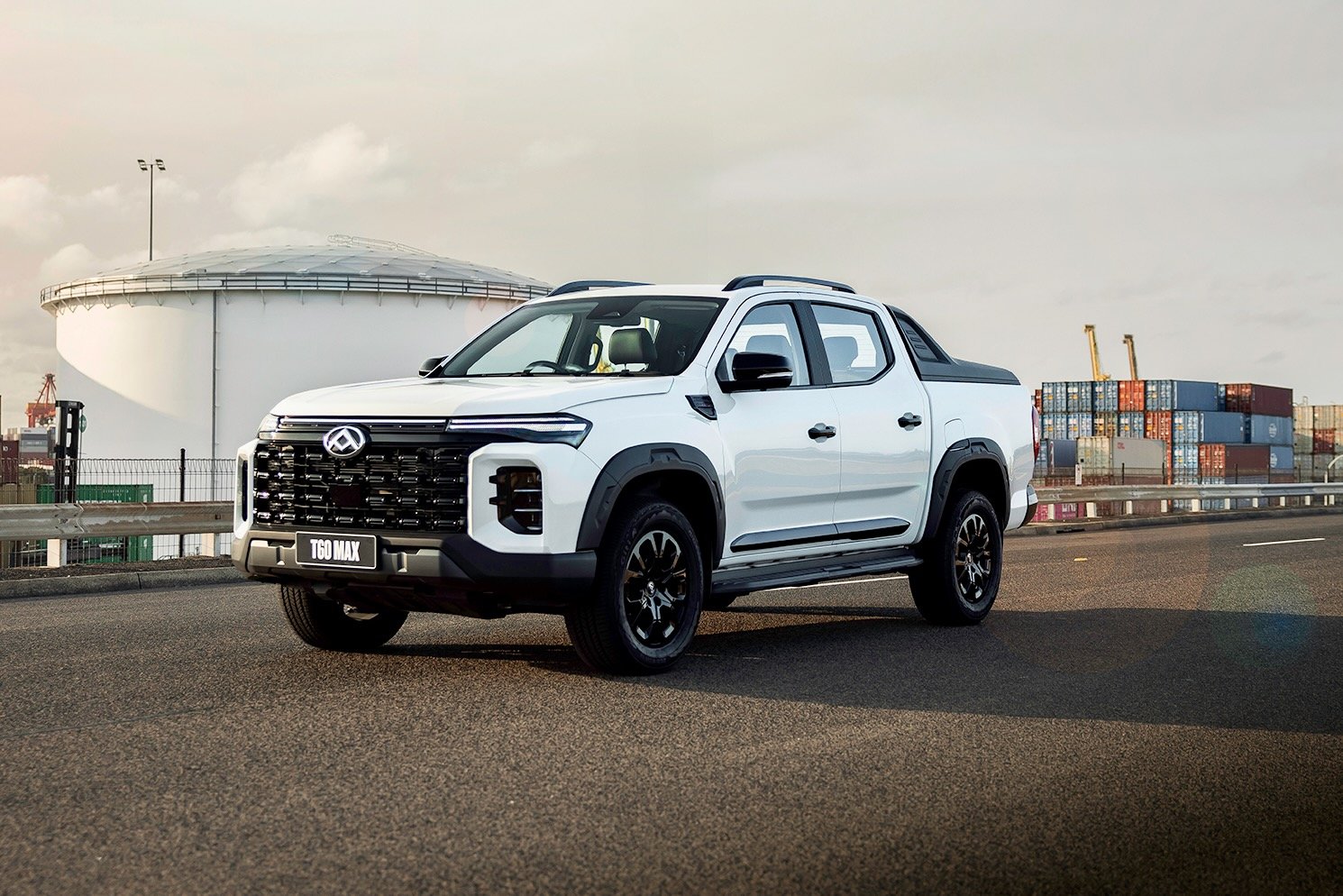
- Price: From $38,990 drive away (Pro) – $45,630 plus on-road costs (Mega Tub Plus)
- Drivetrain/economy/CO2 emissions: 2.0L twin-turbo diesel: 160kW/500Nm, eight-speed auto, 4WD, 7.9-8.1L/100km, 207-214g/km
- Dimensions: 5365-5710mm long, 1900-1926mm wide, 1815mm tall, 3155-3490mm long wheelbase
- Towing capacity/GVM/GCM: 3500kg/3050-3150kg/6250-6350kg
- Warranty/roadside assistance/service intervals: Seven-year/200,000km warranty, five years of roadside assistance, check up at six months/5000km, then annual/15,000km
- Five-year service cost: No capped price servicing
| Driving | |
|---|---|
| Interior | |
| Practicality | |
| Overall value |
Things we like
- Punchy 2.0-litre turbo-diesel engine
- Nicely appointed cabin
- Excellent value for money
Not so much
- No capped price servicing program
- Loud and unrefined engine
- AEB not standard on some variants
The LDV T60 has been on the Australian market for some time now, and has just received another update aimed at keeping it fresh. It received a futuristic new interior, an uprated twin-turbocharged diesel engine and updated styling to give it a more butch exterior look.
LDV also gave the T60 a new multi-link coil-spring rear suspension set up for a greater ride comfort, and it’s definitely more comfortable than the pre-updated model, especially in urban driving. Its new twin-turbo diesel engine boasts healthy figures in the segment: 160kW of power and 500Nm of torque, while it’s mated to an excellent ZF eight-speed automatic transmission.
Value remains a strong suit for the T60, with the top spec Mega Tub Plus available for comfortably
under $50,000 drive away. Features include AEB, adaptive cruise control, lane keeping assistance,
a 12.3-inch screens, a wireless phone charger and black 18-inch alloy wheels.
While the LDV T60 has a long seven-year/200,000km warranty with five years of roadside assistance, there’s no capped price servicing plan so dealers decide how much it will cost to service. That makes it tough for those trying to budget the running costs of their new vehicle.
Overall, the LDV T60 presents an interesting option in the ute segment, particularly if you’re value-focused. While some models are missing important safety tech, its service costs are unknown and its new – admittedly gruntier – twin-turbocharged diesel is unrefined and loud, it still has a lot going for it such as its tweaked design, new dashboard and improved ride quality.
GWM Cannon Ultra
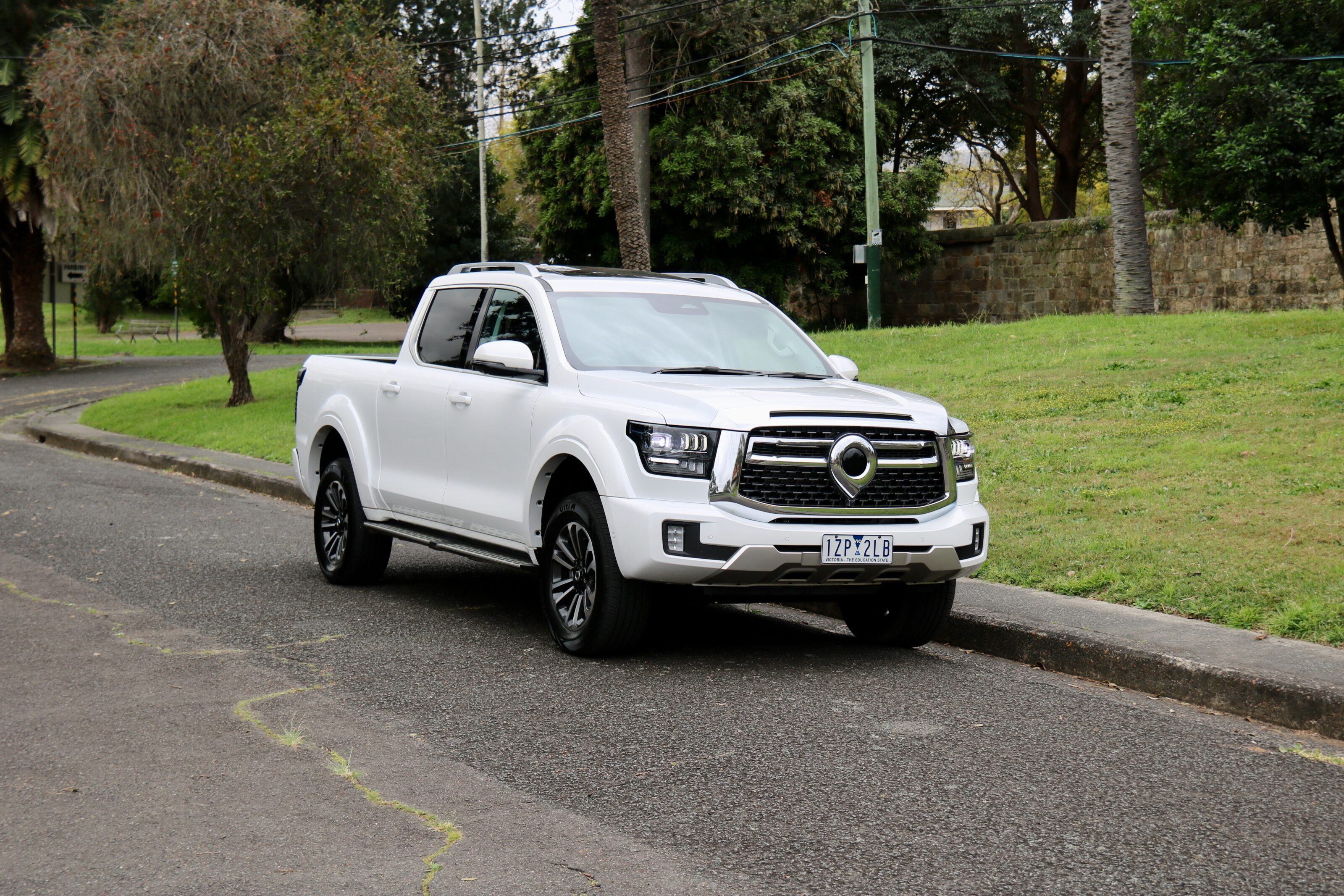
- Price: From $35,490 drive away (Premium 4×2 single cab) to $50,990 drive away (XSR 4×4 dual cab); Ultra from $44,490 drive away
- Drivetrain/economy/CO2 emissions: 2.0L turbo-diesel: 120kW/400Nm, 8-speed auto, 2WD or 4WD, 7.6-8.1L/100km, 199-214g/km; Ultra – 2.4L turbo-diesel: 135kW/480Nm, 9-speed auto, 4WD, 8.4L/100km, 221g/km
- Dimensions: 5416-5703mm long, 1947mm wide, 1884-1997mm tall, 3230mm long wheelbase
- Towing capacity/GVM/GCM: 3200kg -3500kg/3050kg – 3225kg/5590kg – 6300kg
- Warranty/roadside assistance/service intervals: Seven-year/unlimited km, five years of roadside assistance, yearly/first 10,000km and then every 15,000km afterwards
- Five-year service cost: $2065-$2530 ($413-$506 per year)
| Driving | |
|---|---|
| Interior | |
| Practicality | |
| Overall value |
Things we like
- Very well priced across the range
- Wide range of variants
- Surprisingly high quality interior
Not so much
- Stiff ride quality
- Strange service intervals
- Active safety systems need refinement
When the GWM Ute – as the Cannon was known then – arrived on the scene in 2021, it set a new level of value in the ute segment priced from just $35,490. Since then, GWM has updated the Cannon with a pretty serious facelift earlier this year delivering a more powerful engine, an updated interior and more features. Pleasingly though, the Cannon’s value equation is still excellent – the top-spec XSR is only $50,990 drive away.
Having said that, we’d go for the Ultra that’s priced at $44,490 drive away. Equipment on the Ultra still includes synthetic leather trim, a 12.3-inch touchscreen, heated front seats, a wireless phone charger and active safety features such as AEB, adaptive cruise control, lane keeping assistance and a 360-degree camera.
Under the Cannon’s bonnet is either a 2.0-litre or a beefier 2.4-litre four-cylinder turbo-diesel engine, with the 2.0L mated to an eight-speed auto and the 2.4L a nine-speeder, to ensure that you’re always in the power band accessing the full 480Nm of torque. Driving the Cannon is a totally fine experience, with light steering and good refinement, though the ride is too stiff.
Inside the Cannon is a great quality and seemingly luxurious (for the segment) interior with a lot of soft touch materials and good practicality. The 12.3-inch touchscreen is responsive and features wireless phone connectivity, while the rear seat is roomy enough for two adults.
The GWM’s seven-year/unlimited km warranty is one of the best in the ute segment, while its service intervals are a bit off though servicing isn’t expensive. Overall, the GWM Cannon presents as a great value and good all-round ute that deserves consideration if you’re after a bargain.
KGM Musso Ultimate XLV
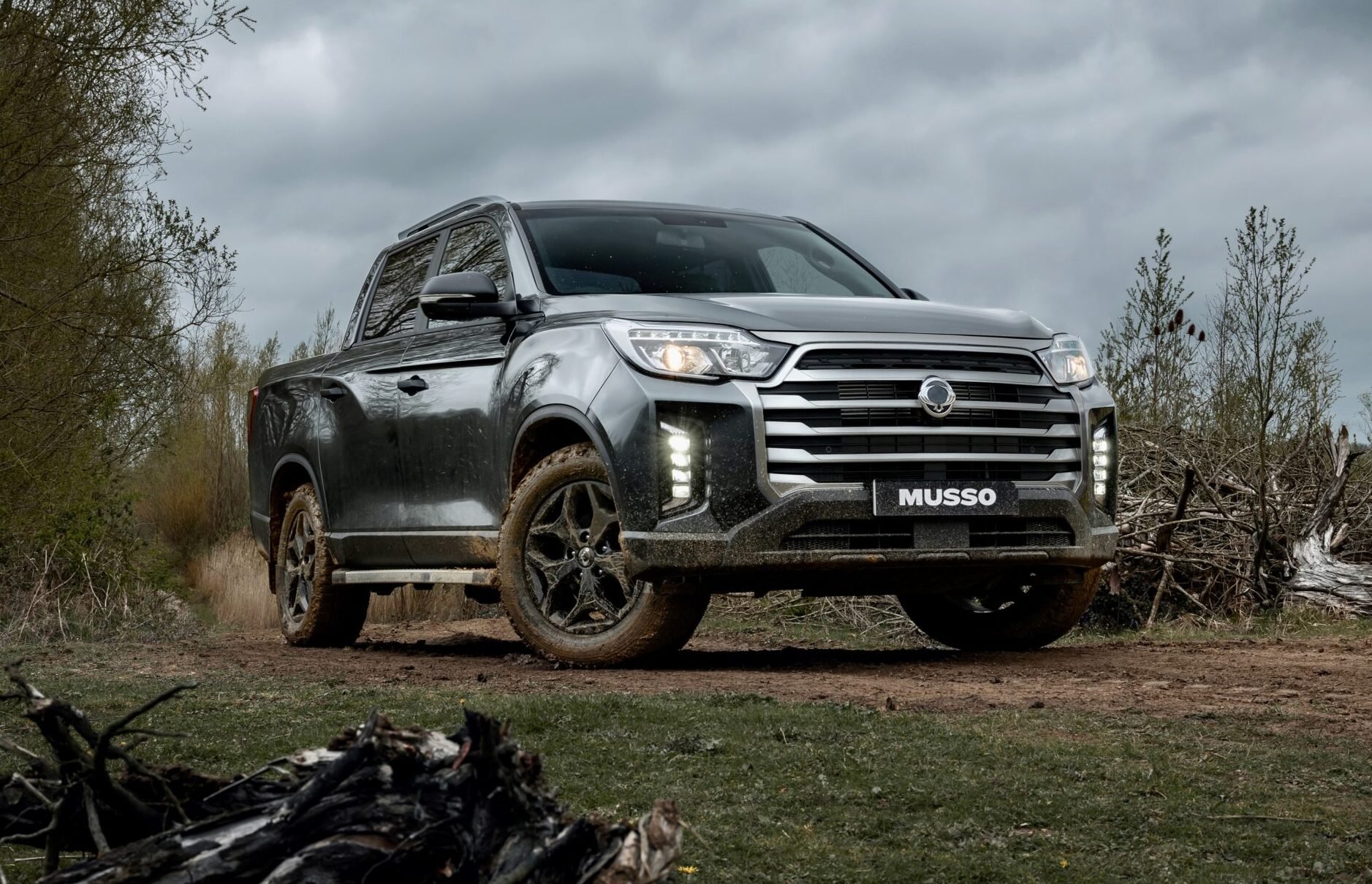
- Price: From $38,000 drive away (ELX) to $44,200 drive away (Ultimate); Ultimate XLV – from $41,500 drive away
- Drivetrain/economy/CO2 emissions: 2.2L turbo-diesel: 133kW/400Nm, 6-speed auto, 4WD, 8.6-9.0L/100km, 226-236g/km
- Dimensions: Up to 5409mm long, 1950mm wide, 1855mm tall, 3210mm long wheelbase
- Towing capacity/GVM/GCM: 3500kg/2880-2980kg/6380-6480kg
- Warranty/roadside assistance/service intervals: Seven-year/unlimited km, five years of roadside assistance, annual/every 15,000km
- Five-year service cost: $2298 ($459 per year)
| Driving | |
|---|---|
| Interior | |
| Practicality | |
| Overall value |
Things we like
- Excellent value for money
- Optional XLV pack adds further capability
- Great warranty and service package
Not so much
- More grunt would be appreciated
- No more manual option
- Outdated lap-only rear middle seatbelt
If you’re looking for a good all-round ute that won’t break the bank, we think that the KGM Musso should be at the top of your test drive list. Not only is it excellent value for money, but it’s also quite comfortable, good to drive, well equipped across the range and spacious on the inside.
Priced from just $38,000 drive away for the entry level ELX, even with the optional extended length XLV package and the optional Luxury Package for features such as a sunroof and even heated outboard rear seats, the top-spec Musso Ultimate doesn’t touch $50,000 drive away. Remember when utes used to be that cheap?
Under the bonnet of the Musso range is a 2.2-litre turbo diesel engine paired to a six-speed automatic transmission and a part-time four-wheel drive system. Making 133kW/400Nm outputs (420Nm in XLV variants), it’s outshone in the grunt department by many rivals – we’d love to see its Rexton SUV sibling’s 148kW/441Nm tune applied, and eight-speed auto fitted – but it’s still quite a willing drivetrain that’s quite refined for the segment.
The Musso isn’t perfect as it only has a lap sash seatbelt for the middle rear seat and there’s no single cab or manual transmission options, but the KGM Musso is a great option if you’re after a value-priced ute that just does its job well. That it’s covered by a long warranty and isn’t expensive to service is just the cherry on top.
Mitsubishi Triton GLX-R
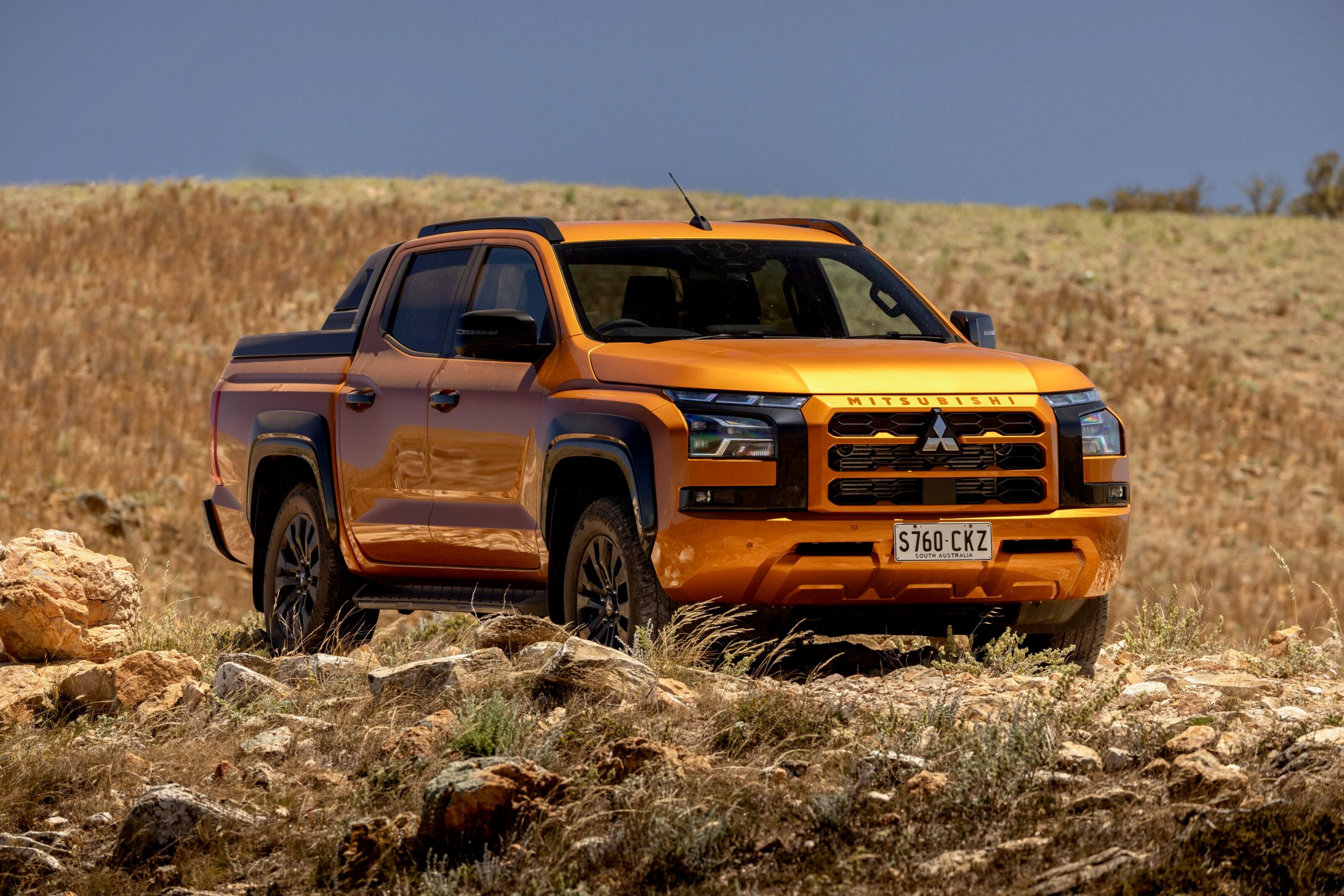
- Price: From $34,490 plus on-road costs (GLX 4×2 Single Cab manual) to $63,840 +ORC (GSR); GLX-R – from $56,490 drive away
- Drivetrain/economy/CO2 emissions: 2.4L bi-turbo diesel: 140kW/470Nm, 6-speed manual or auto, 2WD or 4WD, 7.4-7.7L/100km, 195-203g/km
- Dimensions: Up to 5320mm long, 1865mm wide, 1795mm tall, 3130mm long wheelbase
- Towing capacity/GVM/GCM: 3500kg/3070kg – 3200kg/6210kg – 6250kg
- Warranty/roadside assistance/service intervals: Five-year/100,000km, extendable to 10-years/200,000km, 12 months of roadside assistance with each dealer service up to four years in total, annually/15,000km
- Five-year service cost: $2545 ($509 per year)
| Driving | |
|---|---|
| Interior | |
| Practicality | |
| Overall value |
Things we like
- Grunty bi-turbo diesel engine standard across the range
- GLX-R is great value for money
- Good refinement in the segment
Not so much
- More expensive than it used to be
- Manual only on base models
- No hybrid drivetrain yet
Released in 2024, the current shape Mitsubishi Triton received a big upgrade into its current generation to make it more modern and feature-rich, but also more capable and practical than ever before.
Under the bonnet of every Triton model is a new bi-turbo 2.4-litre four-cylinder diesel engine that outpunches rivals such as the Isuzu D-Max while also giving the Triton the industry standard 3500kg braked towing rating. On the road, the new Triton is a big improvement over the previous model, while giving a more solid road feel than some rivals. Its new engine is refined as well, especially against the loud 3.0L unit in the D-Max/BT-50 twins, though it would be great to see a plug-in hybrid variant as Mitsubishi is a pioneer in the PHEV space.
We’d be choosing the mid-spec GLX-R that’s currently available for a very reasonable $56,490 drive
away and features equipment such as a leather steering wheel, automatic climate control, a 9.0-
inch touchscreen with wireless smartphone mirroring and a full safety suite including a 360-degree
camera, AEB, adaptive cruise control, lane keeping assistance and blind-spot monitoring.
The cabin of the Triton is a massive improvement on the previous shape with better quality, more tech – a 9.0-inch touchscreen with wireless smartphone mirroring is standard across the range – and more practicality, with more rear seat space than the previous model.
While the standard warranty is a five-year/100,000km job, if it’s kept serviced at a Mitsubishi dealership after that, up to 10 years of warranty is available and its five-year service cost averages out to a reasonable $509 per year. Add in its big improvement over the previous model, its comfortable driving experience and grunty engine, and the Triton is a worthy ute option.
Škoda has officially rolled out its all-new flagship model, the Superb Sportline, in both sedan and wagon variants, set to arrive in Australian showrooms this June.
Built on the advanced MQB Evo platform, Škoda says the new Superb benefits from enhanced chassis rigidity, resulting in more confident handling and improved ride comfort. The cabin has been designed with passenger serenity in mind, delivering a quiet, luxurious environment, while continuing Škoda’s priorities of space and functionality.
Under the bonnet, both body styles boast a 2.0-litre turbocharged petrol engine with all-wheel drive, producing 195kW and 400Nm of torque. The Sportline Sedan accelerates from 0–100km/h in just 5.6 seconds, while the Wagon follows closely at 5.7 seconds. The performance credentials are complemented by a 7-speed DSG transmission, Dynamic Chassis Control (DCC), and progressive steering, ensuring a spirited yet refined drive.
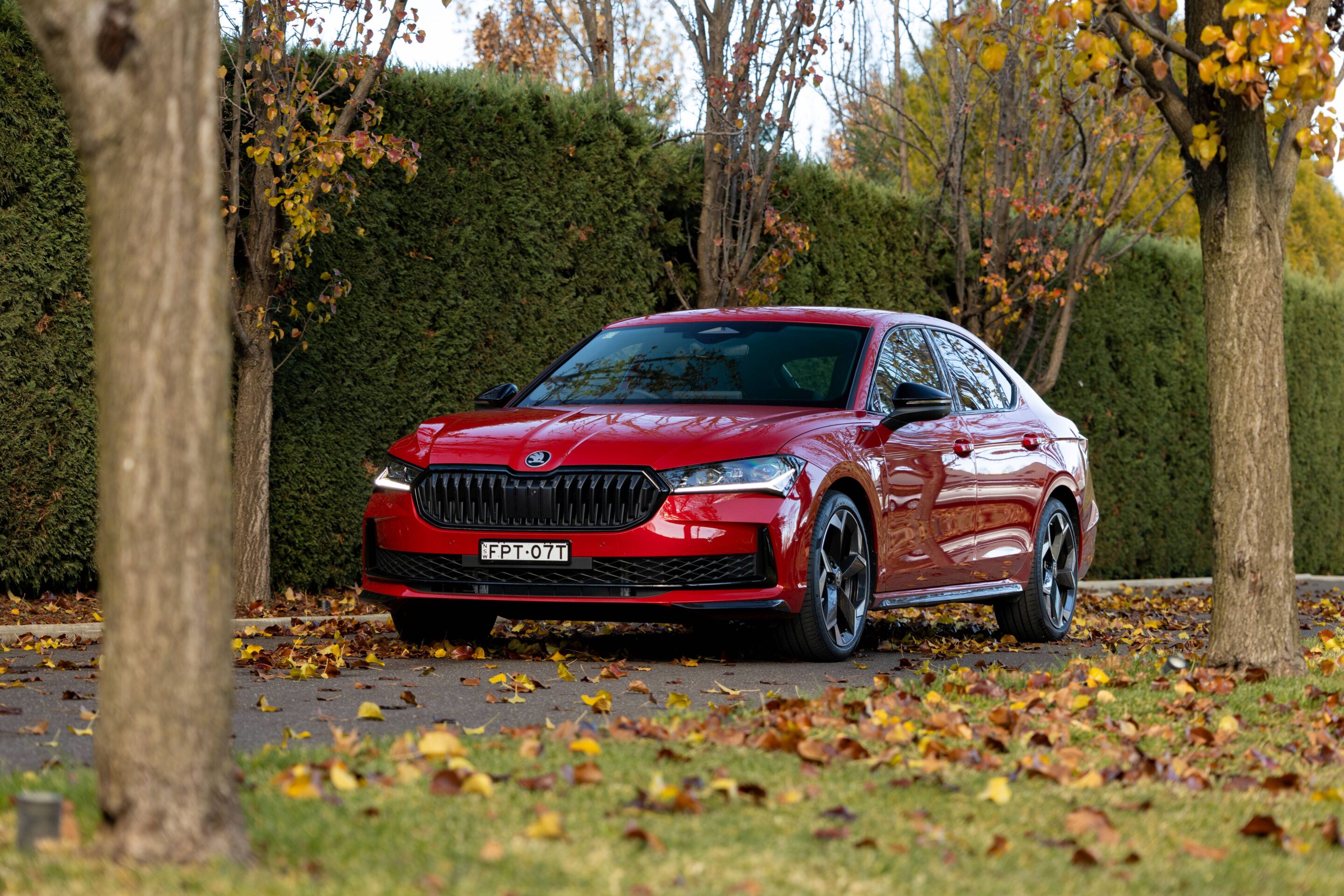
Starting at $67,990 RRP for the sedan and $69,690 RRP for the wagon, Škoda also offers Škoda Choice (Guaranteed Future Value) financing, with weekly payments from $198 and $201 respectively.
Standard features include 19-inch ‘Torcular’ alloy wheels, a 13-inch infotainment screen with navigation and wireless smartphone integration, a 10-inch Virtual Cockpit, CANTON premium audio, tri-zone climate control, and massage-equipped front sports seats. Safety is equally comprehensive, with Škoda’s Travel Assist, 360-degree cameras, and 10 airbags included as standard.
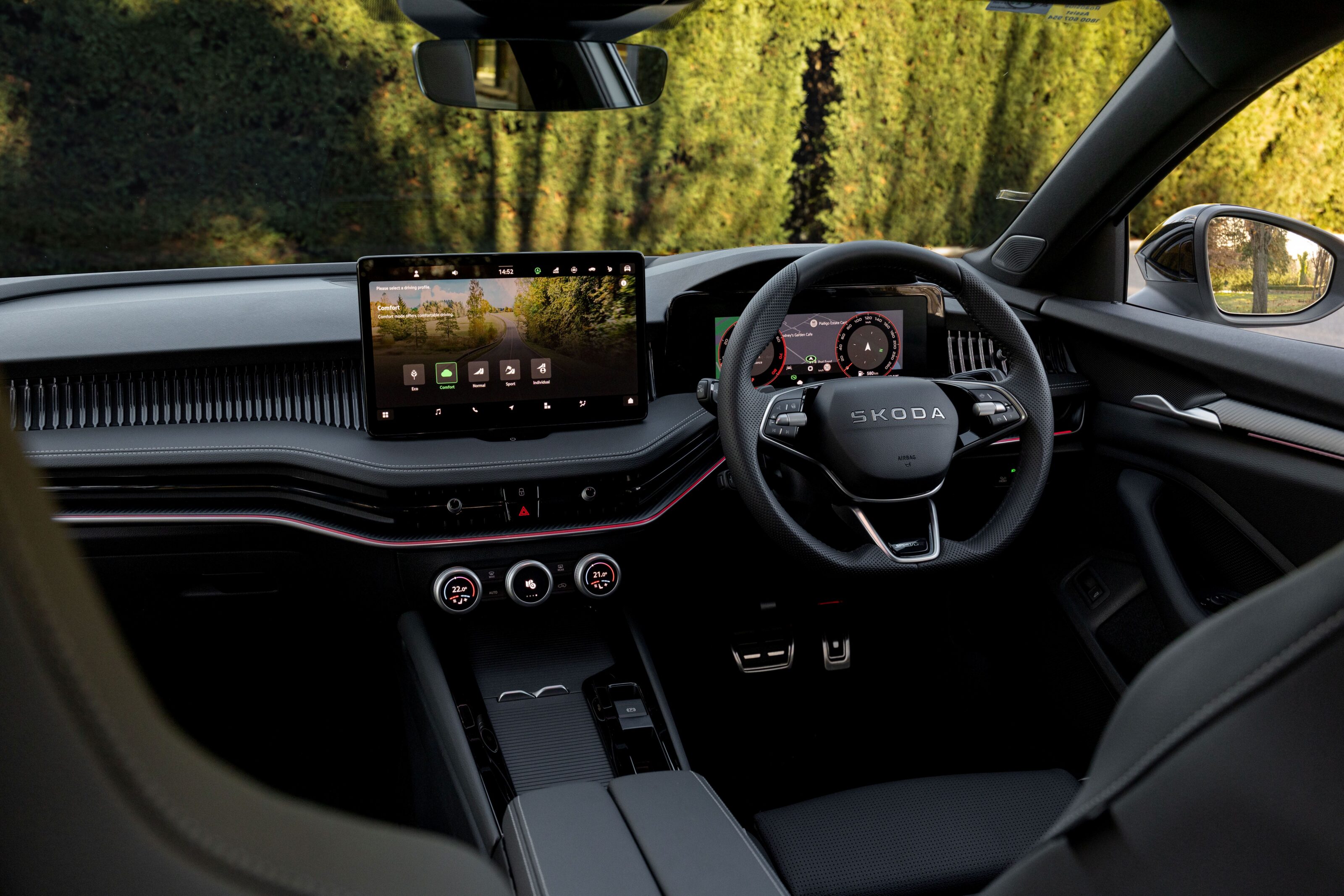
The Sportline Wagon builds on the Sedan’s practicality, expanding boot capacity from 589L to 634L (or up to 1,920L with the rear seats folded). Additional features include roof rails, a variable boot floor, and an optional panoramic sunroof.
Škoda Australia Product Manager Aline Carrullo says the new Superb aims to attract a growing base of discerning customers. “It’s designed for those who value comfort, intelligent design, and performance across all road conditions,” she said, citing the Superb’s competitive pricing and extensive standard equipment.
The new Superb also comes with a 7-year unlimited kilometre warranty.
Try to be all things to all people and, more often than not, you’re in the express line to losing your identity. When we first heard of the new plug-in hybrid Mercedes-AMG E 53, it sounded as if Affalterbach was teasing us with a car that promised a bit of everything for everyone, as long as your pockets were deep enough.
It could generate a monstrous 450kW power output, the same as the last E 63 S with its powerhouse 4.0-litre twin-turbo V8. But where that car returned a combined fuel figure of 9.3L/100km, this new E 53 AMG has just 18 per cent of the old car’s thirst fuel at the bowser – a claimed 1.7L/100km. It’s also bigger, better equipped, safer, and around $50k cheaper than the last time the E 63 was in Aussie showrooms. Where’s the catch?
The first thing to note is the unwieldy full name of the vehicle, the Mercedes-AMG E 53 Hybrid 4Matic+, and the hybrid part is key, because as well as being all-wheel drive, this is a plug-in hybrid. As we all know, this means having to recharge it to achieve those fuel consumption figures and it entails carrying a round a battery pack. Where the old E 63 weighed 1880kg, this new E 53 tips the scales at a gut-busting 2390kg. So temper those expectations – this car is a very different proposition to the old E 63.
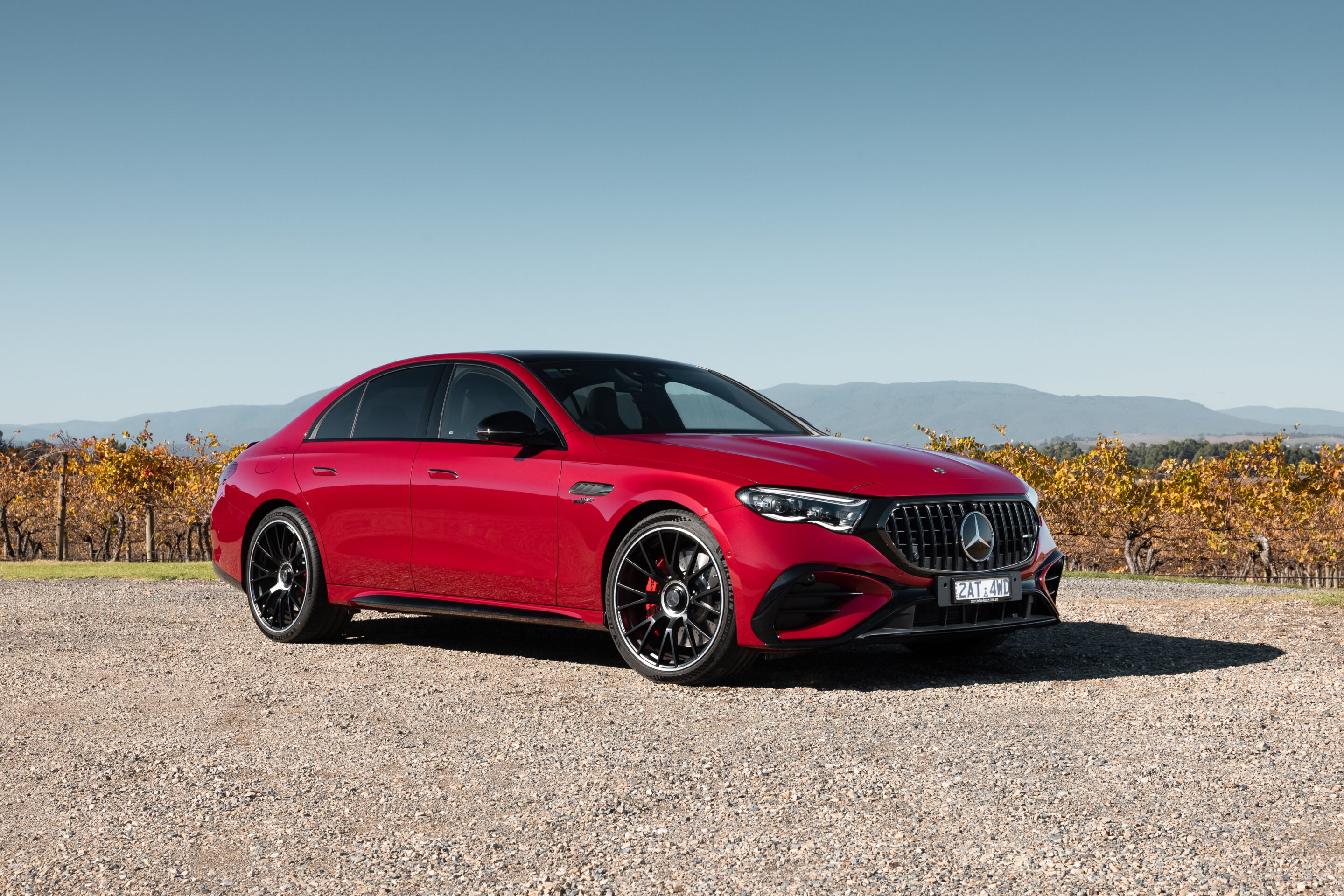
I hold none of that against AMG. If this is the price of complying with increasingly stringent emissions legislation, then so be it. Comparing its weight against the old car is merely a method of indicating that this big sedan offers a decidedly different take on things. Wheels readers are a nuanced bunch and realise that while lighter cars are nearly always more fun, the old figures that we’d store in our heads regarding what does and doesn’t represent a heavy car in any particular class probably need a rethink.
I’m sitting by the side of the road at Toolangi trying to take stock of what I’ve just driven. To be honest, my emotions are shuttling between confusion, disappointment and a kind of acceptance. I’d had my expectations managed by a trusted colleague who had driven the car and had muttered “Just don’t expect it to be a C 63,” and even taking that into account, I was still somewhat nonplussed at the way the E 53 tackled one of my favourite stretches of road.
Of course, I’d instantly dialled almost every available setting to maximum angry and set into it. Only in this way would I find out just how far shy of Mercedes’ best sport sedans it would come on the truly challenging Chum Creek Road. Quite a long way was my initial assessment. These big AMGs were never particularly long on subtlety, but in Sport+ mode, so many of the E 53’s calibrations just seemed slightly off for performance driving.
Bully the car and the transmission shocks the driveline, the spiky throttle map pours everything on too early as you pick up the gas, inducing understeer, and there’s an unsettling flywheel effect that limits the effectiveness of engine braking. Once you do get on the picks, the car’s initial default to re-gen braking doesn’t offer the bite and aggression you want in those first couple of centimetres of pedal travel. It’s a car that’s hard to build any sort of rhythm or flow with. I didn’t know quite what to make of it.
The longer I sat there, the more it dawned on me that just as I’d need to update a few of my mental yardsticks around vehicle weight, I’d also need to make corresponding changes to what I could reasonably expect of a 2.4-tonne vehicle on a poorly-surfaced road that would most enjoyably be tackled in a hot hatch. Was I the problem here, not the car? So I tried again.
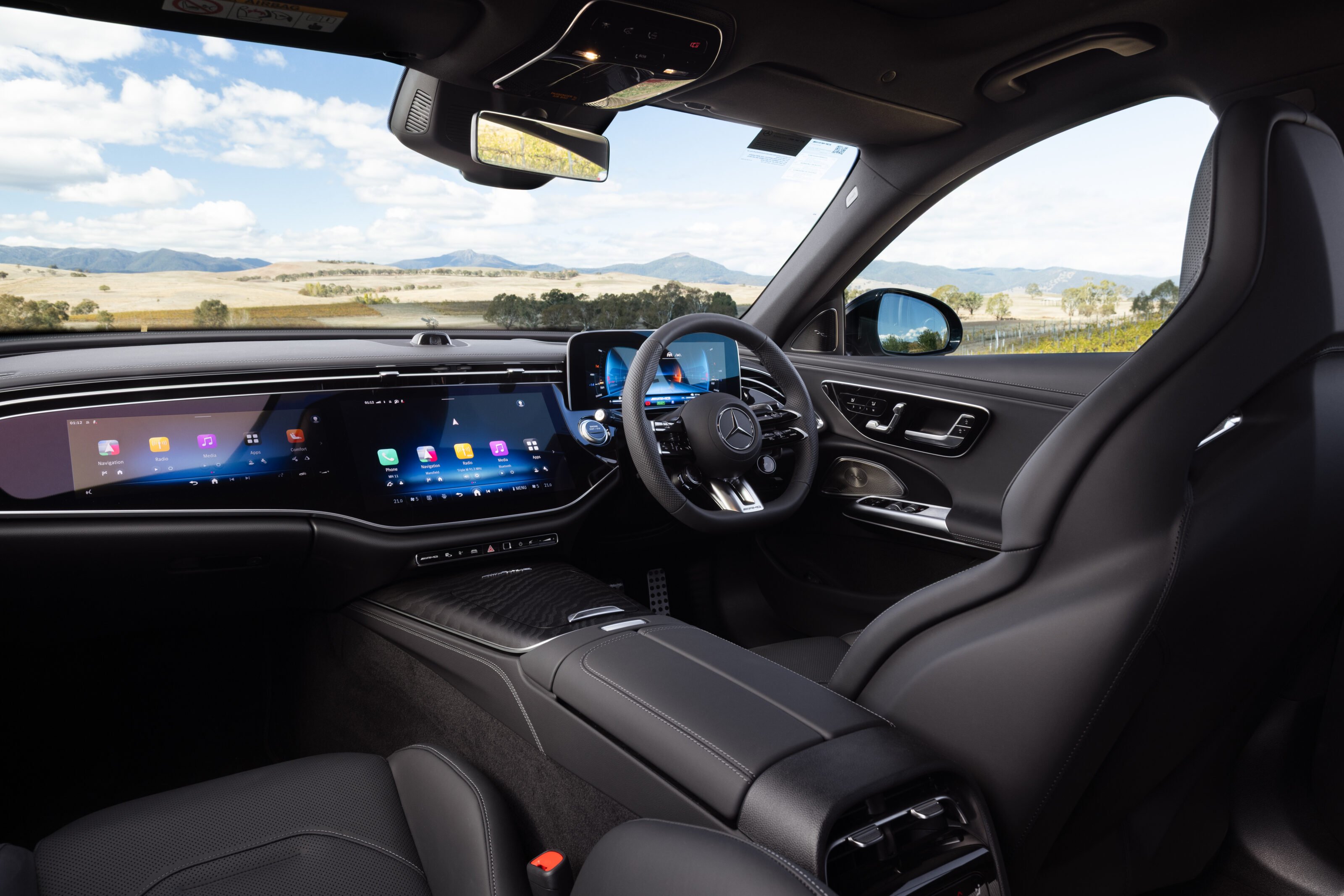
Instead of driving the car as if it’s on a quali lap, I dialled back the drive mode into Sport, adjusted my attitude and set off again. It was a revelation. Driven at more reasonable fast road speeds, the E 53 coalesced beautifully. I was able to appreciate the heft of the steering, the agreeable suppleness of the ride, the implacable power-down traction, the huge reserves of torque available and the way that the sedan could cover ground barely any slower once you’d worked out how to get the car into its happiest operating window. Instead of feeling frustrating, the E 53 suddenly felt willing and amenable. Endearing, even.
Mercedes people would always point to the fact that the 53 and 63-badged AMG models had quite different philosophies, and there’s some truth in that. Yet this straight-six 3.0-litre hybridised powerplant is, if rumour is to be believed, set to be plumbed into the nose of the next generation C 63 AMG after legions of buyers turned their backs on the hi-po four-pot version. In order to succeed there, it’d need to wick up the attitude quite considerably, but that’s certainly not beyond the talents of AMG’s engineers.
This M256M powerplant is a fundamentally strong engine. After 177km of mixed driving today, the fuel gauge is reading 7.6 litres per 100km, and it’s also showing battery usage of 10.1kWh per 100km. The spec sheet claims that the 21.2kWh useable battery (with 7.4kWh buffer) will cover 100km, but in real world conditions, you should probably bank on around 75km if you force the vehicle into EV mode and tickle it along. Do bear in mind that you’ll then be driving a heavy car with just 120kW at its disposal, so don’t expect any Tesla-style acceleration. The electric motor is built into the 9G-Tronic torque converter transmission and can weigh in with an instant boost of 480Nm, lifting peak system torque to 750Nm.
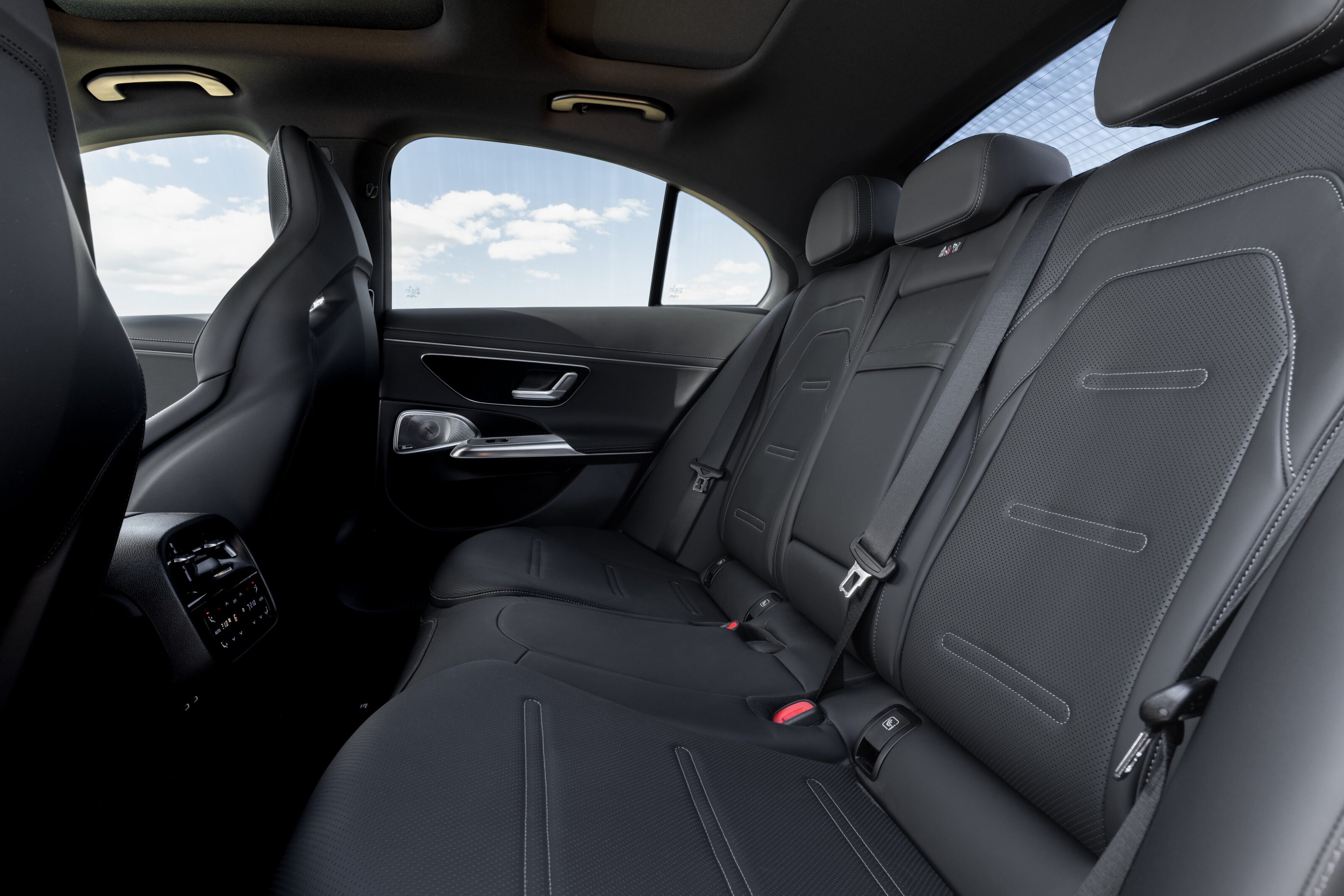
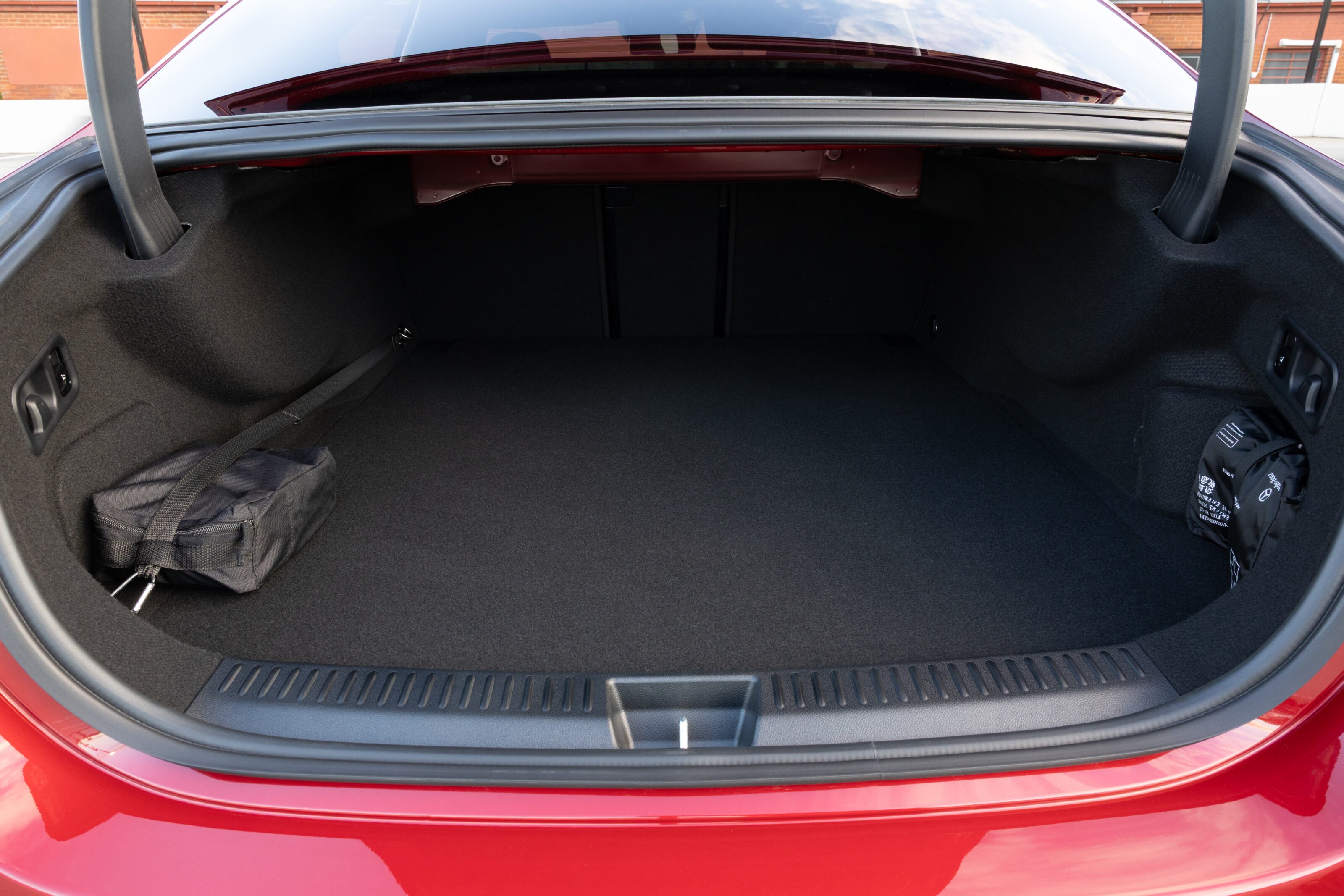
The plug-in hybrid system gives with one hand and takes with the other. Pop the boot open and you have a mere 376 litres of space available to you versus 540 litres in an E 300. It’s fairly leisurely in its charging rates too. The car comes with an onboard 11kW onboard AC charger, which translates into a charging time of over two hours. That’s no problem if you’re plugging it in overnight, and DC charging on public chargers is capped at 60kW, which means you’ll be there 20 minutes to top up from 10 to 80 per cent. You’ll probably get the stink eye from Taycan drivers if you’re doing so on an ultra-fast charger.
The E 53 always starts in Electric mode, but meaningful throttle demand will fire up the internal combustion engine. A stealthy getaway is great for early starts or late arrivals home without waking the neighbourhood. There’s also an effective battery hold function that allows you to maintain what battery percentage you have, for instance if you plan on driving around a city centre and don’t want the engine firing up, although perhaps the percentage of AMG’s Australian customers who might value this function hovers somewhere around zero.
One thing Australian AMG buyers can be counted on is wanting a stack of equipment and, unlike most other markets, E 53 AMGs for Down Under come with the AMG Dynamic Plus pack as standard. This comprises the composite braking system with six-pot fixed calipers up front biting down on 390mm discs. There’s an electronically controlled rear differential, dynamic engine mounts and a launch control facility that will fire the car through 100km in just 3.8 seconds without undue drama, pulling full power and torque from the engine and motor.
Now, given what we’d said earlier about the E 53 AMG being happier when its not being pushed hard up a horrible stretch of road, it would be understandable if potential buyers went through the mental process of wondering whether the simpler and lighter $132k E 300 might be a more sensible purchase. Drive the two back to back, it’d take somebody relatively uninterested in engineering to choose the four-cylinder E 300. I’ve long maintained that an E-Class feels at its best with a sextet of cylinders up front and the E 53 AMG does nothing to change that particular opinion.
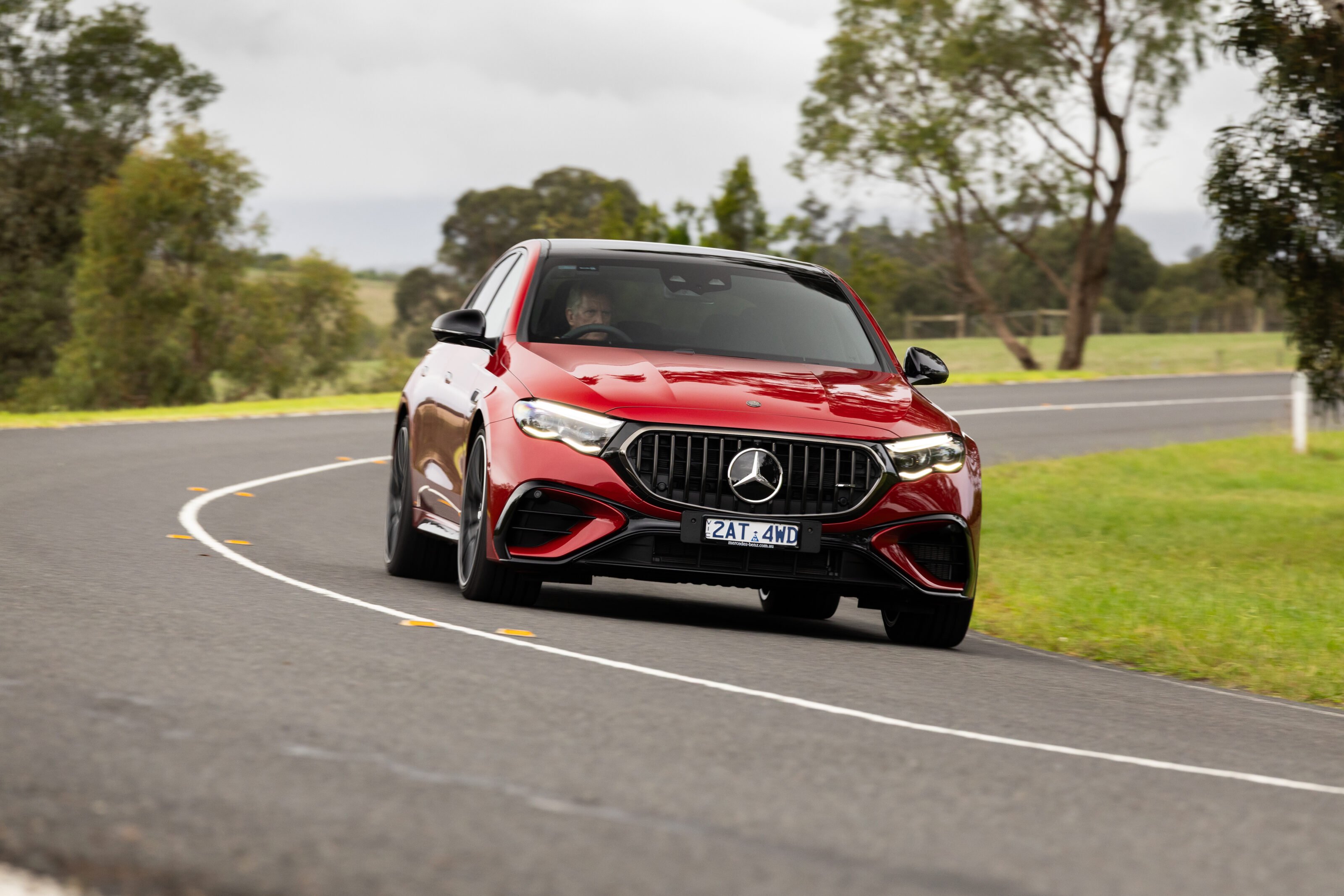
Away from the twists, compressions, ramps and mendacious cambers of Chum Creek, there’s an engaging pliability to the E 53’s ability to adapt to conditions. True, it always moves like a slightly musclebound heavyweight boxer in an expensive suit, and you’re aware that there’s a lot of unsprung masses and serious rubber on the ground – in this case big Michelin Pilot Sport 4S hoops, 265/35 ZR21 up front and 295/30 ZR21s at the rear. That said, it’s otherwise impressively refined, with double-glazing up front helping to temper the sound of any wind rush over the mirrors and A-pillars.
There’s a languid, long-legged quality to it when you snick into Comfort mode. The two-valve adjustable dampers allow enough malleability to iron out surface imperfections without ceding too much in overall body control. The longer you spend with the E 53 AMG, the more its sheer versatility starts to win you over. I remain to be convinced by the sheer complexity of its various drive selection systems. While it’s great that you have the facility to tailor the suspension settings, the stability control modes, the transmission, the exhaust sound, the throttle response and the AMG Dynamics program, it’s all a bit much for a car of this ilk.
Mercedes probably needs to have a sit down and think about how it can more coherently deliver choice without such confusion. In effect, the problem is that there are three ascending strata of functionality here, namely Individual settings for functions like ESP, with the AMG Dynamics settings up next and the three drive modes at the top of the hierarchy, yet they’re presented with no such distinction.
It’s hard to see what this tangled knot of functionality delivers over and above a customisable Individual drive mode (or two), which is the solution most of Mercedes’ rivals have settled upon.
We stop for lunch and it’s hard not to admit that the E 53 is a damn good-looking thing. Its stance is near perfect, the gently bulging arches hinting at its potential, and there’s just the right amount of space above the tops of its tyres to give it a potent, hunkered mien. This car rides on the optional 21-inch forged alloys, although 20-inch rims are standard.
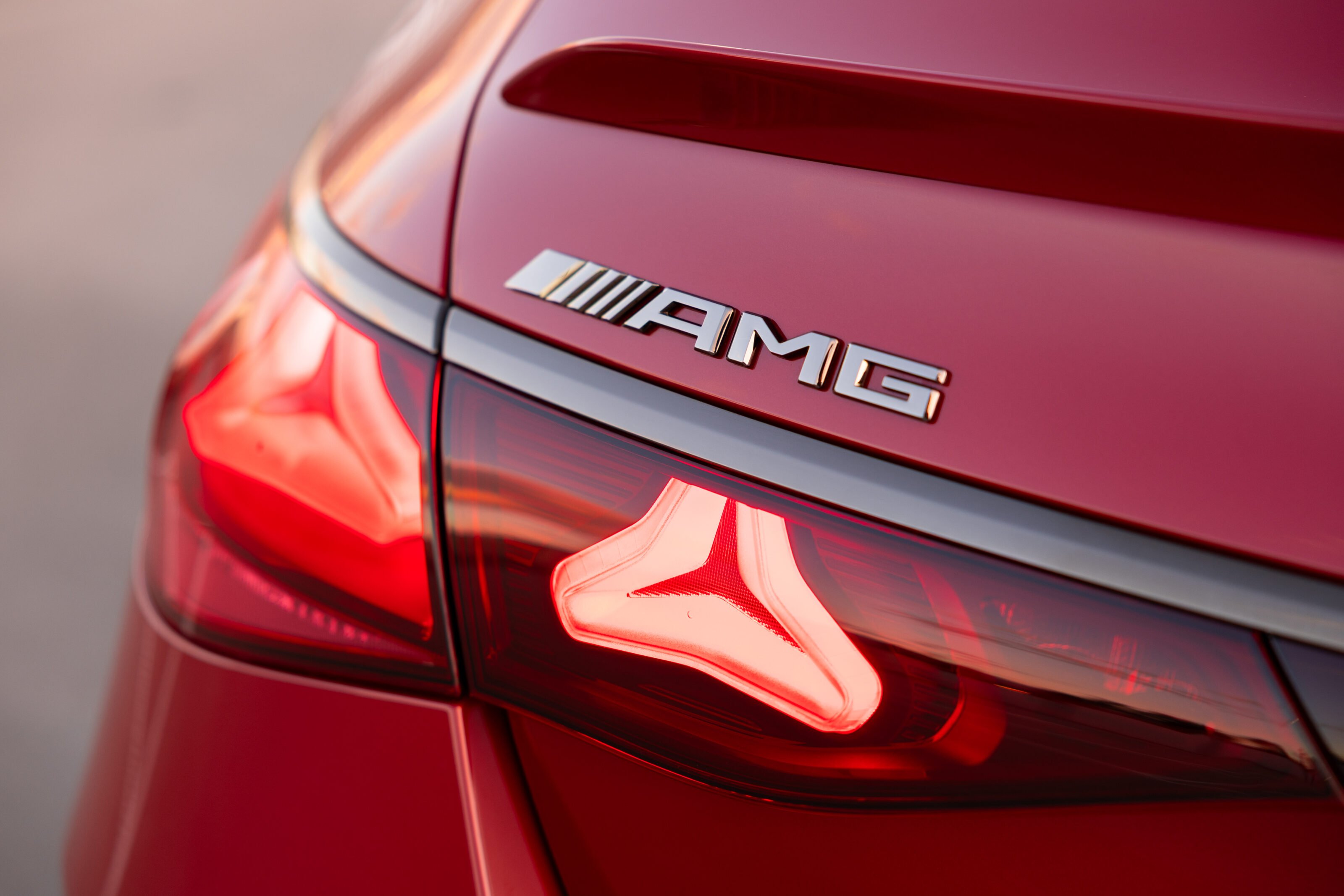
Other AMG-specific touches include the vertically slatted and border-illuminated grille, front and rear aprons, 11mm wider fender flares, a rear lip spoiler and subtle side skirts. An auxiliary cooler peeks from the central lower inlet of the front clip, and you’ll notice that there’s an external opening to help cool and depressurise the front wheel arches. There’s also a pair of 1.1 million pixel adaptive matrix headlamps. It’s not overt or showy but by the same token you’re not about to mistake this one for an E 300.
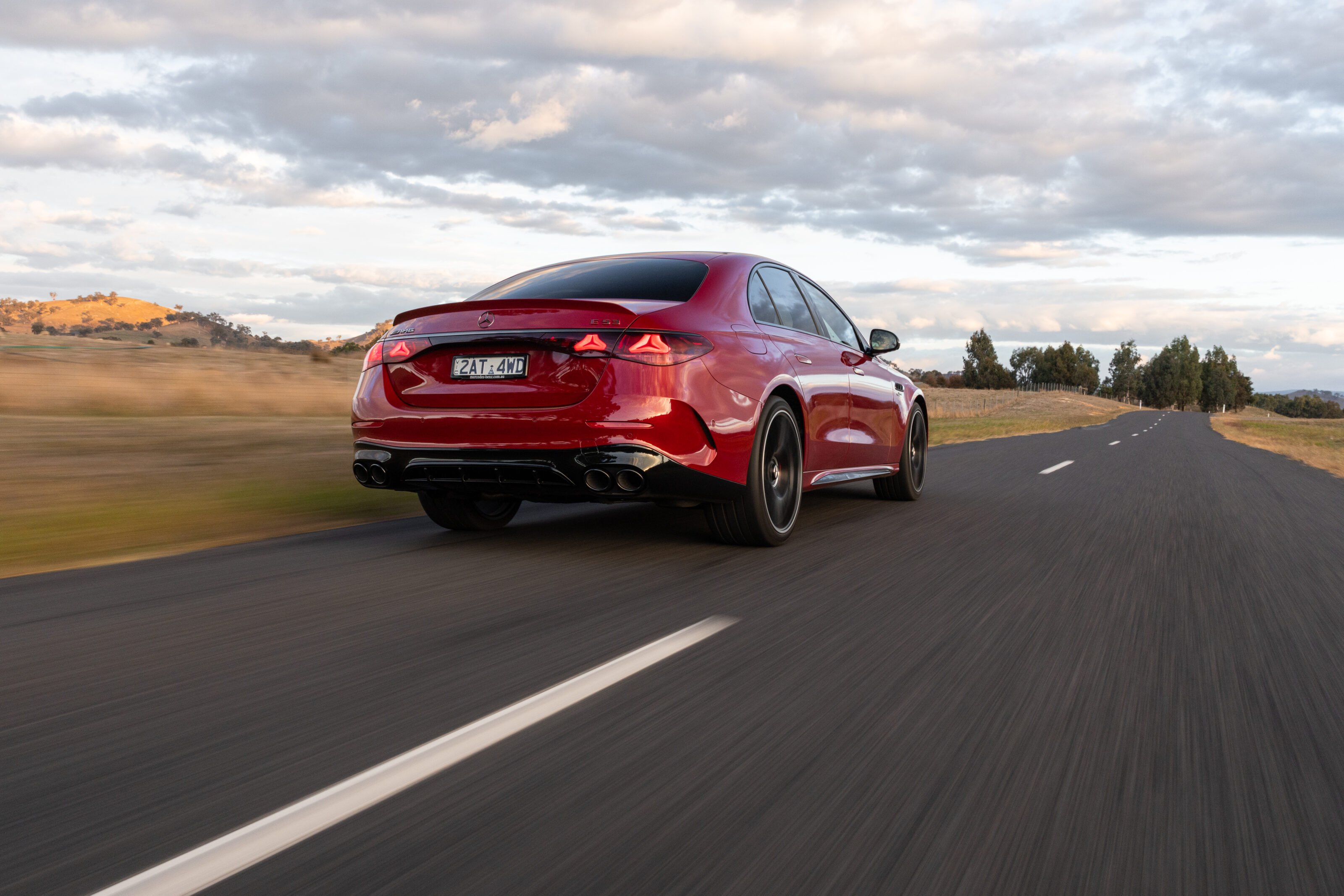
The cabin’s come in for quite a refresh too. The dark, open-pore ash wood makes a welcome change from piano black trim, and this car features the optional AMG performance seats, trimmed in soft nappa leather. The dash is dominated by the three integrated screens of the Hyperscreen which, in this instance, also includes a 12.3-inch passenger screen which can be rendered invisible to the driver such that the front passenger can watch movies and link Bluetooth headphones if they really want to be utterly unsociable.
The central 14.4-inch infotainment screen works slickly and information is generally well presented. The icky flexible strip of buttons beneath and the plastic haptic sliders that you’ll end up using to control functions like stereo volume could use a rethink though. The 17-speaker Burmester stereo brooks little in the way of complaint, from me at least, although the seat vibrator, which zizzes in time with the music earned an instant and strident no. At least you can switch it off.
Encouragingly, the changes in cabin trim materials for this E 53 not only improve the ambience over lower models, but the fit seems better too. Mercedes still has a little way to go in order to re-attain its once peerless reputation for cabin integrity, but the company is making some significant strides in the right direction. Rattles and squeaks from the sybaritic E 53 are noticeable by their absence.
Naturally, Mercedes offers a a whole host of optional packages for the car, from the dark look AMG Night Package ($3000) to the AMG Carbon Fibre Package ($6000), which finishes the centre stack, steering wheel, mirror caps and rear spoiler in glossy open weave carbon. The AMG Performance Seat Package is $5000, the Energizing Package Plus is $5300 and the Edition One package was $29,990 but the limited allocation of this all-encompassing option package has long since been accounted for. Regardless, it’s relatively easy to blow through that $199,900 asking price.
Start ladling gear onto the E 53 and it gets uncomfortably close to the orbits of V8 powerhouses like the $259,000 BMW M5 or the $255,000 Audi RS7 Performance, both of which offer arguably a more immersive driving experience. But to view these cars as natural competition for the E 53 is to misunderstand its role in the greater scheme of things. Yes, both the BMW and the Audi will deliver a more potent hit of adrenalin, but the beauty of the E 53 is that it has some very beguiling light and shade to its personality that’ll hook you in time and again.
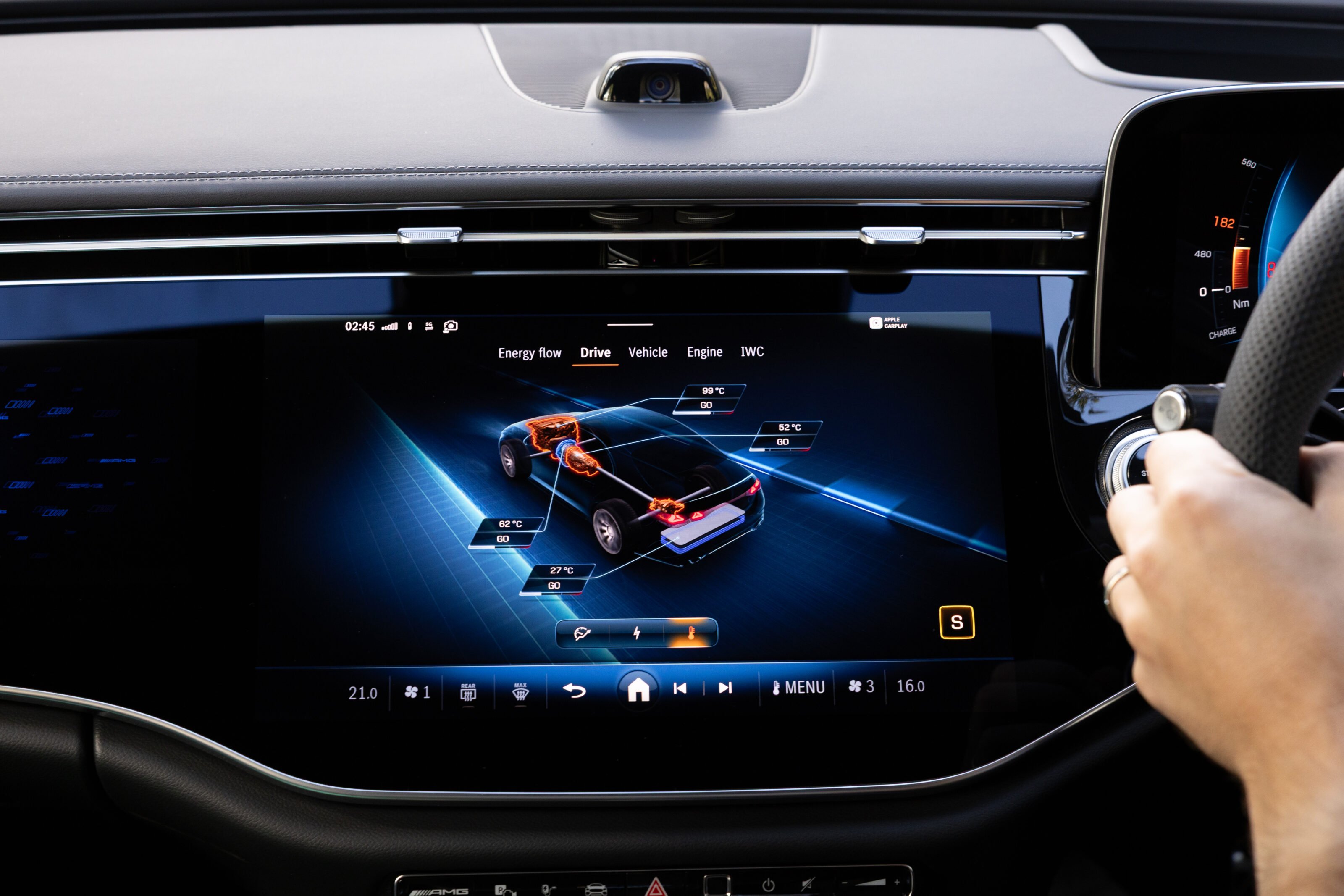
That’s not damning it with faint praise. There’s a simple equation that determines how much long-term enjoyment you’ll get from a sporting car and it’s how often you use it multiplied by how much fun it is. Because the Mercedes-AMG E 53 is the sort of car you’d relish driving every day in virtually very condition, it more than stacks up against these more expensive but more singular – and more wearing – rivals. The romantic in me would love to see Australia get a wagon version of the E 53 as a cerebral antidote to all of these overblown super-SUVs, but the realist knows that the order bank would likely have tumbleweed blowing through it to the sound of crickets.
A 480kW plug-in hybrid isn’t the complete answer to Mercedes’ vexed voyage through the minefield of emissions legislation, but it’s a smart and timely aid to the company’s navigation. Last year, of the 1,237,287 new vehicles sold in Australia, only 7.4 per cent of them were purely powered by electricity. In other words, 92.6 per cent of you said no thanks to a pure EV. Mercedes has felt the sting of this hard, having gone large on a seven-vehicle EV line up for Australia that has, for the most part, failed to land too many telling blows.
The E53 offers electrification on Australia’s terms. It delivers smarts, capability and huge power and torque; all in a package that’s never cowed by the sheer scale of this country’s geography. It just quietly and effectively works. What it perhaps lacks is that clincher; that absolute billboard reason to separate you from your $200k. If you can look past that and see its formidable blend of talents for what they are, it’s unlikely that you’re going to be disappointed.
Straight Talking
Although the system output for the E 53 AMG is rated at 450kW and 750Nm, the internal combustion engine alone generates the lion’s share of that figure. It weighs in with 330kW and 560Nm, the latter also having a transient overboost up to 600Nm for up to ten seconds. It follows a tradition of Merc straight sixes that included the M104E36 fitted to the 1993 C 36 sedan, the first model truly co-developed between Mercedes and AMG. The inline six layout went on hiatus for Mercedes back in 2000 with the demise of the C 43’s M113.944 unit, finally being revived in the 2017 E 53.
Specifications
| Model | Mercedes-AMG E 53 Hybrid 4Matic+ |
|---|---|
| Engine | 2999cc inline-6, DOHC, 24v, turbo, PHEV |
| Battery | 28.6kWh (21.2kWh useable) |
| Max Power | 450kW |
| Max Torque | 750Nm |
| Transmission | Nine-speed auto |
| L/W/H/WB | 4959/1880/1472/2939mm |
| Weight | 2390kg |
| 0-100km/h | 3.8sec |
| Fuel economy | 1.7L/100km (NEDC) 7.6L/100km (as tested) |
| Price | $199,990 |
Contenders
Winner: RAM 1500
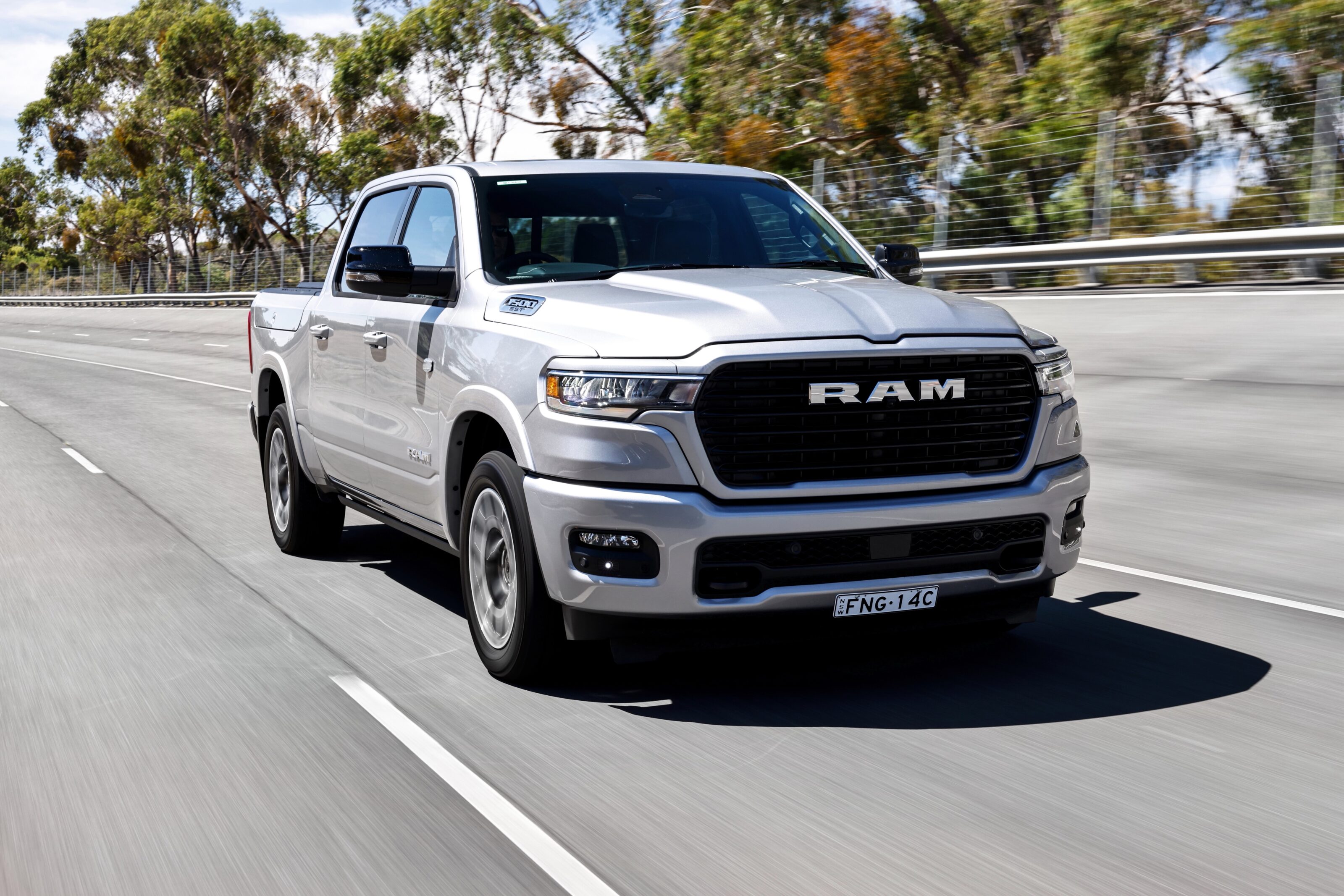
- Price: From $141,950 plus on-road costs (Laramie Sport) – $159,950 +ORC (Limited)
- Drivetrain/economy/CO2 emissions: 3.0L turbo-petrol inline six: 313kW/635Nm (Standard Output) – 403kW/707Nm (High Output), eight-speed auto, 4WD, 10.7-11.8L/100km, TBC CO2
- Dimensions: 5916mm long, 2057mm wide, 1971mm tall, 3672mm long wheelbase
- Towing capacity/GVM/GCM: 4200kg (High Output) – 4500kg (Standard Output)/3505kg (High Output) – 3521kg (Standard Output)/7285kg (High Output) – 7711kg (Standard Output)
- Warranty/roadside assistance/service intervals: Three-year/100,000km warranty, three years of roadside assistance, annual/12,000km
- Five-year service cost: No capped price servicing
| Driving | |
|---|---|
| Interior | |
| Practicality | |
| Overall value |
Things we like
- New turbo six punches hard
- Luxurious and spacious cabin
- Excellent ride quality
Not so much
- No capped price servicing
- No cheaper model yet
- Inline six doesn’t sound as good as Hemi V8
Believe it or not, but the Ram 1500 was actually the first big American truck to be offered in Australia in the modern era when local conversions to right-hand drive commenced in 2018. Since then, the Ram 1500 has received a big upgrade with updated styling, more standard features and a powerful new turbocharged 3.0-litre petrol inline six.
The new engine has been a point of controversy for buyers, mostly because the Hemi V8 that the Ram used to use is a legendary engine. The company has promised to revive it in the US for 2026, under the marketing strapline ‘Symbol Of Protest’, but it’s yet to be locked in for Australia. Even if it does arrive here, it’ll likely be a little shy of the Hurricane twin-turbo inline-six’s massive 403kW of power and 707Nm of torque (that’s in High Output form but the Standard Output still makes a huge 313kW/635Nm).
Inside the Ram 1500 range is a cabin that’s much better quality than its rivals, with lots of leather-covered surfaces and clever storage solutions for life’s trinkets. The centre screen measures a huge 14.4-inches in size, while even the front passenger gets a separate screen with headphones so that they can watch a movie.
Like its Chevrolet Silverado main rival, the Ram 1500’s service and warranty campaign could be improved – at just three years/100,00km of coverage, it’s short compared to Ford and Toyota rivals, while there’s no capped price servicing so who knows how much it’ll cost to service. But regardless of those, the Ram 1500 is a serious truck that does it all and it should be at the top of your test drive list if you’re after such a big vehicle.
Chevrolet Silverado
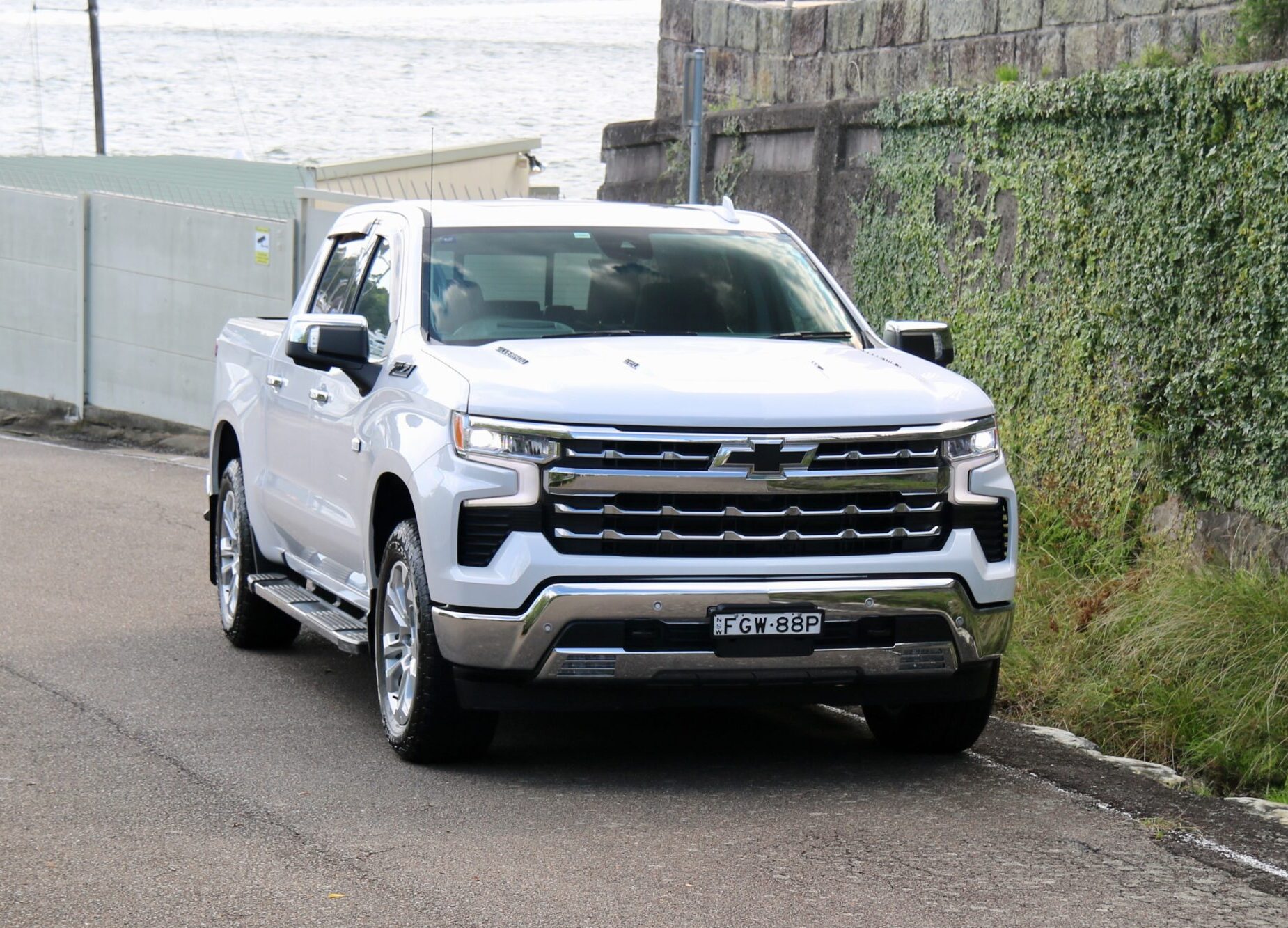
- Price: From $130,550 plus on-road costs (LTZ) to $141,500 +ORC (ZR2)
- Drivetrain/economy: 6.2L NA V8: 313kW/624Nm, 10-speed auto, 4WD, 12.2L/100km, 199g/km
- Dimensions: Up to 5935mm long, 2086mm wide, 2000mm tall, 3760mm long wheelbase
- Towing capacity/GVM/GCM: 4500kg/3300kg/6851kg
- Warranty/roadside assistance/service intervals: Three-year/100,000km, three years of roadside assistance, annual/12,000km
- Five-year service cost: $1655
| Driving | |
|---|---|
| Interior | |
| Practicality | |
| Overall value |
Things we like
- Lovely powerful V8 engine
- Huge cabin and tray
- Excellent towing ability
Not so much
- Huge size noticeable around town
- Sharp ride quality
- Lacklustre service and warranty
While it wasn’t the first of the American trucks to launch in Australia, the Chevrolet Silverado has certainly proved popular since it launched locally in 2020. That’s largely because of its 4500kg braked towing capacity and its lovely 6.2-litre petrol V8 engine.
Making 313kW of power and 624Nm of torque, the Silverado’s V8 engine is unique in the segment, with all rivals having moved to turbocharged six-cylinder engines that give more effortless performance, though not the same great noise, compared to the V8. But even in moderate driving, you’ll easily see upwards of 20L/100km for fuel consumption, which is higher than turbo six rivals.
Inside the Silverado is a huge leather-lined cabin with a lot of standard equipment, regardless of which model you choose, though the quality could be better with some iffy-feeling plastics lower down. There is plenty of storage space, however, with seemingly endless cubbies available to store your items. The ride quality is also surprisingly sharp in urban situations, and you very much notice its sheer size in anything but open road driving.
What could be improved with the Silverado is its aftersales and service program as currently, only a lacklustre three years/100,000km of warranty is given and no capped price servicing either, making it potentially expensive to service. But overall, the V8 appeal is strong with the Chevrolet Silverado, as well as its great towing capacity and if you’re after a big truck, it’s a necessary consideration point.
Toyota Tundra
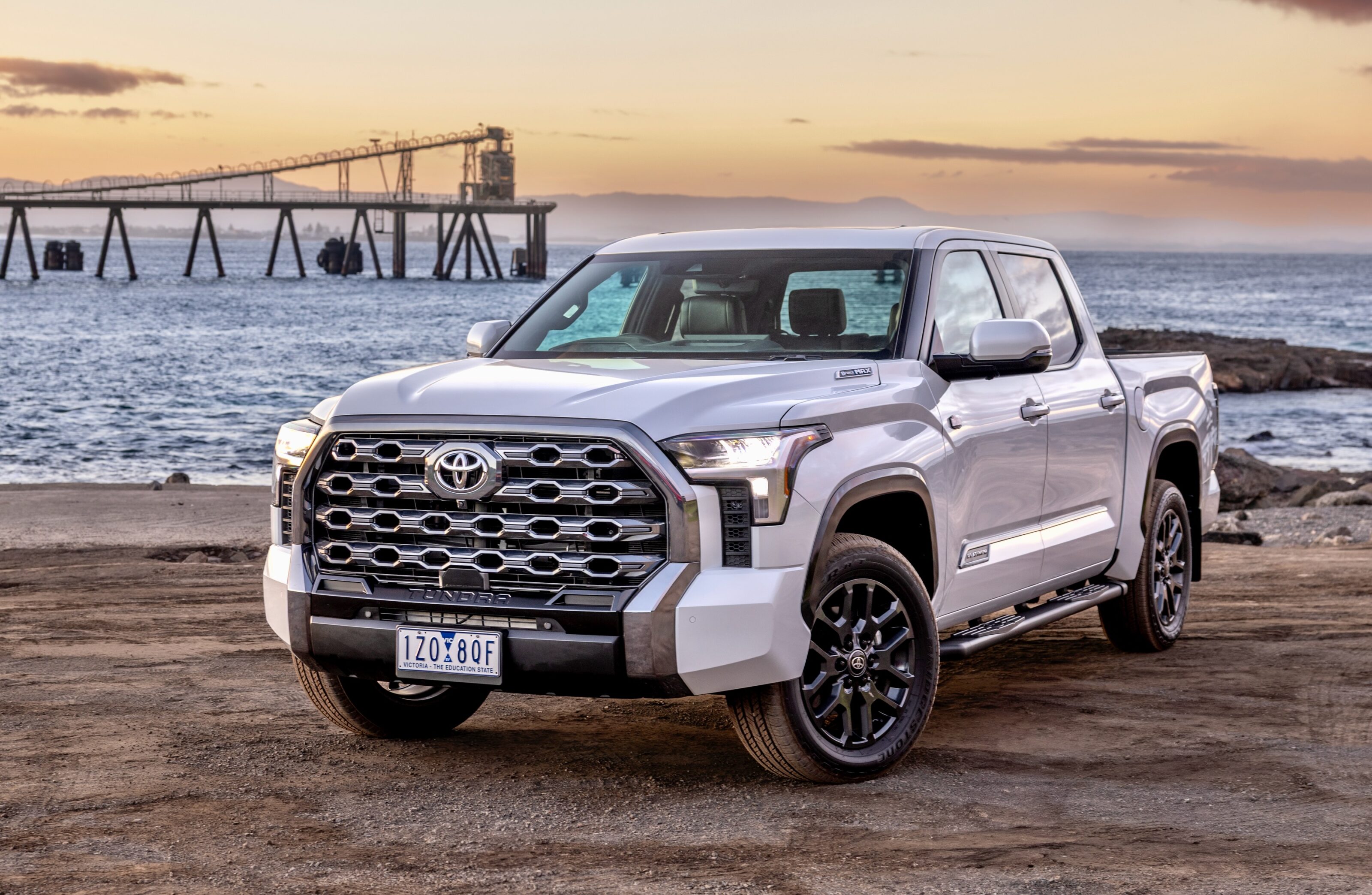
- Price: From $155,990 plus on-road costs (Limited) to $172,990 +ORC (Platinum)
- Drivetrain/economy/CO2 emissions: 3.4L twin-turbo petrol V6: 326kW/790Nm, 10-speed auto, 4WD, 12L/100km (estimated)
- Dimensions: 5955mm long, 2040mm wide, 1985mm tall, 3700mm long wheelbase
- Towing capacity/GVM/GCM: 4500kg/3536kg/8030kg
- Warranty/roadside assistance/service intervals: Five-year/unlimited km, no roadside assistance, six-monthly/every 10,000km
- Five-year service cost: $4500 ($900 per year)
| Driving | |
|---|---|
| Interior | |
| Practicality | |
| Overall value |
Things we like
- Stonking hybrid drivetrain a segment first in Australia
- Soft and comfortable ride quality
- Feels smaller than it is from behind the wheel
Not so much
- Very expensive compared to rivals
- Iffy interior quality
- Expensive service costs
Toyota calls it genchi genbutsu – “go to the source”. It’s what drove the Australian program for the Tundra, and it involved Japanese Toyota executives speaking to hundreds of Hilux owners here and asking them how they used their utes, what they wanted over and above the capability they had and, for 280 of them, it marked recruitment into a year long trial of the vehicle that eventuated – the huge Tundra hybrid.
If it seems that the Tundra had been promised for a very long time before the first official deliveries took place, that’s why. In short, Toyota Australia couldn’t afford to get the engineering on this one wrong. And it has been a hugely involved effort. Partnering with Walkinshaw has been a world-first for a third-party supplier, and the aim of the program was that all work had to be 100 percent to factory quality specifications or there would be no green light.
The Tundra is far from a simple big-banger V8 ute either. The hybridised 3.4-litre powerplant offers massive and instant torque, which is crucial when towing horse floats, heavy construction gear or large caravans. With a system output of 326kW and 790Nm it’s not shy of go.
Where the Tundra feels a little less than its price tag is in the cabin. It’s certainly not small inside, but some of the cabin materials are a little unexceptional, with lots of hard plastics and dowdy colours. Get out of a Ram and into the Tundra and it’ll feel very mass-market in comparison.
Australia also gets the ‘short’ 5’5” tub, rather than the 6’5” CrewMax that’s offered in other markets. There’s no lighting or power access, and the liner is a drop-in item rather than a spray-in. What’s more, a hard or soft tonneau cover is a cost option. The slick step ladder that slides out of the Ford F-150’s tailgate? Nothing of the sort here.
So what you get is something that feels big and well engineered, but it’s expensive and lacks the depth of value that you’ll find in some of its rivals. Toyota is confident that it’ll sell as many as it can roll into dealers, and we wouldn’t bet against that. Brand loyalty might plump up Toyota’s margins but it doesn’t win reviews though.
Ford F-150
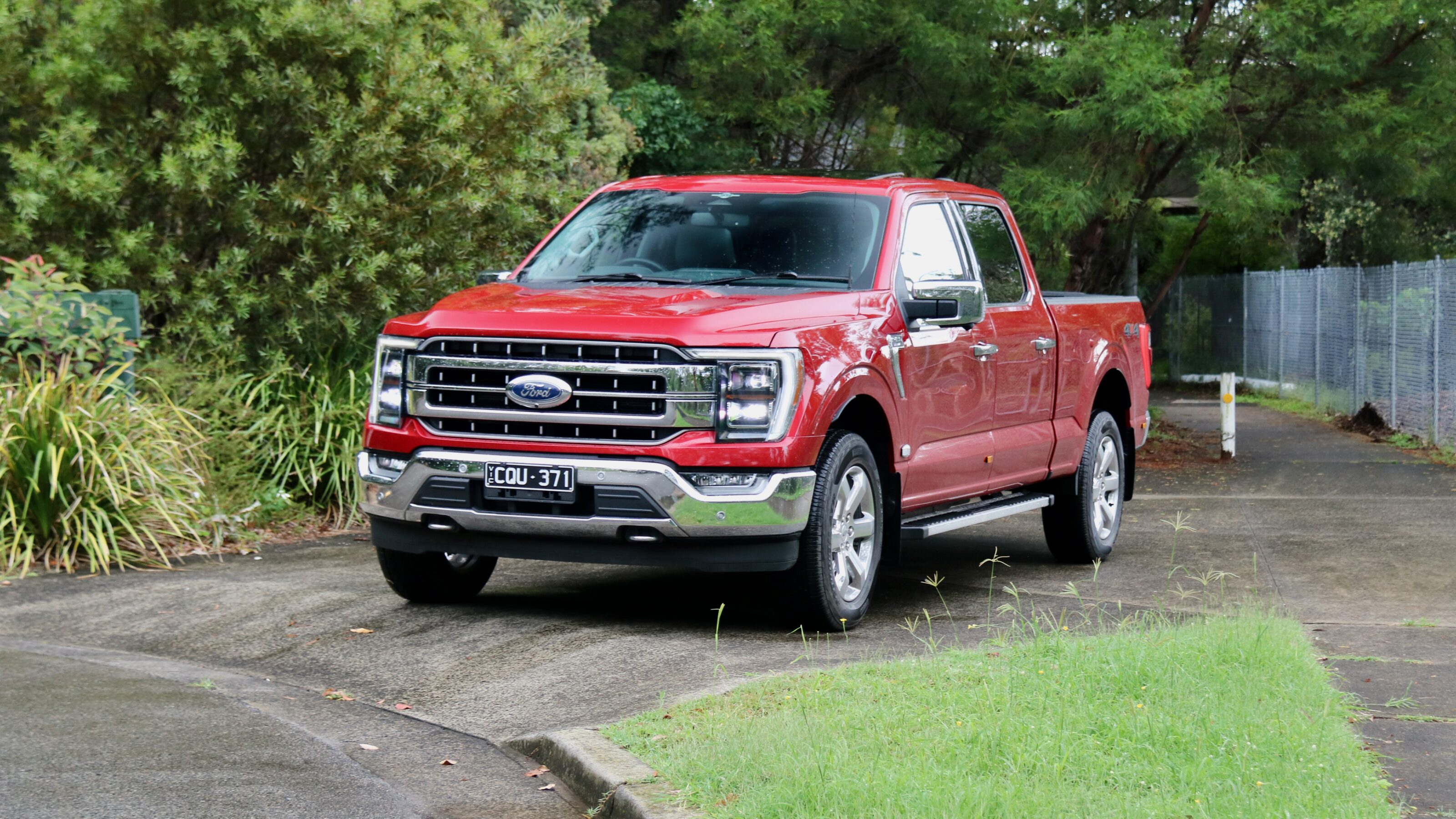
- Price: From $107,945 plus on-road costs (XLT SWB) to $140,945 +ORC (Lariat LWB)
- Drivetrain/economy/CO2 emissions: 3.5L turbo-petrol: 298kW/678Nm, 10-speed auto, 4WD, 12.5L/100km, 290g/km
- Dimensions: Up to 6184mm long, 2030mm wide, 1955mm tall, 3694mm long wheelbase
- Towing capacity/GVM/GCM: 4500kg/3320kg – 3265kg/7270kg – 7315kg
- Warranty/roadside assistance/service intervals: Five-year/unlimited km, 12 months of roadside assistance with each dealer service up to seven years in total, yearly/every 15,000km
- Five-year service cost: $2081 ($416 per year)
| Driving | |
|---|---|
| Interior | |
| Practicality | |
| Overall value |
Things we like
- Stonking powertrain tows well
- Amazingly easy to drive, very comfortable
- Excellent practicality in cabin and tray
Not so much
- Limited model range
- No getting away from the size
- Some cheap interior materials
When it comes to towing big rigs, size matters. Ford‘s F-Series has been a consistently huge seller in the US, but translating that formula to the Australian market hasn’t been the work of a minute. Those with very long memories might well recall that Ford had tried with F trucks here before, but it never really gained much in the way of traction. This time round, it has thrown some budget at getting the right-hand drive F-150 right, and the results have been encouraging.
It’s not been without the odd blip though. Ford could probably have been a bit more nuanced in the way it specified the F-150 XLT and Lariat models, one fairly basic, the other loaded with virtually every accessory you can think of. A huge gulf in price between these two versions also left those who wanted the missing one in the middle looking at rivals from Toyota, Ram and GMSV.
A spell in the Wheels garage proved the merits of the big F-150, but better is on the way. Place an order now and you’ll be in the queue for one of the new facelifted versions, due to land in dealers in the second half of 2025.
The 3.5-litre V6 petrol engine has some heft to it, with 298kW and 678Nm driving through a 10-speed automatic transmission making it quicker than a Ranger Raptor off the mark. The best thing about the F-150 is that the combination of ample torque and decent damping means that it completely takes the stress out of towing, especially if you have an ounce of mechanical sympathy. Others might claim a 4500kg towing capacity and then subject you to stratospheric teeth-clenching engine speeds when you try to maintain speed up an incline. Not the F-150. If your idea of a big ute is one that barely breaks a sweat when asked to tow serious loads, look no further.
The Subaru Crosstrek small SUV and Impreza hatchback twins have been updated with new safety features, with a $500 price rise also applied to all variants. The new features have earned the two models a five-star ANCAP rating, with both unrated for safety before the new update.
The update to the Crosstrek and Impreza centres around expanded functionality for the traffic sign recognition system, which can now read signs such as ‘stop’, ‘give way’ and ‘no entry’ – more range than most equivalent systems that read just speed limit signs.
The small Subaru twins have also been given a new evacuation glass breaking tool – essentially a small hammer – in the glovebox in preparation for ANCAP’s new submergence testing, or seeing how easy it is for occupants to escape an underwater vehicle.
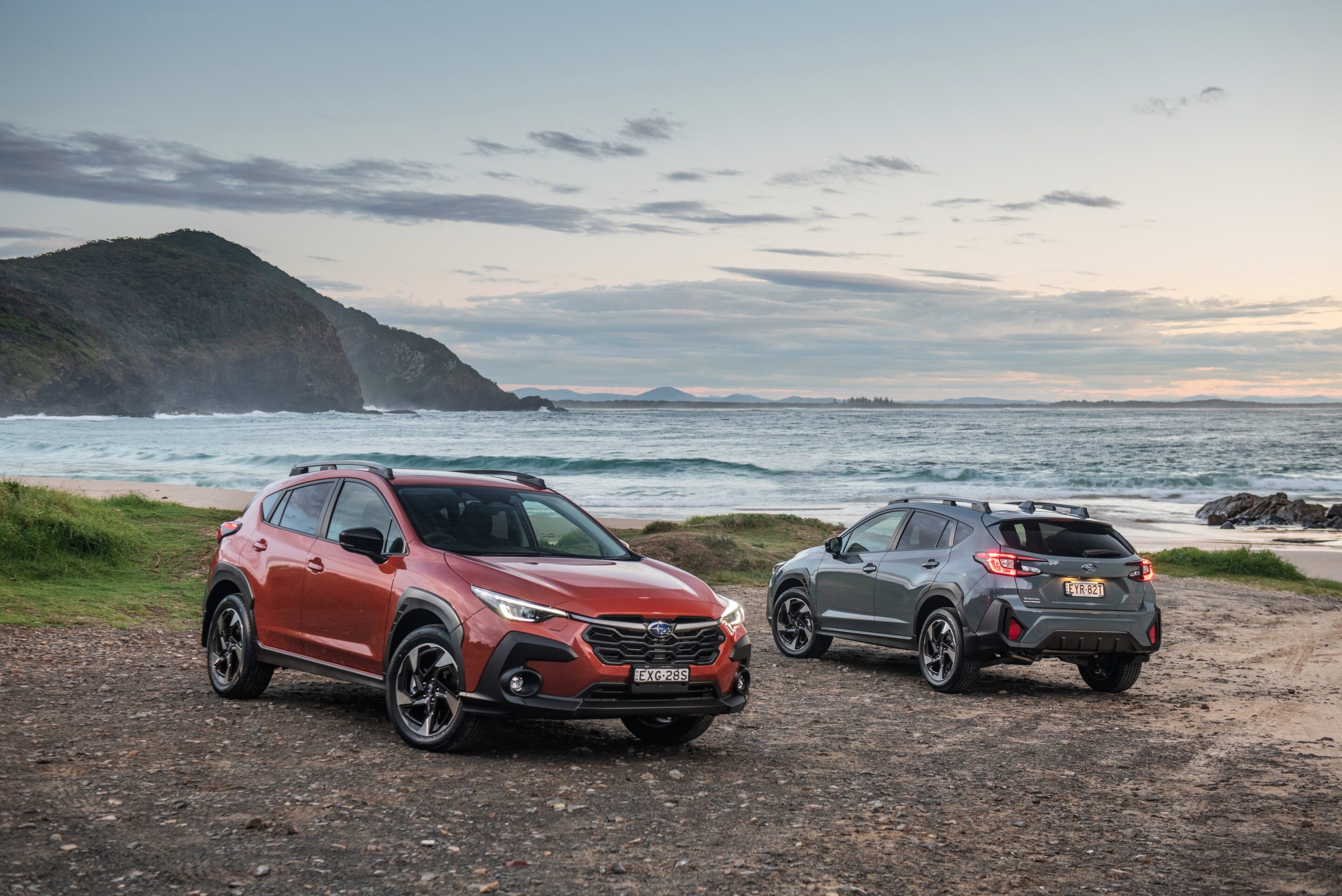
The updated five-star ANCAP rating applies to MY25 versions of the Crosstrek and Impreza manufactured from April 2025 and vehicles built before that are still unrated.
The Crosstrek received an adult occupant protection rating of 83 per cent, a child occupant protection rating of 91 per cent, a vulnerable road user protection rating of 85 per cent and a safety assist rating of 73 per cent. The Impreza scored better for pedestrian head and lower leg protection, which ANCAP said was due to the difference in bonnet and front bumper designs.
Aside from features, the Crosstrek Hybrid has also gained a petrol particulate filter (PPF) to comply with Euro 6e emissions standards and its outputs have fallen from 110kW/196Nm to 100kW/182Nm. Its 6.5L/100km combined fuel consumption rating remains the same as before.
Subaru Impreza and Crosstrek pricing (plus on-road costs):
| Impreza 2.0L | $32,490 (+$500) |
|---|---|
| Impreza 2.0R | $35,990 (+$500) |
| Impreza 2.0S | $38,990 (+$500) |
| Crosstrek 2.0L | $35,990 (+$500) |
| Crosstrek 2.0R | $39,490 (+$500) |
| Crosstrek 2.0S | $42,490 (+$500) |
| Crosstrek Hybrid L | $39,590 (+$500) |
| Crosstrek Hybrid S | $46,090 (+$500) |
The updated Subaru Impreza and Crosstrek are now in local Subaru dealerships.
Things we like
- Bargain pricing makes it great value
- Punchy turbo-petrol engine
- Comfortable driving experience
Not so much
- Odd service intervals
- Missing features such as proper blind-spot monitoring
- Only one drivetrain choice with no hybrid, diesel or all-wheel drive
| Rating |
|---|
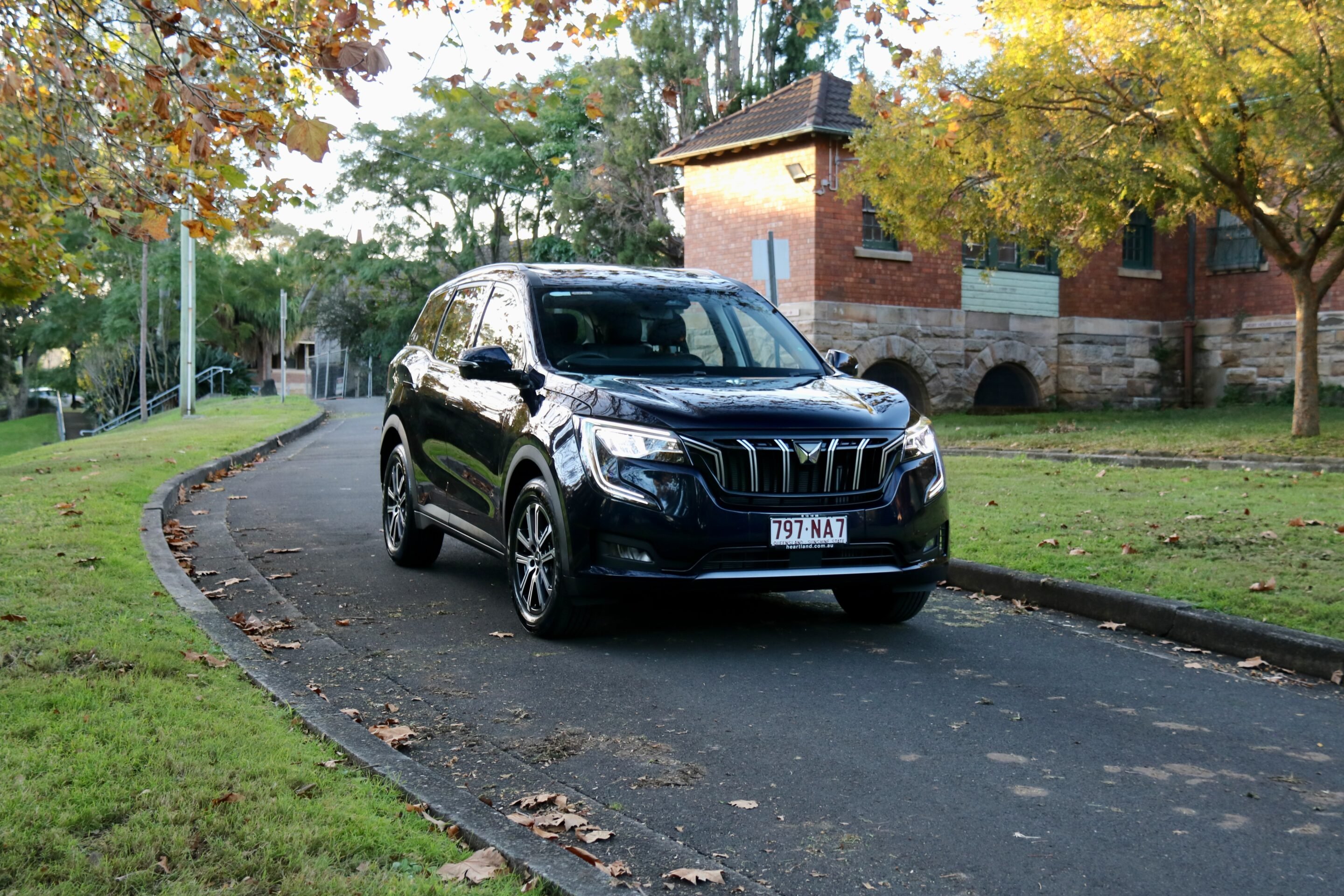
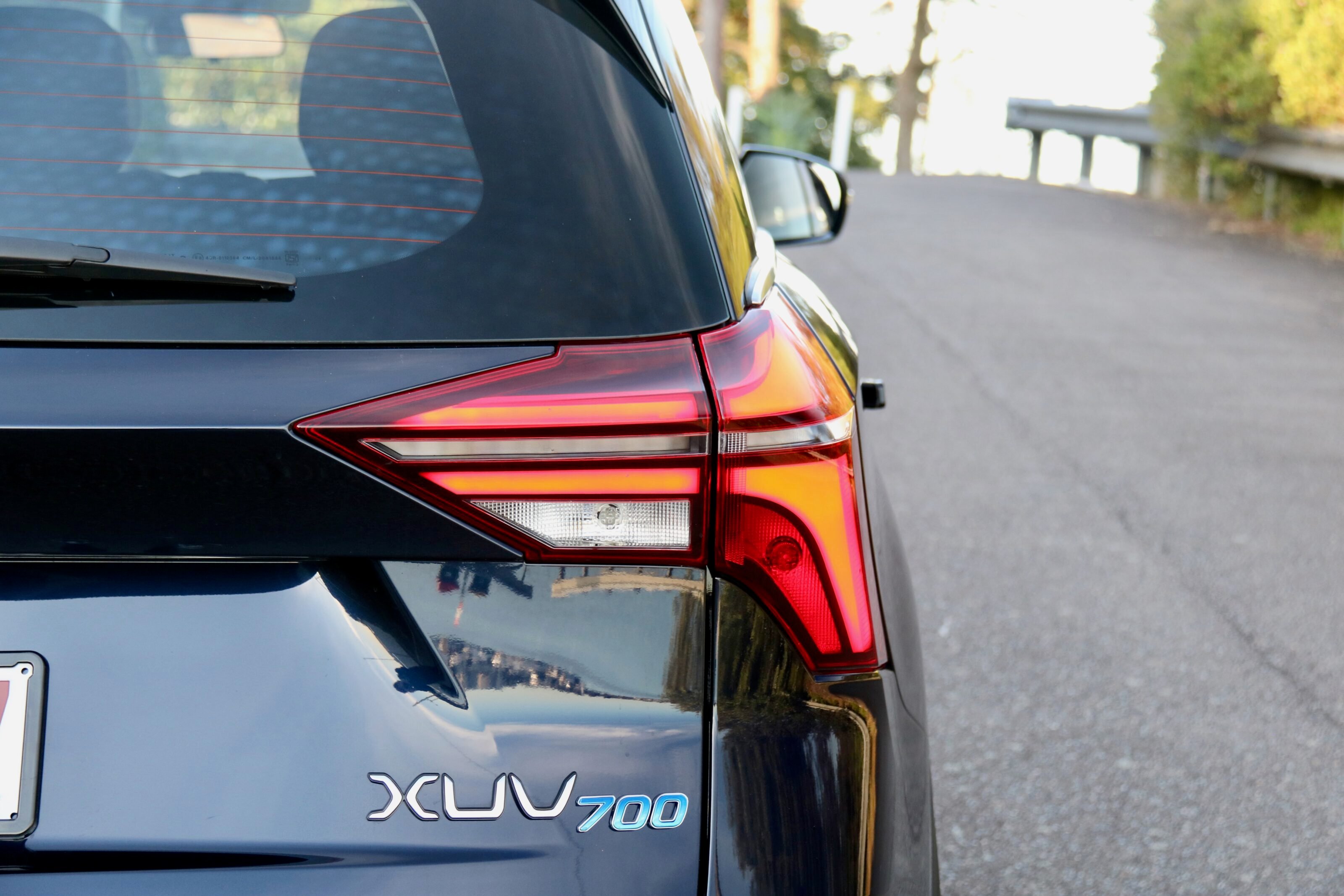
Indian giant Mahindra has been on sale in Australia since 2007 and in that time, it’s gained a small but loyal fanbase who love its no-nonsense products that get the job done. While it’s about to launch a new small SUV, its current best-seller in Australia is the XUV700 seven-seat mid-to-large SUV, which is priced from $39,990 drive away.
The XUV700 competes against some heavy hitters in the new car market such as the Nissan X- Trail and Mitsubishi Outlander, though it presents much better value for money than either of those two vehicles. If you’re after a seven-seat SUV, what’s stopping you buying a Mahindra XUV700?
Pricing and equipment
For now, there’s a very simple XUV700 model range in Australia: the entry-level AX7 and the upper-spec AX7L. Both feature seven seats as standard, and both use a turbo-petrol engine and automatic transmission sending power only to the front wheels – manual, turbo-diesel and all-wheel drive model are available in India, but not here.
Mahindra XUV700 pricing (drive away):
| AX7 | $39,990 |
|---|---|
| AX7L | $42,990 |
XUV700 AX7L standard features:
- 18-inch alloy wheels with a full size alloy spare wheel
- Dusk-sensing automatic LED lighting
- Front and rear daytime running lights (DRL)
- Rain-sensing automatic wipers
- Keyless entry with push button start
- Heated and auto-folding mirrors
- Panoramic sunroof
- Dual-zone automatic climate control with a rear fan speed controller and vents in all rows
- Leather-wrapped steering wheel
- Synthetic leather upholstery
- 6-way electric driver’s seat with memory and manual lumbar adjustment
- Ventilated front seats
- 10.25-inch digital driver’s display
- 10.25-inch touchscreen
- Wireless Apple CarPlay and Android Auto
- FM/AM radio
- Bluetooth phone calling and audio streaming
- 3x USB ports
- Wireless phone charger
- 12-speaker Sony sound system
XUV700 AX7L safety features:
- 7x airbags
- Autonomous emergency braking (AEB) with forward collision warning
- Adaptive cruise control with stop and go functionality
- Lane keeping assistance
- Adaptive lane guidance
- Auto high beam
- Traffic sign recognition
- Driver attention monitoring
- 360-degree camera
- Blind-spot camera
- Rear parking sensors
- Tyre pressure monitoring
Interior, practicality and bootspace
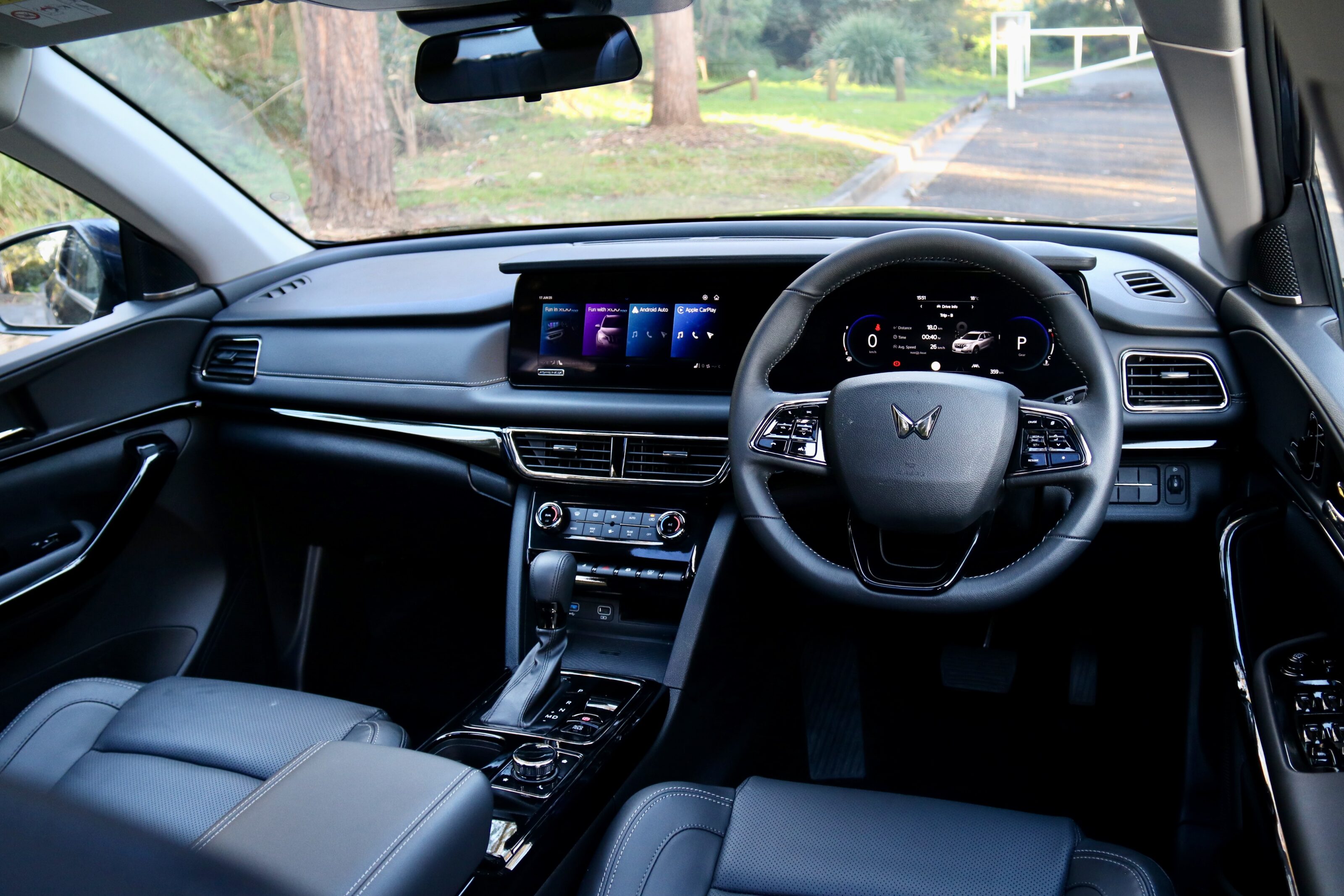
The interior of the XUV700 is considered and comfortably appointed: it’s well featured, well screwed together and practical for its size. Material quality is a bit of a mixed bag, with plenty of hard surfaces around, though the stitched soft leather-like material on the dashboard fascia livens it up, and the leather steering wheel feels great in hand.
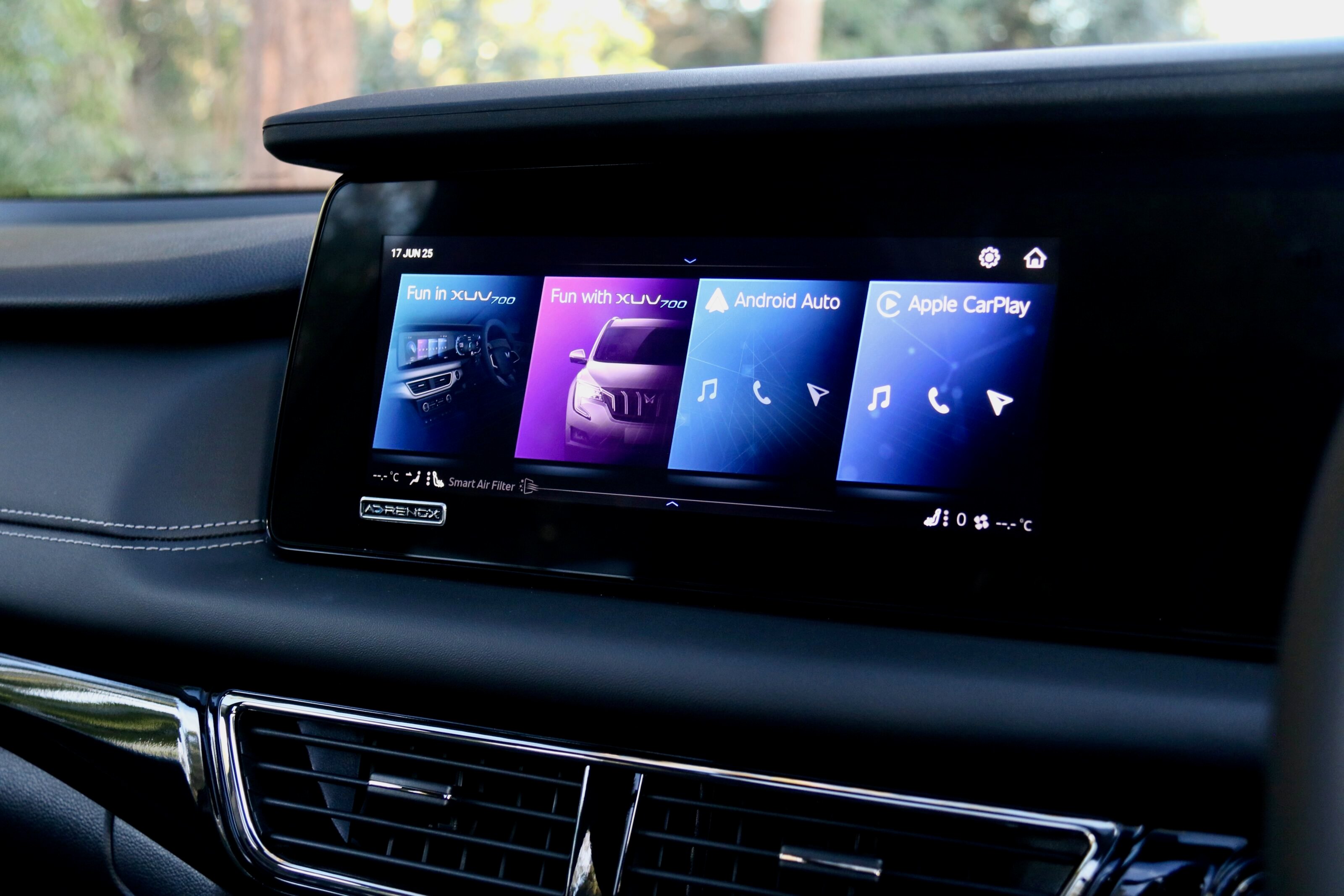
Centre of the XUV700’s interior is a dual 10.25-inch screen set up, with sharp graphics and a modern feel. The screen itself features wireless Apple CarPlay and Android Auto, though no satellite navigation or live services like the XUV700 does in India. The system itself is a bit slow to use and a quicker processor would be great, but the wireless smartphone mirroring is very easy to connect and the 12-speaker Sony sound system is reasonable.
The XUV700’s front cabin is practical, with big cupholders and door pockets, an open tray with an effective wireless charger is located ahead of the gear lever and the box underneath the adjustable central armrest is large. The front seats of the XUV700 are reasonably comfortable, though more
adjustment in the seat and steering wheel would aid comfort.
The second row of the XUV700 is comfortable and relatively spacious, helped by the large side windows and massive panoramic sunroof. The expected amenities are on offer, such as a central armrest with cup holders, map and door pockets, air vents and a single USB-C charging port – though no integrated sunshades or separate climate zone. There are, however, two ISOFIX and three top-tether points for child seats.
The third row of the XUV700 is definitely a kids-only zone, but like the second row, its headroom is impressive because of the tall roofline. It also features a 12V power socket, cup holders and air vents with a fan speed controller. Access to the third row is achieved by folding the left-side middle row seats, which tumbles out of the way for easier access, though it does feel a bit heavy.
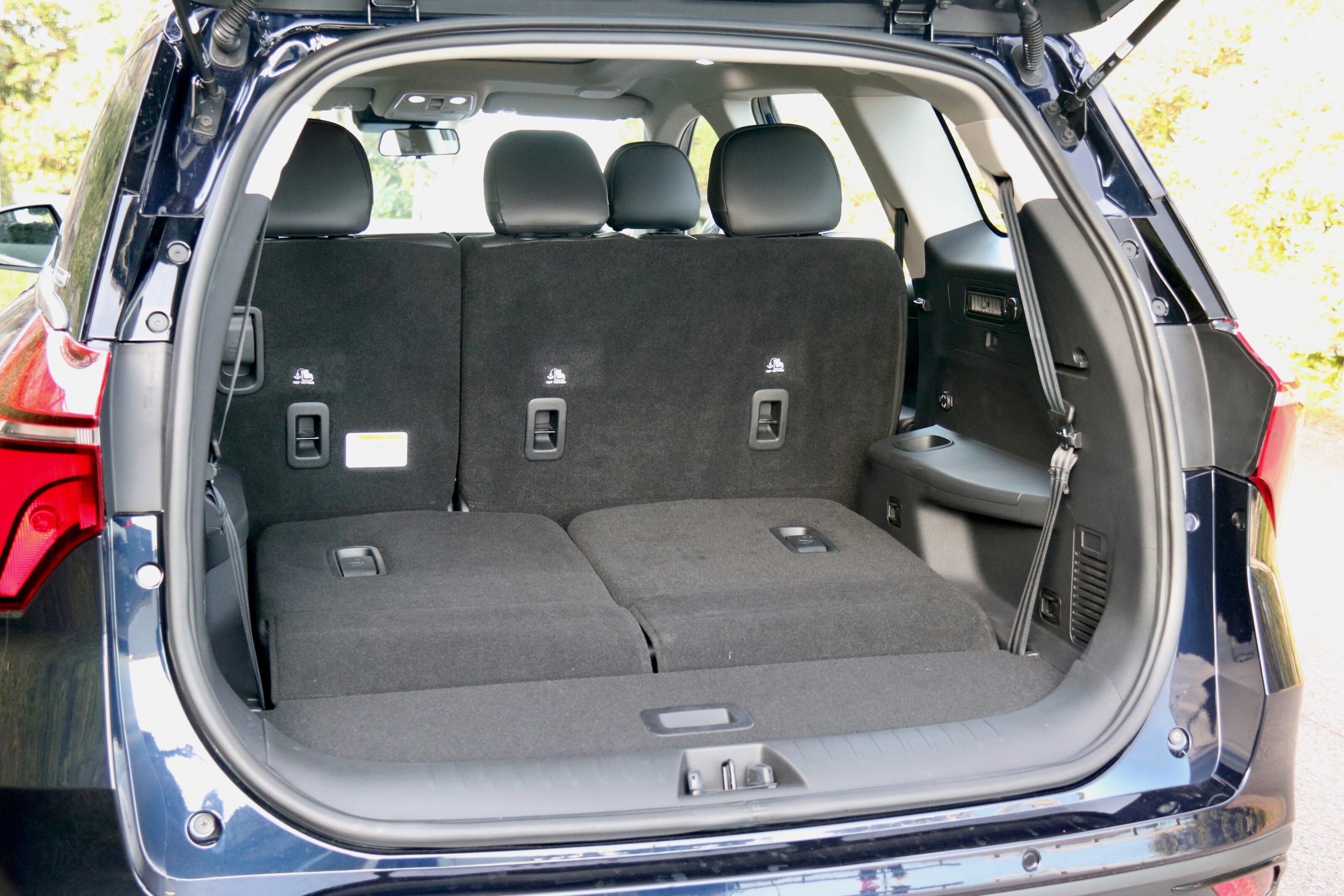
Mahindra doesn’t quote bootspace figures, but behind the second row with the third row folded is said to be around 700 litres of space, which is largish. Behind the third row is almost non-existent, however – thankfully, there is some under-floor storage to help and the full size alloy spare wheel is located underneath the car to also preserve bootspace.
Performance and fuel economy
The XUV700 is powered by a turbocharged 2.0-litre four-cylinder petrol engine making 149kW of power and 380Nm of torque that’s paired to a six-speed automatic transmission sending power to only the front wheels. Those looking for an all-wheel drive XUV700, or one powered by diesel fuel, will have to look elsewhere as they sadly didn’t make it on the boat to Australia.
Mahindra claims that the XUV700 AX7L will use 8.3L/100km of 91RON regular unleaded, and we achieved 9.7L/100km in mostly urban driving. While that could be improved, our test car had under 400km on the clock, so the economy will no doubt improve as the engine opens up.
On the road
As you’d expect for a vehicle developed for India and its famously bad roads, the Mahindra XUV700 rides softly and is generally quite comfortable. Its low speed ride quality is great, with quick body control ensuring that it settles quickly after bumps. It’s also refined at higher speeds, with low road noise levels helping refinement.
The flip side of the soft ride is that the XUV700 is also soft when it comes to handling. Obviously, it’s no sports car and isn’t intended to be, but there’s a lot of body roll and the steering is quick without offering much feel. If you’re looking for a more car-like driving experience, a Nissan X-Trail will handle that for you. The XUV700’s visibility is good, however, thanks to its large windows and mirrors.
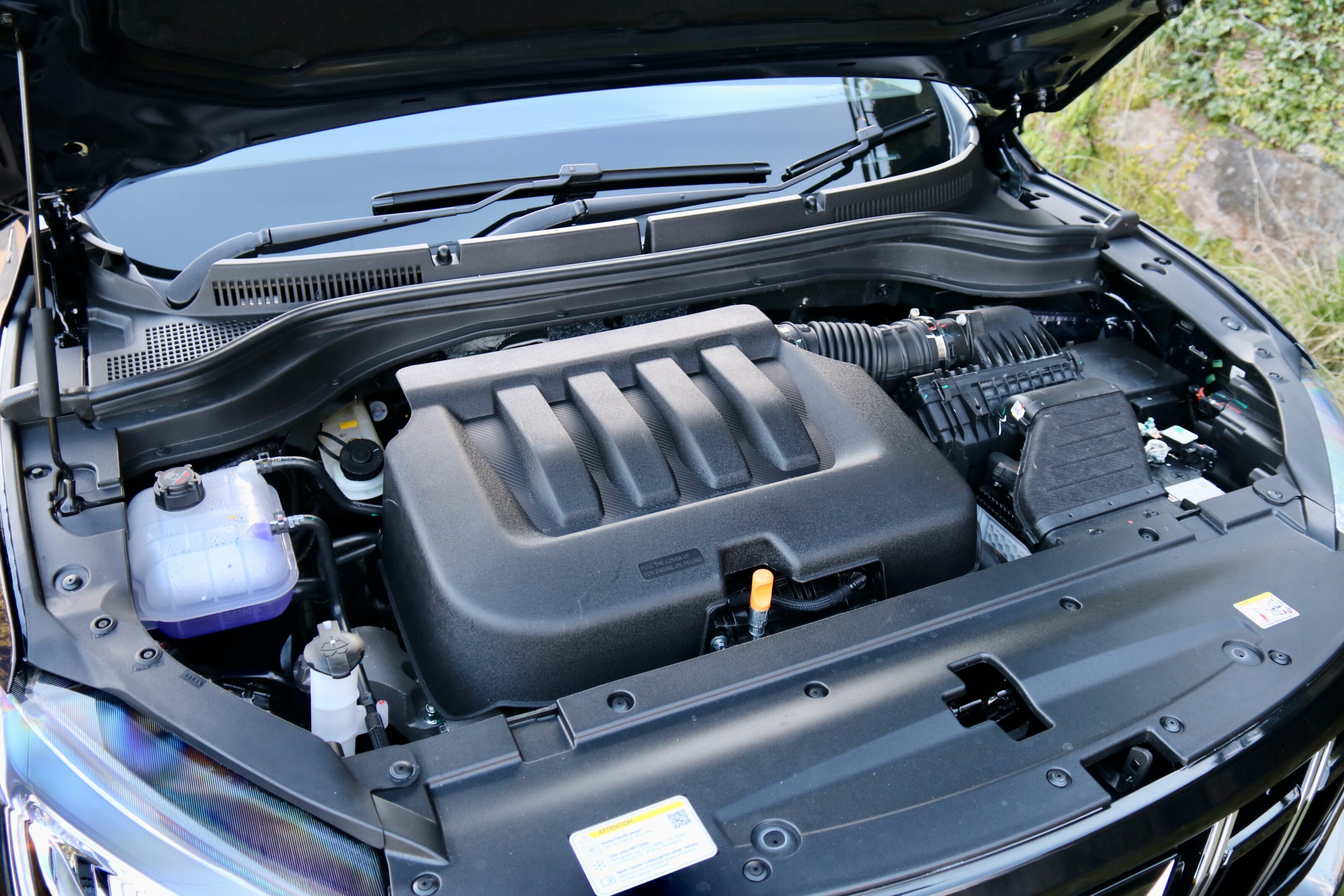
In Australia, the XUV700 is only available with a 2.0-litre turbo-petrol engine that’s surprisingly gusty, with the full 380Nm of torque hitting low in the rev range at just 1750rpm and hanging around until 3000rpm – or, basically, the majority of where the engine will spend its time. The six-speed automatic transmission is quite smooth as well, and does nothing wrong.
The XUV700’s active safety systems are surprisingly refined, compared with some other contemporary cars we’ve recently driven. The active lane keeping assist could be more accurate, but the adaptive cruise control works well. Disappointingly, the XUV700 doesn’t feature blind-spot monitoring or rear cross-traffic alert in either model, just a slow blind-spot camera feed, so that reversing out of driveways can be a bit daunting without the extra tech there to help out.
Service and warranty
Mahindra covers the XUV700 with a strong seven-year/150,000km warranty, complete with seven
years of roadside assistance.
The XUV700’s service intervals are a little unusual, with a free check up at 1500km and then the first service at 10,000km or 12 months (whichever comes first) and the proceeding services each at another 15,000km (or 12 months) annually. Four years/55,000km of servicing costs $1781.
Verdict: should I buy a Mahindra XUV700 AX7L?
For seven-seat SUV buyers, the Mahindra XUV700 holds definite appeal thanks to its low purchase price, long list of standard equipment and comfortable driving experience. Its gutsy turbo-petrol engine impresses on the road with good performance and refinement, while its ride quality is soft enough to easily tackle the bumps we could throw at it.
Counting against the XUV700 is that there’s no alternative drivetrain available, features such as blind-spot monitoring are missing, its third row isn’t huge and its service schedule is odd. However, there’s still a lot of appeal to the XUV700 – sure, an X-Trail is more polished, but the Mahindra does its job without fuss or breaking a sweat.
XUV700 rivals
Specifications
| Model | XUV700 AX7L |
|---|---|
| Price | $42,990 drive away |
| Engine | 1997cc 4-cylinder turbo-petrol |
| Transmission | 6-speed automatic, front-wheel drive |
| Peak power | 149kW (@ 5000rpm) |
| Peak torque | 380Nm (@ 1750rpm – 3000rpm) |
| Claimed fuel consumption | 8.3L/100km |
| Fuel type | 91RON regular unleaded |
| Fuel tank | 60 litres |
| Dimensions (length/width/height/wheelbase): | 4695/1890/1755/2750mm |
| Weight | 1829kg |
| Boot | 150L (third row up) – 65 0L (third row folded) |
| Warranty | Seven-year/150,000km |
| Four-year/55,000km service cost | $1781 ($445 per service) |
| On sale | Now |
Kia Australia has officially announced drive-away pricing for the highly anticipated Tasman dual-cab ute, marking a major step toward the brand’s entry into Australia’s fiercely competitive utility segment. The pricing spans six trim levels, catering to a wide range of buyers from fleet users to off-road enthusiasts.
The entry-level S model with a 4×2 drivetrain starts at $46,490 drive-away, while the S 4×4 steps up to $53,890. The mid-range SX and SX+ 4×4 trims are priced at $58,490 and $66,490 respectively. Topping the range are the rugged X-Line and flagship X-Pro, offered at $70,990 and $77,990 drive-away.
This pricing structure places the Tasman in direct contention with dual-cab heavyweights like the Toyota HiLux, Ford Ranger, and Isuzu D-Max. Kia’s strategy hinges on delivering a well-equipped ute with strong towing capacity, advanced driver assistance tech, and robust off-road capability – all wrapped in aggressive styling and backed by Kia’s seven-year warranty.
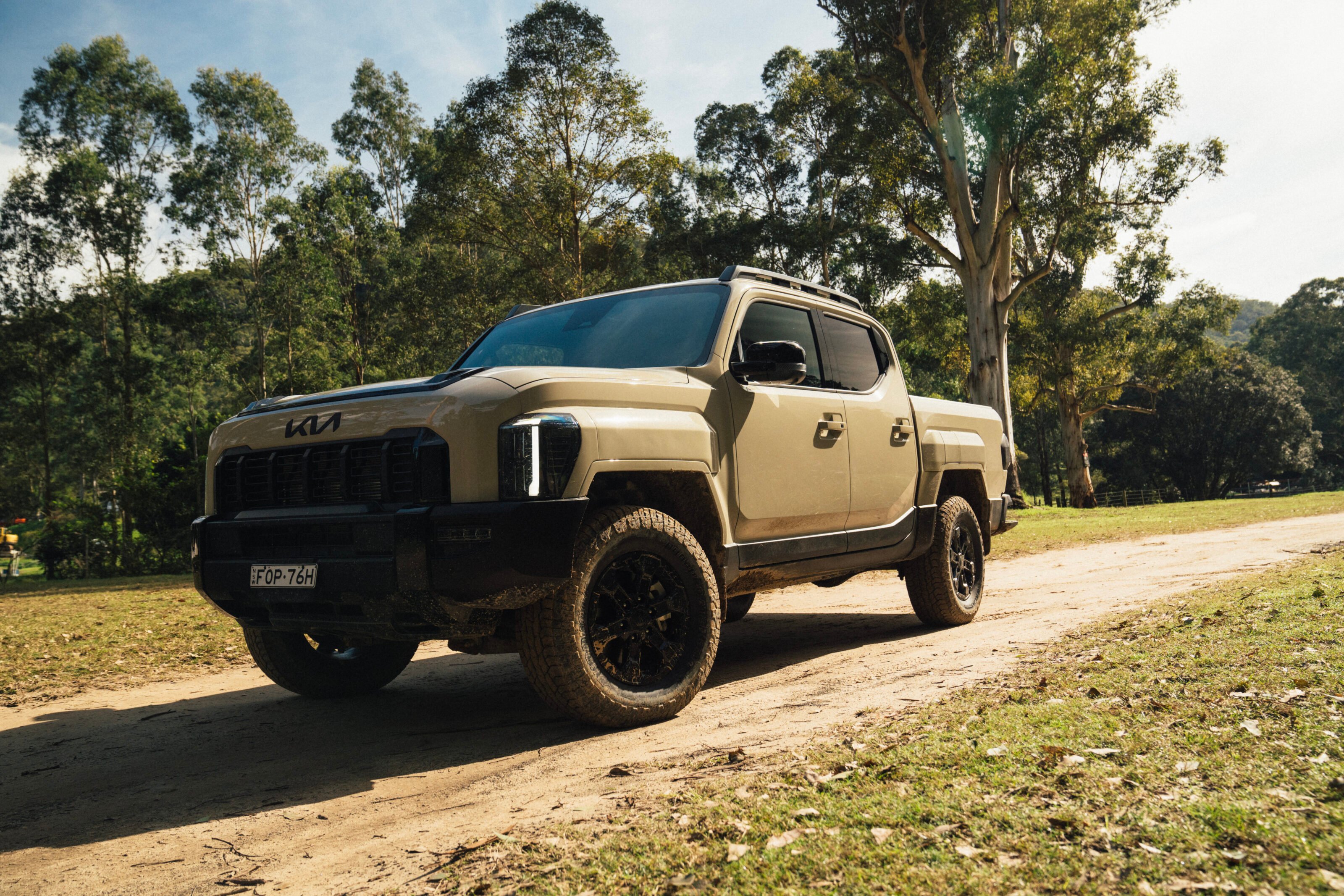
Designed specifically for Australian and New Zealand conditions, the Tasman has undergone rigorous local testing to ensure it can handle everything from harsh outback tracks to urban commuting.
It rides on a ladder-frame chassis and features a 2.2-litre turbo-diesel engine paired with an eight-speed automatic transmission. Four-wheel-drive variants offer low-range gearing and locking differentials, designed to appeal to adventure-seekers and tradies alike.
Inside, the Tasman boasts a cabin designed with practicality and modern comforts in mind. Higher trims include a digital instrument cluster, large infotainment display with Apple CarPlay and Android Auto, wireless charging, and durable yet stylish interior materials.
While pricing was initially revealed in April, today’s drive-away figures offer a clearer picture for customers as the Tasman prepares to enter showrooms. Kia Australia expects strong interest in the Tasman, with pre-orders already underway and deliveries set to begin in the second half of 2025.
The Kia Tasman represents a bold move for the brand and a significant milestone in its continued push to diversify its lineup and challenge the segment leaders.
Contenders
Winner: Ford F-150
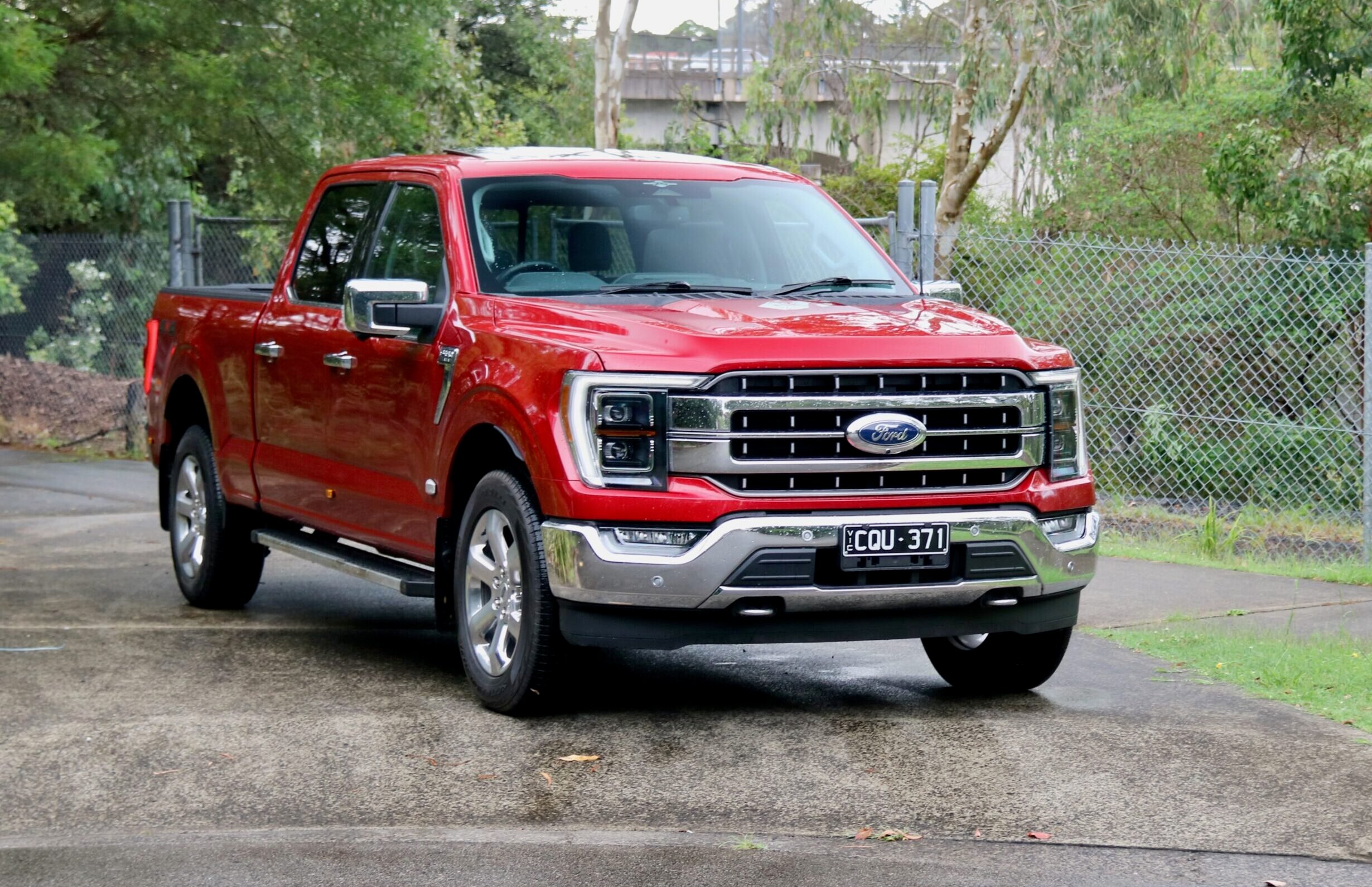
- Price: From $106,950 plus on-road costs
- Drivetrain: 3.5L V6 petrol engine, 298kW/678Nm, 10-speed auto
- Combined fuel economy, CO2 emissions, fuel type: 12.5L/100km, 290g/km, 95RON
- Warranty: Five year, unlimited kilometre
- Five-year service cost: $2145 ($429 per year)
| Driving | |
|---|---|
| Interior | |
| Practicality | |
| Overall value |
Things we like
- Rides well for a big ‘un
- Slick towing technology
- Huge 136-litre fuel tank gives it legs
Not so much
- Feels like a leviathan
- Huge trim/price step from XLT to Lariat
- Need to step up to Lariat to avoid feeble halogen headlights
Nobody wants to tow anything. It’s a one of those activities that occasionally needs doing and is always more pleasurable when the vehicle you’re towing with takes as much strain as possible out of the process. That’s why the Ford F-150 reigns supreme in this category. Towing is what it’s for and its designers have clearly thought long and hard about how to get the very best from it in that regard. It doesn’t pretend at any off-road capability and it isn’t trying to be sporty. Want to drag a big boat, a horse float or heavy equipment? Here’s your rig.
Now it won’t have escaped your attention that the 4500kg towing class is stacked with a few capable contenders. Where the big Effie differentiates itself is firstly in the sophistication of its towing technology and secondly with a fuel tank that’s just, well, bigger. At 136 litres, it dwarfs the capacities of its key rivals and takes the range anxiety out of heavy towing. Couple that with the added benefit that the 3.5-litre V6 engine is, if anything, a little more economical than its published figures and it means that if you’ve got a caravan on the back, you won’t be eyeing the fuel gauge nervously every five minutes.
The other major benefit is that you won’t need to pack super-light. Even when taking a 10 pe rcent tow ball mass into consideration, the short wheelbase F-150 aces the likes of the Tundra, RAM and Silverado. It is, along with the Tundra, one of the only utes that can legitimately tow a 4500kg trailer without running into a Gross Combination Mass issue. And where you have 502kg of payload available to you in the Ford when you have a 4500kg trailer on the back, in the Tundra you’re left with 278kg. So if size really does matter, the F-150 wins.
F-150 buyers also get Pro-Trailer backup assist, which means you can steer the trailer in reverse by using a jog wheel. Some find this more intuitive, but experienced users will continue to twirl the steering wheel. The inbuilt trailer light check function is handy, running through a series off lighting checks that you can do yourself without having to call upon an assistant. Enter the length of your trailer into the infotainment system and the blind-spot monitoring will also take into account the combined length of vehicle and trailer and warn you accordingly when you’re thinking of switching lanes. The reversing camera also provides a top-down view of your tow ball so that you can position it perfectly when hitching up.
This combination of qualities, paired with probably the best ride quality in class, elevate the F-150 above the rest when it comes to towing. Couple that with strong value for money and line honours here are claimed, fairly comprehensively, by the Blue Oval.
Toyota Tundra
- Price: $155,990 plus on-road costs
- Drivetrain: 3.4L V6 hybrid petrol engine, 326kW/790Nm, 10-speed auto
- Combined fuel economy, CO2 emissions, fuel type: 11.8L/100km, 290g/km, 95RON
- Warranty: Five year, unlimited kilometre
- Five-year service cost: $4500 ($900 per year)
| Driving | |
|---|---|
| Interior | |
| Practicality | |
| Overall value |
Things we like
- Hybrid drive gives instant go off the line
- Decent towing technology
- Toyota’s RHD conversion work has been painstaking
Not so much
- It’s expensive
- Complexity of hybrid might be off-putting to some
- Ride is firmish
We awaited a long time for the Toyota Tundra. If you weren’t quick on the draw with placing your order you might still be waiting. There’s a very good reason for that. Toyota Australia was keen to dot every ‘i’ and cross every ‘t’ when it came to the engineering rectitude of its work in partnership with Walkinshaw. Get the Tundra right and the door could well open for other projects. Get this lengthy validation process wrong (it kicked off in 2017) and there’s a supersized serving of egg on face down in Altona.
Billed as Toyota’s ‘premium towing machine’, the Tundra focused on space, comfort and a long driving range. It features coil springs at the rear rather than the expected leaf springs, Toyota prioritising lateral location when towing over sheer carrying capacity in the tray.
The 3445cc i-FORCE MAX petrol V6 engine isn’t the run-of-the-mill lump of iron either. Featuring a motor-generator that adds 36kW and 140Nm, the system output is – now that the RAM TRX is dead – a monster 326kW and 780Nm. Best of all, the control systems ensure that that torque fill is instantly available off the line, which is the time that you feel most in need of it when towing a big trailer.
The ride quality is a little flinty on poor Aussie roads, which is surprising, and this can filter into the cabin setting up squeaks and rattles among the many hard plastic trim parts. Maybe that perception is exacerbated by the fact that the hybrid petrol drivetrain is incredibly refined. Buyers get an integrated brake controller, a couple of towing-specific drive programs, trailer sway assist and a clever trailer back-up assistant.
The Tundra also features a decent 122-litre fuel tank which, coupled with the best fuel economy in this class, gives it decent touring range. Unlike an F-150, there’s no low-range transfer case, so if you’re trying to drag a caravan up a wet and bumpy paddock, you’re reliant on 4H mode and some very road-biased Bridgestone Dueler rubber.
Toyota has capacity to convert 1200 Tundras per year, and is more than confident about shifting every one of them without having to mark down that $155,990 asking price. They’re probably right, as there’s a ready market here for not just a vehicle with this blend of qualities, but a Toyota vehicle with this blend of qualities. The badge carries serious clout in both town and country Australia. For many, it’ll be their first and last port of call in the 4.5-tonne class.
Chevrolet Silverado 1500
- Price: From $130,500 plus on-road costs
- Drivetrain: 6.2L V8 petrol engine, 313kW/624Nm, 10-speed auto
- Combined fuel economy, CO2 emissions, fuel type: 16.8L/100km, 290g/km, 95RON
- Warranty: three year, 100,000 kilometre
- Five-year service cost: Conditional
| Driving | |
|---|---|
| Interior | |
| Practicality | |
| Overall value |
Things we like
- It’s still got a big, characterful V8
- Respectable towing technology
- ZR2 has decent off-road ability
Not so much
- No capped price servicing deal
- Can it tow 4500kg in the real world?
- Unexceptional three-year warranty
There’s nothing apologetic about a Chevrolet Silverado. It’s big, in your face and under the bonnet there’s a 6.2-litre V8 that isn’t shy of reminding people of its presence. If that all sounds a bit too much, there are plenty of competing attractions. If ‘less is more’ sounds like the playbook for a dull life, you’re probably going to love the big Chev.
Like many of its key rivals in this class, the Silverado doesn’t start life as a right-hand drive vehicle. It is comprehensively re-engineered by Walkinshaw in Clayton, who have been doing this for quite a while now and know their stuff. Such is the quality of their work that you’d never know that the steering wheel was once on the other side.
As a tow vehicle, there’s a lot in the plus column. Two models are available, the LTZ Premium, priced at $130,500 and the more off-road focused ZR2 at $138,500. Both are powered by the same 6.2-litre naturally aspirated petrol V8. While the 624Nm torque figure sounds meaty enough, without the benefit of either forced induction or hybrid assistance, that peak is achieved at a relatively lively 4100rpm, and at 2000rpm, that drops off to around 470Nm.
Nevertheless on back-to-back heavy towing economy tests with the Ford 3.5-litre Ecoboost, it returns marginally better fuel figures. You will find the engine downshifting more to make its power when compared with the turbocharged Ford F-150, but the 10-speed transmission is quick-witted and while the V8 can get somewhat vocal when pressed, such as on long inclines, there’s a constituency of buyers who would rate the long term reliability of a big atmo powerplant over that of a downsized turbocharged unit.
With a Gross Combination Mass (GCM) of 7160kg for the lTZ and 6851kg for the ZR2, both run into some mathematical issues when towing heavy loads. Drag a 4500kg caravan and when you deduct the LTZ’s kerb weight, you have a mere 117kg of payload before you’ve maxed out your GCM. That’s little more than me and the clothes I stand up in. So, in most practical instances you’ll need to lower your gaze a little with towing weights.
Fortunately, it earns a stack of credit with a whole host of features designed to make towing a whole lot easier. There’s Trailer Sway Control, Hill Start Assist and Auto Grade Braking. You’ll also get Trailer Theft Alert, Electric Parking Brake Hookup Assist and Brake Gain Memory on the integrated trailer brake controller. The Silverado’s Advanced Trailer System includes a pre-departure checklist, light sequencing, maintenance reminders and security alerts. The system can also provide trailer electrical diagnostics and monitor tyre pressure. Every Silverado is also fitted as standard with the Trailering Package, comprising a fitted tow bar, towing hitch platform and 12-pin connector. Then it’s down to you to choose your tow ball: 50mm diameter for towing up to 3.5 tonnes or 70mm for heavier assignments.
The ZR2 model, with its Multimatic DSSV dampers and Goodyear Wrangler Mud Terrain tyres is the best 4.5-tonne ute pick if you’re heading off road, but look out for a slightly reduced tow capacity and squirmier tread blocks when towing on road. If you’re not about to drag a huge load out bush, stick with the cheaper LTZ.
RAM 1500
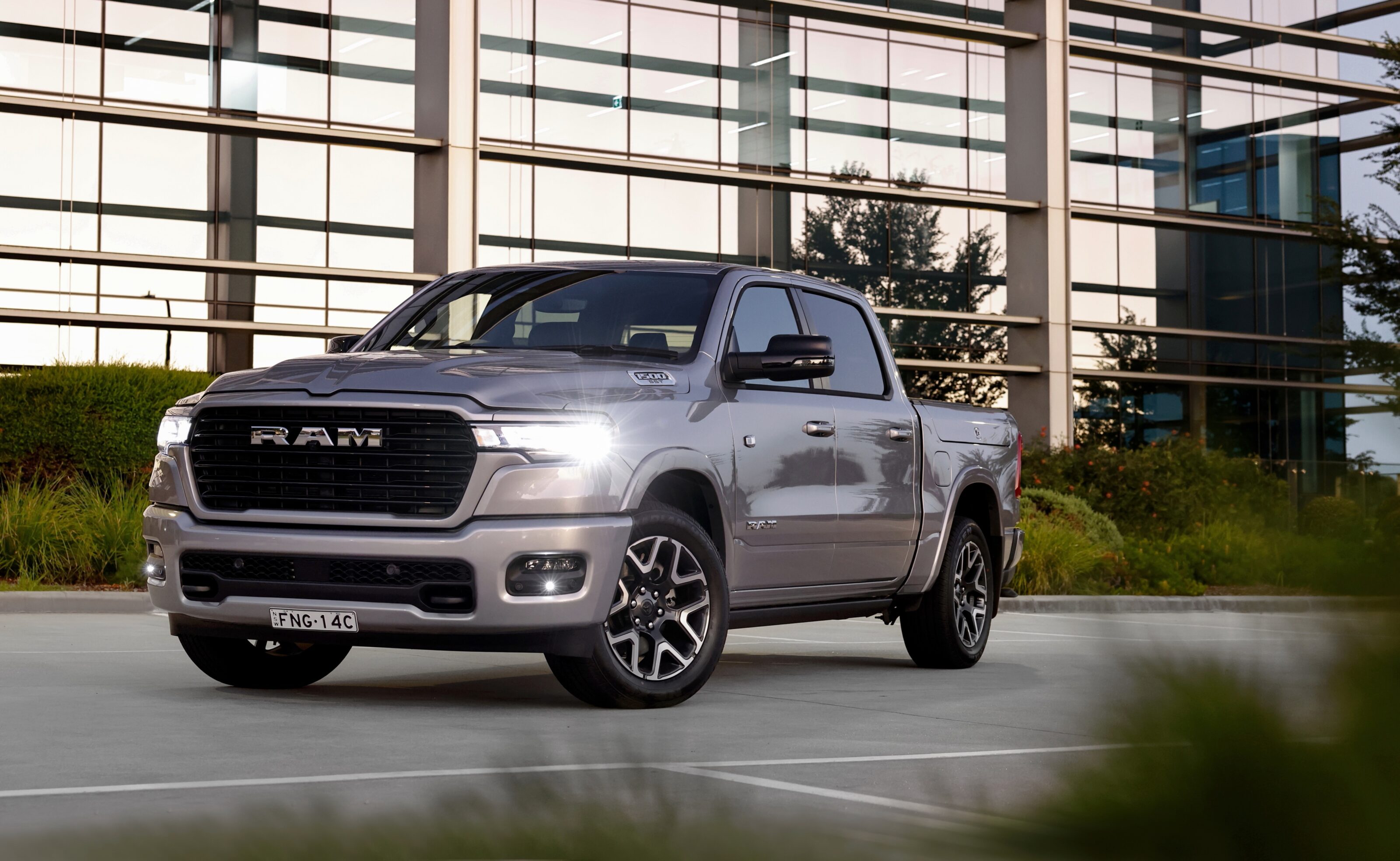
- Price: From $141,950 plus on-road costs (Laramie Sport) – $159,950 +ORC (Limited)
- Drivetrain/economy/CO2 emissions: 3.0L turbo-petrol inline six: 313kW/635Nm (Standard Output) – 403kW/707Nm (High Output), eight-speed auto, 4WD, 10.7-11.8L/100km, TBC CO2
- Dimensions: 5916mm long, 2057mm wide, 1971mm tall, 3672mm long wheelbase
- Towing capacity/GVM/GCM: 4200kg (High Output) – 4500kg (Standard Output)/3505kg (High Output) – 3521kg (Standard Output)/7285kg (High Output) – 7711kg (Standard Output)
- Warranty/roadside assistance/service intervals: Three-year/100,000km warranty, three years of roadside assistance, annual/12,000km
- Five-year service cost: No capped price servicing
| Driving | |
|---|---|
| Interior | |
| Practicality | |
| Overall value |
Things we like
- Monster power and torque from inline-6
- Still looks the business
- Feature-packed cabin
Not so much
- Avoid 22-inch wheels if you value ride quality
- Powerhouse Limited model towing capped at 4200kg
- Three-year warranty and no capped price servicing
This DT generation is the fifth iteration of the big Ram ute and debuted back in 2019. Most associate a Ram ute with one engine: the 6.4-litre Hemi V8. And it is a heck of a powerplant. Times, they are a-changing though and the new generation of RAM 1500 models no longer get the bent-eight. Instead, Australia gets a 3.0-litre twin-turbocharged inline-6 in two discrete guises: either a 313kW/635Nm output in the entry-level Laramie Sport or – counterintuitively – a 403kW/717Nm tune in the Limited. And yes, in case you were wondering, even the lower output of those engines is punchier than the old standard trim Hemi.
The new engine has been a point of controversy for buyers, mostly because the Hemi V8 that the Ram used to use is a legendary engine. The company has promised to revive it in the US for 2026, under the marketing strapline ‘Symbol Of Protest’, but it’s yet to be locked in for Australia. Even if it does arrive here, it’ll be a little shy of the Hurricane twin-turbo inline-six’s massive 403kW of power and 707Nm of torque in the higher-output version.
Whereas those looking to tow a massive trailer might instantly gravitate to the one with the big torque figure, things aren’t quite so cut and dried in real life. With its 22-inch wheels, Pirelli Scorpion tyres, air springs, firmer ride and heavier kerb weight, the high output Limited is, in effect, the less competent tow vehicle, with a maximum braked figure of 4200kg versus the steel-sprung Sport’s 4500kg rating.
Some might baulk at the new entry price into Ram 1500 ownership. The $141,950 RRP of the Sport looks like a hefty $22k hike, but almost all of that premium is due to the fact that there’s no longer – for the time being at least – a budget Big Horn variant on offer. From there it’s a big step up to the $159,950 Limited.
Nevertheless, even the base Sport gets a stack of gear including heated and ventilated leather seats for everyone, LED headlights, dual wireless phone charging, a 14.2-inch centre touchscreen, and a decent Harmon Kardon sound system. There’s even a 10.5-inch passenger screen. What you will miss however, are the sort of towing technologies and smart camera systems that put the Ford F-150 at the head of this particular test.
As well as standard four-wheel drive with low ratio transfer case, the Ram 1500 gets a slick 4WD auto mode that allows it to be driven on the blacktop with 4WD engaged. That’s handy in the wet. Five drive modes are offered including a towing-specific map. Unfortunately, the fuel tank only holds 98 litres, which is some 28 per cent smaller than the standard item on the Ford F-150.
All up, this round of changes has given the Ram 1500 a new lease of life. It remains a competent tow vehicle, but unlike those big utes that are built for towing and little else, perhaps the Ram has a few other strings to its bow.
Ford Ranger V6
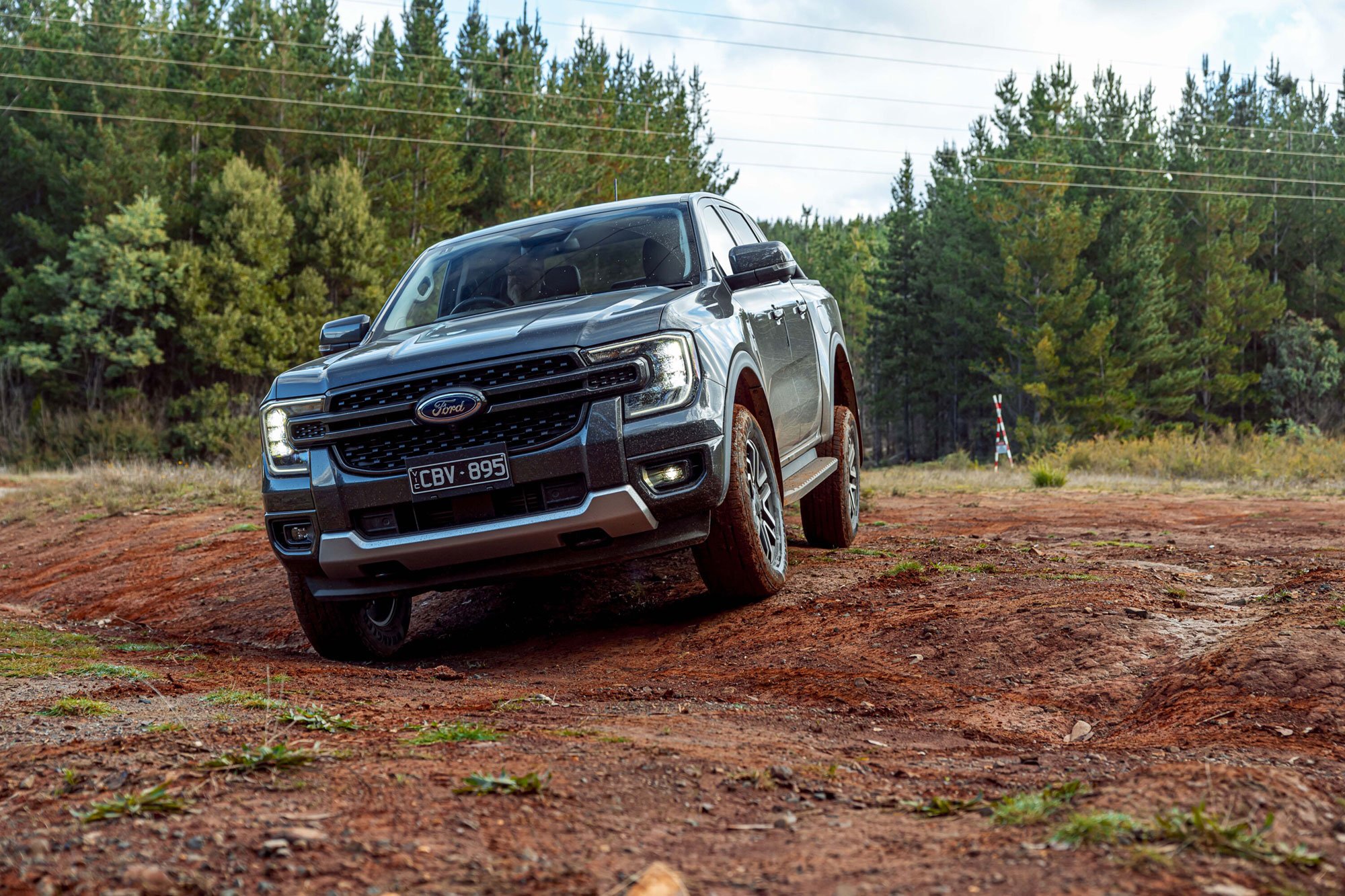
- Price: From $68,840 plus on-road costs
- Drivetrain: 3.0L V6 turbodiesel engine, 184kW/600Nm, 10-speed auto
- Combined fuel economy, CO2 emissions, fuel type: 8.4L/100km, 222g/km, 95RON
- Warranty: Five years, unlimited kilometre
- Five-year service cost: $1895 ($379 per year)
| Driving | |
|---|---|
| Interior | |
| Practicality | |
| Overall value |
Things we like
- V6 engine has the herbs for towing
- Clever towing tech
- Great ride and refinement
Not so much
- Some nagging reliability grumbles that Ford has addressed
- Prices keep creeping up
- Do you want to wait for the facelifted version?
Let’s assume for a moment you’re not trying to drag an errant tectonic plate back into position and require a mere 3.5-tonne braked towing capacity. You don’t need a ute that requires council planning permission for your garage extension. Instead, how about something a bit easier to wrangle? Something like the Ford Ranger V6.
It’s no great secret why the Ranger has regularly topped the charts as Australia’s best-selling vehicle. It drives well, it’s packed with no-nonsense good ideas and, as a tow vehicle, it takes a lot of beating. The 3.0-litre diesel V6 versions feature a meaty 184kW/600Nm output and while that engine can trace its roots back almost as far as the demise of the dinosaurs, it still aces pretty much everything else in a comparable price bracket.
Pick, say, the Ranger Sport V6 and you have a GCM of 6400kg and when towing a 3500kg trailer, you have a payload of 555kg. Just a word to the wise: don’t be tempted to spring for a Raptor on the basis that it has more power. Torque is down on the diesel V6 and its peak rated towing capacity is a mere 2500kg.
In other words, when you’re at maximum towing capacity, the Ranger V6 has more payload available to you than any of the big 4500kg-rated trucks. It’s a genuinely strong towing package too, with a dedicated Tow/Haul drive mode which will hold gears longer to prevent the engine labouring. There’s also a ‘manual’ shifting mode on the 10-speed auto which allows you to knock the vehicle down a gear or two if you’d rather engage a bit more engine braking on a downhill incline. That’s reassuring, as is the 4A setting that allows you to run 4WD on road to alleviate the problem of rear traction in the wet.
Standard tech helps you manoeuvre the Ranger cleanly towards your trailer, with a centre line marked on the camera image that almost always guarantees a bullseye on the tow hitch. The optional Touring Pack includes a 360-degree camera and an integrated brake controller. The SYNC4 infotainment allows for easy configuration of your trailer and it will amend rear cross traffic alert and blind spot monitoring accordingly. The trailer light check mode is simple genius.
There’s a reason why the Ford Ranger is currently Australia’s most popular tow car. It’s clever, it drives well, there’s stacks of aftermarket support for it and it takes the stress out of towing. You can’t ask for much more than that. Or if you think you can, wait for the forthcoming Ranger Super Duty.
Volkswagen Amarok V6
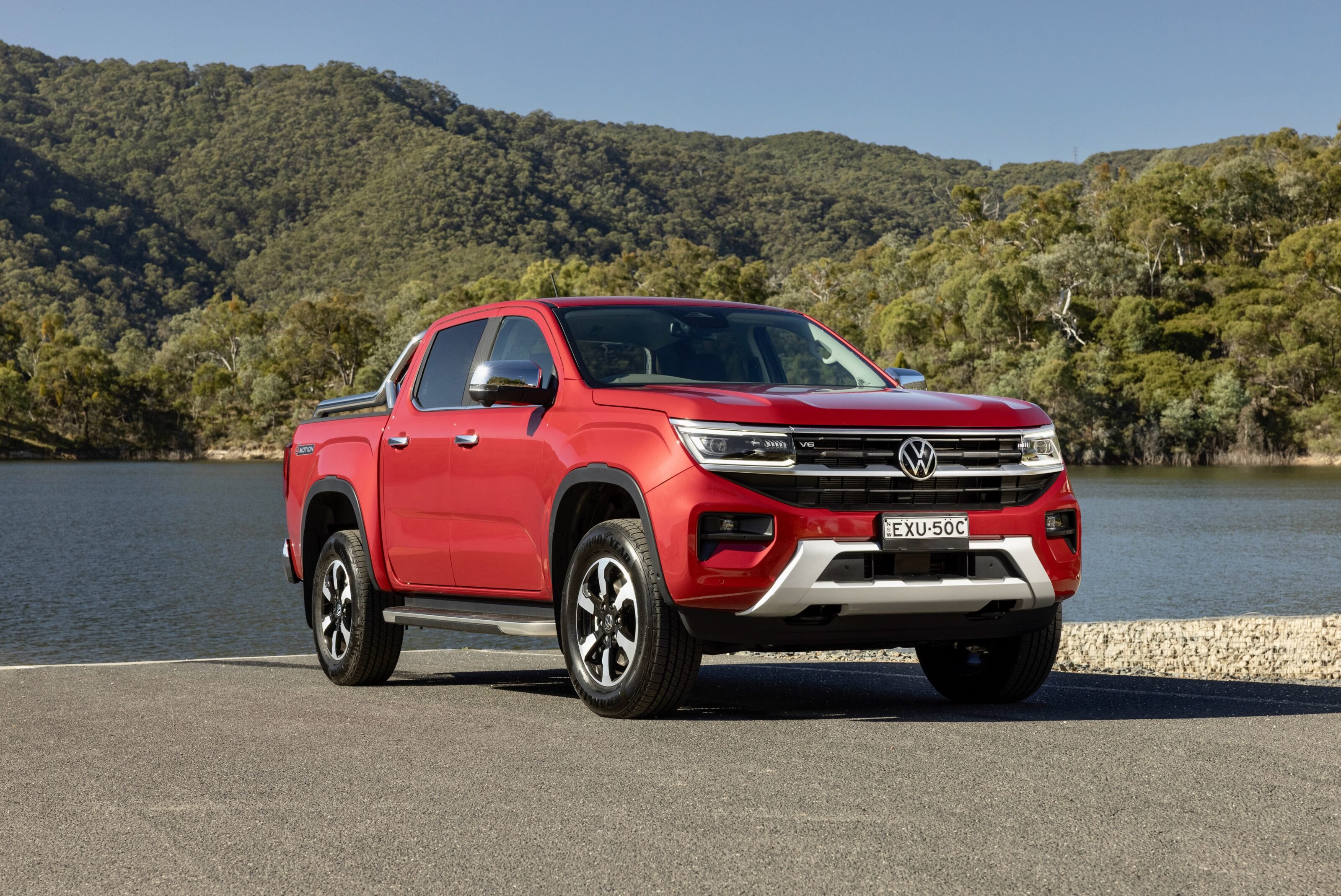
- Price: From $70,990 plus on-road costs
- Drivetrain: 3.0L V6 turbodiesel engine, 184kW/600Nm, 10-speed auto
- Combined fuel economy, CO2 emissions, fuel type: 8.4L/100km, 222g/km, 95RON
- Warranty: Five years, unlimited kilometre
- Five-year service cost: $1800 ($360 per year)
| Driving | |
| Interior | |
| Practicality | |
| Overall value |
Things we like
- Grunty V6 powerplant
- Slick Volkswagen styling
- Excellent ride and refinement
Not so much
- Some don’t rate the 10-speed auto’s reliability record
- A smidge pricier than the Ford Ranger
- Touchscreen control for off-road functions not always ideal
Volkswagen tends to try to excommunicate any of us that link its excellent Amarok ute in any way with the Ford Ranger, despite them sharing underpinnings, but we value the truth over being on Vee-Dub’s Christmas card list, so many of the attributes you’ll have read about for the Ford Ranger V6 previously apply equally to the Volkswagen Amarok.
It shares a lot of the really clever software for towing with the Ford, but the infotainment system has had a slick and effective res-skin in Volkswagen corporate fonts and layouts, which integrates well with the rest of the Amarok’s interior, which uses some high quality materials and finishes to elevate it above the smart but functional Ranger cabin.
Equipment levels are extremely strong, and even the entry-level Style model features gear like adaptive matrix LED headlights, 18-inch alloy wheels, a stainless steel sports bar and keyless go. Its microfibre upholstery is hardwearing and won’t freeze or roast you in the extremes of Australian conditions. You’ll find inclusions on the Style that you won’t find on the (broadly equivalent) Ranger Wildtrak including a 10-way power adjustable driver’s seat and leather-look inserts on the dash to add a bit of luxe.
A tow bar is fitted as standard and Volkswagen has released a whole range of approved accessories for the Amarok which include a lift kit, underbody protection. Like the Ranger, it offers all of the off-road ability including a low-range transmission, so it’s a great choice if your idea of towing is with an adventure caravan heading out into the more remote parts of the Aussie map. If you don’t want to follow the Ranger crowd, the Volkswagen Amarok V6 is a very convincing proposition.
The most powerful production General Motors product ever has been revealed with the Chevrolet Corvette ZR1X due to go on sale in North America later this year. Using a hybrid twin-turbo V8 drivetrain, the ZR1X makes 932kW – 1250hp in the old money – of power, enabling it to hit 100km/h in under two seconds and onto a top speed in excess of 375km/h.
Chevrolet also claims that the Corvette ZR1X can complete a quarter-mile sprint in “under nine seconds” at 241km/h, making it one of the quickest production cars ever made. While it was expected to be called the Corvette Zora after the Corvette’s chief engineer , Chevrolet decided on ZR1X as its name.
While the ZR1X appears to use a specialised engine, Chevrolet actually just took the best bits of the current Corvette range: the ZR1’s twin-turbocharged 5.5-litre V8 engine and the front-mounted electric motor from the E-Ray. By themselves, the V8 and electric motor produce 793kW/1123Nm and 139kW197Nm respectively.
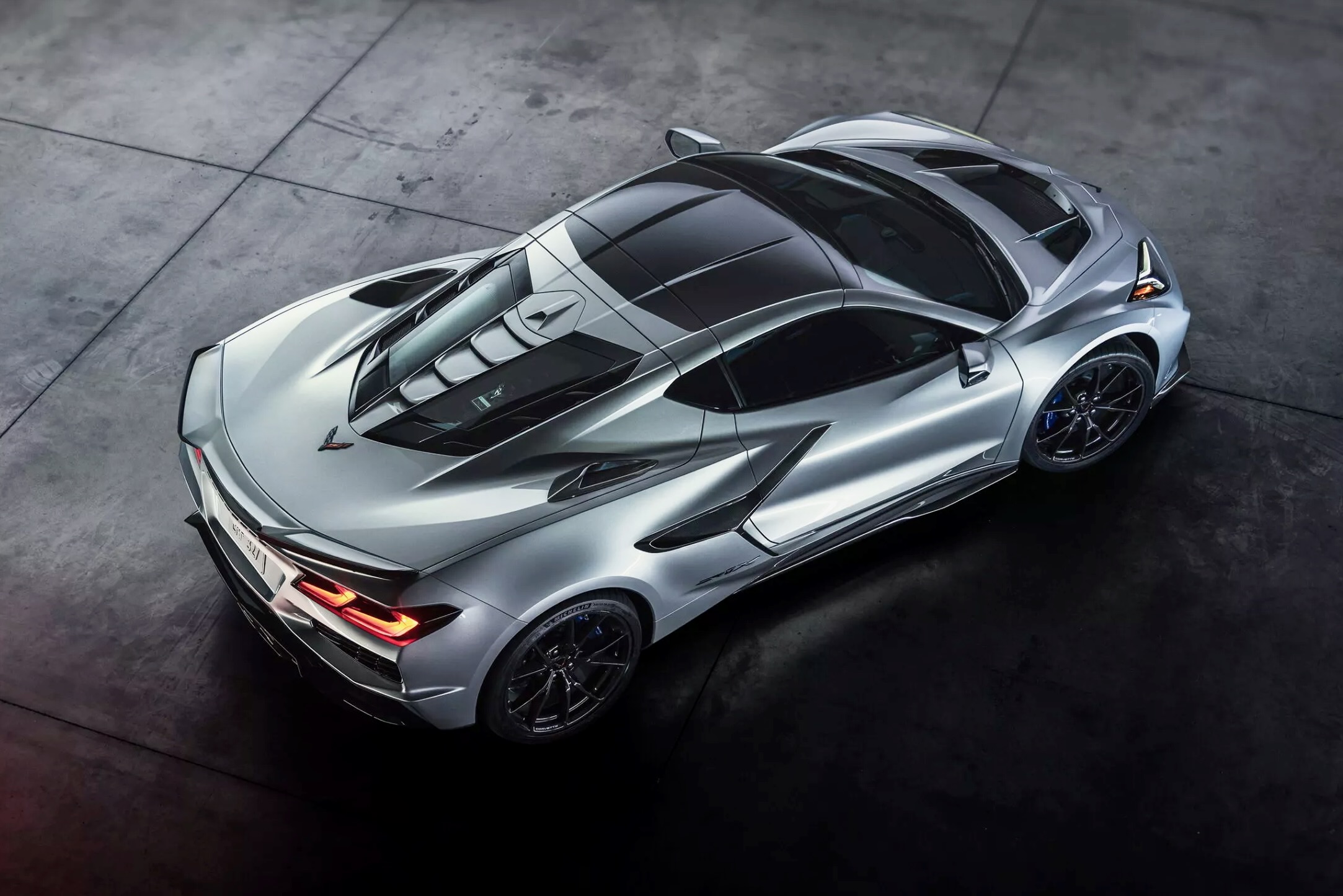
The V8 uses an eight-speed dual-clutch transmission to drive the rear wheels, while the electric motor drives the front wheels only. There’s no physical connection between the two axles, and while the two work together in acceleration, the electric motor stops at speeds higher than 258km/h. The electric motor draws power from a 1.9kWh battery, which is charged by the V8 engine or through regenerative braking.
The ZR1X also features new drive modes for track use – pressing the Charge+ button activates a new ‘Endurance’ mode to adjust the battery’s energy storage strategy for extended lapping and consistent output. There’s also a ‘Qualifying’ mode and a boost function to ensure maximum power is available on-demand.
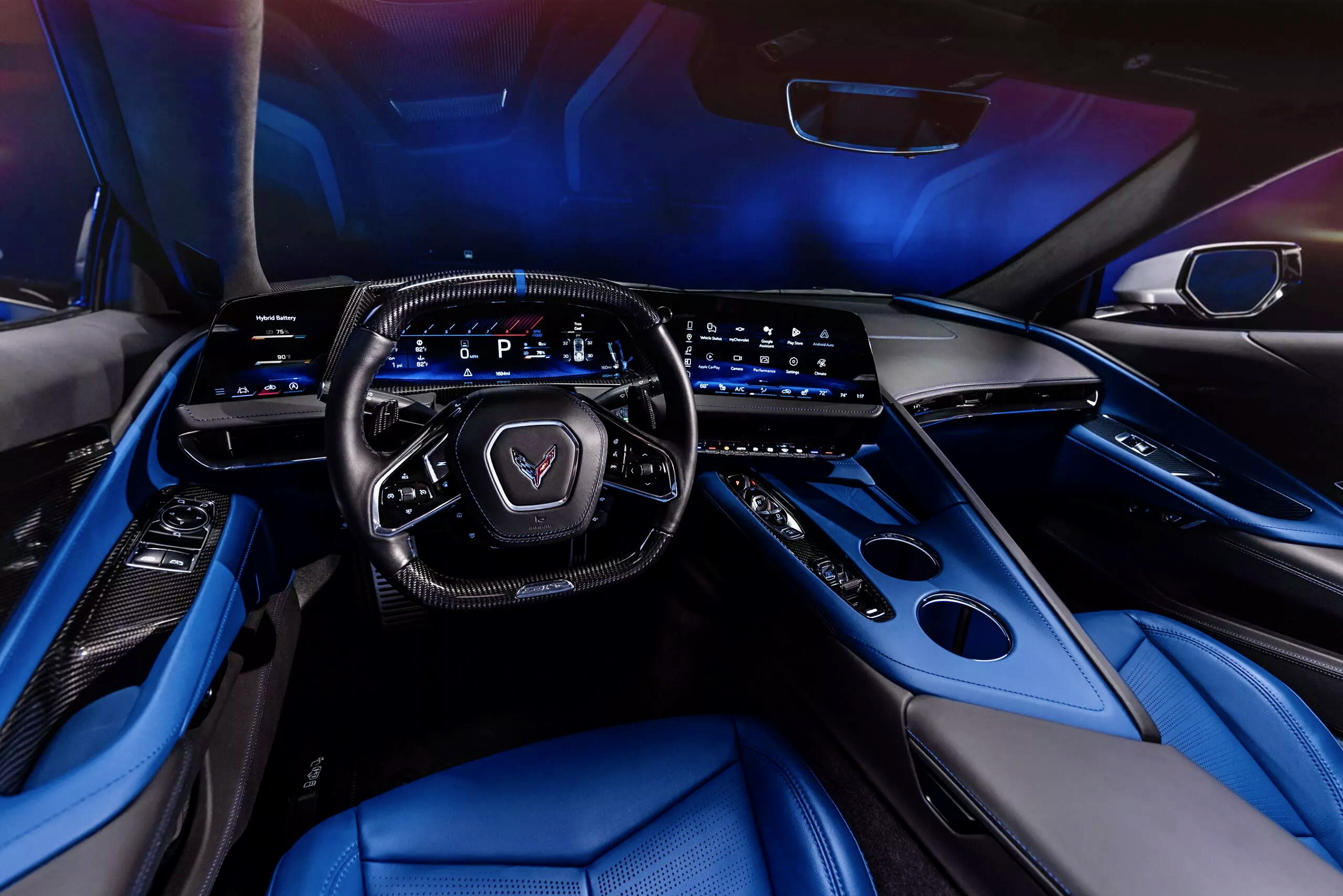
In addition to the added performance, Chevrolet has also upgraded the braking system for the ZR1X. As standard is a ‘J59’ brake package with 419mm front and rear carbon-ceramic discs clamped by 10-piston front and six-piston rear Alcon calipers.
Buyers can also choose from a standard road-focused suspension tune with Michelin Pilot Sport 4S tyres, or the ZTK Performance Package with a firmer track-oriented set-up and sticky Michelin Pilot Sport Cup 2R rubber.
Buyers can also choose an optional ‘Carbon Aero’ package, which adds dive planes, underbody strakes, a hood gurney lip over the front heat extractor, and a sizeable rear wing for a claimed 544kg of downforce.
The ZR1X’s interior has also seen trim upgrades with the option for the passenger seat to be finished in a differing colour to the driver’s seat, while the new dashboard layout with a larger touchscreen and toned down central tunnel of all 2026 Corvette models also features in the ZR1X.
General Motors Special Vehicles (GMSV – the local arm of GM) is yet to announce any plans for the Corvette ZR1X for the Australian market.
Honda has confirmed that a new electric city car will be previewed at next month’s Goodwood Festival of Speed in the UK. Dubbed the ‘Super EV Concept’, the new Honda EV will replace the short-lived but much-loved Honda that ended production in 2024.
So far, Honda has only released one teaser image of the disguised Super EV Concept in front of the UK Houses of Parliament. It bares a strong resemblance to the N One kei hatchback sold in Japan, with similar cute circular headlights, a boxy body and wheels-at-the-corners dimensions – though, its wheel arches are noticeably broader than the N One, indicating that it may be wider.
Described as an A-segment model by Honda, the Super EV Concept will likely fall under kei dimensions – a maximum of 3.4 metres long and 1.48 metres wide – and Honda says that it will “marry fun to drive dynamics with the trademark Honda usability.”
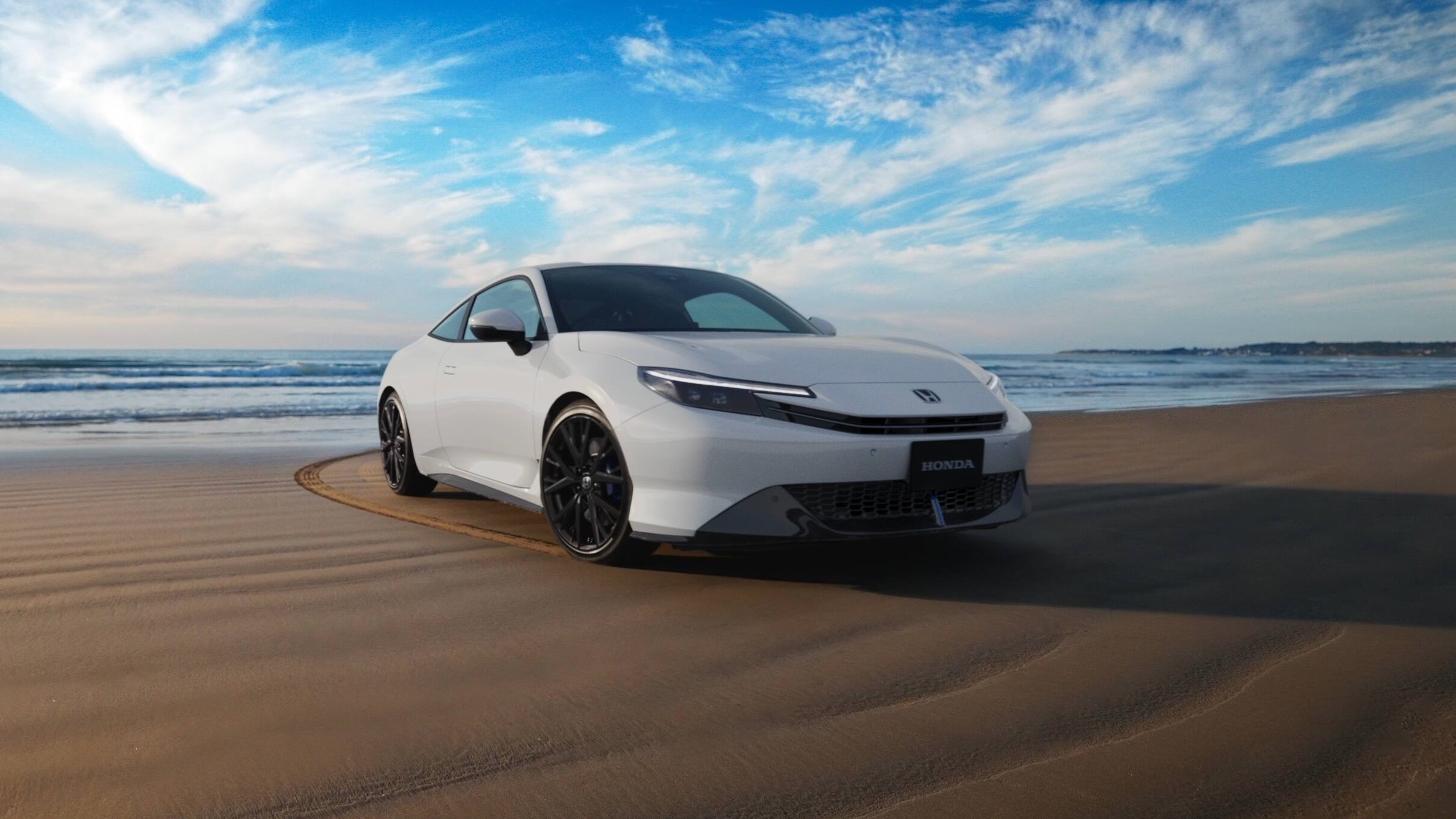
Honda is yet to reveal any details of its drivetrain, though it will likely feature a healthier range than the former Honda e and its tiny 222km WLTP rating.
Honda will also use Goodwood to preview other new products, such as the electric Honda 0 SUV concept car, Civic Type R Ultimate Edition – the final Civic Type R to be sold in Europe – and new Prelude coupe (above). The brand’s motorcycle range will also feature, as will a hill run with the Honda-powered Williams FW11 F1 car from 1986, a CRF450 Rally bike and a CBR1000RR-R Fireblade SP superbike.
The Honda stage at this year’s Goodwood is built around a movie theme, and has been designed to mimic the experience of a live film set, according to the brand. There will be a range of interactive experiences centred around the products on display for attendees to take part in, such as shooting a film trailer on an extended reality stage with a Civic Type R and posing for an AI action movie poster to appear as though they’re riding a GoldWing motorcycle, hanging from the wing of a HondaJet or starring in a marine adventure.
The Goodwood Festival of Speed will run from July 10-13.
