
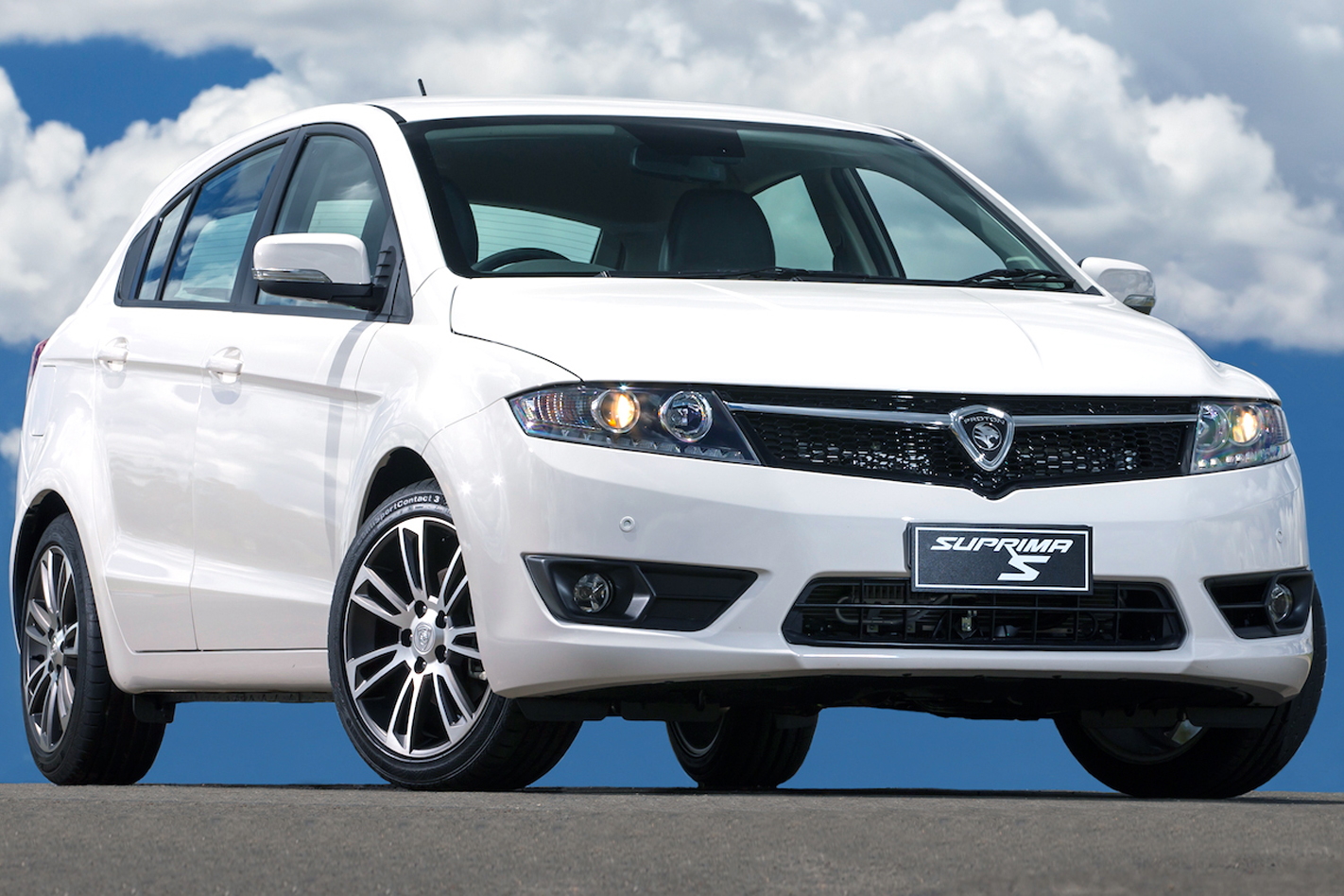
Is it the power figures, the performance potential, the colour palette, price, or piston count? Tune in to find out.
You can find WhichCar Weekly on all manner of podcast apps including iTunes and Podbean. Please rate, subscribe and leave a review.
If you want yet more WhichCar action whether it be behind the scenes insights or the very latest from the automotive front line, follow the day-to-day happenings of the WhichCar team on Facebook, Twitter and Instagram.
And if you really want to get involved, send us a question or auto anecdote of your own. We endeavour to answer all your messages.
Listened to or watched the WhichCar weekly podcast? Help us out
Leave a note in the comment section below
Leave a review on Apple Podcasts/iTunes
Subscribe to our podcast
Browse through the WhichCar podcast library here
ELVIS might be gone, but his BMW 507, which he famously drove in Germany during his time as the world’s most famous GI, enjoyed a Lazarus-like rebirth.
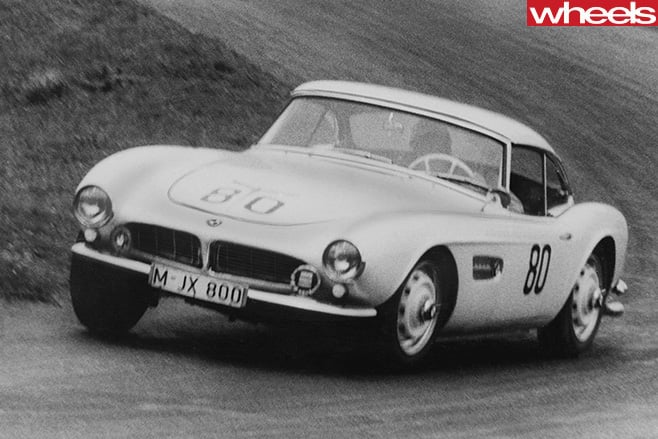
The white BMW 507 with the chassis number 70079 had an illustrious life even before Elvis acquired it from BMW Glöckler. It belonged to racing driver Hans Stuck, who competed and won hill climbs throughout 1958 before driving it to the Frankfurt, London, and Turin auto shows. It even scored a role in a Bavarian film (Hula-Hopp Conny) before ending up at the Frankfurt dealership where it was sold to the then 23-year-old singer.
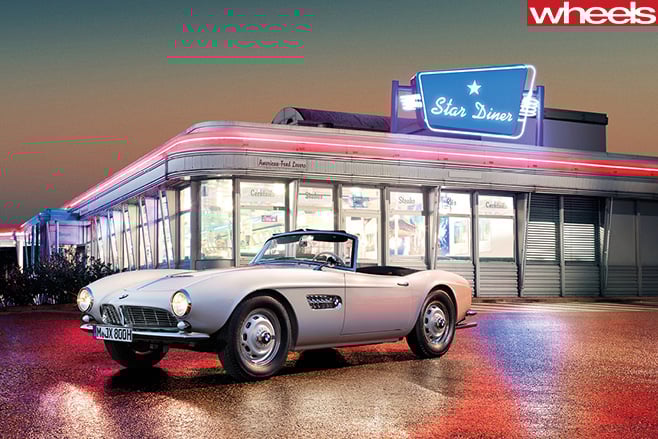
The King used the car to commute to and from base and enjoyed it enough to ship back to the US in 1960 after returning home from his army service in Germany.
By the time it arrived in the USA it was red. The popular reason behind the colour change was that Elvis had it painted due to it being used as a canvass for his many devotees to express their love with lipstick.
Another long-held theory suggests the car was actually leased, but Elvis thought he bought it because his German wasn’t great. So he had to return it on leaving the country and bought a red one to take home.
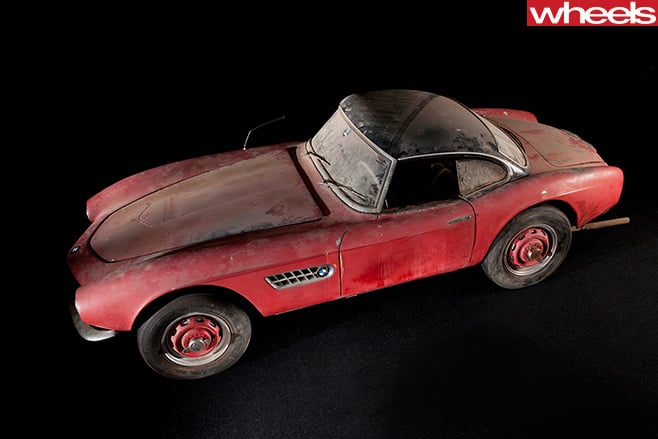
There is also a lot of doubt about Elvis ever having had a BMW 507 when he returned to America, as there are no records or photographs to confirm it. Either way, in 1960 a 507 with chassis number 70079 was traded at a New York Chrysler dealer who flipped it for $4500.
Its new owner modified it for racing, swapping the BMW engine with a Chevrolet V8, new gearbox and rear axle which required the frame to be cut.
“It took some time until we actually got the engine compartment open and identified the stamped chassis number: 70079, the Holy Grail among BMW numbers.”
It changed hands a couple more times before ending up with space engineer and car collector Jack Castor, who stored it in a warehouse near San Francisco where it sat for decades waiting in vain for a restoration. Castor knew he had a former Hans Stuck race car and had heard rumours it belonged to Elvis.
In 2009 an article in Bimmer magazine about the search for Elvis’s 507 caught his eye. He contacted the writer Jackie Jouret and took her to the “pumpkin warehouse” where the decrepit red BMW 507 was stored alongside other notable vehicles.
“Jack had tied down its engine bonnet with ropes,” she recalls. “It took some time until we actually got the engine compartment open and identified the stamped chassis number: 70079, the Holy Grail among BMW numbers.”
The discovery supported the theory that the red 507 was indeed the same white car that Elvis drove around Germany.
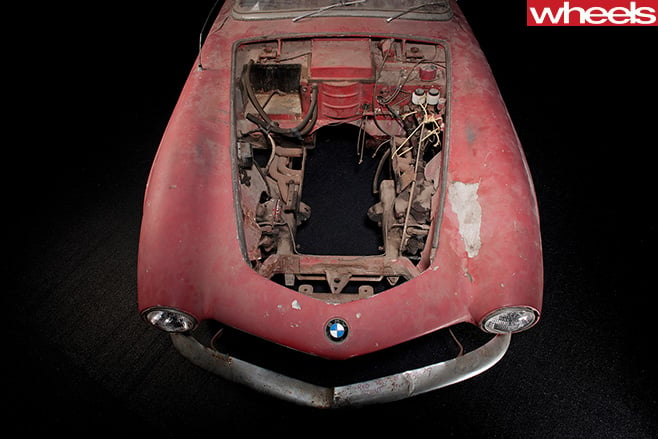
Rejuvenation
Jouret liaised with BMW Group Classic, which eventually bought the 507 from Castor, along with the spare parts he’d collected over the years. It was shipped back to Germany in 2014. After featuring at a special exhibition at the BMW Museum in Munich titled “Elvis’ BMW 507 – lost and found”, work then began on its restoration. Castor died a short time later.
The 507 was meticulously disassembled over two weeks and the paint stripped off the aluminium body in acid baths. Replacement parts not already sourced had to be remade, sometimes using original manufacturing methods. This presented an opportunity to make new parts for other surviving 507s.
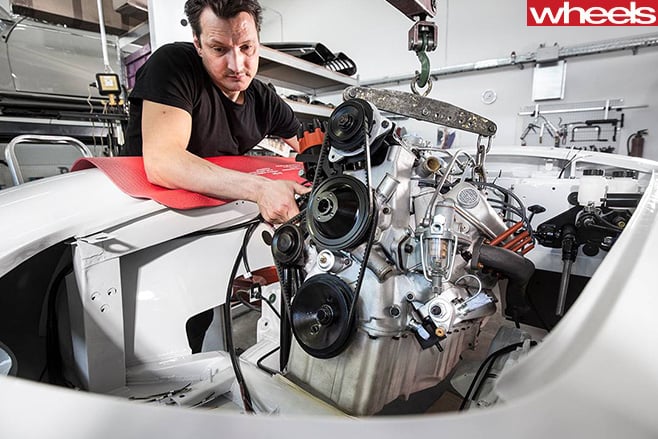
The instrument panel was newly cast as per the original and the leather upholstery was created to precisely match the pattern shown in old photographs and catalogues. When the seats were reconstructed, it proved possible to use the original steel subframe after all the rust had carefully been removed.
The Chevy V8 was replaced with the correct BMW 3.2-litre V8 and a fresh coat of the original “featherwhite” duco was applied with the same methods used in the late 50s.
At the time BMW Group Classic boss Ulrich Knieps said he was proud to see the restoration completed with Castor in mind.
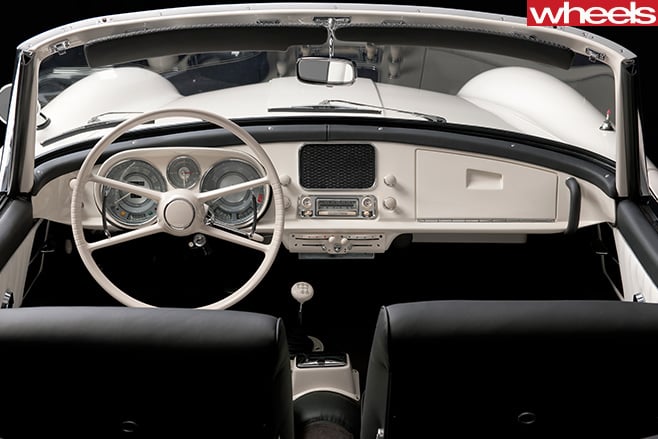
“The opportunity to bring back the BMW 507 owned by the King of rock’n’roll to us here in Munich for purposes of restoration in accordance with the wishes of the previous owner, Jack Castor, was a dream come true for all those involved.
“This was an exceptionally fascinating project. The outcome is not simply a source of great pride to us. Jack would undoubtedly have been delighted by the outcome.”
During its 1955 to 1959 run, BMW only built 254 507s, which can fetch up to $2.5 million.
This would most likely attract well beyond that. However, this restoration wasn’t one for the money; it’s for the show.
Nissan is busy testing the next Qashqai, and we’ve got the pictures to prove it.
The Japanese brand’s popular crossover has been snapped testing in camouflage, as Nissan looks to develop the most important car in its model range… until the Ariya EV kickstarts its electric roadmap.
The prototype picture is mostly camouflaged, so it’s hard to say exactly what it’ll look like – but it appears to be the same size as the outgoing model.
Styling is harder to analyse, but the lines we can see suggest something more angular and similar to the new Juke than the flowing lines of the Ariya.
Underneath expect the same CMF platform as before that’ll also be featured on the X-Trail and Renault Kadjar.
Hybrid power
Like most other carmakers, Nissan is on an electrified push. The Qashqai will help Nissan achieve its electrified sales targets in Europe by 2023; there’ll be a choice of mild-hybrids and PHEVs, but no more diesels.
“By the end of fiscal year 2023, we forecast electrified vehicles to account for 60 percent of our sales in Japan, 23 percent in China and 50 percent in Europe, resulting in sales of more than one million units,” said CEO Makoto Uchida. A totally electrified Qashqai range will be key to hitting those targets.
“We will expand our electrified line-up, launching two more electric vehicles and four more e-POWER vehicles, resulting in an electrification ratio of 60% of our sales,” he added.
“ePower will come on our crossovers, ePower has been uber-successful in Japan. We want to bring ePower to Europe,” Helen Perry, Nissan Europe head of passenger Cars infrastructure told sister title CAR earlier this year.
What about inside?
CAR understands Nissan will be pushing technology in the new Qashqai, most notably in the interior.
The next-gen SUV should benefit from bigger screens and slicker tech, as Nissan brings over some functionality from the cutting-edge Ariya.
The Qashqai will also share autonomous tech with the new Ariya, so expect the latest edition of ProPilot.
When is the new Nissan Qashqai coming to Australia?
The Qashqai – which used to be sold here as the Nissan Dualis – should be revealed by the end of this year, and it will continue to be built in Nissan’s Sunderland plant in the UK – Coronavirus permitting in both cases.
This would indicate that the new Nissan Qashqai will come to Australia halfway through 2021.
Currently, the Qashqai is Nissan’s second most popular SUV in Australia, behind the popular X-Trail.
Today, at 57, he heads the Bugatti design department that lives discreetly on an industrial estate in Wolfsburg, Germany. He joined the iconic brand 16 years ago and in a previous life the well-dressed son of the three-time motorbike world champion Georg Anscheidt worked as a stunt rider and circus artist.
With help from the former Porsche chief designer Harm Lagaay, Anscheidt later graduated in transportation design and joined Volkswagen, working next in Weissach, Sitges, Berlin, Wolfsburg and Molsheim, France. He currently devotes his free time to restoring a Bugatti Type 35 and drives a super-clean silver 1981 lightweight Porsche 911SC. “My vision for Bugatti is Form Follows Performance,” says the father of three. “The shape of a Bugatti is dictated primarily by engineering necessities. As an iconic statement, it must remain authentic for at least half a century.”
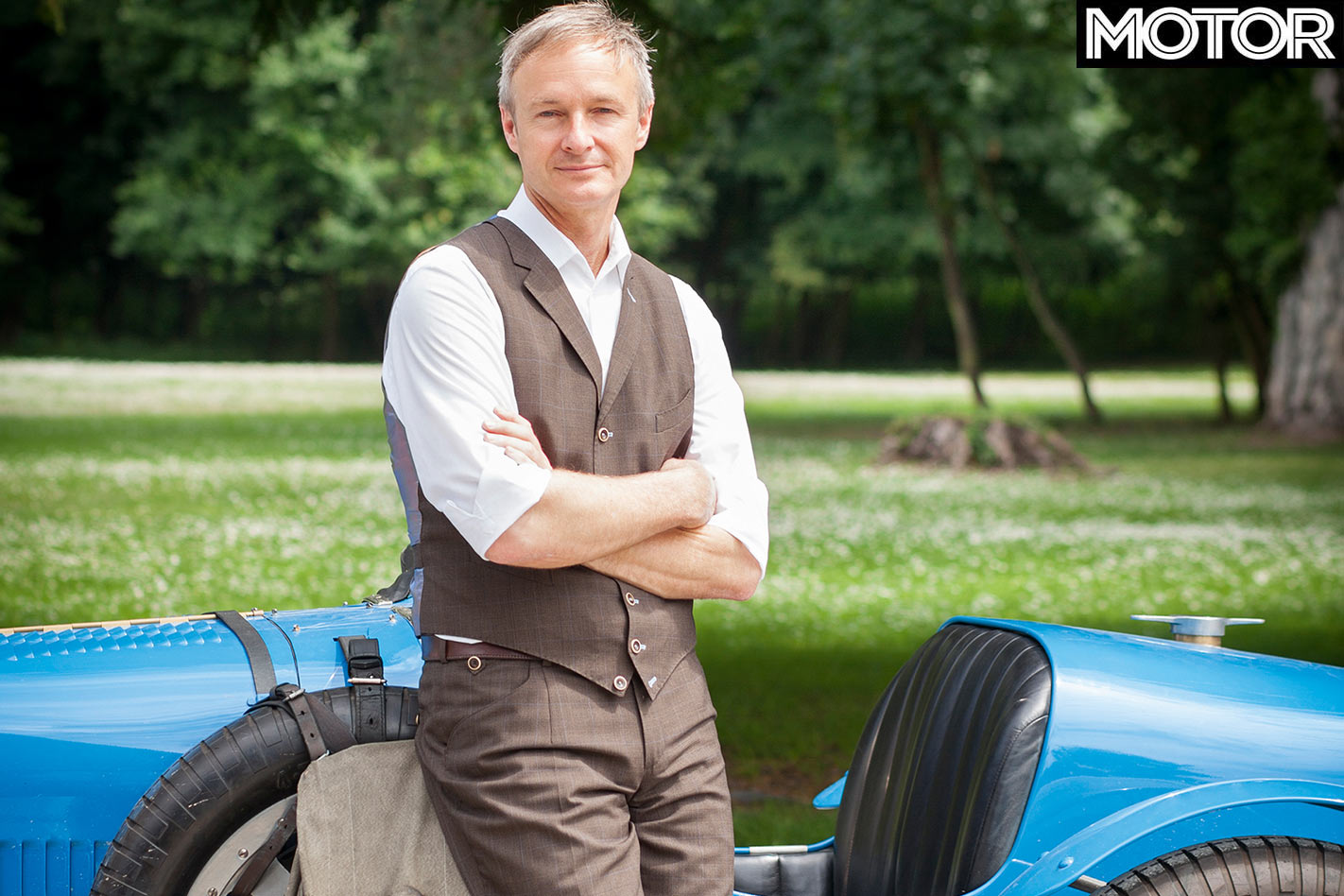
We wonder if in another 35 years that’s how we’ll see the Veyron – and it’s a legacy the Chiron continues today. The Veyron was the baby of Ferdinand Piech who acquired Bugatti in 1988 for the Volkswagen group. A gifted engineer and a very good driver, the powerful Austrian shareholder suggested fusing two 4.0-litre VR8 engines (also his brainchild, but a major flop in the Passat W8) to create the legendary 736kW 8.0-litre W16. Piech purchased several Veyrons and before his untimely death he allegedly also ordered the one-off Voiture Noire at A$18m before tax.
Geek speak: Bugatti’s lethal W16 engine
Although Bugatti introduced a removable roof panel for the Grand Sport Vitesse late in the Veyron’s life, the much more drastic Barchetta proposal from 2008 never made it into production. The official reason was insufficient torsional rigidity, but the global financial crisis was the real cause of death.
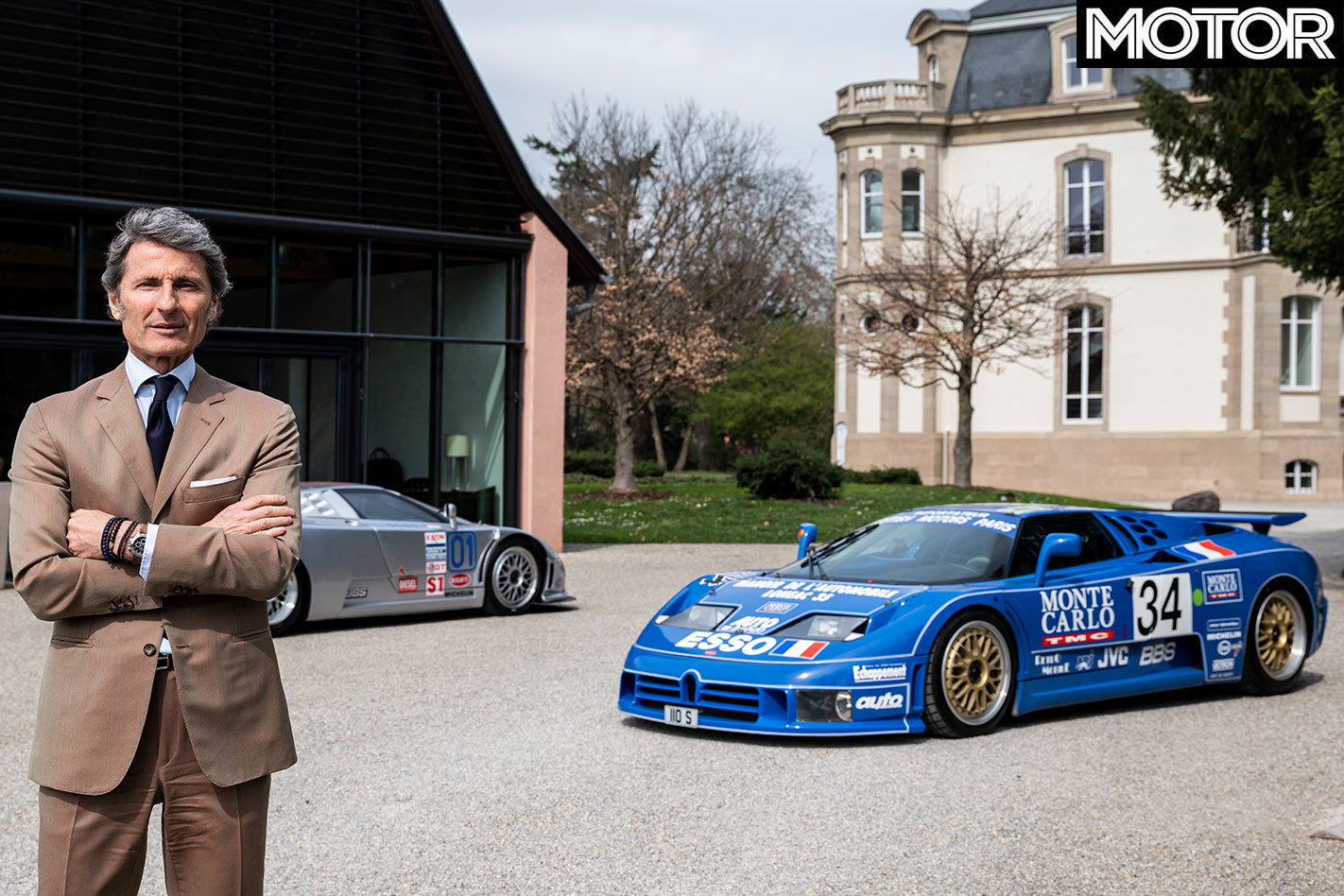
Shaped by Jozef Kaban who is about to take over Volkswagen design, the Veyron was meant to attract 70 buyers per year, but when the production run finished, only 300 coupes and 150 roadsters had sold. The group chairman Bernd Pischetsrieder justified the heavy losses of around A$7.5m per car by stressing the halo effect created by “the marque’s unrivalled engineering competence”.
After his departure, it was agreed to write off the up-front investment – an estimated A$2.64b – so the business case for the Chiron was not burdened by previous liabilities. Under the chairmanship of Wolfgang Dürheimer, the new two-seater coupe launched in 2016 using an upgraded architecture and drivetrain concept. The output was limited to 500 units. In February 2020, car number 250 rolled off the Molsheim assembly line, while an additional 150 units are spoken for with deposits and about 100 are still up for grabs. To maintain sales momentum, Bugatti will keep adding special versions like the Chiron Sport and the limited-edition Divo and Centodieci.
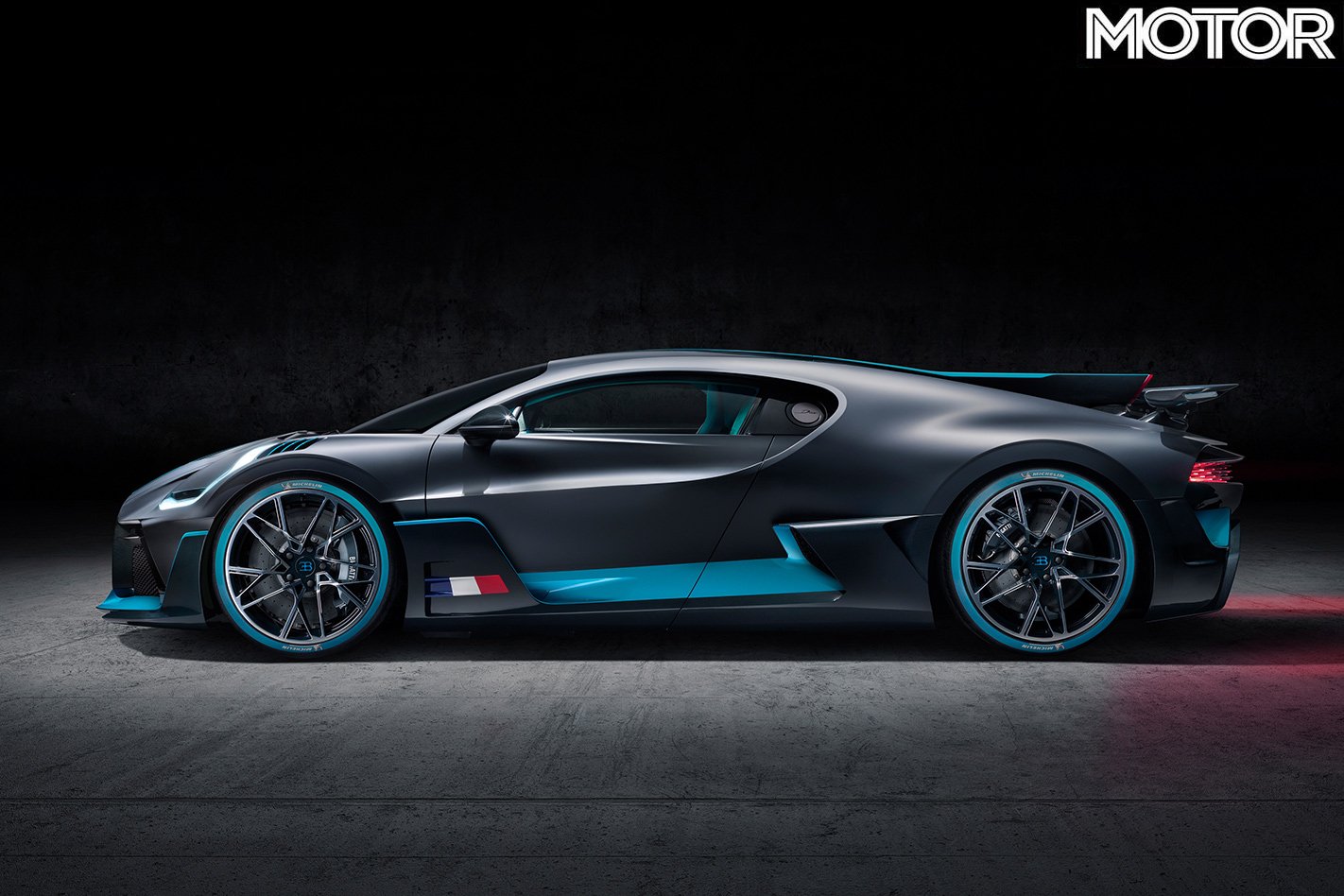
Seven months before the debut of the Chiron at the 2016 Geneva Show, Bugatti had planned to unleash a new front-engined model at the Pebble Beach Concours d’Elegance. Known as concept Atlantic, the gullwing crowd-stopper was intended as a teaser for the controversial second model range.
Powered by a high-output Porsche V8 or four electric hub motors, the reimagined Atlantic was to cost under A$1.6m apiece. The projected annual output was somewhere between 750 and 1000 units. Expertly proportioned and beautifully detailed, the proposal was nonetheless rejected.
Comparison: Bugatti Chiron vs Veyron vs EB110 Supersport
Some claim the business case did not work out, others suspect that the derivative 515kW engine was not special enough for Bugatti, while the Salzburg grapevine suggests Piech was not happy signing off a straightforward sports car. In contrast, potential buyers who were shown the Atlantic reportedly loved the design and appreciated the comparatively generous packaging.
Anscheidt then presented a counter proposal in the shape of the much more extreme front-engine GT named Rembrandt (above). It was extreme on price (they were talking double-digit millions), power (1103kW excluding electrification) and rarity (less than 25 would exist). Thanks to all-wheel drive and the lightweight all-carbon body, the front mid-engine W16 two-seater could have virtually matched the Chiron in performance while adding cabin and boot space.
Although high-ups considered using this blueprint in a second Bugatti product, the numbers just did not add up, and the project was mothballed before a full-scale model was finished. In essence, that’s where the brand stood on the day before this year’s cancelled Geneva Show that would have debuted the Chiron Pur Sport. According to a spokesperson, looking deeper into the crystal ball to know what follows the Chiron – as we are going to do right now – is speculation.
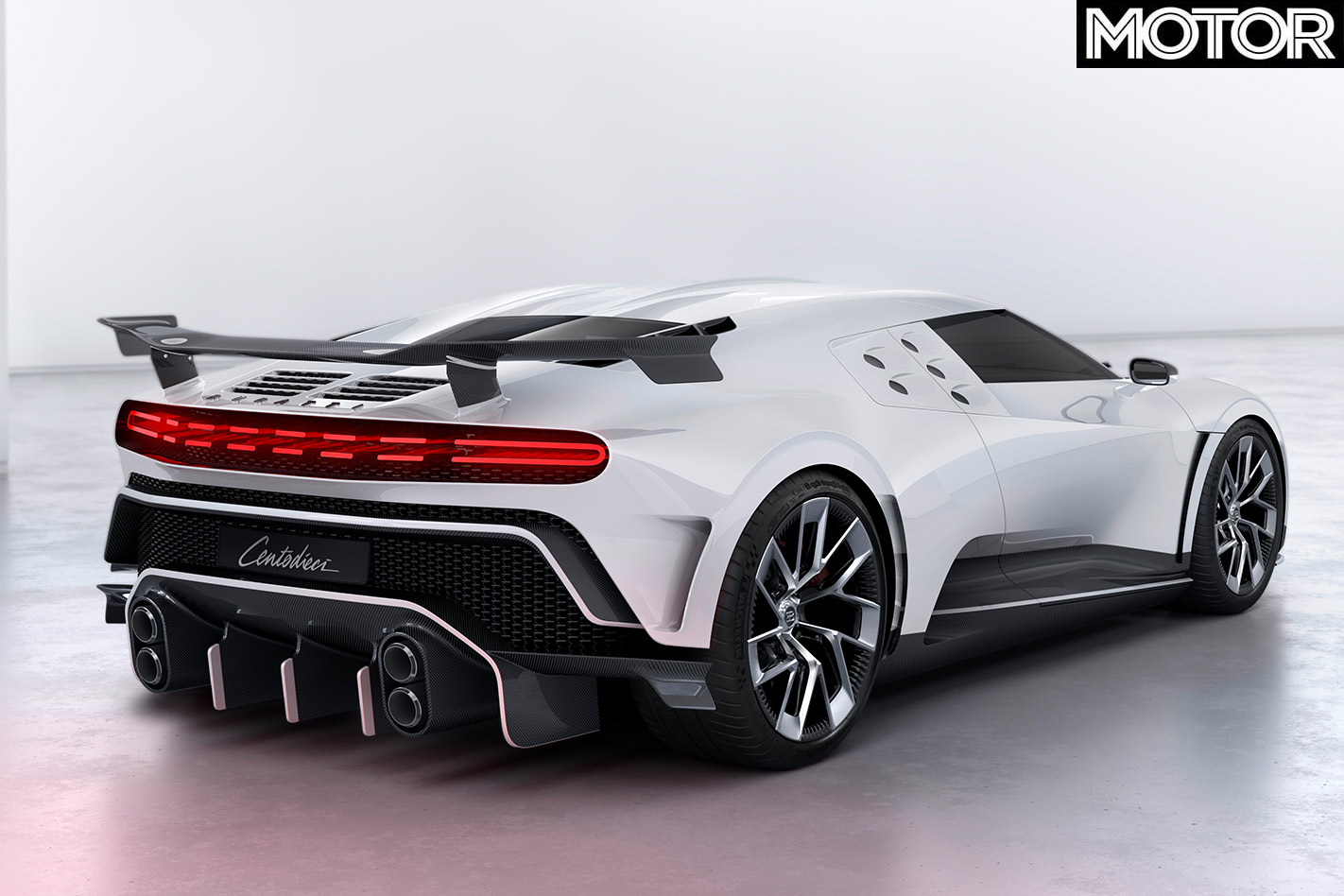
CEO Stephan Winkelmann has confirmed he is investigating the opportunities a second model range offers. The model will feature alongside the Chiron that is tipped to stick around until 2026 with updates, perhaps even 2028. According to an insider report, A$82.5m is waiting to keep the Chiron street legal in Europe, China and America.
Although marketing would love an open-top version (and call it a roadster, spyder or barchetta), there is no budget for a new monocoque that could deliver the required safety and stiffness.
It is possible to modify the skin of the existing car, thereby enhancing its sportiness or luxury appeal. While the Veyron spawned no fewer than 31 different special series editions from four mainstay models, the future of the Chiron offers an even broader choice of options that potentially include more profitable coachbuilt specials.
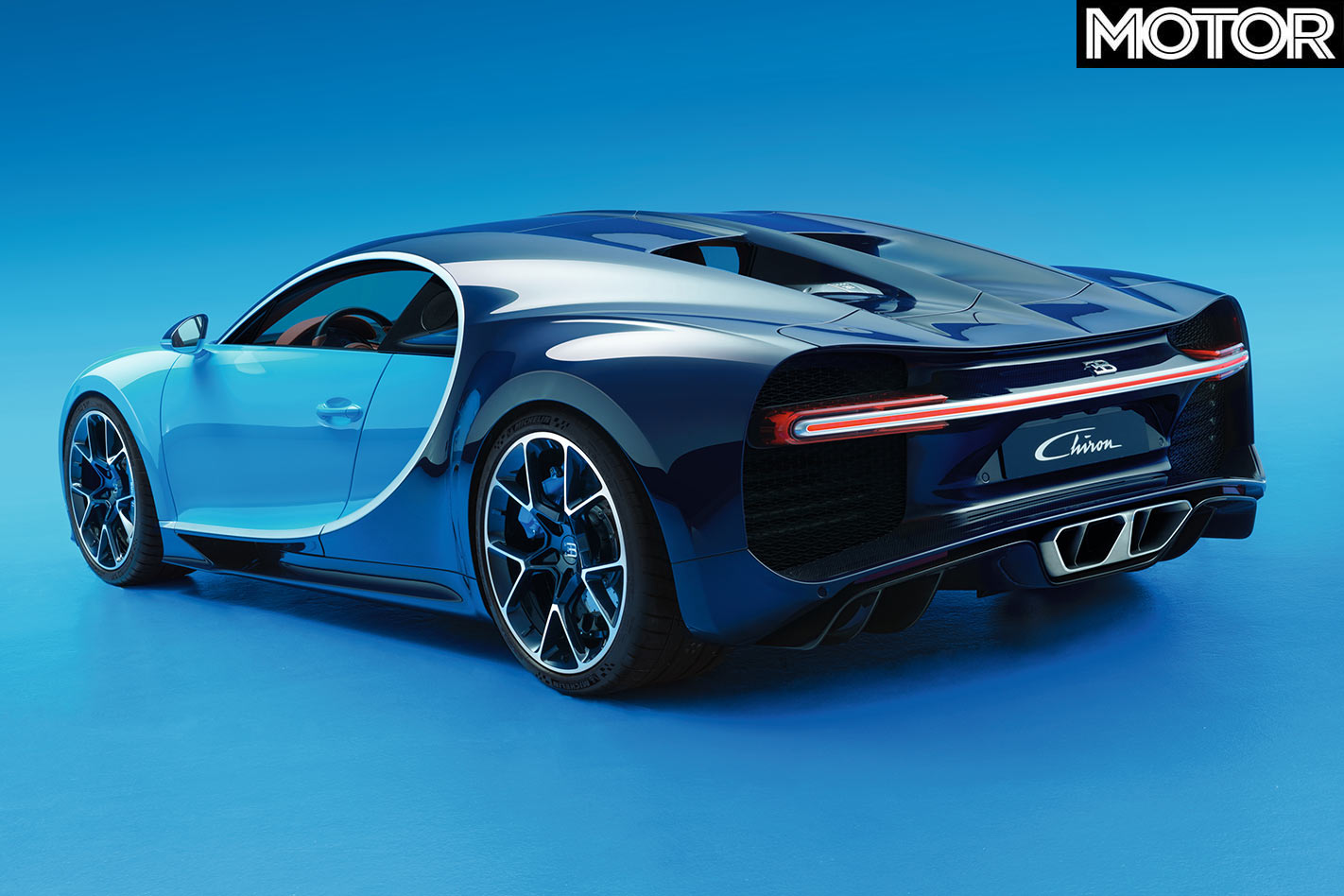
If the Chiron does make it through the end of the decade, more efficient batteries may be ready to pave the way for a fully electric follow-up to fight the next super Rimac or Koenigsegg. But let’s face it: while solid state energy cells and hugely powerful motors will eventually be widely available, the Bugatti W16 engine will remain legend.
Unless Bugatti finds a way to package a high-performance fuel cell or to tame the gas turbine, it’s hard to picture a breakthrough Chiron replacement that delivers something so ground breaking. But there is no shortage of inspiration.
Back in Wolfsburg alongside Anscheidt, new exterior designer Max Lask explored an alternative avenue in his Bugatti-sponsored student design thesis.
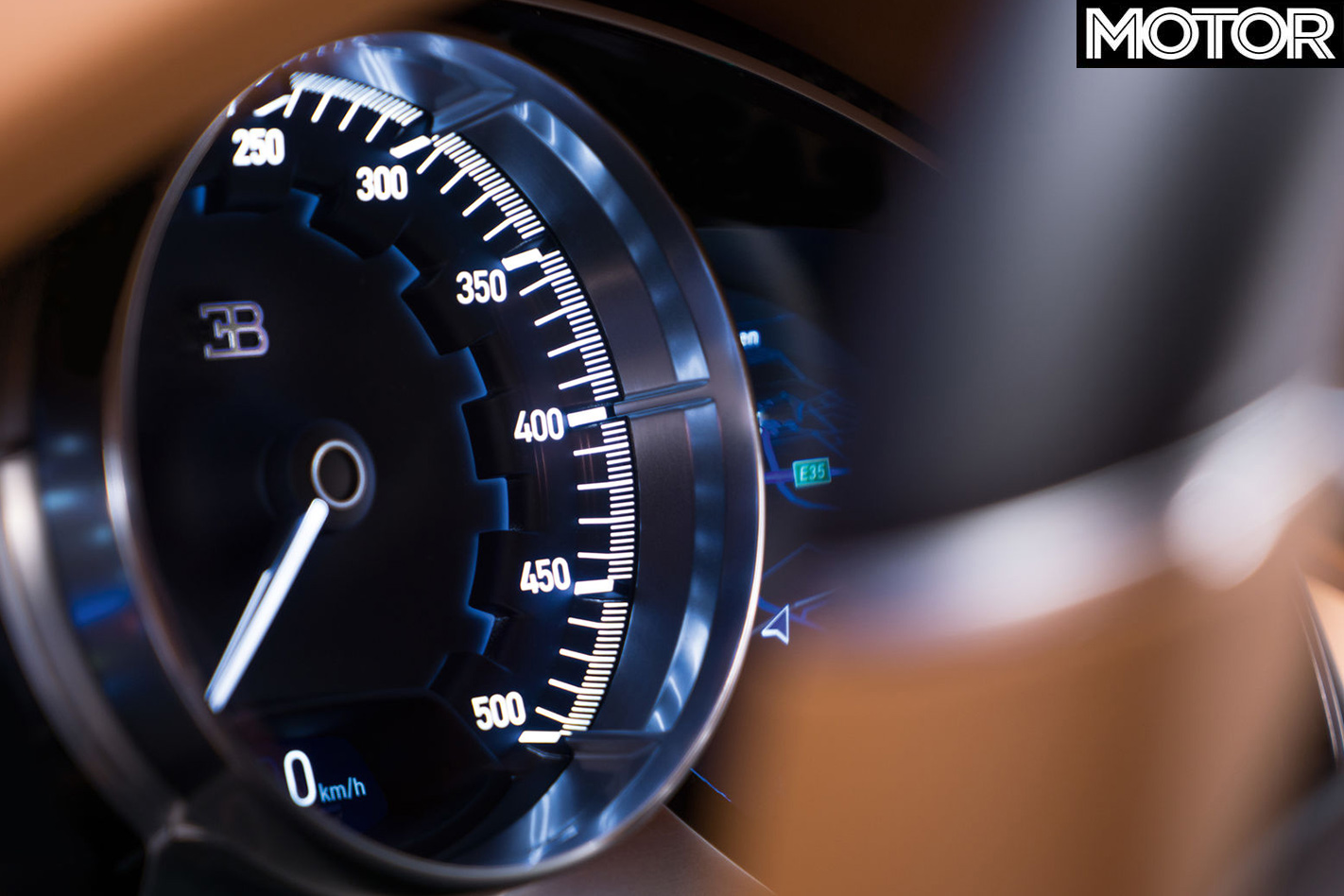
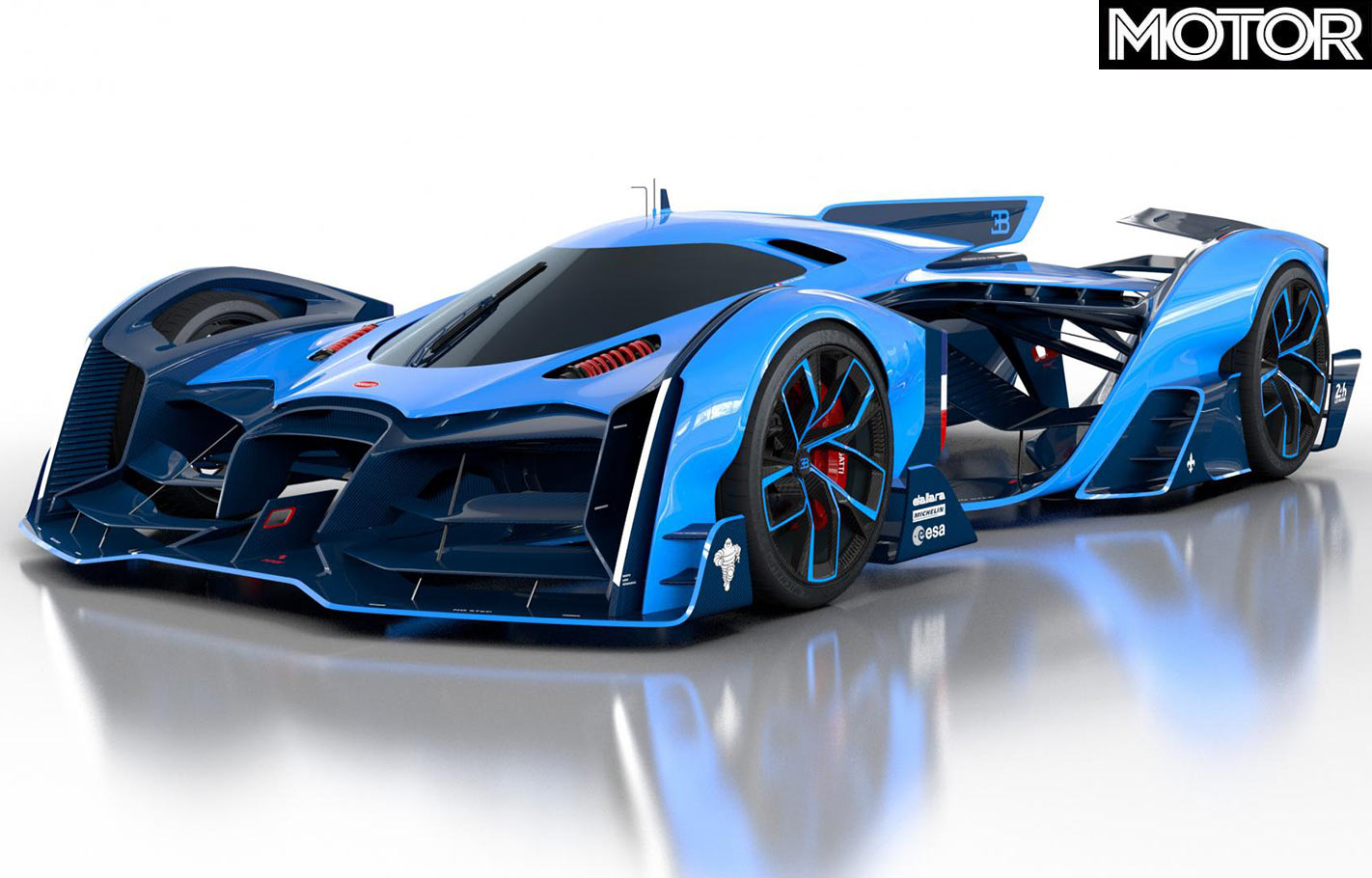
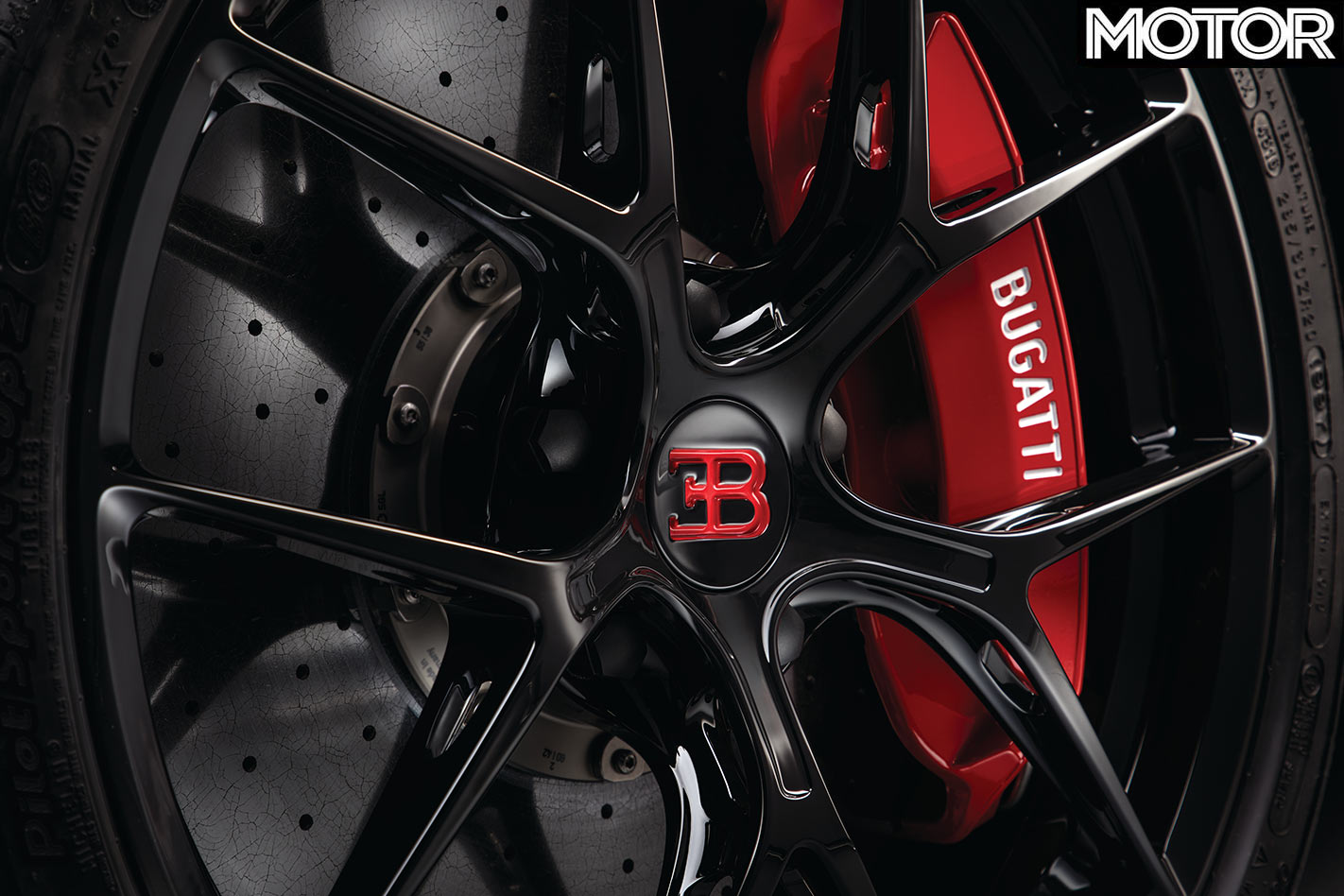
His vision of a barely legal naked Le Mans racer is a complex yet minimalistic two-seater designed to win races and wow crowds. So far, this is only a sketch crammed with ideas which revolve around a featherweight graphene matrix boasting a multiple-wishbone suspension in the front and a multi-link layout with transverse lower coils in the rear. There are no details available yet on its all-electric powertrain.
Although it is hard to judge a car’s true potential from images, the Le Mans-inspired concept does come across as a credible Chiron successor, but not the model range that would run alongside it. Why? Because it is every bit as extreme if not even more so and because it is radical in a different way, more track-focused than road-going. It would probably still cost between A$3.3m and A$5m and the output may again peak at a total of 500 units.
But as far as Bugatti’s core brand values go, it could be more promising than the Atlantic, Barchetta and Rembrandt because it pushes the envelope in a direction competitors like the Venom, Agera, Evija or Valkyrie can’t follow. The trouble is it would have to be engineered from scratch. It’d have a totally new drivetrain with untried batteries in a filigree architecture that concentrates on ground-effect aero.
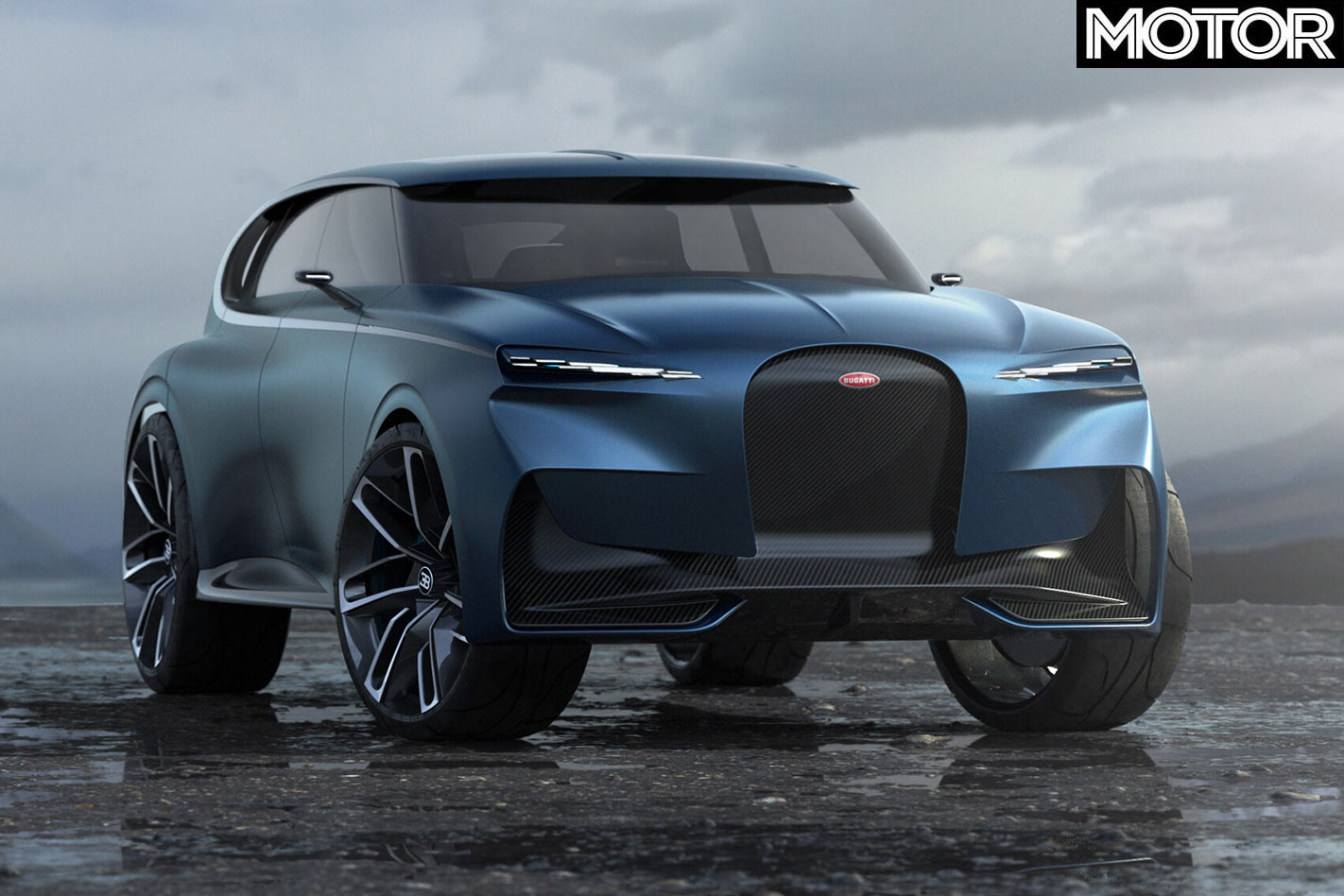
Bugatti management has emphasised more than once that an SUV is out of the question and this makes sense from a brand perspective. But when you look at independent designer Sajdin Osmancevic’s Spartacus concept there is no doubt that oligarchs would queue for such an imposing anti-green behemoth from Molsheim.
After all, tagging it as a ‘Coupe Utility Vehicle’ seems to be perfectly acceptable to top brass. In earlier interviews, Stephan Winkelmann leaned towards a PHEV, but last December said an EV might be the better solution. No doubt, we’re talking about a very potent EV here with a 100kWh-plus battery and 735kW-plus output.
But even so, the mechanical set-up and performance would almost certainly not define it in a niche where 1471kW may only be a point of passage. Bugatti’s must compel customers with a unique vehicle concept, breathtaking design and a bundle of benefits that come with the A$743m project.
With the exception of Range Rover’s Evoque, no OEM has recently tried a premium two-door CUV and for a good reason. If Bugatti decides to chase ultra rich individuals with a high-roof crossover on 22- or 24-inch wheels, does a two-door four-seater really cut it? Is a five-metre go-anywhere ultra-luxury people carrier not better off with four doors, even if the rear ones were of the suicide kind? Furthermore, will it straddle Porsche’s biggest electric platform dubbed PPE 61, or does it need a bespoke components set? Is it perhaps wiser to check Audi and Porsche’s upcoming K1 architecture?
Perhaps the most critical question concerns where this CUV would exist in this world. Can it revive the Galibier Evolution shooting brake concept and modernise it with the world’s best electric drivetrain (range, repeatability, degradation, size, weight) to stand above the Cullinan? Or should Bugatti perhaps drop the idea altogether and consult its own history books for inspiration? Maybe forge a link between the ultimate zero-emission power unit and the ultimate low-drag aero concept? Think Type 64 coupe (1939) if you crave magnificence and splendour, or Type 73C (1944) for emotion and dynamism.
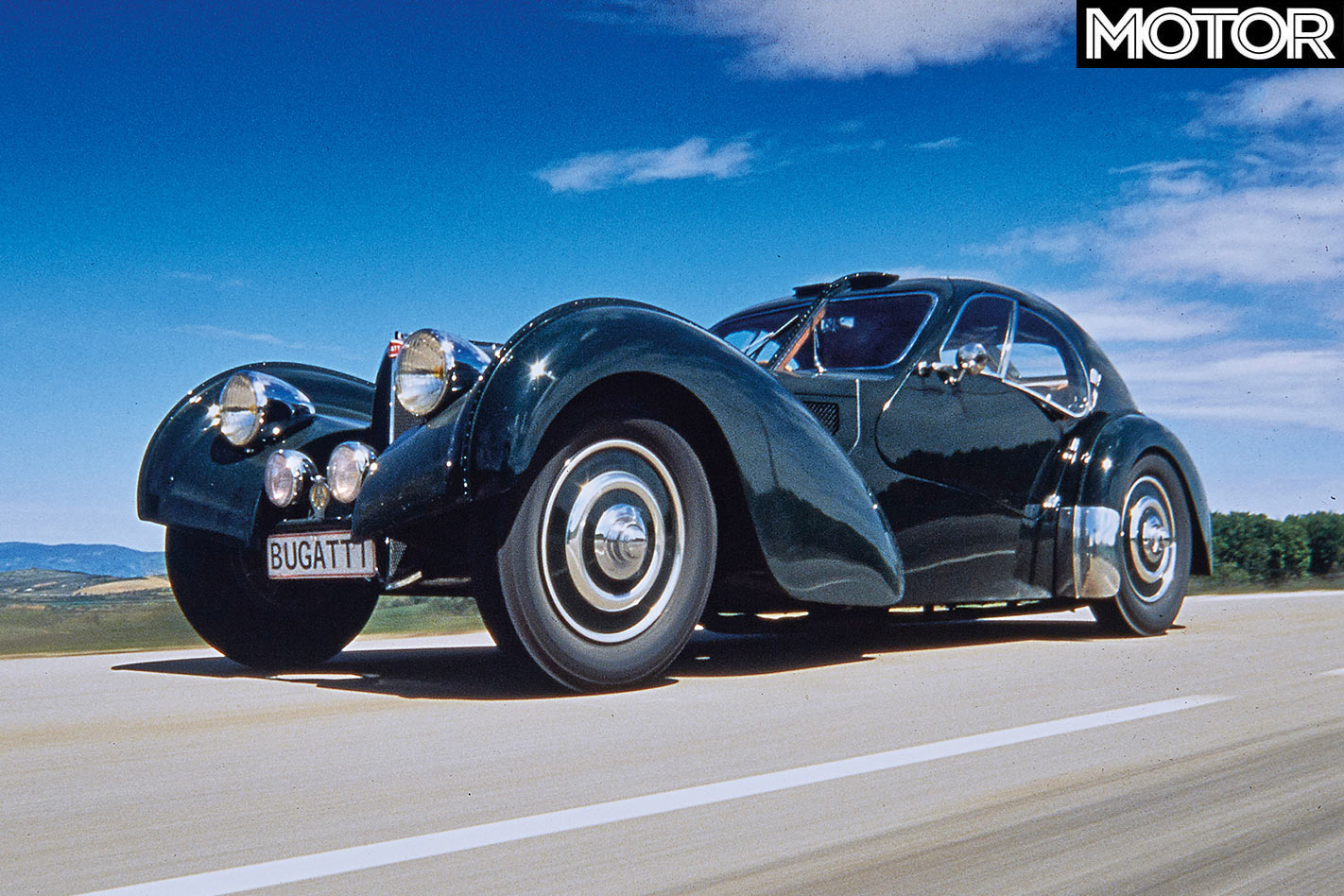
Either way, we wish good luck to the Achim Anscheidts within Bugatti. Even if its rich history suggests they might not need all that much inspiration.
Brand-defining Bugattis
1. Bugatti VEYRON 16.4 (2005)
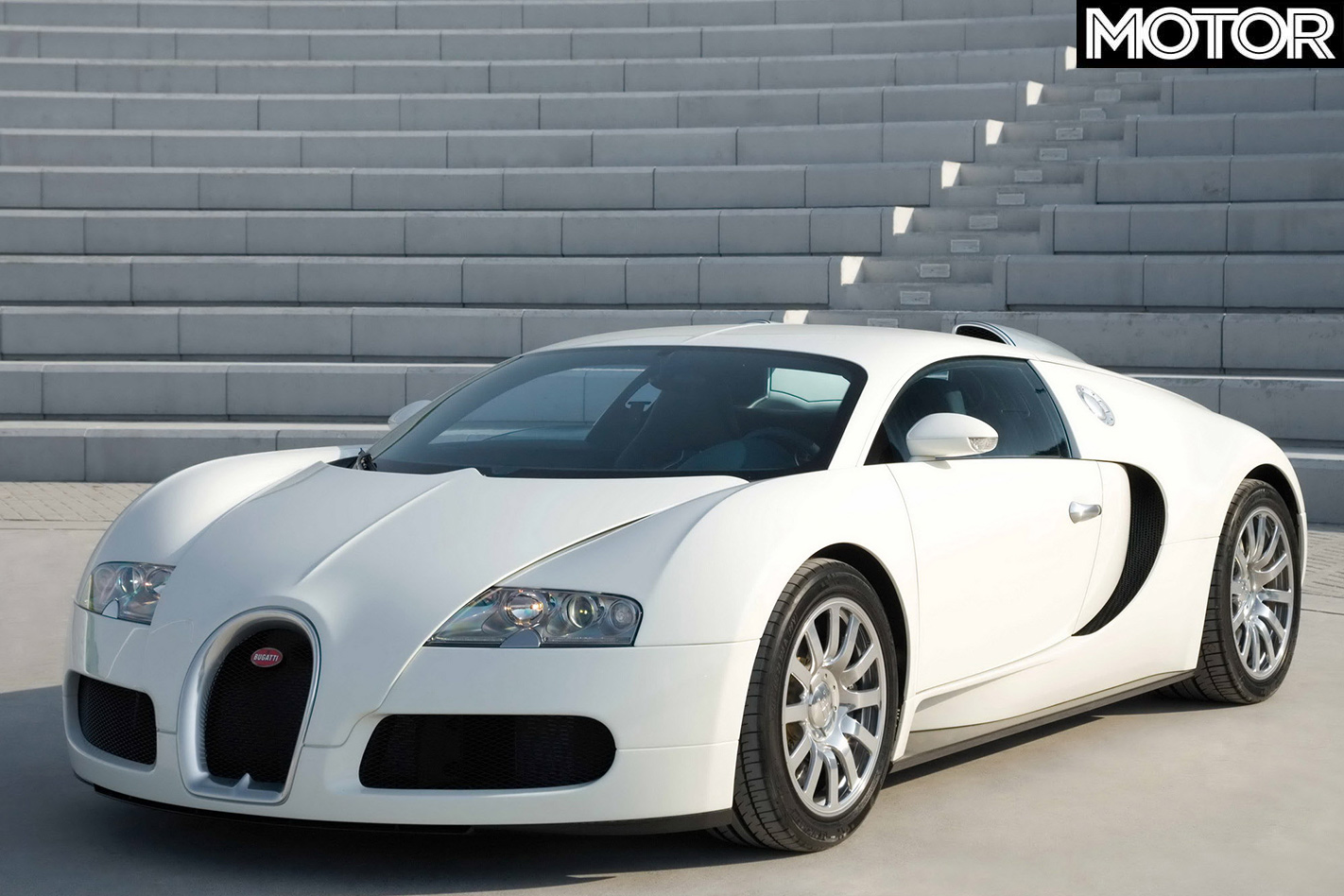
Bugatti’s 736kW all-paw beast was the first series production car with a verified 400km/h-plus top speed, 407km/h as set by test driver Uwe Novacki.
2. Bugatti EB110 (1991)
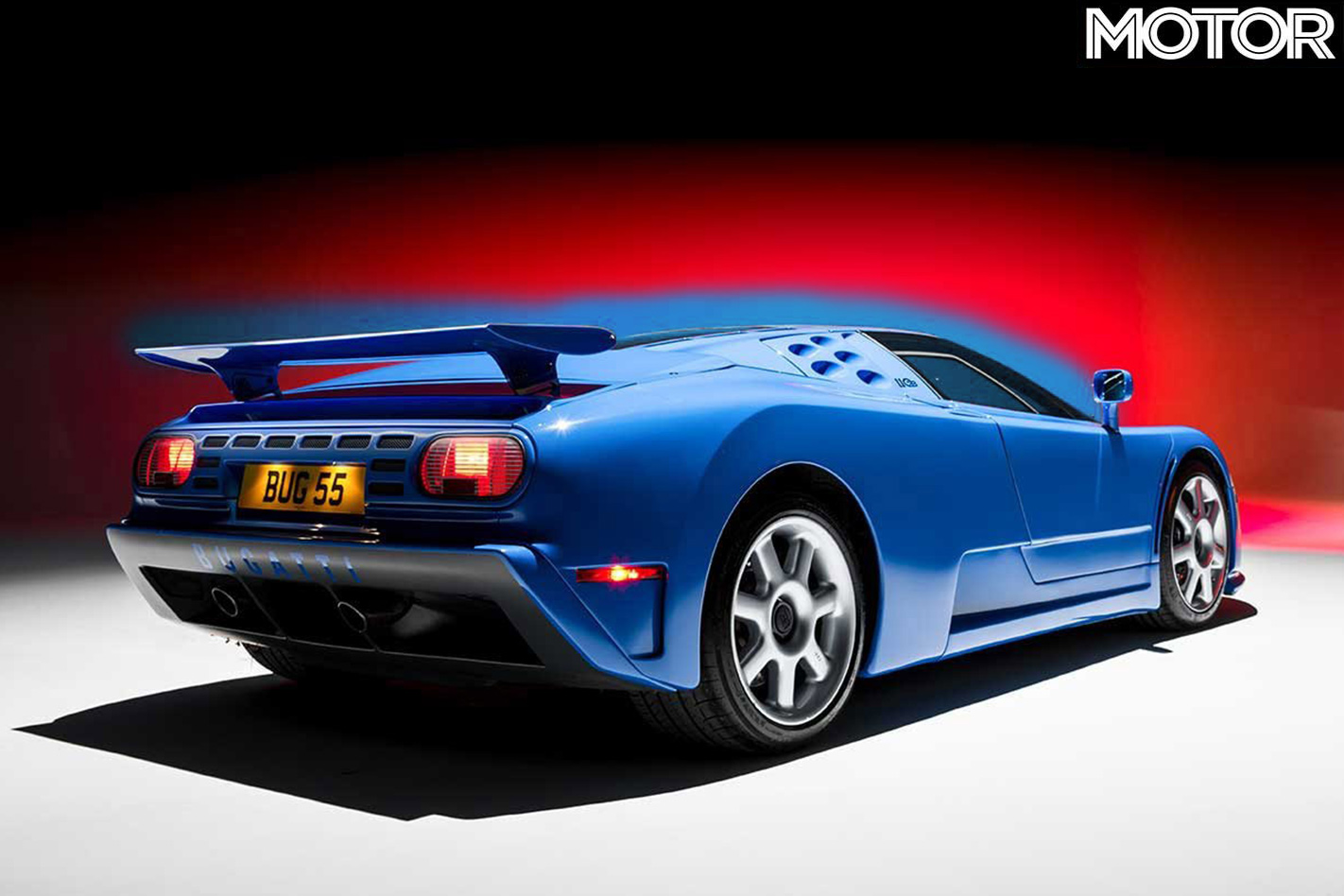
The EB110 restarted Bugatti car production after it stopped in 1956 with a quad-turbo V12, all-wheel drive, carbon-fibre body supercar. Could hit 100km/h from rest in 3.26sec.
3. Bugatti TYPE 57 SC atlantic (1936)
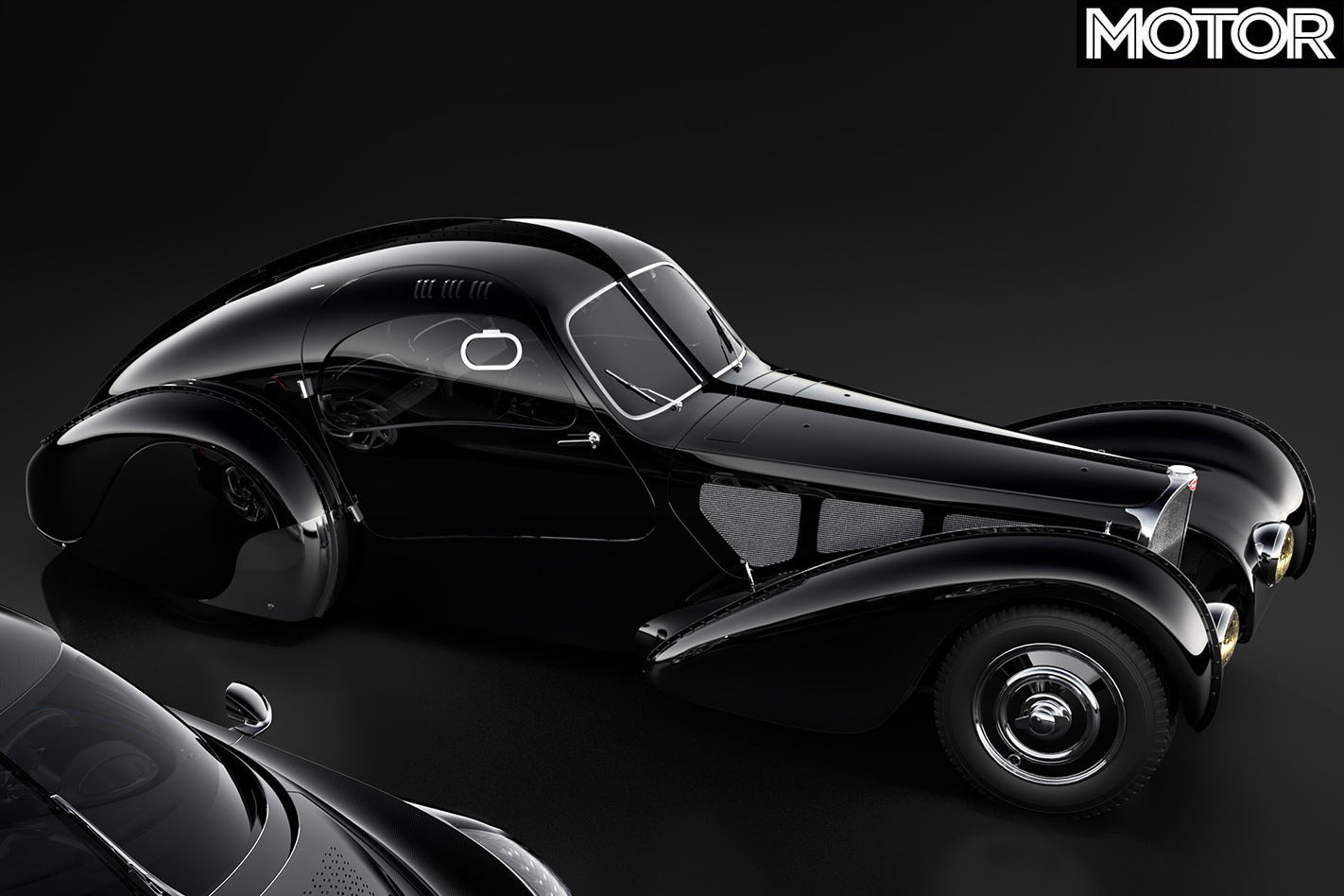
Ettore Bugatti’s son Jean designed the impossibly beautiful Atlantic. Four were made between 1936 and 1938 but only three are accounted for. Supposedly valued at $100m-plus.
4. Bugatti TYPE 41 (1926)
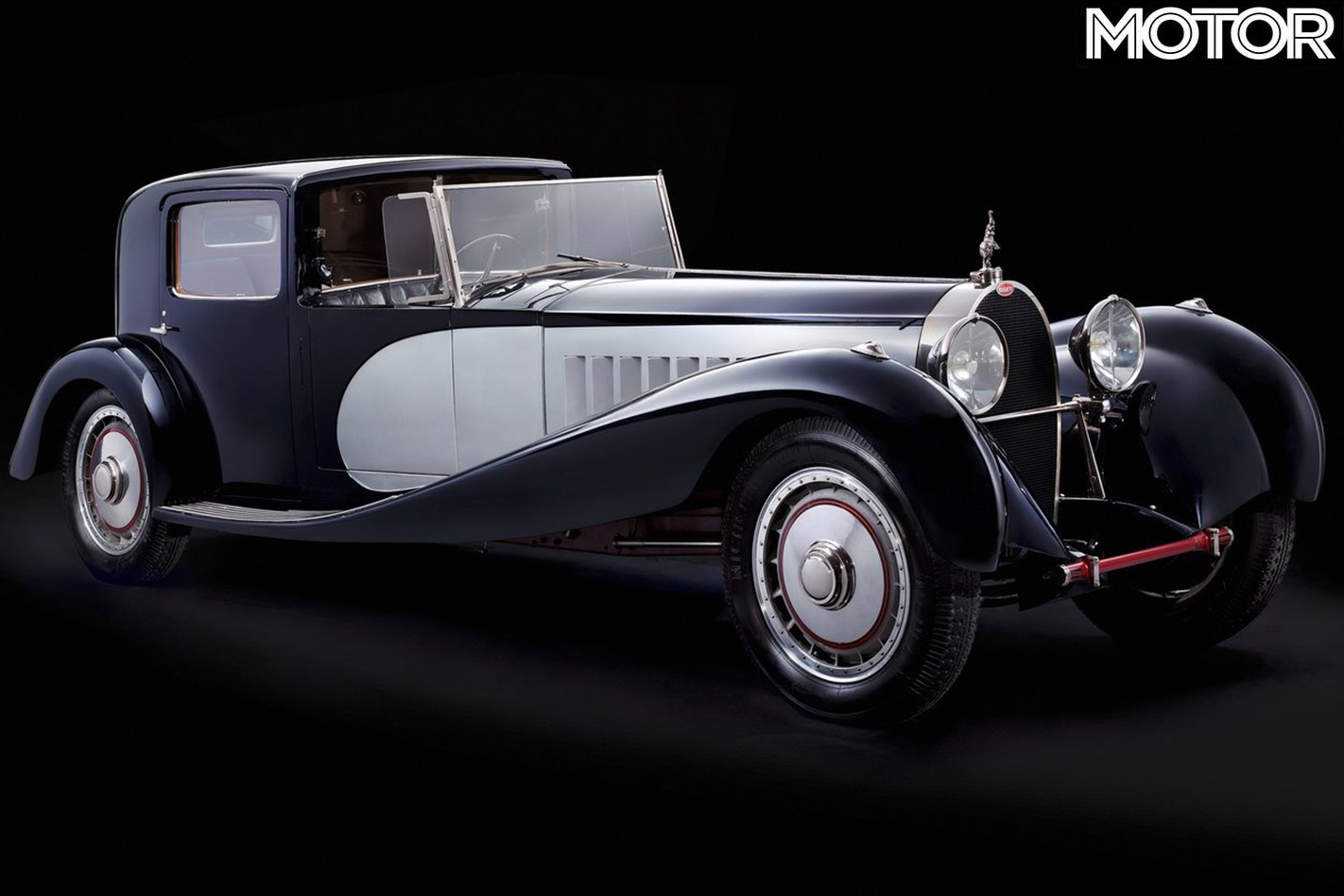
It was labelled the strongest, largest and most luxurious car of its time. It also proved it with a 12.8-litre inline-8 that lugged 3.5 tonnes around on a six-metre long frame.
5. Bugatti Type 35 (1924)
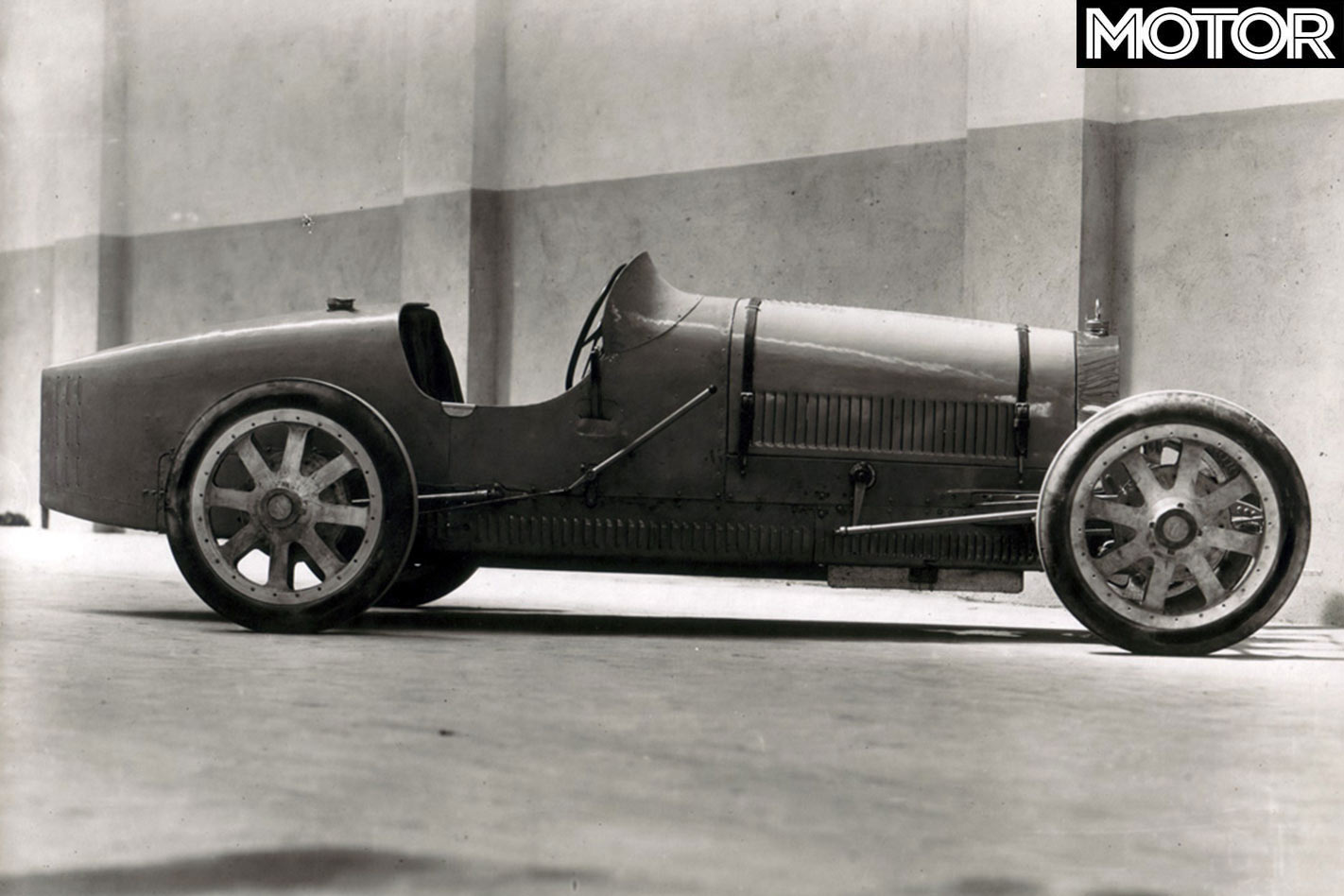
Bugatti’s Type 35 used a 103kW blown 2.3-litre eight pushing ‘around’ 750kg. It claims it’s one of the world’s most successful racecars with over 2000 victories.
6. Bugatti type 10 (1908)
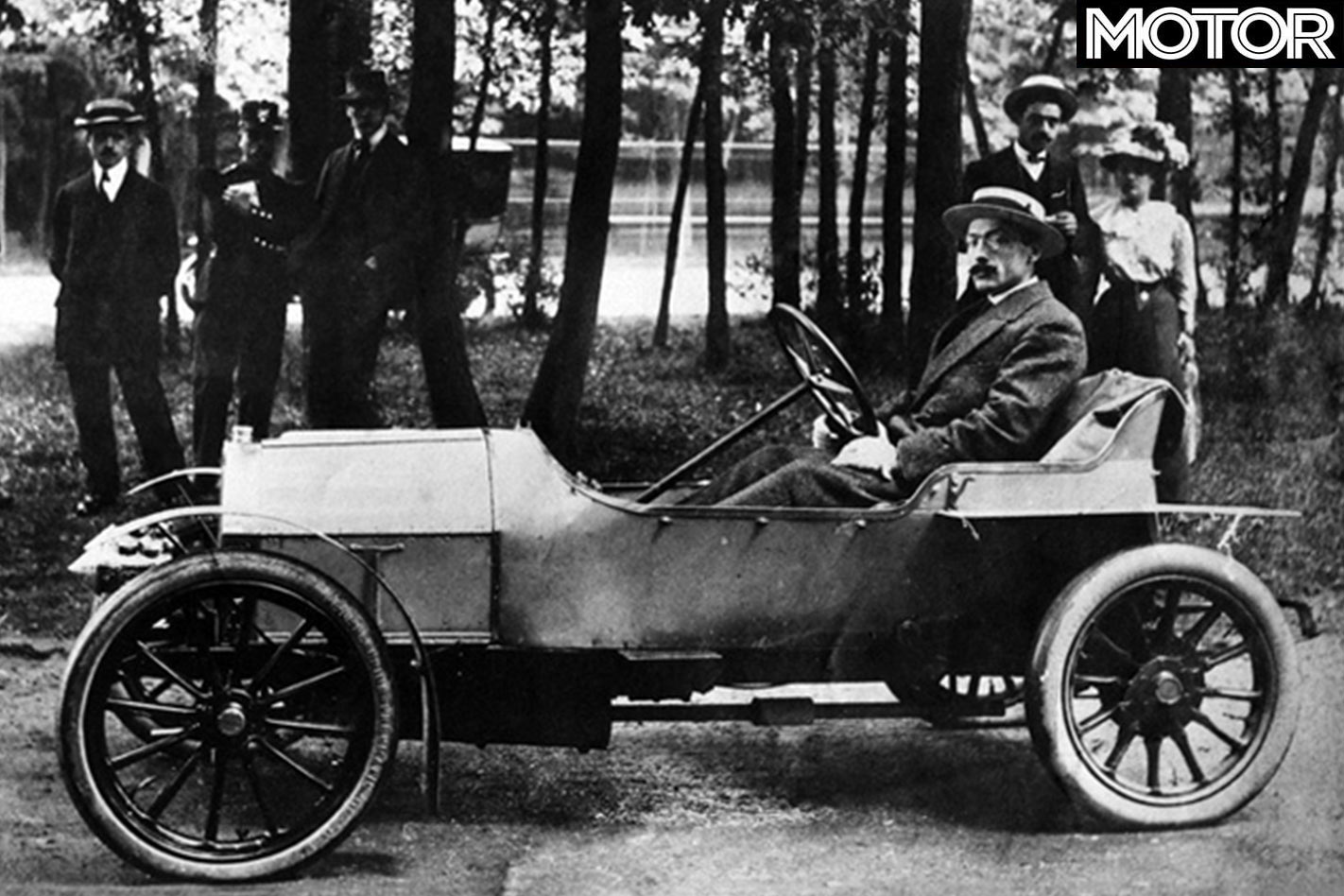
While working for Gasmotoren-Fabrik Deutz AG in Cologne, Ettore Bugatti designed his first “sports” car that debuted in 1909 with a 1.2-litre four cylinder and 7kW.
Engineers tend not to become heroes but some shuffle reluctantly to front and centre. Hans Mezger’s contribution to Porsche is impossible to quantify. Indeed, it’s a formidable task teasing apart the man from his legacy. So tightly wound is the bond between Mezger’s body of work and the fortunes of Dr.-Ing. h.c. F. Porsche AG that this diffident man from Ottmarsheim, a tiny village on the fringes of Stuttgart, came to almost embody the company’s fiercely competitive spirit.
His early years, being employed in Porsche’s diesel division are well documented. Let’s consider the ‘Mezger engine’ instead. When contemporary Porsche owners refer to the Mezger engine, they’re usually referring to a water-cooled flat-six developed for the 996 and 997-era 911 GT3, GT2 and Turbo; engines that were developed years after Mezger retired. Yes, some of the fundamentals of these powerplants can trace their DNA to his race-winning flat-sixes of, for example, the Le Mans-winning 911 GT1, but for those with a longer historical reach, the notion of the Mezger engine began a long time prior to that.
‘His’ engine was actually a remedial fix of a design that former engineering chief Klaus von Rucker had developed. This powerplant struggled to reach the required 130 horsepower target, eventually only making the figures when bored out to 2195cc. Ferry and Butzi Porsche knew that the engine had been squeezed till the pips squeaked to make this output, leaving little potential headroom for racing applications. For the newly conceived 901 coupe, Porsche set engine designer Mezger and engineer Ferdinand Piech to work on the dry-sumped 2.0-litre boxer engine. Mezger proposed moving the camshafts to the outside of the individual cylinders and heads in a single casting. The production version, dubbed 911 after a naming dispute with Peugeot, became rather popular.
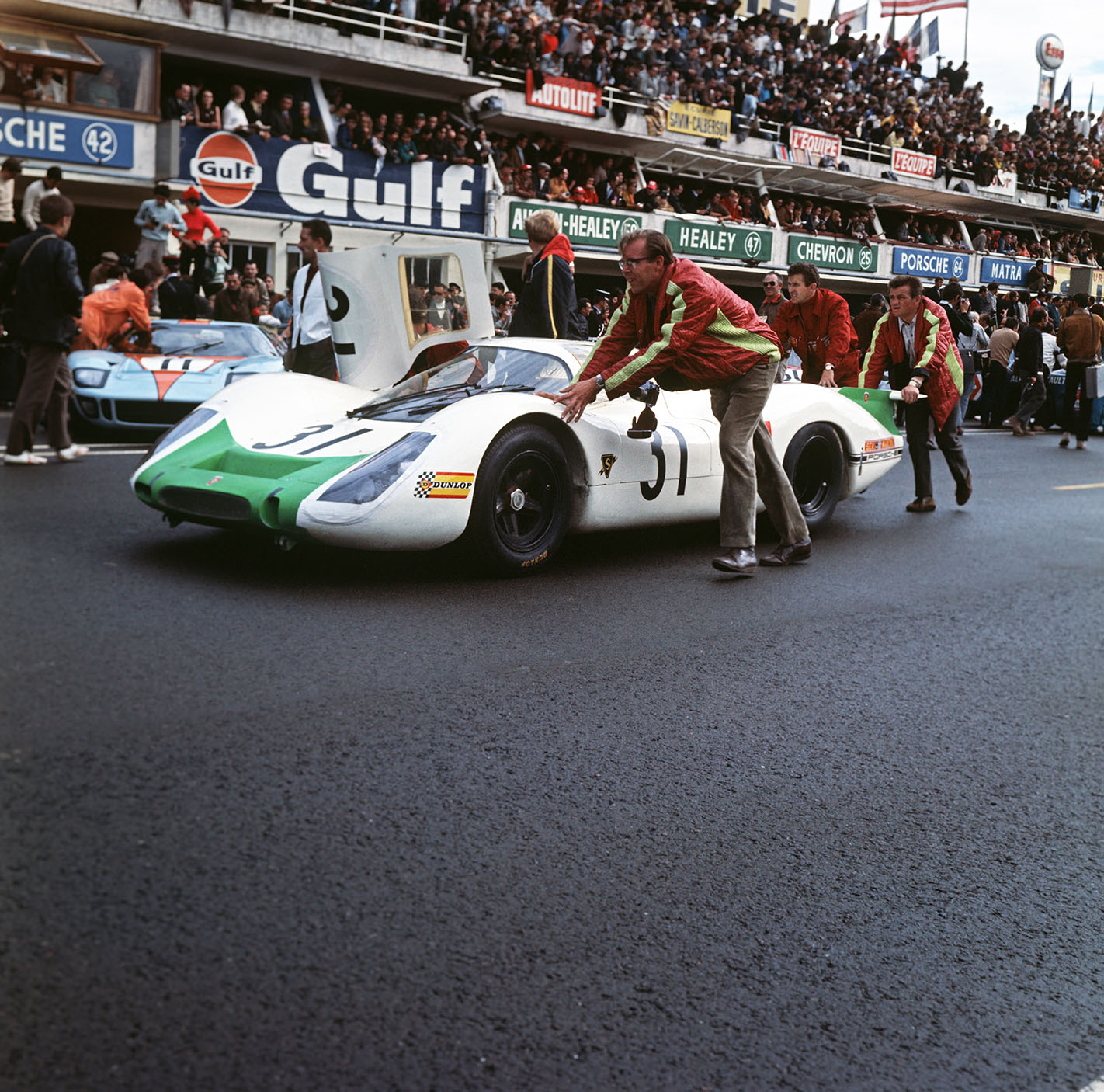
Piech was impressed by Mezger’s thoroughness, ingenuity and work ethic. He proposed the 36-year-old Mezger as the new boss of Porsche’s Motorsport R&D department with a simple brief: design a powerplant that would win the 24 Hours of Le Mans. Porsche had been at La Sarthe since 1951, claiming a number of class wins and even chalking up a third overall in 1958. But the company had never campaigned a top class car that had a realistic chance of taking home the overall win. So close was their working relationship that it’s hard to unravel Piech and Mezger’s individual contributions to the 904, 906, 910, 907 and 908 racing programmes. What is often unappreciated was that Mezger’s remit was more than just an engine designer. He was in charge of overall concept.
Much changed in 1968, when an amendment to a technical regulation gave Porsche its chance. The rules stated a 3.0-litre capacity cap unless the 25 cars were built for homologation, whereupon a swept capacity of 5.0 litres was permitted. The sport’s governing body believed that nobody could design, build and market 5.0-litre cars in this relatively short timeframe. They hadn’t reckoned on Mezger, though. Working all hours, he oversaw the development of a 4.5-litre 180° V12 engine. The racing car, dubbed the 917, was unveiled at Geneva in March 1969. The following month, Piech presented inspectors with a row of 25 cars at Porsche’s HQ and invited them to drive any of them. They declined. But at Le Mans in 1969, the Group 4 racer didn’t win. Every 917 either crashed or broke. British privateer John Woolfe didn’t even complete a racing lap, tragically dying in the fast but frail 917 in a first-lap crash at the Maison Blanche kink.

The 917 gamble could have bankrupted Porsche. Fortunately, the 917 was so much faster than the rest of the field that management kept the faith. That was duly rewarded the following year when Porsche scored a historic podium lockout, starting a run of success unlike anything the sport had ever witnessed. Mezger’s pioneering use of small turbochargers and bypass valving utterly changed the face of competition engine design. In its ultimate iteration, the forced-induction 180° V12 Mezger engine was good for 1200hp, and effectively killed the Can-Am series with its dominance. Unlike many manufacturers racing really did improve Porsche’s production car breed. The original 1975 Porsche 911 Turbo was a case in point.
“Without the 917, there wouldn’t have been a 911 Turbo,” noted Mezger. Adapting the turbocharging knowledge gleaned from the competition program for road use was a logical next step. The 911 Turbo is often seen as Ernst Fuhrmann’s baby, and it was indeed Fuhrmann that championed the concept, but it was Mezger who engineered the path to this vehicle.
The 911 RSR Turbo competition car from 1974 was the car that first gave the public the vision of a turbocharged 911. It featured a 2.14-litre six. Why 2.14 litres? Because forced induction racing motors at the time (outside of F1) had a 1.4x capacity multiplier applied to them. They had to be no larger than 2,142 cc in order to fall within the 3.0-litre capacity limit. The first turbocharged car at Le Mans, the RSR Turbo finished second in 1974. The RSR Turbo in many ways legitimised the 930, which then morphed into the 934 racer.
Mezger and Valentin Schaeffer studied the homologation rules and changed everything they could on the 930’s engine to create the Typ 930/71 engine for the 934. A horizontal fan was fitted along with bigger intake and exhaust valves and a more aggressive camshaft. The car’s shrink-wrapped bodywork precluded the fitment of an air-to-air intercooler, so had to compromise with air-to-water coolers on each bank of radiators mounted a long way aft of the front air dam. Was it effective? Consider this. In ‘74 the 911 RSR Turbo was a novelty on the grid at Le Mans. By 1976, thirteen of the sixteen cars taking the Group 4 start were 934s. Mezger’s engineering had completely changed the game. His 2.1-litre flat-six won Le Mans in ‘76 and ‘77 in the 936 Group 6 car and in ‘79, in 3.0-litre guise, took the chequered flag in the 935 Group 5 silhouette GT car. By any measure, it was a phenomenal run of success.
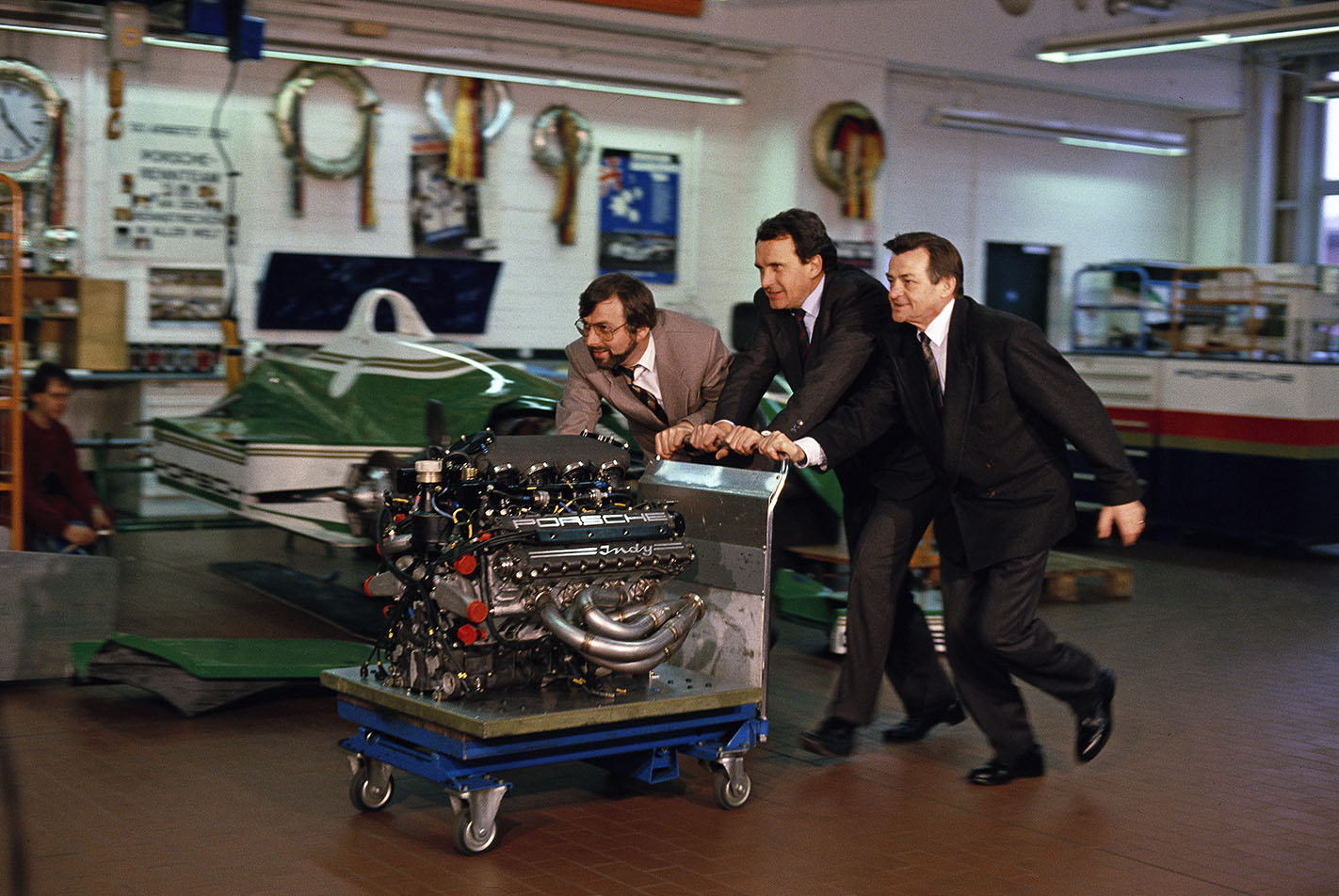
It didn’t stop there, though. His 2.65-litre Indycar engine never saw competition in its intended arena, but was modified for the new Group C fuel regulations that arrived in 1982. This unit won Le Mans powering a 936 in 1981, the 956 between 1982 and 1985, the 962C in 1986 and ‘87 and finally in Dauer’s version of the 962LM in 1994.
When asked what engine he’s most proud of, however, the answer doesn’t involve La Sarthe. His TAG-Porsche 90-degree V6, displacing just 1499cc and fitted to the 1984 McLaren MP4/2 was the engine. It wasn’t the most powerful engine in qualifying – that honour went to the awesome Brabham-BMW BT53 of Nelson Piquet who notched nine poles that year – but it made its power reliably and, equally importantly, economically.
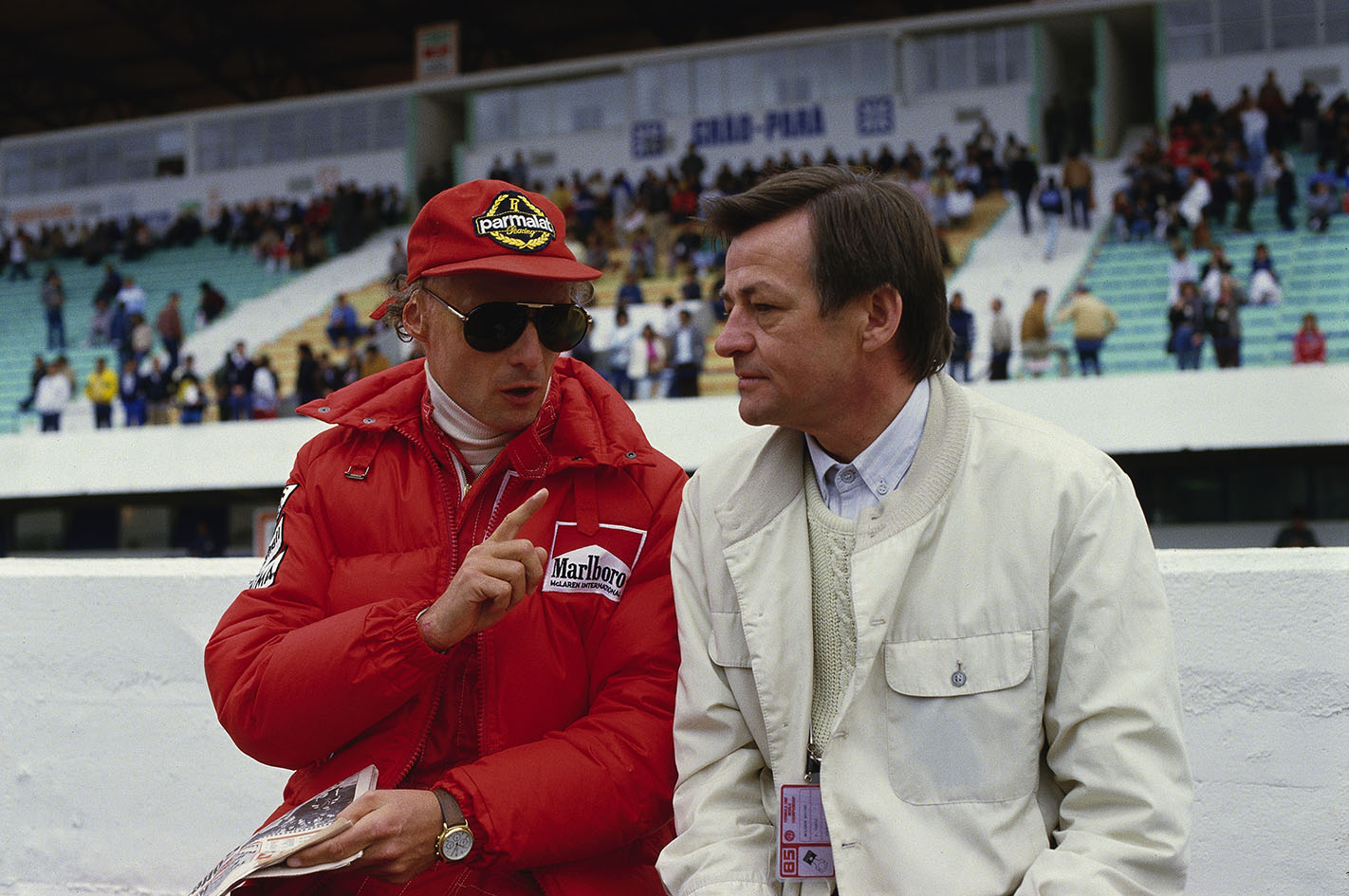
Pair that with a great John Barnard-designed chassis, the first use of carbon brakes on the F1 grid and a stellar driver pairing of Niki Lauda and Alain Prost and it’s easy to see why commentator Clive James remarked that “anything as fast as the McLarens fell apart, anything as reliable finished later” during the official FIA review of the season. In only its second race, the McLarens of Lauda and Prost not only scored a 1-2, but were the only cars on the lead lap. The powerplant won the constructors’ championship in 1984 and 1985, eventually being outgunned in 1986 yet still coming second in the constructors’ and handing Alain Prost back-to-back drivers’ championship wins – the first since Jack Brabham in 1959-60.
Mezger would typically downplay his contribution. “All the parts we’ve used, already existed. They just haven’t been used for the right purposes. We’ve only rediscovered and reused the ideas,” he once said. Despite his pivotal part in the development of Porsche’s road cars, Mezger embodied Porsche’s values of competition improving the breed. “Ferry Porsche, with his visionary leadership of the company, his human qualities, dignity and great dedication, became my role model,” he said.”I wholeheartedly shared his philosophy of racing in order to build the best sports car for the road.”
Long before it became a sales slogan, Hans Mezger was never not racing.
THE ONES THAT GOT AWAY
We’ll perhaps never see an engineer of Mezger’s like again, the engine design process being now significantly more collaborative.But even Mezger suffered setbacks. His active aero solutions for the 917 were not effective in quelling rear-end lift and his design for exhaust-side air pumps for reducing the emissions of the 1968 US-market 911 also proved ineffective. Even the best don’t get things right 100 percent of the time.
Audi adds a mid-range quattro variant to the new Q3 mix. Is it worth the extra spend over the base Q3?
What is it?
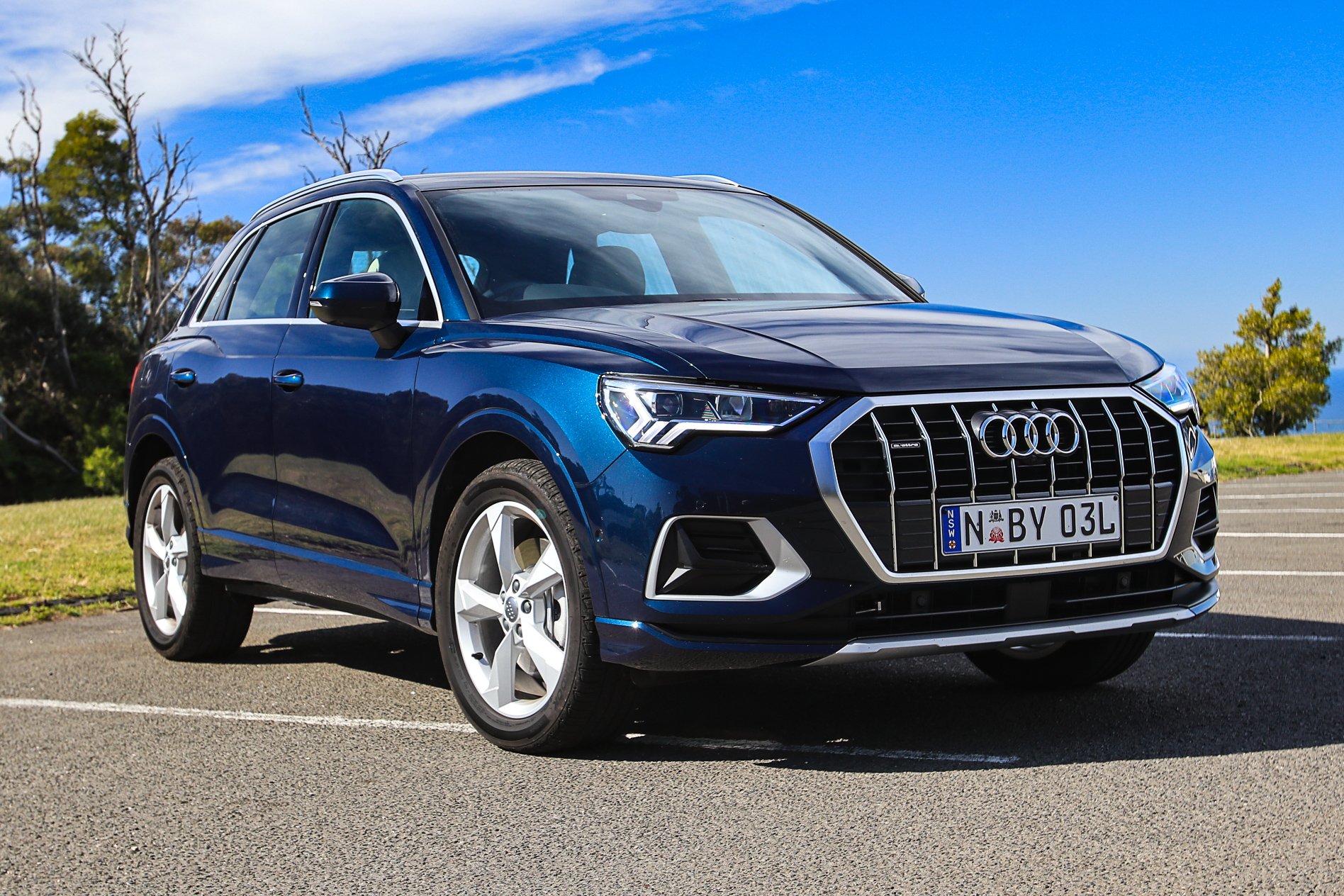
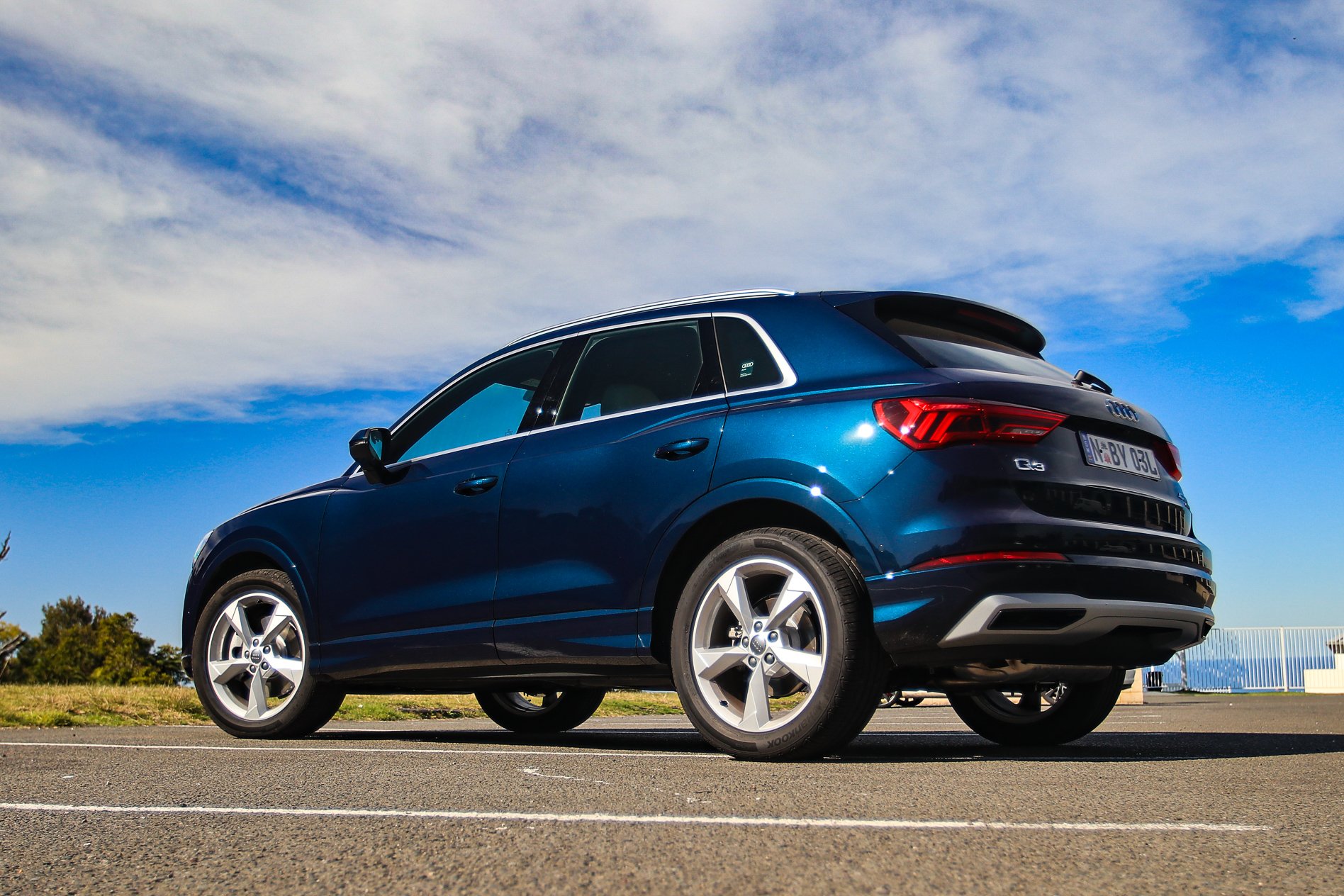
The second-generation Audi Q3 small SUV launched in Australia early last year, offering a single entry-level, front-wheel-drive variant known as the 35.
Now, Audi has upped the ante with a more powerful, all-wheel-drive version of its Goldilocks-sized SUV.
Known as the Q3 40 TFSI quattro, it sells for a shade under $54,000, or around $10,000 more than the 35. That’s a pretty big jump in price, but it comes with a requisite leap in specs.
What’s it like to live with?
The Q3’s compact dimensions belie its actual interior size, especially in the rear seats. It is a logical choice for well-heeled downsizers, but thanks to surprisingly generous headroom and decent toe and knee room, it can take even the tallest of your family or friends without complaint.
At 184cm, headroom in the rear is more than plentiful, thanks to a tightly tucked headlining, and while shoulder room with all three seats filled will be marginal, it’s astonishing how roomy it is.
Deep scallops on the rear side of the front seats also help eke out more precious millimetres of space.
Two ISOFIX baby seat points are present on the outer rear seats, while a single vent, a USB-C charging point and a 12v plug are also provided.
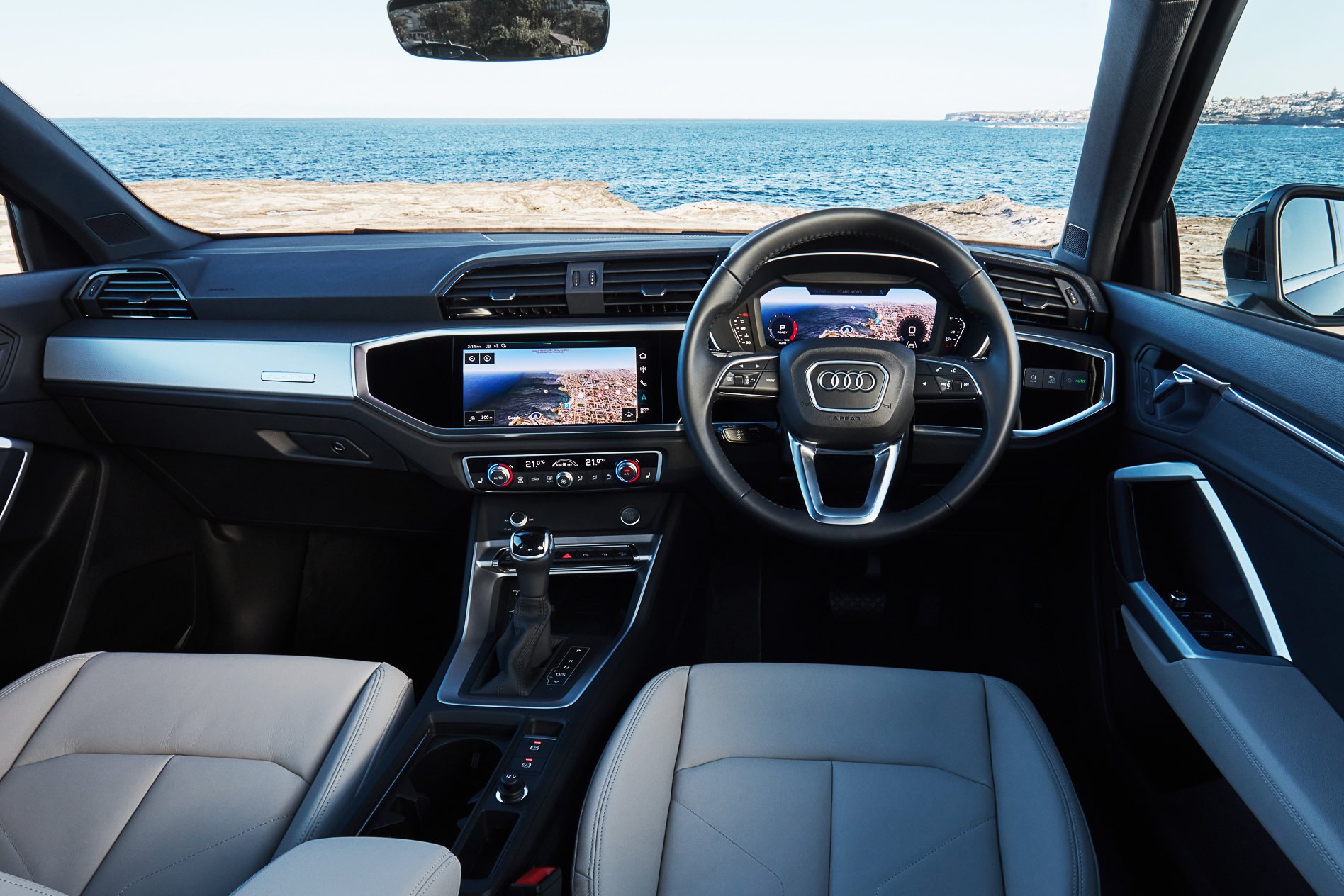
Up front, the leather-appointed seats sit low in the car and are well-shaped even for bigger bodies. The steering wheel is quite large but the view through to the digital dashboard is unfettered. All-round visibility is better than average, thanks to the decently-sized glasshouse.
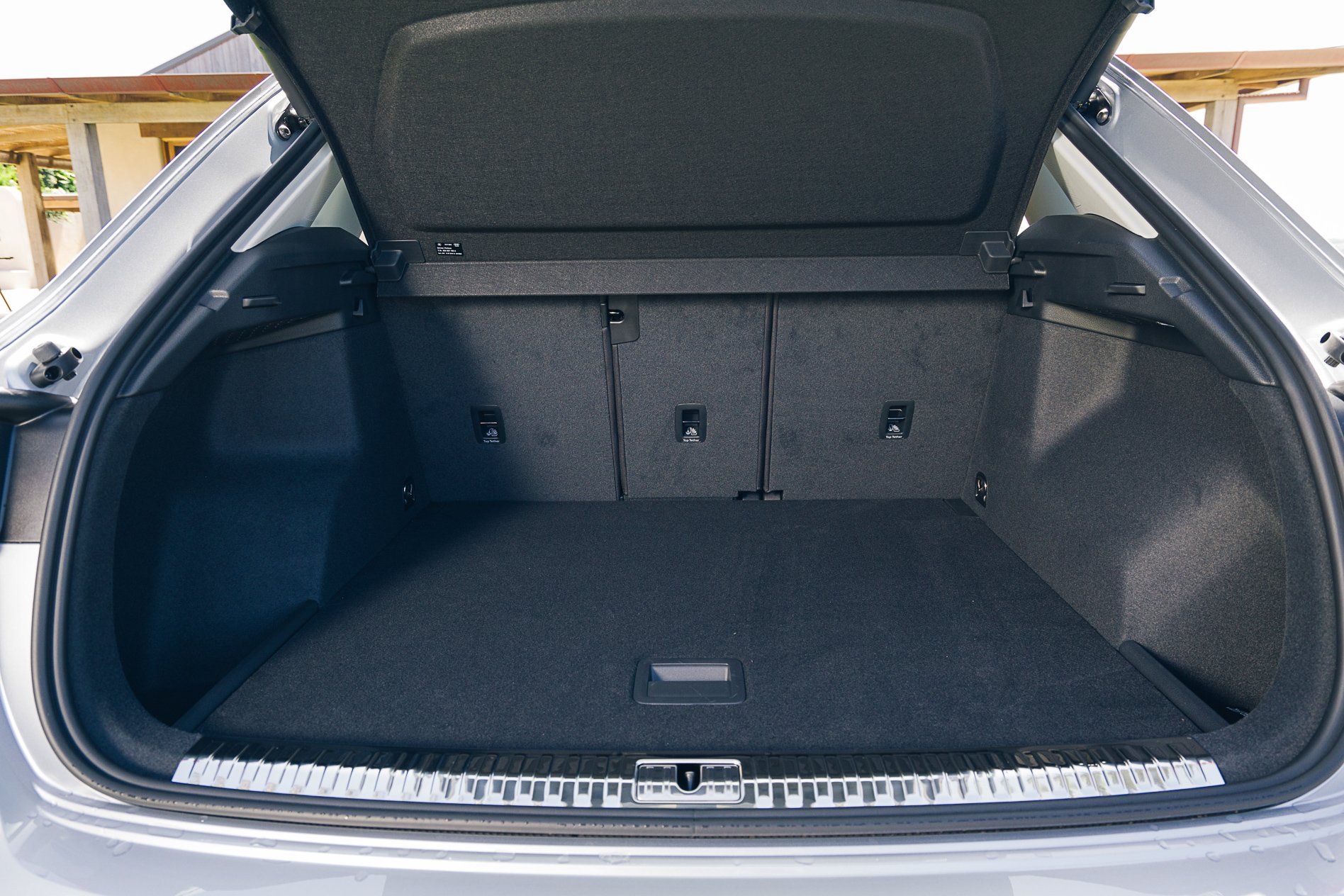
The boot will take 530 litres of stuff thanks to a sliding second row of seats, or a decent load of suitcases or baby stroller and assorted stuff. The triple-split 40/40/20 split/fold seat is a very handy thing as well.
There are luggage tie-downs to allow the fitment of a cargo net – very handy things – while under the floor lurks a space-saver spare and a decent raft of tools.
The seven-speed dual-clutch gearbox works via a traditional t-bar or paddles behind the wheel. In comparison to more expensive Audi products, the Q3 feels simpler and less intimidating, though the new and richer-featured MMI multimedia system requires a bit of attention to get accustomed to.
Being a mid-grade Q3, niceties like keyless entry, a powered tailgate, a phone charging pad, wireless Apple CarPlay and powered seats are standard, along with auto LED lights and automatic wipers.
Anything we don’t like about the interior of the Audi Q3? Not really, to be honest, aside from our tester’s grey trim. And you’ll need an adaptor to use the smaller USB-C charging ports with traditional cables.
What’s it like to drive?
Under the bonnet lurks Audi’s familiar 2.0-litre four-cylinder turbocharged petrol engine, linked via a seven-speed DSG auto to an all-wheel-drive system. In this guise, it makes 132kW and 320Nm, which is sufficient for around-town work as well as intercity cruising.
It’s not endowed with adaptive shocks that can be changed between comfort and sporting modes, and the stock suspension tune is a little underdone for my liking.
The main complaint is that it feels like the shocks aren’t working hard enough to control the movement of the springs, which translates into a somewhat jostling, busy ride inside the cabin.
The trait is exacerbated by the wheels, which at 19 inches in diameter are an inch larger than the ones on the base model 35. This means the tyres are correspondingly shallower and the overall weight swinging off each corner is greater.
It’s not the end of the world, though, and the Audi still offers excellent grip, steering feel and poise – and the ride quality will improve with more bodies on board.
It’s just not as cossetting as you might expect from a non-S or S-Line Audi.
Is the Audi Q3 40 TFSI worth the money?
It’s all too easy to dismiss entry-level Audis as merely tarted-up Volkswagens – the two companies are, after all, very closely tied. It’s also not a correct assertion to make.
While the oily bits underneath are shared across both brands, tangibles like fit and finish, interior materials, exterior design and, of course, brand cache need to be taken into account.
However, those advantages are mitigated at the lower end of the price spectrum, and even a cursory look at something like VW’s new-to-Australia T-Roc X reveals that it has the same engine, all-wheel-drive, similarly high standard safety features, similar interior dimensions and nice-to-haves like LED headlights.
The top-spec T-Roc also adds adaptive shocks (which would be a useful salve to the Q3’s jiggly ride) and costs a shade under $43,000, versus the Q3 40’s $53,900 ask.
However, the lure of the four rings is strong, and that’s enough to sway the argument for many people. There’s also no doubt that the Audi holds the upper ground when it comes to interior design and execution; it’s not hard to see where the extra money goes.
Pros: Handsome, spacious, beautiful interior
Cons: Ride quality spoils the party
Rating: 3.5
Since the dawn of time convertible sports car reviews have read as follows: blah blah, heavy floppy, blah blah, not as precise, blah blah, buy the coupe. With some justification, it must be said, as traditionally drop-tops have suffered dynamically compared to their hard-top siblings.Their open roofs reduce rigidity, compromising the suspension setup, while to compensate extra bracing is added increasing weight. At first glance it appears the new Porsche 911 Carrera 4S Cabriolet falls into the same trap.

4.5/5Specifications Engine: 2981cc flat-6cyl, DOHC, 24v, twin-turbo Power: 331kW @ 6500rpm Torque: 530Nm @ 2300-5000rpm Weight: 1635kg 0-100km/h: 3.6sec (Sport+) Price: $313,700
It’s easy to romanticise the convertible lifestyle. Sun-soaked weekend jaunts along the coast and whimsical Sunday afternoons frequenting wineries and eateries is the kind of existence a drop-top suggests.
Perceived elegance and luxury is part of the deal, one the BMW Z4 has traditionally pulled off with varying degrees of success.
Despite this, in our current context the G29 BMW Z4 M40i has two coupe-shaped thorns in its side.
On one hand the M2 Competition offers more performance for less, while the circa $45K cheaper Toyota Supra is essentially the Z4’s twin under the skin. The former is an M car ‘proper’, the latter has a cult following.
As part of the well-documented Toyota-BMW co-development, the Japanese quotient spawned a two-door coupe, while the latter morphed into a convertible.
The 3.0-litre inline six is a gem and its single-turbo application produces 285kW (5500-6500rpm) here, a 35kW increase over the version that launched in the G29 Z4 M40i in 2018. Torque remains unchanged at a hefty 500Nm (1600-4500rpm).
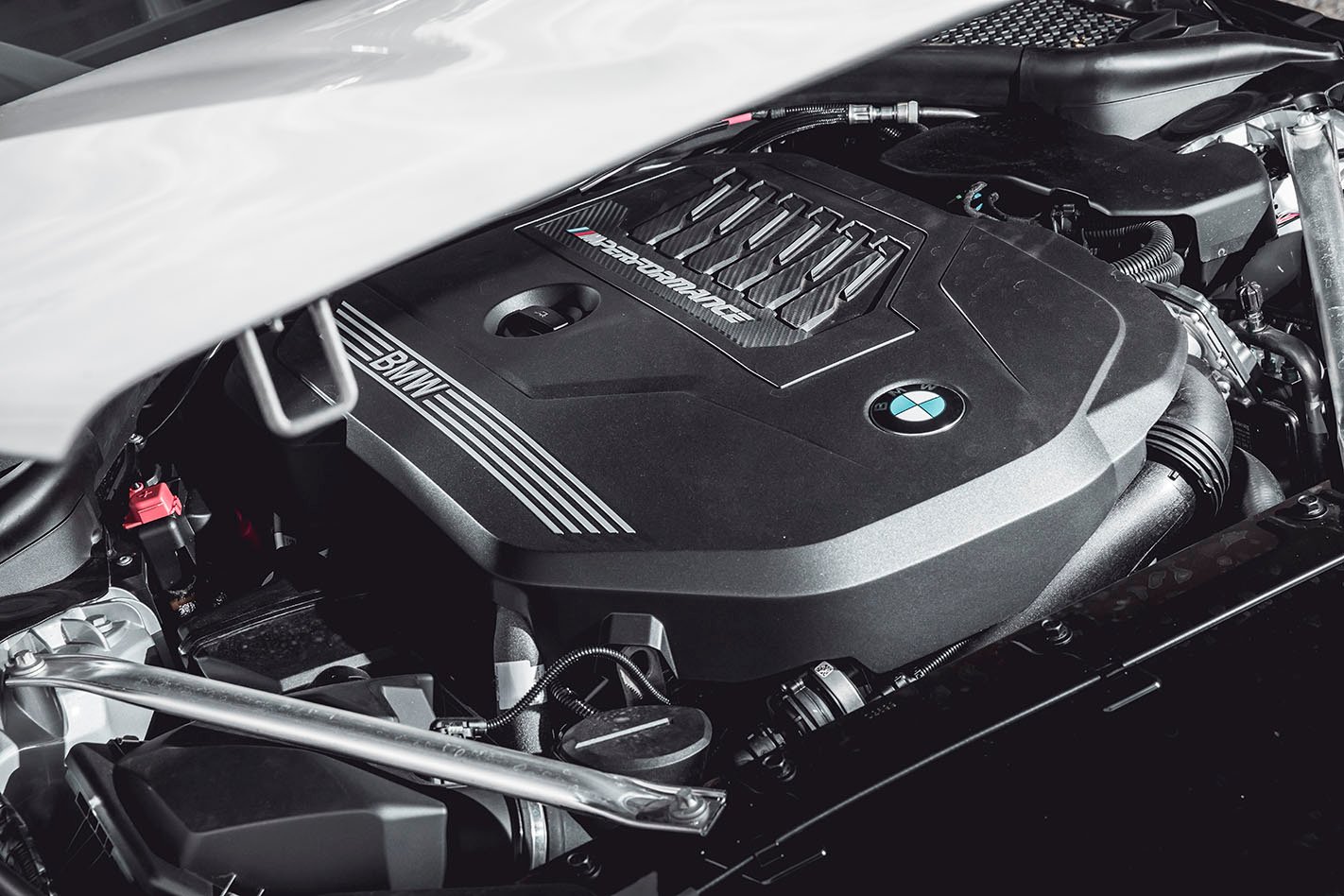
Yet the Germans are renowned for under quoting power figures, so you’d be forgiven for thinking BMW is now merely quoting this B58’s power correctly. But you’d be wrong.
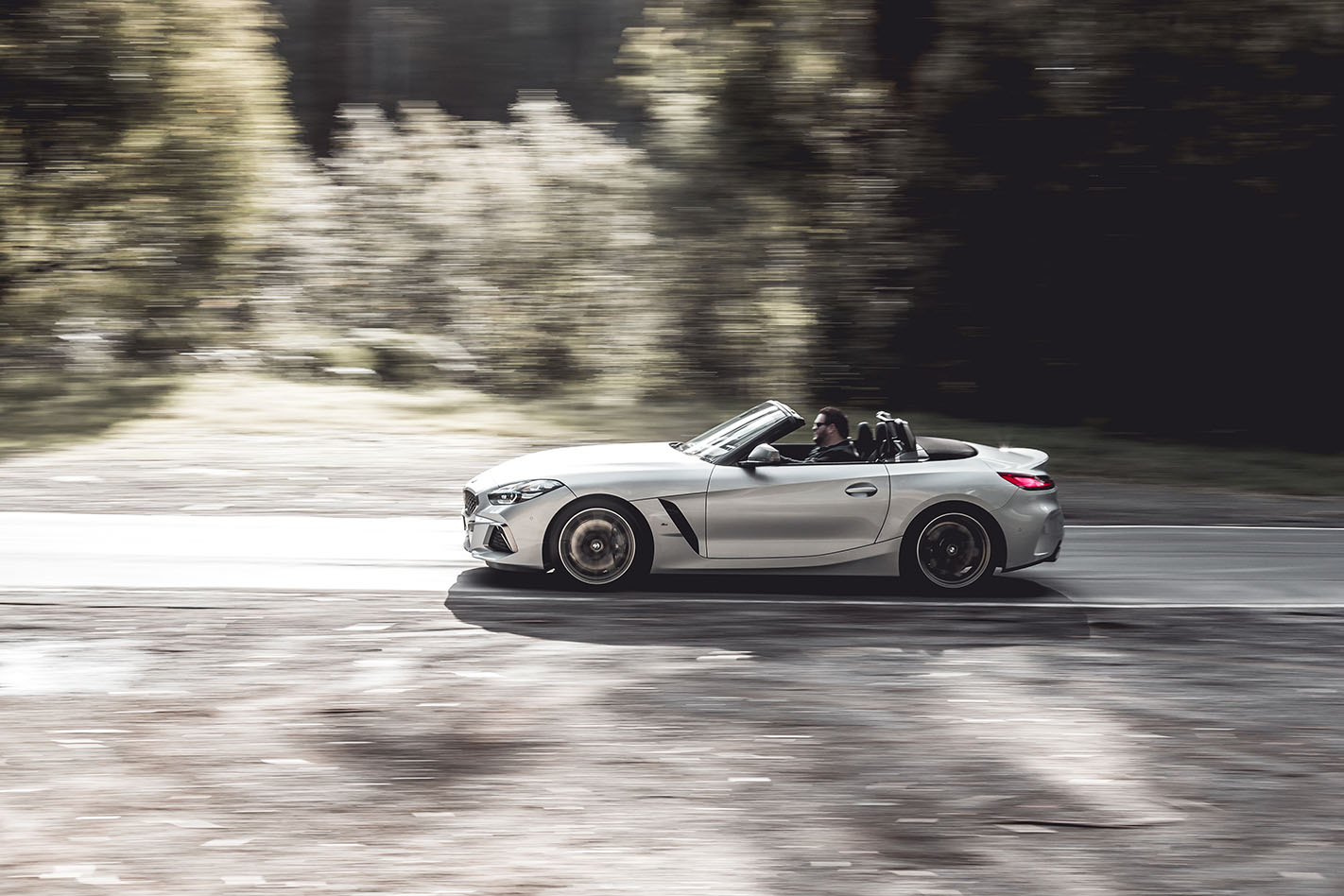
Not only does the M40i feel quicker by the seat of your pants, the go-fast Z4 now cracks the 100km/h sprint in 4.1 seconds – 0.4sec faster than Wheels achieved with the 250kW Z4 at COTY. That’s not hanging about.
It remains a wonderfully tractable engine, too, with the twin-scroll turbo spooling quicker than the new S58 in the X3/X4 M.
For those in the doldrums about the lack of a full-fat M version, this M40i is quick enough to be just enough of an antidote. That’s if you remember to press an important button – once. That’s the traction control, which engages M Dynamic Mode, unleashing the Z4 from the shackles of its electronic nannies.
Do that and the M40i’s 275-section Michelin Pilot Super Sport rear hoops offer up a controllable squirm under heavy loads both on corner exit and in a not-so-straight line.
Speaking of bends, the chassis loses little in rigidity over the Supra and there’s almost zero scuttle shake. However, the Z4’s softer suspension tune means it rolls more (especially from the rear) and it feels less agile when reaching for its limits. The steering also isn’t as quick.
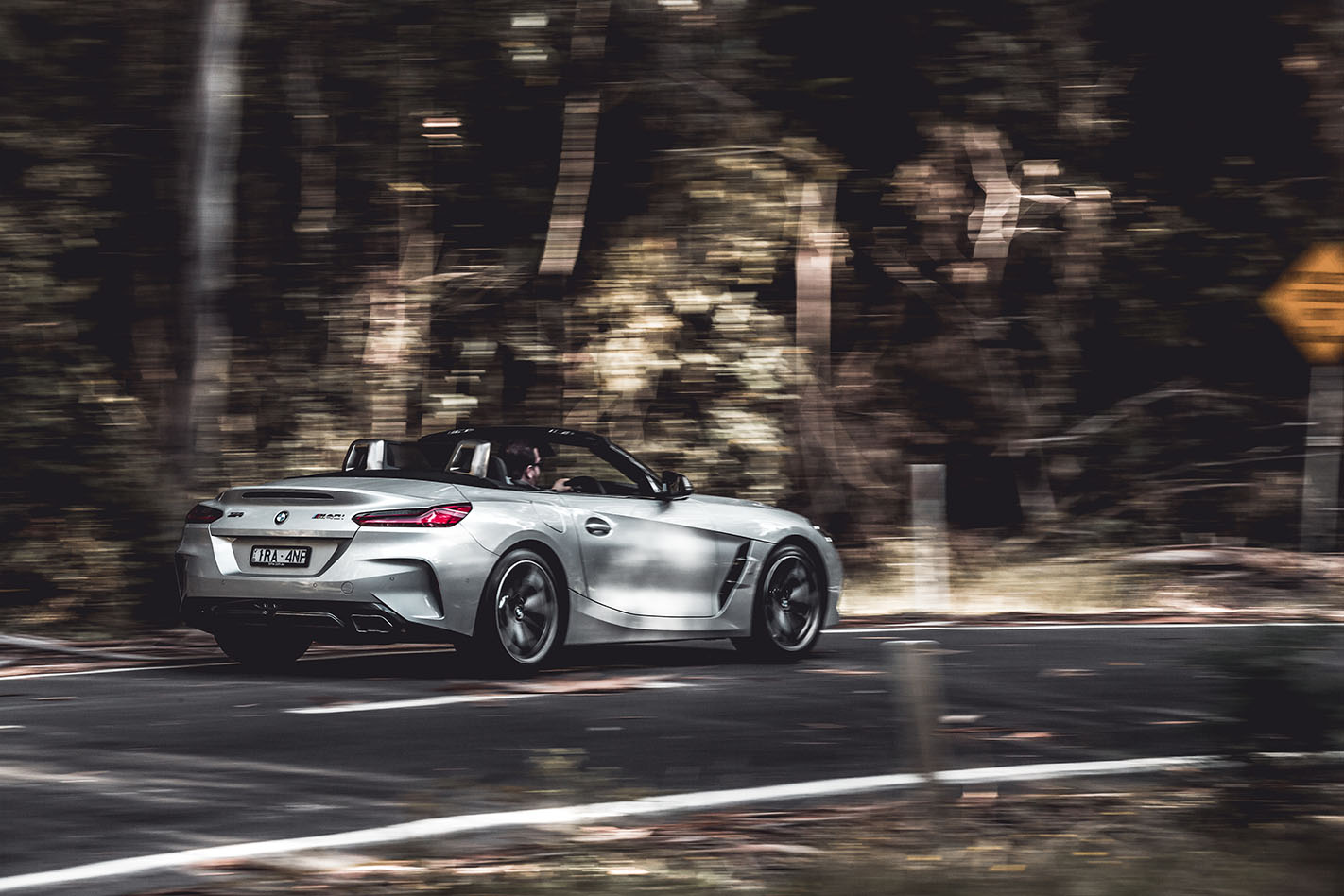
Dial back the tempo and the cabin is quiet with the fabric roof up or down, while there’s ample torque for lazy cross-country cruising.
The soundtrack is improved when topless, with the six-pot’s true tones outweighing the synthesized version played through the stereo.
The adaptive dampers offer just enough suppleness for poor surfaces and the ZF automatic glides through its eight ratios. The spacious cabin and 281-litre boot means that extended driving getaways are easily achievable.
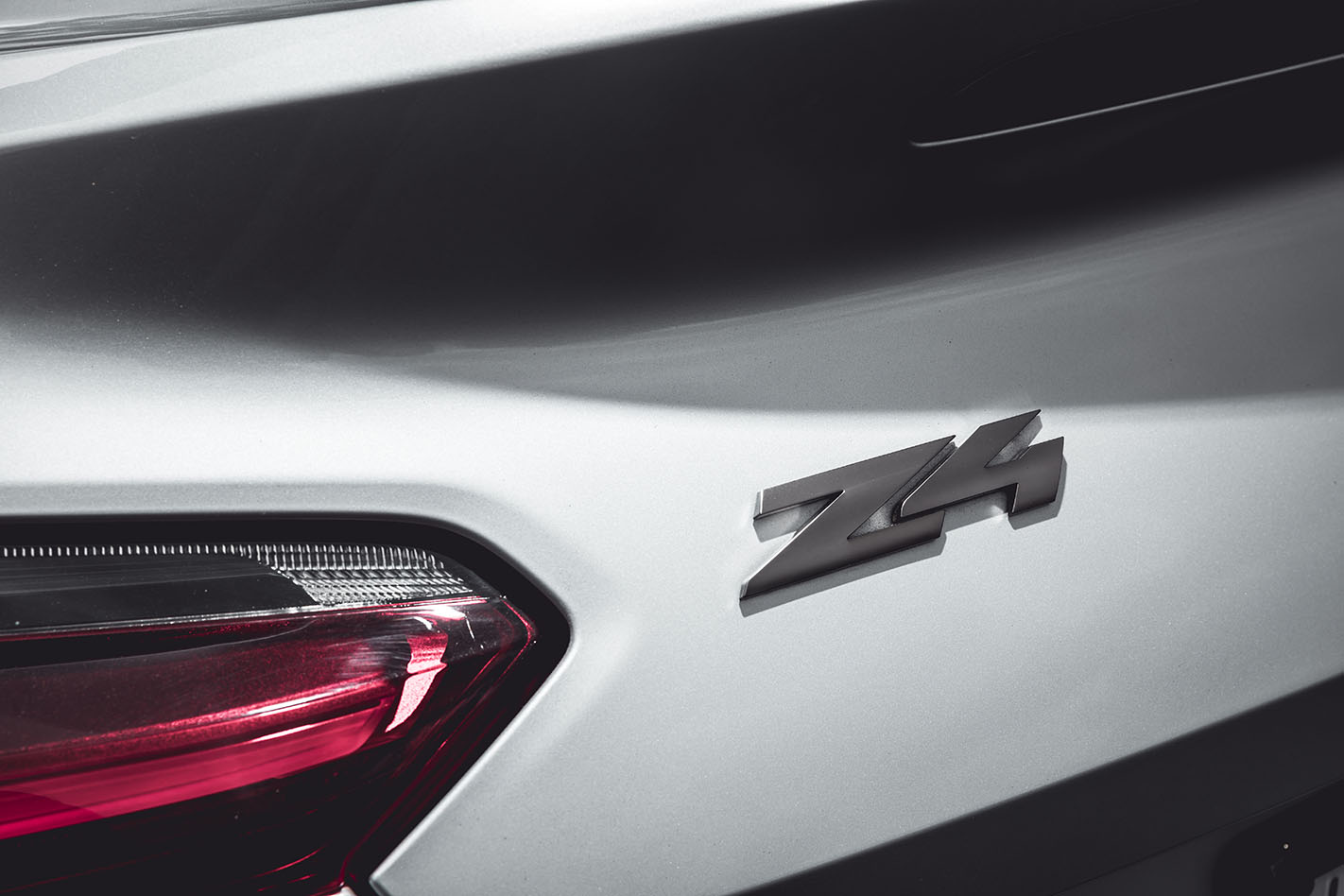
Convertible two-seaters are made to look at, and Aussie designer Calvin Luk told Wheels that manipulating the kidney grille and moving the quad LEDs from a horizontal to a vertical position was a hard sell at HQ. Suffice to say, the Z4 isn’t a shrinking violet.
The interior is less polarising and is unchanged with the power update, meaning the latest iDrive infotainment system (with only Apple CarPlay) pairs with a 10.25-inch touchscreen. The instrument cluster is digital but none the better for it.
The Z4 M40i delivers a nuanced blend of old-school roadster appeal fused with a thoroughly modern execution. And in this 285kW tune, Bavaria has all-but created the Z4M it said would never see the light of day.
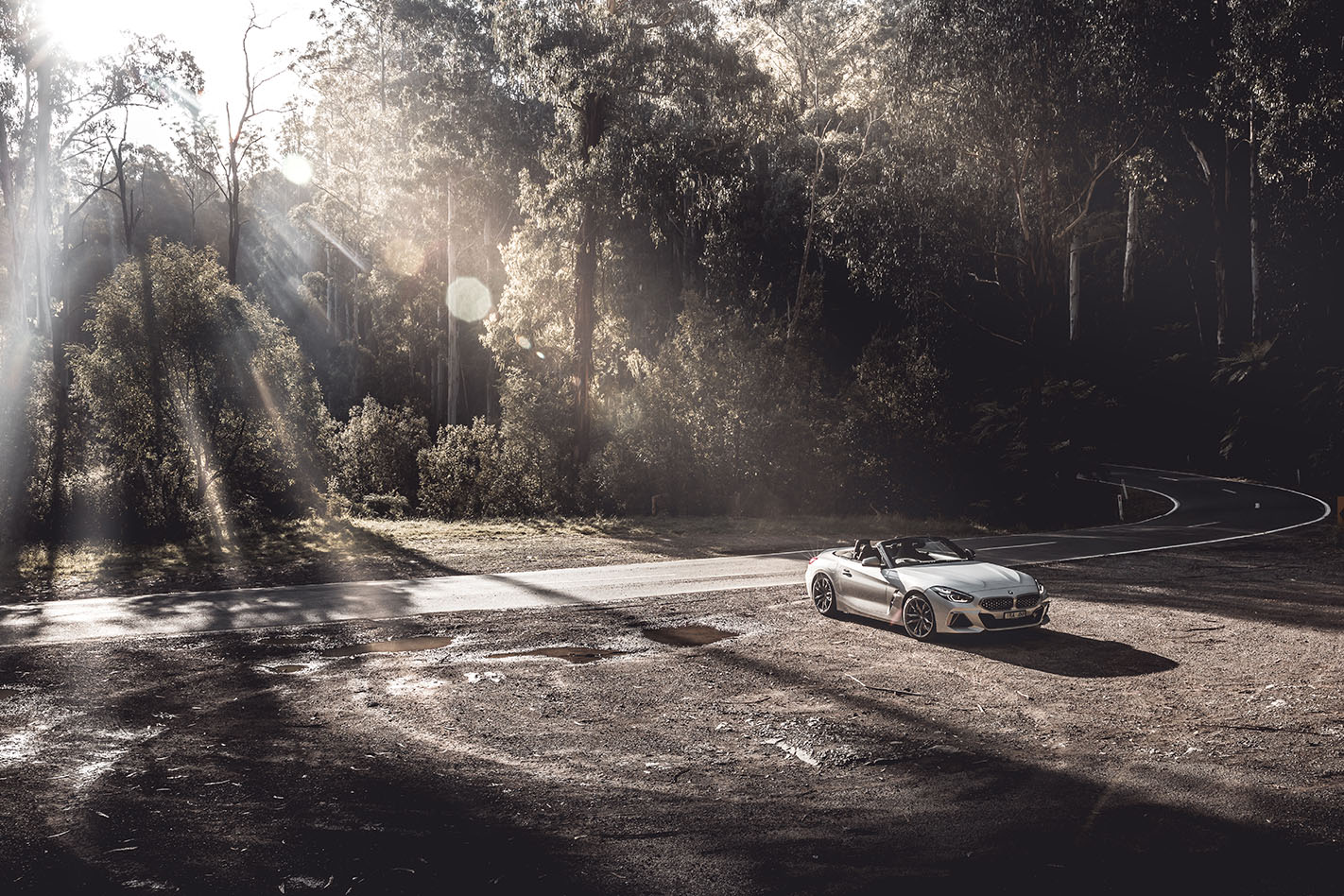
2020 BMW Z4 M40i Pros & Cons
Plus: Purposeful straight-line performance; drop-top cruising; comfortable cabin
Minus: Price premium over Supra; slight deficit in dynamic focus; intrusive electronics
The Rival: Porsche 718 Boxster – $121,490
The prospect of a Porsche and a $6500 fighting fund will be too much for some to resist, but you’re comparing a 2.0-litre 220kW four-pot in the Boxster to a 3.0- litre 285kW straight-six in the BMW.Not only is the Bavarian markedly faster, it’s also better equipped. It would take $182,590 worth of Boxster GTS to level with the Z4 M40i’s performance and equipment levels, but even then it’d be a very close thing. Couched in those terms, could the BMW be a bargain?
You can buy Michael Jordan’s car.
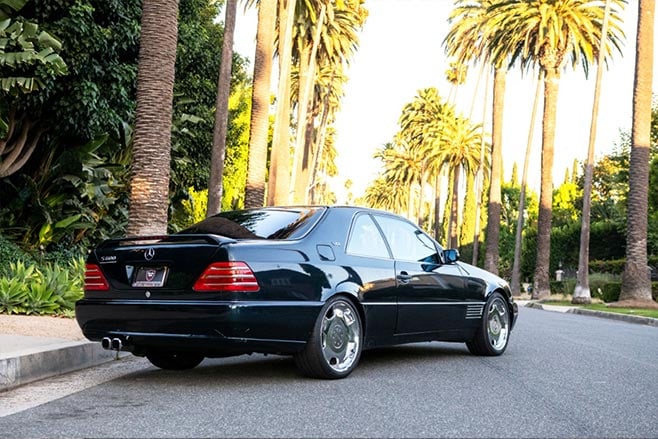
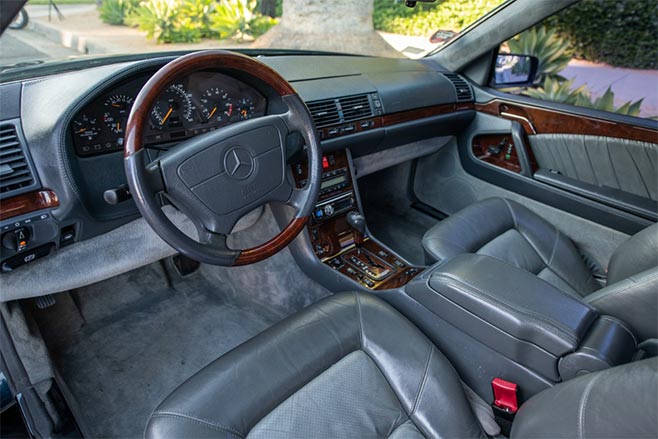
Specifically, his 1996 Mercedes-Benz S600, as customised by tuning brand Lorinser.
The S600 is currently held by Beverly Hills Car Club, which has announced it intends to sell the car via an eBay auction to be held imminently.
The starting price for the Benz owned by the best of the Bulls will be a meagre US$23… but we expect some more zeroes to be added to the end of that by the auction’s August 23 end date.
Michael Jordan and his car collection
A refresher on the man and this specific car, Michael Jordan is widely considered the greatest basketball player ever… including by the raw facts. His profile on the NBA website starts by pointing out that “by acclamation, Michael Jordan is the greatest basketball player of all time.”
He played 15 seasons, helping the Bulls win 6 NBA titles.
A different type of tuned Mercedes: The Brabus Bullit
This specific car, which did make an appearance in The Last Dance, the documentary about Jordan and the Chicago Bulls, now shows 157,085 miles (~253,000km).
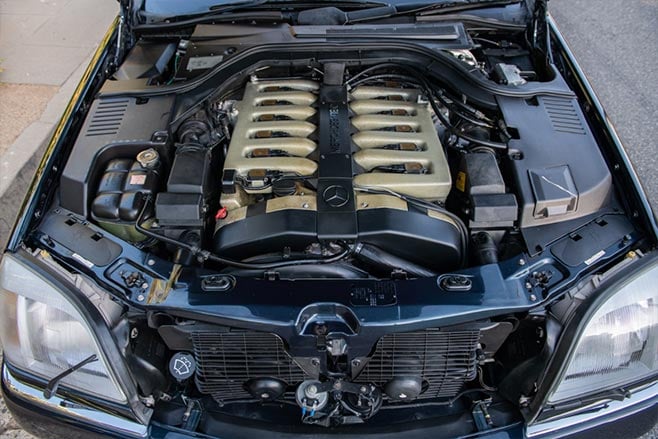
With a 6.0-litre V12 under the bonnet making 290kW and 570Nm, the luxo limo isn’t particularly underpowered by today’s standards, let alone 25 years ago.
Alex Manos, the Beverly Hills Car Club owner, has his own emotional connection to the car.
“You probably have your own, more subjective attachment to Michael Jordan,” says Manos.
“When I was a young boy my father bought me my first pair of Air Jordan sneakers. I absolutely loved them. I thought even at that age that they were so cool.
Chatting cars with basketball star Mitchell Creek
“From there, I found out the amazing story of Michael Jordan himself, the greatest basketball superstar. So it’s truly astonishing to be selling his car today.”
Get your free weekly MOTOR report!

