
Marcus Gronholm steps quietly into his office. He tugs at his racing harness, slips a helmet over his ears and takes a peek at his co-driver… me. For the next five-and-a-half kilometres, I’m to be given an insight into the extraordinary talent of the Finnish farmer who has twice been crowned World Rally Champion. We’ll tackle a special stage in the 2006 Ford Focus RS WRC car with which he recently won the Acropolis Rally.
This feature was originally published in MOTOR’s October 2006 issue
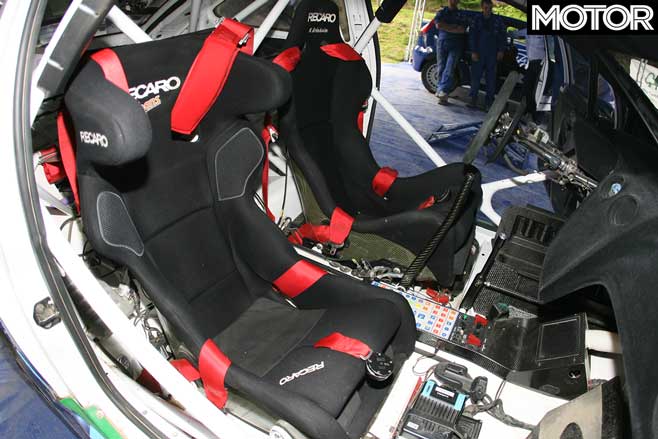
There is a crackle on the intercom. “Are you okay?” he asks, in a thick Finnish accent. I am… sort of. The co-driver’s seat is set low in the chassis to optimise the centre of gravity. I’m 188cm tall, but only by peeping over the top of the dashboard can I see where we’re going. I don’t envy Timo Rautiainen, Gronholm’s normal co-driver. To sit here, calmly reading instructions at 210km/h on an icy track, must take balls the size of watermelons.
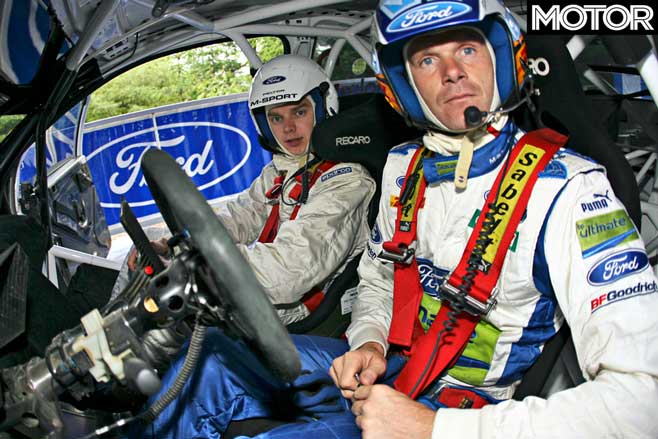
Gronholm pulls on his gloves and I take a moment to drink in my environment. When the World Rally Car regulations were first introduced, the cars looked like they’d been pinched from the local dealership even if, underneath the sober skin, was a million dollars worth of sophisticated hardware. They looked tame.
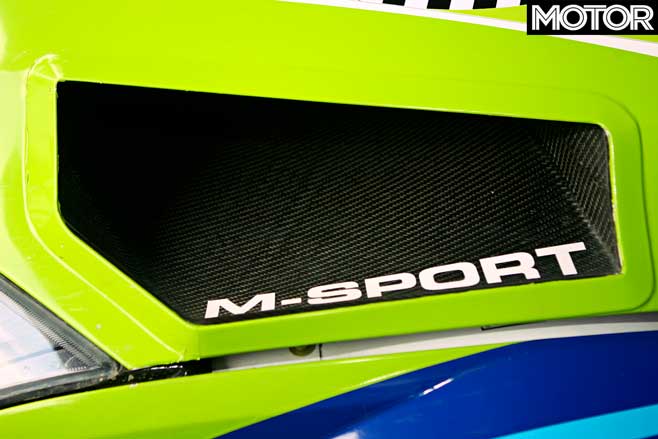
It’s now nine years since those first cars were produced and matters have improved. The 2006 WRC car is based on the XR5 Turbo, the 166kW sporting flagship of the second-generation Focus range. That car already boasts a bodykit but the WRC builds on this with the introduction of a dramatic rear wing and chunky wheel arches. Add a liberal sprinkling of war paint and it starts to look like a rally car should.
M-Sport developed this car in just 12 months from November 2004, when Ford’s senior management finally decided to continue its rally program. The development process included 7900km of testing and this year’s schedule looks no less demanding. I wonder whether my chauffeur ever gets bored of driving a rally car.
“Not really,” he says. “Sometimes testing is quite boring, but it’s very important. When you test, it’s important to find something good because it gives you an extra kick for the next rally. You think, ‘shit, now it’s good’.”
In contrast to the extrovert exterior, the cabin is neat and business-like. An electronic control module is located on the transmission tunnel, within easy reach of both driver and co-driver. This features basic information, controls for the electronic centre-differential – the 2006 regulations made mechanical front and rear diffs compulsory and even the indicators.
Another button remaps the engine for the road sections, where it’s important to save fuel. There’s a foot-operated horn button in the co-driver’s footwell, but it’s not working today. “We disconnected it,” says a friendly mechanic. “People tend to kick it when they’re not used to the car.”
The engine is burbling happily in front of my toes. The road-going XR5 has a 2.5-litre, five-cylinder turbo, similar to that used in the Volvo S40 T5. The rally car, by contrast, uses a version of the 1988cc all-alloy Duractec lump found elsewhere in the Focus range.
Developed by the French engine specialists Pipo Moteur, it’s fitted with a Garrett turbocharger and a mandatory 34mm inlet restrictor. The latter limits the power output to 223kW at 6000rpm, which isn’t much in a car that weighs a minimum of 1230kg. The peak torque of 550Nm at 4000rpm is much more impressive, and is the key to this car’s character. No road car is so responsive.
Gronholm squeezes the throttle and we’re away. The noise is modest – the cars are limited to 98 decibels – and the acceleration feels less than fearsome. Last year, I rode with rally legend Stig Blomqvist in an old 335kW Audi S1 and its acceleration felt much more savage. The Focus, by comparison, feels soft and controlled.
My driver sits high, arms bent, eyes staring dead ahead. There is a wonderful economy of movement. He looks cool, relaxed. Each of the five forward gears is selected using a steering~ wheel mounted paddle and a shift takes just 50 milliseconds (0.05sec). And with no clutch to play with, his left foot is used only for braking.
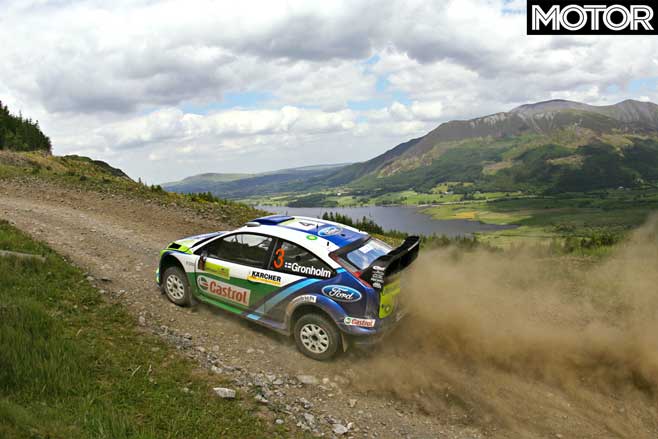
The course is rough, very rough. Ford has been testing both cars here for a couple of days and giant ruts have been carved in the track. Gronholm reckons it’s more like the mountain tracks of Greece than typical Pommy conditions.
The car’s specification is unchanged since the Acropolis. The spring rates are tuned for rough ground and they deliver an astonishing ride quality. Not since I drove Mitsubishi’s Dakar Rally-winning Pajero Evolution have I experienced such extraordinary comfort from something so focused. We crest a brow and jump for what feels like ten metres, but the landing is soft, measured. Where I’d expected the Focus to crash and bang, it glides.
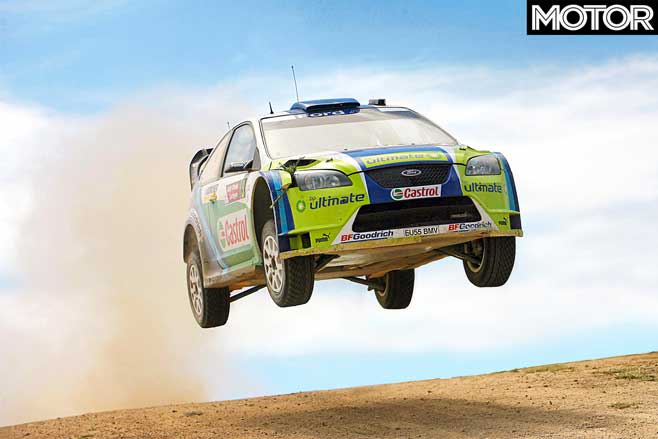
The corners also lack drama. The steering offers just 1.5-turns from lock-to-lock, so Gronholm’s inputs are modest. With comparatively little power to play with, conservation of momentum is everything. The spectacular, sideways driving styles of yesteryear simply don’t suit the modern cars. “If you want to go fast, you want a little bit of understeer at the start of the comer,” says Gronholm. “Then you stay on the throttle and try and avoid oversteer. It’s a bit like slalom skiing – click… click… click. That’s the feeling.”
Gronholm’s feet are constantly dancing on the pedals. “The Ford engineers went completely crazy when they saw my data for the first time,” he says. “I was playing with the brake and throttle all the time – parp, parp, parp. I’m not conscious of it; it’s something I do naturally.”
Natural is the right word to describe Marcus Gronholm. By the midway point I’ve relaxed and I’m enjoying the ride. I’d expected flashing past trees at 160km/h to feel frightening, but it doesn’t. Not even slightly. I’m in the company of a man who’s so on top of his game that my only reaction is to sit back with total confidence and admire.
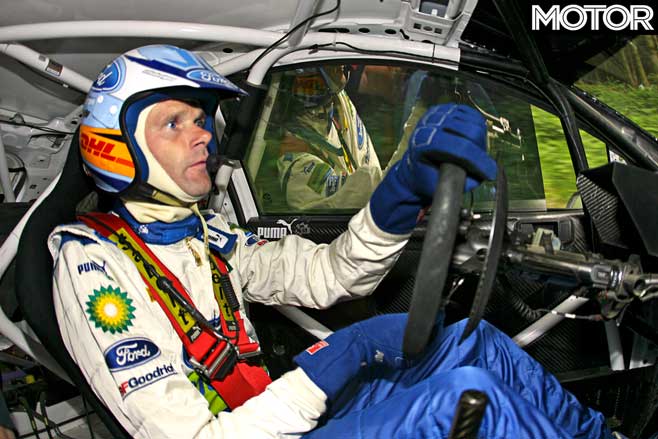
Gronholm prods the brake and we cruise gracefully back into the service area. We clamber out and I ask him the question I’ve wanted to ask all day. Last year, Michael ‘Beef’ Park, co-driver of Gronholm’s 2005 Peugeot teammate Marko Martin, was killed in the Wales Rally GB. Does he not think that driving through a forest at up to 210km/h is a crazy thing for a 38-year-old to be doing?
“Sometimes it comes into my mind what happened to Beef. We were in the same team and we were good friends. It was bad, really bad,” says the father of three sadly. “Sometimes I think this is a crazy sport, but I still enjoy it.”
There is a flurry of excitement across the paddock. A young, blonde model has turned up to pose with Gronholm for a merchandising catalogue. “I don’t think my wife will like it,” he says as we shake hands. Still, it’s not what you call a tough day in the office.
Fiesty trainer
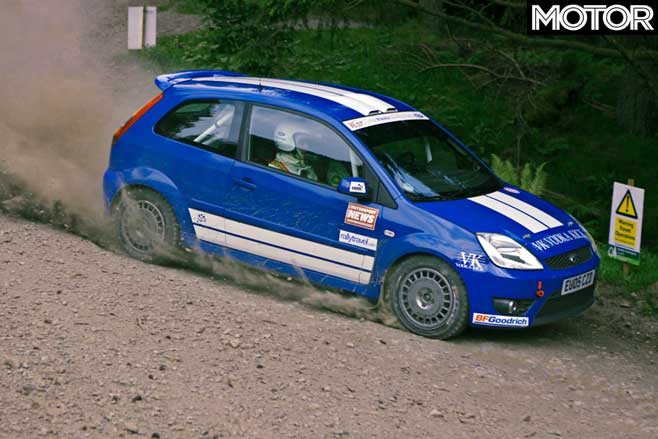
As a warm-up to the ride with Gronholm, we were taken through the stage by ex-Ford works rally driver Roman Kresta in a Group N Ford Fiesta.
Its 2.0-litre engine delivers 121kW and 202Nm. and powers the front wheels through a five-speed dog ‘box. It’s all about simplicity and parity if you’re off the pace in the Fiesta. then you’ve only yourself to blame.
In many ways, the ride was more dramatic than it was in the WRC car. In order to counter the natural understeer, Kresta deliberately unsettled the Fiesta on the approach to a corner. “The technique is so different to a World Rally Car.” he explained. “You need to set a front-wheel drive car up for the corner. You cannot use the power to adjust its attitude like you can in a four-wheel drive w. It’s a totally different approach.”
The mad house
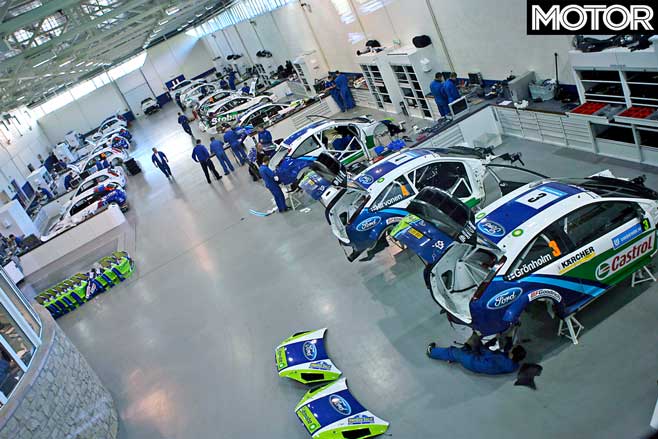
Given the lunacy of the sport, it seems fitting that Dovenby Hall, the home of M-Sport, used to be a mental asylum. Team boss Malcolm Wilson bought the 115-acre estate . In January 1998 and spent two years and a hefty chunk of Ford cash making it motorsport nirvana.
The main workshop measures 5575 square metres and has enough assembly bays for 22 rally cars.
These are needed – there are now 56 Focuses competing across the world and M-Sport offers technical assistance to them all A 2005 car, in case you’re wondering. is yours for a mere million bucks. Plus tax.
Some of the attention to detail is awe-inspiring. Out favourite object is a beautifully crafted piece of titanium that sits in the wheelarch and scrapes the dirt from the rear tyres. It’s so utterly over-the-tOp as to be a work of genius.
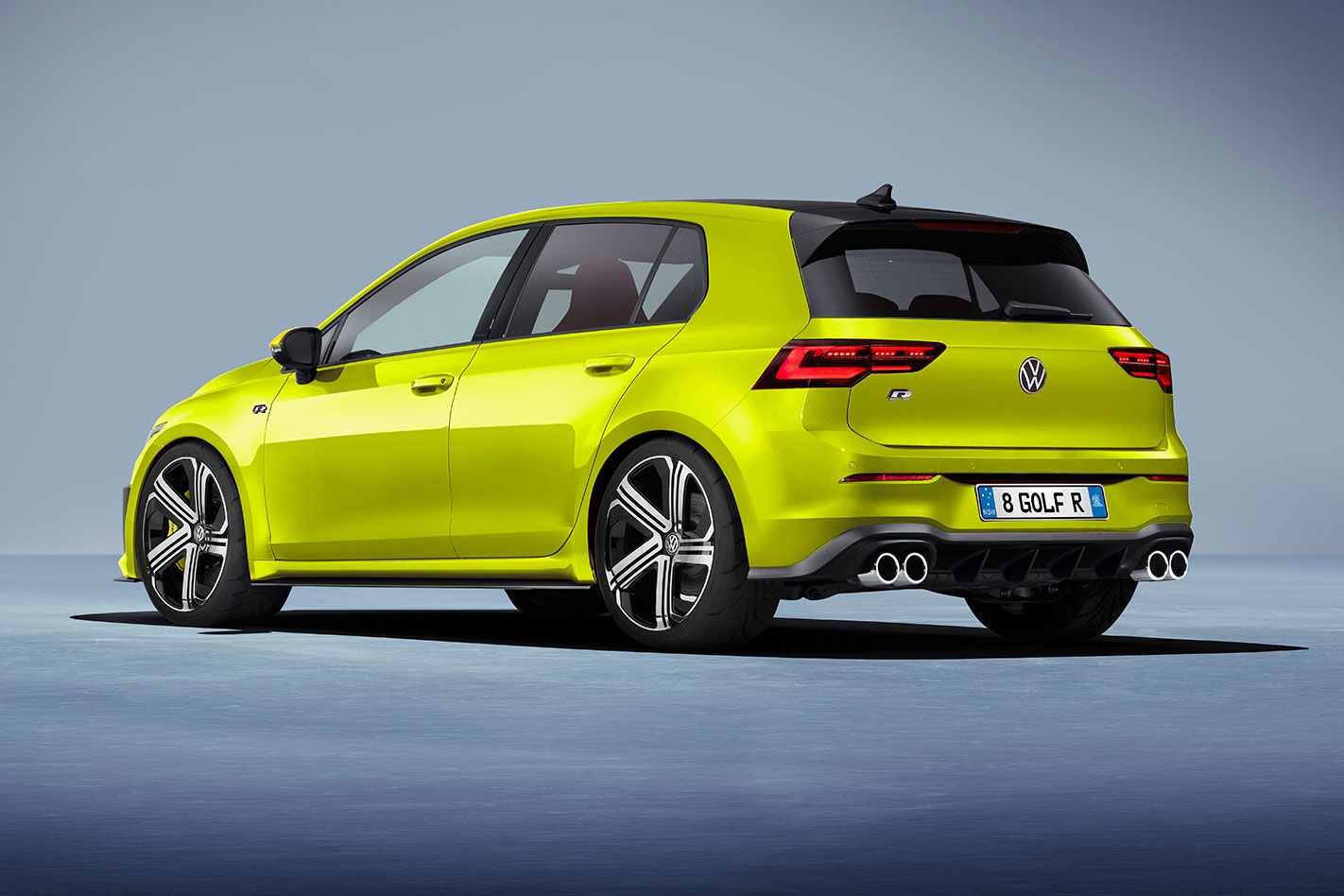
Volkswagen is lighting a fire under the sizzling hot hatch segment, with a 300kW hybrid hyper hatch a tantalising possibility to take on the Mercedes-AMG A45.
The Golf R Plus has been discussed at the highest levels in VW’s Wolfsburg head office, and if green-lighted would spearhead a four-pronged assault on the super-competitive market by the German giant.
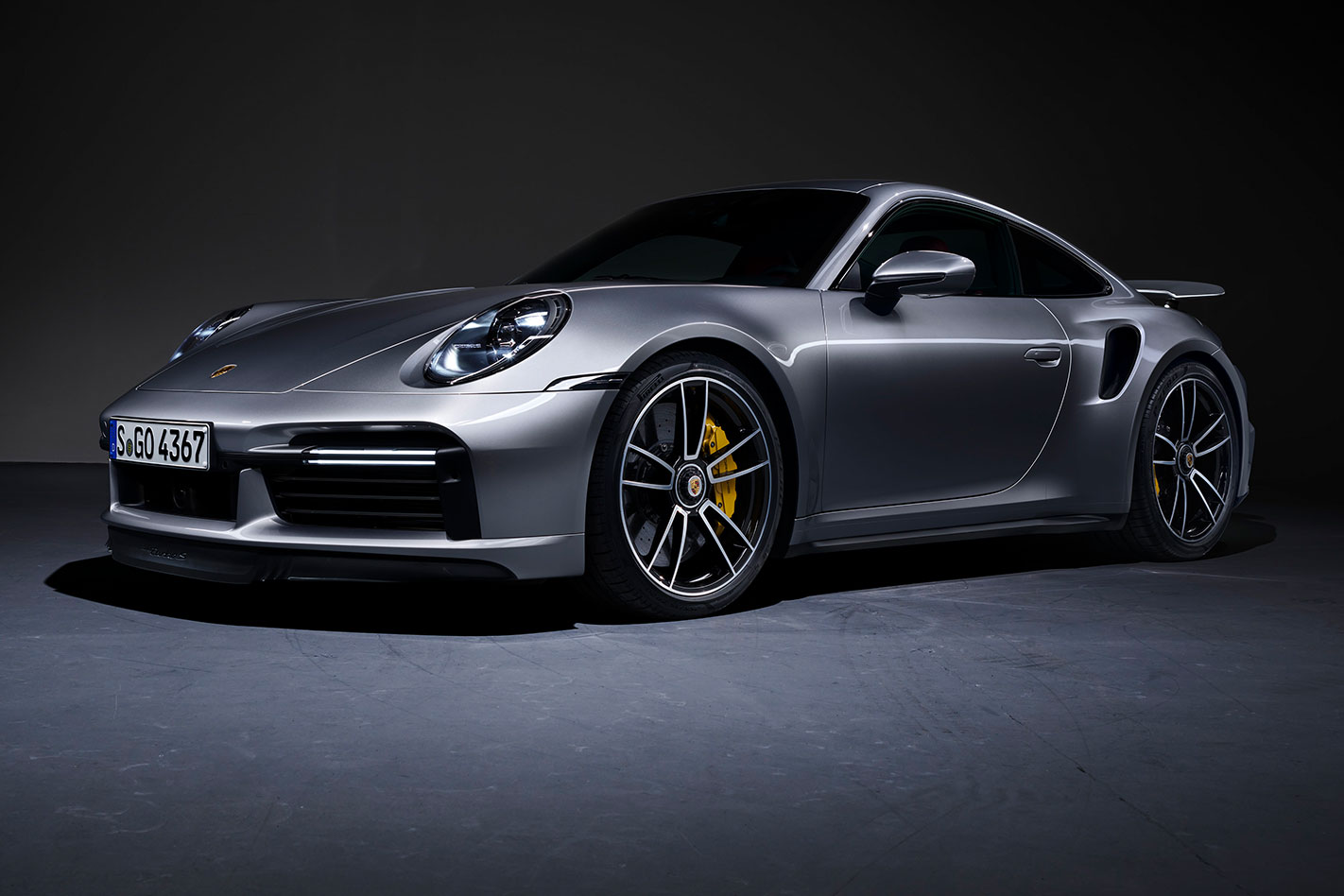
Meanwhile, the Porsche Turbo S turns 45 this year, and it’s many happy returns as the covers come off the new-gen 992 911. With 478kW/800Nm on tap, and 2.7sec to 100km/h, it’s feeling young at heart.
With Holden entering its final months, we bring you personal accounts of how staff at the beleaguered brand were told they’d lose their jobs.
Think you know about safety? We reveal how confusion over Australia’s ANCAP car crash ratings means you might not be as safe as you think you are.
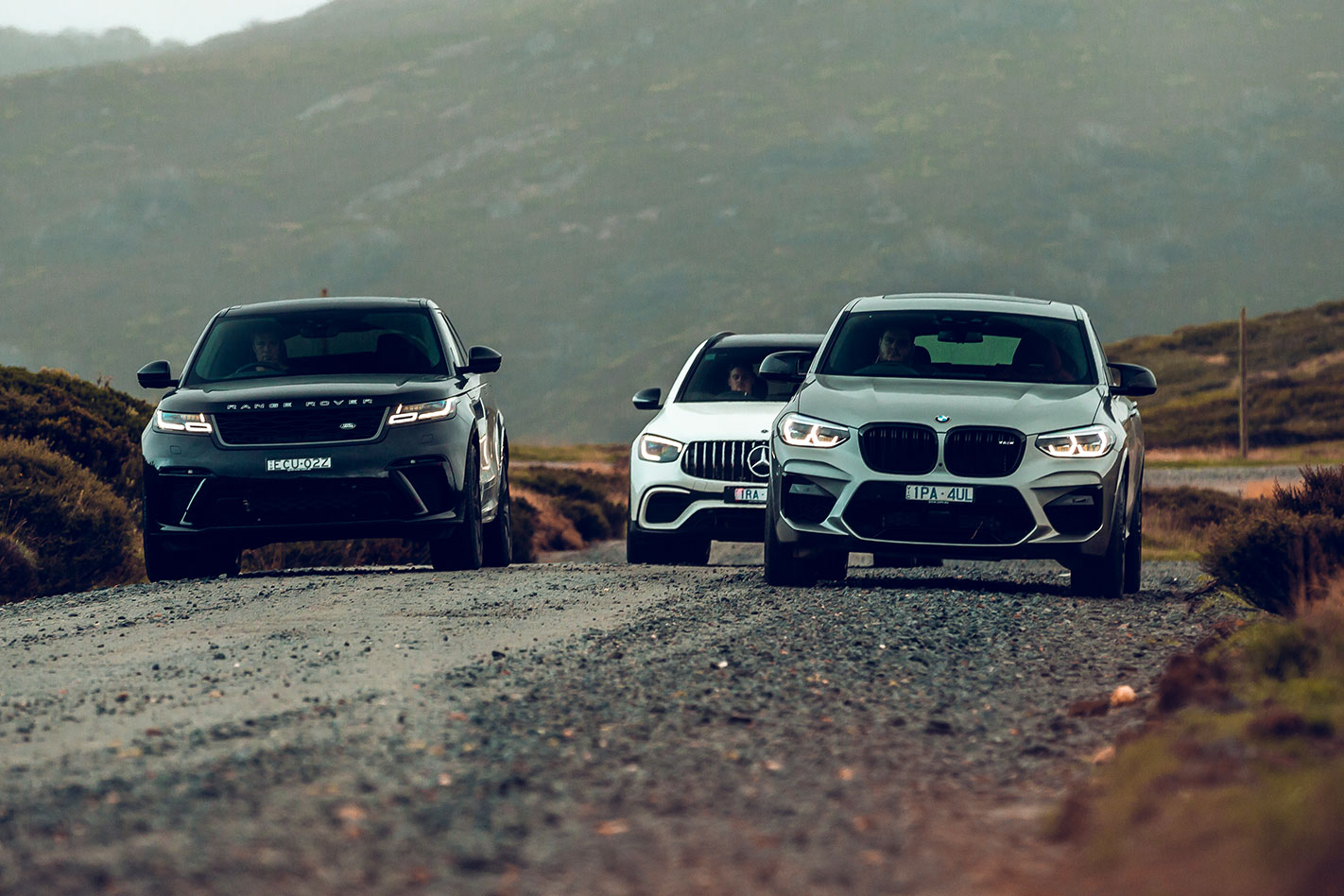
Find out what MG’s new HS brings to the table in the ultra-competitive medium SUV segment. (Spoiler alert: a lot.)
Fancy more grunt? We hit the bitumen in the Boxster GTS as the thrilling 4.0-litre flat-six found in the Cayman GT4 and Boxster Spyder makes its way deeper into the Porsche 718 range.
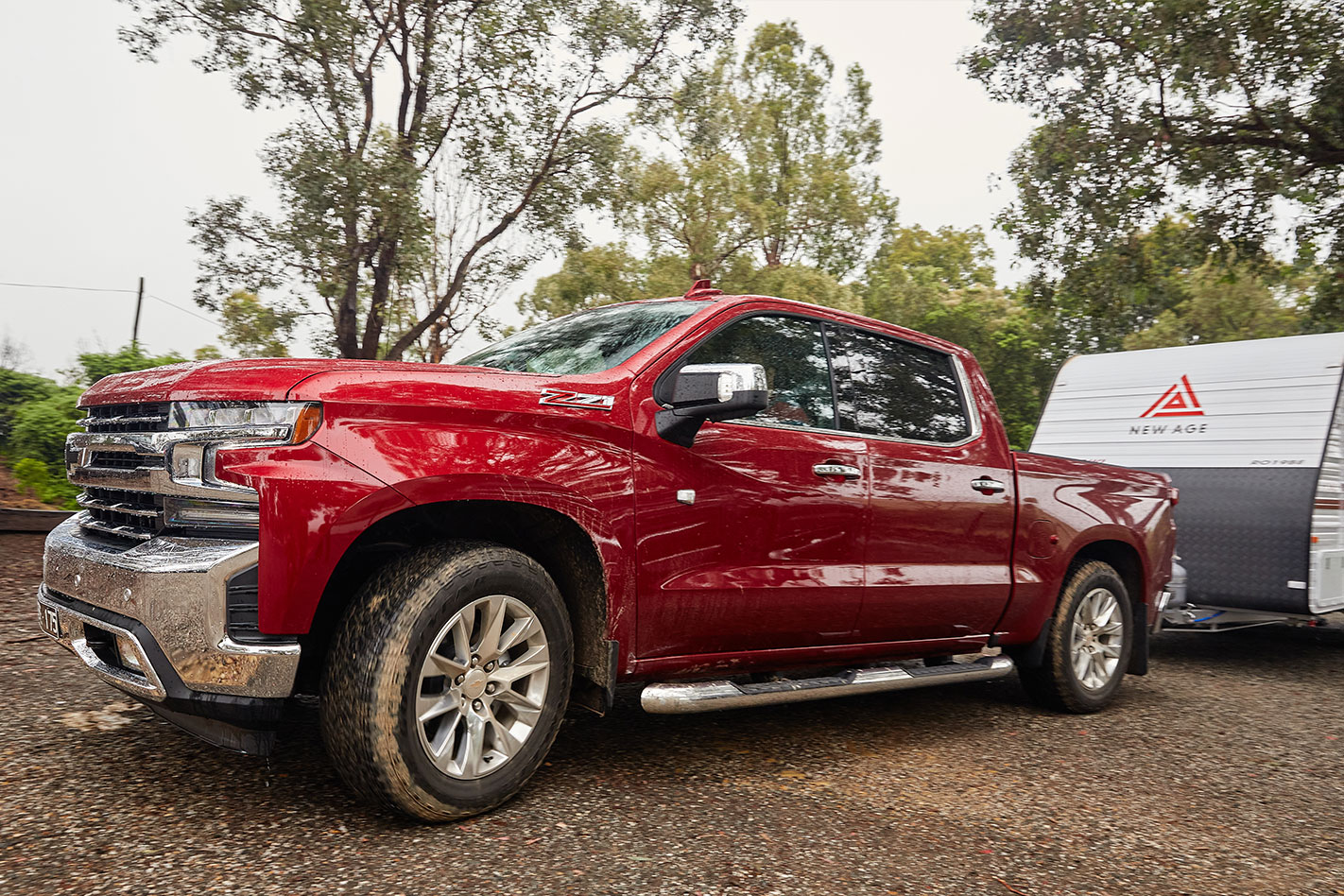
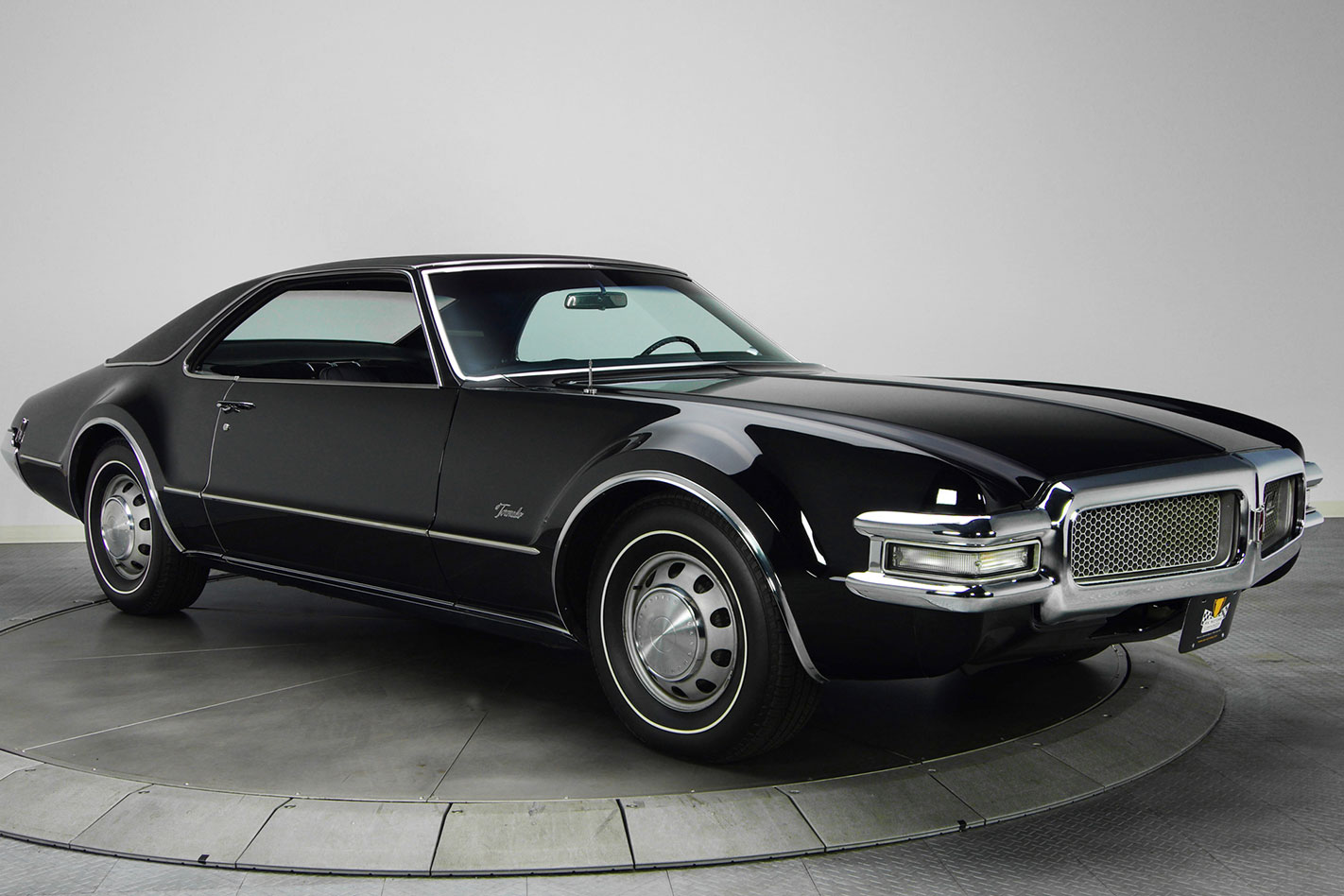
Modern Classic takes us back to the venerable C36 AMG, the car that cemented the German marque’s road-car cred, and Retro explores the sleek, front-wheel-drive Oldsmobile Toronado luxury coupe.
- Playing games on your Tesla
- Plus a whoopee cushion & fireplace
- How does it all work?
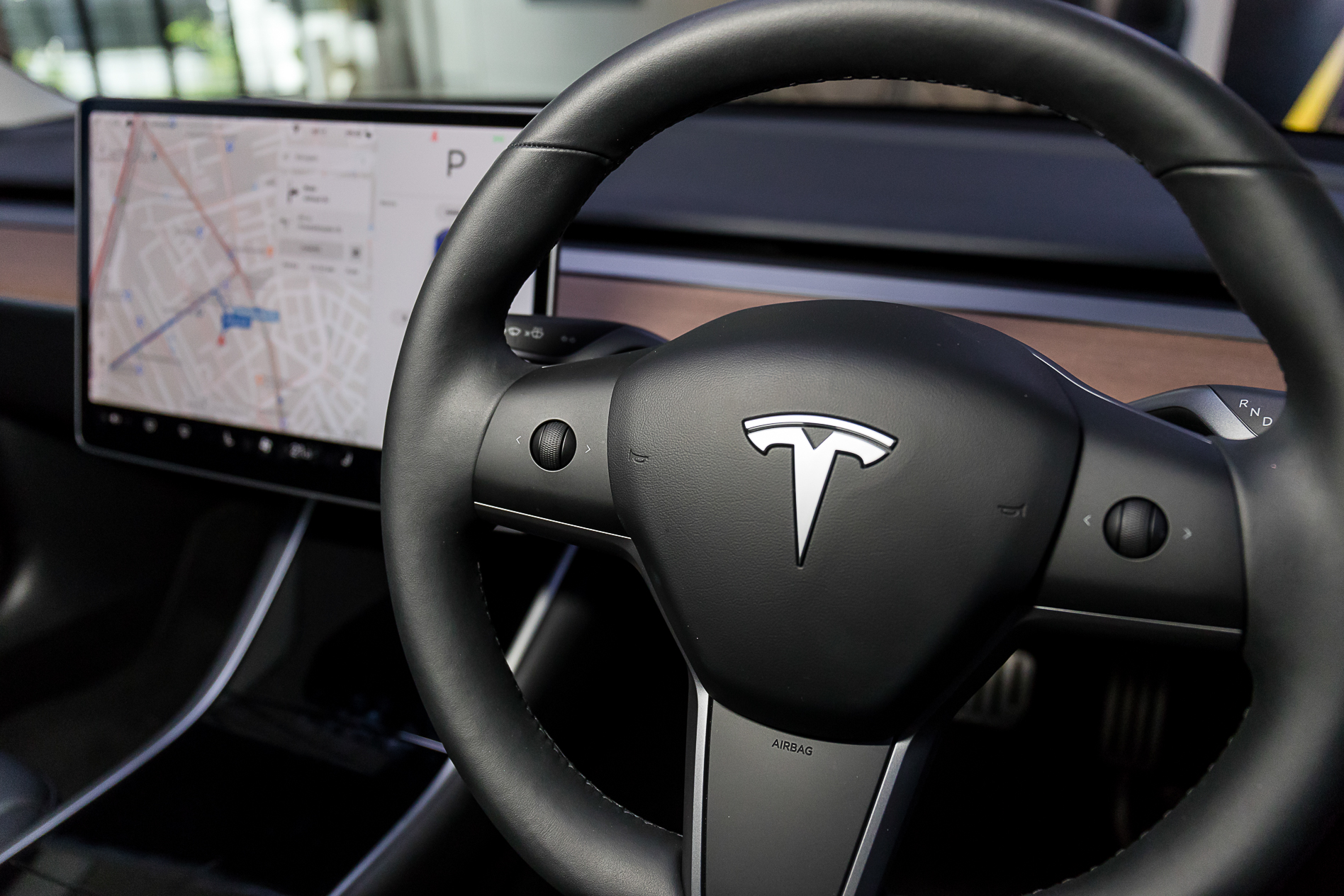
Now Tesla has gone further, and enabled owners to treat their parked cars as fully fledged games controllers. Not long after the Model 3 was released, Tesla started dropping its latest software update onto the infotainment system, the key features being Toy Box and Arcade.
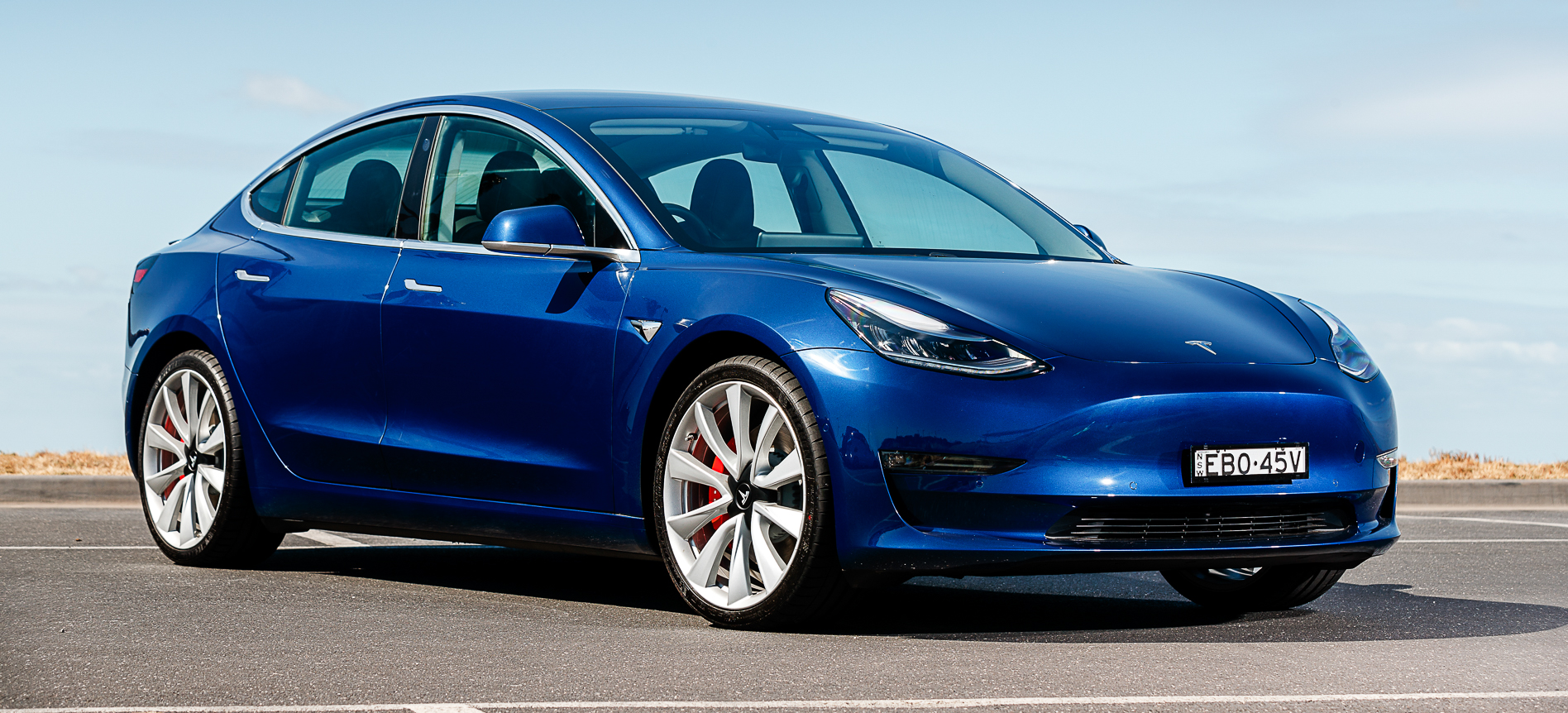
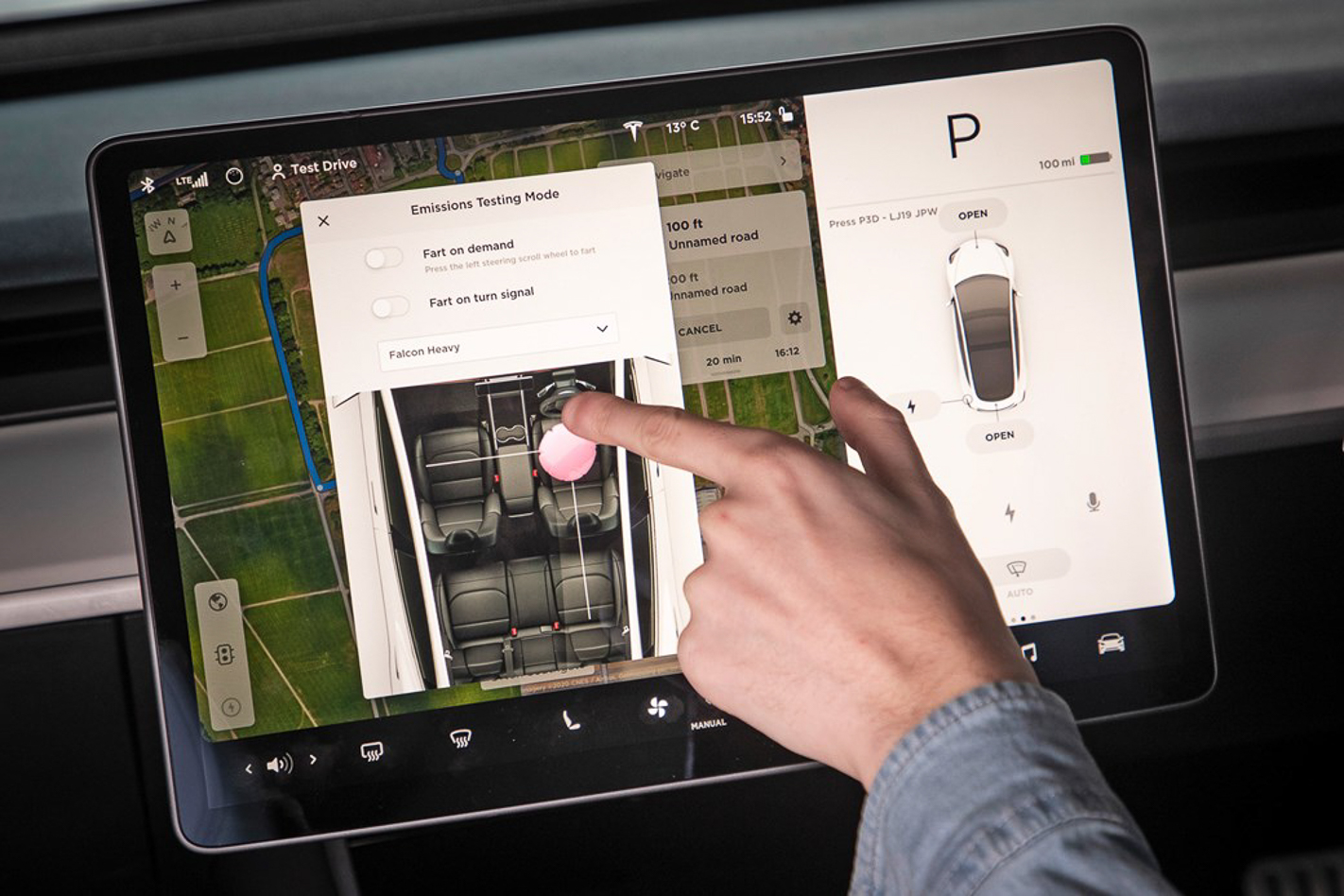
Toy Box is filled with simple gags and little tricks, such as a digital whoopee cushion that can be activated when someone sits in a particular seat, or a wood-burning fire that cranks up the climate control’s heat and even makes crackling noises for added realism. Car-aoke allows you to sing to on-screen lyrics, and you can use Theater mode to watch Netflix.
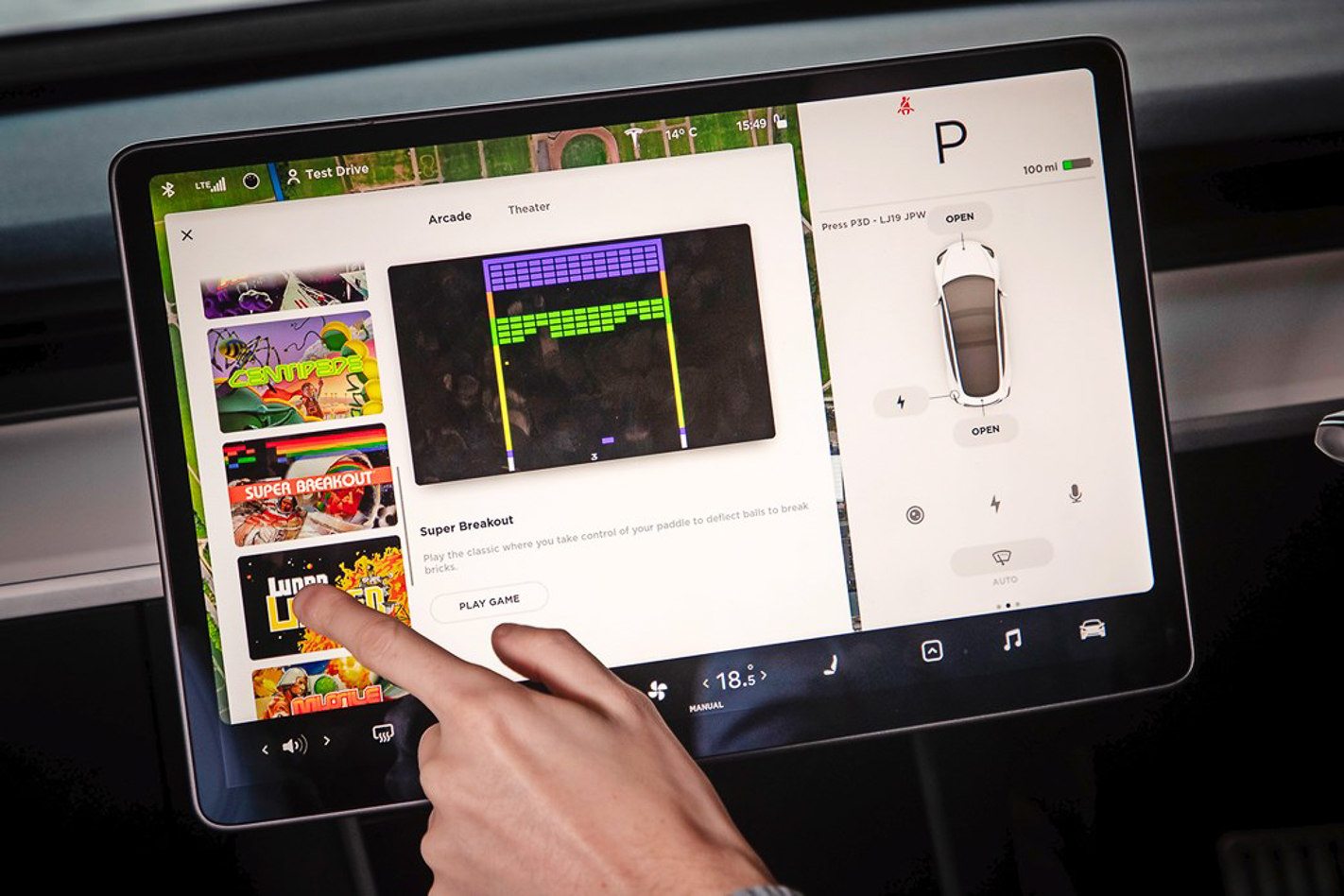
But it’s Arcade that we’re focused on here. Prod the menu category and it will open up a list of games. They range from simple things like 2048 (a popular app game), proper classics like Asteroids and more recent hits like Cuphead, which is inspired by 1930s cartoons. Most of the time, you can just prod and swipe the screen, but Tesla suggests using a proprietary USB controller for better usability, for Cuphead in particular.
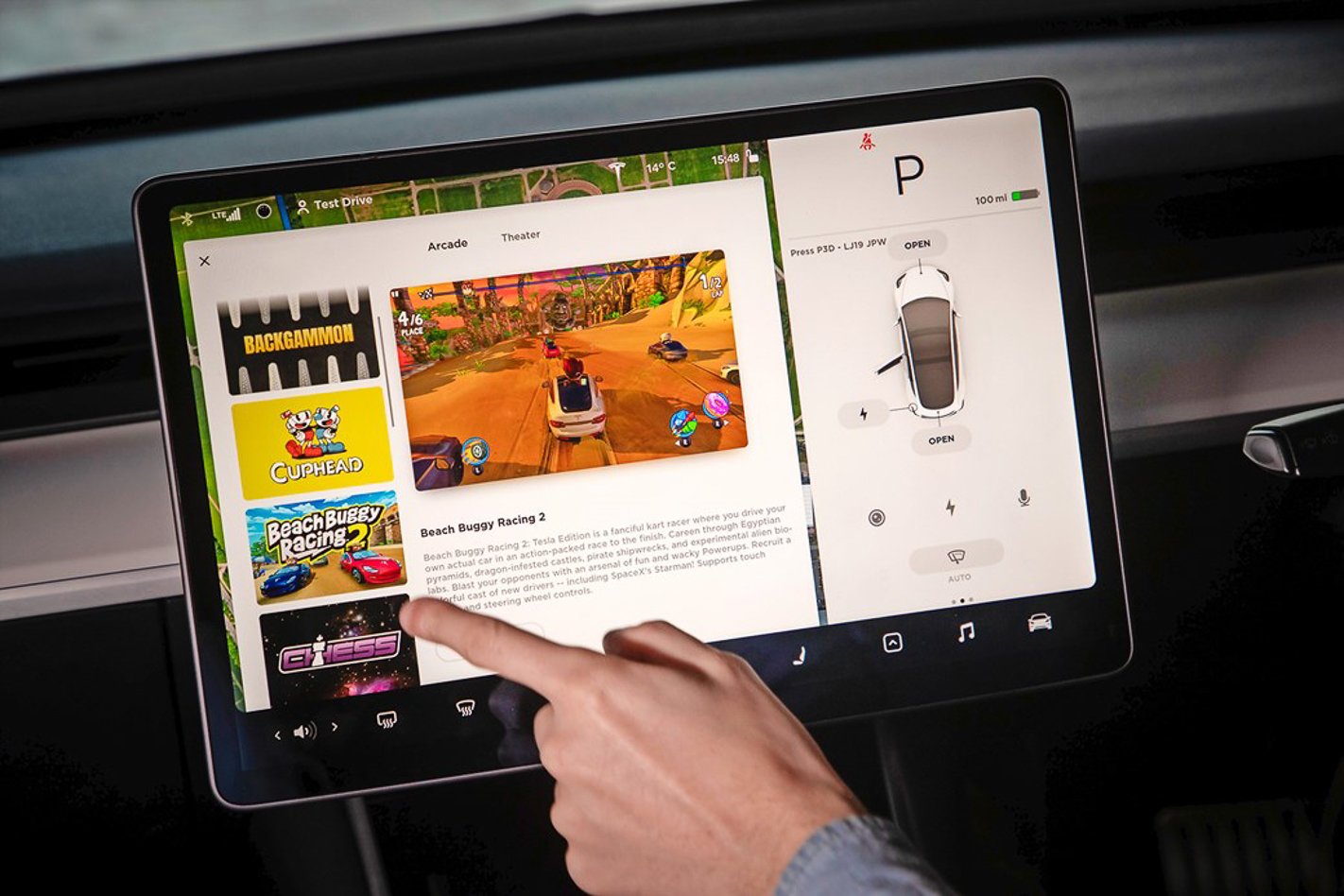
But the car itself has its own controller: the steering wheel and brake pedal, which is perfect for Beach Buggy Racing 2 – a game that’s been ported from iOS and Android onto Tesla’s comparatively big screen. The driver’s seat effectively gives you your own racing rig.
Never shy of taking an opportunity to big itself up, Tesla has adapted the game to make it even more Tesla-y: the difficulty levels are Chill, Sport and Ludicrous (like Tesla’s names for its drive power modes), and a Model S is among the cars you can choose to drive in the game.
For now, all this only works when the car is in Park mode. But if and when long-distance self-driving becomes a reality, Arcade could be adapted for use on the move.
How it works
Get distracted
Open up the Toy Box app and unleash the whoopee cushion on your unsuspecting passengers when they sit down, or get a fake fire going.
Choose your game
The Arcade menu has multiple games, most of them retro classics like Asteroids and Super Breakout. Play these with prods and swipes of screen.
Wheel it out
For Beach Buggy Racing 2, you use the steering wheel and brake to steer and slow down. The car maintains a set speed if you don’t brake.
Tesla’s Toybox: is it fun?
Yes. It’s a set of simple gimmicks pieced together, but they’re fun when you’re waiting for your car to charge. Remember there’ll be a certain amount of tyre wear caused by ‘dry steering’, so best not get addicted. But it’s refreshing to see a car maker add some fun to its cars in such an innovative way.
This article was originally published on carmagazine.co.uk
You can’t help but notice the good vibes being thrown the new Volkswagen Golf MkV GTI’s way.
This review was originally published in MOTOR’s September 2006 issue
The press and buyers love it. Volkswagen had let its athletic hatch get all flabby in the chassis with Golf IV, but version V of the Golf GTI not only has the sweetest chassis among the hot hatches, it also has a honey of an FSI turbo motor. But is it tunable? You betcha.
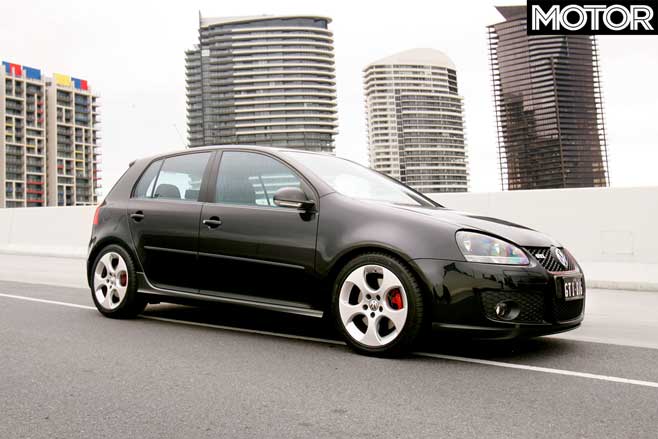
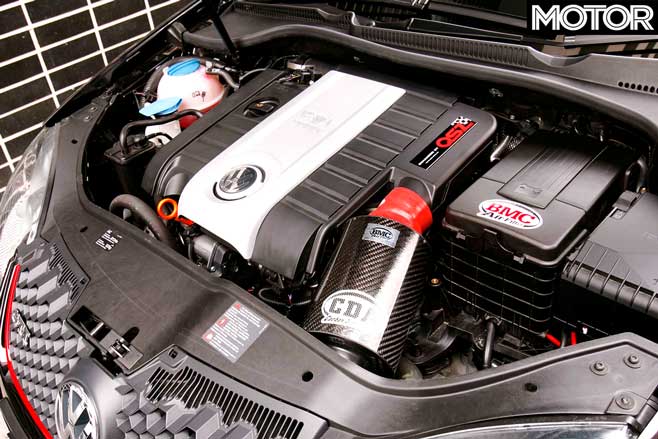
Booting up the software of your GTI is what Melbourne tuning company QSZ does, among other things. The company has just released its engine management software upgrade for Golf V GTI, which replaces factory settings for turbo boost, fuelling and ignition timing.
Claimed peak output figures, without any other modifications other than the reprogramming, are quoted as 180kW at 6500rpm (up from the standard car’s 147kW at 5500rpm) and 375Nm at 1800rpm (up from 280Nm at 1800rpm).
QSZ also import Miltek exhaust systems, so with the Miltek cat-back stainless exhaust fitted to the GTI, the claimed figure jumps to 190kW and 400Nm. There’s also a Miltek system including a hi-flow catalytic converter, which bumps peak power to a claimed 200kW. Acceleration is claimed at 5.9sec over the 0-100km/h sprint and max speed is 247km/h.
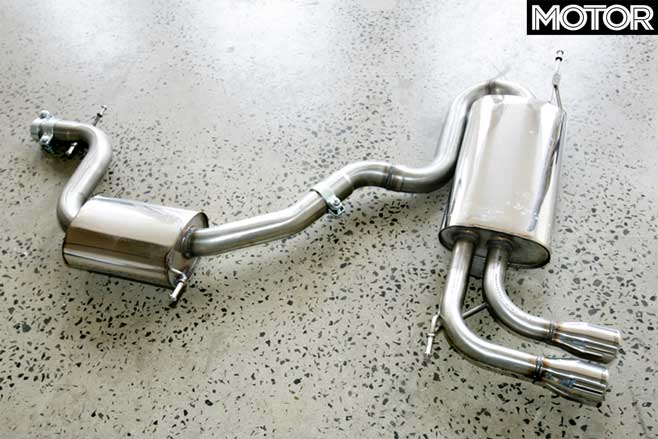
None of this stuff comes cheap. You’re looking at $1750 for the software upgrade, a Miltek cat-back exhaust is $2100 ($3450 including cat and downpipe) and the Eibach springs are $590. A hi-flow BMC airfilter adds $175 and a BMC Carbon Dynamic airbox is $750. All prices are plus fitting, which can be done through agents in all states.
The ECU upgrade, if the car is not brought to the Richmond workshop, will mean a car out of commission for a few days while its ECU is sent to QSZ for reprogramming.
QSZ operator Simon Ansell has been coaxing the best out of Euro cars for 11 years and he explains the very simple tuning process: “For the chip tuning we need either the control unit or the car. The equipment we’ve got is too valuable to send around, so we get people to send their control units down to us. We just plug our bench harness onto the control unit and write the new software into it, there’s no soldering on the Bosch ME9 control unit.”
The actual time to hook up and download is about two hours. Simon’s drive car is a GTI with the reprogrammed ECU upgrade and Miltek cat-back exhaust – so it’s in 190kW/400Nm trim. A problem with some highly-strung turbo cars is the sharp contrast between off-boost and boost – it can feel as sudden as turning on a light.
You can usually drive around it when you’re up it, but it sucks when you’re just cruising along trying to maintain speed or want a precise squirt of acceleration rather than an unwieldy bucketload of it. The QSZ GTI is nothing like that; its power delivery is instead very linear from the get-go.
Not much happens below 1500rpm, but at around these revs the turbo starts discreetly lobbying for more grunt. You’d almost think it’s the standard GTI, but by 2000rpm, the firm, unyielding push in the back is way stronger than any stock GTI and feels like it’s more than the 190kW/400Nm claimed.
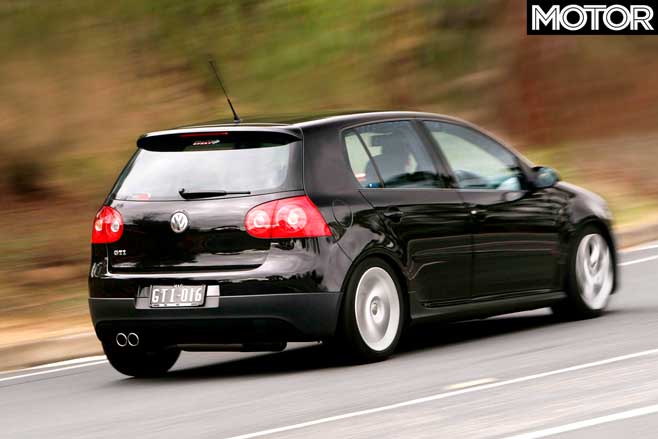
First gear seems even shorter with the new ECU mapping than the standard GTI – it accelerates so hard that you can never seem to snick second quick enough when you’re giving it the welly. Short shifting is the way to go with this engine; it’s giving its best in the 1500-5000rpm band. And there’s no point reaching for the 6500rpm power peak; this engine is happiest in the meat of its torque curve.
On a grippy surface in a straight line – once you’ve executed a neat launch, which is not always easy in this thing – the GTI simply gets up and hammers though the gears, but if you’re punting along in the twisties, the weight transfer – even though you’re powering out of a corner – seems to cause traction problems. As the inside wheel breaks loose the traction control jumps in and slows progress.
The standard Contis fitted to the QSZ car were well up to the job, helping to mask the front-drive chassis’ inherent push, but no tyre could hold off wheelspin when this engine has just express posted 400Nm its way. Best to switch off the TC and use judicious right foot applications to dial out wheelspin. In the wet, traction is going to be an issue, but careful use of the throttle, with the car’s stability and TC, will keep the GTI manageable.
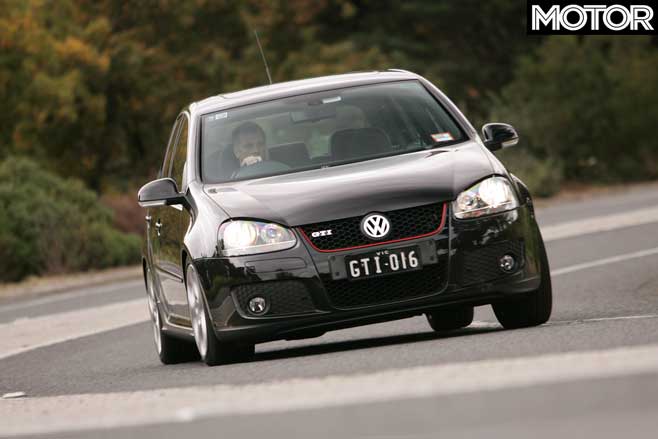
The GTI has the Eibach Pro Kit coils installed, which drop it down 20mm from standard ride height. It allows a nice flat cornering stance and with enough compliance so that the GTI doesn’t thump through bumps. When you’re up it for the rent on poor roads the standard dampers are not talking quite the same language as the springs, though – hit some undulating bumps mid-corner and the suspension takes a few moments to settle again. A matched set of shocks would help.
QSZ’s performance upgrades really give the GTI a whole new character and, traction permitting, it’ll show a clean pair of heels much more fancied traffic light opposition.
Sign-up here for your free weekly MOTOR report
Sometimes you’ll need a jump start when your car battery is too flat to turn the car’s starter motor, so you can get it home or to a repairer to check the health of the battery.
It’s very handy if you have your own set of jumper cables as it makes finding someone to help you much easier. These should have inbuilt surge protection to protect the electronics of both yours and the donor car.
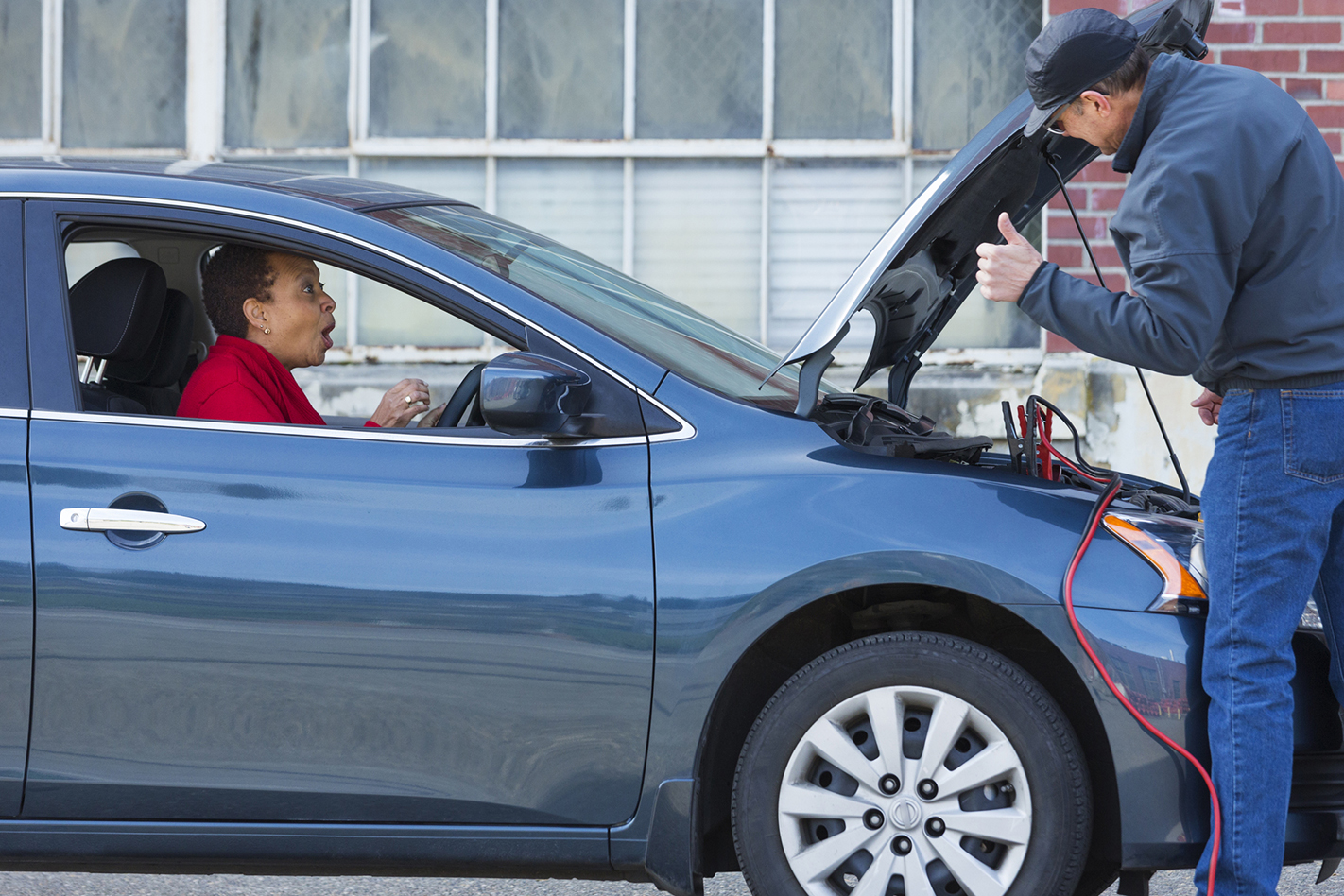
Even with surge protection some modern cars, especially luxury vehicles, aren’t suitable for jump starting if they’re brimming with electronics or have a sensitive engine control unit. Check the manual before having your car jump started or helping someone else. If in doubt call your roadside assistance service to start the car for you as the mechanic will have suitable equipment.
If your car is less sophisticated, or you simply have no choice but to jump start, it’s important to do it properly. Even if you have done it before its worth going through the following steps as there may be some things you’ve been doing wrong that could cause considerable damage, particularly to newer cars.
Before attempting to jump-start the car …
- If the dead car is in a garage, roll it outside if possible as you don’t want the fumes of cars running their engines in an enclosed space
- Turn off everything that drains power such as lights and radio
- Make sure the ignition switch of both vehicles is off and not on accessories, or ‘ACC’
- Position the cars so the batteries are close together but the cars aren’t touching
- Make sure the car batteries are the same voltage. Almost all cars use a 12V system
- Ensure the cars have their handbrakes on and are in Park (auto) or not in gear if manual
- Remove the caps off the batteries (not applicable for maintenance-free batteries)
- Clean any powdery residue off the battery terminals to ensure a good connection.
How to connect the jumper leads
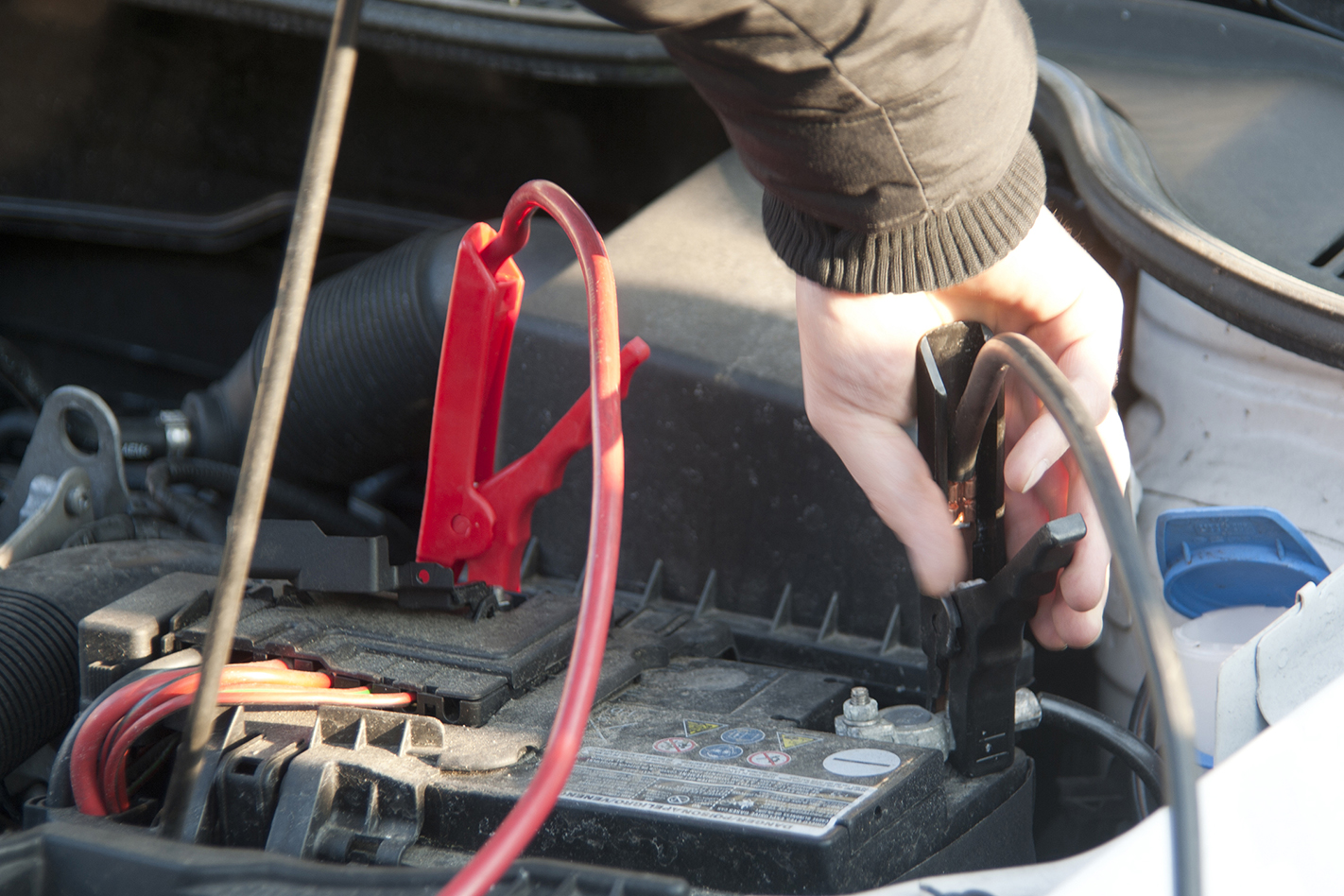
- Connect one end of the red coloured jumper lead to the positive (+) terminal of the flat battery and the other end to the positive (+) terminal of the donor car’s battery
- Connect one end of the black jumper lead to the negative (-) terminal of the donor car’s charged battery and the other end of the black jumper lead to a good earth point – such as a non-painted part of the engine block or car’s frame, making sure it is safely away from moving parts such as the fan belt. DO NOT attach this end of the black cable to the dead battery as it could cause a dangerous spark.
Now it’s time to jump start the car
- Make sure everyone is clear of both engines and start the donor car
- Now, start the dead car
- If it turns over and fires up, switch on the headlights to help absorb any voltage spike and let it run for a few minutes before driving away
- If it doesn’t start, let the battery rest for a couple of minutes and try again. If that doesn’t work check your jumper cable connections
- If the car has started and has run for a few minutes, disconnect the jumper cable in the reverse order that you connected them, starting with the negative on the recipient car. You want the engine to keep running so make sure it’s safe
- Thank the person who helped start your car
- Be sure to get the battery checked and charged using a multi-stage charger as the car’s alternator won’t charge your battery back to full strength
Let’s get one thing clear straight off the bat. If you want a Porsche Cayman GT4, get one. You won’t be disappointed, as editor Inwood found out in Scotland last year.
It’s a five-star car for a reason. The mid-engined, rear-wheel-drive layout affords impeccable handling, while the howling 4.0-litre flat-six offer up 309kW and 420Nm.
It’s all very engaging, especially the tactile six-speed manual and three handily placed pedals. It’s a raw experience, but then, that’s what you want it to be. It’s a race car for the road. Corners mean more than its 0-100km/h time of 4.4 seconds. But what else could you get for $207,000 new or used?
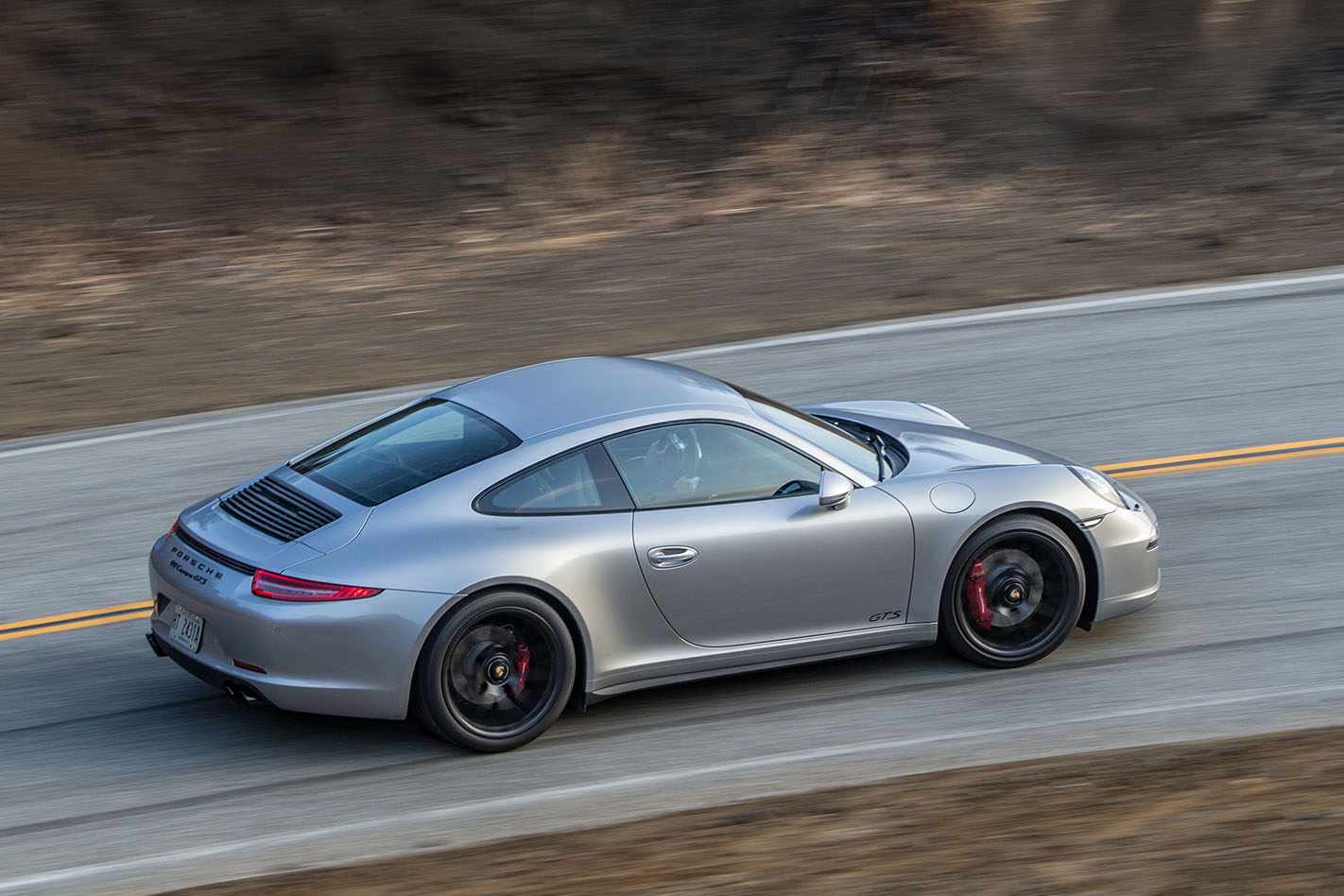
991 PORSCHE 911 GTS (2014-2016)
Yes, of course there has to be a 911 in this mix. A brand-spanking 992 Carrera is just out of reach, but a second-hand atmo 991 GTS isn’t. Full-blown GT products aside, the 3.8-litre flat six (316kW at 7500rpm and 440Nm at 5750rpm) in the GTS stands among the pinnacle of naturally aspirated Carreras.
The ground-breaking (at the time), but slightly controversial seven-speed manual is available, as is the rapid-fire seven-speed PDK which enables 0-100km/h to occur in 4.0 seconds.
You could find a GT3 of the 996 variety for less than this kitty allows – hopping around the $140,000 mark – but a good quality 997 GT3 is a stretch and a 991 GT3 entirely out of the ballpark.
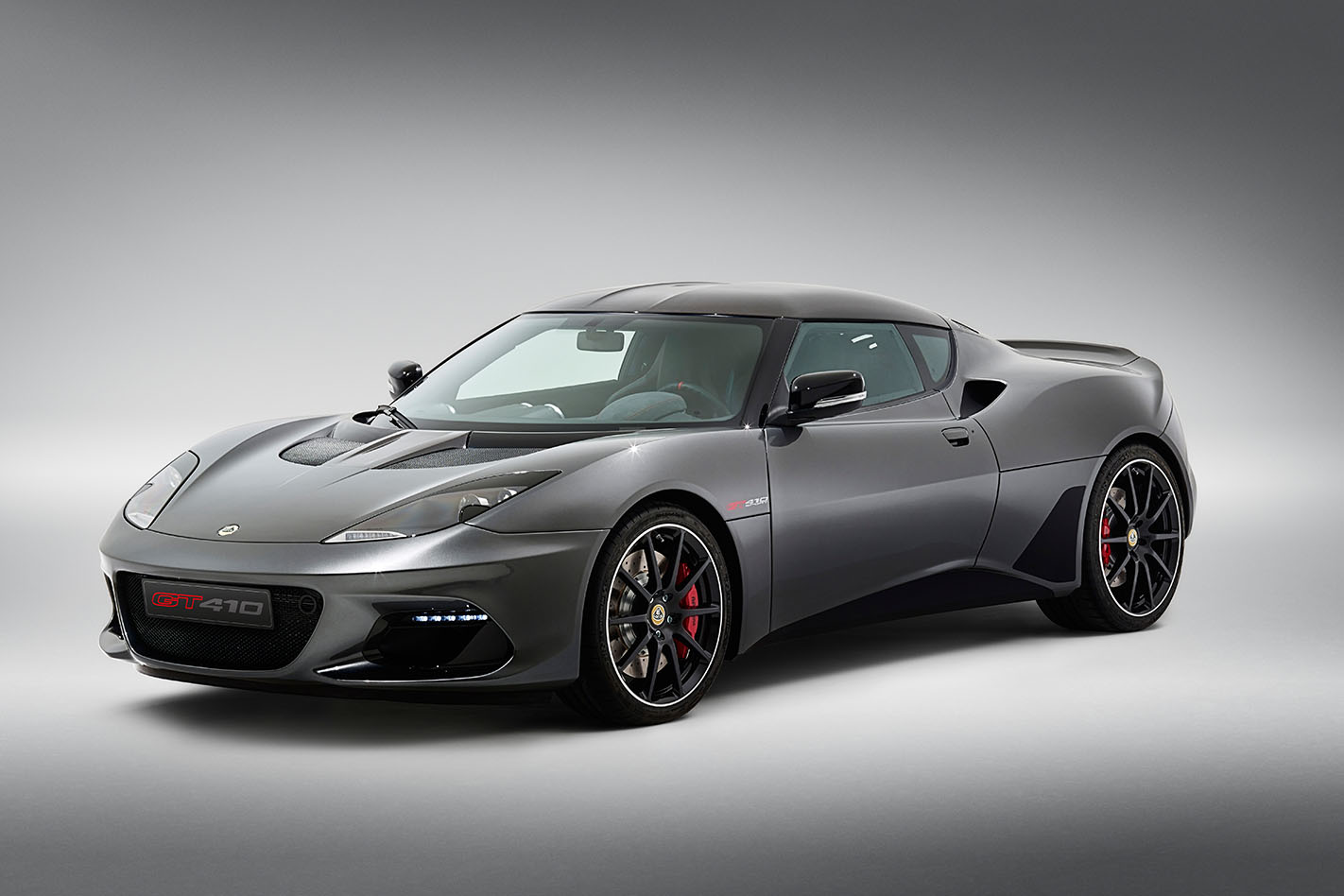
LOTUS EVORA GT 410 SPORT (2020)
If you’re talking mid-engined, weight-conscious, rear-drive coupes, then Lotus springs to mind. However, these days the English brand doesn’t just built lithe chassis and engines with ‘enough’ grunt.
Instead, the Evora GT 410 Sport gains an angry supercharged V6 with 306kW and 410Nm (thanks, in part, to Toyota). Carbonfibre is splashed around generously, and while the number on the scale isn’t as small as you’d think, 1361kg isn’t exactly raising Jenny Craig alarm bells.
Grippy Michelin Pilot Sport Cup 2 tyres, rear drive and a Torsen limited-slip diff equal $194,990-worth of fun. There’s even spare change in the budget for some track days to boot.
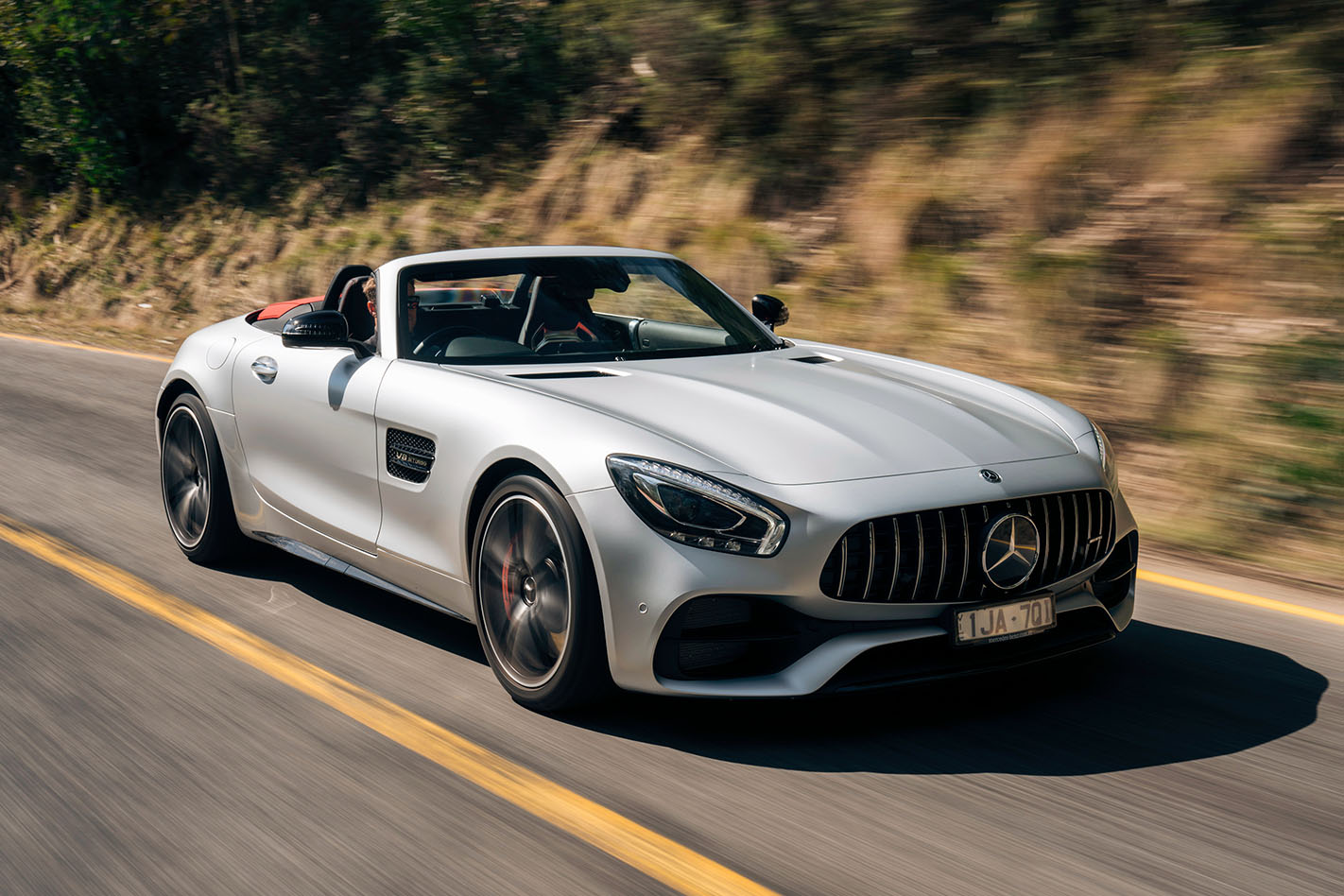
MERCEDES-AMG GT (2014-present)
Okay, the AMG GT isn’t quite as cool as the SLS it replaced or as focused as the Cayman GT4, but it’s still endowed with a very long bonnet and a raging 4.0-litre twin-turbo bent-eight.
It’s not short on shove, either, with the V8 pumping out 384kW/670Nm in S guise and 410kW/680Nm for the C. Both can be had second-hand for around the $200,000 mark, while the latter also comes in a Roadster version. You’ll get to 100km/h in 4.0 seconds or less, and the downright dirty soundtrack is addictive.
It’s full of drama and the cabin-back layout means you sit virtually over the rear wheels, too. It’s a very different flavour to the GT4, but one that can be as enticing in its own way.
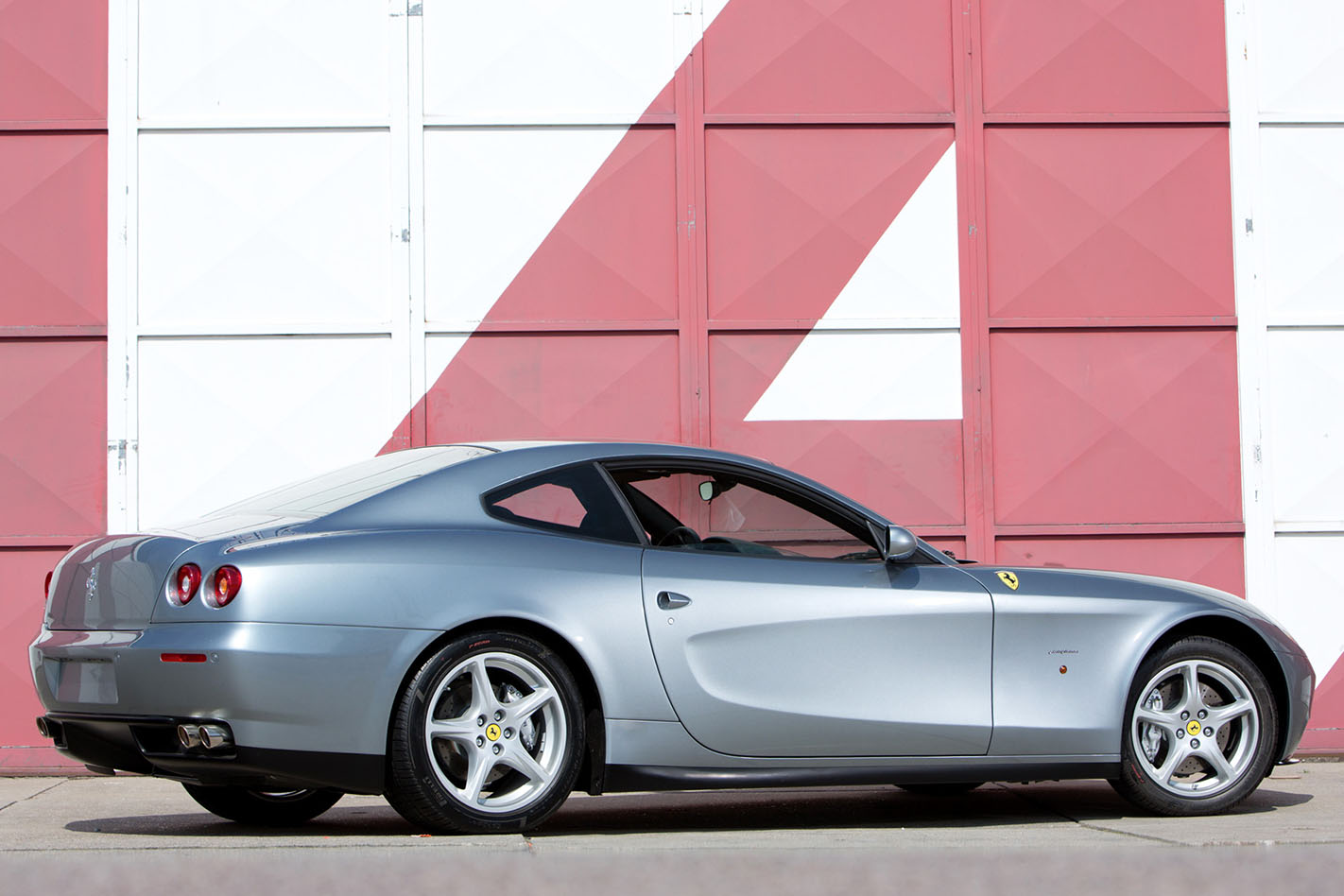
FERRARI 612 SCAGLIETTI (2004-2011)
An often forgotten Ferrari, and one that juxtaposes the GT4’s hardcore nature with grand-touring ability. Although it, too, has an epic symphony, yet it’s vastly different thanks to the screaming 5.7-litre V12 nestled within the front axle.
It produces 397kW at a rather lofty (for a big V12) 7250rpm and generates 588Nm at 5250rpm. The 1850kg cruiser reaches 100km/h in 4.0 seconds and will go on to a top speed of 320km/h.
A refined version of the six-speed automated manual gearbox, or F1 transmission as it was coined, made its way into the 612, while the chassis formed the basis for the 599 GTB. However, be prepared for a steep maintenance bill.
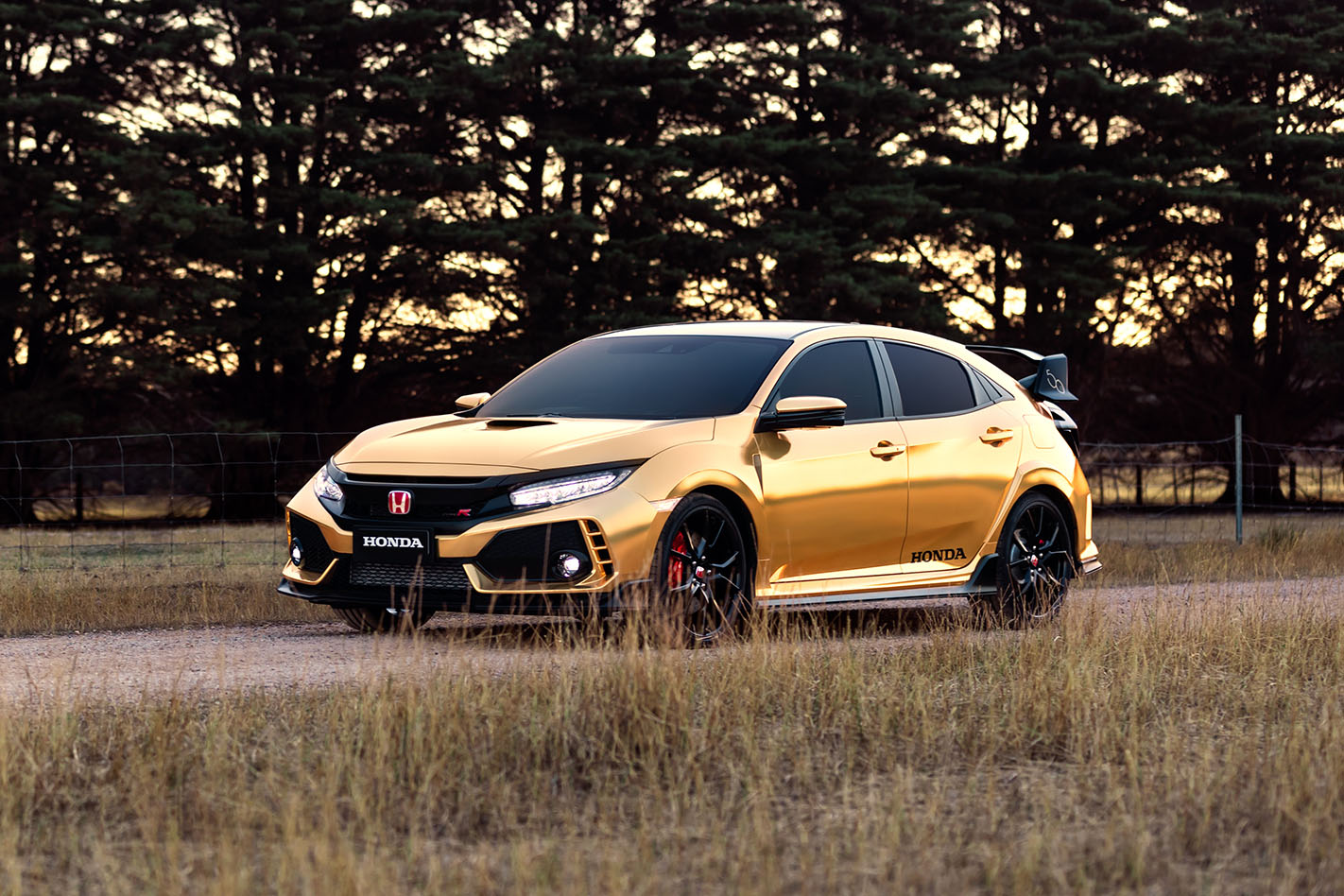
CHEVROLET CAMARO 2SS; HONDA CIVIC TYPE R; VOLVO XC60 (2020)
Here come the curve balls. Or triple treats, you could say. You could easily swap in a Ford Mustang GT, but the $85,990 Camaro 2SS covers the V8 muscle quotient well. Especially with 339kW/617Nm to play with at the rears and a six-speed manual.
Then, in the middle of the garage, is the Honda Civic Type R. At $51,900, this controversially styled hot hatch is virtually without dynamic flaws. And its 2.0-litre 228kW/400Nm four-cylinder turbo proves the Japanese manufacturer well and truly still knows what it is doing.
With cruising and cornering taken care of, the Wheels Car of the Year-winning Volvo XC60 is there to take care of family duties. In $71,990 T5 Inscription guise it is classy enough for the school run, comfortable for holiday road trips and peppy with its 187kW/350Nm boosted four-pot.
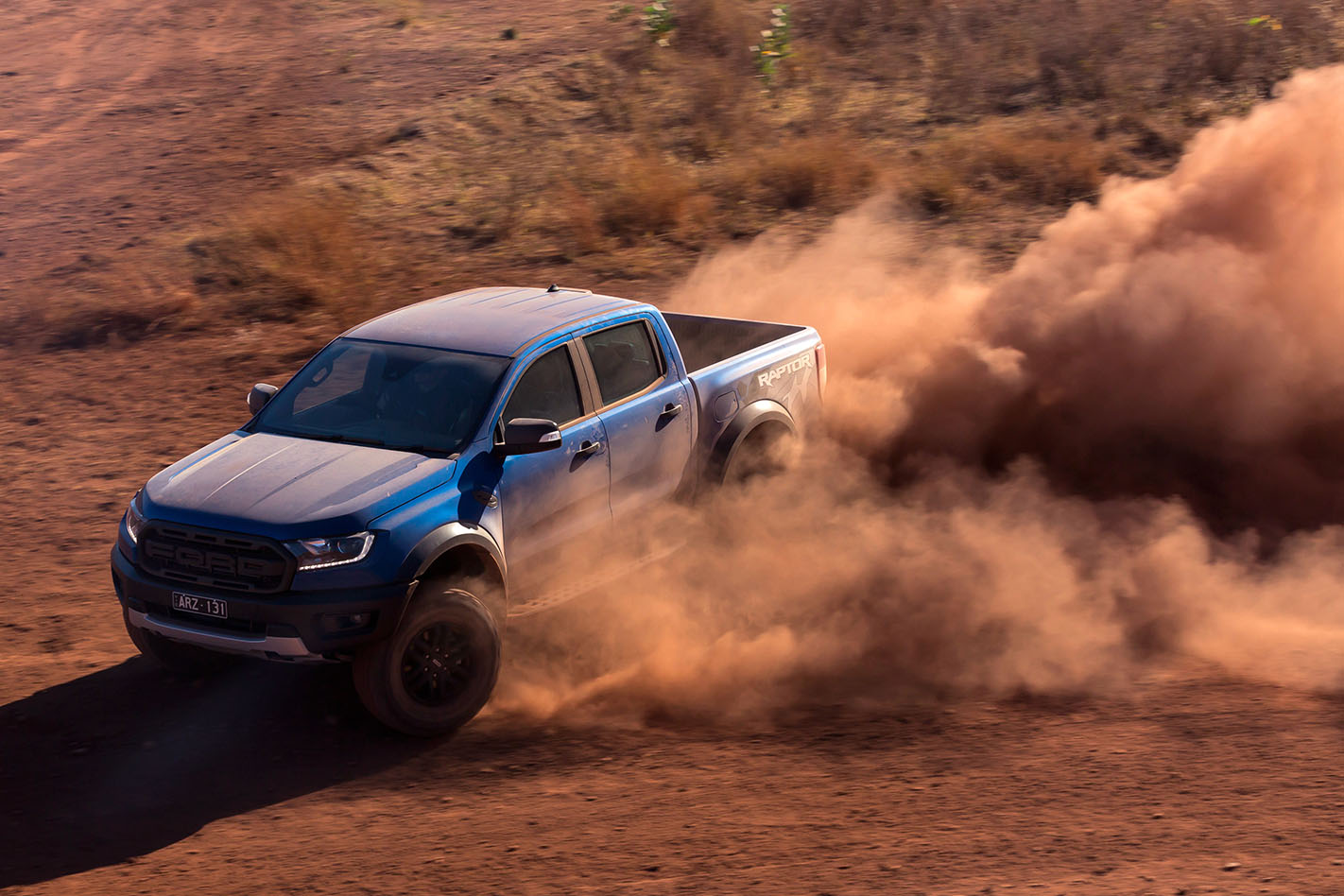
FORD FIESTA ST; AUDI S4 AVANT; FORD RANGER RAPTOR (2020)
An ultimate three-car garage? Not quite… but it’s a bloody good one. Granted, this one’s a little cheeky because the $31,990 Ford Fiesta ST is still not officially on sale down under as yet (although we’ve driven it overseas). However, it will be very soon – and going by our overseas impressions, we want the 147kW/290Nm hot hatch in our garage.
The $102,900 Audi S4 Avant has a dual purpose of being the family wagon and the weekend apex-carver – let’s just hope no-one gets car sick, including the dog. The delicious 260kW/500Nm turbo V6 will also have you at 100km/h in just 4.9 seconds.
And of course, the Ranger Raptor can’t be forgotten for its mud-slinging, bush-bashing ability for $76,490. It’s a riot.
- Last models to arrive in the country later this year
- SUV demand resulted in well-rounded sedan being culled
- Fiesta ST and Focus only passenger cars left in Ford’s local line-up
But that’s what Ford UK once had with its huge-selling, segment-dominating mid-sizer: the motorist known as Mondeo Man.
It was a catch-all created in Britain as a neat label for the literally millions of sales reps and middle managers who found themselves in a company-supplied vehicle – yep, mostly a diesel Mondeo – with which to shuttle themselves up, down and across the United Kingdom.
It wasn’t a title to which many aspired, but it did highlight the no-nonsense, hard-working, stoic qualities of its driver; characteristics shared by the car itself.
Australians never developed the same love affair with Mondeo – we’ve always been defined more by Hilux Tradie Bloke – but the still merit-rich Ford did leave its mark on the mid-size segment.
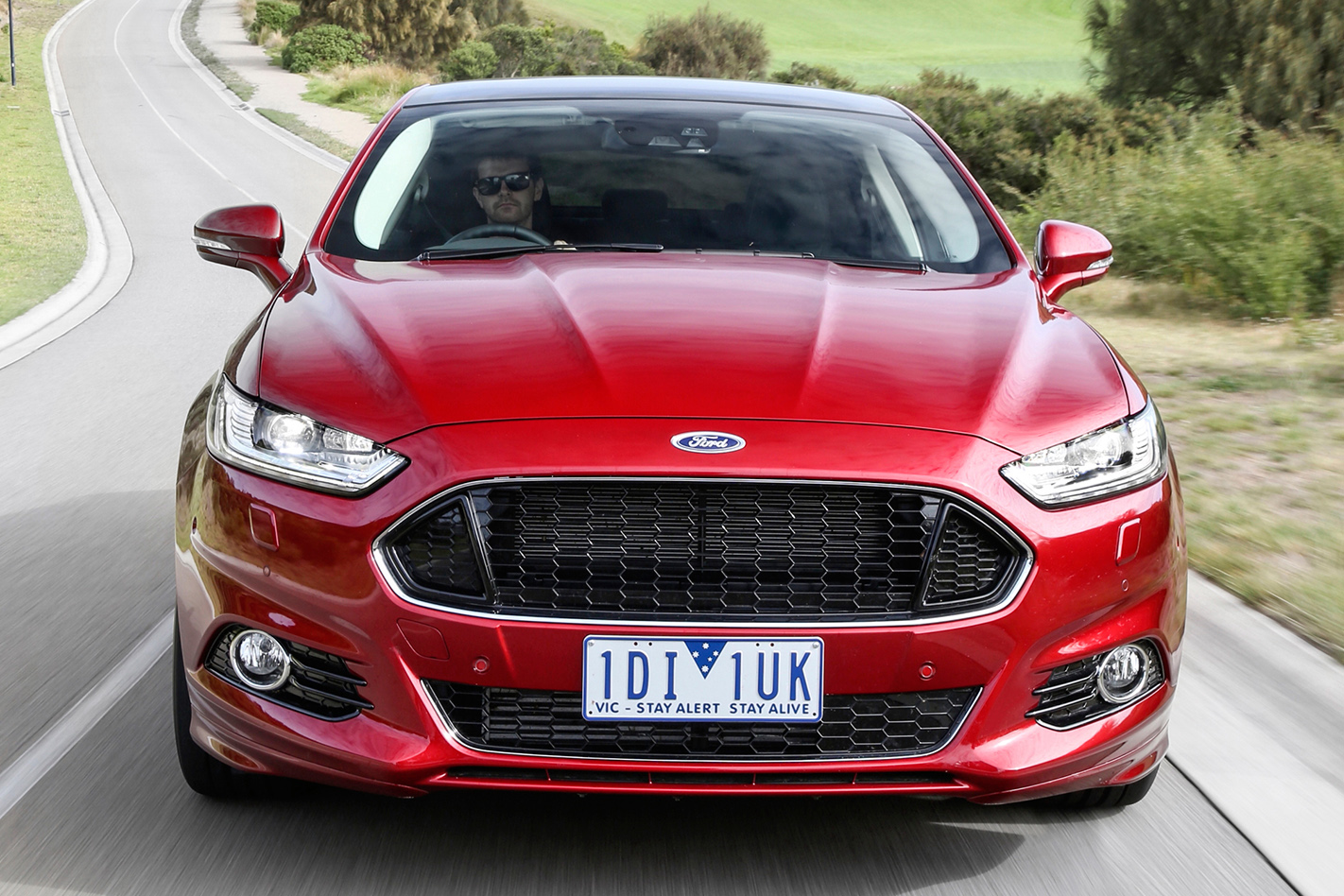
It was first launched in 1996, dropped in 2001, then reinstated in 2007, ultimately spanning four generations. It consistently rated highly in Wheels comparos, lauded for its well-considered chassis tune, fine steering, and ultra-roomy packaging. But now, Mondeo is set to go the way of Holdens and dinner parties in a corona world. Yep, Mondeo is about to cop a bullet.
Actually, let’s call it a progressive culling: as of the start of this year, Ford elected to offer the Mondeo in base Ambiente trim only, effectively continuing it (upgraded with AEB and new 17-inch alloys) for fleet markets, and thus dropping the mid-spec Trend and top-spec Titanium. But after the final batch arrives later this year (month not disclosed by Ford Australia), the privacy screen will go up as the venerable mid-sizer finally gets the permanent-snooze pellet between the eyeballs.
The axing is no great surprise, given the market trend. “Changing customer preferences including an overall shift towards SUVs” is the official explanation from Ford Australia communications boss Matt Moran.
So yes, the segment in which the Mondeo competes is shrinking. Sales of mid-sizers – Mondeo, Camry, and Volkswagen Passat, namely – were down nearly 10 percent in 2019 against the year before, making their decline slightly sharper than that of the wider Australian car market.
And of those, it was only the resilience of the Camry that made the stats looks less severe than they otherwise would. Mondeo, to put it bluntly, has been tanking for over half a decade.
The stripping of Mondeo from Ford’s Australian line-up will leave the Focus and Fiesta ST as the Blue Oval’s only passenger cars in the current line-up. Thankfully for Ford, ‘Ranger Man’ continues to prop up the local operation.
A plan for General Motors to build much-needed medical equipment were almost scuppered at the last minute, with the US government baulking at the billion-dollar bill from one of America’s biggest carmakers to build ventilators for COVID-19 patients.
Despite GM going public last week with its plans to partner with medical equipment maker Ventec to build 80,000 ventilators by offering its factories and workers, President Donald Trump – who only a day earlier had praised companies including GM for stepping up to build health equipment – accused the carmaker of “wasting time” and trying to “rip off” the government, after projections that the program could cost up to US$1.5 billion.

Trump (above at a conference on Friday) also scoffed at the notion that the United States – now the world’s COVID-19 hot spot with more than 100,000 confirmed cases – needed so many ventilators, which are used to improve the oxygen flow to moderately ill patients to keep them from requiring more invasive machinery.
A US Conference of Mayors last week was told that the country would need more than 50 million face masks and gowns, 7.9 million test kits and 139,000 ventilators to ride out the virus attack.
There are already stories of US hospitals who are attempting to use a single ventilator for multiple patients, while protective gear for health workers and testing kits are in chronically short supply.
But in a stunning backflip just 20 hours later, Trump then commanded GM to continue on with the project by enacting the Defense Production Act, declaring that 100,000 ventilators would be built “in 100 days”.… even though GM had already committed to the project.

GM’s Flint plant lies idle
A GM spokesperson said that the project, known as Project V, was moving quickly, with the company looking at converting a transmission plant in Indiana to build the ventilators, which could cost a projected $US18,000 each.
The US car industry is at a standstill in the wake of the coronavirus crisis.
Reckon you’ve spent more hours behind virtual wheels than inside a real-life car? Consider yourself a seasoned video game driver? You’ve probably got a reasonable handle on what cars tend to pop up the most in car games, then.
However, the latest list compiled by the Internet Game Cars Database (yep, astonishingly it exists) suggests that your number one guess might not be on the money. After all, it’s a little left-of-field.
Granted, the IGCD is counting cars that appear in games of all types, not just racing titles, so your guesses of ‘Ferrari F40’ or ‘Porsche 911’ may be close, but they won’t get you that cigar. They also counted in-game cars that aren’t explicitly branded as their real-world inspiration, but are clearly styled after them.
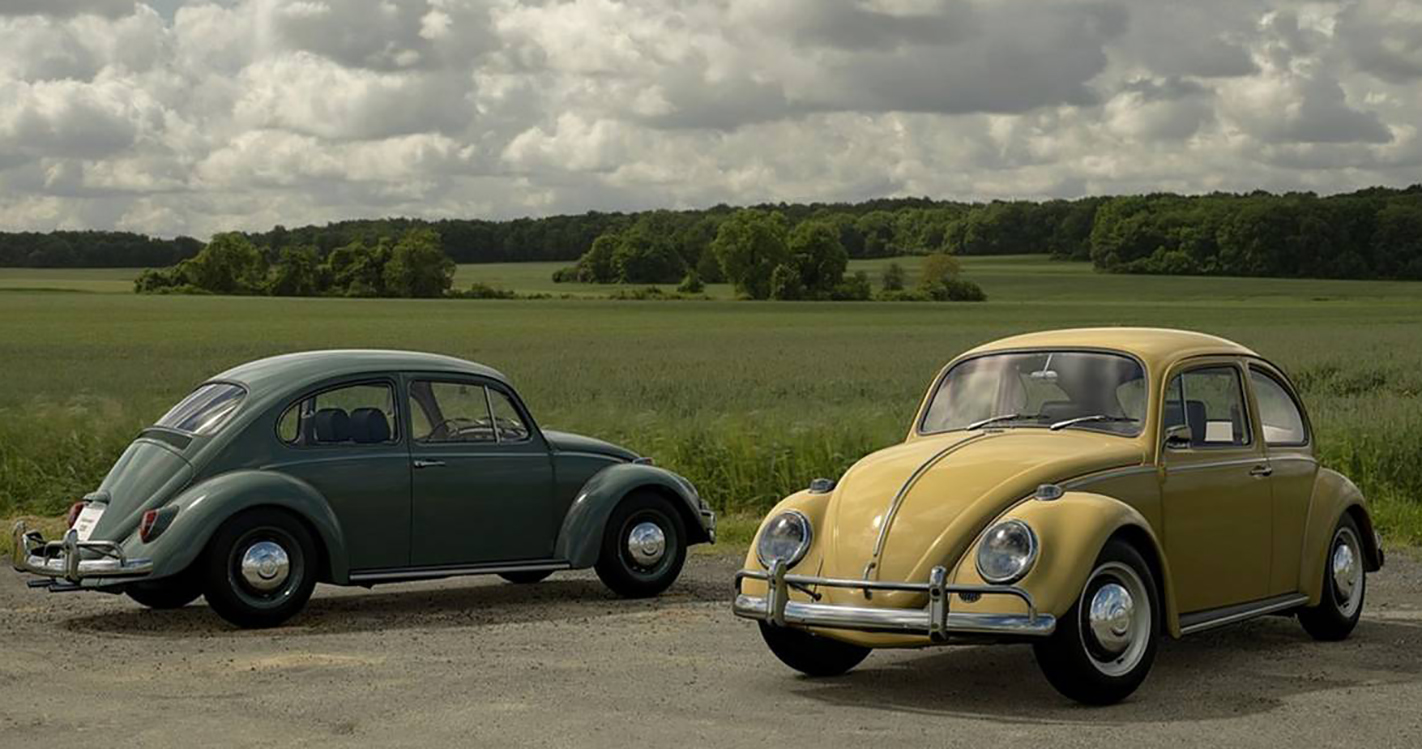
We’ll cut to the chase: the most prolific car in the video game world is the humble Volkswagen Beetle. It appears in a whopping 337 games, in everything from Grand Theft Auto to Gran Turismo.
Trailing some 139 appearances behind is the first-generation Chevrolet Camaro, in second place. Appearing in 198 titles, and in real-life dealerships in late-1966; the mid-60s pony car’s virtual appeal spans from your favourite ubiquitous racing titles to more unexpected games such as Far Cry 5 and The Sims.
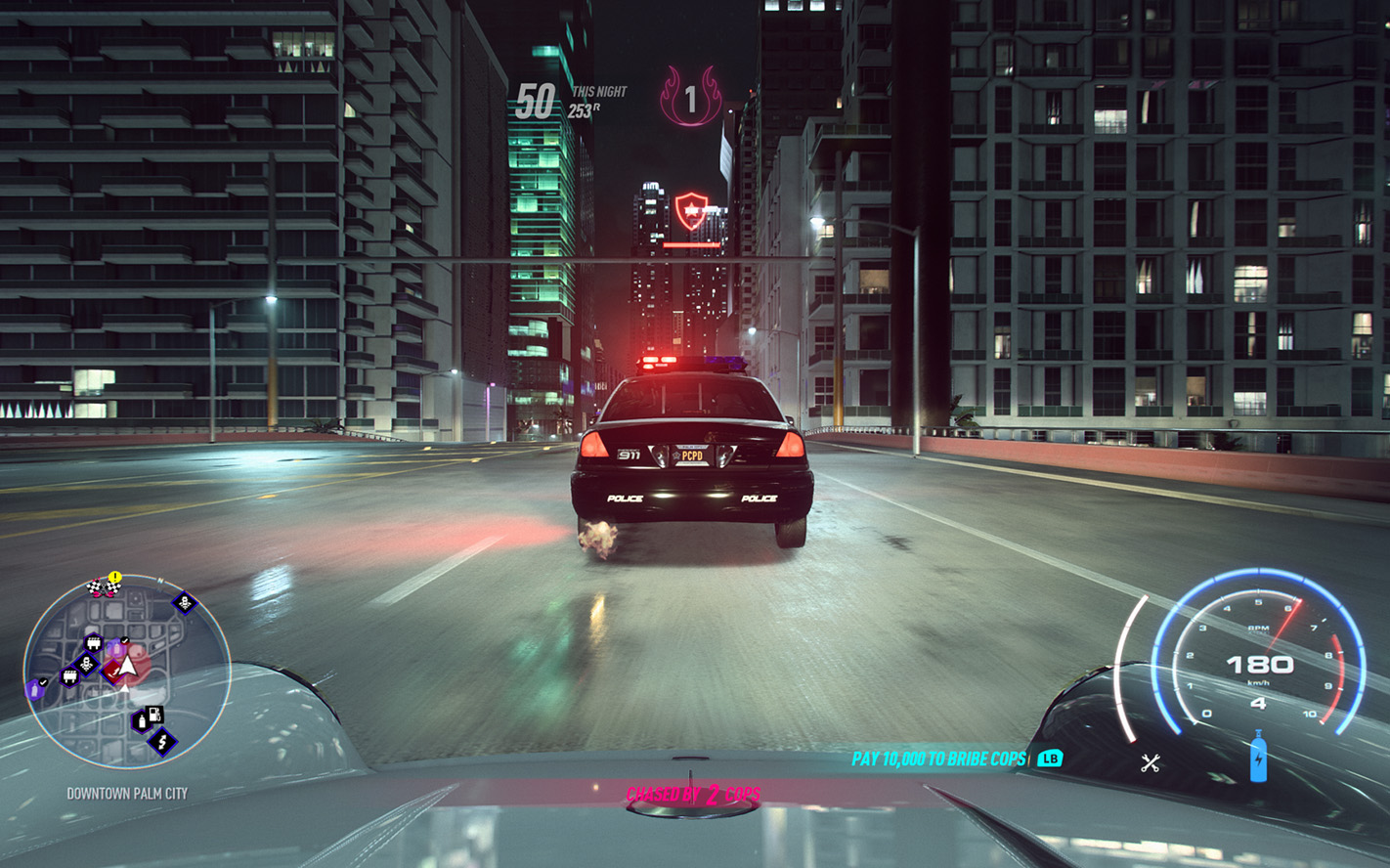
In third place, is the Ford Crown Victoria; which surprised us initially until we remembered that most video games that don’t involve you driving around in circles often involve their fair share of law-breaking. The archetypical American patrol car appears in 179 games, which span from a bevy of Need for Speed games to post-apocalyptic titles such as The Last of Us.
A similarly popular law enforcement vehicle makes the list at number four. Appearing in 156 games, and usually with a SWAT team jumping out of it, is the Chevrolet Step Van, as seen in Call of Duty and the old Twisted Metal series.
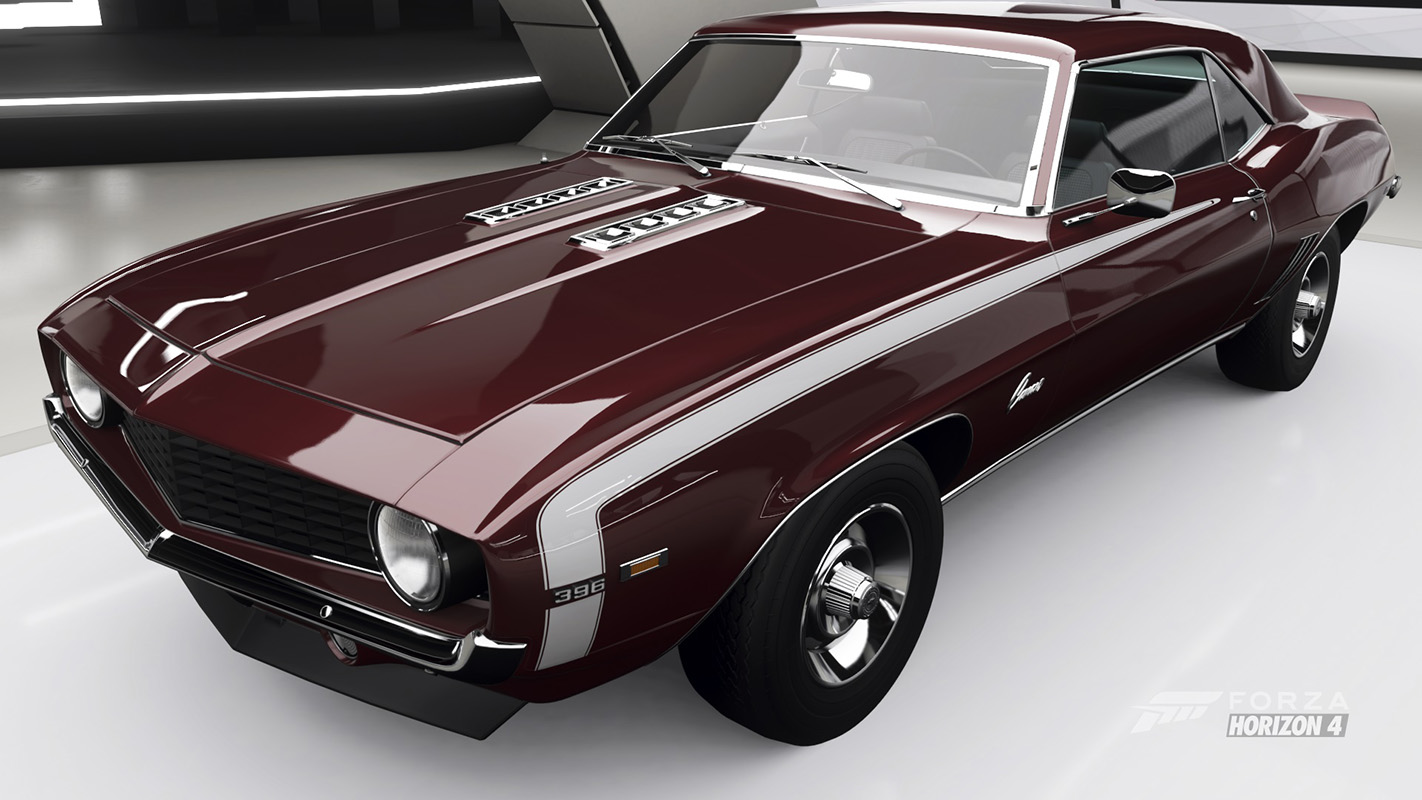
See below for the ten most prolific cars and marques.
Ten Most Common Cars in Video Games:
- Volkswagen Beetle – 337 games
- Chevrolet Camaro first-generation – 198 games
- Ford Crown Victoria Sedan – 179 games
- Chevrolet Step Van – 156 games
- 2002 Ferrari Enzo – 119 games
- Toyota Supra A80- 91 games
- Toyota Hilux – 88 games
- Ford E-Series Ambulance – 86 games
- 1987 Ferrari F40 – 84 games
- 1995 Ferrari F50 – 83 games
Chevrolet trails behind, appearing in 6,242 games; followed by Toyota (4,299) and Nissan (4,264). Ferrari scrapes into the top ten trailing BMW by a long way. Surprised?
Ten Most Common Car Brands in Video Games:
- Ford – 8,707 games
- Chevrolet – 6,242 games
- Toyota – 4,299 games
- Nissan – 4,264 games
- Honda – 3,141 games
- Dodge – 2,933 games
- Mercedes-Benz – 2,739 games
- Volkswagen – 2,640 games
- BMW – 2,548 games
- Ferrari – 2,203 games
Station wagons… not terribly sexy, are they? I mean, you’re not about to see James Bond leap out of a sensible five-door any time soon, are you?
This review was originally published in MOTOR’s October 2006 issue
Exactly, but I have to admit a sneaking admiration for conventional wagons. Not the least justification for which is the fact that they give people who more need space an alternative to the default setting that is a soft-roader. (And you really don’t want to know what I think about most of those.) And hey, beats there a heart so cold as does not get wood even thinking about an Audi RS4 wagon? Precisely.
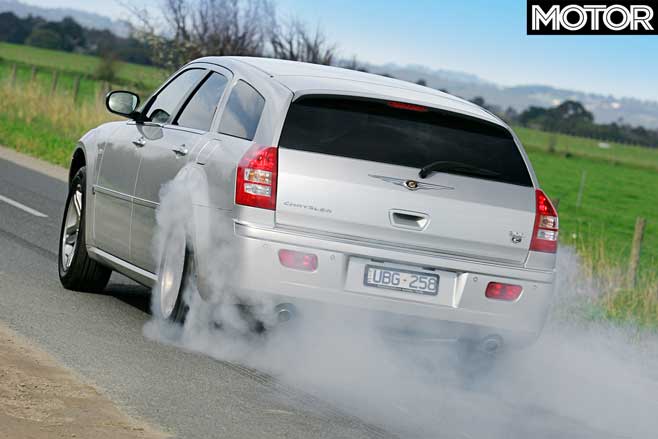
Flip side, of course, is that wagons just don’t look sexy and, by the time you’ve added the extra glasshouse to a normal sedan, the weight distribution is usually ballsed up, too.
So, just to prove that you don’t know everything about station-wagons, allow me to introduce the Chrysler 300C Touring.
Okay, maybe ‘sexy’ is the wrong word, but from any angle, there’s no getting around the fact that the Touring has every last skerrick of attitude possessed by its sedan bro. Which is lots.
The roofline is so low that the tailgate needs to be hinged over the rear doors to allow a big enough opening. And if you think those rear-side windows look small from outside, you should see the slits they represent from within. You’re gonna want a short-arse dog for this one.
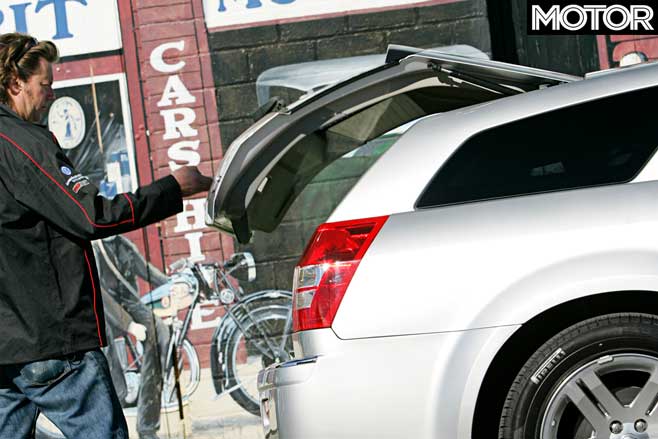
And as for weight distribution; even though it sits on the sedan’s wheelbase, the 53kg added to the sedan’s 1825kg is located mostly between the axles and is such a small percentage of the total weight-bridge ticket, it really ceases to matter.
So that’s the problem stuff out of the way, then. But what’s the 300C Touring really like?
It’s a bit of a mixed bag, but the downsides are all down to the thing’s American heritage rather than any engineering shortfalls.
Stuff like the ordinary interior plastics make you wonder about it all a bit, but most of what you see is okay. Less wonderful are the plastic bins under the luggage area floor. Nice idea when you’re toting wet bathers and such, but the fit and finish is worse than poor and just doesn’t support the theory that the 300C is a premium product.
But get up the other end and the 5.7-litre Hemi really starts clawing back ground.
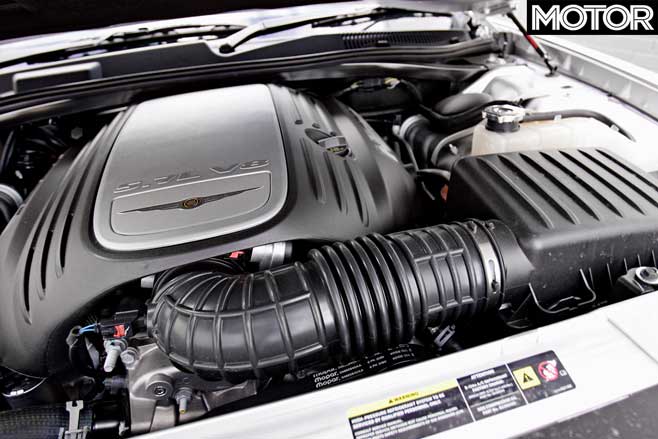
Having just sampled the SRT-8 version of the big Mopar, I was wondering if maybe the cooking V8 with its 250kW and 525Nm might feel a bit limp. I needn’t have worried.
The five-speed auto needs a second or two to think about things before sending drive to the rear axle, but when it does, it all happens pretty impressively.
The engine is smooth and flexible in the mid-range and feels like the full 5.7 litres. The variable displacement thing where the bent-eight can drop four cylinders to save juice works imperceptibly and its very muted exhaust note lacks all the blood and guts you’d expect with a big-inch V8 experience.
At speed, the Touring still feels heavy in the manner of all 300Cs, but the wagon also feels like it’s packing a bit more unsprung weight than the sedan versions.
Those huge wheels and tyres (225/60 on 18-inch rims) probably don’t help with that impression but that doesn’t alter the fact that the ride can be a bit jouncy over small amplitude bumps. Strike such a bump-fest with some steering lock applied, and the Touring can start to skip around a bit. It never goes into a tankslapper, but it does feel odd.
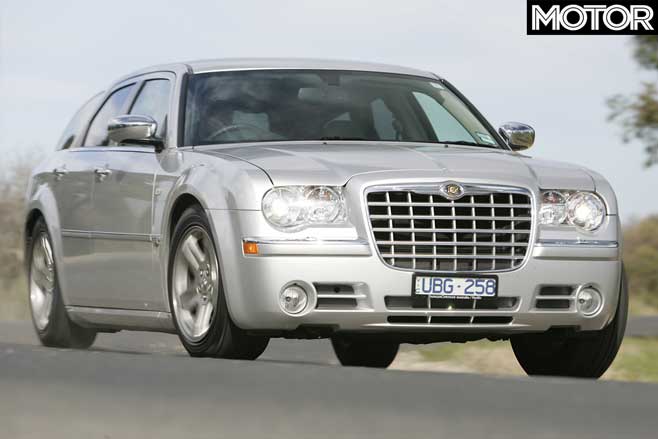
The extra kilos add a claimed half-second to the rest to 100km/h dash with Chrysler quoting 7.3 seconds against the sedan’s 6.8 seconds. Doesn’t feel like there’s that much difference, to be honest.
But it’s not just the car itself that’s heavier, the pricetag is also bulkier. While the 5.7 sedan costs $59,990, the Touring is all yours for $62,990 – though the sunroof is a $2430 extra.
That’s still pretty cheap, of course, considering the hardware you’re buying, but it will make some folks wonder what the whole concept is all about. I mean, you can’t buy a station-wagon version of the Holden Caprice or Ford LTD, can you?
Which begs the question, would anybody want one?
And regardless of what you think about wagons generally, you really need to drive the 300C Touring before you answer that last question.
2006 CHRYSLER 300C TOURING SPECS Engine: 5.7-litre dohc 24-valve V8 Power/Weight: 250kW/1878kg Drive: rear-wheel Price: $62,990 ($2430 for sunroof)
