
The Briggs Automotive Company, or more popularly known as BAC, will be wrapping up production of the first-generation single-seater Mono this year and is commemorating it with a special celebratory edition known as the Mono One.
Just three examples of the Mono One will be built, each will be based on the standard 227kW Mono and painted in one of the company’s three corporate colours, white, black, and red.
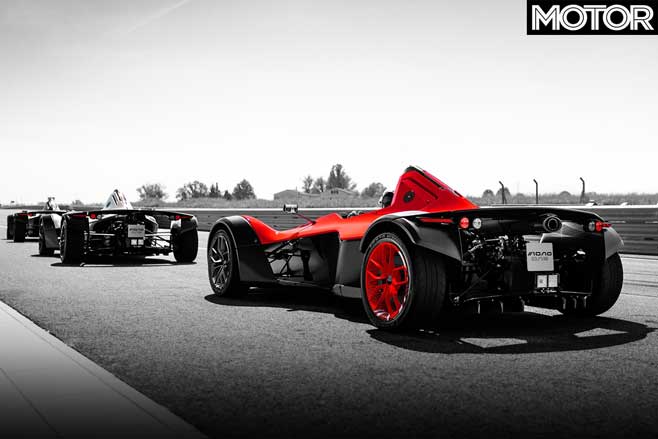
Priced at £158,950 (AUD$306k), all three Mono Ones will feature special carbon-hybrid wheels and a commemorative plaque to set each of these minimalist speedsters apart from its standard-issue brethren.
As homage to the robot in Bjork’s 1999 “All is Full of Love” music video, which is said to have inspired the Mono’s futuristic design, each Mono One will be adorned with a “Bjork-robot-inspired logo” on its wing and headrest, along with a unique helmet resplendent in “Bjork-robot-inspired livery”.
“When we first designed the Mono and drew inspiration from Bjork’s video, we did so with a dream of sharing the experience with our close friends and having a lot of fun in the process. Never could we have ever visualised our growth around the world,” said Ian Briggs, co-founder and design director of BAC.
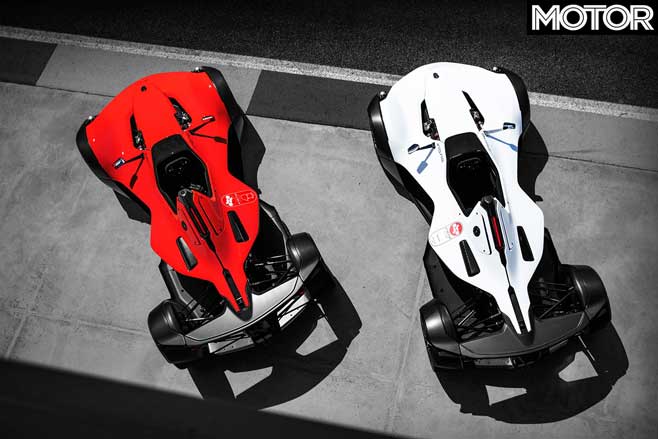
With the Mono One bookending the first-generation Mono’s production, BAC has already confirmed that the second-generation model will be making its debut at next month’s Geneva Motor Show with production slated to start in 2021.
In an unconventional move for a car that is already sold out, Ford has doubled-down on its Ford GT supercar and introduced a raft of upgrades for its last run of cars from 2020 onwards.
Introduced at the 2020 Chicago Auto Show, the headline upgrade on the 2020 Ford GT is a modest 10kW power bump, which raises the 3.5-litre turbocharged V6 engine’s peak power to 492kW, as well as a broader torque band.
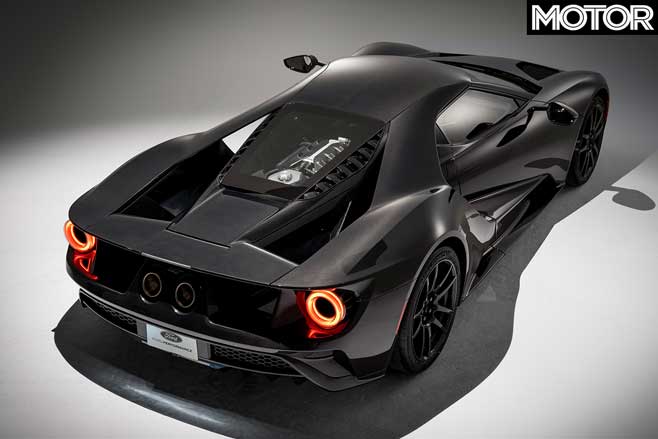
According to Ford, this power gain was achieved through revised engine calibration and new pistons and ignition coils that were developed for the track-only GT MkII.
In addition to that, the GT’s buttress air ducts have been redesigned to increase air flow for the engine by 50 per cent, the turbos are now paired with larger intercoolers, and the optional 4kg-lighter Akrapovič titanium exhaust now comes fitted as standard.
The GT’s suspension system too is tweaked, with the “Track mode” damping setting increased to sharpen handling and tighten the car’s body control when it comes to “high-speed transient sections”.
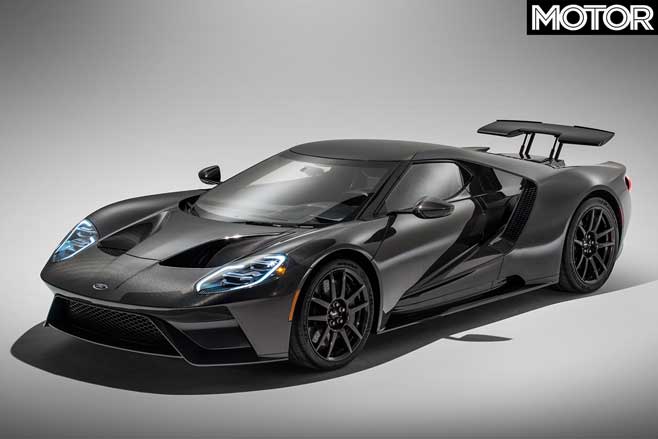
Aside from the mechanical updates, Ford will also be offering the GT in a new “Liquid Carbon” bare carbon-fibre finish option that comes paired with the optional carbon fibre wheels as standard.
The iconic orange and blue Gulf Racing Heritage Livery too gets a minor tweak, with black pin striping and the carbon fibre wheel option now made available for it.
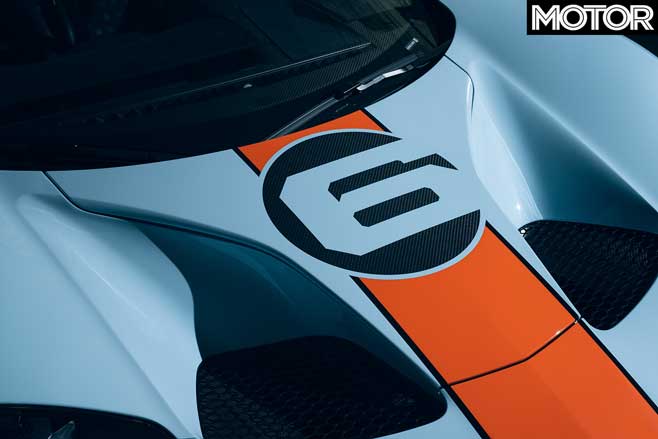
Despite the latest developments, Ford has not mentioned any increase in production numbers for its supercar model, which was first announced in 2015. From an initial production run of 500 models, Ford doubled that figure a year later after receiving over 6500 customer applications.
In late-2018, Ford announced a new and “final owner application process” for an additional 350 new examples of the Ford GT, bringing its final production run tally to 1350.
According to Ford, this final round of customer application was for the 2020 model, with production slated to wind up in 2022.
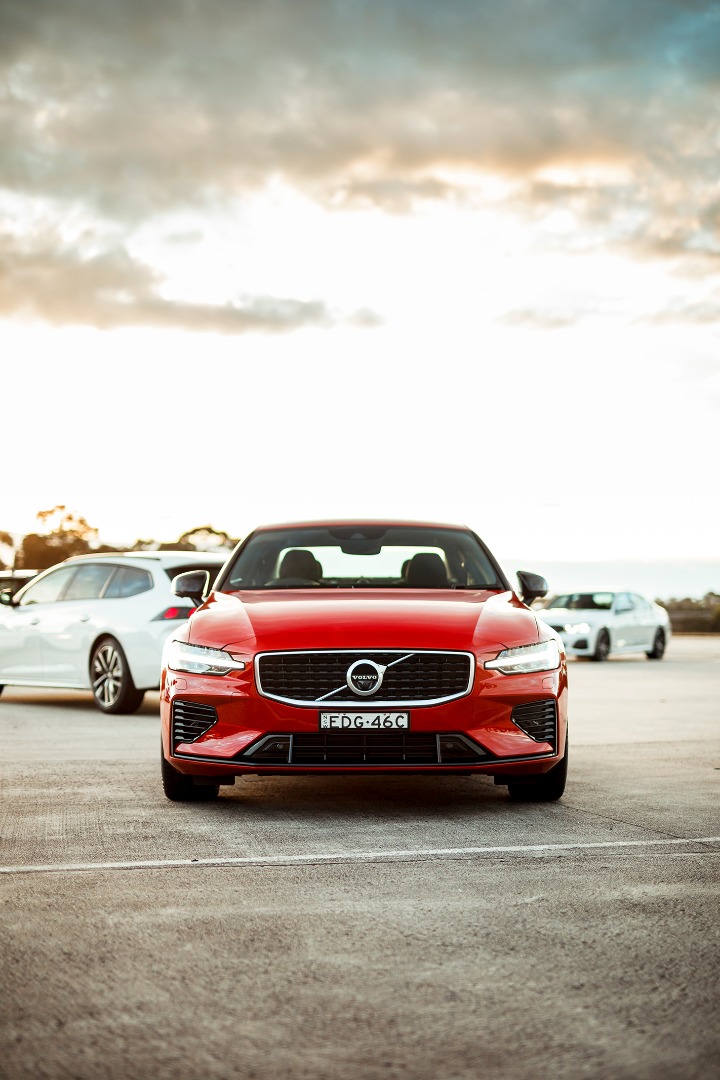
On paper, the Volvo S60 sedan and V60 wagon appeared to have a plausible shot of achieving what no other manufacturer has managed in COTY’s 57-year history: the unicorn hat-trick.
Last year, the Swedes joined an exclusive club by becoming only the fifth manufacturer to manage the COTY double, by virtue of the XC40 compact SUV’s win following on from the victorious mid-size XC60 SUV from 2018.
So, given the S60/V60 pair share platforms, drivetrains, safety systems and plenty of interior architecture with the anointed XC60, what happened?
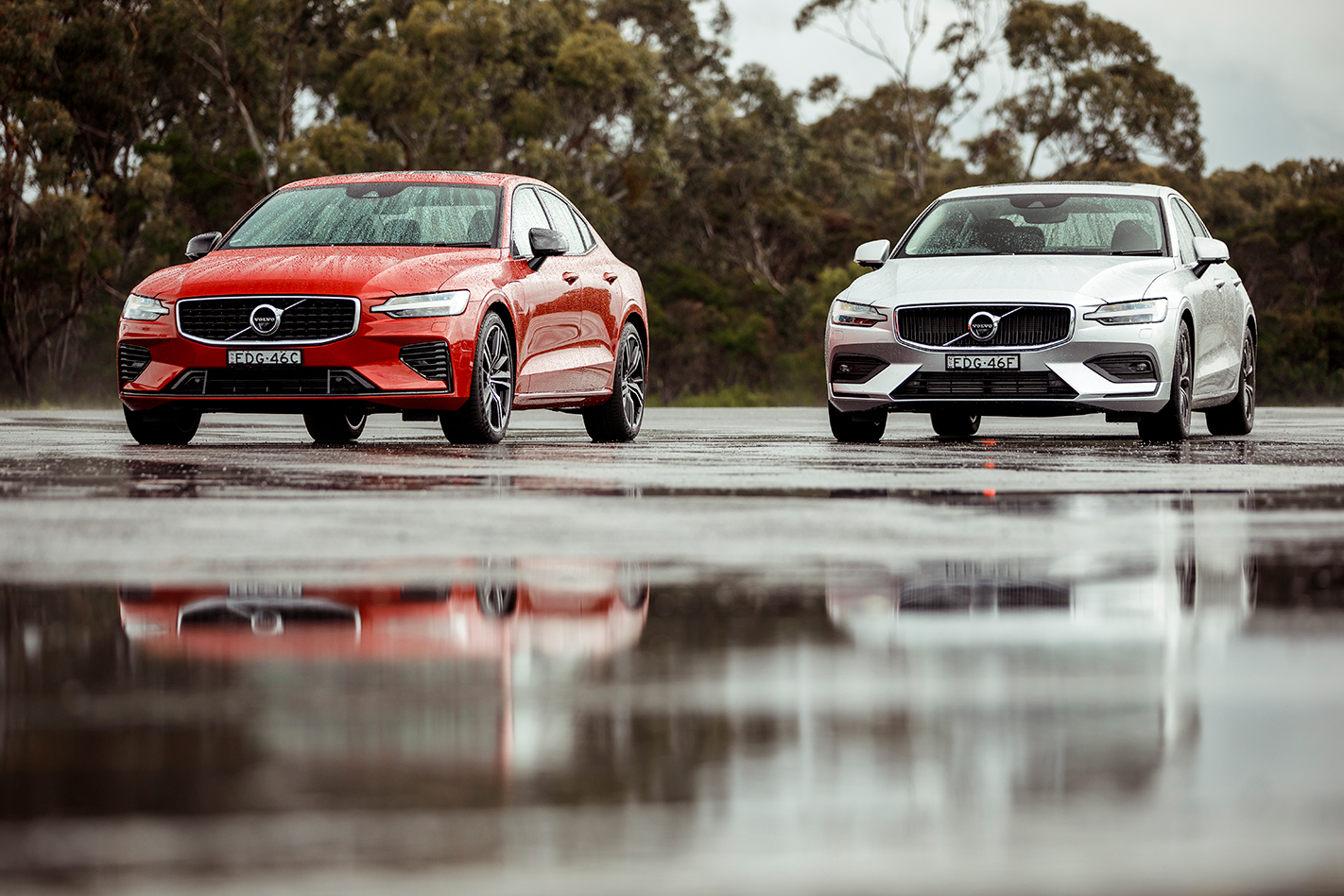
The sedan/wagon duo started solidly, delivering a strong (but imperfect) safety score. This year, the lack of front cross-traffic alert and no emergency assist bumped them down slightly.
Value was a little harder to define. Do you compare the Volvos’ pricing and equipment to the three premium German brands, or does the likes of the excellent Peugeot 508, also here at COTY in both Fastback and Sportswagon bodystyles, provide a more valid reference point? If it’s the former, then the S60 Momentum entry point stacks up close in spec to Audi’s A4 45 TFSI quattro (AWD; similar outputs from a turbo-petrol four) but the Swede comes in around $15K cheaper. At the top end of the range, we had the S60 T8 R-Design sedan on test, its turbo and supercharged four combined with a plug-in hybrid system to deliver 311kW and 670Nm. This spec takes the price to $86,000, and not everyone was sold, particularly when its 0-100km/h time came in one second slower than its claim.
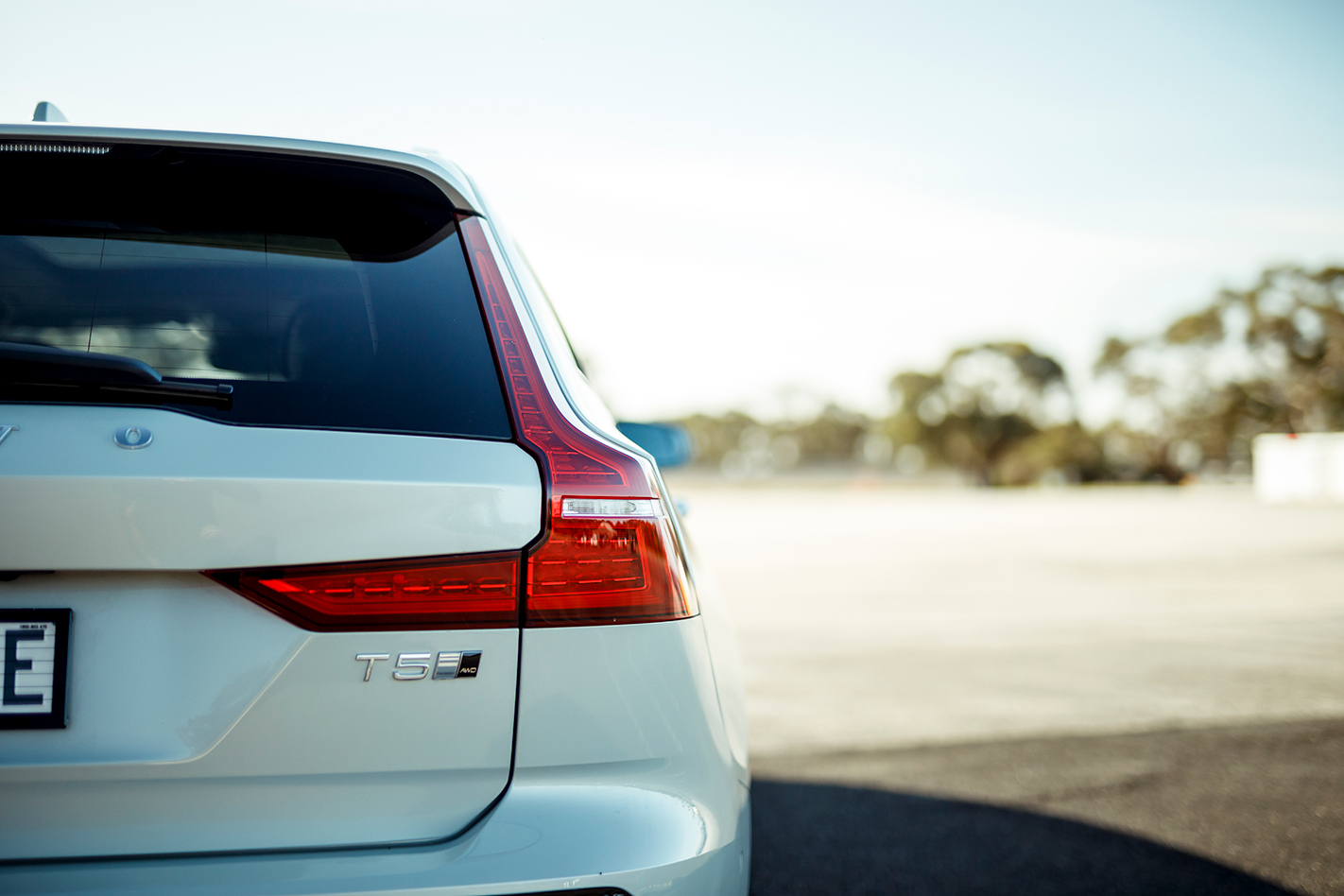
Still, the T8’s urban efficiency is pretty handy, given it can drive around 40km on the electric motor, but back down in the lower end of the range, the frugality is less convincing. The Momentum sedan carries an ADR-combined figure of 7.3L/100km, six percent higher than an Audi A4 quattro.
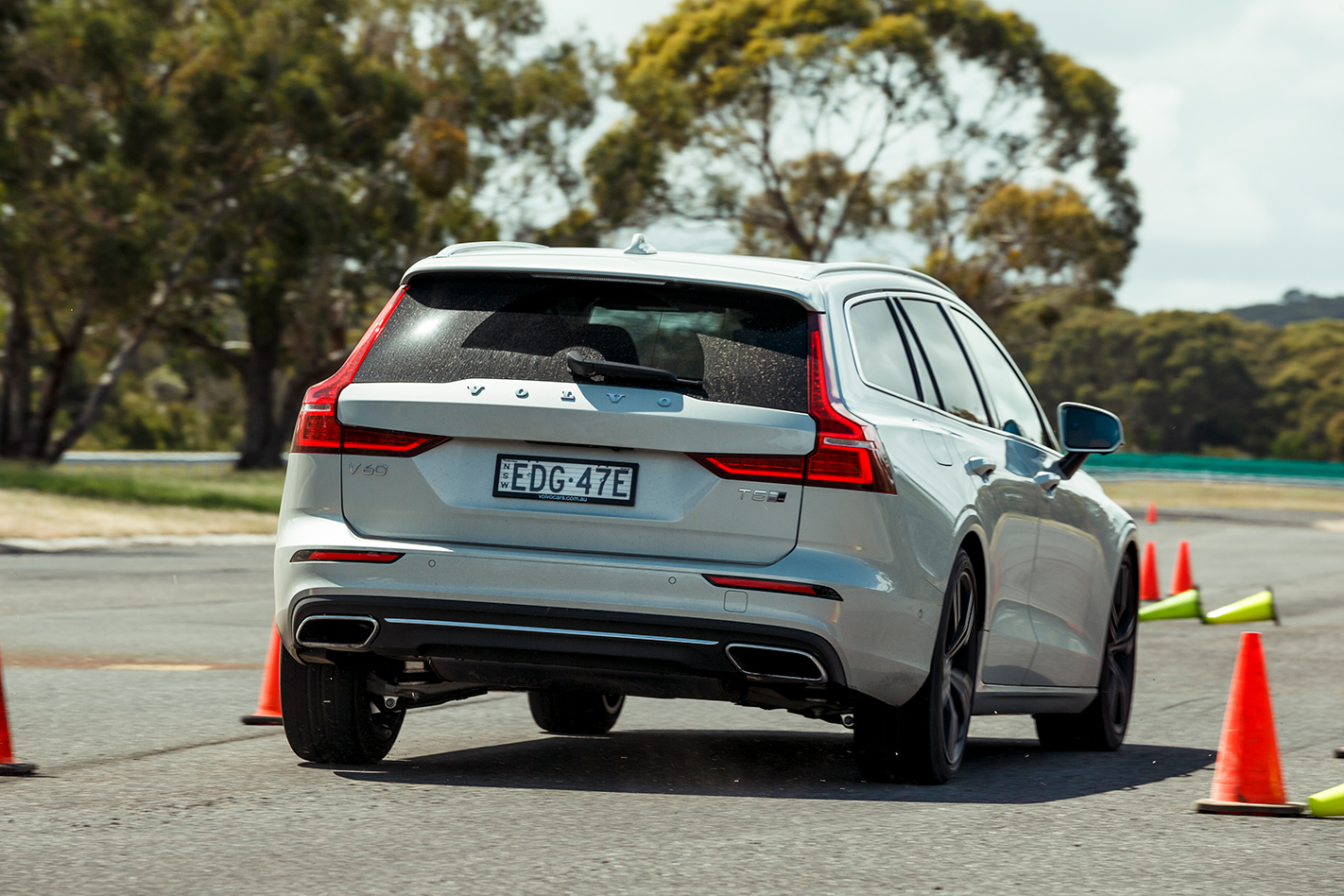
But what ultimately stopped the Volvo sedans and wagon from progressing to the second stage was two-fold. Firstly, the judges felt that the lack of available air suspension – considered a must-have for the XC60 – was a real demerit for the S60/V60 pair. And while the optional adaptive dampers fitted to the T5 Inscription definitely helped the ride – the majority of judges rated it as acceptable, not great – it wasn’t enough to mitigate the lack of chassis excellence from the other two cars on test. Carey noted that the T8 was one of the few cars to exhibit suspension crash-through on one of the ride and handling loop’s nastier potholes. “Spec carefully, or spring for an XC60 on air,” advised Enright.
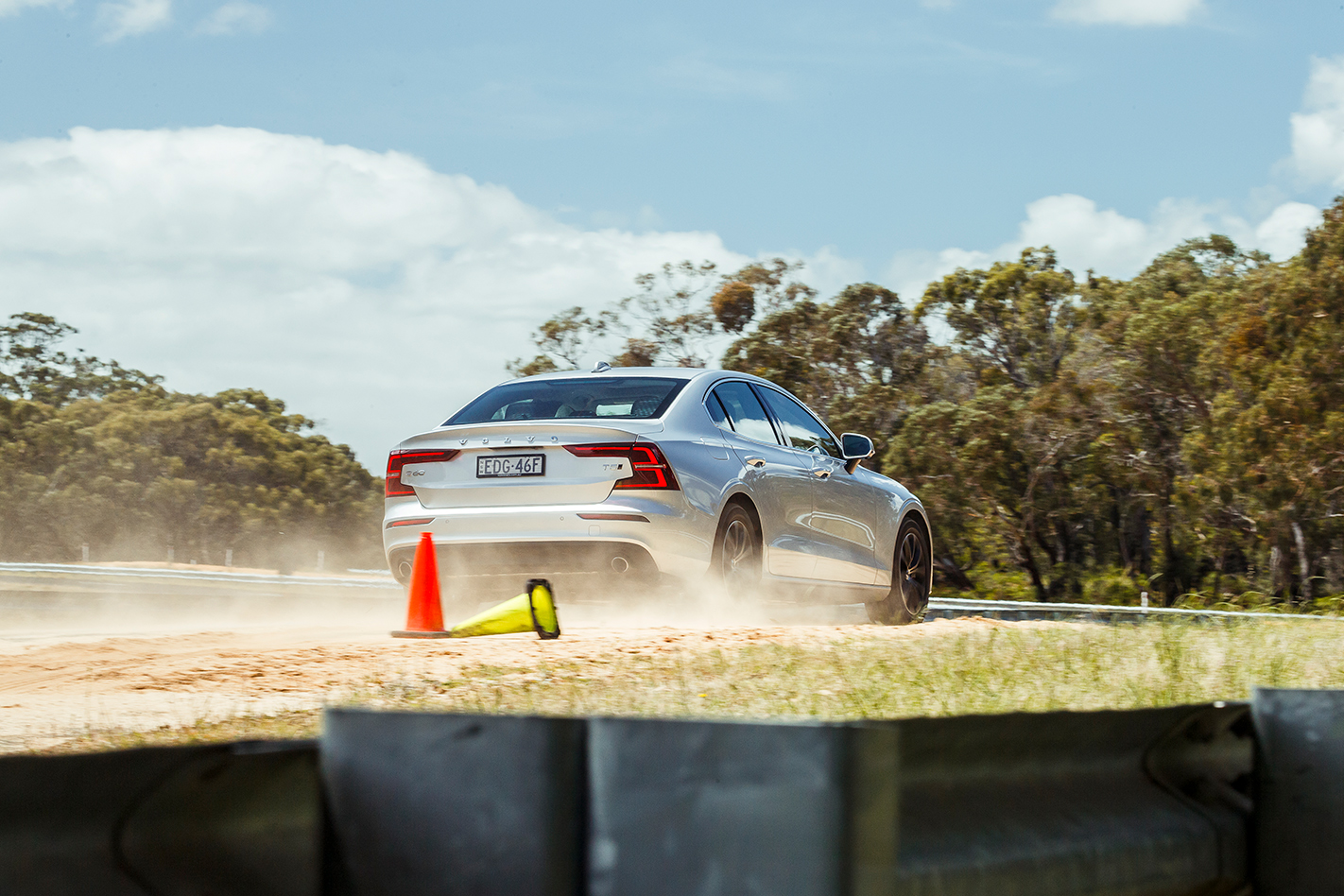
The second part of the hurdle for the S60/V60 is the fact they compete in a segment far more mature and with greater depth than that facing the XC60 in 2018. There wasn’t a single judge who thought the Swedish pair were superior in any core dynamic area to the two BMW 3 Series in the COTY field, and this was a fundamental stumbling block. Byron spoke for all of us when he concluded: “Very Swedish in their proficiency; just not that exciting nor particularly plush.”
THE JUDGES’ COTY SCORECARD
Function: 3.2
Efficiency: 3.0
Safety: 3.4
Technology: 3.0
Value: 3.0
VOLVO S60/V60 SPECS
BODY
Type: 4-door sedan / 5-door wagon, 5 seats
Boot capacity: 390 – 529L
Weight: 1767 – 2006kg
DRIVETRAIN
Layout: Front-engine (east-west), AWD
Engines: 1969cc 4cyl turbo-petrol (187kW/350Nm); 1969cc 4cyl turbo-petrol (192kW/400Nm); 1969cc 4cyl turbo-petrol + supercharger + electric motors (311kW/670Nm)
Transmission: 8-speed automatic
OTHER
Tyres: 235/55R17 – 255/35R20
ADR81 fuel consumption: 2.0 – 7.3L/100km
CO2 emissions: 46 – 167g/km
Crash rating: 5 star, ANCAP (Euro NCAP)
PRICES
$54,990 – $85,990
What stands out?
The Qashqai is the larger of two small SUVs Nissan sells (the other being the quirkily styled Juke). It costs less than the mid-sized X-Trail but comes with lots of equipment along with a spacious, well-presented and clever interior, Android Auto/Apple CarPlay smartphone mirroring, and autonomous emergency braking as standard.
What might bug me?
Explaining to friends and family how to pronounce Qashqai. For the record, it’s “cash-kye”.Driving under 80km/h on the space-saver spare until you can fix your full-sized flat tyre.
What body styles are there?
Five-door wagon only.All Qashqais drive the front wheels only, and the Qashqai is classed as a small SUV, lower priced.
What features do all Qashqais have?
Cruise control, a 7.0-inch colour touchscreen, AM/FM/digital (DAB+ radio), Bluetooth phone connectivity, and Android Auto/Apple CarPlay that lets you display smartphone apps on the touchscreen and control them from there (or by voice).A reversing camera, for better vision when parking, and front and rear parking sensors.A leather-wrapped steering wheel.Aluminium alloy wheels, which look better and are lighter than steel wheels. (And a space-saver spare wheel.)Active safety including autonomous emergency braking with forward collision warning and lane departure warning.Six airbags: two directly in front of the driver and front passenger; side airbags to protect the upper body of front occupants; and head-protecting curtain airbags for front and rear occupants.Keyless entry, push button engine start and electric park brake with auto hold function, and hill start assist.LED daytime running lightsLumbar support for front seatsThe Qashqai is covered by a five year, unlimited kilometre warranty.
Which engine uses least fuel, and why wouldn’t I choose it?
The only engine in the 2018 Qashqai range is 2.0-litre four-cylinder petrol, with the 1.6-litre turbo diesel dropped from the range, when the Qashqai was updated in late 2017.The 2.0-litre engine consumes 6.9 litres of petrol per 100km when teamed with the continual variable transmission (CVT), according to official testing, with that figure taking into account urban and country driving. With the manual gearbox it uses 7.7 litres/100kms – which makes it among the thirstier small SUVs on sale.The manual gearbox (only available with the cheapest Qashqai, the ST) is a six-speeder, while the CVT automatic does away with gear ratios and adjusts the engine speed steplessly to your demands as a driver.All Qashqais are front-wheel drive.
What key features do I get if I spend more?
Spending Step up to the ST+ and the CVT auto transmission is standard.The infotainment display gains around view monitor to help you avoid obstacles when parking, and satellite navigation with free updates that can be downloaded at home and transferred to the system via a USB.The side mirrors fold at the touch of a button, and are heated so they don’t stay fogged up in cold weather.The ST+ also gains additional driver assistance features that were previously only found in the more expensive Ti, including: headlights that switch on automatically when it gets dark; high beams that automatically dip when it senses a car ahead; rain-sensing windscreen wipers; blind-spot warning; rear-cross traffic alert; and driver attention alert that warns you if you start weaving within your lane, which is a sign of fatigue.The ST-L loses the additional driver assistance features, with the extra cost bringing seats trimmed partly with higher quality graphite cloth and partial leather (a mix between real and fake leather). Both front seats are heated and the driver’s seat has power adjustments.The exterior gains front fog lights and roof rails, and bigger 18-inch alloy wheels with wider tyres that offer more grip.In February 2020 Nissan introduced a limited-edition version of the ST-L called that N-Sport that for an additional $1000 added bigger 19-inch alloy wheels, black interior headline, and exterior trim enhancements giving it a slightly sportier edge.The most expensive Qashqai, the TI comes with the driver assistance features now included in the ST+, as well as pedestrian detection for the autonomous emergency braking, and adaptive cruise control (which reduced speed to match the car in front and keeps a safe distance),It also gains Nappa leather-accented seat trim, 19-inch wheels, and cabin ambience is improved by a panoramic sunroof and mood lighting.
Does any upgrade have a down side?
The lower profile tyres on Ti’s 19-inch wheels ride more roughly and could cost more to replace.
How comfortable is the Qashqai?
The Qashqai has broad front seats, which are good for big adults – although small people may find themselves wishing the seat bolsters constrained them more narrowly. The seats are comfortable and can be easily adjusted in other respects to suit most people.The touchscreen is easily accessible for both of the people in front and has a logical menu system. In February 2020 Nissan finally added Android Auto/Apple CarPlay smartphone mirroring, which makes it easier and safer to make calls and use apps such as maps, Spotify and podcasts.The ventilation system is user friendly also.The Qashqai feels nice inside and the interior is generally well put together. The 2018 update was a further improvement in cabin quality, with hard plastics cut back significantly, particularly on the door trims and centre console. The steering wheel was completely redesigned to bring it up to date with modern trends.Cabin noise was also improved, with extra sound deadening in the doors. On a variety of road surfaces, cruising at highway speeds, road noise was minimal.Tyre noise is more noticeable with the Ti’s 19-inch wheels.Steering is light and responsive and the turning circle is tight, so the Qashqai is easy to pilot around town. The cabin is well hushed and the suspension feels supple over bumps.The 2.0-litre petrol engine is responsive and works best with the CVT auto, which quickly adapts to your needs and gives you good acceleration.
What about safety in the Qashqai?
Every Qashqai has the mandatory stability control, a full complement of airbags, seatbelt warnings for all five seats, and a rear-view camera. It is a package that prioritises your control of the car, your protection in a crash, and the safety of others when you are reversing.All Qashqais now have active safety features as standard including automatic emergency braking with forward collision warning and lane departure warning.The ST+ and Ti gain blind sport warning (which alerts you if there is another car alongside, out of view, when you indicate to change lanes) and rear-cross traffic alert that warns if a vehicle is approaching from either side while you’re reversing.They also have headlights, which can respond to poor visibility before you would notice and turn them on. That could help other drivers see you.The Ti also has adaptive cruise control, and lane departure warning.The Australasian New Car Assessment Program (ANCAP) rated the Qashqai’s safety at five stars, its maximum, in July 2014.
I like driving – will I enjoy this car?
The Qashqai doesn’t lean much in bends, something that helps it feel planted on the road and responsive to driver inputs. It’s fun and drives more like a good car than a higher-riding SUV.The Ti rides on the slightly wider, lower-profile tyres that respond quicker to steering inputs, although there is little feedback sent through the wheel.The 2.0-litre petrol engine accelerates well and the car feels perky, especially in CVT auto form.The Qashqai may look like an off-roader but it drives only its front wheels, so is not designed to be used off-road, though the extra ride height over a normal car is an advantage on rougher road surfaces.
How is life in the rear seats?
The Qashqai is one of the bigger small SUVs and so it has good head and leg room in the back. The seat is mounted quite low, so people with long legs will sit with knees higher than usual. The rising line of the back windows could restrict vision for small children.While the back seat is flat (unlike some that are dished in the outer positions), a centre passenger has to contend with the firmer, raised armrest in the seatback behind them and a central hump in the floor.There are pockets in the rear doors and behind the front seats where you can store small items. But there are no rear air-conditioning ducts.
How is it the Qashqai for carrying stuff?
The Qashqai’s 430-litre boot is one of the biggest in its class. Binnacles on either side are handy for small items, while the flat floor is relatively broad.The boot can be expanded significantly to 1596 litres, thanks to 60/40 split-fold rear seatbacks, although they do not fold completely flat.There’s a clever removable shelf which can be used to create a slim secondary space hiding delicate or valuable items, and the shelf can also be locked in vertically to divide the boot.Up front there is a deep centre console that’s great for small bags or myriad odds and ends. There are also large door pockets, a pair of cupholders and an open storage container (perfect for phones) forward of the gear stick.
Where is the Qashqai made?
All Qashqais are produced in the United Kingdom.
What might I miss that similar cars have?
A punchier turbocharged engine as available in the Citroen C3 Aircross, Holden Trax, Jeep Renegade, Kia Seltos, Hyundai Kona, Mistubishi Eclipse Cross, Toyota C-HR, and the Renault Kadjar that is actually based on the Qashqai.An all-wheel drive system, for light-duty off-roading. The Renegade, Seltos, Kona, Mazda CX-3, Eclipse Cross, C-HR, Subaru XV, and Suzuki Vitara are available with all-wheel drive, for example.Other cars you might consider include the Mitsubishi ASX, Holden Trax, Honda HR-V.
I like this car, but I can’t choose which version. Can you help?
We like the Qashqai ST+, which comes standard with the CVT auto, in-built satellite navigation and the additional active safety and driver assist features found at the top of the range in the Qashqai Ti.
Are there plans to update this model soon?
This is the latest version of the first-generation Qashqai, which went on sale in 2014 as a replacement for the Nissan Dualis. It arrived in December 2017 for the 2018 model year.The Qashqai N-TEC made way for the Ti mid-2018. The N-TEC was a temporary model that was introduced because the Ti was unavailable when the updated Qashqai arrived in December 2017. The only differences between the two is the Ti has more luxurious Nappa leather-accented seat trim, adaptive cruise control and lane keeping assist.In April 2019 Nissan Australia extended its warranty from three to five years for all its models including Qashqai.Nissan introduced the ST+ in May 2019, which added some of the ST-L’s features to the basic spec without the leather-appointed seat trim and heated front seats. In February 2020 the ST+ also gained active safety features found in the more expensive Ti making it the pick of the range.The February 2020 update also added Android Auto/Apple CarPlay to all Qashqai versions, which added appeal against newer rivals. A limited edition N-Sport version based on the ST-L was also added to the range.An all-new Qashqai is expected to be revealed in September 2020, though don’t expect it to arrive in Australia until mid-2021 at the earliest.
The Range Rover Evoque, in its almost 10-year reign of being the crossover-that-never-was-supposed-to-but-did, has admittedly rested on the laurels of its looks over performance. It singlehandedly made crossovers fashionable, spearheading a movement that would eventually lead to the birth of sartorially pleasing small SUVs. Last year’s COTY winner, the Volvo XC40, and current contender, the Audi Q3, are both evidence of this inevitable tide.
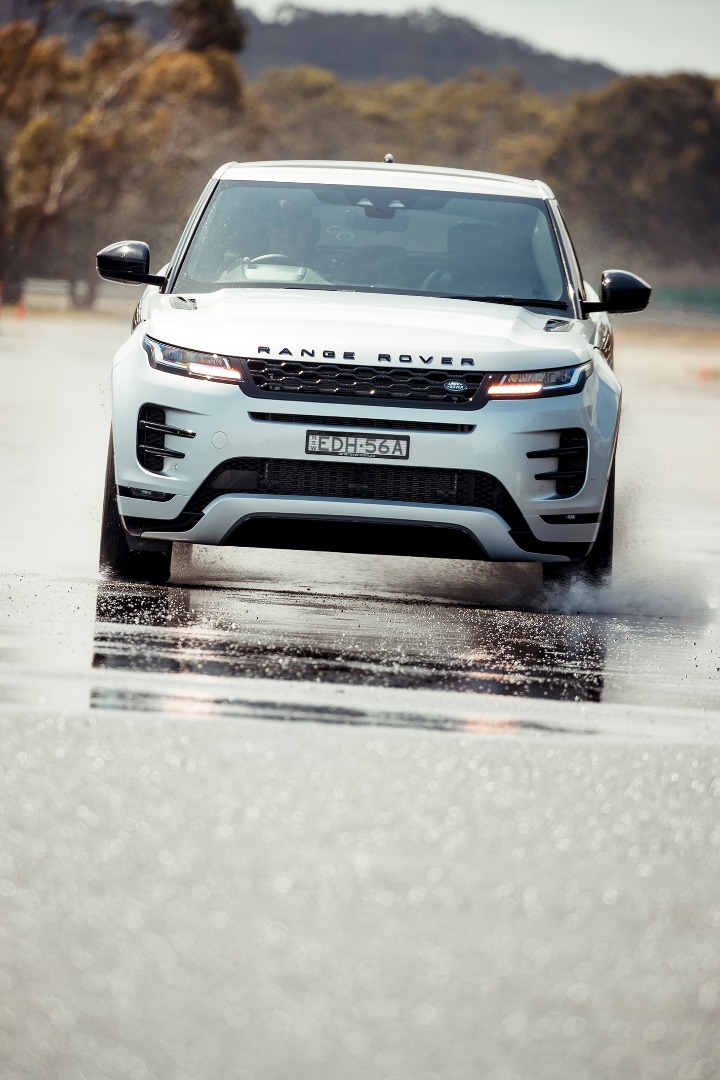
The showroom star has sold more than 800,000 cars worldwide, making up one-third of Range Rover’s total sales. It’s proven to serve a distinct purpose, and regardless of its COTY performance, will no doubt continue to. For its second incarnation, JLR has gone back to the drawing board, burned some sage and started anew. But can this compact Brit rival the success of its Swedish competitor and live up to its looks? Uh… well…
Bar some door hinges and the Ingenium engines that have been carried over from the previous models, the second-generation Evoque is completely fresh. It’s underpinned by Jaguar Land Rover’s new Premium Transverse Architecture, a platform composed of lightweight mixed metal, and designed with electrification in mind. Our first taste of this is a 48-volt mild-hybrid in our 2.0L diesel D180 S variant. Also in the COTY field was a petrol 2.0L P250 S R-Dynamic, making up two of the six engines and 25 variant trim levels offered by JLR. Each variant, we noted, had a long list of extras, including a controversial $900 option for keyless entry and push-button start, ensuring first impressions were not off to a great start. “Well that is taking the piss,” one judge was overheard saying.
On visual X-factor, the Evoque smugly scored high. Naturally, the judges agreed that the flush door handles were lavish and the interiors beautiful, with JLR’s new high-quality vegan leather and sustainable options applauded. Thanks to a more spacious cabin, the Evoque won points for addressing the pokey interior and visibility issues of the past. It earned more for innovation, thanks to the optional rear-view and see-through bonnet camera system, but that’s where the shine wore off.
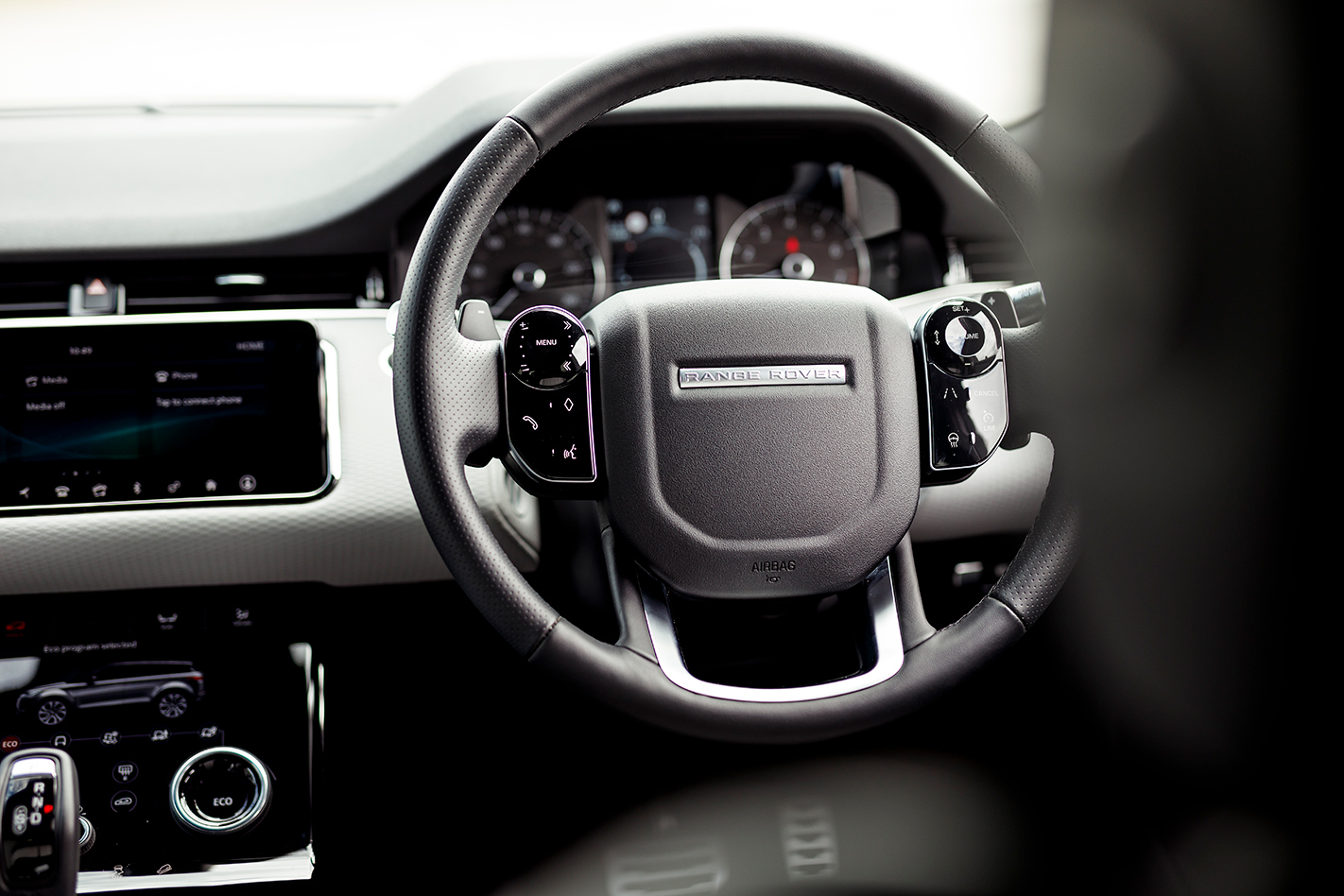
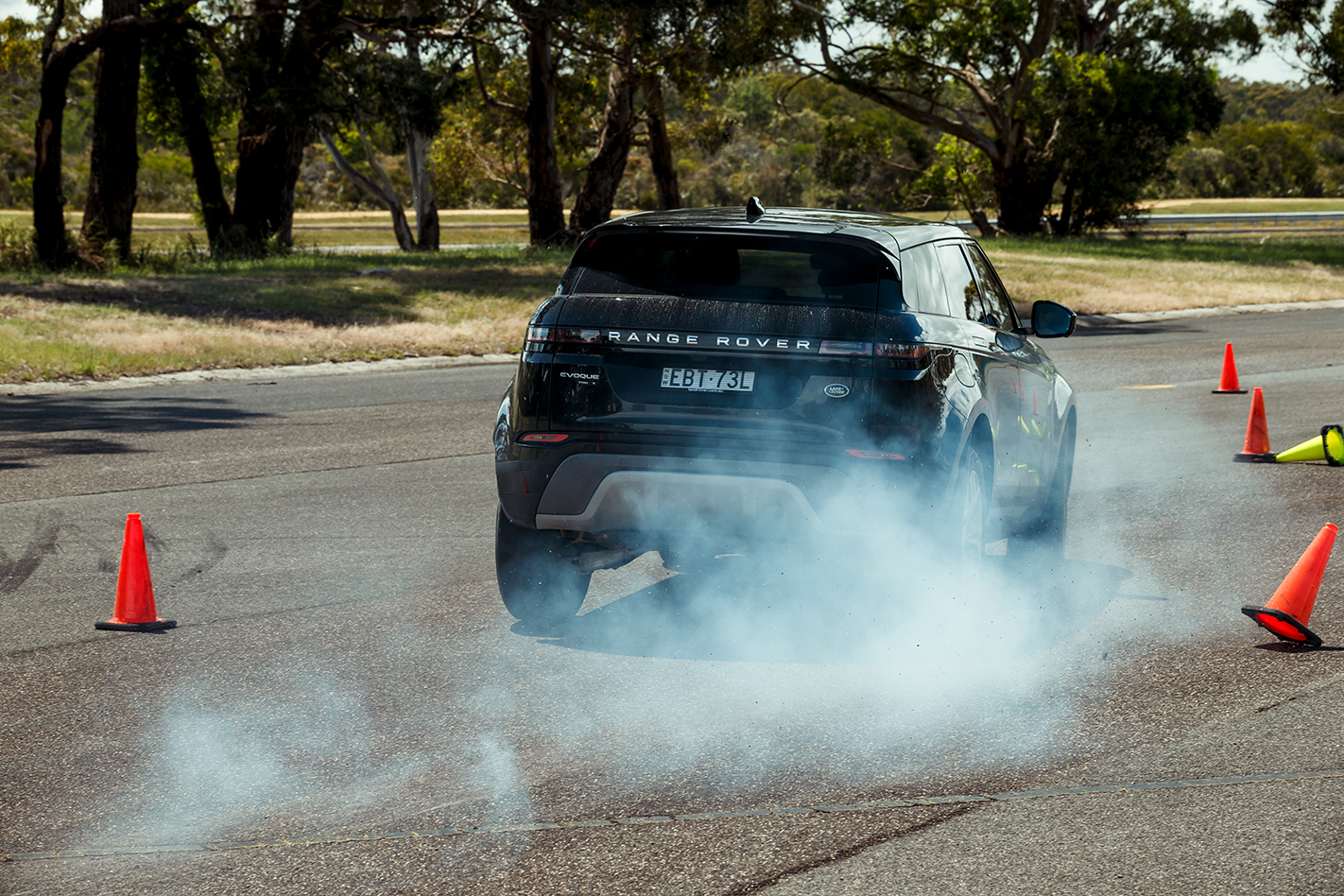
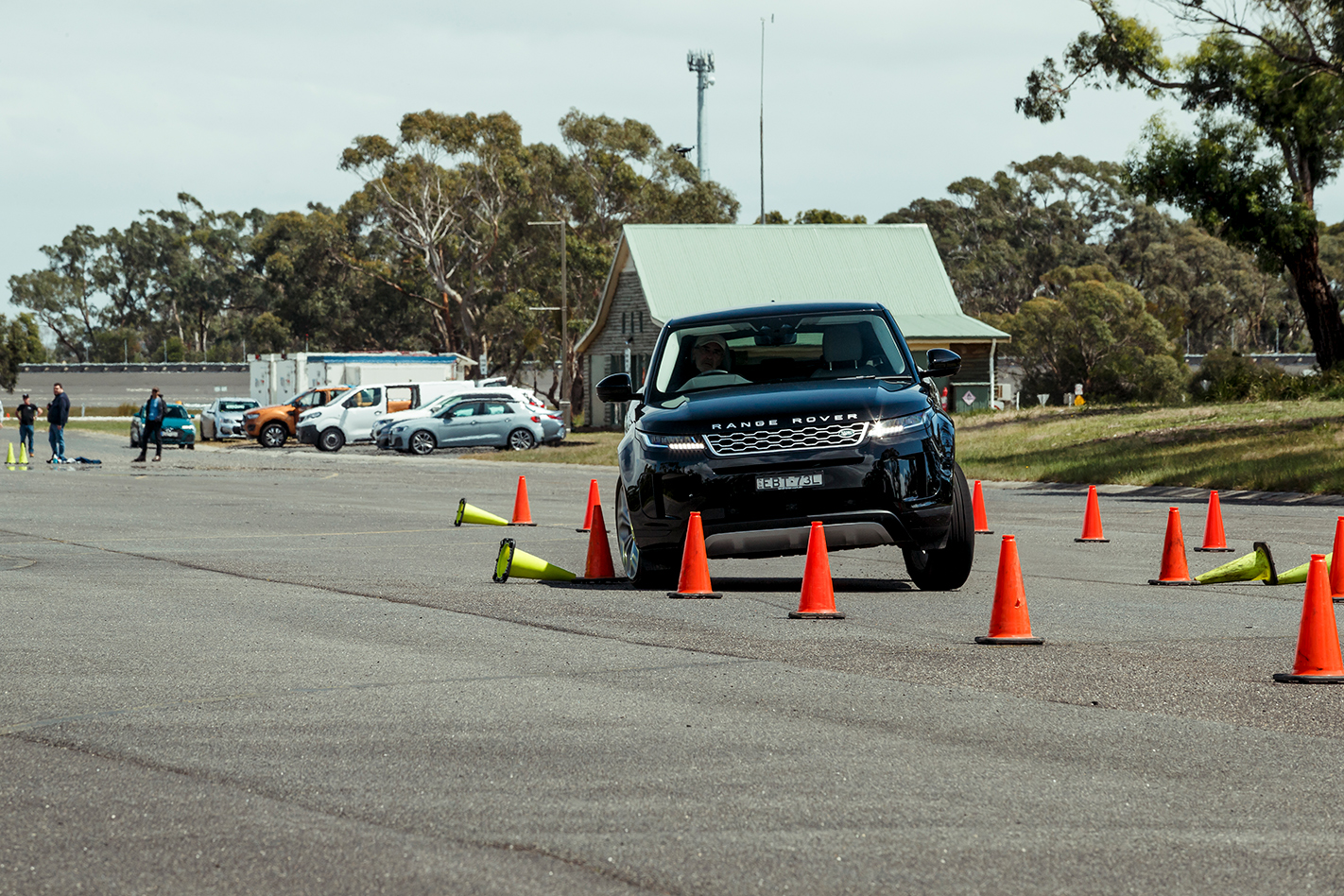
A laggy infotainment system, odd ESC calibrations and a disconnect between the two variants frustrated the judges. “The petrol did have a bit of spice and pep to it,” noted one judge, adding: “The diesel felt like a slug.” Where the P250 earned praise for heartiness at speed, the diesel suffered from doughiness and felt overworked by its transmission. The petrol had some composure through lane changes, but the diesel’s ESC startled with dramatic brake lock-ups and plumes of smoke. It almost felt like the heavier diesel carried across the chassis tune of the petrol-engined version.
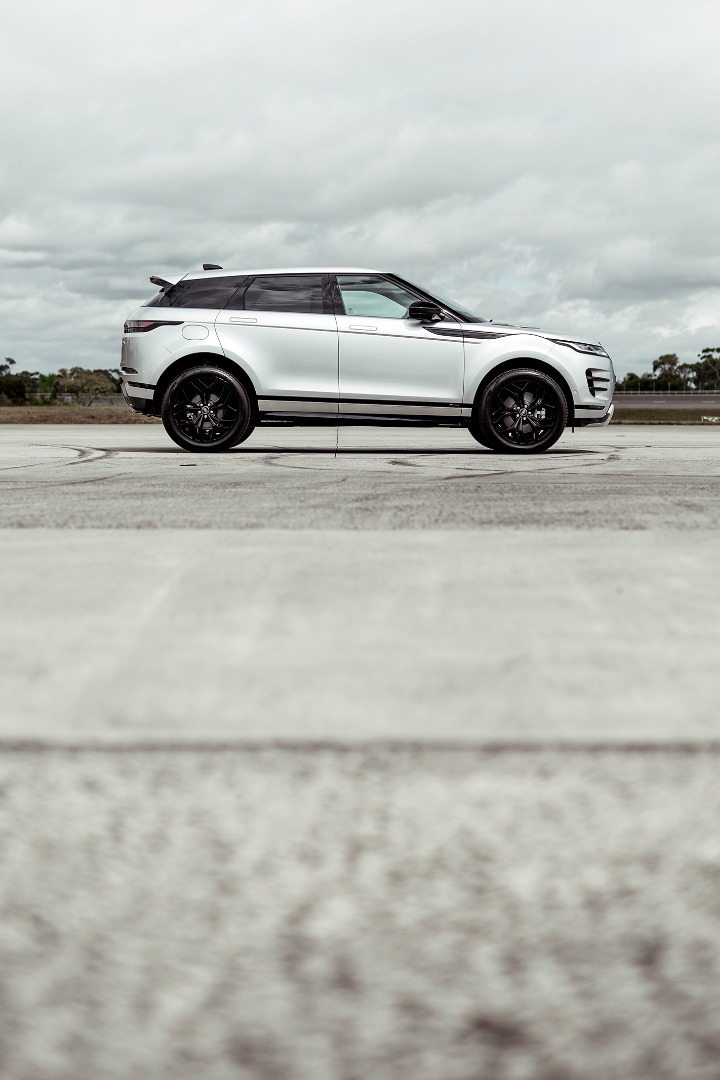
When it came to depth of engineering, the variables between the two were inescapable, with little of the chassis poise or value the XC40 brought last year. Sadly, under the COTY spotlight, the Evoque’s star power was only skin deep.
THE JUDGES’ COTY SCORECARD
Function: 3.1
Efficiency: 2.4
Safety: 2.5
Technology: 2.7
Value: 2.6
RANGE ROVER EVOQUE SPECS
BODY
Type: 5-door SUV, 5 seats
Boot capacity: 591L
Kerb weight: 1813kg – 1955kg
DRIVETRAIN
Layout: Front-engine (east-west), AWD
Engines: 1997cc 4cyl turbo-petrol (147-221kW/320-400Nm); 1999cc 4cyl turbo-diesel (110-177kW/380-500Nm)
Transmission: 9-speed automatic
CHASSIS
Tyres: 235/60R18 – 235/50R20
ADR81 Fuel consumption: 5.7L – 8.2L/100km
CO2 Emissions: 149 – 188g/km
Crash Rating: 5 star (ANCAP)
PRICES
$64,000 – $94,000
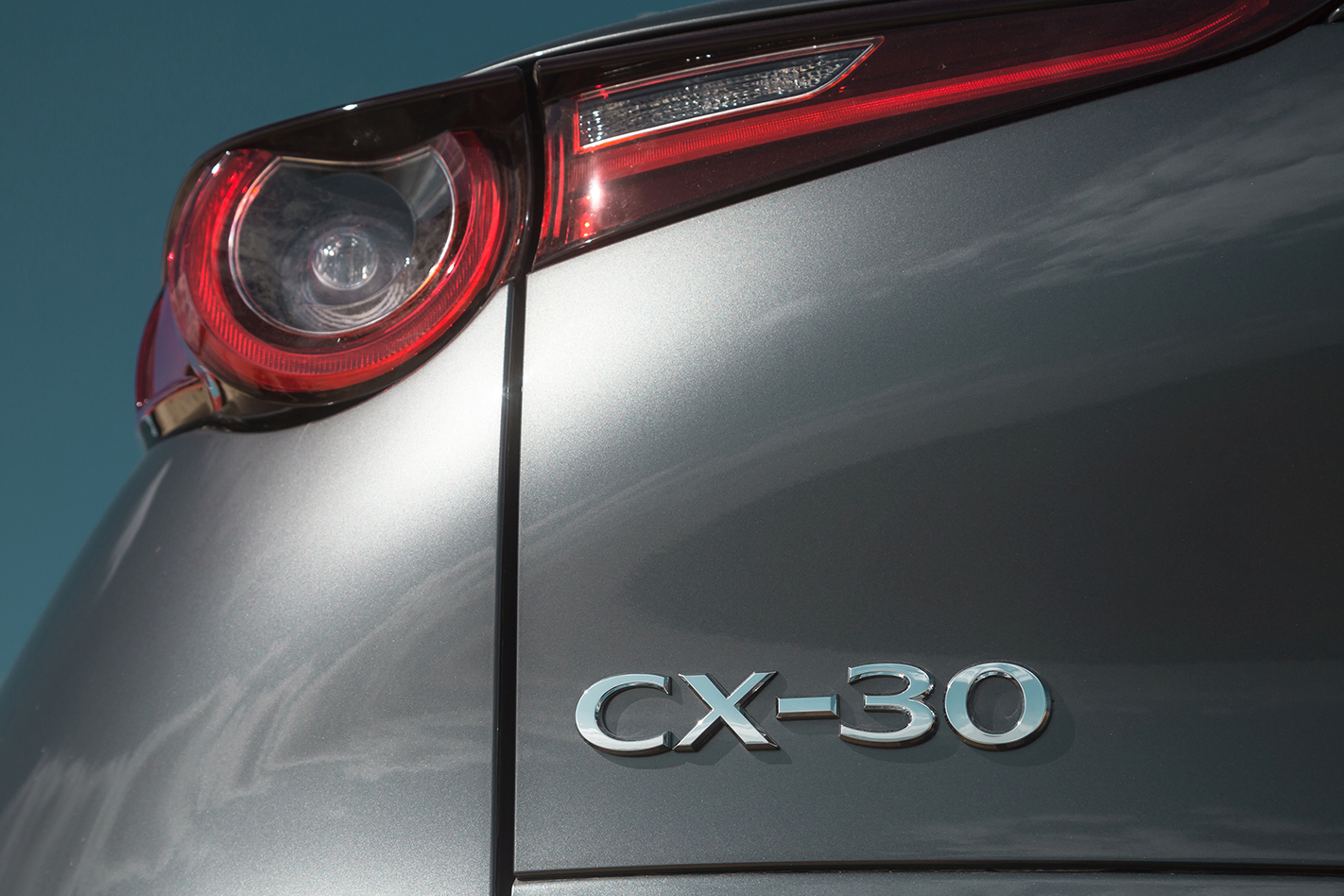
The Wheels Verdict: Mazda’s upmarket push is continuing at pace, and the stylish CX-30 bolsters this movement. Yes, you pay a premium for it, but the luxurious cabin believes the Japanese brand’s traditional badge status, the exterior is visually appealing and the driving experience is pleasing. It’s a shame a more advanced powertrain isn’t offered, but that should change in the future. Ultimately, the CX-30 is yet another example of why Mazda is so popular with private buyers.
WHAT IS IT?
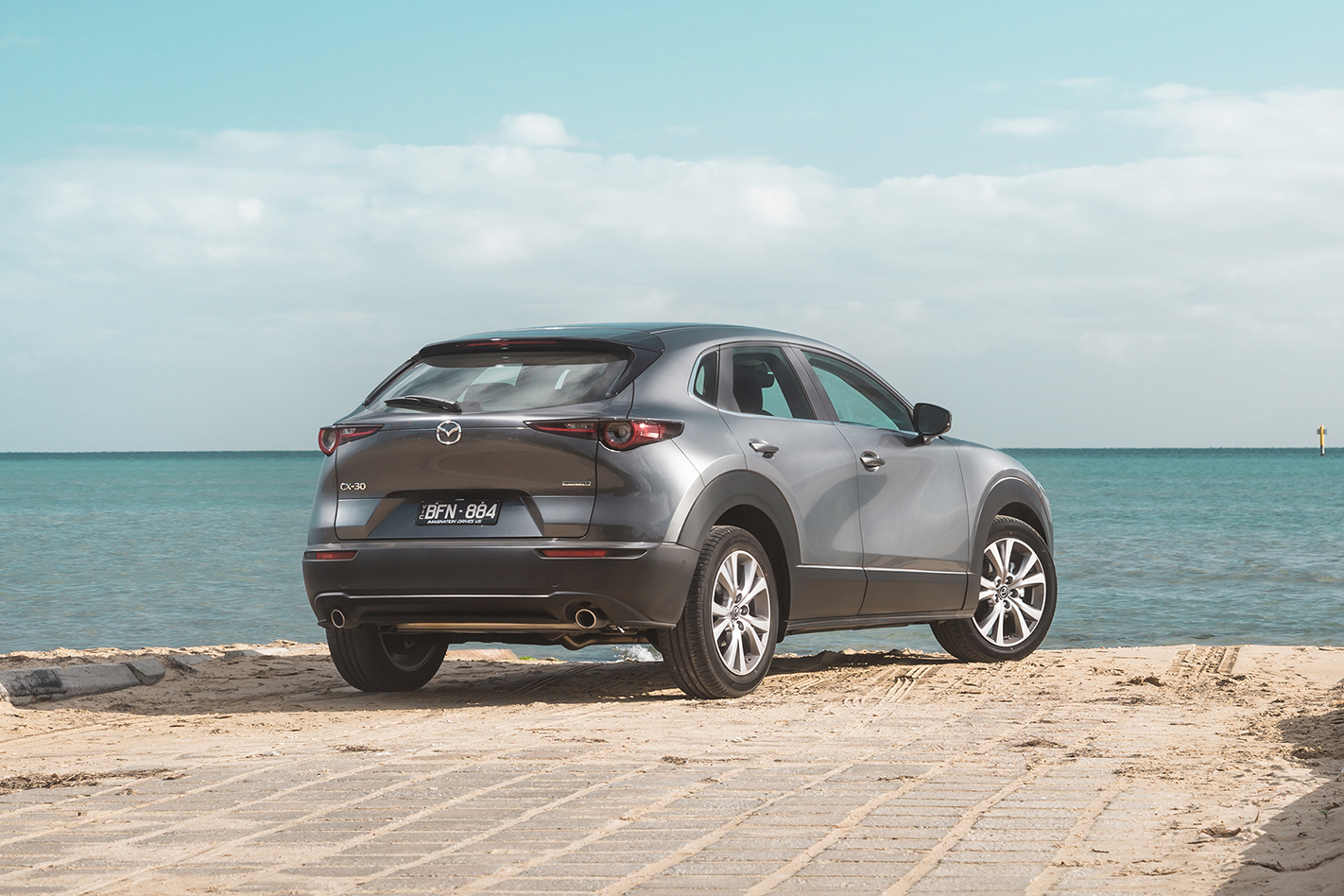
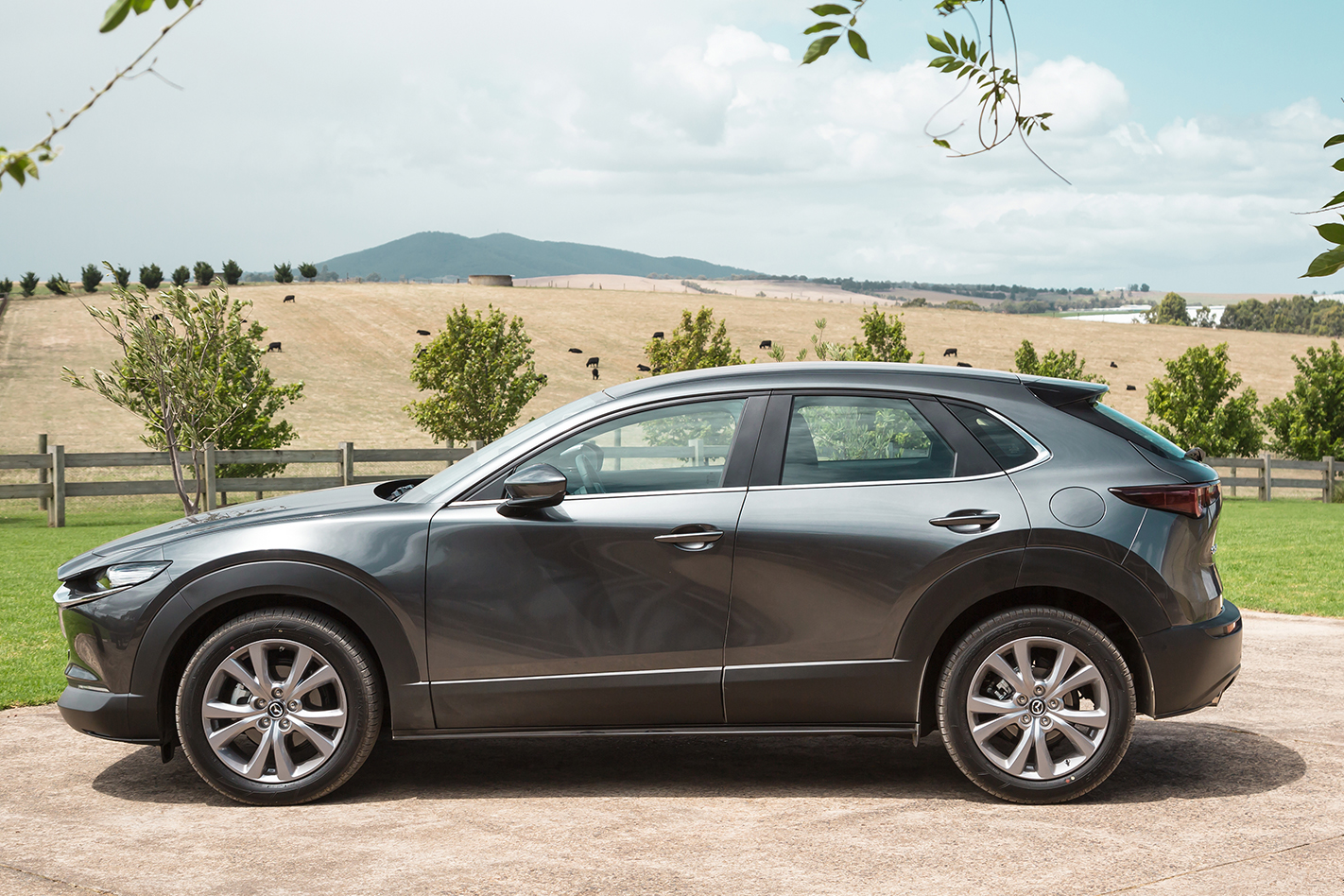
Essentially, it’s Piggy in the Middle. If the CX-3 is too small and the CX-5 is too big, the CX-30 provides a meaningful bridge between the two. Thanks to the ‘Charge and Release’ update to the Kodo design language, the CX-30 combines style with a plush cabin, engine and driveline options as well as a healthy mix of form and function. It’s the compact SUV that might also convert a few Mazda 3 buyers into the land of crossovers.
WHY WE’RE TESTING IT
Australia’s appetite for SUVs seems to know no bounds. The CX-30 is the latest offering to enter the ring and this is our first opportunity to test it on home soil. And its popularity might already be proven, with Mazda taking customer orders before it even rolled into showrooms.
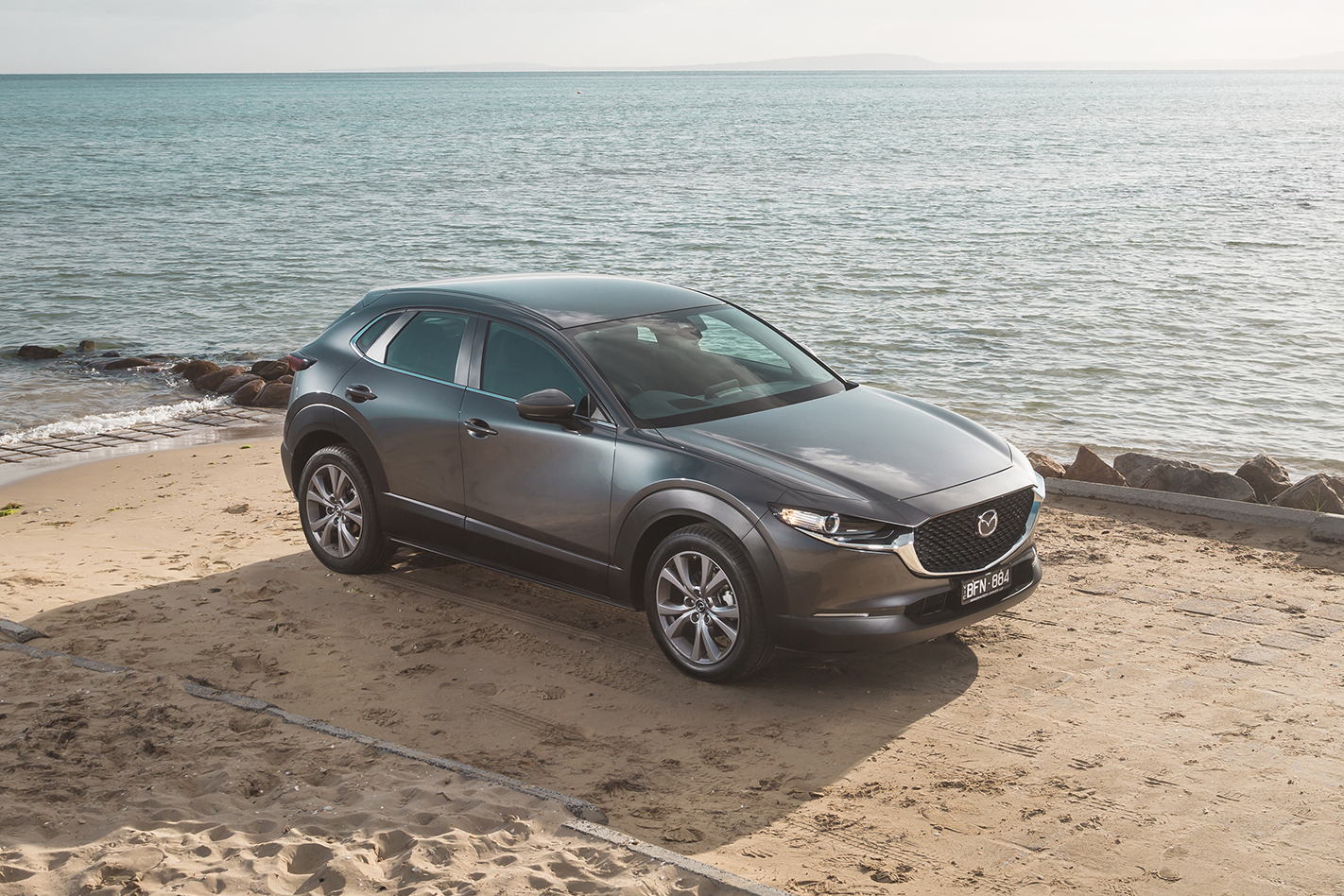
2020 MAZDA CX-30 REVIEW
Most people are inquisitive by nature, which makes it interesting when driving a car that is yet to be released. Often the ‘I’m looking, but I’m not looking’ gazes ensue, while a few are brave enough come up and ‘take a geeze’. Thing is, it usually happens with the likes of sports cars, not a mid-$30K compact SUV. The fact a punter is asking, “Oi mate, is that the new CX-30?” before its on-sale date says a lot about Mazda’s brand equity down under.
On this occasion the probing goes further, with questions regarding spec levels, drivetrains and prices flowing thick and fast. Even availability of the revolutionary SkyActiv-X compression-ignition engine is thrown into the mix. Such inquisitiveness proves that Mazda’s projection of selling 800 units a month seems feasible.
Oh, and the answers; there are four variant grades (Pure, Evolve, Touring and Astina), two engines at launch (2.0-litre and 2.5-litre four-cylinder petrols) as well as front- and all-wheel drive. Prices start from $29,990 before rising to $43,490 for the top spec version. The SkyActiv-X unit is slated, but not until much later in the year – such is the global demand.
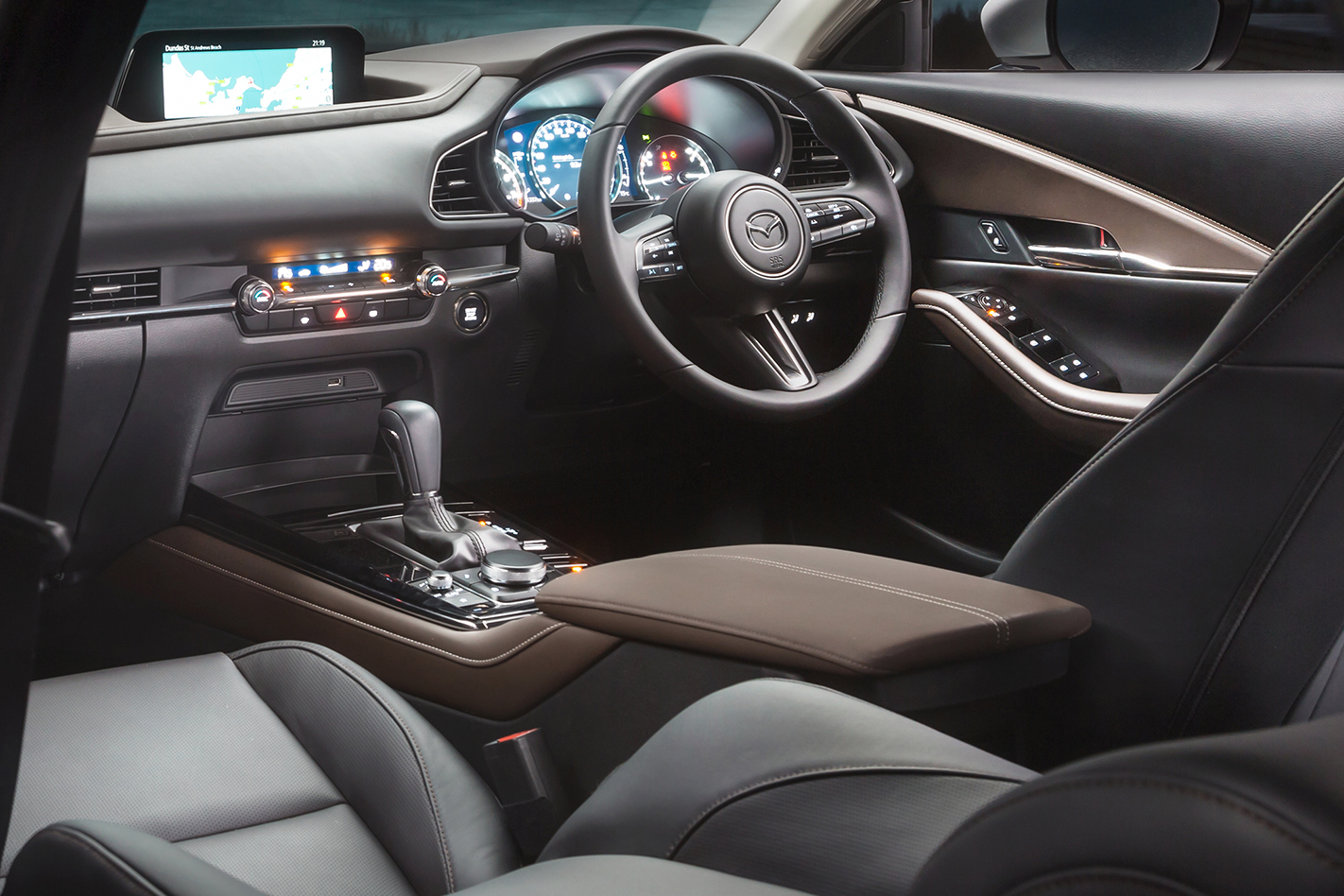
Surprisingly, the querying continues; “So which one is this, then?” Well, it’s the mid-to-high spec $34,990 G20 Touring with front-wheel drive (all-wheel-drive variants will be available from March 2020) and a six-speed torque-converter automatic. G20 designates the 2.0-litre engine, while the 2.5-litre gains a G25 moniker.
And then came the kicker; “Why does it exist?” It’s a great question. And the answer is found within Mazda’s SUV hierarchy. The CX-3 sits at the compact end of compact SUV segment it plays in, but conversely, the CX-5 has eased its belt out a little. Enter the CX-30. So why isn’t it called the CX-4? That nomenclature is already used on a swoopy, Chinese-market-only SUV under the joint venture FAW Mazda. Long story short, the CX-30 nestles into a gap in the Japanese marque’s range that, as it turns out, is unexpectedly worthwhile.
Inside Mazda’s premium push is evident. It might be an almost carbon copy of the 3 hatchback and sedan, but the materials used remain rich in colour and pleasingly tactile. In fact the interior execution probably exceeds what we consider premium marques in this corner of the market. Simplicity and elegance meet in remarkable fashion. The 8.8-inch infotainment screen feels at home within the design, the climate controls scream quality and the well-resolved marriage between the dash and door cards create a cocoon-like effect. The head-up display is crystal clear – it’s one of the best in the business – while there’s a long list of standard safety features.
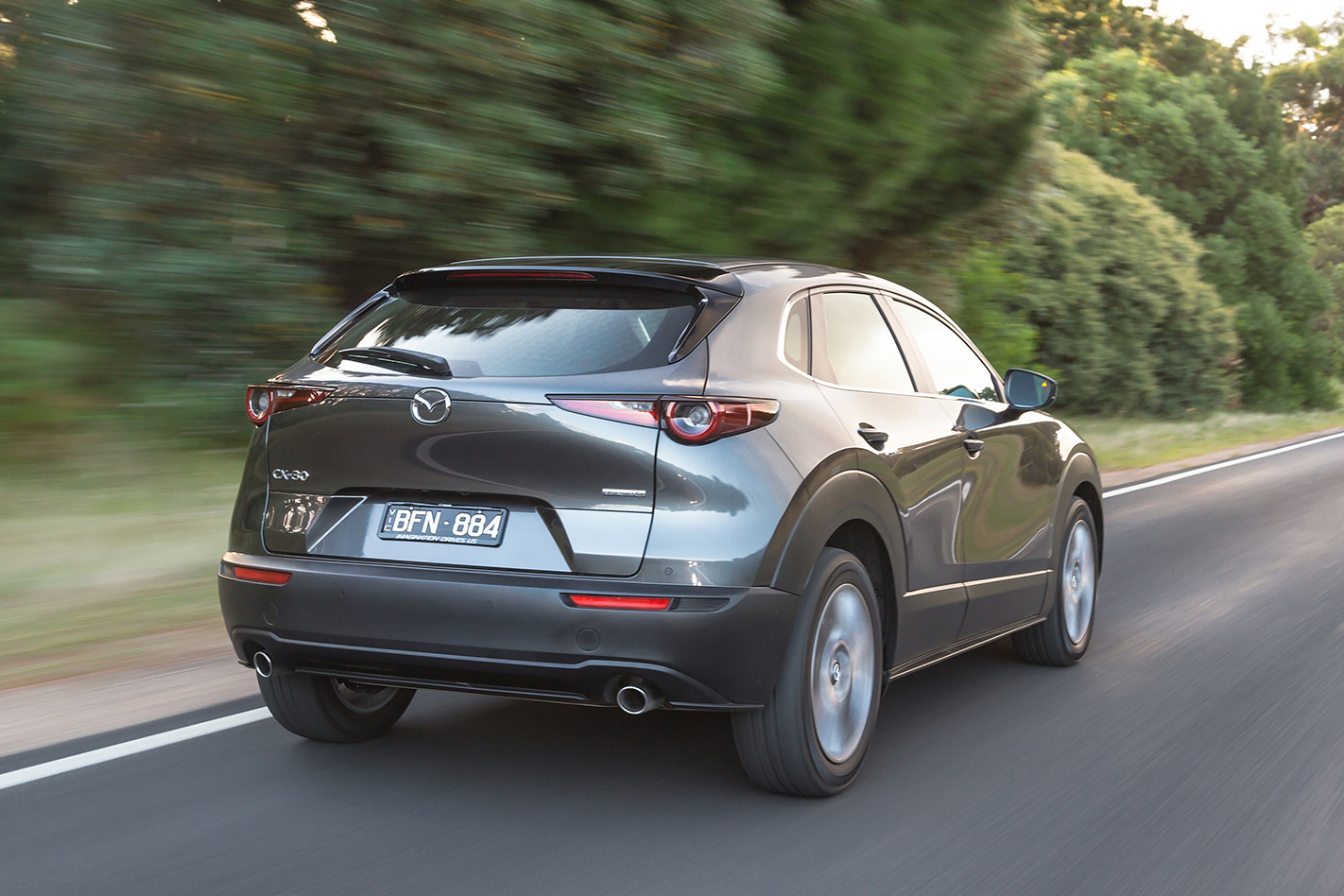
Sitting behind the superb multi-function steering wheel it becomes apparent that this isn’t a tall-boy SUV. The driving position is low-slung, exacerbated by the rather high waistline. It feels like a raised hatchback far more than an off-roader. However, the bigger body hasn’t generated a plethora of extra cabin space. Rear-seat knee and toe room is tighter than expected, while headroom can be described as adequate rather than abundant. Boot space is respectable at 422 litres, while the 60/40-split rear bench aids practicality for chunky loads.
Under the bonnet it’s more about mechanical status quo given SkyActiv X is yet to arrive down under. Hence the G20 is endowed with 114kW and 200Nm, with both figures being produced high in the rev range (6000rpm and 4000rpm respectively). And while the front-driven CX-30 isn’t any great porker at 1339kg, the SkyActiv-G powertrain needs a thorough accelerator prod for meaningful progress. Mazda counters this by claiming that this naturally-aspirated engine returns better real-world fuel figures than the typically torque-rich small capacity turbo lump.
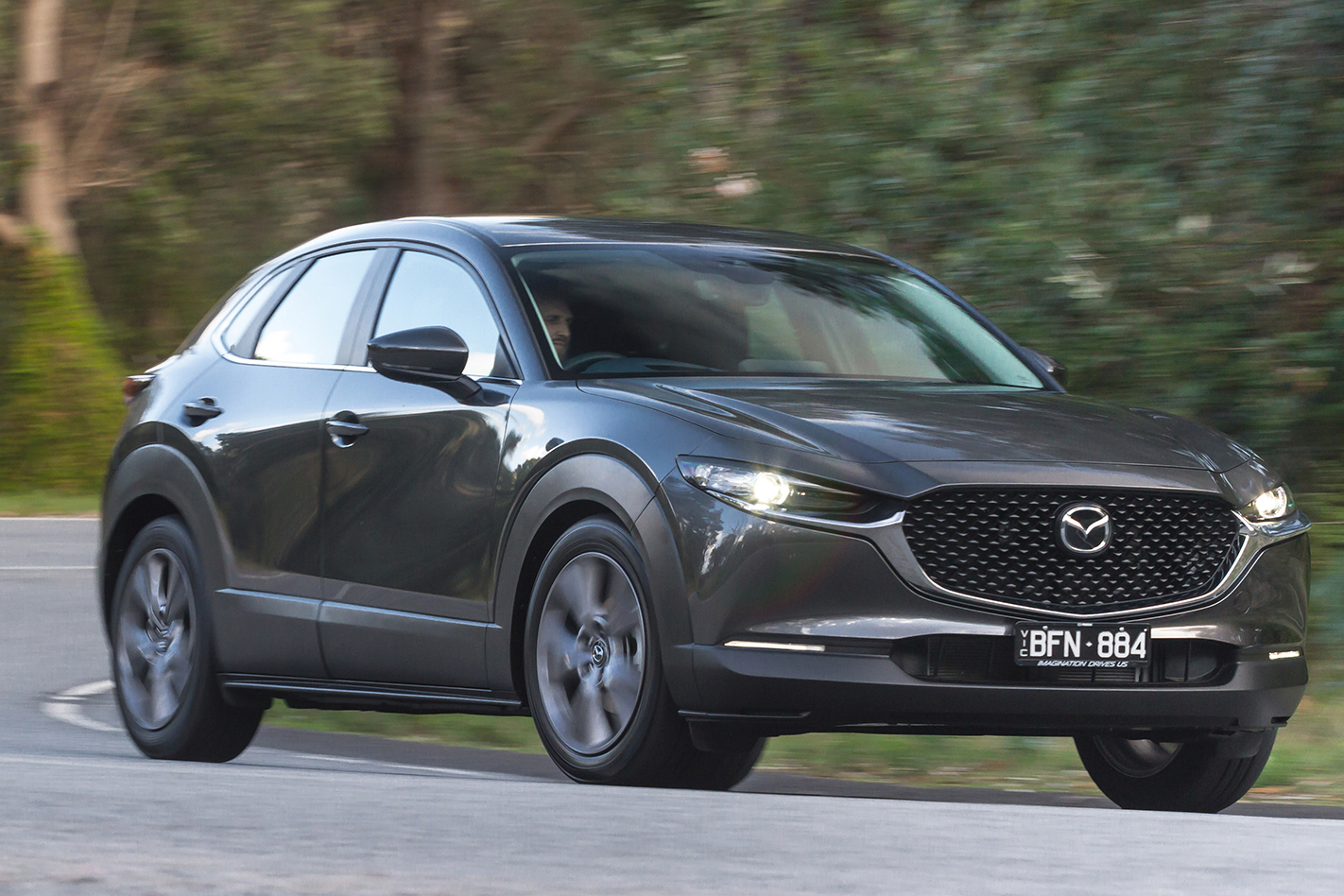
In reality all is okay as the 1998cc powerplant spins freely. But it’s vocal while doing so and few will see the claimed combined fuel consumption of 6.5L/100km. You can step up to the G25 and gain a 139kW/252Nm 2.5-litre four-cylinder, but the reward versus monetary outlay is questionable. Also continuing on is the six-speed torque converter automatic, which despite its age, performs adeptly in most situations.
While the CX-30 uses the Mazda 3’s next-gen SkyActiv-infused platform as a base, it isn’t quite the jacked-up hatchback we were expecting in terms of dynamics. On smooth surfaces the G20 Touring displays a level of body control and eagerness you’d expect from a Mazda. The steering almost reaches the same fluid level of the 3, while grip levels are sufficient with the 215/55 Dunlop SportMaxx tyres. However, push the envelope and there are some dynamic foibles.
The CX-30 uses all of its suspension travel (MacPherson struts up front and a torsion beam at the rear) through big undulations, yet there isn’t enough control on rebound to quell the flow-on effect. Pull back the tempo and this is less of an issue, but the 18-inch-alloy-shod G20 Touring’s ride quality is also fussy over sharp, consecutive imperfections. A short stint in the G20 Pure, with chubby-tyred 16-inch alloys, cancelled out that sensation almost entirely. Road noise and NVH levels are well suppressed, with only the occasional disturbance from the suspension over significant potholes. Still, drive the CX-30 as sedately as most owners will and it’s a more than competent package.
Ultimately, this is an SUV that offers desirability and a level of luxury that embarrasses more fancied badges. It puts the on-paper prices, which can get quite expensive if you venture above the G20 Touring FWD, into stark perspective. For an SUV that could have easily slipped through the cracks and into obscurity within the Mazda line-up, it seems the CX-30’s place between the CX-3 and CX-5 is, ahem, just right.
THE RIVALS
Honda HR-V; Kia Seltos; Mazda CX-3; Mitsubishi ASX; Nissan Qashqai; Toyota C-HR
MAZDA CX-30 G20 TOURING PRICE AND SPECS
- Model: Mazda CX-30 G20 Touring FWD
- Engine: 1998cc inline 4cyl, dohc, 16v
- Power: 114kW @ 6000rpm
- Torque: 200Nm @ 4000rpm
- Transmission: 6-speed automatic
- Weight: 1339kg
- 0-100km/h: 10.2 seconds
- Economy: 6.5L/100km
- Price: $34,990 ($35,680 as tested)
- On sale: Now
Vonnen is a Silicon Valley company, but not in the way you might think. It builds hybrid Porsche 911s to make them faster.
Now Vonnen has announced its first dealer partner, a Wisconsin-based Porsche specialist called Kelly-Moss Road and Race, or KMR for short.
To celebrate the agreement, KMR used Vonnen’s hybrid system called Shadow Drive to build a ‘safari-style’ 991 911 Turbo S with 524kW.
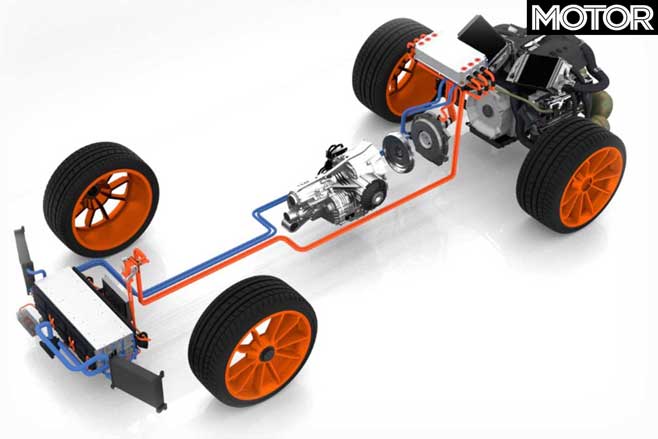
The Shadow Drive system isn’t a normal hybrid system however, it’s actually an integrated electric motor between the engine and transmission, which means the system doesn’t require a huge amount of weight addition (between 50 and 100kg) and means the combustion engine become less involved. The new electric motor also replaces the starter motor.
Vonnen says it “combines the sounds and tactile experience of driving a combustion engine powered car with the instant response, wide powerband, and energy recovery features of an EV, supplying an extra 150 horsepower and 150 ft-lb of electric torque.”
For a standard 2014 model Turbo S, the Porsche’s twin-turbo 3.8-litre flat six goes from a 412kW/650Nm output to a 524kW/853Nm output. But not this one.
KMR hasn’t stopped at just the new electrified drivetrain. It’s gone on to replace the two turbos with higher spec Xona rotor turbos, replaced the wastegates and intercooler, as well as headers and the rest of the exhaust, plus it’s had some obvious suspension work (coilovers, primarily) and a lightbar installed for a proper rally vibe.
KMR operations director Andy Kilcoyne say Vonnen’s Shadow Drive System is both “impressive and addictive,” and is looking forward to bringing it to customers.
“The ability to boost power without trading off fuel economy, emissions, and drivability really sets it apart from traditional power adders,” says Kilcoyne.
“It’s like adding the instant torque of a Tesla to the raw driving excitement of a Porsche, the best of both worlds.”
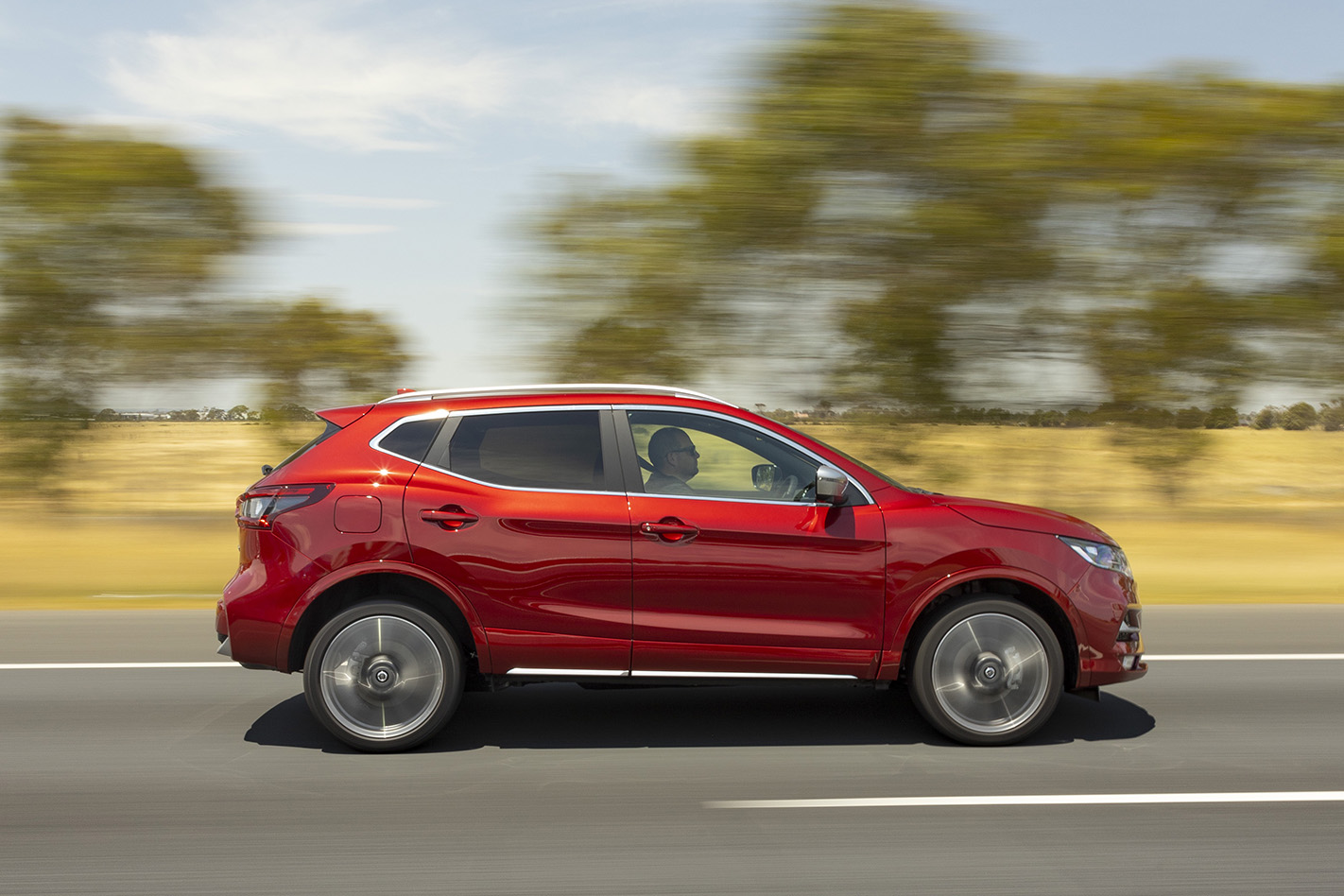
The Nissan Qashqai small SUV has finally received an infotainment update that includes Android Auto and Apple CarPlay to help boost its showroom appeal.
The addition of smartphone mirroring to the Qashqai’s antiquated infotainment system is the key feature of the 2020 update, but Nissan has also added additional active safety technology to the mid-spec ST+ variant, and a special edition N-Sport edition.
The Qashqai follows rivals such as the Mazda CX-3 and Toyota C-HR in being a late adopter of the popular smartphone pairing technology, that is now standard across the range with a 7.0-inch touchscreen.
All variants, except for entry-level ST, are also equipped with 3D satellite navigation with free downloadable updates for the first five years. Unlike the SD-card updates that require visits to Nissan dealerships, drivers can now update the maps themselves by downloading the software to a USB and transferring it to the infotainment system.
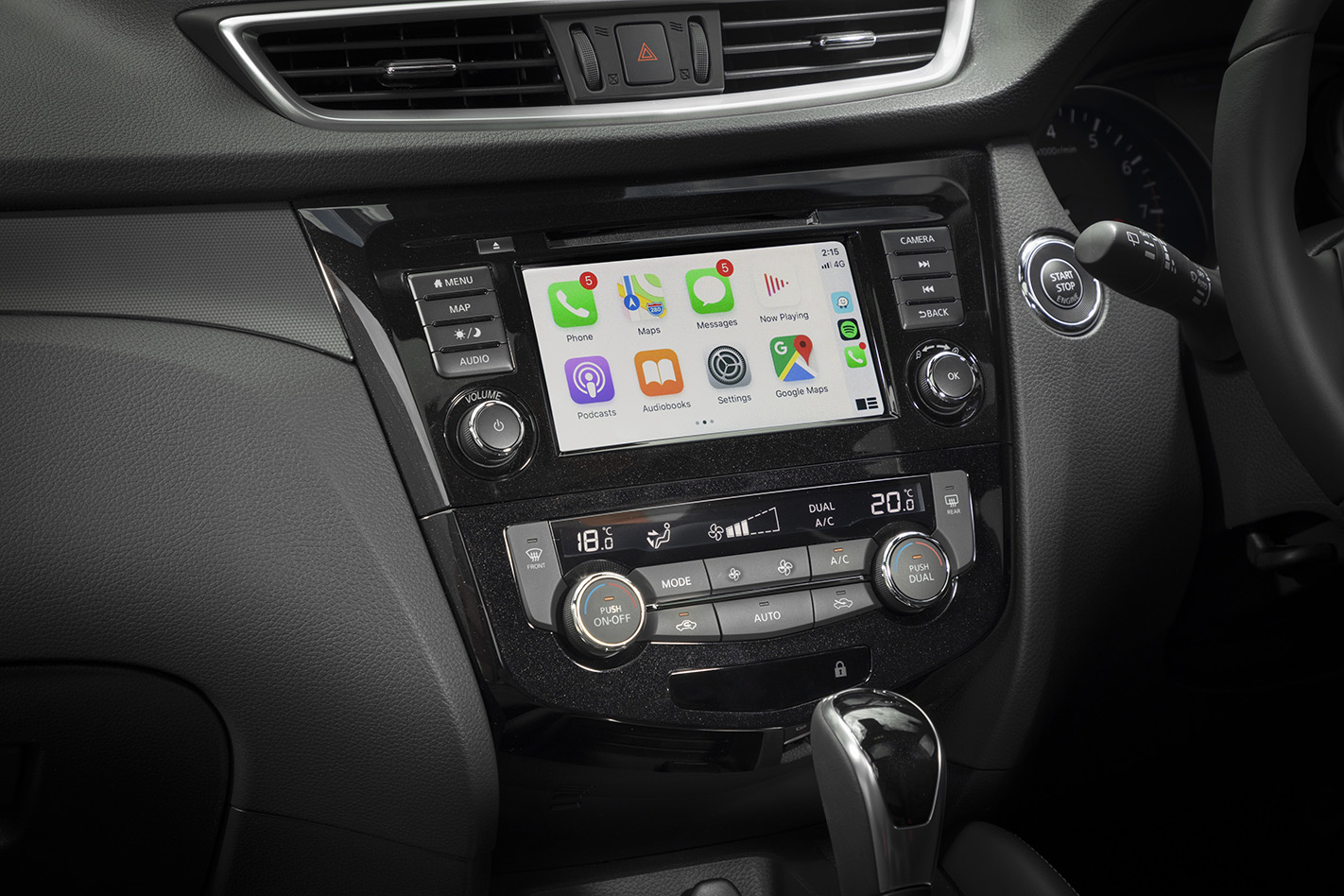
The MY20 update also provides a more affordable way to buy a safer Qashqai with additional safety tech previously only available in the range-topping Ti; with blind-sport warning, rear-cross traffic alert, high-beam assist, auto on/off headlights, driver fatigue alert, and fog lights now standard in the ST+.
The additional kit adds $1200 to the price of the ST+; though its $31,990 price tag is still less than the ST-L ($34,000) that merely adds autonomous emergency braking to the list of safety equipment above. The additional cost also brings creature comforts such as cloth and leather trim, heated seats, adjustable driver’s seat and 18-inch wheels.
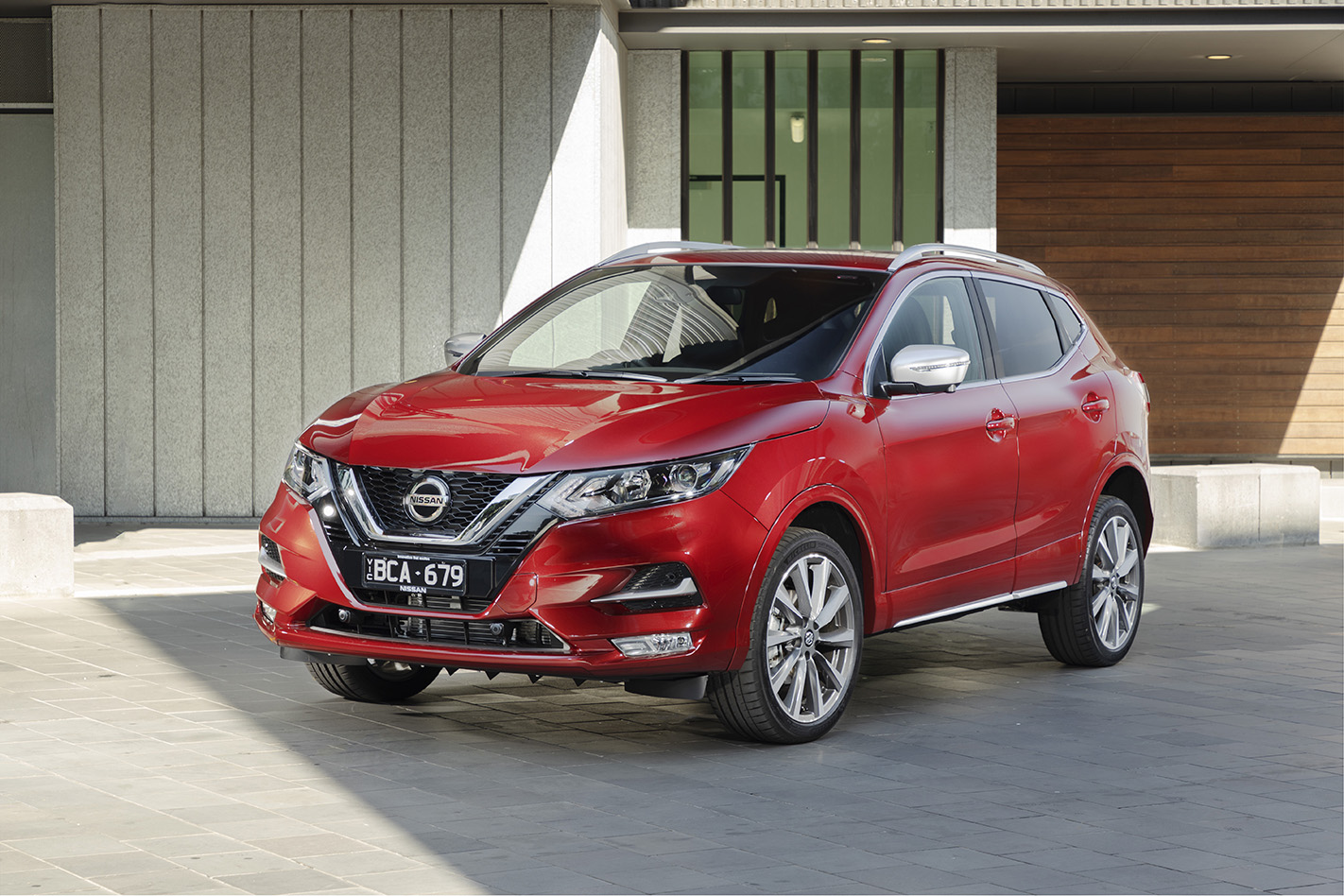
Nissan has also added a special edition Qashqai N-Sport variant (pictured) that, for an additional $1000, adds cosmetic enhancements to the ST-L spec. These include body-coloured bumpers and wheel arches, side mouldings with silver trim, silver painted door mirrors, black interior headlining and bigger 19-inch wheels. It is limited to 600 units.
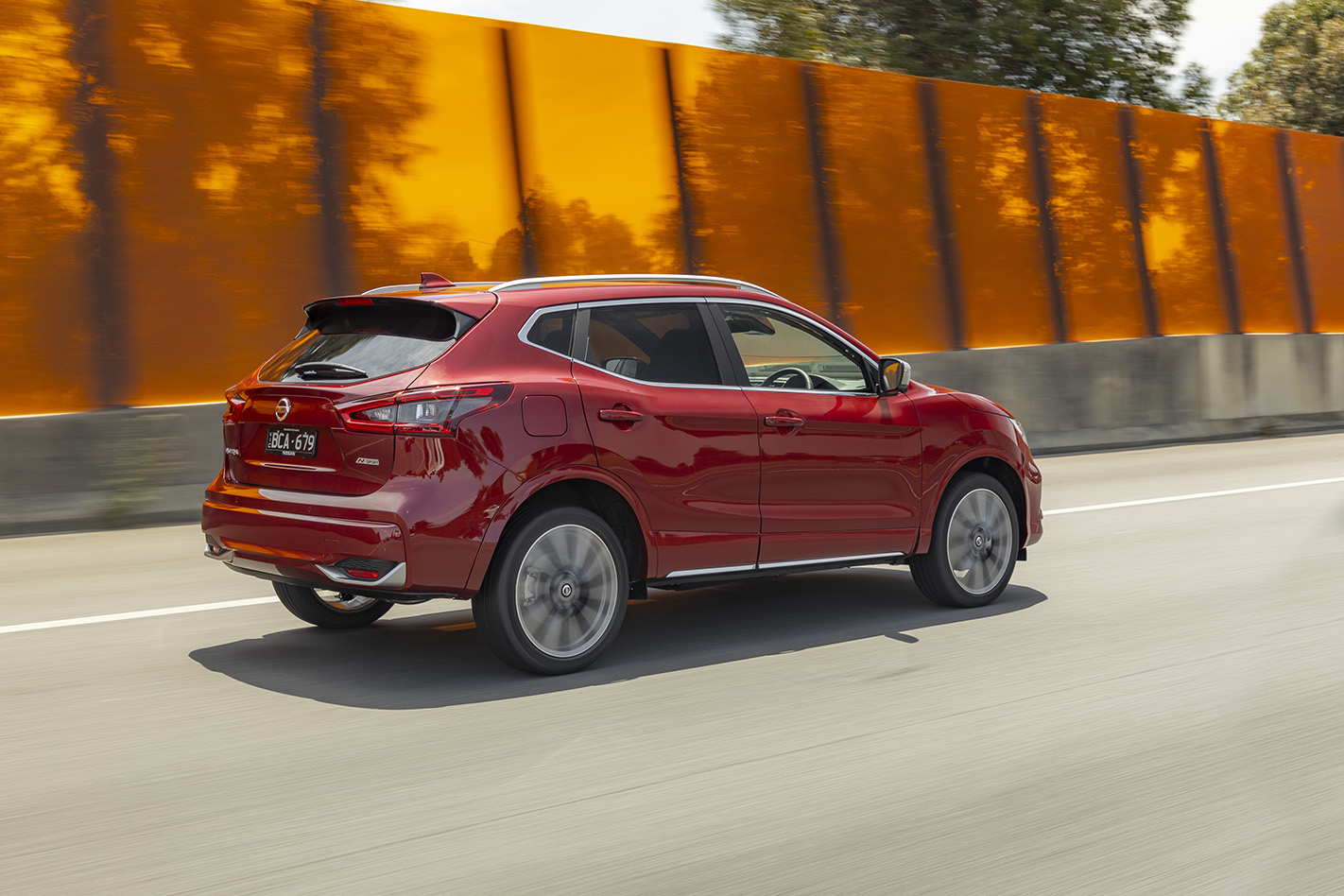
The range-topping Ti meanwhile gains pedestrian detection to its AEB system that operates at speeds up to 60km/h.
The MY20 update brings nothing by way of performance changes, with each version still powered by the 106kW/200Nm 2.0-litre four-cylinder petrol engine that drives the front wheels via a continuously variable transmission (CVT) in all but the ST manual, which features a six-speed self-shifter.
2020 Nissan Qashqai pricing
- Qashqai ST, manual – $27,990
- Qashqai ST, auto – $29,990
- Qashqai ST+, auto – $31,990
- Qashqai ST-L, auto – $34,000
- Qashqai N-SPORT, auto – $35,000
- Qashqai Ti, auto – $38,490
Performance Car of the Year 2020 is finally here!
In very late 2019, we tested 10 of the best fast cars you can buy, and now you can find out how they fared in the gruelling tournament.
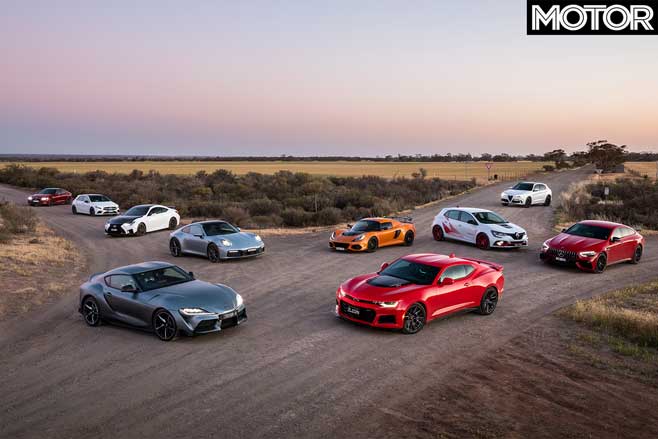
On top of PCOTY, there’s also plenty of fresh drives, our take on the world of fast metal, and more feature stories for you to enjoy!
You can find MOTOR at retailers around Australia. Or you can subscribe and save yourself some cash, there’s even a (cheaper!) digital subscription option.
Subscribers often receive their mags earlier, so you’ll get to see what MOTOR has to offer before anyone else.
Follow us on Facebook, Twitter, and Instagram to interact with us, give us feedback, and get a peek behind the scenes.
Peformance Car of the Year 2020
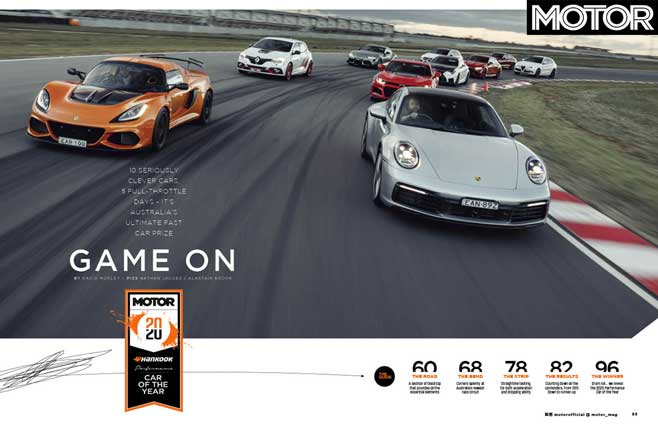
We hit the best roads around Adelaide and The Bend Motorsport Park in search of the answer to one question: What is the best performance car you can buy right now?
Sure, 10 cars enter, but only one can win. But only the best of the best can come to PCOTY, so anything that shows up is already ahead of the pack.
Plus, the countdown of our ten entrants, and the behind the scenes look we know you crave.
Mercedes-AMG W10 F1 car driven
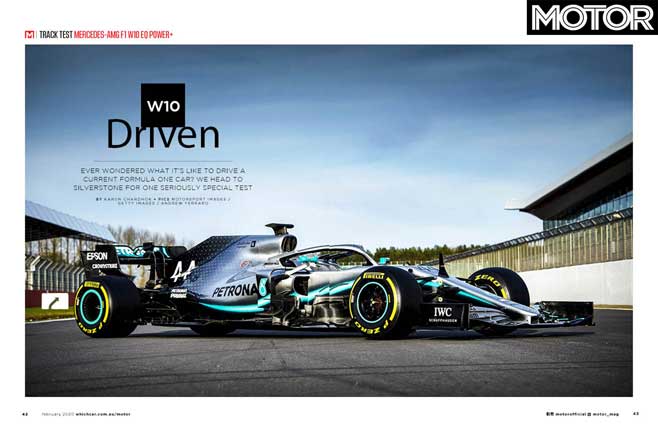
We get the chance of a lifetime – to drive Lewis Hamilton’s 2019 world championship car. Turns out it’s rather good at getting around a racetrack quickly!
Interview: Alpine Cars boss Patrick Marinoff
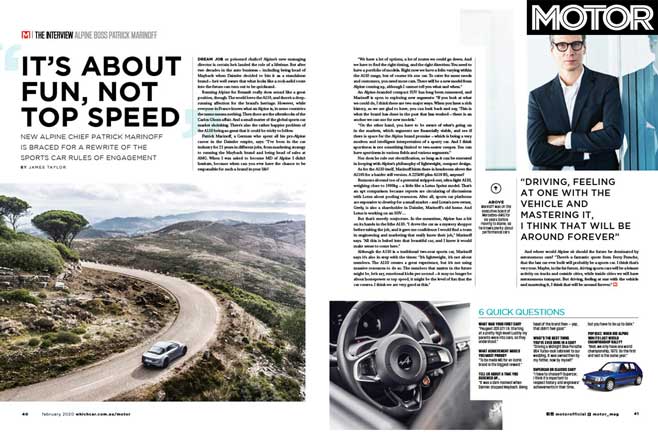
Alpine’s new boss talks about the expanding French brand, including mention of an SUV! Plus, his past at Maybach and the future of sports cars.
First Drives
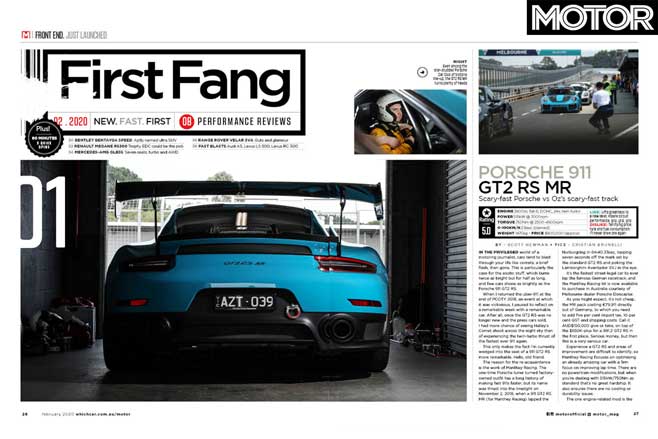
We punt Manthey Racing’s worked 911 GT2 RS at Phillip Island, belt a Bentayga, rag a Renault Mégane, and more!
Features, News, Opinions, and Hot Source!
On top of all the special gear in the February issue this year is our usual host of news, a look inside the MOTOR garage, rants and raves from Morley, Tim Keen, and Jethro Bovingdon, and of course the hallowed Hot Source guide to new, fast cars!
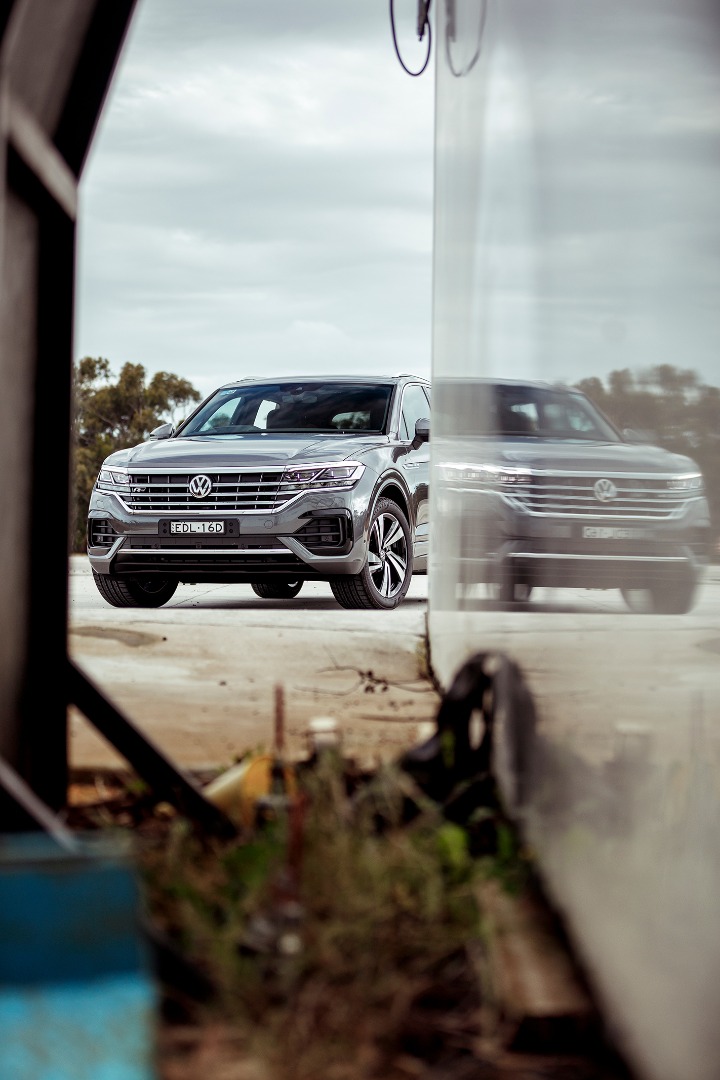
If you’re going to have an identity crisis, then best make it a fabulous one. Case in point: the Volkswagen Touareg.
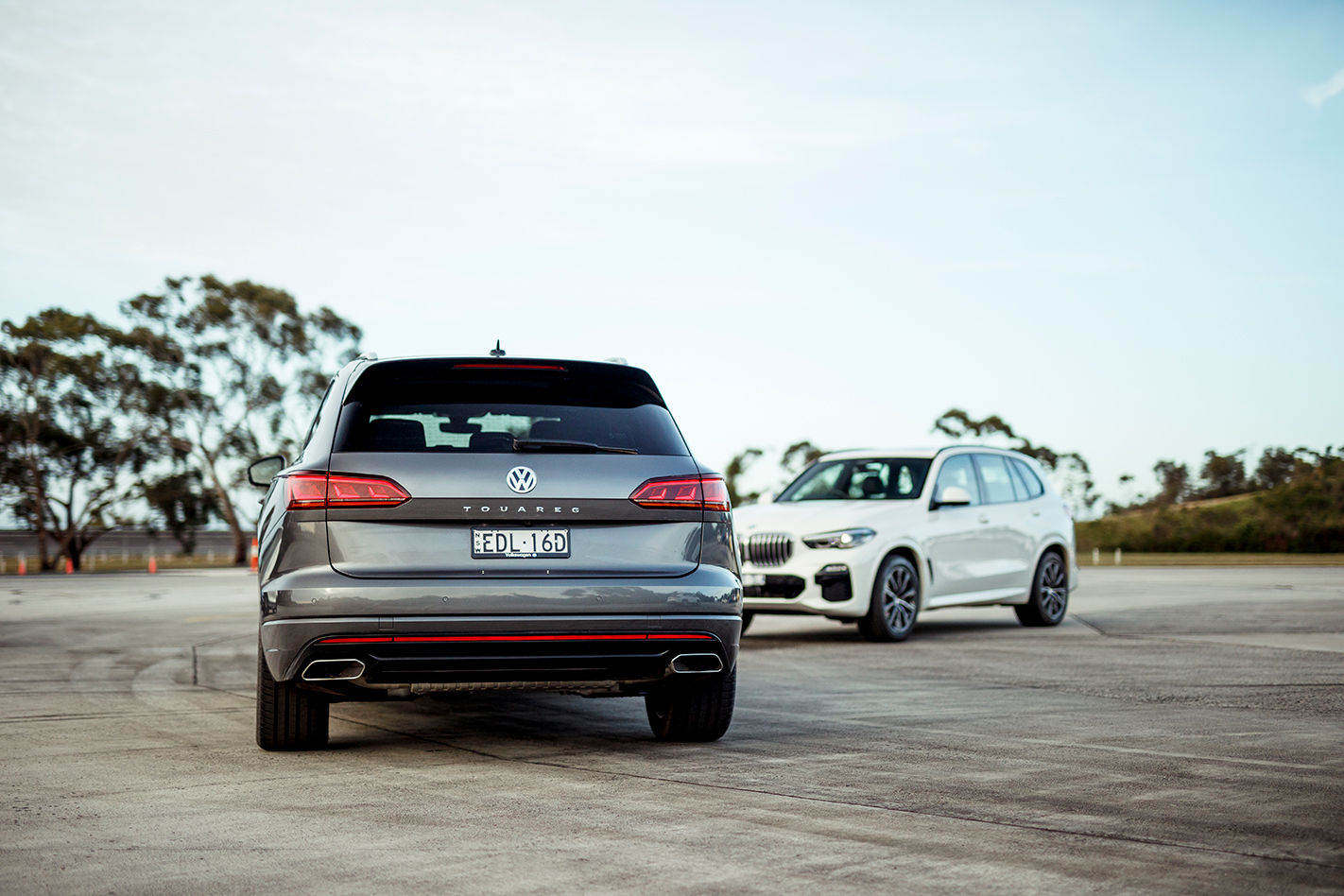
Is it a more-affordable Audi Q7? An everyday Bentley Bentayga? A Porsche Cayenne in drag? Or a bit of everything? After all, these four distinct large SUVs share the Volkswagen Group’s MLB Evo modular longitudinal architecture.

So, is the Touareg – now in its third generation, and priced from $79,490 for the entry-level 190TDI – a conspicuous bargain as a result of such rarefied genes? Or is it just an expensive Volkswagen? The answers are a qualified yes to both, since our top-spec Premium model – normally from $85,490 with standard air suspension, heated/vented/massaging front seats, Matrix LEDs, gesture control, QI phone charger and 20-inch alloys – arrived wearing a $114,490 price tag due to nearly $30K of additional options.
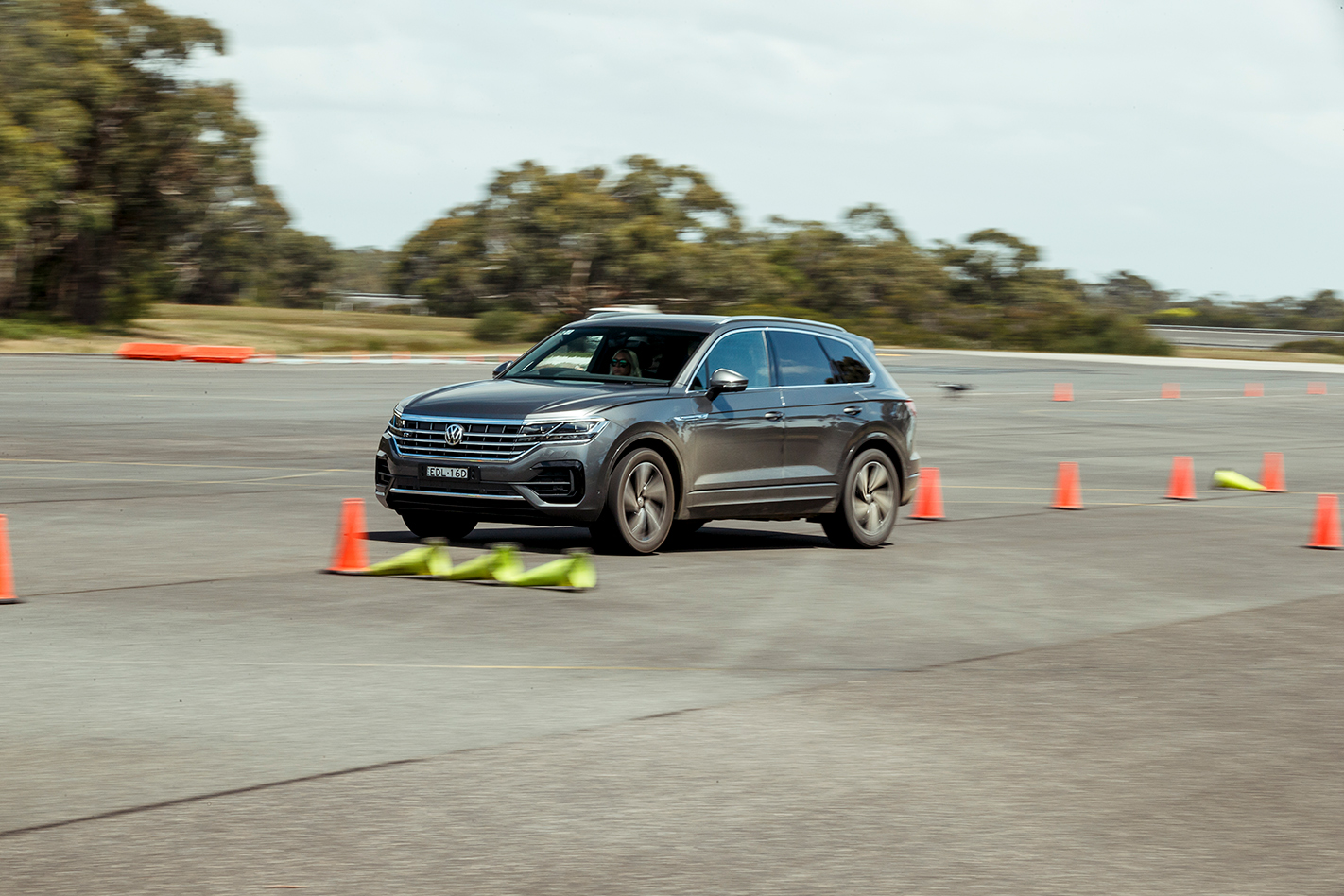
Foremost of these, if you value driving and comfort equally, is the $8000 R-Line pack, due to the active roll bars and four-wheel-steering tech it introduces. Both better contain and control excess body wallow for taut, precise handling at speed, while 4WS allows outstanding manoeuvrability. Combined with the air suspension’s plush, isolating ride (this was the quietest car at COTY, despite being diesel), and it’s easy to surmise that Bentley engineering knowhow somehow plays a part here.
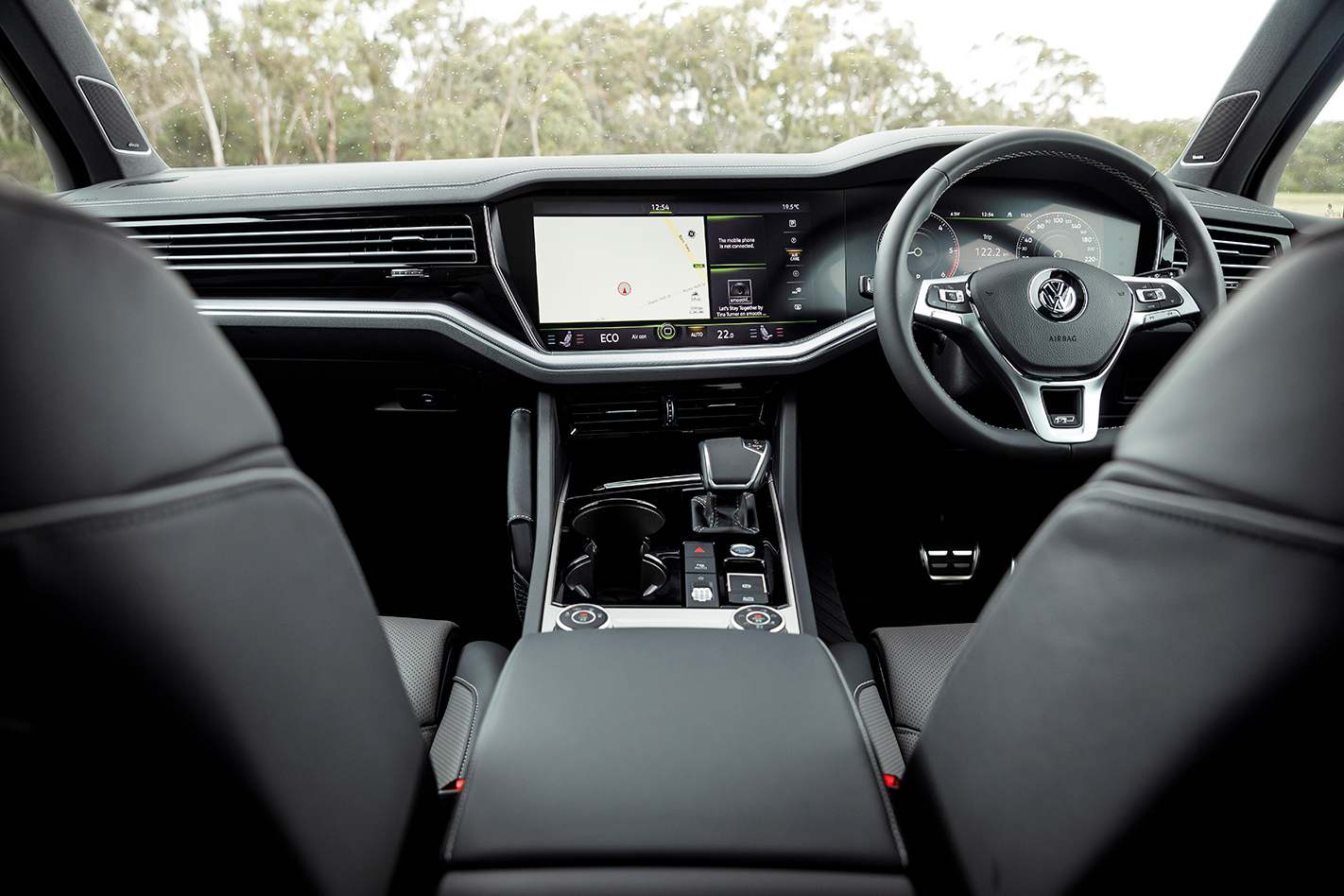
Step inside the lofty and spacious cabin and another $8K option stands out – the ‘Innovision Cockpit’ with its 15.0-inch touchscreen and 12.0-inch digital instrument cluster, enveloping the driver. Along with a head-up display and other ambience-enhancing goodies, they usher in a Q7-like – rather than the standard set-up’s Passat-like – elegance.
Still, the Touareg’s packaging fundamentals remain spot-on. There’s superb fit and finish, loads of legroom front and rear, firm yet supportive seats, and ample ventilation. Family-focused functionality was clearly a development priority.
A minor gripe is that Apple CarPlay/Android Auto don’t make full use of the enormous display. Some of the switchgear is scattered or awkwardly sited, too, and the sunroof reduces headroom. The ESC calibration on gravel also cries out for more finessing.
Plus, where are the electrified options? The torquey 3.0-litre V6 turbo-diesel may deliver its punch in a smooth and muted manner, making this Touareg a relaxing long-legged tourer, but it isn’t especially spry from take-off (unlike BMW’s bounding X5 30d) and diesel isn’t exactly this millennium’s environmental posterchild. What would Greta say? Adding the Cayenne’s hybrid smarts would help.
Nevertheless, with some deft option ticking, the 190TDI makes a compelling case to sidestep the usual luxury-segment suspects. Yet, even with all the extra kit, the flagship VW SUV still undercuts the considerably more bare-base X5 30d equivalent. It doesn’t skimp on advanced safety gear either, includes free Apple CarPlay/Android Auto, and offers a five-year warranty. Unlike the other Germans.
Unadventurous though it may be under the bonnet, the middle-class SUV from Wolfsburg is nonetheless better because of its blue-chip breeding elsewhere. Such diverse DNA only serves to enrich the Touareg’s capabilities. And identity.
THE JUDGES’ COTY SCORECARD
Function: 3.5
Efficiency: 2.7
Safety: 3.6
Technology: 2.7
Value: 3.3
VOLKSWAGEN TOUAREG SPECS
BODY
Type: 5-door SUV, 5 seats
Boot capacity: 810L
Weight: 2070kg
DRIVETRAIN
Layout: Front-engine (north-south), AWD
Engine: 2967cc V6 turbo-diesel (190kW/600Nm)
Transmission: 8-speed automatic
CHASSIS
Tyres: 285/45R20
ADR81 fuel consumption: 7.4L/100km
CO2 emissions: 194g/km
Crash rating: 5 stars (ANCAP)
PRICES
$79,490 – $85,490
