
“Power is like a woman you want to stay in bed with forever,” said writer Patrick Anderson – an accurate, if unappealing, summation of Tim Robson’s current condition.
This feature was originally published in MOTOR’s April 2004 issue
Because power beyond mortal comprehension is the very essence of Performance Car of the Year… but, having let the role of Fat Controller slip away, it is no longer Robbo’s to wield. The Hat of Hatred now adorns the innocent Marcus ‘Herman’ Hofmann, still smiling sweetly as the ex-Sydney convoy gathers at Marulan Roadhouse. The big fella can only watch, wracked.
Human suffering is hard to bear on an empty stomach, so I gamble on the Fried Surprise and the company of this year’s Lucky Bastard reader, Matt Cass, being uplifting. It isn’t. He surveys the glittering mischief awaiting our attention and offers “I wouldn’t be here if my wife hadn’t turned into a lesbian” as an opening line.
So I briefly indicate aching compassion and return to the danse macabre of Herman and Robbo (think Seinfeld, think Newman) in which the lamb-like Thin Controller will surely be crushed. I can’t look. I must.
Day One/Avalon
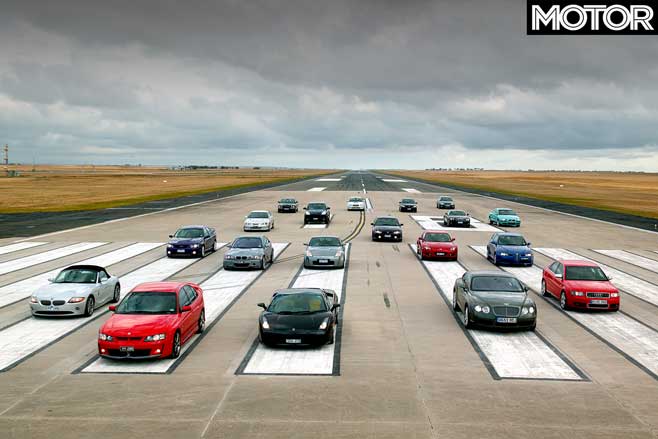
A drizzling sky greets us at Avalon Airport as the $2,594,801 convoy arrives in all its aural layers – the fizzin’, poppin’ littlies, the metallic zing of the BMW sixes, the whipsnarl of the Lamborghini and the rumble of the Bruiser V8s, all capped by the earth-moving hammer of the CSV and, finally, crowned by the infrasonic bass pressure of Morley arriving fashionably late in the Bentley.
The fire trucks and blood wagons are all conspicuously in place as the Thin Controller reads the pre-emptive riot act with such conviction that many among us are briefly moved to actually consider the responsibility of… nah. But it’s a good start. Less pleasant is the news that Robbo has been promoted overnight to Deputy Controller, no doubt a pacifying move by Herman but one that leaves the brute just one heartbeat away from total power.
Unattracted to bloodshed, I decamp to the top speed timing station, where chaos reigns as Art Ed Brendon Wise, traditional ruler of the radar, has stayed home to breed this time. Well done. Surprised us, too. But now the desperates here can only point the gun and pray.
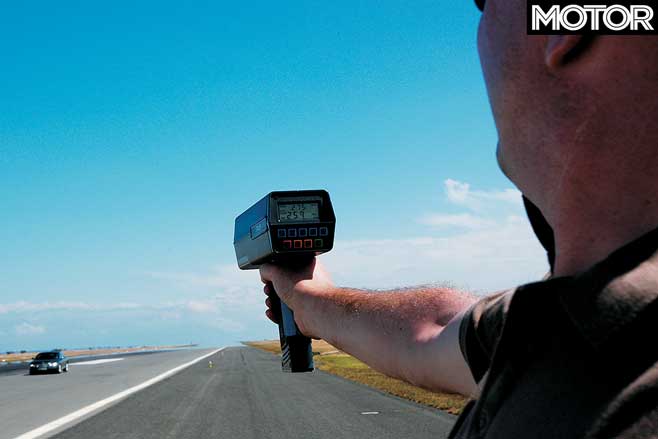
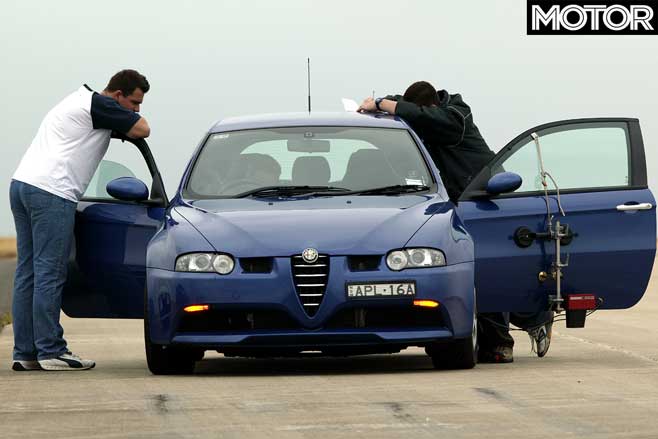
Despite any number of cars whapping past, the only thing recorded, and therefore currently official FTD, is a hare ambling across the track. Finally, thank God, veteran mule Stu Orford and newcomer Andrew Hockley somehow succeed in making a two-man job of it and we are spared further radio reports of, “I’d guess the Alfa at 250 that time, Base. Stuey says so, too.”
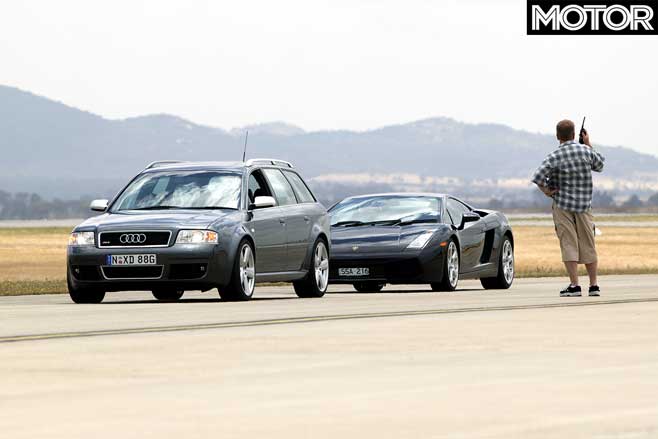
With the science thus secured, we enjoy the spectacle of headlights burning out of the misty distance and the phenomenon of sound identifying the cars long before sight, the M3 CSL’s incredibly hard, knuckly howl being unquestionably Din of the Day.
It slams past with the bow wave you might expect, but this is as a gentle zephyr compared to the Porsche Cayenne’s ludicrous attack on physics. I make a mental note to assume the foetal position off in a ditch somewhere when the Bentley deploys.
But the real tension is with the Lamborghini, which holds the honours with half a dozen runs at 288km/h until Pro McConville lifts it with a 292. Equally pleased with proceedings is CSV’s Peter Dichiera, who’s addressed the aero thing by stuffing his Mondo with more horsefire than is in all of Kentucky and, having scored a second-place 282km/h, loudly points out that each of the Gallardo’s extra kays costs $29,000, so there.
However, if raw power still rules on the runway, technology is taking over in acceleration world. Big-inch, pushrod stomp, manual ’boxes and rear-wheel drive are only fun for photography nowadays. You want numbers, you go computerised, and the more hands-off the better.
No more compelling proof exists than the 367kW, 1450kg Lamborghini being convincingly spanked in the 0-100 and 400m runs by a car with 10 percent less power and 400 more kilos. Ladeez and Gentz! Acceleration king of the event! The automatic, AWD Audi station wagon complete with roof racks. Bring on the salts, Billy Bob.
But big thump still has its fascination. In the interests of research I grab the Bentley and a helmet and head for the top-end strip to see for myself exactly what it’ll do. Coiling onto the straight, I floor the pedal and am instantly overwhelmed by an unearthly force as the thing lunges forward at roughly re-entry rate.
As the needle blurs through the lower third, a thud draws momentary attention to a rear view suddenly bisected by the spoiler’s rising, but I’ll not be looking backward again. My attention to the rising numbers is absolute, and as the wind shears past and the ferocious thrust continues, I watch the gauge with awe. It’s been a long time since I drove a car right off the dial. The fuel consumption only reads to two figures, so 99L/100km is the best I get. But somehow that seems enough.
Day Two/Winton
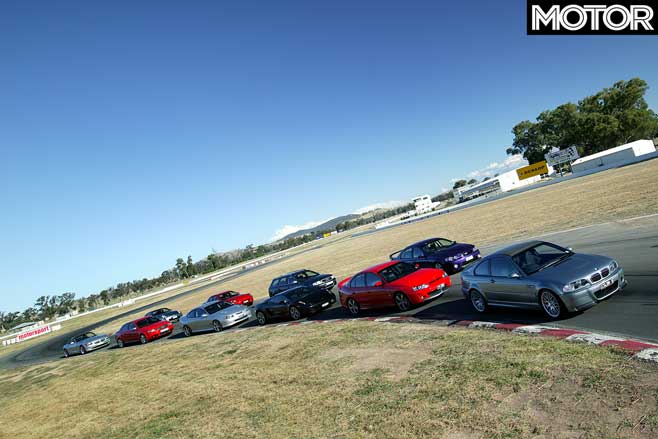
The heat of the northern Victorian dawn is already threatening, and no less pregnant with malice is Winton’s awaiting track as this year’s 4890kW parade is prepared for battle.
The judges emerge from wardrobe and are immediately corralled by Herman for the traditional spray: “Only Cam will be timed so there’s no need for ARE YOU LISTENING TO ME TAYLOR M AND PERHAPS YOU’D LIKE TO SHARE WHATEVER’S SO FUNNY WITH US DEAN!”
But of far greater import are the Golden Dollar bets now being taken among the mules as the first cars swish out. These are, as ever, the less ambitious entries, a policy that allows familiarisation while limiting its effect to merely acres. This is wise. Misplacing the Bentley would probably involve Geelong.
By the middle of the day the middle of the pack emerges. And while Mr McConville does the adult thing, a surgeon among slashers, certain others compete by comparing how far each can flog a Big Domestic in anything other than a straight line.
Attempting more decorum is our Foreign Correspondent Greg Kable, out in the Euroboomers, but even he soon concedes that belting 2.4 tonnes of tipple-tower around a racetrack is the dream of a damaged mind.
Speaking of which, Robbo has assumed control of the pitlane exit and I fear for Herman should he step near the chute. But the Thin Controller has quite enough to occupy him elsewhere as the Jaguar’s intermittently losing its transmission, the Cayenne’s lost its chips, the Subaru’s lost its oil and the Crossfire lost half its console when Jesse pulled the gearstick up for reverse.
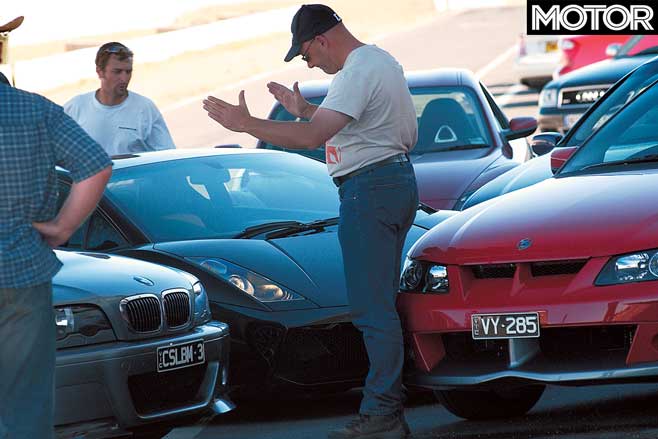
But there’s a win for the Chrysler as well; its non-functional wing vents pick up the Bogan Award for one of the dozen stylists who, I’m guessing, were each given a square metre of its exterior to ornament on the condition that they didn’t talk to each other. Ever.
Art of another form exercises the photographic elements, and while the glaring daylight is just fine for Glenn Ridge’s The Car Show film team, still photographers Watkins, Mueller and Wielecki are praying for cloud, smoke or sundown to enhance the scene with romance and making do with the plentiful eruptions of dust and sod generated as our betters demonstrate that AWD is not infallible, but that it’s a sovereign boon in getting back to the bitumen.
And when the heavy hitters are finally let loose, Cameron also demonstrates the value of a clever transmission (and tricky tyres) by besting the Lamborghini with the M3, despite the latter carrying 5.23kg per kilowatt compared with the Italian’s 3.95.
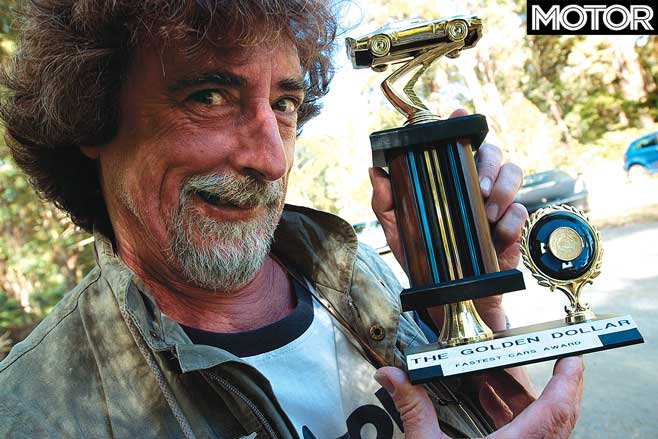
Only the finest of minds can appreciate such nuance, of course, and the very finest of these is revealed over dinner as the Golden Dollar Award, crafted once again by the impossibly chipper mule Martin Doxey, is presented for the most accurate prediction of results. The winner waves away ovation, just as he did last year. And, once again, modesty forbids further.
Day Three/Roadwork
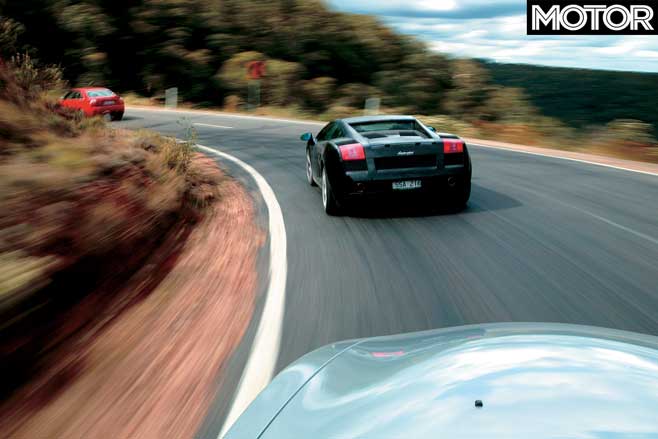
The final day begins with a road loop through the wine country of King Valley, and I, for one, would be happy for it to end there, and soon. But no. However, the value of the exercise is undeniable as the cars address the issues of reality and either lose credibility (M3 CSL), finally gain some (Liberty) or enhance a bucketload even further (Gallardo).
And if the Lambo is charming the judges, its effect on the civilian world is downright devastating. The phwarrrr-fest peaks for Our Deano when, while fettling its tyre pressures in Wangaratta, ‘his’ Gallardo attracts the attentions of a young lady of such shattering loveliness that he gets brainspin and can’t think up a return line ’til playlunch.
For the benefit of all, the caravan withdraws from general scrutiny to the base camp of MOTOR’s very secret hillclimb route, an 8km climb to the clouds at which the Glory Boys select their HotWheels while the rest of us discover that, having used chemicals last year to kill marchflies up to the size of cats, we’ll need rifles to deal with this year’s crop.
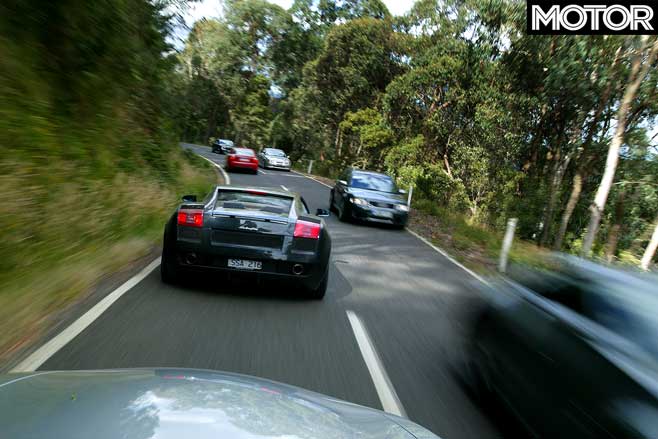
The ever-perky Glenn Ridge accepts a Thunder Run with Taylor (M), from which the broadcaster emerges relieved of the need for further excitement. Undaunted by this is local mum Sharon McNeill. She and her family are avid MOTOR readers and, on receiving her offer to swap any member of her brood for a similar rocket ride, we quickly arrange a run in the Lambo with Judge Jesse. She comes back on high beam and stays on to co-pilot in whatever else amuses her, asking only that we get photos to drive her menfolk crazy.
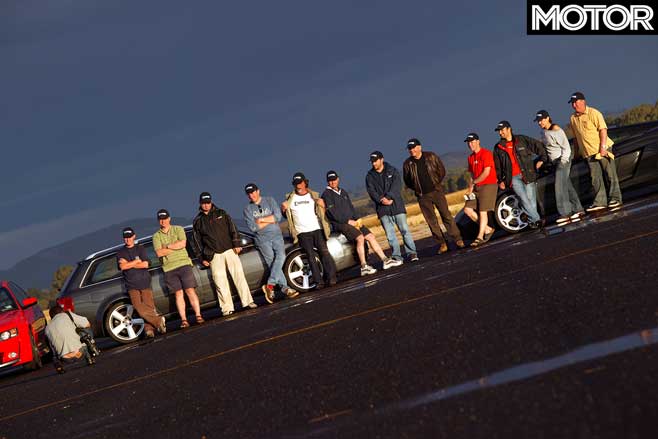
Finally, with everything run or rooned, the fleet chases golden light to Benalla’s airstrip, where the judges go into final debate and the photographers inventively compose the cars to get both group and cover shots with a single set-up, an economy which Young Doxey proudly informs us “kills two dogs with one bird” before returning to assist, aglow with his mastery of metaphor.
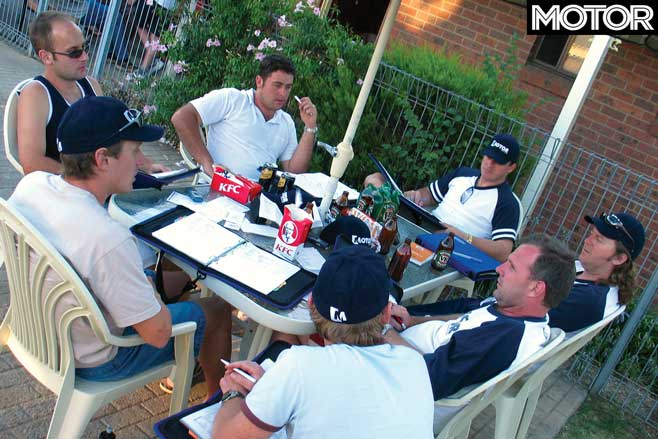
And then it is over. And at last light the announcement is made. The Lamborghini’s win is a defensible choice… but it is not the only triumph we have witnessed. Not only thwarting the insidious Robbo Rebellion by keeping the brute in plain sight, Herman has beavered away in the background cleverly enough to allow us to accomplish in three days that which normally takes five. The sweetie has become our new Man of Steel! Huzzah! It is an achievement that, Robbo sighs, raises only one question: “How on earth will you ever get Boxhead back in the bottle now?”
PCOTY 2004: The Packers’ Pick
While the Chosen Ones are harvesting numbers, the hard yards fall to the mules. And when at last this thing is done, they will leave unrewarded.
But if they could take just one home with them as a keeper, which would it be? The M3 CSL is the first call but gains only two votes. The Alfa 147 draws a surprising nomination but, again, has only two adherents. So does the Bentley – a serious one, for which I won’t apologise. The Lambo does better, winning three voters, two of whom swear its pull factor isn’t the reason.
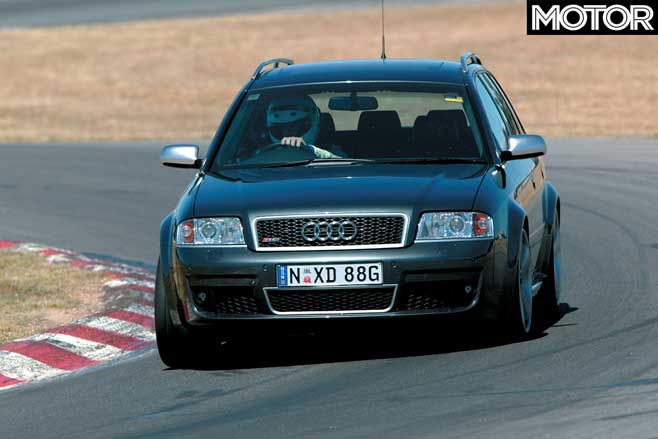
But there is only one winner. By the clear majority of seven votes: the Audi RS 6.
WHAT IS IT?
The Lexus NX 300 is the brand’s mid-size luxury SUV offering, and the Crafted is a value-added limited-edition variant introduced this year to further thicken the range.
Available in petrol FWD, petrol AWD, hybrid FWD and hybrid AWD guise, I test the middle sibling — the NX 300 Crafted with all-wheel drive – which is offered at $63,806 drive-away.
WHAT’S IT LIKE TO LIVE WITH?
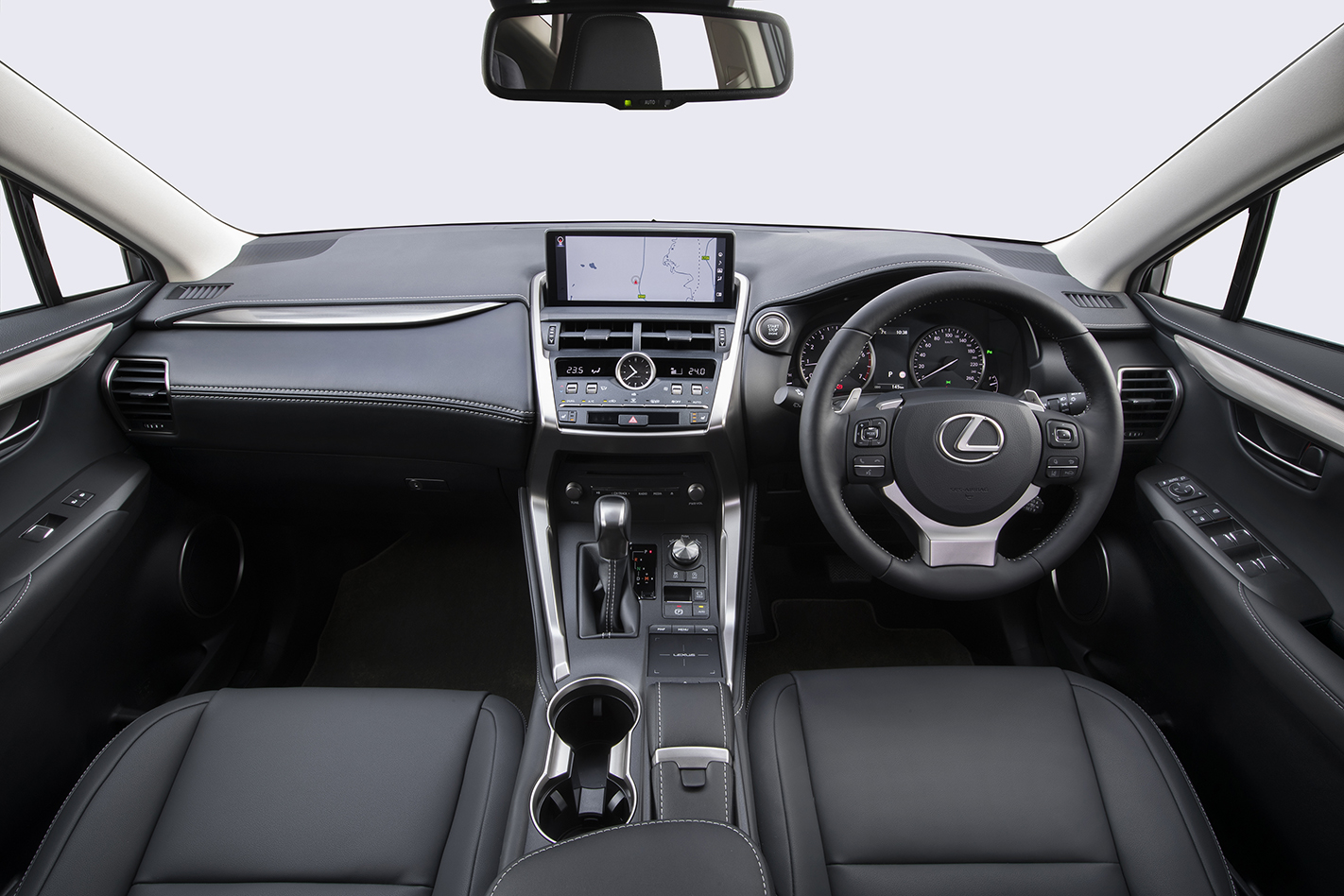
The interior is refined without being overly luxe.
The 10.25-inch display screen is impressive. The touchpad used to control functions like the radio and climate control, however, is unnecessarily fiddly. I madly swipe left, right, up and down at the lights and still can’t find my radio station of choice. Maybe I’m old-fashioned, but I prefer a few well-chosen knobs than a concentration-sapping iPad-like experience from behind the wheel.
Thank goodness for the retro central analogue clock, which is easy to read.
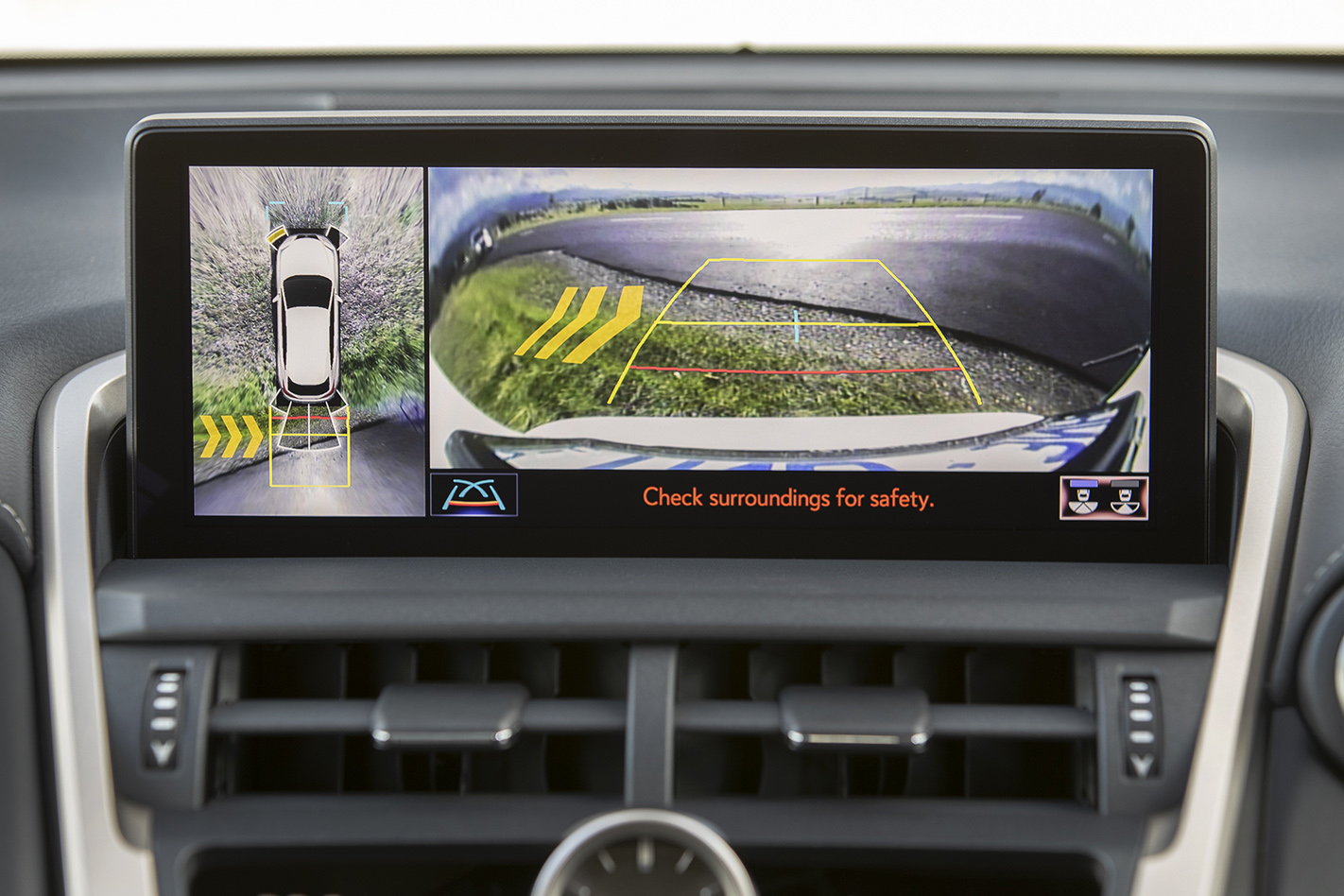
The NX 300 Crafted is equipped with pleasant little luxuries like a glass moonroof and a nifty 360-degree parking camera, along with a wireless phone charger, 10-way power seats (cooled and heated) with driver memory function. Now that we’re in the thick of Australia’s hottest summer, trust me: actively ventilated seats are something you will welcome. I bash out 400km driving down to the Mornington Peninsula and back, and the seats feel well bolstered and comfortable on longer drives.
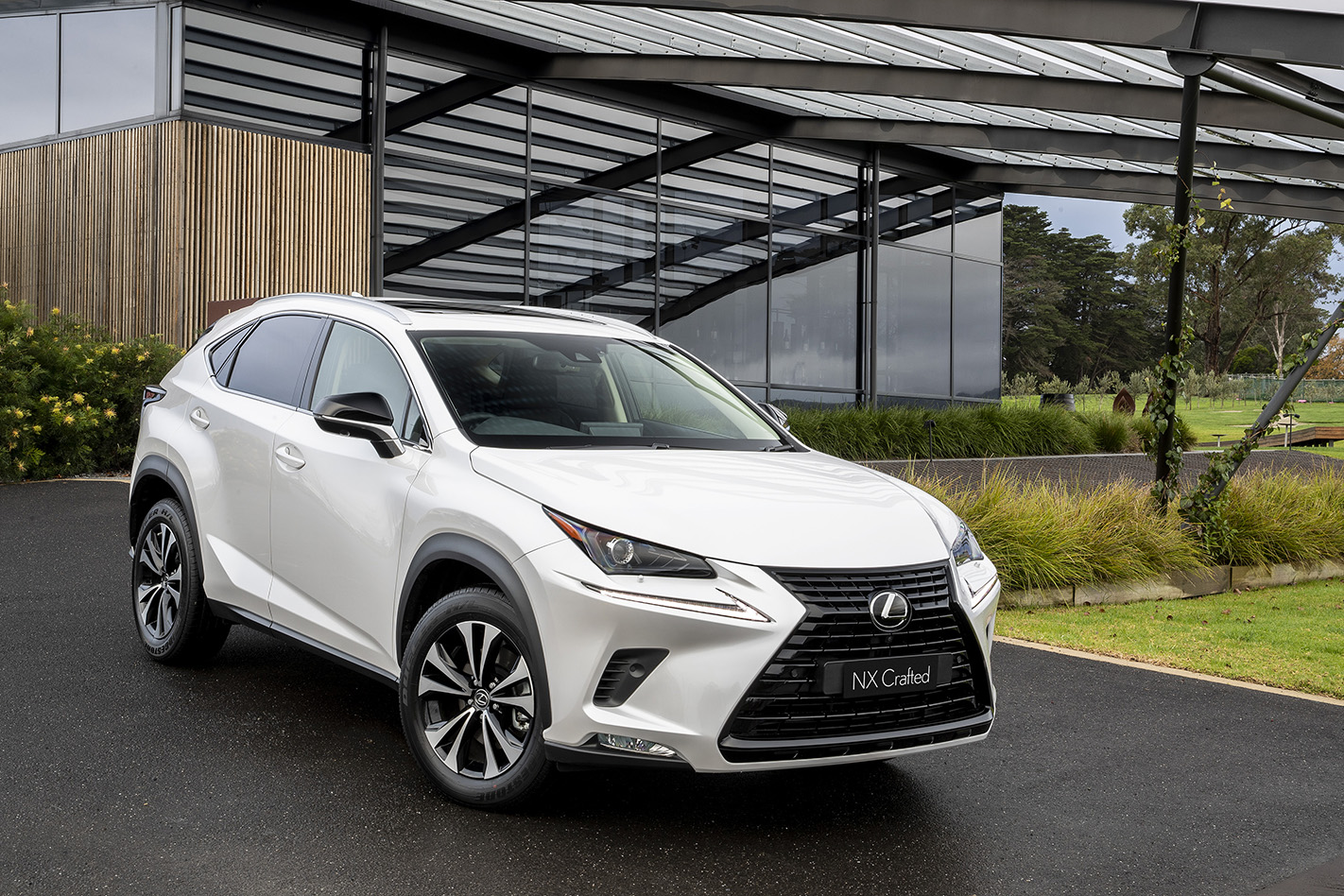
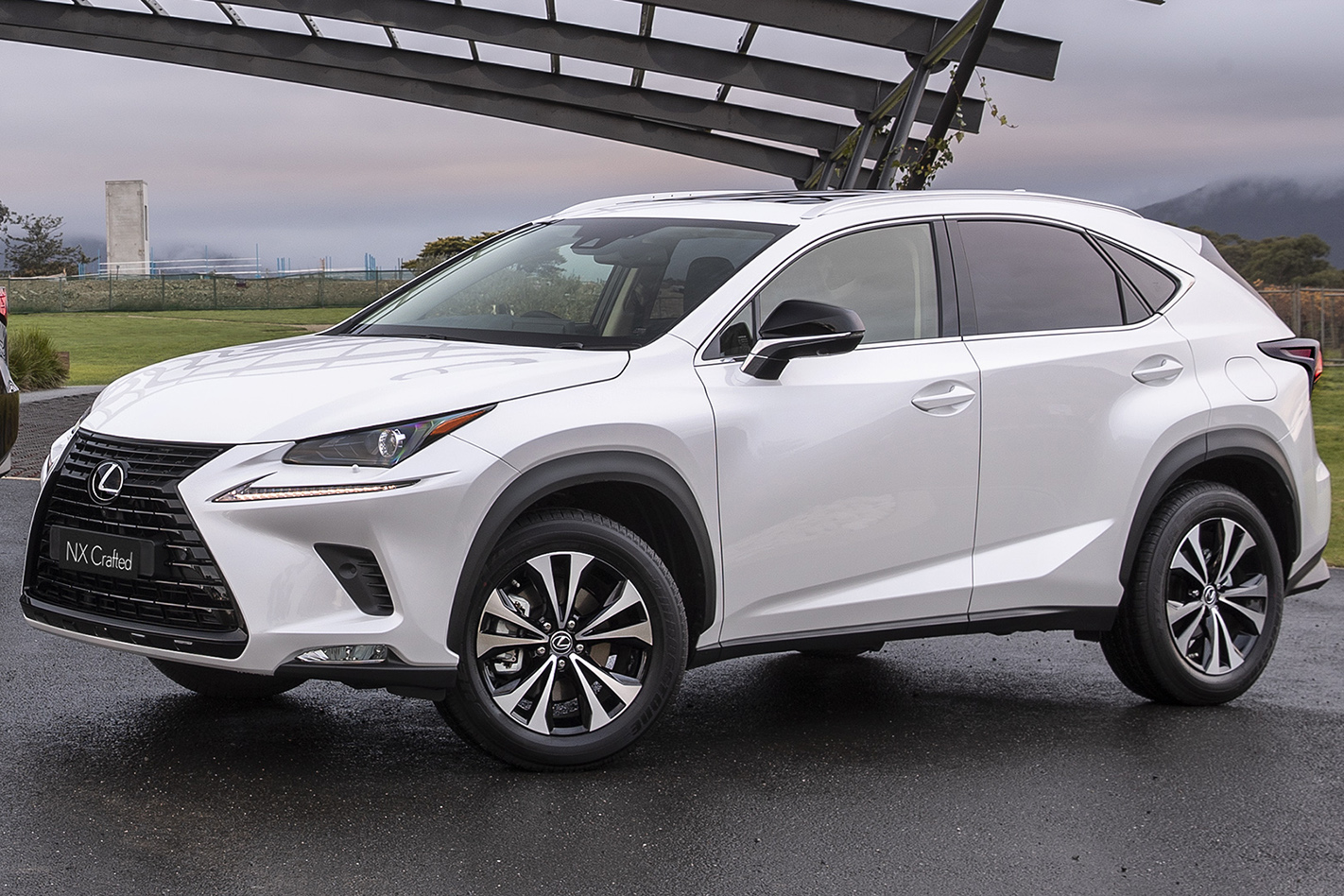
As to the NX300’s appearance, Lexus runs with the clichéd “bold, sporty and dynamic”. Present-day Japanese automakers appear to be heavily influenced by fictional dragons. Like Mazdas and Toyotas, the Lexus sports a wire L-shaped mesh grillewith many sharp panel creases making its “face” resemble a “Battlestar Galactica” Cylon circa 1978.
Still, plenty of people like this look. The NX is the top-selling Lexus model in Australia, accounting for more than one third of Lexus sales, so the design obviously resonates.
WHAT’S IT LIKE TO DRIVE?
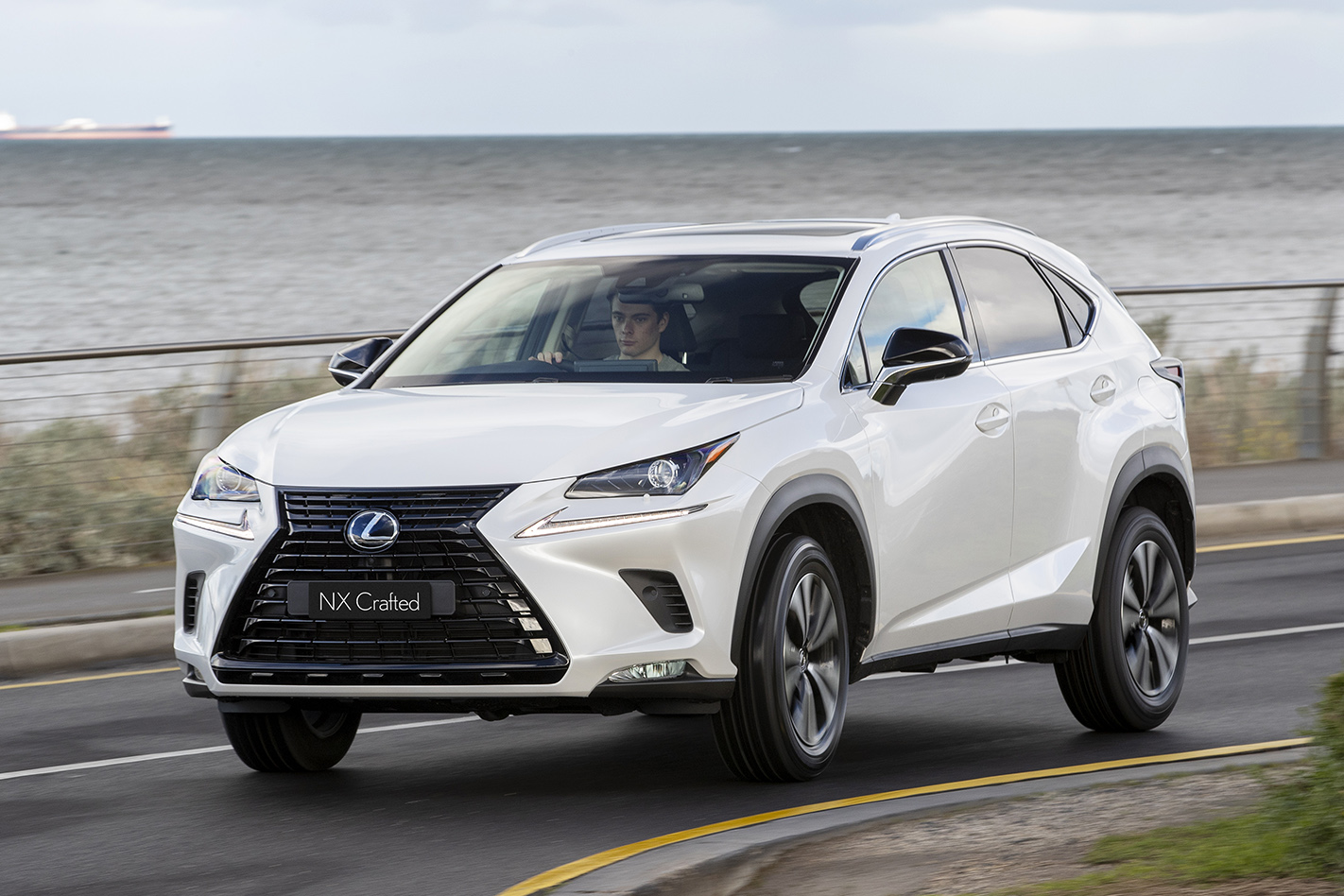
In a word: Competent. The Lexus does most things well. Apart from a tendency to hunt for the appropriate gear at low speeds, the powertrain provides adequate performance both around town and on the open road.
The Lexus’s suspension also soaks up Melbourne’s ubiquitous bumps, potholes and speed humps with ease, while still sporting decent roadholding on the twistier tarmac.
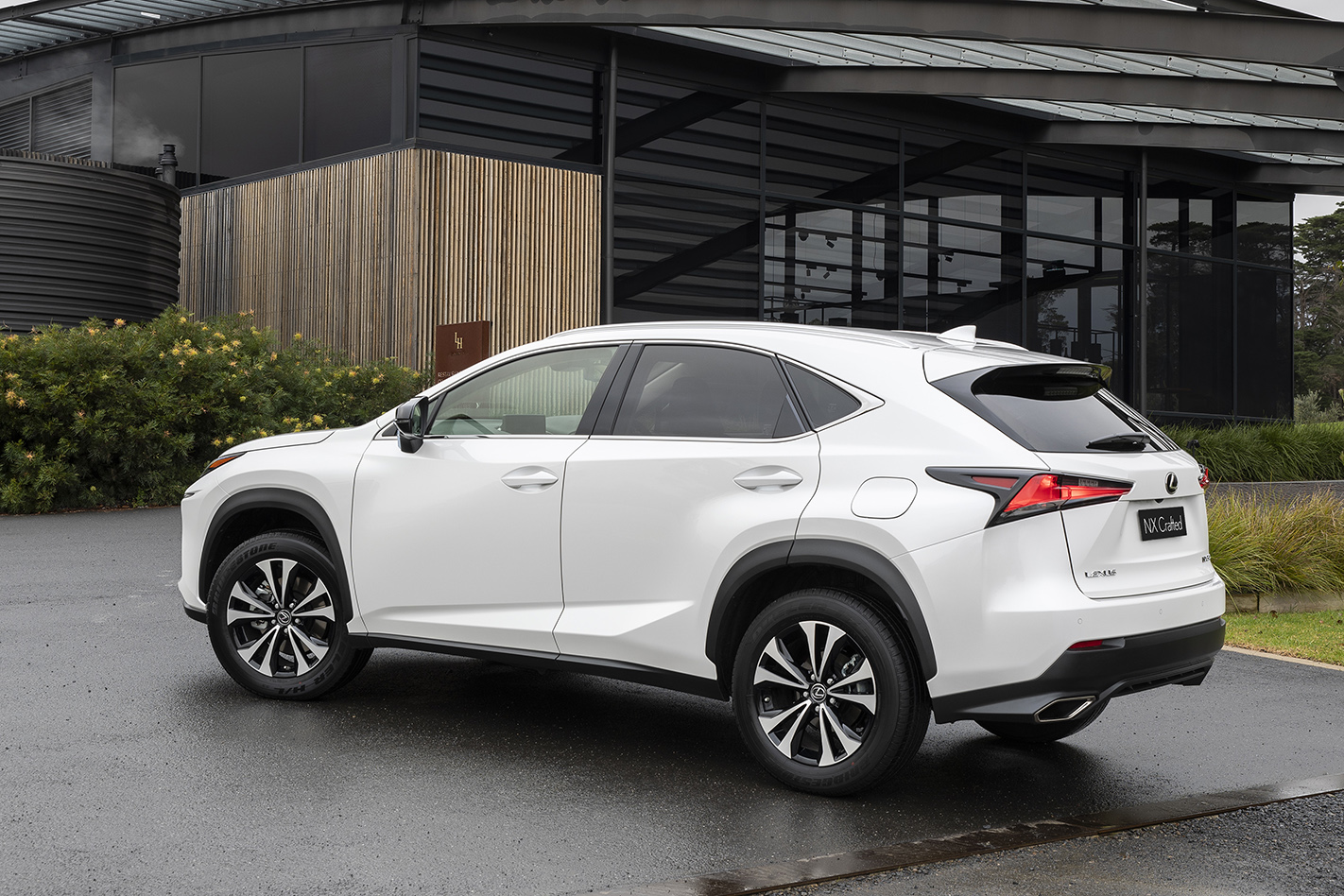
The suite of safety technologies has received an upgrade. Now standard on all models are: Pre-collision safety system which detect pedestrians, not just vehicles, on the road ahead; autonomous emergency braking; all-speed active cruise control; lane departure warningwith steering assist; and blind-spot monitor.
The 360-degree panoramic view monitor comes in handy when reversing, particularly as my view was obscured by the car’s overly-thick C pillars.
IS IT WORTH THE MONEY?
The NX 300 Crafted all-wheel drive has a recommended price of $63,806 drive-away. That’s decent value considering many of its standard features, like the glass roof, 360-degree camera and keyless entry keycard are cost options on other NX variants.
Official fuel economy is a combined 7.9 L/100km, though I was able to clock a more thrifty 7.3L/100km thanks to my mostly freeway driving. Fuel costs, then, are pretty reasonable for an SUV.
On top of that, Lexus offers a generous 4-year, 100,000-kilometre warranty — which is a year more than many other luxury manufacturers. The NX’s direct rivals are luxury models like Audi’s Q5 and the BMW X3.
PROS: Comfortable; does what it says on the box; good safety tech
CONS:engine/transmission combo a bit hesitant at low speeds; front end styling an acquired taste
Elise has been a journalist across the trifecta of TV, radio and print for more than twenty-five years. When not shackled to her computer or beloved kid, you’ll find this working mum indulging her other passions — skiing powder off piste or trying to catch a wave on her 8’ Mini Mal.
Although I reflect on it a lot, when Alex Inwood asked me to write on the future of car design, I wondered where to begin. The rate of change is astonishing, and that’s a huge challenge for younger designers. It’ll be difficult for them because the car industry is in a state of unknowing, and that dissipates right down through the business. This offers either a state of confusion or of opportunity. The smarter designers will see the latter, and from that they can actually influence the future.
That’s because designers are in a greater position than ever to act as agents of change. I will get challenged on this but there’s nobody else in the business who knows more about the car. Perhaps you can make a case for the chief engineer or the vehicle line director, but take any interior or exterior part and ask them about the story of that part. Nobody knows the backstory of that part more intimately than the designer. This unique role in the business means that the design team needs to be involved at the very start of product planning, to bring the passion and the energy to push hard for what they think is right.
We can take it as read that electric cars are inevitable. There’s a state of opportunity, where the design team need to become crystal-ball gazers and make some fundamental choices. It really is betting the farm. Volkswagen has been quite clear about this as a result of Dieselgate. They’re going to go electric big time. Is that the right choice or is it an overreaction? I like to think that it’s a sound choice because I’m a great believer in these sorts of products. Whether the infrastructure can cope is an entirely different discussion.
That said, the electrification of cars is making our jobs a little easier. Let’s consider exterior design. When we get back to the overall package, the fulcrum of the car is the cowl height and position (the base of the windscreen). If you have an electric car, you suddenly have more freedom. With an internal-combustion engine in the front, the cowl’s going to be the same height as the engine, and that sets up the shape of the car. That’s why cars have ended up with a very similar profile for a number of years. The physics behind it, the geometry is all the same. With electrification, that freedom starts to open up.
The key frustration with electric cars – especially with sportier cars – is that if by default you have a skateboard platform, you inherently end up with about 125mm of height that you don’t necessarily want. When we go to a generation of pure sports cars, we need to find another way around that, and we could end up with a ‘mid-engined’ configuration for the batteries for that reason.
It’s worth re-examining the fundamentals. Electric cars started out reasonably simple and now there’s a demand for bigger inverters, bigger transformers, bigger electronic accessories, such that space in the front is now being used up almost by default with the components the electric car needs. The dilemma the designer has is that he comes in and says, “I don’t want these components. I want to get the cowl height down.” Do that and you get the freedom to go cab forward and get the sightlines down so you get better visibility of the road.
All too often, before you know where you are, somebody has set up the front package with all this stuff in it and you’re back to square one. The designers have to get in there early, as we did with the Jaguar I-Pace. I look at some electric cars and you’d be hard-pushed to figure out whether they were electric or internal combustion. It’s a missed opportunity. Where you put a transformer is much more flexible than where you put a gearbox. If you don’t get in there quick enough it’ll be too late and you’ll end up with the package you’re given.
That difference is critical because the aesthetic of the car is very important. There are two parts to this. Firstly, consider the inputs the design team has to work with. I had a discussion with a BMW designer about this and their inputs are much more rigid than those at Jaguar. They get set dimensions to work with and they work these dimensions. The profile of the car, the shape of the car is dependent on the input that they get based on people packaging, aerodynamics, cost etc.
We get the same inputs because the world is the same, people are the same, physics are the same, but what we do at Jaguar is we challenge these inputs for the sake of shape and style. Fact. We do. We want a better-looking car. Of course, you can then say, “Okay it’s a better-looking car, but what does it offer?” Well, it offers a better-looking car. That to me, and the buying public, is still important. In the niche market that is Jaguar, we depend on that difference.
We need to be sensitive to change, though. Autonomous driving has the potential to influence design and, at the moment, it holds a slightly negative connotation in terms of design; that the motor car will suddenly become this mobile box. I call it ‘anonymous autonomous’, where the design of the box is very much about function and the aesthetic doesn’t matter. I don’t believe that should be the case. Anything that has to be designed has to be designed properly. No matter how autonomous the world becomes, there will always be people out there, particularly in the luxury market, who want their object of transportation to be a bit more desirable, a bit more exotic and a bit more luxurious, no matter how different the process of using it might be. If you’re renting, hiring or whatever, people will still want to get into objects of desire.
It gets back to branding, and designers are acutely aware of the marketing and the storytelling of the car; what it stands for, what it means. A designer now is someone whose view is quite holistic about what a car is. It’s no longer about stylists with pens and paper, and that’s a fundamental difference, not just in the process, but in the very need for design.
Our role has never been more pivotal, so I was delighted to hear that the Wheels team was planning a special Design Issue. It’s been a privilege to be part of.
“The basic management philosophy of our company is originality, and accordingly our goal has always been to spur demand by introducing products that only Honda can create.”
With those words – absolutely true of Honda in 1969 – Soichiro Honda introduced his company’s biggest and most advanced car to that date, the 1300 sedan and coupe.
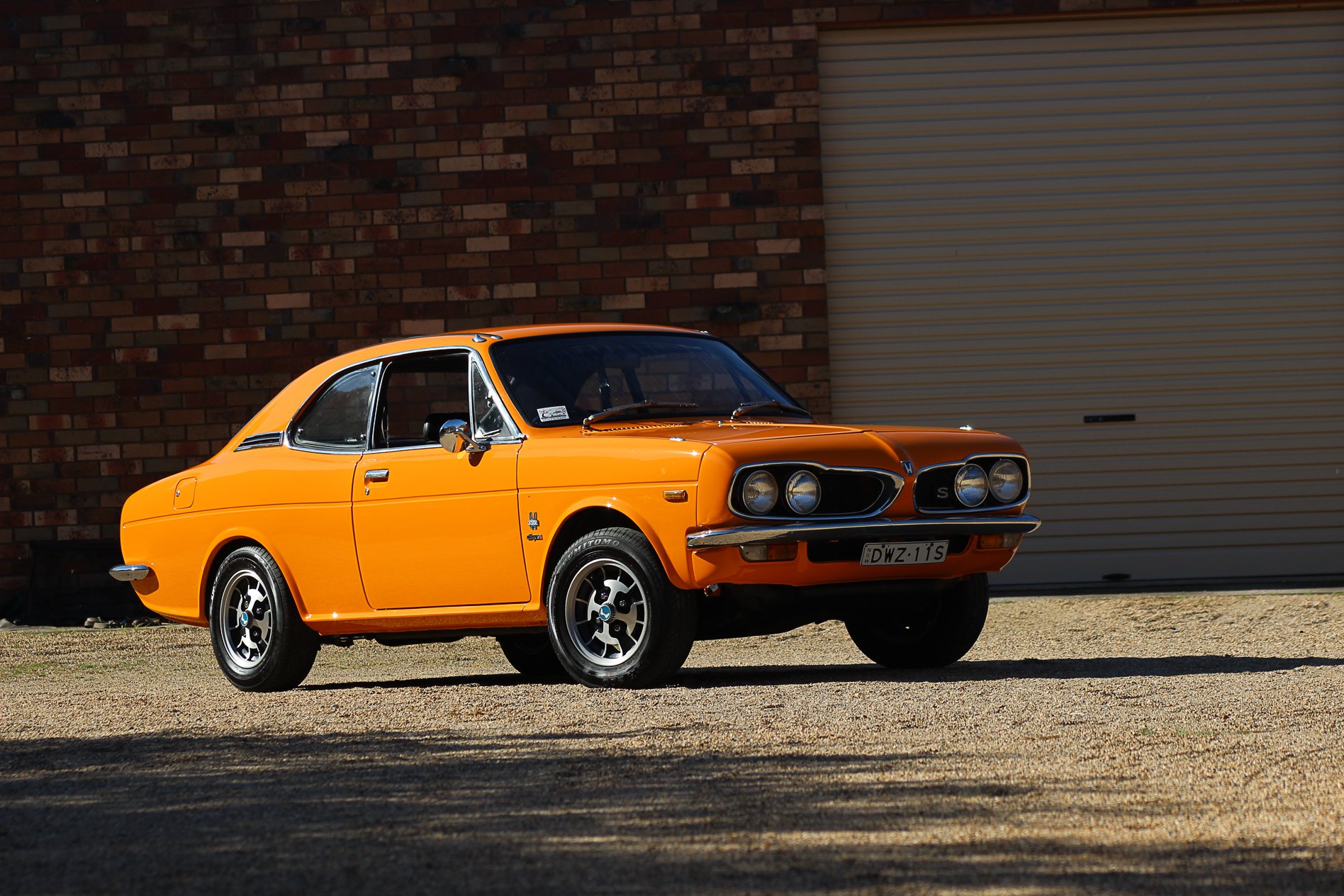
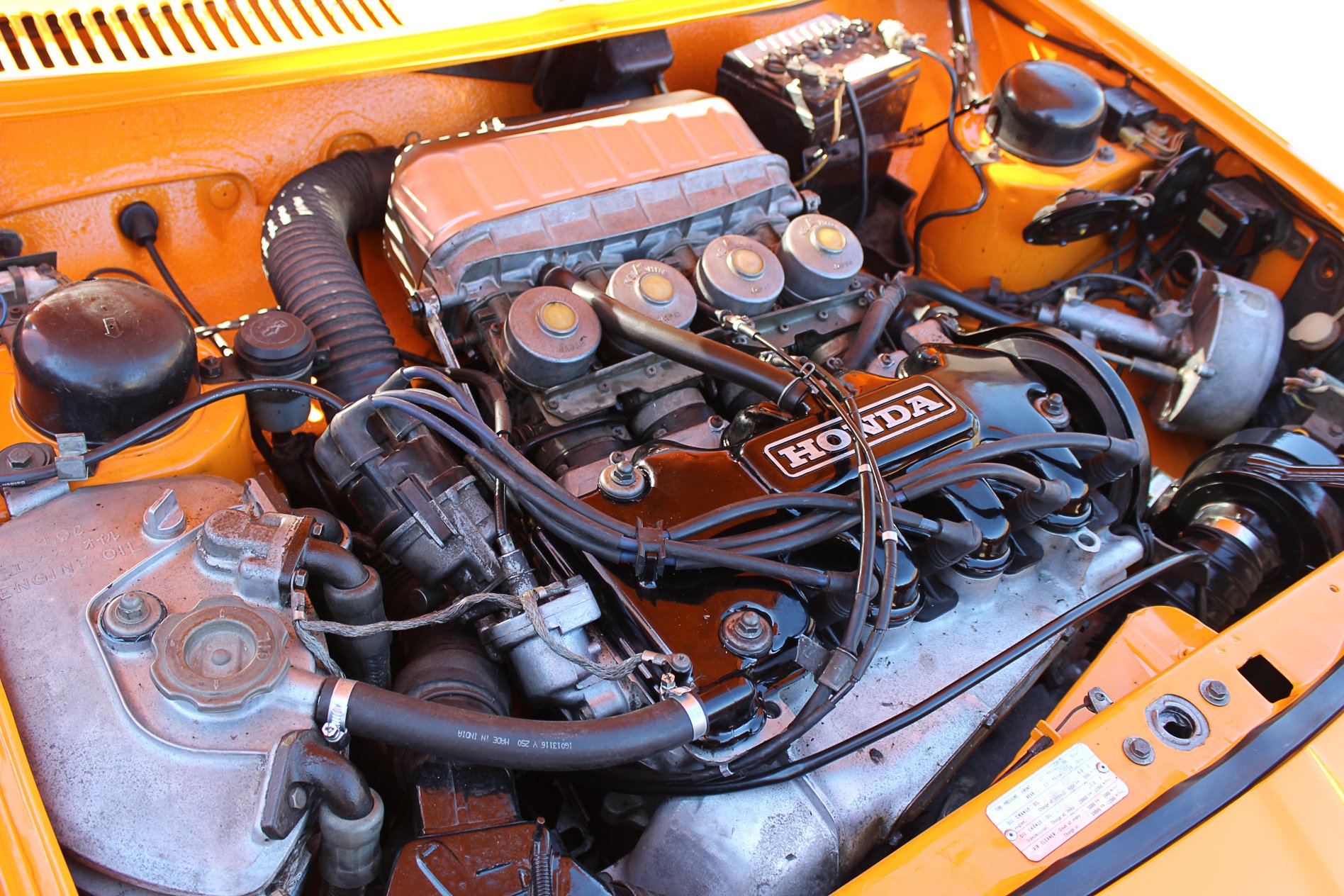
Like Honda’s preceding kei-class sports (S500/600/800) and city (N360) cars, the 1300 was clearly from a different mindset than its rivals, the Toyota Corona and Datsun Bluebird. The Honda was front-drive, its all-alloy, 1.3-litre transverse four-cylinder engine being innovatively air-cooled, dry-sumped and redlined at 7500rpm.
The base, single-carb ‘77’ version made 74kW, 10 percent more than Toyota’s 1.6-litre, while the top ‘99’ version had four carburettors and made an impressive 86kW at 7300rpm.
Soichiro Honda, who in just 20 years had built the world’s biggest motorcycle company, personally oversaw the 1300 program. His influence was evident in everything from its Pontiac Firebird-inspired nose, to air cooling for the engine, to an unusual take on swing-axle rear suspension.
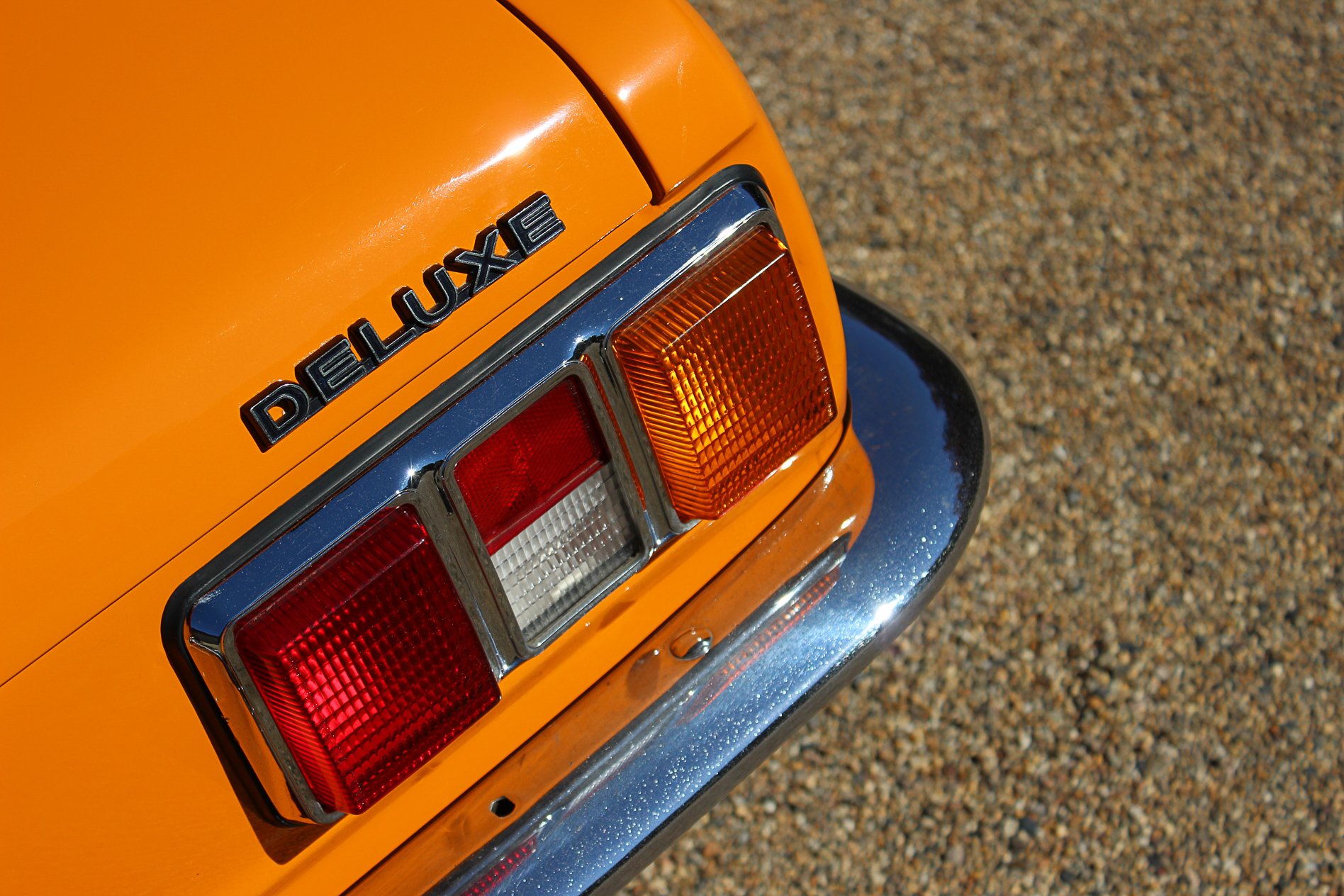
A manufacturing innovation for the handsome coupe would eliminate the time-consuming and toxic process of soldering roof joins, by mating full-height side pressings to a central roof panel, the seams concealed beneath simple trim strips.
Australia never saw the sedan, but in 1971 the 1300 Coupe, particularly in the hi-po 9 guise, was rapturously received by the press. It was pricey – the base 7, at $2989, was on par with an HT Monaro V8, and the 9 was $300 more – but it drove even better than it looked.
Local testers raved about the 9’s precise steering and tenacious cornering (partly thanks to equal-length driveshafts), controlled and comfortable ride (helped by a rigid body and strong subframes) and an engine which, owing to its enclosed design, was as quiet and sophisticated as it was rev-hungry and rollicking.
That excellence came at too high a price, even with Honda reportedly selling each one at a loss. The 1300 was Soichiro’s last hurrah as an engineer; he was persuaded to focus on being president. His company’s next new car would be water-cooled, quite conventional and a world-beating success: the Civic.
Cool runnings
The all-alloy, sohc 1298cc four’s Duo Dyna Air Cooling echoed water-cooled design, with air channels cast in the block and head, blown by a crankshaft-mounted impeller. The ‘99’ engine, with four Keihin carbs and higher compression, made 86kW at 7300rpm and 103Nm at 5000rpm, and hit 0-60mph in 11.7sec via a four-speed manual ’box.
Sporting goods
The 905kg coupe offered a sporty cockpit, with three-spoke steering wheel, better-than-average instrumentation, reclining bucket seats and plenty of black vinyl. MacPherson strut/A-arm front mated well with an unusual, swing-axle rear, each (leaf-sprung) axle pivoting from the opposite side of the car, minimising camber change.
1969 Honda 1300 Coupe 9 in numbers
- 101 – kW output of 1300-powered 1969 Hayashi Carman Apache sports racer
- 187 – top speed in km/h
- 8102 – 9s produced, of 48,249 1300 coupes in total
- 731 – coupes imported to Australia, of only 1053 exported
The Need for Speed franchise is something of a western cultural touchstone within the now-global modified car scene. Ask any late-millennial car enthusiast what their first exposure to the culture was and most, for better or worse, will cite either the Fast and the Furious film franchise, or 2004’s Need for Speed Underground 2.
And it’s the magic of Underground 2 that 2019’s Need for Speed: Heat attempts to recapture; as every NFS game has attempted to since the franchise’s “full reboot” with the self-titled release of 2015 – just with varying levels of Fast and the Furious laugh-ability.
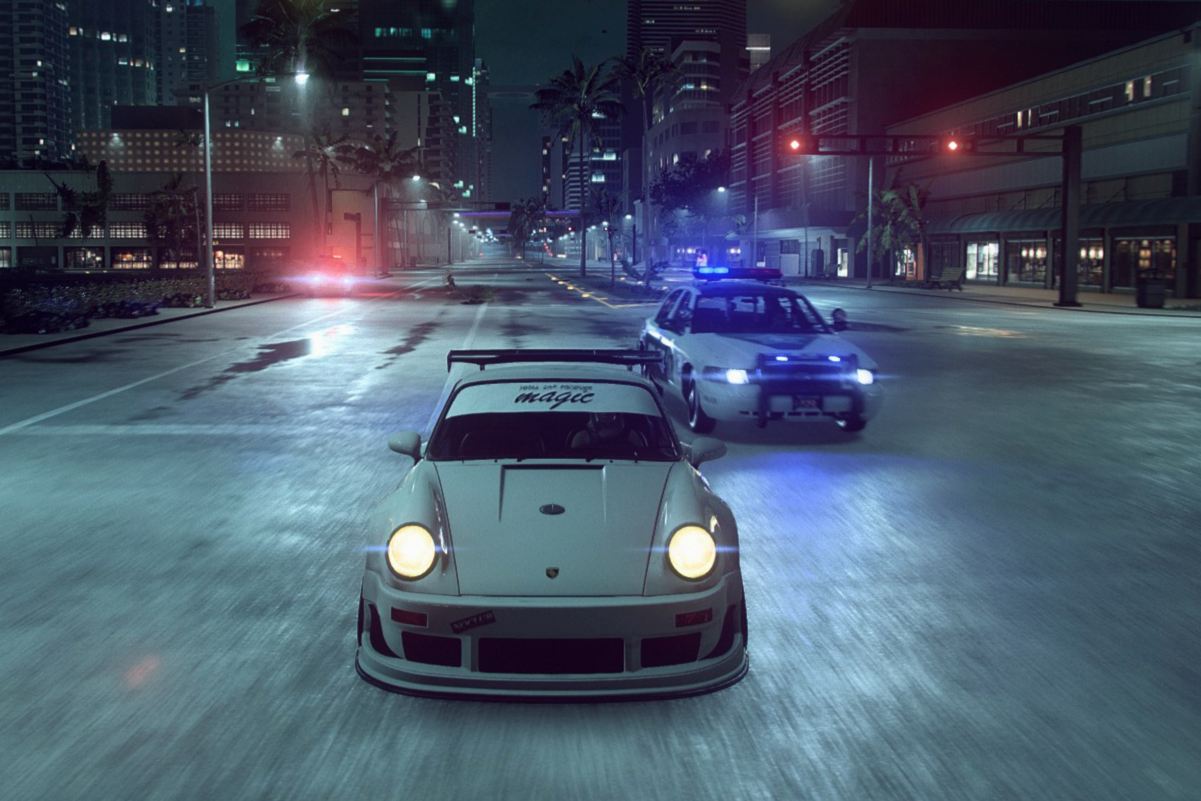
Is Heat worthy of its “triple A” status? Lacklustre graphics, an old car list, at-times infuriating gameplay and laughable plot and characters – point to no.
But does it have anything to offer the modified car enthusiast that’s actually old enough to hold a learner’s permit? We think it does.
What do you need for Need for Speed Heat?
Need for Speed Heat, developed by Ghost Games and published by Electronic Arts, requires one of the current Big Three: a Playstation 4, an Xbox One or a PC.
From launch Heat was strictly a gamepad-only proposition, however an update applied in late January 2020 enabled support for a range of Logitech and Thrustmaster gaming wheels – with other models also potentially being compatible.
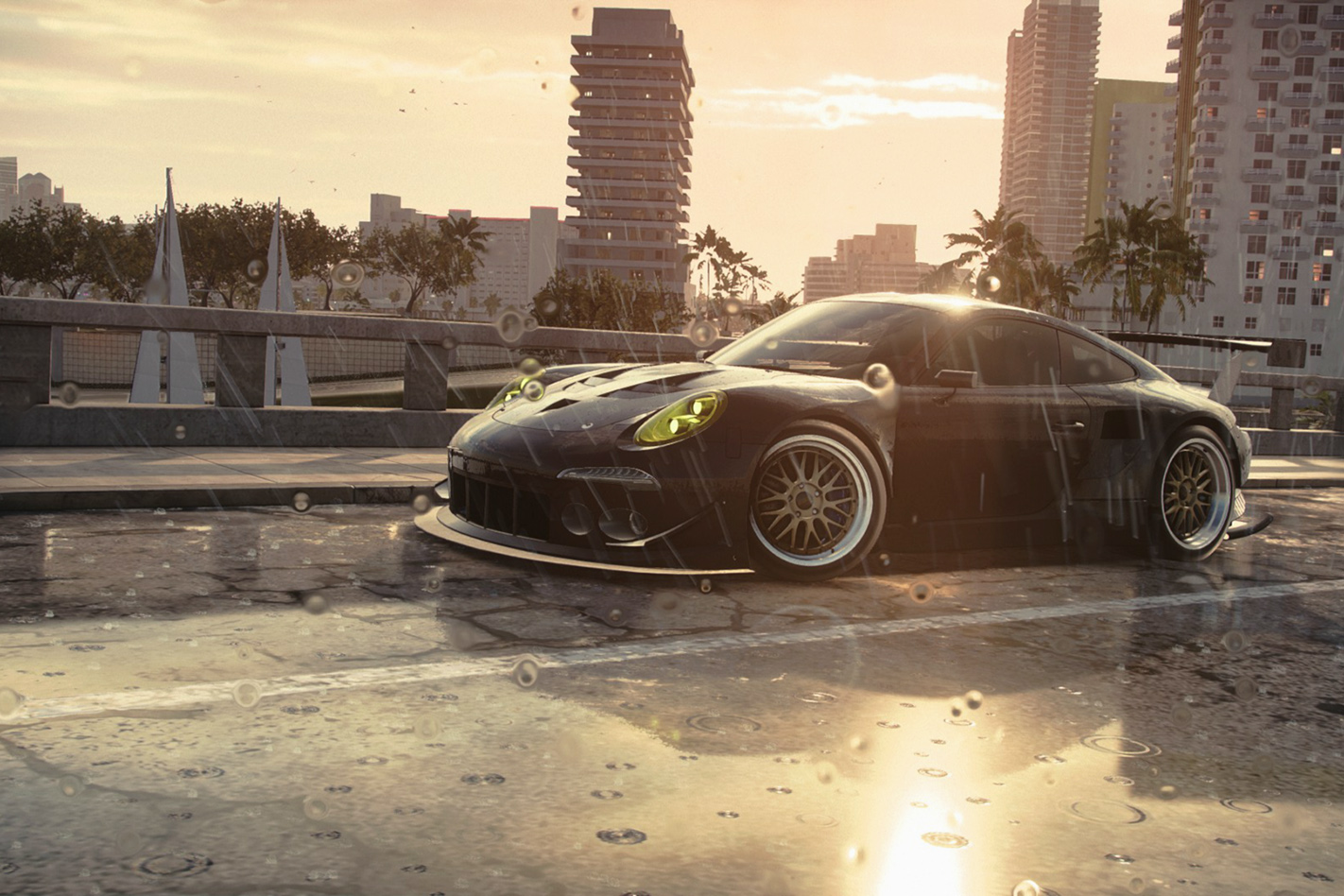
How much does Need for Speed Heat cost?
Need for Speed Heat is listed on the Xbox and Playstation stores, and most of the big gaming stores for $99.95.
Though there are plenty of sales right now, so it might be a good time to buy. Xbox and Playstation digital download stores also offer a “Deluxe” bundle for $107.95 – or a base-game downloadable add-on for $7.95.
The Deluxe upgrade includes: a starter car, a starter vehicle wrap and three special pre-customised progression-unlocked cars – all designed by Internet car designer and visual artist: Khyzhl Saleem – as well as four exclusive character outfits, and a “REP” and “BANK” boost.
What’s it like to play Need for Speed Heat?
Playing Need for Speed Heat is a constant cost-benefit analysis that we really wish it weren’t.
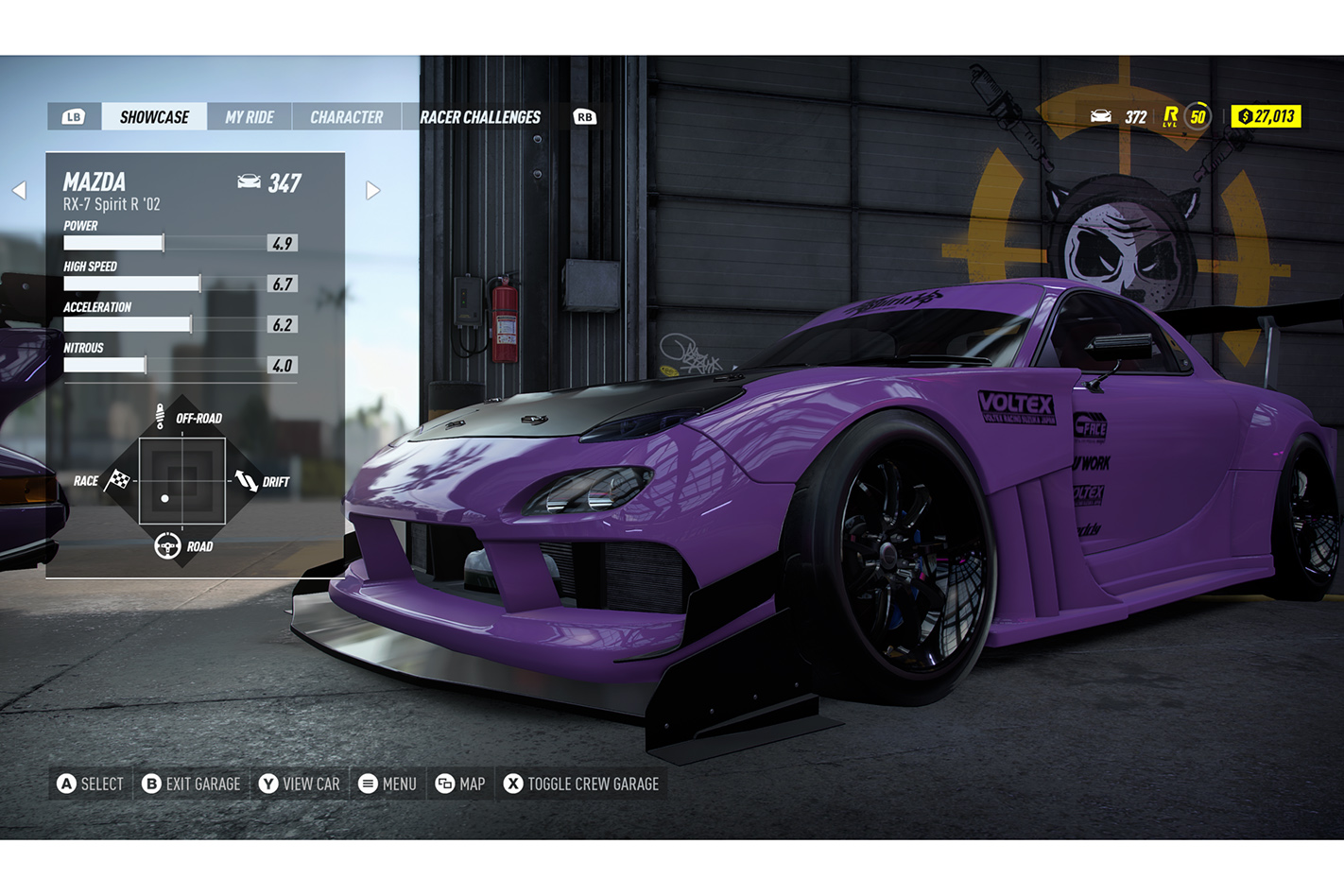
For fans of modified cars, Need for Speed’s customisation system is a class-leading attraction, and should be the benchmark for every game which emphasises the player’s ability to make their virtual vehicles unique.
There are some new features that we haven’t seen before either. Besides the usual paint, wheels, bodykit, aero and vinyl options, Heat allows you to even customise the specific exhaust noise of your car – which also changes to faithfully mimic the engine that’s under the bonnet. Dropped a Mazda rotary into your E30 BMW? It’ll take on a brappy new persona that sounds very authentic.
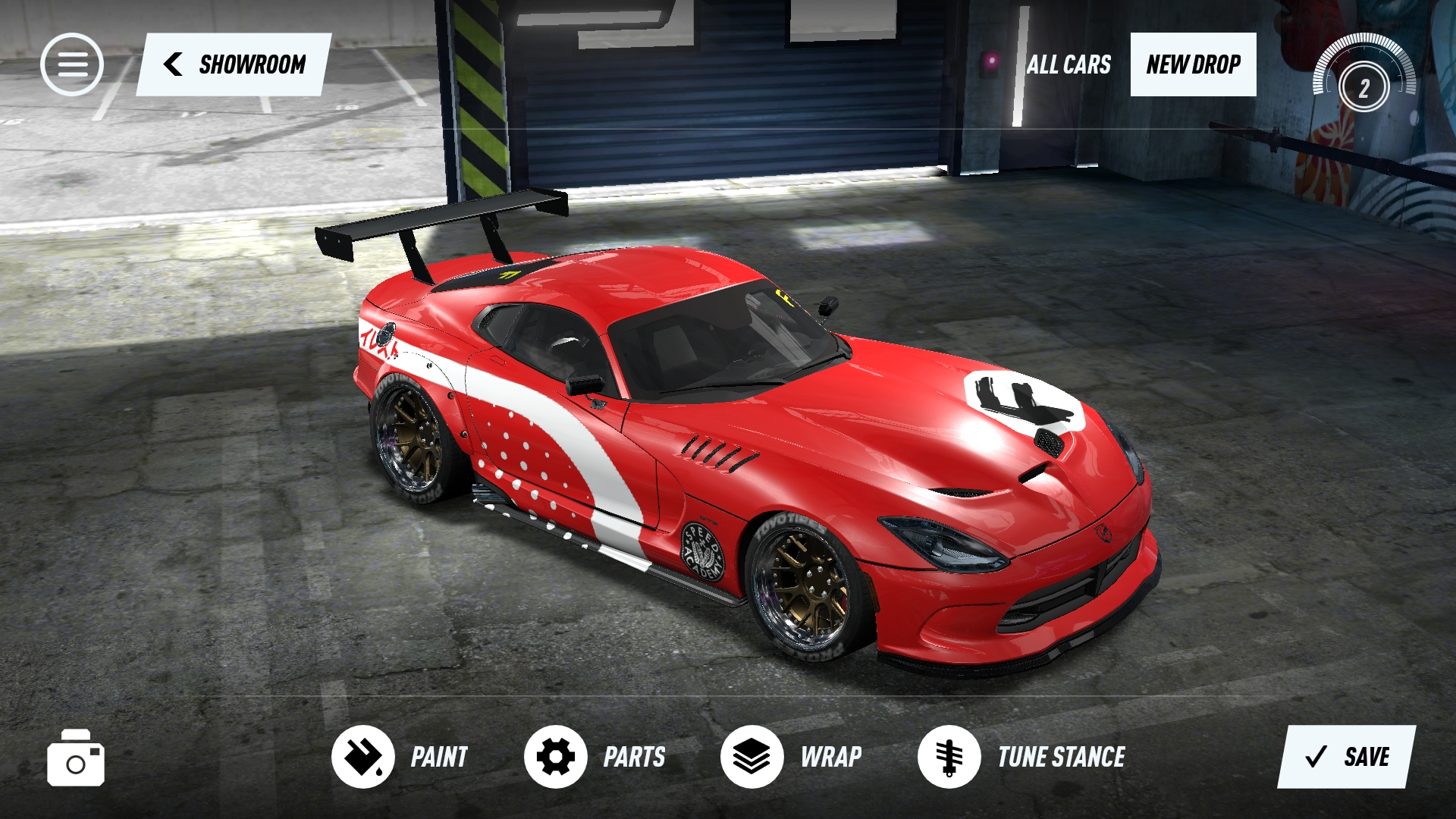
There’s also a companion phone app for Heat called NFS Studio which allows you to customise any vehicle in-game with the full menu of visual modification options, and is a surprisingly decent time-waster. However it actually serves a useful purpose, for once you acquire that vehicle in game you can then upload your customisations from your phone at the push of a button.
We have to admit, that’s pretty cool.
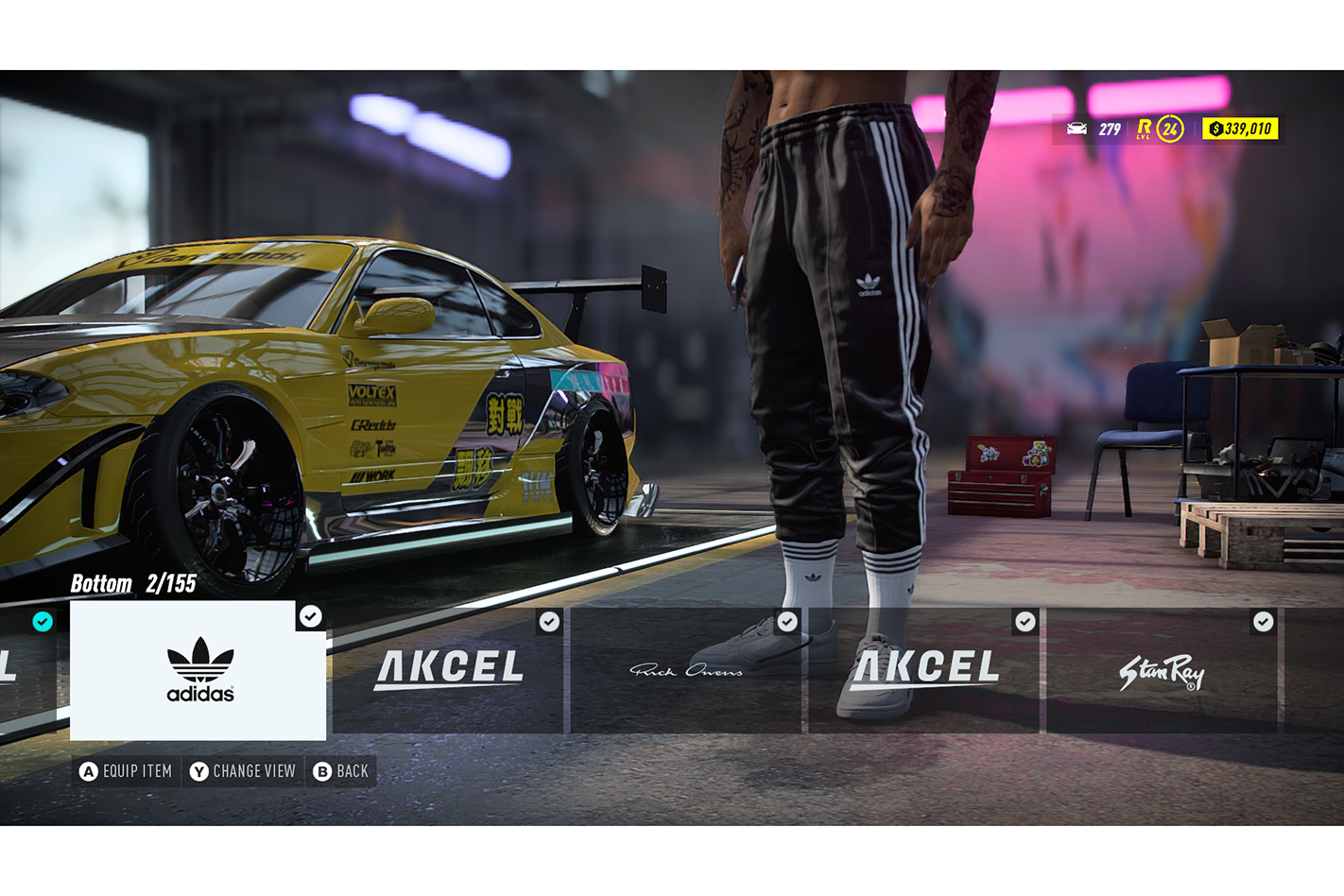
You can also change the outfit of your avatar via a large wardrobe of streetwear brands. It does nothing to the gameplay, but it does at least make cutscenes unique to each player. Speaking of which, gone are the cringy live-action cutscenes of Need for Speed, replaced instead by CG animations. That’s definitely a good thing, and we have to acknowledge that the dialogue and voice acting in Heat is rather respectable – even if the storyline is fairly rubbish.
The thrill of personalising your vehicle encourages players to “risk it all” in night mode, where races and police chases earn you REP, which in turn unlocks new parts, new cars as well as most of the story’s progression.
Racing in day mode sees the player racing in sanctioned closed road races; and is where the player earns their BANK to buy cars and parts; or to lose at night if they get busted by the police.
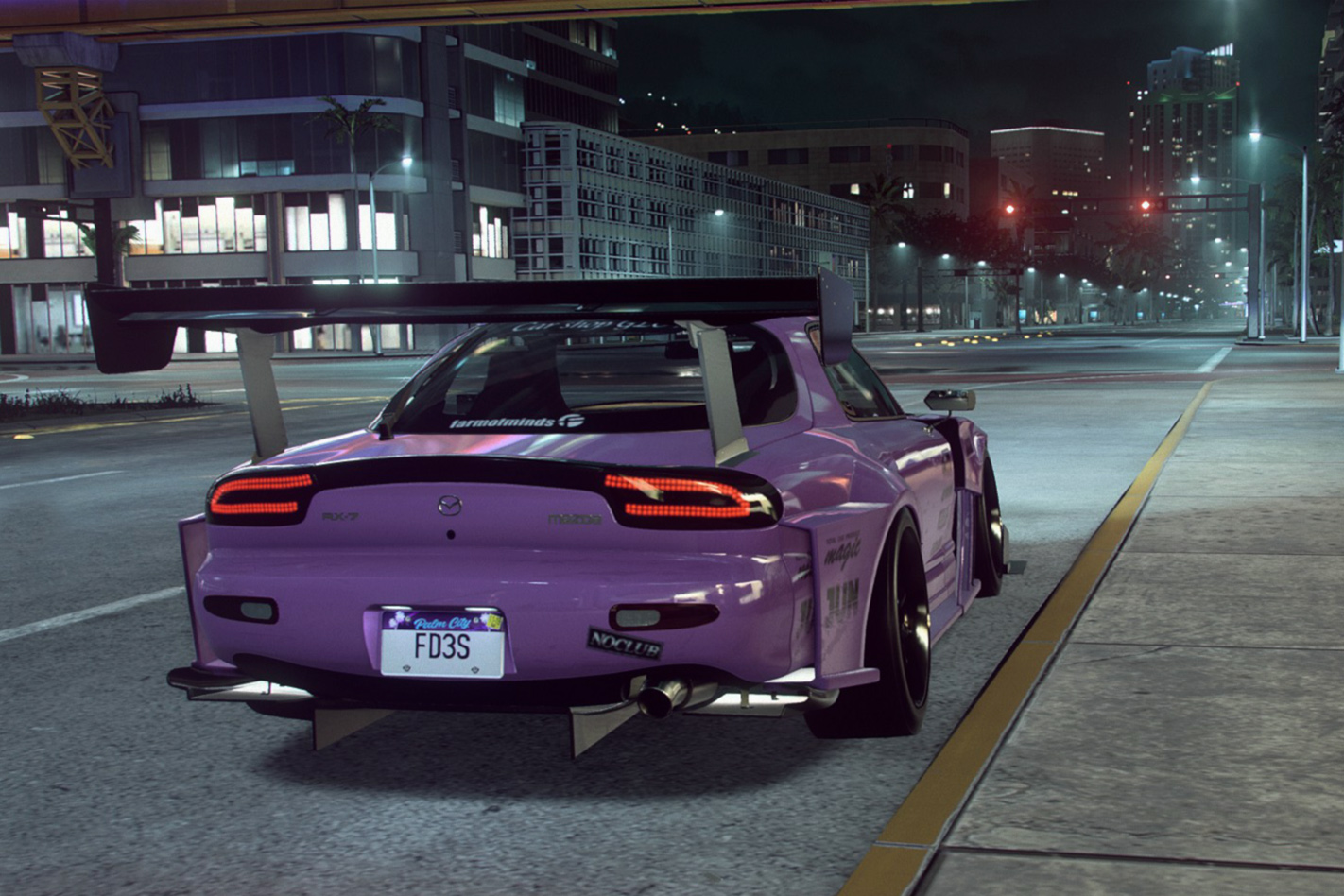
The risk element of night mode really delivers a tangible element of consequence, tension and excitement, as not making it back to your garage safely sees you lose most of the REP accumulated for that evening, as well as a fairly significant decrease in BANK. It’s a setback that can really curb your progress, especially in the early stages of the game.
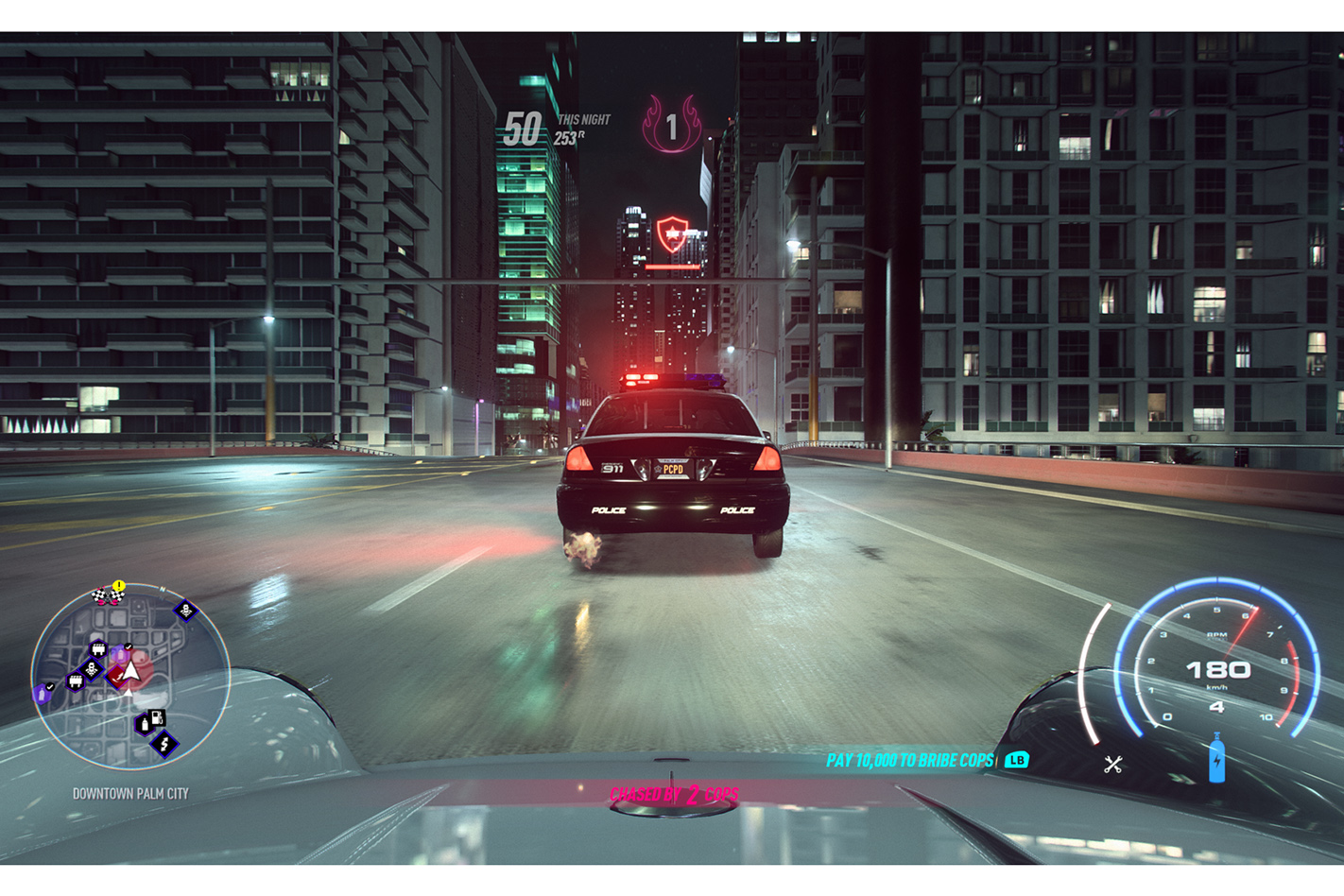
But Police chases are once again incentivised in a way that evokes the magic of another fan-favourite, NFS: Most Wanted of 2005. At night Cops will pursue you if your ‘heat’ level rises above zero, which it does as soon as you finish a race. Chases get progressively crazier the higher up your heat level gets, but the payoff there is that your heat level is also REP multiplier – survive the night with a heat level of four, and you’re quadrupled your takings. You’ll quickly cotton on that running the risk of big, potentially car-destroying police chases is worth it purely because it fast-tracks your progress massively.
Day and Night mode feed into each other well, and produce a cohesive and stimulating experience that truly does deliver the element of “risk” which the game emphasises.
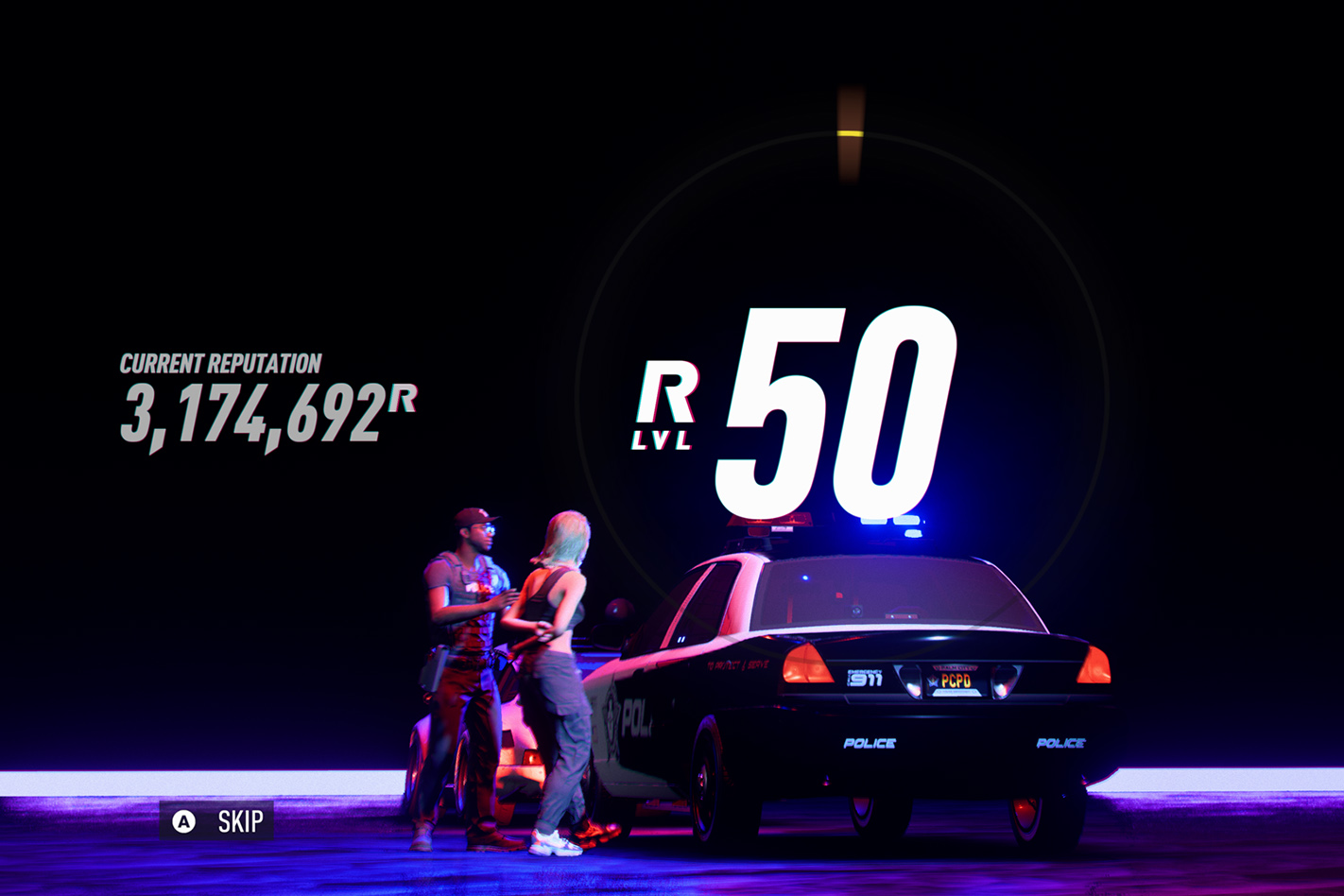
However, driving physics and gameplay mechanics remain arguably the biggest critique of the contemporary Need for Speed franchise, and 2019’s Heat is no different.
Despite the pre-launch promise of improved physics and refinement beyond the rudimentary “brake-to-drift” feel of racing; unfortunately little has changed. There’s currently no steering wheel support either, so you’re forced to stick it out with the controller.
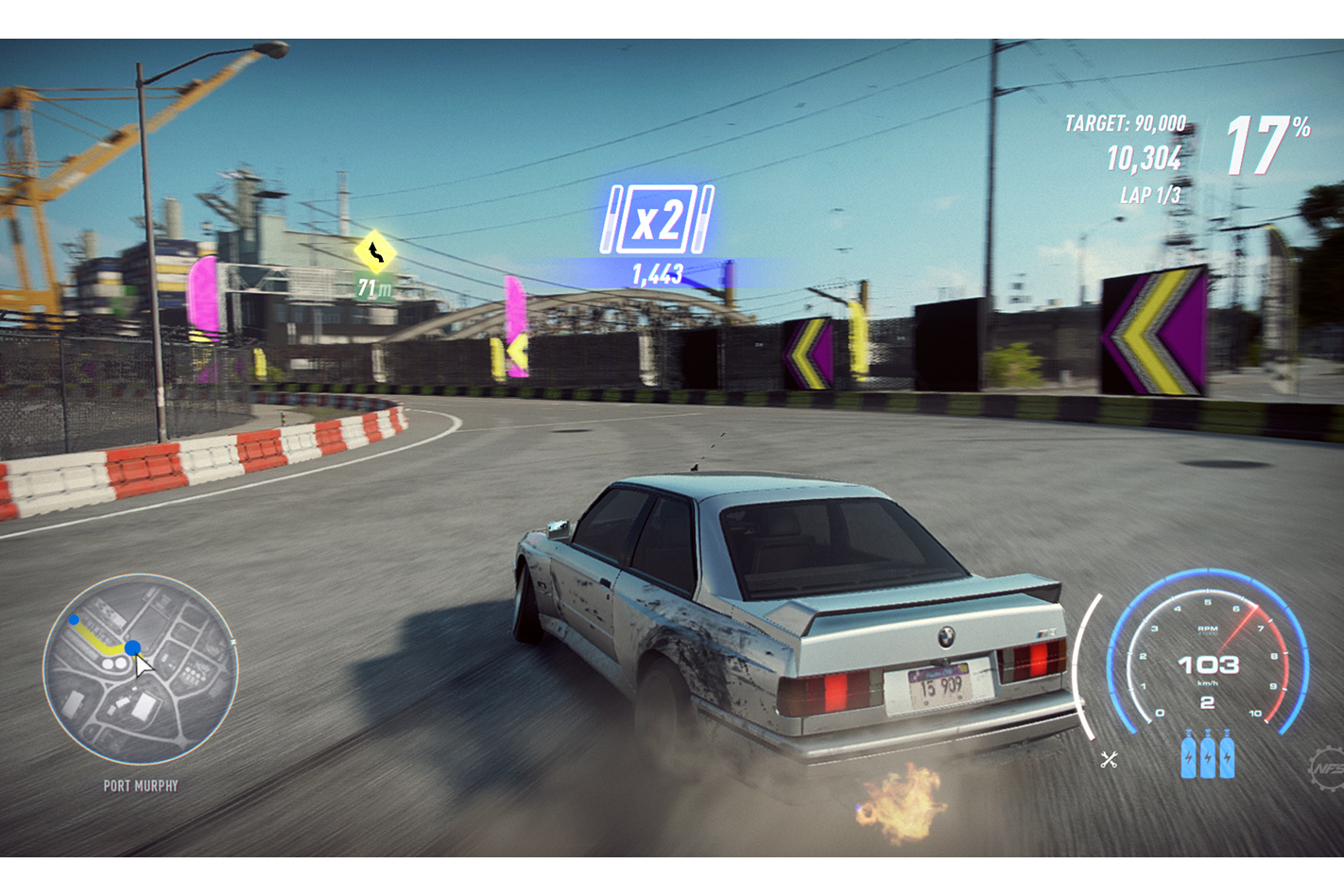
Virtually all cars are frustratingly coded to snap oversteer with the tap of a brake or accelerator (though at least you can choose which button initiates the drift in “Live Tuning” by tapping right on the D-pad). If you pride yourself in your mid-corner throttle control, you’ll likely find yourself quickly frustrated at unwanted powerslides and oversteer situations.
There’s a workaround though – either select a front-wheel drive car, all of which have their insta-drift physics turned way down, or tune your car as far toward the ‘grip’ side of the performance meter. It’ll basically never slide, which also feels ultra-unrealistic, but at least you won’t need to endure random drifts when you least want them.
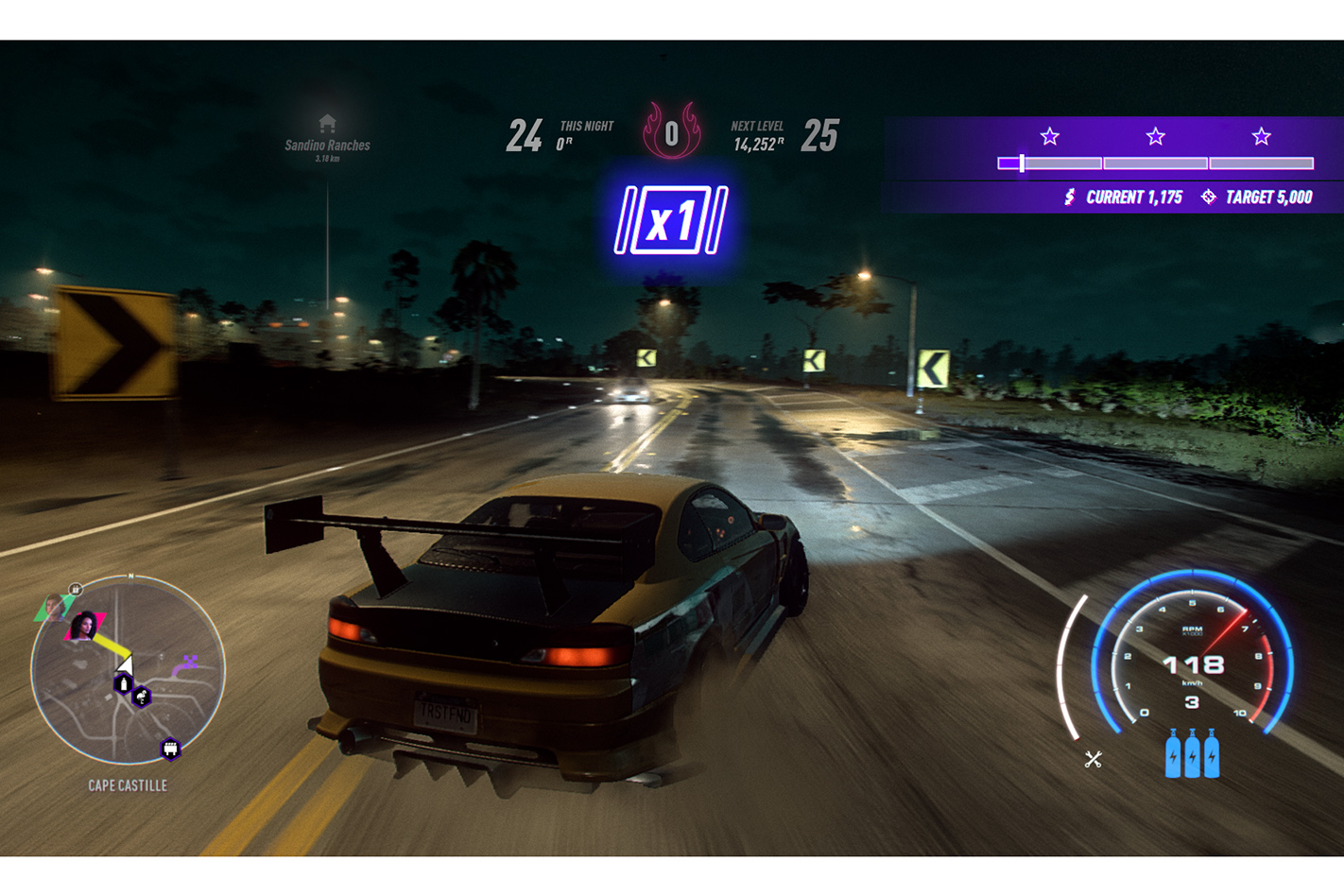
Players like us who are usually enjoy more realistic and ‘simulator’-like racing games, will struggle when first entering Palm City. You really have to forget everything you know about realistic braking points and apexes.
And it’s not like embracing the drift mode works well either. You can tune your car’s handling to be as drifty as possible, but that just results in a car that understeers relentlessly until the back steps out. Meanwhile the middle ground between grip and drift is just varying shades of dynamic disappointment.
NFS Heat gameplay almost railroads you into simply pinning the car towards a corner at full speed, and stabbing the handbrake to spectacularly (and laughably) slide around the corner. Once you figure that method out, winning races becomes a brainless exercise, and thus routine and disengaging.
Similarly, police chases in night mode, which can be unforgiving and difficult at early stages of the game, become remarkably easy and exploitable once you attain a vehicle with a bit of pace and begin to notice the patterns and limits of the police AI.
Are there any downsides to Need for Speed Heat?
Yes, and while it’s ultimately a fun game – the player is challenged and asked to forgive a lot.
Besides the poor vehicle controls, physics and driving mechanics; we found the graphics to be rather lacklustre for what should be a ‘Triple A” release on the current generation of hardware.
There’s also a fairly common and repeatable bug, which sees you clip through the water and stuck off the map in free roam; and if you’re in night mode where fast travel is disabled you might be forced into restarting your game.
If you stick with the game beyond some of its struggles, you might find yourself having fun… until the story ends and you get that “thanks for playing” message far quicker than you’d expect. Yes, there are still races to win, challenges to complete, collectibles to collect and cars to buy and build – but unless you’re a ‘completionist’, you’ll find that replay-ability dwindles rapidly.
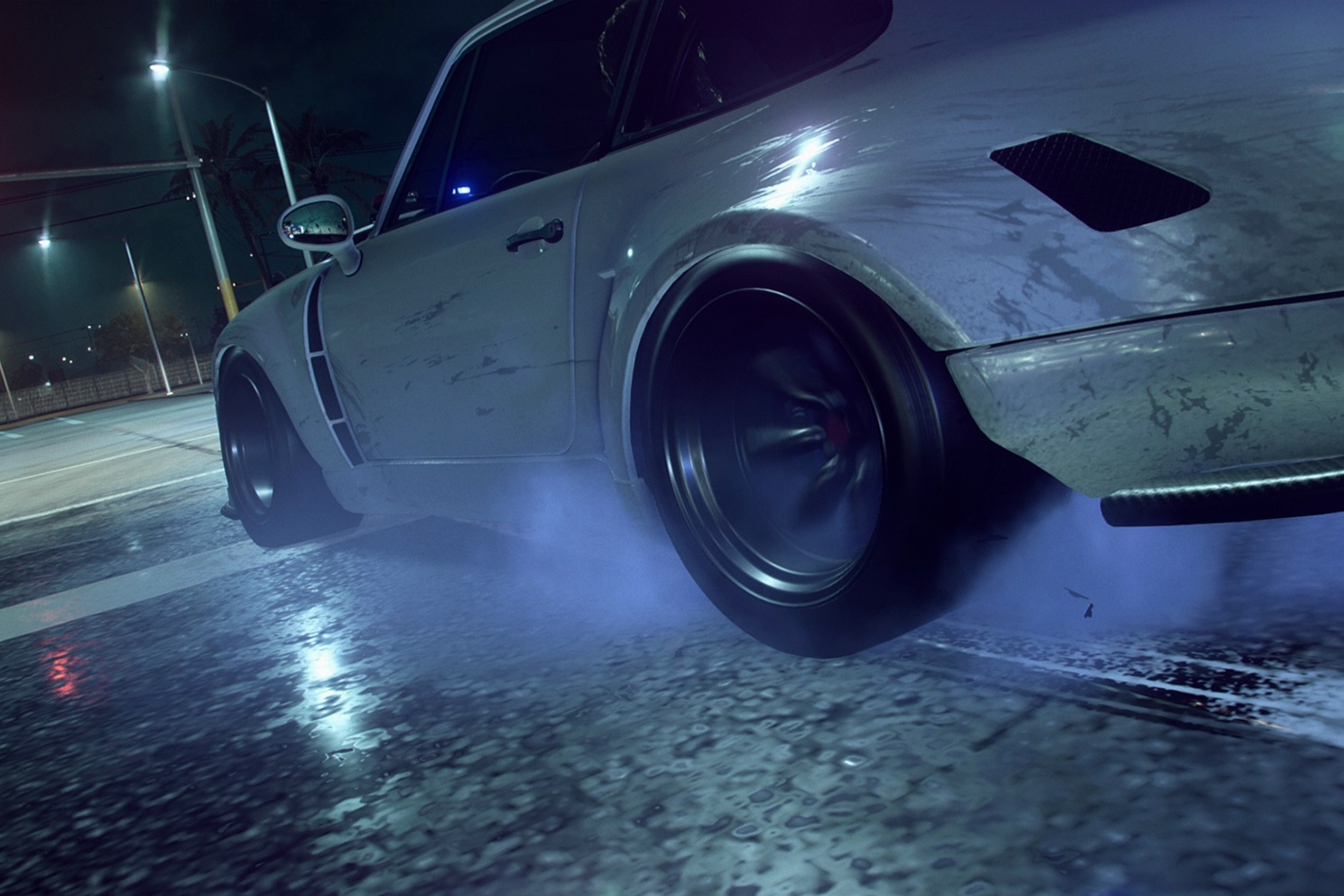
There are also the downright laughable elements (characters and plotline notwithstanding), such as immersion-breaking elements like instant tyre smoke in the perpetually wet fictional Floridian city.
Oh, and despite all of that rain, it makes zero difference to your car’s handling. Your whip could be shod with racing slicks but it’ll still corner like a cut cat while hurricane-strength precipitation is falling around you. It’s a definite immersion breaker.
Graphically, Heat isn’t anything special. There are some cool lighting effects at night but shadow mapping only seems to apply to the light cast by your headlamps, while daylight brings more dynamic shadows but still just looks flat and bland. On Xbox One, the textures aren’t all that righ-res and the environment could use more detail as well, while objects frequently spawn in after the camera view has changed.
Verdict
It’s the little juxtaposing details like this that drive home a Fast and Furious-like parallel. Need for Speed Heat trades on the success and fanfare of past titles, and ultimately on our beloved modern tuner culture. It’s the most prominent representation of our once-underground car scene in pop culture, but it’s annoyingly dumbed down for the masses.
There’s clearly people behind the game that have their fingers on the pulse of the scene, but obtuse errors like plumes of tyre smoke on a soaking wet road force us to wonder whether the game is truly made “by and for” car people like us?
And while the well-worn cliché of “cops hate street racers” underpins Heat’s storyline, we find it hard to believe that’s the case in Palm City when the police have Buddha-like tolerance for all kinds of motoring mayhem during daylight hours. Go ahead, do a static burnout right in front of a patrol car in the daytime. They won’t care.
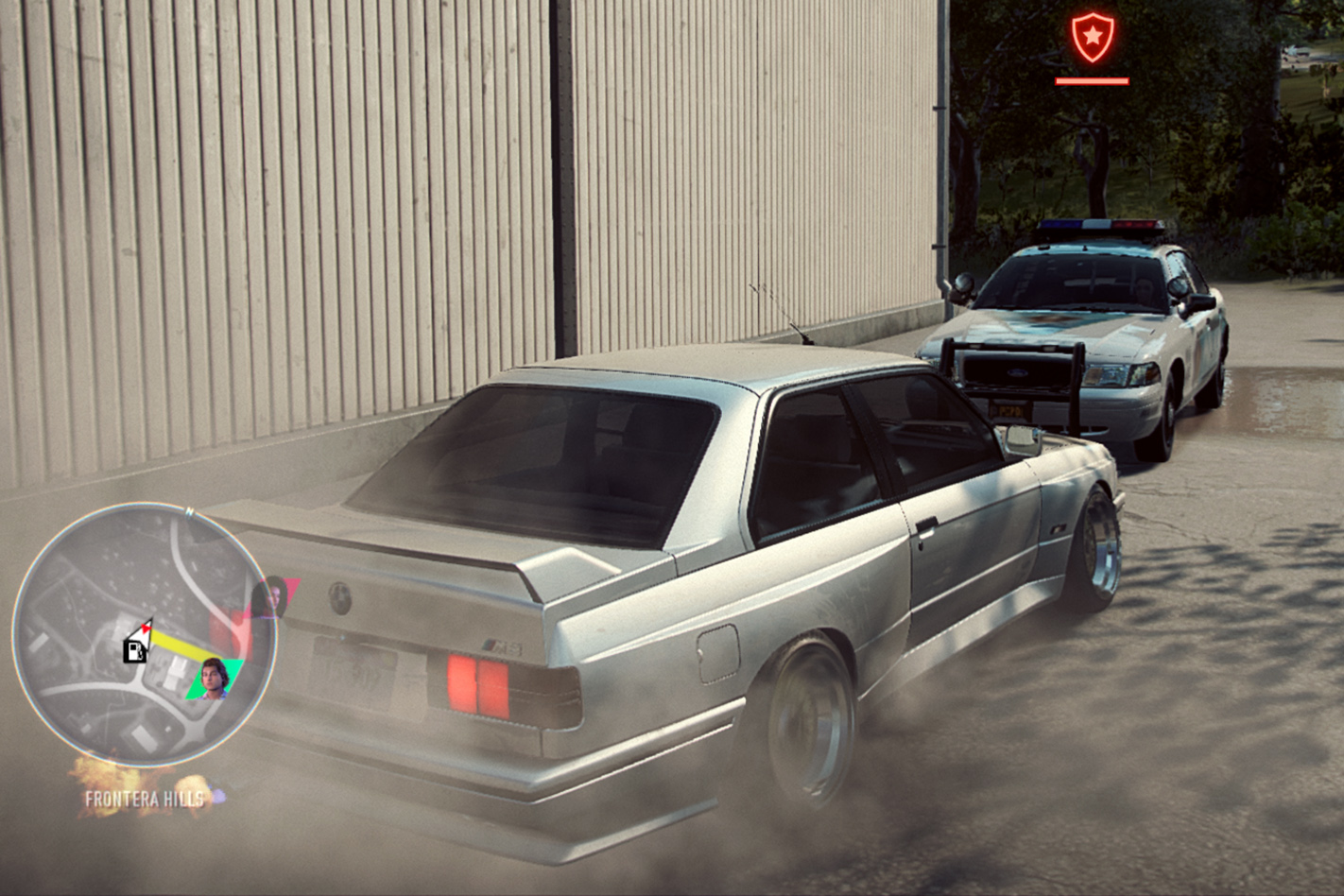
That said, Need for Speed Heat is a welcome step in the right direction after the underwhelming NFS: Payback of 2017, and the properly cringeworthy 2015 reboot – Need for Speed.
But it’s still a divisive game. Even between those of us in the office. Some simply won’t be able to see past the lackadaisical driving experience, and that’s fair. It also seems like not enough progress has been made. There are some new features, sure, but that’s just glitter on top of an old game engine, terrible physics model and a car lineup that seems more than a little bit out of date (no current-gen Civic Type R, Subaru WRX or facelifted Ford Mustang?).
But is there still value in the game for anyone over twelve years old? Perhaps, if you approach it like a new Fast & Furious movie.
Maybe the value is not in the game itself, but simply in being able to customise awesome-looking cars and laugh at the ridiculousness of it all with your friends.
Rating: 3/5
PEOPLE’s CHOICE – Brabham BT62
You are a patriotic lot, aren’t you? We’re not saying that’s a bad thing by any means, but when we posted a poll on our Facebook page to discover which of this year’s best and fastest would draw the most admiration from you all, we shouldn’t have been surprised to see the only car on the list built in Australia come out on top.
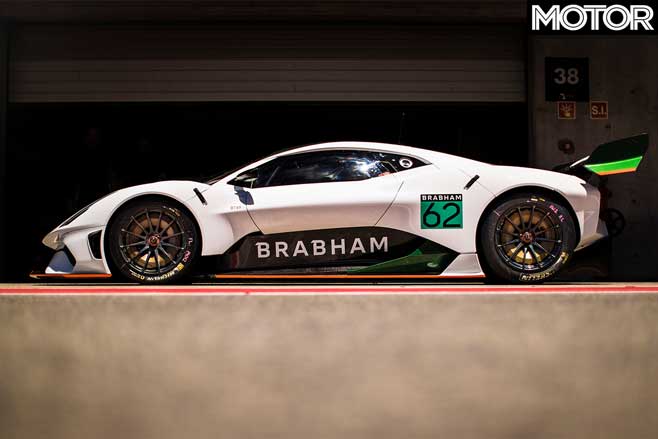
Brabham Automotive is technically a British company, but its roots are firmly planted in Oz – and so is its manufacturing plant. Out of a facility in Adelaide, the company is building 70 units of its track-focused BT62 (for 70 years since Jack Brabham’s racing career kicked off). It’s the first car in what Brabham hopes will be a revival of the family name, not only on circuit but also on the road.
Brabham says it can make the beast road-legal, and will do so for a princely sum of £150,000 ($285,000) in addition to the price of the car ($1.8 million). It doesn’t seem that keen, but if there’s demand…
Hopefully this means there’s a chance we will one day see a 522kW/667Nm V8-engined, Aussie-built supercar making its way down Punt Road, or across the Harbour Bridge, or even blasting across a poorly maintained outback highway.
The first half of the production run will be finished in liveries tributing the Brabham F1 team’s 35 wins. The launch car was in the green and gold livery of Brabham’s 1966 French Grand Prix winner, which began the series of wins that saw Jack Brabham become the only person to ever win an F1 championship in a car carrying his own name.
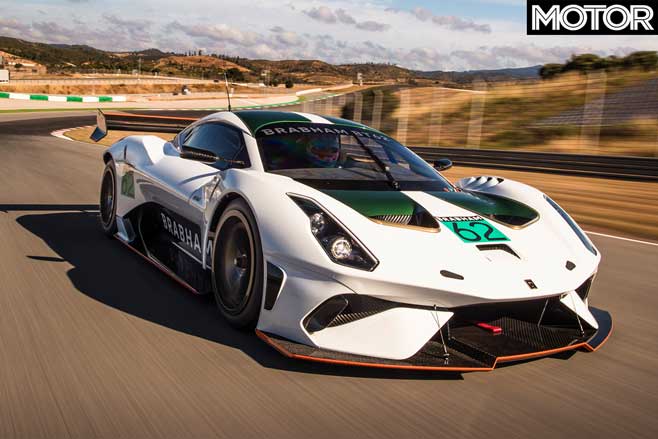
For the nostalgic, the BT62 now takes a place on the list of cars driven to victory by its ‘builder’. This year, company head David Brabham took the top step of the podium after driving a BT62 to win the Britcar Endurance race at Brands Hatch in the UK.
The BT62 is also the current official outright lap record holder at Mount Panorama, Supercars driver Luke Youlden having cut a 1:58.69 lap time in the launch car. David Brabham said at the time: “The response we’ve had here – because it looks great, sounds great and is Aussie-made – people just go nuts down there for us.”
It seems he was right, as the BT62 topped some rather impressive machinery to take the People’s Choice title. The Porsche Cayman GT4 looked like it might have a shot early on, but came in just behind the BT62, while the Lotus Exige Sport 410 was a surprise third-placegetter.
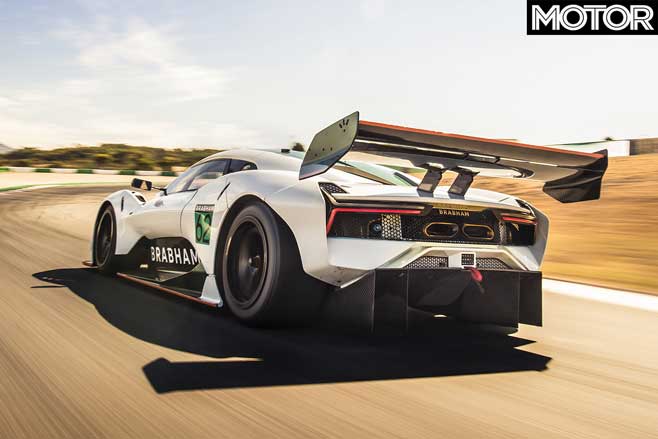
It’s not hard to see why the BT62 is a favourite, even ignoring its Aussie origins. The Ford-derived 5.4-litre V8 is a stunning feat of engineering.
The engine makes ‘only’ 433kW/603Nm off the shelf, giving Brabham plenty of reason to call their modified version a ‘Brabham V8’. Individual throttle bodies, dry sump, a Holinger sequential six-speed gearbox, plus endless other tweaking that Brabham is keeping hush has resulted in a naturally aspirated engine approaching 100kW-per-litre.
There’s no doubt that when Brabham heads to Le Mans in 2021 for the GTE class, it will be the team to watch, and all because of a car built here in Australia.
Best Newcomer – Chevrolet Camaro ZL1
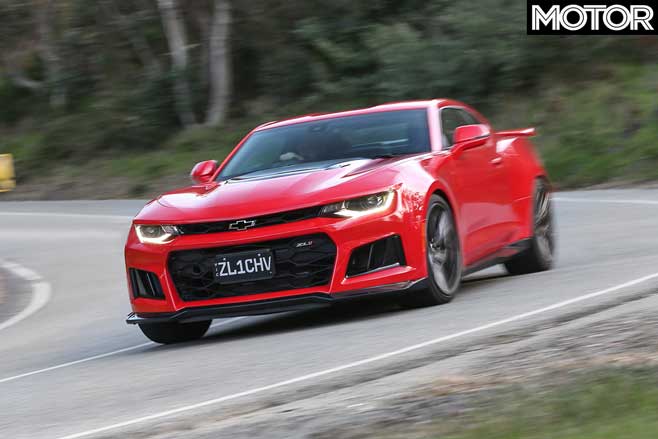
BMW M, Mercedes-AMG and Audi RS make for tough company in any category but that hasn’t stopped the ZL1 finding its deserved place among them. The ridiculously powerful blown V8 coupe, rebuilt by HSV in Clayton, has hit all the right notes. It looks tough, the acceleration is explosive and the blower whine laid over its LT4’s roar is addictive.
The adaptive-damped chassis deals with 477kW/881Nm brilliantly, with heavily weighted steering and adjustable stance giving it a confidence-inspiring attitude that also demands respect. Live with one for a day and the $159,990 ask (for a manual) seems more than reasonable. – Chris Thompson
Solemnest Farewell – BMW M140i
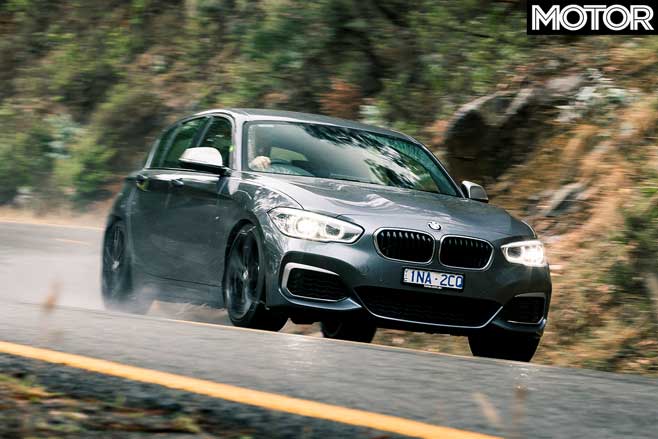
In the current golden age for hot hatches, diversity in terms of price and style is key. But part of that diversity has gone with the departure of the only rear-drive hot hatch on the market. The M140i was also one of few small cars with six cylinders, perhaps further narrowing its appeal to ‘real world’ buyers and sealing its fate in the age of efficiency.
Sure, it wasn’t without its faults – the manual shift was divisive, as was the styling – but a sub-$60K hatch capable of 0-100km/h in 4.6sec, or of doing a proper rear-drive slide at the track with some Ikea flat-packs in the back, isn’t likely to come along again. Vale, baby Bimmer. – Louis Cordony
I honestly can’t remember a Performance Car of the Year decision that was so close. Yes, I can recall years where there’s been the odd vote for what seemed like a straggler, sometimes even a couple of votes for some kind of sentimental favourite. But never have I watched it come down to the wire like it did this time.
This feature was originally published in MOTOR’s April 2004 issue
You’ll see it broken down into what judge voted for what car elsewhere, but just for the record, the BMW M3 CSL scored three primary votes, two second preferences and a pair of thirds. But even after having its nose in front for a little while, the mighty Bimmer was pipped for position by the Lamborghini with four primary votes and three second preferences.
In a nutshell, that means no judge had the Gallardo any further south than second place and the majority of them had it pegged as Performance Car of the Year. So maybe it wasn’t as much of a nail-biter as it seemed to us, sitting around an old office desk in a store room in the middle of nowhere (Benalla, actually, but you get the idea).
Of the rest of the top six, the Audi RS 6 scored three third preferences, the 350Z a second and a third and the HSV a second choice. Nobody voted for the BMW Z4, which had pipped the Audi S4 into the six and even topped the 350Z on cold, hard, emotionless points scoring.
None of which matters now, and let the record show that PCOTY has its first Italian champion (if you ignore the fact that Audi now owns Lambo) and the first time an Italian car has even cracked the top six. It’s also our most expensive winner ever and a whole bunch of trivia like it being the first V10. But there’s nothing trivial about a Lamborghini Gallardo, either in its concept or its execution.
When you know as much about aluminium as Audi does (the A8 has owed its structure to bauxite for the last decade or so), it’s a natch to use the stuff for anything purporting to be a supercar. So the Gallardo gets an aluminium spaceframe constructed from extruded members welded to cast joining members. From that, the aluminium body panels are either screwed or welded on, and external bits like the bumpers are made from thermoplastic and bolted on. Short version: Stiff as buggery.
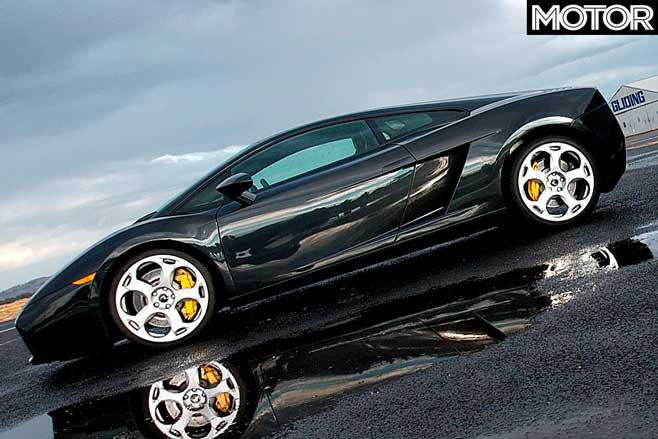
No scissor-action doors? Nope, that’s a V12 Lamborghini exclusive, says head office.
It all works because, even with all-wheel drive, the car weighs just 1450kg. The distribution of that weight is critical (42 percent front/58 rear) and Lamborghini claims that’s spot on for the standard 30/70 front/rear torque split, which then self-adjusts to 100 percent at one end or the other.
But the detail stuff is tricky, too, with the engine adopting a 90-degree angle between the banks of cylinders (Lambos have traditionally been 72 degrees) to get the mass lower and even dry-sumping the V10 to get the crankcase closer to the deck.
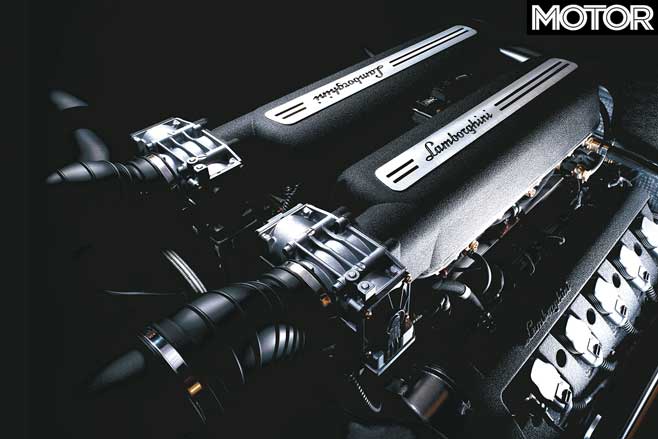
The 367kW gather at 7800rpm, which seems high for 5.0 litres (and it is), and that’s even more amazing given that the engine is significantly undersquare with a bore of 82.5mm and a stroke of 92.8mm.
But while the long stroke doesn’t appear to limit the revability (the piston speeds must be something else), it does help with torque, and 510Nm from an atmo mill of this size is dead handy. In fact, any normally aspirated engine that can muster better than 100Nm per litre can be regarded as something truly special.
More significantly, torque peaks at 4500rpm (lower than HSV’s ClubSport) with 80 percent of that peak available from 1500rpm, meaning that any time the tacho needle is pointing even vaguely north there’s oodles of urge on tap. The broad spread of useable grunt is partly due to variable intake and exhaust camshaft timing and a variable-length inlet manifold. Whatever the reason, it’s flexibility on wheels.
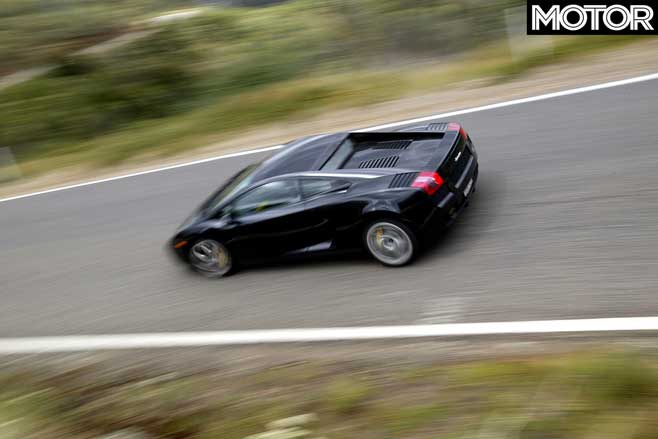
Perhaps the real reason the Gallardo won PCOTY is because it’s a car that honestly bridges the gap between big-dollar, big-power supercars and cars that are actually inviting and entertaining to drive.
See, tradition has it that anything truly exotic and sophisticated will be a pig to drive in traffic, will overheat, will be hard to get into and out of and will be a nightmare to maintain, as well as tricky to drive smoothly or quickly (usually both).
And, presented to a field of PCOTY judges, it’ll get belted via the law of diminishing returns, which they’ve all done in the past. The Gallardo is none of those things. It idles as happily as any mass-produced car you can name, feels responsive in all sorts of conditions and never gave us a hint of mechanical drama, nor even the sense that we might be stretching the friendship.
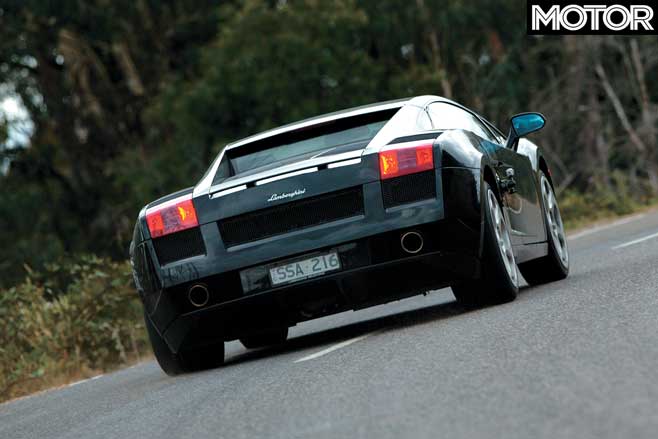
Rear vision and access might not be world beaters, but they’re better than just about any other wheeled-wedge supercar, and the Gallardo is a car that you can drive racetrack-hard without that creeping feeling that it’s about to turn you around or spit you into the catch fence.
The steering can feel a bit remote and the front corners are tough to judge, but there’s not much else to tell you it’s all-paw or cab-forward in its layout. In fact, the thing is so docile that the majority of testers thought the Winton experience showed it could use a bit more power.
Regardless of what you think of a bunch of nutbags describing a car with 367kW and 510Nm as needing more grunt, the fact remains that the Lambo is anything but the bucking, weaving, malevolent sonofabitch that characterised its ilk in the past. Driven a Countach? Then you’ll know exactly what we mean.
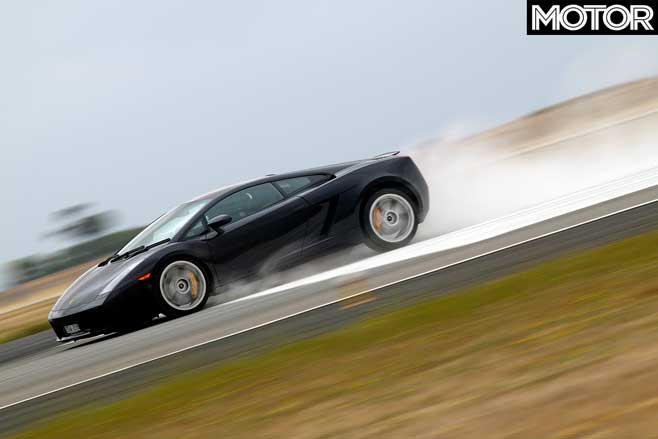
But while the act has been cleaned up, the experience hasn’t been sanitised. There’s still a marvellous bellow from the zorsts when you stir the V10 up and the ride still tells you that you ain’t riding in no boulevard queen.
The exposed-gate shifter drew criticism, but get it right and the sound of knives being sharpened will bring on the tingles. The two-pedal version with the electronically controlled paddle-shift gearbox is a hoot, too, and would address the baulky shift issue.
And while it feels visceral and talkative, technology of the highest order plays a part. For instance, an all-wheel drive system that doesn’t degenerate into understeer at speed and gives such a wonderfully secure set of feedback responses is easily worth the extra weight it contributes. Get it turned in, stand on it and the Lambo hands you a degree or two of oversteer to counter the push and just hammers.
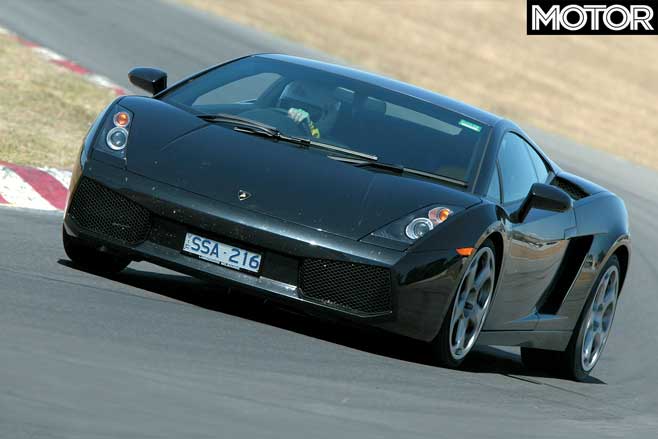
And you can start nailing the gas earlier and earlier. And really, it’s a metaphor for the whole car: it’s there because it needs to be, but it contributes to the end result without imposing too many (any?) compromises on the whole package.
How many times have you driven a car that sports a turbocharger at the expense of a laggy part-throttle response? Or something with all-wheel drive that weighs 300kg over the odds and still understeers?
Exactly, and the fact that the Gallardo pulls together a range of sophisticated technologies and performance parameters so damned effectively is more or less the reason we just couldn’t go past it for PCOTY. And that’s that for another year.
PCOTY 2004 Results – Winner
0-100km/h: 5.55sec 0-400m: 13.36sec @ 179.7km/h 0-1000m: 23.57sec @ 236.6km/h Top Speed: 292km/h Winton Lap Time: 1min 37.51sec
Judges’ Scores
| Judge | MT | JT | DE | CM | GK | DM | LB |
| Performance (/20) | 19 | 20 | 19 | 19 | 19 | 18 | 18 |
| Dynamics (/20) | 19 | 20 | 19 | 19 | 20 | 19 | 19 |
| Driveability (/20) | 18 | 15 | 18 | 18 | 16 | 12 | 17 |
| Design & Function (/10) | 10 | 9 | 9 | 9 | 8 | 4 | 7 |
| Value (/10) | 7 | 7 | 7 | 8 | 5 | 3 | 8 |
| Total (/80) | 73 | 71 | 72 | 73 | 68 | 56 | 69 |
Total Score: 482/560 Votes: 4 x 1st, 3 x 2nd
PCOTY 2004 Judges’ verdicts
Michael Taylor
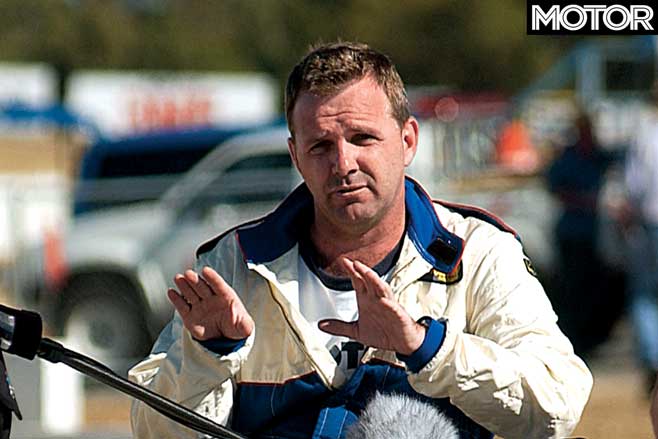
“Once the awe has worn off, plenty of supercars are just silly. Not this one. Chuckable like a Rex, it never intimidates, it’s reserves of ability and engineering are enormous and it rings my bells harder than anything else. It’s more than a supercar. It’s nirvana.”
Jesse Taylor
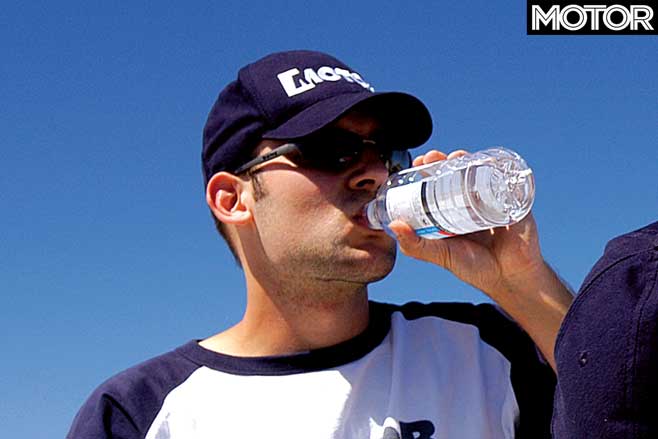
“The top three stood out, but CSL and Gallardo more so. I’m coming up with half-arsed schemes to find $400k. I’d sell a kidney to own this Lambo – doesn’t have to be my kidney, of course. Most fun I’ve had in a car with my pants on. Or off.”
Dean Evans
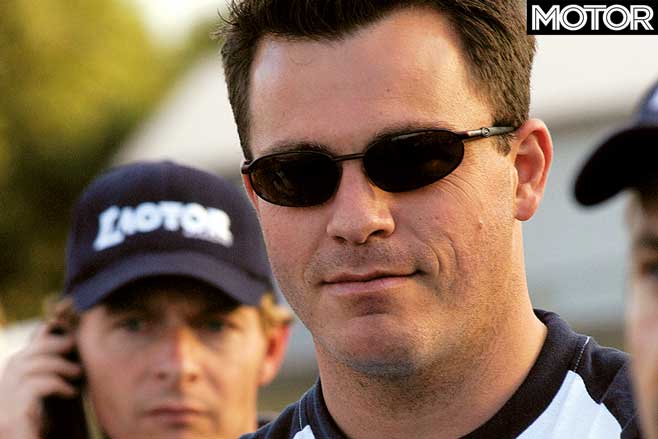
“CSL is just superb. RS 6 is a demon on the track, sexy tough, too. But Lambo’s just better: a touch more punch but a lot more poise. Shift: bad. Everything else: brilliant! All three are legends. I want an RS 6, but it’d be a crime not to award Gallardo PCOTY.”
David Morley
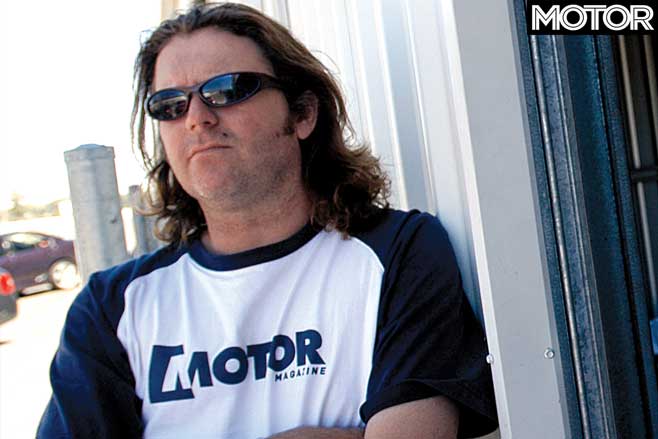
“Let’s get something straight: I gave the nod to the CSL, but I wouldn’t buy one. Can’t cop that SMG ’box. It works fine on track but sucks on road. The Lambo? My second choice, downgraded only on price. Geez, for once I didn’t pick the winner.”
Greg Kable
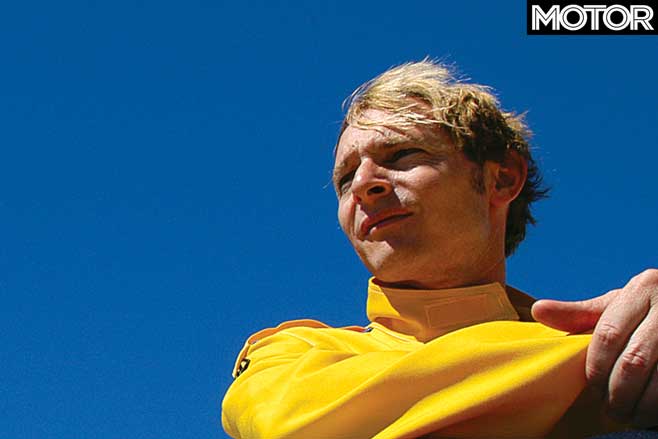
“Tough call between the top three but had M3 CSL just in front of Gallardo on value and driveability. Audi RS 6 is awesome and the one you could most easily own, but it didn’t thrill like the other two. CSL was so easy to drive fast and thrilled almost as much as Lambo.”
Cameron McConville
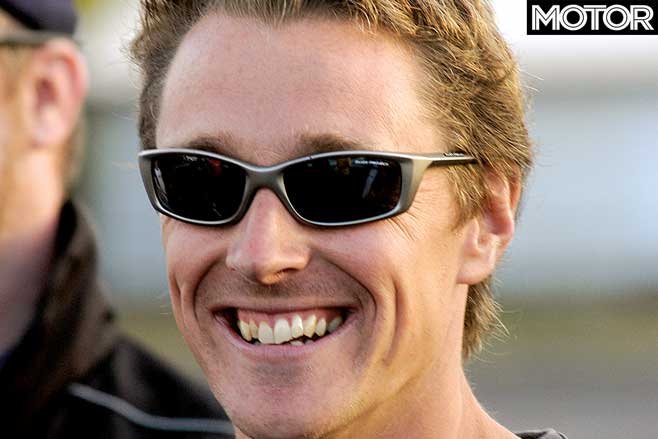
“The M3 CSL feels like a race car. And it’s the most consistent with no noticeable fade in any area. Absolutely spot on package. The Lambo’s more fun to drive than the BMW. Awesome brakes and great turn-in. It’s just $190k more than the CSL.”
Strap-on
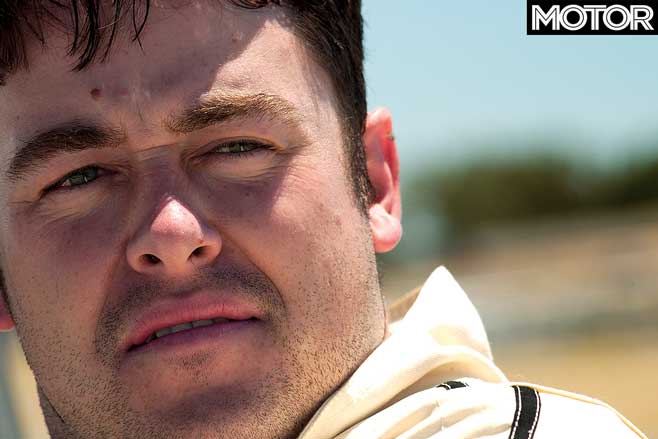
“Hello? The fact that it propelled me to 290km/h at Avalon is reason enough to choose the Gallardo. But as I said before, the Lambo also makes you look like a hero. It soaks up mistakes, and doesn’t have a nervous bone in its gorgeous body. Simply awesome.”
What is it?
A new aesthetic treatment for Lexus’ established ES ‘midsize’ sedan, the ES 300h F Sport adds a more dynamic-looking bodykit, wheels and interior trim to provide an alternative to the more sober Luxury and Sports Luxury grades. Notice how midsize was in quotes? That’s because the ES 300h, which is based on a slightly stretched version of the Toyota Camry’s architecture (but shares none of its interior or bodywork), sizes up as a large sedan, with a longer wheelbase, greater width AND overall length than a Holden Commodore.
Priced at $73,755 before on-road costs for the car tested here (without the optional enhancement pack, it retails at $69,755), the Lexus ES 300h F Sport aligns with many mid-spec midsize rivals like the Audi A4, BMW 3 Series and Mercedes-Benz C-Class, while offering cabin space from the size category above.
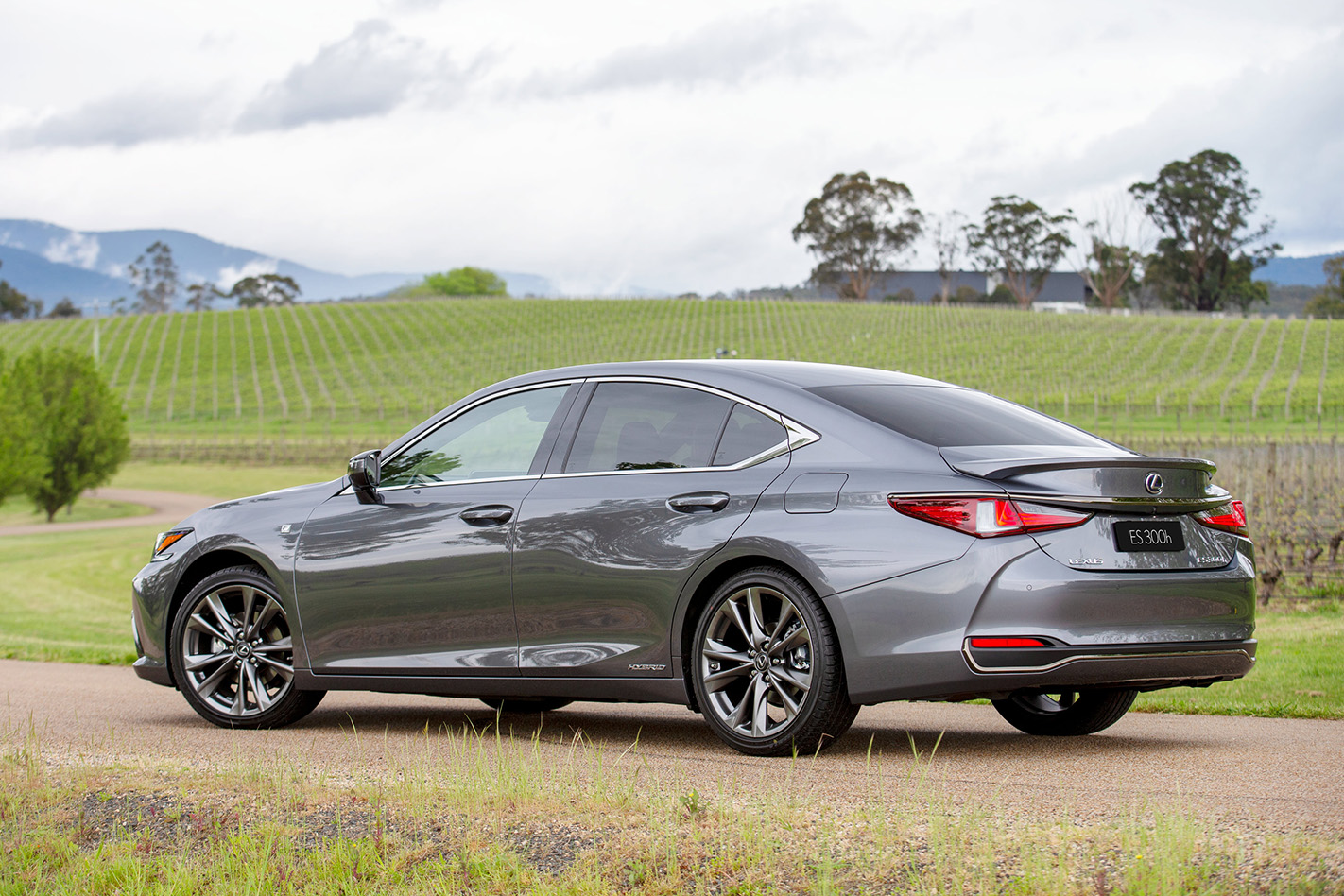
What’s it like to drive?
There’s just one powertrain available for the ES range right now, and it’s a 160kW 2.5-litre petrol/electric hybrid . Shared with the Toyota Camry Hybrid, it’s a strong, quiet and refined powertrain that’s also easy on fuel, and getting close to the official claimed consumption of 4.6L/100km isn’t too hard. In urban stop-start driving the average we saw hovered in the 5.3L/100km range, which is extremely frugal for a car of this size.
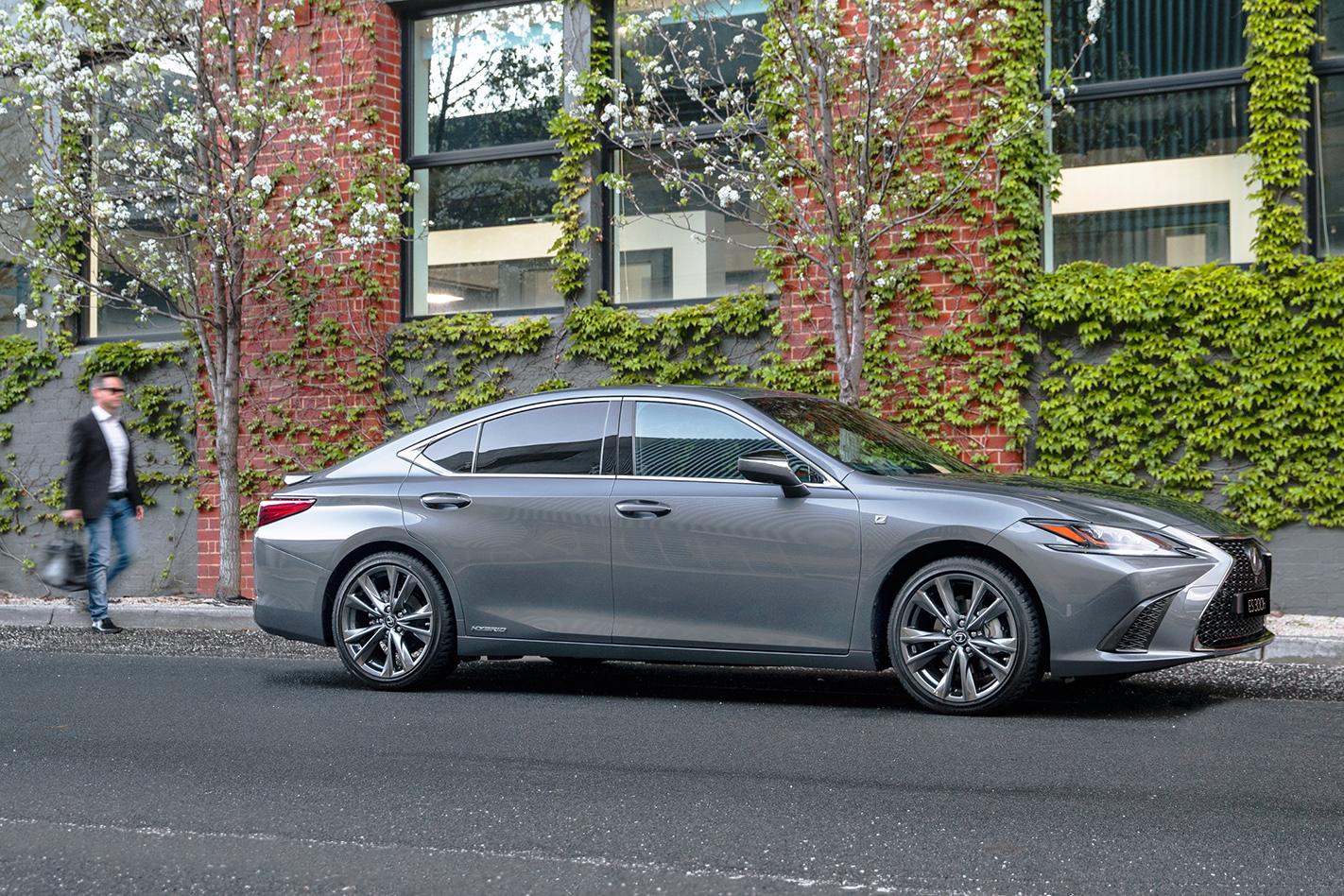
Is it a sporty powertrain? Well, no, but going fast in a straight line is not really the point of the ES. It’s not really the point of the F Sport grade either – proper performance gains are reserved for the brand’s ‘F’ products, like the Lexus GS F and Lexus RC F. ‘F Sport’ is more about pulling some Adidas over your dadbod.
However the ES 300h F Sport does have some mechanical differentiation to the rest of the range. Its suspension receives an F Sport specific tune and adaptive dampers that can either deliver bump-banishing comfort, or tauter body control when the mode selector is twisted over to the ‘Sport +’ setting.
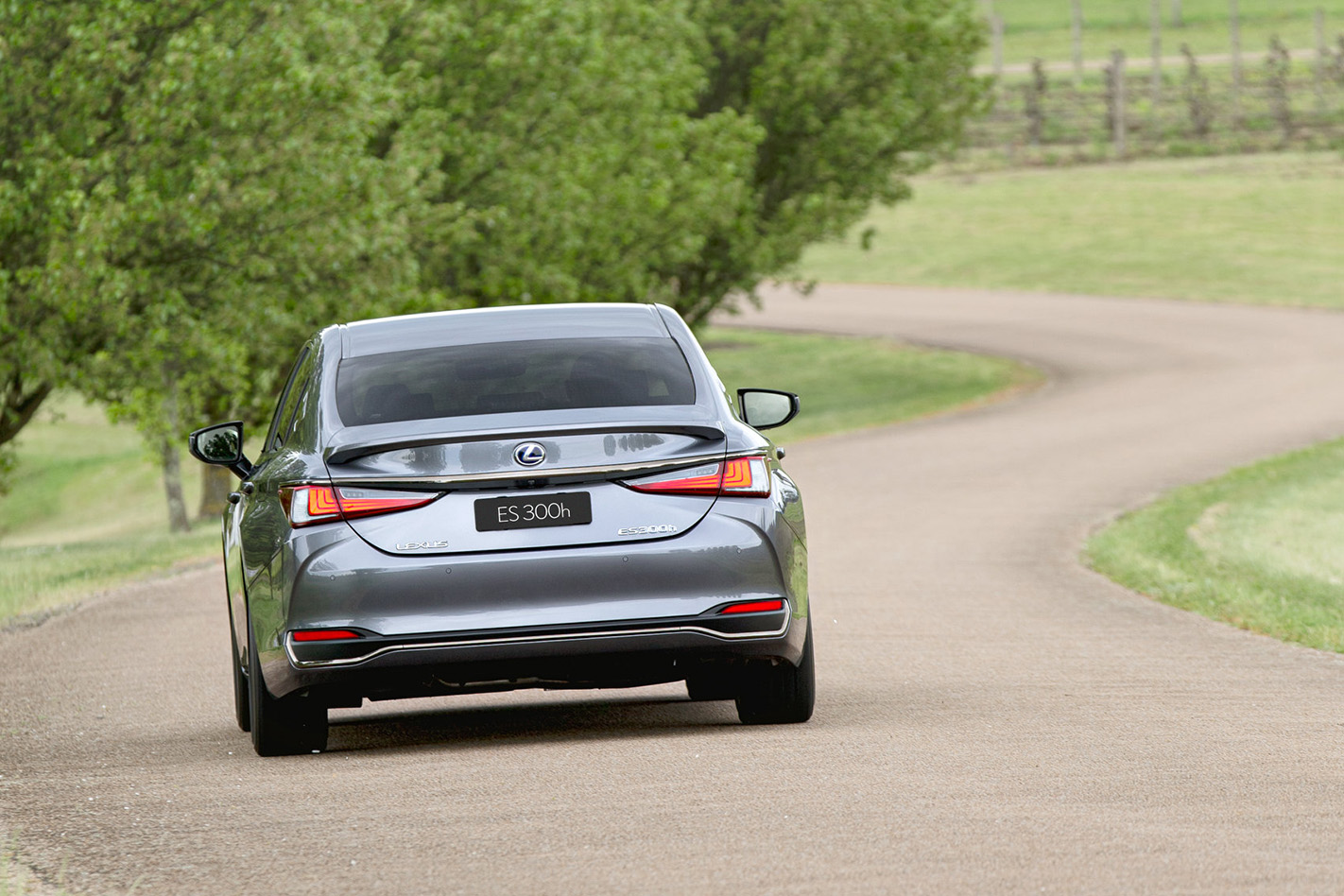
Does it work? Mostly. The ES 300h is not a light car by any means, but it handles twisting roads with confidence in its sportier modes. That said, its dull steering doesn’t really compel you to push harder, and it’s obvious that the ES is far better suited to cruising highways and city streets where its efficiency and seamless (and near-silent) switching from electric to petrol propulsion can be appreciated.
What’s it like to live with?
If you can’t stretch the budget to the truly opulent Lexus LS or its smaller brother, the GS, the ES 300h is a pretty decent alternative. In some ways, it’s actually even better.
For one, the cabin is far more spacious than the GS – particularly when it comes to rear seat legroom. There’s sprawling space aplenty, and while those in the back get limousine-like accommodation, those in the front two seats aren’t forgotten either. The F Sport’s heated front seats are exclusive to this model, and give figure-hugging support that’s great for long trips. The seating position also feels quite sporty thanks to a fairly low hip point and the high centre console and window line – don’t look behind you, and you’d almost swear you were piloting a coupe rather than a biggish sedan.
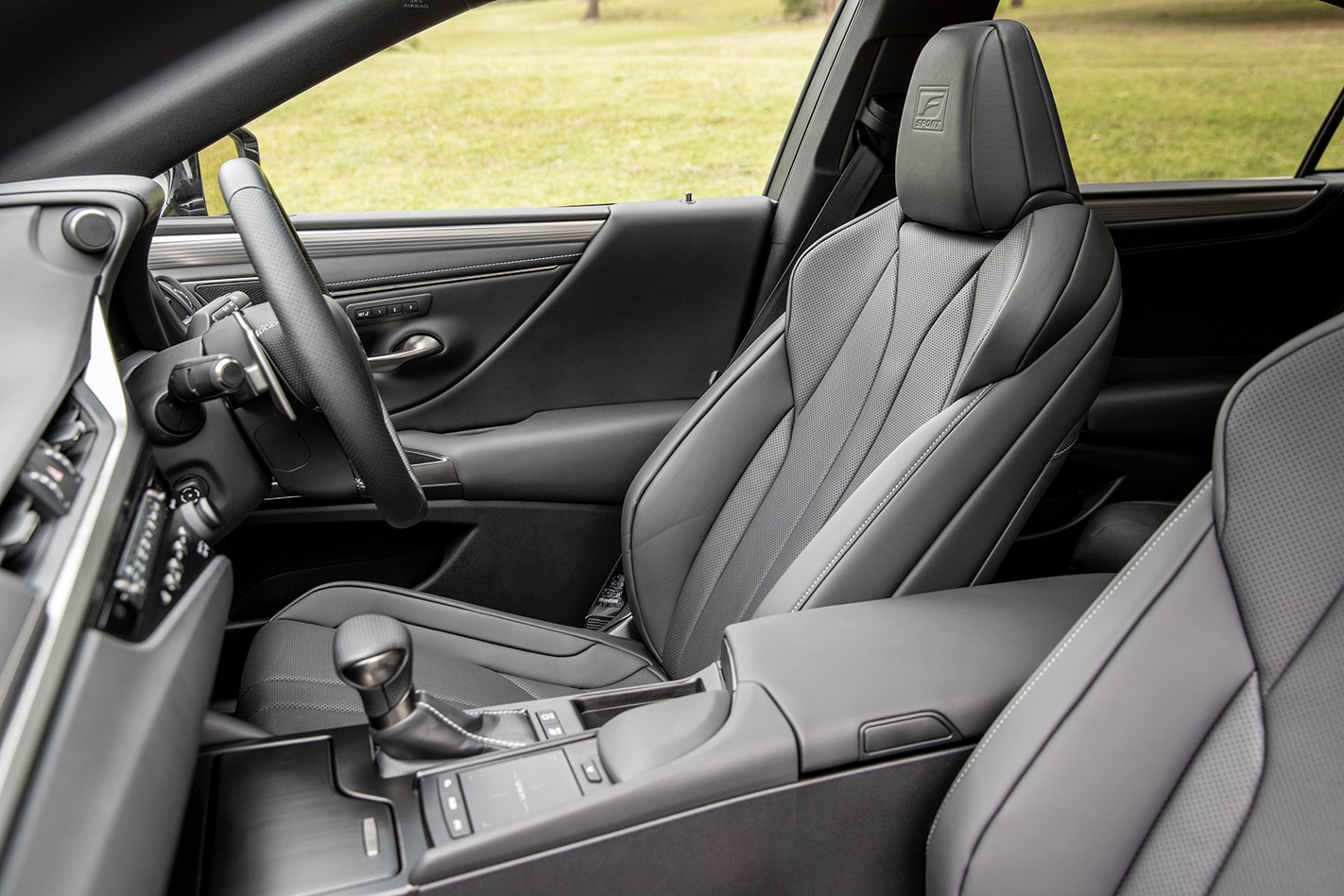
Yet while that side glass profile and low roofline sure do look good, it introduces issues for taller passengers when getting into the rear doors – better duck if you value your cranium. Headroom is fine for most people once you’re seated, though, and there’s a powered rear sunshade to keep the sun away from your scalp.
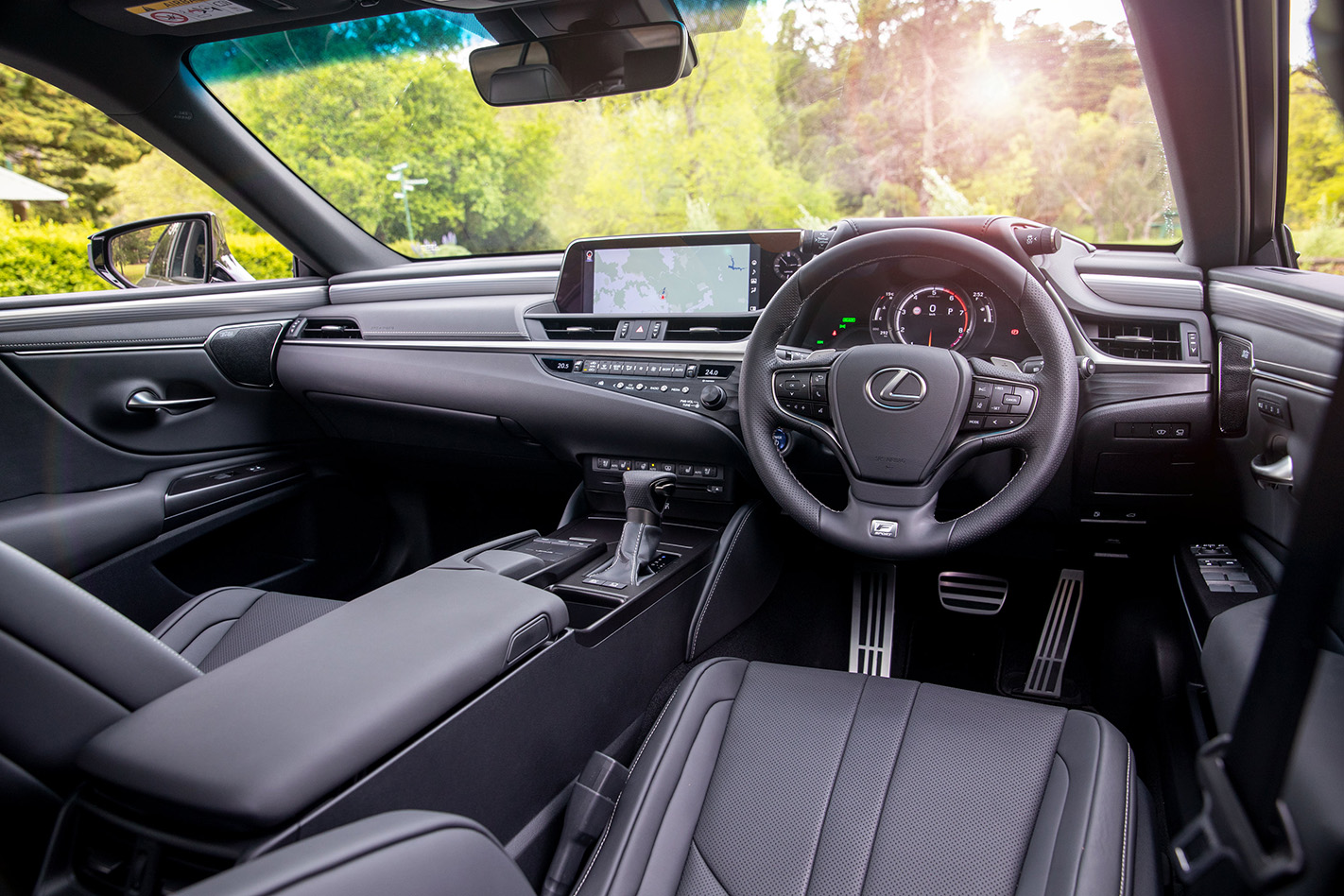
Another edge the ES has of the GS is one that comes courtesy of the ES’s relative youth. It’s a newer car than the aging GS, and its cabin design reflects that. It’s a more up-to-date rendition of Lexus’ design language, and the attractive cabin furnishings and better-resolved control layout are evidence of that.
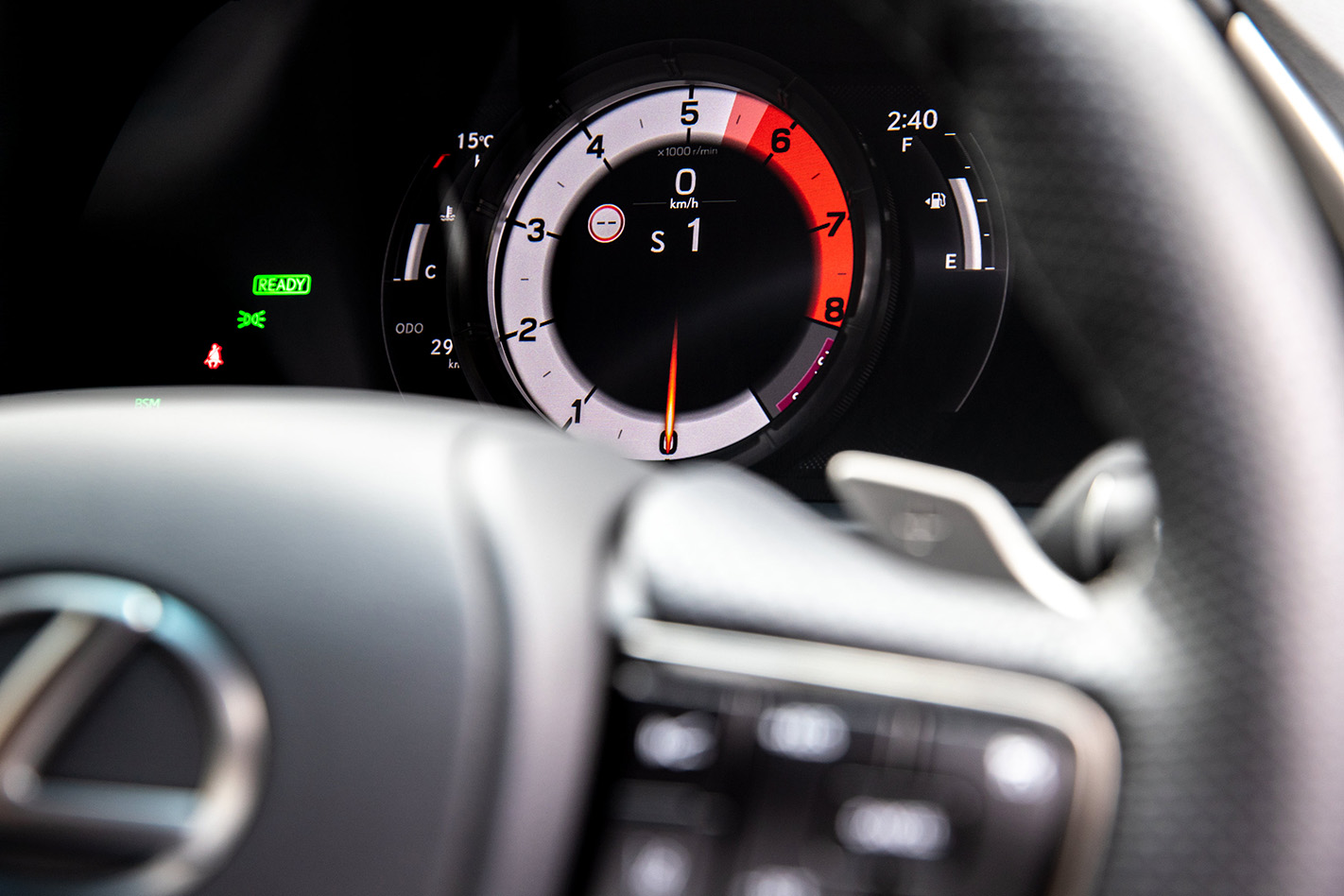
The drive mode and stability control switches sprout from the top of the instrument binnacle like Shrek’s ears, but really they’re the only visual miss-step in what is otherwise a very handsome and high-quality cabin. It’s just a shame that Lexus’ infotainment system still persists with that touchpad interface, though it does at least respond much faster now and feels more or less natural if you turn the haptic feedback all the way down.
At least Android Auto and Apple Carplay smartphone mirroring are finally available to get around that.
For storage space, it’s about par for the segment with a 473 litre boot capacity and the usual storage cubbies throughout the cabin. Door bins with bottle are only on the front doors, however the back seat does at least get a generously-padded fold down centre armrest and USB power outlets and air vents on the back of the centre console.
Is it worth the money?
Absolutely. Value for money has long been a Lexus hallmark, and the ES 300h F Sport continues that tradition. Retailing at $69,755, the ES 300h F Sport delivers enough interior space to rival the BMW 5 Series and Mercedes-Benz E-Class while being priced at 3 Series and C-Class money.
Our tester was equipped with the optional Enhancement Pack that brings a Mark Levinson 17-speaker audio system, power-operated bootlid and heated steering for an extra $4000, but we would want to see more equipment on top of that before we’d consider that package to be good value. Besides, the standard fit-out is already generous enough.
Pros: Handsome styling; fuel economy; generous standard equipment; superb ride comfort; value for money
Cons: Merely adequate performance despite sporty styling; rear seat entry/egress; sub-par infotainment
Rating: 4/5
BEST INTERIOR – Bentley Flying Spur
The stunning four-door from Crewe is not only a stylish limo on the outside, but a brilliant blend of old-world Brit charm and modern tech on the inside. There aren’t many places where wood veneer can seamlessly exist alongside things like removable touchscreens and still look elegant, but the Spur does it without feeling ‘over the top’.
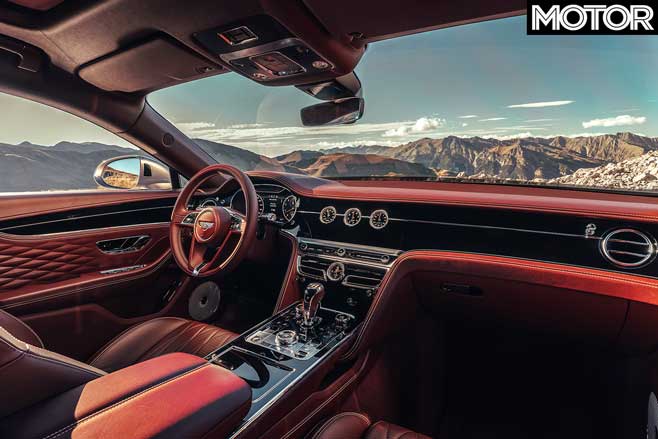
But wood veneer isn’t for everyone, and that’s why the interior of the Flying Spur isn’t necessarily just ‘one’ interior. The multiple options for each surface make customisation possibilities numerous, and even Bentley’s own press photos show everything from a cabin lathered in rich burgundy leather with gloss black panelling and chrome accents to one optioned with a mix of creamy off-white and cocoa-coloured leather and glossy mahogany-like veneer.
The level of customisation in the Flying Spur comes thanks to Bentley’s partnership with coachbuilder Mulliner.
Three-dimensional ‘quilted’ walnut door inserts, custom seat embroidery and even jewelled-finish fuel and oil caps are on the menu for Bentley buyers.

In terms of the engineering behind the Flying Spur’s plush nature, Bentley had the full force of Volkswagen Group’s technical arsenal at its disposal, and in turn threw everything at the Spur to make it as comfortable as possible. For example, those in the back seat benefit from an extended wheelbase thanks to the use of the MSB platform shared among other VW Group cars such as the Porsche Panamera.
Underneath the Flying Spur is a set of three-chamber air springs, plus Bentley uses its ‘Dynamic Ride System’ active anti-roll system, which is able to be set to either make the car handle fast driving or level out the cabin against bumps and keep the ride feeling smooth inside.
Extra points for hiding all the VW bits in the cabin, too.
Best Option – Chevrolet Camaro 2SS manual gearbox
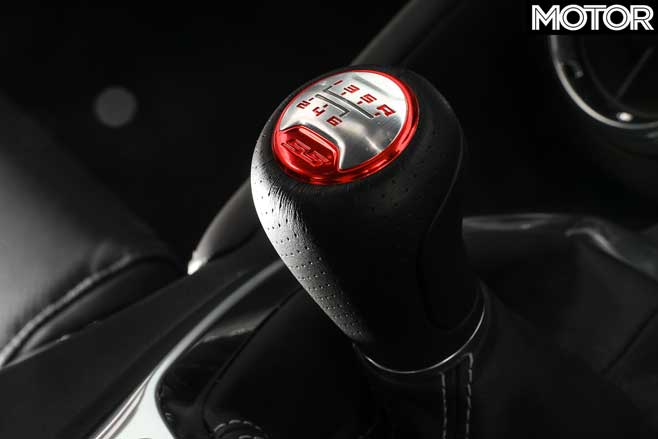
This is more a variant than an option, but it’s certainly a choice at the dealers that improves the end result. The Tremec 6060 is a brilliant mate to the 6.2-litre LT1 V8, with a shift that’s both familiar in feel to HSVs past but also vastly smoother. Travel through the gate is bang on, while it also lets you revel in the V8’s lovely noise.
Biggest Gimmick – Renault 4Control
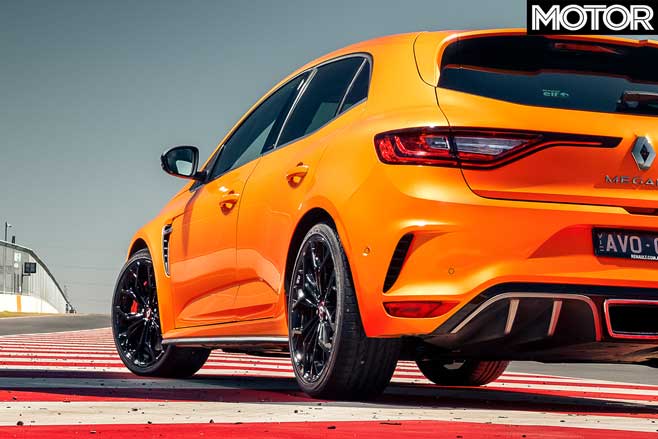
Our love for the previous Renault Megane RS gave the latest version a lot to live up to, but the new rear-wheel-steering system would be a dud on any hot hatch. Dubbed 4Control, not only does it feel out of sync with smooth steering inputs by responding too quickly, we’re not sure it adds any go-fast benefit, as even Renault left it off the ’Ring record Trophy-R.
It was painful. Like watching the deciding moment of Australian Idol. The BMW M3 CSL came within a single first-place vote of taking out PCOTY 2004. And there it stood, alone on the stage while bouquets were thrown at the Lamborghini.
This feature was originally published in MOTOR’s April 2004 issue
When Deano and I first drove the CSL at Eastern Creek for a February issue comparo with Porsche’s 911 GT3, we just knew it would still be in the hunt when votes were cast. And the CSL established itself as a player among all the PCOTY hopefuls on day one with the second quickest 0-100km/h sprint and third across the quarter mile and standing kilometre.
On the top speed strip, the CSL’s charge up the charts was halted by an extremely soft speed limiter just one klick shy of 270km/h. And remember, this CSL was limited to 250km/h.
So at close of play on day one the CSL was top of the pops with the Lambo, RS 6 and thunder truck CSV.
At Winton there was more interest in the CSL’s lap time than that of the Lamborghini. And the howling M3 didn’t disappoint with a simply stunning 1:37.06. Good enough for quickest time of the day and all-time second behind the Porsche 911 GT2 of PCOTY 2002. More than the time, the Bimmer impressed each judge with its combination of raw track focus and user-friendliness at the limit.
Faults? Steering. The weight doesn’t change as it loads up, the super grippy Michelin Cup tyres show that the rack could be quicker, and Cam and MT reckoned the tyres mask a bit of feel on turn-in. Picky, picky.
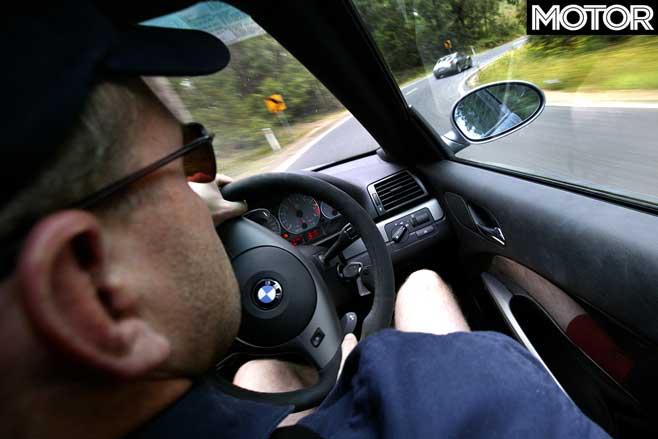
If the CSL was king of the track, there was concern over its ability to handle Aussie roads. Both Punter and Taylor (M) crucified it on driveability, citing the indifferent ride quality over broken surfaces.
Most of us found it to be almost as user-friendly as a regular M3 but with a harder edge when the mood took you. For its few faults it strikes an incredible balance between grip and grunt, practical and pose.
Throughout the event you could see the judges tearing themselves apart over the Lambo and CSL, knowing that in a few days both would still be in the reckoning when the hard questions were asked.
Evans had this to offer on the CSL: “The ultimate track car. So much fun, so much grip, saturates every sense more than anything else. Sounds sex, is sex, split decision between it and Lambo.”
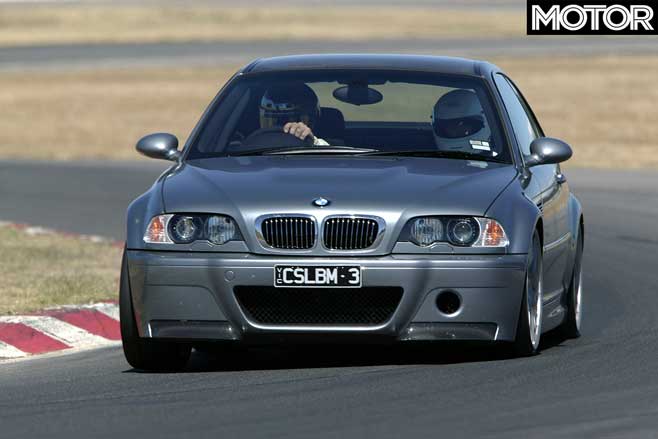
Cam shared Dean’s love for the CSL: “You really can’t fault it. As a track car it’s just perfect. You really feel like you can take it to the limit.”
In total points the CSL trailed both the Audi RS 6 and the Lamborghini, but bunny-hopped the Audi thanks to three outright first place votes from Kable, Cam and Morley. The CSL also picked up two second-place votes and a pair of thirds.
Along with the Lambo above it, the CSL was the only car to receive at least one vote from each judge. Not since the Nissan 200SX’s three votes to two (Porsche 911 Turbo) to one (Audi RS4) victory in 2001 have we had such a tight finish at PCOTY. And though no one remembers second place, there’s no shame in the M3 CSL’s place in the Performance Car of the Year pantheon.
Life Begins at 200
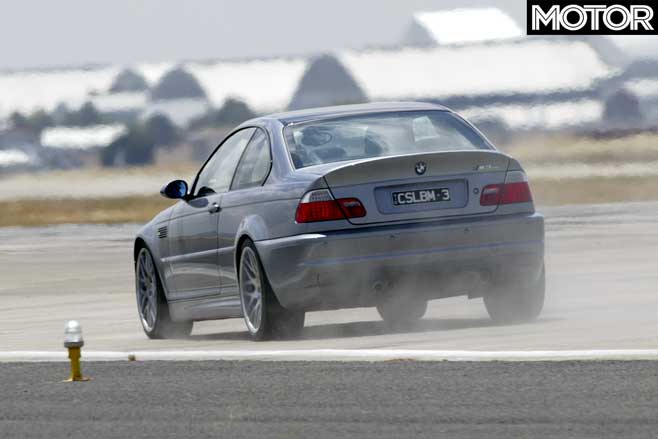
The hard-launching CSL gets off the line at 5.4 metres per second squared (m/s/s) and hits 10km/h in just 80cm. The CSL is fully hooked up by 55km/h and is accelerating at 7.5m/s/s. The standing 100km/h comes up in 5.15sec, taking just 77.9 metres or at the opposition’s 22-yard line of a footy field.
How much distance do you reckon the next 100km/h is going to take? It takes a further 12.65sec for the CSL to top the metric double ton (in a blistering 17.8sec), but it uses another 5.5 football fields or 11 Olympic swimming pools for a total 0-200km/h distance of 628.8 metres.
Fastest of all to 200km/h is the CSV Mondo. The brutal V8 takes 15.9sec and uses just 532.8 metres – nearly a footy field less.
PCOTY 2004 Results – 2nd
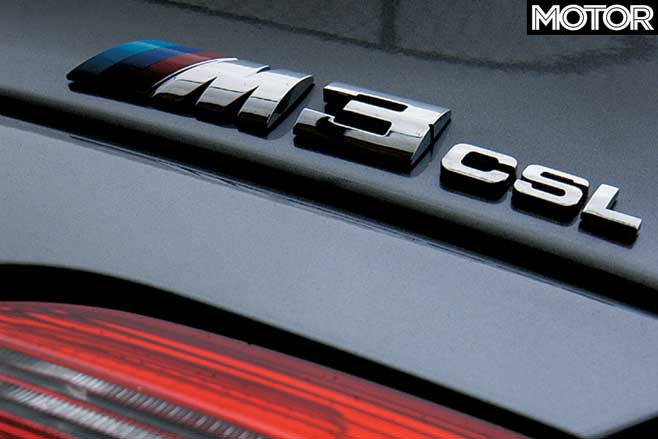
0-100km/h: 5.15sec 0-400m: 13.40sec @ 174.1km/h 0-1000m: 24.06sec @ 224.4km/h Top Speed: 269km/h Winton Lap Time: 1min 37.06sec
Judges’ Scores
| Judge | MT | JT | DE | CM | GK | DM | LB |
| Performance (/20) | 18 | 20 | 18 | 19 | 19 | 19 | 19 |
| Dynamics (/20) | 19 | 18 | 19 | 18 | 19 | 19 | 19 |
| Driveability (/20) | 11 | 18 | 18 | 19 | 18 | 15 | 12 |
| Design & Function (/10) | 9 | 8 | 9 | 9 | 8 | 6 | 6 |
| Value (/10) | 6 | 6 | 8 | 9 | 7 | 6 | 8 |
| Total (/80) | 63 | 70 | 72 | 74 | 71 | 65 | 64 |
Total Score: 479/560 Votes: 3 x 1st, 2 x 2nd, 2 x 3rd
