
If you are a long-time reader of Wheels, you’d know that we don’t really buy into the whole ‘speed kills’ message peddled by politicians and police alike.
Wheels has pushed and tested the speed kills myth a number of times, with former editor Stephen Corby doing an extensive investigation in 2017, and in 2013 we drove from Melbourne to Sydney at 130km/h (the police really didn’t like us after that).
It’s also the same narrow road safety ethos that resulted in New South Wales stopping one of the biggest automotive stars in the world from filming around Sydney in 2016.
While we have been pointing out the reductive nature of the singular focus on speed in our road safety message, it has fallen largely on deaf ears when it comes to policy makers.
However, an America police officer has stood up, and labelled the same speed kills ethos that is used in the States as a fallacy.
The officer in question is James Snow, who has investigated tens of thousands of traffic accidents during his 25 year career. Snow spoke to Road & Track as part of an extensive interview, and it’s well worth your time reading the full piece.
The highlight of the interview is early on, when Snow shuts down the speed kills myth completely.
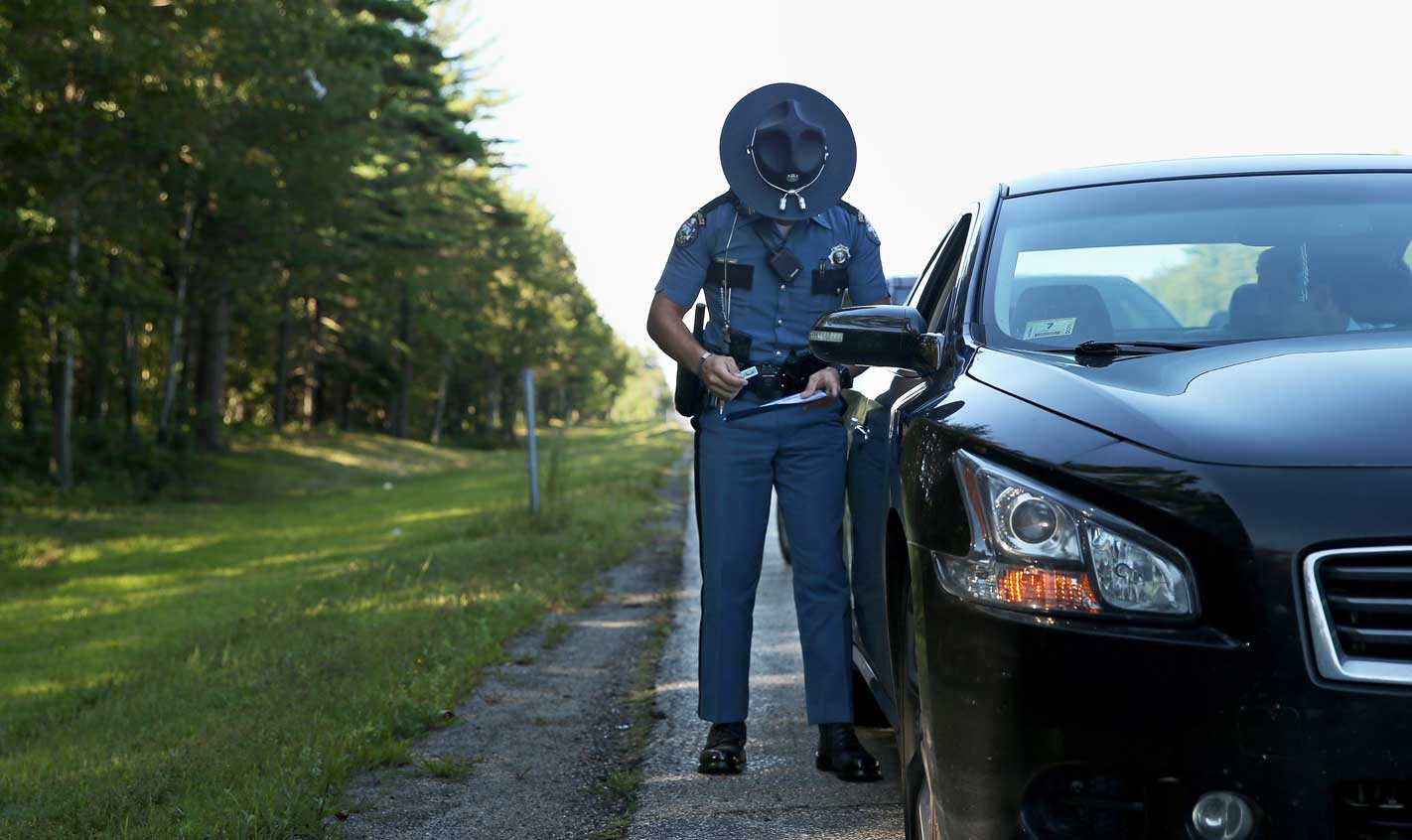
“The overwhelming majority of collisions are caused by a failure to yield, not by speed,” he told Road & Track.
“Over the past decade, one of the primary reasons for collisions has been driver inattention. With the advent of the cell phone, the number of fatal crashes has skyrocketed.”
Snow continues to explain that one of the most fatal types of crashes was the T-bone, claiming that the human aorta can’t survive the lateral forces, and can rip causing the vehicle occupant to bleed to death.
“We see plenty of fatal accidents that happen at 25 to 30 mph (40-48km/h),” he said. “In fact, the majority of fatalities we handle happen between vehicles that are travelling at the speed limit.”
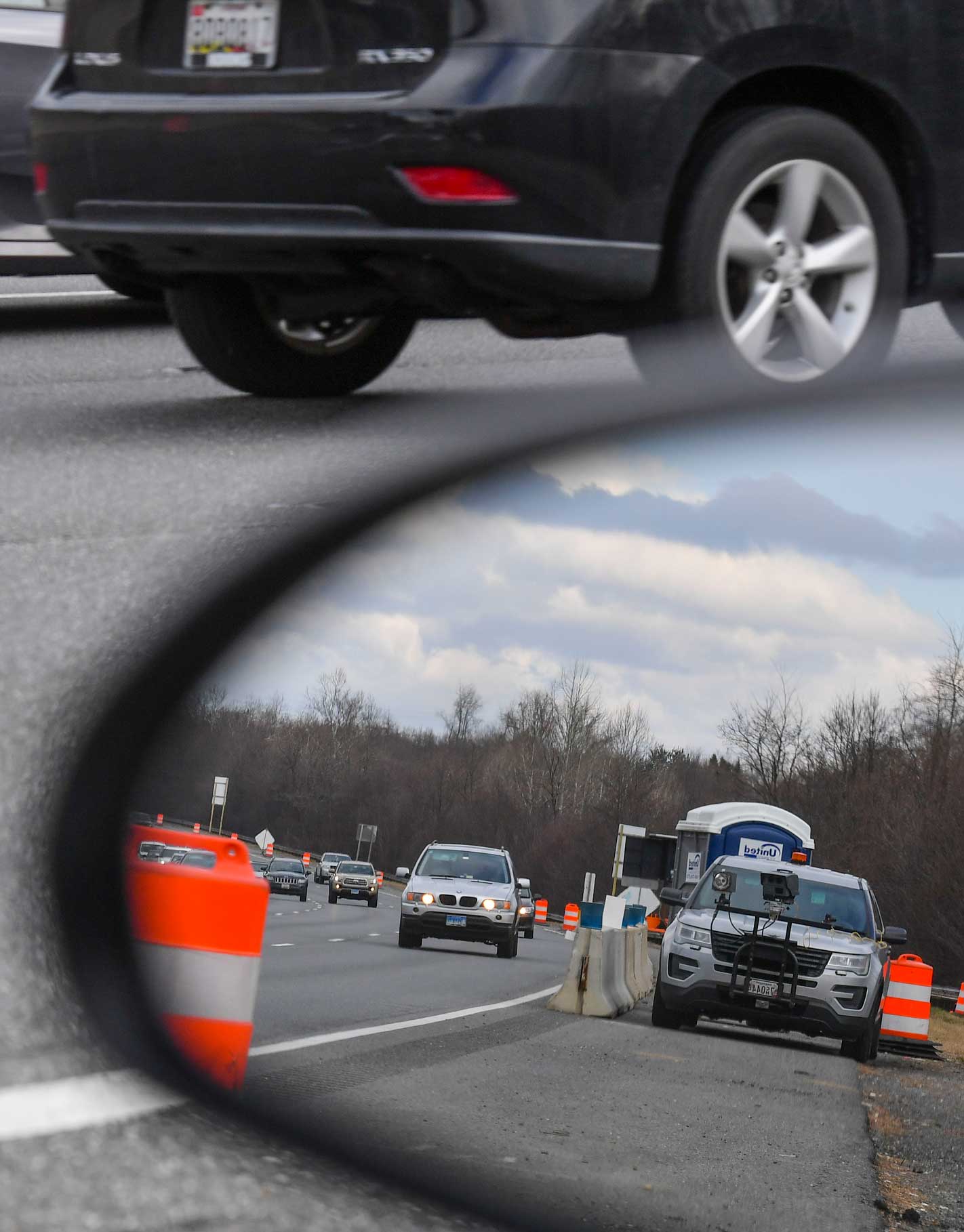
A driving enthusiast himself, Snow defended the recent Cannonball record breakers Arne Toman and Doug Tabbutt, who performed a highly-illegal cross-content blast in just over 27 hours. To achieve that time, the duo had to average 165km/h (including stops), with a cruising speed of around 257km/h.
“The Cannonball safety record speaks for itself. It’s not a bunch of guys driving recklessly and weaving in and out of traffic and cutting people off,” Snow said. “I’d rather have a thousand Arnes and Dougs on the road than most of the people you see driving around. Those guys’ attention was trained on driving.”
And that’s the point, isn’t it. It’s not speed alone that kills people, it’s inattentive drivers with poor training. If only our local policy makers would listen.
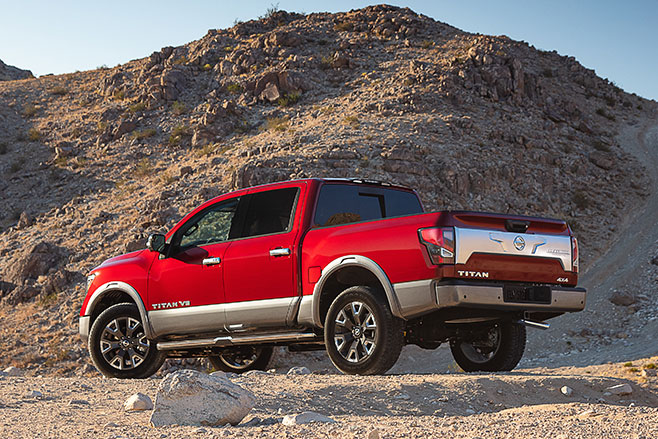
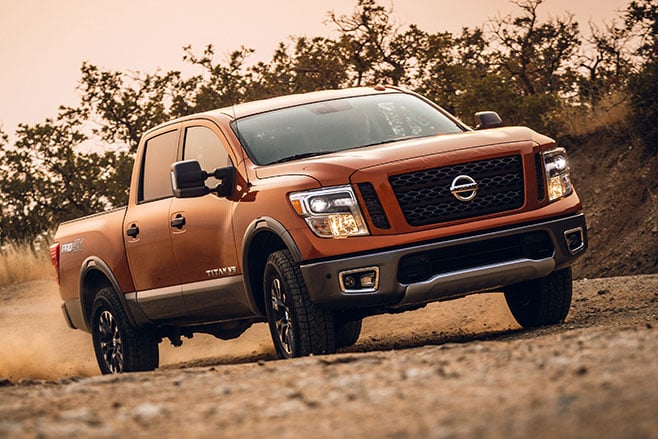
Nissan’s mighty Titan ute is a step closer to appearing on Australian forecourts, with local automotive development partner Premcar in the running to convert the monster four-wheel drive to right-hand drive on local soil.
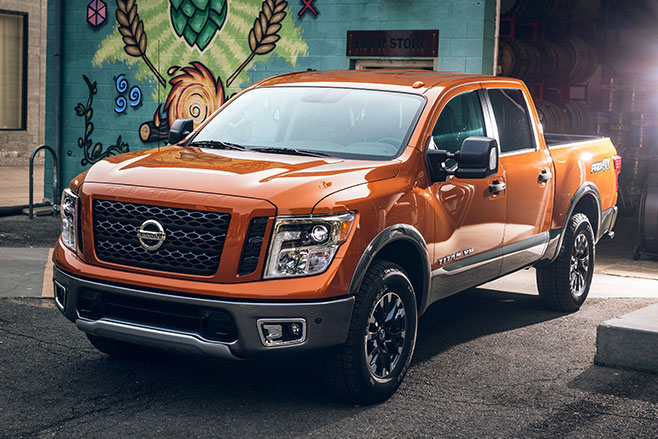
The Titan would provide a new competitor to other locally converted big utes such as the Ram and Silverado, but without a feasible plan to swap the steering wheel, previous speculation has been conjecture at best.
However, Nissan’s collaboration with Melbourne-based vehicle developer Premcar – to produce the Australia-only Navara N-Trek Warrior – appears to offer the ideal solution.
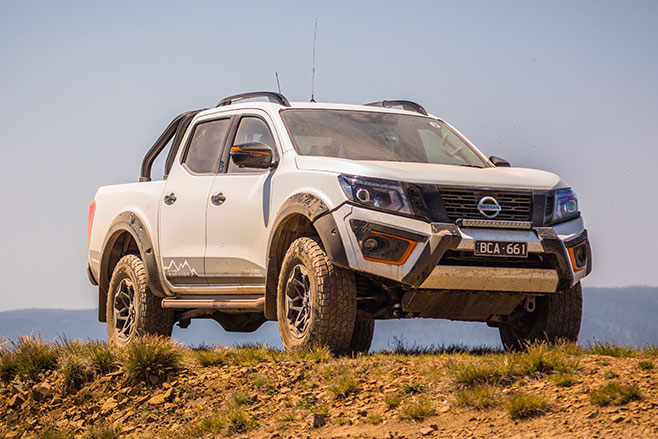
Speaking to WhichCar, Nissan Australia managing director Stephen Lester revealed the Japanese car maker is talking not just to the company’s global head office about the possibilities for Titan, but also Premcar.
“This (Premcar partnership) affords us an opportunity to demonstrate just how successful and capable we can be in what would be a potential local conversion of Titan,” he said. “That’s more than likely the way the plan looks if it were to happen – the only way it would happen.
“We have no shortage of ambition to bring Titan to Australia.”
After a blast in Nissan’s newest Navara flagship, it’s clear Premcar has the expertise to produce the Warrior to a high standard, but Lester explained the hardest challenge was not engaging a local supplier, but to convince Nissan’s Japanese product execs to approve the venture.
“We’ve had discussions with them on it. The reality is that the work we have to do is with Japan not with local suppliers at this stage. We have meetings every couple of weeks.
“We will continue to fight the good fight. We believe [with] the right efforts from the engineering team in Japan and a team here locally that we could overcome the central and primary concerns for the Nissan brand.”
Those concerns, explained Lester, regard upholding Nissan’s customer expectations and the need to deliver a vehicle of a high safety, durability and capability standard, regardless of where in the world it is produced.
Premcar appears to be able to offer the smarts to deliver a Nissan-endorsed vehicle, but Lester described the remaining work required to get the project off the ground as a “chasm”.
Premcar engineering director Bernie Quinn also shed some light on the possibilities to convert the Titan and explained that the current Epping facility has capacity to expand into a new line, effectively double its current line operation and take on multiple new projects.
At least one of the new projects will be another Warrior product for Nissan and although neither partner would reveal which model was in line for the conversion, Lester confirmed it would be another serious off-roader like the Navara. Our money would be on the recently refreshed Patrol large SUV.
“As we go forward, that (Navara Warrior) engenders a lot of confidence for us in terms what we can do with Premcar and what they can deliver and how we can apply that to vehicles in different segments from just the Navara.
“There are other concepts outside the traditional back woods, in the bush, on the beach off-road that can come to mind because there are all sorts of environments that the vehicles are overcoming. What is really at the core though is no compromise. A battle-tested warrior.”
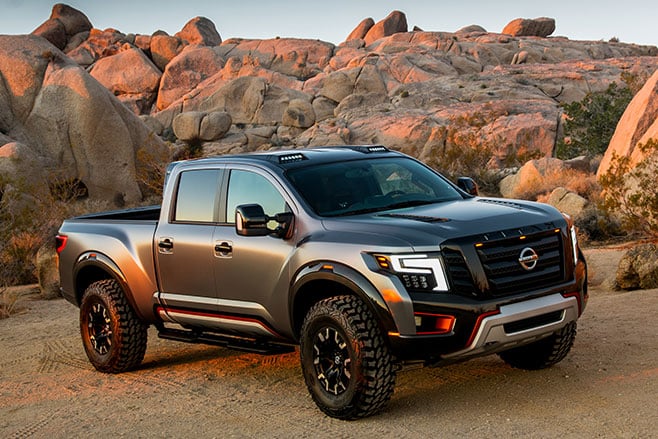
And the Titan Warrior concept that was revealed in 2016 would be an easy bet for the third Warrior to roll out of local production lines.
As for demand, Lester said dealers were being approached about the possibility of buying a Nissan-backed Titan locally, and added other sources of research were offering a barometer into demand.
“You only need to look on car aggregator websites that could suggest there already is demand by other opportunists in the market place and that’s probably the easiest example to show that the demand is there.”
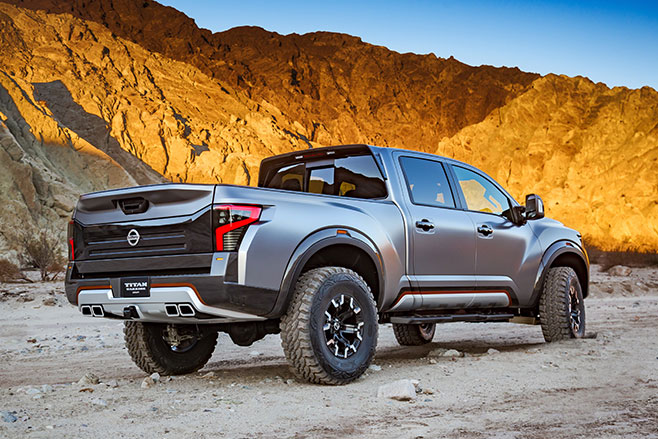
Those ‘opportunists’ include Performax and American Vehicle Sales (AVS), who are offering locally converted examples for a price. If the cost of the new Navara Warrior is anything to go by, a Premcar converted Titan could significantly undercut the cost of independently altered versions.
Toyota Racing Development, or TRD as we usually refer to it, is building a new engine, and it’s going to be a thumping big V8!
The aluminium racing engine will be able to be purchased by customer print car racing teams in 2020, ready for the following season.
The 6.7-litre aluminium V8 engine is set to follow a series of other V8s Toyota has developed for racing, one of which was a NASCAR-derived V8 also built for sprint car racing.
The new engine is also to be available in a 5.9-litre displacement, and will meet the requirements to run in several sprint car categories including World of Outlaws, All Star Circuit of Champions, and USAC.
“We’re excited to design and ultimately see Toyota compete in sprint cars,” says TRD boss Tyler Gibbs.
“We have, and will continue to enjoy our time in midget racing, and look forward to this expansion into sprint car competition.
“This provides us an opportunity to not only design a new engine, but also to expand our grassroots racing presence and continue to seek out and develop up-and-coming talent.”
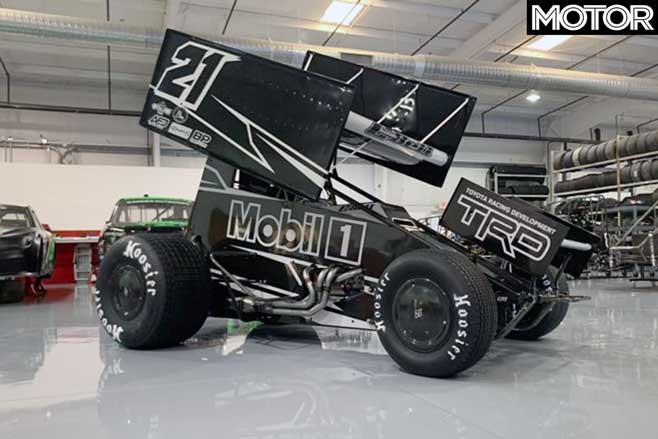
TRD says the category it’s primarily targeting with this engine is the World of Outlaws Sprint Car series, in which 13 full-time drivers race in locations across 23 different states in the USA annually.
The Sprint Car series runs alongside the World of Outlaws Late Model series which features dirt racers more recognisable as ‘car silhouettes’.
So far, Toyota’s engine is only in the design stage, so no further details have been revealed.
The Manthey Racing Porsche 911 GT2 RS might lap the Nürburgring Nordschleife in record time, but that achievement can be hard to appreciate from the other side of the world.
That’s why Manthey Racing is considering an assault on Australia’s own ‘Nürburgring’ to celebrate the arrival of its 911 GT model upgrade kits in Australia.
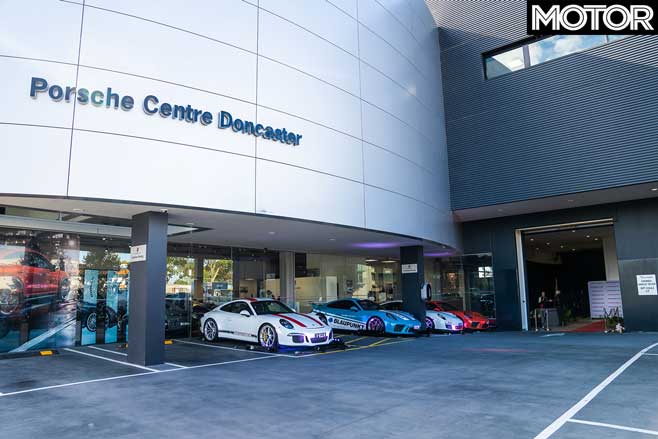
While on hand at Porsche Centre Doncaster last night to present Australia’s first Porsche 911 GT2 RS equipped with its newly available MR kit, sales manager Michael Grassl said “we [MR and Porsche test driver Lars Kern] already have talked about some quite interesting tracks here in Australia, and we’ll have to get some lap records here as well to sort out where we are.”
When asked by MOTOR what track might interest Manthey Racing, he was clear: “Bathurst”.
Manthey Racing is currently discussing an assault on the road car lap record at Mount Panorama, which Mercedes-AMG set when Bern Schneider piloted a GT R to a 2min 16.5sec lap in 2017.
We understand the plan is in its early stages and revolves around choosing a Porsche factory driver from the local region. The reason why a racing firm can source such drivers is Porsche owns 51 per cent of Manthey Racing.
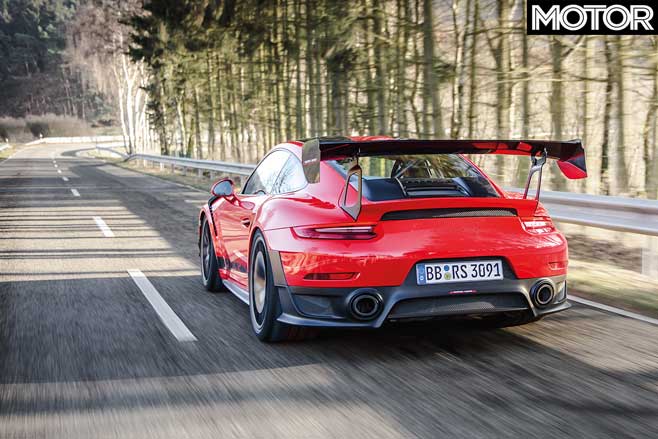
Grassl said they have someone in mind, who he can’t reveal, but adds this choice will determine when and how they’ll set up the attempt.
Porsche drivers in the Australian pacific region include Matt Campbell, who was promoted to its GT works team only weeks ago and won the 2019 Bathurst 12 Hour under Earl Bamber’s stewardship. New Zealander Bamber is the other local works driver.
As for the car, Grassl, an engineer and someone who completes 1000 laps at the Nürburgring each year, says its setup and ride height will be left unchanged since the Nürburgring North Loop’s elevation changes and bumps are equal to, or worse, than Mount Panorama’s.
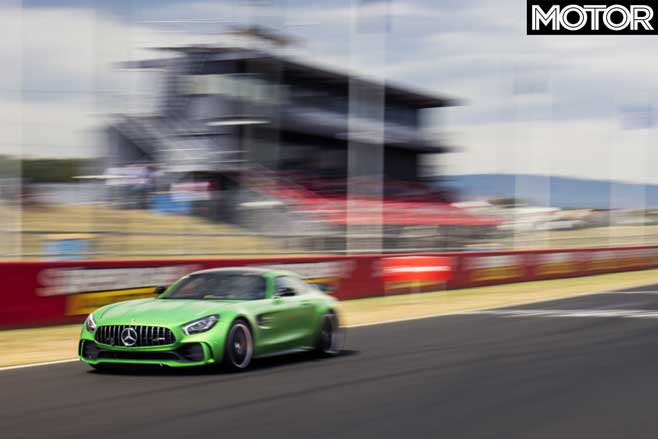
It’s too early to reveal a target time but given the 911 GT2 RS MR’s 6min 40.33sec lap at the Nürburgring was half a minute quicker than the GT R’s 7min 10.92sec lap, it should easily earn the title.
It’s worth mentioning the comparison between these two cars isn’t exactly equal. The Mercedes-AMG GT R is a production car, while the Porsche 911 GT2 RS MR is a road-legal limited edition.
This difference would relieve pressure to set an ‘official’ production car lap record like Mercedes-AMG. CAMS changed the rules around lap records earlier this year to only officially recognise laps that are completed under race conditions.
Lamborghini have stepped up the airport car game with the announcement that a special edition Huracan will now be moping around Bologna airport.
Sadly, the 5.2-litre V10 will have little chance to utilise its 430kW on the airport runway as it shepherds incoming and departing flights. With the rear-drive model costing close to A$400,000, the gesture was a generous one from the Italian supercar company.
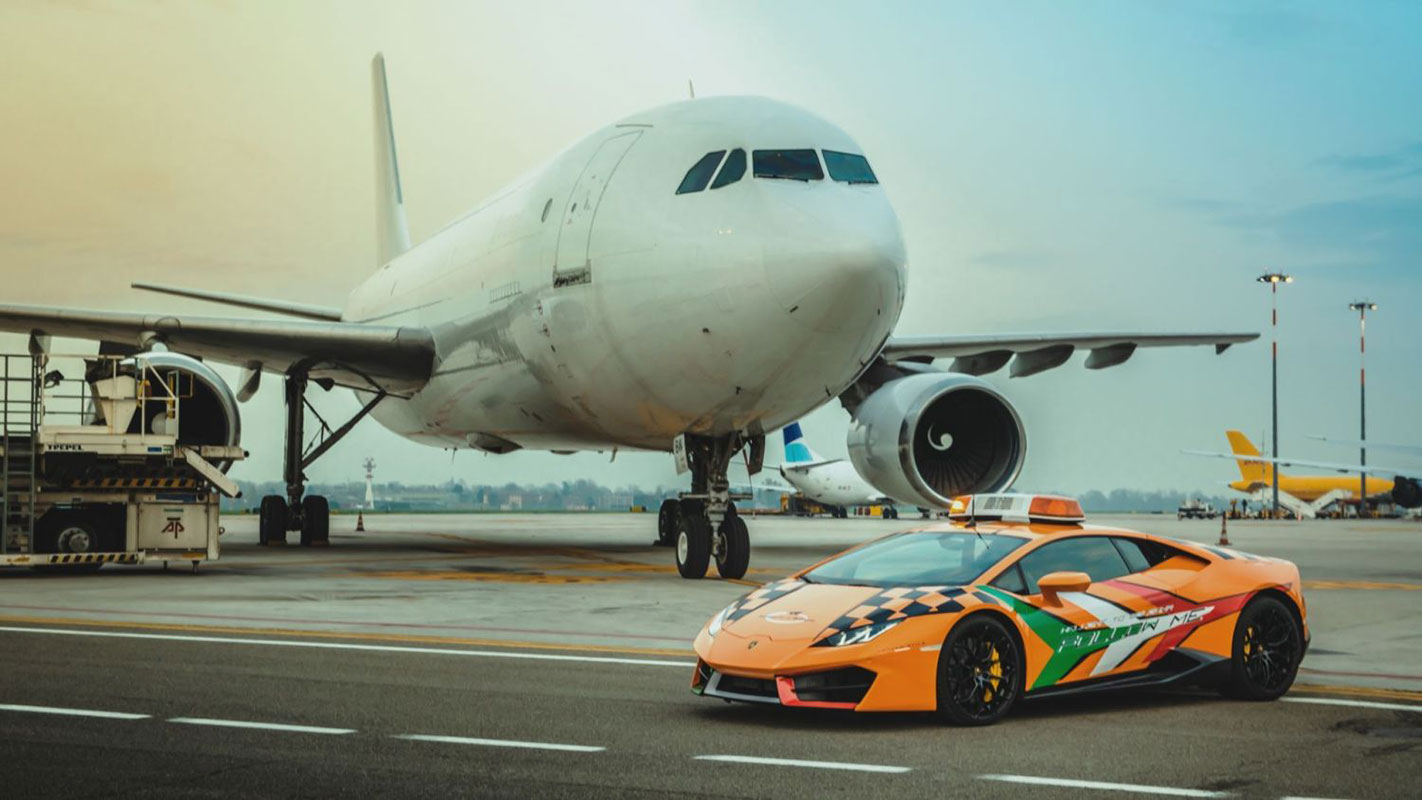
If subtlety was the goal, the mark was badly missed. The car features a special orange livery to ensure that it is visible to pilots, Italian flags all round, ‘follow me’ stickers and a bright, flashing, orange light sitting atop the roof. Radios fitted inside the car connect to the control tower and ensure that there are no inevitably widely publicised mishaps.
The job is not exactly an appropriate one for the Italian supercar, with airport car speeds limited to 56km/h, though the Lamborghini still holds another 270km/h up its sleeve should the occasion come calling.
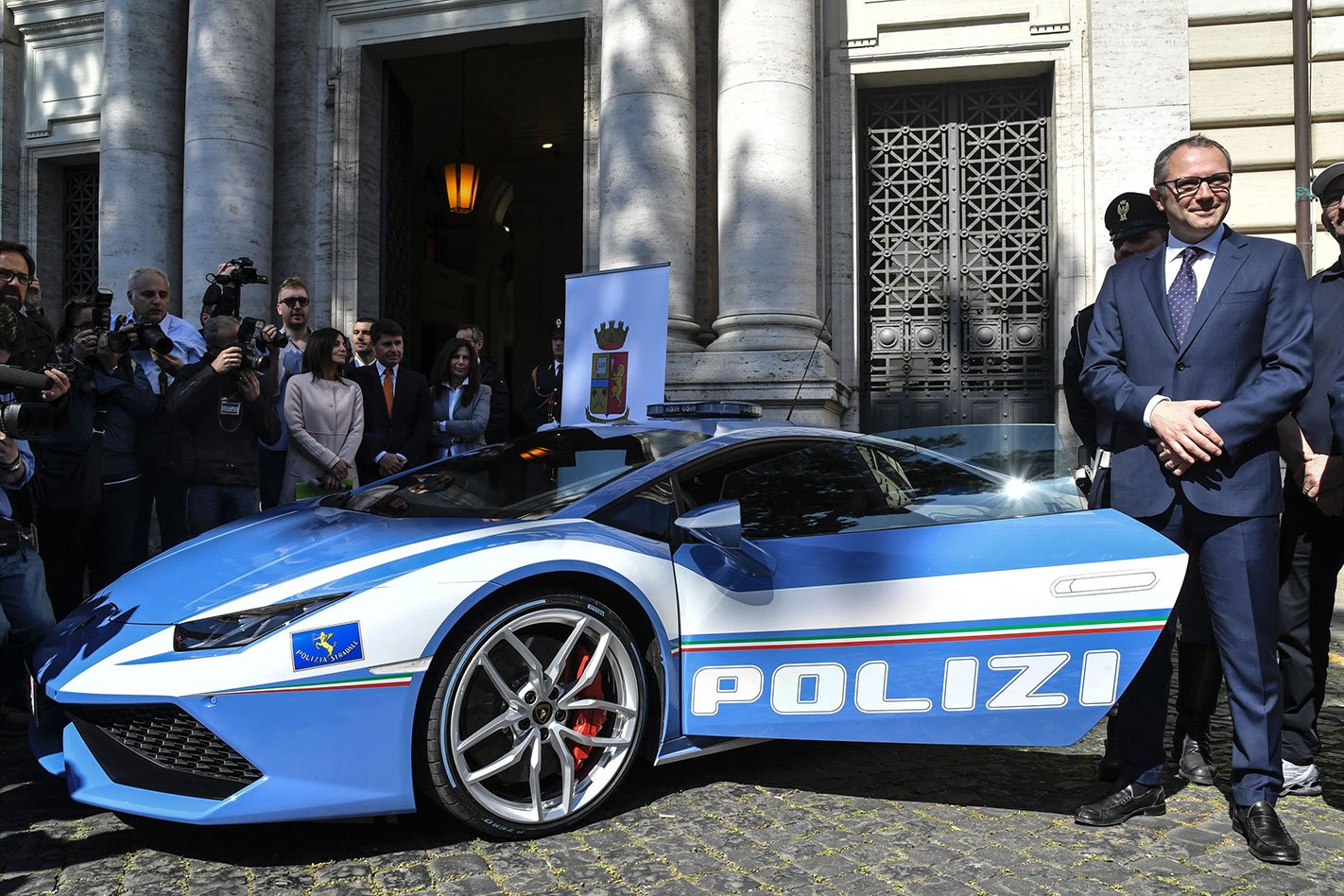
This is not the first time Lamborghini has gifted its sports cars to prominent Italian figures. In the last three years, the Vatican and the police force in Italy have received limited edition, custom colour spec, Huracans.
Pope Francis’ white and gold striped run around was sold at auction for nearly A$1 million.

The Huracan replaces the Italian police force’s 2009 Gallardo which was used often for emergency transfers of organs and blood supplies at accident sites. If I needed blood or an organ rushed over, I’d sure hope it was in a Lamborghini.
Bologna Airport may require seminars in employee management thanks to some newly motivated staff. We guess every red-blooded Italian working at the airport will be clambering over each other for the opportunity to drive one of their countries most distinctive icons.
Our eyes are on Brabham to spruce up our runway run-arounds.
This week, the WhichCar Weekly team welcomes a very special guest to the studio and hopes he isn’t too disappointed. Racing driver, driving coach and all-round great chap, Renato Loberto makes his WCW debut bringing a fascinating insight into the world of high-end competitive driving as well as driving education.
First up, the boys touch on the significant but perhaps not so surprising news that Holden is axing the Astra and Commodore. Expect a farewell Commodore special coming to your headphones soon.
Then Renato recounts his brush with a silent killer and a race that certainly didn’t go to plan, but could have ended so very much worse. We all know racing has its risks but you might not have ever heard a tale like this.
Next up, we find out exactly what it’s like to teach someone to pilot their extraordinarily rare and fast Ferrari at speeds in excess of 300km/h but not speak a single word of their language. Impossible? Listen in to find out.
And following on from last week’s chat about Tesla’s deeply polarising Cybertruck, we ask the question – What’s uglier: the all-electric stainless steel camper trailer, or a hyperbolic British supercar.
If you’re on the go, you can find WhichCar Weekly on all manner of podcast apps including iTunes and Podbean. Please rate, subscribe and leave a review! You can also follow the day-to-day happenings of the WhichCar team on Facebook, Twitter and Instagram @whichcarau.
Listened to the show? Help us out:
- Leave a note in the comment section below.
- Leave a review on Apple Podcasts/iTunes
- Subscribe to our podcast
Audi is experimenting with new technology to make its employees safer, stronger and just a little more like Iron Man.
A trial of two exoskeletons has begun by Audi with the goal of choosing a long term system for its production line employees.
The Paexo from Ottobock and the Skelex 360 from Skelex are the current products being tested on around 60 employees to determine which is more suitable for widespread implementation.
According to Audi, the external support structures are designed to help in performing overhead tasks so that muscles tire less quickly. The technology is being used across the assembly line, paint shop and tool construction stations.
These products are primarily used for overhead work when the cars are on hoists to support the workers arms over long periods of time.
They do this through joints positioned behind the shoulders of the jacket-like device which help keep the workers arms held up while distributing weight to the hips. The function of these is purely mechanical with no motorised assistance.
The main questions being asked by this testing are about movement restriction, quality of material after extended use and the level of support offered by the use of these exoskeletons.
Audi has been experimenting with exoskeletons for a number of years now with products from Laevo having been in use in different stages of production.
Those, however, primarily assisted in lifting heavy objects with the support being focused on the thighs, hips and back. The Laevo units had hydraulic-adjustable carbonfibre reinforced plastic struts for support and could be fitted according to workers heights.
Audi’s new trial is looking at reducing all round muscle fatigue where possible. This is not new technology, with large scale manufacturers BMW, Hyundai, Ford and General Motors all experimenting with systems to keep workers safer.
This prompts something to consider in Australia’s manufacturing and trade industry with over 35 percent of serious WorkCover claims being a result of physical strain.
‘Vorsprung durch Technik’ or ‘Being ahead through technology’ is Audi’s motto and this move to increase safety for their workers suggests they are working towards the fulfilment of that statement.
The Accord is one of Honda’s mainstay nameplates, with a history in this country that stretches back to 1977. There have been ten generations of Accord in Australia including the model we’re testing here, but does the Accord have the goods to stay competitive in the medium sedan segment – a segment that’s been on the decline?
We took a good look at the petrol-powered Honda Accord VTi-LX, which is expected to account for the majority of new Accord sales, to find out.
VALUE
For the tenth-gen Accord, Honda Australia has shifted tactics and focused on a high-end offering only. Prefer a no-frills experience? Too bad, because the new Accord only comes in one flavour: the feature-rich VTi-LX grade.
You do get a choice of powertrain, however, with a 1.5-litre turbo petrol being the most affordable at $47,990 before on-roads, while a 2.0-litre petrol-electric hybrid caps the range at $50,490
That’s on the high-end as far as average segment pricing is concerned, but given there’s no ‘base’ model so to speak, the equipment you get for your spend does at least go some way to justifying the Accord’s high price of entry.
STANDARD FEATURES
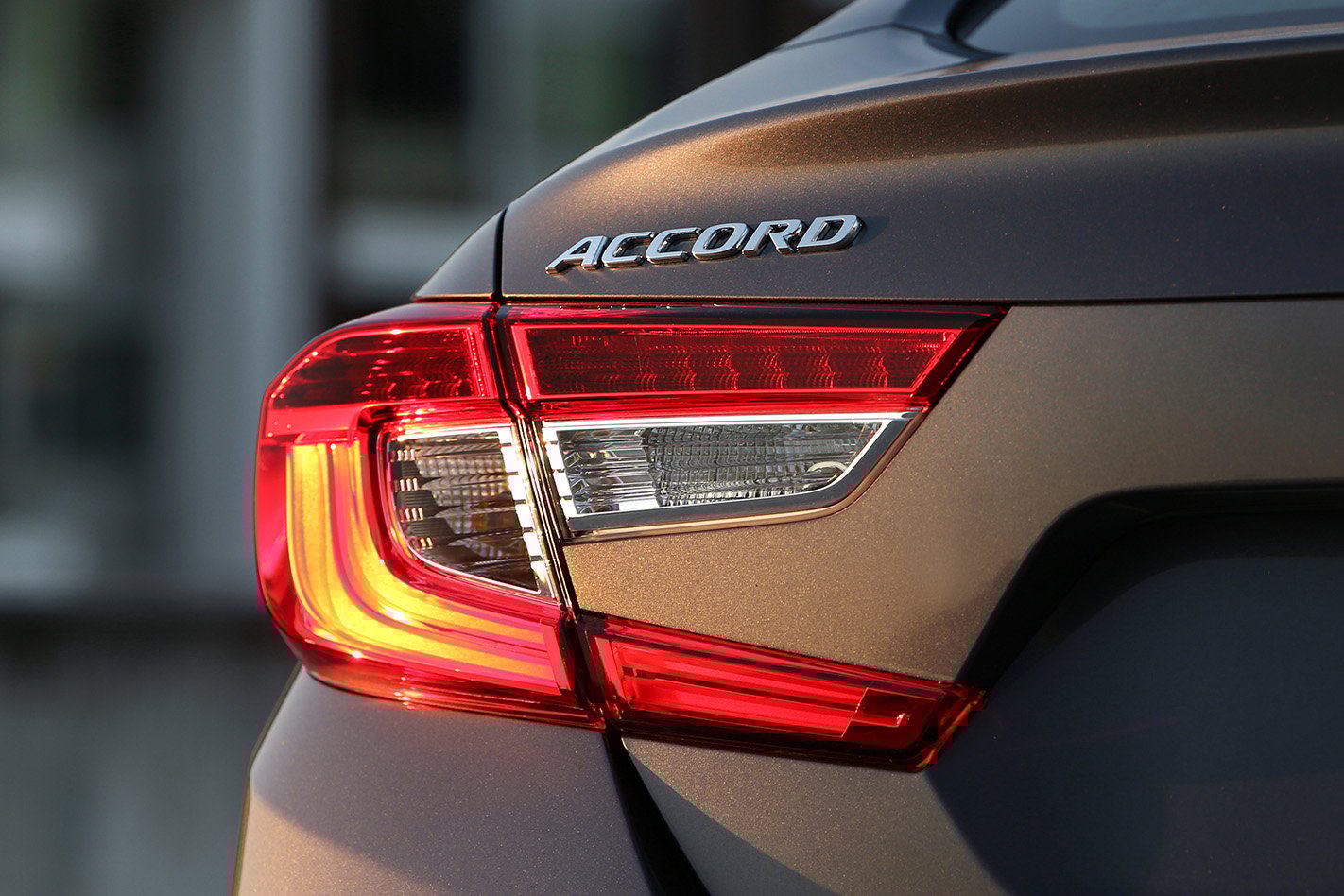
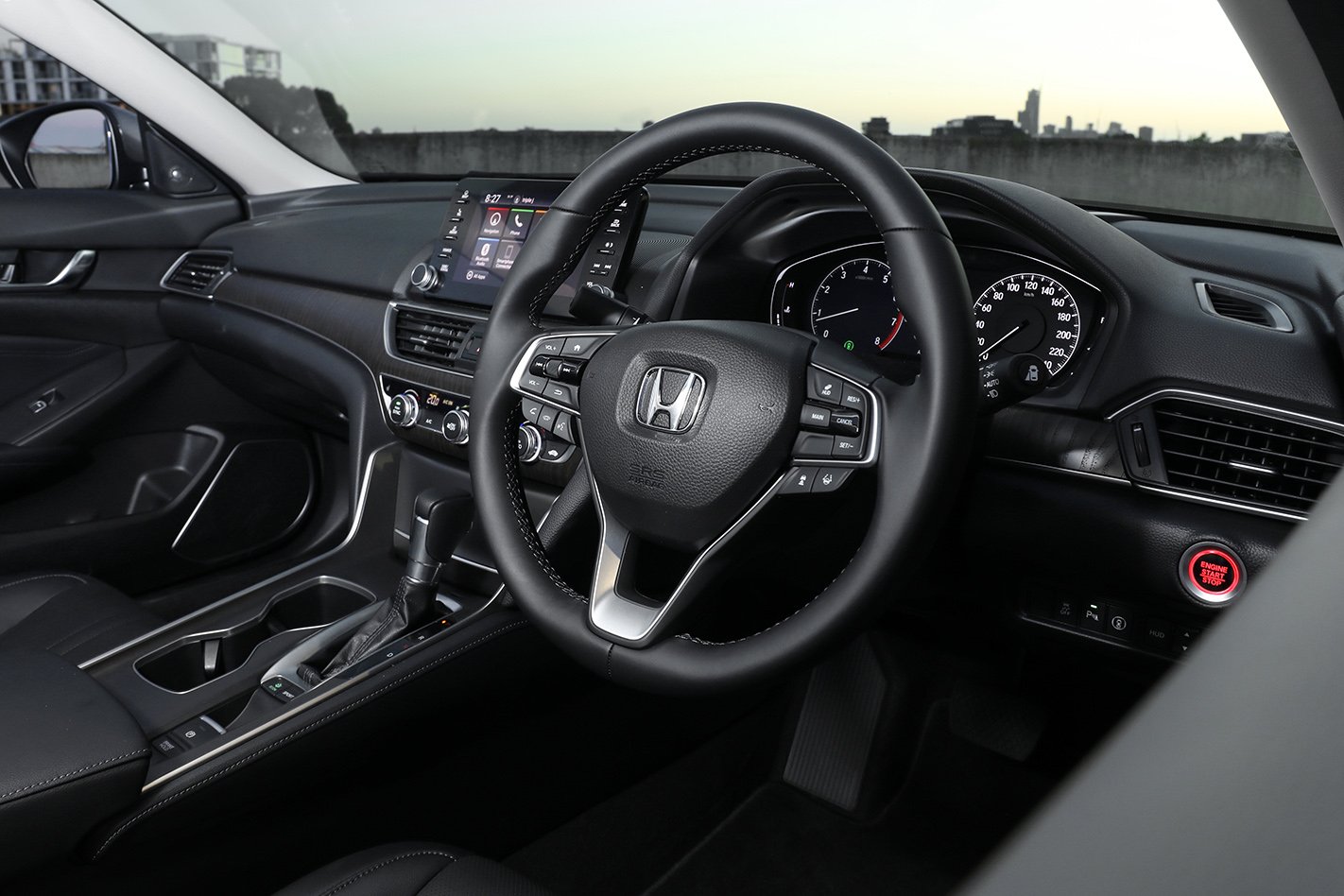
All 2020 Honda Accords will be sold with leather upholstery, 18-inch alloy wheels, an electronic instrument panel, 8-inch infotainment display, a 6.0-inch colour head-up display, Apple CarPlay and Android Auto smartphone mirroring, active cruise control, front and rear parking sensors, a 360-degree camera array, a wireless phone charger and remote engine start.
And that’s just the standout features. On top of that you have keyless entry and ignition, eated and powered front seats, USB charge ports for the front and rear (two in the back), dual-zone climate control, power windows, power folding mirrors and LED headlamps.
SIZE
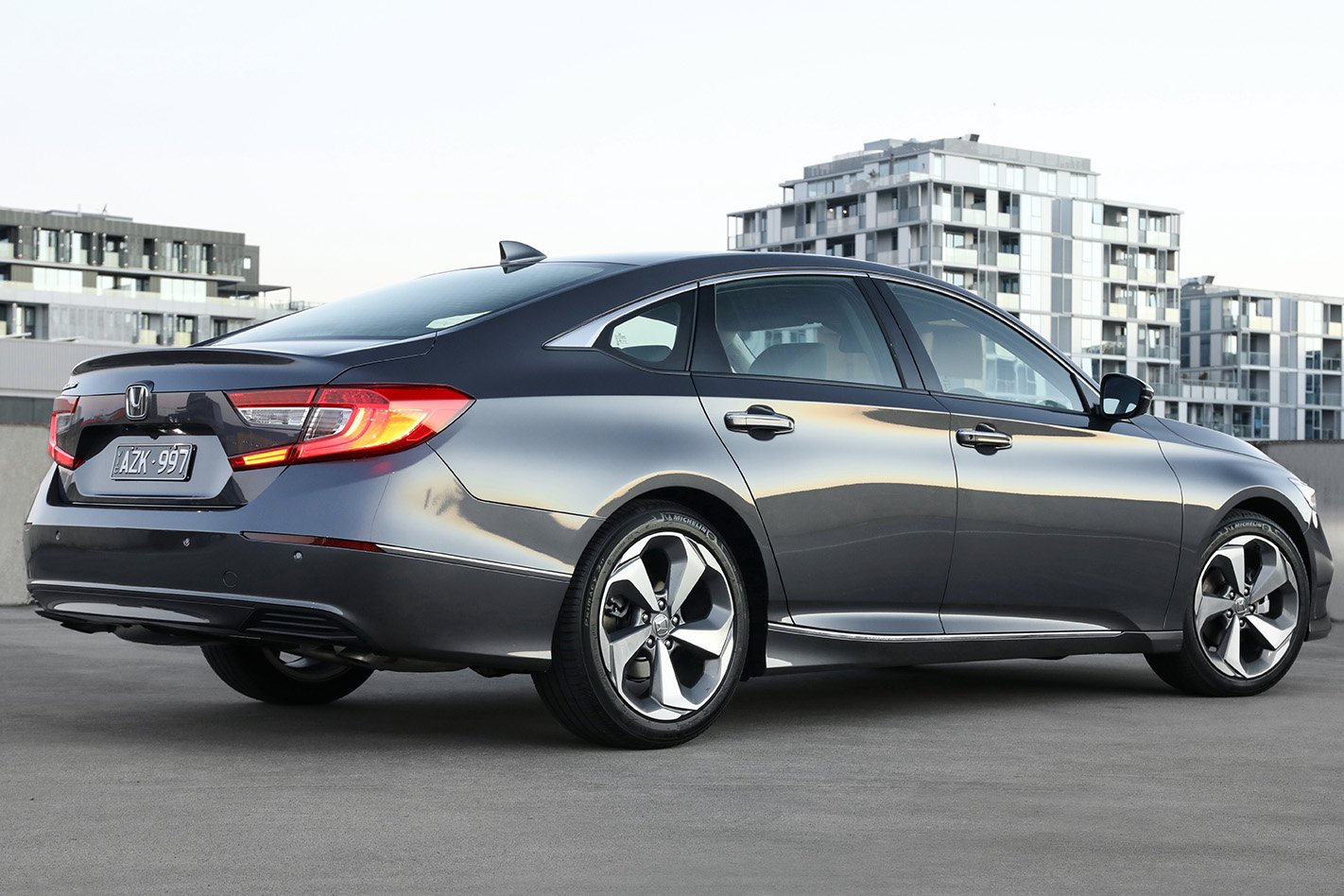
The Accord is classified as a medium sedan, however with an overall length of 4.9 metres it sits at the upper end of that segment in terms of size and even eclipses the Holden Commodore (which is classed as a large car) in that metric. Peek inside the cabin, and the sheer amount of legroom in both front and rear will tell you that this is more of a large car than a midsizer.
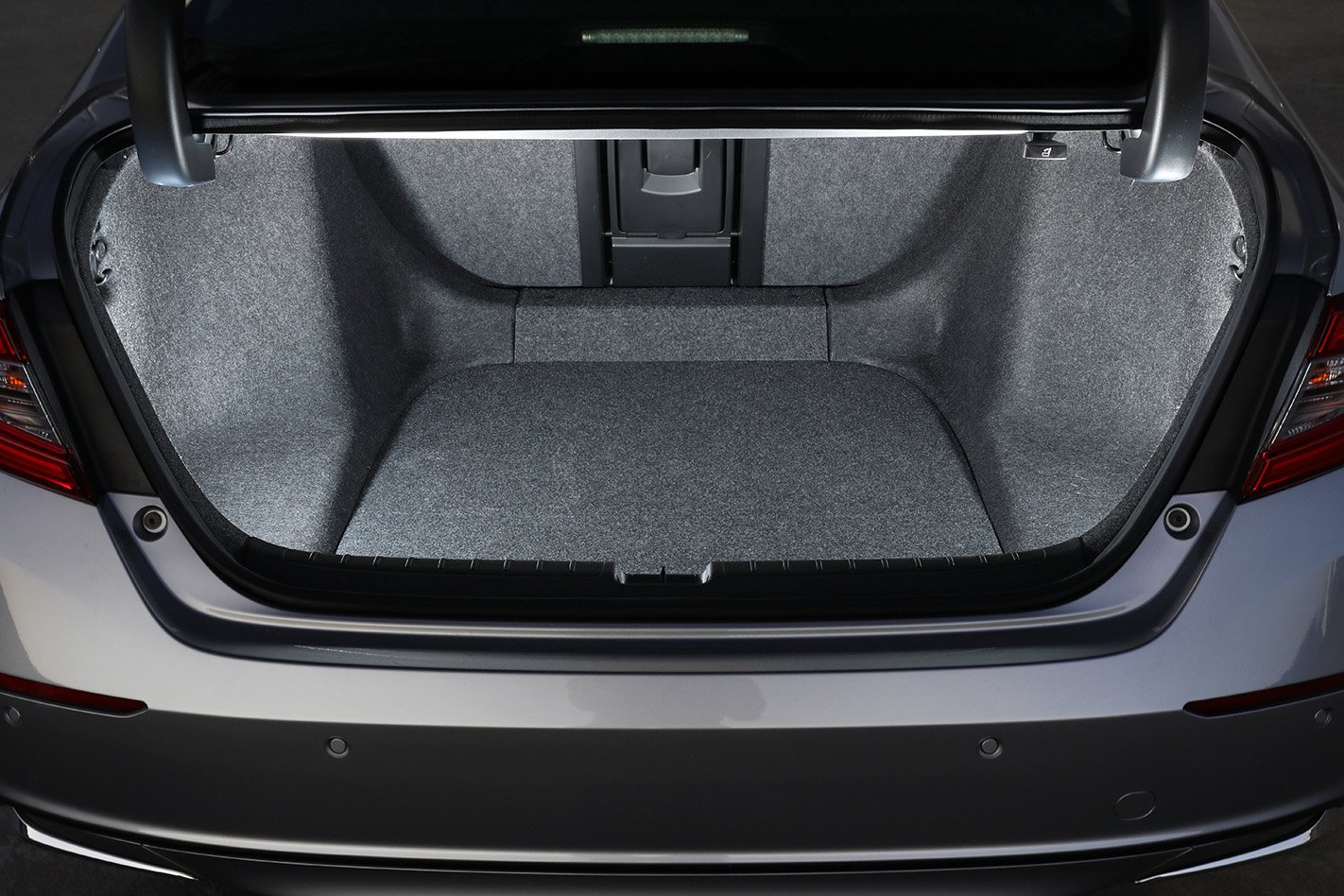
Boot space is limousine-like too, with a whopping 570 litres of seats-up luggage capacity that’s expandable via the folding rear seat backs and central ski port.
SAFETY
As standard, the Accord comes equipped with autonomous emergency braking, blind spot monitoring, lane-keep assist, a left-facing rear view camera that activates whenever indicating left, a 360-degree parking camera view, active cruise control, six airbags (dual front, front side and full-length curtain) and two ISOFIX child seat anchorages in the back.
COMFORT
There’s one word that dominates the Accord’s in-car experience: space. It’s simply cavernous on the inside, so much so that when I set the front passenger seat to a position that I thought provided truly selfish levels of legroom, the seat behind it still had enough space to challenge the average large-car limo.
Comfort is king, too. The leather is supple, while the cushioning behind it strikes the right balance between support and softness. Front seat bases are a touch short and thus might compromise under-thigh support for long-legged people, but it’s otherwise very accommodating up front.
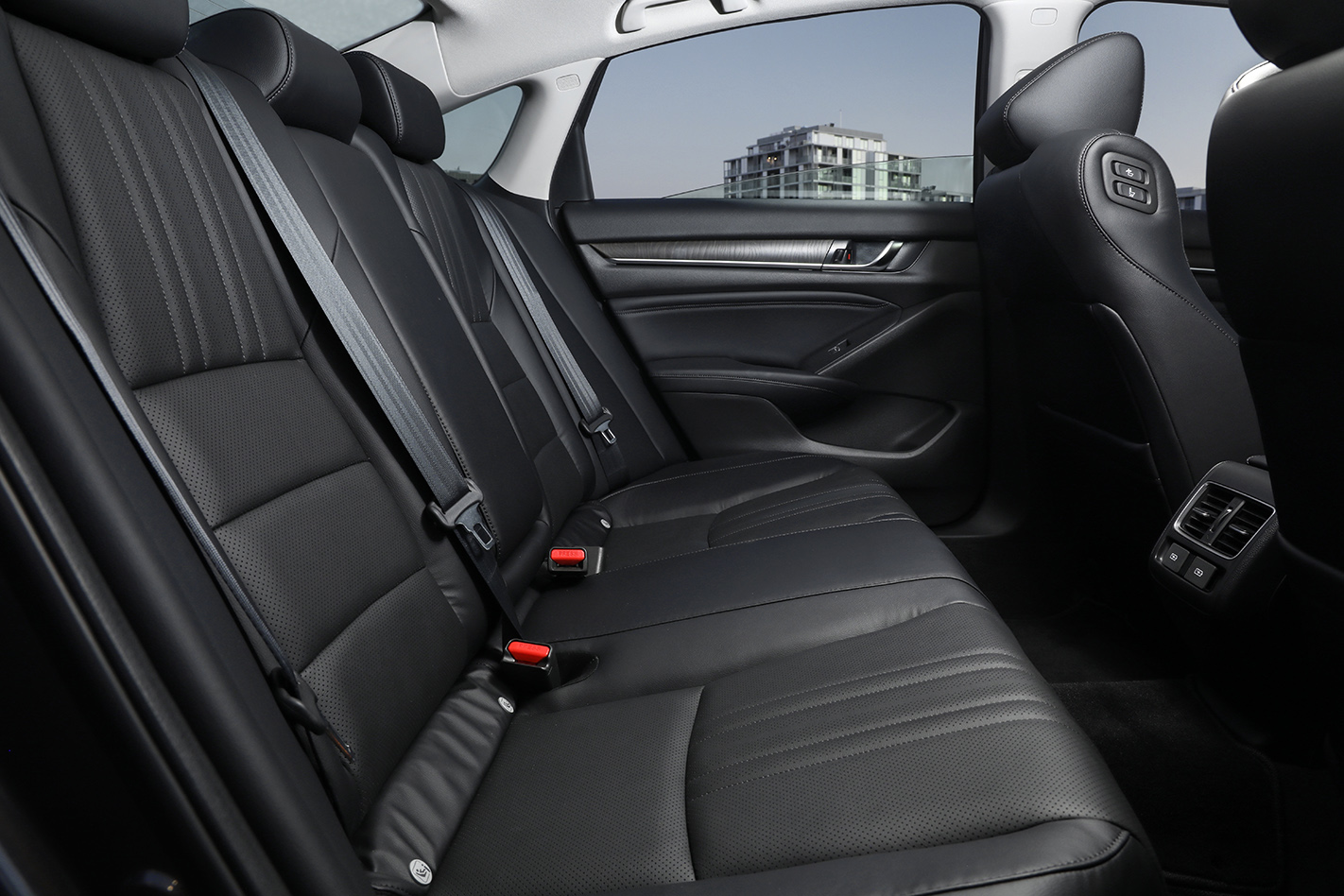
Yet it’s the back seat that’s the place to be. Besides having enough legroom acreage to make a property developer salivate, the back seats are blessed with a hugely comfortable and supportive bench, plenty of headroom and big windows (and a quarter-window in the D-pillar) that let in a huge amount of light and provide a great view of the outside world.
Downsides? While infotainment features and presentation are fast becoming a bigger priority for many car buyers, Honda’s own infotainment software lags behind much of its competition in terms of graphics and intuitiveness. The large touchscreen screen is also mounted up high on the dash – which is great for keeping it in your eyeline – and is surrounded by physical shortcut keys and a volume knob, but its just slightly too far away to be within easy reach of your fingertips, and there’s no remote controller to use as there is in, say, a Mazda 6.
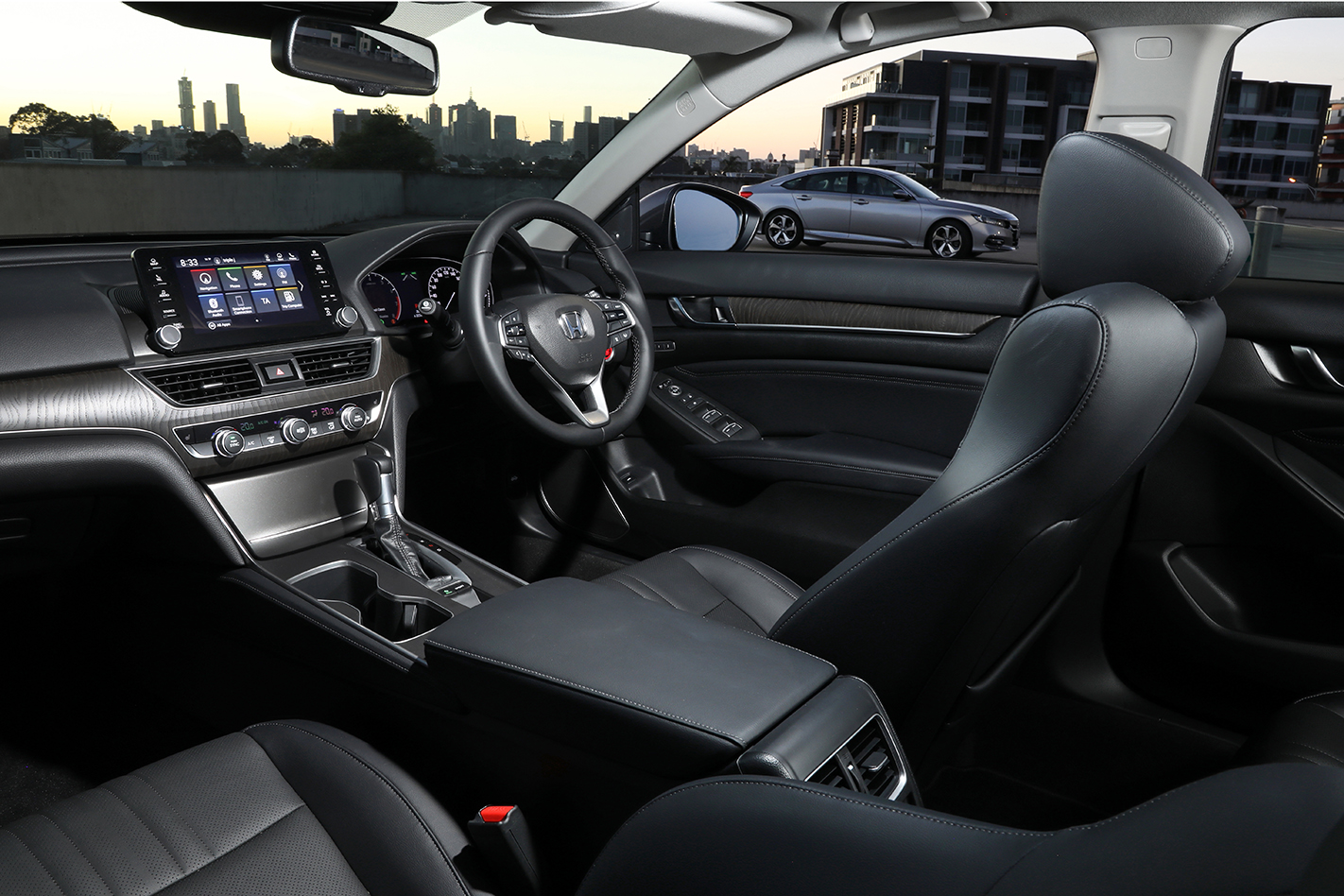
Cabin presentation is another shortcoming. There’s a somewhat passable faux wood used as the main trim highlight on the dash and doors, but the closer you inspect it, the more obvious it is that it’s just a texture printed onto plastic.
A bigger material quality issue is the extensiveness of leather-grained hard plastics on the lower dash, centre console and door cards. While key touch-points are upholstered in soft vinyl or leather, the glossy appearance and hard textures elsewhere detract from the otherwise quasi-premium image that Honda is chasing with the new Accord, and don’t belong in a car with a circa-$50K price tag. The same goes for that overly-tall gear selector, which makes a pronounced and cheap-sounding ‘clack’ as you pull it through its gate.
ON THE ROAD
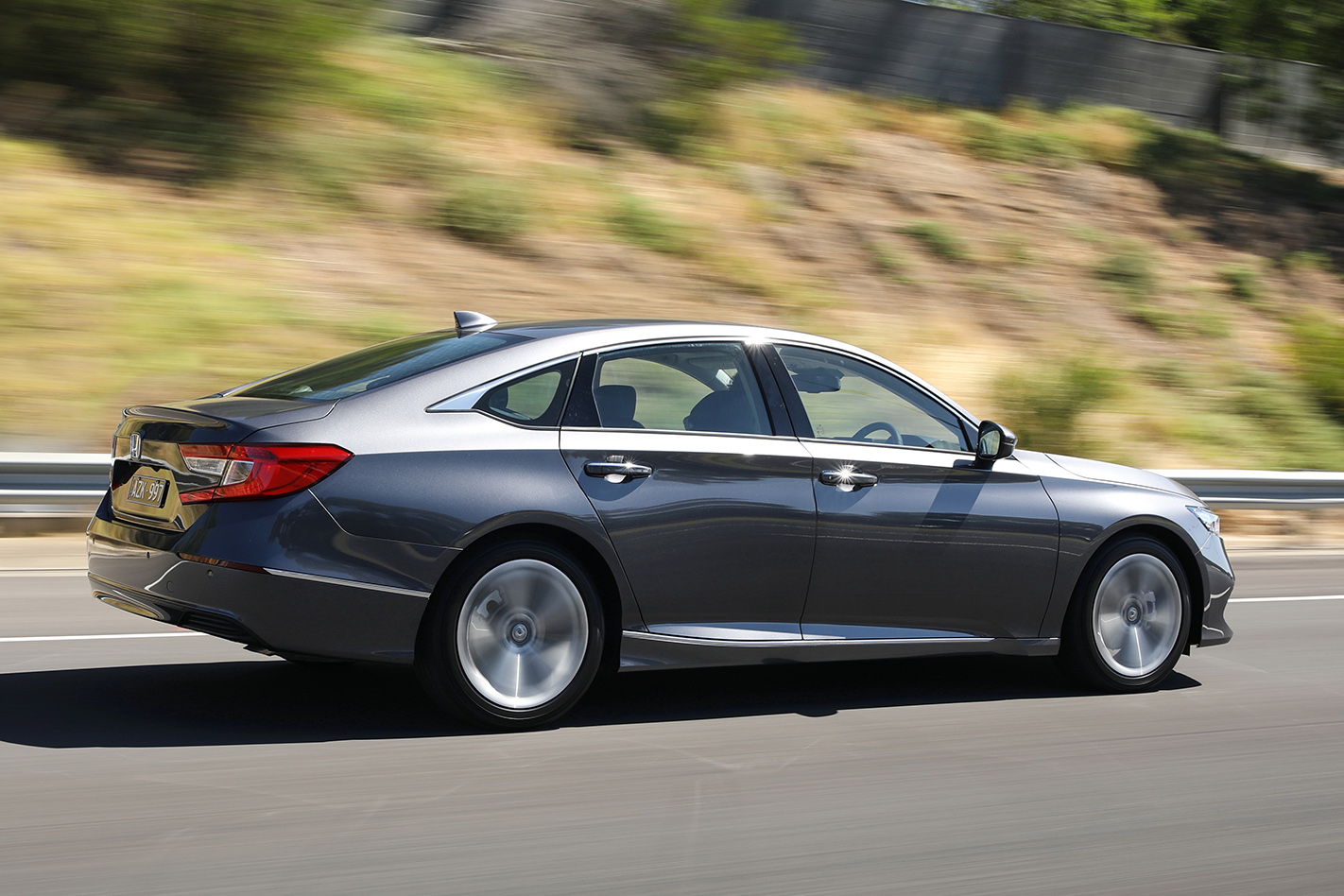
The preceding Accord (we’re not talking about the delightful Accord Euro that sadly departed showrooms many years ago) was anything but dynamic, but with the arrival of the 10th generation Honda promises that’s no longer the case. In fact, the company says those who appreciated the old Accord Euro’s handling will find much to love about the new garden-variety Accord.
A bold claim considering how limp and lazy the last Accord felt on the road, but after our first taste of the new one on local roads we have to concede that Honda’s right: the new Accord is a fine handling car.
It is, obviously, tuned for comfort first and foremost, with the wheels having plenty of vertical travel to soak up lumpy roads – which it does superbly. Even big mid-corner bumps, the kind that usually send shimmies through a car’s chassis, don’t perturb the Accord one bit.
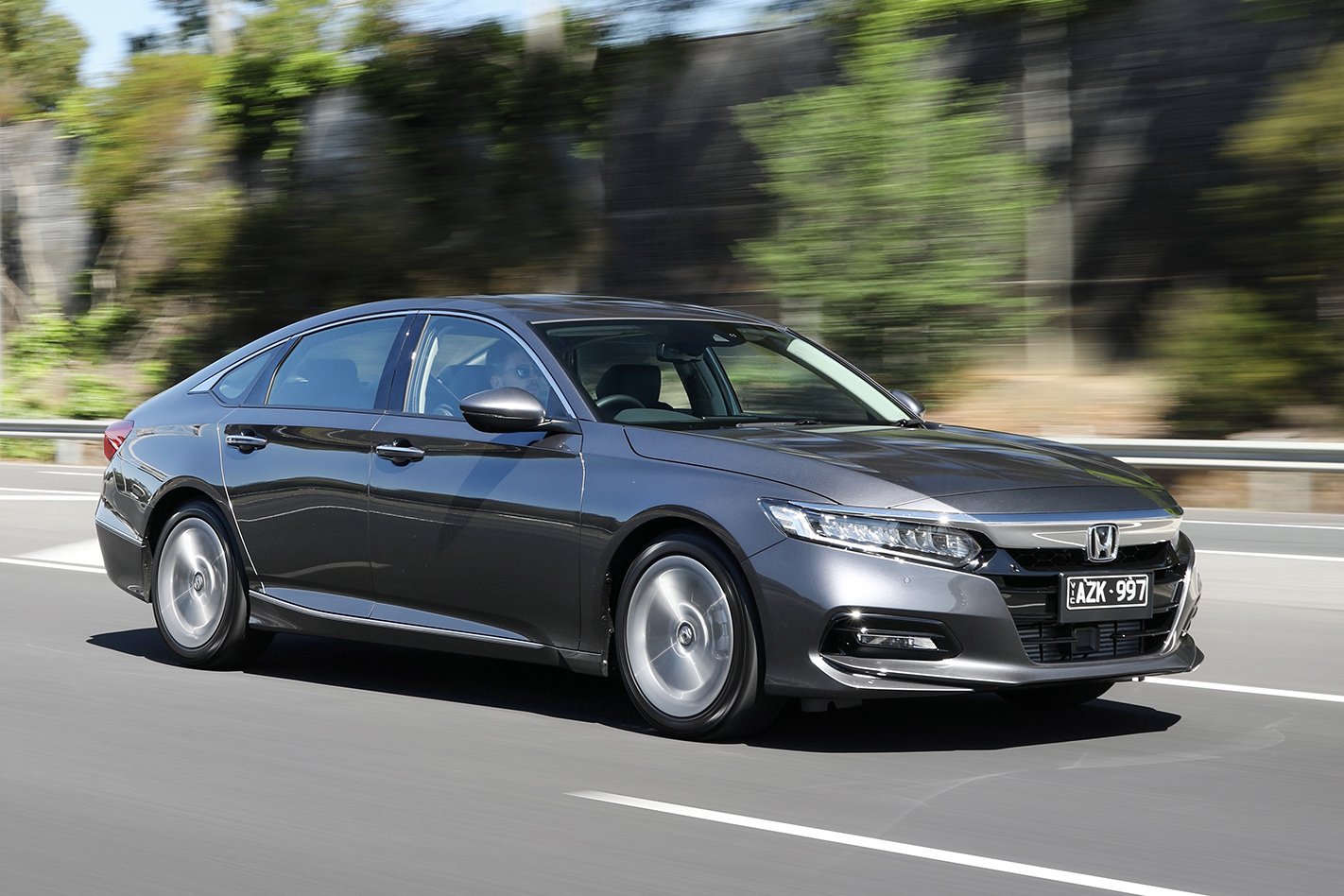
And the steering provides the confidence needed to hustle this big four-door hard. It’s accurate, well-weighted and has zero slack without feeling overly sharp, while the amount of turns from lock-to-lock has been slightly tightened to make life easier in car parks.
The 1.5-litre turbo is the only non-hybridised powertrain on offer, and the most affordable option in the Accord range, but does that small displacement hamper performance? Not really. Even though the power and torque numbers are modest at 140kW and 260Nm, there’s enough thrust to keep up with traffic.
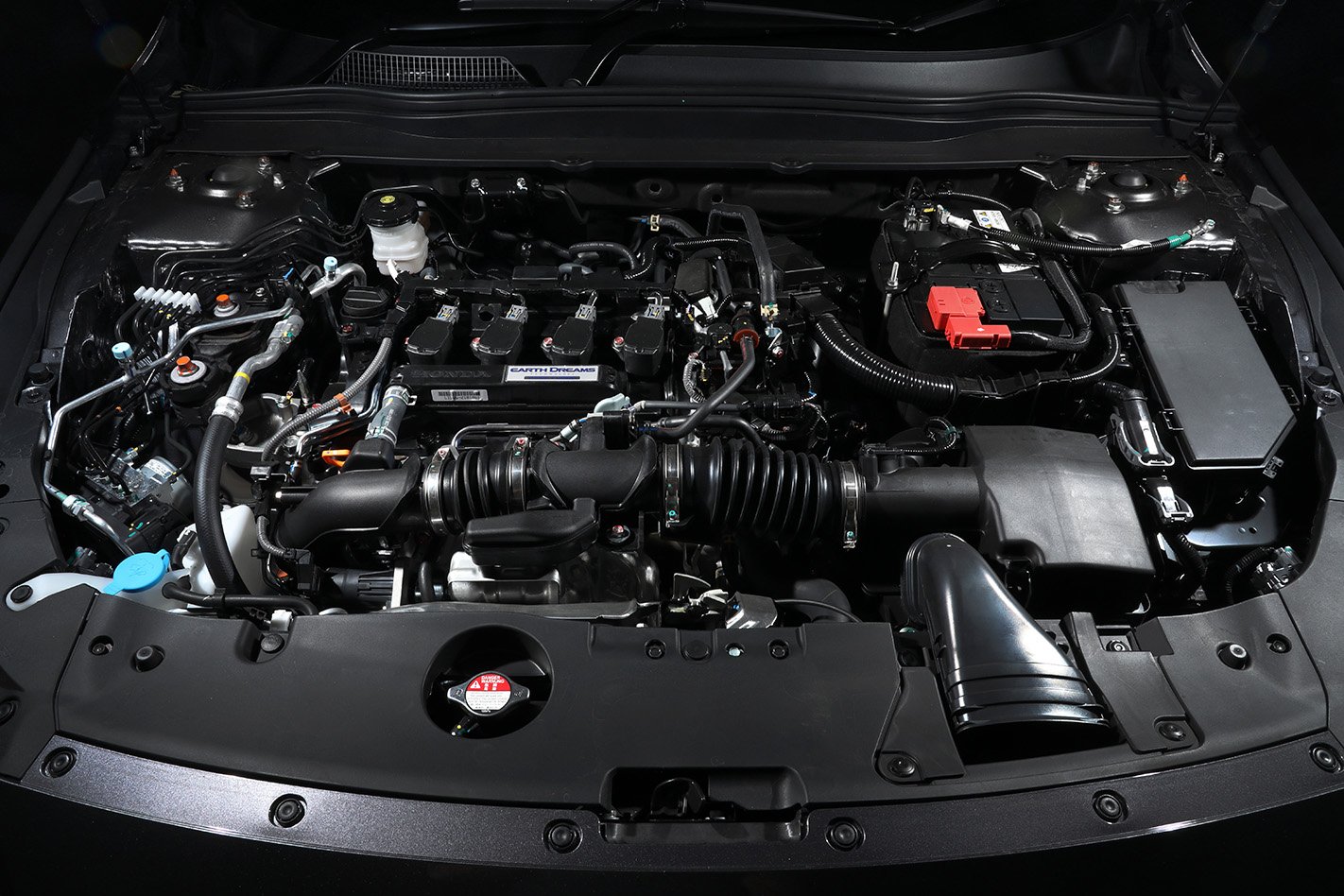
A CVT automatic gearbox takes power to the front wheels and, there’s little to complain about here. It’s fairly responsive for a CVT automatic, and can step through preset ratios if you want to play with the steering wheel-mounted shift paddles. Most of the time though, it silently goes about adjusting its ratio to keep the engine subdued – and thus quiet.
Which is nice, because refinement really is the Accord’s best attribute. Driven normally its turbo engine is barely audible, thumps from the suspension pleasingly absent and wind noise practically non-existent.
Its tyres are a bit noisy on coarse chip, though, despite the presence of active noise-cancelling audio tech and passive anti-resonance chambers inside each wheel. It’s not excessive amounts of road noise, mind you, but perhaps the absence of aural intrusion from every other aspect of the car just means that road noise is extra noticeable.
VERDICT
The arrival of the new Accord represents a return to form for the nameplate. No longer a bloated barge, it’s a fine-handling car with plenty of cabin space to sprawl in and a handsome design that looks good in traffic.
Honda’s strategy of only selling top-shelf varieties is a bold one, and it’s keeping its sales expectation at a highly conservative 150 cars per year as a result, but we think its combination of size, refinement and on-road competence makes it worth the price of entry.
After more than a decade in service, US-based sim racing service iRacing has finally added computer-generated rivals to its popular platform.
iRacing’s main point of difference from other racing sims like Gran Turismo and Forza Motorsport is that it’s based on the premise of racing other humans, rather than the game itself.
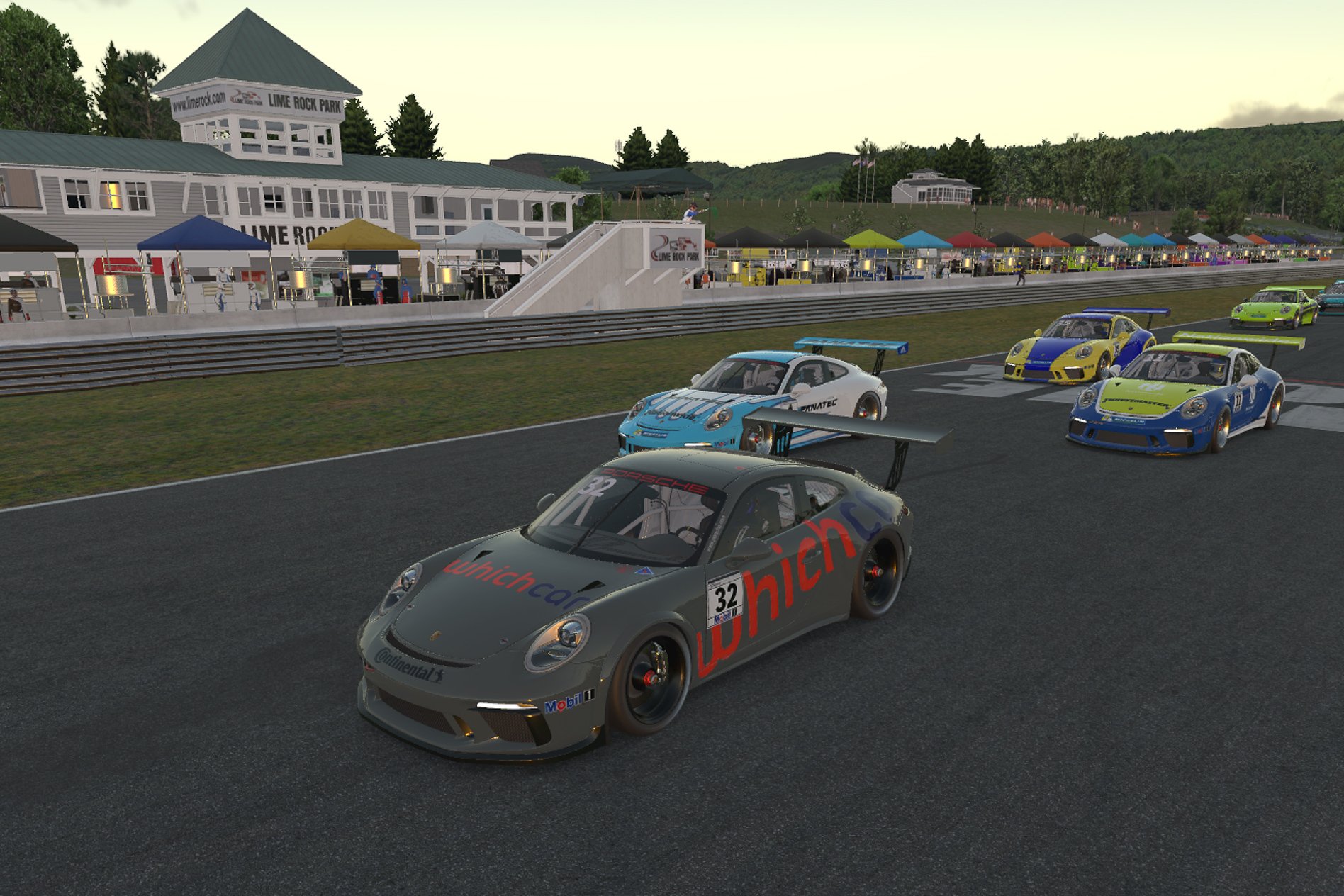
However, the path to a half-decent experience on iRacing can be long and at times tedious. The sim works around a safety rating system that’s designed to weed out the ratbag element within the online racing community; go into iRacing with a Need For Speed mentality, and you’ll find it impossible to progress through the ranks.
On the flip side, it takes patience and time to progress through the ranks of licence levels in order to race in harder, faster categories. Racing, too, is scheduled, so you have to wait to race.
The addition of AI is only at beta level at the moment, but already it’s added a new dimension of accessibility to iRacing that will help new players and reward long-time subscribers with an easy-to-access yet still rewarding racing fix.
The beta program currently only uses the game’s Porsche 911 GT3 Cup car, while track selection depends on whether you tackle a single race (Lime Rock Park track only) or build your own championship season.
The list of tracks extends to seven, including
- Barber Motorsports Park – Full Course
- Circuit de Barcelona-Catalunya – Grand Prix
- Donington Park Racing Circuit – Grand Prix
- Lime Rock Park – Classic
- Nürburgring Grand-Prix-Strecke – Grand Prix
- Road America – Full Course
- Watkins Glen International – Cup
Not only that, users can select time of day, whether there are rubber marbles on the track and even how much sunrise or sunset will affect vision.
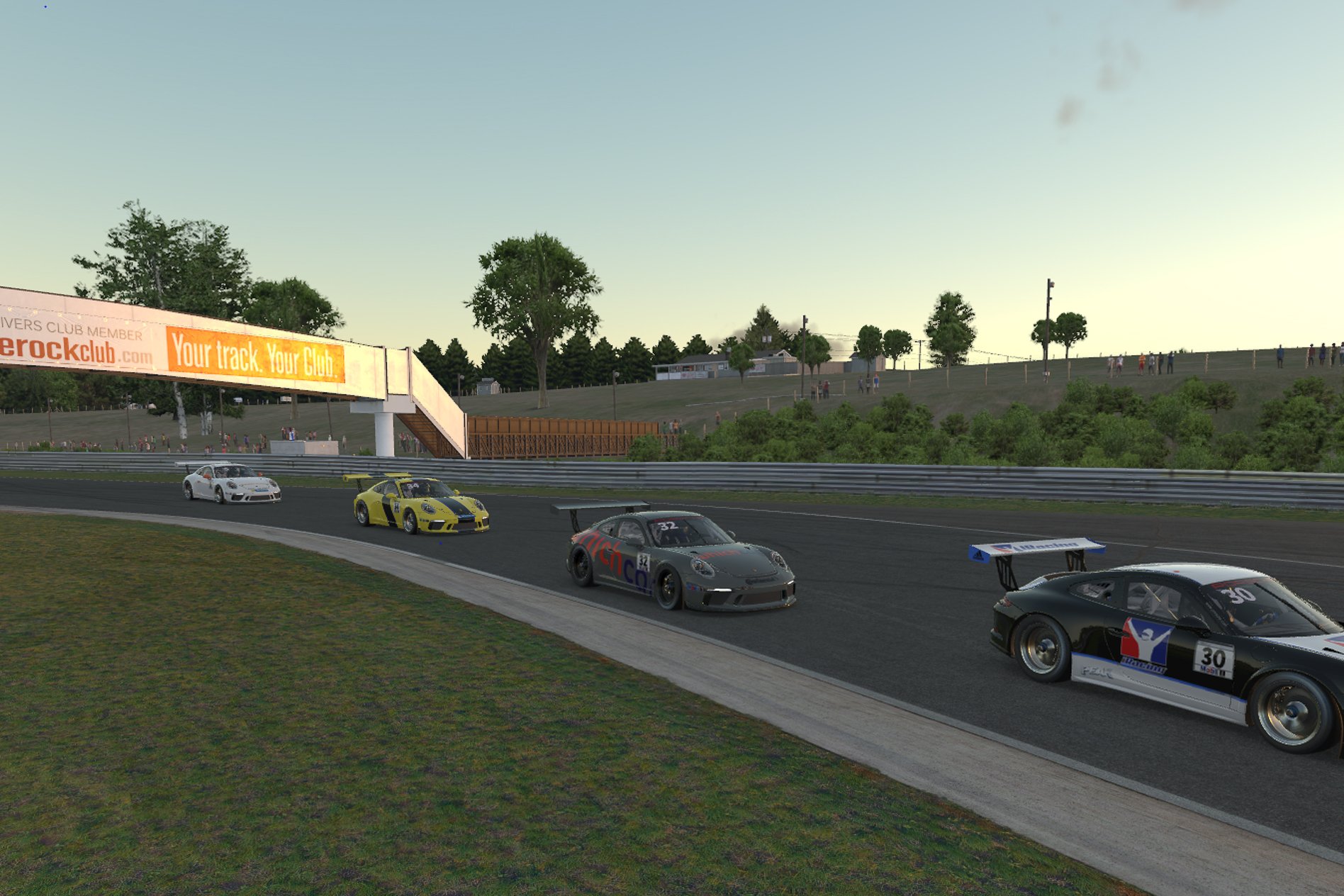
Up to 59 (!) rivals can be chosen, and the level of their ability adjusted – quite cleverly – through an adjustable range; say, for example, between 50 percent and 70 percent difficulty, or any range between.
We tested the AI function with our two mostly tame iRacers; one who holds a Class B licence and the other a Class D. Tuning the AI proved to be a trial-and-error proposition, with the faster racer settling on a range of 65-75 percent, which put him mid-pack for 20-car events.
The rookie (err, me) slid the AI back down to a more manageable 45-65 percent range, which put me in the front half of most races. To me, this is an important element for iRacing, as it gives a disheartened rookie a chance to ‘compete’ for a better result.
The standings and the results do not add to a driver’s tally, not do they affect their all-important safety rating, but it’s good to be able to battle wheel-to-wheel without having to worry about the end result.
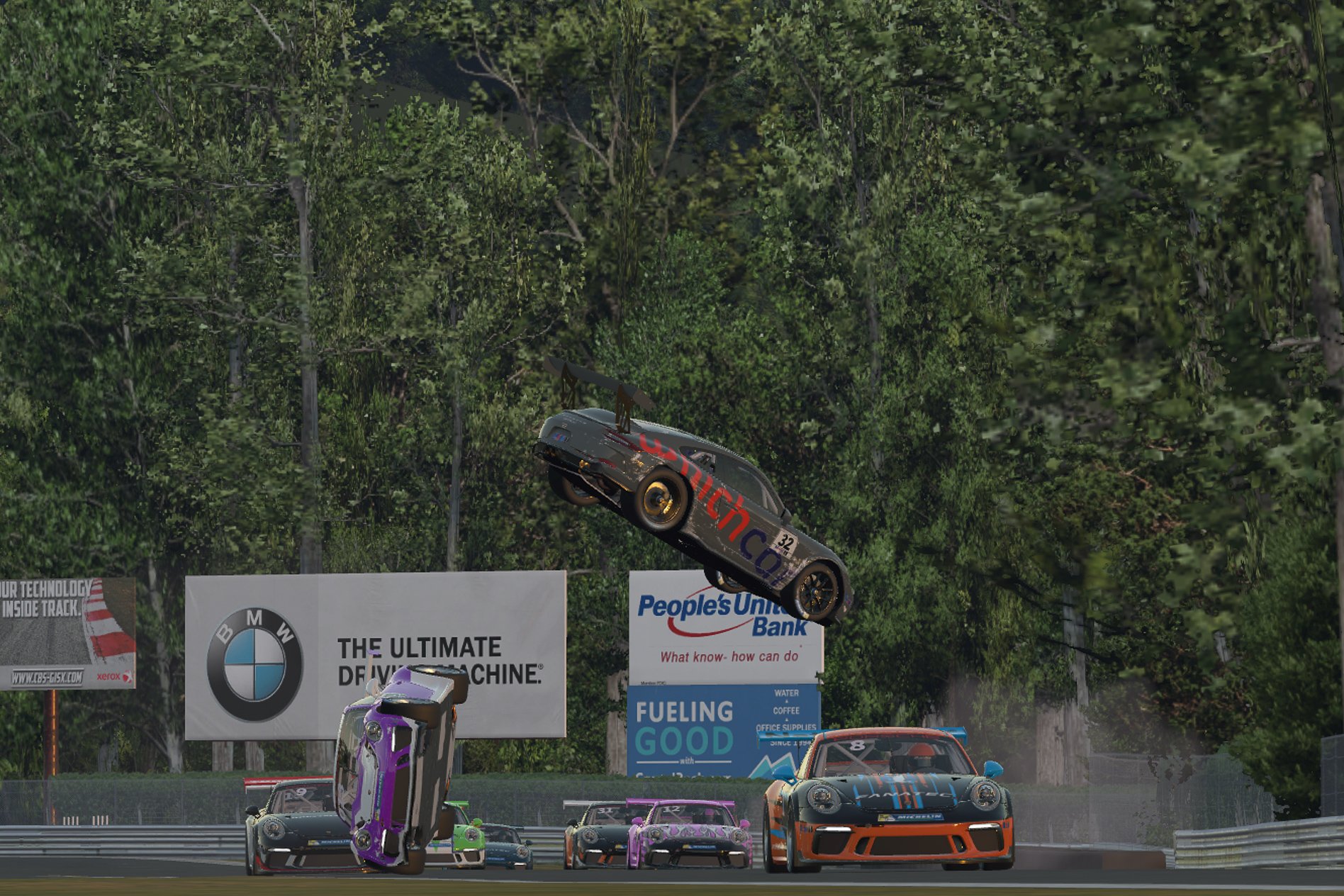
Whoops!
As well, it’s possible to reset the event should something go wrong. This is a terrific way to log start and first-turn practice before heading back into the human realm.
The behaviour of the AI drivers is, in the main, of a high level, but it appears that the grading system is linked to mid-corner speeds; the lower the ranking, the slower your rivals will travel at the mid-point of a corner.
Our young neo-pro reckons iRacing has connected the AI drivers to its preferred line mapping, and if the AI driver is forced off that line, their behaviour becomes a little more erratic.
The car, meanwhile, is a challenge to drive, especially on cold tyres. In fact, neither driver managed to complete their first lap without spinning off the track. It can be tuned up for both suspension and aerodynamics, a task made easier with iRacing’s floating menus describing what’s being changed.
After a few sessions, though, the 911 proves to be a terrific sim racing car that rewards on-limit driving but quickly punishes any indiscretions. Braking, in particular, is tough to get a handle on, and there is no traction control to save you from a cold-tyre spin.
in all, AI is a great addition to the iRacing platform, and it’s an addition that doesn’t dumb down the experience in any way. It’ll entice lapsed subscribers back to the platform, and it’ll also serve as a great training ground for newbies to the service.
Toyota’s motorsports arm, Gazoo Racing, has released the first teaser video of its upcoming Toyota Yaris GR4 hot hatch prototype. Originally scheduled to have its global debut at last month’s Rally Australia, the event and the prototype’s reveal was cancelled due to the devastating bushfires in NSW.
UPDATE (13/12/2019): The Yaris GR4 prototype will be making its official debut as the “GR Yaris” at the next month’s Tokyo Auto Salon. The GR Yaris will be the second global ‘GR’ branded product after the GR Supra. Tokyo Auto Salon will be held at Makuhari Messe from January 10th to 12th.
The teaser video features Gazoo Racing’s “Master Driver” Morizo – the pseudonym used by Toyota’s CEO Akio Toyoda – putting the prototype to its “final test” and launching what appears to be its four-wheel drive (thus the ‘4’ in its name) system on gravel.
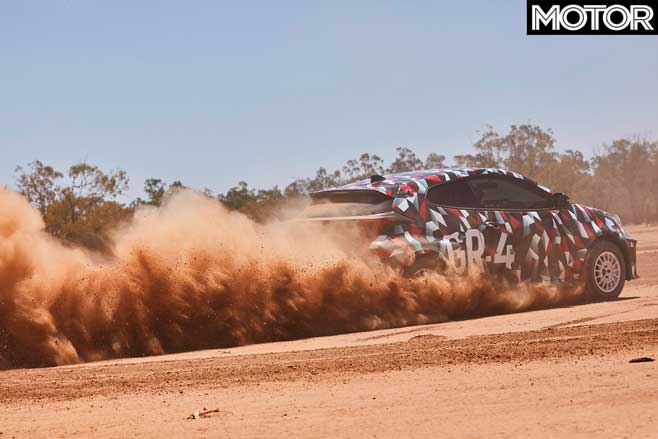
The video doesn’t give much of the prototype’s details and inner workings away, and neither has Gazoo released any further details on the prototype or when it will be officially unveiled.
Rumours have it that the GR4 will be a homologation special of Gazoo Racing’s new generation of Yaris rally cars, and will be equipped with a rally-inspired four-wheel drive system.
A report from Japanese car site, Web Motor magazine (no relation), suggests that the GR4 hot hatch could sport a tiny 1.5-litre turbo three-cylinder mill producing close to 200kW as the TNGA-B platform, on which the production Yaris is based on, is designed for three-cylinder engines. This despite FIA requirements for R5 and WR cars to have 1.6-litre turbocharged engines.
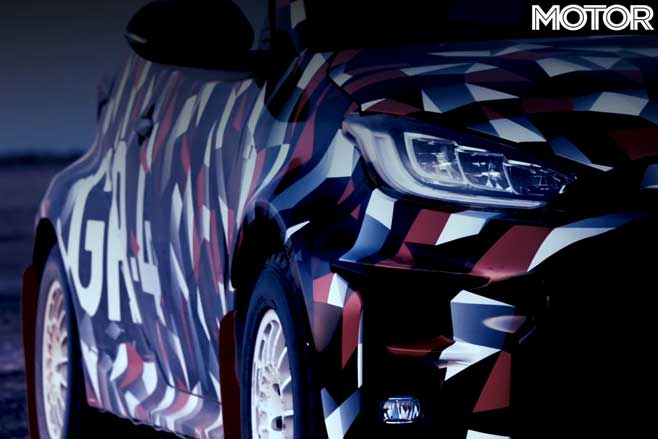
Unlike the Yaris GRMN, of which only 400 were built and sold in Europe, rumours have it that the production version of the Yaris GR4 won’t be in a limited production run and sold in multiple markets besides Europe.
What is certain is that we will bring news of the latest developments on the Yaris GR4 when they come to light. Stay tuned!
