
The Wheels Verdict: Mercedes-Benz is set to release a host of new mains-rechargeable hybrids down under in 2020. As one of the first, the A250e teams the MBUX tech onslaught of the A-Class interior with a clever hybrid system offering owners more options in terms of range. An oh-so-brief test drive leaves us wanting to explore it more – which is a good start.
WHAT IS IT?
The A250e is a plug-in hybrid with a 15.6kWh battery pack powering an electric motor. It presents 60-68km of tailpipe emissions-free range (WLTP) with the benefit of being able to harness the 1.3-litre four-cylinder petrol engine for longer journeys.
WHY WE’RE TESTING IT
The A250e is an important first step in a planned global rollout of 20 hybrid models for Mercedes-Benz. Is it just a stopgap to a full EV? The German marque doesn’t think so.
THE WHEELS REVIEW
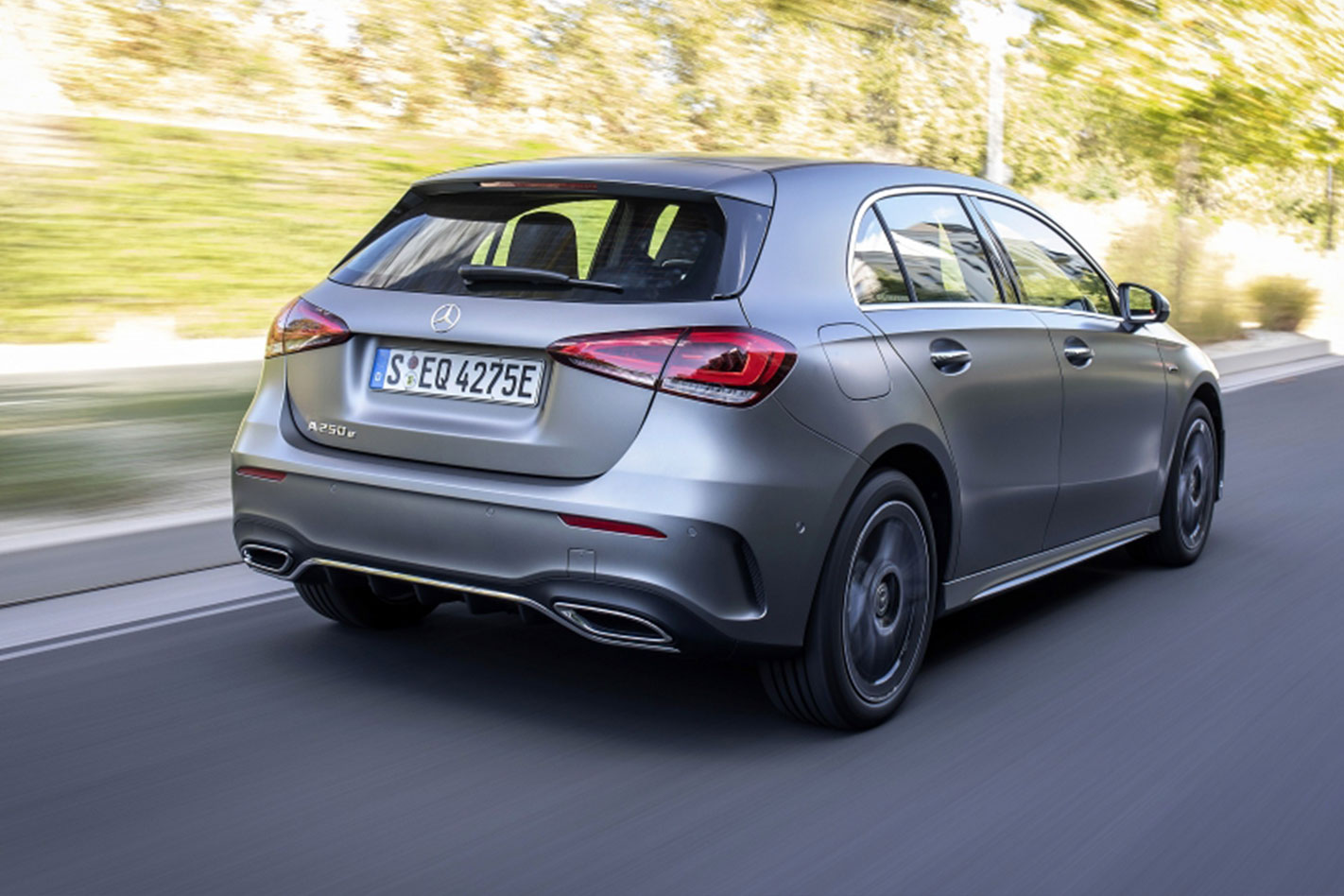
It seems odd to say, but the USP of the Mercedes-Benz A-Class could be the fact that it’s a model tailor-made for its intended customers. It has driveway badge cachet, the design is luxury-led and the interior is packed with both visual and technological surprise and delight. As a diminutive status piece from the Three Pointed Star, it packs all the right punches for its intended audience. And now, Mercedes is adding electric power to its arsenal.
Read also: Mercedes-Benz A-Class plug-in hybrids on their way
Instead of going down the pure EV route, Mercedes has chosen to take a plug-in hybrid approach. This means that the A-Class gains a 15.6kWh battery pack in the rear that supplies power to an electric motor driving the front wheels. Official WLTP range figures claim that the hatch is good for up to 68km on the battery’s juice alone, while the sedan takes you a kilometer further thanks to its more slippery drag coefficient. Combined consumption is 1.4-1.5L/100km for the hatch (1.4L for sedan).
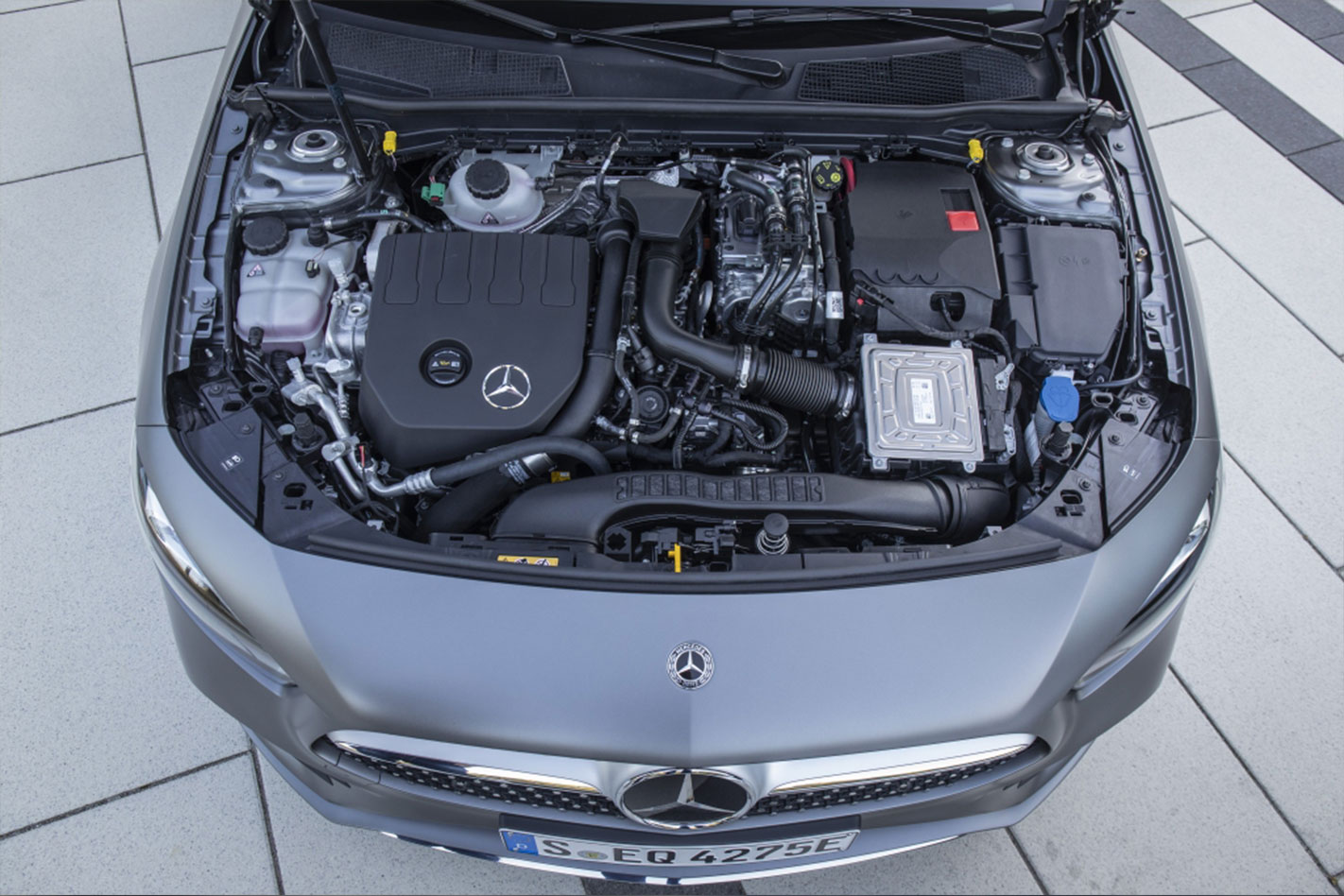
The 1.3-litre four-cylinder turbo is mated to an eight-speed dual-clutch transmission, and, when the petrol engine and electric motor are firing in parallel, the A250e produces a combined output of 160kW and 450Nm of torque. While the kilowatt count is down five on the regular A250, the pulling power jumps 100Nm and helps get the plug-in-hybrid version to 100km/h in a mere 6.6 seconds. That’s getting into hot hatch territory.
Inside, the A250e carries over the regular A-Class cabin – which is a good thing. The twin 10.25-inch screens dominate the dash, with one screen forward of the driver for the customisable instrument cluster and the other, a touchscreen, for the MBUX infotainment.
The plug-in hybrid gains an EQ menu, which has an almost inexhaustible series of menus and information screens to help you increase your consumption and monitor your driving habits and eco-friendliness. The c.150kg battery pack doesn’t hinder space in the rear, while a forward-exiting exhaust has been designed to aid positioning of the hybrid hardware.
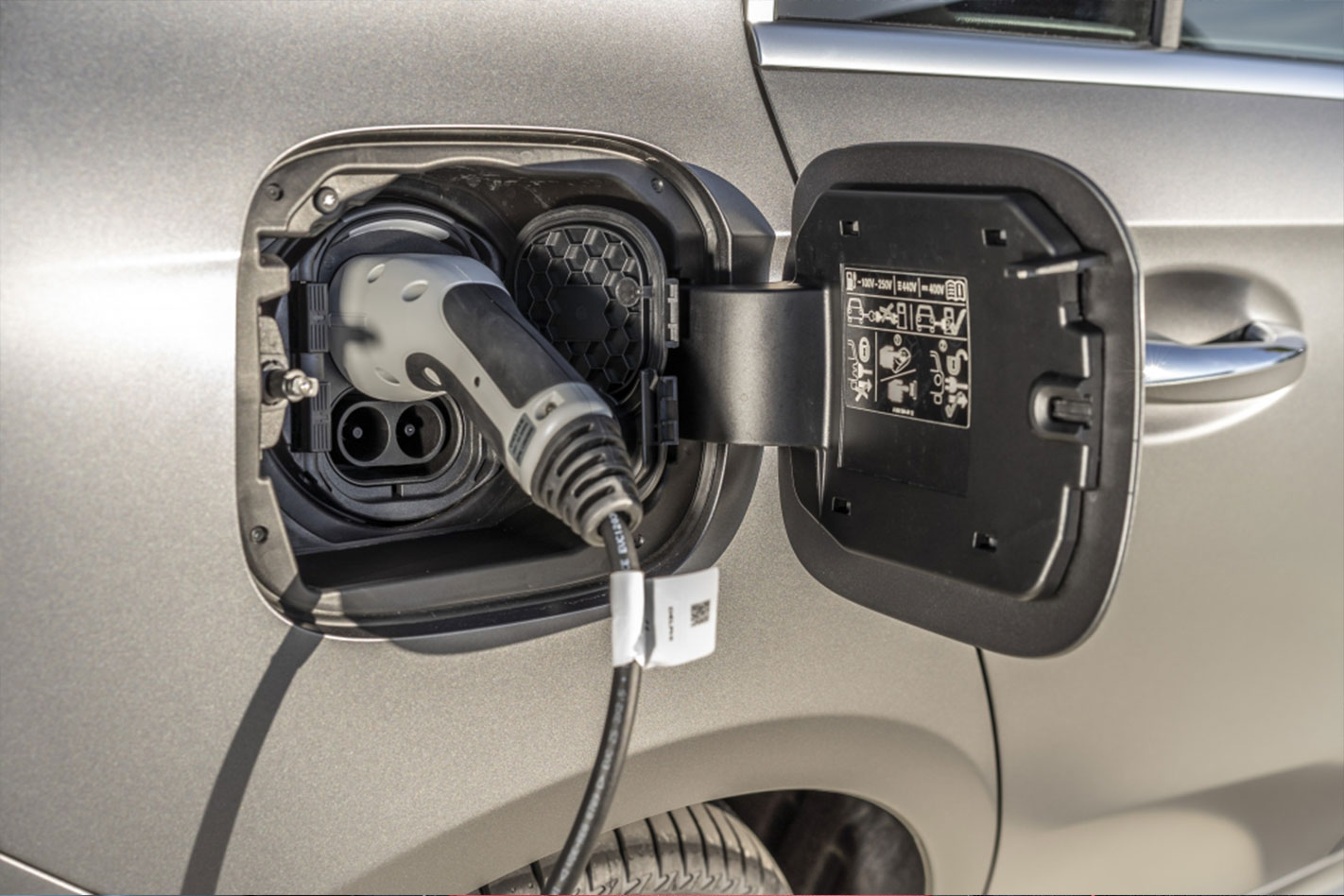
The test route was extremely limited, with only a short autobahn blast mixed in with city driving through Frankfurt’s busy streets. That range of up to 68km means that, for most Australians at least, it’s feasible to solely rely on the electric motor and battery for commuting. In electric mode, where the 118kW/250Nm 1.3-litre petrol four-cylinder engine (co-developed with Renault) remains dormant, there is a decent swell of torque on offer, the combustion engine rejoining the fray at 140km/h.
The transition to the combustion engine is relatively seamless and in Sport mode you have access to both power types, which results in brisk performance. Given the 450Nm combined torque figure, it would have been preferable had Mercedes been able to engineer the A250e with the 4MATIC all-wheel-drive system that’s available in the regular A250. Combine all that torque with eco-focused rubber and it’s easy to chirp the front tyres, even in dry conditions. The ride quality is largely unchanged and there weren’t enough corners on the test route to determine if the extra weight has had a materially detrimental effect on dynamics.
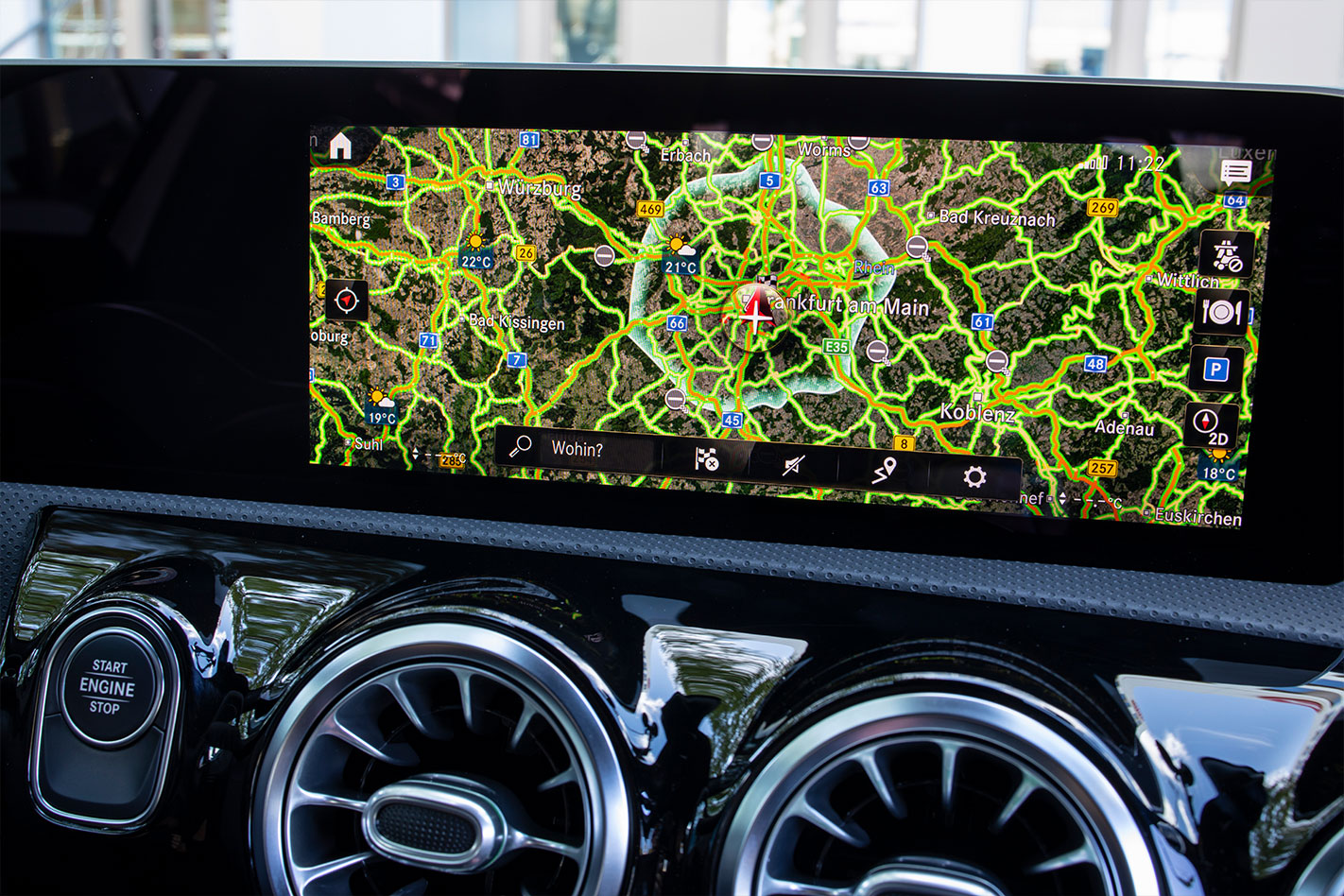
Pricing for Australia is yet to be revealed, but estimates place it in the $60,000 ballpark with a predicted arrival in the first quarter of 2020. Ultimately, the A250e plug-in hybrid isn’t a fully futuristic pure EV but, for many, that’s no bad thing. You’re afforded frugal, zero-emissions driving when you want it, yet aren’t hamstrung to a charging network if your route extends beyond the CBD. There’s a lot to be said for blending this versatility with the A-Class’ inherent sense of occasion. A qualified thumbs up, then.
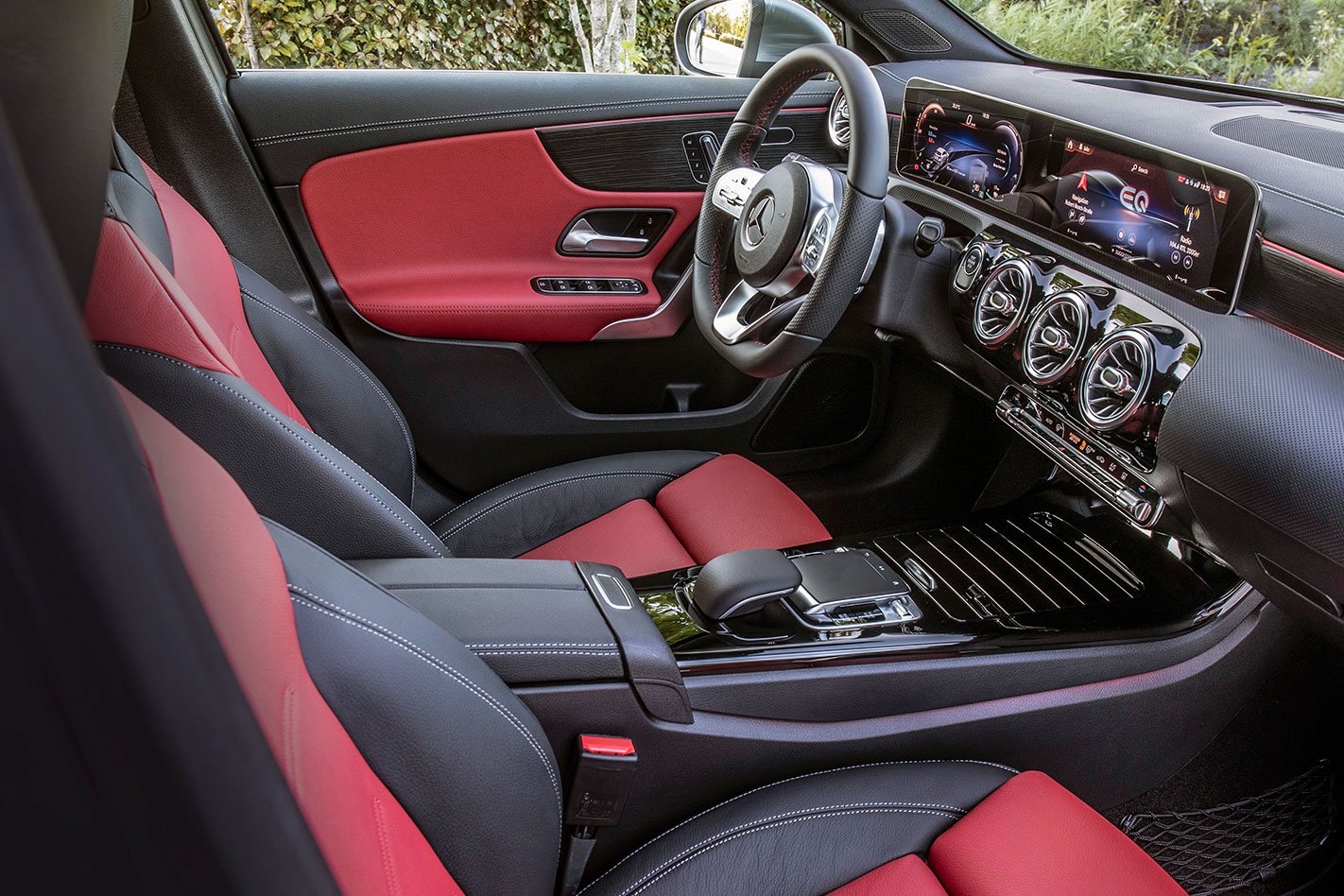
Land Rover was preparing to reveal the exterior design of the reborn Defender to the world half a decade ago, before it got cold feet and pulled the pin on the endeavour.
A concept car that is near-identical to the production-spec Defender shown at this year’s Frankfurt motorshow has been kept under wraps by Land Rover, with design boss Gerry McGovern revealing its existence.
“We did a show car, which was a three-door; we built that five years ago,” he told Australian media.
“We were going to present it, because everyone was asking about it, as a show car.”
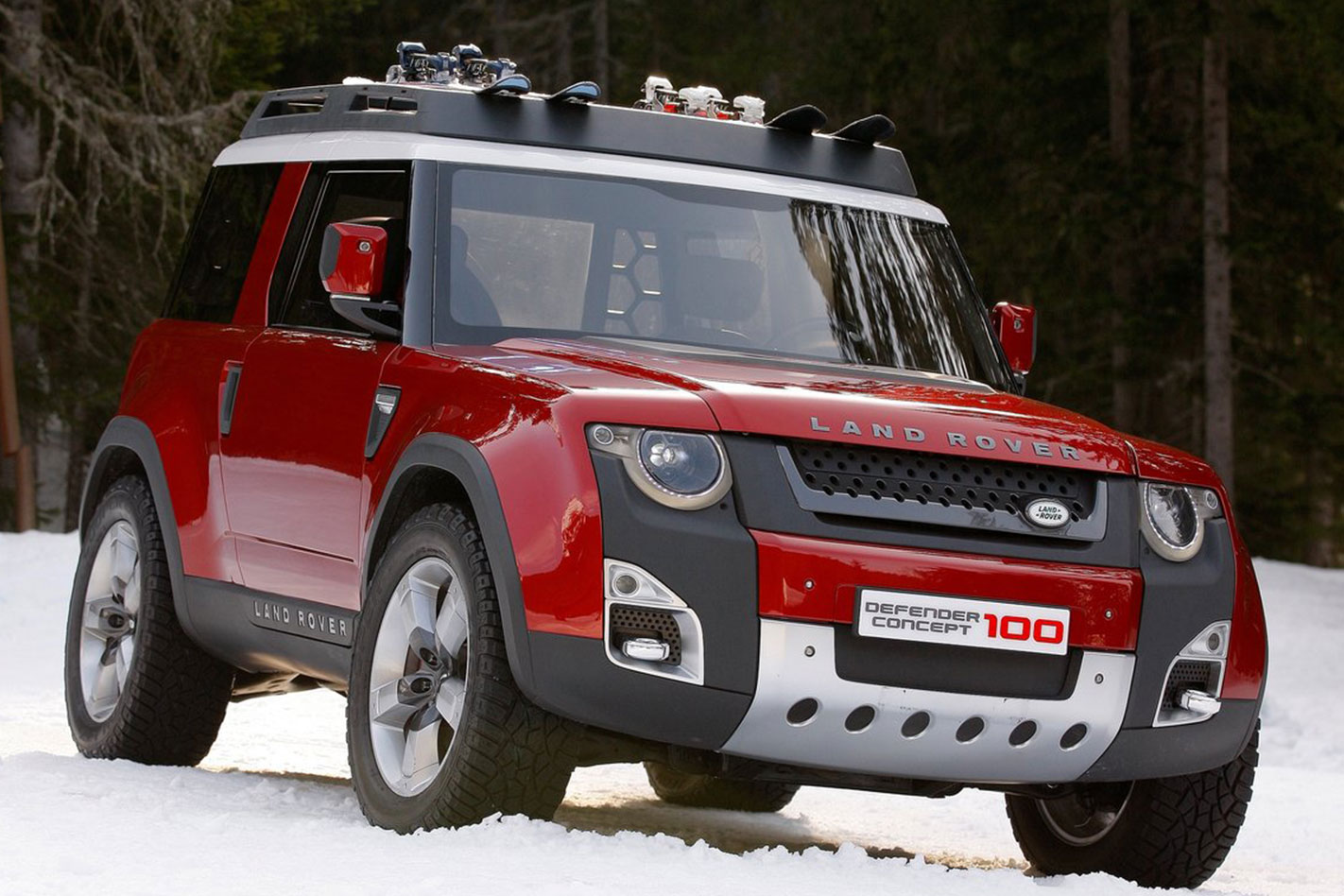
However, with the production-ready vehicle still several years away, doubts over the plan were raised internally at Land Rover.
“We got worried that it would be copied, because at the time we were seeing the Evoque and Range Rover Sport being copied in China.
“We thought, if we show this now, someone is just going to copy it, so we decided against showing it.”
According to McGovern the finished production-ready Defender looks incredibly similar to its secret concept forbearer.
“That design, and with the exception of maybe being a bit thicker on the tyres and a bit more width on the wheel, it is the same design as what will go into production.”
Though that’s not where the story ends. Instead of moth-balling the show car, Land Rover will instead use it later this year in a global promotion.
“We are going to show it at the Rugby World Cup final in Japan,” McGovern explained.
“That show car will drive around before the beginning of the game.
“It will go around a second time, and we’ve modified it so that the world cup trophy will come up through the roof.”
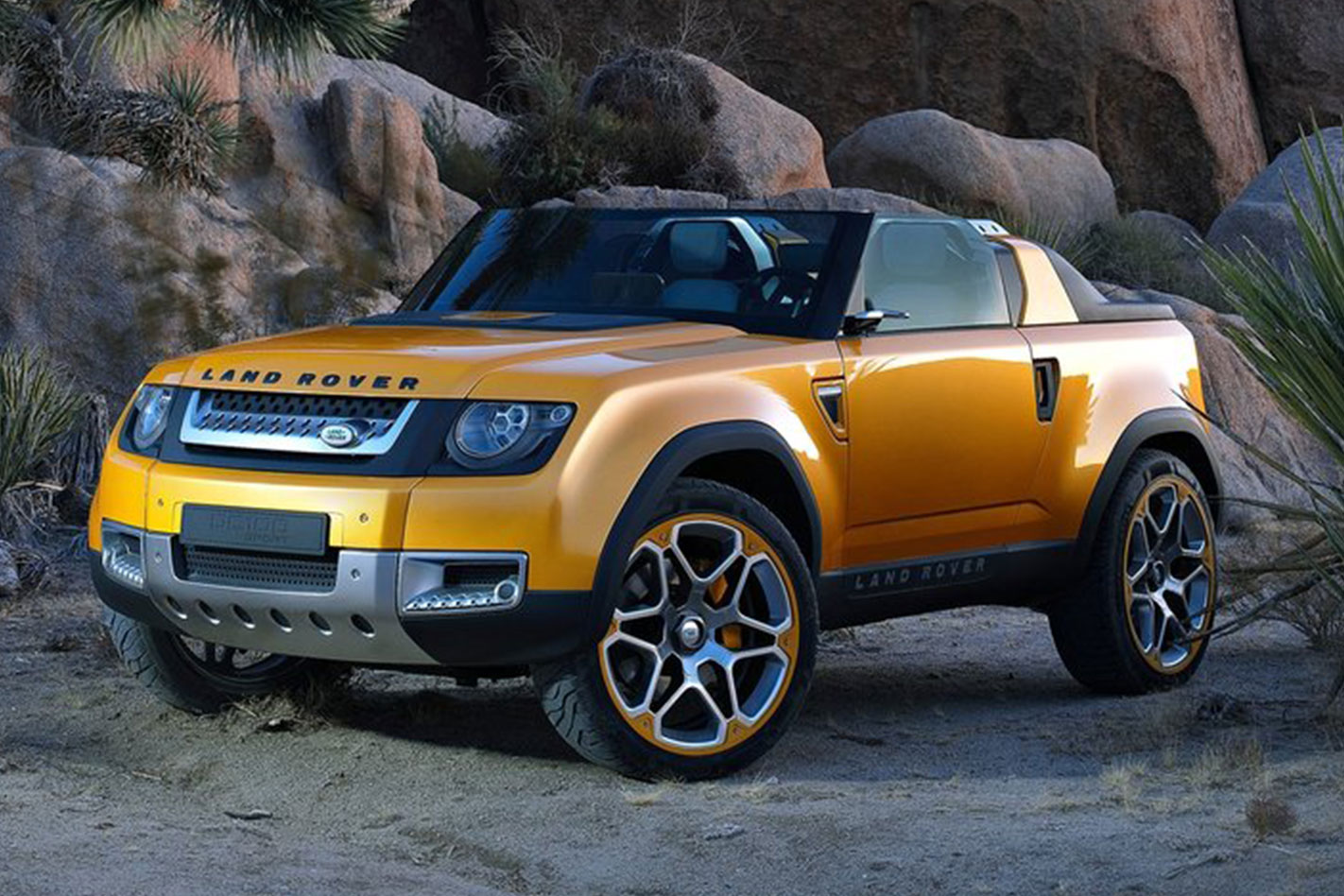
If the show car had been revealed to the world’s media when it was finished, it wouldn’t have been the first Defender concept vehicle in the past decade.
At the 2011 Frankfurt Motor Show, Land Rover revealed a pair of concepts intended to preview the Defender, dubbed the DC100 and DC100 Sport
McGovern derided this pair of concepts, saying the lessons he took from the design study was “how not to do it”.
“I think the DC models got the conversation going perhaps,” he conceded.
German tuner Novitec has given the Lamborghini Urus 575kW and 1032Nm, lowered suspension and the potential for a bitumen-shredding sub-3.0sec sprint to 100km/h.
Revealed at the 2019 Frankfurt Motor Show, Novitec’s wild Urus offerings extend to widebody bodykits to new electronics for the air suspension and exhaust system, but the headlining piece is definitely the performance mods.
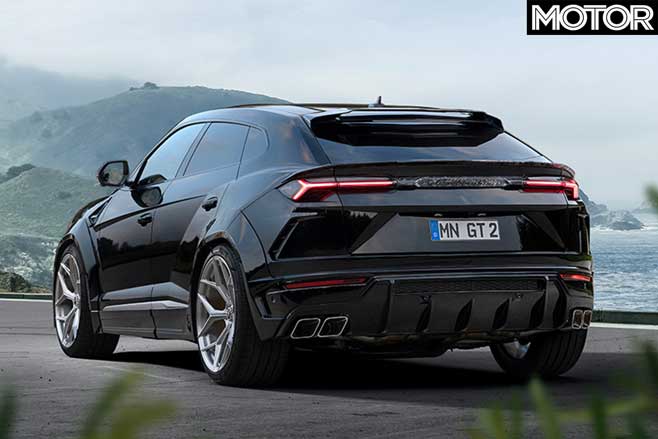
Comprising of a plug-and-play engine management module, stainless steel exhaust system, Novitec claims its performance mods bump power from the standard 4.0-litre twin-turbo V8 –478kW/850Nm – to a mega 575kW/1032Nm, a touch more than what is available from the 566kW Aventador SVJ.
Novitec doesn’t mention any performance figures, but with the Urus already claiming a 0-100km/h time of 3.6sec, that 20 per cent power gain is definitely going to deliver some significant returns.
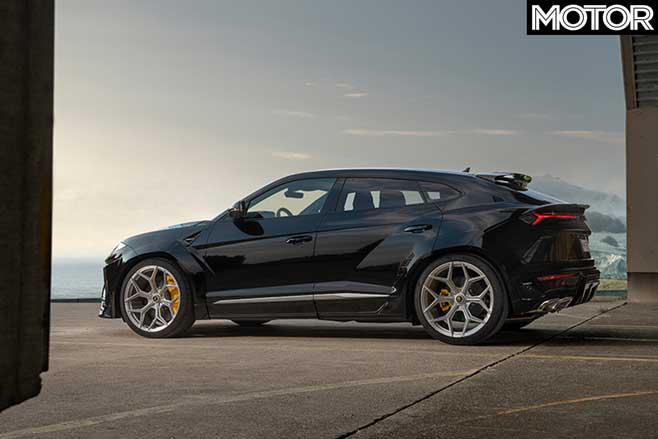
Aside from engine electronics, Novitec also released its own exhaust-flap regulator claimed to work in tandem with its new exhaust systems, along with a new electronic module for the air suspension, which is said to lower the Urus’s ride height by a substantial 25mm.
Customers can also tailor their 21st century Rambo Lambo with a whole host of body kit dressings, along with new 23-inch forged wheels.
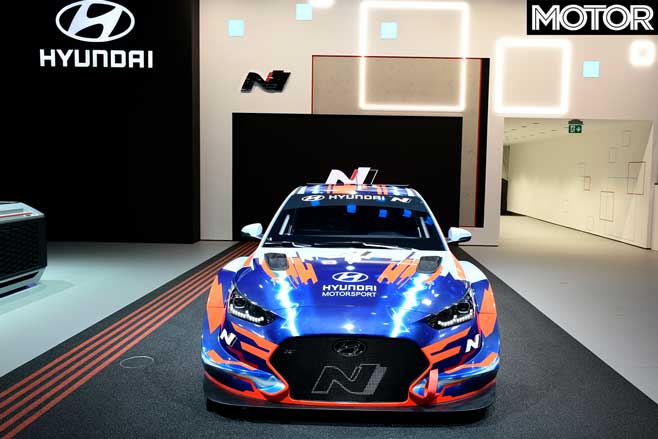
It’s got rear-drive, mid-engine-aping weight distribution and more than 500kW, but Hyundai’s Veloster N Electric Touring Car Racing (ETCR) caris sadly one for closed racetracks only.
Revealed at the 2019 Frankfurt Motor Show, the Veloster N ETCR was developed and built at Hyundai’s Alzenau headquarter. It is the third touring car iteration – the other two being the i30 N TCR and Veloster N TCR – and is part of the company’s strategy of developing electric road cars.
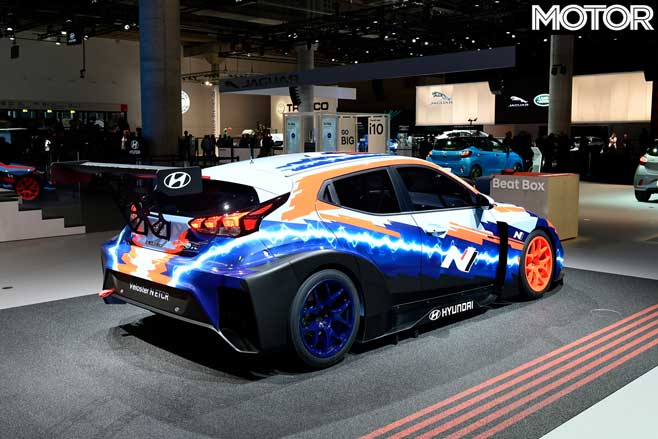
These motors deliver a rated 300kW of continuous power and 500kW of max power, sent to the rear-wheels only via a single-speed transmission.
“ETCR is the natural next step in our journey, and one that aligns perfectly to Hyundai’s global strategy for electric vehicle production,” said Hyundai’s Head of Product Division and Executive Vice President Thomas Schemera.
“We have a detailed test program for the Veloster N ETCR, supported by the fully trained and experience team of engineers at Hyundai Motorsport.”
Currently Hyundai has two fully-electric models on sale in Australia, the Ioniq Electric and the Kona Electric. Not the sort of cars for time attack attempts, but baby steps.
So far the only other manufacturer with an ETCR racer in its wings is Seat’s Cupra brand with its e-Racer. Despite having to deal with 400kg more than its TCR relation, Cupra claims that the e-Racer still accelerates from 0-100km/h in 3.2sec and 0-200km/h in 8.2sec.
The ETCR series is due to host its inaugural season next year, with the event format and calendar to be announced.
Elon Musk has fired his opening salvo in his quest to challenge the Porsche Taycan with footage of a mysterious Tesla Model S prototype lapping the famed Laguna Seca circuit in 1min 36.555sec.
The prototype in question is far from standard spec as Musk revealed it is running with a newly developed “Plaid” powertrain, a reference to a scene from the movie Spaceballs from which the Model S’s “Ludicrous” mode is inspired.
Little is known about the Plaid spec aside from Musk confirming in an earlier tweet that it will have three motors – rather than the Ludicrous’s two – and will be available on the S, X and the upcoming Roadster.
Other sources have also spied the prototype Model S in question being tested with widened fenders and a bootlid spoiler. Whether these “enhancements” will make their way to the production model as a new variant or option is yet to be confirmed.
That being said, Laguna Seca officials formally do not recognise Tesla’s lap record attempt as it was not completed during a sanctioned event, where the sanctioning body is officiating.
This isn’t the first time Musk’s ambition has been put on a crash course with the unbending will of bureaucracy, as we have detailed recently on the hurdles car makers have to go through before being allowed to set lap times at the Nürburgring.
Even so the Model S’s lap time at Laguna Seca is noteworthy, being a second faster than the four-door sedan lap record holder, the Jaguar XE SV Project SV, which was driven by Randy Pobst.
Not only that, the special prototype Model S is also quicker than a Ferrari F12berlinetta and a Porsche Cayman GT4, also done with Pobst at the wheel.
How fast do you think you could lap the Nurburgring without using your brakes? For most of us, that question would become expensively academic at the first serious corner, but Porsche has answered that one during testing of its Taycan EV at the Green Hell.
It turns out that Porsche engineers got a case of the curiosities while running a Taycan prototype around the Nordschleife. The car was there at the hands of Lars Kern – the same bloke who set the GT2 RS production car lap record – and when he was at maximum attack, it recorded a 7:42 lap time. Seriously impressive.
Read also: Porsche Taycan revealed: forget what you thought about EVs
However, even more shocking, is the time he achieved without actually having calipers meet discs in the braking zone.
“It did an eight-minute lap without any braking,” Dr Ingo Albers, the director of chassis engineering on the Taycan project, told Wheels.
Think about that for a second. An average speed of at least 154km/h at the Nordschleife, without using the brake discs at all. You might now be wondering how that is possible. Well, it’s all thanks to the crazy regenerative powers of the Taycan’s braking system, which can recuperate 265kW.
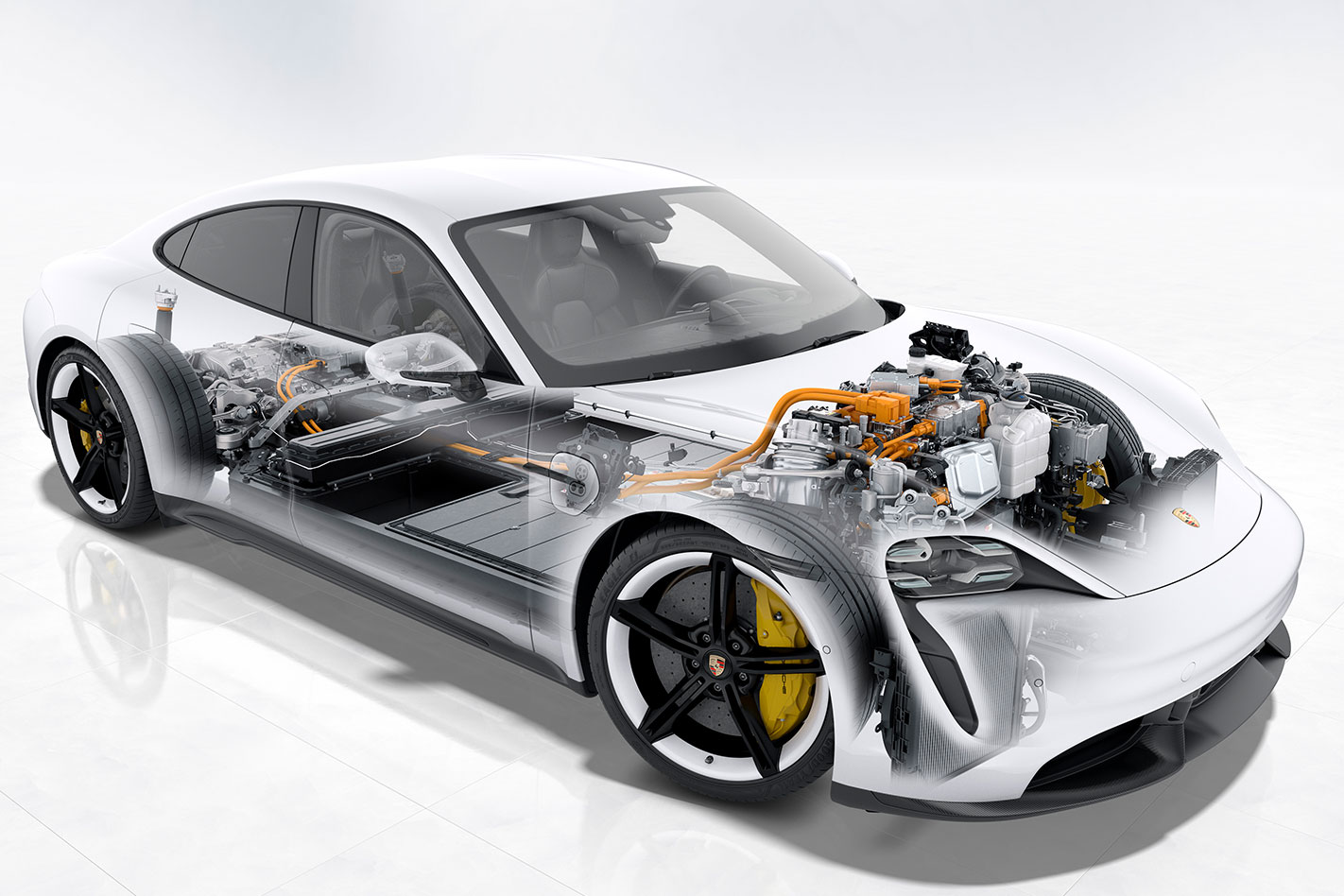
This is a significant step up compared to the 50-100kW of most of the Taycan’s competitors.
According to Dr Albers, 90 percent of all braking events are handled by energy recuperation, not the actual discs.
The Taycan Turbo S is fitted with massive 415mm carbon ceramic discs clamped by 10-pot pistons up front with 365mm discs and four-piston calipers at the back, so it’s not short of ultimate braking power to haul its 2295kg bulk down.
Read also: Porsche Taycan drives distance of Melbourne to Perth in one day
Watching Kern’s flat-out lap of the ‘Ring, it’s clear when he’s using the brakes rather than the re-gen, but the Nordschleife isn’t a track that’s overburdened by big braking zones. Back off just a little and it’s possible to record a hot lap without hot discs.
Porsche engineered the Taycan to employ battery recuperation via the brake pedal rather than through deceleration. This technique means that regen is created with a more natural feel, rather than taking passengers by surprise and creating the typically ungainly lurching effect of some EVs. Most of the time, the brake pedal isn’t actually operating the brakes.
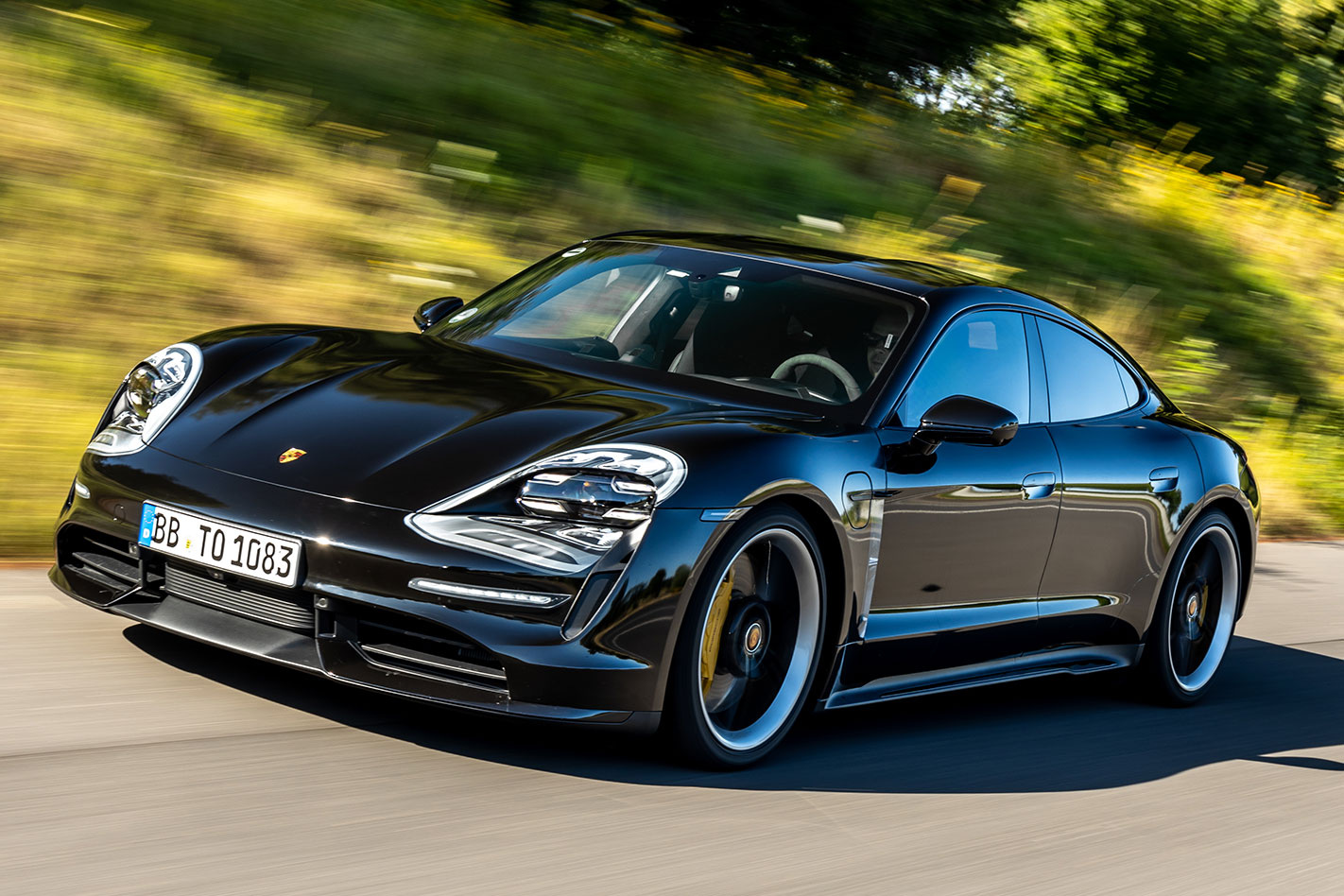
Unless you really stab the brake pedal, the Taycan isn’t using its friction linings, instead decelerating at up to .38G via regen. The production car goes a stage further and uses a clever auto recuperation system that employs a camera system to coast when the road is clear and then regen ‘braking’ when it spots traffic ahead.
Given the fierce regen effect of the Taycan’s motors, it achieved that eight-minute lap with braking of a different sort. While we wouldn’t recommend trying to replicate Porsche’s feat, it’s worth bearing in mind that if you were ever worried about the longevity of your carbon ceramic braking system, the Taycan could be the perfect solution.
What is it?
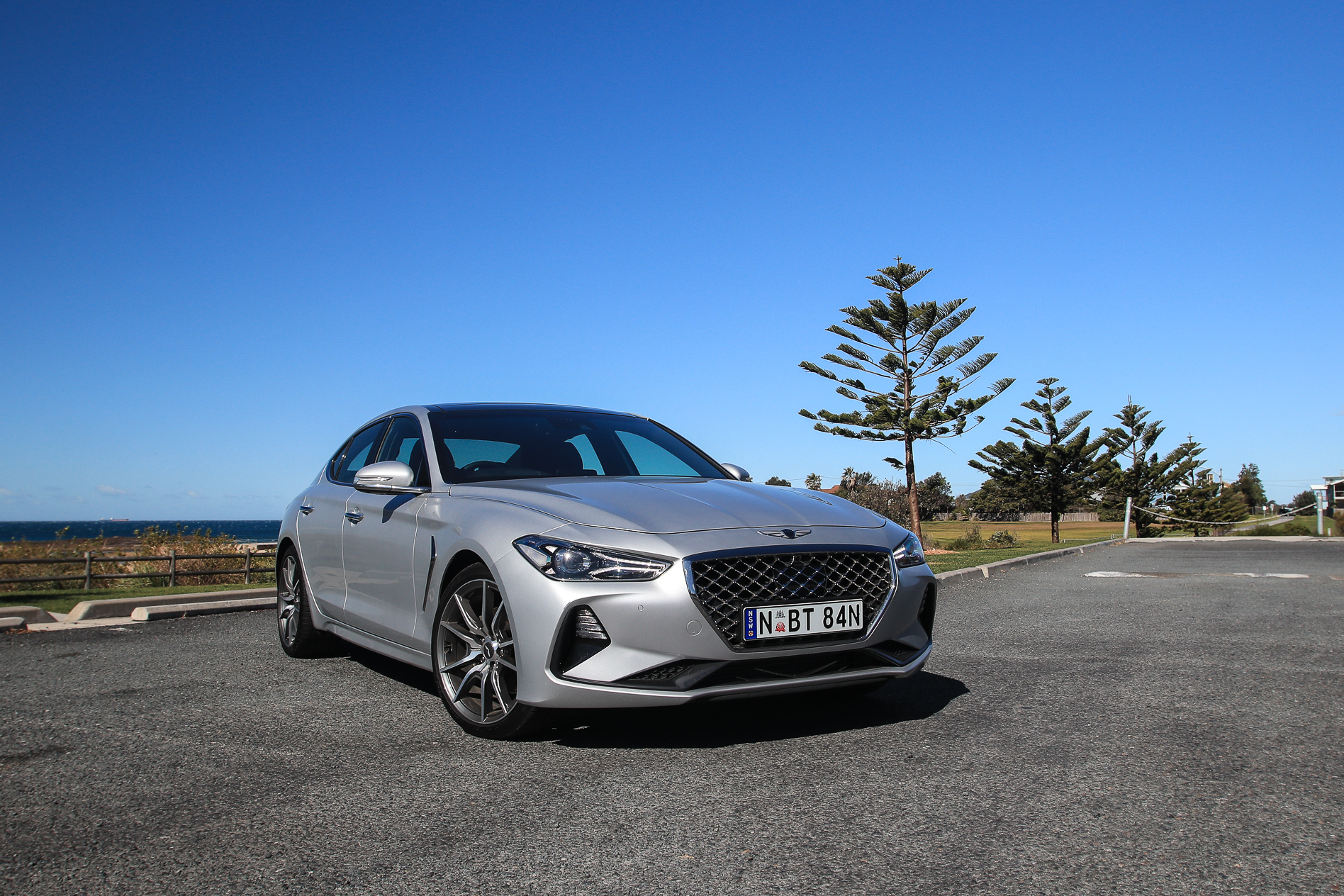
If you’ve not heard of the Genesis brand before, you’re not alone… but the easiest way to regard one of Australia’s newest – and smallest – brands is by comparing Genesis and Hyundai as you would Lexus and Toyota.
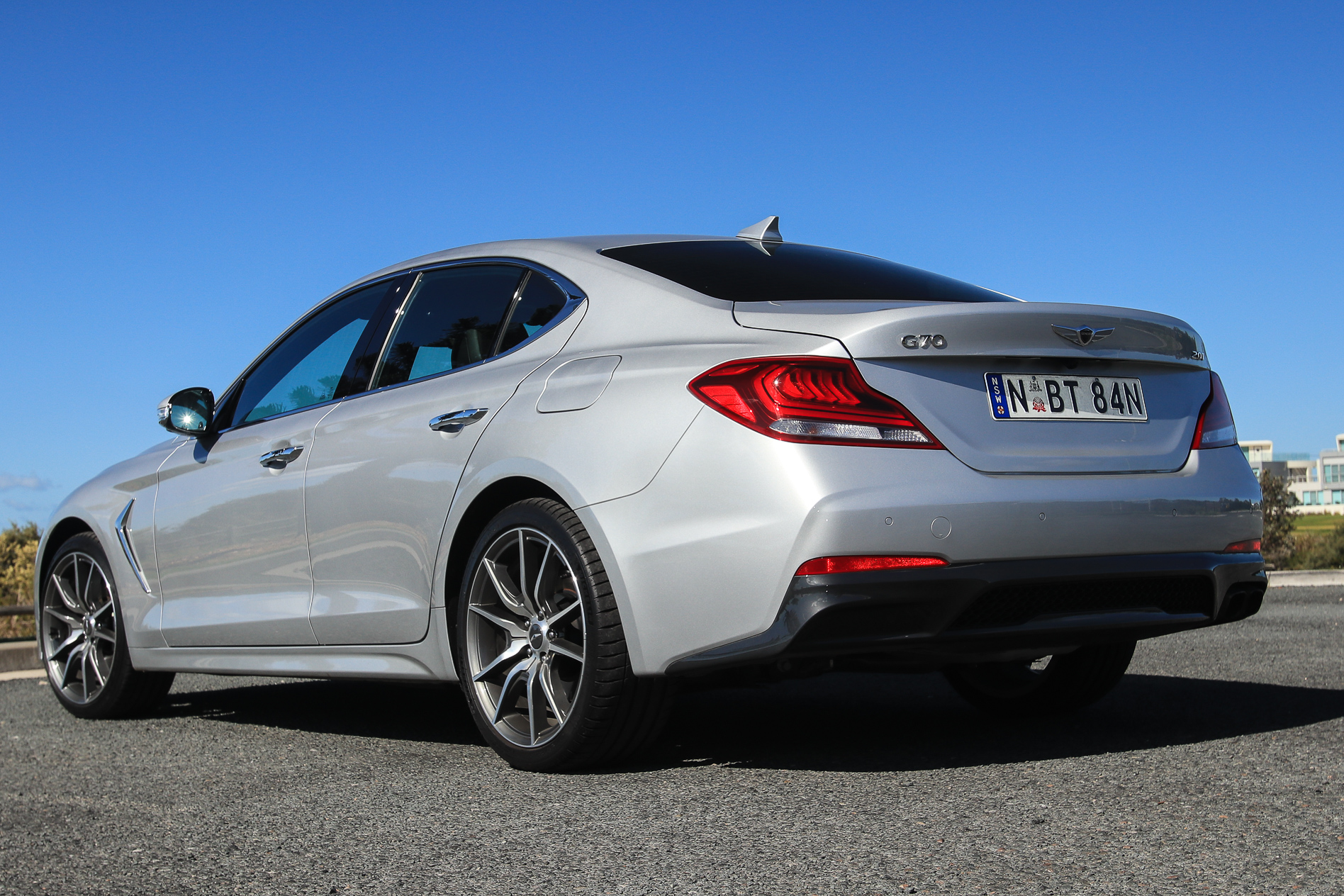
Relaunched in Australia in 2019, the mid-sized G70 sedan is one of just two models in the Genesis line-up, with the other being the large G80 saloon.
The G70 has set its targets on some formidable and well-established foes from all corners of the planet, including Audi, BMW, Lexus and Mercedes-Benz, so its entry-level 2.0T has some big targets to chase… and it’s doing it in a pretty unique way.
What is the Genesis G70 2.0T Ultimate like to live with?
Let’s face it… the luxury mid-sized sedan is an endangered species, as young – and not-so-young – upwardly mobile types storm towards premium brand crossovers like Merc’s GLC and BMW’s X4 in droves.
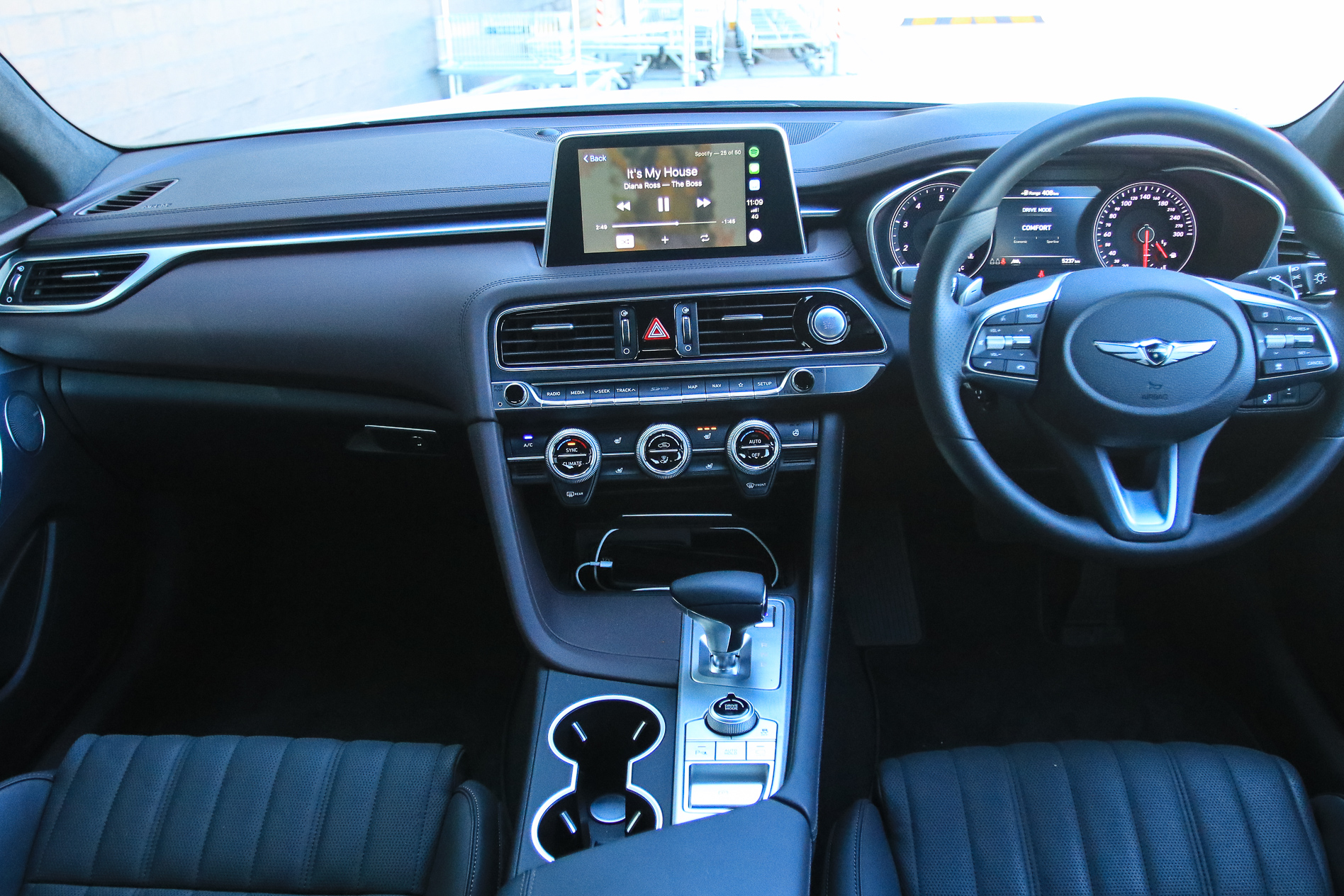
Don’t let that trend swing sway you, though, because the G70 is a genuinely lovely car to live with on a day-to-day basis. It’s sold as a five-seater, but it’s best for four, and the all-leather interior is superbly rendered.
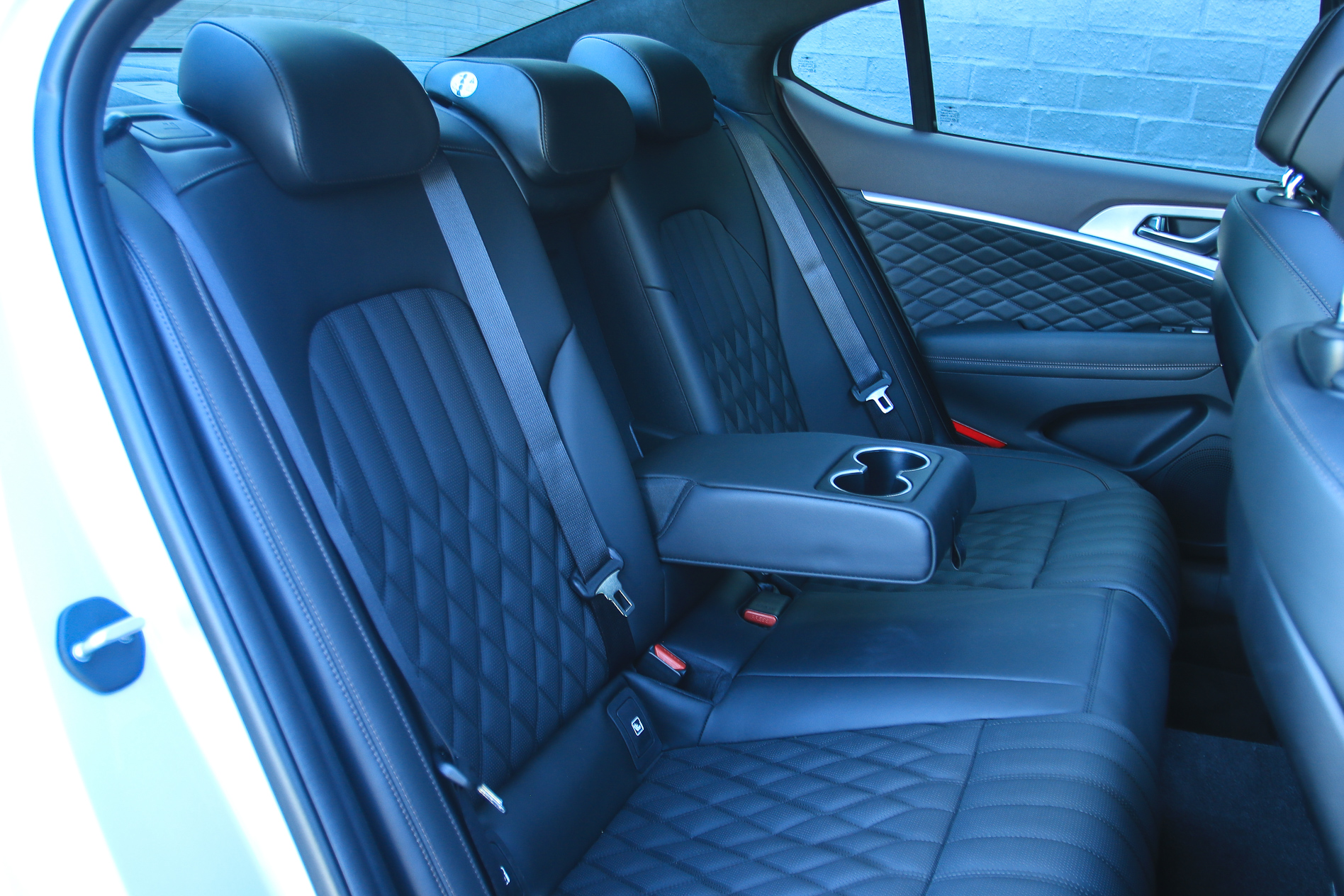
It’s not the last word in contemporary – there’s no digital dash, for example, and some of the graphics are a bit i30-esque – but the Genesis G70 marks a high-water mark for affordable opulence. Quilted leather seating is complemented by subtle but stylish metal finishes and well-weighted switchgear that’s a delight to use.
The G70’s front seats are fulsome and comfortable, and there’s sufficient head room despite the presence of the sunroof. There’s good visibility all round, and the round, thick-rim steering wheel is really nicely executed.
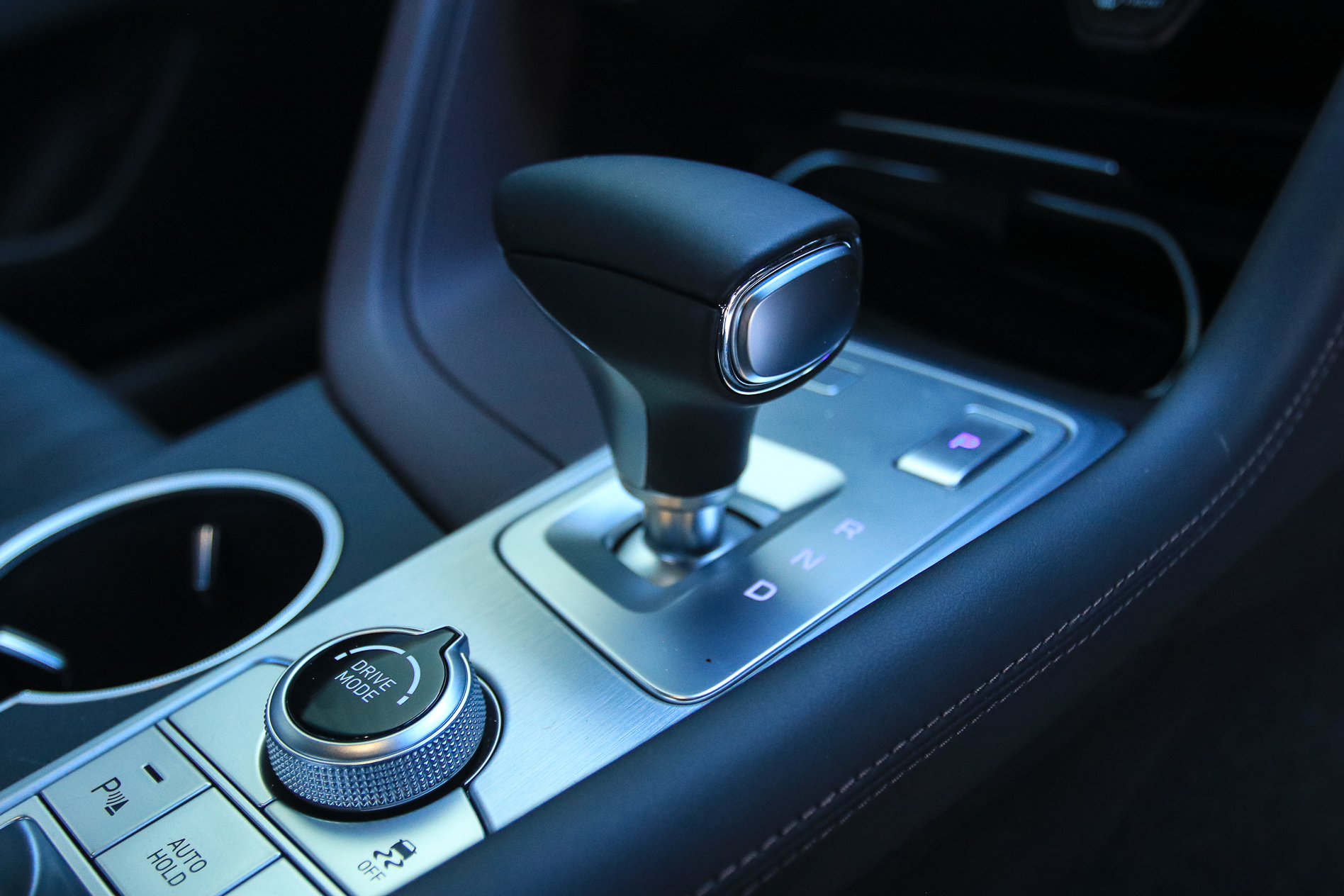
I’m not a massive fan of trigger-style fly-by-wire gearshifters, though the sturdy feel and distinct detents on the Genesis shifter are nicer than others I’ve tried recently.
Rear accommodation is affected by the presence of a transmission tunnel hump on the floor, and headroom is compromised for larger passengers.
There are vents for rear seaters, as well as a single USB point. Two ISOFIX baby seat mounts are standard, and there’s a pull-down armrest for the rear seaters.
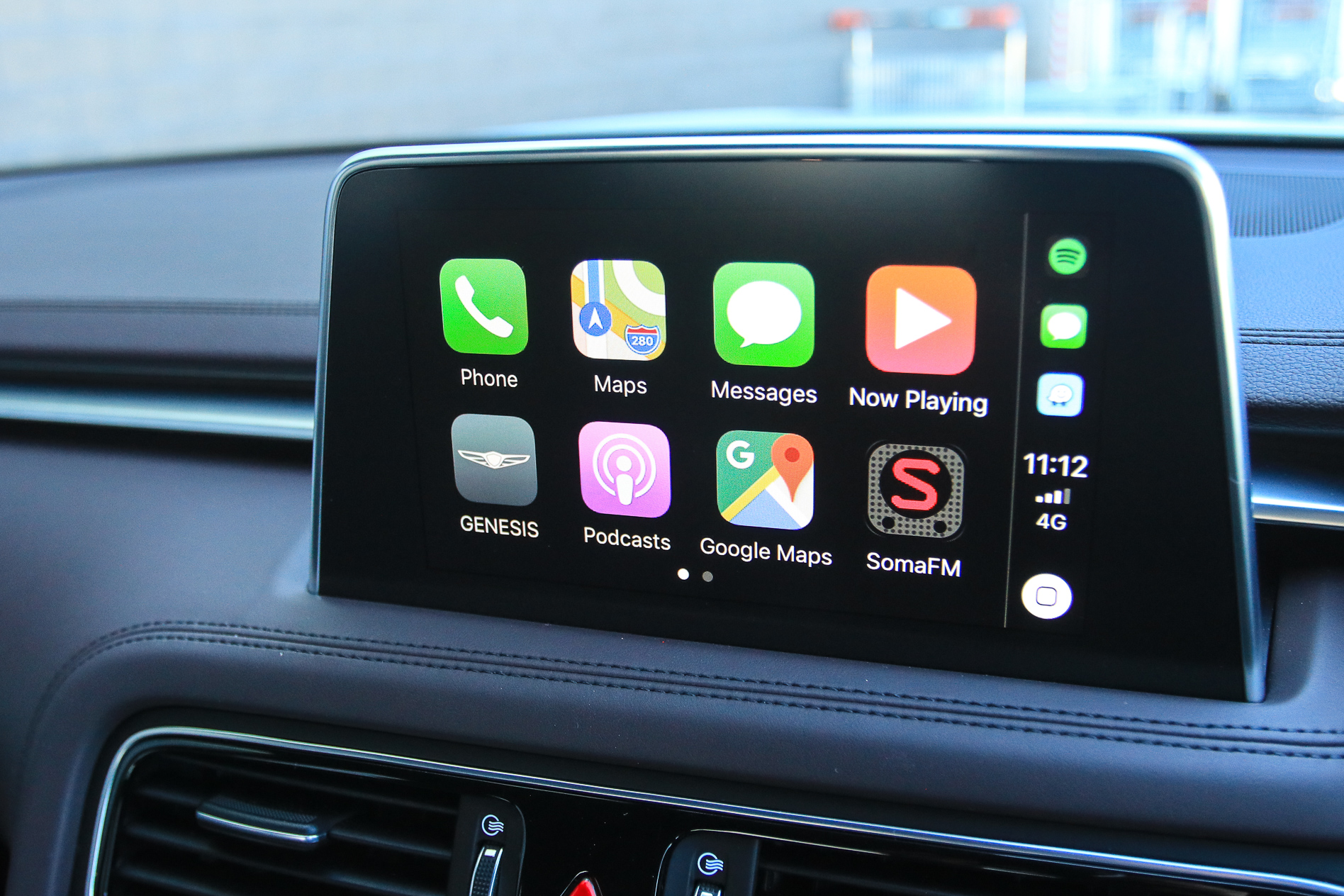
Things like smartphone mirroring and inductive phone charging are handy day-to-day niceties, and it’s worth noting that the stock sound system is pretty amazing.
Headlight brightness is excellent, too, which isn’t always the case for LED headlights. About the only mark on its copybook is its relatively diminutive 330-litre boot, though the seats can be dropped to provide more room when required.
What is the Genesis G70 2.0T Ultimate like to drive?
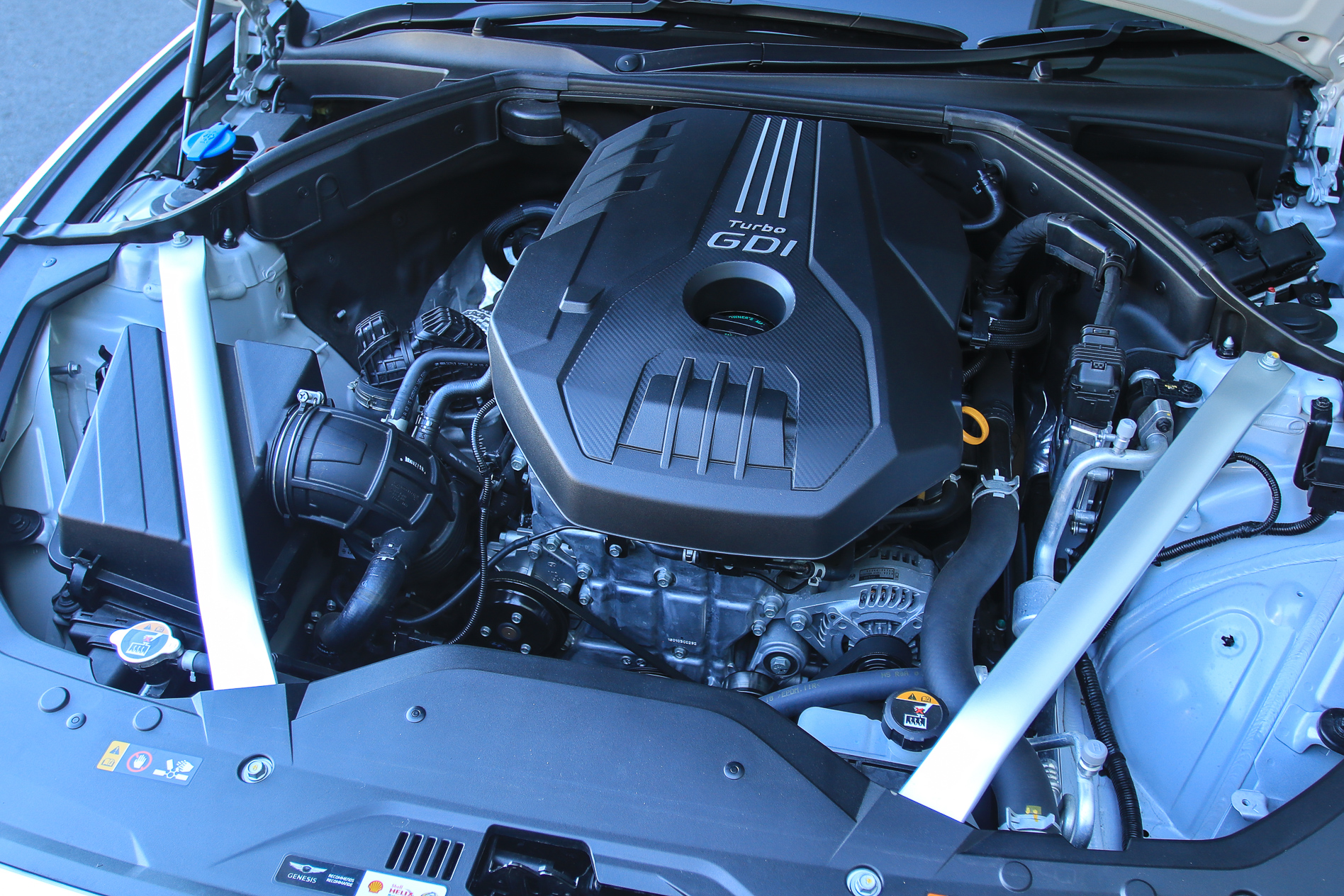
The Genesis offers 179kW and 353Nm from its turbocharged two-litre engine, backed by a traditional eight-speed auto that sends power to the rear wheels, a la the Lexus IS, Mercedes-Benz C-Class and BMW 3-Series.
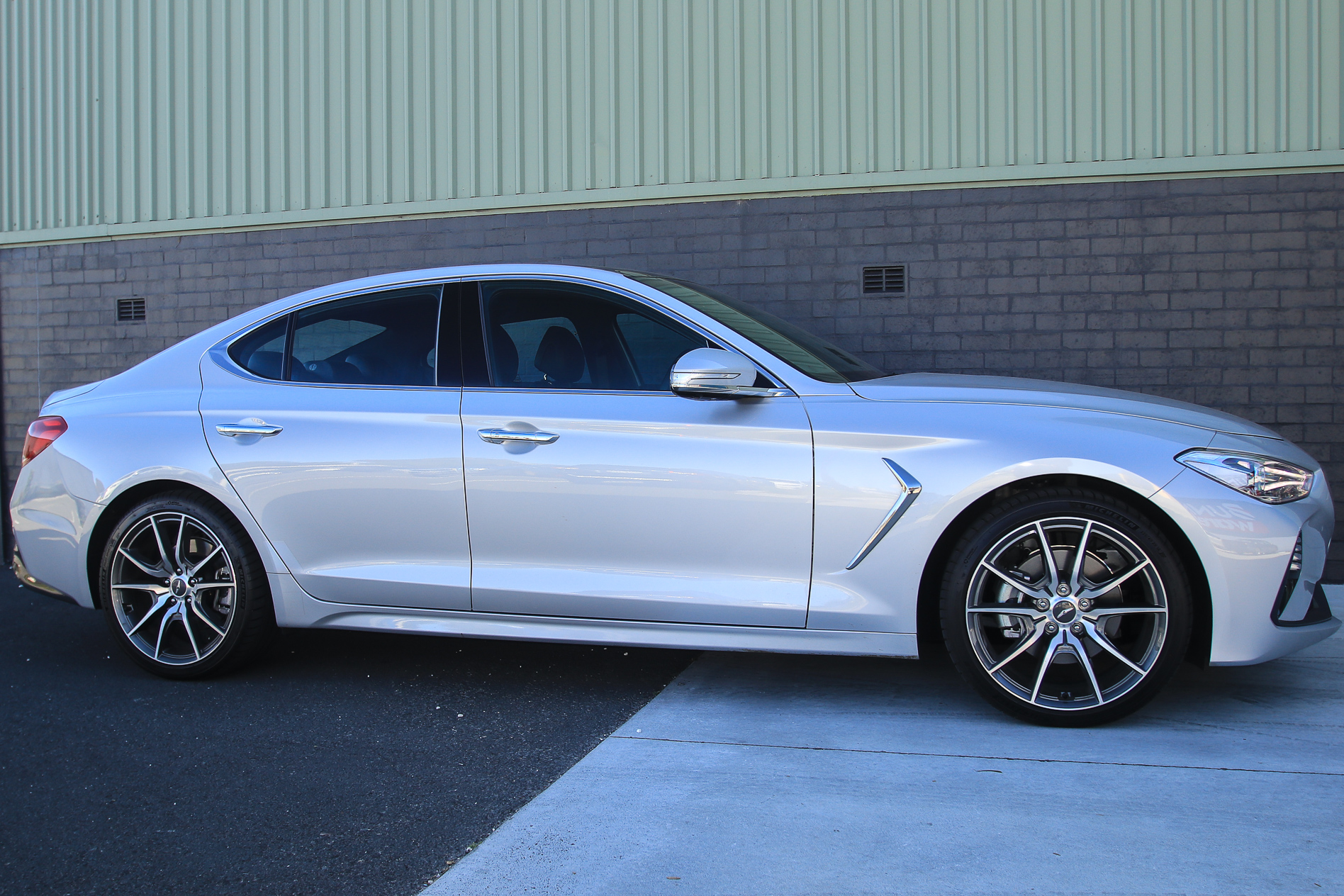
Its multi-link rear/strut front suspension system has been massaged by Hyundai’s accomplished Australian tuning team, who’ve turned in a sedan that offers a quiet, compliant and comfortable ride that doesn’t fall into the trap of being too stiffly sprung for its own good.
The G70’s benign, refined ride and handling is a perfect foil to the understated yet high-quality interior. It rides urban bumps with a quality and assurance that shames some of its rivals, though its decently feelsome steering feel is a little too light for my tastes in normal mode.
On the open road, too, it’s an accomplished package that really belies its price point. The engine and transmission are well-matched, and there’s more on tap than its on-paper specs suggest.
Is it worth the money?
The $63,900 Ultimate tops the G70’s four-cylinder roster of three, and compares to cars like the $77,022 Lexus IS300 F Sports and the $72,700 Mercedes-Benz C300 (all prices are before on-road costs).
The G70 Ultimate packs a similarly sized 2.0-litre engine and rear-wheel drivetrain under its skin, and comes packed with good gear like bi-LED headlights, more leather than a field full of cows, big sunroof, powered everything (including the steering column) and wireless phone charging.
There’s sat-nav, digital radio, Apple CarPlay/Android Auto phone mirroring, LED lighting throughout, beautifully rendered switchgear and loads of active safety functionality, as well.
About the only clanger is the multimedia screen, which is still skinned with a Hyundai-spec interface that detracts from the luxury bent.
While there are only two dealers – sorry, high-end shopfronts – at present, Genesis says it’ll pick up the tab with free servicing for five years or 50,000km, and it’ll even come grab the car for you (within 70km).
Pros: Terrific interior treatment, excellent ride/handling compromise, decent performance, well equipped for the money
Cons: Small traces of Hyundai DNA in cabin are distracting, small boot, squashy rear middle seat
Rating: 4/5
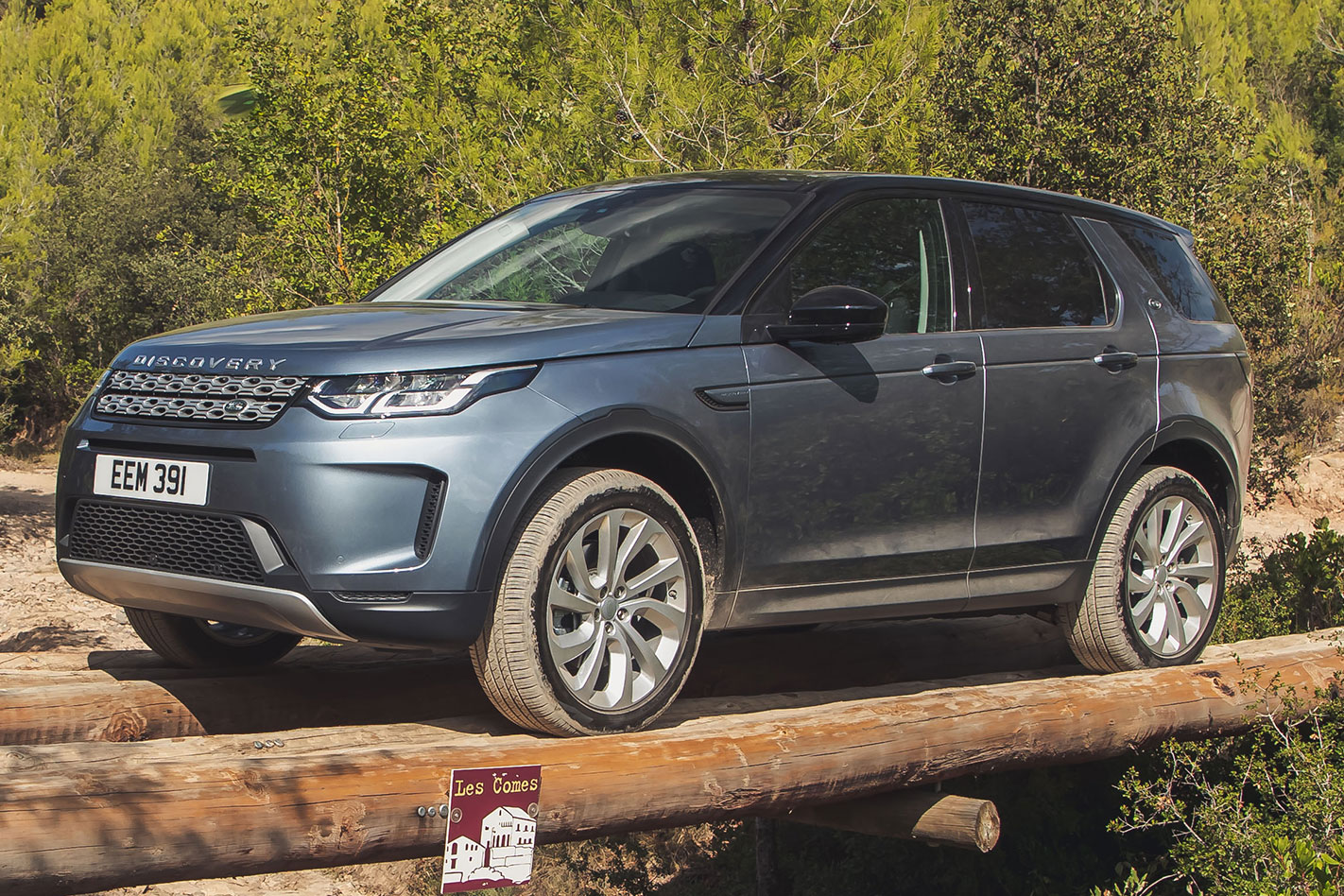
The Wheels Verdict: Land Rover has made significant strides in improving the interior quality of the Discovery Sport, as well as adding efficiency-boosting mild-hybrid systems across almost the entire range. By refining the formula, Land Rover has retained what made the Discovery Sport unique, while minimising its pitfalls.
WHAT IS IT?
With 438,428 global sales since 2014, the Discovery Sport is the best-selling vehicle in Land Rover’s entire range in the last three years. The second, and smaller, member of the Discovery family, the Sport is a medium luxury SUV that claims to stand for versatility by having serious off-road chops.
WHY WE’RE TESTING IT
Instead of treating the Discovery Sport’s mid-life update as a chance to refresh some plastics and then have an early lunch, Land Rover has gone to significant effort to improve the vehicle. A mild-hybrid 48-volt system is now fitted to all bar one engine, and Land Rover claims roughly 3500 of the 5000 parts that make up the Discovery Sport are new. Let’s see if there has been an improvement, shall we?
THE WHEELS REVIEW
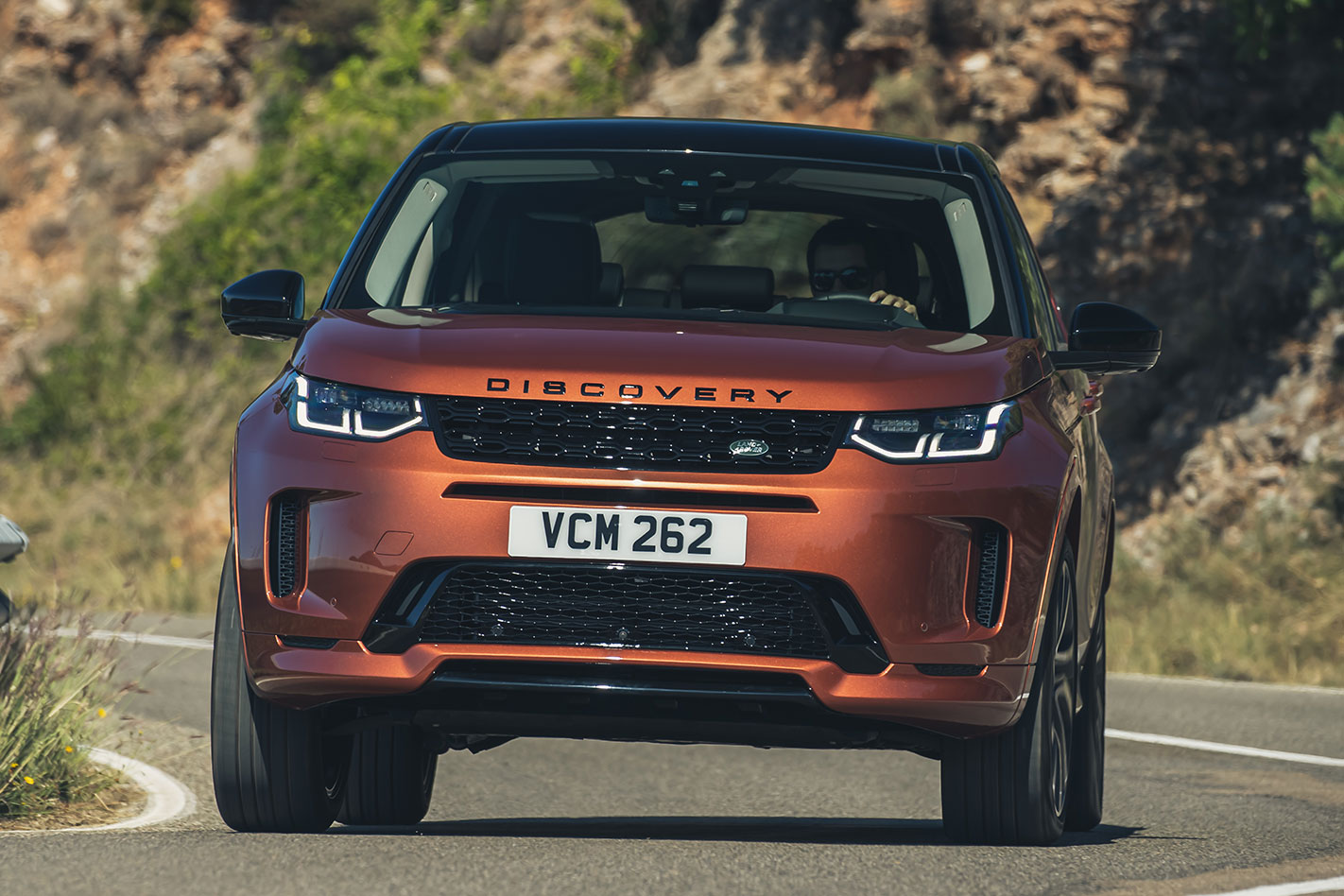
This is much more than a regular mid-life facelift. Land Rover has essentially given the Discovery Sport a new platform, and heavily updated interior, four years after it was first released.
The big news for the 2020 Discovery Sport is the addition of 48-volt mild-hybrid systems to all bar one powertrain, which the company claims improves fuel economy by 7 percent. To add this, the Discovery Sport has been moved to an updated platform, the same that underpins the all-new Evoque, released earlier in the year. This chassis is 10 percent stiffer at its body-in-white stage than the previous model, and has revised front engine and transmission mounting strategy.
Three diesel powertrains and two petrol will be available, with the most powerful versions of each made available to Wheels in Spain. Both petrol and diesel are 2.0-litre four-cylinder turbo units, with only the 110kW/350Nm D150 diesel missing out on a mild-hybrid system. Other diesel units are the D180 (132kW/430Nm) and the D240 (177kW/500Nm), while petrol variants are powered by either P200 (147kW/320Nm) or P250 (184kW/365Nm) engines. Each sends power to all four wheels via a ZF-supplied nine-speed automatic transmission.
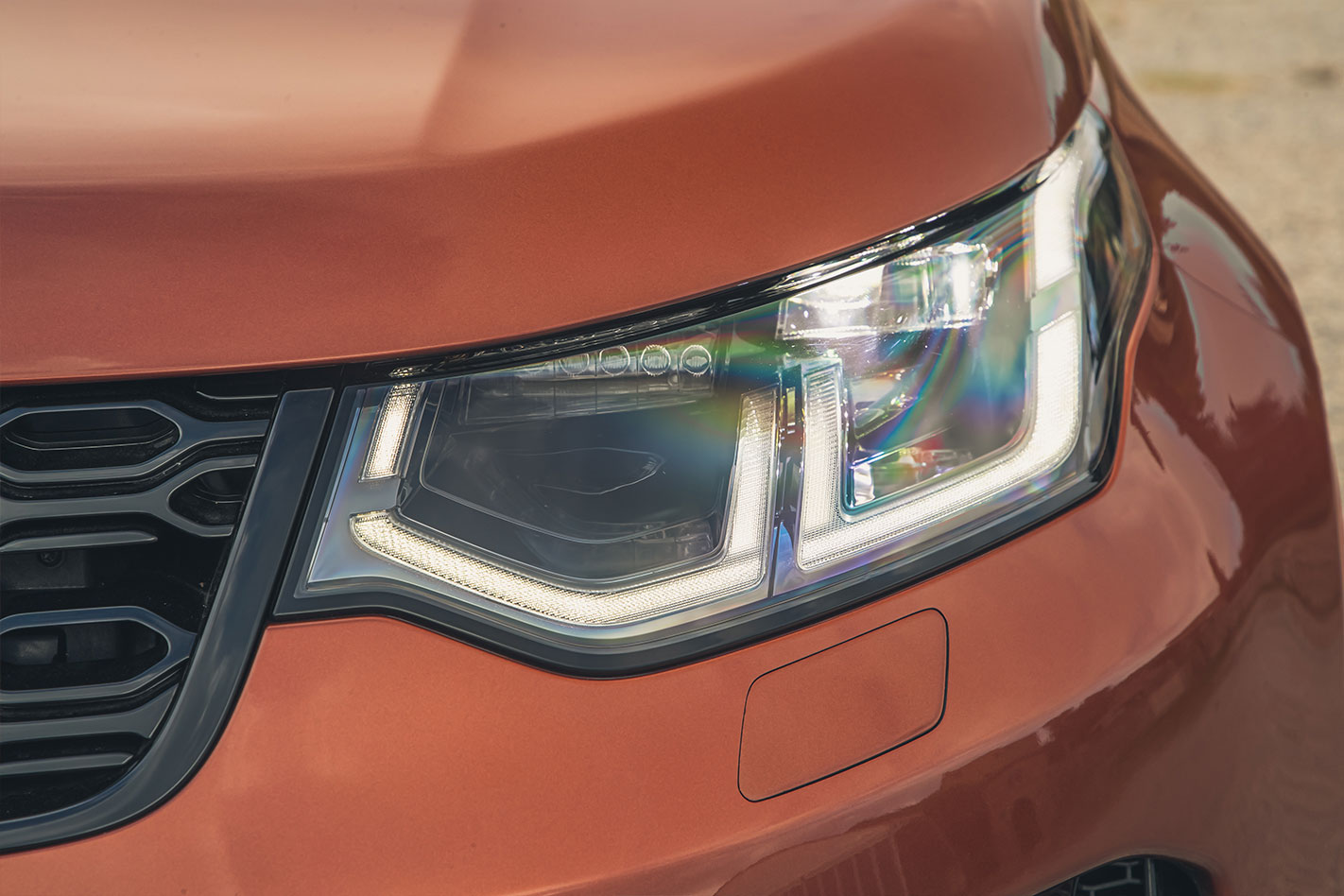
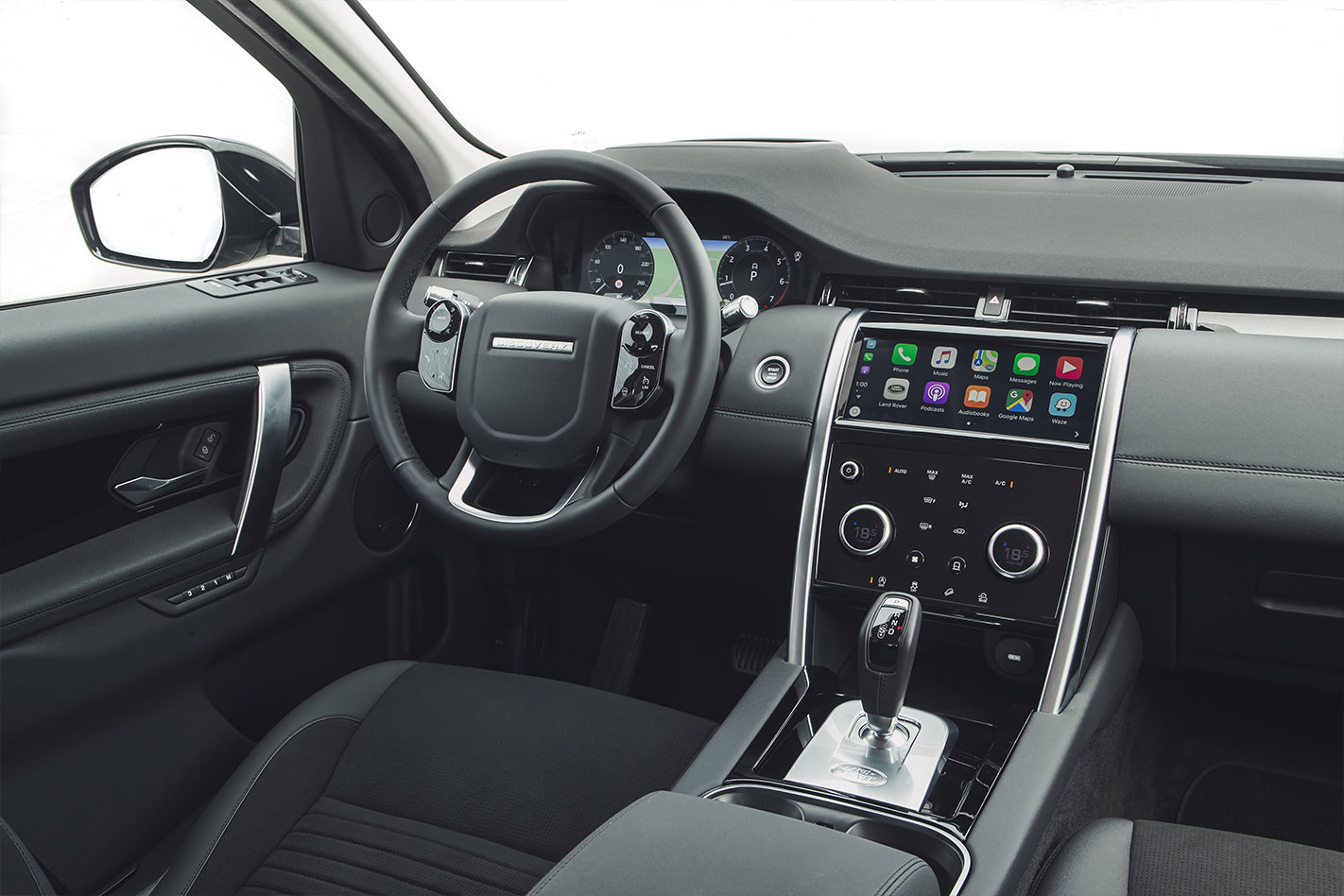
There are minor tweaks to the outside of the vehicle, most obvious being new LED lights front and rear and redesigned bumpers, while most of the design work has been put into the cabin. There are new seats, along with a 12.0-inch TFT digital instrument cluster, and 10.0-inch infotainment touchscreen lifted from the Evoque. The climate controls and terrain response system are also now controlled through a Touch Pro system, and the rotary gear selector has been replaced by a traditional shifter.
While the interior changes improve the feel and quality of the cabin overall, the climate and terrain response controls are now fiddly to operate, with no haptic feedback through the Touch Pro system. This means you can easily turn on or off things like air-con recirculation or windscreen demisters without intending to.
Adaptive cruise, high speed emergency braking, blind spot assist, the 5+2 seating configuration, and an ‘activity key’ are now standard across all variants, going some way in justifying the price increase of roughly $4000 across the range. While it’s nice that a third row is now standard, which cuts a box from the options list, we stand by our advice that you should only offer a ride in the most aft seats to your least-liked mates. A petrol P200 S is now the entry-level variant, starting at $60,500, with nine other variants on offer, including the $82,900 range-topping D250 HSE R-Dynamic.
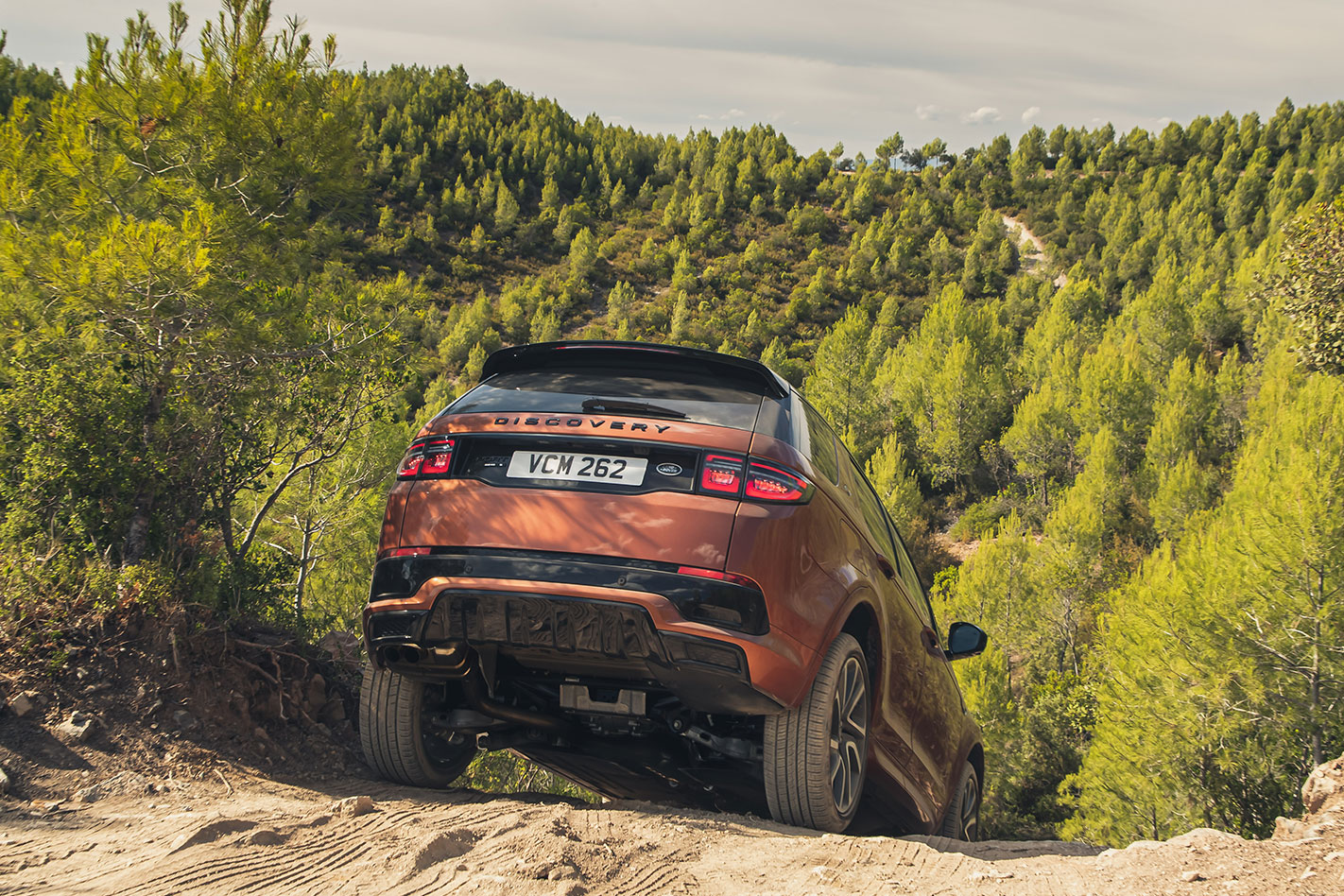
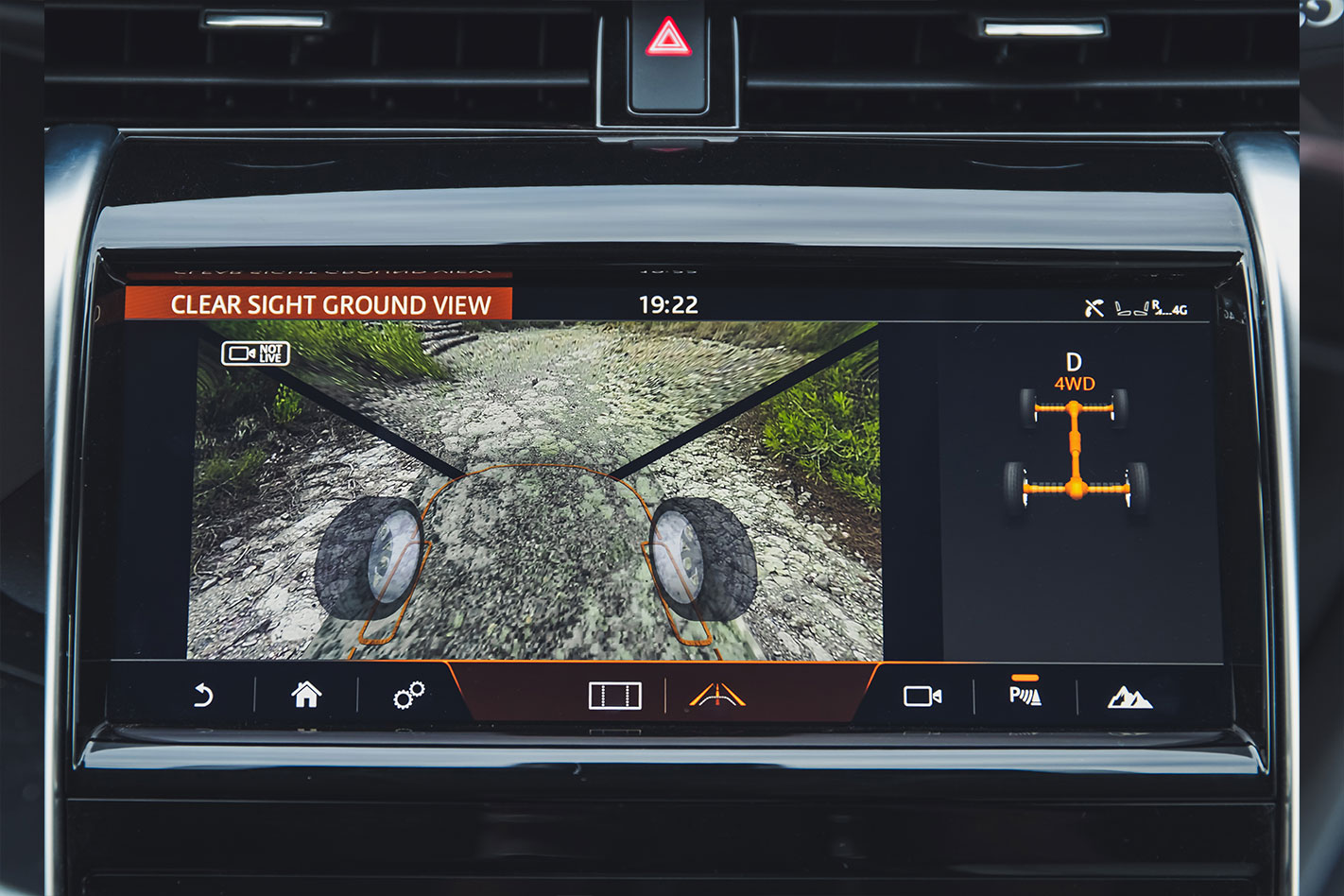
It’ll be easy to increase the purchase price of a Discovery Sport, as a number of features which are standard on competitors are cordoned off as options. For the first time, 21-inch wheels are fitted to the Discovery Sport as a $1300 option, while head-up display ($800), tyre pressure monitor ($540), and auto high beam headlights ($310) also remain optional. The Driver Assist Pack ranges from $2721 to $4060 depending on spec, and adds active safety features like high-speed emergency braking and adaptive cruise with steering assist, along with clever and convenient 360-degree camera systems. Five cameras around the car can be combined to allow the driver to ‘see’ through the bonnet.
Driven well below the limit, where it will spend all but the briefest moments of its life, the Discovery Sport remains a smooth cruiser. The nine-speed transmission is still slow to respond to throttle inputs, particularly when accelerating in-gear, but it’s a smooth-shifting unit. The most powerful engine tunes we drove were punchy, with the mild-hybrid system being used to fill torque down low. The system, which uses an 8kWh battery pack under the floor, allows the auto start-stop to operate up to 17km/h, while reducing load on the engine at lower speeds. It can also be used as torque fill at lower rpm, aiding the gutsy feel of the engines.
The test route consisted of roads smoother than Dwayne Johnson’s head, meaning we’ll reserve our judgement on the Discovery Sport’s ride until it faces a proper Aussie B-road. However, the fact that it rides as well as it does, albeit in favourable conditions, while also being capable of significant off-road feats, should be admired. Land Rover threw us at some novice to medium off-road tracks, and the Discovery Sport was able to scrabble over them nicely while wearing Pirelli P Zero rubber.
The changes to the Discovery Sport ensure that it isn’t left behind completely against fresh-faced rivals like the BMW X3 which have received generational updates. However, our tame test loop in Spain has left a number of factors we’ll be eager to check out properly when it arrives on Aussie shores at the start of next month.
RIVALS
Fellow luxury SUVs like the Audi Q3, BMW X3, Mercedes-Benz GLC, and Lexus NX, as well as flagship variants of mainstream models like the VW Tiguan Allspace, Mazda CX-9 and Hyundai Santa-Fe
PRICE AND SPECS
- Model: Land Rover Discovery Sport P250 SE
- Engine: 1997cc 4 cyl, dohc, 16v, turbo
- Max power: 184kW @ 5500rpm
- Max torque: 365Nm @ 1400-4500rpm
- Transmission: 9-speed automatic
- Weight: 1985kg
- 0-100km/h: 7.8 seconds (claimed)
- Economy: 8.1L/100km
- Price: $67,852
- On sale: October 1
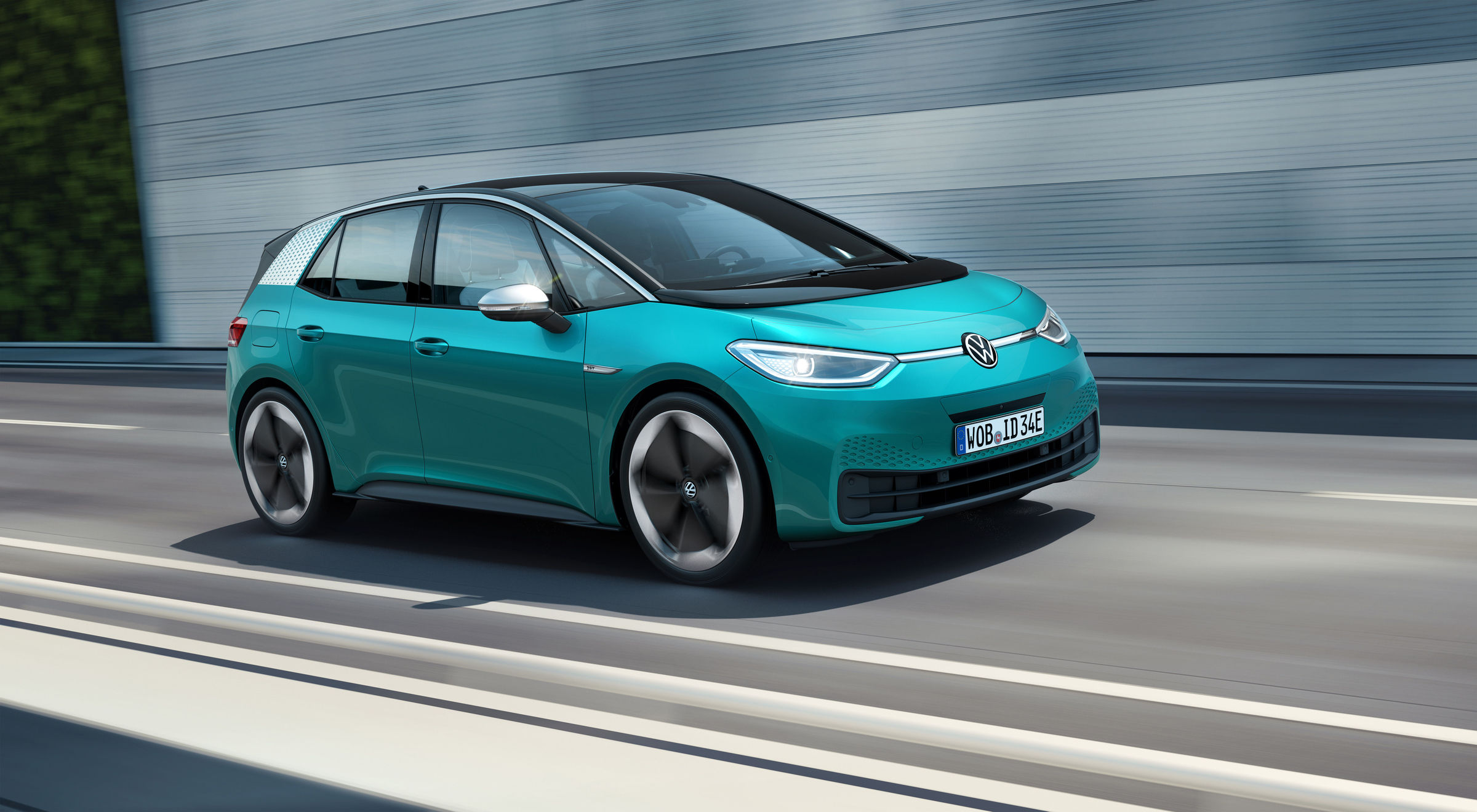
Volkswagen Australia’s managing director Michael Bartsch says the ID4 SUV version of VW’s new ID electric car range will be first to arrive in Australia, ahead of the ID3 hatchback which debuted at the Frankfurt show in September.
Volkswagen has already confirmed that the ID range will launch in Australia in 2022, but would not be drawn on exact timing or indicative Australian pricing and specification.
In Europe, the VW ID3 five-door hatchback goes into production later this year with customer deliveries commencing mid-2020.
“We will launch with the SUV, no question,” Bartsch told WhichCar in Frankfurt. “You just have to look at the [Australian sales] numbers at the moment … the way the industry is going.”
August 2019 sales figures from VFacts showed that SUVs claimed more than 60 percent of the new car market for the first time.
“[August] will be memorable for the fact that it was the first time the mix between sedans, wagons, hatches and SUVs swung to 60 percent … 62 percent I think. Which is just extraordinary. Think of where we were, even just five years ago …”, he said.
In 2014, SUVs accounted for just two in five new vehicle sales (excluding commercial vehicles). By the end of this year, they may account for two in every three.
While a forthcoming SUV model has not officially been confirmed by Volkswagen, the company has done everything but.
Part of the ID concept car range displayed alongside the ID3 production hatch included the ID Crozz electric crossover (above) which Volkswagen says has the interior space of a mid-size SUV in a body the size of a compact SUV, and is designed to “electrify your everyday … whether you’re in the city or out in the country”.
Volkswagen also displayed an SUV-shaped, camouflaged car labelled ‘ID Next’ in a glass box on the stand.
Volkswagen has confirmed that 27 variants of the ID family are already in development and that it will launch 70 variants by 2028. By then, it expects that more than 15 million MEB vehicles will have been produced.
Three ‘versions’ of the ID3 hatchback will be offered in Europe from 2020, priced from 30,000 Euro (A$48,000). The cheapest will have a 45kWh battery pack good for 330km range.
A second variant will have 58kWh/420km, and the third offers 77kWh and up to 550km.
At launch a first edition version of the 58kWh version will also be offered, complete with free charging for one year up to 2000kWh.
VW says recharging can be as quick as 30min for 290km range if you have a 100kw charging outlet.
Volkswagen says the ‘3’ in ID3 not only refers to VW’s internal code for the compact hatch segment; it also references the ‘3rd generation’ of the car after the Beetle (1st) and the Golf (2nd).
When asked if the VW ID3 could, therefore, spell the end for the Golf, Bartsch acknowledged “I don’t think anyone believes anything is forever”, but added it’s also possible that Volkswagen will evolve what the Golf is to keep pace with the times.
“Even if the Golf as we know it now becomes a smaller and smaller and smaller mix, and ultimately it has to be re-looked at in concept, it doesn’t mean the nameplate will go,” he said. “The nameplate can also move with that evolution.”
Bartsch said that little can be done to shorten Australia’s long wait for the ID range’s arrival Downunder, scheduled for two years after European sales commence.
“The fundamental issue that we’re facing is that we are blinded by the reality of being south of the equator,” he said. “This is all going to go out in the northern hemisphere first.
“If I take it from a purely Volkswagen [Australia] brand point, I don’t want to see too long of a delay because I think that if you’re not in the market with an (electric) SUV in 2022 … then I think it would start having a drag effect on what your brand stands for.”
Bartsch said that electric vehicles are unlikely to take Australia by storm and quickly overtake sales of conventional petrol- and diesel-powered cars.
“The ramp-up of electric vehicles isn’t like, we’re going to wake up tomorrow and 50 percent of cars will be electric,” he said. “Even by 2040 I think the expectation is that maybe 40 percent of cars on the road will be electric.
“So as far as the consumer goes, I think it’ll be … a bit like putting a frog in cold water and turning the heat up. They won’t know when it’s boiling if you do it gradually.”
Keep abreast of the 2019 Frankfurt Show right here
The man responsible for leading the engineering team for the new Land Rover Defender has described the idea of fitting a manual transmission to the car as “daft”.
Nick Rogers is the Executive Director for Product Engineering, and he isn’t exactly a fan of having a three-pedal transmission fitted to the reborn legend.
“A manual [gearbox], for me, is just daft,” he told Australian media.
“Why is it daft? Because you are introducing NCAP systems and we’ve got a state-of-the-art motion control system on the car, linked with an MHEV system that can scoop up energy every time you decelerate – we have got millions of lines of code in the algorithms for the gearbox, motion control, e-turbo, and all the rest of it.
“To give someone a gearstick and then make them hang onto the gears isn’t really the most efficient thing to do.”
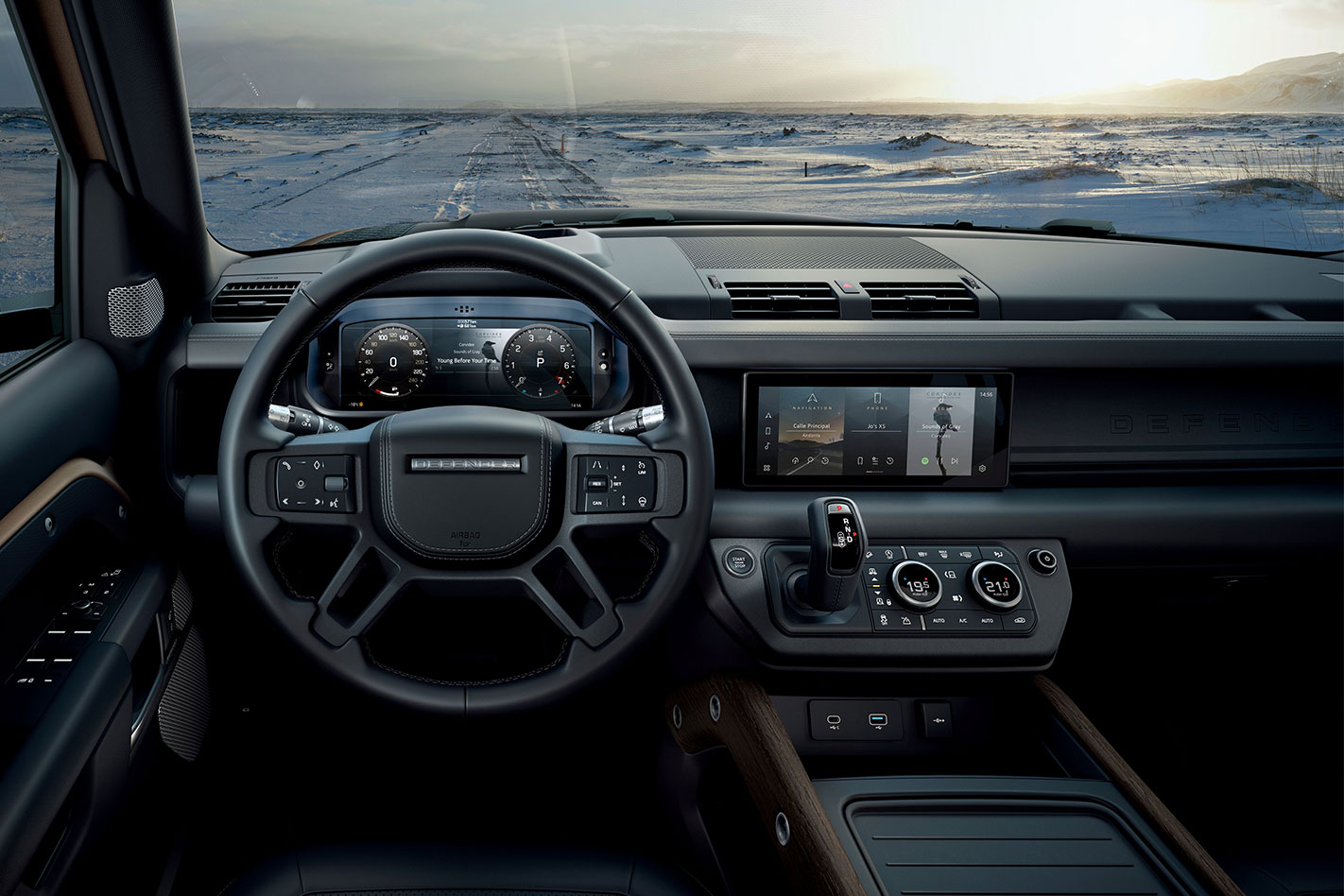
Rogers believes that it was Land Rover’s duty to not completely eliminate the need for driver inputs when off-roading, but to give the user more confidence to go further off the beaten track than ever before.
In his effort to democratise the joys of off-roading, Rogers believes the manual gearbox didn’t gel with the new modern, technology-leading Defender.
“With an eight-speed gearbox, it is definitely more efficient and powerful than a manual. It is definitely safer and easier to use,” he said.
“The adoption of automatics is going to be more, and more, and more.”
While DIY gearshifting may be limited (you can still select ratios, you just don’t have a clutch), Rogers is confident that the human won’t be eliminated from driving duties while off-road in the near future.
