
Land Rover could be putting in rather an icy phone call to the crew at SA4x4 after a news article with full details of the new Defender were leaked ahead of the vehicle’s Frankfurt reveal. We’d previously only seen a handful of spy images of the Defender, without much in the way of hard information, but the layout from South Africa gives us a lot of the goods on both the three- and five-door versions.
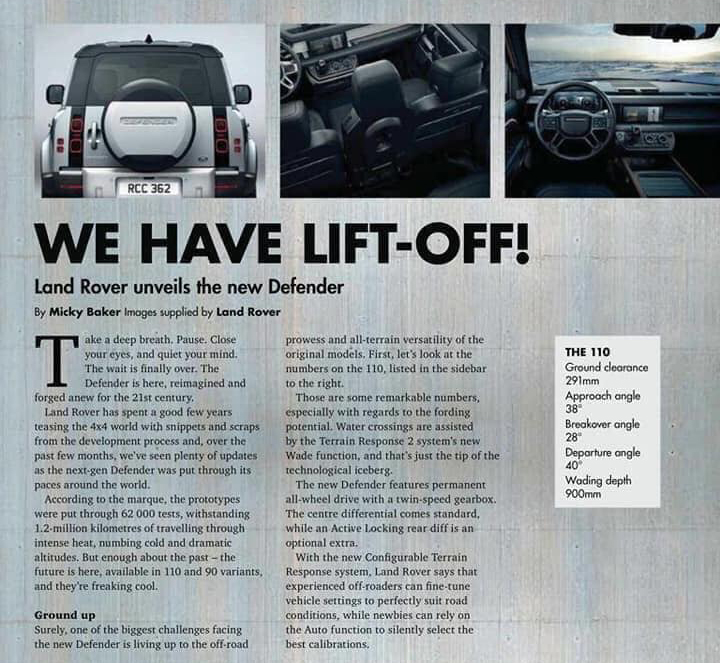
Off-road enthusiasts have been awaiting the numbers on the new 1010. Ground clearance of 291mm, an approach angle of 38 degrees, a breakover angle of 28 degrees, a departure angle of 40 degrees and a wading depth of 900mm will be music to their ears.
The Terrain Response 2 system comes with a specific Wade function and expert users can also fine-tune the settings of the configurable Terrain Response system. If you’re not so confident off-road, leave it in Auto. A ClearSight Ground View camera system makes the bonnet ‘invisible’ via the dash-mounted screen.
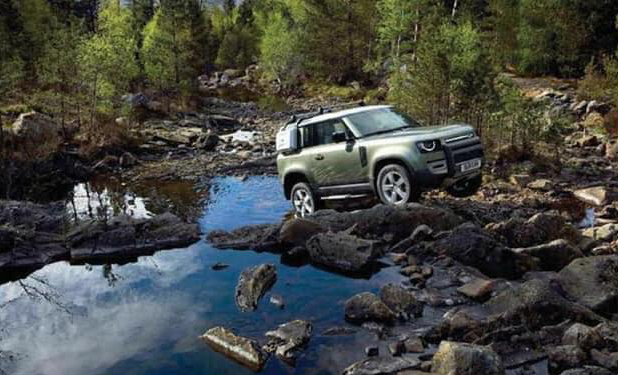
The D7x monocoque chassis is claimed to be three times as rigid as a traditional ladder-frame. Land Rover claims that its 95 percent new and it features fully independent air or coil spring suspension.
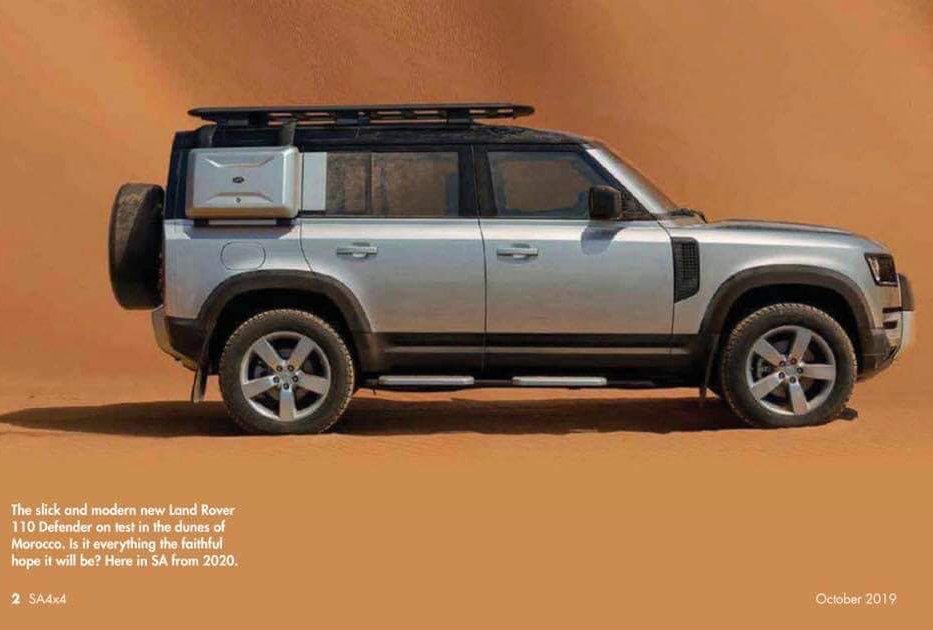
Over the air software updates are available for the vehicle and the 100 offers five, six and five plus two seating configurations along with 2380 litres of luggage space with the rear seats folded. The shorter 90 can seat up to six, thanks to a small pop-up jump seat in the front row.
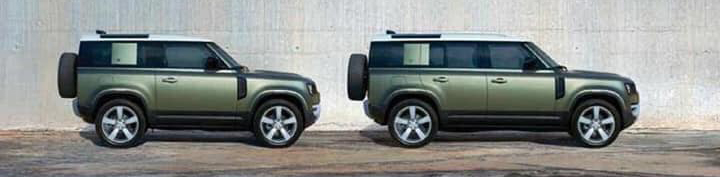
Trim grades run S, SE, HSE, and Defender X, with First Editions being sold during the initial year on sale. To augment this, Explorer, Adventure, Country and Urban packs have been developed.
Launch engines include a 3.0-litre straight-six P400 petrol unit or a 2.0-litre D240 turbodiesel. The P400 is good for 294kW/550Nm while the diesel fronts up with 177kW/430Nm. Additional engine choices will arrive with the launch of the SWB 90. A utility version is also rumoured to be in the works to address the requirements of those who want a more hardcore version.
So what do you think? Rightful heir to the throne or has it gone a bit lifestyle? Hit up the comments and let us know.
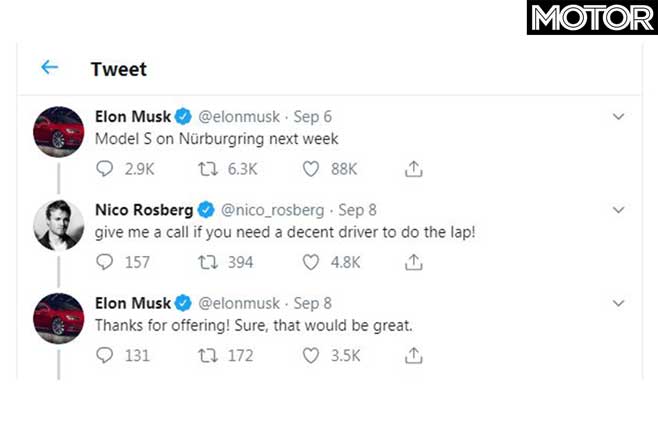
The Tesla Model S is going to the Nürburgring. That much we know, Tesla boss Elon Musk tweeting “Model S on Nurburgring next week” on September 6.
From here on the story gets strange. Why Tesla is going to the Nürburgring is unclear; the assumption is that it would make an attempt on the Porsche Taycan’s 7min42sec lap time, a reasonable assumption given that 2016 F1 champion Nico Rosberg replied to Musk’s tweet with “give me a call if you need a decent driver to do the lap” to which Musk then replied “Thanks for offering! Sure, that would be great.”
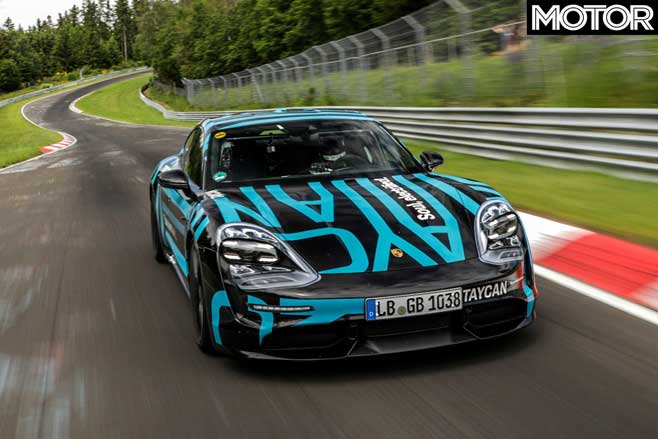
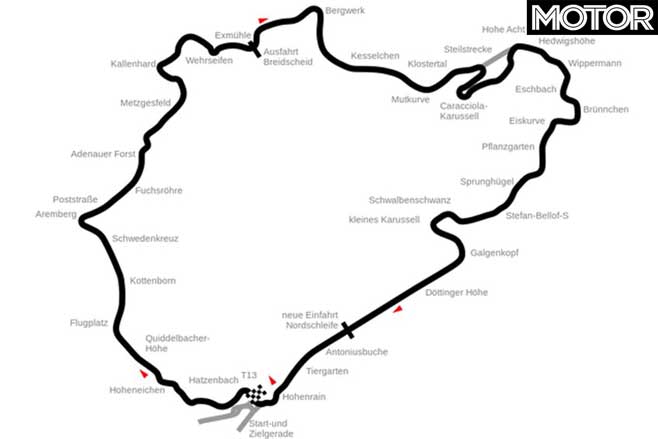
This is where it gets REALLY weird. Tesla confirmed to US outlet Road & Track that it will be taking part in an industry pool day, where prototypes from various manufacturers complete testing at the world’s most arduous racetrack…sorry, public toll road.
Here’s the thing, all these prototypes mean traffic is usually an issue during industry pool days so completing a clean lap is difficult, but that’s irrelevant as lap timing is strictly prohibited during these sessions.
In order to complete a full timed lap a manufacturer must book the track exclusively, which the Nürburgring confirmed to Road & Track Tesla had not done and was very unlikely to be able to do so as the track is “fully booked through the season.”
So Tesla is taking part in an industry pool session at the Nürburgring, but Nico Rosberg won’t be driving. Only accredited drivers are permitted to take part in these sessions and that accreditation isn’t easy to come by.
Holden’s chief dynamics engineer Rob Trubiani is one such driver, explaining to MOTOR that a three-day course is required with an instructor to learn the nuances of the track. Rosberg may have an F1 title and have held a Superlicence, but it seems unlikely that he has Nürburgring accreditation or will be able to gain it by next week.
Even the car doesn’t make sense. The Model S has many virtues, including blinding straight-line speed in P100D form, but performance longevity isn’t one of them. The track-developed Model 3 Performance would seem a far more appropriate vehicle to tackle the ’Ring.
In summary: Elon Musk has announced a Tesla Model S will be going to the Nürburgring, but it’s not clear why and it won’t be setting a lap time; Nico Rosberg has offered to drive it but he’s not allowed. We’ll keep you up-to-date with developments as they happen.
BMW’s has marked the current i8’s final days with a special version called the i8 Sophisto Edition.
Sporting exclusive copper highlights and a Special Effect Grey paintwork, 200 units will see production through to its end and pave the way for a successor hidden somewhere in the recent Vision M concept, which should arrive after the i8 signs off in April next year.
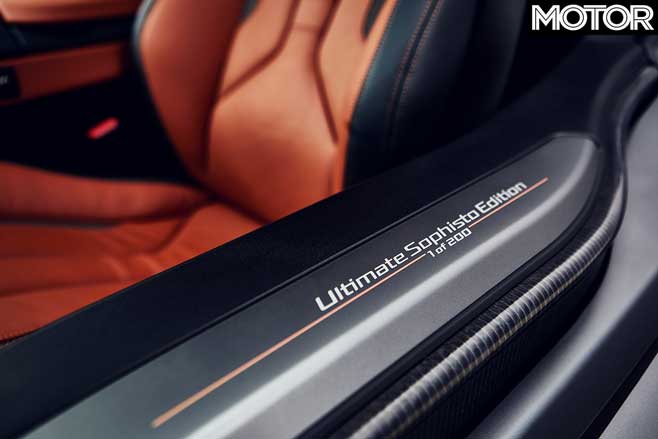
As for what the Sophisto Edition brings to the table, its E-Copper highlights are no more obvious than on the i8 coupe’s specially designed 20-inch wheels. It also adds clear glass taillights and Shadow Line trim elements on the C-pillar and tailgate inlay.
Inside, meanwhile, an ‘Accaro’ design theme copies the exterior’s colourways and you’ll be greeted by build number plaques on the side-sills and centre console.
Its oily bits underneath are carried over. And yet, the mid-engine hybrid eco-performance credentials are still so forward thinking it’s hard to believe that it’s five and a half years old.
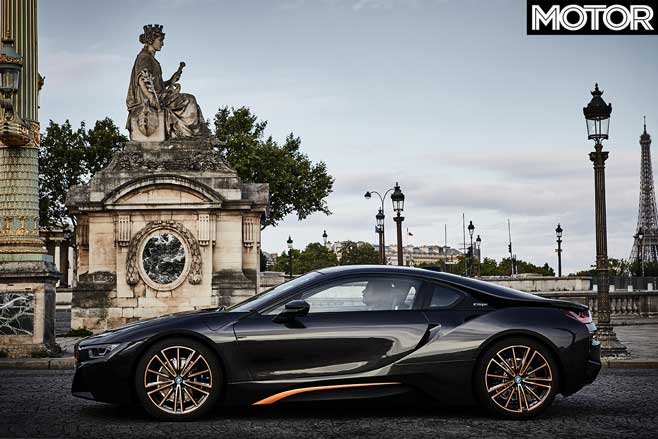
In the Edition’s carbon fibre shell sits the same 1.5-litre turbocharged three-cylinder engine that still makes 275kW in combination with the two-speed electric motor on the front axle. Acceleration is quotes at 4.4sec for the 0-100km/h sprint.
With its wind-cheating shape and ultra-low drag tyre package, fuel consumption is quoted at a scarcely believable 1.8-litres per 100km.
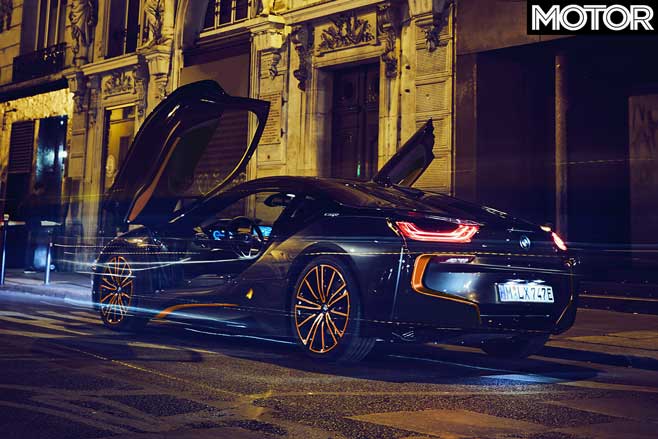
Luckily for us, BMW is poised to favour performance over economy with the an M-badged successor now that the brand’s electrification plans and its performance technology are thoroughly developed.
We’re hearing it’ll retain the carbon tub, add another cylinder and electric motor, and put down somewhere around 441kW. A steady jump in performance compared to today’s car. Then, with an M badge and an M1-esque silhouette, it should.
As for whether there’ll be another i8 at all, our questions will be likely be answered closer to the current i8’s demise in 2020.
As sure as night follows day, so too does a convertible version of a Ferrari coupe appear.
The new Ferrari F8 Spider is the drop-top version of the F8 Tributo, which appeared in February 2019, and replaces the 488 Spider.
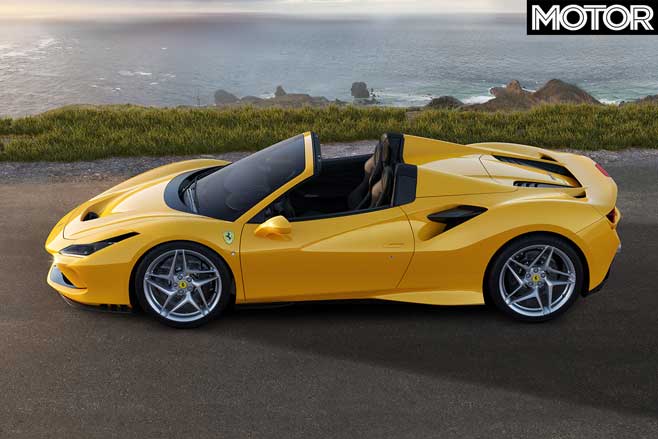
Its mechanical specification is virtually identical to the coupe, bar a 70kg weight increase thanks to the roof mechanism. As such, it’s slightly slower than its hardtop twin, taking an identical 2.9sec to hit 100km/h but an extra 0.4sec to reach 200km/h, though the claim is still a ludicrous 8.2sec. Top speed remains 340km/h.
The roof is a retractable hardtop, chosen “because of the comfort it provides” according to Ferrari. A two-piece panel, it stows on top of the engine and takes 14 seconds to raise or lower, a process which can take place at up to 45km/h.
Otherwise, the F8 Spider mirrors the Tributo Coupe. It’s powered by a 530kW/770Nm 3.9-litre twin-turbo V8 which revs to 8000rpm and incorporates weight reduction measures from the 488 Challenge race car.
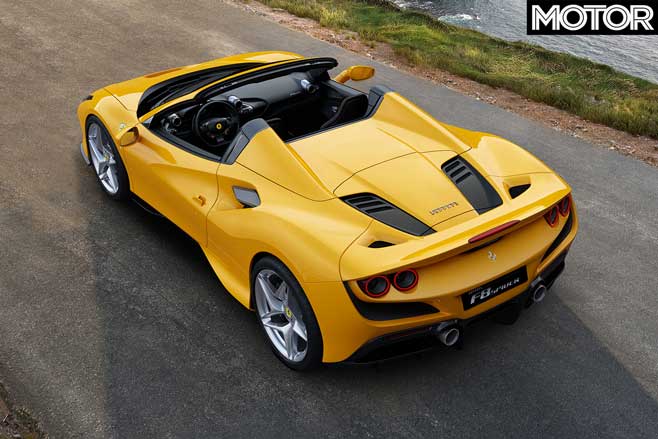
The latest chassis electronics, including version 6.1 of Ferrari’s clever Side Slip Control ESP system, maximise the driver’s ability and the grip from the 245/35 (front) and 305/30 (rear) tyres, while braking is taken care of by massive carbon-ceramic discs measuring 398mm front and 360mm rear.
Aerodynamics have taken a big step forward with the F8, with an efficiency improvement of 10 per cent compared to the 488 Spider thanks to measures like the S-duct in the bonnet – used to suck the front end of the car onto the road – underbody vortex generators and the ‘blown’ rear wing that increases air extraction to generate more downforce.
Australian pricing for the F8 Spider has not yet been released, but we’ll have full details closer to its release date, followed – hopefully – by a comprehensive first drive.
The first time I saw Apple’s new wireless AirPods, I snorted out loud and thought ‘no one is EVER going to wear those geeky looking things.’ Guess that’s why I’m as poor as a church mouse, then…
As their popularity has increased, though, I see more and more drivers wearing them while they’re driving, and it got me wondering – is it legal to use AirPods or any headphones while driving a car?
Can you wear headphones while driving?
According to the letter of the law, the answer is… well, it’s not a hard ‘no’. There is nothing specific in any state or territory that specifically outlaws the use of headphones or AirPods – in a way, they are regarded in the same way as a hat or spectacles in that they aren’t illegal to have on your person.
However, when you turn them on and stick them in your ears, their status could change, depending on your driving.
Firstly, if by wearing the headphones or the AirPods you become distracted from the act of driving, then you are deemed to be breaking a road rule. ‘Driving while distracted’ is quite a wide-ranging rule, but if it can be proved that you weren’t able to safely drive – you missed a blowing horn, for example, which led to a crash – then you could be in trouble.

Technically, it could even be deemed as negligent driving if, as an example, a driver failed to move over for an emergency vehicle because they couldn’t hear it because they were wearing earphones or AirPods. In police parlance, that’s something a reasonable and prudent person wouldn’t do.
In New South Wales for example, Road Rule 297 (1) states if you are found to be driving without proper control of you vehicle, you could be fined three demerit points and a fine of $464. This increases to four demerit points and a $603 bill if this happens in a school zone.
The other issue of using earphones in a car comes from what they are connected to. The rules around mobile phone use in a car is pretty straightforward – even if it’s in a cradle and you are fully licensed, you should only be controlling it via voice command.
Ironically, this is where more modern products like wireless earphones and BlueTooth earpieces come into their own; they allow a driver to control certain functions – calls, for example, or navigation instructions – via voice through the headphones.
However, if it can be determined that – especially in the case of a crash – you’d been playing with your phone to find music – or more stupidly, a YouTube channel – while you were supposed to be driving, you can expect to be hit with a fine. In Victoria it’ll cost you a whopping $555 and four demerit points. If it’s taken to court, the fine can go up to $1849.
While dulling one of your key senses isn’t the cleverest thing to do when driving, people with partial or total deafness do hold driver’s licences, so it’s not impossible to drive without being able to hear properly.
As well, people who live with anxiety conditions and the like can benefit from a decrease in ambient noise. Having a set of earphones or even earplugs in their ears may well improve their driving, as well as their quality of life.

However, being able to hear sirens at a greater distance, the rev of a motorcycle engine you might not have seen, the toot of a horn while parking or even the shout of a panicked passer-by is a pretty good ability to have in your driving arsenal.
Ultimately, the decision is up to you, but in the main we’d suggest using your car speakers for what they are meant for, and leave the AirPods for your next run or gym session.
There’s a good innings, and then there’s Lamborghini’s original V12.
While some engines last a few generations of updates, the Raging Bull managed to eke out almost five decades of development on its hero engine. From a 3.5-litre starting point through to its 6.5-litre final bout, Lamborghini’s first V12 has a storied past.

How Lamborghini the carmaker came to be is a known, but it offers vital information in the V12’s history. Long story short, Ferruccio Lamborghini’s monetary might grew post WWII building tractors and air conditioners, which afforded him the opportunity to buy a Ferrari 250 GTO. He found fault with it and raised his concerns with Enzo Ferrari himself. Ferruccio’s concerns fell on rather rude and deaf ears so he vowed to beat Enzo at his own game – because why wouldn’t you?
Enter Giotto Bizzarrini – ironically, poached from Ferrari and the man behind the Ferrari 250 GTO. The ex-Prancing Horse mastermind was tasked with creating a V12 that focused on smoothness, refinement and power. So Bizzarrini basically built a race engine for a model called the 350 GTV. According to reports at the time it sounded like a Formula 1 car. This didn’t go down well with Lamborghini, especially when the 3464cc V12 utilised a dry sump and made 265kW at 9800rpm – in the early ’60s. Oh, and there was also speculation at the time that the credit for the engine should go to Soichiro Honda…
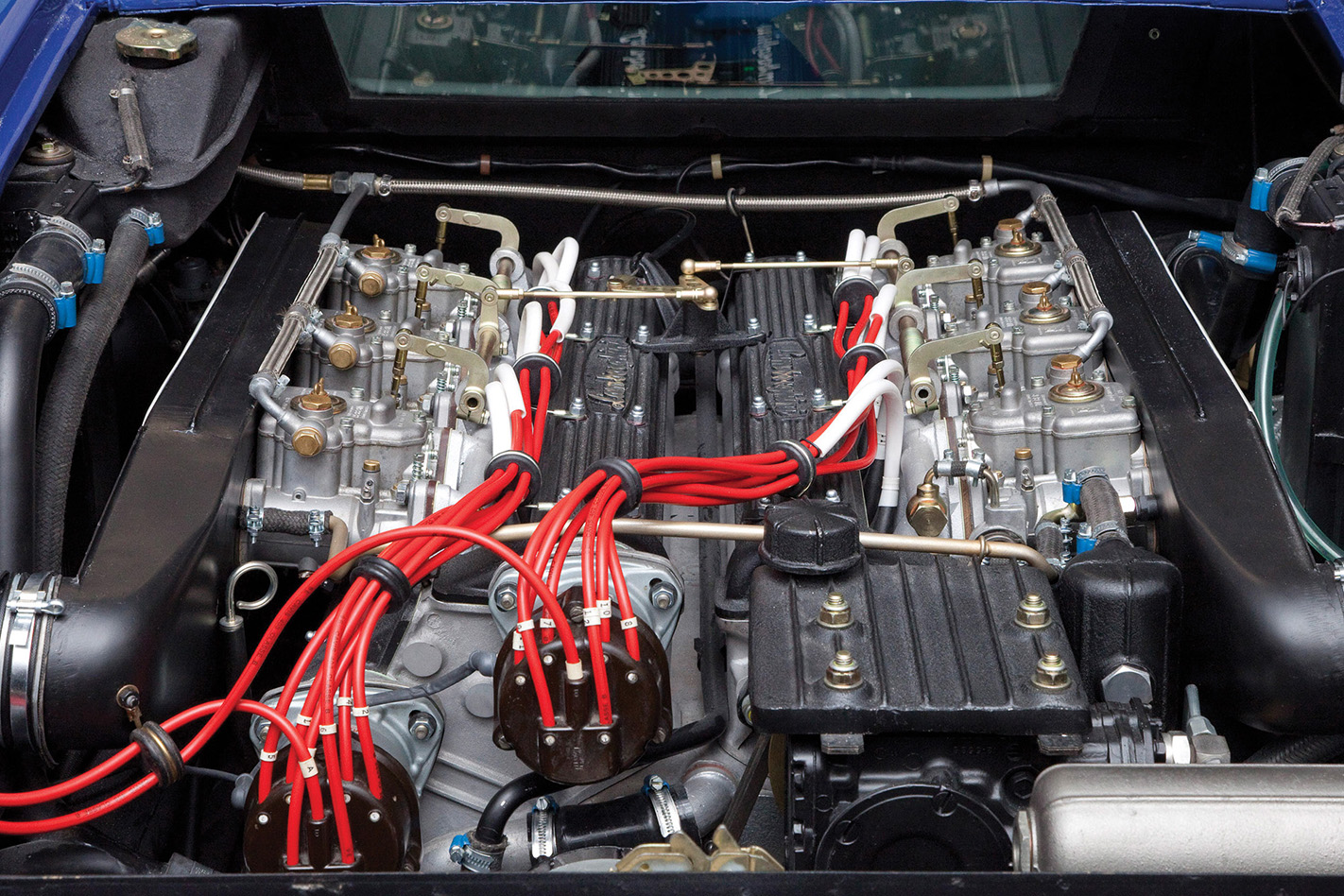
What eventually found its way into the rebranded Lamborghini 350 GT was a wet-sumped version of the 3.5-litre V12 with ‘only’ 209kW at 6500rpm and 325Nm at 4500rpm. It was the happy medium between Lamborghini’s desire to create luxurious grand tourers and Bizzarrini’s need to build race engines. Part of the engine’s folk law is that Lamborghini paid Bizzarrini by the horsepower. No wonder the original was so ambitious at 360hp. Although he did stipulate that the engine could make 298kW, and rev to a sky-high 11,000prm, if the fuel system was uprated.
The Bizzarrini 60-degree V12 engine started life with production carburettors and was designed from the get-go to be quad cam. Throughout its production cycle it nearly doubled in capacity and the Weber carbs made way for modern fuel injection. Four valves per cylinder (it started out with two) came on board and, in a turn of events, a dry-sump design was reintroduced later in its life. The Bizzarrini-inspired twelve saw service in the 350 GT, 400 GT, Miura, Espada, Islero, Jarama, Countach, LM002, Diablo and finally, the Murcielago.
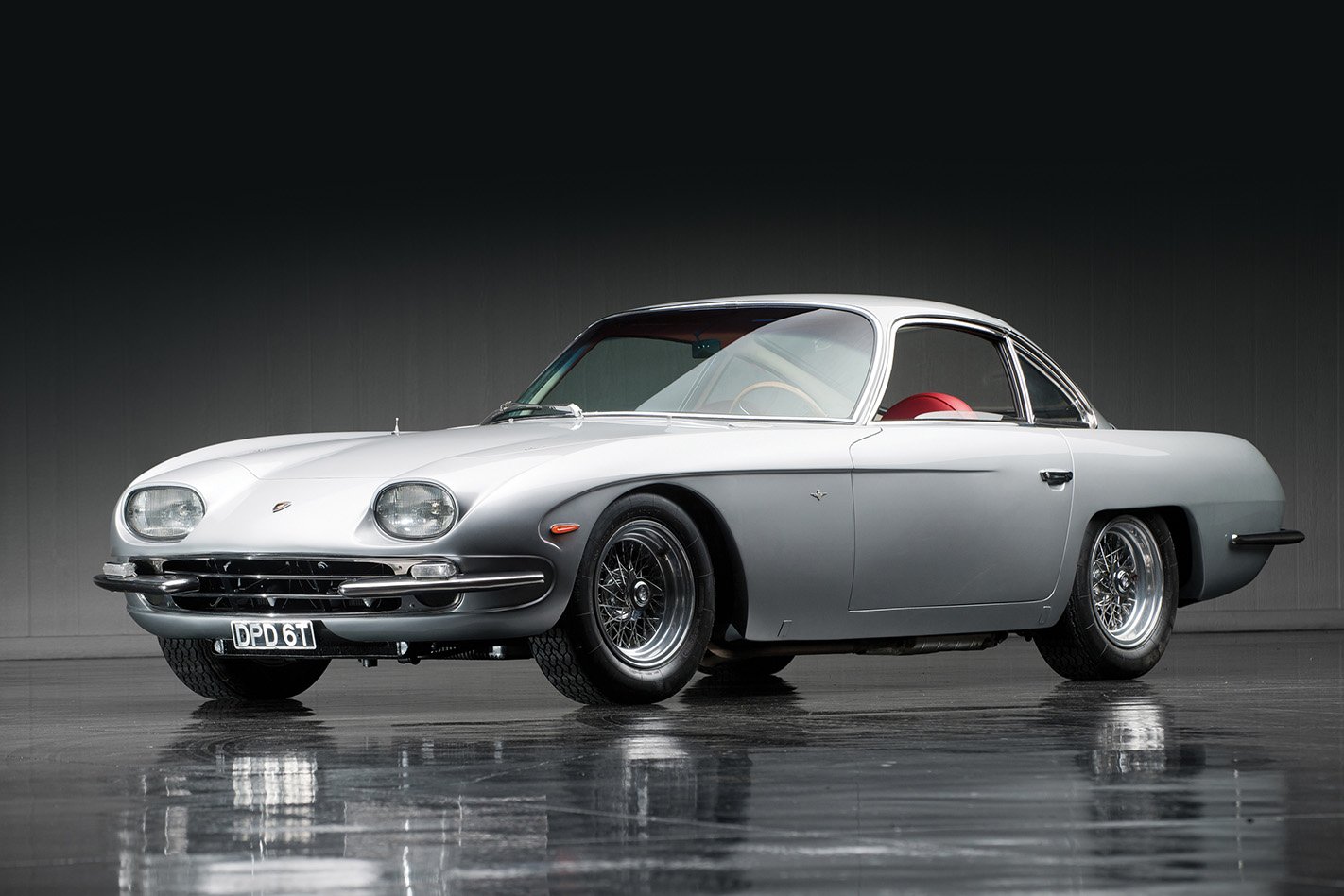
Even after Lambo fell under the guidance and control of Audi, the Italian carmaker stoically continued on with the Bizzarrini-derived V12. The Germans originally said no to developing an all-new engine, hence the Murcielago debuted with a bored-out 6.2-litre V12 with a heritage dating back to the 1960s. The engine’s ultimate guise is found in the Murcielago LP 670-4 SuperVeloce (and Reventon), where the now 6.5-litre V12 pumps out 493kW (8000rpm) and 660Nm (6500rpm).

When the venerable V12 was finally shelved, it was replaced with a clean-sheet, hand-built atmo unit. This 6.5-litre donk found a home in the Aventador, producing a minimum of 515kW/690Nm and harnessing the ability to rev to 8250rpm. Since its inception, Lamborghini has changed hands numerous times and has even survived bankruptcy. Yet, through just about all the turbulence stood the DNA of the original Bizzarrini V12. And that’s why it deserves to be hailed as not only one of the great V12s, but an atmo hero, too.
There aren’t too many cars that owe their existence to a test track, but the Lexus LFA is one. In the 1980s, Shoichiro Toyoda and his cousin Eiji, then president of Toyota, hatched the idea of Lexus, the company’s luxury division. In order to challenge the likes of Mercedes and BMW, Lexus needed top-drawer engineering facilities. One major capital investment was the development of the Shibetsu proving ground in Hokkaido. This included a variety of road surfaces from around the world, challenging circuits, a high-speed bowl, and a suite of electronic safety monitors. Once completed, the engineers working there began to fantasise about which supercar they’d most like to drive there.
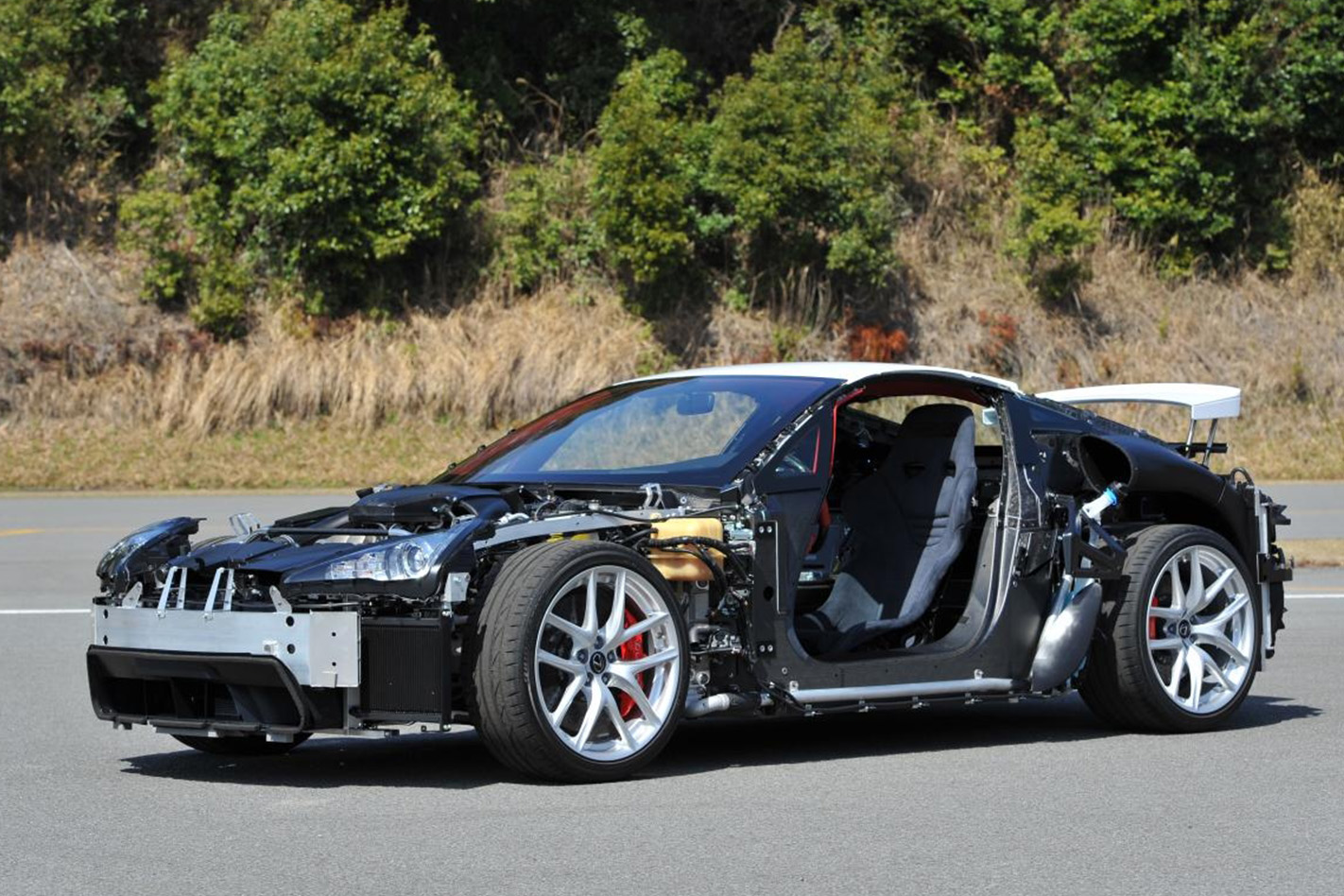
Haruhiko Tanahashi, the engineering guru behind the Toyota Celica GT-Four, saw beyond the speculation. Having driven the track in 2000, he gathered an informal skunkworks of colleagues to sketch out their concept for Lexus’ own theoretical supercar. He roped in TMC’s chief test driver and chief test engineer Hiromu Naruse, who put his stamp of approval on a front-mounted mid-engine design. They floated the idea with Akio Toyoda, an enthusiast driver and a family member with the ear of the top brass.
Toyoda realised the halo effect that a Lexus supercar could have. “Perhaps it could be the secret sauce… the secret sauce that flavours every car,” he figured. After pitching it to the board, there were few supporters. The cost would be high and little of its intellectual property could be transferred to other models. Akio Toyoda pleaded that the LFA proposal could never be assessed by TMC’s traditional customer research and opinion surveys. It was too specialist. They needed to make the market rather than respond to it.
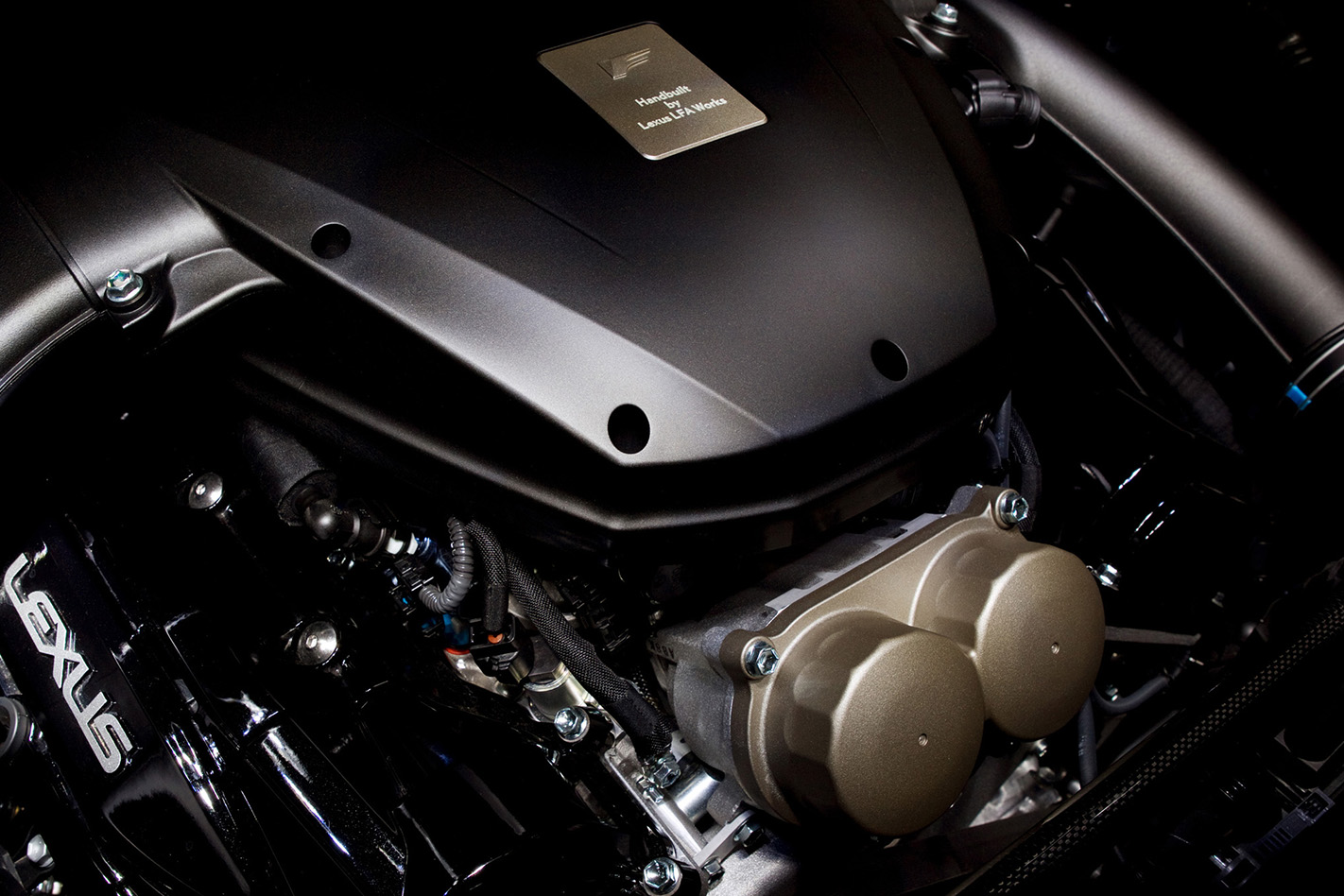
The caveat, when it came, was savage. Production would be capped at just 500 examples. The LFA needed to punch well above its weight and for that it needed a very special heart. The code name was typically Toyota-generic but the 1LR-GUE engine, co-developed between Lexus and Yamaha, was an astonishing piece of engineering.
Designing a clean-sheet 4.8-litre, dual-VVTi V10 from aluminium, magnesium and titanium alloys for a production run of just 500 cars seems, in today’s terms at least, excessive. That was the LFA’s ethos though. It was a statement of intent; an exemplar of exactly how special Lexus was. And this engine was special. It developed 412kW at 8700rpm, at which point it would wail like a V10-era F1 car exiting Degner 2 at Suzuka. Its specific output of 86kW per litre not only aced the 73kW per litre of the flagship Lamborghini of the day, the Murcielago LP640, but also shaded the 76kW per litre developed by Ferrari’s range topper, the 599 GTB.
Wheels put scribe John Carey into the driver’s seat of the car at the Nurburgring which, as press gigs go, has to be one of the plum picks. “At wide-open throttle, through the upper half of its rev range, the LFA accelerates with stunning, ridiculous ease,” he wrote for our November 2009 edition. “It’s as though the normal laws of motion and aerodynamics have been temporarily suspended.” Although the engine was originally designed to redline at 10,000rpm, the production version saw the redline lowered to 9000rpm for the purposes of durability. The engine would rev from idle to redline in less than 0.6 seconds. Otherwise, compromises were few.

To see the V10 out of the car is to marvel at the way the individual engine components seem shrinkwrapped around each other. It’s lighter than the 2GR-FSE V6 found in a Camry, thanks to all those exotic metals. Titanium alloy conrods, forged pistons, dry sump lubrication, oil coolers and crankcase ventilation chamber mounted inside the 72° vee-angle between each bank of cylinders: the LFA’s engine was a work of art.
The valves were made from titanium alloy, and were activated by ultra-lightweight rocker arms featuring a diamond-like wear-resistance coating and misted by integrated oil jets. Variable-valve timing on both the intake and exhaust sides ensured a broad spread of torque. Despite the peak torque figure of 480Nm being made at a nosebleed 6800rpm, at least 90 percent of that figure arrived from 3,700rpm.
Turbocharging was never an option, so getting the engine to breathe cleanly was a key engineering focus. Each cylinder was furnished with its own independently-controlled throttle body trumpet and, early on in the design brief, it was clear that airflow in needed to be as short and unrestricted as possible. This was also key in making the LFA sound as spine-tingling as it does.
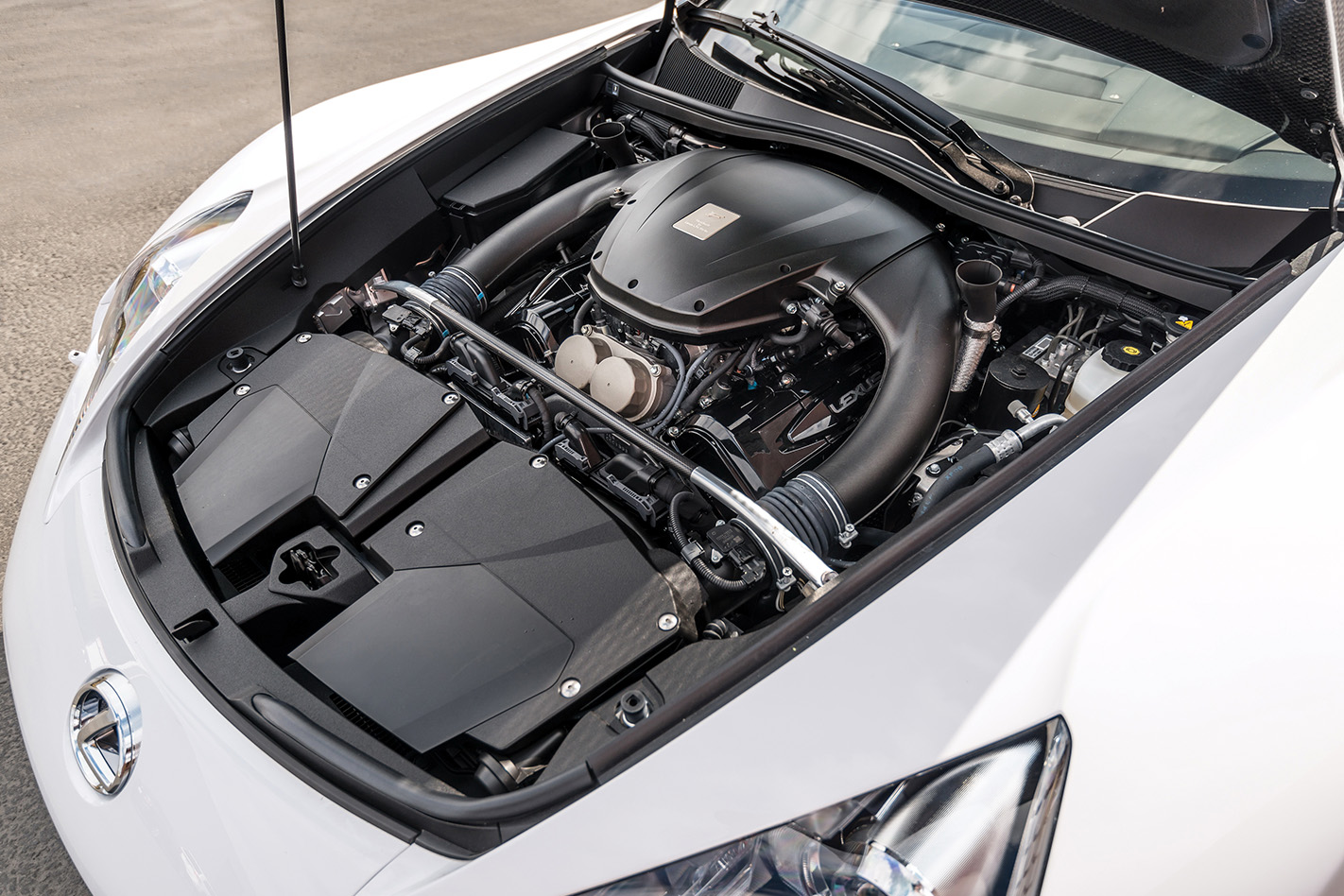
Air was channelled through a pair of intakes that switched from one inlet port at low engine demand to dual ports at higher revs. A surge tank within the intake acted as a resonator, helping create the 1LR-GUE’s instantly characteristic intake harmonics. Yamaha seconded acoustic engineers from their musical instrument division to help develop the horizontally split and ribbed tank.
At the other end of the engine, equal-length exhaust manifold runners reduced back pressure and fed into a titanium dual-stage rear silencer. Butterflies within the exhaust activated at 3000rpm, passing EU drive-by noise restrictions and giving a metallic, hard-edged top note at higher engine speeds. Both induction and exhaust sounds were also directed into the cabin through three channels, delivering an operatic crescendo as the engine soared towards its redline.
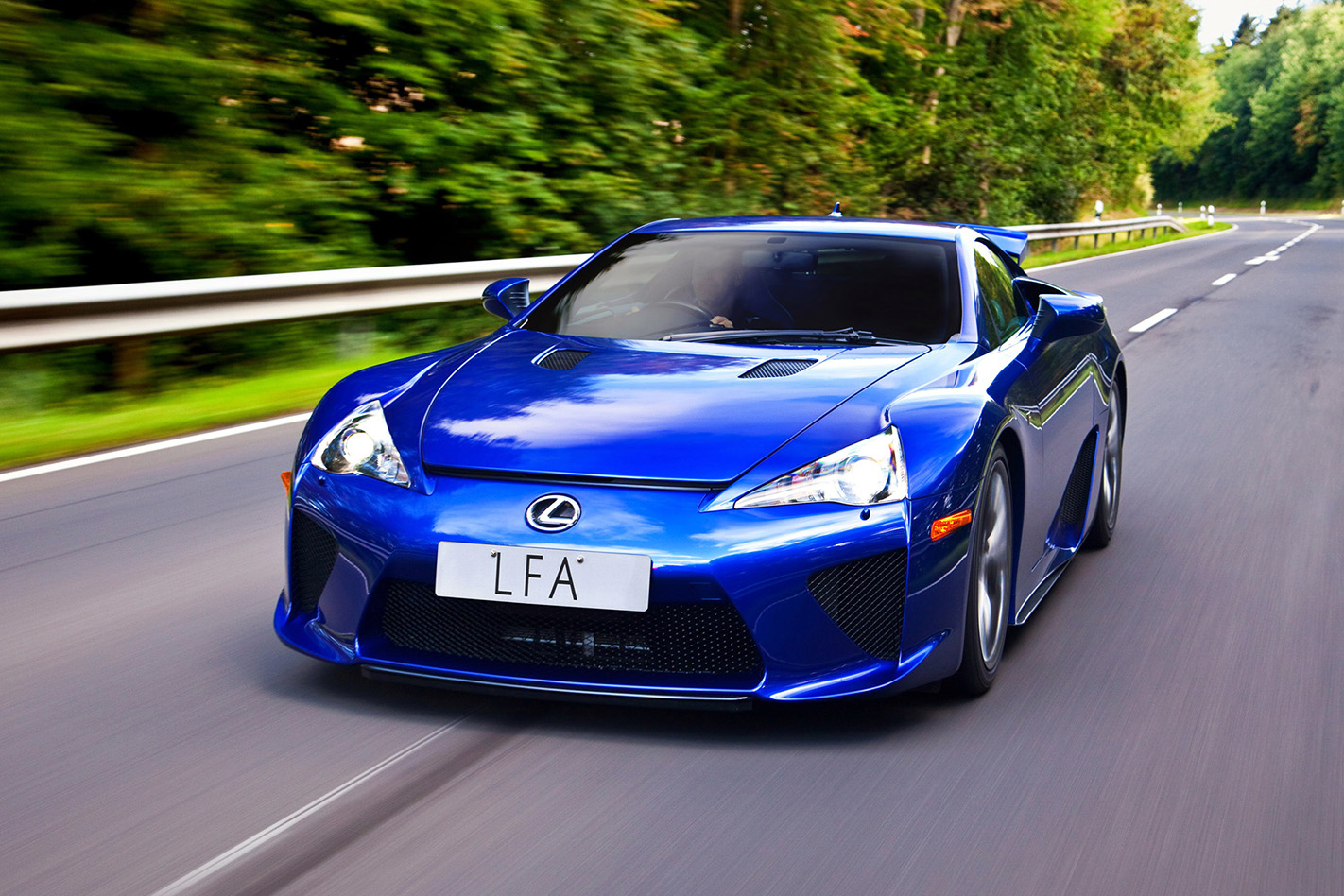
“What we needed – and what we created – was a car that moved the driver in more ways than one,” said Haruhiko Tanahashi, the LFA’s chief engineer. “The LFA was a car that stirred all the senses.”
The first LFA rolled from the Motomachi plant in December 2010. What should have been a celebration was muted. A few months earlier chief test driver Hiromu Naruse, the man who had formalised the fundamentals of the LFA, had been tragically killed in a road accident driving away from the Nürburgring where he had been putting the finishing touches on his masterpiece.
“I’m only halfway up the stairs,” he said of his future plans for racing and further developing the LFA. “I’m still ready for the next step.” That final step never came and Lexus’ hand-built exotic was stopped in its tracks, frozen like a time capsule, paying tribute to a particular moment of glorious excess. We may never see its like again.
Bugatti is building 30 examples of its record-setting Chiron for customers, dubbed the Sport Sport 300+.
While there has not been any official confirmation as yet, Instagram account Miller Motor Cars revealed an announcement was made during Bugatti’s Grand Fete 110th anniversary celebration at its Molsheim factory.
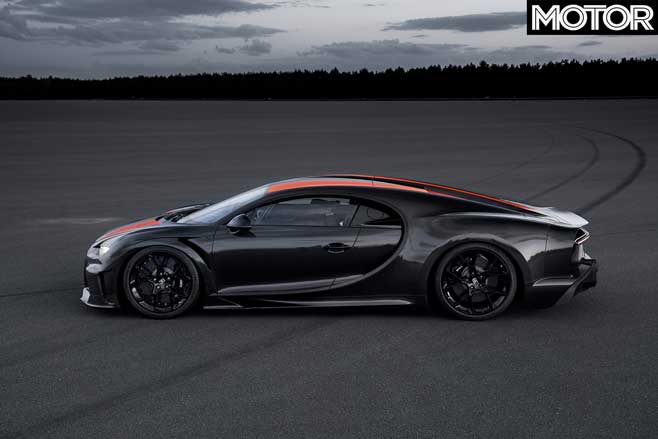
Driven by Le Mans legend and Bugatti test driver Andy Wallace, the Chiron Super Sport clocked a maximum speed of 490.7km/h (304.8mph) at VW’s Ehra-Lessien test track.
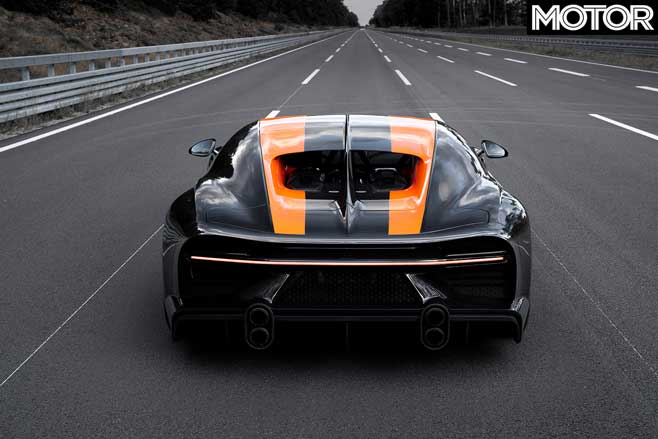
The Chiron Super Sport develops more power than the standard car, a whopping 1177kW/1600Nm from its 8.0-litre quad-turbo W16, the engine shared with the limited-edition Centodieci revealed recently during Monterey Car Week.
Bugatti engaged the help of motorsport experts Dallara to tweak the Chiron’s chassis and bodywork, resulting in an extra 25cm of bodywork at the rear which tapers heavily to reduce drag.
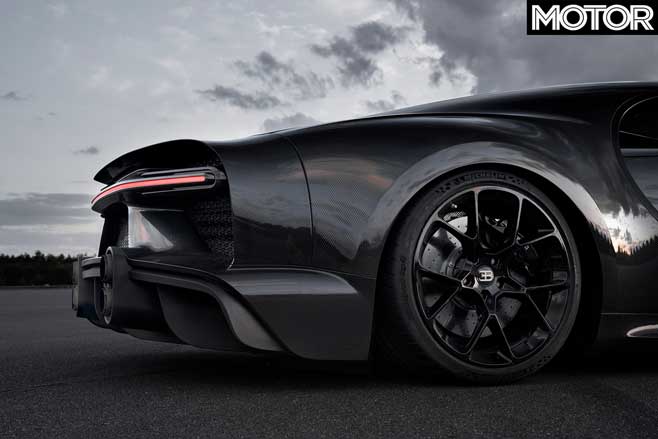
While the record-setting car ditched the passenger seat and incorporated a full roll cage in the name of protecting Wallace, customer cars will receive a full interior and run at normal ride height, rather than 25mm lower.
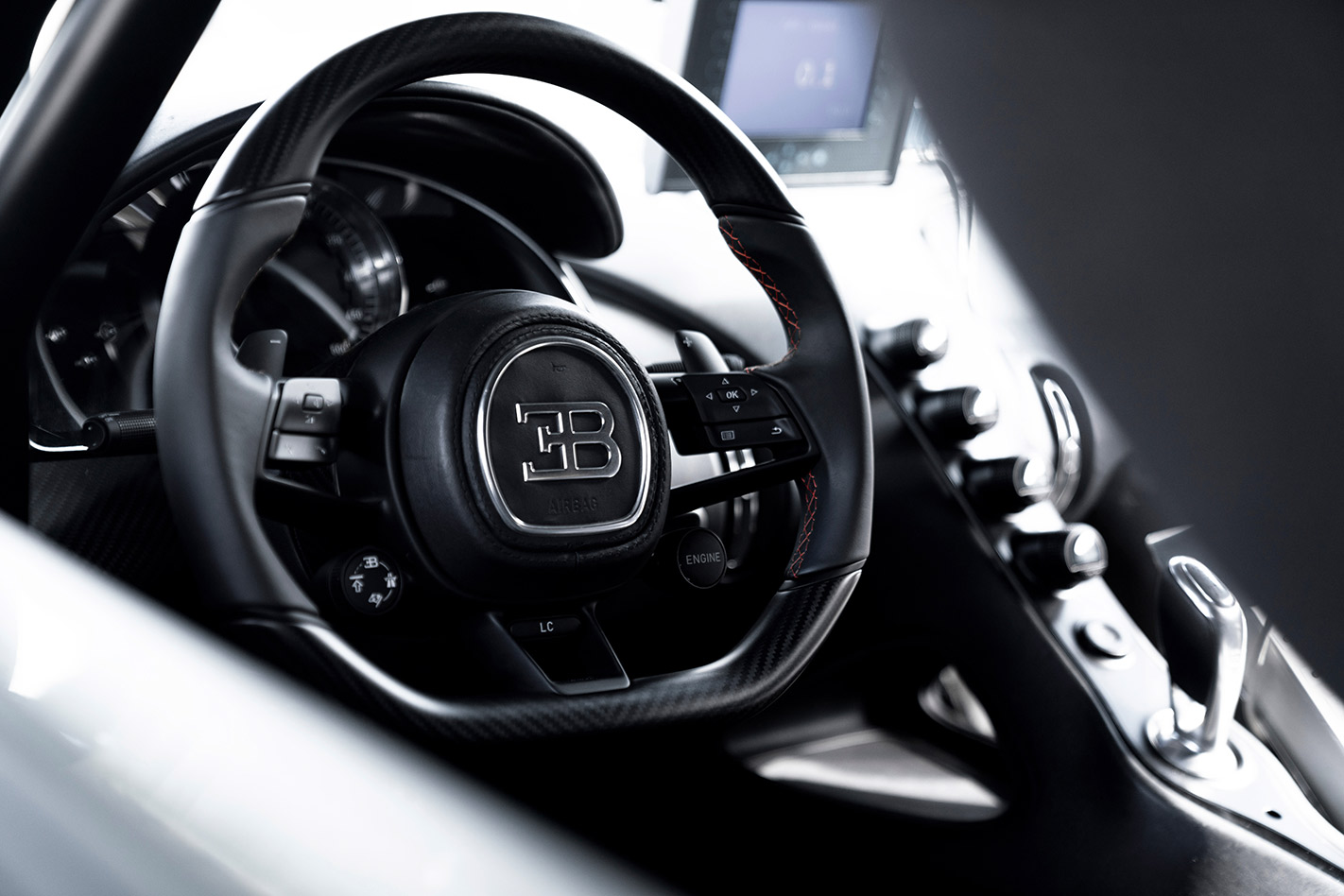
Pricing is set at US$3.9m (AUD$5.69m), a 30 per cent premium over the standard Chiron, but expect all 30 examples to already be spoken for.
The ‘Rolls-Royce of SUVs’ is unsurprisingly the most luxurious, most refined, quietest and comfiest four-by-four of them all. And at $685,000 before customisation, the new Rolls-Royce Cullinan is, by some margin, also the priciest.
Surprisingly, Rolls-Royce reckons many will get used off-road. Super-rich buyers are expected to use their Cullinans to go places where no modern Roller has tread before.
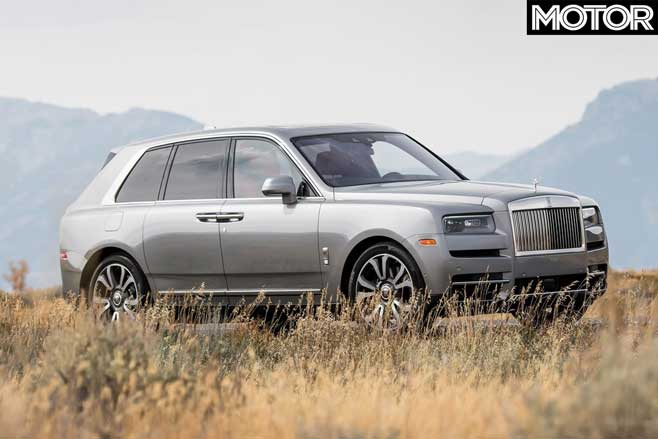
The Cullinan uses the new ‘Architecture of Luxury’ platform that first saw service in the latest Phantom, and will underpin every upcoming Rolls-Royce. It’s a highly configurable box-section frame made from aluminium castings and extrusions that allows more variability than high volume press-steeled platforms.
The body is shorter, stumpier, higher, a bit heavier and far less elegant than the Phantom. It’s no beauty, at least to my eyes, and clearly prioritises engineering and marketing functionality over styling.
There’s no doubting the superb standard of finish, though. From the lustrous stainless steel exterior brightwork including the temple-like grille to the superb detailing (those lower body ‘spears’, the laser lights), the Cullinan is beautifully crafted.
The cabin quality is also superb. It’s not just the look and feel of the leather, wood and metal controls; it’s the lovely fluent movement of those controls, including the column-mounted transmission wand and the organ-stop real-metal vent controls. The in-house developed sound system is also superb.
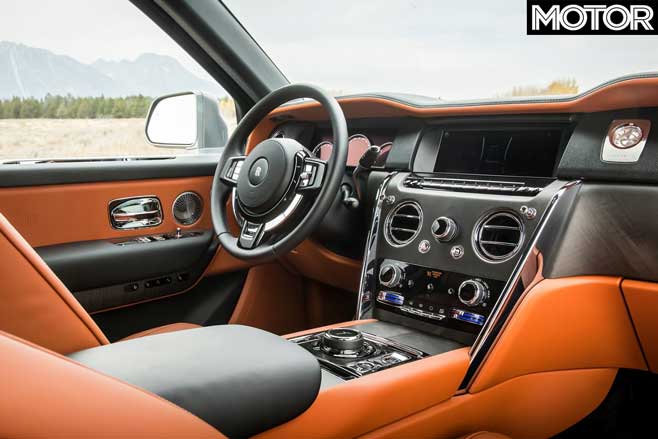
There’s the option of a folding bench seat – a Rolls first – or fixed rear chairs. Choose the latter option and you can also get a fixed glass partition between back seats and boot further to quell cabin noise.
Choose the regular folding seat option and the rear is a conventional hatch. The hatch tailgate is two-piece, so you can sit on the lower section when doing outdoorsy things – all part of the adventurous ethos. It’s the first-ever Rolls-Royce hatchback.
The clamshell-style doors wrap around the sills, so no dirty trousers on entry or exit. It also means a flat floor, with no sill to climb over. The rear coach-style doors also provide for a supremely elegant exit and look fantastic. Both front and rear doors can be shut, when seated, electronically by pushing a button.
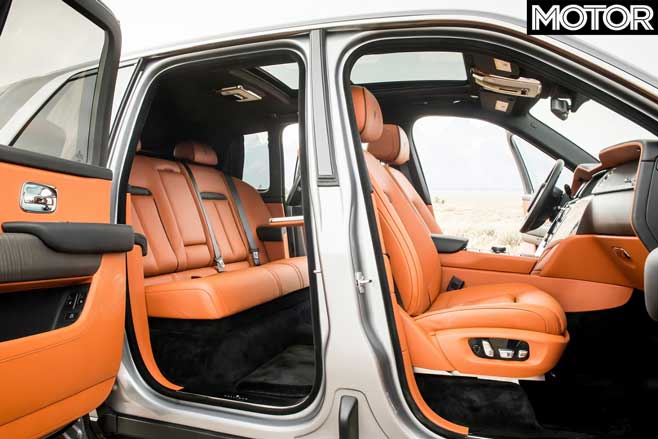
‘Effortless everywhere’ is the Cullinan’s mantra, and it sums up the car well. On the tarmac, it purrs along almost as fluently and as quietly as a Phantom.
The engine is the new twin-turbo 6.75-litre V12. It’s remapped to deliver a little more low-end torque and is every bit as wonderfully smooth and responsive as in Rolls’ flagship. The V12 is near-silent, the ZF eight-speed auto magnificently smooth, road noise and wind noise barely noticeable. By some margin, it’s the world’s most refined and comfortable SUV on the blacktop.
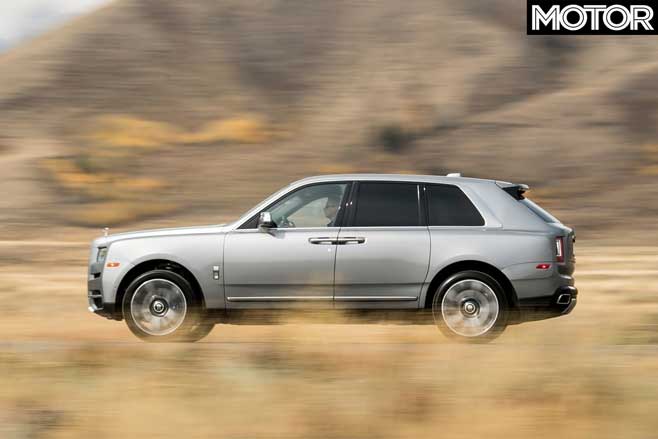
But it’s not the sportiest. Near 2.7 tonnes of mass, in fact. It disguises its heft amazingly well, and can be hustled along quickly with confidence. But when the roads gets twisty, a Bentayga or a Cayenne are more agile. The active roll bars and damping, satellite controlled gear shifting, and four-wheel steering all do their jobs manfully, but they just can’t compensate for so much bulk (including 100kg of sound deadening wrapping the cabin).
The Cullinan’s other great strength is its ability to glide elegantly, and quietly, over rough tracks. When venturing off-road, simply push the dainty ‘off-road’ button on the centre console, and the car’s suite of electro controls will do the rest. Ride height is elevated by 40mm. In such a mode, the drive-by-wire throttle is recalibrated, demanding more pedal travel to spur the Cullinan into action. Off-road performance can occasionally feel strangled. The upside though is a very linear and progressive power delivery, helped by that enormously torquey twin-turbo V12.
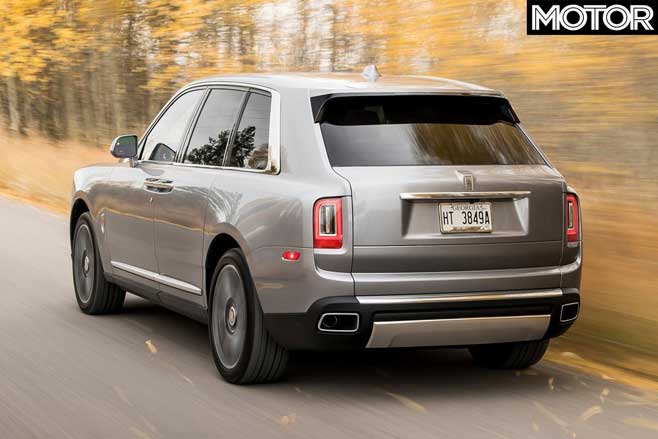
The looks may be challenging, and the price daunting, but the Cullinan sets new overall standards in the luxury SUV class. Its on-road comfort and refinement is a notch or two above anything from Bentley or Range Rover, and so is cabin quality and comfort. It’s almost as good as a Phantom on the tarmac – and that’s high praise indeed. And if it’s less agile than some lighter rivals, then that’s a trade-off most customers will probably happily accept.
More surprising is the off-road prowess. If ultimate go-anywhere capability is the priority, stick with a Range Rover. But if all-terrain comfort and composure is the goal, then the Cullinan sets a new benchmark: it really will do effortless (almost) anywhere.
2019 ROLLS-ROYCE CULLINAN SPECS Engine: 6749cc V12, DOHC, 48v, twin-turbo Power: 420kW @ 5000rpm Torque: 850Nm @ 1600rpm Weight: 2660kg 0-100km/h: 5.2sec (claimed) Price: $685,000 (est)
Like: Ultimate levels of luxury in an SUV body; impressive pace thanks to turbo V12; refinement Dislike: At almost 2.7 tonnes, it’s heavy; most expensive SUV; who’s actually taking it off-road?
Rating: 4 out of 5 stars
Tasmanian racer Alex Peroni has walked away from a frightening crash almost unscathed, after his Formula 3 car became airborne at a race in Monza, Italy.
The 19-year-old is recovering from a cracked vertebra and concussion, after flying nearly 50m through the air and smashing upside down into a tyre barrier.
The crash happened near the end of the first race of the Italian Grand Prix weekend in Monza, and saw the race finish under yellow flags.
From the video, it appears Peroni wandered wide of the racing line coming into the high-speed last corner, but instead of sliding across a tarmac run-off area, his car struck a sausage-shaped kerb that sent the car airborne.
The sail-like underside of the lightweight F3 race car then kept it airborne before it smashed into a tyre barrier, narrowly missing a marshall’s post on the outside of the fence line.
Peroni was extracted from the car and walked unaided to a medical vehicle, but was later taken to hospital.
He’s been diagnosed with a cracked vertebra and concussion.
“Alex is currently in hospital and he has been immobilised until further scans are performed on his back on Sunday,” read a post on his Facebook page.
“His D6 vertebra has multiple fractures and the medical staff will decide tomorrow if it’s necessary to operate. Alex is also recovering from concussion with his helmet extensively damaged.”
The frightening crash comes just one week after the death of French Formula 2 racer and F1 hopeful Anthoine Hubert, who was killed when his stricken car was hit at high speed at Spa in Belgium.
The other driver in that accident, Juan Manuel Correa, is in an induced coma in a London hospital, after suffering complications in the wake of the crash. He is listed as critical but stable.
The offending kerb has since been removed from the Monza circuit, after criticism from many quarters.
Former F1 driver and current Grand Prix Driver’s Association chairman Alex Wurz said “the reason FIA started to removed high exit kerbs brings us to Imola 1994 [where Roland Ratzenberger and Ayrton Senna were killed].”
“I don’t like sausage kerbs, I never did and today in F3 here in Monza we had yet another reminder that they are (in most places) a bad solution.”
Peroni’s team was quick to credit the implementation of the new roll-over protection system – known as the halo – for his miraculous escape.
“Alex’s life was saved by the halo, his helmet and the robust modern survival cell,” read the post. “Team Peroni wish to pay tribute to all of those people that have lobbied for constant progress in relation to safety.”
Peroni will return to Tasmania to recover as soon as he’s able.
