DiDi, China’s answer to US-based ridesharing services like Uber and Lyft, has announced the beginning of a pilot autonomous taxi service in Shanghai.
Similar to autonomous tech trails run by Uber in certain US cities, DiDi’s Shanghai trail will put 30 cars modified with a level four self-driving capability – the second-highest possible in the five-level autonomous car tech tree – on public roads, able to be called up via DiDi’s phone app.
They won’t be entirely robotic, however, with DiDi saying it will use a “mixed dispatching model” with both human-driven and self-driving vehicles in some areas owing to the “complex traffic and road conditions” of Shanghai.
You’ll be able to spot the self-driving ones from afar though: the sensor package appears to be mostly contained on a roof-mounted pallet, with what appears to be a LIDAR scanner right at the very top. Given an autonomous taxi operated by Uber has already claimed the life of a pedestrian, DiDi’s technology and human operators will need to be vigilant to prevent a similar occurrence in Shanghai.
But what about Australia’s moves toward autonomy? So far, nothing on the scale of DiDi or Uber’s respective self-driving fleets has been unleashed on Australian roads, but low-level experimentation is nevertheless going on in Melbourne, South Australia, New South Wales and Brisbane.
Some of those local trials are taking place on public roads, some on closed circuits, but what say you? Is conducting public trials of experimental technology something you’d be comfortable with? Would you hop into an autonomous taxi in Sydney, Melbourne or any of our crowded capitals? Have your say in our poll below:
Lamborghini has teased what may be its upcoming hybrid hypercar model on Instagram ahead of its expected 2019 Frankfurt Motor Show debut.
The first in a pair of images merely revealed the supersized Y-shaped daytime running lights that are lifted off the company’s 2017 Terzo Millennio Concept, and little else.
https://www.instagram.com/p/B1eQe7Iorw-/
More recently, the company released another teaser in the form of a sketch of the front, which features the same Y-shaped lighting elements paired with a vertical stack of headlights – the Terzo Millennio featured horizontally arranged headlight pods.
Lamborghini isn’t revealing any details of the car behind the veil but according to a report from Car Magazine, it is likely to be a close-to-production concept of the upcoming Aventador replacement, which has been earmarked for a 2022 debut.
According to the report, Lamborghini won’t be swapping out the Aventador’s naturally-aspirated V12 for less cylinders and a turbocharger for its successor. Instead it plans to turn to hybrid tech satisfy stricter Euro 7 emissions targets while preserving the performance, prestige, and theatrics of a free-breathing V12.
https://www.instagram.com/p/B1y0Ag2h81A/
It remains to be seen what sort of hybrid tech Lamborghini has planned for its future models. More than just a spur of the imagination, the Terzo Millennio Concept was to underline Sant’Agata’s financial collaboration with the Massachusetts Institute of Technology on developing supercapacitor technology for automotive applications.
The Terzo Millennio wasn’t the first instance Lamborghini had collaborated with outside entities in the development of new technology that found its way back into its supercars. According to Lamborghini, the Aventador’s carbon fibre chassis was the result of the company’s collaboration with aircraft manufacturer, Boeing, and the University of Washington.
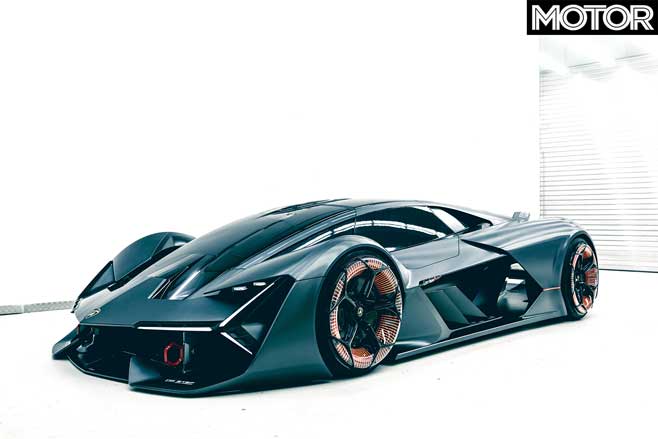
With the Aventador replacement some years away, Lamborghini’s gift to the Frankfurt crowds might be yet another concept, or it could very well be an all-new flagship model that will sit atop the Lamborghini hierarchy. We will only know for sure when the covers come off next week.
Tradies, we want to know what you think! Take our online survey and you go in the draw to win one of five Ryobi prize packs worth $1000.
The first five valid entries drawn in the competition will each win their choice in Ryobi tools up to the value of $1000. That means, you choose what tools you want when you win!
This competition will run from 2nd September 2019 till 11:59PM (AEDT) on 28th October 2019.
COMPETITION CLOSED
Congratulations to the following prize winners, each winner has won a Ryobi Tool Prize Pack valued at $1,000.
- B. O’Donoghue, NSW
- G. Bates, NSW
- C. Ahrns, SA
- A. Hopkins, WA
- P. Stackman, NSW
Full terms and conditions are available here
‘If it doesn’t have an engine, it’s not a sport.’
That’s my family’s motto. It’s short, succinct, and seems to offend just about any foofball loving Australian that hears it.
It also sums up nicely why I am here today, writing these words, as part of what is, without argument, the best job in the world.
There are many things you need to make a good motoring journalist, but perhaps at its core is an unbridled passion for all things motoring. Ride assessment and feature structures can be taught to anyone, but no amount of coaching will allow you to truly love your work with the same joy as a true motoring enthusiast.
When people ask me how long I have been into cars it seems like a redundant question – forever, is the simple answer. Why I am into cars would be the better line of inquiry, and my father is the only truthful response.
My father was a sugar cane farmer growing up. He worked hard, with his calloused hands and numerous scars silent witnesses to decades toiling the rich burgundy soil up in Bundaberg. He taught me all the things a good father does, from hard work, to proper manners.
Engines have always just been a part of the background of my relationship with my Dad, from my earliest memories of sitting in his John Deere tractor as he ploughed fields as a small child. Then as I grew older, he would teach my brother and I how to ride motorbikes, which we promptly crashed into the nearest fence or field of cane.
I can still hear the wail of his Honda Fireblade’s engine as it approached redline, my grip on his chest growing tighter with every rpm as we flew down a country back road like the immortal heroes we would watch on television together late at night.
The engines weren’t relegated to terra firma either. I’m of the staunch belief that the 351 Cleveland is the best V8 in the whole world, simply because one is nestled under a fibreglass cowl in the family ski boat.
The long-winded point here is that I wouldn’t have my job if it wasn’t for my father passing on a love-slash-addiction to anything with a motor. So, I hatched a plan to give him something back.
For as long as online classifieds have been a thing, I’ve known my Father to have a saved search for classic Ford Mustangs. It’s at this point that you might be noticing a Blue Oval-shaped trend. He long talked of a dream to own a Mustang, but it was always mentioned with somewhat fanciful tones.
Then, late last year, fantasy became reality. With retirement officially upon him, he bit the bullet, and added a red ’65 to the garage. Dressed up as a ’66 Shelby GT350, with a 289 Windsor under the bonnet, and five-speed manual, it’d make a purist wince – but it makes my father grin from ear to ear, so screw what the puritans think.
My dad didn’t know it, but for my most recent trip interstate to visit I had organised a 2019 Ford Mustang GT for the weekend. Needless to say, it was a smash success, with his neighbours immediately treated to a full display of the Coyote engine’s sonorous capabilities.
Taking both ‘Stangs for a drive on the hinterland roads of south east Queensland is just another addition to the series of memories with my dad that I cherish dearly, this time with a V8 duet on backing vocals.
After we had posed for a few photos, and then started to head home, I was transported back to flipping through one of my father’s photo albums as a child. Inside it were pages of sepia-toned shots of the antics he and his mates would get up to.
There’s one image of my father sitting shirtless astride a Vincent Black Lightning motorcycle, his gold XR Falcon GT perfectly positioned in the background. It remains a personal measure of effortless cool that I’m unlikely to replicate.
On a subsequent page is a local newspaper clipping reporting a story of how my old man had stoved his latest piece of Aussie muscle into a power pole.
“Police believe speed may have been a factor,” I remember reading aloud as a kid.
“Speed was definitely a factor,” came the reply from over my shoulder, Dad flashing me a devilish grin.
A genetic willingness, nay eagerness, to lean into the throttle just a little harder and longer is something that polite society frowns upon. But who needs polite society when your old man is escaping down a farm road in his dream car, and you have a 5.0-litre V8 at your disposal to chase him down?
The week of Apollo 11’s fiftieth anniversary dovetailed perfectly with the launch of the 2020 Chevrolet C8 Corvette.
Coming 50 years after the lunar landing, General Motors celebrated NASA’s achievement, with astronauts on hand as ambassadors to remind the public that rockets at the rear had powered them to the moon. Without missing a beat, Corvette showed the world that rear engine placement is highly effective for not just astronauts, but also for American sports cars.
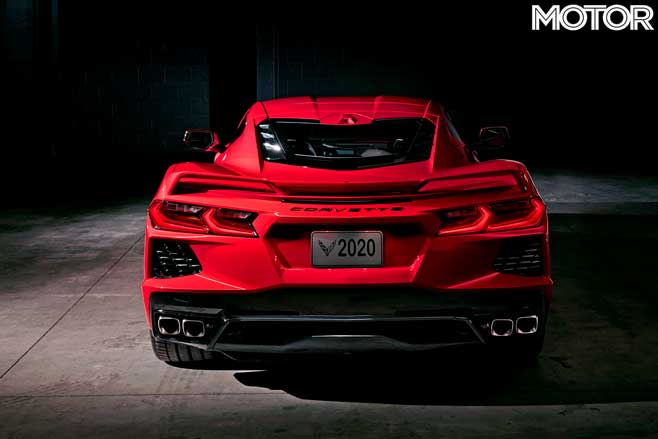
Corvette chief engineer Tadge Juechter told the audience of assembled media, dealers and Corvette owners: “Our mission was to develop a new sports car that combines all of the things we do really well today with the performance and driving experience of mid-engine supercars, all while meeting requirements from all around the globe, including right-hand drive markets.” Jaws hit floors across Australia.
That’s right, an all-new Corvette has finally been developed for us, and it will be here by late next year or early 2021. Right-hand drive models weren’t on display (this being an American event, after all), but Juechter reiterated that right-hook had been part of the new car’s plan from the beginning.
The iconic American sports car has a reputation for supercar performance at a fraction of the price of a European exotic. This eighth-generation model marks a major turning point with this, the first production mid-engined Corvette.
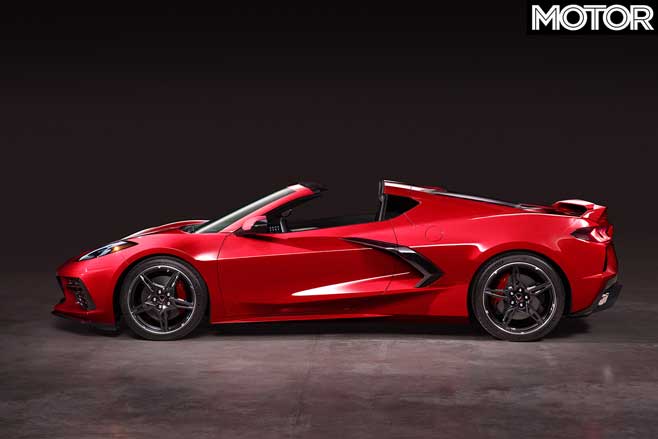
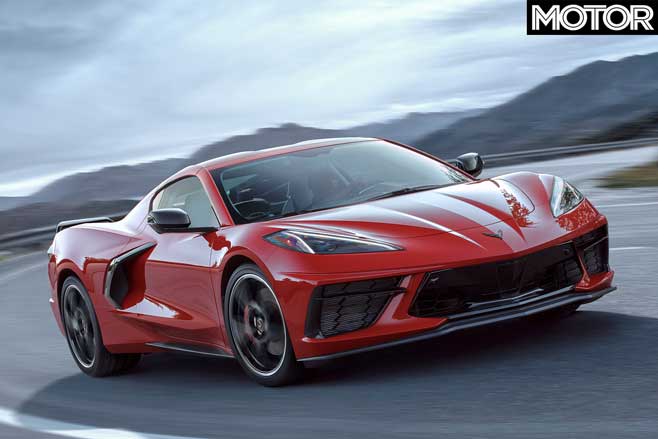
Visually, it has all of the Corvette hallmarks, with a striking, angular design and athletic proportions. The long bonnet has been replaced by a short, aggressive nose, and the cabin is now set forward.
Mid-engined sports cars are revered for their optimal weight distribution and effective dynamics, offering better handling, braking and acceleration than a front-engine/rear-drive configuration. They’ve been causing a stir since Sir Jack won the 1957 Formula 1 World Championship in a Cooper.
Rumour suggests the Corvette engineers had hoped to develop the previous C7 as a mid-engined car, but GM at the time was entangled in bankruptcy, government bailouts and a subsequent reorganisation. As such, the Corvette’s life as a front-engined car was extended, and the platform taken to the extremes, including the 485kW Z06 and the all-conquering ZR1 with its 563kW supercharged V8.
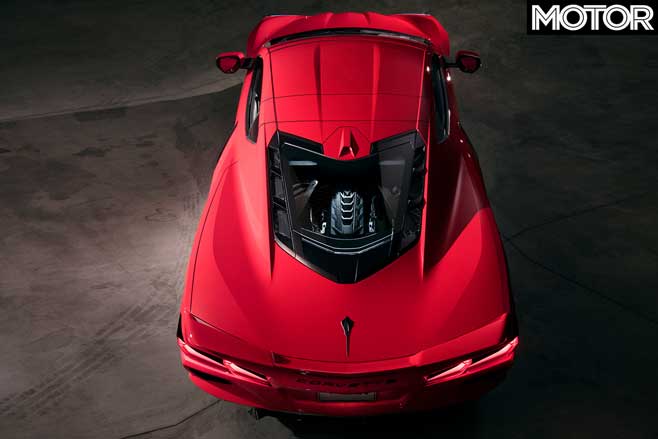
The C8 is an all-new Corvette in nearly every way. It retains only the good stuff from the C7. Carried over are some of the components of the naturally aspirated 6.2-litre LT1 V8 base engine, now dry-sumped for improved lubrication during the high G-loads often encountered by sports cars.
The new LT2 in the C8 uses the LT1’s proven valvetrain, pistons, connecting rods and forged crank. It makes peak power – a healthy 369kW – at 6450rpm and peak torque of 637Nm arrives at 5150rpm, which makes it an unusual powerplant for 2020. Where competitors shine with torque curves that resemble the venerable shape of Uluru by way of small displacements and clever turbocharging, Corvette has gone about making power the old-fashioned way.
With peak power near the top of the rev range, this naturally aspirated V8 needs to rev and, by its nature, will reward drivers willing to explore the LT2’s entire bandwidth. Maximum revs are limited to 6600rpm, just like the old LT1.
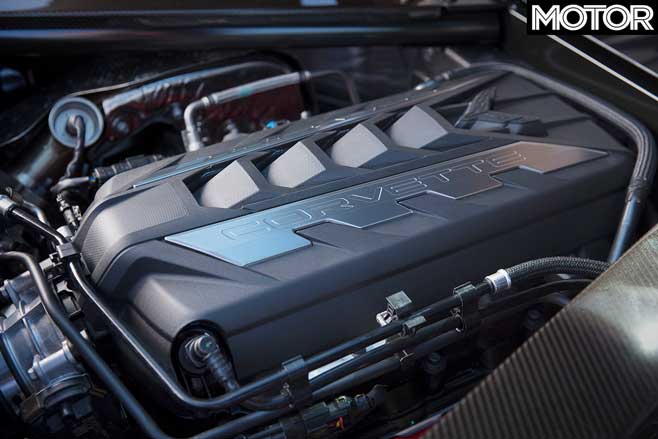
Thanks to the dry-sump design, the LT2 sits extremely low in the chassis. So low, in fact, that looking under the engine cover is like peering down a deep well. The placement of an Audi R8’s V10 is ostentatious by comparison.
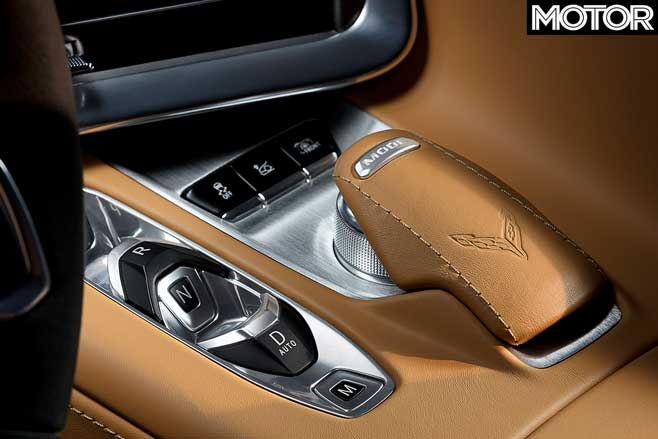
There is only one transmission available, a Tremec-supplied eight-speed dual-clutch unit. Practical considerations eliminated the notion of a manual, Juechter explaining that the new car’s layout made it effectively impossible to ensure acceptable ergonomics with a three-pedal set-up.
There’s no question the DCT shifts quicker than any manual and contributes to the Corvette’s quoted 0-96km/h time of “under three seconds”.
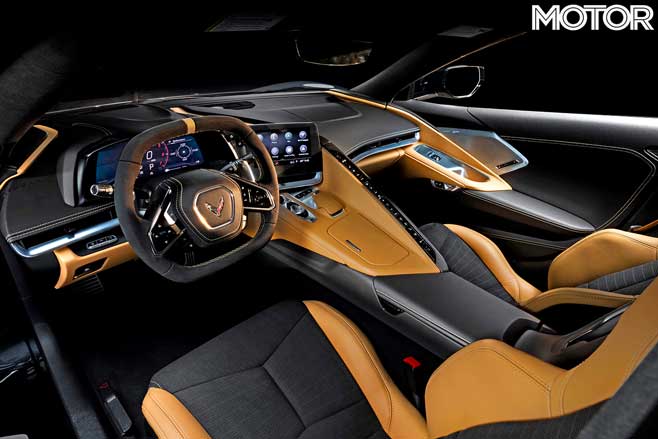
Moving the cabin 42cm forward in the chassis puts the driver’s feet near the front wheels, which now encroach into the footwells. So no room for a clutch and footrest, putting the final nail in the manual’s coffin.
The shift paddles are wired directly to the gearbox, which eliminates any signal lag that could otherwise occur had those signals been run through the Corvette’s electronic architecture.
For optimal weight distribution, the gearbox and the electronically controlled limited-slip differential sit behind the engine. GM has been using these e-diffs in many of their performance vehicles and they’re often the unsung heroes of corner-exit acceleration.
Unlike a mechanical LSD, these modern diffs can vary lock-up from zero to 100 per cent, but that’s not the real story. Under acceleration, lock-up is almost instantaneously determined by a range of parameters and varies as conditions change. But it has another ace up its sleeve. For stability and driver confidence, an e-diff can instantly switch to fully open under braking.
The single option that makes this new Corvette a little quicker is the desirable Z51 package. This has long been the choice for track-day drivers and is also required if you plan to attempt those sub-three-second sprints. For C8, the Z51 package includes a mild front splitter, taller rear wing, more aggressive suspension settings with adjustable spring perches, optional magnetic-ride dampers, more effective cooling, throatier exhaust and a lower final-drive ratio.
The new chassis is based around six large aluminium castings, enabling a signature Corvette feature to be retained – a removable targa top.
Since the C7, all Corvette coupes have been fitted with a targa roof panel to enable open-air motoring while maintaining the convenience and security of a hardtop. The C7’s top could be conveniently and easily stowed under the hatch, with some cargo space to spare.
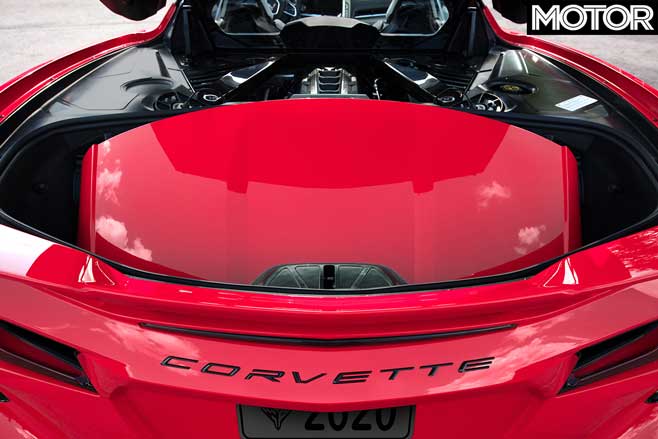
Storage in the C8 is comprised of a boot in front and one in back. There’s more than enough space in the front for a single piece of carry-on luggage and a small backpack. Rear storage is a deep well that’s large enough to carry two full-size golf bags, one atop the other. On the other hand, the targa top stows vertically in the rear trunk, subsequently eliminating any cargo-carrying utility back there.
Without a tall V8 under the bonnet, the cowl height has been lowered, and the driver is faced with a generous view of the road. From the driver’s seat, the cabin feels spacious, and the large window openings add to the expansive feel.
A further benefit of the mid-engine layout is a vastly improved steering system. By design, the steering column is shorter, which should lend more direct steering feel, and at the same time the steering ratio has been quickened by three per cent.
Corvette has long been known for its use of rear leaf springs, but the C8’s suspension is thoroughly modern. Each corner has double wishbones and coilovers. A front-axle lift system is fitted as standard, but with this Corvette it’s GPS-enabled, automatically lifting the nose at your regular driveways and speed humps.
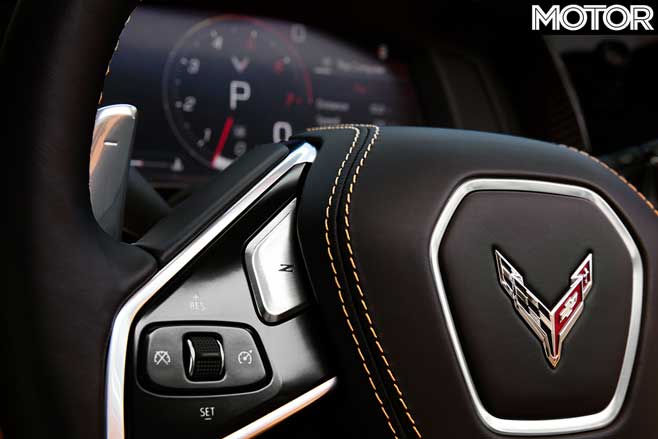
Perhaps inspired by the Corvette C7.R Le Mans racer, the steering wheel is a two-spoke design that’s squared-off both top and bottom, forming more of an oblong shape.
The wheel includes a top centre mark, helpful for track work or those unintended skids, and a handful of buttons. There is also the signature ‘Z’ button – its name taken from the Z06 and ZR1 – that works much like the ‘M’ and ‘N’ buttons found in BMW M sports cars and Hyundai N hot hatches. With a quick press of the Z button, the Corvette can instantly switch to preferred individual drive-mode settings.
The driver sits low in the chassis, and another benefit of the C8’s aluminium construction is a low sill height, making getting in and out of the cabin as easy as possible. Three different seat styles are available, from mild to aggressive in terms of style/comfort, and the interior colours and patterns are both modern and attractive.
Facing the driver is a 30cm digital instrument cluster that can be configured to suit individual tastes. Atop the centre of the dash is a 25cm infotainment screen and, like the rest of the cockpit, it’s also angled slightly in favour of the driver.
By the numbers, the Corvette has a 2722mm wheelbase, measures 4630mm long and 1834mm wide. By comparison, the current Porsche Cayman is shorter by 25cm in both wheelbase and length, and is 13cm narrower.
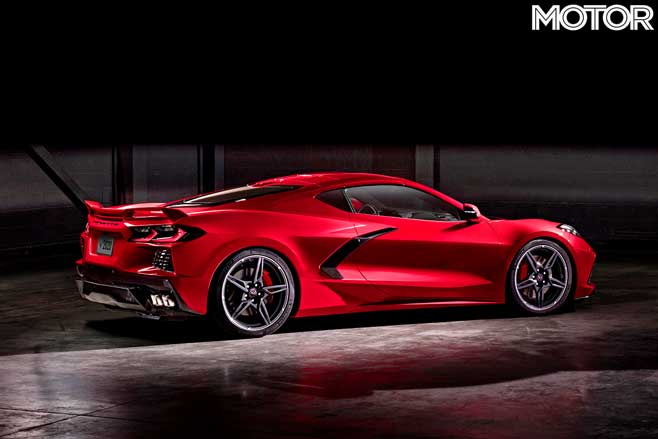
According to GM, the C8 tips the scales at 1530kg dry. We estimate the official kerb weight will be closer to 1630kg, which is 134kg more than the C7. Some of that additional mass is undoubtedly derived from the front-mounted radiators and associated cooling lines that run through the chassis.
This is one sports car that is unjustly treated by the camera. In person, its proportions are right, and its street presence is clear – this is an unadulterated American sports car prodigy. It’s Corvette for the modern age.
2020 CHEVROLET CORVETTE C8 SPECS Engine: 6162cc V8, SOHC, 16v Power: 369kW @ 6450rpm Torque: 637Nm @ 5150rpm Weight: 1630kg (est) Transmission: 8-speed dual-clutch Price: $175,000 (est)
Meet the new LT2 V8
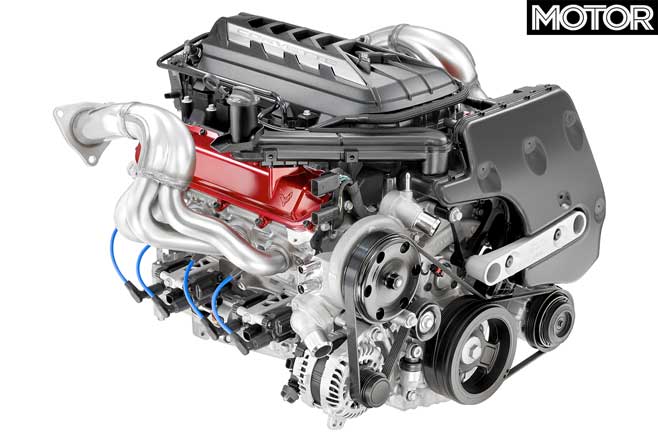
The Corvette’s new, all-aluminium LT2 small-block pushrod V8 is based on the existing LT1. These two engines share the same bore, stroke, forged crankshaft, connecting rods, pistons and valvetrain. As such, they have the same rev limit of 6600rpm.
Fundamentally, the LT2 differs from the LT1 with a revised camshaft and, most importantly, a dry-sump engine lubrication system. The dry sump eliminates the need for a traditional oil pan and allows the engine to be mounted 25mm lower in the chassis. There are three scavenge pumps, one fixed in the centre of the V and two in the crankcase.
In the past, dry-sump lubrication was reserved for high-performance Corvette models, but is now standard in the base model. The main benefit to a dry sump is that it maintains engine lubrication during sustained, high G-load conditions – those you will experience while enjoying your Corvette at a track day, for example. Further benefits include less crankshaft drag in the crankcase and a reduction in oil capacity from 9.2 to 7.1 litres.
The C8’s VE mule
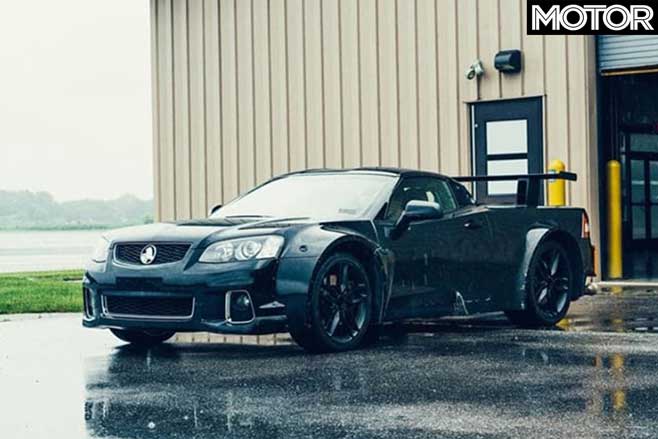
General Motors began developing the C8 Corvette shortly after the C7 was launched in 2014. They were faced with an important challenge – not only developing the mid-engine car but also keeping it under wraps.
Without a suitable modern mid-engine chassis available for development, they built one. Then they chose to disguise their earliest mid-engine mule as a Holden VE ute. Given the lack of utes in America, this seemed the perfect disguise for development and testing.
They paired an existing small-block V8 to an adapted Porsche PDK transmission, fabricated the rest of the car around the drivetrain, and tacked on the front end of a Holden. They called it Blackjack.
This ute-mutant looked like it could have cast for a role in the latest Mad Max film. It was a completely unconventional vehicle and didn’t resemble other GM products. The front guards of the Holden bodywork were widened and it had what appeared to be the bed of a ute, but with an unusually tall, fixed spoiler tacked on.
Despite GM’s best efforts to keep it hidden, the test car was captured by spy photographers early in the development cycle, which led to speculation in 2015 that Blackjack was indeed a mid-engine Corvette mule.
WITH THE benefit of hindsight, I guess my old man’s efforts at teaching us to drive were doomed from the outset. He didn’t have great material to work with. Both myself and my older brother were spirited youths with little instinct for self-preservation. We were probably a chip off the old block in some regards, which was why Vic looked as if he was suffering some sort of traumatic stress syndrome before he even parked his arse in the passenger seat.
My first jaunt behind the wheel almost bug-splatted him. My brother was completing a flying scholarship with the Air Force and we’d driven into a deserted paddock to watch him repeatedly test the durability of a Cessna’s undercarriage. Vic asked if I’d like to have a steer of his car. This was a grave error.
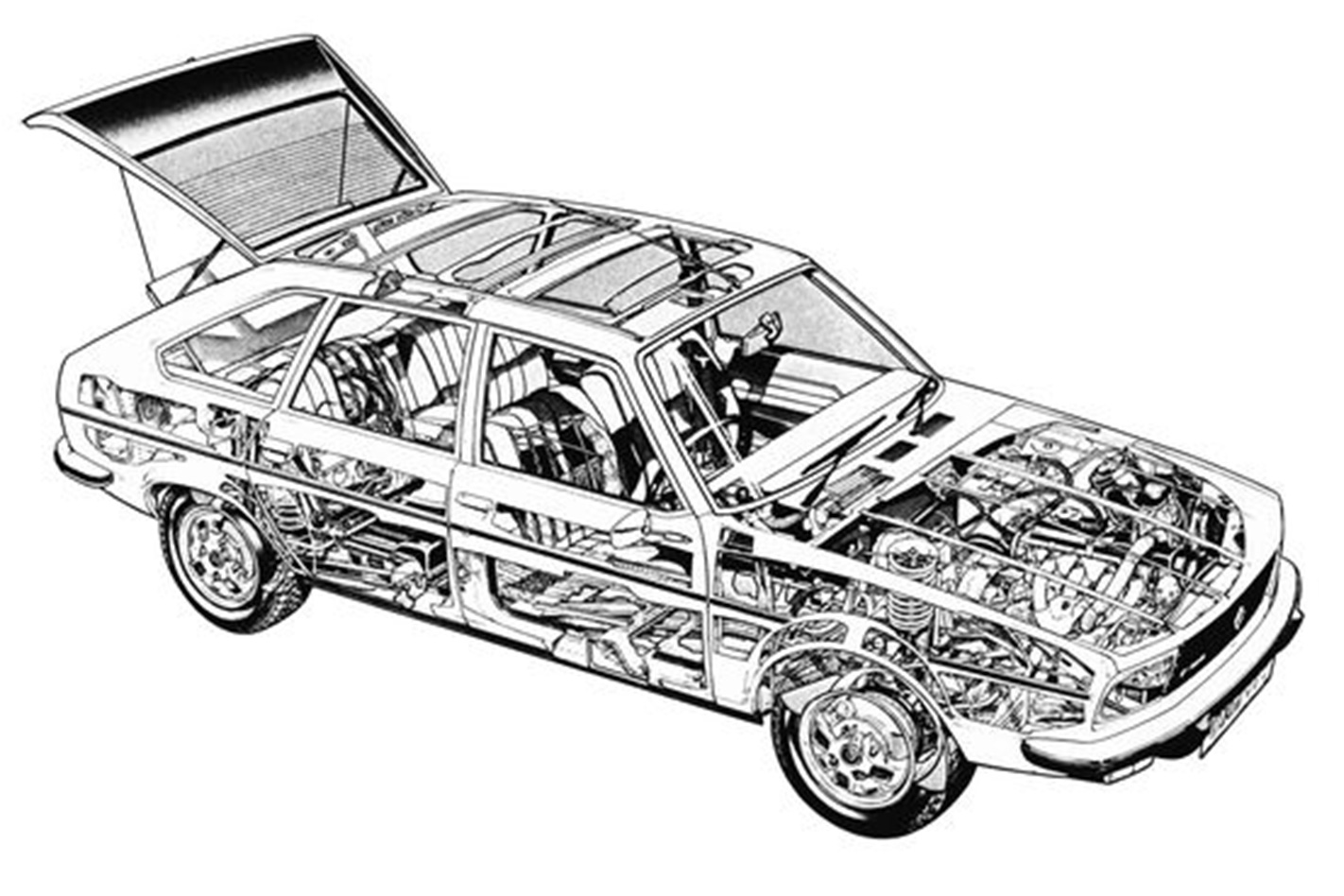
Admittedly, a Renault 20 TS (What Car magazine’s car of the year for 1978) could only hawk up a paltry 80kW from its 2.0-litre lump, but given that the paddock was on quite an incline, I also had gravity on my side. Dad gave a brief run through on how to operate the gearbox and then retired to a picnic blanket to smoke some durries and read a jolly book on architecture of the Third Reich.
After a few gentle circles, the 13-year-old version of me decided that it would be a good idea to ‘buzz the tower’ at 150km/h. Flooring the throttle, the car picked up speed alarmingly. Rather than be cheerily complicit in my scheme and admire my skill and pluck, Vic leapt to his feet and then started hopping from side to side like a demented pheasant, eyes wide, mouth forming a perfect ‘O’, unsure of which way to jump.

I should have probably braked, but decided that committing to my line was the safest course of action, masterfully missing his right hip by at least a couple of microns. When I came to a halt and indignantly asked him what the hell he was thinking, he didn’t seem too happy. He never got in a car with me again for many years after that.
I might have got off lightly.

My older brother’s travails with Vic as an instructor would leave me aghast. There was the occasion where Vic disapproved so heartily of the driving on display that he ripped the keys from the ignition at freeway speed and threw them out of the passenger window. Then there was the occasion they disagreed on the correct speed to look for a particular door number and a full-scale punch-on ensued up front. This was then followed by Vic taking the wheel and crashing the car into a fuel bowser in a fit of pique. Come to think of it, he never got in a plane with my brother at the controls.
So let that be a salutary warning. Not all of us are cut out to be driving instructors. But, if your first instinct on the first occasion you ever drive a car is to see how fast it goes, perhaps performance testing vehicles for Wheels magazine hasn’t been the worst career choice.
This week we at WhichCar were saddened to learn about the passing of Jessi Combs, an unequivocal petrolhead whose accomplishments preceded her. Famed television personality, fabricator and successful racer, Jessi first popped up on our radars through the Mythbusters TV show.
We are united through our shared passion of cars, and so in her honour, here are some of the Mythbusters’ most awesome car myths.
Answering the questions nobody asked, how fast would you have to drive with square wheels before the ride smoothed out? Find out above.
Despite ruining a fairly clean NA Mazda MX-5, this hilarious segment shows the team fact-check the famous Bond spy cars. All in the name of science.
In this NASCAR themed segment, the Build Team test some techniques that stock car drivers use to stop a car that’s out of control.
Bloodhound SSC car: 17 fast facts
We’re not sure which myth they’re trying to bust here, but don’t deny you’ve thought about doing something similar while you’ve been stuck in traffic.
While it mightn’t strictly involve cars, we couldn’t help but include this clip of Jessi heroically testing the myth that you can climb aboard a helicopter from its skids mid-flight.
Exploring a new country is always an exciting prospect, but to really step up your exploration you have to untether yourself from the confines of public transport, buses and tours by using your own car.
But this may mean, depending on the country, that you’re faced with operating a car while sitting on the opposite side.
While most people are ready for the challenge and keen to get going, the reality of getting in through the left-hand driver’s door is a whole other issue.
Like anything, becoming a master of the opposite side of the car (and road) takes time and practice. But there are a few ways to make the initial task less daunting.

1. Pick the right car
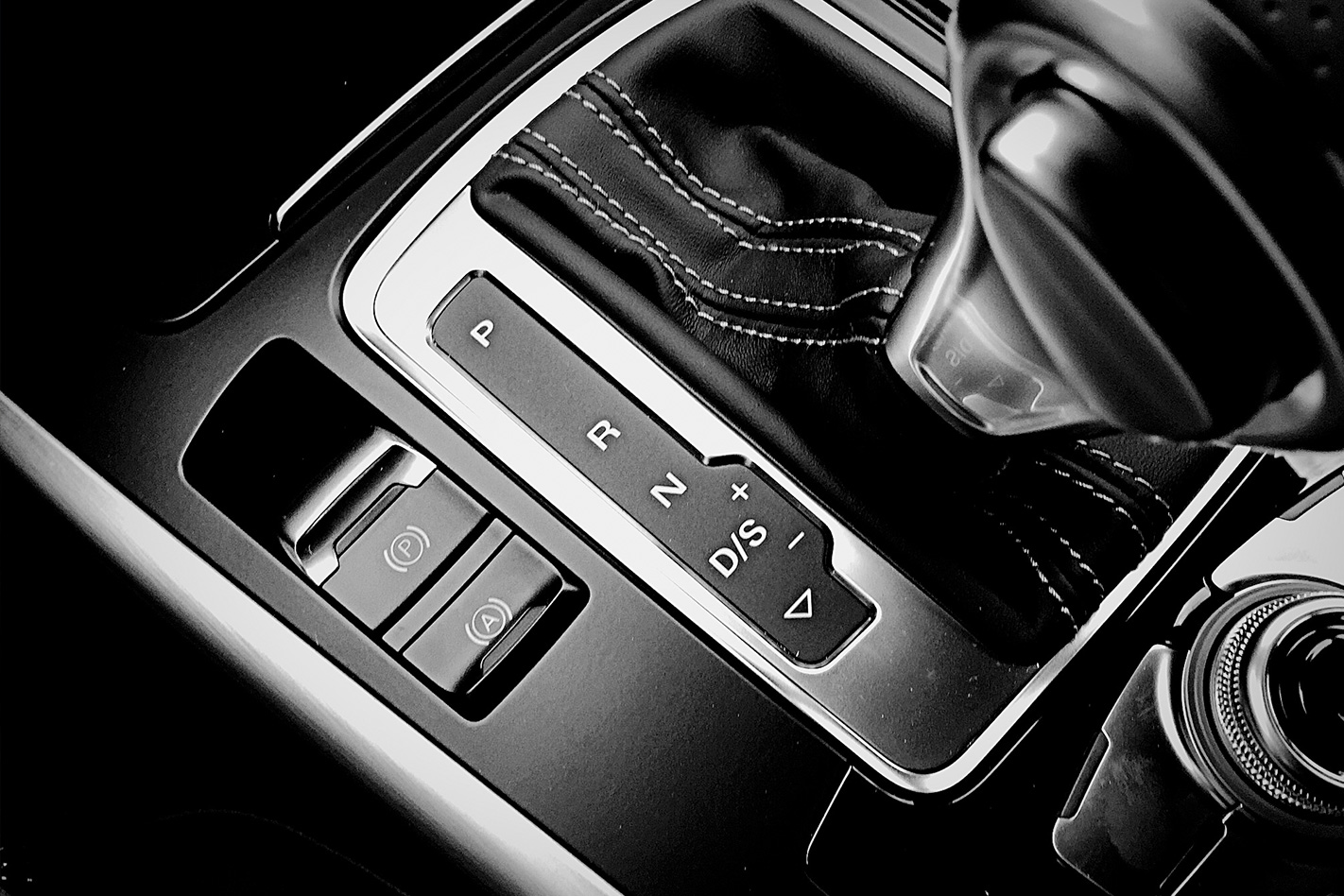
Before you even step foot in another country, make sure you make your job as easy as possible by selecting a car that has an automatic transmission, great visibility and familiar controls.
You don’t want to compound your confusion by dumping yourself into a brand new car that’ll take some time to work out – so spend that extra little money on a car that will make you feel comfortable.
Oh, and even if you like driving manual gearbox-equipped cars, we’d highly recommend – at least for your first left-hook experience – forgoing the clutch pedal. Once you’ve mastered the art of other-side driving, then you can add a new degree of difficulty.
2. Time your car pick-up wisely
When it does come time to pick up your rental car, try to time your arrival to avoid the local rush hour. That way, you’re not compounding your new experience by having irate locals vent their frustration at your newbie ways.
As well, you should go and find a few quiet back streets and use them to become familiar with the notion of staying on the correct side of the road before you venture out onto more populated roads.
3. Adjust your driving position
Being on the opposite hand side of the car will inevitably throw your reference points out of whack. Make sure you spend time getting to know your car, and adjust your driving position and mirrors carefully so that you have the best vision out of the car.

4. Don’t distract yourself
Limit the interaction with your music streaming apps and the like until you’ve got a handle on the whole wrong-side caper.
Of course, some people find that familiar music can aid their concentration levels, but we’d suggest keeping the volume at a reasonable level.
5. Do your research beforehand
Different countries have different road rules and driving customs. Take some time in the lead up to your trip to do some reading about the country you’ll be driving in and their traffic rules.
For example, the United States of America prefers using four-way stop signs over roundabouts, and most traffic lights will allow you to turn right, even if they’re red.
It’s also the little things, as well, that you’ll pick up with a bit of research. In some countries, horn use is accepted and expected, while it’s common in Japan to say ‘thanks’ or ‘sorry’ via a quick flash of the hazard lights.
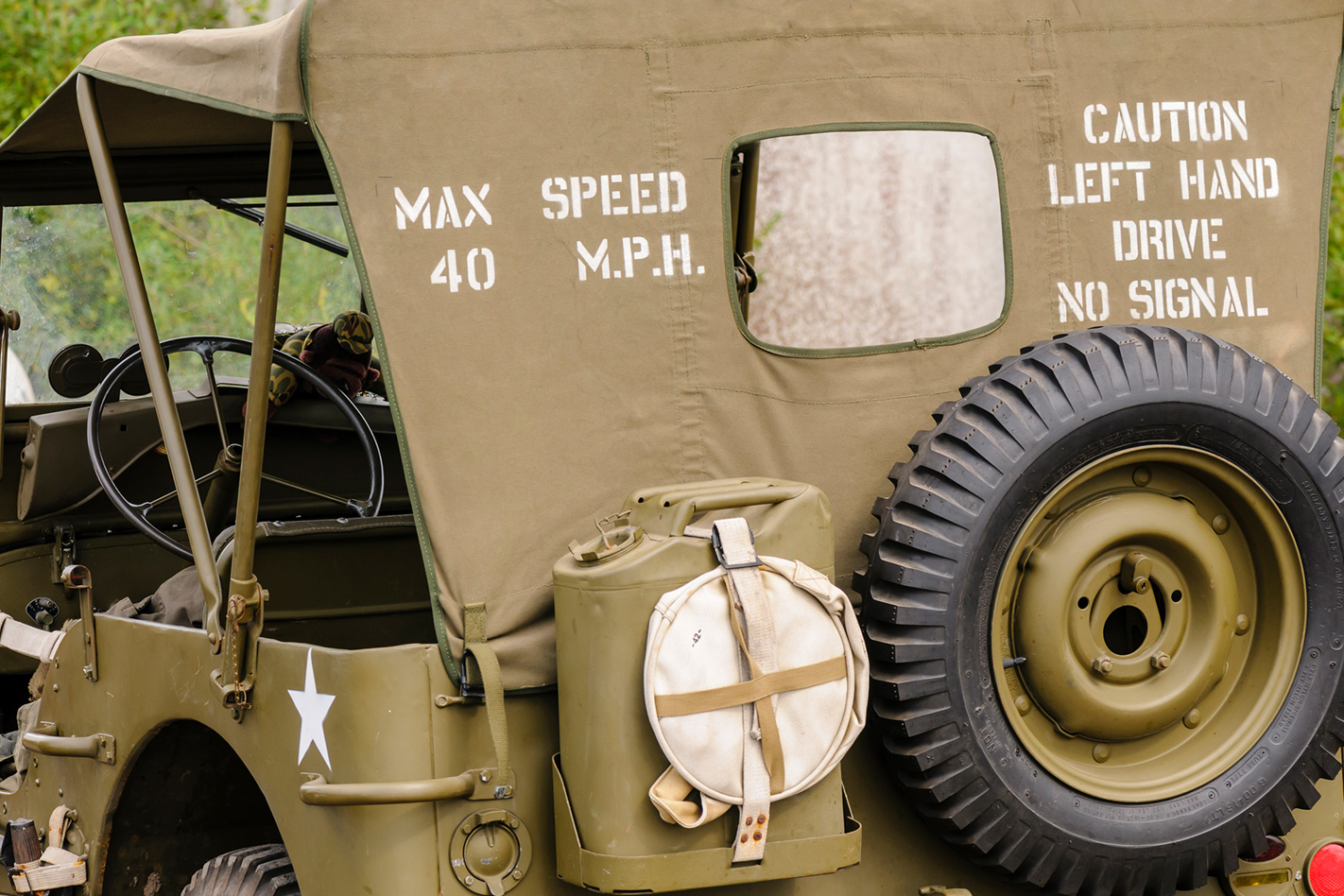
6. Be careful around parking lots
Although they’re done at low speed, take note of car parks as it’s almost guaranteed that you’ll slip up when meandering about a parking lot and head up a one-way strip the wrong way.
They don’t have the usual landmarks, centre lines or visual cues to help you remember which side of the road you should be on.
7. Have a navigator handy
The last thing you want to be doing while operating a car is mucking around with maps to find your way. Make sure your co-pilot has the directions all laid out, and that they give you plenty of warning before upcoming turns.
If you’re travelling solo, we’ve found that the map app Waze does an amazing job, even in overseas locales. Not only does it do a great job of navigation, but it can also display real-time GPS-based speed readings, and it will read out distances in metric; Google Maps generally defaults to imperial measurements in the US, for example, and being told that your freeway on-ramp is ‘400 yards’ away is no help to anyone.
And above all else, don’t panic if you miss a turn-off or an instruction. It’s far safer just to plough on for a little bit until you and Waze get sorted out than to try a last-minute dive-bomb manoeuver that could end in disaster.
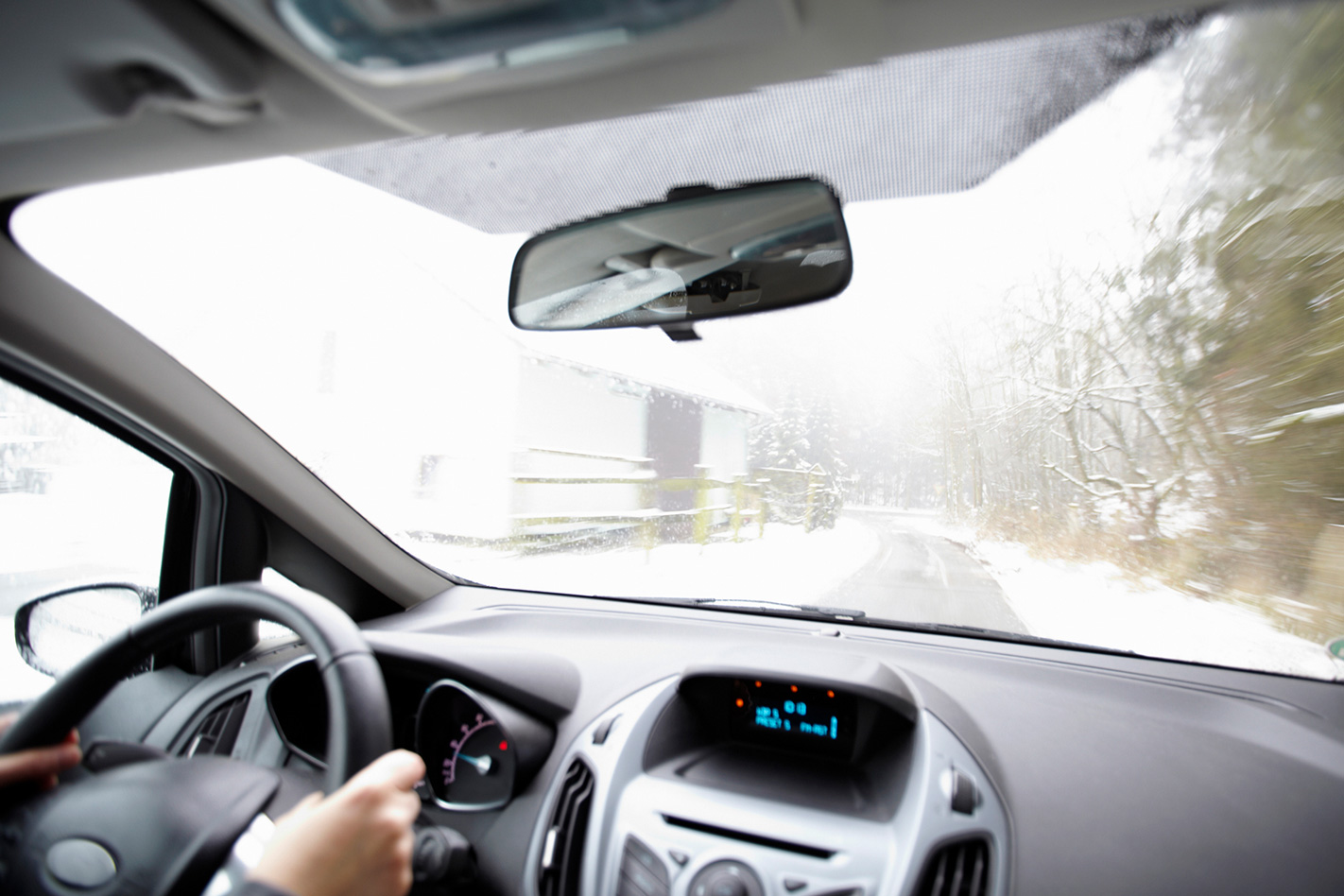
8. Take care when crossing borders
This is mainly for the leap between the United Kingdom and Europe, but make sure you remember to cross onto the right-hand side of the road after crossing to France, and vice versa if coming back into the UK.
The rest of Europe is right-side until you hit Russia, but crossing into some countries (Germany to Austria, for example) may see you needing to purchase a toll ticket, or vignette, before crossing the border.
Crossing from the US into Canada or Mexico is easy, as all three countries drive on the same side.

9. Stick close to the lane markings
It can be difficult to know exactly where your car is placed within a lane due to an unfamiliar car and different surroundings. So err on the side of caution and keep your driver’s side closest to the lane markings so you don’t drift into an adjacent lane.
A trap for young players is when you’re turning on to a completely unmarked road – it’s possible to drive for several minutes on the wrong side of the road, especially if there is no other traffic around to reference from!

10. Save yourself from the city
Often one of the most stressful places to drive, we’d recommend taking in the sights on foot and utilising public transport when you’re near a city’s CBD.
The world’s bigger cities are just as hard, if not harder, to find a park in, while toll and congestion charges on your rental invoice might come as a nasty surprise.
We recommend parking a few kilometres out and using public transport – get amongst it!
Contrary to popular belief, when you fork out extra for rental car insurance you’re not actually paying for the car to be insured. It’s already covered – what you’re paying for is the collision damage waiver (CDW – also known as Loss Damage Waiver) that insures you for their insurance excess and for any time the car is out of action due to having been damaged or stolen.
There are a few ways you can get CDW cover – either through your travel insurance, credit card, a third party insurer, or through the rental company itself.
There are pros and cons for each.
Rental company CDW
Rental companies charge a lot for a waiver, often more than $30 per day, which can be more than the actual daily rental cost of a light hatchback.
On the plus side, if you do return a car with damage or the car is stolen it’s immediately sorted and you only have to pay your nominated excess. Of course this is assuming the damage didn’t occur in a manner that was in breach of the rental contract terms and conditions or road laws.

The rental CDW should also cover things like:
- Admin fees
- Towing charges
- Loss of use – the revenue lost while the car is being repaired
- Diminished resale value
Separate CDW insurance
Taking out an independent CDW policy is a lot cheaper, or can cost nothing at all if it’s part of an existing insurance policy or credit card benefits.
However, if there is damage to the car you’ll have to pay up front, which could ruin your holiday. I recently returned a rental car in Malta that had a slight crack on the wing mirror indicator lens and a scratch under the plastic bumper, which cost me a painful $800 including the admin fee.

After paying up front you then have to make a separate claim to the insurer – and we all know how difficult that’s going to be.
This is where you need to be organised and ensure you keep all supporting documents such as rental company paperwork, police reports and damage evidence.
In my case, because the damage was so minor and no other vehicles were involved, I had no documentation to provide the insurer apart from the rental company’s invoice and receipt.
I also made the mistake of not taking or asking for pictures of each damaged item to send to the insurer. This meant my claim was very light on detail resulting in a ‘please send more info’ email that’s difficult to do now I’m back in Australia – in my defence getting organised isn’t easy when you’re in the middle of a vigorous debate about the extortionate cost of such minor damage – and you have a flight to catch.

Another issue with taking out separate insurance is that the policy might not cover the additional costs the rental companies charge such as loss of use, diminished value or the admin fee. And you may also not be covered for driving in certain conditions or places, so always read the small print before relying on such coverage.
While it’s expensive tacking out the CDW as part of the rental coverage, it’s the least complicated option despite the extra cost. That said, you can keep the cost down by opting to pay more excess.
Just be sure to have some kind of coverage. And don’t make a risk assessment based on actually being involved in an accident, as it only takes a couple of minor scrapes and scratches to cost you the price of an air fare or more.
Car renting tips
- Choose a car that will suit your mission and conditions. Don’t pay extra for an SUV if there are only two of you and you’re driving through narrow European streets. Alternatively, squeezing the family and luggage into a Citroen C3 is a good way to ruin a holiday.
- Check if the country you’re driving in requires an international driving permit before you get there.
- Take out some kind of CDW, and read the small print to know what you’re covered for.
- Make sure your travel insurance has public liability cover for third party damage such as injury and property damage.
- Have a checklist ready in case something happens to the car to help you remember to collect documentation such as invoices and receipts of all rental company costs, pictures of any damage, and police reports.
- When picking up the car don’t rely on the rental firm employee to point out any existing damage. Have a good look around yourself and even get down low to look at bodywork under the bumpers and doors. Also look inside at the condition of the seats, floor carpets and inside the boot space.
- Have another look around before returning it.
- If you have a smartphone but no global roaming, use apps like maps.me that allow you to download maps for GPS navigation without a phone signal.
If aesthetics is the name of the game, then this month’s collection of cool car things would be right up your alley.
With August marking 30 years since the Nissan R32 kyline GT-R hit the market, this month’s collection is filled with parts and gear for the GT-R enthusiast.
1 – FEATURED “PRODUCT OF THE MONTH”: HSV wrist watch ($399 from shop.hsv.com.au) Wear your passion for HSV on your sleeve? How about your wrist? New 45mm chronograph watch range (three to choose from) is limited to just 298 numbered pieces each. Dial is genuine carbonfibre; movement is VD57.

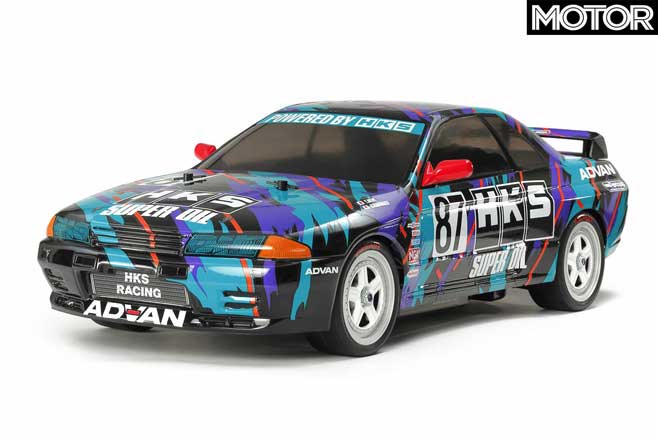
2 – Tamiya ‘HKS Group A R32 GTR’ R/C car ($219 from crazyhobbies.com.au) Build your own 1/10-scale, remote-control electric replica of the iconic racecar that took two poles and a win in the 1993 Japanese Touring Car Championship.
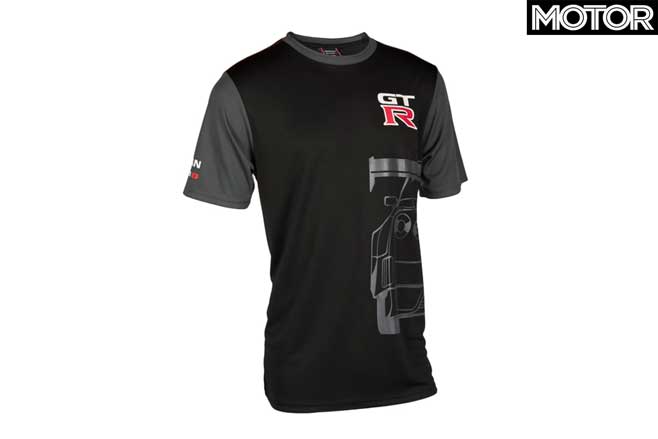
3 – GT-R tee ($20 from nissanmerchandise.com.au) Kelly Racing is clearing out a horde of smart, Nissan GT-R- themed merchandise. Like this men’s tee, sizes S to 3XL, in quick-drying ‘polyester sportstuck’ material.
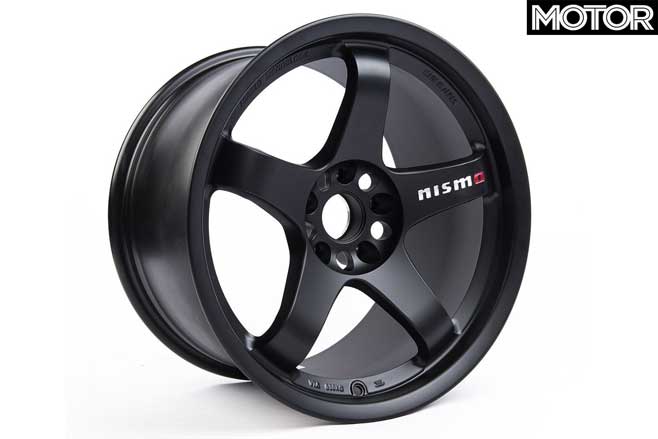
4 – RAYS Nismo LM GT4 wheel ($3950 from mkmotorsports.com.au) When it comes to wheels for your R34 Skyline, it doesn’t get any sexier than this. Forged and made by RAYS, price is for a set of 18 x 10.5 inches (+12 offset), but availability is severely limited.
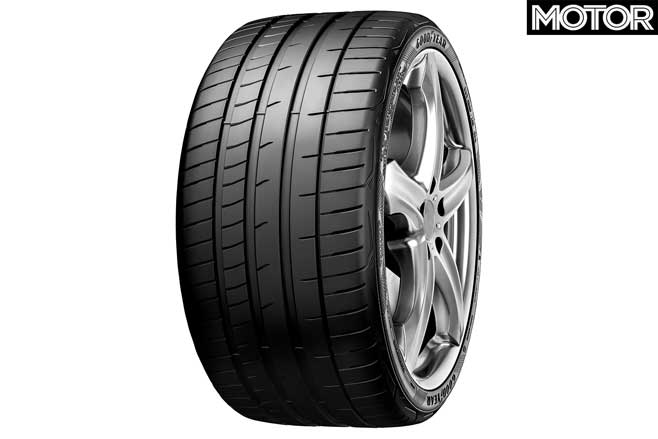
5 – Goodyear Eagle F1 Supersport tyre ($369 from goodyear.com.au) Goodyear is having a big crack at the sticky performance tyre market with an expanded range of SuperSport compounds. Price for one 235/35R19.
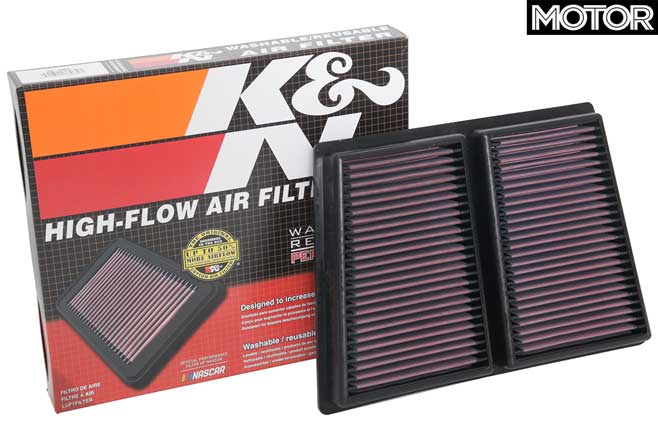
6 – K&N panel air filter ($183 from knfilters.com) Ditch the cheap, factory paper filter choking up your car’s airbox for a high-flowing jobbie from K&N. More horsepower, better economy. This one is for the current Alfa Romeo Giulia and Stelvio.
7 – Castrol Edge synthetic engine oil ($72 from castrol.com.au/edge) Castrol Edge’s unique ‘Fluid Titanium’ technology reduces performance-robbing friction by 20 per cent. Official oil of MOTOR Performance Car of the Year.