
Four doors, two driven wheels and a total of zero turbochargers. None of this is what we think of when someone says GT-R, but this is where it all started. The twin-turbo all-wheel drive beast we know today owes its existence to something very different.
Meet the “Hakosuka” (pronounced hako-ska) GT-R. That’s not what Nissan’s paperwork calls the first Skyline GT-R – PGC10 and KPGC10 were the model codes – but it’s become the official unofficial name of the ‘Box Skyline’. In Japanese, ‘hako’ means box and ‘suka’ is short for Sukairain, the types of mountain roads from which the car takes its name: Skyline.
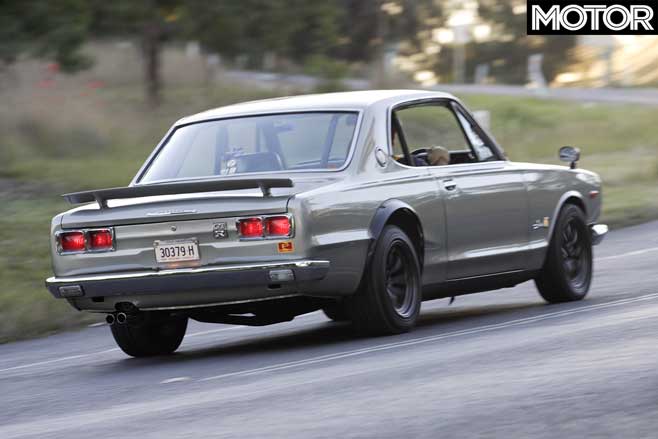
The GT-R story begins in the late 1960s, at a time when Nissan had just absorbed Prince Motor Company, and when the merged engineering knowledge of the two groups was starting to pay dividends on the track.
With the engineers from Prince having proven their worth by developing the R380 racecar and the previous Prince Skylines, Nissan decided that the C10 Skyline would be its next performance car project. The engine from the R380 and the body of the Skyline road car were to be the basis for a new motorsport champion.
The man credited as the driving force behind the subsequent development was Shinichiro Sakurai, an engineer with a tough work ethic. Sakurai was the type of man who would say things like “the Skyline is my alter-ego”, according to former apprentice Naganori Itou. There’s a reason many at Nissan called him ‘Mr Skyline’.
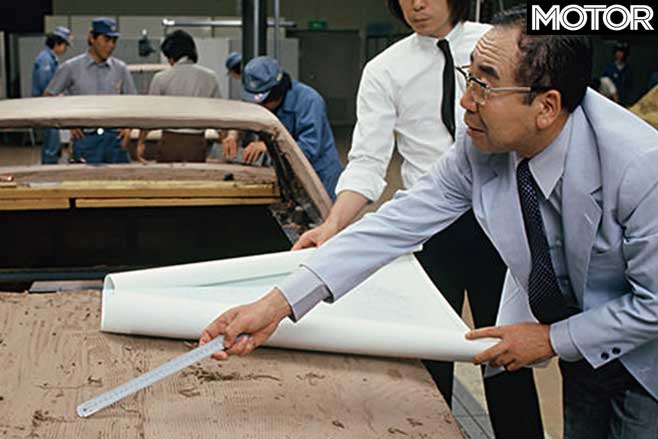
Starting out as an engineer on the first Prince Skyline in the 1950s, he quickly worked his way up to become leader of the development team for the third generation, the Hakosuka. Sakurai then remained in charge of the Skyline until the R31 generation, before handing the reins over to his protege Itou.
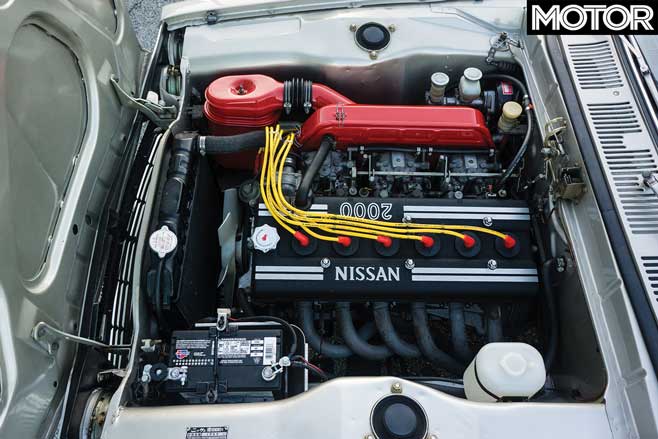
Under Sakurai’s watch, a re-engineered version of the Prince GR8 engine, called the Nissan S20, was fitted to the four-door sedan to create the first Nissan Skyline GT-R, which was officially called 2000GT-R.
The 2.0-litre, 24-valve, dual overhead camshaft, six-cylinder motor was tuned to produce 118kW and 177Nm. The PGC10 body style was soon joined by a slightly lighter two-door version called the KPGC10 in 1970, beginning the coupe tradition of Skyline GT-Rs.
The Hakosuka also began another Skyline GT-R tradition – winning. In the three years between May 1969 and March 1972, before the Nissan works team stepped away from the sport, the PGC10 and KPGC10 Skyline GT-Rs had secured some 50 race victories. Sound familiar? In the late ’80s and early ’90s, R31 and R32 Skylines were dominating both here and in Japan.
Seven of those original race victories were won by one man, Motoharu Kurosawa, also known as Gan-San. He later became a test driver for hit DVD series Best Motoring in Japan and was reunited with a Hakosuka racecar for a video.
He recalls the first time he drove the KPGC10 at Fuji a day after another driver had rolled the car onto its roof, and it had been repaired with makeshift materials. Even then, Gan-San said the two-door was nearly two seconds faster than the four-door version.
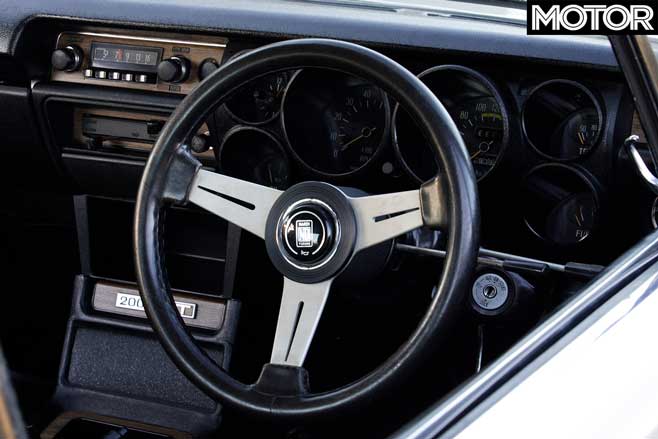
The coupe was 20kg lighter than the sedan, with a kerb weight of 1100kg, primarily due to a lack of mod-cons. Non-adjustable bucket seats and a spartan interior meant the car was able to incorporate a 100-litre fuel tank for long-distance racing while still losing weight overall.
But, despite the interior being ‘stripped’, the KPGC10 Skyline was gifted the technical prowess of a high-tech racer, even down to its then impressive independent suspension for all four wheels. It has developed a reputation as an engaging car to drive, with relatively stiff suspension, even by today’s standards, and genuinely communicative feedback through the unassisted, albeit very heavy, steering.
And the sound of the straight-six engine has been compared with Italian supercars, despite the car’s humble appearance. Without a big torque figure to haul it around, revs were the answer to making a Hakosuka GT-R go fast.
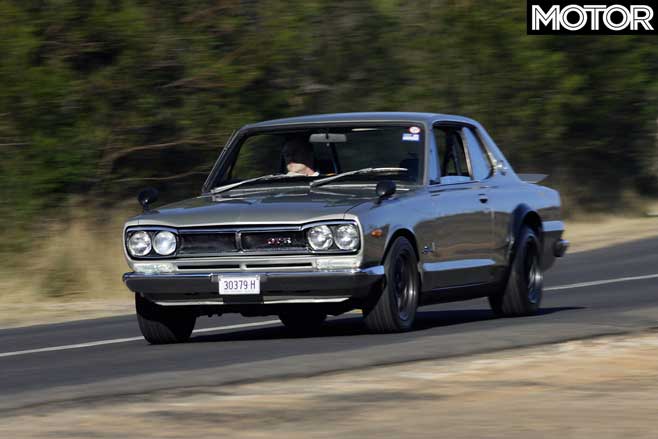
Unfortunately, the sound of an S20 hidden in the engine bay of a GT-R at full flight is rare. In fact, it’s almost non-existent outside Japan. Keeping up to date with how many original C10-generation GT-Rs are still in action is a challenge.
Fewer than 2000 were built in both PGC10 and KPGC10 guises – Nissan doesn’t list an official figure, but research suggests 1947, with 1115 being coupes and 832 sedans – and few ever left Japan. Of course, presumably a fair few were lost to the motorsport gods.
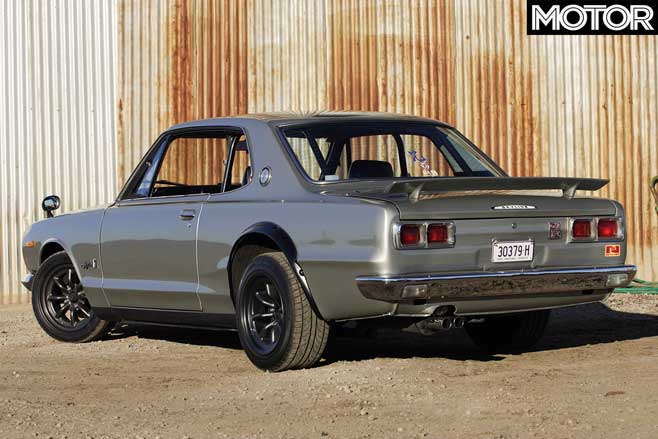
The combination of rarity and esteem has resulted in a strong culture of attempting to replicate the Box Skyline in GT-R form, usually using a lower-specification C10. Often, that means Hakosuka GT-R replicas are powered by less powerful L-Series engines from either 2000GT or GT-X-spec cars. The L20 engine in the 2000GT-X, for example, was a 2.0-litre straight-six with twin SU carburettors that produced 96kW and 172Nm, while the car itself was a heavier 1115kg.
The nature of replicating a car you can’t actually find easily means there are plenty of mismatched engine/body combinations – renown Japanese workshop Rocky Auto even built one powered by a Toyota 1UZ V8 – but it’s those relative few genuine GT-Rs that draw the most admiration, and money, from fans of classic Japanese cars.
Not only did the Hakosuka lay the foundation for the rest of the GT-R story – of which there’s plenty more in the pages of this magazine – but it also gave the world a glimpse into what a Japanese manufacturer was capable of well before Japan’s performance car renaissance of the 1990s.
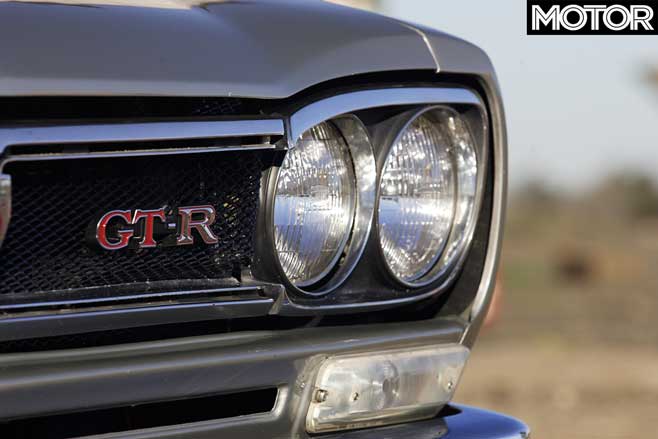
NISSAN “HAKOSUKA” KPGC10 GT-R Body: 2-door, 4-seat coupe Drivetrain: front-engine, rear-drive Engine: 1998cc inline-6, dohc, 24v Power: 118kW @ 7000rpm Torque: 177Nm @ 5600rpm Transmission: 5-speed manual Weight: 1100kg
Finding the real deal
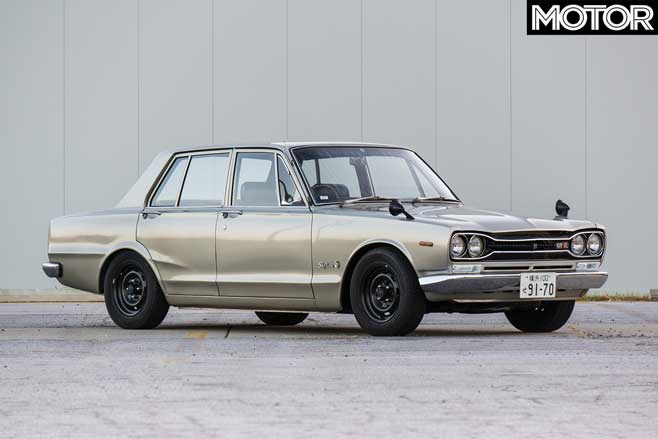
Original Hakosuka GT-Rs are so rare that finding one in Australia is almost impossible. We’re told by clubs that only one genuine car resides in this country.
The two-door car pictured in the main feature is a replica, fitted with a different Nissan straight-six engine. Real versions (above) sometimes go up for auction in the US, two recent ones fetching USD$88,000 and USD$242,000 at RM Sotheby’s. The former was for a four-door model, while the latter was for a highly prized two-door.
The January 1969 issue of Modern Motor has quite the odour. Its fragile, thin, yellowing pages smell of an old library. Yet there on page 47, buried in the stench, is something small, yet important: the first appearance of GT-R in this hallowed tome.
Just one paragraph, and no image, is all the exciting new ‘Nissan Skyline 2000GT’ got in our two-page 1968 Tokyo Motor Show coverage. Yet that’s often the case when a legend is born – it’s just the same as any other similar car. And in our report we described Nissan’s sporting new four-door as “handsome”, briefly also mentioning its motorsport-derived straight-six engine.
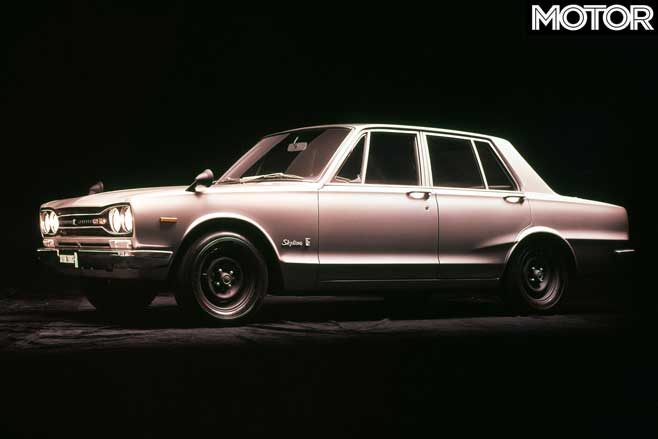
Nissan couldn’t have known its new nameplate would still be in use 50 years later. Supposedly, there wasn’t much to the name itself, either. GT meant Gran Turismo, the thinking being an Italian name would sound more exotic and help sales. R stood, appropriately, for Racer. And so GT-R was born.
Themes of technology and motorsport intent were born at the same time. The original GT-R’s 2.0-litre straight-six was, with its twin camshafts and four valves per cylinder, cutting edge for 1969, the most advanced Japanese race engine of the time. There was a five-speed manual gearbox when four speeds was considered high-tech. The fully independent suspension all-round was pretty trick, too.
Quite how it went from a wingless, four-door, rear-drive sedan to the fire-breathing, twin-turbo V6, all-wheel-drive coupe we know today is the objective of the next wekk. From “Hakosuka”, we very briefly give a nod to the ill-fated “Ken Mari”, the second GT-R. Then we fast-forward 16 years, as Nissan did, to the R32 GT-R, whose own 30th anniversary is August 21, 2019.
In this special feature, we have retold the R32’s story and how it moved the performance car game on. We’ve outlined how no other country outside of Japan has a connection to GT-R like Australia does (up until 2007 we were one of just a handful of countries that officially sold the GT-R).
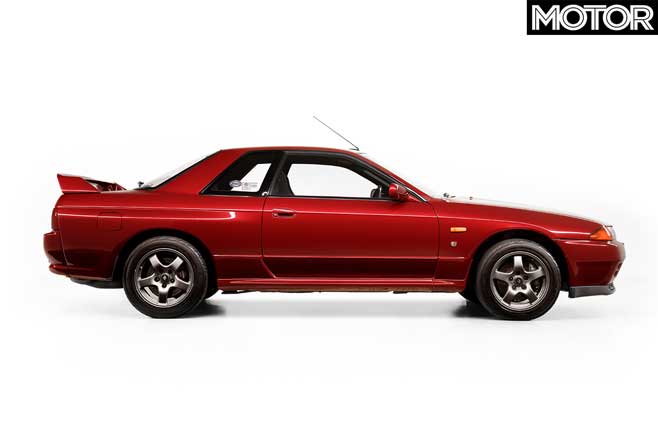
We’ve interviewed Fred Gibson, Mark Skaife and Paul Beranger, the architects of the R32’s local motorsport and road-going success. We’ve driven some of the most heroic GT-R models, like the R33 400R and Mine’s-tuned R34 – both on Aussie soil – and profiled JUN II, the world’s fastest street-legal Skyline GT-R. From Melbourne and Sydney, we then find ourselves in Tokyo, in the latest R35, hunting down the story of the Mid Night Club and the GT-R’s part in it.
This is not meant to be an encyclopaedic coverage of every little GT-R detail, but we’ve had a big go regardless! So heat up that miso soup, get the chopsticks correctly in hand, maybe crack a Kirin and get comfortable as we take a twin-turbocharged blast down Nissan GT-R memory (pit)lane.
GT-R WEEK: Day by day
Monday August 19: Welcome to GT-R Week
– We dive right into GT-R week with a new temporary website section
Tuesday Aug 20: In the beginning
– Box Fresh: The Hakosuka Skyline
– Kenmeri: What went wrong with GT-R V2?
Wednesday Aug 21: R32 GT-R turns 30
– R32 GT-R went on sale for Japan on this day in 1989
– The Godzilla Story retold
– How the R32 was nearly a mid-engine V6
– Kerry Packer was a secret R32 fanboy
Thursday Aug 22: MOTOR’s GT-R edition on-sale
– Our September issue goes on sale to celebrate the big 5-0
– Mark Skaife on driving the Group A R32 and his own road car
– Fred Gibson explains why Australia’s R32 racers were better
Friday Aug 23: The new GT-R
– We drive the 2020 Nissan R35 GT-R
– And the others, R32, R33, and R34
Saturday Aug 24: GT-R culture
– JUN II, the world’s fastest street-legal GT-R: We jump in at the drags, then head to Maccas
– The GT-R videos that made it a millennial legend
Sunday Aug 25: What’s next?
– R36, where are you? We dissect the possibilities of the the next-gen GT-R
– The unofficial reboot; How the R31 GTS-R was the spiritual GT-R comeback
Under the iron-fist rule of CEO Martin Winterkorn, Volkswagen, the world’s largest car maker, had tunnel vision. Diesels were the future, it would do anything to crack the US diesel market and be the dominant European player within it, and it would take a watching brief before investing in perceived marginal ideas like electric mobility and autonomous cars. The company was not innovative but it was motivated, albeit by flawed reasoning.
But a black swan landed and blew apart the German establishment. VW’s clean diesel campaign was a lie. It had duped customers into thinking that its diesel-powered cars were green when they were brown.
In September 2015 it was revealed that VW had engineered software to detect when government bodies were testing vehicles and switch to a ‘clean mode’ that was fleeting during real-world driving. It damaged VW’s reputation in the US and sales plummeted nearly five percent in 2015 and 7.6 percent further the year after. Dealerships sacked staff and questioned the brand’s viability.
In Australia, from a booming increase of 10 percent in 2015 – even factoring in a slowdown after the September bombshell – sales in 2016 fell by more than six percent. Europe, Wolfsburg’s stronghold, slipped from a six percent increase through 2015 to flatline in 2016.
The culture inside the company that led up to its fall from grace was like “North Korea without the labour camps”, wrote Europe’s largest weekly news magazine, Der Spiegel. Winterkorn was a ruthless leader who saw diesel as the future and was not to be questioned. But in the wake of Dieselgate, justice was served. Winterkorn resigned, and executives have since been criminally charged. Sales were in free fall; the company was being pulled apart from the inside out. So what happened next is nothing short of a miracle.
Turning its attention away from diesel, VW pivoted from observer of electric and autonomous mobility to an industry leader. Volkswagen pledged that its VW, Skoda, Seat and Audi brands would launch 27 electric vehicles by 2022 – remarkable from the company that took 13 years even to catch up with Toyota’s Prius hybrid technology.
“In Angela Merkel’s Germany, there is a clear message that its auto industry is too important to let it suffer from this,” John Paul MacDuffie, the director of the Program on Vehicle Mobility Innovation at the University of Pennsylvania’s Wharton business school, said. “And [it says] to Volkswagen, ‘We’re not going to cover this up. We’re going to push you to rehabilitate your reputation’.”
Since the rapid decline in sales and consumer confidence beginning in late 2015, the brand has recovered. Sales in Europe in 2018 were up two percent. In the US, sales grew by more than five percent in 2017 and four percent in 2018. Incredibly, Volkswagen bucked Australia’s falling new-car market in 2017 by increasing sales 2.5 percent, and last year, in another bearish market for Oz, it slipped by just over two percent – healthier than some top-selling brands.
Roy Morgan’s 2018 consumer confidence poll brought home the fact that Australians had given the German another go. Volkswagen emerged as the brand that customers were most likely to stay with for their next purchase, ahead of the likes of Toyota and Mazda.
There has been a seismic shift in culture at Volkswagen, and Professor MacDuffie says it was the sudden turn to electrification and autonomous mobility that left Dieselgate in a forgettable wake. Not that it’s a smokescreen. Volkswagen is investing (despite more than US$30 billion in emissions cheating fines thus far) and delivering on its electric vehicle promise. It’s a new era, benefiting the environment, consumers and the industry as a whole, and arising only because of the events that unfolded in September 2015.
“It makes them look like they’re cleaning up their act, leaving the Dieselgate embarrassment behind them and pioneering this new clean technology,” Professor MacDuffie said.
“Volkswagen has had a shock to its strategy, and to its culture.”
The Australian public have long held a deep distrust of how and when police hand out fines on our roads.
The idea of internal quotas that push officers to write as many tickets as possible in the name of revenue raising is so pervasive in the national consciousness that a 2008 survey revealed that 40 percent of Aussies believe the primary purpose of speed cameras is to fill government coffers.
Police will respond in disgust when asked if there are quotas, and we dare you to try your luck at dropping the term ‘revenue raising’ the next time a copper pulls you over – it likely won’t go over well.
And yet in the last month there have been two separate incidents that showed the myth of quotas might not be as fanciful as police press offices want you to believe – despite Police Commissioner Ian Stewart telling media in 2014 that there are no quotas.
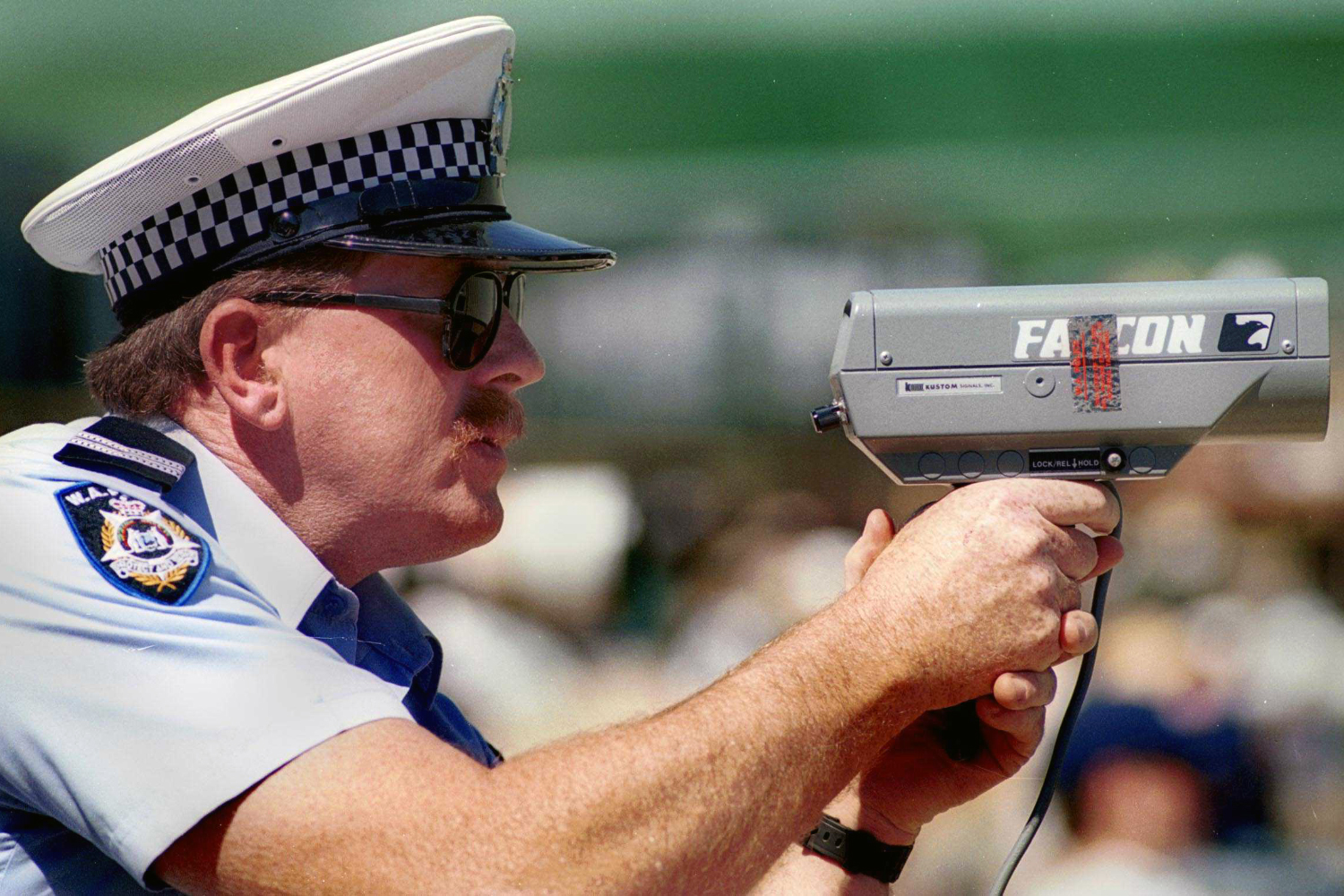
To recap, Queensland Police have been accused of having quotas, after a series of emails surfaced revealing how top cops pressured members of the force to write more tickets. The internal communications included ‘definitely not encouraging quota’ lines such as “there is an expectation that you WILL write tickets”, and had the officer-in-charge for one area ordering officers to write at least five tickets. Another cop said 10 tickets a month was not unrealistic.
All of this comes despite Acting Assistant Commissioner for Road Police Command Mick Keating telling ABC in 2015: “I would prefer to use slightly different words, but I can absolutely assure you there is no minimum, no maximum number of tickets.”
And then earlier this month a police manager in South Australia was caught incentivising extra ticket writing by officers. The manager promised a gift card for the member of staff that “made the greatest contribution to road safety by way of Traffic Infringement Notice Expiations or Cautions.”
But the police don’t have quotas for traffic fines, remember.
SAPOL tried to distance itself from the situation, releasing a statement that it “has no quotas for the issuing of expiation notices and never has”. Does anyone believe that?
Sure, while Australia’s police forces might not have official edicts that are handed down as policy, it’s clear that middle- and upper-management are getting increasingly pushy with boots on the ground to write more tickets.
The fact that police write traffic tickets isn’t the issue here, as we all know that bad drivers exist in Australia. But it’s the methods used to measure success that is open to question.
Surely the focus should be on decreasing accidents and dangerous driving through a multi-faceted campaign that both catches out poor drivers, and reinforces good behaviour?
While issuing tickets is part of that process, it can’t be a core indicator of performance, and needs to occur alongside public education efforts both large and small.
There have been 75 more deaths on Australian roads compared to the same time last year, an increase of 11.5 percent. Merely writing more tickets hasn’t fixed the issue and it’s about time the police realised it.
Senior police officers have been pressuring patrol units to write more tickets, explosive emails tabled in a court case have revealed.
The revelation comes amid a bullying case in the Queensland Industrial Relations commission being brought by a former Gold Coast cop, James Treanor.
As part of the proceedings, Treanor has tendered documents, including emails from senior members of the force, that appear to indicate a quota system for traffic infringements.
“Broadbeach as a whole is underperforming with regards to traffic enforcement,” senior cop Leanne Major is reported as telling officers in an email, according to the Courier Mail.
“We are GD (general duties) crews and there is an expectation that you WILL write tickets, and I don’t think 10 per month is an unrealistic expectation.”
Broadbeach officer-in-charge, Senior-Sergeant Paul Hunter, stated in another email that the fact that 16 officers had written just 15 traffic tickets between them in three months was ‘very disappointing’.
Police don’t use quotas? Yeah, right
Emails from Runaway Bay officer-in-charge, Myee Arandale show that officers at the station were ordered to write at least five tickets for ‘LEOs” – meaning ‘life endangering offences’ such as speeding, running red lights and using mobile phones while driving.
“This is not hard given the amount of people on their mobile phones, speeding, running yellow or red lights and (doing) burnouts,” she added.
Treanor responded to fellow officers by quoting a statement given by then-Police Commissioner Ian Stewart who told media in 2014 that ‘there are no quotas … we don’t put quotas on our people’.
When contacted by The Sunday Mail about using quotas, a senior Queensland police officer denied their existence.
“It has nothing to do with revenue-raising, it’s about enforcing the law,” he said.
The explosive emails are the latest development of Treanor’s campaign against misconduct within Queensland Police.
Treanor was stood down from his role as a Senior Constable and stripped of his gun, badge, and uniform after an altercation with the Gold Coasts top cop, Assistant Commissioner Brian Wilkins.
The former Senior Constable was also charged with public nuisance after the alleged incident which took place at a mental health function in March. Treanor is alleged to have sworn at Wilkins after the latter is claimed to have referred to him as a ‘smart arse’.
Treanor alleges the incident is part of an ongoing pattern of bullying that was prompted when he complained of misconduct by fellow officers and became a union representative.
A hearing of the bullying case is set for September.
South Australian police were forced to issue an admonishing statement earlier this month after a manager purchased a gift card as an incentive for officers to hand out more fines.
“SAPOL has no quotas for the issuing of expiation notices and never has,” the statement read.
However, an email was sent to staff which offered “an incentive to the police officer who made the greatest contribution to road safety by way of Traffic Infringement Notice Expiations or Cautions.”
This was intended to prompt more activity during SAPOL’s ‘Operation Fatal Distraction’, targeting mobile phone use while driving.
If it ain’t broke, don’t fix it. That ought describe the eighth generation of the venerable Volkswagen Golf GTI. However, there is some new tech set to revolutionise it – here’s everything we know.

Interior
Inside, big screens and an internet-connected software system head the Golf’s move into the future. Much like the flagship Touareg (pictured above), spy shots reveal that the GTI is set to reject traditional knobs and dials for big touchscreens. The dual-screen arrangement means that the instrument cluster is completely digitised, while the central display will cover all the infotainment needs in much the same way Mercedes-Benz’s MBUX system does. That software system is said to offer over-the-air updates, while the air vents move lower in the dash and the climate controls are capacitive touch screens.
Exterior
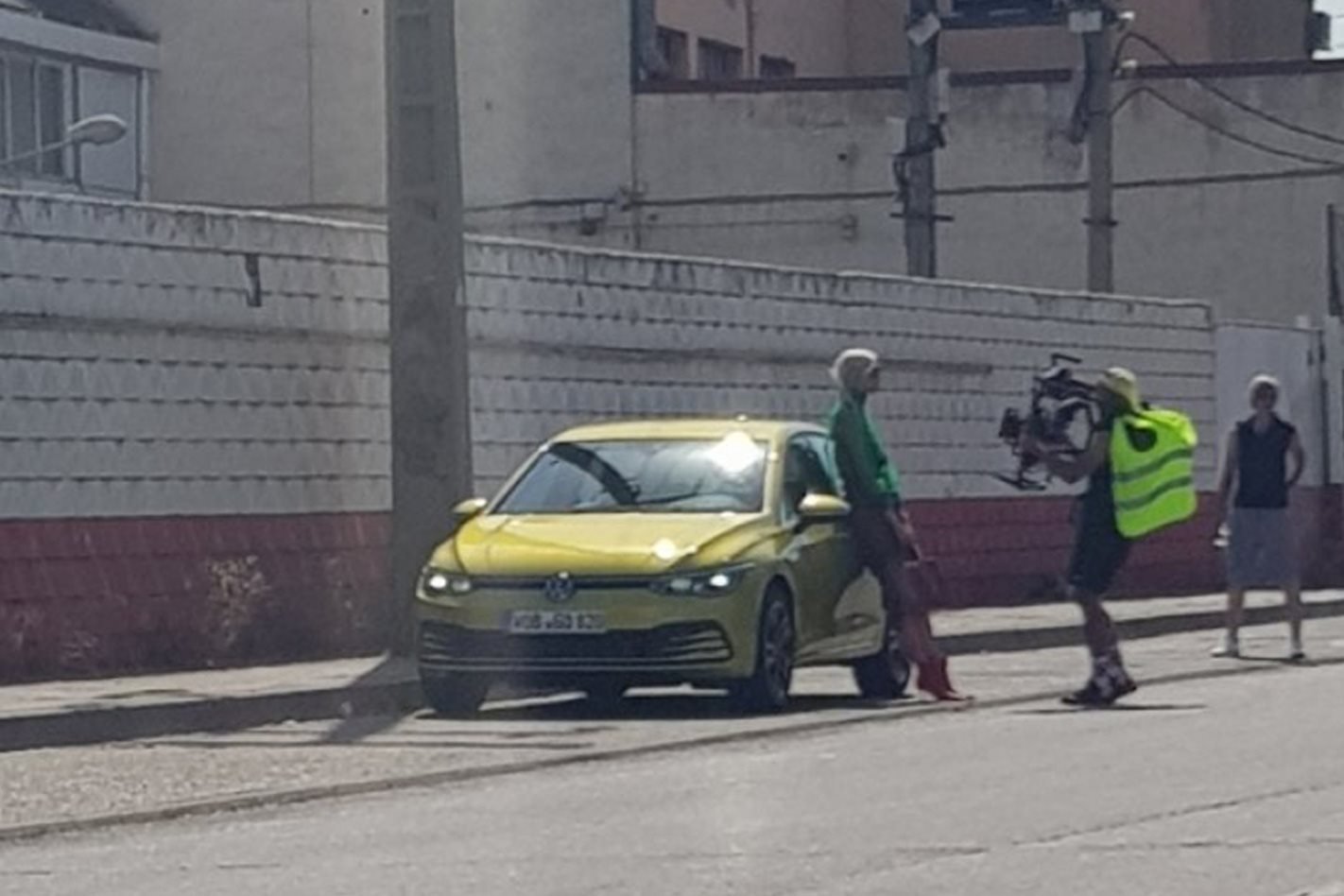
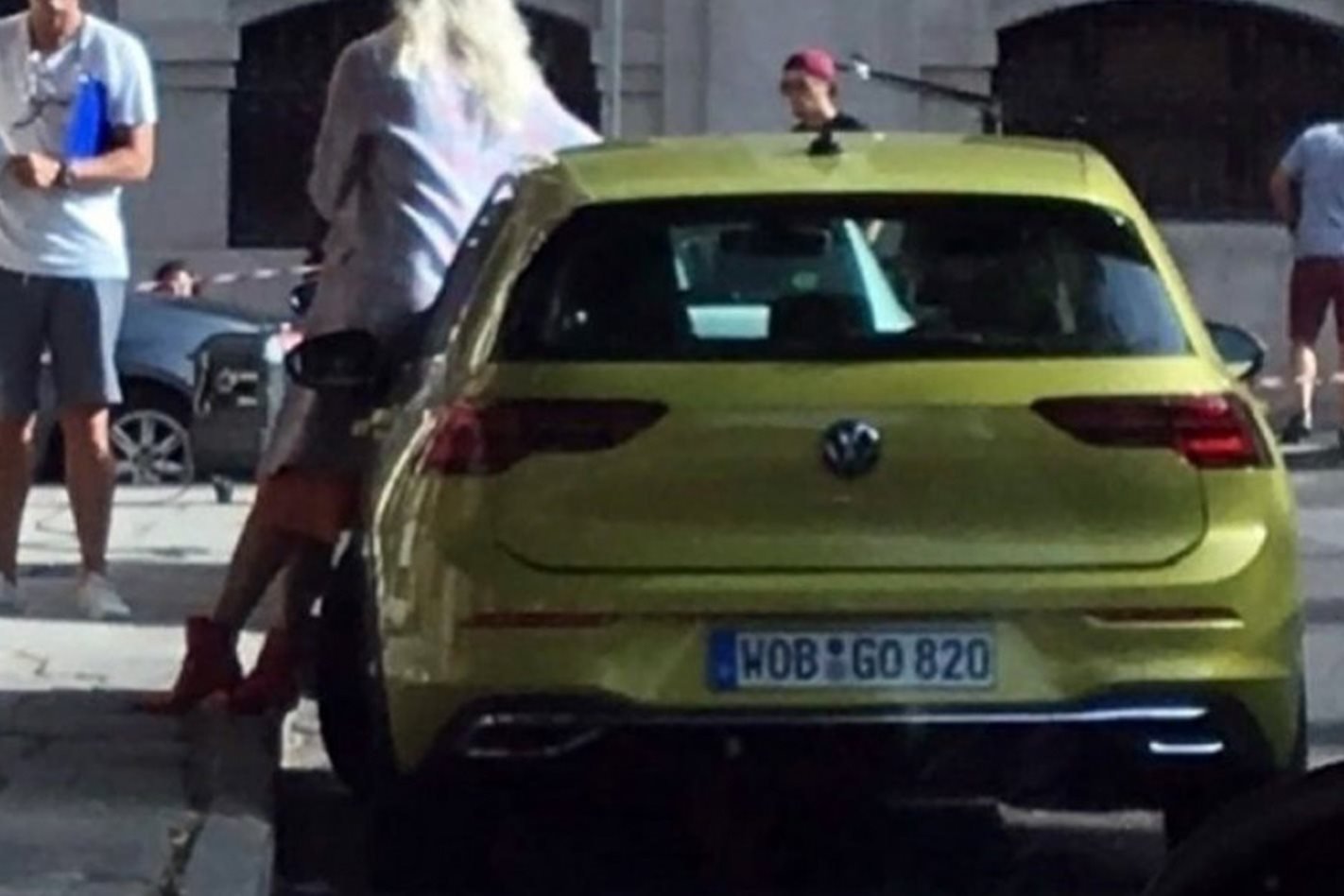
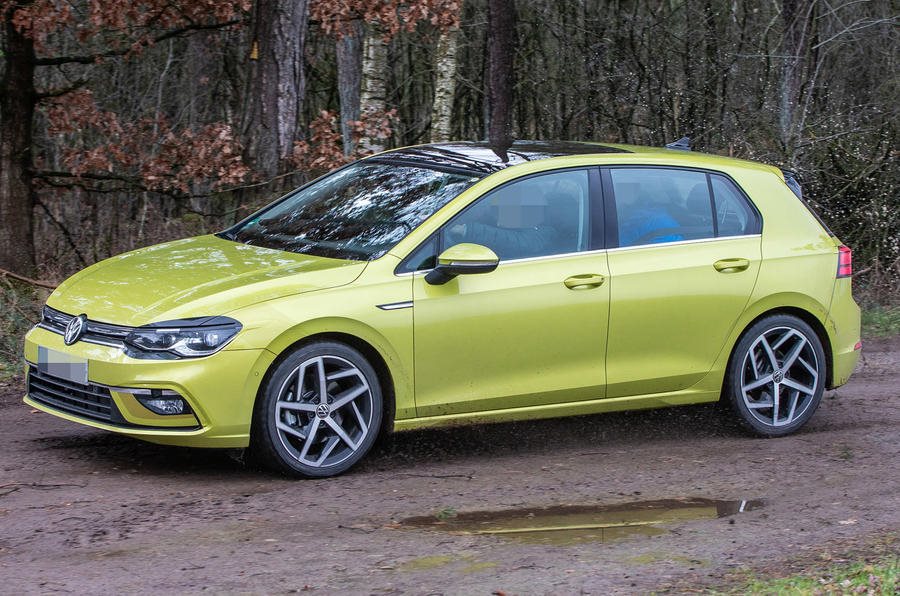
Earlier this month, Wheels revealed images of an undisguised Mk8 looking very production ready, offering a blurry glimpse into the future and what hotter versions might look like. Exterior changes centre on an ID.3-inspired front with chiselled headlights, while the GTI is rumoured to gain a cluster of five diamond-shaped LED daytime running lights and the traditional red horizontal lines. A new diffuser, housing tailpipes, and restyled tail-lights look set to be the biggest differences from the rear.
Engine
Under the bonnet the venerable EA888 2.0-litre four-cylinder turbo will kick on sans hybrid assistance; those plans fizzled out despite being mooted for some time. Base power claims are said to be around the 185kW mark, which is an increase over the Mk7.5 GTI’s 180kW base figure.
Thanks to a slightly reduced weight and a more aero-efficient body, as well as the extra grunt, the 0-100km/h time is expected to drop to 6.1 seconds. The top speed is electronically limited to 250km/h, while a six-speed manual or seven-speed dual-clutch will again be offered.
Handling
Expect the driving dynamics to remain top-notch, with the MK8 GTI being underpinned by a development of the MQB modular chassis. MacPherson struts up front combine with multi-link rear suspension and adaptive damping. The electro-mechanical steering setup is considerably revised with a more direct ratio and feedback the focus for engineers.
The even-hotter GTI
A hotter version is in the works, too, and is likely to carry either the freshly minted TCR nomenclature or GTI Cup branding. Expect power levels of around 213kW (although as much as 224kW has been quoted) and for the performance figure to dip below 6.0sec to 100km/h.
This version will boast the most aggressive body kit and aerodynamics package. The ride height is set to be reduced, while wider wheels, bigger brakes and a locking diff are likely. Removing the top-speed limiting chip is said to allow for a 267km/h top speed and is believed to be an option.
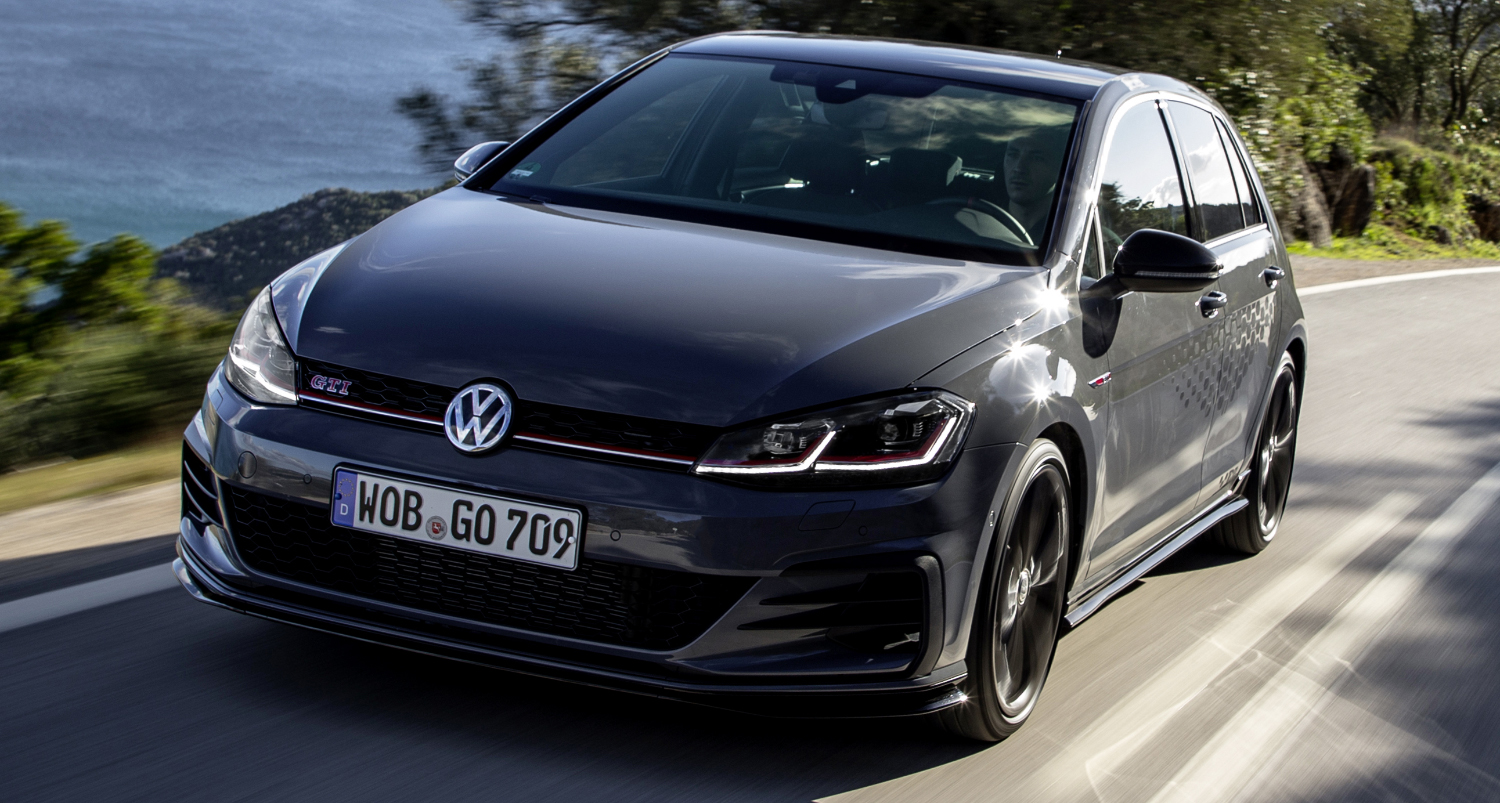
While we wait for the next-generation GTI, a high-performance send-off will be available to Aussie customers. The aforementioned GTI TCR (pictured above) – the touring car-inspired Mk7.5 Golf – is expected Down Under with around 300 units available.
Despite global delays and an expected February 2020 international reveal, the Mk8 GTI is still expected to land locally by Q3 next year.
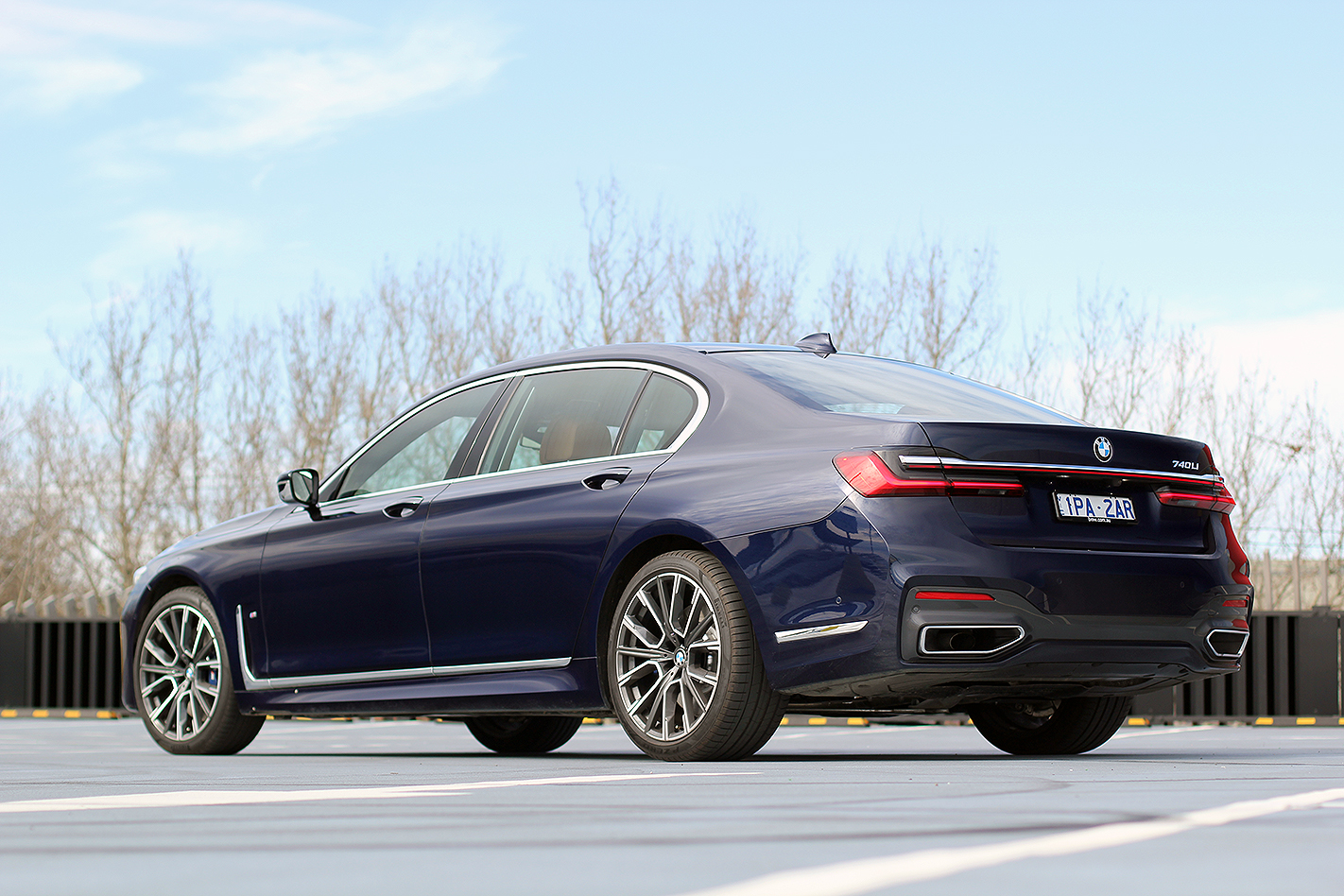
The stretched BMW 7 Series sedan is a very much a niche buy, but its stately ride and extravagant cabin provides plenty of appeal for well-heeled drivers and their passengers. But, limousine services aside, does it still make sense to choose a big luxury sedan over a premium SUV for the daily drive? David Bonnici donned the chauffer hat to find out.
David is the empty nester of the WhichCar team, and while his kids are now old enough to drive themselves he still prefers to look at cars for their practicality and comfort, but is more than happy for performance to create a perfect-world trifecta.
WHAT IS IT?
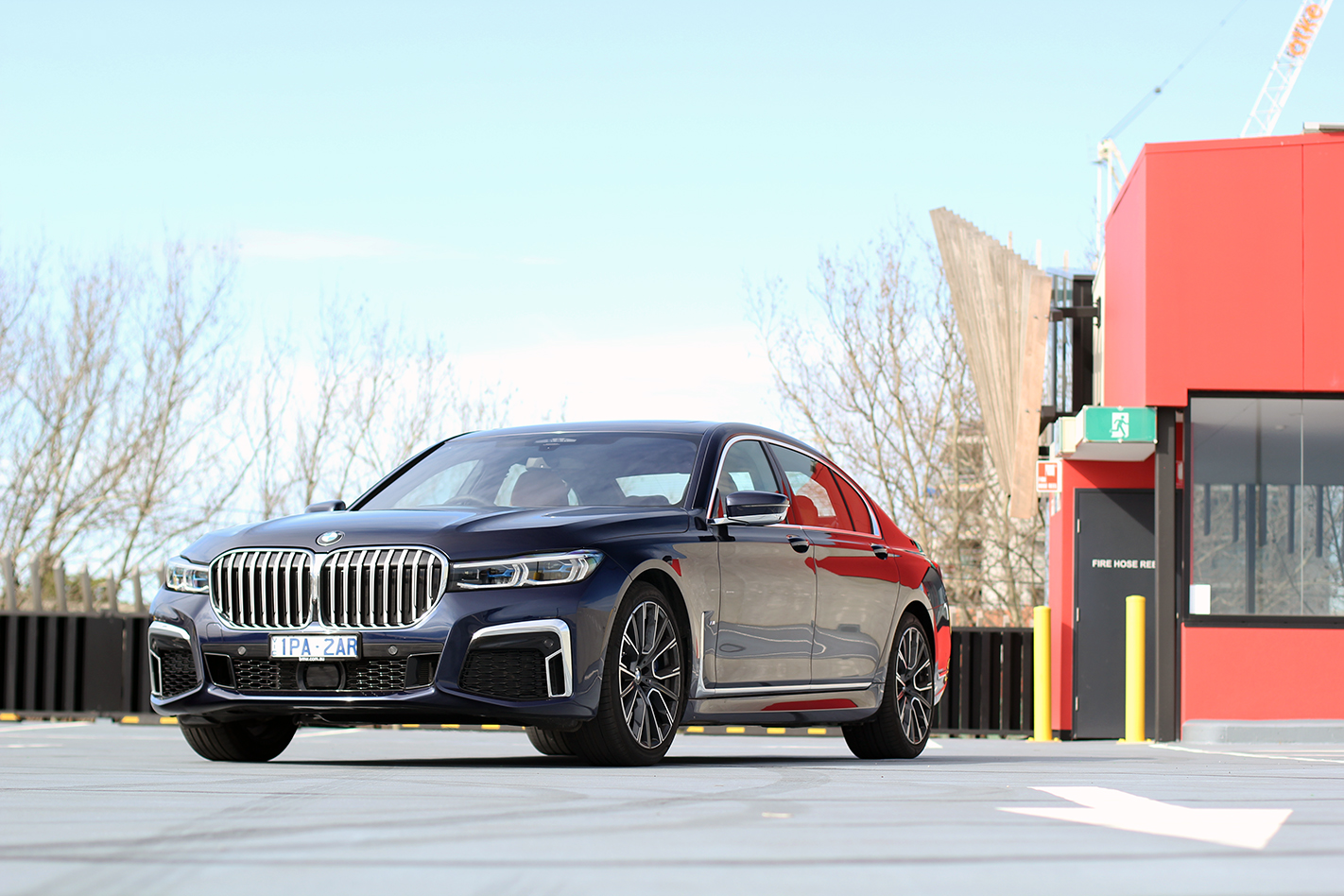
The BMW 740Li is a stretched version of the German car-maker’s large luxury sedan, with a 3.26m wheelbase that’s 140mm longer than the standard car. The ‘short’ version isn’t exactly lacking for space.
The 2019 7 Series has been extensively updated, receiving an all-new look dominated by the bigger-and-bolder ‘kidney grille’; refreshed interior, and the latest infotainment and driver assistance technology.
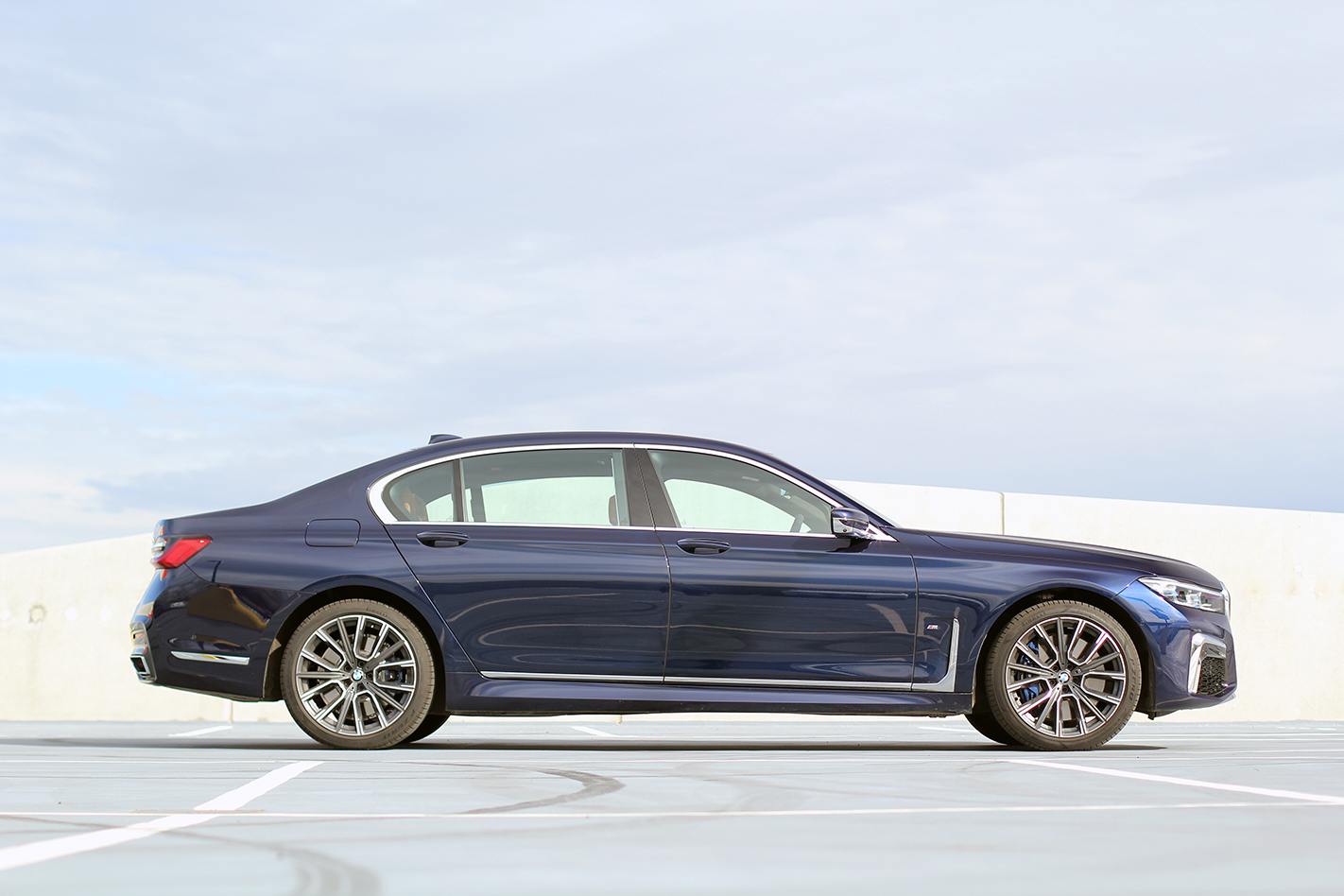
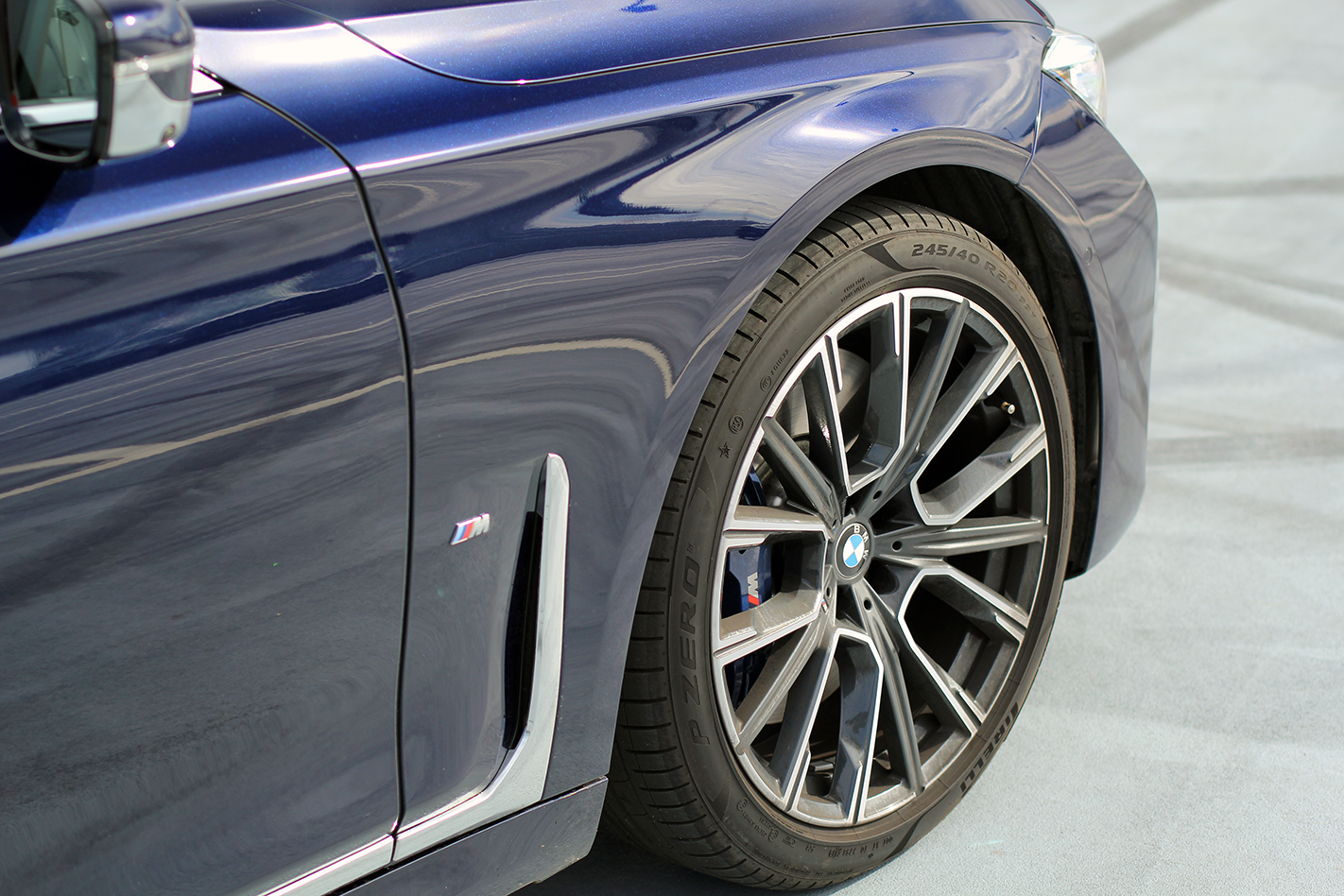
As well as a myriad of standard features, our test car was also equipped with a no-cost optional M Sport Package which includes 20-inch M light alloy wheels, M Aerodynamics Package, and aesthetic highlights. Extra-cost features included Comfort Seats rear ($6500), quilted leather ($500), M Sport brakes ($800) and Tanzanite Blue II metallic paint ($2400) which took the $229,900 base-retail price to $236,400.
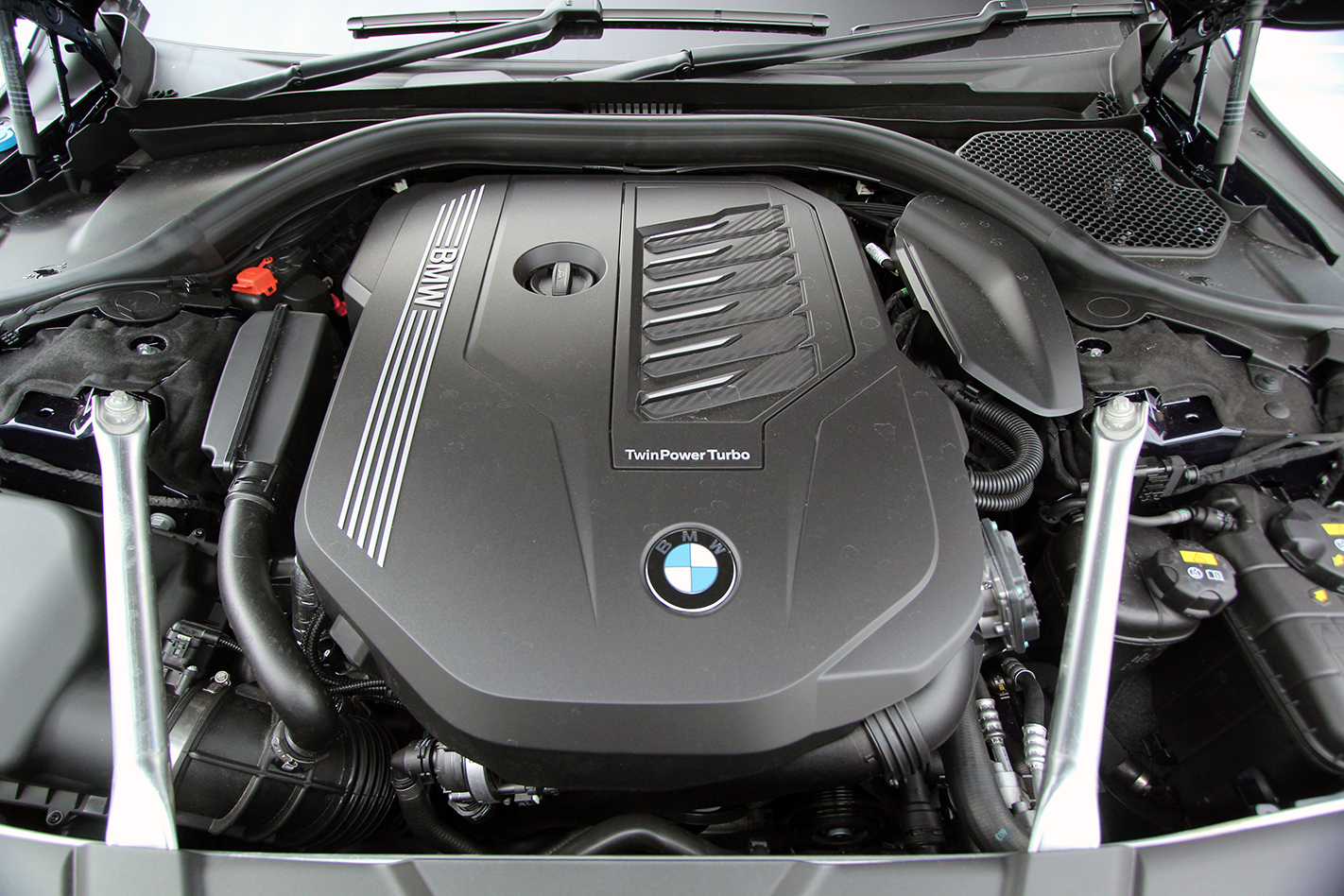
The BMW 740Li’s paddock-like bonnet shelters a 250kW/450Nm 3.0-litre turbocharged inline six-cylinder petrol engine that’s coupled with an eight-speed automatic transmission.
WHAT’S IT LIKE TO DRIVE
This is a car that’s very much about passenger comfort, but the driver is well looked after with multi-adjustable Nappa leather front seats that can be manipulated to feel like they’ve been moulded to fit your body.
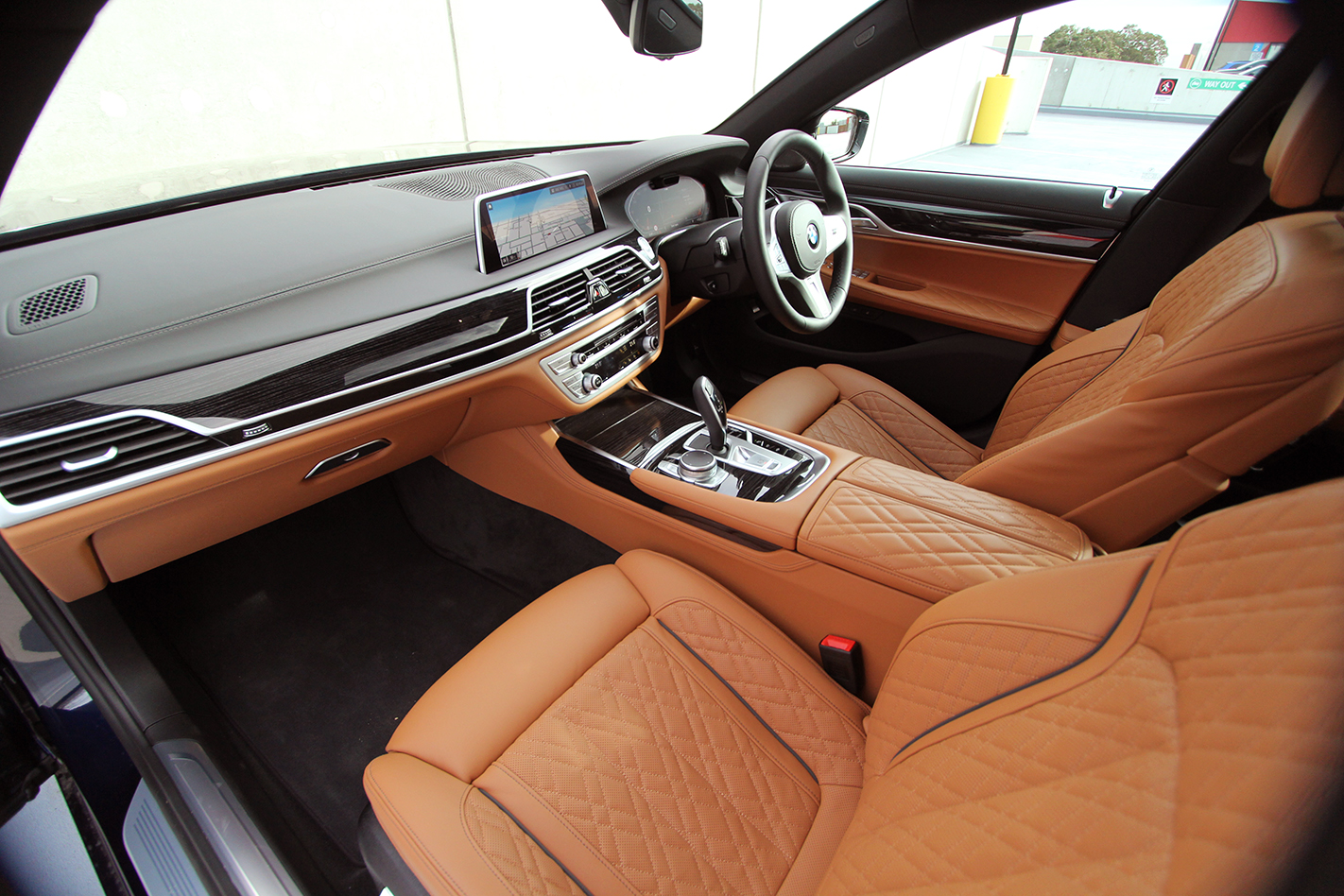
The spacious cabin is virtually identical to the gargantuan X7 SUV, which has received glowing praise for its comfort, ergonomics and aesthetics. All buttons and controllers are well placed, and there’s voice command to help you quickly access certain functions without having to cycle through touchscreen menus.
Displays are fully digital, with a 12.3-inch instrument cluster and a large 10.3-inch Control Display that includes media, navigation and vehicle settings. There’s also a head-up display that shows speed and active cruise control status and, with the push of a steering wheel button, the current track being played through the magnificent Harman/Kardon 16-speaker surround sound system.
Other creature comforts include front-seat, armrest and steering wheel heating, front-seat cooling, four-zone climate control air-conditioning, ambient ionized air with up to eight different scents, and ambient internal lighting with six light-design options.
All this made for a very pleasant experience in the driver’s seat before I even started the engine.
Press the start button and the turbo six-cylinder engine purrs into life doing little to intrude on the cabin ambience – BMW has further improved the 7 Series’ noise levels by with additional sound-insulation throughout the chassis, thicker 5.1mm glass, which only lets the engine noise cut through with a reassuring growl when you stomp the foot down.
But don’t let the silence fool you. The big straight-six can propel the 740Li’s 1.7-tonne mass from 0-100kmh in just 5.6 seconds. It’s great to have such potent performance up your sleeve, but I never felt compelled to use it. Instead, I found myself wanting to drive the big sedan to its luxurious strengths, expressing my inner chauffer with smooth pedal inputs and feeling incredibly relaxed in the process.
That Zen was aided by the silky smooth transmission, adaptive suspension that ironed out most road imperfections, even on the wide 20-inch Pirelli P Zero tyres, BMW’s precise adaptive cruise control and lane-keeping assist, which is also effective in bumper to bumper traffic.
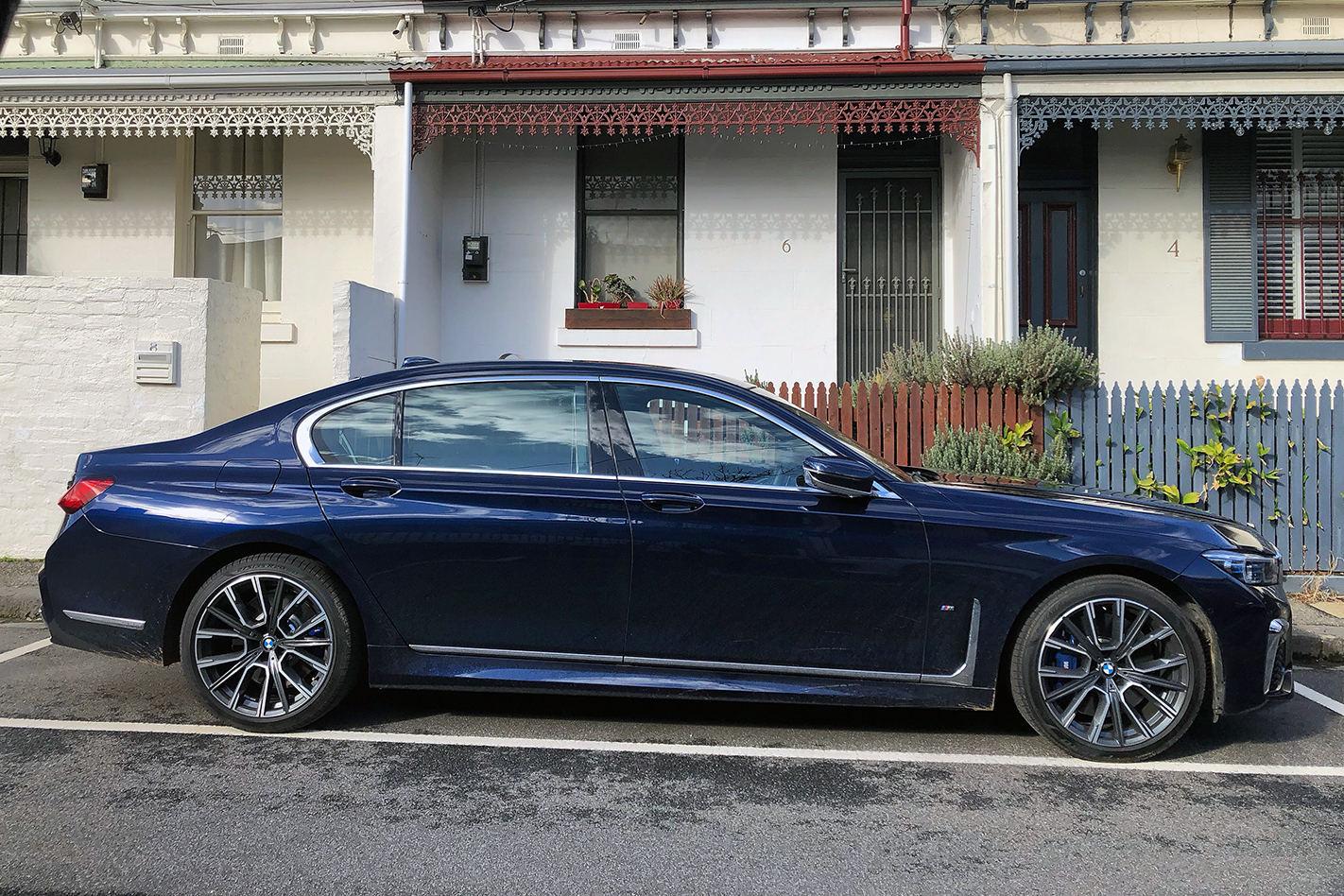
With 5.26 metres between number plates, parking the 740Li can be a challenge. It overhangs some supermarket parking spots and is even longer than my inner-city single-fronted house is wide. But there are plenty of tools to help negotiate your way in and out of tight spots, including: the surround-view camera display; Reversing Assistant, which steers you back out of tight spaces; and even Remote Parking that lets you control the car with your phone so you can manoeuvre it in and out of tight spaces without having to squeeze through the door.
WHAT’S IT LIKE TO LIVE WITH
The beauty of the 740Li is that it spoils the passengers as much as the driver. I spent the weekend alone up front with my wife opting for the plush rear seats – it was quite a sight when she got out of her chauffer driven BMW in the ALDI carpark with shopping bags in hand.
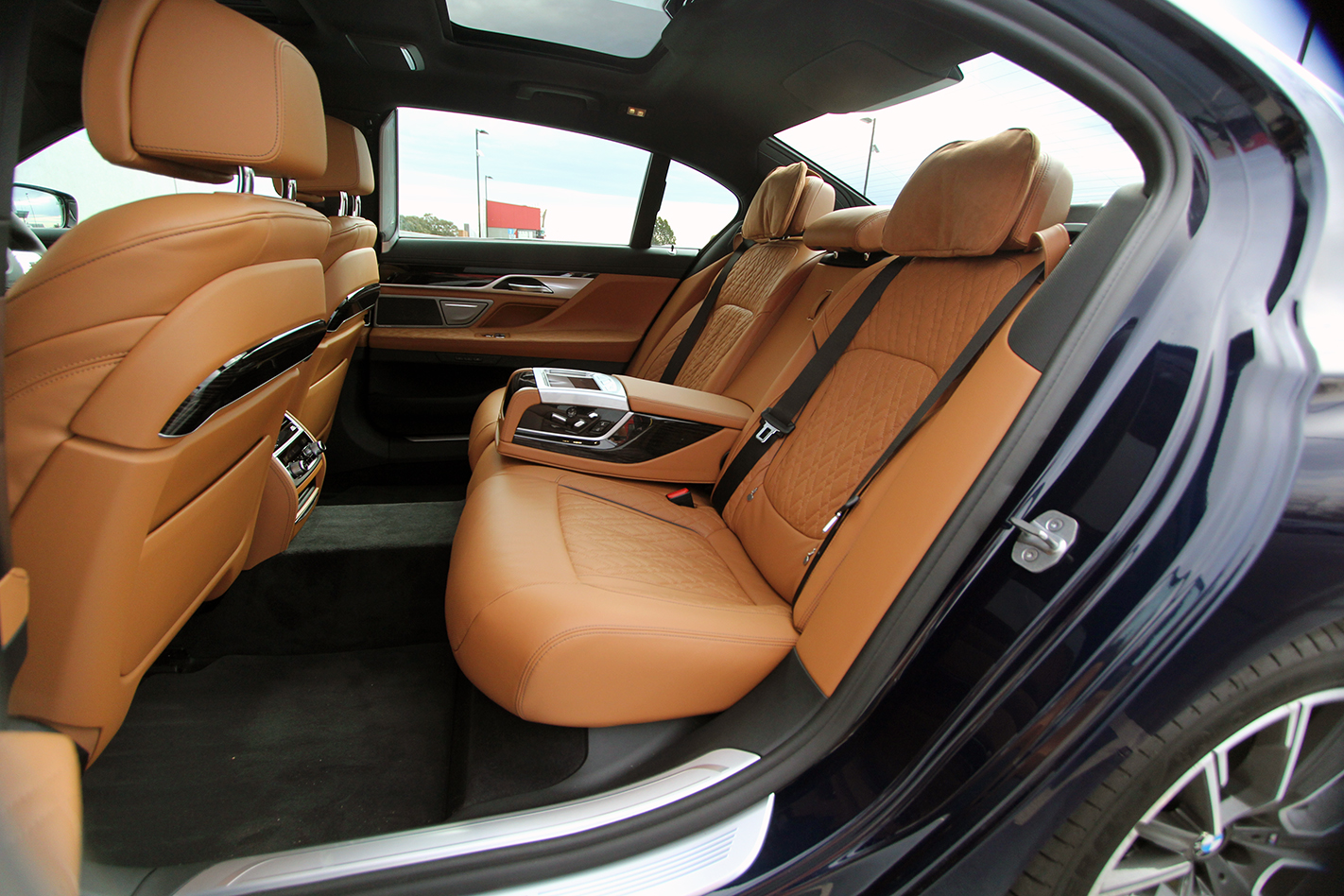
You couldn’t blame her though. The sofa-like rear seats have enough legroom to fit a suitcase between your knees and the front backrest, with the $6500 Comfort Seat package adding electrical adjustability to the 42.4-degree reclining backrest and the soft, velvety Alcantara headrests
The seats can be controlled via analogue buttons or a tablet screen mounted in the centre armrest that also controls the entertainment system – this can be removed so you can still use it should you have to flip the centre console up to accommodate a middle passenger.
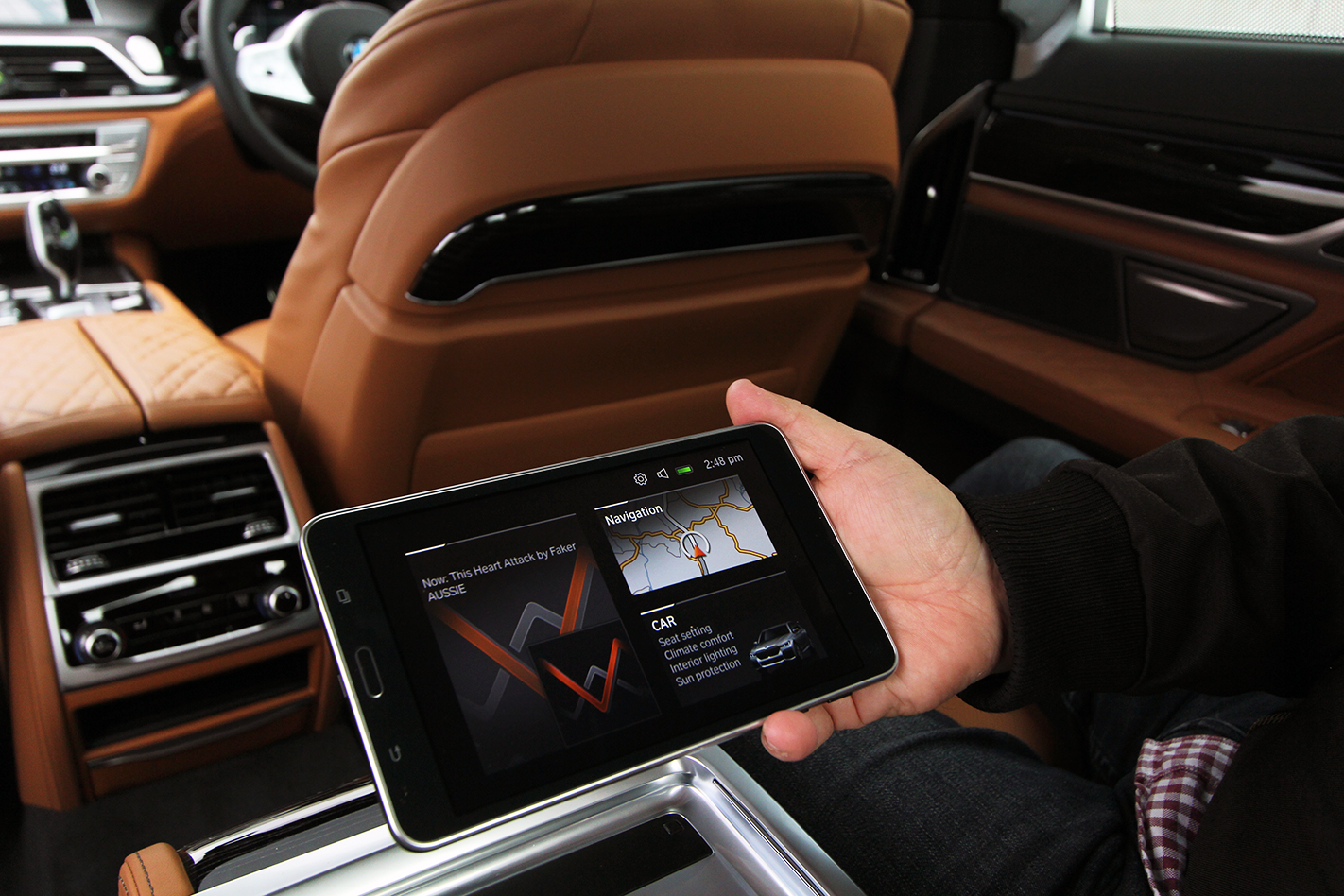
There are also buttons on door armrests to operate the panoramic sunroof and power-operated rear-door and back window sunshades.
While it’s a huge car, it’s at its best as a four seater, but a fifth person in place of the centre armrest will be comfortable enough, particularly when it comes to leg and shoulder room.
The doors open wide for elegant entry and egress, and the powered boot lid opens to a 515-litre boot space that will hold four suitcases.
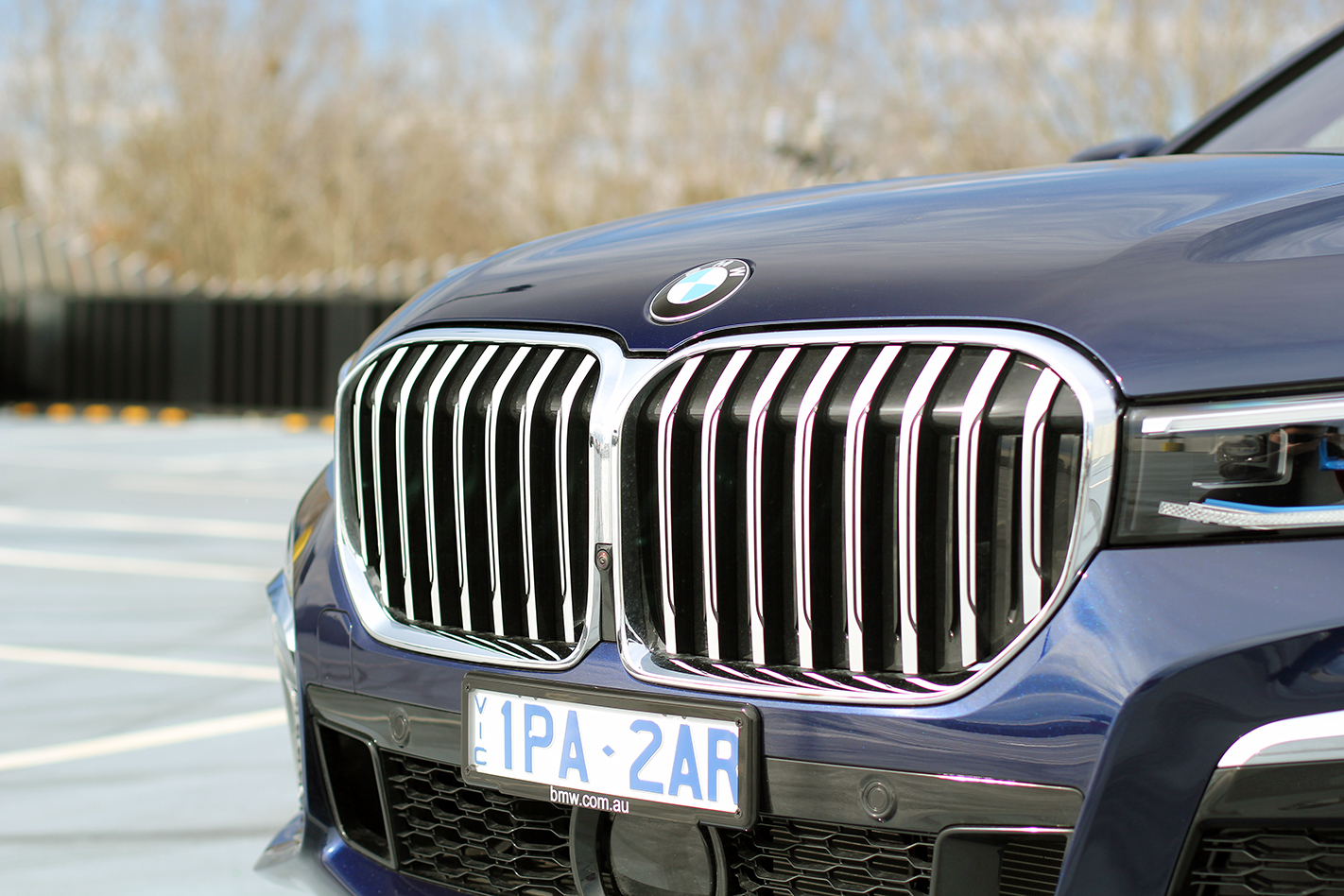
The 740Li’s exterior exudes bold sophistication thanks to daring styling touches, M Sport Package and enlarged kidney grille. The new grille treatment is proving decisive among the BMW faithful, but I reckon it enhances its flagship sedan’s presence.
If you can afford the 740Li you’re probably not too worried about fuel prices, though limousine operators would be pleased to know it has a relatively modest official combined fuel consumption of 7.9L/100km. In the week I drove I averaged about 10.5L/100km, though the bulk of this was city driving.
The BMW 7 Series comes with a three-year, unlimited kilometre warranty.
IS IT WORTH THE MONEY?
This is a lot of car and so it should be for $229,000 before options, and on-road costs of which $55,215 is made up of GST and Luxury Car Tax. Just $700 separates it from its main long-wheelbase luxury rival, the Mercedes-Benz S450 L ($230,600) and you’ll get about $10,000 change by opting for the Audi A8 L 55 quattro ($210,000).
All are similarly powered and equipped, and offer the same levels of comfort and prestige, so if your preference is for the BMW badge the decision is a simple one.
It’s only when you enter the BMW showroom that you might end up having second thoughts, with the striking 3.0-litre turbodiesel powered X7 30d SUV (which is essentially a high-riding 7 Series) priced from just $119,000. Spec it up with the M-Sport pack and other options to bring it closer to the 740Li’s standard kit and it will cost about $143,050, which brings a hell of a lot of metal, glass and leather and enough change to buy a BMW 330i sedan with options.
PROS: Cabin space and comfort; technology; interior fit and finish; gutsy twin-turbo six-cylinder engine
CONS: Awkward in car parks; cost compared to premium SUVs
WHAT ARE THEY?
Skoda’s Kodiaq large SUV and Octavia sedan and wagon models tussle with one another as the company’s best-seller from one month to the next, and it’s easy to see why. Both offer a refreshing departure from the norm, excellent features, refined build quality and engaging dynamics without asking a premium for it.
Supply constraints might explain why the Skoda Kodiaq is only just ahead in Australia’s severely SUV-skewed market, but both are still worth a look and have more in common than you might imagine including the price. That said, the genetically related pair are also very different in other ways, too.
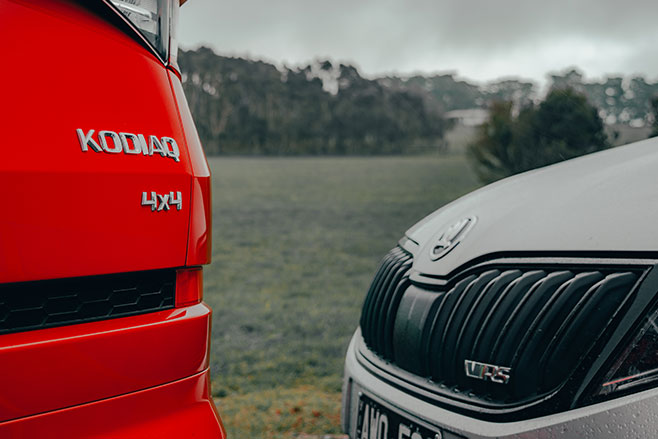
We pitched the Kodiaq 132 TSI Sportline against the Octavia RS245 wagon to see if the latter is still a compelling option that SUV intenders should consider in Australia’s SUV sales tsunami. Both are up for an identical $46,990, so which gets you more for your money?
WHAT ARE THEY LIKE TO DRIVE?
The Octavia RS is a little known driver’s gem that deserves more recognition, praise and sales than it gets. With the same 180kW turbo petrol engine as the Volkswagen Golf GTI driving the front wheels, it is fast in a fantastically tractable manner.
Add to that a wonderful chassis that manages to be comfortable and rewarding all at the same time and we are already on to a winner – even before you start to look at it practicality package.
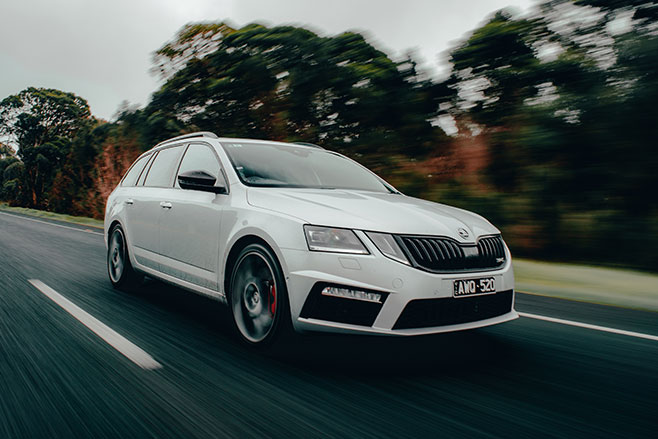
The first thing you’ll notice jumping into its spacious cabin is the beautifully appointed Alcantara (synthetic suede) sports seats that offer a supportive and ergonomically perfect driving position, matched to a perforated leather steering wheel that is equally comfortable.
With so much torque directed through just the front wheels and the relatively large body to haul around, finding traction with full acceleration off the mark can be tricky, especially given the excellent urgency with which the seven-speed dual-clutch automatic transmission responds to hard throttle work.
Once up and running, however, the Octavia is a true joy to pilot. Hit the driving mode button until the large touchscreen says Sport and it gets even better, with a glorious note piped through to the interior and boosted steering and accelerator sensitivity.
There is little that can touch the Octavia driving experience for the same money.
You might think that swapping straight over to the higher-riding and less powerful Kodiaq might be an anticlimax, then, but you would be wrong. It has one of the most lively and sporty chassis and suspension set-ups in the large SUV world and is surprisingly rewarding to push over some interesting roads.
Roll is pleasingly absent and the steering has all the feel of the Octavia wagon, while the Sportline is equipped with an interior that is every bit as lovely as the RS – albeit dialled back to nine on the sporty spectrum.
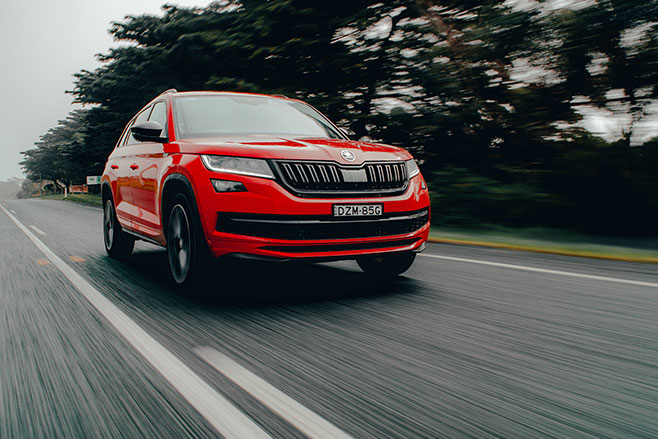
Where it can’t keep up though – literally – is with the Octavia’s power. The Kodiaq also has a 2.0-litre turbo four-cylinder, but it’s turned to develop 132kW and 320Nm. That output is certainly not inadequate and more than enough to serve day-to-day duties, but it is the difference between satisfactory and quick.
Where the Kodiaq has a distinct advantage, however, is in its permanent all-wheel drive transmission which boosts traction for fast road blasts and wet weather, as well as adding a measure of off-road ability that we are yet to assess.
Despite its performance shortfall, the Kodiaq is still a treat to drive and uncommonly good in the large SUV segment. You’ll have to spend a lot more to find something that steers as well and also offers seven seats. It can’t compete with the outright performance proposition of the Kodiaq but it’s still very easy to recommend.
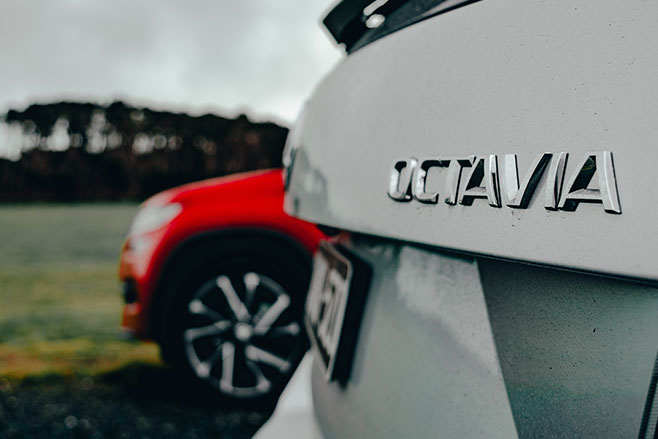
There’s also a Kodiaq RS on the way so watch this space…
WHAT ARE THEY LIKE TO LIVE WITH?
Both of these vehicles offer a seriously attractive practicality proposition but the Kodiaq does steal back some points from the Octavia in this particular battle.
Not only does it have seven seats (the third-row is a useable feature – not the gesture of some other seven-seaters), it has an all-wheel-drive system that has been designed to offer optimum traction on and off the road. These are two big selling points.
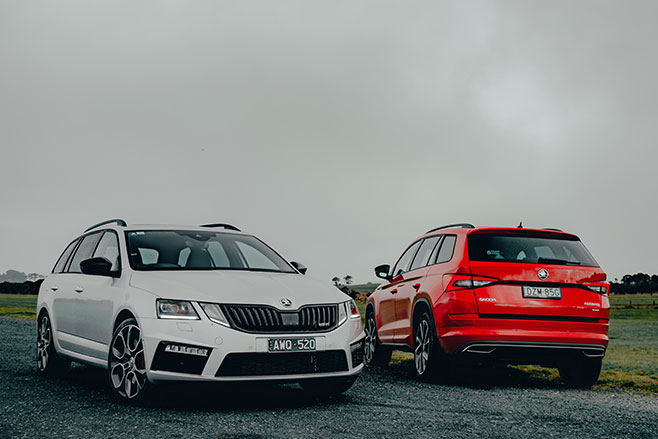
It is also littered with delightful practical features that will have many other manufacturers kicking themselves and saying “why didn’t we think of that?”. Examples include a boot light that pops out and turns into an LED torch, neat little blankets that stow in pouches on the second-row seatbacks, brilliant door-edge protectors that pop out to prevent car-park damage and umbrellas that hide in each front door – yes, we know Rolls-Royce did this first.
The Kodiaq’s cabin is also full of handy storage pockets that you’ll keep finding over the first months of ownership.
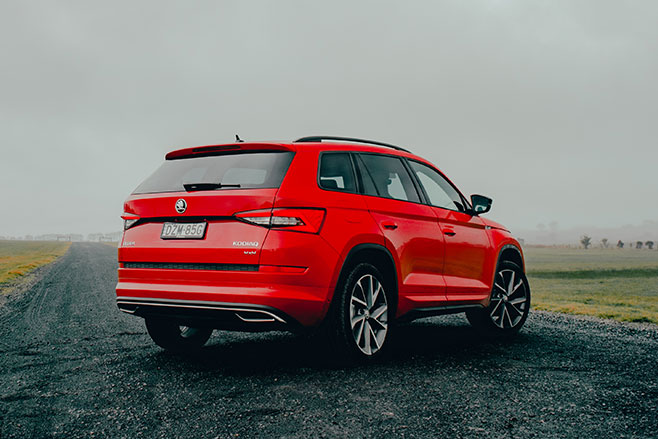
Speaking of storage, its boot can swallow up to 2005 litres of things with the two rear rows of seating stowed, or a still-not-small 630 litres with its five seats in place.
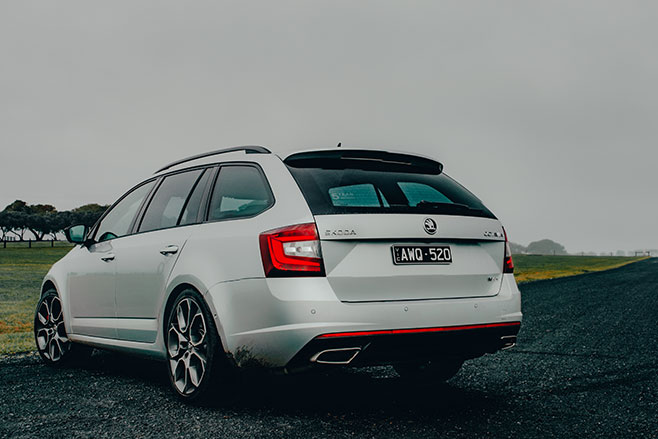
Speaking of spacious cabins, the Octavia wagon punches hard here, too. With all five seats filled, there is still a 588-litre boot at the back and it can expand to 1718 litres with the seats flat. That’s way above the segment average and only serves to highlight the practicality of wagons in the context of SUVs. It even manages to do so without bloating its lovely exterior looks.
With its higher ride-height, the Kodiaq offers the improved view of the surroundings that many SUV proponents (and their smaller passengers) value so highly, but the Octavia’s lower stance is just one of its many aspects that encourages drivers to take the less direct route.
The Kodiaq also has a brilliantly innovative tow bar which is hidden out of sight behind the rear bumper and locks down into place with the press of a button in the boot. To hide it away again you simply press the button again to unlock and tuck it back up again. You’ll never see a Kodiaq with an ugly tow bar when it’s not towing, or a bumper that’s been hacked around to accommodate it.
Both feature a power tailgate, excellent manoeuvring features including a high-resolution reversing camera and parking radar, while the Kodiaq will self-park and there are keyless locking and engine start for both, too.
The Octavia’s most recent update also adds the same beautiful all-digital dashboard display as the Kodiaq, which is endlessly useful and yanks the relatively old model right into the 21st century. It really is hiding its age admirably, even among its more youthful stablemates.
Like all Skodas, the Octavia is offered with a five-year unlimited-kilometre warranty, a year of roadside assistance, and long 15,000km service intervals. The first service costs $331 and rises to the most expensive bill of $624 at the 60,000km mark.
Like the Octavia, the Kodiaq’s first service is $331, but rises to $908 for the scheduled 60,000km maintenance work.
ARE THEY WORTH THE MONEY?
In a word – yes. No matter which you choose, both offer a compelling option that packs in a lot for the cash.
Both models will appeal to drivers that want something that stands out for all the right reasons, but without having to pay luxury car prices. In fact, even in the company of some far more premium offerings, this brace of Skodas manages to offer a level of exclusivity.
Perhaps the only black mark against their impressive report card surrounds resale value. As a relatively lesser-known brand, you’ll have to work a little harder when it comes to replacing either, but that applies particularly to the Octavia.
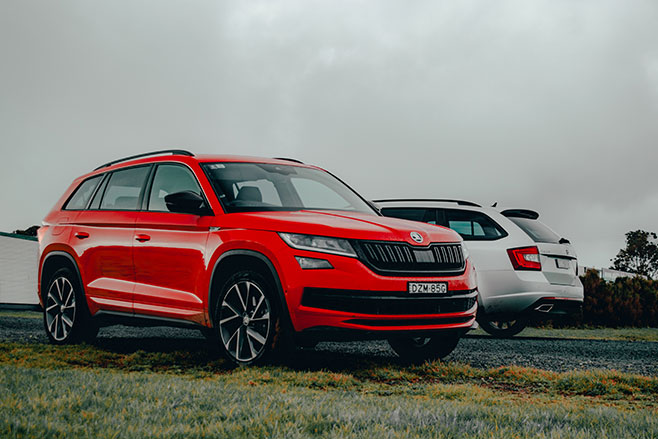
Which one is right for you, if either, comes down to a simple matter of priorities. Both offer a level of driving enjoyment that scores highly in their respective segments, but with the true performance credentials, the Octavia is the car that puts dynamics just ahead of practicality.
It is enormous fun to drive but won’t frustrate you with neurotic racehorse character traits when performing workhorse duties.
The Kodiaq, however, is the Skoda that sneaks ahead with its practicality package, while not neglecting the driving experience. It is still fun to drive with a chassis that is almost as sharp as the Octavia’s, if lacking the power to match it, but offsets that performance deficit with even more bountiful space and some all-terrain promise.
If you’ve got a smartphone and you drive a car, what’s better than combining the two into a force for good?
As Android-powered smartphones gain more market share, Google is attempting to match the runaway success of the Apple CarPlay format with some strong plays of its own.
MORE
- Adding Apple CarPlay to an older car
- Apple CarPlay versus Android Auto
- Google’s next move: is Apple CarPlay done?
The upgrade brought new app connectivity, greater integration with Google Maps and the related Waze map app, as well as Google’s own music app Play, plus Spotify, Messenger, podcast apps and many more.
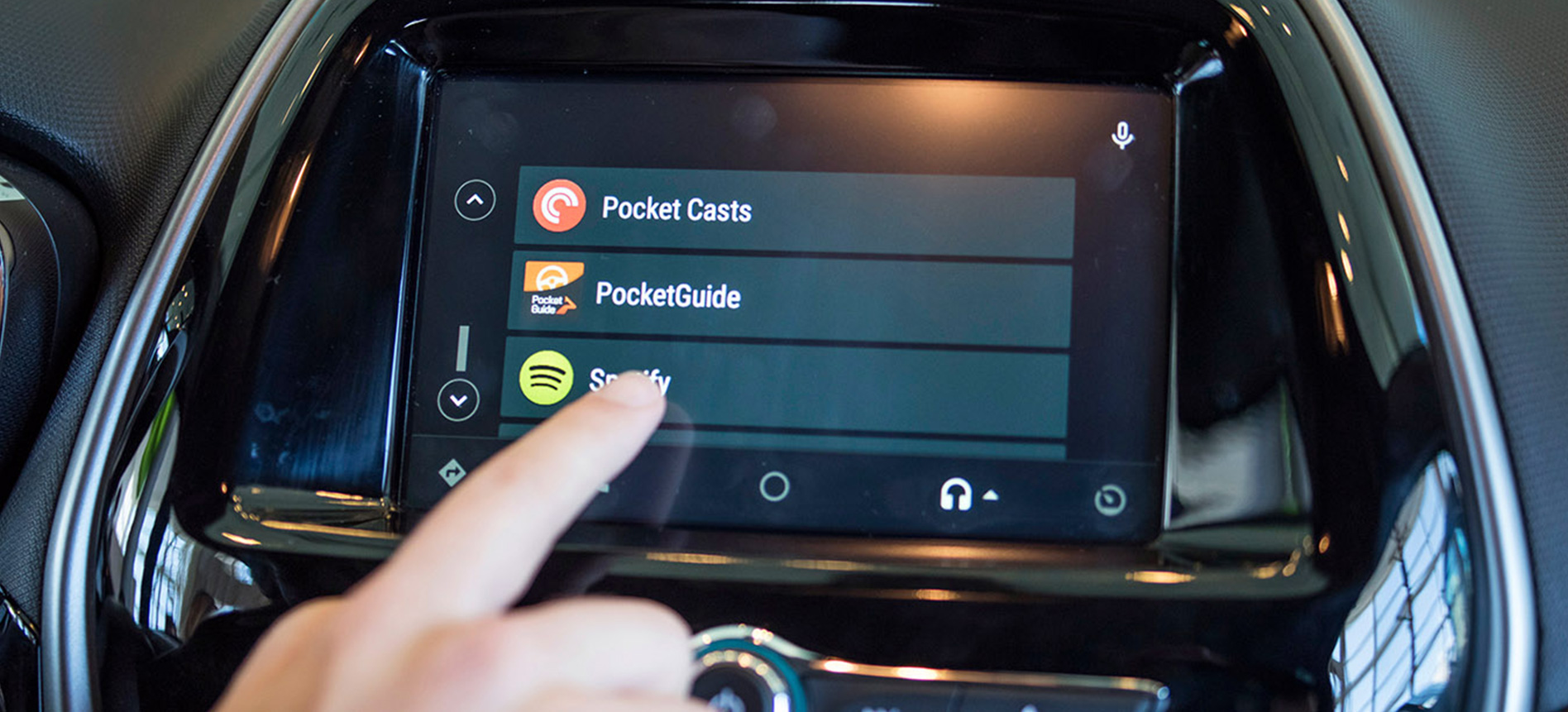
This is great if your car can connected to Android Auto. But if your ride is a few years old, it’s likely your multimedia system may not be ready for smartphone mirroring. Sure, you might have Bluetooth, but unless you can see a screen pop up you don’t have it out of the box.
If you’re about to update your car, then odds are that it’ll offer smartphone mirroring – it’s available on cars as cheap as the entry level Kia Picanto. If, however, you’re keeping your car for another couple of years yet, there are a couple of sneaky ways to get Android Auto on board your rig.
Replacing the head unit
Back in the day, the savvy automotive audiophile would swap the standard AM/FM radio in their car for one with a cassette deck, or even a CD player. And if you were really cashed up, a ten-disc CD changer in the boot was the duck’s guts.
The job of swapping head units, though, has become much more difficult over the years, as car makers redesigned centre consoles and dashboards to better integrate newer screen-based multimedia systems.
However, there are still a lot of cars out there that still use the simpler DIN style of installation, which allows a new head unit to simply slot into a pre-existing hole.
DIN is named after the German standards body that defined a DIN slot as being two inches by eight inches, or 5cm by 20cm. This meant that all cars would be equipped with a universally standard-sized radio unit.
However, if your car has a more integrated system, modern installers have worked out ways to retrofit a system that can run Android Auto and make it look factory.
“It’s the most common job we do these days,” said Clinton Venaglia, who owns InCar Installations in the southern NSW city of Wollongong. “Some brands like Ford and Holden really headed down the integrated path a few years ago, but even so we can still install a system in most modern cars.”
Toyota, for example, makes things relatively simple by using double-DIN (think two DINs stacked on top of each other), while Mazda is a little more difficult.
Integrating systems like reversing cameras into the new units isn’t a problem either, according to Vengalia, who estimates the average cost of adding an Android Auto system to a car is around $700.
A new Android Auto head unit is generally based around a colour touch screen that’s built into the unit. It either remains in place permanently, or folds away and retracts into the dash for greater security and a cleaner look.
You then simply plug your phone in via an USB cable, and you’re set to go.
Prices for head units vary wildly, from around $400 at the entry level to more than $2000 at the top rung.
While home installation of an Android Auto system isn’t especially difficult for technically savvy types, we would highly recommend that a professional installer does the work. It’s all too easy, for example, to leave off a crucial earthing strap or not have the correct wiring module to make your new head unit work properly with your car.
As well, not all head units are compatible with all cars. You might lose the ability to control your stereo from your steering wheel controls, for example. It will cost a bit more, but a reputable installer will more likely help you if something goes wrong down in the future.
OEM retrofits
Some car makers that have lagged behind Android Auto integration are attacking the issue head on by offering a retrofit kit to give owners the full Android Auto experience. Mazda, for example, is offering an Android Auto upgrade kit for customers whose cars are equipped with its MZD Connect system for around $500.
The most recent update to the CX-9 was the first mainstream Mazda to get Android Auto as standard; the BT-50 ute scored it first because of its connection with the Ford Ranger.
“It will be available for all customers with an MZD Connect system that first went on sale with Mazda 3 in early 2014,” said a Mazda spokesperson last year.
Hyundai, too, has offered software upgrades for owners of their cars in order for them to access Android Auto. However, it hasn’t been the smoothest of rollouts.
Hyundai i30s from 2015 were largely able to accept the upgrade, but conversely, owners of top spec SUVs like the Santa Fe and Tucson Highlander have been told that the in-built GPS system aboard their cars prevent the installation of the Android Auto system.
Bluetooth
Is your car too old to be retrofitted Android Auto? Then Bluetooth connectivity will still allow you to stream music and podcasts through the car speakers. As well, map apps like Google Maps will send audible instructions over the sound system if you’re listening to streaming music.
And if that fails, consider a good old cable connection! A simple 3.5mm cable connection between your phone’s headphone jack and your head unit will give you sound.
However, more and more phones are being produced without the 3.5mm headphone jack, which means it’s Bluetooth, Android Auto or the good old FM airwaves.
NOW HERE’S HOW TO GET APPLE CARPLAY FOR YOUR OLD CAR
The only ‘Porsche’ Type 64 in existence went under the hammer last weekend at the prestigious Monterey car auction in California – but to absolute uproar in the room once the gavel tapped down.
It was one of the most farcical car auctions in recent history.
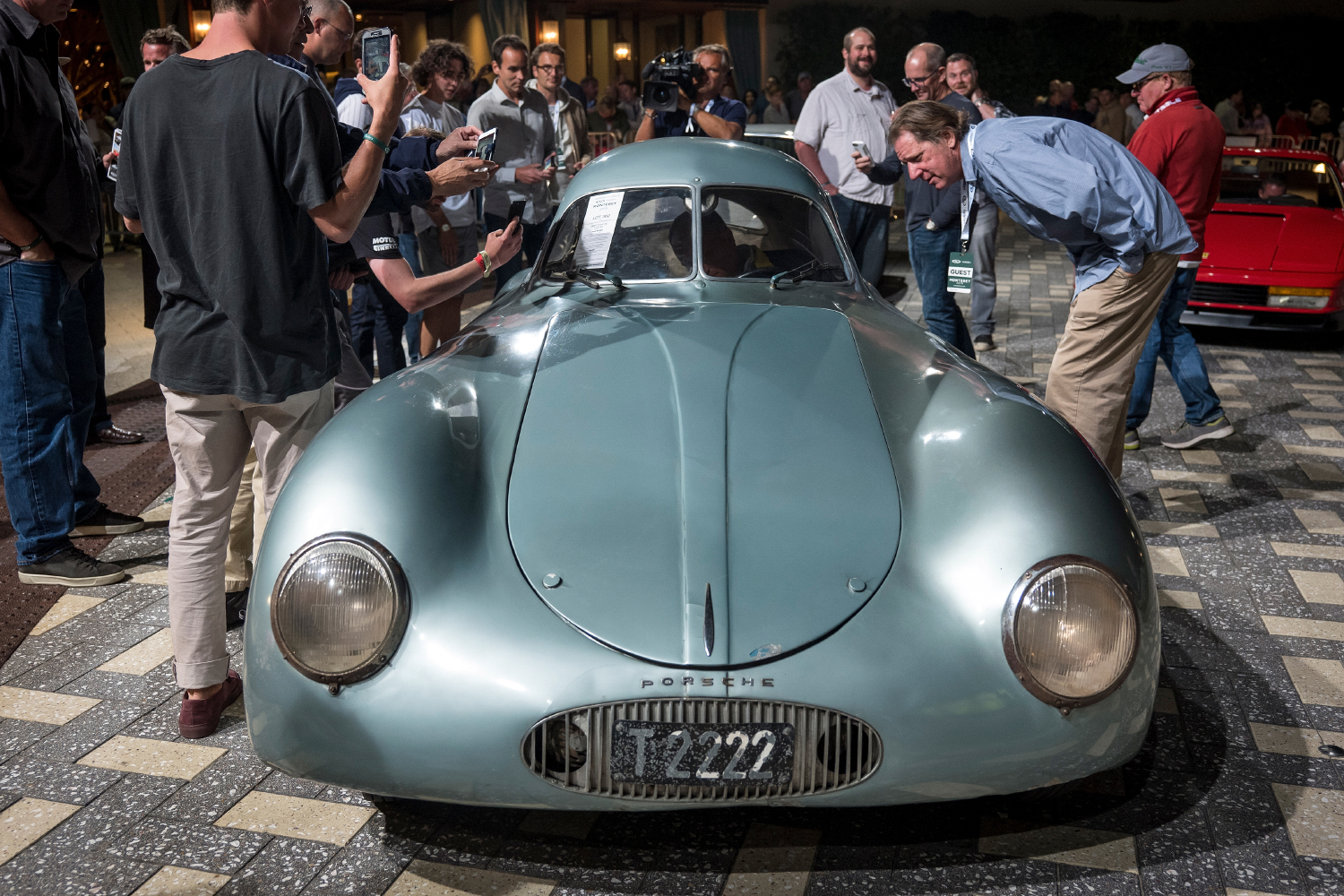
Auction house RM Sotheby’s was charged with selling the vehicle built by Ferdinand Porsche in 1939, one of only three produced. Despite Porsche lettering across the front – which Porsche only later added – the car is considered by most collectors as not a Porsche product, though its design has influenced generations of the German brand’s sports cars since.
With a keen crowd in the room at Monterey and expecting a winning bid of around $19-$22 million, there were laughs, cheers and claps as the bidding opened at a staggering $30 million on large screens around the room. RM Sotheby’s auctioneer commenced proceedings and almost immediately the bidding was hot, catapulting to $40 million, $50 million and then $60 million.
At this point, the room was abuzz, and many were flabbergasted at the price, which was well beyond the money many collectors were willing to pay for the machine. Then another bid came in and the price around the room flew up to $70 million, at which point the auctioneer with a thick accent declared there was a problem; the bidding was at $17 million, not $70 million.

“It says $70 million guys, its 17, the bid is at $17 million dollars,” said the auctioneer. “It might be my pronunciation it’s a bit hard to hear.”
The bidding came to a halt as the crowd booed and many left the room. Without another offer the car was eventually passed in, not meeting the sellers reserve.
It was a massive blunder, some suggesting what happened was possibly a prank gone wrong – if not a highly unfortunate mistake that possibly put cold water on keen buyers.
As expected in this modern age, many of the room had their phones and recorded the entire event, which can be watched above.

