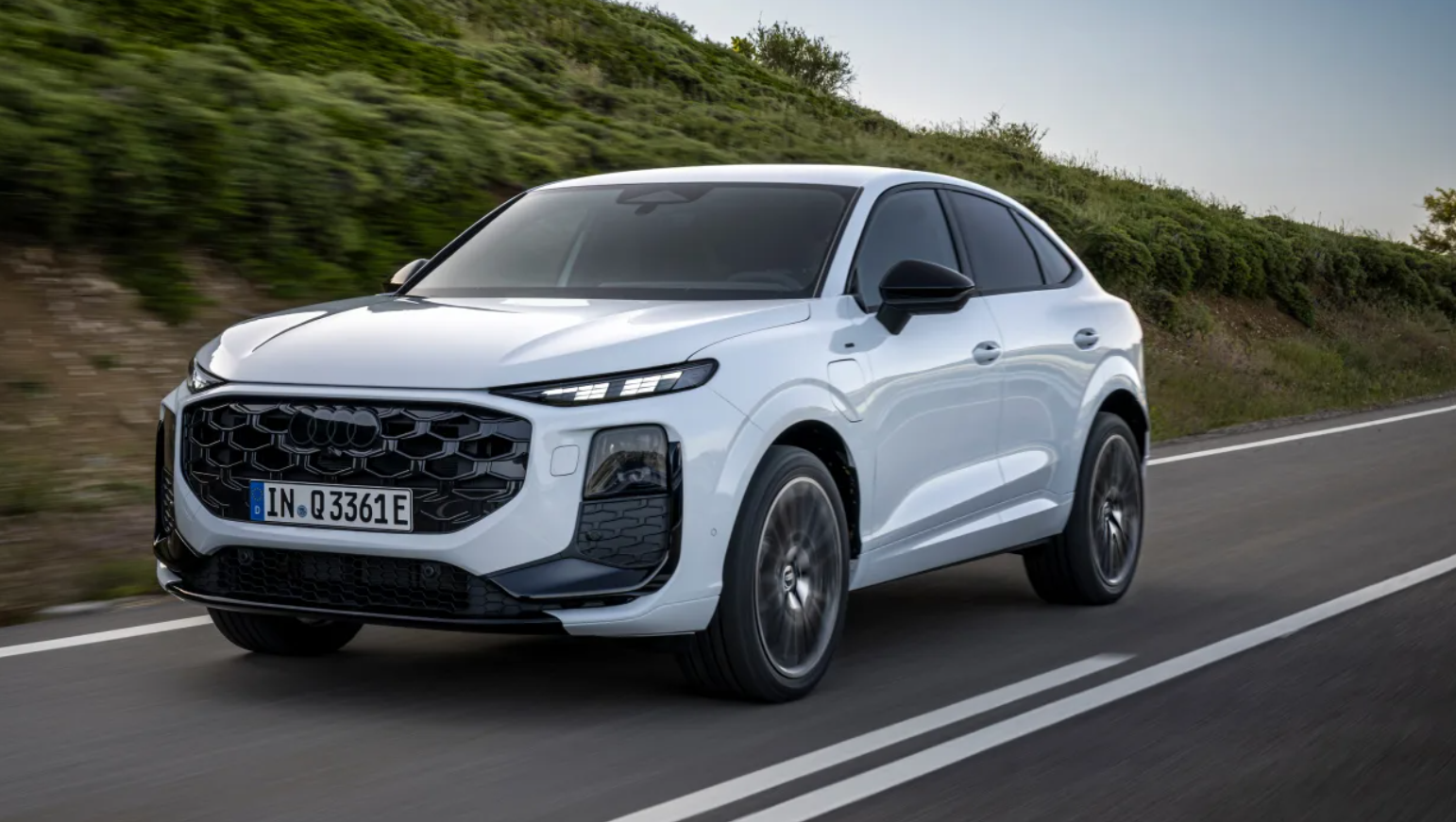
Audi has unveiled the Q3 Sportback, a swooping, coupe-styled version of its popular compact SUV. Arriving later this year, it will sit alongside the standard Q3 in showrooms, offering a more stylish option in a segment where rivals include the BMW X1 and X2, as well as the Mercedes-Benz GLA.
The Sportback variant carries a modest price premium of around $2,925 over the regular Q3, which means UK pricing is expected to start from roughly £38,300 (A$74,700). Audi is counting on its distinctive looks and expanded powertrain line-up to attract design-conscious buyers who also want efficiency and practicality.
The main difference between the Q3 SUV and the Sportback is its revised roofline. The body sits 28mm lower, with slimmer side glass, a new rear window, and a more sloping roof for a coupe-inspired silhouette. Audi’s latest design language is evident across the model, with a broad grille, sculpted headlights, and large alloy wheels. Buyers will also be able to option advanced Digital LED headlights and OLED tail-lights.
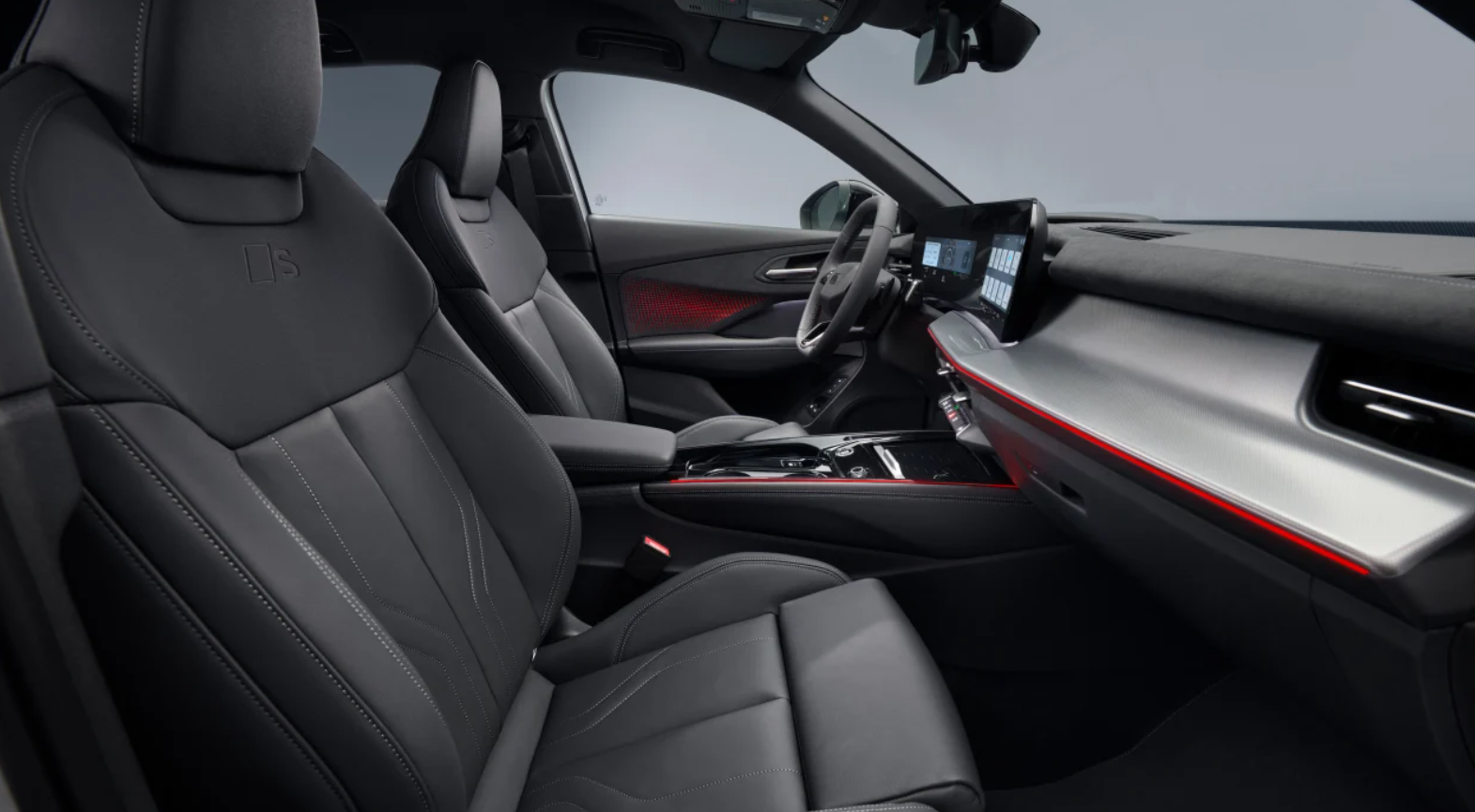
Inside, the Sportback mirrors the new Q3’s layout. A curved display houses an 11.9-inch digital driver’s cluster and a 12.8-inch central touchscreen, sitting within a streamlined dashboard that integrates air vents and shortcut buttons. A new steering column-mounted gear selector frees up space in the centre console, which now features additional storage and a wireless charging pad.
Practicality remains competitive, with 488 litres of boot capacity that expands to 1289 litres when the split-fold rear bench is lowered. Plug-in hybrid versions sacrifice the underfloor compartment – normally ideal for storing charging cables.
A broad range of engines will be offered from launch. Highlights include a plug-in hybrid pairing a 1.5-litre petrol engine with an electric motor and 25.7kWh battery. It produces 200 kW and offers up to 73 miles of pure-electric driving, supported by 50kW DC charging.
Other choices include 1.5-litre mild-hybrid petrol with 110 kW, two 2.0-litre turbo petrols with 149 kW or 203 kW, and a 110 kW 2.0-litre turbo diesel aimed at long-distance drivers. Petrol engines are front-wheel drive as standard, while the higher-powered 2.0-litre units come with quattro all-wheel drive and a seven-speed dual-clutch gearbox.
Suspension has been slightly revised to suit the Sportback’s lower stance, and adaptive dampers will be offered for those seeking greater ride flexibility.
MG Motor Australia has confirmed that pre-orders are now open for the MGU9, the company’s first foray into the country’s highly contested ute segment. Customers can secure their vehicle online or through dealerships, with early buyers receiving a $1000 MG OEM accessory package.
Kevin Gannon, Business Director ICE at MG Motor Australia, said the launch of the MGU9 represents an important milestone for the brand: “The MGU9 has been designed for and tested on Australia’s demanding roads and trails to deliver the capability drivers expect, while offering the innovation, comfort and value that MG has become known for.”
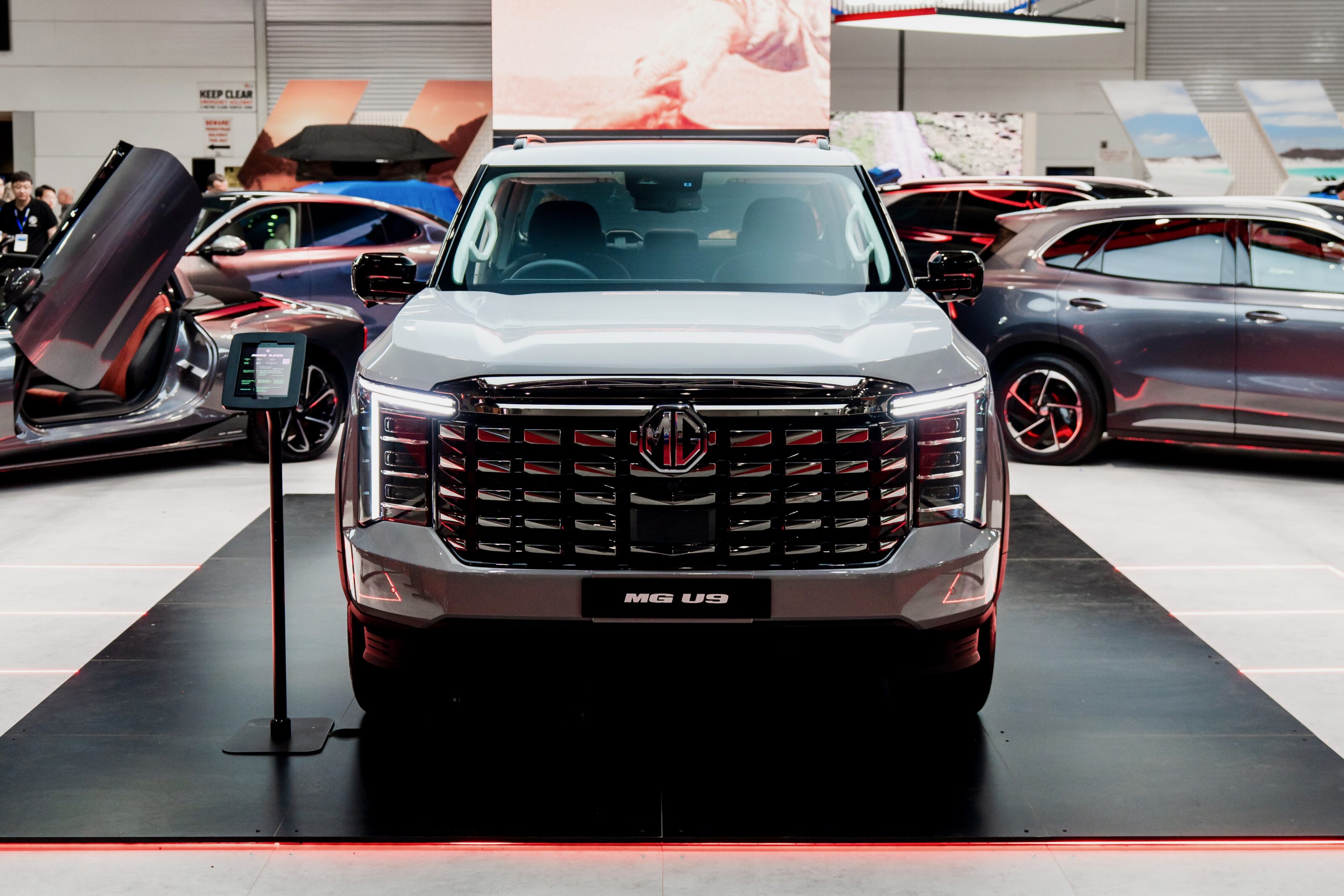
The MGU9 has been developed to combine traditional ute toughness with the refinement of a modern SUV. Built on a robust chassis and tuned for local conditions, MG says it balances on-road comfort with genuine off-road durability.
Key engineering highlights include an advanced multi-link rear suspension system, an 8-speed transmission paired with a 4WD drivetrain, and a 3.5-tonne towing capacity. Together, these features aim to provide both heavy-duty practicality and confidence-inspiring performance on any terrain.
Inside, the MGU9 places a strong emphasis on comfort and driver wellbeing. A spacious cabin features high-quality finishes, supportive seating, and thoughtful touches designed to reduce fatigue on long journeys. Practical elements include an easy-access tub and a discreet foldable rear step to simplify loading and entry.
The arrival of the MGU9 marks MG’s boldest product expansion in Australia to date, signalling its intent to compete with established rivals in one of the nation’s most iconic vehicle categories.
Customers can pre-order the MGU9 now, either online or through their nearest MG dealership.
Hyundai has unveiled its refreshed 2026 Tucson line-up, delivering price cuts of up to $2,500 across the range, alongside a stronger emphasis on hybrid power and new convenience features aimed at keeping the popular SUV at the sharp end of the medium SUV segment.
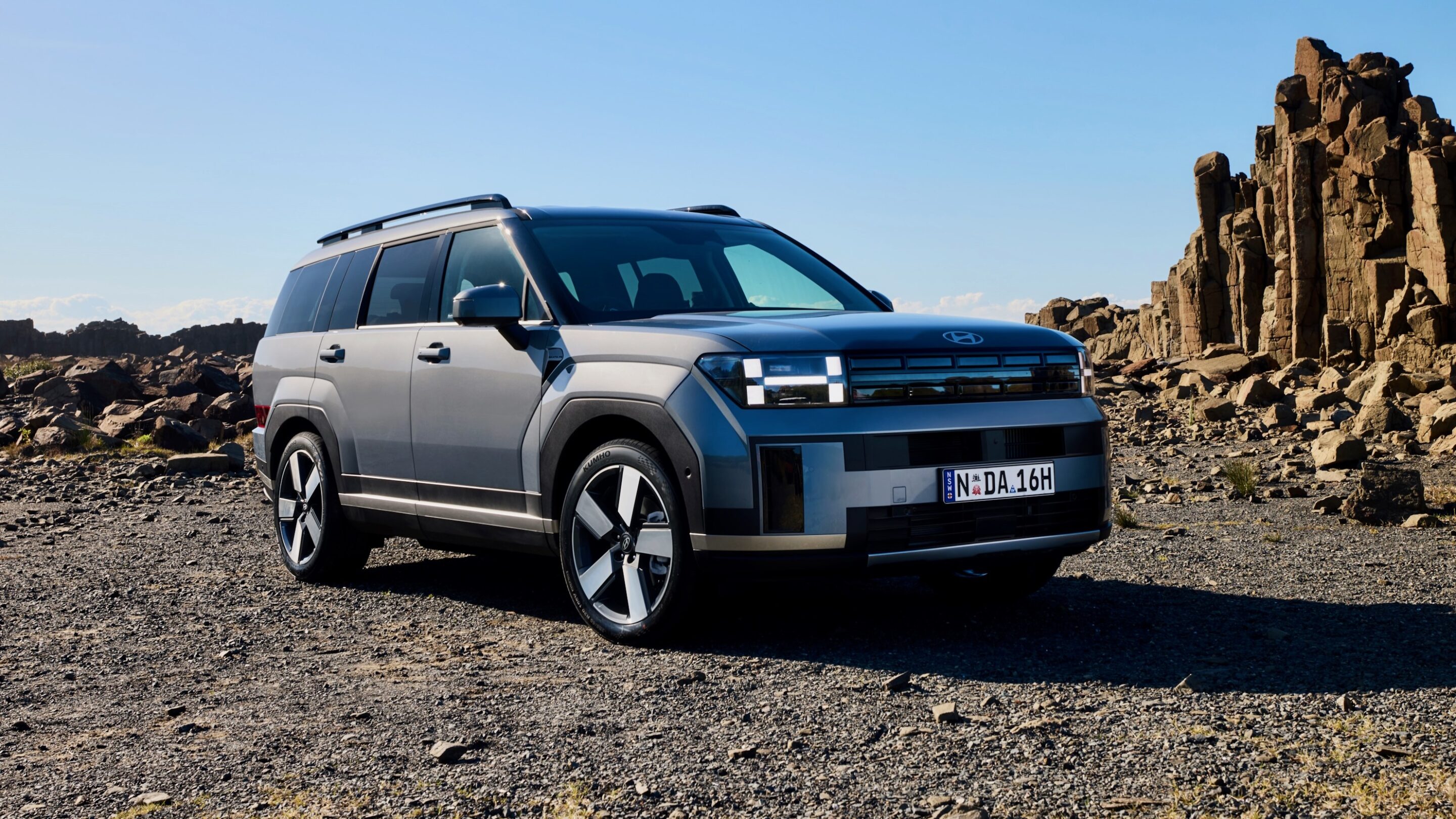
For the larger Santa Fe, updates are more subtle. A three-trim line-up continues, with Digital Key 2 now standard across the board. Entry models feature new 18-inch alloys, while distinctive wheel designs differentiate petrol and hybrid powertrains. Pricing climbs by $400 on all variants.
Hybrid-First Strategy
The most significant update is Tucson’s shift toward hybridisation. From 2026, the majority of the line-up will be hybrid-powered, leaving the 2.0-litre MPi as the sole petrol option. The outgoing 1.6-litre turbo-petrol engine has been discontinued, a move Hyundai says reflects its evolving focus on sustainability and efficiency.
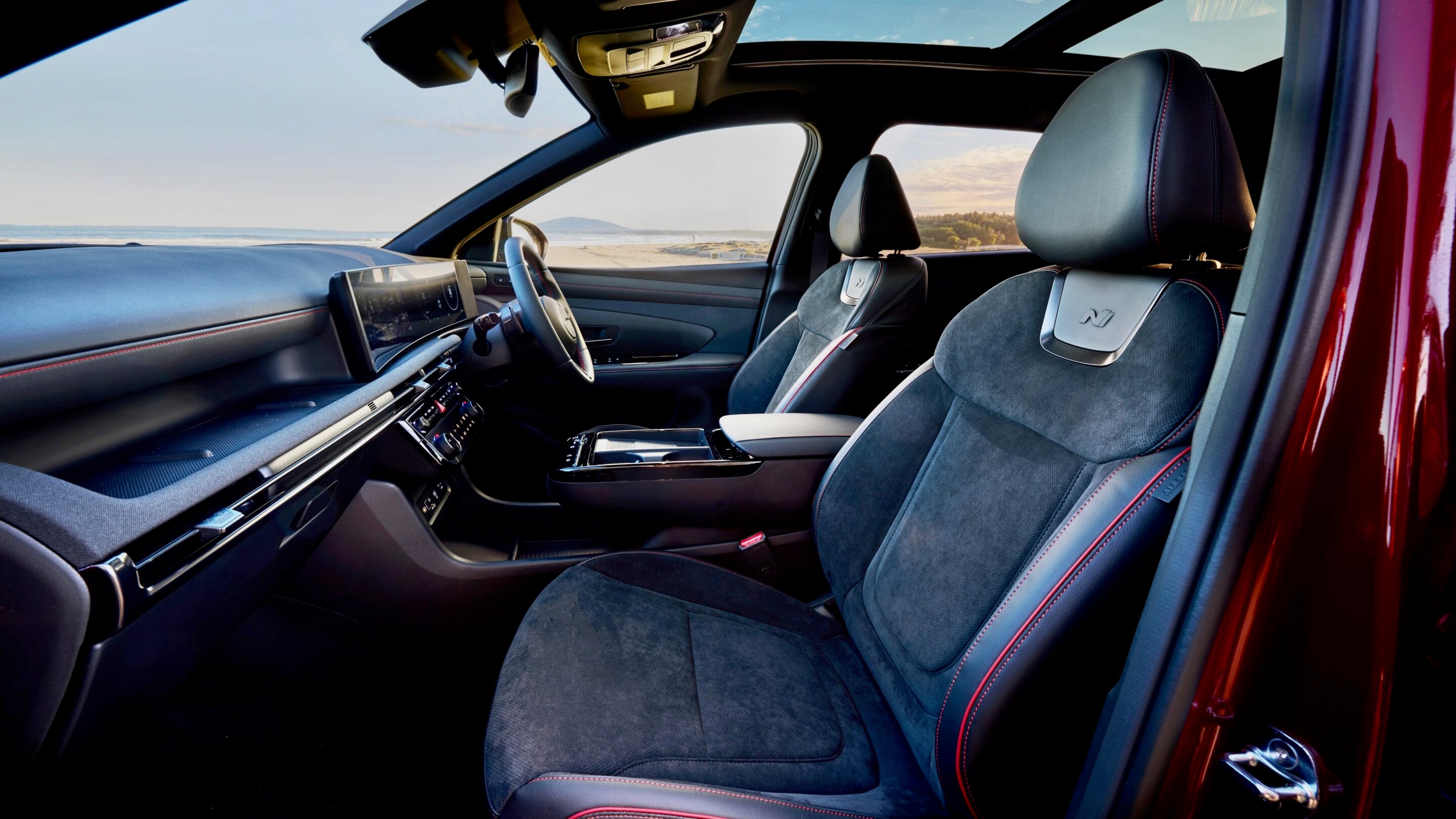
The three-tier trim structure continues, though the sporty N Line option pack is now exclusive to the mid-range Elite and flagship Premium grades, narrowing its availability but sharpening its image.
Price Reductions and Value Boost
Hyundai has repositioned Tucson pricing to strengthen its competitiveness. Depending on the variant, reductions range from $1,000 to $2,500, which the company says makes the SUV a more compelling choice for families weighing hybrid rivals.
Fresh Styling and Colours
Cosmetic changes are subtle but effective. Entry-level models gain new 17-inch alloys, while each powertrain variant adopts a unique wheel design. A new exterior shade, Ecotronic Grey, joins the palette, available in both pearl and matte finishes – the latter exclusive to N Line models. Titan Grey Metallic exits the range, while matte paint options are now reserved for the Premium and N Line.
Digital Key 2 Convenience
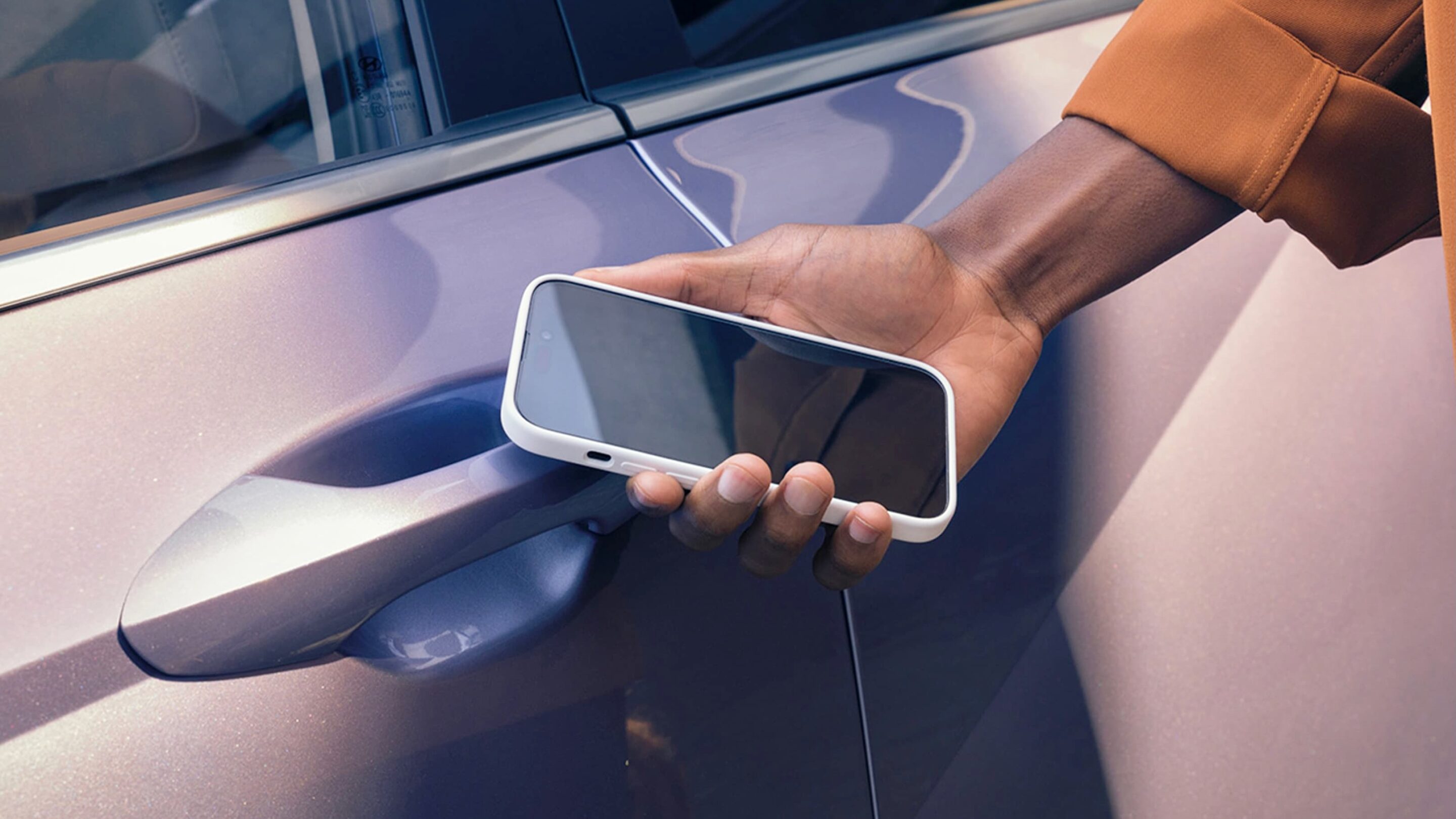
Headlining the technology updates is Hyundai’s new Digital Key 2, standard across the Tucson range. The feature allows owners to lock, unlock and start the car using a compatible smartphone or Apple Watch linked to Hyundai’s Bluelink connected services. Up to 15 digital keys can be shared with family and friends, removing the need for a traditional fob.
Hyundai Motor Company Australia CEO Don Romano said the changes keep the Tucson relevant in a highly competitive field: “With substantial price reductions, a hybrid-focused line-up, and Digital Key 2 convenience, the 2026 Tucson delivers more value and continues to be one of the most compelling medium SUVs on the market.”
Hyundai Tucson pricing
Tucson 2.0 MPi 6 speed FWD – $38,100 (-$1,000)
Tucson 1.6T-GDi Hybrid 6 speed FWD – $42,600 (-$2,500)
Tucson Elite 2.0 MPi 6 speed FWD – $43,100 (-$1,000)
Tucson Elite 1.6T-GDi Hybrid 6 speed FWD– $48,100 (-$2,000) (+N Line Pack $50,600 (-$2,000))
Tucson Elite 1.6T-GDi Hybrid 6 speed AWD – $50,600 (-$2,000) (+N Line Pack $53,100 (-$2,000))
Tucson Premium 1.6T-GDi Hybrid 6 speed AWD – $58,100 (-$1,500) (+N Line Pack $59,600 (-$1,500))
Specs
| TUCSON | 2.0 MPi 2WD; 1.6T-GDi Hybrid 2WD |
|---|---|
| 17″ alloy wheels – new design | FCA w/Junction Turning + Direct Oncoming |
| Full size spare wheel* (2.0 MPi 2WD only) | FCA 1.5 – Improved w/ 2-wheeler detection |
| Digital Key 2 | High Beam Assist (HBA) |
| Satin chrome beltline + mirror garnish | Intelligent Speed Limit Assist (ISLA) – Improved |
| Silver skid plates (front/rear) | Parking Distance Warning – Forward/Reverse (PDW F/R) |
| LED headlights (Bi-function MFR) w/LED static cornering lights | Smart key (new design) & push button start |
| LED DRL/positioning light & LED front turn signals | 2x USB C Type outlets |
| LED taillights/stoplight/licence plate lights (bulb turn/reverse) | 4.2″ Instrument Cluster |
| Shift by cable (SBC) – Petrol only | Wireless Smart Phone Charger |
| Drive Mode Select – Improved [+MY Drive Mode] | Auto up/down w/ safety front & rear windows |
| Automatic Collision Notification (ACN) / SOS function | LED interior lighting (room, s/visor, cargo) |
| 12.3″ Multimedia w/DAB+, Bluelink & OTA | 2x rear USB C Type outlets |
| 6.6″ Dual zone climate control w/Auto Defog & afterblow | Luggage net |
| TUCSON Elite | 2.0 MPi 2WD1.6T-GDi Hybrid 2WD & AWD |
|---|---|
| 18″ alloy wheels | 12.3″ Supervision Cluster |
| Dark chrome grille w/hidden DRL’s | 12.3″ Multimedia with navigation & Voice Control |
| Solar control w/screen + front door glass | Smart Power Tailgate |
| Privacy rear glass | Leather appointed seats |
| Shift By Wire (Hybrid) w/paddle shifters | Power driver seat |
| Highway Driving Assist (HDA) | Heated front seats |
| Rain sensor | Alloy scuff plates |
| Rear Occupant Alert (ROA) – sensor type | Electro Chromatic Mirror |
| TUCSON Elite + N Line Option Pack | 1.6T-GDi Hybrid 2WD & AWD |
|---|---|
| 19″ N Line alloy wheels | Body colour cladding |
| Projection type LED Headlights | Gloss black beltline & mirror garnish |
| Intelligent Front-Lighting System (IFS) | Chrome muffler outlet |
| LED reverse lights | N Line sports interior |
| N Line exterior styling | Leather/Suede appointed seats w/red highlights |
| Alloy pedals |
| TUCSON Premium | 1.6T-GDi Hybrid AWD |
|---|---|
| Sunroof – Standard | Integrated Memory System (IMS) 2 driver’s seat position |
| 19″ alloy wheels – new design | Power passenger seat & walk-in device |
| Projection type LED Headlights | Heated rear outboard seats |
| Intelligent Front-Lighting System (IFS) | Ventilated front seats |
| Blind Spot View Monitor (BVM) | Bose Premium Audio |
| Parking Collision Avoidance Assist-Reverse (PCA-R) | Head Up Display (HUD) – 12″ |
| Parking Distance Warning – Forward/Side/Reverse (PDW F/S/R) | 2nd row LED personal reading lights |
| Surround View Monitor (SVM) | Ambient lighting |
| TUCSON Premium + N Line Option Pack | 1.6T-GDi Hybrid AWD |
|---|---|
| N Line alloy wheels | Chrome muffler outlet |
| LED reverse lights | N Line sports interior |
| N Line exterior styling | Leather/Suede appointed seats w/red highlights |
| Body colour cladding | Alloy pedals |
| Gloss black beltline & mirror garnish | |
| N Line alloy wheels |
Santa Fe
Unlike the Tucson, the Santa Fe range has seen no lineup changes and now starts at $53,400 +ORC, which is an increase of $400.
Changes to the Santa Fe lineup include new one-inch-smaller 18-inch alloy wheels for the entry-level model (with a full-size alloy spare), as well as the new digital key.
2026 Hyundai Santa Fe pricing (plus on-road costs):
- Santa Fe 2.5L turbo 2WD: $53,400
- Santa Fe 2.5L turbo AWD: $56,400
- Santa Fe 1.6L turbo hybrid 2WD: $57,400
- Santa Fe 1.6L turbo hybrid AWD: $60,400
- Santa Fe Elite 2.5L turbo AWD: $62,900
- Santa Fe Elite 1.6L turbo hybrid AWD: $66,900
- Santa Fe Calligraphy 2.5L turbo AWD: $72,900
- Santa Fe Calligraphy 1.6L turbo hybrid AWD: $76,900
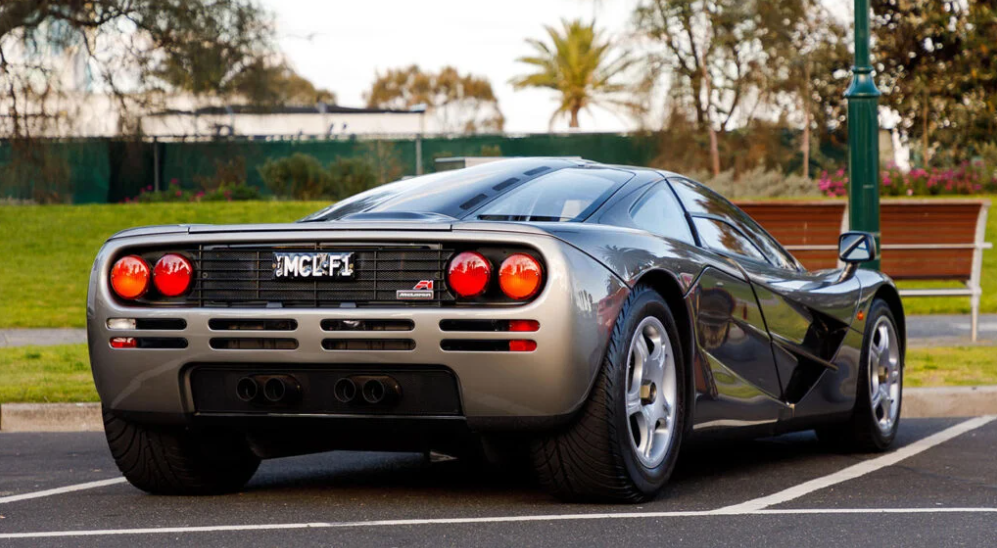
Australia is now without a McLaren F1 as the country’s sole example has now departed back to its homeland.
Chassis 009 has called Down Under home since new but is now in the hands of exotic car dealer Tom Hartley Junior after recently being offered for sale. With a reported price tag of AUD$37m, Wheels understands significant effort was made to find a local buyer without success.
The car was spotted being loaded onto an Emirates flight on Monday, August 18 leading to speculation it was headed to the Middle East, but its final destination was Stansted Airport in the UK.
Chassis 009 – one of just 64 road-going McLaren F1s and 106 in total including race cars and prototypes – has lived an eventful life, being originally delivered to Sydney to Dean Wills, then-CEO of Coca-Cola Amatil.
It was used regularly and exercised properly at Wills’ private facility north of Sydney but also garnered headlines when it was crashed heavily by a BMW mechanic while undergoing maintenance in 1997.
The substantial damage required a return to Woking with a reported insurance bill of $1million, during which it was painted a slightly darker grey than the original Magnesium Silver.
In 2005 it moved to Melbourne with Tony Rafits before being sold a year later to businessman Barry Fitzgerald who has been its custodian for the past two decades.
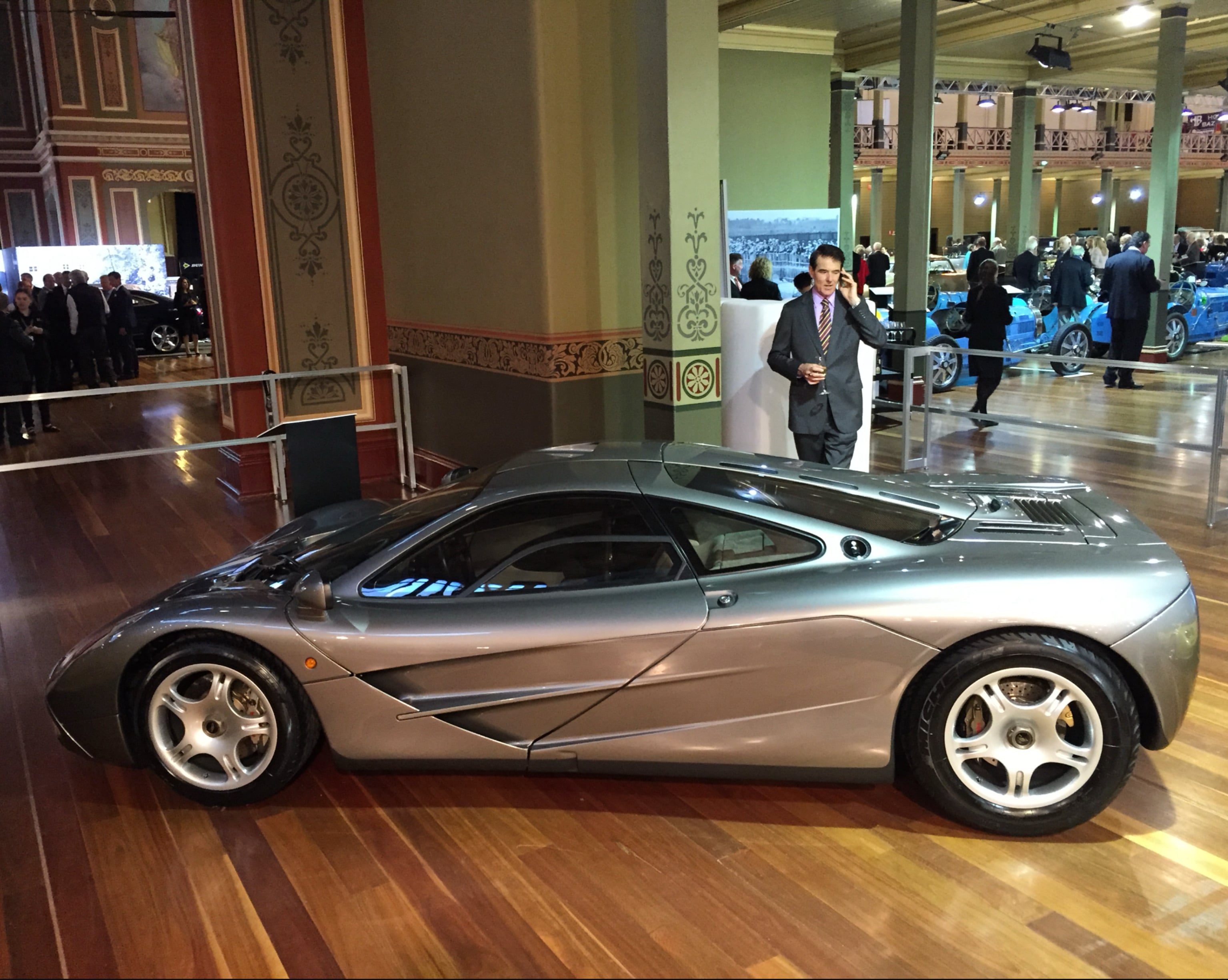
The F1 suffered further minor damage thanks to an off-road excursion during a New Zealand driving tour in 2016 but was once again repaired and, despite its stratospheric value, has been a frequent sight on Melbourne roads in the years since.
Sadly, having left these shores it is very unlikely to return, depriving the Australian car scene of one of its shining lights.
The Toyota GR Supra A90 Final Edition is Toyota’s ultimate send-off for its current-generation sports coupe – a focused, limited-run machine that transforms the standard Supra into something far more visceral.
While the regular model has always been a compromise between everyday usability and performance, this Final Edition embraces its hardcore side. It’s an indulgence, yes, but one that could easily become a sought-after collector’s piece in years to come.
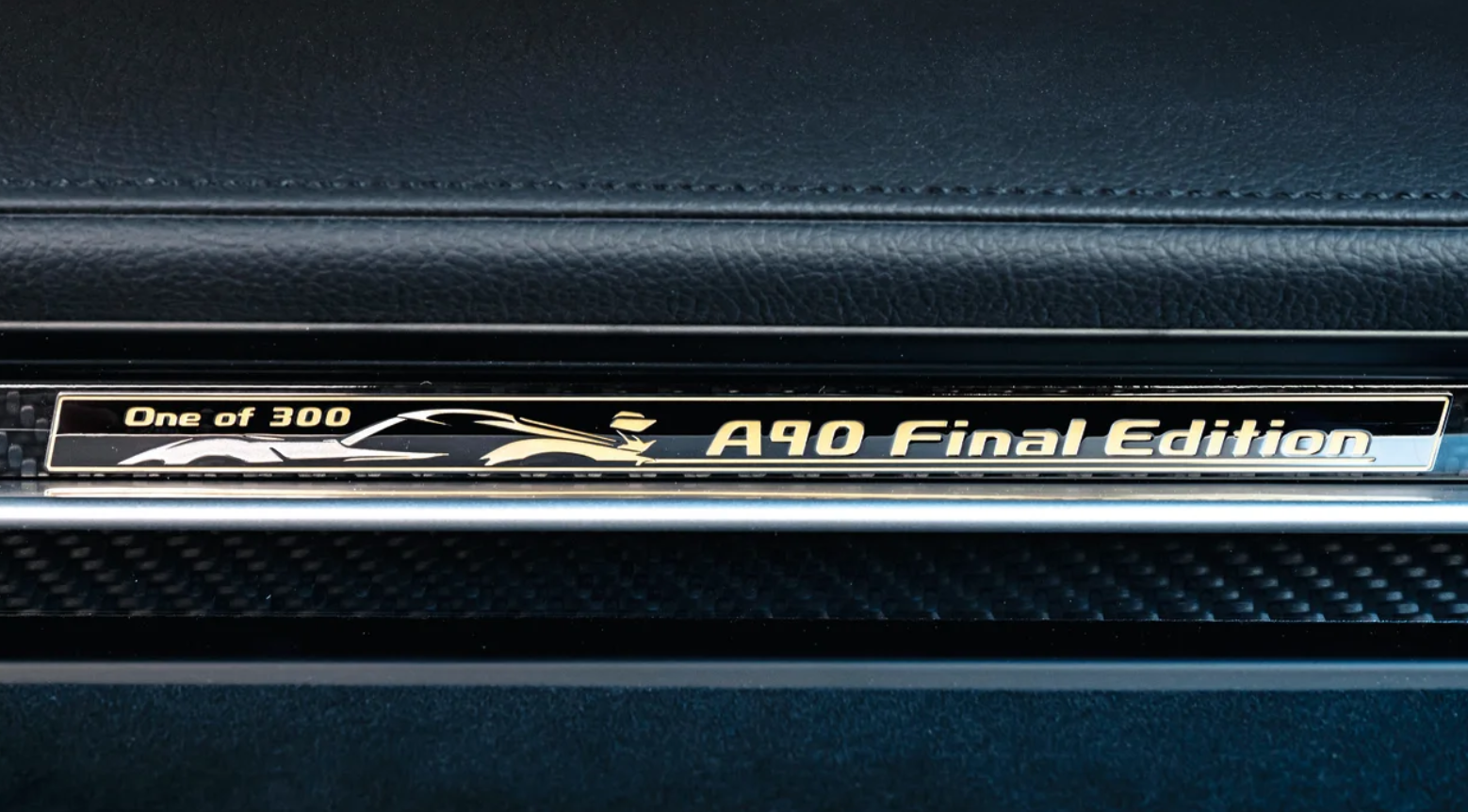
Only 300 examples will be built, none bound for Australia, making it all the more elusive. Priced at around A$242,000, this Supra is aiming squarely at track-focused rivals like the Alpine A110R and Porsche Cayman GT4 RS. It’s not just a cosmetic package – Toyota has gone to great lengths to re-engineer the car for sharper performance.
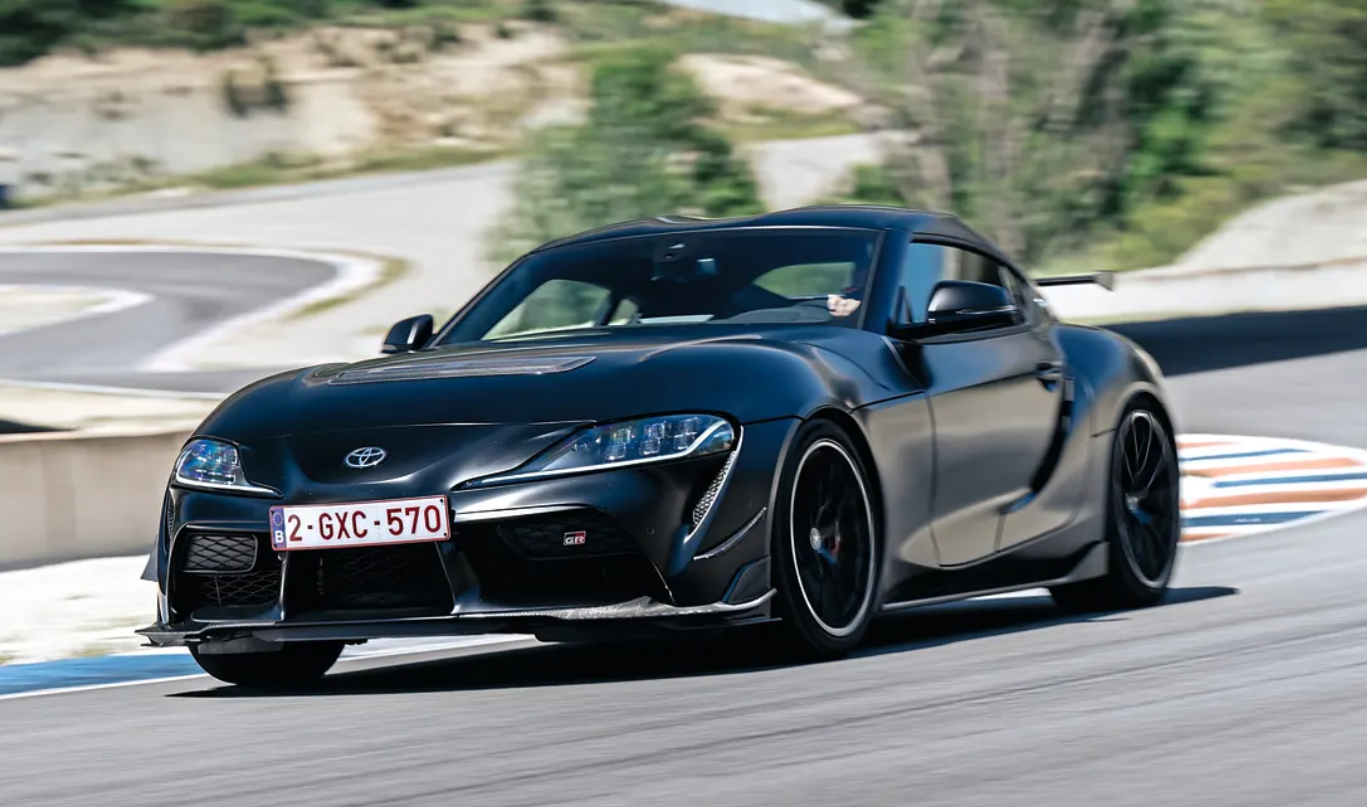
Beneath the bonnet lies a revised version of the BMW-sourced 3.0-litre turbocharged straight-six. Thanks to redesigned intake and exhaust systems, plus an updated ECU developed in collaboration with Akrapovič, the engine now produces 324kW and 571Nm – a significant gain over the standard Supra. This translates to 0–100km/h in 4.3 seconds, before topping out at a limited 274km/h.
In a refreshing move, Toyota equips the car exclusively with a six-speed manual transmission, underlining its focus on driver connection rather than sheer lap times. The gearbox is slick, supported by auto rev-matching, and paired with a Brembo braking system featuring 395mm front and 345mm rear discs for fade-free stopping power.
The chassis has been overhauled with manually adjustable KW dampers, stiffer body bracing, and an aerodynamic package derived from the Supra GT4 race car. A towering rear wing, new splitter, and functional aero elements not only boost downforce but also give the car an aggressive stance. Michelin Pilot Sport Cup 2 tyres provide enormous grip, though with a kerb weight nudging 1.6 tonnes, the Supra still demands careful weight management through tighter corners.
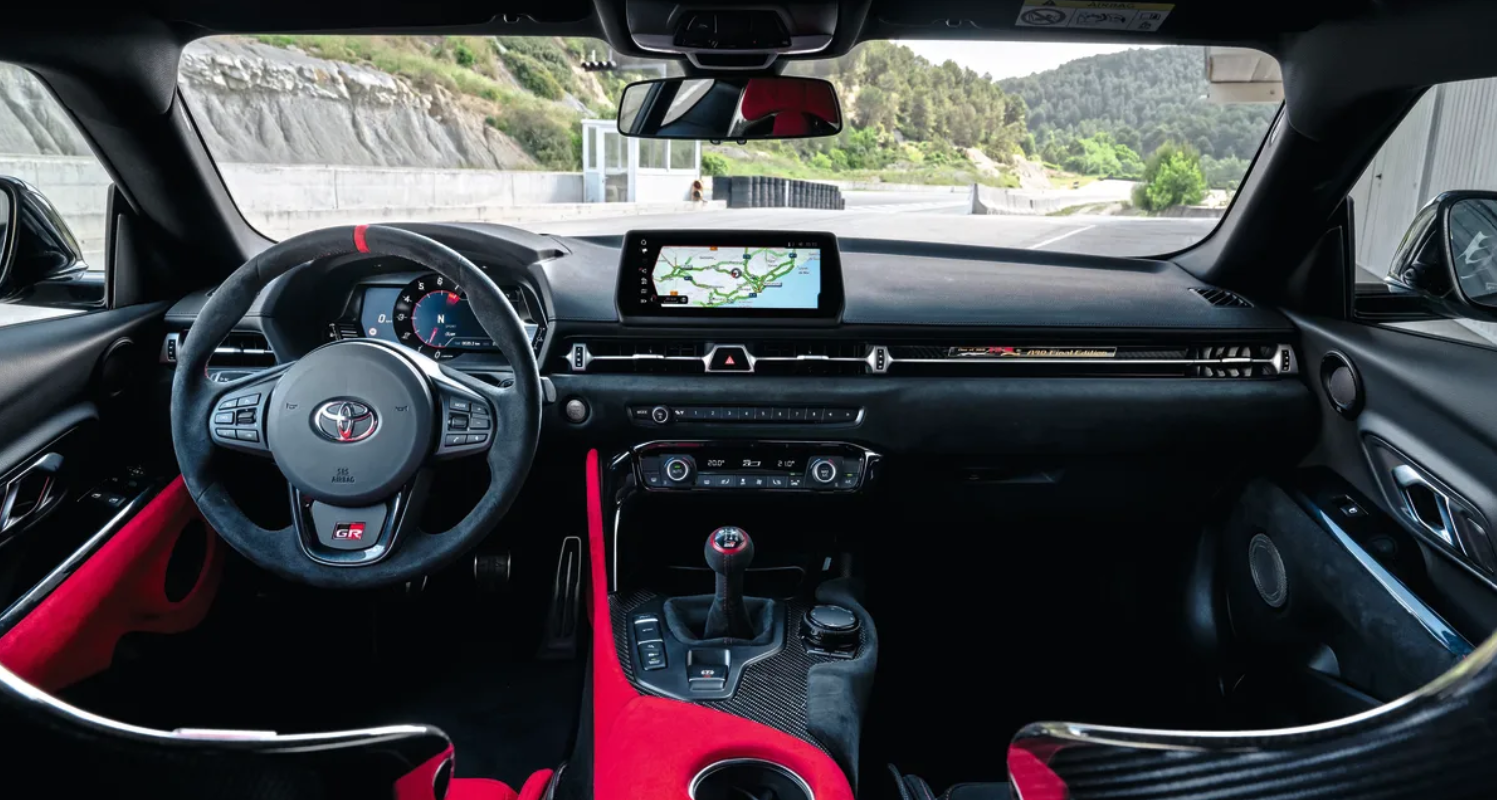
Inside, carbon-fibre bucket seats trimmed in vivid red Alcantara lock you in place, while knee pads on the centre console add a thoughtful touch for track use. The rest of the cabin remains largely unchanged, with BMW-sourced infotainment still present, but the atmosphere is suitably special.
The unveiling of the special edition comes as Toyota announced that last orders for the GR Supra would be taken in Australia at the end of August 2025, with production ending in early 2026.
The GR Supra A90 Final Edition is a fitting finale: more powerful, more engaging, and far more exclusive. Its steep price may divide opinions, but for those lucky enough to own one, it’s likely to be remembered as a modern classic.
Specs
| Model | Toyota GR Supra A90 Final Edition |
|---|---|
| Price | AUD $242,000 (approx.) |
| Powertrain | 3.0-litre, 6-cylinder turbo petrol |
| Power/Torque | 324 kW / 571 Nm |
| Transmission | Six-speed manual, rear-wheel drive |
| 0–100 km/h | 4.3 seconds |
| Top Speed | 274 km/h (limited) |
| Economy/COâ‚‚ | 7.5 L/100km / 204 g/km |
| Size (L/W/H) | 4,380 / 1,865 / 1,295 mm |
| On Sale | Not available in Australia |
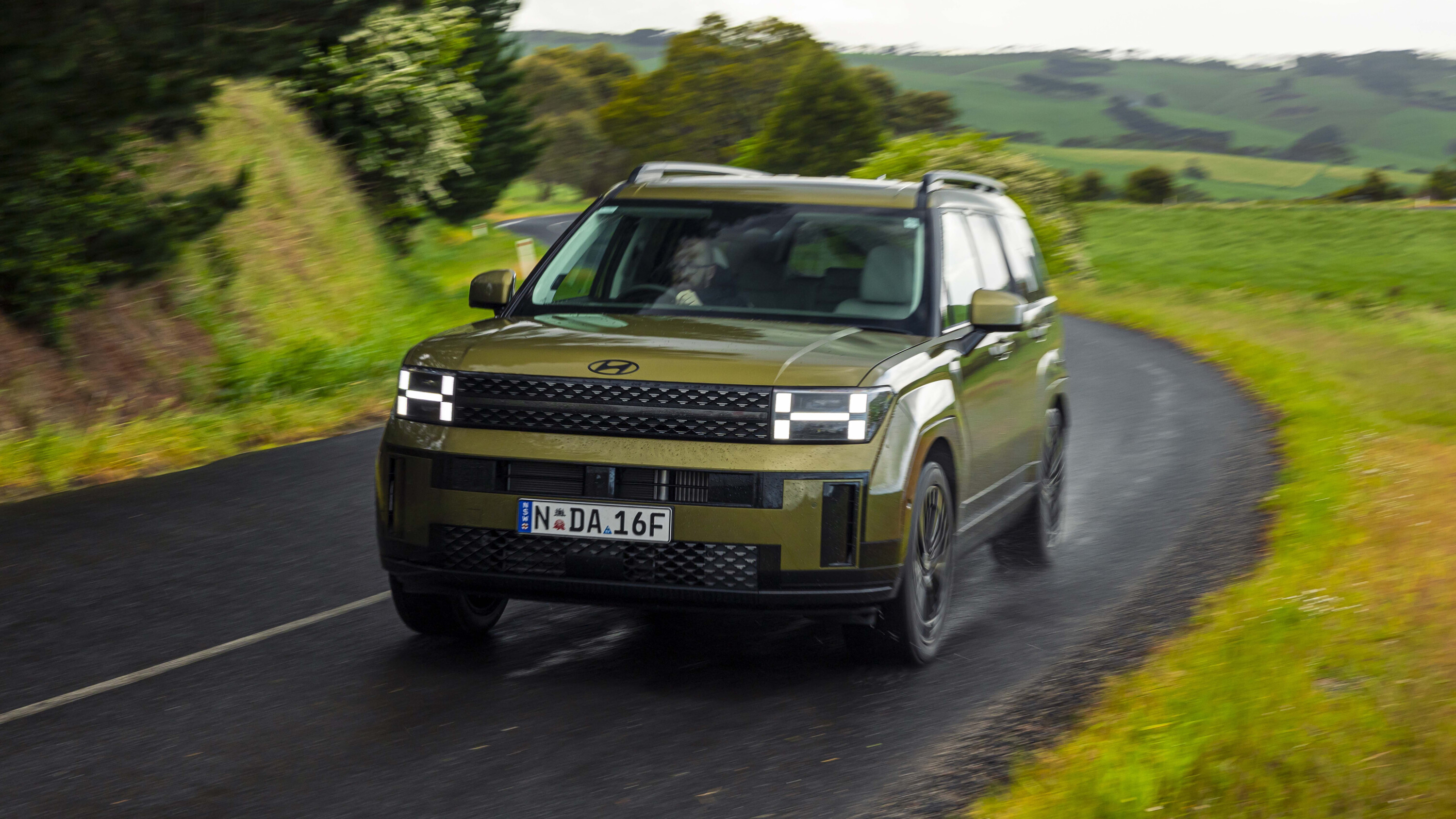
Price: from $53,000 plus on-road costs
Drivetrains/fuel economy/CO2 emissions: 2.5-litre four-cylinder turbo-four, 8-speed DCT, 213kW/420Nm, 9.1L/100km, 212g/km; 1.6-litre four-cylinder turbo-hybrid, 6-speed auto, 173kW/367Nm, 5.6L/100km, 128g/km
Dimensions (length/width/height/wheelbase): 4830/1900/1770/2815mm
Bootspace: Unknown (third row up)/628L (third row folded)/1949L (third + second row folded)
Warranty/roadside assistance/service intervals: Five-year/unlimited km – extendable to 7 year/unlimited km through dealer servicing, service-activated, annual/every 10,000km
Five-year service cost: $2425 (2.5T), $2439 (hybrid)
| Driving | |
| Interior | |
| Practicality | |
| Overall value | |
Things we like
- Distinctive styling stands out from rivals
- Spacious and practical cabin
- Loaded with equipment across the range
Not so much
- Higher pricing than last generation Santa Fe
- Short 10,000km service intervals
- Toyota hybrids are more efficient
The large SUV segment is a tough one in which to compete, let alone succeed in. There’s plenty of sub categories, strong competition and Australians can be a tough crowd. But thanks to its combination of distinctive styling, awesome practicality, punchy drivetrains, value for money and long list of equipment, the Hyundai Santa Fe is a great large SUV offering. And that’s why it’s Wheels’ Best Large SUV for 2025.
Priced from $53,000 plus on-road costs, the fifth-generation Santa Fe shocked us with its edgy, boxy styling which instantly placed it worlds apart from its predecessor. While it could be regarded as polarising, it’s certainly undeniably noticeable and neatly distinguishes the Santa Fe from a lot of its competition.
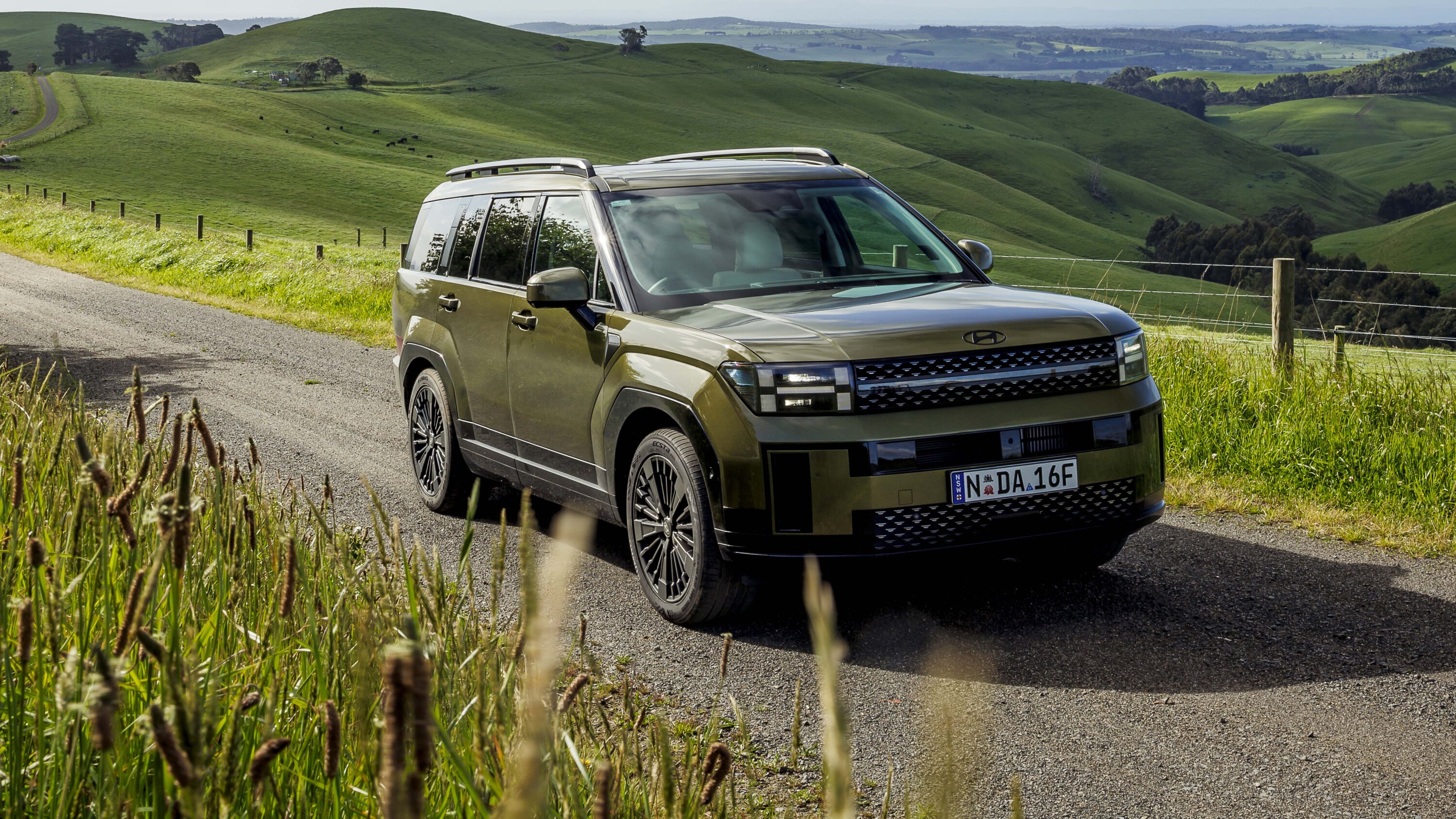
Inside, the Santa Fe rewards with a spacious, practical and well featured cabin with good quality materials and a long list of tech features. The standard dual 12.3-inch screens are packed with kit such as wireless smartphone mirroring and are easy to use. The Santa Fe’s practicality is impressive too, with plenty of interior storage spaces and enough room in each row of seating for adults.
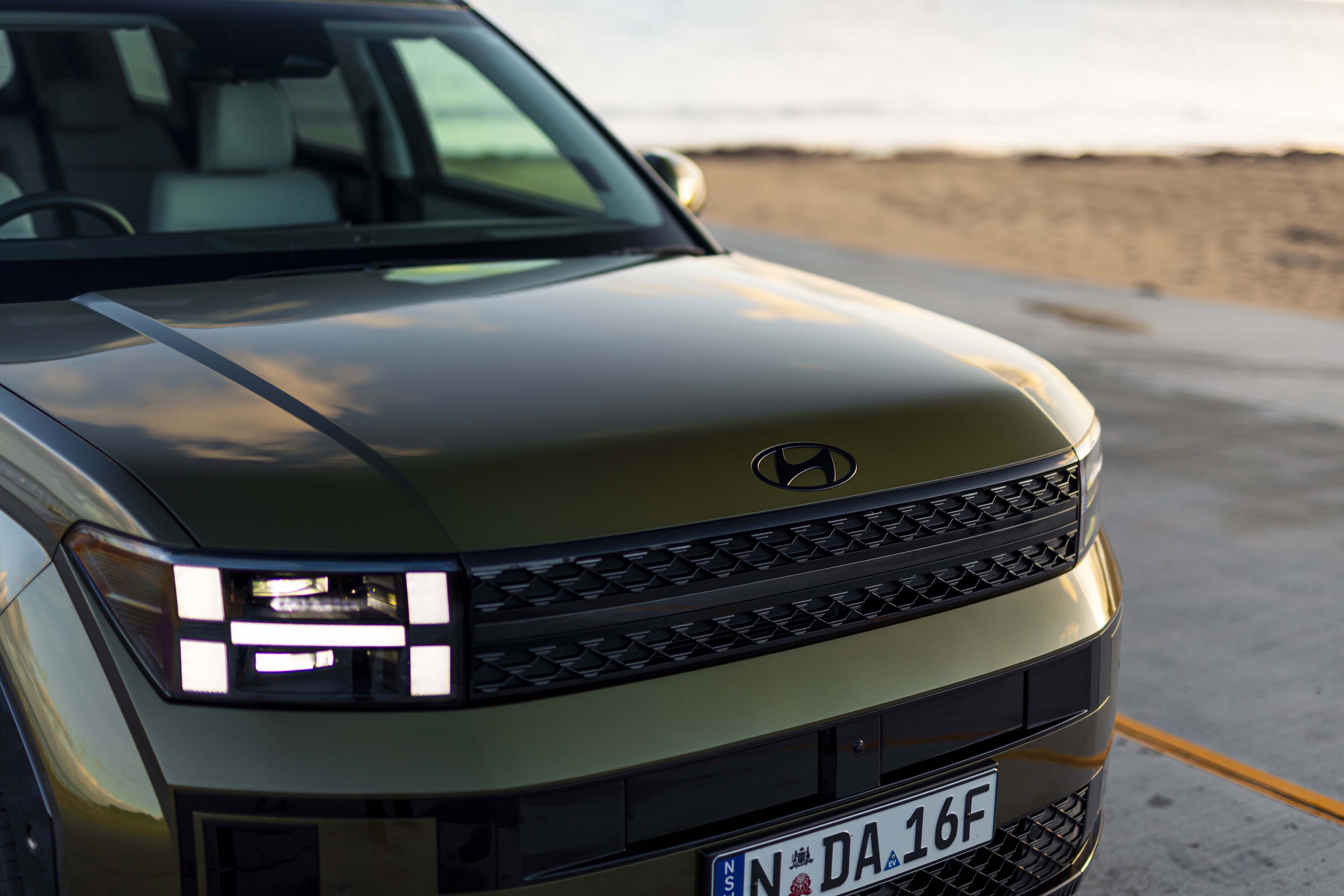
The Santa Fe offers 213kW 2.5-litre petrol or 172kW 1.6-litre hybrid drivetrains, and both provide it with ample performance. There’s no diesel option this time around with the hybrid taking over as the fuel efficient drivetrain and we think it’s the obvious choice: it’s refined, offers fine performance and better fuel efficiency. On the road, the Santa Fe impresses with its refinement and comfort.
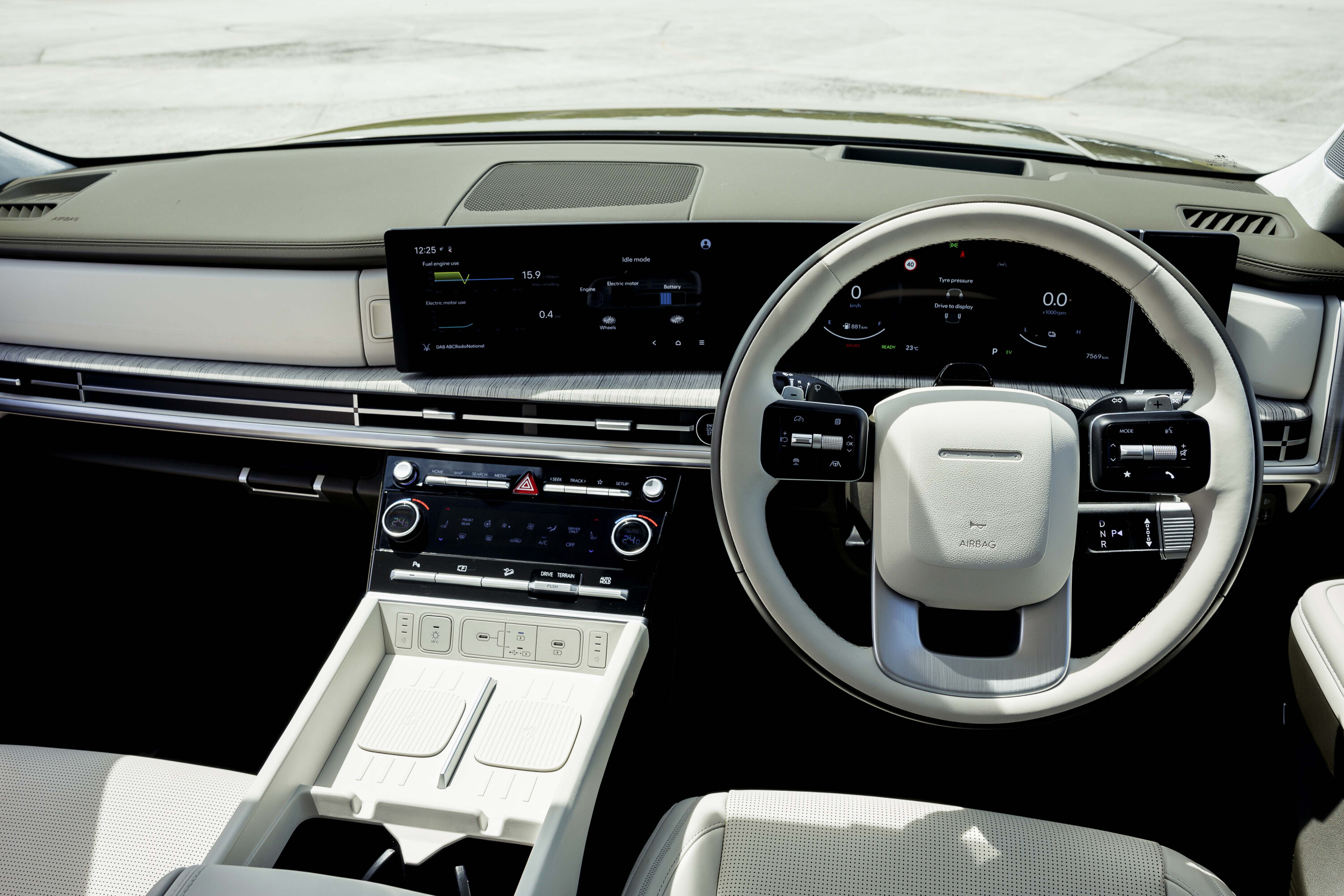
It’s true that the upper-spec Santa Fe models aren’t cheap, but they are very well equipped – plus, even the entry level model is more than well equipped and it’s priced comfortably under $60,000. Hyundai’s five-year warranty is average for the industry, and its 10,000km service intervals are shorter than some rivals, but service pricing is reasonable at under $500 annually for the first five years.
We adjudged the Hyundai Santa Fe the best large SUV for 2025 because of its insanely practical cabin, strong value for money, long list of features, comfortable driving experience and choice of drivetrains.
That it also looks unique is a bonus for those wanting a more distinctive family bus, but even if you aren’t a fan of the styling, it features many great traits to keep you invested.
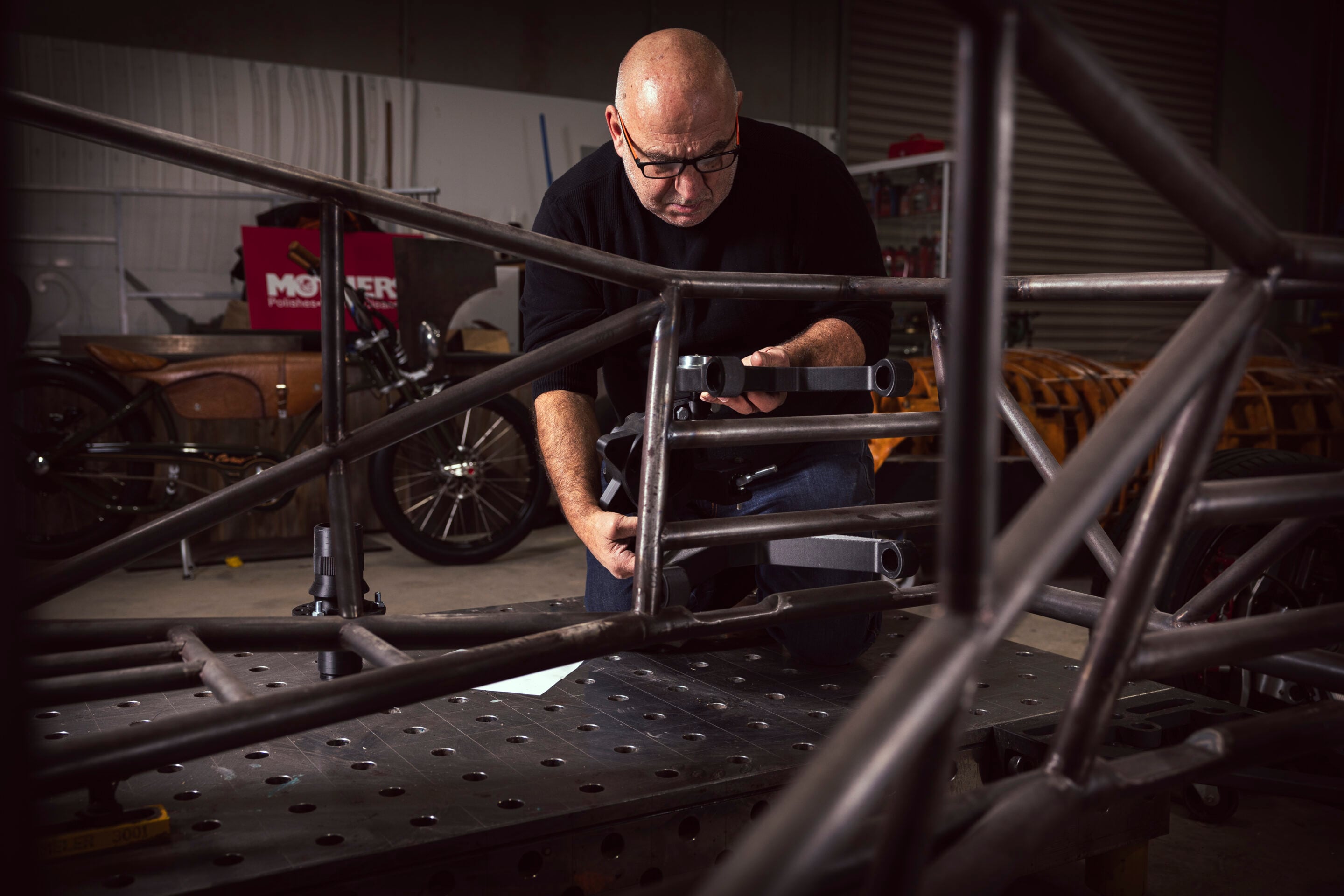
Very few people have created a career with the door skin for a humble 1964 HD Holden. Brian Tanti is likely to be the only one.
Yet it was his TAFE project as a teenager, while studying to become a panel beater in Melbourne in the 1970s, that opened the door to a life with some of the world’s coolest, costliest and most collectible cars.
Tanti spent 30 years as the custodian of Lindsay Fox’s exotic car collection, has scratch-built bodies for classic Porsches and Mercedes-Benzes, been responsible for a concept car to tout the abilities of Australia’s automotive industry, had a hand in the proposal for a Holden super-ute, and also helped to train and inspire a generation of young automotive apprentices.
“I made the door skin as a TAFE project. It was a functional opportunity, but also the chance to do something creative,” Tanti recalls to Wheels. “It was a fusion of art and science. It had to be functional but there was also a craft involved. People told me how good it was. They wanted to hang it up on display.”
It was the trigger that fired something special in Tanti, who admits he had been an under-achiever in the education system.
“I did my time as a smash repair guy. Up until then I often felt like a square peg in a round hole. All my family did really well at school, but it just didn’t work for me. Something sparked my love of learning. And that moved me into a whole other area.”
Tanti describes himself as a coach-builder, a historic occupation that is rooted in art as much as science.
In the days of four-legged horsepower, coach-builders were the artisans who created special and unique vehicles for the world’s wealthiest travellers.
These days, Tanti is setting up a new workshop back in Victoria as he creates a unique and one-off
creation for a super-wealthy international customer. He cannot say much because the details are top
secret, protected by a Non-Disclosure Agreement, but it is a multi-million dollar ‘coach-built special’ including a completely bespoke one-off custom engine block specifically for the car.
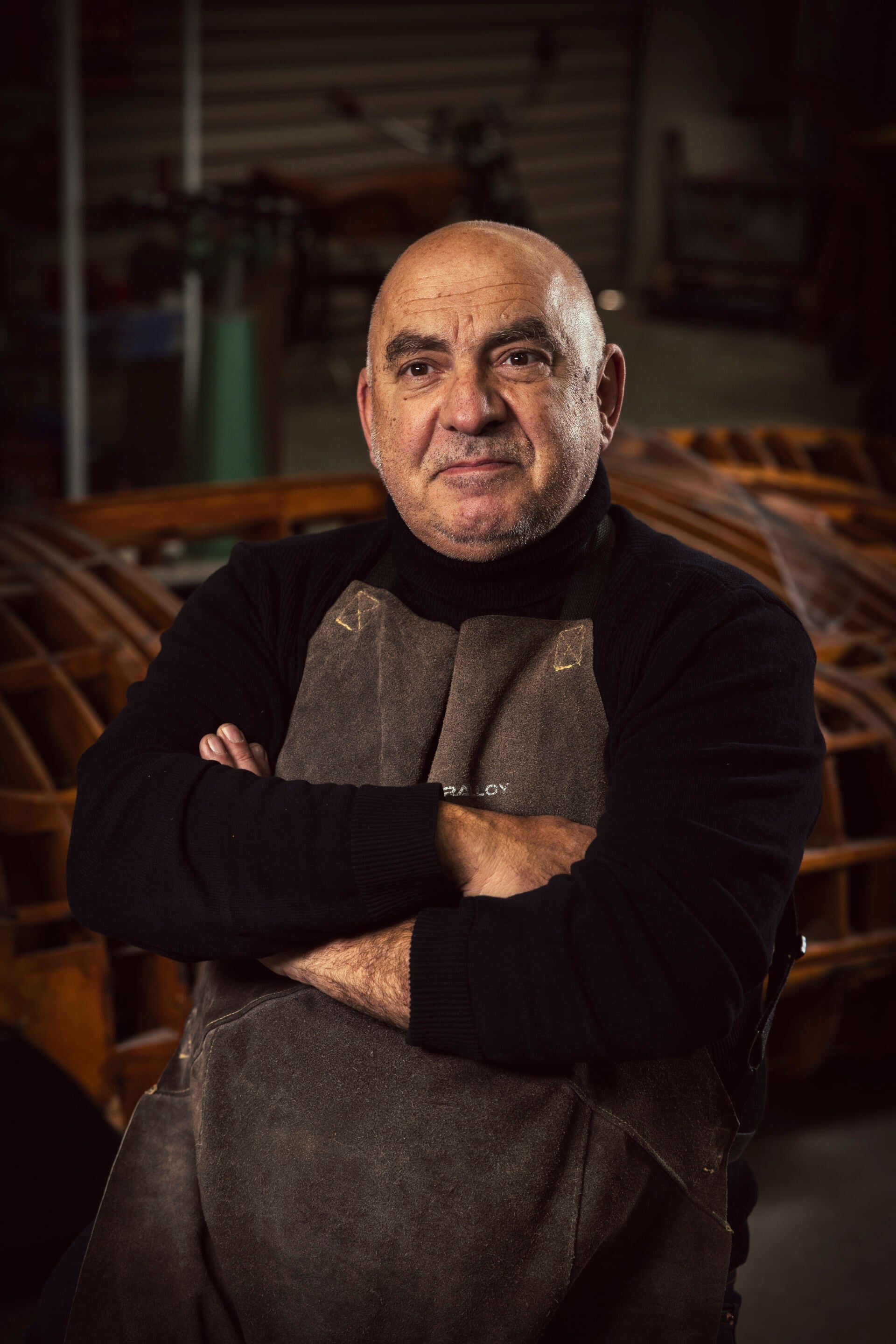
It’s a car that is stretching all of Tanti’s creative abilities, including the creation of a hand-formed
aluminium body, and reminding him of what old-school craftsmanship is about.
“There is this psychology that if you’re working with your hands then it’s dumb and stupid. That’s just not true,” Tanti says. “Being a craftsman is all about nurturing your learning ability. It trains your senses of concentration and perception. You’re initiated into an ethic about what you do.
“There are people all around you who are trying their best and doing their best. It’s almost a moral code in your life.”
Tanti’s career and life has been touched by many, many famous and influential people, from Sir Stirling Moss and McLaren F1 boss Ron Dennis to the King of Johur and Holden design star Tony Stolfo.
On the phone it’s impossible to have a five-minute conversation with Tanti. There is so much experience and so many amazing stories, going way back to the start of his career.
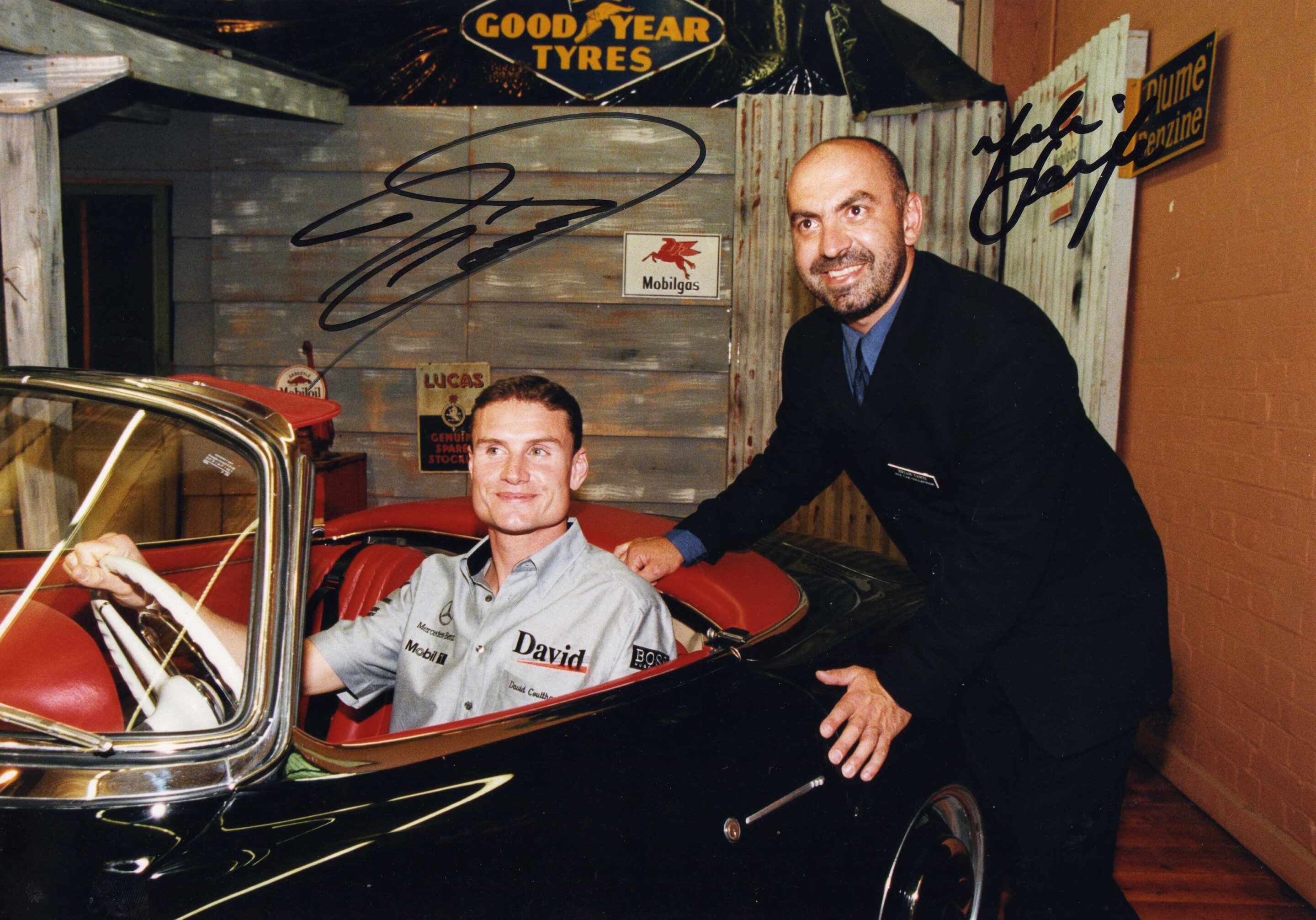
“After I finished my apprenticeship I went to the UK and worked in coach-building firms, where I got to learn the craft,” he says. “When I came back from the UK I worked for a Rolls-Royce dealership, R.A. McDermott, which became an incubator for the Australian automotive industry. Most of the guys who went through that shop opened their own businesses and did lots of important and substantial cars.
“I was there for three years. We were doing all sorts of stuff – Lagondas, Aston Martins, vintage and veteran Rolls-Royces “It was an introduction to low-volume, hand-made cars. And it’s a love I’ve carried through my whole career. The reason why it was so important was Rob McDermott gave people the opportunity to learn. And to train and improve.”
Soon came the biggest opportunity of Tanti’s career.
“Two guys opened a paint shop and I contracted to them. One of the first jobs we were given was a Ferrari 250 GT SWB. We did lots of other early Ferraris.
“Then we were contracted to do a car for Lindsay Fox. And shortly after that the Fox family offered me a job and I stayed with them for 30 years.”
The pay was never great, but the work was hugely rewarding, he got to travel the world in search of significant cars, and he was instrumental in establishing the Fox Museum at the Docklands in Melbourne.
“The building was originally built to be a customs-bonded warehouse. The very first Australian national stamps were printed there. It was a very interesting building with lots of history,” he says. “Basically, what we were doing was building the cars and slowly establishing the museum. There were some pretty hairy moments. There were a lot of junkies floating about, a lot of unsavoury stuff.
“It was a 24/7 job. It was a very interesting life and we did lots of interesting things. Formula One car launches, fundraisers, corporate events.”
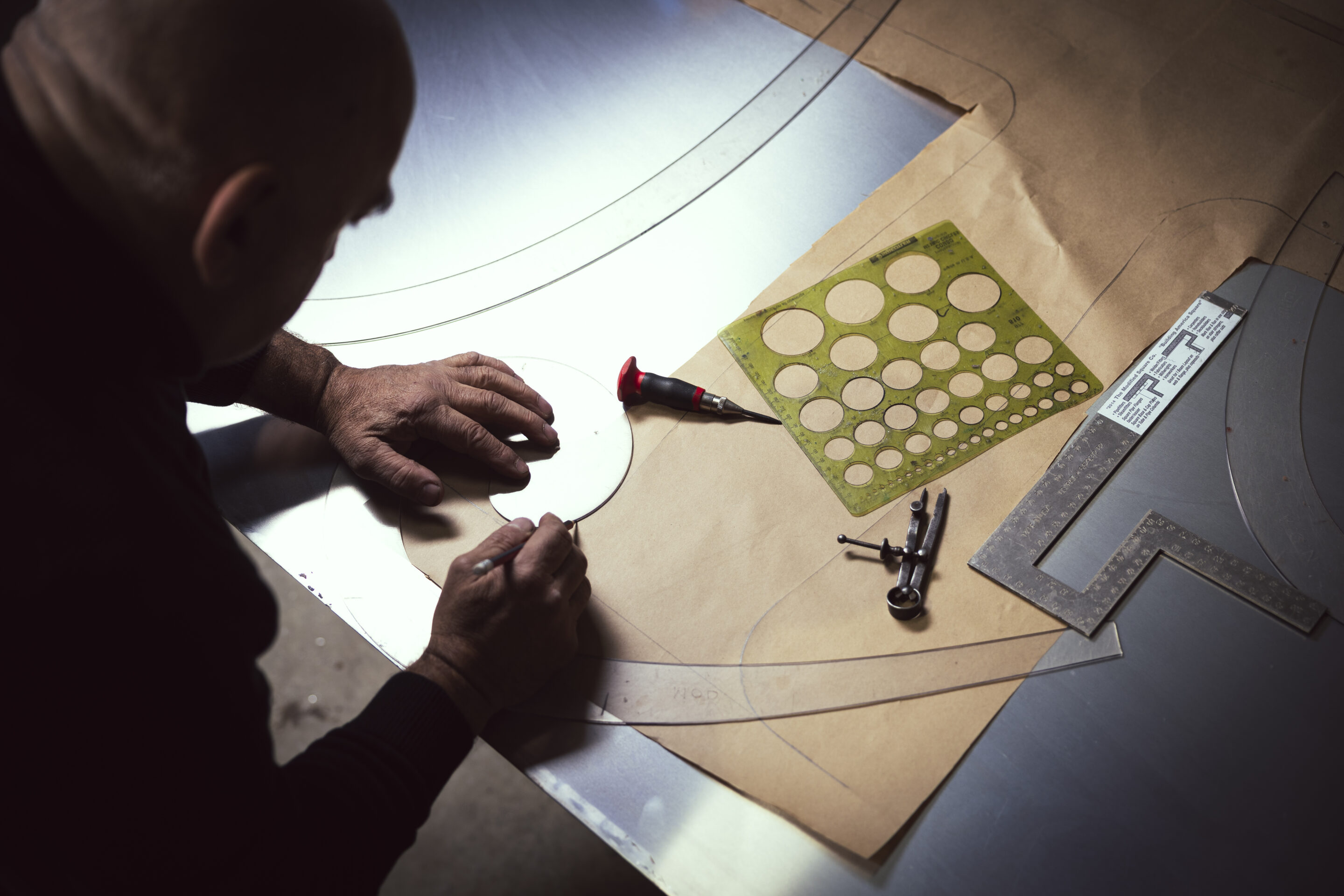
But the cars were still the key for Tanti and he rapidly earned a worldwide reputation for his hands-on work on classic Benzes and Porsches.
“When you’re pulling these things apart it’s like a patchwork quilt. You use your skills in metal working to create the form and then have to fuse all the pieces together.”
It’s all hands-on work, from creating wooden bucks for the basic shape to work on English wheels
and mechanical hammers, to the final forming and finishing.
“The buck is a three-dimensional representation of the math data. You use your skills in metal working to create the form. I think it is both art and science. At the end of the day, it’s a functional object.”
Tanti says he cannot pick a favourite from the Fox collection, but he is clear on its importance.
“When I started with Lindsay the value of the collection was put at about $9 million. Towards the end of my time there I saw a Porsche 550 that went up for sale with Le Mans history, similar to ours, that made $9 million.”
But Tanti had plenty of other projects. He was also working on educational programs and forging contacts in the car industry, from component suppliers to major manufacturers. He was also involved with the Victorian and Federal governments on research projects and promoting the car industry.
One program, just before the turn of the 21st century, was the aXcess Australia concept car, a showcase for the motor industry that generated huge business for local suppliers. Tanti was a key player in the construction, designer Paul Beranger was on point at Millard Design, and 116 individual companies supplied parts and services.
“It was very successful. Those cars went all over the world. There were two cars and they cost $4 million,” says Tanti.
“They generated something like $20 million for the local supply chain. But government stripped all the funding out of automotive. In the end we weren’t getting any funding, so we had to dissolve the project. Interesting times but it’s ancient history now.”
Later there was a concept car called the FR1 – standing for Fund Raiser #1 – which starred at the Melbourne Motor Show in 2009. It was a modern take on an old-school hotrod, looking a lot like the Chrysler Prowler but with a 6-litre Chevrolet V8 engine.
It was a teaching tool for the youth-focussed Auto Horizon Foundation as Tanti became deeply involved in educational work with the Kangan Batman TAFE.
“The creation of the FR1 came about because I felt we needed to make a statement about the work that could be done in Australia,” he says.
It also took Tanti into the world of carbon fibre.
“Boeing was one of the partners in the FR1 project. It was something very new. And we had a carbon fibre chassis for the FR1.”
The behind-the-scenes stories keep coming, including a quirky bike he built and Tanti’s
minor involvement in the Holden super ute project reported by Peter Robinson for Wheels.
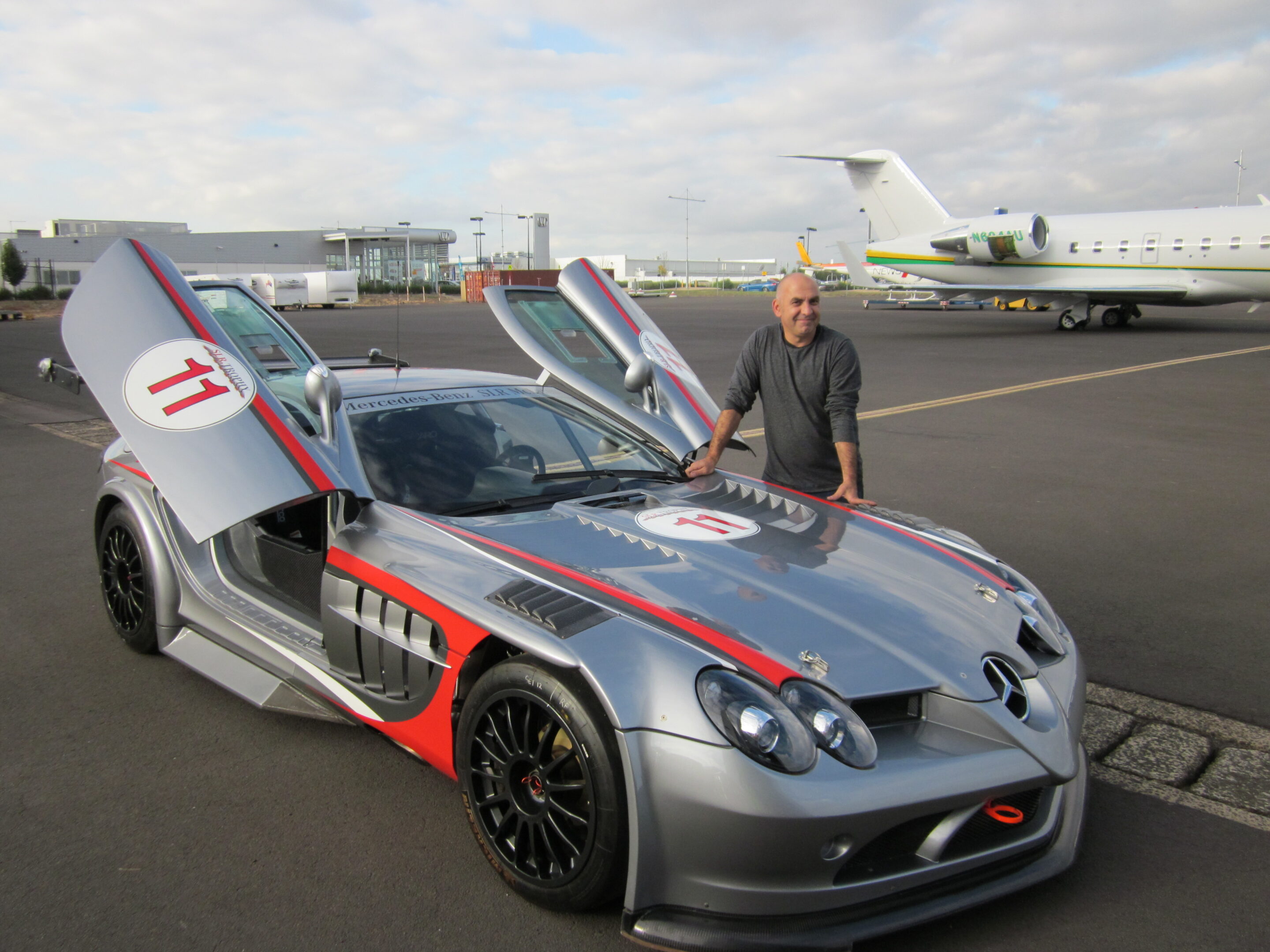
“I took Lindsay’s Ferrari Enzo in to put alongside it. And we took a few photos for fun,” Tanti chuckles.
But his time with Fox was coming to an end and he eventually quit and set up Brian Tanti’s Garage in Sydney, before a second change of venue to Bowral, then finally a return ‘home’ to Victoria.
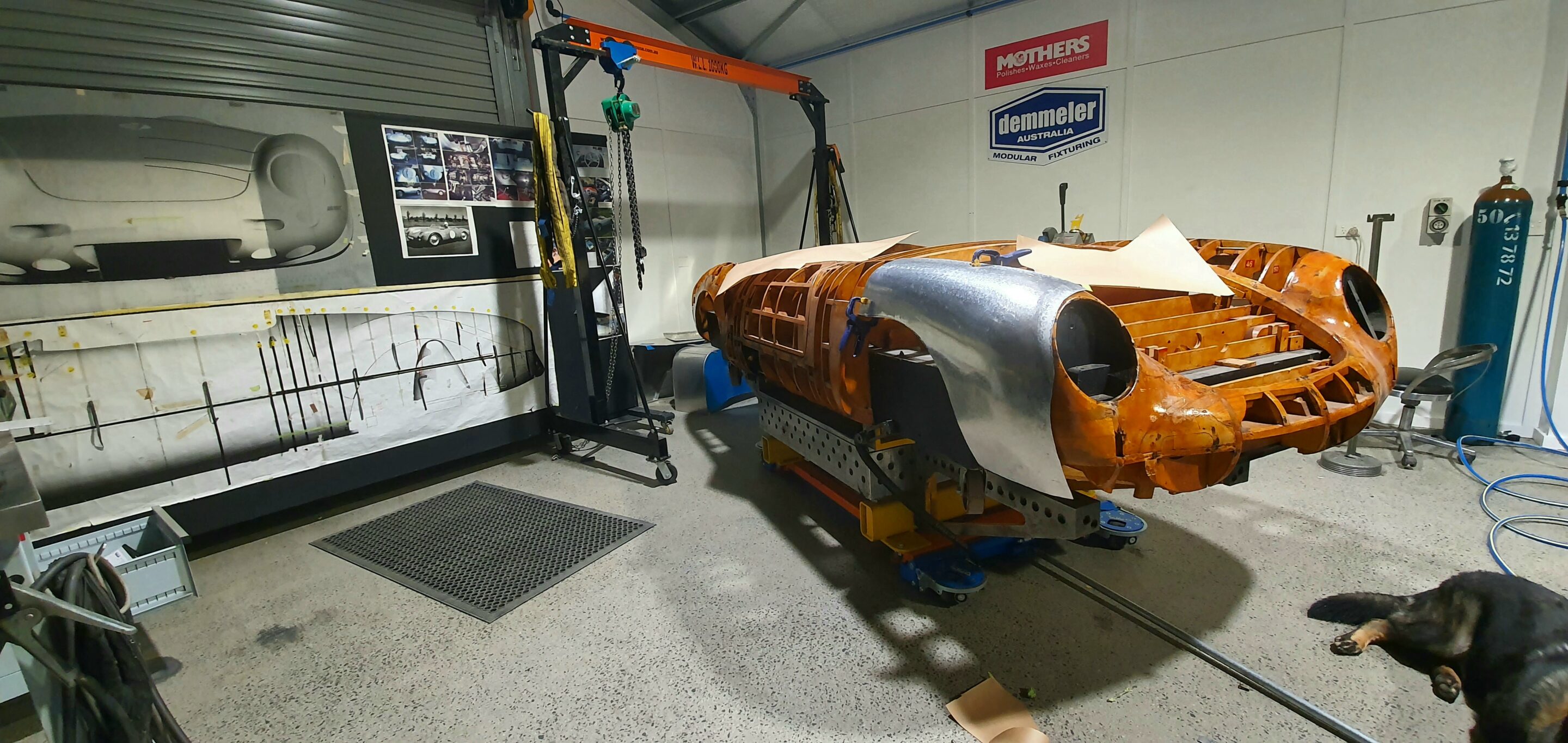
“My workshop is a tip. There is so much to do,” he says. “I have a Porsche 550 on the table right now, which I will eventually sell. And I’m doing the international project. The owner approached me to do it and it’s a very extensive build. It’s obviously a long-term dream of his and he’s throwing a lot of money at me to do it. The client is a real gentleman, a lovely person. And that makes the work that much more enjoyable.
“If you’re blessed to work with somebody that understands the whole business of craft versus industrial production then it makes the work very enjoyable. Craft is a different currency.”
Tanti is into his 60s but has no plan to retire and, apart from building cars and working with his
favourite German power hammer, he still hopes to guide and inspire the next generations.
“It’s going to keep me young if I keep working. There is a resurgence in the whole idea of craftsmanship, and people looking for alternatives to where they thought their career pathway was taking them. The broader your experiences, the more rounded you become.”
Despite the downturn in Australia’s manufacturing capability, he also believes in a future for the youth of the 21st century who are interested in cars.
“I watched Australian manufacturing hollow out and I knew this was bad for Australia, despite all the public and private discourse around unsustainable manufacturing. Ironically, now we find ourselves with this heightened political and public anxiety as we become totally reactive to our lack of sovereign capability.”
This article originally appeared in the August 2025 issue of Wheels magazine. Subscribe here and gain access to 12 issues for $109 plus online access to every Wheels issue since 1953.
Any Aussie car enthusiast worth their salt can rattle off the specs of the GT-HOs, Toranas and E49 Chargers of the world, and they might have a GTS, GT or XR6 Turbo parked in the garage.
Today, however, we’re diving into the deep end of the Australian performance car pool, bringing to the surface 10 cars you may have forgotten about or never even heard of in the first place.
So, without further ado, in chronological order.
1963 Holden EH S4
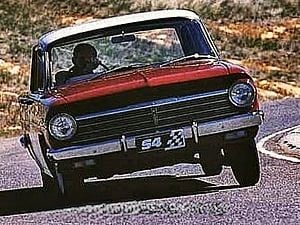
It was hard for Holden to go racing, given General Motors had a global ban on motorsport activities. But with Ford scoring plenty of promotional points with its Australian racing activities, the decision was made to create a hotter EH.
It used the new 179ci (2.9-litre) ‘Red Six’ teamed with a beefed-up three-speed manual, whereas the regular road car was exclusively available with an auto. The engine was effectively standard, albeit balanced and blueprinted with handpicked components to ensure they were as good as could be.
There was a stronger clutch, thicker tailshaft, shorter 3.55:1 diff ratio, brake booster and race-spec pads, while the fuel tank was increased from 43 to 53 litres and the tool kit expanded due to Bathurst rules stating any repairs had to be done using the onboard tools.
Holden’s secrecy backfired when its entries into the 1963 Bathurst race – using dealers because General Motors didn’t go racing – were denied due to a lack of documentation. Holden hurriedly supplied the paperwork, but in the end the S4 couldn’t match the Ford Cortina GT at Bathurst. Apparently fewer than a dozen of the original 120 cars survive.
1981 Mitsubishi Sigma Turbo
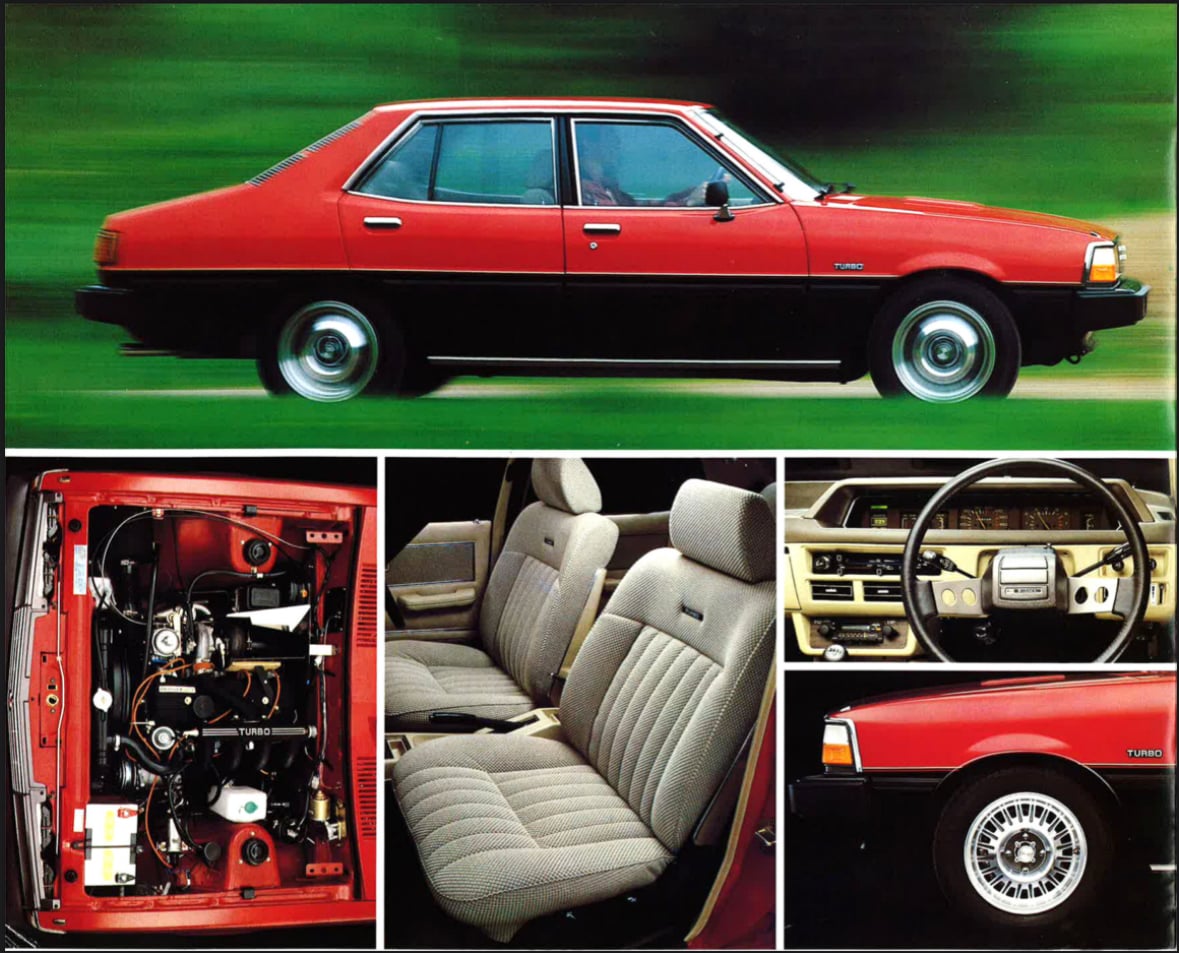
A collaboration between Garrett and Mitsubishi, the Sigma Turbo introduced boost to Aussie performance car fans a full five years before Holden released the VL Turbo.
Well-equipped and with a striking two-tone paint job – either silver or red over black – the Sigma Turbo used a 2.0-litre Astron engine with a Garrett T3 turbo providing 10psi of boost.
Outputs of 116kW/235Nm with a five-speed manual in an 1197kg car provided spirited performance, while suspension revisions, all-wheel disc brakes and 15-inch wheels with Pirelli P6 tyres helped it stop and turn. Just 500 were built.
1988 Nissan Skyline GTS
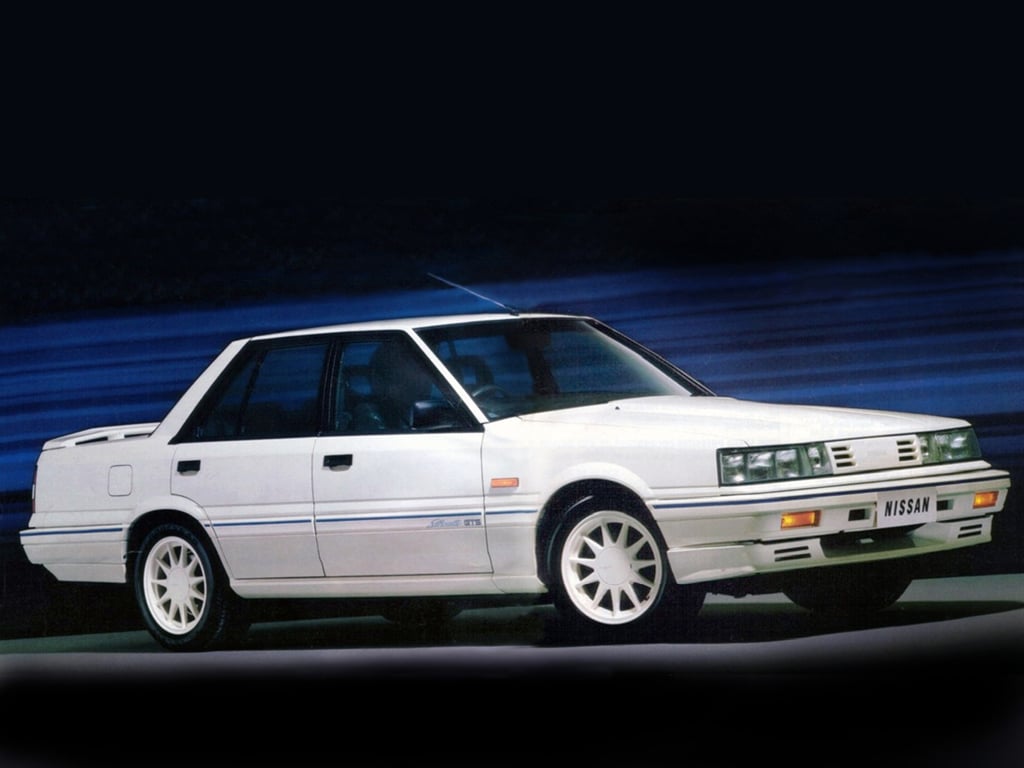
The Nissan R31 Skyline may technically have been a Japanese model, but local variants were Aussie-fied for extra toughness, the Japanese multi-link rear and small-capacity engines ditched for a live axle and 3.0-litre RB30 straight-six shared with the VL Commodore.
With the HR31 GTS-R earning success on the racetrack, Nissan Australia created a Special Vehicles Division and the Skyline GTS was the first fruit of this. All 200 Series I cars were white with a little extra grunt (130kW/255Nm) along with oil coolers, Bilstein shocks, thicker anti-roll bars, bigger front brakes, 16-inch wheels, Scheel seats and a Momo steering wheel.
The second-generation GTS, based on the facelifted Series III R31, scored yet more power (140kW) and sculpted rear seats. All 200 examples were red bar seven painted white for Tasmania Police and with only around half those being manual, clean examples are extremely rare today.
1987 HSV SV88
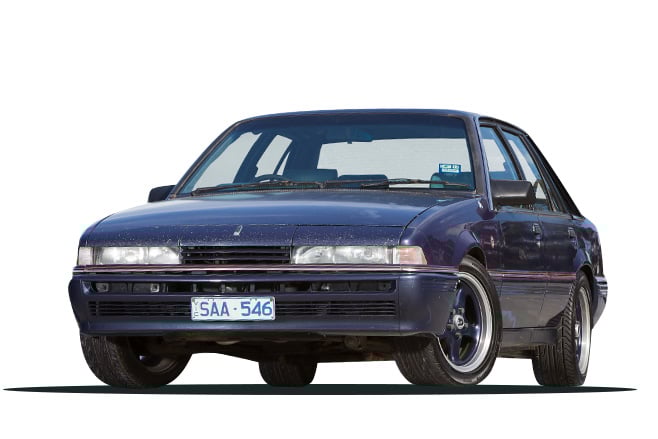
No, the VL Walky wasn’t the first HSV. That honour goes to the oft-overlooked SV88. Calais-based with a hefty price tag of $40,850 (more than $120K today!), the SV88’s 5.0-litre V8 offered only 136kW/355Nm teamed with a three-speed auto.
There was sports suspension, a few exterior styling tweaks and new seats, with all 150 examples being painted in the same Dorward Blue. Its subtlety couldn’t be more of a contrast to ‘The Plastic Pig’.
2001 Toyota Corolla Sportivo
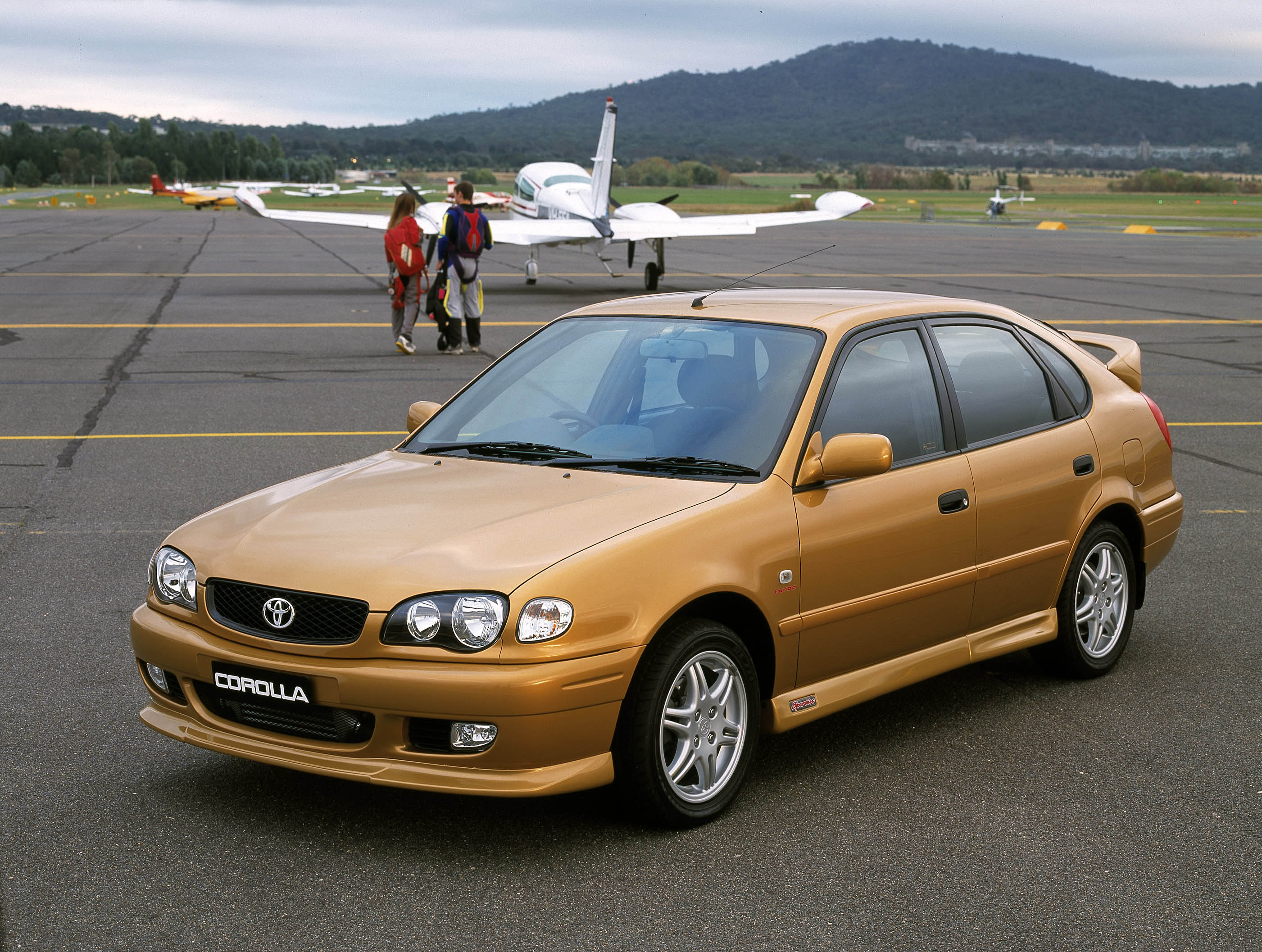
Toyota Australia arguably spent more effort on the promotion of the Corolla Sportivo than on the car itself, launching it via a standalone website – radical for 2001 – which told a fictional story about two former Toyota employees – Dwight and Wayne, a kitchen hand and cleaner respectively – who secretly develop the car. No, we’re not making this up.
With the GR brand not even a glint in Akio Toyoda’s eye 25 years ago, the Corolla Sportivo was merely a slightly spicier Corolla rather than a true hot hatch, a turbo lifting outputs to 115kW/237Nm with slight suspension and brake upgrades and all 100 examples were painted gold. At $37,990 (+ORCs) it also had a huge price tag.
2004 HSV Clubsport DTS
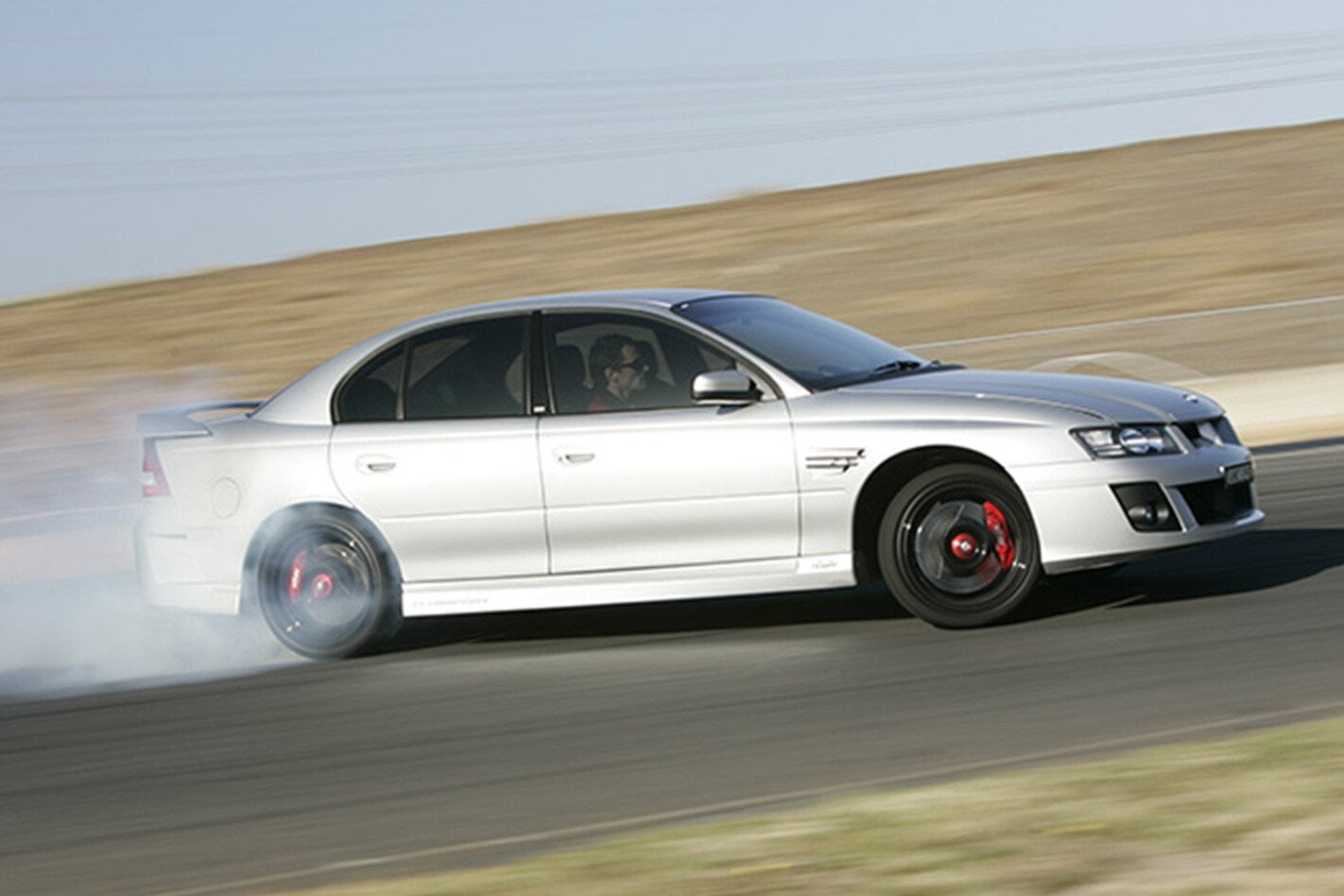
Technically an option pack rather than a standalone model – in the same vein as the XA RPO83 – the ‘Dealer Team Spec’ package could be selected on manual versions of the Clubsport, Clubsport R8, GTO Coupe, Maloo and Maloo R8.
Two stages were available, Stage One including modified suspension and Pirelli Corsa semi-slick tyres, a short shifter, linear-ratio steering rack, power steering cooler, upgraded brakes (362mm front discs with six-piston calipers and 343mm rears with four-piston calipers) and lightweight 18-inch OZ Racing wheels.
Stage Two replaced the dampers with remote canister Ohlins – unless you had a Maloo, with which they weren’t compatible – and added tyre pressure monitoring and the Driver Dynamic Interface which first appeared in the limited edition SV6000.
2004 HSV Avalanche
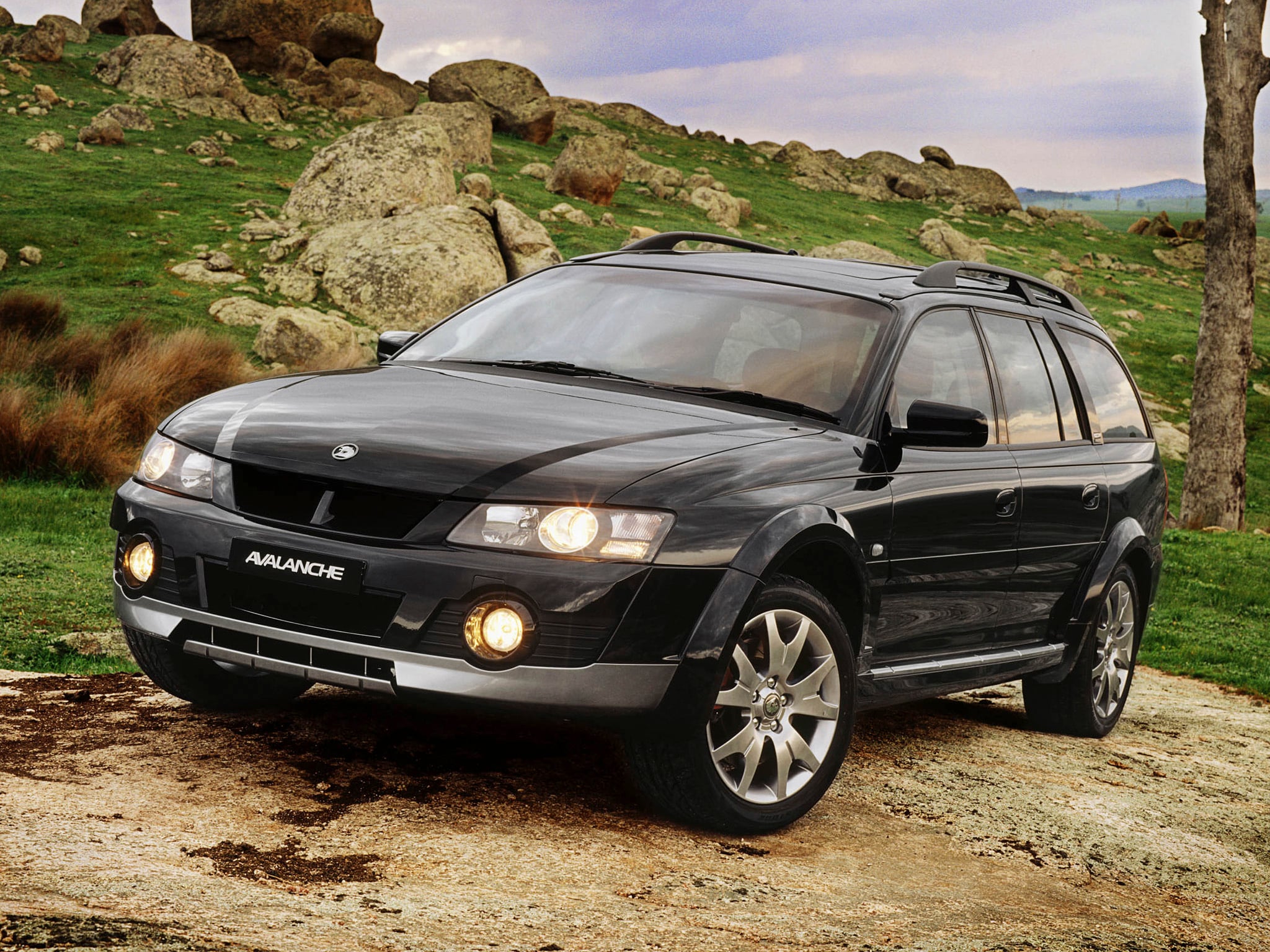
Was the HSV Avalanche ahead of its time? A high-performance version of the Holden Adventra, it’s like a Subaru Outback procreated with a Nissan Y62 Patrol, a jacked-up, all-wheel drive wagon (or ute if you bought an XUV) powered by a 270kW/475Nm 5.7-litre V8.
It could hit 100km/h in around seven seconds, has 200mm of ground clearance and could tow up to 2100kg, while also having room for the family and the dog.
Sadly, while it might prove popular these days, 20 years ago it was a tough sell and just 333 wagons and 300 utes were apparently built. A supercharger has livened up a number of examples, though you might need to tow a fuel tanker around with you.
2006 FPV Force 6/Force 8
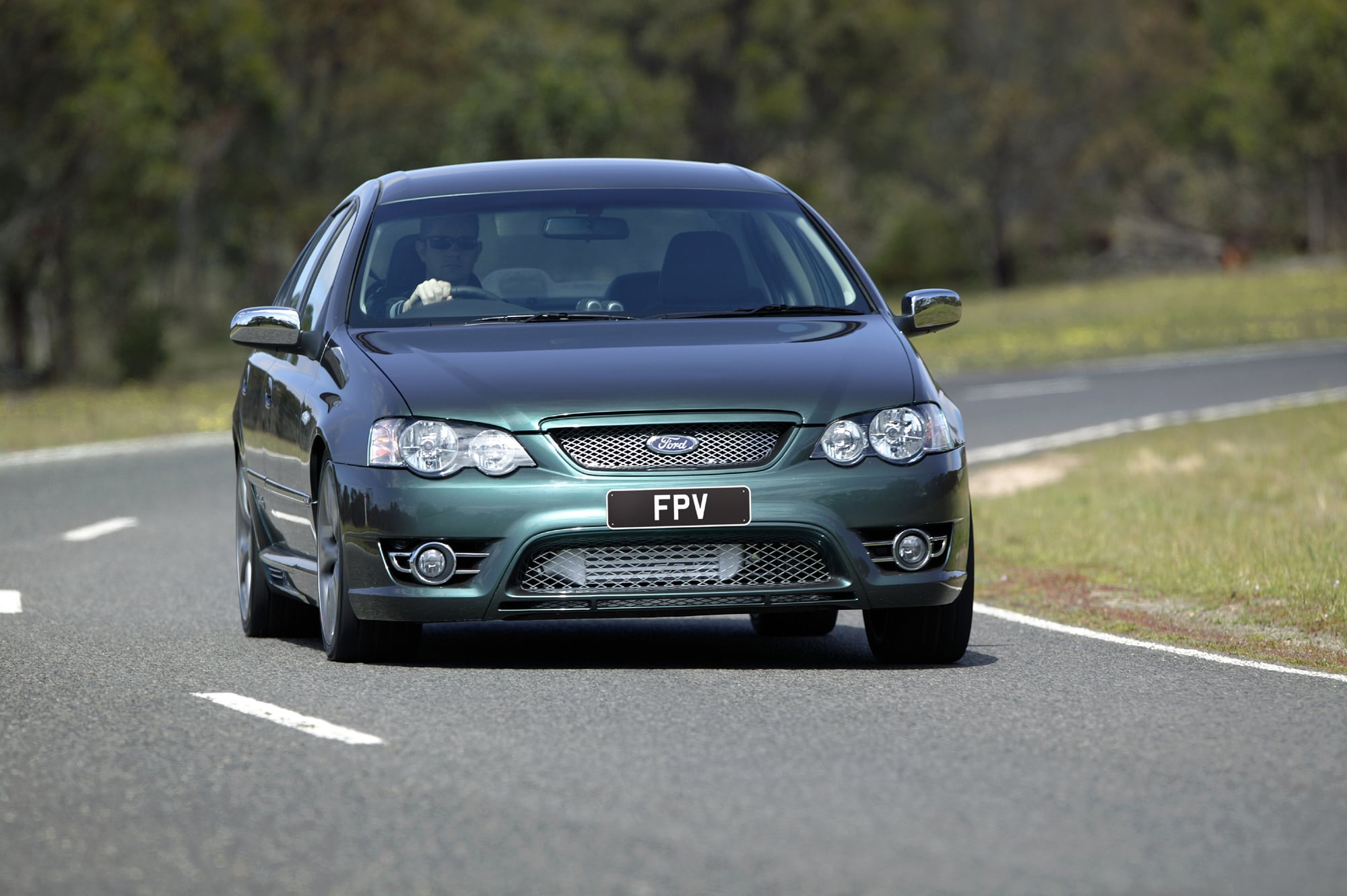
While Ford Performance Vehicles brought back the GT moniker, it also wanted to be seen as a bit suave, a bit premium. To this end, it introduced the short-lived ‘Force’ models to take on the likes of the HSV Senator and Chrysler 300C SRT8, sans the stripes, spoilers and lairy colours of the GT and Typhoon.
Available as a 270kW/550Nm 4.0-litre turbocharged six (Force 6) or 290kW/520Nm 5.4-litre V8 (Force 8), inside there was woodgrain, electric seats, dual-zone climate control and a six-speaker stereo with six-stacker CD player.
Punters weren’t having it, however, and only 93 Force 6s and 89 Force 8s were produced.
2007 FPV Typhoon R-Spec
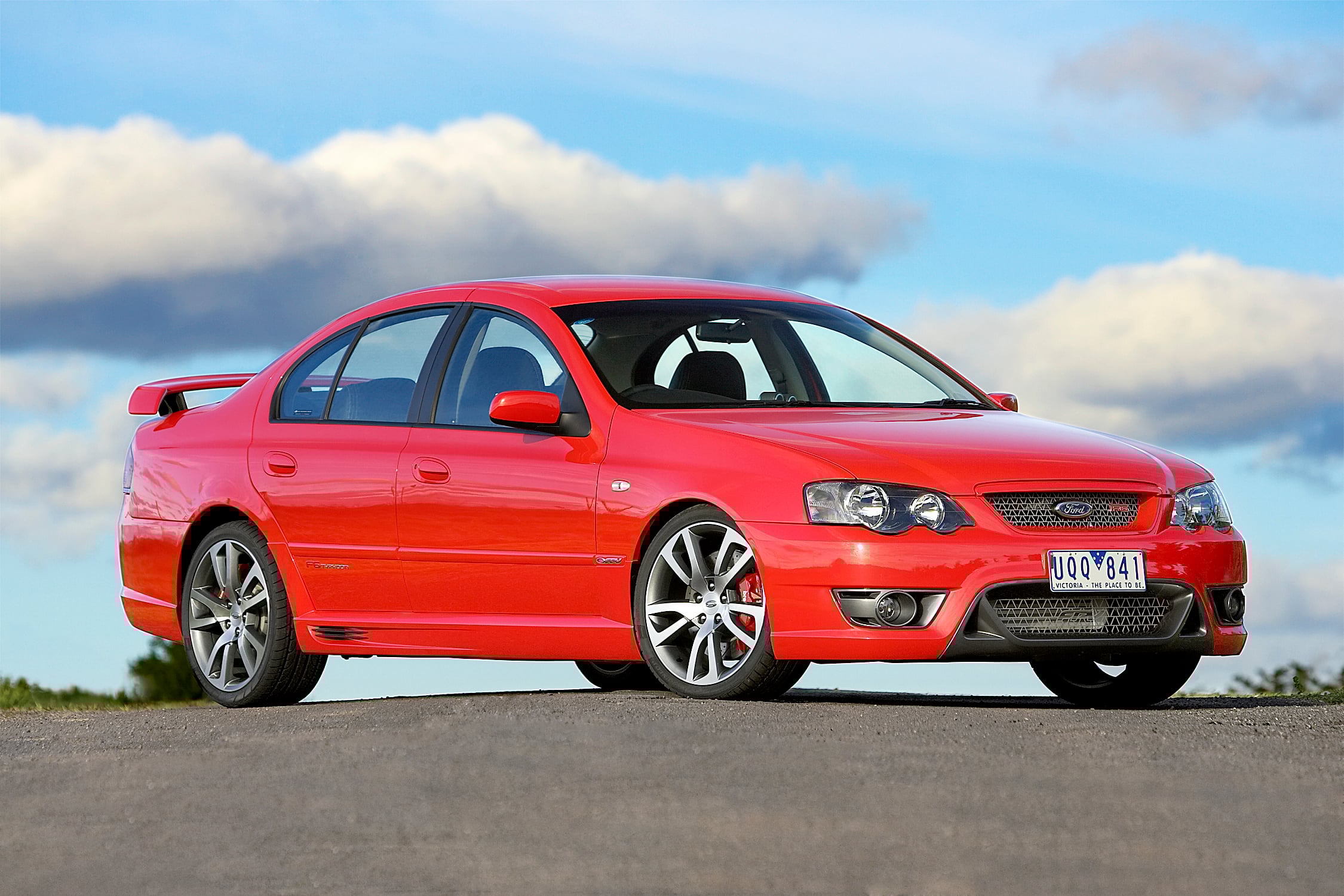
Once its early clutch hiccups had been rectified, the FPV Typhoon quickly became a favourite in the Aussie performance scene thanks to its V8-bashing grunt. In an effort to add some handling finesse and farewell the BF-series (and the Typhoon name – why?) it created 300 examples of the R-Spec.
It used revised springs and dampers for sharper handling as well as new wheels and a larger spoiler on the inside, while leather and an iPod-compatible stereo were also included, making the R-Spec’s $1500 premium over a standard Typhoon good value.
2008 Elfin T5
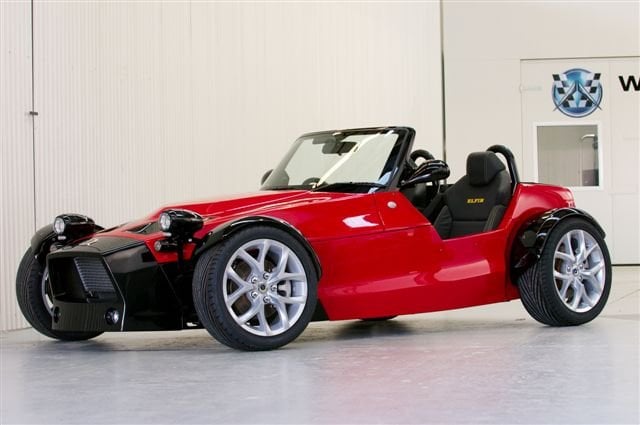
Imagine a Caterham fueled by meat pies and Vegemite and you have the Elfin T5. The Elfin brand returned to the automotive consciousness with the MS8, but the V8 monster was cramped and rather tricky to drive.
The ‘Type 5’ had much more space and its larger dimensions allowed to accommodate plenty of GM gear, Elfin being owned by Walkinshaw at the time. This included Commodore power steering, diff, drive shafts and brakes, while under the bonnet was GM’s 2.0-litre turbocharged four boosted two 194kW/351Nm – plenty in a car weighing 760kg.
While certainly a niche proposition, at $64,950 (and even the optioned-up press car was $75,000) it undercut the traditional British players by a huge amount with greater comfort and reliability.
Contenders
- Hyundai Santa Fe Hybrid
- Kia Sorento Hybrid
- Chery Tiggo 8
- Mazda CX-80
- Audi Q8
- BMW X5 xDrive50e
- Range Rover Sport
- Land Rover Defender
- Lexus RX350h, RX450h+ and RX500h
- Toyota Kluger
Winner – Hyundai Santa Fe Hybrid
Price: from $57,000 plus on-road costs
Drivetrains/fuel economy/CO2 emissions: 1.6-litre four-cylinder turbo-hybrid, 6-speed auto, 173kW/367Nm, 5.6L/100km, 128g/km
Dimensions (length/width/height/wheelbase): 4830/1900/1770/2815mmBootspace: Unknown (third row up)/628L (third row folded)/1949L (third + second row folded
Warranty/roadside assistance/service intervals: Five-year/unlimited km, service-activated,
annual/every 10,000km
Five-year service cost: $2439
| Driving | |
| Interior | |
| Practicality | |
| Overall value | |
Things we like
- Distinctive styling
- Spacious and practical cabin
- Loaded with kit across the range
Not so much
- Calligraphy model’s pricing is getting up there
- Lazy response in eco mode
- Toyota hybrids are more efficient
If you’re searching for a bold and distinctive-looking family SUV, look no further than the Hyundai Santa Fe. While the previous four generations were some of Hyundai’s best products over the years, none of them were especially interesting to look at. Enter generation five and its funky, boxy shape, making it certainly one of the most instantly recognisable large SUVs on the market.
Inside, the Santa Fe offers a spacious and practical cabin that feels well thought out by its designers. Each row has more than enough space for adults, with the third row a noticeable improvement on the previous Santa Fe and more spacious than key rivals such as the Kia Sorento. The cabin also features thoughtful details such as the dual wireless smartphone charger in the centre console, ample storage throughout and easy-to-use technology.
There are two available drivetrains in Australia: a turbocharged petrol 2.5-litre four-cylinder unit making 213kW of power, or a 173kW 1.6-litre turbo-petrol hybrid. Both engines are available as front-drivers in the base model but are otherwise paired to all-wheel drive throughout the range, and every Santa Fe model is quite comfortable and relaxing to drive, with a well tuned ride quality and light steering. The boxy styling helps with visibility as well.
Hyundai’s five-year/unlimited km warranty covers the Santa Fe, and its service costs are reasonable at a maximum of $2439 for five years/75,000km, though its warranty looks short against some other manufacturers on the market. Counting against the Santa Fe is that it’s not cheap at the higher end of the model range, the drivetrain response in eco mode is sluggish, and the 2.5T’s lazy dual-clutch transmission can stumble a bit in low-speed driving.
But otherwise, the Hyundai Santa Fe proves to be a very worthy large SUV thanks to its insanely practical cabin, value for money, long list of equipment, comfortable driving experience and reasonable running costs. That it also looks unique and characterful is only a bonus for those wanting a more distinctive family chariot to keep ahead of the Joneses.
Kia Sorento Hybrid + PHEV
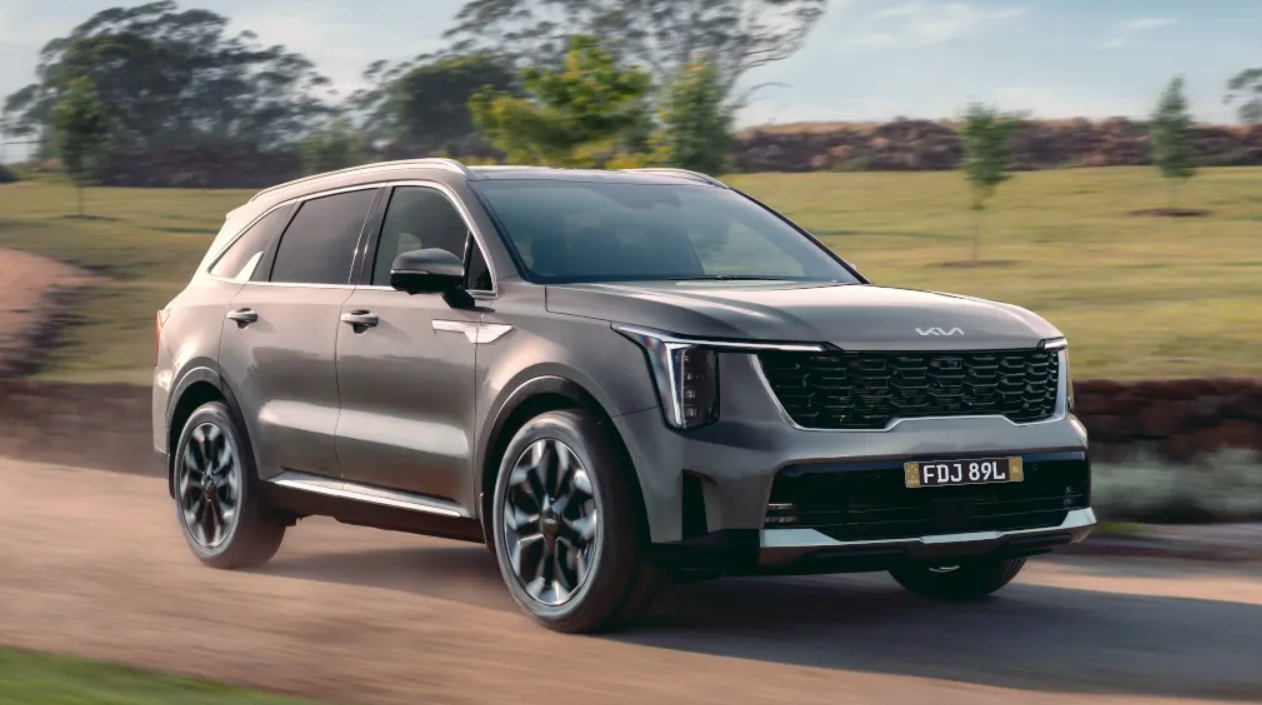
Price: From $70,330 plus on-road costs
Drivetrains/fuel economy/CO2 emissions: 1.6-litre turbo four-cylinder hybrid, 6-speed auto, 169kW/350Nm, 5.4L/100km, 122g/km; 1.6-litre turbo four-cylinder PHEV, 6-speed auto, 195kW/350Nm, 1.6L/100km, 36g/km
Dimensions (length/width/height/wheelbase): 4815/1900/1695/2815mm
Bootspace: 179L (third row up)/608L (third row folded)/1996L (third + second row folded)
Warranty/roadside assistance/service intervals: Seven-year/unlimited, up to eight years,
annual/every 15,000km
Five-year service cost: $3009 (hybrid), $3409 (PHEV)
| Driving | |
| Interior | |
| Practicality | |
| Overall value | |
Things we like
- Both hybrid and plug-in hybrid drivetrains on offer
- Lovely to drive thanks to local tuning
- Well equipped across the range
Not so much
- PHEV is expensive to buy and service
- Hybrids only at the top of the model range
- Third row of seating is not huge
Kia is absolutely killing it at the moment with an impressive line-up that is – deservedly – winning it big sales in Australia. While products such as the new Tasman ute and EV9 electric upper large SUV take all the headlines, the Sorento seven-seat SUV does a lot of heavy lifting in sales – so far this year, it’s Kia’s third-best selling vehicle with over 5000 sold to the end of June. So what’s so good about the Sorento?
Starting at $50,880 plus on-road costs for the entry-level Sorento S with a 3.5-litre petrol V6 and a front-wheel drive drivetrain, the Sorento range offers strong value for money. But we still think that top-spec models are solid value for money thanks to their very long lists of standard kit. While a GT-Line hybrid is around $80,000 drive away, it’s also absolutely loaded with features.
Four drivetrains are available with the Sorento: the aforementioned V6, a 2.2-litre turbo-diesel and two 1.6-litre hybrid options, one a regular hybrid and one a plug-in unit with up to 68km of electric driving range (WLTP). About 80 per cent of buyers in Australia choose the diesel, as it’s punchy, fuel efficient and unlike the V6, is mated to an all-wheel drive system. More would choose the hybrid if it were offered in lower grades, but alas, it’s limited to the top-spec GT-Line for now.
Thanks to Kia’s local ride and handling tuning, the Sorento drives very well for the segment. Its ride quality is tuned well with a taut but comfortable feeling, especially at higher speeds – plus, it handles well for a big seven-seater SUV. Even enthusiasts will be happy from behind the wheel.
The Sorento’s cabin is good quality, with its new infotainment screens – introduced with the mid-life facelift – impressively slick to use and well-featured. Storage space in the front cabin is excellent, with plenty of spots to hide trinkets, and it’s a similarly positive story moving rearward with ample space in the second row and enough space for kids in the third row.
It’s easy to see why the Kia Sorento has become one of the brand’s best selling cars in Australia. It’s covered by a long warranty, it’s great to drive, has a range of models and drivetrains, a lot of standard equipment and a practical interior. More hybrid availability would be great as the petrol V6 is thirsty and diesel fuel isn’t suited to everybody, and the PHEV is expensive. Nevertheless, the Sorento is a great product worthy of strong consideration in this segment.
Chery Tiggo 8 Super Hybrid
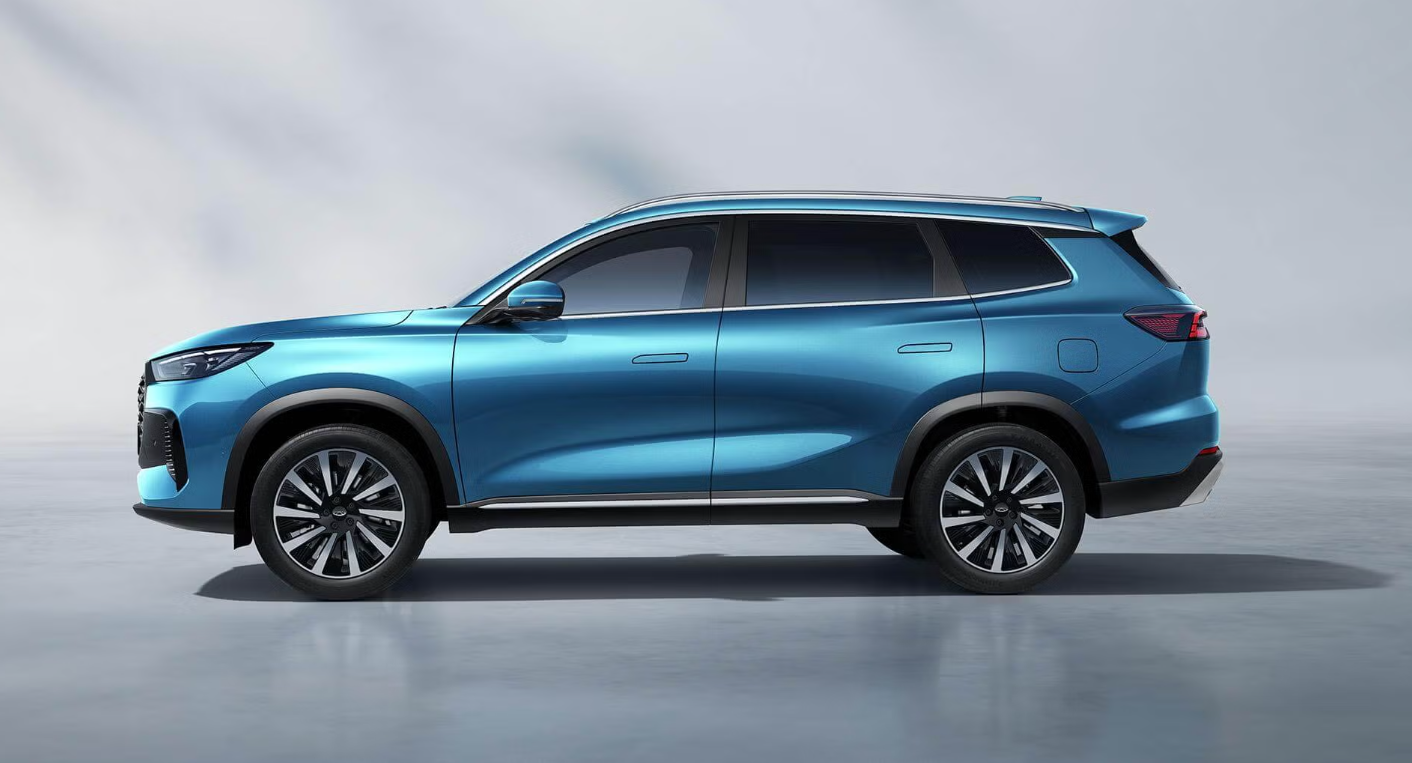
Price: From $45,990 drive away
Drivetrains/fuel economy/CO2 emissions: 1.5-litre turbo four-cylinder plug-in hybrid, 255kW/525Nm, CVT, 1.3L/100km, 30g/km
Dimensions (length/width/height/wheelbase): 4724/1865/1718/2694mm
Bootspace: 117L (third row up), 479L (third row folded), 739L (third + second row folded)
Warranty/roadside assistance/service intervals: Seven-year/unlimited km, 12 months (renewed
with each service up to seven years in total), annual/every 15,000km
Five-year service cost: $1495
| Driving | |
| Interior | |
| Practicality | |
| Overall value | |
Things we like
- Very sharply priced and well equipped
- Two drivetrain choices, both with good performance
- PHEV gives 95km of claimed EV range
Not so much
- Boot and third row aren’t huge
- Suspension and driver aids need finessing
If you’re looking for the ultimate bargain seven-seater large SUV in Australia, look no further than the Chery Tiggo 8 Pro Max. Priced from just $41,990 drive away (or, thanks to a manufacturer’s special, currently $38,990 drive away) the Tiggo 8 Pro Max is excellent value for money and even the entry-level Urban features equipment such as heated and ventilated front seats, a 360-degree camera and a full suite of active safety features.
But there’s more to the Tiggo 8 Pro Max than its low pricing, with a well finished cabin that is comfortable and well featured with tech. A dual 12.3-inch screen set up is easy to use and looks impressive – especially for the price – and the physical buttons located underneath the screen and on the centre console make it easier to use. The Tiggo 8 Pro Max’s cabin is also practical, with ample space in the first and second rows of seating, though the third row is small, as is the boot with all the seats in place. However, with them all folded, it’s quite large.
The Tiggo 8 offers one hybrid drivetrain in Australia: a 255kW 1.5-litre turbo plug-in hybrid, with both providing more than ample performance. The PHEV also offers an impressive 95km of electric driving range before the petrol engine even switches on, and a claimed overall range of more than 1200km.
On the road, the Tiggo 8 Pro Max is quite refined with low road noise levels, though its suspension and active safety features need some finessing. The ADAS systems are over sensitive and the suspension needs more refined damping to better deal with low speed bumps. The steering also lacks feel, but it is perfectly light for urban driving. The 360-degree camera that’s standard across the range is impressively high definition for the price as well.
There’s definitely more to the Chery Tiggo 8 Pro Max than just its excellent value equation thanks to its good quality interior finishes and tech, strong powertrains and refined driving experience. The new plug-in hybrid drivetrain also provides a healthy EV driving range, and over 1200km of total driving range too. It’s not perfect thanks to its small boot and third row, need for finessing of the driver assistance systems and suspension, and thirsty petrol engine. But if you’re after a bargain large SUV, just be assured that there’s much more to the Chery Tiggo 8 Pro Max than just its low pricing and healthy equipment levels.
Mazda CX-80 P50e plug-in hybrid
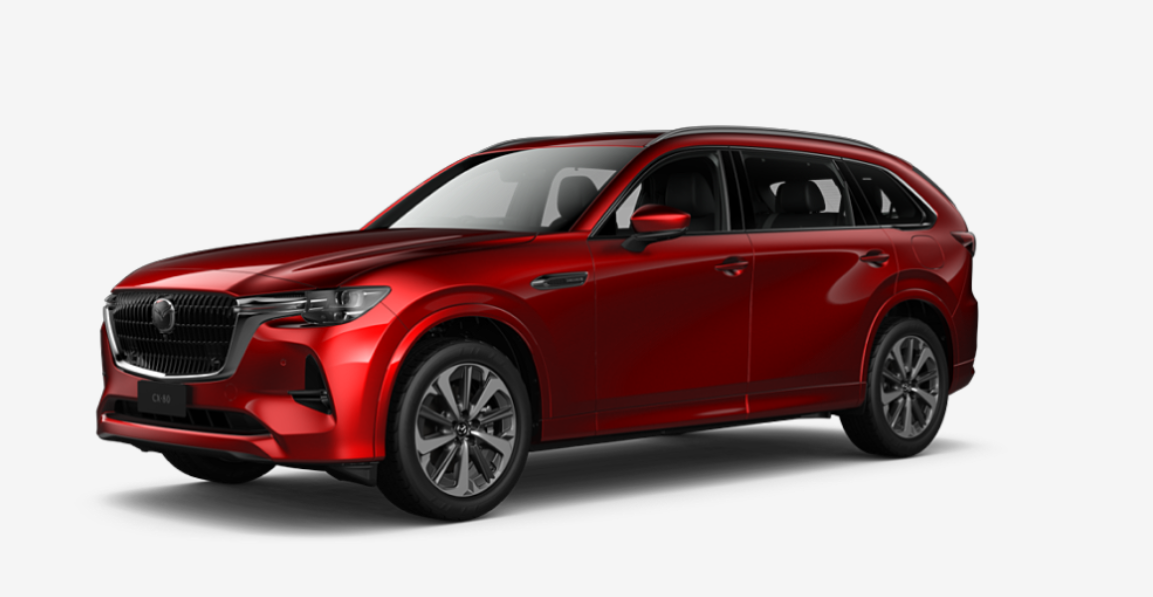
Price: From $76,245 plus on-road costs
Drivetrains/fuel economy/CO2 emissions: 2.5-litre four-cylinder PHEV, 8-speed auto, 245kW/500Nm, 2.7L/100km, 64g/km (P50e PHEV)
Dimensions (length/width/height/wheelbase): 4990/1890/1710/3120mm
Bootspace: 258L (third row up), 566L (third row folded), 1971L (third + second rows folded)
Warranty/roadside assistance/service intervals: Five-year/unlimited km, five years, annual/every
10,000km (diesel) – 15,000km (petrol)
Five-year service cost: $2686
| Driving | |
| Interior | |
| Practicality | |
| Overall value | |
Things we like
- Punchy plug-in hybrid powerplants
- Good value for money
- Excellent cabin quality
Not so much
- Powertrain and ride quality need further refinement
- Expensive service costs
- No spare wheel across the range
Mazda’s new quartet of large SUVs – the CX-60, CX-70, CX-80 and CX-90 – is a worthy group but we think that the CX-80 is the best so far. That’s largely thanks to its value equation – a punchy turbo-six seven-seater large SUV with Mazda build quality priced from under $60,000 has got to be a winner. But it also boasts improved ride quality and refinement over its siblings, which were developed earlier.
Inside the cabin is a carbon copy design of the other models. with good quality across the range and large displays that are easy to use. Comfort is quite good, even in the base model, with cloth upholstery and manually adjustable seats, while the ergonomics are great thanks to liberal use of physical buttons throughout the cabin. The base model Pure’s hard cabin plastics are disappointing, however, and buyers must step up to the Touring model to receive soft ones.
The CX-80’s long wheelbase has produced great results: the second row of seating is huge, and the third row can seats adults comfortably, further helped by amenities back there such as air vents, charging ports and cup holders. The boot is also large, even with the third row of seats in place – though there’s disappointingly no spare wheel in any CX-80 model.
Mazda is offering one plug-in hybrid powertrain for the CX-80, with two mild hybrid petrol and
diesel options also available. Just the petrol ‘G40e’ is offered in the base CX-80 Pure, but every
model above that offers all three drivetrains. The plug-in hybrid is fast and sounds appropriately
raspy and may be more cost effective to run versus other CX-80 drivetrains for you thanks to its
claimed 65km EV driving range, though it is a lot more expensive upfront to buy and it can’t be DC
fast charged, limiting charging appeal.
The driving experience is more positive than its siblings, though the ride quality is a bit too sharp and the gearbox could be more refined as well. Still, at highway speeds it’s very quiet in respect to road noise levels. Drawbacks? Mazda’s five-year warranty could be improved in length, plus it’s not cheap to service, but the Mazda CX-80 is a solid choice in the large SUV segment thanks to its sharp value for money, practical cabin that can seat seven adults comfortably, punchy drivetrains that can also be quite fuel efficient and keen handling for a seven-seat SUV.
Audi Q8 60 TFSI e
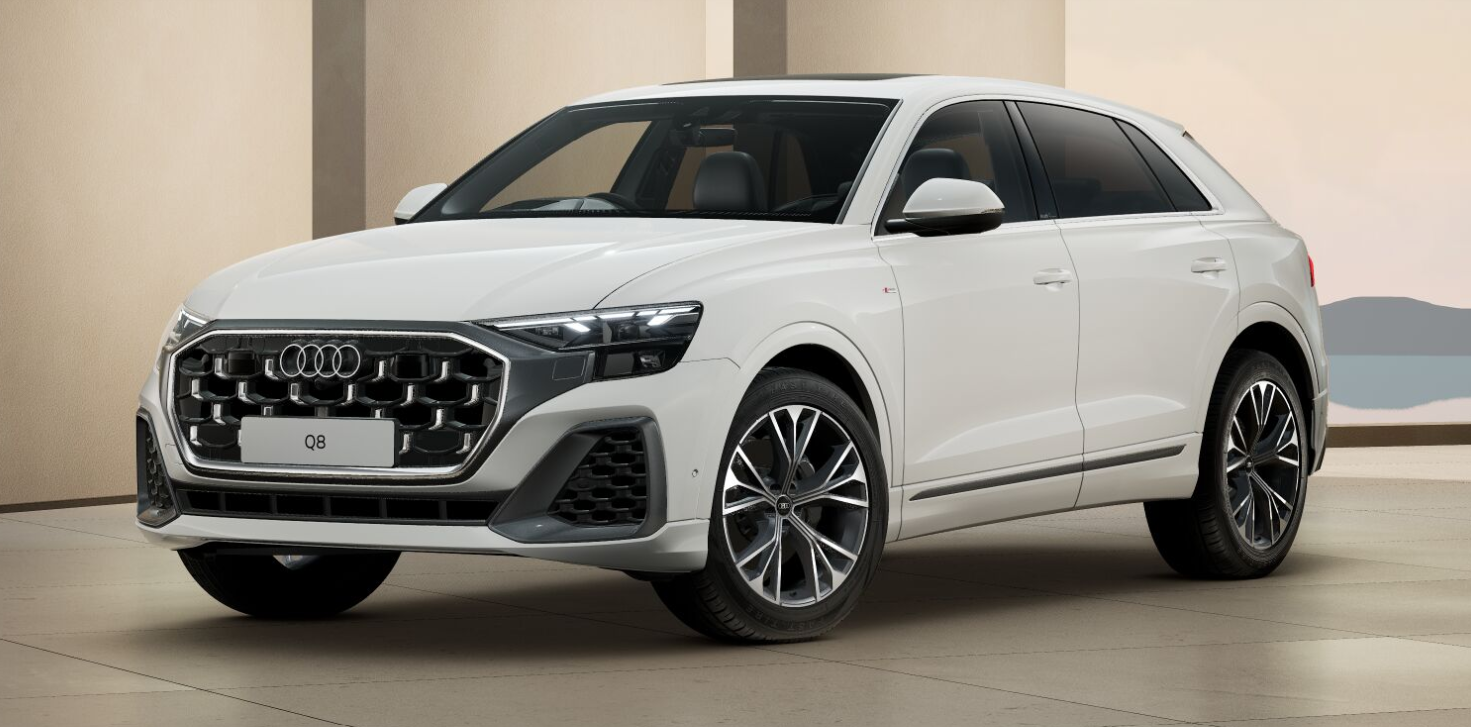
Price: From $154,284 plus on-road costs
Drivetrains/fuel economy/CO2 emissions: 3.0-litre V6 turbo-petrol plug-in hybrid, 360kW/700Nm, 1.8L/100km, 40g/km
Dimensions (length/width/height/wheelbase): 5006/1995/1691/3005mm
Bootspace: 605L (seats up), 1755L (seats down)
Warranty/roadside assistance/service intervals: Five-year/unlimited km, five years, annual/every
15,000km.
Five-year service cost: $3570
| Driving | |
| Interior | |
| Practicality | |
| Overall value | |
Things we like
- PHEV offers strong performance
- Handsome styling, lovely interior
- Spacious despite coupe-like styling
Not so much
- PHEV electric range could be longer
- Feels heavy from behind the wheel
- No seven-seat option available
If you’re searching for a large German SUV, Audi currently has two to offer you: the seven-seat Q7,
or its sexier more coupe-like five-seater Q8 sibling. But considering this is the hybrid section of the
awards, it’s only the Q8 that’s available in Australia with its 360kW V6 plug-in hybrid system – it
used to be available here in the Q7, but was shelved years ago.
Under the bonnet of the Audi Q8 60 is a turbocharged 3.0-litre V6 mated to an electric motor for
360kW/700Nm peak outputs. Thanks to a 17.9kWh battery, the Q8 60 TFSI e offers a claimed 47km of electric driving range (WLTP) and is rated at just 1.8L/100km with the battery full. On the road, the PHEV Q8 feels heavy, more so than its petrol and diesel siblings, thanks to its extra 245kg of weight over the petrol model. Its ride is firm as well, and could be more comfortable.
The cabin of the Q8 is lovely, however. Quality is excellent thanks to rich leather trimmings all over
the dashboard and doors, as well as tactile switchgear and high-resolution displays. The front seats are quite comfortable and feature a lot of adjustment, while visibility is good despite the high belt line.
Thanks the use of the Q7’s platform, the Q8 is spacious for four adults and five will be fine as well.
Three adults will be fit fine across the Q8’s wide rear bench, and both leg- and headroom is fine.
The boot of the Q8 measures a large 605 litres with the seats up and a massive 1755L with them
folded.
The Audi Q8 60 TFSI e presents a tempting hybrid large SUV thanks to its excellent performance, reasonable EV driving range, lovely cabin, ample practicality and handsome styling. Counting against it are a heavy driving feel thanks to the extra weight of the PHEV system, that it’s not cheap and that it’s not available with seven seats, which some buyers might expect for the price.
BMW X5 xDrive50e
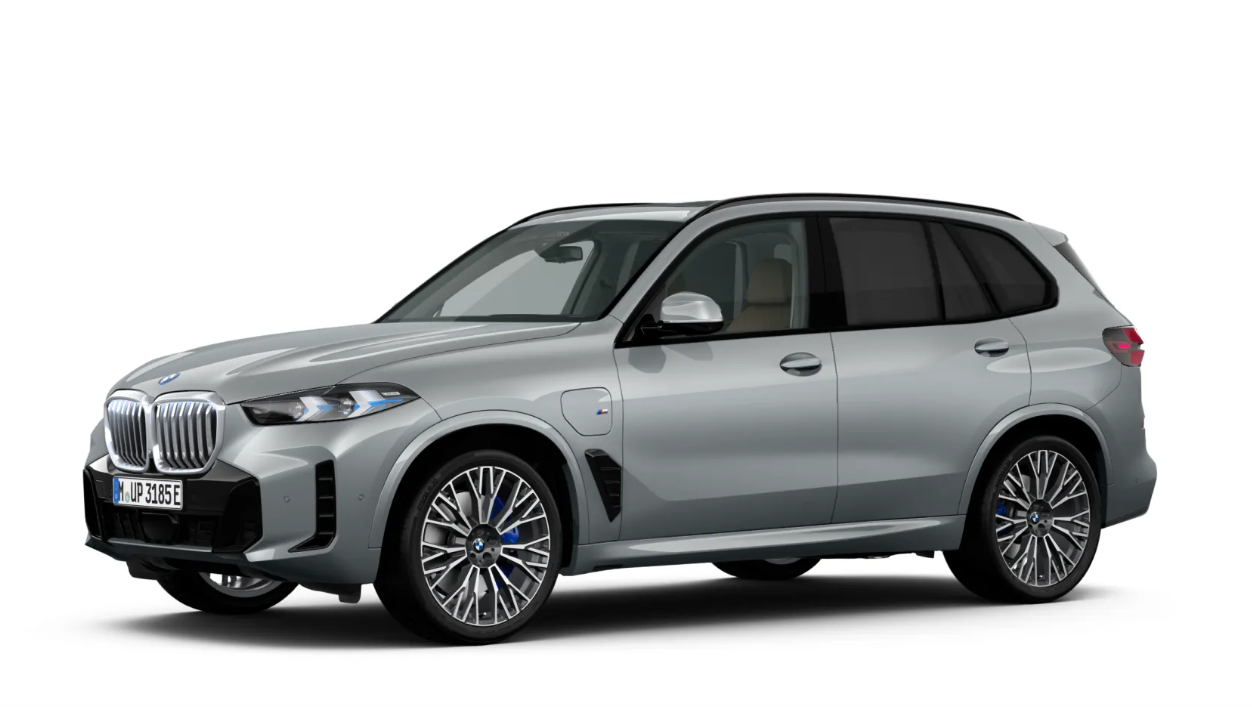
Price: From $153,600 plus on-road costs
Drivetrains/fuel economy/CO2 emissions: 3.0L six-cylinder turbo plug-in hybrid, 8-speed auto, 360kW/700Nm, 1.9L/100km, 41g/km
Dimensions (length/width/height/wheelbase): 4935/2004/1755/2975mm
Bootspace: 500L (seats up), 1720L (seats folded)
Warranty/roadside assistance/service intervals: 5-year/unlimited km, three-years, annual/every
15,000km
Five-year service cost: $3275
| Driving | |
| Interior | |
| Practicality | |
| Overall value | |
Things we like
- The regular SUV dynamic benchmark
- Wide range of powertrains
- Excellent refinement
Not so much
- Third row of seats an expensive option
- Much more expensive than it used to be
- Ordinary steering feel
If you want the definition of a sales success, the BMW X5 is a good place to start. Since its debut in 1999, the company has sold over three million of them, including 75,000 in Australia. In some places, X5s are very common, and that’s easy to see why: for many buyers, it was the default large premium SUV and until the Porsche Cayenne came along, it was the only SUV that real drivers would want to go near.
Nowadays, the smaller X3 is the most popular BMW product worldwide – and that’s no surprise given that it’s larger than the first X5 was – but there’s still plenty to like in its larger sibling. If you’re looking for a driver’s SUV, the X5 is one of the best; even the entry-level 30d just handles in a way that so many competitors cannot match. The BMW of SUVs, if you will.
The range of engines is great as well, with the entry-level petrol and diesel sixes refined and punchy, the plug-in hybrid can cover a long 94km on electric power (WLTP) and the V8 used in both the M60i and full fat M Competition is very fast. All use an eight-speed automatic transmission and BMW’s ‘xDrive’ all-wheel drive system.
The cabin of the X5 is excellent quality, with expensive-feeling materials used throughout. The central touchscreen dominates the cabin experience and while it could be easier to use, screen quality is excellent and it’s very well featured with the usual wireless smartphone mirroring, sat-nav with live traffic and live services such as weather and an app store.
If you’re searching for a large SUV that’ll leave you smiling with every drive, the BMW X5 is a great option. Its driving dynamics are excellent in the segment, and its performance – regardless of model chosen – is impressive. The cabin quality is superb and filled with useable tech, though it doesn’t have a third row of seating as standard. If you can afford it, the BMW X5 is still one of the best large SUVs, just as it was all those years ago.
Land Rover Range Rover Sport P460e
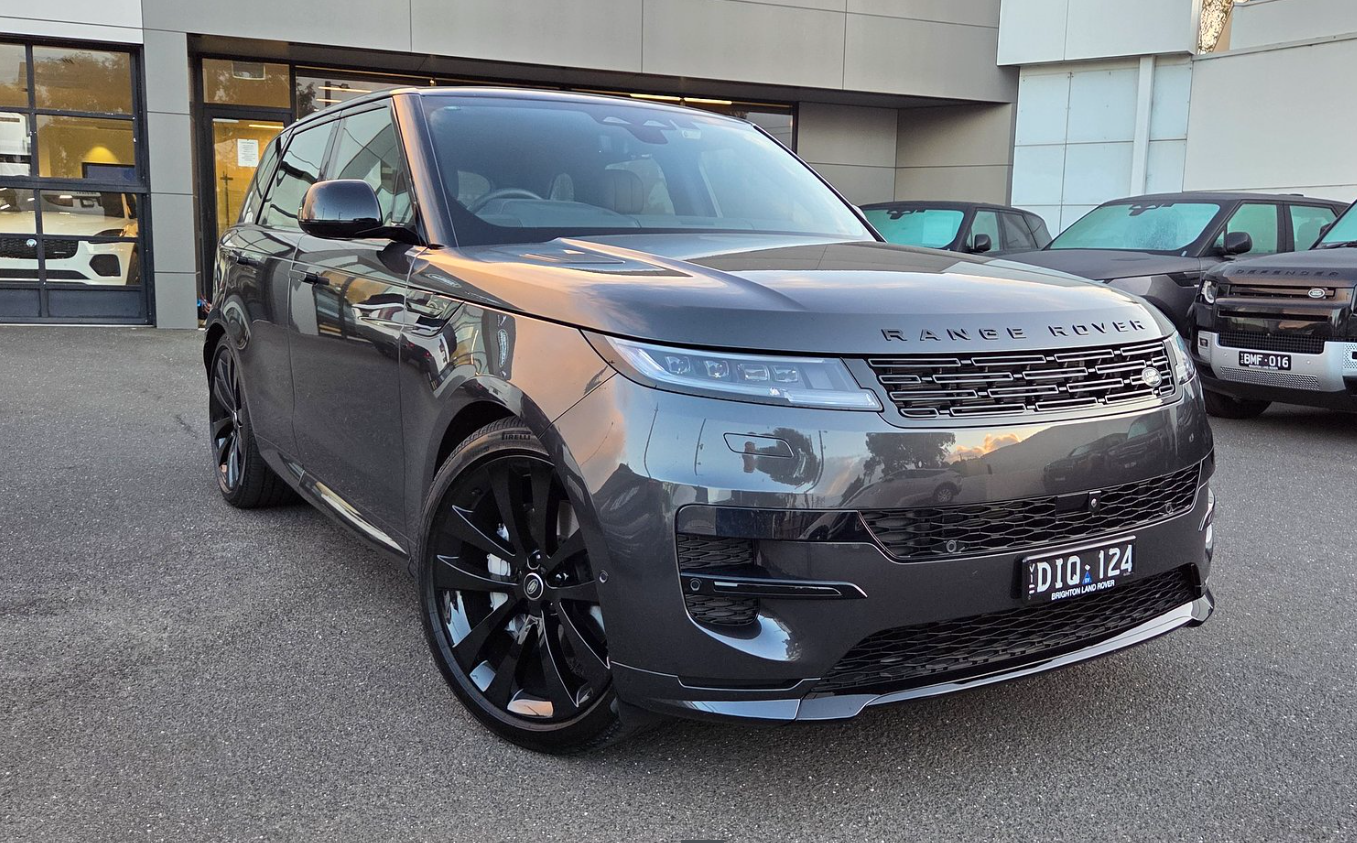
Price: From $181,018 plus on-road costs
Drivetrains/fuel economy/CO2 emissions:
3.0L turbo inline six PHEV, 8-speed auto, 338kW/660Nm, 1.6L/100km, 38g/km
Dimensions (length/width/height/wheelbase): 4970/2025/1814/2998mm
Bootspace: 835L (seats up), 1860L (seats folded)
Warranty/roadside assistance/service intervals: Five-year/unlimited km, five years, annual/every
30,000km
Five-year service cost: $3900
| Driving | |
| Interior | |
| Practicality | |
| Overall value | |
Things we like
- Luxury feel inside, amazingly comfortable
- PHEV’s solid EV range
- Very capable on and off-road
Not so much
- Seven seat option no longer available
- Not cheap and options push the price even higher
- 2.7-tonne weight can be felt when driving
With over two million sales to date, the Range Rover Sport has been a sales phenomenon for its
maker and the third generation is the most talented version yet. There’s a wide range of engine
choices, from the entry-level 3.0-litre turbo-diesel to the high-performance V8 in the SV models, but
the P360e plug-in hybrid is the only drivetrain that offers zero emissions driving capability.
Pairing a turbocharged 3.0-litre inline six petrol engine with a 160kW electric motor, the drivetrain
makes 338kW/660Nm outputs for a claimed 5.4-second 0-100km/h sprint. Yet thanks to its 38.2kWh battery, the Range Rover Sport P360e is capable of a claimed 126km of electric driving
range (WLTP), and it can be DC fast charged up to 50kW for a full charge in under an hour.
On the road, the Range Rover Sport P360e gives a good dual personality: it can waft along in
typical Range Rover fashion, but thanks to its adaptive air suspension, can hunker down to
become something much sportier for a backroad blast. Choose the optional Stormer Handling
Package and rear-wheel steering is added for even sportier handling. Yet, again as you’d expect
for a Range Rover, its off-road capability is awesome and it can go pretty much anywhere.
The interior of the Range Rover Sport, as you’d expect for a Range Rover, is sumptuous and
leather-lined. Its new 13.1-inch ‘Pivi Pro’ is fully featured, even with live services and inbuilt apps
such as Spotify, and its screen quality is very high resolution. The front seats are insanely
comfortable and 22-way electric adjustment, while rear seat and boot space is impressive at 835
litres with the rear seats up and 1860 litres with the rear seats folded. Those upgrading from the
previous Range Rover Sport will note that there’s unfortunately no longer a seven-seat option.
If you’re after a vehicle that can quite literally do it all with a luxurious and practical cabin, the
Range Rover Sport P360e is a great option – for a price. It provides 126km (WLTP) of electric
driving range, quick charging, strong performance, a luxurious driving experience that can turn
sporty or insanely off-road capable at the touch of a button and handsome styling. It’s not cheap,
nor is it a lightweight, but that’s no surprise given just how much it can do.
Land Rover Defender 110 P300e
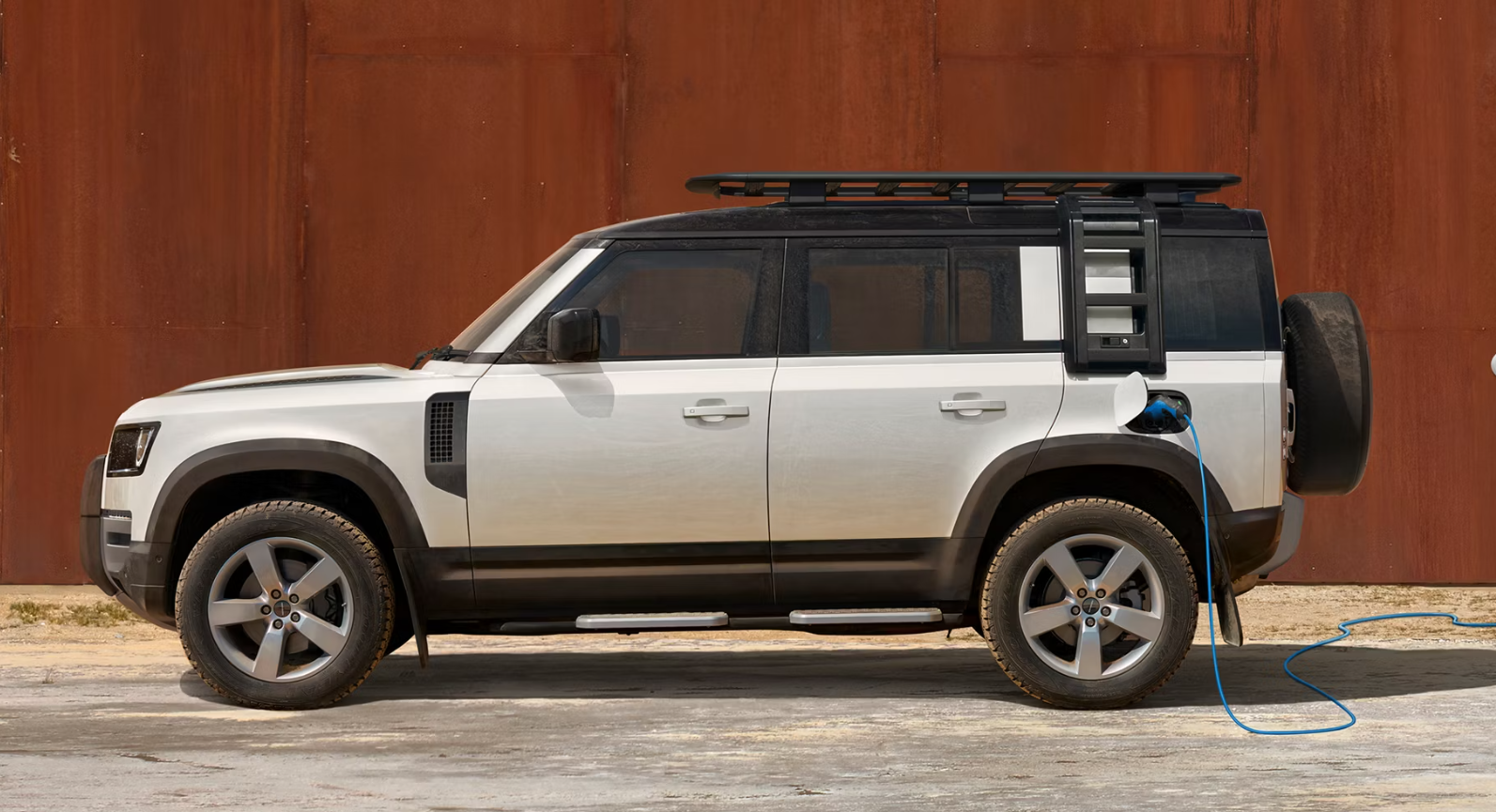
Price: From $131,100 plus on-road costs
Drivetrains/fuel economy/CO2 emissions: 2.0L turbo four-cylinder PHEV, 8-speed auto, 221kW/625Nm, 3.4L/100km, 78g/km
Dimensions (length/width/height/wheelbase): 5035/1996/1970/3022mm
Bootspace: 1075L (seats up), 2380L (seats folded)
Warranty/roadside assistance/service intervals: Five-year/unlimited km, five years, annual/every
20,400km
Five-year service cost: $3300
| Driving | |
| Interior | |
| Practicality | |
| Overall value | |
Things we like
- Fashionable handsome design
- Spacious and practical cabin
- PHEV has good electric driving range
Not so much
- PHEV can’t be had with optional third row of seats
- Gets expensive with options
- Tailgate opens sideways and not upwards
With almost 2500 sold this year alone in Australia to the end of July, the Land Rover Defender
range has given a big boost to the brand’s fortunes globally and it’s easy to see why as it’s very in
vogue. Just look at it: it’s funky, stylish and very fashion-forward. Yet, unlike a lot of cars aimed at the more fashionable among us, there’s significant depth to the Defender’s abilities. Which is no
doubt part of the reason as to why it’s so popular.
As you’d expect for a Land Rover product, the Defender’s off-road ability is one of the best on the
new car market with plenty of off-road features to help once the going gets tough, including
multiple driving modes and a low-range transfer case. Yet on the road, the Defender is pleasant to
drive and even in the least powerful models, the drivetrains are silky smooth– or quite rapid, in the
case of the V8 models like the wild P635 Octa.
The interior of the Defender is a bit more utilitarian than the flashy exterior might suggest, but it’s
very practical with a huge centre console area with plenty of storage options. The central
touchscreen features the brand’s latest ‘Pivi Pro’ software and is easy to use. Rear seat space is
impressive, though less so if the third row is optioned – if you’re likely to carry passengers back
there often, we’d suggest the longer Defender 130 or its Discovery sibling.
Land Rover covers the Defender range with a five-year/unlimited km warranty and a five-
year/102,000km service plan cost ranges from $3300 to $3900, depending on the drivetrain. It’s
easy to see why the Land Rover Defender is just so popular globally: in addition to being a
fashionable item that’s a ‘must have’, it’s got a broad range of talent from its refined driving
experience, practical cabin, excellent off-road ability and wide range of drivetrains. It’s not cheap to
buy in any form – let alone the higher-end models – but that’s clearly no issue as they’re quite
popular, and it’s easy to see why.
Lexus RX
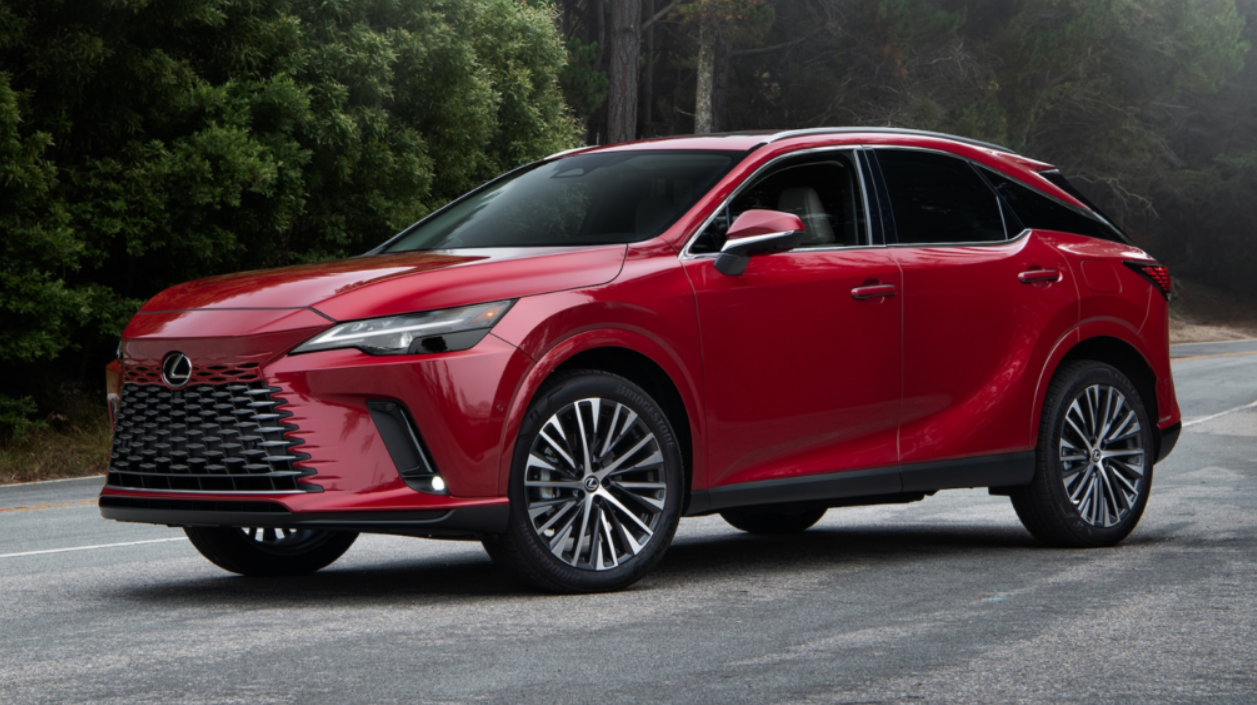
Price: From $93,285 plus on-road costs
Drivetrains/fuel economy/CO2 emissions: 2.5-litre four-cylinder hybrid, CVT, 184kW, 5.0L/100km, 114g/km (RX350h); 2.5-litre four-cylinder PHEV, CVT, 227kW, 1.3L/100km, 29g/km (RX450h+); 2.4-litre four-cylinder turbo hybrid, 273kW, 6.5L/100km, 148g/km (RX500h)
Dimensions (length/width/height/wheelbase): 4890/1920/1695/2850mm
Bootspace: 612L (seats up), 1678L (seats folded)
Warranty/roadside assistance/service intervals: Five-year/unlimited km, three years, annual/every
15,000km
Five-year service cost: $3475
| Driving | |
| Interior | |
| Practicality | |
| Overall value | |
Things we like
- Relaxing to drive, very comfortable
- Fabulous seats
- Excellent refinement
Not so much
- Interior design and quality could be better
- Vague steering feel
- Big model range can confuse
The Lexus RX, originally launched globally in 1998, is the brand’s most popular model ever with over 3.5 million produced. Signficantly, the first RX was less expensive to buy than the German competition, yet loaded with standard equipment – an MO that has made Lexus very popular globally.
The current shape RX is the fifth generation of the badge, and is the biggest model yet. Longer, wider and lower than the previous model, the RX offers four drivetrains, with hybrid (RX350h and RX500h), plug-in hybrid (RX450h+) and turbo-petrol (RX350) variants all on offer. Prices start at $93,285 plus on-road costs for the entry-level RX350h Luxury, rising to $130,950 +ORC for the top-spec RX500h F Sport Performance, which are all quite a lot less than the BMW X5 or Mercedes-Benz GLE.
Like parent company Toyota, hybrids are a big focus with Lexus and in the RX range, regular hybrid, turbocharged hybrid and new plug-in hybrid drivetrains are available. Most buyers will choose the 184kW RX350h, with its combined fuel consumption of just 5.0L/100km, but even the powerful 273kW RX500h uses just 6.5L/100km on the combined cycle.
On the road, the RX range is relaxing to drive, with excellent refinement and a comfortable ride, even with the 21-inch wheels on more expensive models. The RX’s cabin is also very refined, and makes for a strong first impression with lovely seats and excellent quality, though search further and you’ll find some cheaper plastics on the doors and lower centre console. Screen quality, however, is excellent and easy to use, and the two-row RX is spacious.
Good value for money, refined driving experience, spacious cabin and wide range of powerplants, including lots of in-vogue hybrid choice – it’s easy to see why it’s a popular model. Add in the service, reliability and resale value that the brand is known for, and the Lexus RX remains a solid large SUV choice.
Toyota Kluger
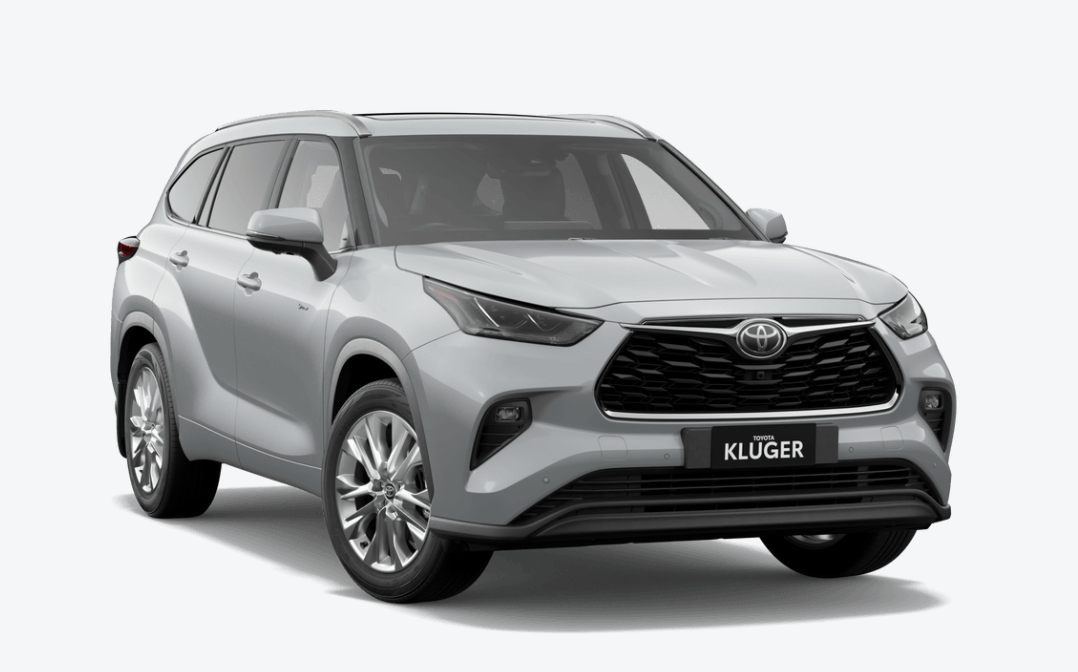
Price: From $62,410 plus on-road costs
Drivetrains/fuel economy/CO2 emissions: 2.5-litre four-cylinder hybrid, CVT auto, 184kW,
5.6L/100km, 128g/km
Dimensions (length/width/height/wheelbase): 4966/1930/1755/2850mm
Bootspace: 241L (third row up), 1150L (third row folded)
Warranty/roadside assistance/service intervals: Five-year/unlimited km, no roadside assistance,
annually/every 15,000km
Five-year service cost: $1400
| Driving | |
| Interior | |
| Practicality | |
| Overall value | |
Things we like
- Excellent hybrid drivetrain and efficiency
- Relaxing to drive
- Well equipped
Not so much
- Third row feels small thanks to tiny windows
- Expensive throughout the range
- Cabin quality could be better
The Toyota Kluger has been one of the best-selling seven-seat SUVs in Australia since it first
landed in Australia in 2003 and now in its fourth generation, that popularity has not slowed down.
Prices start at $62,410 plus on-road costs for the entry-level GX and rise to more than $90,000
once on-road costs are included. Three models are available: GX, GXL and Grande.
While it launched with a 3.5-litre petrol V6 and a 2.5-litre hybrid drivetrains, the V6 was replaced
with a torquier 2.4-litre turbo petrol, but nowadays the hybrid is the only available option. It provides
ample grunt with 184kW on offer, but also excellent fuel consumption at a claimed 5.6L/100km. All
new Kluger models in Australia are equipped with an all-wheel drive system.
On the road, the Kluger is extremely comfortable with a soft suspension set up that gives it an
excellent ride quality. It’s quite easy to drive, with quick steering and good visibility, and all the
controls are well weighted. The front cabin is quite practical with ample storage space, though
material quality is a bit lacklustre, especially in the top-spec Grande.
Third row seating could be better as well. Access is excellent thanks to the sliding middle seat, but
there are no child seat points in the rear and the small windows make it feel smaller than it is. The
second row is huge, however, and three adults will be more than comfortable. Amenities include a
third climate zone, air vents, map pockets and large door pockets.
Competition is tough, but the Toyota Kluger’s practicality, low running costs, ample performance
from its hybrid powertrain and comfortable driving experience continue to win it many fans in
Australia. The next generation of Kluger is likely not far off, and we’re hoping it has a more
spacious feel and higher quality materials inside, but the current model is still a great family car.
Nissan has revealed the mid-life facelift for its X-Trail mid-size SUV, with a range of minor styling tweaks, upgraded interior materials, a new infotainment system with Google inbuilt and – for the Japanese domestic market only – a sporty-looking new Nismo model.
The facelift for the X-Trail follows the North American market Rogue from almost two years ago, which focused on light styling changes, added tech and higher quality interior materials. The bumper and wheel designs have been revised for a fresher look, and in Japan at least, a new Rock Creek variant has been added as a more off-road friendly X-Trail.
On the inside of the facelifted X-Trail are higher quality trims such as the tan Nappa leather upholstery, a new steering wheel and more tech features such as a 12.3-inch touchscreen using a new Google infotainment system with live services and Google Maps navigation. USB-A ports have been replaced with faster-charging USB-C units and the 360-degree camera now features a ‘see through’ mode to aid with parking.

Japan and US-spec X-Trails use a turbocharged three-cylinder engine, though Australian models are likely to continue with a naturally aspirated 2.5-litre four and 1.5-litre turbo-petrol hybrid options, both using a CVT automatic transmission.
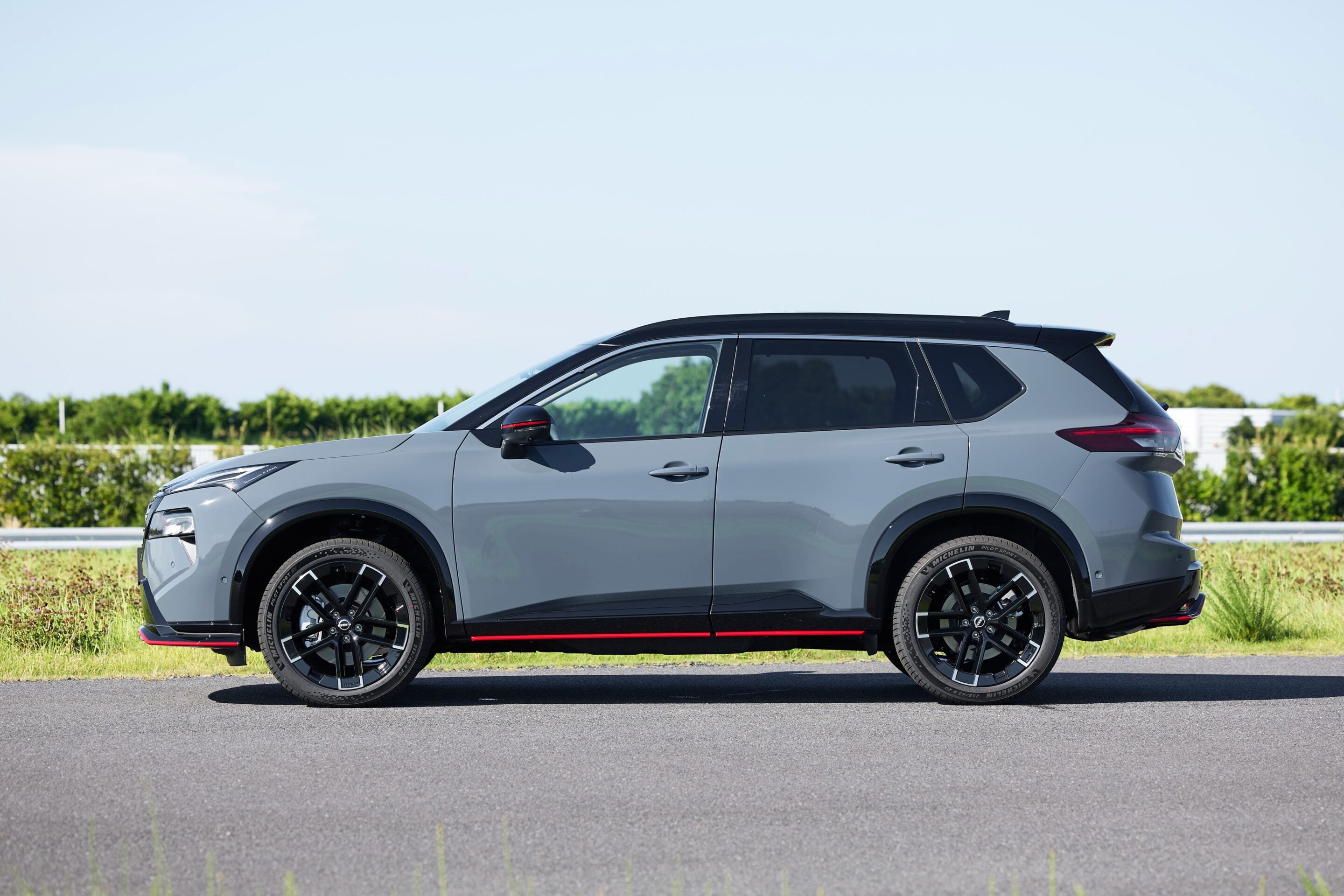
Based on the X-Trail e-Power hybrid, a new Nismo variant of the X-Trail range was also revealed and it features a range of handling and styling tweaks. On the outside, the dark chrome grille, redesigned bumpers and new 20-inch Enkei wheels give a sportier look, while suspension changes include the use of ‘Kayaba Swing Valve’ dampers.
The X-Trail’s ‘e-4orce’ all-wheel drive system has also been retuned for the Nismo with increased input from the rear axle motor for sportier handling, while drivers can choose the front-rear torque balance manually to suit their tastes.
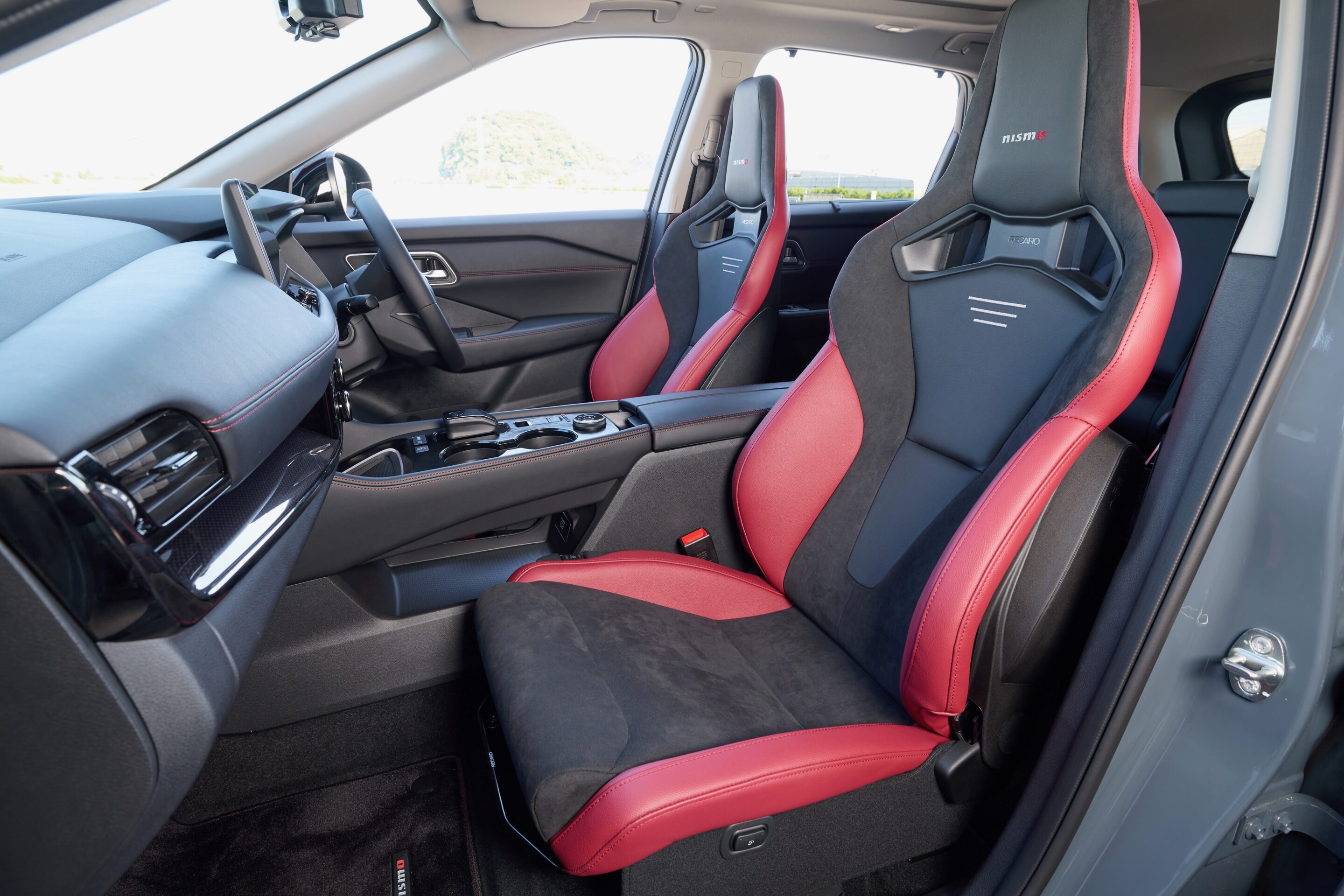
On the inside, the X-Trail Nismo uses a black and red colour scheme similar to the Z Nismo, with red stitching, trim pieces and even a red starter button. Optional Recaro sports seats will also be available for an extra sporty feel on the inside.
No performance increases have been mentioned by Nissan, so the X-Trail Nismo likely continues with the same 157kW turbocharged three-cylinder 1.5-litre engine and dual electric motor ‘e-Power’ hybrid set up as other hybrid X-Trail models.
Nissan Australia is yet to confirm local timing for the facelifted X-Trail, though it’s likely to arrive
sometime in 2026.