
BMW is set to revive its iconic CSL badge, according to M Division boss Markus Flasch.
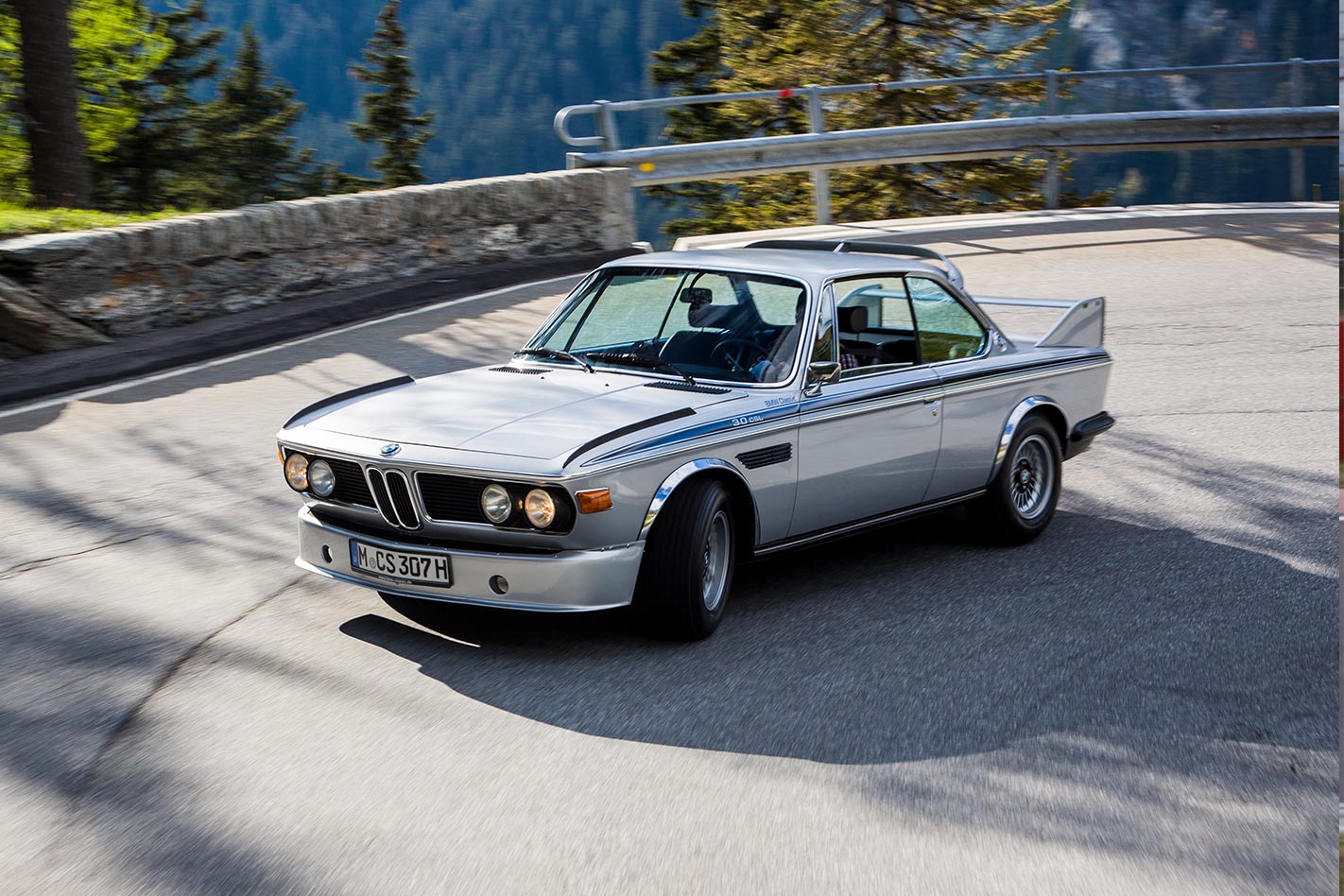
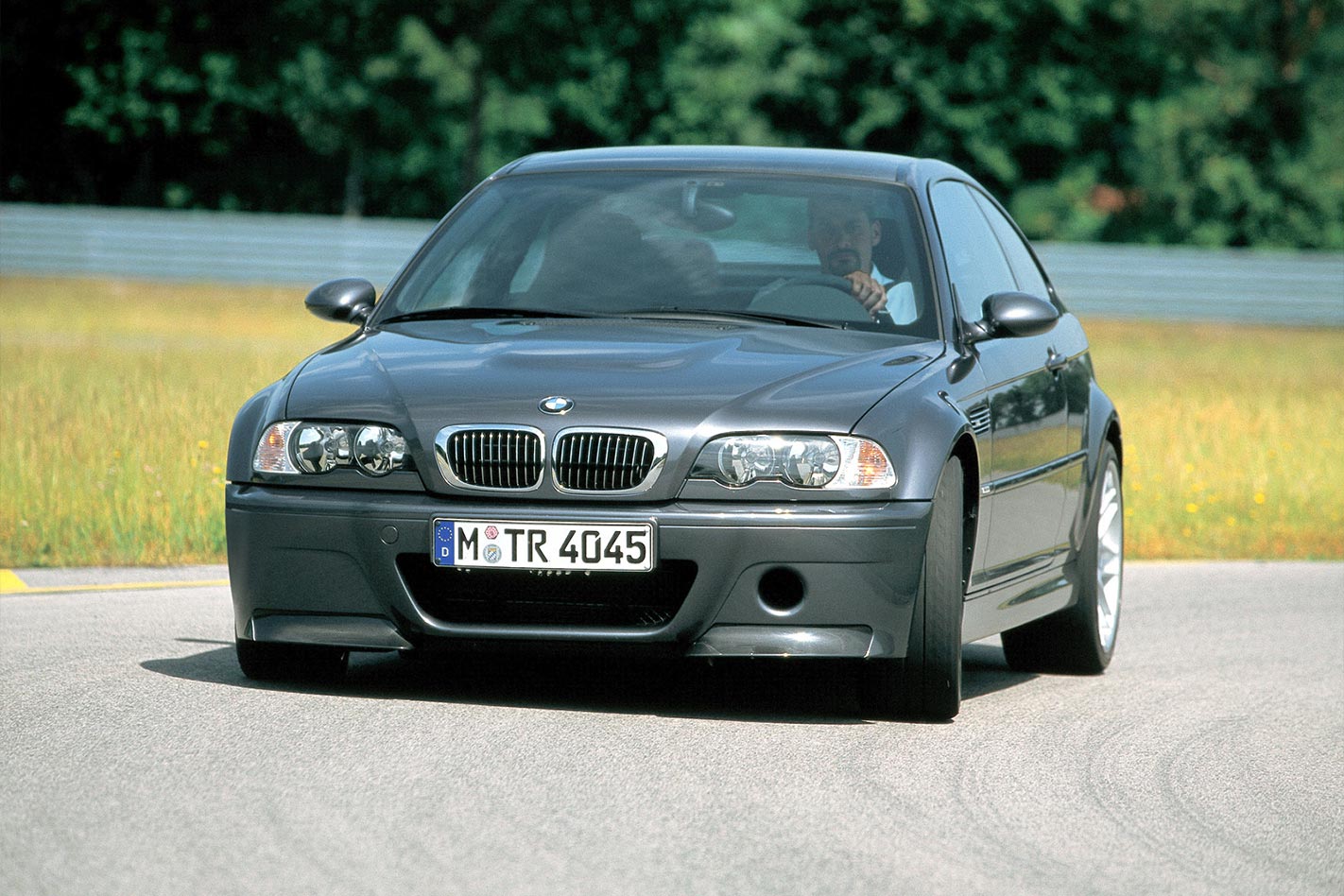
CSL is the most revered BMW nameplate, having adorned just two production models, the E9 Coupe of 1972 and E46 M3 of 2003, though it also appeared on a one-off E60 M5 built to celebrate 25 years of M.
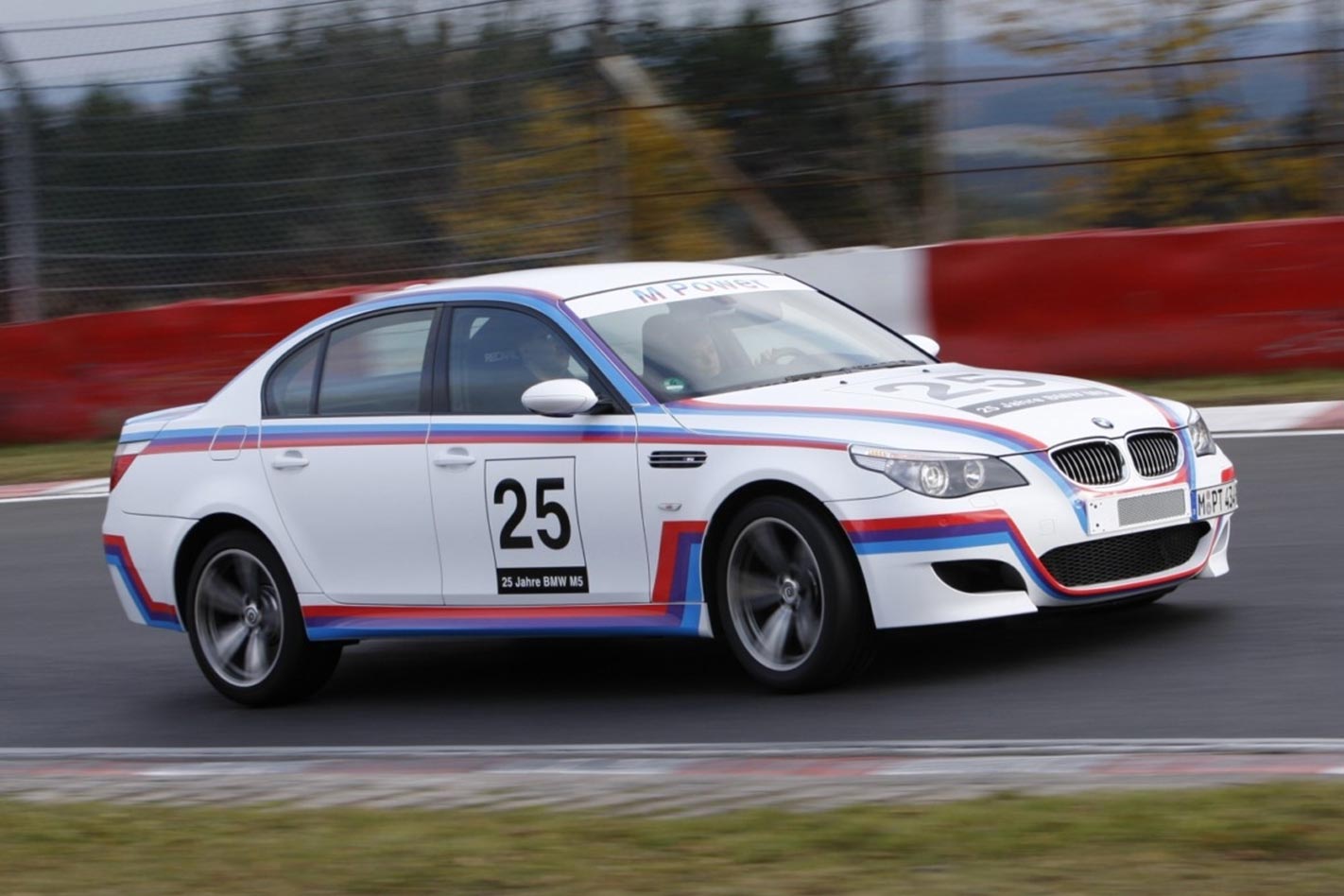
In recent years BMW’s sportiest models have worn the GTS moniker, in particular the E92 M3 GTS and F82 M4 GTS, but Flasch said: “We won’t see the GTS sub-brand in future; there won’t be a GTS and a CSL.”
Flasch wouldn’t be drawn on what models would potentially receive the CSL treatment, though did offer: “CSL stands for lightweight, racetrack ability and the purest M character that you can achieve that’s still got licence plates on it.”
The next M4 is the most obvious choice, but the forthcoming M8 Coupe could also be a front-runner, Flasch stating: “This car is the ultimate performance machine that we offer.” Whilst a larger car, the M8 would also potentially allow for a greater weight loss, living up to the CSL mantra.
Expect to see more CS models, too. The badge first appeared on the E46 M3, which scored a lot of the mechanical pieces from the CSL, but it wasn’t used again until the current F80 M3 and F82 M4.
Flasch outlined these models are being developed in response to customer demand: “For some of our customers our high performance cars weren’t radical enough, talking about the chassis. Some of our customers needed even more precision in steering. It’s not necessarily so much about the sheer performance or about the engine output but the character.”
New to Wheels Car of the Year?
Read the COTY 101.
This article was first published in Wheels February 2019
Like your favourite local pizzeria, the Forester, by little ol‘ Subaru, has long been both a big crowd pleaser and a cut above most of the larger multinationals’ fare, regularly winning comparos with quality engineering and packaging smarts.
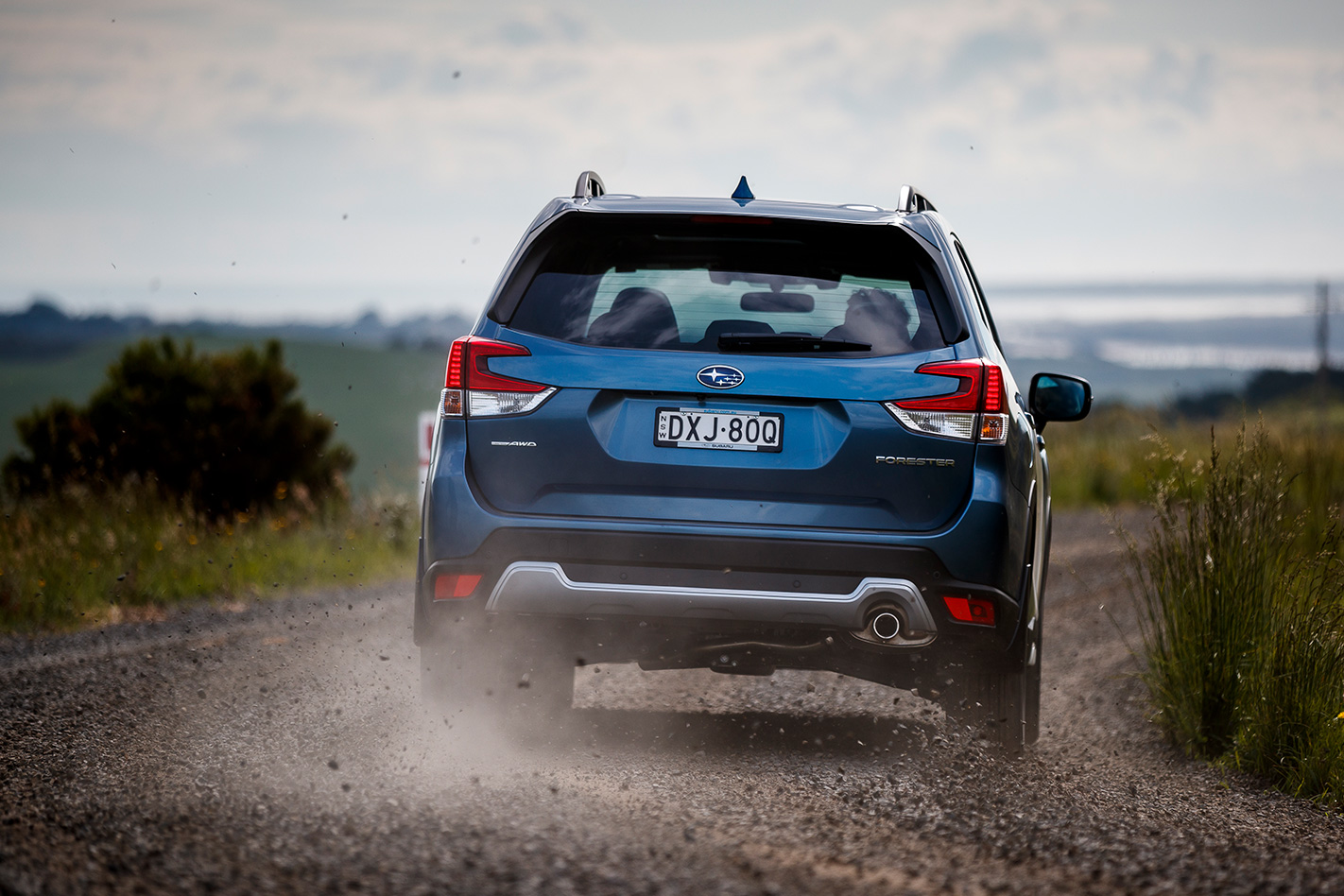
That’s mighty impressive given that, until now, the medium-SUV’s bones dated back to the first Liberty/Legacy of 1989. Obviously, each redesign in the series’ 22-year history has kept pace and evolved, culminating in the previous version’s impressive pricing, specification and economy – the latter aided by a switch to a CVT auto.
This time the Japanese have gone all out, with the spanking-new ‘Subaru Global Platform’. The recipe might be much the same – just try to differentiate old and new Forester at first glance – but the ingredients have created something special.
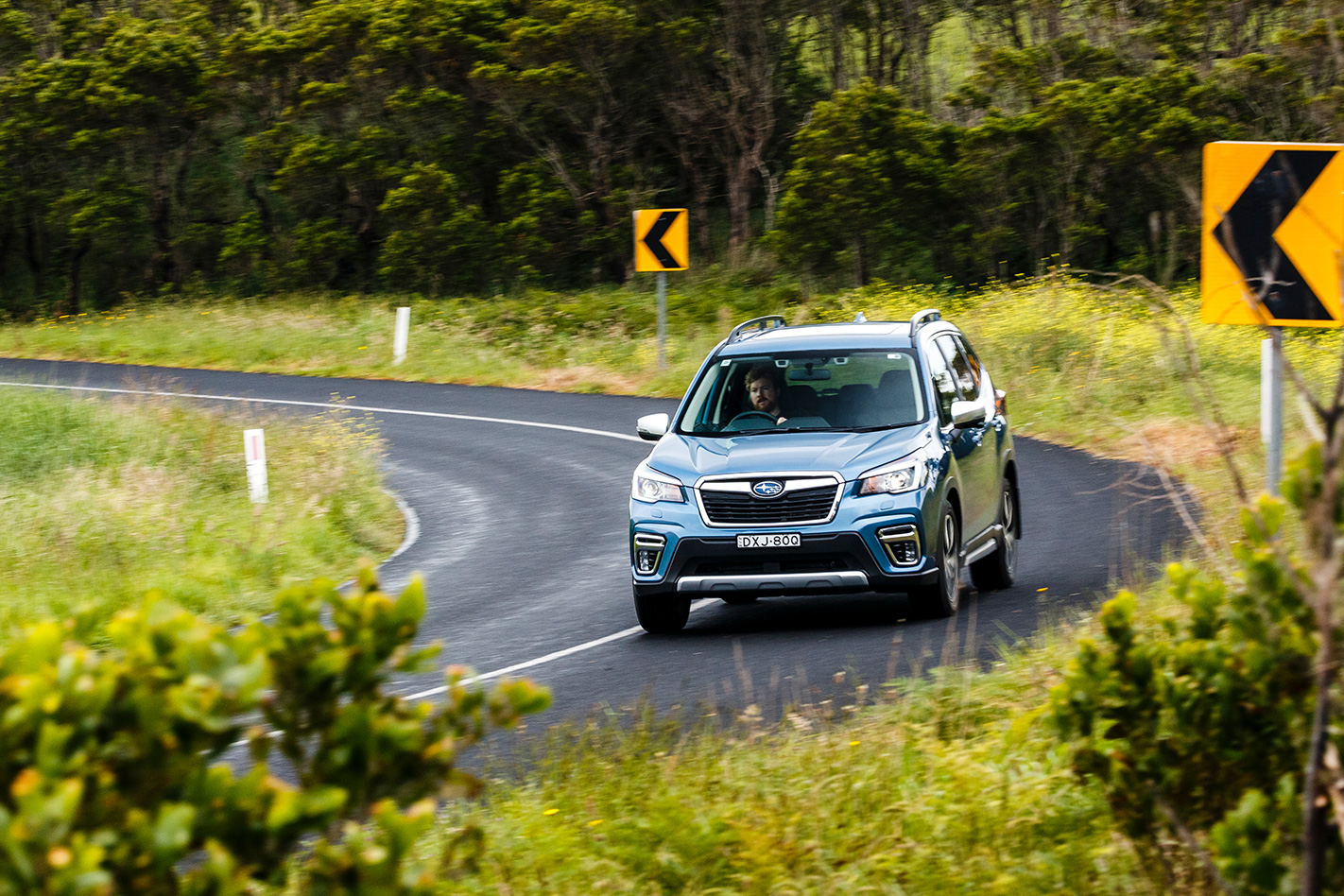
Let’s start with value. While there are no manuals (or turbos, for now), thus raising the base price by over $3K, what’s included from $33,490 does lift class standards – a 2.5-litre boxer petrol engine driving all four wheels via an equally fresh auto, for example, as well as AEB, pre-collision braking, adaptive cruise, lane-keep assist, blind-spot warning, rear cross-traffic alert, automatic and adaptive LED headlights, digital radio, CarPlay/Android Auto compatibility, 17-inch alloys and tyre-pressure monitors.
Add acres of space for five, a sizeable cargo area with a flat floor (the upshot of a body that’s now 15mm longer, 20mm wider and accompanied by a 30mm wheelbase stretch), better all-round vision due to deeper windows, thinner pillars and a low dash cowl, a fine driving position and simple controls, and you can see why, as one judge put it: “that base Forester is all you need.” Indeed.
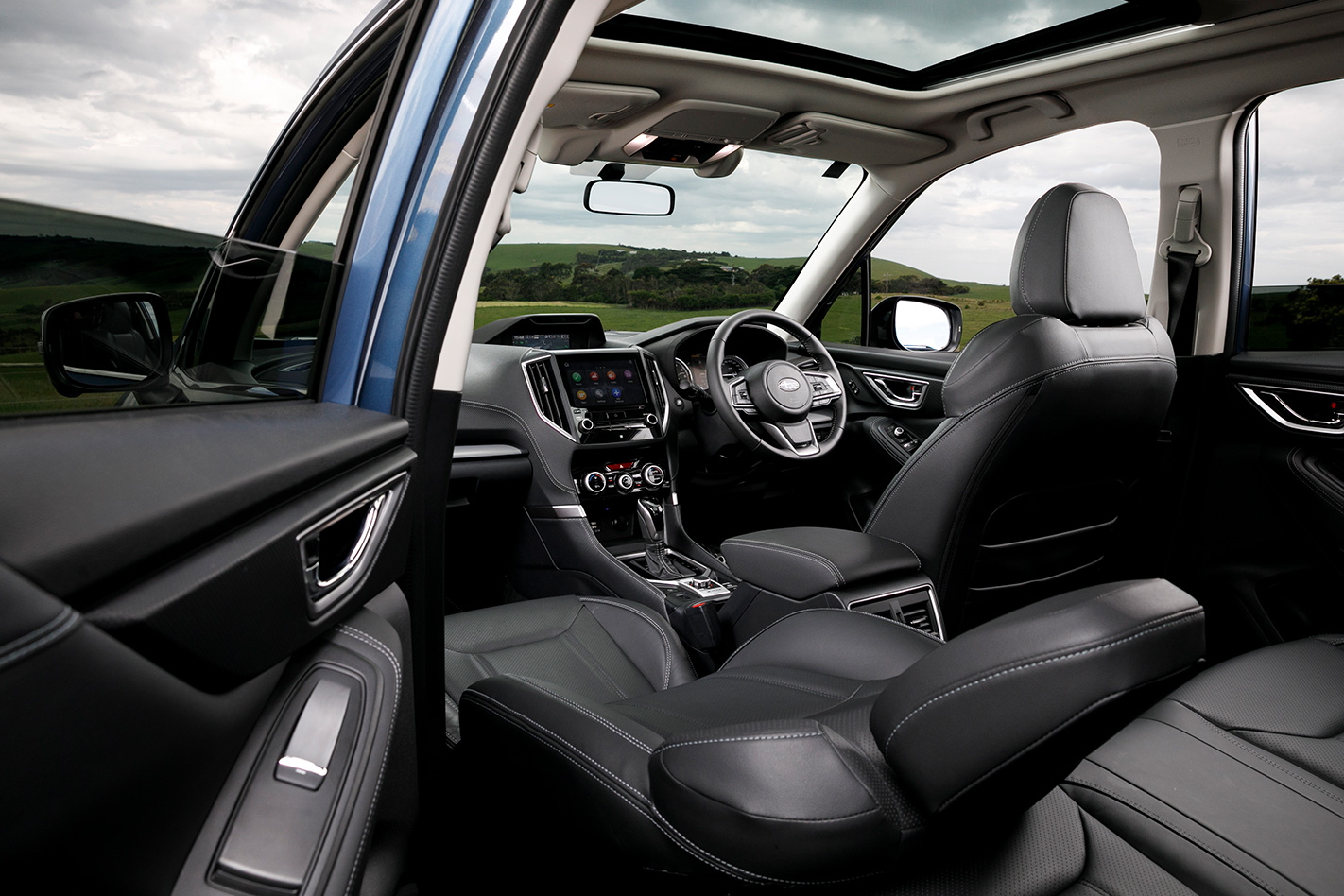
The ever-so-slightly more powerful (by 10kW/4Nm) fifth-gen Forester is also a tad heavier than before, but considering how much larger and better equipped it is, the circa-10 percent fuel-consumption fall highlights further efficiency gains, which is important in a family SUV like this.
It’s not just for misers, either. Keener drivers will appreciate the fine line the steering straddles between lightness, feel and feedback, making the most of a chassis offering unshakeable poise and grip. And everyone in the vehicle will marvel at the softly sprung, long-travel suspension’s almost supernatural trick of soaking up the rough stuff without making occupants feel woozy with excessive bodyroll. Premium SUVs costing thrice the price cannot replicate such suppleness.
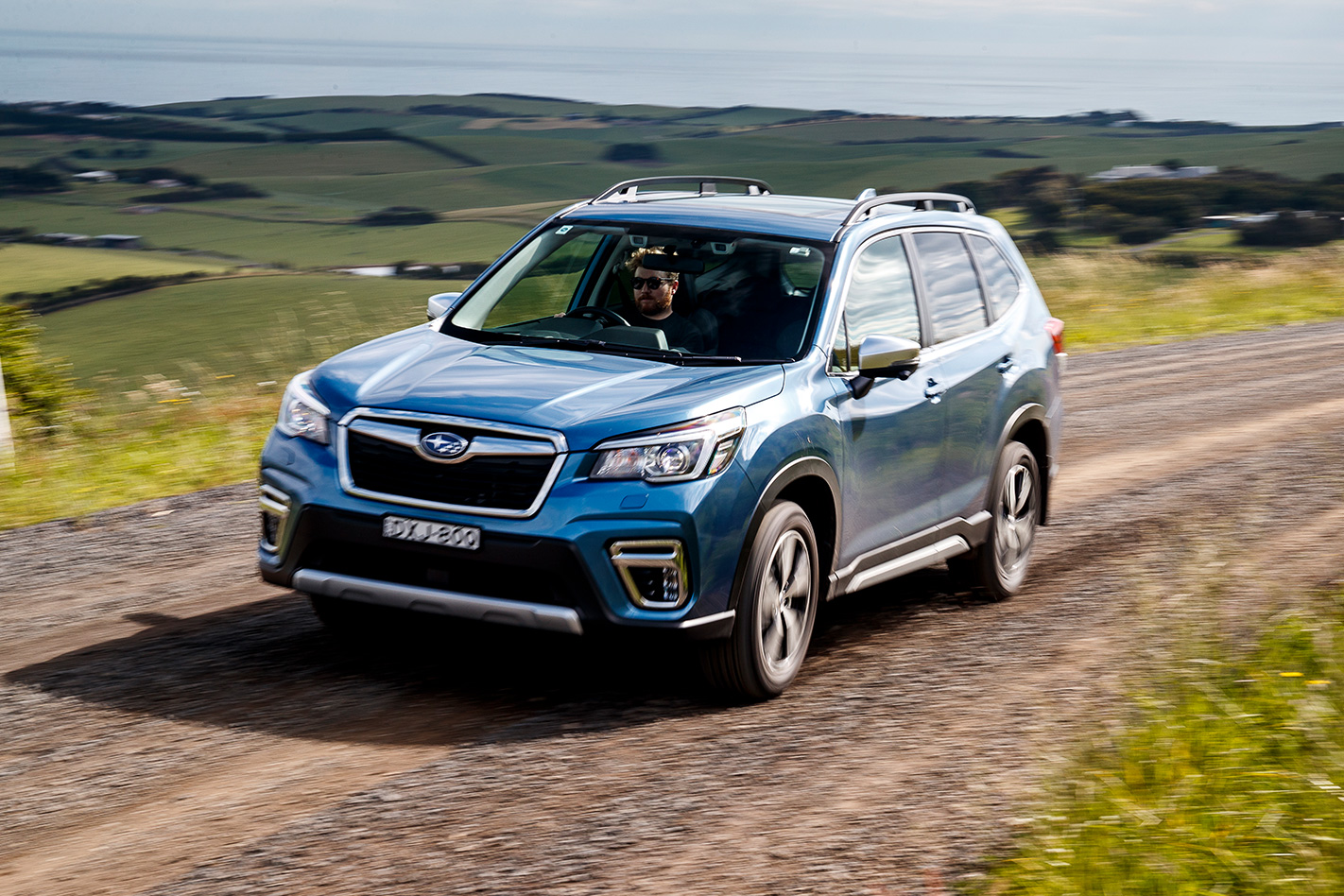
Whether maintaining a cool and calm attitude at high speed on the durability circuit, sliding along with figure-skating grace over gravel and dirt, or glued to the bitumen in belting rain, the sweet-handling Subaru garners respect and admiration through its sheer, relaxed control.
2019 Subaru Forester Range Review.
Perhaps that’s why most judges felt that the 136kW of power and 239Nm of torque provided by the 90 percent-new naturally aspirated boxer aren’t enough for a tremendously capable chassis that’s crying out for more oomph.
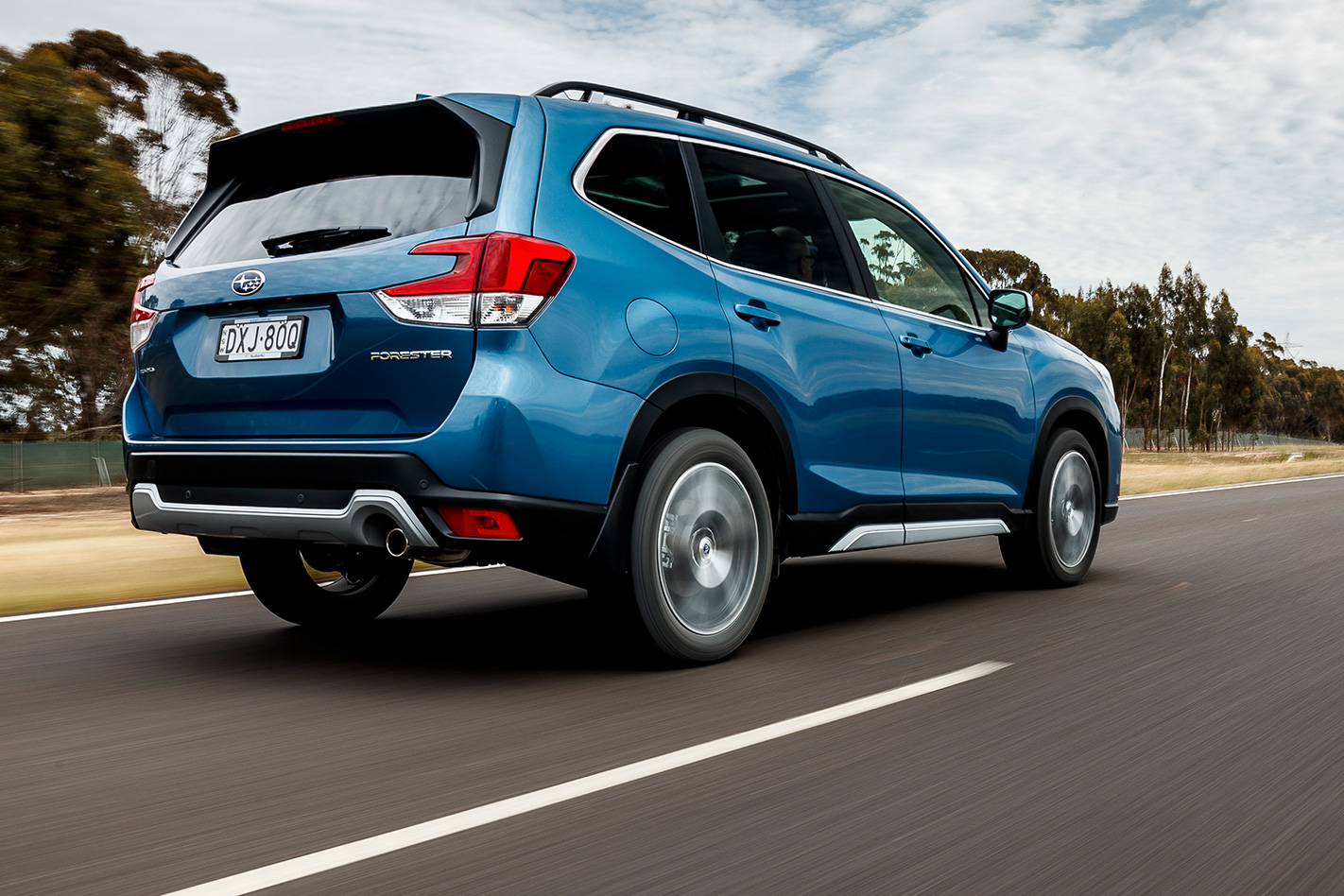
Even the superbly tuned CVT and its ability to provide precisely the right band of ratios with minimal lag and tolerable droning cannot mask the Subaru’s unremarkable performance. Don’t get us wrong, with sufficient smoothness off the mark and more-than-reasonable throttle response in the mid-range, the 2.5 can be deceptively quick point-to-point, but a bit more muscle would not go astray.
A three-year warranty also falls short, although at least there are now 12-month rather than six-month service intervals.
We’d suggest Subaru needs to quieten noise intrusion, fit shapelier back-seat cushions and devise a less-complicated dashboard for the facelift. Otherwise, there’s little to fault and much to savour in the fiercely fit Forester. Even if you like your pizzas Margherita-basic, you still get the lot here. Dig in.
If you’re familiar with the traditional premium sedan set, stepping behind the wheel of the 2019 Lexus IS350 F Sport will be a bit of shock.
Press the accelerator and nothing seems to happen, the steering is disconcertingly vague around the straight ahead and why is the infotainment seemingly impossible to navigate? Sadly, the latter never improves, the process of using your left-hand to operate a clunky mouse always feeling unintuitive.
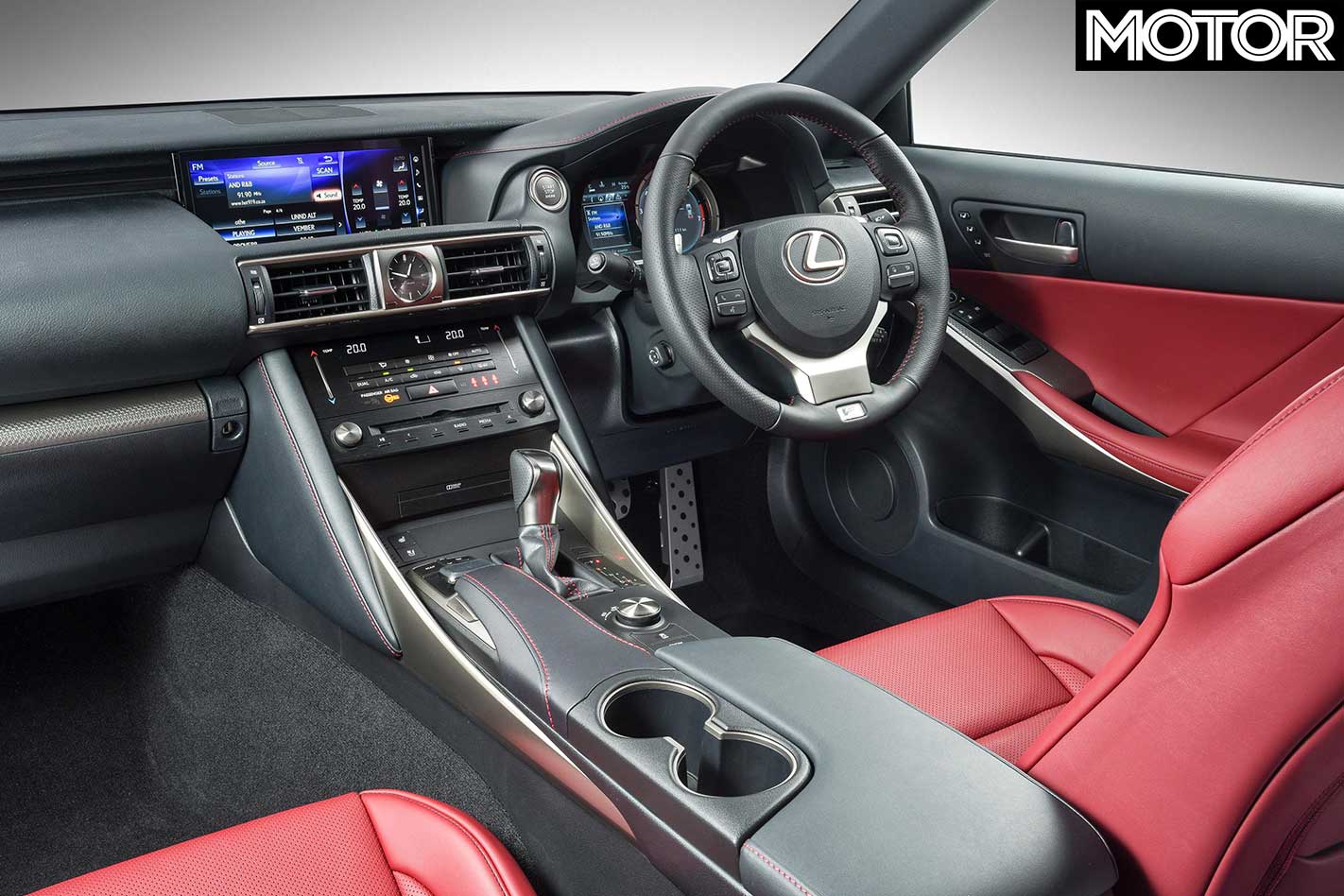
Ride quality is excellent, once off-centre the steering responds well and controls a nicely balanced rear-drive chassis. It illustrates the depth of this category.
Against the likes of the impressive Jaguar XE 300 Sport, cohesive Audi A4 45 TFSI and polished Mercedes-Benz C300, not to mention the brand-spanking BMW 330i, the Lexus struggles to trouble the top of the class, but it remains an enjoyable car. And when was the last time you heard about a Lexus reliability issue? Exactly.
Just fix that damn infotainment!
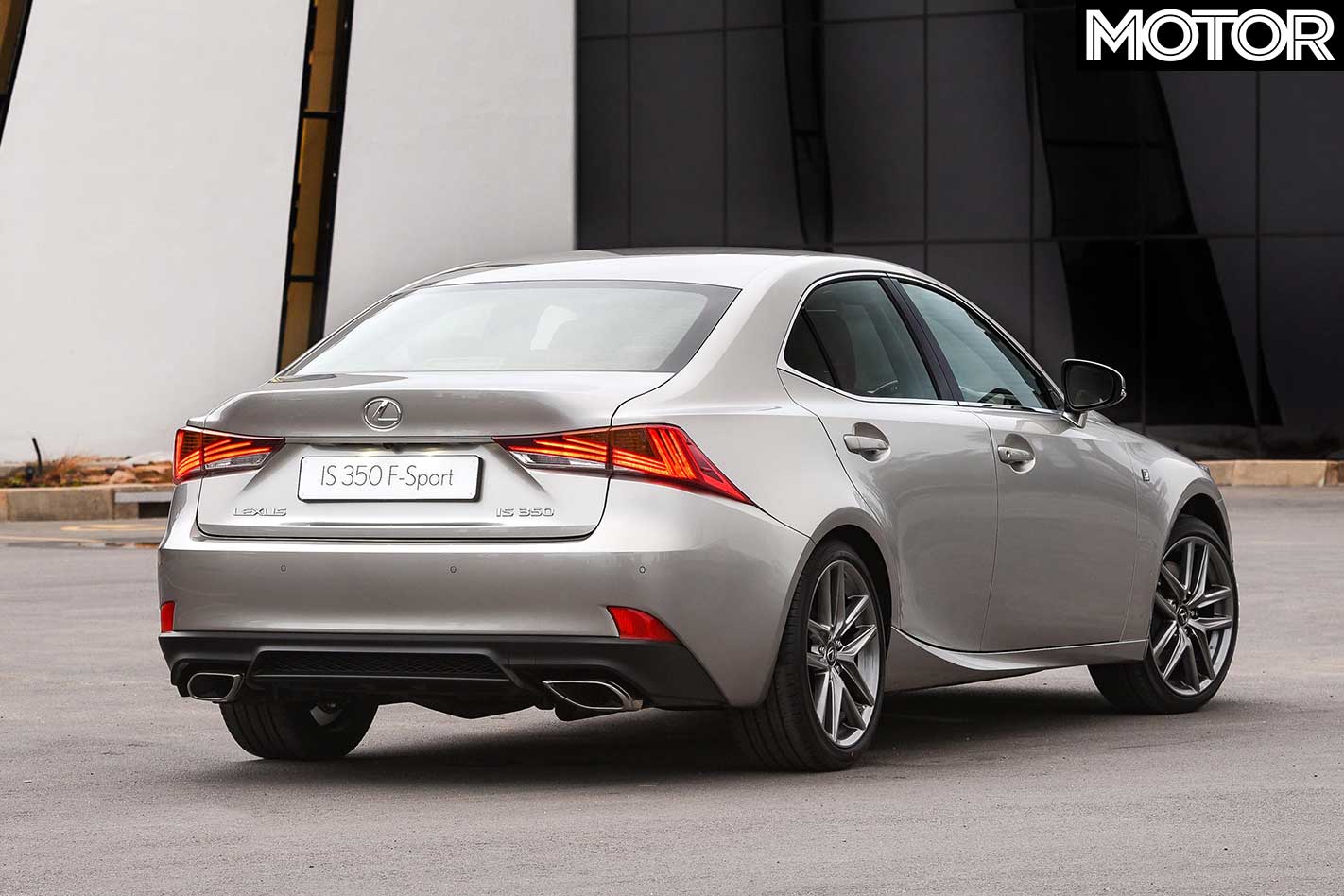
2019 LEXUS IS350 F SPORT SPECS Engine: 3.5-litre V6 Power: 233kW @ 6400rpm Torque: 378Nm @ 4800rpm Weight: 1685kg Price: $72,880
New to Wheels Car of the Year?
Read the COTY 101.
So COMFORTABLY did the Volkswagen Polo demolish all of its rivals in the May 2018 edition of Wheels that it was almost embarrassing. “It shouldn’t come as any great surprise that the best handling, most polished, most spacious, quickest, most economical and best value car wins this test,” we declared, underscoring the fact that the Polo performed such a slam dunk on the Suzuki Swift, Skoda Fabia, Mazda 2 and Citroen C3 that the comparison rapidly devolved into an unseemly scrabble for the minor placings.
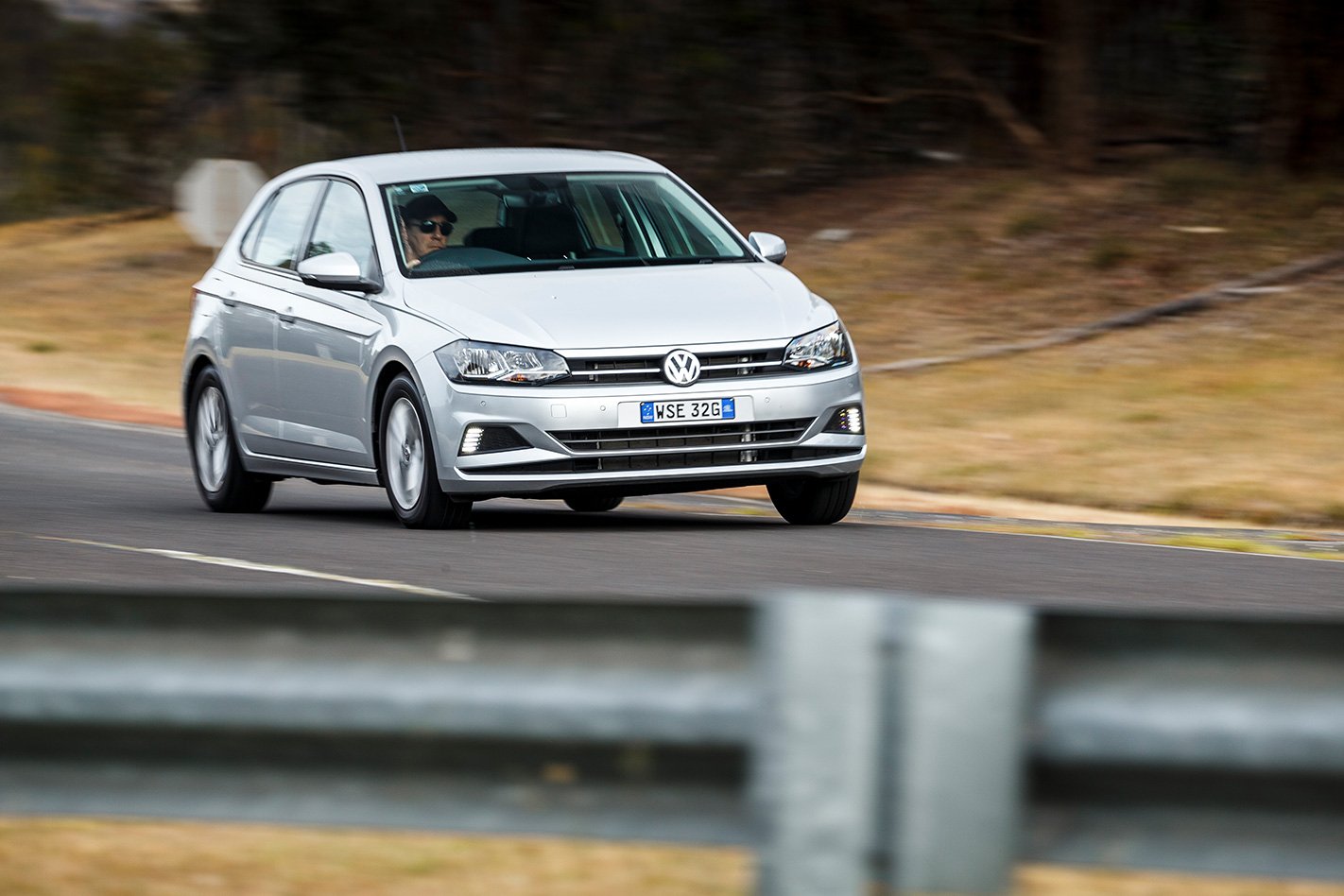
Big reputations count for little at COTY, however. With the slate wiped clean, the Polo had to reassert itself against the five criteria of function, technology, efficiency, safety and value. Unfortunately there were no extra points for additional laps sneakily accrued around the basic durability circuit, or else the Polo GTI would have made the top three.
Volkswagen supplied three Polos for review; an entry-level 70TSI Trendline manual, a mid-spec 85TSI Comfortline with a DSG transmission, plus that DSG-equipped GTI. First acquaintance with the 70TSI was an eye-opener, quite literally. Driving to You Yangs in the pre-dawn, it was striking quite how feeble its incandescent bulb headlights were. Perhaps we’re spoiled by the newest and latest things with LEDs and lasers, but rowing along a manual car while your eyeballs are out on stalks scanning for errant macropods served as a reminder of quite how far technology has advanced.
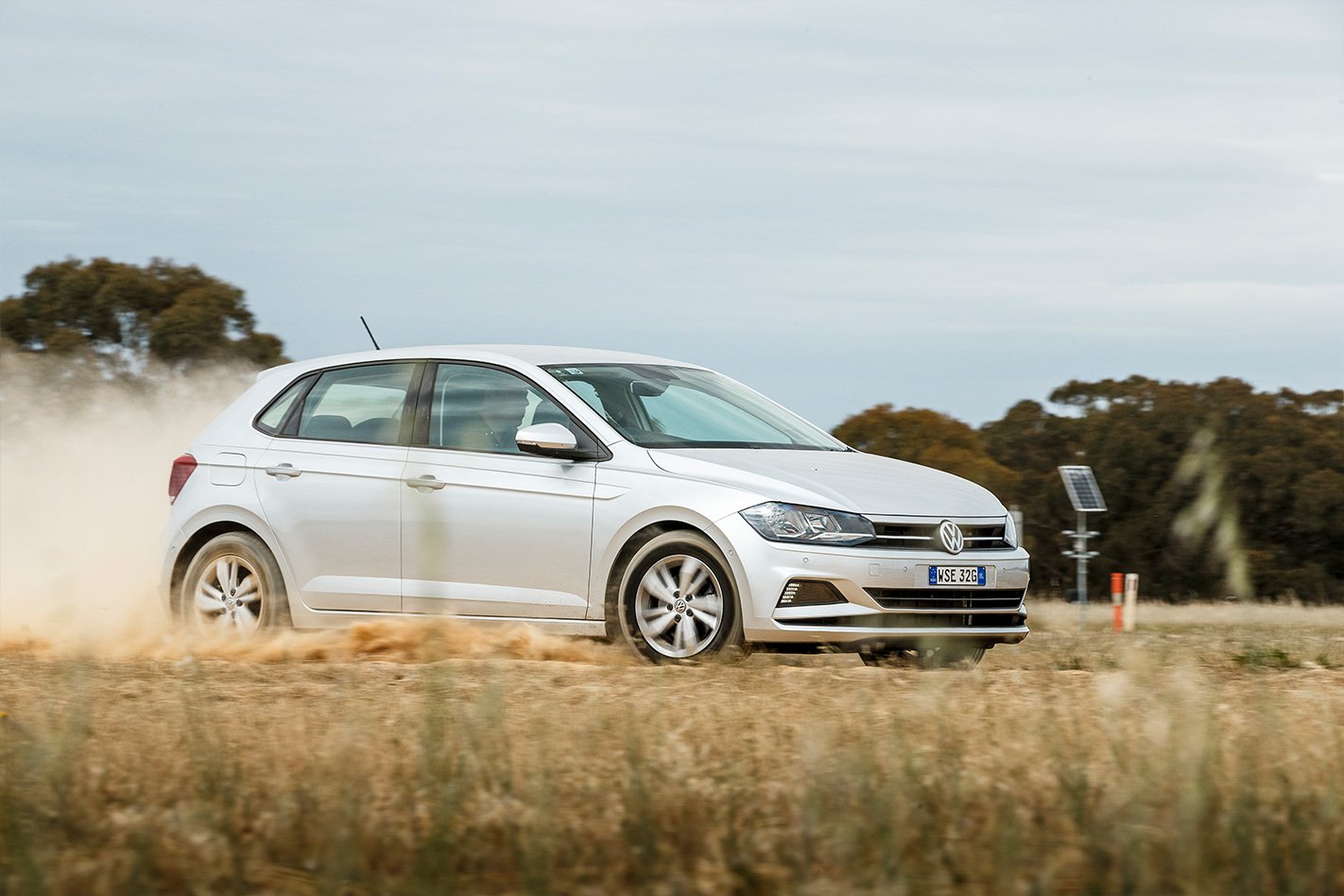
It still seems a lot of car for $17,995, though, and while you don’t have to look very far to see how it’s been de-contented compared with plusher versions, the bones are pretty much the same. The Trendline drives with an assurance and polish rarely found sub-$20K. Spend a bit more time in the Comfortline and you begin to wonder whether this is all the car you really need. You’ll start absent-mindedly hatching notions that rather than spending $50K on an electric car, it’d be more sustainable to spend half that on a Polo and invest the other half in luxury care for homeless gibbons.
The muted colour palette helps reinforce the notion of maturity, as does the five-door-only body style. Drop inside and it’s slick yet unadventurous, all of which does little to dispel the impression that it’s all a little normcore. The only nod to extroversion is a slightly tone-deaf hexagonal theme inside, but to drive a Polo is to love one. Even the 70TSI is shot through with quality in its suspension calibration, in the consistency of its control weights, in the precisely lubricated way the manual shifter slips, snicks and slots through its gate. It feels like a product built by people who understand people like us. And that’s important.
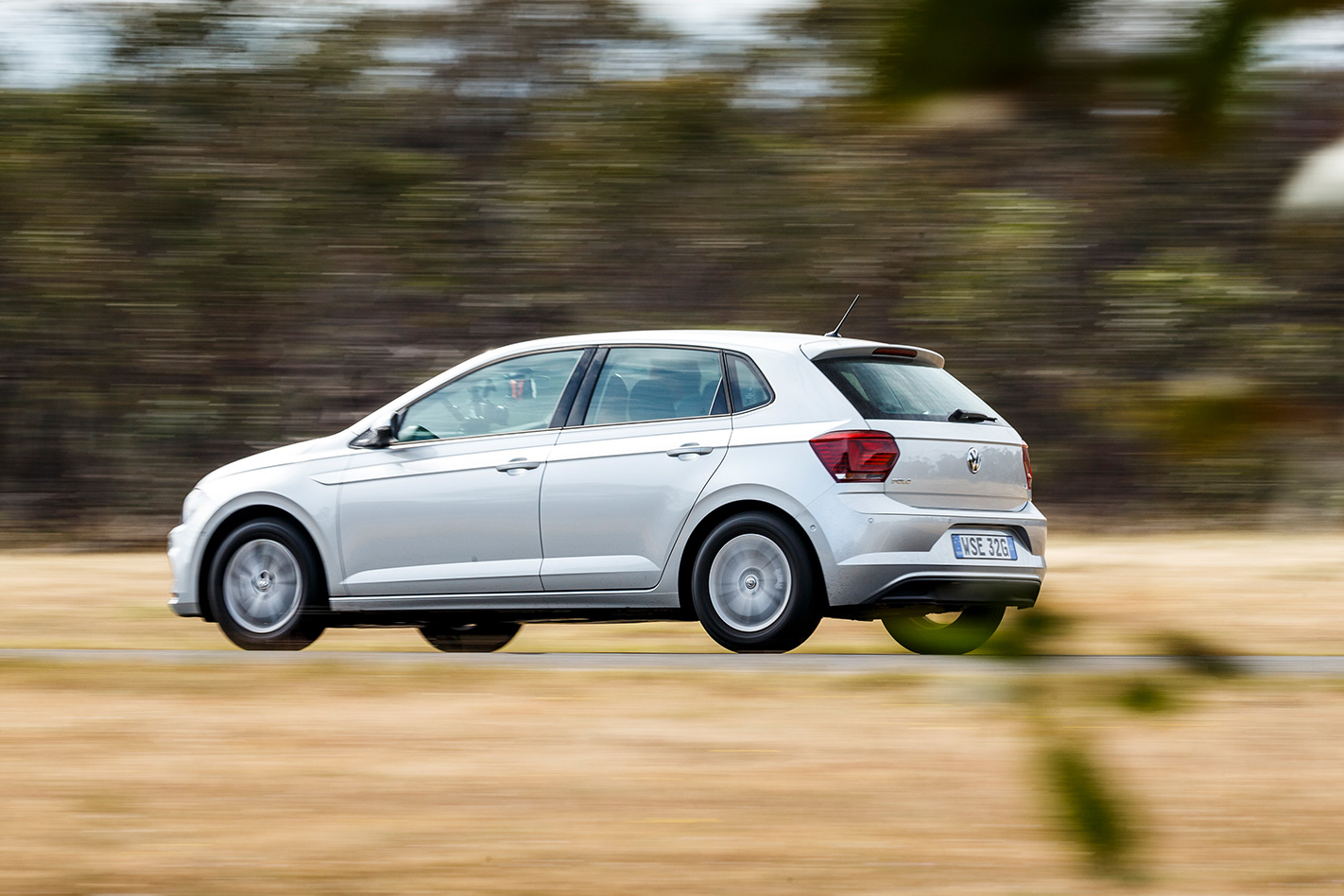
The GTI is seriously quick. Shifting just 1355kg, it’ll get to 100km/h in 6.6sec and the acuity of its front end through corners is astonishing. It does lack a little playfulness, but if carving a precise line on give-and-take roads is your thing, it’ll only be found wanting in the very tightest corners, where its XDS e-diff often allows power to bleed away via the unweighted inside front. The ride can be terse, but it was a weapon at the proving ground, registering some almost unbelievable mid-corner speeds.
So what prevented the Polo ascending the podium? It was much the same issue that did for the Corolla; namely that while it’s a very good iteration of its line, it didn’t actually do much to advance the state of the art. Against many of the criteria it did reasonably well, but didn’t excel. In short, it needed some bigger drawcards than all-round incremental improvement to make the next round. As well as scoring well in the judges’ books, the vehicles that made the top three all managed to subtly progress the art in some significant way in their respective classes. We’re not sure the Polo does.
The end is nigh… no, not Game of Thrones, but the end of the seemingly interminable federal election campaign is finally within sight.
The rhetoric on both sides has ratcheted up considerably, and interestingly, the car industry still continues to feature prominently. Of course, we’re all waiting for the hubbub to die down – elections don’t help when it comes to the consumer space, right?
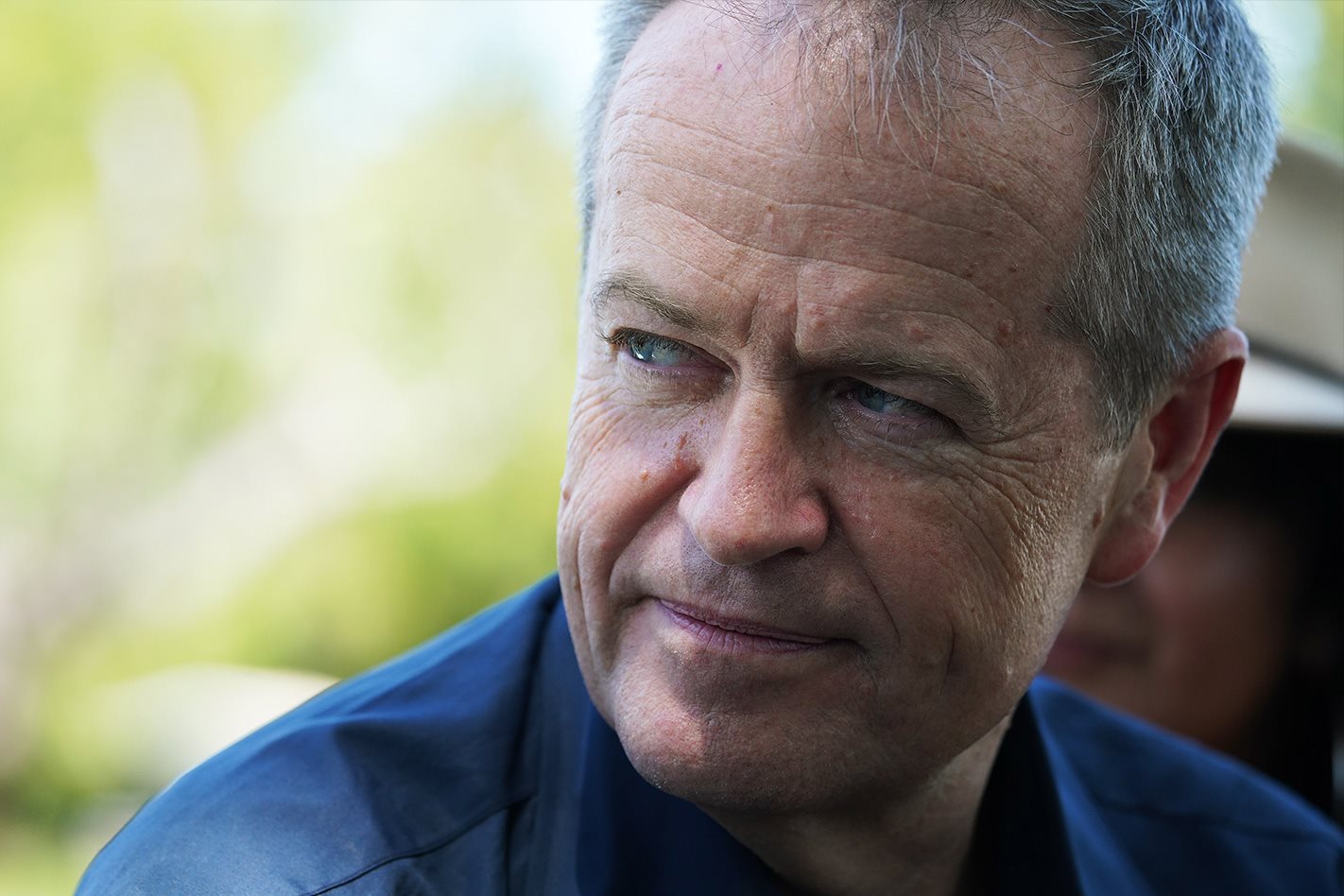
Thanks Bill
The WhichCar team has spent a lot of time covering off the various stories that have gurgled up around the claims and counterclaims made by both sides, with the claim that Labor will fund EV production in Australia garnering a lot of traction across our social media spaces.
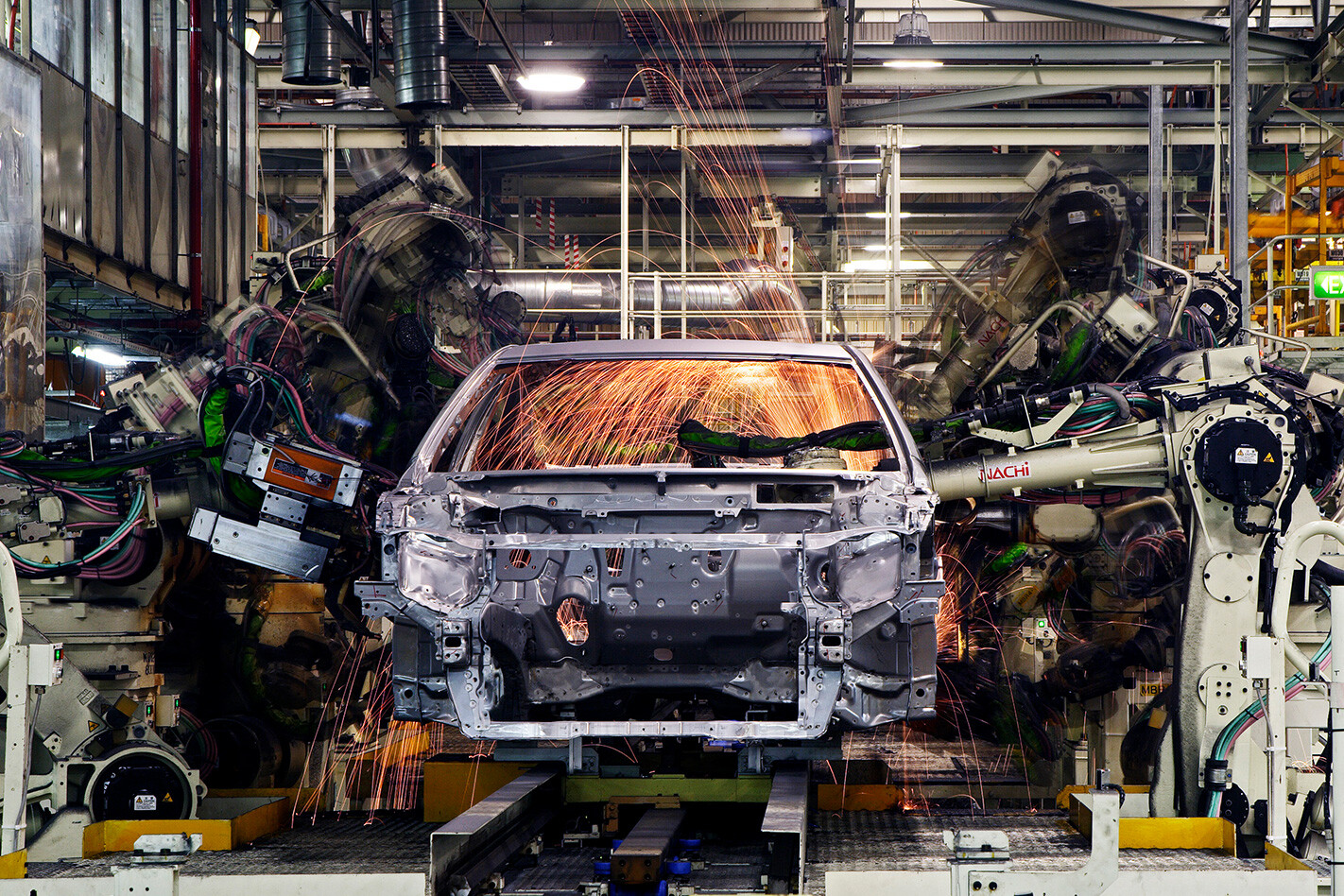
A production line, not yesterday
It dovetails nicely with other pieces we’ve worked on through the month, as well – it seems that, if nothing else, the 2019 federal election has helped to kick the debate about electric cars into a new gear.
Not only is it election time, but we’re rapidly approaching the end of another financial year. Already?! Our teams have been scouring the sites and pinging their company contacts to give our readers the best shot at picking up a bargain come June.
If you’re looking for a break from spreadsheets, claims and dividend compounding interest, WhichCar TV back on your tellies this Sunday at 3.30pm. You can watch all 15 episodes we’ve already done over at Tenplay Catch-up TV.
On telly this weekend
Our Melbourne team also brings you the week’s biggest stories direct to your ears, with WhichCar’s own Daniel Gardner anchoring a panel of commentators from Wheels, Motor and 4X4.
Just when you thought you couldn’t get any more news out of the dual-cab ute sector, along comes another massive week of fresh juice on the burgeoning sector.
To wit, LDV has teamed up with HSV to retune its Trailrider dual-cab, and Mercedes-Benz has lifted the covers on the most expensive version of its X350d to date.
One that really set the wires buzzing this week, though, was the news that RAM’s parent company FCA is considering a move into the medium pick-up space, following in the footsteps of companies like Ford who have taken the Ranger to the US.

It’s interesting; the story didn’t confirm a RAM mid-size ute would be made, just that the company was thinking about it… yet it was one of the most read stories of the week.
At the diametrically opposite end of the technology scale in many ways, Google’s annual conference saw a number of key announcements from one of the world’s leading tech giants about the future of Android Auto.
It followed up with a deep dive into a range of forthcoming tech that, if even only a bit of it comes to pass, will fundamentally change the way we engage with our cars. As long as it doesn’t lose all my podcast presets (yep, that happened to me this week), I’m all for it!
Tesla found itself in the news again this week, this time for slashing up to $60,000 from the retail price of some of its cars. It’s certainly a time of change at a company that helped to reset the bar when it came to the EV space… but for how much longer?
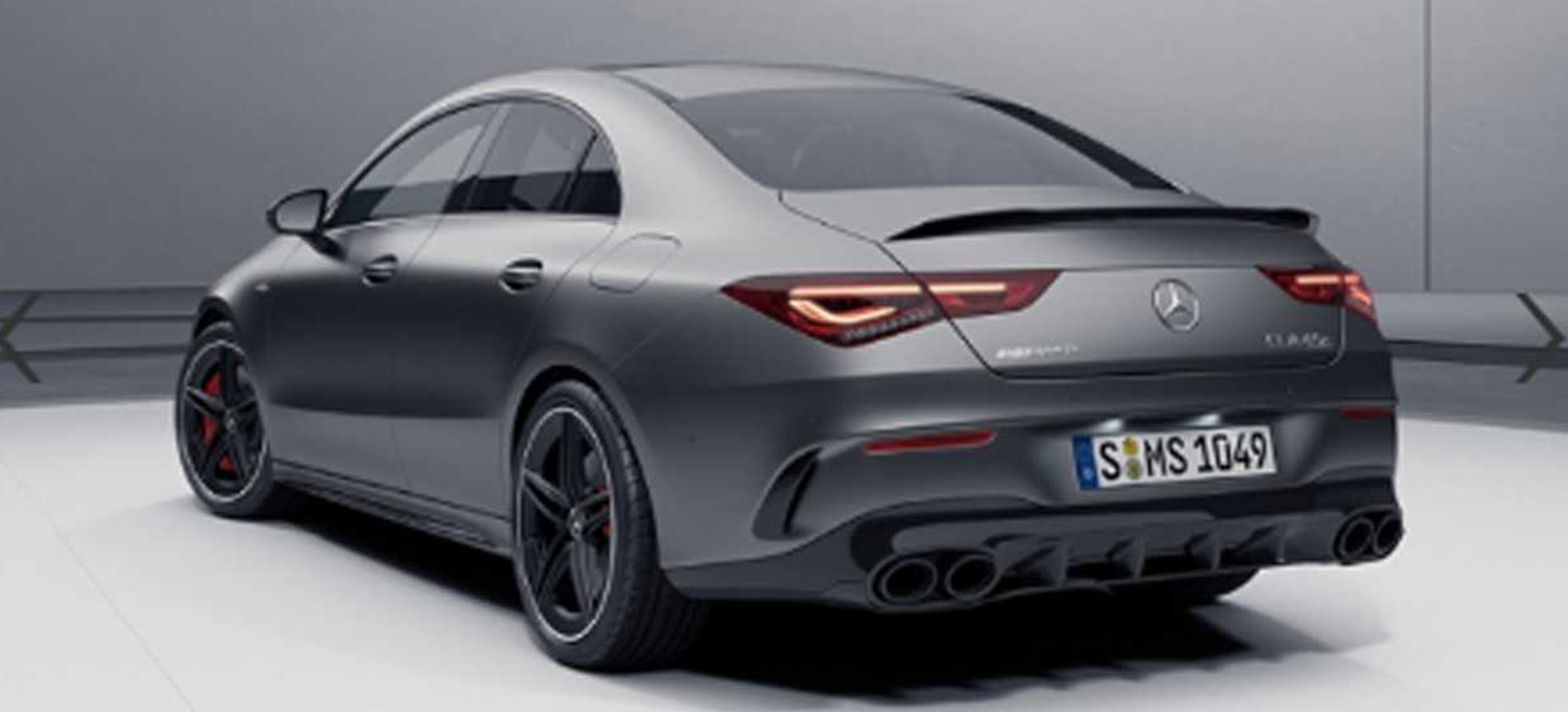
We’re used to seeing leaks and spy shots from across the industry, but it’s not often the source is the company itself. This own goal came from Mercedes-Benz, who accidentally revealed details of the A45 sedan, which will pack the most powerful four-cylinder engine it’s ever built under the bonnet. 330-plus kilowatts?! Where will it stop?
A wee monster
Speaking of powerful little sports cars, kudos to the team at Honda, who managed to smuggle a former F1 world champion into Australia sight unseen to cut a few mad laps of Bathurst. And it worked for them, too, with great traffic and interest on the site.
The monthly sales figures dropped for the industry, and as usual our teams were right across the various machinations of the game. Interesting to note that the market for exotic sports cars always seems to be immune to the real world, isn’t it?
Lots of cars in and out of the garage this week, too, including the venerable Nissan Patrol, Subaru’s evergreen BRZ and the electrifying (groan) Hyundai Ioniq, while we also added a host of Wheels Car of the Year content to the site.
We also previewed one of the year’s biggest reveals, the Toyota RAV4 – we’ll have much more on our site next week, as well.
There’s a lot of hand-wringing over the possibility of introducing speed-limiters in cars. I’m not worried for two reasons.
One is that if people just couldn’t speed, then police couldn’t hand out speeding tickets, and a major source of state government revenue would collapse – something in the ballpark of a billion dollars a year in Australia.

But the other reason is that I’m all for it. Yes, I for one welcome our speed-limiter overlords. Just not for limiting top speeds.
I’m against speed-limiting cars, in the same way I’m against temperature-limiting my kettle to save me from burning myself. I’ll assume the responsibility of burn-prevention myself, rather than drink lukewarm tea in safety. The price of hot tea is eternal vigilance.
It’s not because I don’t care about road safety. I wonder, has anyone done a study of what percentage of speeders don’t crash? Apparently 40 per cent of drivers who crash were speeding, the statisticians tell us. But that can’t be the whole story, because a whole lot more than 40 per cent of drivers speed – that’s where the billion dollars comes from.
It’s a bit like saying 90 per cent of men who get cancer wear pants. It doesn’t mean pants cause cancer. If it turns out pants do cause cancer, I’ll be glad I’ve invested all my superannuation in kilt futures.
No, there’s better uses for speed-limiting technology.
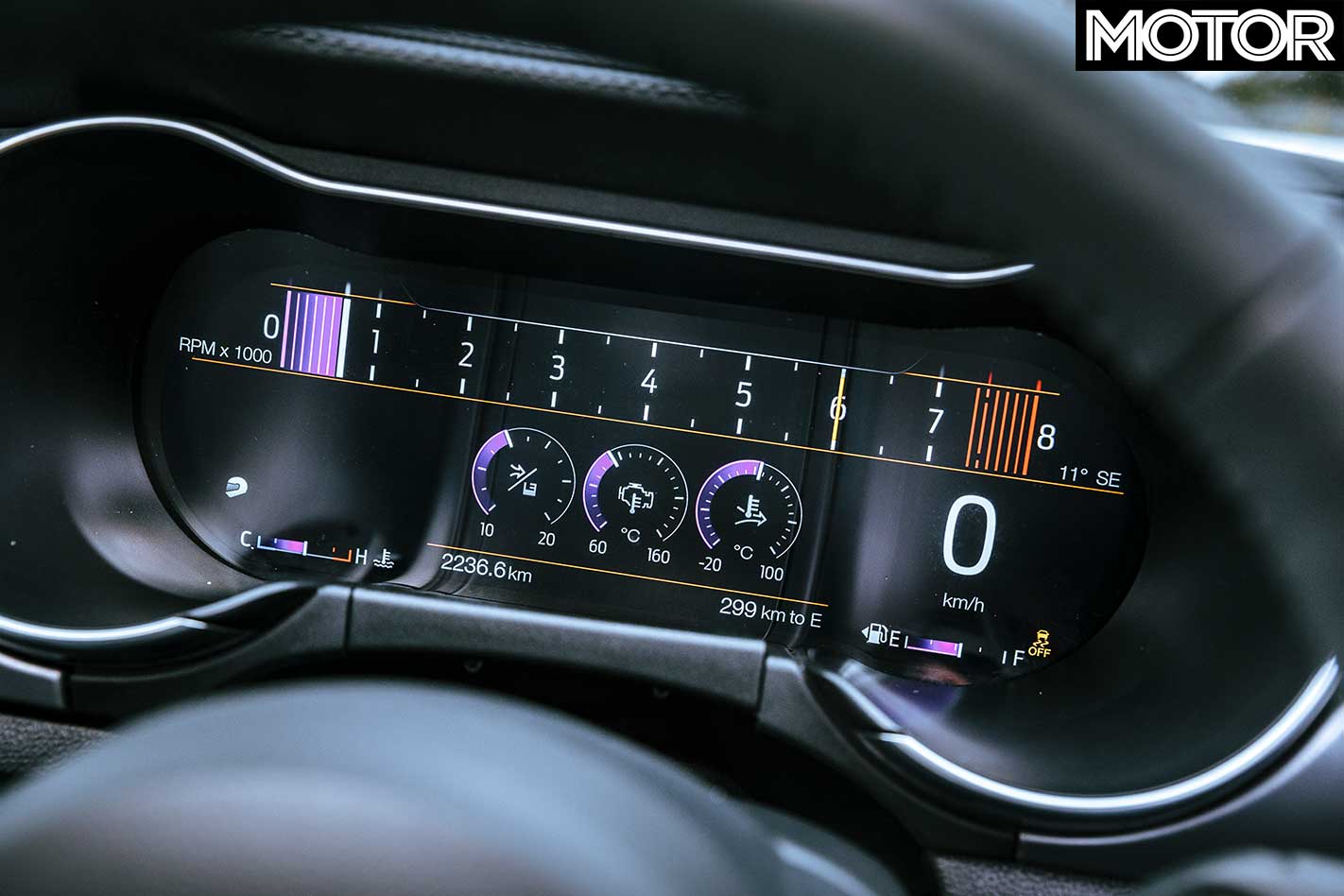
I’m all for limiting people who can only find their accelerator when they reach the overtaking lane. You know the ones – they can only manage 70km/h in an 80km/h zone as long as there’s only one lane each way, but as soon as there’s an overtaking lane, they suddenly floor it.
You can’t catch them as long as there’s an overtaking lane, but as soon as it’s back down to one lane, they lose all their moxie and it’s back down to 70km/h. I’m all for limiting that lot to whatever speed they were doing before, and let the rest of us finally get past when we can.
And I’m all for limiting minimum speeds. As well as maximum limits, some roads in the US have minimum speed limits: now there’s a speed limit I can get behind. (Actually I can get in front of it – you have to.) I would love to see drivers limited to no slower than 10 kays under the limit. If you really can’t handle doing at least 70km/h in an 80km/h zone, I have bad news for you: you can’t drive.
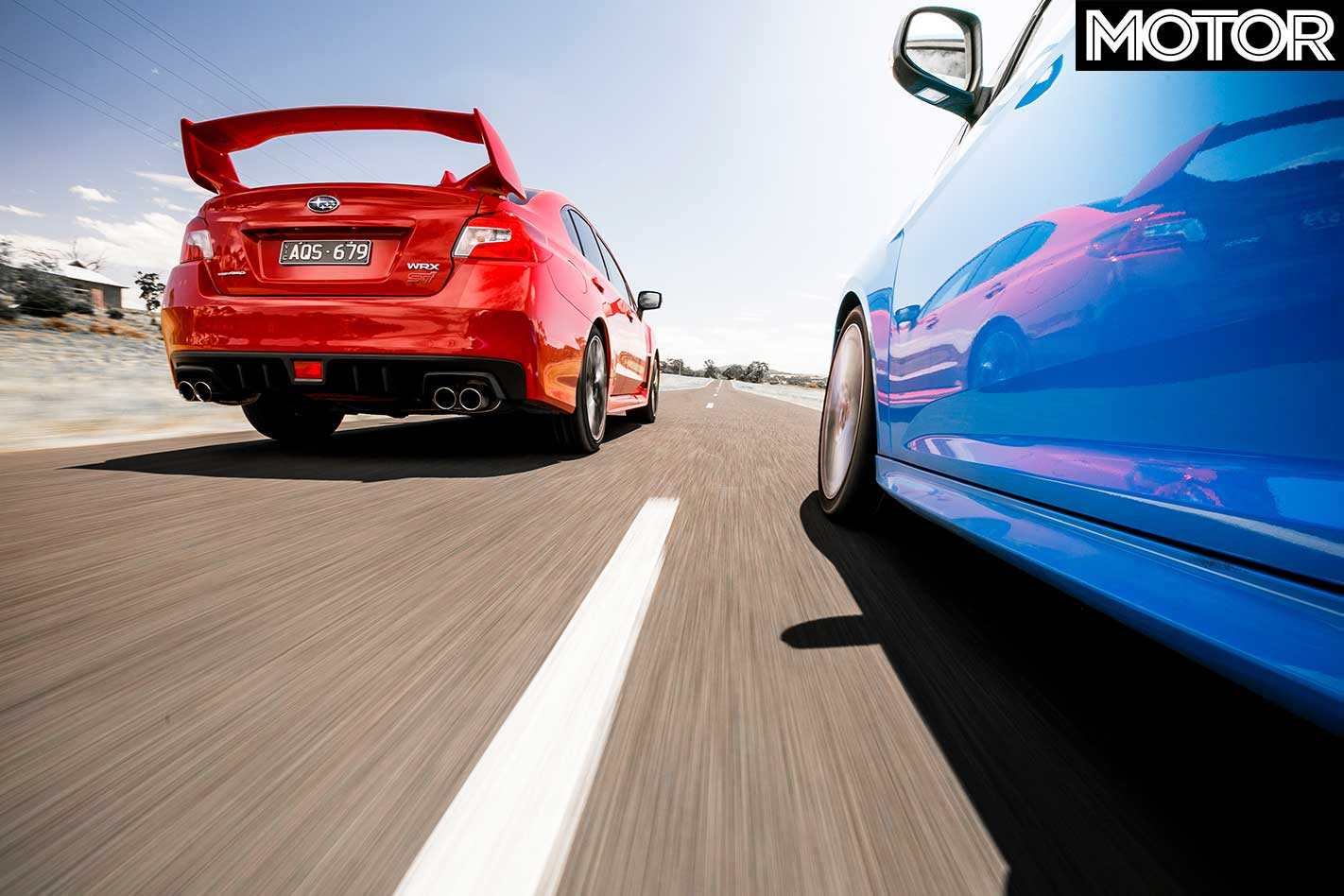
Similarly, I would love to see speed-limiters force people to maintain their speed when they reach an uphill stretch. I call it Flintstoning – when people doing 80km/h on the flat, suddenly start doing 75km/h, then 65km/h uphill, as though they have to push their cars along with their feet like Fred Flintstone. It’s not that hard to push the pedal down another half a centimetre. Maybe speed-limiting tech can help.
If the powers that be really want to introduce limits to stop us from speeding, they should take a leaf from Volvo’s book. Volvo is famously safety-minded, so it must be okay with the hand-wringers: all future Volvos will be speed-limited to… 180km/h. 180! That’s way faster than any Volvo driver has ever driven, including in Supercars, where Scott McLaughlin drove at 55km/h the entire time because he was trying to stop two toddlers fighting in the back seat over who got the Frozen sippy cup. If being ‘limited’ to 180km/h is safe, then I say raise all the speed limits to that and let us all stay under the limit on our own.
Job done.
The end of the financial year is looming upon us, when manufacturers and their car dealer networks are especially keen to lure a greater number of customers in order to hit crucial sales targets.
The advantages come in all shapes and sizes, with incentives varying between simple price discounts, value-adds like free on-road costs or upgrades, and low interest rate specials. Each is designed to trigger an earlier decision from a customer to purchase a new vehicle.

Honda Australia has been one of the more prominent brands to advertise End of Financial Year (EOFY) campaigns across all types of media. The company’s director, Stephen Collins, says it is important to stand out during a crowded period of deals in what is already an ultra-competitive market.
“June is generally about 30 per cent stronger than the average month [for new-car sales] and traditionally May/June is the biggest-selling period of the year,” says Collins. “Everyone is out there with offers; it’s a good time for buyers.”
In June 2018, 130,300 new vehicles were purchased in Australia – a sales figure nearly 20 per cent higher than the next-best month of March (106,988).
“We’re not huge in the fleet business but a lot of what I call below-the-line-type discounting generally goes on throughout the year,” says Collins. “May/June is traditionally where private buyers come out and our offers reflect that.
“We try to keep them simple with a genuine value-for-money offer. A lot of the finance offers tend to get complicated.”
Virtually all the major brands are currently running EOFY deals, if under variously titled banners.
Mercedes-Benz Australia is one of the exceptions, though the company says it’s nothing to do with the traditional concern of luxury-car resale values being adversely affected by big discounts.
“The old days of chattel mortgages [buying a car outright] doesn’t really exist in the same form,” says company spokesman David McCarthy. “So many vehicles now have a guaranteed future value. You’re effectively renting a car for three years, and if you tick the boxes of the mileage limit and servicing you give it back.
“If it’s worth more than the residual you might use that extra value to come off next vehicle, but if it’s worth less than the future value it’s not your loss, it’s the financial company’s loss.”
McCarthy says the guaranteed future value product, low interest rates and a stable market have made great conditions for buying a car, though says the brand doesn’t necessarily place a big emphasis on June 30.
“Historically the end of any month is often a good time, but the rule doesn’t hold fast because the market is so competitive all of the time.
“Every dealer has a target, whether it’s quarterly, half yearly or annual, and they’re monitoring them on a daily basis. There might also be a target for a specific vehicle [at any time of the year], and if so, they will create an incentive for that model. So the end of financial year is important but lots of other times are important.”

The general sales manager for the Mazda Artarmon dealership, Nick Woods, says manufacturers apply substantial lifts in targets – up to as much as 50 per cent, depending on the brand – for busy months such as May and June.
He agrees with McCarthy, though, that there’s no longer a bad time to buy a vehicle.
“You have run-out deals [on outgoing models], and then running out cars, for example, so realistically there are always incentives to buy cars,” he said.
Don’t necessarily expect to find a deal on exactly the model you want even at this time of the year, however. Woods says manufacturers generally steer away from discounting or promoting cars that are selling well organically.

Mazda still seems to be encouraging deals on its popular models, such as the CX-5, though the vagueness of the company’s EOFY offers is quite deliberate.
“There is a hook with the free on-roads and so forth, but saying ‘there’s more’ is quite a clever campaign,” says Woods. “That generates enquiries at the dealerships so they can entice a customer in and try and negotiate a price.”
The good news is that even when a manufacturer is advertising a strong end-of-financial-year deal, it’s still possible to use the tried-and-trusted tactic of haggling.
“At this risk of upsetting my colleagues and peers, there’s always more,” says Woods. “In short, a campaign doesn’t come out from a manufacturer without a margin. There’s always something in it for the dealer.”
Know what you want and be prepared to squeeze, as dealers are just as keen to get the car off the showroom floor as you are.
First impressions gleaned from reading a car’s specifications can sometimes leave you expecting to be underwhelmed. The 2019 Alfa Romeo 4C Spider suffered this preconception prior to its arrival at MOTOR HQ.
Its 177kW/350Nm turbocharged 1.7-litre four-cylinder engine is outgunned by that of a Golf GTI, and the Alfa costs more than twice as much while lacking power steering or an infotainment system.
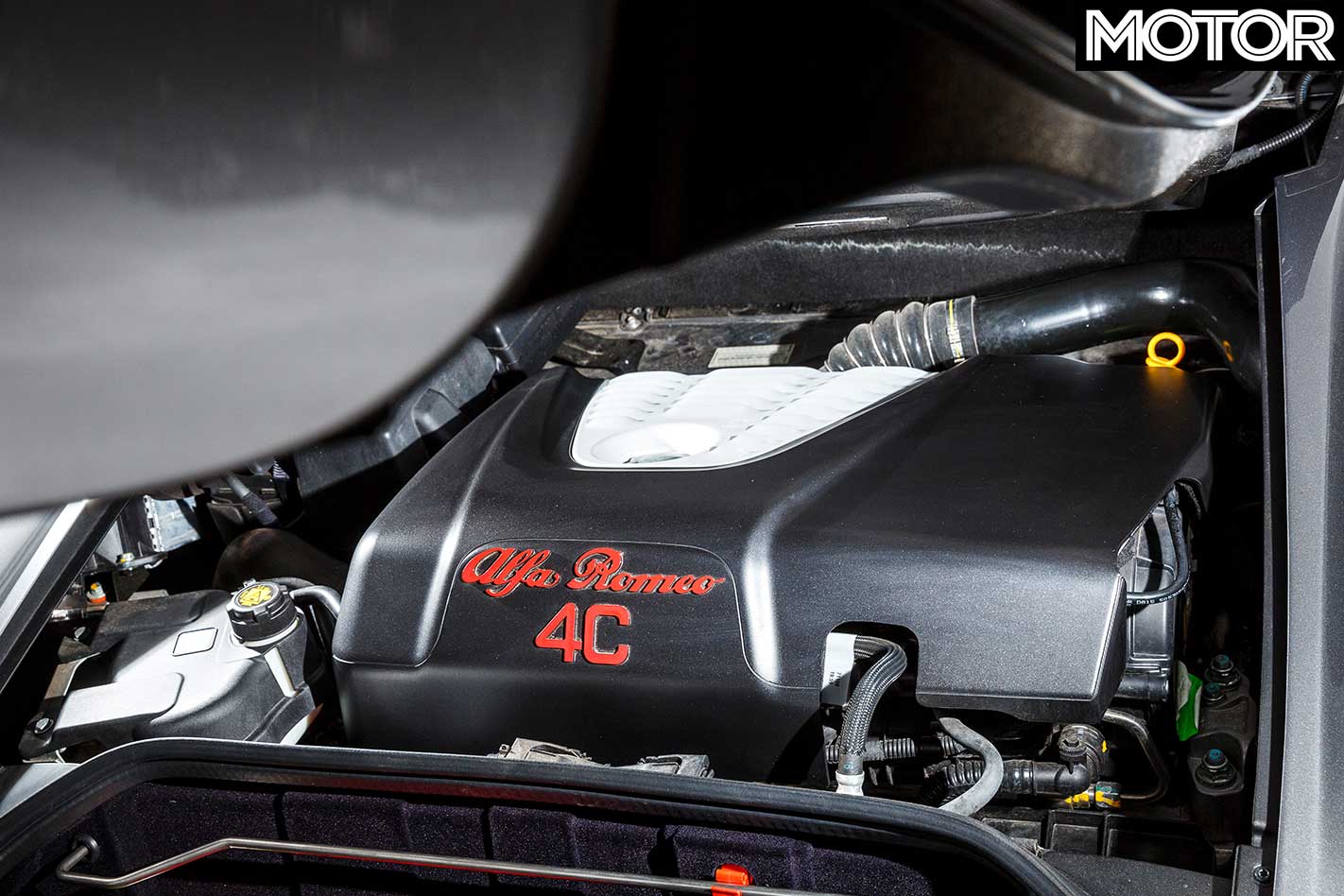
It’s also been around for a few years now, revealed at the 2014 Geneva Motor Show, but hasn’t passed through our garage during its lifespan so far. We wanted to see if we were right in our judgements of the ‘drop-top’ 4C. We were not.
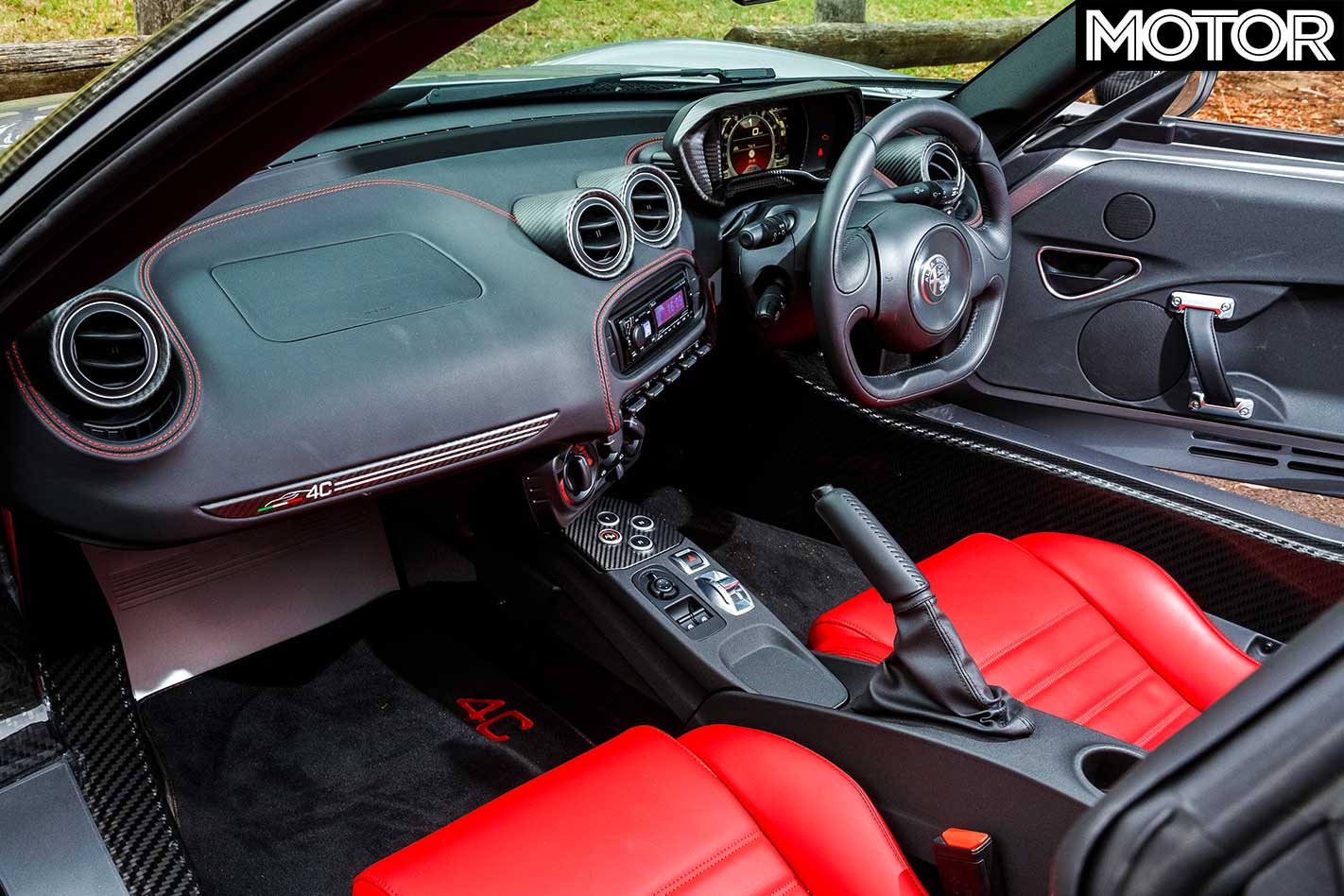
Sitting in its driver-focussed (read: ‘Spartan’) cabin becomes clear the 4C wasn’t designed with weekday commutes in mind. Of course, on a sunny day you’d be sitting in the cabin without the roof on after having detached it, something that’s incredibly hard to do from inside, then stowed it either in the small rear luggage compartment behind the engine, or in the passenger footwell. Useable interior storage is limited to two cupholders, which if used for drinks puts liquids in the path of reckless elbows.
The Alpine stereo system has no navigation, in fact it has no proper screen, and attempting to use its phonebook function is an exercise in masochism. Its function is essentially limited to a Bluetooth speaker for calls and media.
But then you turn the key. You don’t push a button to start the 4C, but turn a key. And it’s glorious. That little four-pot comes to life and, if you’ve got a pulse, you begin to warm to the Spider. Suddenly, you’re no longer sitting in an inconvenient Italian sports car, you’re sitting in Supercar Junior. It’ll take just 4.5 seconds to reach 100km/h, according to Alfa’s claim, and the $99,000 price tag is very un-supercar. That’s not a complaint, mind you.
At low speeds on city roads, the 4C draws a lot of attention, but leaves its driver dealing with rough surfaces – our test car had stiffer suspension optioned as part of the $12,000 Racing Package – and sharp unassisted turns. Visibility is also rather low at the rear quarters, and that’s not ideal in a city busy with cyclists.
Taking the obvious course of action and heading out of the city is the best way to find the rewards hidden in the 4C’s chassis. Just make sure you avoid wet days. Testing the Spider on two different occasions in different weather revealed that it can be a nervous thing on a twisty, damp road, with its otherwise grippy Pirelli P Zeroes finding excuses to let go without a whole lot of warning.
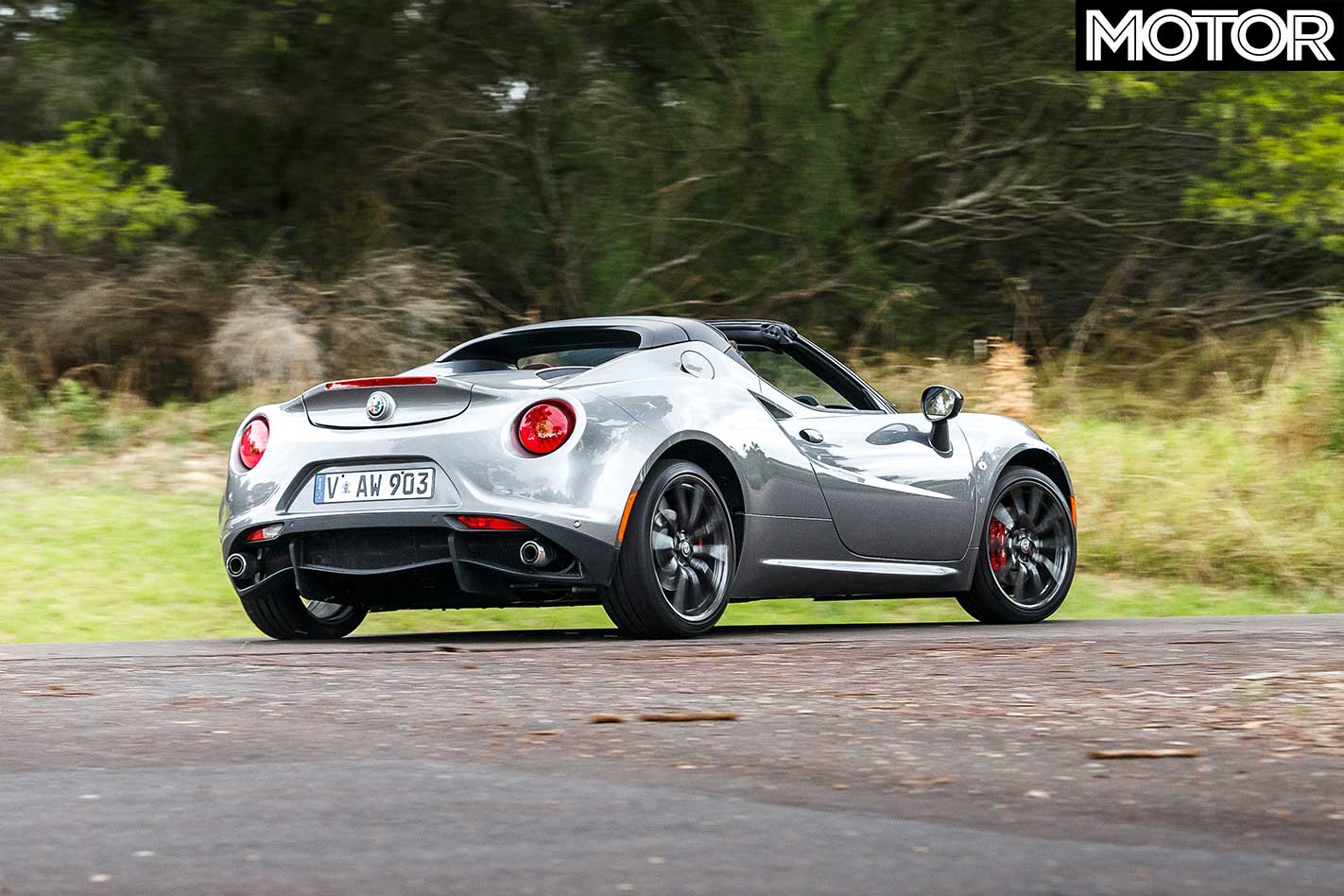
The stiff suspension damping and rigid carbon tub chassis don’t provide much communication in the way of body roll, but attacking a corner too hard will usually result in understeer warning you to tone it down.
In drier, warmer weather, the 4C comes alive, and its wallet-friendly supercar characteristics begin to make a lot more sense. The steering is still hard work on rough surfaces, where a bump can catch you by surprise if your grip on the wheel isn’t steadfast, and that leads to the thought that some assistance would make this car much better. There’s just not enough feel or feedback to justify the lack of power steering.
On a smooth road, the 4C will make you feel like a driving hero if you comply with its requirements for smooth driving, even at moderate speeds. Away from damp surfaces, the amount of grip available to the 1035kg (tare, that is) Spider is reassuring, and inspires a little more pressure on the fast pedal. The rear end also needs less ‘management’ on grippy surfaces, allowing you to concentrate on what’s coming up after you launch from the corner exit.
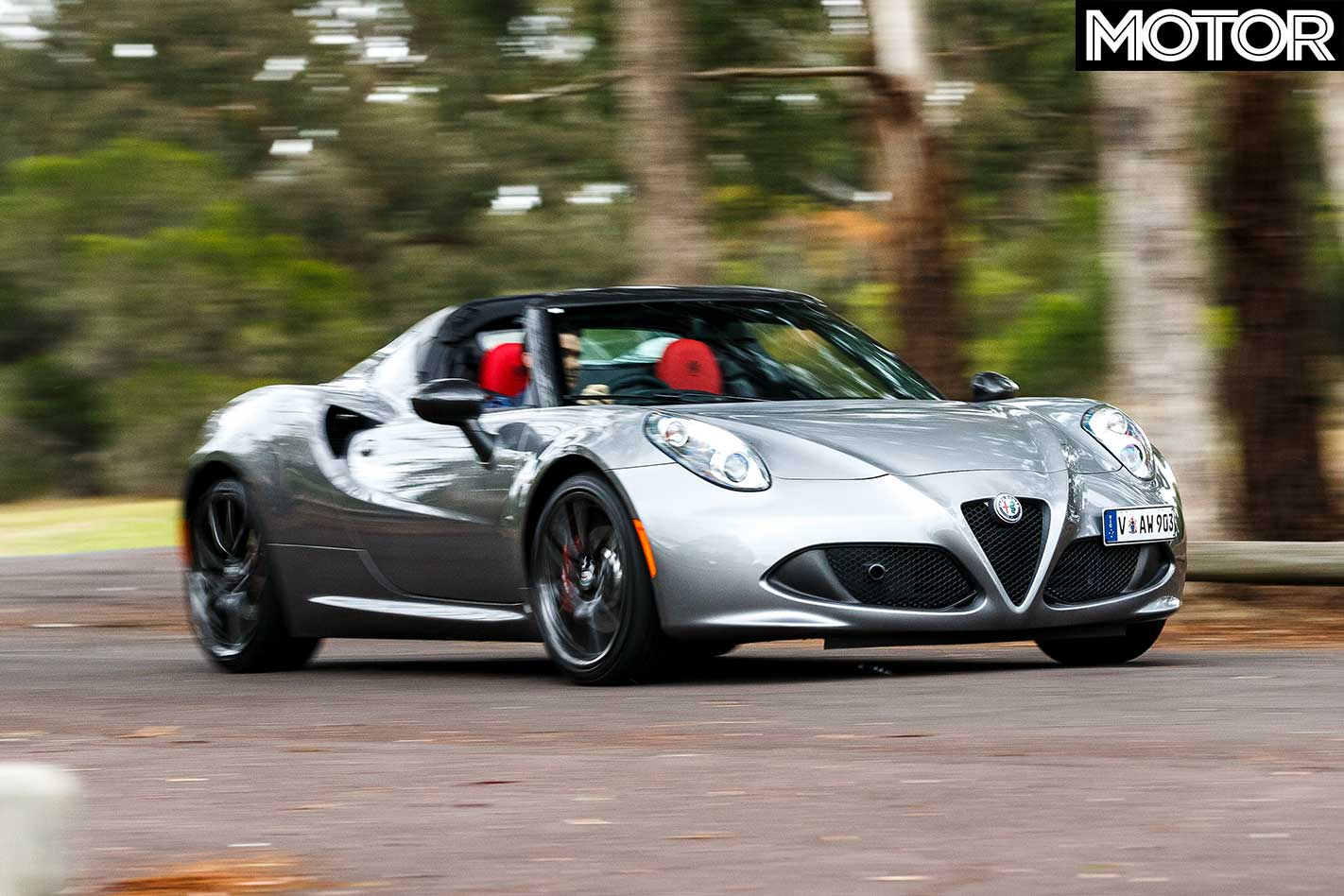
An addictive turbo whoosh engulfs your ears, and there’s no escaping that siren song as its source is right behind the driver’s seat. That sound, and the rorty exhaust snaps on upshifts beckon you to go faster.
Its engine provides ample low-range torque, while power peaks up at 6000rpm. By that point, however, the engine begins to run out of breath. Its low-to-mid range is where the action happens. Even outside of this, the 4C still feels fast. It’s far more gratifying to drive a car that feels faster than it is, than the reverse.
It’s cliché, but buying a 4C Spider is an emotional purchase, rather than one made with logic. But the 4C proved that logic, or the specs sheet, isn’t always the best way to make a decision.
2019 ALFA ROMEO 4C SPIDER SPECS
- Engine: 1,742cc inline-4, DOHC, 16v, turbo
- Power: 177kW @ 6000rpm
- Torque: 350Nm @ 2200rpm
- Weight: 1035kg (tare)
- 0-100km/h: 4.5sec (claimed)
- Price: $99,000 ($118,000 as tested)
On this week’s instalment MOTOR Associate Editor Scott Newman is joined by Wheels Deputy Editor Andy Enright and Staff Journalist Cameron Kirby top discuss some hot topics from the automotive week.
To begin with, there’s the dramatic increase in Victoria’s road toll (1:06), which suggests the road safety messages are falling on deaf ears. Talk then turns to racing cars and how they differ behind the wheel from their road-going counterparts (13:55) – is there any such thing as a road-going race car?
Labor has a plan to revive Australian manufacturing, but it seems to have gotten its sums mixed up (23:05) and Cam and Andy reveal their worst car-buying decisions (29:40), including when Andy bought an absolute dog at auction.
If you’re on the go you can find WhichCar Weekly on all manner of podcast apps including iTunes and Podbean, please rate, subscribe and leave a review! You can also follow the day-to-day happenings of the WhichCar team on Facebook, Twitter and Instagram @whichcarau.
Listened to the show? Help us out:
- Leave a note in the comment section below.
- Leave a review on Apple Podcasts/iTunes
- Subscribe to our podcast
You probably don’t recognise Phil Simmons by name, but if you’ve spent any time on the road you’d certainly be familiar with his work.
One of the world’s leading automotive designers, Simmons is in his 30th year of a career spanning the UK, Europe, US and now China.
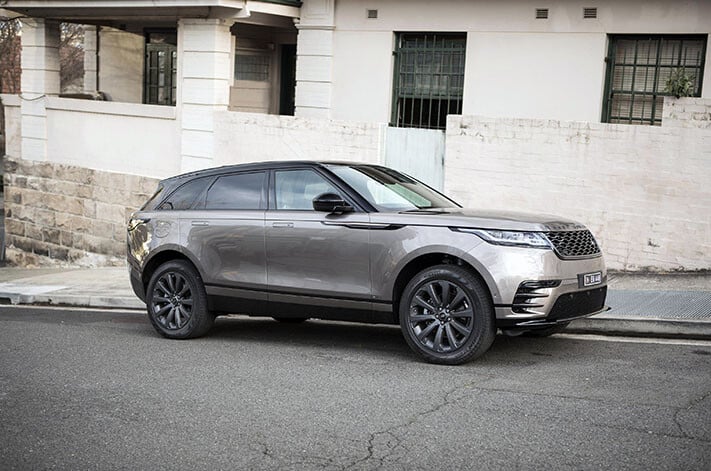
Much of that time has been with Land Rover, where he penned most of the current generation Range Rovers including the Sport, Evoque and the swept-back Velar, not to mention the Land Rover Discovery and Discovery Sport.
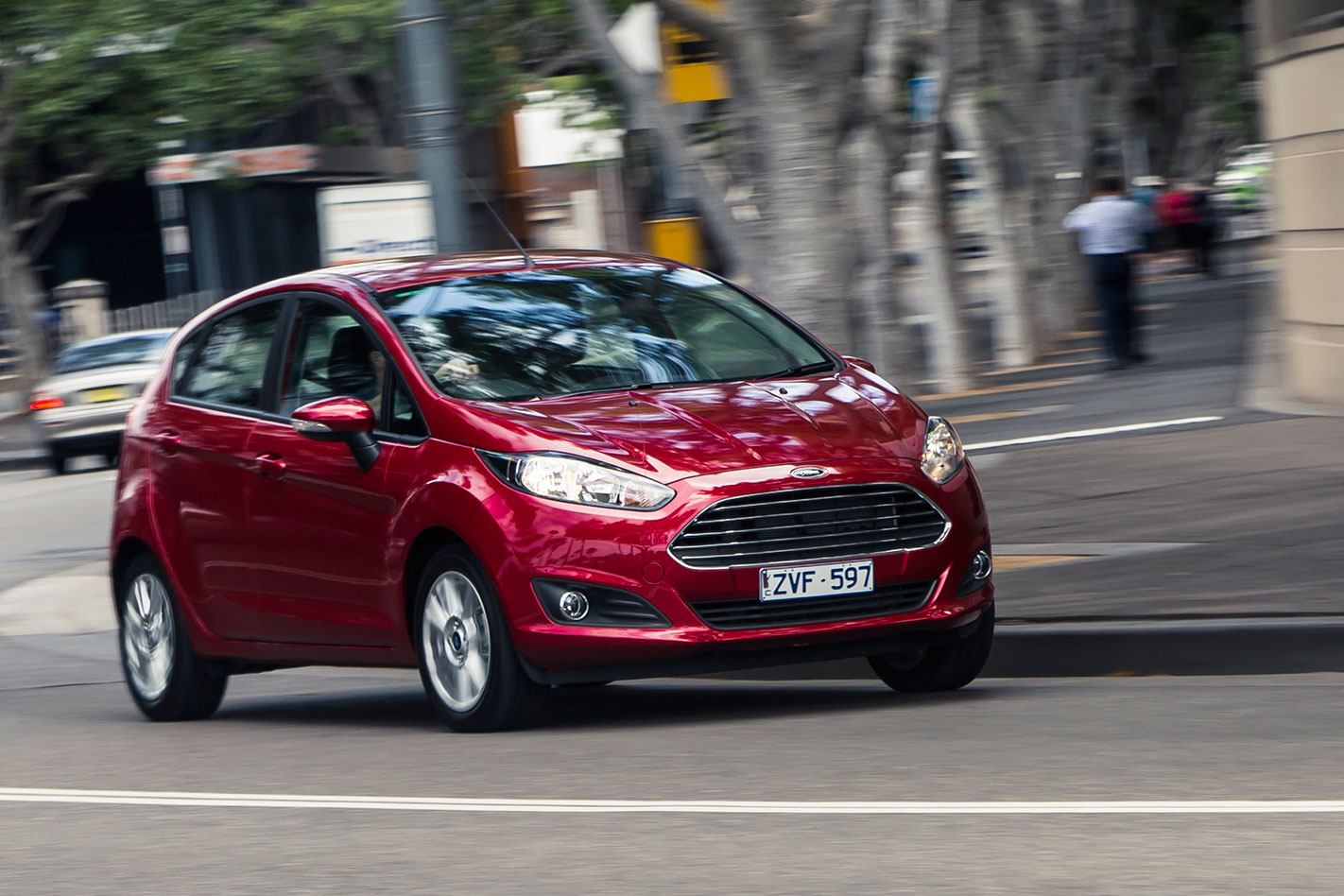
There was also about nine years at Ford, which culminated in him designing the sixth-generation Fiesta light hatch, which was built around the world since launching in 2009.
“I’m very proud of that one,” smiles Simmons. “It was the best-selling car in the UK for the entire duration of its production lifespan. I’d always hoped for that result but I never quite believed it would happen.”
As anyone would in its vehicles, it would be easy to get comfortable in a corner office at Land Rover’s Whitley HQ sketching the world’s most recognisable SUVs. But after 21 years Simmons decided it was time to prise himself away from his Coventry comfort zone to take on one of his biggest challenges yet.
Last year he and his wife packed their bags and moved to Baoding, an industrial city 150km southwest of Beijing to take on the role of Design Director and Vice President at Great Wall Motors subsidiary Haval.
“We’ll probably look back in maybe 10 years and wonder why we ever had any doubt that China was going to be right at the top of the industry.”
The Chinese SUV brand doesn’t quite have the global recognition enjoyed by his former company, but it’s no minnow. Last year it sold more than 800,000 SUVs in China alone and sells vehicles in 32 countries. Now it’s looking increasingly outward with lofty ambitions to produce 2 million vehicles per year to become the world’s leading SUV brand – not bad for a company that barely existed five years ago.

Helping Haval achieve its lofty ambitions is a formidable challenge, but Simmons knows it’s a once-in-a-lifetime opportunity.
“I realised that this was a real ambition of mine,” he says. “Ever since I started out in design I always wanted that responsibility for a brand and really show what I can do with a brand DNA.
Stay up to date! Sign up here to get WhichCar’s e-newsletter
“Haval is a leader in the SUV market in China so is well positioned to grow internationally and clearly the senior management at Great Wall really value design. So it was a perfect opportunity, one too good to miss.
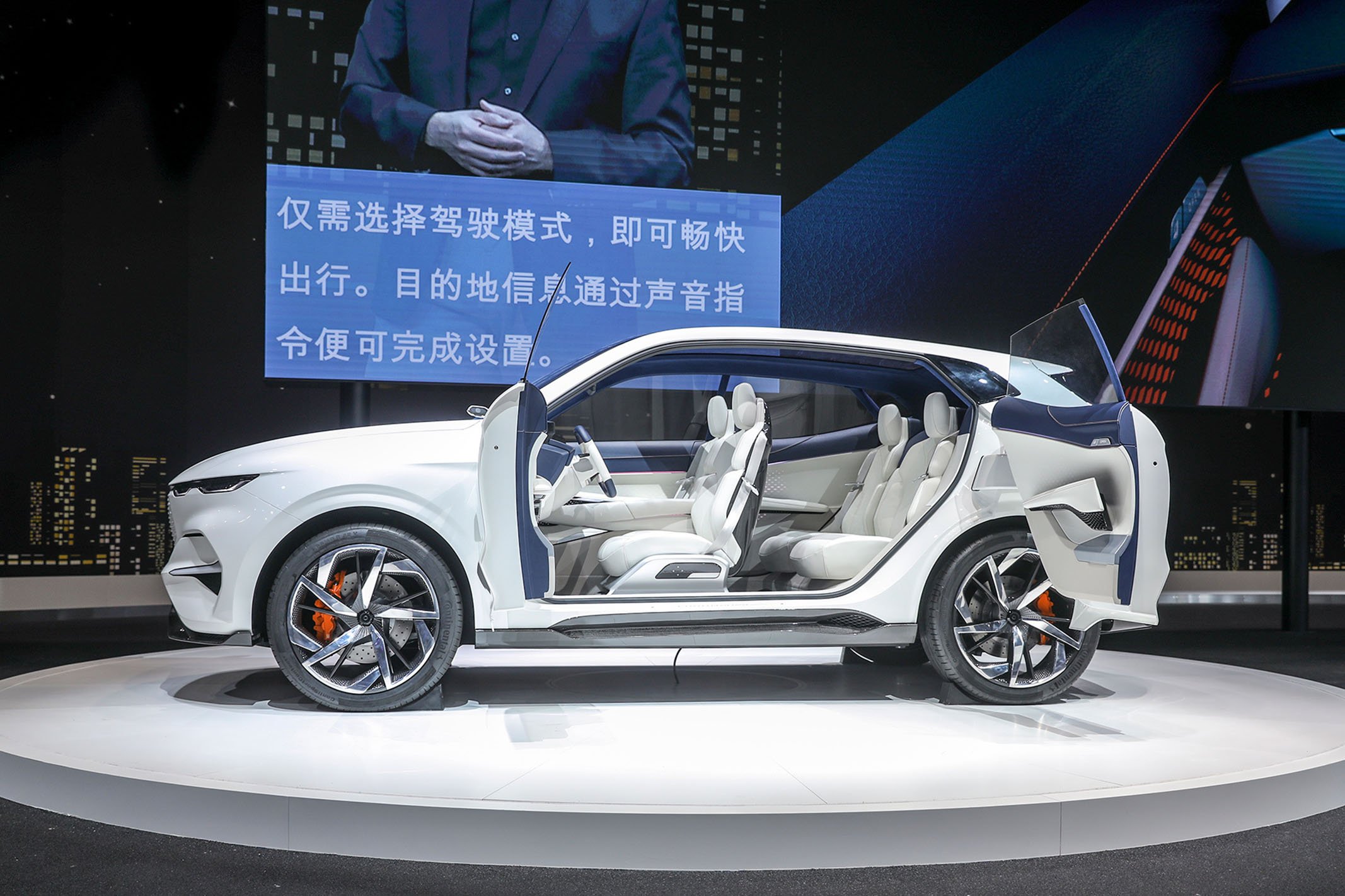
Haval Vision 2025 concept
“But I don’t come here thinking I need to change everything that I see. Actually we have a very strong foundation in terms of the design DNA and it’s something that we can build on.”
The first new design to come under his charge is the Vision 2025 concept SUV unveiled at Shanghai, which he reckons will greatly influence the third generation of Haval SUVs, one of which will be bound for Australia in 2021.
Speaking at the Auto Shanghai motor show, Simmons says his design team will attempt to utilise as much of the concept’s design features as practically possible.
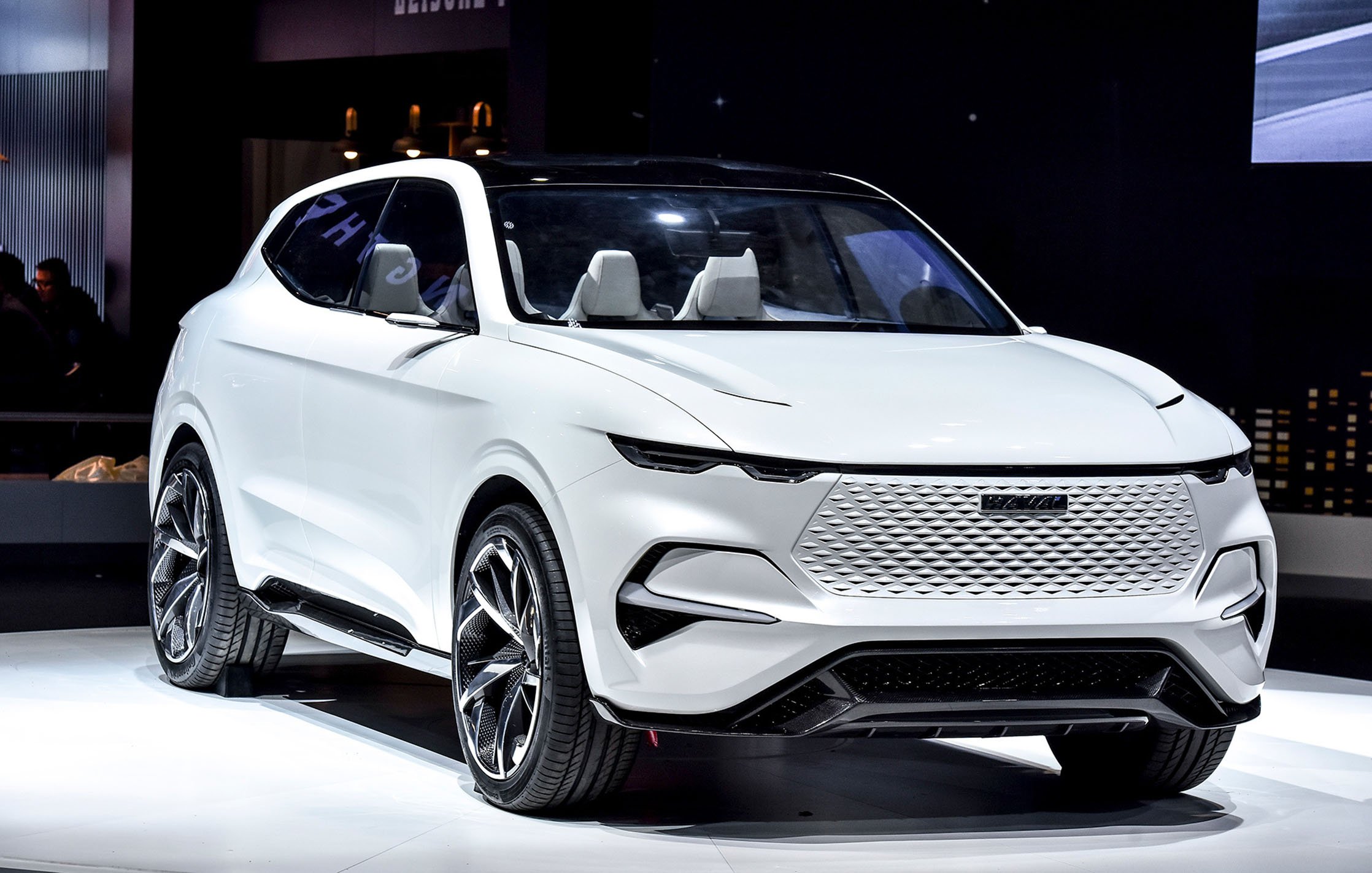
“I’ve always believed that if you do a show car there should be some kind of intent to deliver that show car eventually, so it is a statement of intent.”
Embracing inexperience
The fact Australian Haval dealers have to make do with having the company’s first-generation SUVs in their showrooms continues to prejudice our perception of Chinese motoring design that, as demonstrated by the fascinating range of futuristic vehicles on display at Shanghai, has undergone its own cultural revolution during the past three years.
According to Simmons this is testament to the Chinese designers’ ability to learn and adapt quickly, while using their relative freshness to the industry to challenge design conventions.
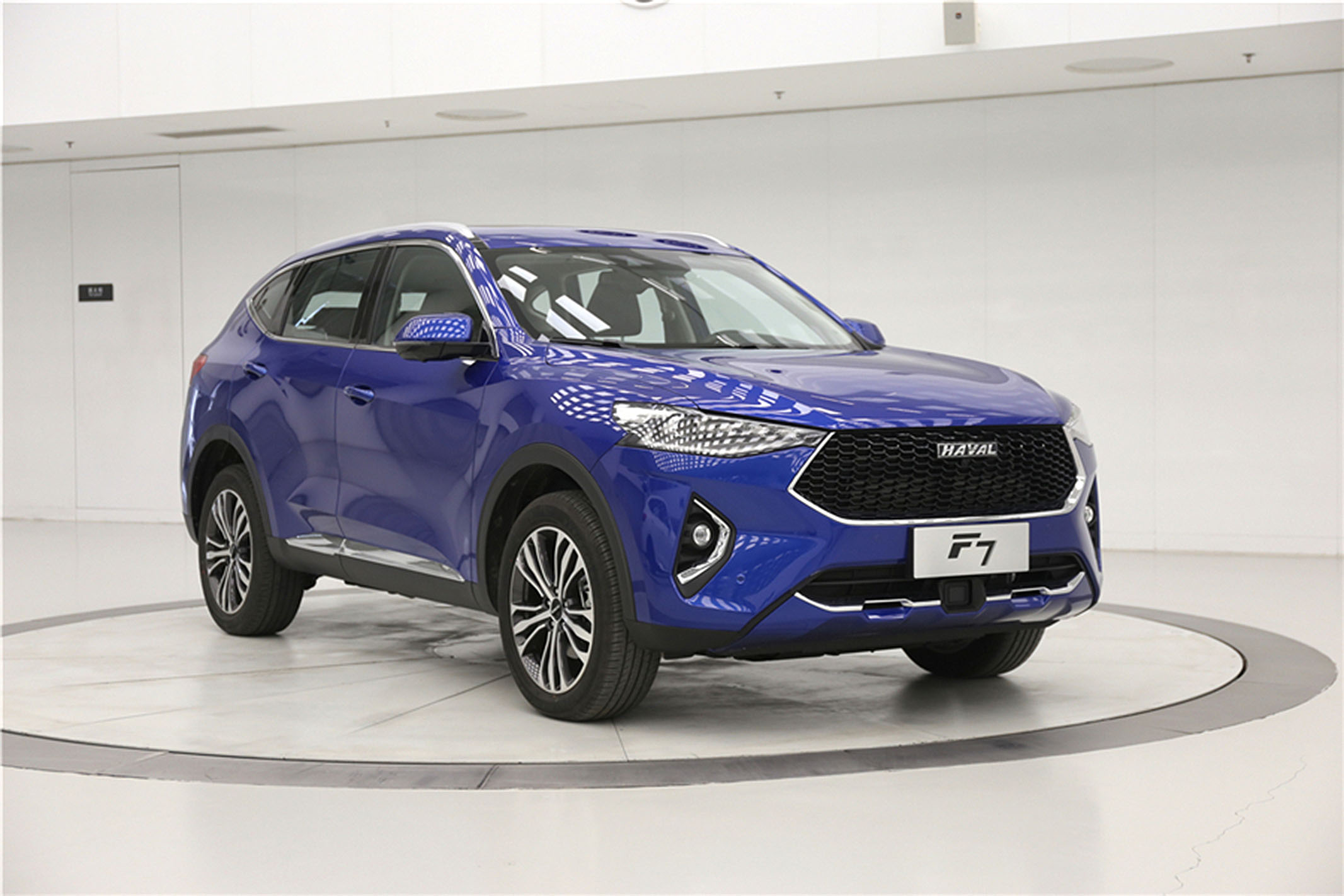
Haval F7
“We’ll probably look back in maybe 10 years and wonder why we ever had any doubt that China was going to be right at the top of the industry.”
He adds that China’s rapid growth and technological advancement are among the great inspirations for his design teams and there’s no better place to be witness that meteoric ascent than from within the hi-tech metropolis that is Shanghai.
While most of Haval’s design work is done at Baoding, the company has a satellite design office in China’s biggest city where the team can work creatively free of the production process.
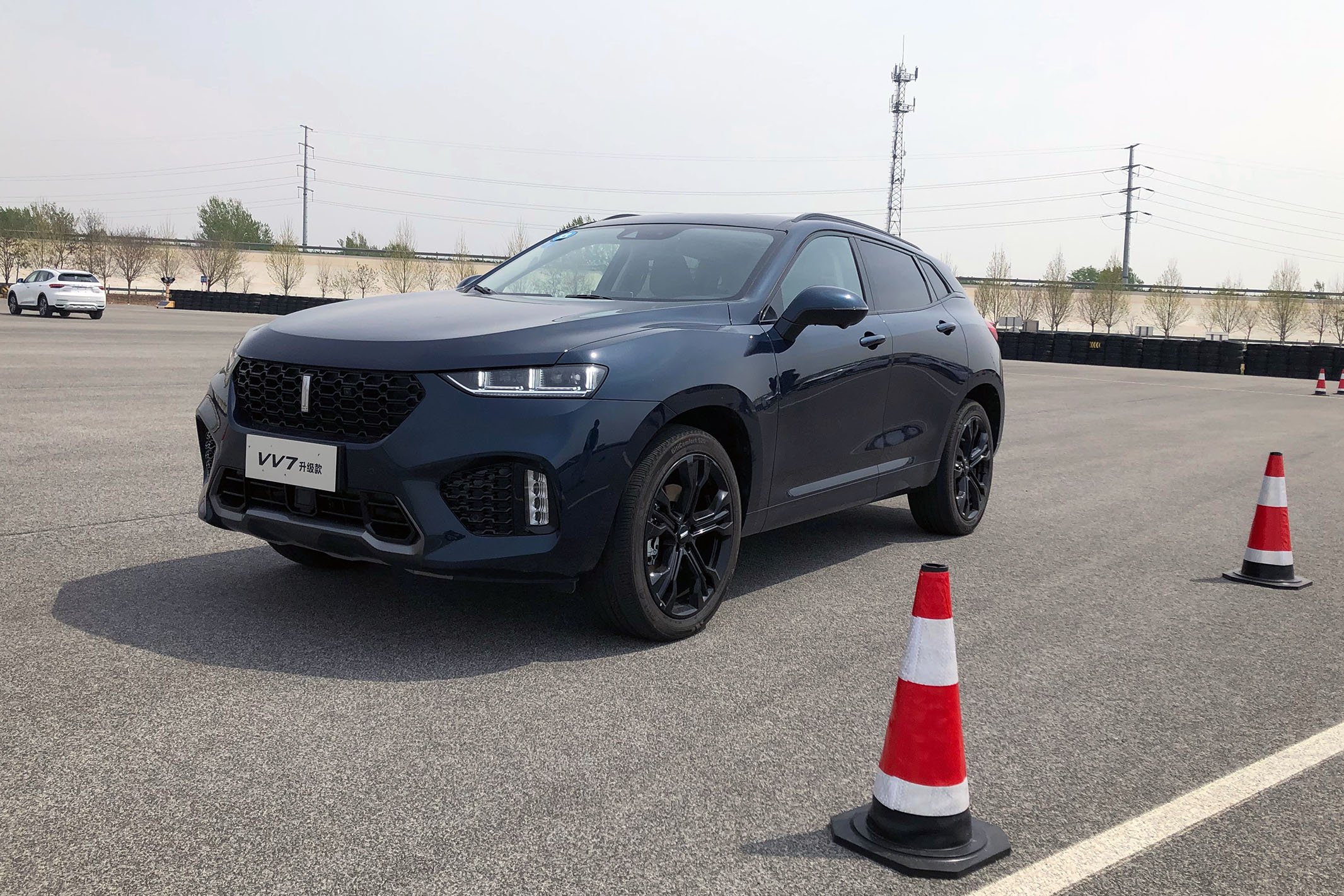
Wey VV7
“Shanghai is kind of a melting pot for the international design community today,” says Simmons. “Our team there very much focuses in the future and what’s next, not so much constrained by a production program, but working with a clean sheet of paper and thinking where can the automobile go next?
Simmons reckons another advantage of a relatively fresh design culture is that it only knows modern cars, meaning innovations such as electric powertrains, autonomy and infotainment are simply part of the design process rather than a hurdle to overcome. Legacy and tradition don’t get in the way, because they simply don’t exist for most Chinese auto brands.
“The design process is now touching on many areas of the vehicle’s functions and not just the way it looks.”
Aesthetics are still incredibly vital to a car’s success though, which is something Haval seems to have learned judging by its latest products, the F7, Wey VV7 luxury SUV, and the Vision 2025 concept.
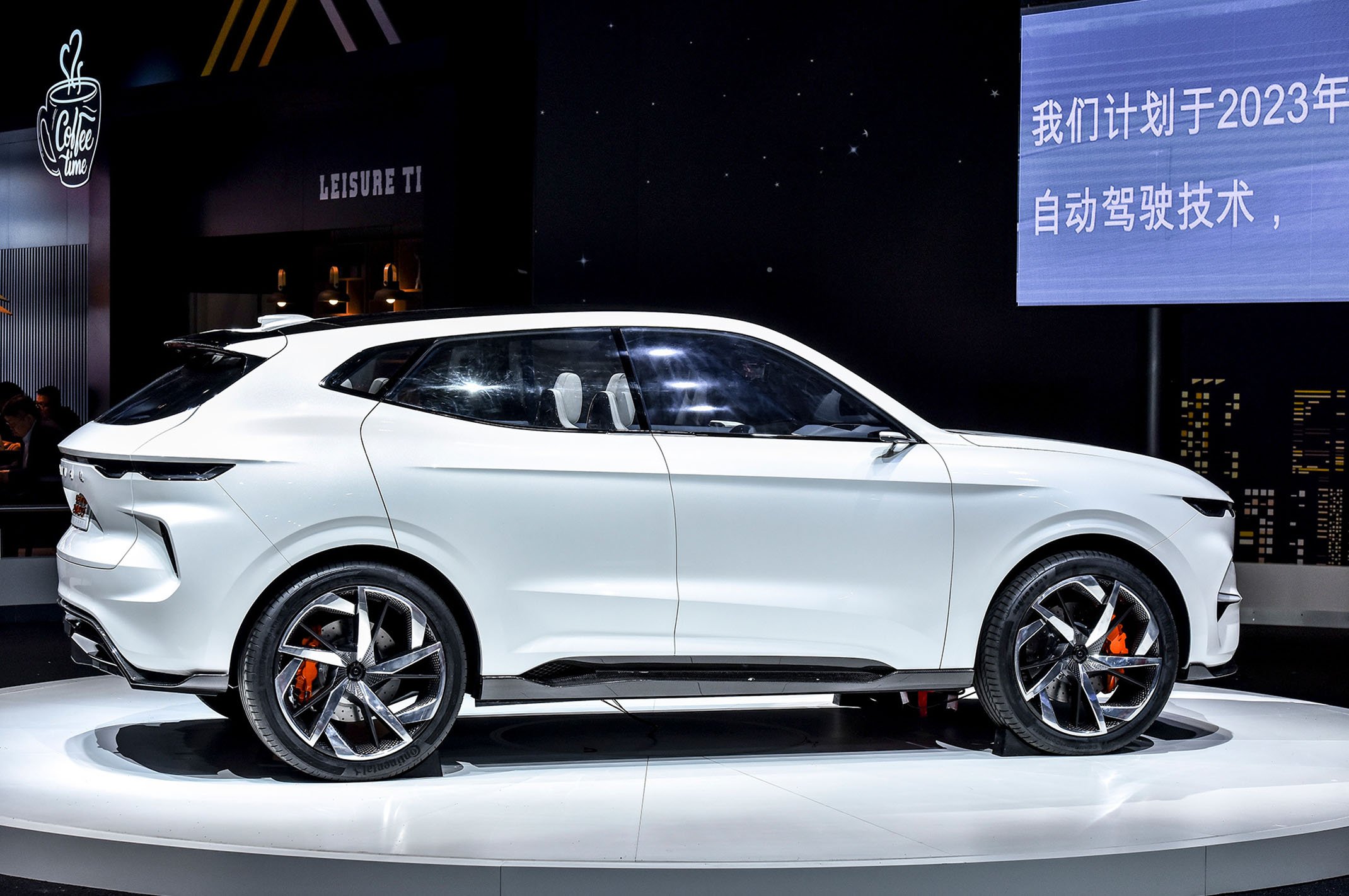
Simmons says to this end there are some design philosophies that will never change.
“Personally it always starts with a side view, probably the front fender,” he laughs.
“Vision 2025 is no different. That started with a drop-dead gorgeous side view. With the side view you can really define the overall proportions, and the character of the vehicle.
“Once you’ve got a great-looking side view it gives you a fantastic foundation for bringing the front and the rear design into the full three dimensional development. If you don’t have a good looking side view however I think you’ll always struggle through the whole process.”
