
Sports cars are the chameleons of the automotive world. Not because of their ability to blend in with their surroundings – most aim to do the exact opposite – but because of their unusually short lifespans. Chameleons tend to only live two or three years in the wild, which is typically the same amount of time it takes for sports car sales to fall off a cliff as buyers move on to the latest toy.
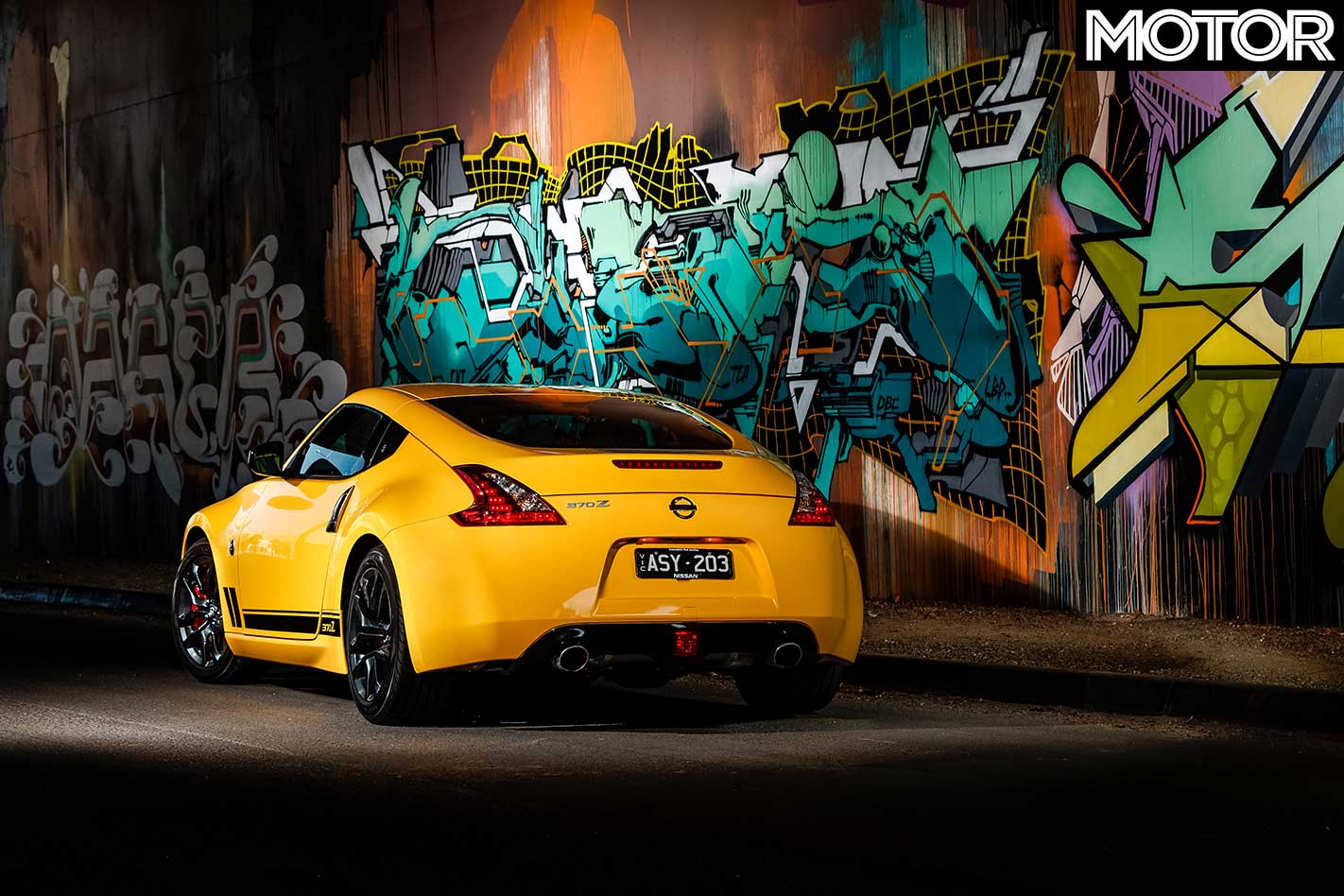
The Nissan 370Z is an exception. Just as a chameleon in captivity can live up to 10 years, this muscular rear-driver continues to slowly but surely leave showrooms, despite 2019 marking a decade since its introduction.
As you’d expect, its popularity peaked early on with sales of 681 cars in 2009 and 745 in 2010, but it’s remained remarkably immune to the ravages of time, hovering around 400 sales per annum.
Traditionally, this continued interest has been achieved by a steady trickle of new updates: more power, revised styling, extra gadgets. Nissan has taken a different approach, leaving the car more or less as-is but gradually lowering the price.
When the freshly fettled 370Z landed on Aussie shores in 2009, Nissan demanded $67,990 for the standard six-speed manual coupe. In 2018 dollars, that equates to around $80K, which makes the Z’s current $49,990 price tag somewhat of a bargain.
However, in the immortal words of 1990s knife salesman Tim Shaw: “But wait, there’s more”. Our test car is one of 50 N-Sport models, which further slashes the price to $48,490.
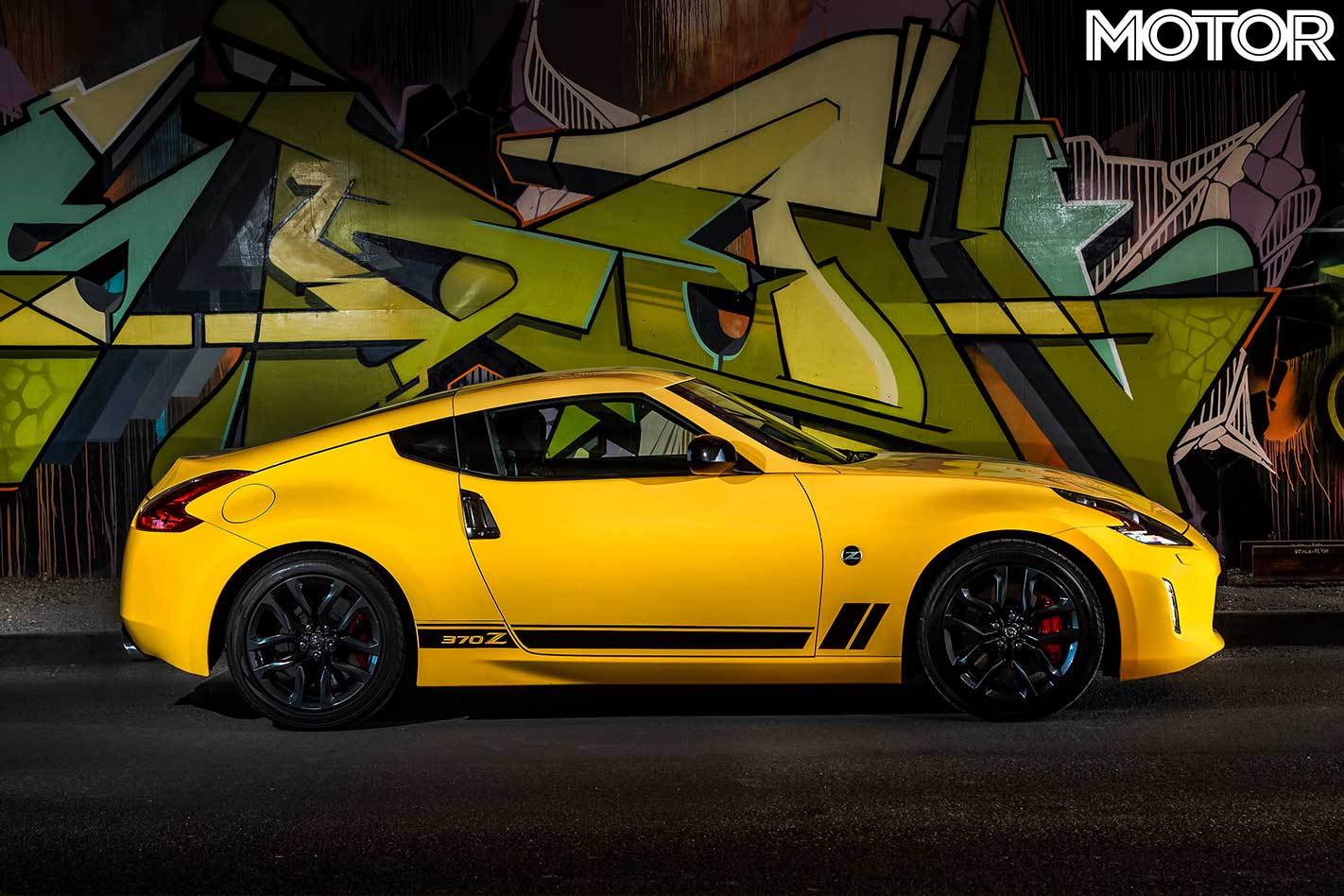
It’s inspired by the Datsun 280ZX Black Gold edition, built to celebrate the 10th anniversary of the Z-car in 1980; this isn’t a good start, as the 280ZX is widely regarded as the point the Z went off the rails, its weight ballooning and performance declining like the automotive equivalent of Elvis Presley’s later years.
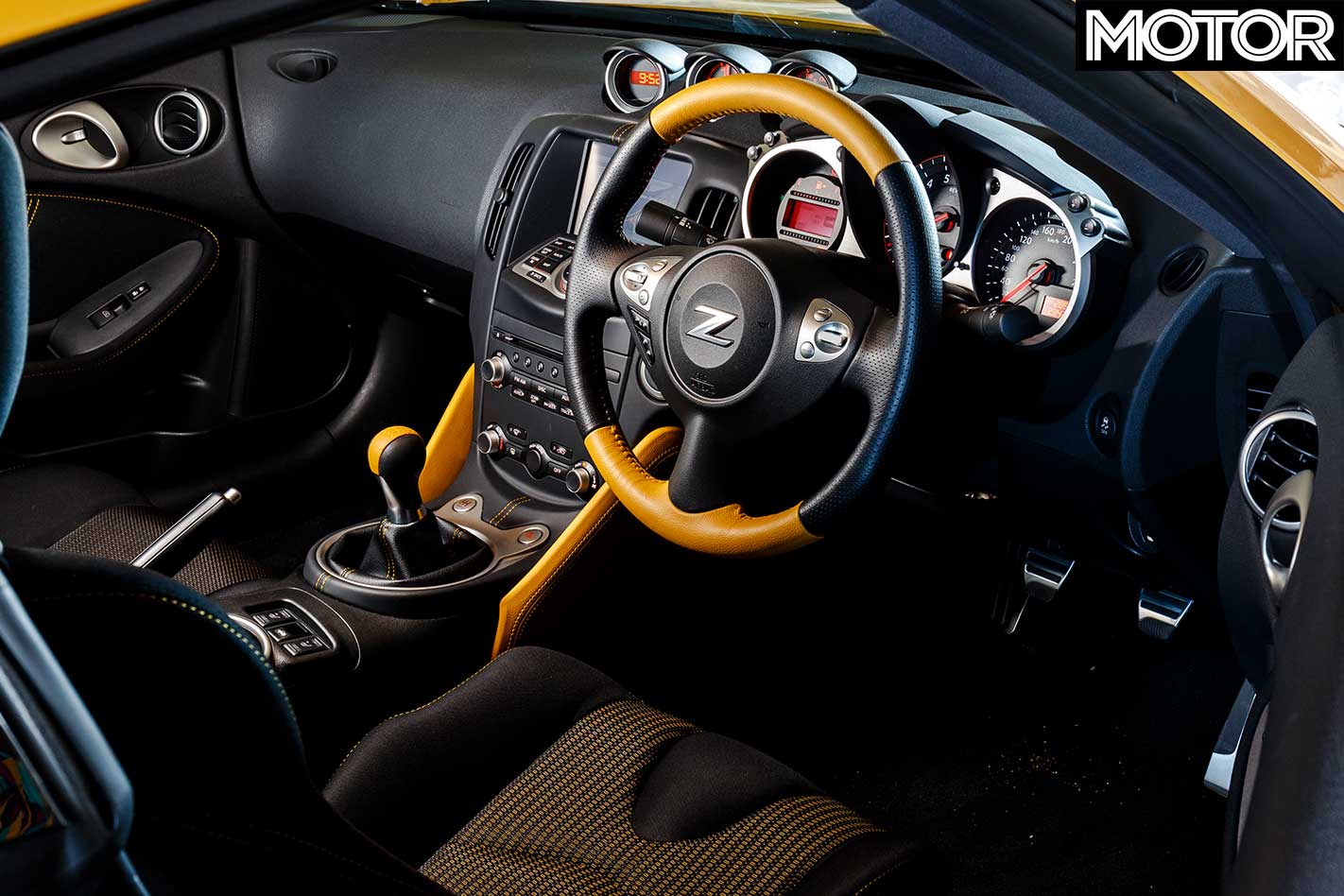
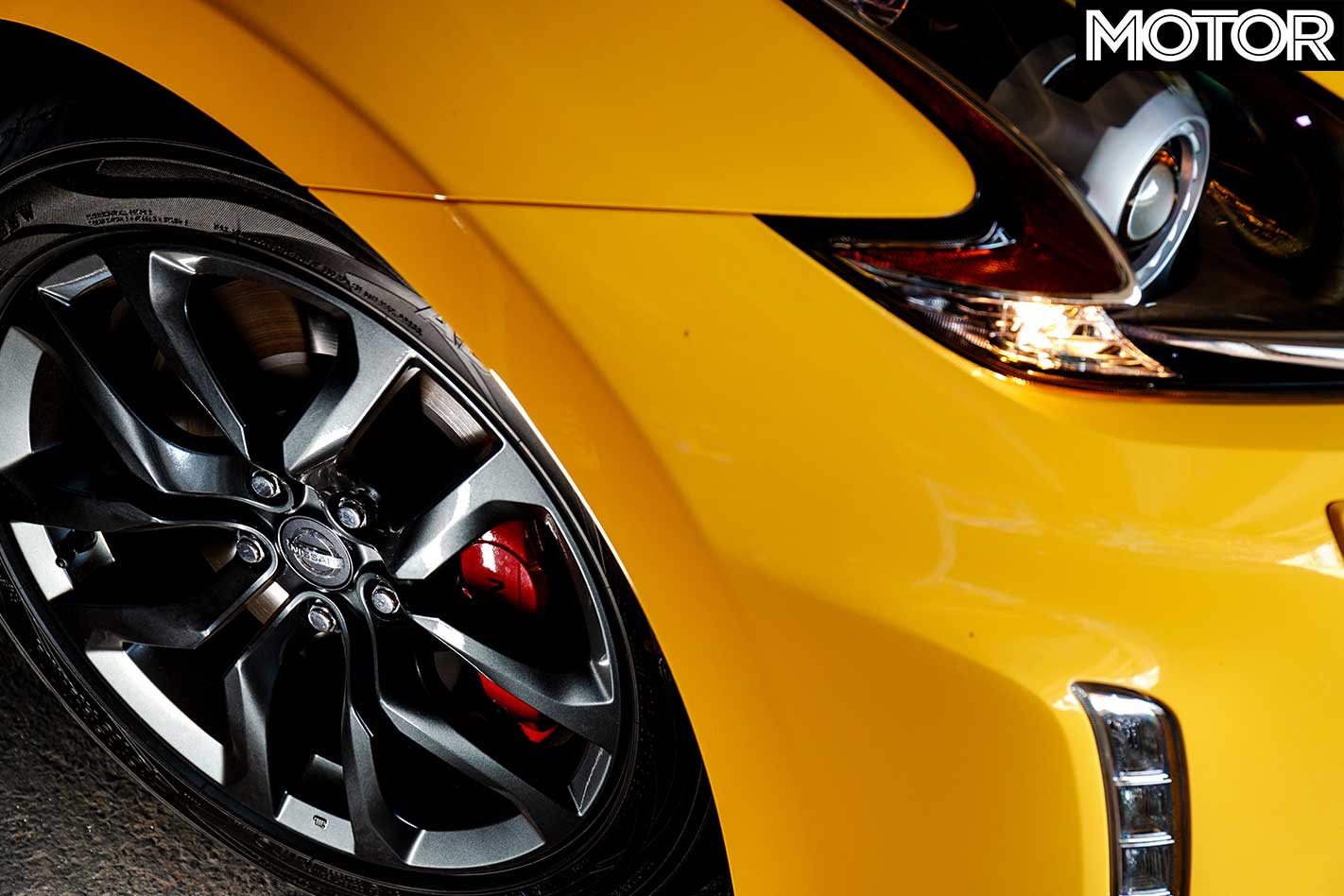
The N-Sport touches aren’t groundbreaking, consisting of gloss black mirrors, ‘GT-inspired’ stripes and 18-inch wheels on the outside with cloth seats and lurid splashes of yellow inside across the door trims, steering wheel, shift knob, knee pads and dash. Given the interior treatment, the Chicane Yellow paint seems most appropriate, though Diamond Black and Shiro White are also available.
So why are we testing a decade-old car that hasn’t changed much? Simple, to see if it’s still relevant – especially in the context of its new price point – and to discover if there’s life in the Z concept.
When the 370Z launched, its only real competition was the unresolved front-drive Alfa Romeo GT, gutless Mazda RX-8 and powerful but butt-ugly BMW M135i. None of those cars exist anymore, but had Nissan retained its previous pricing the 370Z would now be picking a fight with the Mustang GT, a fight it would struggle to win.
Instead, the 370Z finds itself head-to-head with the Mustang EcoBoost, which is a much more intriguing match-up. In manual guise, the Ford costs an identical (to the standard 370Z) $49,990 and offers 224kW/441Nm from its 2.3-litre turbo four, though it also has to lug around 1705kg. In contrast, the 370Z offers 245kW/363Nm from its 3.7-litre naturally aspirated V6, yet weighs just 1488kg.
As you’d expect, stepping inside the 370Z is to take a trip back in time, but that’s not necessarily such a bad thing. Rather than endless sub-menus there’s basically a button for every function, the driving position is good, the heated electrical seats are nicely supportive and the splashes of colour liven up what is otherwise quite a sombre interior.
The digital displays date it, there’s an annoying lack of storage space and it’s not going to win any material quality awards, but in a sports car the driving environment is key and the 370Z ticks this box.
It’s also refreshingly free of any driver aids: AEB, blind spot assist, lane keep assist, active cruise control, cross-traffic alert, in 2018 all are conspicuous in their absence. This lack of safety tech would have a catastrophic effect on the 370Z’s safety rating – though it wasn’t tested in the day, let alone now – but it’s nice not to have any electronic intervention when you perfectly clip that white-line apex.
The only driver aid is ESP, which can be deactivated with one press of a button. Mostly, anyway. Deactivation is necessary as the ESP is as cautious as a newborn deer, dramatically cutting power at the first sign of enthusiastic cornering.
Its second-stage activation is strange; the ESP light will flash if the car slides at slow speeds yet it doesn’t seem to limit the lateral movement or kill the throttle. In the dry, the 370Z doesn’t have the torque to trouble its traction, anyway.
Its tyres are modest in width, just 225mm at the front and 245mm at the rear, but it takes a committed cornering effort and plenty of throttle for the rear to gently steer the car. Even then, the viscous limited-slip diff struggles to lock, resulting in inside wheelspin.
That said, if you can summon that commitment the 370Z can be steered with the throttle to a certain degree. Weight distribution is deliberately set to 55:45 front-to-rear, the logic being that under braking a higher percentage of the weight presses down on the front wheels, while under hard acceleration the weight balance is close to the ideal 50:50 for balanced corner exits.
In reality, it doesn’t quite work like that. The predominant handling characteristic at the limit is gentle understeer, transitioning to slight oversteer on corner exit. There’s not a lot of inherent adjustability in the chassis; lifting the throttle mid-corner will tighten the line, but it does so rather unpredictably and doesn’t telegraph its movements particularly well. Trail-braking to lighten the rear initially seems to work but the ABS freaks out at the unloaded rear wheel and grabs it viciously, putting an end to that idea.
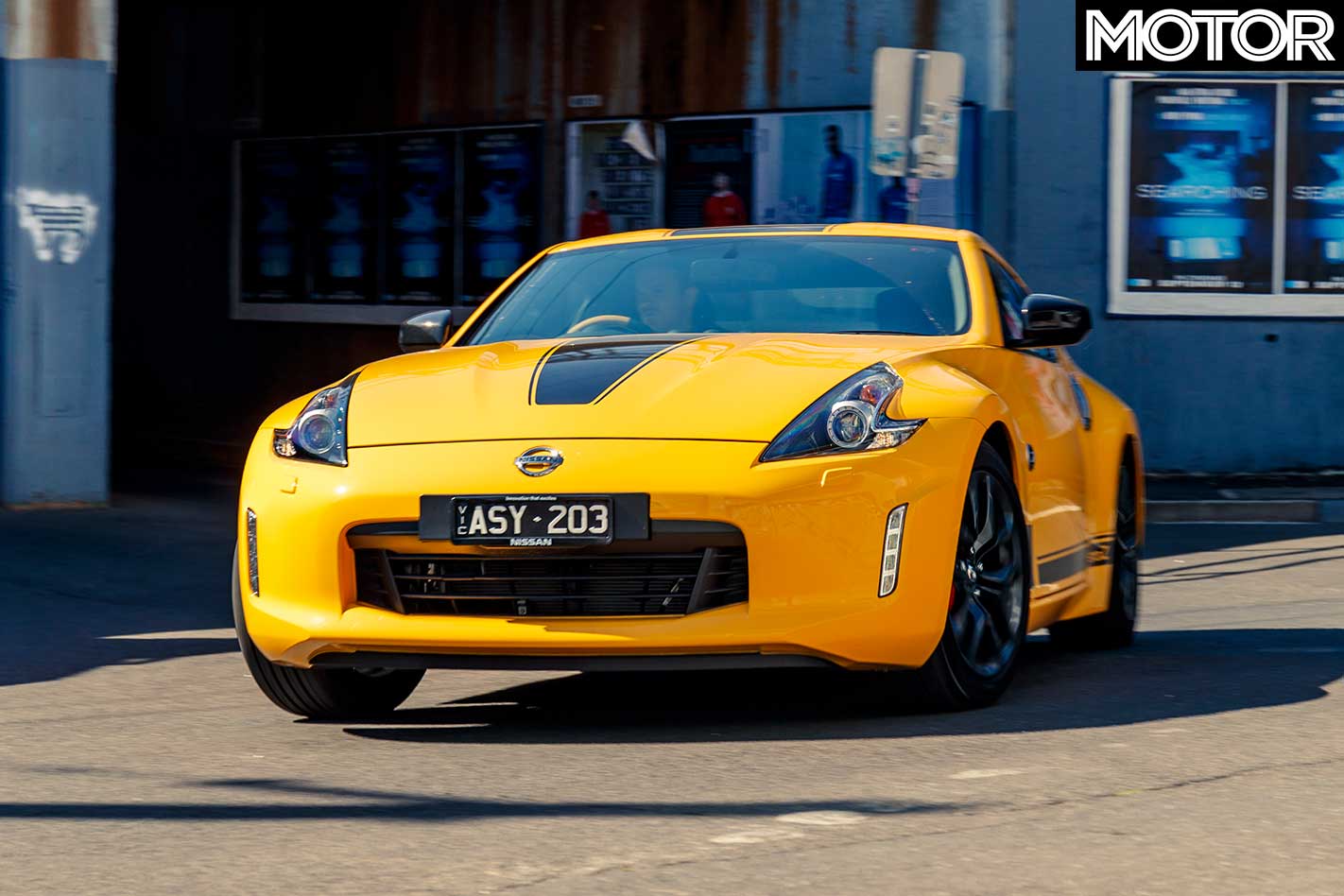
Despite its flaws, the 370Z is also fun and definitely more enjoyable than its over-gripped Nismo brother. It’s agile, impressively quick and easy to drive with excellent brakes. The steering is a bit too light but offers enough feedback and the chubbier tyres wrapped around the 18s give the handling some ‘squish’ – there isn’t an abrupt limit, but a more malleable one that gives the car the freedom to move around, even at road speeds.
The ride is okay, too, firm but without any crashing or undue jitteriness; bumpy braking zones can have the 370Z skipping about and bigger undulations can ask questions the dampers struggle to answer, however, in general the passive suspension tune is a good compromise.
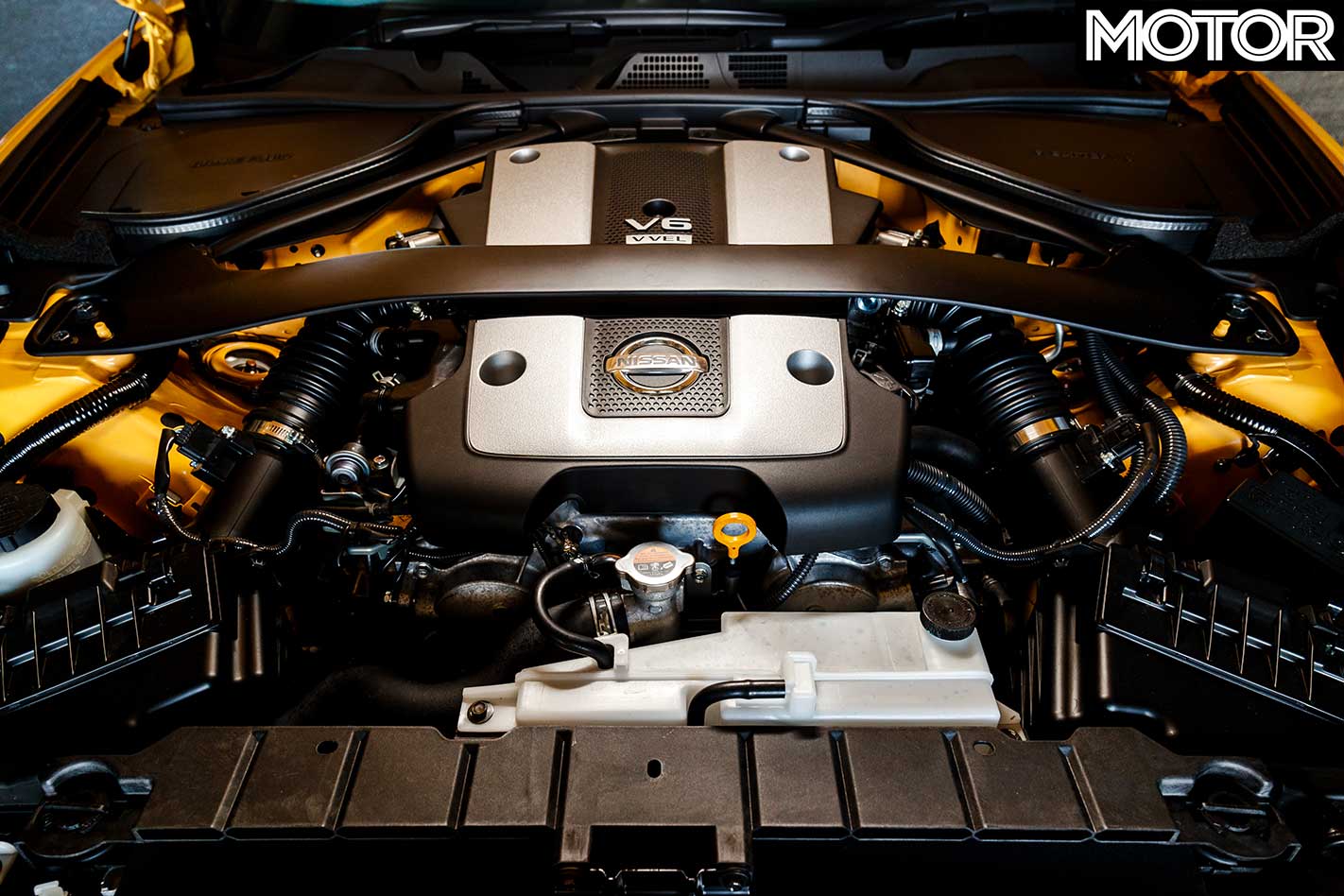
The engine is less so. On the spec sheet a short-stroke, high-compression atmo V6 sounds tasty, the VQ37 sporting impressive figures (its specific output almost matches the new Mustang’s potent V8) and a 7500rpm redline.
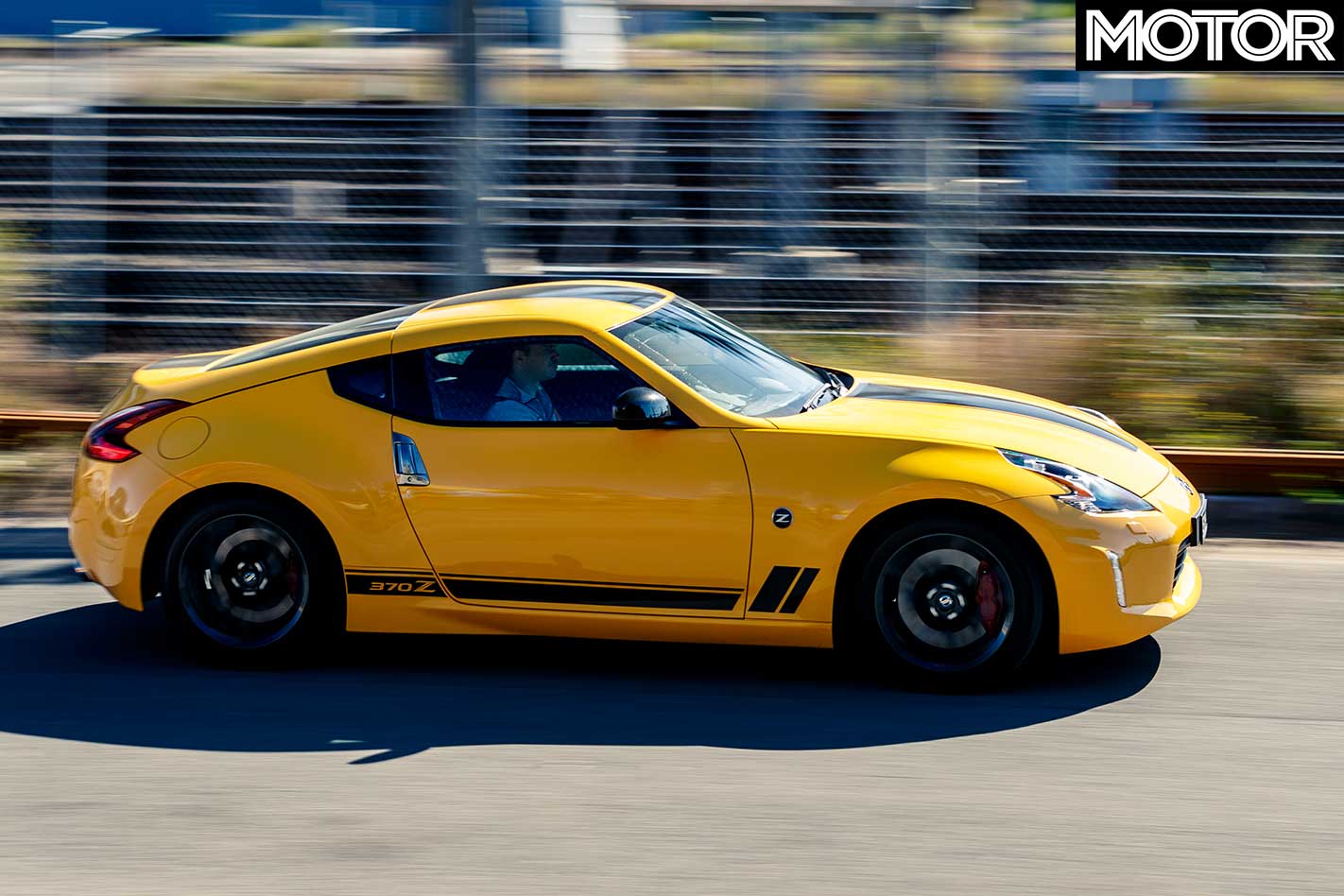
The actual end result isn’t so impressive. There’s plenty of power, enough torque and the engine is mated to a six-speed gearbox with sensible ratios and a decent shift; trouble is, it just sounds and feels unpleasant. In this day and age, it kinda feels like an SUV engine that’s been slotted into a sports car, which given this generation of engine first appeared in the Pathfinder and Murano, isn’t too far from the truth.
Nonetheless, a decade on the 370Z still offers entertainment. It has a similar back-to-basics feel to the likes of the Toyota 86 and Subaru BRZ but with much greater performance. Yes, the interior is dated and the engine sounds strained, yet on a twisty road the Z’s rear-drive recipe can still cook up a smile.
Unfortunately, the 370Z’s biggest competitor is itself. Its sub-$50K price might well be sharp, however, the lack of any mechanical update means identical cars with fewer than 100,000km can be had second-hand for half that. Stretch the budget to $30K and you’re looking at around 40,000km.
It’s clear that there’s still life in the Z concept, and Nissan’s Senior Vice President for Global Design, Alfonso Albaisa, recently confirmed he was working on a successor to the 370Z, previously thought to be a dead project.
With the Z’s 50th anniversary being celebrated this year, and Carlos Ghosn’s vice-like grip on Nissan’s finances now relinquished somewhat, hopefully the resources can be found within the mighty Renault-Nissan-Mitsubishi alliance to produce a proper Supra-fighting sports car and continue Japan’s performance resurgence.
FAST FACTS 2019 Nissan 370Z N-Sport
BODY: 2-door, 2-seat coupe DRIVE: rear-wheel ENGINE: 3696cc V6, DOHC, 24v BORE/STROKE: 95.5 x 86.0mm COMPRESSION: 11.1:1 POWER: 245kW @ 7000rpm TORQUE: 363Nm @ 5200rpm WEIGHT: 1488kg POWER-TO-WEIGHT: 165kW/tonne TRANSMISSION: 6-speed manual SUSPENSION (f): double A-arms, coil springs, anti-roll bar SUSPENSION (r): multi-links, coil springs, anti-roll bar L/W/h: 4265/1845/1315mm WHEELBASE: 2550mm TRACKS (f/r): 1549/1595mm STEERING: hydraulically assisted rack-and-pinion BRAKES (f): 356mm ventilated discs, 4-piston calipers BRAKES (r): 351mm ventilated discs, 2-piston calipers WHEELS: 18.0 x 8.0-inch (f), 18.0 x 9.0-inch (r) TYRES: Yokohama Advan Sport; 225/50 R18 (f), 245/45 R18 (r) PRICE: $48,490
PROS: Entertaining handling; strong brakes; impressive pace; price CONS: Dated interior; coarse engine; identical used examples RATING: 3.5 out of 5 stars
50 years of Fairlady
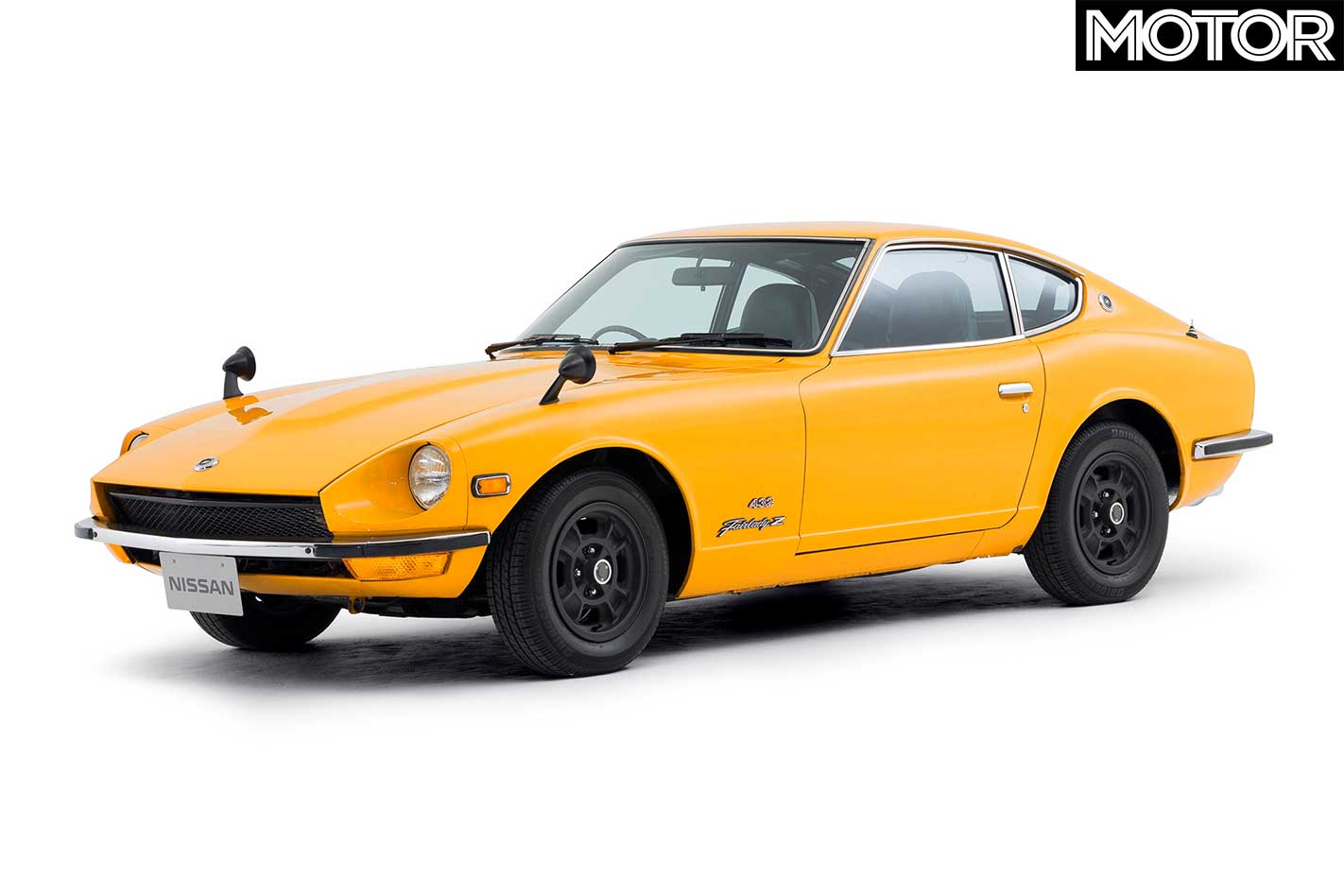
Mention the Datsun 240Z to car enthusiasts and you’ll receive knowing nods. Follow that up with Nissan Fairlady and those nods will likely turn to blank stares. In its home market the ‘Fairlady Z’ used a 96kW 2.0-litre straight-six, bar the high-performance Z432 models which housed the 118kW S20 engine shared with the Nissan GT-R.
For export markets a larger capacity 2.4-litre straight-six was installed producing 113kW/198Nm. Locally, it was expensive, costing about the same as a GT Falcon, but its quasi-E-Type looks, sports car dynamics and rally-proven toughness – it won the East African Safari in 1973 and a trio of Australian Rally Championships from 1974-76 – ensured its cult status.
Our April 1971 test discovered a superb ride, secure handling and performance roughly equal to a Torana GTR XU-1, recording 0-60mph (97km/h) in 10.0sec dead, a 16.7sec quarter mile and 192km/h top speed. E-Type comparable dynamics impressed, but high-speed stability was found wanting and the recalcitrant gearbox and ‘cammy’ engine made it difficult to drive smoothly at low speeds. You’ll need around $40K for a neat one today.
There’s an election around the corner and unsurprisingly politicians are banging on about the latest hot topic: electric cars.
Set alight by the Australian Greens party which proposed every car sold in Australia by 2025 should be a fully-electric vehicle (and surprisingly supported by Australian automotive body the NRMA), the Australian Labor Party has announced its own policy that plans for 50 percent of new vehicles sold by 2030 to be electric.
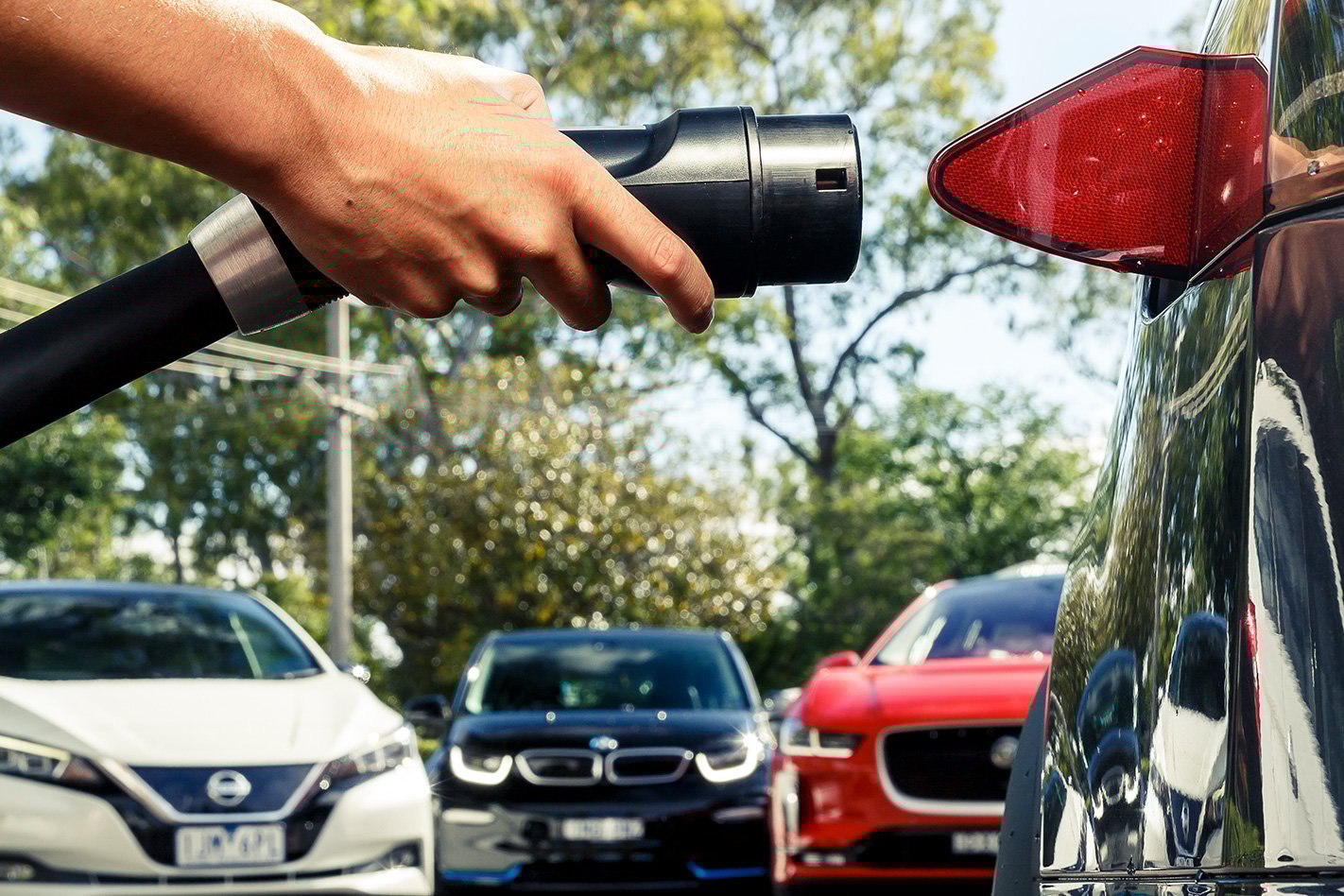
But all of the electric vehicle proposals lack detail and are unclear if electric vehicle means electrified or fully-electric, but it seems to be the latter, with a push to see emissions-free vehicles taking over roads in droves and in short time. Problem is we’re trying to run before we can walk, with Australia completely unfit for encouraging the introduction of hybrids let alone fully-electric vehicles.
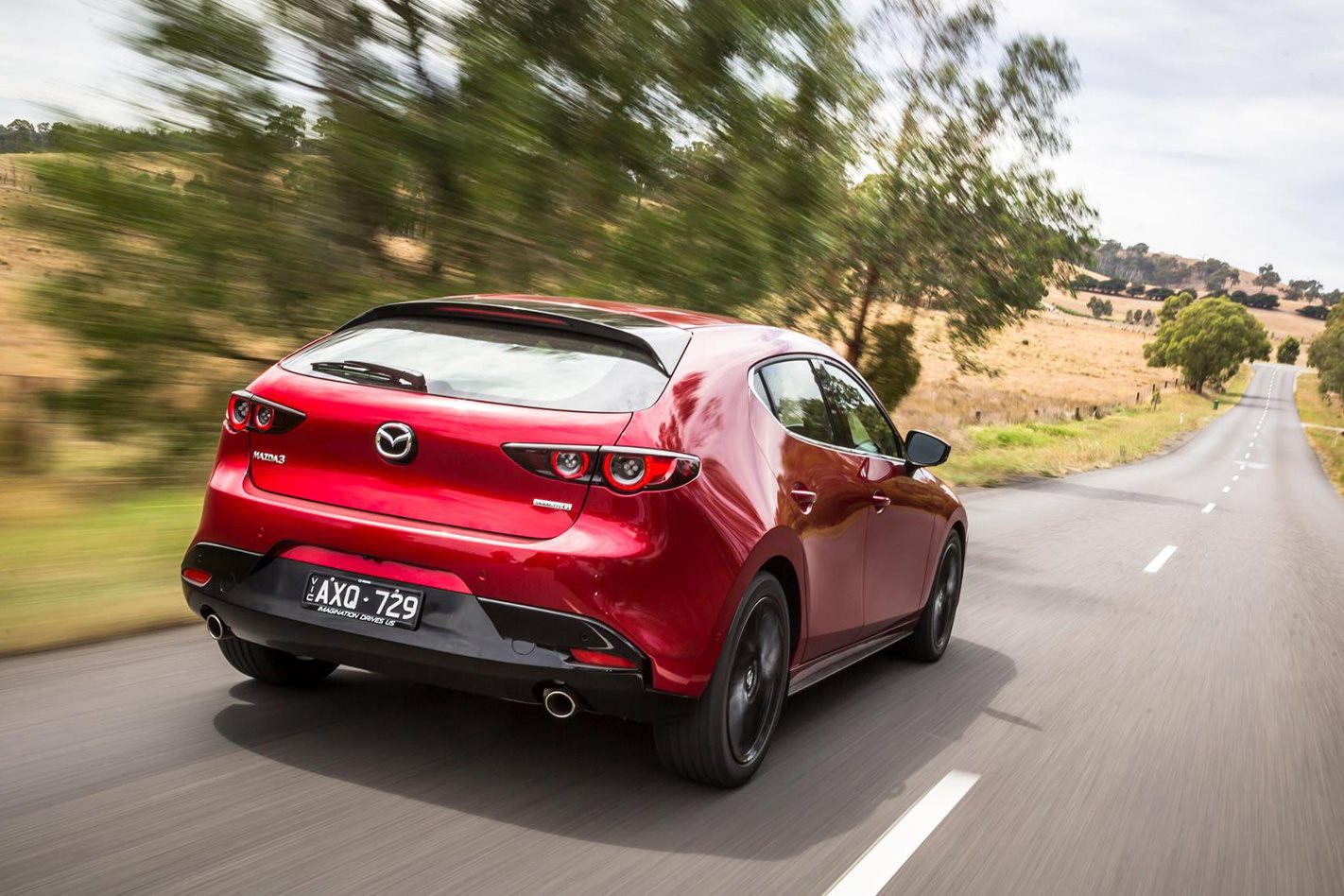
Mazda has introduced its all-new 3 hatchback to Australia this week and it brings an update in just about every area except the engine. The same Skyactiv-G naturally-aspirated petrol duo carries over, with no form of efficient forced induction or electric hybridisation. However, ‘M-Hybrid’ versions of both engines are available where regulations force manufacturers to deliver lower emission vehicles – something lacking in Australia.
“We look at the fuel economy regulations for each country and also the customer needs in each country,” Mazda 3 program manager Kota Beppu told Wheels.
“For the Australian market, we have made a judgement that this [hybrid] system for G engines is not going to be required, that’s why we’re not going to introduce this combination.”
M-Hybrid is a newer version of Mazda’s traditional petrol engine that adds a small electric motor to lower emissions and increase fuel economy. But Australia’s disinterest in more efficient engines means we won’t get the new drivetrains.
“To be more specific, in Europe they have very strict fuel economy standards and in those market we are introducing this M-Hybrid system,” Beppu added.
Both Europe and the US have vehicle emission targets while Australia does not. The US, which mirrors Australian tastes for big vehicles and utes, has set a vehicle emissions target of 105g CO2/km.
To the ALP’s credit, it has pencilled this regulation into its policies, mirroring the US’ 105g standard, but it’s a supporting act rather than the star of the proposal. If actioned, it would be an important step in obligating manufacturers to consider lower emission vehicles in their line-ups, and in far less time than it will take to go all out on electric.
But, there’s another issue that Australia has brushed under the rug: fuel. Australia has the worst fuel quality in the western world, and it is yet another reason car makers can’t select the cleanest engines for Australia.
Despite other countries in the world that Australia imports its cars from introducing regulations on fuel quality and emissions years ago, they remain as only talking points down under, with idealism of the electric vehicle leaving them in the shadows.
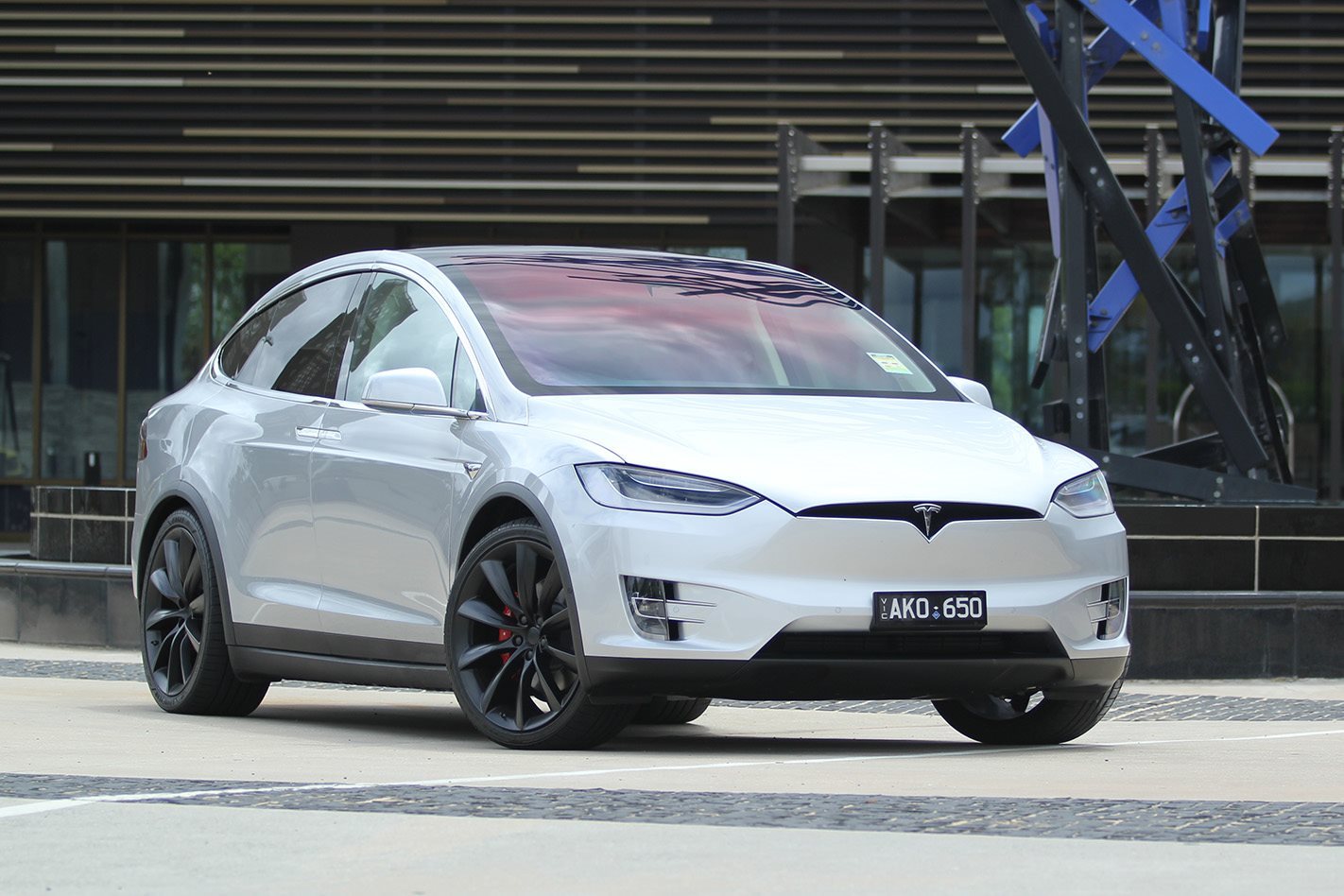
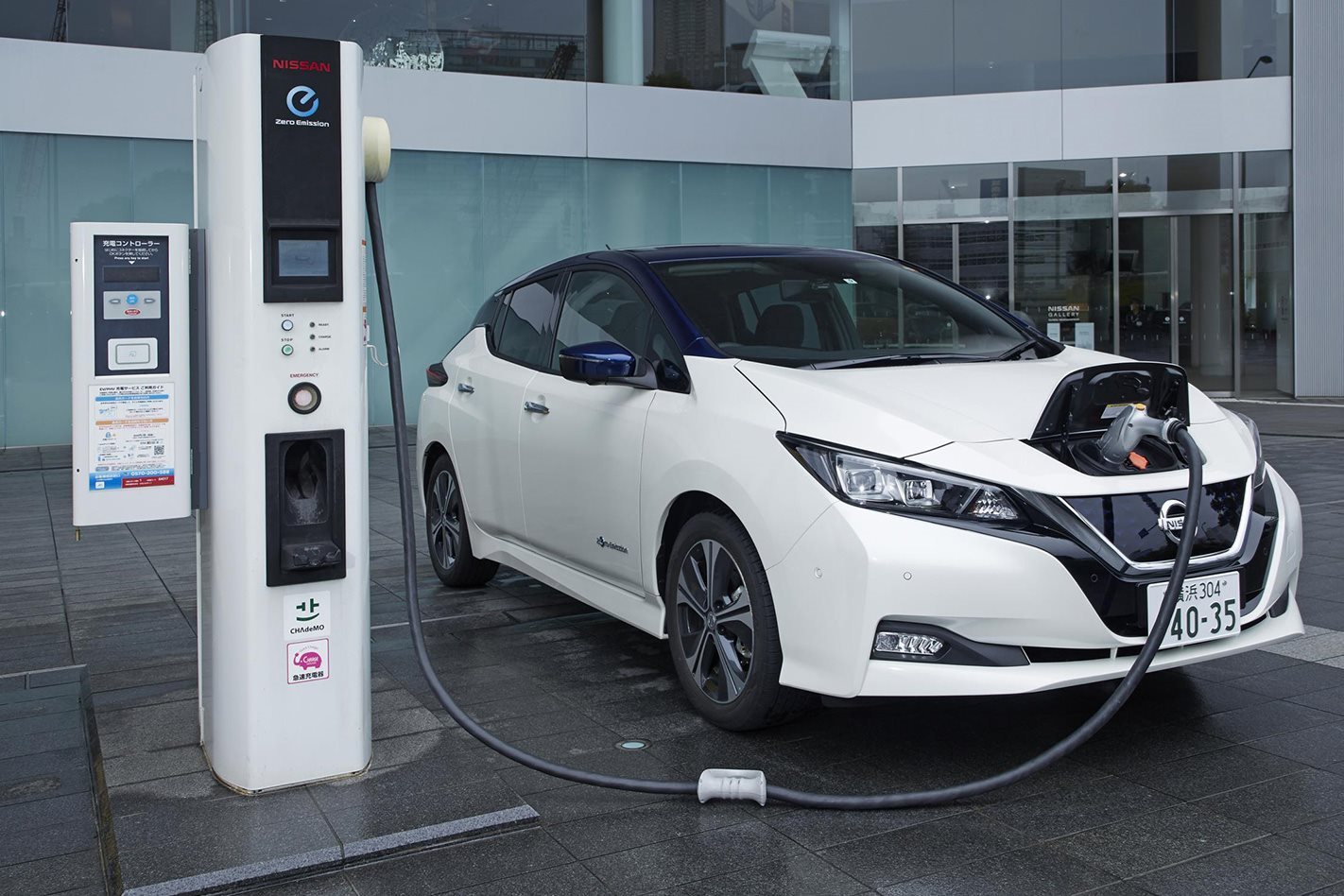
Australia is on track to sell a little over one million vehicles this year. That will be down on 2018’s 1.15 million-unit result, but the long-term trend is heading up. By 2030, under the 50 percent policy, there would need to be at least 600,000 electric vehicles available for sale every year, able to plug into a suitable charging network (that we nowhere near have) and supported by a strong renewable energy source (that we also need).
The goal is to lower vehicles emissions – great – but by ignoring our failures and flippantly suggesting we ban petrol vehicles in just ten years (or less, depending on who you ask) is cutting off the nose to spite the face.
And as much as some pundits make out that we all want EVs, people buying new cars don’t actually want the technology, according to Mazda Australia marketing director, Alastair Doak.
“Obviously there is a cost involved,” he told Wheels when asked why the brand was not introducing hybrid versions of the new Mazda 3.
“It is something our current customer base are not asking for. Our current engines give very good real world economy. If suddenly we feel we need to improve we will change, but our customers are not asking for this stuff so why would we introduce something like that when there is a cost involved?”
Toyota Australia also chimed into debate, after its best-selling Hilux ute was put under the spotlight the past two weeks. Politicians used the diesel-powered dual-cab ute, which is hugely popular with tradies and fleets, as being the reason the electric vehicle policy won’t work, or incorrectly suggesting it will be a fully-electric vehicle by 2030. Government doesn’t appear to be talking with those who matter.
Speaking to Wheels, a Toyota Australia spokesperson explained that there was misinformation over what electrification means and that Australia is simply not ready for plugging in millions of fully-electric vehicles.
“Significant investment in EV charging infrastructure and solutions to power supply issues in Australia are required before the mass introduction and adoption of EVs in the market can become a reality,” they said.
“Around the world, Toyota has a number of low emissions powertrain options in market, including hybrid and plug-in hybrid and a zero emission hydrogen Fuel Cell Electric Vehicle (FCEV).
“Rather than considering one single powertrain option, like pure electric, as a ‘silver bullet’ for reducing CO2 emissions, we believe in a holistic approach that includes a number of different powertrain options to help reduce the environmental impact of transportation.
“Toyota Australia will continue to advocate for close consultation and collaboration between key government and corporate stakeholders to provide more environmentally friendly and fuel-efficient technology in vehicles.”
The upshot is that manufacturers are taking strides to improve their engines. It is incredible how efficient and clean both petrol and diesel engines have become in other countries, and hybrid versions can go one step further.
Problem is, there’s no reason to bring any of this tech Down Under. Despite pollies kicking the electric vehicle can down the road into election month, once the dust settles, Australia will likely remain a dump for some of the least efficient combustion engines in the world.
Bad, it seems, has a new name, and we’re not talking underworld crims here, or three-year-olds with behavioural disorders. The subject in this instance is the very antithesis of the word’s true meaning, but with enough firepower to intimidate just about anything on earth, bullying has just been elevated to whole new level.
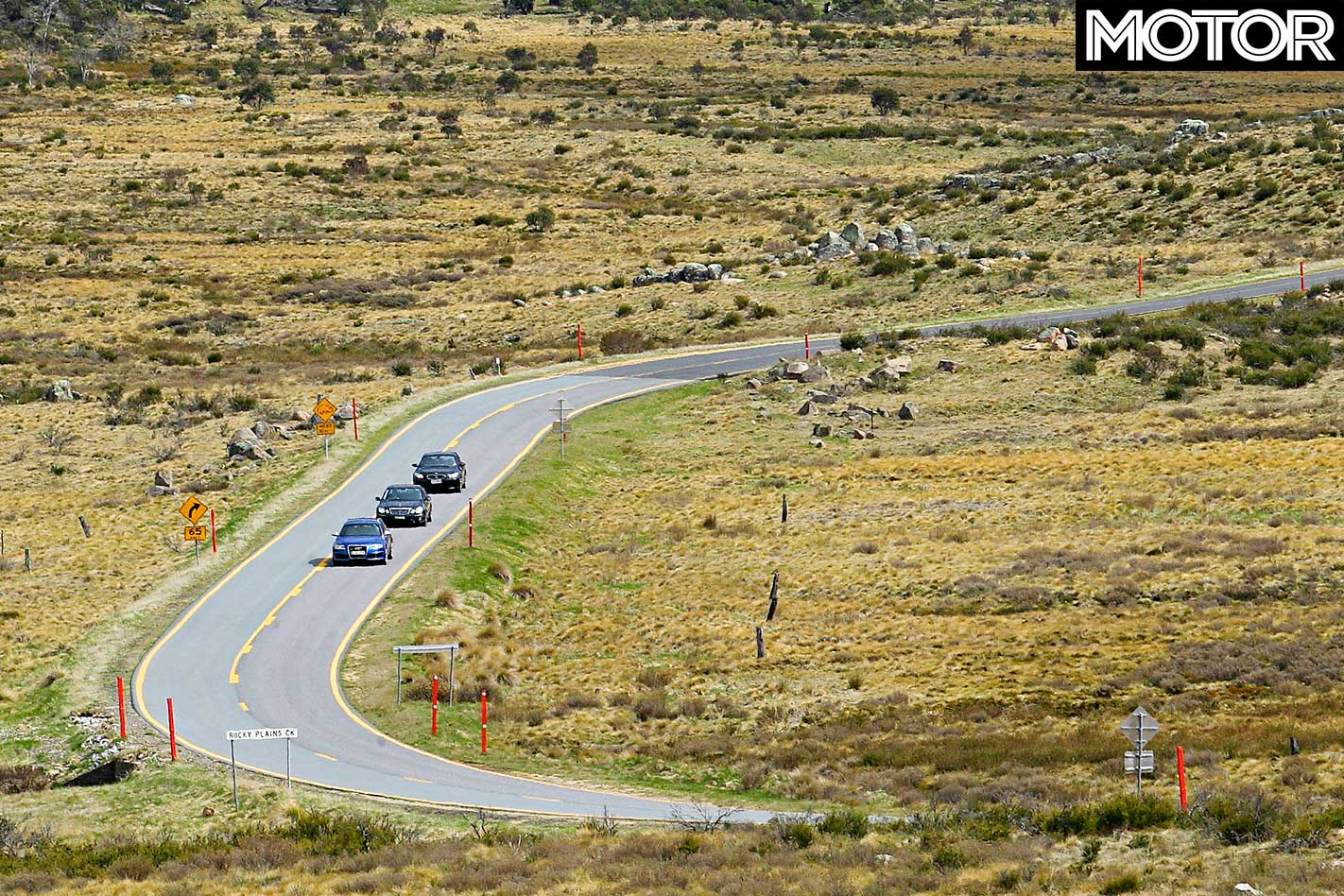
This feature was originally published in MOTOR’s December 2008 issue
We’re talking Audi’s new-generation RS6 – freshly minted with an extra two pistons and 819cc more capacity than the glorious twin-turbo V8 original. In 2004, 331kW seemed sufficient enough to achieve just about anything, but in power-hungry 2008, nothing less than a genuine 500hp (or 373kW) is worth getting out of bed for. So, wake up world because the new RS6 is blessed with 426 metric big ones.
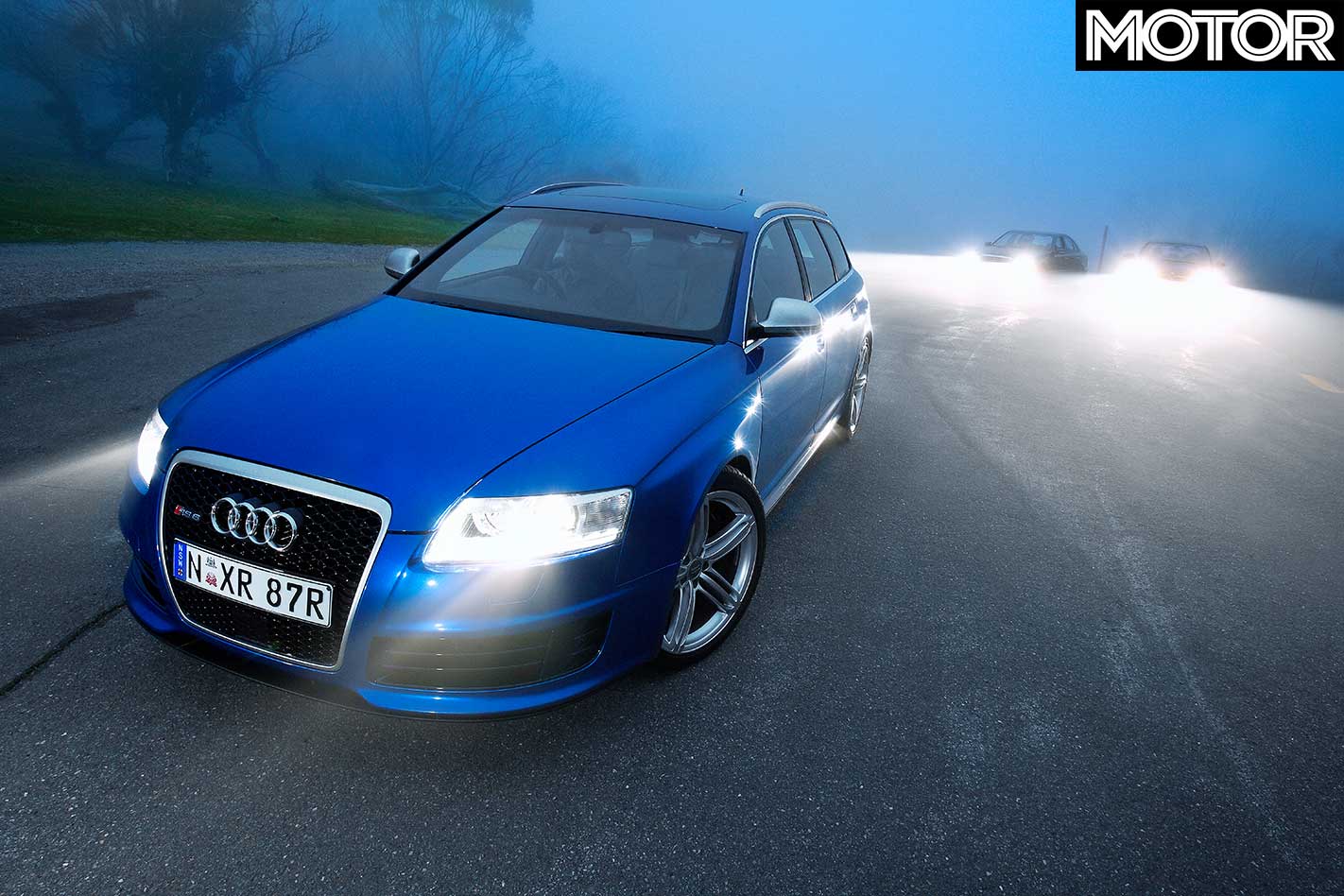
Incredibly, Ingolstadt’s bi-turbo V10 is doing it easy.
In the power-output hierarchy, the uber-Audi reigns supreme over its long-held nemeses – BMW’s M5 and Mercedes-Benz’s E63 AMG. Neither the Bee-Em (373kW) nor the Benz (378kW) are in quite the same league, though the Munich mauler – with the same engine displacement as the Audi – nails 500 horsies without having to resort to forced induction.
The Stuttgart slayer goes just five kilowatts better, despite an additional 1.2 litres of capacity, but uses its size to unleash 630Nm of torque – 110 better than the BMW, at 900 less revs, but still thousands over the Audi’s bottom-end beef benchmark.
The RS6 makes do with six forward ratios while the BMW and Mercedes each have seven, but it isn’t the gear count that squeezes the outright performance of this trio to within a toddler’s tootsie of each other. It’s weight.
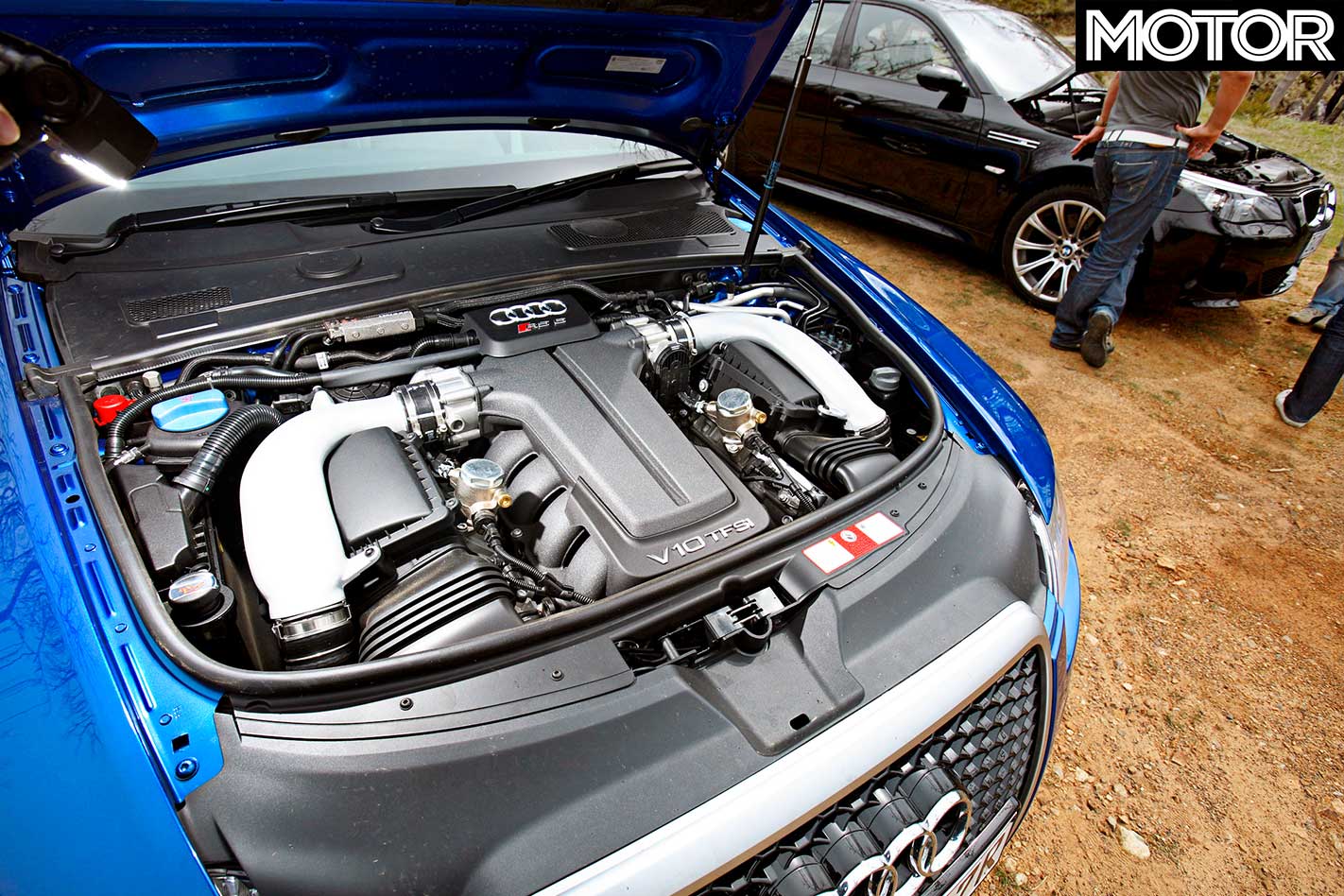
The rear-drive M5 (1755kg) and E63 (1765kg) each do a commendable job of keeping their kilo-count relatively low, but the all-wheel-drive RS6, admittedly in Avant station-wagon form, scales in at a downright obese 2025kg.
Measured by power-to-weight, the Audi (with 210kW/tonne) actually concedes bragging rights to both the Mercedes (214kW/tonne) and the BMW (213kW/tonne), though in reality you couldn’t ask for a closer, more adrenaline-pumping straight-line fight.
As you’d expect, Audi’s big-power, all-wheel-driver grabs the initial advantage. ESP/ASR off, gear lever into the +/- gate (where it revs slightly higher than in D or S), load-up on the brake, then release.
And prepare to be momentarily underwhelmed. There’s no spiking of revs, spooling-up of tyres, or squirming under the pressure of it all. The RS6 simply saunters forward while reflecting on what’s about to happen, then explodes. And never lets up until it lurches into its 250km/h speed limiter.
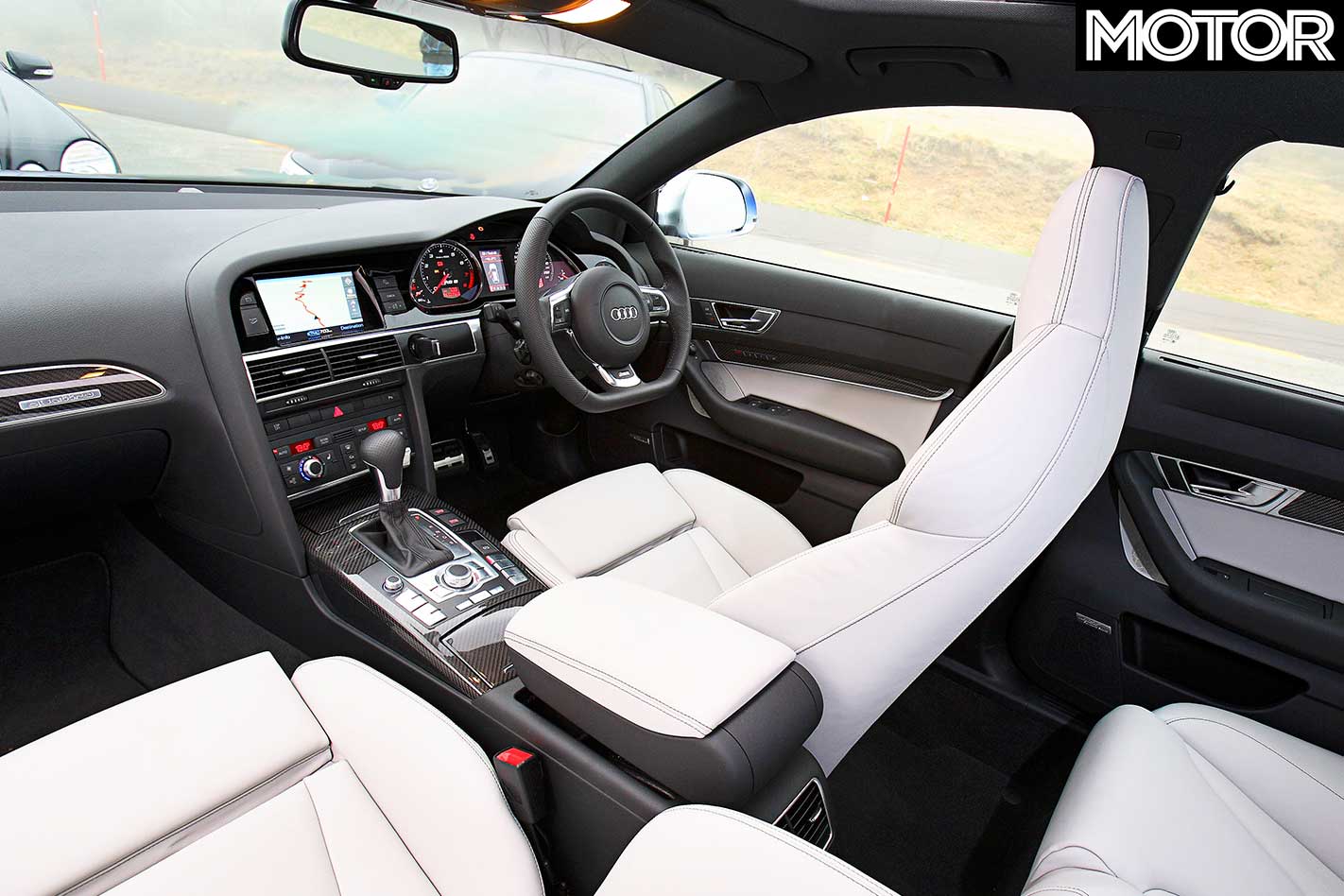
On light throttle under 2500rpm, the RS6 emits an uninspiring, one-dimensional exhaust drone that sounds depressingly dull, but get stuck into it and the engine immediately transforms into the meaty, snarling 10-pack that it is.
The tacho needle doesn’t quite reach the 6700rpm redline before an upshift occurs, but that’s of little consequence when you’re eating bitumen with such intensity, accompanied by VW/Audi’s now-trademark exhaust blurt as the RS6 snatches the next gear.
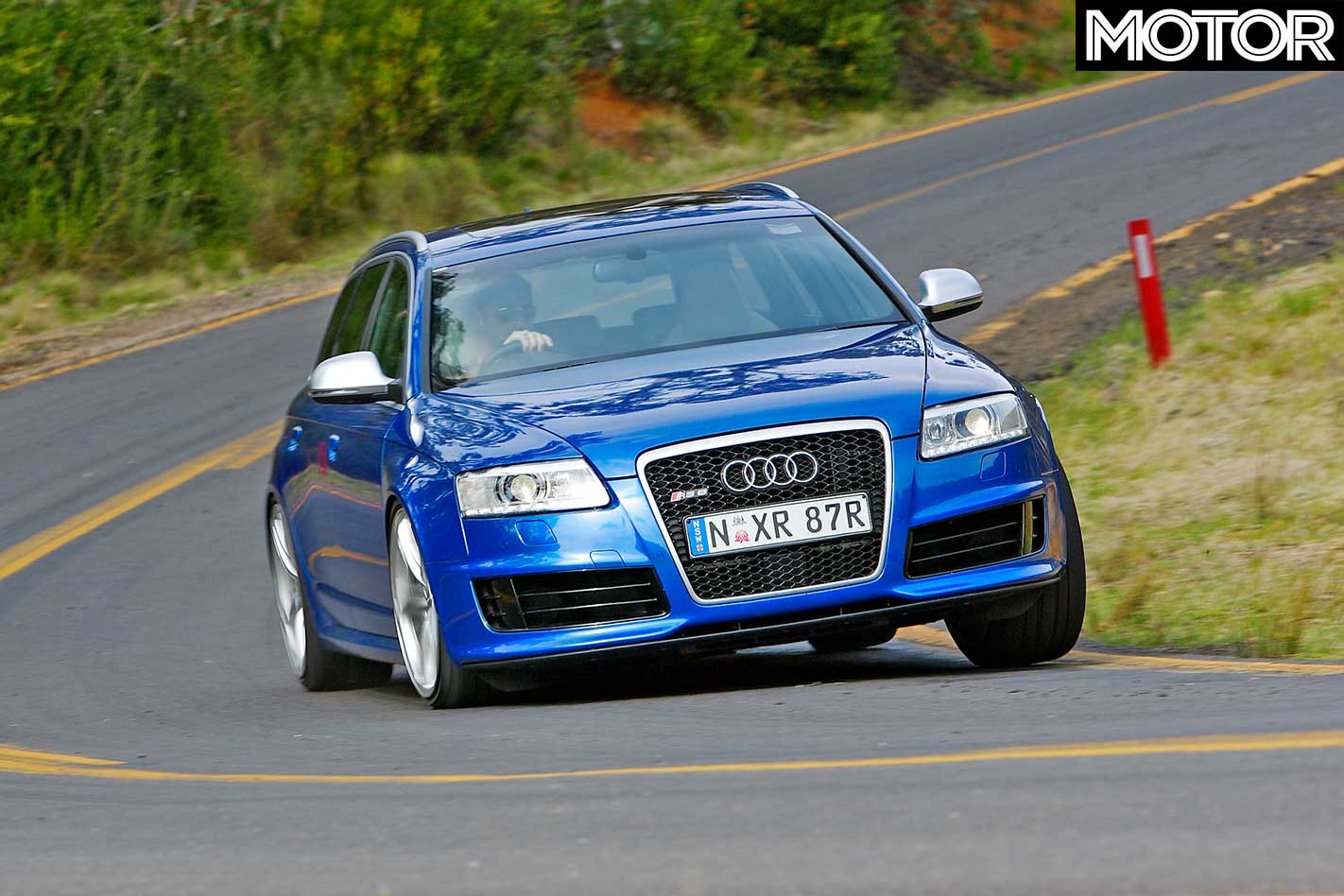
Thing is, and this is hard to believe, the RS6’s accelerative firepower is actually quite deceptive. The bi-turbo V10’s bark is more subdued than you’d expect – sounding neither as crisp as the M5’s strident V10 or as emotive as the old RS4’s V8 with ‘S’ button engaged. And the chassis’s grip is so immense that putting all that power to the ground is amazingly drama free – one of the great advantages of all-wheel-drive and 275/35R20 Pirelli P Zeros!
The Mercedes and BMW are within a body-length of the Audi’s oval rear pipes, however. Both rear-drivers have to be walked off the line to prevent big-time wheelspin – the BMW’s launch control proving wincingly brutal and utterly useless, as per usual.
The RS6 nails 60km/h in 2.36sec while the Benz takes 2.64 and the BMW 2.77, but to 100km/h, the Benz’s 4.74sec and the Beemer’s 4.83sec aren’t too far adrift of the Audi’s blistering 4.53.
By 160km/h, the M5 is just two-tenths behind the RS6, with the E63 starting to lose ground, and beyond 190km/h, the BMW actually surges ahead – demonstrating the M-sedan’s ferocious top-end and searing high-speed pace. Not that any of this is relevant anywhere in Australia, but it’s worth knowing all the same.
Entirely applicable, though, is their overtaking punch. From 80 to 120km/h in Drive, both the RS6 and E63 nail the increment in just 2.6sec, but held in third (of its sequential box’s seven speeds) the M5 isn’t far behind at three-dead. Take into account that second gear in the BMW actually extends beyond 110km/h and you’ll find that once moving, it’s actually the fastest car here. And the best-sounding.
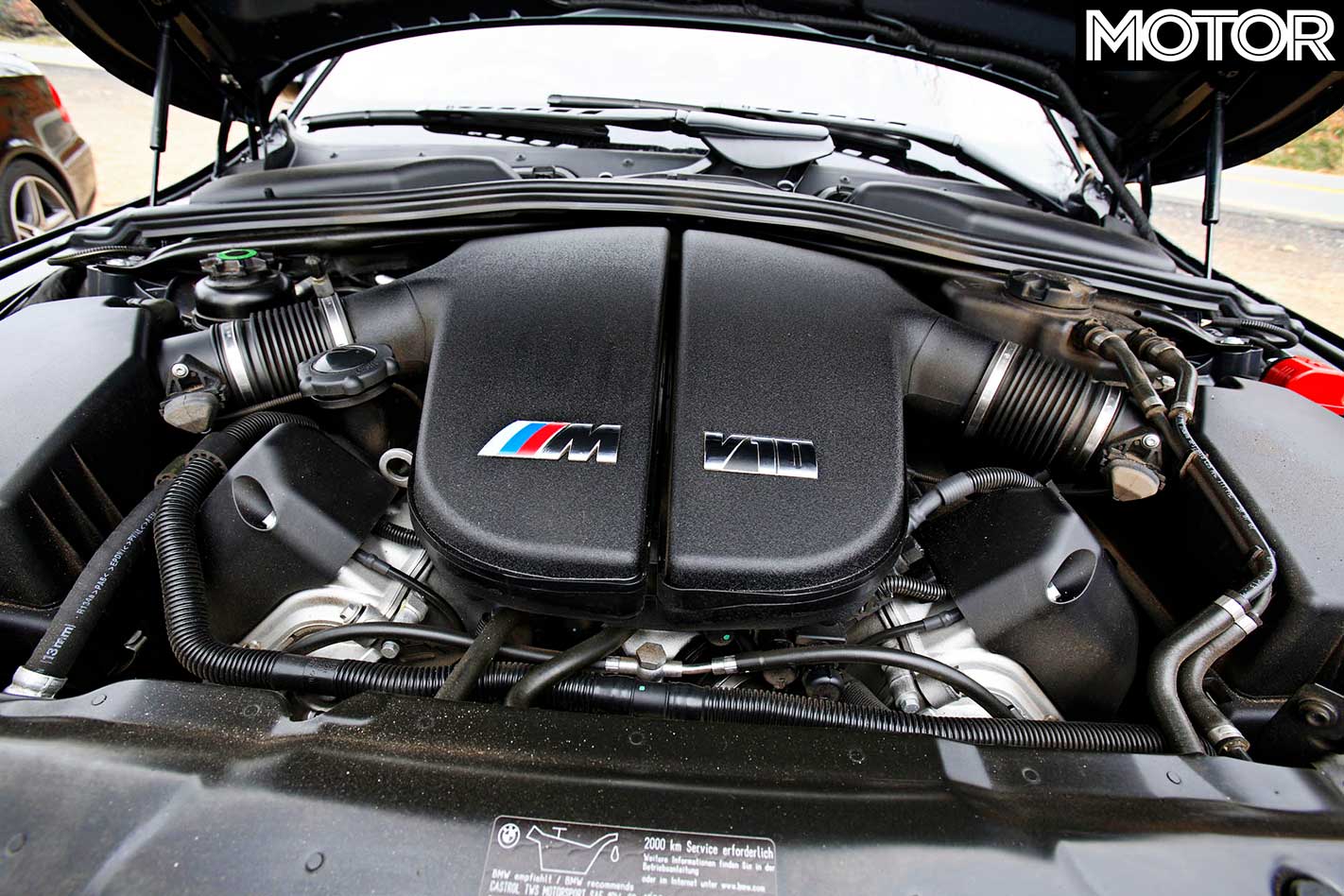
BMW’s rev-hungry 5.0-litre V10 might max out at 8400rpm – 1000 revs higher than the AMG, and 1600 more than the RS6 – but it’s an incredibly tractable engine for something so highly strung. Even at the bottom end of its vast rev range, a warbling 10-pot grumble pervades the M5’s cabin as it channels the impressive 450Nm it’s already producing at 3500rpm. But the hardcore action lies above five-and-a-half.
Not only does the tone of the V10’s metallic warble shift up several notches, but so does the ferocity of its acceleration as it blitzes past max torque (at 6100rpm), then max power (7750rpm). The more committed your right foot, the faster the BMW gets, though its 374mm front brakes, like the E63’s smaller 360mm rotors, can’t match the supreme feel, confidence and stopping force of the RS6’s massive 390mm vented discs.
In the Audi, you barely have to flex your right toe to stoke it. With so much torque at so few revs, the bi-turbo V10 redefines what ‘torquey’ means, making throttle response absolutely instantaneous. And driving it in anything other than Drive pretty much completely redundant.
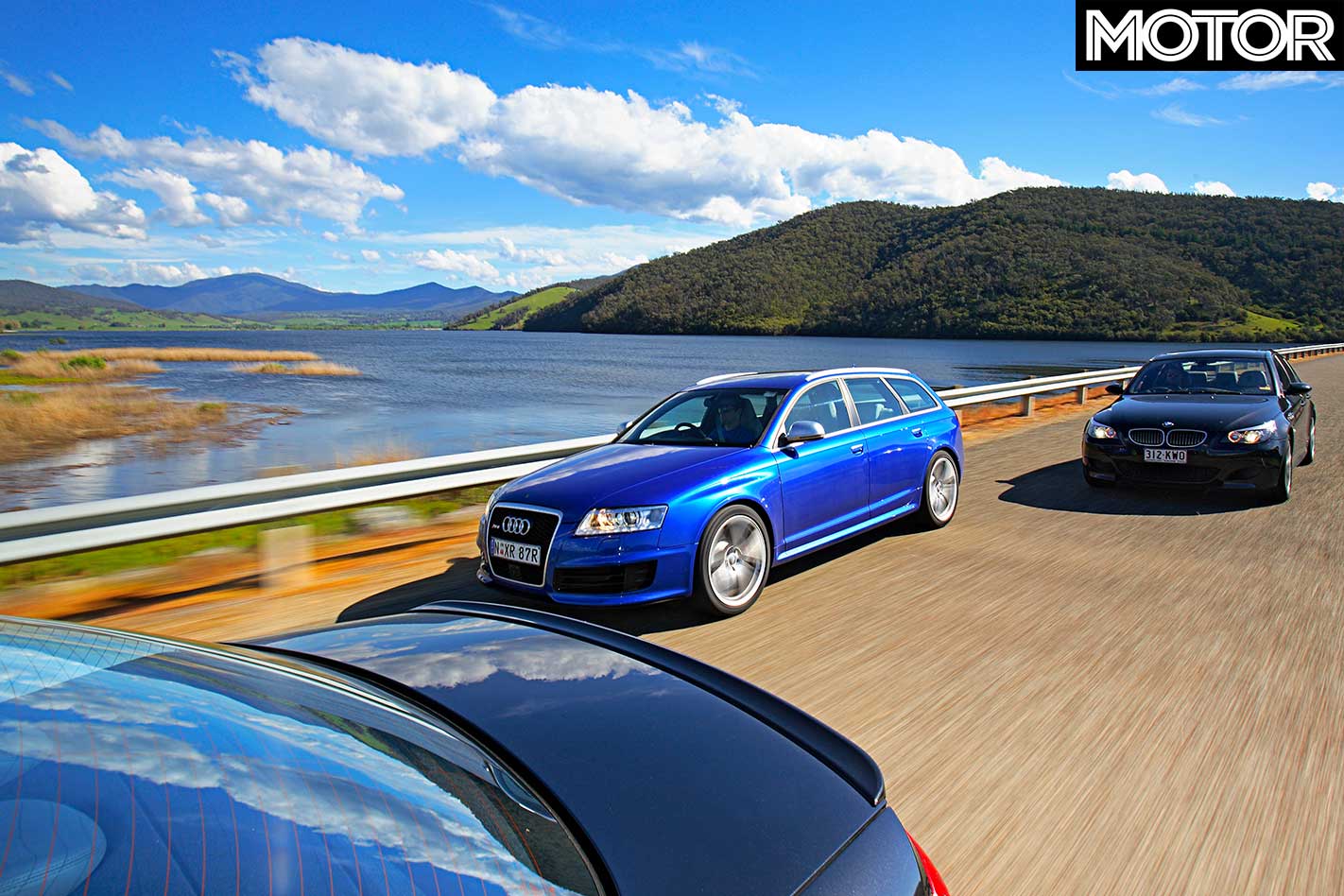
The only downside to this is there’s no natural progression on very light throttle inputs, making driving at a steady crawl like trying to be subtle with a light switch. There’s also the aforementioned exhaust drone at sleep-inducing speeds, which is something the BMW and Mercedes quad-pipe systems wouldn’t dare emit.
From the moment we first tried AMG’s 6.2-litre V8 in the E63 nearly two years ago, it was instant lust. It’s a tremendously strong, flexible powerplant – as happy rumbling along at 1500rpm in seventh as it is howling towards its 7400 cut-out – and is the very heart and soul of the E63.
Nail the right pedal near a concrete road divider with a window cracked and its V8 Supercar soundtrack is champagne for the ears – yours and everybody else’s in the near-vicinity. But now that we’ve tried the facelifted SL63 and CLS63, both running AMG’s sports exhaust system as standard, the E63’s muted crackle on overrun and subdued rumble at freeway speeds just aren’t what wet dreams are made of anymore.
And there’s its transmission. The E63’s 7G-Tronic is great at picking the right gear, and great in manual mode with its wheel shift-paddles and ability to hold the driver’s selection, but it’s inferior to the new ‘Speedshift Plus’ version in the CLS63.
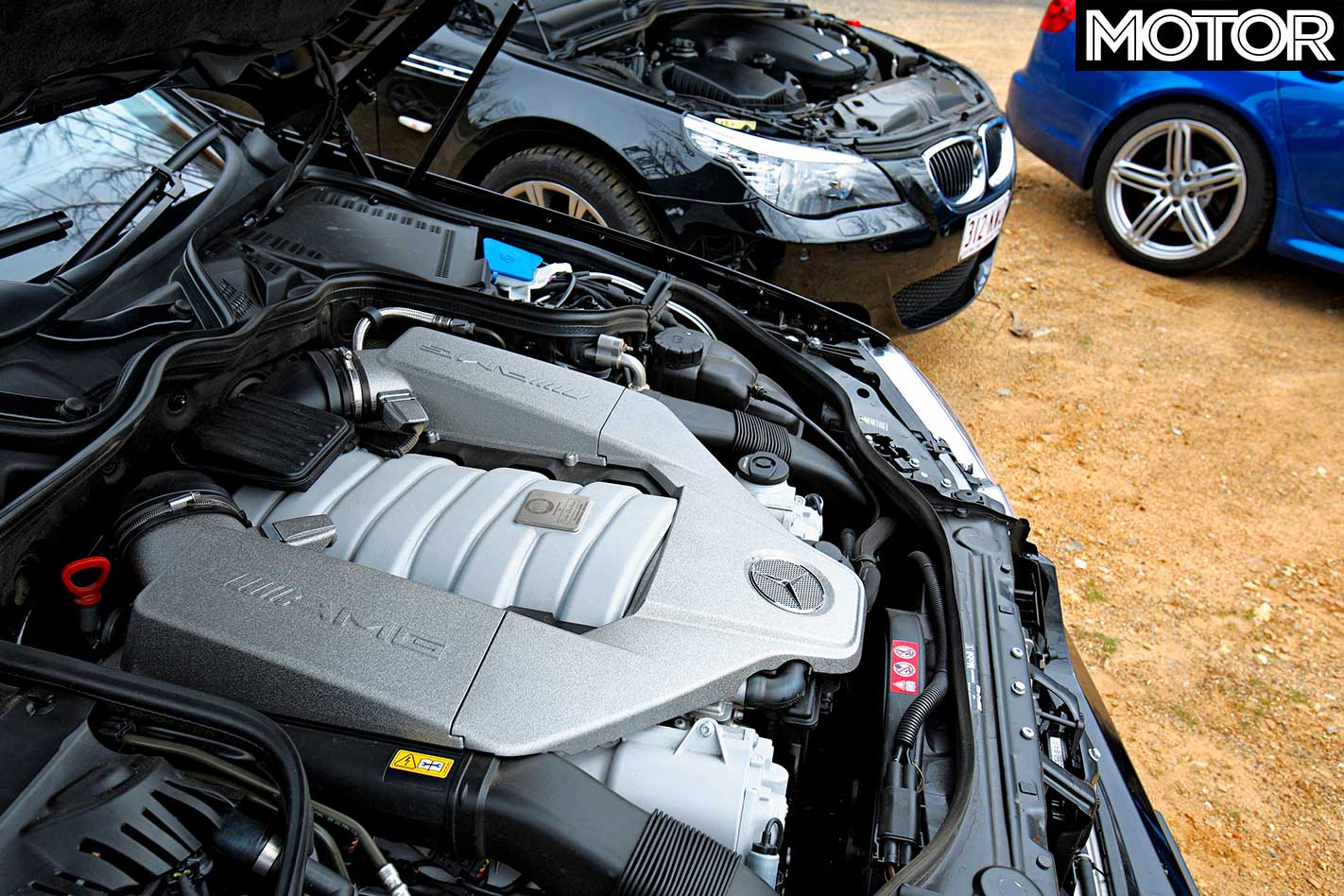
Where the Speedshift seven-speeder blips the throttle seamlessly and seductively on downshifts, both in Manual and Sport modes, the E63’s version does neither. Not only is it slow to respond to a downshift request, but by not matching revs, it can actually unsettle the balance of the car – particularly on a racetrack.
BMW’s SMG gearbox and Audi’s new-generation six-speed auto both blip the throttle on downshifts with precision. The traditional auto in the RS6 borders on flawless in its operation, no doubt helped by all that torque, but the M5’s sequential unit is a definite mixed bag. Simply put, in auto mode, regardless of what shift program you select (and there are five), it’s rubbish. Changes are lumpy and poorly timed, and almost embarrassing.
But if you treat it as a robotised manual and do all the gearshifting yourself (in either setting four or five – six is DSC-off only and suitable only for track work or performance testing), then the third-generation SMG ’box is, well, fine, proving both smooth and reasonably swift.
BMW has pretty much always held the high-ground when it comes to dynamics, while Audi and Mercedes have often missed the mark. But in this instance, all three are more than capable of thrilling the enthusiast.
The RS6 is the unknown quantity, of course, though anyone familiar with the old RS4’s set-up will recognise the 40/60 front-to-rear drive bias (in normal conditions) and the Dynamic Ride Control (DRC) system that interconnects diagonally opposed dampers via oil lines and a central valve.
The Torsen centre differential can send up to 65 percent of drive to the front or 85 percent to the rear, enhancing the RS6’s solid balance and its staggering corner-exit wallop, but it’s DRC that arguably makes the biggest difference to the RS6’s dynamics.
Not only does DRC make the RS6 ride far better than the brittle S6, but it sends fluid to a compressed outside damper when cornering to reduce body roll. Indeed, the RS6 sits flatter than a squashed cane toad in hard cornering and that’s with its three-stage ‘sports suspension plus’ dampers (optional in Europe but standard in Oz) set to Comfort.
Like the three-stage damping set-ups in the BMW and Mercedes, selecting the firmest setting (‘Dynamic’ in the RS6, ‘Sport II’ in the E63, ‘Sport’ in the M5) is all but useless unless you’re on perfect hotmix bitumen or on a racetrack, but in the RS6, the stiffer the setting, the lesser the understeer. Yes, ultimately the mega-Audi can’t disguise its front-biased weight distribution or its engine location ahead of the front axle line.
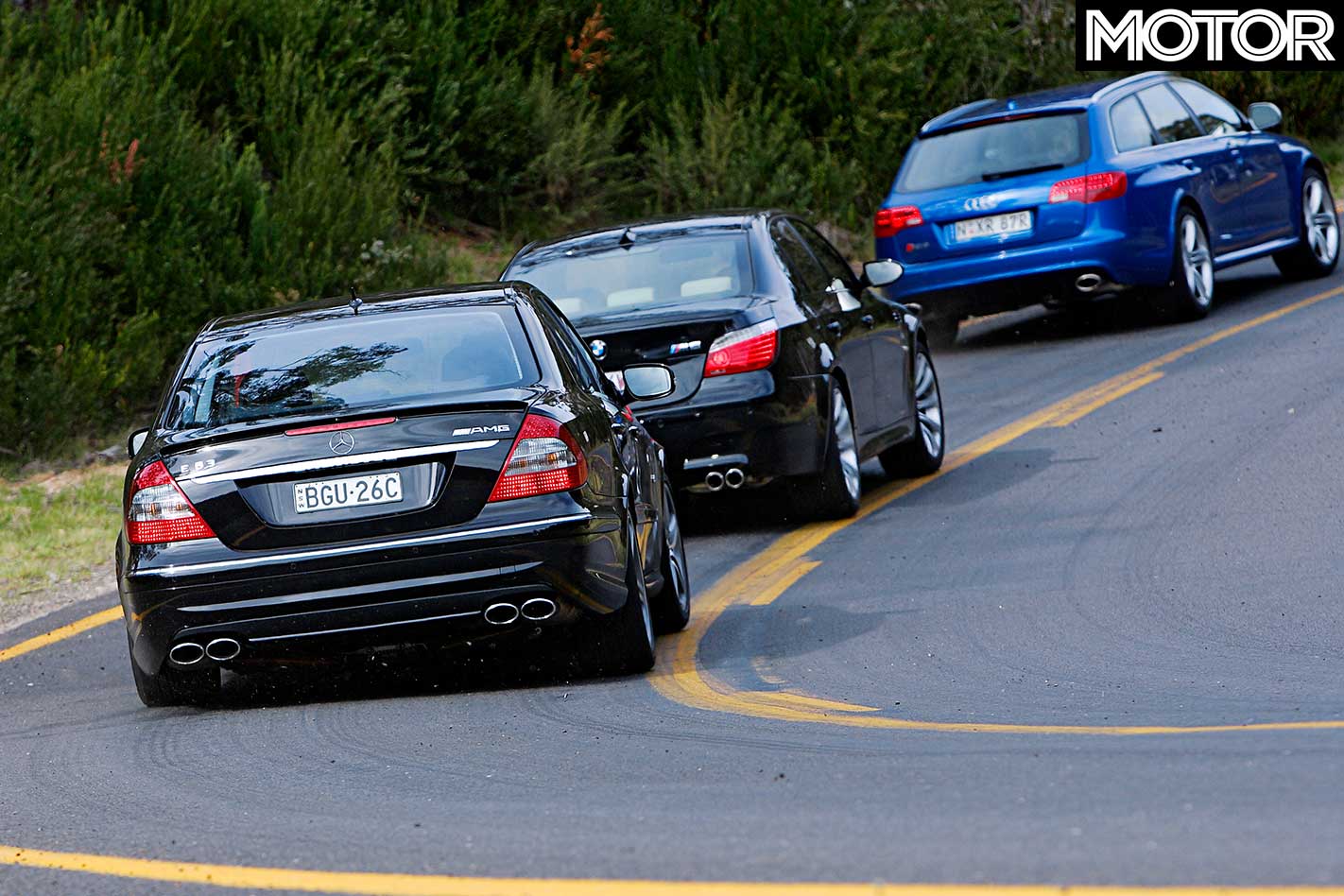
But it does a mightily impressive job in coping with it – no doubt helped by its buxom track widths (1614/1637mm front-to-rear versus the E63’s 1567/1588 and the M5’s 1580/1566). The RS6’s nose bites well when trail-braked into a corner, and as long as you’re aware of its preferred slow-in, fast-out technique, then you’re onto a winner.
Flatten the RS6’s right pedal once you’ve settled its balance and it absolutely launches forward, drifting its tail out slightly while putting its power down brilliantly. Push too deep or hard into a turn and the RS6 inevitably understeers, but not as much as you might expect. And it steers reasonably well, too, with a fair amount of heft via its great-to-hold three-spoker, but precisely and progressively, despite just 2.3 turns lock-to-lock.
The E63’s steering is even heavier than the RS6’s (arguably too heavy, actually), and its steering wheel is awful. While the rim is actually quite compact (with yet another annoying squared-off bottom), the airbag is bulky and obstructive and the perforated leather and exposed stitching feel rough – in complete contrast to the supple tactility of the RS6 and M5 tillers.
The E63 is difficult to guide through really tight corners (as on our NSW Snowy Mountains test loop) because your thumbs ache as your hands try to grapple with the clumsy wheel design, and its steering column is offset, too – sitting well to the left of a seat with a small, relatively stingy cushion, but with an amply supportive backrest.
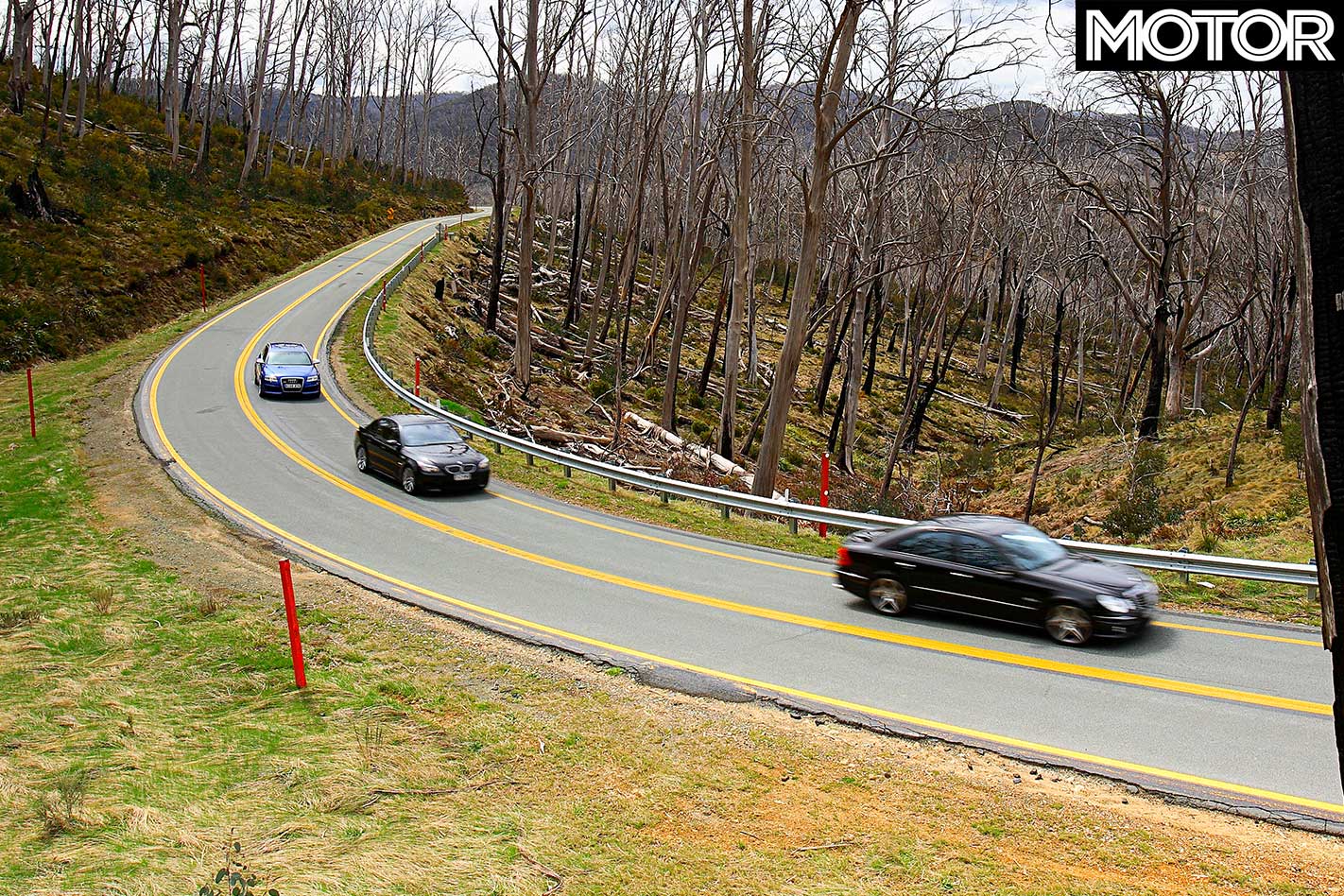
Unfortunately, it’s this compromised driving position and offensive steering interface that undermines the E63’s solid dynamic ability. Its balance is impressive and it displays better front-end grip and feel with its dampers in mid-level ‘Sport 1’ than the M5 in its comparative setting. The E63’s steering actually has more feel than the Audi’s, though it loads up and kicks back if pushed hard over corrugations.
And it’s also clearly quieter than both its rivals, particularly in terms of tyre noise. Despite its age, refinement remains the E63’s hallmark – exhibiting the least wind, road and tyre noise of the three – and its ride is the flattest and most absorbent with its dampers set to Comfort. It also has the best vision, particularly over its low-cowl dash and past its slim A-pillars.
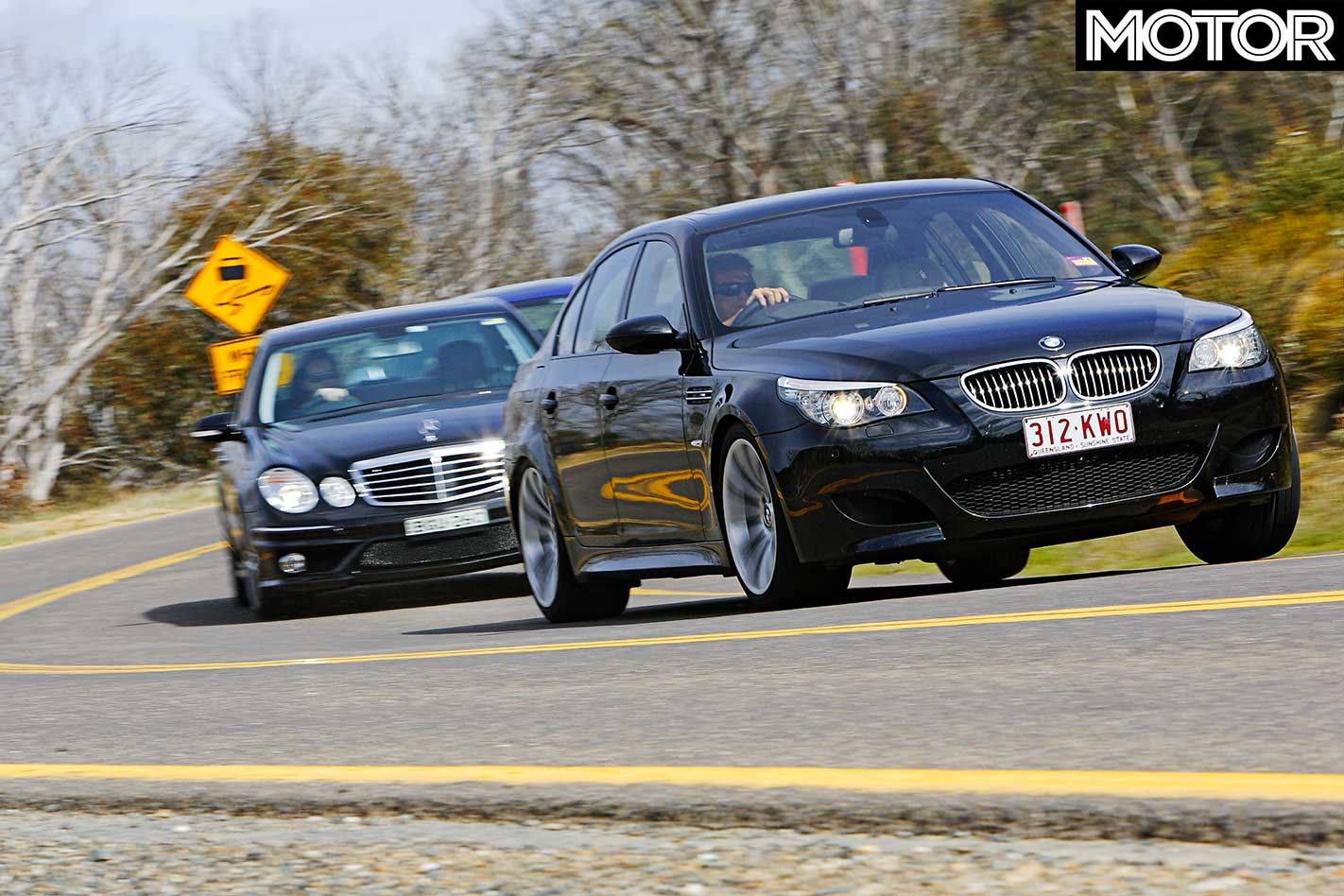
Jumping into the M5 after the E63, you instantly notice its superb seats, lovely steering wheel and great driving position. Do the same after driving the RS6 and it’s the BMW’s lithe agility and terrific steering that you notice most.
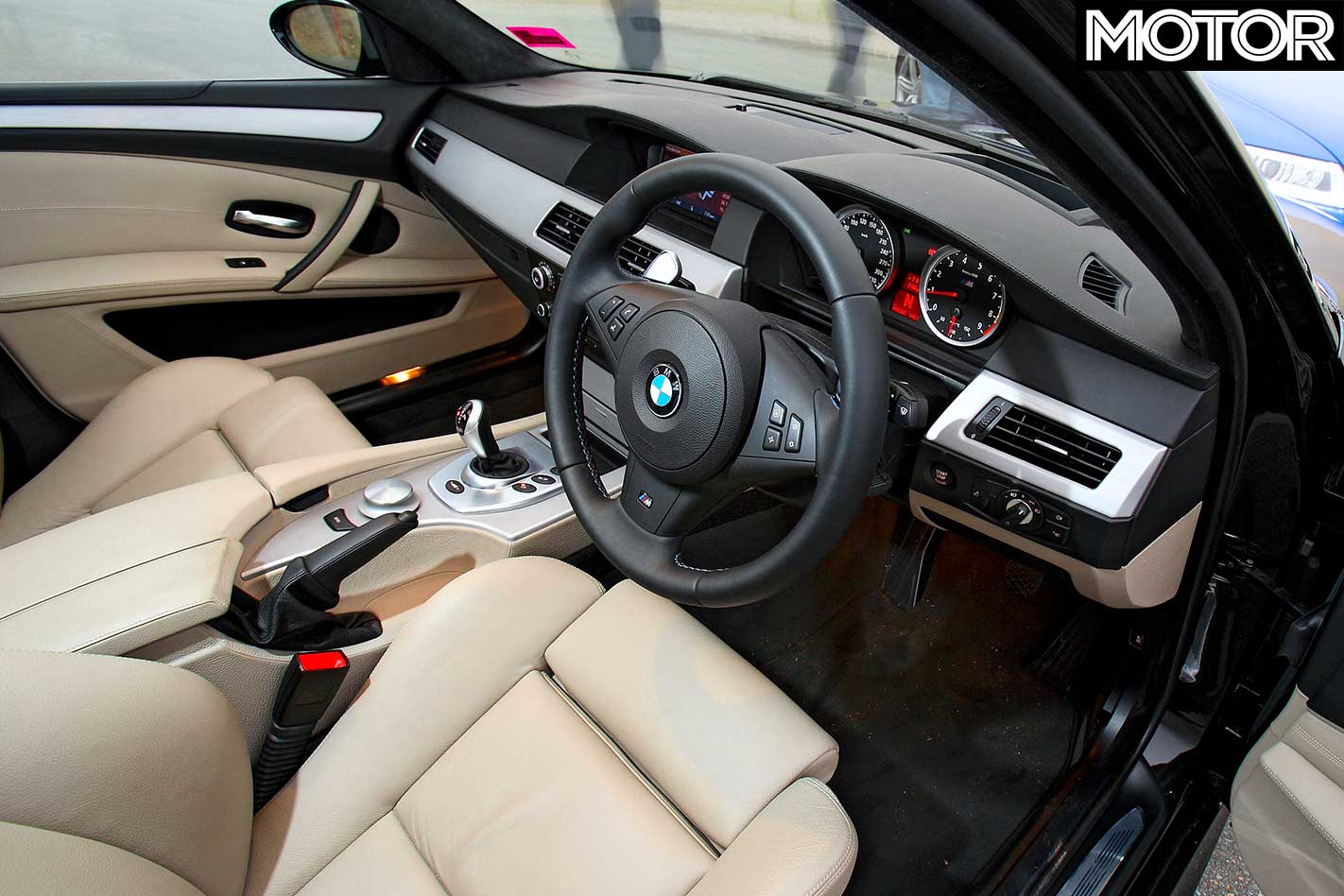
Indeed, both the E63 and M5 feel much lighter than the Audi, but it’s the BMW’s crisp, communicative steering that enhances the sensation. The M5 is also more throttle adjustable than either of its rivals, making it the driver’s choice for handling, steering and balance, but its Comfort damper setting allows a little too much vertical movement on undulating roads at speed, where the E63 and RS6 feel tighter and more composed. More so than its rivals, the M5 is better off in its mid suspension setting most of the time.
You’d have to be a miserable, melancholy, mop-fringed suicide case not to raise a smile at the prospect of steering any of these German superstars. They all make you feel special, in entirely different ways, but when a pecking order beckons, it’s the E63 that must leave the competition first.
The sinister Mercedes still has pace, presence and refinement in copious gob-fulls, and dynamically, it can still show the BMW and Audi how certain things should be done. It’s also clearly the most economical – drinking over 10 percent less fuel than the RS6. But with under a year left until retirement, and nearly seven under its belt, the W211 AMG E-class is ageing fast.
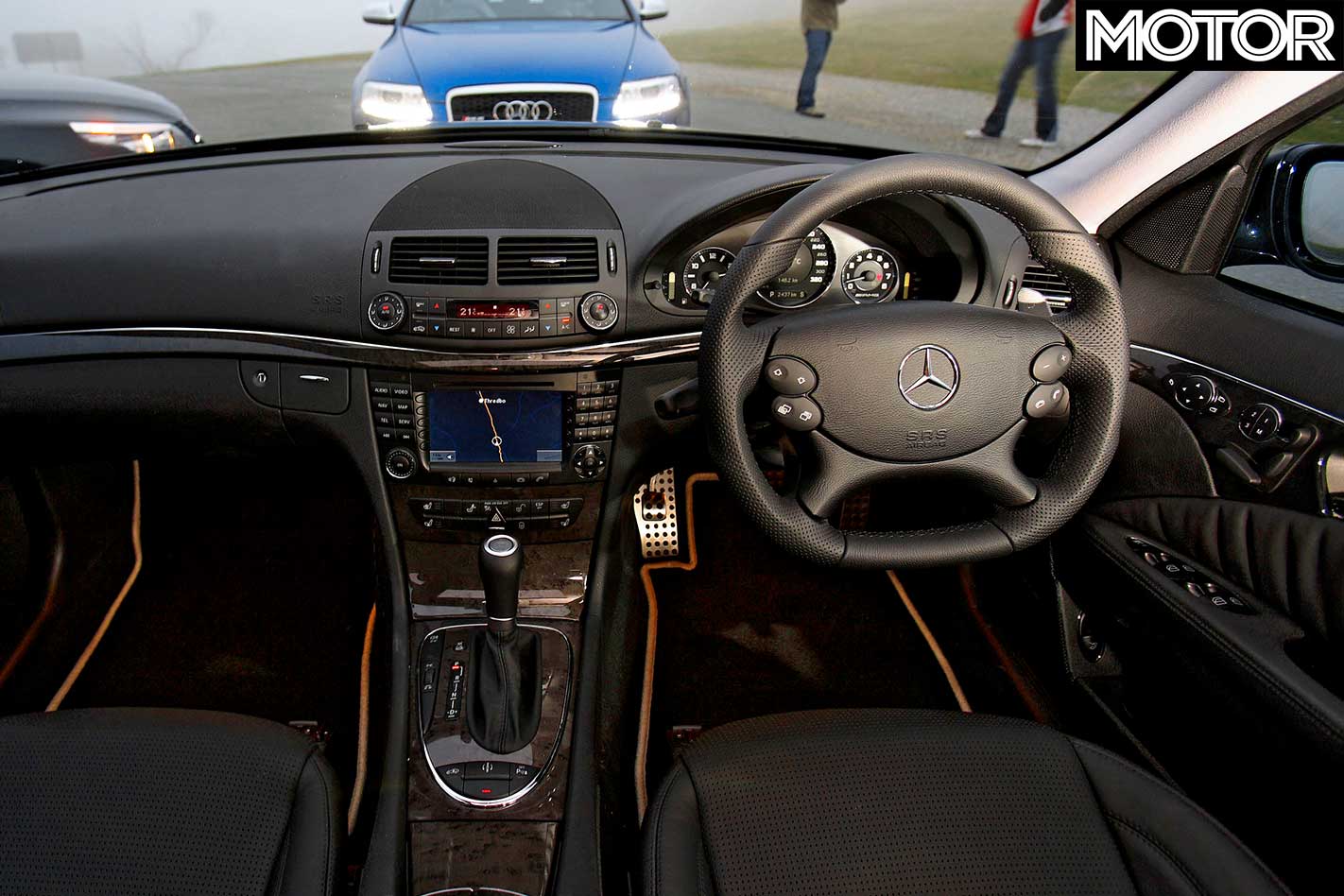
If it had the CLS63’s slimmer steering wheel, smarter transmission and sexier exhaust crackle, it would be incredibly hard to dismiss, but it’s all a bit late in the model cycle for that now. Realistically, if you could stump up the extra 30 grand for a CLS63 AMG, you’d be mad not to. If room was paramount, there’s always the E63 Estate. Or you could simply save a truckload and buy the brilliant, though much smaller C63 AMG.
The M5 and RS6 are harder to separate. Neither is as refined or rides as well as the E63, but they’re much more comfortable to sit in and steer. The BMW has its flaws – the SMG gearbox is atrocious in auto mode, its interior is fussy, and its suspension is least happy in Comfort mode. But it’s also much lighter than the RS6, has easily the best steering, the most adjustable handling and the best seats. It’s also $30,000 cheaper than the uber-Audi, though whether that matters at this price point is a personal matter.
The RS6 comes across as a bigger, chunkier, less-animated RS4. In the hierarchy of Audi’s range, it’s so much better the regular A6 and S6 that it feels like a different car – just like the fabulous RS4 did over the underdone old-gen A4 and S4.
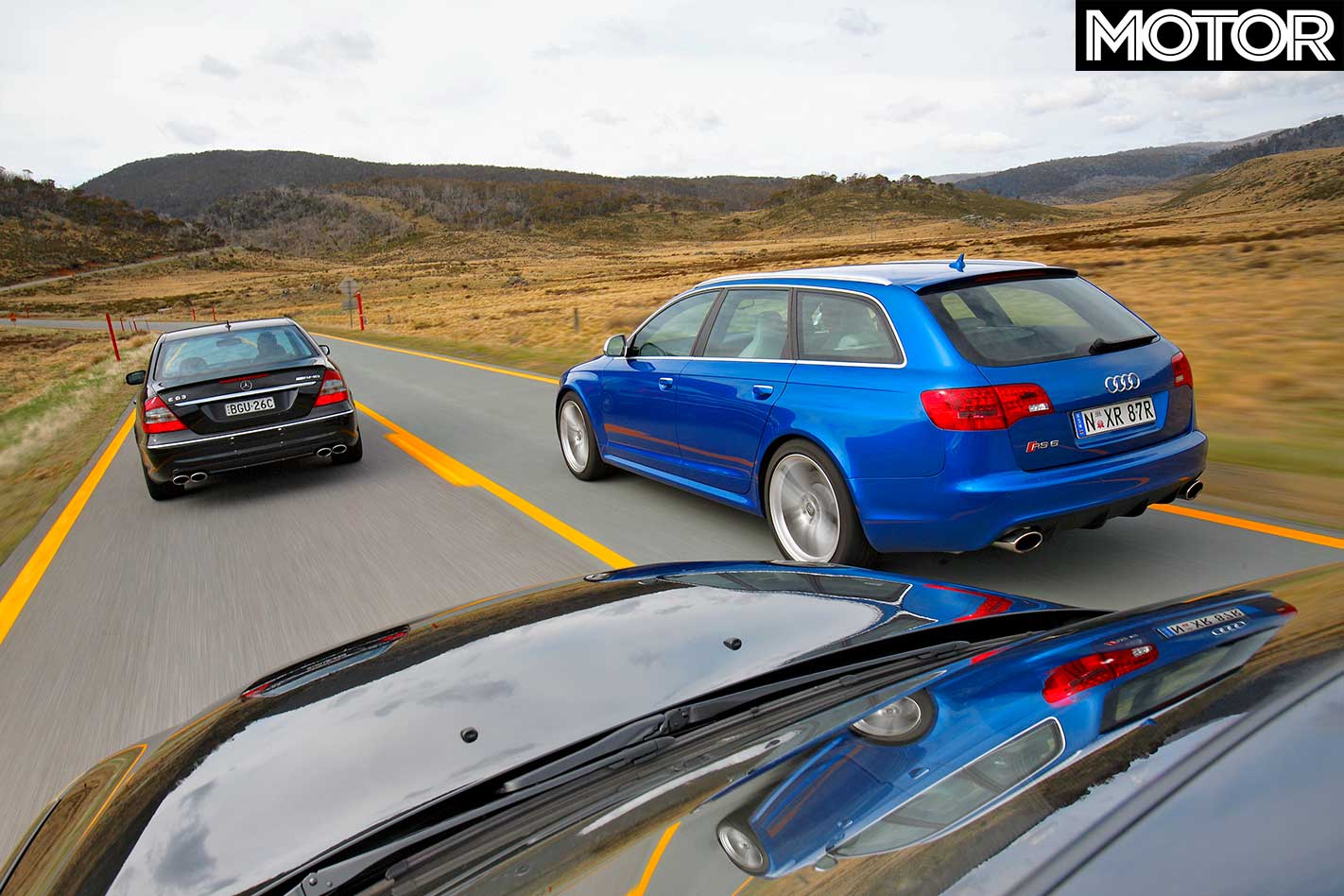
It has very few downsides – weight and price being the main two – and a level of interior class that simply takes your breath away, with but it also doesn’t quite achieve the passion-tingling highs of its rivals. It has the heart of Tyrannosaurus Rex and the stance of a front-row forward, and is undoubtedly ‘bad-arse’ on so many levels, but you just wish it was that little bit nastier.
So, the RS6’s huge competence or the M5’s heroic character? If your lounge room looks like a Space furniture catalogue and you’ve had a feng shui expert tell you where to put stuff, you’ll love the RS6 to bits. Certainly we do – mostly. But if you like your life to be spontaneous, exciting, and just a little bit chaotic, the M5 remains the true definition of bad. It’s still a very naughty boy.
Fast Facts
| u00a0 | Audi RS6 Avant | BMW M5 | Mercedes-Benz E63 AMG |
| Body | 5-door, 5-seat wagon | 4-door, 5-seat sedan | |
| Drive | all-wheel | rear-wheel | |
| Engine | 4991cc 90-degree V10, DOHC, 40v, twin-turbo, twin intercoolers | 4999cc 90-degree V10, DOHC, 40v | 6208cc 90-degree V8, DOHC, 32v |
| Bore x Stroke | 84.5mm x 89.0mm | 92.0mm x 75.2mm | 102.2mm x 94.6mm |
| Compression | 10.5:1 | 12.0:1 | 11.3:1 |
| Power | 426kW @ 6250-6700rpm | 373kW @ 7750rpm | 378kW @ 6800rpm |
| Torque | 650Nm @ 1500-6250rpm | 520Nm @ 6100rpm | 630Nm @ 5200rpm |
| Power/Weight | 210kW/tonne | 212kW/tonne | 214kW/tonne |
| Transmission | 6-speed automatic | 7-speed sequential manual | 7-speed automatic |
| Weight | 2025kg | 1755kg | 1765kg |
| Suspension (f) | multi-links, coil springs, adaptive dampers, anti-roll bar | struts, A-arms, adaptive dampers, anti-roll bar | double A-arms, air springs, adaptive dampers, anti-roll bar |
| Suspension (r) | multi-links, coil springs, adaptive dampers, anti-roll bar | multi-links, air springs, adaptive dampers, anti-roll bar | |
| L/W/h | 4928/1889/1460mm | 4855/1846/1469mm | 4881/1822/1465mm |
| Wheelbase | 2846mm | 2889mm | 2854mm |
| Tracks | 1614mm (f);1637mm (r) | 1580mm (f); 1566mm (r) | 1567mm (f); 1588mm (r) |
| Brakes (f) | 390mm ventilated discs, six-piston calipers | 374mm ventilated/drilled discs, twin-piston calipersu00a0 | 360mm ventilated/drilled discs, six-piston calipers |
| Brakes (r) | 365mm ventilated discs, single-piston calipers | 370mm ventilated/drilled discs, single-piston calipers | 330mm ventilated/drilled discs, four-piston calipers |
| Wheels | 20 x 9.5-inch (f/r) | 19 x 8.5-inch (f),u00a019 x 9.5-inch (r) | 18 x 8.5-inch (f), 18 x 9.5-inch (r) |
| Tyres | Pirelli P Zero; 275/35ZR20 (f/r) | Continental Sport Contact 2; 255/40ZR19 (f), 285/35ZR19 (r) | Continental ContiSportContact3; 245/40ZR18 (f), 265/35ZR18 (r) |
| Price | $270,946 ($277,355 as tested) | $241,816 ($246,644 as tested) | $238,956 ($245,979 as tested) |
| Pros | Impressive all-rounder, mega torque, mega grip, mega quality | Best noise, best steering, best seats, most adjustable handling | Excellent ride/handling combo, great V8, polished refinementu00a0 |
| Cons | Expensive, heavy, not quite the temptation the RS4 Avant was | More road noise than E63, SMG u2019box rubbish in auto mode | Awkward steering wheel, auto doesnu2019t blip on downshifts |
| Rating | 4 out of 5 stars | 4 out of 5 stars | 3.5 out of 5 stars |
The Strip
| u00a0 | Audi RS6 Avant | BMW M5 | Mercedes E63 AMG |
| 0-10km/h | 0.29sec | 0.43sec | 0.58sec |
| 0-20km/h | 0.72sec | 0.95sec | 1.03sec |
| 0-30km/h | 1.13sec | 1.47sec | 1.45sec |
| 0-40km/h | 1.47sec | 1.90sec | 1.84sec |
| 0-50km/h | 1.83sec | 2.35sec | 2.24sec |
| 0-60km/h | 2.36sec | 2.77sec | 2.64sec |
| 0-70km/h | 2.91sec | 3.39sec | 3.11sec |
| 0-80km/h | 3.44sec | 3.78sec | 3.62sec |
| 0-90km/h | 3.99sec | 4.30sec | 4.15sec |
| 0-100km/h | 4.53sec | 4.83sec | 4.74sec |
| 0-110km/h | 5.33sec | 5.58sec | 5.47sec |
| 0-120km/h | 6.10sec | 6.27sec | 6.20sec |
| 0-130km/h | 6.92sec | 7.01sec | 6.97sec |
| 0-140km/h | 7.72sec | 7.78sec | 7.79sec |
| 0-150km/h | 8.57sec | 8.58sec | 8.70sec |
| 0-160km/h | 9.42sec | 9.61sec | 9.79sec |
| 0-170km/h | 10.46sec | 10.67sec | 10.93sec |
| 0-180km/h | 11.64sec | 11.73sec | 12.09sec |
| 0-190km/h | 12.83sec | 12.80sec | 13.28sec |
| 0-200km/h | 14.08sec | 13.93sec | – |
| 0-400m | 12.58sec @ 188.1km/h | 12.82sec @ 190.2km/h | 12.83sec @ 186.3km/h |
| 80-120km/h (Drive) | 2.6sec | 3.0sec | 2.6sec |
E-Class AMG or CLS?
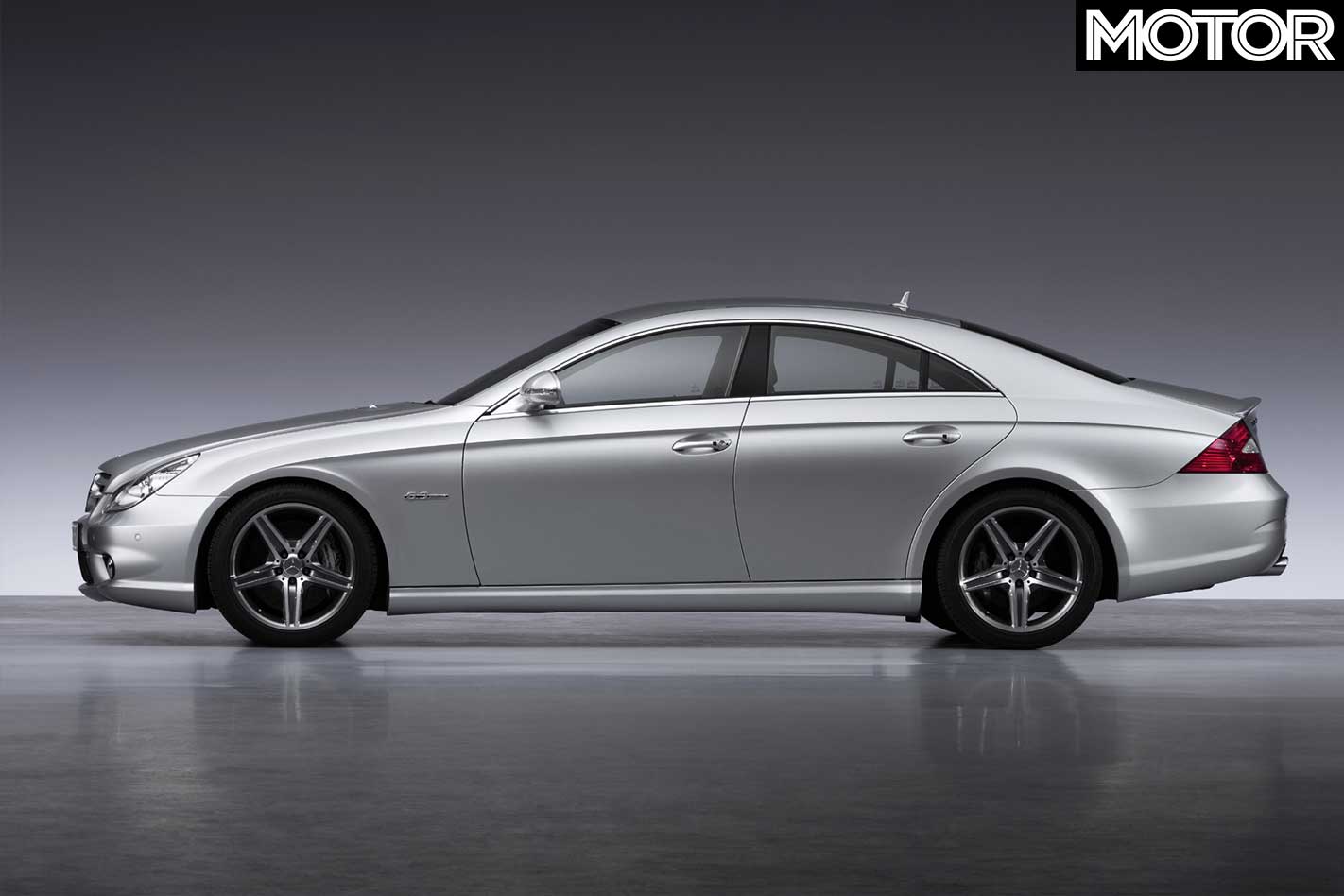
If you need to seat five, then the answer’s obvious – E63. But despite a small weight disadvantage (65kg), the just-facelifted CLS63 is actually a better car. Not only does it share its new-design, round AMG three-spoke steering wheel with the SL63, but it also gets the roadster’s luscious sports exhaust, too. So not only can you get a decent grip of the CLS63’s wheel, but it hollers a V8 exhaust crackle worth bottling. And its revised ‘Speedshift Plus’ auto blips the throttle on downshifts. Mix that ability with the glorious, burbling gargle on overrun and you won’t need convincing.
M5 Touring Coming?
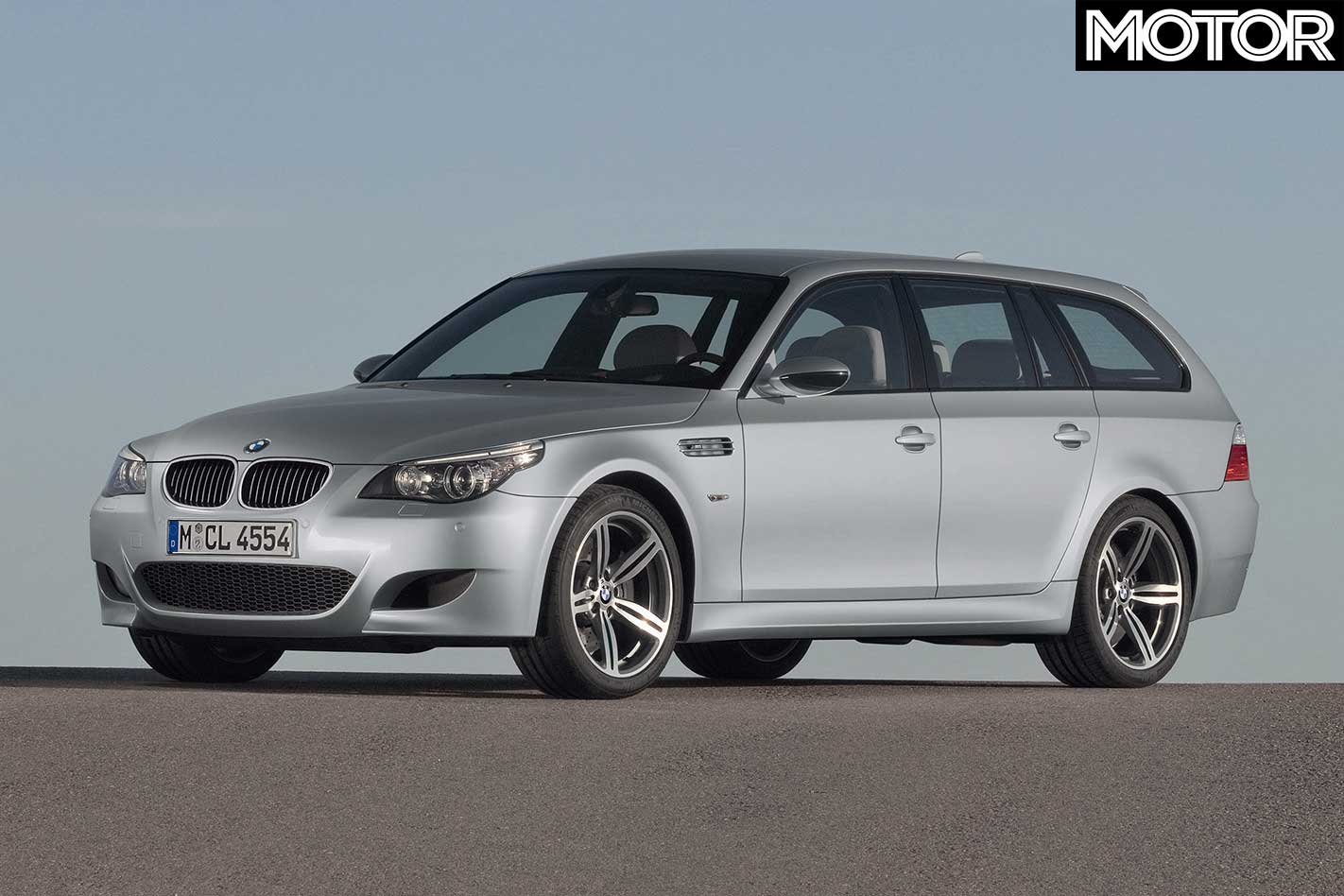
It’s been on sale in Europe since 2006, but the M5 Touring still isn’t on the boat to Australia. BMW Oz reckons it wouldn’t sell enough to justify the hassle and cost of shipping them here, which is a pity because the wagon is easily the best-looking E60 5 Series variant, and that applies doubly to the M5 version (see below, complete with the M6’s alloys). You’d hear more exhaust noise through the rear floor, too, which would sweeten the deal.
From a time when the SUV was a utilitarian all-terrain vehicle that would take you away from the beaten trail at a cost to virtually all on-road driveability, modern SUVs are practical and fun to drive. In this week’s episode, the boys discuss their most surprising high-riders including Dan’s new long-term test car.
In the second instalment of his Mercedes trip to Germany and the UK, this time Andy takes us on a tour of the incredible Formula 1 factory for a look behind the scenes and all the toe curling secrets that would never normally make it out of the top security compound. He also has an interesting idea to make the sport a little more interesting too.
And Scotty has been getting his mitts on a manic record-breaking vehicle previously thought to be confined to the concept world, then strictly to European customers, but is now available to Australian customers as well – albeit very well-heeled customers. Listen in to find out what it’s like piloting a 441kW Jaguar sedan.
If you’re listening on the go you can catch WhichCar Weekly on the iTunes or Podbean apps, please subscribe and leave us a rating and a review! You can also follow the day-to-day antics of the WhichCar crew @whichcarau on Facebook, Twitter or Instagram.
Listened to the show? Help us out:
- Leave a note in the comment section below.
- Leave a review on Apple Podcasts/iTunes
- Subscribe to our podcast
On the topic of tourist taboos, the late British journalist A.A. Gill once noted that “every camel owner has heard every Lawrence of Arabia quote and none of them have seen the film.”
So, despite temptation, I refrain.
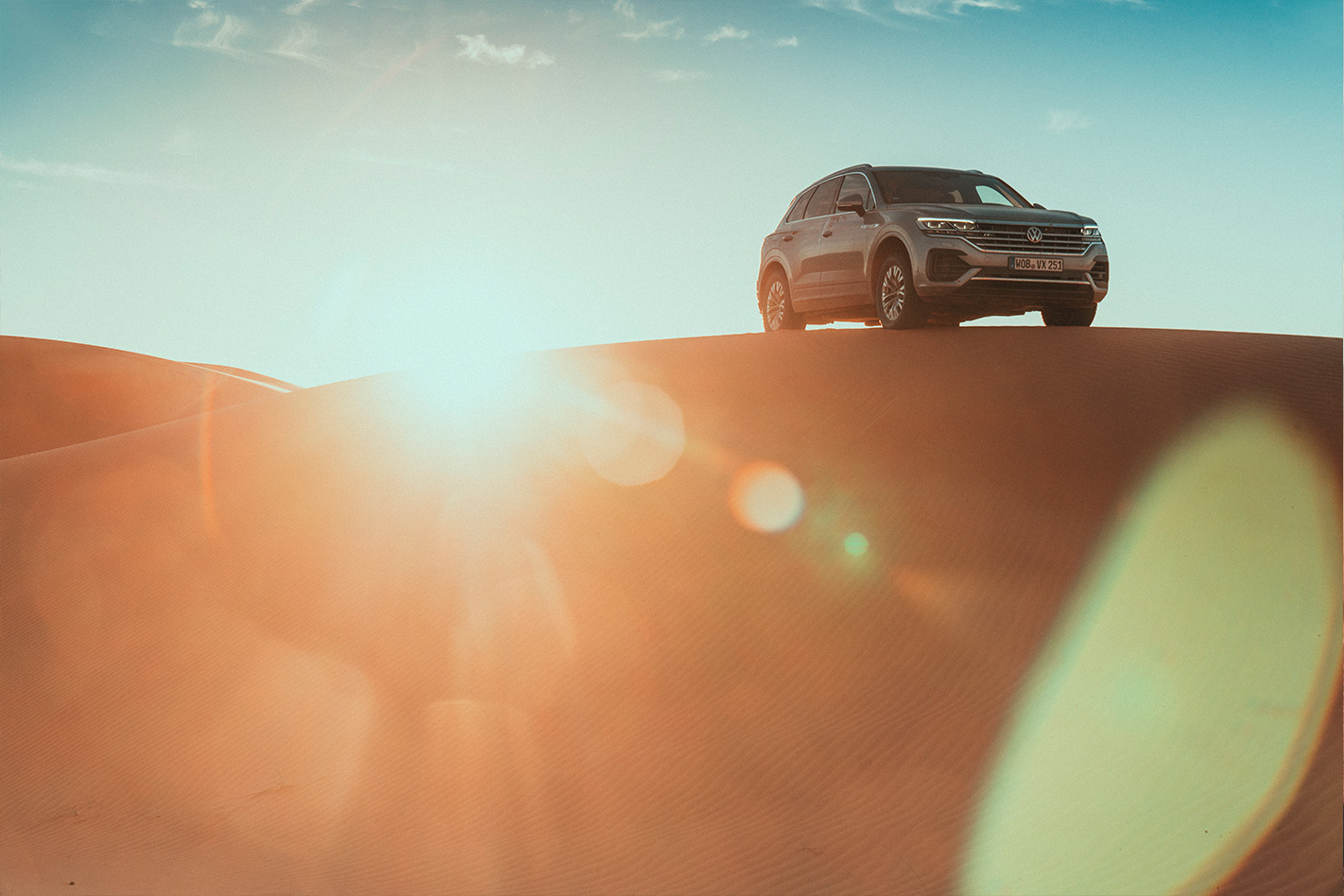
Because in Morocco this is likely true, with tourists flocking here to live out their Maghreb dreams of amber Saharan sunsets on the back of one-humped ungulates, many of which are Australian-born and exported here.
Alas, our ride, despite sharing a name with one of the local nomad tribes, is not a native of this land. But if ever there was a proving ground to help shake off any sleepy suburban associations the Volkswagen Touareg might have, it is four days spent exploring the sprawling, challenging and diverse landscape of this North African wilderness.
It’s been eight years since Volkswagen graced us with a new Touareg. This third generation, unveiled in Beijing last year, is Wolfsburg’s most ambitious and luxurious SUV to date.
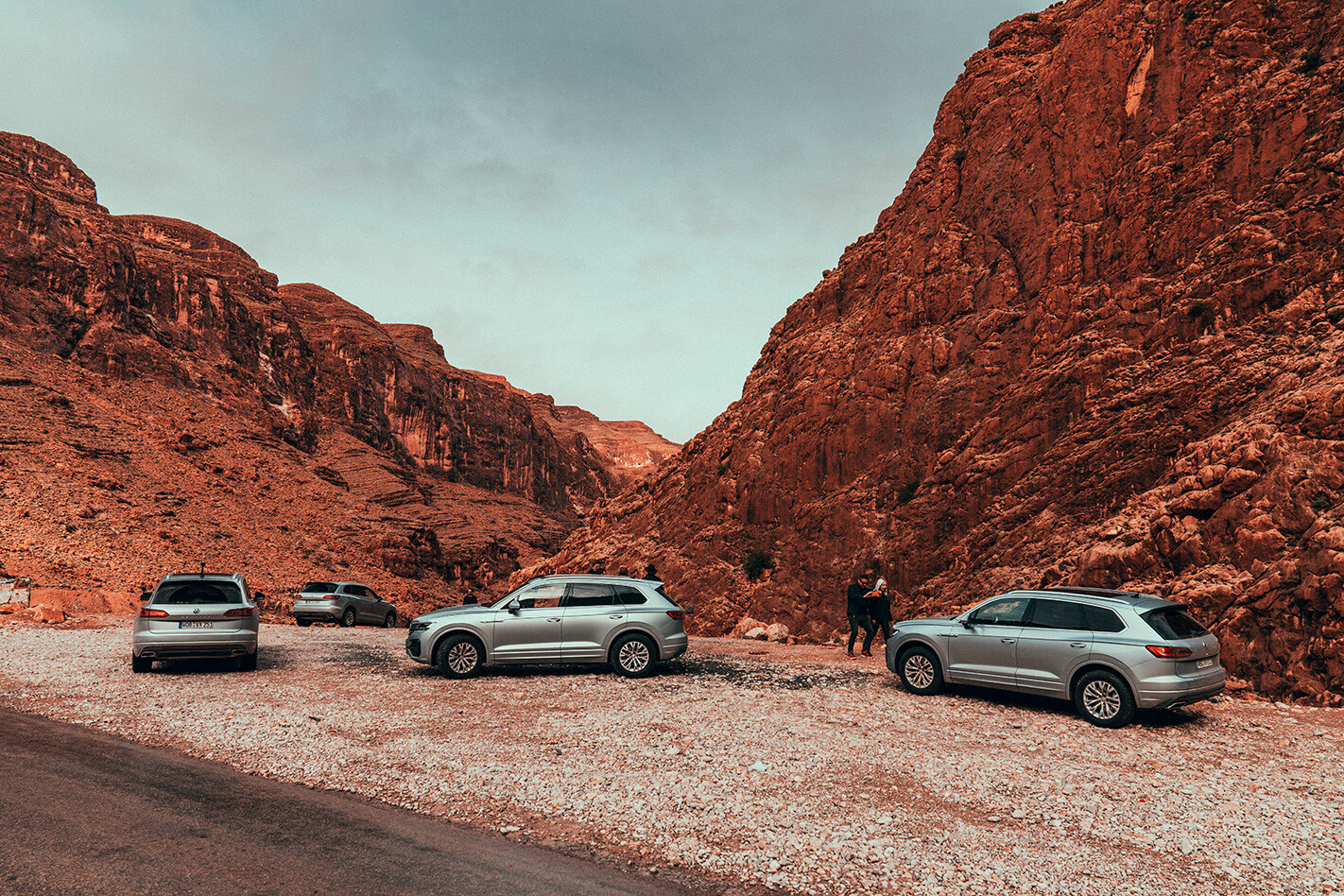
“Tailor-made, innovative, pure ability, pure muscle,” VW head of design Klaus Bischoff enthused at the time. “Never before has it been this elegant, this innovative.”
Sure, he would say that, but he does have a point. The all-new five-seater, underpinned by the group’s lauded MLB platform (shared by the Audi Q7, Bentley Bentayga, Porsche Cayenne and Lamborghini Urus), has arrived with a new level of sophistication, technology, and dare I say … beauty? So much so, Touareg is locking eyes with showroom frontrunners and luxury goliaths like the BMW X5, Audi Q7 and Volvo XC90. As for the muscle that Bischoff mentions? That remains to be flexed over the next four days in rural Morocco.
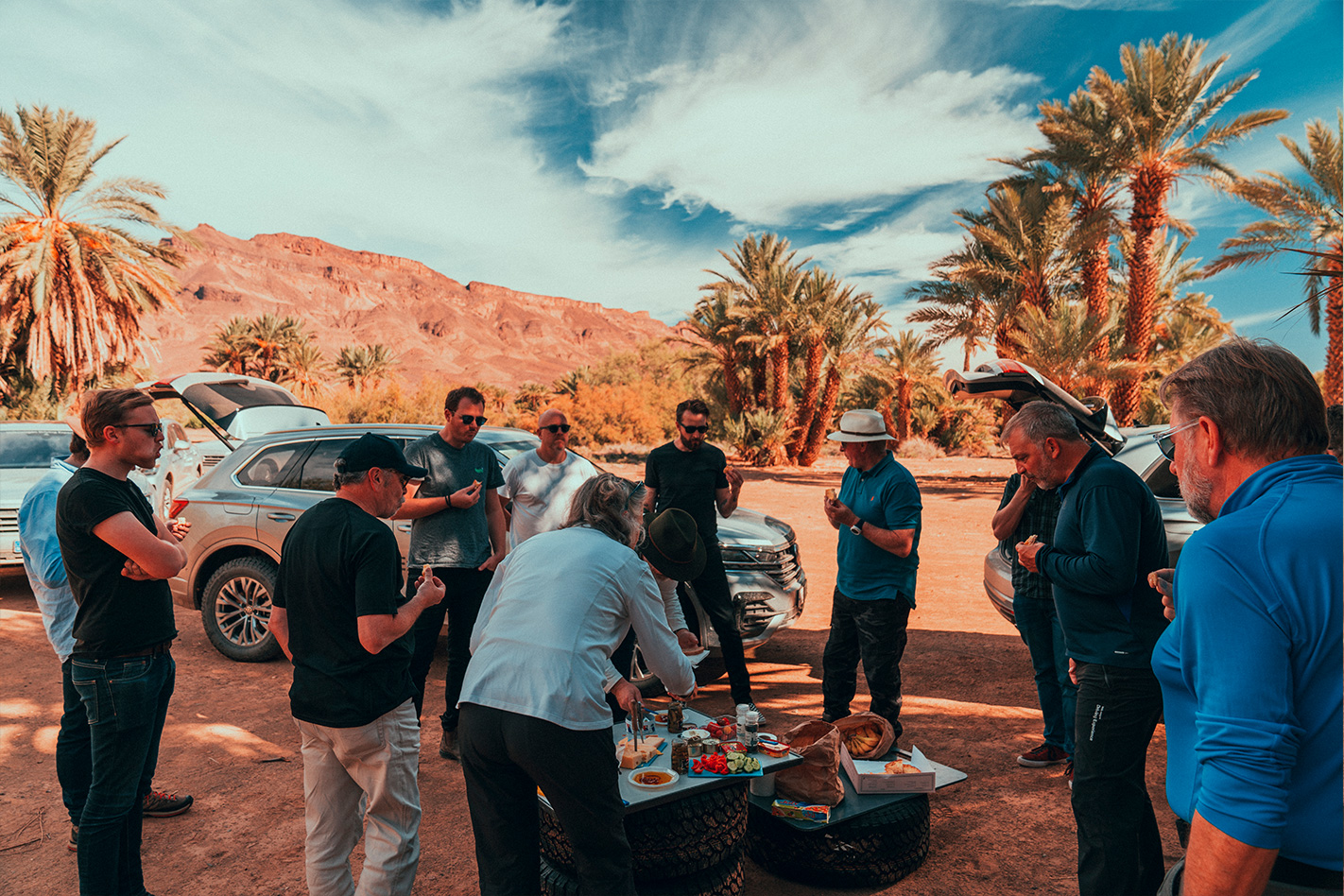
Our journey starts at the crack of dawn in Marrakesh, where the only thing more painful than the passport-control line at the airport is the deathly peak-hour traffic. With a rising crimson sun in the distance, we turn on the Desert-Storm-like Night Vision, one of the many driver-assistance systems making its debut in the Touareg, and embark on a 588km journey. Our destination is an eastern desert camp in Merzouga, which lies at the foot of the enormous Erg Chebbi sand dunes, just 50km from the notoriously shady Algerian-Morocco border.
Propped up on protuberant General Grabber 225/60 tyres on 18-inch alloys, our left-hook, high-spec R-line Touareg’s first challenge is the snaking and currently icy hill climb through the snow-capped Atlas Mountains.
In Australia, the Touareg will arrive with a 3.0-litre V6 turbo-diesel engine making 190kW and 550Nm; a unit already familiar to Amarok owners. However, our European-sourced test car boasts a mouse-quiet yet ballsier 210kW/600Nm tune that Australia won’t see until later this year. While other markets might get a V6 petrol, a plug-in-hybrid or even a burlier V8 turbo-diesel, none are yet confirmed for Oz.
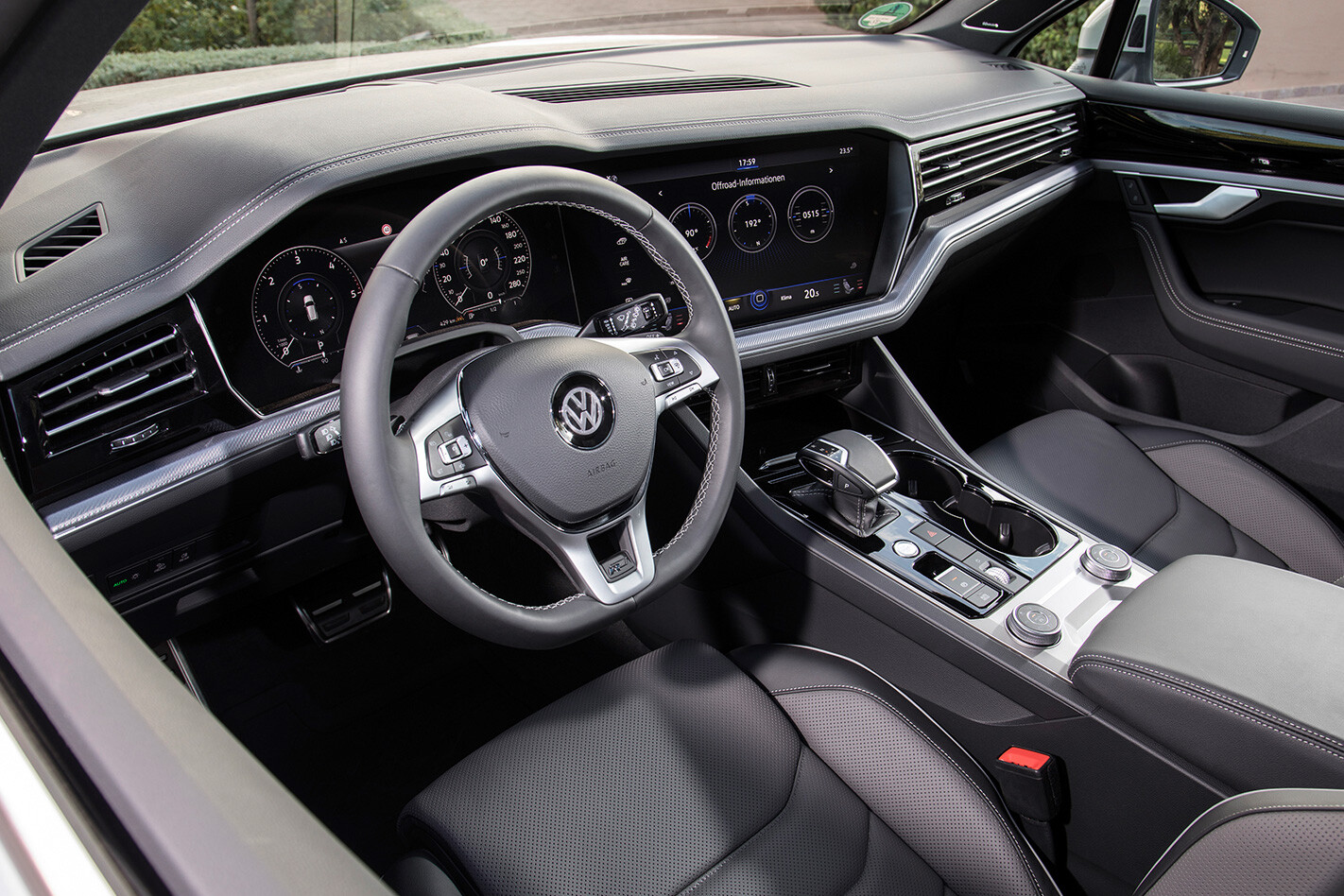
Our high-flying route turns out to be a mix of shockingly terrible and extraordinarily smooth roads, and blind cliff corners that put us at eye level with Golden Eagle nests. Our pedestrian-monitoring system is put to the test saving the tenuous lives of locals who leap onto the road in front of us to peddle shiny rocks.
The mountainous landscape shows off the hefty two-tonne SUV’s newfound nimbleness, which has been achieved in spite of the fact that it’s actually 83mm longer, 44mm wider and on a 1mm longer wheelbase than the old Touareg. Fortunately, it’s also lighter, and lower, than its predecessor. Adaptive air suspension and four-wheel steering contribute to a level of dexterity that is hard to fault, even in tough conditions.
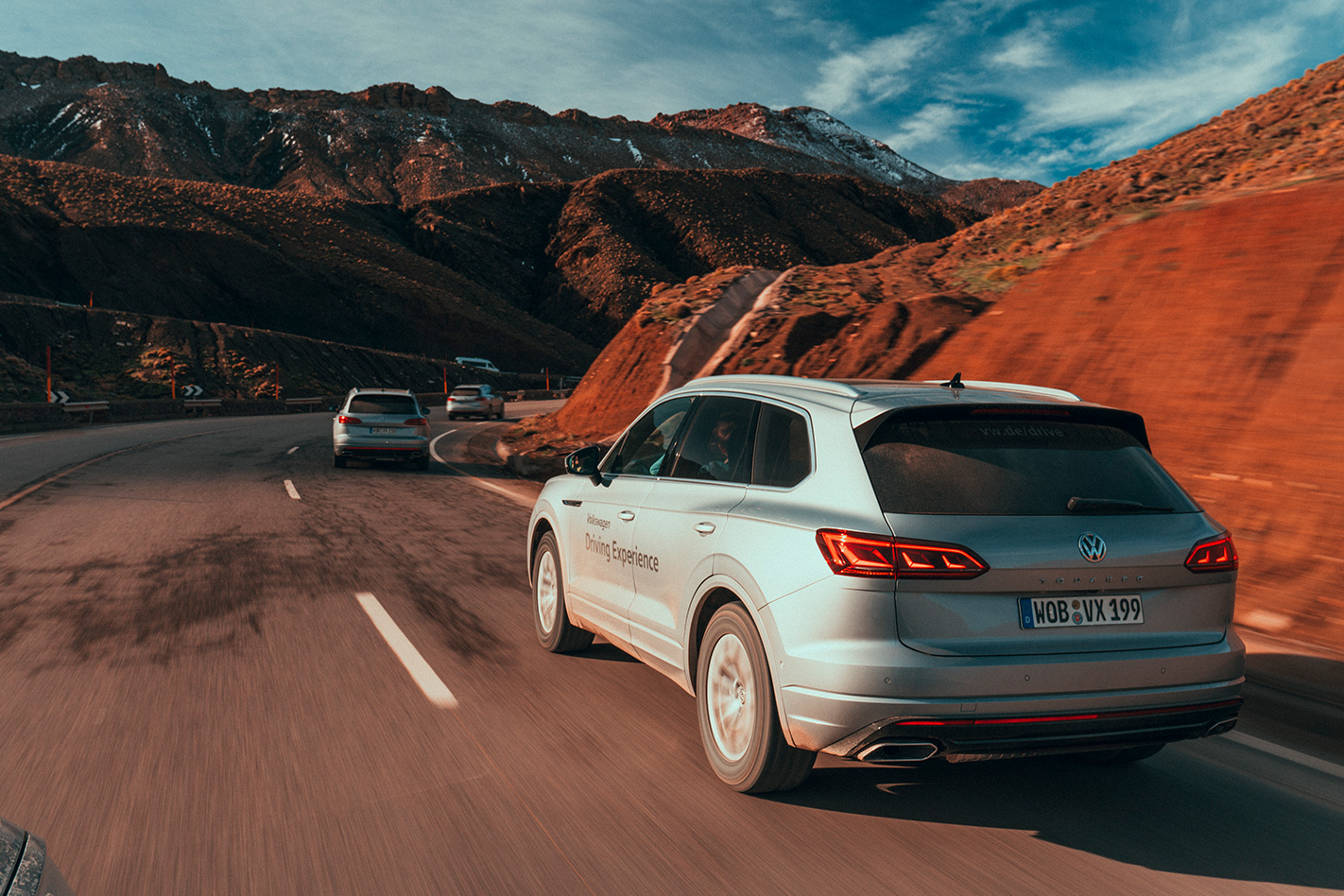
Couple this with the active anti-roll bars that we’ll be thankful for once we reach the dunes, and these are options sure to be worth their weight in gilded couscous.
After hours of majestic mountainscapes and towns of dreamy pastel-salmon-hued architecture, plus a Moroccan tea and coffee stop along the way, we arrive at the edge of the Sahara, where we’re greeted by a tawny sunset coated in a rich stillness. At this point, in the silence of our otherworldly desert camp, aside from the occasional camel, our only reminder of home is the odd Eucalyptus tree growing out of the dirt.
As we unpack the car, my co-driver notes the 9.0L/100km trip reading on our display. It’s far from the 6.0L/100km fuel consumption VW says the Touareg will give you in an urban environment, but still surprising considering the number of hill climbs and power-overtaking manoeuvres of donkey carts and beat-up Volkswagen Mk2s, Renault 4s and Mercedes-Benz W123s dressed as taxis we just performed. If you’re in the market for an old French hatch, Morocco is a dream; what old 4×4 Fiat Pandas are to rural Italy, the Renault 4 is to the Maghreb.
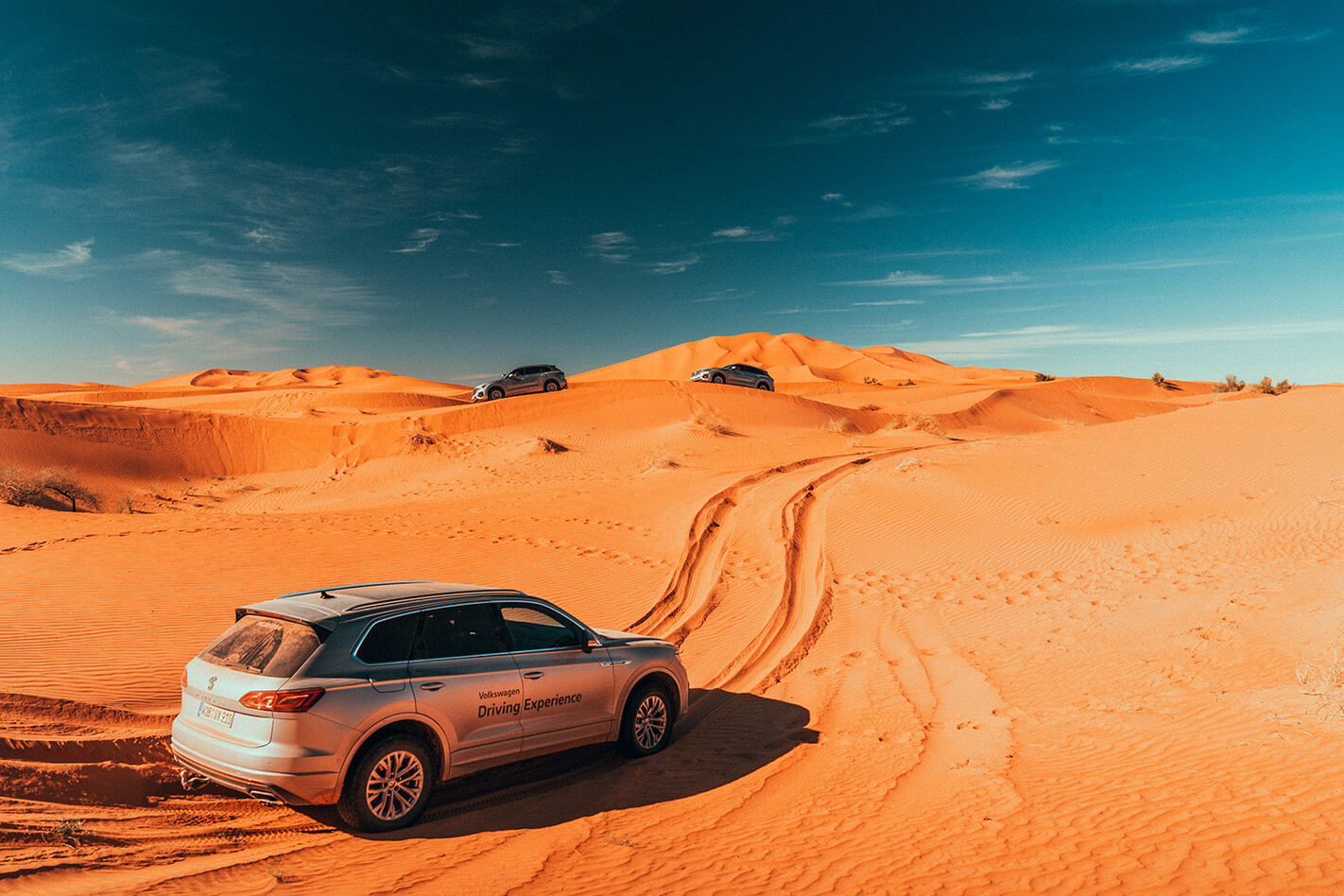
After a night under a bright, full desert moon peppered with campfire crackles and French-Arabic sing-alongs by our camp’s staff, we rise at dawn to prepare the Touaregs for a day tackling some of the largest dunes in the Sahara. In Erg Chebbi, some of these wind-formed structures can rise up to 150m tall. I’m told that, in summer, locals come here to bury themselves neck-deep as a cure for various ailments (presumably being dry-roasted alive by Saharan sand will make other illnesses seem trivial).
Before our Touaregs get coated in this dust-fine sand, I have a sniff around the boot, which has grown from 697L (1642L with rear seats flat) to 810L (1800L) and sample the glorious adult-sized space in the rear. Actually, it was more of a desperate attempt to get signal from our car’s always-on wi-fi hotspot. Using a SIM, up to eight devices can connect and, based on my testing, the signal stretches to up to five metres away. It’s great for camping, provided you’re not in the Sahara.
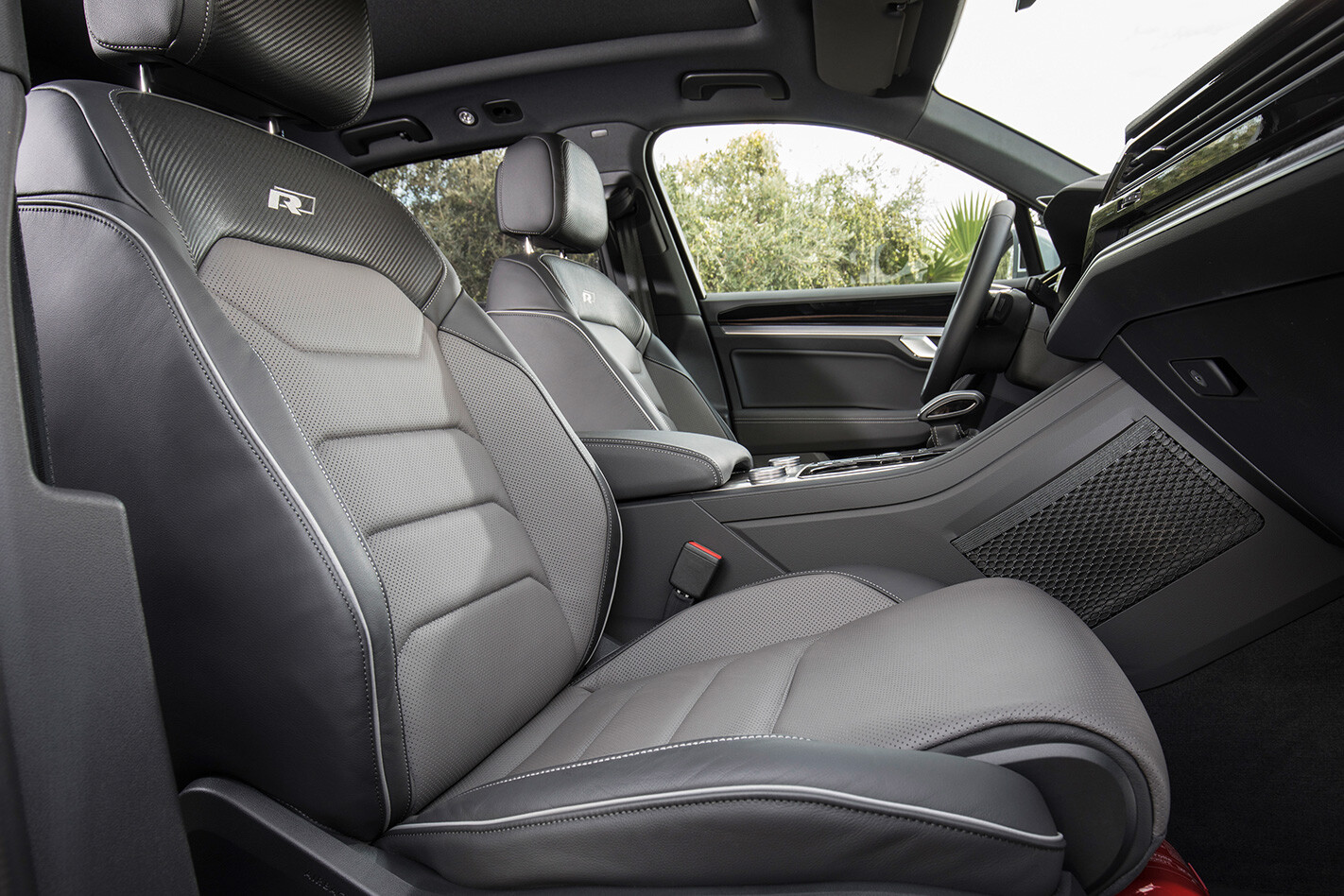
When it comes to technology, Volkswagen has certainly learned from the shortcomings of the previous-gen Touareg, which struggled to keep up with the times. Smugly driver-centric, highly user-friendly and cleanly designed, the Touareg packs so much in that it’s almost a smartphone itself. The huge, customisable 15-inch digital central touchscreen and seamless 12.3-inch Active Info display, (which, granted, will come at a price) is stunning and arguably rivalled only by Volvo’s current system.
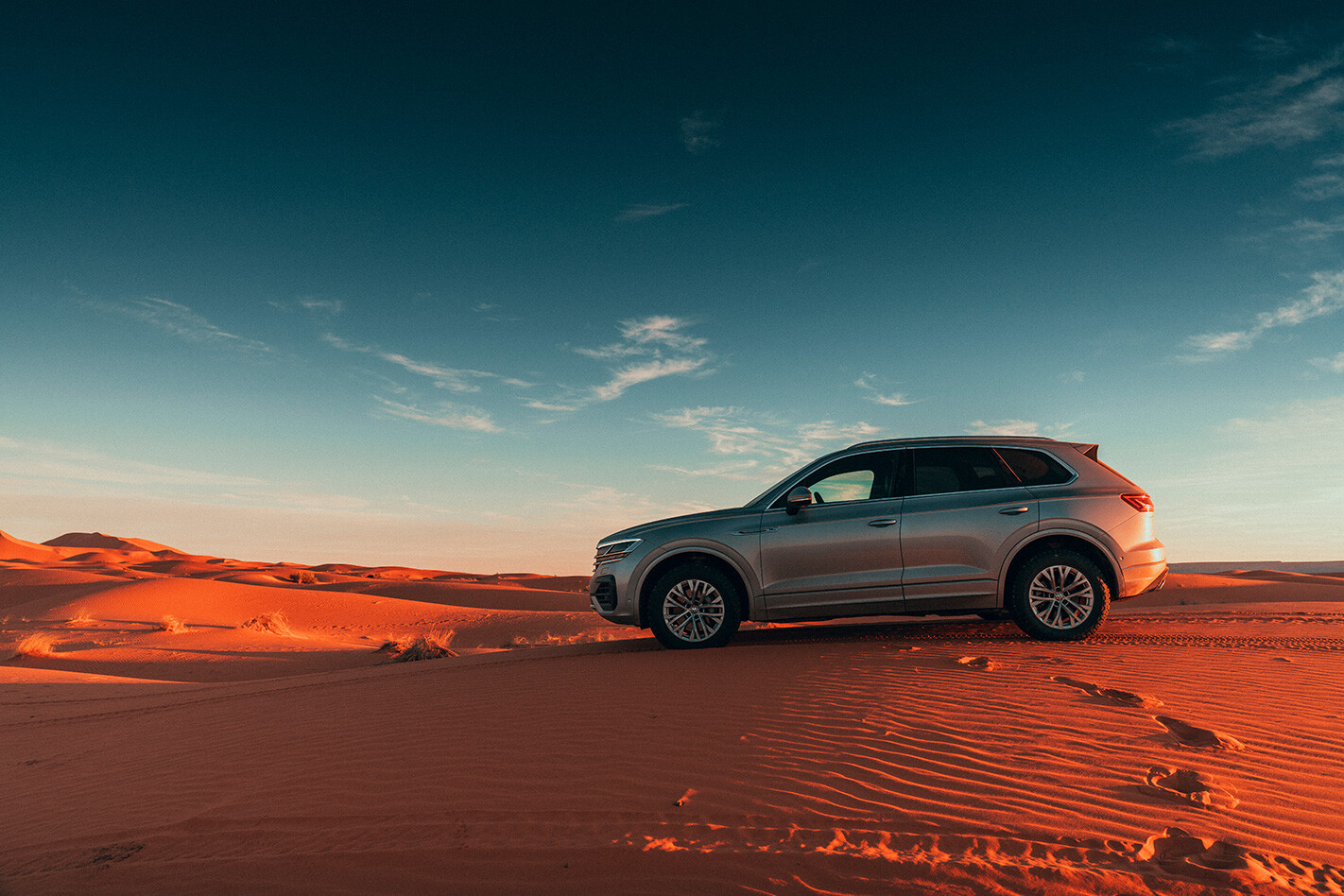
Keep in mind, our Touaregs had every box ticked, but with a 14-speaker 730-watt Dynaudio system (or 80W eight-speaker system as standard), four USB ports, wireless charging, a head-up display, as well as active safety including semi-automated steering and lane-keep assist, cross-traffic assist, LED matrix headlights, park assist (including trailer-manoeuvring assist), driver-fatigue-alert systems and active pre-crash systems; one can see why this is the most thought-through VW to date. And in eventual top-spec guise, likely one of the priciest.
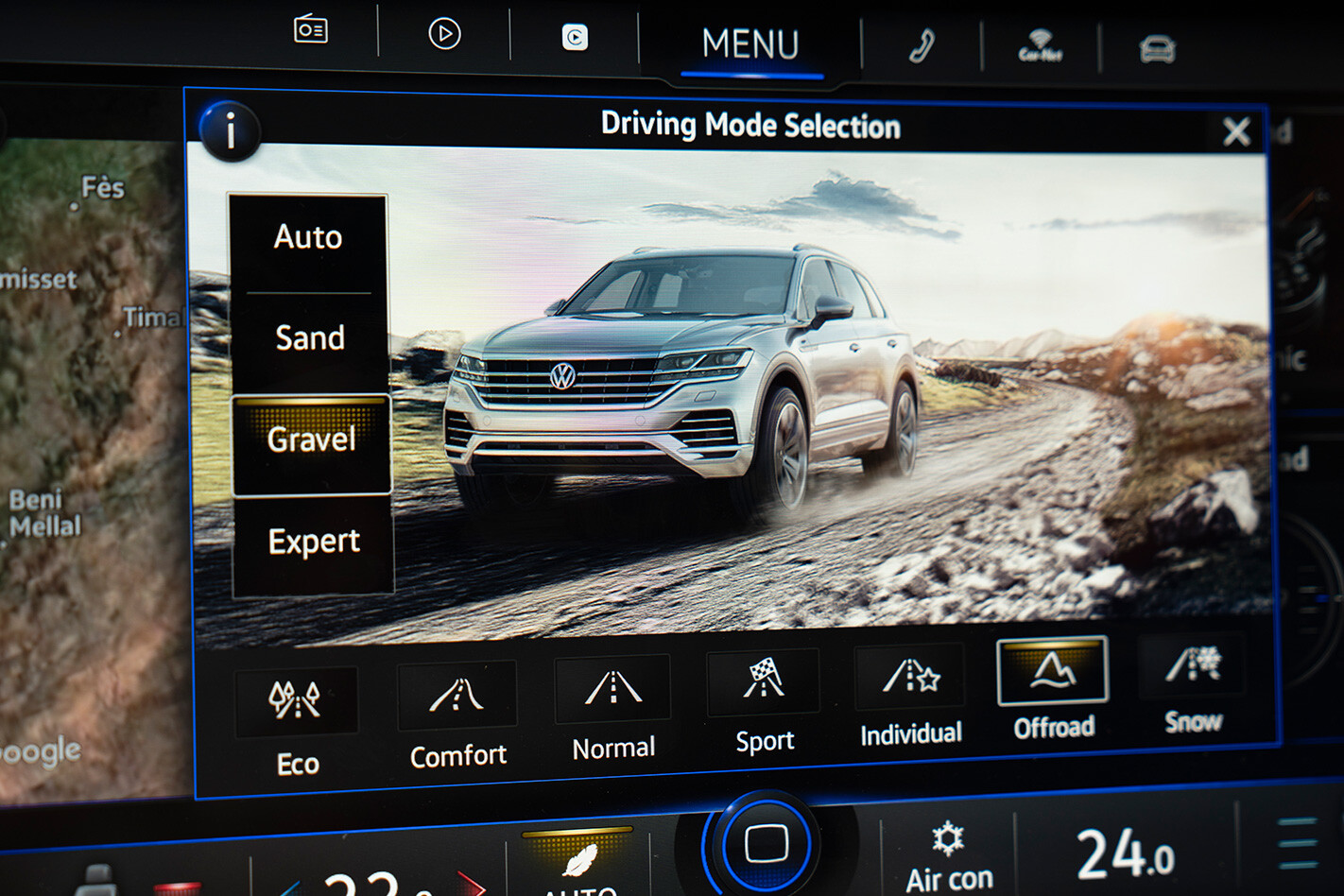
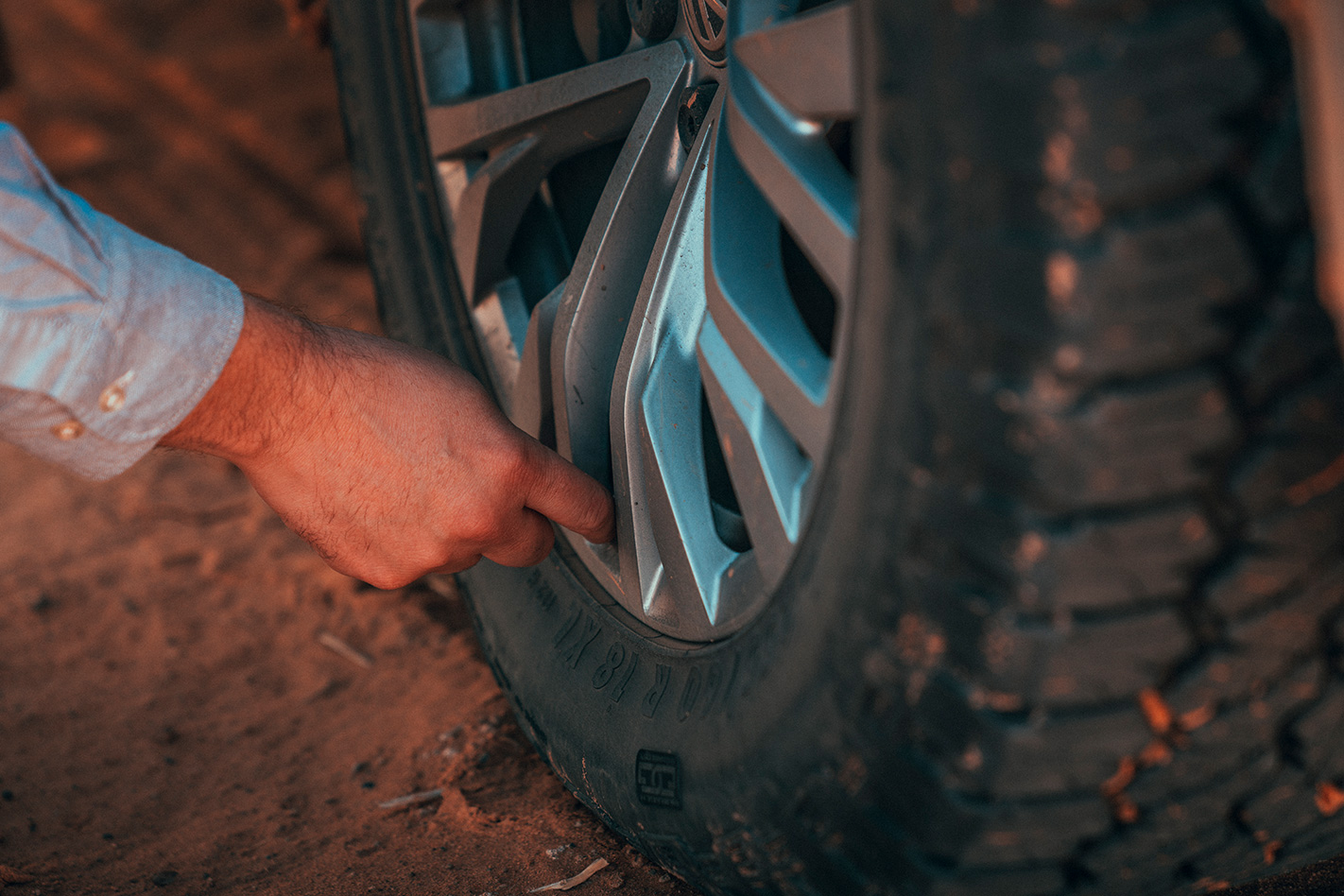
The Germans in charge of our expedition have deactivated our enormous panoramic sunroof to minimise dune-hoon sand damage, which is probably for the best. After dropping tyre pressures and switching our driving mode to ‘Sand’, Dakar jokes are made and we’re taking on the baby dunes – which involves much use of the old “when in doubt, power out” mantra. And if you do get bogged, some tricky use of the same, only in reverse will generally save you.
At this point, I’m not sure if I’m having heart palpitations from the fun of it all, or because of the looming dunes I can see in our future. Bouncing over the ergs (as the locals call them) and carving up the fine Saharan sand, the sprightly Touareg feels a lot smaller than it is, with the V6 providing all the power needed. That is until our training wheels are taken off and we’re faced with a CGI-like wall of sand some 50-plus stories high. We’re told to go straight up. Don’t stop. Right foot flat. I’m second in line, driving alone and feeling smug so, of course, I bog the thing before the crest. Thankfully the Touareg has a towing capacity of 3.5 tonnes, so I’m pulled out by one of the identical VWs in our group.
I tap into everything I’ve learned from hours of watching Saudi Arabian dune racing on YouTube, and following the #justsendit hashtag on Instagram, and find myself in a blur of sand and sky and bumps and V6 growls. I’m hammering up the dunes pointing toward a German dot waving his arms at the top.
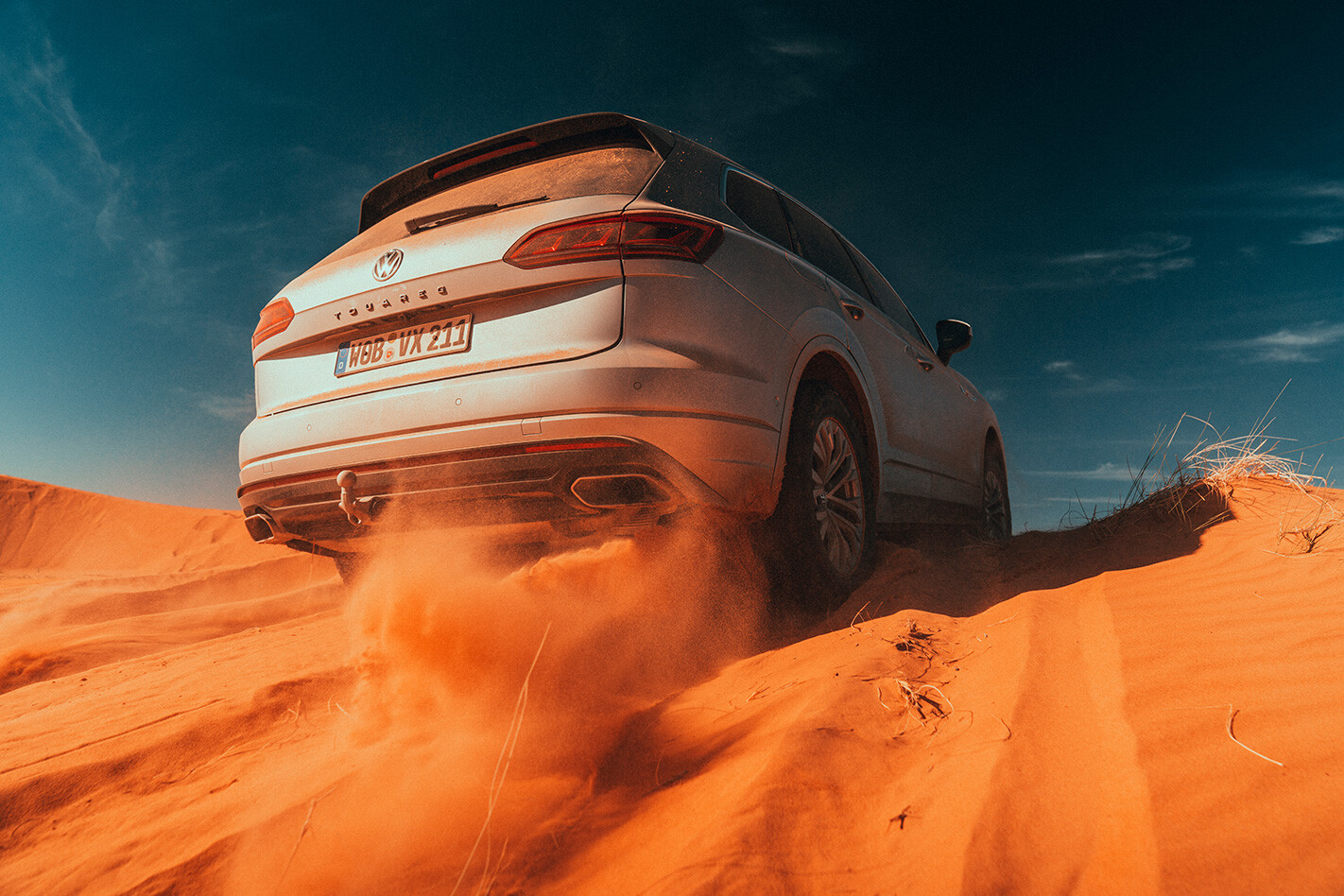
The view is breathtaking, extending toward Algeria and beyond. Our campsite is but a fuzzy oil painting below. Thing is, I spend way too much time taking in the view, and don’t realise everyone has already made their descent. So Chris Benny, our photographer, and I are alone on Erg Chebbi. I have no choice but to point the thing downwards and go for it. Alas, hill-descent kicks in – it’s auto-activated in off-road mode – and the entire experience feels like I’m on a wire. Easy.
Making our way out of the desert, our night is to be spent in a kasbah in Ksar Bicha. This is camel country, where drivers prepare their beautiful herds for sunset tours. As the sun falls, the serene call to prayer echoes across the small town of unfinished and decrepit buildings and, just outside my room, sleepy-eyed camels curl up for the night as a majestic ambience rings in the air. The next day, our loop back to Marrakech begins, this time with a lot less drama, or so we’re told.

We have just over 500km to go, including long stretches of highway, rain and mud, through the upper Dades Valley and its desert plateau. We pass through “gateways to the Sahara”; grand, regal-looking Moroccan gates that announce more peach-coloured towns filled with bustling bazaars and children stacked on motorbikes. You can imagine the statement seven silver Volkswagens, complete with mean modernist grilles and exaggerated arches, make upon arrival.
From the cockpit, these long stretches highlight the lounge-like quality of the Touareg’s interior. It also gives us time to play with the personalisation, including things like the ambient lighting, digital-cockpit set-up and home-screen preferences, as well as the driver-assistance systems, which do what they say on the tin, even if the lane-keep assist drives us a little mad.
The final leg, from the Dades Valley to Marrakesh, via Ouarzazate, is where the sheer generosity of the glasshouse and cabin visibility shines in the Touareg, at least in the front two seats. This is Morocco’s Hollywood, a famous backdrop to Lawrence of Arabia (of course), Gladiator, The Mummy and more. The tall, blocky towers of the ancient Ksar Aït Benhaddou hold court here, bookended by a geological rainbow of colour.
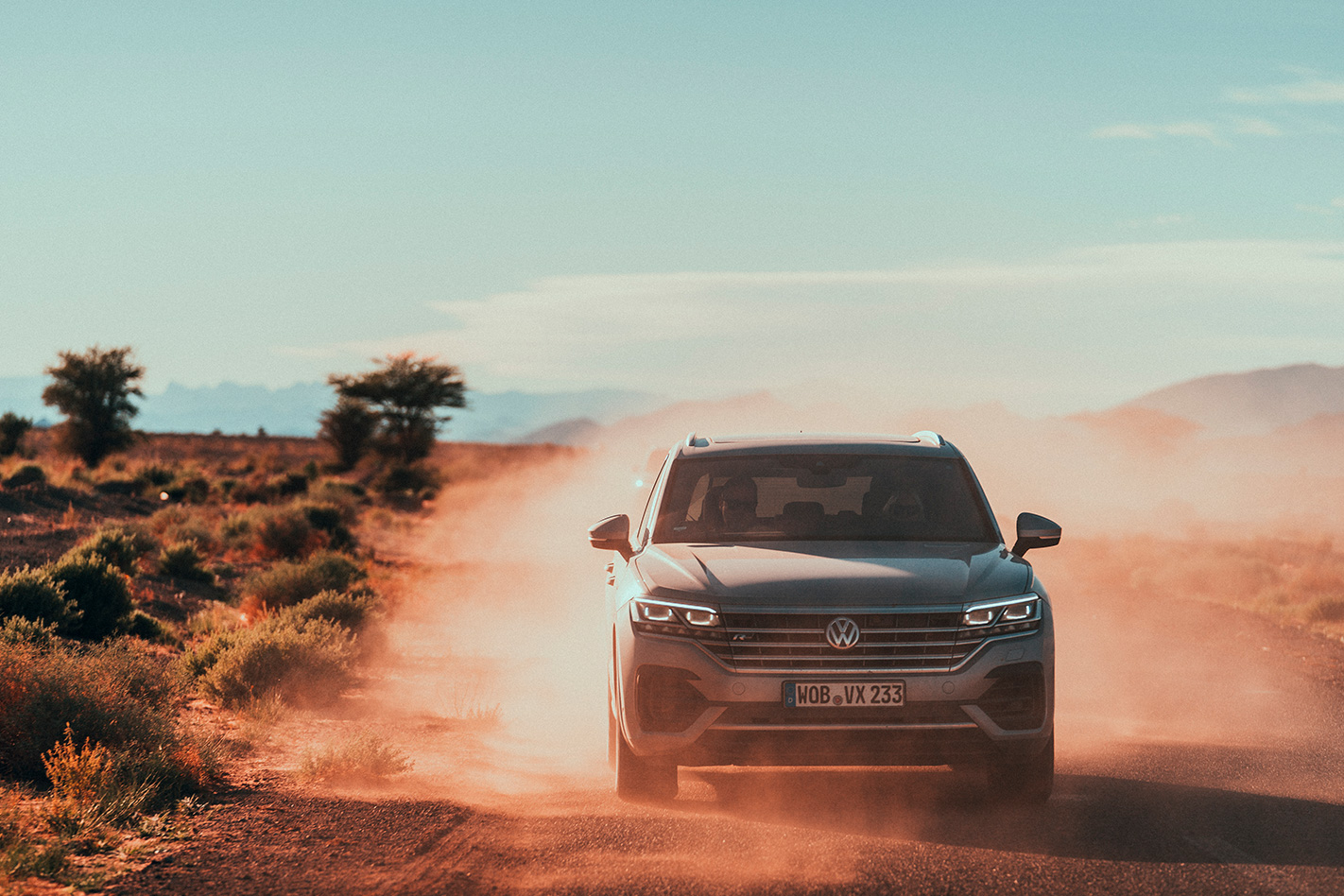
Our destination is the Draa Valley, a rocky riverbed and our final chance to put the Touareg to the test. After turning the dial to ‘Off-road, level two’, raising the height of the adaptive air suspension 70mm for a total clearance of 258mm, we’re guided by the careful Germans over boulders and streams to a road banked at 35 degrees. The Touareg doesn’t even flinch.
Then, with just over 100km to go, the Germans start to get edgy. Is it just that famous culture of punctuality, or something more? We soon find out that the problem is we’re heading for the Tizi n’Tichka Pass – a cliff-hugging twister that rises 2260m, back through the Atlas Mountains, part of which we took on day one – that is regarded as one of the most dangerous roads in the world. Couple that attention-grabbing reputation with the mania of Marrakesh during peak hour, and our hosts are itching to get back, preferably in one piece.
The drive home sees us on high alert as small trucks fling themselves around us on narrow, blind corners. Moroccan versions of Piaggio Ape three-wheelers almost topple over while sprinting downhill in front of us and our blind-spot monitors are having some kind of fit. We know the big VW’s active alerts work because things are beeping, constantly.
Marrakesh traffic is even more horrific, with suicidal, snapping tuk-tuks having close-calls with lane-splitting taxis, while horse-drawn carts almost run right over pedestrians. It’s chaos. We see injured animals on the road, beat-up Renault 12s near-missing motorcyclists, and, at one point, a child runs blindly on to the road to chase a ball, like something out of a road-safety ad. At least India has a horn-beeping system!
Finally, our now-dusty Dakar-on-the-school-run silver convoy makes it to the finish line. After quiet reflection on our survival, and surveying the layer of golden dust that now coats everything, I begin to think about all the Touaregs that, once they arrive in Australia in May, will be coddled under suburban carports, unaware of their potent potential.
It’s unlikely many Touareg owners will get anywhere near the limits of what we now know this deeply impressive incarnation can do. And while it seems like Morocco hasn’t changed a jot since Keith Richards crossed the Strait of Gibraltar in his S3 Bentley Continental in 1967, we can at least be thankful that its landscape provides proof that Volkswagen’s once sleepy suburban SUV has.
Hi Which Car,
I’m looking to upgrade to a new car from my trusty Toyota RAV4, which is a few years old now. I’m a musician, so I need payload for my gear – guitars and amps etc. I don’t want anything too big and bulky, but nothing too small either – so something around the same size as a Rav.
I live in a rural area, so I need something AWD – I’m not going off-roading, but will sometimes encounter ice and dirt tracks. I don’t want anything that is going to cost a bomb in servicing and I want to be able to live with it for about five years. My budget is maximum $40k. What are my best options?
Cheers,
Doug
Hey Doug,
You’ve got a heck of a lot of cars to choose from! Since you bought the RAV, the SUV market has literally exploded, and there is a vast number of cars you can look at. Let’s have a look at three potentials – but first, I’m going to assume that when you say ‘payload’, you actually mean volume or area to carry instruments.
Honda CR-V 1.5 VTi-S
At around $35,490 for a base model all-wheel-drive, the CR-V falls into the budget, and it’s pretty well sized, to boot. You’ll also get niceties like a powered tailgate, which should make loading up your gear a bit simpler.
It uses a 1.5-litre four-cylinder turbocharged petrol engine that is happy enough using regular unleaded, and it’s linked to an AWD drivetrain that uses a continually variable transmission, or CVT. It requires a period of adjustment to get used to the idea of how it uses engine revs to work, but it’s a good solution. Its all-wheel-drive system operates as a front-drive for most of the time, until it senses that rear grip is needed.
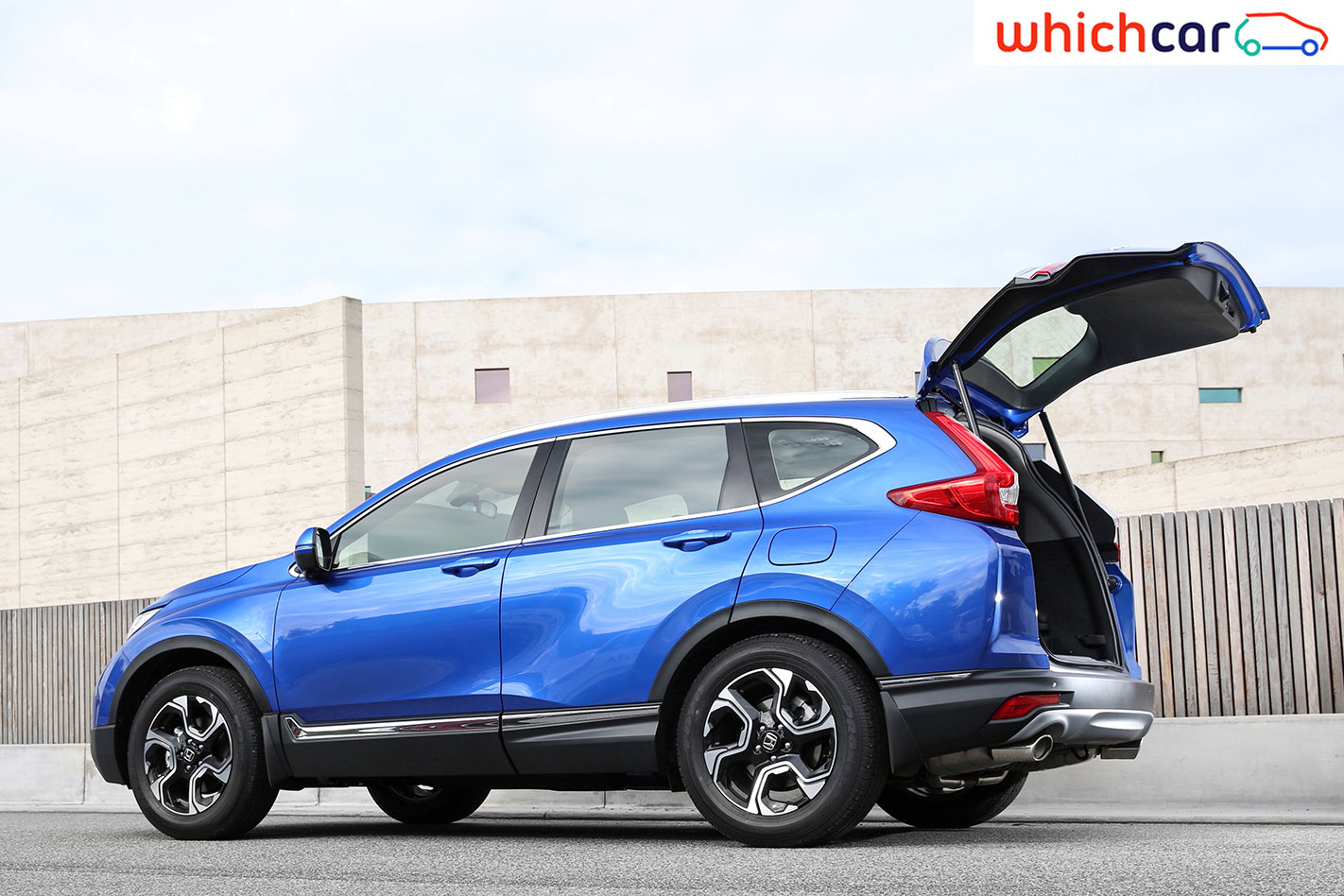
The CR-V excels as a cargo-lugger. Its tailgate opens wide, and the lip to the cargo area is low. You can fold all the rear seats flat, using boot-mounted handles, making it a cinch to carry all kinds of outsize loads.
Cargo volume for the five-seater measures 522 litres with the rear seats in place, or 1084 litres with them lowered.
Hyundai Tucson Active X diesel AWD
The $39,150 Hyundai Tucson is another five-door, five-seat SUV, and the diesel engine adds both better fuel economy and more torque for easier cruising.The 2.0-litre turbo-diesel uses least fuel of the three engines available in a Tucson, consuming as little as 6.4 litres/100km on the official test (city and country combined). This diesel four-cylinder – which Hyundai calls the 2.0 CRDi – is also the most powerful engine in a Tucson. And every diesel Tucson drives all four wheels.

It’s not the best engine for dawdling around town, though; frequent 30-minute highway drives to prevent clogging of its particulate filter, which prevents exhaust soot from dispersing into the atmosphere
The stylish but conventional shape of the Tucson gives you 488 litres of room, and with the second row folded (60-40), cargo capacity increases to a cavernous 1478 litres. You need to pay more for items like AEB and adaptive cruise control, which is part of a safety kit.
Subaru Outback 2.5i
I reckon that this might be the one for you, though. The Subaru Outback is big, solid and dependable, and offers an all-wheel-drivetrain and a frugal 2.5-litre four-cylinder engine.
The Outback has a big boot that is long and fairly wide. The floor is flat, albeit quite high, and it’s easy to load things.
The back seats fold in a 60/40 configuration and there’s a choice of two levers to operate them: one on the top of the seat-backs (for pushing from behind), and one on the edges of the seats themselves (which are easier to get at from the seats), so it’s pretty practical. It has 512 litres of space with the seats up to a van-like 1848 litres with them down; easily the most here.
For me, though, it’s the ease of use that tips the scales. There is nothing weird or difficult about the Outback. It has a great safety system called Eyesight that just plain works, the seats are comfy, the multimedia system is simple to use and it’s easy to drive. It also sneaks in under your $40,000 budget, and there are loads of dealers around, too.
WhichCar recommends; Subaru Outback 2.5i
Fake news. We’re not only comfortable with the concept, some of us even crave it; don’t feel right without a constant stream of cues and facts – even though we suspect they’re a crock – to ‘inform’ us.
Need proof? Okay, try to have a conversation with a millennial. You could be explaining the meaning of life, but lose eye contact for a nano-second (or less) and you can forget it. Because Ol’ Gen-Why will have grabbed his or her phone and will be three thumb scrolls into a Stalkbook feed from Nobody Inc. And right there, you’ve lost them and social media’s dubious lure has won.

Which, makes us all think that the whole fake news thing is a creation of the internet and virtual world. Nope, it’s been going on for decades. For as long as mass media has been around, in fact. And just to prove that I haven’t completely fuddied my duddies, I would like to name and shame a handful of other sources of misinformation, diversionary techniques and good old porkies.
I’ll start with lifestyle television shows. Aside from attempting to convince you that your life is a hollow sham if your backyard isn’t a perfectly manicured Garden of Eden, these televisual retirement homes for pensioned-off sports-folk and shouty, couldn’t-hack-it-in-the-real-world tradies, also paint a deluded picture.
I ran into a proper landscape gardener at a backyard barbie a few weeks back who professed a dark desire to kill the next person he saw on TV, hollering into a camera mic that an entire backyard makeover could be achieved in six hours. “Do you know what that does to our chances when we present a real quote for a real job?” asked my new landscaper mate.
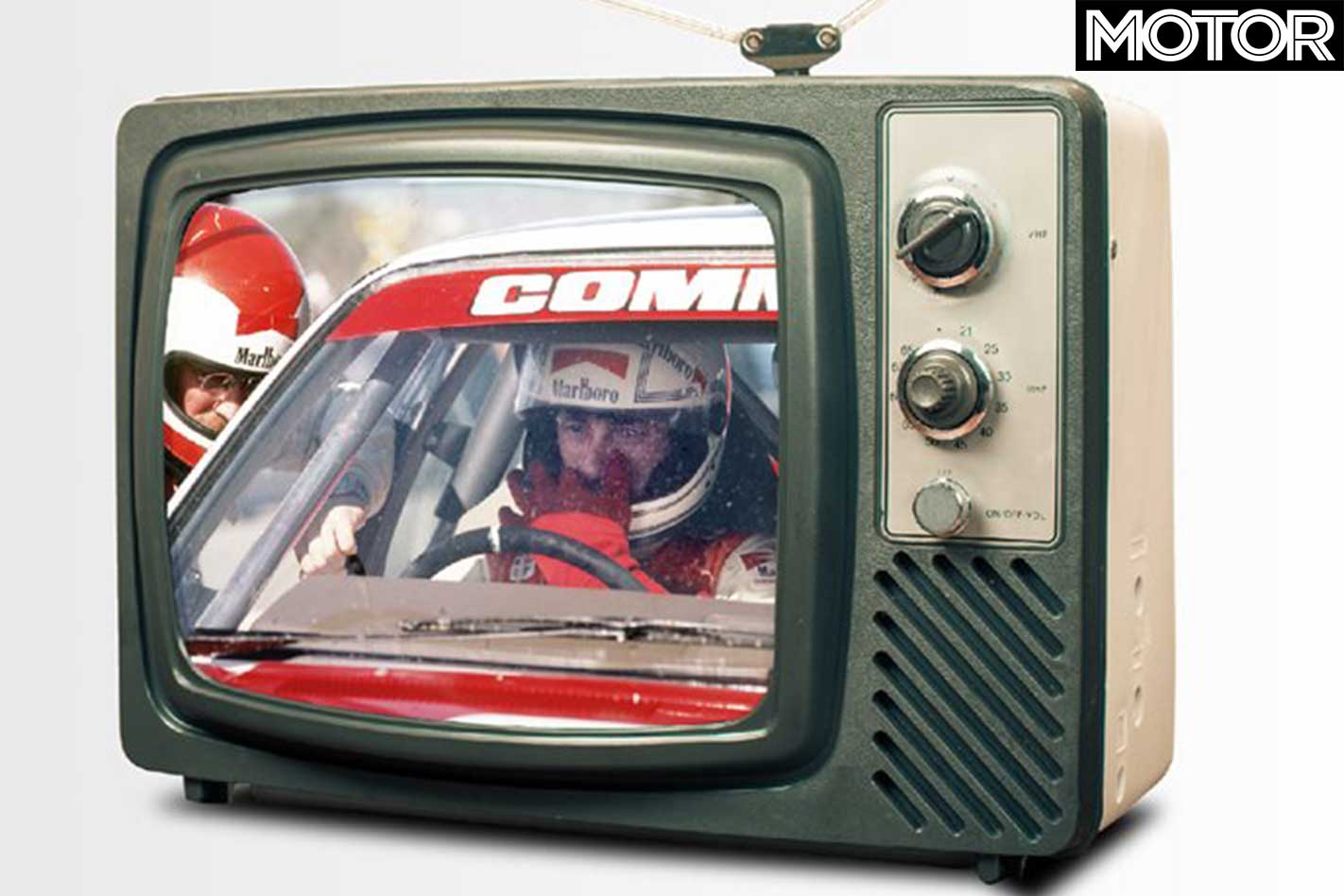
What’s this got to do with automotive mis-information, I hear you ask? Well, other than wasting an hour of airtime that could be better used showing cars being driven enterprisingly, not a whole lot, but it’s still part of modern crap-dusting.
Now, let’s talk old-school brochures. I found a beauty for the EH Holden, with a tag line that read, “Real excitement… every time you take the wheel”. It was true in a way, provided you accept the classical definition of excitement which includes the heightened emotional state brought about by the knowledge that you’re about to die. Seriously, if the cross-plies didn’t get you, the drum brakes would. The medium might have been ancient, but the twisted truth was as modern as tomorrow’s weight-loss website.
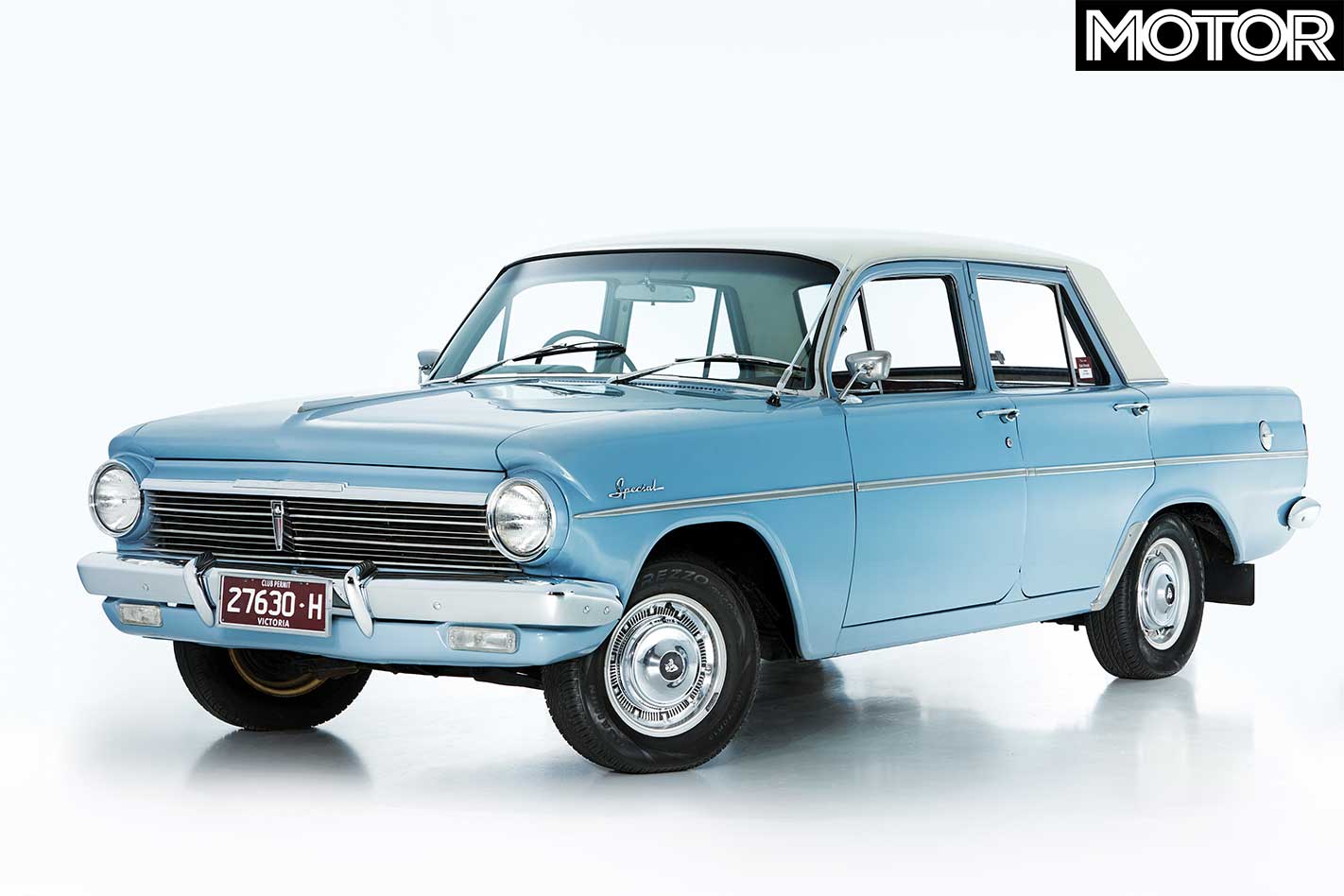
It was just as irrelevant, too. Contemporary EH buyers who would have been much happier knowing the real truth; that there were 38 places on an EH where you could open a long-neck. If Bottle-O Racing was serious, they’d have had Frosty (now Lee Holdsworth) in a Supercar with a flop-moulded EH body.
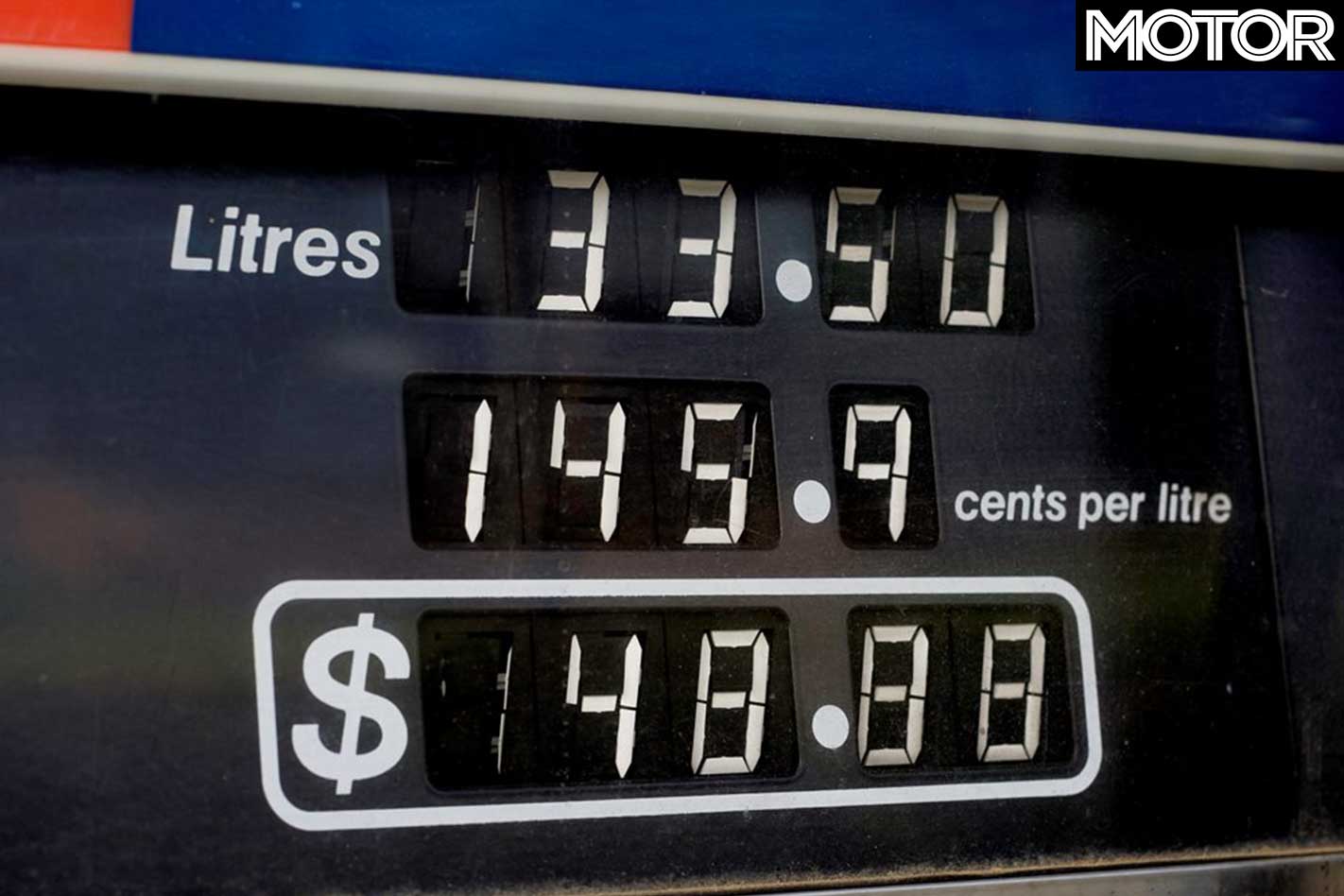
And how about those fuel-consumption stickers on all new cars? The one on a Y62 Nissan Patrol suggests a combined consumption figure of 14.4L/100km. Having attempted unsuccessfully to drive one of these past a servo a couple of years back, I would beg to differ. And I know they’re only good for a comparison, but my brother-in-law, an otherwise intelligent chap (his relationship with my sister aside) was all bottom lip when his new car couldn’t match the sticker.
But none of this can compete with social media for bald-facedness. And where there’s a bullcrap dissemination machine, a government of some sort won’t be far away. Whether it’s wire-rope barriers, safety cameras, speed kills, insurance companies pretending to be road-safety experts, any number of other statistical manipulations, PR snow-jobs or just good old-fashioned bullshit, our elected representatives have made fake news an industry.
No wonder they’re all clamouring for a cyberspace mountain top somewhere on the social-media spectrum to spread their latest mis-message. Know your market.
INTRODUCTION
It seems almost impossible to believe that Citroen – a company with 100 years of history behind it – has not yet done an SUV. In some ways, though, it could be argued that Citroen’s utilitarian 2CV was one of the very first do-everything vehicles; carry a hay bale on Friday and go to church on Sunday.
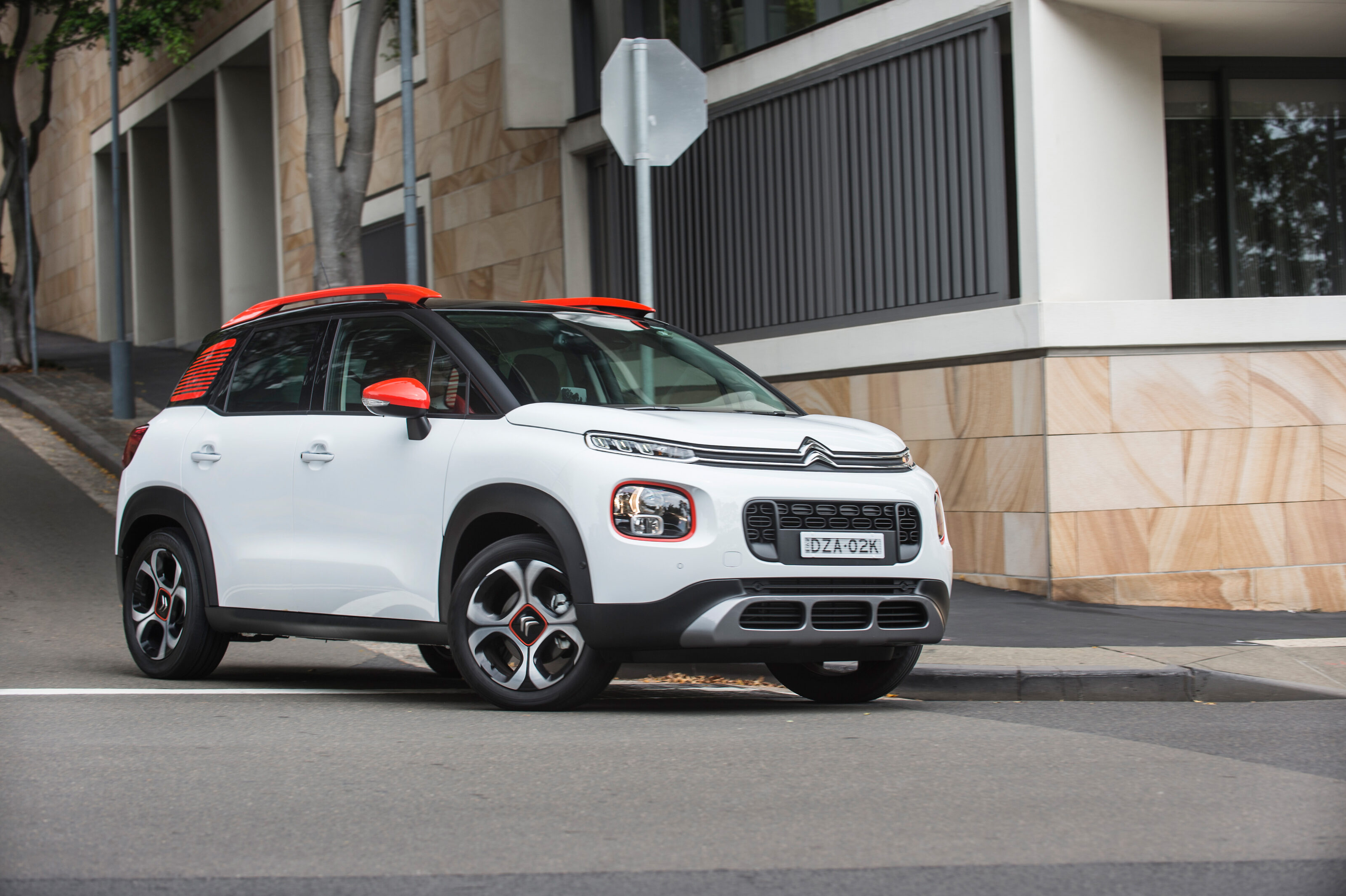
The new Citroen C3 Aircross invokes some of the spirit of practicality of the 2CV, while bringing a new spin to the notion of the compact SUV. Australian buyers, though, have all but forgotten about this legacy brand – is the C3 Aircross the way back?
VALUE
The pricing structure of the C3 Aircross could not be simpler – there is one spec and trim level, and it costs $32,990 before on-road costs. There are no options besides the colour palette, and Citroen hopes that this massive simplification of the line pays dividends on the sales floor.
(Actually, there is one other variant; a Launch Edition will offer a sliding glass roof and grey trim with red highlights for the same price, but just 20 will come to Australia.)
That said, the C3 plays in an incredibly competitive subset of small SUVs, with the oldest car in the segment – Mitsubishi’s ASX – being the best seller, thanks to a combination of decent size and low price. The most expensive Exceed you can buy is $2000 cheaper, for example, while the Mazda CX-3 offers strong competition, as well.
STANDARD FEATURES
However, the list of inclusions on the C3 Aircross is extensive to say the least. On the outside, there are LED daytime running lights, 17-inch alloy rims, roof rails and a two-tone colour palette, while the interior offers a quite amazingly detailed set of specs.
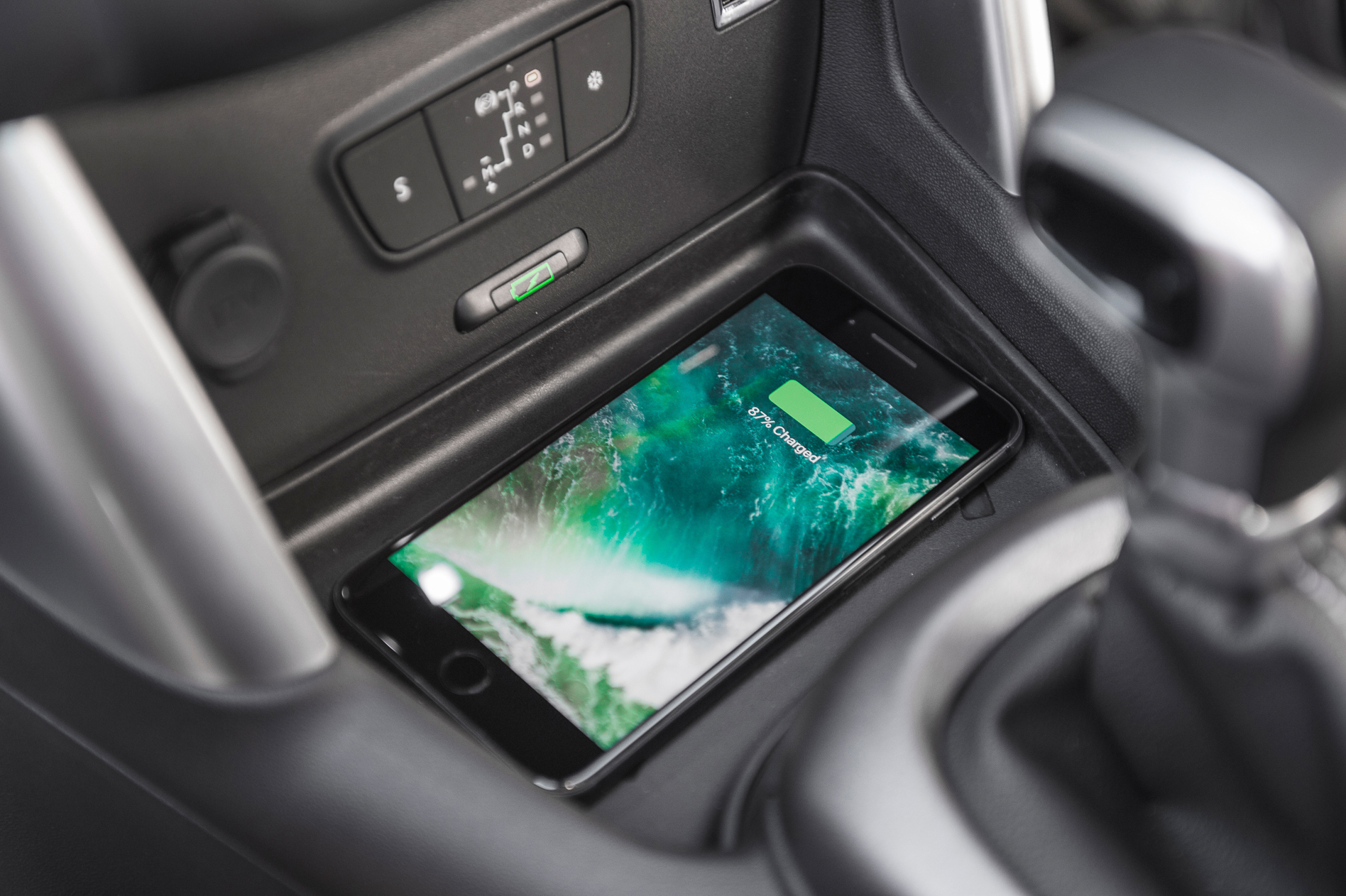
Automatic lights and wipers, electric folding mirrors, wireless phone charging, automatically dimming rear view mirror, a touchscreen multimedia system and keyless entry/push-button start are all standard – which is a pretty astonishing list of kit.
A two-tone cloth interior and a powered driver’s seat are standard as well.
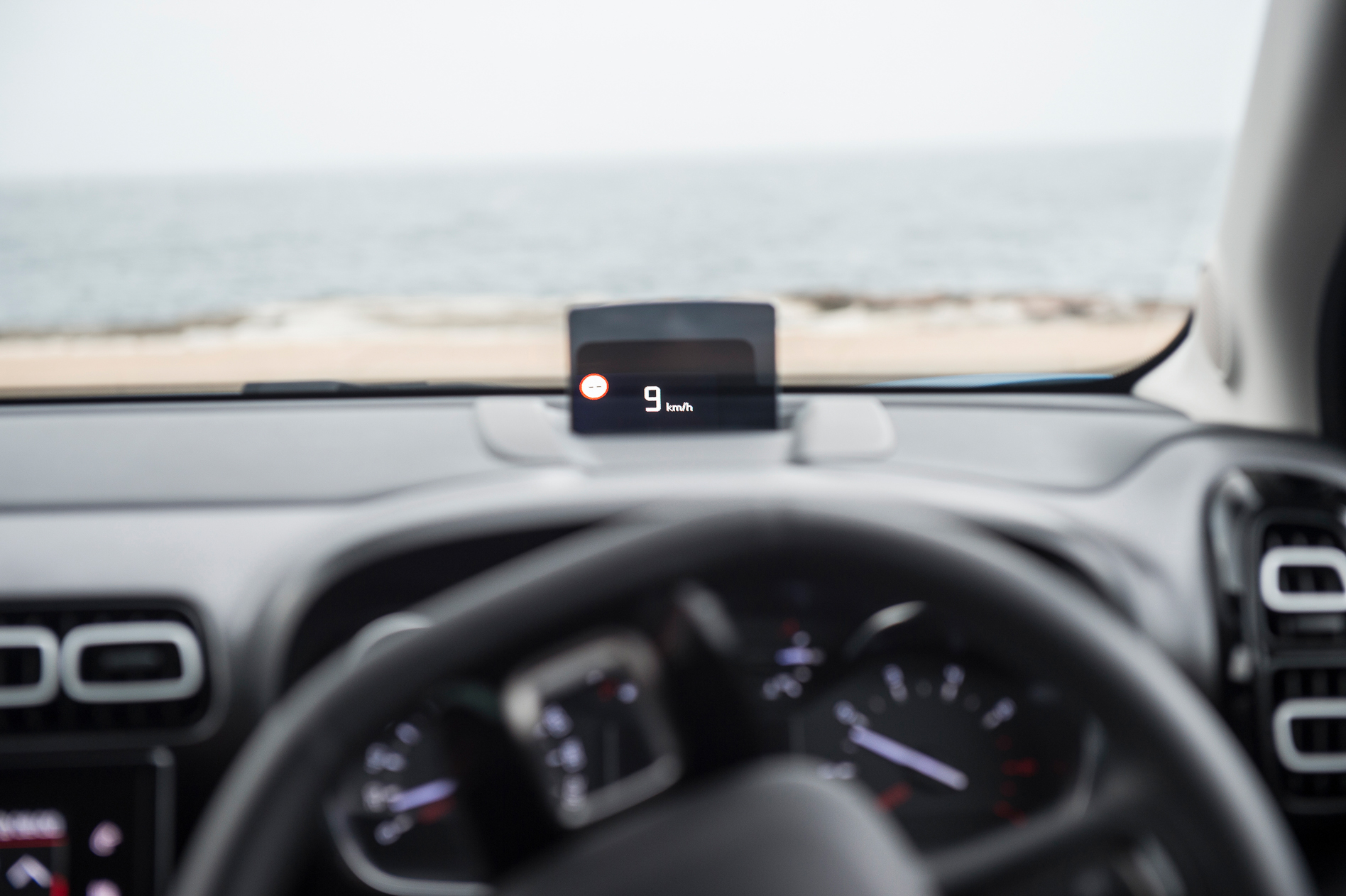
Autonomous braking, auto park assist, blind-spot monitoring, a heads-up display, top-view and reversing cameras and automatic high-beam are also part of the C3’s basic kit, while Android Auto/Apple CarPlay smartphone mirroring, speed sign recognition and driver attention alert are also included.
The C3 Aircross comes with just one powertrain option. The brand’s popular 1.2-litre three-cylinder turbocharged petrol engine makes 81kW and 205Nm and drives the front wheels via a new Aisin six-speed automatic transmission.
SIZE
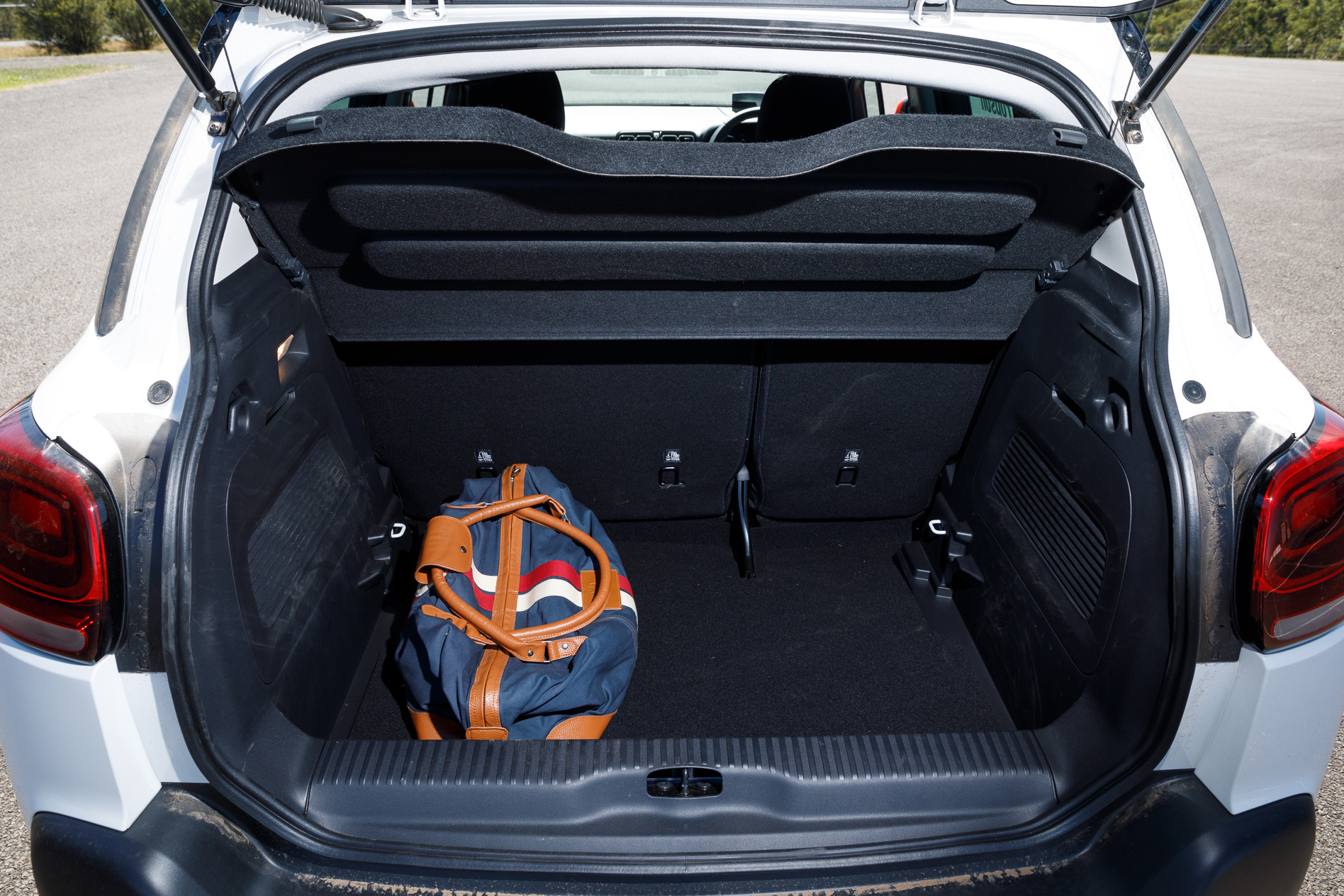
Size-wise, the C3 Aircross is 4154mm long, 1762mm wide and 1637mm high, with ground clearance of 170mm. It weighs just 1204kg, claims Citroen, and offers 410 litres of boot space behind the seats, or 1289L when the rear seats are dropped.
Compare that cargo space like-for-like with the Honda HR-V (411 litres), Mitsubishi ASX (393 litres) and Hyundai Kona (361 litres), and the C3 does pretty well.
A space-saver spare wheel hides under the boot floor, which can be mounted lower in the car for maximum space.
SAFETY
The C3 Aircross offers six airbags including curtain bags, as well as ISOFIX baby seat mounts and all of the aforementioned safety kit including AEB and blind-spot departure. Big tick for the birds-eye view camera, too, which provides a drone-like above-car shot for parking.
The speed sign recognition system, too, works amazingly well, and syncs with the cruise control to suggest that you stick to the speed limit.
The AEB system is camera-based and is limited to just 30km/h, though.
The Aircross was awarded a maximum five-star Euro NCAP score, which will transfer over to our local ANCAP rankings.
WARRANTY AND RUNNING COSTS
Citroen has flipped and flopped on its warranty story over the last few years, but has settled down on a now-standard five-year, unlimited kilometre version.
Service intervals are set at 12 months or 15,000km, while a five-year fixed price service plan will cost $2727.39 when purchased up-front (which earns you a 10 percent discount).
Citroen claims a 6.6L/100km combined fuel economy figure, backed by our 300km test loop which returned 6.8L/100km. The 45-litre tank needs a diet of 95 octane petrol to keep it running at its best.
COMFORT
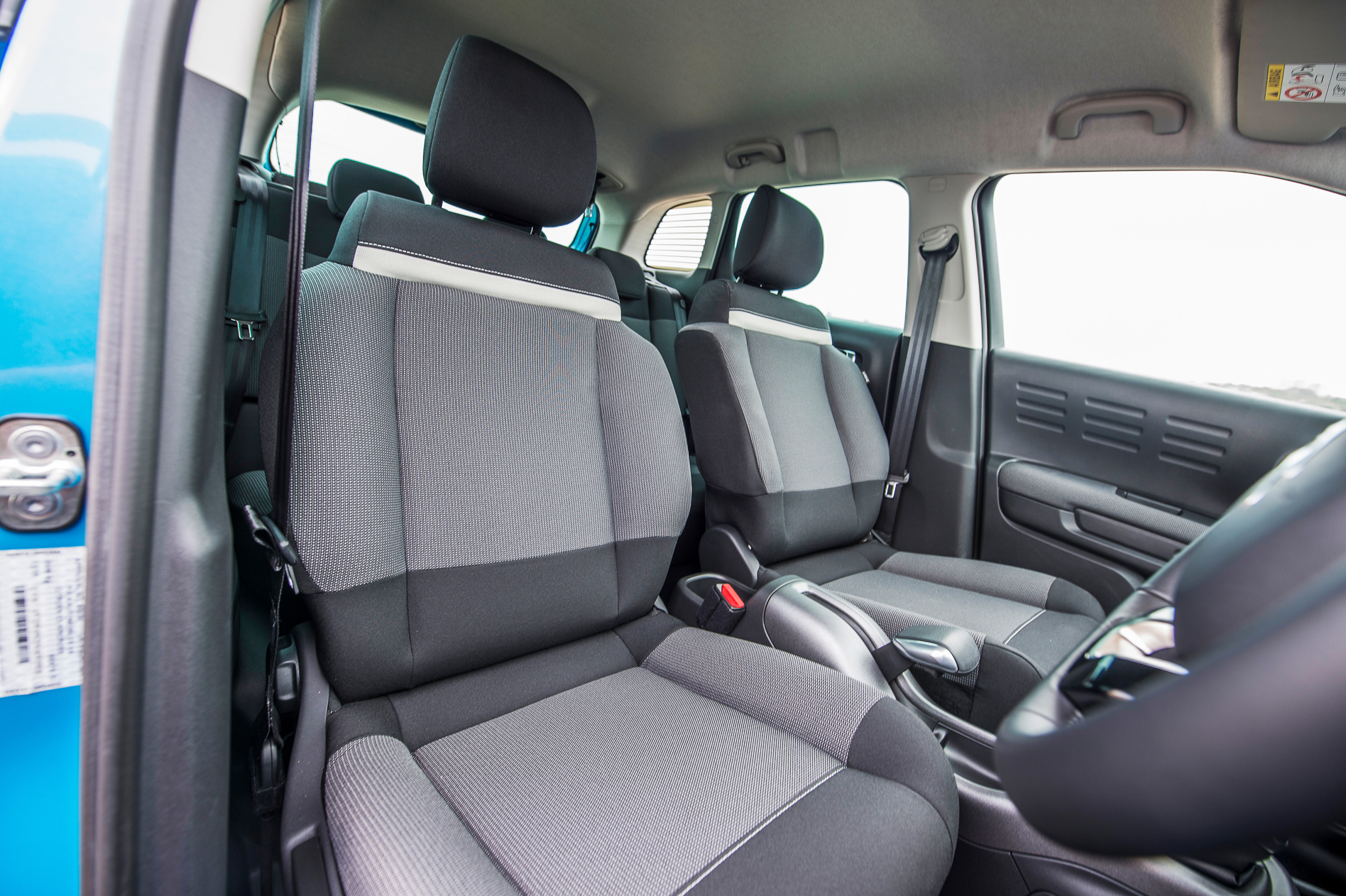
The five-seat, five-door Aircross knows how to do headroom. The boxy silhouette equals tonnes of vertical space inside the cabin for both front and back-seaters. The front seats are mounted a little higher than they are in something like the brand’s C3 hatch, which makes getting in and out pretty easy. It’s nice to see some vertical adjustment for the front belts, too, as well as a reach- and height-adjustable steering column.
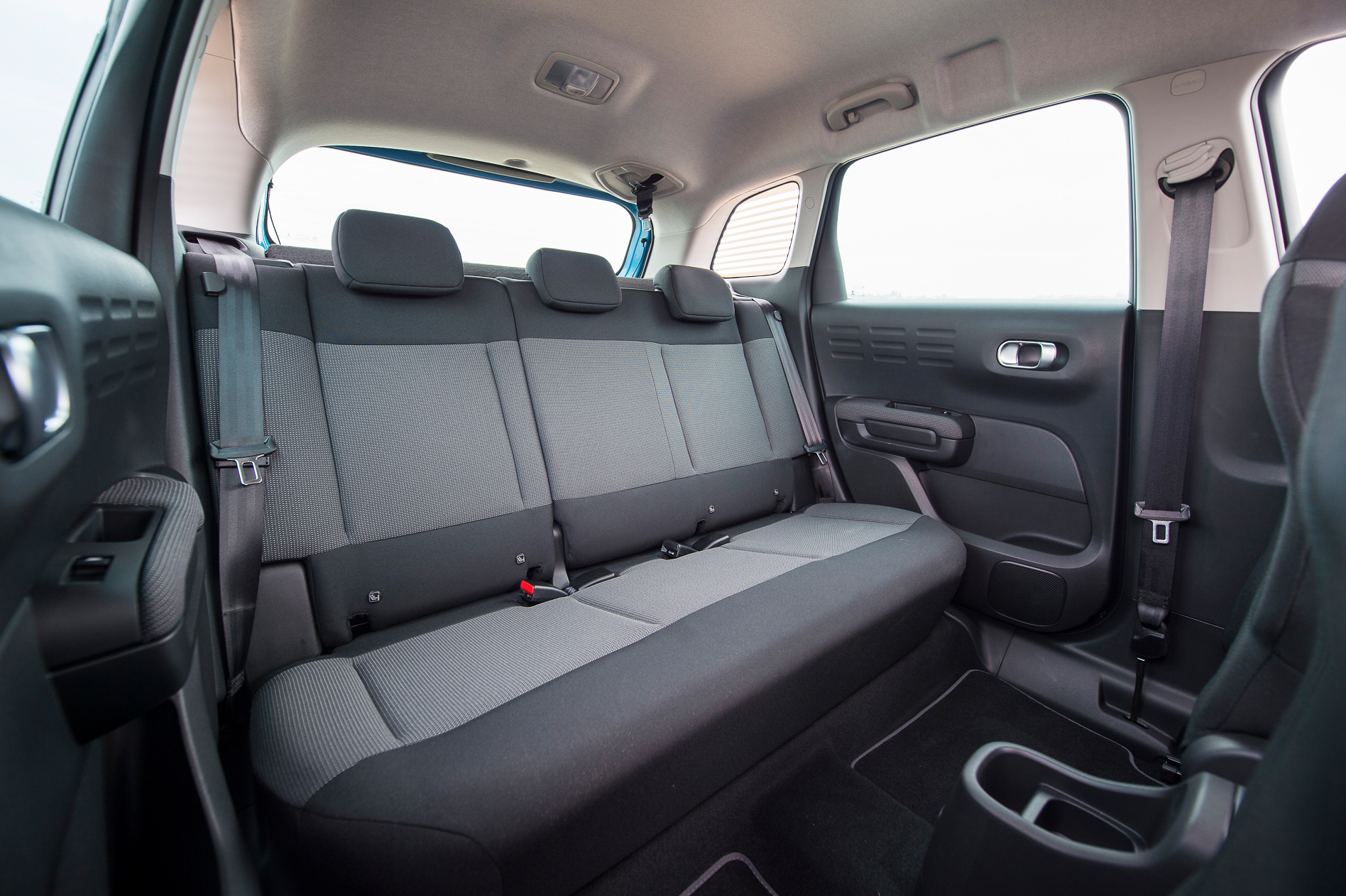
The rear bench is flat, which makes three-abreast seating a bit easier, but the centre sash belt retracts into the roof, which is a bit of a faff. Toe and knee room is fine back there, though., and the Aircross’s bright and airy cabin doesn’t sentence back-seaters to a dark and gloomy ride.
Quelle horreur, though… just one cupholder exists (though all four doors have bottle pockets), it’s awkwardly mounted between the front seats, and its odd size means a regular coffee cup rattles around in it. The inductive charging tray, too, is a touch on the small side for bigger phones.
ON THE ROAD
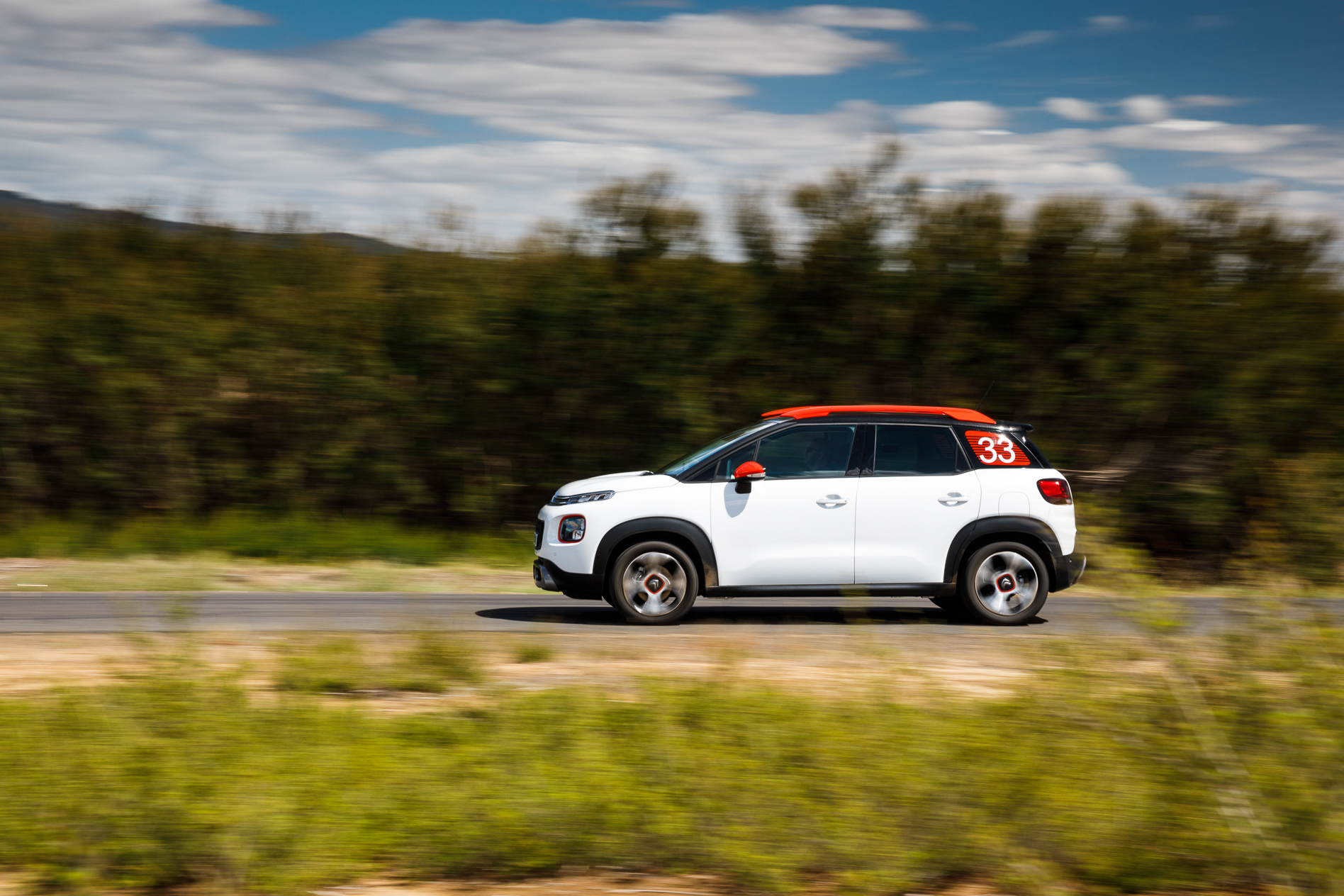
I’ve spent a lot of time in the similarly powered C3, and the extra 200kg of weight in the 1200-odd kilogram Aircross is immediately noticeable in its responses. There’s simply more weight up high, and the Aircross isn’t, as a consequence, quite as nimble.
It does share the smaller car’s magic carpet ride approach to ride and handling, though, which has long been a trait of French cars in general and of Citroens in particular. There’s a bit of ambient road noise sneaking in and resonating around the larger space, but it’s not as bad as others in the space (cough ASX cough).
The Aircross’s small engine (a five-time Engine of the Year winner, apparently) behaves like a large one up all but the steepest of hills, and the standard six-speed auto is a million miles from the frankly terrible pretend-auto gearboxes that once plagued the brand.
It’s a different, more analogue experience to others in the space, too. There’s less filtering of sensation in the Aircross, and for me provides a car with a bit of feel and personality.
I don’t at all like the ‘Venetian blind’ stripes on the plexiglass rear three-quarter windows, though; I actually cut across the nose of another car when merging for the first time in years, because I simply didn’t see them when I looked over my shoulder.
VERDICT
Citroen is not a brand that is at the forefront of most buyer’s shopping lists, and it will be a tough job to claw back margin in the white-hot cauldron of small SUV sales here in Australia.
However, the C3 Aircross is an honest little jigger that’s specced to high heaven with the right gear, and for me, the $33k ask is not unreasonable. Its on-road dynamics are comfortable, the little engine is a sweetheart and you won’t see yourself in every carpark. Is it the best small SUV for you? If you value individuality, then it could well be.
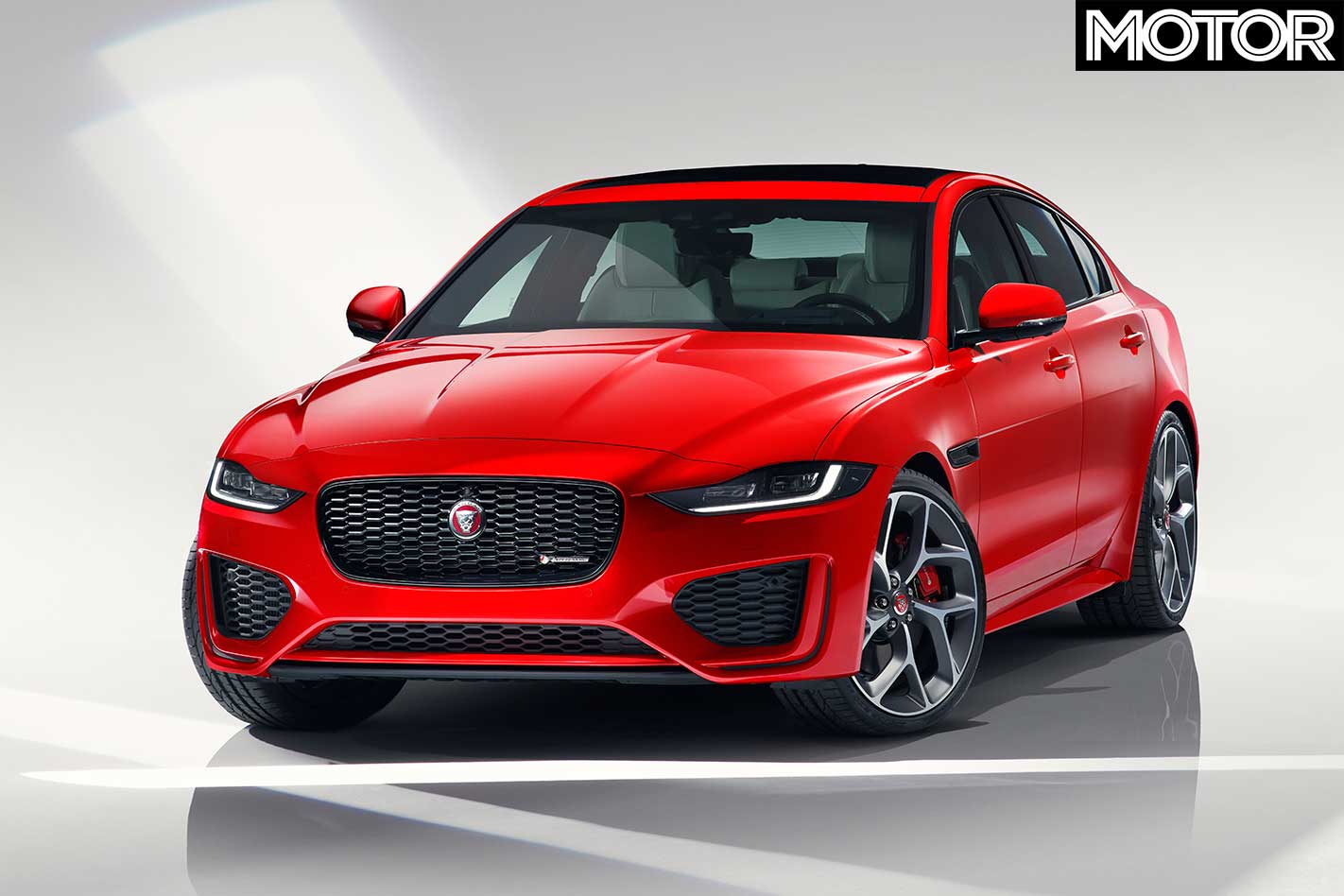
Jaguar-Land Rover plans to massively simplify its Australian range, starting with the 2020 Jaguar XE which launched internationally this week.
JLR will slice the XE range from 11 variants to just two, a single 221kW/400Nm engine offered in a pair of trim levels, SE and HSE, while also significantly paring back the number of options.
JLR spokesman James Scrimshaw explained to MOTOR that recent management changes had improved communication with its global parent, allowing the Australian arm a bigger say in the products it offers and the equipment contained in those products.
“We’ve had a change of management at the top end and I’d say that’s had something to do with it,” said Scrimshaw. “The ability to communicate and talk about our product plans and our inputs to be listened to. [The XE] is the first car where we’ve been able to rationalise the range and where we think the sweet spot is. I think people are going to understand what XE means a lot more than they ever did before.”
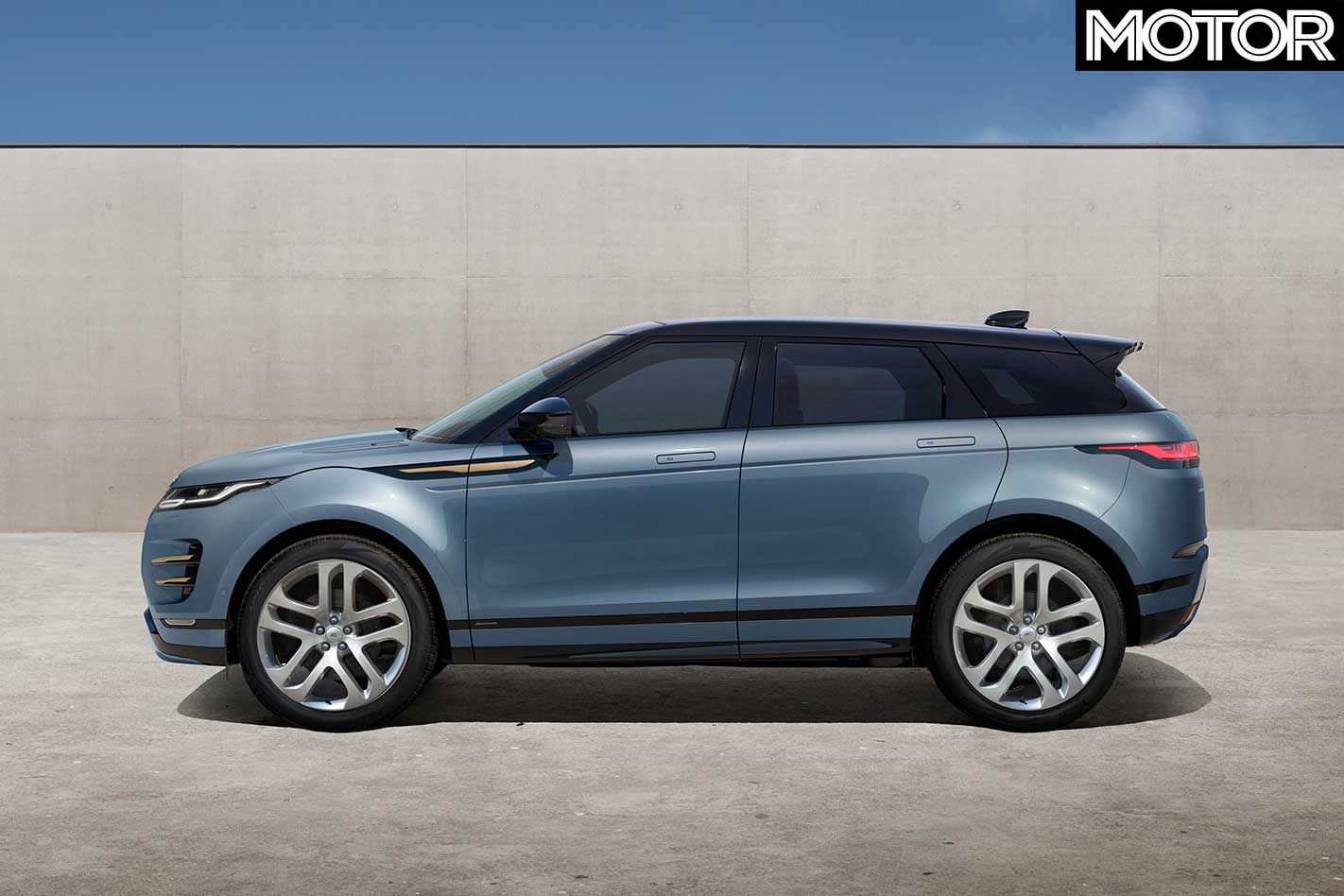
The new Range Rover Evoque will be next to benefit from the chop, but expect to see similar rationalisation across the Jaguar-Land Rover range as models are replaced or receive mid-life updates. Currently, JLR offers virtually every engine and trim level in Australia, resulting in an incredibly complex structure for potential buyers to decipher.
Dealers will be breathing a sigh of relief at the news. Currently, the odds of a dealer demonstrator being representative of the car a customer wants to actually buy are minute, but JLR expects the new range to be much easier to understand.
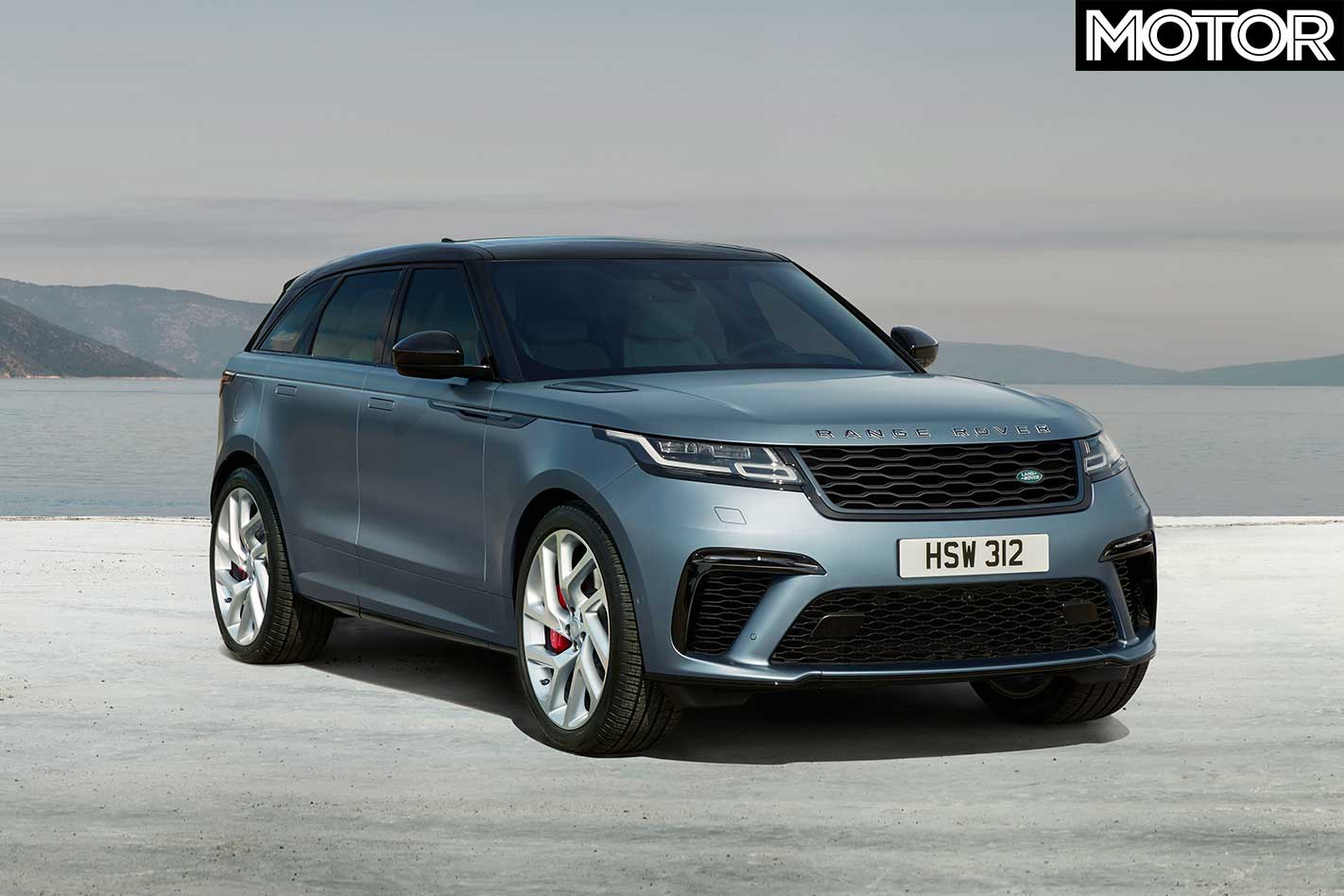
Jaguar has had a strong start to 2019 in a challenging market, sales up 38.5 per cent at the end of March 2019 thanks to strong performance from the XE (+19%), E-Pace (+59%) and F-Type (+180%).
Mercedes-Benz Australia has decided not to throw its hat into the ring for an allocation of the limited-edition AMG GT R Pro, but an even faster AMG GT R Black Series is expected to appear in 2020.
The GT R Pro is a circuit-focused version of AMG’s flagship sports car, using revised suspension settings, more aero and the new AMG Dynamics program, but according to M-B Australia customer demand wasn’t particularly high.
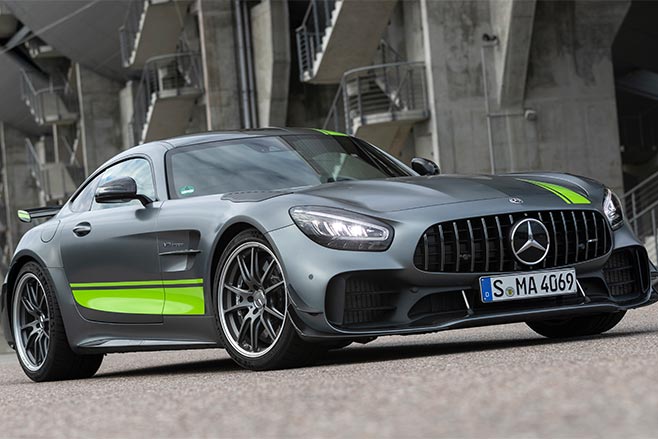
“We didn’t have a huge uptake on GT R Pro,” Mercedes-Benz PR boss Jerry Stamoulis tells MOTOR. “That’s due to a couple of reasons. Based on customer feedback and what we know about our AMG customers, they’re happy with a GT R.
“The GT R is great on road and on track as well, and realistically a lot of customers who want to go that little bit harder on a racetrack, they’ll opt for a GT3 or GT4 (race car). So the [local] uptake was low for GT R Pro and with only 750 units they got snapped up pretty quickly.”
One reason that potential customers have kept their wallets tucked away for now is the long-rumoured Black Series. Mules have been spotted lapping the Nurburgring for some time but the arrival of the GT R Pro seemed to solve that riddle, but even wilder prototypes continue to pound around.
Stamoulis would neither confirm nor deny its existence but said: “A lot of our customers know our history about making something that maybe a little more powerful or dynamic or both and so they’re holding out.”
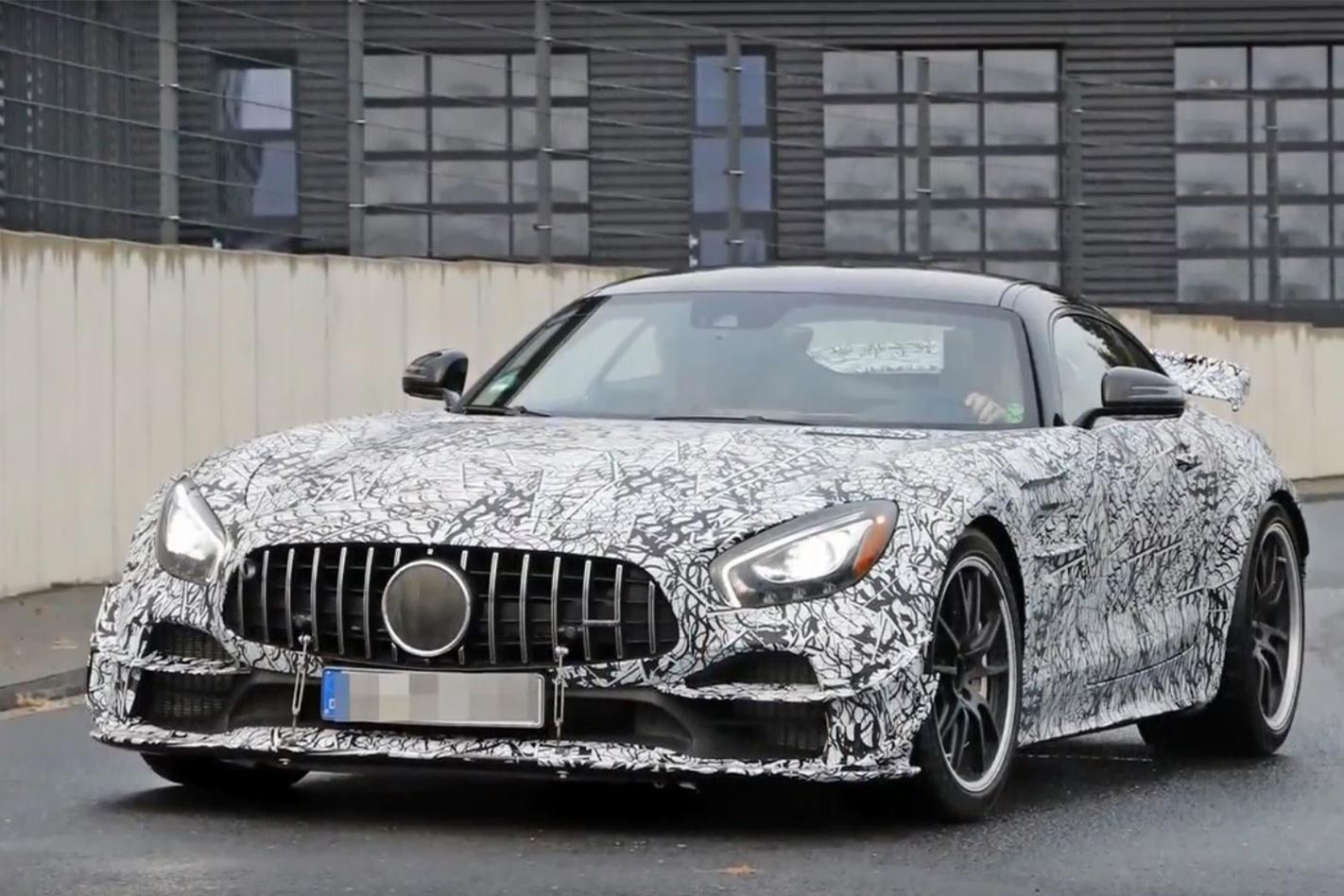
Concrete details are few, but sources close to Mercedes have hinted the GT Black Series will be a significant step above the regular GT range and the new 470kW/900Nm AMG GT 4-door 63 S provides an indication of the ultimate power potential of the 4.0-litre twin-turbo V8.
In other GT news, the facelifted range, including GT S, GT C and GT R, is expected to land in Australia in Q3 2019.
