
The Consumer Electronics Show (CES) in Las Vegas, long the launchpad for the latest tech in communications, computing and home entertainment, is steadily becoming popular with car manufacturers looking to showcase their new technology, future concepts and even new models.
We can understand why. After all, with new car buyers increasingly demanding more sophisticated technology inside their cars – and carmakers also keen to push the boundaries beyond combustion engines – CES in many ways makes a more appropriate environment to announce the latest-and-greatest developments in automotive than a traditional car show.
Here are some just some of the amazing products and ideas that wowed tech-heads in Las Vegas this week.
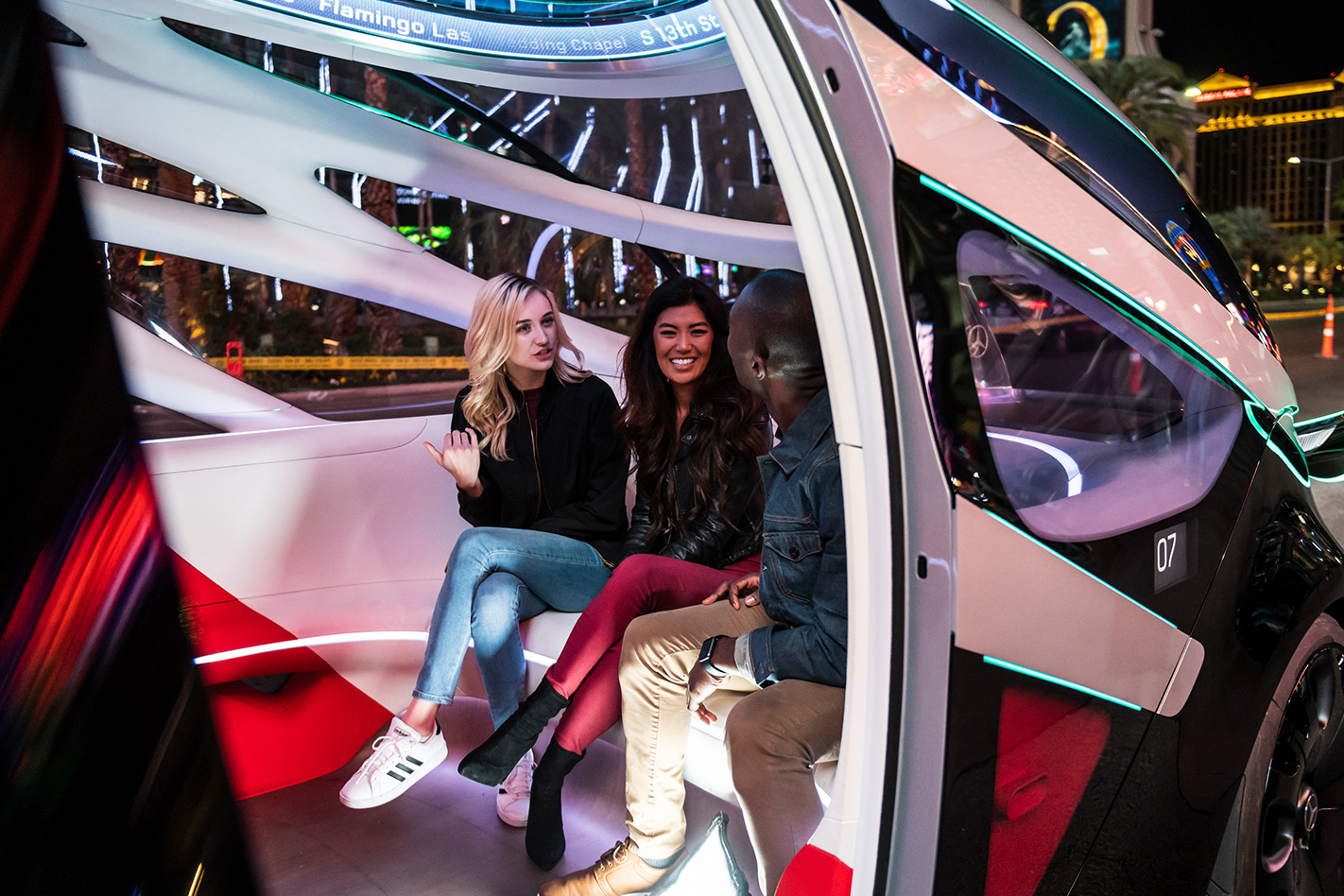
See more images in the above picture gallery
2019 Mercedes-Benz CLA
Benz snubbed this month’s Detroit Motor Show to reveal the next generation Mercedes-Benz CLA at CES 2019 instead. The all-new CLA is following in the path of the recently launched Mercedes-Benz A-Class, offering levels of technology not before seen in Merc’s smallest four-door coupe – or, in fact, aboard many of its larger, more expensive cars.
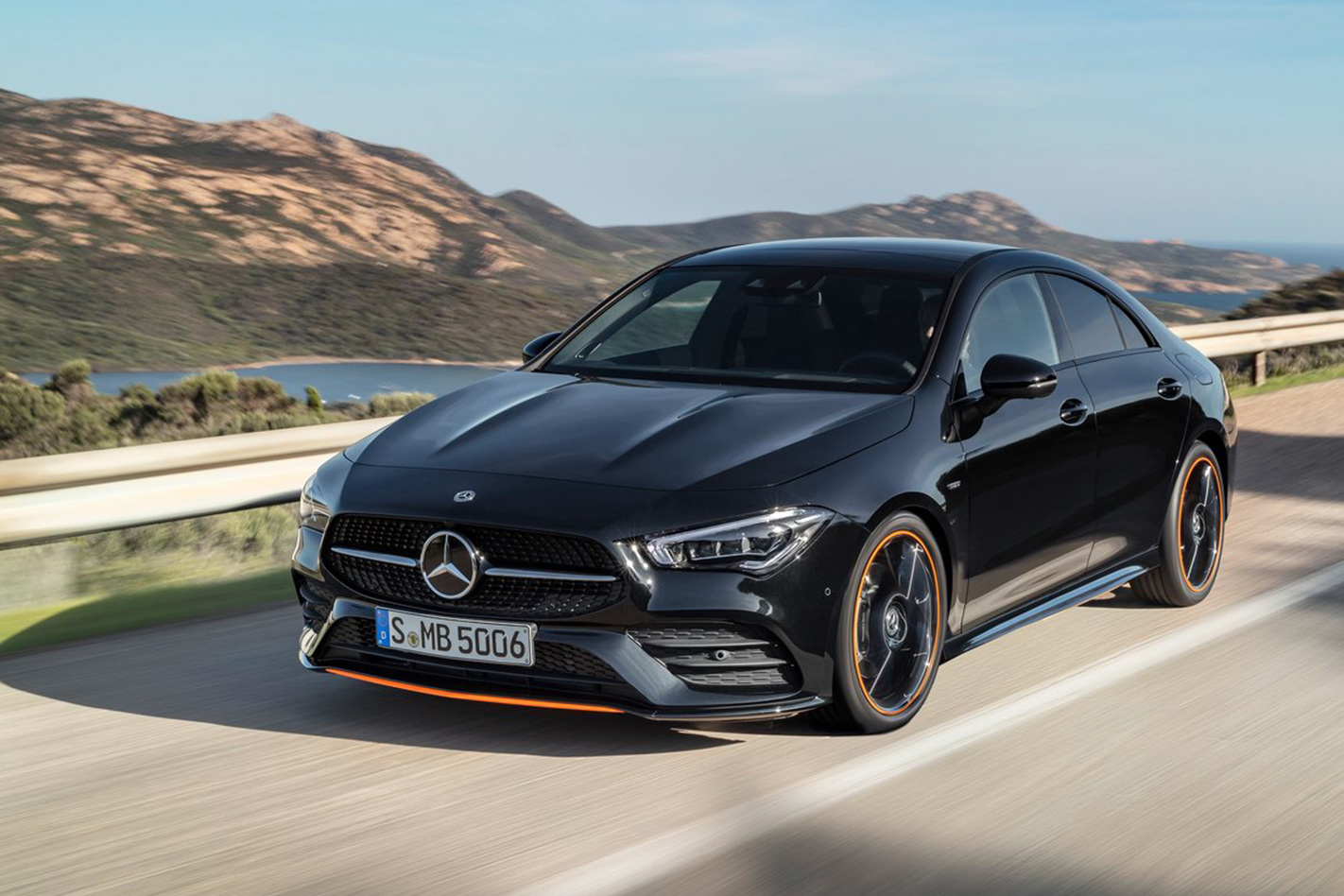
Only the CLA250 was confirmed at CES, which is powered by a 2.0-litre turbocharged four-cylinder petrol engine coupled with a seven-speed dual-clutch transmission, however expect more variants to be announced in due course – including a raucous CLA45 performance flagship.
Mercedes-Benz Vision Urbanetic concept
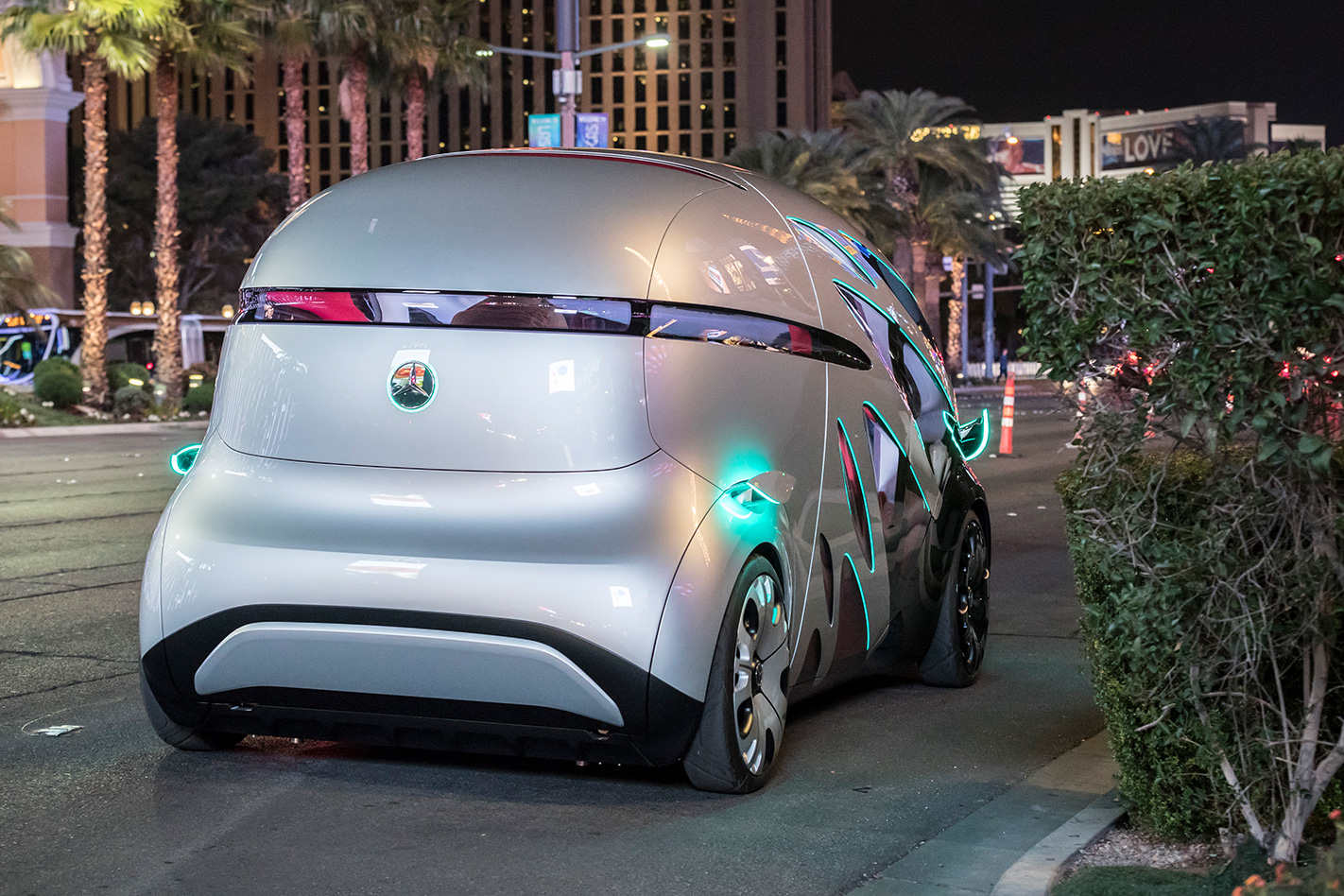
Mercedes-Benz also revealed a futuristic fully-autonomous pod that doubles as a people mover. The Mercedes-Benz Vision Urbanetic is based on an electrically-powered chassis and features a 5.14m body whose interior can be altered using cargo or people-mover modules, with the latter holding up to 12 people.
Users will be able to summon the vehicle and choose which interior configuration they require via a phone app, and once inside a 360-degree halo display on the ceiling that uses augmented reality will provide them visual information, such as upcoming stops or interesting facts about their surroundings.
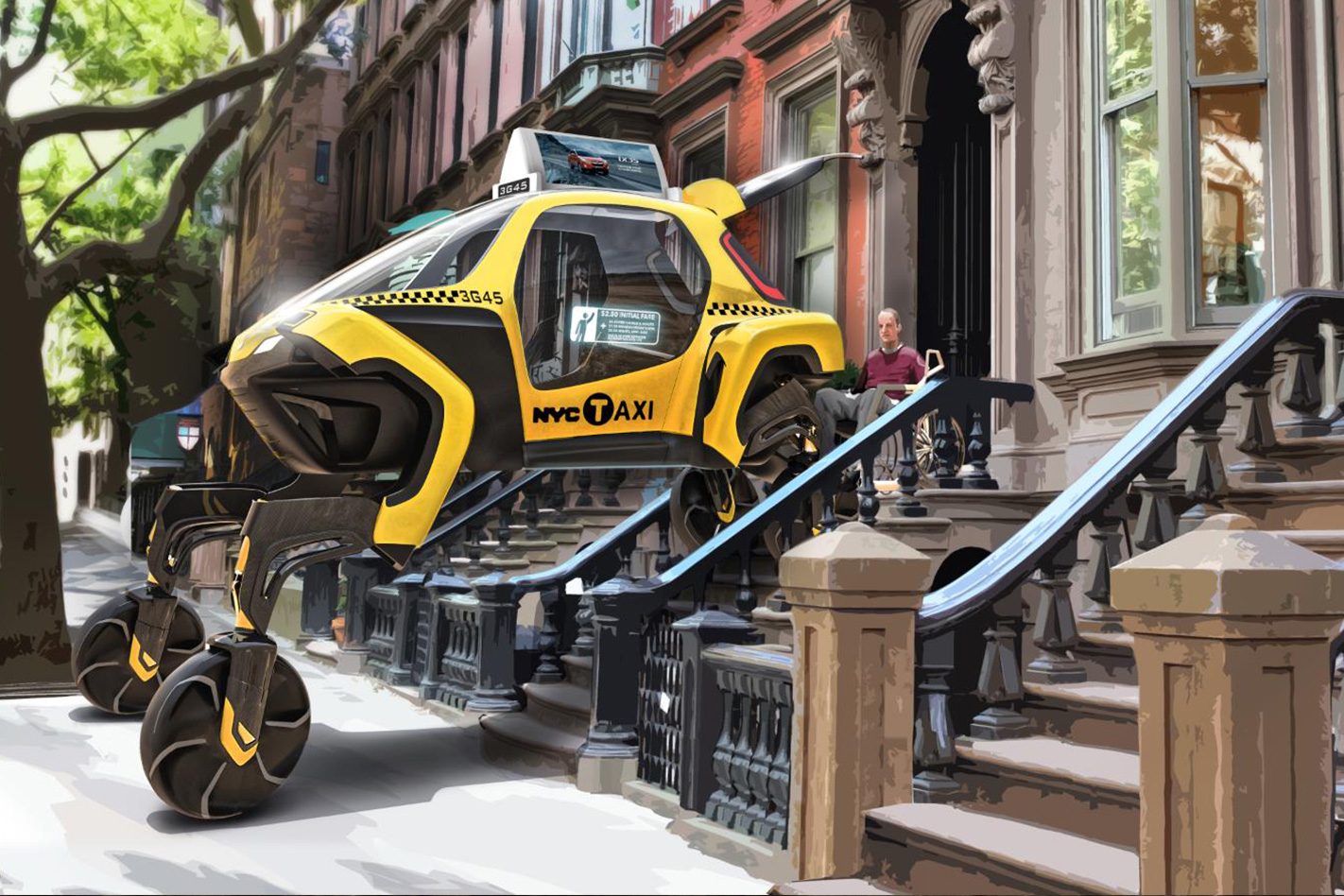
Hyundai Elevate Walking Car concept
Designed with disaster-zone rescue in mind, the futuristic Hyundai Elevate Ultimate Mobility Vehicle (UMV) has wheels attached to telescopic legs that extend and move in a walking motion to help it negotiate very rough terrain. On normal roads the legs stow into the body to allow the UMV to travel at highway speeds. The wheels can also tilt to be used as feet to enhance the UMV’s climbing ability. It’s both creepy and incredibly cool at the same time.
Hyundai Automated Valet Parking System
The Korean carmaker also showed off an Automated Valet Parking System (AVPS) for electrified Hyundai and Kia vehicles. According to Hyundai the driver arrives at a parking spot with chargers and gets out to allow the car to drive itself to a recharge point. Once the batteries are charged, the AVPS takes the car a parking spot to await the driver’s return.

Hyundai holographic augmented reality
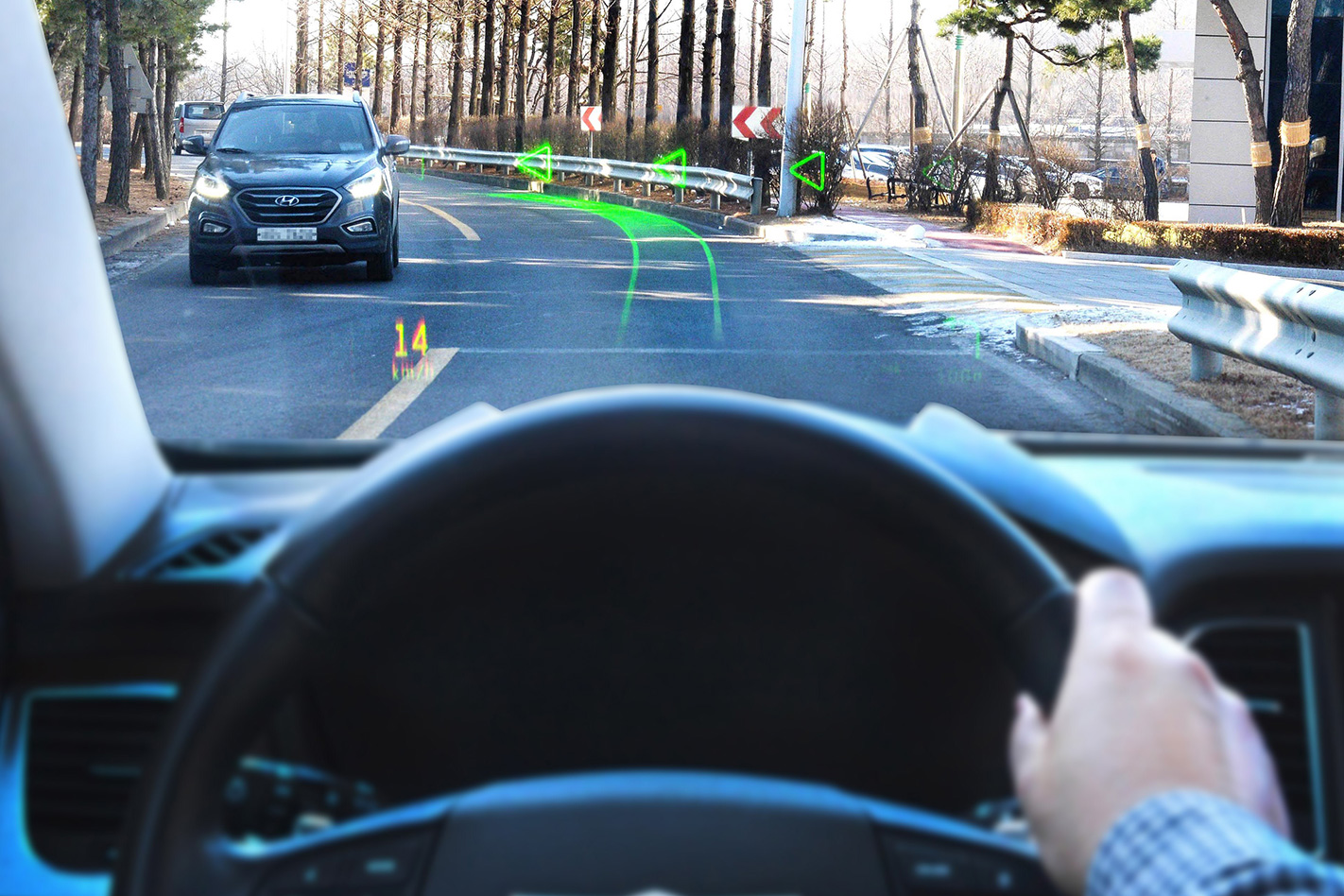
Hyundai and up-and-coming Swiss tech company WayRay AG teamed up to reveal a holographic augmented reality (AR) navigation system that can overlay travel information and advanced driver-assistance systems (ADAS) onto the road.Fitted to a Genesis G80, the advanced head-up display is designed to keep the driver’s eyes on the road by displaying all necessary information straight ahead instead of the away from the eye line in the dashboard or touchscreen. The system can be used to project information such as turn-by-turn instructions, current speed limit and potential collision threats, except in a more three-dimensional way than current head-up display technology.
Nissan I2V augmented reality
Nissan also showed off its augmented reality tech, which it calls an Invisible-to-Visible (I2V) device. The system is designed to allow drivers to “see the invisible” by projecting a superimposed 3D map of the surrounding area, which is built using information from on-board sensors, cameras, and data from nearby vehicles.
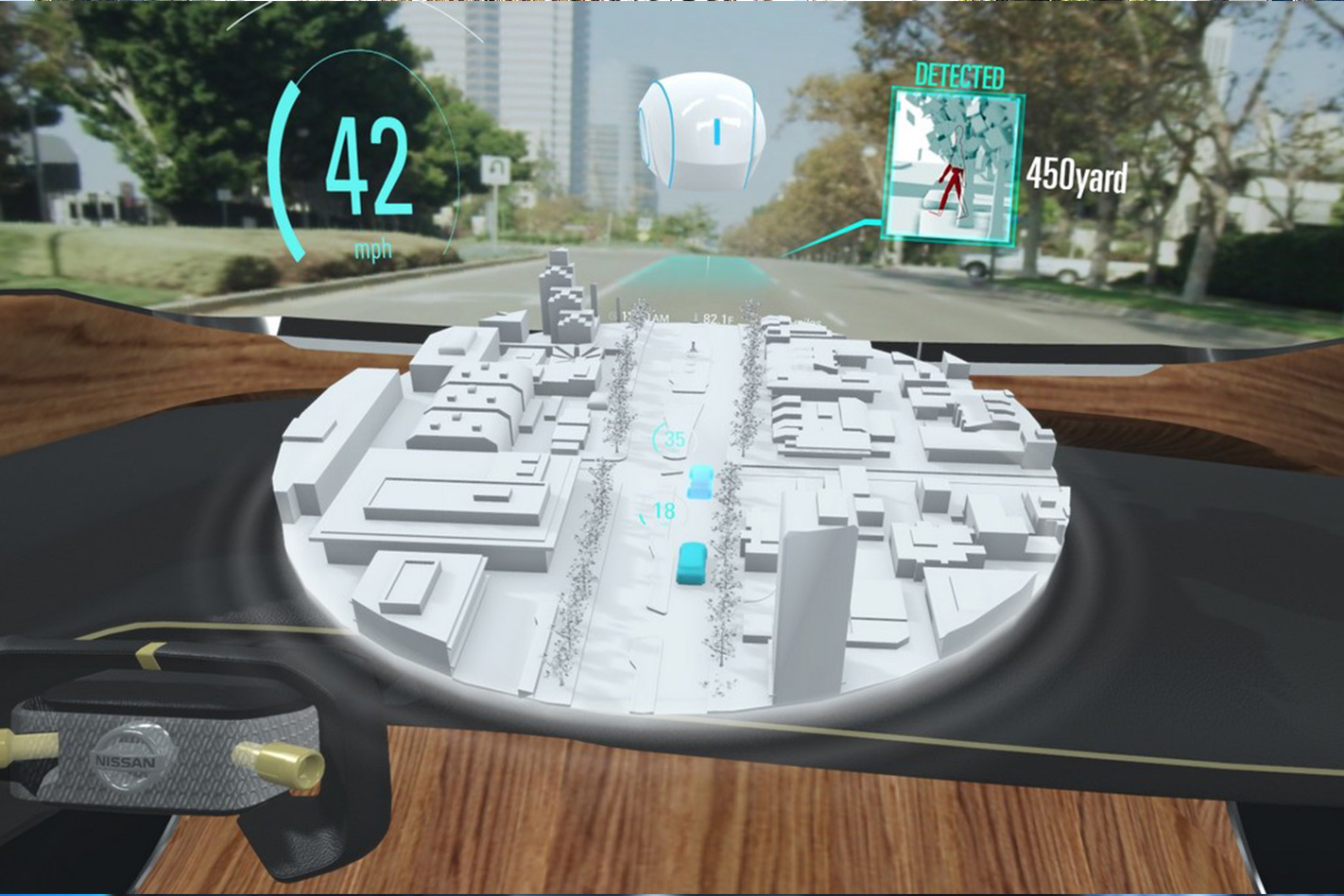
This allows the car to communicate with other similarly-equipped vehicles and ‘see’ them coming, even if they’re behind buildings or around corners, by superimposing a ‘ghost’ image onto the car’s glass to represent where they are in relation to the driver.
Ford C-V2X cellular tech
Ford is aiming to make cars smarter with cellular connected technology that will allow cars to talk with other vehicles and road infrastructure to foresee traffic congestion, detect risks and even know when traffic lights are about to change.
This kind of infrastructure-to-vehicle communication isn’t exactly a new concept, but up until now it’s existed mostly in a concept stage. Ford, however, has committed to launch the new C-V2X tech in the US in 2022, by which time high-speed 5G mobile connectivity will be widespread enough to allow the data-intensive system to work properly.
Harley Davidson Livewire
In a potentially applecart-upsetting move, iconic American motorcycle brand Harley-Davidson has revealed an electric sports motorcycle called the Livewire – the first production Harley to not boast the heavy throb of a combustion engine
Powered by a lithium-ion battery, the Livewire can travel from 0 to 100km/h in less than 3.5 seconds and has a 180km range between charges.
The distinctive Harley rumble is replaced by a more “futuristic”, and sociable, exhaust note with a lot less vibration. Priced at US$29,799 ($39,190), it’s expected to go on sale in Australia some time in 2020 at a price of $41,544.
Porsche Australia is currently evaluating whether to bring the 718 Cayman T and 718 Boxster T down under for customers.
Though it’s likely the two ‘pared back’ variants of the 718 will make it to Oz, nothing has been confirmed by a spokesperson from Porsche’s local arm.
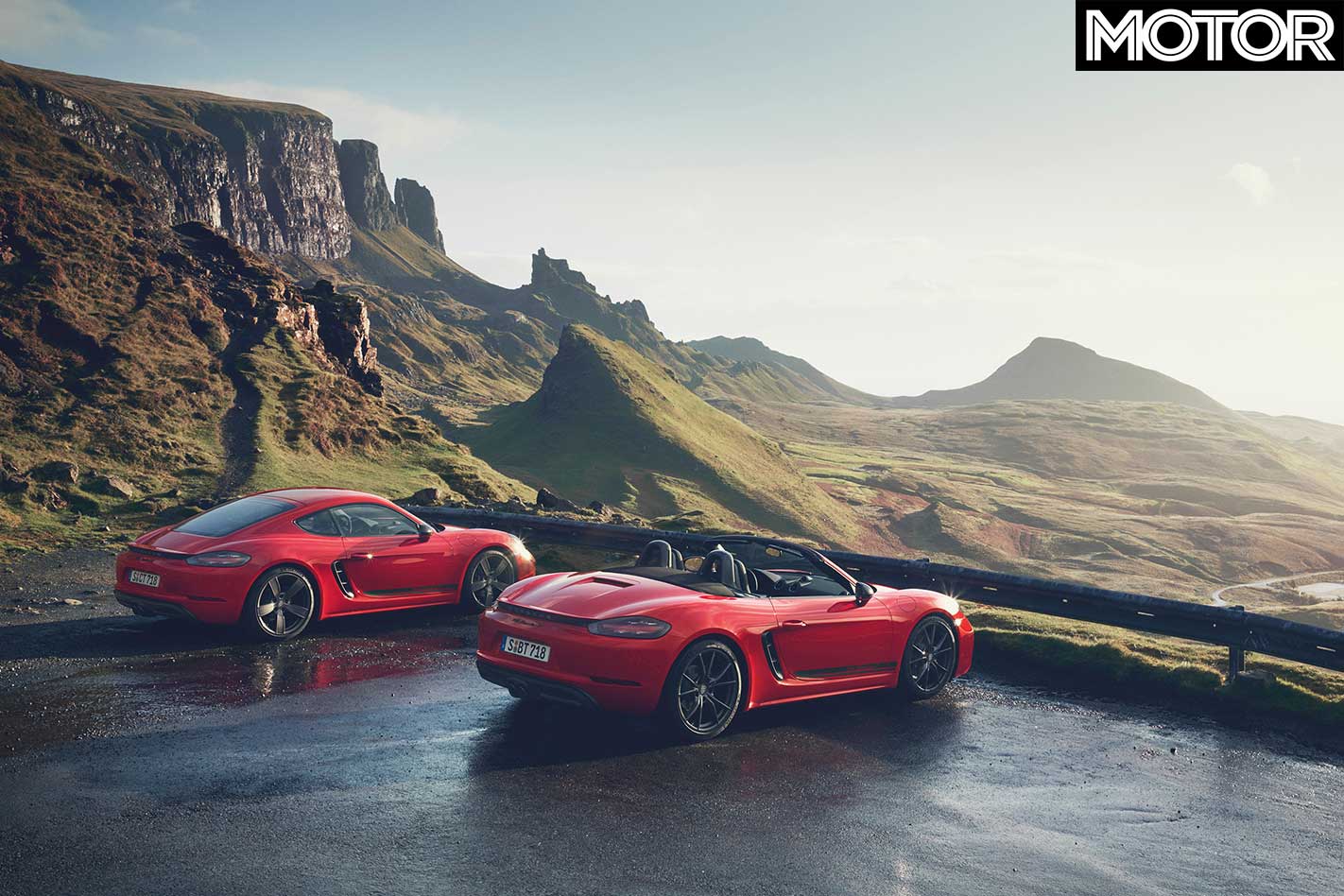
“Porsche Cars Australia is evaluating these models. There is currently no confirmation or timing for the Australian market,” is what MOTOR has been told so far.
But with the 911 Carrera T and GT3 Touring both available here, don’t be surprised if a confirmation is announced soon.
The 718 Ts both take the same approach as the aforementioned 911 models, with fewer superfluous features for a more focused driving experience – and in this case a lower price.
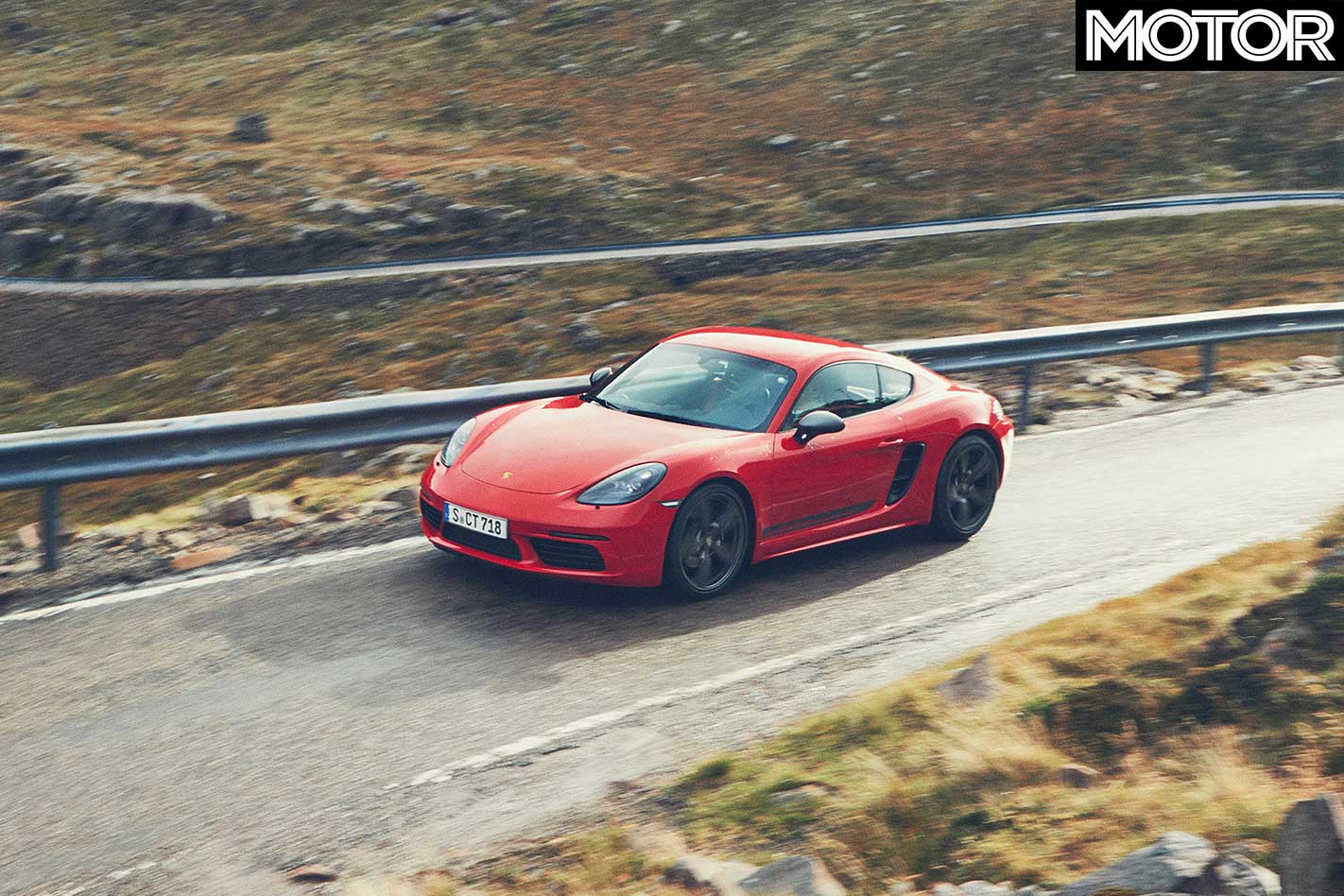
Porsche says the 718 is particularly well suited to the ‘Touring’ philosophy, as it’s already the entry-level sportscar for the Stuttgart brand.
“Traditionally, ‘T’ stands for ‘Touring’ in Porsche models, and is synonymous with driving pleasure in its purest form.
“The 718 T will be most at home on winding country roads, offering the joy of dynamic driving as its ultimate goal. The two-seater accommodates this philosophy through a pared down range of features.”
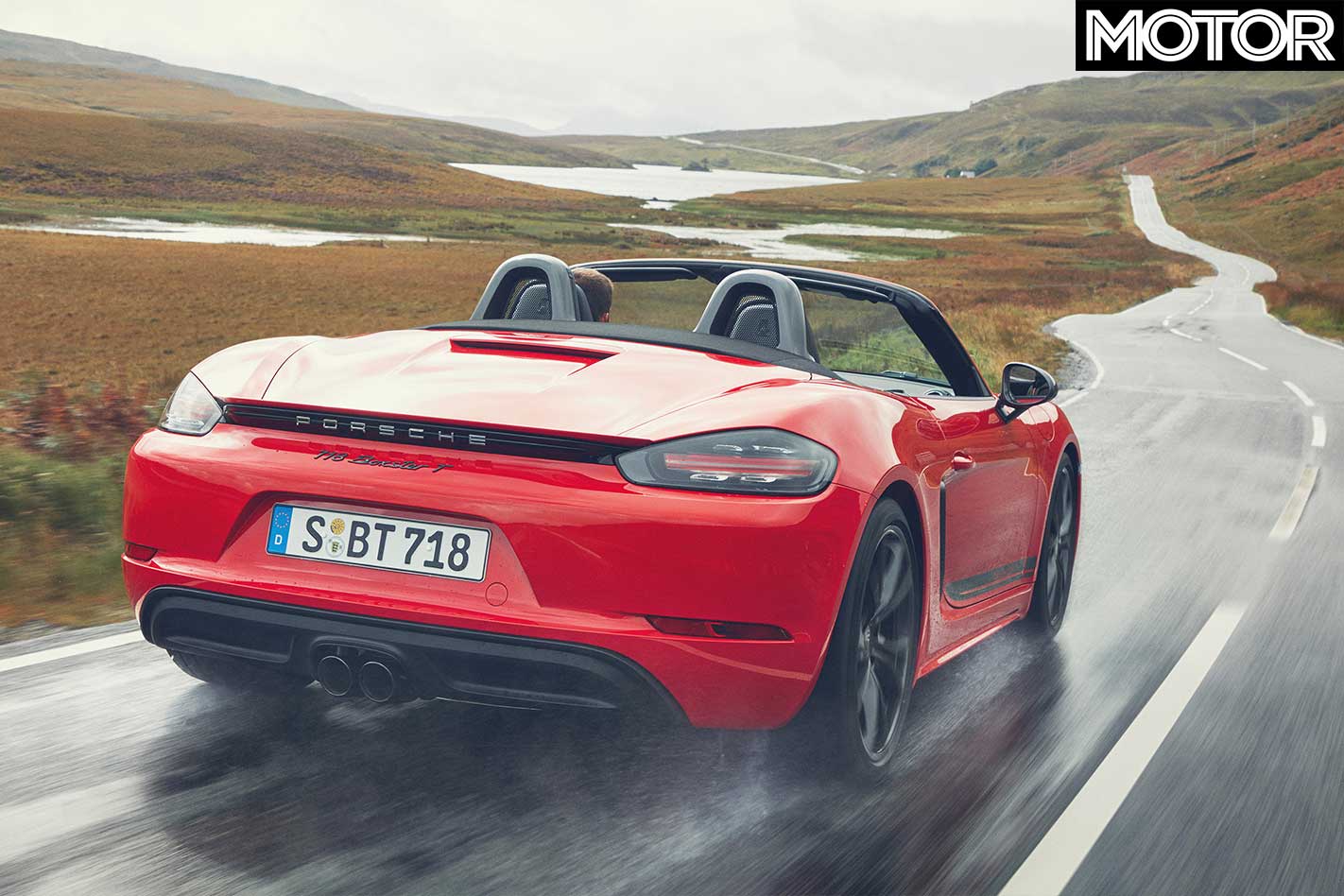
Both feature Porsche’s base 220kW/380Nm 2.0-litre turbo flat four, and are available in six-speed manual or with PDK.
Despite features designed to reduce weight (sports seats and infotainment system delete to name a couple), the 1350kg Cayman T (or 1380kg with PDK) outweighs the standard 718 Cayman’s 1335kg.
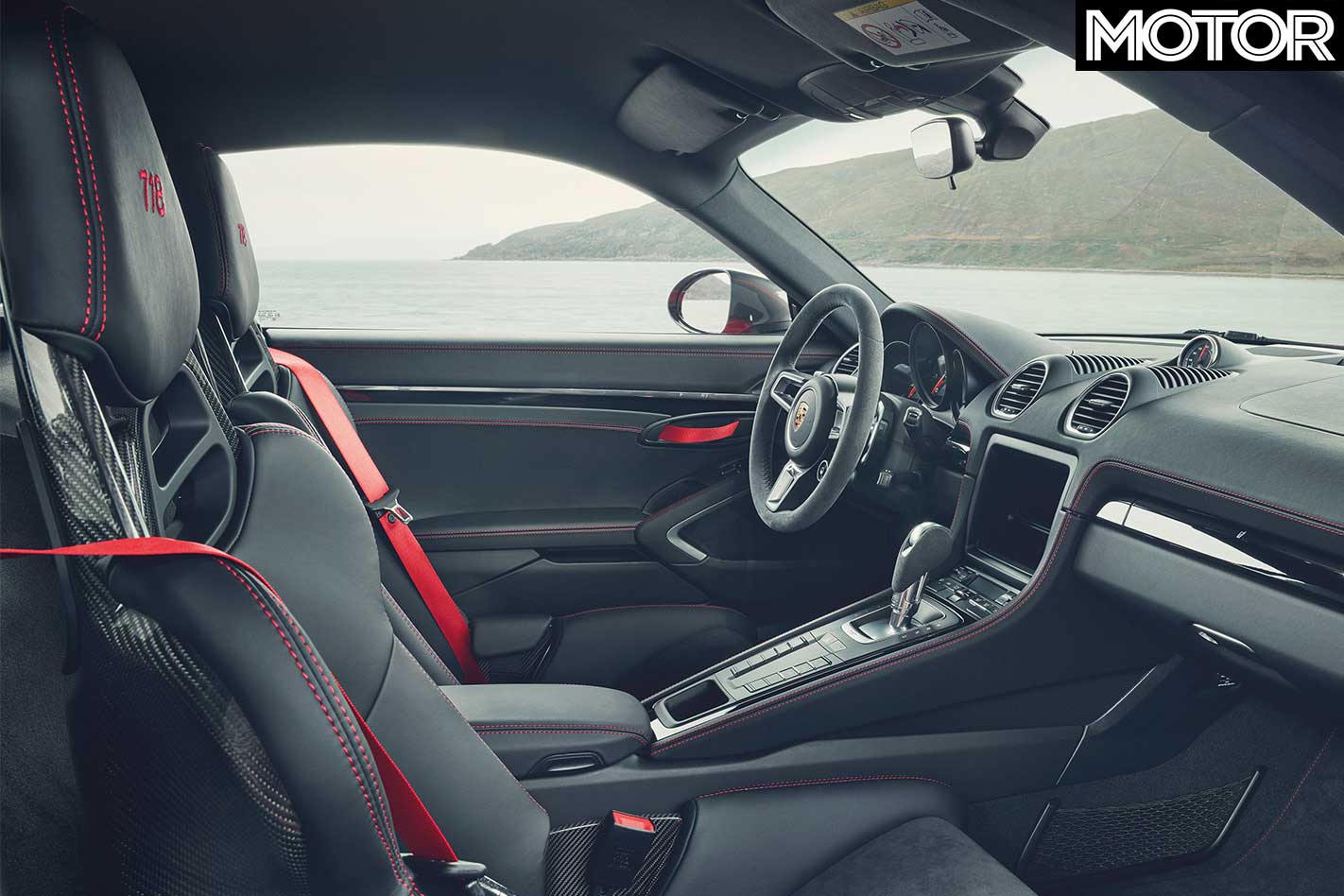
Still, Porsche expects that – in the case of the Boxster T at least – customers will score “a price advantage of five to ten per cent compared to a similarly equipped basic model.”
Whether that translates to local pricing is yet to be seen.
HAVE you ever got yourself into a spot of bother when reversing a trailer or towing on the highway? Plenty have, and towing can be a stressful and frustrating experience – especially when you’re new to it.
Luckily, automotive parts manufacturer Valeo has done its part in making the daunting task a little easier.
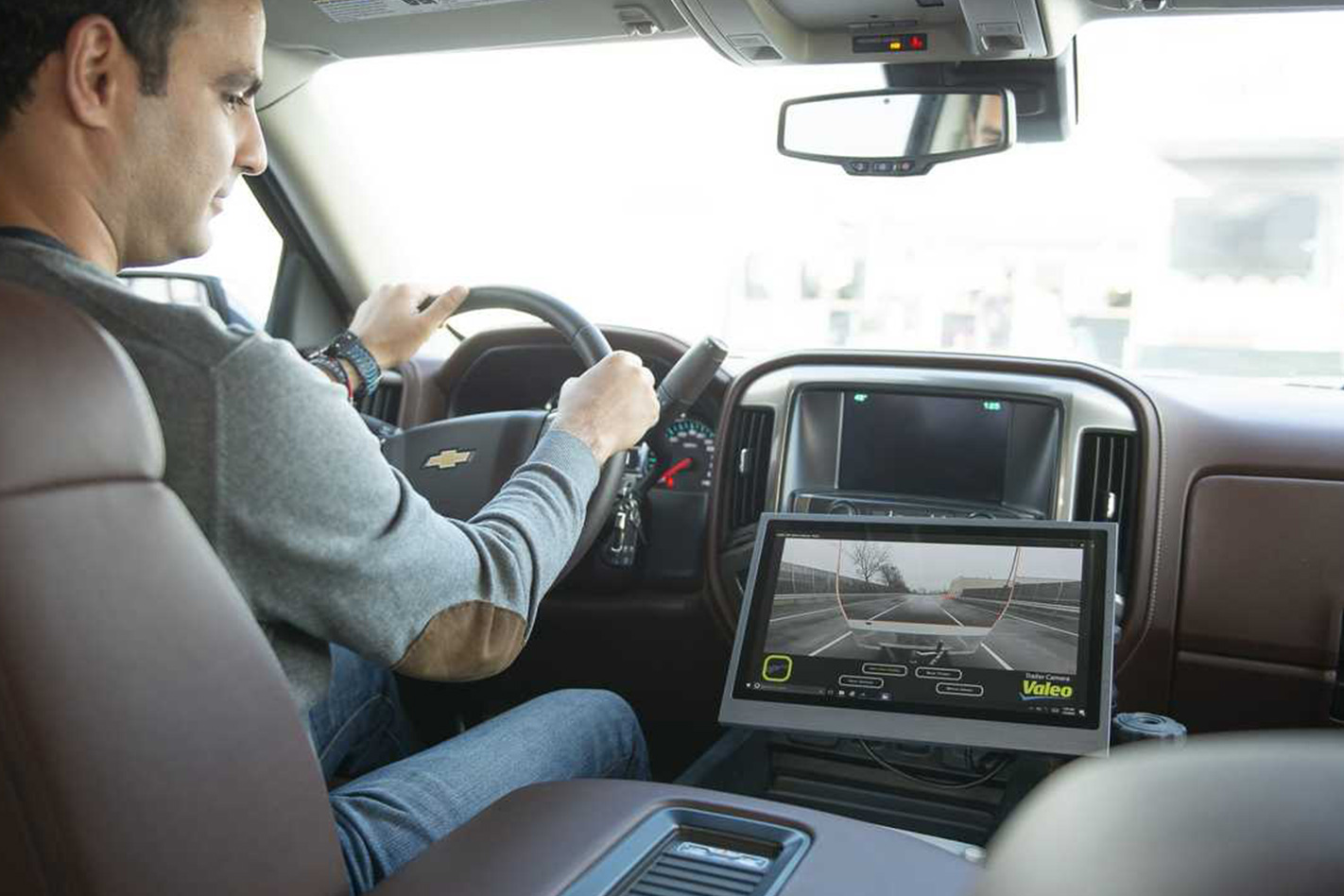
Unveiled at this year’s Consumer Electronics Show in Las Vegas, Valeo’s XtraVue all-seeing camera system enables drivers towing trailers and caravans to see straight through their loads trailing behind them.
The XtraVue “invisible” trailer combines footage from cameras placed on the rear of the trailer and the rear of the car to put together a seamless live feed which is displayed through a tablet-style display screen in the cabin.
The rear-view camera system allows for manoeuvres “with ease, regardless of the size of the trailer or caravan towed,” according to Valeo.
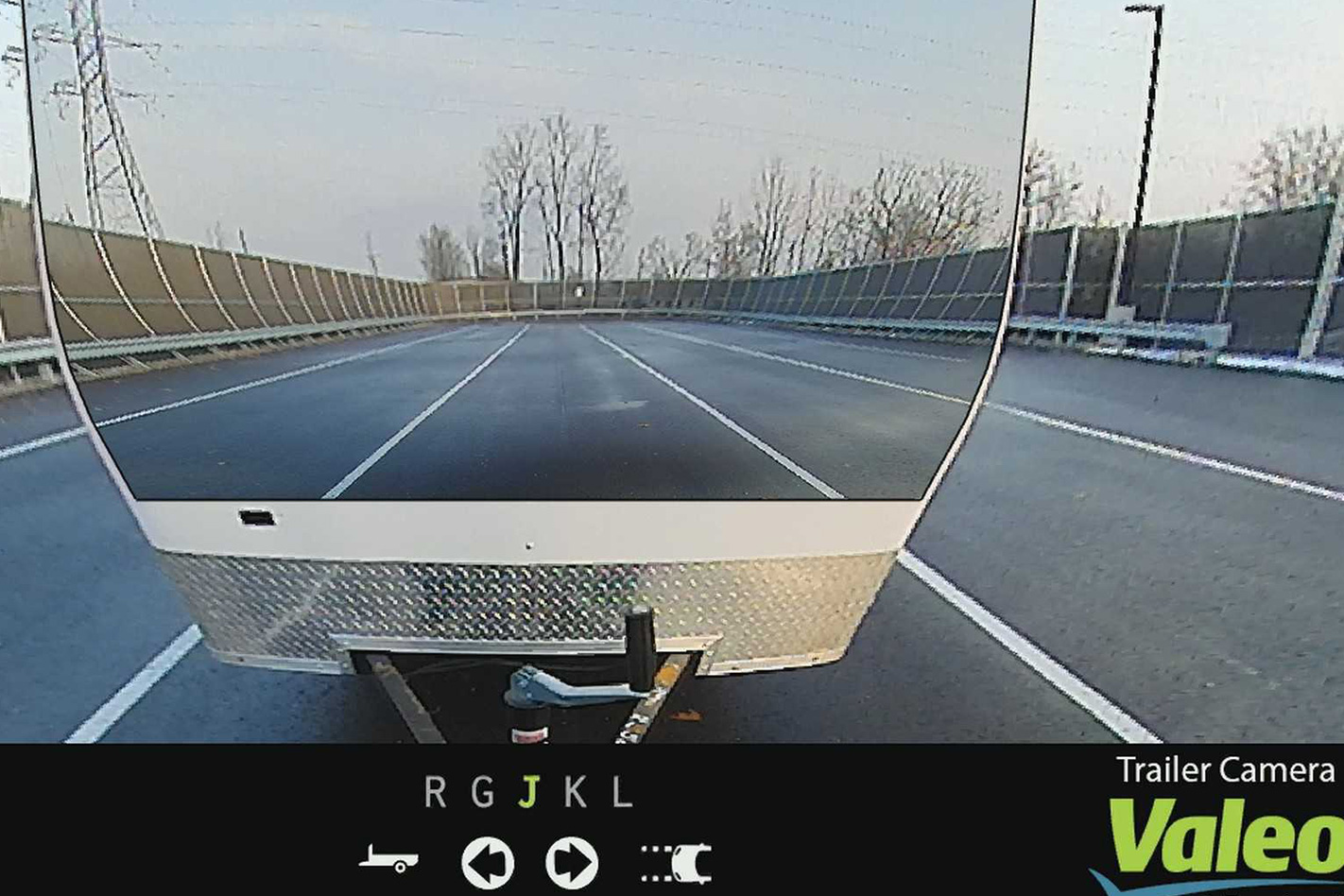
Just like magic, “[It] causes a trailer or caravan to appear invisible in the rear-view mirror of the vehicle towing it.”
The new camera system builds on technology that the Paris-based parts supplier debuted this time last year. Where that system relied on cameras being installed on other cars and relying on their feeds for surrounding vision, the 2019 version allows a clear view using only hardware installed on the vehicle and its trailer.
This should make the XtraVue business case more viable, with customers able to set up their own camera system instead of having to rely on cameras from surrounding infrastructure and the environment. Future production could see the live video feed integrated into a car’s natural infotainment system rather than a separate screen too.
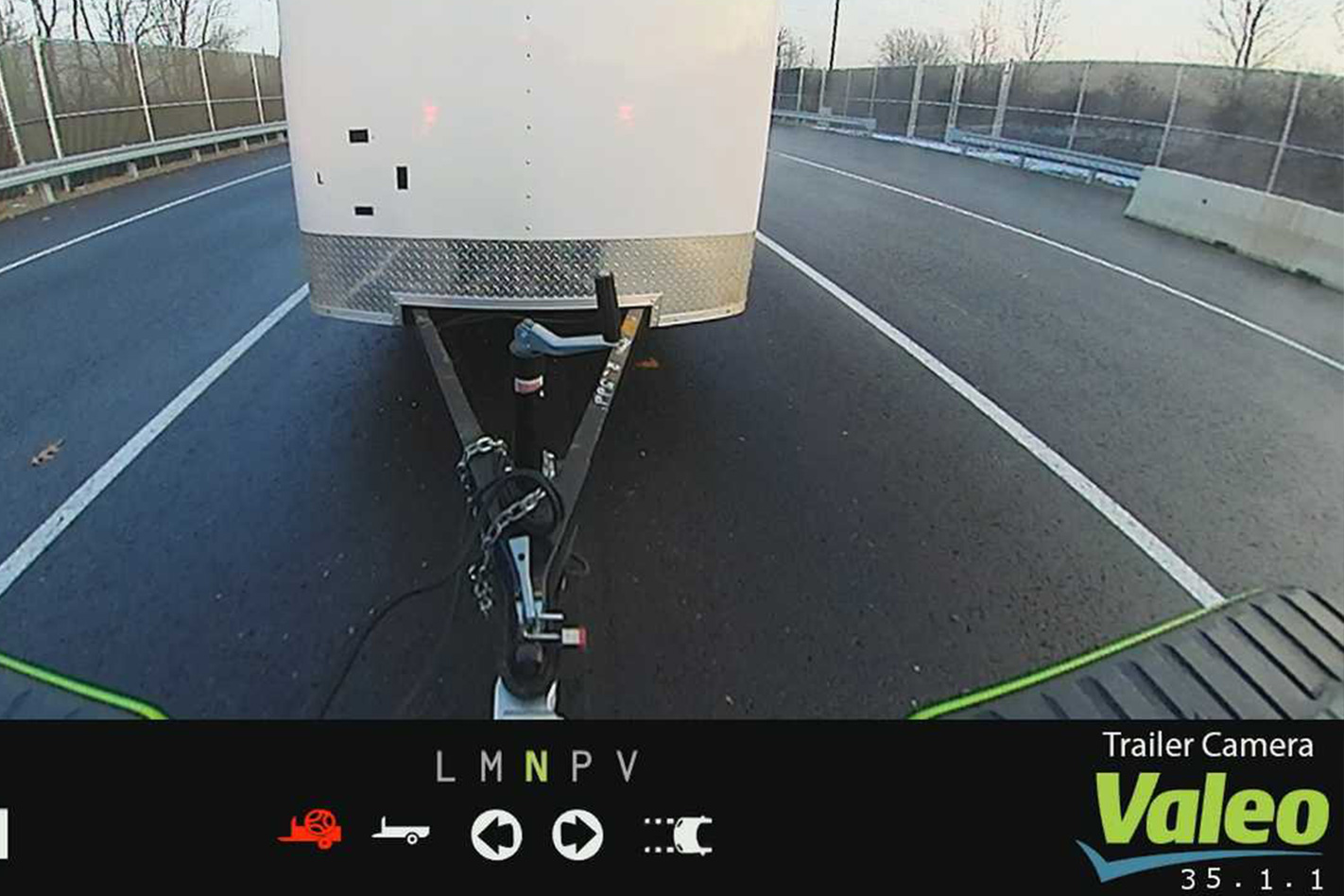
While other trailer reverse camera systems do exist, this version is the only technology that allows drivers to see through their trailer, rather than merely seeing beyond it. Additionally, you’re easily able to see a live feed of who’s riding your tail at any speed, rather than when just reversing or manoeuvring.
The Brabham name is set to return to one of the world’s most renowned motorsport events, with David Brabham officially announcing his intention to enter the World Endurance Championship within a couple of years.
David Brabham is the managing director and lead test driver for Brabham Automotive, as well as being the son of Sir Jack Brabham and winning outright at Le Mans in 2009.

“Returning the Brabham name to Le Mans is something I have been working on for years, so it’s fantastic to make this announcement today.
“Brabham Automotive only launched its first car, the BT62, in May 2018 so we have a long road to travel to earn the right to return to compete at Le Mans.
“That work starts now with a long-term racing commitment. We look forward to developing the BT62 and future products while building a world-class competitive race team around the leading engineering and manufacturing talent we have in the business.”
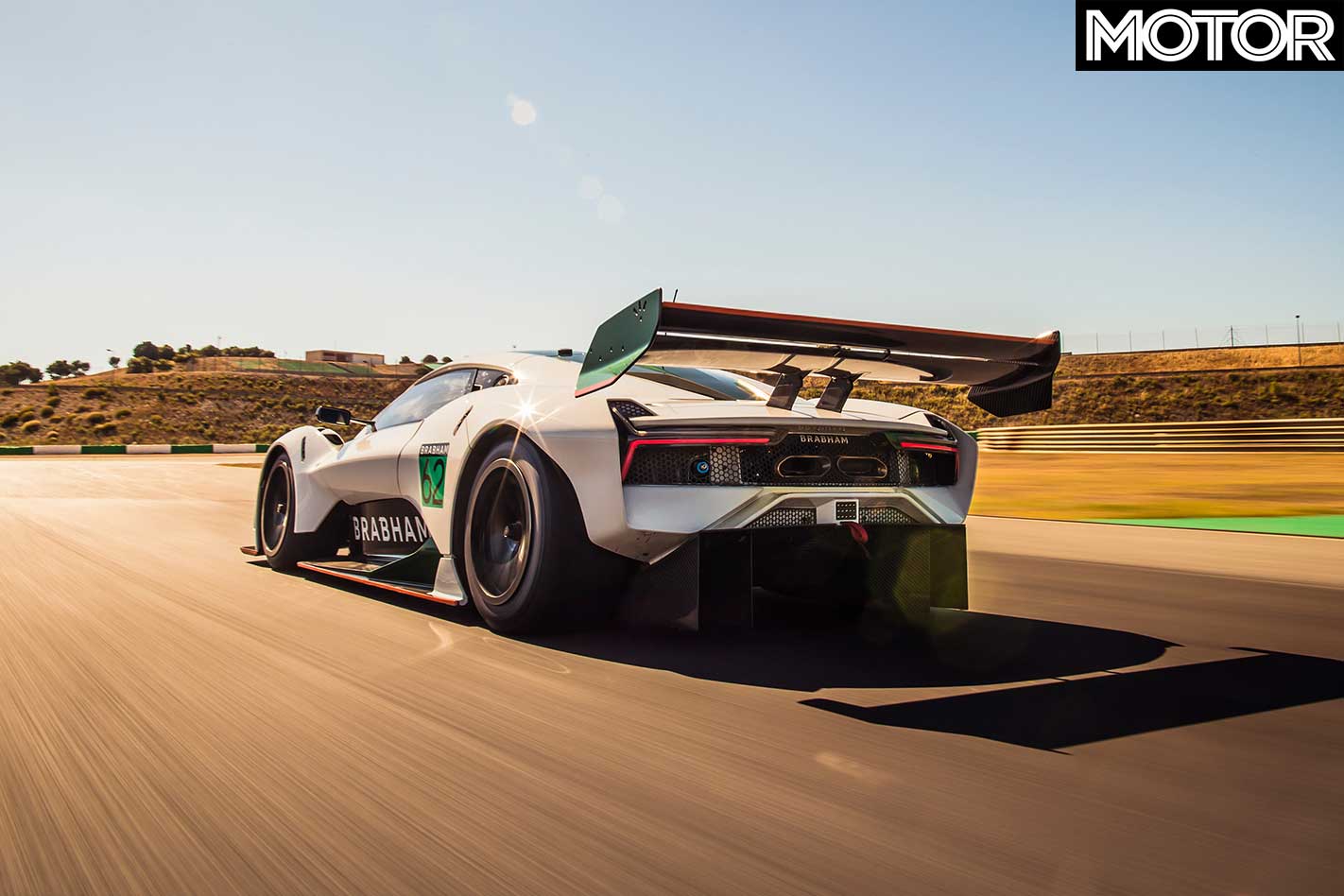
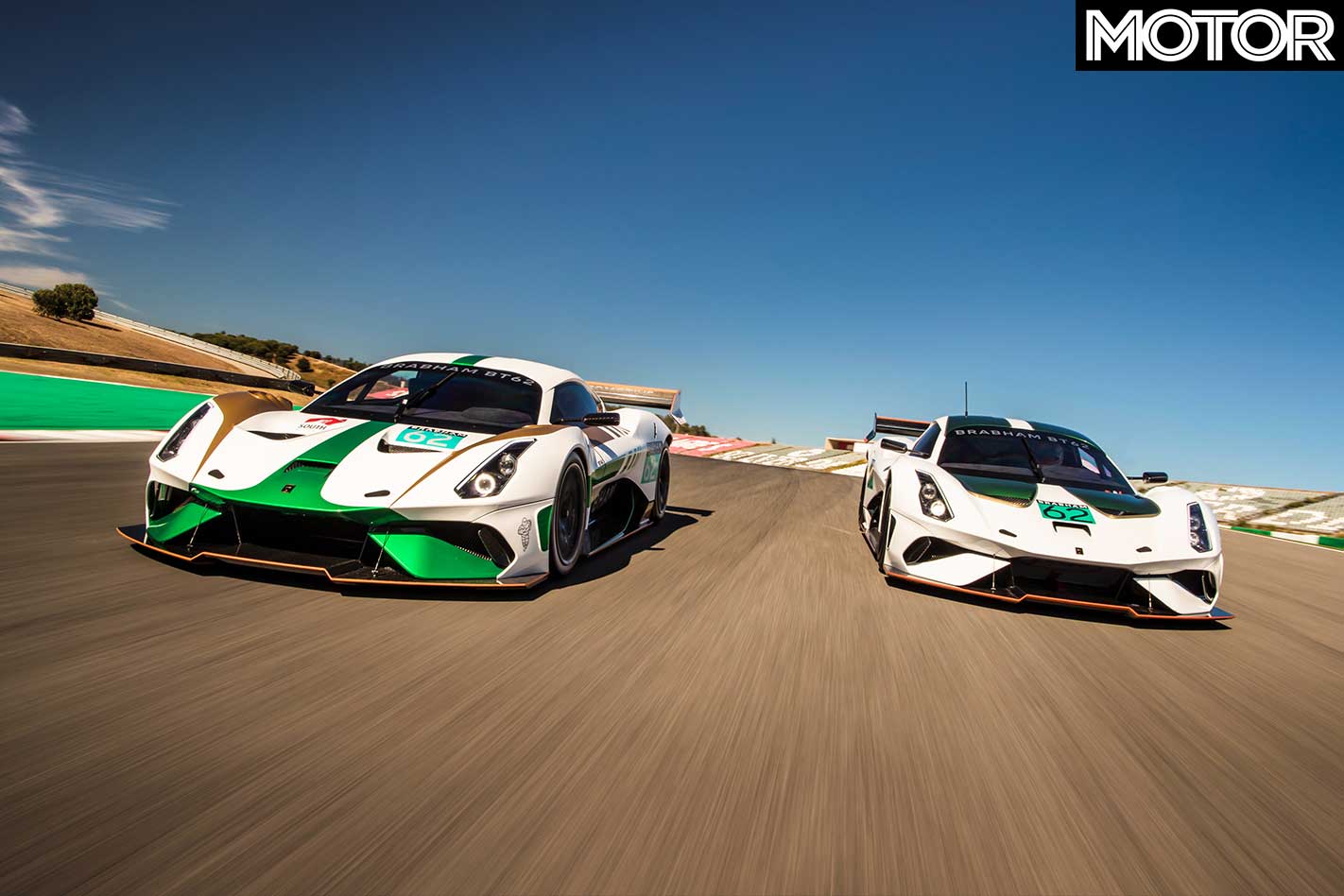
Brabham expects to make the return by 2020 or 2021, entering into the GTE class with an endurance race version of the company’s first product, the BT62.
Brabham says the BT62 Driver Development Programme will be closely related to its WEC efforts, which will make “early owners of the modern Brabham track car part of the test team for Le Mans and providing top level Pro-Am racing opportunities to owners.”
While more details are yet to be revealed to the public, feedback from the WEC community has already been positive.
President of the Automobile Club de l’Ouest (which promotes the 24 hours of Le Mans) Pierre Fillon says
“At Le Mans, the legendary Brabham name instantly conjures up memories of an outstanding family success story. It all began in July 1967 at the only French Grand Prix to be held at the Bugatti Circuit, when three-time Formula One world champion Sir Jack Brabham took the honours in a car sporting the Brabham name.
“Sir Jack’s sons, Geoff and David, perpetuated the family tradition by winning the 24 Hours of Le Mans in 1993 and 2009 respectively, both with Peugeot. For the Automobile Club de l’Ouest, the return of the Brabham name to endurance racing is therefore much more than symbolic.
The second-generation Nissan Leaf may have only just reached its first birthday overseas, but Nissan has already wheeled out its first major change for its sole all-electric model: a new variant with a significantly bigger battery, dubbed the Leaf e+.
The Leaf e+ boasts 25 percent more energy density and 55 percent more overall energy storage from its 62kWh lithium-ion battery pack, despite the battery measuring only fractionally larger than the regular Leaf’s 40kWh battery.
Nissan says that boost in energy storage translates into a circa-40 percent increase in vehicle range, which, if we use the regular Leaf’s real-world range of 270km as a basis, means the Leaf e+ should be able to travel around 380km before needing a recharge.
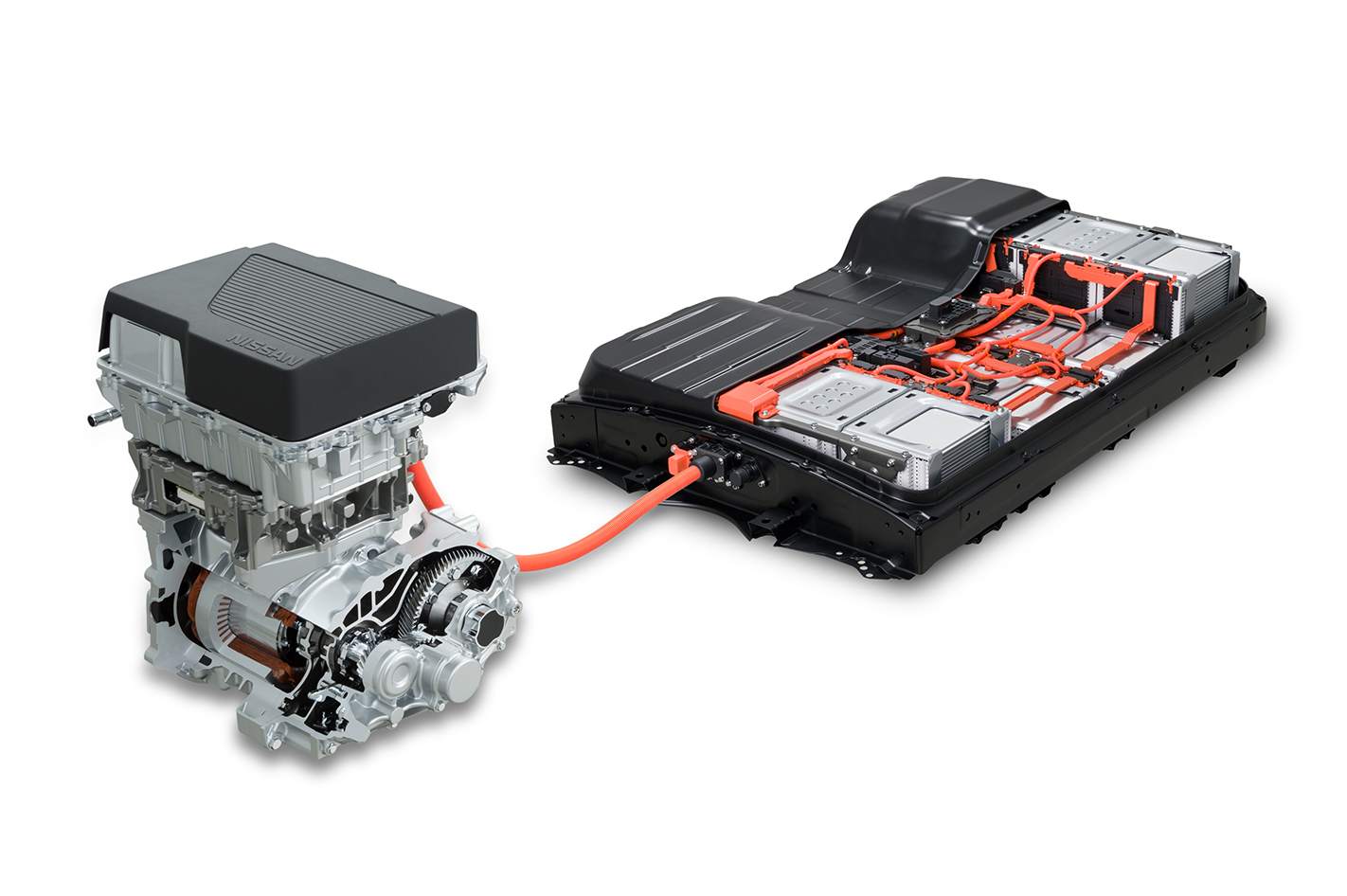
Performance also benefits, not just from the bigger battery, but also a motor upgrade that increases peak power and torque to 160kW and 340Nm respectively – increases of 50kW and 20Nm over the standard 40kWh Leaf. Acceleration between 80-120km/h is claimed to be 13 percent quicker, meaning overtaking slower traffic at highway speeds becomes easier.
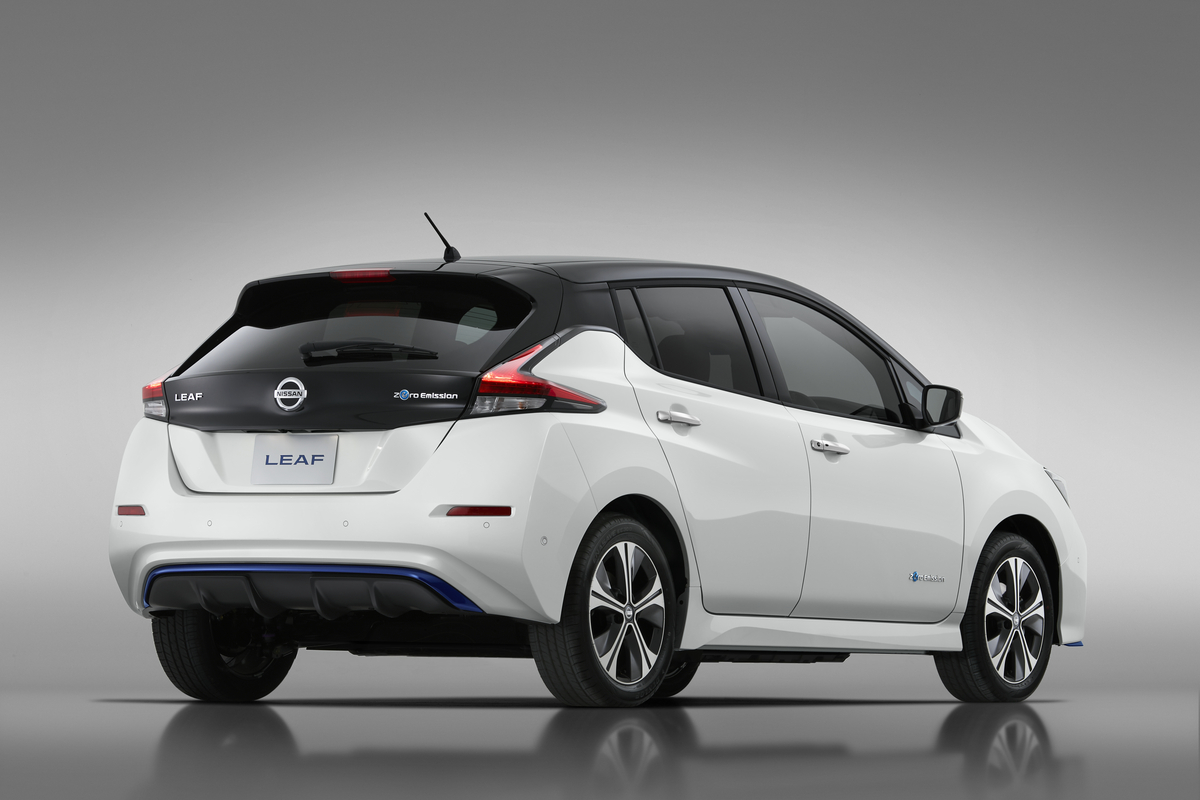
Charging times should also be similar when using a quick charging system, with Nissan saying the new availability of a 70kW (100kW peak) charger should see the Leaf e+ reaching an 80 percent charge in the same 60 minute timeframe as a regular Leaf using a 50kW fast charger.
Accompanying the mechanical changes will be a bigger 8-inch colour touchscreen for the US and European markets, which touts smartphone-like usability and over-the-air software updates, somewhat akin to the slick infotainment systems of EV rival Tesla.
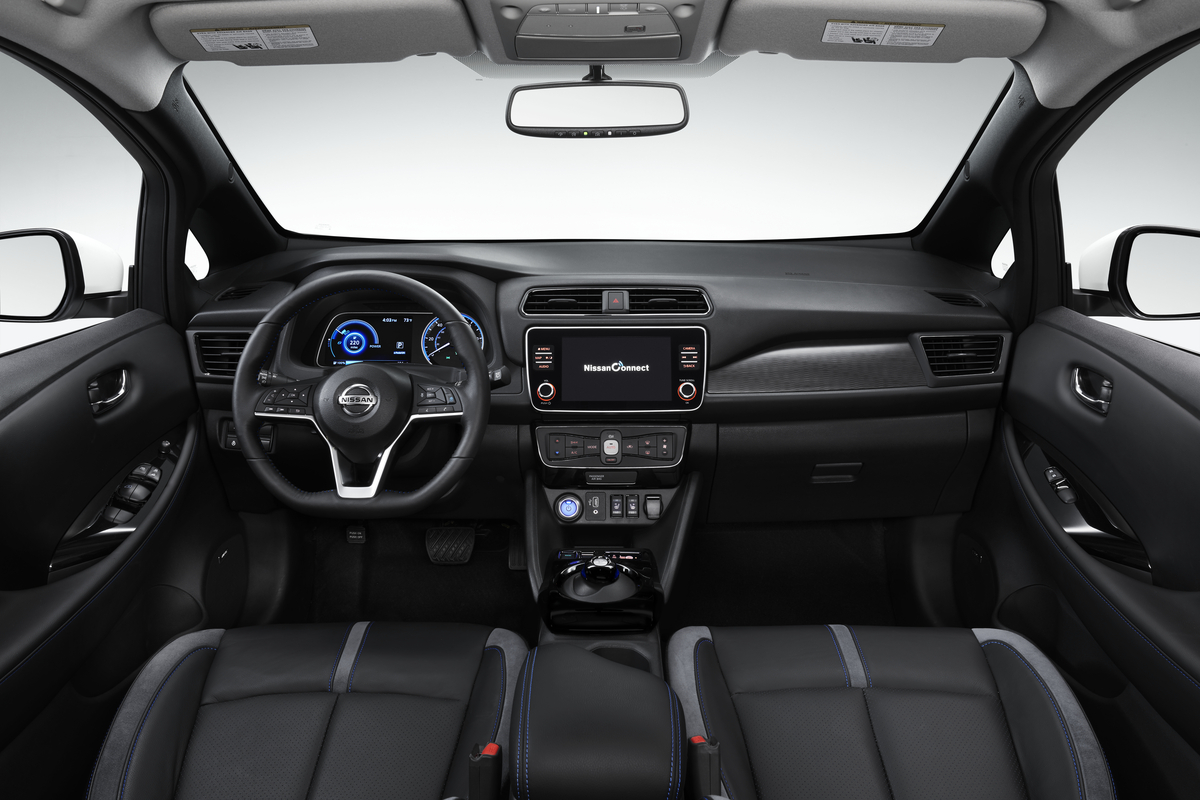
The Australian-market Leaf (the Leaf e+ has yet to be confirmed for a local release) is expected to feature an 8-inch infotainment system as standard, but it’s unclear whether it will be the more modern system offered in Europe and the USA.
In Japan the Nissan Leaf e+ retails with a starting price of 4,162,320 yen (AU$53,913), which represents a 501,120 yen (AU$6490) premium over the 40kWh Leaf. While the regular Nissan Leaf is already slated to go on sale in Australia around the middle of this year, Nissan’s local operation says that while it is interested in bringing the longer-range Leaf e+ to Australian showrooms as well, the variant has yet to be made available to our market.
Woking’s sports car brand has revealed it’s soon to roll out the topless version of its flame-spitting Sport Series Longtail, with the McLaren 600LT Spider appearing in a brief teaser video.
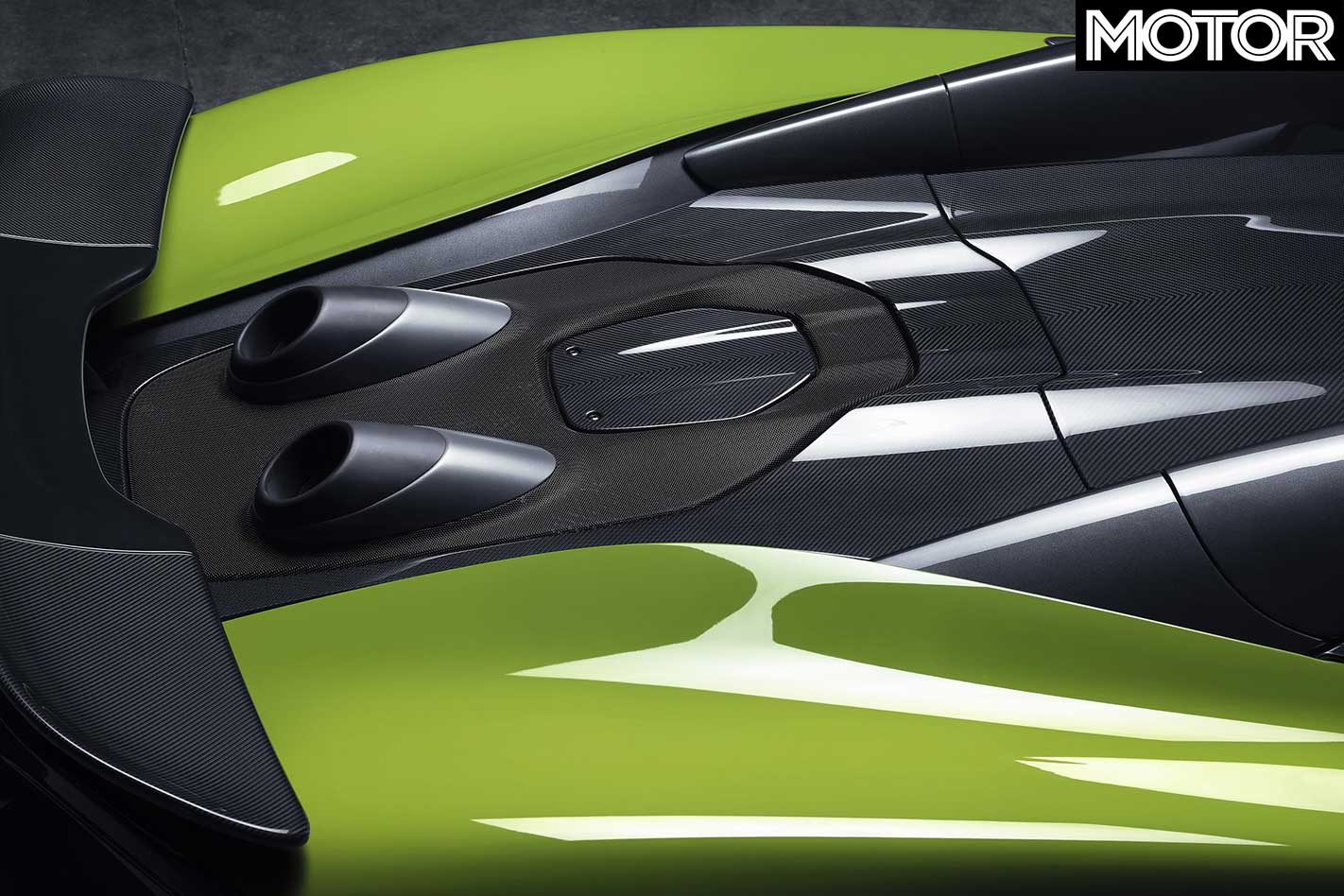
Though Mclaren hasn’t confirmed officially that it’s the Spider version, the ‘600LT’ plate on the car’s posterior gives it away somewhat. McLaren’s Asia Pacific boss George Biggs has also confirmed to MOTOR recently that a 600LT Spider was on the way.
At the 600LT’s local launch, Biggs told MOTOR to expect more Longtail models in the future as demand for high-end, lightweight, driver-focused sportscars increases.
“This is the Coupe obviously, and we’ve said we will bring a Spider version, but we haven’t confirmed details or timing around that,” Biggs said at the 600LT’s local launch.
“I think that the McLaren customer is crying out for that kind of car, high performance, low weight, more aero – so I think we will be responding to that demand in the future.”
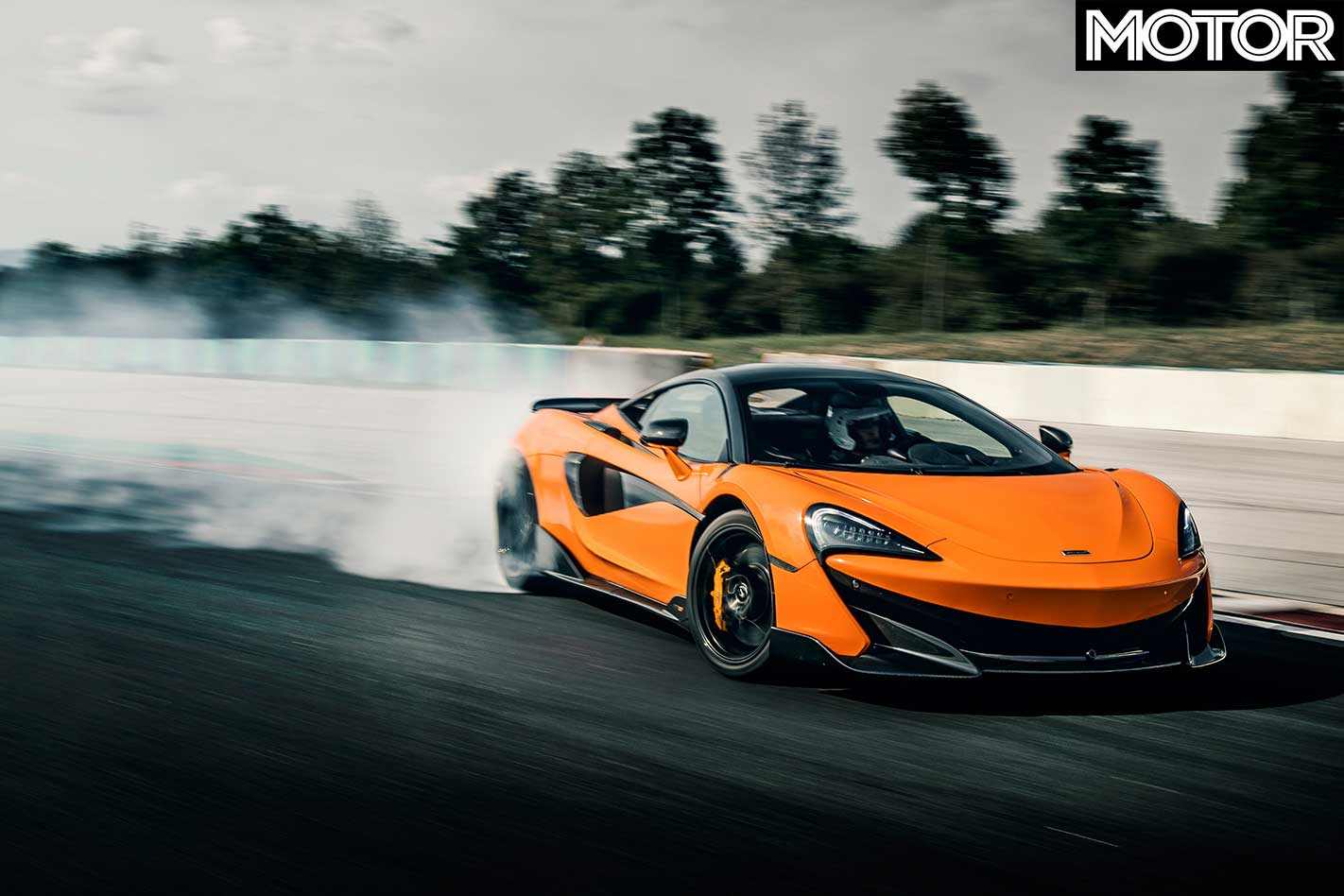
It’s likely we’ll see the 600LT Spider arrive with the same 441kW/620Nm from Woking’s 3.8-litre twin-turbo V8 as the 600LT, with a handful of extra weight on top of its 1356kg. Don’t be surprised if McLaren claims the same 2.9-second dash too 100km/h as the coupe too.
Chances are the 600LT Spider will follow the same production limitations as the Coupe, where cars are built for a set period (12 months for the Coupe) rather than to a number-restricted unit allocation as Biggs revealed at the Coupe’s launch.
“Obviously we’ve taken a slightly different strategy with [the 600LT] and rather than say we’re building a specific number, we’ve said how many months of production we’re going to go through.”
McLaren will confirm the car’s details on Wednesday January 16 UK time.
OUR SECOND annual ‘Future Edition’ is on sale now, where we take stock of motoring’s sometimes uncertain future, and take an in-depth look at the technologies which are being developed around the world.
For this issue we’ve driven more electric cars than in the past 20 years of Wheels. Australia’s first EV Megatest was also conducted, and we learned some valuable lessons about the reality of electric car ownership in this great wide land of ours. We gathered together the current crop of EVs and plug-in hybrids and took them a long way out of their comfort zones.
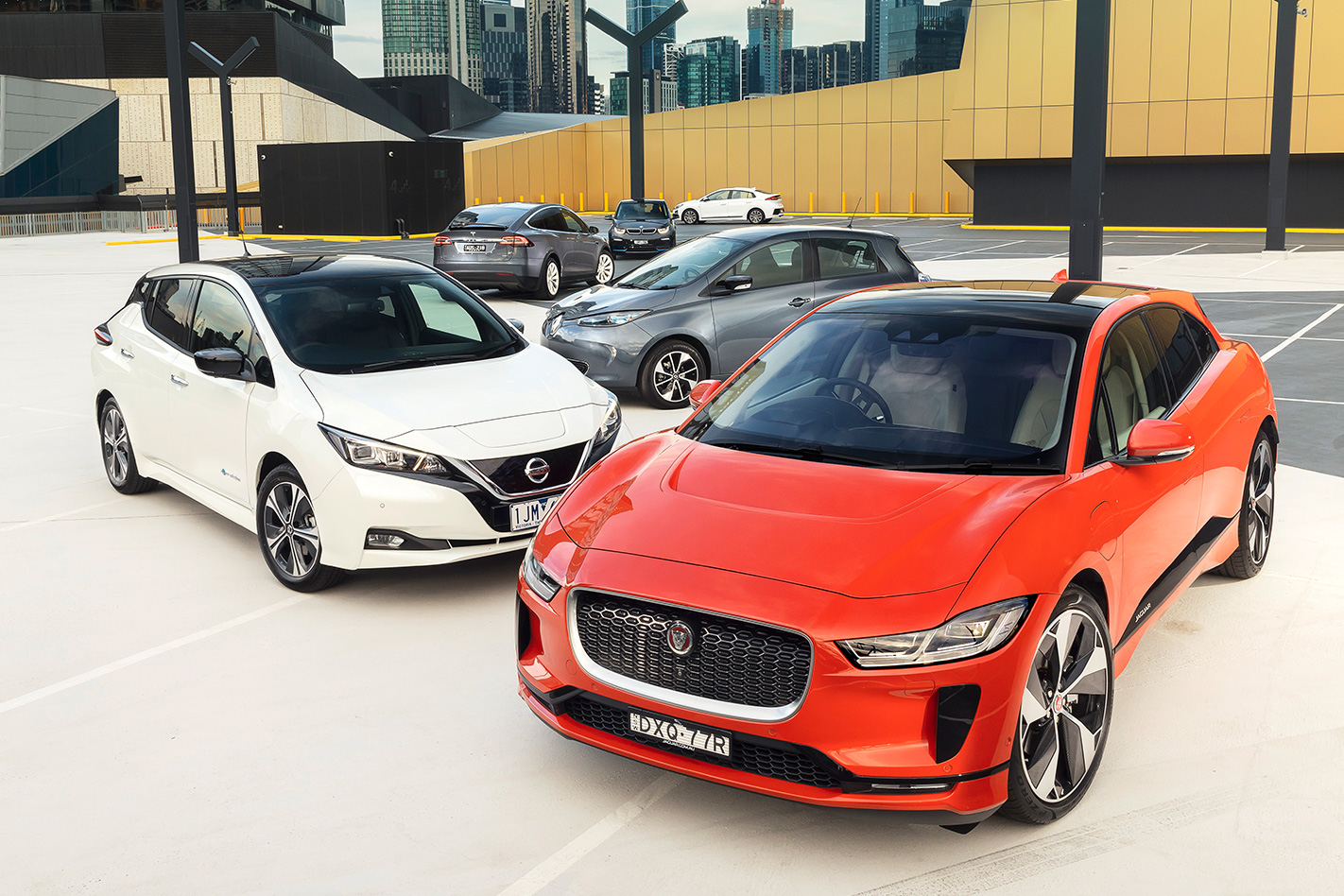
Meanwhile, Ash Westerman was sent to taste the Audi E-Tron, which is looking to take on the Jaguar I-Pace and Tesla Model X.
Closer to home, we took part in an Australian exclusive drive of the Tesla Model 3, to get a better understanding of the Californian disruptor’s most important model to date before it arrives Down Under.
Phil Scott takes a deep dive into the future of autonomous driving, and sits down with Detroit royalty turned EV evangelist Larry Burns to find out why he is backing the electric revolution.
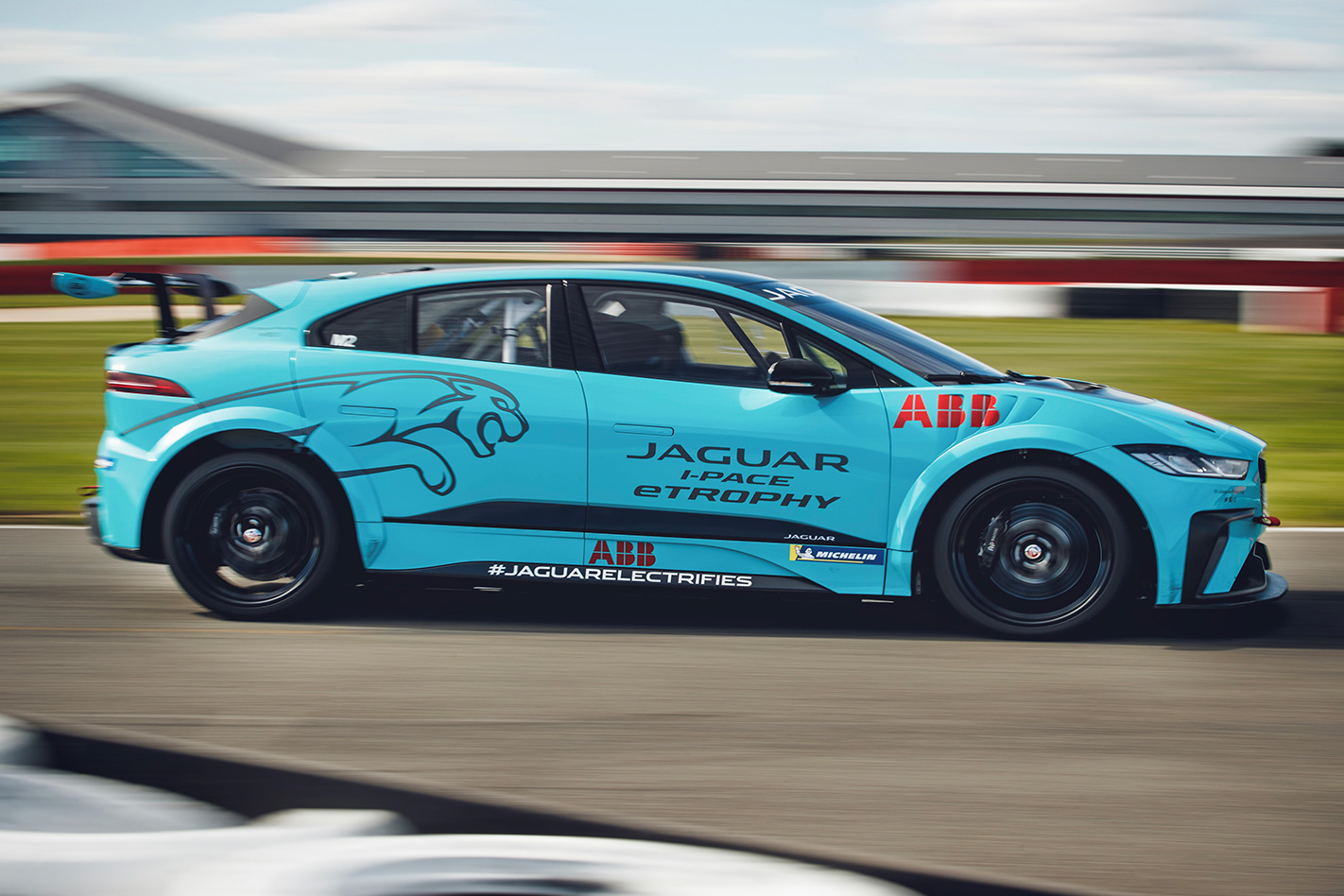
Not even the gas-guzzling world of motorsport is safe from the electric wave, and we tested Jaguar I-Pace racer to get a better understanding of what the future of four-wheeled competition will look like.
As the car industry continues to charge headlong into an electrified future, it’s natural that some performance companies are starting to worry about how their electric cars will sound.
Lamborghini is one such company, and we reveal that the Italian supercar manufacturer is on the cusp of announcing a patent that will change the way we view (and hear) electric cars.
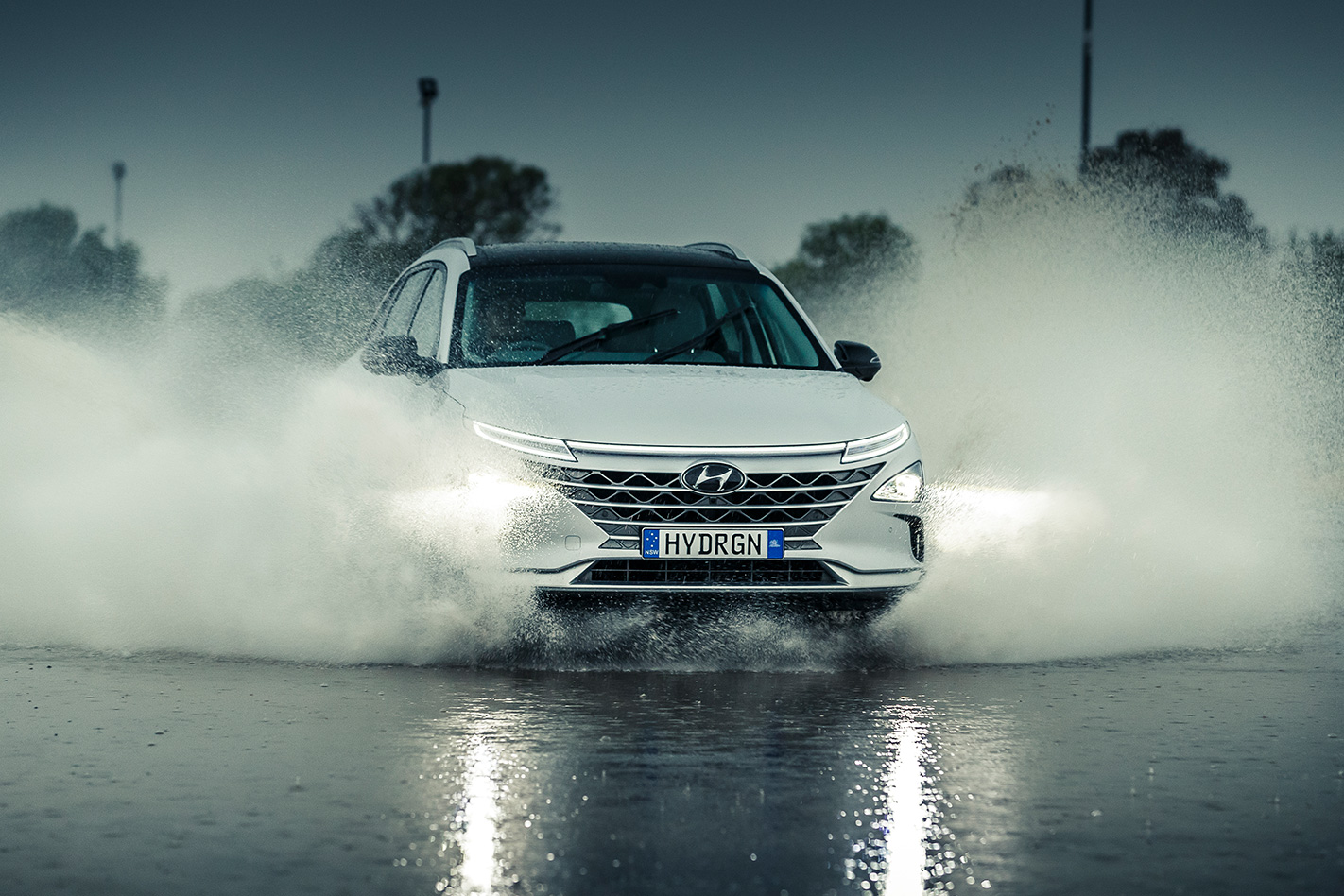
It’s not all electric though, with Hyundai’s hydrogen fuel cell-powered Nexo also driven.
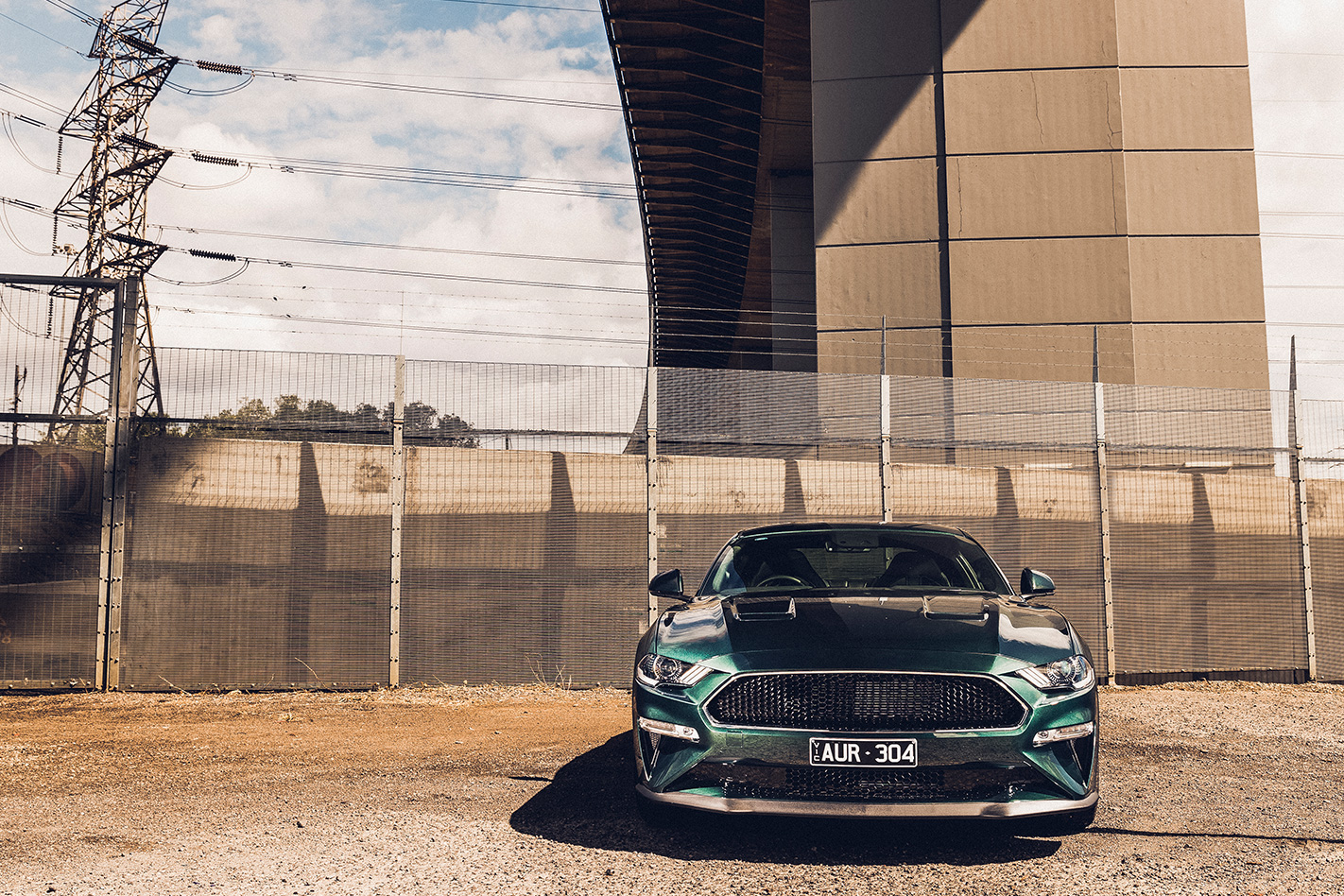
Now, we understand that electric cars aren’t everyone’s cup of tea, so we also stole the keys to Ford’s Mustang Bullitt for a thrash down memory lane.
And if you prefer your Wheels magazine to be more explicitly fossil-fuelled, we’ve also released a special best drivers’ cars issue, which is on sale now. It’s chock full of all the best drives and cars that enthusiasts love. Think of it as a best-of compilation of 2018, so if you only buy one mag this year, you know what to do…
The Consumer Electronics Show (CES) in Las Vegas allows companies to demonstrate their latest and greatest technology. For car companies, in recent years this has meant talking about autonomous vehicles.
However, the industry leader in self-driving cars last year announced that truly autonomous Level 5 vehicles – those that can operate in all conditions with no human input – “will never exist”.
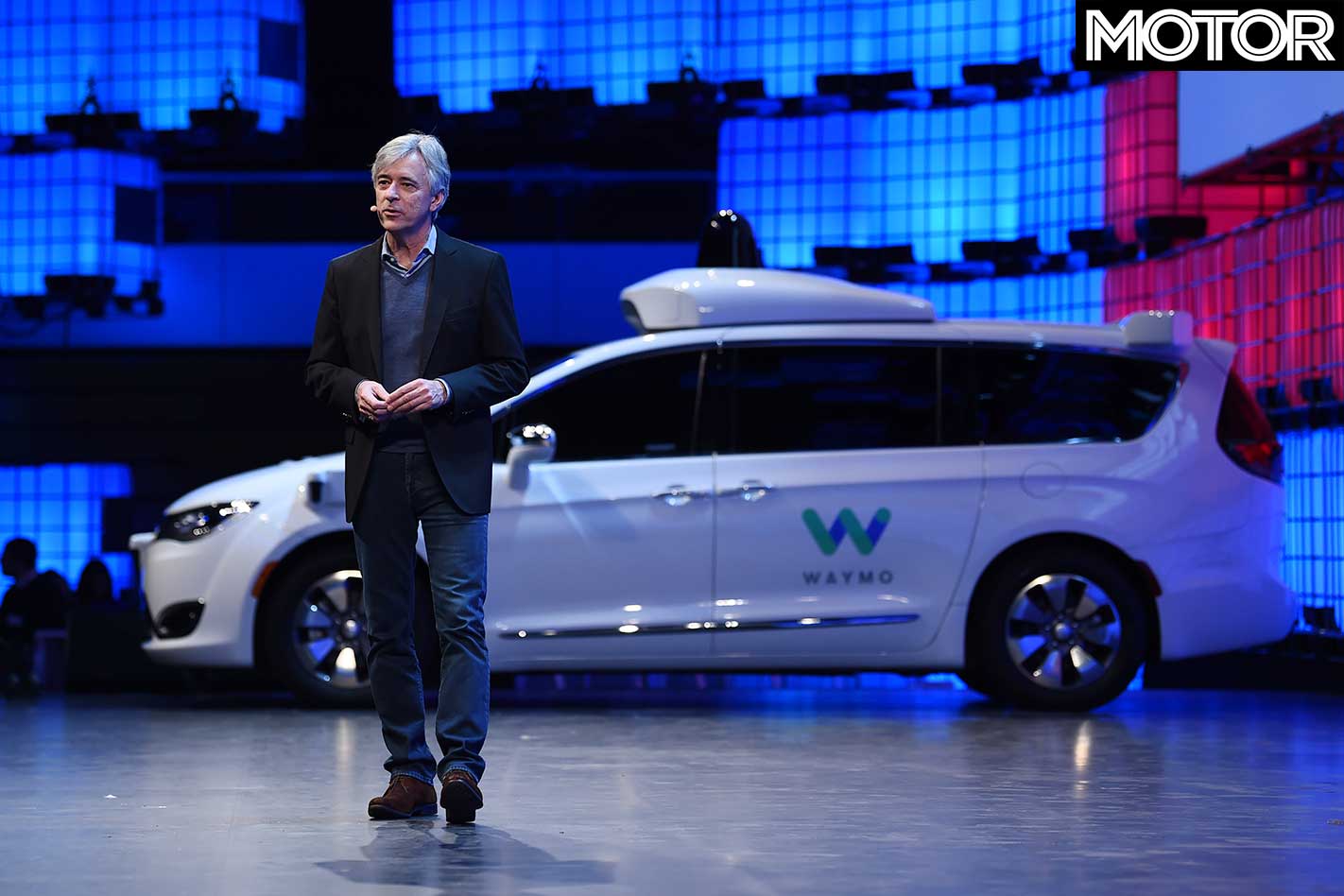
Waymo is the arm of forward-looking tech company Alphabet tasked with developing self-driving cars. Speaking at the Wall Street Journal’s D.Live Conference on 13 Novemebr, 2018, its CEO, John Krafcik, told the audience “autonomy will always have constraints”.
Two fatal accidents involving autonomy in 2018, the death of a pedestrian hit by a driverless Uber and a driver using Tesla’s AutoPilot system without due care, have changed the narrative regarding autonomous vehicles.
Truly self-driving cars will take decades to arrive, if they arrive at all. Toyota’s Research Institute CEO, Dr. Gill Pratt, used his speech at CES to talk about Toyota’s ‘Guardian’ system, which “is about amplifying, rather than replacing, human ability” using next-generation driver assist technology.
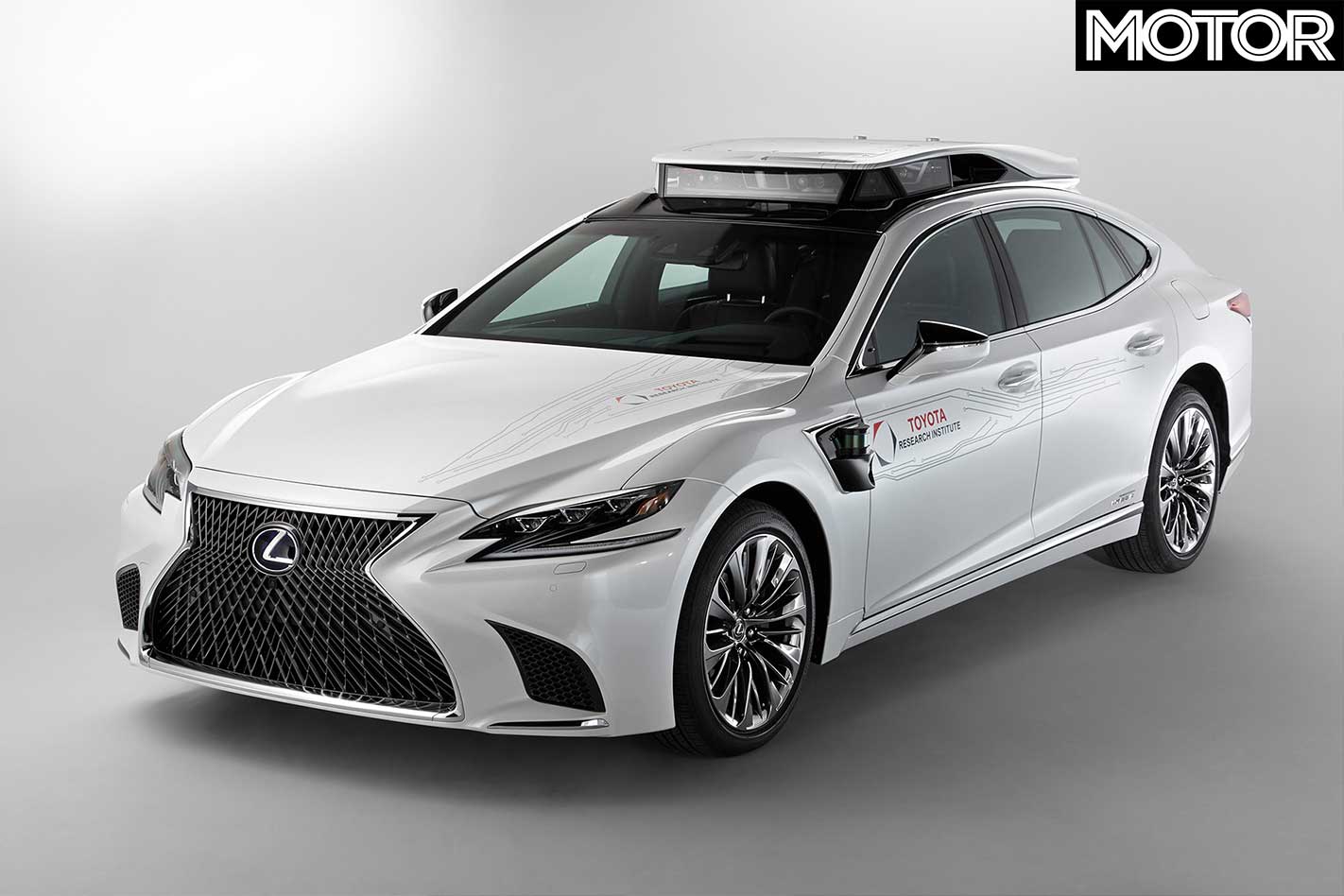
Pratt described a Level 5 system, dubbed ‘Toyota Chauffeur’ “a wonderful goal, and someday we may achieve it. But it’s essential to not underestimate how hard a task Chauffeur systems are, both technologically and sociologically.”
Francois Bancon, Infiniti’s Vice President of Global Product, told MOTOR in 2018 about autonomy: “Believe me, it’s going to take more time than you think. To make a system beyond Level 3, you need a connection car-to-car, you need a connection car-to-city, who is going to pay? There is no standard at the moment.”
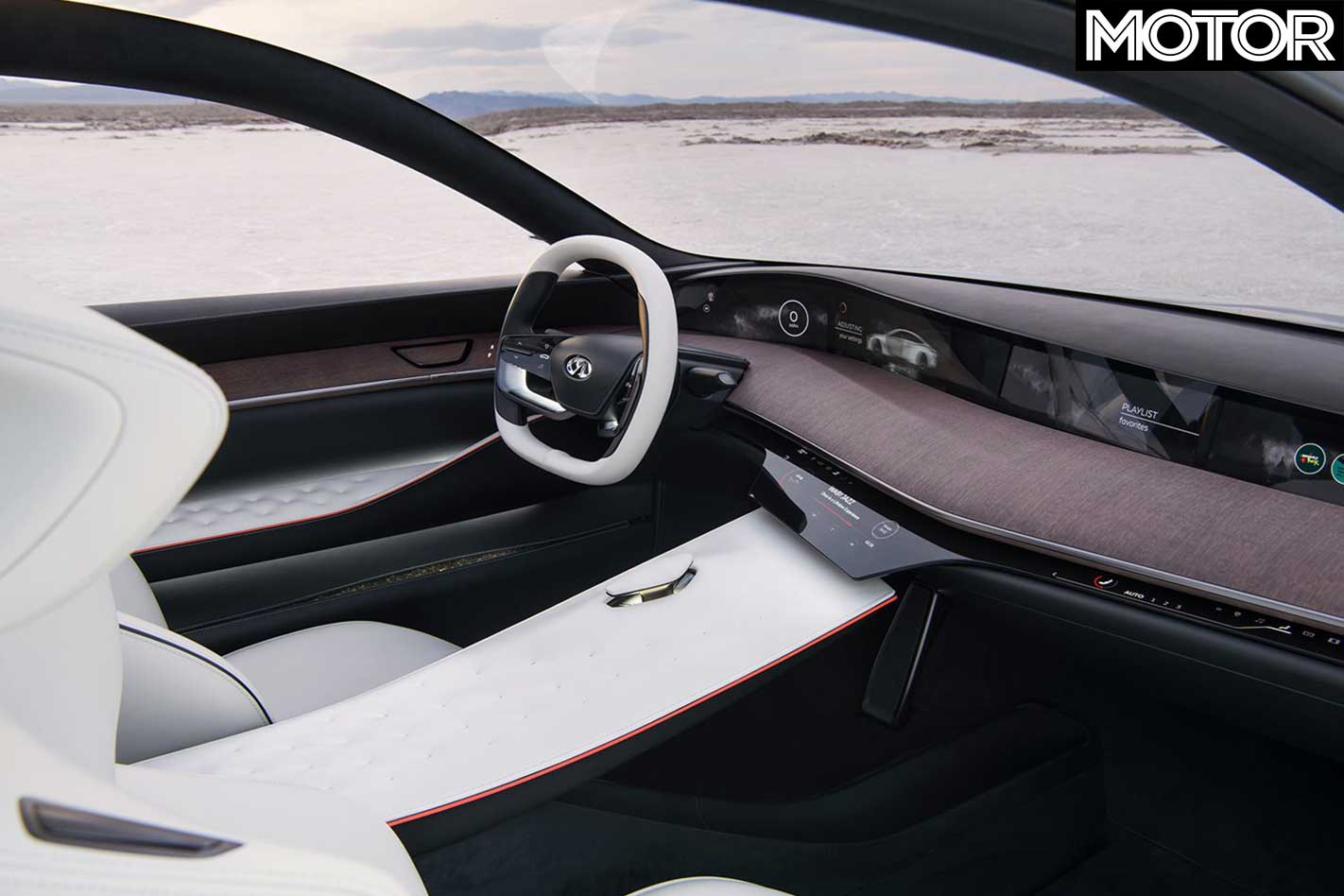
In the short and medium-term, it seems likely that cars will adopt smarter versions of the technology that’s already incorporated in current cars: lane assist, emergency braking, active cruise control. Beyond that, the next step will be small sections of highway that may allow hands-off driving for suitably connected cars.
However, for those that dream of having a snooze or watching a movie while the car handles the stress of the daily commute, don’t hold your breath.
On-air: Channel Ten, Jan 27 (AU) / Feb 2 (NZ)
Catch-up: Watch at tenplay.com.au (AU) or primetv.co.nz (NZ)
We take you behind the scenes of Wheels Car of the Year, the world’s longest running and most coveted automotive award. Meet the panel that decides which is the best new car to arrive in 2018 and how they find a winner.
Then we’re outback in a new ute from Mercedes-Benz to see if it can handle the toughest country on Earth. Matt finds out if the X-Class is a genuine off-roader that can take hard yakka or a ute more at home on the road?
Next, Alex meets a big new SUV wearing Holden badges but finds it is shamelessly American, before throwing it against its main rivals from Mazda and Toyota. It’s a claws-out Acadia, CX-9 and Kluger three-way battle to close the week.
On-air: Channel Ten, Jan 20 (AU) / Jan 26 (NZ)
Catch-up: Watch at tenplay.com.au (AU) or primetv.co.nz (NZ)
Scott takes Ford’s fan-favourite pony car, the Mustang, for a V8-powered blast to see if its mid-life makeover is more nip-and-tuck or significant rebirth.
Then we fly to Japan where Daniel is trying to find out why the Mazda MX-5 roadster has been such a world-wide hit. It’s like learning what makes someone tick by meeting their parents.
After that, it’s straight on to attend the 40th birthday celebrations of the rotary engine with a anniversary celebration like no other, hosted in the shadow of Mount Fuji.
Back in Australia Andy gets behind the wheel of a nice sensible Jeep with lots of practical features and room for the whole family … and more power than a Lamborghini.
NEXT UP: Episode 3 – Hot competition
