
You would’ve thought that simply jamming on the picks as hard as you can and letting the anti-lock braking system (ABS) sort out the rest was a given in a modern car. And it is, but not without one big variable – tyres.
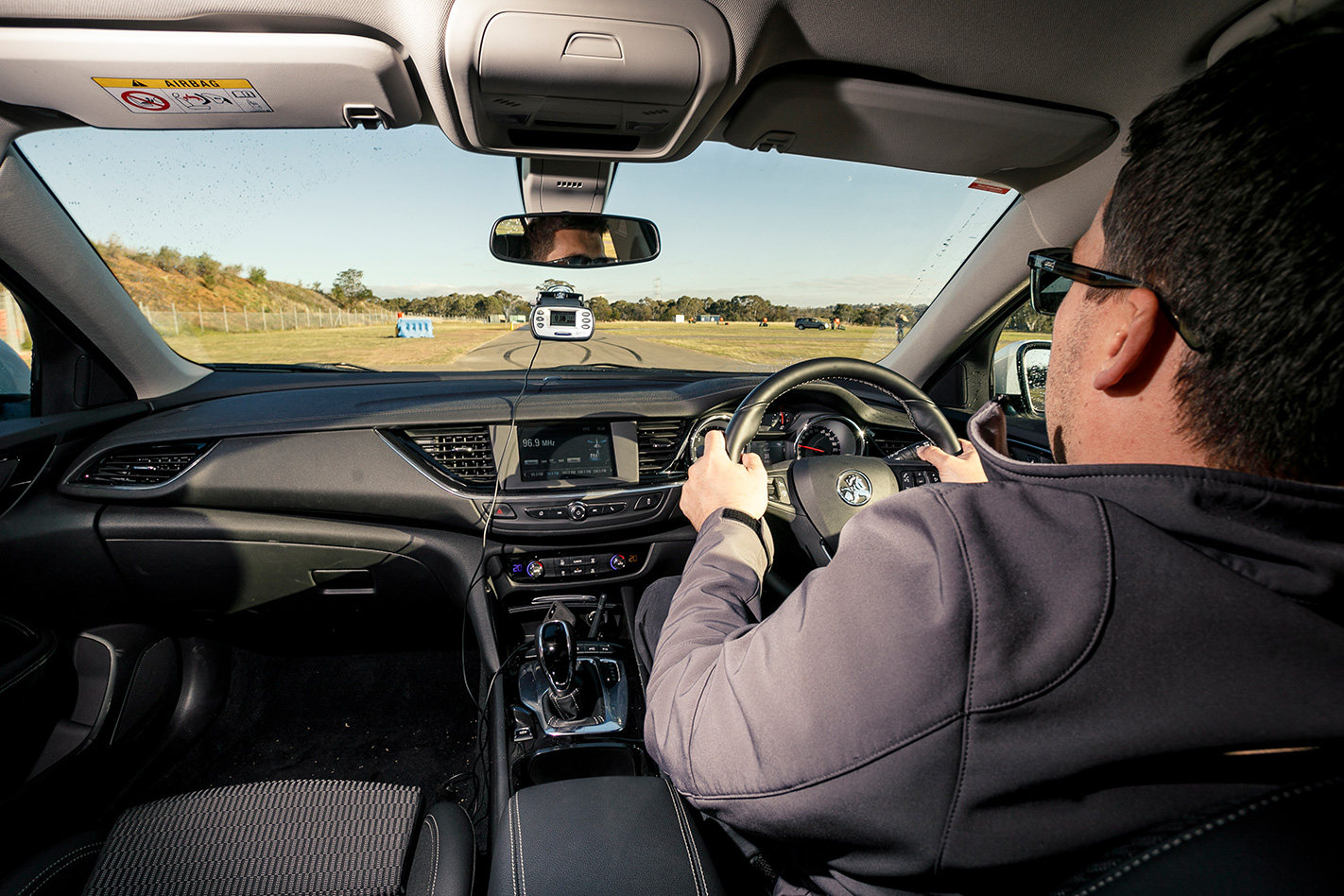
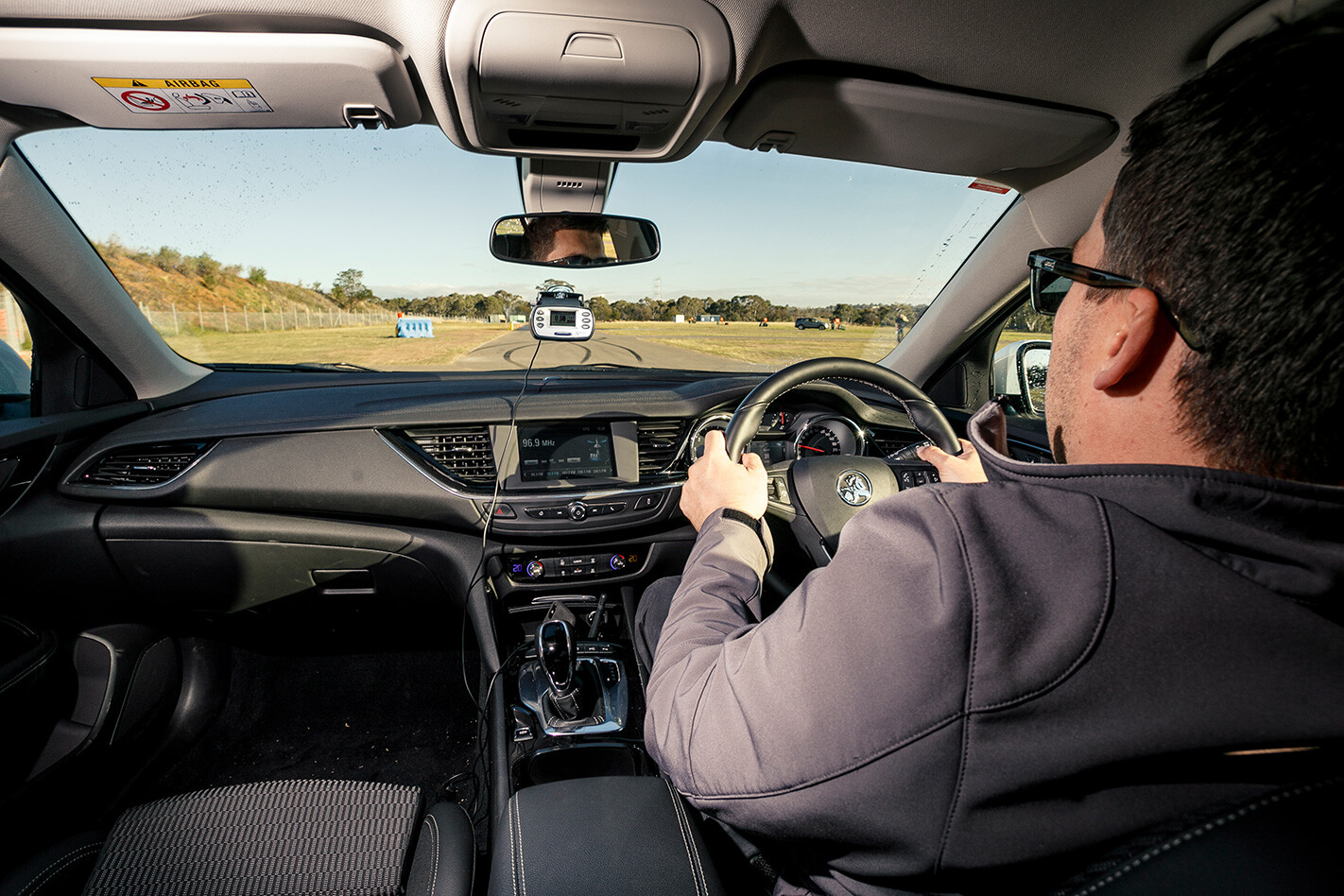
Punished over the same section of coarse-chip bitumen at the back of Sydney Dragway, our Dry Braking test was judged by averaging three individual stops from 80km/h, with the Commodore’s brakes allocated equal time and distance to cool down between each run, for every tyre. A control set was also deployed at regular intervals to gauge any change in surface condition or tarmac temperature. More than 50 dry-surface emergency stops gave us both the stopping distance in metres – the data we used to score each tyre – as well as the peak and average G of each braking manoeuvre.
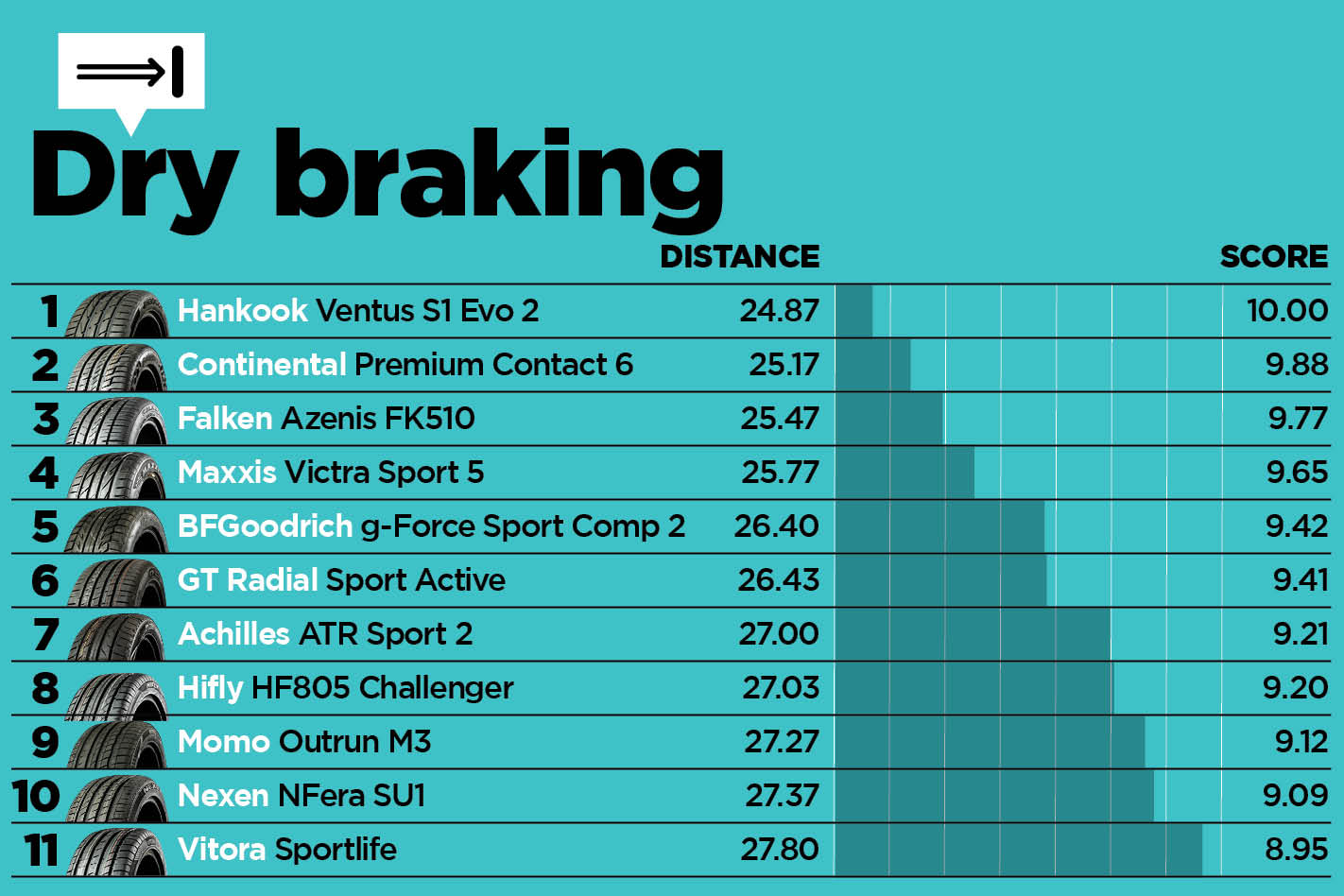
Straight off the bat, the BFGoodrich smashed a consistent peak of 1.1G in the dry and the wet (see Wet Braking results) – “the first time I’ve seen that in a Wheels Tyre Test,” said Renato – though its 26.40m stopping distance saw it finish fifth here in the dry, just ahead of the 26.42m average.
The Vitora brought up the rear, nearly three metres adrift of the winning Hankook and half a metre behind the 10th-placed but consistent Nexen, which recorded the same average and peak G readings (“indicating it has good overall longitudinal grip,” commented Renato).
RESULTS
Hankook Ventus S1 Evo 2 – Winner
Not only did the Hankook record a solid 1.1G for all its braking runs, it was the only tyre to sneak under 25 metres for stopping distance – 30cm shorter than the consistently powerful Continental.
Interestingly, much like their performance in the slalom, the Hankook, Continental and Falken crowded the top-end of this year’s field, each earning plenty of praise from our driver. “In terms of wet and dry braking performance, it’s the best tyre we’ve tested so far today” said Renato, with the Hankooks wrapped around the Holden’s 18s. But it was the Continental that proved the most consistent, clocking a 25.1m in its first run and a pair of 25.2s thereafter.
THE TYRE TESTS
 Slalom
The swerve-and-recover test, or slalom – just like the skiing event – is an efficient way to gather meaningful data on a tyre’s transient grip level in less than 10 seconds.
 Wet Cornering
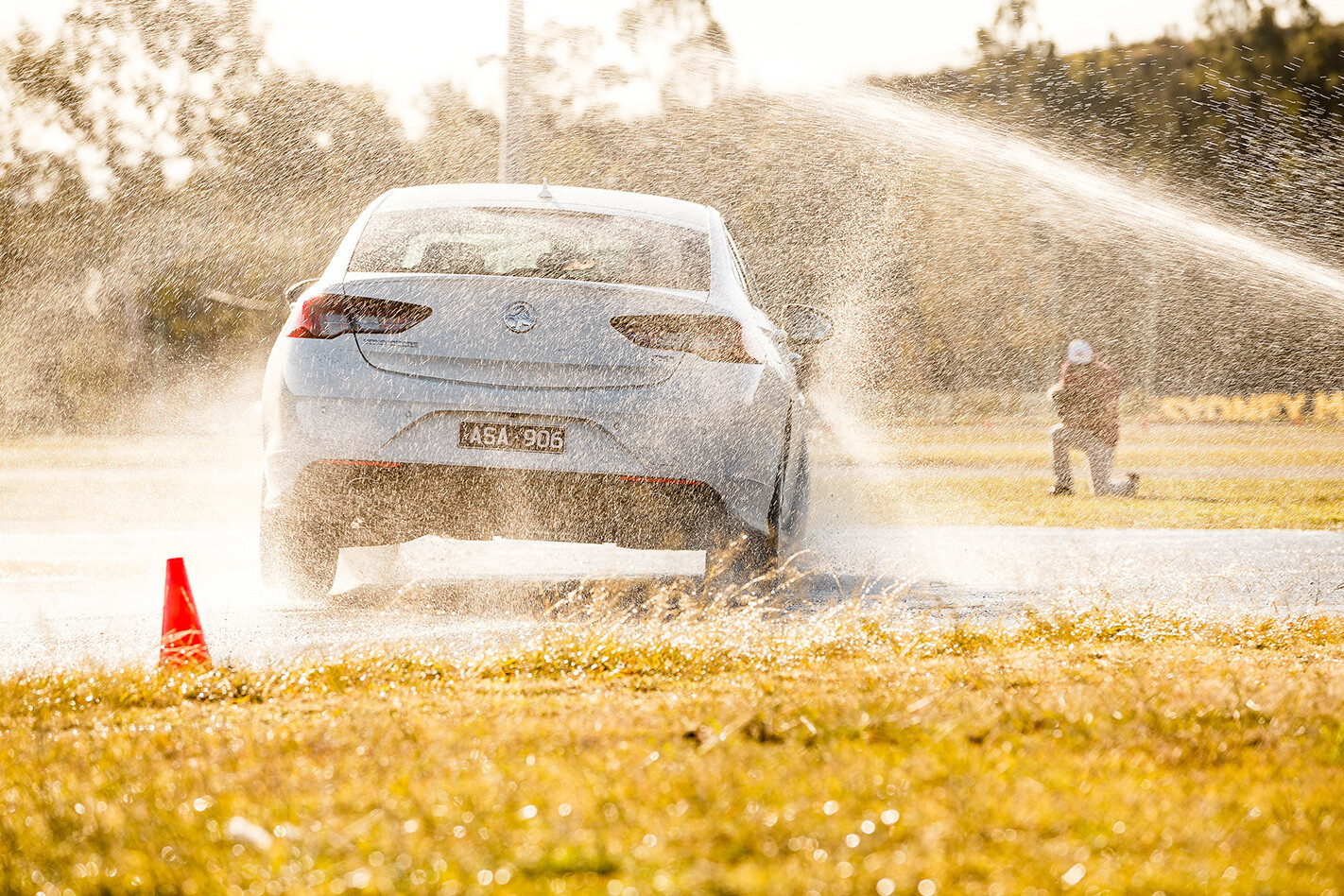
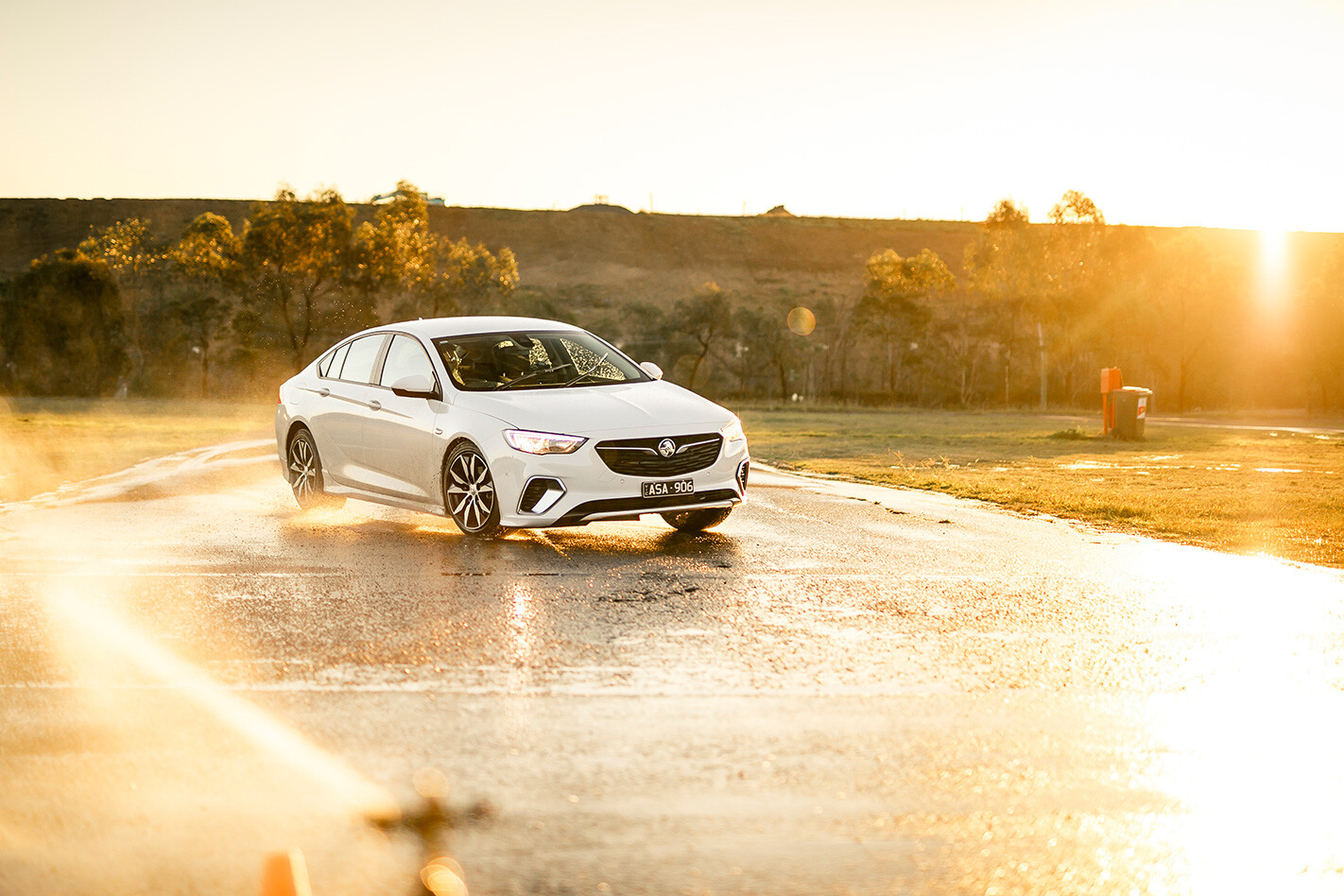
Wet Cornering proved a definitive differentiator between the greats and not-so-greats of the group.
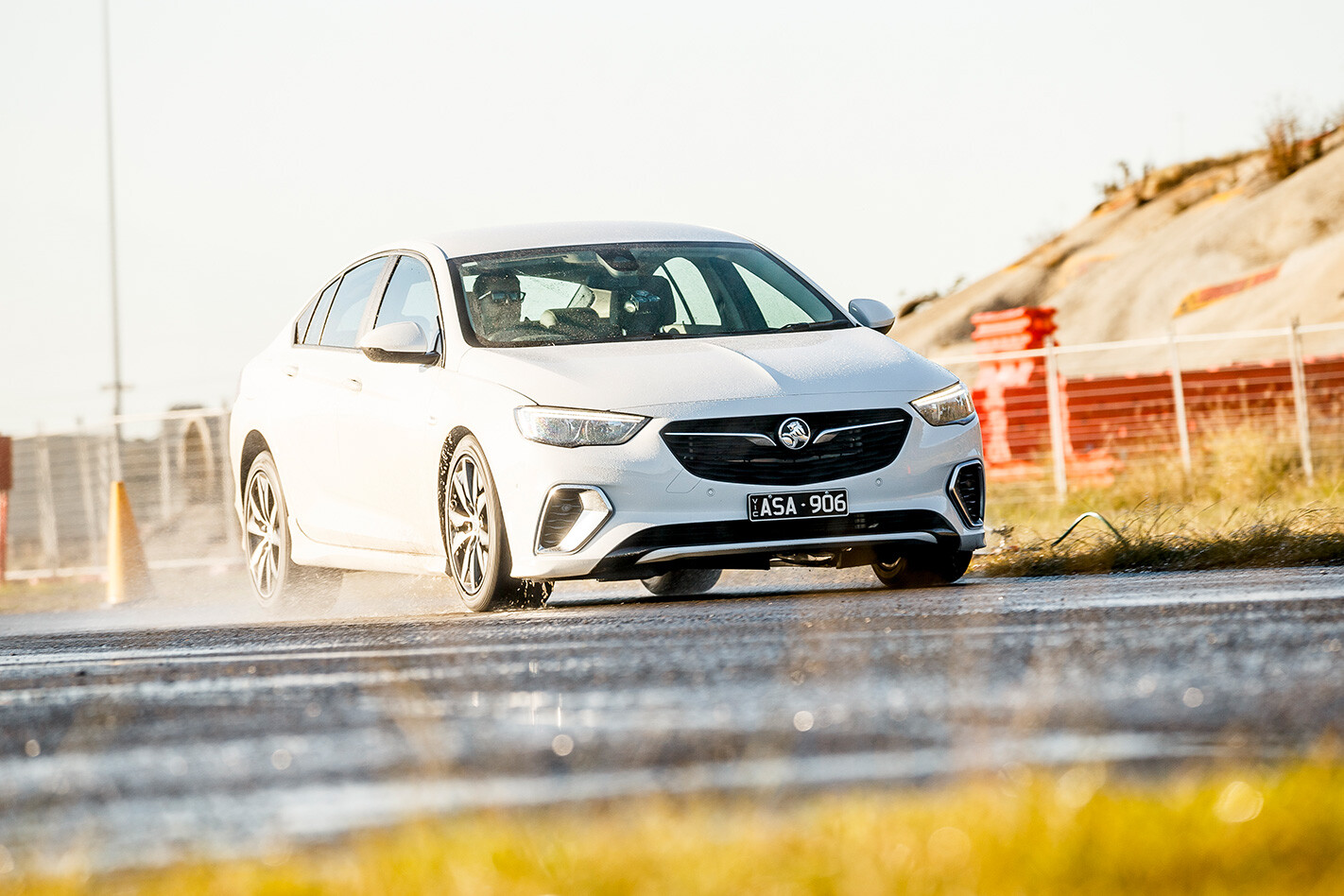 Wet Braking
It’s the one discipline that separates the mighty from the mediocre by a big margin … and we’re talking about brand new, correctly inflated, high-spec tyres here!
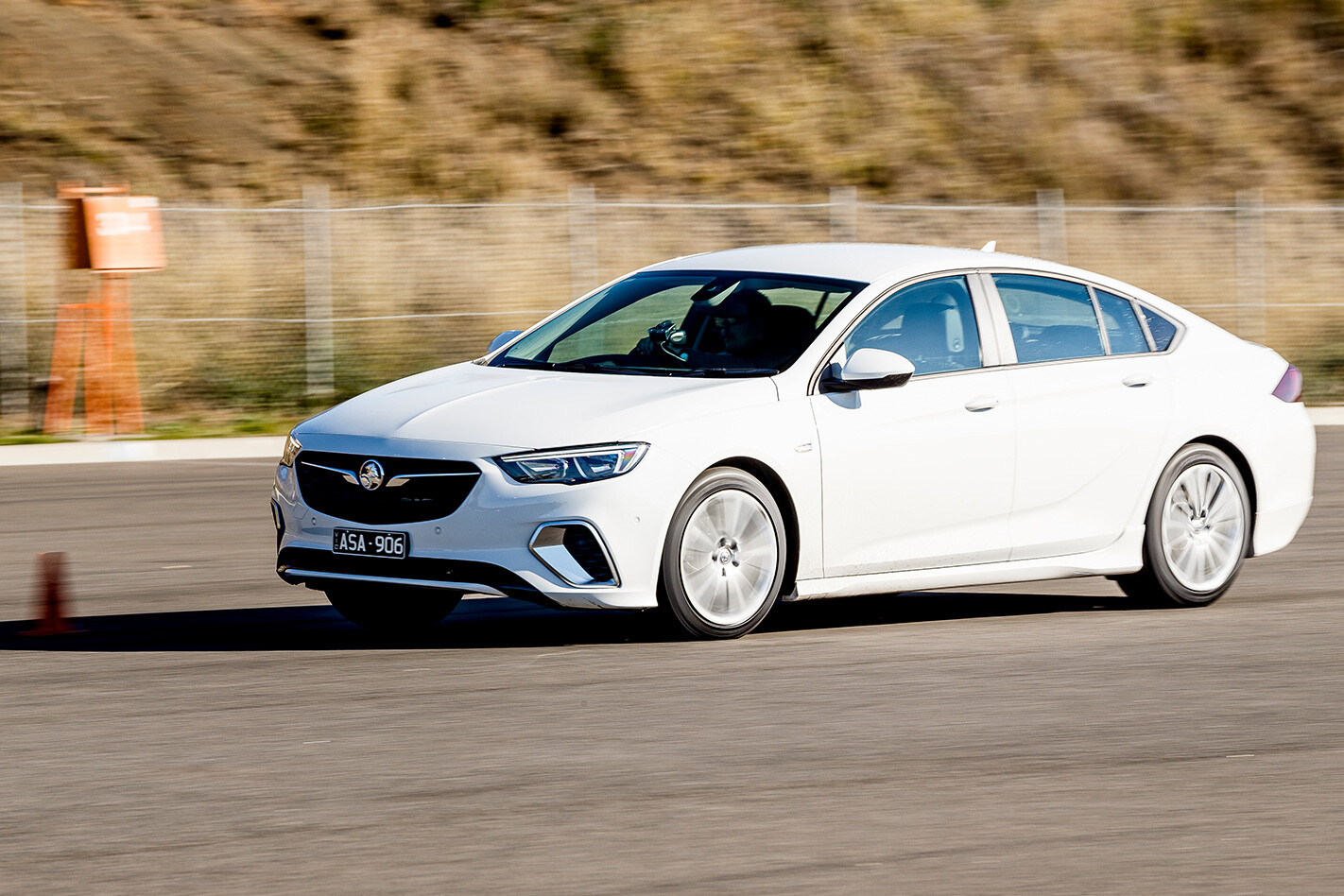 Tyre Noise
Few surfaces in the world can match the noise generation of an Australian coarse-chip road, so tyre noise does play a vital part in the driving performance of your vehicle.
TYRE TEST RESULTS
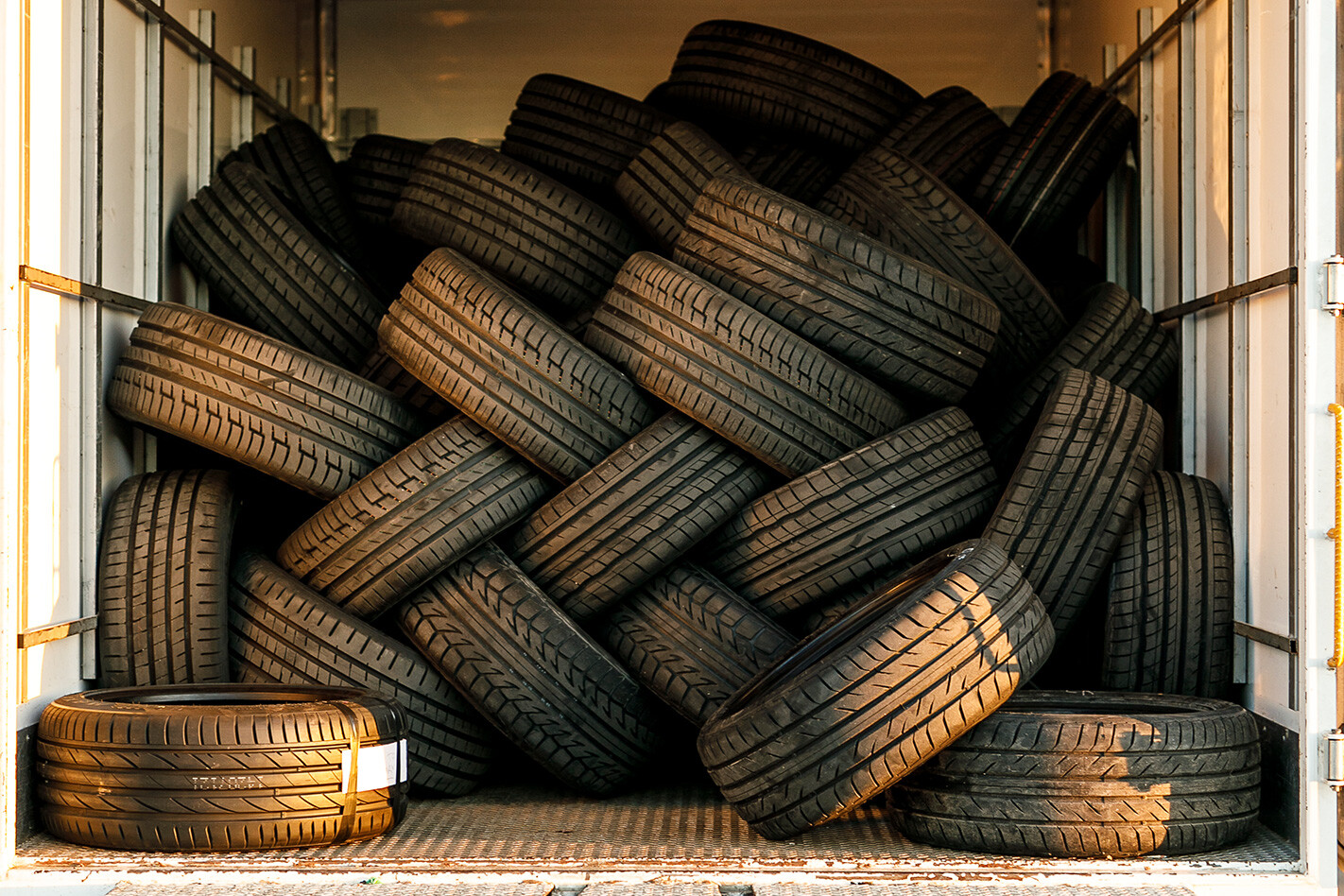 WHEELS TYRE TEST 2018: The Results
From the outset, it was clear the Falken Azenis FK510 was in with a real shot.
2018 WHEELS TYRE TEST
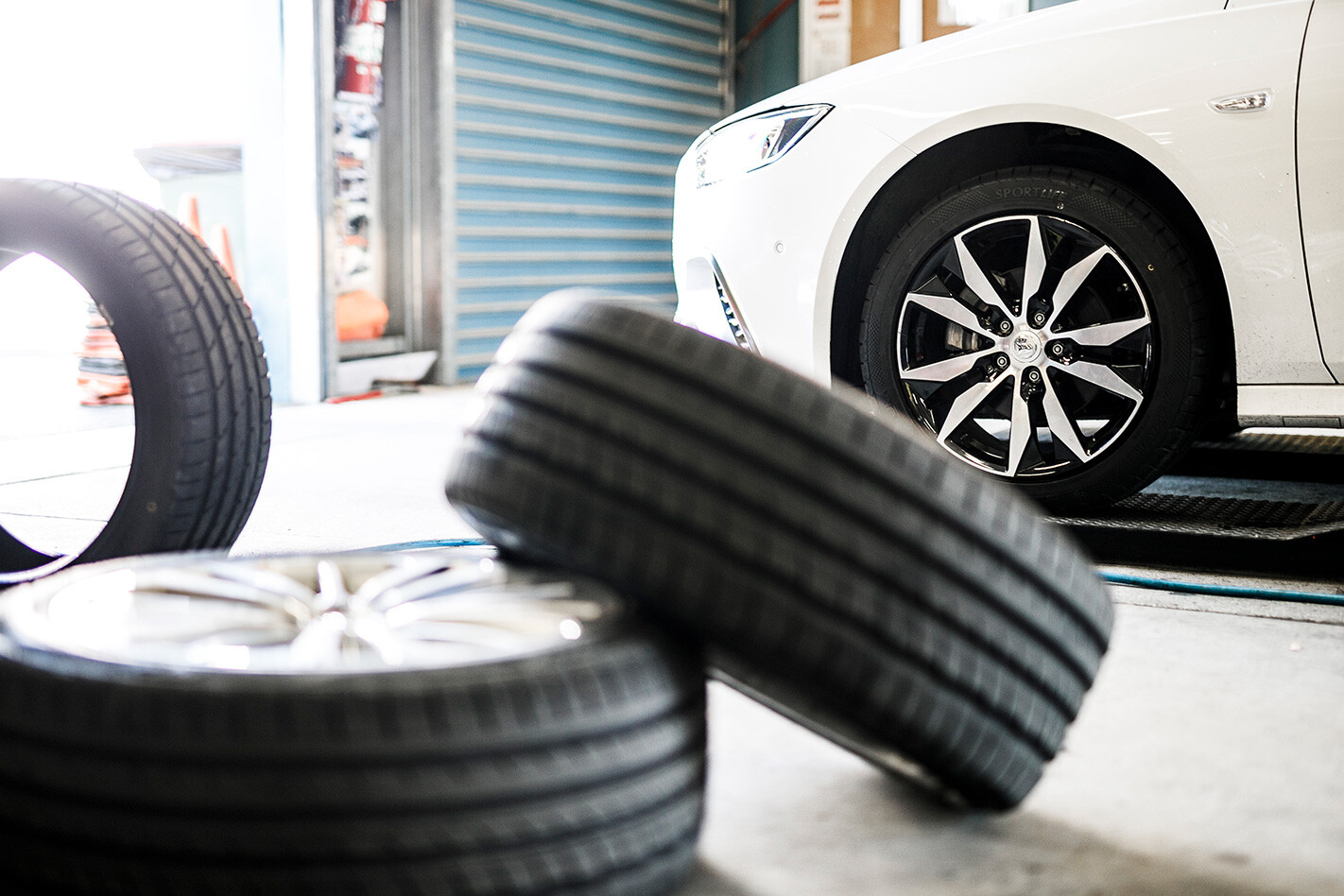 Introduction
Upping your car’s cornering G-force by 10 percent is the stuff of a sports suspension upgrade, right? And cutting a car-length from your braking distance is the work of a set of Brembos? Nope, you just need a great set of tyres
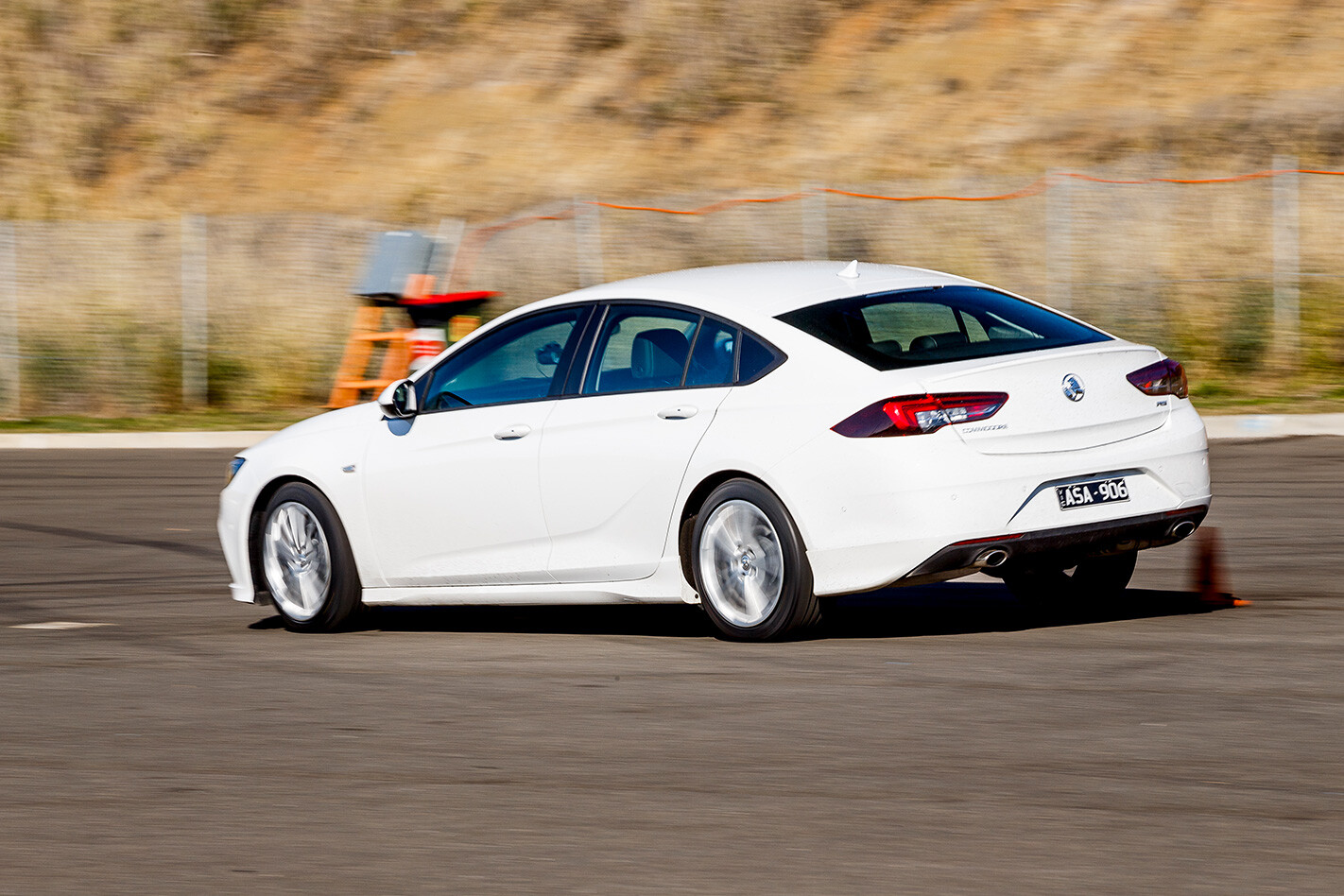
The swerve-and-recover test, or slalom – just like the skiing event – is an efficient way to gather meaningful data on a tyre’s transient grip level in less than 10 seconds. Across more than 50 runs (including control-tyre stints), Renato only spun the ESC-disabled Commodore once – a 180-degree slide wearing the Momo tyres before they’d been scrubbed in properly.
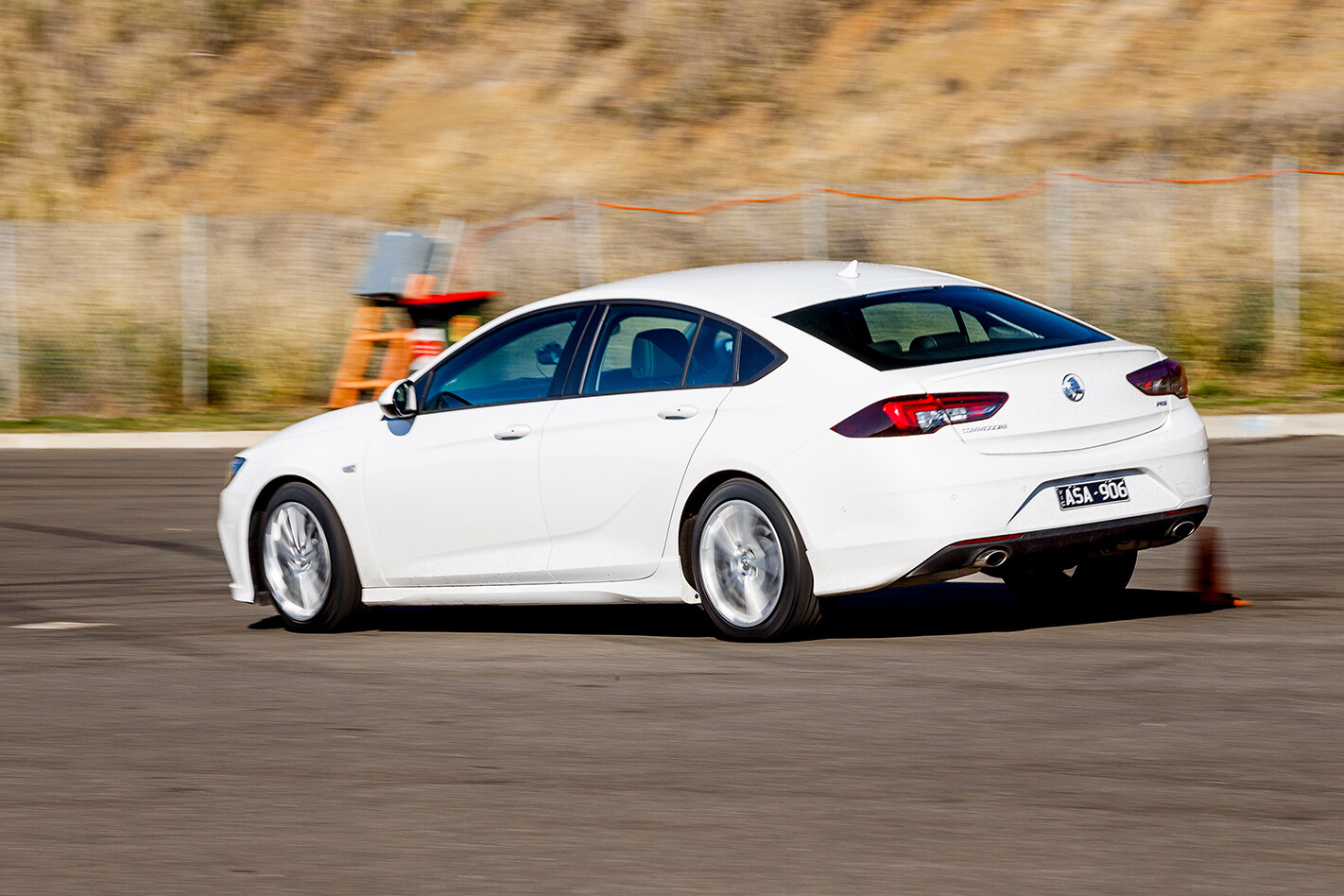
Yet there was plenty of oversteer action as each brand-new set of tyres had their surfaces scuffed to enable the tabulation of consistent, meaningful results. A tyre’s slalom performance reflects its real-world ability to swerve to avoid an obstacle, however the feedback it gives us about confidence-inspiring feel, well-telegraphed handling responses – or otherwise – as well as steering consistency is invaluable.
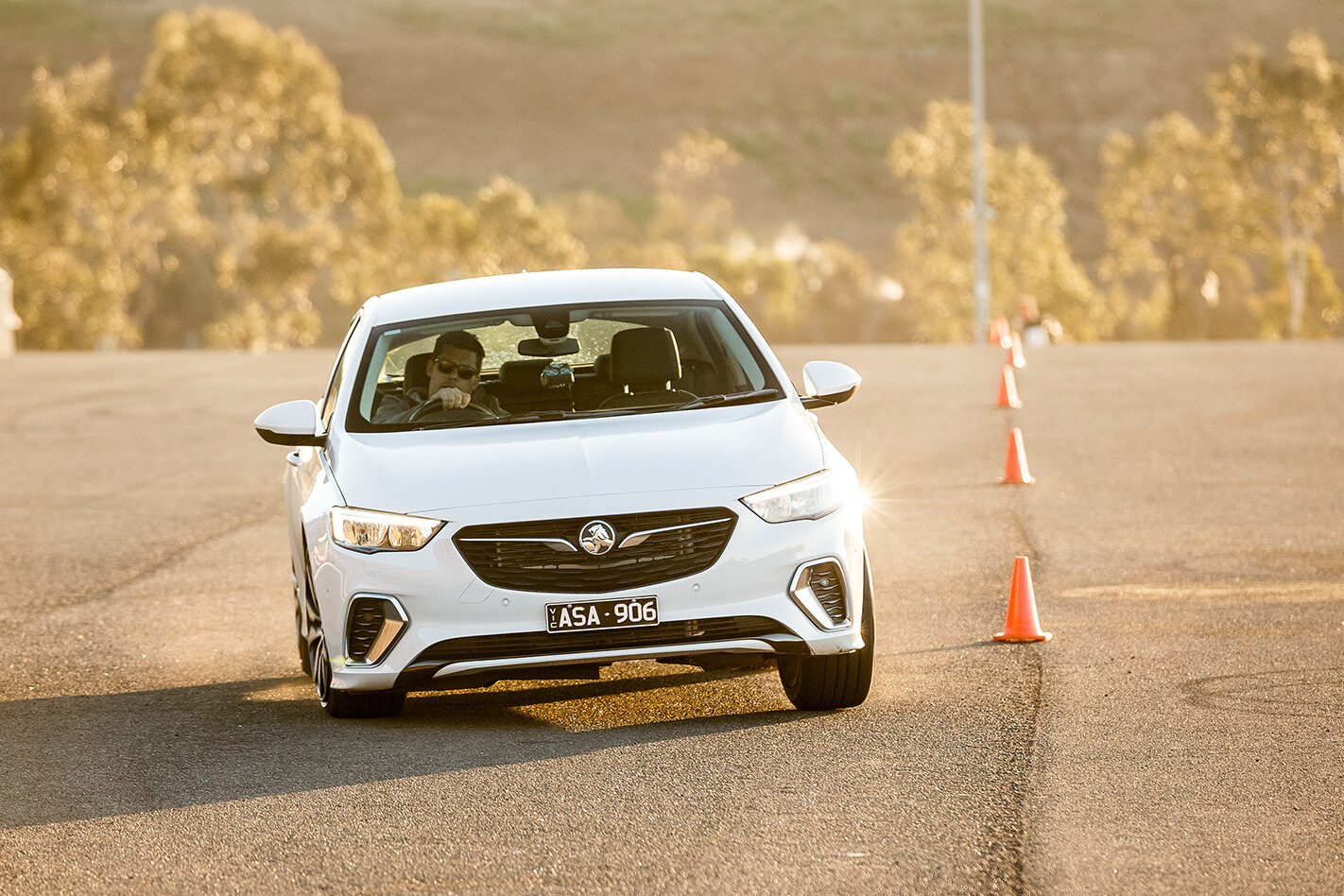
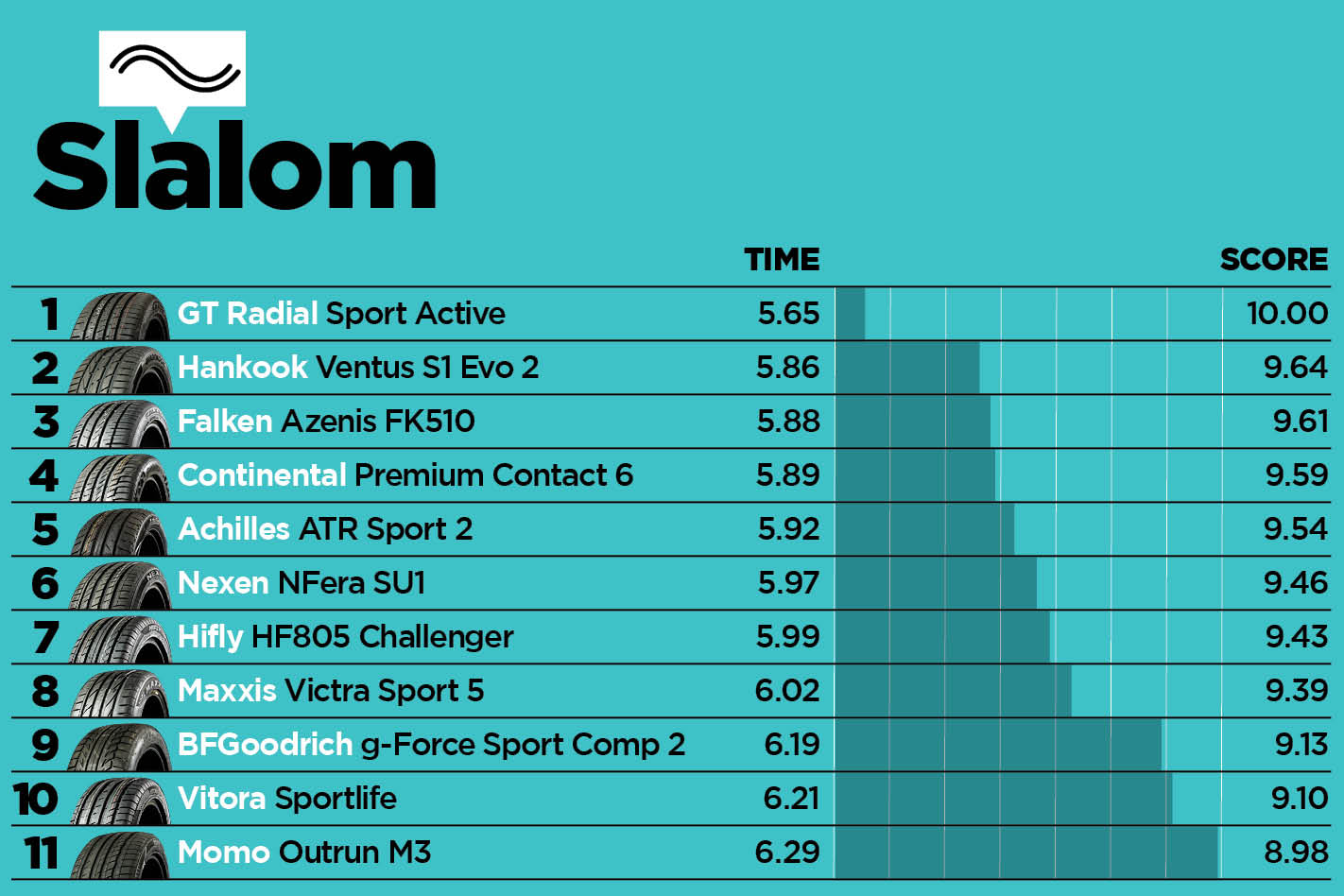
The GT Radial’s victory here was undisputed – it was more than 0.2sec ahead of second place – though barely a whisker separated the next five positions, and the top seven all matched or bettered the 5.99sec average. The BFGoodrich put in an unremarkable performance, despite its “consistent, predictable feel on the limit”, whereas the quicker Nexen felt a bit vague at the helm and “didn’t feel like it suited the car.”
At the lower end, the Vitora demonstrated “good slide warning on the limit”, while the even slower Momo gave “no slide awareness whatsoever”, with “very little warning of its limit of lateral grip”.
RESULTS
GT Radial Sport Active – Winner
“Very quick in the slalom, even when brand new on scrubbing runs,” read Renato’s notes, which were backed up by the data. The GT Radial was convincingly quicker than the rest of the field, but it also impressed with its “all-round great driving performance and very consistent feel”, and was a tyre that allowed the driver to easily feel the limits of grip. The silver-medallist Hankook also garnered praise for being “super consistent” and “very direct and communicative”, while the Falken felt “immediately grippy on the slalom, with almost no sliding whatsoever (without serious provocation)”.
THE TYRE TESTS
 Dry Braking
You would’ve thought that simply jamming on the picks as hard as you can and letting the anti-lock braking system (ABS) sort out the rest was a given in a modern car. And it is, but not without one big variable – tyres.
Wet Cornering
Wet Cornering proved a definitive differentiator between the greats and not-so-greats of the group.
Wet Braking
It’s the one discipline that separates the mighty from the mediocre by a big margin … and we’re talking about brand new, correctly inflated, high-spec tyres here!
Tyre Noise
Few surfaces in the world can match the noise generation of an Australian coarse-chip road, so tyre noise does play a vital part in the driving performance of your vehicle.
TYRE TEST RESULTS
WHEELS TYRE TEST 2018: The Results
From the outset, it was clear the Falken Azenis FK510 was in with a real shot.
2018 WHEELS TYRE TEST
Introduction
Upping your car’s cornering G-force by 10 percent is the stuff of a sports suspension upgrade, right? And cutting a car-length from your braking distance is the work of a set of Brembos? Nope, you just need a great set of tyres
There’s more than a hint of deja vu watching gun-for-hire, Renato Loberto, thread a Holden ZB Commodore through a set of witches’ hats – at least for a 40-something car nerd like me. It’s an early-millenium reprise of GM-H’s Radial Tuned Suspension TV ad, only this time it’s a front-drive turbo four carving up the slalom test rather than a rear-drive HZ Kingswood. Yet the exercise is identical – a traditional family passenger car threading its way around plastic obstacles – and the need for quality rubber just as vital, even in an era of blanket inclusion of stability control in new cars.
In much the way that no two vehicles’ ESC systems are created equal, no two tyre patterns deliver the same performance. The greater the ability of your contact patch to respond to the driver’s requests, the less pressure there is on the safety electronics to try and mop up the mess afterwards. Of course, if there’s no mess in the first place…
The thinking behind this year’s Tyre Test relates to the actual tyre size – 245/45R18. It’s an increasingly common fitment for everyday vehicles, and when extrapolating the results, allows some movement in terms of size (incorporating, for example, 225/45R17 – a common size for up-spec small cars). There’s also broad relevance to the buying public in that a 245/45R18 suits a variety of mainstream and premium models.
Much like last year, the magnitude of the difference between the best- and worst-performing tyres in our 80km/h dry braking test spanned a significant 2.93 metres, and that’s averaging three runs under full ABS activation. Add water to the surface and that gap expands to 4.33 metres, or more than the length of a Volkswagen Golf. That’s the difference between a scratch-free existence and a significant clobber up another car’s jacksy. Is a budget set of tyres really worth the financial pain and physical/mental suffering?
The 2018 Wheels Tyre Test involves 11 tyre brands, spread across five disciplines that span a broad spectrum of a tyre’s ability, aside from wear-life (which is difficult to measure in two days.) In order to thoroughly test 11 passenger-car tyres in 245/45R18 size and a further 13 SUV tyres (in 225/65R17 size, as fitted to a Mazda CX-5 Maxx Sport, and covered in detail at WhichCar.com.au/features/wheels-tyre-test-2018) across two days, we deleted the hot-lap discipline, given that the slalom and Renato’s comments are indicative of a tyre’s racetrack prowess.
Just as in previous years, the vast bitumen carpark surrounding Sydney Dragway’s scrutineering shed provided the venue, and a Racelogic Performance Box and stopwatches spat out the data. Tyre-test guru, Renato Loberto, proved he’s worth every cent of the works burger and chips we fed him each day at lunch by delivering incisive, super-consistent technique and invaluable observations.
The method: after taking a tyre-noise reading at 60km/h, Renato scrubs the surface of the tyres through a series of (often dramatic) slalom dry runs before laying down actual timed runs. Next up is a dry braking test, followed by a repeat on a consistently wet surface, then a wet corner test. Control tyres are deployed to measure track and vehicle changes, which can be addressed in the data analysis.
Each discipline is repeated three times, averaged, and scored out of 10, with tyre noise scored out of five. Scores are scaled and assigned relative to the best performer – if one tyre wins everything, it will receive a perfect 100 percent. In the wash-up, all three podium finishers rated an excellent 97.8 percent or above, for a similar price.
THE FIELD
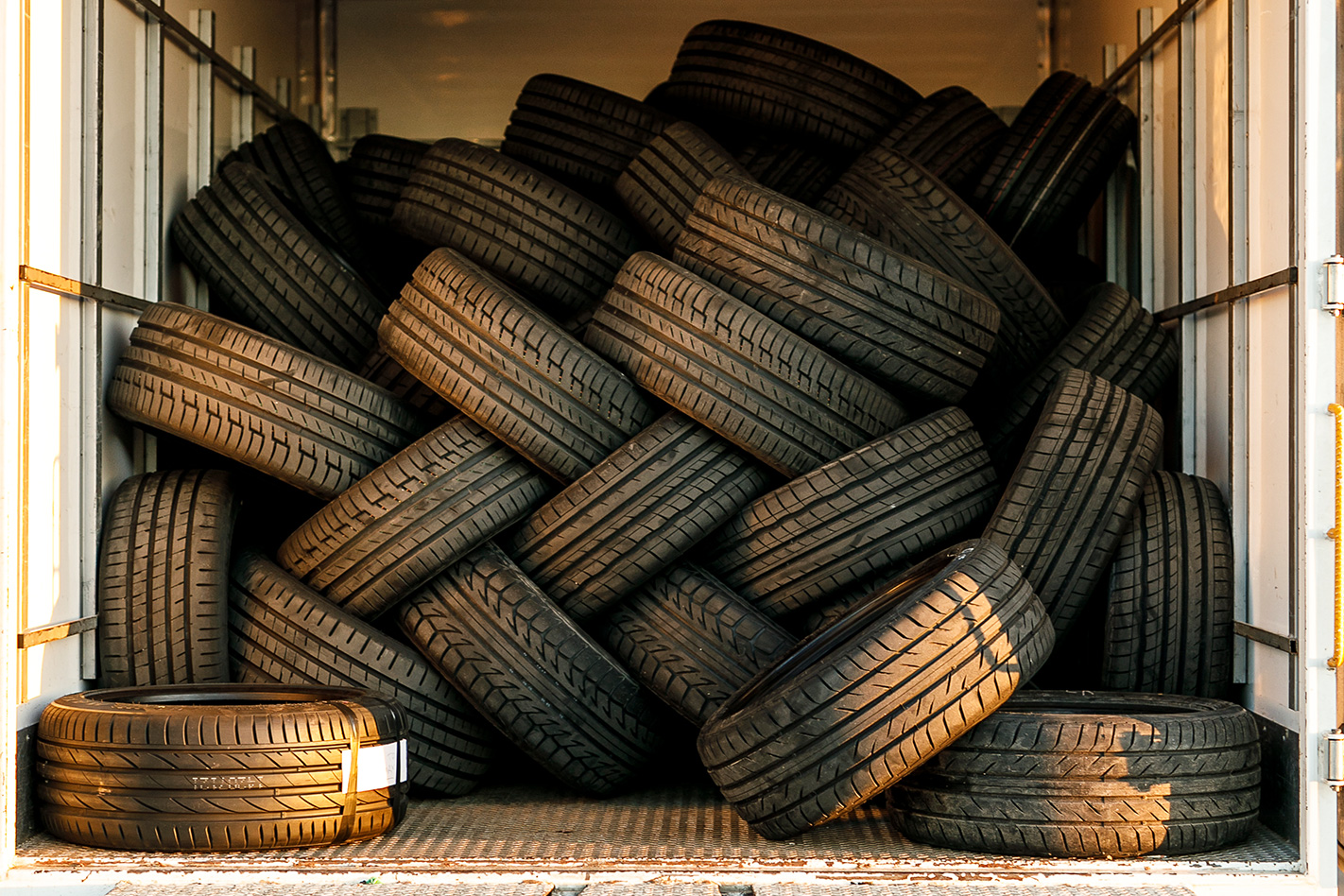
With an 11-strong field in 2018, this year’s Wheels Tyre Test spans a broad section of the market for a 245/45R18 tyre, to suit the increasingly common 18-inch wheel. The 245mm width and 45-series profile represents a happy medium between baggy base-model fodder and proper low-profile rubber. In terms of market positioning, the grid runs from Indonesia’s budget-minded Achilles to Germany’s Continental, with Michelin’s more affordable BFGoodrich brand, Korea’s Hankook and Nexen, Japan’s Falken, Italy’s Momo, Taiwan’s Maxxis, Singapore’s GT Radial, and China’s Hifly and Vitora fleshing out the field. With new products coming, Bridgestone and Goodyear sat this one out; Yokohama doesn’t supply tyres for testing; and Dunlop and Pirelli declined.
THE CAR
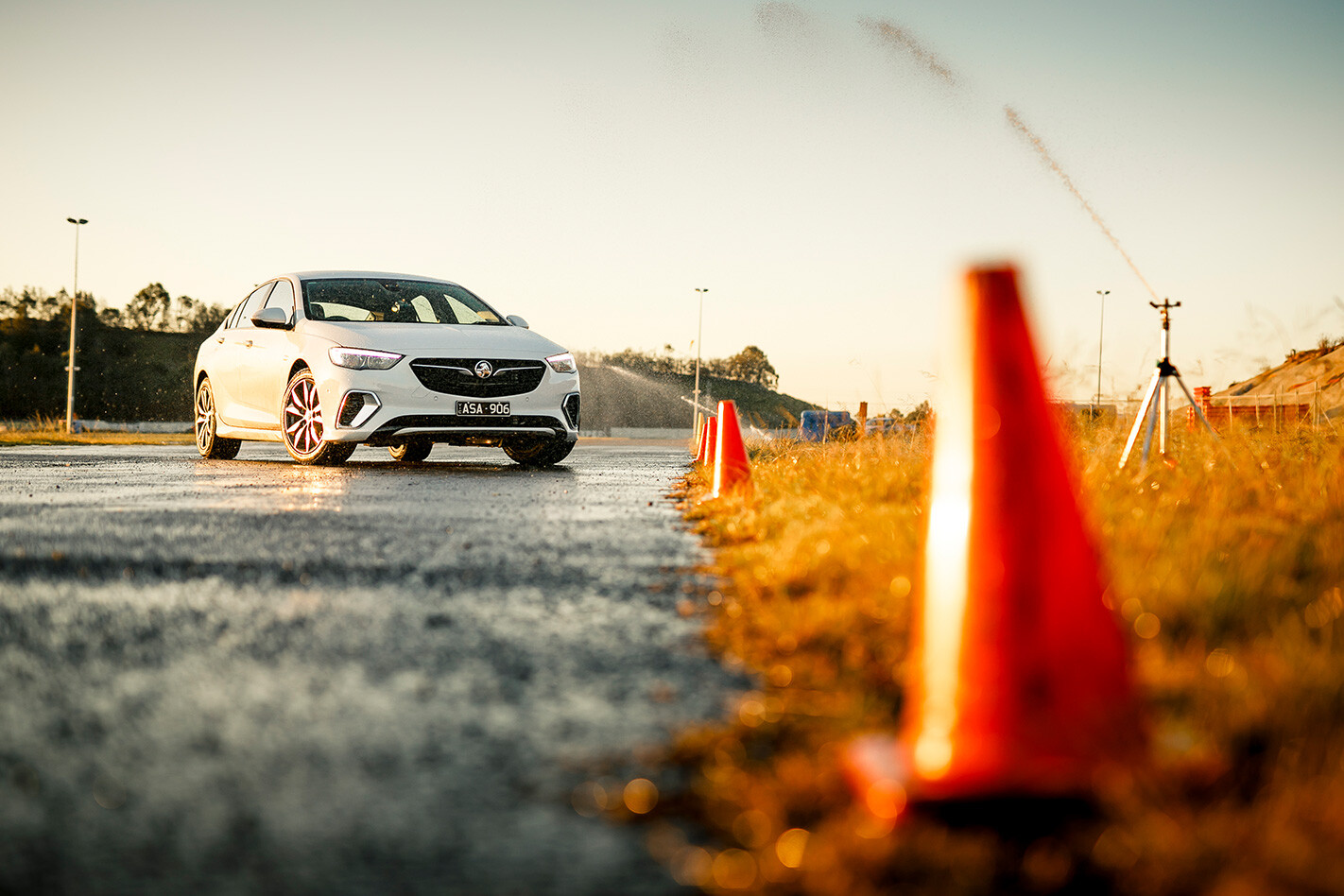
Having previously used a small hatchback (Hyundai i30), a medium SUV (Kia Sportage) and a mid-sized wagon (Mazda 6) as the test mule, we decided upon Holden’s German-made, Australian-tuned ZB Commodore RS liftback as a suitable steed for 2018. Excellent handling balance and steering precision, fully switchable ESC, and a common OE tyre size that makes the test’s results applicable to a range of models were all prerequisites, and the Commodore RS fulfilled the brief. Said test driver Renato Loberto of his faithful companion: “the new Commodore being a front-wheel drive will no doubt upset pretty much anyone who’s ever owned a Holden, but for me it has made the car a lot more agile.”
THE DRIVER
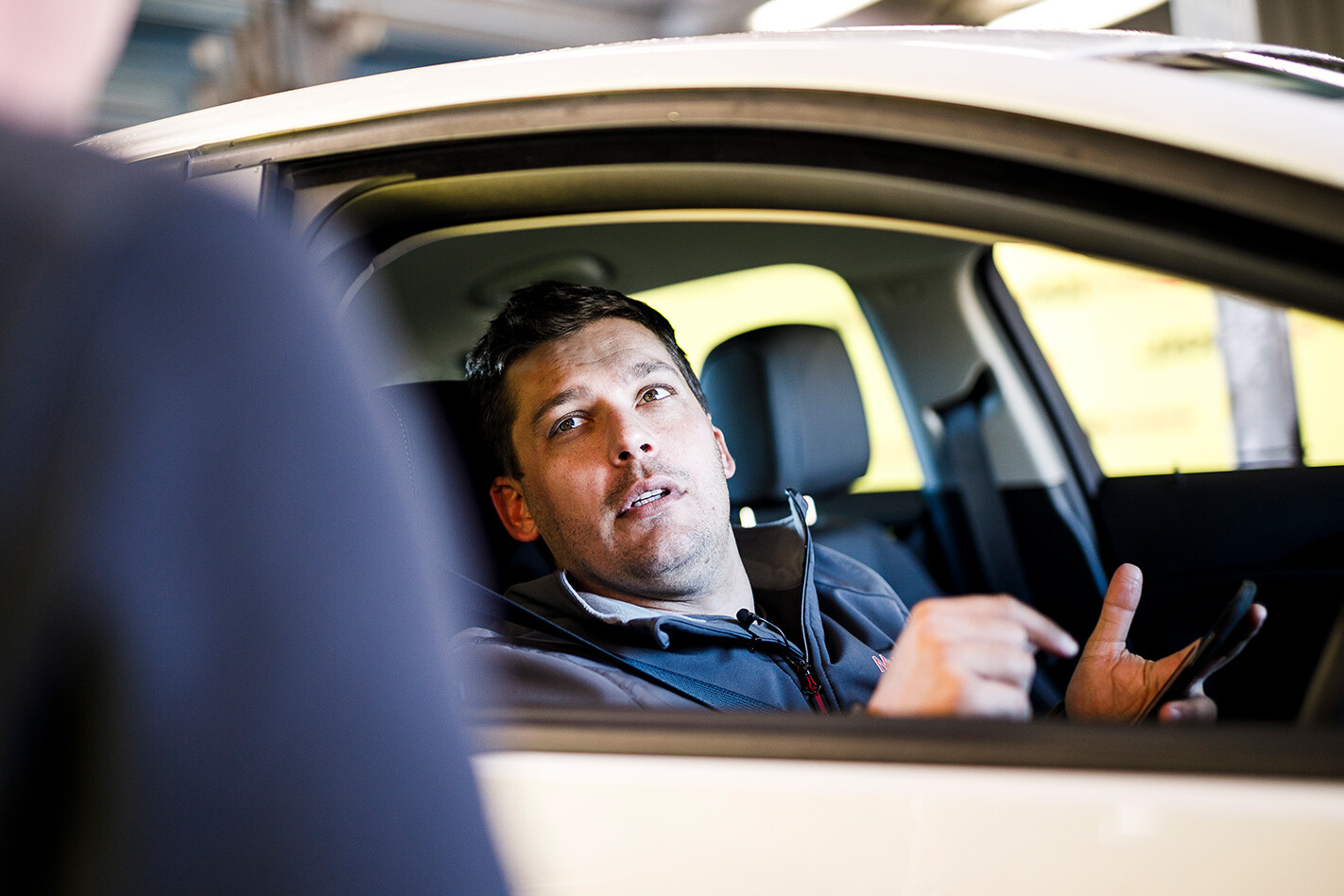
From his chilled disposition and easy-going humour, you’d never know 37-year-old Renato Loberto was a sleep-deprived father to a young daughter and head honcho at MotoKinetic, an automotive consultancy specialising in events for manufacturers and dealers, and public events (such as the Top Gear Festivals and World Time Attack Challenge). A racing driver for the past 21 years, Renato finished second in the Bathurst 12-hour in 2016 driving a Ferrari 458 GT3, and has been a driver coach and chief instructor with Ferrari for more than 10 years. He’s also waist-deep into a long-term build of an Italian-import 1970 Fiat 500F, complete with the exhaust from a V10 Ferrari F1 engine. Check the beast out on Instagram @enzothe500.
JAX TYRES & EAGLE SMF
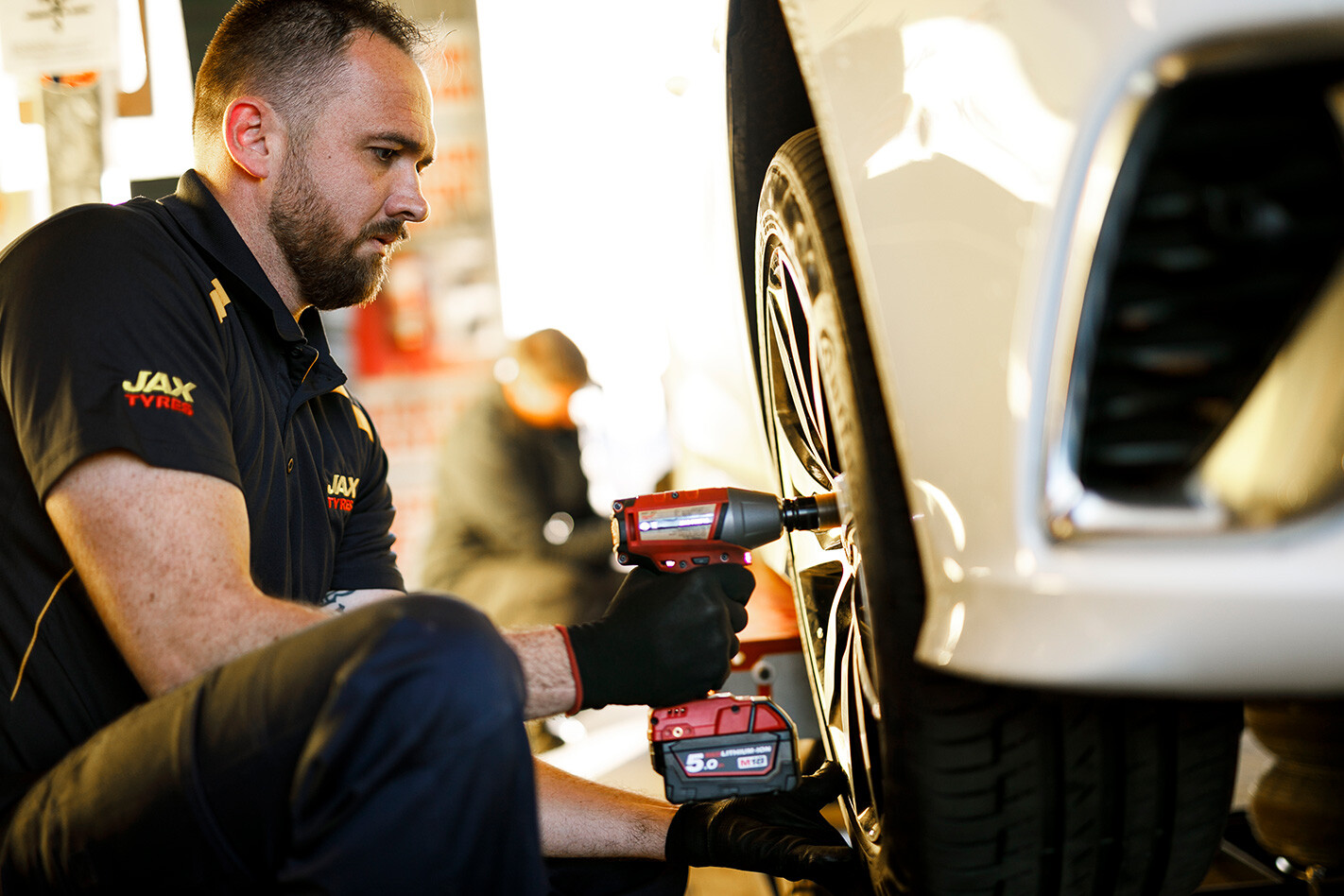
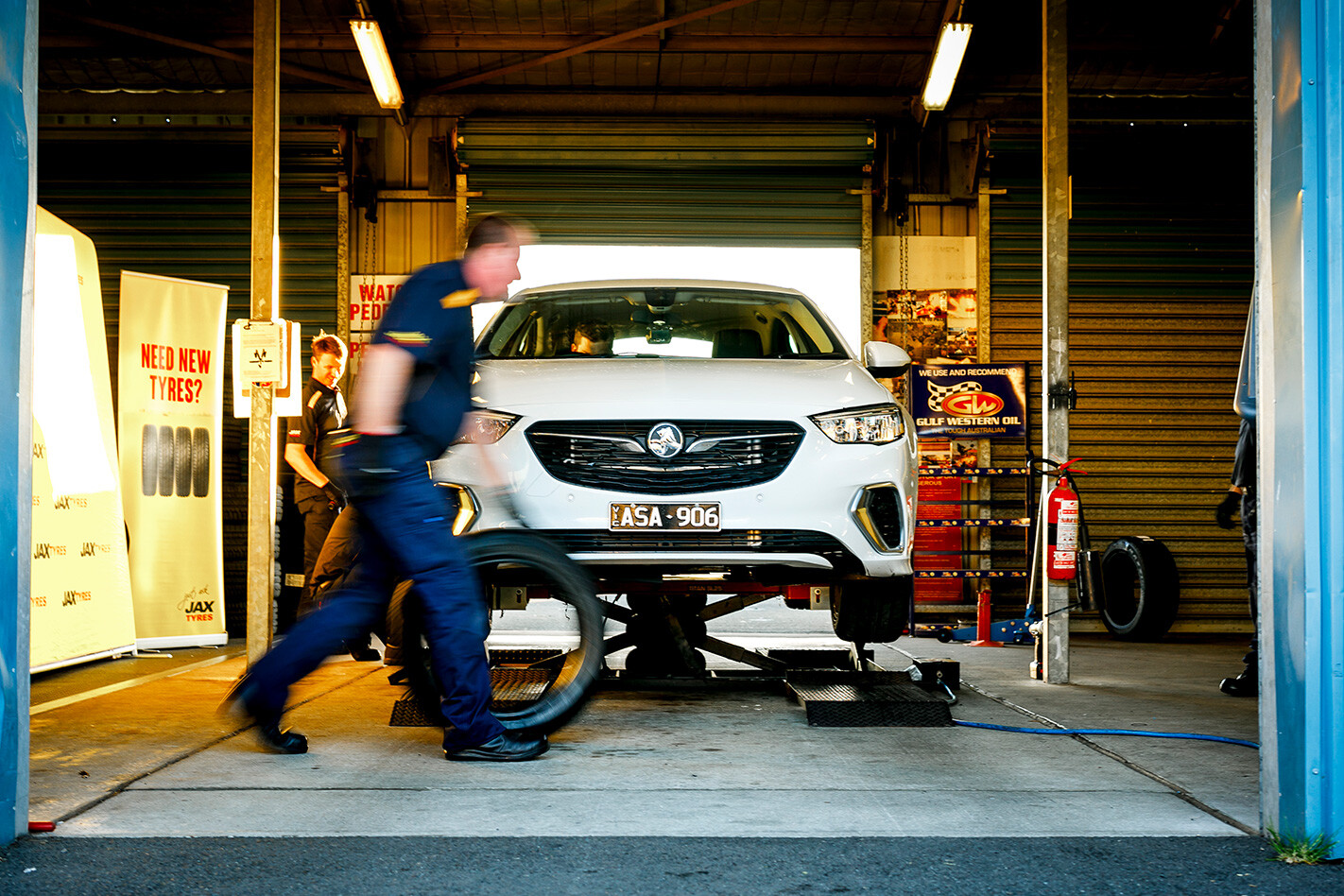
Our ever-reliable and vastly experienced JAX Tyres crew, with equipment and assistance from Eagle SMF Tyre and Automotive Equipment, took over Sydney Dragway’s scrutineering shed once again, decking it out like a facsimile of the 80-odd JAX retail locations that span Australia’s east. With a spare set of 18-inch rims to allow seamless, pit-lane-style changes, the JAX crew re-fitted sets of tyres in the order of 20 times before inflating each to 33psi as per the Holden’s placard. A heartfelt thanks goes out to the JAX boys for successfully orchestrating an epic two days of testing – 11 tyres for Wheels, and 13 SUV tyres for WhichCar.com.au. You can find details of your local JAX Tyres store at www.jaxtyres.com.au.
THE NUMBER CRUNCHER
A degree in mechanical engineering (the clever sod), a quick-witted timing finger, and considerable experience as both a Wheels road tester (he worked on staff from 2006-13) and Tyre Test data analyst (four years running) makes Jimmy Whitbourn the perfect man to separate the winners from the numbers. Now a freelance journalist, Jimmy splits his time between writing and reviewing for Wheels, WhichCar.com.au and others, and running his car-buying site (CarHelper.com.au).
THE TYRE TESTS
Slalom
The swerve-and-recover test, or slalom – just like the skiing event – is an efficient way to gather meaningful data on a tyre’s transient grip level in less than 10 seconds.
Dry Braking
You would’ve thought that simply jamming on the picks as hard as you can and letting the anti-lock braking system (ABS) sort out the rest was a given in a modern car. And it is, but not without one big variable – tyres.
Wet Cornering
Wet Cornering proved a definitive differentiator between the greats and not-so-greats of the group.
Wet Braking
It’s the one discipline that separates the mighty from the mediocre by a big margin … and we’re talking about brand new, correctly inflated, high-spec tyres here!
Tyre Noise
Few surfaces in the world can match the noise generation of an Australian coarse-chip road, so tyre noise does play a vital part in the driving performance of your vehicle.
TYRE TEST RESULTS
WHEELS TYRE TEST 2018: The Results
From the outset, it was clear the Falken Azenis FK510 was in with a real shot.
For all its strengths, it’s fair to say that the outgoing Mk IV Golf was not an inspiring car to drive. Point it at a corner with any degree of aggression and it would lift the nearside rear wheel, scrubbing angrily away from the apex in a noisy struggle to regain grip and composure.
This review was originally published in MOTOR’s January 2004 issue
So it’s a pleasant surprise to discover, after just a few corners, that its Golf V replacement is not that way inclined at all. Handling is benign and predictable as always, but the fifth generation Golf has learned to act in a spontaneous and precise fashion – balanced and poised instead of detached and boring.
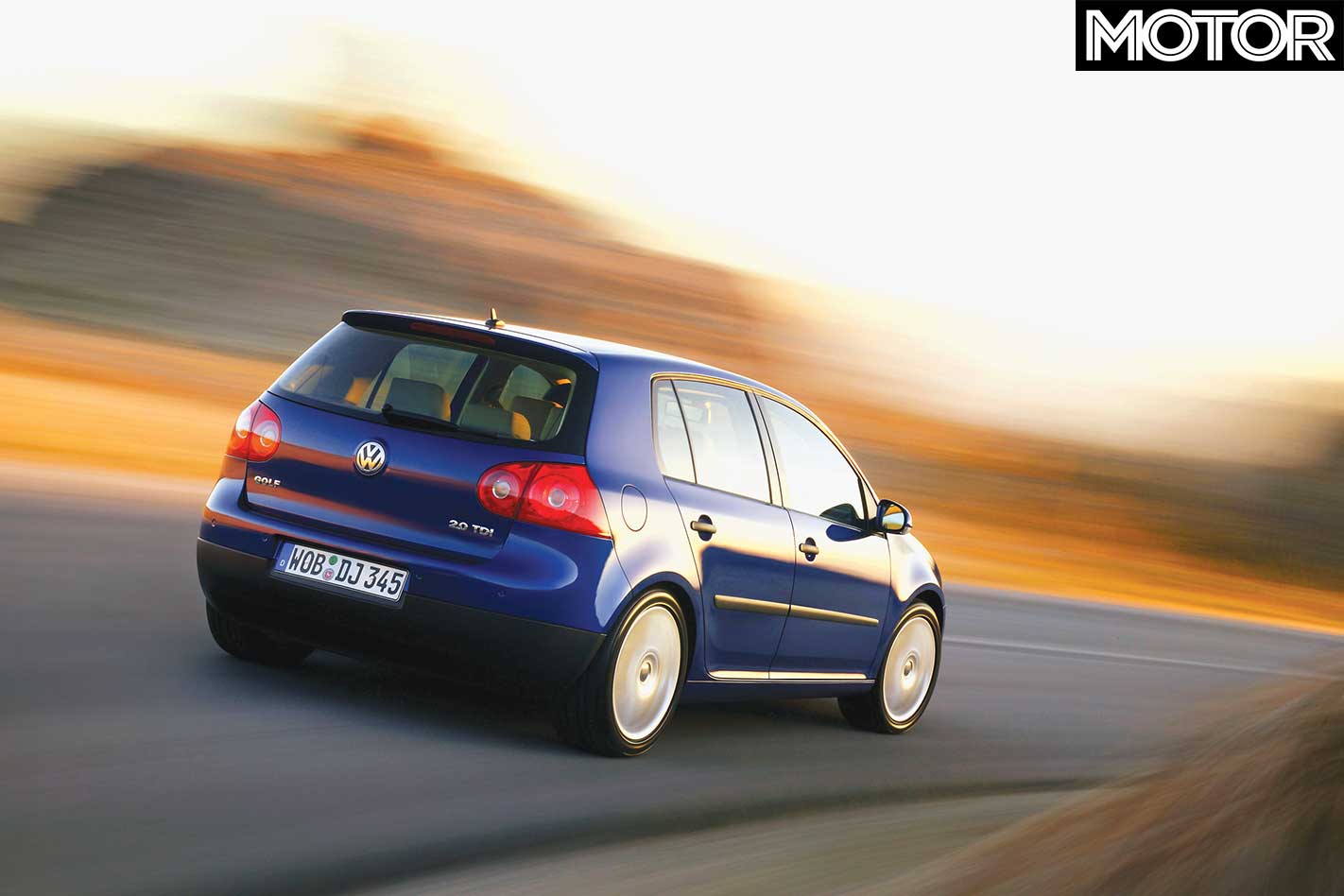
The Mk V is as unmistakably a Golf as its forerunners. All the classic cues have been preserved, including the wide C-pillars. Classy, familiar, neatly proportioned and timeless, this car leaves you in no doubt about its identity.
Inside, the new Golf comes across like a downscaled Phaeton. Perceived quality is first class, and upmarket details include four chrome-rimmed round instruments, an optional satnav with large-format colour monitor and dual-zone air conditioning.
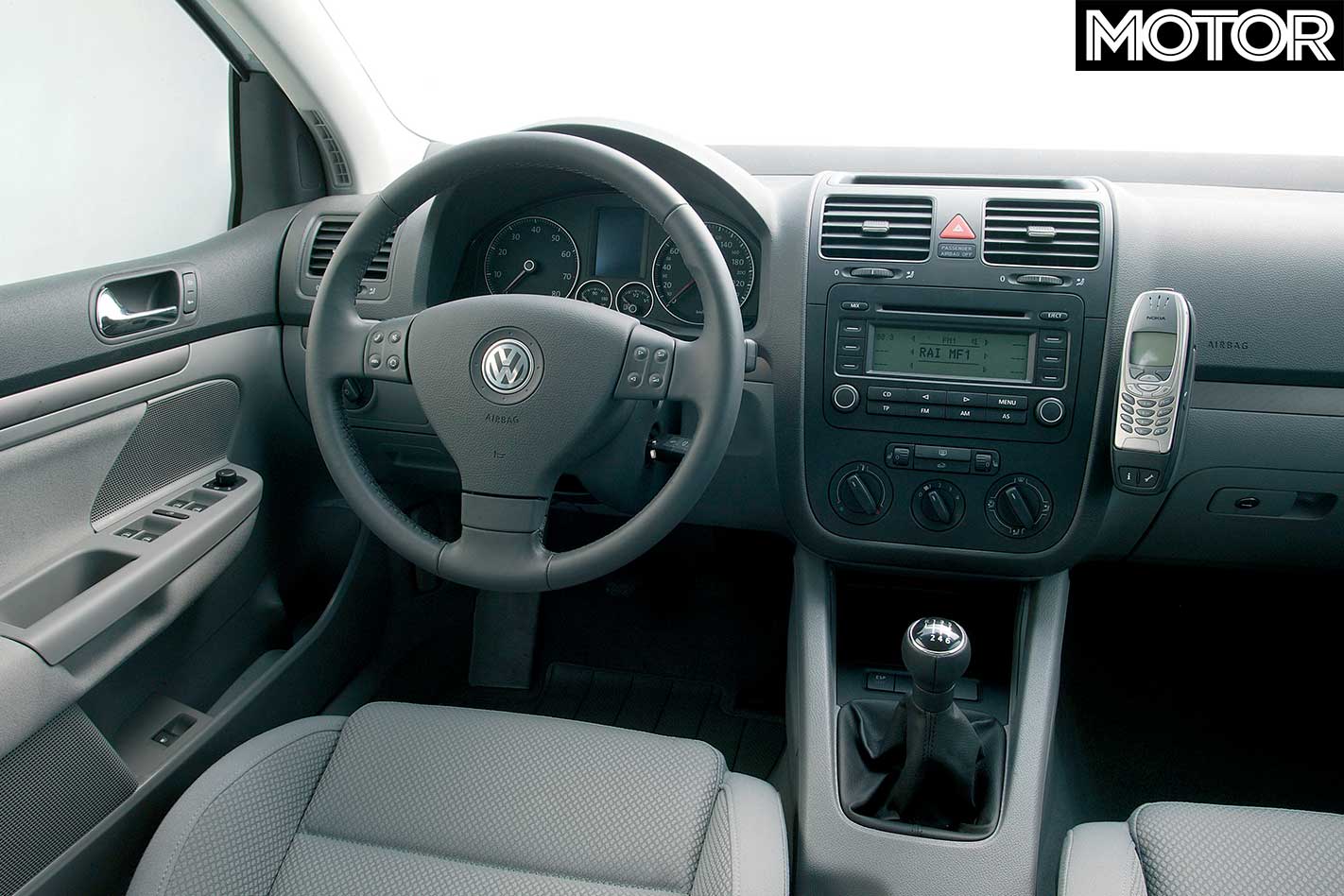
Dimensions are more grown up, too. A 67mm longer wheelbase means quantifiably more rear leg room, while width is up 24mm and height 39mm.
A much stiffer chassis and heavily reworked suspension are matched by new electro-mechanical power steering with a subtle self-centring mode known as Active Return and an automatic stability enhancement device that compensates for crosswinds and camber changes.
The most powerful model available at launch is the 103kW 2.0 TDI. A diesel flagship? You bet. With 320Nm on tap, the 2.0 TDI has ample GTI genes in its blood. A 0-100km/h time of 9.3sec and a 205km/h top whack are no more than adequate, but its prime strength is its irresistible mid-range oomph.
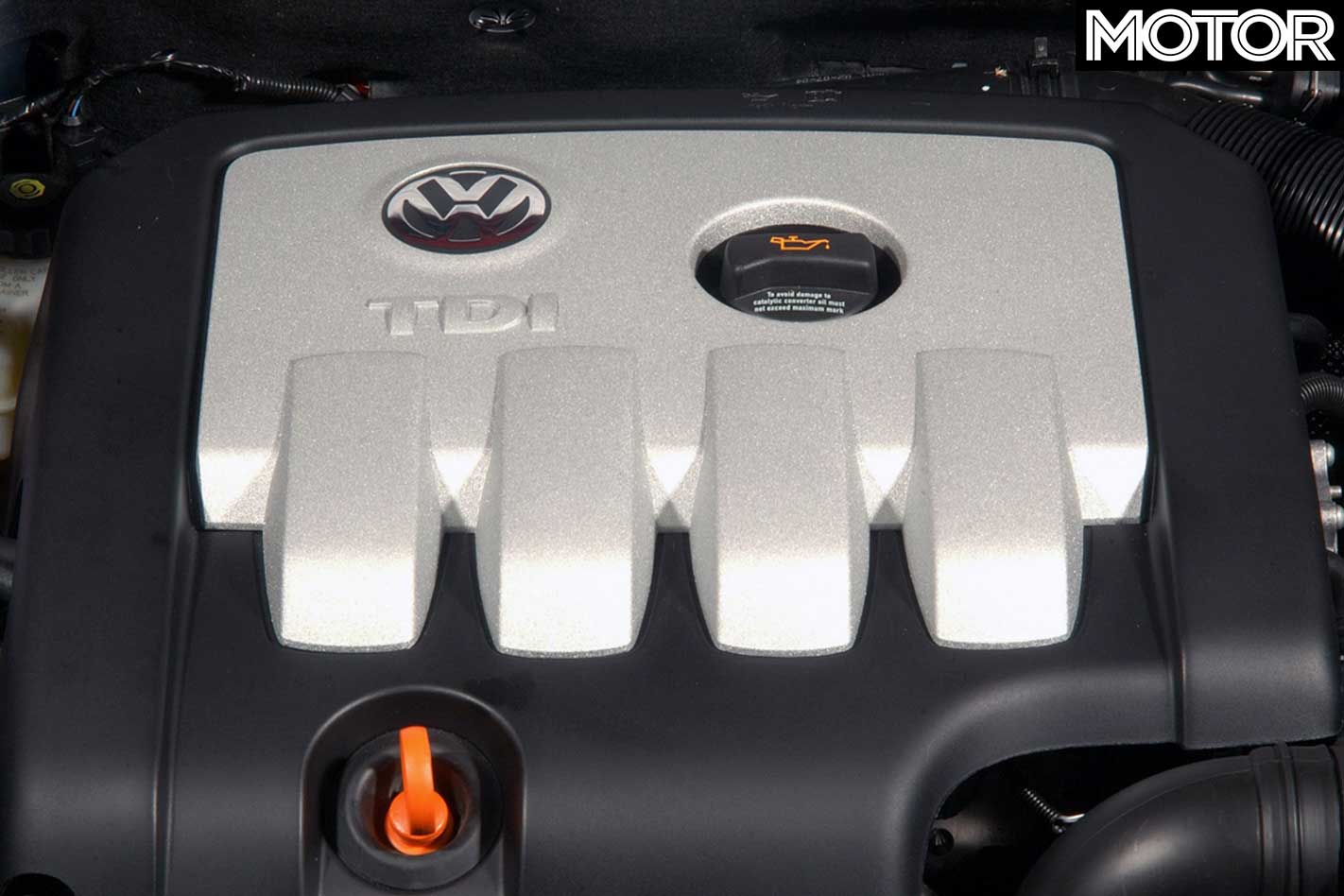
It isn’t yet confirmed for Oz, but we will be getting the 77kW 1.9 TDI, 75kW 1.6 petrol and 110kW 2.0 FSI from the third quarter of 2004. VW Oz hopes to add the 2.0 TDI and 85kW 1.6 FSI as well, followed in 2005 by a 150kW turbocharged 2.0 GTI and the all-wheel-drive R36, it’s uprated 3.6-litre V6 reportedly good for 205kW.
An excellent all-rounder, Golf V has lost none of its core qualities and is now a much better car in so many respects. This is without a doubt the most complete Volkswagen yet.
Welcome to a very special play station, courtesy of Mercedes-Benz and McLaren. The SLR is the world’s first plug-and-play supercar.
This feature was originally published in MOTOR’s January 2004 issue
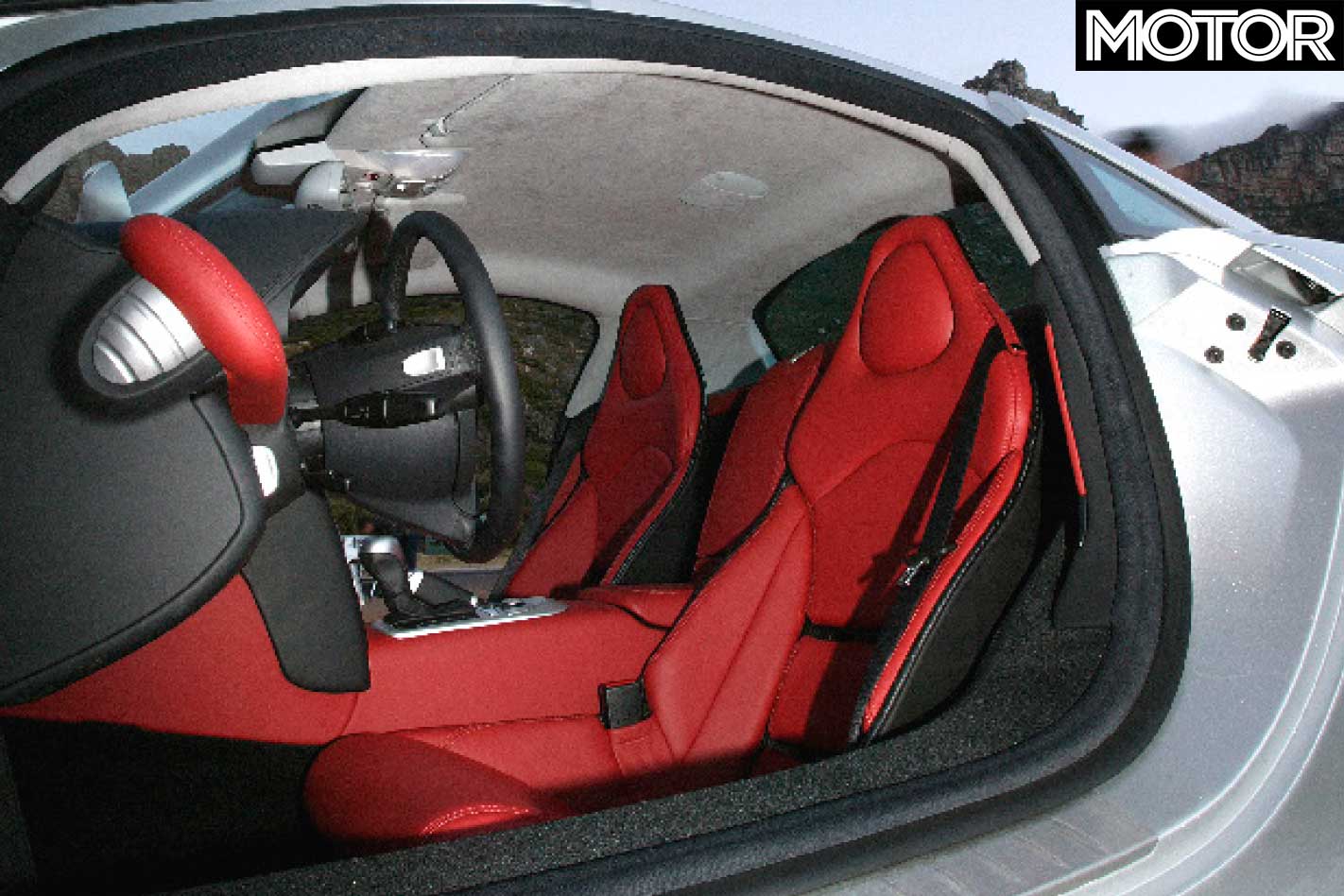
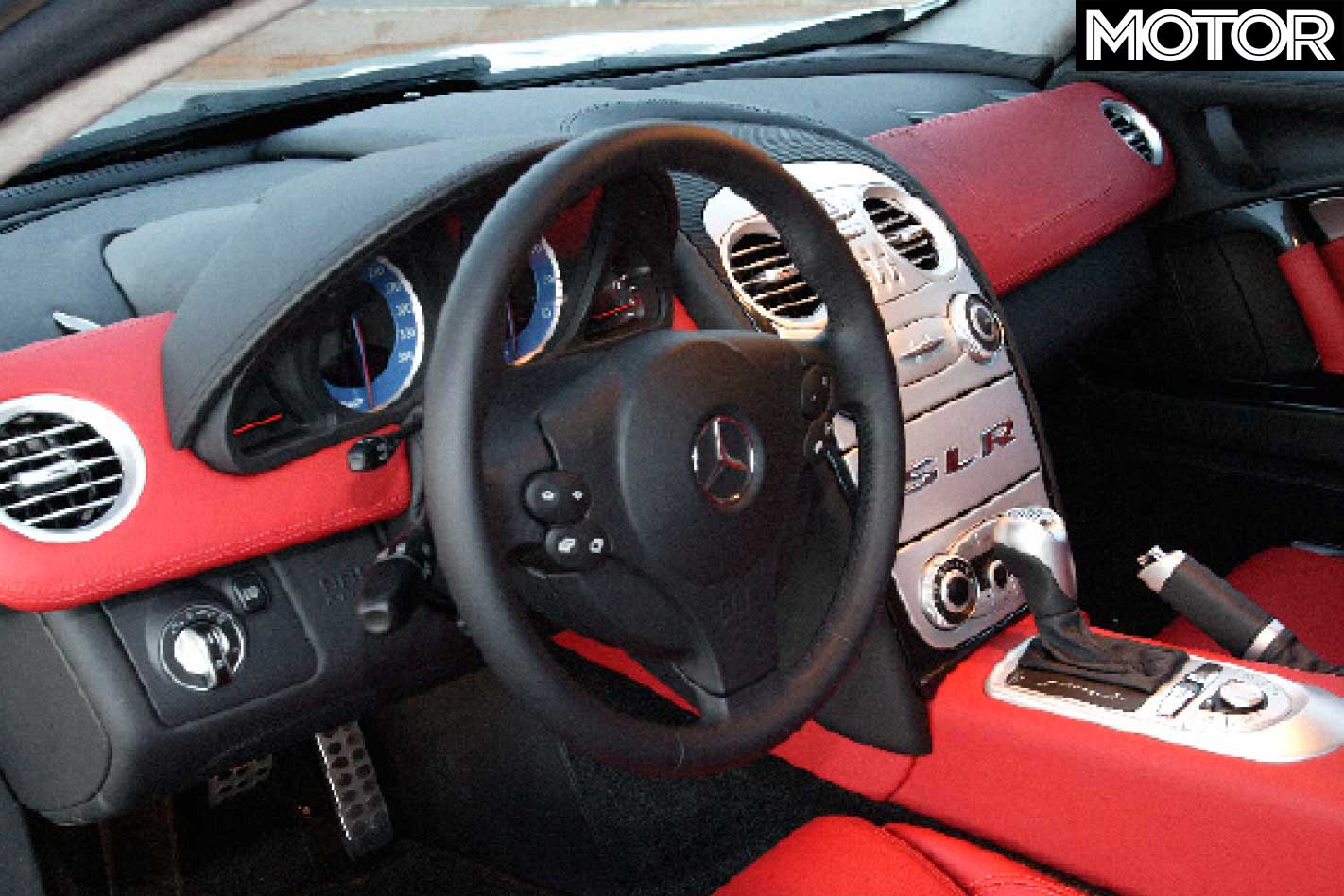
Okay, plugging yourself in requires a certain amount of snakeman-like flexibility; the small door aperture, the slimline bucket seat, the protruding knee pad and the proximity of the taxi-design steering wheel create a somewhat claustrophobic cabin ambience.
Sheer, brutal, raw speed is what the Mercedes-Benz SLR McLaren is all about. The long-nosed, gull-wing supercoupe disappears in a loud cloud of blue smoke, spinning its 295mm wide rear tyres just a tad as it accelerates from 0-100km/h in 3.8sec through to a top speed of 334km/h.
This performance puts the McMerc truly in Ferrari Enzo and Porsche Carrera GT territory – but the Anglo-German luxo-rocket gets there with a five-speed automatic transmission, six airbags, satnav, power seats, electric mirrors and door locks, climate control and Bruckner’s symphony number eight massaging your eardrums via the seven-speaker Bose sound system. In Stuttgart, they clearly don’t believe driving an extreme supercar means doing without life’s little luxuries.
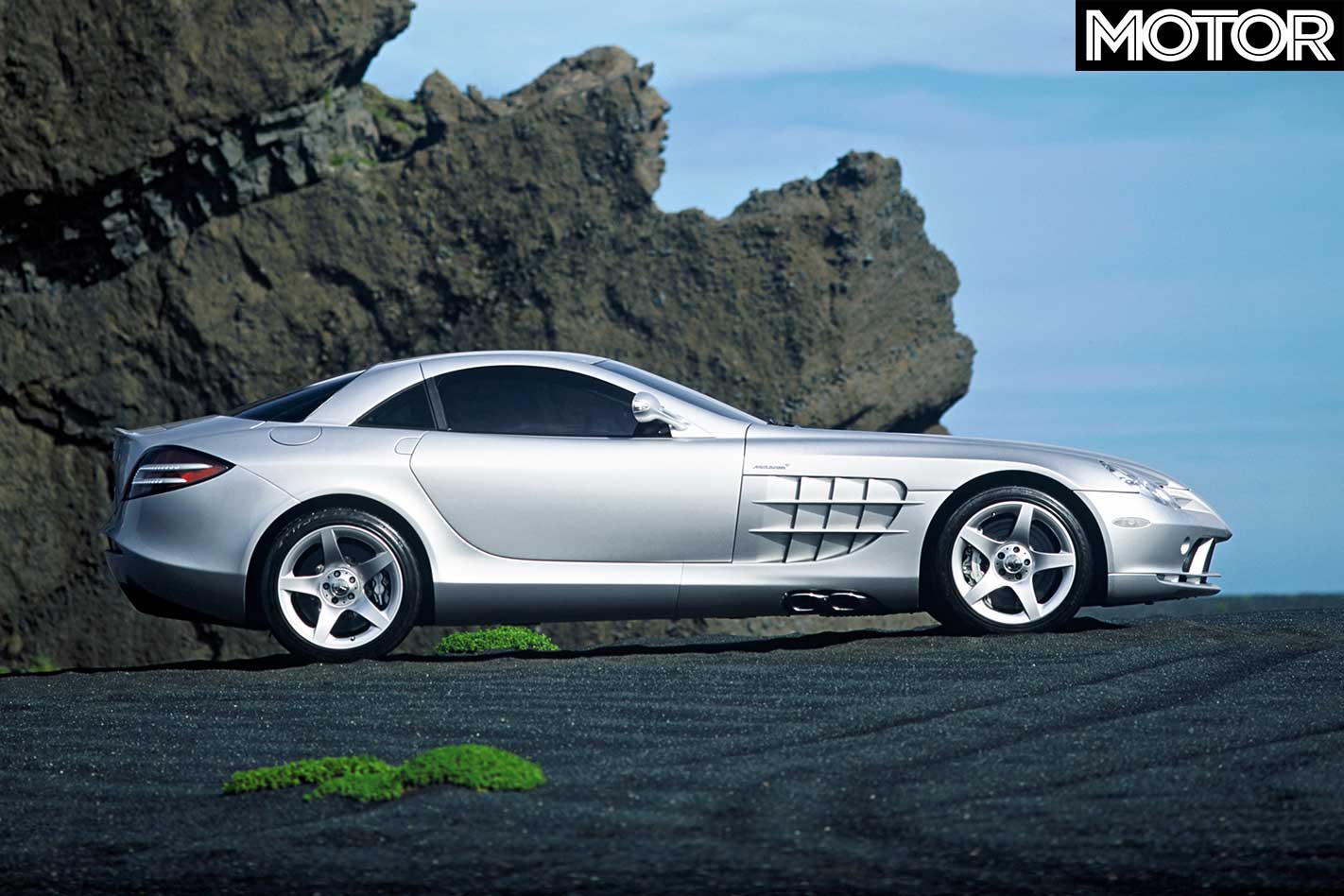
In an era that spoils us for choice when it comes to 320km/h-plus exotica, the SLR is a unique take on the genre. Think Ferrari Enzo performance, Aston Martin Vanquish amenities, Porsche Carrera GT grip and roadholding, SL55 AMG boot space, Lamborghini Murciélago street cred.
They promised us the best of all worlds – but somehow some things went missing during the shift from fiction to fact. Which is probably why, as we cruise down the heavily policed roads from Cape Town to the Cape of Good Hope, the SLR feels more Merc than Mac.
At speeds up to 130km/h, the quick rack and pinion steering has the three-pointed star all over it, accurately determining direction, but without relaying the finer subtleties of the road surface.
The standard Sensotronic ceramic brakes feel wooden, heavy and unresponsive underfoot. And even when you nail the throttle to slip through a gap in traffic, the SLR launches with a get-out-of-my-way growl like one of the big-banger AMG cars. Only harder. Much, much harder. Think SL55 on steroids.
The artificially aspirated 5.4-litre 24-valve V8 shares its basic architecture, cylinder count and forced induction with the SL55, but the specially reinforced all-alloy block features dry sump lubrication. This enables the bent eight to be slung lower in the chassis, improving handling, grip and roadholding.
Each engine is hand assembled by a single AMG engineer, who bolts in a host of goodies like a balanced crankshaft, forged pistons and a pair of air-to-water intercoolers. While Mercedes is supplying the engines, McLaren conceived the front-to-mid installation which is crucial for the car’s evenly balanced weight distribution.
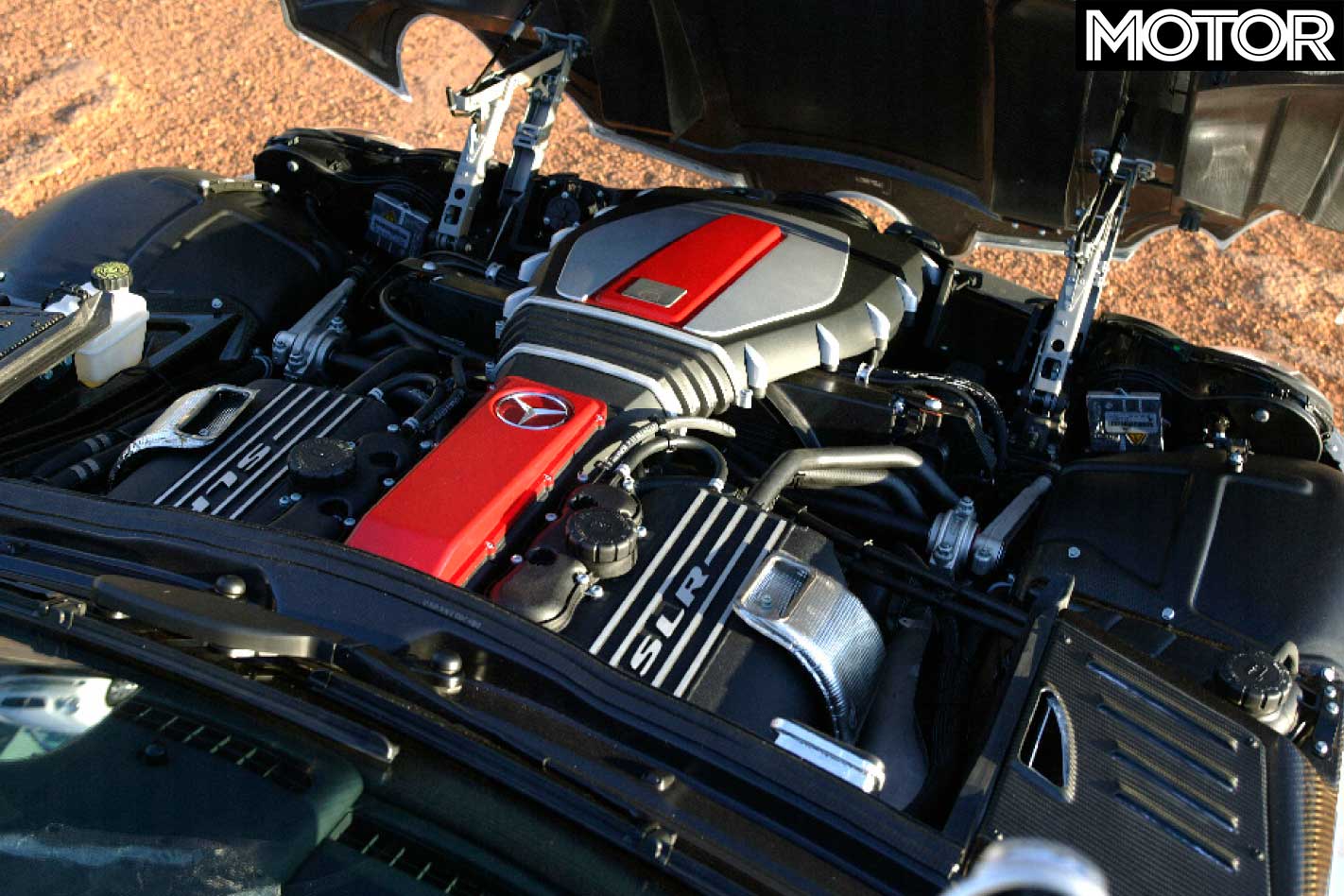
British engineers chose a classic double wishbone configuration, sans Merc’s luxury staples like air suspension, adjustable dampers or active body control (ABC).
If torque had a signature tune, it would sound like this engine: busy, metallic, deep-voiced, a duet of high-mech and high-tech, a turbine with pistons, a rocket with valves. Despite the sexy side-exit pipes, the V8 is an aural non-event from behind the wheel, but from the outside it sounds like serious work being done in a serious manner.
An awesome 460kW is enough to get anyone’s attention, and yet it’s the way the AMG V8 mines a rich, deep seam of pure, weapons-grade twist action – 780Nm from 3250 to 5000rpm, and more than 600Nm from just 1500rpm – that impresses most. With so much torque on tap, the three-mode (comfort, manual, sport) five-speed self-shifter is probably the best possible transmission for this car.
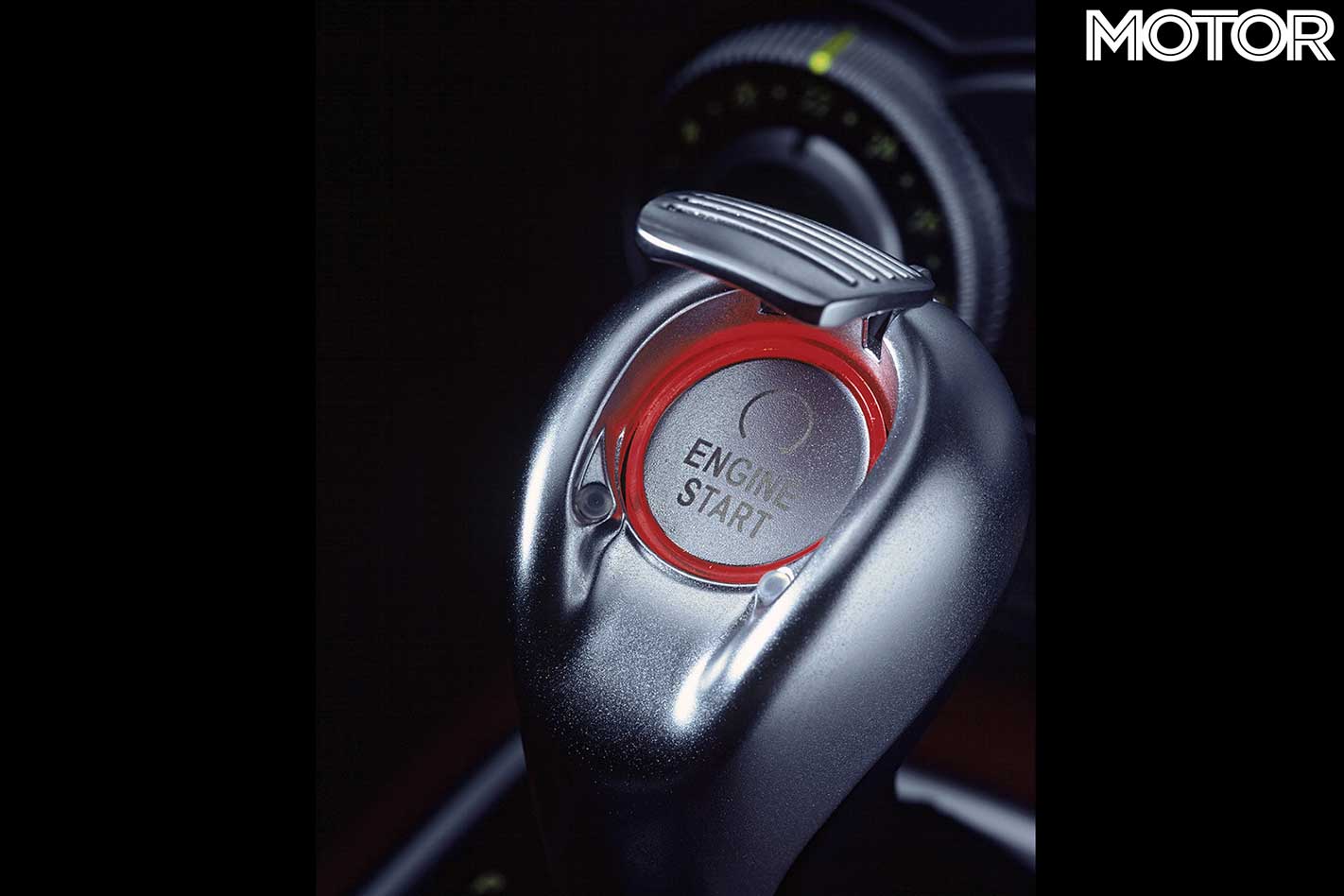
We fiddled with the shift speeds and tried manual mode, but soon got tired of pressing buttons and switched to automatic; it proving surprisingly good at suppressing unwanted upshifts and at dialling in timely downshifts.
Although Mercedes claims the SLR combines the abilities of a supercar with those of a grand tourer, the cabin is simply too cramped for that nine-hour Friday afternoon dash from Melbourne to Sydney. Or Brisbane. With the engine so far back in the chassis, you’re virtually sitting on the rear axle. The ride, too, is a tad too hardcore for a car wearing the three-pointed star.
The set-up varies from stiff to jittery, and the spectrum of negative acoustics includes ample road noise, plenty of tyre roar and some suspension thump, with a constant flow of minor but nonetheless irritating vibrations to be felt through the steering wheel, floorpan and bulkhead.
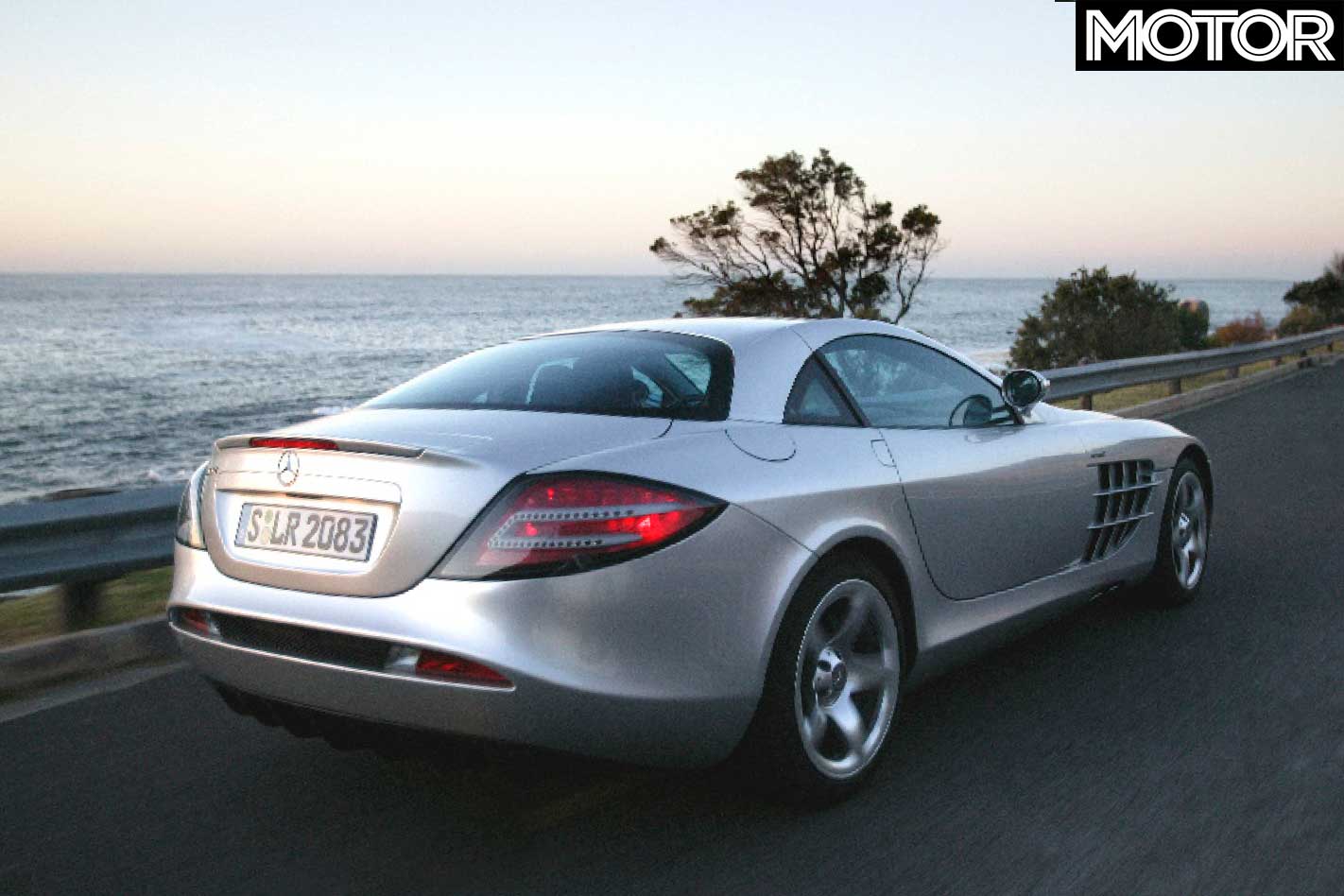
Through the twisties, there’s plenty of grip but not enough fluency. More significantly, though, you’re always aware that this is a long, wide, heavy car. At 1768kg, the SLR weighs nearly 30 percent more than either the Enzo or Porsche’s Carrera GT, and an astonishing 55 percent more than Gordon Murray’s epochal McLaren F1.
It is shatteringly, suck-the-air-from-your-lungs quick in a straight line, though. We found a quiet motorway and trebled the limit – that’s 300km/h and a bit – in less time than it would take to lock a prison cell.
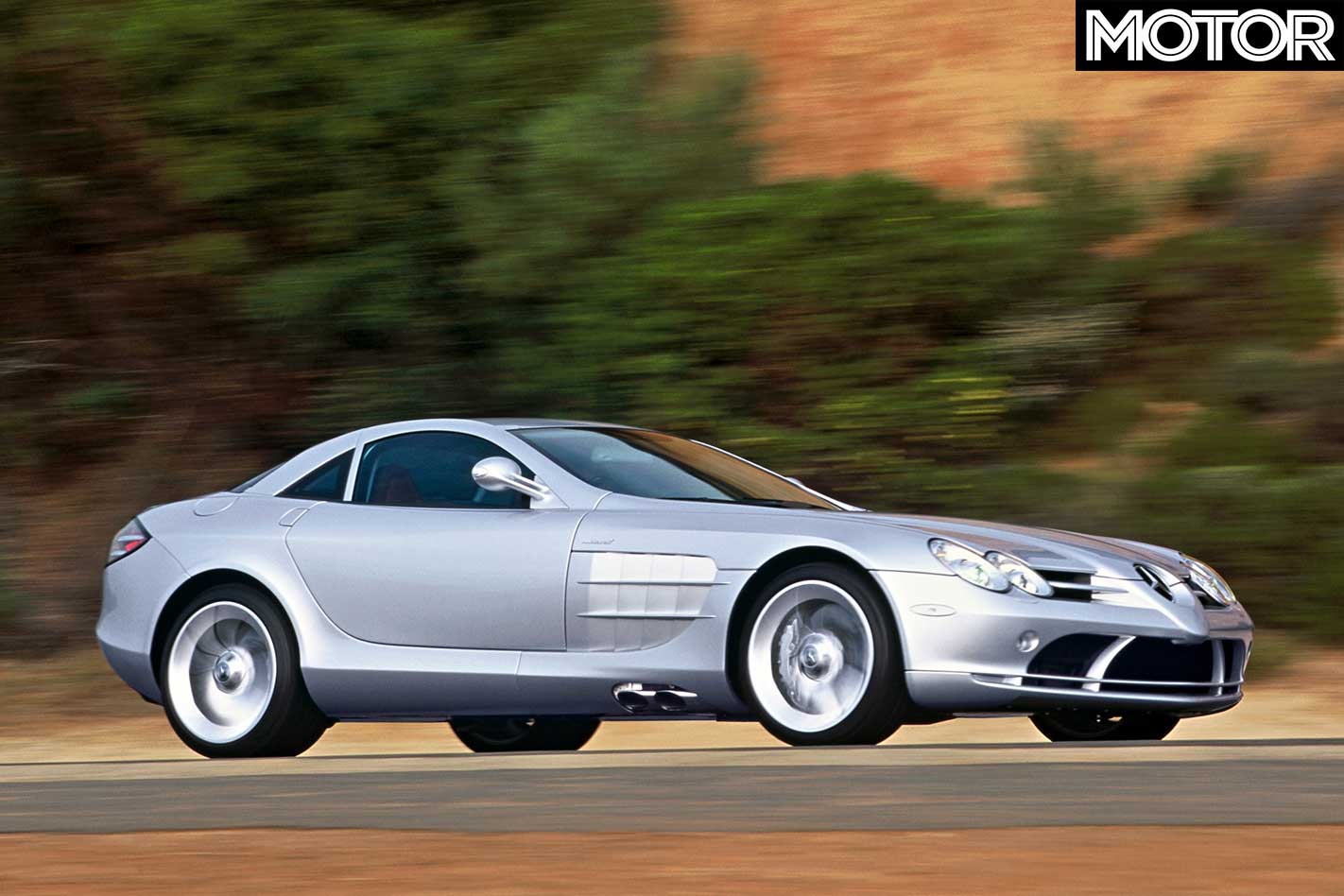
Up to 270km/h, the speed just builds in one long, relentless surge, seemingly reined in only by friction and wind resistance. The next 30 clicks require a little more time, a little more effort and a bigger slice of the 7000rpm rev cake.
The brakes get better the harder you work them, improving in both feel and performance. The Sensotronic system can determine how much braking effort to apply to each individual wheel, and can tell the difference between regular braking for a corner and a panicked stab at the pedal in an emergency, automatically positioning the pads against the discs.
Sensotronic also offers a soft-stop function for smoother city driving, in which it automatically prevents rollback or creep on hills and allows automatic braking in stop-start traffic. With exclusive eight-piston calipers up front, Mercedes’ engineers reckon the SLR will pull 1.3g in a crash stop.
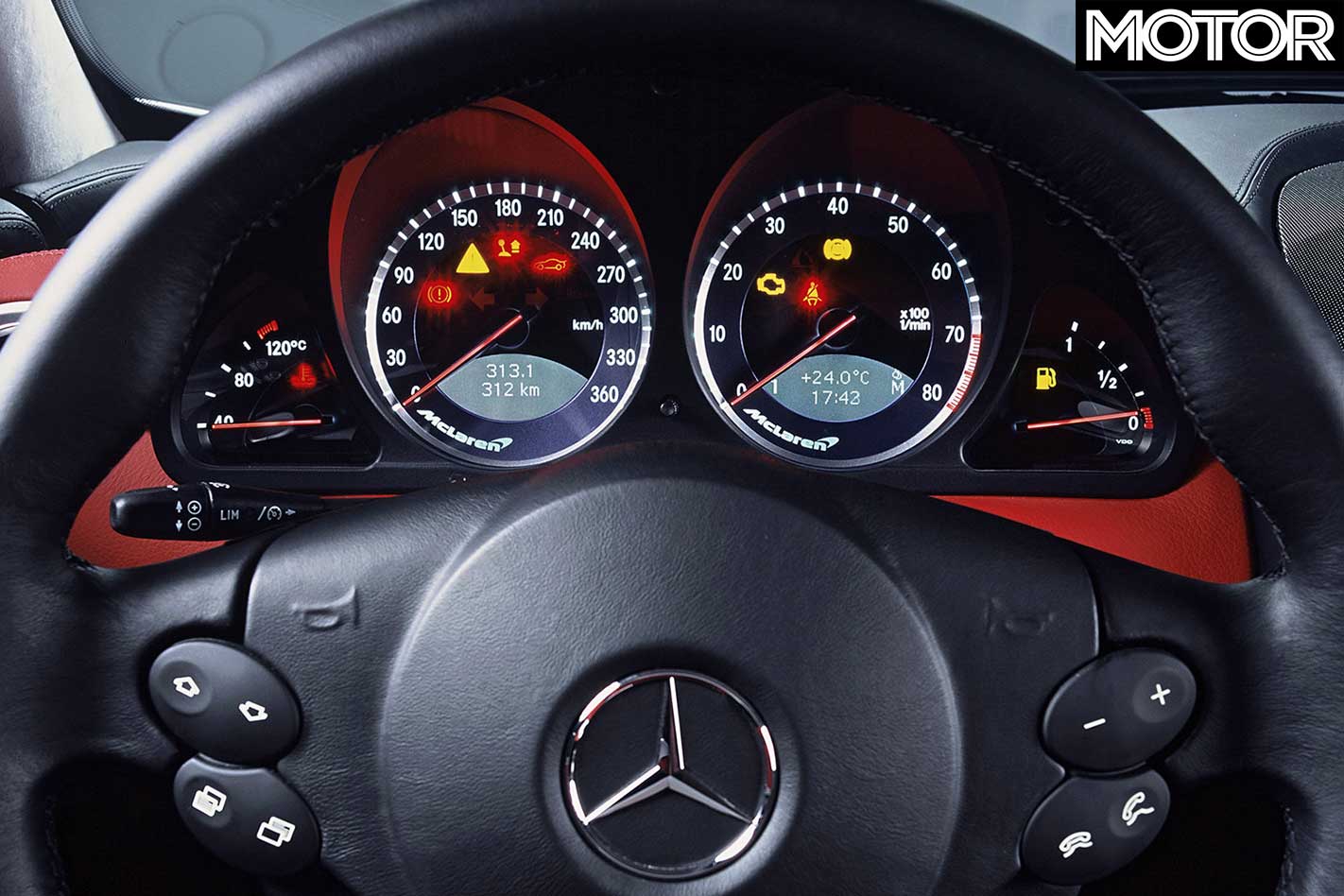
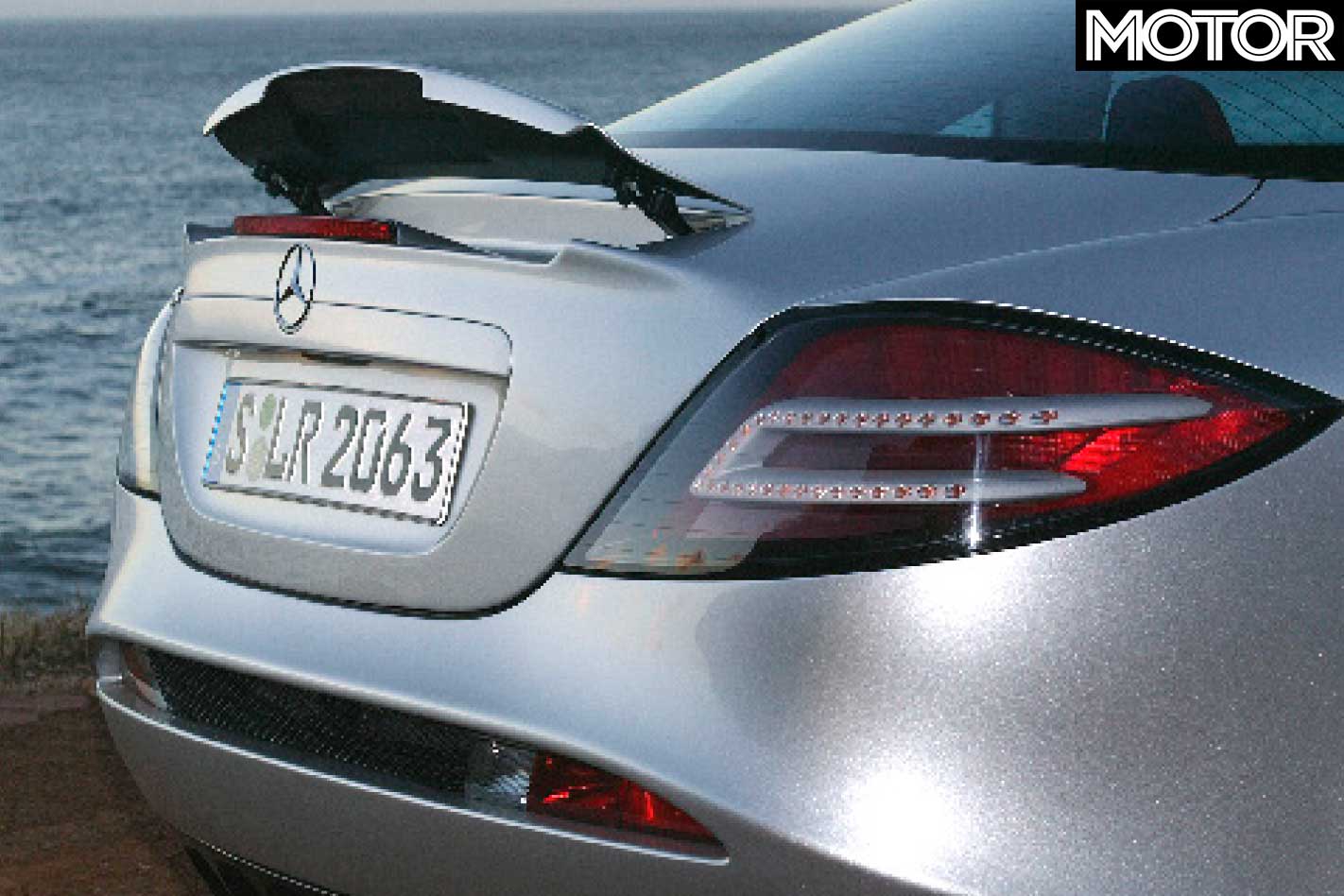
You can feel the SLR settling down onto the road as speed rises and downforce kicks in. At 100km/h the rear spoiler automatically deploys at an angle of 10 degrees, and by 250km/h it’s generating an additional 78kg of downforce, 50kg of it directed to the rear wheels.
Not enough? A switch on the centre console increases the angle of attack to 30 degrees and the rear wheels get loaded up with another 44 kilos. Get on the brakes and the spoiler tilts to 65 degrees, acting as an airbrake but also increasing the total downforce to 167kg and balancing it almost evenly between the front and rear axles.
There’s no question the Mercedes SLR deserves a place at the top end of today’s extreme supercar pack. It may not have the electric responses and raw-boned edges of an Enzo or Carrera GT, but there’s probably no 320km/h-plus car on the planet, bar the Bentley Continental GT, that’s as easy to live with every day, that’s just as capable of wafting down Park Lane as it is storming down the fast lane of an empty autobahn. But what has McLaren actually brought to this supercar party? It’s a good question.
Dig under the skin and despite the radical front/mid-engine layout, carbon fibre body structure and forged aluminium double wishbone suspension, the fingerprints of Mercedes engineers are everywhere.
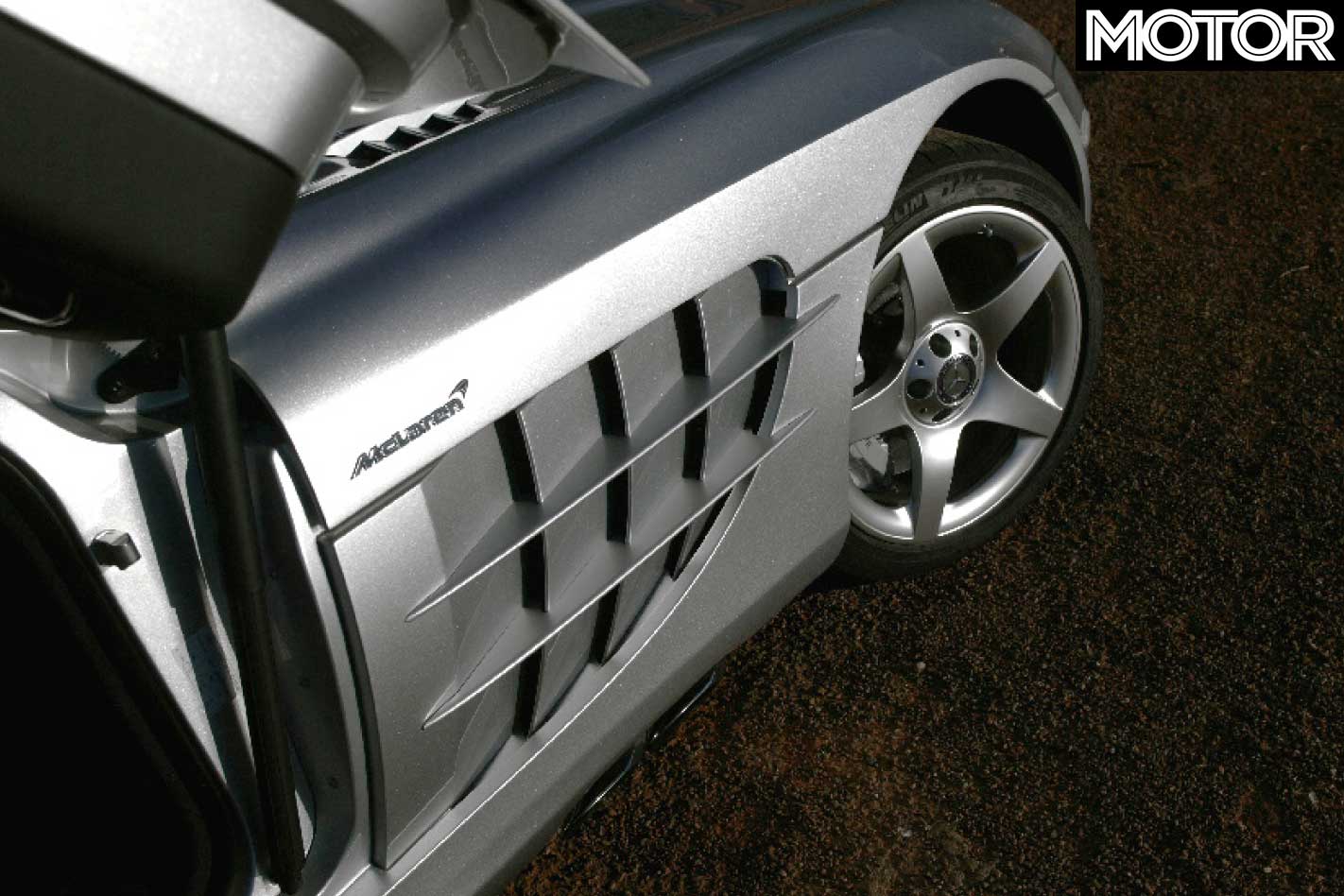
While the German SLR taskforce insists that they could never have created this car without McLaren, it’s difficult to imagine Gordon Murray wholeheartedly buying into the idea of a two-seat coupe that weighs as much as a Jaguar XJ sedan for a start. And finally, there is the way it drives.
In its mad, unrelenting, exhilarating rush to V-max, the SLR feels just like the ultimate AMG Benz. To activate the predominantly concealed McLaren genes, it is best to take it to a race track. There, it finally turns into a true supercar. According to the MB lead-footers, their baby will eclipse the entire competition – with the split-second exception of a certain Ferrari Enzo.
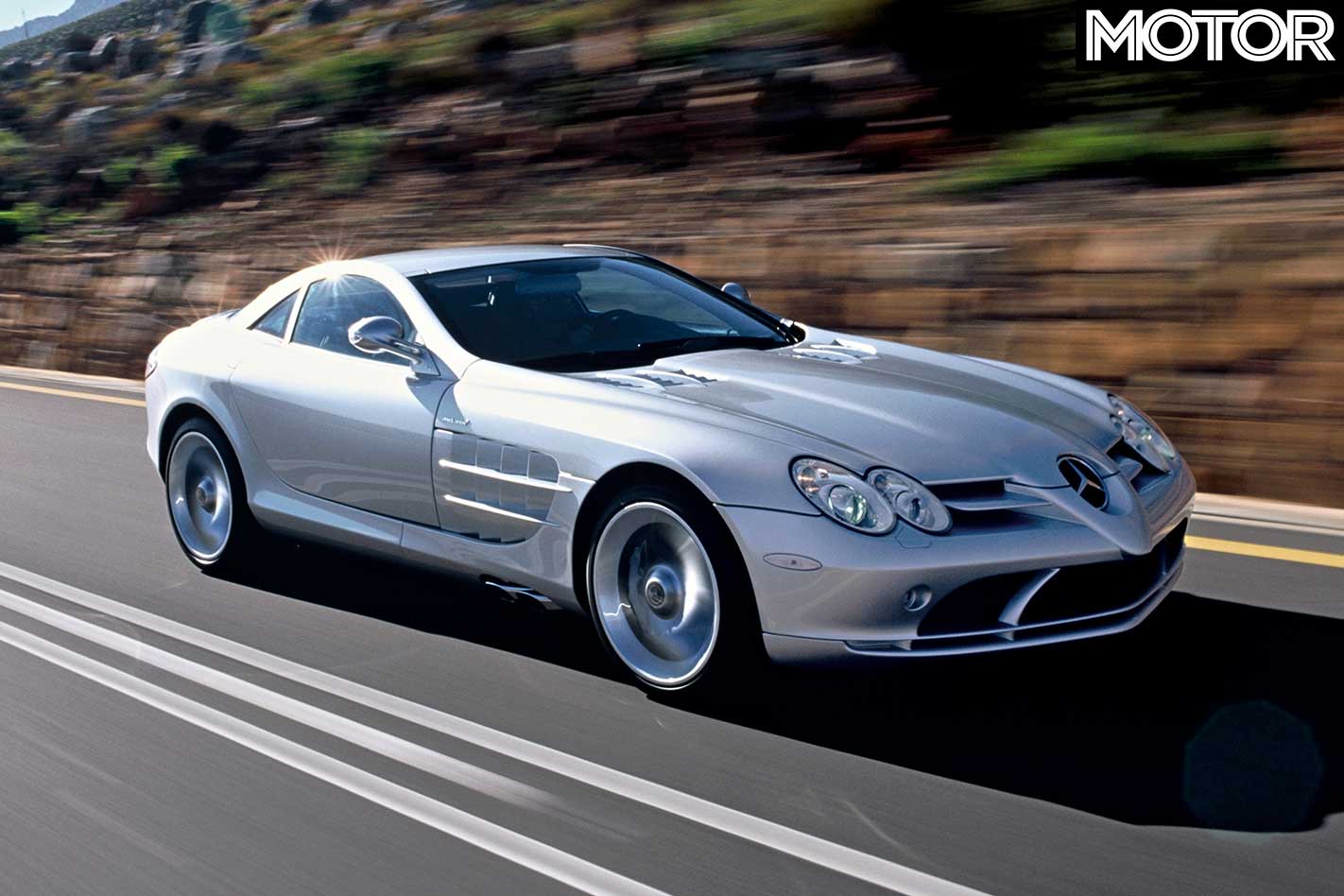
FAST FACTS 2004 Mercedes-Benz SLR McLaren
BODY: 2-door coupe DRIVE: rear-wheel ENGINE: 5.4-litre supercharged V8, DOHC 24-valve POWER: 460kW @ 6500rpm TORQUE: 780Nm @ 3250-5000rpm COMPRESSION: 8.8:1 BORE/STROKE: 97.0mm x 92.0mm WEIGHT: 1768kg POWER-TO-WEIGHT: 260kW/tonne TRANSMISSION: 5-speed automatic SUSPENSION: double wishbones, coil springs, anti-roll bar (f & r) L/W/h: 4656/1908/1261mm WHEELBASE: 2700mm TRACK: 1638mm (f), 1569mm (r) BRAKES: 370mm ventilated ceramic discs, eight-piston calipers (f); 360mm solid ceramic discs, four-piston calipers (r), Sensotronic Brake Control, ABS WHEELS: 18 x 9.0-inch (f), 18 x 11.5-inch (r), alloy TYRES: Michelin Pilot Sport; 245/40 ZR18 (f), 295/35 ZR18 (r) FUEL: 98 litres, PULP PRICE: $620,000 (est) plus tax
Expect the best right?
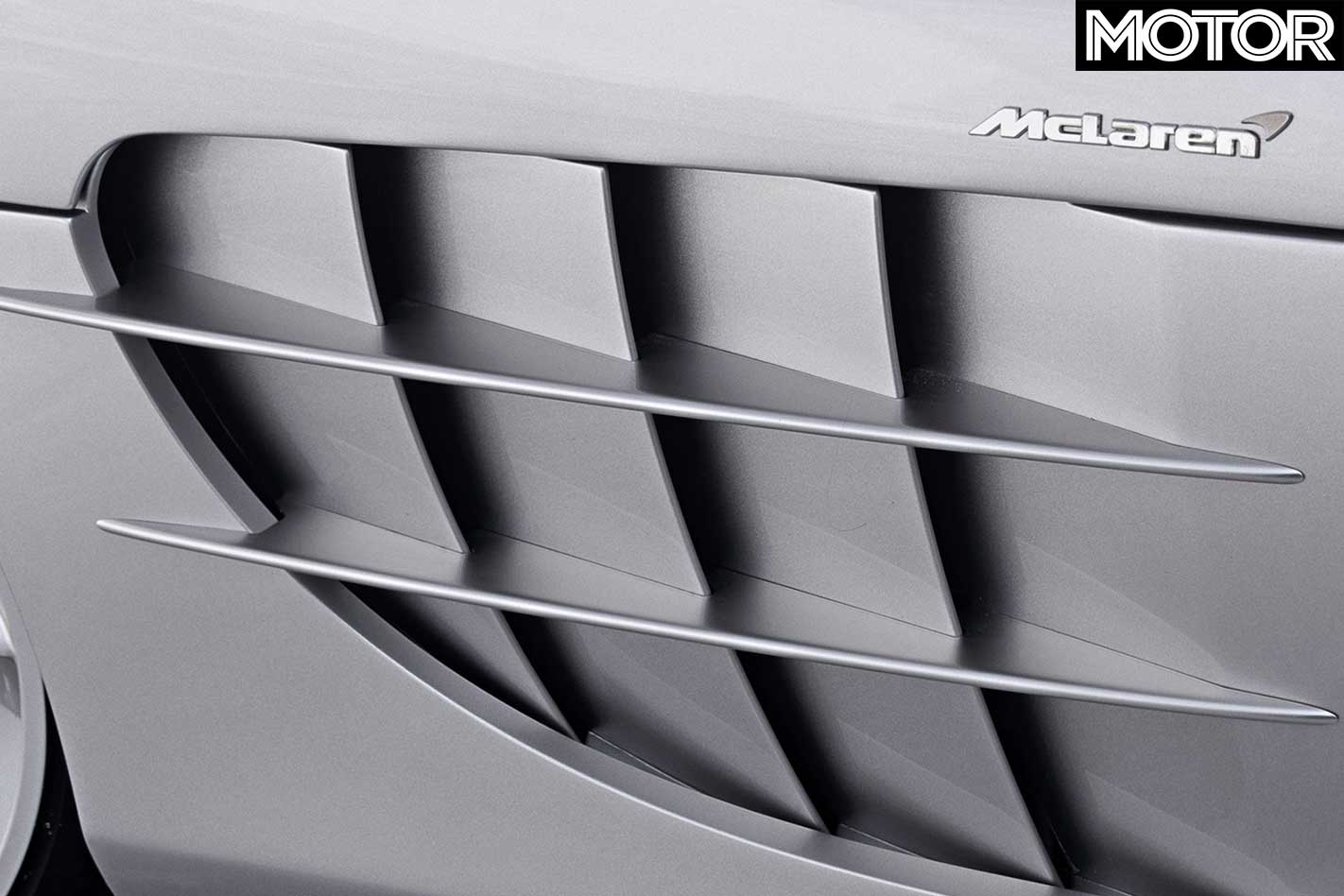
This was an early build car – chassis number 10 – and it showed. The A-pillar trim fit was poor, an edge of the seat cushion was loose and the view through the steep screen oddly distorted. There was a groan in the steering through right-handers, a noise from the rear suspension and squealing under brakes – little faults, perhaps, but how much tolerance can Mercedes expect from customers who’ve just paid 375,000 euros, plus tax?
The 500 units earmarked for 2004, plus the 700 pencilled in for 2005, have already been sold, so act now and expect an early 2006 delivery. It’ll be interesting to see whether marketing the remaining 2300 is going to be easy.
YOU CAN never count out Craig Lowndes at Bathurst, with the legend winning the Bathurst 1000 in his final year as a full-time driver.
Racing alongside Steven Richards, the victory is Lowndes’ seventh at The Mountain, as he prepares to retire from the sport as a main driver.
Richards is now a five-time Bathurst 1000 winner, while Lowndes has finished runner-up five times, and third a further two times.
Scott Pye and Warren Luff finished second at the end of 161 laps, ahead of Scott McLaughlin and Alex Premat in third.
By finishing third, McLaughlin made his podium debut at Mount Panorama, closing the gap to championship leader Shane van Gisbergen to just 19-points.
Van Gisbergen and co-driver Earl Bamber finished the race in fifth place, just behind Chaz Mostert and James Moffat.
Speaking before the podium ceremony, Lowndes likened this Bathurst win to his emotional victory in 2006 alongside Jamie Whincup following the death of his mentor Peter Brock.
Lowndes’ victory didn’t come easy, with the fastest man on the day, David Reynolds, suffering a race-ruining leg cramp in the final stint.
Reynolds and Erebus dominated most of the day’s 161 laps, but in a cruel twist of fate the defending Bathurst champions had to concede the lead of the race on lap 135.
Things went from bad to worse, with spinning tyres during a pit-stop prompting a penalty. Reynolds was unable to finish the race, handing driving duties to his co-driver Luke Youlden, who brought the Erebus car home in 14th place.
Most of the main drivers completed a triple stint to finish the race, with Lowndes revealing he completed the marathon without a helmet fan or cool suit.
Jamie Whincup’s Bathurst curse continued, with the reigning champion finishing in 10th place following a tumultuous day.
Whincup’s co-driver Paul Dumbrell was behind the wheel of the Red Bull Holden Racing Team and running in second place when the front-right wheel parted company with the ZB Commodore.
Impromptu repairs dropped the pair a lap down the order, with smart strategy helping them finish the day at the tail of the top 10.
Garth Tander and Chris Pither, Nick Percat and Macauley Jones, James Golding and Richard Muscat, and Fabian Coulthard and Tony D’Alberto were the other top 10 finishers.
The 2018 Bathurst 1000 was the quickest in history, running for just over six hours.
When BMW took on the Mini project you get the feeling they might have wanted something a bit more inspiring than the Brazilian-built engines that would end up being the popular car’s weakest point.
This review was originally published in MOTOR’s December 2006 issue
The supercharged Cooper S was the pick of that range (at least it had character and some half-decent power), but at PCOTY last year, it failed to raise the windsock in any of the performance tests.
Among them is a factory at Hams Hall where they assemble the BMW/Peugeot-Citroen joint-venture engine with a turbo variant that will have performance lovers saying, “Now that’s what I’m talkin’ about!”
While the direct-injection, turbocharged Valvetronic 1.6 produces only three more kilowatts than the previous Cooper S’s supercharged Tritec unit (at 500rpm less), there’s an extra 20Nm (for a total of 240) with a bonus 20Nm of overboost that kicks in when you sink the slipper – which is most of the time. This is achieved with a twin-scroll turbocharger (not to be confused with a twin-turbo) that eliminates nearly all trace of lag and holds peak torque from 1600rpm right through to 5000.
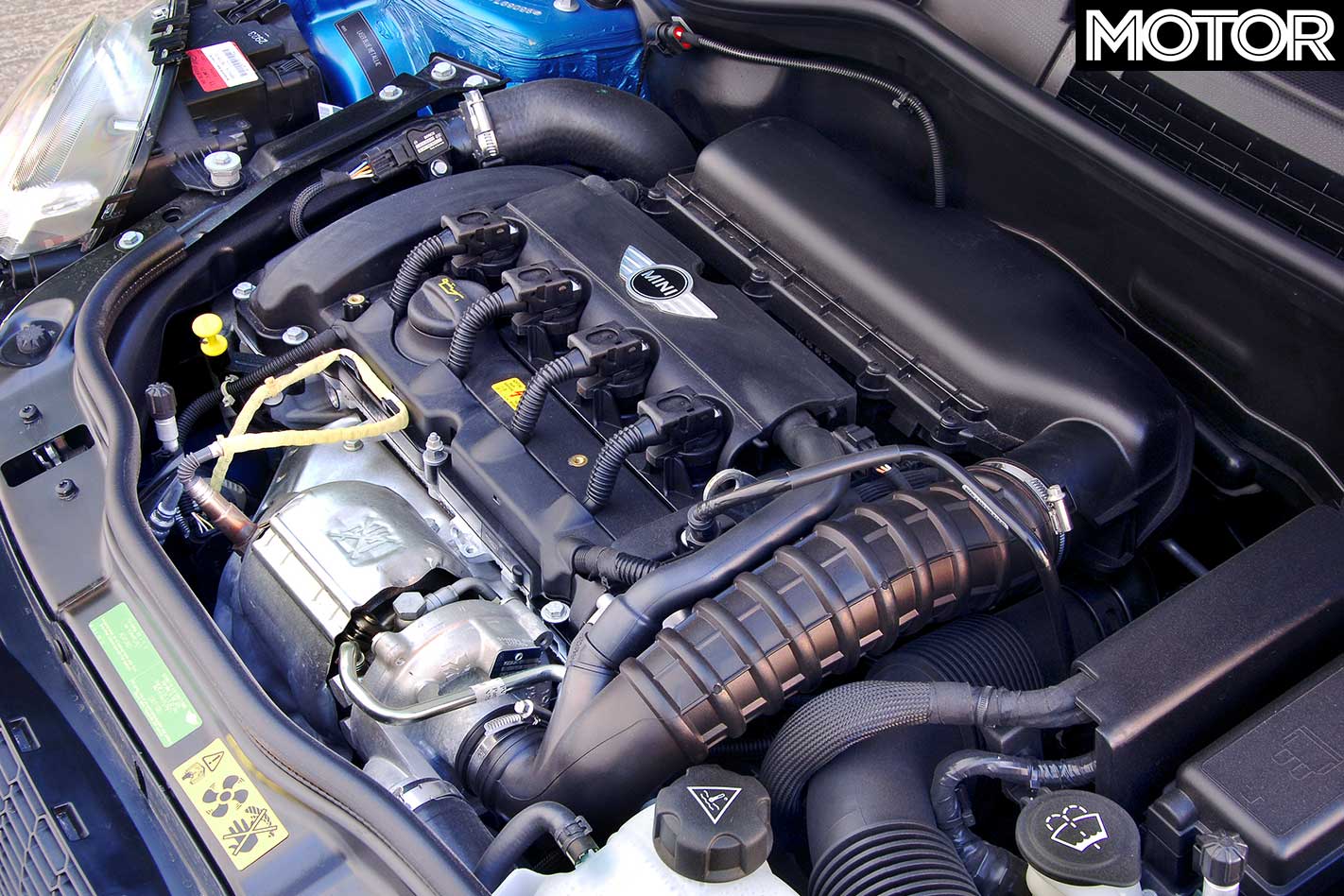
Sadly, it also means the evocative whine and burble of the old supercharged Mini has gone, replaced by a throatier drone which is pleasant, but not as inspiring. Winding it out on the open road provides a satisfying acceleration thrill and holding third gear through all but the tightest roads is a viable option with the added grunt.
However, setting and forgetting in third means you’d miss out on rowing through a pretty decent Getrag six-speed gearbox, which would be even more decent if it had a reverse lock-out collar or button.
That might then stop you accidentally hitting reverse instead of first, or a false second under the reverse gate while changing down during spirited driving. I did it three times, but probably more due to not being used to right-handed shifting.
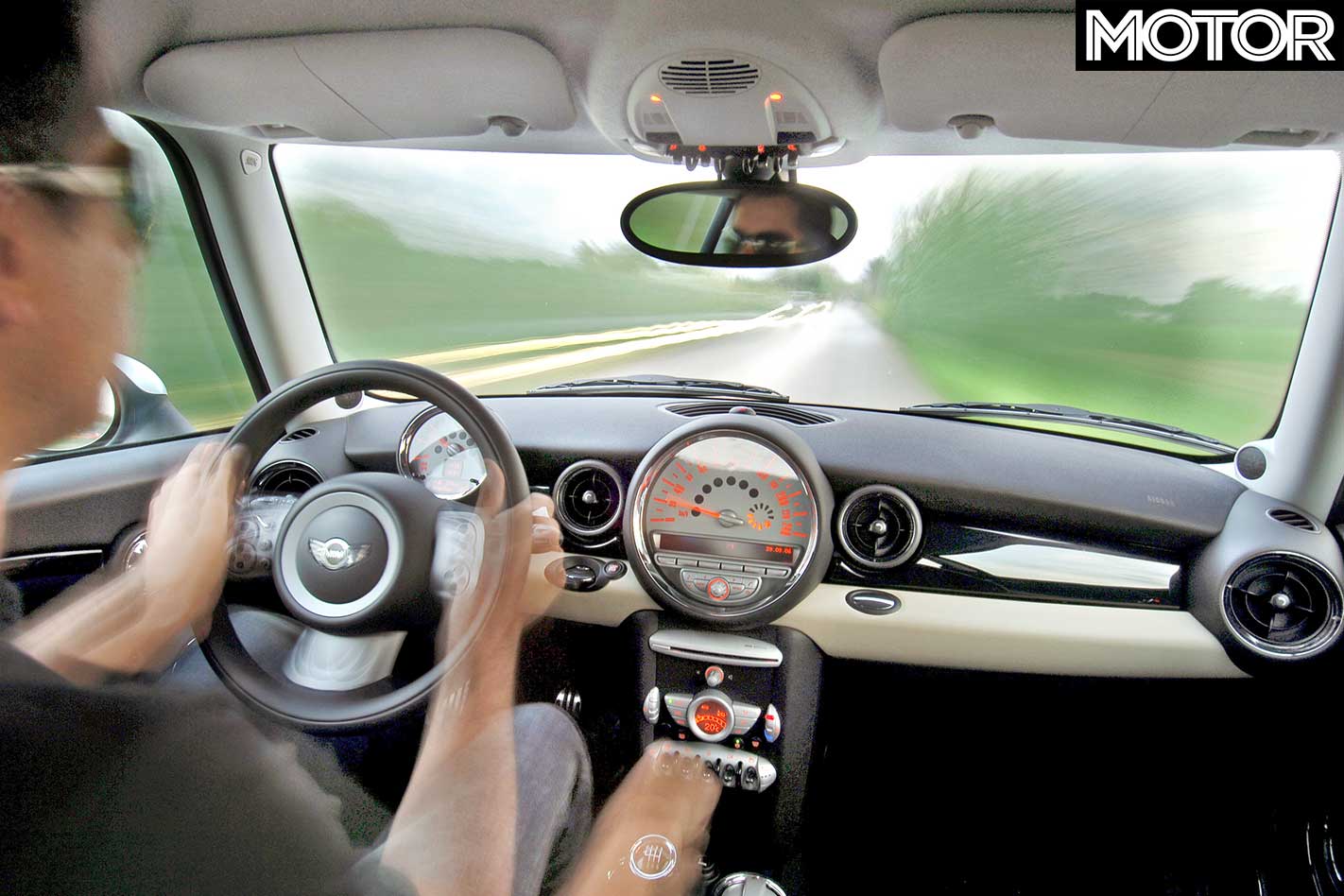
Driving on the other side of the road is an exercise in concentration as well, but I still managed to appreciate the sports suspension pack. It isn’t quite the go-kart experience Mini claims, thank Christ. I mean, have you driven a kart?
Happily, on Spanish roads at least, the new Cooper S’s suspension seemed compliant, yet still disciplined enough to keep the stiffer chassis relatively flat through corners. There’s also a firmer sports suspension option, but in the real-world driving we did on the launch, the standard suspension was just as good and a little less noisy, especially as BMW has again insisted on fitting run-flats to another of its cars.
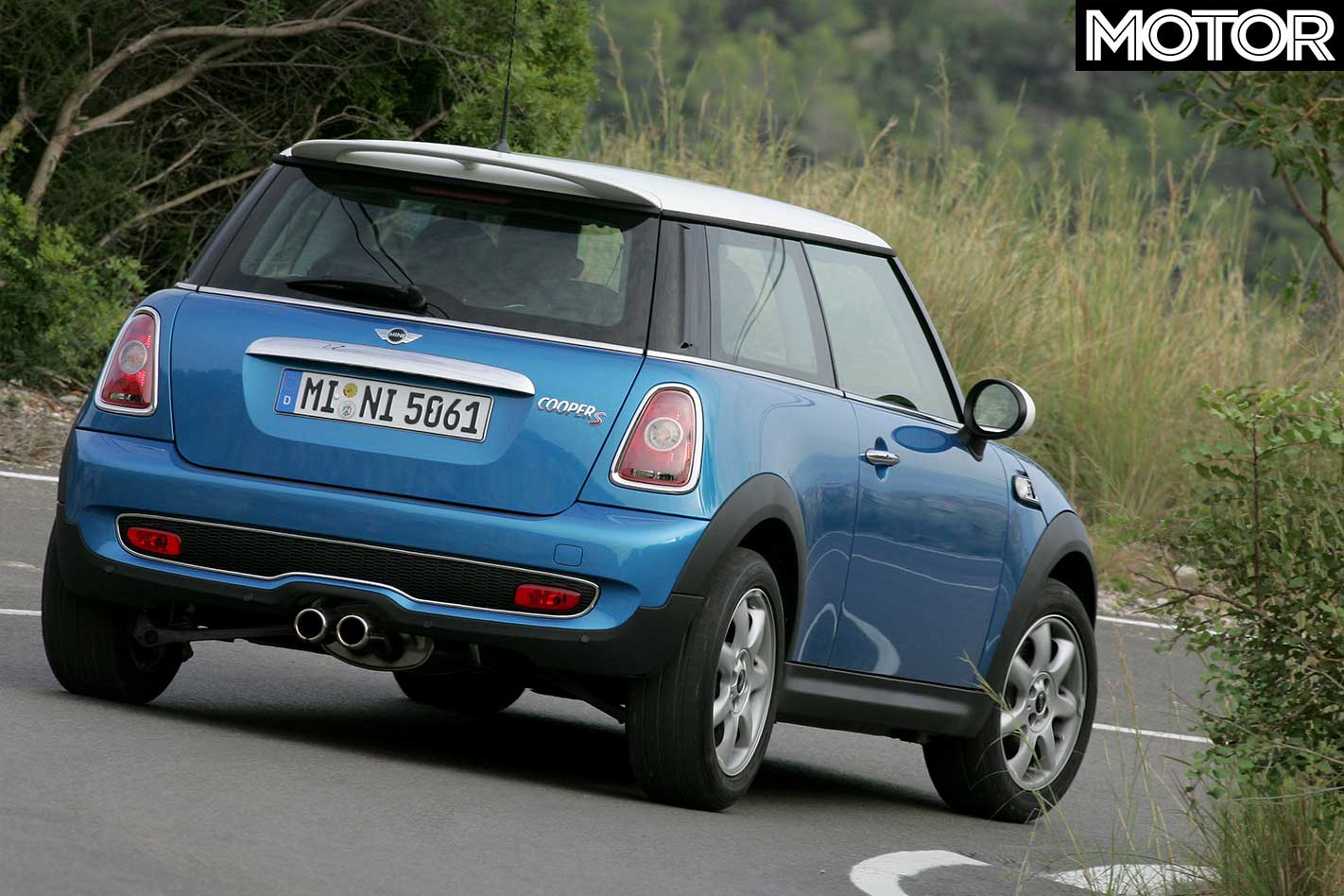
The run-flats were worn by alloy 16s on our test car, but the fact you can select from a range of wheel styles reminds you that this is BMW letting its hair down with a form-driven car.
To that end you get a multitude of other styling options – Dr Anton Heiss at the Oxford plant reckons the possible combinations number 1.5×10¹⁶, which is a wanky way of saying no two Minis need ever be the same. It’s achieved with numerous interior and exterior trim options among your basic wheel, engine and tranny combinations.
However, despite every panel being different, the basic look of the new New Mini is the same as the old one. Details aside, the only discernable differences are a slight beefing up of the guards, and raising of the bonnet and sill lines.
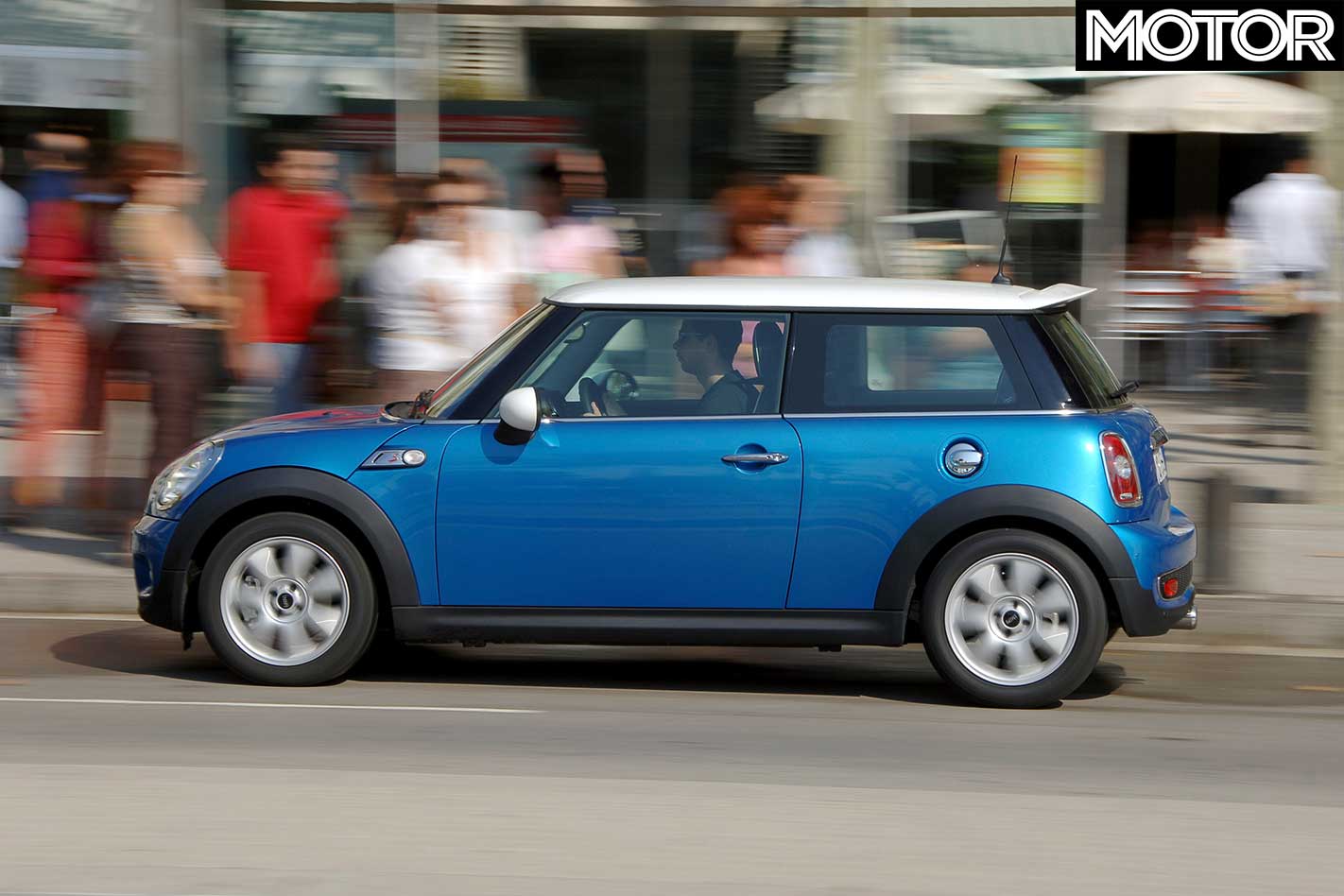
The front end changes and a 60mm overall lengthening of the car were brought in to meet pedestrian impact safety requirements, and to house the bigger new engine. Headlights are now fixed to the body as well, rather than in the bonnet, which cuts down on rattles, and the new one-piece grille is a little neater.
Inside, the major change is a new centre console halved in width to create more space in the footwells. All the audio controls that were housed down there have been moved up into the centre-mounted speedo, which, thanks to a relaxing of ADRs, will be carried over into the Australian market this time.

Whether or not having to glance to the centre dash to monitor speed is practical is arguable. Perhaps it’s there to let everyone else in the car know how fast you’re going, which will give backseat drivers something to do other than wish they’d extended the minimal leg room by more than the claimed 41mm.
Yep, it’s still a Mini, so passenger and luggage options are limited, unlike the multitude of styling enhancements to choose from. But that’s a reminder that this is an exercise in form. However, thanks to its brilliant new motor, the new new Cooper S gets some function to go with it.
FAST FACTS 2006 MINI Cooper S Engine: 1598cc 4cyl DOHC 16v turbo Power/Torque: 128kW/260Nm Weight: 1130kg 0-100km/h: 7.1sec (claimed) Price: $40,000 (est)
Every now and then, somebody comes up with a fair-dinkum ripper name for a new car.
AMG Hammer works for me and so does Dodge Hellcat, but oddly, HSV’s new SportsCat does not. Plymouth’s ’60s Road Runner whacked it out of the park, but more recently, Lambo’s Gallardo (if you pronounce it properly) and Subaru’s Levorg (it’s ‘grovel’ backwards) have both sounded the fail buzzer.
For some reason, middle-aged women didn’t want to buy a car called a Kuga, either. But then along comes this car, the JackHammer, and we’re all smiles again.
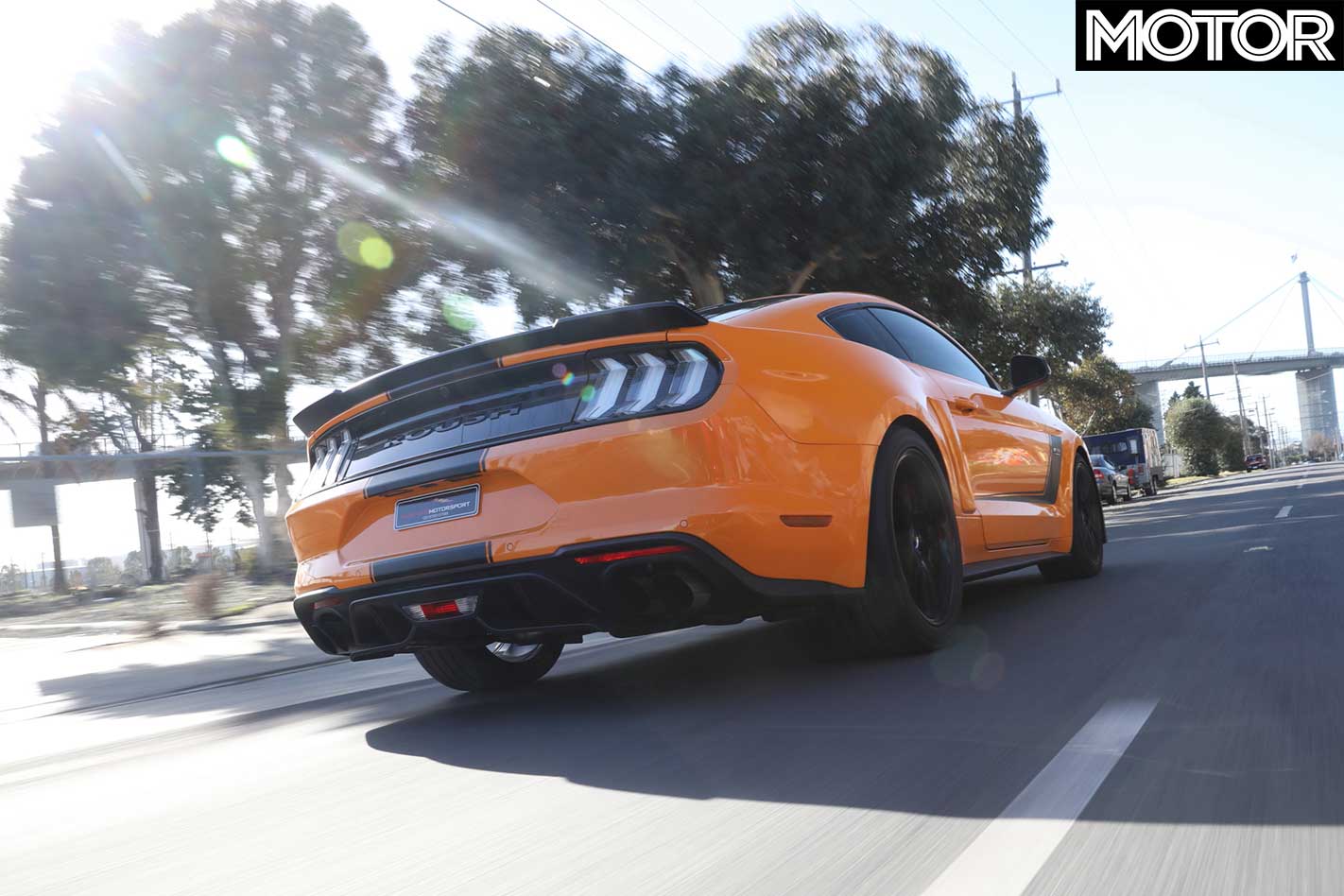
The JackHammer is a one-year, 200-example deal engineered by none other than Roush (Jack Roush; JackHammer, geddit?) in the US and based on the MY18 Mustang. Predictably, the home market will easily absorb that sort of volume, but as a nod to the time and effort invested in the Mustang franchise by Melbourne-based Mustang Motorsport (MM), Roush has issued the Ferntree Gully locals with 10 kits and 10 build plates and sufficient blessings to produce 10 right-hand drive JackHammers. And we managed to grab one.
So what’s JackHammer, then? Well, the guts of it is the Roush blower kit which bolts a twin-screw pump with 2.65-litre lungs and a new rotor design to the new-for-MY18 5.0-litre Coyote V8. The larger capacity is a nod to the new engine’s direct-injection revability and its new 7500rpm redline, and it means that boost pressures of about 10psi can be maintained right through to that point.
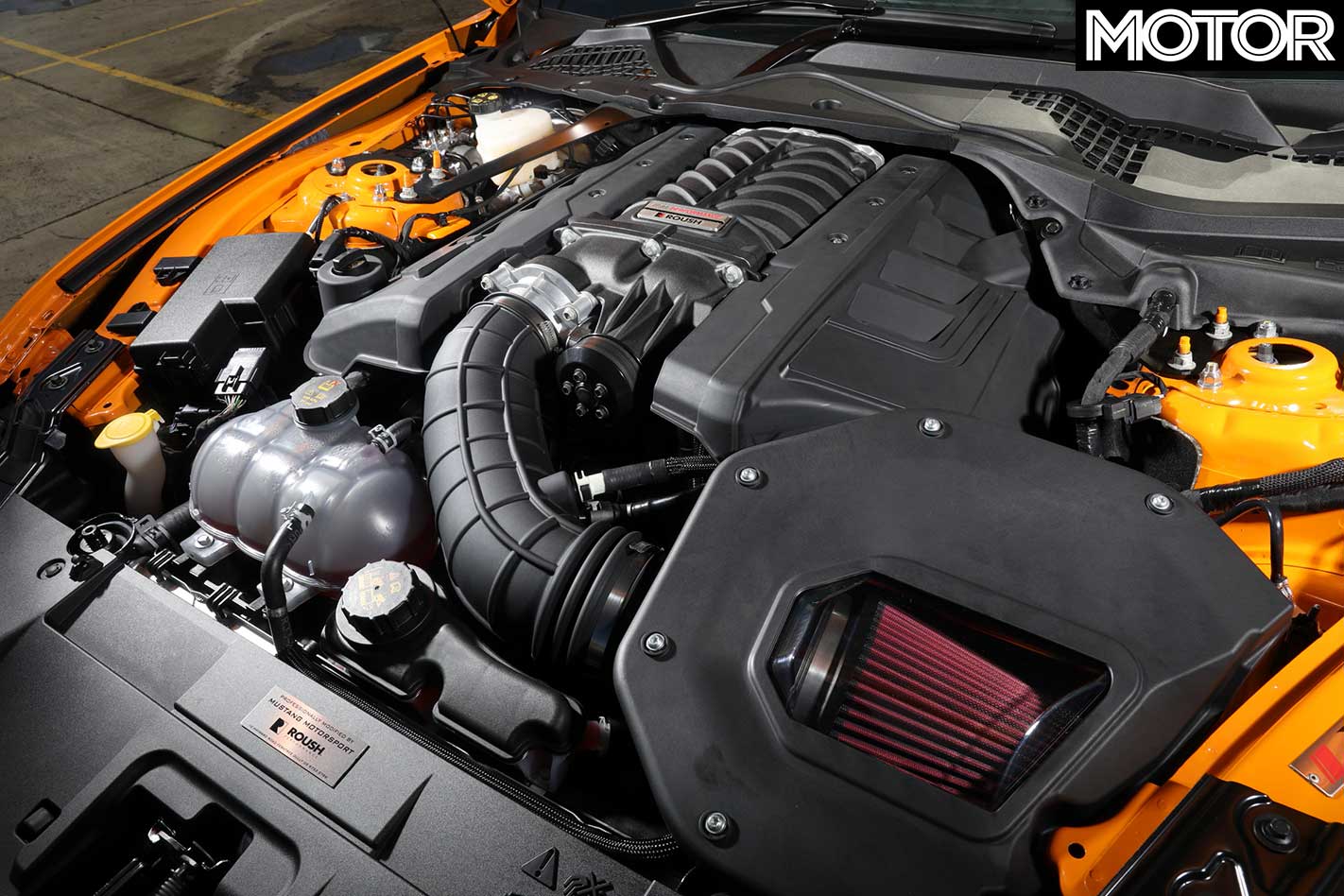
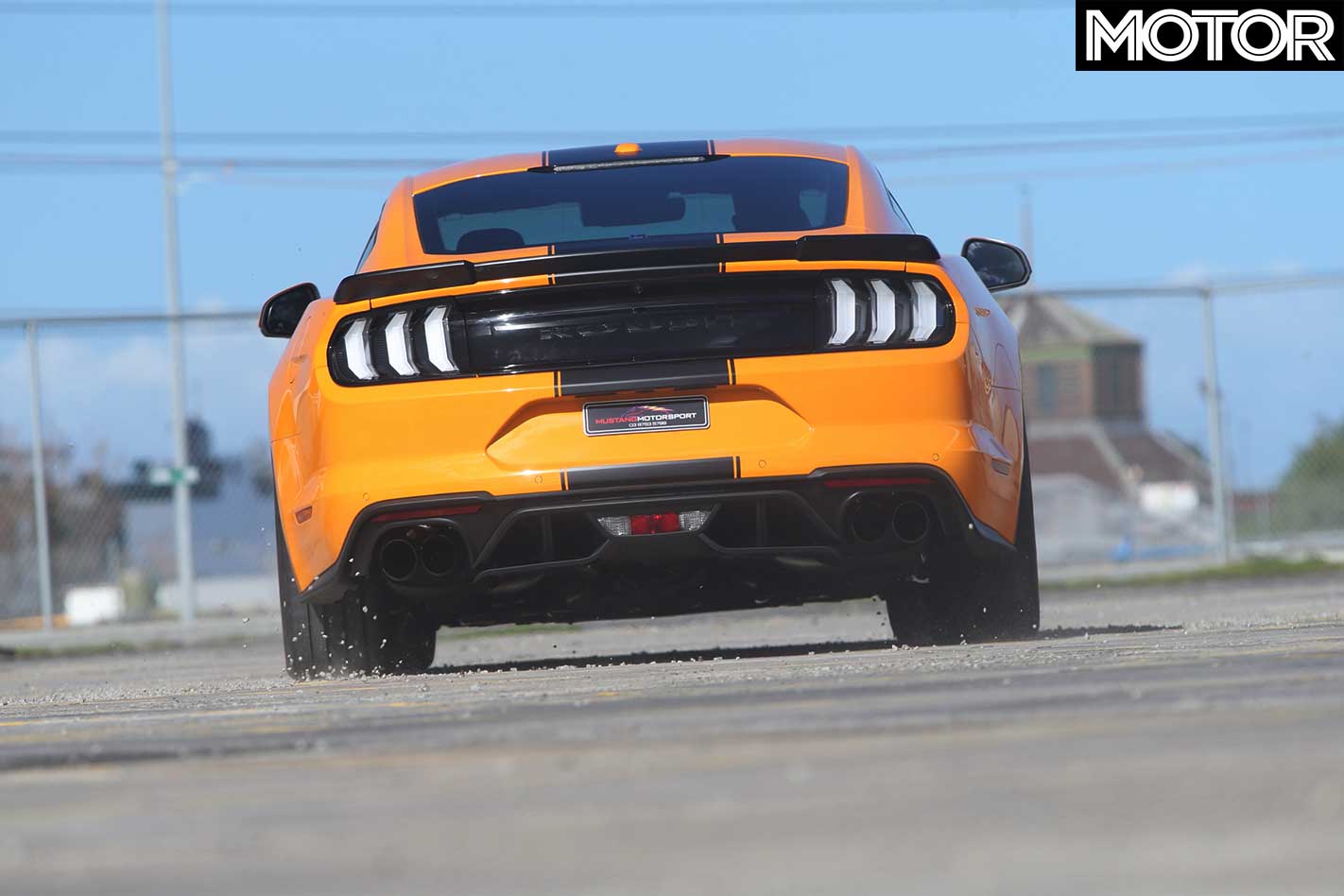
The six-speed manual gearbox and new twin-plate clutch remain unchanged, as do the brakes. Oh, and there’s a 10-speed automatic version in the works, so stand by for that. Meanwhile, call this mutha 530kW (710 neddies for the Yankophiles out there) and you can see where this is going.
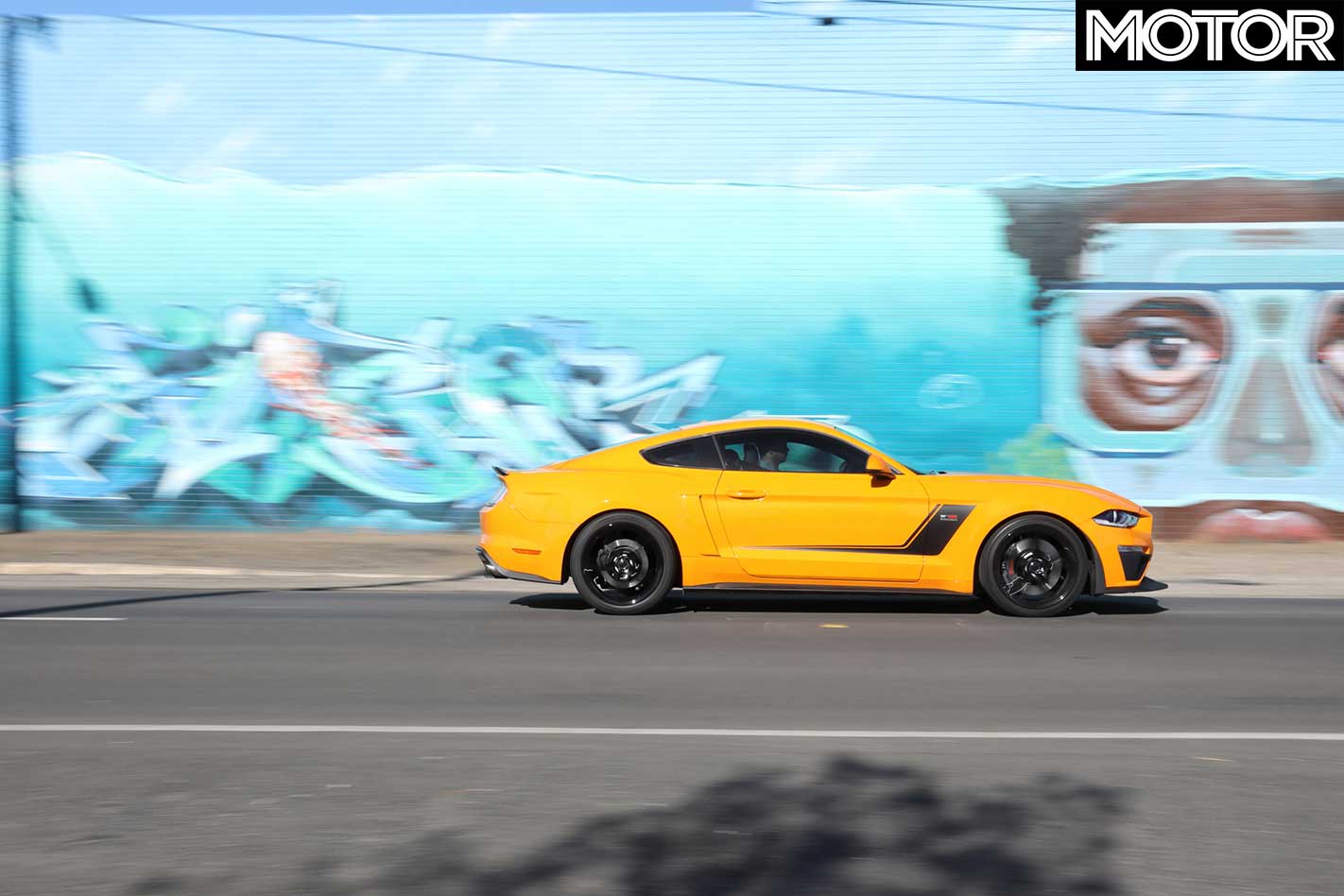
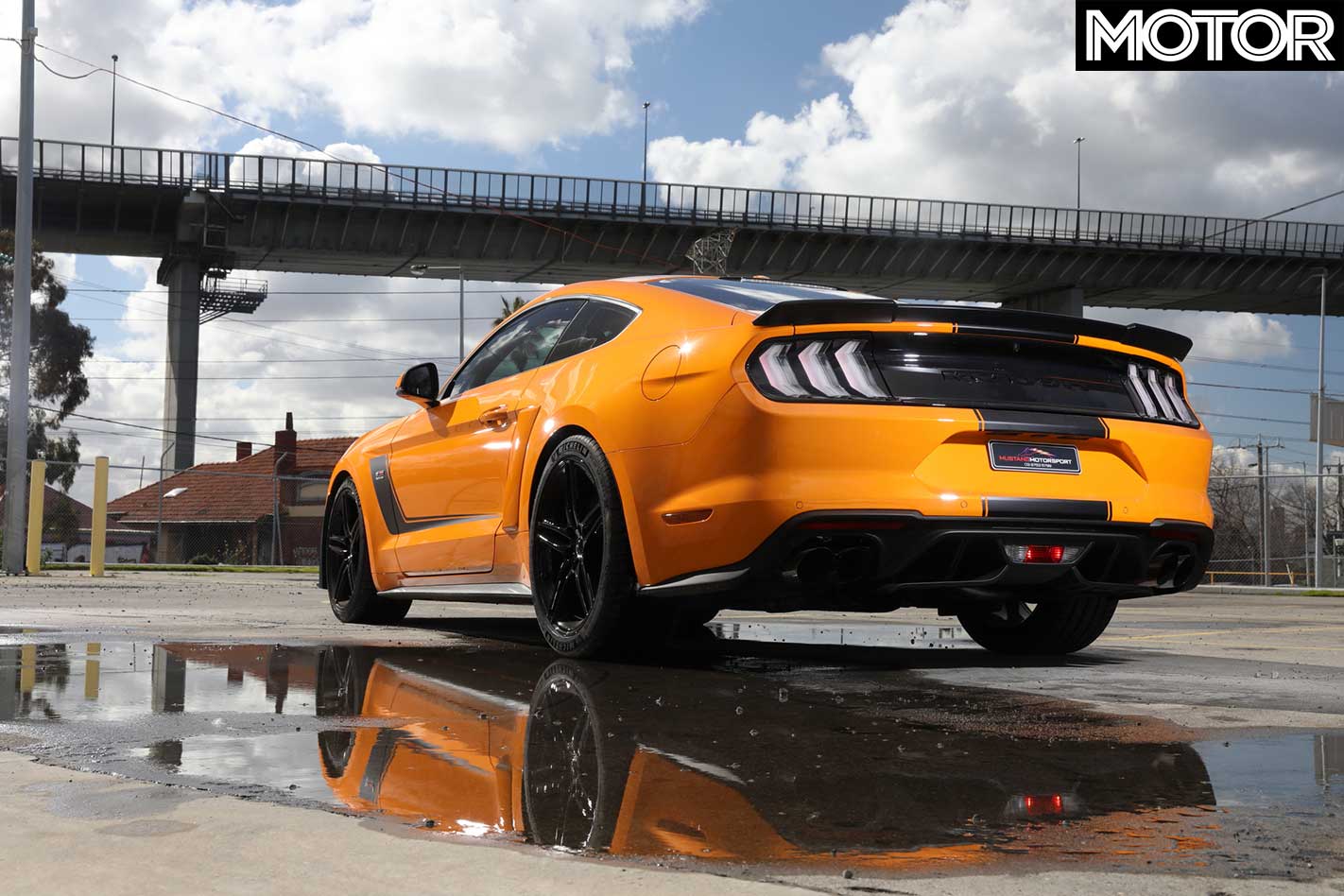
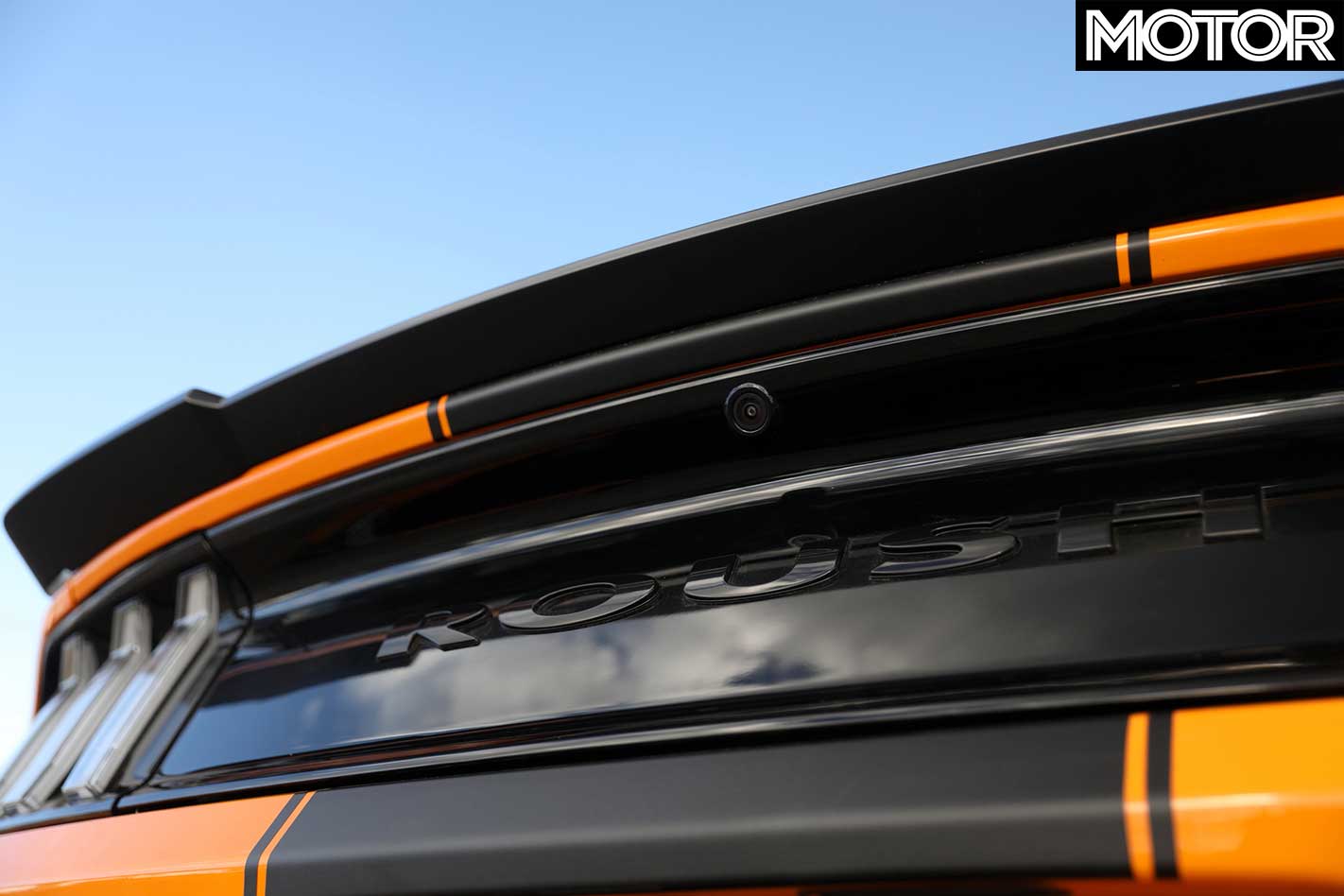
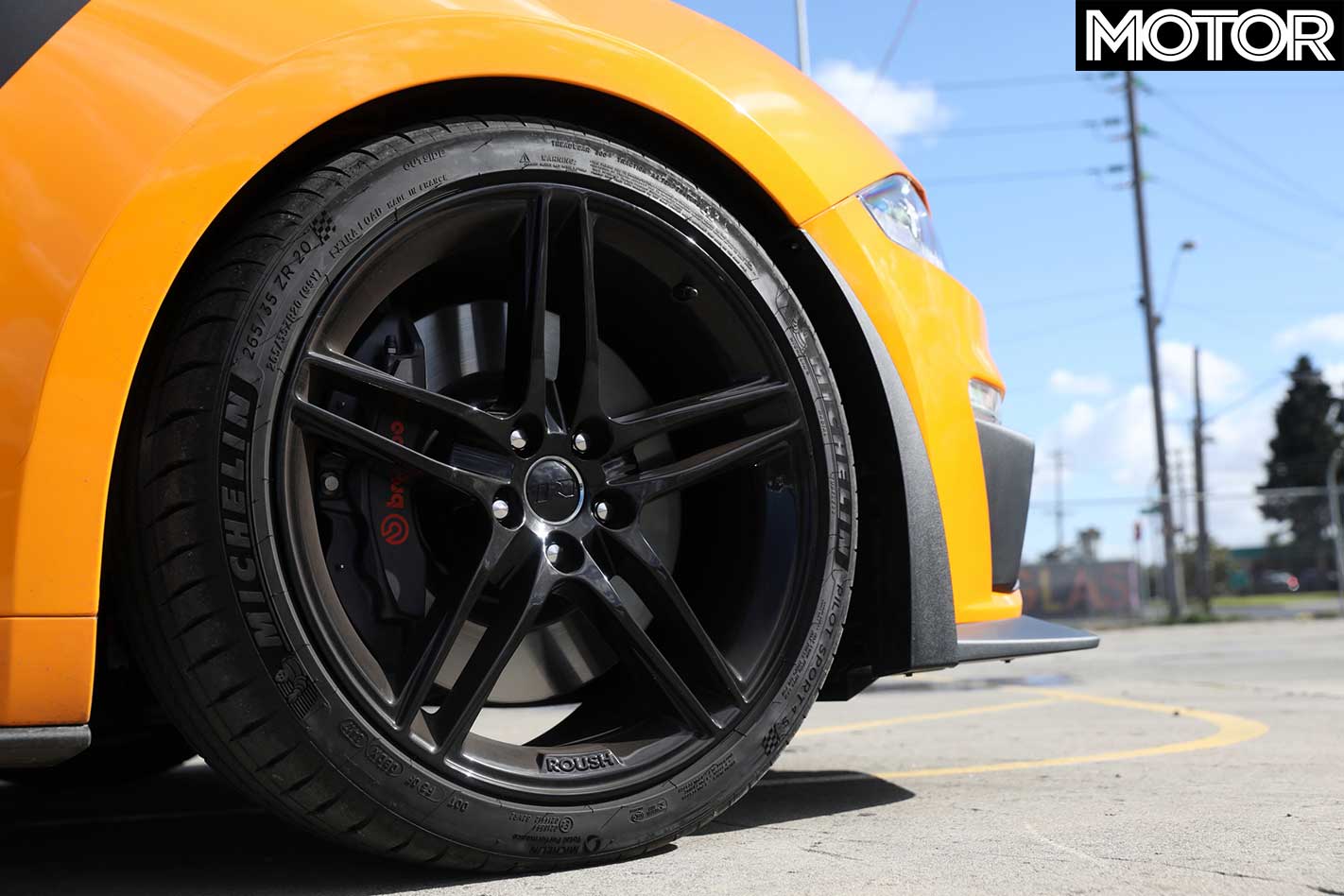
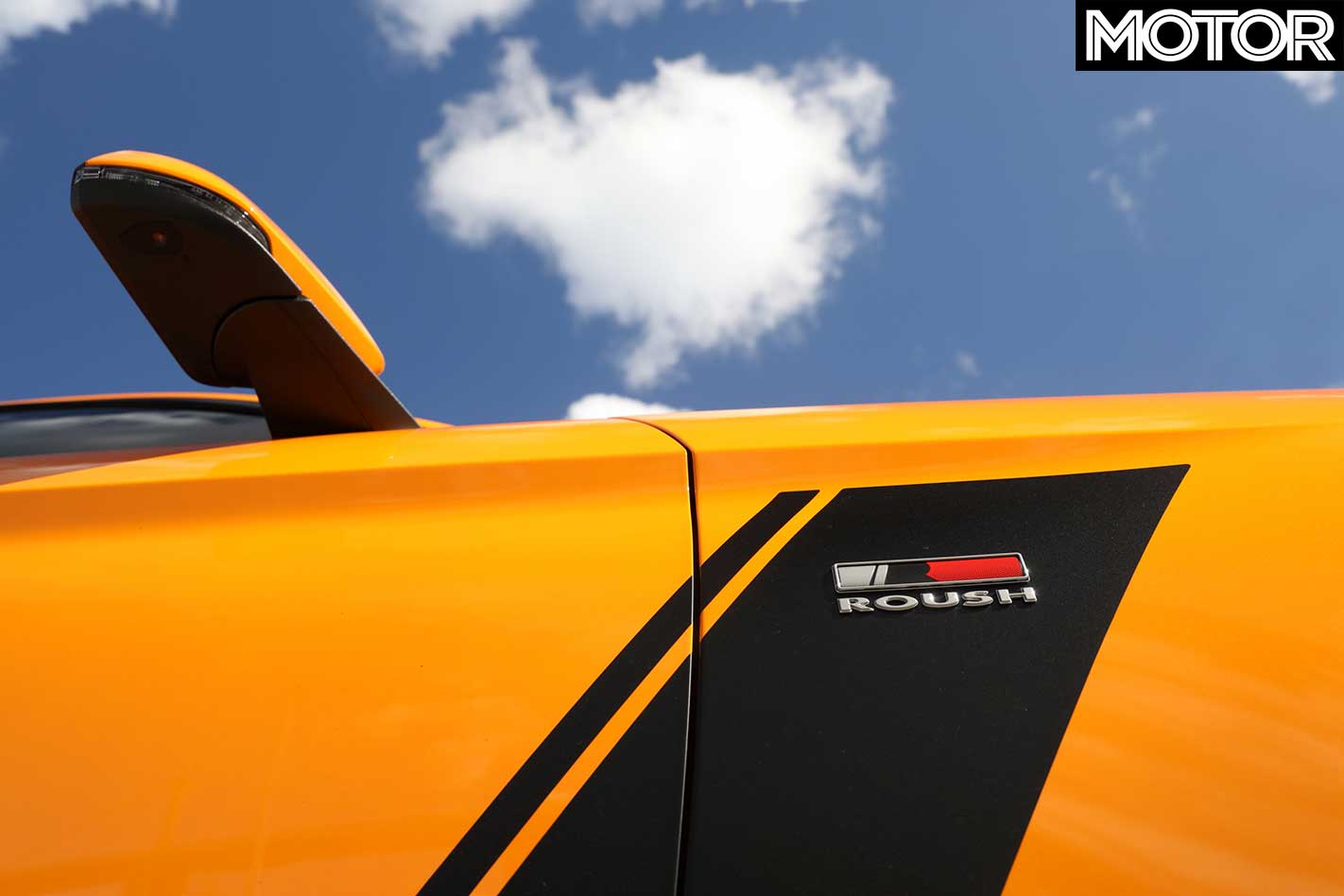
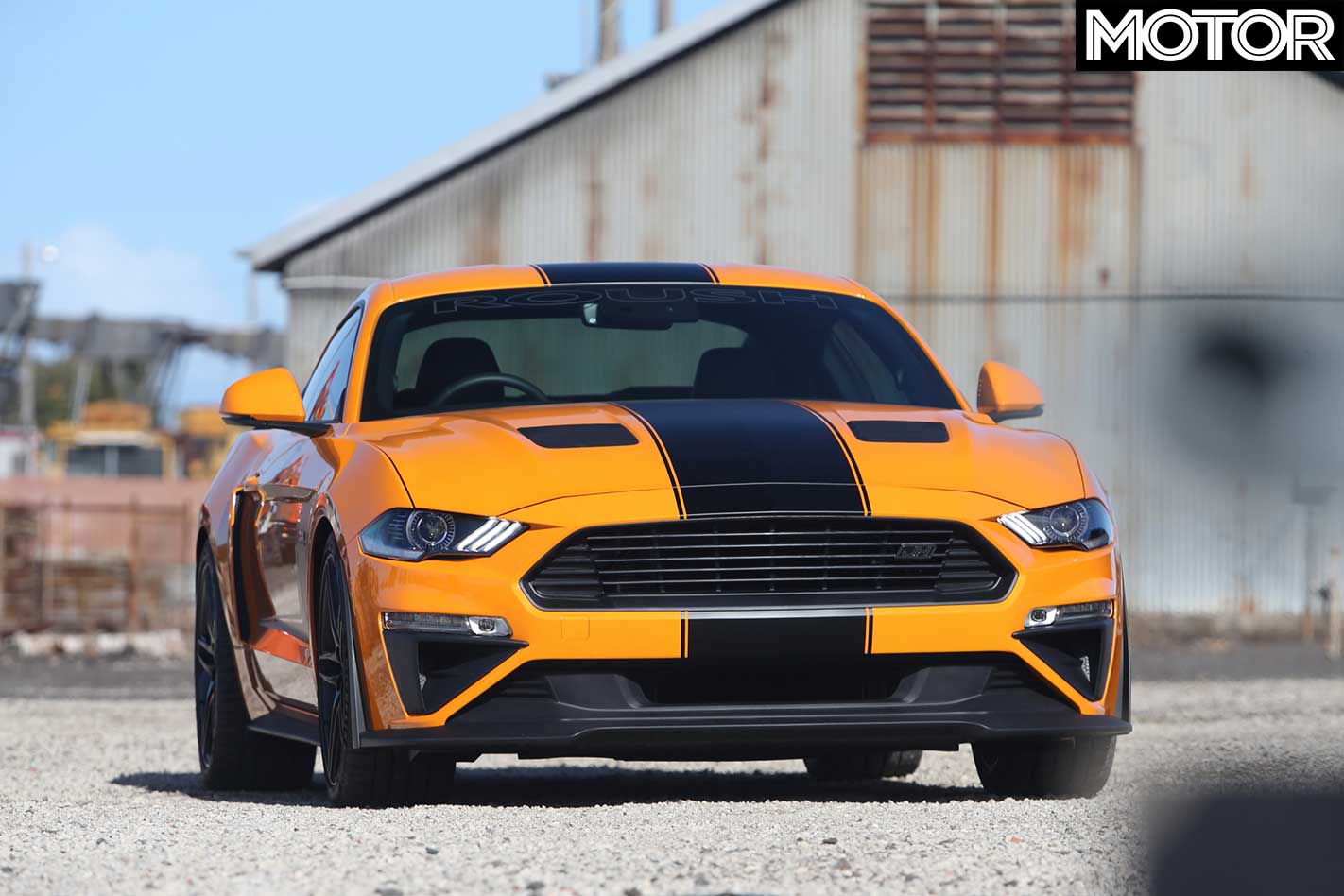
Visually, the JackHammer stands apart with a body kit that incorporates spoilers with actual functionality as well as stuff like the stripes, badging and those 20-inch rims with an extra 10mm of rubber at either end.
There’s also a slew of Roush-reminders like the sill-plates, engine-bay badge, floor mats, windscreen banner and various black-outs. But don’t go thinking you’ll mock up yer own J-Hammer, because the grille, garnishes and badges cannot be bought separately. You either get them with your JackHammer or you don’t get them. Simples.
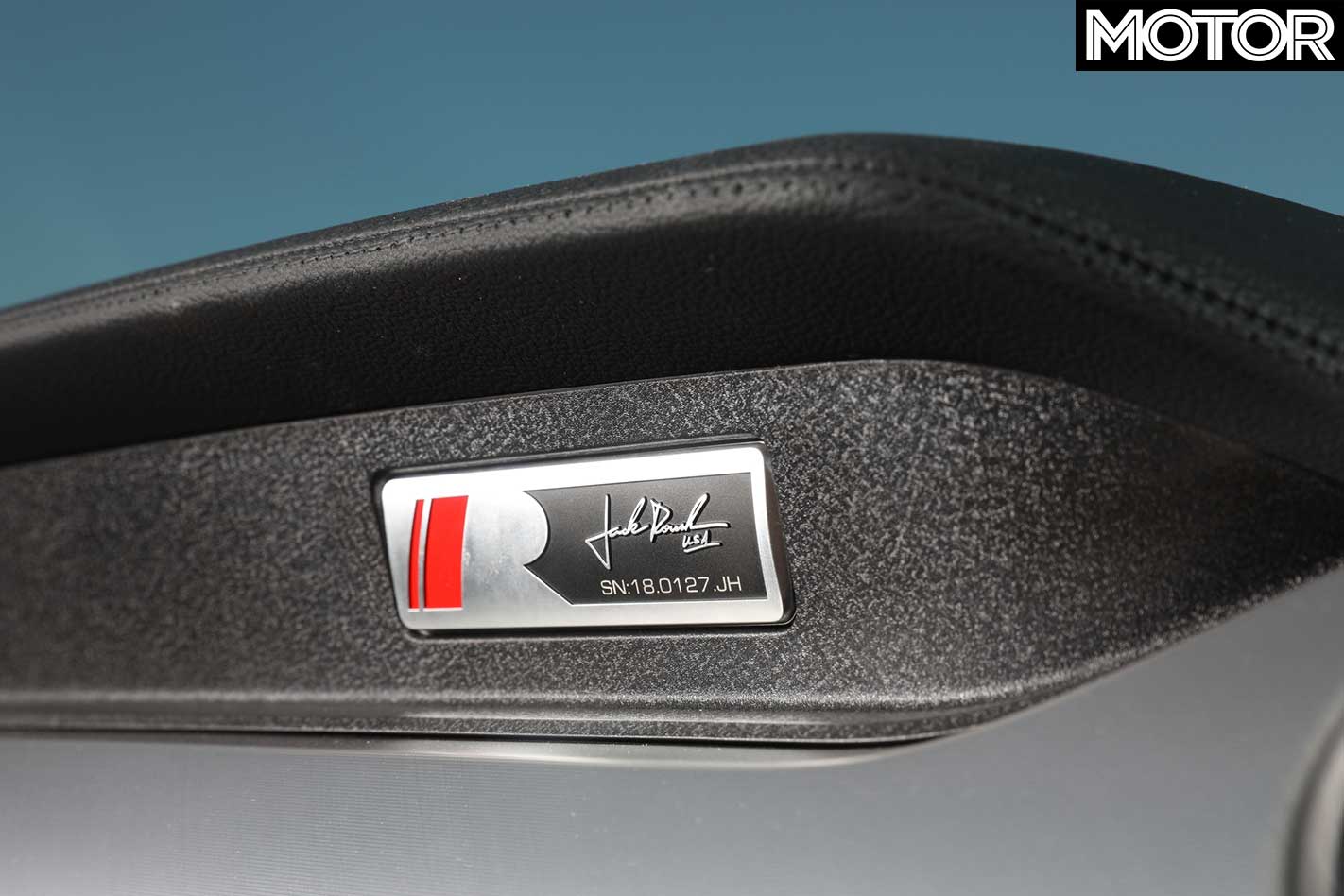
This car also had a few Roush options including the three-way adjustable coilovers (height-adjustables are standard) and a louder exhaust. If you can spare the change, you can also opt for billet pedals, window scoops, Roush-branded leather chairs (or Recaros) Cup 2 tyres and even a bespoke Roush toolkit.
The thing to remember here is that, as an OE supplier to Ford Global, all the Roush gear is manufactured, tested and backed to the same standard. All the Aussie JackHammers will have a Mustang Motorsport secondary-manufacturer compliance plate so there won’t be any tears when Constable Unstable hauls you up for a chat. The deal includes a three-year/60,000km driveline warranty, too.
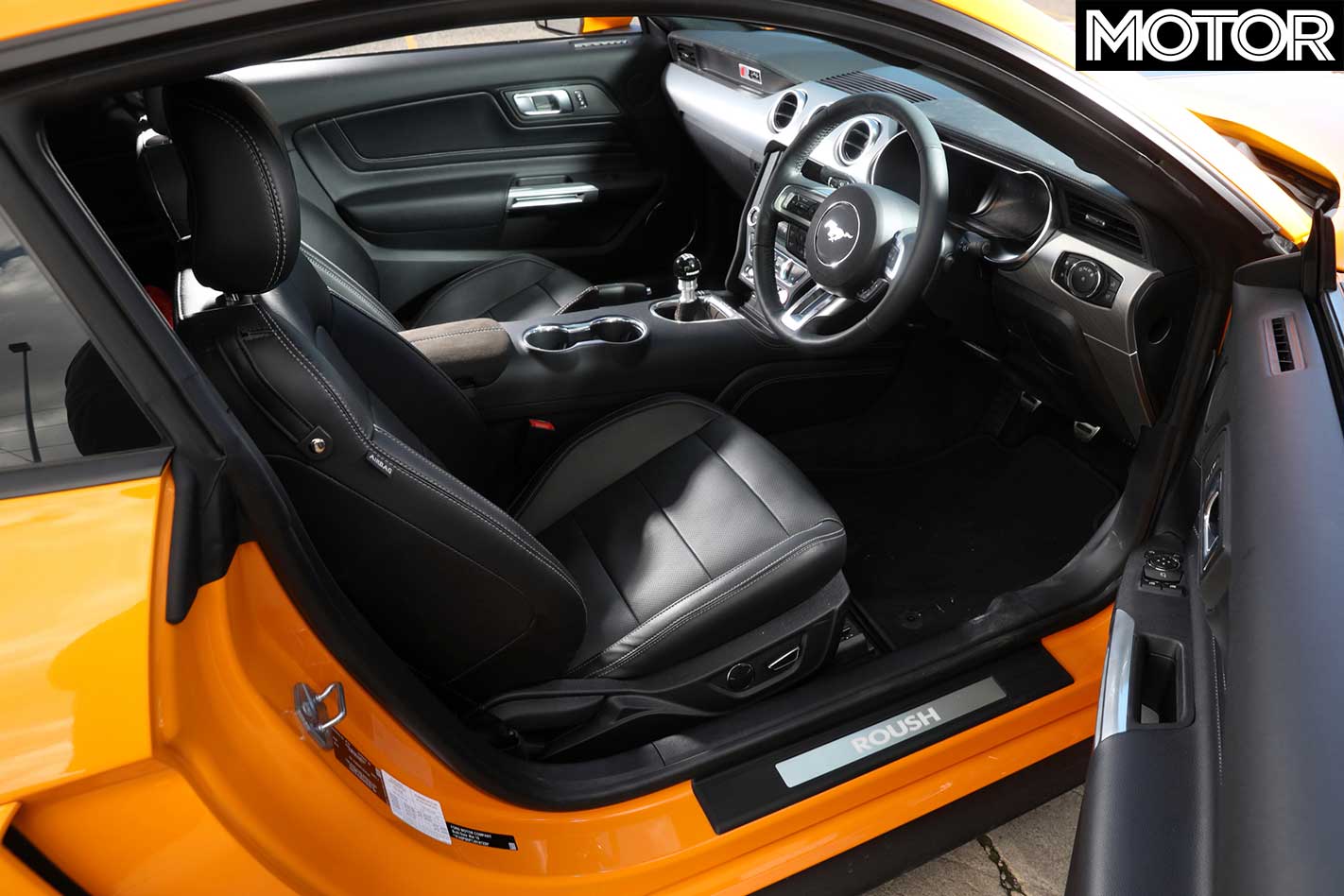
The flip side is that if it’s a JackHammer you want, you can’t go fussing with the specs. Yes, you can buy the driveline package including the blower for $18,000 and have MM bolt that on, but if that’s all you want, you won’t be getting the JackHammer badges and Roush build-plate. Seems fair to us.
Additionally, you can order your Roush JackHammer through a participating Ford dealer and pick it up from there, or you can truck a brand-spankers MY18 Mustang to Ferntree Gully and do it that way. Just don’t turn up with a 20,000km example and expect the full JackHammer treatment. ’Cos Jack’s Hammer is far from an aftermarket car, see.
So it ain’t an aftermarket kit, but it aint slow, either. So, how not slow? Well, consider that recently, we ran the stocko MY18 ’Stang manual down the strip. Thanks to that l-o-n-g first gear, the sometimes tricky clutch action and the usual obstacles high-power rear-drivers throw up at a dragstrip, we coaxed a 0-100km/h time of 5.1sec and a 400m time of 13.2sec out of it.
But here’s where it gets a bit tangly. See, when we took the JackHammer up to Heathcote for a zoom down the hotmix, the ambient was about nine degrees, it was drizzling on and off and there were damp patches in both lanes. And I got attacked by a goddam plover. But even then, old Jay-Ham smashed the stocker for six with a 0-100km/h time of 4.5sec and a 12.3sec for the quarter. Throw in the terminal speed of 195.1km/h and that’s going some. With the auto ’box, it would be a lazy 11-second rig.
In fact, even with a warmer day, the manual should be capable of 11-something, but as it was, the conditions just seemed to show up that tall first gear all the more. And you can forget the factory launch control; it’s hopeless (as many are these days) and you’re better off turning off the traction control, loading dragstrip mode and paying attention.
Even then, the throttle calibration (more of which later) seems to let the engine bog down as you step off the clutch. Either that, or you dial up way more revs than you need and sit there as it goes up in smoke, tramping its heavy-duty driveshafts like a bad-tempered kid in aisle seven. I even aired the rears down to 22psi, but it didn’t seem to do much at all.
So the 60-foot time blows. But once it gets rolling, man does this thing pour on the coals. Fact is, I haven’t driven too many cars at all with a top-end buzz like this one. You get the feeling that there’s a pretty sophisticated boost curve in there, too, because the engine never feels huffy or overtly boosted. Instead, it just swells up as revs rise, almost as if the engine is growing bigger pistons as it revs up.
By the time you’ve got 3500rpm showing, the 5.0-litre feels like a 6.0-litre and by 5000 or so, you’d swear there was an atmo 7.0-litre lurking under the lid. This will serve it well at a track where its greater predictability will give it an edge. Doesn’t hurt on back roads either. Ahem.
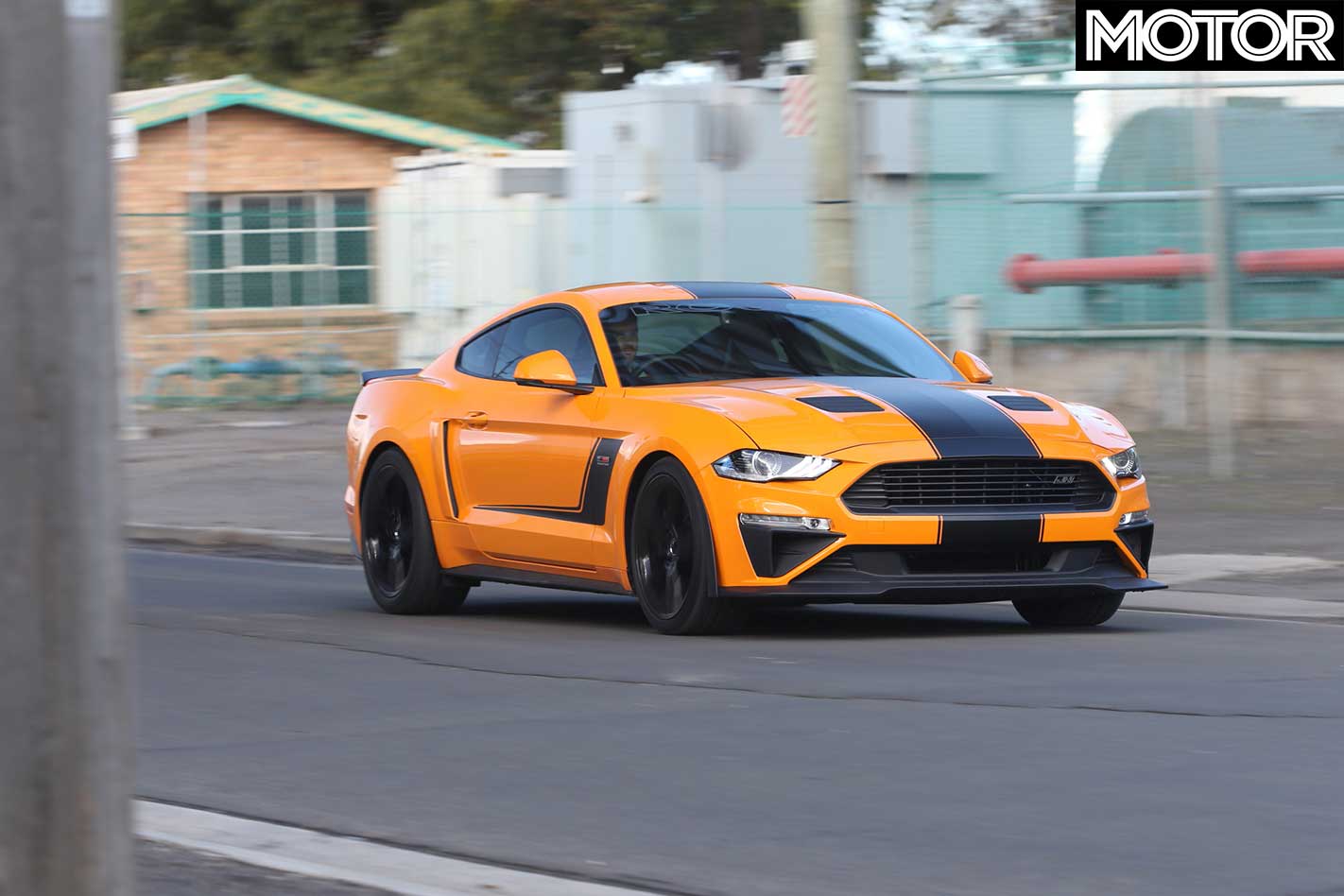
Like any other Mustang Motorsports car we’ve driven, the open-road driveability hasn’t been ditched in the name of a big horsepower number. Fact is, the way the boost builds progressively, the car will only ever go as fast as you tell it to. It remains an undaunting prospect despite that enormous top-end.
The caveat here, however, is that the part-throttle, low-engine-speed mapping feels a bit all over the place to me. The tip-in can almost feel two-stage and even when you squeeze the gas on carefully, if there’s less than about 1700rpm on the tacho, you’ll often get a kind of messy, grunting, shunting response that wouldn’t cut it in a 15-grand hatchback.
But Mustang Motorsport assures us this tune was only ever designed to get the thing homologated and that there’s a revised set of maps in the works. Drive it like a lunatic and you’ll never notice it. But bimble around in traffic and it’ll soon be driving you nuts.
The rest of the deal is better. The adjustable coilovers offer up a pretty firm ride, but the ’Stang is saved from the crashing into holes by the sheer brilliance of the damping rates. Okay, the whole thing still feels like a very long, kind of narrow car, and in faster corners on bumpy stuff, even the Pilot Sport 4Ss will allow a little sideways fidget.
It never develops into anything nasty, but it’s not helped by the fast steering ratio and you can’t help but think the whole game might be soothed a bit with a slightly slower rack. Brakes? Loads of feel and plenty of initial bite and they seem to work spot on with the tyres.
It sounds brilliant, especially with the active exhaust locked open. Inside, it’s even a bit sophisticated with the refined and high-stepping feel of the 5.0-litre reminding you more of a Euro V8 than a Stateside one. From outside it’s a different story, and to passers-by the bugger must sound like somebody strangling Barry White through a 10,000 Watt PA.
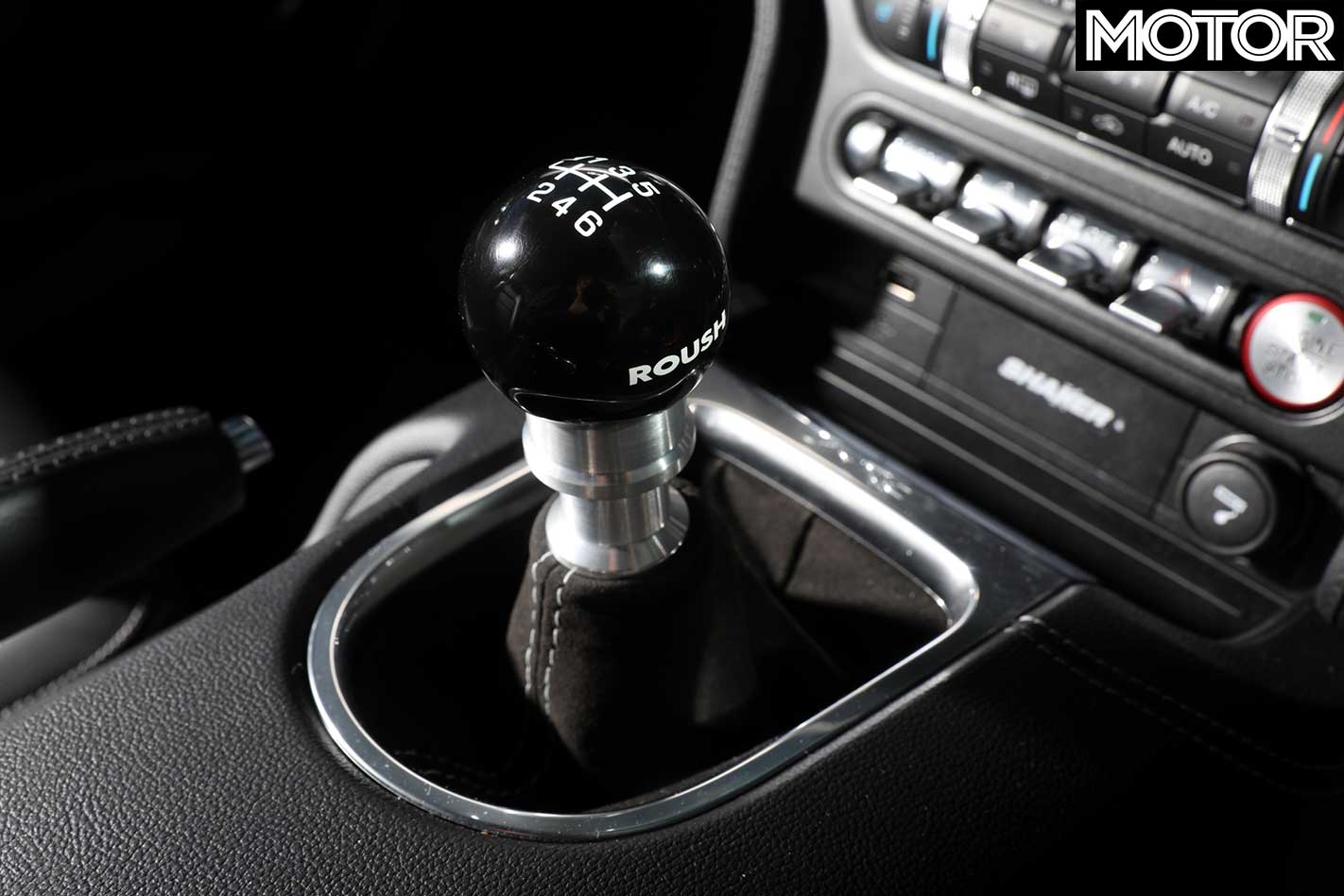
The new twin-plate clutch felt okay to me and I didn’t sense a lack of feel or precision in the take-up point. The clutch refused to be overcome in the heat of battle at the drag-strip, too, so it looks like Ford has got that right.
The gearshift is a belter, as well. The shifts are short, but the action is quiet and slick and never fails to slot home the cog you were looking for. Actually, this shift is among the best in the biz, suggesting once again that maybe, just maybe, car makers haven’t given up on the manual ’box just yet.
The new interior is a big step up and the digital readouts that you can tailor really do take things to a whole new level in the world of Mustangs. That said, the plastic fit and finish still isn’t perfect and the bit of the door panel that surrounds the interior handle still manages to remind me – somehow – of a mid-’80s F150 truck.
The single-action toggle switches remain to annoy me and what’s with the heated and cooled front chairs that still feature a manual backrest tilt? So, yeah, it’s better, but it’s still not how Audi would do it.
Of course, neither Roush, Ford nor Mustang Motorsport set out to out-Audi Audi, did they? Nope, the mission statement was always all about offering up a value-for-money package that would line up against everything from a supercar down and skin it alive. And trust me, when you first feel that bent-eight hit about 4500rpm with the wire tight, the last thing you’ll be thinking about will be the door trims.
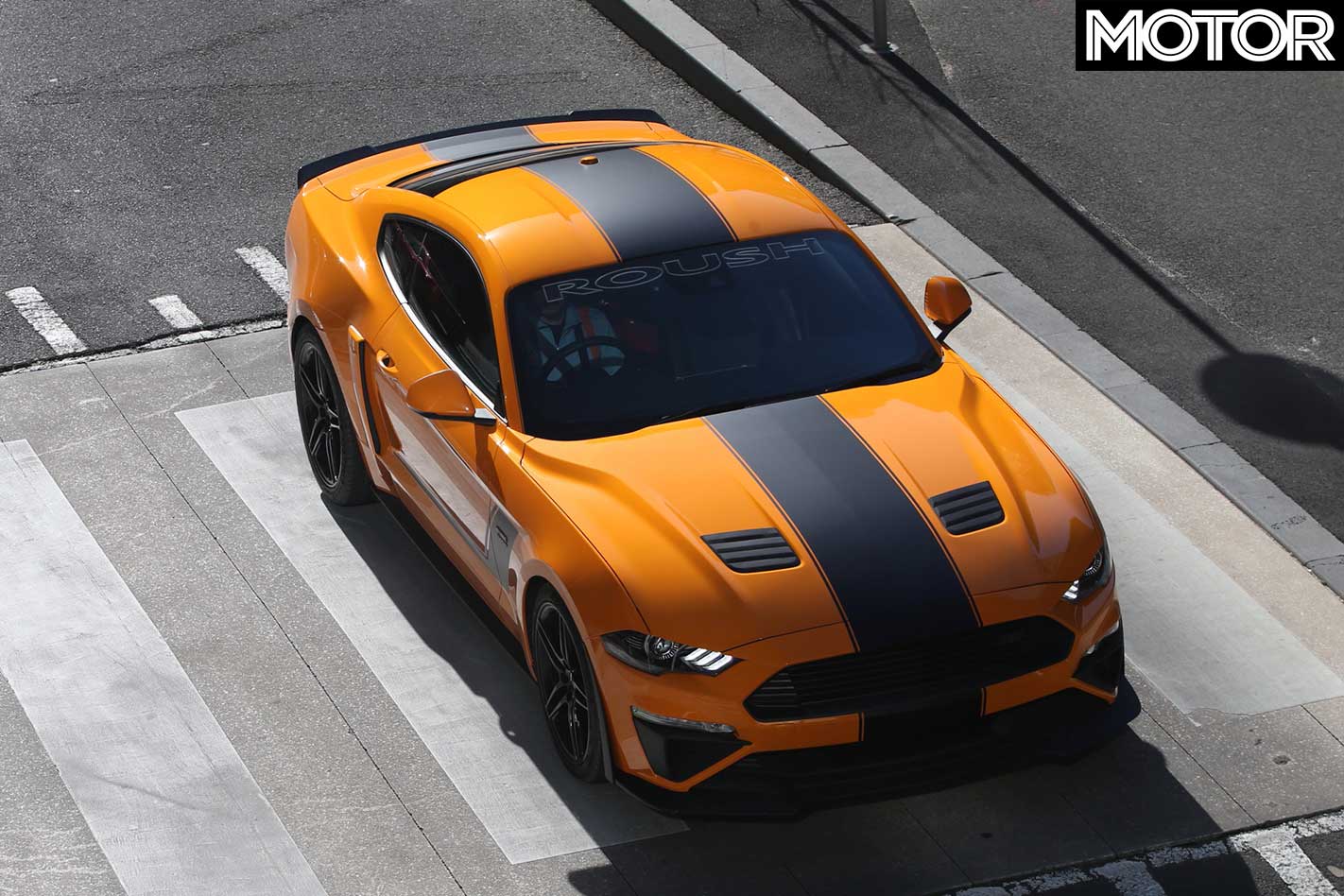
FAST FACTS 2018 Roush JackHammer
BODY: 2-door, 4-seat coupe DRIVE: rear-drive ENGINE: 5038cc V8, dohc, 32v, supercharger POWER: 530kW TORQUE: 827Nm WEIGHT: 1732kg POWER-TO-WEIGHT: 306kW/tonne TRANSMISSION: 6-speed manual SUSPENSION: MacPherson struts, adjustable dampers, anti-roll bar (f); multi-link, adjustable dampers, anti-roll bar (r) STEERING: electrically assisted rack-and-pinion BRAKES: 380mm ventilated discs, 6-piston calipers (f); 330mm ventilated discs, single-piston calipers (r) WHEELS: 20 x 9.5-inch (f); 20 x 10.0-inch (r) TYRES: Michelin Pilot Sport 4 S, 265/35R20 (f); 285/35R20 (r) PRICE: $104,790 (including price of Mustang GT)
PROS: That’s horsepower, right there CONS: Low-speed tune a bit sketchy. For now RATING: 4 out of 5 stars
The Strip
| Roush JackHammer | |
| 0-10km/h | 0.49sec |
| 0-20km/h | 0.93sec |
| 0-30km/h | 1.42sec |
| 0-40km/h | 1.81sec |
| 0-50km/h | 2.18sec |
| 0-60km/h | 2.55sec |
| 0-70km/h | 2.92sec |
| 0-80km/h | 3.70sec |
| 0-90km/h | 4.10sec |
| 0-100km/h | 4.54sec |
| 0-110km/h | 5.03sec |
| 0-120km/h | 5.56sec |
| 0-130km/h | 6.41sec |
| 0-140km/h | 7.15sec |
| 0-150km/h | 7.83sec |
| 0-160km/h | 8.54sec |
| 0-170km/h | 9.34sec |
| 0-180km/h | 10.33sec |
| 0-190km/h | 11.75sec |
| 0-200km/h | 12.95sec |
| 0-400m | 12.34secu00a0@ 195.11km/h |
| 80-120km/h | 1.8sec |
| Speed in gears | |
| 1st | 86km/h @ 7400rpm |
| 2nd | 132km/h @ 7400rpm |
| 3rd | 196km/h @ 7400rpm |
| 4th | 250km/h @ 6650rpm* |
| 5th | 250km/h @ 5400rpm* |
| 6th | 250km/h @ 4130rpm* |
Heathcote Dragway, 9˚C, dry. Driver: David Morley *Manufacturer’s claim
Cost of Admission
So, let’s start with a brand-spanker Mustang GT Fastback; that’s $62,990 to you, sir/madam, plus whatever kick in the balls your home State or Territory decides to tack on in the name of on-road costs.
Okay, so that’s not bad value when you think about it, but when you add up the numbers on this particular Roush JackHammer, the extras contribute a further $41,800, most of which is the blower kit at a neat $18K. That, then, takes the as-tested price to $104,790.Now that’s a fair chunk over the stocker, but when you consider the steam this thing can generate and compare it with other cars that are roughly as fast, the JackHammer starts to generate a tinge of ‘bargain’ around itself.
Throw in the three-year driveline warranty and the fact that the package is seven-States legal, and it only looks better.If you’re the careful type, you might just want to specify the blower kit, which you can, but you can forget about the Roush build-plate and anything else that goes with the JackHammer package. There’s also an auto coming with the new 10-speed ’box. And if that’s not a dead-set weapon, we’ll give this game away and cook hamburgers or deliver flowers for a living.
What is it?
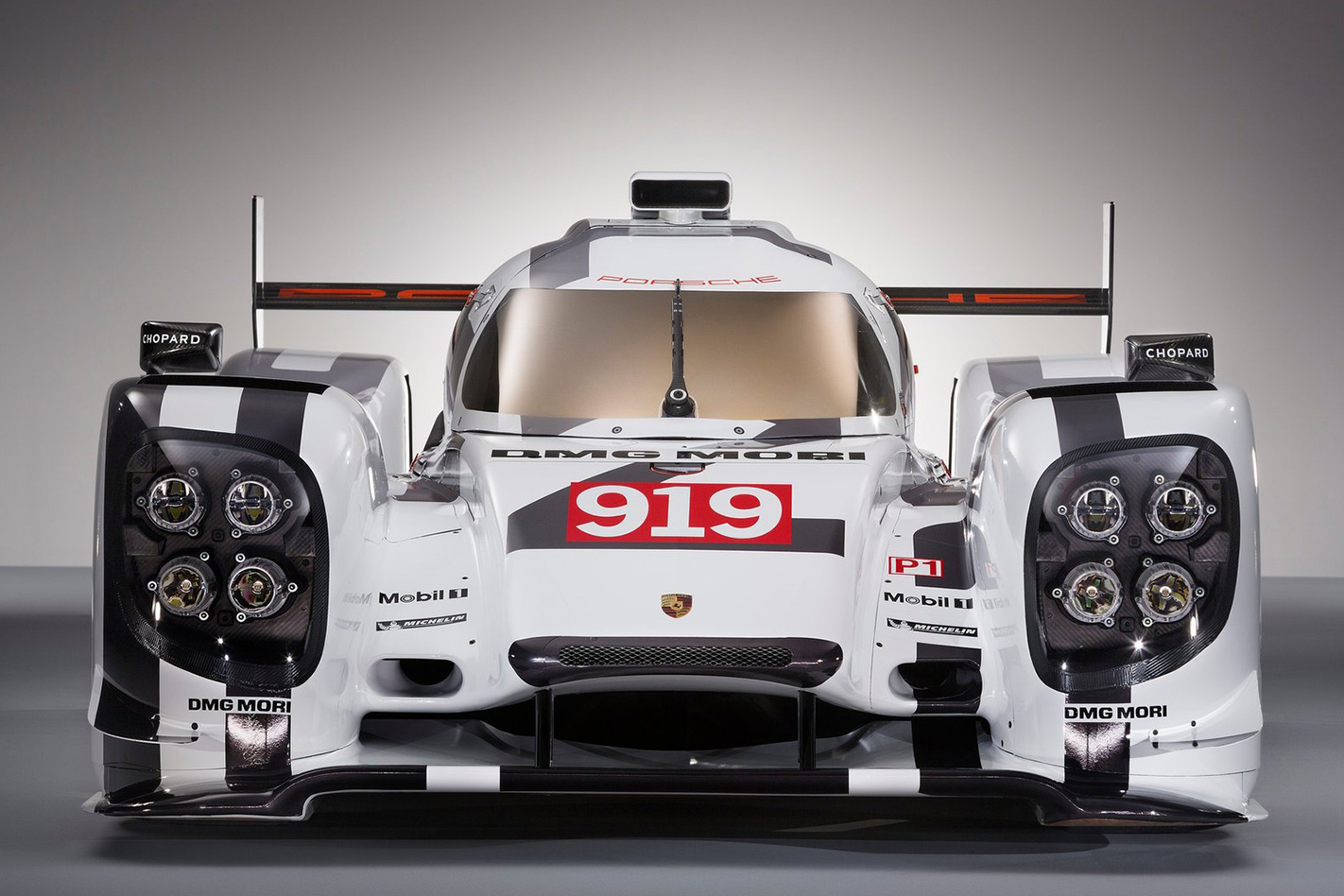
A significant evolution of the decades-old turbocharger principle. In the quest to banish performance- and efficiency-sapping lag, Honeywell has re-engineered a design that has remained essentially unchanged since the 1920s. The DualBoost turbo was part of the technology package that made its debut on Porsche’s 919 Hybrid and Evo.
How does it work?
In a conventional turbo, hot exhaust gas spins a radial turbine in a similar manner to a waterwheel, turning through 90-degrees before exiting the centre of the wheel. This change of direction reduces gas velocity and, in turn, the efficiency of the energy recovery.
Honeywell’s DualBoost solution more gradually realigns the gas flow before it enters the turbine housing allowing the use of an axial turbine. Gasses pass through the turbine similarly to a jet engine with fewer energy losses. This allows more of the waste energy to be recycled, which achieves quicker turbine acceleration and greater efficiency.
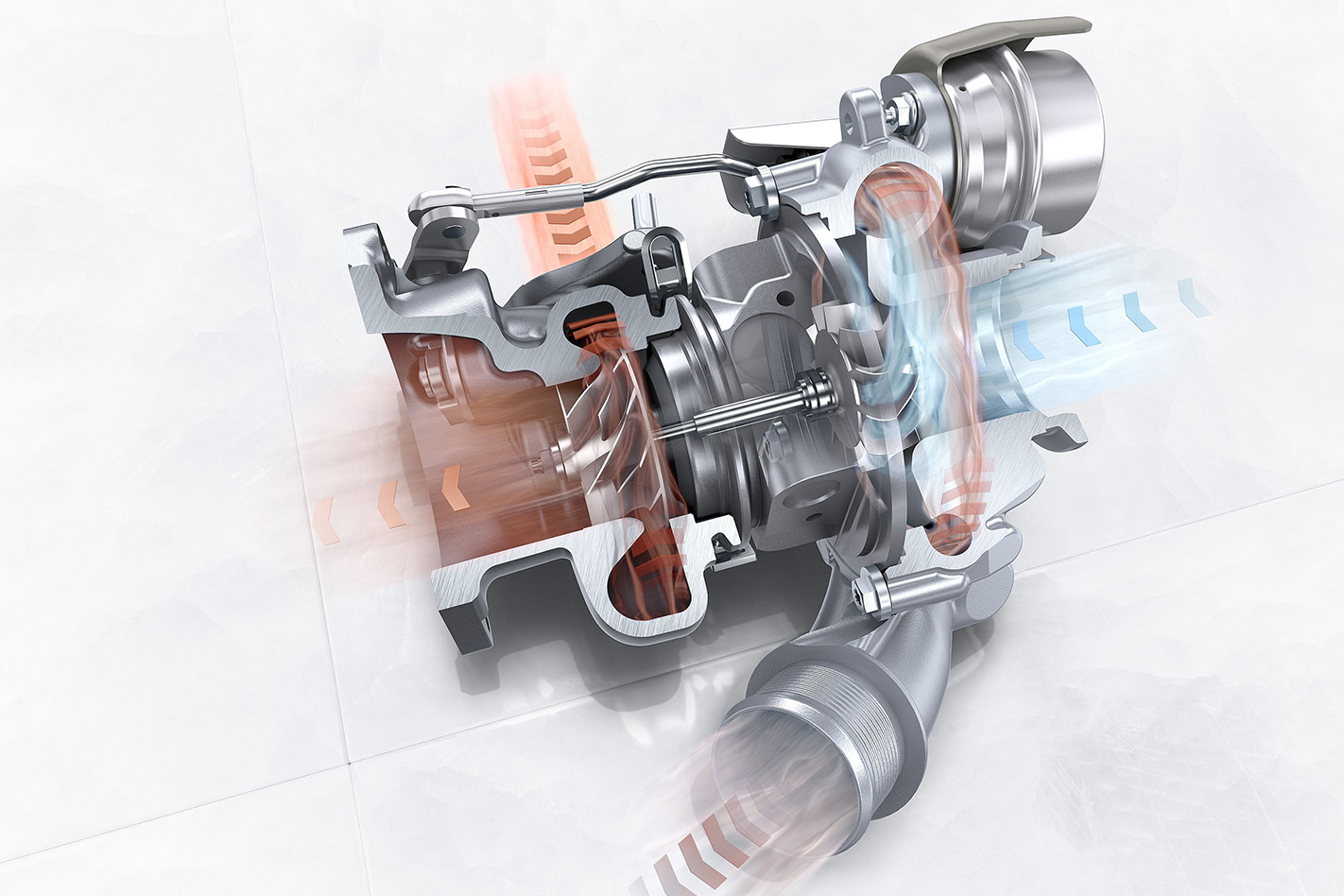
The more efficient turbine sends drive to a compressor which has also been substantially redesigned. Honeywell has mirrored the design of a conventional centrifugal impeller, allowing its DualBoost compressor to suck air from two sides rather than one.
Like a conventional turbo compressor, the high velocity air is expelled from the impeller’s circumference into the scroll, where its pressure rises, before being fed into the engine, however the mirrored impeller offers many advantages. The unwanted end-thrust generated by a single impeller is cancelled out by the second compressor drawing air in the opposite direction. The second air inlet provides an insulating layer from the hot turbine, lowering compressor temperatures. And two compressors can move double the volume of air of a conventional impeller of the same diameter.
Why does it matter?
The net result is a turbo with transient efficiency improved by up to 30 percent, and a unit that is as much as 20 percent smaller than a conventional turbo of the same performance. The technology brings reduced turbo lag, smaller, lighter overall engine packaging and a significant improvement to overall vehicle performance and efficiency.
 Turbo Titans
Everything you’ve ever wanted to know about the humble turbocharger and its miraculous power-boosting abilities.
Australians will miss out on the opportunity to drive exciting and stylish new models from Citroen’s DS luxury brand, including those unveiled at the recent Paris motor show.
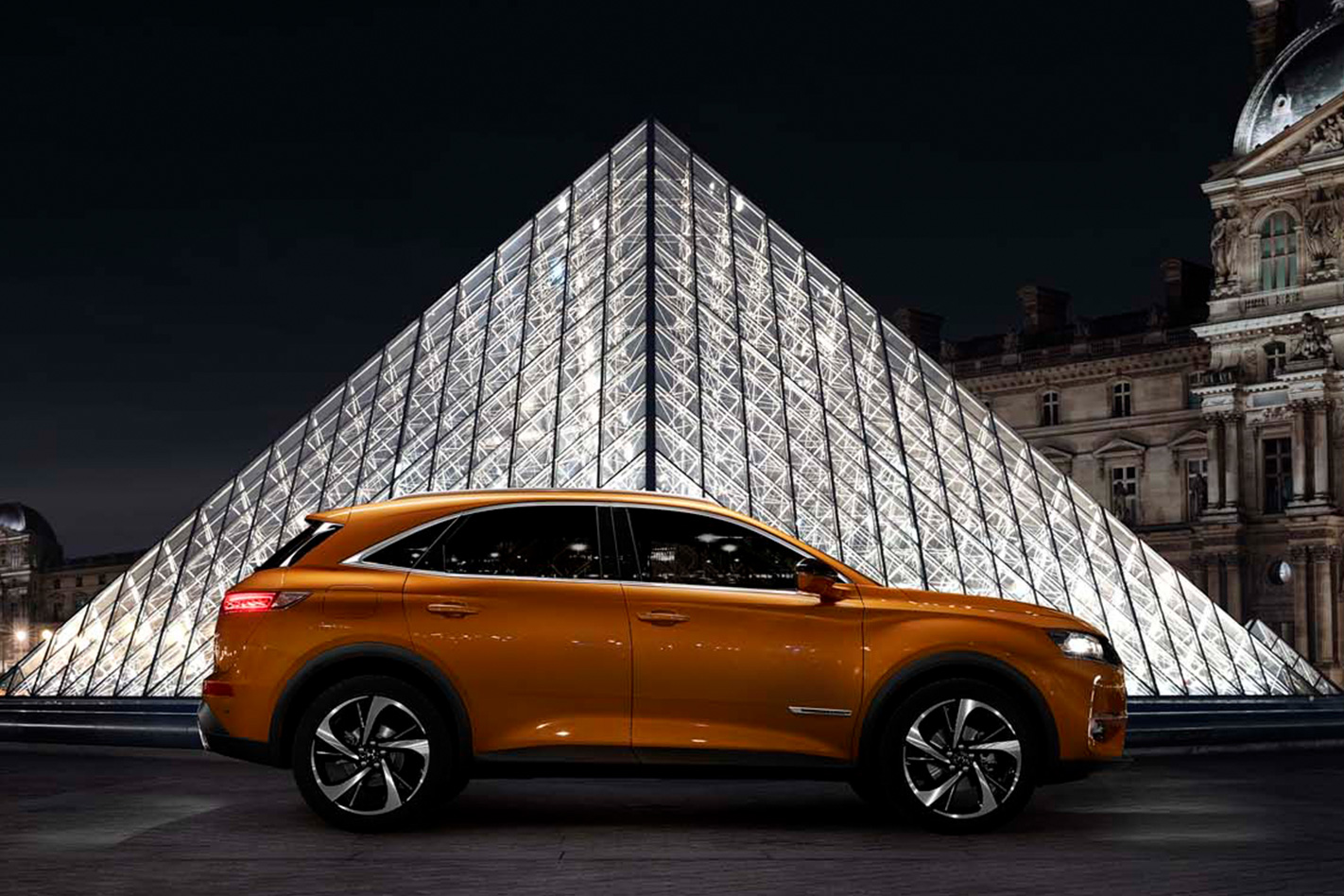
At Paris, DS took the covers off electrified versions of its DS 7 Crossback and DS 3 Crossback, a pair of crossovers with edgy styling and the practicality and versatility of a high-riding wagon body. With the arrival of the E-Tense petrol-electric hybrid powertrain option in the DS 7 and a fully-electric driveline in the DS 3 (with 300km of real-world range), the DS brand no longer just trades on the French panache of its design, it takes up a position of technological leadership in PSA Group, which owns Peugeot and Citroen as well as DS.
However, its luxury positioning and limited appeal counts against the DS brand here in Australia. Re-introducing DS to our market is a very low priority at the moment, says Citroen’s Australian spokesperson Tyson Bowen.
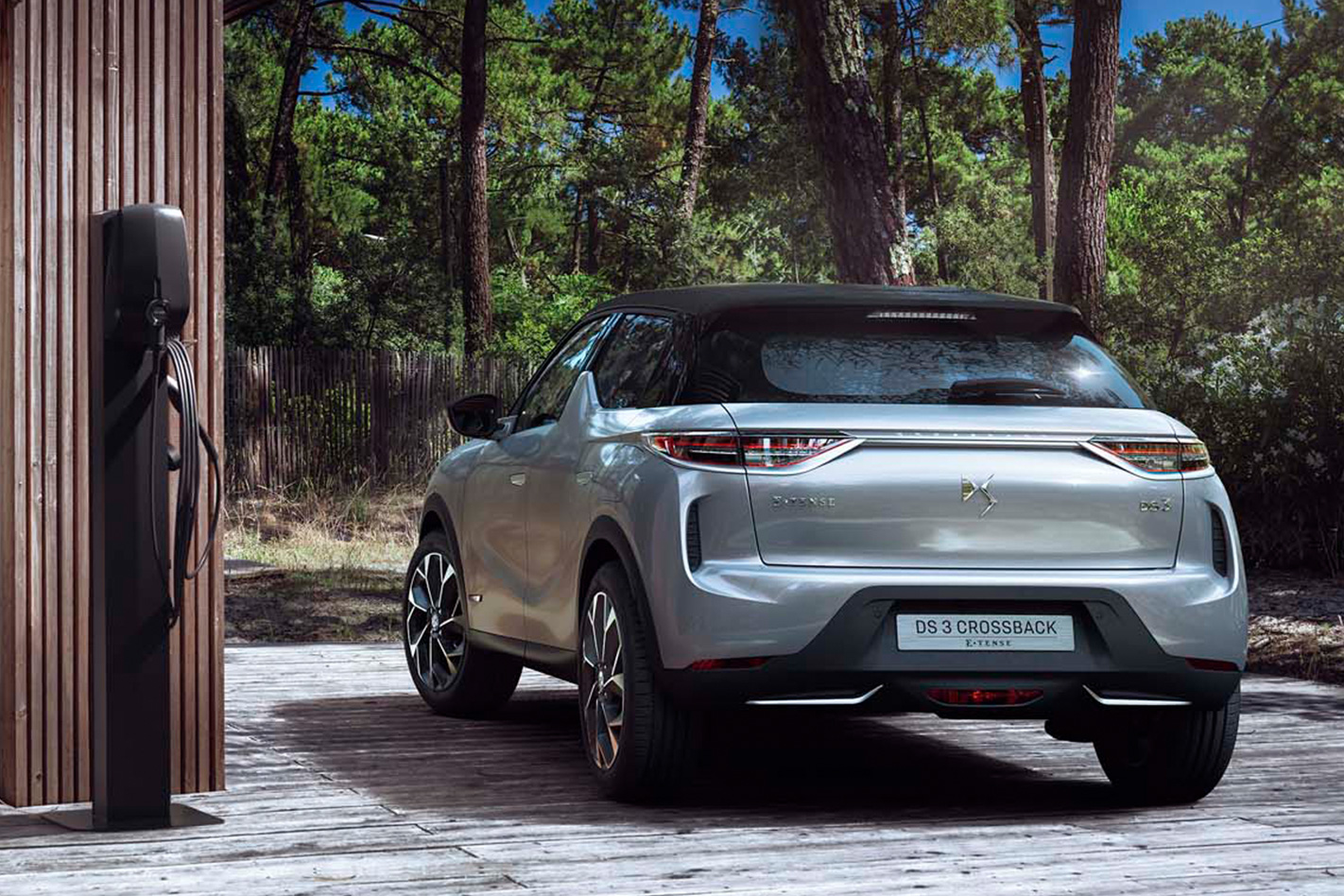
“DS is not a focus for us right now,” Bowen told WhichCar.com.au. “The focus is ensuring we manage the process of building a stronger Peugeot and Citroen. There are no immediate plans for DS right now. In the longer term, we remain open to any opportunities that present themselves.”
“Once Peugeot and Citroen are set and humming we can leverage further. Without those two core brands humming, it makes no sense to add a third brand into the mix.”
There are other obstacles holding DS back from Australia, says Bowen. Pressure on wage growth was cited as one, given its dampening effect on the migration of buyers from mainstream to premium brands, while the extra cost of establishing and marketing a completely new nameplate is another.
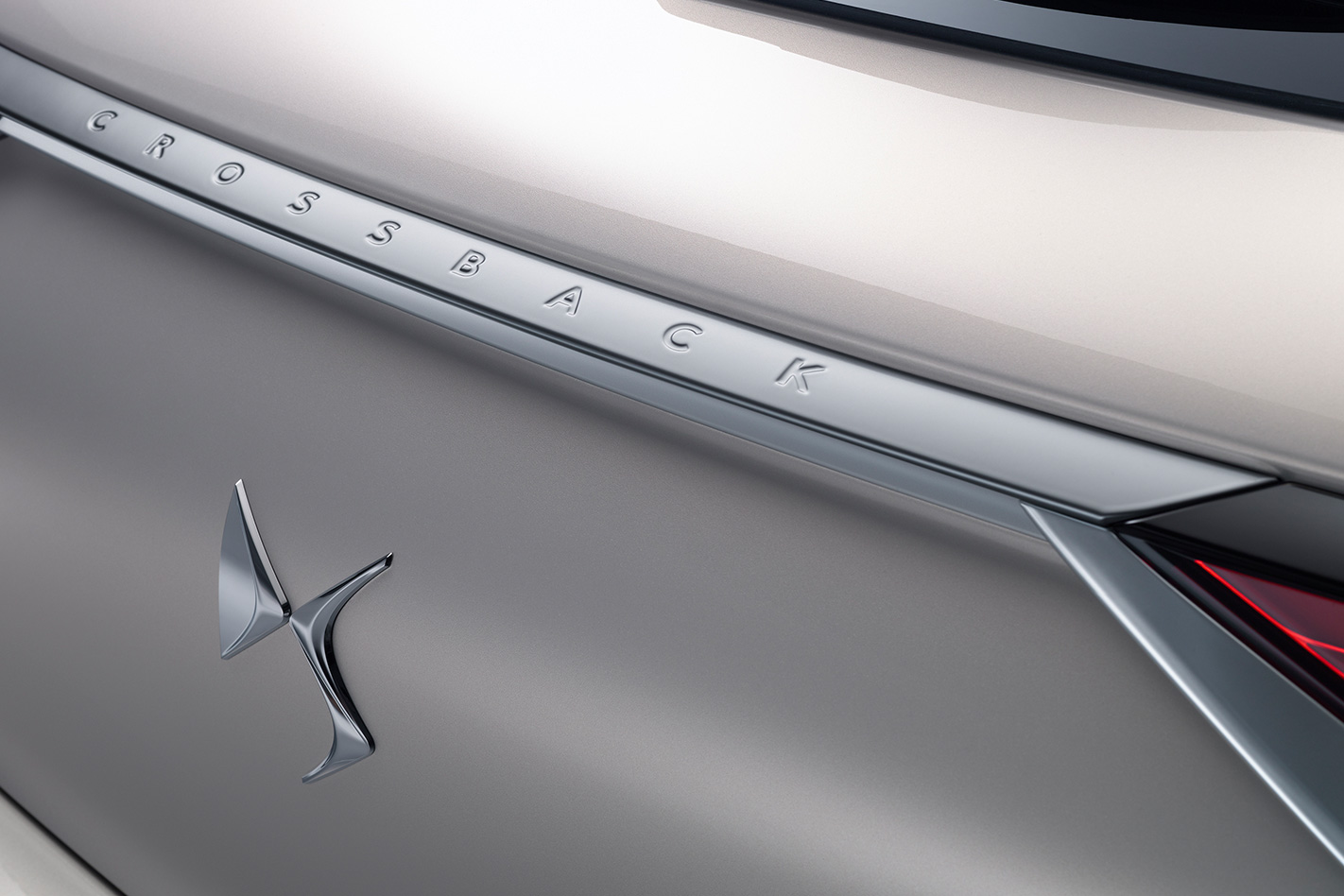
“Our product renaissance with SUV and 508 has come at the right time for us. The focus on getting those two right is key right now,” Bowen said.
“Beyond that, if there are opportunities in the prestige segment, they’d have to be evaluated in a holistic way. We’d have to re-establish dealers and a team to launch the brand. There’s a whole range of broader issues we’d need to look at.”
That being said, Bowen indicated that there were no issues with the type of product being offered under the DS name – if anything’s holding the brand back from Australian roads, it’s not the cars themselves.
“The DS product is great though”, Bowen continued, “and the new generation of metal coming through fulfils the DS promise.”
