
A federal government-funded road safety inquiry has been released this week, refreshingly removing the finger of blame from motorists for the rising road toll, while slamming authorities for investment, accountability and implementation “failure”.
The report declared that there was a lack of investment in road infrastructure compared with the annual road trauma bill and what motorists pay in fuel excise, that governments focused too much on fatality over injury rates, and that speed limits were inconsistent.
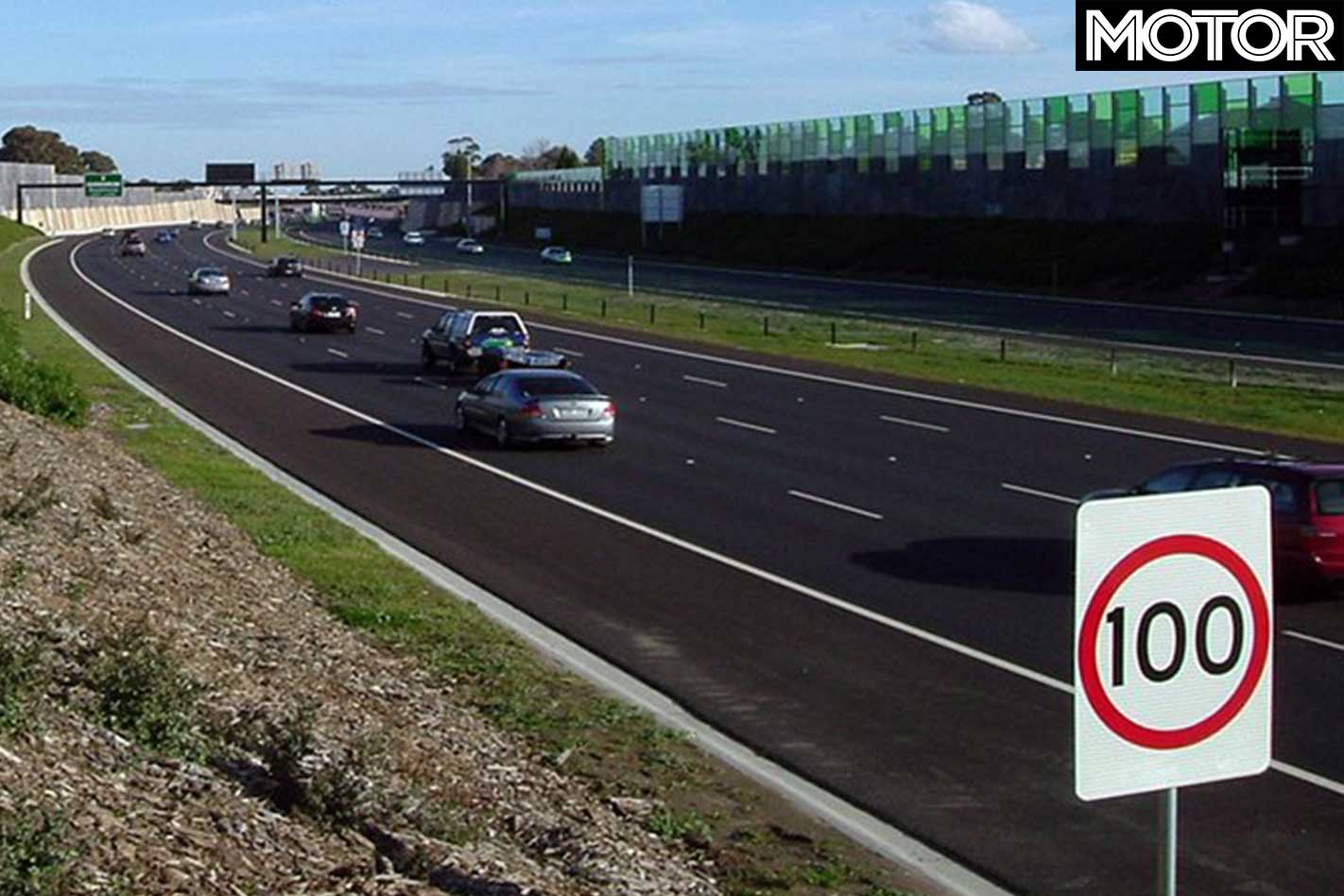
Motorists shouldn’t get too excited, though, because the inquiry fails to look at speeds safely travelled in Europe, for example, arguing that 70km/h rural and 30km/h urban speed limits are road safety ‘solutions’. But it otherwise doesn’t hold back.
“The past decade represents an implementation failure,” the inquiry reports.
“Poorly defined and resourced actions, ill-defined accountability and an inability to report on progress in a meaningful way has been the background headline behind the implementation failure.
“Frequently, there is still an overarching view that road users are entirely to blame. While we can train, educate and enforce road users to make less errors and take less risks, the fact that the system is not well suited to human operation in the first place means that crashes will continue to occur.
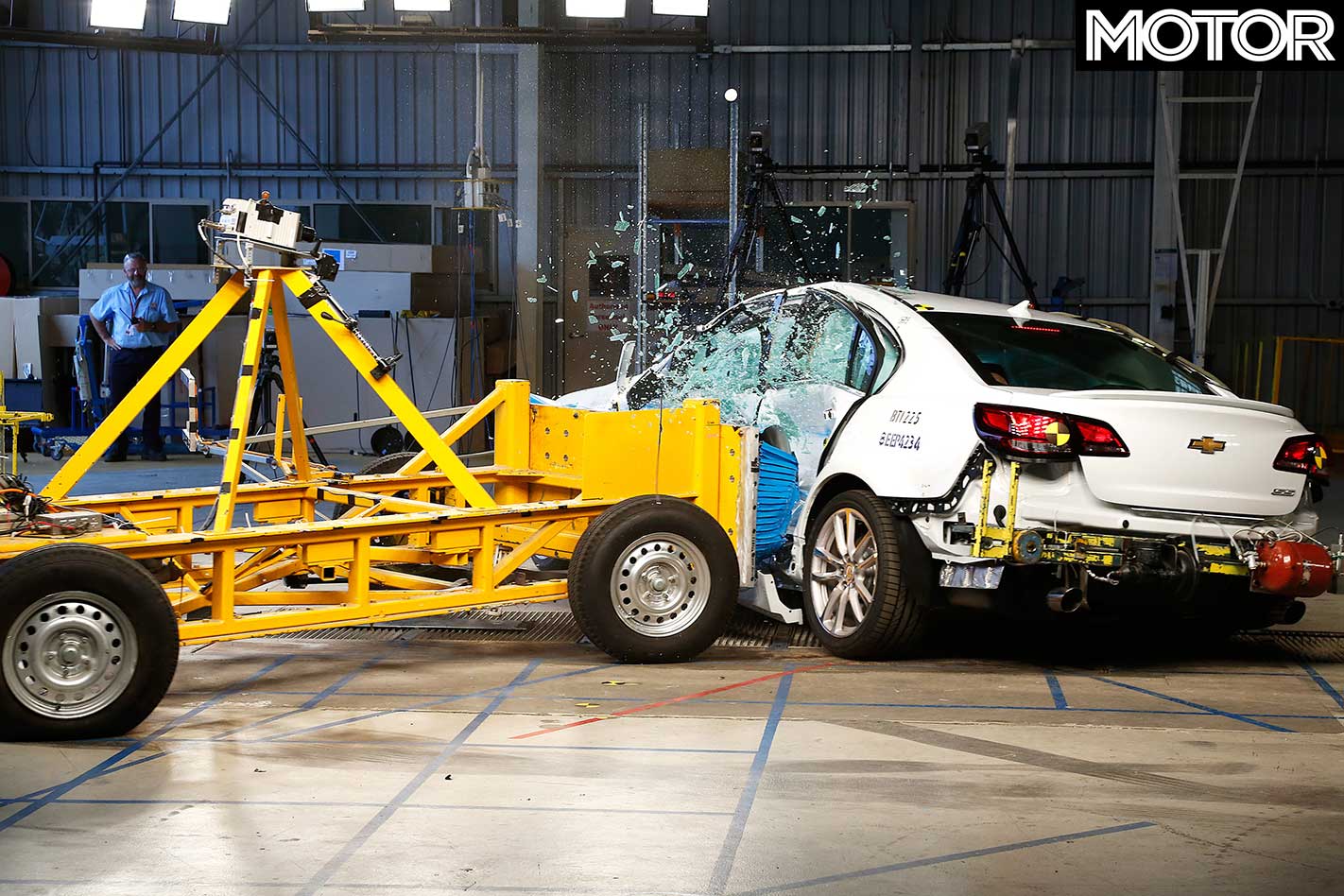
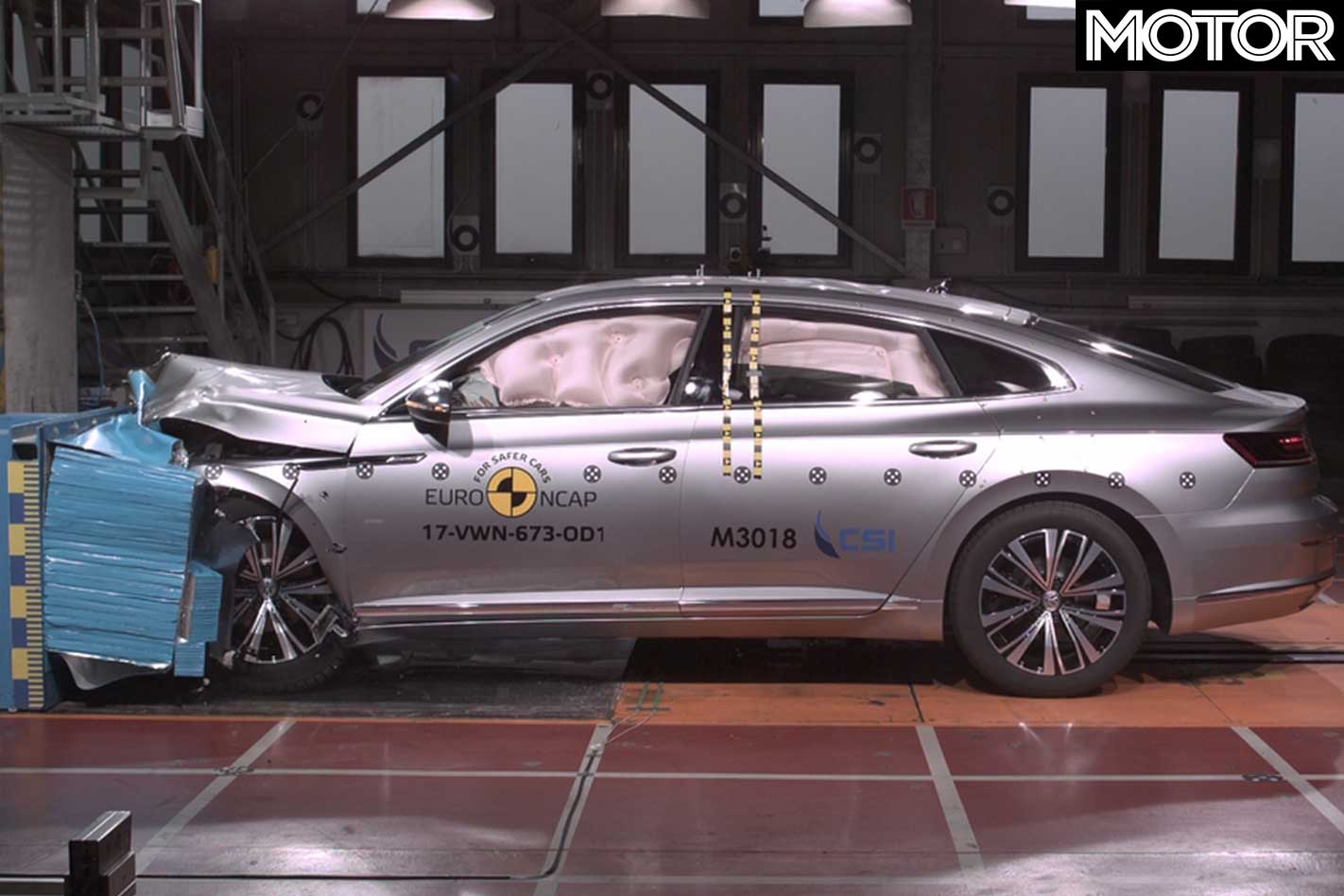
“Even though there are 5-star cars on the road, their ability to protect people is easily diminished if the infrastructure is deficient.”
The national road toll has climbed from 1150 deaths in 2014 to 1293 in 2016 and 1225 in 2017, but the inquiry argues that there is too much of a reliance on fatalities and not nearly enough on crashes and injuries that burden lives, the economy and the health care system.
“Serious injury reporting has been an embarrassment for the nation for several decades,” it claims.
“There is an over-reliance on fatality data because there is insufficient of inconsistent injury data. There is not a good national estimate of the burden of road-related trauma on the health care system.”
From June 2015 to June 2015, 8283 severely injured people were admitted to Australia’s 26 major trauma centres – a staggering 46 per cent of those caused by road trauma.
The report – which calls for zero fatalities in CBD areas by 2030 and nil nationwide by 2050 – calls for a federal cabinet minister dedicated to road safety, as well as a $3 billion per year road safety budget. It argues that this is 10 per cent of annual road trauma estimates and a quarter of the $12.6bn paid in fuel excises in 2018-19.
Currently, it argues that funding is insufficient, roads are built and operated with inherent safety issues, there is a “mass of evidence supporting speed management continues to be overwhelmed by opposing issues” and there is an emphasis on extracting better road user performance from a system “not well designed for human operation.”
“It is unsurprising therefore that we are not observing a significant downwards shift in road trauma trends,” the inquiry declares.
Yet it otherwise then defaults to less-speed-is-better approach, while barely addressing how improved driver training could assist, or the impact of lower speed limits on fatigue issues.
“Improving road user competence and awareness through education, enforcement and technology has been and remains a key factor in reducing crashes,” is all it contributed.
It does, however, want to “revise” the luxury car tax to make premium vehicles with safer, expensive technology more affordable, but argues that while “safer vehicles deliver incremental benefits over the long term … it takes about 20 years to achieve fleet turnover.”
The inquiry also did concede that Bruce Highway upgrades in 2010 saw the speed limit rise from 100km/h to 110km/h while death and injury was reduced by 82 per cent. But ultimately it called for 70km/h to 80km/h limits on rural roads, and 30km/h around town.
“Eliminating harm through speed management is not all about reducing travel speeds [and] the relationship between travel speeds and road design and infrastructure is an important one,” it said.
“Australia would reduce fatal and serious injuries by more than 30 per cent by improving road infrastructure to achieve more than 75 per cent of travel on ‘3 star’ or better roads.
“A regional backroad with no shoulders, narrow profile, and no lane markings, and a high-volume, multi-lane highway with protective barriers share the same 100km/h limit. Maintaining the current speed setting on this road type is unacceptable.
“Many local streets – which are often used by pedestrians and cyclists – have limits of 50km/h, a limit well in excess of the bio-mechanical tolerances of pedestrians and cyclists of around 30km/h.”
It also went over the old ground, referencing that “the enforcement pressure must be maintained” and car manufacturers should introduce speed management devices.
It argued that actively ‘limiting’ Intelligent Speed Adaption (ISA) would reduce injuries by 26.4 per cent while ‘advisory’ ISA – such as speed sign recognition and adaptive cruise control – reducing injury crashes by 7.7 per cent.
Meanwhile, Germany and safe autobahns still remain seemingly in another galaxy.
BY NOW you’ve probably read through our first review of Lexus’ edgy compact SUV, the UX. But in case you haven’t, here’s a quick summary: it drives surprisingly well.
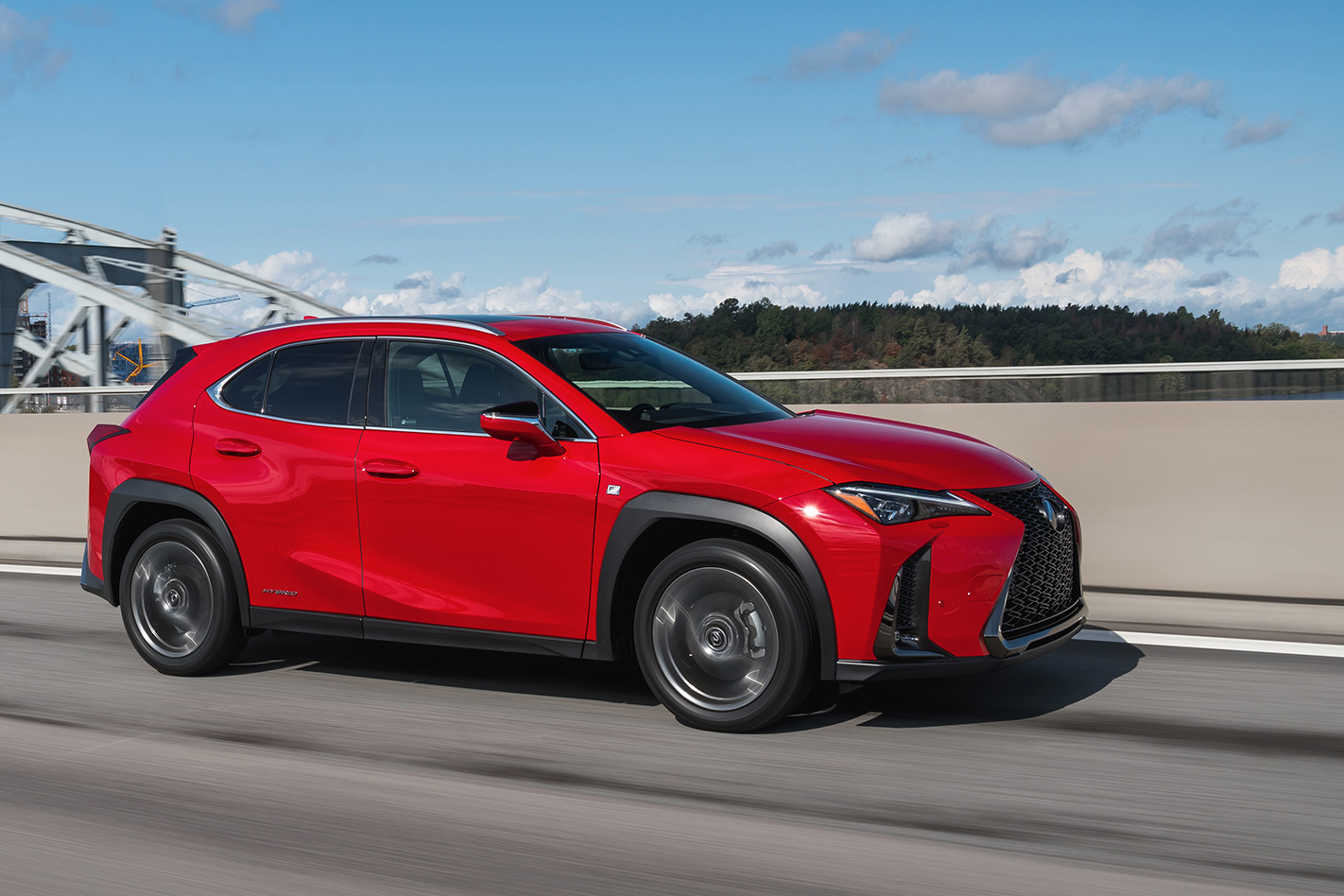
So well, in fact, that one of our first reactions was to think that it would make for quite a decent performance car. Wait, what?
Compact SUVs have long been the antithesis of performance, with versatility and cabin space the things that buyers really want alongside the faux-ruggedness of an SUV bodystyle. The ability to carve up apexes isn’t even a tertiary consideration, let alone secondary.
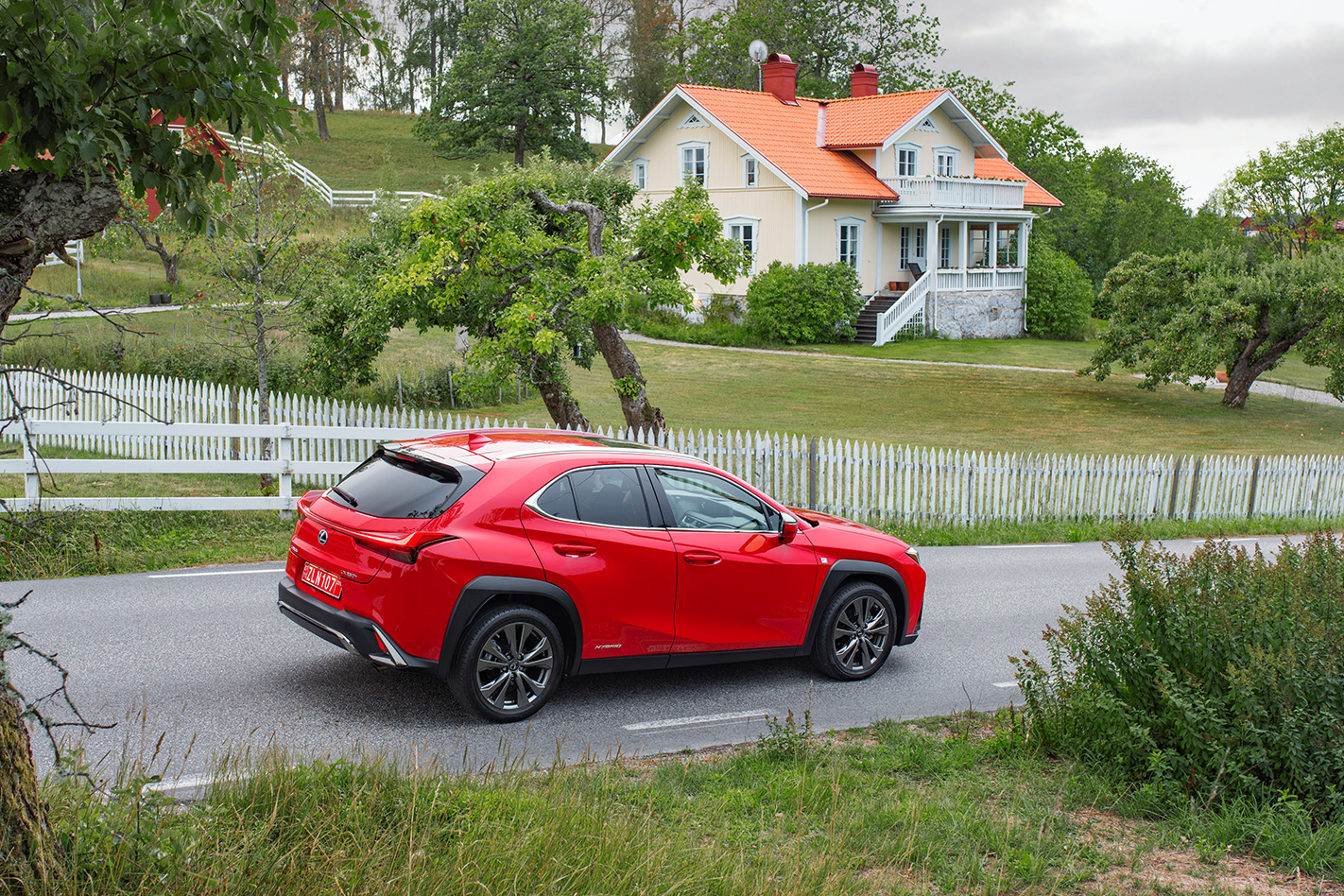
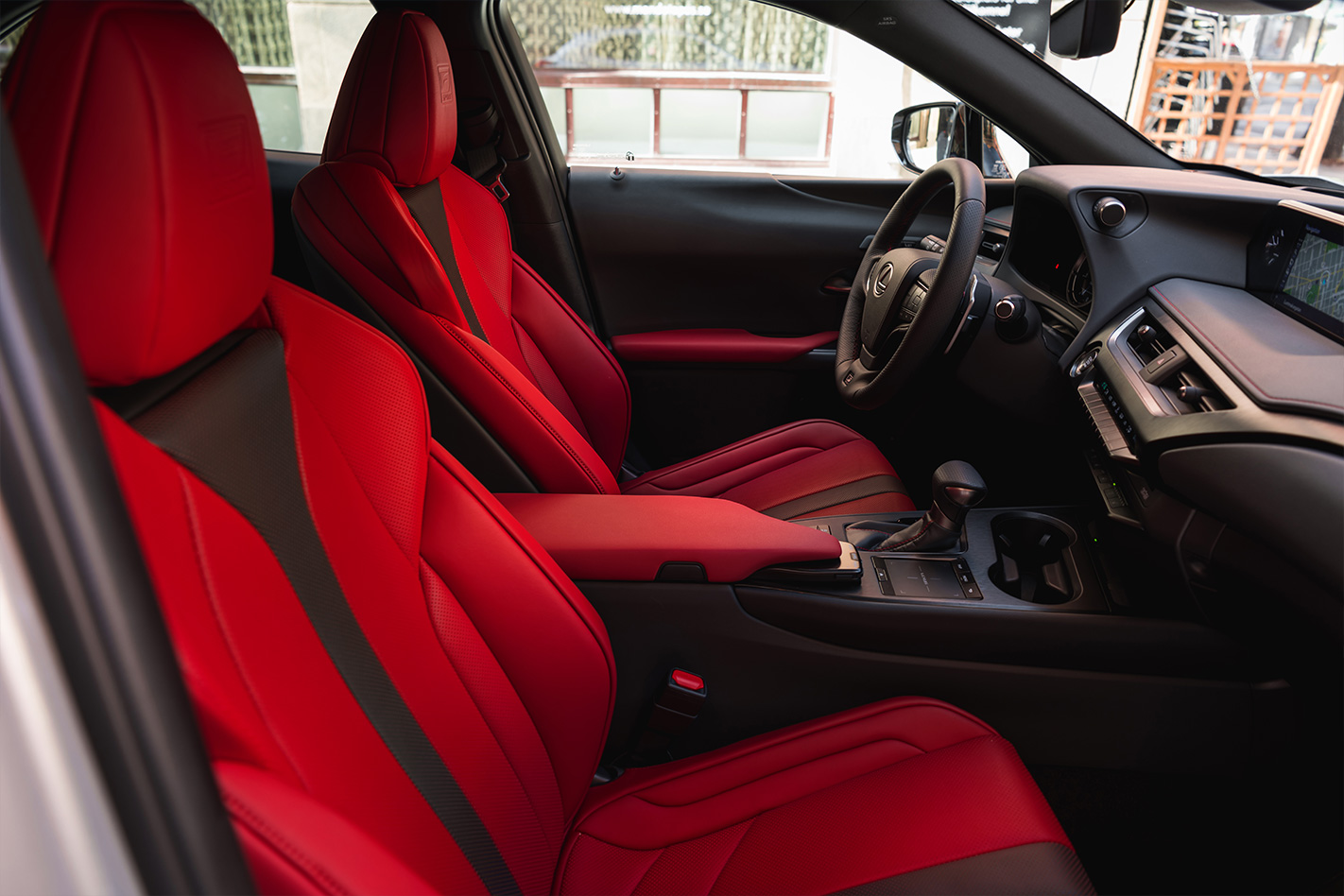
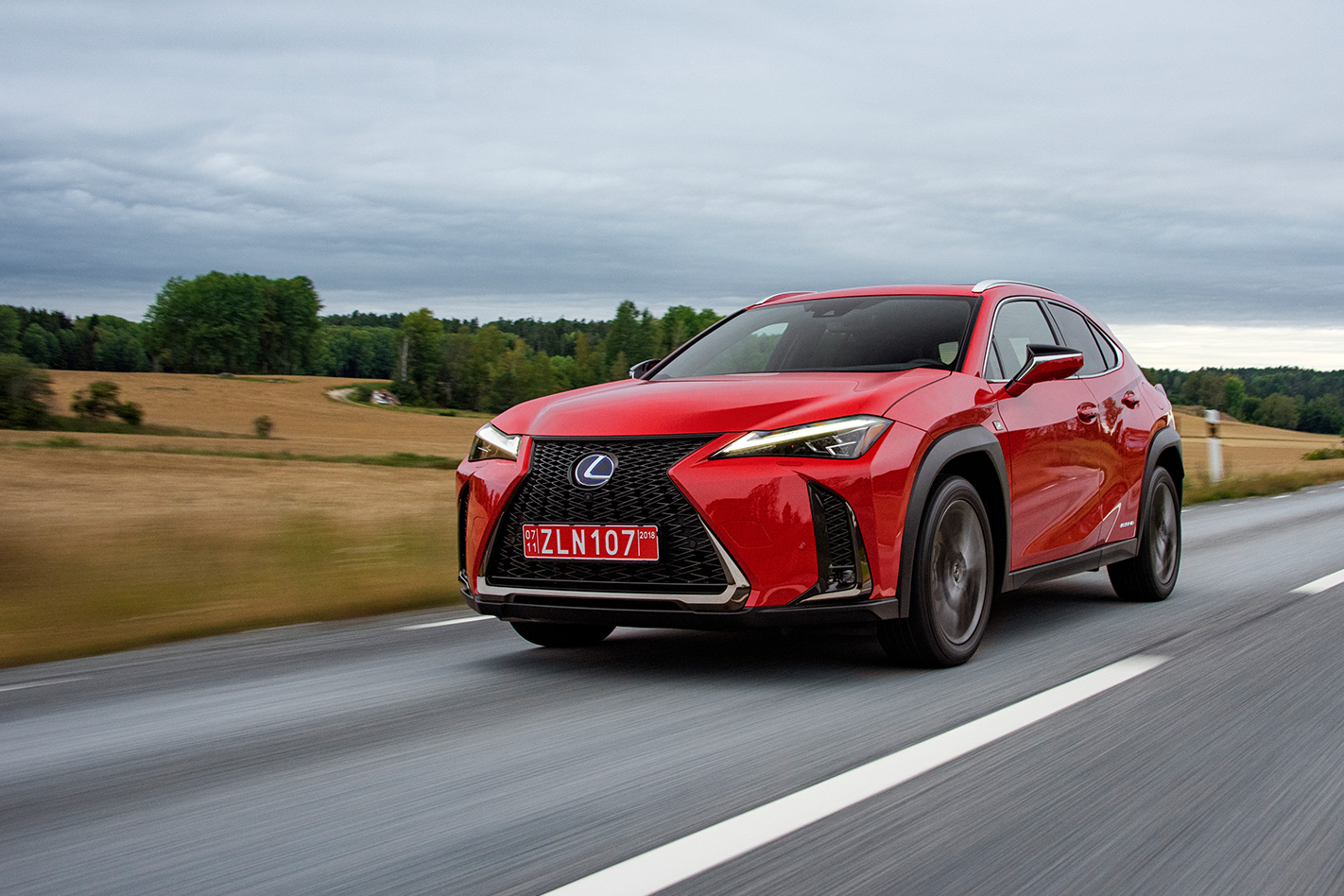
Yet after flinging a UX 200 down a particularly curvaceous road outside of Stockholm, where Lexus held its global launch even for the UX, it was obvious that Lexus’ first compact crossover had a chuckable and well-balanced chassis, along with direct and accurate steering, two essential attributes for any good performance car.
Big lifts of the throttle combined with some weight transfer to the front makes it rotate quite neatly too, and it feels like there’s the soul of a hot hatch lurking under that heavily-creased metal. Even the CVT, a drivetrain normally hated for its gluggy response and elastic feel, delivers crisp shifts in manual mode that are at least on-par with a conventional automatic for rapidity.
However, when we put the question of whether a high-po variant was in the product plan to the UX’s chief engineer (and Lexus’ executive vice president) Chika Kako, the response was only lukewarm.
“Currently we haven’t considered it,” Kako said through an interpreter.
“It has potential to have a UX F, but we will think about that,” she continued. “The intent of creating this vehicle is not just to create something that’s accessible or cheap, but to create a vehicle for somebody that really likes the package that we’ve come up with.
“Within those customers, if there are customers that want a super-high performance version of the UX we’ll of course have to study and consider.”
The lack of a performance plan is a shame because, for now, the sportiest model in the line-up is the base petrol UX 200, which has just 126kW and 205Nm at its disposal from a 2.0-litre naturally-aspirated inline four. The hybrid UX 250h has 8kW more, but is heavier and not as fun from behind the wheel.
It needs a brawnier powerplant. Mercedes-Benz and Audi each have the GLA 45 and RS Q3, and both are genuinely quick in their own right. Having 280kW and 228kW respectively certainly helps, and the former can hit 100km/h from standstill in 4.8 seconds. That’s not to say that Lexus should aim to equal those numbers, but the UX 200’s 9.2-second 0-100km/h stat doesn’t do justice to the car’s latent talent.
The answer may lie in an unconventional approach: hybridisation.
“We have our F models, and going back to hybrid technology we want to have a more performance-oriented, sporty image of the hybrid technology that we could offer. We can’t talk about what’s going to be next, but that’s something that we want to introduce,” Kako said.
If that approach was indeed slated for a faster, angrier version of the UX, it would certainly adopt a different strategy to the eco-minded UX 250h.
“With hybrid, having the [electric] motor and how you tune and calibrate that, you can really change the level of dynamics of the car itself. We’re studying right now what’s the optimum way to do that.”
Turning up the wick on the UX would likely necessitate an AWD driveline, and the UX’s all-paw configuration does away with a conventional mechanical connection from gearbox to rear wheels in favour of a rear-mounted electric drive motor. Currently the UX 250h AWD can only produce a maximum of 5kW from its rear motor, but installing something with a lot more oomph (along with a more muscular engine up front) could provide the UX with the numbers needed for performance SUV status.
However it’s all theoretical at this point. Kako counts herself as a driving enthusiast – and the way her latest creation handles is evidence of that – but it seems Lexus is waiting to see if demand is there before it jumps into the hot SUV arena to fight the Germans. Is a Lexus UX F something that would make you sit up and notice?
WHAT IS IT?
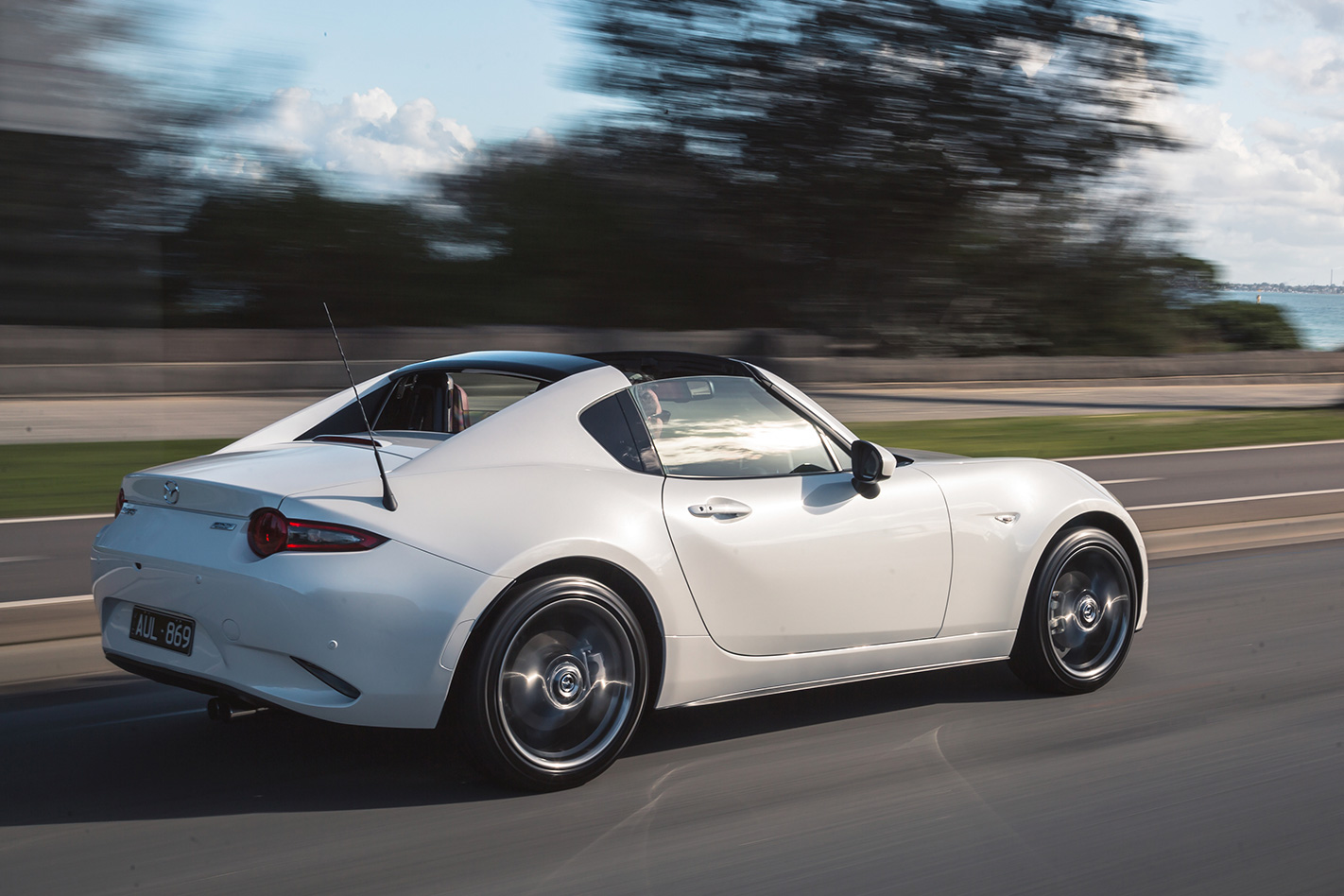
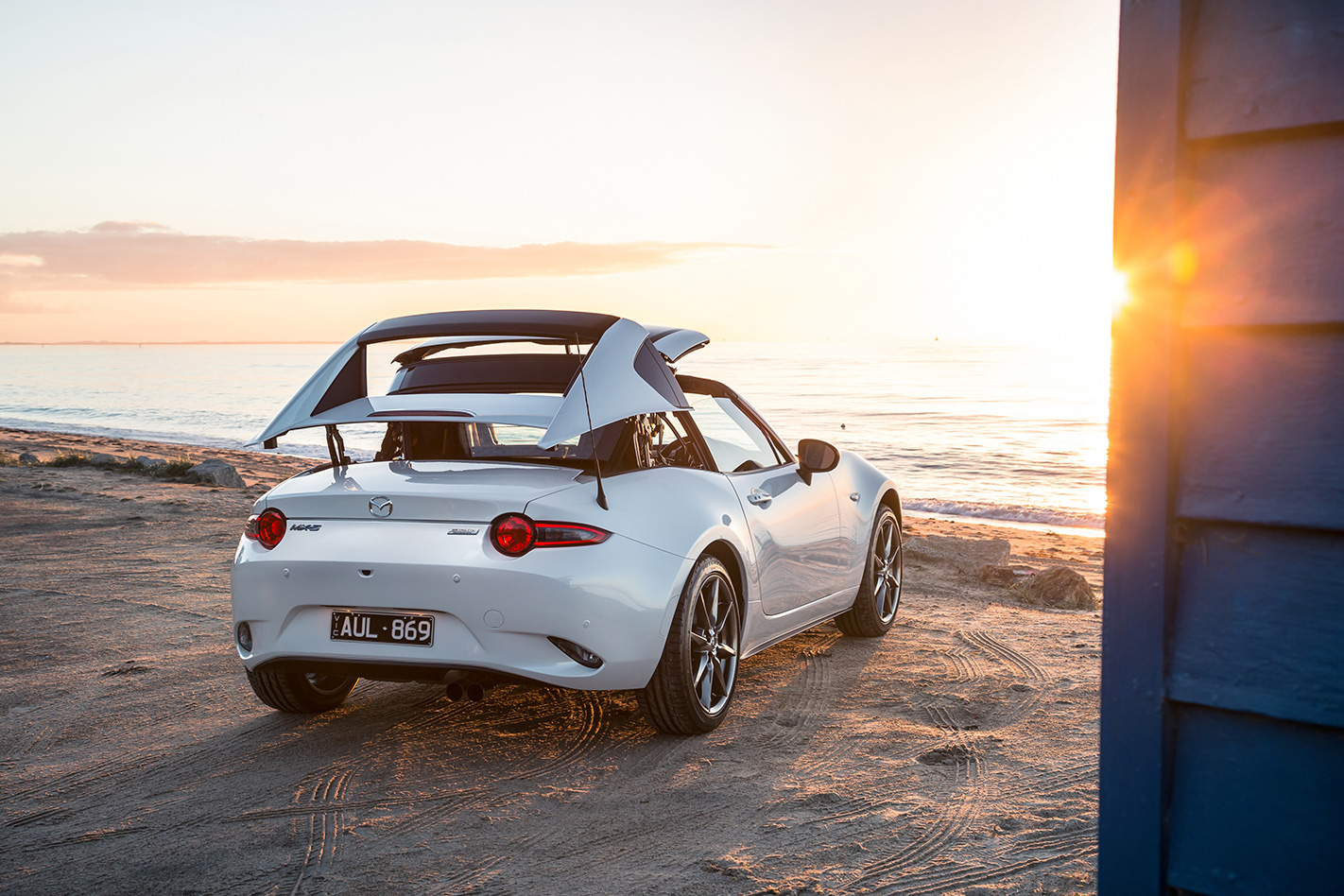
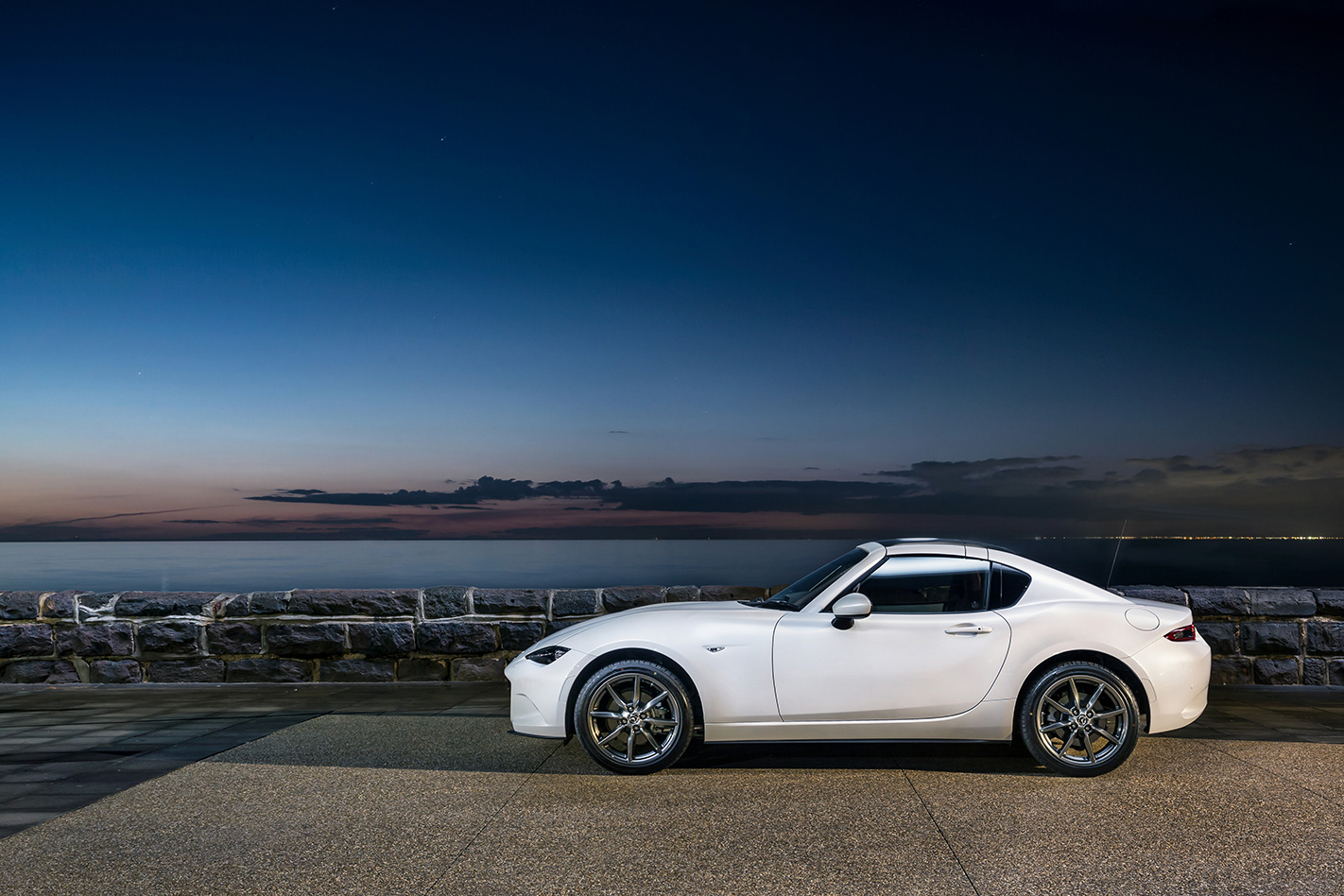
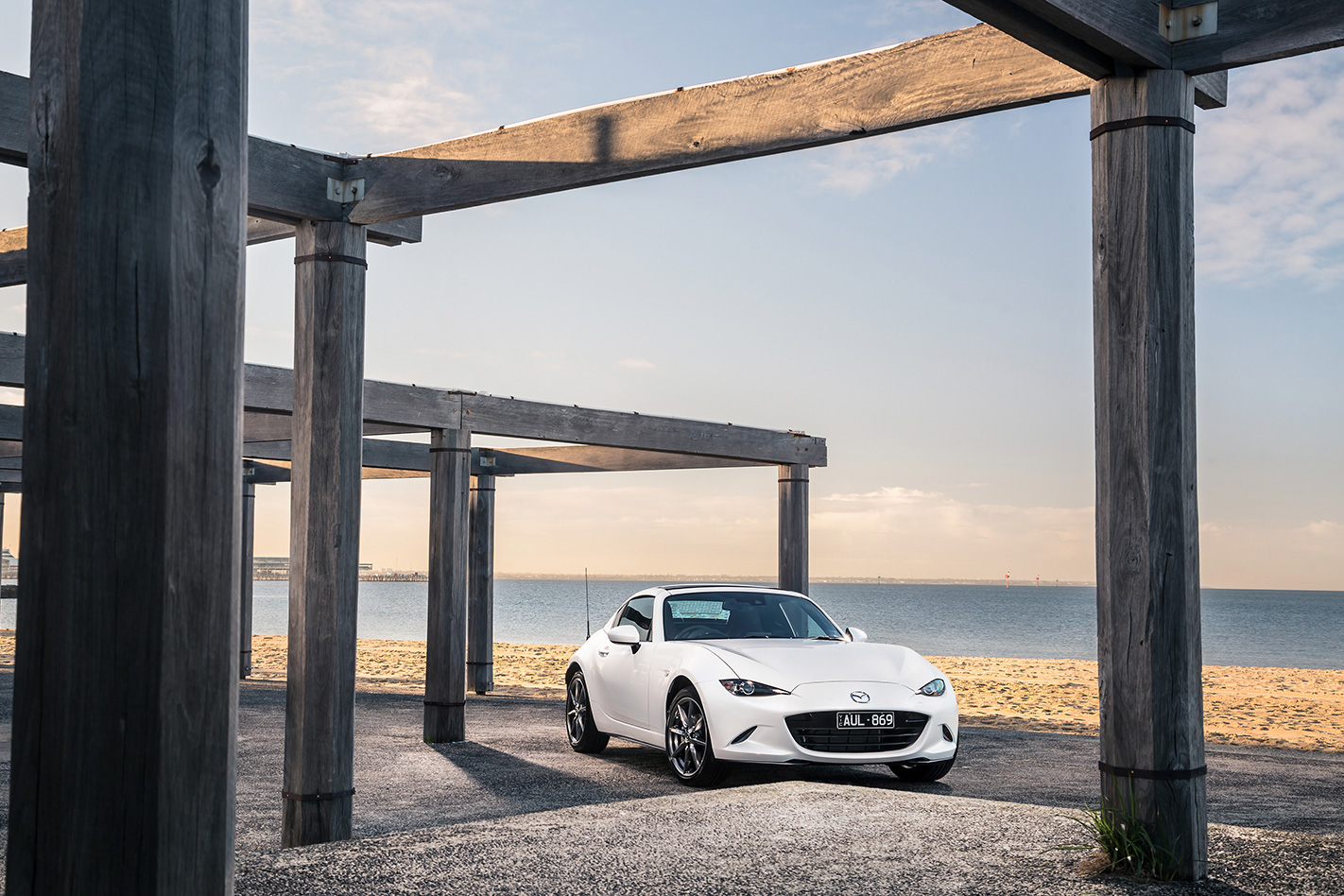
An update of Mazda’s 4th-generation, COTY-winning sports car, focusing on improving the 2.0-litre engine, adding safety and convenience features, and tweaking a few weak spots.
WHY WE’RE DRIVING IT
It’s our 2016 COTY winner, and some excellent roads in the Gold Coast hinterland beckoned. Be rude to say no.
MAIN RIVALS
Toyota 86, Subaru BR-Z, Abarth 124 Spider
THE WHEELS REVIEW
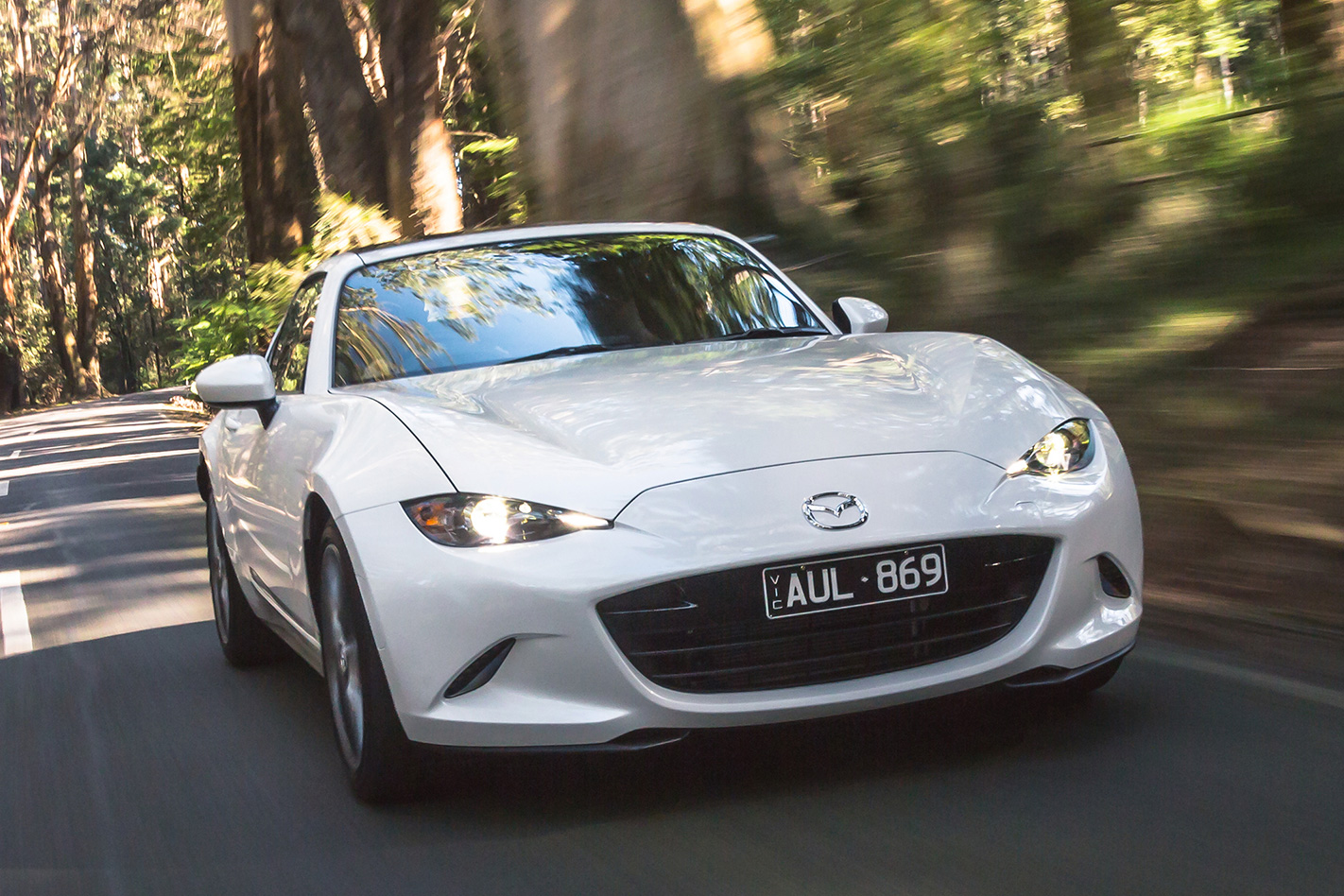
THE YELLOW advisory signs with the squiggly lines provide the official confirmation of what we already know. We’re deep in Gold Coast drivers’ country, but still the lumbering Hilux in front of us holds his course. The lush hinterland ramps up towards Mount Tamborine, beckoning us in. Still we wait. Finally, mercifully, old mate sticks two wheels on the verge and allows us space to pass. Snap, the six-speeder’s beautifully tactile short-throw lever is flicked back to second and the throttle squeezed to the floor. This is it, our first real chance to extend the MX-5’s heavily revised 2.0-litre SkyActiv-G engine and see the extent to which it really changes the character of our 2016 COTY winner.
Instantly obvious are an extra level of zingy eagerness to rev, and a midrange that feels especially sweet. The benefits of moving to a dual-mass flywheel seems most evident in the crispness of the throttle response, with any sense of slight low-rev doughiness now replaced by a satisfying immediacy of response of tacho to pedal. The slight bump to the torque curve also surely contributes to this – it’s up 5Nm to 205Nm, developed 600rpm lower at 4000rpm.
Anyway, the extra 17kW Mazda has extracted from the extensive raft of revisions reside at the top end, obviously, so you need to keep your foot planted. The old point of peak power – 6000rpm – is now spun past with a dismissive sweep of the needle, the exhaust note hardening to an insistent yet cultured rasp. Just shy of 7000rpm was where the old engine would stutter up against the limiter; that figure is 500rpm short of the new redline. So even though power flattens off past the peak at 7000rpm, it doesn’t drop off a cliff, and drivers who enjoy wringing out everything their car can offer will appreciate the extra headroom provided by a limiter that now doesn’t call time until 7700rpm. On the roads of our test route, that often allowed us to hold second or third gear at the top of the rev range, rather than force a wasteful upshift only metres before the braking point for the next bend.
If you’re a fan of all the fascinating oily bits of internal combustion, the changes to the 2.0-litre make interesting reading, not because they’re radical, more because they’re extensive. The goal, Mazda’s engineers are happy to admit, was to give the 2.0-litre engine a character more like that of the sweet, rev-happy 1.5. Fact is, the merits of the 1.5 versus the 2.0 were debated at COTY 2016 with the sort of fervour that would be normally reserved for Australia’s annual change of Prime Minister, or vanilla snot-blocks versus custard tarts. The 1.5 is the purist’s engine (an irrefutable fact, because that’s what our summation in Showroom says), its output deficits accepted as the price you must pay for its more free-spinning character and tonal goodness.
The new 2.0-litre succeeds in making that a mostly moot point. To achieve this, first came a weight reduction to the rotating assembly, with new, shorter-skirt pistons each trimming 27g; slimmer rods and new bolts cut a further 41g each. The crank, meanwhile, had to cop a slight weight increase due to the eight revised counterweights needed to keep it vibe-free at the higher rev limit.
Breathing improvements go further. On the intake side are a better flowing manifold (that also cuts charge temperature), larger valves, reshaped ports, and new injectors that spray fuel more accurately. Upgrades to the ECU allow a more tailored three-stage injection strategy that varies according to engine speed.
On the exhaust side, both lift and duration of the revised cam have been increased, opening larger exhaust valves that flow into reshaped ports. To capitalise on the improved exhaust flow, there’s now a new manifold with larger internal diameters. So nothing radical here, yet there’s something satisfyingly old-school about it all, in a turbo era where more power and torque almost invariably come via a software change in the ECU.
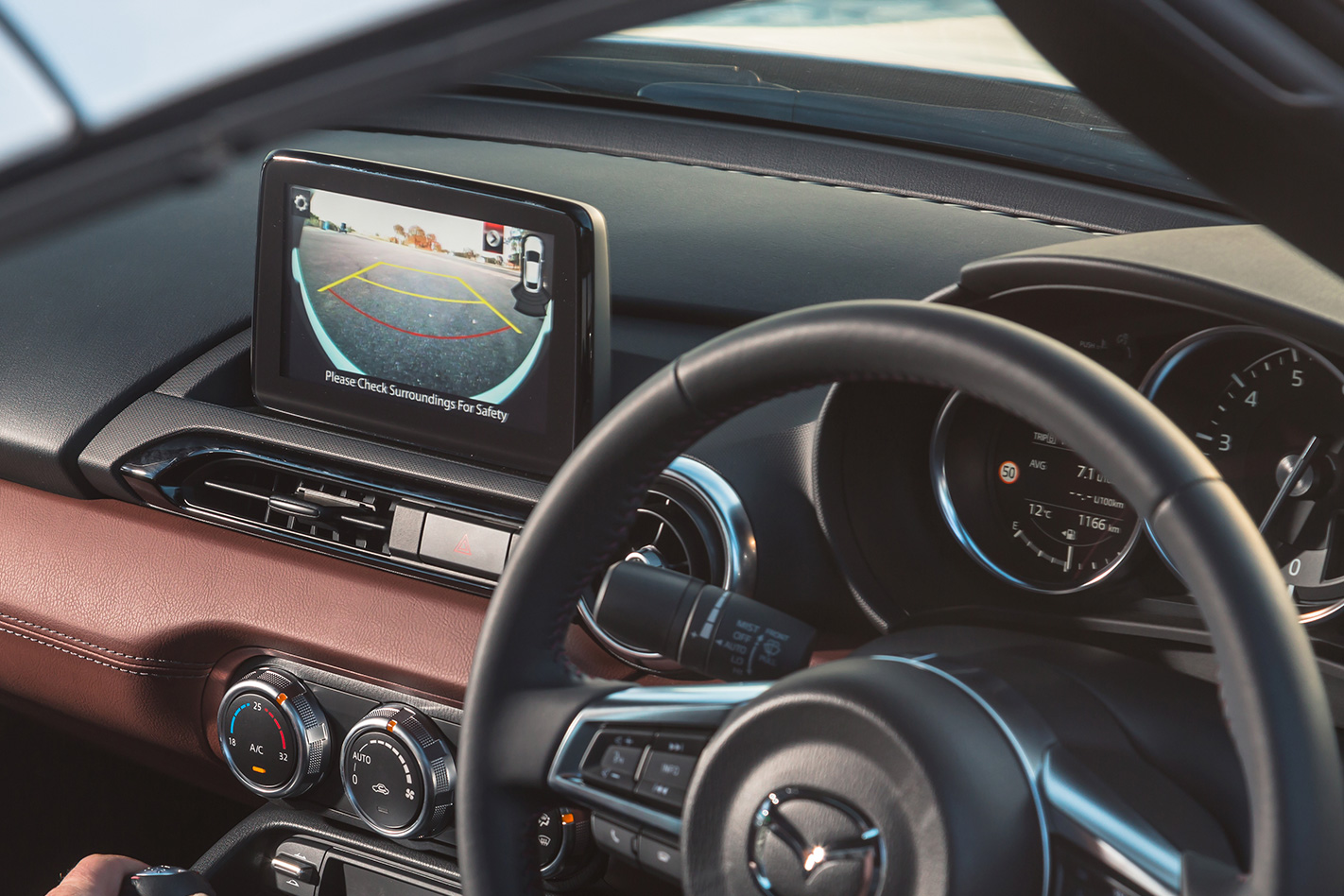
As for the other improvements, they advance the MX-5’s safety credentials, and address the sort of issues that clearly irritate owners. Of the latter, the addition of telescopic column adjustment is the most significant. Okay, it only moves by 30mm, but in a cabin as snug-fitting as that of the MX-5, it’s like having your high-riding trouser cuffs let out by that amount. For my six-foot frame, it allows the wheel to come in for a more bent-elbow, straight-legs position. Pity the handbrake lever still makes contact with my left knee, but it’s still preferable to an electronic button.
As for safety, the updates amount to improved AEB to better recognise pedestrians and cyclists, a reversing camera mounted discreetly in the revised rear bumper, and traffic sign recognition.
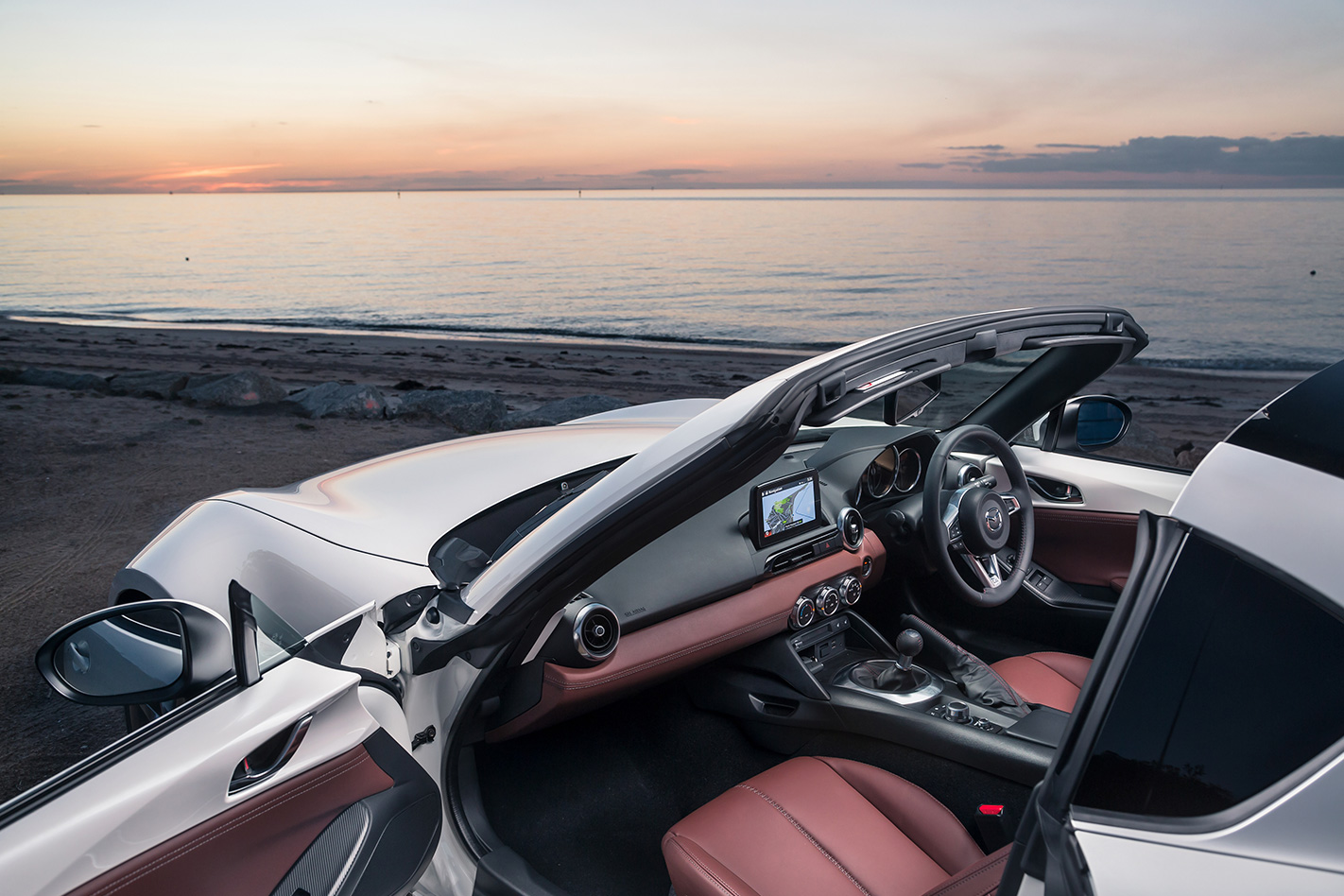
Prices are up $750 across the board, but what hasn’t changed is the MX-5’s chassis tune or handling balance. The higher-output engine makes it easier to extract the MX-5’s best, but doing so still requires that the conditions are in your favour. Slow traffic in hilly terrain can spoil your flow, and an extra 17kW/5Nm can’t overcome that. Nor does it magically bring an ultra-planted front end that begs you to wail on it. No, the MX-5 remains very much a fingertips car that telegraphs its limits early, and, via its rolly set-up, brings the rear into play almost before you’ve fastened the seatbelt.
So not for everyone, but for the fan base, any agonising over the 2.0-litre’s power versus the 1.5’s sweetness has been comprehensively resolved.
THE WHEELS VERDICT
Full credit to Mazda for putting its focus on the areas of the MX-5 that needed attention, and leaving the rest alone. The heavily revised 2.0-litre is noticeably improved in its throttle response, increased rev ceiling and peak power. Sounds better, too, with no downside to consumption. (The base 1.5-litre engine is also improved – see below – but the gains are tiny, and we didn’t get to drive it). Then there’s the upgrades to the safety suite, the addition of a telescopic steering column, rear-view camera, and other details that count. All of which makes the modest price rise of $750 across all models entirely palatable.
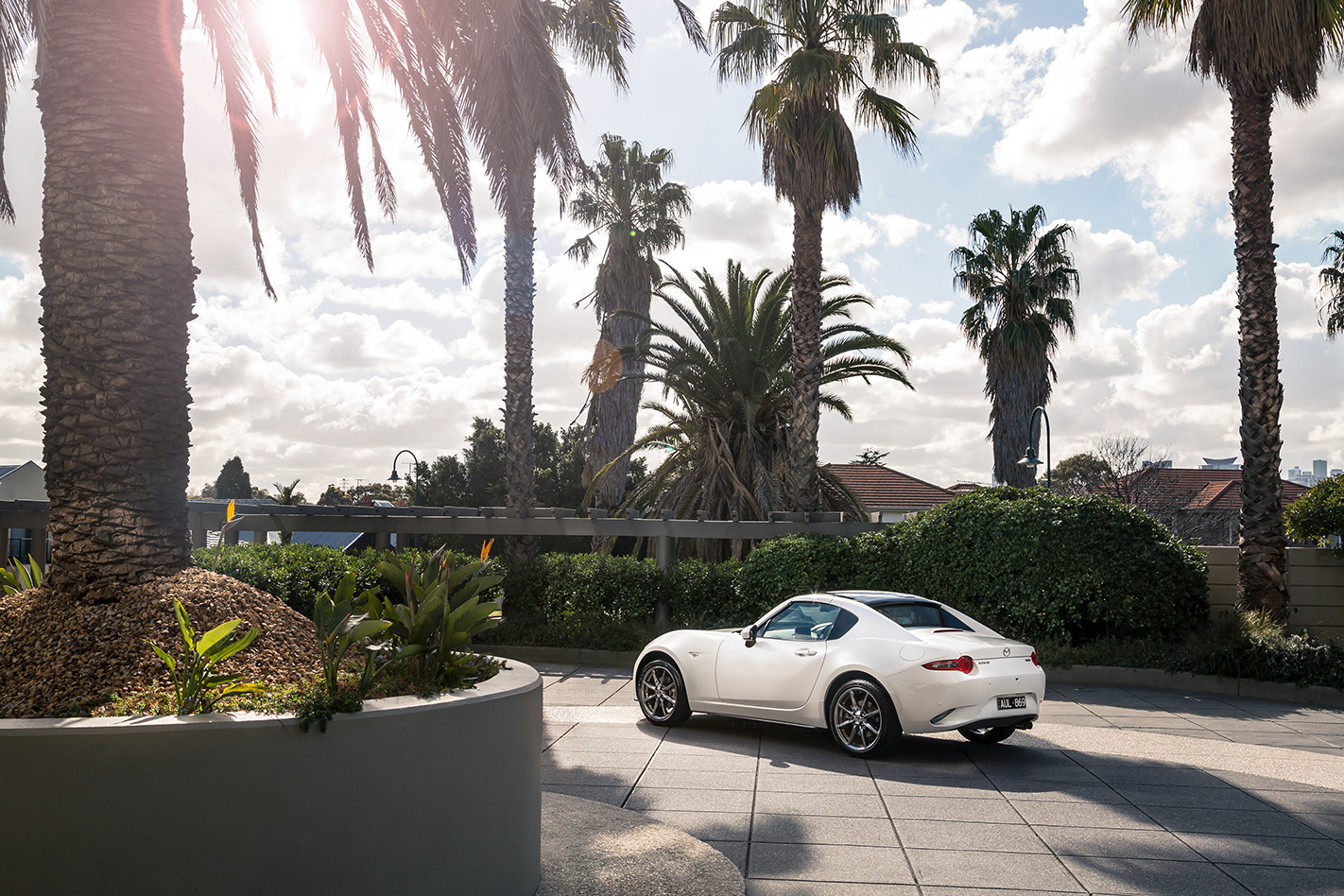
PLUS: Extra zing and revs from revised engine; steering column now has telescopic adjustment; rear-view camera added; upgraded safety; still wonderfully tactile and involving MINUS: No digital speedo; RF’s folding-panel roof can’t be opened above 10km/h; no passenger grab handle
But what about the baby?
The 1.5-litre engine also gets revisions – essentially, piston shape and combustion chambers – but the gains are tiny: power up by a single kilowatt, (now 97kW); torque up by 2Nm (152Nm). Driving in cool morning air versus a hot afternoon would make a greater difference. Take up of the 1.5 in Australia is minimal; just 5 percent, hence it’s only offered in base Roadster form. As for the automatic (add $2K), it wasn’t available to drive at the launch, but Mazda advises the final-drive ratio of the 2.0-litre slusher is shorter (from 3.24:1 to 3.58) for more lively acceleration.
SPECS
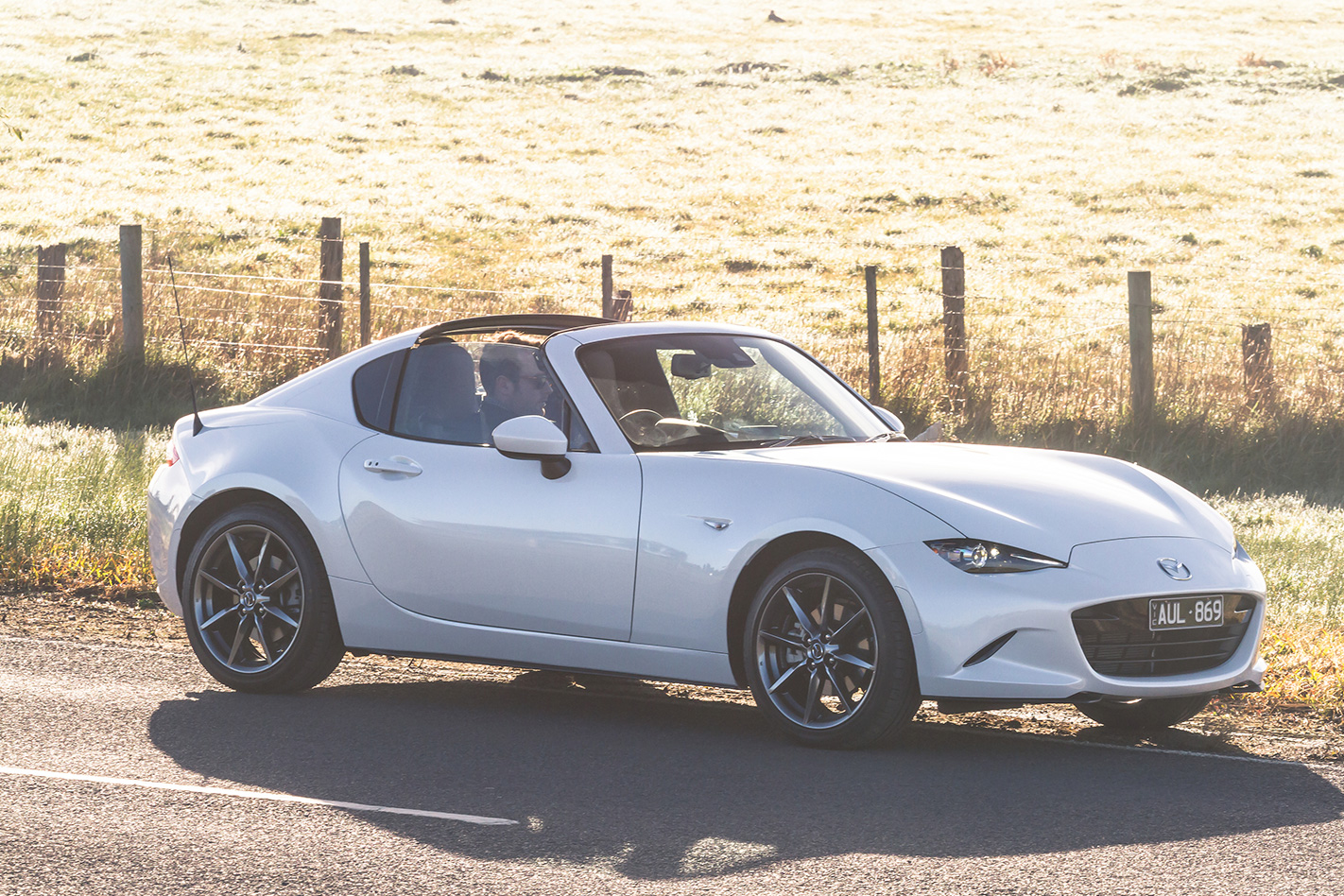
Model: 2019 Mazda MX-5 RF GT Engine: 1998cc 4cyl, dohc, 16v Max power: 135kW @ 7000rpm Max torque: 205Nm @ 4000rpm Transmission: 6-speed manual Weight: 1087kg 0-100km/h: 7.1sec (estimated) Economy: 6.9L/100km Price: $45,960 On sale: Now
Although Mazda’s headquarters in Hiroshima sit far away from the summit of Japan’s Mount Fuji, that hasn’t stopped it from reaching for the same heights with its new MX-5.
The latest generation has always forced buyers to make a choice. Either pick the 1.5-litre variant for cloud-tickling revs or opt into the 2.0-litre for genuine hair-ruffling speeds. Neither provided both. This made business sense, in that each car oozed its own appeal. But Mazda has now blown their peaceful co-existence to bits and sent the 2.0-litre engine soaring.
The news is hard to believe for the fact, initially, engineers lavished their love on the 1.5-litre engine. Being lighter, and from a Mazda2, it suited the ‘gram strategy’ they obsessed over during this car’s gestation.
In their eyes it was the more pure pick. But with criticism hurled at the larger engine for being less involving, and engineers doggedly refining the car in every way possible, their attention has finally locked on to the ‘big block’ for this year’s model update.
Their aim? Inject the 2.0-litre with its smaller brother’s charisma. The plan? Spin it to the same 7500rpm rev limit. And the result? On paper, it’s the most powerful factory atmo MX-5 yet.
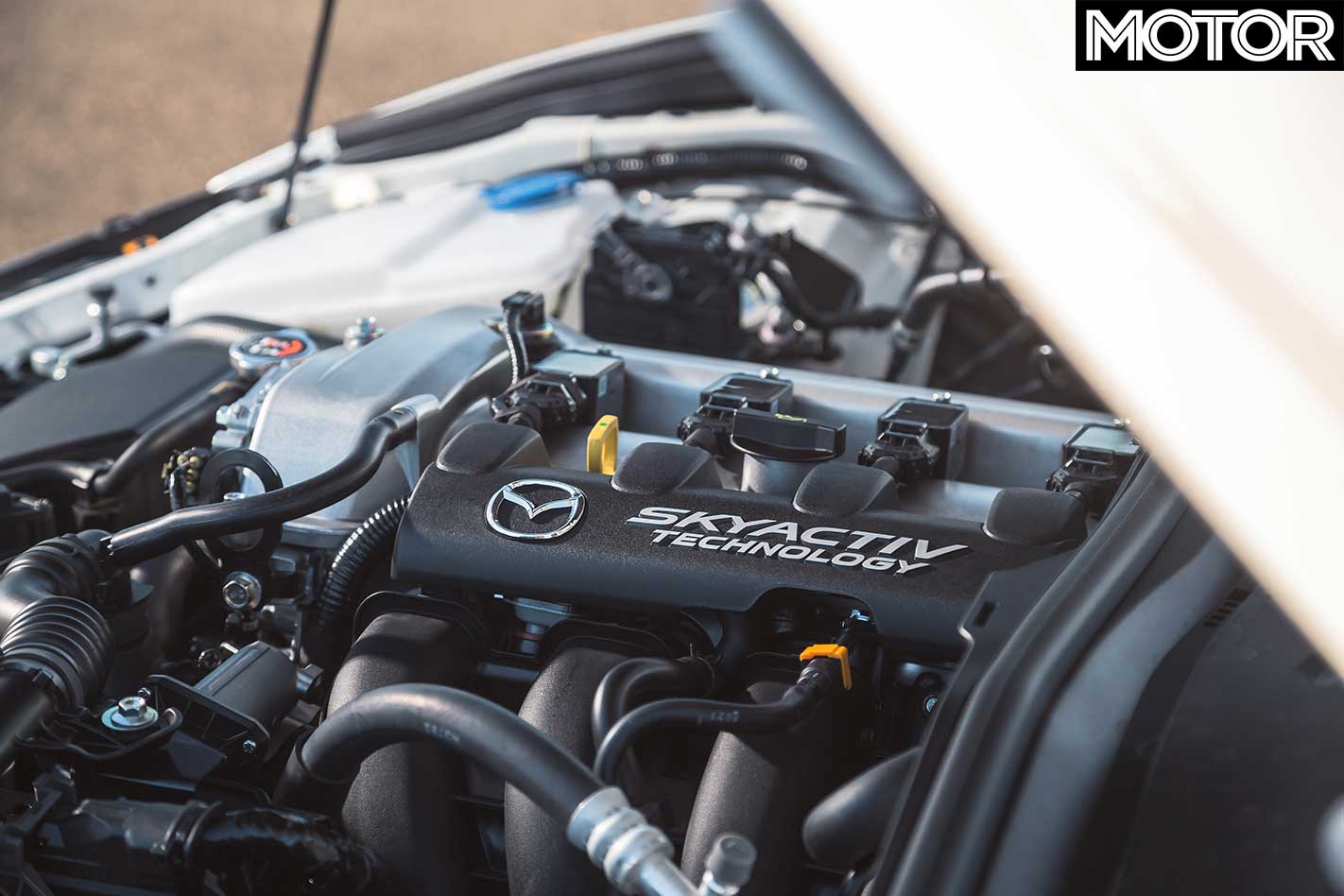
It wields 135kW and 205Nm, or 17kW and 5Nm more than before, from two litres. But this mission was never about packing more punch. We figure Mazda could have easily lowered a bigger 2.5-litre into the MX-5’s schnoz. After all, some owners have crammed V8s in there.
In reality this project was about making the 2.0-litre, created to appease grunt-loving Americans, zing to the same highs as the 1.5-litre with all its smoothness and theatre.
To do so, the engine’s 1998cc scores some hot-rod style upgrades. Like, on the outside, the engine breathes through larger intake ports, runners, and throttle body. Together they feed 28 per cent more air onto redesigned pistons. In the cylinder, higher pressure injectors shower the charge, that then ignites and escapes out bigger exhaust valves, that open for longer and further, into larger exhaust pipes.
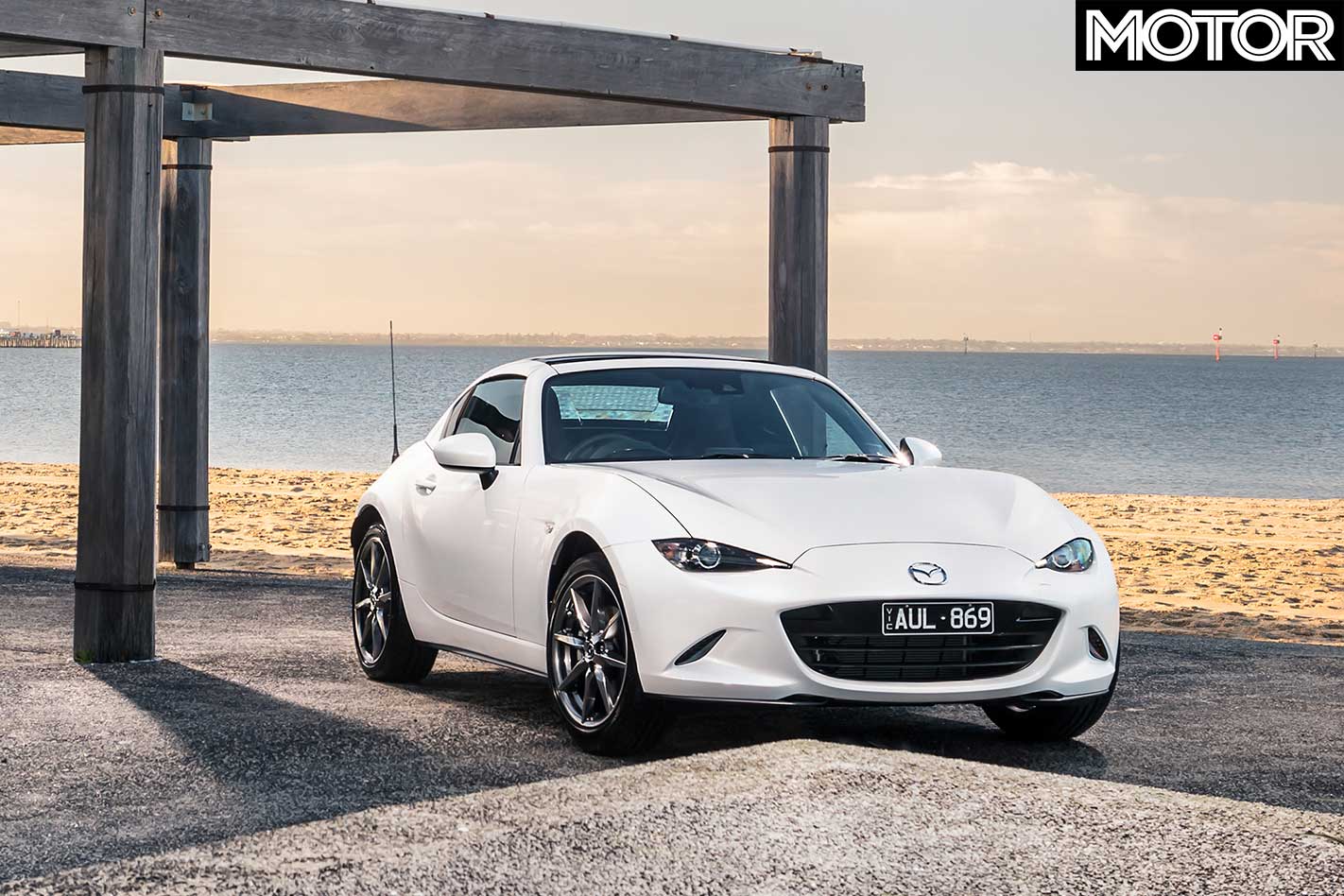
The next task was to raise its rev ceiling to 7500rpm without it shaking itself apart. Its 13.0:1 compression ratio is unchanged. Engineers installed stiffer valve springs instead, shaved the piston domes of 27 grams, and redesigned the con-rods to drop 41 grams. Its bore and stroke measurements stay undersquare and the crankshaft gets rebalanced. The flywheel goes from single-mass to dual-mass, while the rear muffler is re-tuned to contain the engine’s new buzz.
The extensive tuning hasn’t awakened much of a roar when you start the car. Instead of exploding with noise and settling into a lumpy idle, a scenario the extent of tuning almost tricks you into believing might happen, the new MX-5 2.0-litre sounds much like before.
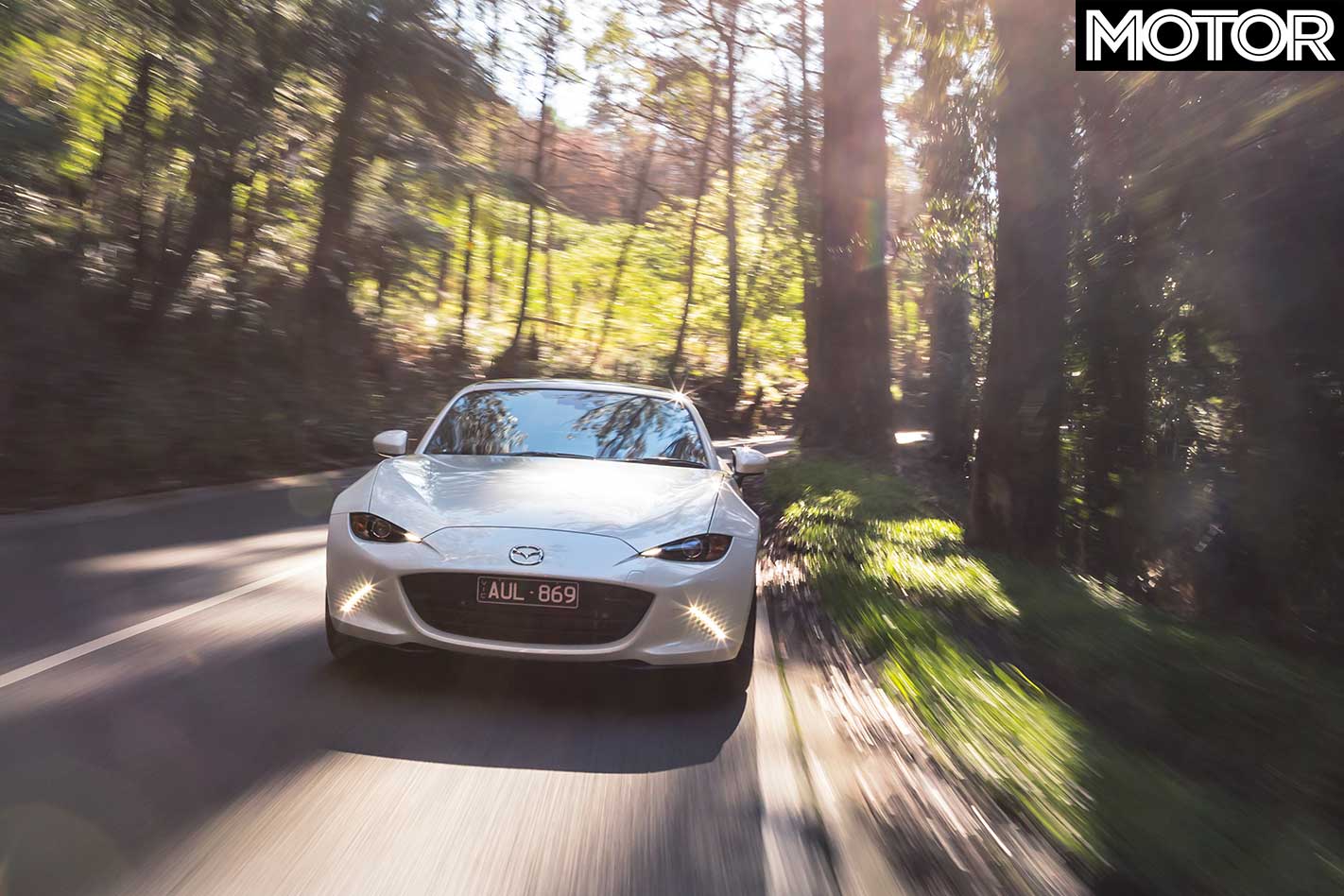
The starter motor whizzes a couple of times before the four cylinder wakes with an uninspiring flare of revs. Stabbing the throttle in neutral hears the exhaust bark with slightly less snarl, and resonance, than before, though the real differences emerge on the way to the rev dial’s other end.
Plunge the throttle and the sounds start as a whir, multiplying into a buzz, and then fattening into a blare in its upper ranges. Mazda says peak torque arrives at 4000rpm, but the starting blocks for the engine’s manic rush to its 7000rpm power peak is about a grand later than that.
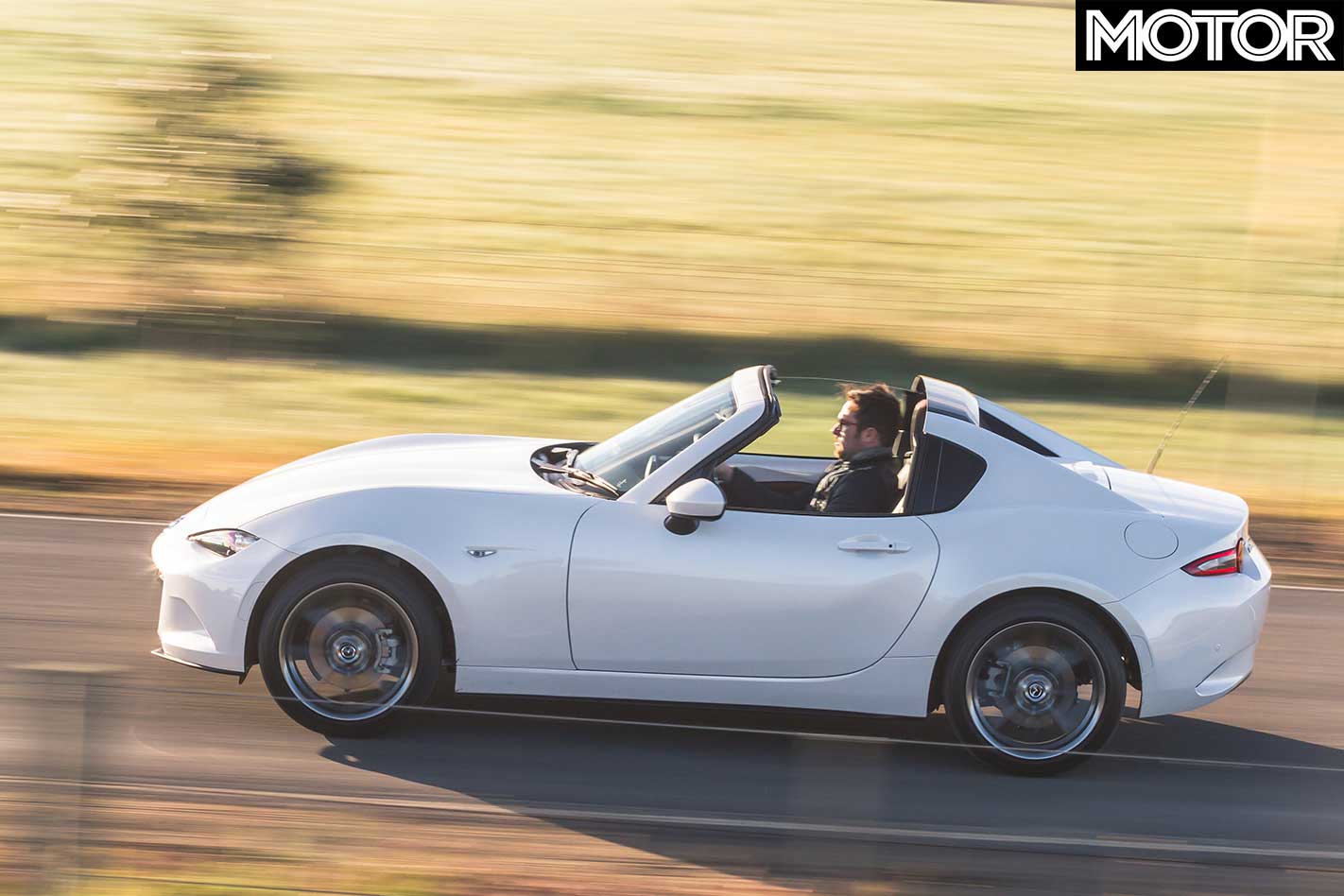
As its crank reaches these higher rotating speeds the sound truly departs from the old one, developing a more full-bodied roar as it hones in on its 7500rpm redline. Here, the percussion of its valves, cam lobes, and pistons becomes hard-edged and truly musical.
All this band practice has beefed the MX-5’s muscles. The car’s torque peak appears 600rpm earlier while its max power arrives 1000rpm higher. And since Mazda has nailed its direct injection, there’s no torque hole or delay in response, but a flat climb towards that power peak. The urge doesn’t fall off beyond that, either, making that last 500rpm worth more than just sweet sound, as nailing the upshift just before its 7500rpm soft limiter is involving and delivers a rush of satisfaction.
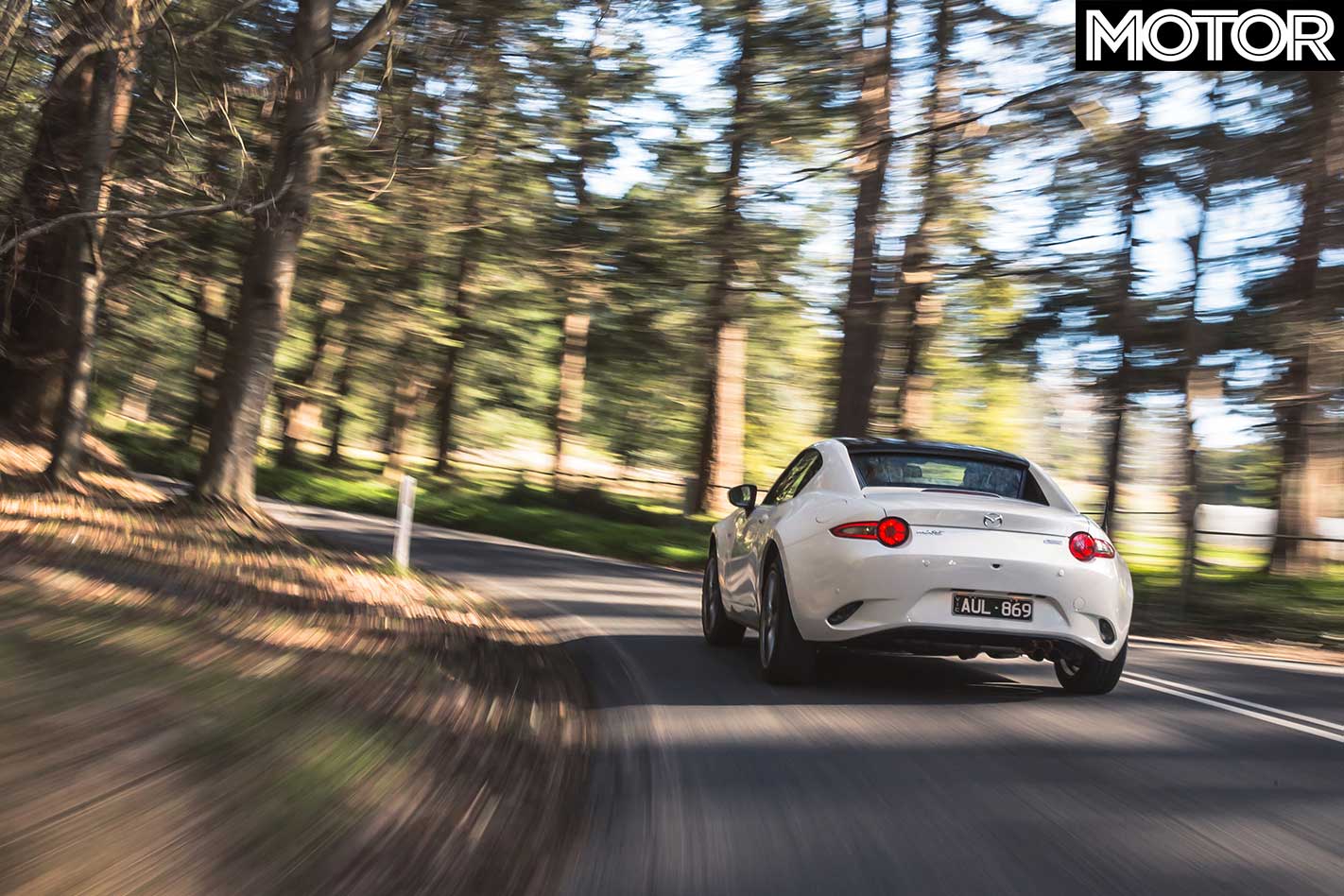
The carried over six-speed manual transmission still slots with the well-oiled precision of a sportscar twice the MX-5’s price. Its clutch, too, is easy to judge and modulate. Also, the engine spins with a pinch more keenness and significantly less coarseness or vibration, but you’ll need the finely tuned buttocks of someone like Fernando Alonso to feel the differences in speed.
The MX-5 thrives off wheelspin from a launch to produce their figures. There’s a hard 5500rpm limit in neutral, and a clandestine traction control system waiting to catch the revs if you use it to drop the clutch. Step off the third pedal somewhere around 5000rpm instead and the MX-5 will get under the 7.0sec 0-100km/h barrier easily as the rear tyres scamper along with axle tramp.
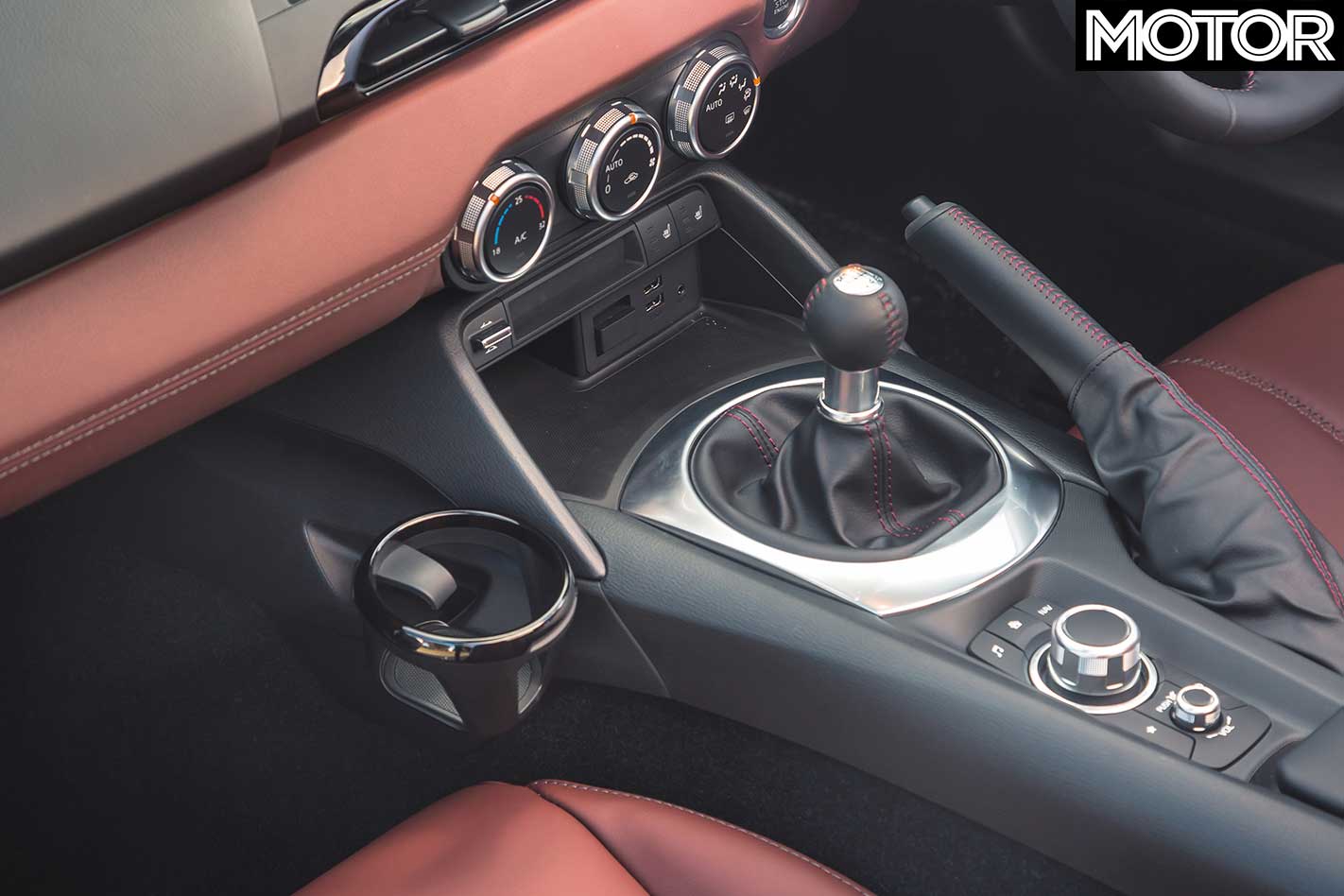
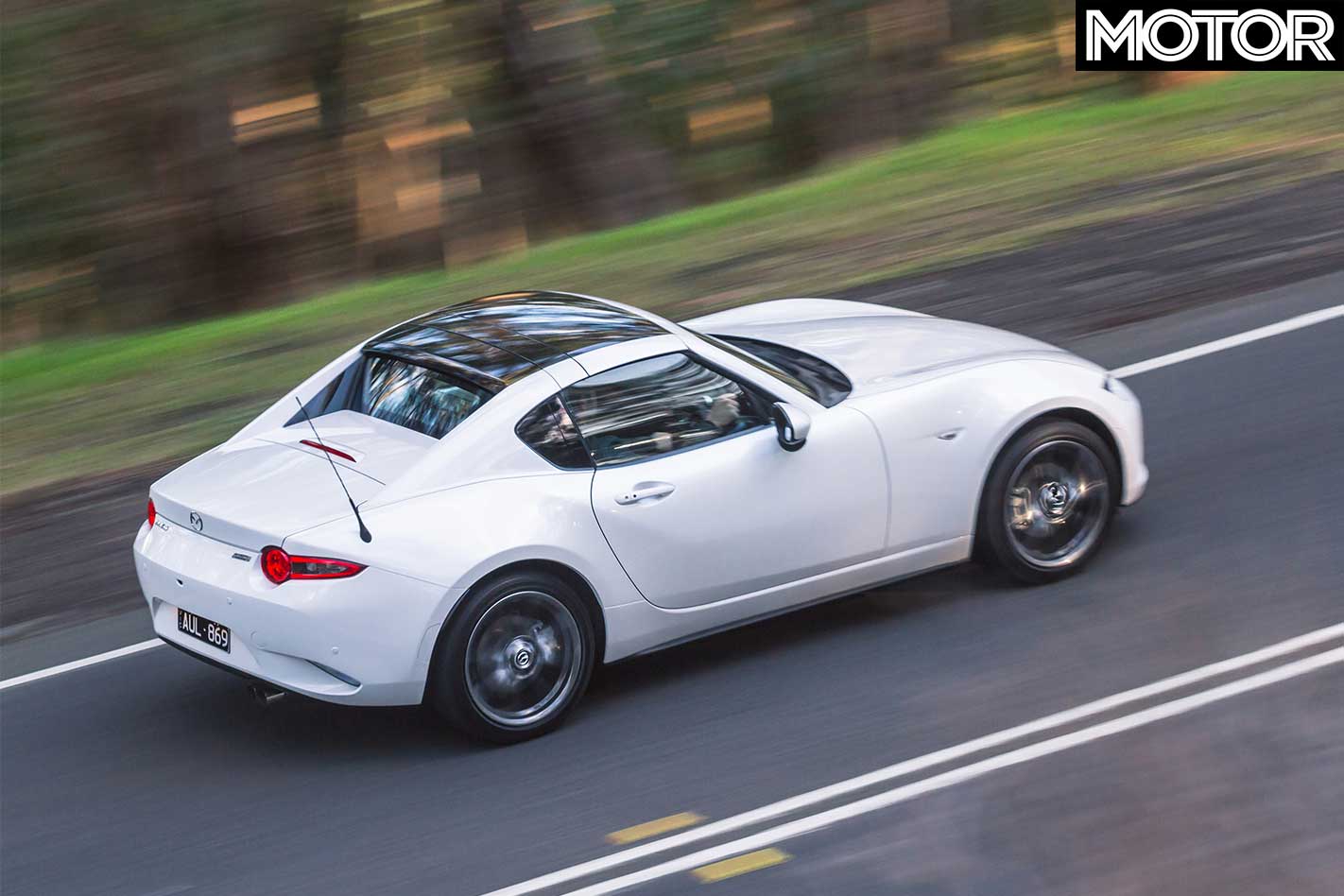
Yes, the new MX-5 RF is 25kg heavier (23kg for the soft top). Surely engineers winced when fitting extra sound deadening in 2018, then a radar system, reverse camera, and telescopic steering shaft in 2019. But that last upgrade is welcomed like water in a desert.
The steering wheel can now reach 42mm closer to you than before. It gives you more control during hard driving, which is what lures tall drivers into the MX-5’s cramped cabin in the first place.
The RF still handles with the same fundamental balance and sharp handling. And as before, more body roll and a less interested front-end is the price you pay for that hard roof. But its softer suspension tune (over the soft top) will suit those who spend considerably more time commuting and touring.
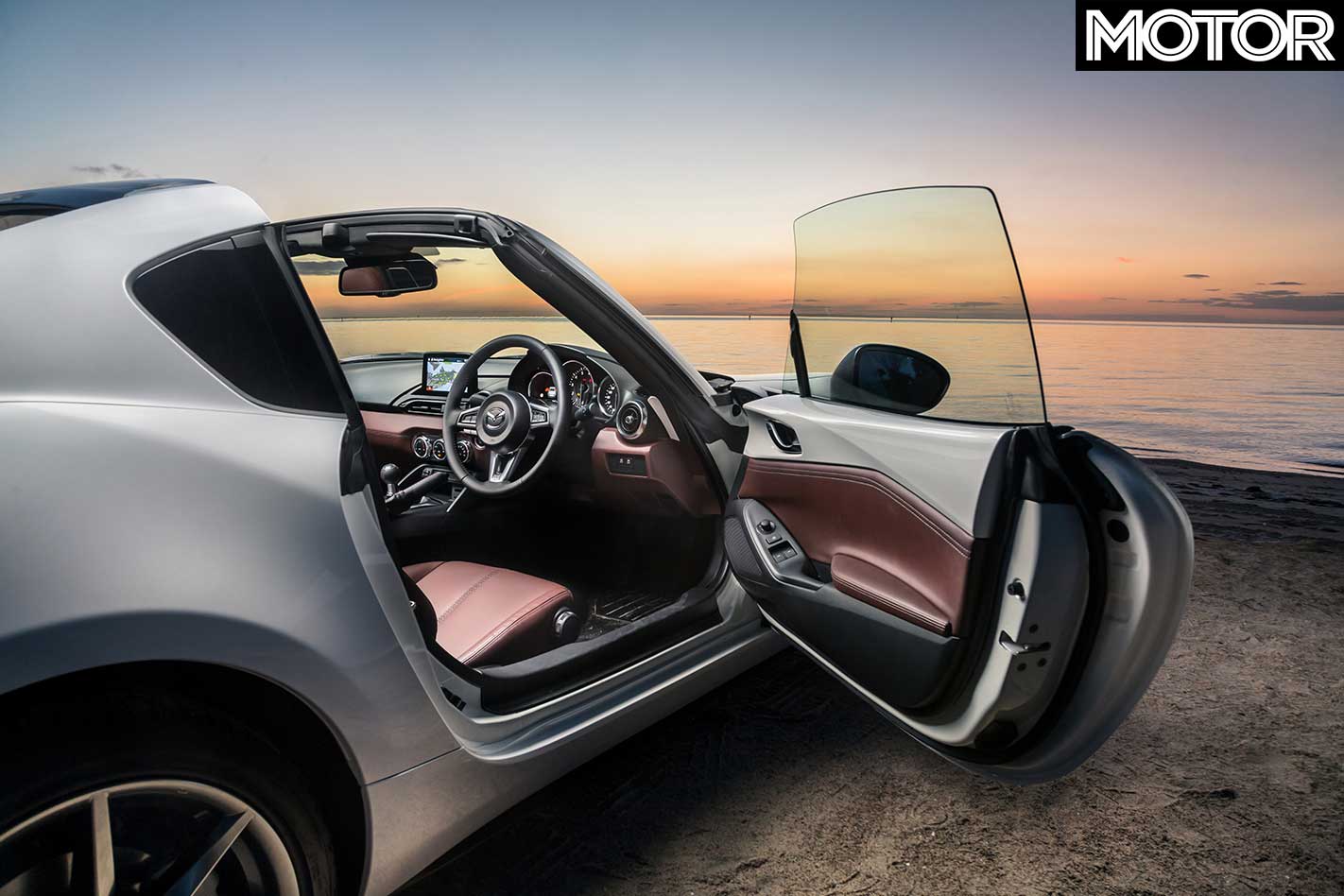
The extra 500rpm means both cars hold second gear into uphill right-angle corners, and pull through third gear more convincingly. The extra sound deadening, too, is welcome, and pushes noise levels down for trips into the country.
Unless you want softer, more exploitable suspension, or smaller fuel bills, we can’t see why you’d look past a new 2.0-litre Mazda MX-5 for the downsized unit. Not only have engineers extracted a whole lot more character from the 2.0-litre, the other small changes amount to a much improved car.
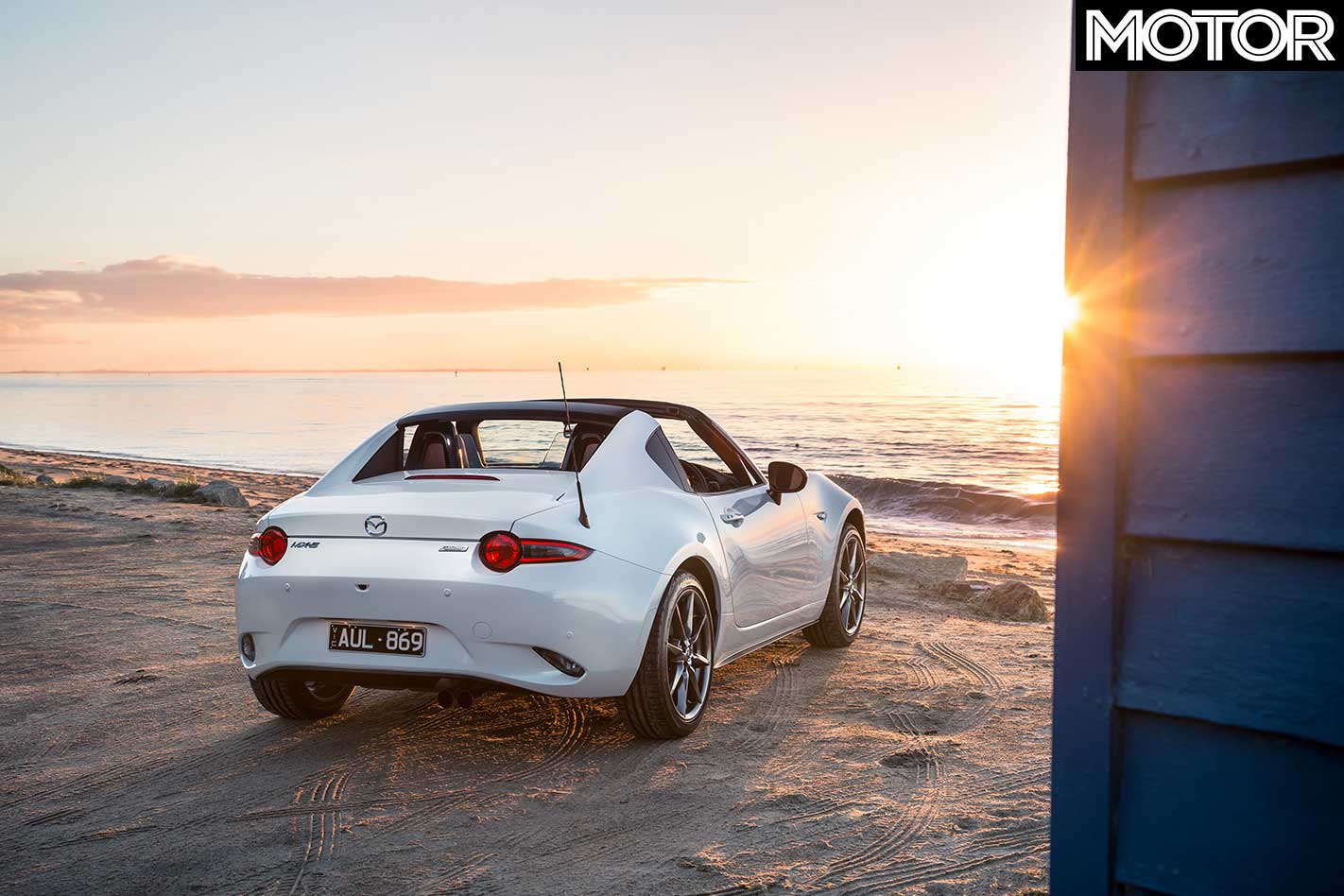
It might not scream to the heights former atmo legends like the Honda S2000 did. Frankly, few cars will replicate its 9000rpm redline – that’s rarefied air you’ll need to travel to Porsche’s GT cars for. And while the Mazda’s new 2.0-litre might seem like only a glimpse into such theatre, it’s an experience that goes a long way to being close to as thrilling.
You’ll need to climb 3776 metres above sea level to reach the top of Mount Fuji. But with redlines plummeting across the market in both cheap and expensive cars, the MX-5 2.0-litre’s 7500rpm is a peak easier, and now more enjoyable, to visit.
*Get the October 2018 issue of MOTOR magazine for the full comparison of the 2019 Mazda MX-5 convertible and MX-5 RF on the Drag Strip. Out next week!
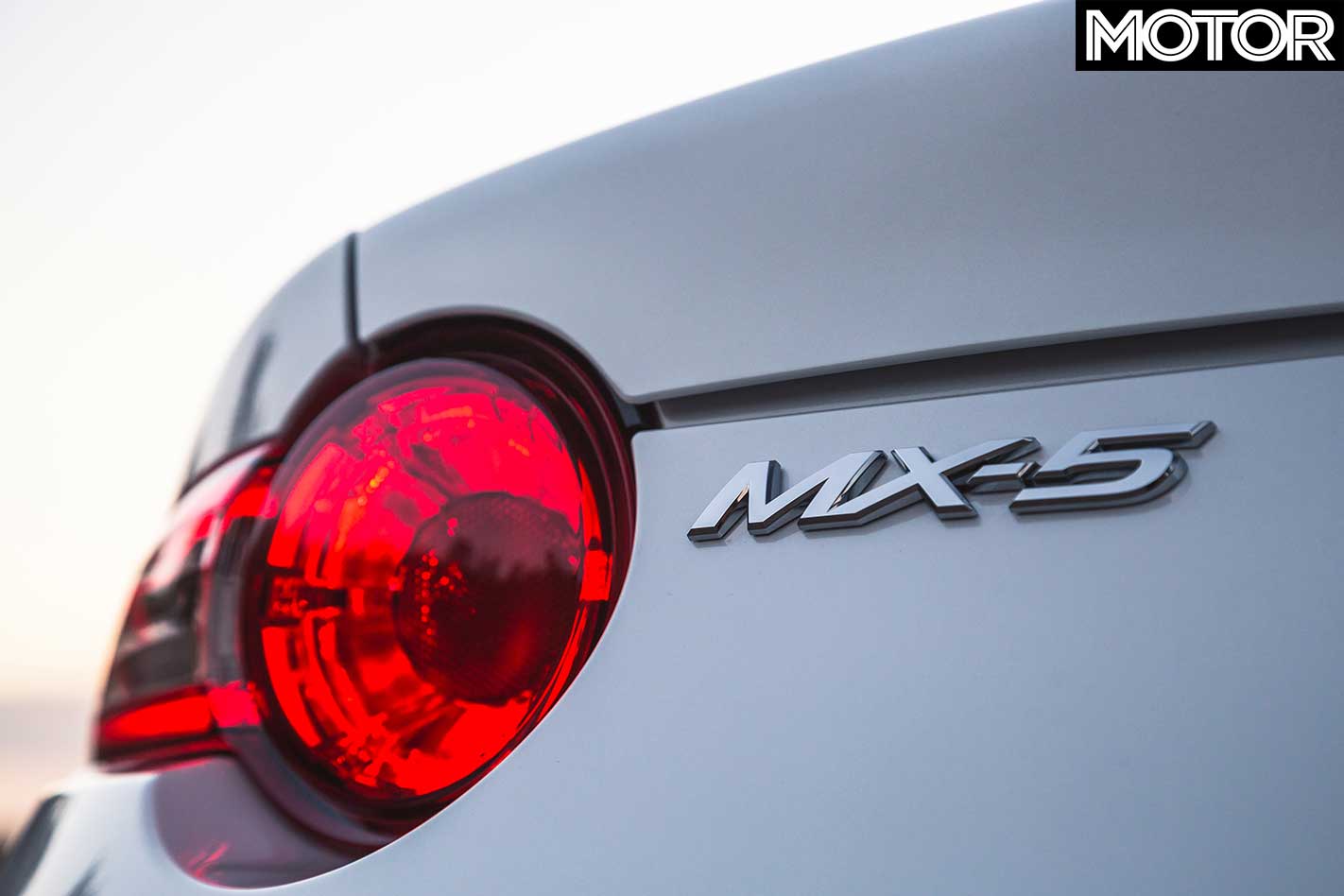
FAST FACTS 2019 Mazda MX-5 RF
BODY: 2-door, 2-seat convertible DRIVE: rear-wheel ENGINE: 1998cc inline-4, DOHC, 16v POWER: 135kW @ 7000rpm TORQUE: 205Nm @ 4000rpm BORE/STROKE: 83.5mm x 91.2mm COMPRESSION RATIO: 13.0:1 WEIGHT: 1105kg POWER-TO-WEIGHT: 122kW/tonne TRANSMISSION: 6-speed manual SUSPENSION: A-arms, coil springs, anti-roll bar (f); multi-links, coil springs, anti-roll bar (r) L/W/H: 3915/1735/1235mm WHEELBASE: 2310mm TRACKS: 1495mm (f); 1505mm (r) STEERING: electrically assisted rack-and-pinion BRAKES: 280mm ventilated discs, single-piston calipers; 280mm solid discs, single-piston calipers WHEELS: 17 x 7.0-inch (f/r) TYRES: Bridgestone Potenza S001, 205/45 R17 (f/r) PRICE: $39,400
PROS: Zingy engine; frugal thirst; open-top appeal CONS: Busy ride; unsupportive seats RATING: 4 out of 5 stars
FOR A company associated with the calculated world of Formula One, Renault Sport enjoys often throwing sense into the wind.
Take the Clio. For a while, in the early noughties, it built one with a mid-mounted V6. Then there was its Spider, a roadster with no windscreen, so you not only felt the wind in your hair but the local wildlife too.
More recently there was the Megane R26.R, a hatch with a roll cage and plastic windows. So you can understand our curiosity surrounding its 2018 Megane RS 280.
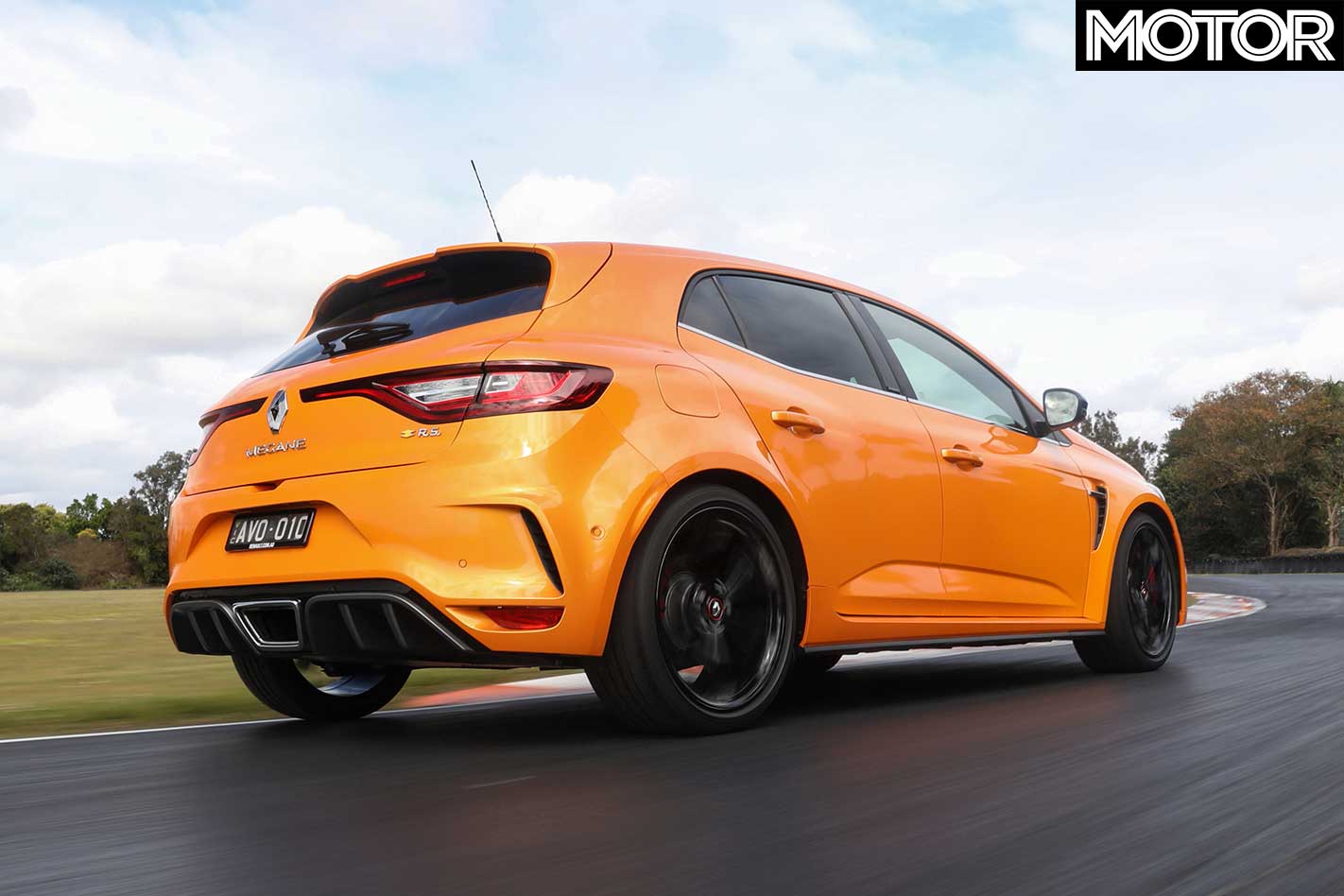
The most noticeable step in this direction is its body style. Gone is the seductive three-door hatch of the second-generation Megane RS. This new car, built from the fourth generation regular Megane, uses the base car’s five-door body shell.
On the Nissan-Renault alliance’s CMF-platform, the Megane RS280’s new body is 40mm longer and extends its wheelbase by 23mm to 2669mm. It also uses Renault Sport’s recognisable tricks, like wheel guards are stretched by 63mm up front and 45mm at the rear to house significantly wider tracks.
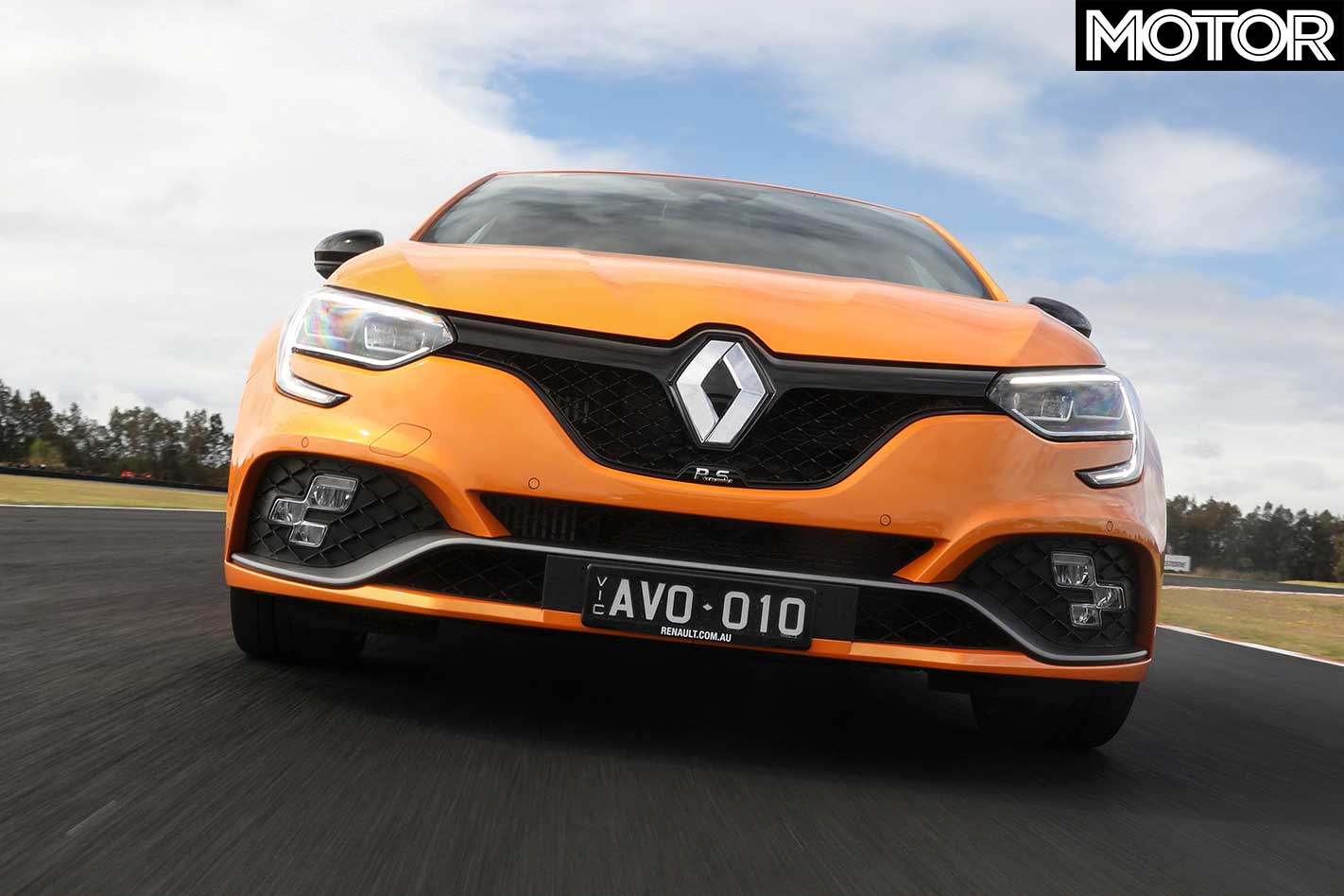
Renault says the new surfaces produce actual downforce. And you’ll find those modifications inspiring hidden in its stylish bodywork. The ‘F1-style’ blade in its front bumper is followed by vents behind the front wheel guards that extract air from inside them. That rear diffuser, too, is functional and reaches far underneath its nose.
Norwell Motorplex, in Queensland, sees only the start of fourth gear at its fastest point – which is the corner exit after a fast sweeping right-hander – so the aero doesn’t count for much here.
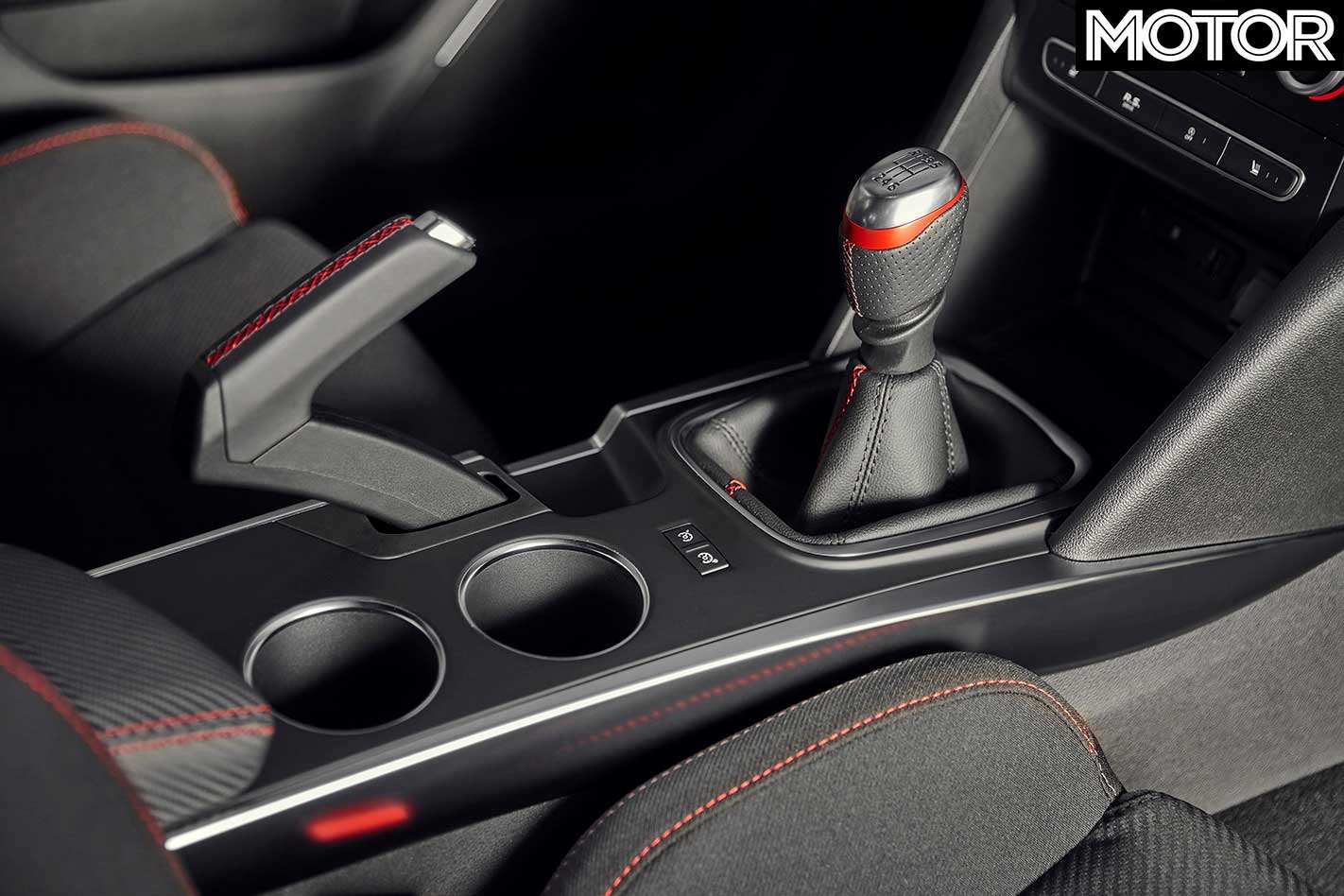
But the Megane will reach those speeds quickly enough for a sub-$50K front-drive hatch, striding forward with a turbocharged 1.8-litre four that now puts out 205kW and 390Nm since being pinched from an Alpine A110.
As well as the new downsized engine, another first is a dual-clutch transmission, branded by Renault as ‘EDC’ to mean Efficient Dual Clutch. We’ll touch on it later on, as there’s quite a bit to learn about this new engine.
The new block has cut both bore and stroke measurements, remains undersquare, and adopts a higher 9.2:1 compression ratio with direct injection fuelling. Although the succeeded Megane pushed out almost as much power in its highest tune for the RS275 Trophy R, it couldn’t have matched this unit’s torque or flexibility.
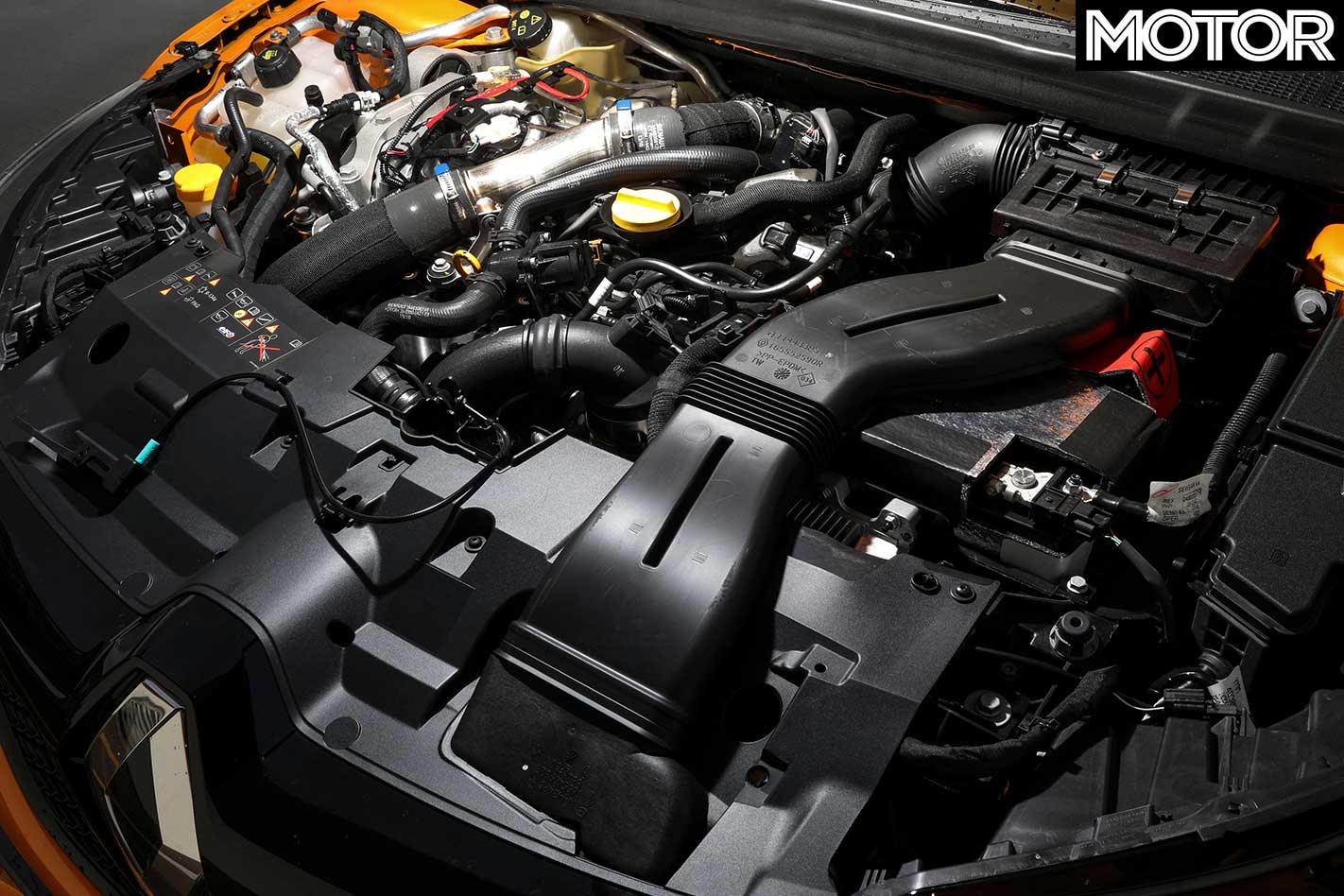
The new twin-scroll turbocharger builds peak twist at 2400rpm on the spec sheet, holds that until 4800rpm, and delivers peak power at 6000rpm. Sink the throttle and it’ll start pulling at 3000rpm as thrust builds progressively into a strong mid-range, rather than hit like a sledgehammer in the old car.
The engine’s air box now breathes through an extra opening, and the cylinder block’s bores are plasma coated – like they are in a Mercedes-AMG A45. Keep your foot in the throttle and the engine will spin to 7000rpm, thanks to some trick cylinder head work, however, you can sense the show’s over about 500rpm earlier than that.
Renault offers the Megane RS 280 with a six-speed manual transmission or six-speed dual clutch to shift with, but in Australia, at least for a while, each choice of gearbox carries its own set of compromises. Let’s start with sound.
Renault’s again designed the car’s front suspension around dual-axis hubs that allow the steering and suspension to operate free of each other. With the $1490 Cup chassis, however, the car’s open differential is upgraded to a Torsen LSD. On top of that, stiffer springs, dampers, and anti-roll bars feature at each corner, and its hydraulic bump stops are re-tuned.
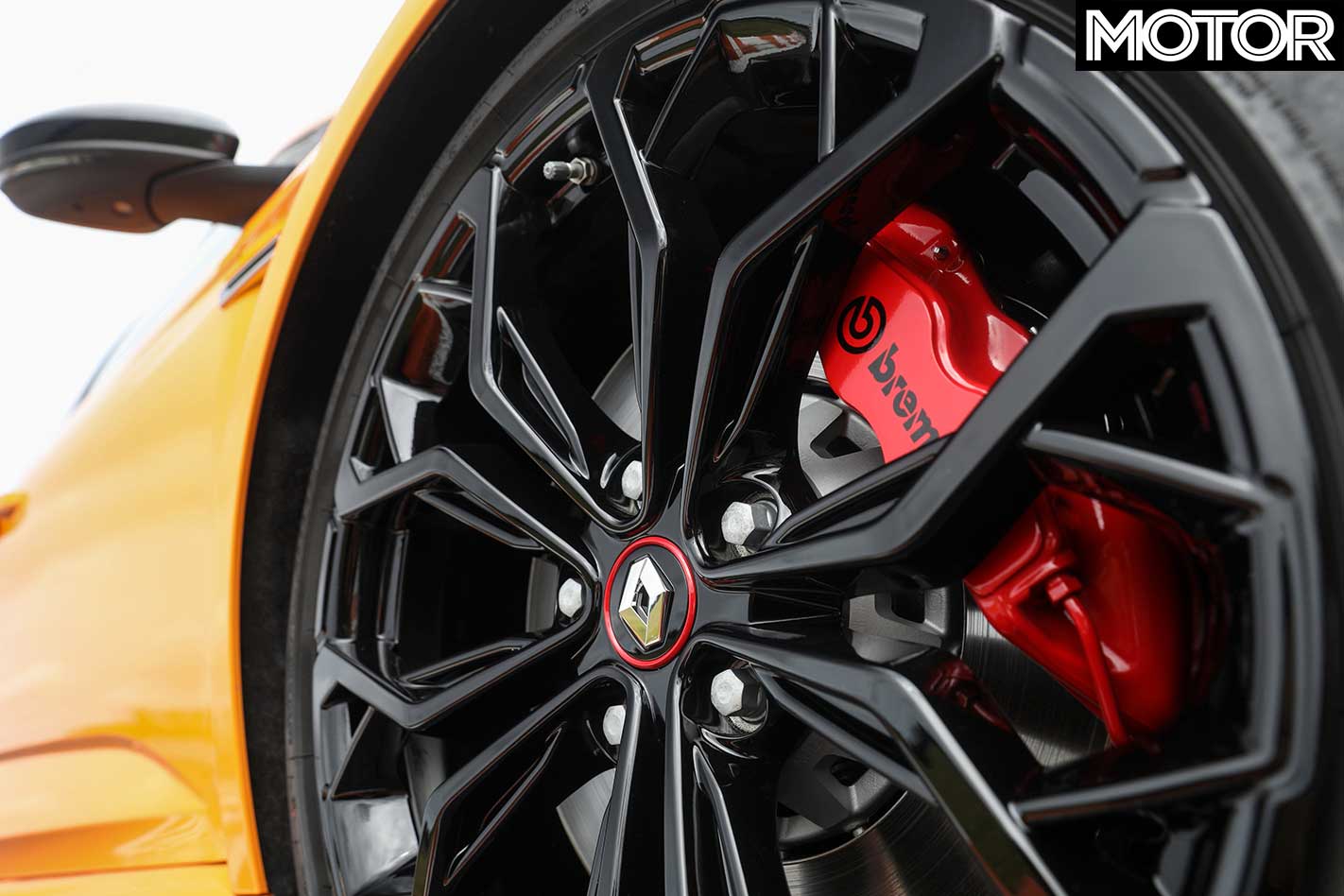
These bump stops are said to use ‘dampers within a damper’, and they’re the Megane RS’s latest dynamic weapons. They’re equipped on both chassis options, as are a set of 19-inch wheels and a Brembo braking system. The Cup gets ‘bi-material’ 355mm discs – marked by red calipers hiding behind an exclusive black wheel design. Europe gets 18-inch wheels as standard with Continental SportContact 6 tyres, but all 19-inch wheels come wrapped in Bridgestone S001s measuring 245mm wide.
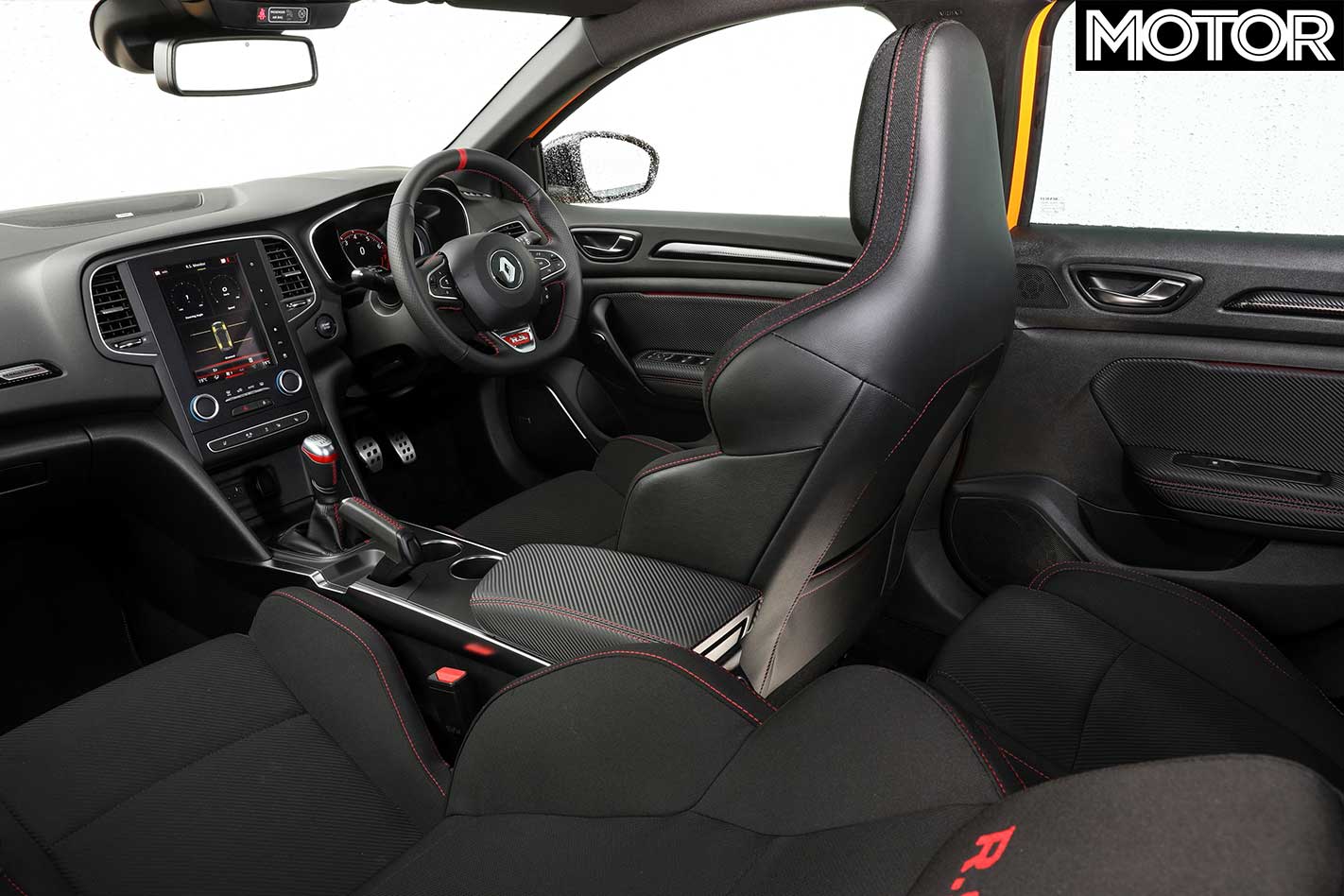
The fact Renault restricted the Sports chassis’s drive program to the road, and the Cup chassis’s to track, might suggest why each are locked to one transmission. From a brief stint on roads we sense the Sport chassis has the same levels of grip as the Cup, but loses its agility and turn in. Instead, it has a calmer ride and breathes with undulations better, gifting the deformable torsion beam arrangement surprising compliance.
It’s no surprise the Cup chassis’ ride feels perfectly judged on track, rolling about enough so you can feel the weight transfer, yet not so much as to upset the car’s control on its grip balance. However, we suspect that on road it might hold itself in place too tightly, and struggle to settle over ruffled surfaces.
The new Megane’s steering system is accurate, but it also feels slightly elastic in assistance and weight. The old rack felt lighter and more tactile under load. But let’s not forget you’re not the only one steering this car, as Renault Sport have retained the Megane GT’s rear-wheel steering for the RS.
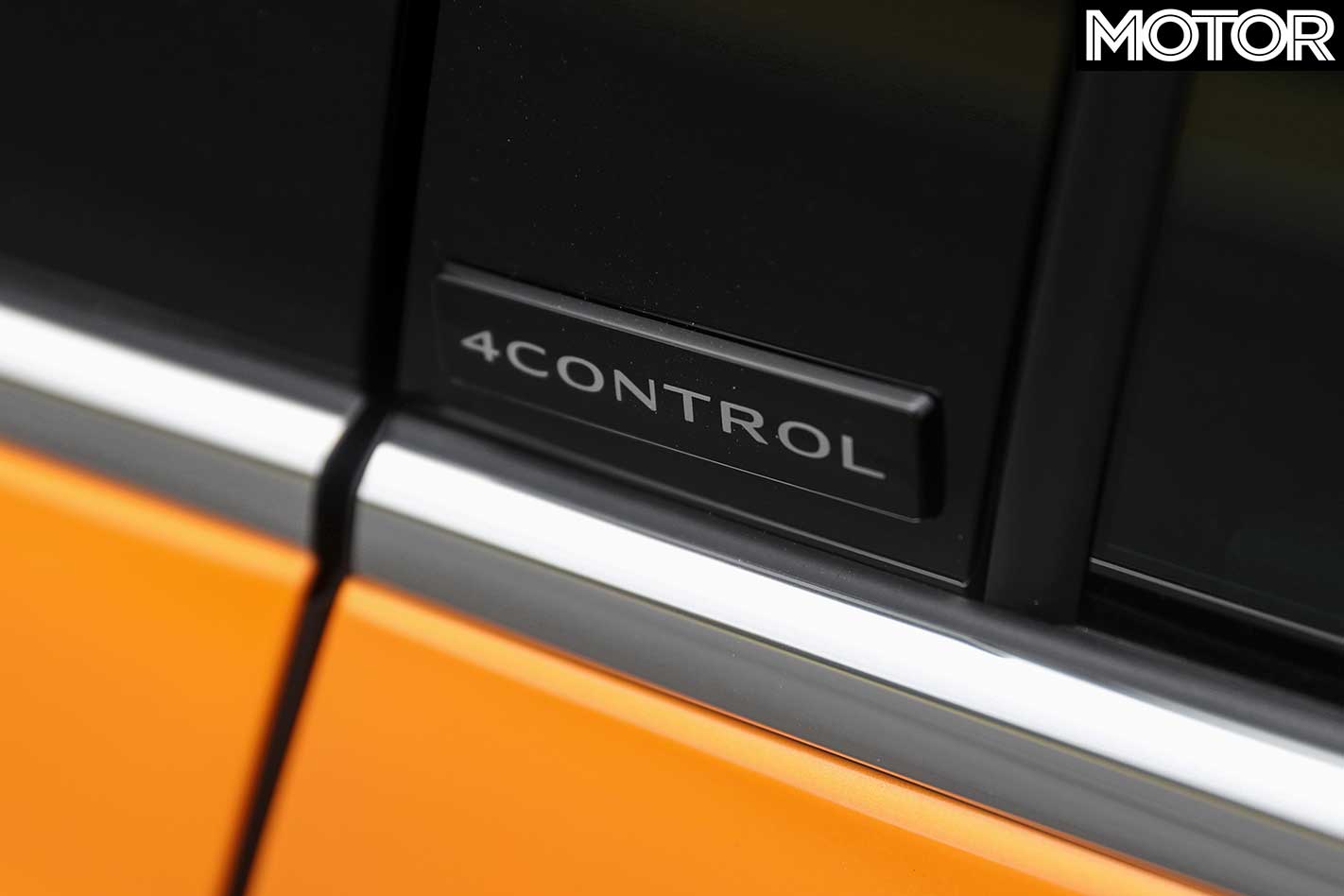
With a fresh Renault Sport tune, the system steers in the opposite direction to the front boots up until 60km/h. Switch to Race mode and this threshold raises to 100km/h. It also turns off ESC, but the Megane’s Cup setup is so friendly and approachable at its lofty limits the rear-steering helps to rotate the car without robbing stability.
The system itself might feel strange to drivers who prefer slow and progressive inputs. You have to wind off lock when it pushes the car’s nose into a corner too quickly. Like other systems, the rear wheels steer in the same direction to aid stability above the speed thresholds, though overall it’s worth the small drawback in steering purity.
Swapping between drive modes is done through a vertical 8.7-inch touchscreen inside. Or you can use a button. Flick from Neutral into Sport and the digital dash in front of you also glows red. Race creates two rev bars that close a gap as you near each upshift. The interior’s fairly nice, with only a few ergonomic quirks, and oozes refinement with well-bolstered bucket seats.
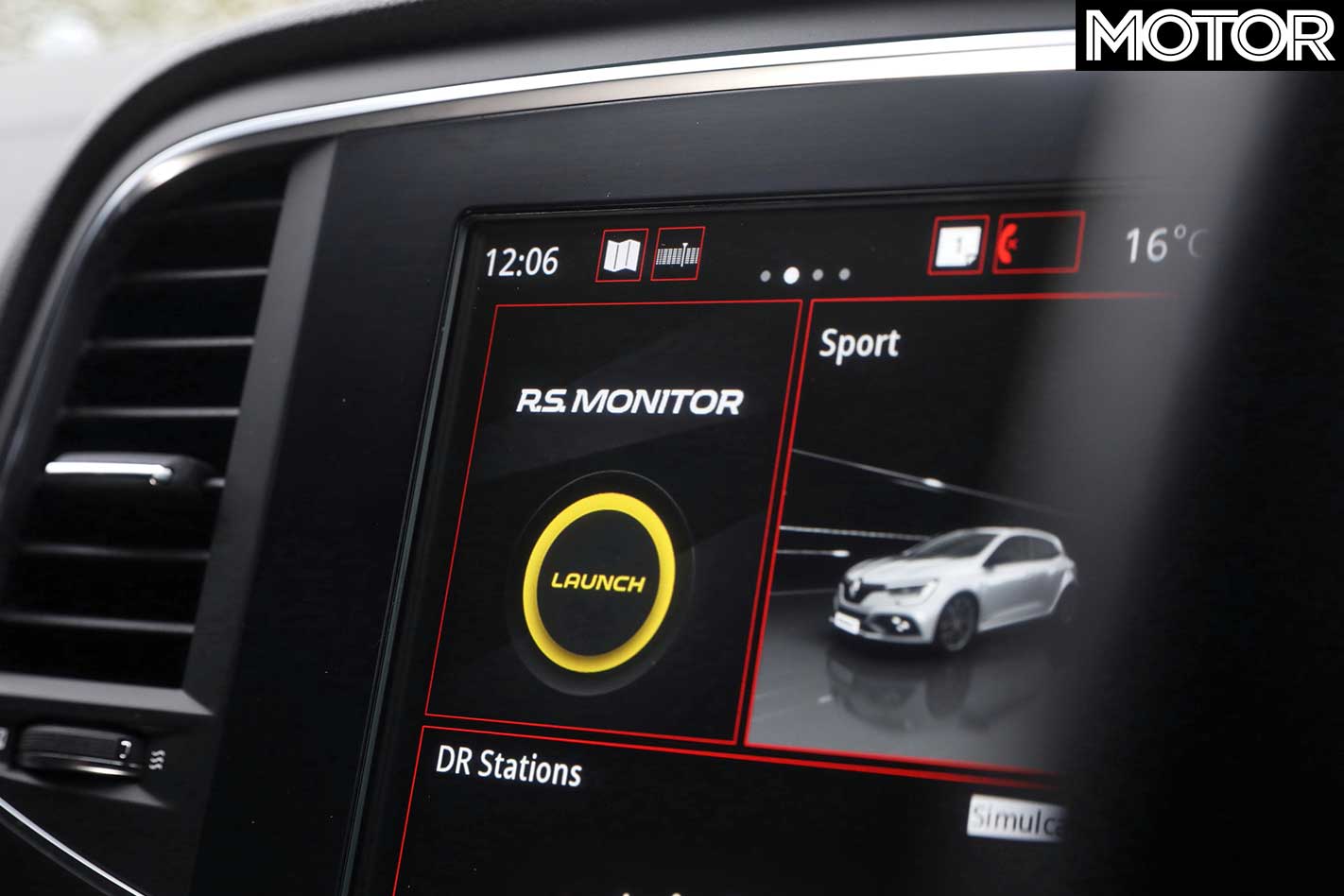
Alcantara seat trim ($1190), metallic paint ($600-$880), sunroof ($1990), and a Bose sound system ($500) are the few options available beyond the transmission and suspension tunes. We didn’t get to listen to the car’s standard eight-speaker sound, but the optional Bose system blasts a crisp note, even if it lacks a little depth.
With all these features, Renault’s done well to price the new Megane RS 280 at $44,990. That base price splits the Hyundai i30 N and Honda Civic Type R and slightly undercuts the Peugeot 308 GTi. You can add the $2500 six-speed dual clutch to take on a new LSD-equipped MY19 VW Golf GTI, but it’s the Cup chassis for $1490 that gives the Megane RS its crucial edge.
That doesn’t matter, it seems, as Renault expects to sell around 600 units over the first full year on sale, surpassing the previous generation’s best result of 545 units sold in one year. It expects two-thirds of that will be automatics. And while the decision to take on five doors is looking like a winning move for that game, we can’t help but think Renault Sport has missed an opportunity here.
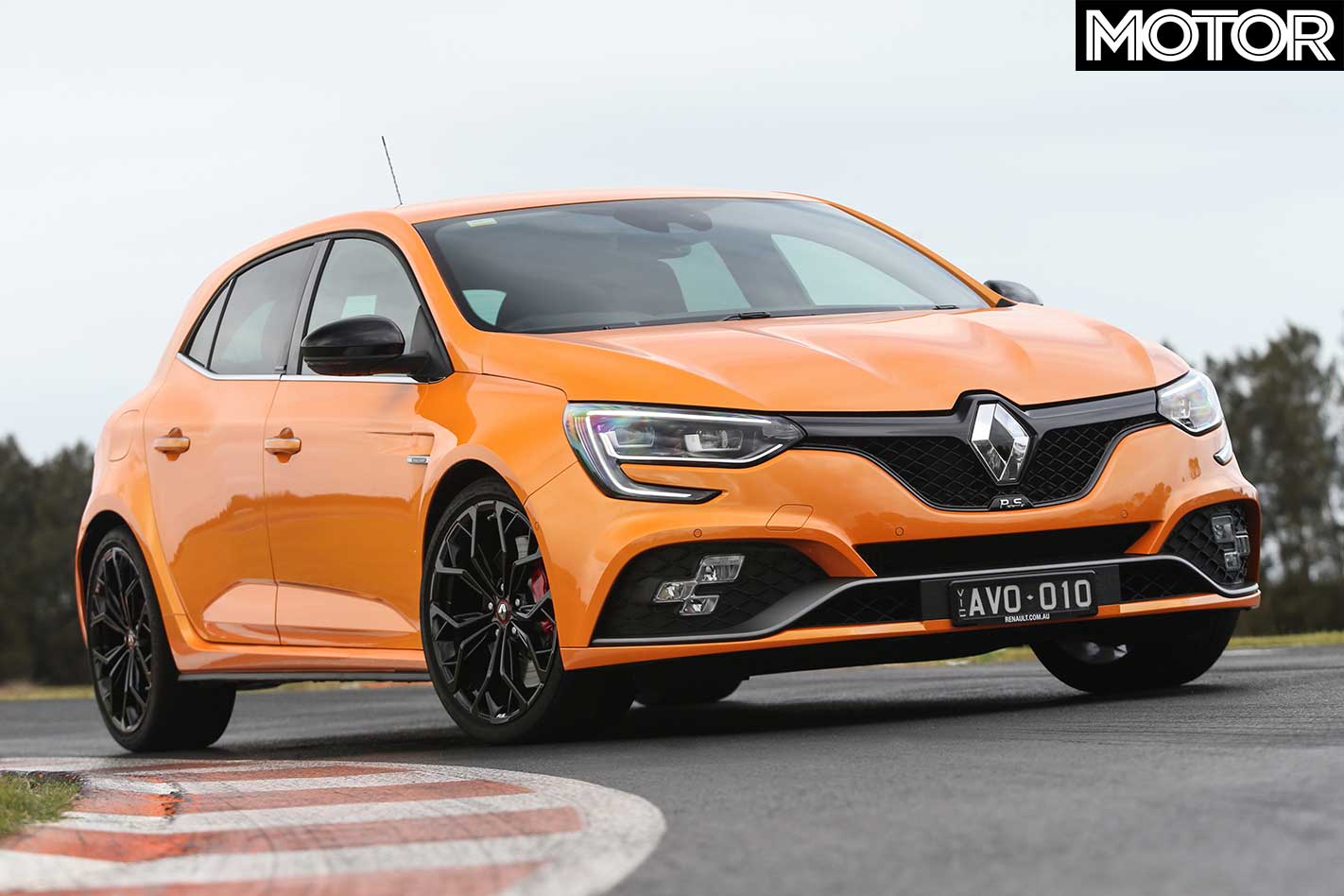
It can fight more hot hatches than ever before, but we suspect a full road test, in either guise, will see each chassis setup missing a little of the other’s core essence.
The low-speed ride quality of the Sport chassis and the adjustability of the Cup chassis proves Renault Sport can do both.
But ti’s given outright dominance with one car for specialised skills played by a few. Has it been left to the RS300 Trophy variant to infuse these qualities together in 2019? Perhaps.
For now, here at Norwell, the Megane RS 280 Cup is at least a very promising contender. Bring on the competition.
2018 RENAULT MÉGANE RS 280 CUP SPECS: Engine: 1798cc inline-4, DOHC, 16v, turbo Power: 205kW @ 6000rpm Torque: 390Nm @ 2400-4800rpm 0-100km/h: 5.8sec (claimed) Weight: 1430kg Price: $44,990 (manual); $47,490 (dual-clutch)
Rating: 4 out of 5 stars
WHAT IS IT?
An all-new version of one of our favourite hot hatches. The old Megane RS was an absolute riot; analogue, mechanical and with a rare tactility, it boasted a level of driver connection and appeal that pushed it beyond more polished rivals like the Volkswagen Golf R.

WHY ARE WE DRIVING IT?
Because a lot has changed for this all-new fourth generation. It’s now significantly larger in every dimension, there’s an extra pair of doors, the 1.8-litre four cylinder petrol is box-fresh and there’s a newfound layer of electronic wizardry with additions like four-wheel steering (a first for this segment) and five drive modes. Here’s hoping all that newfound complexity hasn’t diluted the RS magic.
KEY RIVALS
Honda Civic Type R, Hyundai i30 N, Peugeot 308 GTI, Volkswagen Golf R
THE WHEELS REVIEW
THE PROBLEM with creating an absolute ball-tearer of a hot hatch is that when the time comes to replace it, you also create certain expectations. Welcome to Renault’s challenge. The previous Megane RS was a riot; a three-door, manual-only screamer (especially in hardcore Trophy R guise) that trounced its more polished rivals for driver appeal and chassis tactility.
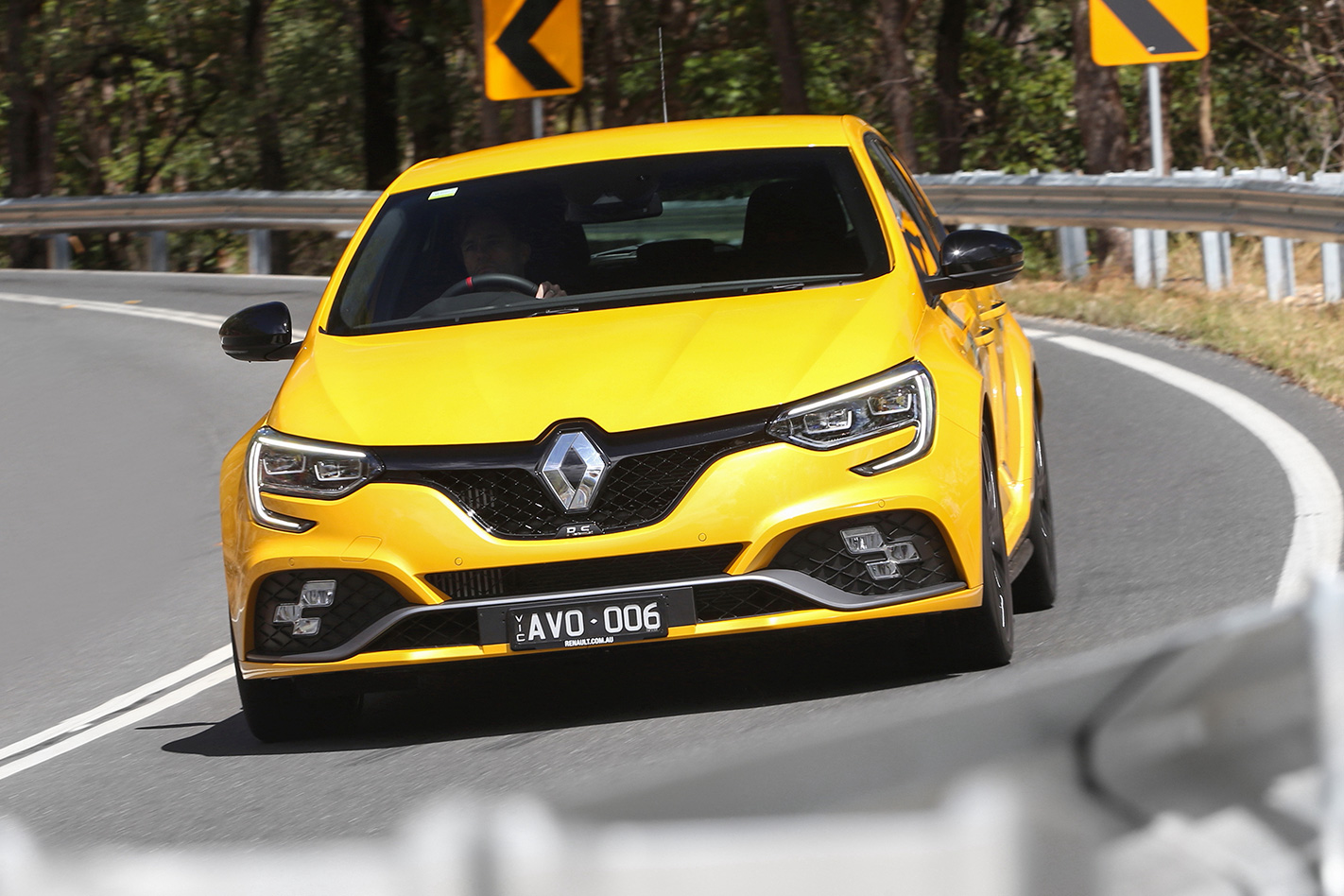
Razor sharp, analogue thrills have become the Megane RS’s schtick, but the game has changed since the previous-gen car appeared in 2009. We now have drift modes, the brilliant Civic Type R and a newcomer from Hyundai that is gobsmackingly brilliant straight out of the box. Renaultsport needed to up its game, which helps to explain why this fourth-generation Megane RS is so fundamentally different. The sole bodystyle is now a five-door; the 1.8-litre, Samsung-built turbo four-pot is all-new, and, for the first time, buyers have the choice of a six-speed dual-clutch automatic. There is fresh electronic wizardry afoot, too. The Megane RS is the only car in its class with four-wheel steering and there are now five drive modes to play with: Comfort, Neutral, Sport, Race and Perso.
And it looks brilliant. Tough, four-square and with taut sheet metal stretched over bulging guards that are 60mm wider at the front and 45mm at the rear compared to the regular Megane GT, the RS oozes a cohesive and aggressive visual presence that its rivals from Honda, Hyundai and VW can’t match.
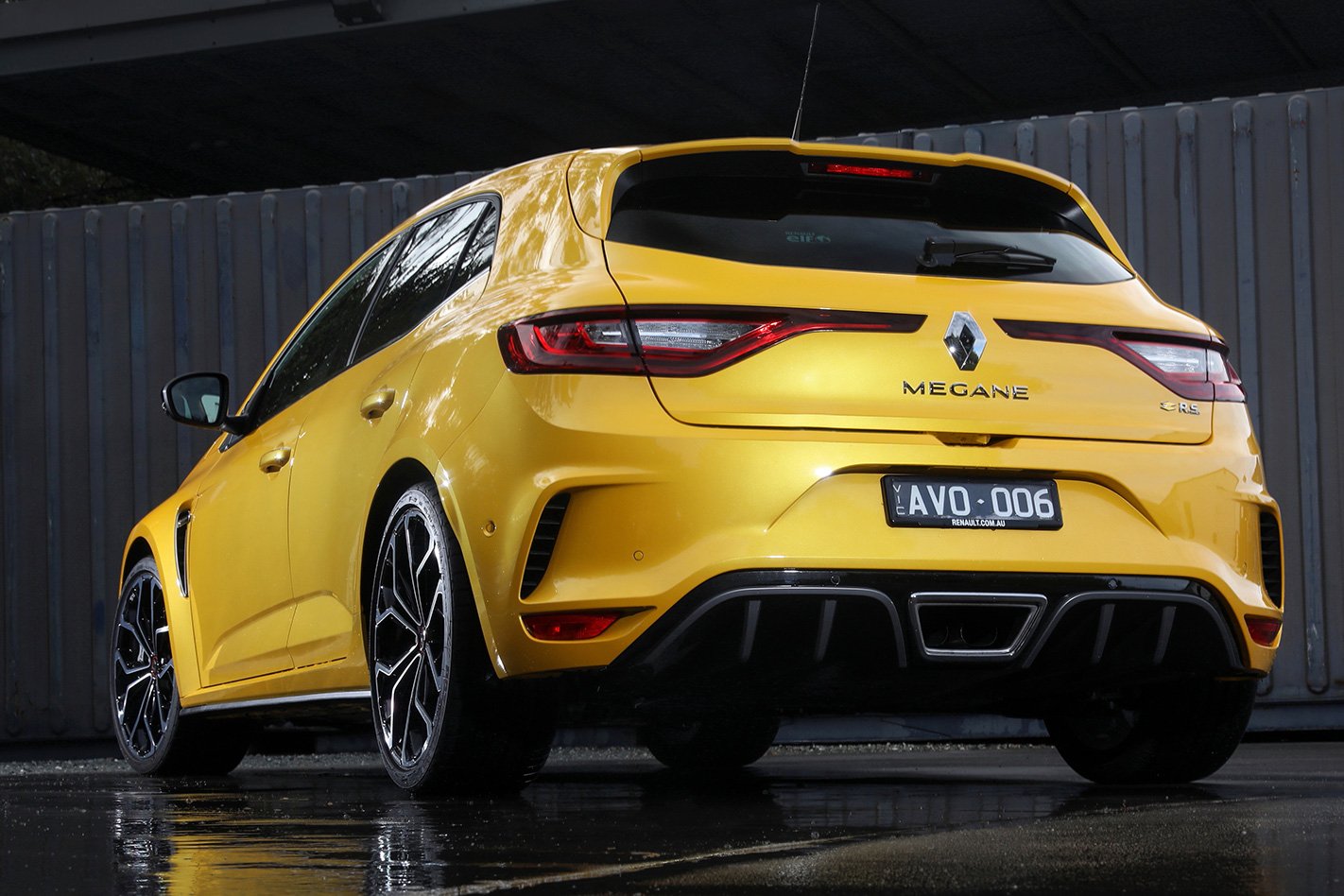
Two chassis tunes are offered: a core Sport set-up that starts at $44,990 for the six-speed manual (dual-clutch adds $2500), or a more focused Cup chassis that for just $1490 adds an aggressive torsion limited-slip differential, lighter Brembo brakes (355mm discs up front, 290mm rear), a 10mm drop in ride height, and bespoke spring, damper and anti-roll bar rates that are roughly 10 percent stiffer.
Choosing between the two is harder than you think, unless you want the automatic gearbox, which will be around 60 percent of buyers according to Renault Oz. Perplexingly the Cup chassis option is manual only, which could be a source of frustration given its extraordinary value.
Still, don’t dismiss the Sport Megane with dual-clutch as the weakling of the range. It’s anything but. On scarred, knotted tarmac at the local launch, the entry-level Megane acquitted itself well, its ‘softer’ suspension tune lending a breath of pliancy missing in Cup equipped cars. Even so, there’s no escaping that it remains a taut proposition. There’ a sense of intent to the way it reads the road surface and transmits bumps and irregularities into the cabin, though the damping is brilliant. Controlled and with vice-like discipline, it never feels overly stiff or punishing, though the front tyres do occasionally chase the camber of the road and torque steer is apparent under hard acceleration.
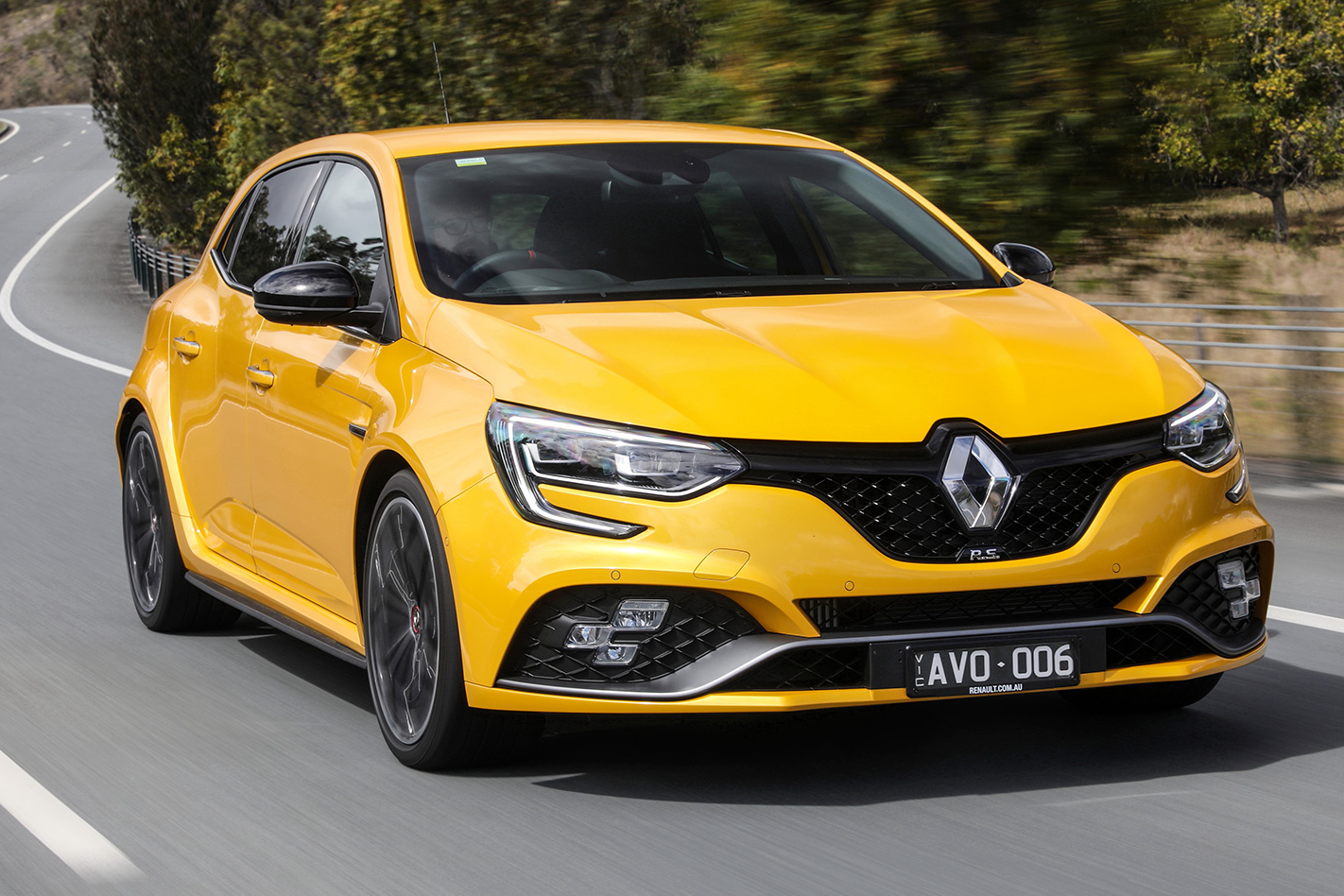
The six-speed dual-clutch upholds its end of the bargain too. Smooth, intelligent and unobtrusive in city driving, it’s also quick and decisive when you’re on it, providing you select the right drive mode. Comfort is a fun-sapper; the ’box constantly looks to shift into the highest cog possible and the throttle and powertrain feel as though they’ve swallowed an entire bottle of Stilnox. Neutral is the sweet spot for everyday driving, but dialling in Sport or Race (the latter disables ESC) adds a welcome, and noticeable, dose of aggression. Full throttle upshifts are hammered home with an addictive
Sport versions miss out on the Cup’s Torsen LSD, instead relying on electronics for torque control, but for road driving, it’s no great loss. Out of tight first- and second-gear hairpins, the front axle just grips and goes, even with ham-fisted throttle inputs. There’s no fuss, no scrabbling, no spinning of the inside Bridgestone.
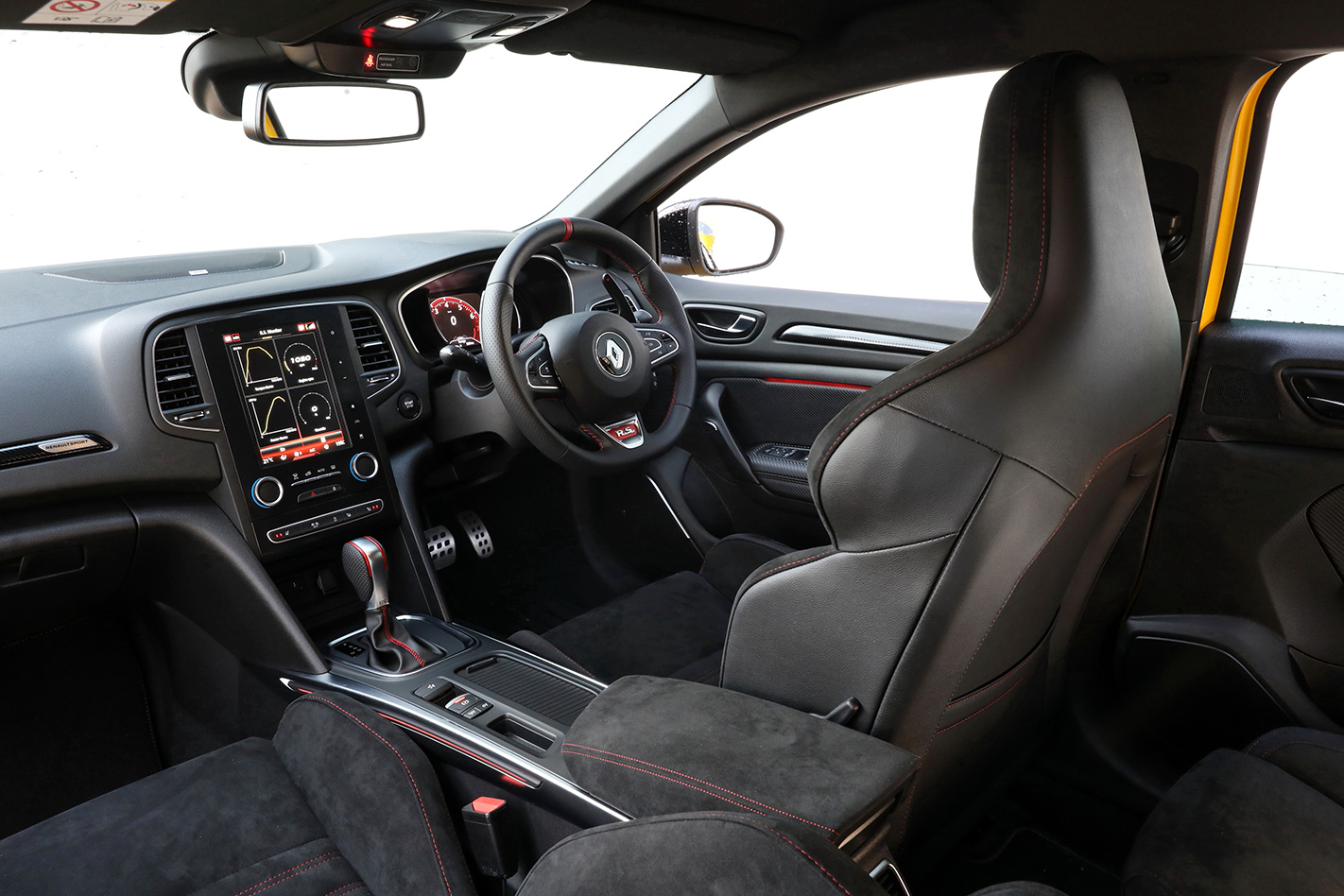
What does take some getting used to is the four-wheel steering. It pulls the usual trick of turning the rear wheels in the opposite direction to the fronts at slow speeds (by up to 2.7 degrees) before moving in-phase as the velocity increases (up to 1.0 degree), but unlike some of the more subtle systems on offer, the effect in the Megane is pronounced. It never feels nervous, but the eagerness with which the chassis wants to turn can feel unnatural at times until you learn to trust that the grip is there. And there’s plenty of purchase. And balance. Adjust to the 4WS’s agility, and to the ultra-fast steering (it can feel darty to begin with and is so quick it’s easy to turn into corners too early), and there’s a lovely fluidity to the way the Megane RS covers ground.
To really exploit its dynamic depths, however, you need a circuit, and to step into the more focused, manual-only, Cup-chassis variant. At the tight and technical Norwell Motorplex outside of Brisbane, the RS is a hoot. Quick, raucous and communicative, it’s the adjustability of the chassis and the playfulness of the rear axle that define the experience. Lift off mid-corner and the rear will slide subtly to help tuck the nose into the apex. It’s a feeling enhanced by the 4WS, though this can be dialled back by engaging Perso mode and selecting neutral for the 4Control. Sharper lifts and decisive prods of the brake result in even bigger angles, though the way the rear-end breaks free is beautifully progressive and predictable.

None of this is to say there aren’t chinks in the armour of Renaultsport’s new charger. The shift action of the manual ’box, for example, can feel notchy at times and never quite reaches the highs of the oily, super-precise unit in the Civic Type R. I was expecting a little more potency from the engine too. The 1.8-litre donk is strong and has a muscular mid-range, though it lacks an addictive top-end rush and it’s easy to bump into the 7000rpm limiter.
There are other foibles, too, like the bucket seats that feel too big for slimmer drivers and lack the body hugging support of the old car’s Recaros. And there’s noticeable tyre roar on coarse-chip surfaces. But these are small gripes in what is an otherwise very convincing package. Renault has altered the character of its iconic hot hatch and the result is a car that feels distinctly different. The four-wheel steering adds a unique character, though at times it can seem as though there’s a layer of newfound electronic complexity that separates the driver from the action slightly. The RS magic is still there, though it seems we’ll have to wait until next year’s Trophy version, which gains 220kW/400Nm outputs, stickier rubber and Recaro seats, to properly unlock it.

Where this new RS has gained most is in its broader skill set. While the old car had a cult following, its three-door, manual-only recipe narrowed its appeal. That’s a hurdle this new, bigger-than-ever Megane has overcome with convincing ease. And unlike the Honda and Hyundai, adding the option of the dual-clutch ’box means that one of the best hot hatches on sale now has an even wider reach.
THE WHEELS VERDICT
There’s so much to like about the fourth-gen Megane RS. Bigger, more practical and with a broader appeal thanks to the addition of an automatic option, it retains much of the raucous RS magic that we’ve come to expect, but falls just shy of the dynamic highs that made its predecessor such a standout performer.
PLUS: Rockstar looks; chassis balance and chuckability; rear-end adjustability; five-door practicality; option of dual-clutch ’box; value of Cup chassis MINUS: 4WS can feel unnatural; seats not as supportive as old Recaros; manual gearshift could be slicker

SPECS
Model: Renault Megane RS Engine: 1798cc 4cyl, dohc, 16v, turbo Max power: 205kW @ 6000rpm Max torque: 390Nm @ 2400rpm Transmission: 6-speed dual-clutch 0-100km/h: 5.8sec (claimed) Kerb weight: 1450kg Economy: 7.5L/100km Price: $47,490 On sale: Now
What do you do if you love driving fast, but are at risk of regular assassination attempts? Call Trasco, apparently.
A 2018 Aston Martin DB11 the German company has built is up for sale on classifieds site JamesEdition, but you won’t see what’s special about this car at first glance.
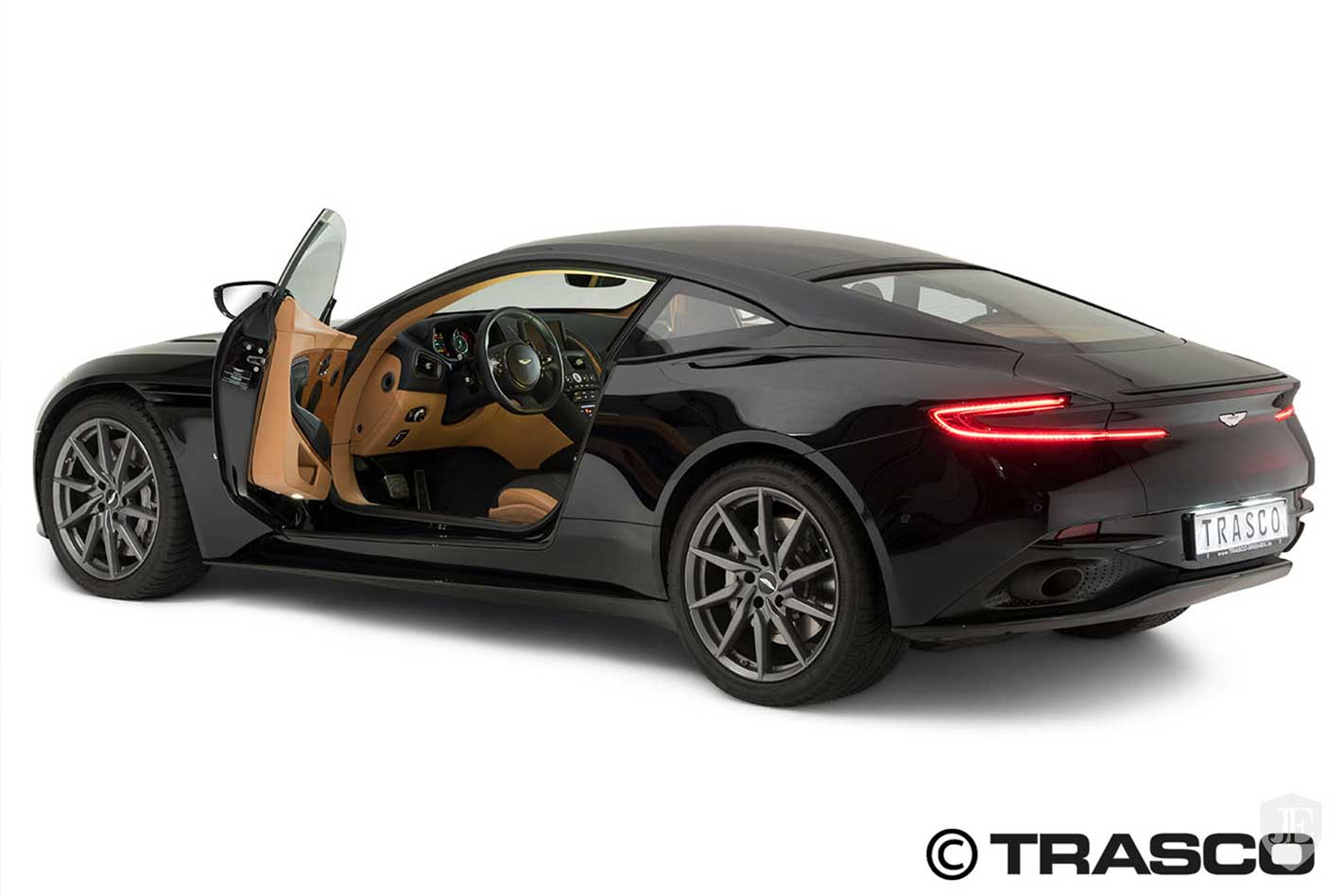
The car has been armoured by Trasco (Sometimes called Trasco Bremen) to level four ballistics protection, meaning it is claimed to be protected against attacks with handguns, as well as safe from kidnapping and car-jacking.
“This concept is designed to protect the vehicle occupants using only certified ballistic materials such as ballistic steel combined with composite materials which are fitted inside the doors and level four certified ballistic glass all-round,” Trasco says in the listing.
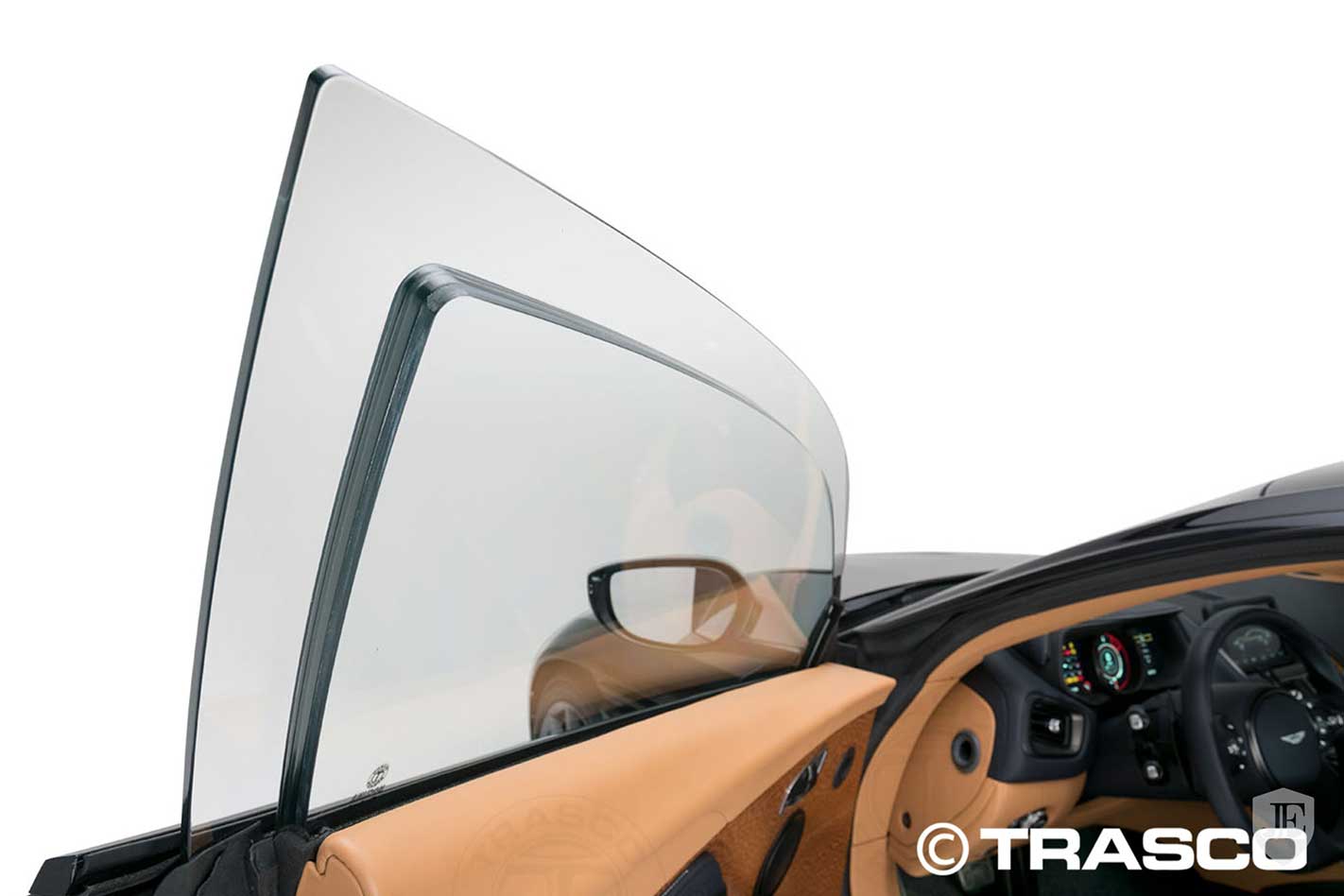
But even more impressive is that the armouring weighs under the 150kg mark, and that Trasco seems to have counterbalanced this by removing some weight from the car itself.
To that effect, Trasco claims the “gross vehicle weight remains unchanged.”
Theoretically, this means the DB11 remains the same dynamically, and that its 5.2-litre twin-turbo V12 isn’t tasked with lugging much more than its standard 1770kg.
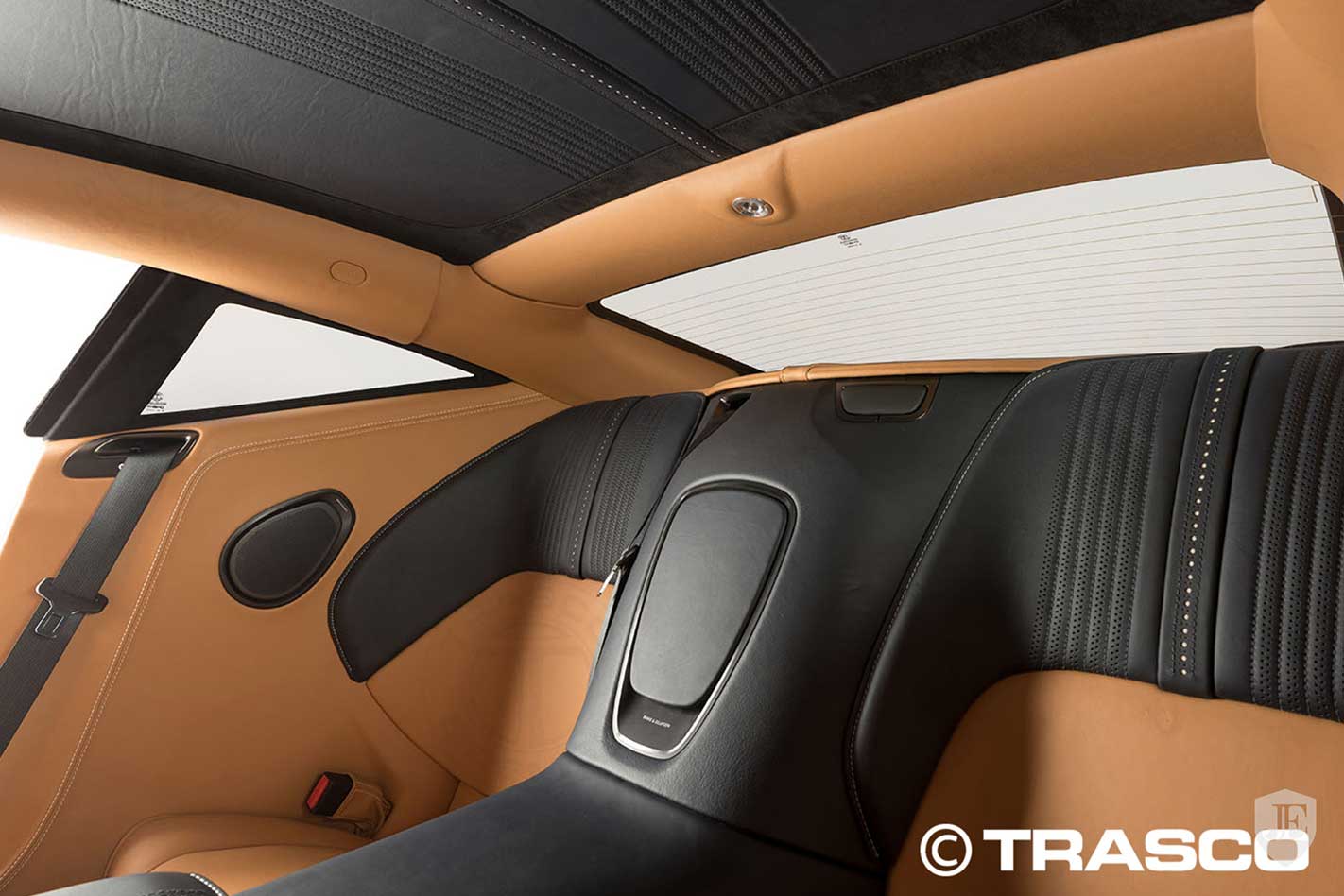
The car listed has no price, with the listing asking potential buyers to contact the agent, and there’s no mileage listed, though we’d guess it’s minimal.
It seems Trasco has been doing this armouring thing for a while, with an apparent history stretching back to 1983 when it armoured ZiL Limos in Russia.
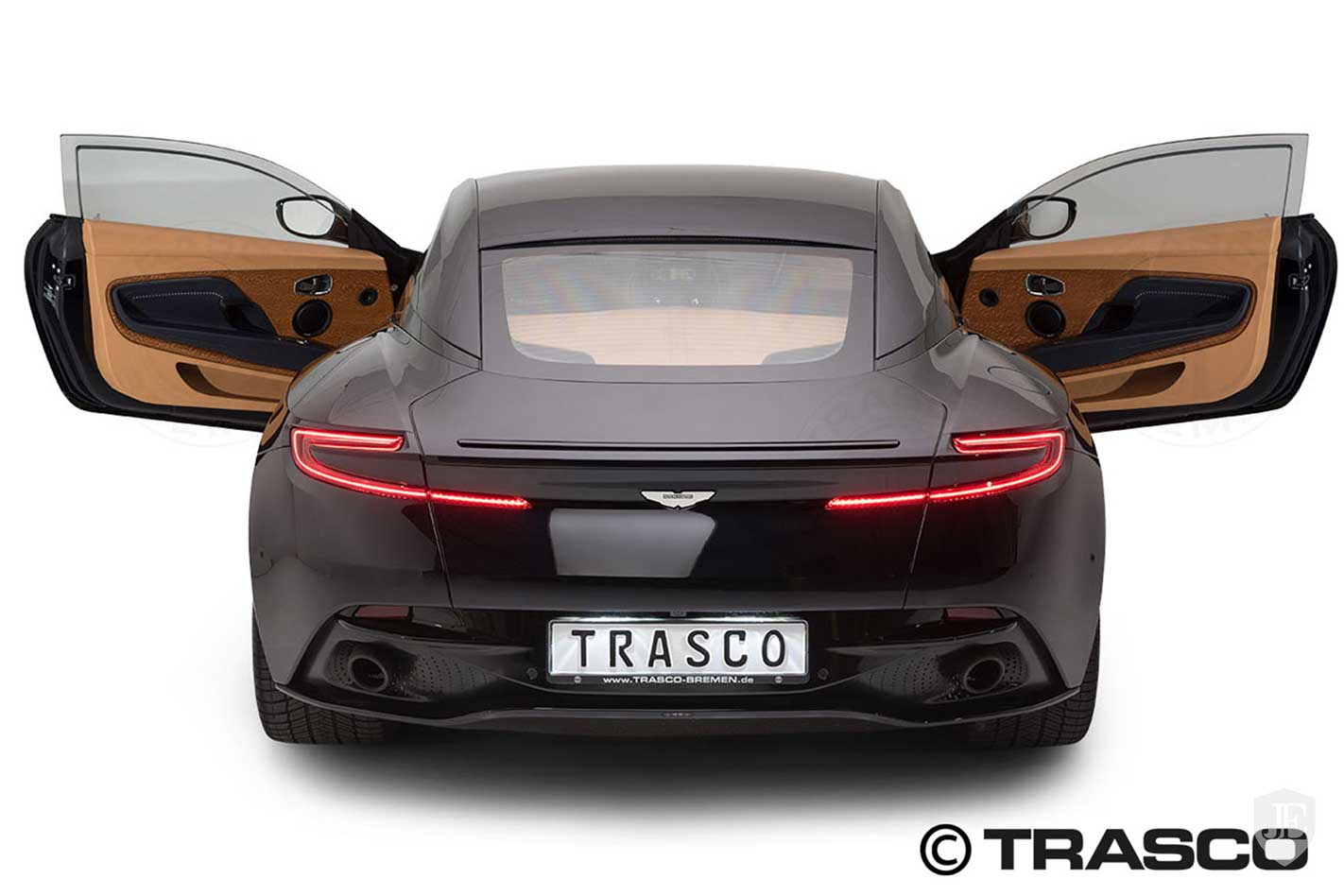
Now, you can ask Trasco to build armour into a Mercedes S-Class or G-Class, BMW 7 Series, or various SUVs and large luxury cars.
In line with this Aston, it claims to be able to build armoured versions of models from Ferrari, Porsche, Audi, Volvo, Jaguar, Bentley, and Rolls-Royce.
Like last year, we’re listing all the retro liveries set to grace Sandown Raceway this weekend for the Supercars Sandown 500.
From Castrol to Chickadee, here are the cars you can expect to see tearing up the outer-Melbourne circuit.
Dick Johnson Racing Team Penske: Dick Johnson’s 1988 Sierra
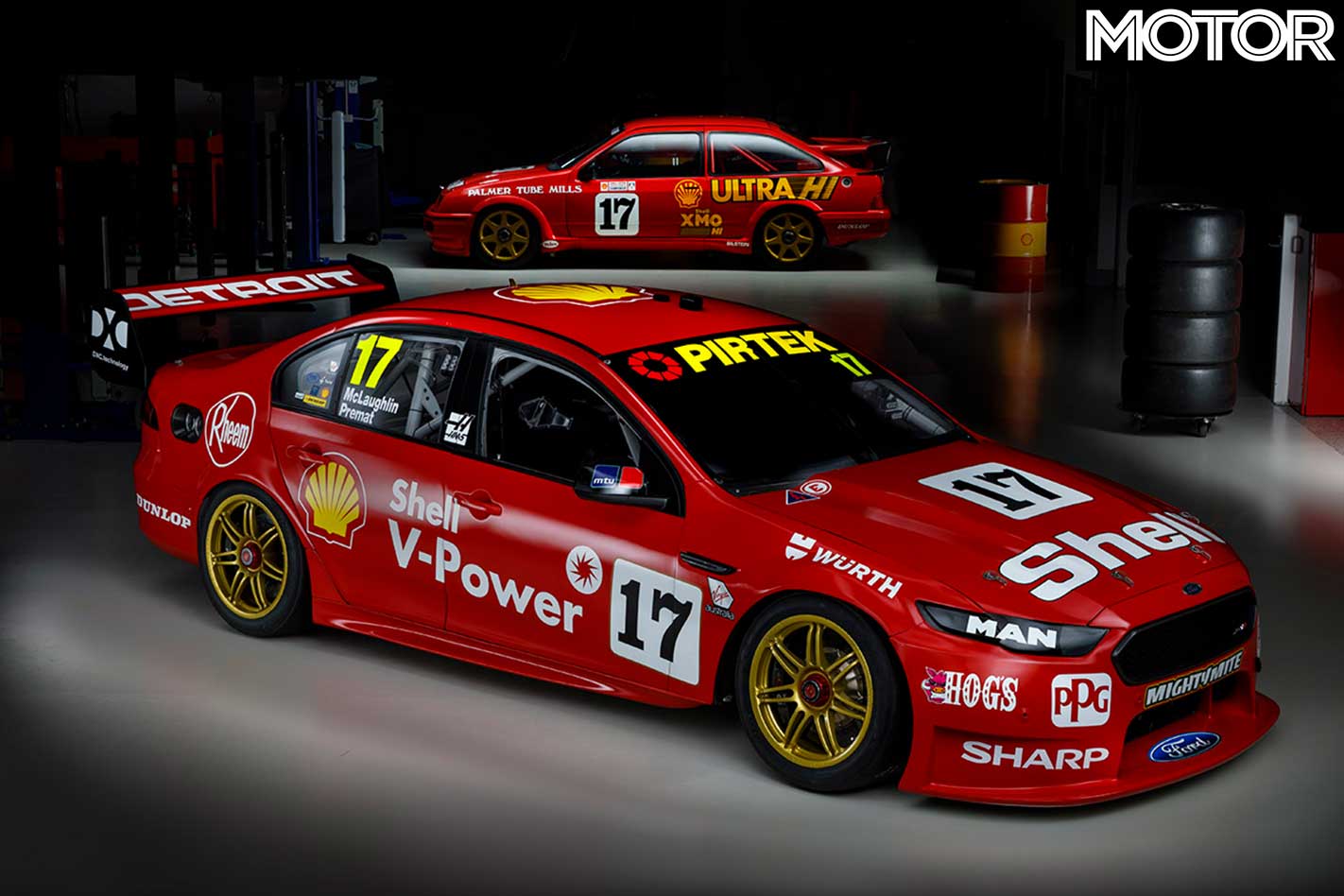
DJR is harking back to one of Johnson’s most iconic cars, the dominant Sierra raced alongside John Bowe 30 years ago, ultimately to take the title for that year.
“Seeing that classic livery on these cars is very special and brings back many great memories,” Johnson says.
It’s hard to believe it’s been 30 years, but amazing to relive those fantastic times and see that livery back on track.”
Erebus: Chickadee Commodore and Celica
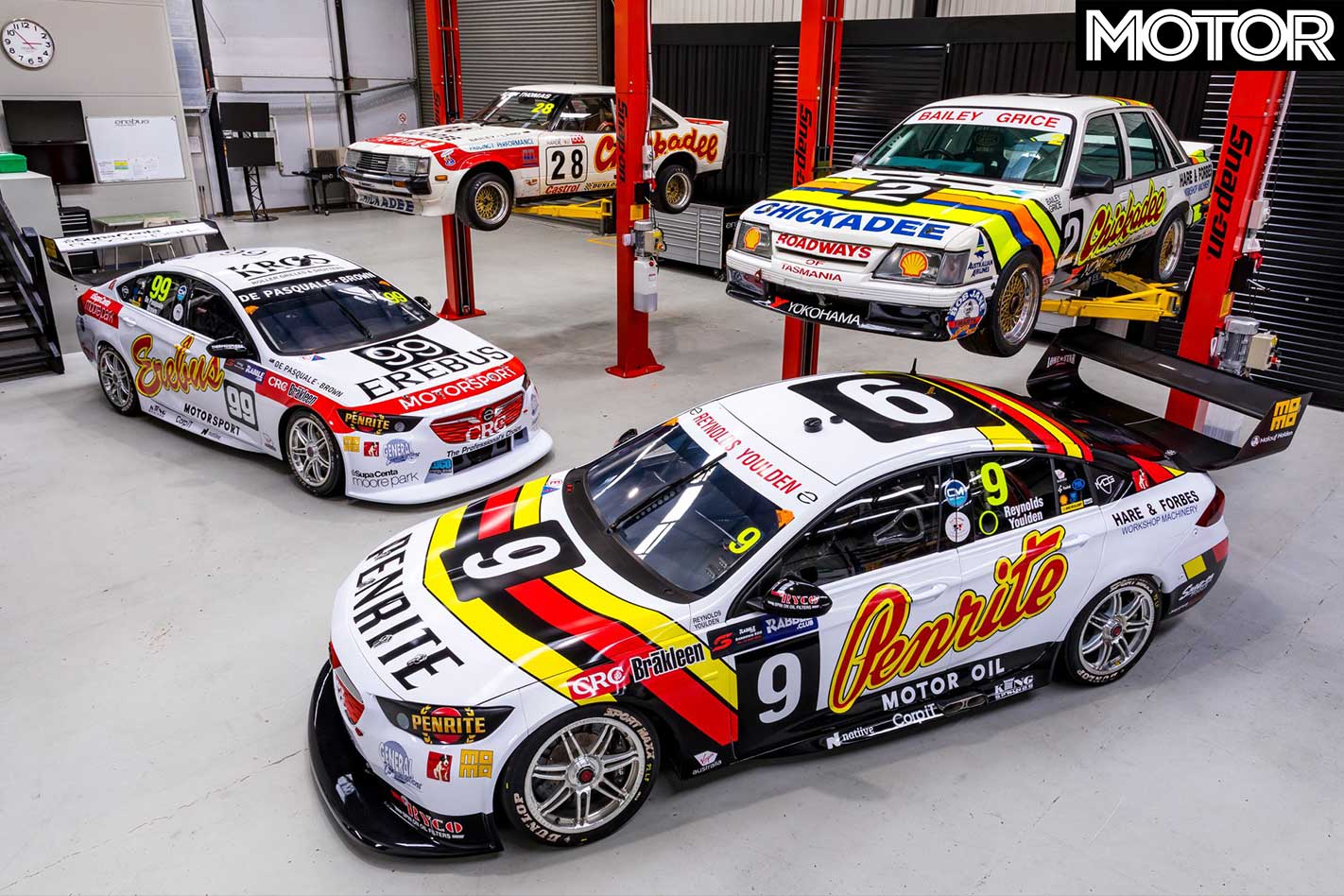
Our PCOTY 2018 driver David Reynolds will share with co-driver Luke Youlden a livery based on that of the Chickadee Racing VK Commodore SS from 1986.
“This has to be one of my favourite cars and even though I was only one when it raced, it was a standout growing up,” Reynolds says.
That car went on to win the Bathurst 1000 that year with Allan Grice and Graeme Bailey driving.
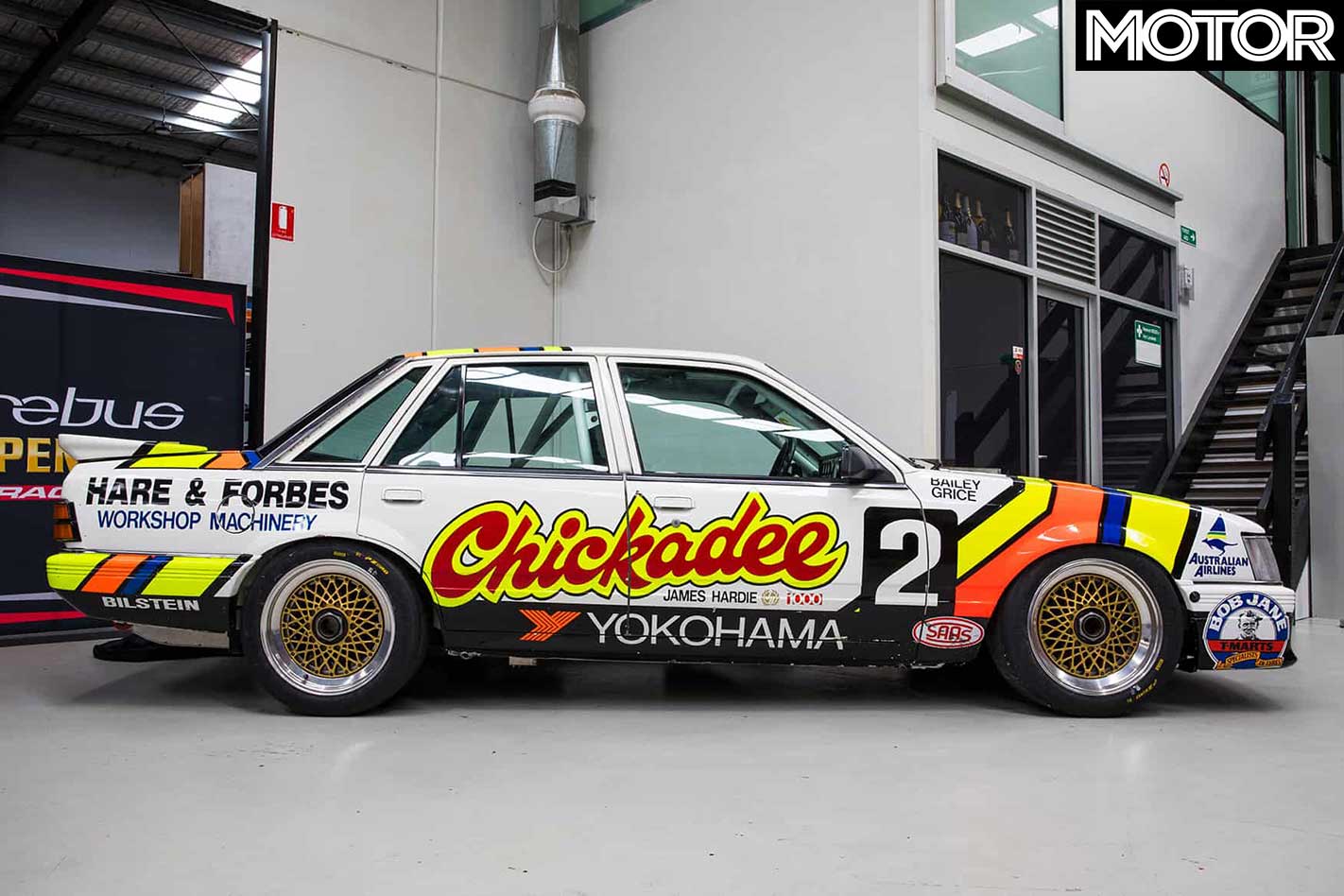
“It was a win against-the-odds; a little team who started second on the grid and defeated the favourites, exactly like we did.”
Alongside it is the car of Anton De Pasquale and Will Brown, wearing a similar livery based on the 1982 Sandown Class C-winning Chickadee Toyota Celica
Garry Rogers Motorsport: Rogers’ Torana A9X and Rogers’ VH Commodore
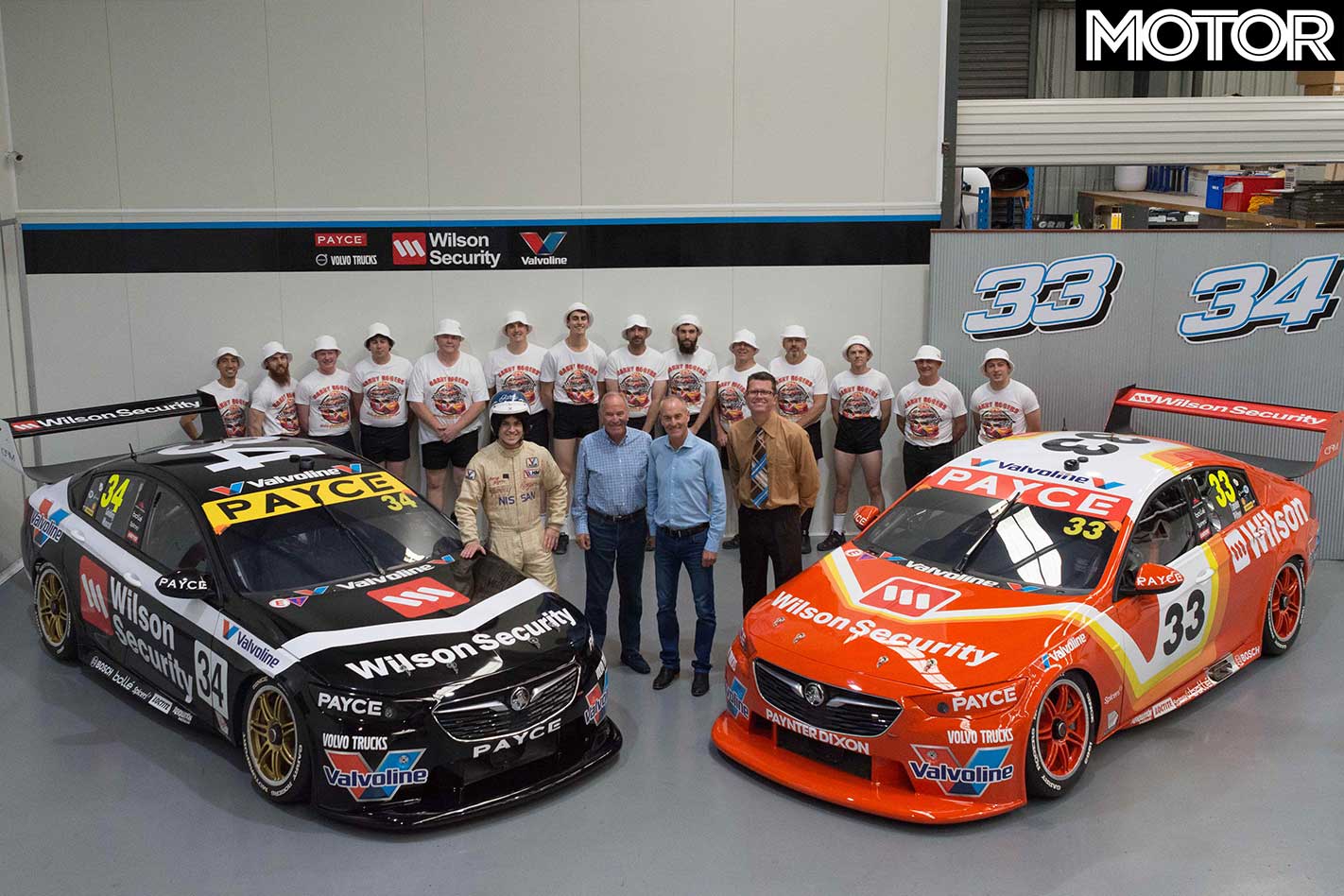
The Torana the Garth Tander/Chris Pither #33 car is based on was actually written off by Rogers (who bought it from Bob Jane) before it had a chance to find success with him at the wheel.
After drama relating to his entry into the ’78 Bathurst 1000, Garry Rogers (read the history at the GRM site, it’s very interesting) bought Bob Jane’s entry and raced alongside Ian Geoghegan.
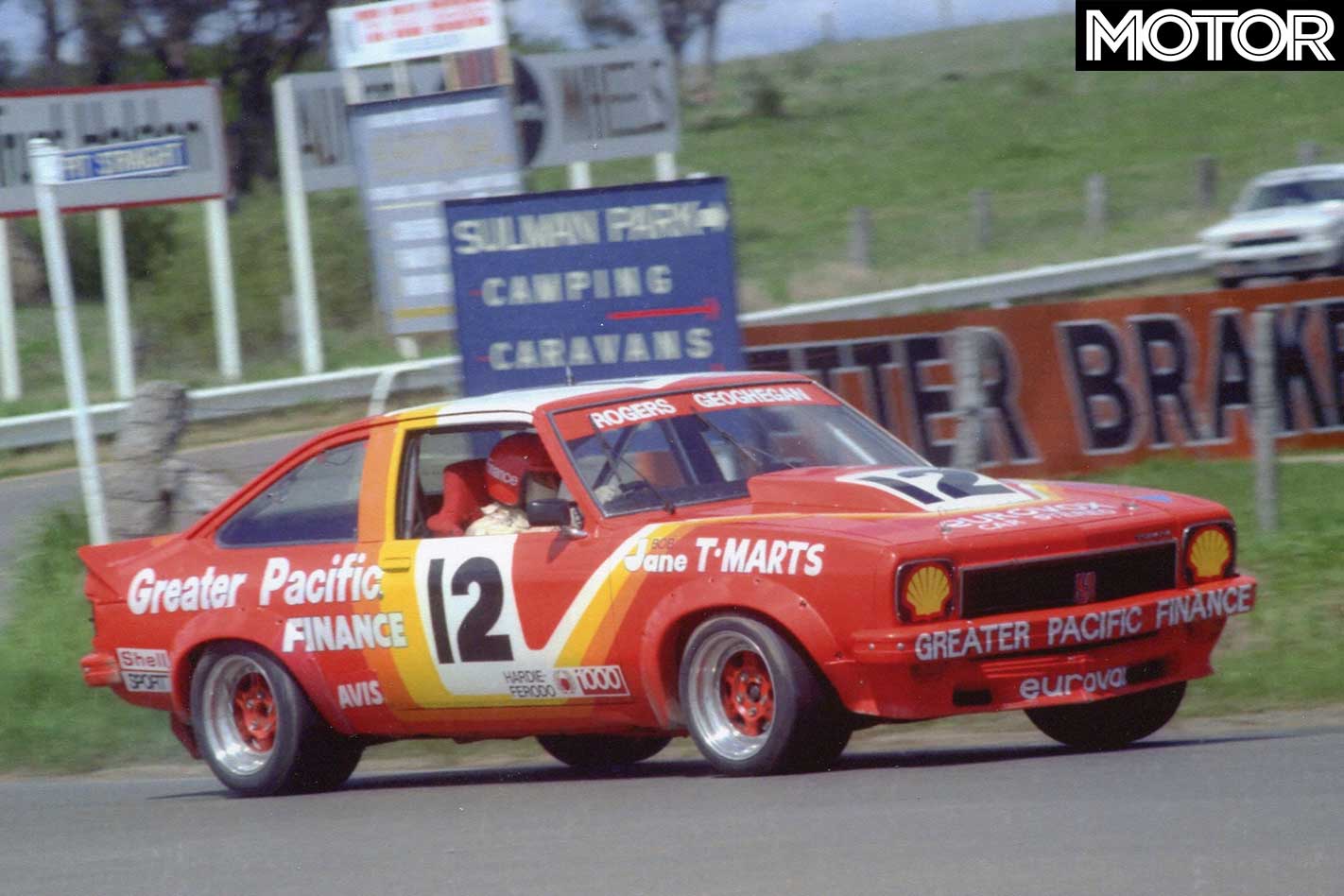
“As much as the Bob Jane A9X did not provide any great memories with regards to results, it does remind me of the persistency and never give up attitude that is required in Motorsport and more particularly, life!” Rogers says.
The #34 car is based on the black livery of Rogers’ Soundwave Discos VH Commodore.
Tickford: Supercheap BA Falcon
Tickford has brough the livery of Steven Ellery and Luke Youlden’s 2004 Supercheap BA Falcon back for this year.
“We dug deep into the Supercheap Auto raw history and we picked out an absolute winner for this weekend’s Sandown 500,” says Chaz Mostert.
“I’m pretty excited, I’m pretty close friends with the Ellery family so to go back to his ’04 retro livery looks pretty cool.
“I’m actually pretty jealous of the lines this car carries. I wish we could carry it for the rest of the year, but we’ll see if we can convince the team after the weekend.”
Walkinshaw Andretti: 2008 VE Commodore
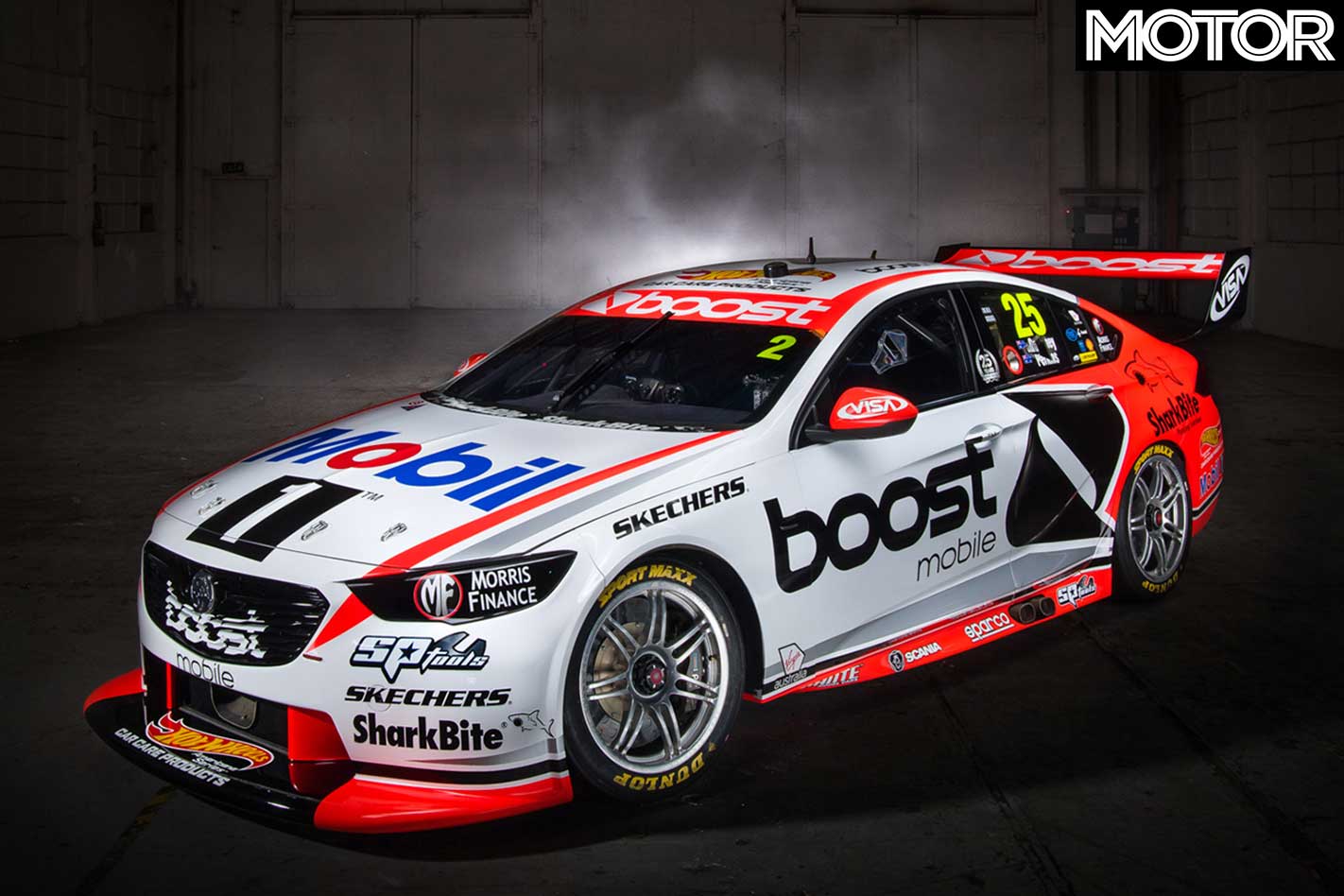
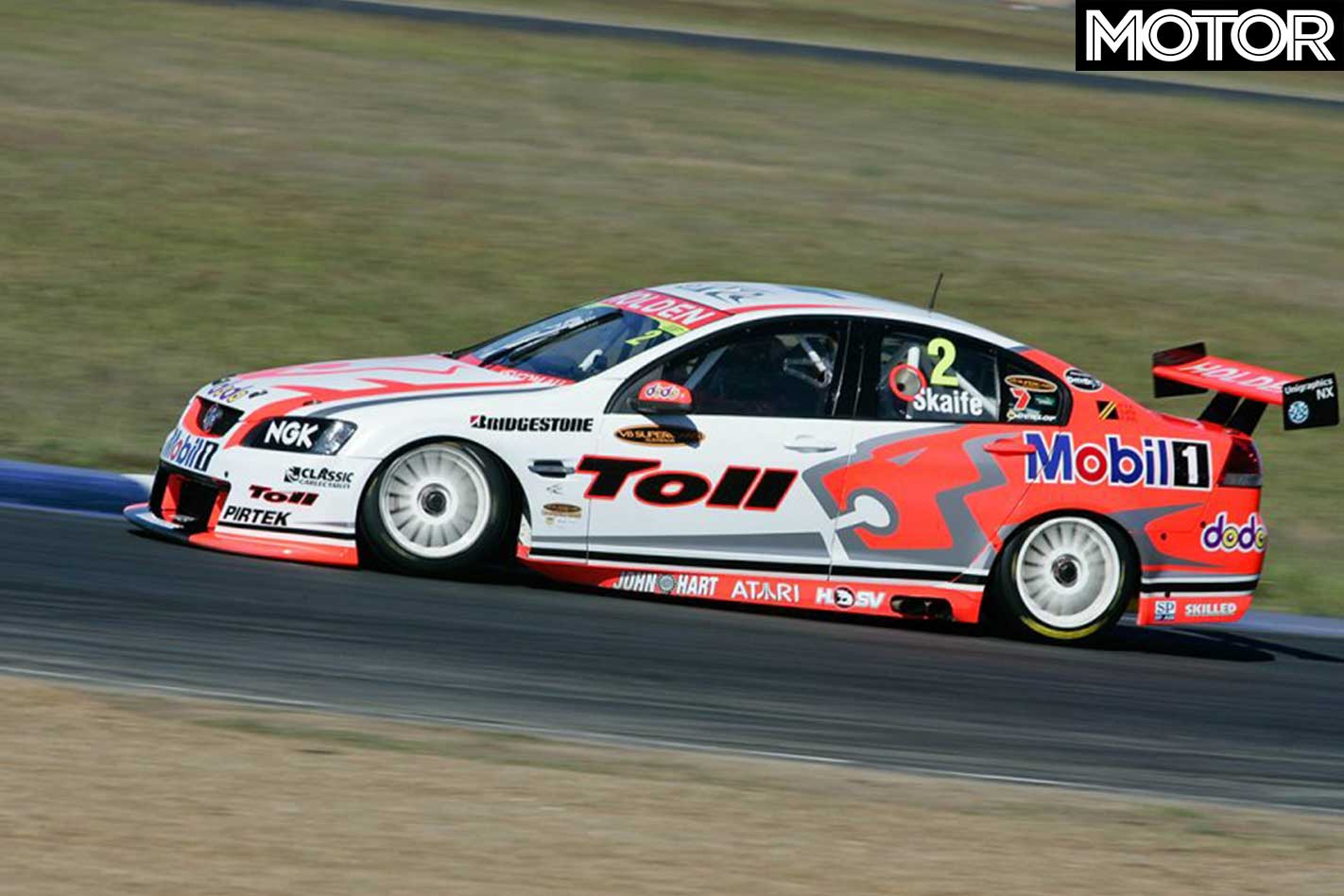
Scott Pye, Warren Luff, James Courtney, and Jack Perkins will take to the track in cars honouring the 2008 livery of Mark Skaife, from his final year driving full-time for HRT.
Inspired by the 2008 Holden Racing Team VE Commodore, the cars utilise the ‘Toll’ theme adapted to its current sponsors, Mobil and Boost.
Nissan Motorsport: 2002 Castrol Commodore and ‘60s throwback
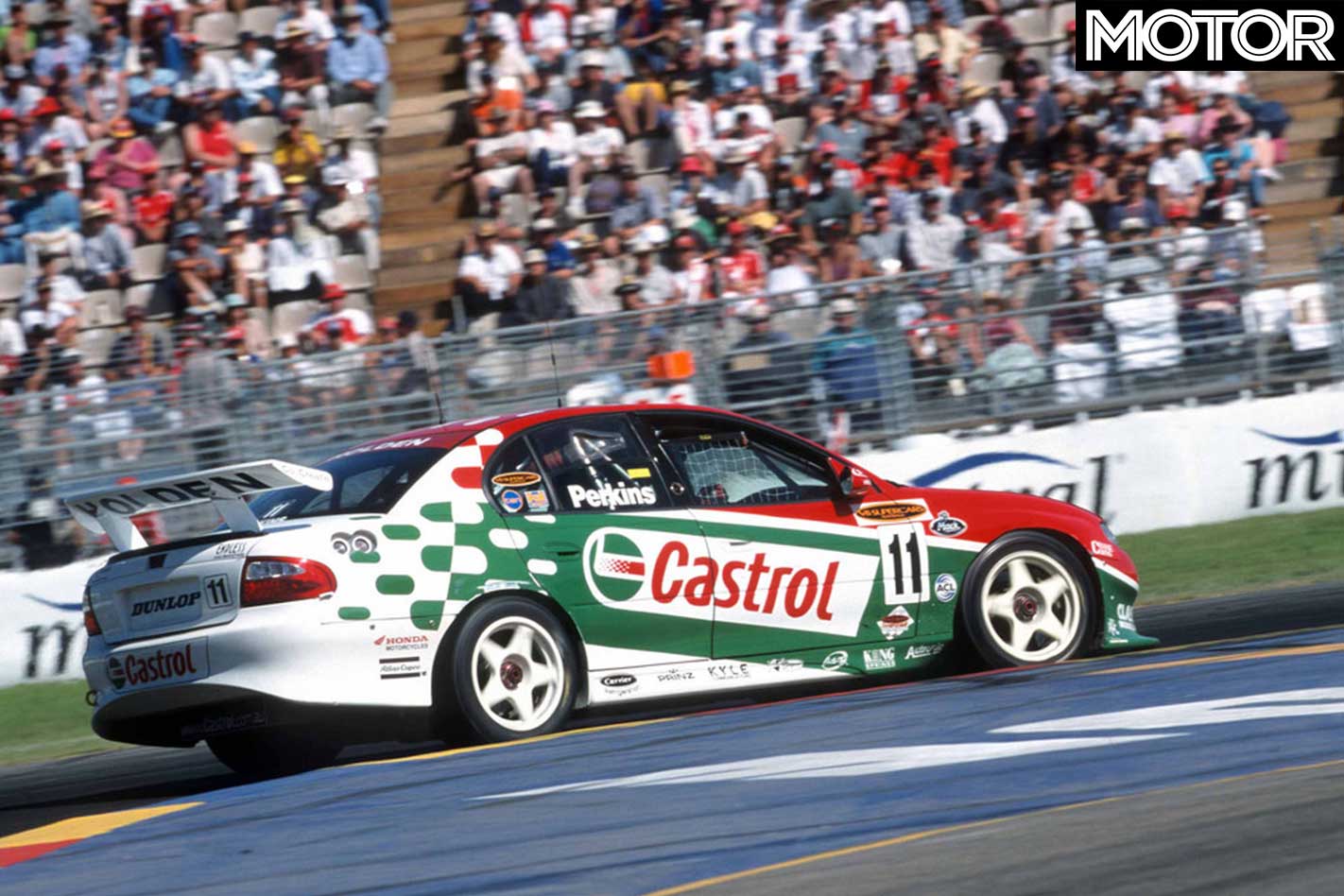
Nissan is here honouring a Commodore, or more accurate Commodores, the Castrol-Perkins 2002 Commodores of Russell Ingall, Steven Richards and Larry Perkins.
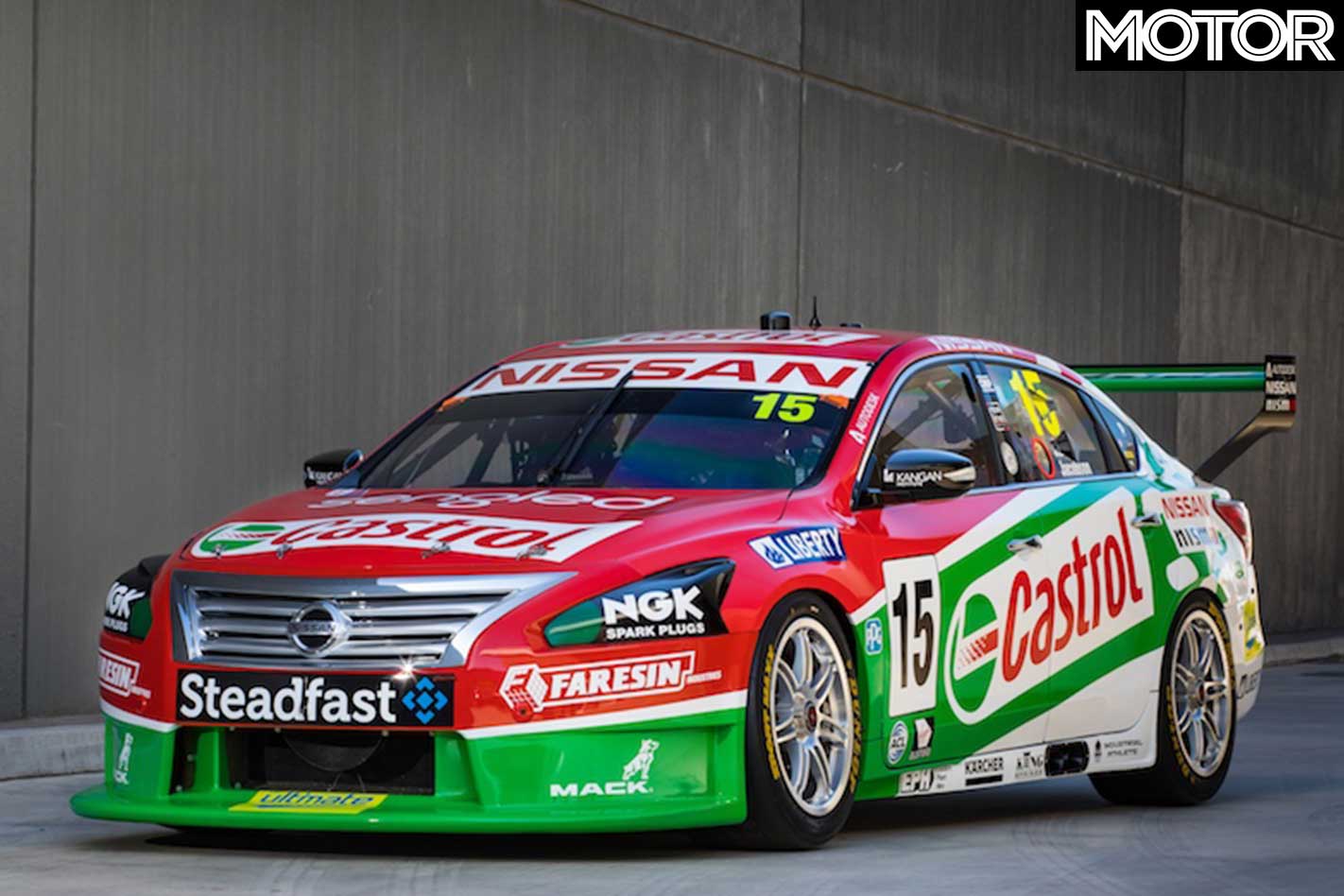
““This car is particularly special for me because 2002 was my first full-time year in the Championship,” says Rick Kelly.
“So it’s quite surreal to see a car that I raced against, but with my name on it.”
Alongside Kelly, Simona De Silvestroʼs Nissan Altima will wear a non-specific retro livery, which is based on the style of racers from the 1960s.
“Sandown is a lot of fun with the retro theme,” De Silvestro says.
“Itʼs a very serious weekend with a lot of points on offer, but itʼs also something thatʼs a bit different. A racing stripe is always worth a few tenths, for sure.”
Brad Jones Racing: Bob Jane HQ Monaro GTS350 and John Blanchard’s 1993 BMW M3

BJR is honouring Bob Jane’s iconic HQ Monaro GTS350, possibly one of the most recognisable cars of its time.
The #21 car is now decked out in bright yellow to honour its driver’s father, John Blanchard, who drive a similarly-coloured BMW M3 during the 1993 Australian Touring Car Championship.
Preston Hire Racing: 1968 HK Monaro
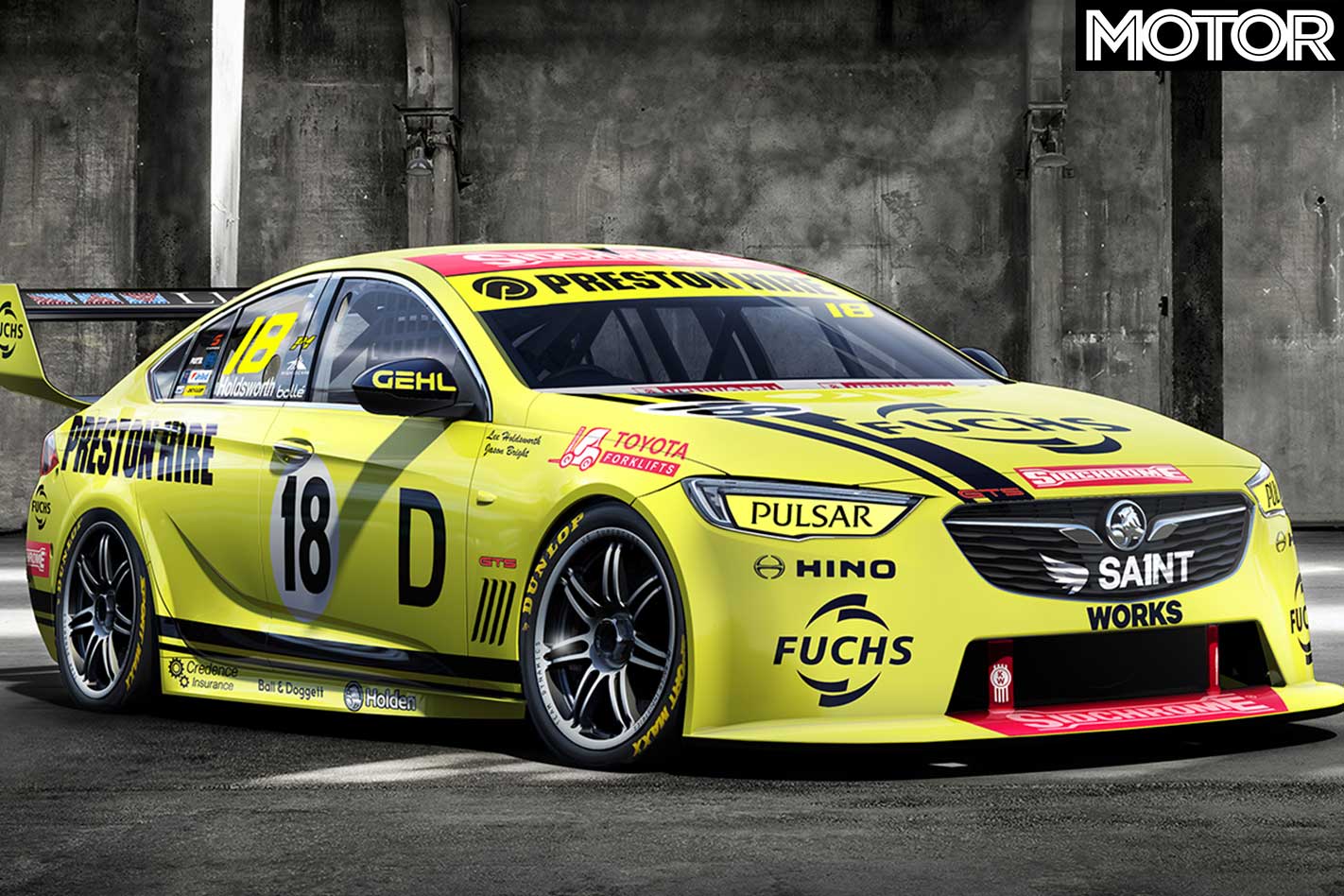
A big call has been made, as Preston Hire Racing honours the first Holden to win the Bathurst 1000, the #13 Monaro driven by Bruce McPhee and Barry Mulholland.
Lee Holdsworth is confident, saying:
“There couldn’t be a more appropriate livery for Preston hire racing heading into the endurance season.
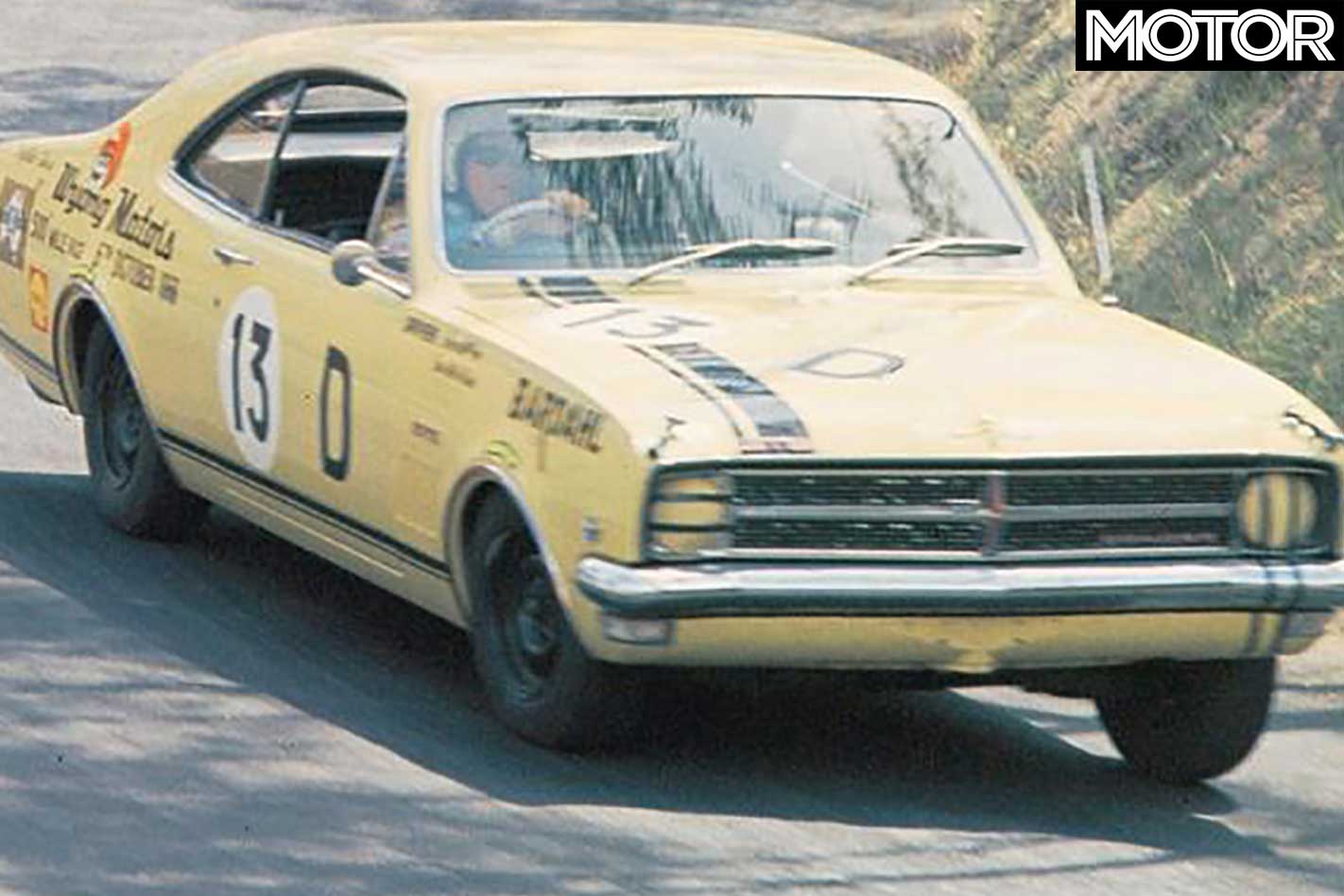
“This scheme represents the livery of an underdog team that lead Holden to their first win at the mountain 50 years ago.
“We all start with a clean slate of points for the Pirtek Enduro Cup. Brighty and I will be pushing hard to spring a surprise result.”
23Red Racing: Old-school cream
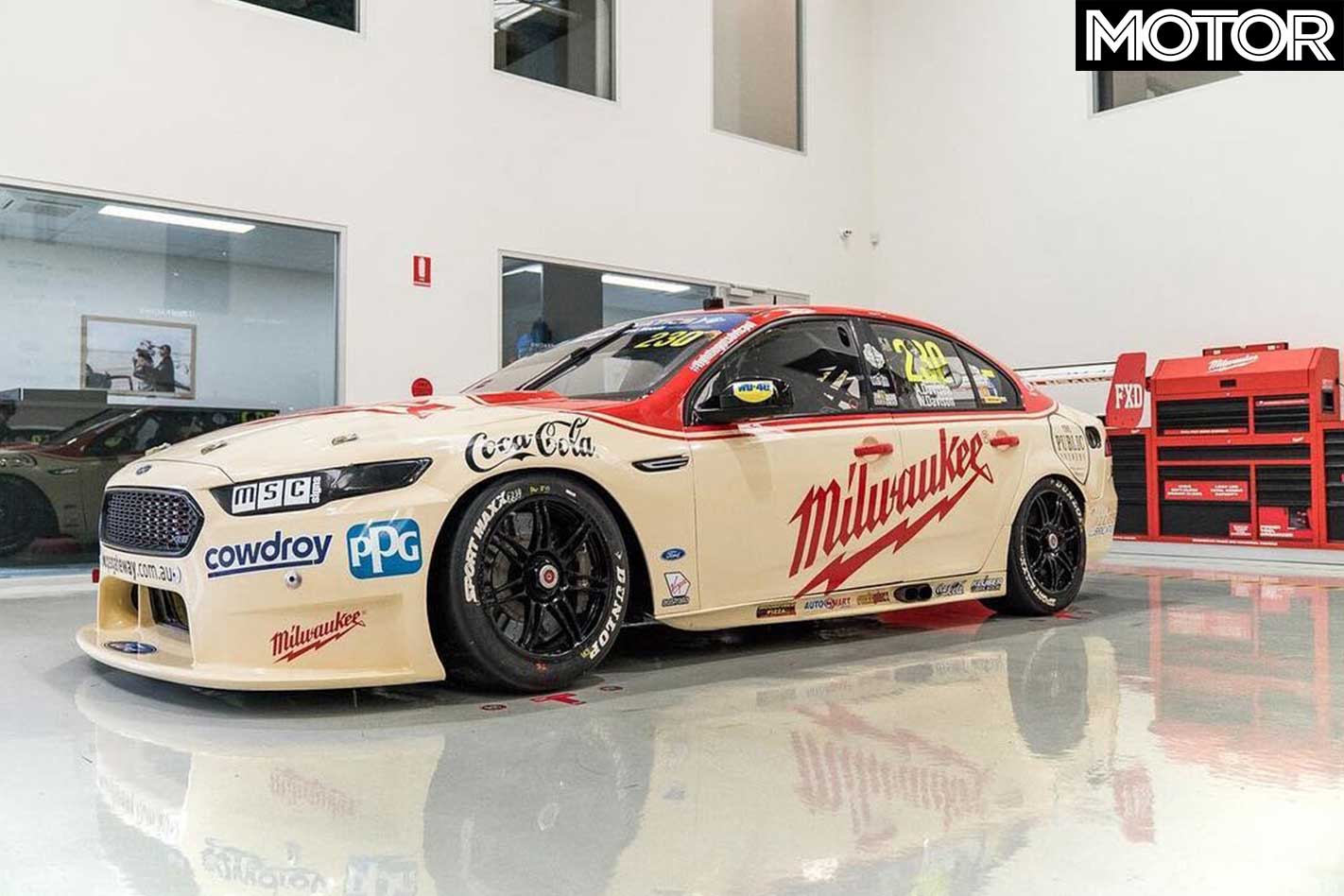
The Milwaukee Falcon isn’t drawing on any specific car here, like DeSilvestro’s Nissan, though it does remins us a little of the colours seen on the first Bathurst-winning Holden – the same HK Monaro which Preston Hire Racing based its livery on.
IT’S ONE of sport’s toughest challenges; the world’s finest drivers racing wheel-to-wheel at up to 320km/h, enduring 5G in corners and under braking, and cockpit temperatures approaching 60-degree Celsius…. for two hours. One mistake and you’re in the barrier, and likely out of the race.
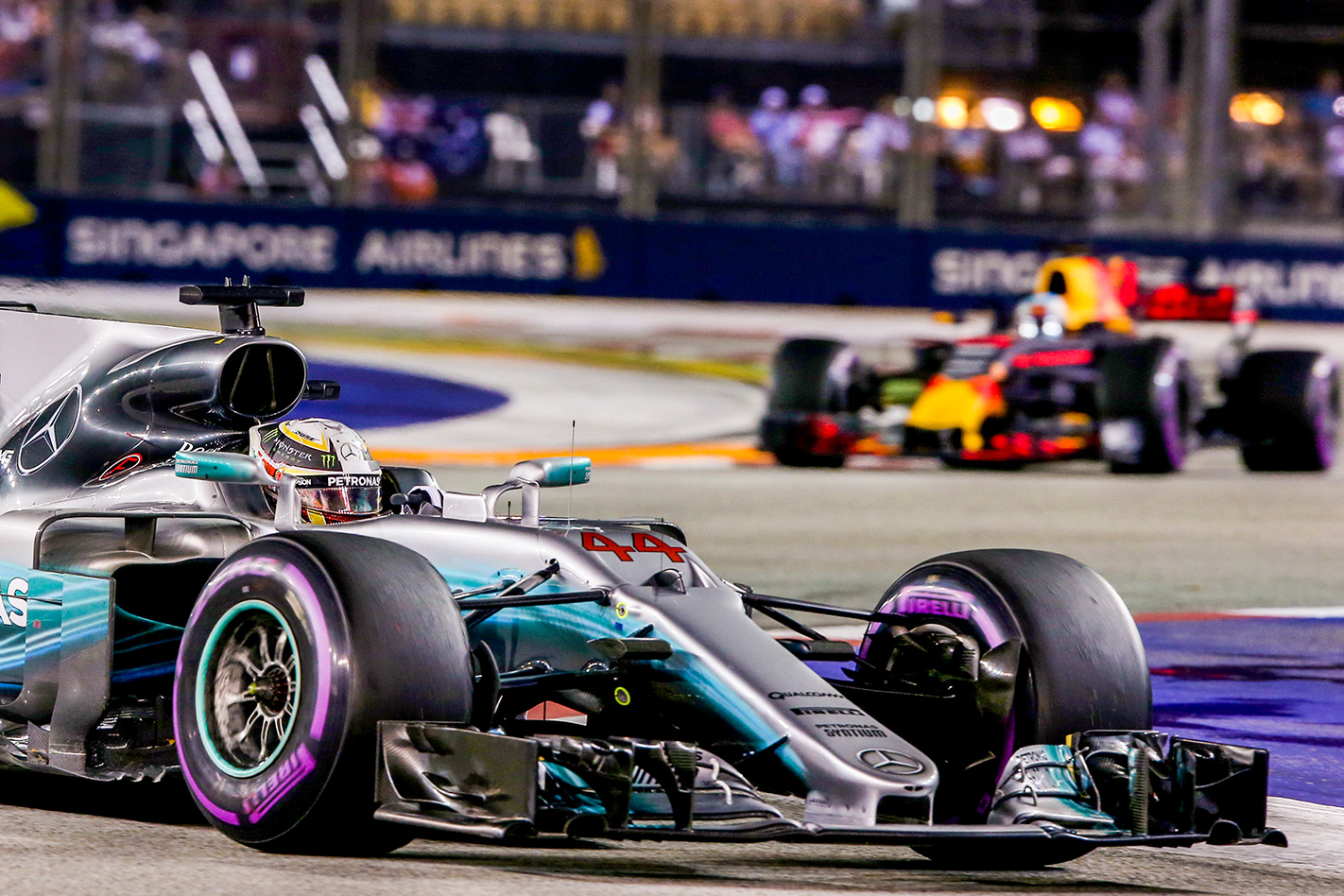
It could only be the physical and mental endurance test that is the Formula 1 Singapore Grand Prix. For Red Bull Racing driver Daniel Ricciardo, it’s a showdown that sorts the men from the boys, and a highlight of this year’s 21-race calendar.
“A street circuit already requires a high level of concentration, and doing that with the humidity of Singapore is fun but challenging,” says the Australian, who last month announced his switch to the Renault F1 team for 2019.
“It’s the one race of the year where you can’t open your visor to get cool air, and it’s actually worse because all the humidity and heat of the car just stays inside the streets as it doesn’t have anywhere to go.

Ricciardo is considered something of a Singapore specialist, having been on the podium at the Marina Bay Street Circuit every year since 2014 – his first season with top team Red Bull Racing.
It’s an event he now focuses on in his pre-season training, given vivid memories of how underprepared he was the first time around.
“I have always made a point of being over-prepared for that race because it’s the longest race of the year, it’s the hottest, and it’s the busiest,” says Ricciardo, who will lose up to 3kg in fluid over a two-hour period.
“It’s far and beyond the toughest race physically and for concentration. My first race there [for HRT] in 2011, I didn’t know what to expect and it was, physically, the hardest thing I’ve ever done in my life.
“I never wanted that feeling again because that wasn’t fun so I made a point just to always prepare well, do a lot of heat training and, from a confidence point of a view, when I get there knowing I’m super prepared that helps my driving as well.”

Compare that to the fan experience, which could be considered F1’s version of the Superbowl – with racing under lights and a line-up of international music acts on stage – all against the stunning backdrop of one of the world’s great cities.
And while the tropical weather is perfect for a cold drink trackside with friends – for the drivers, the Singapore lead-up begins weeks before, with all 20 pushing hard in the gym with heat training once they land.
“If we can make the sessions that we do in the gym as hard or much harder than [anything] they’ve ever experienced in the car, then when they actually get into the car, it will actually feel easy,” says Phil Young from GP Human Performance, who has trained champion F1 drivers including Fernando Alonso.

“A lot of our focus is high intensity interval training, which will involve periods of heavy weight repetitions with very short recoveries.
“There’s a system called Tabata, which is where you do 20 seconds of effort followed by 10 seconds of rest and you do that eight times. That is a good form of high intensity interval training that simulates what happens in the car.”
Of course, F1 drivers need razor-sharp reflexes. Not just for racing wheel-to-wheel, but consistent lap times, and making corner-by-corner setup changes on the smartphone-like steering wheel that might have up to 35 buttons, switches and rotary dials to be used in a specific order at a moment’s notice.
As you might expect – that, too, is factored into a driver’s training.

“We get them playing squash and things like that. That’s really aimed at getting their hand-eye co-ordination back into the right mode,” says Young.
“We also test them by putting them through repeated fatigue, and then straight into a scenario where they have to concentrate.
“We might put them on a rowing machine and work them very hard so they’re almost to their maximum capacity; they would then jump off there and have to get straight onto a Batak [reaction training] machine, and have to concentrate to make sure they maintain the baseline score they set before the workout.”
For Ricciardo, Singapore will also be a shot at the victory he should have taken there last year, a pesky gearbox oil pressure issue robbing him of the chance to challenge Mercedes’ Lewis Hamilton, a three-time winner of the event.
And while fans were treated to a thrilling spectacle, including a first-ever wet start and disastrous Turn 1 crash, Ricciardo left the Marina Bay Street Circuit frustrated, stating “I can’t win the bloody thing!”
“Obviously second is not a bad result,” says Ricciardo. “But I wasn’t actually that happy with my race. I think I do have it in me to win around there but it’ll have to wait.”
The 29-year-old considers Singapore to be something of a home race (alongside Australia, and Monaco where he now lives), given the short flight from Australia – one his family and friends, and thousands of Aussie fans, take annually.
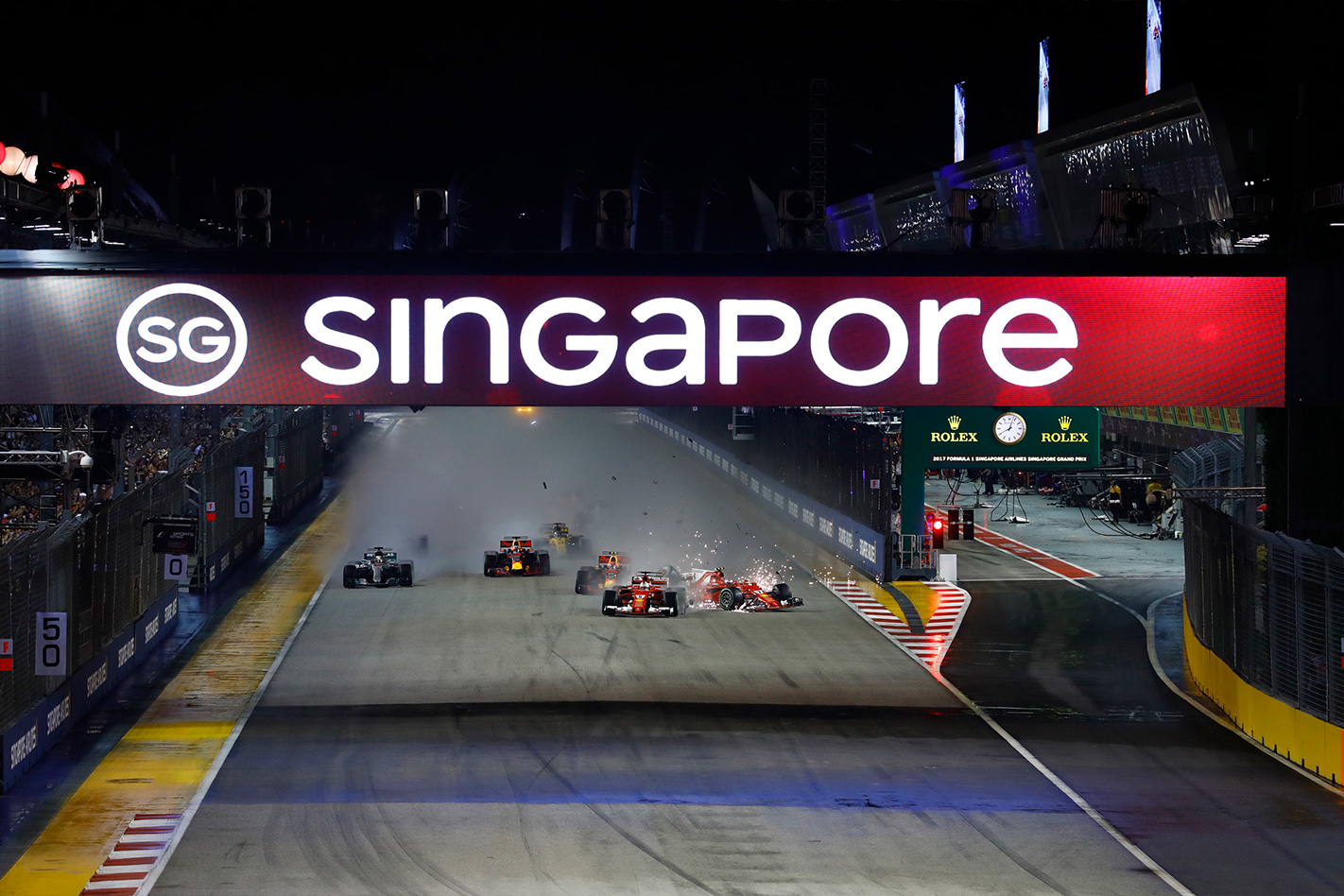
“It’s definitely established itself on the calendar, everyone kind of knows it, being the original night race and the real spectacle night race,” Ricciardo says.
“It’s got the reputation as well for being super-long, pretty much hitting the two-hour limit every year, hot, physical and draining.
“I think the way that the city kind of gets around the race is really cool as well. I’ve had family and friends come to it and they’ve only ever said good things, so it’s a good one.
“For me, I embrace the challenge. I love street circuits, period. But knowing that one is such a physical challenge as well is always fun.”
Should Ricciardo win in Singapore this year, everyone will know he’s given his maximum to conquer the toughest race on the calendar.
The FORMULA 1 2018 SINGAPORE AIRLINES SINGAPORE GRAND PRIX will be held from September 14-16, with more information at singaporegp.sg.
If you’re looking for a last minute getaway with a racing line, why not make it a long weekend and head to Singapore for the race?
For F1 fans, the event couldn’t be better timed, as Singapore is the first race after the end of the European season when the world championship battle is just heating up, and every point won or lost makes a difference.
There’s plenty of action on-track, with F1 and other exotic machinery threading the barriers at high speed. While off-track, there’s a lot to see and do, with interactive race-themed activities, support paddocks to peruse, and parties galore, all surrounded by the event’s iconic lanterns.
It’s a short flight away from most Australian capital cities, and the event can be done on almost any budget with single-day walkabout tickets starting from approximately $78, single-day grandstand tickets starting from $108, and three-day grandstand tickets starting at $298. There’s also plenty of affordable accommodation, both in and around the city.
Stewart Bell is a Formula 1 journalist from Melbourne, Australia, who provides content on behalf of the Singapore GP organisation.
The Aston Martin Rapide E is slated to be the first completely electric production model from the brand, due to begin delivery of its 155 unit model run in late 2019.
With Williams Advanced Engineering providing the electric powertrain tech, Aston Martin claims the Rapide E will produce 449kW/950Nm, with a 0-97km/h (0-60mph) sprint in under four seconds, and a range of more than 320km.
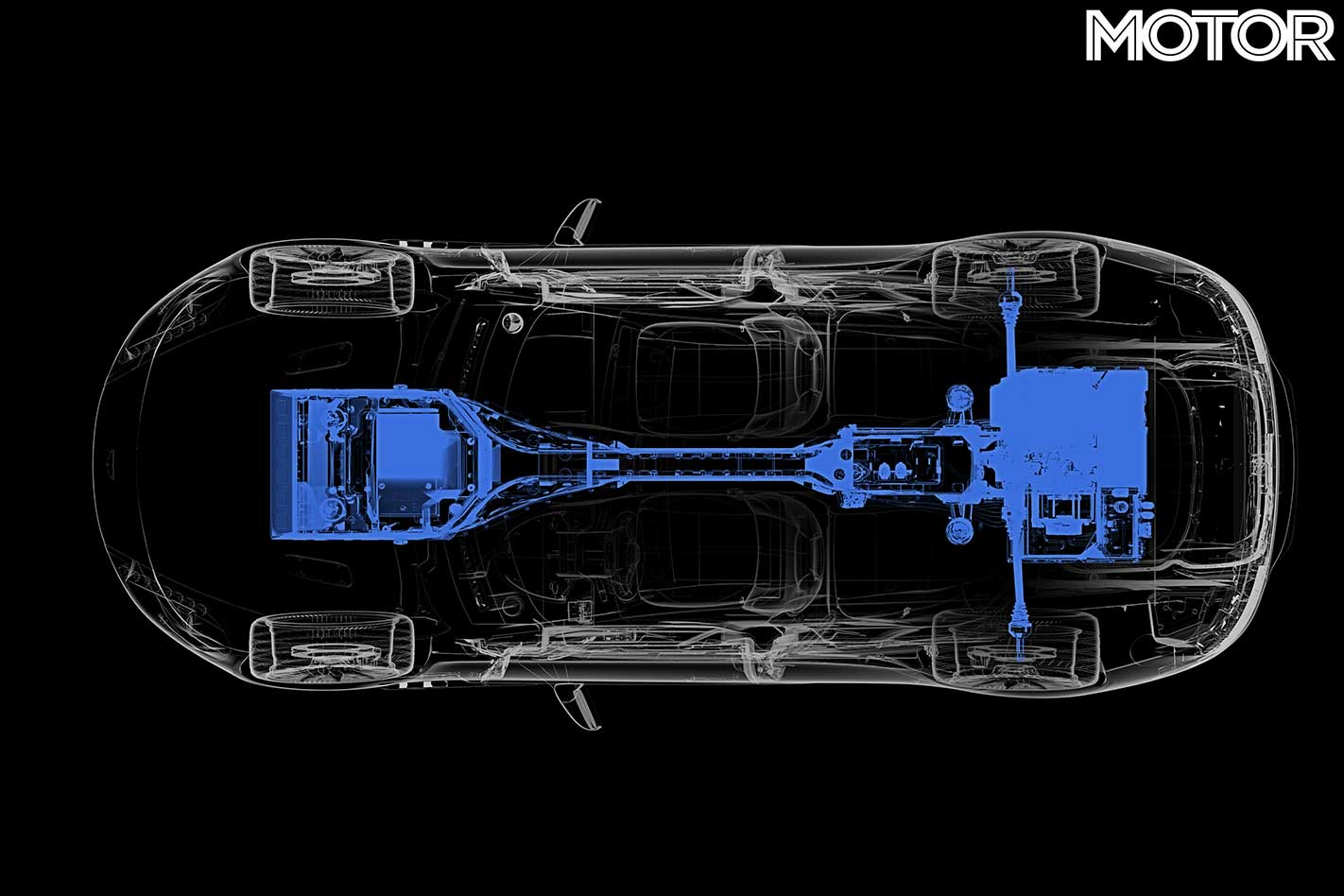
Aston says these figures are not just the peak when the battery is totally charged, but should be achievable throughout the battery life (aside from the range, of course).
“Instead the target is for maximum performance on-demand throughout majority of the battery state of charge window, as would be expected from a conventional internal combustion-engined car.”
Pirelli P-Zero tyres will provide the grip, while Aston has made changes to the suspension and granted the twin-electric motors access to the rear wheels only, via a limited-slip differential.
In terms of how the vehicle’s weight will change through electrification, Aston says “strict weight targets have been stringently observed using lightweight alloys and carbon composite materials.”
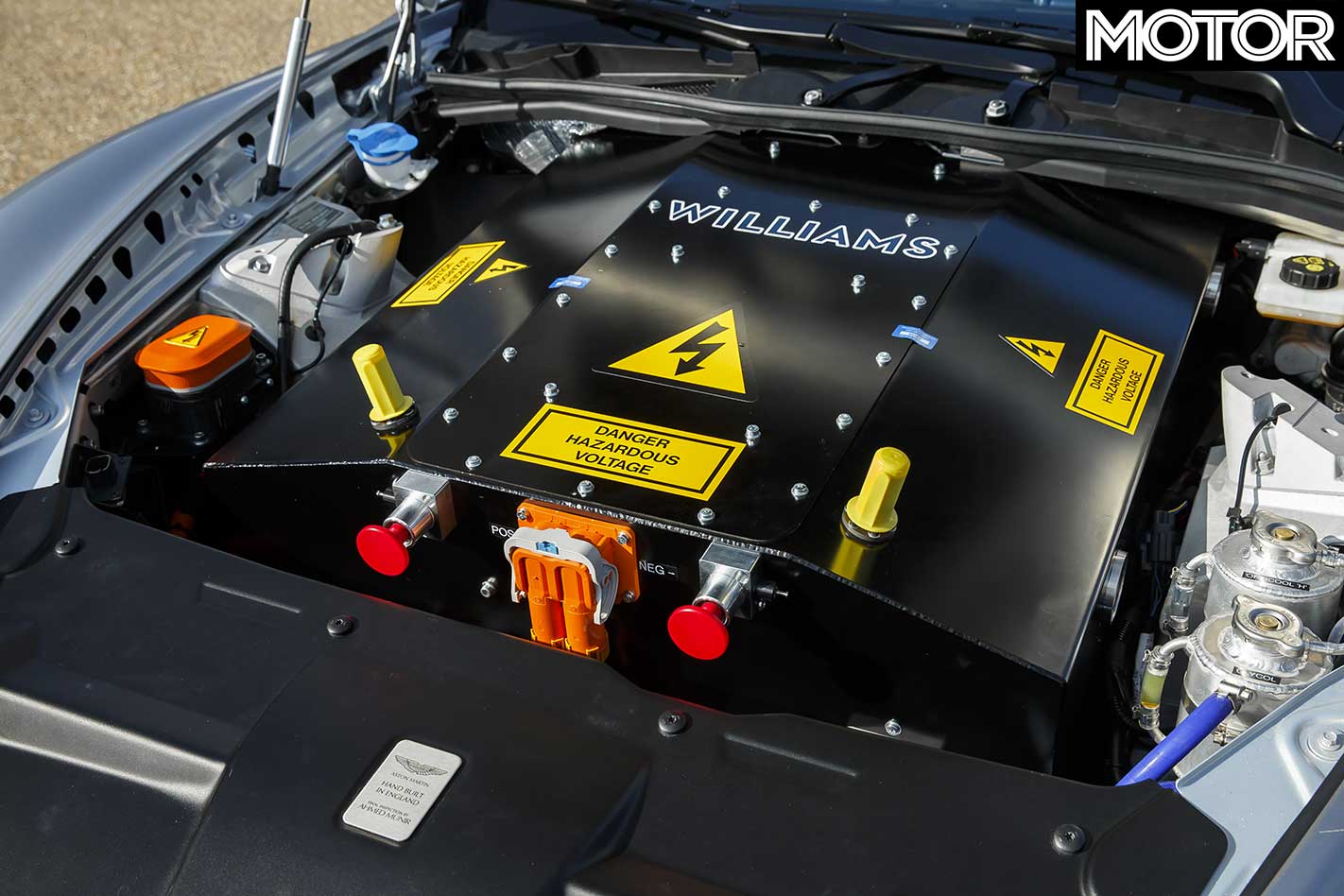
Aston Martin CEO Andy Palmer says he’s ‘particularly satisfied’ to be working with Williams Advanced Engineering to create the Rapide E.
“Environmental responsibility and sustainability is a global challenge faced by us all,” Palmer says.
“As a career automotive engineer, I’m proud that the car industry is leading the way in finding long-term solutions and reducing harmful emissions.
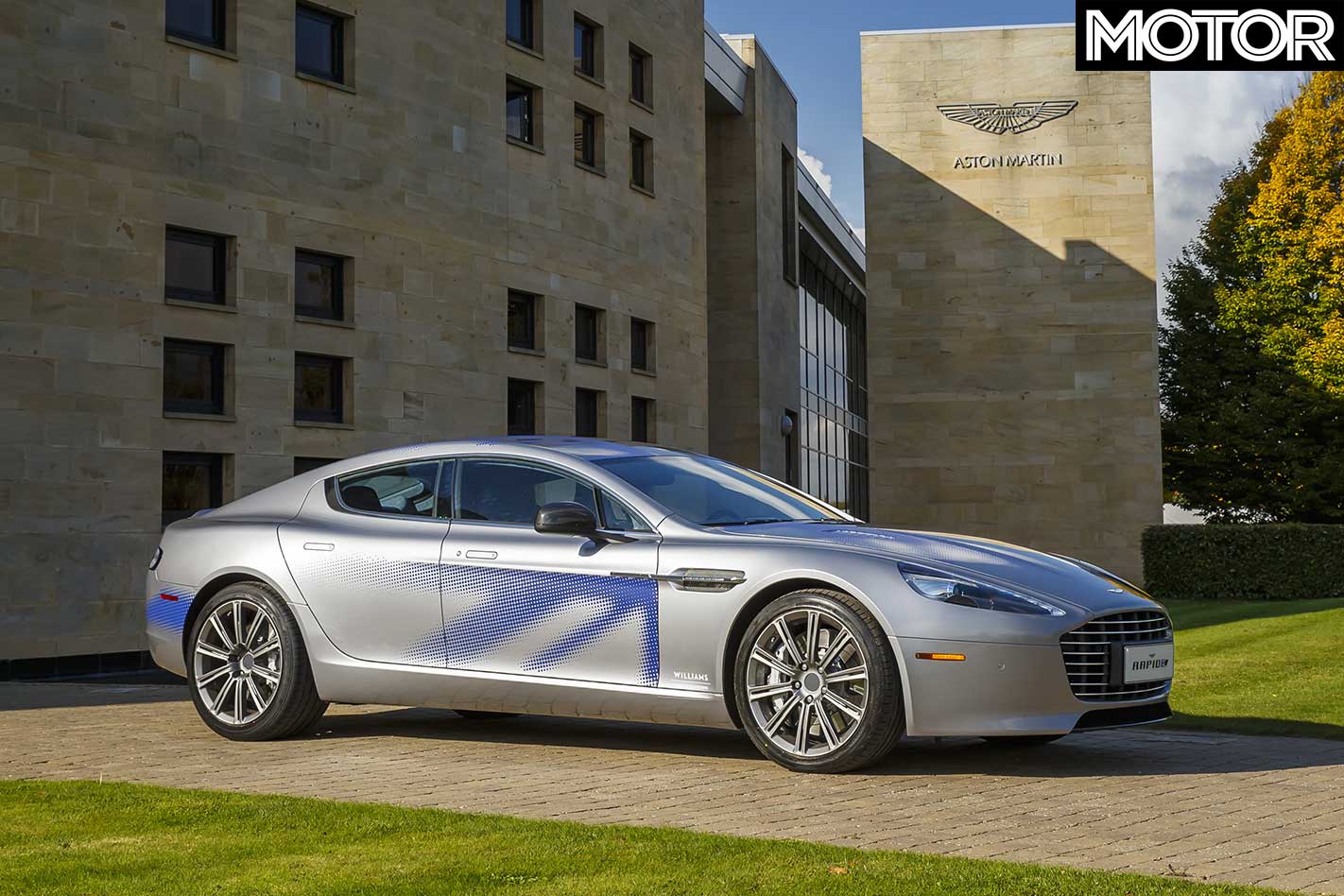
“As our first all-electric production model, Rapide E will fast-track our knowledge and help us ensure the character and high-performance capabilities of our future EV models and enhance the unique qualities found in all Aston Martins as we know them today.
“Rapide E will also serve as a critical step on our path to re-launching Lagonda as the world’s first zero-emission luxury marque”.
