
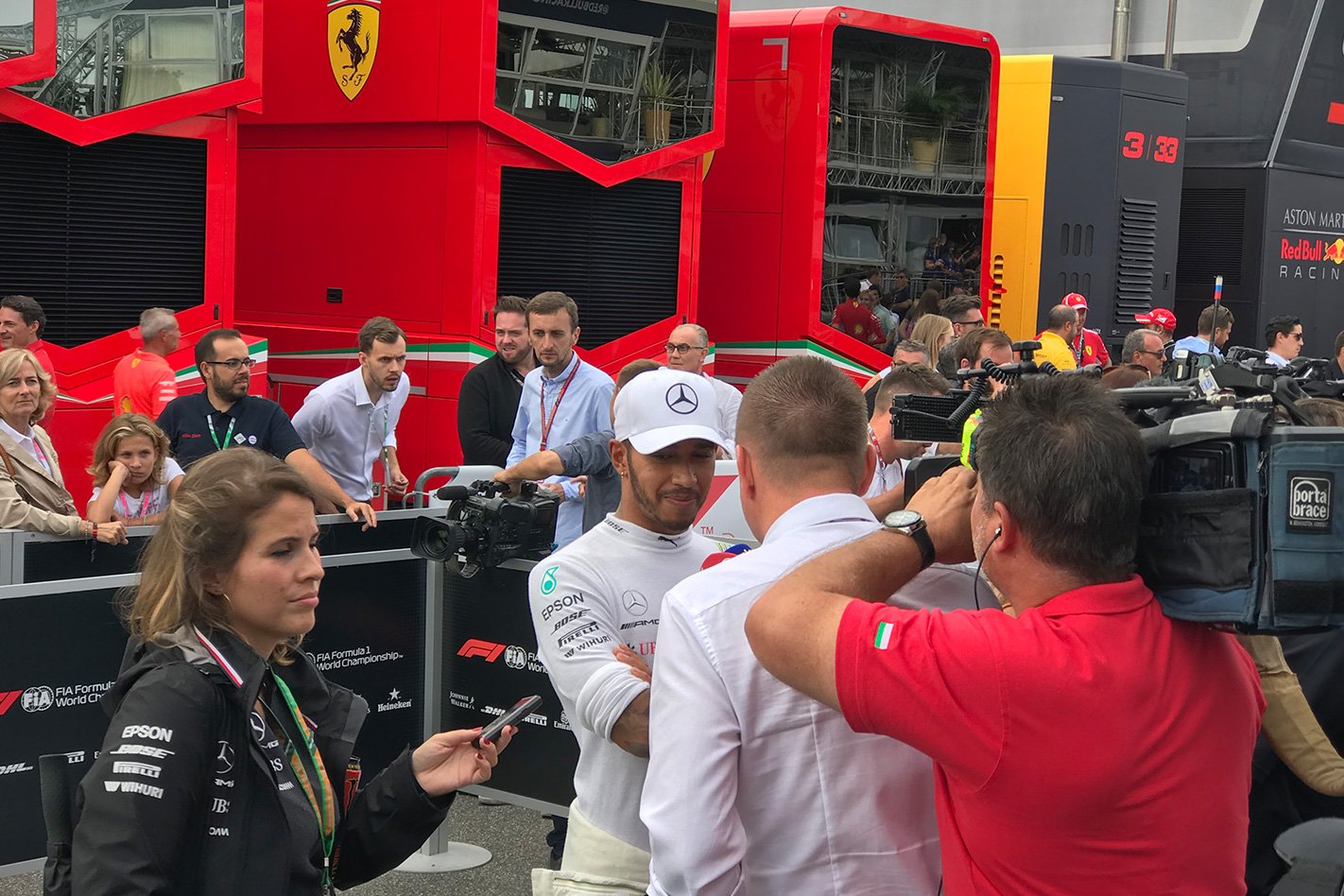
THE ROAR is murderous. The kind you could imagine ricocheting around a colosseum as the crowd bays for blood. Which, if you’re an Italian Formula 1 fan, is exactly what you’re doing. It’s lap one of the Monza grand prix − a circuit emblazed into F1 folklore as the ‘Temple of Speed’ − and world championship rivals Sebastian Vettel and Lewis Hamilton have clashed, Hamilton diving down the outside to complete a daring move into the first lesmo that sends Vettel spinning towards the barriers, his scarlet red racer plummeting from the front to the very back.
Outrage! Scandal! Vengeance!
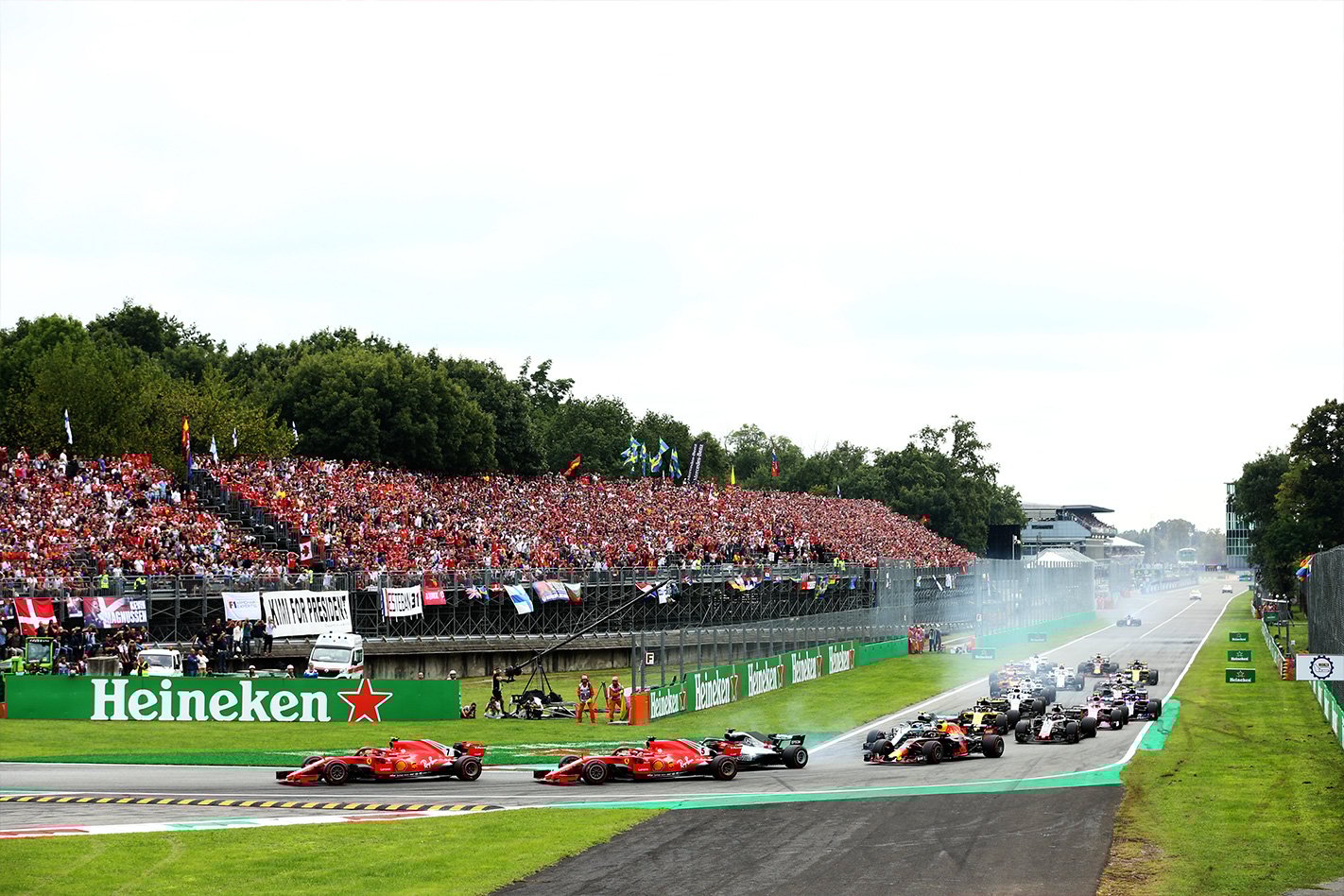
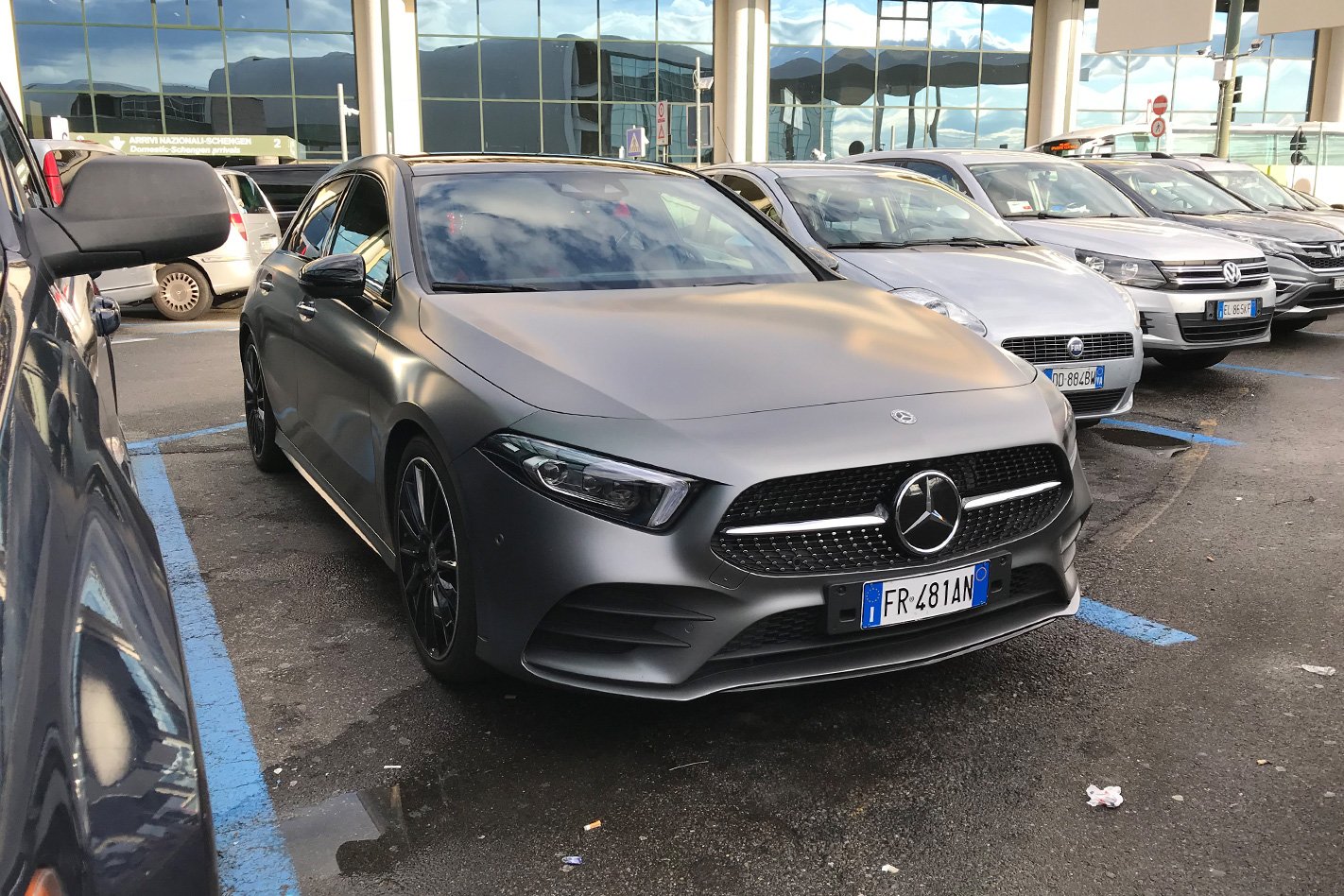
Thousands of Tifosi shake their heads and fists in unison, the entire circuit distraught and outraged that Ferrari has been wronged at its home track. All of which makes me feel a little uncomfortable. Wheels is here with the perpetrators – Mercedes-Benz – both to revel in the atmosphere at one of motor racing’s most iconic circuits, and to drive the German brand’s newest addition, the fourth-gen A-Class.
The all-new hatchback has already launched in Australia in A200 guise (read our full review here) but this is our first chance to sample some of the cutting-edge elements of the car’s class-leading MBUX operating system, such as sat-nav with augmented reality, which isn’t rolling out in Australia until early 2019. It’s also a prime opportunity to see how the 120kW/250Nm A200 performs with four burley blokes and their luggage on board.
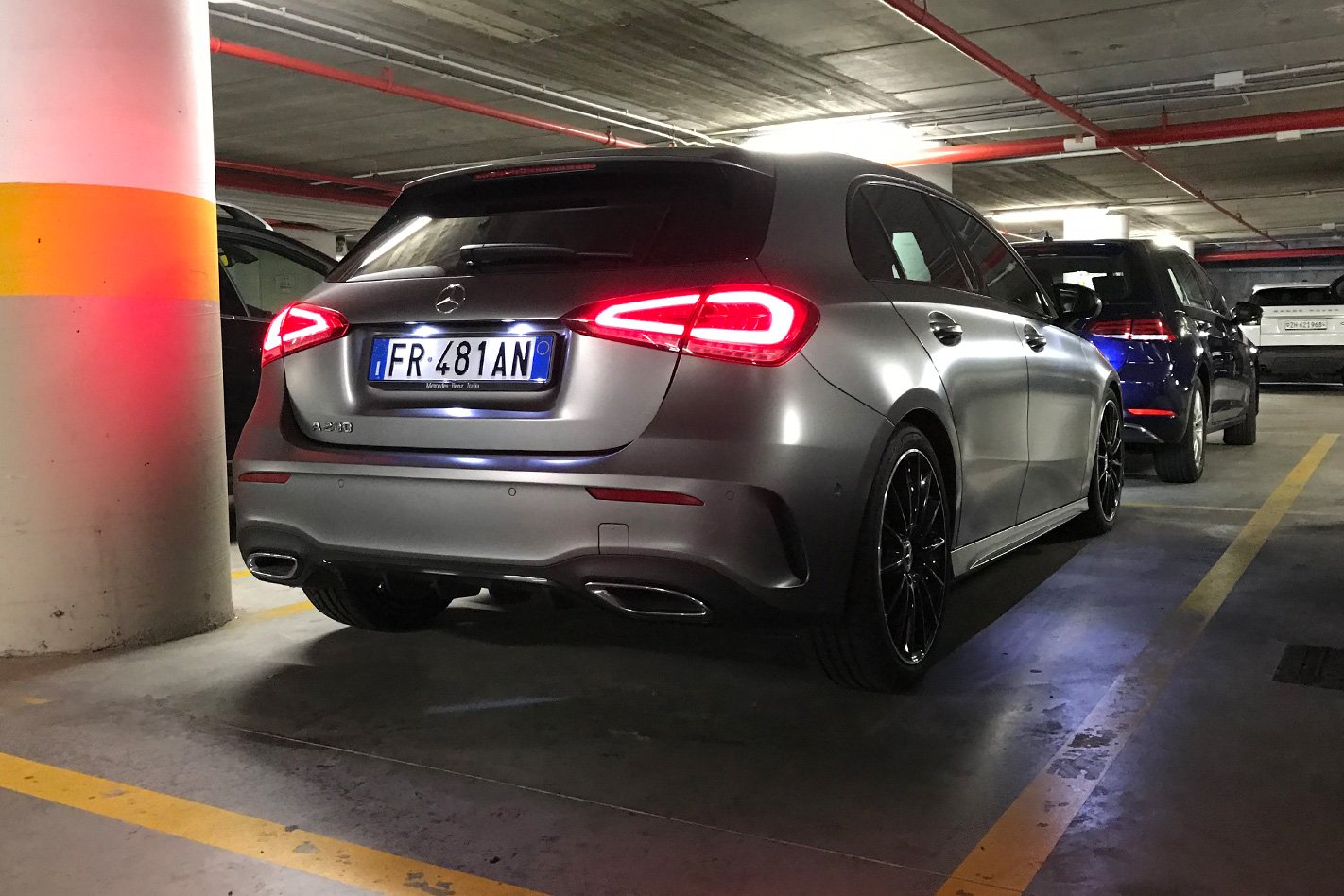
Our day starts early, the matte silver Benz waiting in the underground carpark of our Milan hotel. The influx of racing fans has been enormous, even in Milan which is 30 minutes away from Monza. Team colours for Red Bull and Mercedes abound, but scarlet dominates, the zealous support for Italy’s F1 team verging on cult-like.
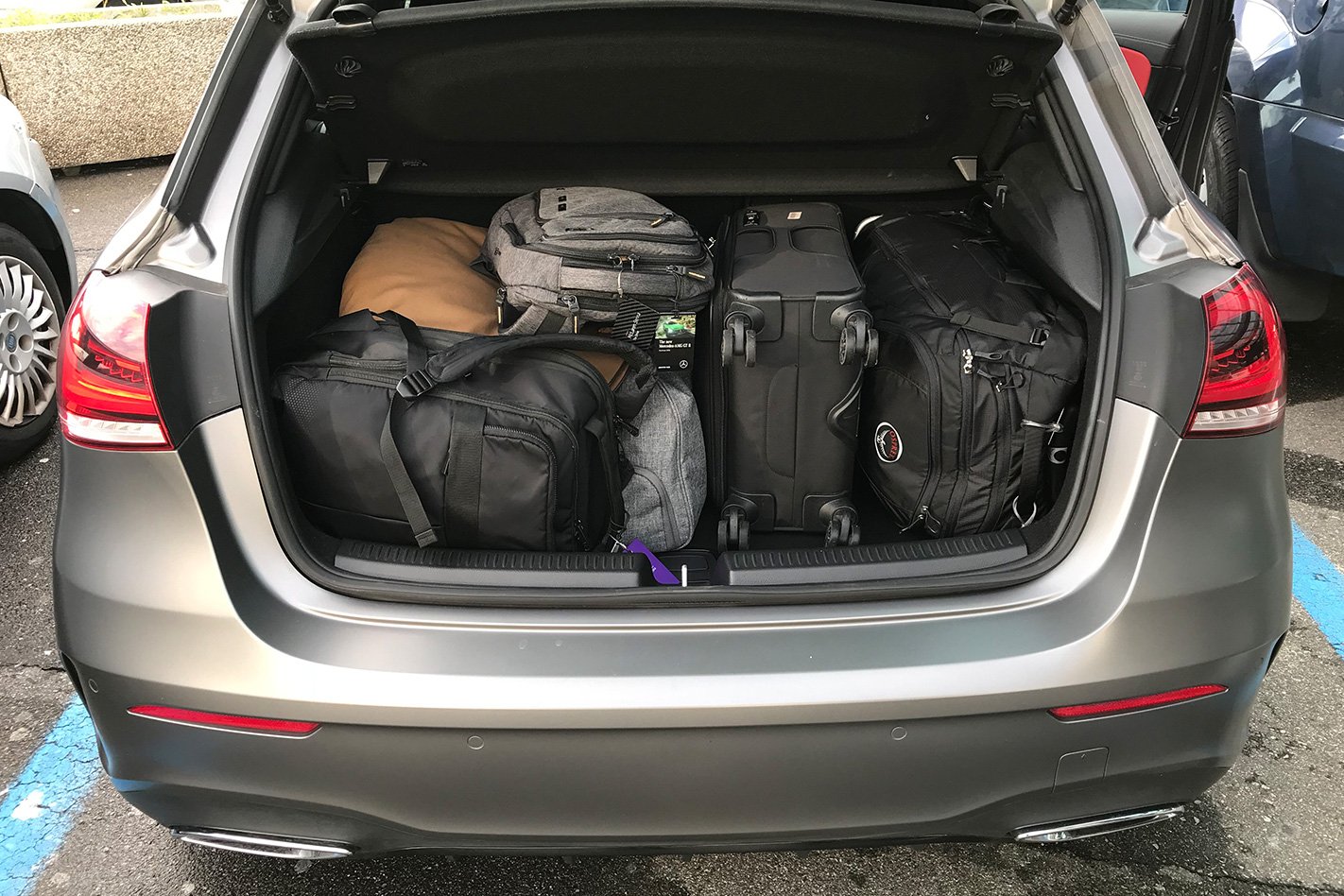
The first test for the A-Class is swallowing our luggage. The old car’s boot was a weakness; its load-lugging volume on the smaller side for its competitor set and its opening hampered by bulging taillights that narrowed the aperture. The new car is much better. Now larger at a class-middling 370L and with taillights that are better packaged, our bags fit snuggly.
The roads to Monza are a mix of bumpy urban streets and choked autostrada, yet we make swift progress. The Renault-sourced 1.3-litre turbo four acquits itself well, despite its diminutive outputs and our heavy load. It’s muscular enough to execute overtakes with authority, its athleticism aided by an intuitive and quick-witted seven-speed dual-clutch ’box.
Less convincing is the ride on the 19-inch wheels, especially for rear-seat passengers. Aussie A200 variants utilise a torsion beam rear suspension set-up as standard, though the car we sampled had the more sophisticated multi-link arrangement with adaptive dampers. Even so, loaded to the gunwales as we are, expansion joints and large bumps are transmitted with an unwelcome abruptness.
At least rear passenger room has been improved. Rear-seat accommodation in the old car always felt like an afterthought, yet those in the back now have ample head and shoulder room, while knee room is sufficient, even for those behind people over 6ft.
The cabin itself is a highlight, the two 10.25-inch LCD screens (first seen in the E-Class) and the MBUX (Mercedes-Benz User Experience) infotainment system dazzling with technology that’s user friendly and useful. The augmented reality addition to the sat-nav is especially beneficial, the centre screen splitting in half to display the map on one side and a real-time camera view of the road ahead on the other. As turn instructions approach, blue arrows appear on the real-time feed showing you what exit to take.
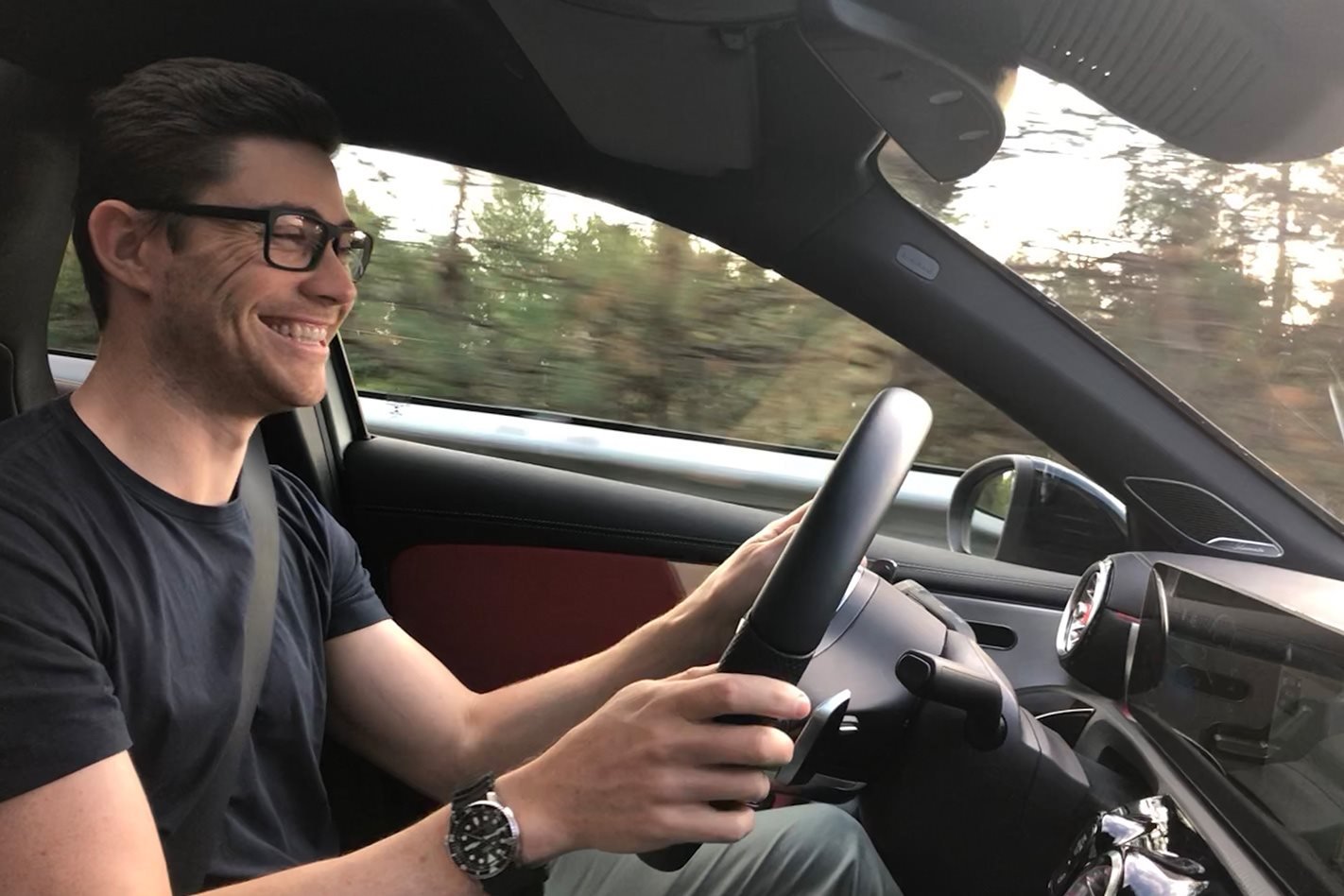
Design wise, the cabin feels suitably premium, though it is let-down by firm, over-stuffed seats and hard, scratchy plastics on the B-pillar, lower centre console and the outside section of the rear seats that joins with the doortrims.
I’d expected the parking at Monza to be typically Italian (i.e chaotic), yet it’s remarkably simple. Our pre-booked spot (30 euros per day) turns out to be street parking commandeered by people wearing high-vis vests, but we find a park easily and after a brisk 20 minute walk, we enter the circuit.
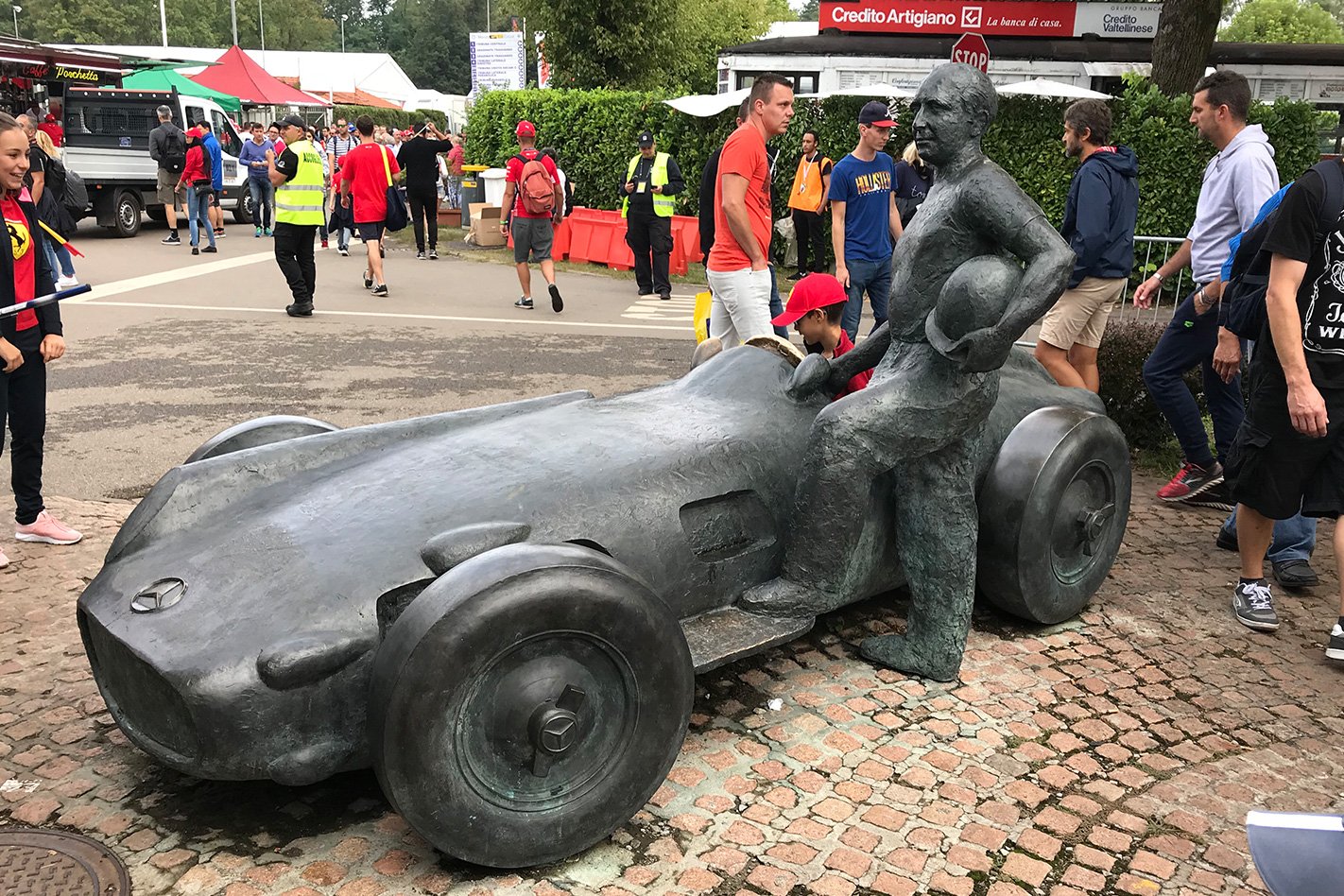
Monza has a special vibe. Excited fans chatter and laugh as a sea of people flow towards their seats, our feet working the soft earth into a sticky mess after last night’s rain. Cigarette smoke and thumping techno music are constant companions that lend a festival-like atmosphere, one enhanced by the fact that most of centre of the circuit is lush forest.
Our seats are at the inside of Turn 1; a perfect vantage point that takes in one of the best overtaking points on the circuit where the cars rocket into view at 340km/h before braking hard to tackle a tricky right/left chicane, and also overlooks the banking of the old Monza circuit.
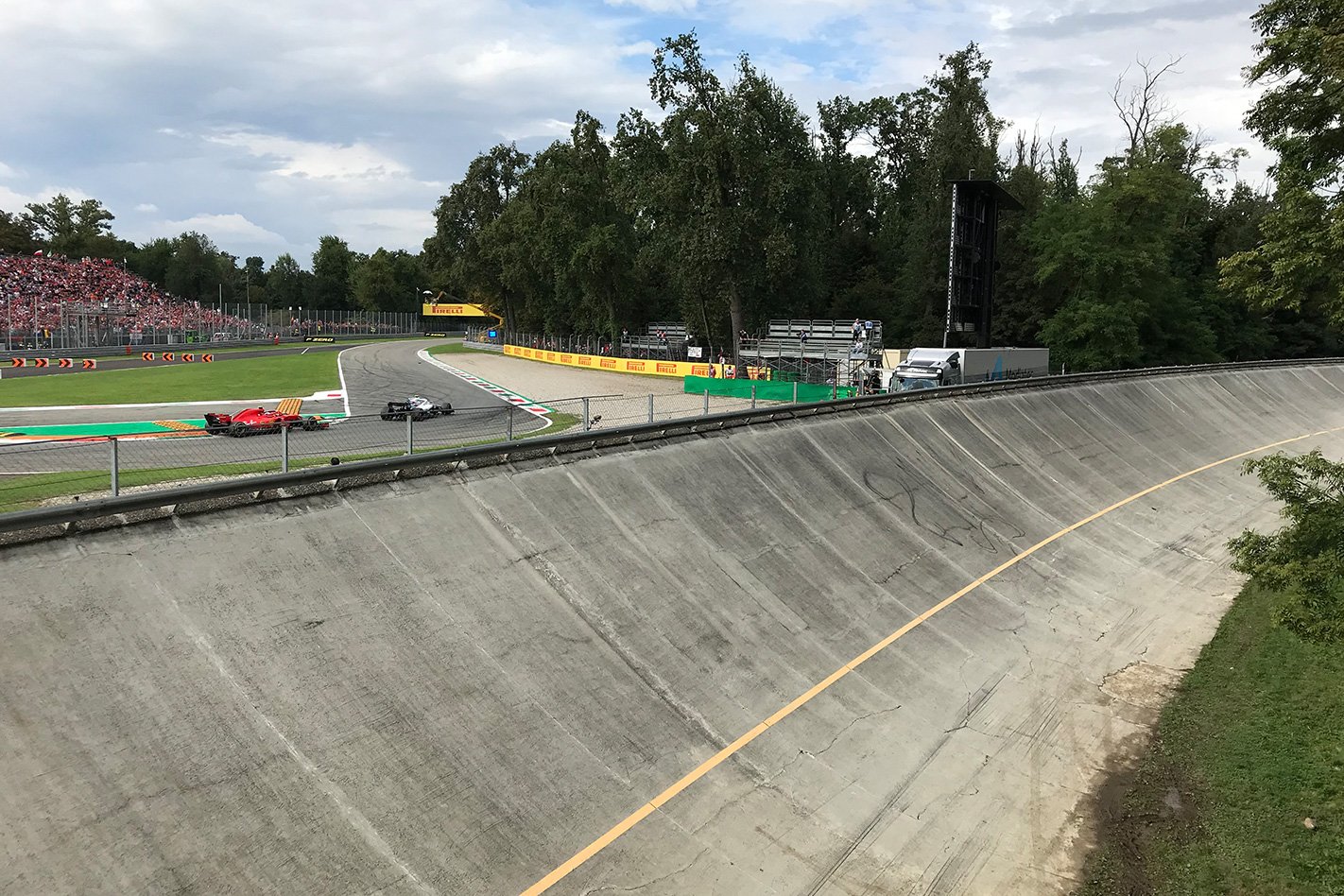
The race itself is a cracker; a tense affair of cat-and-mouse strategy that eventually sees Hamilton reel in Ferrari’s Kimi Raikkonen to steal the lead with a handful of laps remaining, the pivotal move executed right in front of our seats.
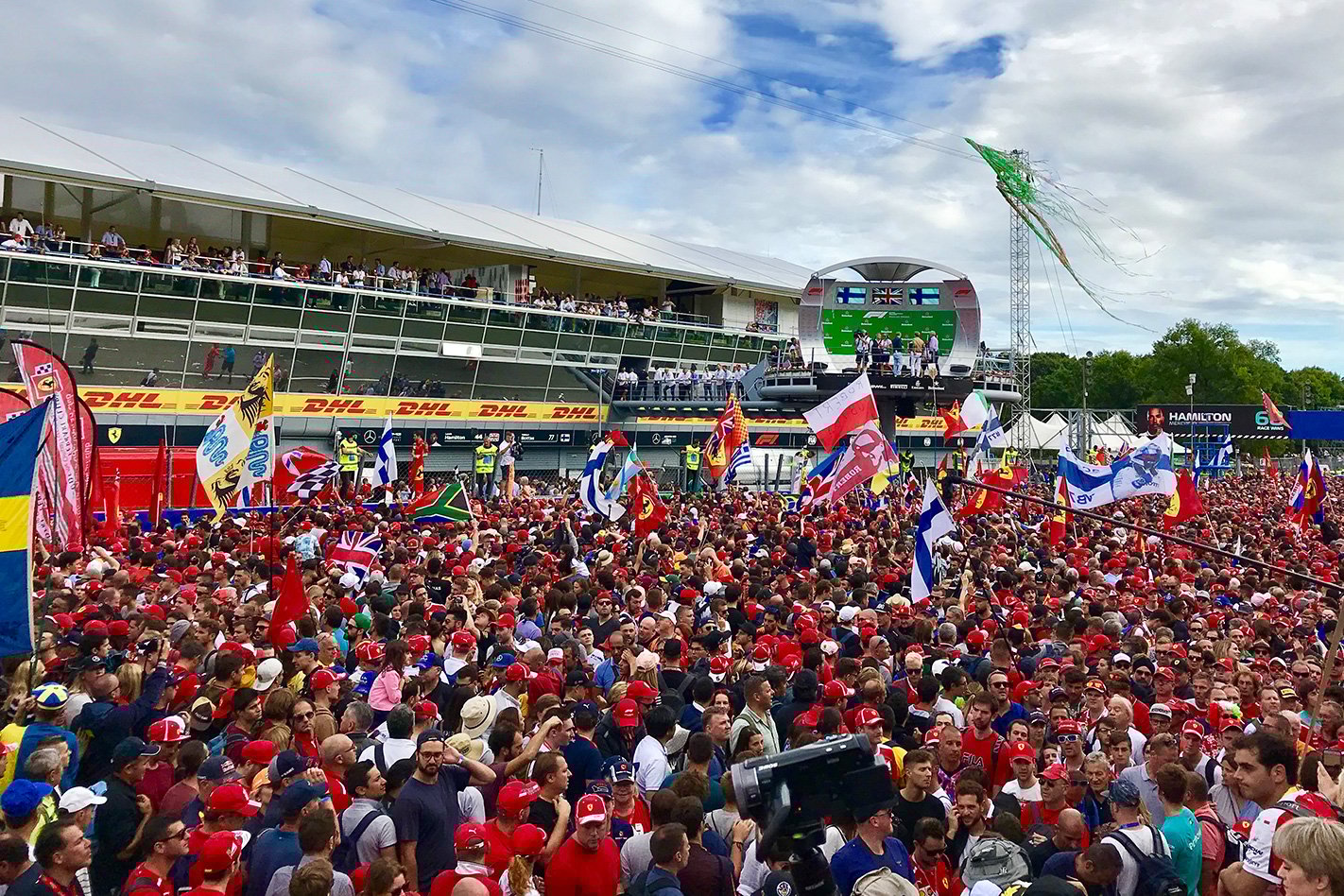
It’s what follows that’s the real highpoint, however. With the race complete, thousands of fans flood onto the circuit and rush to take part in one of the best podium ceremonies on the F1 calendar. The podium juts over the track, allowing fans to get incredibly close to their heroes, providing you’re quick enough to get to the front. People run and shout, some trip and fall in the rush, the electric atmosphere cloaked in a red mist as flares spew forth and Ferrari flags fly.
It’s a heaving mass of humanity; an orgy of different nationalities, languages and allegiances brought together by a love of motorsport, metal and horsepower. I can only imagine what it would have been like if Ferrari had won. Bloody Hamilton.
The look on the backwards-hat boy’s face is unforgettable. He cranes his neck, searching for the import at the traffic lights. The gentle wooshta-gurgle-gurgle of a blow-off valve and the language of a pod filter have him puzzled.
This feature was originally published in a previous issue of MOTOR magazine
Nothing there but a Monaro V2, and it’s humming a familiar Gen III tune. He can’t pick it and leaves the lights in a flurry of chirping 185s. We drive casually away, stealth mission complete.
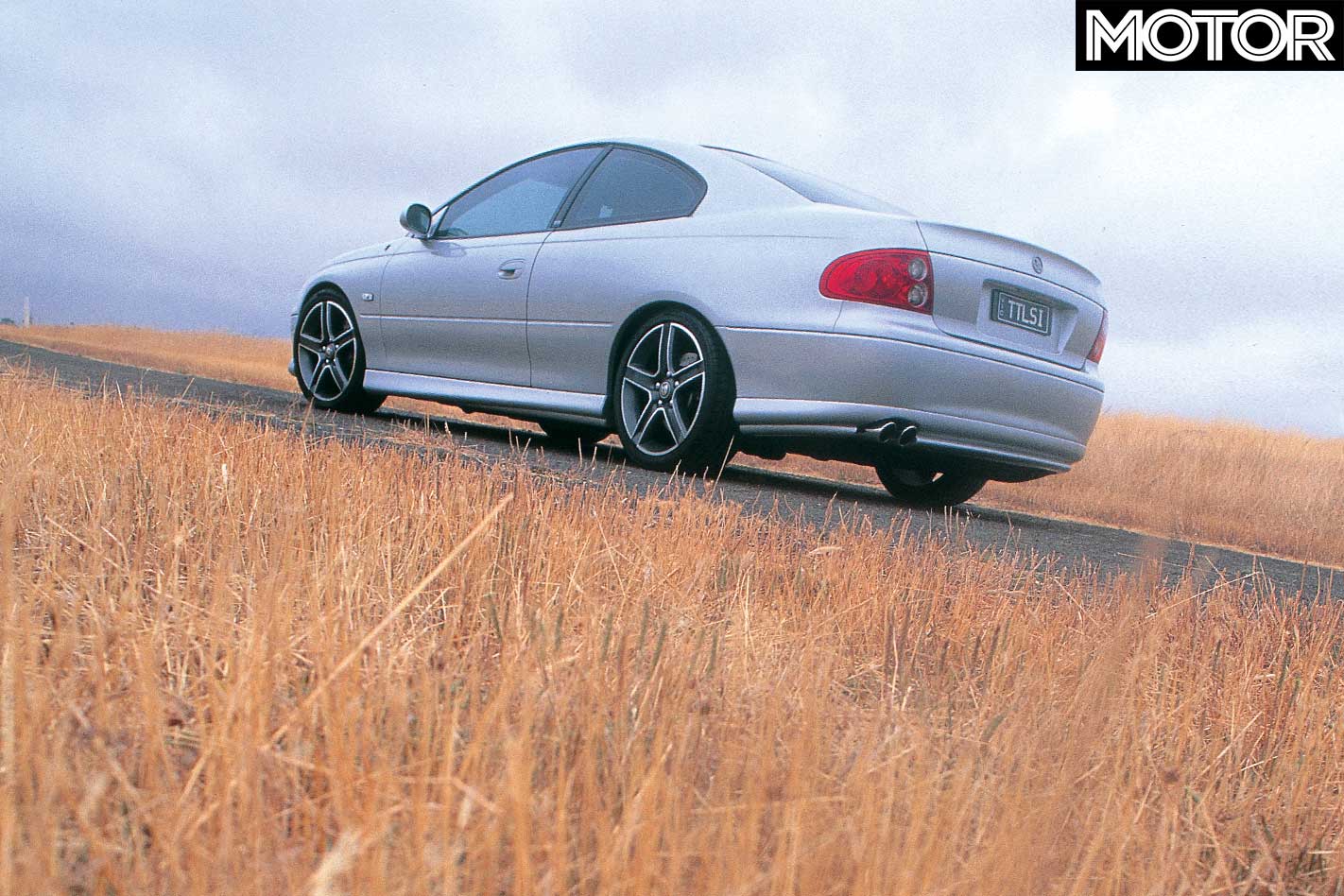
In a sensible melding of muscle car meets Fast and the Furious, Vickery’s company, Amberley Autos, has engineered its twin-turbo Gen III package to give the best of both worlds. Take exhaust restriction.
It has been deliberately kept down by fitting larger-than-optimum turbine housings to ensure that low-rpm torque (under 2000rpm) is at least the equal of a stock car. But compressor selection ensures that, at a lowly 0.7 bar (10psi), more than 450kW is on tap at the back wheels. Factoring in a 17 percent transmission loss, that’s around 550kW at the crank.
Forget about a giant slap in the back of power in the mid-rev range. “We made sure the way the power comes on in this car isn’t too savage,” says Vickery. “There is no point in having this kind of power if it only smokes the tyres, but the reality is that keeping traction in both second and third gear can be difficult at times. Think of this combination as being a massive capacity extension on top of a stock Gen III, and understand that this is how it drives.”
The turbochargers in Vickery’s conversion are similar to those on the legendary Nissan GT-R. They share the same brand and nomenclature, being Garrett T28 basic cores, with the Gen III using much larger housings than the Nissan to avoid any exhaust-gas constipation. It’s the mounting position, though, that gives this kit its Stealth-fighter feel.
Not being overly flushed with room in the Monaro engine bay, the turbochargers need to be mounted low, close to the chassis rails and out of conspicuous sight. With both of them packed against the side of the aluminium engine block, you need to bend over the engine covers and look at the ground to catch a glimpse.
With a turbocharger in sight, its discharge pipe can be followed to where it joins that of the other turbocharger before they both exit into a large front-mounted air-to-air intercooler.
The number of factory components that remain is testament to the smart engineering behind the package. The stock Gen III engine-management system, for example, is retained. Forget about ditching it and starting from scratch; instead the factory code has been massaged to accept turbo boost pressure.
To keep the computer away from the heat generated under the bonnet, it lives in the original factory airbox. The box, made obsolete by the twin-turbo system, provides a cool, dry environment for the electronic brain.
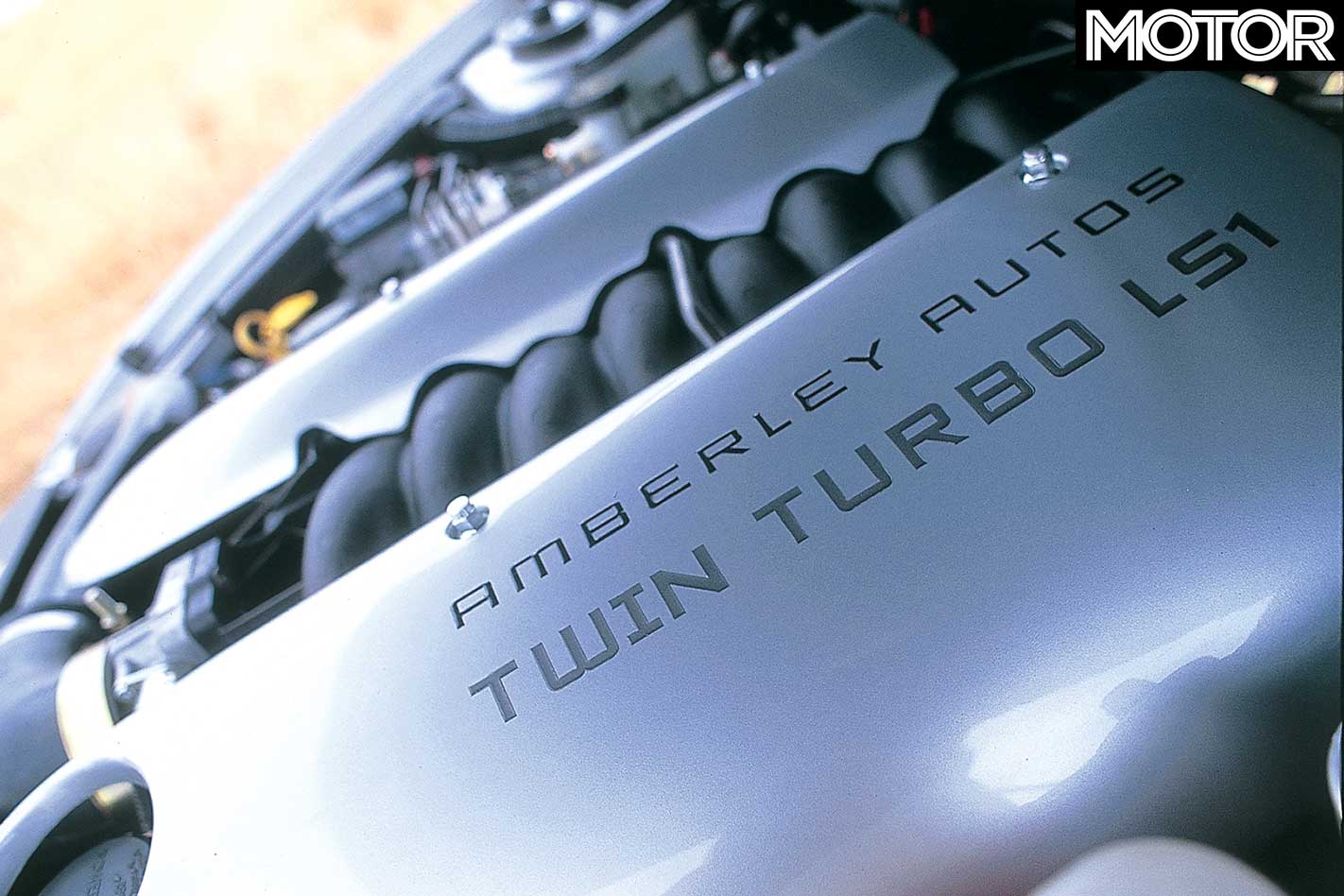
You could jump to the conclusion that the engine must have been modified, but fitting the turbo kit requires only one internal mechanical change. The valve springs need to be swapped over for higher-rated units. Vickery found this out the hard way.
“We wondered during initial testing why the power graph would suddenly dip high in the rev range and it had us stumped for a while. Changing to a boost-friendly valve spring kept the power delivery linear all the way to 6,200rpm. They’re now a standard fitting.”
The rest of the engine — the important bits, like rods, pistons and crankshaft — is from the factory. Vickery has faith in the General’s basic engineering. “A lot of people underestimate just how strong these engines are,” he says. “The conrods, for example, will take over 600kW, and the pistons, if the engine is tuned right, should last as long as any other mechanical component. Sure, it’s possible to hurt the engine, but our conservative tuning approach should give a twin-turbo example a long and happy life.”
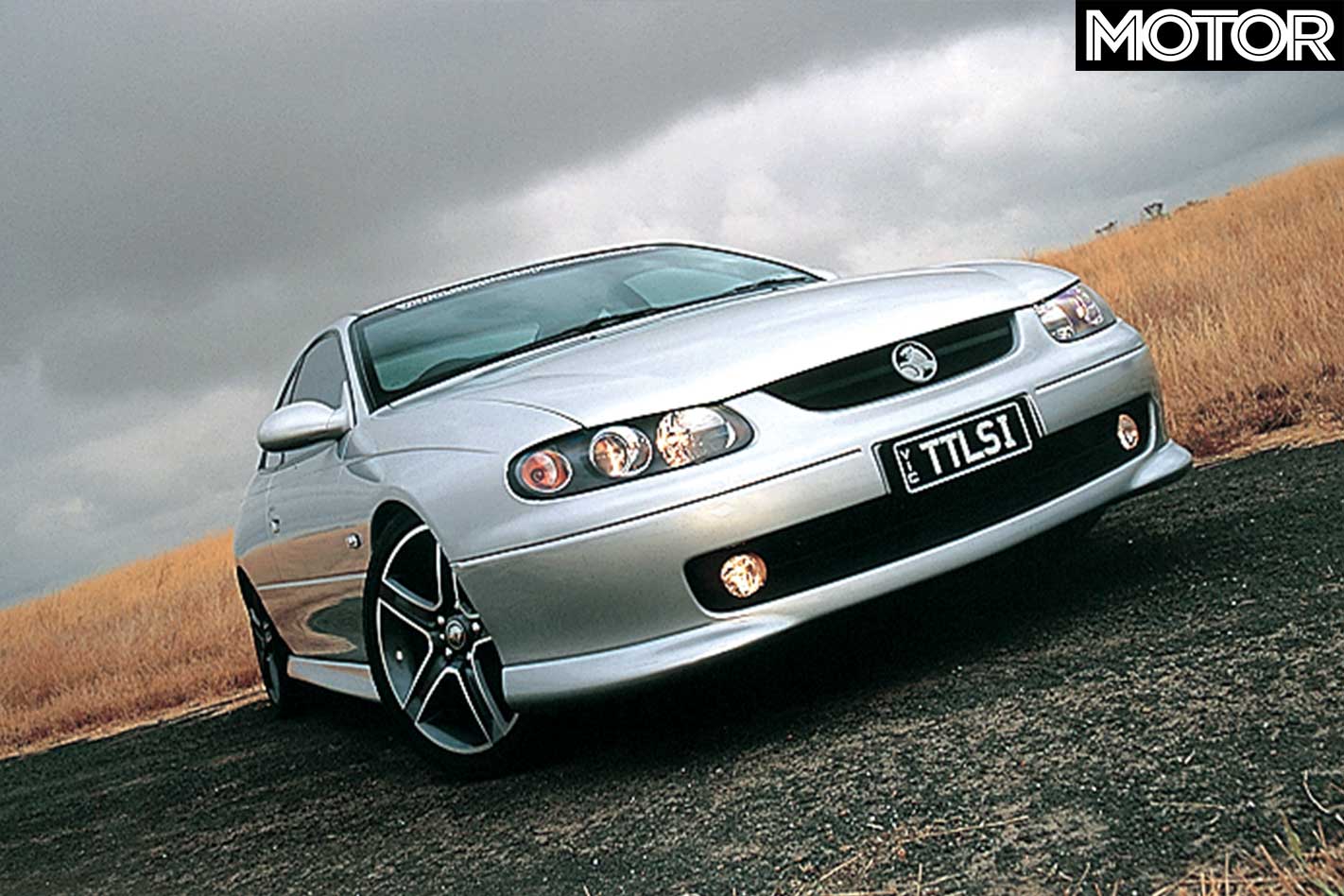
Vickery will be offering two different twin-turbo kits for the Gen III engine, with a “low-end” Stage I 0.4 bar boost kit taking a full working week to fit, costing $16,000 and delivering 450kw at the engine. Looking for a bit more? Then get straight into Stage II, run the full 0.7 bar boost pressure and make 550kw. Don’t forget to bring an additional $3,000.
At this stage you may well be wondering what it’s like to drive. The first impression is that the car is stock, totally stock. A muted exhaust note due to the twin turbos sitting in line gives nothing away.
Vickery’s Monaro could for all the world be another 260kW GTO. Open the throttle, though, even slightly, and the world turns upside down. The beauty of turbocharging is that even under small throttle openings, boost still builds.
Rolling on the throttle in third or fourth gear for a conventional open-road overtake results in a massive power surge that pushes you hard back in the seat. It’s a cliché, but we actually needed to stop during the road test to move the driver’s seat closer to the wheel to keep the controls in non-slip reach.
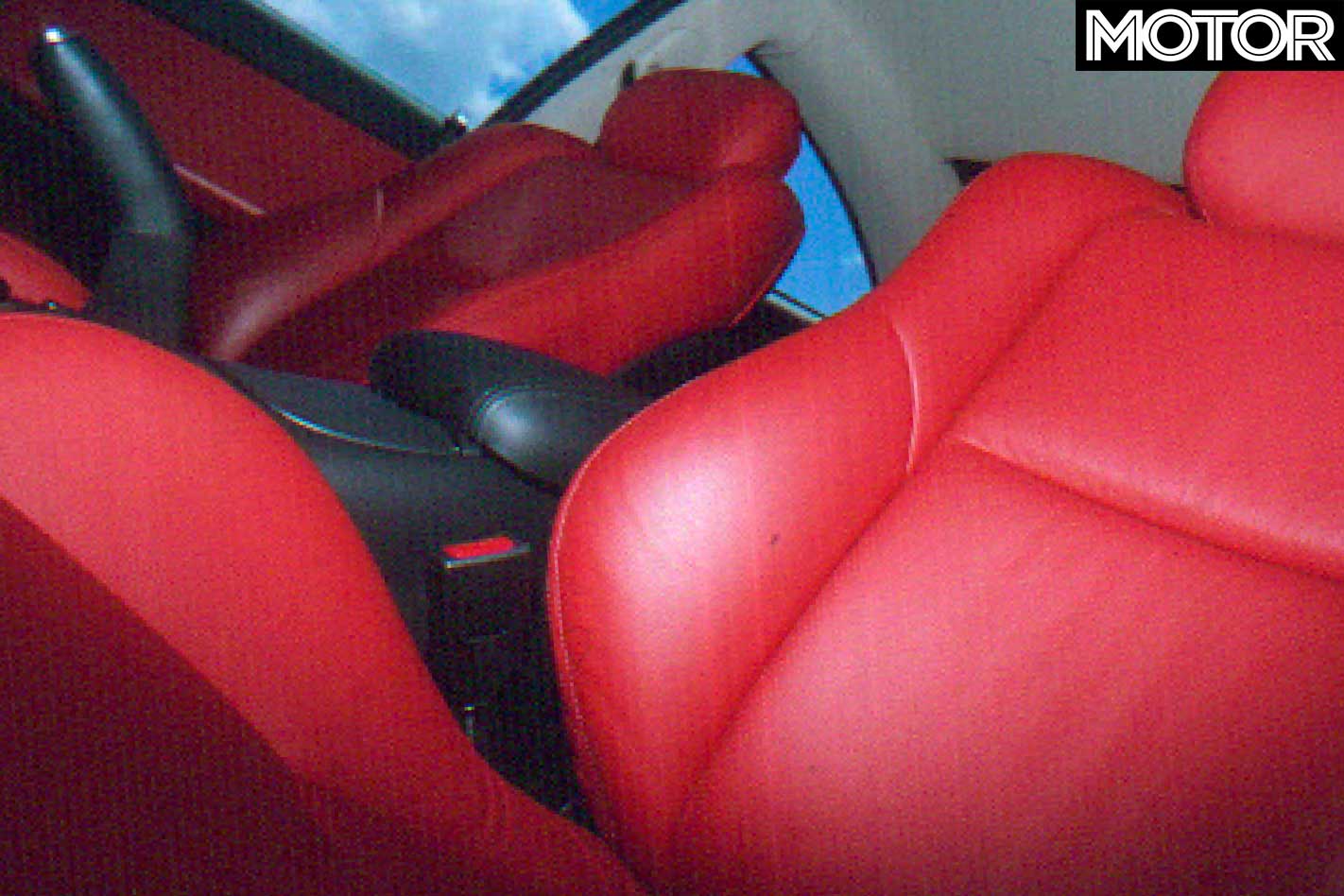
Passengers struggle for grip as much as the tyres, finding themselves making desperate lunges for the Jesus handles, and most of the time failing. You can toy with them at will.
Slowing acceleration in the lower gears is as easy as applying more throttle — by breaking the tyres’ contact with the ground you’re instantly losing drive.
At 0.7 bar, you need to be constantly aware of this and modulate the throttle to stop smoking the hides. It might not be the purest of driving approaches, nor the quickest way to accelerate, but sending twin-turbo smoke signals is fun.
Using the selectable lower-boost setting (0.4 bar) tames the beast markedly, but you still need to be constantly aware that this is a hugely powerful car that can bite the unwary.
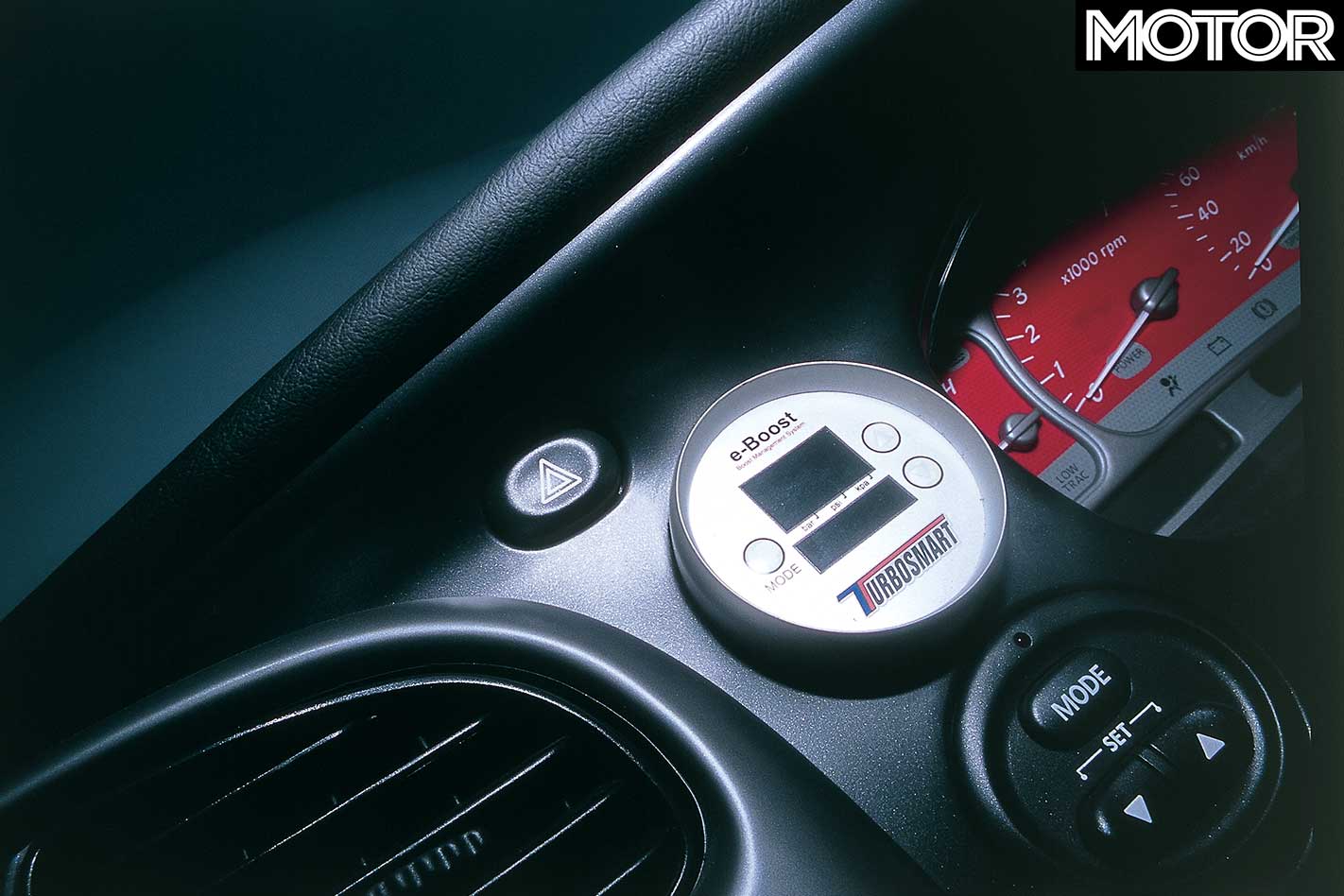
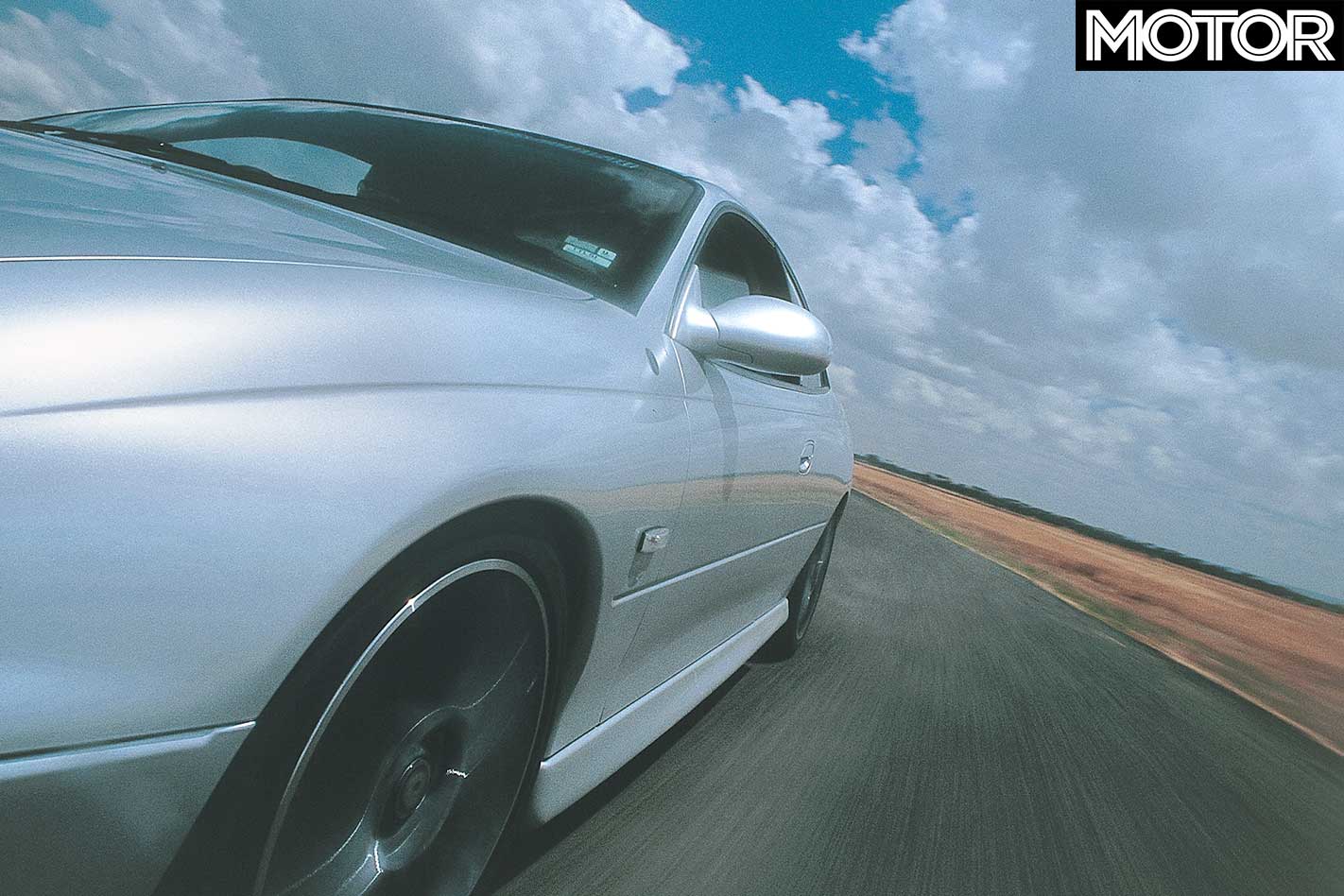
Cornering presents a whole new challenge. The high-speed turn onto the runway at Avalon Airport, near Melbourne, highlighted the differences between the twin-turbo Monaro and a conventional example. While the factory car could be held almost flat, the twin-turbo needed to be light-footed to stop the rear end stepping out.
Such is the effect of over 700Nm of torque available over such a wide rev range. Top speed is a genuine, measured 286km/h.
Say it quickly, and a “five-point-seven-litre twin-turbocharged all-alloy vee-eight” sounds like a diabolical exercise in mechanical overkill. But Vickery’s product is much more. It’s a seamless integration of boosted technology into a pushrod, buried-cam world. And the casual observer doesn’t see anything more than a factory model.
This kit is a winner.
FAST FACTS Amberley Autos Stage II Twin-Turbo Monaro
BODY: 2-door coupe DRIVE: rear-wheel ENGINE: front-mounted 5.7-litre pushrod 16-valve twin-turbo V8 POWER: 550kW at 6,000rpm TORQUE: 750Nm at 3,000–5,000rpm BORE/STROKE: 99mm x 92mm COMPRESSION RATIO: 10.0:1 WEIGHT: 1675kg POWER-TO-WEIGHT: 328kW/tonne TRANSMISSION: 6-speed manual SUSPENSION: macpherson struts, coil springs, anti-roll bar (f); semi trailing arms with toe links, coil springs, anti-roll bar (r) L/W/H: 4789mm/1841mm/1367mm WHEELBASE: 2793mm TRACKS: 1579mm (f), 1597mm (r) BRAKES: HSV Ultra Premium WHEELS: HSV GTO TYRES: Bridgestone SO3 FUEL: 75 litres, PULP PRICE: $88,000 (as tested)
Taking it to the Limit
Rob Vickery is something of a cult figure in the aftermarket tuning game. Starting out with a VS V8 utility, he decided to build a high-horsepower EFI car for dyno competitions and a bit of drag racing. “I started out with a supercharger and, mate, in its day I made some pretty good power with the thing. It turned a lot of heads,” he says.
But the temptation to use turbochargers was too much to resist. “When the opportunity arose, we pulled the VS off the road and built it a decent Holden stroker engine and strapped a pair of big Garrett turbochargers to the side of it.”
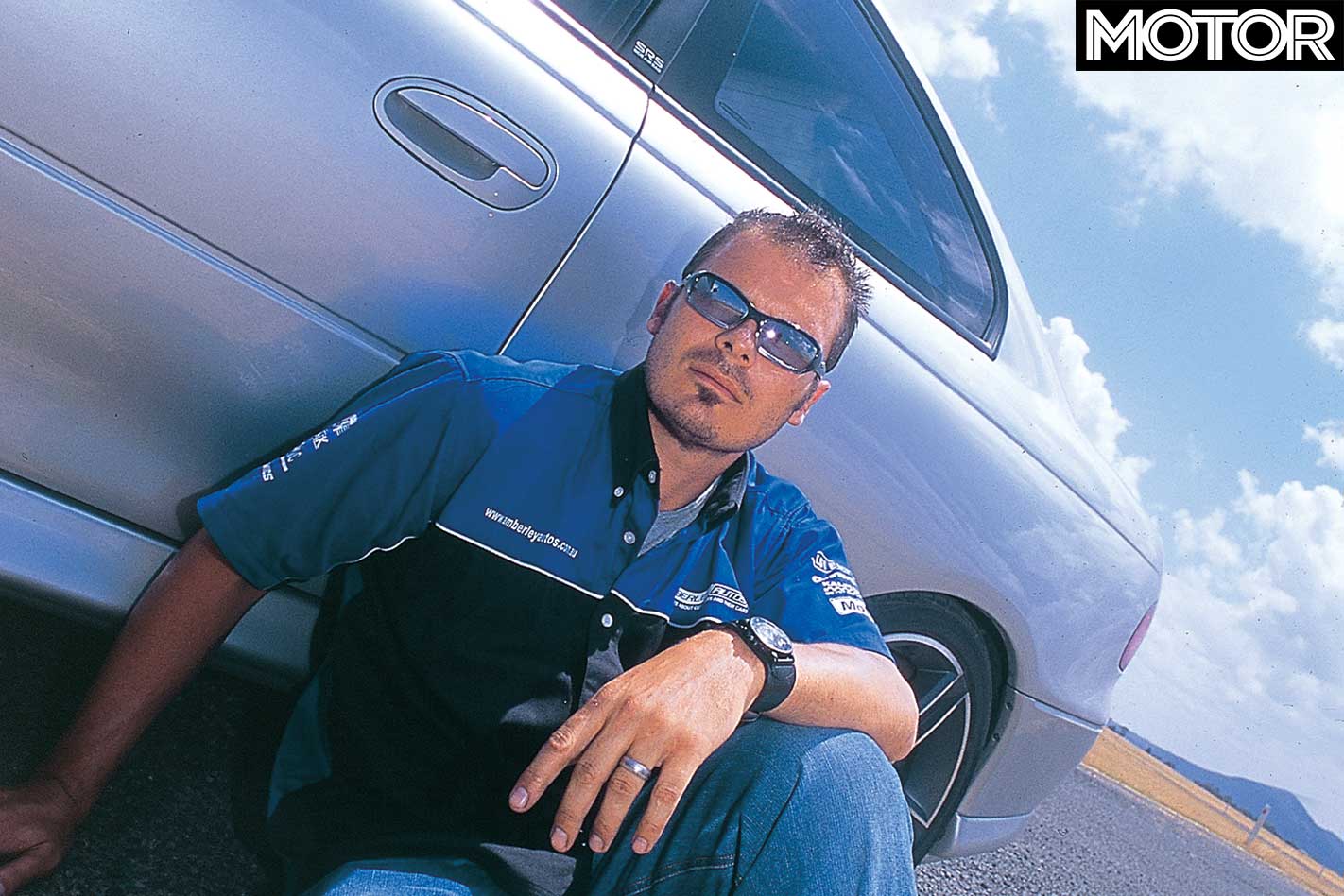
It was more involved than it sounds and the set-up and tuning of his own car laid the groundwork for Vickery’s understanding of turbocharging’s potential.
“It’s still my old favourite, the VS. It has taught me a lot and won a couple of trophies along the way. Winning Horsepower Heroes at the Summernats was a great thrill.”
How much power does it have, then? “Well, it depends on how much boost I give it, but 850kW at the wheels is pretty easy.”
The next question — how much power can a stock engine take before it goes bang? — does not have a simple answer. Any factory engine has limits, ranging from its basic metallurgy through to rotation load, and those limits have to be reached to find out what they are.
The Gen III will take a lot of boost and make huge power before it fails, says Vickery.
“The big killer of any engine is revs, which is why we keep the rev limit on our twin-turbo kit at the stock 6,200rpm,” he says. Vickery is frank about the failures sometimes seen in boosted engines.
“Tuners need to be conservative when adding boost to a normally aspirated engine. They were never designed for it, so extra care is needed to avoid piston-smashing detonation. My advice is not to go for the last kilowatt, but to set the system up around the worst possible case scenario running with low-octane fuel.”
And what’s the limit for the Gen III?
“We don’t really know yet. We haven’t broken an engine. At a guess, 650kW.”
There was a time when getting a puncture simply meant pulling over and swapping the flat tyre with the spare before merrily driving off again and getting flat repaired as soon as convenient.
However, fewer cars come are coming with full-sized spare wheels, including many with no backup at all, meaning that any fix will only be good enough to get you to your nearest tyre fitter. Alternatives to conventional spare wheels include:
SPACE SAVER SPARE
Also called Temporary Use Spare Tyre (TUST), Space saver spare wheels are narrower than the rims fitted to the car so they take up less boot space.
To stop people from fitting and forgetting them, space savers are painted garish colours such as flouro orange or yellow.
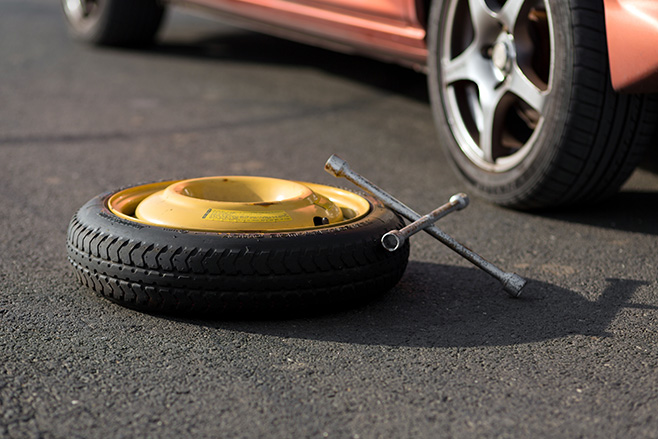
Space savers are only intended to be a temporary, emergency replacement, allowing you to get your car to a repairer. Because they’re a different size to other wheels they will affect the way your car handles meaning you are not allowed to drive quicker than 80km/h.
They also have a basic, shallow tread meaning they won’t be as effective in wet weather and will wear quicker, which limits the number of miles you can travel on them.
INFLATOR KITS
Some carmakers are doing away with spare wheels all together and placing single-use tyre inflator kits in the boot. Such kits usually feature a pressurised container with tyre sealant that inflates and temporarily seals the tyre, or a battery powered air compressor and sealant tube.
The trouble with inflator, or puncture repair, kits is they only work with small punctures, and are no good if your tyre has a significant gash or is shredded.
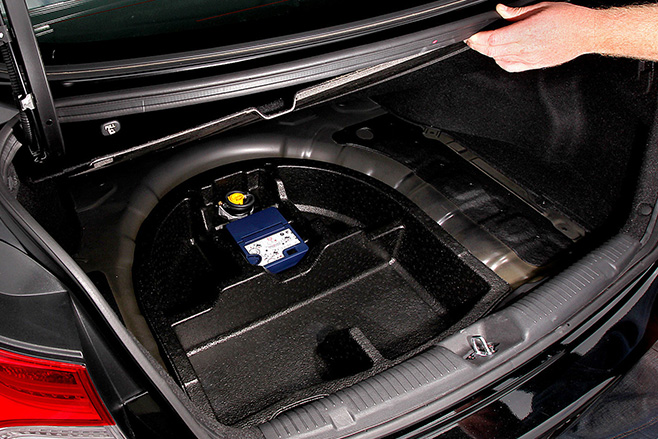
When you can use it to repair your tyre, they’re an even more temporary solution than a space saver, which isn’t great when the puncture occurs on a weekend when all the tyre stores are closed.
The kit can only be used once, meaning you’ll have to buy a new one which can cost a few hundred dollars. In many cases the sealants have a use-by date meaning you’ll have to replace them even if they haven’t been used.
And in most cases, you’ll have to replace the tyre even for smaller punctures. This means a puncture could mean having to buy a new tyre and inflator kit, which for some cars and SUV could end up costing you around $1000.
RUN FLAT TYRES
Some premium car makers are adding run-flat tyres as standard equipment instead of a spare wheel. Once punctured, run-flat tyres can continue to be driven on. But while this saves you having to replace the tyre, it doesn’t mean you can continue driving normally.
Like spare-saver wheels, run-flat tyres are limited to certain speeds when punctured, generally about 80km/h.
A punctured run-flat won’t feel as obvious as a normal flat tyre, but you’ll be alerted by a tyre pressure alert light on the dashboard. If your car is not equipped with this you shouldn’t fit run flats.
The biggest problem with run flat tyres is they’re not usually repairable meaning you’ll have to fork out for a new tyre which
How to change a conventional flat tyre
SAFETY
Don’t make a blown tyre worse by risking more damage to your car, or potentially to yourself, by stopping in the middle of the road. Your first and most important step is to ensure your safety. Pull the car over to the side of the road, and out of the way of traffic. Like any road-side problem, hazard lights should come and you should put your handbrake on and your car in park (or in gear if you’re in a manual).
EQUIPMENT
Once your car is safely on the side of the road, it’s time to get the equipment from the back of your car. If your car comes with a spare tyre, either full size or space saver, you’re took kit should include a wheel brace with a wedged side, a jack and a jack handle.
You’ll also need to familiarise yourself with hub caps (if your car has them), and wheel nuts.
These days, some cars also feature Run Flat Tyres or a puncture repair kit so your tool kit will be quite different – make sure you’re familiar with what your car offers before purchase.
When changing your tyre, make life easier by laying everything out next to your vehicle.
PREPARATION
Before you get to the nitty gritty part of replacing a tyre, there are a few initial steps you need to take.
- If your tyre comes with a hubcap, that needs to come off. Using the wedge side of the wheel brace, loosen the hubcap and pull it off so you can access the wheel nuts.
- Next, using the brace, loosen nuts by twisting them anti-clockwise. You don’t need to take them off, just loosen them enough to make life easier later. One twist anti-clockwise should do. This can be the most difficult part.
This is probably the most daunting part of a tyre change, and it’s at this point it’d be a good idea to make friends with your owner’s manual.
- Find the jacking point (use the owner’s manual because each car can be different.)
- Using your hands, wind up the jack to meet the jacking point.
- Then it’s time to connect the handle and give your shoulders a bit of a work out by jacking up the car. Make sure you lift it high enough to still leave space for the inflated tyre.
- Once the car is off the ground, it’s a good idea to place the spare tyre under the car to protect you and the car if the jack fails.
- Now it’s time to take the wheel nuts off. Keep in mind, removing the wheel nuts can be the most difficult and labour intensive part of changing your tyre so if you haven’t loosened them properly earlier, you’re in for a bit of fun now.
- Pull the flat tyre off the car and use it to replace the new tyre currently sitting under the car. You still want protection if the jack fails.
- Line up the centre holes of the new tyre with the studs and push it on to the car.
- Then, by hand, put all the nuts onto the tyre and tighten with fingers to stop them falling off.
- Then it’s time to remove the ‘safety tyre’ and let the jack down before you tighten the nuts.
- In a star pattern, tighten the nuts as much as possible.
- Pop the hubcap back on and you’re done.
The Stelvio is everything you could have expected from Alfa Romeo’s first SUV, with the iconic Italian brand compromising little in its effort to inject its distinctive style, performance and handling into a high-riding wagon.
Based on the Giulia sports sedan, Alfa’s mid-sized five-seat SUV will have a Jekyll-and Hyde line-up starting with the entry level Stelvio four-cylinder petrol and diesel variants, through to the more powerful mid-spec Ti and the demonic twin-turbocharged V6 Stelvio Q (Quadrofiglio) that will command a six-figure price rag when it arrives here later this month.
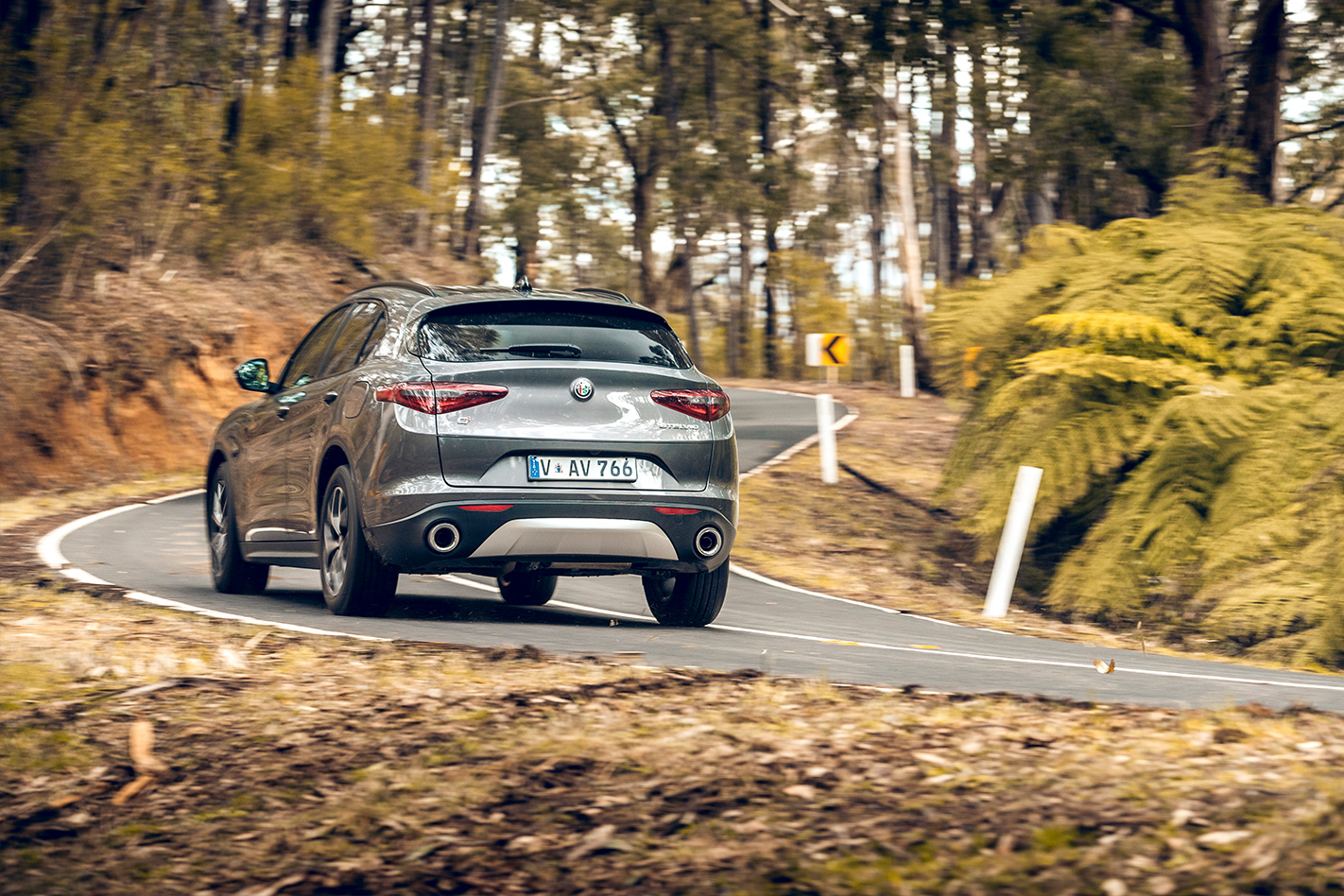
Though the range-toppers will justifiably command the attention of enthusiasts, the more accessibly-priced four-pots will pique the interest of car-buyers. How does Alfa Romeo’s first-ever SUV rate? We borrowed a diesel-powered example to find out.
VALUE
Priced at $67,900, the Stelvio Diesel holds up the bottom of the range along with the $65,900 Stelvio Petrol.
However spending just $6000 on the First Edition Pack, which equipped our test car, thrusts the base Stelvio into premium territory by adding more than $10,000 worth of desirable features that enhance driving pleasure and resale value.
The Stelvio Diesel First Edition we tested also had Vesuvio Grey metallic paint ($1300), which pushed the retail price to $75,200 all-up.
The 2.1-litre diesel is very economical, with an official combined fuel-consumption rating of 4.8L/100km. In real-world conditions during our week-long test that figure crept up to about 7.5L/100km – still an admirable result for an SUV.
You’ll only have to trouble the service department every 20,000km or once every 12 months, with capped-priced servicing setting you back $395, $695, $1295, $695 and $1395 for the 20,000km, 40,000km, 60,000km, 80,000km, 100,000km services respectively.
The Stelvio comes with Alfa Romeo’s three-year, 150,000km warranty – par for the course in the luxury market.
STANDARD FEATURES
The all-wheel-drive Stelvio Diesel comes with autonomous emergency braking, lane departure warning, blind spot monitoring, front- and rear-parking sensors, rain-sensing wipers, dusk-sensing, bi-Xenon headlights, hill descent control, and DNA (dynamic, natural and all-weather) drive modes. A puncture repair kit sits under the boot floor in place of a spare tyre as standard, though a space-saver is available at extra cost.
Creature comforts include a 7.0-inch infotainment screen, satellite navigation, dual-zone climate control, leather seats, power adjustable front seats, push-button start, paddle shifters, keyless entry, powered tailgate, eight-speaker sound system, and digital radio (DAB+).
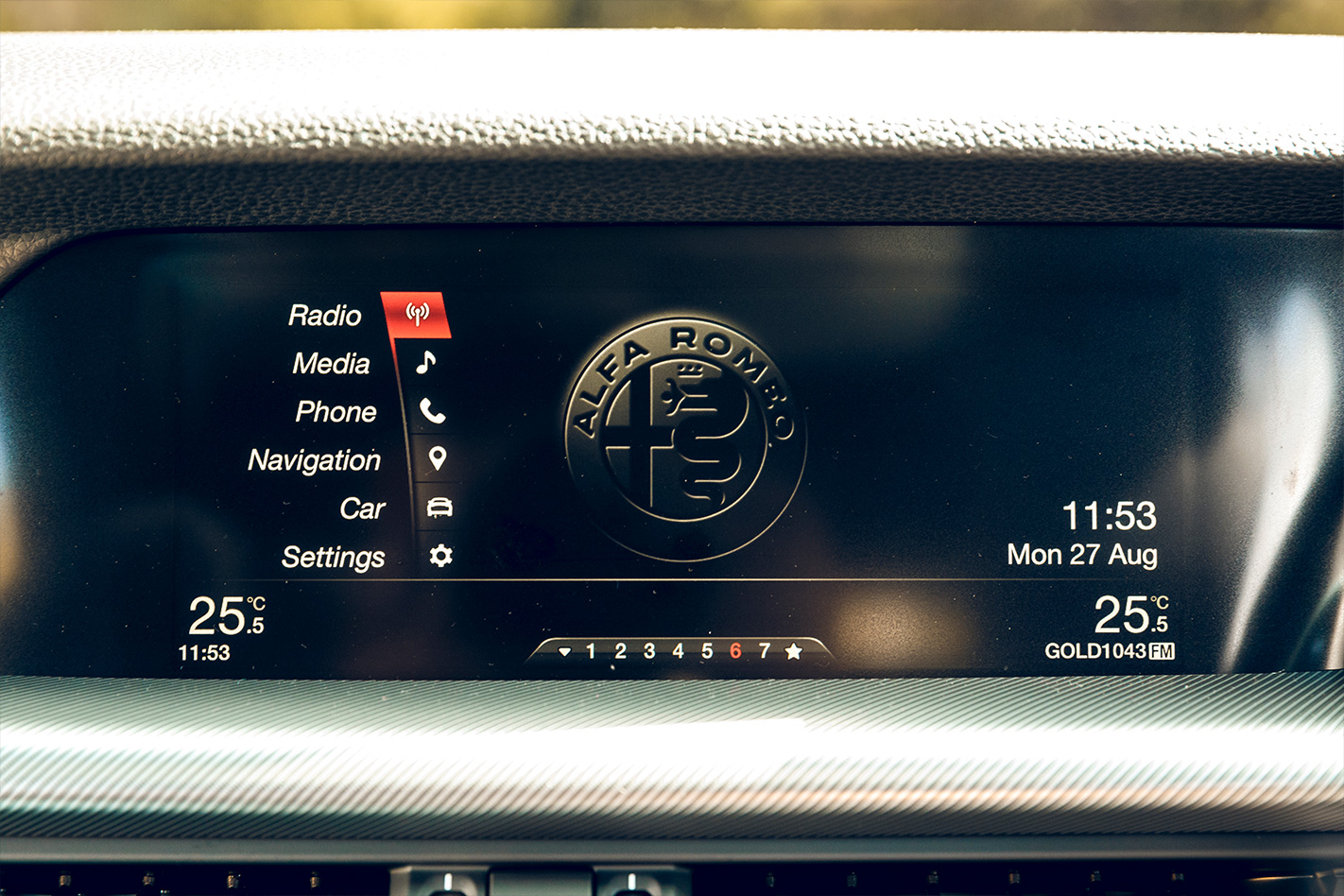
While it’s a decent standard features list, there isn’t much there that you won’t already find in mainstream SUVs costing $20,000 less. We’re talking about features like adaptive cruise control, lane-keep assist, a head-up display, rear-cross traffic alert, heated front seats, and Apple CarPlay/Android Auto smartphone pairing.
The satellite navigation display is also relatively basic, with a less-than-intuitive control interface that proves clunkier to use than systems like BMW’s iDrive or Audi’s MMI.
For an extra $6000, the First Edition Pack brings some much-needed wow factor to the entry-level Stelvio spec, by adding bespoke 19-inch alloy wheels, a two-piece panoramic sunroof, 14-speaker 900W Harman/Kardon sound system, ambient interior lighting, heated leather front sports seats, heated leather sports steering wheel, aluminium interior trim accents, aluminium sports pedals, red brake calipers and gloss black window surrounds. You also get Koni adaptive rear suspension, versus the non-adaptive dampers in the standard Stelvio Diesel.
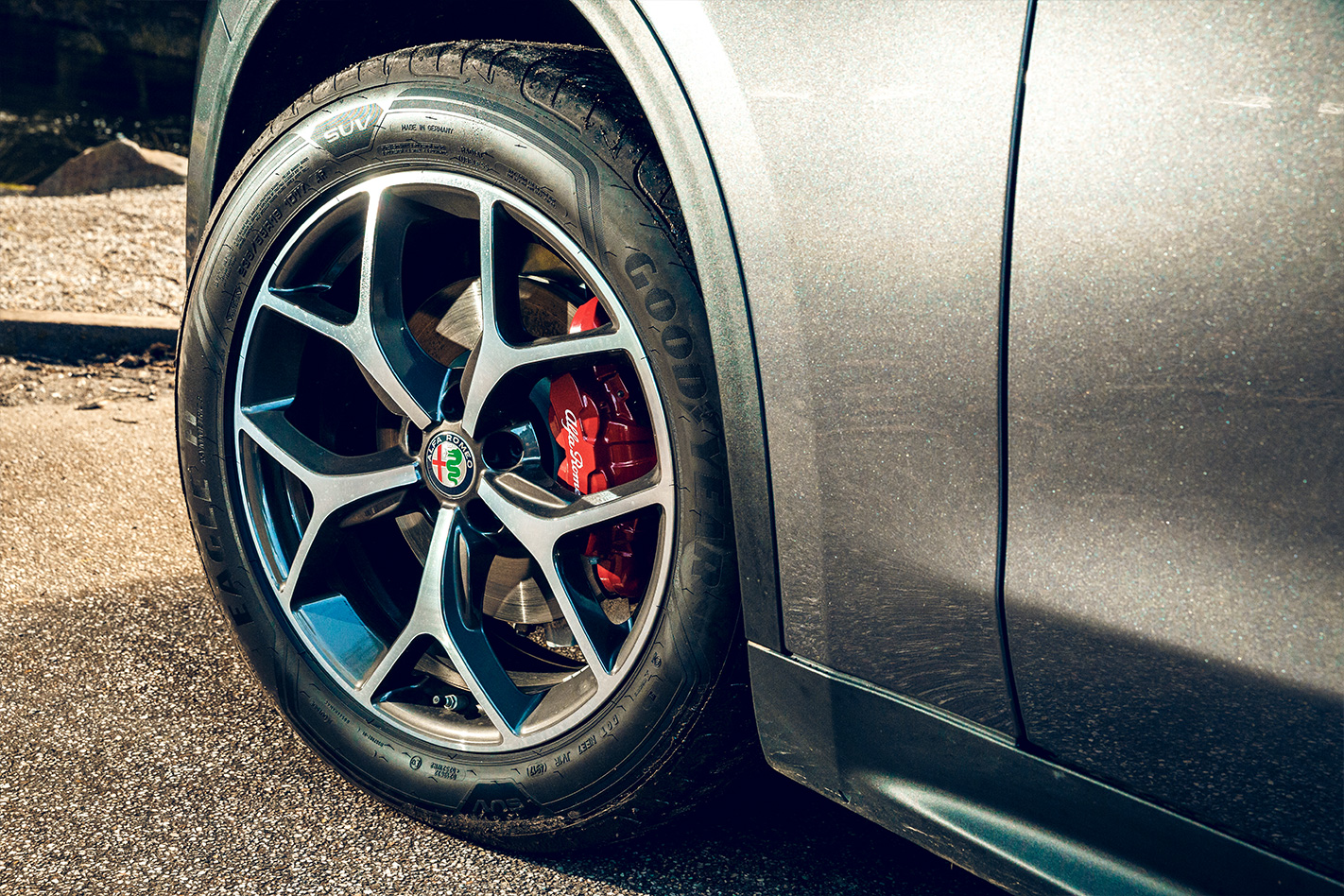
That’s a lot of kit for six grand, especially when you consider the panoramic sunroof and Haran/Kardon sound system alone are worth $2400 and $2200 on their own.
SIZE
The Alfa Romeo Stelvio is a five-seater medium SUV.
Measuring 4687mm long by 1903mm wide, and weighing in at 1660kg, the Stelvio Diesel is average sized for its class, but feels incredibly nimble.
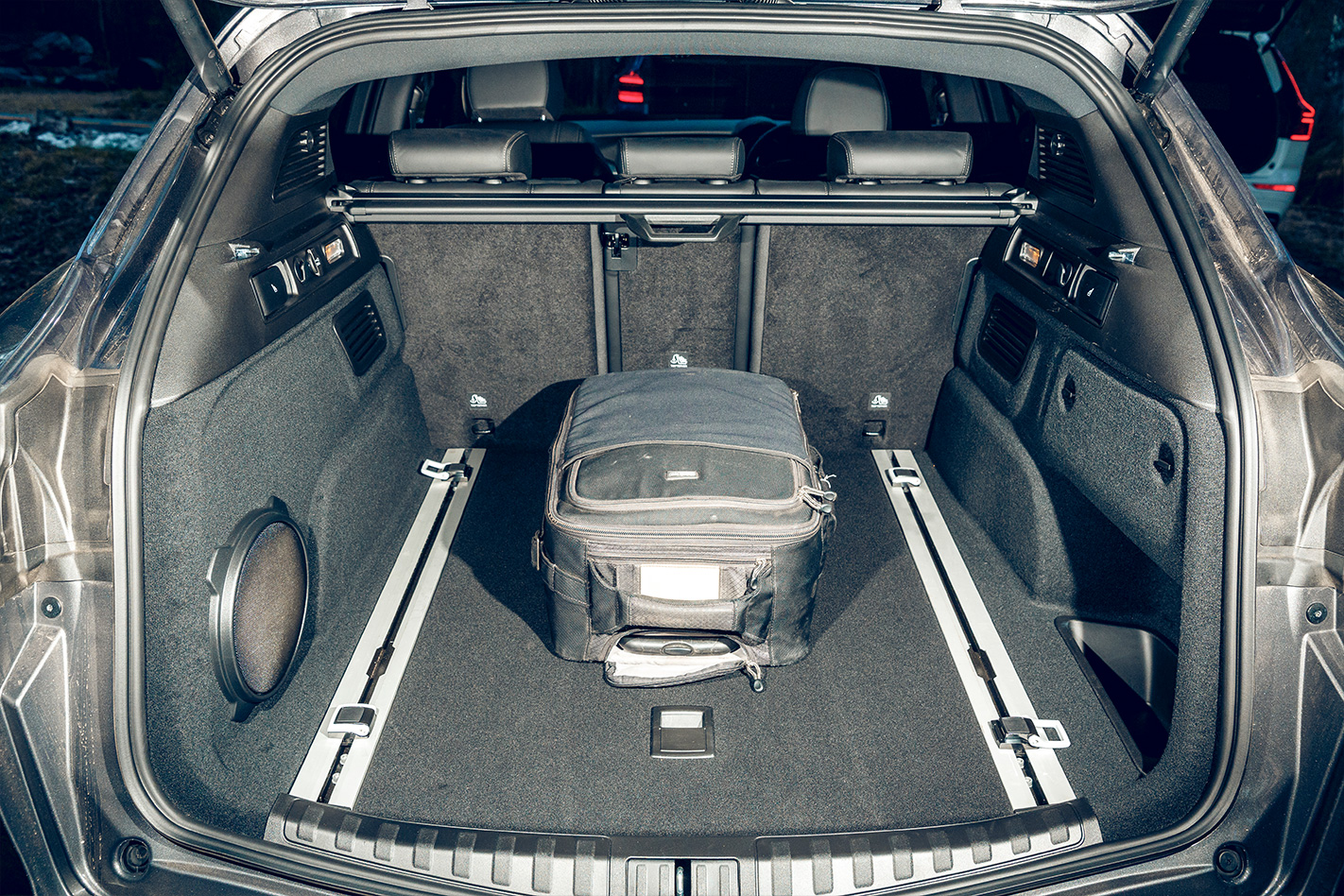
The boot volume behind the second row seats is a reasonable 525 litres with good depth between the tailgate and seats. Tick the box for the space-saver spare and seats-up capacity drops to a still-decent 499 litres, while folding the rear seats down expands capacity to a handy 1600 litres.
SAFETY
The Stelvio Diesel was awarded a five-star ANCAP safety rating in March 2018 thanks in part to its active safety features, including autonomous emergency braking (AEB), lane departure warning, and blind-sport monitoring.
It’s also equipped with six airbags, seatbelt reminders and ISOFIX child seat anchors for each of the three rear seats.
One downside is its reversing camera display, which is basic and only takes up half of the 7.0-inch screen’s real estate, thus making it difficult to spot smaller obstacles. When many competitors now sport 360-degree surround view cameras on far larger screens, it makes the Stelvio look somewhat behind the times.
COMFORT
The interior of the Stelvio Diesel First Edition is typically Alfa Romeo, with attractive leather sports seats and an elegant and uncluttered dash design.
Alfa has gone for a minimalist approach, with analogue gauges and old-school air-conditioning controls, but while it would look great in a hatchback it seems a little too basic for a premium SUV.
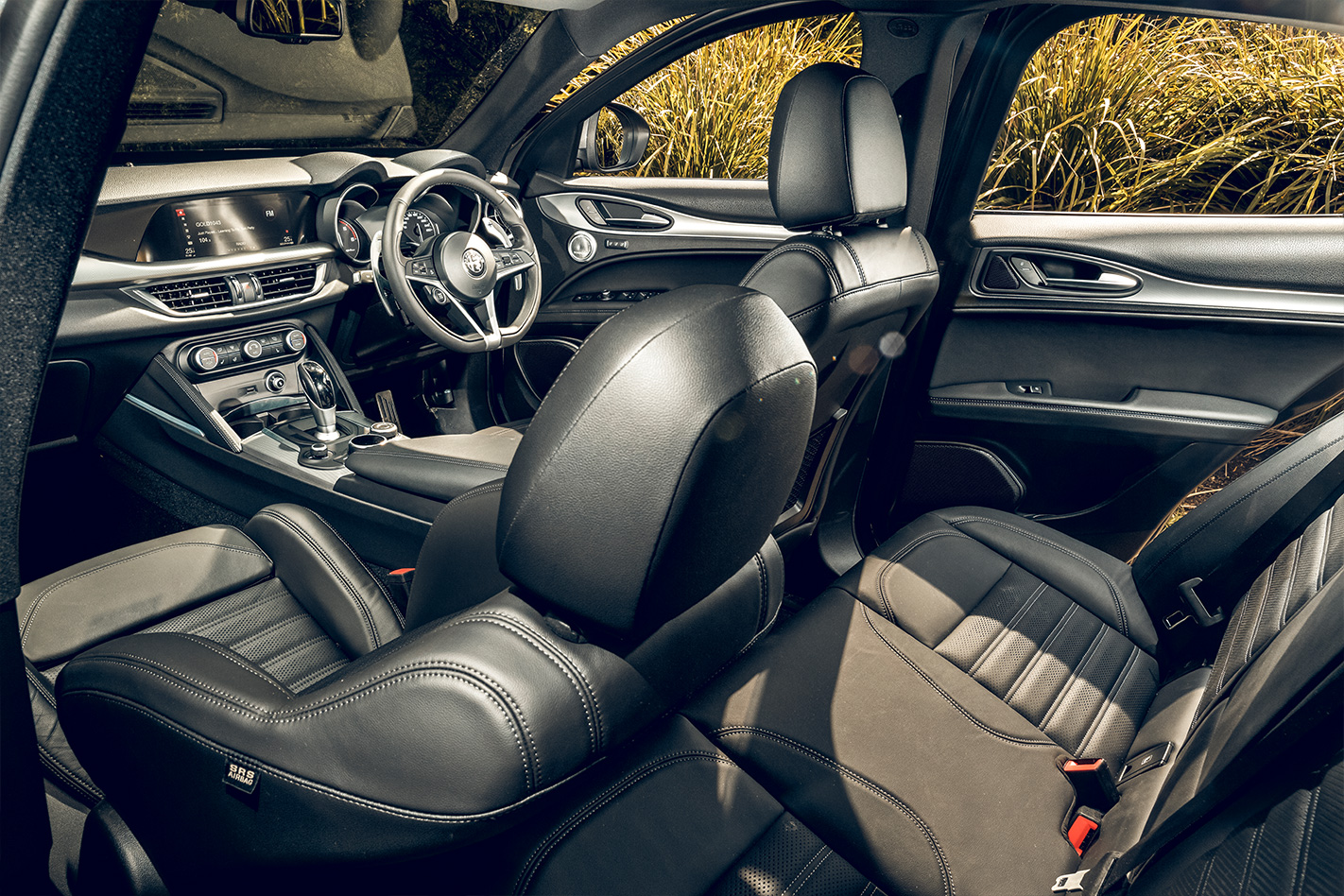
That said everything is sensibly laid out, including the steering-wheel buttons that include a simple cruise control interface. The sports steering wheel itself looks great, with the long metallic paddle shifters adding further visual and tactile appeal.
The front sports seats are very comfortable with great back support, soft headrests and adjustable lumbar, side bolstering and under-thigh support.
The rear-seats aren’t quite as plush. Legroom is tight for a medium SUV, and the swept-back roofline and panoramic sunroof won’t do taller passengers any favours. The window line also sweeps high, which might make it difficult for smaller passengers to see outside. It’s adequate for shorter trips, but it would start feeling a little claustrophobic for a couple of adults for anything longer than an hour.
The rear door opening is also tight, which makes entry and egress a tad difficult for less abled people and makes installing child seats a bit of a chore.
One the plus side, rear-seat passengers get their own air vents and two USB ports mounted at the rear of the centre console.
ON THE ROAD
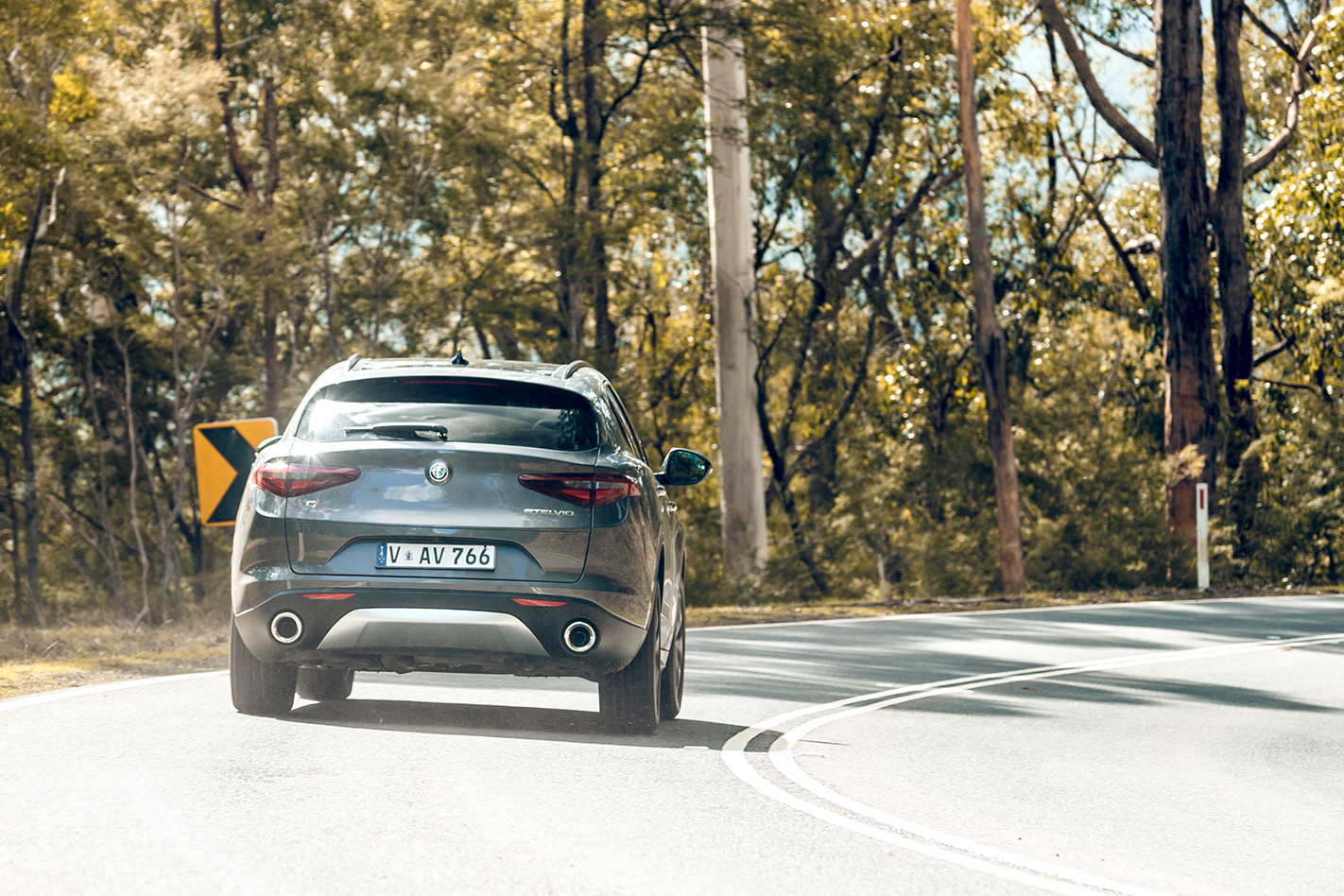
This is where the Stelvio Diesel provides bang for your buck. Its 1671mm height is pretty low for an SUV resulting in a low centre of gravity that allows for car-like cornering.
The Koni adaptive suspension that comes with the First Edition pack offers a more composed ride than the standard kit, and though slightly firm in its initial bump response it gives way to a compliant ride over road imperfections with minimal secondary bounce when recovering from truly big lumps.
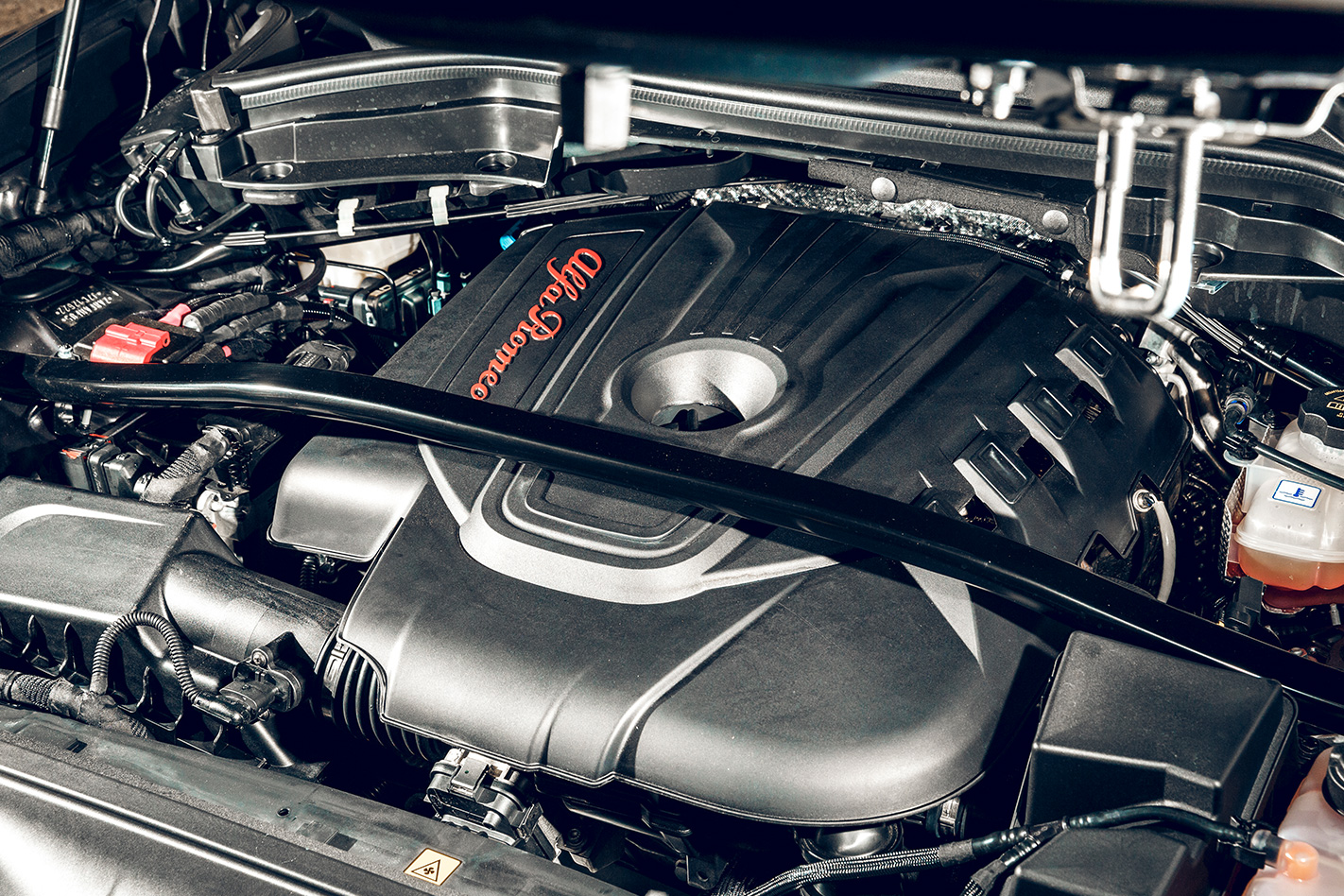
The 154kW/470Nm 2.1-litre four-cylinder turbo diesel engine is lively and works harmoniously with the eight-speed automatic gearbox. Power is sent to all four wheels when extra traction is required, but in ordinary driving the drivetrain is biased toward the rear wheels for a more dynamically engaging drive.
It’s a little sluggish when the DNA selector is set to its default Natural mode and it can feel like you’re driving through honey in All-Terrain, but switching to Dynamic tautens the Stelvio’s powertrain to deliver a respectable 0-100km time of 6.6 seconds. That responsiveness is maintained at higher speeds, which inspires confidence when overtaking.
The steering is also very sharp, as is the electronic braking – perhaps a little too much at first, though you learn to adjust to the left pedal’s grabby nature. Their responsiveness is certainly in harmony with the athletic persona of the Stelvio’s suspension and powertrain though, which inspires confidence when you find yourself on a twisting road.
VERDICT
The Stelvio Diesel First Edition is a very enjoyable SUV to drive, however with the diesel derivative Alfa Romeo seems to have created a car with something of an identity crisis.
As an SUV it’s adequate when it comes to practicality, though rivals such as the Volvo XC60 and BMW X3 provide more in terms of rear-seat comfort and boot space. Rather, thanks to scalpel-sharp handling and ultra-engaging steering the Stelvio’s real reason for being is to be an SUV for driving enthusiasts – people who you’d ordinarily think would prefer the punchier, rev-happy petrol version or the similarly-priced Giulia Super.
That said, if you consider yourself a keen driver you’ll still have plenty of fun, just be sure to get in while the First Edition Pack is still available or look at adding the Veloce Pack which brings similar features, but for $8000. And maybe save yourself $2000 and opt for the base petrol instead of the oil-burner – the diesel simply seems at odds with the rest of the Stelvio’s character.
Introduction
Ask Porsche anything about its large SUV offering and it will simply stare at you blankly because, according to the iconic German manufacturer, it is solely a purveyor of sportscars. Whether they happen to take the form of a rear-engined, rear-wheel drive two-seater convertible or a high-riding four-wheel drive with five seats and a big boot, they are all sportscars, it says.
So when it comes to the third-generation Cayenne, in addition to all the features and attributes of any large SUV, Porsche’s contender must also be graded on its ability to put a smile on the driver’s face, while hauling people and things during its more pedestrian duties. Too much to ask?
Value
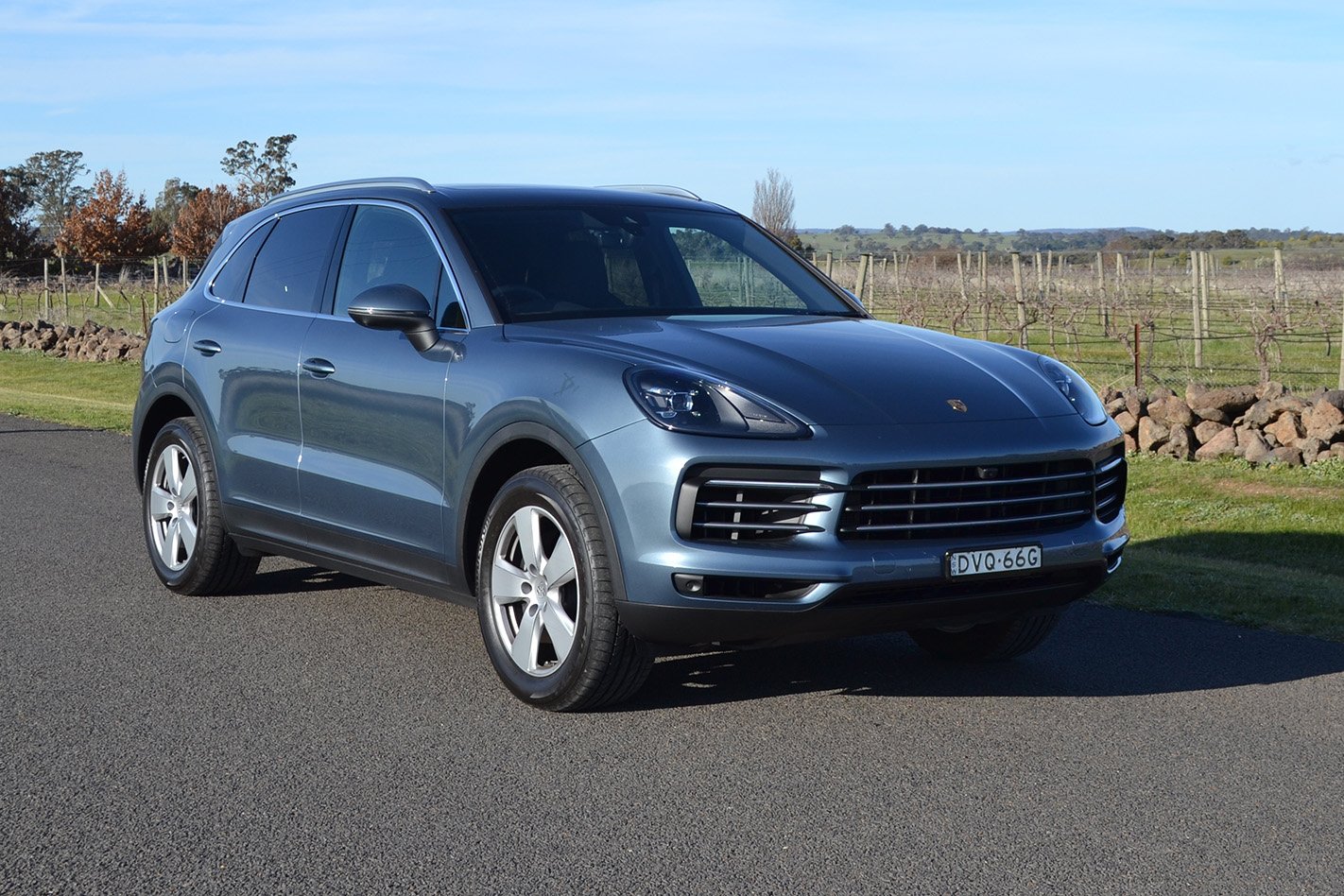
With reputation as prestigious as the Porsche brand and a line-up that reaches right into the half a million dollar range (and occasionally beyond), you might be surprised to hear the Cayenne has a starting price of $116,300. With a bigger budget, the Cayenne S and Cayenne Turbo open up an entirely different realm of high-performance SUVs, but let’s focus on what the most affordable version has to offer.
No diesel is currently on offer in the range, which will disappoint owners looking for a more fuel economical version or a luxury SUV that will tow frequently, but during our time with the Cayenne, its petrol V6 used an average of about 10.0 litres per 100km.
Our car had a few options thrown at it, which took the entry price up to $134,510 but, as is typical of the brand, the sky is the limit when it comes to customisation and personalisation, and that figure is easy to exceed.
It’s rare that a Cayenne customer takes delivery of a ‘standard’ example with most choosing something from the options list, but if you do resist the temptation there is still a decent list of inclusions.
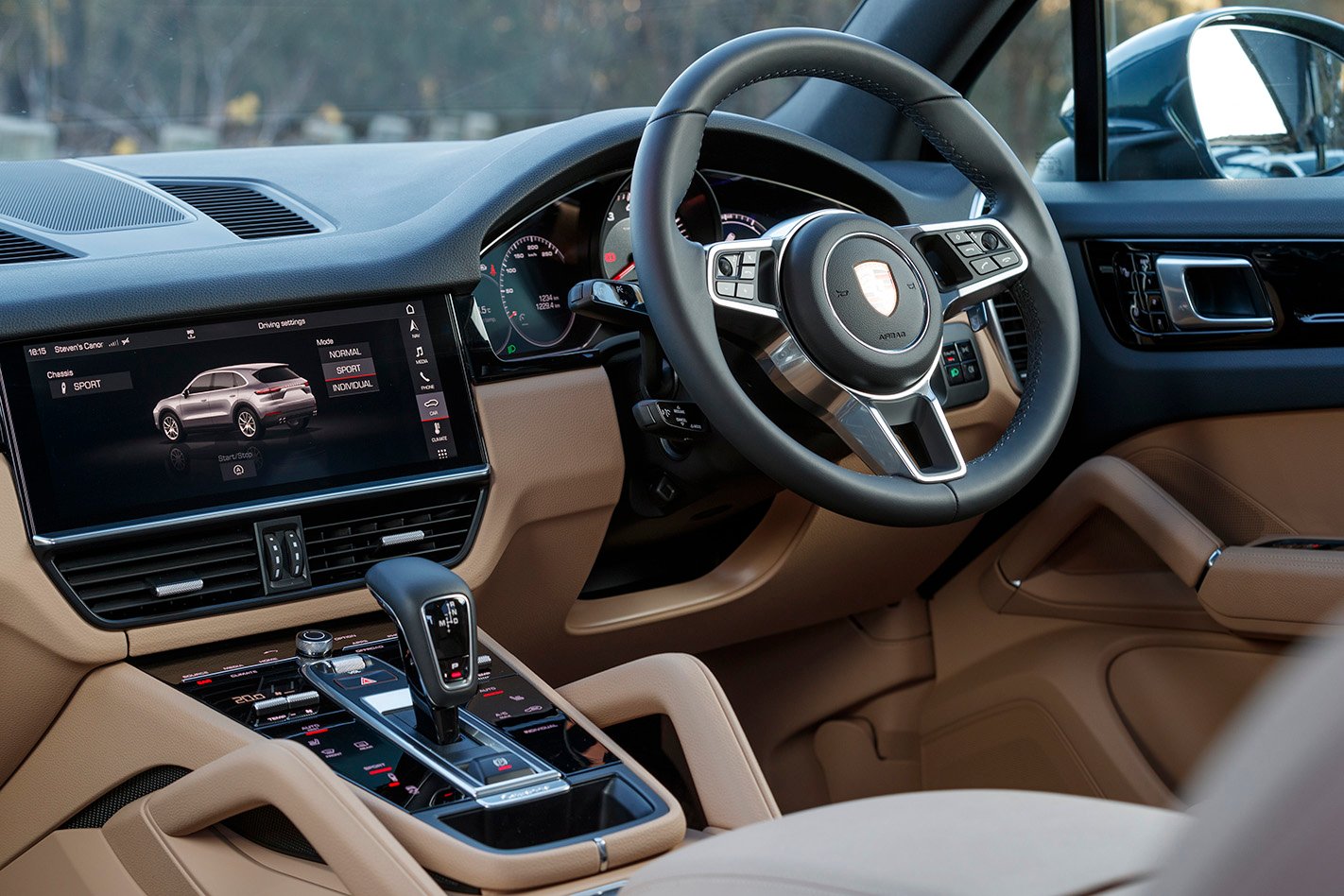
Leather upholstered seats with 14-way electric adjustment for the front, 19-inch alloy wheels and an eight-speed automatic transmission are all standard, while there is a good selection of technology features including a large central touchscreen measuring 12.0 inches. Navigation uses information about the road ahead to plan a faster or more efficient journey depending on the preference, while smartphone connectivity allows Android Auto and Apple CarPlay compatibility.
Size
Measuring nearly five metres in length and almost two metres wide, the Cayenne is a large SUV and offers plenty of space inside as a result. Both rows of seating offer a comfortable place for two adults or three in the second row for shorter journeys. With a lofty 1.7-metre height, there’s also the head room to match for all too.
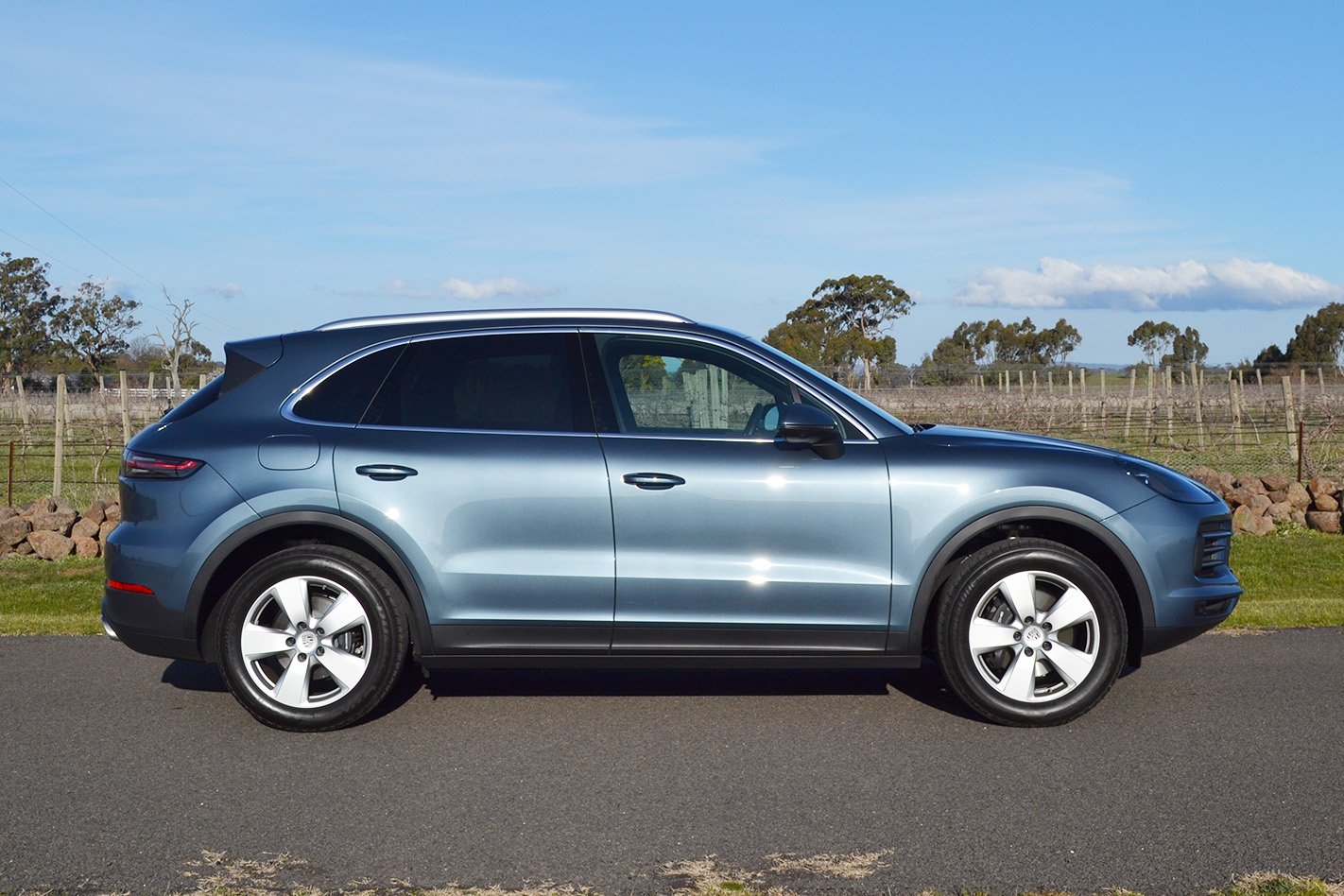
With 770 litres of boot space, the Porsche’s elegant lines and profile do not compromise load area practicality, but if that isn’t enough, split folding rear seats expand that figure to 1710 litres. For comparison, A BMW X5 has a 650-litre boot that expands to 1870, while the Audi’s boot enlarges to nearly 2000 litres.
Safety
As you might expect from a high-end German manufacturer, safety technology is as sophisticated as the systems controlling entertainment and drivetrains. LED headlights not only look great with signature Porsche four-points of light design, they are extremely effective. A head-up display can display a wide range of information simultaneously, removing the need to glance down from the road and there are lots of standard assistance features for unforeseeable hazards.
Adaptive cruise control, lane-keep assistance, autonomous braking and a five-star Euro NCAP safety rating are all standard, but that can be added to with optional extras including a night-vision camera, for example.
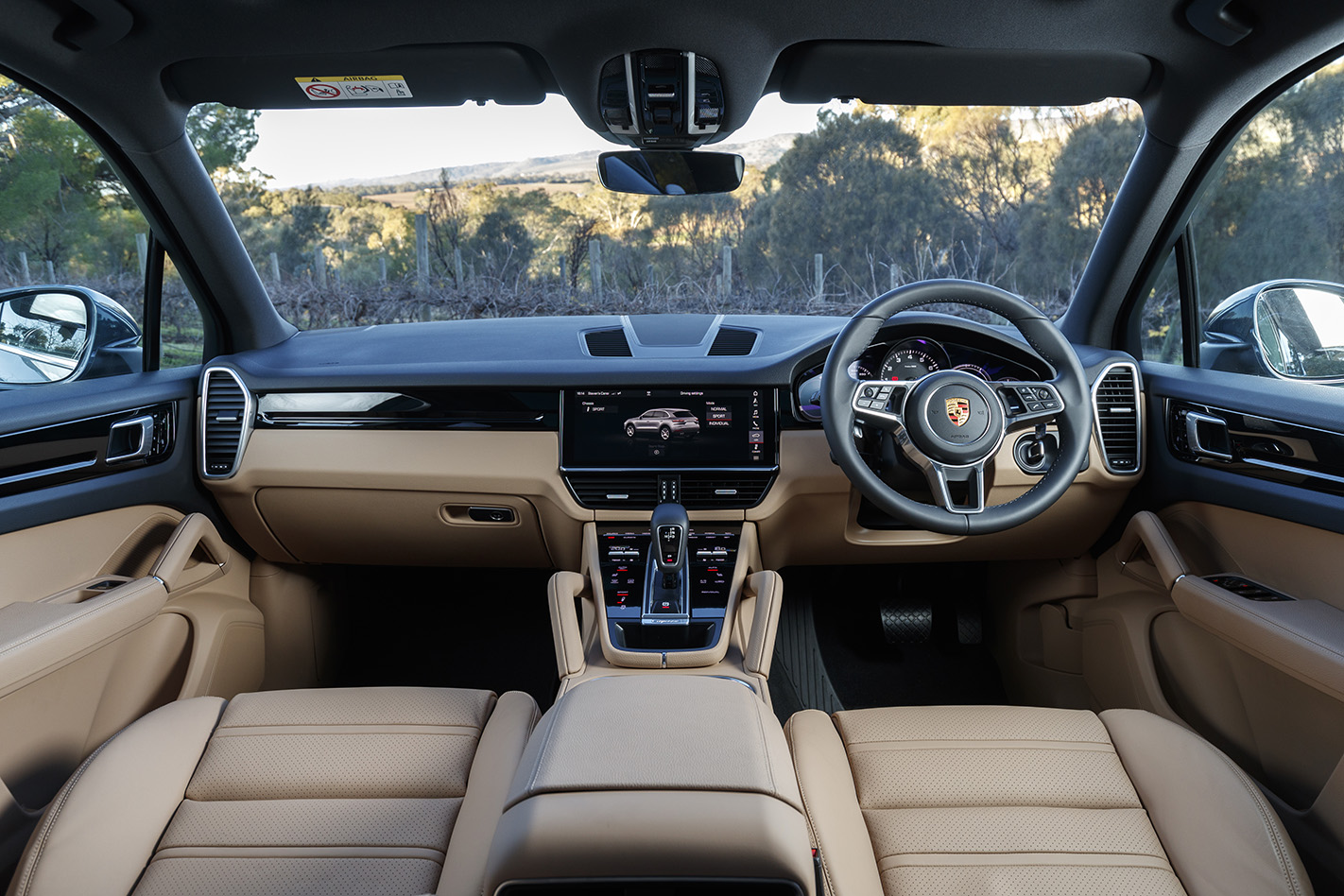
Our car had been upgraded to optional sports front seats, which are as supportive as they are comfortable with 18-way adjustment ($850) and heaters, which costs another $990. It also had the panoramic sunroof which adds another $4490 and is best appreciated by the rear occupants. Add on the more premium Bose sound system for $2470 and a keyless entry and start system for $2490, and you can see that a majority of the extras fitted to our car are focussed on boosting luxury levels.
But an $11,290 spend hasn’t greatly lifted the all-important first impressions when boarding. With standard gloss black finishers and black leather, the Cayenne interior is sharp in design but lacks the sense of occasion that higher-grade variants deliver. Once you start to delve into the features though the value rises to the surface.
Clean gloss switches with clever haptic feedback, fast responsive information systems, a sporty steering wheel and bags of Porsche functionality constantly remind occupants that even the SUV models are bred from fine stock.
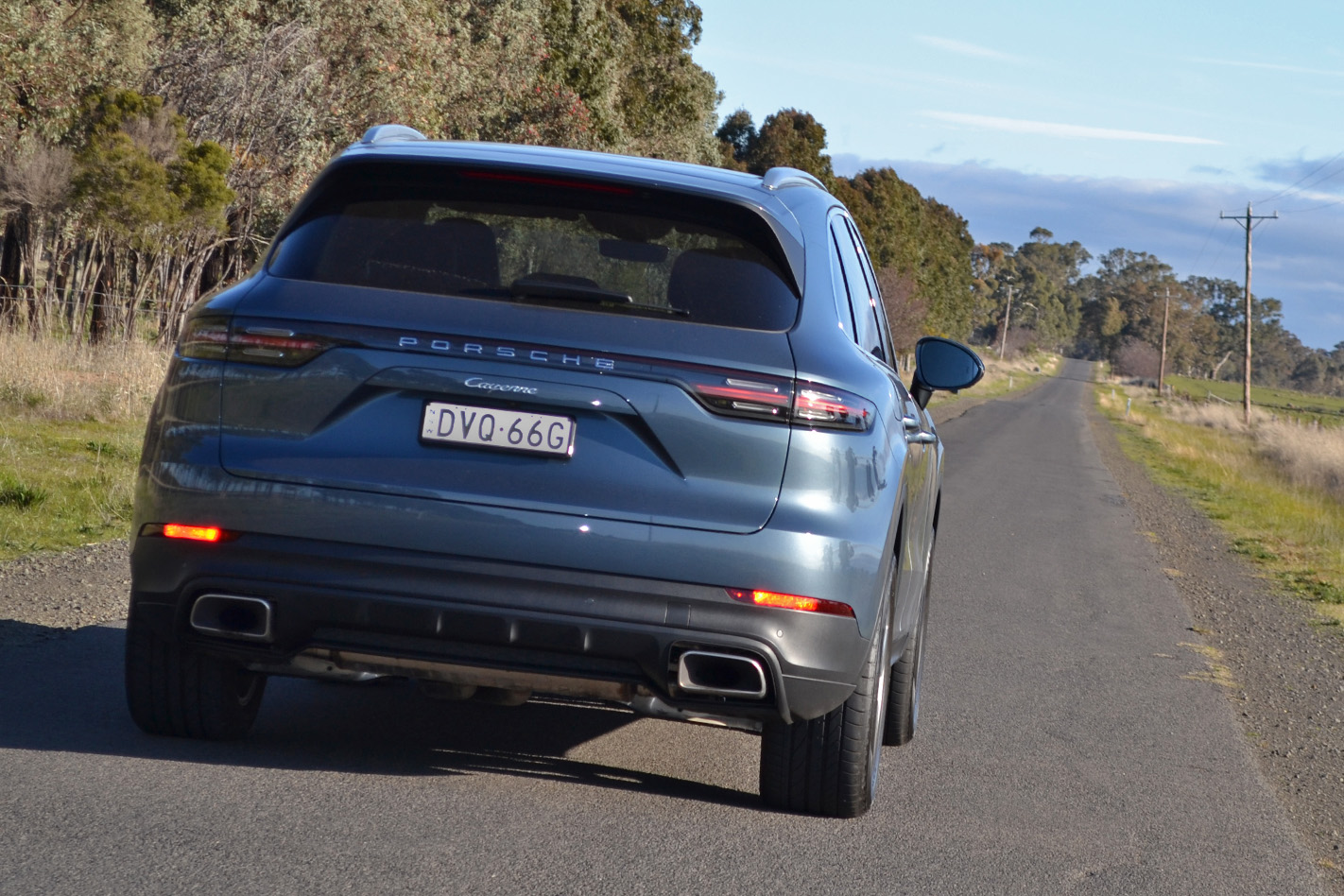
Air suspension is the ultimate option for boosting cabin comfort but our test car did remarkably well on standard coil springs. Road noise is low, only the most violent road imperfections were transmitted through uncomfortably and a cruise into central Victoria seemed shorter than it appeared on the map.
On the Road
It’s unlikely you would have the Cayenne in your consideration set if you weren’t interested in the performance promise that the iconic Porsche shield represents. Perhaps you already have something wearing the badge but it only ventures out on weekends or can only accommodate two.
But its maker understands this and the third-generation Cayenne has been engineered to reward the driver as much as the passengers.
It might only be the entry version, but it still packs a 250kW punch and, for the new version, a weight-loss diet translates to convincing performance. Accelerating to 100km/h from zero takes 6.2 seconds – quicker than a Volkswagen Golf GTI – and if you find a road long enough its turbo V6 will blast you to 245km/h.
Power is readily available with minimal hesitation from the engine and its excellent automatic transmission. The eight-speed auto is smooth in operation for a majority of driving, but has a hidden sporty side that is eagre to reveal itself with little provocation.
Our car wasn’t fitted with a sports exhaust so switching to a noisy mode wasn’t possible, but the natural note was smooth and satisfying and won’t annoy the neighbours.
Porsche’s $2690 Sport Chrono Package was included however, bringing a number of driving modes and easily the best solution for switching between them. A simple but beautiful dial mounted on the steering wheel is elegant and instantly to hand. There are few motoring niggles more irritating than being faced with a menu of options that need to be scrolled through when you want quickly to flick to sport mode, but Porsche has solved this.
The pack also centrally mounts an analogue clock to the centre of the dash which is handsome enough to wear on your wrist and lifts the quality feel of the interior a little.
Unladen, the Cayenne weight sneaks in just under two tonnes but the way it handles will have you doubting that, with a front end that is highly obedient and has a wonderfully neutral feel when powering through fast corners.
Adaptive air suspension offers more versatility when flicking through the driving modes, but the steel spring suspension is lively and responsive, and doesn’t compromise comfort to any great degree. Perhaps the relatively fat tyres on standard 19-inch wheels add a little absorbency into the equation.
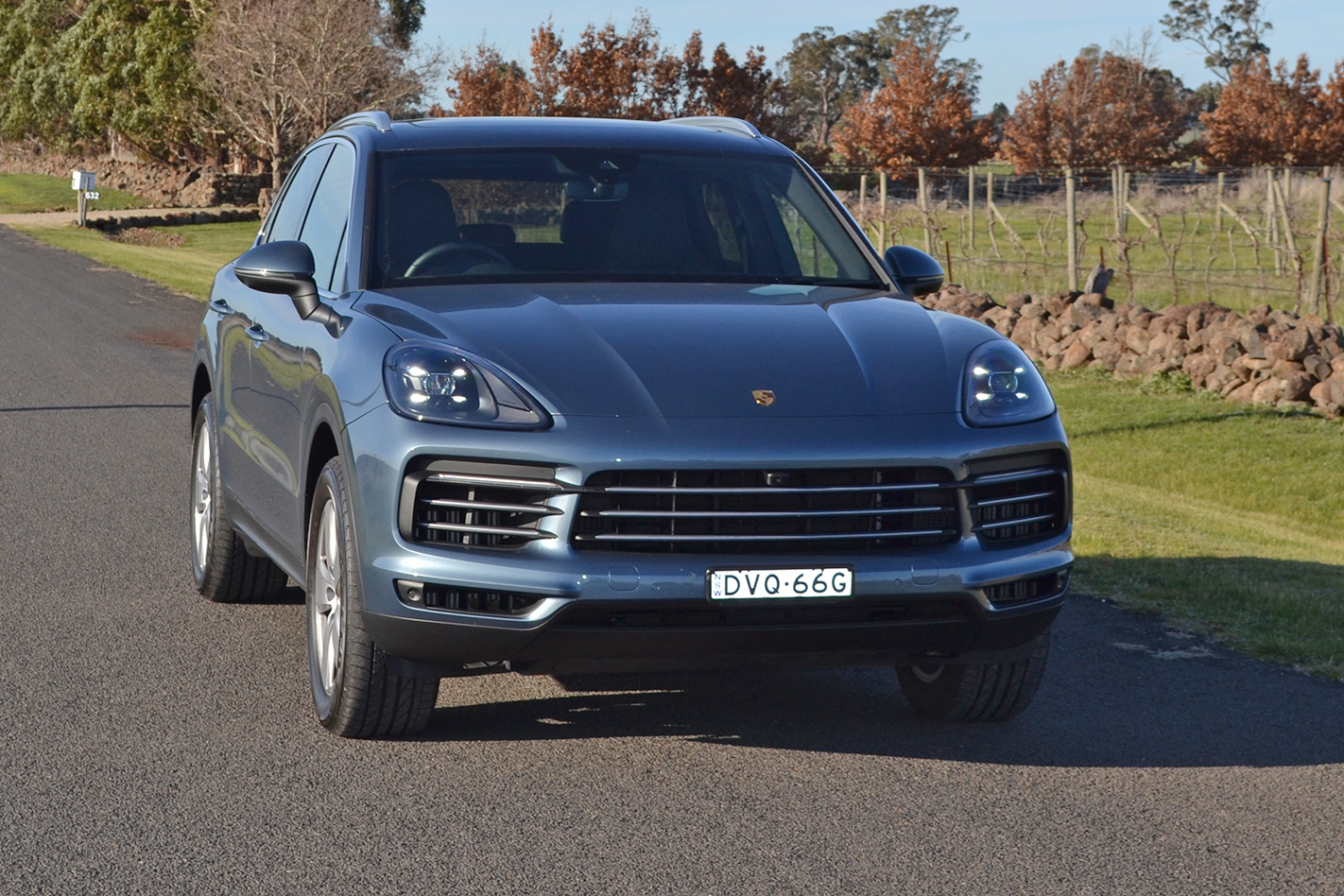
The dynamic capabilities of the base Cayenne certainly don’t feel accidental and, in the light of its more athletic S and Turbo siblings, the most affordable version is still remarkably good fun to drive, whether that’s in town or off the urban leash.
Verdict
With so many tempting options to customise the Cayenne, it might be hard to resist blowing the budget. But tempted you will be, because an off-the-shelf Cayenne feels a bit blank and yearning for a little pepper dusted from the catalogue.
The jump to the $155,100 Cayenne S might seem like a big leap, but it kicks off with many of the extras you might be considering adding as an option to the more affordable base item. It’s frighteningly easy to amass nearly $39,000 of options from the Porsche customisation list after all and with the S, you’ll be getting a performance advantage thrown in too.
That said, the most affordable Cayenne is a satisfyingly well-rounded SUV with performance to keep the driving enthusiast happy without neglecting family duties. And if you’re willing to forfeit the carbonfibre trims, embroidered leather and low-profile tyres of Porsche’s more premium offerings, the Cayenne is the quiet achiever in Zuffenhausen’s stable.
Skoda Australia has announced it will drop the 180kW engine from the RS245 into its lower spec 2018 Skoda Octavia RS going forward.
In addition to this, Skoda has dropped the manual gearbox in line with VW as changes to the WLTP mean emissions are tested differently now.
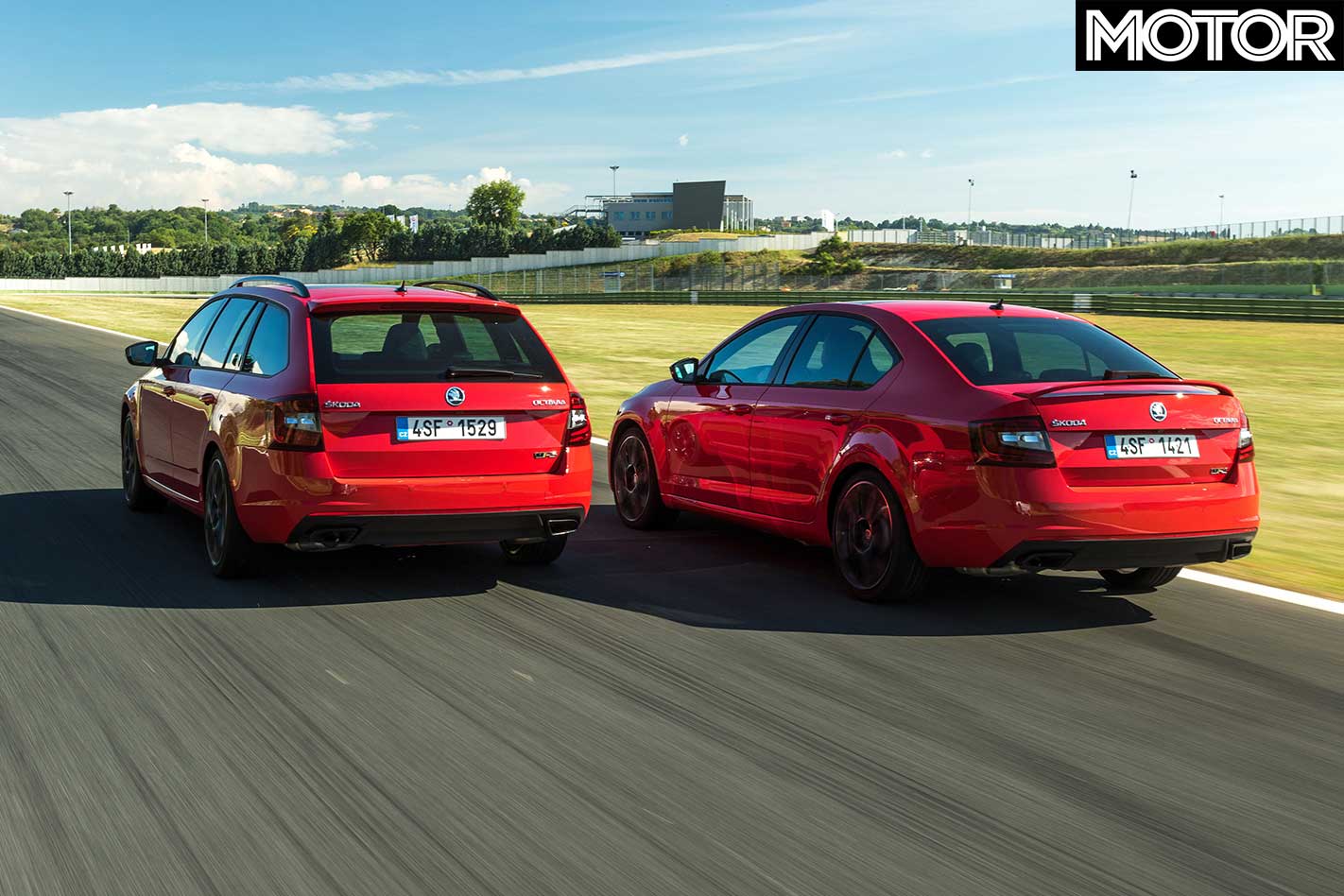
The higher-powered turbo four is also to be joined by the limited-slip differential from the RS245, meaning each variant will share the same drivetrain.
The RS245 will now be most easily distinguished on a specs sheet by its adaptive dampers, keyless entry and start-up, and a suite of additional comfort and convenience features.
Skoda Australia Director Michael Irmer says Australians’ tendency to aim for the top of the range was the also part of the driving force behind the decision.
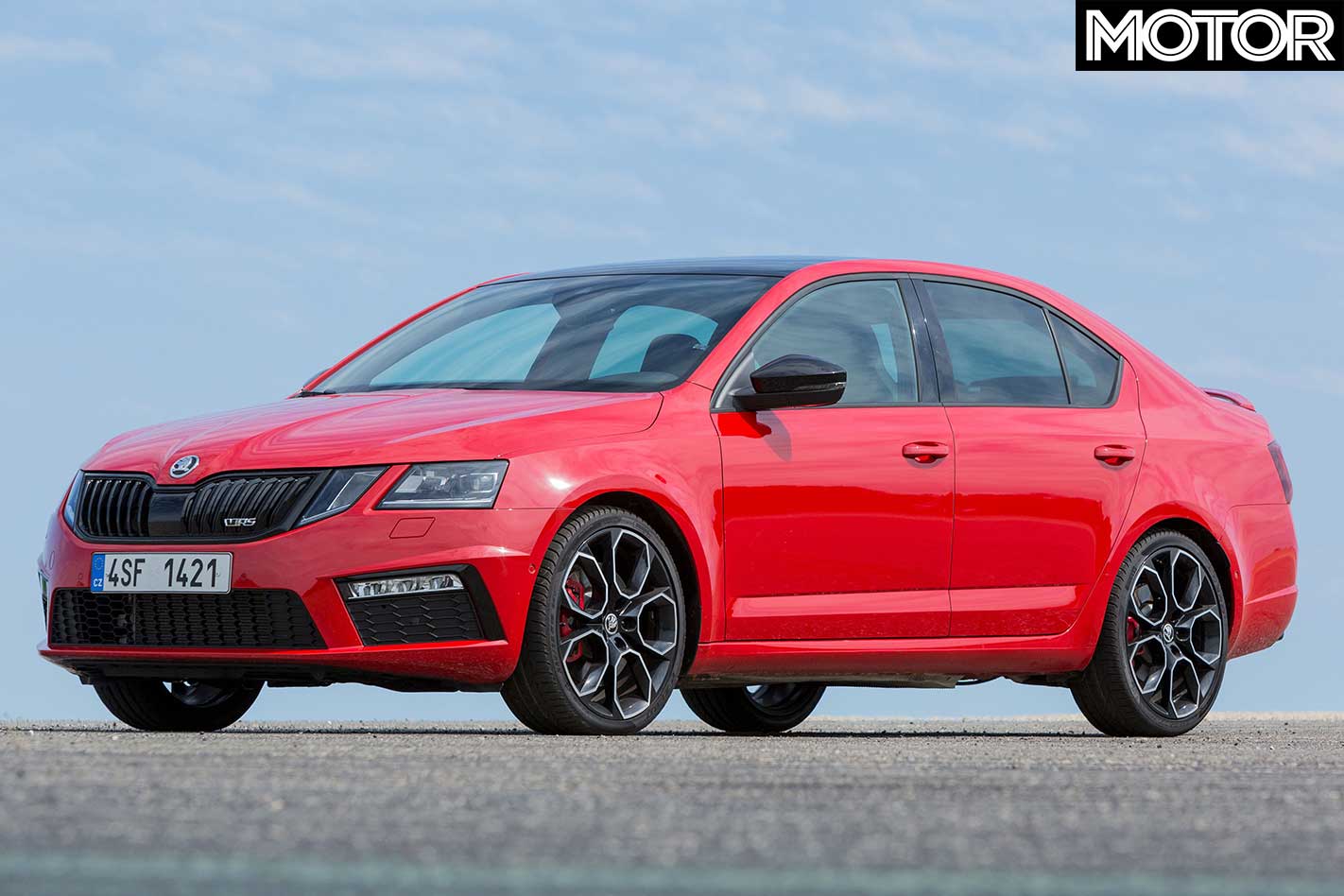
“Skoda Octavia customers almost always express a preference for highly-optioned petrol engine cars,” Irmer says.
“Since the availability last year of the RS245 with its enhanced drivetrain, Octavia RS buyers have gravitated to this, the most potent variant to date.”
In addition, a spokesperson tells MOTOR the Octavia RS245 Wagon is currently the most popular variant.
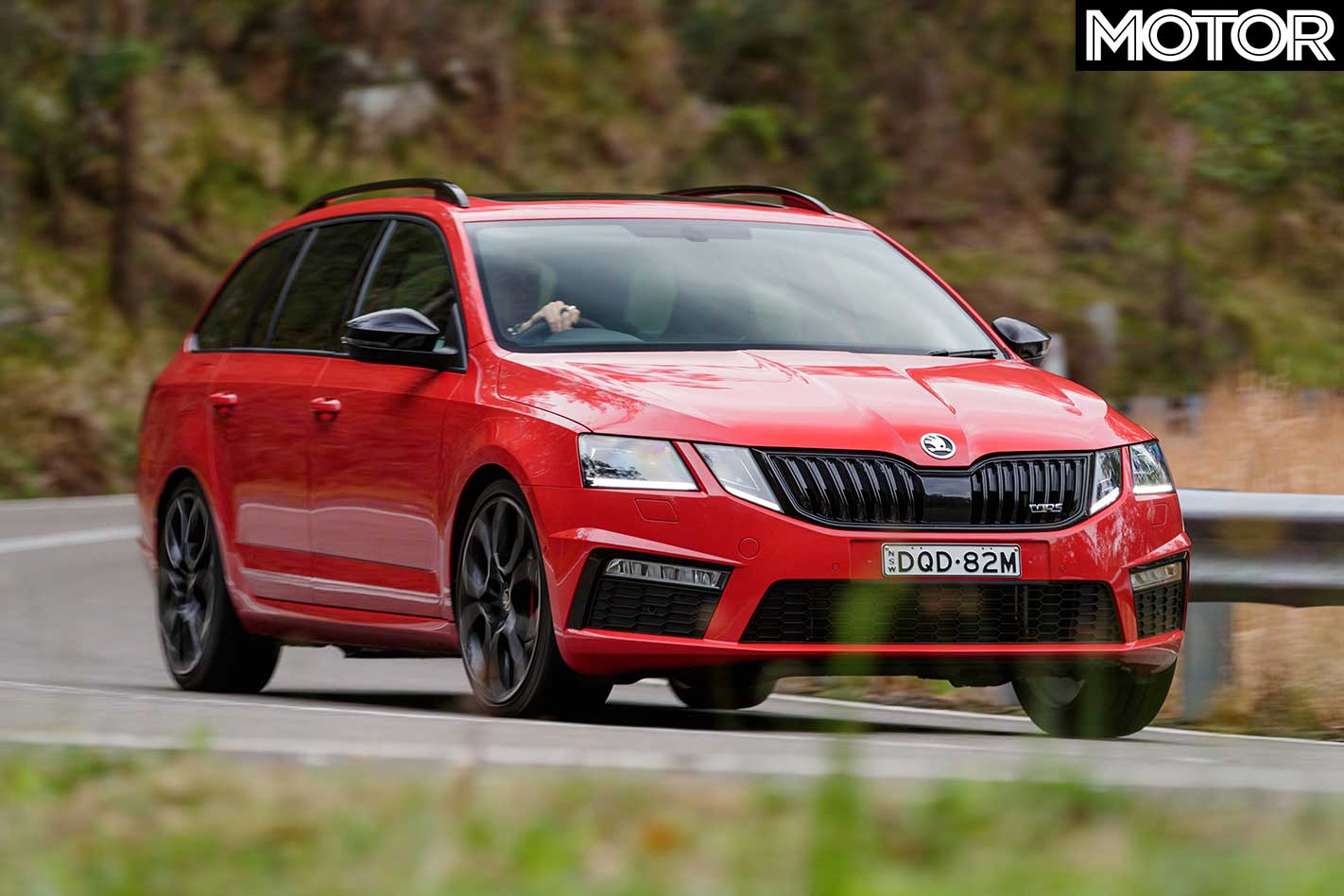
These changes also bring about alterations to the pricing for the Octavia. The Octavia RS sedan now costs $39,990, down from $41,390, while the wagon is priced at $41,490, down from $42,890.
Pricing for the Octavia RS245 also comes down slightly, by $400 each variant, with the sedan now $45,490 and the wagon at $46,990.
A luxury pack comes in at $2,800 and adds ‘Suedia’ and Leather upholstery, electric and heated seats, and extra driver assists.
MAZDA Australia’s managing director Vinesh Bhindi believes the needs of Australian ute buyers will be properly catered for by the brand’s next-generation BT-50 dual-cab ute.
“Australia is [the BT-50’s] biggest market, so we do provide input and the Mazda engineers will come here and do research based on the Australian market,” said Bhindi.
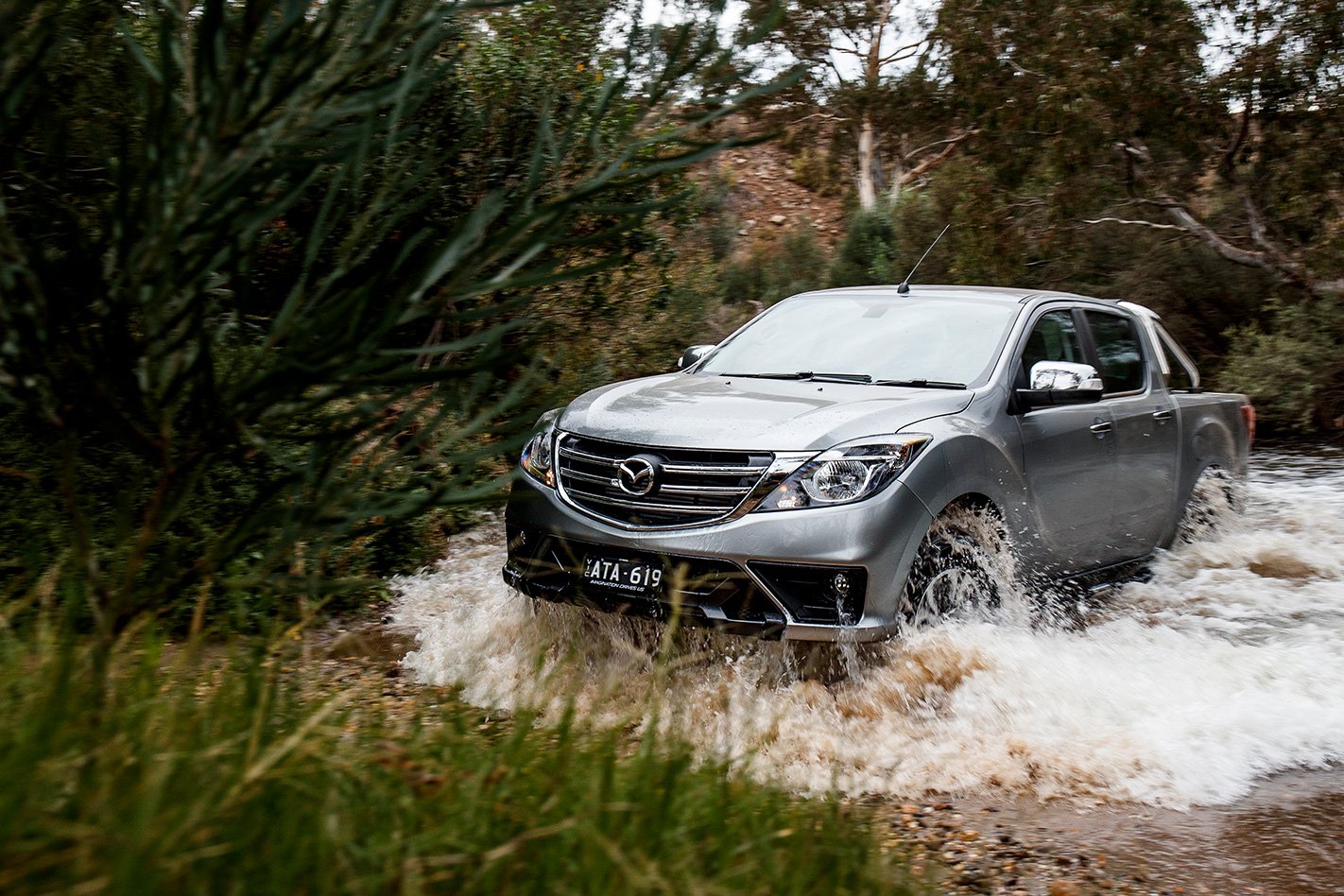
While shying away from confirming whether or not the BT-50 will take Aussie-specific calibrations or componentry, Bhindi did state the importance of adapting vehicles like the BT-50 to the intended market of sale, usually by speaking to each territory and visiting outposts to better understand the environment.
“Mazda engineers do a lot of research in every market to tune cars to the conditions. The engineers do come and spend some time in Australia,” he explained. “Mazda Corporation produces cars for global markets and their test tracks in Japan have many variations in road conditions.”
While development has begun on the BT-50’s next-gen replacement, its debut isn’t expected for a couple of years at least.
Mazda’s current, second-gen offering in the dual-cab ute segment was initially released in 2011 and has been updated twice since with a mid-life update in 2015 and a front-end styling refresh earlier this year.
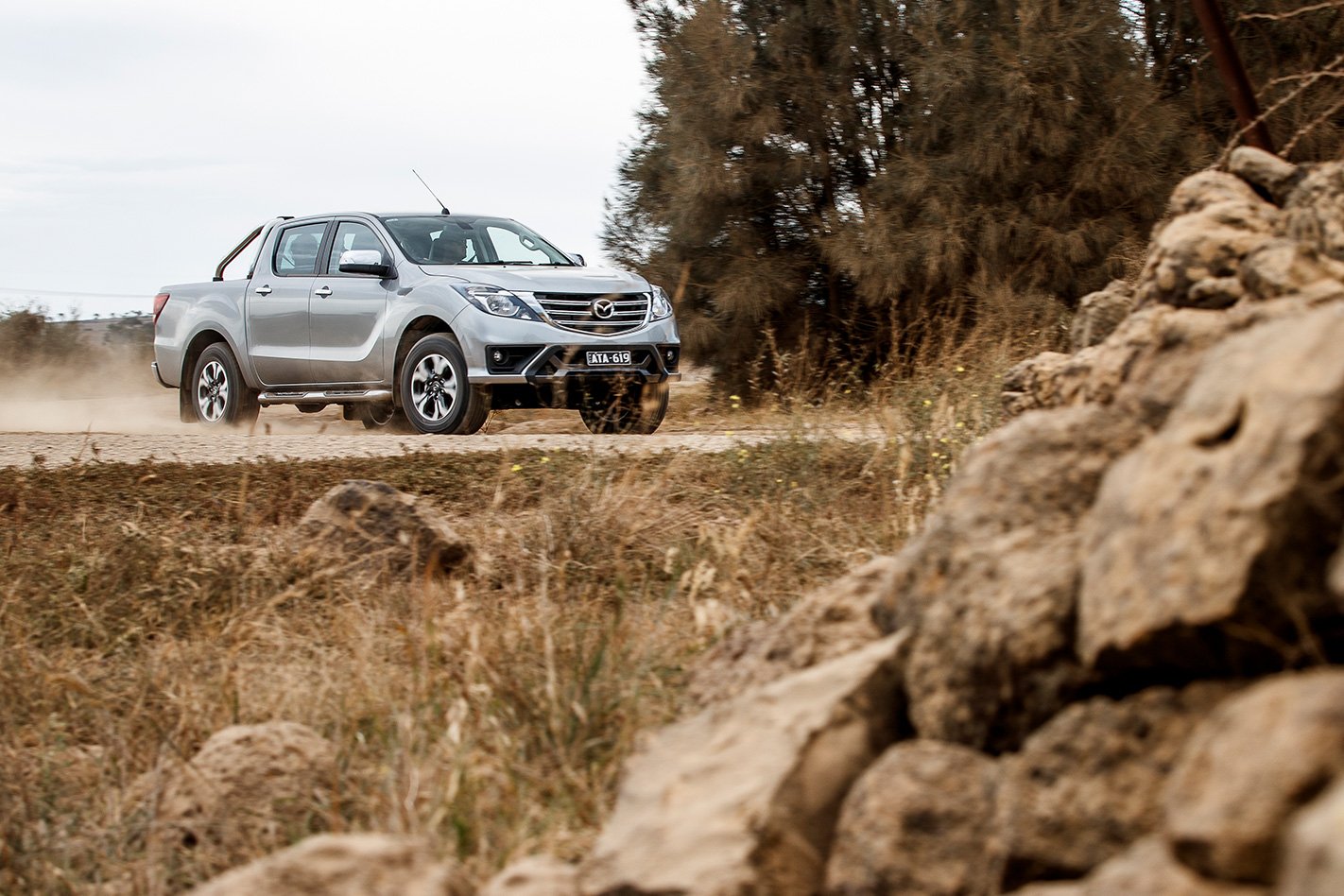
The existing BT-50 shares its platform with the Ford Ranger, and unchanged versions of its engines including 3.2-litre five-cylinder and 2.2-litre four-cylinder turbo-diesels.
During development of the current BT-50 Mazda engineers and designers worked alongside Blue Oval employees in Australia, with the Japanese team working independently to pen a unique version of the dual-cab at Ford Australia’s design centre in Melbourne.
This long-running partnership with Ford will come to an end with the replacement of the current generation BT-50. The third-gen model will share its platform with the Isuzu D-Max, and is expected to share engines as well.
However, a patent lodged by Mazda in the second-half of 2017 previewed an engine currently in development at Hiroshima that could potentially be used beneath the next-gen BT-50’s bonnet.
Documents filed with the US Patent and Trademark Office, while not naming the BT-50 specifically, reveal core details of the unreleased diesel engine; a four-cylinder boosted by two turbos and an electric supercharger, and designed to be mounted longitudinally.
Mazda’s dual-cab is currently built in Thailand and South Africa.
The future of the humble hatchback is looking grim – at least insofar as Lexus is concerned. While small hatches continue to sell strongly in Europe and Asia in the mainstream market, the Japanese luxury automaker says its own hybrid-only CT 200h has become more ‘niche’ in an era where its customers are gravitating toward SUV products in ever-greater volumes.
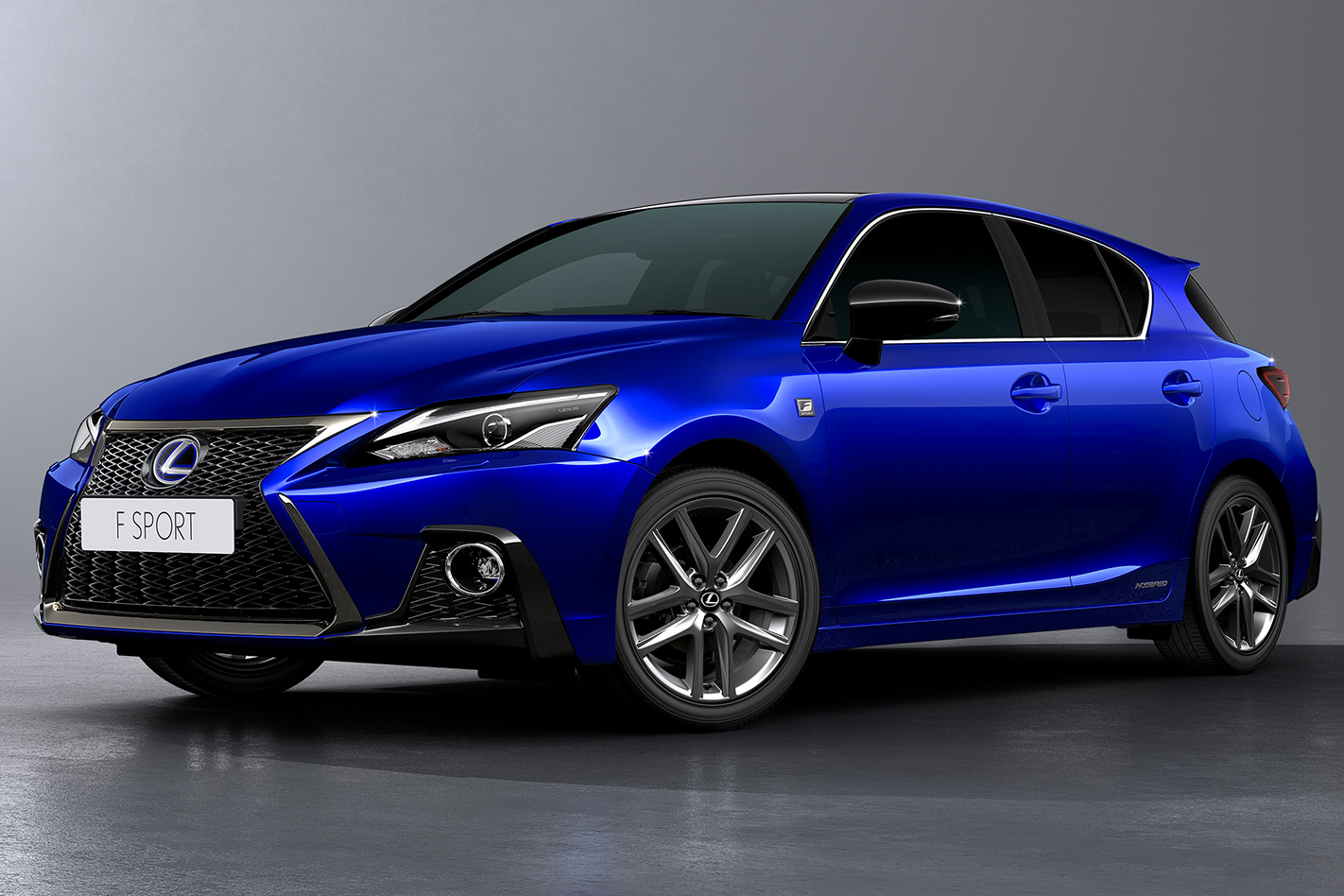
Speaking with media at the global launch of its all-new UX compact SUV in Sweden, Lexus’ vice president – and the chief engineer of the UX – Chika Kako said the shift in buyer preferences toward high-riding crossovers has fundamentally changed the role of the CT.
“With the CT, being a hatch, it’s a gateway vehicle, but perhaps it’s a little more niche versus a crossover,” Kako said.
“That’s a segment that’s expanding and caters to a wide range of customers: those that are looking for something new, those that we call ‘experiential masters’. This UX vehicle allows us to be in front of those potential customers in a much larger range.”
Asked whether another CT is in the pipeline, Kako simply gave a fairly noncommittal “you will see”.
However Lexus has been suspiciously quiet on the subject of a successor for the CT, which is now in its seventh year of production – pensioner age in car terms. Quizzed on how long the CT had left to run, Kako said it was no longer part of the product plan in certain countries.
“[It] depends on the region,” she said. “In some regions the CT has already disappeared.”
For Australia, local Lexus boss Scott Thompson said the CT would remain in the lineup as the entry point to Lexus ownership. While prices for the incoming UX, which is scheduled to arrive around the beginning of December this year, have yet to be locked down, it’s believed there will still be plenty of air between the base model CT 200h Luxury’s $40,900 retail sticker and the UX 200 Luxury’s starting price.
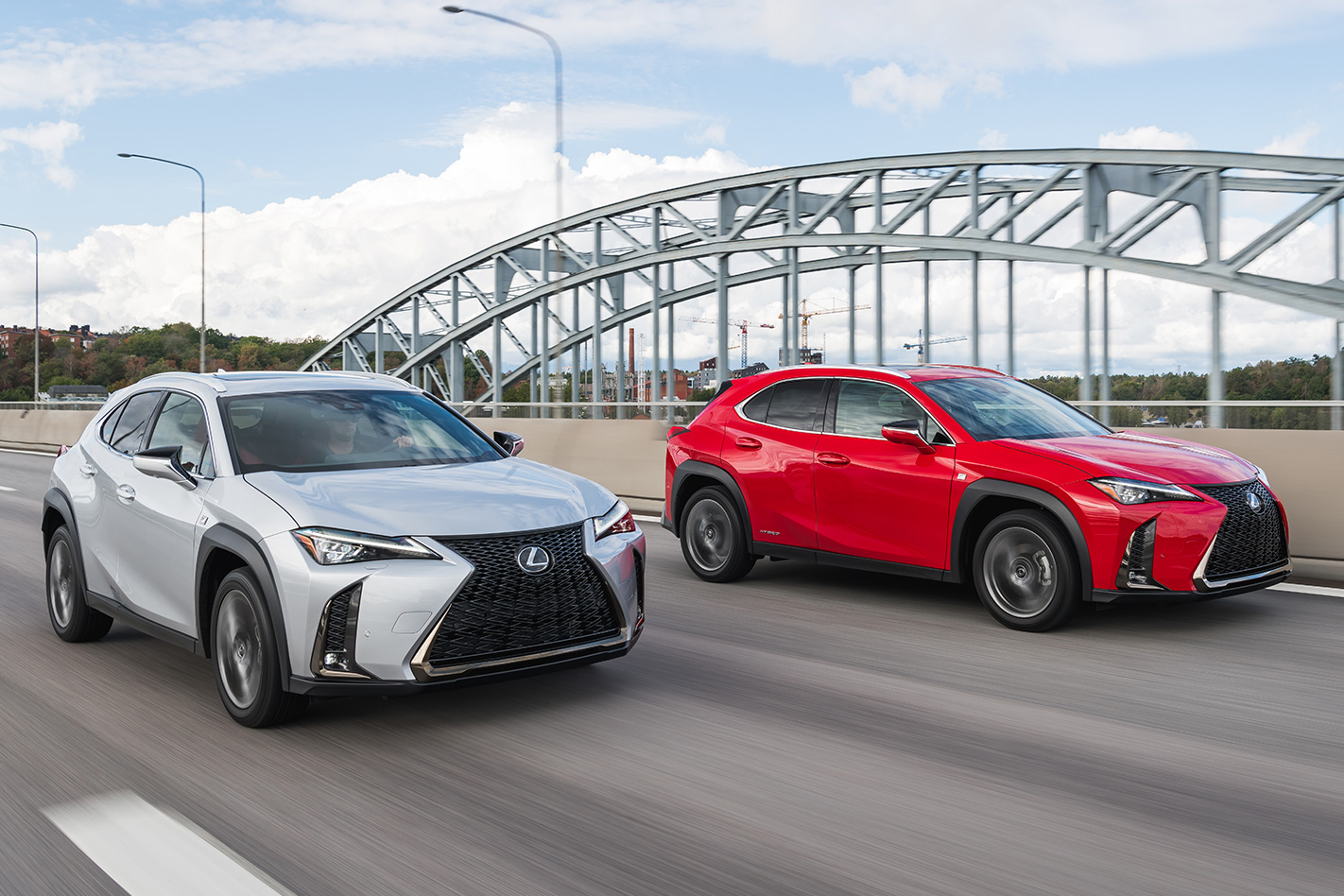
But while the CT will remain the bargain buy, the UX is being pitched as the better drive. Kako is a keen enthusiast and put a high emphasis on driving dynamics during that car’s development. She was also chief engineer of the CT 200h’s late-life update that rolled out last year, and her impression of that car’s on-road performance was not quite so complimentary.
“In the case of the CT, I inherited that car when the model change occurred, so I had to work with the set dimensions. With the UX I was able to start from a clean sheet, so I wanted to make sure that I created a car that is exciting to drive and is something that is satisfactory as a whole.”
Asked whether the UX offered more engagement than the CT, Kako was forthright. “I can say so, absolutely!”
Another week, another exciting addition to the line-up at World Time Attack Challenge (WTAC) 2018, this time a Ford Falcon XD powered by a modern Barra Turbo straight-six.
It’ll be competing in the International Drifting Cup, up against the world’s best drift cars and drivers.
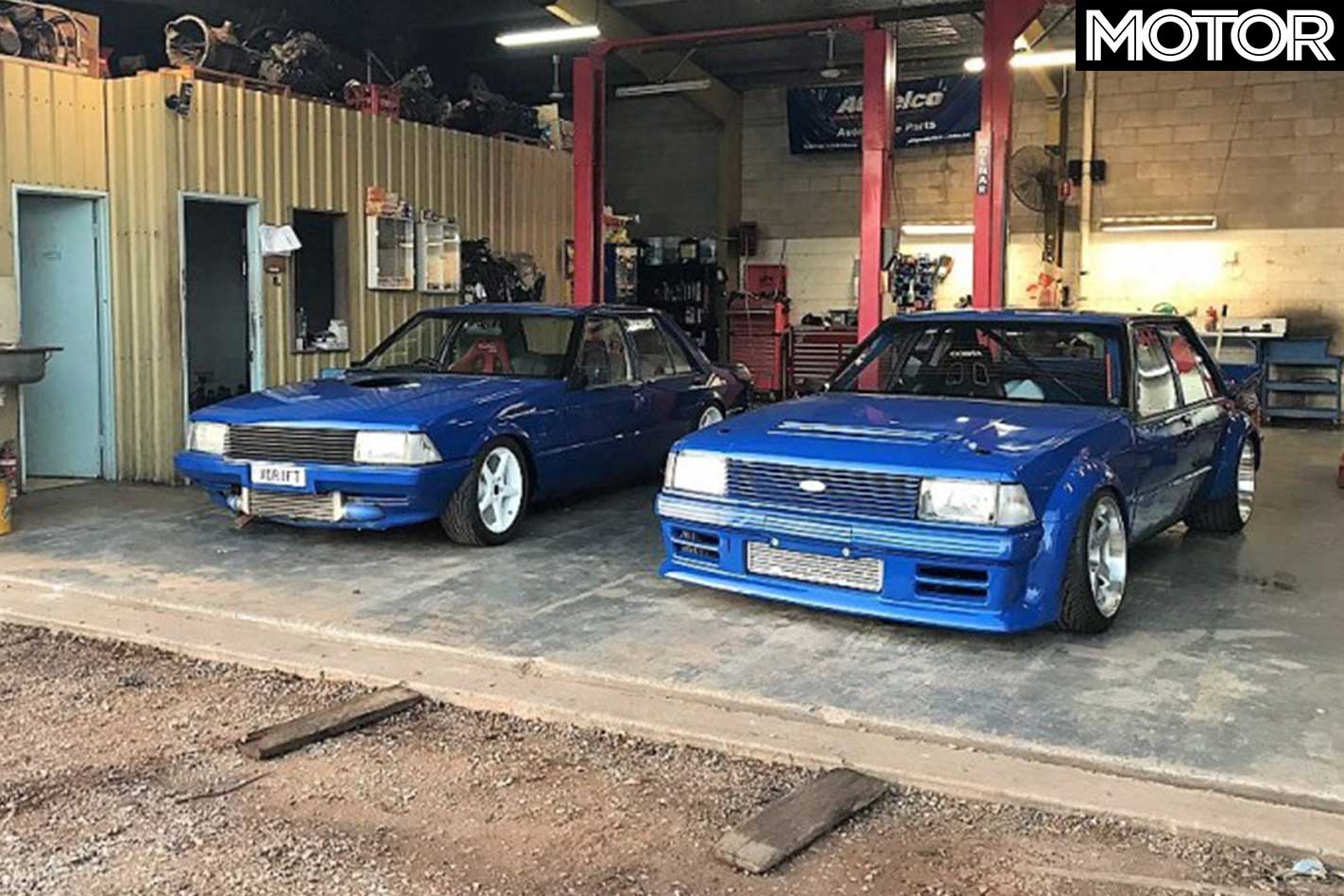
The entrant and driver of the car, Danny Probert, is a drifter from Darwin who’s a three-time Top End Drift Association champion and part of the Xdrift team.
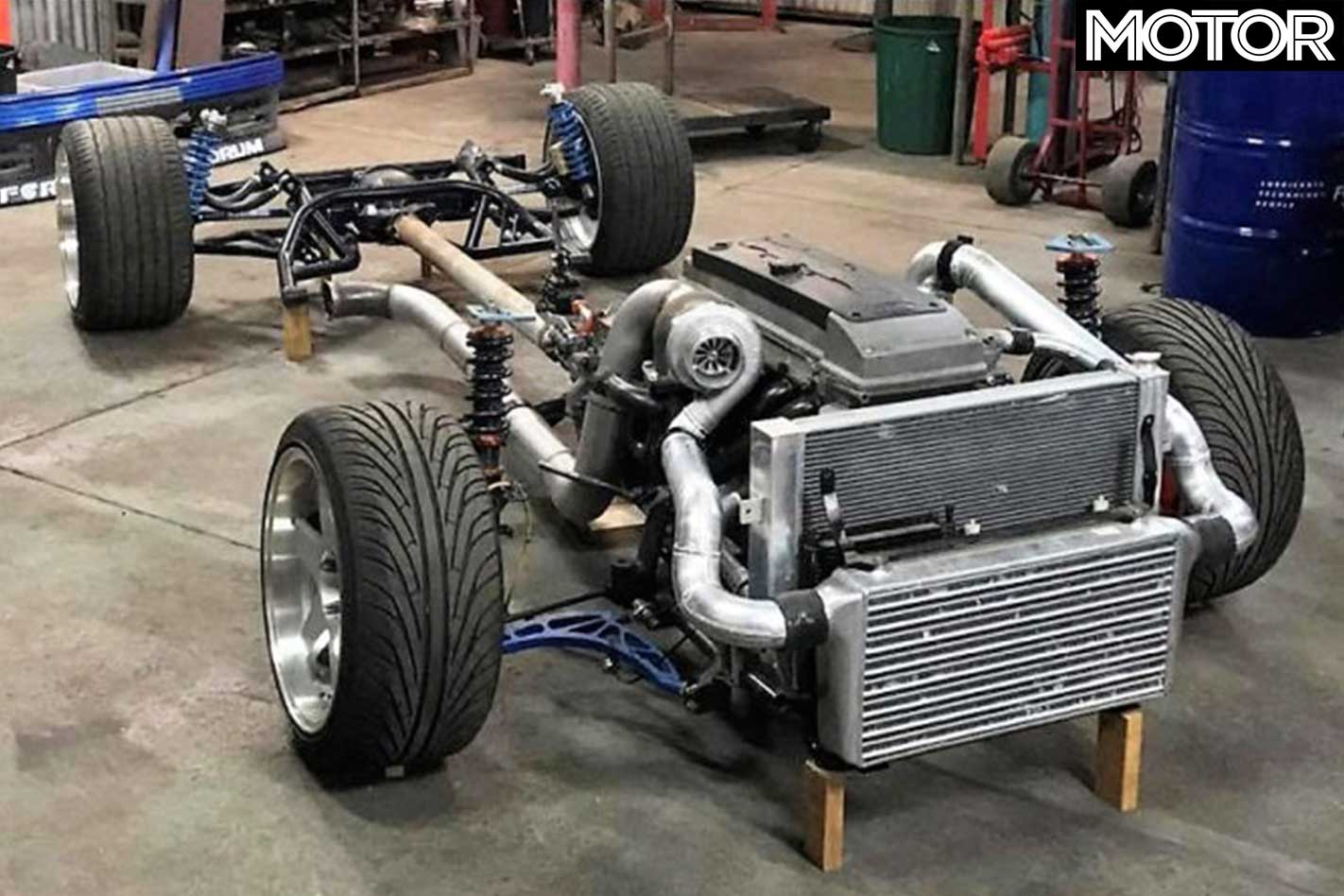
His car is something that you’d not expect to see amongst the primarily Japanese cars of the drift community, but the XD has become part of his personal ‘brand’.
“It certainly would have been easier starting with a Toyota or Nissan but that was never in the equation,” he says.
“I am the XD Ford guy and that’s what it had to be. But this one had to stand out and be capable of mixing it with not only the best in Australia but the best in the world.
The engine was lifted from a 2016 FG F6, with cams, chains, a dry sump, and other engine parts from Atomic Performance. An upgraded Garrett turbo, a set of 2200cc Bosch injectors, a Haltech ECU, are also part of a seemingly endless list of upgrades.
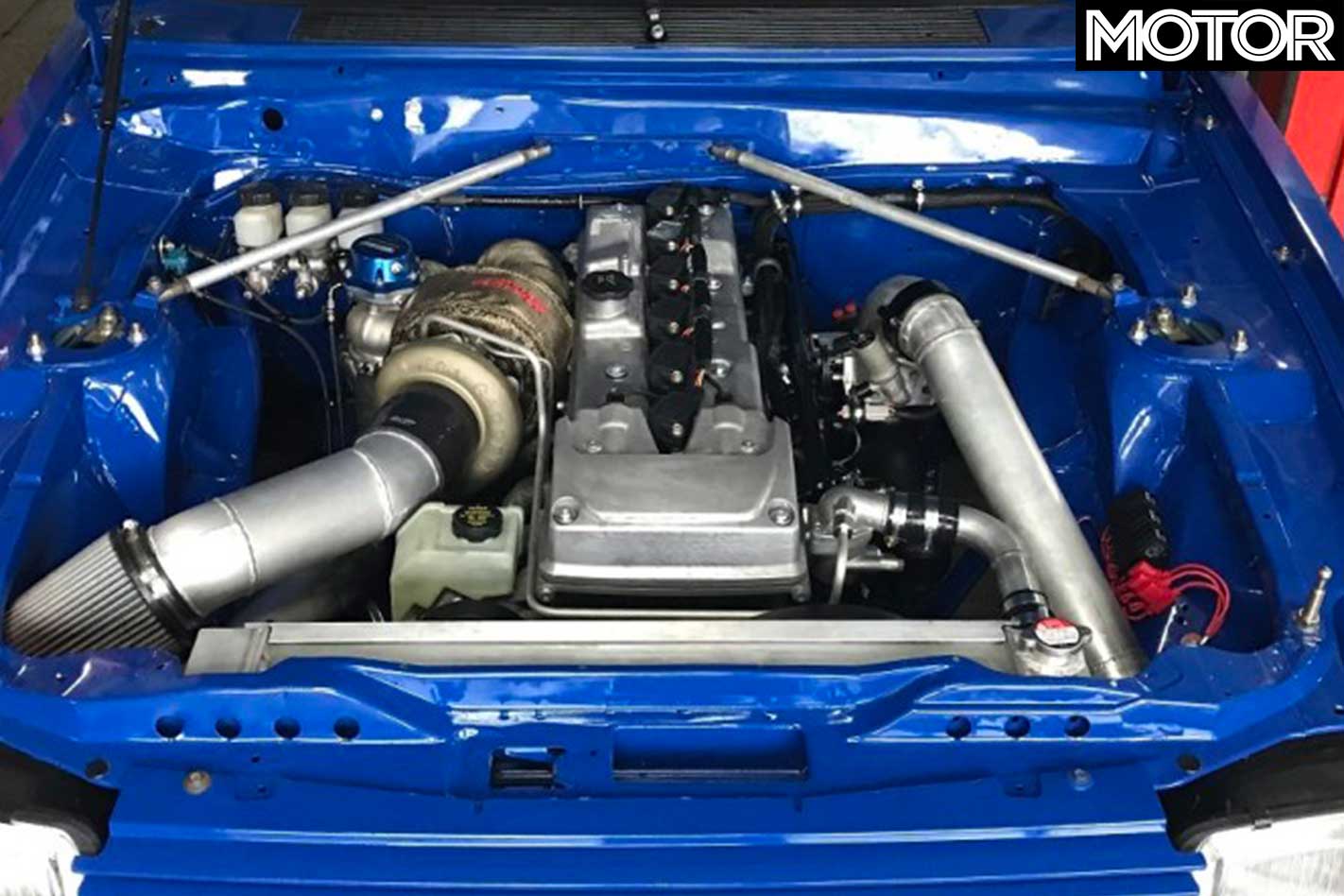
“We don’t talk horsepower numbers, it’s more about usable powerband and torque in this application,” Probert tells WTAC, where you can read more about the car itself.
Probert says his love of drifting started in 2004, with an XD running a “351 (5.8-litre V8) with leaf springs and lowering blocks.”
“The guys were teaching me how to do a ‘Scando’ and I stuck it straight into the wall. But it got me hooked and I haven’t looked back since!”
CEO of Superlap and the man in charge of WTAC Ian Baker says it’s exciting to have competitors from a variety of places, with some cars even being shipped from Europe.
“Something we have long envisioned is to have a competitor from every state in Australia, but both the driver and the car need to be at an international competition level, which is harder than it sounds.
“Most of the top drivers are located where the bigger competitions and the sponsors are – certainly not way up North.”
Baker says he was introduced to Probert and the car via a mutual friend.
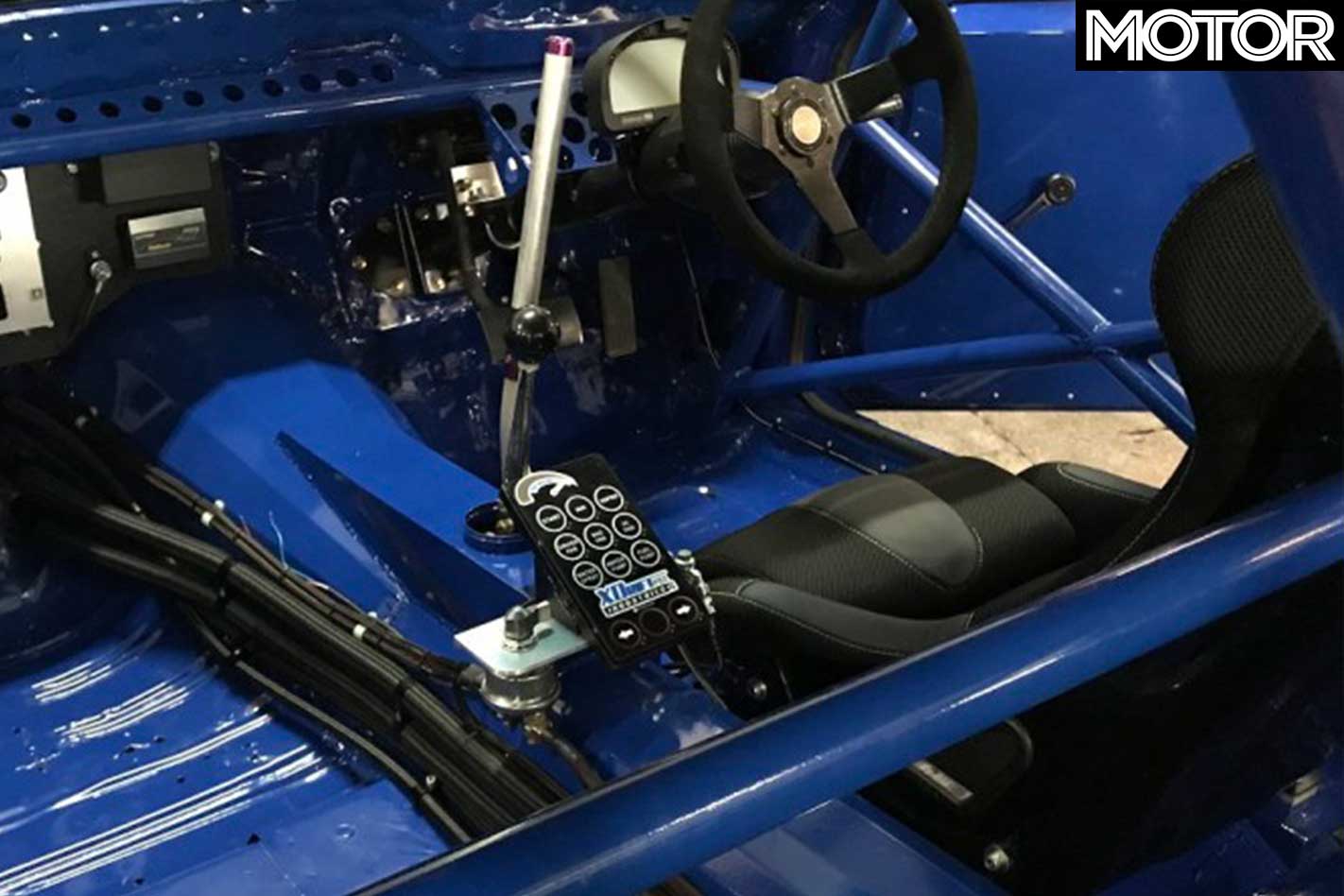
“He said I needed to see this car in person the fully understand the level of the build and that the driver has the skills to back it up, so we connected with Danny and the rest is history.
“We cannot wait to see this crazy machine in action!”
WTAC 2018 kicks off on Friday October 12, and runs all through Saturday.
MAZDA Australia has elaborated on its plan to make smartphone mirroring applications available to customers across its entire range, as well as some of its back catalogue during a media briefing.
Speaking during the launch of the updated CX-3, Mazda’s marketing director Alastair Doak explained both Apple CarPlay and Android Auto would be made available to customers on certain new vehicles before the end of the year.
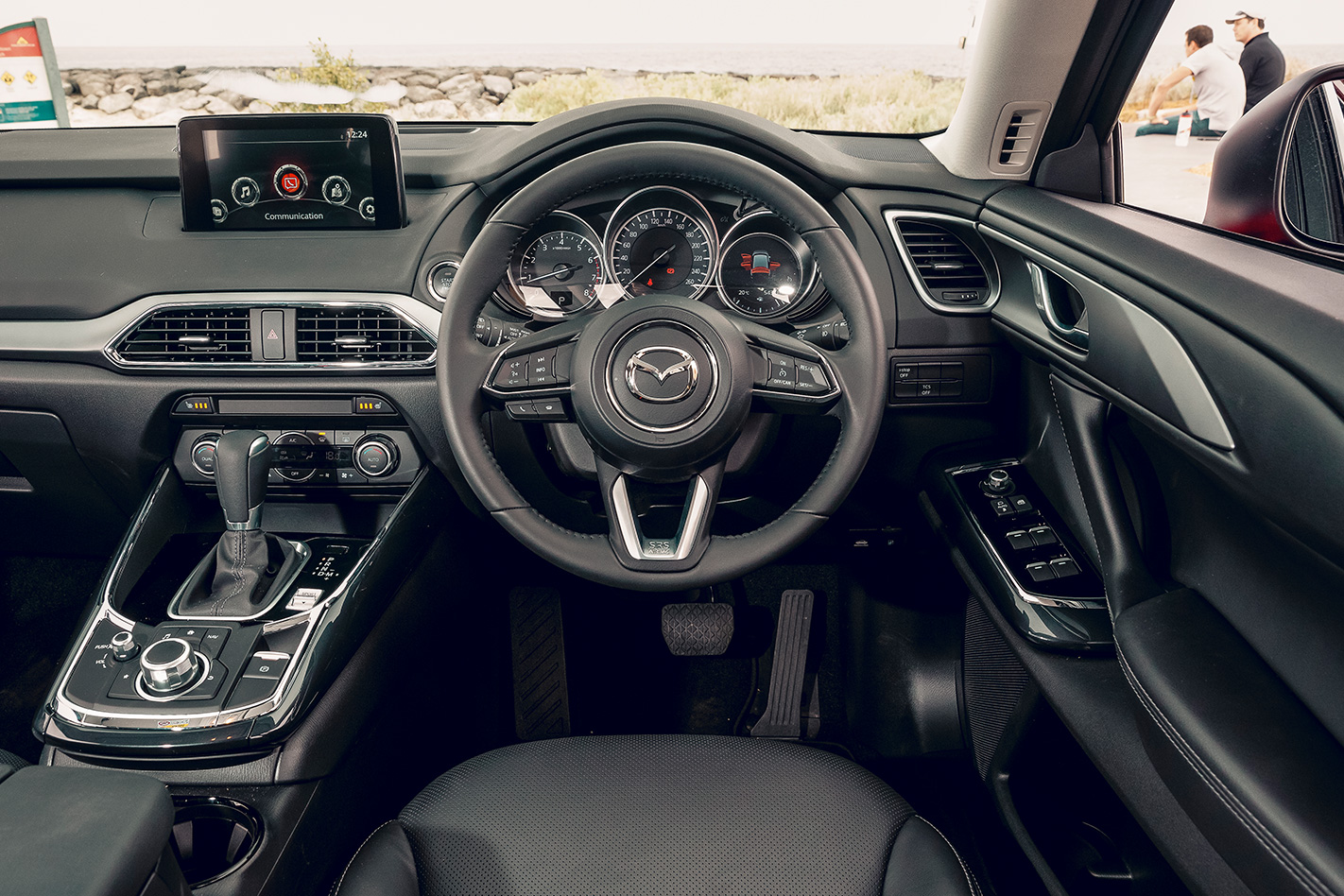
While the vehicles which will be fitted with the technology as standard will initially be limited, a retrofit system will arrive ahead of 2019.
“We said we would start rolling [Apple CarPlay and Android Auto] out before the end of the year, both as an accessory and as standard equipment on the cars,” Doak reiterated.
“It didn’t make it onto the CX-3, but you will see it pretty soon as standard equipment on one of the other updates that we have coming.”
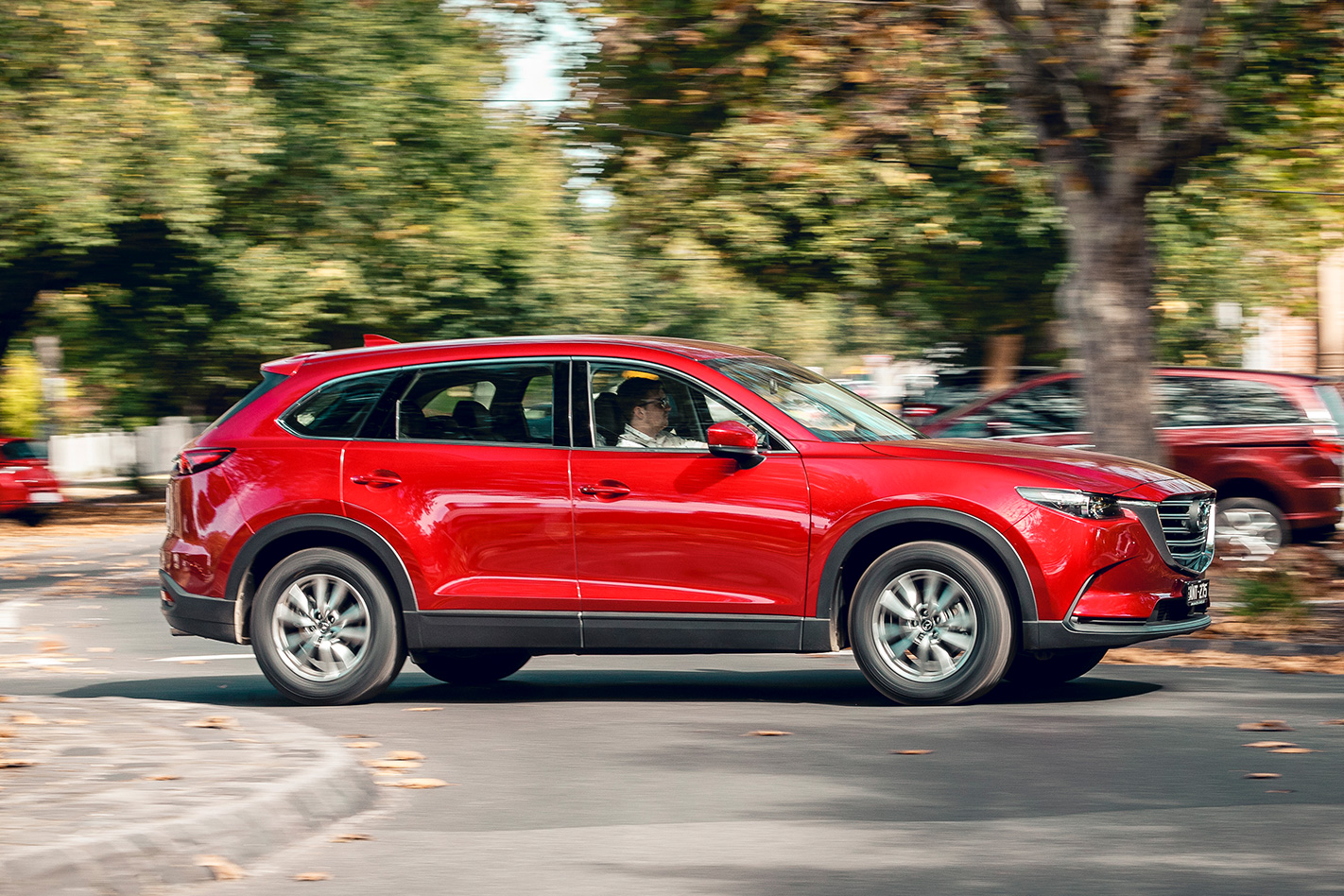
Wheels understands the facelifted CX-9, being launched this week, will be the first Mazda to feature smartphone mirroring as standard, with all subsequent new models to also include the tech.
“The retrofit kit is still on its way,” Doak added. “We haven’t announced pricing yet, but will do soon. That is on track and should be here in a couple of months.”
Mazda is allowing customers with older vehicles to get in on the tech, with the retrofit available to all cars fitted with the company’s MZD Connect infotainment system, which debuted on the Mazda3 in 2014.
While Doak would not be drawn on specific pricing, he did indicate it would probably cost “hundreds” of dollars, and that there would just be a single cost for customers, unlike the subscription service offered by BMW.
The one-off payment looks a distinct bargain when compared with certain other manufacturer’s fitment of smartphone mirroring servicing. For example, Ferrari offers Apple CarPlay and Android Auto as an option on the GTC4 Lusso for a not inconsiderable $6790.
“[The retrofit] is both a hardware and software update, so it takes a while to install,” Doak added, explaining the associated labour costs for dealerships are a significant factor in pricing.
“You will have to take the actual MZD unit out, do some magic at the back as well as a software update, so it will take some time. It’s not just a quick job.”
“But, once it is all put back together, it will look exactly the same.”
Doak indicated the duration of the fitment would be less than a day.
