
WHAT IS IT?
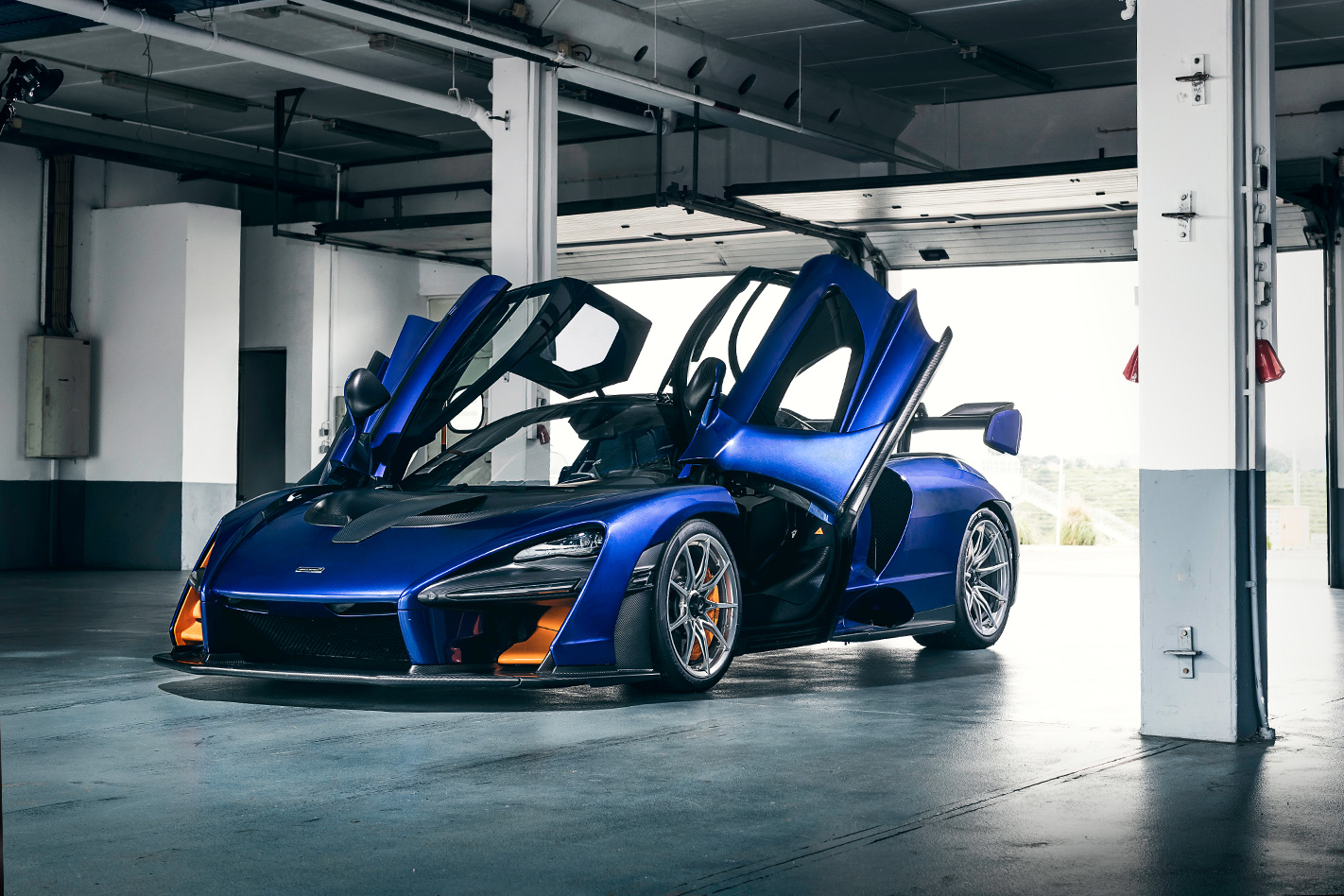
It’s the most potent McLaren ever to wear number plates. Designed for the track with only the smallest concessions for road use, the Senna joins the legendary P1 as the second addition to McLaren’s Ultimate Series. It’s also a collection of mind boggling numbers: 597kW. 800Nm. 800kg of downforce. A limited run of just 500 and an asking price of AUD $1.6m, all of which are sold.
WHY ARE WE DRIVING IT?
Aside from some limited seat time in a pre-production mule at Silverstone last month, this is our first fully immersive Senna experience in a customer ready car. And where better to do it than Estoril, the iconic and decidedly old-school circuit where Ayrton Senna took his first Formula 1 win. Bring on the race suit and HANS device…
THE WHEELS VERDICT
Outrageous to behold and breathtaking to drive, the McLaren Senna redefines that old cliche of ‘race car for the road’.
PLUS: Braking performance; aero smarts; agility and immediacy; accessibility; depth of dynamic talent MINUS: V8 sounds good, not great; price; sold out
THE WHEELS REVIEW
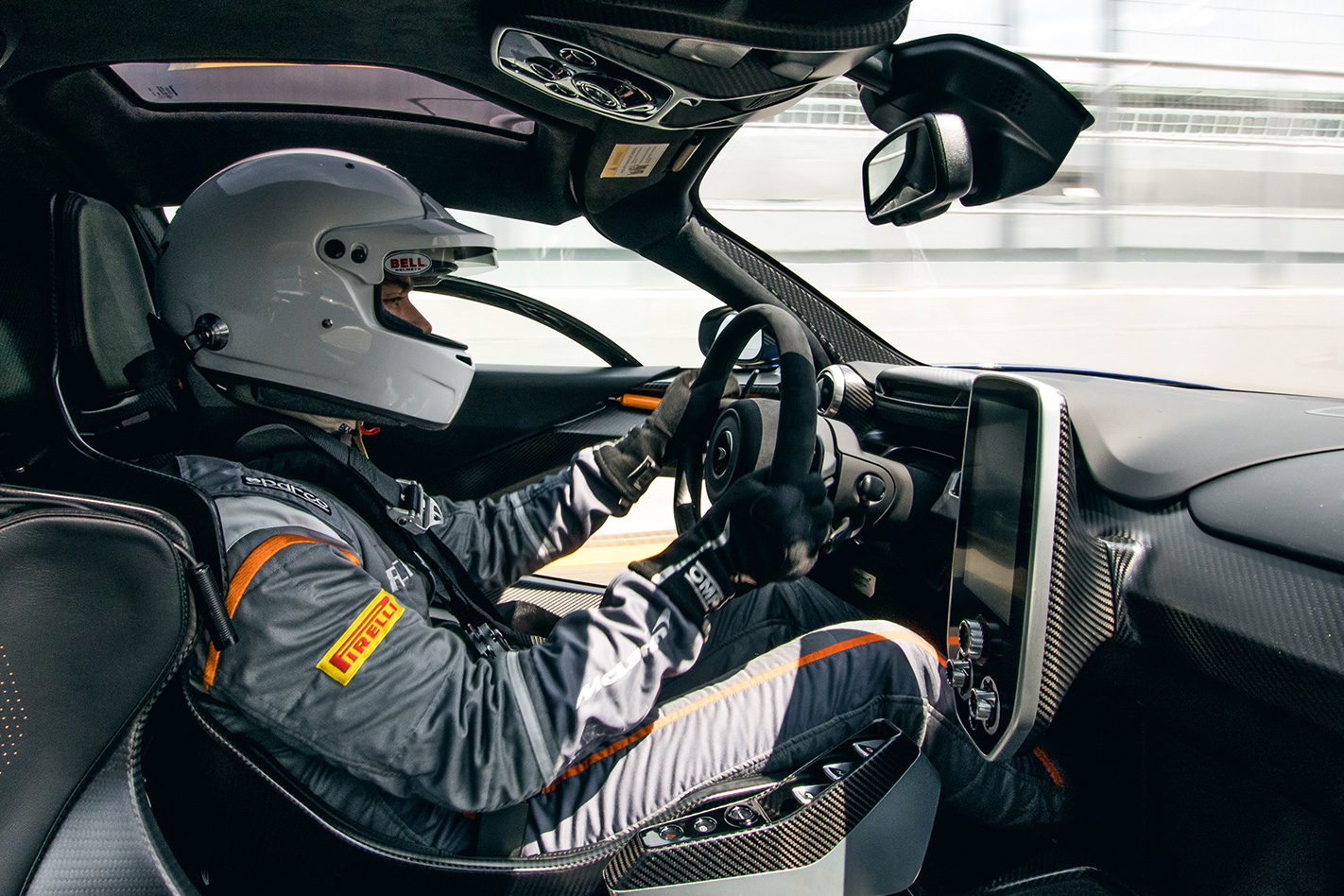
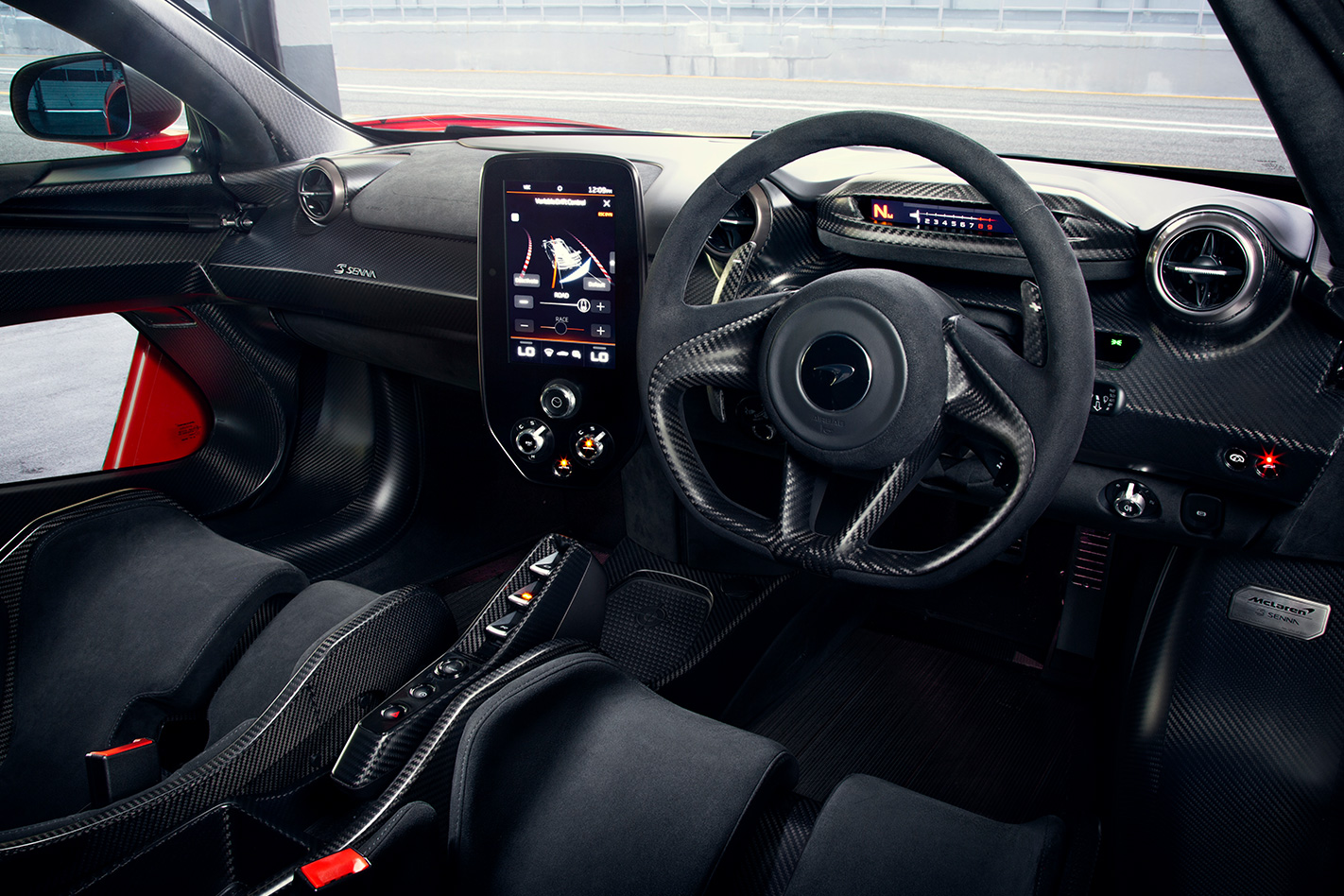
IT FLIRTS with the surreal to slip into the blade-like seat of the Senna, the colossal dihedral door stretching skywards as my belts are tugged and tightened by a bald Brit with a sweaty dome. It’s hot at Estoril. Baking heat rushes into the cabin as I process my surroundings: the dished, thinly rimmed steering wheel. The narrow slit of the instrument cluster. The floating centre screen that juts from the dash. The sheer quantity of exposed carbonfibre.
It’s sparse and fastidiously functional, though such is the nakedness of its purpose and ambition that it verges on beautiful. Comfortable too. I just have time to digest the reclined rake of the fixed carbon seat, the vast reach adjustment of the wheel and the flat plane of the pedal set before the door is clipped shut (at 9.9kg, or half the weight of the door on a 720S, it whooshes closed instead of thudding home) and I stretch for the starter button. This is an experience in itself. Unable to reach the dash I catch myself before remembering the red ignition switch is mounted on the roof, just ahead of a small black button that reads ‘Race’. My gloved finger prods the starter. Silence. A single, high-pitched chime. There’s a flurried whir of starter motor and the 4.0-litre V8 catches, the dry-sumped, twin-turbo unit settling quickly into a monotone idle that has the whole cabin fizzing with high-frequency vibrations.

I’ve been thinking about this moment for weeks. Obsessing over it. As you would too, if given the chance the drive the fastest and most singularly focused McLaren ever to wear number plates. The fact we’re at Estoril, the iconic, undulating and unforgiving circuit where Ayrton Senna snatched his first Formula 1 victory only adds to the occasion. Though unlike you perhaps, I haven’t been bubbling with excitement as the anticipation grew. I’ve been twitching and jangling with nerves. The source of my trepidation is easy to trace. The last McLaren I drove – a malevolent grey 720S – delivered a moment of such savage launch-control acceleration and (thanks to a bumpy surface) huge armfuls of corrective lock at big speeds that it left me a little shell-shocked.
The Senna’s promise of weaponising that violence in a package worth AUD$1.6m with 220kg less, 69kW/30Nm more (total outputs are 597kW/800Nm) and GT3 levels of downforce, was, I’m not ashamed to admit, a little intimidating.
Strangely, though, hitting ‘D’ on the finger-like carbon control panel, which moves fore-and-aft with the seat, is a centring and almost calming experience. I’ve already driven the circuit in a 720S to learn the layout, so the initial fear-factor has waned, though even in pitlane it’s clear the Senna is a markedly different beast. With Race mode engaged, the whole car hunkers down on its hydraulically controlled suspension, the nose dropping by 39mm, the rear by 30, making it feel like a sprinter tensing in the starting blocks.
It’s noticeably stiffer than the 720S, even as we trundle down the pitlane, bumps transmitting jolts of vertical movement, the electro-hydraulic steering twitching and squirming as I adjust to the immediacy of the controls. The brakes instantly feel more race than road car; the brake booster is the same unit found in the P1 GT R and the pedal is extremely firm, almost dead to the first touch. The differences build as I leave the pits and feed in second gear. Vibrations rise with the climbing rpm, the softer and comparatively refined cabin of the 720S replaced by resonances that start in your legs and settle, deliberately I’m sure, in the small of your back. It’s visceral, direct, connected; oozing with its own personality that’s miles away from the common McLaren criticism of feeling too clinical; for lacking the intangibles that set Ferrari and Porsche apart.
The first lap is a blur of shifting frames of reference. I’d spent weeks thinking the Senna would feel like a sharper, more aggressive 720S, only to have that mental preparation shattered within two corners. The step change is shocking.
There’s more grunt, sure, and the Senna’s V8 does respond with greater ferocity and urgency, but it’s the feedback from the controls, the quicker steering’s sensitivity to load, the innate sense of agility, balance and grip, and the fearsome body control that require fast and total recalibrations. This isn’t a road car honed for the circuit of the ilk of a 911 GT3 RS or 488 Pista. It’s in a different league; a barely sanitised racer that just happens to wear number plates.
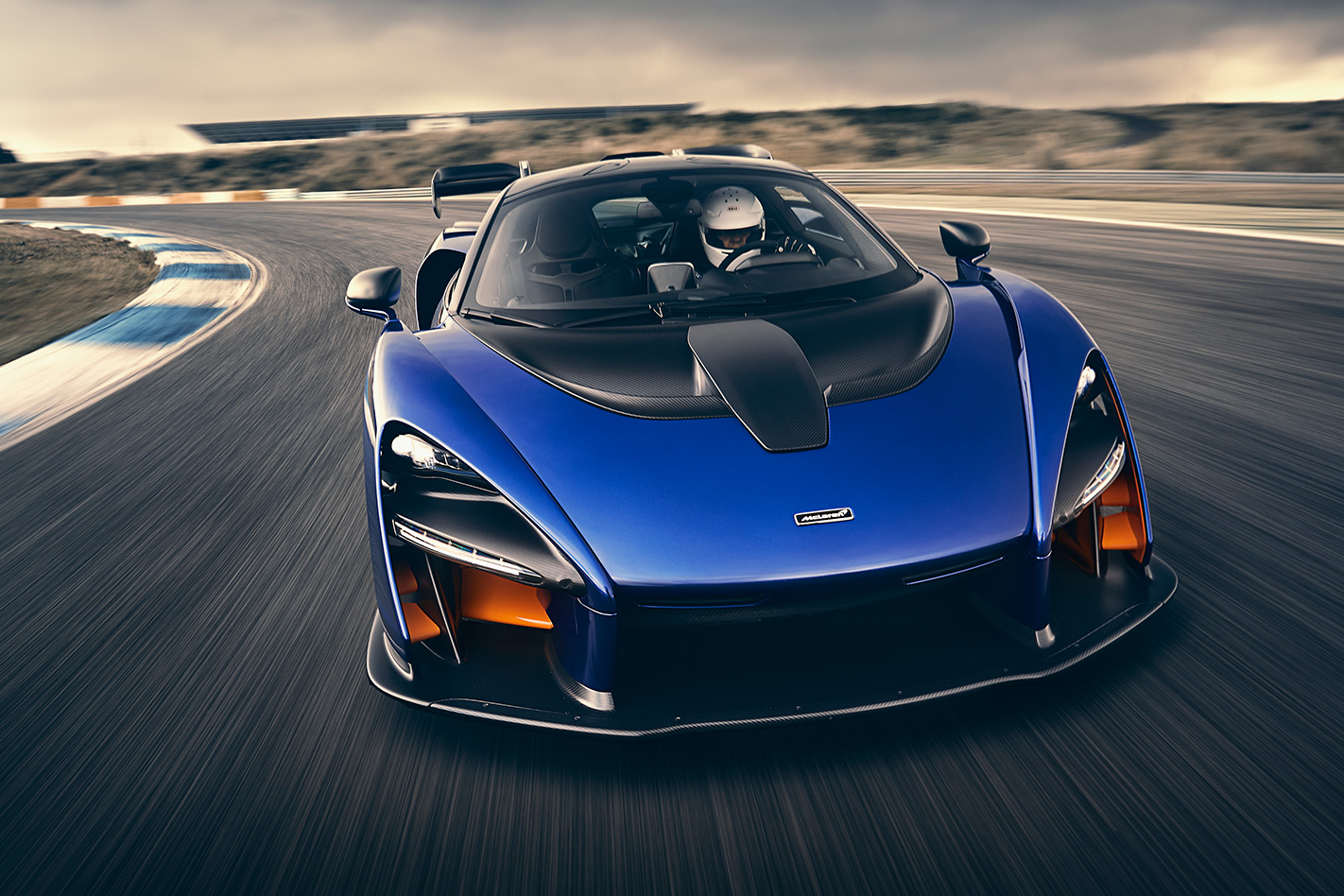
Then I arrive at the first proper braking zone. The Senna’s carbon ceramic stoppers are constructed using a new technique that takes seven months to create a single disc; seven times longer than conventional carbon brakes. McLaren engineers are cagey about explaining the exact process (I glean it’s the melting of the material that takes so long) though the result is a package that’s 60 percent stronger and operates at temperatures around 150 degrees cooler. They’re smaller than you’d expect too, with each disc measuring 390mm, yet the stopping performance is immense. There are two big stops at Estoril – into Turns 1 and 6 – and it’s telling that in a car with this level of performance that the most addictive thing isn’t how it piles on speed, but how it loses it. More than once I thought I’d hopelessly overcooked it into T6 as I hammered the left pedal just after the 100m board from 260km/h, only to marvel at how it stops. No pitching of the nose. No wriggling or writhing from the rear axle. Just brutal and unflappable stability and retardation. McLaren claims the Senna will go from 200km/h-0 in 100m; some 16m shorter than a P1. 100km/h-0 takes 29.5m.
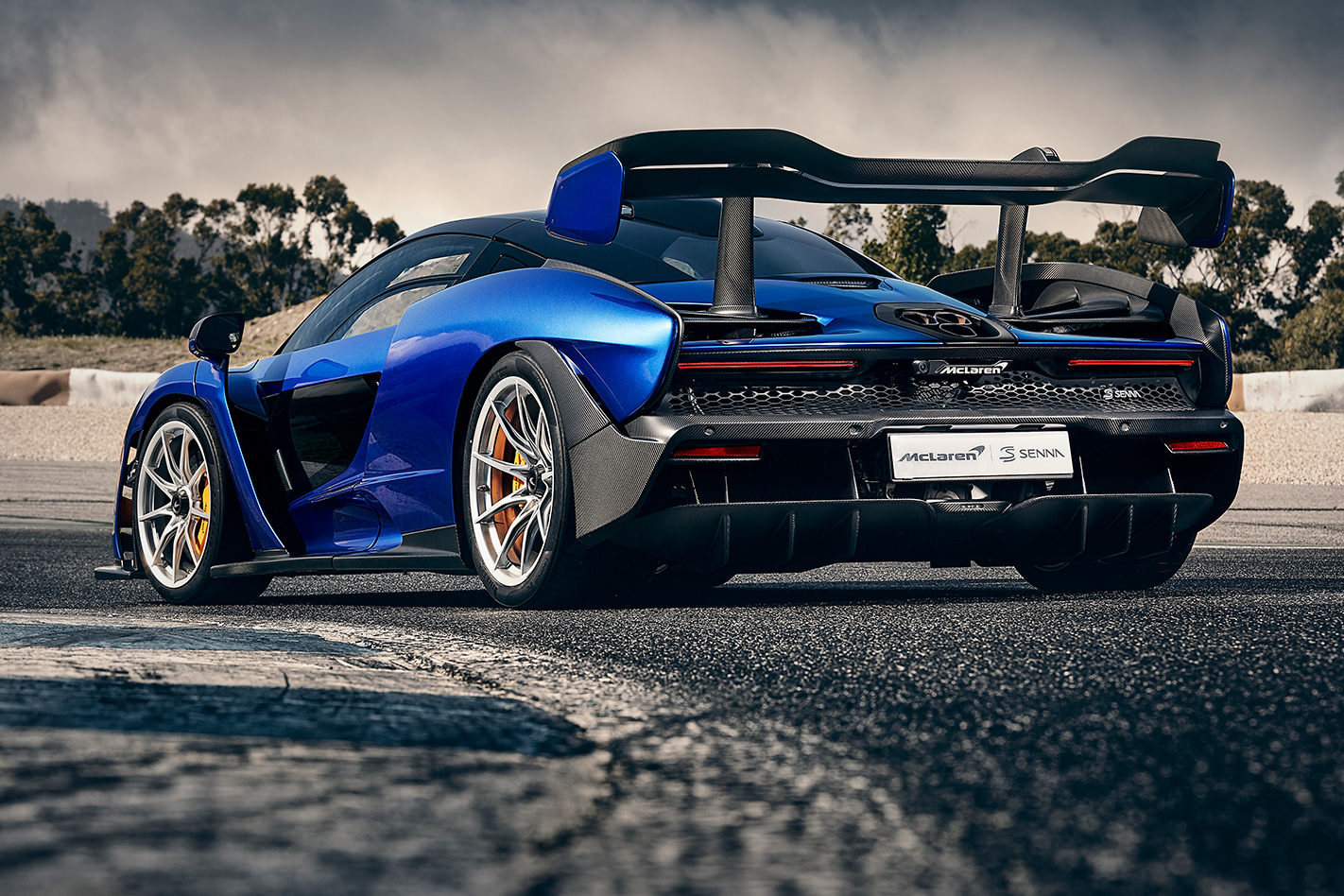
Central to this, of course, and to all facets of the Senna, are aerodynamics. Managing airflow is the sole reason the way the Senna looks the way it does and while it’s far from pretty, I don’t think I’ve ever seen a more visually interesting car. It’s captivating to behold as your eyes trace the grooves, slats and vents that force the air under, into or around the body. Core to the aero performance is the huge front splitter, which has 150mm more overhang than the P1, and the positioning of a large, single radiator in the centre of the front bar (replacing the two units packaged behind the headlights in the 720S) so that air is channelled through the gaping side intakes and to the active fins that lurk within.
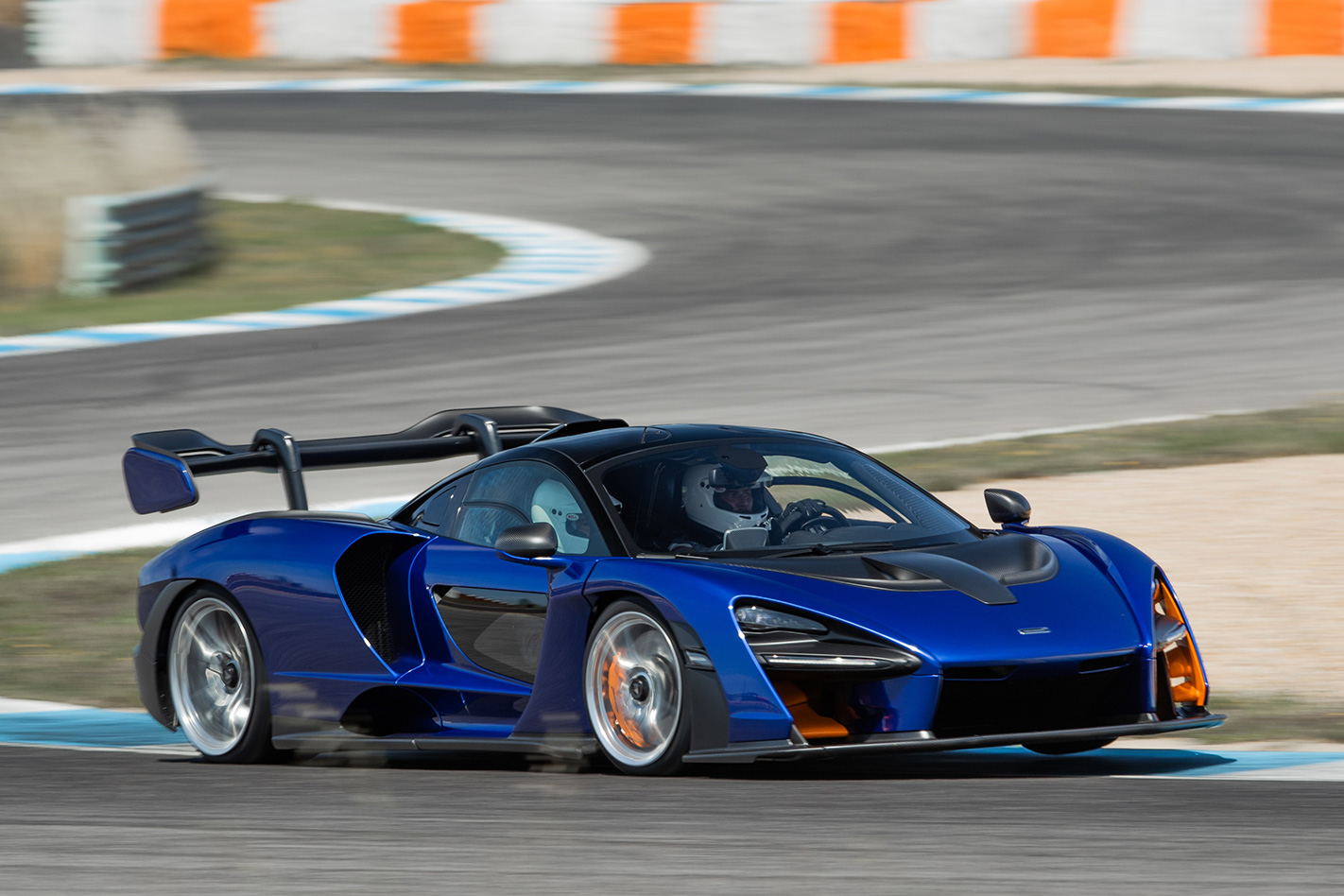
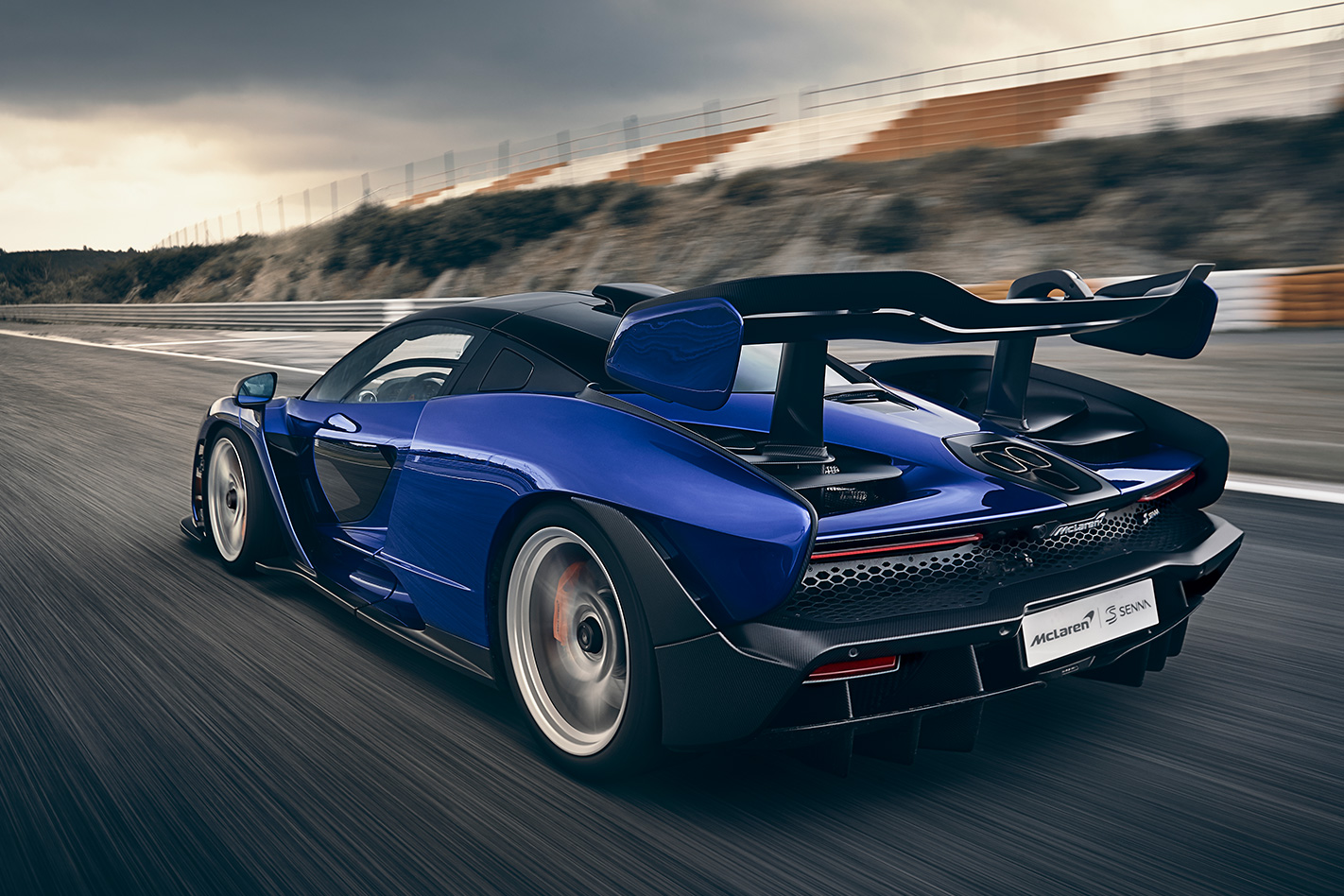
Perhaps the most beautiful element is the enormous double rear diffuser, forged from a single piece of carbonfibre that stretches as far forward as the rear-axle line. It’s that dominating rear wing, however, that creates the most downforce, accounting for 500kg of the Senna’s 800kg total. It too is active, capable of sweeping through 25 degrees to add or reduce downforce, though this implies the Senna plays with the air as it flows over it. It doesn’t. It bashes it into submission. It’s a character trait best observed from outside the car, where unlike a 720S, which whooshes past as it blasts along the pit straight at more than 250km/h, the Senna sounds as though it’s tearing a hole through the atmosphere, the air making a tortured noise like the edge of a sail rippling before it pulls taut.
What defines the experience, however, is how the Senna shifts the aero balance between the axles, working in conjunction with the latest version of McLaren’s Race Active Control II system. Damping rates, roll rates and downforce distribution are all managed seamlessly in real time, which, combined with the braking performance, compresses the phases of the corner from a structured process (brake, turn in, add power), into one where the edges overlap. Because the front aero blades bleed off downforce as you enter a turn, rather than pinning the nose and unsettling the rear, you have the confidence to carry the brake, and more mid-corner speed, deep into the corner, unafraid that you’ll suddenly swap ends. Get too greedy with the throttle on corner exit or carry a fraction too much lock as you feed in the power, especially in low-speed turns where there’s less aero, and it will oversteer, though even then it’s not the snappy, heart-in-mouth experience I was expecting from a high-downforce machine with a 315-section rear tyre. Instead it breaks away cleanly, the onboard electronics hardly blinking as I quickly feed in half a turn of opposite lock.
The tyre is a specially developed Pirelli P Zero Trofeo R – 245/35R19 up front and 315/30R20 out back – and ultimately, despite their prodigious purchase once up to temperature, they are the limiting factor to the Senna’s ability. Even so, McLaren says the Senna is six seconds a lap quicker at Estoril than a 720S. I can only imagine what it’d be like on slicks.
With my two six-lap sessions over, I spend a long time in the pits trying to process what I’ve just experienced. No road car I’ve driven approaches the Senna’s depth of ability and I’m left with the frustrating feeling that I’d only just begun to scratch the surface. The fact that it’s easy to drive very quickly shouldn’t be misconstrued with thinking its full potential is readily accessible. Instead it feels a car you could spend years learning as you delve further and further into its dynamic range. It’s complex, multi-faceted and unique which, given its name, is wholly fitting.
SPECS
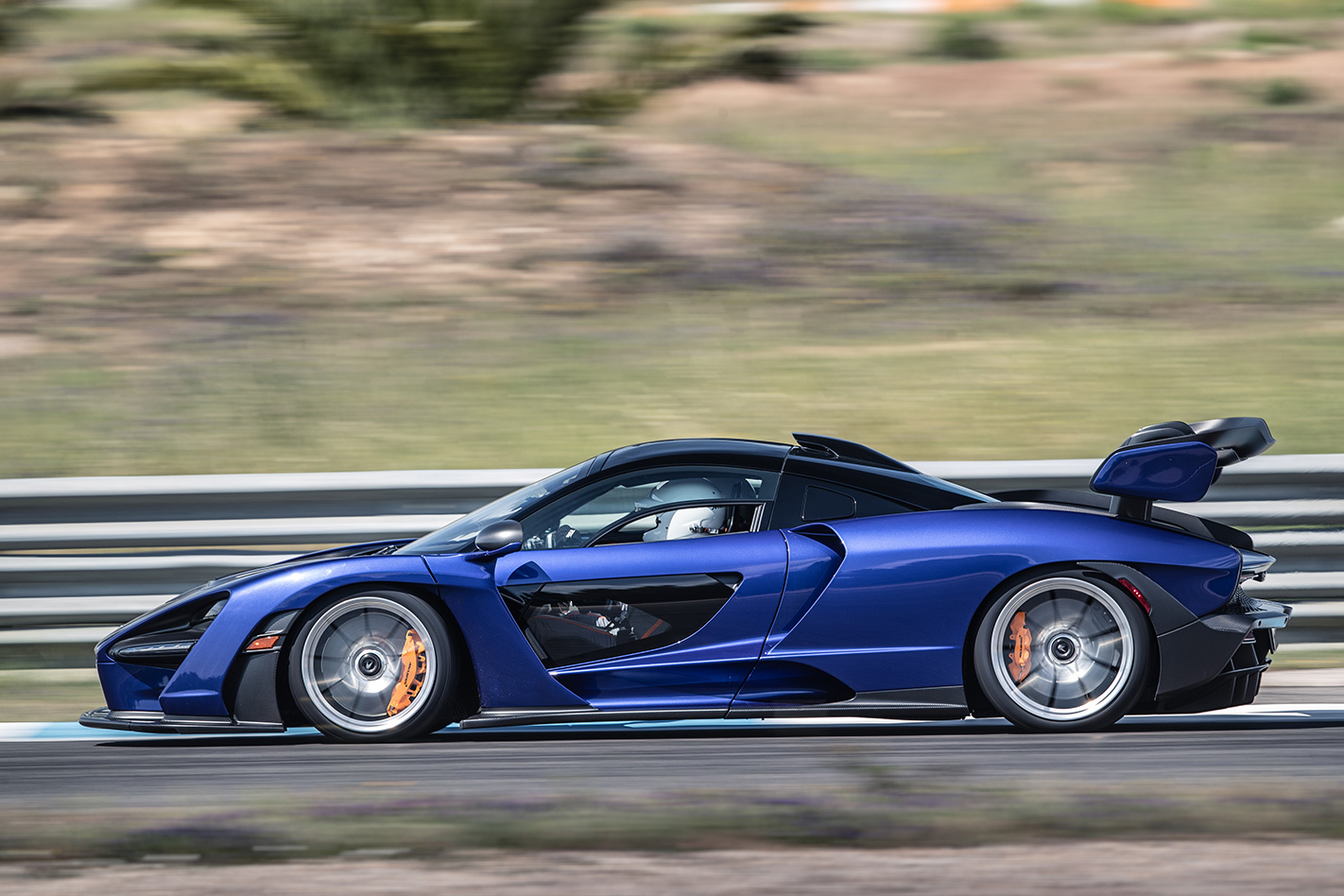
Model: McLaren Senna Engine: 3994cc V8 (90°), dohc, 32v, twin-turbo Max power: 597kW @ 7250rpm Max torque: 800Nm @ 5500-6700rpm Transmission: 7-speed dual-clutch Weight: 1198kg (dry) 0-100km/h: 2.8sec (claimed) Economy: 12.4L/100km Price: £908,000 (AUD$1.6m) On sale: Now
This man, named Jeff, has built a Porsche 911.
He has even documented the whole thing on his relatively popular YouTube channel called Home Built By Jeff.
The process has been uploaded in the form of dozens of videos, with each individual ‘episode’ covering a specific part of the build, such as the engine build or working on the body panels.
But for our convenience, he’s cut the highlights into a four minute video which is sped-up to give us the gist of what he’s been up to.
And it’s pretty damn impressive.
His car is running on a ‘2.8 RSR’ engine which he worked on, and it matches up to the RSR style of his early-‘70s car. But not much of the car is as-original by the end of it. In fact, the exterior of the car is something to behold.
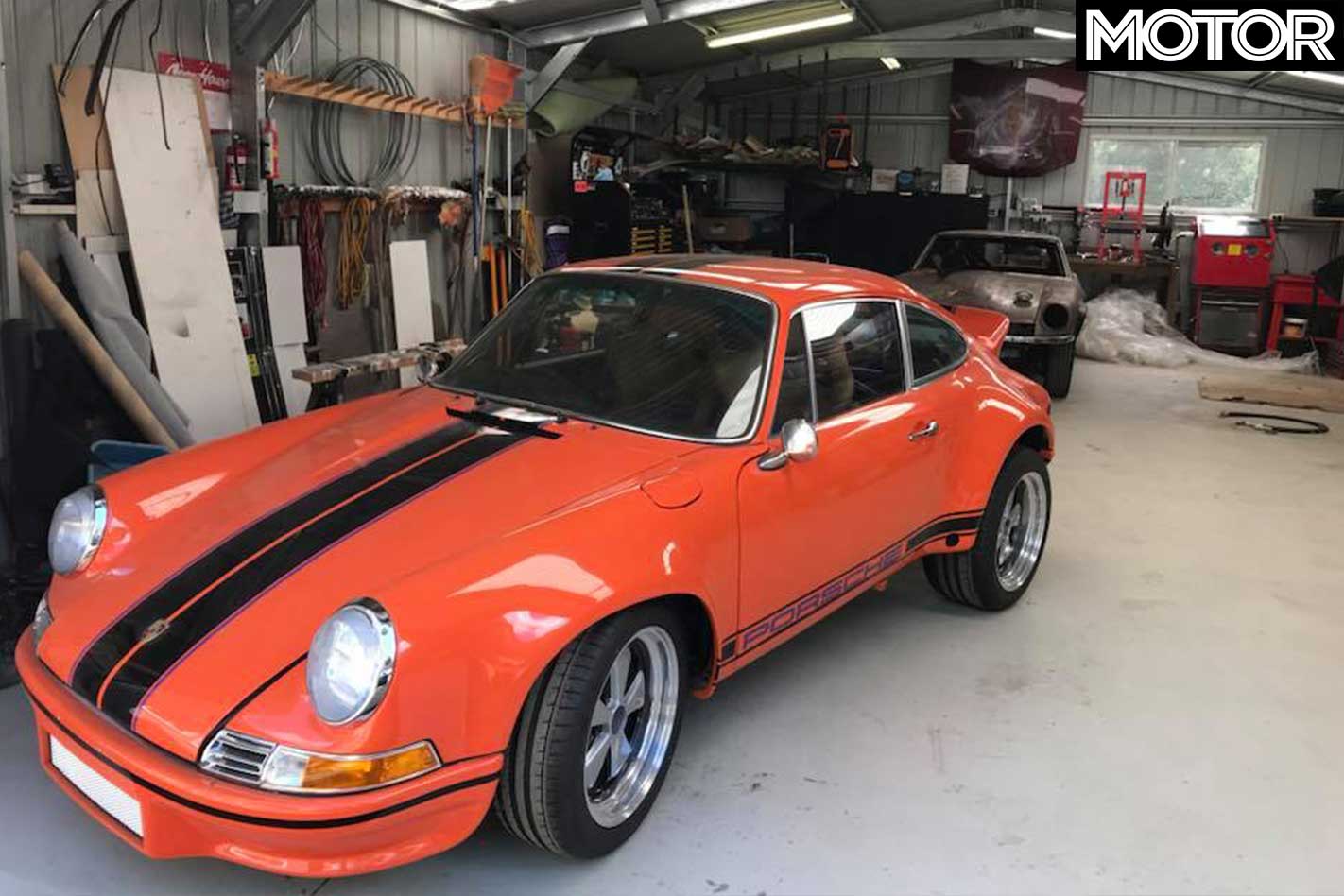
The interior, however, will probably leave a lot of you (as we discovered here in the MOTOR offices) rather confused as to why Jeff did certain things… such as trimming the car with purple tartan cloth. But we get it, it’s his own car, and he can do what he wants.
Still, the sentiment seems to be echoed on pretty mush every form of online comment available – YouTube, Facebook, and Instagram. Not that we think we could build it better.
Anyway, back to the timelapse video, you can watch Jeff strip the whole car down and shear off anything he doesn’t want, such as the wheel arches, before replacing them with his own modified parts.
It’s all pretty true to the feel of a classic Porsche, and it’s worth diving into his video series if you have any interest in building a project car. On ya, Jeff.
Back when I was a nipper at school, even the dumb kids knew that a HQ GTS 350 was cooler than a dragster push-bike with the three-speed Sturmey-Archer rear hub (and the T-bar shifter that was guaranteed to relieve you of your agates off in a prang).
This feature was originally published in a previous MOTOR issue
There wasn’t always a lot of playground trash-talk on the subject, but we all knew the score. The Ford kids would never have admitted as much and the Valiant brats were busy trying to get out of Greek School on Saturdays, but that didn’t bother us.
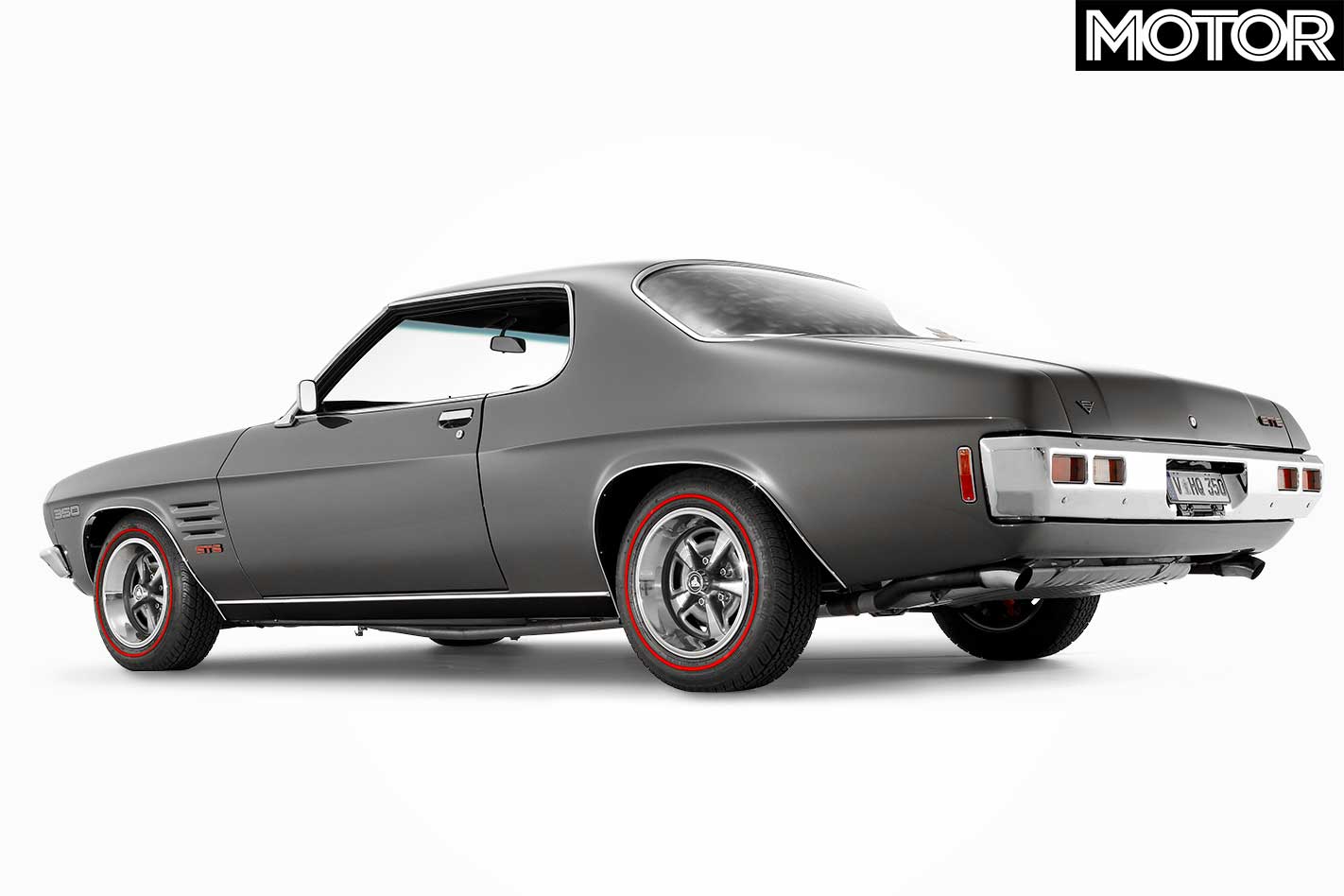
The HQ GTS wasn’t the first of the local halo models, but it sure did summon up some strong magic. Even my old man – who generally wouldn’t have known a cool car if it had run him down in the hallway at home – got it.
It’s no mistake that when the Morley family HD Special finally carked it in a pile of rust and radiator water, old dad came home the next week in a brand-spanking V8 HQ. Okay, it was a 253 with a vinyl roof, but its relationship to the GTS 350 was undisputed (as evidenced by the floor-shifted four-speed box and GTS rims).
To fully understand the impact of the GTS 350, you first need to look at what a radical thing the basic HQ was in the first place.
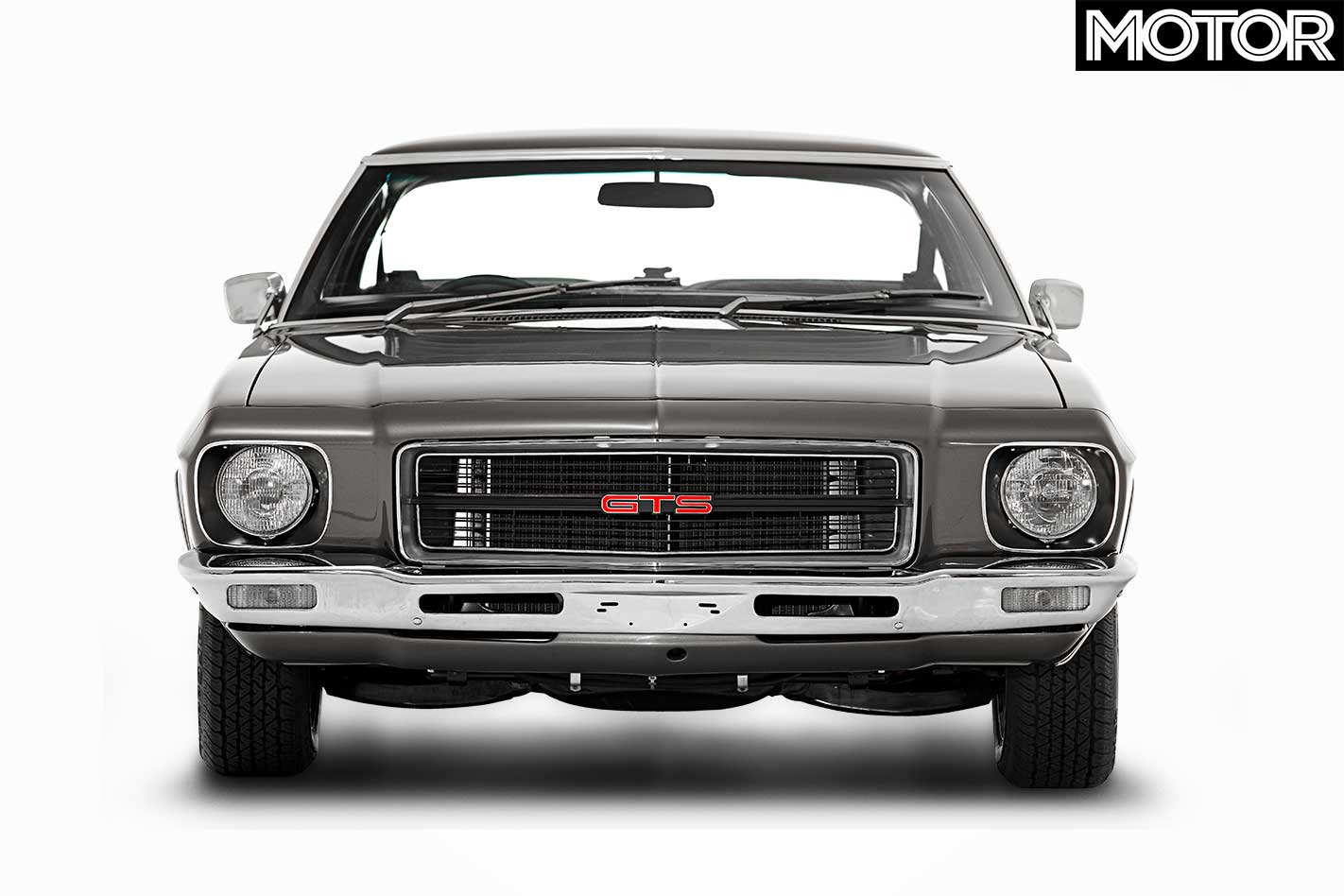
For a start, the HQ represented the fourth all-new Holden body in a decade and what a body it was: The thing looked long and low and while those bulging flanks looked good in the brochures, they were also a panel-beater’s worst nightmare. In fact, even today, the quality of any HQ can be judged by how smooth and ripple-free the surface is above and below that swage-line.
The engines (including the 350-cube Chev of the GTS) were pretty much carry-overs from the HG, although the six-cylinders were both enlarged (to 173 and 202 cubic-inches). More significantly, the HQ was the first full-sized Holden to ditch leaf springs at the rear, making the move to coils all round with trailing links to locate the live rear axle.
It was also the pioneer Holden in using the monocoque passenger cell with a separate front sub-frame that carried the engine and front suspension. This was aimed at better isolating noise and road shock and to make the car stronger. Ironic, then, that these separate front chassis rails were the first bits to crack after a few years on Aussie roads.
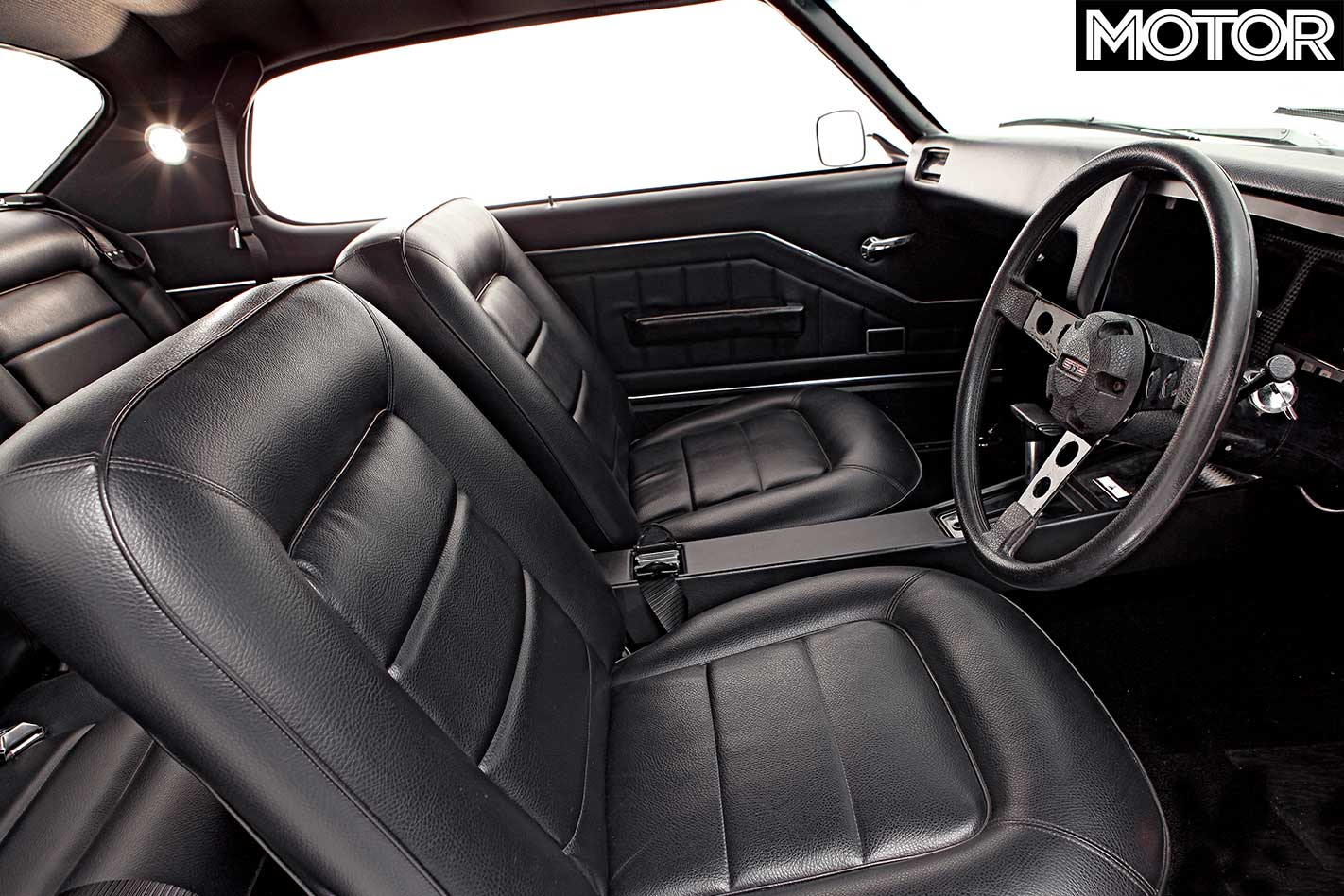
Safety also got a look in with the hand-brake moved to the outside of the driver’s seat cushion (many HQs were still bench-seat equipped) from its traditional spot under the dashboard. And the dashboard itself featured a huge crash-pad designed to reduce injuries at a time when seat-belt wearing was not as common as it is now.
Holden was also putting more thought into the basic architecture of its cars, too, and the HQ was the first Aussie-made car to feature full flow-through ventilation.
When it came to a HQ with a bit of pizzazz, the SS was the first port of call. Based on a Belmont with a 235 engine, the SS was cheap and relatively cheerful in its array of bright colours. But if you wanted to be serious, you needed a GTS. Initially only available as a two-door Monaro, the GTS badge was extended to the four-door Monaro from 1973.
In fact, the HQ was the first four-door to carry the Monaro tag, but like all previous Monaros, it could be had in some pretty tame variations. As in, you could actually option up a base-model Monaro with a 173 six-cylinder engine and three-on-the-tree. Pee-ew. There was also a trim level called LS which amounted to a two-door Premier. But the GTS; that was a different matter.
The base-model GTS in either two or four-door form used the 253 cubic-inch motor (there was no six-pot GTS) and a four-speed manual. You could also option the Trimatic three-speed slusher. From there you moved up to the 308 V8 with the same tranny options, and then to the big-daddy; the GTS 350.
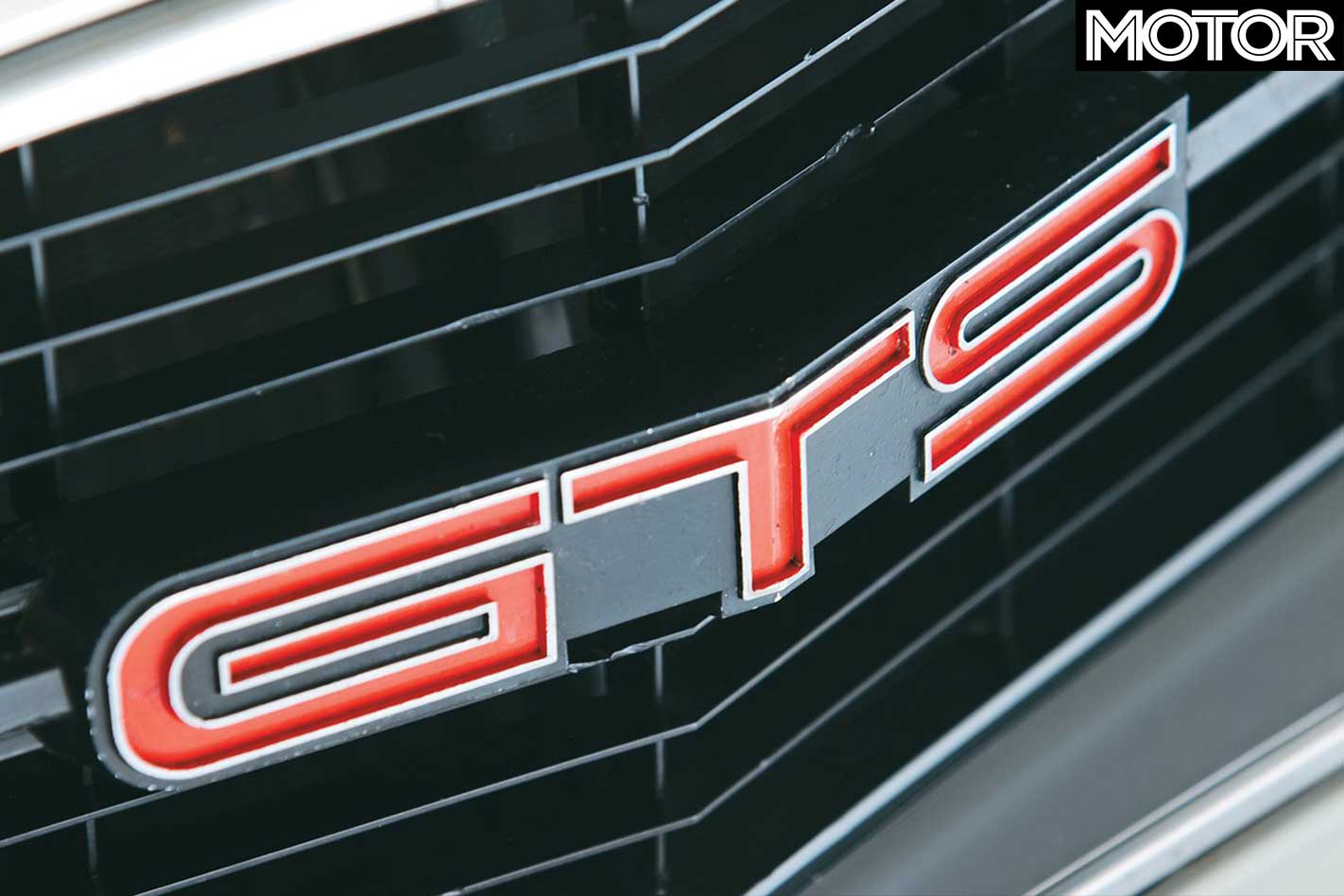
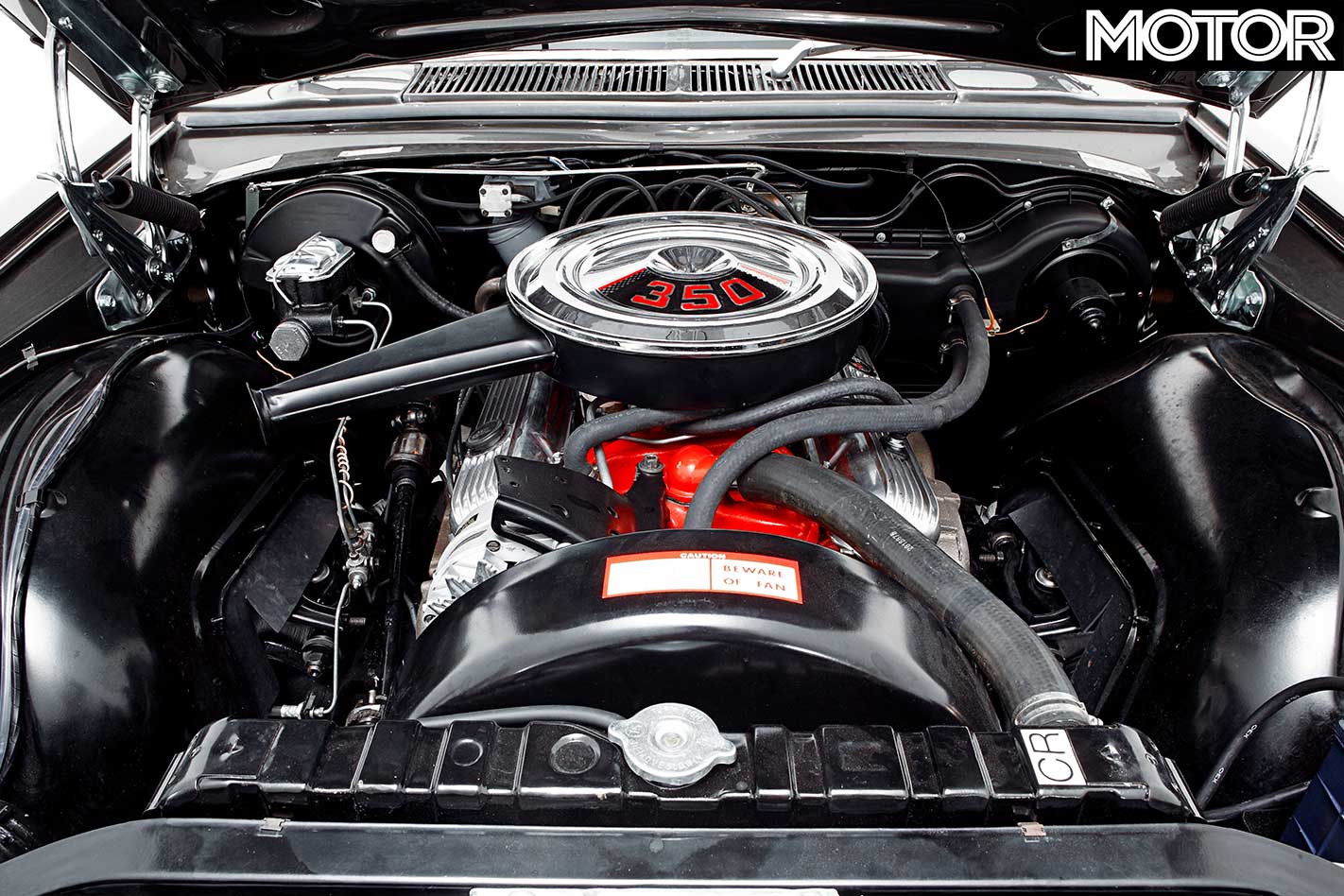
Again, the 350 could be had in two or four-door forms and in either four-speed manual or three-speed auto forms. But on 350-equipped cars, the Trimatic self-shifter was flung in favour of the tougher TH400 unit, while at the rear end, the Salisbury 10-bolt diff got a 3.08:1 final-drive ratio and a limited-slip centre.
Had the XU1 Torana never been invented and the HQ had gone on to become the Bathurst weapon of choice, the GTS 350 manual would have been the configuration that formed the basis of any homologation car. And it’s for that reason that 350-inch four-speed GTSs are the killer collectibles today.
But don’t overlook an auto; they’re actually a nicer thing to use in the burbs and they can still get out of their own way. And in some ways, the fact that the HQ Monaro didn’t have to homolgate a race-car, made it a gentler, easier-to-live-with creature.
The 5.7-litre engine, for instance, was detuned from the HG GTS 350’s 300-odd horsepower to a milder 275 (205kW) and the whole show was more civilised. Word is that the engine in the automatic version was a bit milder again to make it work better with the torque converter.
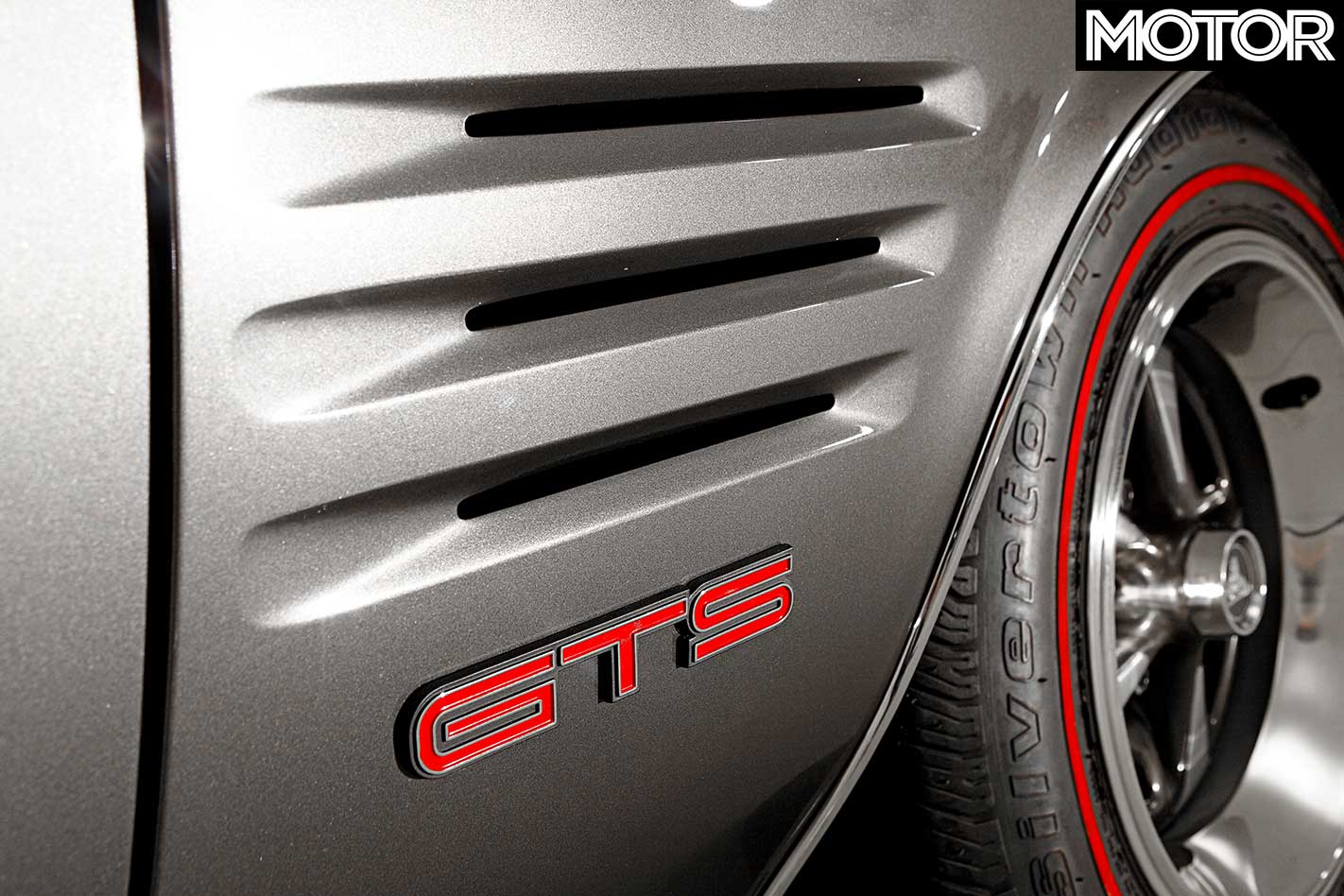
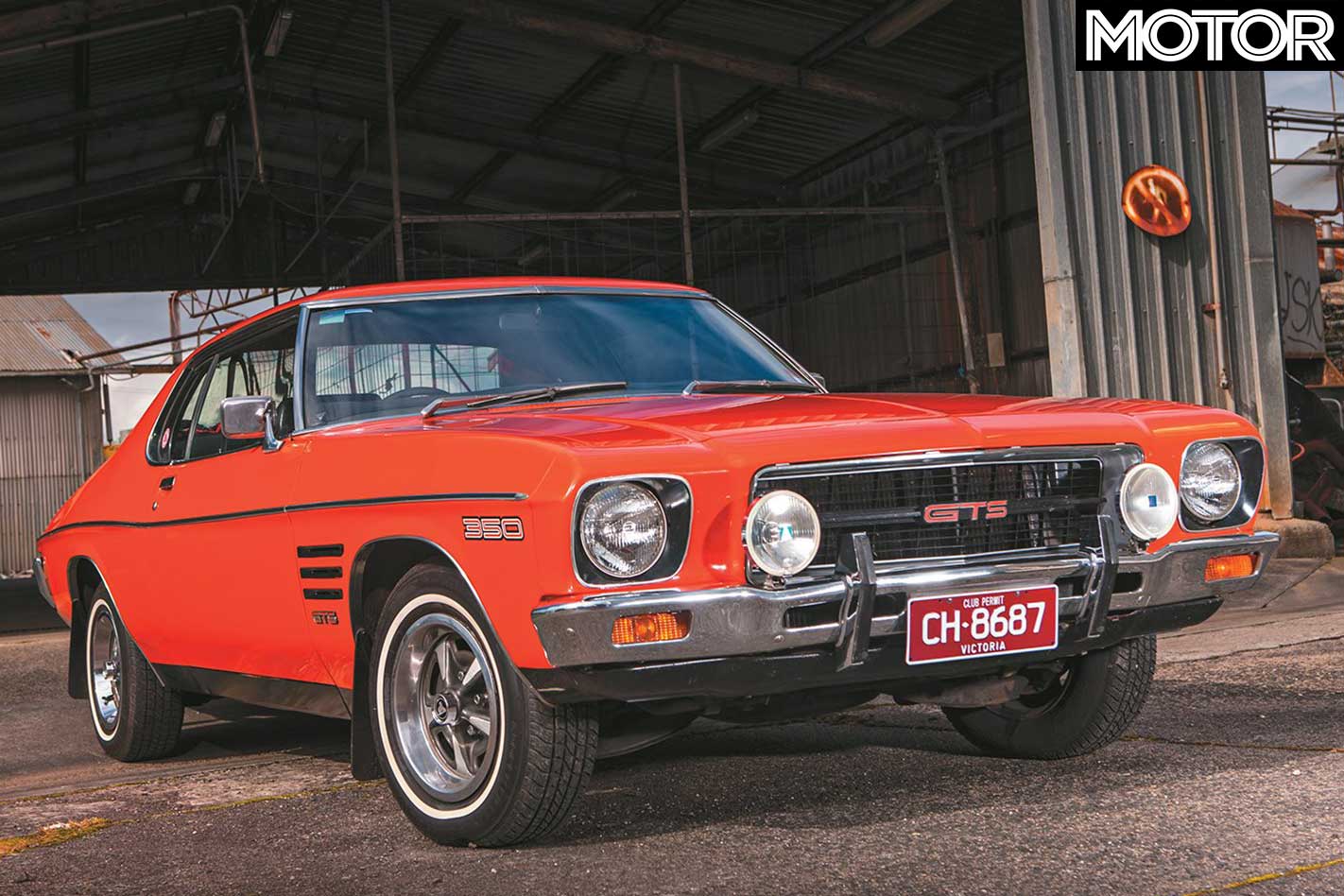
Visually, the HQ GTS is one of the better looking Holdens ever to roll off a production line. Not everybody is so sure about the balance of the two-door’s style (although those who get it are adamant it’s the pick of the bunch) while the four-door just looks great with those styled steel rims, shark-mouth grille and a bit of stance.
Interestingly, while everybody associates those mad, fat bonnet and bootlid black-outs with the GTS, they didn’t actually appear until 1973 when the four-door version was added to the line-up. Post-73 cars also lost the specific `350′ decals with only the generic HQ `V8′ script on the bootlid to warn following vehicles that they were behind something a bit special.
But without a racing program to justify the financial realities of using an imported engine (even if it was from the same family) the writing was on the wall for the GTS 350 and in October 1974 as the HQ itself was replaced by the flawed HJ model, the 350 engine option simply disappeared from price-lists.
Driving a HQ GTS 350 might be a bit of a let down to those raised on more modern tackle. See, like a lot of hero cars from the past, they’re not actually THAT fast. And the HQ’s job is made all the more difficult by the fact that, even in the day, it wasn’t the road burner that an E49 Charger or GT-HO Falcon was.
But it does have road presence and, let’s face it, if you want to go fast in 2011, you can save a lot of money and buy a Polo GTi with a warranty and air-con that works.
Inside, the GTS is a treat with houndstooth seat inserts, the highly prized GTS dashboard cluster with extra gauges and one of the best looking three-spoke steering wheels you’ll ever see (most of which broke where the rim joins the spokes).
The suspension will feel a bit soft compared with some other cars from the same point in time, and the steering will load up in corners if it’s the manual type and wander all over the road if it’s the assisted variety.
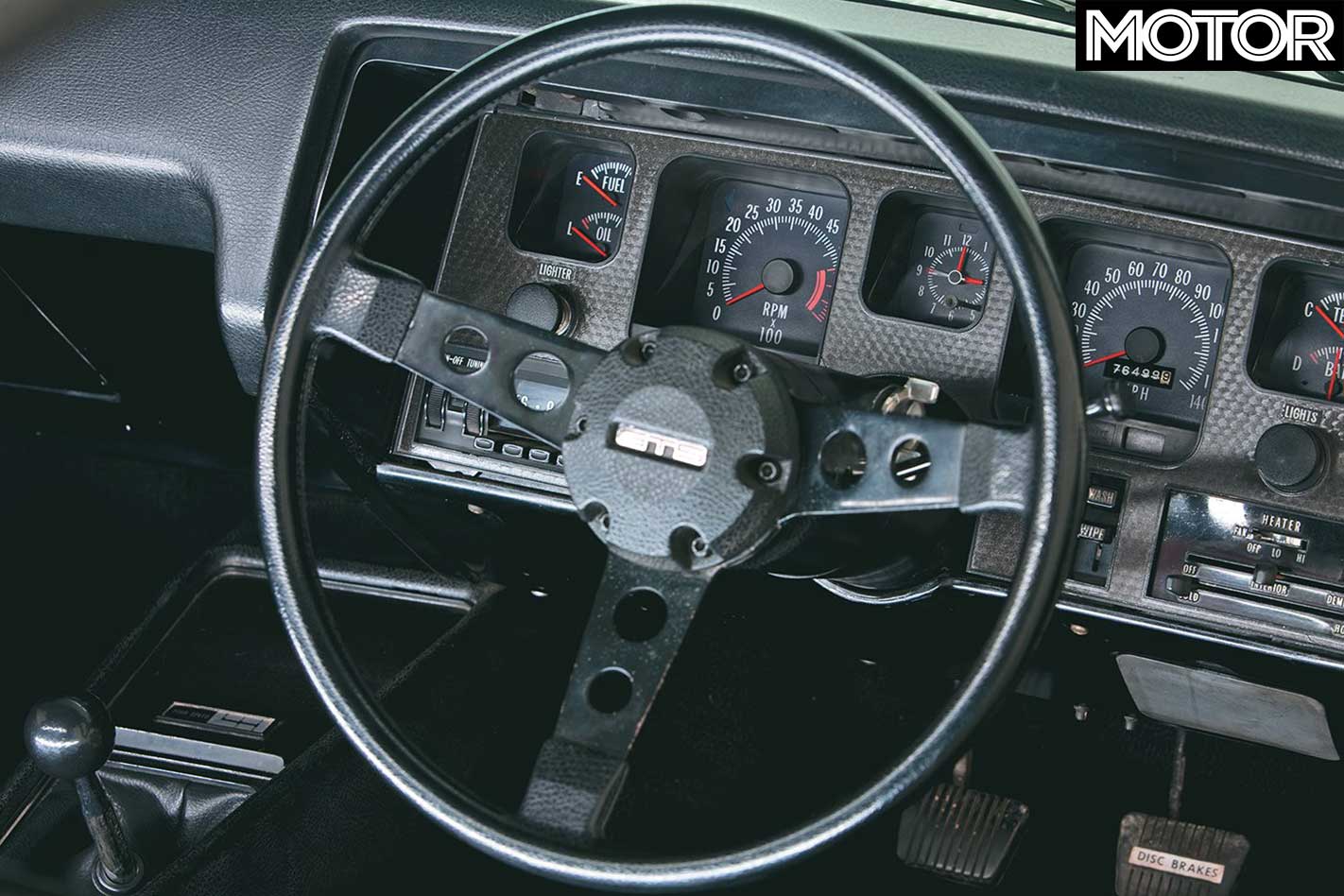
The brakes are disc-front/drum-rears and while they’re nothing to write home about, they’re not really any worse than the anchors on any local contemporary of the GTS.
The problem with a GTS 350 (and the same thing afflicts most collectible old muscle cars now) is that it’s just too darn precious to fiddle with. The inherent value in these jiggers is all down to their rarity and reputation, so keeping it true to all that is the secret.
Probably the best HQ Holden you could own now would be one with a rear-disc conversion, upgraded suspension, a T5 manual and a bunch-o-bananas injected 304-cube engine. And anybody who performed such surgery on a GTS 350 would definitely wind up with a better driver’s car…just moments before the purists shot them dead.
Pros – Not as race-proven as the opposition, so not as expensive to buy – HQs – even GTS 350s – are beautifully simple. Easy to keep running – Will always be worth a bob – Classic 70s cool – Last of the 350-cubers
Cons – Good ones are getting scarce – Watch out for fakes – Will never have the cachet of a GT-HO – Some trim bits very difficult to find – There are sportier cars to drive
This is the Ares Panther, a limited-run car built by Italian firm Ares Design, and set to revive (in spirit, at least) the DeTomaso Pantera supercar.
In case you missed it, here are the basics: The Ares Panther is a Lamborghini Huracán-based supercar, but its design was inspired by the DeTomaso, and it has pop-up headlights.
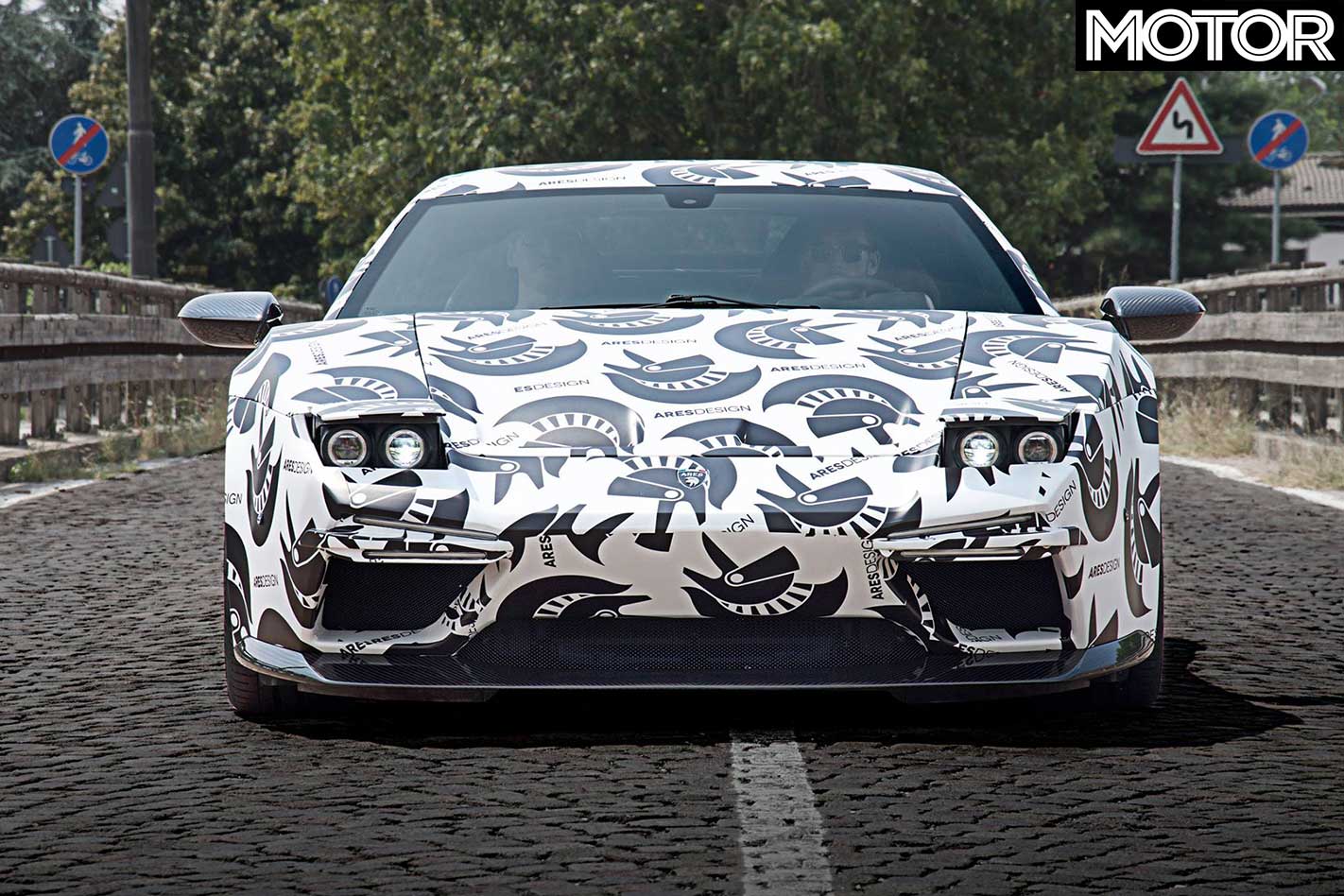
With the Huracán’s underpinnings comes the 5.2-litre V10 atmo engine from the Raging Bull, which will produce 483kW when in the Pantera. Ares also says it’ll be 100kg lighter than the Huracán LP610-4.
Double-wishbones feature all around, with Brembo six-pots and carbon ceramics , while the chassis is made of carbon fibre (the body is also CF) and aluminium.
The Ares Panther will be able to top 325km/h, Ares says.
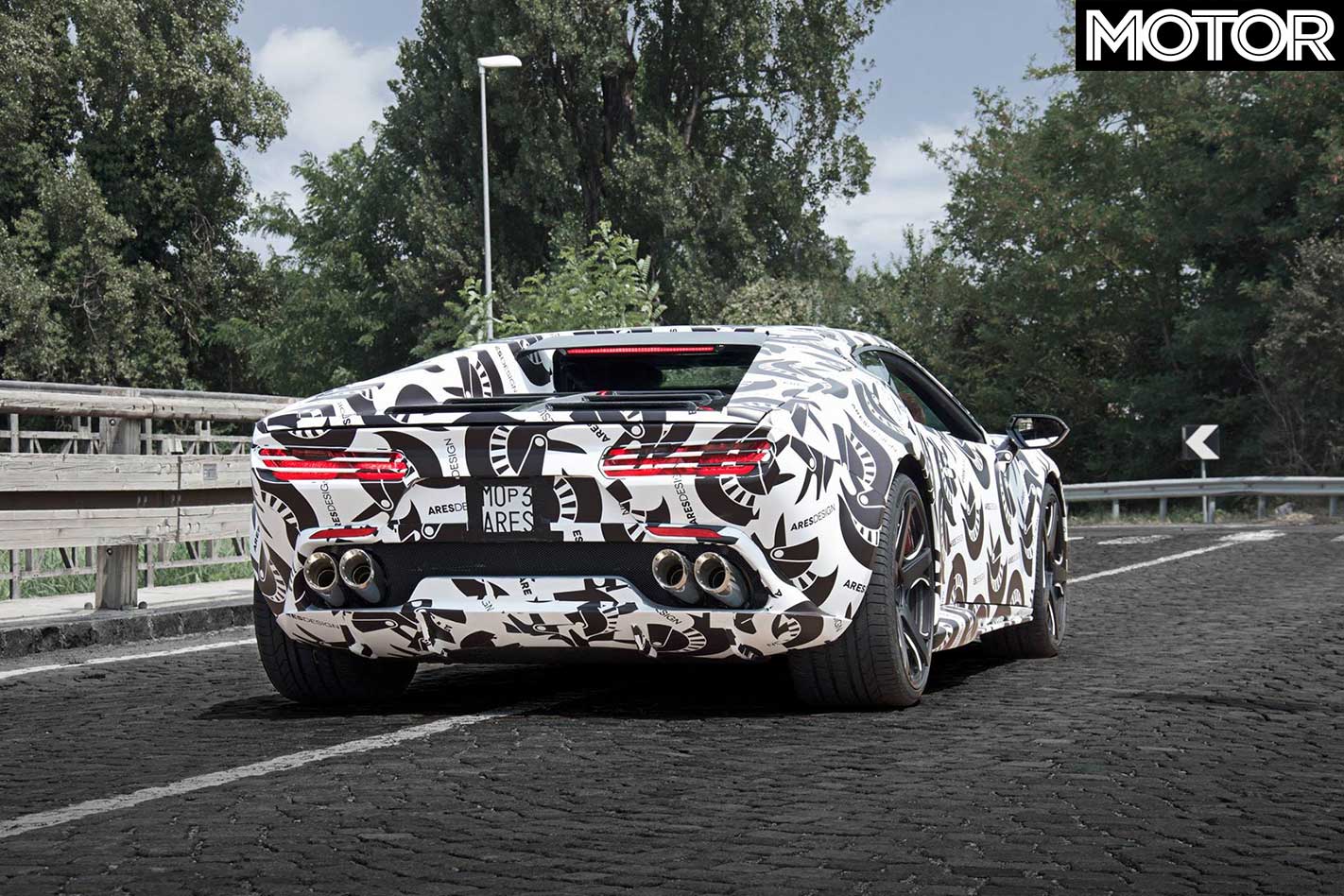
Video has now been released by Ares of the car moving, in a real physical form, for the first time.
Until the recent slew of teaser shots, we’d only seen the car in its design rendered form. Now it’s clear Ares has built a physical car, if not more, and it runs.
When the Pantera project was first surfacing, Ares Design founder and CEO Dany Bahar said the company’s unique ability lies in its ‘small business’ nature, even though Ares is quite quickly becoming a bigger player in the niche supercar space.
“We’re not restricted by corporate processes or fixed views on how ‘our’ cars should be seen, nor are we limited by technology and facilities that restrict what we can do for customers.
“Our strategy is unique in the automotive world: no other business – whether OEM, styling house, or personalisation specialists – offers the full range of services from personalization to full coach-building under one roof with a growing global network of market specialists that we believe satisfies every possible customer desire.”
Brabus has used the Mercedes-AMG GLC63 S for the basis of its latest work, the Brabus 600 Compact SUV.
For all intents and purposes, it is actually just a tuned Merc, but Brabus is a second-tier manufacturer and therefore gets to slap its own badge on the thing, like Alpina or HSV.
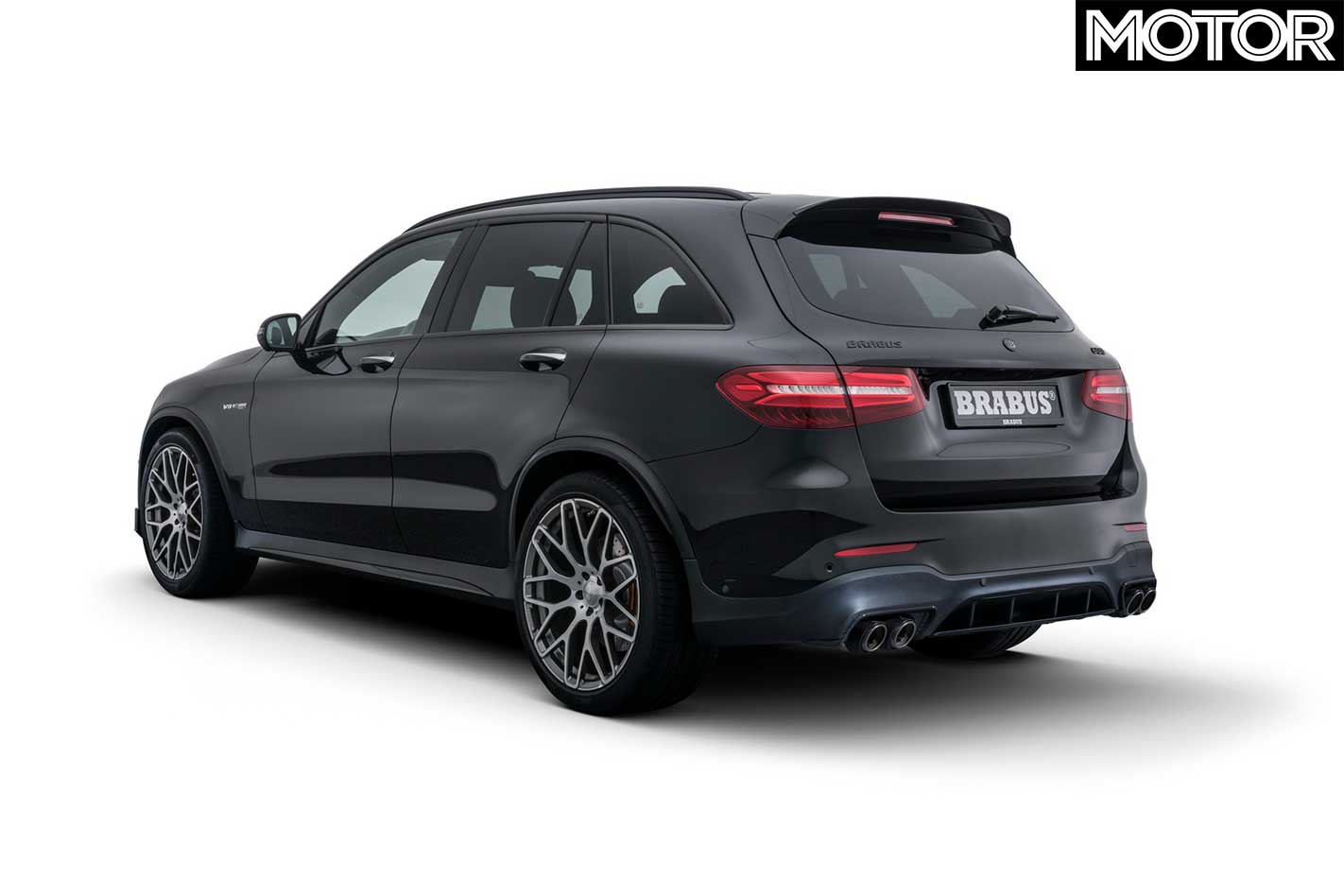
The Brabus 600 Compact SUV is bestowed with 441kW and 800Nm, using the same 4.0-litre twin-turbo V8 engine as is found in the GLC63S, but here with 66kW and 100Nm more.
Peak torque lives between 1750 and 4500rpm, while the kiloWatts show up in force at 5800rpm, though there are still plenty around in the rest of the range.
With this, Brabus claims the 600 shaves two tenths off the AMG GLC’s 0-100km/h spring for a run of just 3.6 seconds, almost unheard of for an SUV. It’s top speed is quoted at 300km/h.
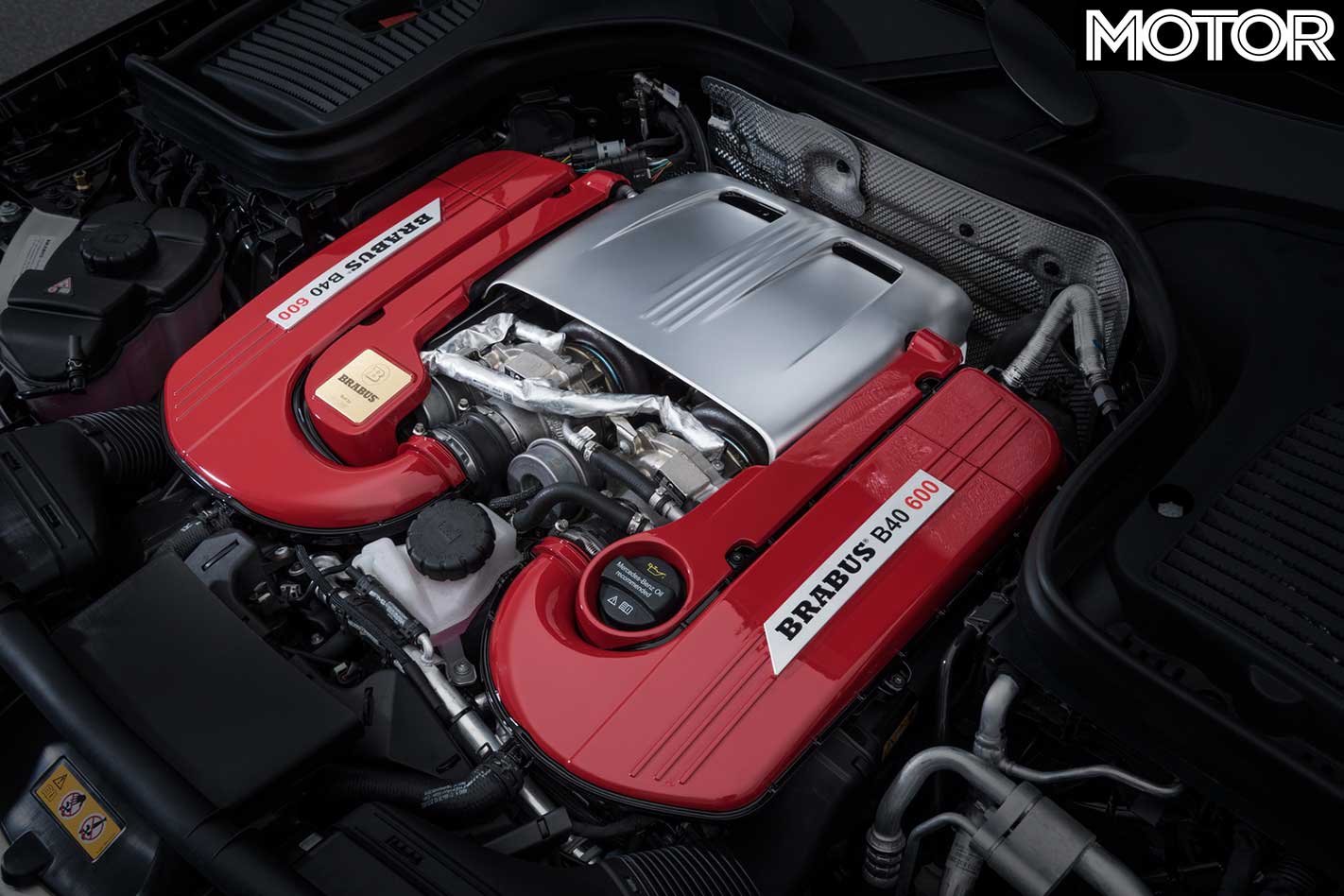
Brabus also details its exhaust system for the already raucous SUV, pointing out the sly name for its ‘quiet’ mode.
“The stainless exhaust system reduces exhaust backpressure and features exhaust flaps for electronic control of the exhaust note.
“From the cockpit, the driver can choose between the discreet “Coming Home” mode and the open position of the exhaust flaps, which coax a decidedly powerful sound from the twin-turbo V8.”

In terms of its design, the Brabus actually scores some aero kit, which includes raised flaps at the sides of the front fascia to reduce front lift.
Brabus’s signature leather re-imagining of the Merc interior is of course a feature, with a ‘soft and breathable type of leather’ combined with Alcantara for a luxo feel.
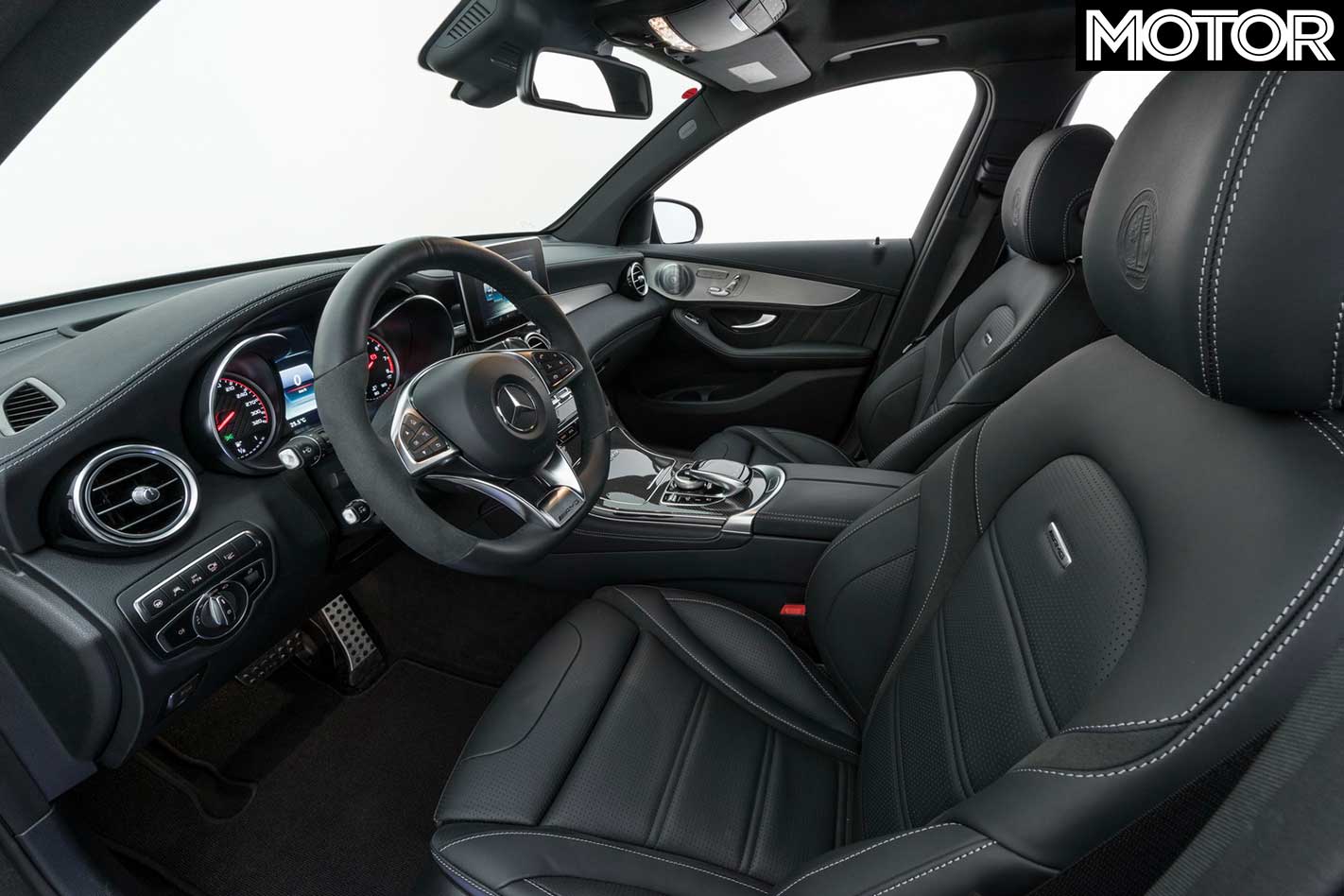
Brabus says the 600 Compact SUV “can be ordered as a complete car with SUV or coupe body style.
“Alternatively, any GLC 63 S can be transformed to this specification all at once or in stages.”
NOBODY LIKES being beaten. Especially Porsche, by the looks of it. Recently Porsche went as far as to chop its own outright record at the infamous ‘Green Hell’ with a scarcely believable 5min and 19.546sec lap around the 20.832km circuit.
With the firm’s 919 Hybrid now finished with racing, after winning three-straight Le Mans 24 Hour races and World Endurance Championships, Porsche had a little task for it to complete before letting it kick up its feet on a beach in retirement.

Engineers were instructed to ‘derestrict’ the 919 Hybrid and see how fast it could tackle some of the world’s most famous tracks.
Spa Francorchamps was its first victim. It tore around the 7.004km track in 1min and 41.770sec, eclipsing the qualifying lap Lewis Hamilton set at the 2017 Grand Prix in his Mercedes-AMG F1 car by 0.783sec. That was in April. It set the scorching Nurburgring lap on the morning of June 29 in cool, sunny conditions.
Known as the 919 Hybrid Evo, the car’s seen its weight, power and downforce upgraded to levels beyond the realm of LMP1. All equipment unnecessary for a handful of qualifying laps was ditched, including air-conditioning, windscreen wipers, certain sensors and electronic devices, lights and pneumatic jacks. This dropped its dry weight by 39kg to 849kg.
Aerodynamics was the next area of focus. The floor and vanes were tuned for maximum attack, while a new diffuser was installed to balance the massive rear wing. With two drag reduction systems, downforce is up 53 per cent and efficiency by 66 per cent.
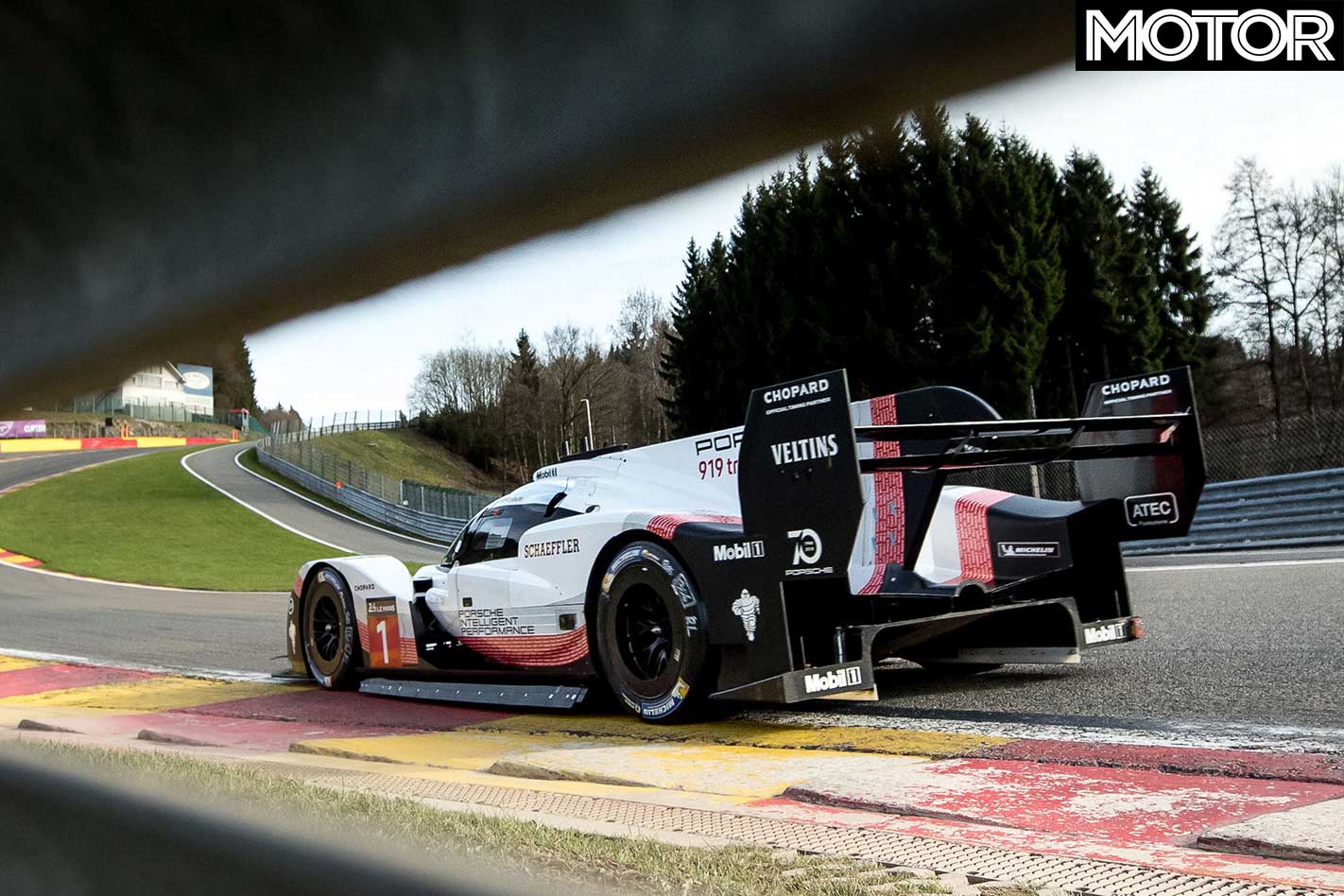
Power was tweaked by way of its turbo 2.0-litre V4 and hybrid systems. The former spinning 530kW (162kW extra) through the rear axle and the latter contributing another 324kW (29kW), which is deployed via the front-axle electric motor. All up, that’s 854kW at its disposal.
If all these dizzying statistics are starting to make the 919 Hybrid Evo’s achievement seem less surprising, the gap to Porsche’s fastest production road car around The ’Ring (though no longer outright, thanks to Lambo) restores the achievement’s rightful lustre. Of course, the car in question is Porsche’s own 911 GT2 RS, which swiped the crown (from Lambo… funny that) with a 6min 47.25sec lap, 87.754 seconds slower. Check out the speed differences below.

| 919 evo | Corner | GT2 RS | Difference |
| 98km/h | Point 1 | 81km/h | +17km/h |
| 157km/h | 2 (Hatzenbach) | 109km/h | +48km/h |
| 303km/h | Point 3 | 239km/h | +64km/h |
| 273km/h | 4 (Flugplatz) | 198km/h | +75km/h |
| 318km/h | Point 5 | 255km/h | +63km/h |
| 151km/h | Point 6 | 97km/h | +54km/h |
| 329km/h | Point 7 | 257km/h | +72km/h |
| 121km/h | Point 8 | 90km/h | +31km/h |
| 150km/h | Point 9 | 109km/h | +41km/h |
| 87km/h | Point 10 | 71km/h | +16km/h |
| 306km/h | Point 11 | 235km/h | +71km/h |
| 315km/h | Point 12 | 250km/h | +65km/h |
| 257km/h | Point 13 | 183km/h | +74km/h |
| 272km/h | Point 14 | 201km/h | +71km/h |
| 91km/h | 15 (Karussell) | 89km/h | +2km/h |
| 169km/h | Point 16 | 117km/h | +52km/h |
| 175km/h | Point 17 | 123km/h | +52km/h |
| 259km/h | Point 18 | 199km/h | +60km/h |
| 308km/h | Point 19 | 231km/h | +77km/h |
| 117km/h | Point 20 | 106km/h | +11km/h |
| 345km/h | 21 (Du00f6ttinger Hu00f6he) | 259km/h | +86km/h |
| 352km/h | Point 22 | 310km/h | +42km/h |
| 369km/h | Top Speed | 313km/h | +56km/h |
| 234km/h | Average Speed | 184km/h | +50km/h |
| 5:19.55 | Lap Time | 6:47.25 | +1:27.70 |
The last outright record stood at 6min 11.13sec at the hands of Stefan Bellof in 1983. The German native piloted Porsche’s 956 during that year’s World Sportscar Championship race. The next quickest lap that day was 6:27.36.

‘Ring Tamers
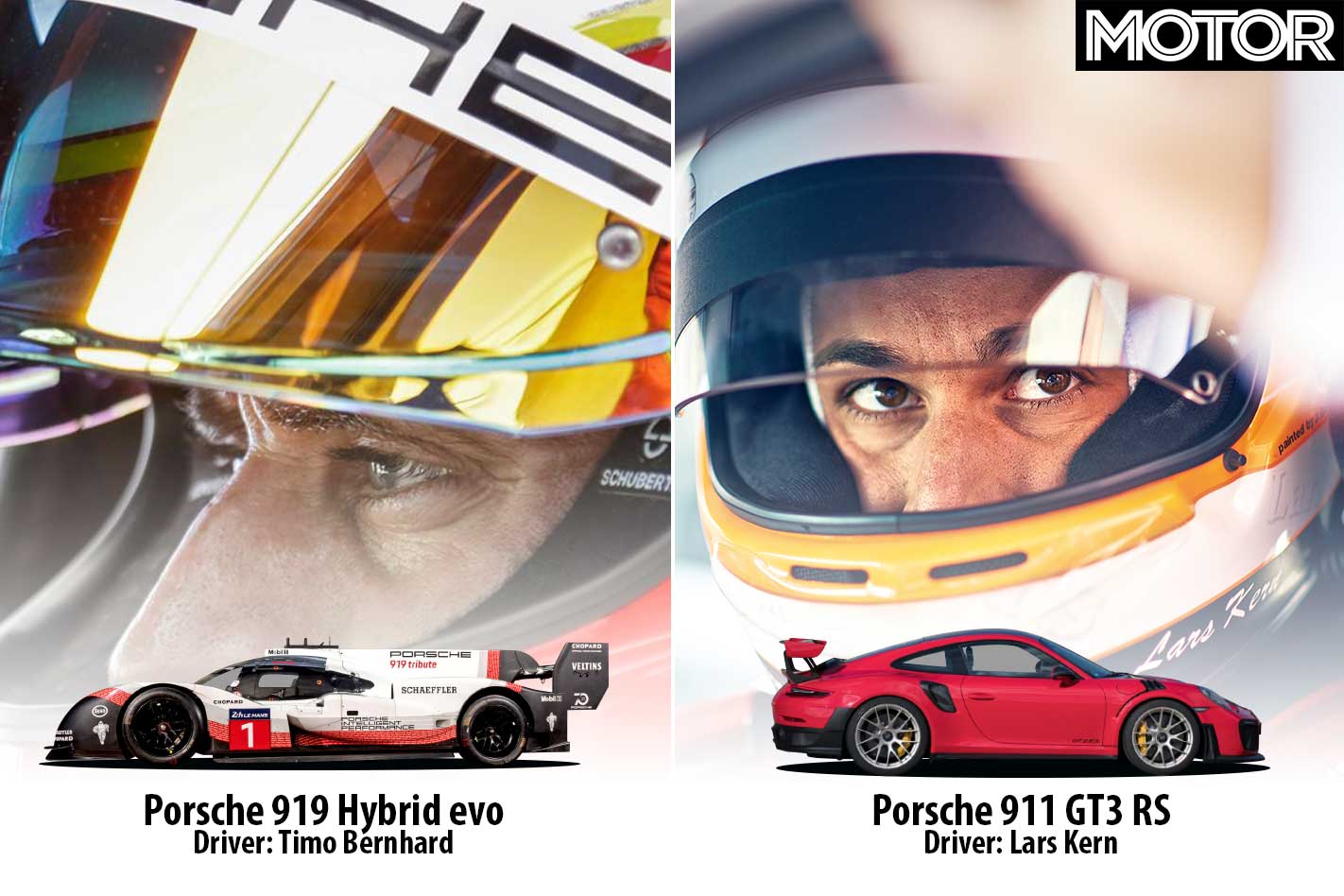
| 919 Hybrid Evo | 911 GT2 RS |
| Timo Bernhard is a former Le Mans and Nurburgring 24 Hour winner. He says he treated the u201cexhaustingu201d lap like a qualifier. | Lars Kern was joined by Nick Tandy on the day. Running two cars, Kern nailed the lap at 7:11pm, September 27, 2017 |
Imagine driving on a long trip and being able to zone out from your kids’ music choices, while being able to make a hands-free phone call without anyone else hearing it.
Kia is working on just that, with its next-generation Separated Sound Zone (SSZ) technology that provides each passenger an audio stream tailored to their individual needs, including music, phone calls, and vehicle alerts, whilst maintaining a headphone-free social space where everyone can still chat to each other.
SSZ technology creates and controls the acoustic fields of the car, allowing the driver and each passenger to hear isolated sounds.
It works by installing multiple speakers around the car that apply noise cancelling technology to reduce or increase audio levels of sound waves to reduce the overlap of various cabin noises.
SSZ allows each passenger can connect their smartphone via Bluetooth and listen to their own music without interference from, or interfering with other passenger’s audio streams. It also allows the driver to hear important sounds like sat-nav directions and warning chimes without irritating other passengers or waking up sleeping babies.
Kang-duck Ih, a research fellow at Kia’s NVH Research Lab said the technology will also be useful for driverless cars.
“Customers in the autonomous navigation era will demand increasingly customisable entertainment options within their vehicles, which includes technological innovations such as the Separated Sound System,” Ih said.
“I hope by providing drivers and passengers with tailored, independent audio spaces, they will experience a more comfortable and entertaining transportation environment.”
Kia has been developing SSZ technology since 2014, with the completed mass production system slated to appear in production vehicles by as early as 2020.
A similar system is also being developed by in-car-audio specialist Harman, with noise cancelling technology already used to reduce road noise in a growing number of cars such as the Ford Everest, Holden Equinox and ZB Commodore, Infiniti Q50 and Renault Koleos.
WITH the 10 millionth Mustang rolling off the lines this week, Ford deliberately chose to build that car as a convertible, mirroring the look of the very first customer car owned by Tom and Gail Wise. Both cars were photographed together, but that nearly never happened.
You see, for many years the Wises had no idea they had the first Mustang. To them, it was just a mouldering wreck that had spent 27 years gently oxidising in their garage. Gail wanted it gone. Tom applied some wonky man maths and made the case for restoring it.
That was in 2006. At the time, the Mustang wasn’t worth a whole heap of money, even in showroom nick, but Tom was determined to bring it back into shape.
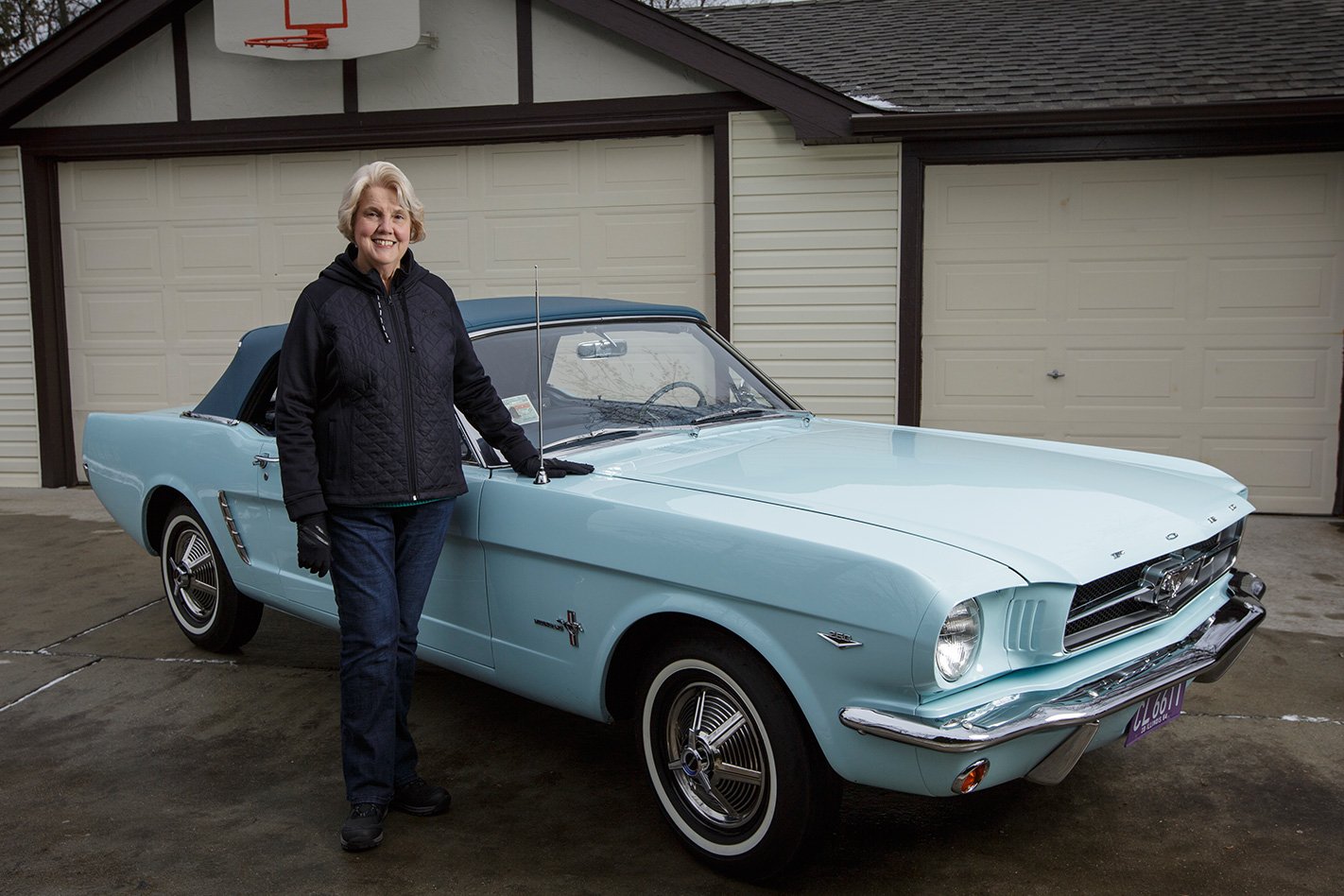
While researching parts for the car he became aware that it was a very early edition. Then he came across somebody claiming to own the very first Mustang. A look at his invoice showed that Gail bought the car a day earlier, on April 15th 1964, a couple of days before the car got its official unveil at the 1964 World’s Fair.
As Gail explained to the Detroit Free Press, there was a big slug of serendipity involved in getting hold of the keys so early. That, and an unscrupulous salesman. The 22-year-old Gail was looking for a convertible and rather than lose the sale because there was no stock available, the Chicago dealer decided to sell her the skylight blue Mustang convertible that he had under wraps out back, awaiting its 17th April on sale date.
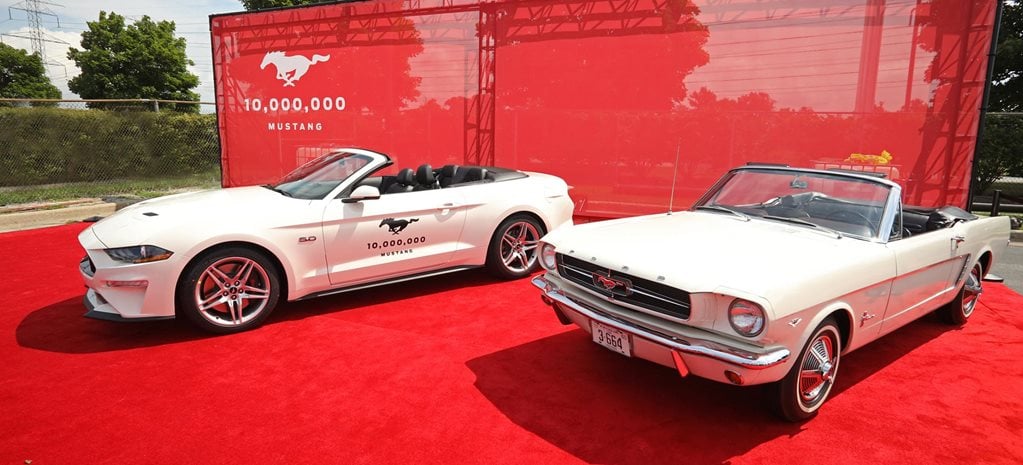
As it stands, the fully restored Mustang has 109,435 km on the clock and has appreciated a little since Gail handed over her USD$3447.50.
“It’s like being a movie star at 76,” Gail laughs. “I felt like a movie star at 22 when I bought the car. I mean, that was 54 years ago and we’re still talking about it.”
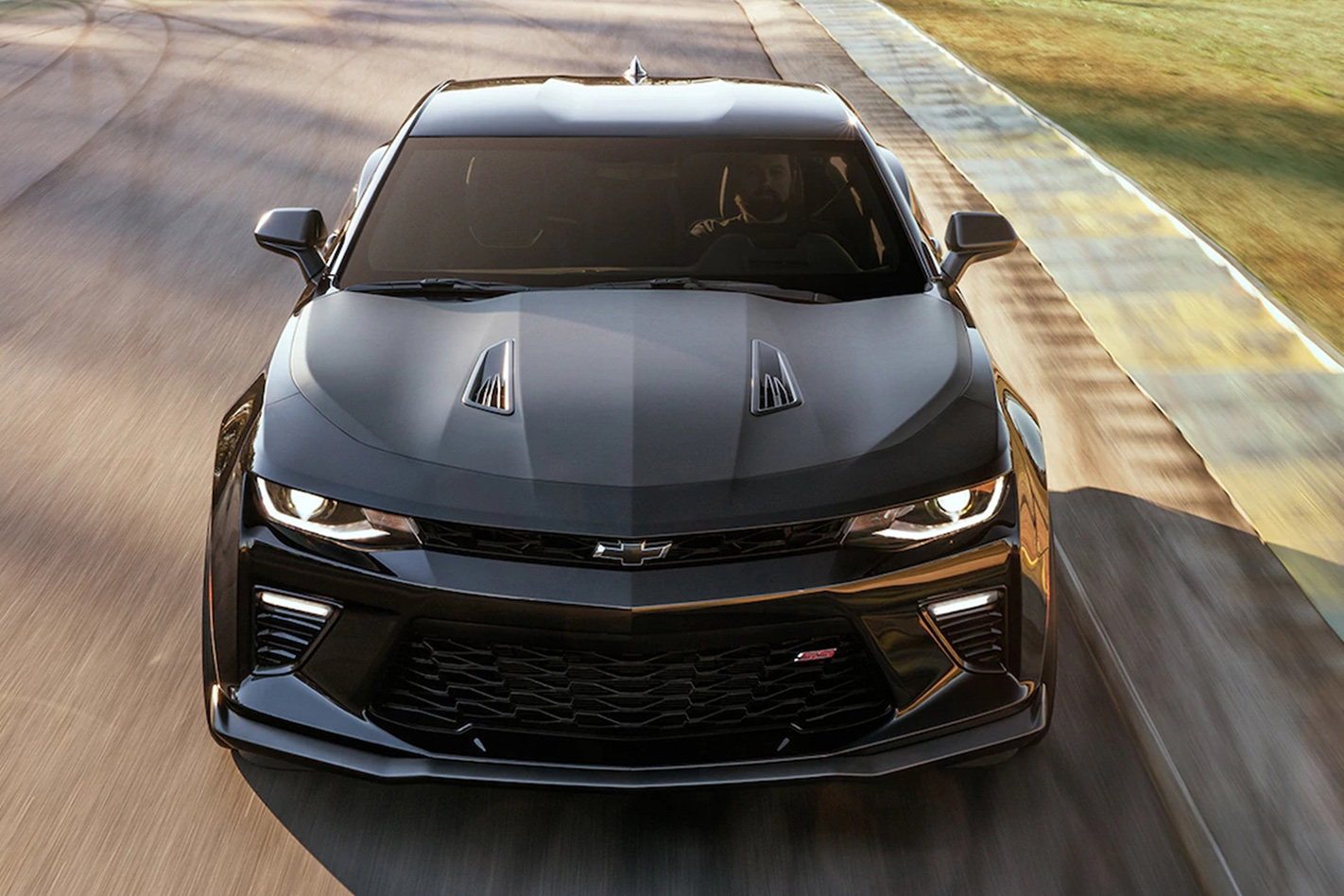
CHEVROLET Camaros sold in Australia will have an identical power figure to their natural rival, the Ford Mustang.
HSV has been tight-lipped up until now about official, ADR compliant outputs for the Camaro, which the local outfit will convert to right-hand drive for sale in Australia.
However, a HSV spokesman has confirmed to Wheels the American coupes will generate 339kW and 617Nm from a 6.2-litre naturally-aspirated LT1 V8 engine.
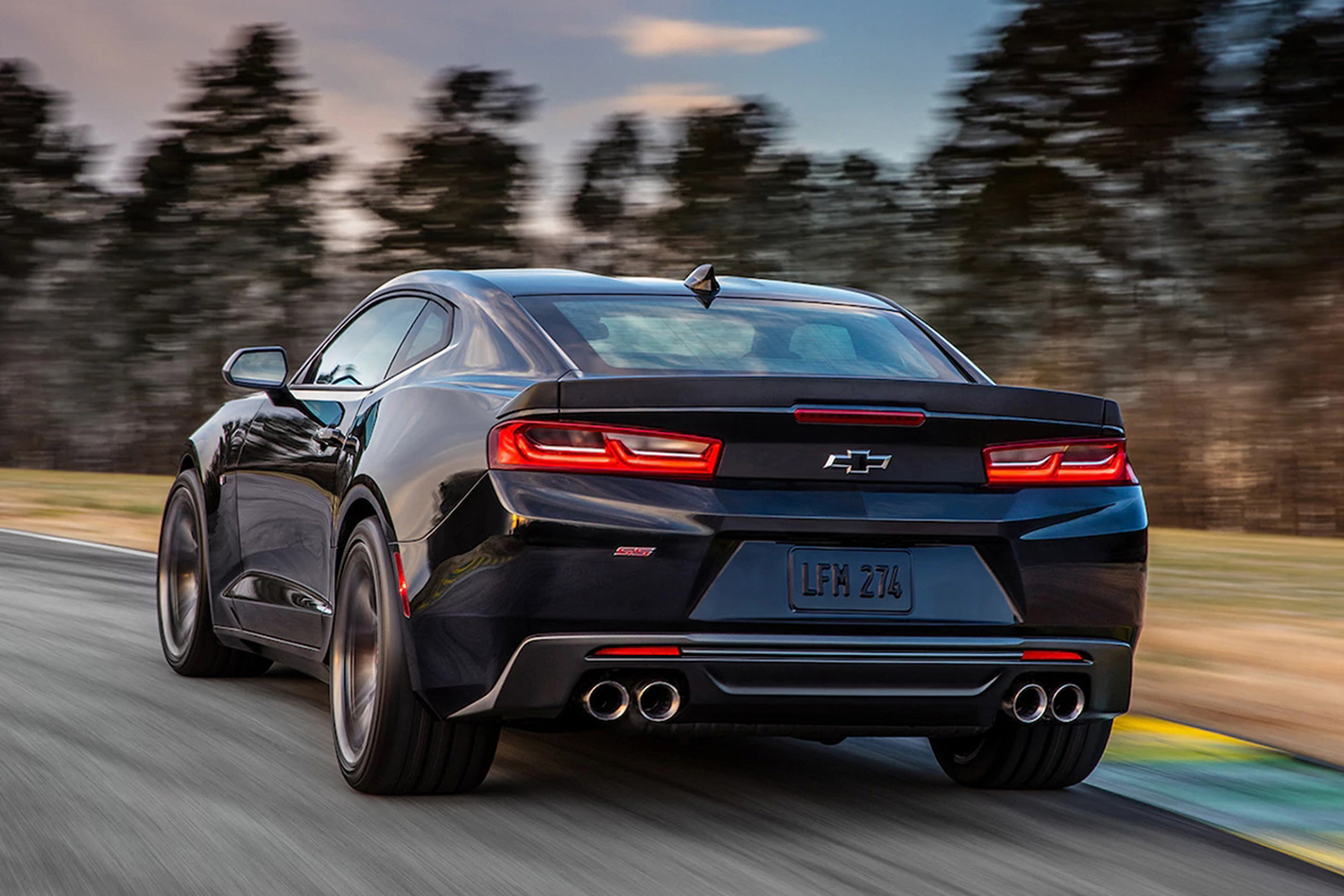
In America, Chevrolet claims the 2SS Camaro produces 340kW and 615Nm. Meanwhile, the facelifted 2018 Ford Mustang, which recently went on sale in Australia, is available with 339kW and 556Nm in flagship GT variants.
The Blue Oval’s pony car is fitted with a 5.0-litre naturally-aspirated V8, paired with either a six-speed manual, or 10-speed automatic transmission for $62,990, and $66,259 respectively, in Fastback form.
While the Mustang and Camaro have identical power figures (339kW), the Camaro has a significant torque advantage, with an extra 61Nm of twisting force being sent to the rear axle.
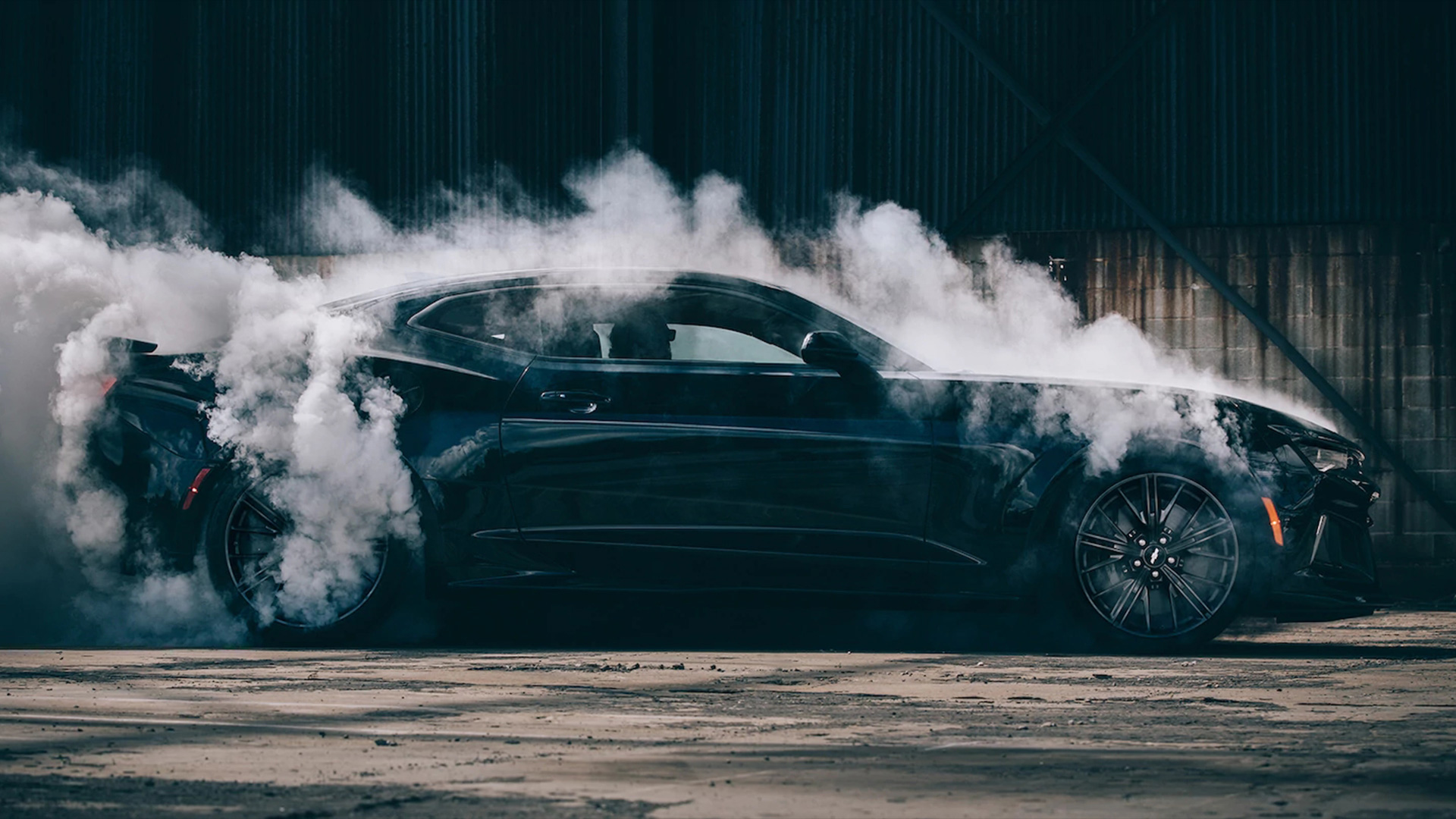
Chevrolet claims the 2SS will crack 60mph (97km/h) from zero in 4.0-seconds, but HSV has not revealed local performance figures.
Ford claims the locally delivered Mustang will hit 100km/h from standstill in 4.3-seconds when fitted with the 10-speed auto.
In the US and Europe Camaros are sold with both eight-speed automatic, and six-speed manual transmissions, while the 2SS-specification models coming to Australia are expected to initially be available solely with the self-shifting unit.
Independent dyno testing by our sister-magazine Motor revealed that the automatic 2018 Ford Mustang produces 314.8kW at the rear hubs.
While HSV has been taking pre-orders for the Camaro, it is not yet available in showrooms, and final pricing is yet to be confirmed.
FERNANDO Alonso will vacate his seat at the McLaren Formula 1 team and cease racing in the sport at the end of this season.
The two-time Formula 1 World Champion published a video to social media overnight that features a love letter read to Formula 1 as if it were a person. The racer sums up his life-long infatuation with the sport, and signs off after 17 seasons as a driver.
“When I barely knew how to walk I ran towards your noise, your circuits, without knowing anything about you. We had very good times, some unforgettable, others really bad.
“But today I have some other bigger challenges, and this year while still driving at my best is how I want to remember you.”
McLaren confirmed Alonso’s decision to adjourn his F1 career in a statement issued shortly afterwards, in which chief executive officer Zak Brown describes the Spaniard as “arguably the pre-eminent driver of his generation and undoubtedly an F1 great.
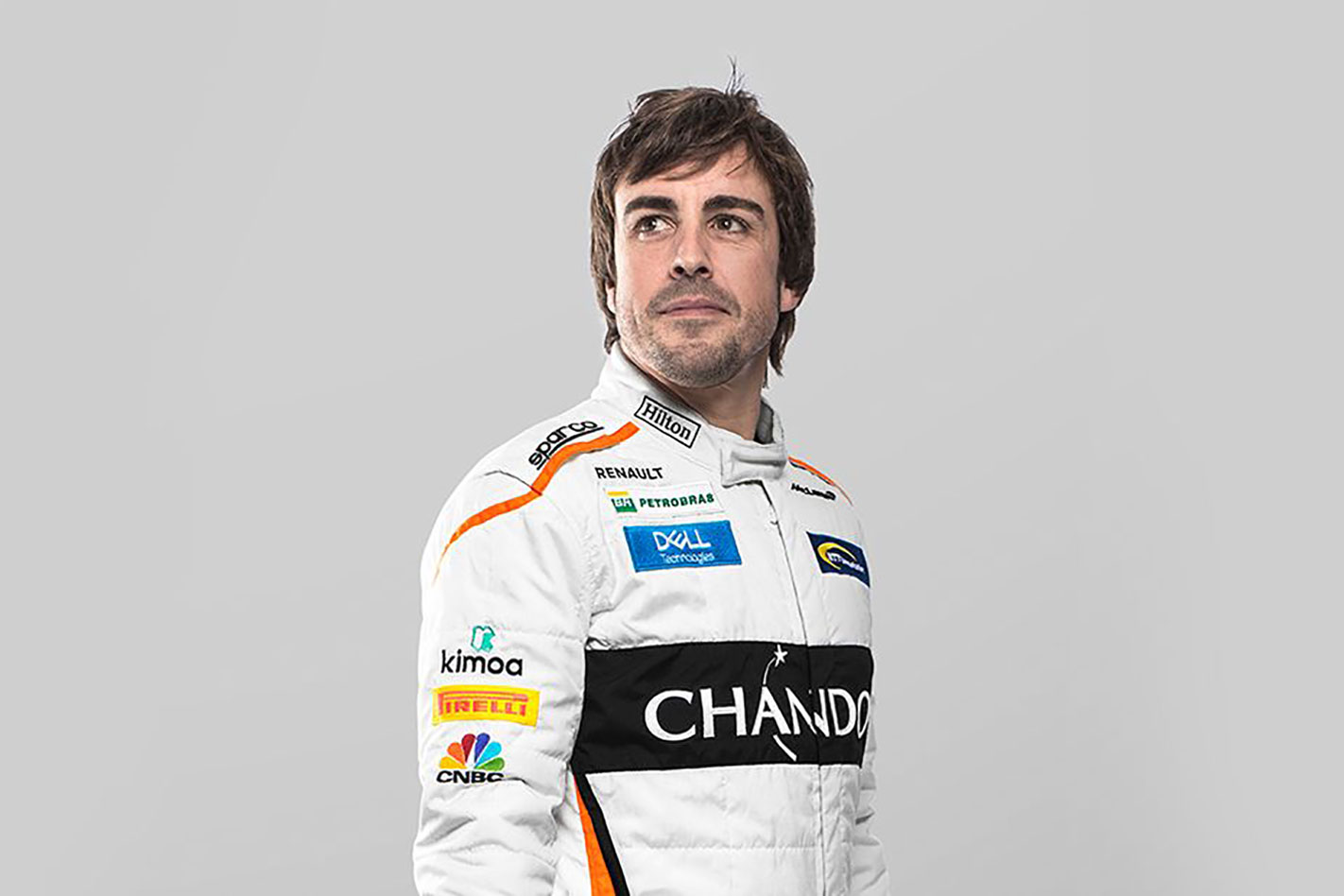
“There is a time for everyone to make a change and Fernando has decided the end of this season to be his. We respect his decision, even if we believe he is in the finest form of his career,” said Brown.
Both Alonso and McLaren have stopped short of calling this decision a retirement. Alonso, who is now 37, has left the door open for a return to F1 should the situation at McLaren improve.
“I want to thank everyone at McLaren. My heart is with the team forever. I know they will come back stronger and better in the future and it could be the right moment for me to be back in the series; that would make me really happy,” said Alonso.
“Let’s see what the future brings; new exciting challenges are around the corner. I’m having one of the happiest times ever in my life but I need to go on exploring new adventures.”
Earlier in the week Alonso took to Twitter with a somewhat cryptic post alluding to the date of this announcement. The characters ’14-08’ were enough to send the Twittersphere rumour mill into overdrive, especially after the official IndyCar account responded to Alonso saying, “We still on for lunch tomorrow?”

Though a move to IndyCar is anticipated by many, where Alonso will go next remains unconfirmed. Also yet to be determined is who will take Alonso’s place at McLaren for 2019.
Alonso has not won a race in F1 since 2013. Over his career to date he has collected 32 wins, 22 pole positions and 97 podiums, with nine grands prix left to run this season. In 2005 while racing for Renault, Alonso became the then-youngest world champion in F1 history, which he backed up the following year with his second title. He has been championship runner-up three times.
Several teams will be shuffling their rosters following this announcement, combined with Daniel Ricciardo’s decision to leave Red Bull and an inevitable move to Force India from Williams for Lance Stroll after his father rescued the ailing outfit from administration.
