
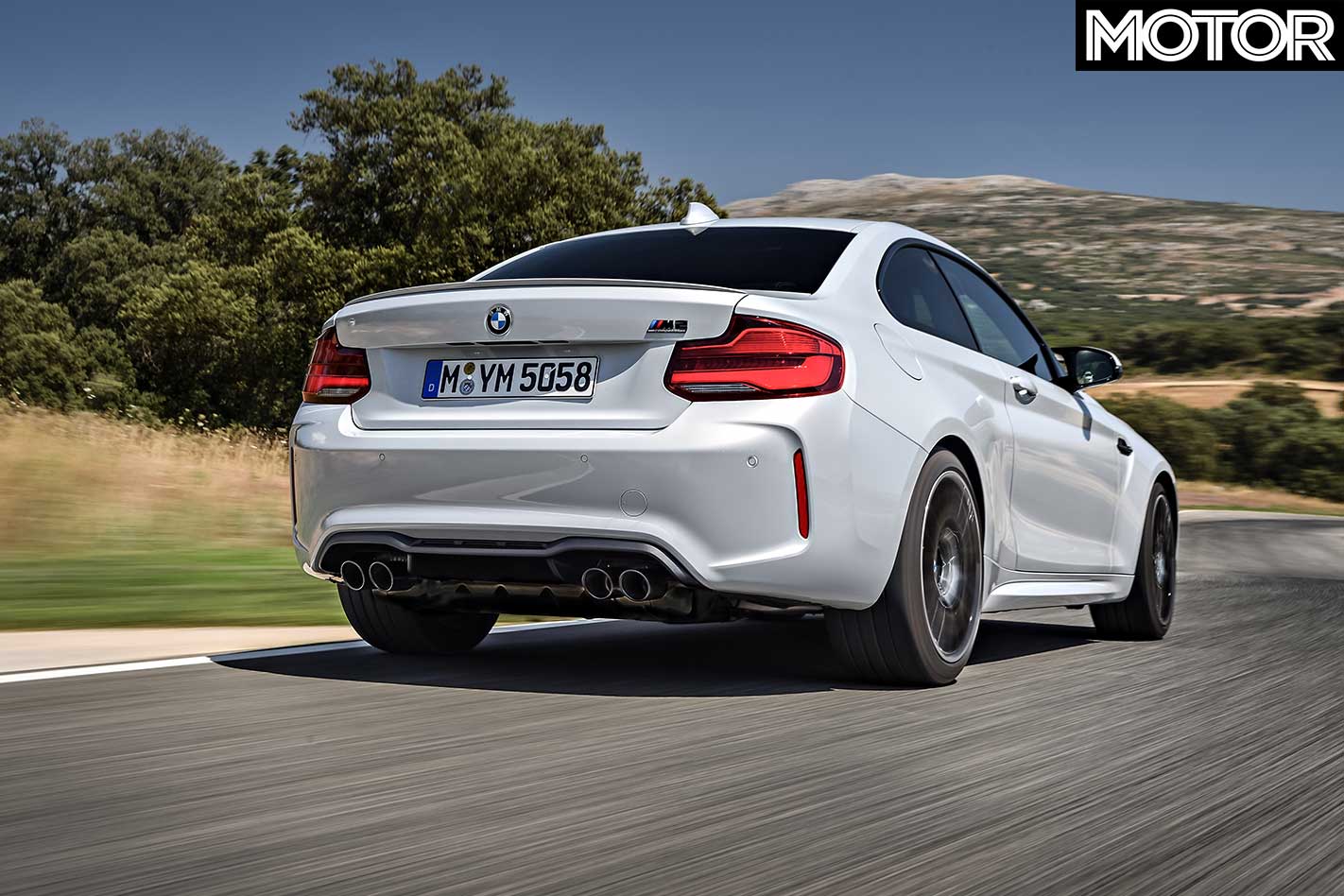
BMW Australia has confirmed local pricing and specification for the new 2019 BMW M2 Competition, revealing two ‘variants’ for the hotted-up baby M Car.
At $104,900, the 302kW/550Nm M2 Compeition will be available to Australians from early 2019, with either 7-speed DCT or 6-speed manual being available at the same cost.
It features the M3/M4’s S55 engine, a 3.0-litre twin-turbo inline-six which allows the nimble M2 a 0-100km/h sprint of just 4.2 seconds with the DCT.
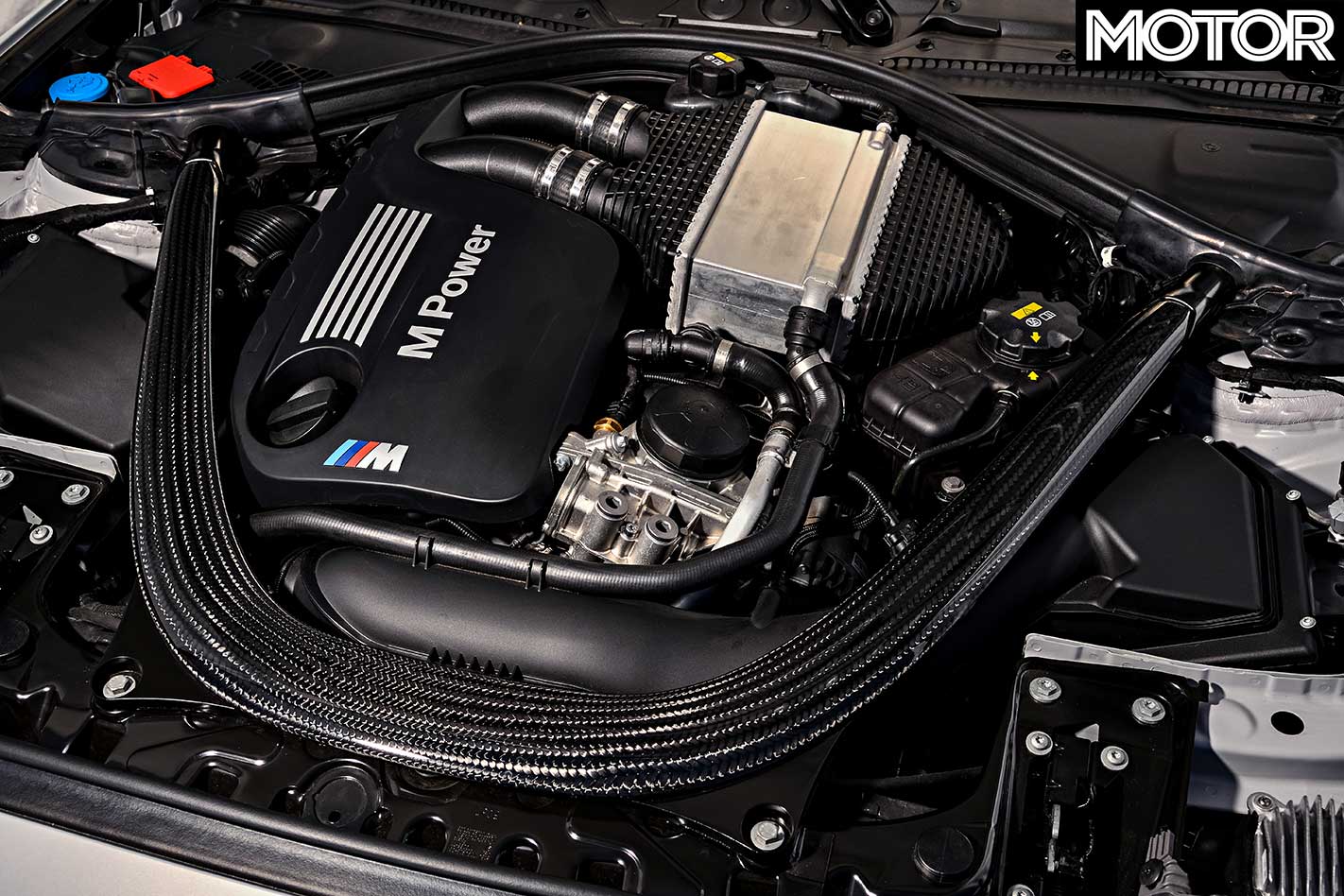
But for $5000 less, at $99,900, the BMW M2 Competition Pure is available to buyers who don’t mind losing the premium features of the higher-spec model.
Essentially, the M2 Compeition Pure appears to be specced like a standard M2, but with the performance upgrades of the Competition.
For the Pure, M Sports seats replace those found in the Competition, while the standard M2’s 19-inch wheels are the biggest external giveaway.
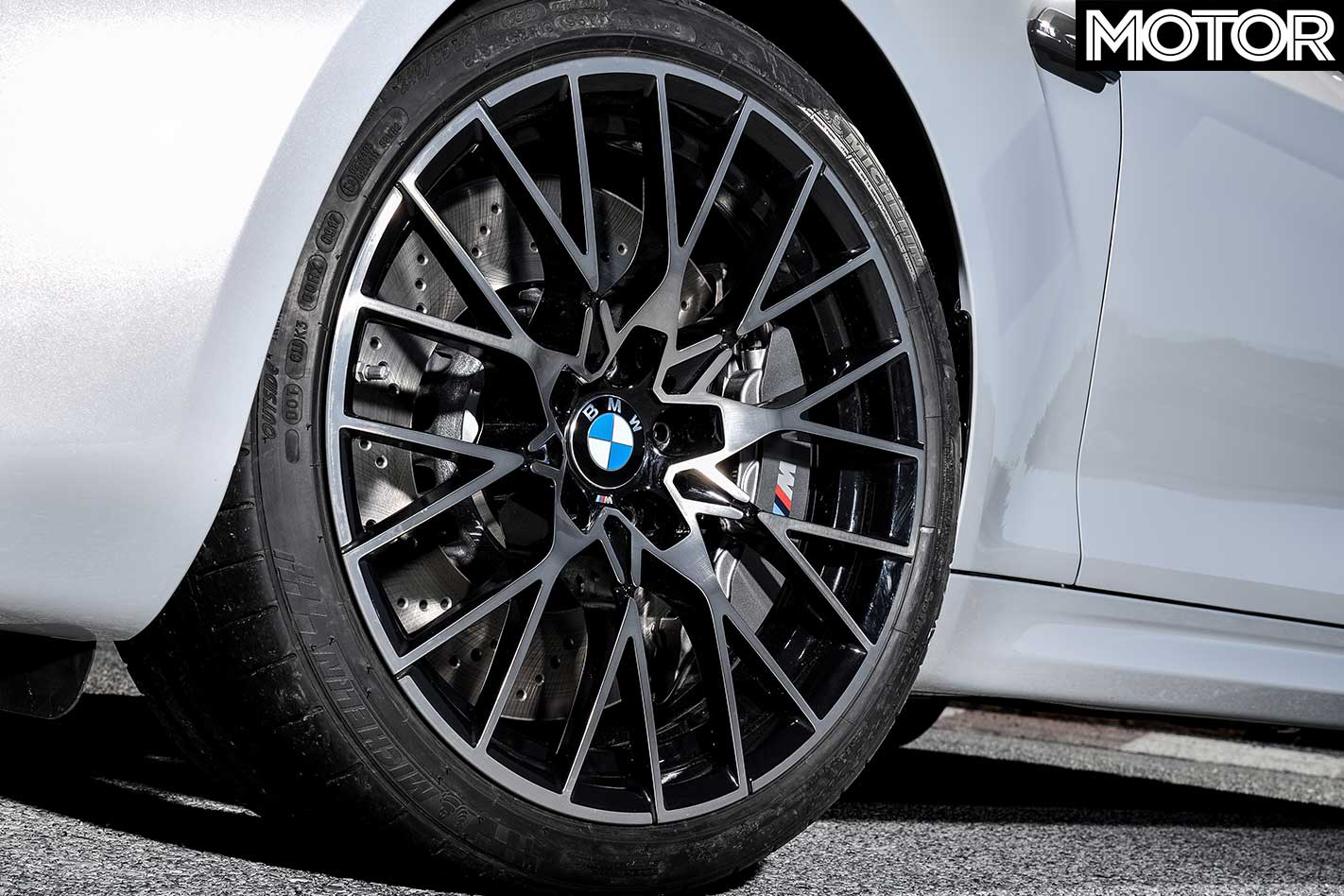
The arrival of the M2 Compeition also means the end of this generation’s standard M2 in Australia, though prospective customers need not be disappointed, as the standard M2 previously cost exactly the same as the new M2 Comp Pure will.
BMW Australia’s new CEO, Vikram Pawah, hopes the M2 Competition will continue the country’s great interest in BMW’s smallest M car.
“The BMW M2 has been a wonderful story for BMW in Australia,” says Pawah.
“We expect the first ever M2 Competition to deliver even greater all-round performance, and with the Pure variant we continue to offer a proper M experience at a strong price point.”
Expect the M2 Competition and its Pure variant to be available from early 2019.
STYLING aside, there was a time when you could recommend Mazda’s BT-50 in the same breath as the Ford Ranger. Underneath the vastly different aesthetics, the models share a platform and major mechanicals and that meant the pair brought similar talent to the one-tonne market.
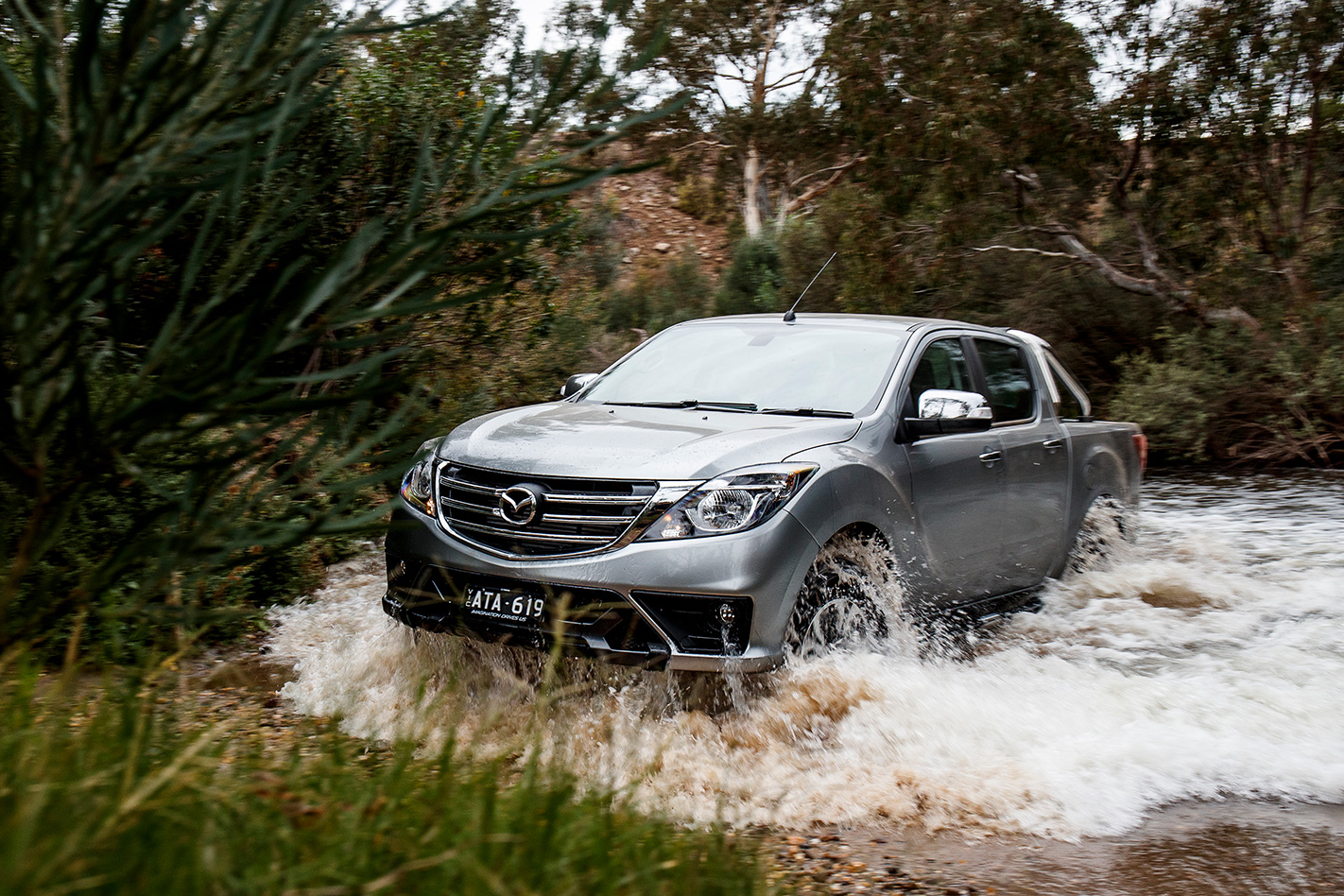
But that was 2011 and in the ensuing years both models have followed very different evolutionary paths. While Ford has built on the Ranger’s good looks and strong platform foundations, Mazda has left the latter alone and instead fussed over the styling – including a facelift earlier this year involving a new grille, squared off front bumper and other more minor cosmetic revisions.
There’s still shared DNA in the form of the lusty 3.2-litre five-cylinder diesel which powers them both. Long the exception in a world of four-pot turbo-diesel donks, the off-key but smooth five-banger is a valuable point of difference in the market. With an extra cylinder, the engine doesn’t clatter quite as chattily and responds eagerly to the throttle with a welcome wad of low-rev torque.
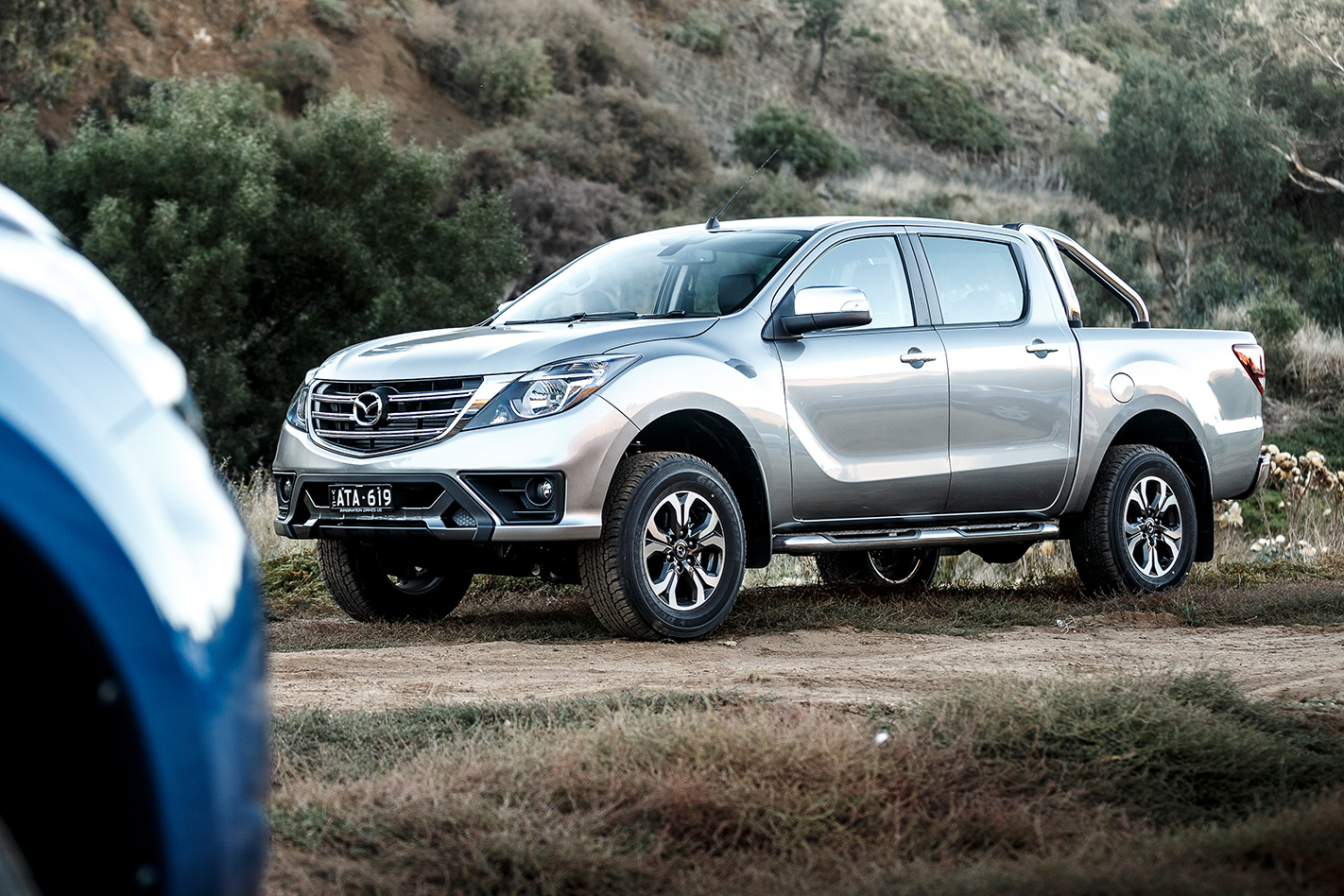
Here, however, the Mazda trails off, because Ford has spent seven years revising and improving the Ranger’s heart with efficiency-gaining technologies such as idle-stop and electric (rather than the BT-50’s hydraulic) steering said to boost economy by more than 20 percent – a claim certainly not disproven on test, where the Mazda shocked us with a surprisingly poor 13.3L/100km figure, compared with the Blue Oval ute’s 10.9L/100km.
Still, handling confidence and welcome ride comfort restored our faith in the Mazda, supported by low road-noise levels (likely thanks to the tall tyre sidewalls on 17-inch rims), though – again – it wasn’t up to the same standard as the relatively supple Ranger’s. On smooth roads, the BT-50’s dynamics had us calling it a ‘driver’s truck’, with weighty steering and a surefooted chassis. The sleeper of the bunch!
Meanwhile, the simple and intuitive interior is arguably the most car-like of the line-up in its design – albeit that of a decade-old Mazda – and there’s value everywhere including the ample second-row space and knee room as well as a pleasantly supportive cushion (though non-aligned rear headrests are a curio). Out back, the Mazda’s tray is one of the better equipped, with a liner, tie-down points, illumination and a 12-volt socket for a portable fridge full of VBs.
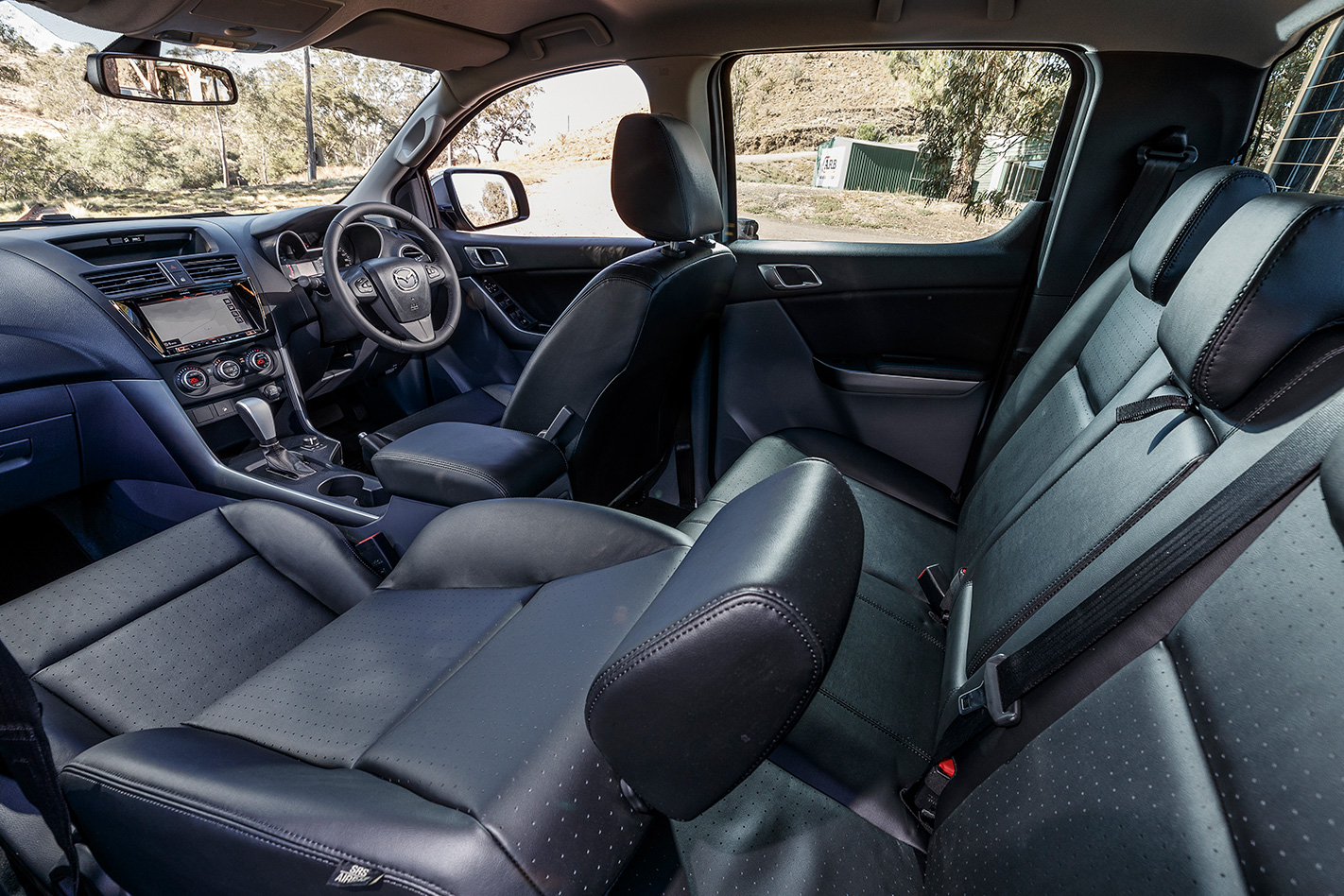
Yet we may as well be stuck in 2011 here, because stepping into the Ford means stepping up to forward collision mitigation, lane departure warning systems and adaptive cruise control. And while the Ranger is enhanced with the excellent Sync3 infotainment system, the BT-50 makes do with a very aftermarket-looking Alpine unit. Throw in analogue dials and a single-colour central digital display compared with the Ranger’s full-colour LCD displays, and a generation gap is beginning to open up.
With the Colorado and Ranger demonstrating just how much can be achieved with mid-life updates, by comparison Mazda almost seems to have given up on the BT-50. That’s a shame because in many ways it is still easy to recommend.
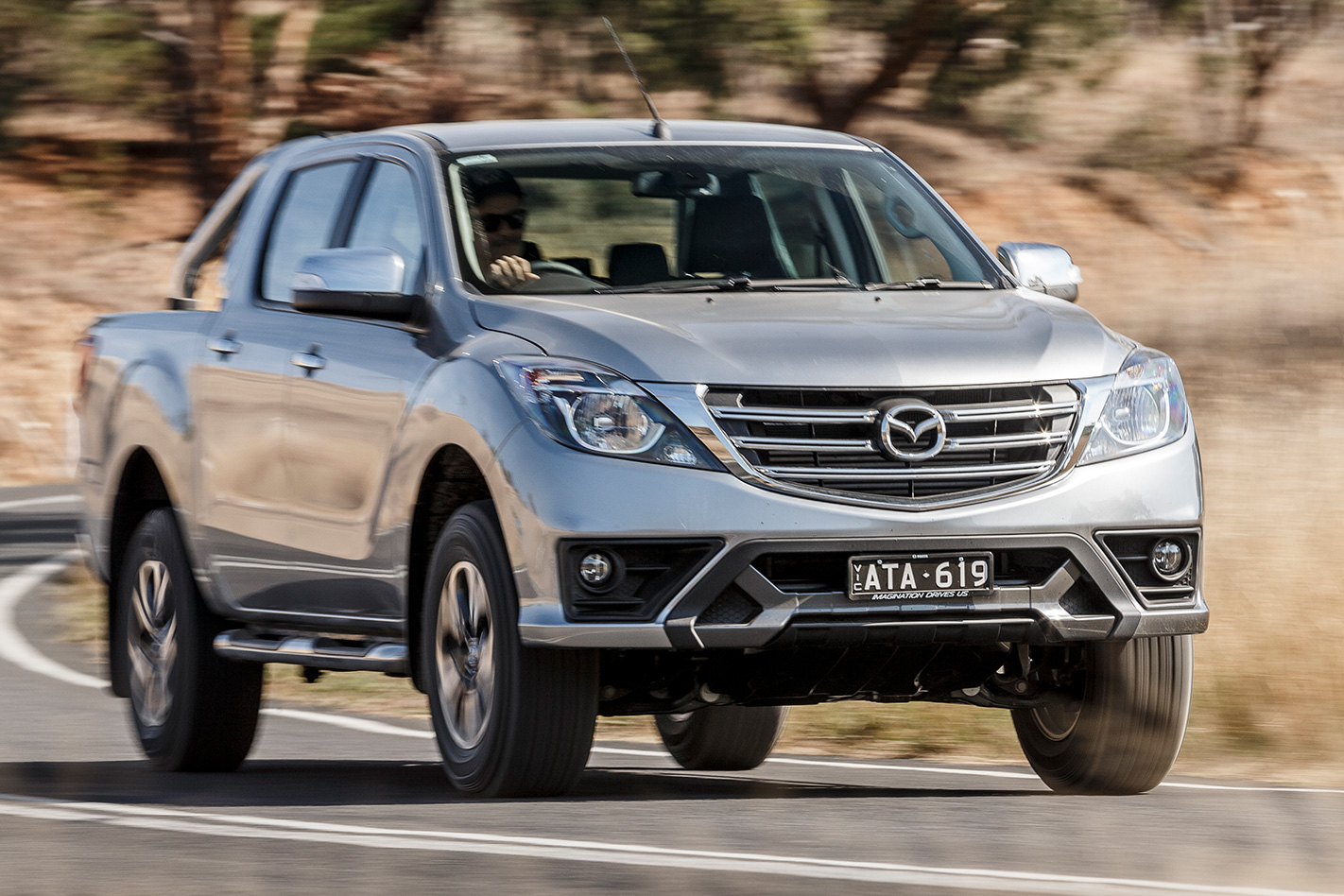
A combination of an excellent drivetrain and dynamics, blended with unpretentious looks has ensured the BT-50 is still battling hard in the segment, but when you park it next to its fraternal twin, it’s clear that the Mazda could be so much more.
SPECS
Price $51,700 Engine 3198cc 5cyl, dohc, 20v, TD Power 147kW @ 3000rpm Torque 470Nm @ 1750-2500rpm Transmission 6-speed automatic Dimensions (L/W/H/W-B) 5365/1850/1821/3220mm Weight 2118kg Tray capacity 1082kg Braked towing capacity 3500kg Unbraked towing capacity 750kg Ground clearance 237mm Tyres Dunlop Grandtrek AT22 265/65R17 Test fuel average 13.3L/100km 0-100km/h 10.8sec 100km/h-0 45.0m 80-120km/h 7.9sec
Need more info?
Read the Wheels Dual-Cab Ute Megatest Introduction
The Contenders
# 9 Isuzu D-Max LS-T
Rough ’n’ ready appeal pales when polished rivals are better at going bush too
#8 Nissan Navara ST-X
Tough and reliable aren’t enough as Navara wilts on price, spec and comfort
#7 Toyota Hilux SR+
Unbreakable? Possibly. Unloveable? Sadly, yes, as mediocrity is allowed to prevail
#6 Mazda BT-50 GT
Still in the fight, but ultimately overshadowed by its high-flying fraternal twin
#5 Mitsubishi Triton Exceed
A strong and likeable mid-fielder where consistency and value are king
#4 Holden Colorado LTZ
Colorado raises its game right when Holden needs a hero
#3 Mercedes-Benz X250d
Arrives carrying great expectations; delivers only a modest load
#2 Ford Ranger XLT
Continuous improvements make the only truly Australian-conceived ute world class
#1 Volkswagen Amarok V6 Sportline
Quiet achiever doesn’t have youth on its side, but still shows how it should be done
What stands out?
The EcoSport is the smallest SUV in Ford’s Australian showroom. It received a much-needed facelift late in 2017 that brought fresh looks inside and out, an updated infotainment system with Apple CarPlay/Android Auto connectivity, and a new six-speed automatic dual-clutch automatic gearbox, which works particularly well with the gutsy little 1.0-litre three-cylinder engine. The EcoSport is available in three trim levels; Ambiente, Trend and Titanium.
What might bug me?
Not being able to open the barn door-like side-opening tailgate if your EcoSport is backed up to a wall. A more practical upward opening tailgate will be added later in 2018, which will also mean no more ugly spare wheel on the back. The downside of that is you’ll have to make do with a tyre-inflation kit should you get a puncture, which only allows you to drive on that tyre temporarily.Insisting you’re not a hoon after making the front wheels chirp when driving off in the EcoSport Trend or Titanium. Their gutsy three-cylinder turbo engine can send too much power to the front wheels if you’re not careful.Worrying about the fact the EcoSport doesn’t have automatic emergency braking, even as an option. This is becoming a standard feature in more and more small-SUVs.
What body styles are there?
Five-door wagon only.All EcoSports drive their front wheels only.The EcoSport is classed as a small SUV, lower priced.
What features do all EcoSport versions have?
All EcoSports have a six-speed automatic transmission as standard. There are no manual versions of the EcoSport.Cruise control, a reversing camera, and rear parking sensors.A sound system with a CD player, AM/FM and digital (DAB+) radio, USB input, and at least six speakers. Bluetooth connectivity, which allows you to wirelessly connect a phone and play music from it.Satellite navigation, displayed on a colour touchscreen with Ford’s excellent SYNC3 connectivity. SYNC3 allows voice control of the digital radio, and other audio and phone functions.Support for Apple CarPlay and Android Auto, which lets you display apps from compatible smartphones on the touchscreen and control them from there.Steering wheel buttons for operating cruise control, the sound system and your phone.Air-conditioning, and six-way adjustable driver’s seat including lumbar support.Body-coloured spare wheel cover with full-sized matching spare wheel.Electronic stability control, which can help control a skid. All new cars must have this feature.Seven airbags. (For the placement of airbags, and more on Escape safety systems, please open the Safety section below.)The EcoSport is covered by a five-year, unlimited kilometre warranty.
Which engine uses least fuel, and why wouldn’t I choose it?
The 1.0-litre, three-cylinder EcoBoost (turbocharged) petrol engine in the EcoSport Trend and Titanium is the most fuel efficient of the two engines in the EcoSport range and is also more powerful. It uses as little as 6.7 litres/100km on the official test (city and country combined).One reason you might not choose it is that you want to pay less for an EcoSport. The cheapest EcoSport, the Ambiente, has a 1.5-litre three-cylinder engine, which consumes 6.9 litres/100km according to official testing. It is only a little less powerful than the 1.0-litre EcoBoost, but is noisier in stop-start traffic and doesn’t feel as settled with the automatic gearbox.Ford recommends that both petrol engines run on regular unleaded fuel.
What key features do I get if I spend more?
The least costly EcoSport, the Ambiente has the 1.5-litre petrol engine, rolls on 16-inch steel wheels, and has a 6.5-inch touchscreen, cloth seat trim and the equipment in all EcoSports.Spending more on the EcoSport Trend FWD brings the superior 1.0-litre turbo powertrain, front fog lights, and roof rails for additional storage. .The Trend has 16-inch wheels made from aluminium alloy, which look nicer than the steel wheels and don’t need plastic trim.Satellite navigation is added to the infotainment system and viewed through a bigger 8.0-inch touchscreen, and the steering wheel is wrapped in leather.The most expensive EcoSport, the Titanium, adds leather trim on all seats and some elegant chrome finishes on the outside.There is a power-opened sunroof, automatic climate control air-conditioning, auto-dimming rear view mirror and rain-sensing windscreen wipers.The side mirrors fold automatically when you lock the car and project a puddle lamp on to the ground when you return.Extremely bright bi-xenon headlights adapt their beam shapes for the driving conditions and automatically turn on when it gets dark. They are complemented by LED daytime running lights.The Titanium also gains additional safety features include blind sport monitoring and rear-cross traffic alert.Wheels on the Titanium are bigger again at 17 inches, fitted with tyres of a significantly lower profile than those on the Ambiente and Trend – which quicken steering response slightly.
Does any upgrade have a down side?
Apart from extra cost, not really. The larger, lower profile tyres on the Titanium could cost more to replace, and reduce ride comfort slightly (because there is less cushioning air between the wheel and the road).White is the only standard colour, with the other five costing around $550 extra.
How comfortable is the EcoSport?
The EcoSport’s interior has had a major makeover with more comfy seats that partly disguise the EcoSport’s budget-priced plastic trim a little better than before.It’s roomier inside than it looks with plenty of front-seat space for the driver, with good adjustment behind the wheel. The leg room is also good for the front passenger, but the seat is too high, making the occupant feel like they’re sitting above everyone else.There’s now a centre armrest in between the front two seats, with a flip-up lid that provides some welcome discreet storage space.
What about safety in the EcoSport?
The EcoSport lacks key-driver assistance features that are becoming standard in many of its small-SUV rivals; such as autonomous emergency braking, adaptive cruise control and lane-keeping assist.It does come with a reversing camera and rear parking sensors as standard, along with mandatory anti-lock brakes, stability control, and seven airbags.The airbags are in the usual places: one in front of each front seat occupant; one to protect the driver’s knees; side airbags outside each front seat to protect at chest level from side impacts; and curtain airbags that protect the heads of front and rear occupants from side impacts.The EcoSport also has an Emergency Assist feature, which can automatically call emergency services after a crash, using a paired mobile phone. And every EcoSport gives you Ford’s My Key control system, which lets you set limits on the top speed and sound volume for someone you might lend the car to (a teenage son or daughter, for example).The most expensive EcoSport, the Titanium, gains auto headlights and wipers, as well as blind spot warning, and rear-cross traffic alert, which warns if a vehicle or person is crossing or about to cross behind when you’re reversing.The Australasian New Car Assessment Program (ANCAP) awarded the EcoSport five stars for safety in 2013. The Escape was scored at 36.3 points from a possible 37, which five years later still applies to the current model. If this were an all-new model, the lack of automatic emergency breaking would see it get four or three stars, as is the case with the Ford Mustang.
I like driving – will I enjoy this car?
The 1.0-litre EcoBoost in the EcoSport Trend and Titanium is the pick for drivability, but the experience behind the wheel isn’t as polished as the turbo engine, which is a shame given the polished ride you get from the Fiesta hatchback, on which EcoSport is based.The steering is quite slow, and the ride is busy at speed over city roads where the EcoSport will likely spend most, if not all, of its life.
How is life in the rear seats?
The back seat has decent room for two passengers, though the short seatbacks and small, skinny headrests make life a bit less comfortable for taller passengers.The middle rear is best occupied by the very low centre armrest that features a pair of cupholders.
How is it the EcoSport carrying stuff?
The boot holds 346-litres, which is about the average size cargo area for a small SUV.The 60:40 rear seat folds down to provide up to 1178 litres of cargo space. You flip the seat base forward, and then recline the seatback forward to create a flat space.The world’s shortest cargo blind – it extends maybe 40cm – hides the contents away from prying eyes. The lack of a vertical-lift tailgate means it can’t be replaced with a hatchback-like hard cover.
Where is the EcoSport made?
All Australian-market EcoSports are now made in India.
Are there any rivals I should consider?
The Mazda CX-3 has a lower starting price and is a much more advanced car, with a 2.0-litre engine with an idle-stop function, and automatic emergency braking. But it isn’t as roomy inside and has a much smaller cargo area.Other rivals include the Mitsubishi ASX, Holden Trax, Honda HR-V, Hyundai Kona, Nissan Qashqai and Peugeot 2008 will also have you covered.
I like this car, but I can’t choose which version. Can you help?
The EcoSport Trend is the sweet spot of the EcoSport range. It brings the more powerful and efficient 1.0-litre turbo engine, satellite navigation, alloy wheels and is quieter to ride in.
Are there plans to update this model soon?
The EcoSport first arrived in 2013 and the current model received a significant upgrade in late 2017, which gave Ford’s baby SUV a welcome facelift that brings it in line with Ford’s latest SUV designs. The interior was also refreshed and the infotainment updated to Ford’s excellent Sync3 system.Performance wise, Ford revamped the engine range to an all-three-cylinder affair, with a 1.5-litre petrol joining the 1.0-litre turbo petrol. A six-speed automatic transmission was introduced as standard in all EcoSports, with the six-speed manual and troublesome Powershift dual-clutch transmission given the flick.The side-opening tailgate with mounted spare wheel is expected to be replaced with more conventional hatch during the middle part of 2018. While it will be more practical and contemporary looking, it will mean the EcoSport will lose the spare tyre in favour of a tyre-repair kit.
Welcome to the hypercar club…Toyota?
Not content for the likes of Aston Martin, McLaren and Mercedes-AMG to have all the credit, the Japanese giant has announced it’ll produce a 1000hp weapon of its own, based on its TS050 Le Mans racer.
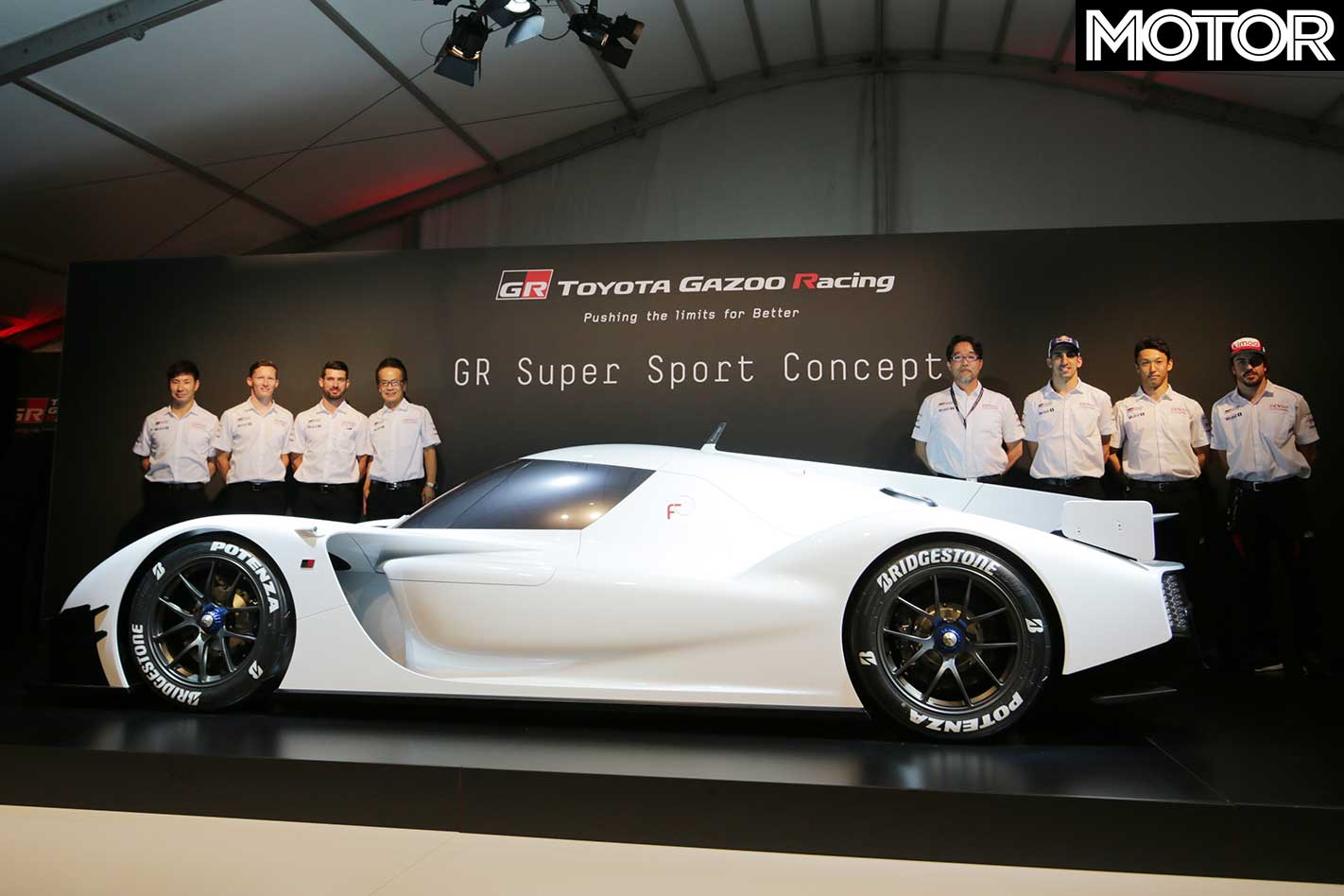
Concrete details are still few, but Toyota’s decision to base the Super Sport on the TS050 gives us plenty of clues as to its mechanical makeup. What is confirmed is that the GR Super Sport will use the same hybrid powertrain as the TS050.
Should the powertrain be carried over unaltered, the GR SS will differ from its competitors by only producing half of its 735kW from its internal-combustion engine. The 368kW 2.4-litre V6 uses direct injection and is boosted by two turbochargers with intercooling housed in the sidepods. It’s connected in the racecar to a six-speed sequential gearbox and drives the rear wheels through a mechanical limited-slip diff.
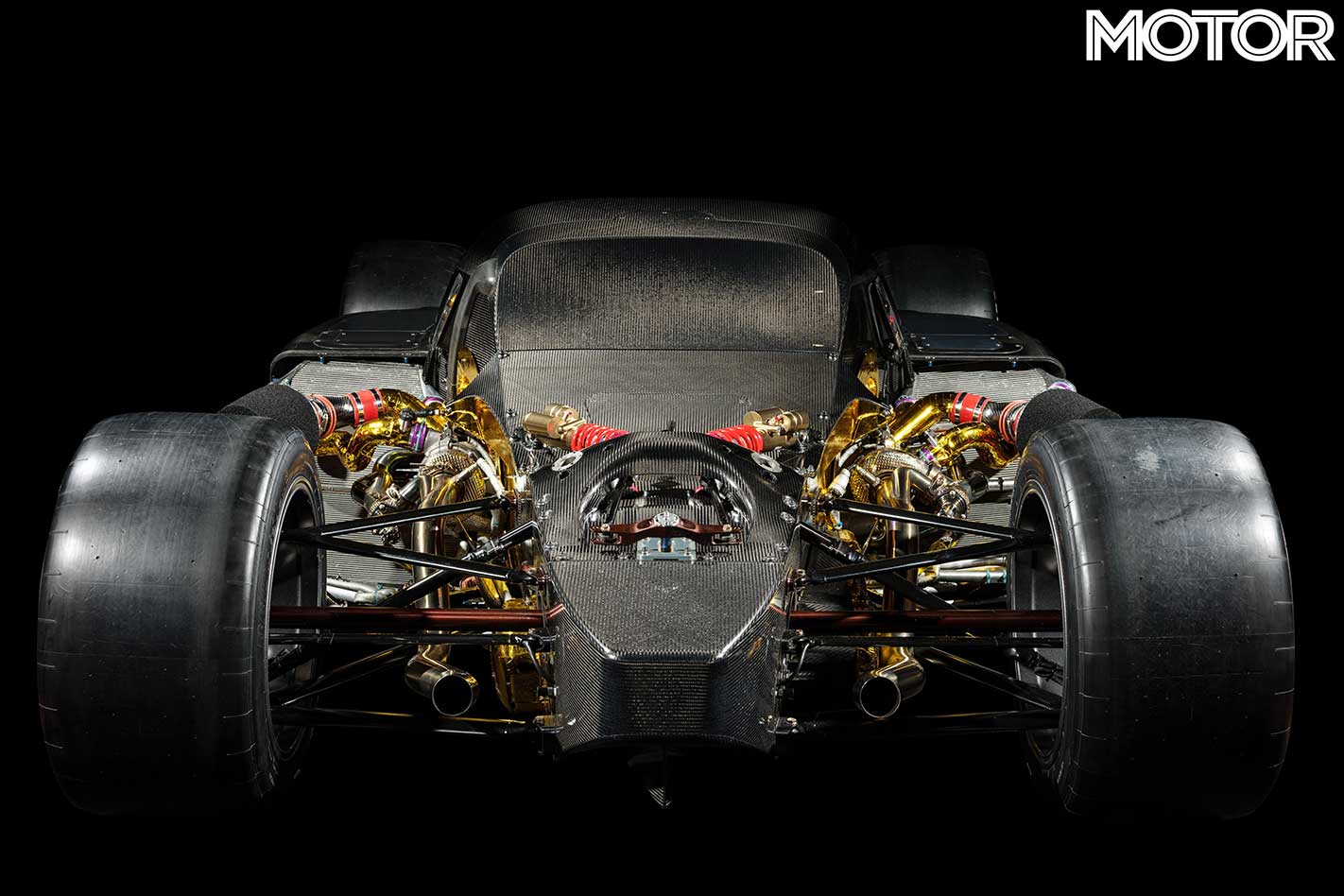
The remaining 367kW are supplied by lithium-ion batteries, Toyota switching from its previous supercapacitor energy storage to the more traditional method for the TS050. The batteries supply power to a pair of electric motors, one on each axle, which provides all-wheel drive capability.
Thanks to an all-carbon tub with carbon body panels, weight is just 875kg and as a result performance is mind blowing. Toyota doesn’t provide any performance data for the TS050, but Porsche did for its 919 Hybrid, claiming it could hit 100km/h in less than two seconds and 200km/h in just 4.5sec. Given the two cars’ similarity in performance it seems reasonable to assume the Toyota isn’t any slower.
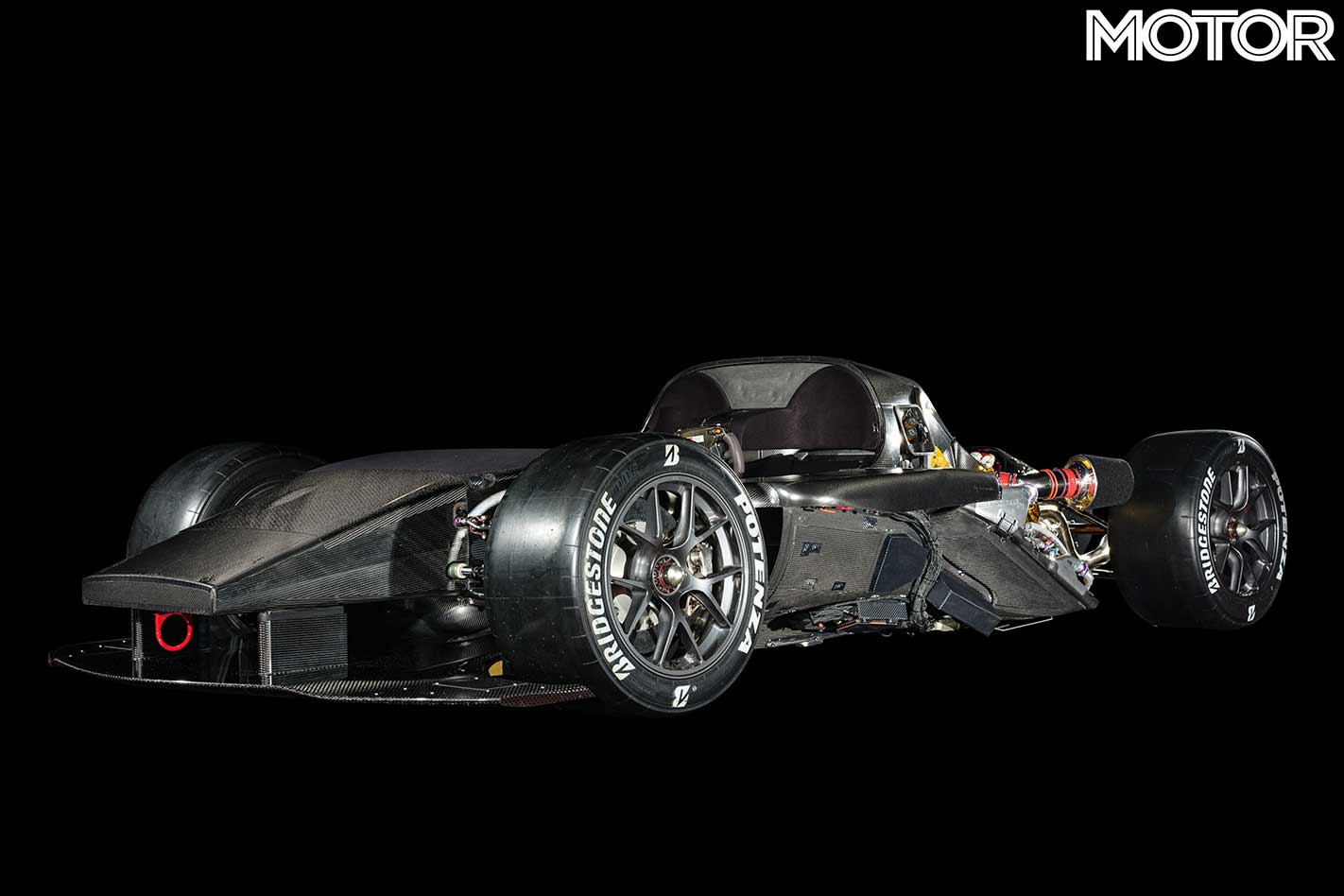
Double-wishbone suspension features at each corner with pushrod-activated dampers, torsion bar springs and anti-roll bars at both ends. Interestingly, the steering remains hydraulically assisted, while the brakes are 380mm carbon discs with six-piston calipers front and rear.
It must be said that the racecar’s specs aren’t guaranteed to carry over to the road car. However, in order to maximise the link between the two, it seems logical that Toyota will aim to use as much of the TS050’s race-proven engineering as possible.
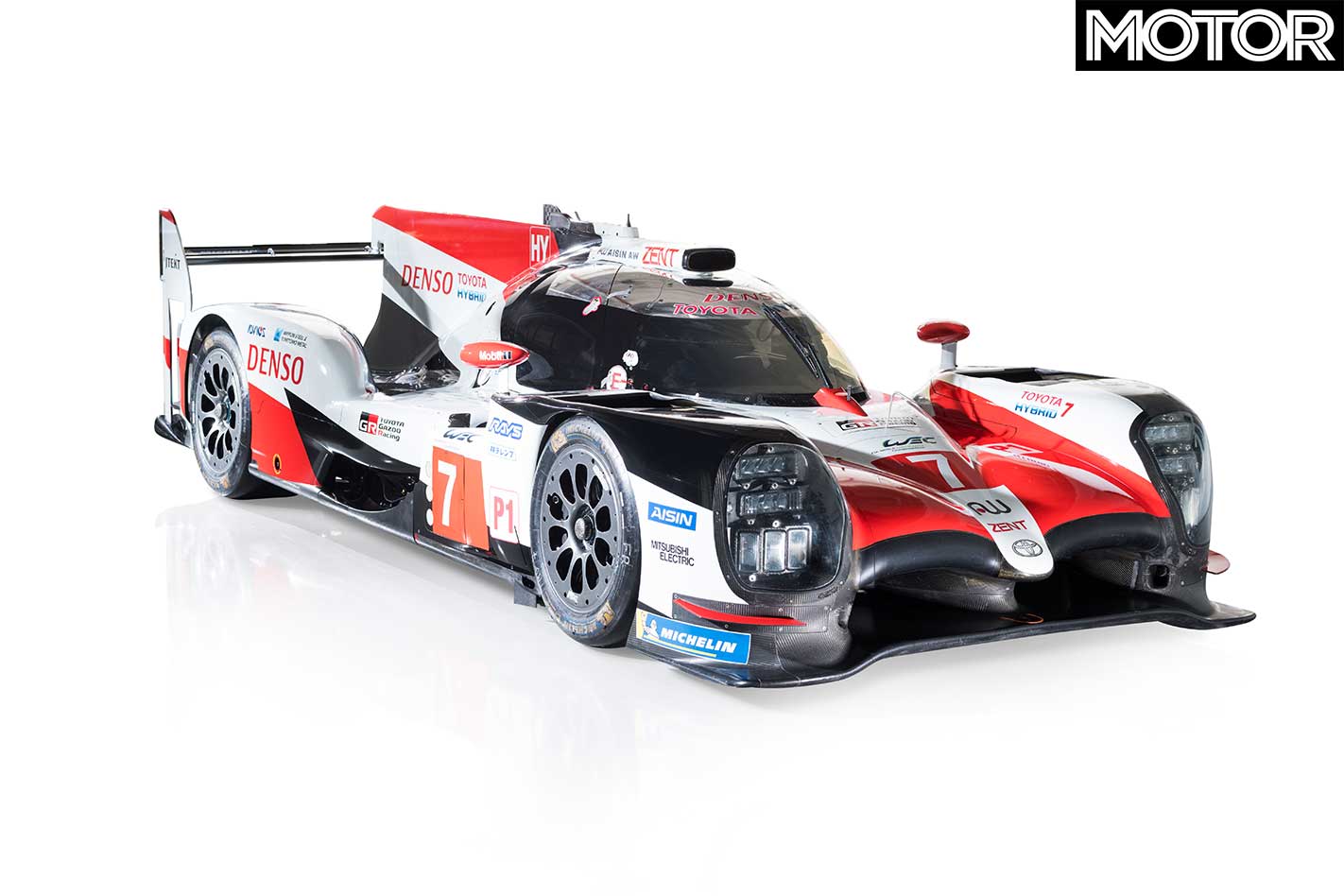
The good news is while virtually every component of the TS050 is constrained by Le Mans LMP1 technical regulations, road cars have no such rulebook.
It’s very possible the road car could be even wilder and suddenly a whole raft of possibilities is opened up to the Gazoo Racing team.
No longer are there rules governing the engine’s fuel-flow limit, the power and duration of its electric assistance, the size of its wings, the weight of its wheels, and the size of its brakes. All-wheel steering, adaptive suspension, electronic driver assistance systems and more are all on the table.
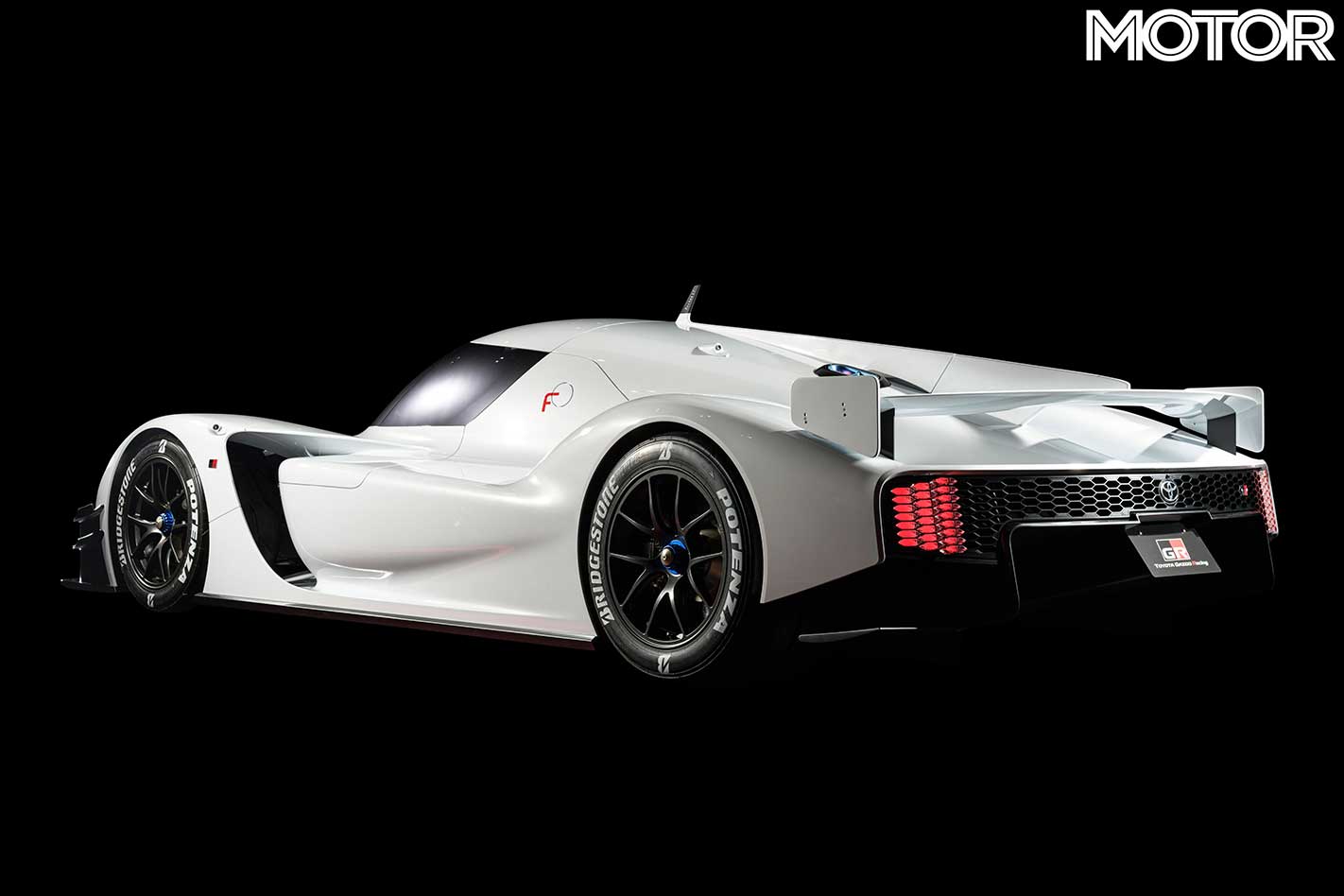
Expect the GR Super Sport to appear around 2020-’21, at which point the World Endurance Championship will introduce its new GTP regulations, intended to tempt the new breed of track-based hypercars into competition.
If the World Motor Sport Council succeeds in its aim of limiting manufacturer budgets to a quarter of current levels, it could set up a new golden era for Le Mans, with the likes of the McLaren Senna, Aston Martin Valkyrie, Mercedes-AMG Project One and Toyota GR Super Sport battling it out on road and track.
Bill Tuckey, Wheels’ great editor from 1963 to 1968, loved nothing more than a long road trip. During my era as editor of the magazine, I found it impossible not to run a Tuckey piece on driving out there under our Big Sky country.
They were all different, yet essentially highlighted the delights to be had when exploring Australia by car. When the copy arrived – typed on paper in those long ago days – he always wanted to include the same much-loved quote from Mark Twain, the American writer (The Adventures of Tom Sawyer) and humourist.
In Following the Equator, Twain, who visited Australia in 1895 on a lecture tour, wrote, “Australian history is almost always picturesque; indeed, it is so curious and strange, that it is itself the chiefest novelty the country has to offer, and so it pushes the other novelties into second and third place. It does not read like history, but like the most beautiful of lies. And all of a fresh new sort, no mouldy old stale ones.

It is full of surprises, and adventures, and incongruities, and contradictions, and incredibilities; but they are all true, they all happened.” Peter Carey used the same quote in his introduction to his novel Illywhacker. To Tuckey these words perfectly depicted the many paradoxes of Australia, the contradictions that his drive stories often illustrated. Twain’s quote appeared on the opening spread of ‘Where The World is Round’.
Bill’s first paragraph set the scene: “Directly overhead the sky is a deep blue, almost a royal blue, layered with fluffy white cumulo-stratus; farther ahead the blue lightens gradually in layers, until at the edge it is pale as a cornflower. The layers of cloud hang overhead like the roof of a vast cathedral, a giant curved bird’s egg of a dome over your head.
And then you realise what you’re looking at. Out there, between Broken Hill and Wilcannia, you can see the curvature of the earth.” Today, most Australians ignore their cars when travelling interstate, preferring the speed and apparent convenience of flying. It is cheaper and faster and painless. Yet the road trip remains something we enthusiasts should treasure.
Not only for the discovery of the many brilliant roads that exist beyond the suburban fringes of our cities, but also because the fact remains, the only way to really see this country, to appreciate the emptiness and the history, is by car. “To see Australia properly,” writes Tuckey, “you must pay the penalty of having to cover enormous distances, then be happy with the great advantages this gives you.
You can stop when and where you like, go to see what you like, talk to people, smell the flowers, listen to the rain.” Bill’s wheels for this adventure across the Hay Plain and beyond was a modest Holden Torana, proving you don’t need a Lamborghini for a great road trip. I can only agree with his final sentence, “I say to you again: Go see Australia before it’s too late…”
A word from the cable guy
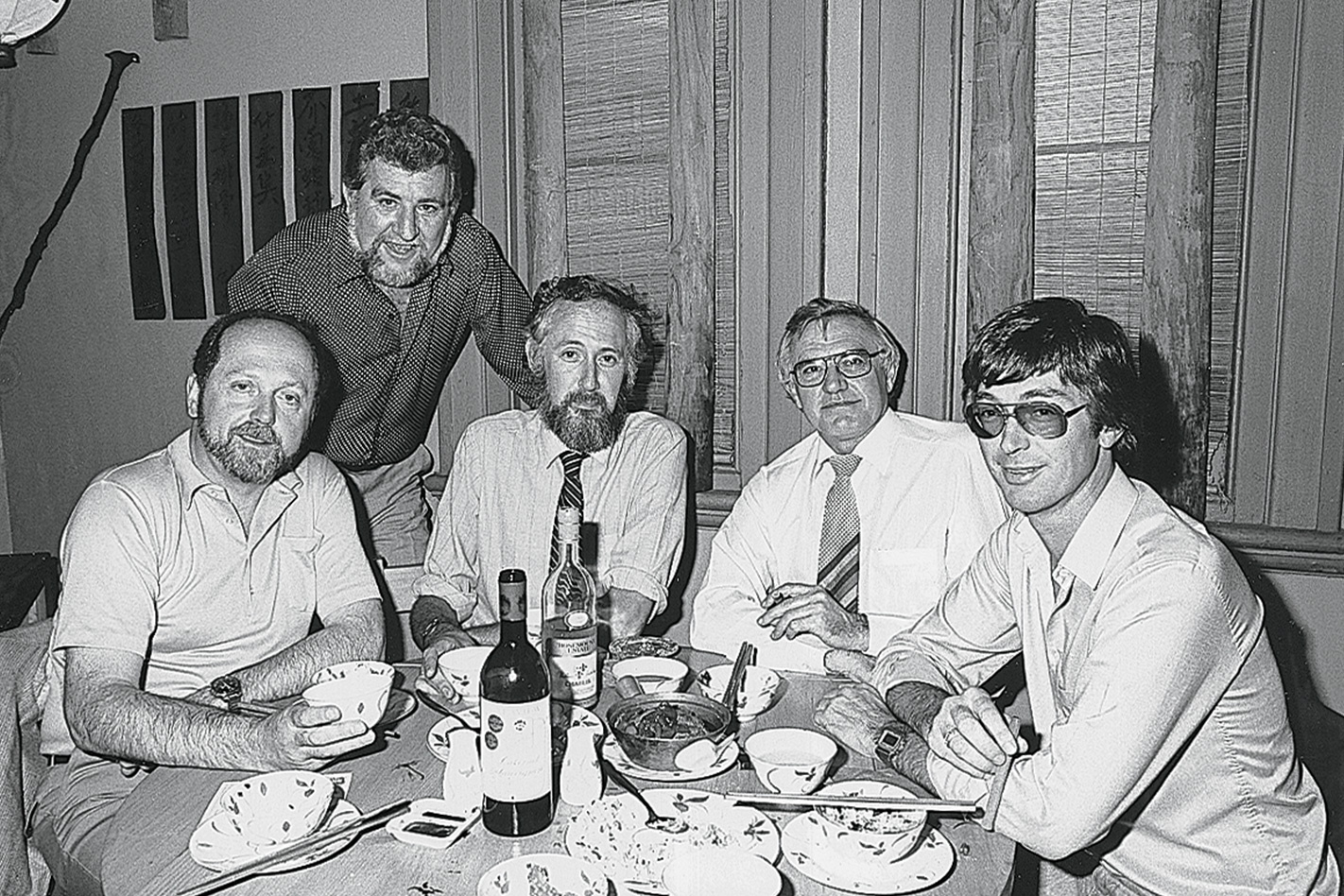
After Bill Tuckey (standing, above) died in 2016, my friend Steve Cropley, ex-Wheels staffer and now editor-in-chief of the UK’s Autocar, wanted me to repeat this story at his funeral: “Fifty years after they were written, I can still quote you phrases from Tuckey stories and Quints columns, and I’ll bet I’m not alone.
One phrase I remember is from a Wheels story called ‘Go See Australia’, full of advice about seeing our country before leaving it. It was just a casually dropped few words in the last paragraph of the story, where Bill was describing the noise of the wind blowing through power lines. As a kid from the bush I knew this noise intimately, but could never have described it so eloquently.
Bill called it “mad, strange songs in the overhead wires”, and as I write those words now, with a lump in the throat, I can hear it all over again.”
Also WHEELS, October 1978
Ford’s Falcon came of age in late ’78 so we drove examples of all three generations. Robbo enthused over the VB Commodore-previewing Opel Senator flagship in Germany while Holden’s TD Gemini, the Honda Accord sedan and the dullest Mazda 929 ever were also tested.
Here’s a tip for the easily offended: you do not want to be around tester Byron Mathioudakis when he starts uttering the ‘C’ word. At least not if you’re a Toyota executive. No, we’re not talking about that ‘C’ word. Actually, it’s one potentially even more offensive: ‘cynical’.
That was Byron’s succinct summation of the Hilux, tested here in $48,560 SR spec (with optional alloys), although we wanted the SR5 for this exercise, which, at $56,440, adds equipment such as climate control, sat-nav, keyless entry, 18-inch wheels and more.
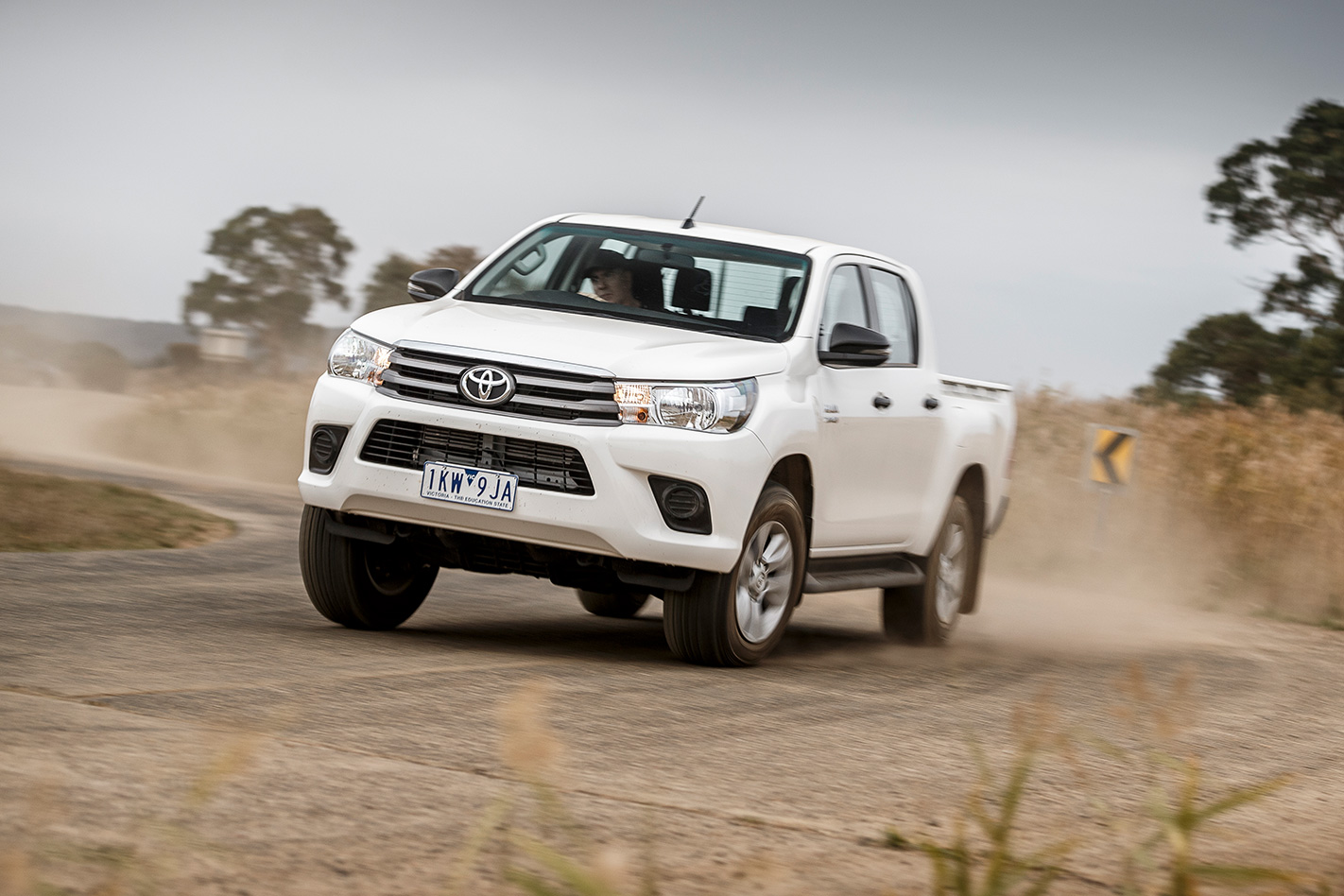
Yes, the huge-selling Hilux has a bunch of virtues, which we’ll get to, but the inescapable facts are these: it’s slow, lacks refinement, and has a suspension tune that delivers a ride about as comfortable as saddling up on one of those pro-bull-riding beasts.
“It feels like the last of the old, truly cynical Toyotas that buyers buy blindly,” said Byron. “It reeks of mediocrity, rather than any real need to be properly competitive, and lacks desirability beyond its off-road cred and nameplate cachet.”
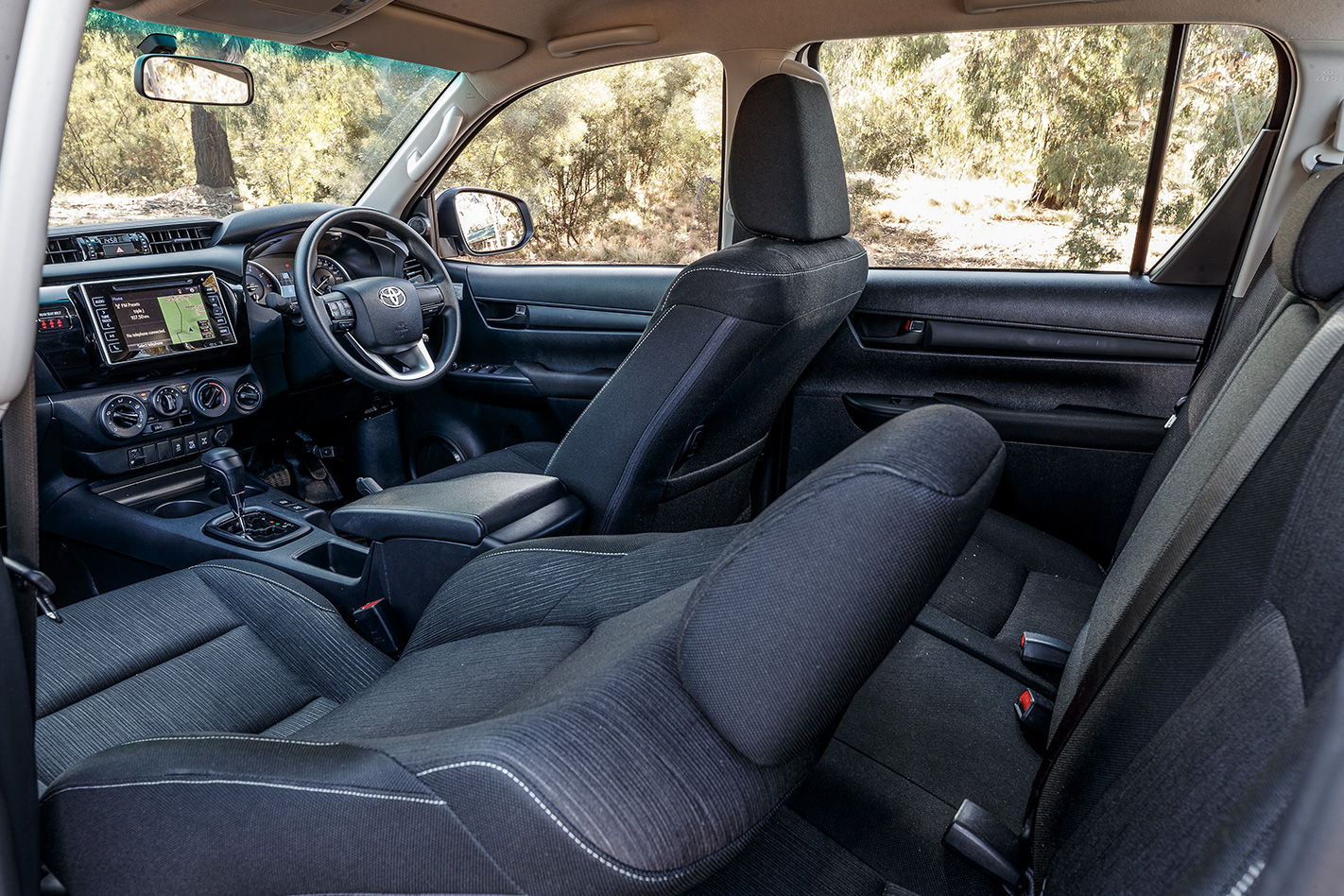
Anyone who takes their T-logoed blinkers off will find this impossible to argue. The driving position is flawed for taller drivers, thanks to the feeble reach adjustment of the wheel leaving it too far away when the seat is slid sufficiently back from the pedals. The absence of a digital speedo grates, as does the lack of an audio volume knob, though the seats themselves are quite good and the fabric is fine.
Fire up the diesel and the lack of NVH development becomes obvious. While the likes of the Holden have improved significantly since our last 4×4 outing, the Toyota has stagnated, and the engine feels a gruff old nail of a thing in contemporary context. It grunts up early, but quickly turns breathless and raucous. Peak power is at 3400rpm, and while it will upshift beyond that, it comes with an unpleasant resonance, and no discernible extra forward thrust.
There’s nothing too wrong with the transmission apart from the fact it’s two ratios short of the standard-bearing Amarok, and one short of the X-Class and Navara, to the detriment of both acceleration and frugal cruising. On the former, the Hilux is the slowest of this group to 100km/h (11.2sec) and around a second slower than even the mid-fielders in the important 80-120km/h overtaking discipline. All of which does nothing for its economy. At 10.9L/100km, it only drank 0.3L/100km less than the rapid V6 Amarok on this test.
At least the Hilux steers reasonably, even if the slow gearing means plenty of wheel turning in tight off-road situations. It’s better at speed where it feels relaxed and reassuring. “Gives a sense that it’s been tuned to feel stable and confident no matter what the surface,” commented Byron. But that unloaded ride can become exhausting over a long drive on lumpy surfaces. Drive it quickly and either the agitation of the rear end will slow you down, or the howling of the 17-inch Dunlop Grand Trek tyres will.
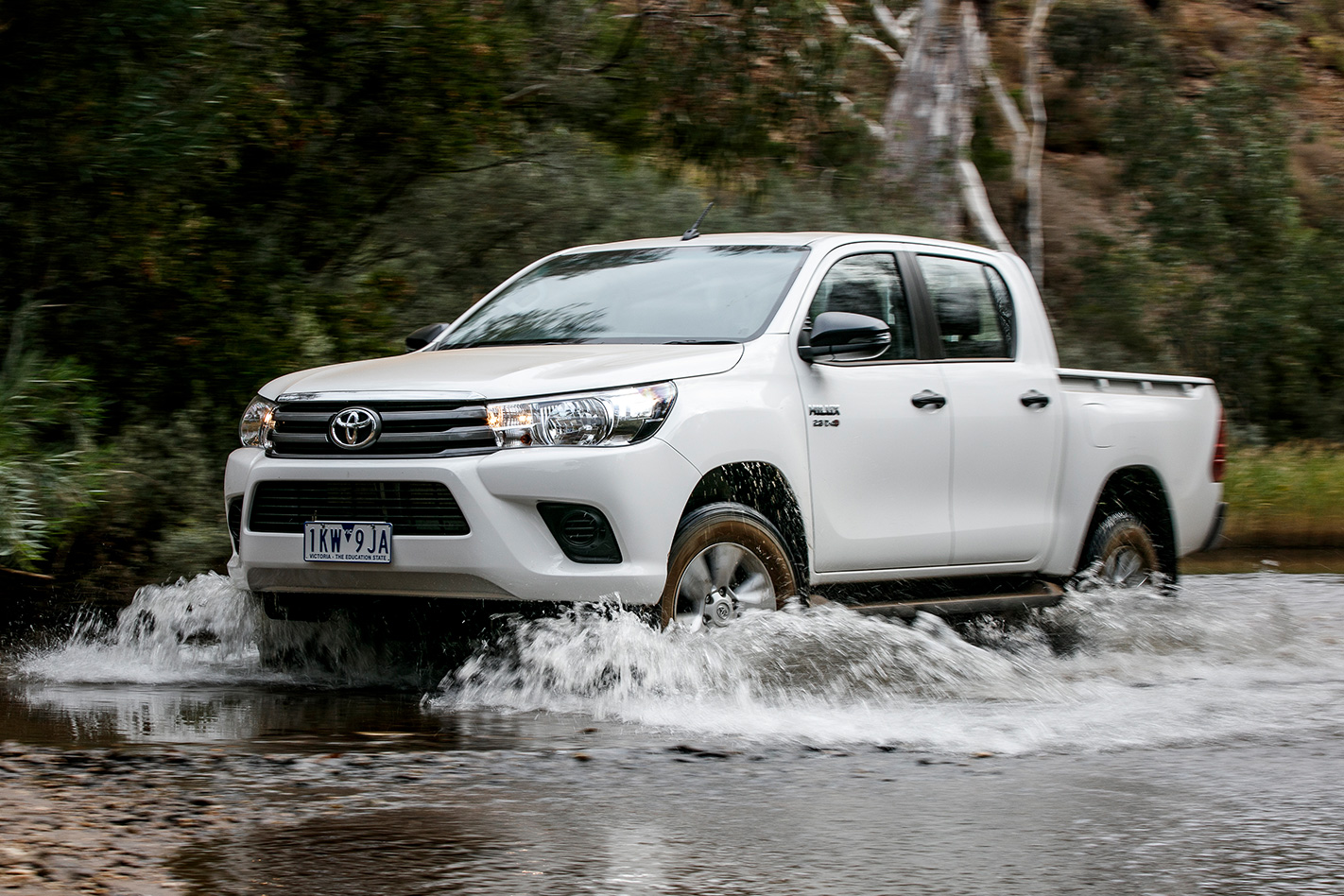
So what about the those virtues? Well, anecdotally, a Hilux is more unkillable than Keith Richards, and if you do have a problem somewhere remote, you will no doubt have a better chance of having it sorted in a Toyota than any other brand. Then there’s the excellent off-road ability delivered in part by its exceptional rear wheel articulation (520mm) and very effective traction control.
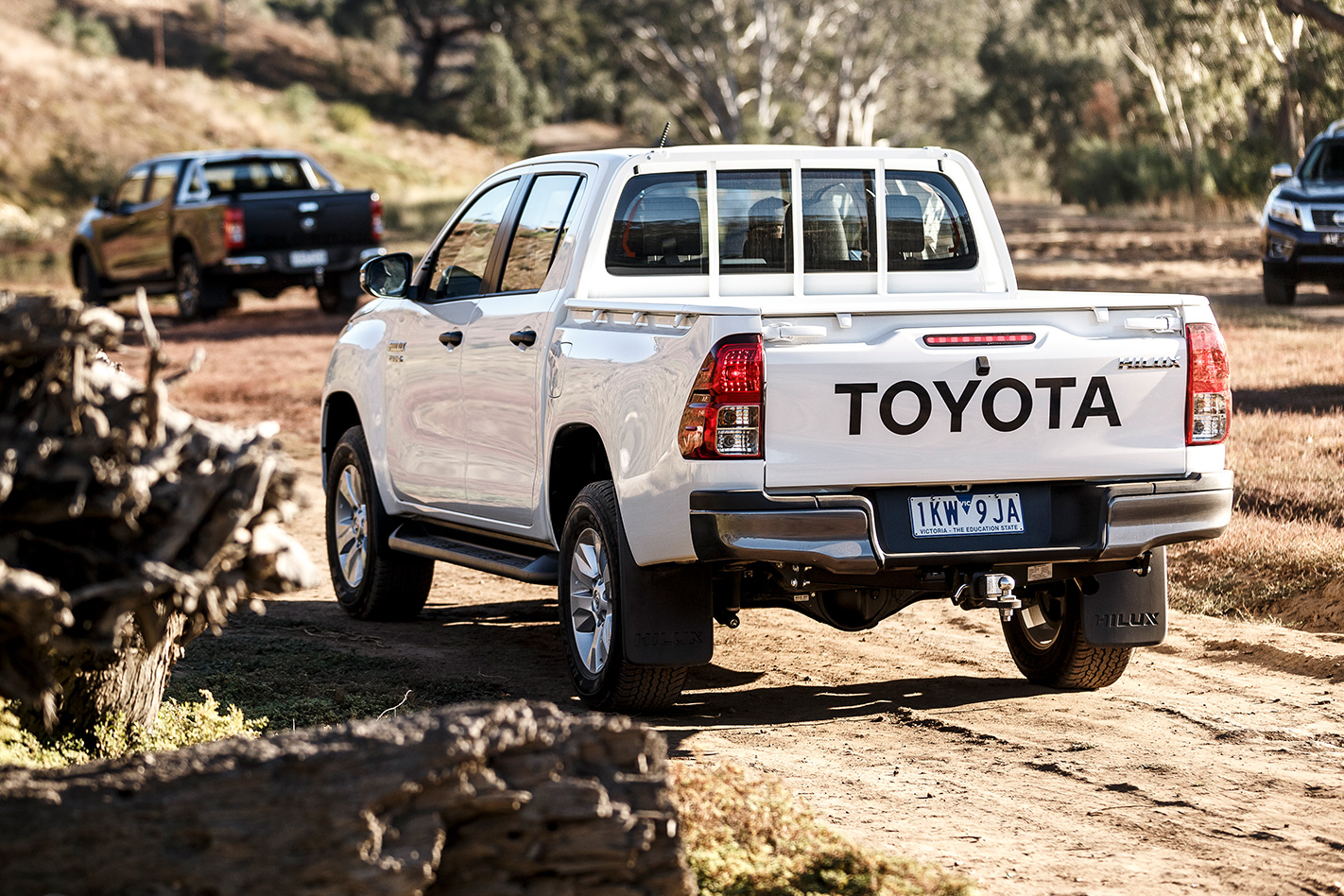
Its chassis is also very capable with big loads, even if its powertrain is less enthused by them. And of course there’s the general no-fuss functionality, from things like the split-level glovebox to the basic, bulletproof HVAC system in this SR spec. And let’s not forget the proven resale.
So if you can really look yourself in the mirror and not flinch when you say you need serious off-road ability, that you may need a dealer in the back of Wherethehellareya, then maybe the Hilux really is the logical choice. But don’t expect excellence. For all its virtues, there’s no escaping the fact that the Hilux feels to be riding along on a wave of complacency.
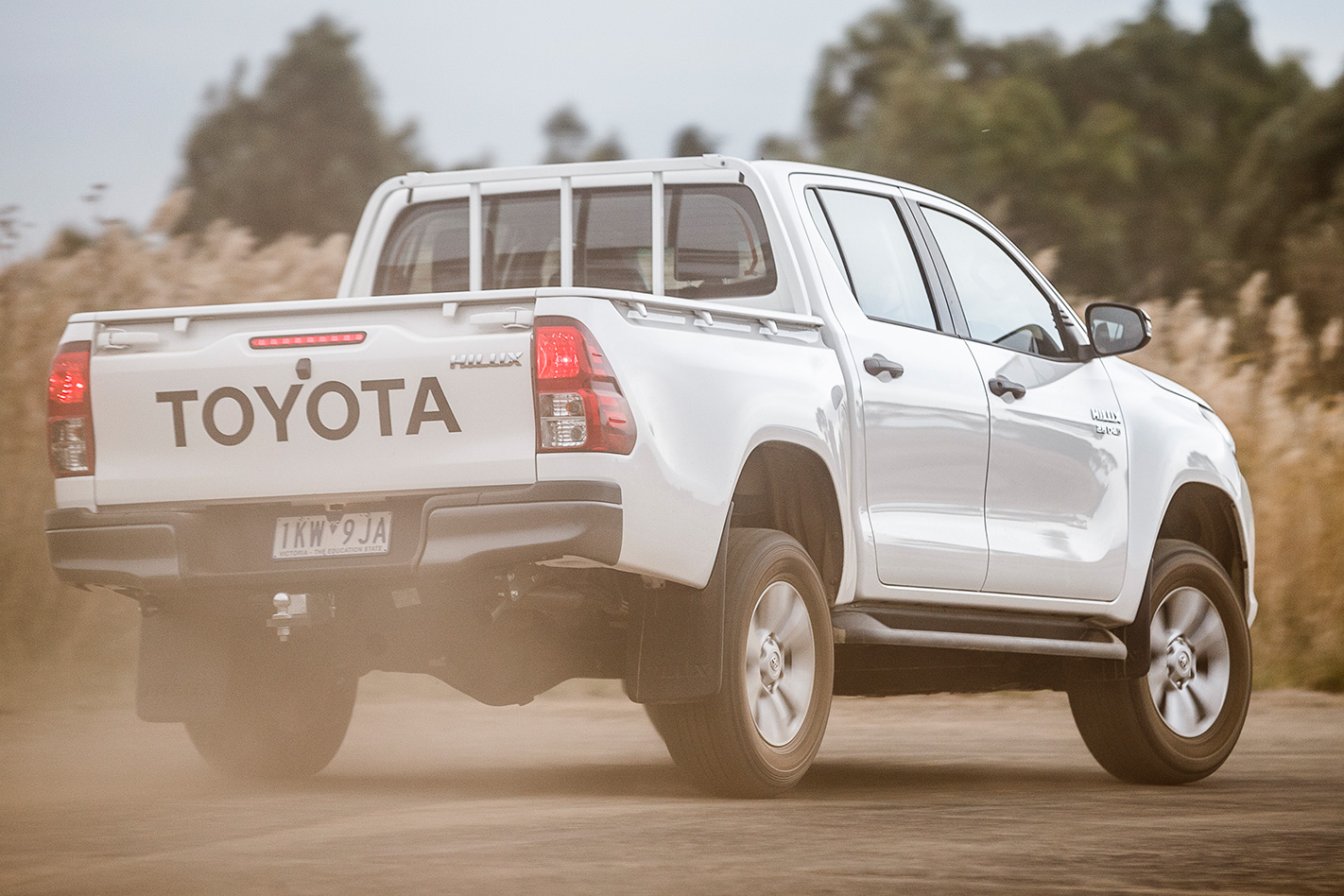
Bugger. Is that another C-word that we just slung in its direction?
SPECS
Price $48,560 Engine 2755cc 4cyl, dohc, 16v, TD Power 130kW @ 3400rpm Torque 450Nm @ 1600-2400rpm Transmission 6-speed automatic Dimensions (L/W/H/W-B) 5330/1855/1815/3085mm Weight 2045kg Tray capacity 920kg Braked towing capacity 3200kg Unbraked towing capacity 750kg Ground clearance 279mm Tyres Dunlop Grand Trek 265/65R17 Test fuel average 10.9L/100km 0-100km/h 11.2sec 80-120km/h 7.9sec 100km/h-0 44.5m
Need more info?
Read the Wheels Dual-Cab Ute Megatest Introduction
The Contenders
# 9 Isuzu D-Max LS-T
Rough ’n’ ready appeal pales when polished rivals are better at going bush too
#8 Nissan Navara ST-X
Tough and reliable aren’t enough as Navara wilts on price, spec and comfort
#7 Toyota Hilux SR+
Unbreakable? Possibly. Unloveable? Sadly, yes, as mediocrity is allowed to prevail
#6 Mazda BT-50 GT
Still in the fight, but ultimately overshadowed by its high-flying fraternal twin
#5 Mitsubishi Triton Exceed
A strong and likeable mid-fielder where consistency and value are king
#4 Holden Colorado LTZ
Colorado raises its game right when Holden needs a hero
#3 Mercedes-Benz X250d
Arrives carrying great expectations; delivers only a modest load
#2 Ford Ranger XLT
Continuous improvements make the only truly Australian-conceived ute world class
#1 Volkswagen Amarok V6 Sportline
Quiet achiever doesn’t have youth on its side, but still shows how it should be done
If you want to see people in love with their cars, don’t waste your time at a race circuit, or a concourse show, or the drags, or even the local cruising strip on a Friday night. Because in those places you will only (and I’m generalising, of course) see men in love with their cars.
To see Mr and Mrs and even the whole tribe of kids worshipping their wheels, you need to head a long way from the traffic lights and supermarkets. I speak of the outback.
As I write this, I’m somewhere in the tropics, having just started to head south after a trip to the very tip of this wide and – as it turns out – tall land. A month living in a tent in a different spot most nights has given me several opportunities including never wearing shoes, growing a beard and actually having real conversations with real people.
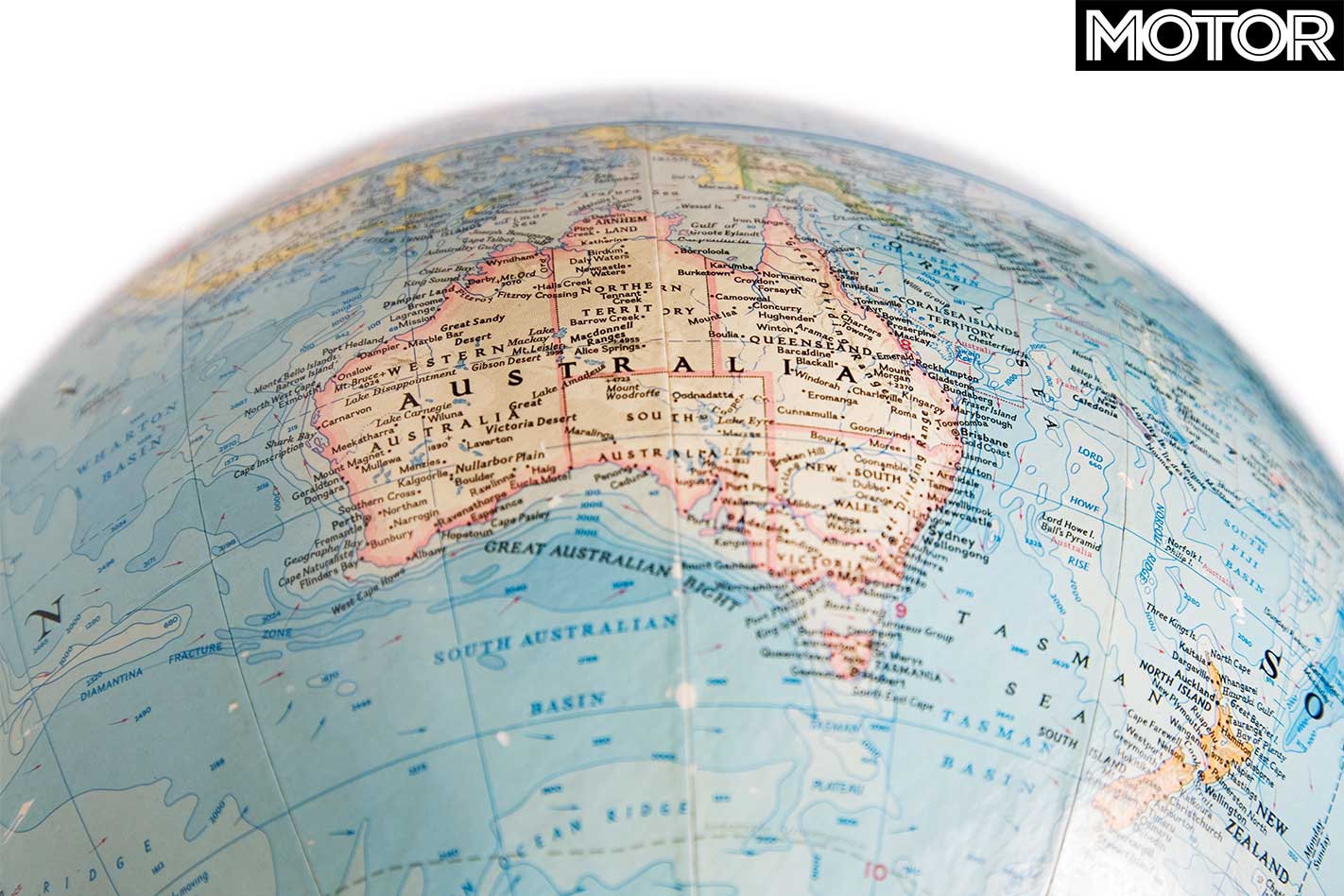
No, I haven’t gone off hardcore performance cars, but if you want a different kind of challenge at the wheel, try proper off-roading.
Anyway here’s the weird bit. The Speaker of the House (I’m in charge of accommodation each night; she’s catering officer) has also fallen for old Harvey (the Morley family fourbee). Now, to illustrate what a red-letter day that represents, I should point out that The Speaker has otherwise zero interest in anything with wheels or an internal-combustion engine.
Frankly, she wouldn’t know a handbrake cable from a hippo, which may well turn out to be a problem if she’s ever on safari in Africa, but hasn’t bothered her yet. (She is also more likely to turn up in Kenya than at a Repco.)
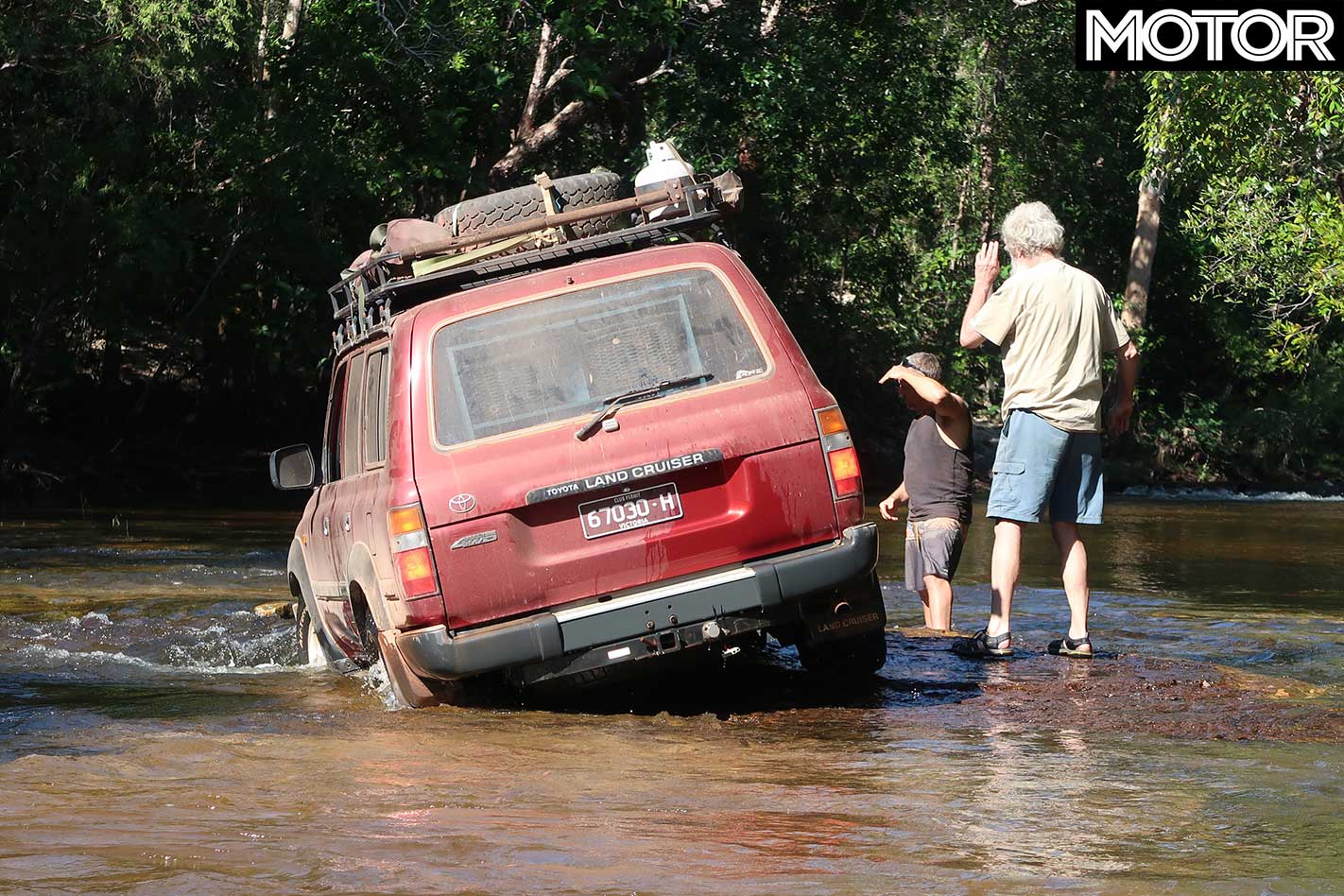
But this past month of having Harvey transport us from the very bottom of the country to the very top and having him show us the remarkableness of things like pristine swimming holes, the Old Telegraph Track and, of course, the tip of Cape York, has seen her soften her ignorance.
Suddenly, she is seeing cars through the same prism as I always have; as devices to take you to see impressive stuff. Well, she’s seeing Harvey that way, anyhow; I still have a long way to go to get her on board with the Monaro. But you know what? That’ll do me.
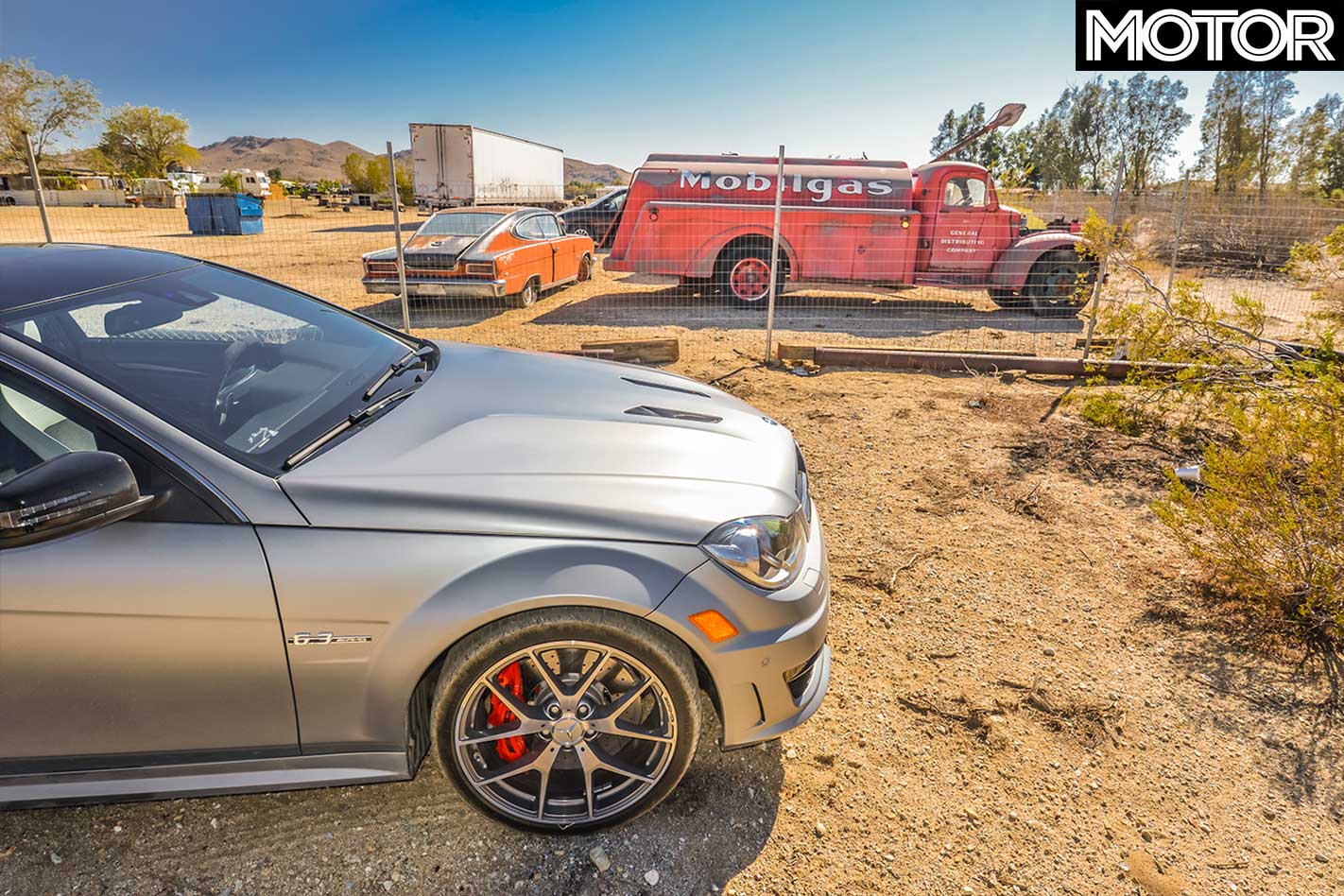
Okay, so you could get to the very tip of the cape in a conventional sedan (although there might not be much of it left by the time you got home) but for the best swimming holes, camp sites and the Old Tele Track you need a proper off-road four-wheel drive. And I don’t mean an SUV with a Haldex diff and a Conargo Pub sticker on the back window.
Mind you, neither do you appear to require the latest, high-tech off-roader complete with a year’s wages worth of aftermarket gear bolted on and a set of stupidly bulbous mud tyres. And Harvey is proof of that.
So what is Harvey? Well, he’s a 1990 Toyota LandCruiser with a non-turbocharged, non common-rail diesel engine, a manual gearbox, standard ride height but good suspension, the best fridge I could buy in the back, quality all-terrain tyres, plenty of driving lights and a roof rack that carries an extra spare tyre, a set of traction mats, the LPG gas bottle (for cooking) and a shovel (for afterwards). The only electronics are in the stereo head unit.
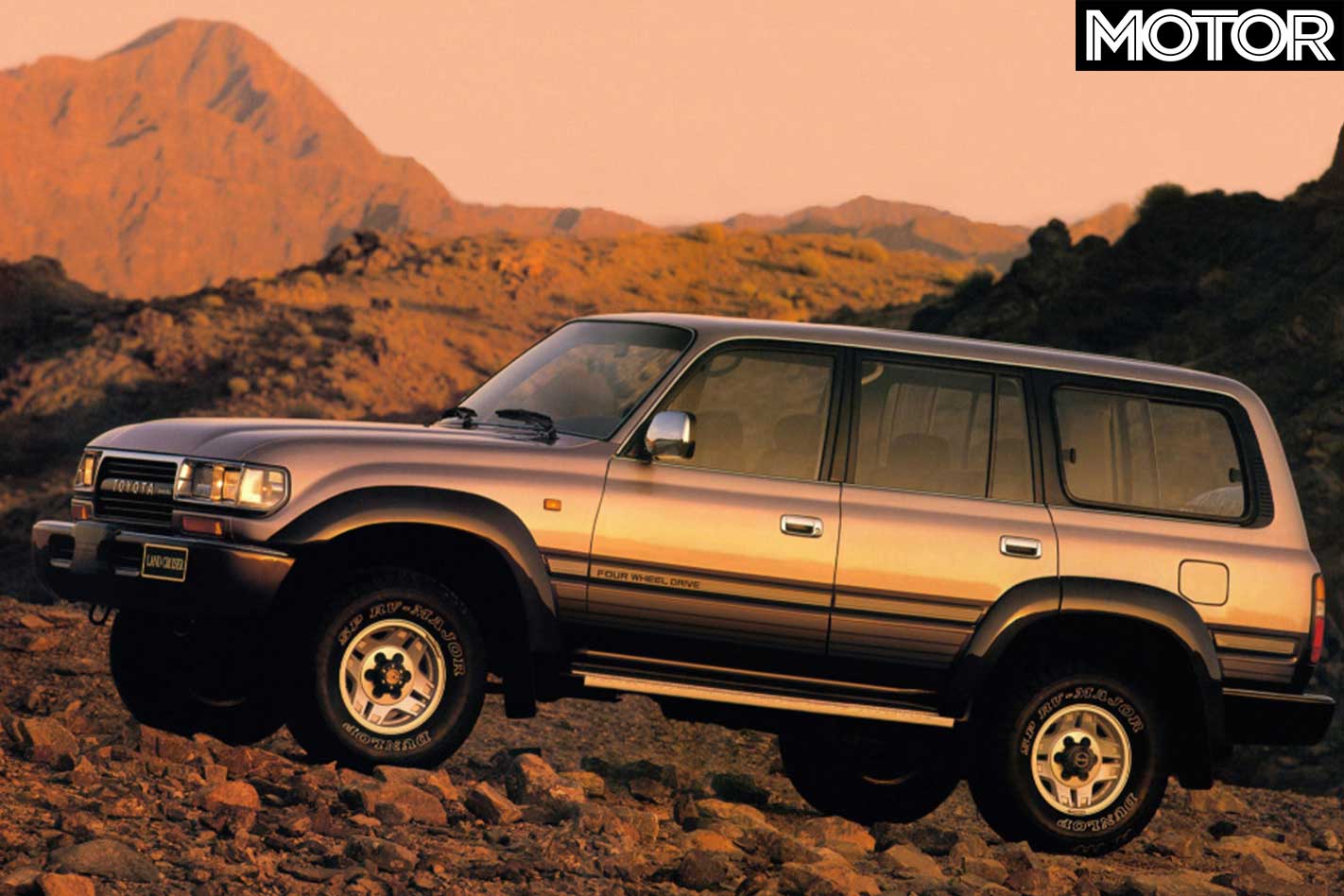
Harvey is hardly the quiet type (and the snorkel places the diesel intake grumbles right at ear level) and although his ride quality is average, it’s still better than the current crop of dual-cab utes even with their three decades of development over ol’ Harves.
He is hardly a swift mover – I could run faster – but for the real rough stuff (which is why I bought him) he has the gearing and the ticker to get her done. And more than that, he has convinced The Speaker that some cars are actually worth more than the fuel that goes into them. And for that, I thank him.
Mind you, the leopard never really changes its spots, and Harvey will never be considered perfect. Although, if I can figure out how to install a dishwasher in the glovebox, apparently, he’ll be one step closer.
Imagine if all it took to go from average Joe or Jane to superhumanly athletic was one decent gym session. Wouldn’t that be nice? In effect, that’s what APR’s Stage 1 kit does to the Audi RS3.
To be fair, a standard RS3 isn’t exactly average in the acceleration department. At our recent Bang For Your Bucks event the facelifted RS3 recorded 0-100km/h in 4.01sec and a 12.18sec quarter mile at 186.57km/h, figures which make it the dux of the hot hatch class.
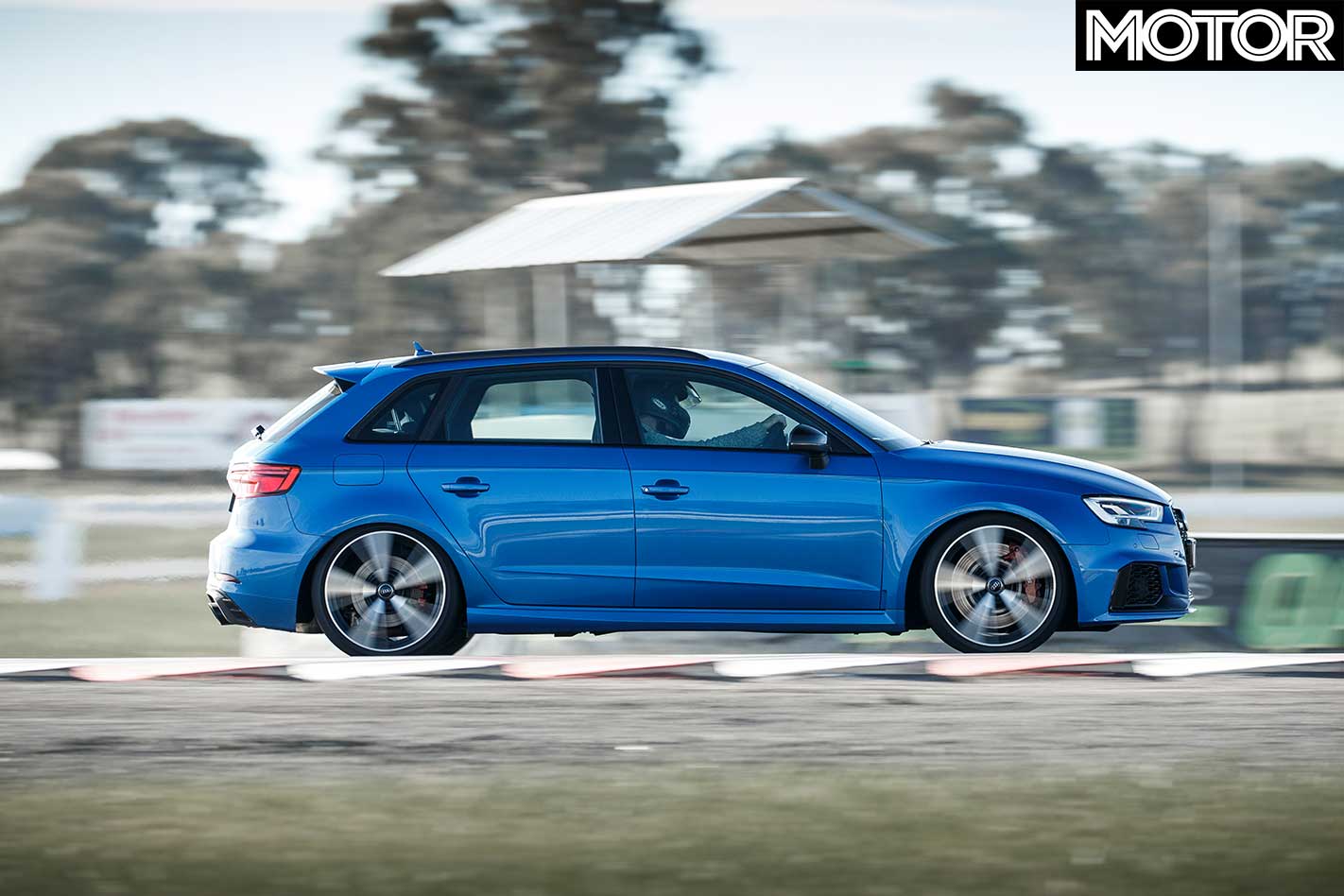
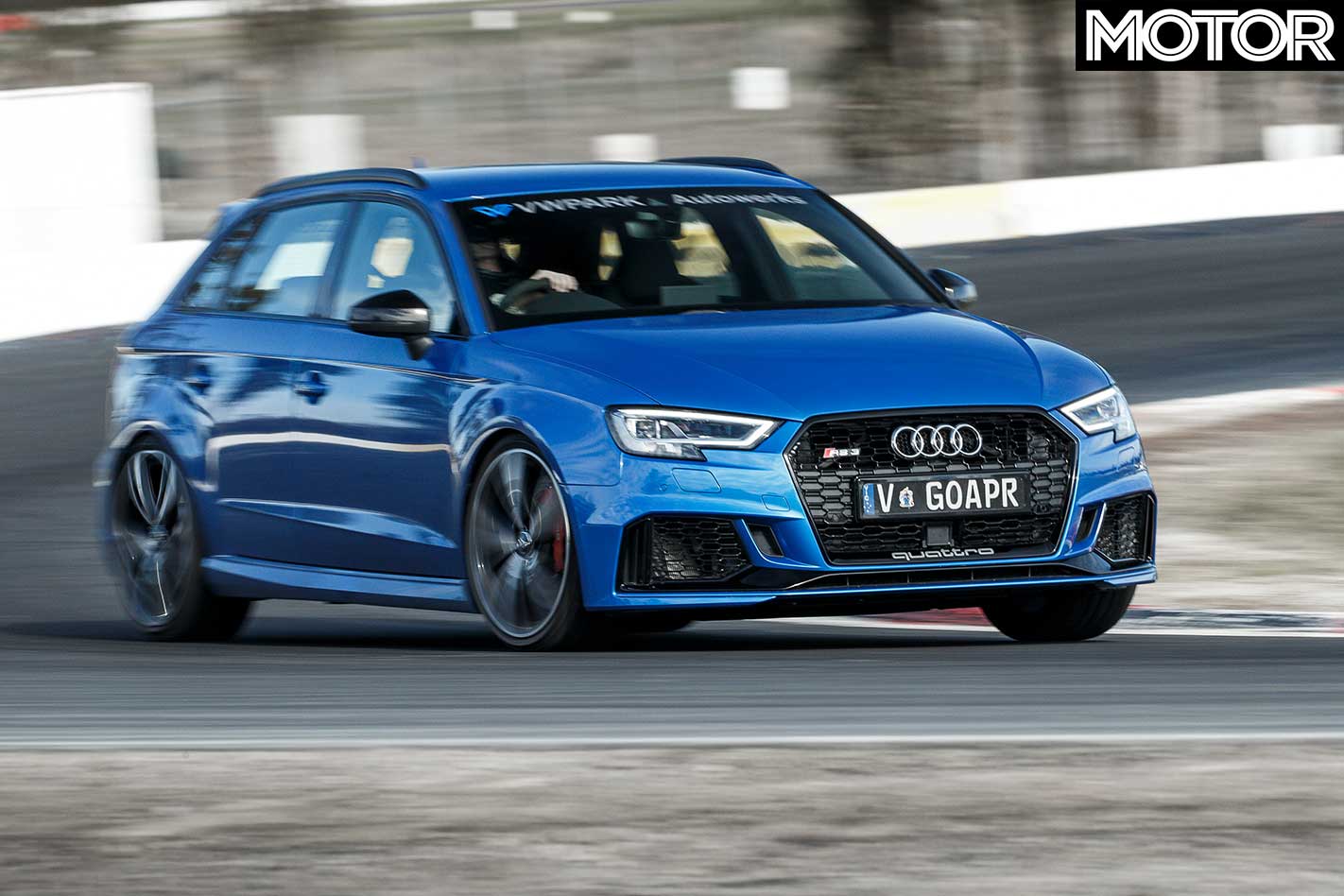
On 98RON, outputs increase from the standard 294kW/480Nm to 355kW/637Nm, but using E85 liberates a whopping 404kW/678Nm, which equates to 332kW at all four wheels.
There’s no hint of the extra grunt at start-up. The engine fires easily, idles smoothly and its low-speed behaviour feels no different to standard. Likewise, the launch control procedure is identical: left foot on the brake and floor the throttle. It’s when the brakes are released that the changes become immediately apparent.
Whereas a standard RS3 squats into the tarmac with a minimum of fuss, the APR car explodes into wheelspin, the engine hammering into the rev limiter like an over-enthusiastic Jehovah’s Witness hammering at your front door. Second gear quickly engages and there’s nothing to do but hang on as Winton’s makeshift drag strip disappears under the wheels at a tremendous rate.
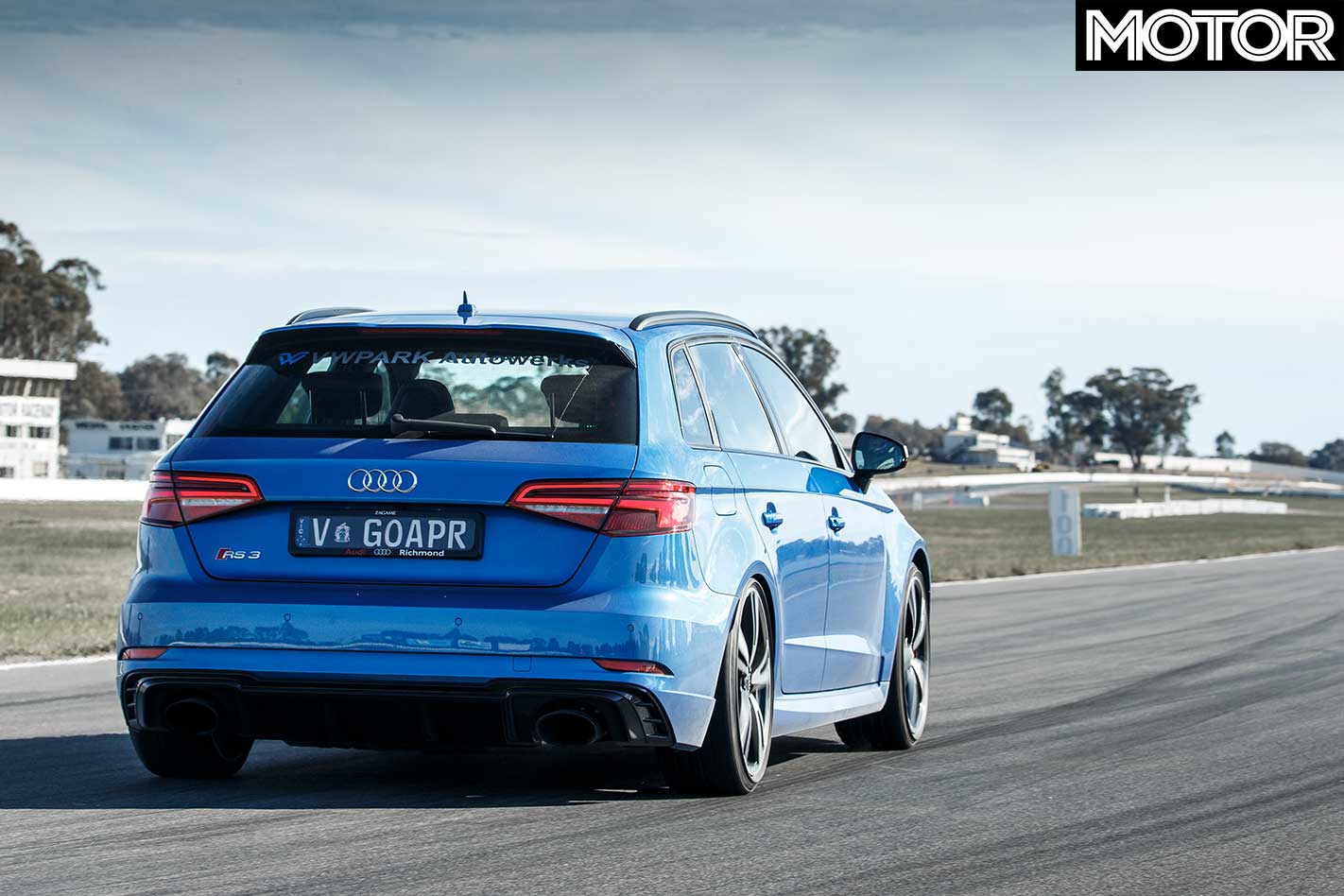
The figures are ridiculous. Even with major traction issues in first gear, 0-100m/h takes just 3.28sec, 200km/h is devoured in 10.14sec and the quarter mile dispensed with in 11.09sec at 208.14km/h. For context, our performance numbers for the 449kW Audi R8 V10 Plus read: 0-100km/h 3.18sec, 0-400m 10.93sec at 209.58km/h.
With its launch control system calibrated for the extra power, there’s no doubt APR’s super-RS3 would match, or best, those numbers. And this is only Stage 1?

Do an extra 100-odd kilowatts make the RS3 better? They certainly make it more exciting. Even on Winton’s wide expanses it feels ludicrously rapid; on a city street or narrow winding road it must be berserk. It does make Audi’s hot hatch a little one-dimensional, however.
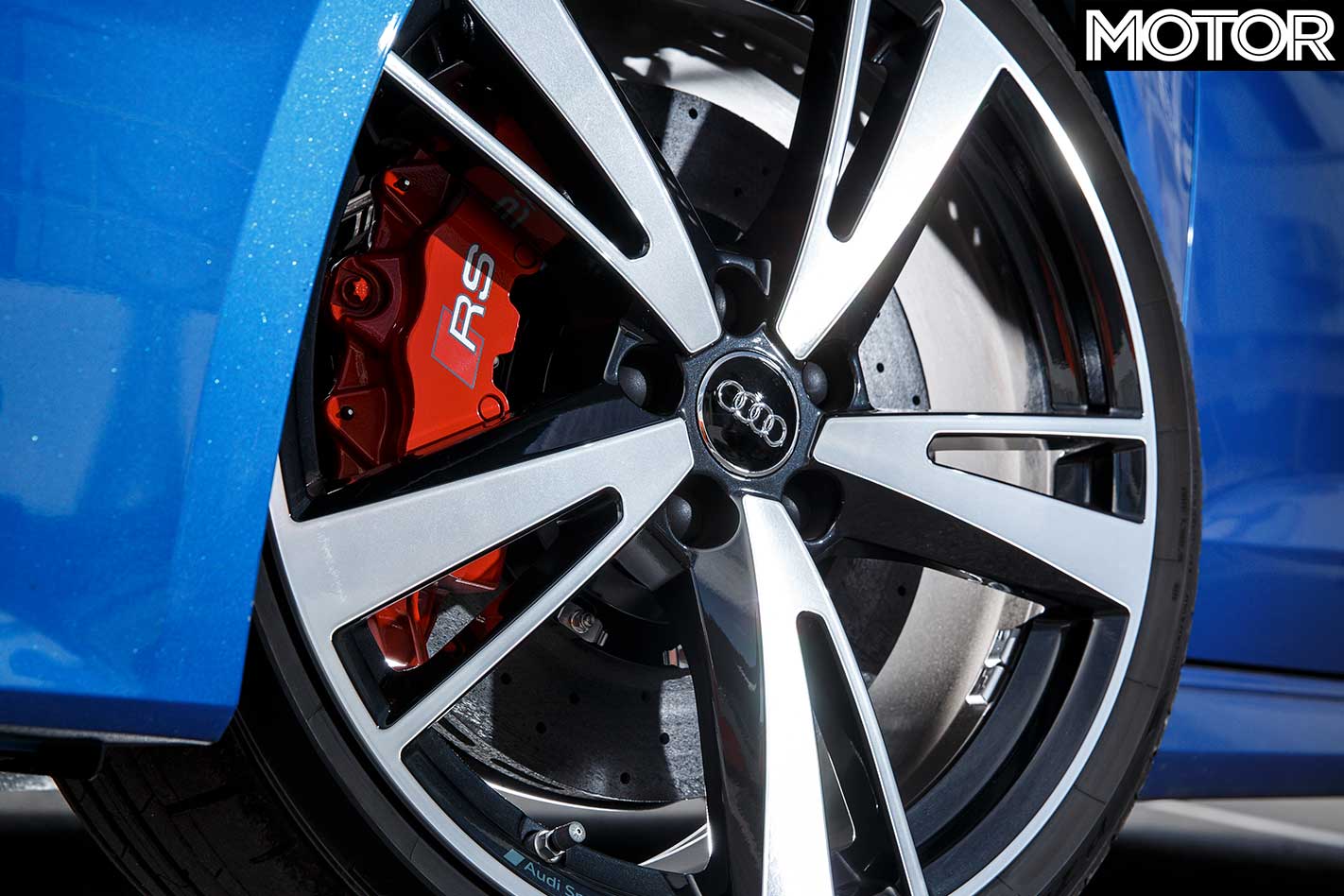
The standard RS3 brakes work well at 294kW, but the APR’s added poke is such that uprated items would be sensible. Our test car had aftermarket carbon-ceramic items, but sadly ordinary road pads were fitted by mistake and the pedal sank to the floor on the first major application.
In the bends it’s important for the car to be pointing straight before applying too much throttle, as too much too early will drag the nose wide. That said, on the road, where you’re not as close to the absolute limit, this is less likely to be an issue.
The other thing to consider if you’re planning on using E85 is that if you use the power the juice disappears at an incredible rate. During performance testing the fuel gauge dropped almost as quickly as the car accelerated, however, it only takes around a minute to swap between the E85 and the 98RON maps.
If you’re after a daily-driven hot hatch that is potent enough to frighten 911 Turbos, the APR RS3 is well worth a look. The outlay is relatively small, driveability seems largely unaffected and the multiple-map capability gives peace of mind if you can’t find super high-octane fuel. Reliability is always an unknown, but Audi has said the EA855 has plenty of headroom!
2018 AUDI RS3 (APR STAGE 1 TUNE) SPECS: Engine: 2480cc inline-5, DOHC, 20v, turbo Power: 404kW @ 6300rpm (claimed) Torque: 678Nm @ 4100rpm (claimed) Weight: 1510kg 0-100km/h: 3.28sec (tested) Price: $1678 (remap)
Like: Insane pace; driveability retained; multi-map flexibility; remap inexpensive Dislike: Risks over-powering the chassis; E85 thirst; reliability over time is unknown Rating: 4.0 out of 5
Is the I-Pace an SUV, a sedan, a coupe or a sports car? According to Ian Callum, Jaguar’s design director, “It doesn’t matter.”
He’s probably right. Even to expert eyes the lines between different types of car are blurring, so imagine how confusing it is to those who actually spend money on them.
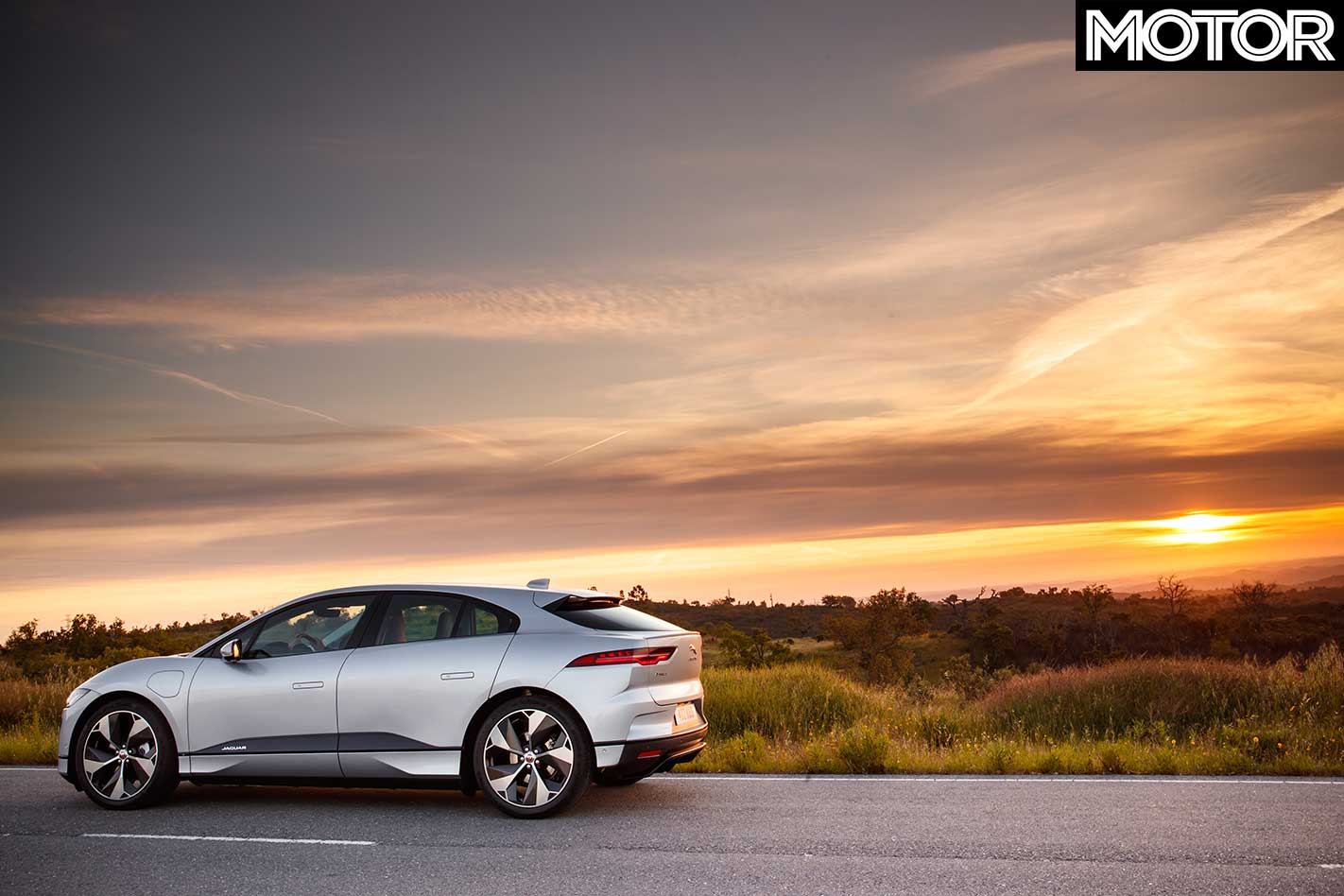
All they need to know about the I-Pace is that it’s a 294kW, $119K-plus, battery electric vehicle (BEV) with a 480km range, and it joins Tesla and a host of plug-in hybrids as the posh electric vehicle of choice.
Jaguar designed and specified two motors, the same at each end of the car. There are more than 10 patents on its permanent magnet motor, which has the DC-AC inverter attached to it because AC cabling needs to be as short as possible to be efficient.
Using two motors enabled Jaguar to put the wheels where it wanted. With only one axle driven, the rear wheels would have had to be further forward in the body if the car was going to drive halfway normally.
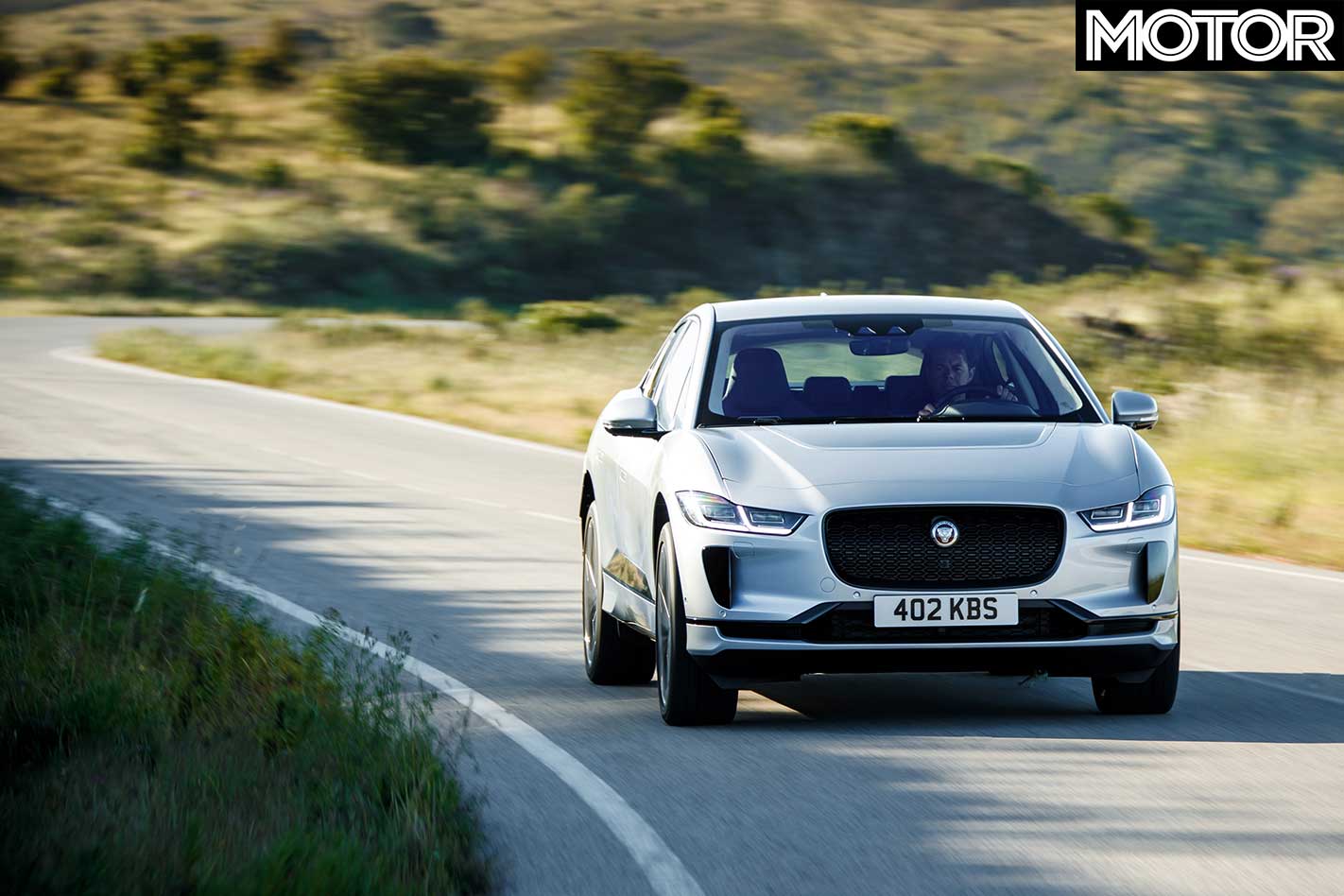
Suspension is double wishbones up front and an integral link at the rear, with coil springs and passive or adaptive dampers, or air springs with adaptive dampers. The I-Pace has all-wheel drive and 50/50 weight distribution.
The I-Pace is more car-like than a Tesla – it has a key, start button, and a handbrake on the dash, although you’ll probably never use it. Push D and pull away using the ‘creep’ function, or use the throttle. It’s smooth and quiet. Perfect for the next-gen Jag XJ…
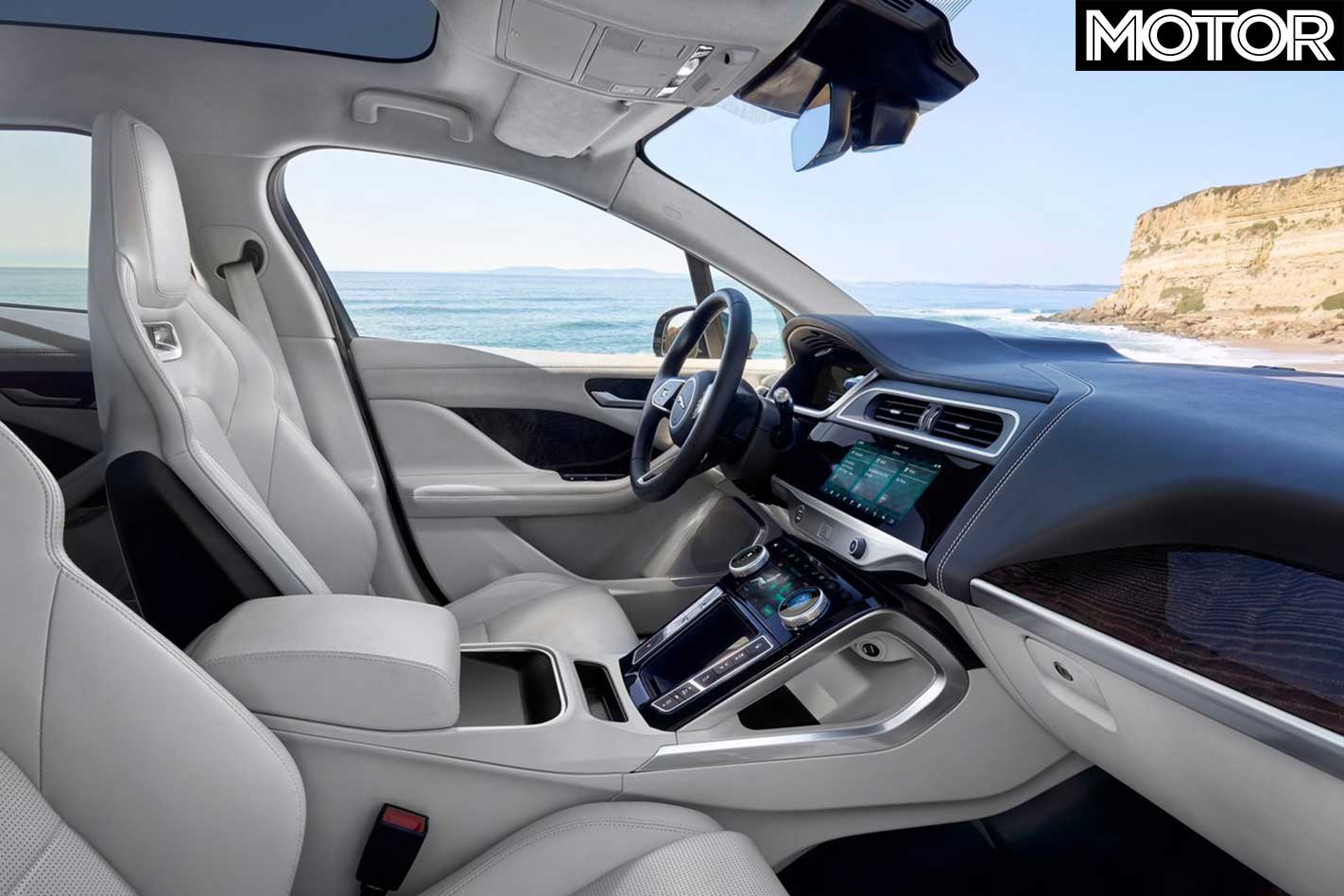
Throttle sensitivity can be turned up or down and you can change how much regenerative braking you get. On the higher setting there’s so much regenerative braking that Jaguar reckons you can dispense with 98 per cent of actual brake use, and you quickly get used to doing that. It’s why the brakes can be small.
Throttle response is about halfway between how razor sharp it could be, and what we’re used to from petrol-powered cars, so you don’t bunny hop along.
In normal driving, the rear motor does the accelerating so there’s no steering corruption or front-wheel scrabble, and the front one does the regeneration under deceleration because that’s where the weight shifts.
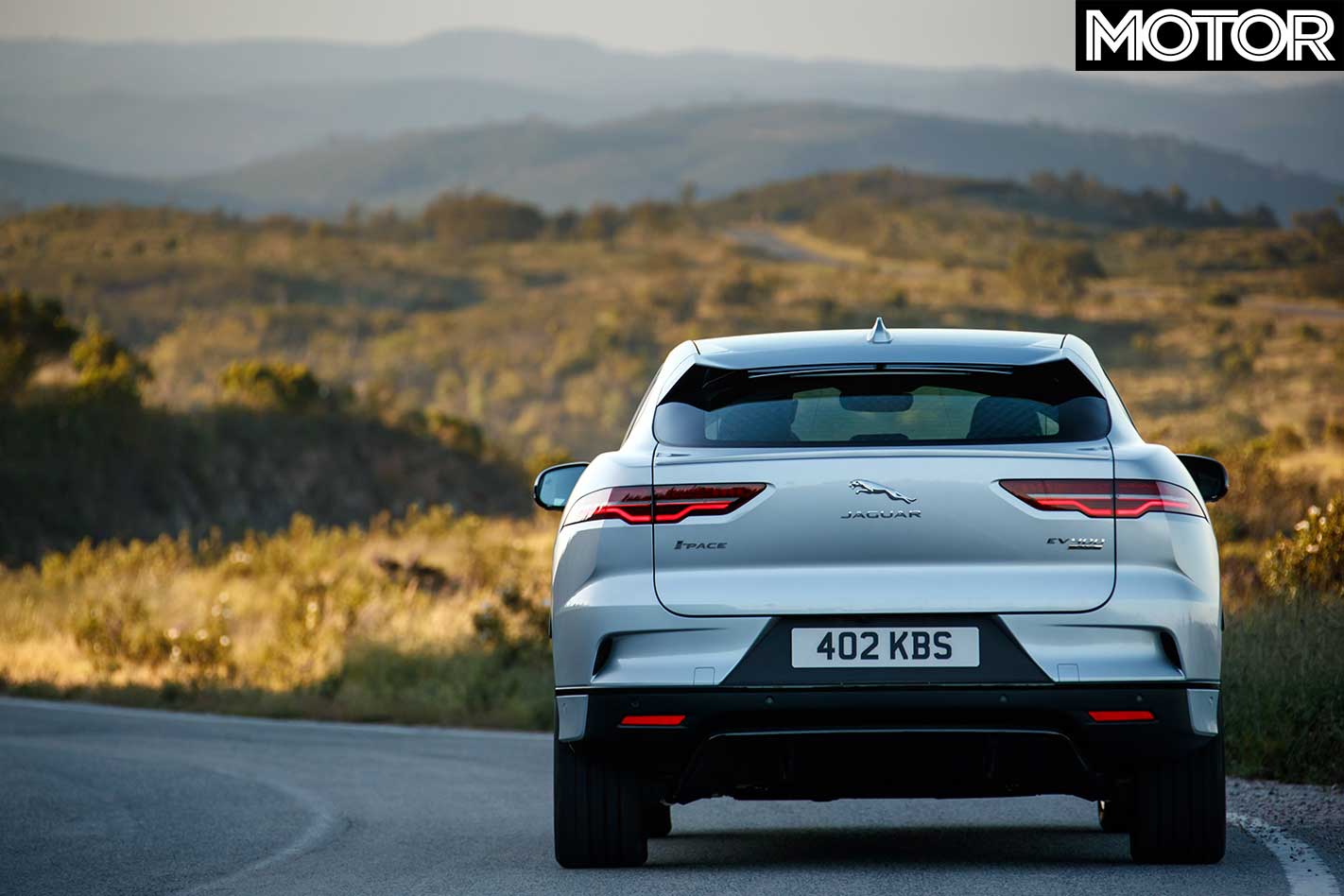
It soon becomes a doddle to drive using only one pedal, all the way to a stop. That encourages you to drive smoothly and efficiently, but don’t for a minute think the I-Pace is slow.
Peak torque of 680Nm is available from zero rpm and the motors spin to 13,000rpm (with a single-speed 9:1 reduction gear), so overtaking urge is brilliant and as you ask more of the chassis it shuffles power – up to half of all available – to any wheel it wants.
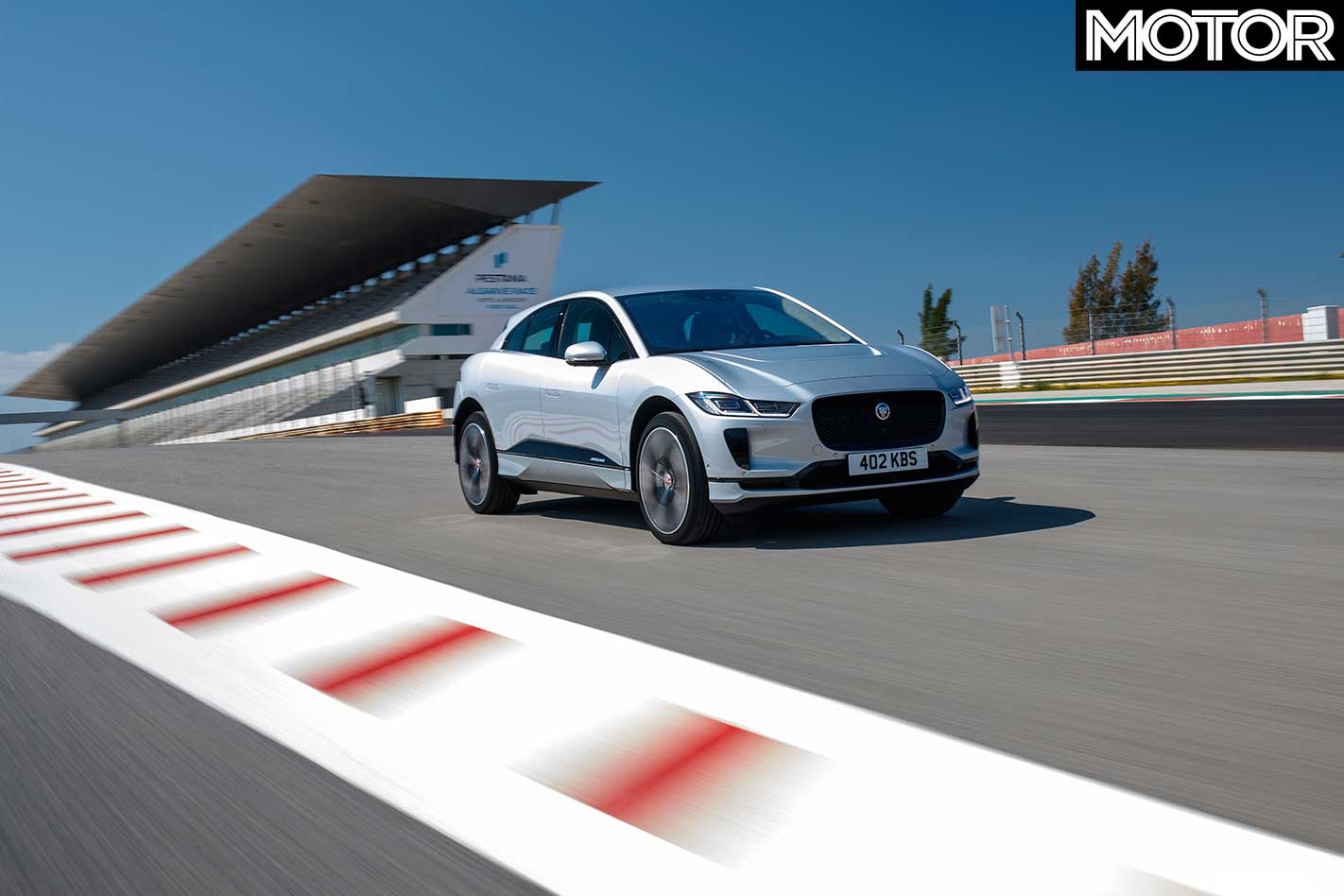
The I-Pace we drove had the air spring/adaptive damper setup and it’s not too shabby off-road, either. We crossed a river (it can wade in water up to 500mm deep), and climbed a steep gravel hill. Here electric AWD systems have huge potential because they can stop and go at will and put as much or little torque as they want to any wheel.
On the track, trailing the brakes (actually the brakes and front motor) means the car rotates nicely into a corner. Then when you get back on the power, it’s metered out pleasingly. Weight (2208kg) keeps it from being a real driver’s car, but it’s impressive.
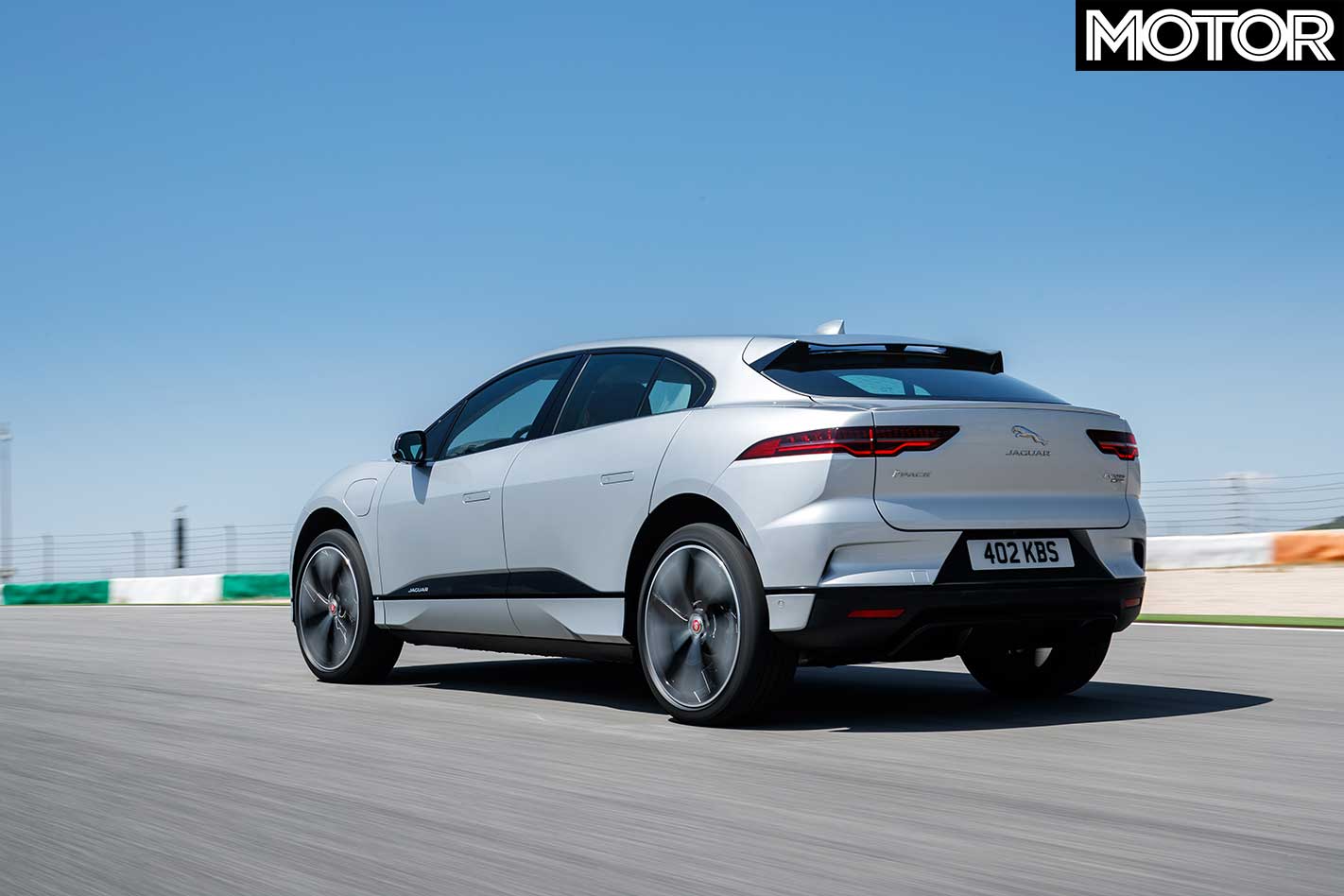
It’s very quiet, but you can turn up the enhanced ‘whoosh’ noise it makes under acceleration. Ride quality is a drawback, though. There’s great weight distribution and a low centre of mass, but weight is the perennial EV problem. The low centre of gravity means roll control is good, but you’re aware of body movements. Elsewhere, though, I-Pace is seriously refined and relaxed.
There’s not much else to dislike and if a BEV fits your lifestyle, you’re looking at the best of them.
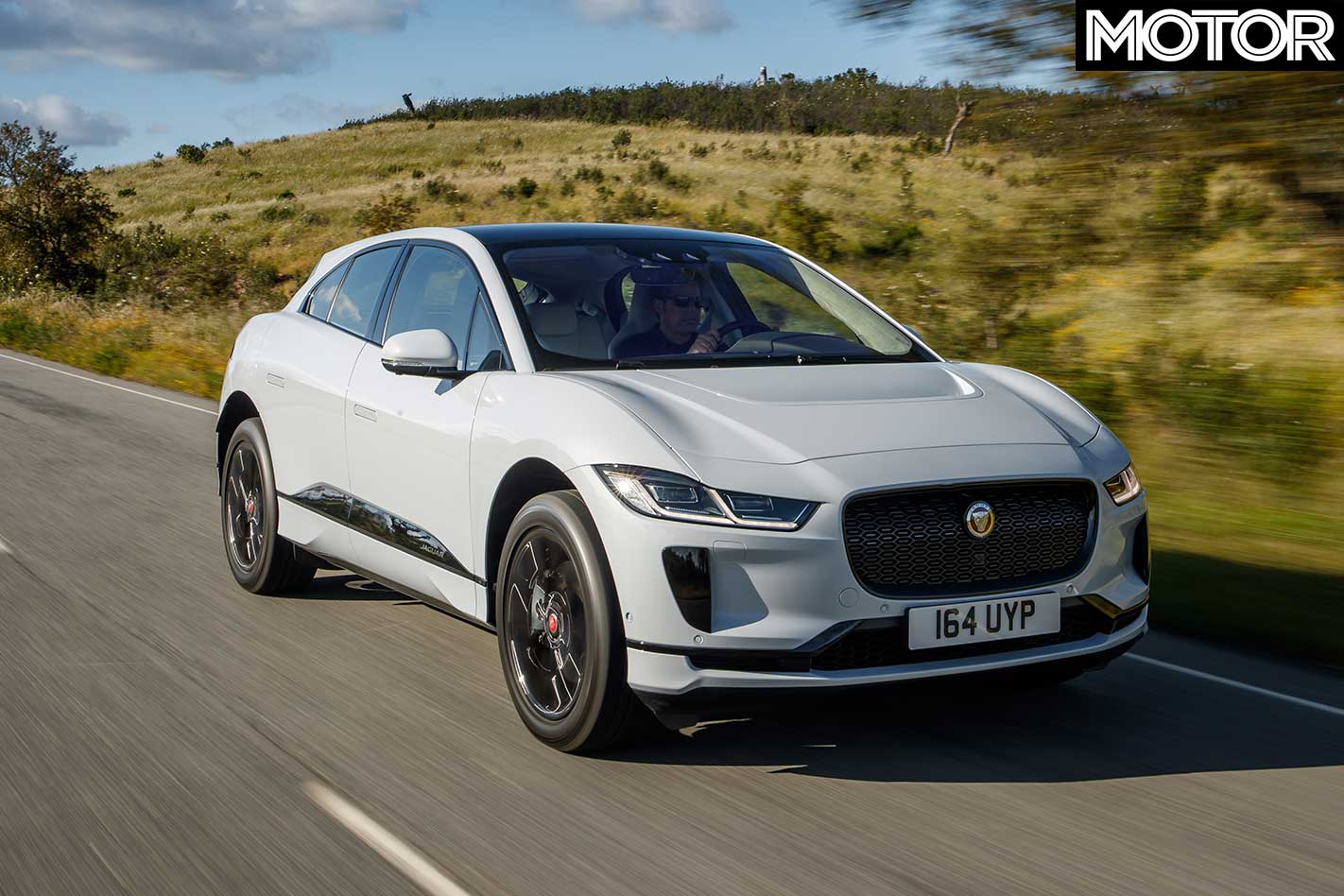
2018 JAGUAR I-PACE SPECS: Motor: Twin permanent magnet Power: 294kW Torque: 680Nm Weight: 2208kg 0-100km/h: 4.8sec (claimed) Price: From $119,00
Like: Smooth, quiet, easy to drive as a ‘one pedal’ car; clever AWD power distribution; adjustable throttle sensitivity Dislike: Ride quality on the road; it’s very heavy… Rating: 4.0 out of 5
THERE’S something of the night about the McLaren 720S. While most supercars are a primary coloured fizz of fluting operatics and sunny feel-good, the 720S dons the visage of a deep-sea ambush predator.
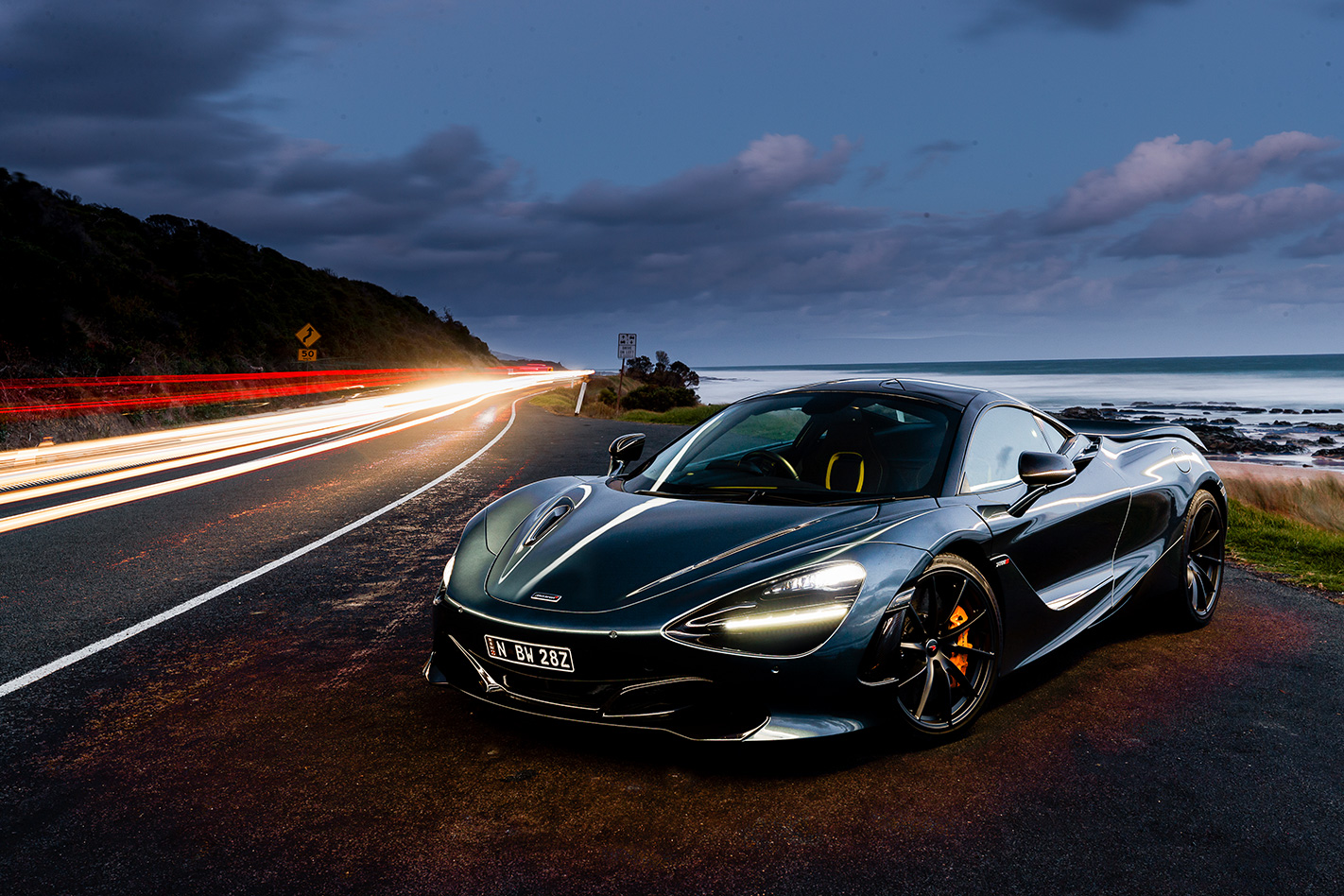
On first acquaintance it’s almost sinister, with its vast, indented eye sockets looking like something grotesque and monochrome dredged from the abyssal plain. Designer Robert Melville has forged a singular design language for McLaren; one that’s innovative, technically intriguing but, on some instinctive level, fundamentally unsettling.
So, when offered a few days with the car, we knew we wanted to drive it at night, all night; to scuttle and skulk beneath public scrutiny.
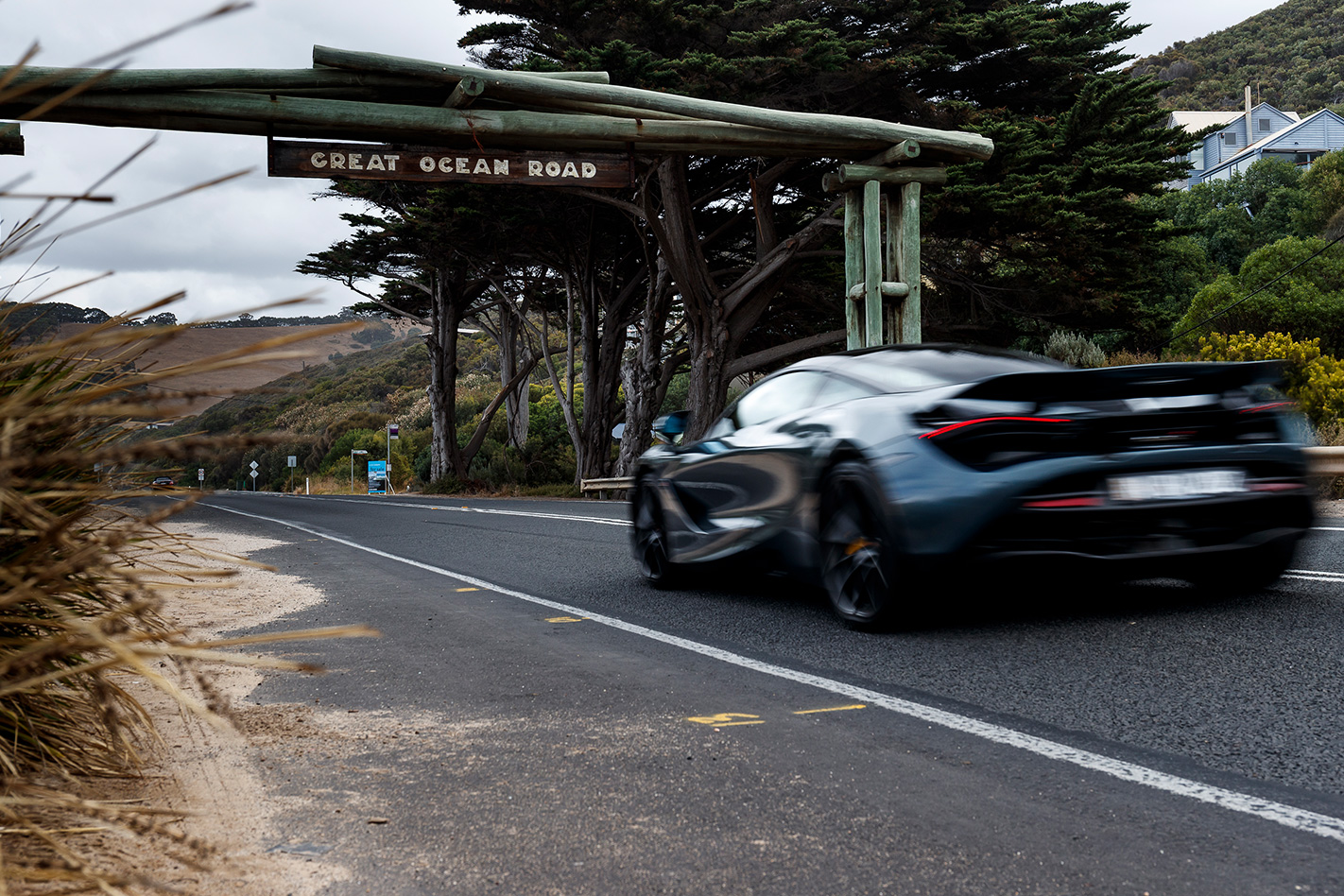
For the committed driver, the Great Ocean Road isn’t that great. In fact, it’s absolutely terrible, choked with diesel-belching tourist coaches and punctuated with lollygagging day trippers braking to a standstill without apparent reason. Mobile speed camera cars lurk in the messmate waiting for that life-affirming moment when frustrated drivers throw off all shackles of reason and accelerate to 83km/h.
In short, it’s a joyless gongshow, best avoided on summer weekends. Or during daylight hours at all.
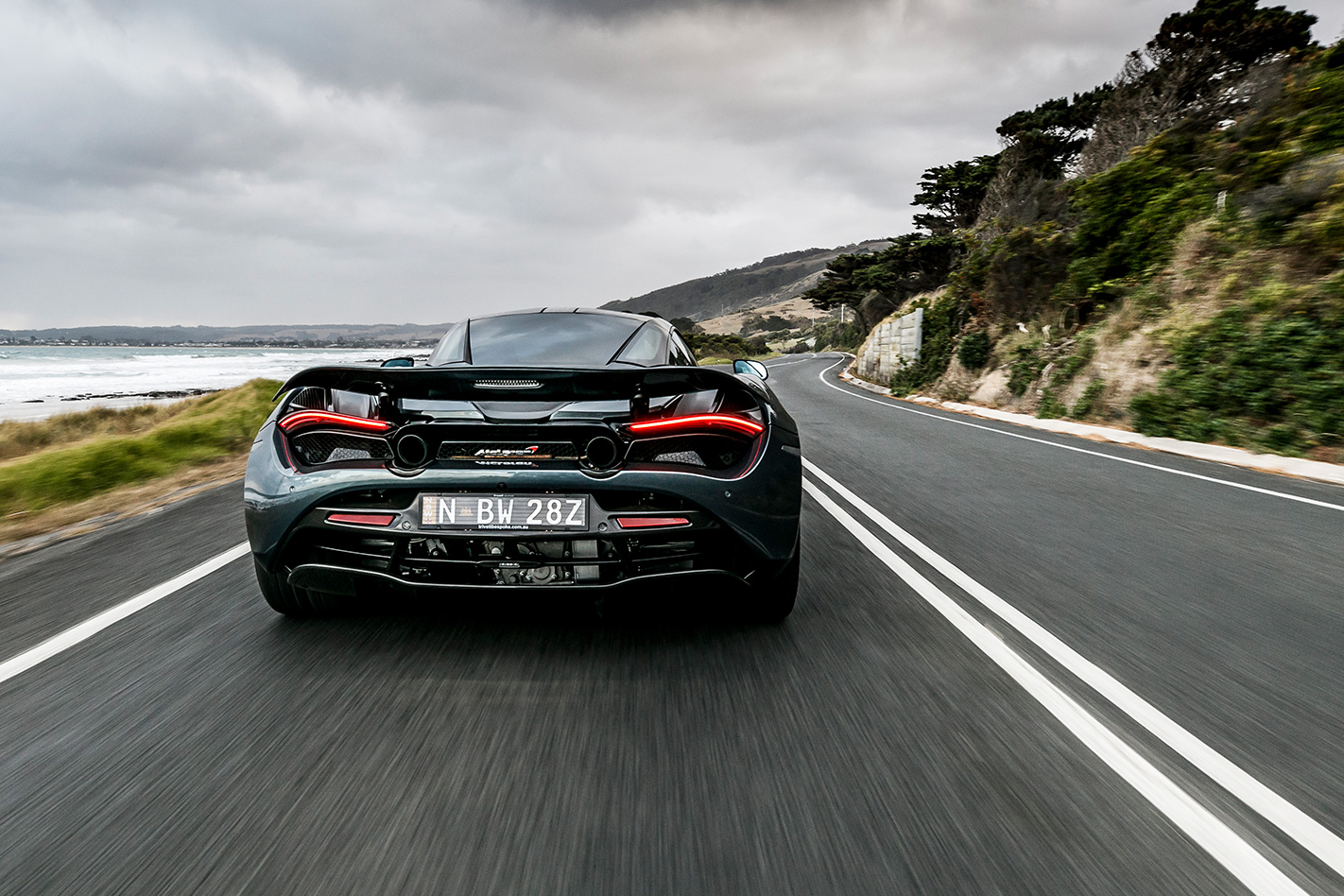
Then the last tourist bus pulls from the lot at the Twelve Apostles, tired waitresses flip the closed sign on the door of The Bottle of Milk cafe in Lorne, and the baleful eye of the Split Point Lighthouse blinks out across the dark shoals and reefs of the Bass Strait. Traffic thins and then vanishes, the sun slides behind the weathered folds of the Otways, and the road changes.
The guard rail pings in contraction as the mercury drops ten degrees, the wind swings to the north and the ocean finds it voice, salt spray slithering across the bitumen in the glare of the McLaren’s main beam. Time to go.
There’s no music to the 720S, no whimsy to its acoustic signature whatsoever. Depress the starter button and the 4.0-litre V8 behind you flares and then settles into a fractious idle. Set the car into its softest mode and it rides beautifully on the leprous macadam, but at low revs the engine is a gritty, functional accompaniment, as grey as a flat Woking nimbostratus.
Our route stretches from the last house in Anglesea westward to the first lights of Apollo Bay and then back again, 140km of deserted hairpins, compressions and soaring crests where your next material point of reference is the Southern Cross peering through the cleft of the eucalypt canopy. Think of the route as six or seven consecutive Nordschleifes, but more corner-dense; an unrelenting, rhythmless riot of apexes.
We run the first section as the light fades, snapper Dewar keen to get some shots of the car moving in the bag before blackout. We arrow through Fairhaven and out towards Big Hill where the road dives inland and plunges into a rapid-fire sequence of gum-choked twisties, before climbing onto the bluffs. It’s a short section where you can soon tune into the heavy cambers and sharp ramps, where you can feather braking in advance of the fading sightlines across the forested creek basins.
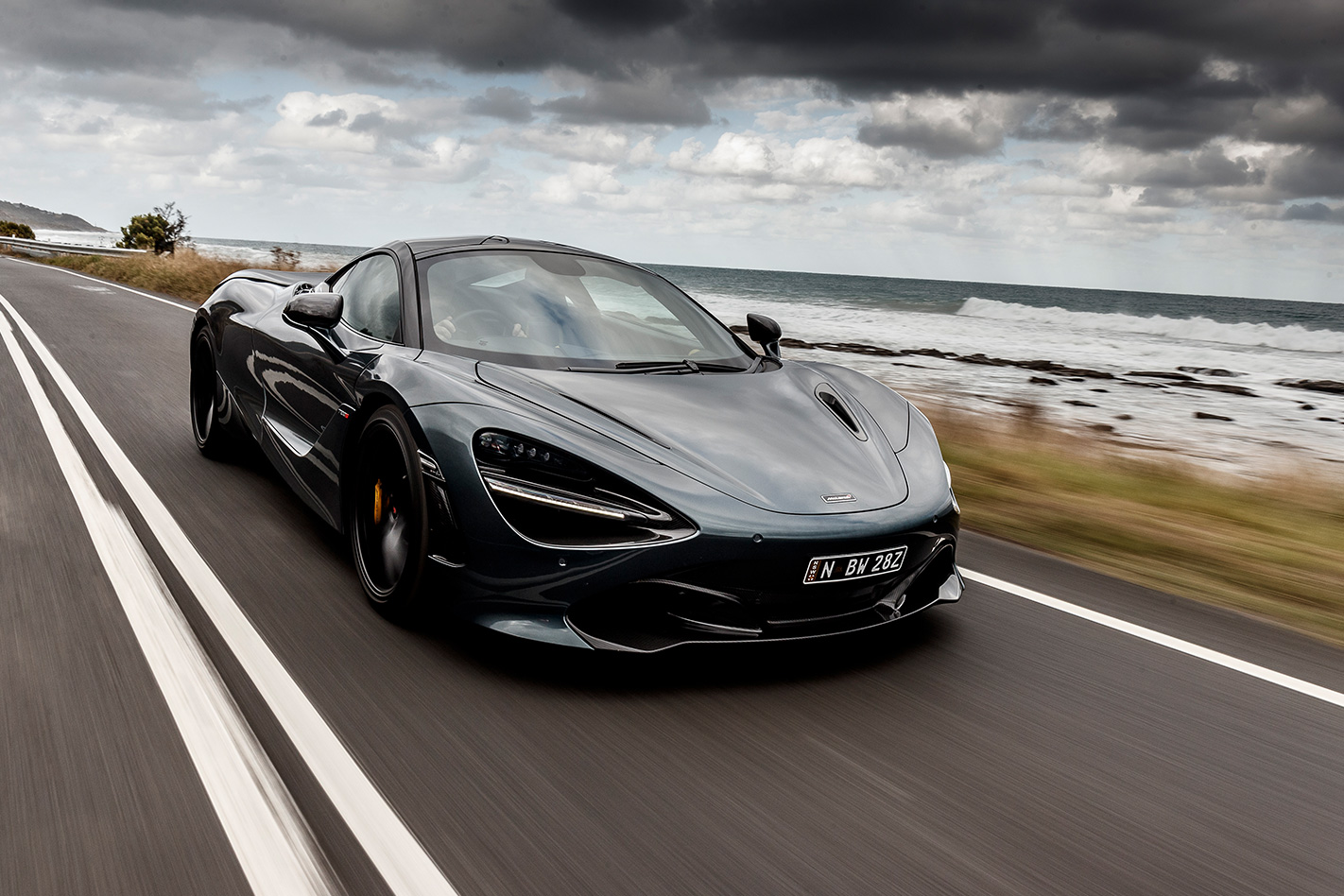
The 720S is terrifying in its ferocity. Having driven a Ferrari 488 recently, I thought I had some vaguely relevant frame of reference, but the McLaren is by some appreciable margin a harder-hitting proposition. Getting confident with full boost requires a period of mental adjustment. For this stretch, the suspension is best left in Comfort for grip and compliance, the powertrain control dialled to Sport and the stability control eased back to Sport Dynamic.
Peak power of 527kW arrives at 7250rpm, but the torque peak of 770Nm hits you at 5500rpm and the McLaren compresses the period between the two into shattered fractions of seconds characterised by stabs of counter steer, a frenzied threshing from over your left shoulder and the feeling of the rear tyres attempting to corrugate the road surface before bucking and snapping at the futility of it all. You stop the car, pop the door up and attempt to take in what just happened. This thing is being sold to the general public? It ought to require a firearms licence.
Maybe a little break for perspective is no bad thing. The 720S has been independently dyno tested with results indicating around 800PS (588kW) at the crank, which is about what Seb Vettel’s Red Bull RB9 F1 car had to call upon in winning the 2013 world championship; the last title for a V8. This road’s variability gives pause for thought too. It was first surveyed exactly a century ago as a make-work scheme for diggers returning from the Great War.
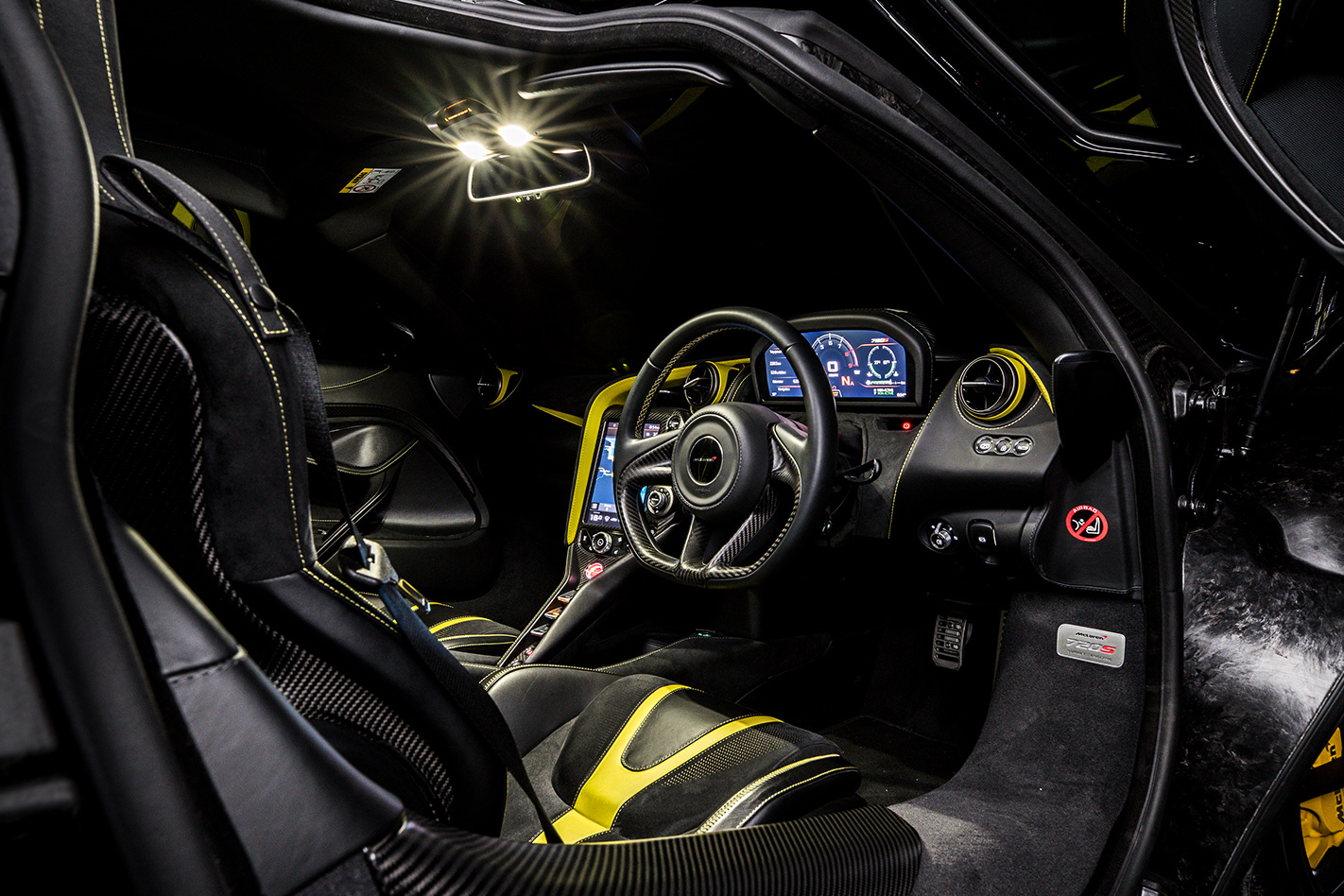
Construction began in September 1919, with nearly 3000 returned servicemen tasked to build what would become the world’s biggest war memorial. Progress was slow, with the steep coastal hills, dense brush and hand tools limiting progress to around 100 metres per day. It was dangerous work too, many returning from the battlefronts of German New Guinea, Verdun and the Dardanelles only to perish on this beautiful shore.
While appreciative of their efforts, I’m not keen to join them right now, so dial back the speed on the drop to Moggs Creek and Lorne. Beyond Lorne, the road opens a bit and after the staccato catch and release of Big Hill, develops a sinuous flow as the B100 drapes itself across the topography in a lazy chain of rhythmic lefts and rights.
The McLaren’s hydraulically assisted steering knocks playful punches back at you as the limit of grip nears, telegraphing what the front P Zeros are up to. I have a play with the Variable Drift Control, which lets you hang the tail out to varying prescribed angles of yaw, but clogging the car into oversteer feels lumpen in a vehicle of such unerring precision. The lack of a mechanical differential also serves to limit the appeal.
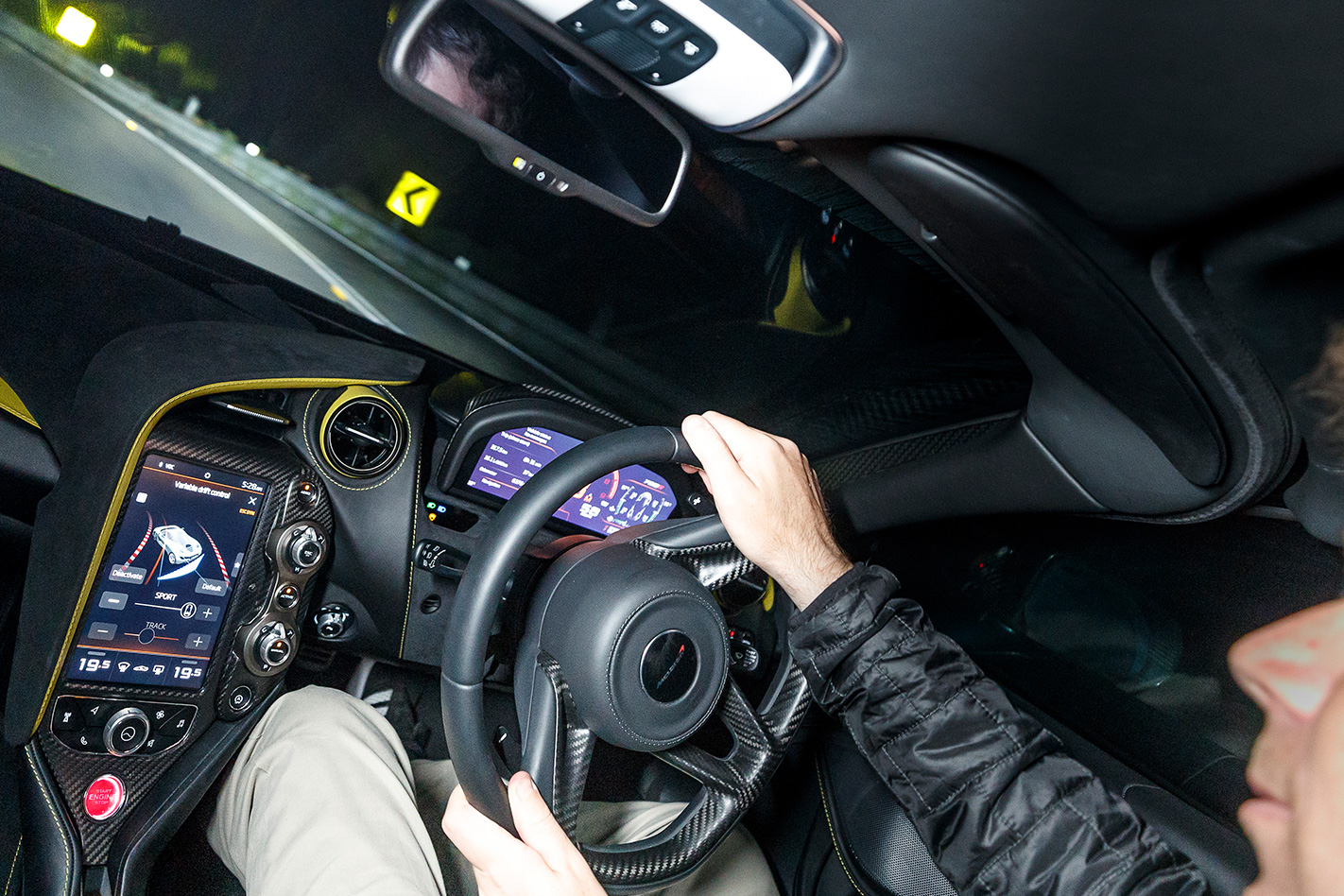
But could you ever get used to this level of performance? With a power-to-weight ratio similar to that of a Bugatti Veyron and cornering limits way beyond Molsheim’s masterwork, the 720S isn’t so much gobbling up our test route as demolishing it. The video and photography team are, of course, delighted as it gives them more time, so I take the opportunity to share the experience of full-bore acceleration with videographer Dwight.
At 6000rpm, the mike taped to the number plate falls off, the leads to his light box are ripped out and his camera viewfinder punches him in the eye socket. We pull to the side of the road to repair the carnage. “Yeah,” he muses, half dazed, half crestfallen. “Warn me if you’re going to do that again.”
He sends me back up the road while the team rig studio lights to illuminate the corner at Cumberland River. Kill the ignition and you’re shocked by the instantaneous silence. After a few moments of disorienting sensory deprivation, you pick up a very gentle pulsing sound of the car’s electronics, much like a muted version of the bridge on Shatner-era Star Trek.
The folding instrument binnacle motors down, the dash lights blink out one by one, leaving just the background glow of the walkie talkie’s liquid crystal pane for company. A necklace of dim lights on the horizon mark a freighter doggedly cleaving a crosswind path between Cape Otway and King Island, clanking eastwards to the arbitrary 146°55’E meridian where the Southern Indian Ocean becomes the Pacific.
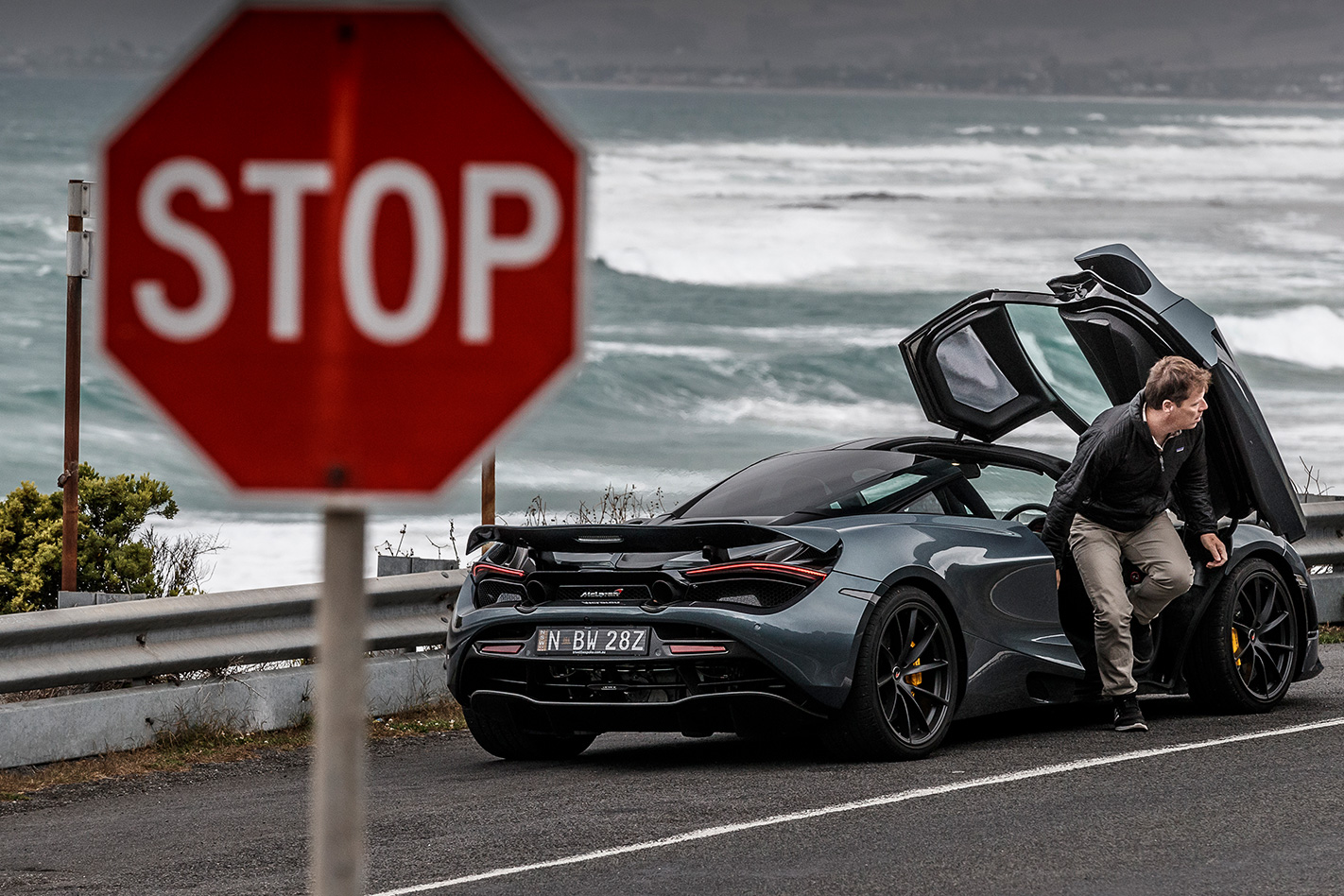
From Cumberland River to Separation Creek is a nine kilometre stretch containing some of the very best corners on the route, climbing to the Mount Defiance lookout before dipping back down to Jamieson Creek. Take a deep breath and pin it for a few seconds just to feel the car writhe and shriek on an eye-widening careen along its rail of brilliant white LEDs. Slide from the accelerator across the perfect flat plane of the pedal set and the lights pick out the glowing eyes of shocked marsupials somewhere in the bushes, cherry red brake discs bathing the near guardrail in a blood glow.
Get on the gas pedal early and the 720S will understeer, the front tyre section being only as wide as a Civic Type R. It’s a car that rewards a certain discipline and rectitude in the way it’s piloted. It has a dizzying skillset but it’s always explicit in communicating what it does best. And that’s just rabid ferocity, giving the impression that it’s ingesting honey badgers and taipans rather than 98RON. It couldn’t be further removed from the playfulness and accessibility of its junior sibling, the 570S.
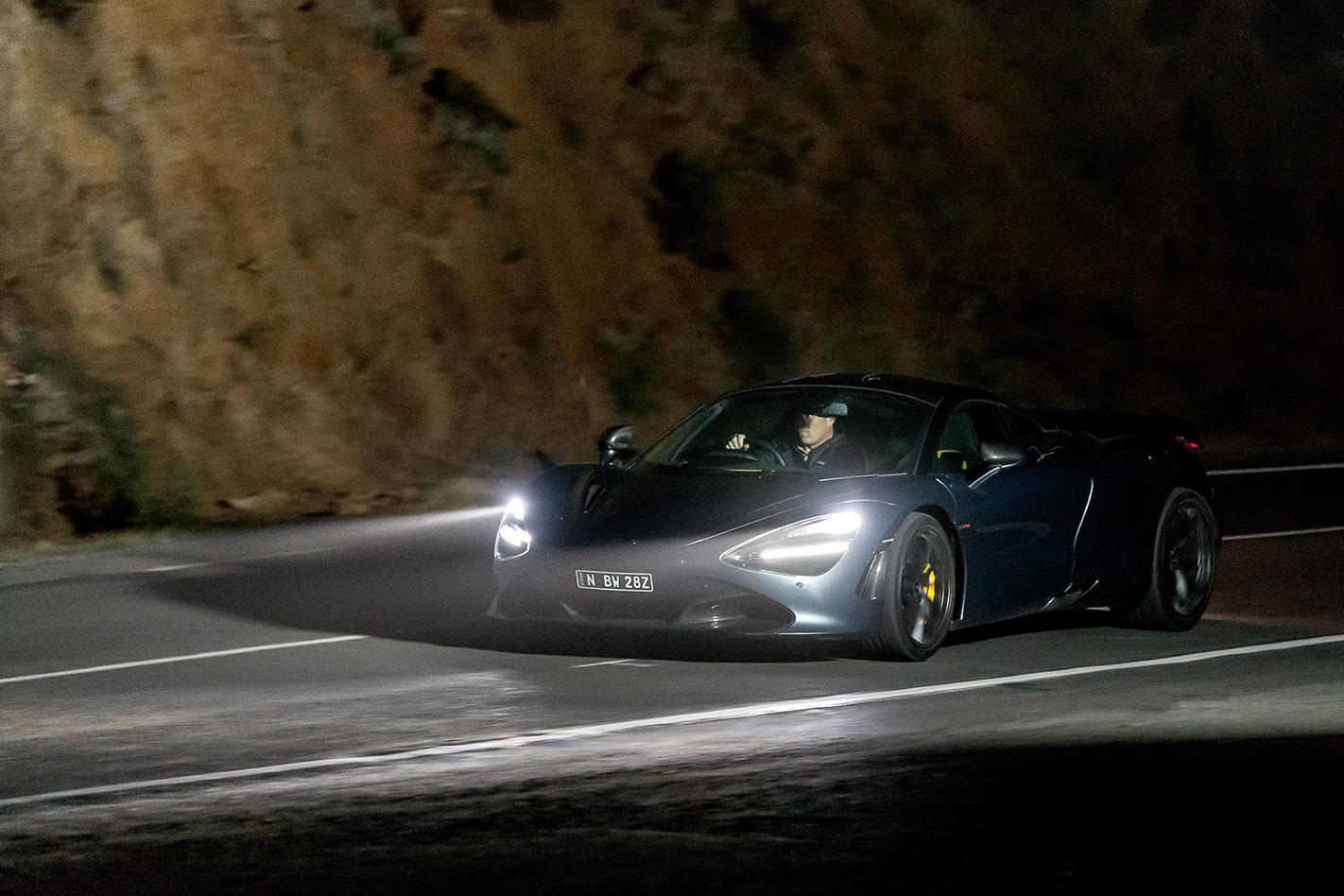
The welcoming lights of Wye River mark a hiatus in pace, a point to breathe and feel the stabbing adrenaline leach away. A human silhouette stands on a backlit balcony, straining to make sense of the fast-moving spectre whose fuselage skims below the low embankment. His is just one pinpoint of light on a hillside that’s punctuated by inky blanks that mark lots where houses once stood before the Christmas Day fires of 2016. In all, 116 homes out of 300 were destroyed in the blaze, the wind dropping to almost zero as the flame front hit, leaving a bizarre cheek-by-jowl patchwork of destruction and salvation.
A deer stands by the roadside near Kennett River, transfixed by the light, but it’s the only sizeable animal we see. For the most part, there’s a lack of sufficiently tempting nutrition on the seaward side of the road to bring fauna out of the forest and onto the bitumen. Burst out of the stringybarks near Carisbrook Falls and the road opens up onto rolling farmland.
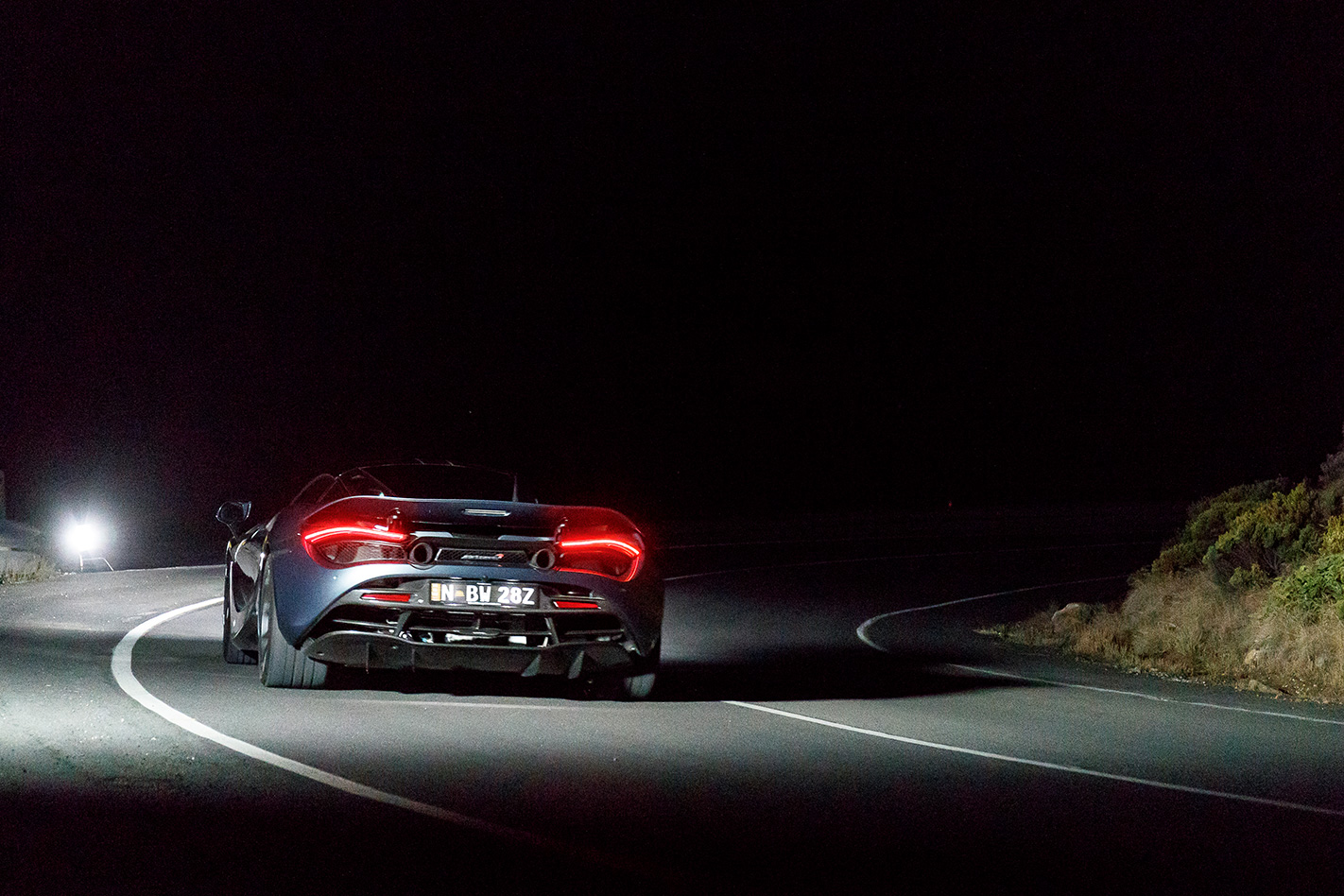
While waiting for the camera team to catch up, the clouds clear for a moment and the McLaren’s bubble canopy gives a surreal view of the Milky Way arcing overhead. Step outside, and as your colour vision adjusts from the 5500 Kelvin glare of the headlights, it’s possible to make out the hydrogen reds and oxygen teals of gassy nebulae, the frothy pale blues of phosphorescence in the breakers and, closer by, the yellow twinkle of Apollo Bay’s sodium street lights. The engine bay pulses red, its ugly plumbing softened in a molten glow.
It feels otherworldly, almost post-apocalyptic to be here, to have this road to yourself. Deep into the small hours, I’m struggling to think of the last time I saw a vehicle other than the two camera cars. It was hours ago. We’re just 160 kilometres from an urban sprawl of ten thousand square kilometres and nearly five million gently slumbering souls, yet a simple temporal shift gifts you this incredible experience. That and the opportunity to drive one of the most exciting sports cars money can currently buy.
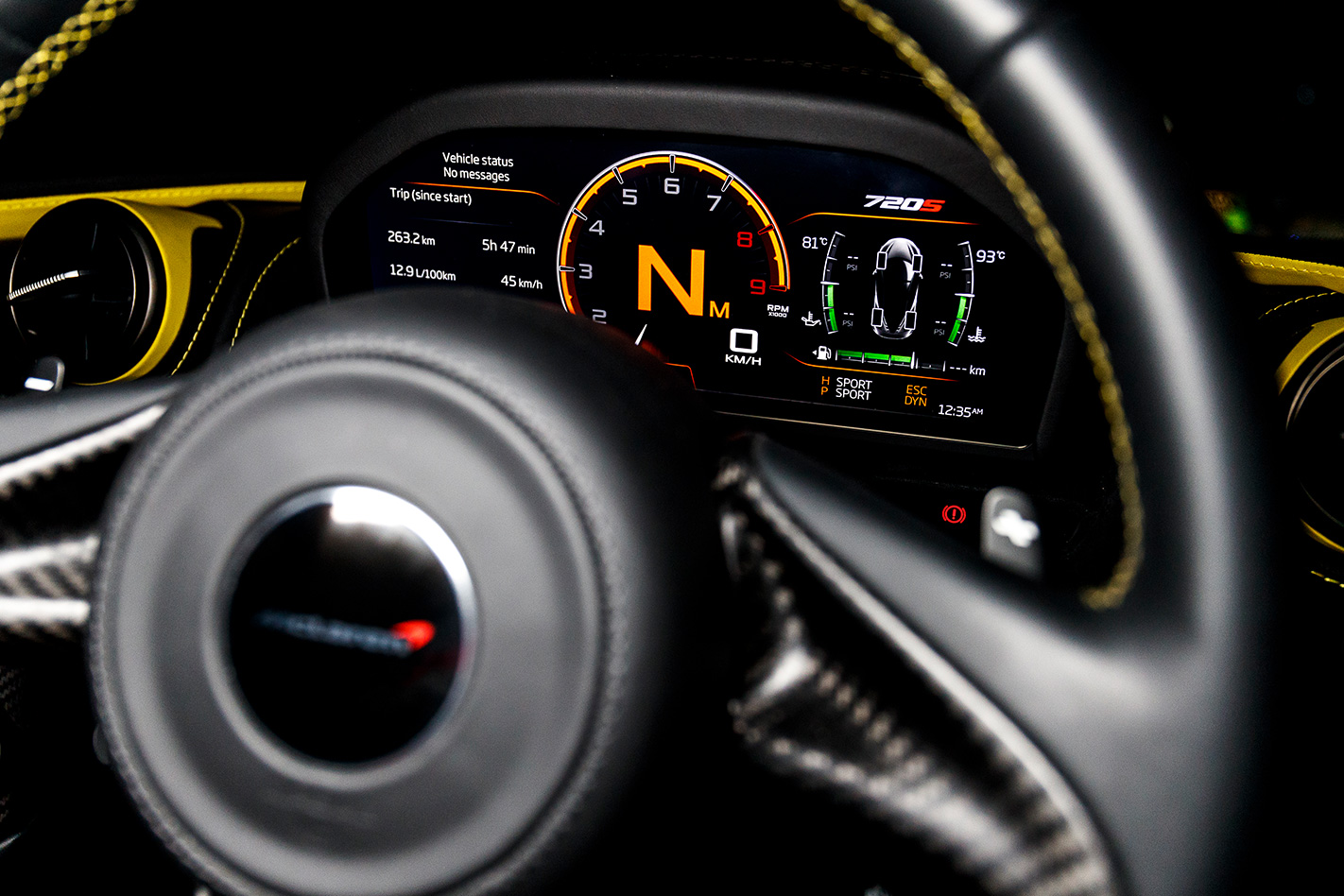
The McLaren 720S has to be counted in that elite rank. There will be some who see no beauty in this car, who recoil at its gargoyle face and charmless flat-plane acoustics. Yet it’s hard to argue with the fact that it goes harder, steers better, stops more keenly and delivers a cleaner, higher definition feed of information than any similarly priced rival. Yet even that feels reductive. Out here in the solitude and splendour of this magnificent road built by heroes a century removed, the malevolent McLaren 720S feels utterly in its element.
We turn around and start retracing our route, attuning still further to the car’s freakish abilities, flashing through arc light video set-ups and skipping in the salt wind trying to keep warm during still shots. I lose track of time and wake to find myself in the McLaren in a public car park at Point Addis, just shy of Geelong.
I’ve fallen asleep with a blanket over my head, and there’s a shaggy, bearded surfer peering into the car who gets the fright of his life as I stir. The sunrise is a greasy strip of crimson over the bluffs of Bells Beach. I think it’s Tuesday. It feels as if the 720S needs to vanish before the sun breaches the horizon; to scream in the empty forests here at the bottom of the world; to hide beneath the view of faceless silhouettes peering into the night.
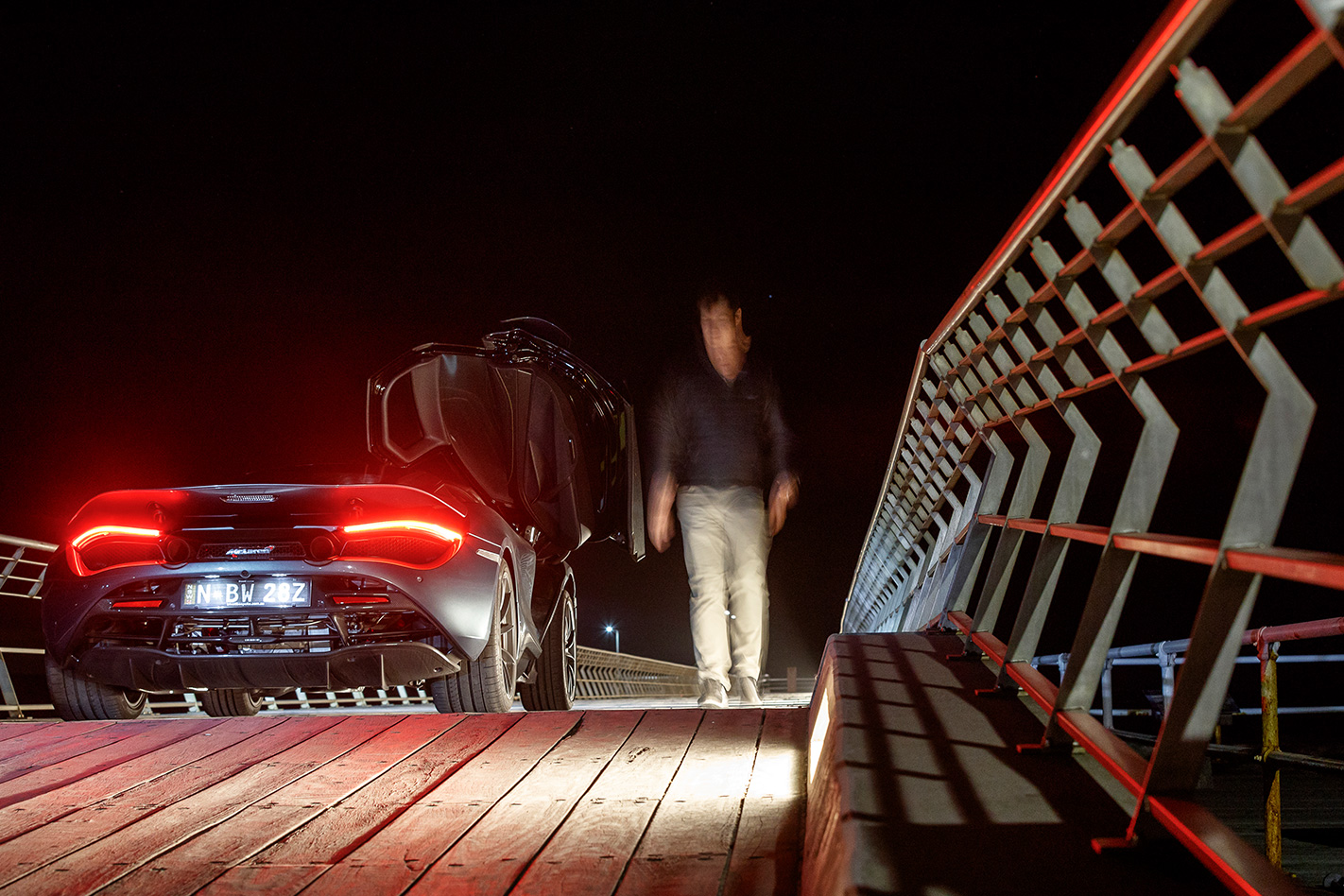
McLaren has created a monster. And as another Melville knew better than any, every great ocean needs tall tales of monsters lurking in the dark.
