
Admittedly, it’s been a while, but when I learnt the alphabet T definitely came after S. Not so at Porsche, which has slotted the new 911 Carrera T in below the Carrera S.
Then again, Porsche is notoriously contrary: until recently its hardtop Cayman cost more than its convertible Boxster, and then there’s the mechanical layout of the 911!
The confusion continues. T stands for Touring, bringing to mind a more relaxed, luxurious spec of 911, yet Porsche’s press release speaks of a pared-back specification and less weight courtesy of deleted rear seats, no infotainment system, lightweight windows and reduced sound deadening.
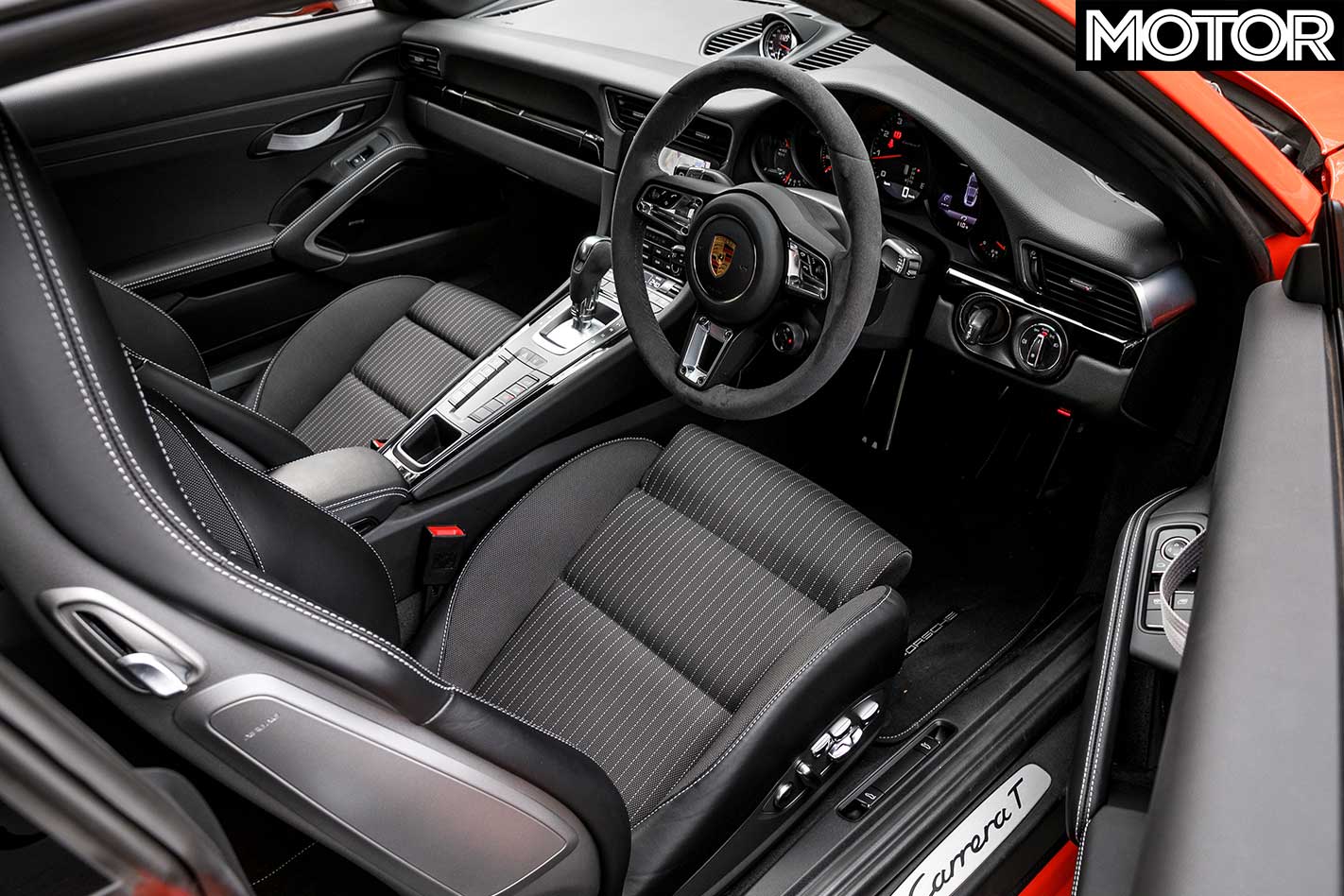
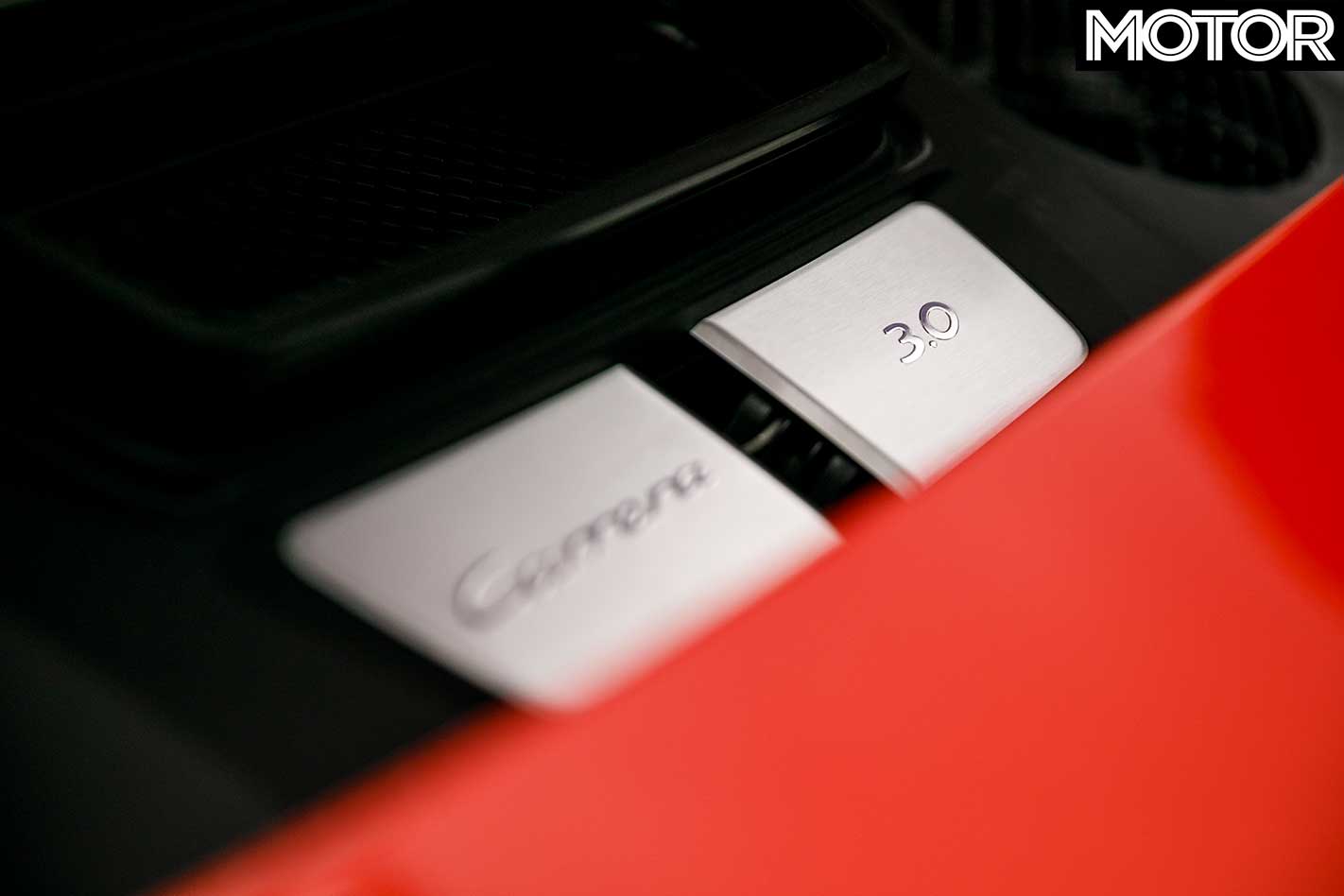
Identifying a T is easy. Apart from the obvious badge there’s grey mirrors and 20-inch alloys and Porsche adds PASM sports chassis (20mm lower), Sport Chrono Package and a sports exhaust as standard.
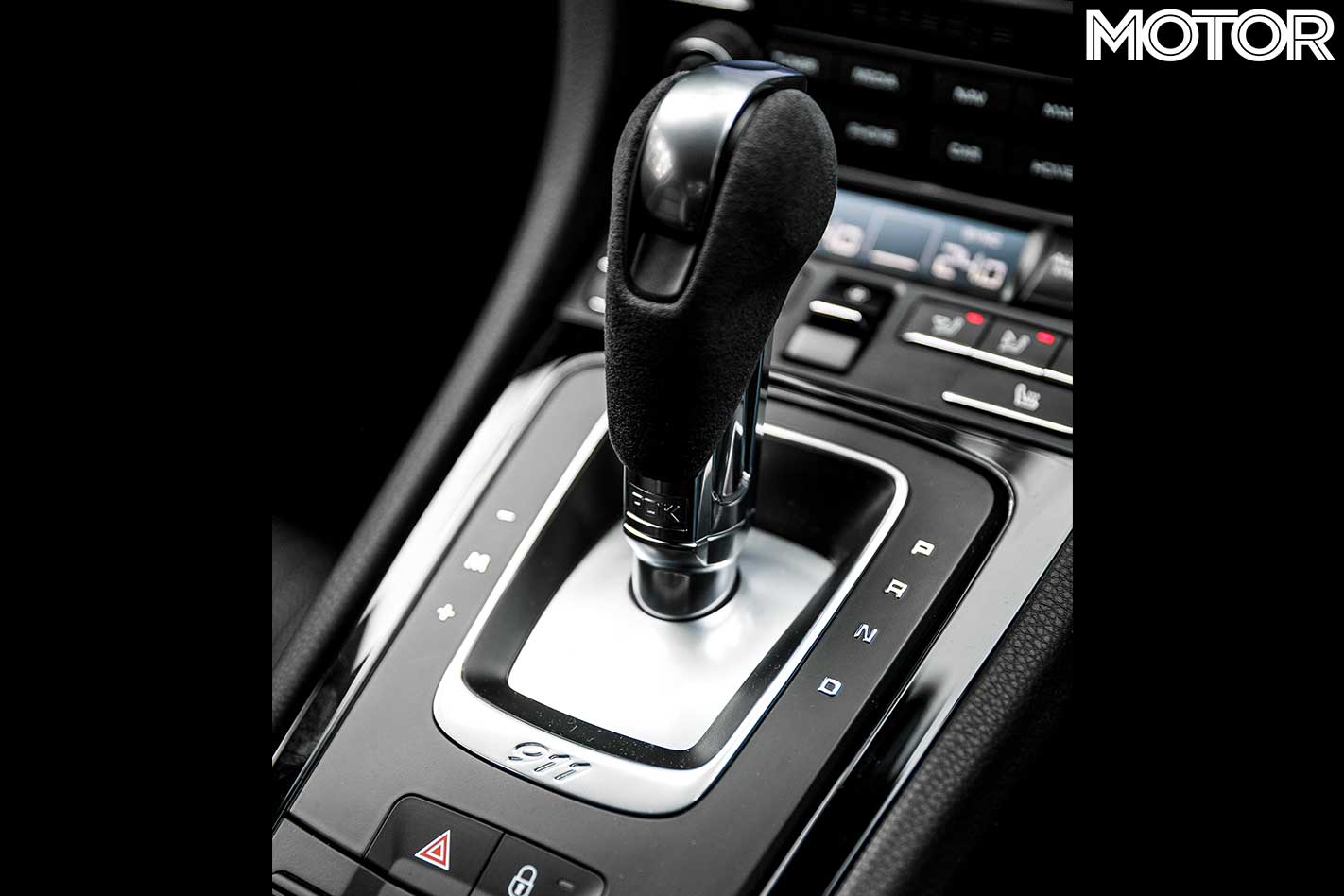
Based as it is on the standard Carrera, the T uses the 272kW/450Nm tune of Porsche’s 3.0-litre twin-turbo flat-six. The PDK is unchanged, but the seven-speed manual benefits from a shorter final drive (3.59:1 instead of 3.44:1) and shortened shift lever for quicker shifts.
One thing is already clear without driving a metre: if you want the ultimate Carrera T experience, pick the manual and keep away from those options boxes. In the case of our test car, what we’re left with is in effect a very nicely-specced base Carrera. And there’s absolutely nothing wrong with that.
Previous Carreras usually used smaller engines and subsequently felt a little soft compared to their S bigger brothers. The switch to turbocharging changed this, making the S supercar-quick and gifting the base Carrera all the performance you could ever possibly want or need on a public road (or a racetrack, to be honest).
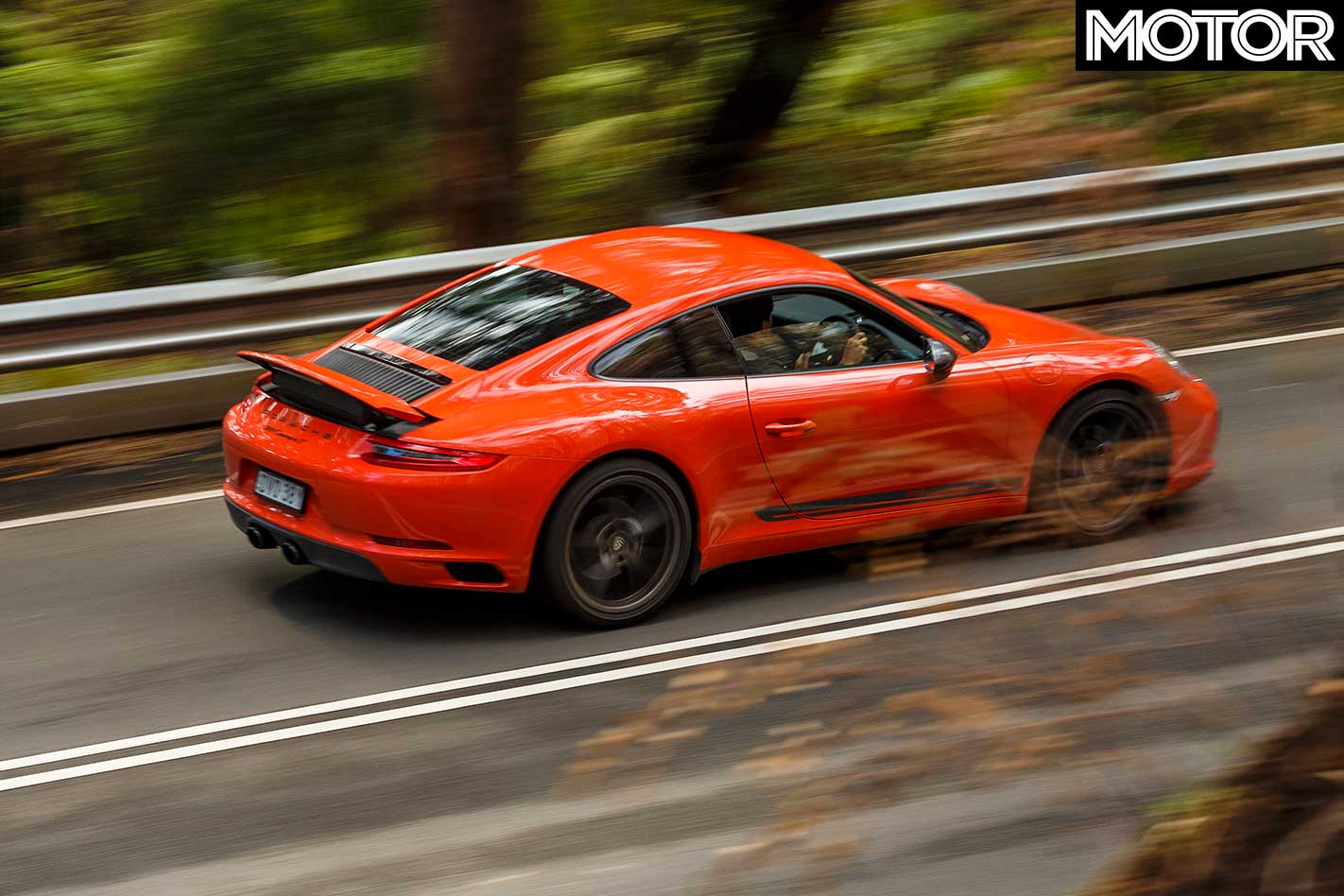
This is a car that can sprint to 100km/h in 4.2sec, pass 200km/h in 14.5sec and continue on to a top speed of 291km/h. The engine is strong everywhere, makes a nice six-cylinder growl garnished with fireworks on the over-run.
I wish it still had the old naturally-aspirated 3.8; Porsche is probably sick of reading that, but it’s true, I want my sports car to scream past 7500rpm. Nonetheless, the turbo unit is an excellent engine and the PDK is the perfect partner; you’d really, really want to change gears yourself to go past it.
Wet roads allowed easier access to the 911’s incredibly high limits. Wearing 245/35 tyres front and massive 305/30 rears, grip levels are enormous, but at least on greasy, dirty roads you’ll get the occasional flare of wheelspin or wriggle from the rear end.
Not to say the 911 is in any way boring in the dry, but it’s not a car you wrestle with in the manner of a BMW M4 or Mercedes-AMG C63 – it’s a rapier, not a broadsword.
Like a rapier, the 911 is at its most effective when you master the correct technique. If you’re too greedy with the throttle too early in the corner, the front tyres will push as the car punishes your ineptitude – not in a way that’s dangerous, just in a way that reminds you you’re a nong behind the wheel.
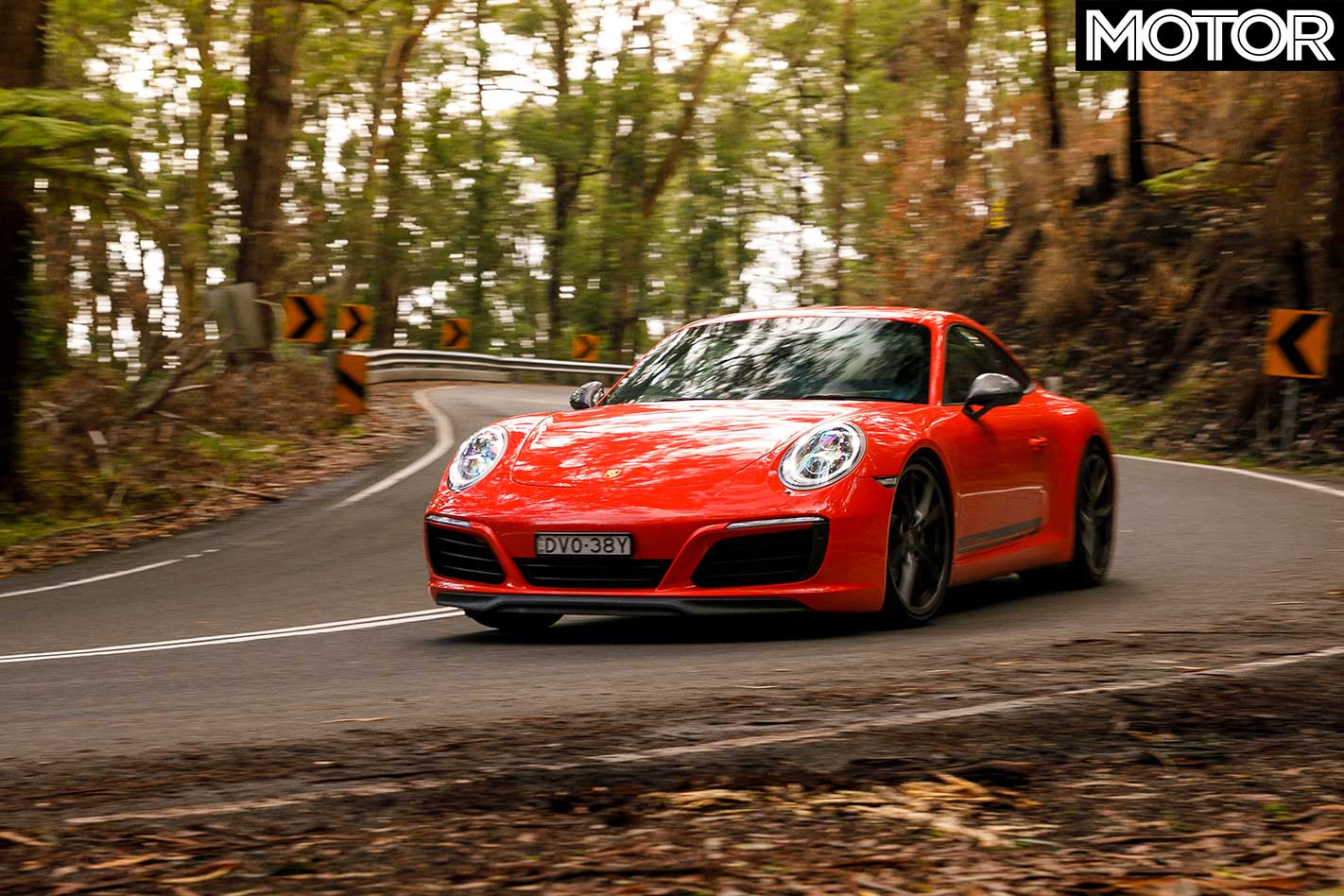
Get it right and it’s just the best feeling, especially here in the wet when Sports ESP lets the rear slip slightly and you can feel the car moving around underneath you. As ever with 911s – or Porsche sports car in general – the harder you drive it the better it gets, never once feeling the strain of continued punishment.
Simply put, the 911 Carrera T is a brilliant drive, but in PDK guise, I’m just not sure why I’d choose it over a base Carrera.
2018 PORSCHE 911 CARRERA T SPECS: Engine: 2981 flat-6cyl, DOHC, 24v, twin-turbo Power: 272kW @ 6500rpm Torque: 450Nm @ 1700-5000rpm Weight: 1425kg (man.); 1445kg (PDK) 0-100km/h: 4.2sec (claimed) Price: $238,400 (manual); $245,070 (PDK)
SPEED LIMITS across in urban areas across the country could tumble further, with one Melbourne council introducing 30km/h neighbourhood speed limits as part of a 12 month trial.
The City of Yarra Council is the first local government body in Australia to reduce area-wide speed limits from 40km/h to 30km/h in parts of Fitzroy and Collingwood, with other jurisdictions around the country set to follow.
The council says the trial is to create safer and more liveable streets in response to residents’ concerns about drivers using the side streets to avoid traffic.
It has committed $25,000 to the 12 month trial, with the exercise expected to cost $170,000 in total. The council is seeking additional funding from Vic Roads and the state’s Traffic Accident Commission (TAC), with Monash University monitoring data from the trail, assessing traffic volume and speed, travel times, the number of cyclists and pedestrians using the roads as well as crash statistics before and during the trial.
However, Victoria’s peak motorist association, the RACV, reckons the trial is a waste of money, with congestion causing speeds in the trial area average around the 30km/h mark.
“We think the TAC’s funding would be better spent on making high speed country roads safer, or providing separated bicycle lanes and paths along busy arterial roads,” RACV’s mobility advocacy manager Dave Jones told Fairfax Media.
Other speed limit evaluations are being conducted across Australia, the most recent in Perth that’s being delivered in a paper by transport planner Tim Judd, who works for GTA Consultants.
Judd is proposing to lower speed limits in certain suburban streets from 50km/h to 30km/h in a presentation to the Australian Institute of Traffic Planning and Management’s annual conference late last month.
The transport planner used the suburb of Padbury as a proof of concept for his proposal, which he claims will reduce journey times by a “negligible” amount, while “[improving] the safety and pedestrian amenity on local suburban roads”.
In Queensland, the speed limit on the M1 between Brisbane and the Gold Coast was reduced by 10km/h during the Commonwealth Games.
“Reducing speeds within local suburban roads to 30km/h means we can return roads back to streets to be enjoyed by the people. Neighbourhood streets play a vital role in making places liveable,” he says in the paper.
The proposal says four important arterial roads in the suburb would retain their 50km/h limit, while all others were reduced by 20km/h.
While the original speed limit was reinstated following the conclusion of the sporting event, early indicators during the brief trial pointed toward a reduced number of crashes on the state’s busiest road, prompting the government to call for a review of adjusting the limits permanently.
In June cycling advocacy groups called for Brisbane CBD to lower speed limits to 30km/h following a spate of pedestrian incidents which left two dead and two others injured.
Brisbane City Council lowered the speed limit on the majority of CBD streets to 40km/h in 2009, however two major streets (Ann and Turbot) remained at 60km/h.
The state government’s data showed that while the rate of crashes had not changed following the speed adjustment, the severity had been reduced.
In South Australia, the state’s Department of Planning, Transport and Infrastructure lowered the speed limit on eight rural roads from 110km/h to 100km/h for “safety reasons”.
The change prompted backlash from residents who called for investment in improving the condition of the infrastructure, instead of a ‘band-aid’ change of a lower speed limit.
THE DELAYED re-launch of Genesis in Australia is poised to take an unexpected turn, with the Hyundai-owned luxury brand set to ditch conventional dealerships in favour of high-end retail ‘stores’ in the nation’s capital cities.
For the brand’s introduction to Australia in 2015, retail and aftersales operations were handled by Hyundai’s existing dealership network. But for its return as a standalone premium entity, the company is has taken matters into its own hands.
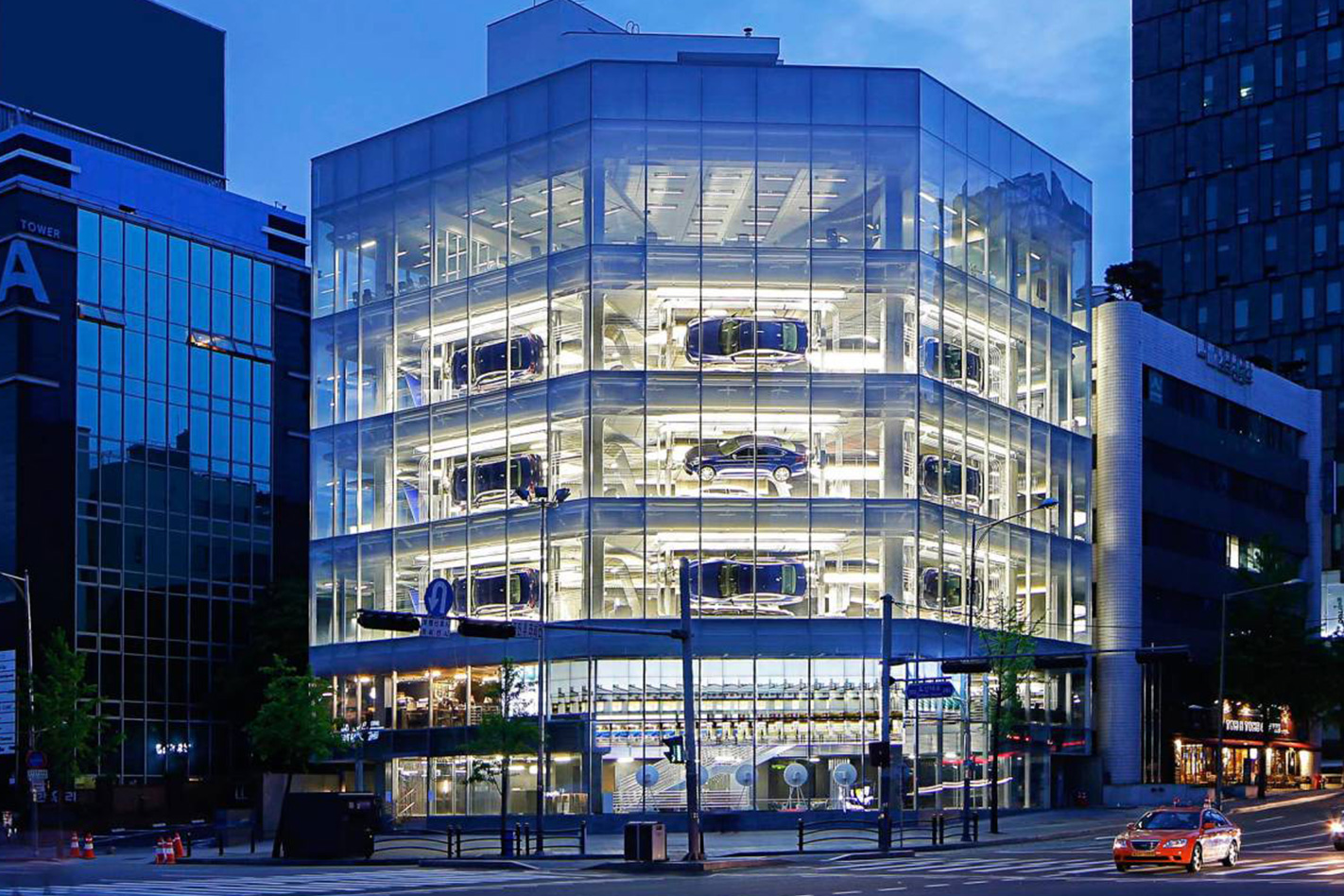
High-end stores in Brisbane, Melbourne and Sydney will pioneer the return of Genesis. This entirely factory owned retail experience is a world first for Australia – even in Genesis’ native South Korea, the operation requires customers to visit a dealership.
Hyundai dealers will have no involvement with the Genesis brand when it reappears on the Australian automotive landscape in the fourth quarter of this year. It’s a decision that has caused “absolutely no dealer unrest” said Genesis Motors Australia general manager Peter Evans.
“The feedback initially was more of relief than about concern, because it reduces their sales pressure and stocking costs,” he said.
“There has been not one single complaint from any of our 28 dealers regarding not being part of Genesis’ future in the short term.”
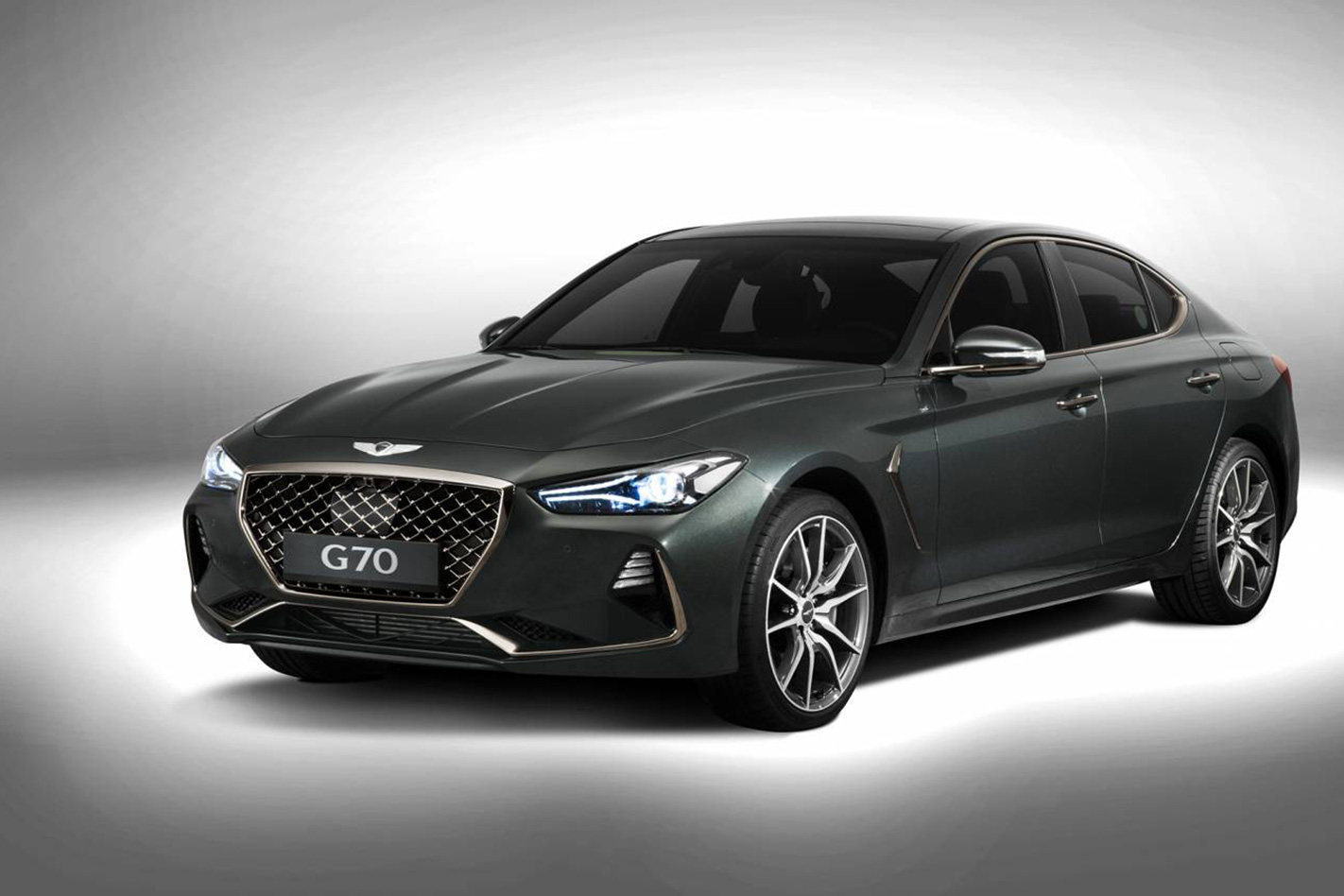
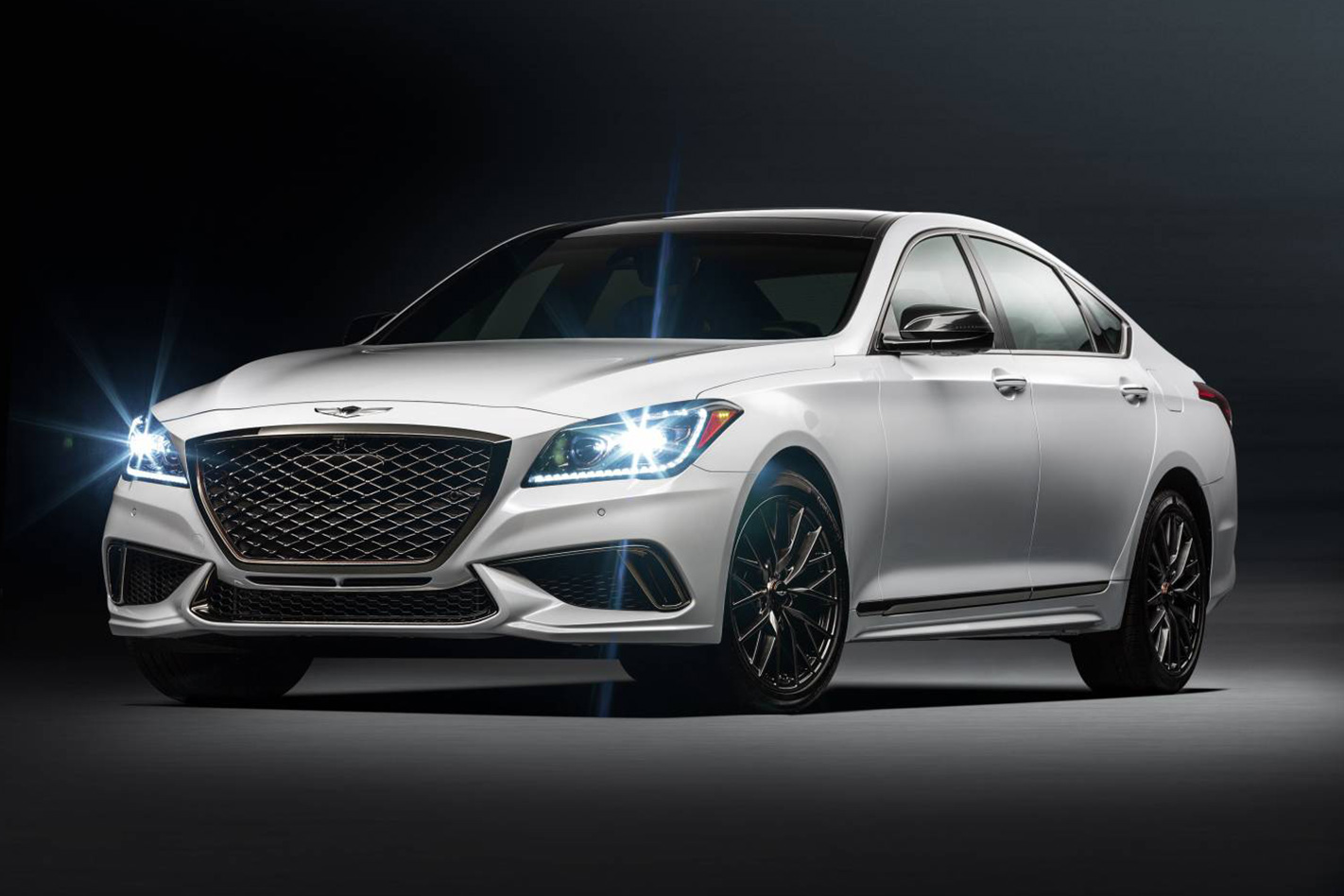
With just two models kicking off the relaunch – the G70 and G80 sedans – Evans explained that a radical restructure would have demanded too great an investment from its dealers without corresponding volumes, and was one of the reasons it had made the decision to fund the entire return itself.
“The dealer model for Genesis in its early days is not a viable business proposition (for dealers) because of the relatively low volumes and also the cost of the business model … is quite high.”
Beyond the initial sedan first fleet, two SUVs will join the line-up from 2020 with more models soon after. As volumes grow, dealers might once again be invited to join the by-then more lucrative and mature brand.
However, Evans said future dealer involvement would strictly be on the proviso that they could adhere to the standards it was in the process of instigating for the brand launch.
“As investment and the volume grows, it becomes a viable proposition to consider dealer involvement whatever shape or form that may take,” he said.
“If we ever signed up a dealer involvement again they would have to sign up to those stringent behavioural standards.”
If successful , the three initial stores could be joined by others in the same cities or branch out to other capitals, depending on the demand hot-spots and reception.
Customer service is front and centre for the network of stores and Evans said the company would be implementing the “Apple model”.
“Our staff are measured and incentivised by the customer satisfaction levels, not by commission on selling cars.
“Part of our recruitment strategy is focusing on people with luxury sales experience, not necessarily cars. We can teach them the car side of the business but we can’t teach them to be naturally good with customers.”
Exact locations of the three stores are not confirmed but Evans said the outlets would be strategically placed to allow the company to “fish where the fish are” and located in “both indoor and outdoor malls” to capture passing interest and potential customers in a relaxed retail environment.
With the absence of dealerships, there will be three ‘channels’ for Genesis customers to engage with the brand.
Bricks and mortar stores will offer customers a location to contact the vehicles and Genesis staff in person. The business plan will also offer an ‘online channel’ for booking and managing purchases and service remotely. A third ‘home channel’ allows customers to test-drive or arrange a vehicle to be picked up for maintenance from home or the workplace.
When it comes to servicing, vehicles will be collected from the customer and taken to a third-party service centre equipped specifically for Genesis models where the work is completed before returning the vehicle to the customer’s most convenient location.
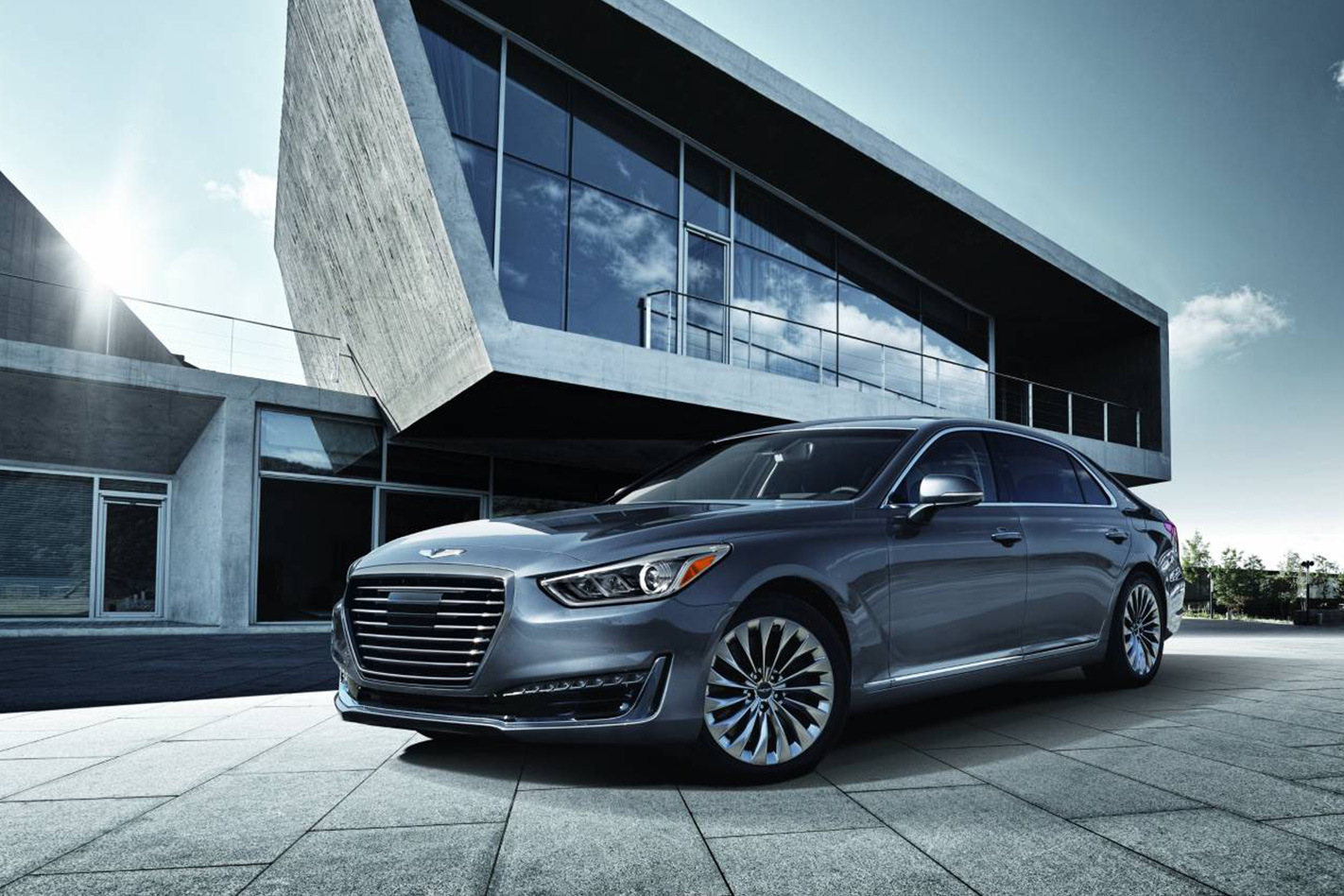
“We want to turn the retail model upside down,” said Evans.
The first details of the reintroduction strategy have been a long time coming.
A local launch date was originally chalked for late 2017. The company passed on an opportunity to introduce models earlier this year, and that marker has since been pushed back to the latter part of 2018 with a new launch date provisionally locked but not yet publicised, said Evans.
Genesis isn’t the first brand to attempt to raise its premium profile by occupying standalone retail spaces. Tesla, Subaru, Infiniti and most recently Mercedes-Benz with its ‘Mercedes me’ lifestyle outlet have all done this with varying degrees of success.
Similarly, Alfa Romeo announced plans in 2017 to extract its brand from the multi-franchise spaces that also housed Fiat, Jeep and Dodge, as part of a strategy to highlight the brand equity and cache of the iconic Italian car maker, free of the less premium lines.
As a trading arm of Hyundai Motor Company Australia, Genesis Motors Australia exists in the same capacity as Lexus’ relationship to Toyota and Infiniti to its Nissan parent.
The family of Hollywood and motoring icon Steve McQueen is suing Ferrari for a 2016 paint colour that borrowed the name of the deceased actor without permission.
As part of the Italian car maker’s 70th anniversary celebrations, Ferrari created 70, yes 70 Style Icon unique paint jobs for a selection of its then current models to commemorate personalities that have shaped the brand’s history, including a California T that was dressed up in a dark brown finish.
The relatively restrained shade, says Ferrari, was in honour of the screen star who once owned a 1963 250GT Lusso in Marrone Metallic but, according to caranddriver.com, the actor’s family claims that, while Ferrari approached McQueen’s son Chadwick in 2011 regarding the use of the trademarked name, an agreement was never reached.
As such, the family is seeking US$2m per violation plus damages (A$2.7m) for breaching a registered trademark.
In response, Ferrari removed any reference to McQueen in the colour moniker and renamed its special paint simply The Actor, but this wasn’t enough to appease the McQueen family, which remains unhappy that the car maker continues to make a reference to The Great Escape and Bullitt star in promotional material.
Like each of the 70 retro paint themes, The Steve McQueen livery was strictly limited to one example of each of the company’s five models (not just the California), guaranteeing the five The Actor cars (and 350 Style Icon vehicles) would be unique worldwide.
But it seems just five vehicles wearing Steve adornment are enough to warrant legal action from the McQueen family.
The same is not so of Michael Schumacher’s brand trustees, or the family of Stirling Moss, neither of which have objected to the use of the respective surnames in other Seventy Style Icon Ferrari’s.
The McQueens do not appear disgruntled at Ford’s exclusive Mustang Bullitt, which doesn’t slap the family name on the green limited edition coupe, but does make numerous references to the actor in materials promoting the retro variant.
The second-generation Audi A7 Sportback is slated to arrive in time for Christmas with identical base-pricing for its V6 petrol and diesel versions.
The new, boldly-styled four-door coupe will be available in two variants, the 55 TFSI quattro and 50 TDI quattro both priced from $131,900.
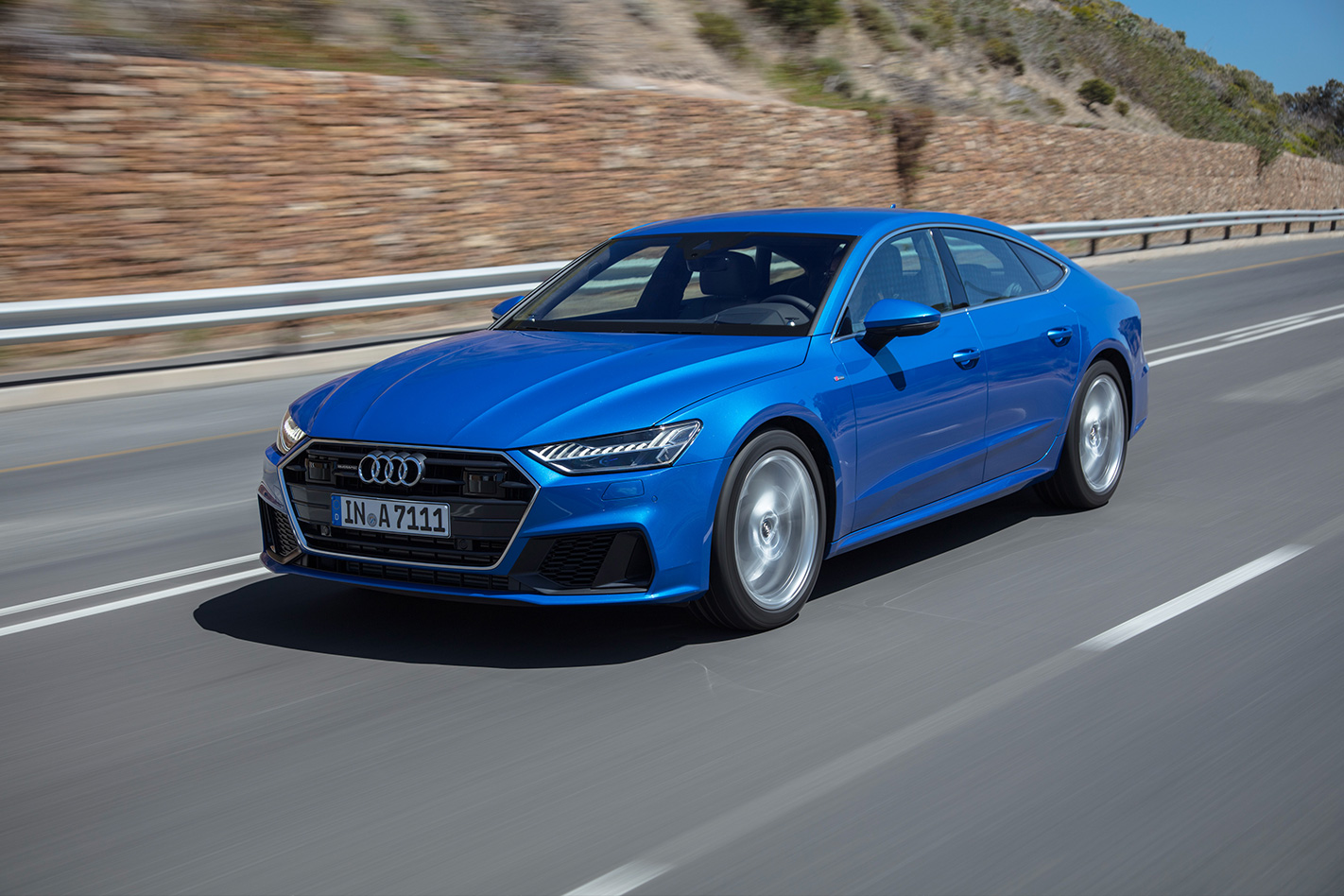
The 55 TFSI brings six-cylinder petrol power that’s missing from the outgoing A7 Sportback range, with a 250kW/500Nm 3.0-litre V6 turbo that sends power to all four wheels via a 7-speed ‘S tronic’ dual-clutch auto transmission.
The 50 TDI meanwhile, replaces the 3.0 TDI as the A7 Sportback’s 3.0-litre V6 diesel offering. As well as new nomenclature, the 210kW/600Nm 50 TDI brings considerably more power over the current 160kW/500Nm oil burner. The transmission has also been upgraded, with the 7-speed S tronic making way for an 8-speed torque converter auto.
Each engine features mild-hybrid technology that uses a belt-driven starter/generator (BSG) and compact lithium-ion battery to allow the A7 Sportback to coast at speeds between 55 and 160km/h with the engine off, resulting in fuel savings of up to 0.7L/100km.
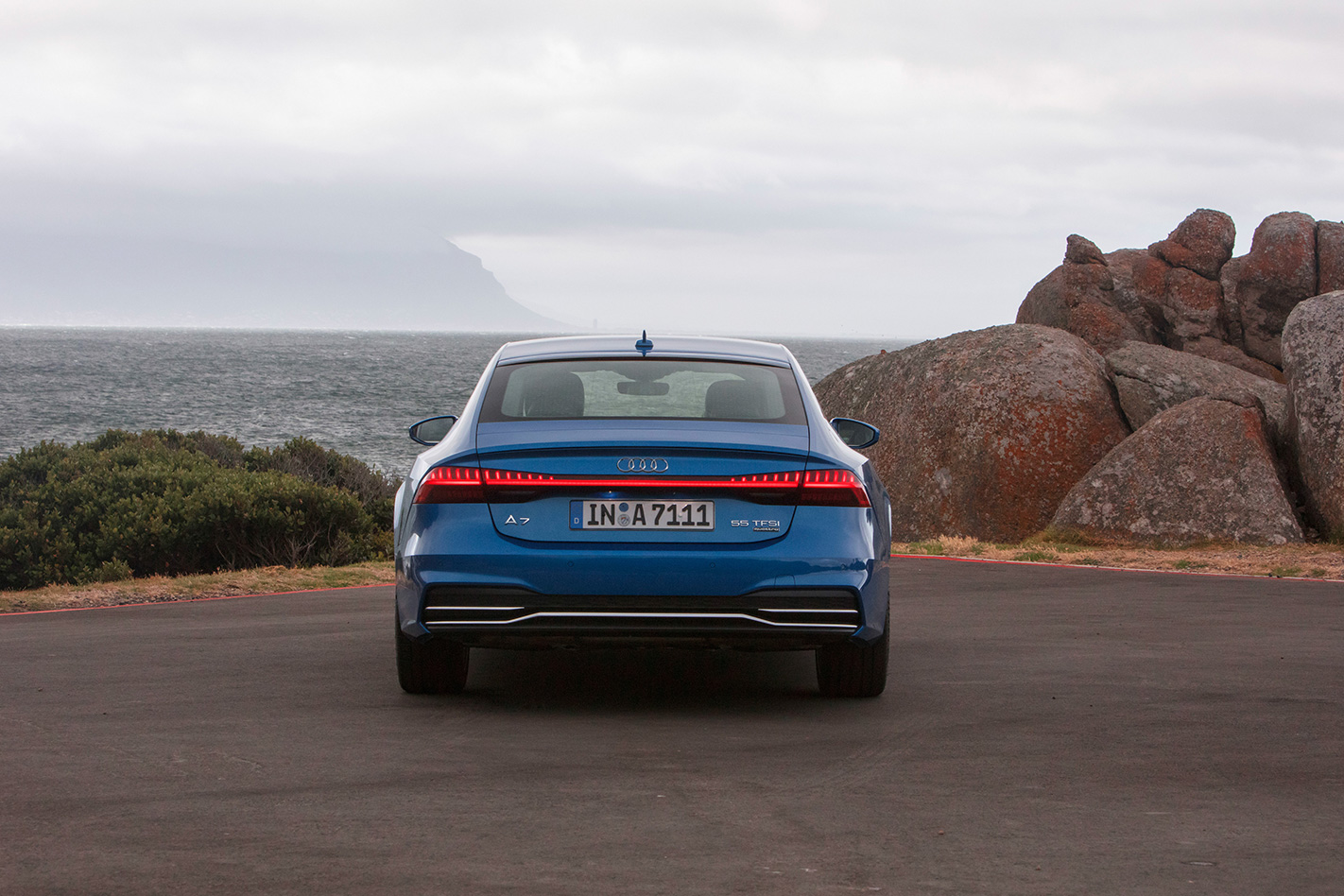
Audi promises excellent ride and handling to match the performance boost, with quattro all-wheel drive, progressive steering and adaptive dampers offering dynamic ride and handling to suit various conditions and driving styles.
The V6 duo will be joined by an entry-level four-cylinder 45 TFSI quattro, featuring a 180kW/370Nm 2.0-litre four-cylinder turbo-petrol mated to the same 7-speed S tronic auto as the 55 TFSI. Full equipment and pricing information about that variant will be revealed closer to its local launch in 2019. So far there’s no official word on S and RS performance versions, though they’re expected to be added down the track.
In the meantime the V6 variants will arrive with $10,000 worth of additional standard luxury and active safety features over the current model, including:
- 20-inch alloy wheels
- Adaptive suspension
- Audi virtual cockpit instrument display
- Head-up display
- MMI infotainment/sat-nav
- 10.1- and 8.6-inch display screens
- 360-degree view parking camera
- Heated front seats
- Three-zone climate controlled air conditioning
- Apple CarPlay & Android Auto smartphone connectivity
- Wireless phone charging
- Valcona leather upholstery
- Interior ambient lighting
- Matrix LED headlights with dynamic front and rear indicators
- Bang & Olufsen 3D sound system
- S line interior and exterior package
- Adaptive cruise control, with Stop&Go traffic jam assist
- Autonomous emergency braking
- Pre-sense front and rear collision mitigation
- Lane keeping/lane change assist
- Cross traffic alert
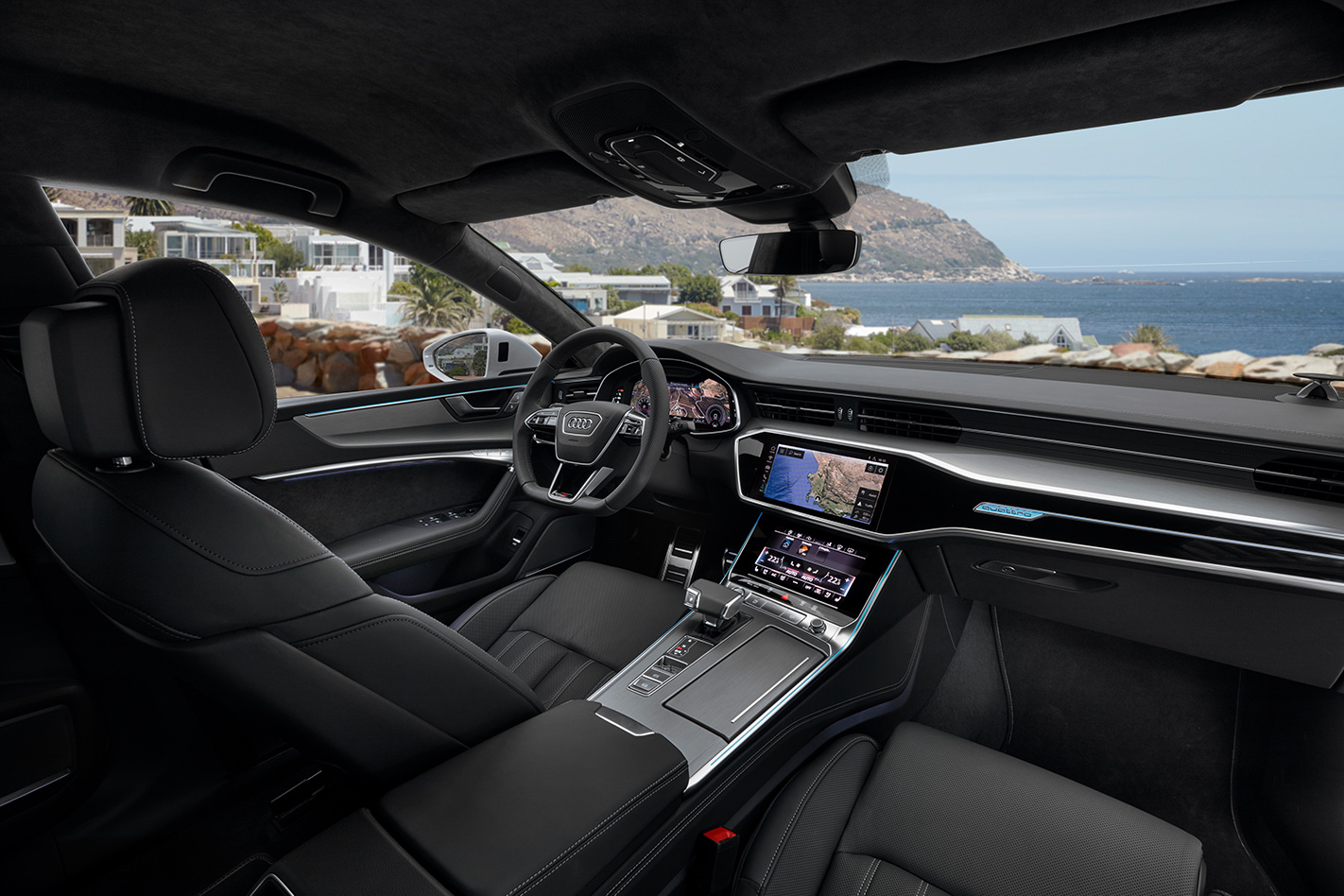
The interior has also been completely redesigned, with a sleeker dashboard dominated by the dual 10.1- and 8.6-inch touchscreens that display a broad range of functions. This does away with a bunch of physical buttons and switches to reduce clutter. Functions are now selected through the touchscreens, which offer haptic and audio feedback, plus voice control, handwriting recognition or the single-point control dial.
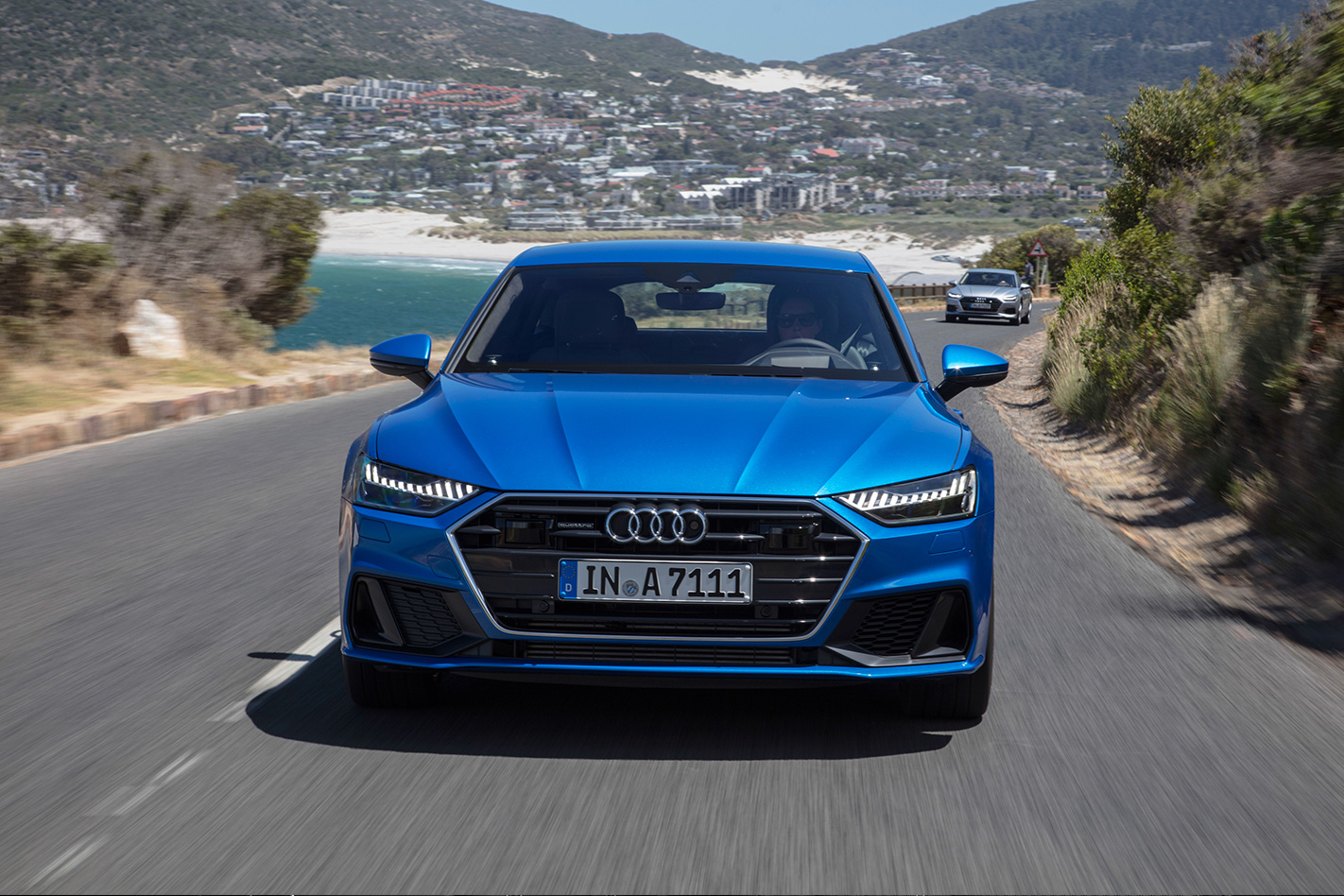
The 2019 Audi A7 Sportback will arrive in Australian showrooms this November.
Hyundai has treated its popular Tucson mid-sized SUV to a mid-life refresh that replaces the previous Active variant with a more affordable Go option, adds a smattering of extra technology and introduces a new eight-speed auto option for the diesel-powered line-up.
Priced from $28,150 before on-road costs, the new Tucson Go lands with two-wheel drive and a 121kW/203Nm 2.0-litre four-cylinder petrol engine bolted to a six-speed manual gearbox. However, get in before the end of August and it will be available for a driveaway price of $27,990.
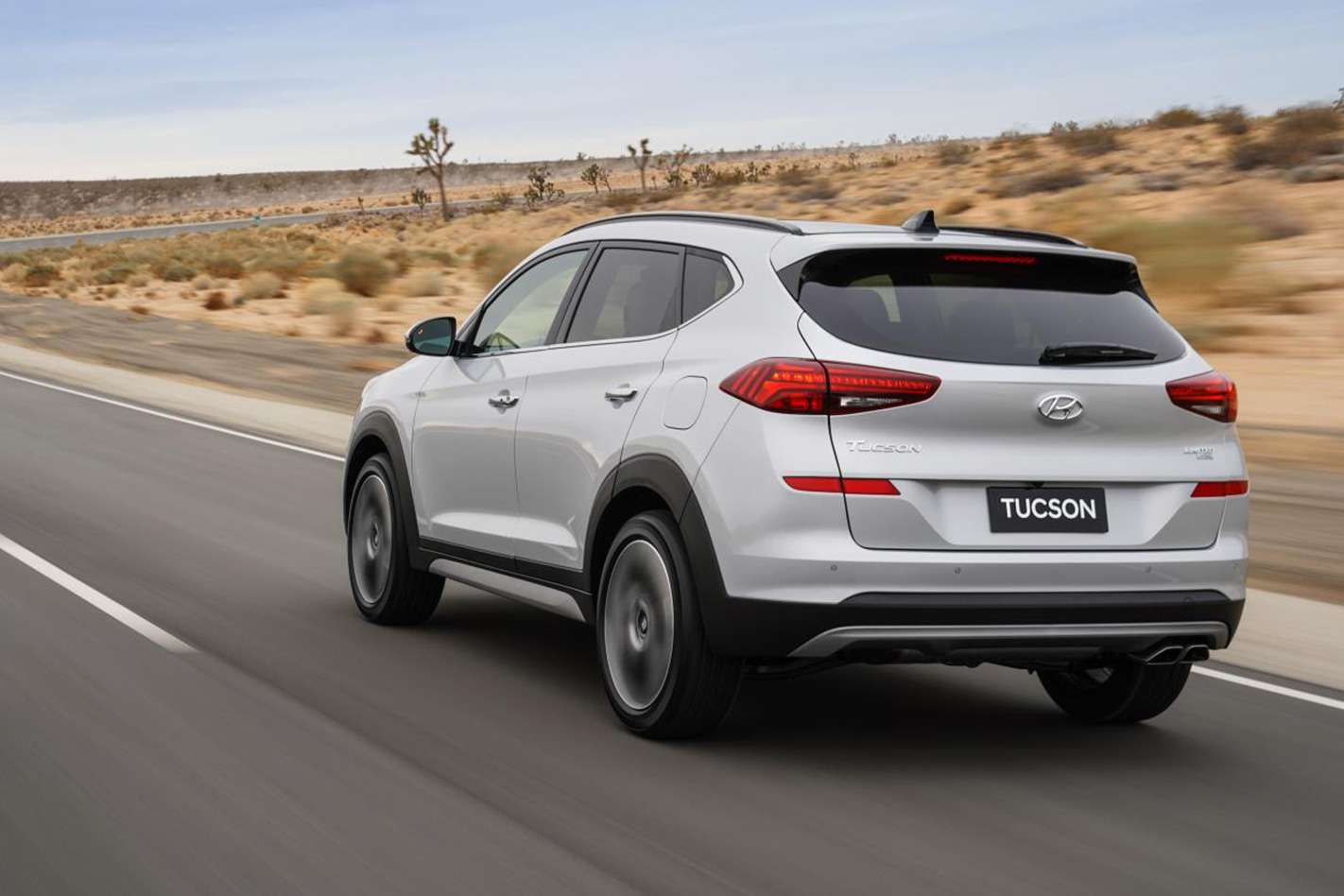
The driveaway deal has been extended to the auto version, bringing it down from the before on-road cost of $30,650 to $29,990, and also covers the more generously equipped Active X manual, which costs $30,990 driveaway or $32,990 for the auto.
As part of the update, the Go entry variant is now also available with a new eight-speed auto bolted to the 136kW/400Nm 2.0-litre diesel variant for $35,950 before on-road costs. New petrol (before on-road costs) pricing represents a reduction in the asking price over the outgoing model, while the diesel is now $860 more expensive.
Diesel versions of the Go are only available with four-wheel drive and the new more sophisticated transmission replaces the previous six-cog diesel auto with a more refined and fuel efficient unit, says Hyundai, although updated performance figures have not yet been revealed.
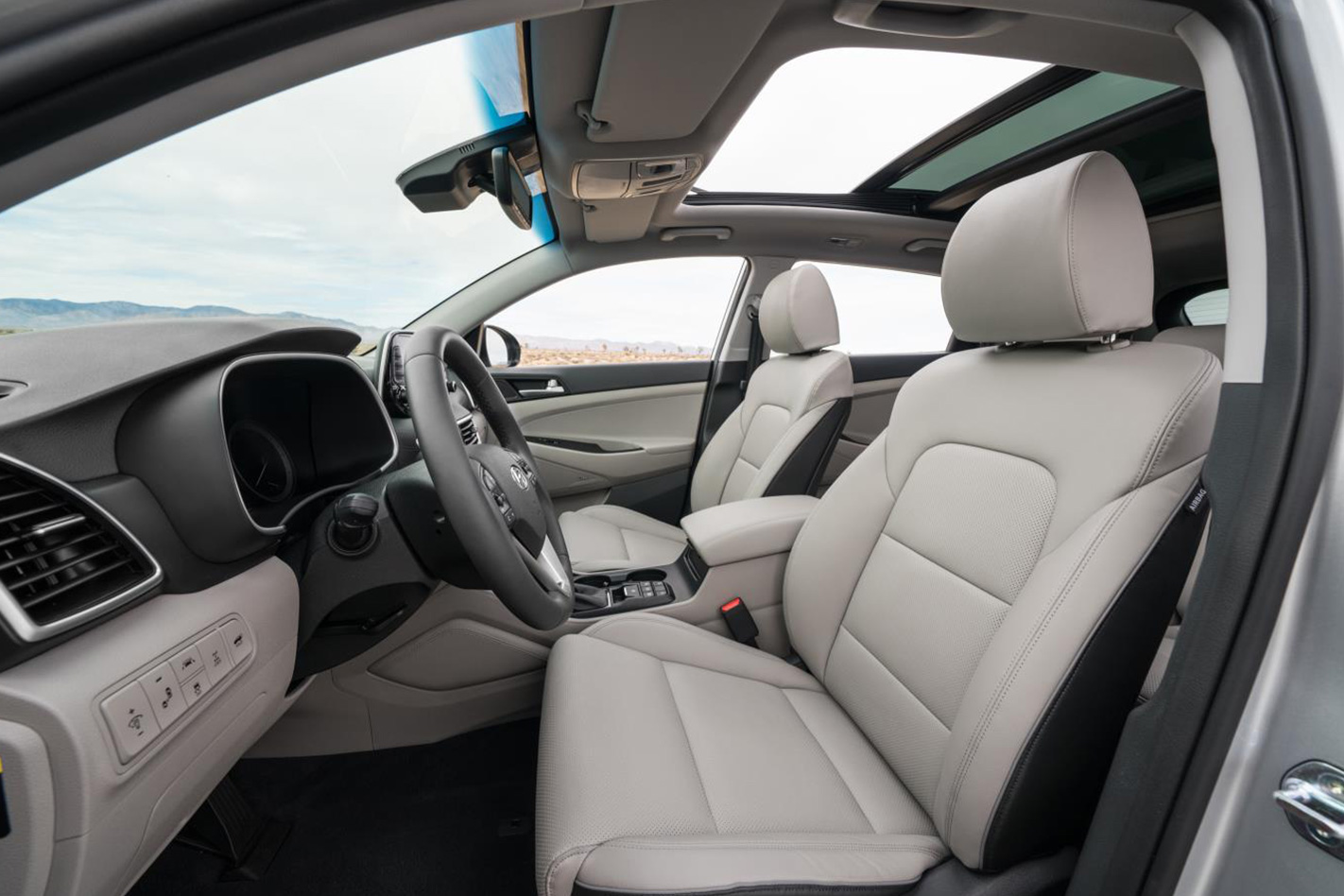
As before, the Tucson Active X manual is positioned above the entry variants offering extra kit for a starting price of $31,350 (+$200) or $33,850 (+$200) for the six-speed auto, while the diesel, which is new to the Active X range, costs $39,150.
Above that, the most affordable Elite variant is on offer for $37,850 (+$1600) with the same drivetrain as the Active X auto but is also available with a downsized 1.6-litre petrol, which pumps out 130kW and 265Nm thanks to a turbo.
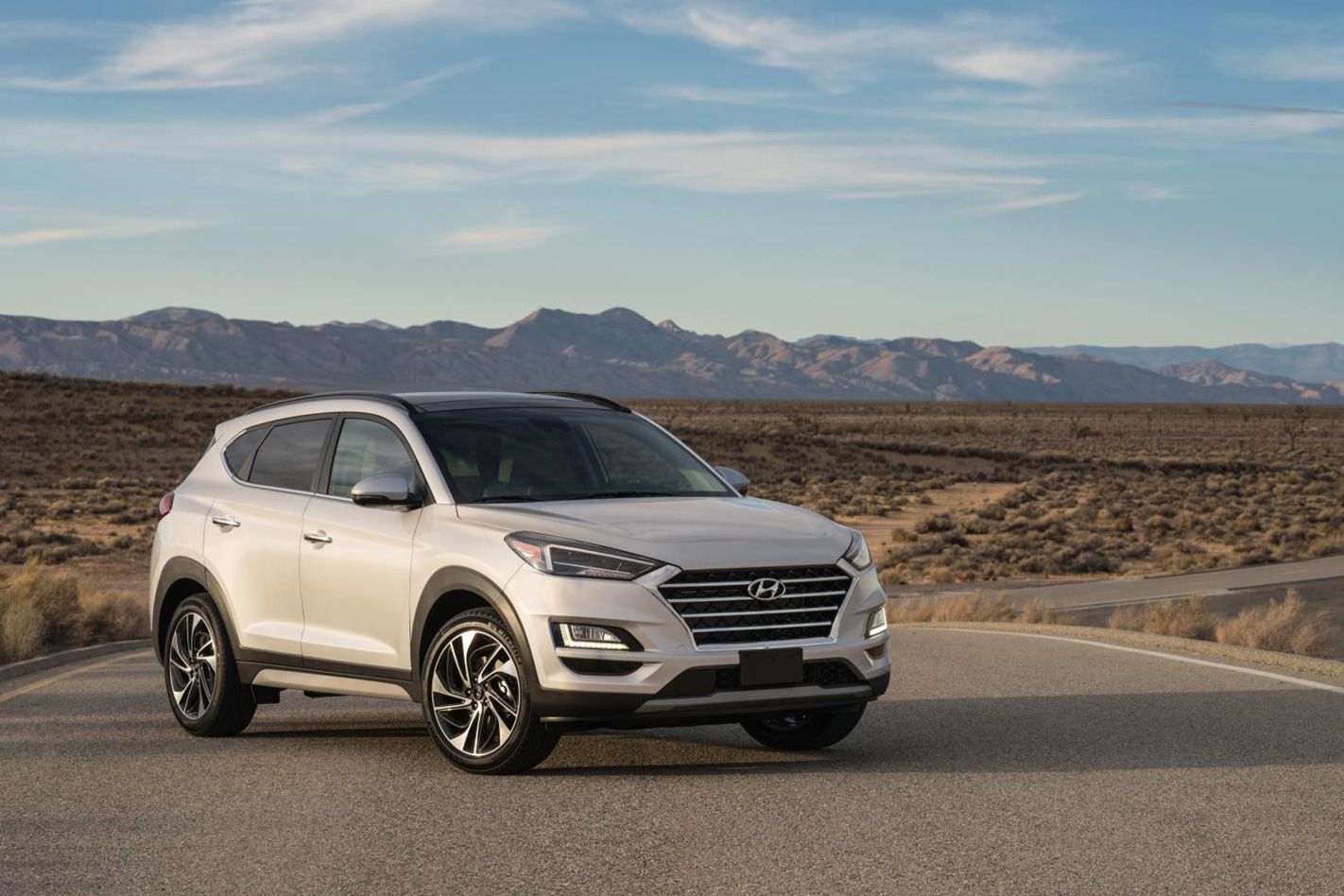
Pricing for the 1.6-litre turbo Elite starts at $40,850 (+$1600) and includes four-wheel drive and a seven-speed dual-clutch automatic transmission, in place of the six-speed torque converter version, while the diesel rounds out the Elite line-up for $43,150 (+$1900).
At the top of the pack, the Highlander is available exclusively with the four-wheel drive 1.6-litre DCT combination or diesel four-wheel drive for $46,500 and $48,800 respectively, which represent $1050 and $1350 increases.
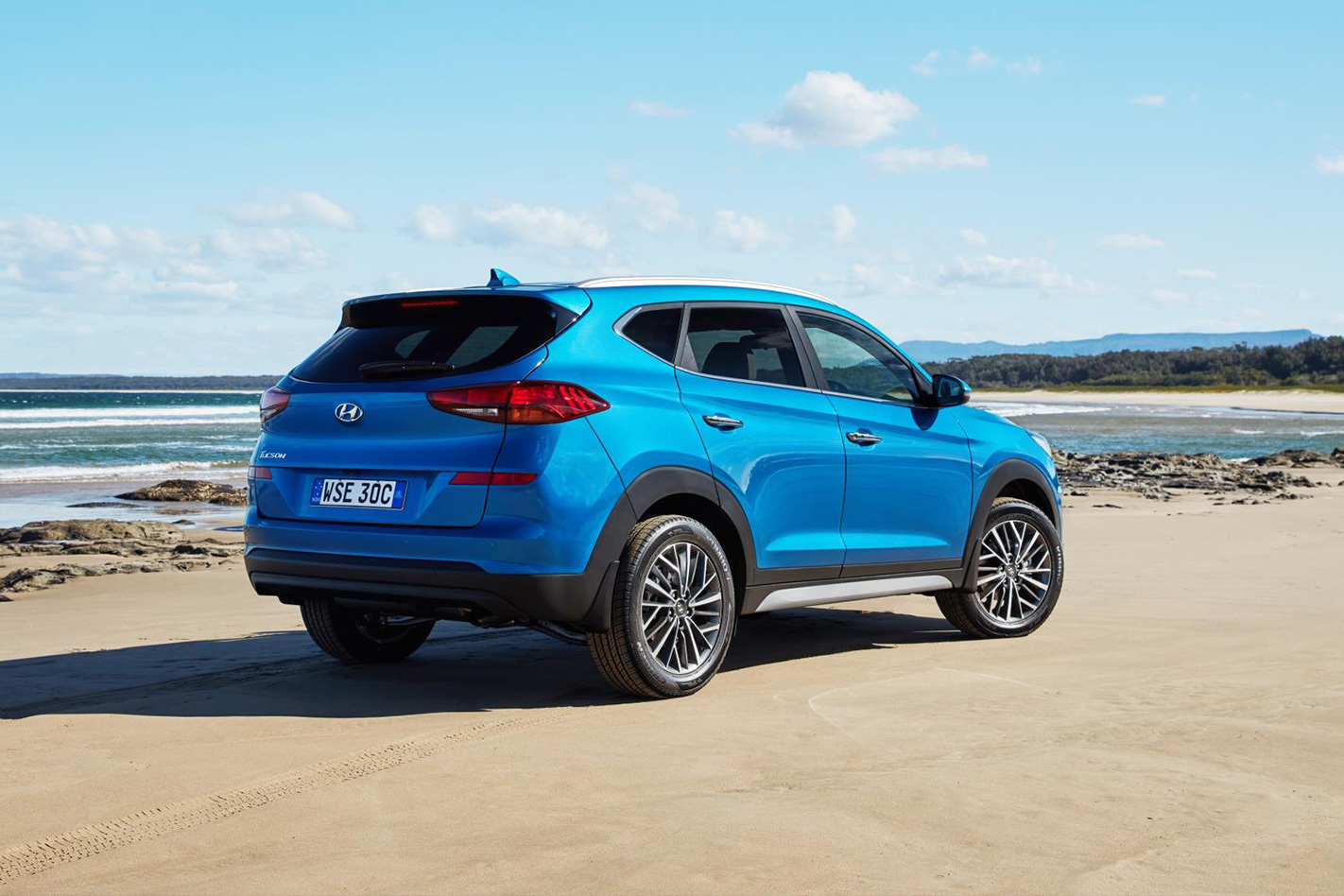
All versions get a lightly facelifted exterior with new headlights and corresponding daytime running lights, complemented by new wheel designs that measure 17-inch for the Go and Active X, the Elite gets 18-inch rims, while the Highlander has 19s.
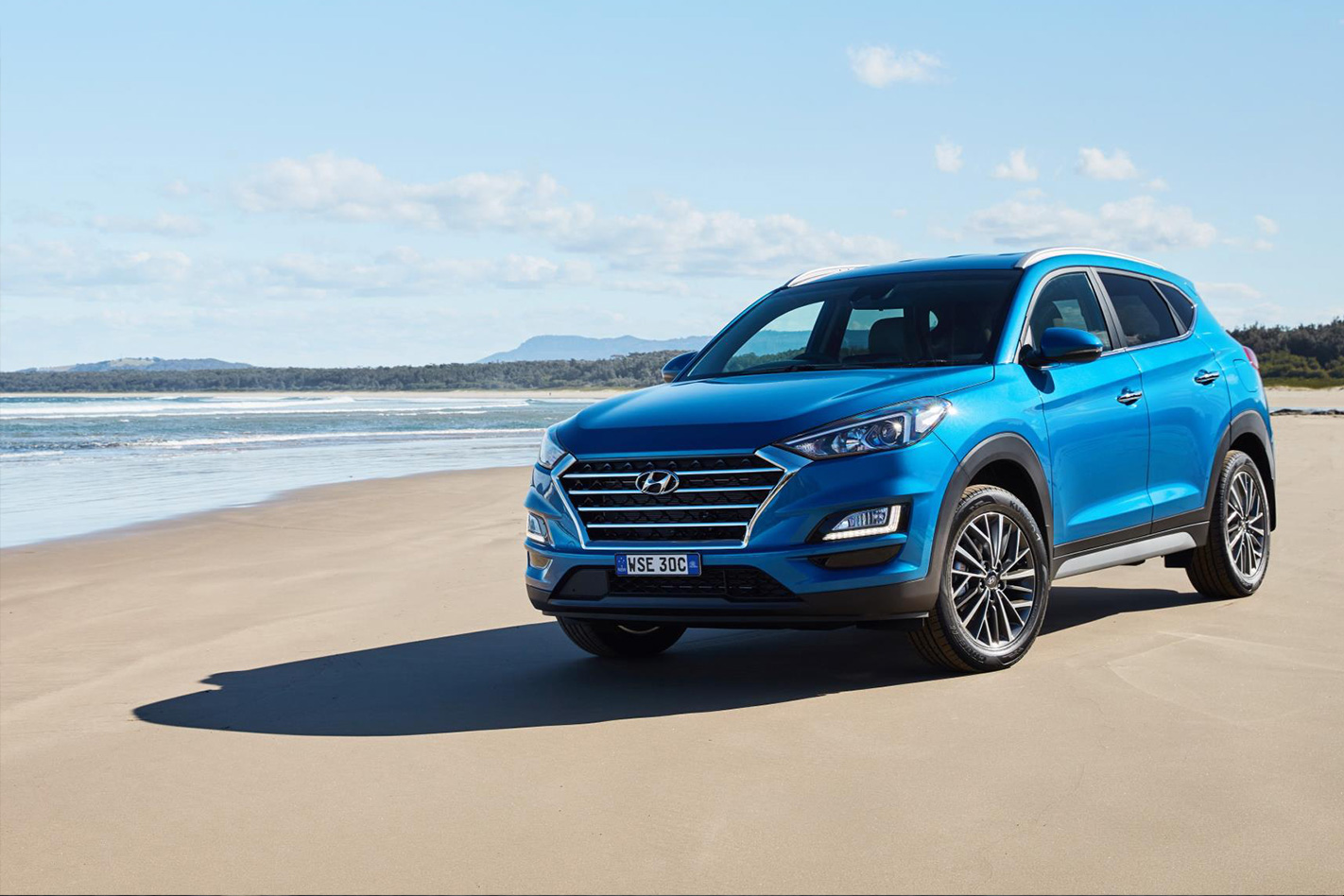
The equipment upgrades continue on the inside with a new ‘floating’ style central information screen which spans 7.0-inches in the entry Go and 8.0-inches for all other versions. Android Auto and Apple CarPlay connectivity also join the range for the first time.
Opt for the base Go and you’ll get a reversing camera, six airbags, a full-size spare wheel, cruise control and Bluetooth connectivity.
Active X equipment highlights include part leather upholstery, higher spec Infinity audio system, navigation, rear parking assistant and tyre pressure monitoring.
Elite versions add extra safety gear including forward collision avoidance assistance, blind spot monitoring and rear cross-traffic alert, although those features can be added to the more affordable Go and Active X with the optional SmartSense pack for $2200.
As well, the Elite has a power-adjustable driver’s seat, keyless entry and start, rain-sensing wipers and privacy glass.
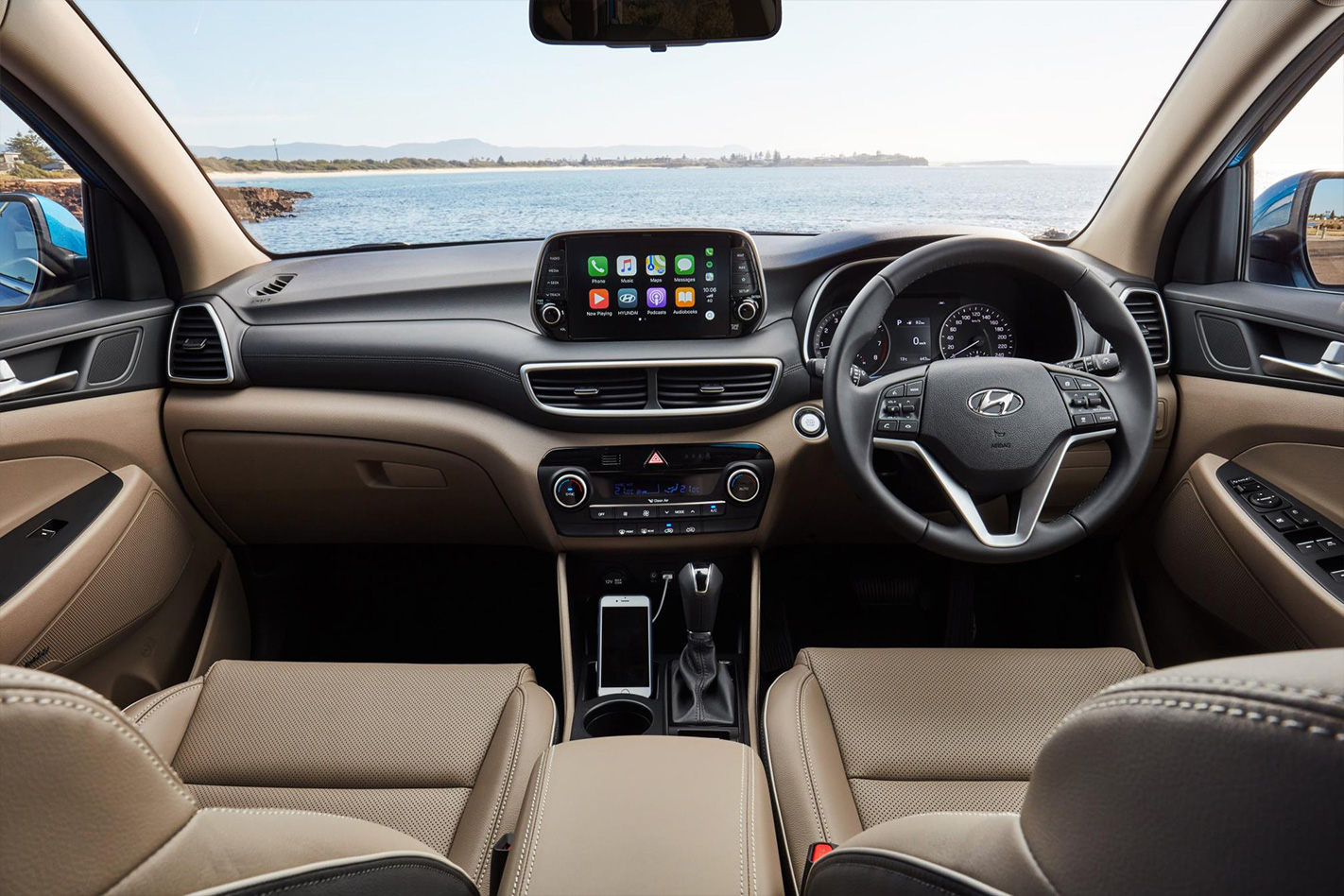
The flagship Highlander is kitted out with LED headlights and tail lights, front and rear parking assistance, a panoramic sunroof, cooled and heated front seats, a heated steering wheel, electrically adjustable front passenger seat, cordless device charging and a 4.2-inch driver’s information screen in the instrument cluster.
During Monterey Car Week 2018, Nissan is set to be honoured as the first featured Japanese marque at the Rolex Monterey Motorsports Reunion.
The vintage racing event is held at WeatherTech Raceway Laguna Seca (formerly Mazda Raceway) and plays host to a wide variety of vintage and classic racers which take to the track in various classes.
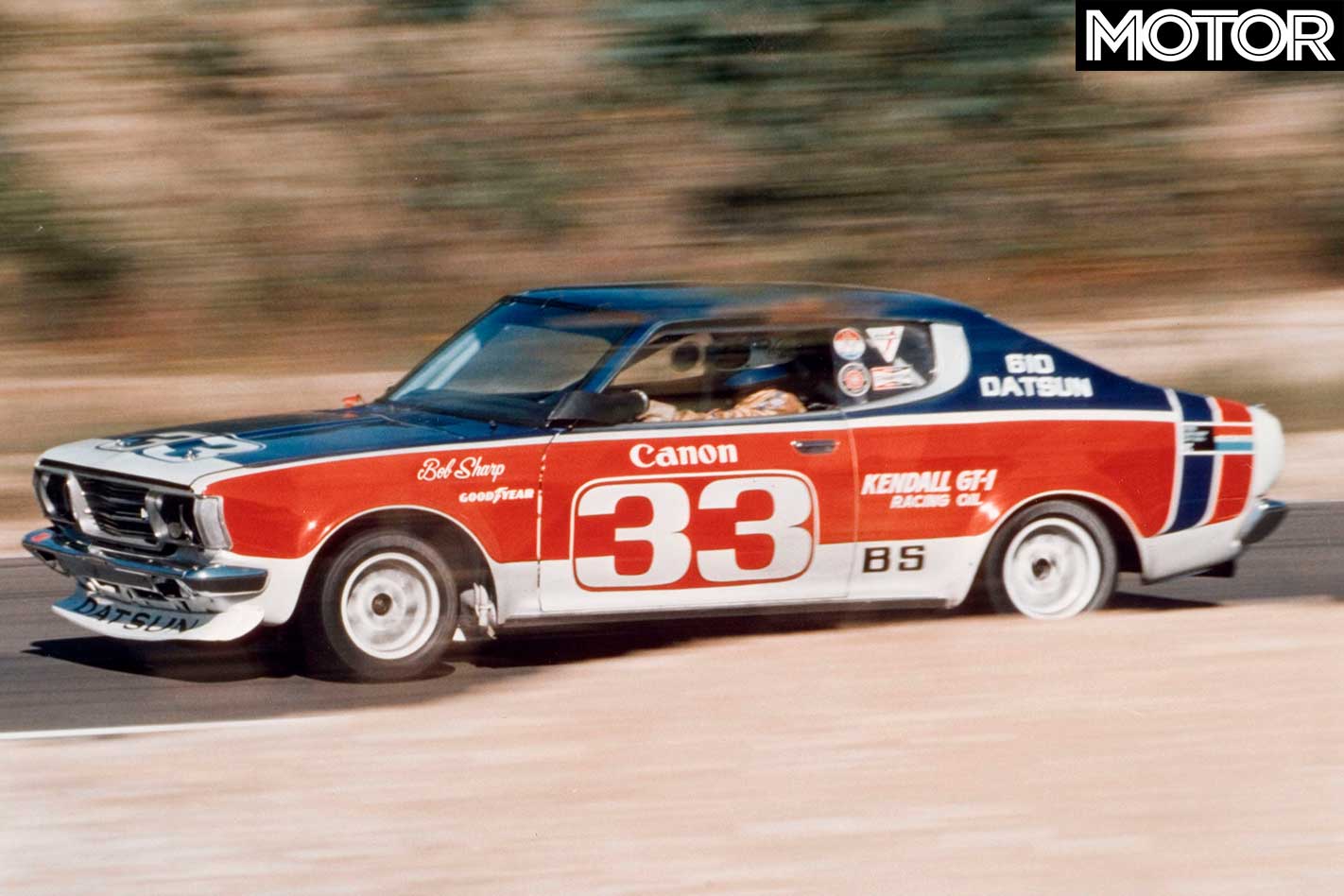
Nissan says that, along with Datsun, over the past 50 years it has secured more than 100 wins in Sports Car Club of America (SCCA) national championships and over 200 wins in International Motor Sports Association (IMSA) races in America alone.
To celebrate this milestone, it’s bringing along legendary racers such as the famous Nissan 300ZX Turbo driven by Steve Millen to victories at both Daytona and Le Mans.
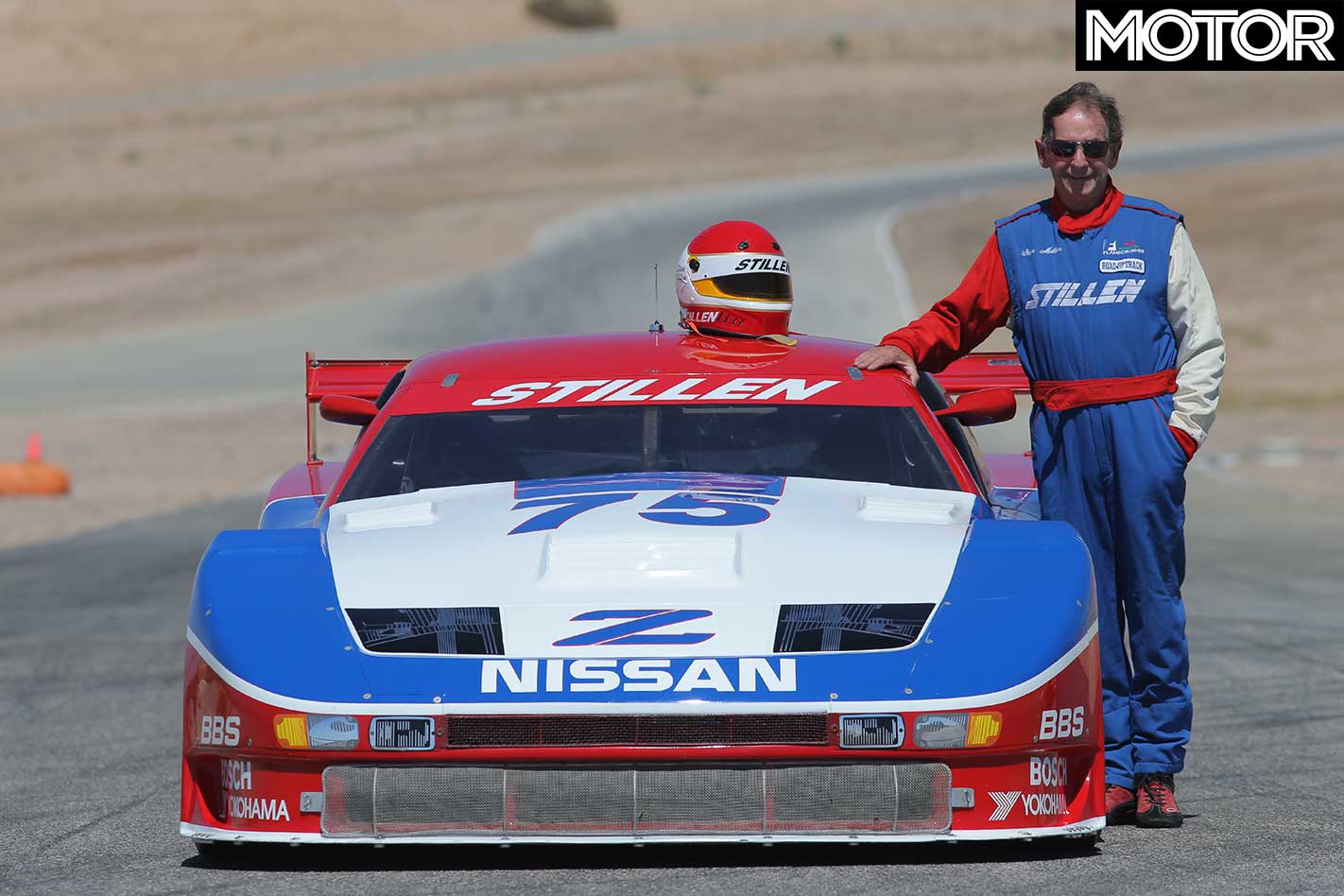
Millen will take to the track in his ZX, while comedian and car collector Adam Carolla will drive the GT-1 300ZX Turbo originally driven by actor and philanthropist Paul Newman.
The BRE Datsun 240Z raced by John Morton will hit the track, while his BRE Datsun 510 will be on display in the paddock.

Joining it will be a Nissan GTP ZX-Turbo driven to eight consecutive wins by Aussie Geoff Brabham (of the famous racing dynasty) in the IMSA GT, and Bob Sharp’s four-time SCCA C-Production Champion 240Z.
Head of global design at Nissan Alfonso Albaisa says being the featured marque at the reunion gives Nissan a chance to ‘pat itself on the back’ for its motorsporting heritage.
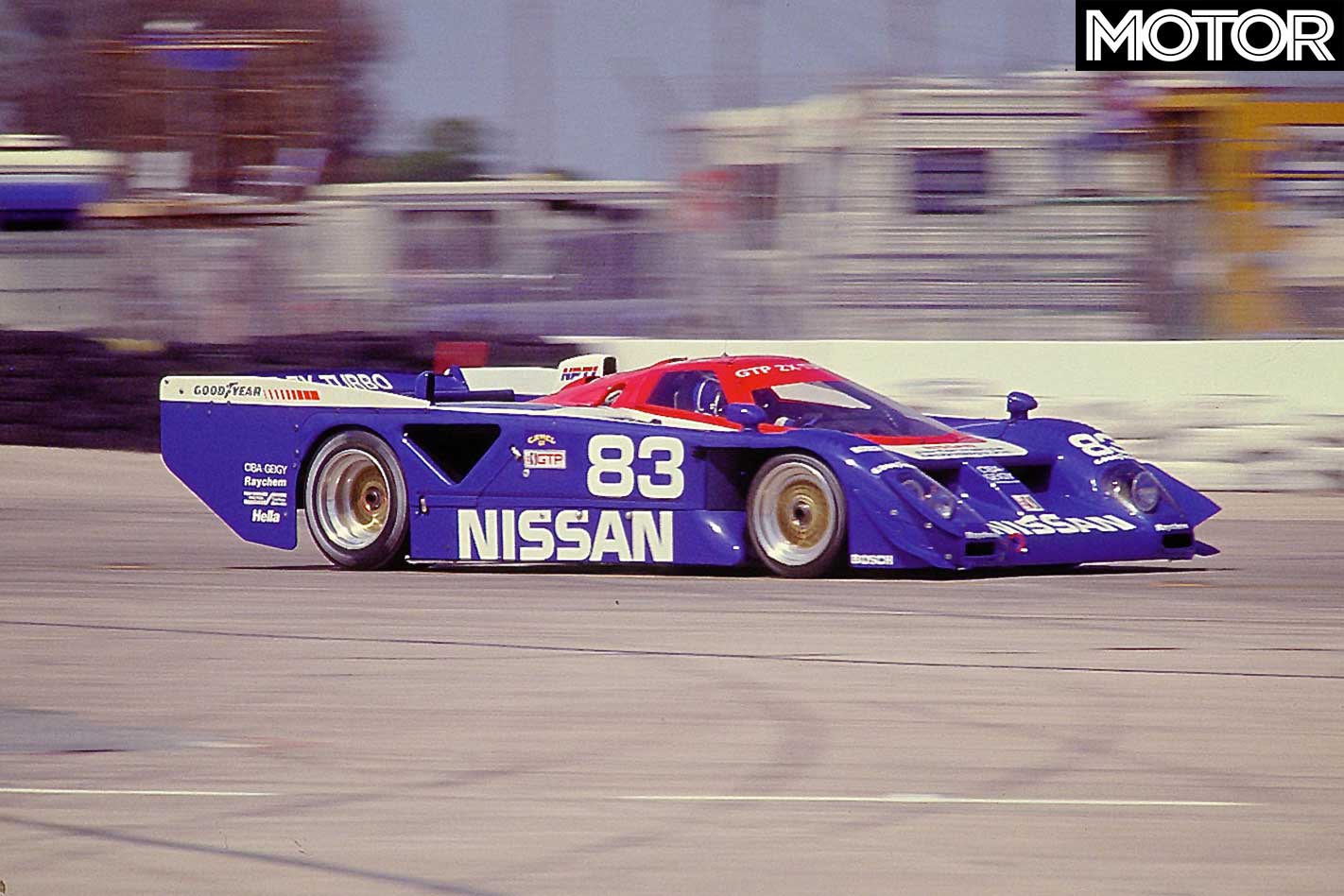
“Since the first Nissan race win in 1936 in Tokyo with the supercharged Datsun NL-75, motorsports has been a core element of the company’s success – redefining the limits of man and machine, fostering ambition, stoking passion and cultivating a tireless drive for victory – all of which continues today.”
“For others, the cool marine layer and dew-covered fescue of Pebble Beach creates a perfect stage for beautifully-restored cars of significance, but Nissan is a brand that is quite at home spending the week powering down the corkscrew at Laguna Seca.”
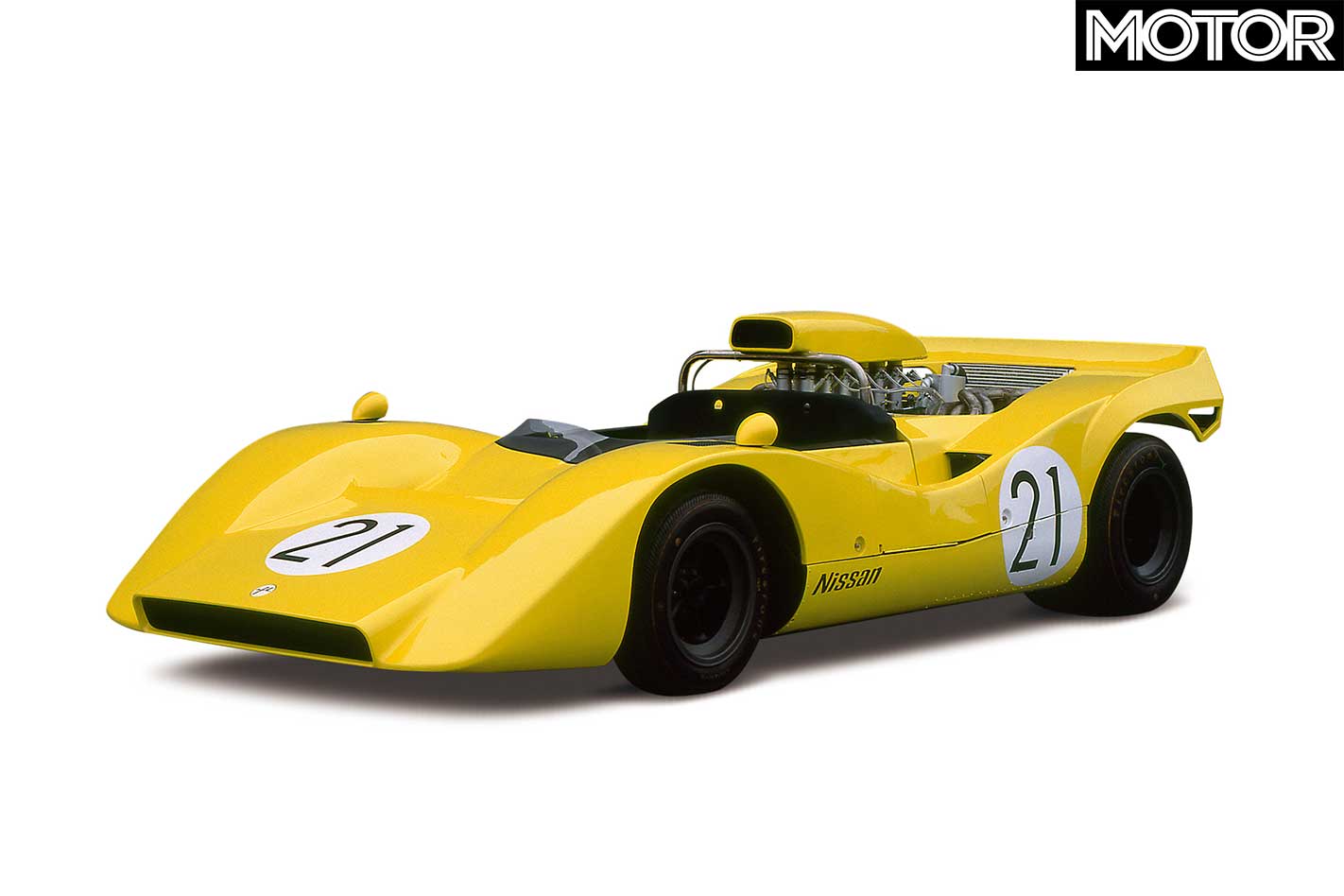
For Nissan to appear as the first Japanese marque is a big indicator that the classic car world is recognising Japan’s achievements, following on from auction prices for early Japanese classics hitting highs in auctions worldwide.
“Never before has a Japanese automaker been so honoured,” says Laguna Seca VP of communication and historic racing Barry Toepke.
“We wanted to change that course and feature Nissan and Datsun because the brands resonate internationally and have fully established their racing pedigree.
“We felt it was time to recognize and honour the Nissan brand for its past, present and future.”
TROUBLED Formula 1 team Force India has been rescued from insolvency thanks to a consortium led by Lawrence Stroll. Yes, the billionaire father of Williams F1 driver Lance Stroll has picked up the tab for the team that was almost certainly about to pack up and go home.
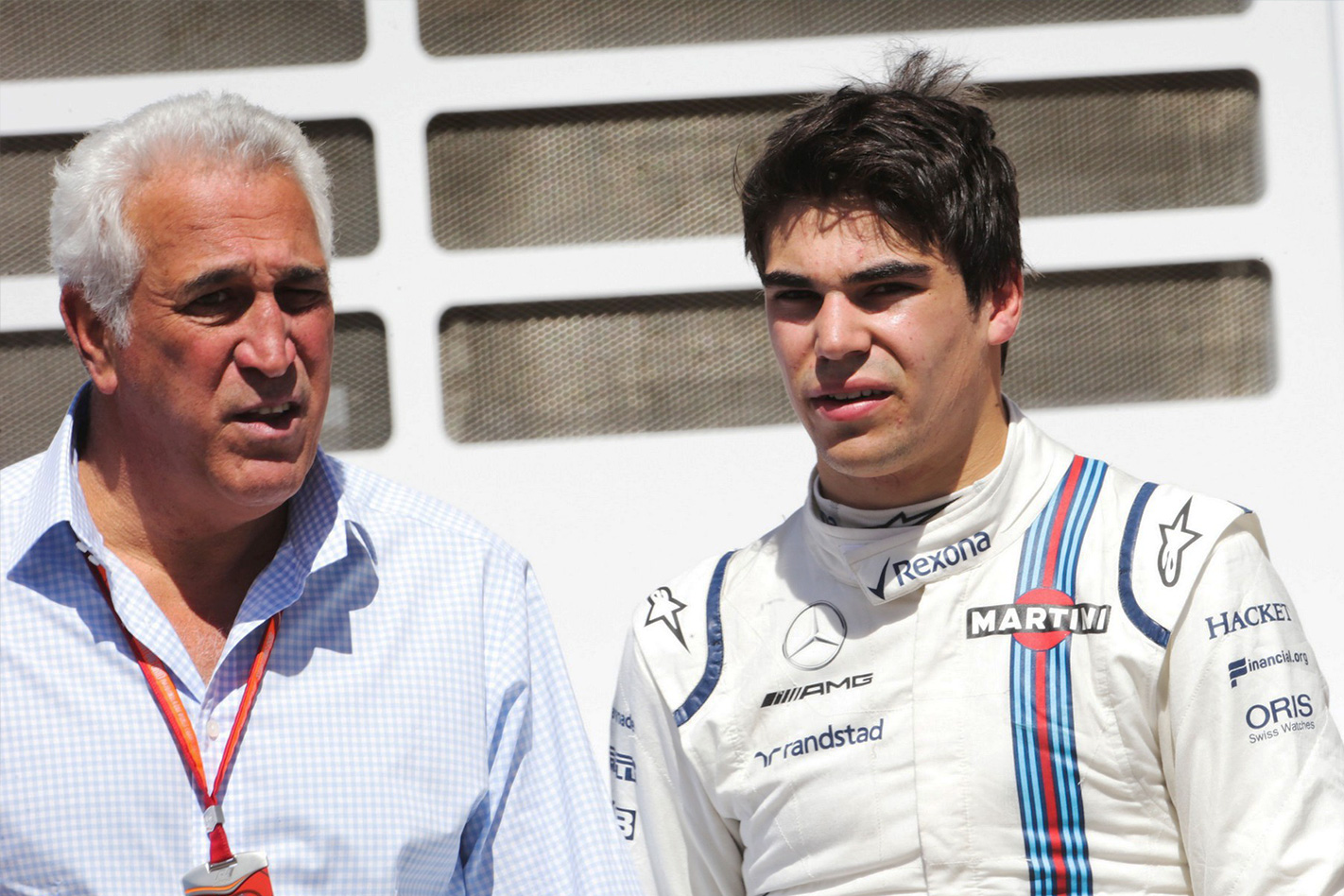
The Stroll buyout ensures Force India will continue racing in the category, and that all 400 staff are able to keep their jobs. The deal will see all creditors remunerated in full, and bring an injection of capital in the weeks to come.
Force India was placed into administration on the Friday before the Hungarian Grand Prix. The move was prompted by driver Sergio Perez, sponsor BWT and engine supplier Mercedes-AMG in an effort to breathe new life into the organisation. Force India would have faced imminent closure had the team not found a buyer quickly.
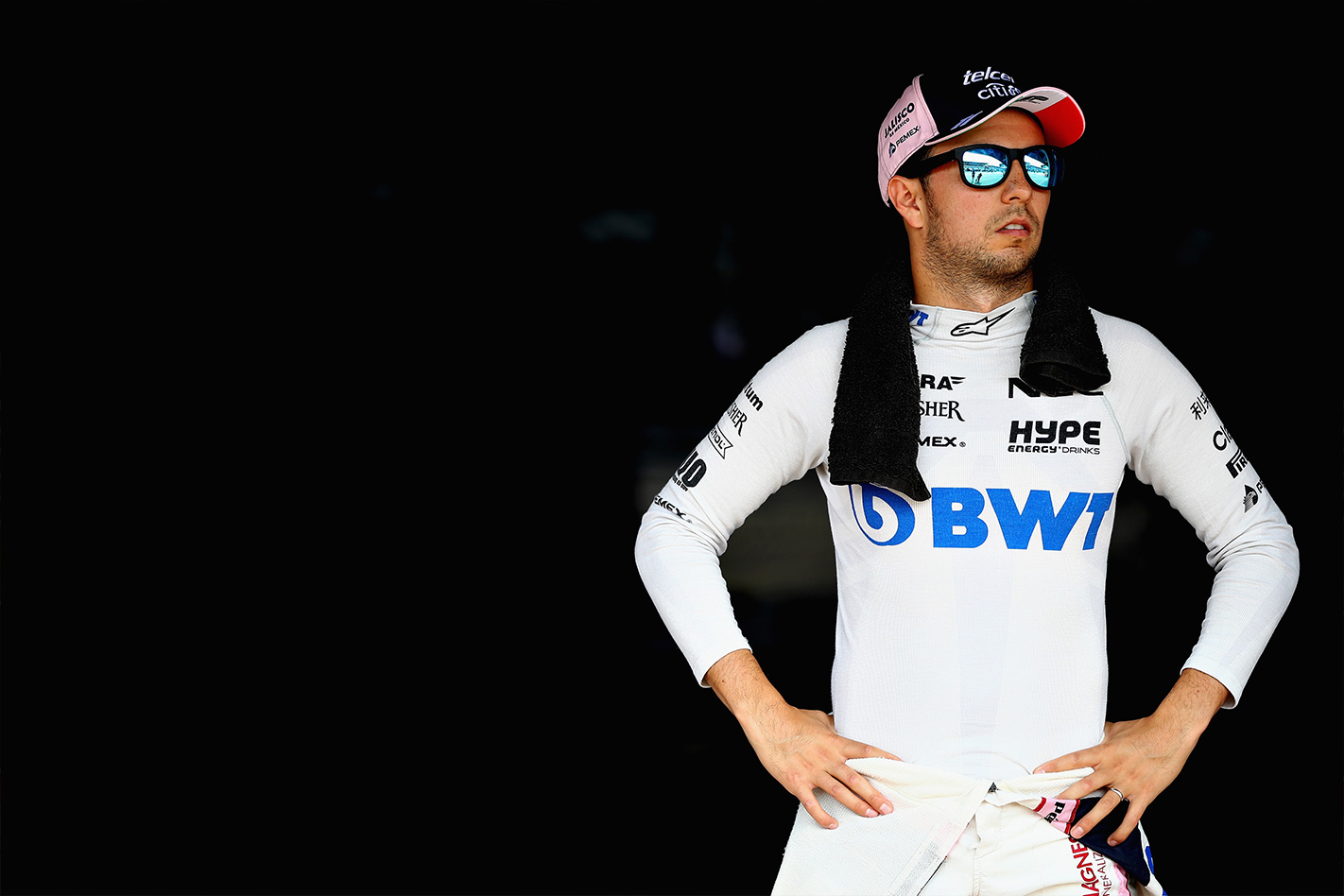
“This outcome secures the future of the Force India team in Formula 1 and will allow our team of racers to compete to our full potential,” said Otmar Szafnauer, Force India’s chief operating officer.
“I am delighted that we have the support of a consortium of investors who believe in us as a team and who see the considerable business potential that Force India has within F1 now and in the future.”
The Force India F1 team can trace its roots back to the early 90s and the formation of the Jordan Grand Prix team, the remnants of which were eventually purchased and rebranded in 2007 by Indian businessman Vijay Mallya, who will now hand over the reins.
“I would also like to thank Vijay, the Sahara Group and the Mol family for all of their support and taking the team as far as circumstances would allow,” said Szafnauer.
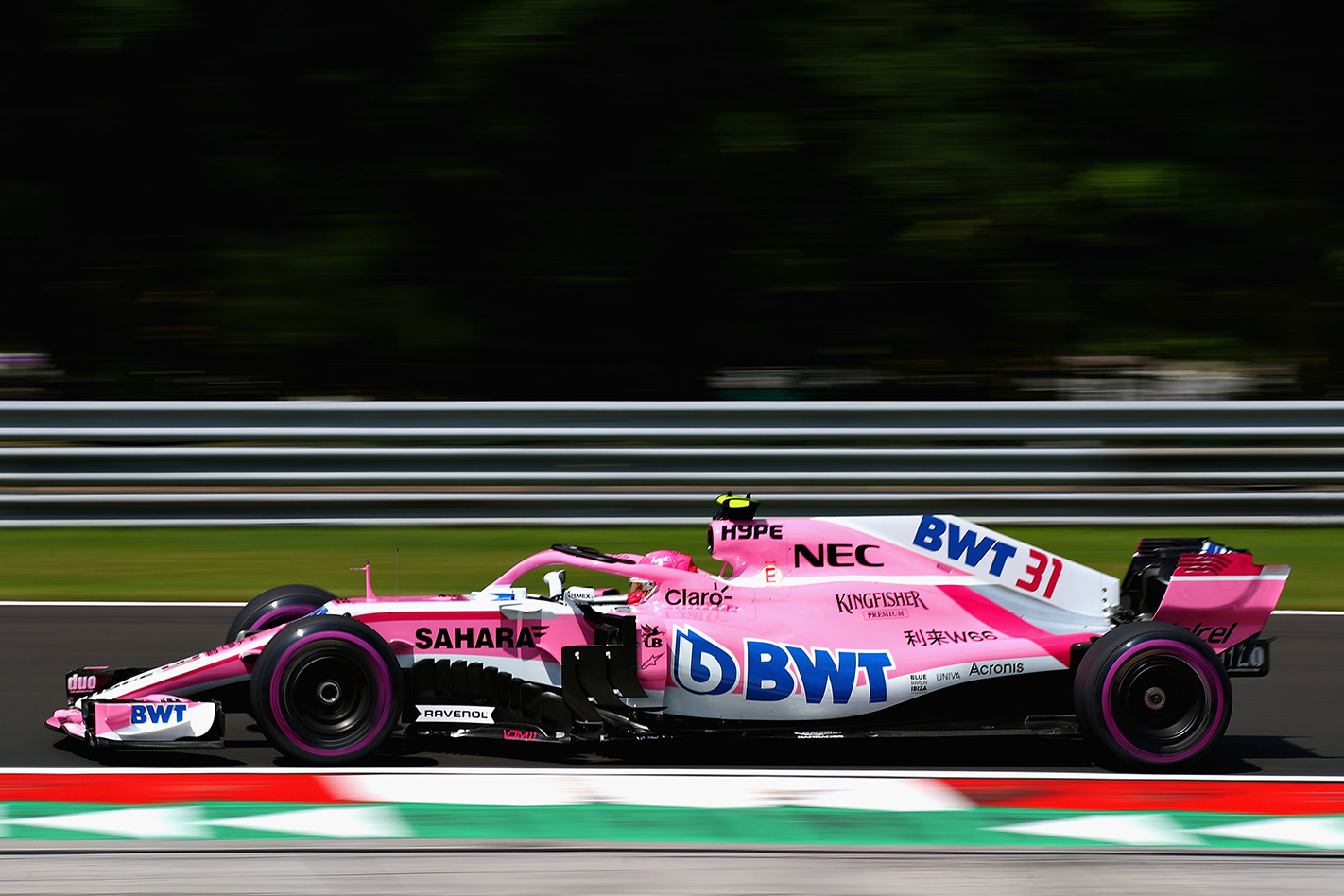
The appointed administrator, Geoff Rowley of FRP Advisory, said “It is rare that a company can be rescued and returned to a position of solvency.”
“Having followed a robust process, in the end we were left with a highly-credible offer to save the company and restore solvency.”
The team is now set to exit administration within the next few weeks, likely in time for the Belgian Grand Prix on Sunday 26 August.
The buyout may prompt big changes in terms of drivers shuffling around the field, including the inevitable inclusion of Lance Stroll on the Force India roster for the start of 2019. That move, along with Ricciardo’s switch to Renault from next year, will trigger a series of driver movements for next season.
A brief history of bad ideas: “It’s a nice day, let’s take the convertible.” (JFK, 1963.) “Can I buy you a drink?” (Tiger woods, 2009.) “I do.” (Me, 1991.) “We don’t need no stinkin’ V8.” (Ford Oz product planning department, 1982.)
This feature was originally published in MOTOR’s August 2012 issue
Yep, Ford’s decision to ditch the V8 was a real thigh-slapper. Weird thing is, it was only Ford itself that couldn’t see the folly of dumping the very thing that set it apart from imported cars and gave it some street cred among the people who were most likely to grow up and buy a Ford of their own sometime down the track.
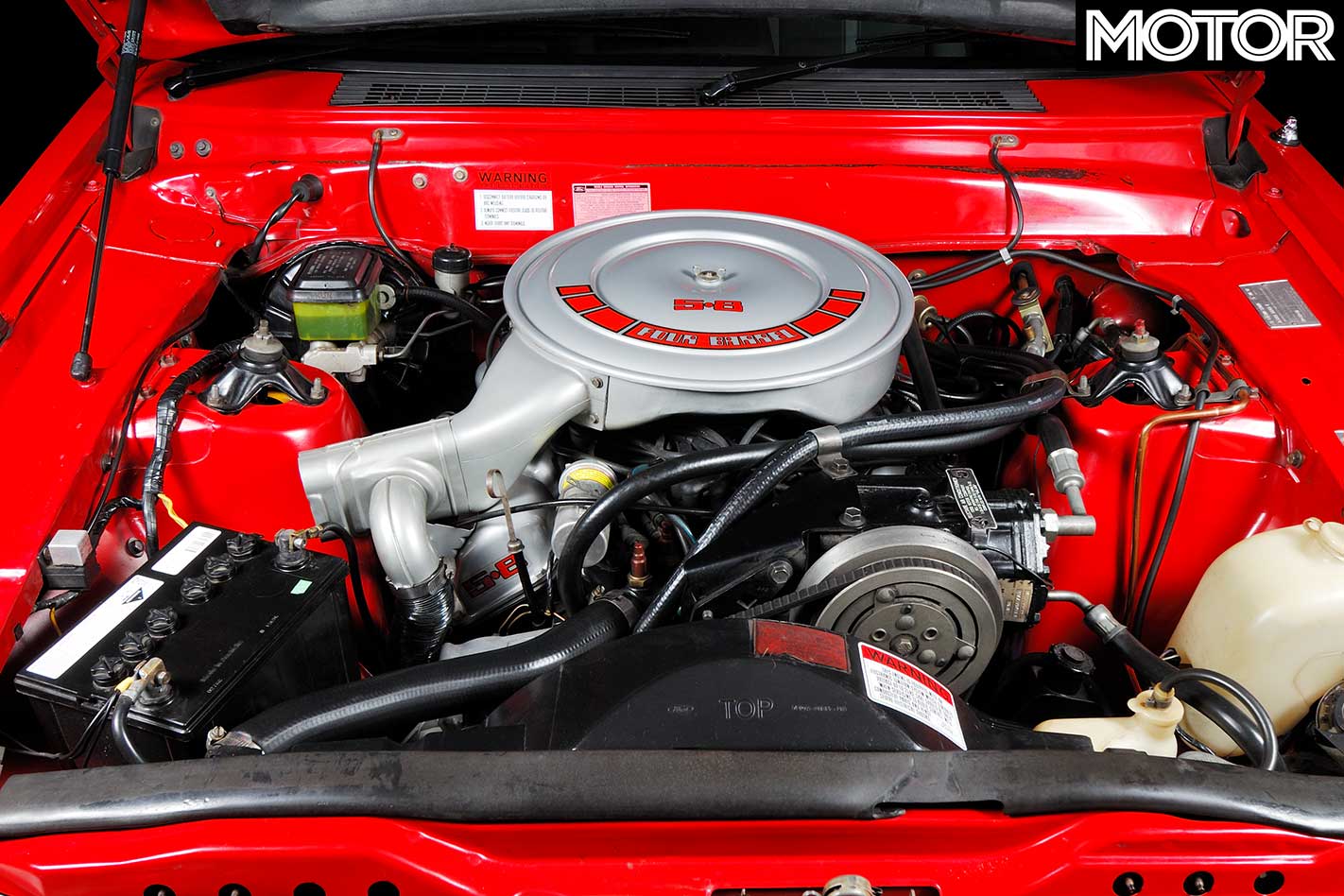
Secondly, the axing of the Ford V8 put the cause of fuel-injection back several years. See, the replacement (Ford’s word, not ours) for the V8 was an injected version of the 4.1-litre pushrod six. But the efi six-pot just never cut it, leading to a suspicion that injection wasn’t all that it had been cracked up to be.
Of course, it wasn’t the fault of fuel-injection technology, because when it comes to 4.1 litres against 5.8, Blind Freddy could see it was like taking a knife to a gun-fight.
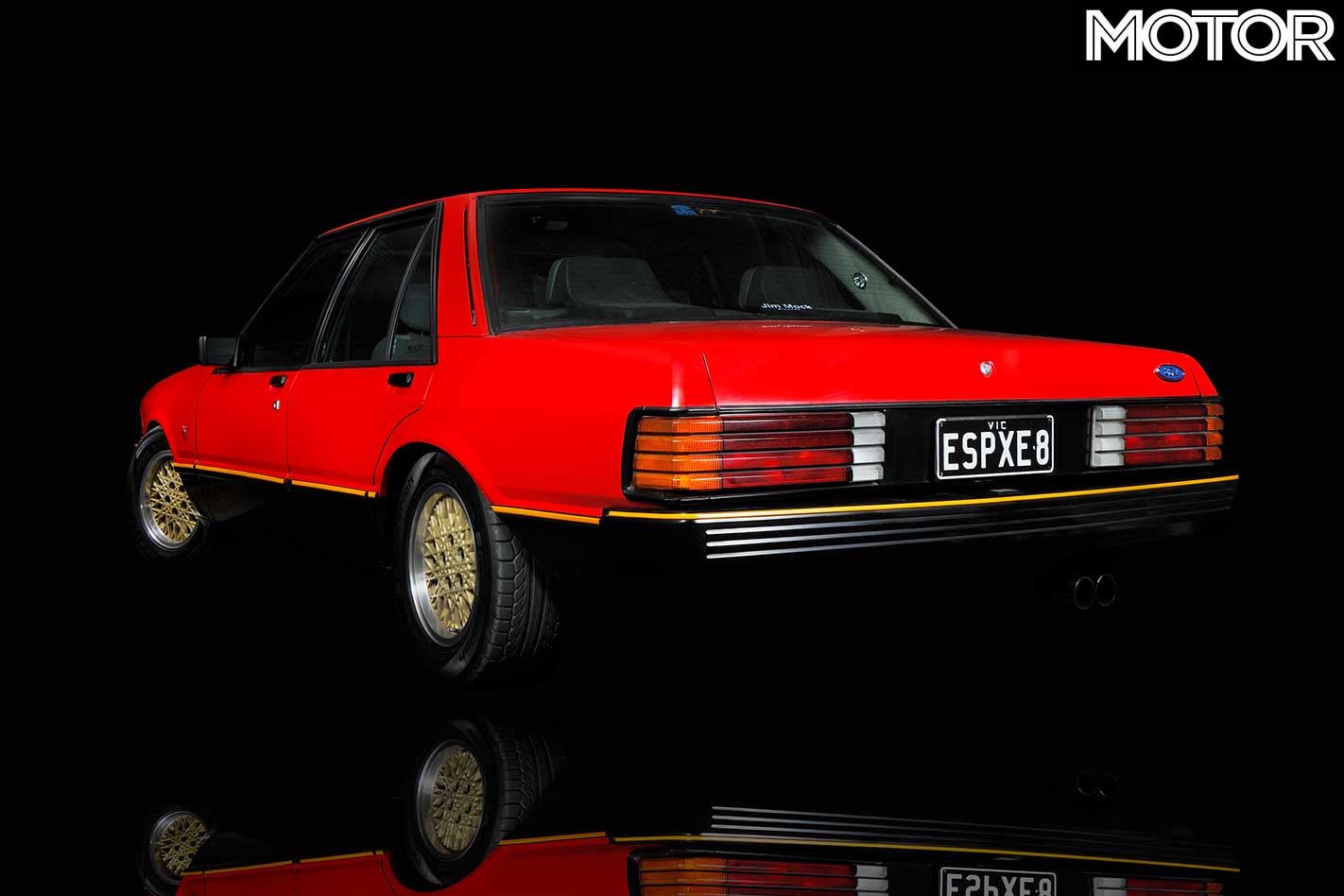
The third effect of all this boardroom buffoonery was to create a couple of Fords that have attained collectible status; cars which, had the V8 continued on its merry way, may have been forgotten. And the XE ESP is the poster-child for that phenomenon.
But let’s not defame an Aussie V8 here; the ESP was a decent bit of kit in its day and worth finding now (especially if you have access to a pair of rose-tinted driving goggles). It’s just that its major claim to fame is that it represents the end of the Falcon V8 era (at the time, anyway) rather than any other-worldly powers of its own.
Selling it short? A little. Let me explain. The XE Falcon was not, as Falcons go, a landmark model. But for one thing. Although it was based heavily on the new-for-79 XD, the ace up the XE’s sleeve was all behind the rear seat.

Yep, that leaf-spring rear suspension that had served big Fords so, er, suspendily, for many a decade finally came to the end of the road with the XE. In its place was a modern (for anywhere west of the black stump) coil-spring set-up that was made even more gee-whizz with the addition of a Watts link for lateral axle control.
And in the ESP’s case, there was actually some meat to the legend.
There were, meanwhile, pretty much two motivations for Ford producing the XE ESP. Although there had been no GT version of the XC model (the last of the rather Botox-influenced models pioneered by the XA in 1972) there was a thing called a GXL. As well as some GT-ish go-fast bits including the option of the 351 Cleveland, the GXL was an attempt to move the whole performance Ford thing upmarket.
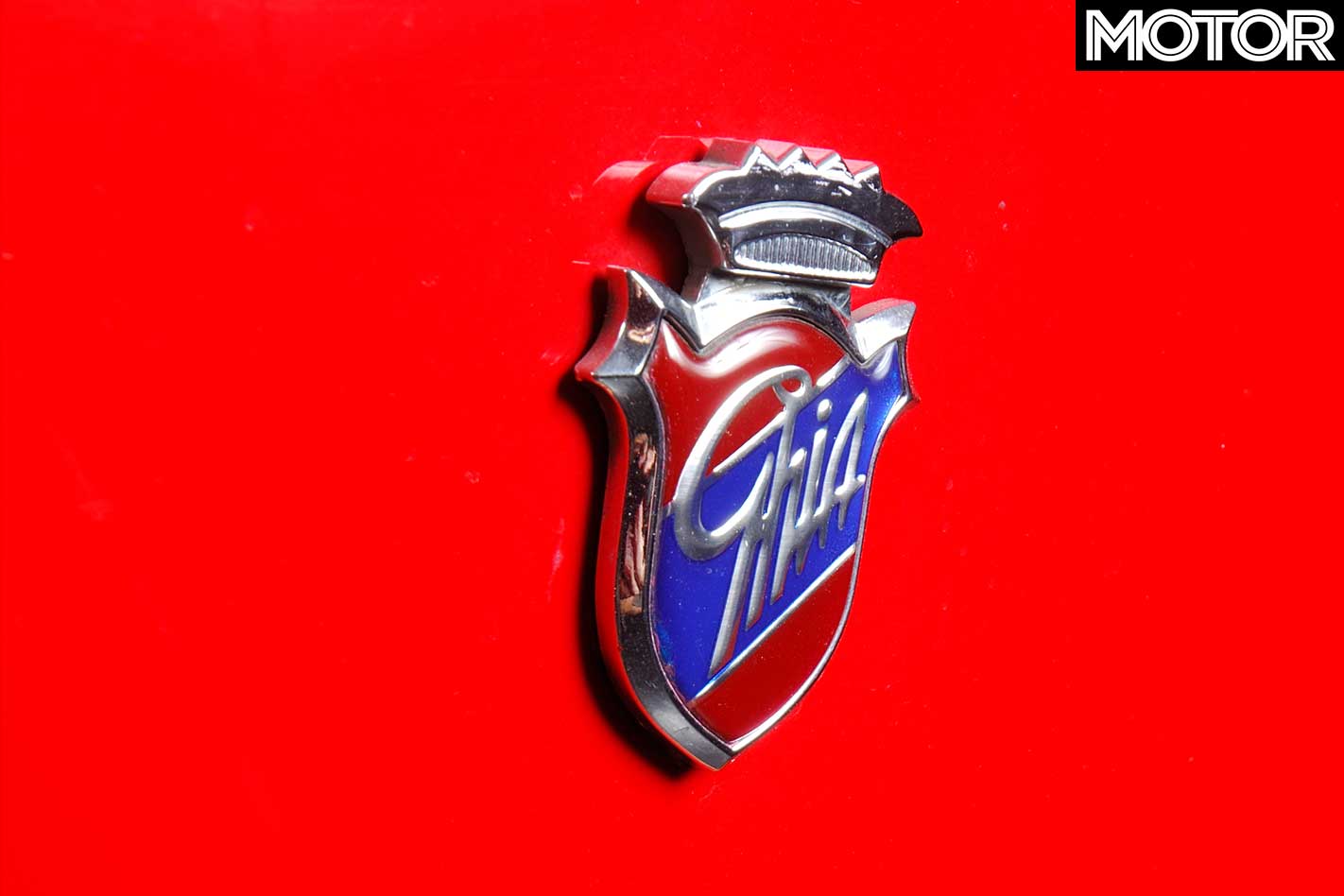
Hence, the GXL was based on the Fairmont and got some soft trim and more kit (back when` more kit’ could be as simple as a full-length arm-rest). Many of them had the optional metal sunroof, for instance. Very cool now, even if it’s mounted in a vinyl roof, another popular fitment.
The first ESP, meanwhile, was based on the XD model, but since nobody then could see the end of the V8 coming, it was never seen as quite so collectible. In any case, the XE with that vastly improved rear end is the one to have now.
Anyway, this move upmarket was one of the driving factors in the ESP’s arrival, but another was surely, by the time the XE rolled around, a method of getting rid of the last few hundred V8 engines, both 3092 (4.9-litre) and the mighty 351 (5.8).
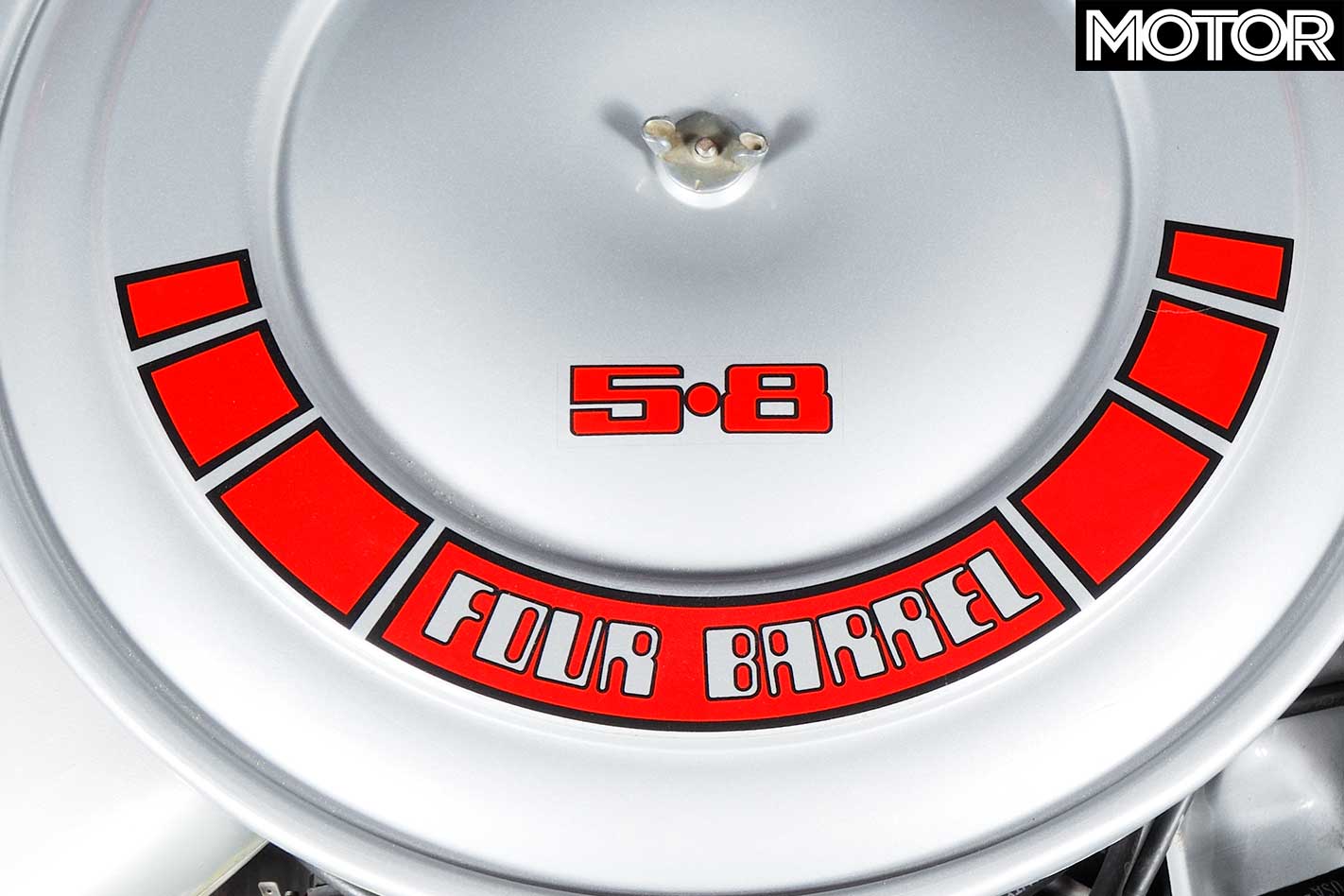
Which is how there came to be 260 XE ESPs with the 302 engine and automatic trans and another 100 with the same small-block and a four-speed manual tranny. But of most interest was the version with the 351 Clevo of which 178 were built and all of which were four-speed manuals.
Who knows why there was no auto 351. Maybe it was to do with the fact that ESP stood for European Sports Pack and nobody in Europe (back then anyway) would be seen dead in a car without a clutch pedal. Certainly it wasn’t because Ford didn’t have a tranny that could handle the urge, because it had been putting C4s and FMX autos behind the Cleveland for years.
At least it kept real estate agents and bookmakers out of the things.
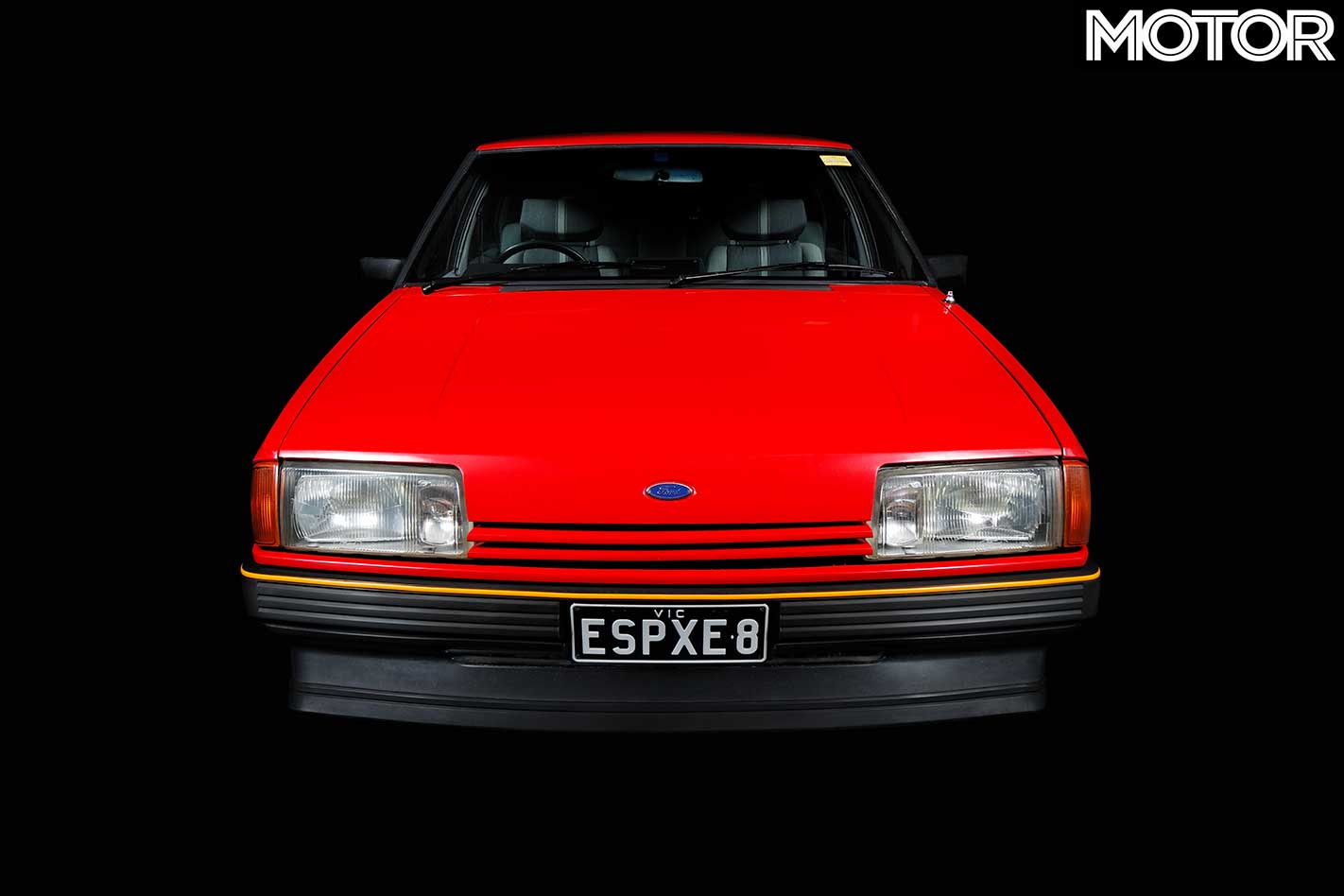
All XE ESPs were built between February 1982 and November of the same year, and there were even a few six-cylinder ESPs. Those six-pot cars, then, remain the exception that proves the rule about demand being the inverse of supply.
But beyond all that, what WAS an XE ESP? Okay, the basic platform was the Fairmont Ghia which was really just a short-wheelbase Fairlane That meant you got power steering and air-conditioning; stuff we take for granted now but which was definitely super-deluxo back in 1982.
On top of that, the ESP buyer was also pampered with power windows, central locking, a power antenna and a premium sound system.
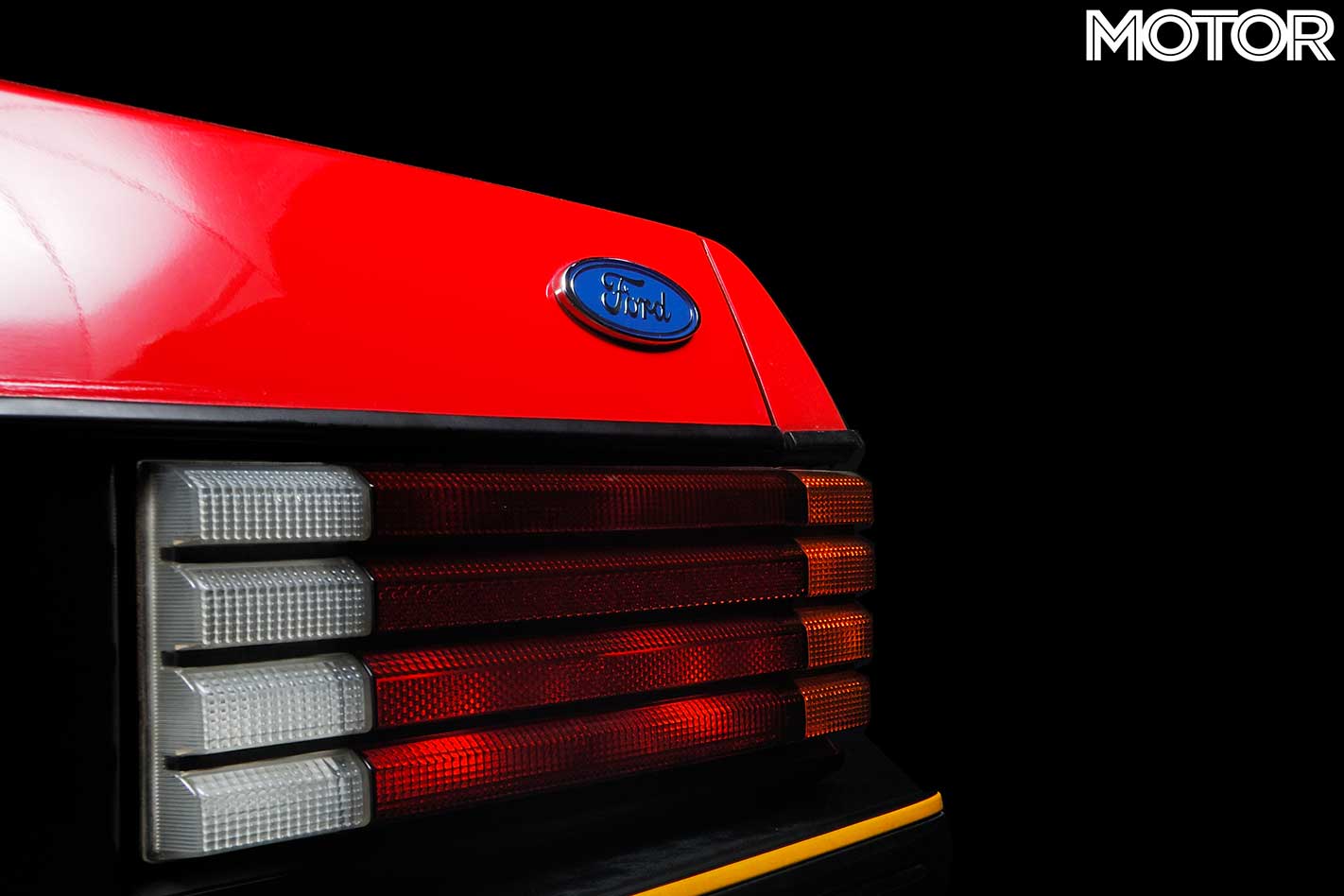
What makes the ESP so much more special than pretty much anything else in the Falcon catalogue at the time was the level of detail and performance gear that Ford crammed into the package. While the engine stayed standard (with its alleged 193kW)and the gearbox and diff were no different to any other V8 Fairmont, there were some important tweaks.
Those started with the four-wheel-disc brakes and continued with the Bilstein shocks and lowered springs. Add the 15-inch `snowflake’ alloys and 60-series Uniroyal hoops and you had yourself a reasonably complete three-course dinner.
Inside, the standard front pews were ditched in favour of a set of truly lovely Scheel buckets and the whole lot was trimmed in the soft-touch trim that spelled `luxury’ back in the day. The ESP got full instrumentation, too, with six gauges (speed, tacho, fuel, temp, oil and volts) housed in the big, rectangular XE binnacle.
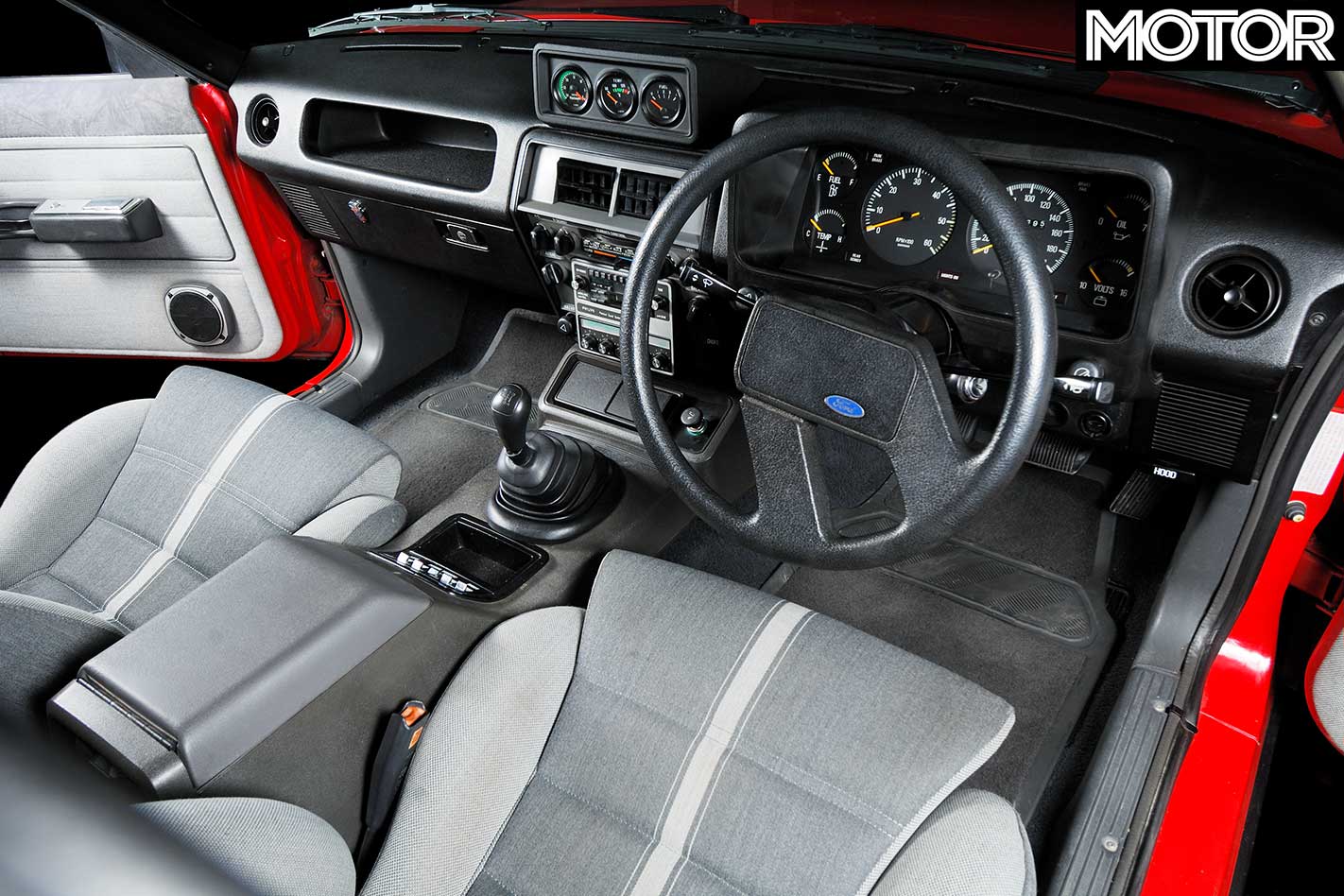
Performance was strong rather than completely berko and there’s simply no way Ford could easily screw the big numbers out of the carburetted 351what with this newfangled pollution gear and whatnot.
So while it might sound like the same mechanical package as the XY GT-HO, the XE is not in the same ball-park stomp-wise. But it will swallow big miles pretty well and all that good gear on board makes for a pretty relaxing way to get around. And unless the backside drops completely out of the collectible car-market (again) values are only going one way.
Speaking of which, cars that were changing hands for $15,000 just a couple of years ago are now carrying stickers of up to twice that right now. But there are good cars out there for around the low-to-mid 20s and they seem like decent value given the rarity, pedigree and the fact that any XE with a 351 and a manual box that isn’t rusted from the drip gutters down is going to be almost as much as that. But if you want a minter, you’ll need to part with better than $30K.

Bear in mind, however, that the basic XE package hasn’t aged terribly gracefully. How many Falcons of this era have you seen that still have good shut lines and creases that still line up? Not many, huh? So check each car carefully.
Oh, and make sure you aren’t looking at a Falcon GL with the interior and driveline from a wrecked Fairmont Ghia and a set of ESP badges stuck on. Make sure, too, that all the ESP bits are present and accounted for; finding the exact Scheel seats and trim bits might be difficult in 2012. And like all these things, it’s only a real ESP 351 if it has the compliance plate and build plates to prove it; a re-powered 302 just aint in the hunt money-wise.
And finally, here’s the other crazy thing about Ford’s decision to limit the Falcon’s appeal by dumping the V8: The XE era was, as well as the last gasp of the Ford V8, the first time in modern history that the blue oval had thumped Holden reached the top of the Aussie sales charts. Talk about self-harming…
A 735kW 2016 McLaren P1 GTR is for sale in the US, though it’s more special than just being a rare McLaren.
The outlet selling the car, DuPont Registry, claims that it’s not only the first chassis built as a McLaren P1 GTR, but that it’s also the first one to receive the road-legalisation treatment from Lanzante.
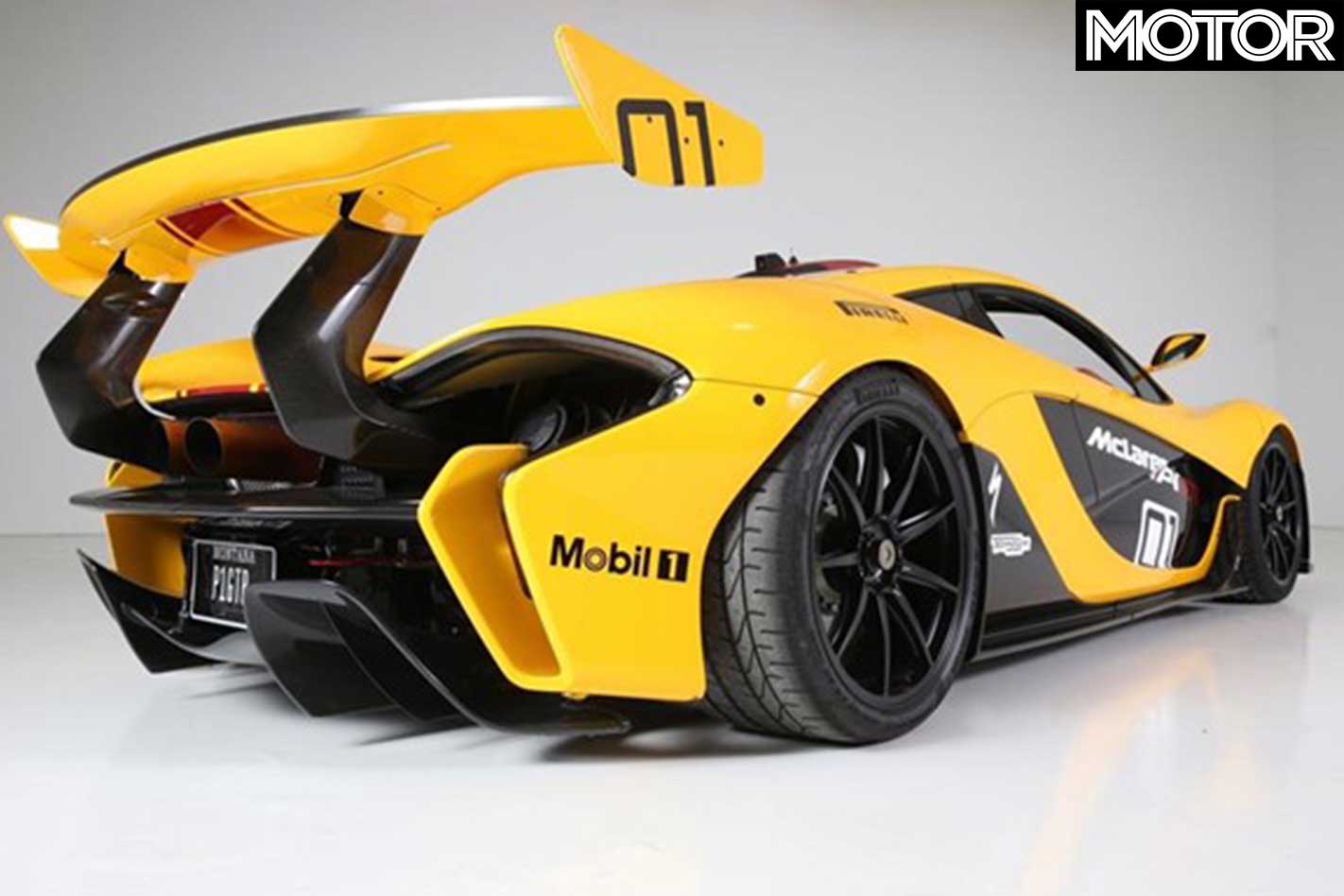
While all signs suggest that this is indeed Chassis #01 after a little research (though McLaren retains a couple of pre-production-spec cars), whether this is indeed the first one to be converted by Lanzante isn’t proven.
duPont does however offer some peace of mind with the claim that a McLaren engineer confirmed the car as being genuine.
“By pure coincidence, a McLaren engineer happened to stop by on his Floridian vacation and he went over this car with white-glove treatment.
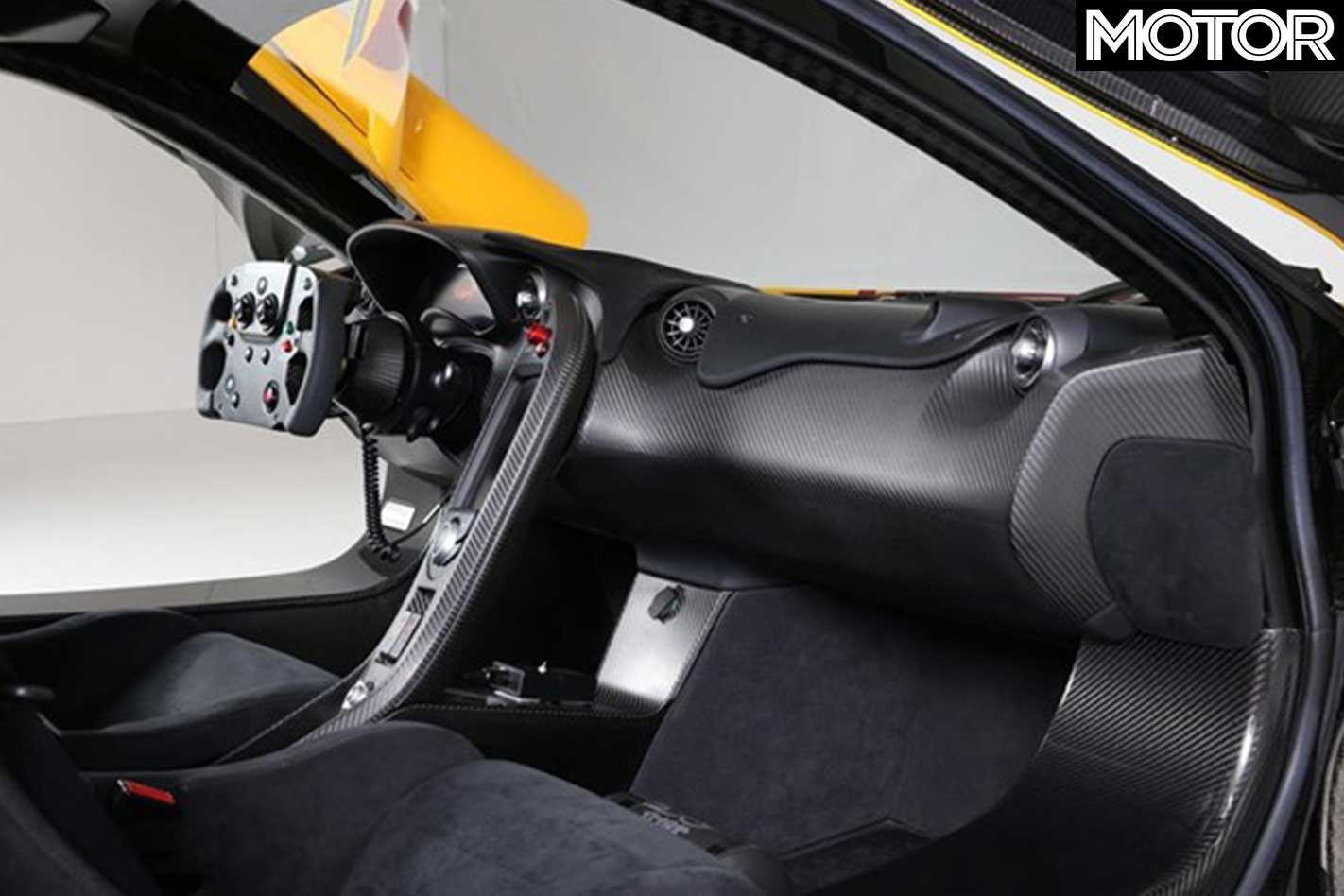
“He remembers each GTR as if they are his children, and he gave us his blessing that this car has been kept in factory condition since it was built.”
The odometer on the car will show approximately 900 miles, as the first owner who commissioned the car drove it that distance ‘to seat the rings and bearings’.
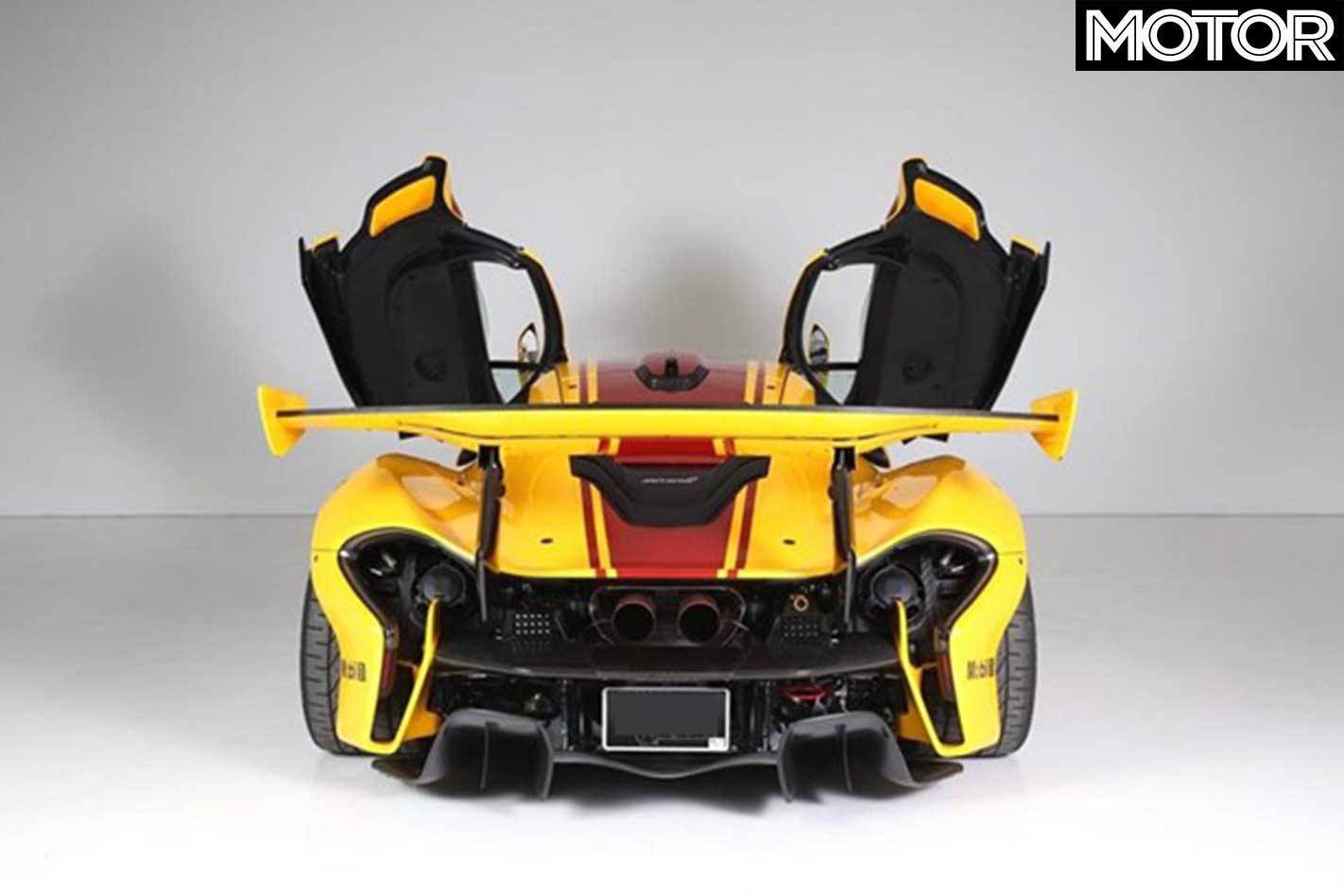
Its 3.8-litre V8 is probably yet to see its prime, though the P1 GTR is able to be driven on pure electric mode via its hybrid motor for relatively short distances. You’re sort of missing the point if that appeals to you though.
As of last year, only 27 P1 GTRs had been converted for road use, one of which came up at an RM Sotheby’s auction with a €3,200,000 – €3,600,000 estimate. That’s between AUD$4.69 million and $5.63 million.
So when we saw the words ‘Call for Price’ on the DuPont advertisement, we weren’t surprised. IF you have to ask, it’s probably not for you.
