CASH-STRAPPED Formula 1 team Force India isn’t for sale. The team overnight made the unprecedented step of releasing a statement distancing itself from talk of a takeover that would resurrect the Brabham name to the top tier of motorsport.
“Following recent media reports speculating on the sale of Force India Formula One Team Limited, the company’s shareholders wish to clarify that there is no offer from potential investors under consideration,” a statement from the team read.

Force India’s unusual plan to reveal the car’s 2018 livery on the morning of the first official day of testing this weekend has prompted speculation that the team was about to hand itself over to a new owner, with the recently formed Brabham Automotive – the company formed by Sir Jack Brabham’s son David, that wants to reinvent itself as a supercar maker – tipped as the buyer.
Brabham Automotive is counting down to an early May launch that will reveal more clues as to how it plans to shape its future. It was believed that the future car maker would follow the same path as now highly successful British supercar maker McLaren, which used its F1 experience to fuel a business building a new generation of low-slung, highly desirable performance coupes.

This year marks the 70th anniversary of the Brabham family’s involvement in motorsport. The www.brabhamautomotive.com website said it would mark the anniversary by publishing images from the family’s motorsport history, as well as “ glimpses of the future”.
Sir Jack, who died in 2014, remains the only person to win the Formula 1 Drivers’ Championship title in a car bearing his name.
When you’ve been making sports cars for as long as Ferrari has, you’re likely to have become quite good at it. However, the company’s pedigree in modern drop-top grand tourers is less convincing.
The task was to reconcile opposing requirements by creating a car with the dynamism and excitement of a Ferrari, but also the versatility, refinement and convenience of a car you’d use daily. However, the California’s story didn’t pan out well. Time to take a fresh swing at it, then.
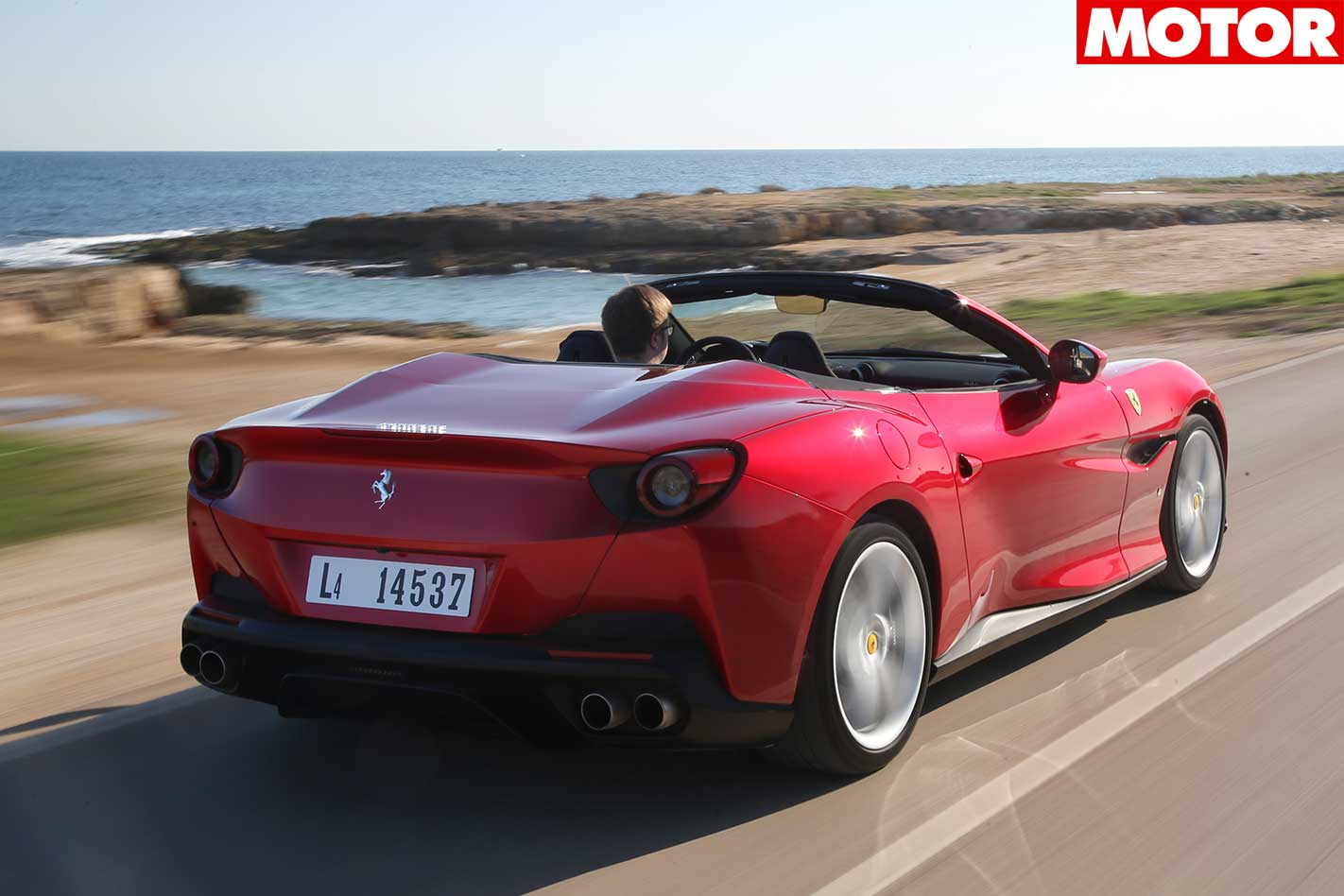
Under the bonnet, the 3.9-litre, 90-degree, flat-plane-crank, twin-turbo V8 adds 29kW of peak power. And while Ferrari may only have liberated 5Nm of additional torque here, given that it has also saved 80kg in the car’s kerb weight, this thing isn’t hanging about.
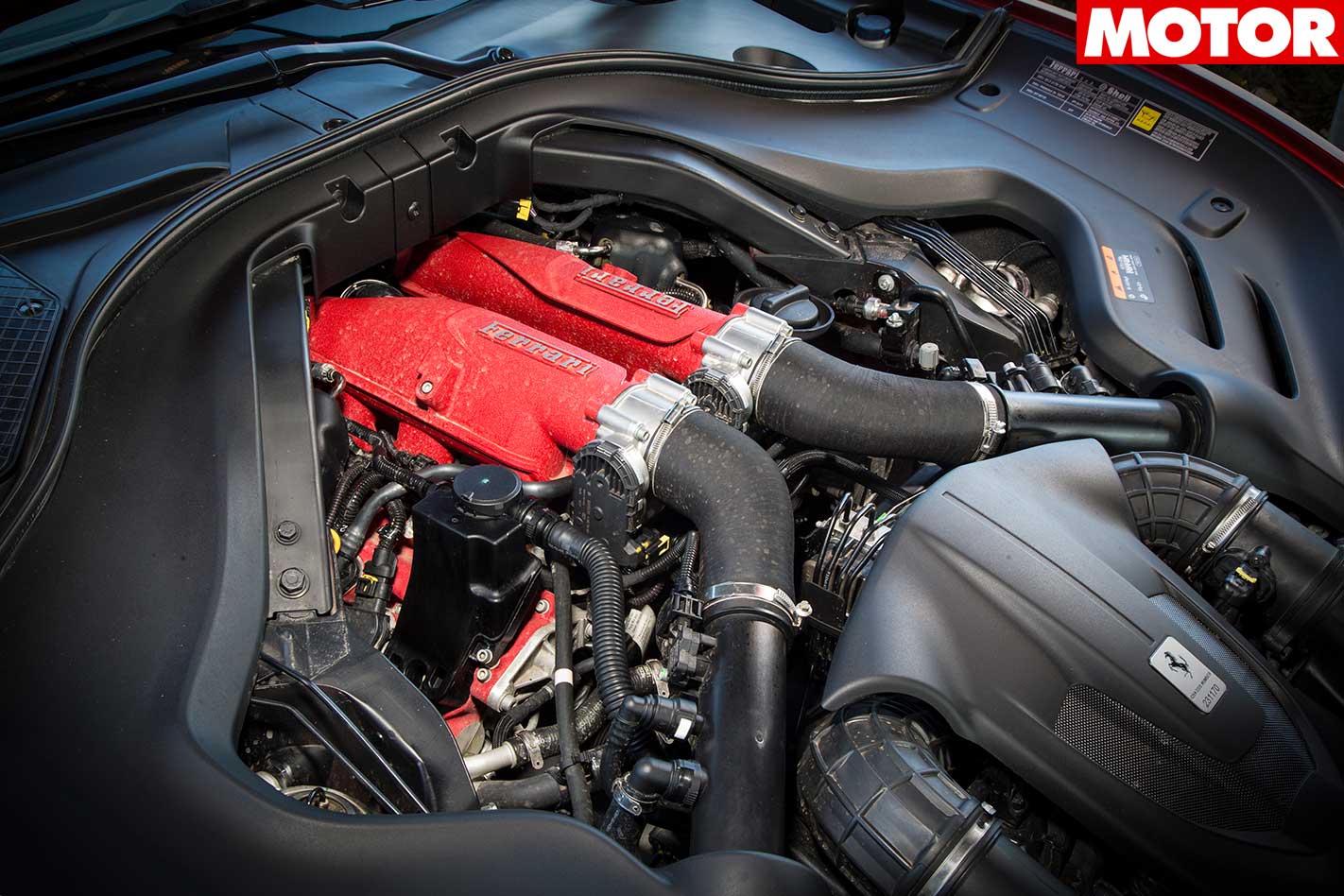
The engine revs to a tremulous 7500rpm, it has a huge swell of mid-range torque, and it responds crisply at all times, feeling progressive in its power delivery for a highly stressed turbo. It’s very Ferrari. But is it very grand tourer? Perhaps not.
The gearbox, too, gives further impetus to the sense that the car’s identity is slightly muddled, and permanently at odds with itself.
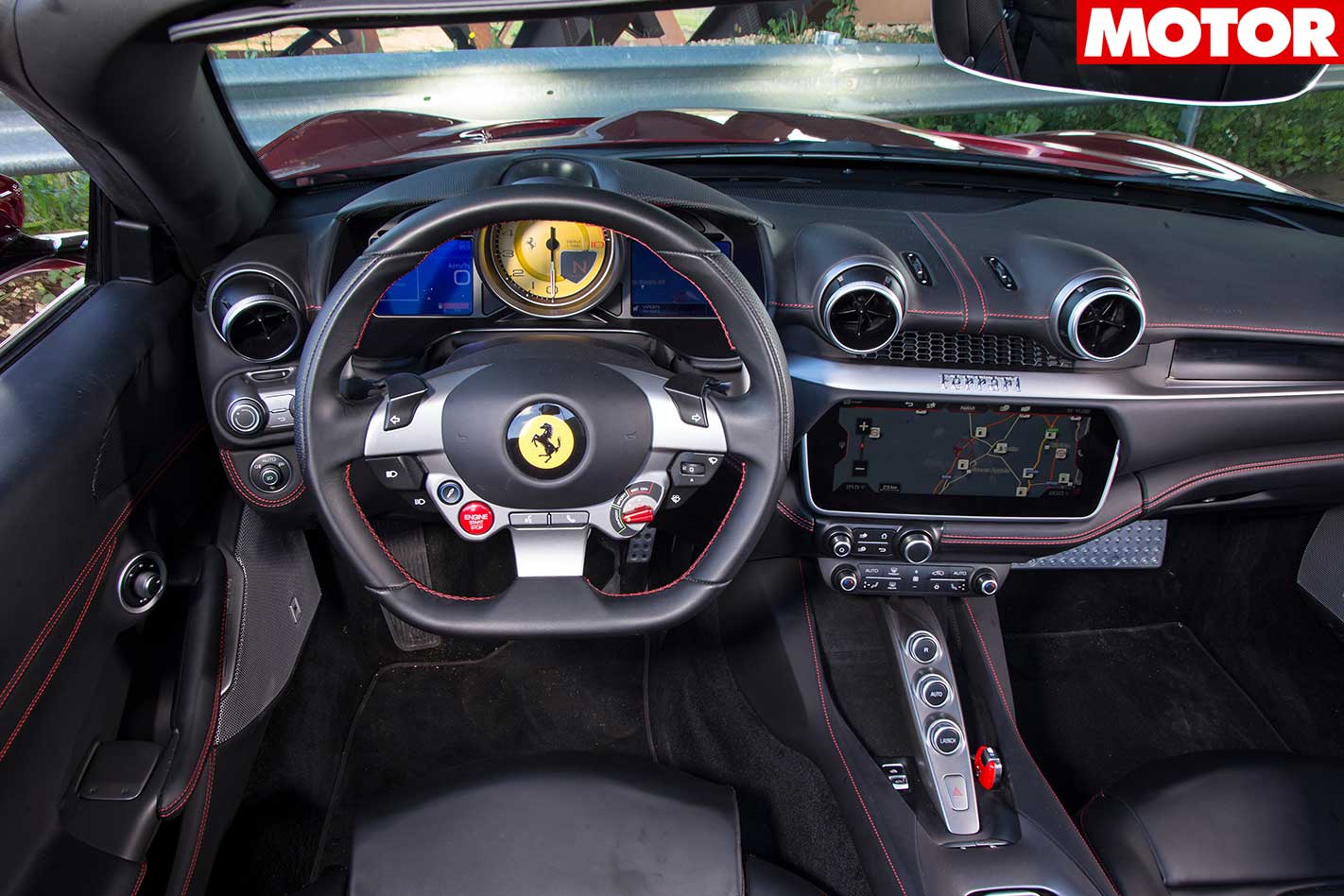
In typical Ferrari convention, the Portofino has three driving modes which configure its powertrain, dampers, steering and stability control – but it also has a separate ‘bumpy road’ suspension override button so that you can have most of the systems set for optimum driver engagement, but the dampers set to soft.
Suffice to say, the car has a regular need for that ‘bumpy road’ button. Frankly, it needs it too regularly for a car that ought to be supple and fluent-riding as well as eye-wideningly taut and poised.
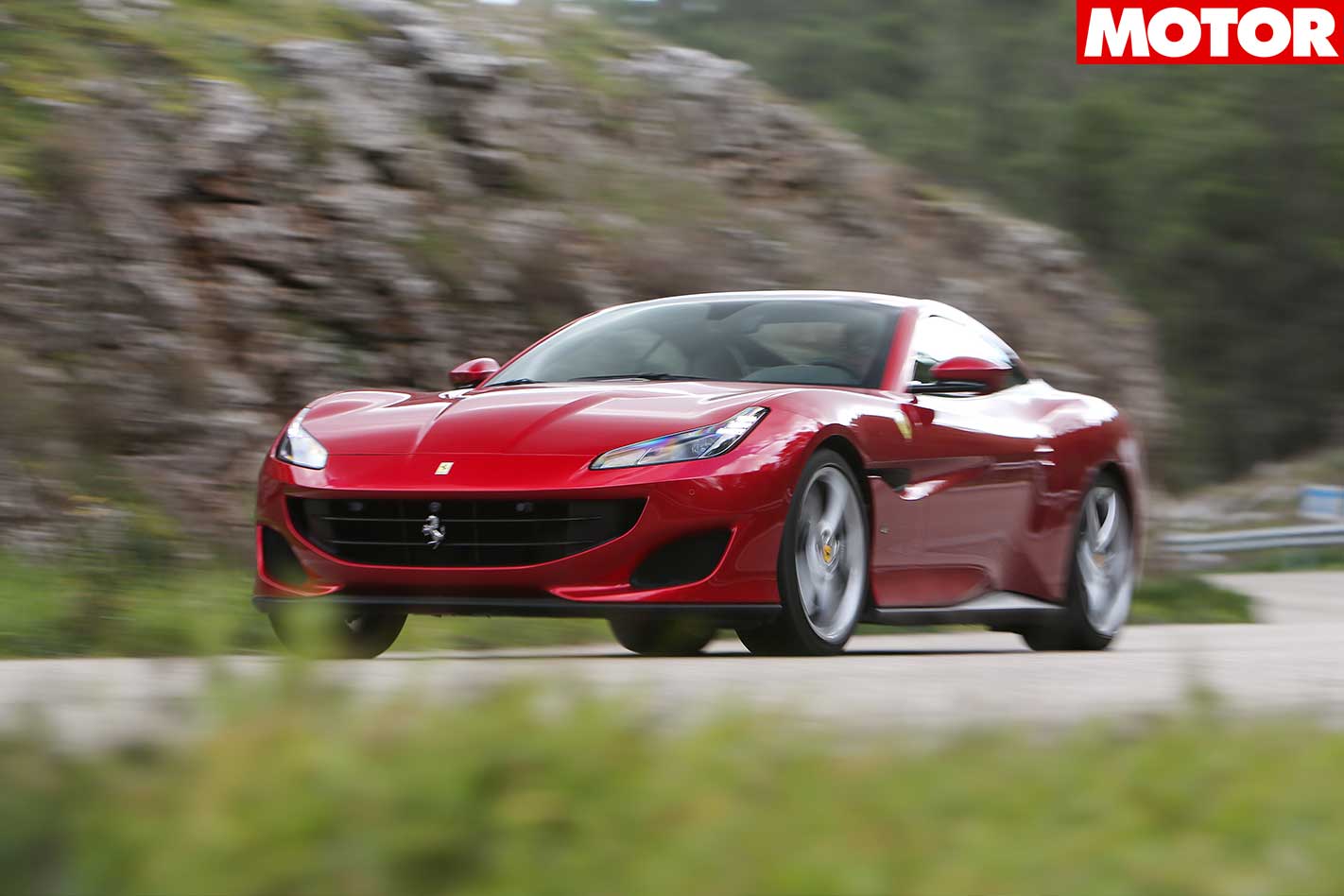
The handling also helps to rob it of the breadth of ability needed to make it suited to any journey; relaxing, at times, as well as exciting. The new electric steering’s very direct and while it has weight, doesn’t manage that weight cleverly enough to give you something to push against as the front wheels bite. Away from that there’s better news.
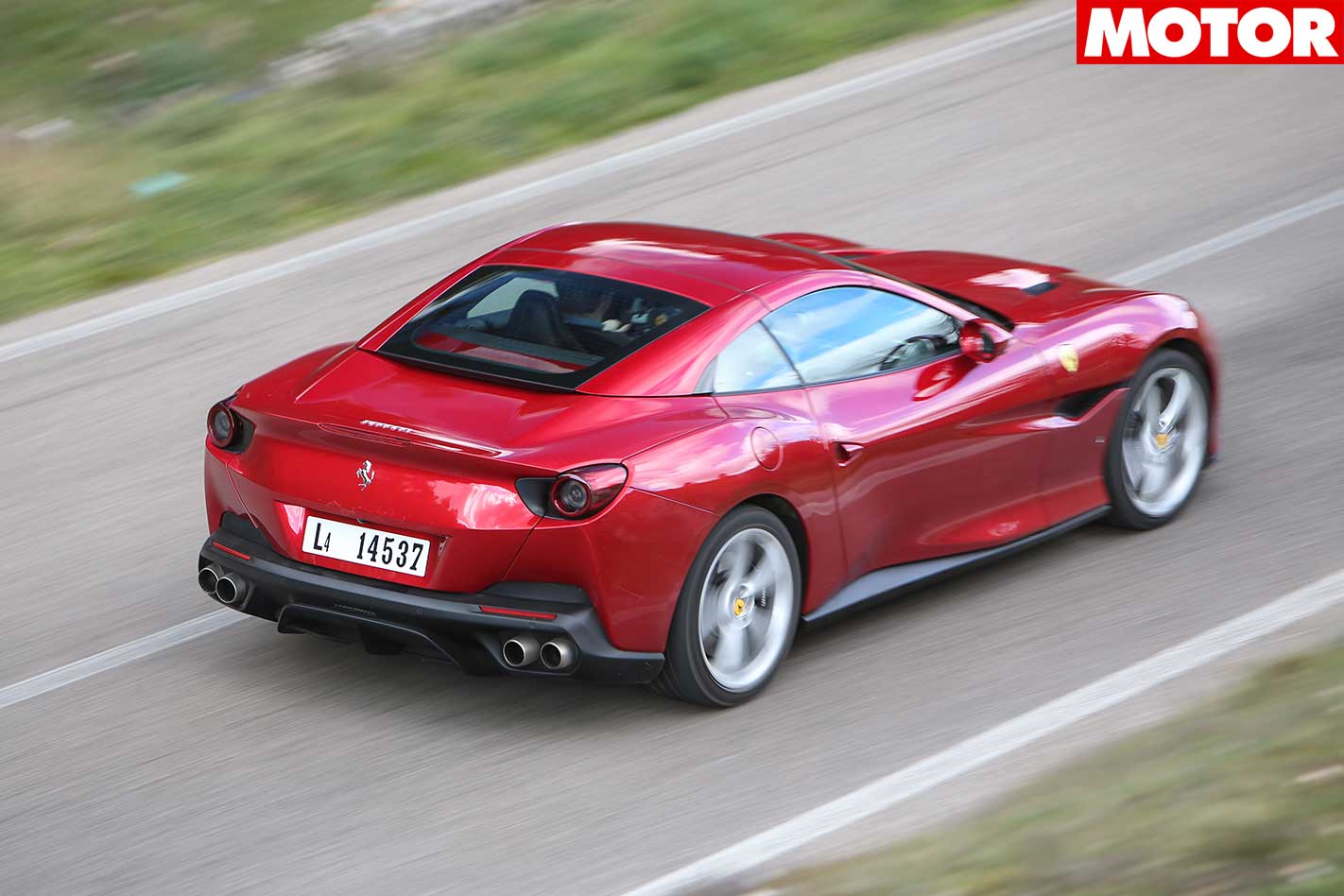
There’s no need for owners to worry: the stability controls work well to make the car feel incisive, but obedient when they’re active, and there’s plenty of fun to be had with them on. But Ferrari’s remarkable side slip control oversteer-tamer isn’t fitted here – and without it, you never feel sufficiently at ease with the car’s steering pace, or have the confidence you’d need in the predictability of the rear axle, to be inclined to get stuck into that final layer of the driving experience.
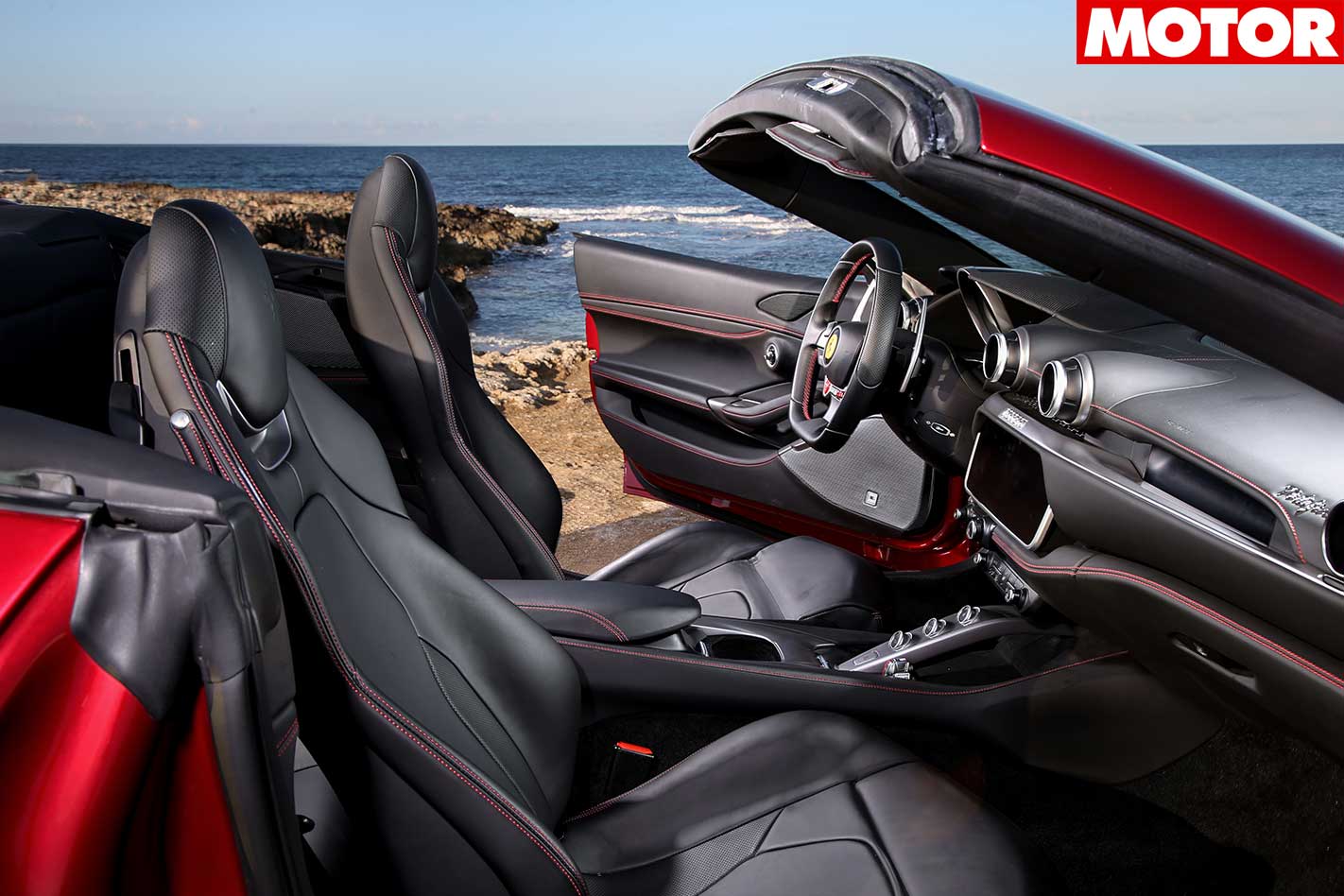
In some ways this is a more versatile, better luxury sports car than a California, too. If someone asked me to drive 300km on normal roads, and in uninterested fashion, in one or the other, I don’t think I’d pick the new boy. And that’s not much of an invitation to go on tour.
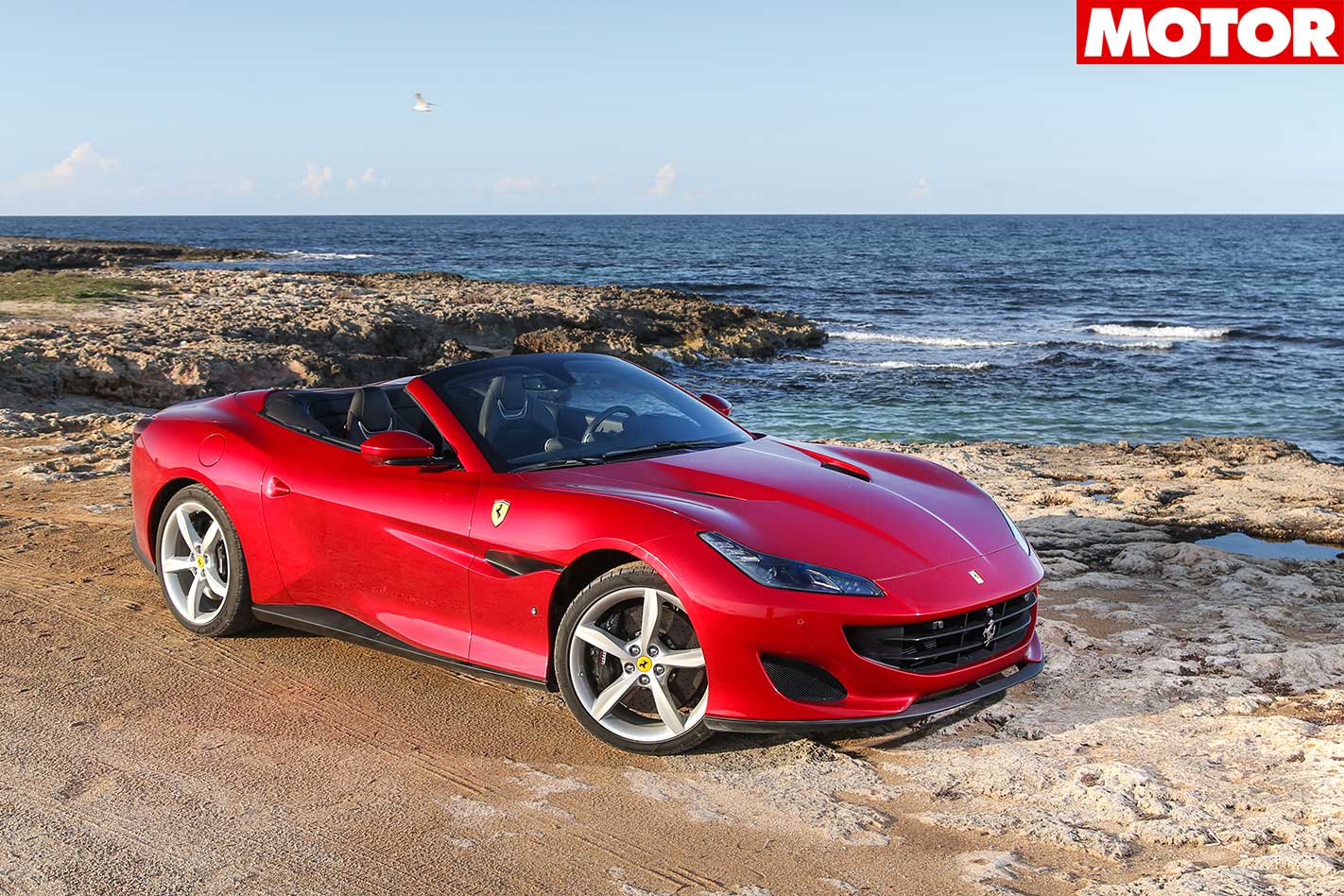
Like: Pace from the boosted V8; hard-top design Dislike: Confused character; is it a step forward? Star Rating: 3.5 out of 5 stars
We all know ‘That Guy’.
Up at 5.30am for a quick 50km bike ride and a swim, knocks out 50 push-ups before swilling a wheatgerm smoothie and pouring himself into the most perfectly cut suit ever to go to his glass-walled office. And yet, no-one really knows who he is.
Audi confirms the Audi TT is dead
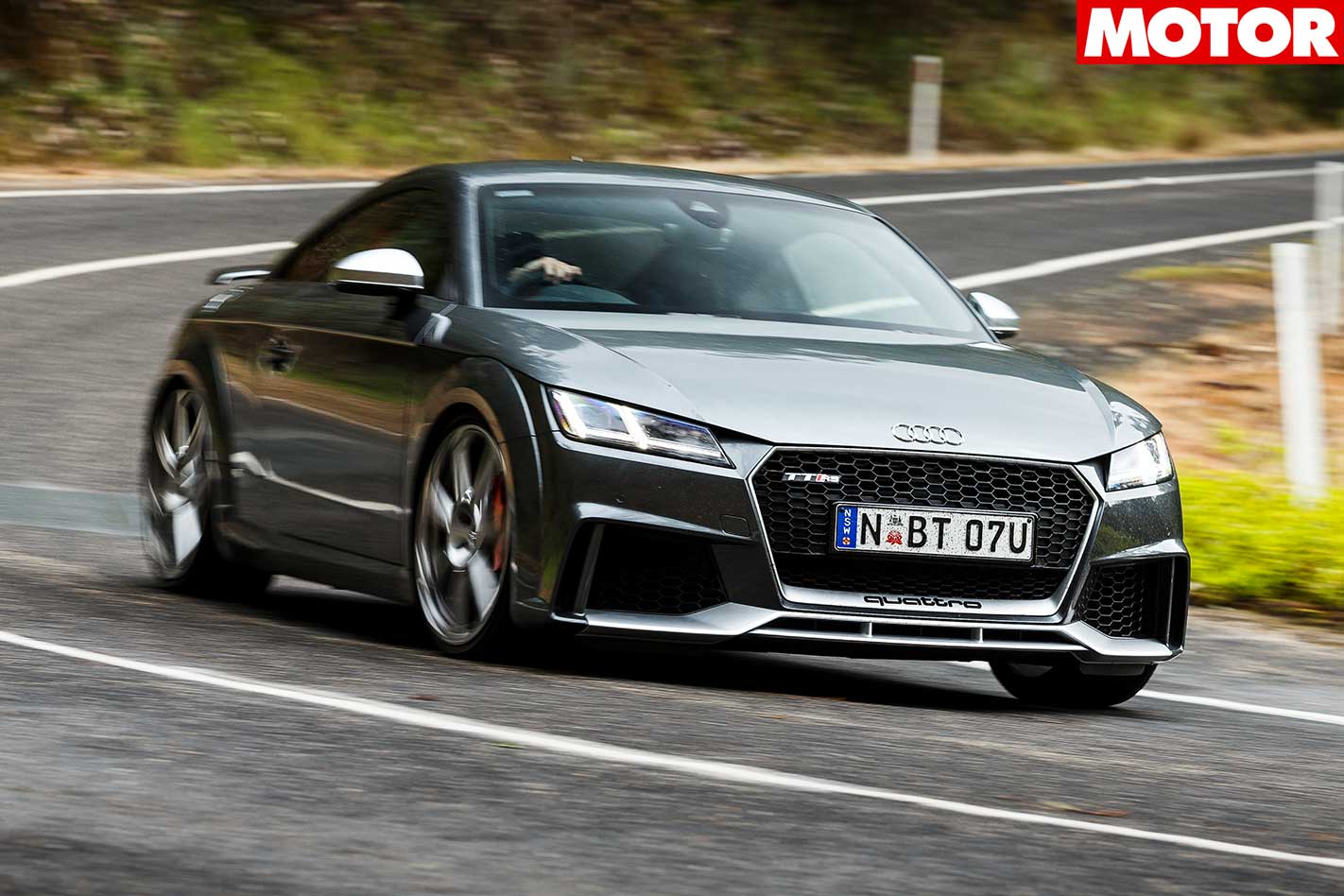
On paper, it’s got the wood on a lot of genuine performance cars – 0.4sec quicker to 100km/h than a Mercedes-AMG C63 S, anyone? – for less money, but it’s almost like it wears a cloak of anonymity. It stands out in the 2018 PCOTY field a bit, though… but then again, without Lambos and Ferraris cluttering the place up, that’s easier to do.
Once regarded as Audi’s design enfant terrible, the TT moved ever closer to A4-esque territory with the launch of the third version last year, and in so doing gave away some of its charm.
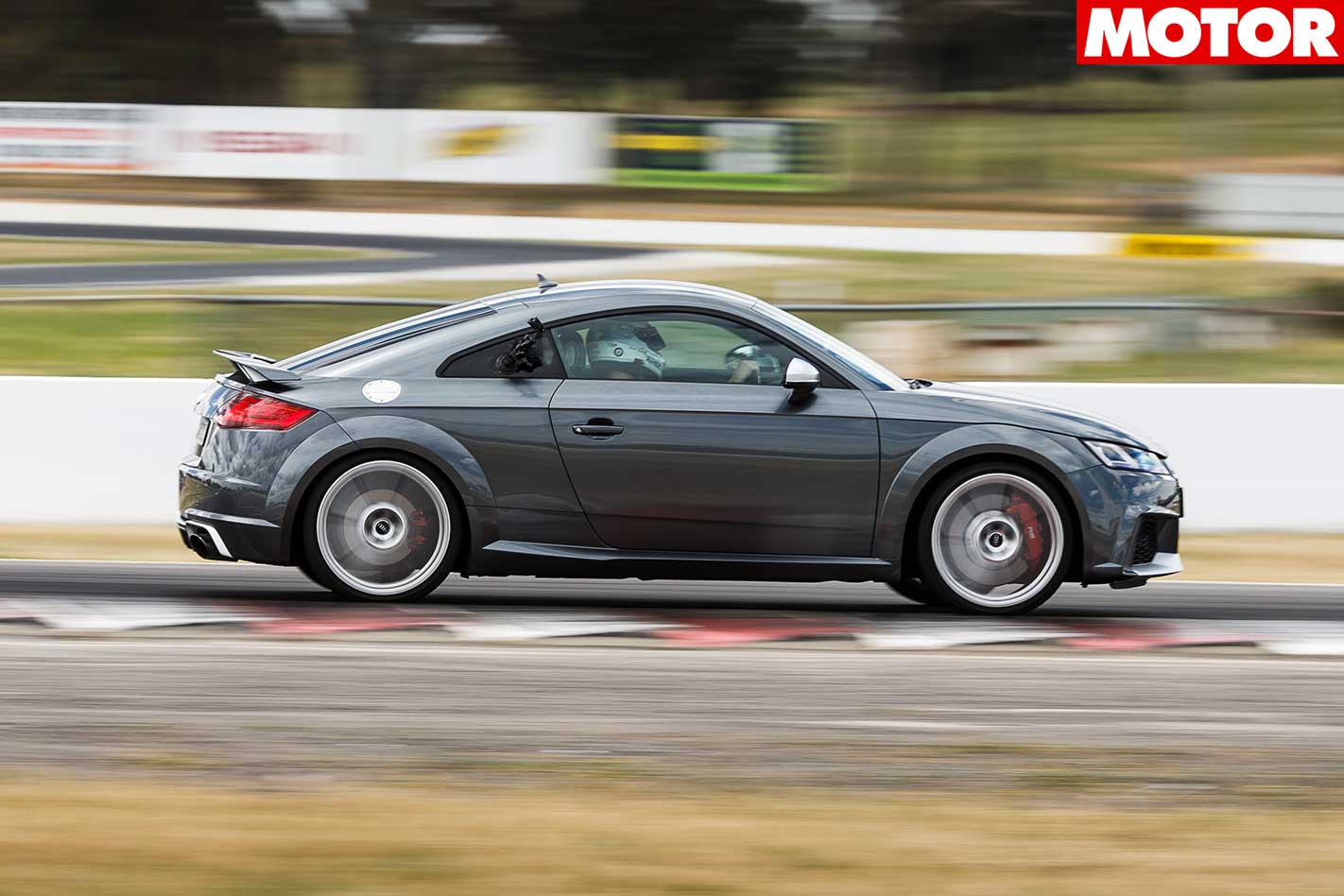
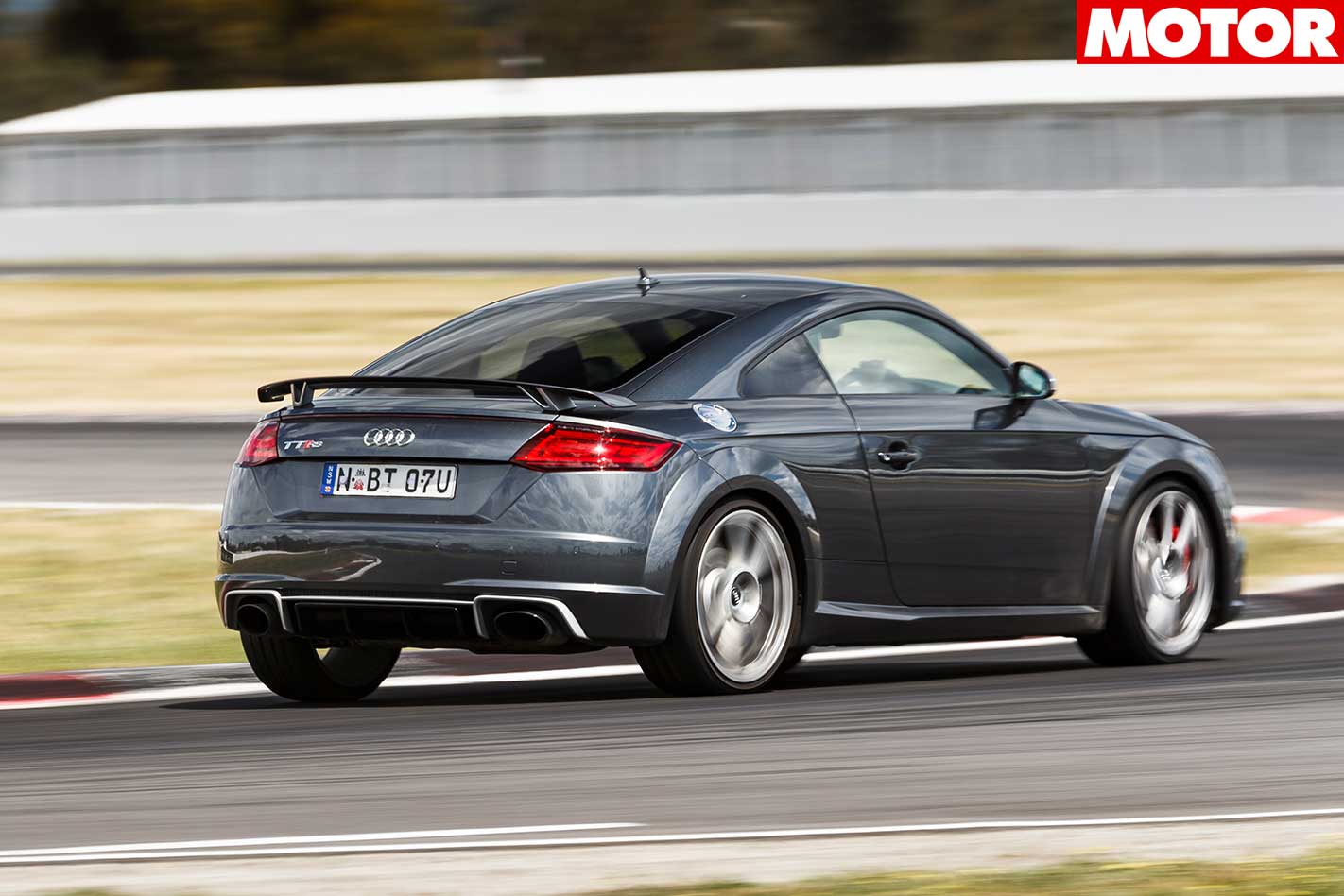
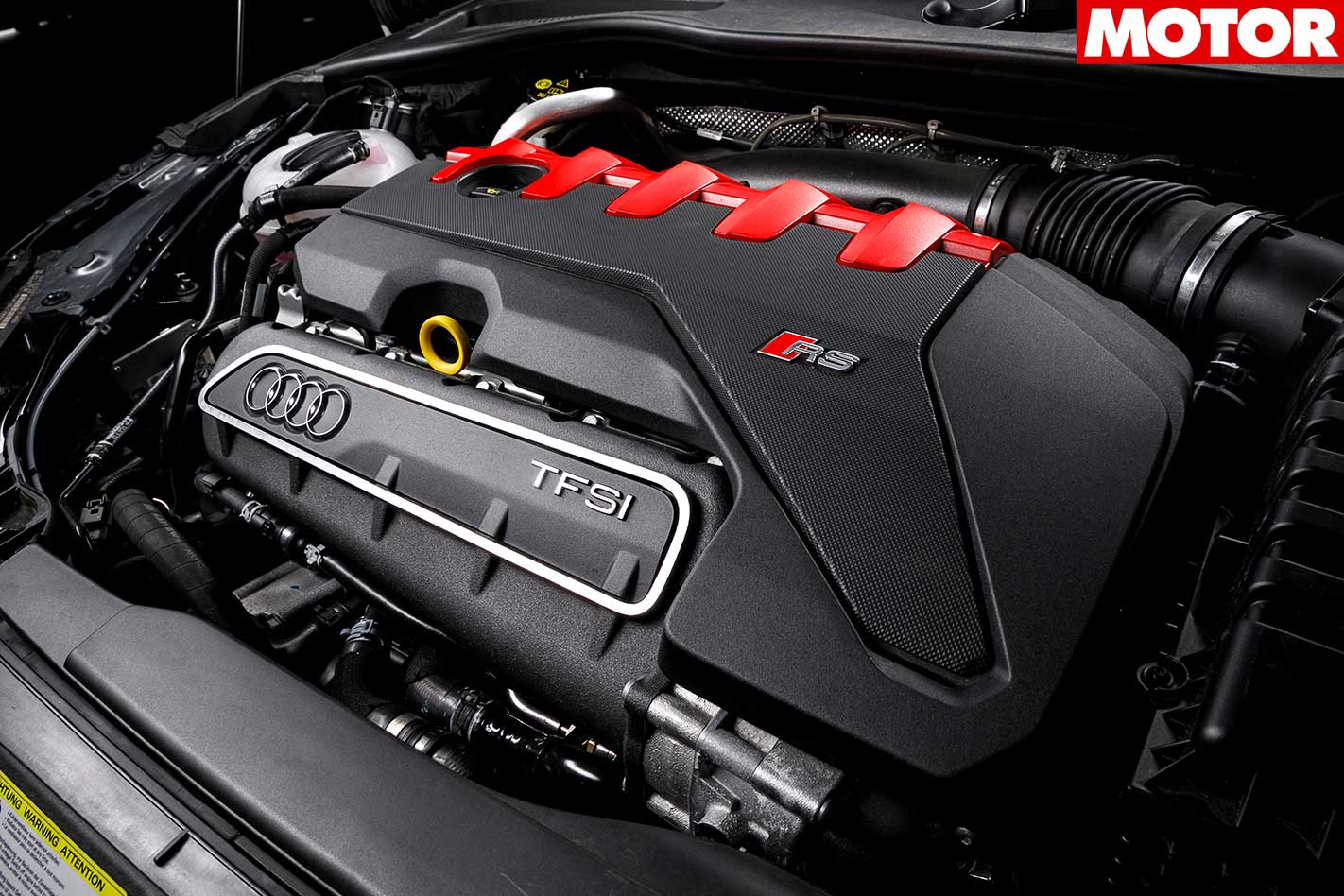
Around the track, it typically leads with its Haldex AWD-equipped nose, but it handles direction changes very, very well. There’s lots of mumbo supplied with gusto, too, from the latest version of Audi’s amazing 2.5-litre straight-five, complete with alloy block.
What a motor – urgent, angry, seamless and so, so strong around the short chutes of Winton. On the road, though, it comes over as very clinical, despite that fabulous five-pot soundtrack frightening wildlife into sterility.
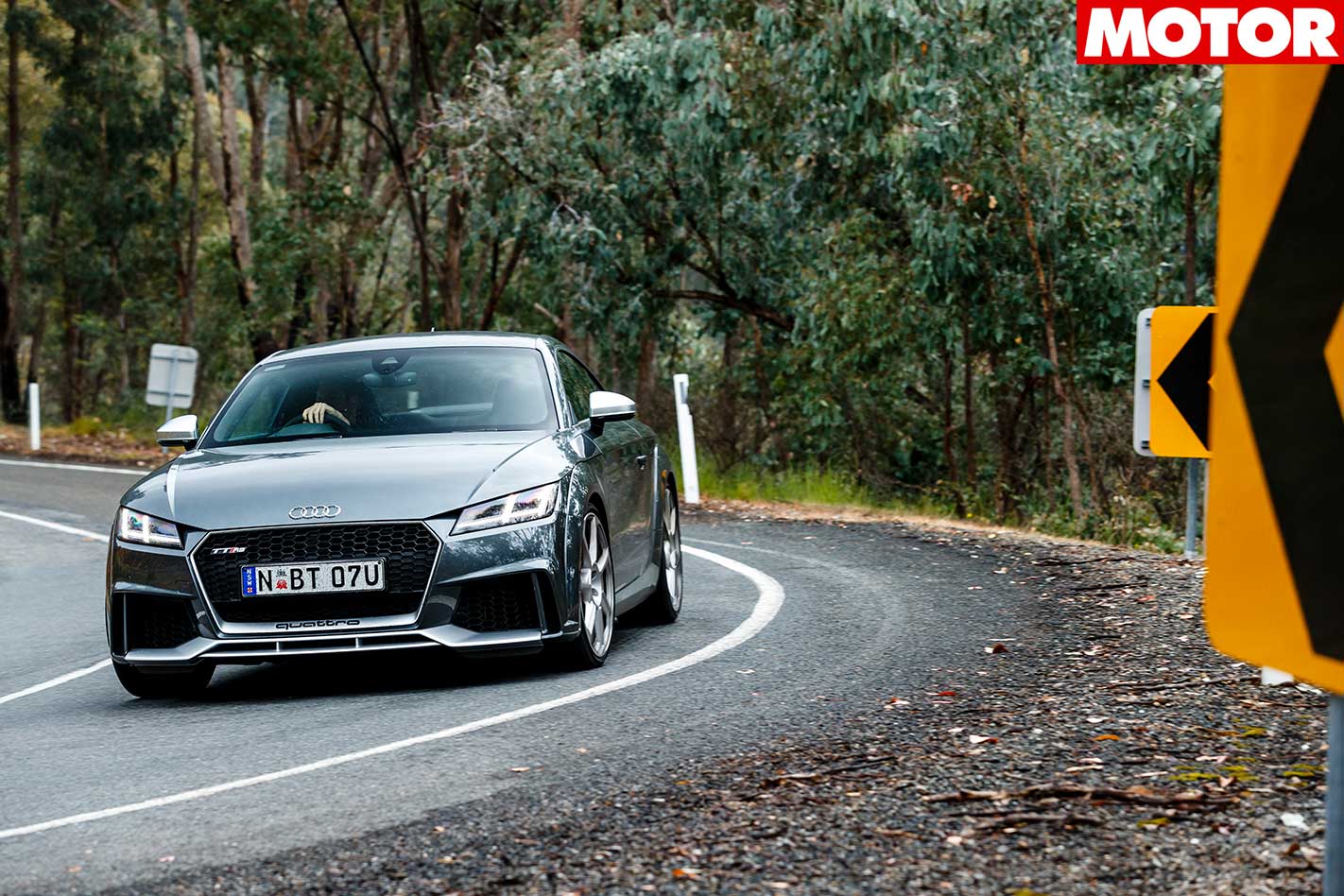
So despite its potential, sixth place is the best it can muster, with judges marking it down for liveability across the board, and a couple (Morley, Newman) hammering it for a lack of dynamic ability to match that powertrain.
It’s a somewhat surprising result given its stats, but while everyone likes the TT RS very much, it’s too hard to love it.
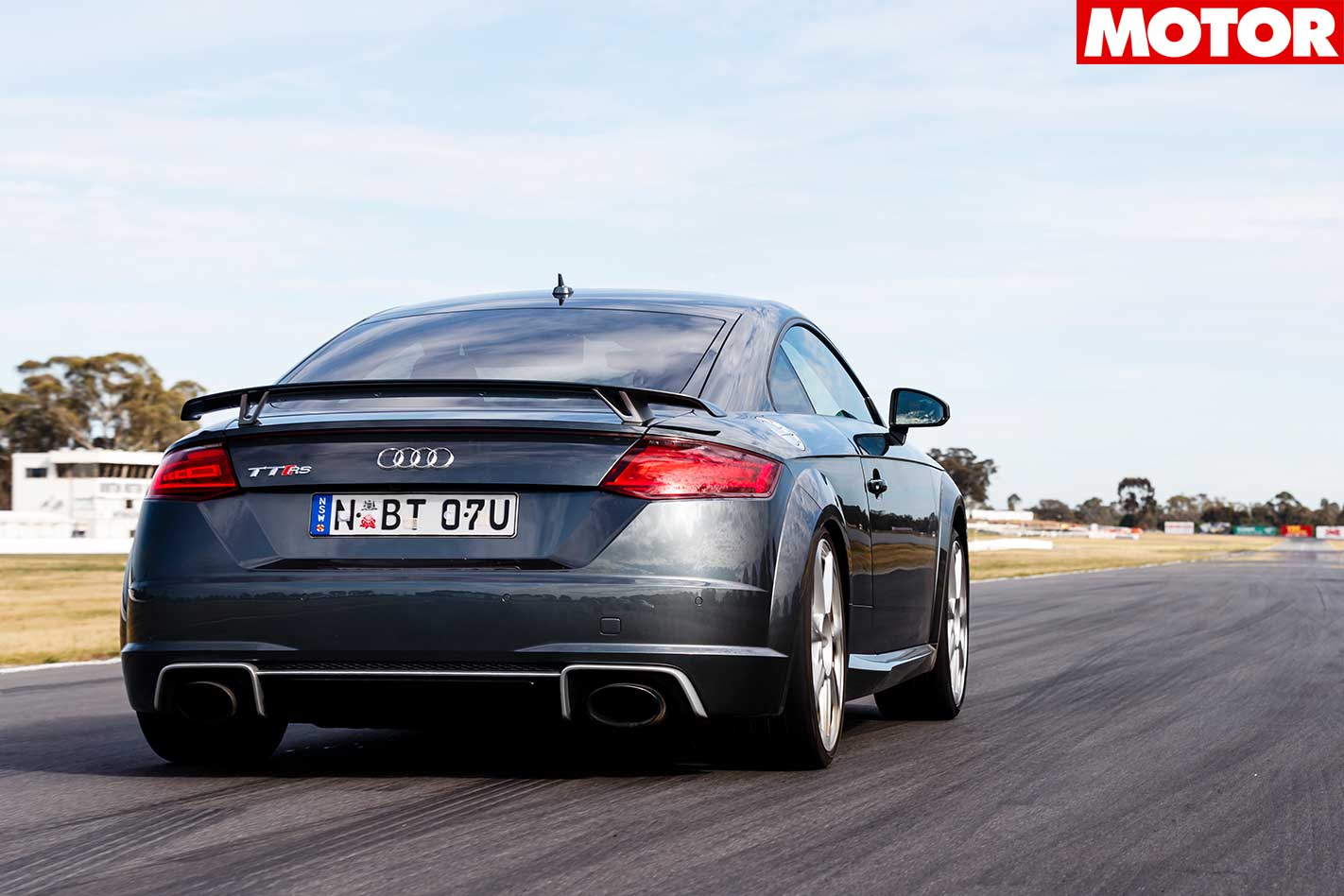
2018 AUDI TT RS SPECS: Body: 3-door, 2+2-seat hatch Drive: all-wheel Engine: 2480cc inline-5, DOHC, 20v, turbo Bore/Stroke: 82.5 x 92.8mm Compression ratio: 10.1:1 Power: 294kW @ 5850-7000rpm Torque: 480Nm @ 1700-5850rpm Power/Weight: 204kW/tonne Transmission: 7-speed dual-clutch Kerb weight: 1440kg Suspension: struts, coil springs, adaptive dampers, anti-roll bar (f); multi-links, coil springs, adaptive dampers, anti-roll bar (r) Brakes: 370mm ventilated/drilled discs, 8-piston calipers (f); 310mm ventilated/drilled discs, 4-piston calipers (r) Wheels: 20.0 x 9.0-inch (f/r) Tyres Sizes: 255/30 ZR20 (f/r) Tyres: Yokohama Advan Sport Price: $137,611
0-100km/h: 3.59sec (3rd) 0-400m: 11.75sec @ 191.89km/h (3rd)
Morley – 8th The hottest TT is still a TT for me – I just couldn’t own it.
Campbell – 10th Like a baby R8, in speed and noise. Just a bit bit one dimensional to drive fast.
Newman – 6th Crazy fast, lots of character, but the Cayman shows what it’s missing.
Robson – 7th Weird mix of emotional and clinical. That engine is ace, but chassis doesn’t allow much fun.
Reynolds – 6th Great engine, go-kart feel, would be almost perfect if it didn’t look like a TT.
JUDGES’ SCOREBOARD
| u00a0 | Campbell | Morley | Newman | Reynolds | Robson | Total |
| Performance | 8 | 8 | 9 | 9 | 8 | 42 |
| Dynamics | 7 | 6 | 6.5 | 9 | 8 | 36.5 |
| Accessibility | 8 | 7 | 9 | 9 | 7 | 40 |
| Liveability | 7 | 6 | 7 | 7 | 6 | 33 |
| Value | 4.5 | 4 | 6 | 7 | 7 | 28.5 |
| X-Factor | 6 | 4 | 6.5 | 5 | 6 | 27.5 |
| Total | 40.5 | 35 | 44 | 46 | 42 | 207.5 |
LEXUS finally has a seven-seat offering that doesn’t cost six digits, with the RX SUV’s rump gaining a few extra inches of real estate to squeeze in an extra pair of pews.
WHAT IS IT?
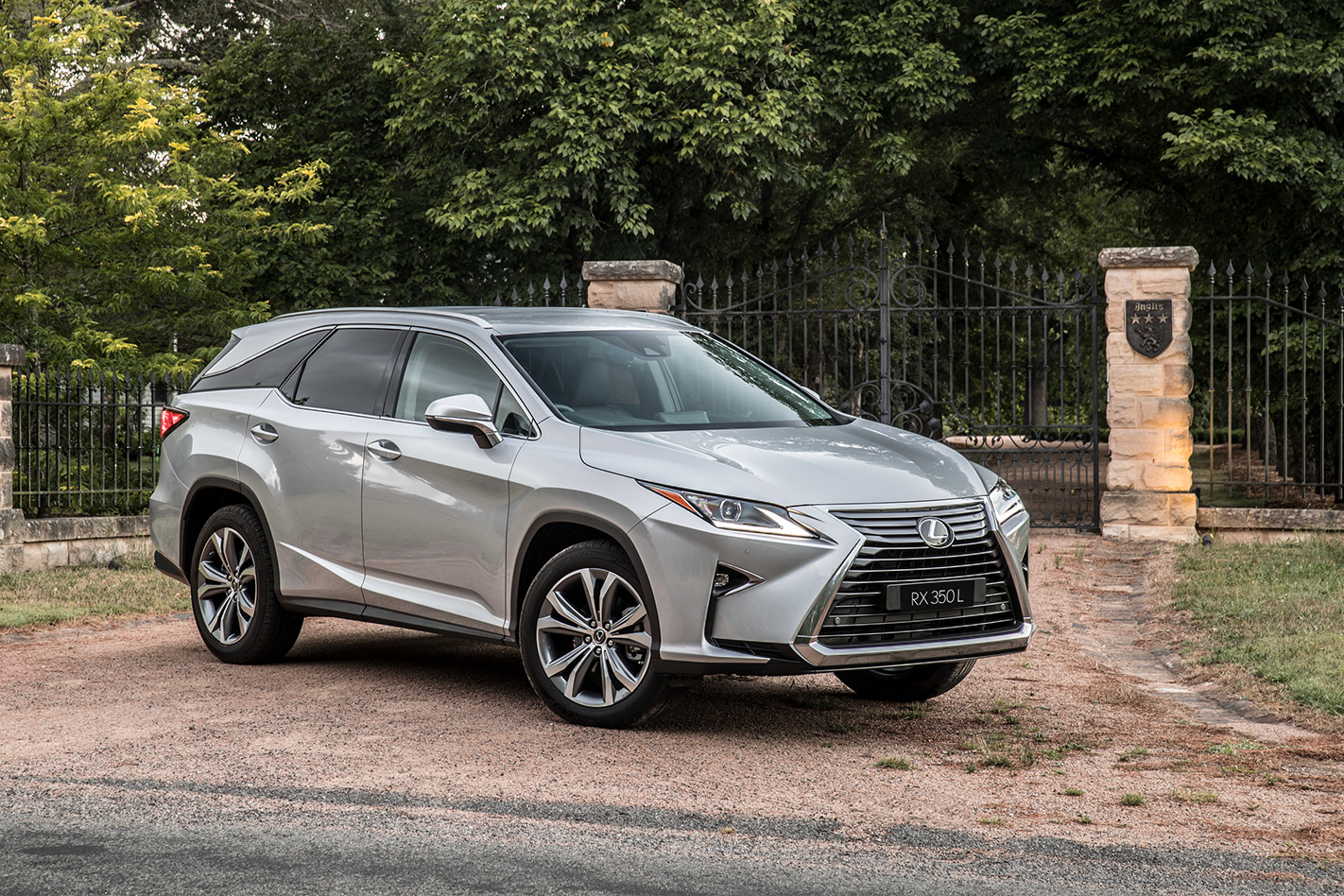
Lexus’ familiar RX large SUV, except with a multitude of changes from the B-pillar rearward to help it accommodate a third row of seats. Available in two grades with two engines – an aspirated 3.5-litre petrol V6 or a V6 petrol/electric hybrid, the RX L costs $3300 more than its five-seat brethren in low-spec Luxury trim, and $1600 extra in flagship Sports Luxury form.
WHY WE’RE TESTING IT
While the majority of its rivals have had seven-seat options for yonks, Lexus has only just been able to join the party. Previously, Lexus shoppers had to spend big on the $143K LX570 to get three rows, but the newly-arrived RX L (that’s ‘L’ for ‘Long’) finally brings a more affordable seven-pax option.
MAIN RIVALS
BMW X5, Audi Q7, Mercedes-Benz GLE-Class, Volvo XC90
THE WHEELS VERDICT
The RX 350L might allow Lexus to finally tick the ‘large three-row SUV’ box, but it relies on flawed packaging for its limited additional functionality, and introduces compromises that aren’t present on its five-seat stablemate.

THE WHEELS REVIEW
TALK about subtle. Unless you see them side-by-side, you’ll have trouble picking apart the newly-arrived Lexus RX L from the five-seat RX that’s been on sale here since 2015.
Lexus says all sheetmetal behind the seven-seat RX L’s B-pillar is unique, but you’ll need to squint to tell. The wheelbases are identical between both models and just 110mm of extra length has been spliced in behind the rear axle, the only real hint that something is different is the chrome trim above the L’s rear quarter window – it arches the opposite way to the regular RX’s.
Oh, and the tailgate glass is a few degrees steeper. Adding a third row to the RX is a pretty big deal, but Lexus has adeptly camouflaged the new variant’s bigger butt.
The only problem is it’s brought with it several compromises from a packaging point of view. Yes, we know those two fold-out third row seats are only intended to be used occasionally, but Lexus themselves admit that those seats are designed with people under 160cm in mind, and the high beltline means they’ll also struggle to look out through that thin triangular quarter window as well.

Are your kids claustrophobic? No? Banishing them to the RX L’s third row might change that. At least Lexus has provided third-row occupants with their own climate control console, dedicated air vents and cupholders
But it’s not just those in the rearmost seats that will struggle to get comfy. The second row has to be slid forward a fair way to liberate enough footroom for those behind, which dramatically cuts second row knee room unless the front seats are also inched forward. The RX L is, in effect, a 5+2 and not a true seven-seater.

There are a few other tradeoffs that come with the addition of a third row, namely the loss of the panoramic glass roof that’s standard on high-spec five-seat RXs (which is substituted with a much smaller moonroof above the front seats) and the trimming of 5kW and 12Nm from the RX350’s 3.5-litre V6’s output (thanks to the adoption of single rather than dual exhaust plumbing). The power-adjustable second row seats of the regular RX have also been replaced by a manually-adjusted bench to facilitate access to the second row, but that change is easier to understand.
It’s not all bad news, though. There’s enough luggage space for a large pram or a pair of decently-sized suitcases even with the third row raised, those seats are deployed electrically so you don’t need to wrestle with straps or levers, the front seats are spacious and comfortable, and the ride is cushy on the standard 20-inch alloys.
The 3.5-litre V6 that powers the RX350L is showing its age, however, and while the extra 110kg mass of the seven-seater is barely felt in around-town motoring, the RX remains one of the least-dynamic offerings in its segment. Last year one in five luxury SUVs sold in Australia had seven seats, so the arrival of the RX L is clearly in Lexus’ commercial interests. Unfortunately, those searching for a triple-row family hauler in that segment are still better off looking in other showrooms.
SPECIFICATIONS
- Model: 2018 Lexus RX 350L
- Engine: 3456cc V6, dohc, 24v
- Max power: 216kW @ 6300rpm
- Max torque: 358Nm @ 4600-4700rpm
- Transmission: 8-speed automatic
- Weight: 2090kg
- 0-100km/h: 8.0sec
- Fuel economy: 10.6L/100km
- Price: $84,700
- Available: Now
- Part Two: Subaru’s EyeSight proves itself in the real world
- Part Three: Baz finds cornering the Impreza is a game of two halves
- Part Four: How well does Subaru’s off-road heritage translate to the new Impreza?
- Part Five: Winter sports are enough to test anyone’s mettle
- Part Six: Glancing low blow sidelines Bazza’s Impreza
- Part Seven: Booted Impreza gets filled to the gills
- Part Eight: Subaru calls time on Barry’s extended Impreza tenure
Down Under is now a marketplace where small cars, such as Subaru’s Impreza, need to make a big noise to stand out.
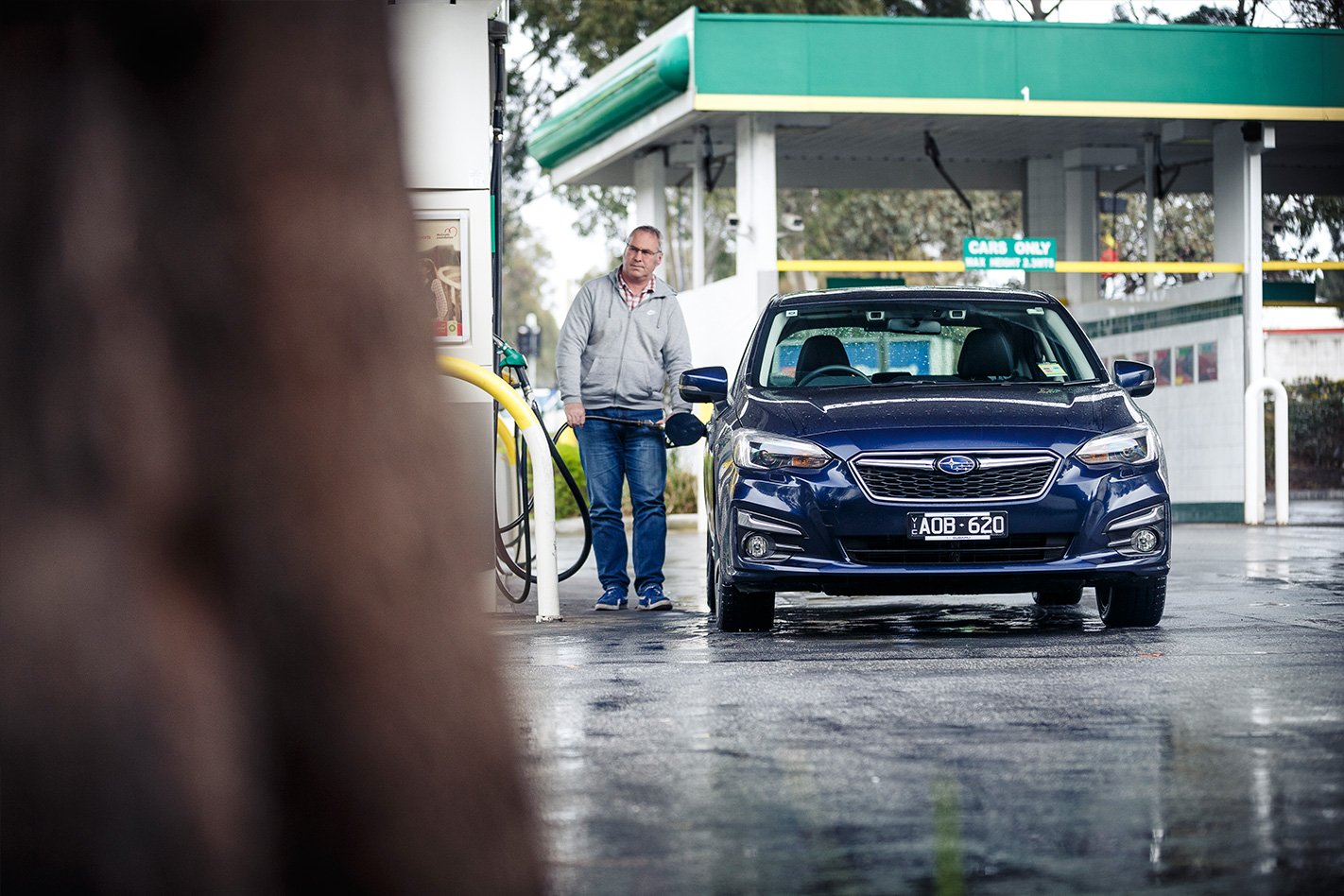
Generation G5 of the Impreza, a 2017 Wheels Car of the Year finalist, has introduced the world to the Subaru Global Platform (SGP): a lighter, stiffer all-new modular chassis that will underpin future models, including plug-in hybrids.
COTY testing clearly showed that the SGP is able to reacquaint the driver with something long absent from Subaru’s DNA; a level of dynamic prowess for which the Japanese carmaker was once renowned.
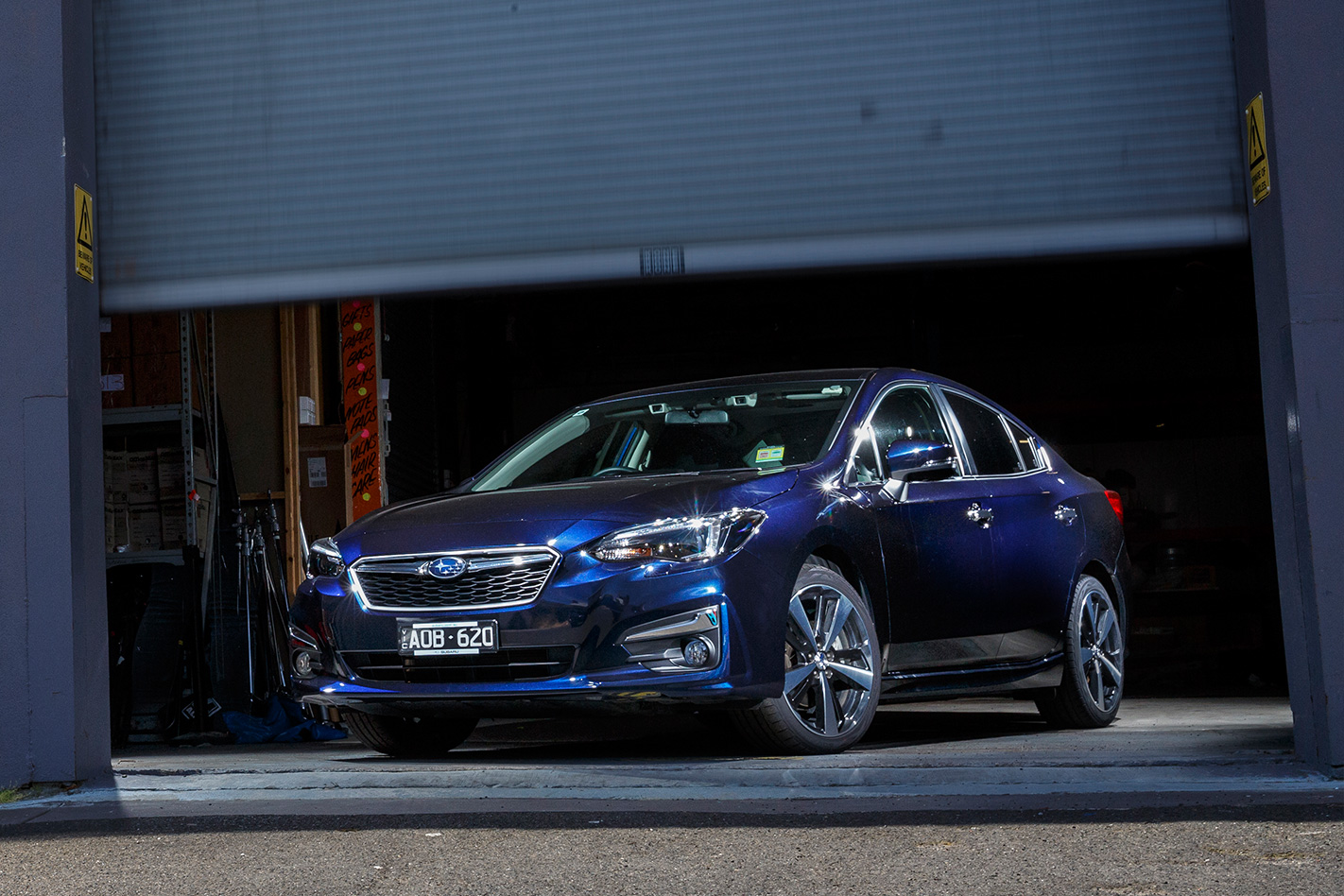
A booted version of the Impreza now joins the Wheels garage as a long-termer. Just like the five-door, the G5 sedan introduces a better-looking design featuring much sharper looks than the dowdy cardigan the previous generation wore. It’s something that will help it stand out in what remains a cut-throat segment in Australia, and one where the Subaru-badged contender snares only one in every 20 sales.
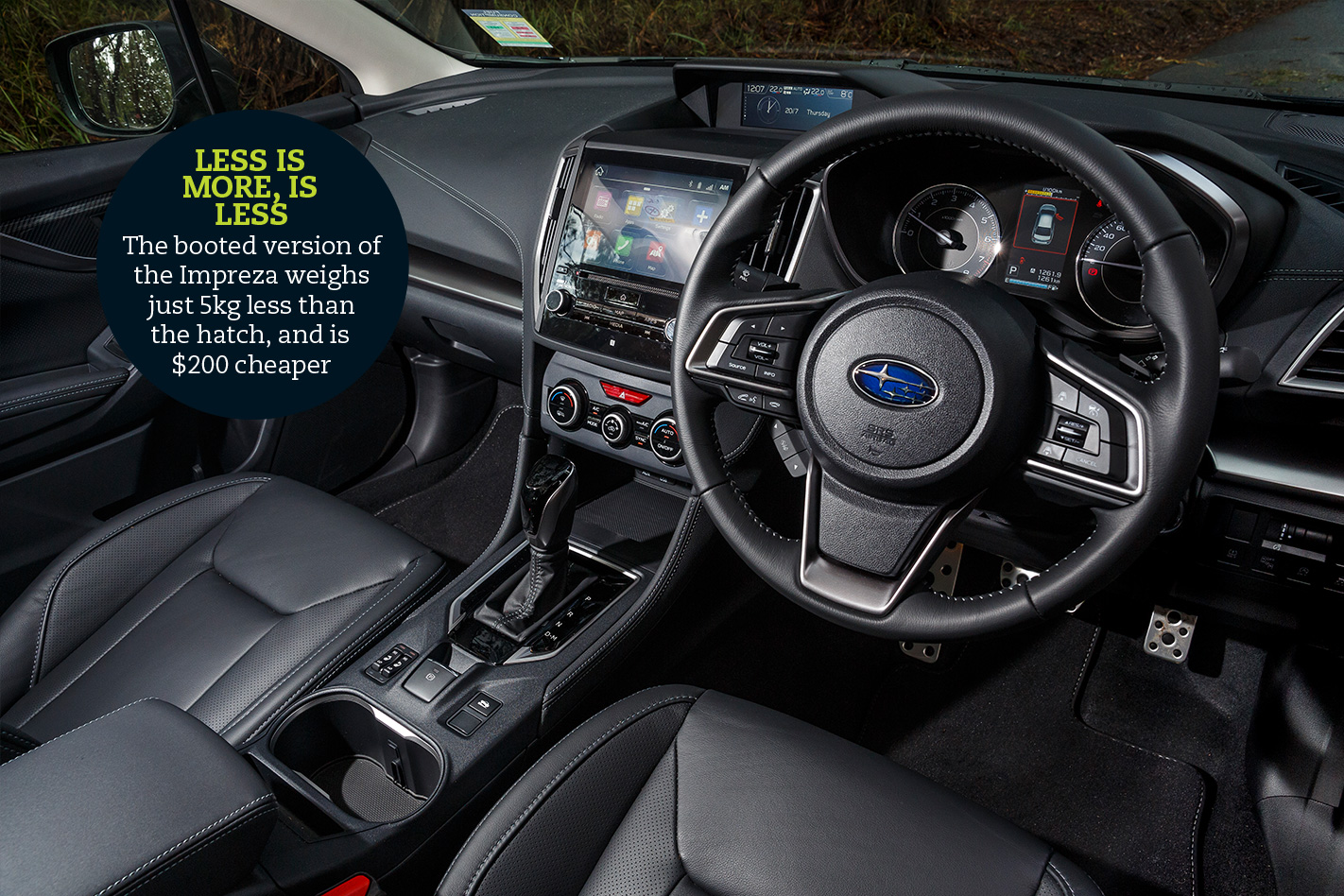
The SGP’s improvements extend to the inside as well, where Holden Commodore-rivalling interior space and comfort mark the Impreza as a genuine cross-shopping alternative to the doomed large sedan.
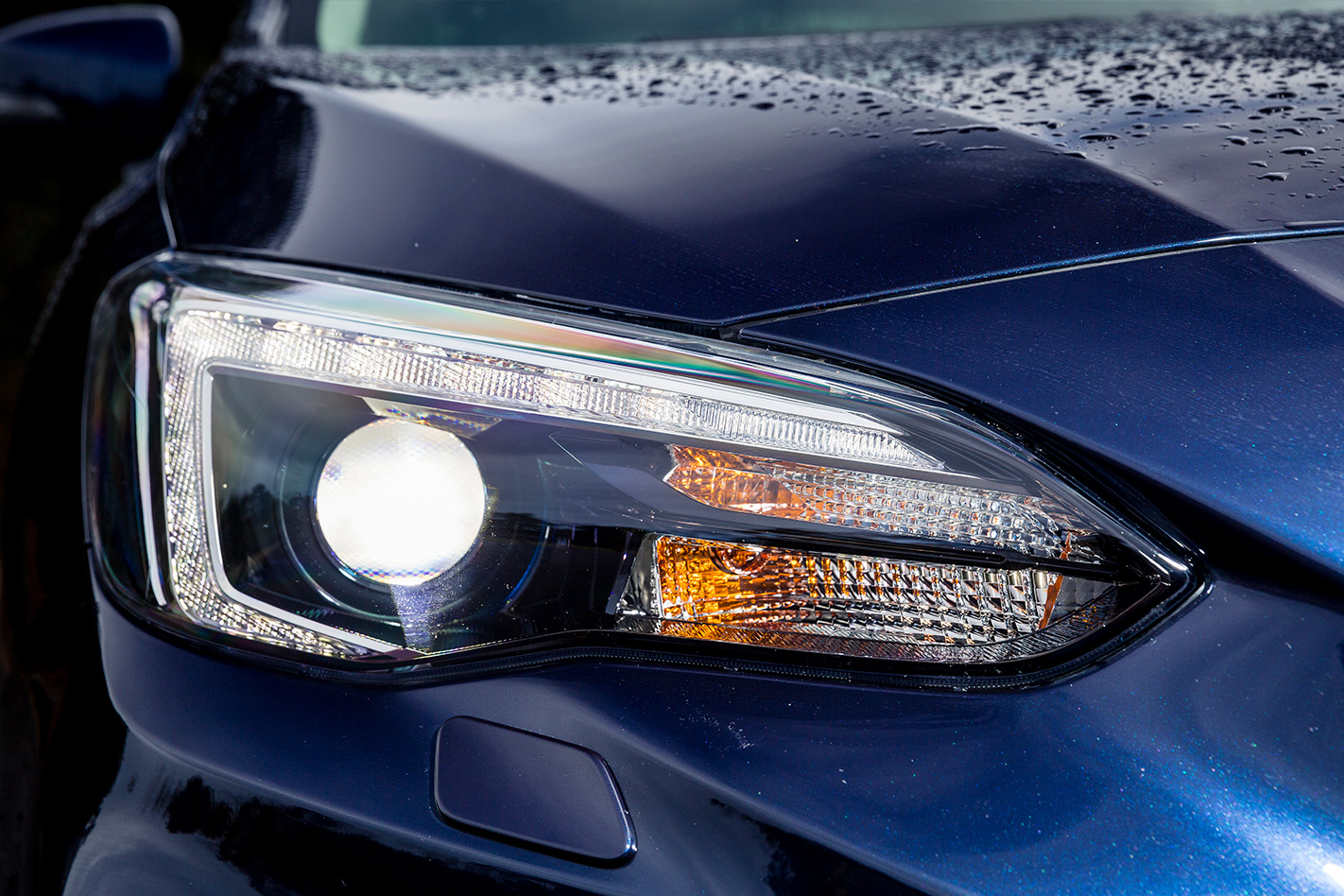
We’ve already pegged the fitout of our long-termer, the richly equipped 2.0i-S, as the pick of the Impreza litter. This is largely down to the generous equipment list, which includes heated leather seats, LED headlights, a torque-vectoring diff, and stickier 18-inch Yokohama Advan Sport rubber.
It will have a big burden to carry: there’s been a hole in my driveway for a number of years, a space set aside for the 1990s-era bug-eyed Impreza Sportback my wife has always dreamed of, but never owned.
That driver’s DNA is something I’m keen to explore over the coming months, and given Subaru’s renewed interest in rallying in Australia, I’m also keen to extend at least a small part of that testing to gravel surfaces.
What’s welcome most of all, though, is that generous-sized boot. At 460 litres, the sedan’s 115L advantage in luggage capacity over the hatch is bound to come in handy with four children in the brood.
Troubled outlook?
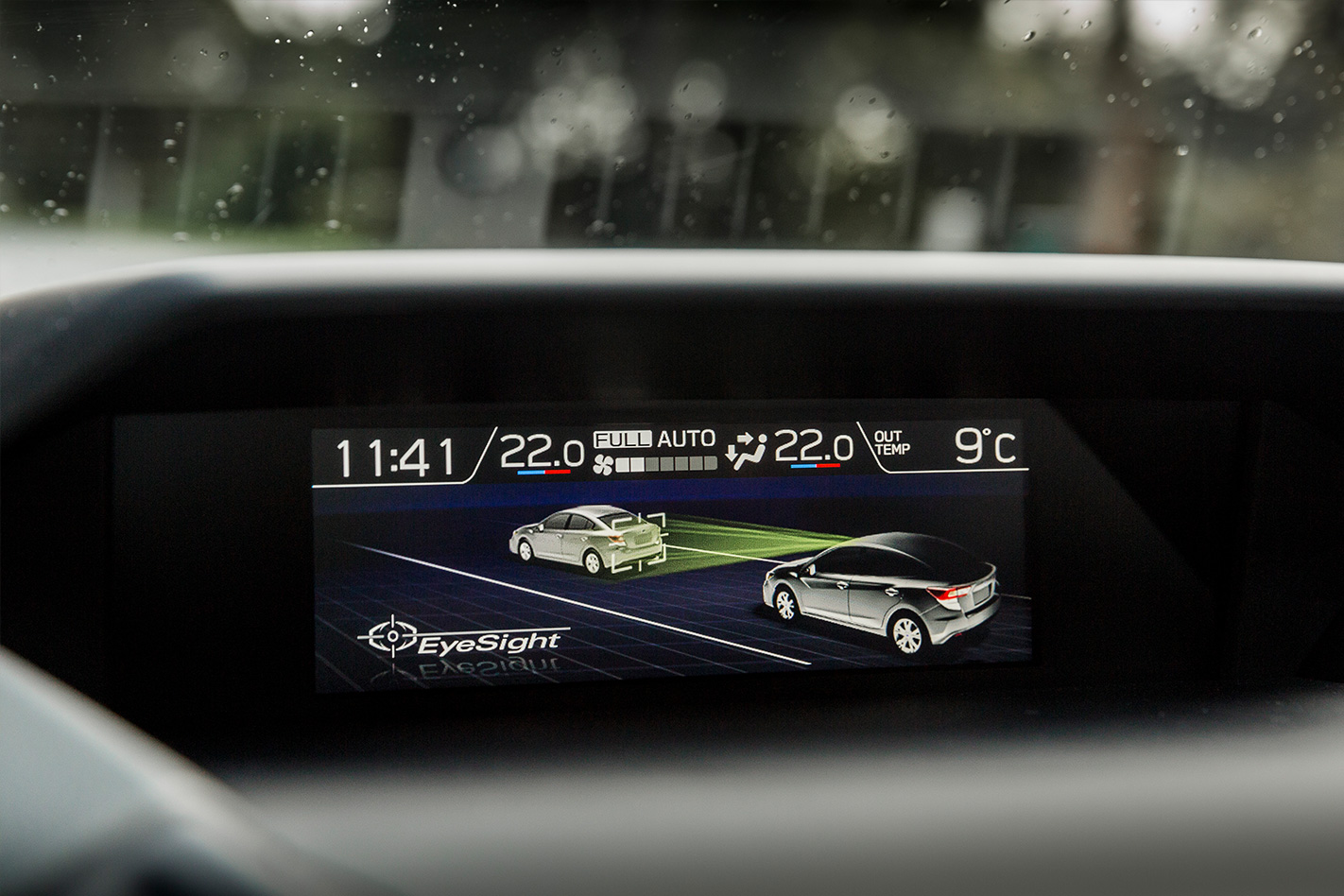
One of the technologies we will be keen to test in our new long-termer is EyeSight, Subaru’s dual-camera system that scans the road ahead and jumps in to slam on the brakes when it thinks the Impreza is about to crash.
We’re not off to a good start, though, with heavy fog blinding EyeSight and forcing a warning on the dash that the system was unavailable.
We would, however, buy shares in Subaru’s windscreen wiper supplier; the wipers work hard to keep the EyeSight cameras clear of any condensation or raindrops.
Part Two: Subaru’s EyeSight proves itself in the real world
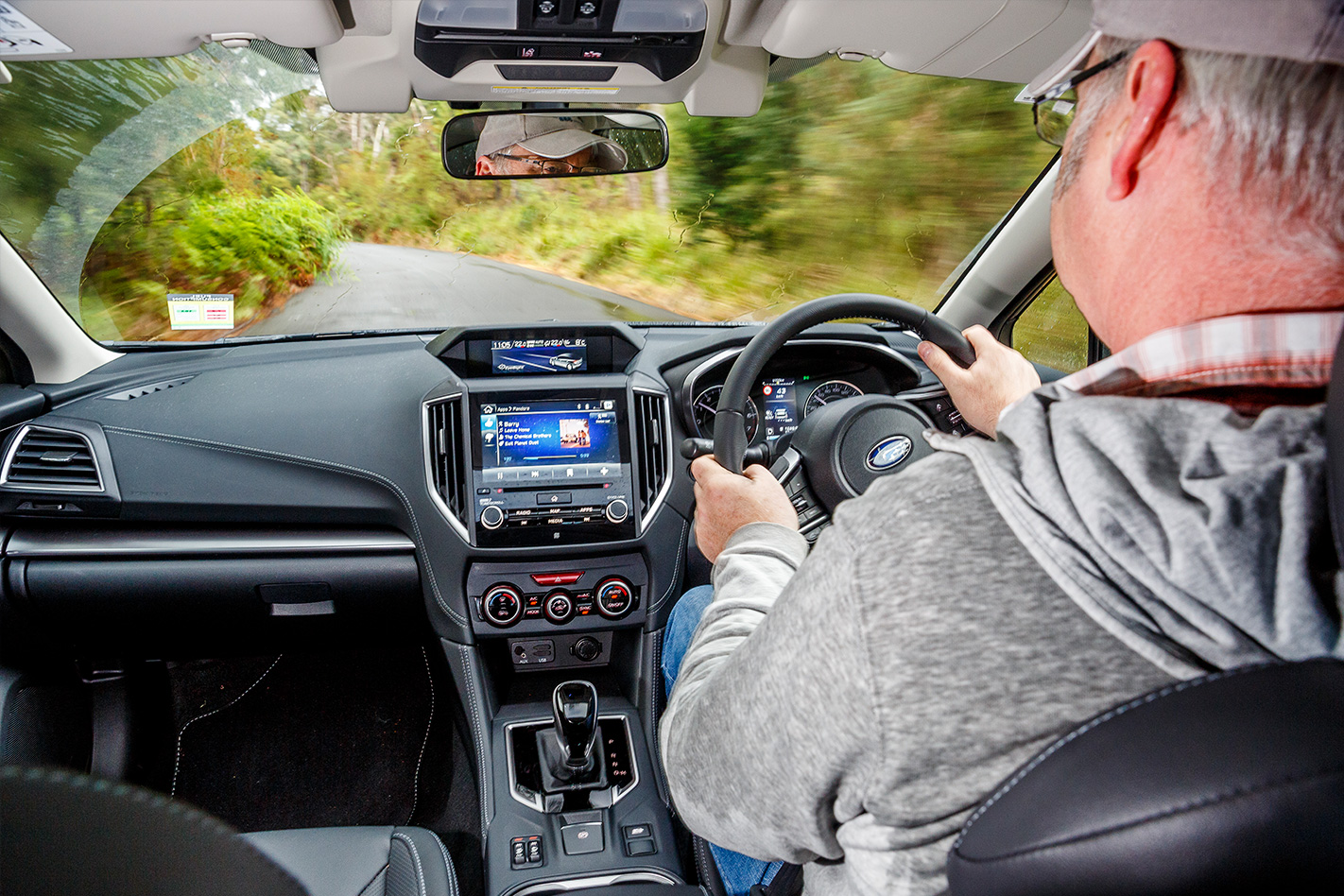
THE stench of burning rubber is unmistakable. Acrid and sulphurous, and filling the Subaru Impreza’s cabin, pulled in by the air conditioning system.
Moments before, I’m travelling along the freeway at 80km/h. Traffic is heavy but moving well as everyone tries to get home at the end of another busy week.
Suddenly, without warning, the dash lights up red and the car beeps urgently as it automatically jumps on the brakes, quickly bleeding speed as the car in front slows hard. The brake pedal, when my foot reaches it but a heartbeat later, feels wooden under my foot, but still the Subaru keeps pulling up, coming to a complete stop with a good half a car’s length of extra stopping room remaining.
Welcome to my first-ever real-world demonstration of Subaru’s EyeSight.
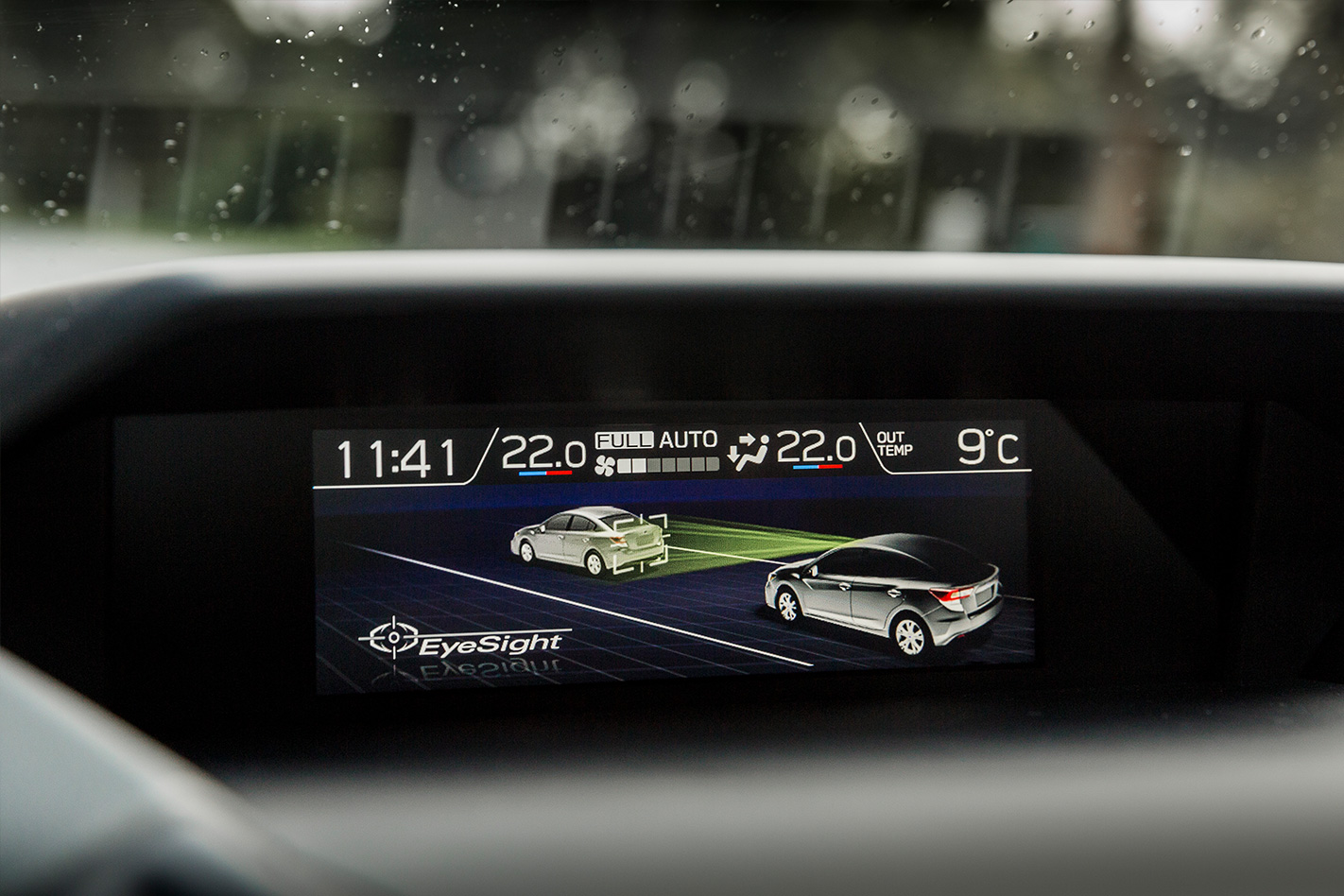
It’s the Japanese car maker’s autonomous emergency braking system and has just done for me exactly what it’s designed to do. The reason the Impreza reacted soon becomes clear; four damaged vehicles are stalled in the fast lane, the drivers out and exchanging details as they survey the aftermath of the peak-hour nose-to-tail conga line.
The Impreza was able to register the flash of brake lights in front of me and grab the brakes more quickly than I could. But what I liked about the autonomous braking was that it pulled up smoothly, the Impreza bleeding off speed calmly and giving the car behind enough time to do the same. I don’t know if I could have done it with the same calmness and control as the EyeSight system.
It’s an electronic safety net I really appreciate. To set the cruise control and let the Impreza handle the tension of keeping a safe distance to the car in front makes a big difference to my long daily commute.
In contrast, though, I’ve kept the lane-keep assistance system off. I find it way too sensitive, beeping even if I stray slightly off centre. Combine it with the beep from the cruise control every time a car jumps in or out of its range, and it can become irritating.
More helpful, though, is the system that watches out for passing traffic as you reverse out of a parking space. A trip to Bunnings, where there’s a sea of SUVs and trade utes, highlighted this.
But why is it a feature only on the most expensive Impreza?
Five into four won’t go
The top-spec Impreza sedan comes with four USB ports as standard; two located awkwardly deep in the centre console and another pair in the storage space under the front seat armrest.
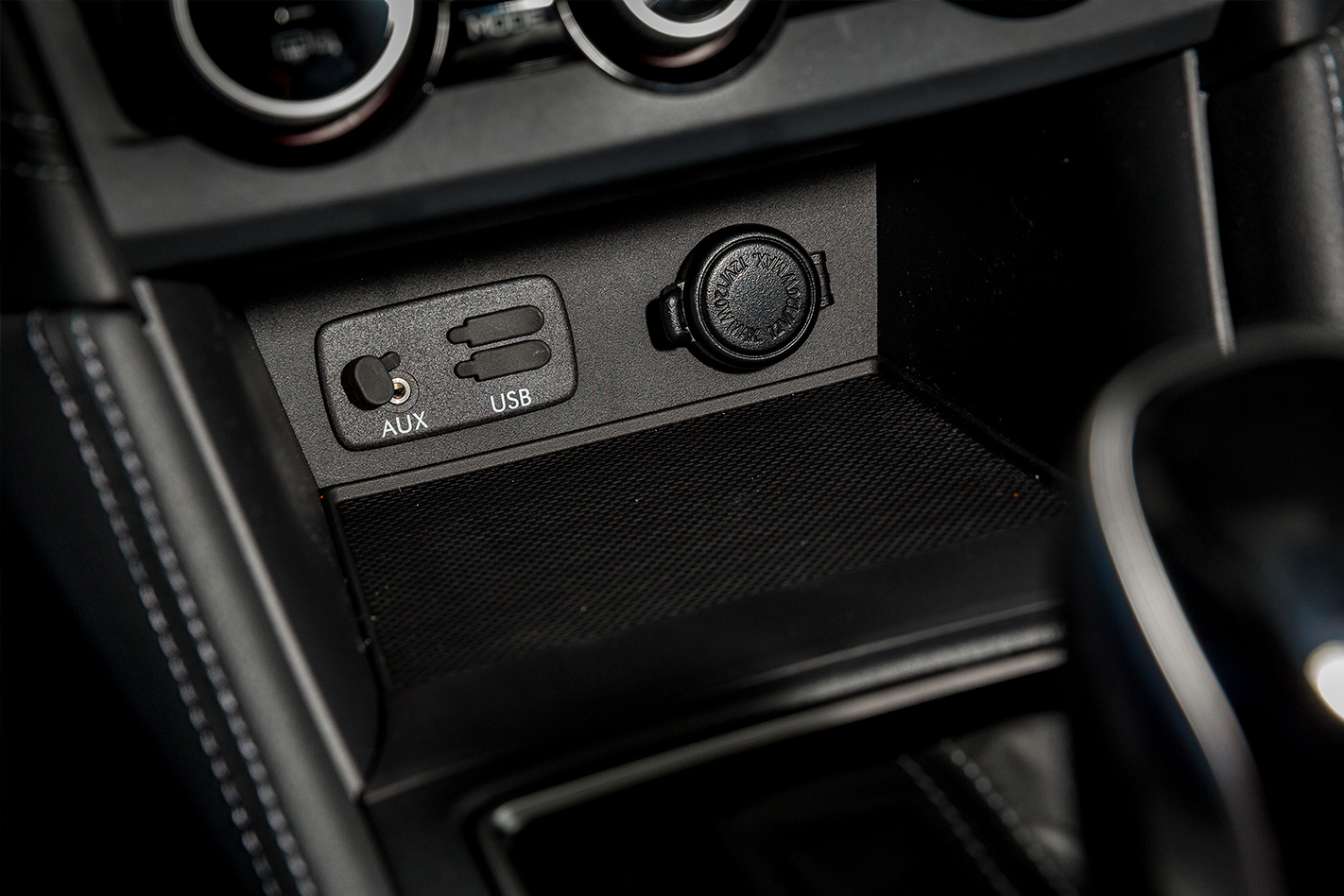
The front two link up to the multimedia head unit, while the rear ones just provide juice for hungry electronic devices. So what do you do when there are only two charging points and three kids in the rear quarters?
It’s somewhat traditional that the youngest, sitting in the worst seat in the house – the middle – misses out.
Part Three: Baz finds cornering the Impreza is a game of two halves
I’VE discovered a new game in the Subaru Impreza: if I’m driving a twisty section of road, I left-foot trail-brake deep into a corner.
This loads up the Impreza’s front end on corner entry, with weight shifting forward to lean on the outside 18-inch Yokohama. The squat centre of gravity – the low-mounted boxer engine endows the Impreza with a surprising ground-hugging ability – shifts subtly, endowing the front end with imperious grip.
Applying the throttle at this point, even before you reach the apex, helps to offset the dull-witted CVT transmission, as the clever electronic front diff kicks in to stop the inside front wheel from spinning. The Impreza then launches itself out of the corner as though it’s being pulled by an invisible elastic band.
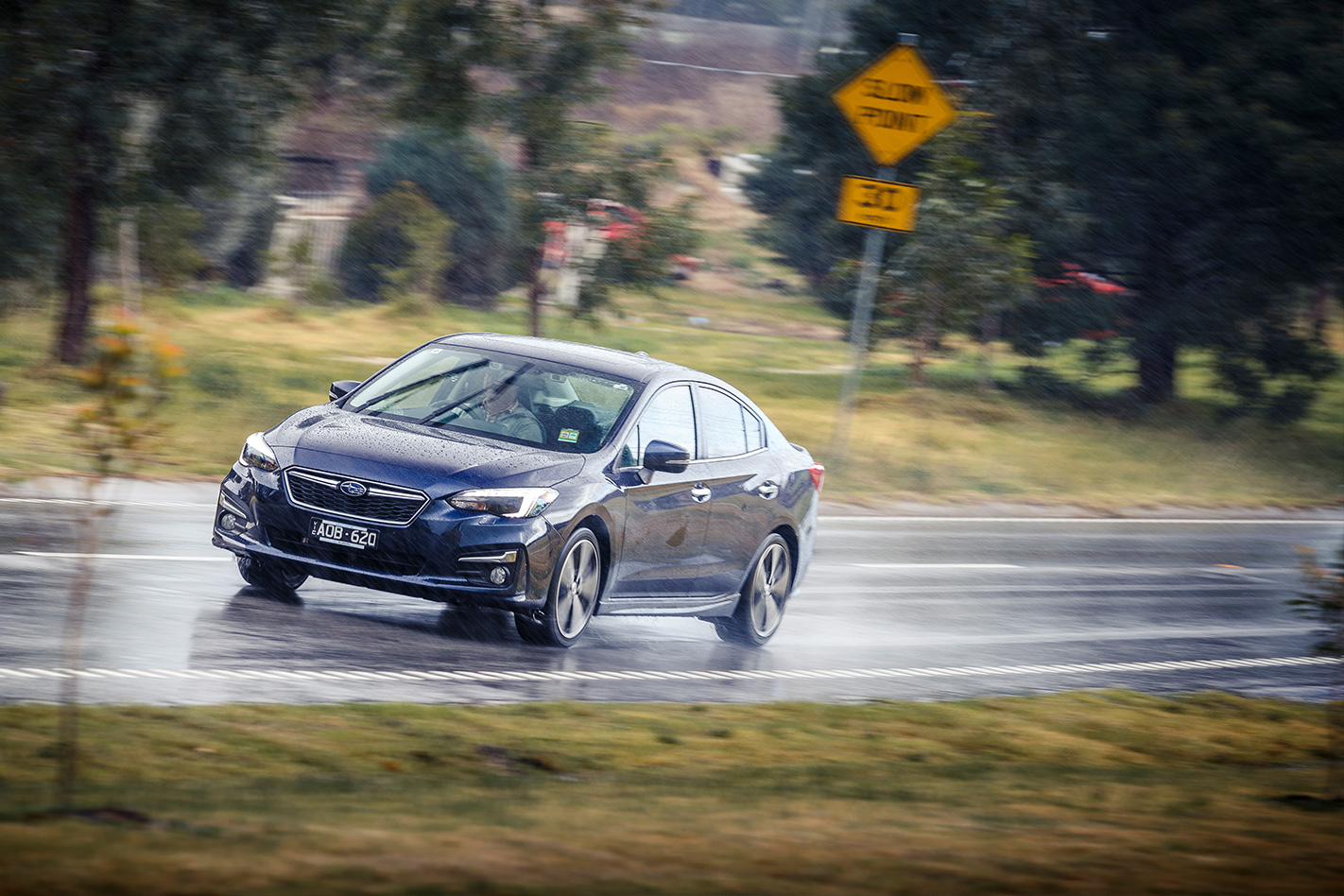
I’m not sure that this is the fastest way to get the Impreza 2.0i-S through a corner, but it sure is the most enjoyable.
Where I live backs onto what must surely rank among Victoria’s best sections of road, and regular trips to far-flung soccer fields and waterways provide the perfect opportunity to turn off the main roads and take the more interesting route home.
However, using these backroads means I’ve also found the Impreza’s limits, and it’s not the grip of those Yokohamas, which have been impressive in both wet and dry conditions.
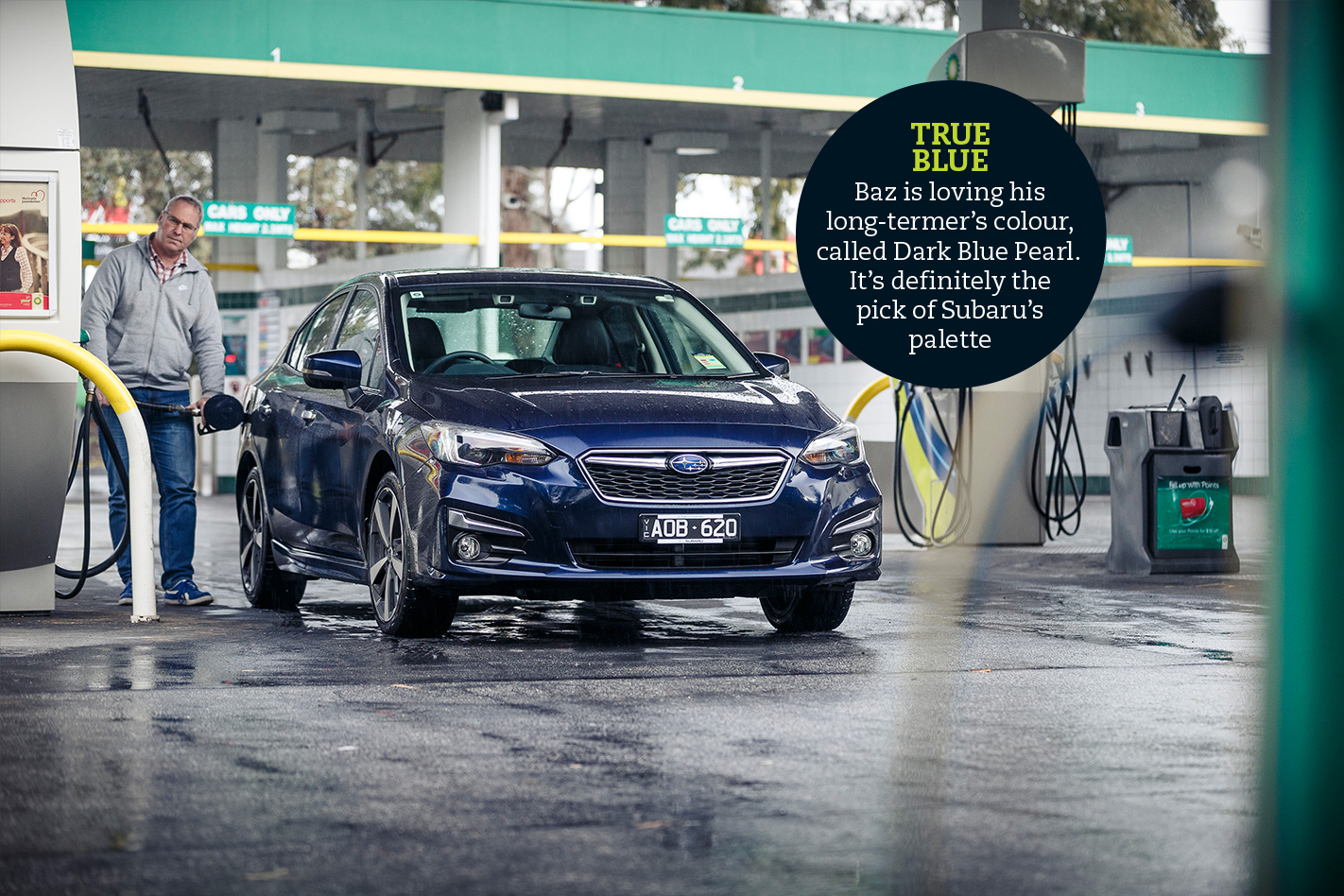
Nope. It’s that bloody CVT.
Here’s something akin to one of the best-handling small sedans on the market. But tap into the Impreza’s deep well of dynamic ability and the snoozy auto takes forever to recover from a hard braking manoeuvre, dithering for what seems like a lifetime if you’re just jumping straight off the brake pedal and onto the accelerator.
The steering wheel-mounted paddle shifters, meanwhile, take what seems like an eternity to flag their intentions to the transmission, despite my spicy vocal encouragement. And seven artificial steps? Five would do nicely, thanks. Also, drive too enthusiastically while stringing close corners together and the brake pedal starts to get a bit long. Buttoning off a bit brings it back.
But I’m looking beyond these flaws at Subaru’s whole package. The Impreza is still a deeply engaging thing to punt along – more often than not I still find I’m avoiding the major byways and taking the significantly less-straight way home.
Heinous envy
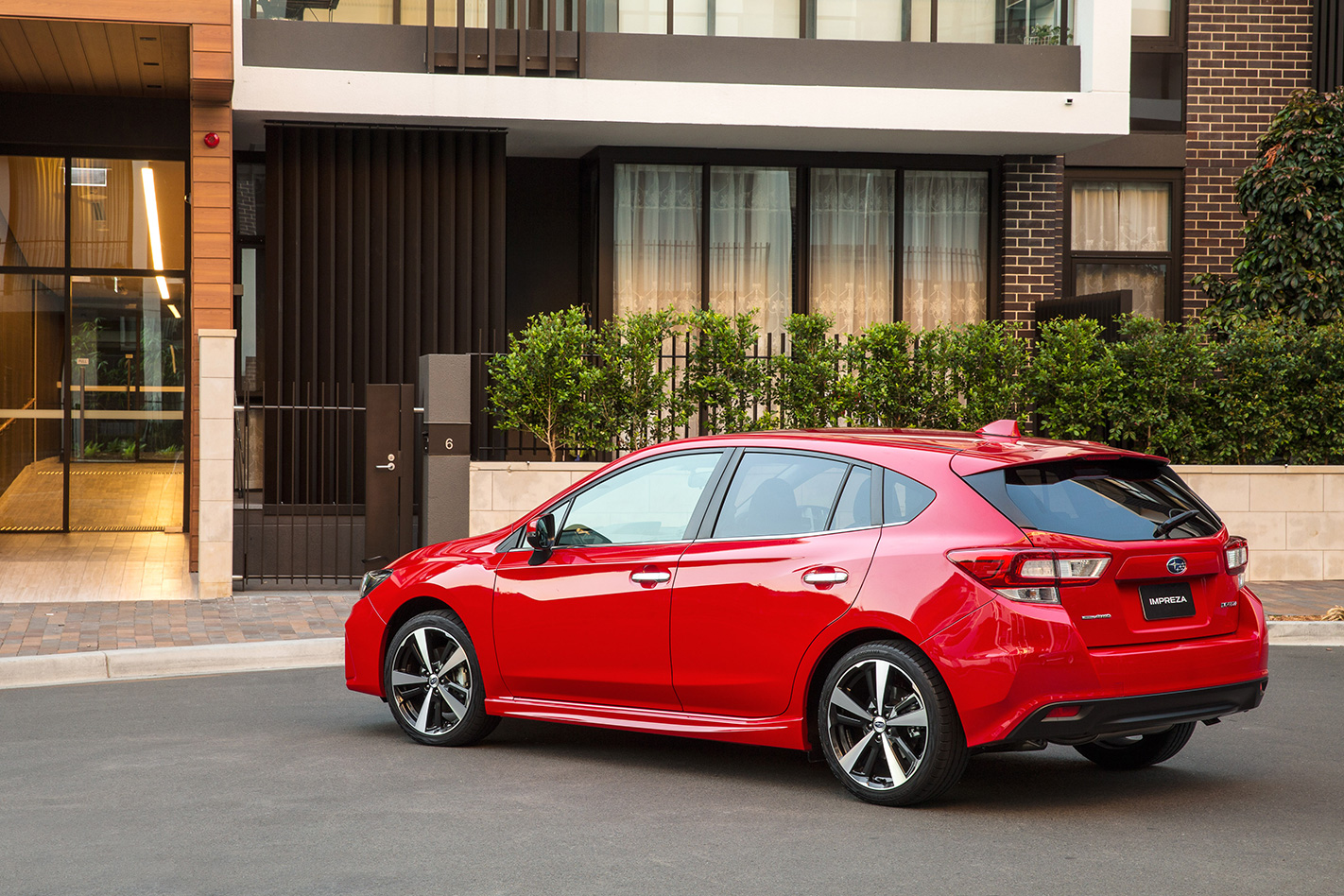
I’m starting to have doubts that the sedan is the best-looking version of the Impreza. Yes, it’s impressively proportioned, particularly alongside rivals such as the Chevrolet Cruze-based Holden Astra sedan, but every time the rear end of a hatchback Impreza hoves into view, the thought arises that it, and not the booted version, is the more attractive design.
And after several trips to Bunnings I’ve found myself in situations where a more versatile hatch bodystyle would be welcome to stow bulkier purchases.
Part Four: How well does Subaru’s off-road heritage translate to the new Impreza?
CLUMPS of snow are scattered alongside the road, contrasting the yellow clay and grey dirt it is carved from. It’s a clear sign that we’re 1400m above sea level on the fringe of the Australian Alps; turn left, and we head up the short, steep and twisty climb to the Mt Baw Baw village, go straight ahead and we’re on the South Face Road.
The 30-kilometre-long South Face Road is the whole reason we’ve made the climb this high. The road is relatively new, only about a decade old. It skirts the southern edge of the Baw Baw National Park, running from the village turn-off to the thin ribbon of bitumen that links Moe with the Thomson Reservoir.
Wide and sweeping, its vista of rugged timber and fern forest is scarred only by the occasional logging coup it was put in to support. It’s also one of the best stretches of gravel you’ll find, and perfect for testing Subaru’s rally-bred heritage.
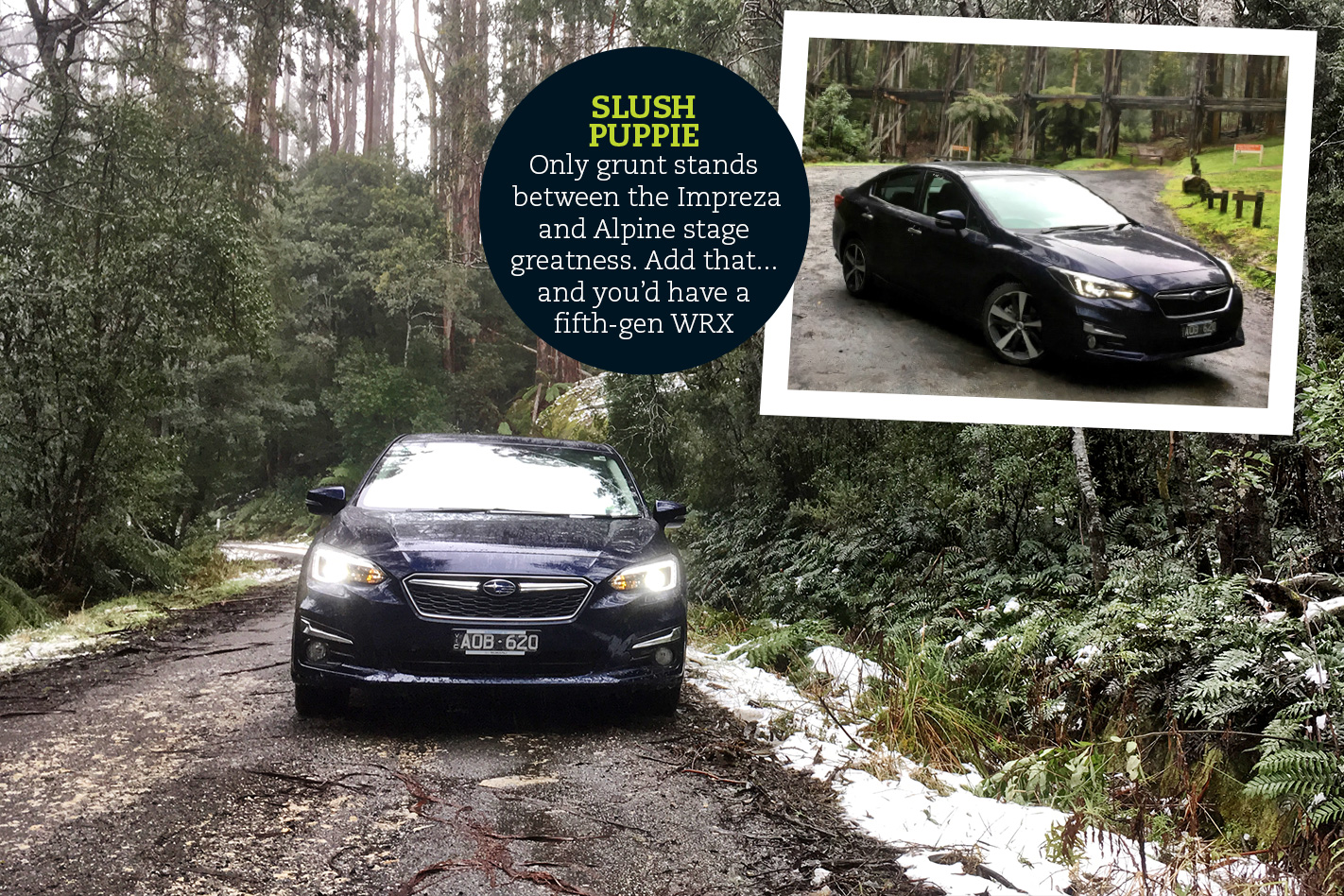
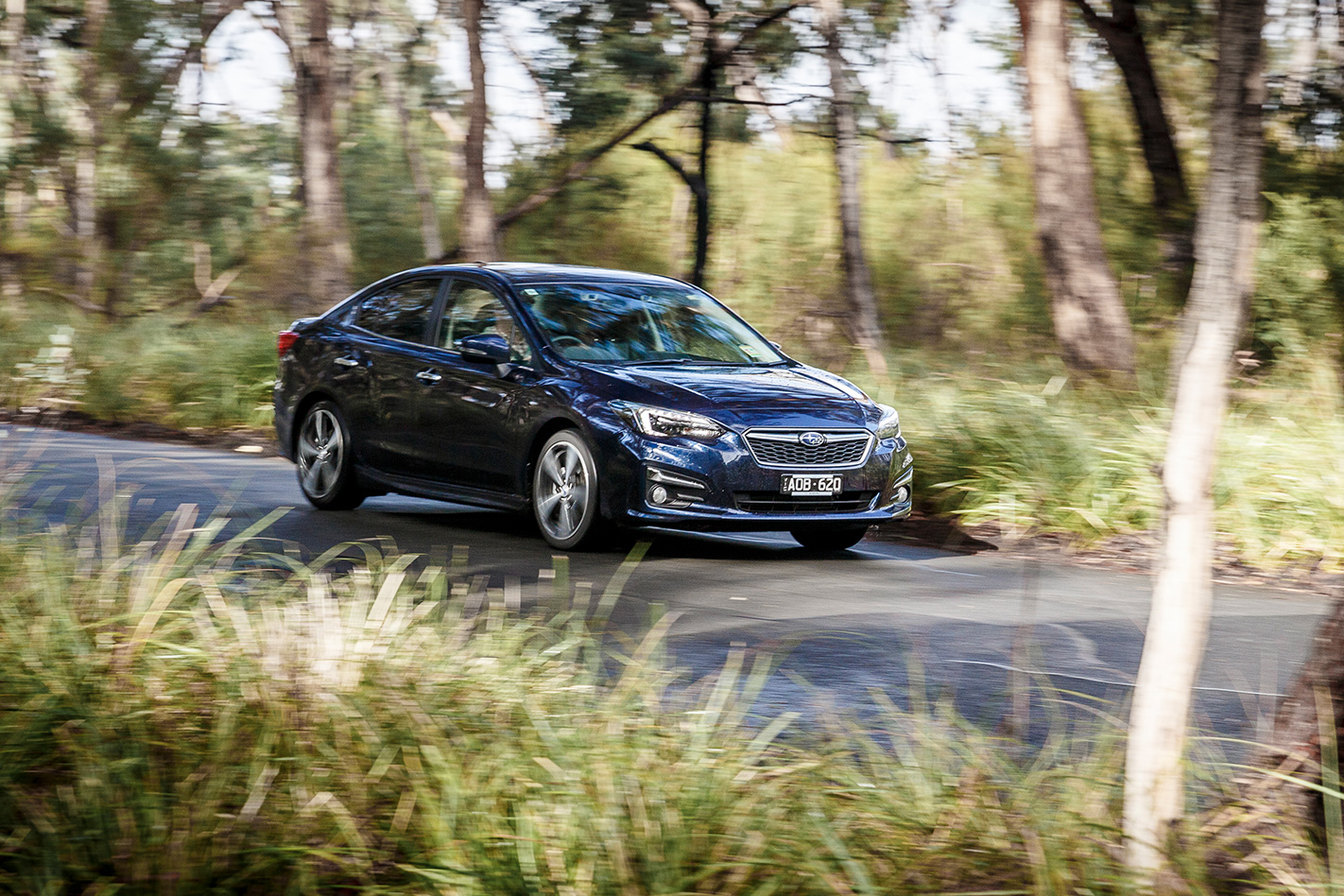
The road drops beyond the village turn-off. The loose gravel surface is in decent shape despite a solid week of rain that’s turned the ground beside it into a sponge. Pushing along, the Impreza feels nicely planted, soaking up the rough undulations and the corrugations formed in braking zones with surprising finesse.
There are some very wet patches, the road surface becoming soft and noticeably sapping forward momentum. The Subaru Impreza tries to yaw as one set of wheels tracks on relatively stable gravel while the other set drags through a patch of slippery mud. You can clearly feel the car’s electronic guardian step in to gently pull the Impreza back into line.
The road dips and weaves as it descends through dappled sunlight, startled currawongs dipping and wheeling from the trees above, while in front the occasional lyrebird bursts from the low vegetation on the roadside like the coyote’s roadrunner. Massive concrete viaducts cross the sharper, steeper gullies, rivulets of snowmelt cascading down them to the valley below. There is a surprising number of cars using the road, and equally surprising is that few of them are four-wheel drives.
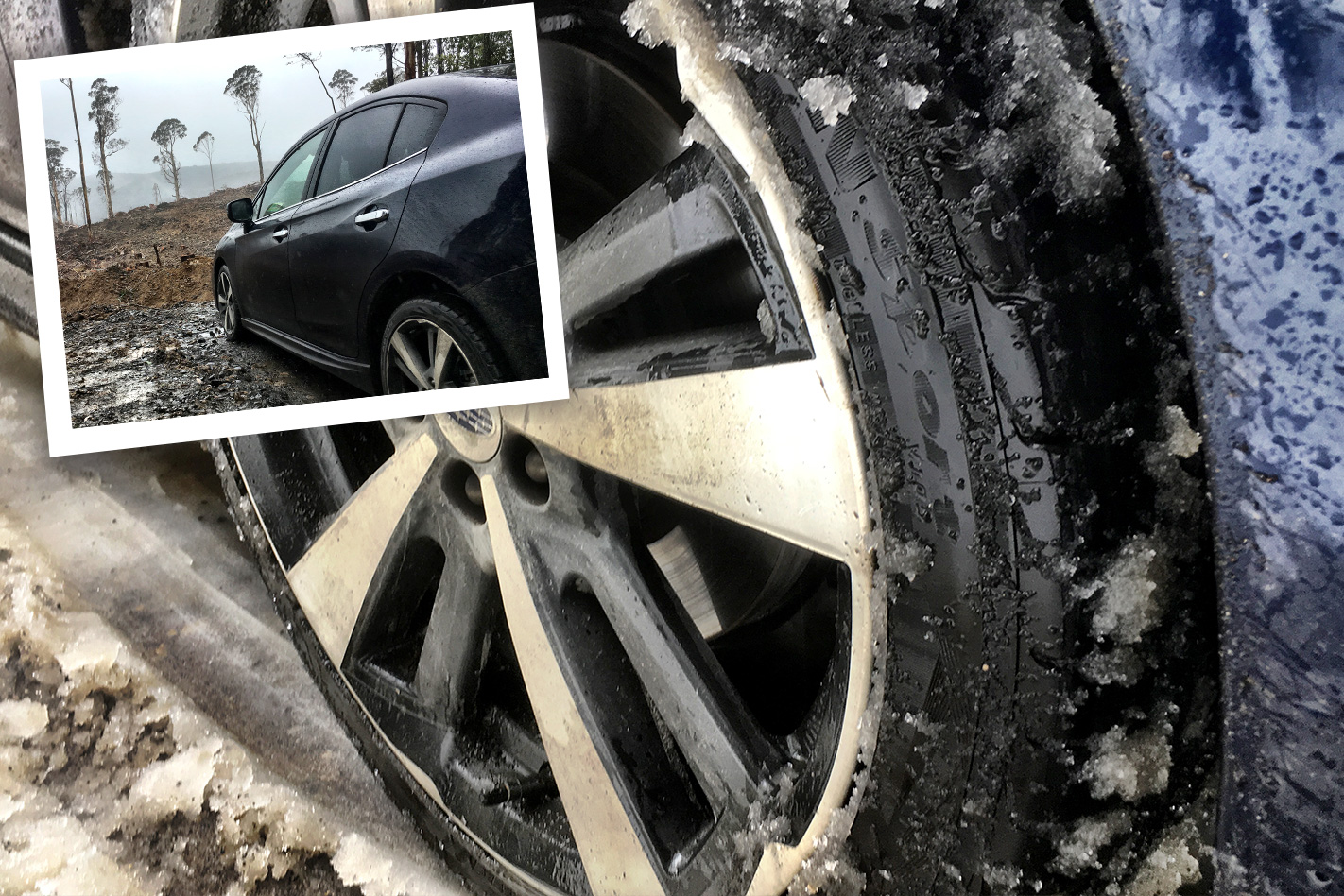
The 30 kays pass very quickly when you’re fully engaged with the drive. Parked up on a clearing that marks the end of our journey, the Impreza now looks like a proper rally car, its sides smeared with remnants of the road surface it had just confidently clung to.
Colin McRae would be proud.
Snow trouble
This month’s trip gave us the opportunity to hit the snow, taking the road up to the summit of Mount Erica car park a few kays north of where the South Face Road rejoins the bitumen. Here, the Impreza’s all-wheel-drive system shone; despite a 10cm cover, the Subaru ploughed up to the lower car park with ease (the closely related XV SUV with its more generous 220mm ground clearance probably would have made it to the top one), and even did a three-point turn without losing its grip.
Part Five: Winter sports are enough to test anyone’s mettle
SOCCER season has ended. After waking up most Sunday mornings for the last four months wondering which far-flung corner of Gippsland we would need to be in for the 1:15pm kick-off, there’s a sense of relief that we can now sit back and enjoy Sunday brunch rather than bolting down breakfast.
Throughout it all, our true blue Subaru Impreza relished the chance to stretch its legs to visit remote, windswept grounds at Rhyll, or rain-lashed, mud-plugged pitches in places as exotic as Wonthaggi and Mirboo North. Sometimes two-up, sometimes with three and even at times four on board, the Impreza knuckled down and got on with the job of delivering its occupants on time and match-fit.
The ride in the 2.0i-S, already quite supple with just one body onboard, settled down even more as the seats filled with extra spectators and teammates. Once there, our Impreza proved its worth at the soccer pitch. The boot was big enough to swallow two large plastic tubs; one for the wet, muddy stuff cast off from players and spectators alike, and the other for the important bits we needed to keep clean and dry.
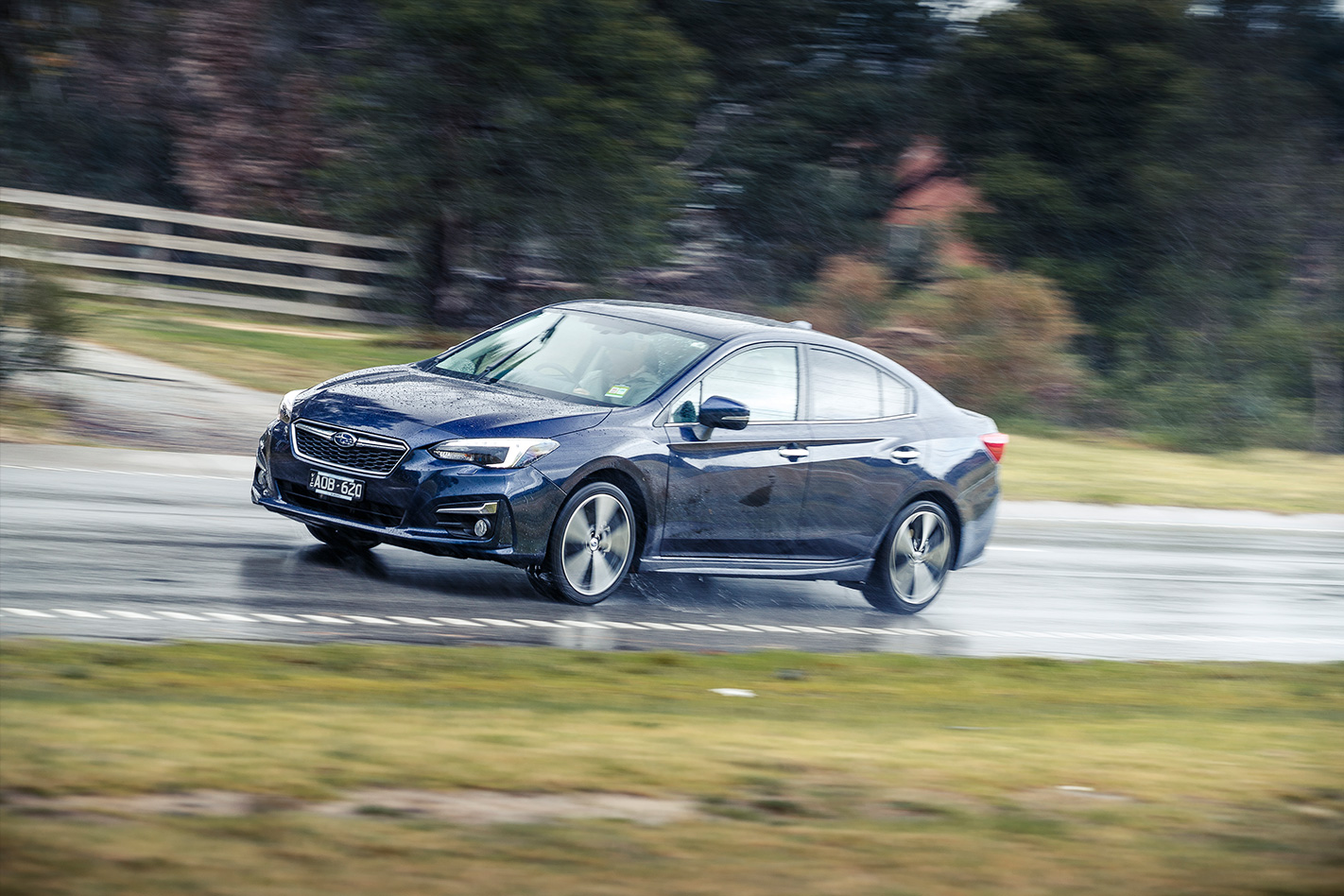
From a spectator’s point of view, the wide, swept area of the windscreen wipers provided a panoramic view of proceedings, the heated front seats cut through the icy single-digit chill brought on by excursions to the sidelines (although on its higher setting, the seats do tend to get uncomfortably hot making the low setting the preferred option), the horn sounded a cheery ‘beep-beep’ each time a goal was scored, and the sure-footed all-wheel-drive traction allowed the Impreza to park on waterlogged, grassy patches where front-drive SUVs, wearing those borrowed off-road looks but carrying none of the ability, feared to go.
But it wouldn’t be soccer without twice-weekly soccer practice. This was a trip I always looked forward to, the Impreza feeling its way through the darkness along the twisty back roads that I used as an alternative to the freeway.
The LED headlights easily picked out the road ahead, even bending themselves around the tighter corners.
It was a near-perfect season, apart from my daughter’s team failing to make the grand final play-off.
That, and the need to reach down to your feet to release the bootlid each time another load of wet gear arrived.
Improved match fitness
Subaru has made a few running changes to the Impreza 2.0i-S line-up since our blue one joined the long-termer garage. The first is the addition of reverse automatic braking, which can step in and tap the brakes to stop you reversing out into oncoming traffic.
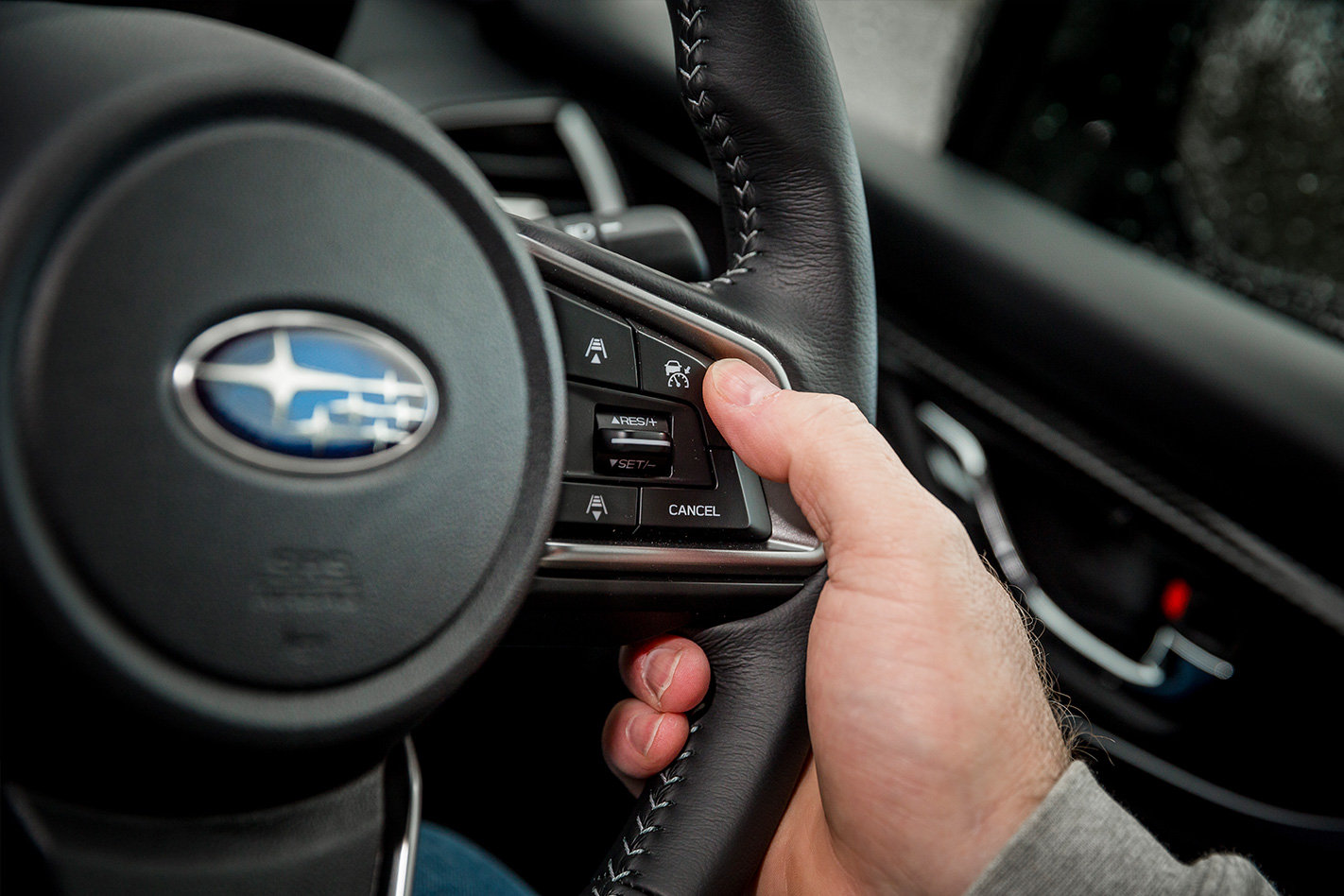
And the Eyesight system that performed so well the other month now includes a lane-keep assist system upgrade.
But these richer features come at a cost; the list price for our test car has sneaked up to $29,240, a $250 rise.
Part Six: Glancing low blow sidelines Bazza’s Impreza
I hurt myself today / To see if I still feel / I focus on the pain / The only thing that’s real…
So sang Johnny Cash in ‘Hurt’, one of the most powerful, emotive ballads of our time. And believe me, I’ve been feeling hurt, though whether my temporary loss of my Subaru Impreza long-termer is akin to Cash’s pain and depression as he knocks on death’s door is debatable.
It started with just another drive into Wheels central in the heart of suburban Oakleigh.
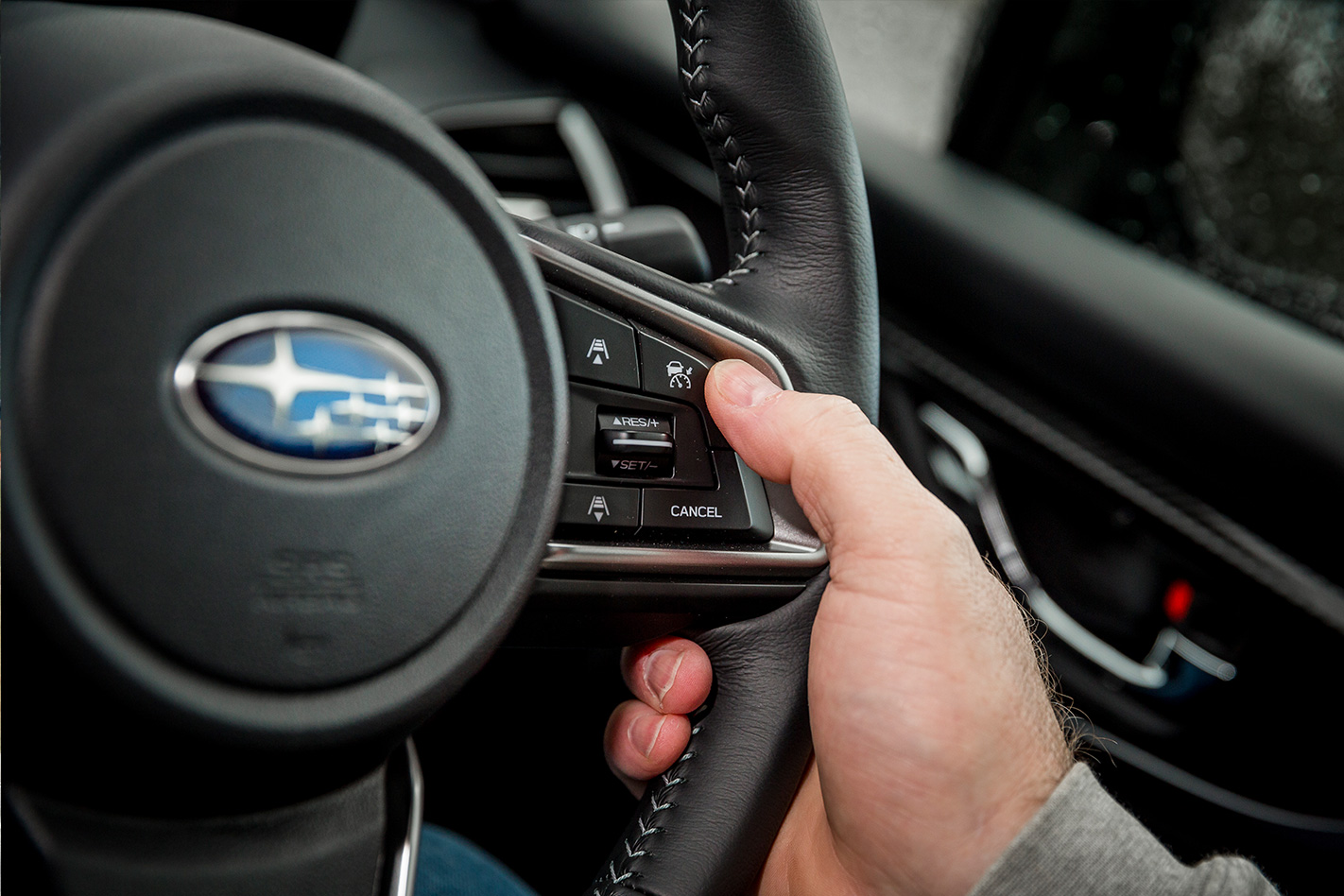
My commute kicks off with a freeway run where I can set the active cruise control and relax behind the wheel, the traffic ahead defining the pace.
This day was different, though. We were in that moment between darkness and light, when the sun just broaches the horizon and starts to wash over the landscape. The skies were heavy with cloud. Traffic was light, so the active cruise control was set to its lowest distance threshold, with maybe three car lengths separating me from the SUV in front.
In the blink of an eye, I saw the SUV wobble slightly, and then a flash of brake lights as it bucked up slightly on its left-hand side.
I noticed it had run over an L-shaped length of square metal tubing – an offcast, I assume, from one of the many tradies who take to the road at this time of day.
But the bit of metal was now pivoting on one arm, standing almost upright. Time seemed to slow as I reacted, braking and moving to the right to avoid it.
Too late.
The tubing hadn’t quite fallen back to the ground. I hit it, a loud “bang” resonating through the Subaru’s cabin as its left front tyre makes contact.
The car in front had already pulled over to assess any damage, but it was about a kay further down before my chance to stop for a look arrived.
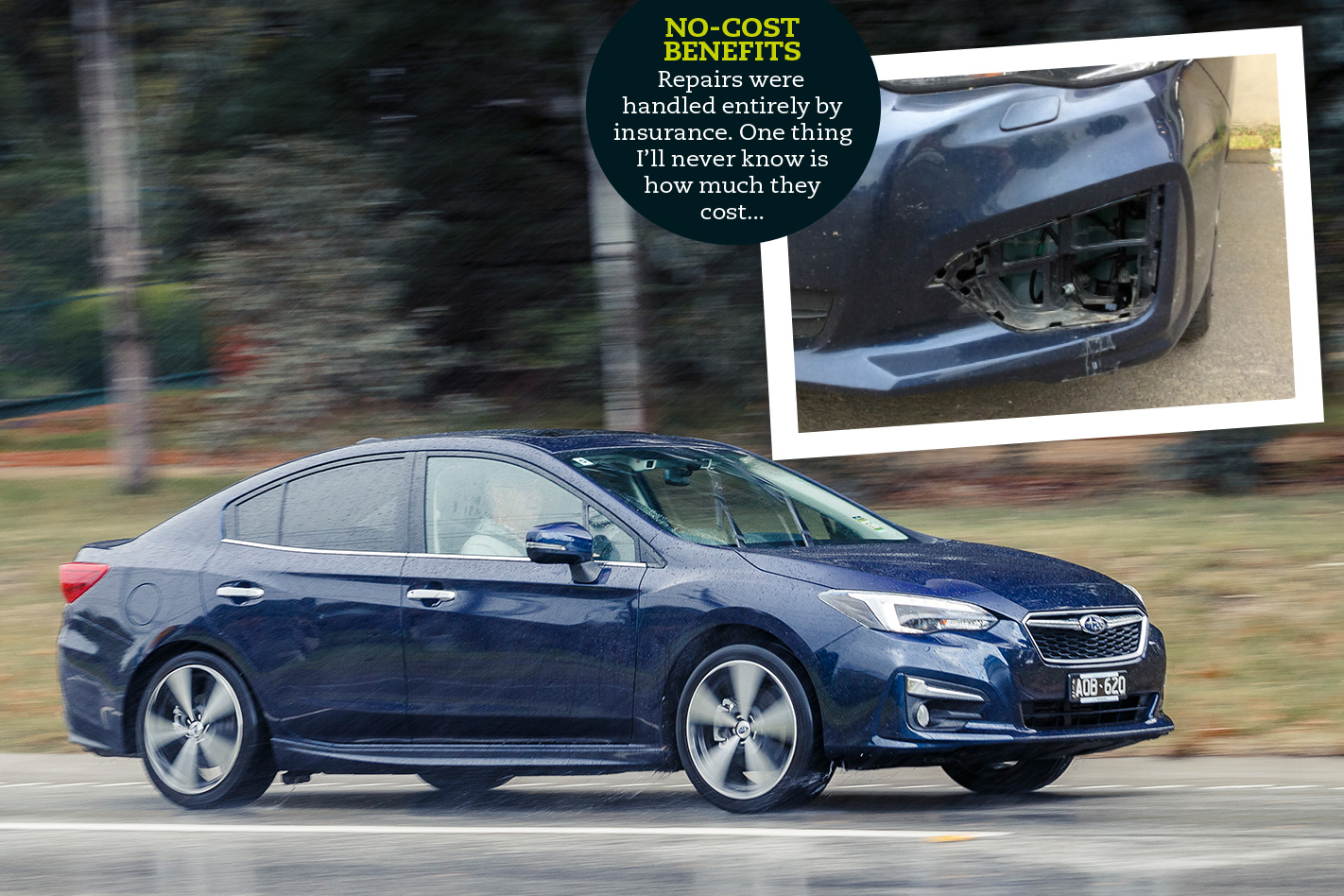
The tubing had clipped the bottom of the splitter in front of the left tyre, punching a perfect impression of its profile into the plastic. The force of the impact – roughly 80km/h – appeared to have earthquaked through the left side of the bumper bar, popping out the black foglight surround.
Repairs took almost a month. As I write this, the just-returned Impreza sits in the staff car park, looking just as good as the day it was delivered. We are reunited.
But I’m still hurting.
Some mongrel has nicked the iPhone charging cord I’d left in it.
Part Seven: Booted Impreza gets filled to the gills
HAVE you noticed how cars become etched in certain stages of our lives?
I grew up in the back of a Holden FC Station Sedan (and still have the scar on my pinkie where I cut myself on a door), courted in a VC Valiant, drove my first child home in the back of a Mercedes-Benz 250SE, and took my young family on memorable trips to the centre of Australia in a Land Rover Discovery.
We hit another of those significant benchmarks the other month, and this one will forever be connected with our Subaru Impreza.
My daughters have just started their Victorian Certificate of Education, two crowded years of stress, worry and achievement that will lay down the foundations for what they will do for the rest of their lives.
But before they had even cracked a textbook, both were accepted for summer school in the heart of Melbourne; two weeks living on campus right in the centre of the city, more than 100km away.
The Subaru Impreza was tasked with the job of delivering them to their residential quarters. Straight away the Impreza had to swallow suitcases straining with the 30-odd kilograms of essentials that teenage girls apparently need to survive a whole fortnight away from home. We’d never had the Impreza this full before; the equivalent of four adults and what felt like the equivalent of a pallet load of cement bags in the rear.
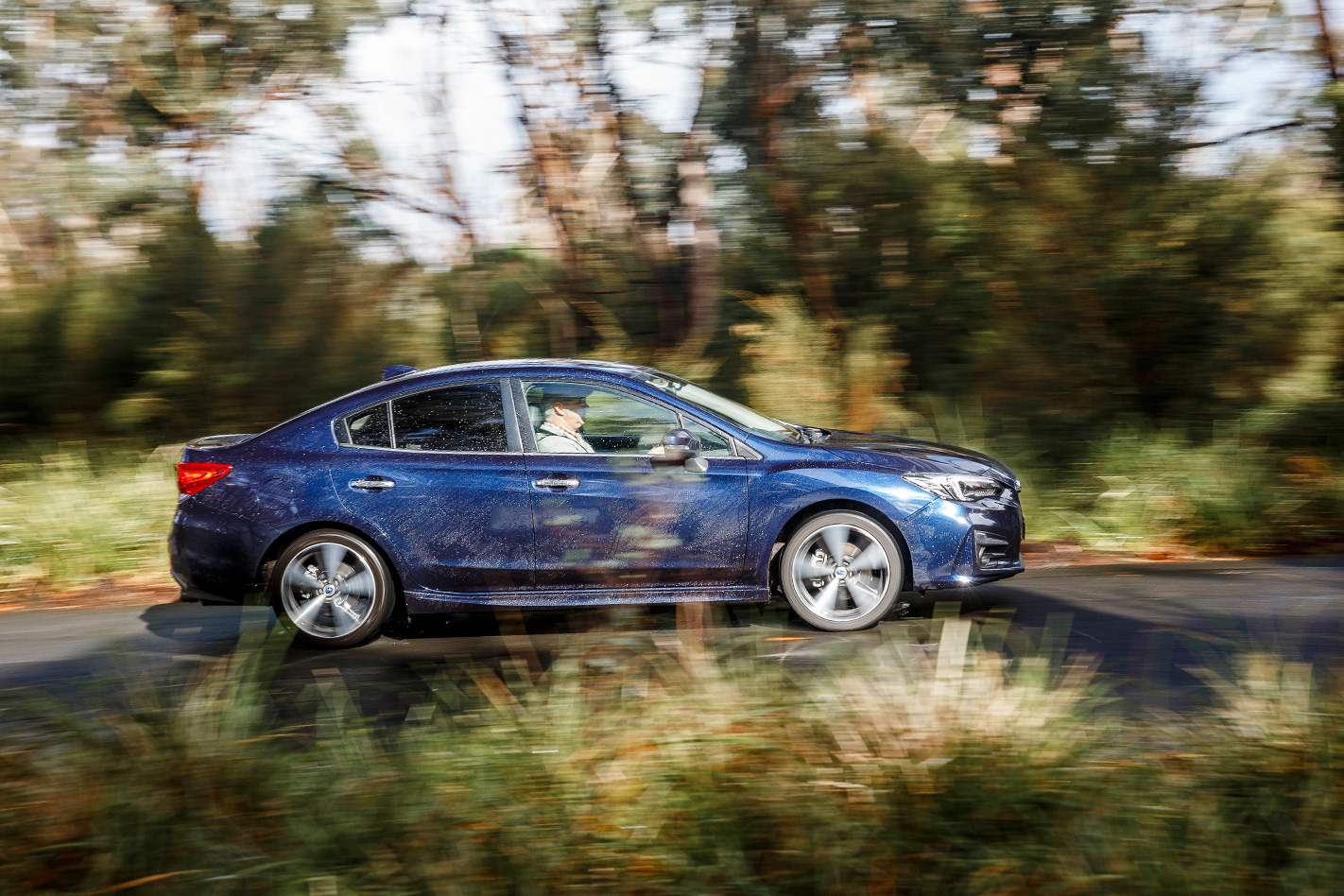
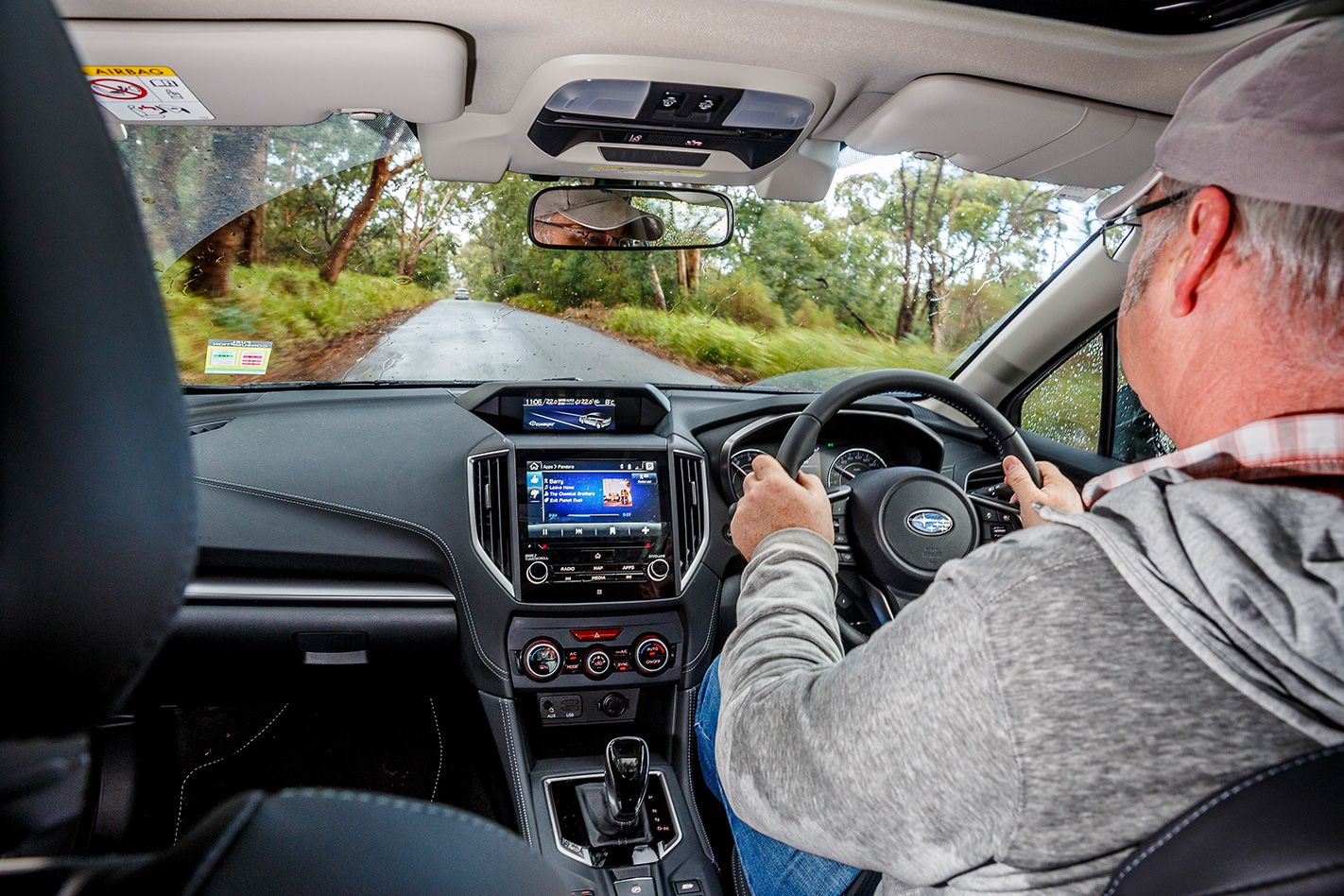
The effect all this baggage had on the Impreza was quite dramatic. I’ve loved the silky ride of the Subaru’s suspension, which one-up has glided over the road’s imperfections and undulations with barely a hint of them transferring into the cabin. Even with those sticky, low-profile 18-inch Yokohamas fitted, the ride has remained almost luxurious. But fully loaded, the Impreza struggled to make a good impression.
The ride became choppy as the weighed-down suspension – struts up front, and double-wishbone IRS at the rear – dealt with less travel. Sharper bumps suddenly became noticeable, with the rear end rebounding lazily before quickly settling.
The girls arrived safely in their dorms, and the unloaded Impreza stretching its legs for the less taxing lope home, all returned to normal. Except for our house. That’s a place where noise and movement are welcomed.
It’ll be a long fortnight.
Power to the people
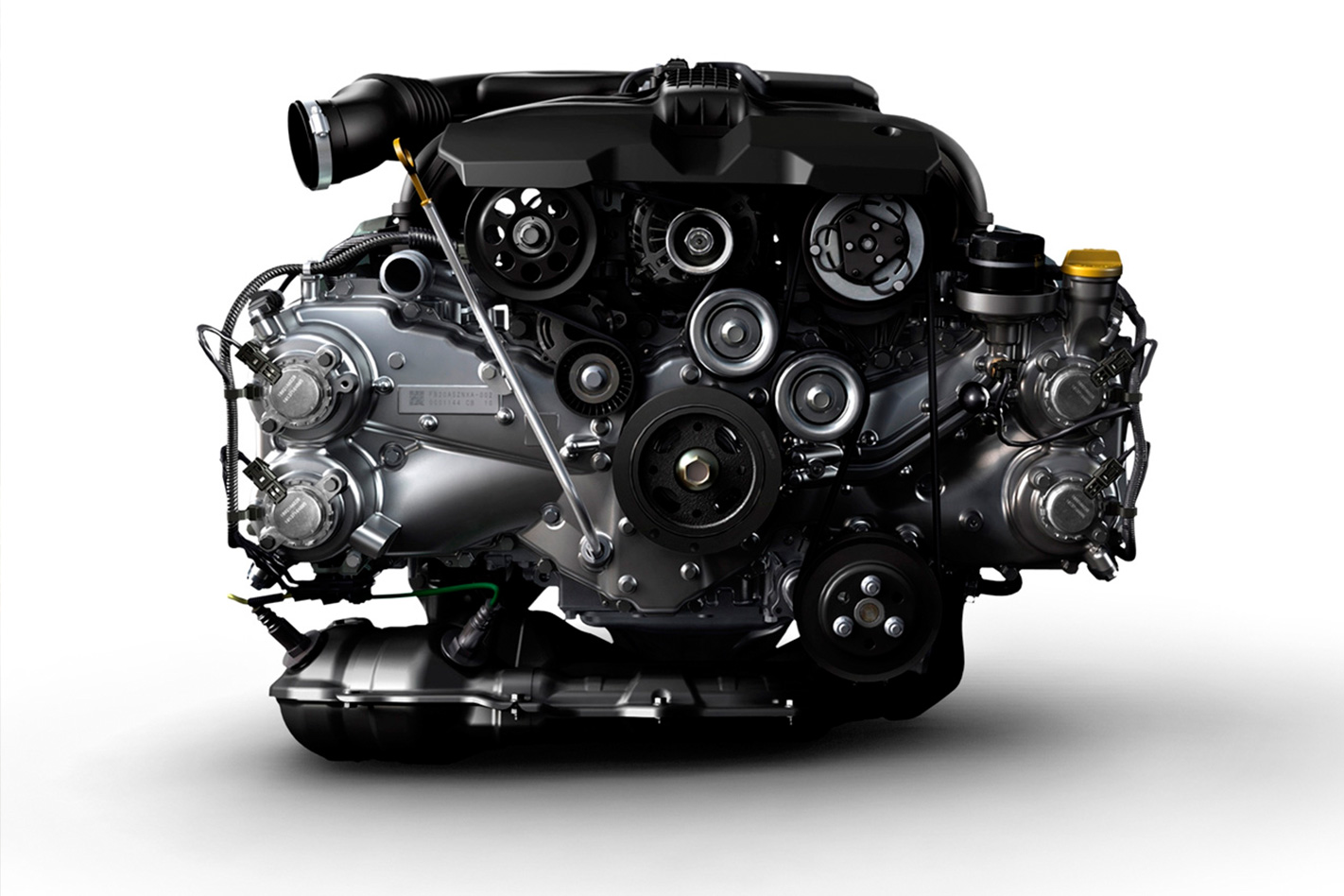
I’ve found myself dwelling on the uniqueness of the Impreza’s 2.0-litre powerplant. On paper the FB20 has a peaky 115kW power delivery and a chevron-shaped 196Nm torque curve, but it’s a pretty competitive package in its class. Question is, how long can Subaru hold out its indifference to the in-line four used by all rivals?
Masahiko Inoue, Subaru’s project general manager for both the Impreza and XV, told me last year that he believes the engine’s unique layout will easily adapt to hybridisation – a key to ensuring its longevity.
Part Eight: Subaru calls time on Barry’s extended Impreza tenure
STOCKHOLM syndrome is a real thing.
I know this, because I seem to have fallen in love with my captor, the Subaru Impreza.
We’ve spent more than six months together, with at least two hours a day on every workday – maybe more considering the crushing weight of roadworks reducing Melbourne’s traffic to a crawl – spent staring at the rear end of the car in front. And I’ve enjoyed it.
It has given the impression of saving my arse on numerous occasions; the autonomous emergency braking via its stereo-camera Eyesight system stepping in to avoid real – and sometimes imagined – danger in front.
It has more than adequately warmed my buttocks in the depths of winter – the heated seats so effective I could only ever tolerate its lowest setting – cut wide tracts of light through the dark shadows of night as the clever active beams peered around corners, and when asked, acted like a properly engaging, chuckable sports sedan.
But not every relationship is perfect, and so it is with the Impreza.
The active cruise control’s constant beeping in heavy traffic was painful to the point of some rather negative vocal feedback.
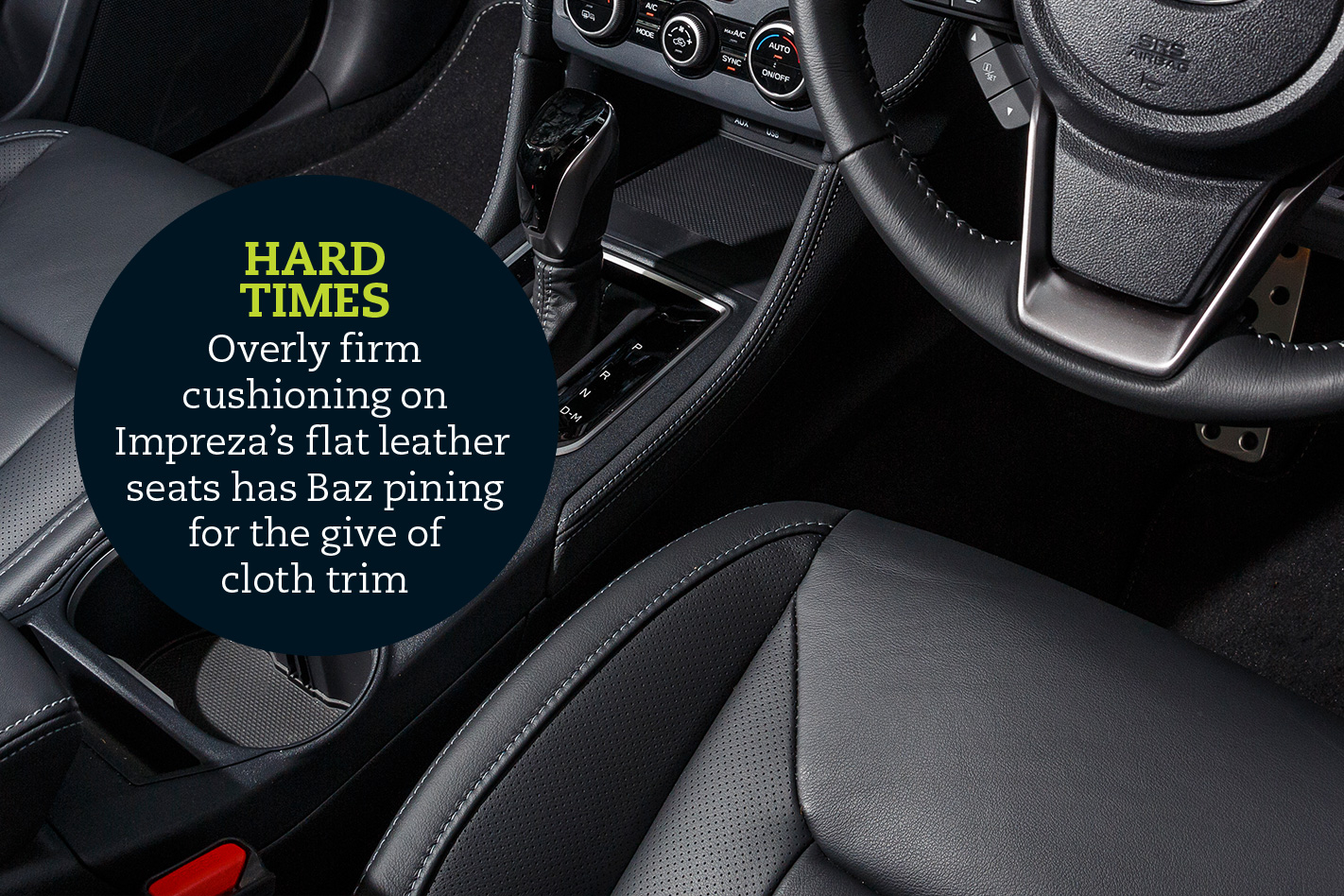
Hard, dark plastics dominate the cabin, making it feel a bit dated in the face of some surprising advances made by key competitors. The leather seats, too, were firm to the point of inducing a bit of backache on longer trips – the more comfy cloth seats on lesser Impreza variants started to look appealing for all the wrong reasons.
What struck me, though, was the ease with which the Impreza adapted to family life.
Forcing three children to fill the back row would induce typical grumbles, but once settled in to the space afforded by the 2670mm wheelbase, the complaints quickly stopped (although some grumbles about the intrusive transmission tunnel prevailed). That agreeable rear seat accommodation is also thanks to the generous glasshouse compared with some design-heavy rivals that reduce rear-seat visibility to pillbox proportions.
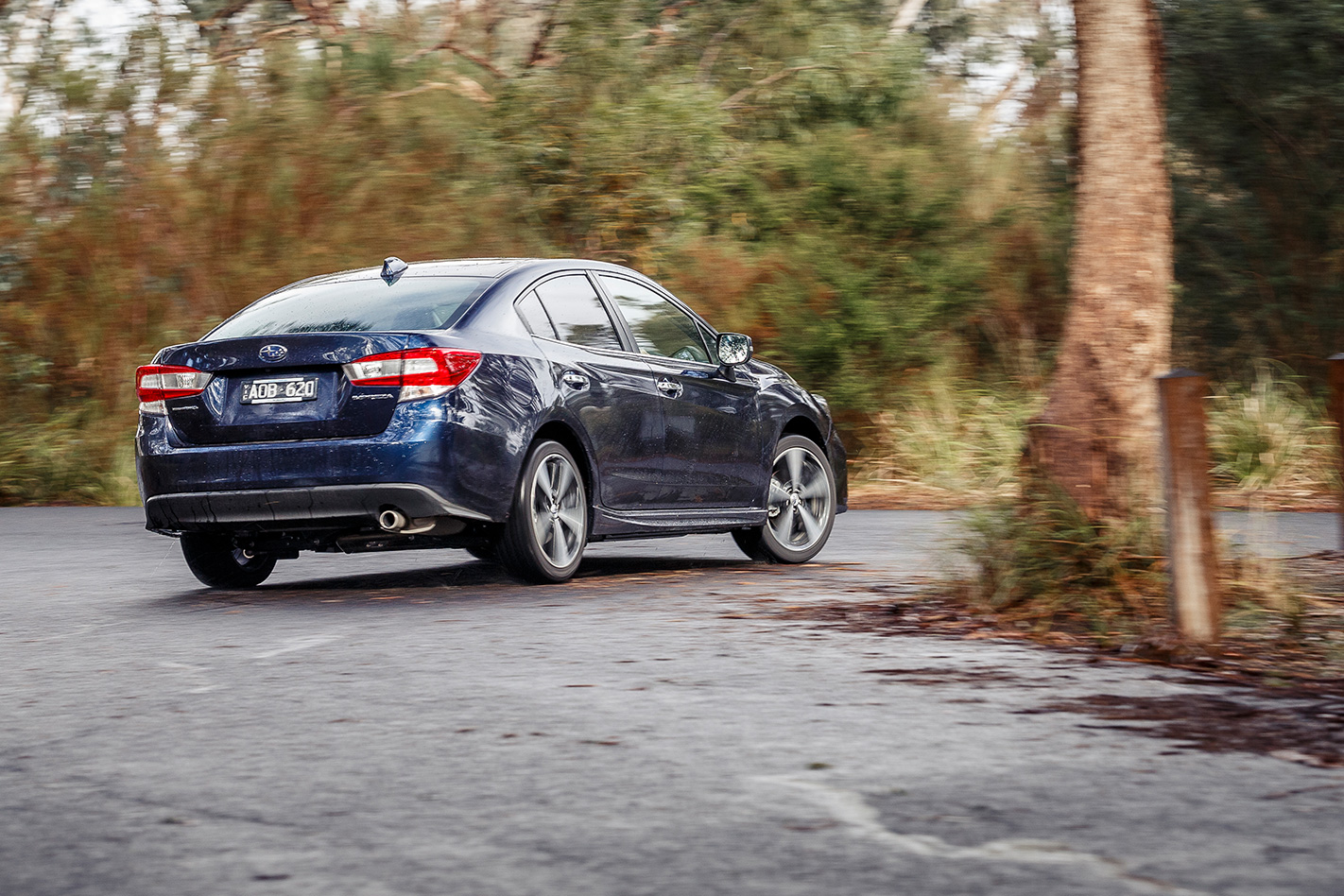
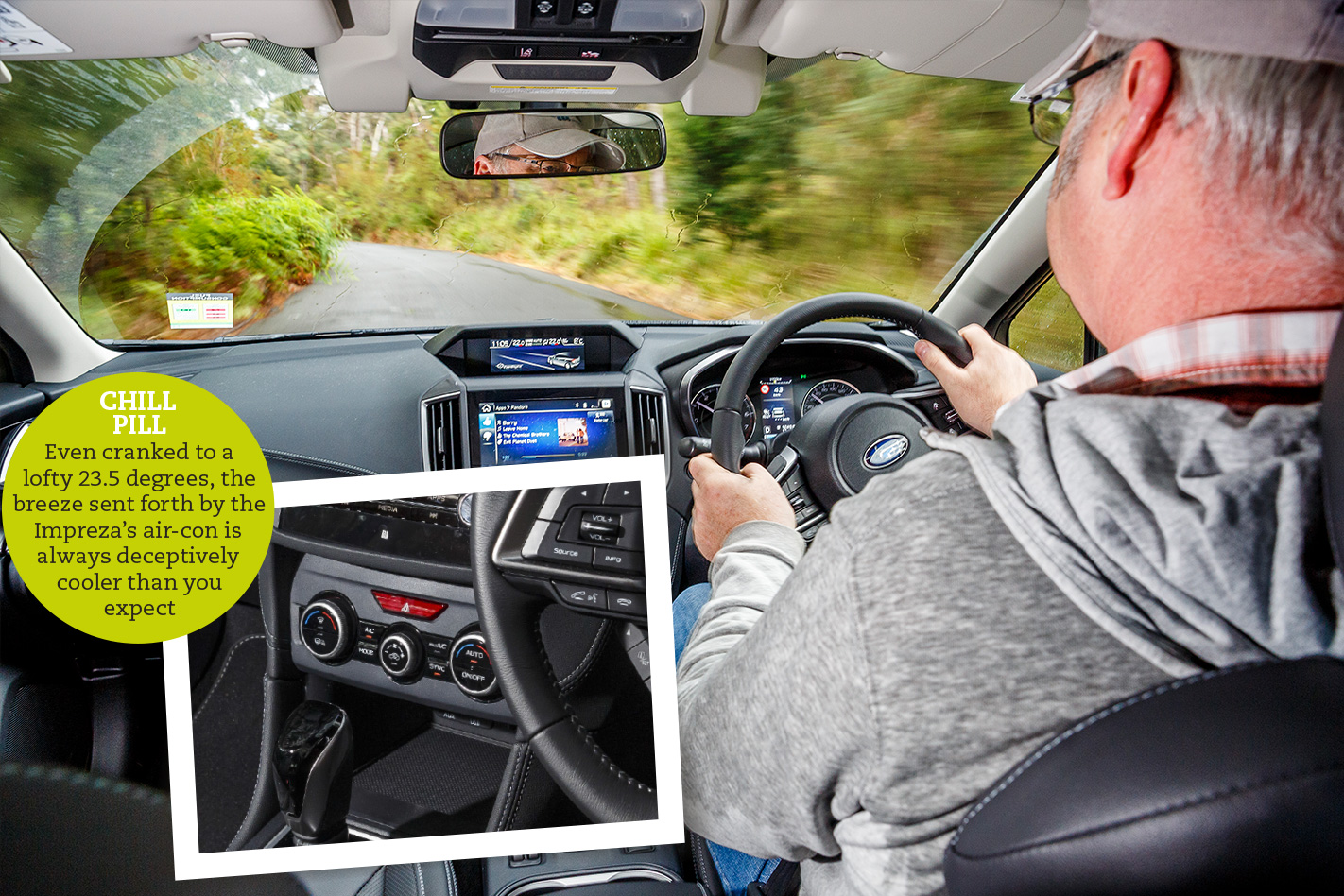
Despite all that glass, cabin climate comfort received a big tick, via an air-conditioning system that could turn over a huge volume of air on even the warmest or coldest of days, compensating somewhat for the lack of rear-seat air vents.
I never quite warmed to the boot, though. The Impreza sedan is sweetly proportioned, but a constant niggle in my brain said I would have preferred the hatchback that, to my eye at least, has a more balanced appearance. Further, trying to find the driver’s footwell-mounted boot release lever in the dark (it’s right beside the fuel-cap release) was never fun.
What shines, though, was how engaging the Impreza was from behind the wheel. Yes, it has a CVT that helps drive down the fuel figure, but tolerate the Impreza’s dim-witted steering wheel-mounted paddle shifters and tap the sweet, sweet chassis that sits underneath it, and the flaws are eventually forgotten.
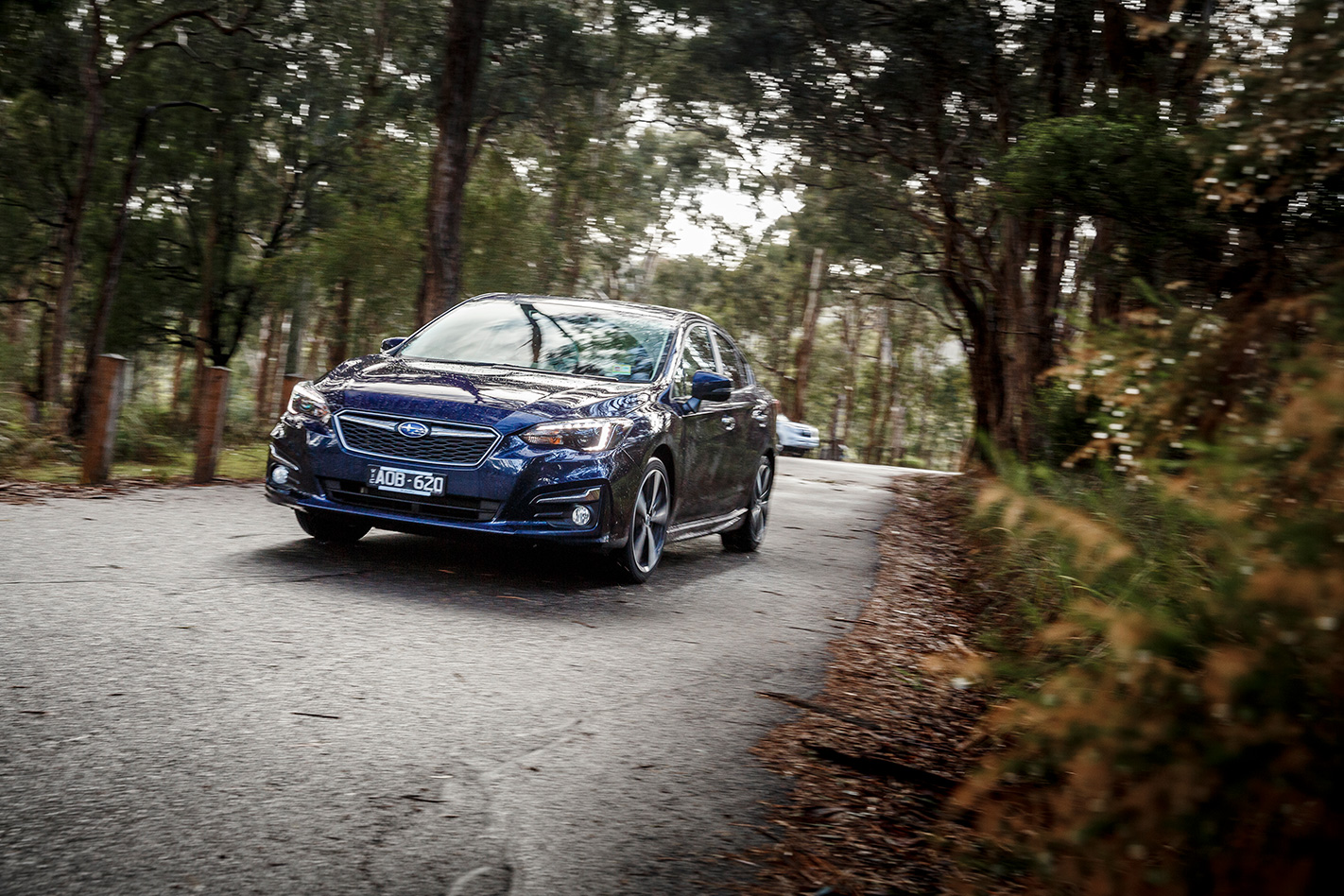
In that moment, I’ve become the romantic hostage again.
Diplomatic service
We logged an unusually high number of kilometres behind the wheel of our long-term Impreza, well beyond Subaru’s 12,500km recommended service interval.
Normally I service a vehicle by the book, but Subaru was happy to keep the sedan on the road, instead going by the recommended date for the next service. That first service would have cost me $348.30 according to Subaru’s capped-price servicing program that covers the first three rounds of scheduled maintenance.
Surplus to requirements
When I mentally added up all the bits of equipment I didn’t use, there were a surprising number of them. One of the first things I switched off was the lane-assist system, when it quickly became just another annoying beep.
The CD player never turned a disc in anger, the CVT made the automatic hill holder function redundant, and the voice recognition, well, for the brief period I used it, it thought I was speaking another language. I did miss the clarity of digital radio; the Subie’s crisp audio was made for it.
MORE: Subaru Impreza Range Review MORE: Subaru Impreza Specs, Range & Price
THE interior of the new Peugeot 508 will dim its lights, change colours, fill your ears with calming music and even gently massage your back – all in the name of keeping you relaxed on the daily commute.
Peugeot has revealed the latest version of its family sedan, a car that you could conceivably imagine is a fastback-styled cousin to the 2018 Holden Commodore, considering they’re now both made by the same company that also punches out Citroens. Ouch.
The two-mode ambience settings are one of a number of innovations rolling out to the second-generation 508, which ditches its dowdy sedan looks for a svelte, swept frameless four-door coupe form. And it is svelte; it sits inside a smaller footprint – at 4750mm it is 80mm shorter than the sedan it replaces, and the whole car sits 60mm lower to the ground.
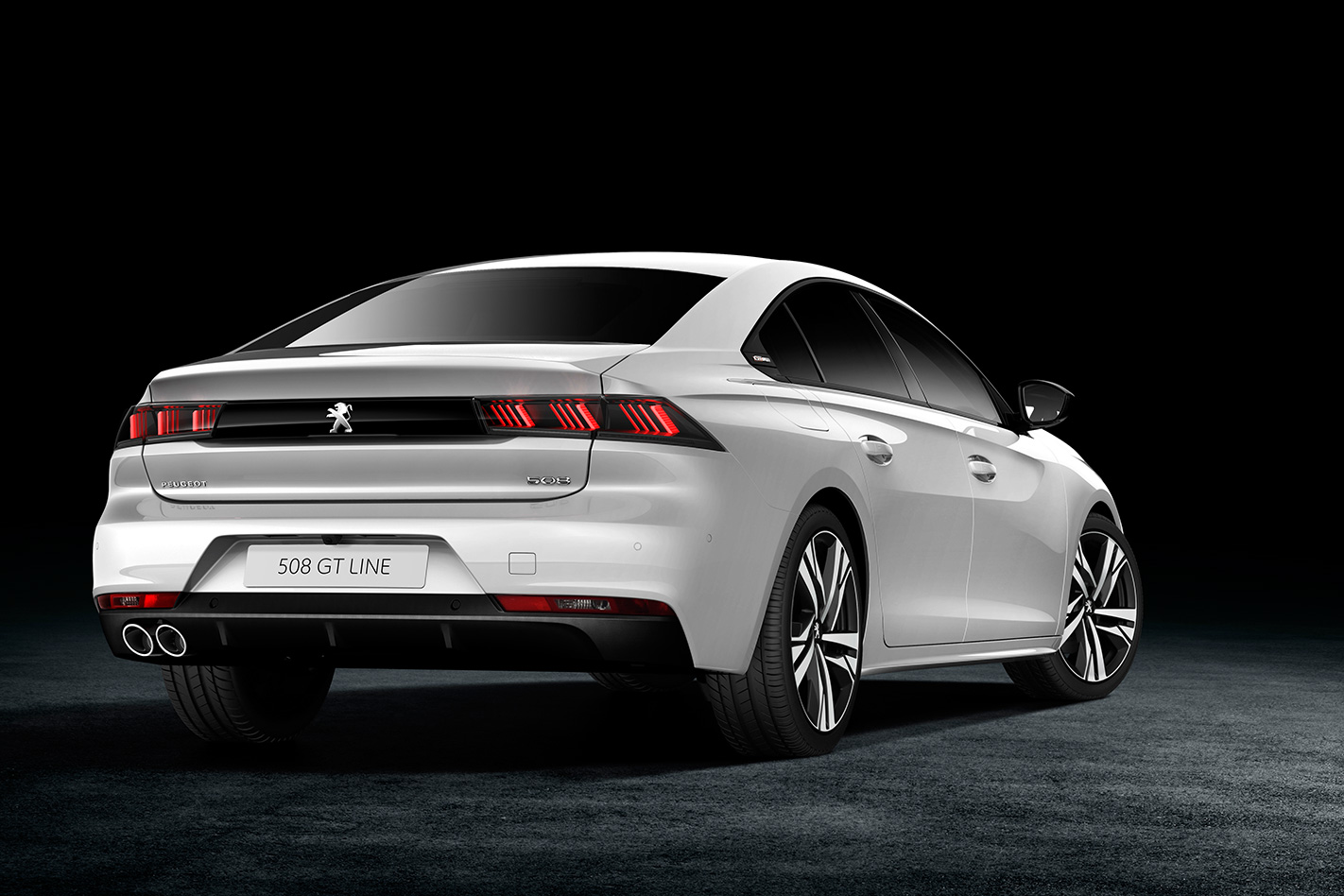
The new one abandons all that for show. A “508” graces the bonnet as it did on the 504 of old, the lion badge sits on a bastard cut grille, and vertical slashes filled with LEDS lifted straight from the Instinct concept frame the headlights (the tail-lights are also lifted from the show car).
Potentially arriving here early next year, the 508 carries another concept car-inspired feature – the instrument cluster. That’s arrived straight out of the Exalt concept with little change, providing a template for Peugeot to add features including infrared night vision that can see beyond the 508’s LED headlights.
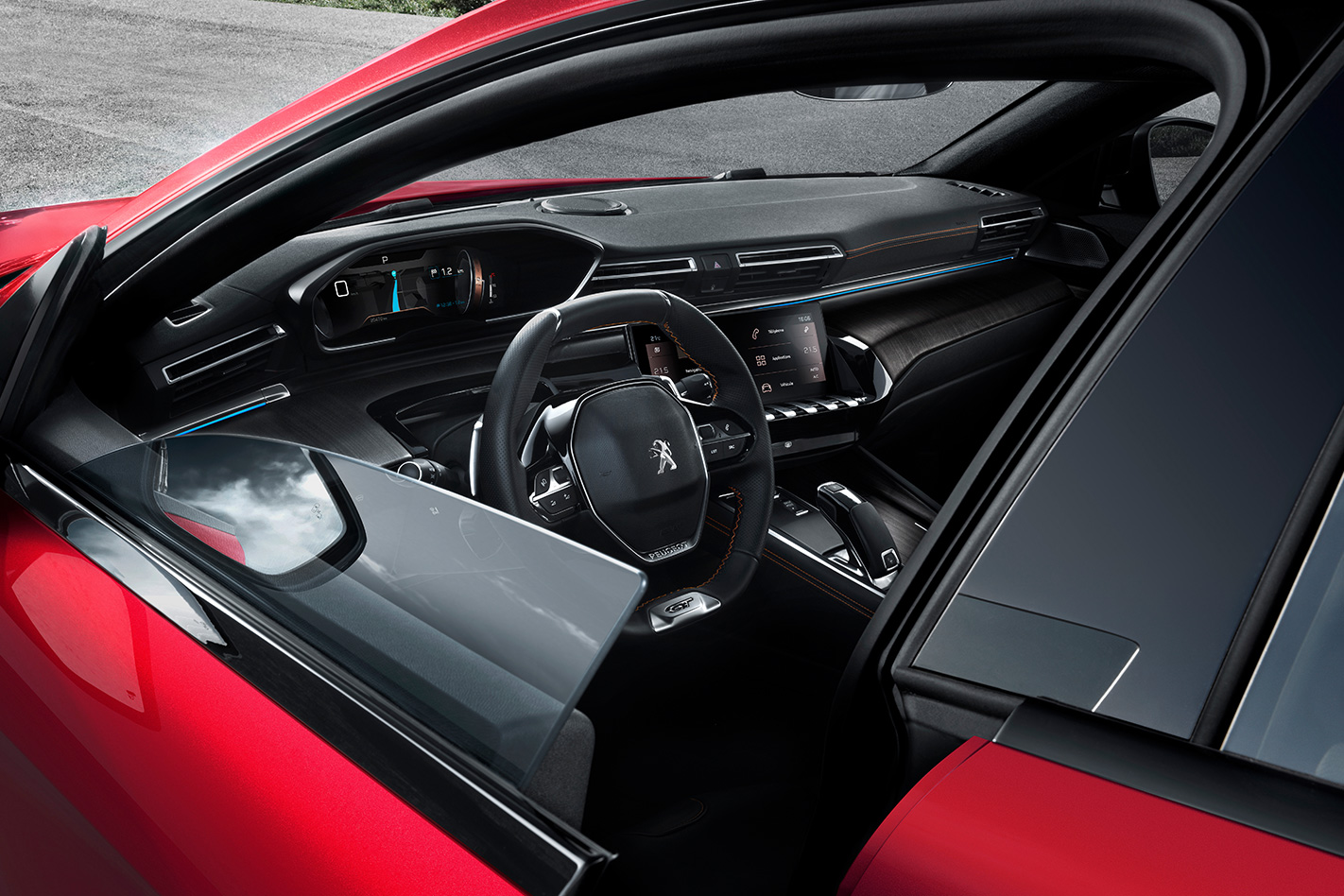
The 508’s shift to i-Cockpit means it gets the polarising small steering wheel, introduced first to the 308, that allows the driver to look over the top of it to see the instrument panel – something that Peugeot claims lessens fatigue and is better than a head-up display. The instruments are framed in a 10.0-inch colour screen (8.0-inch in cooking models), while the multimedia interface is a 12.3-inch touchscreen, although accompanied by traditional switches linked to features such as climate control and satellite navigation.
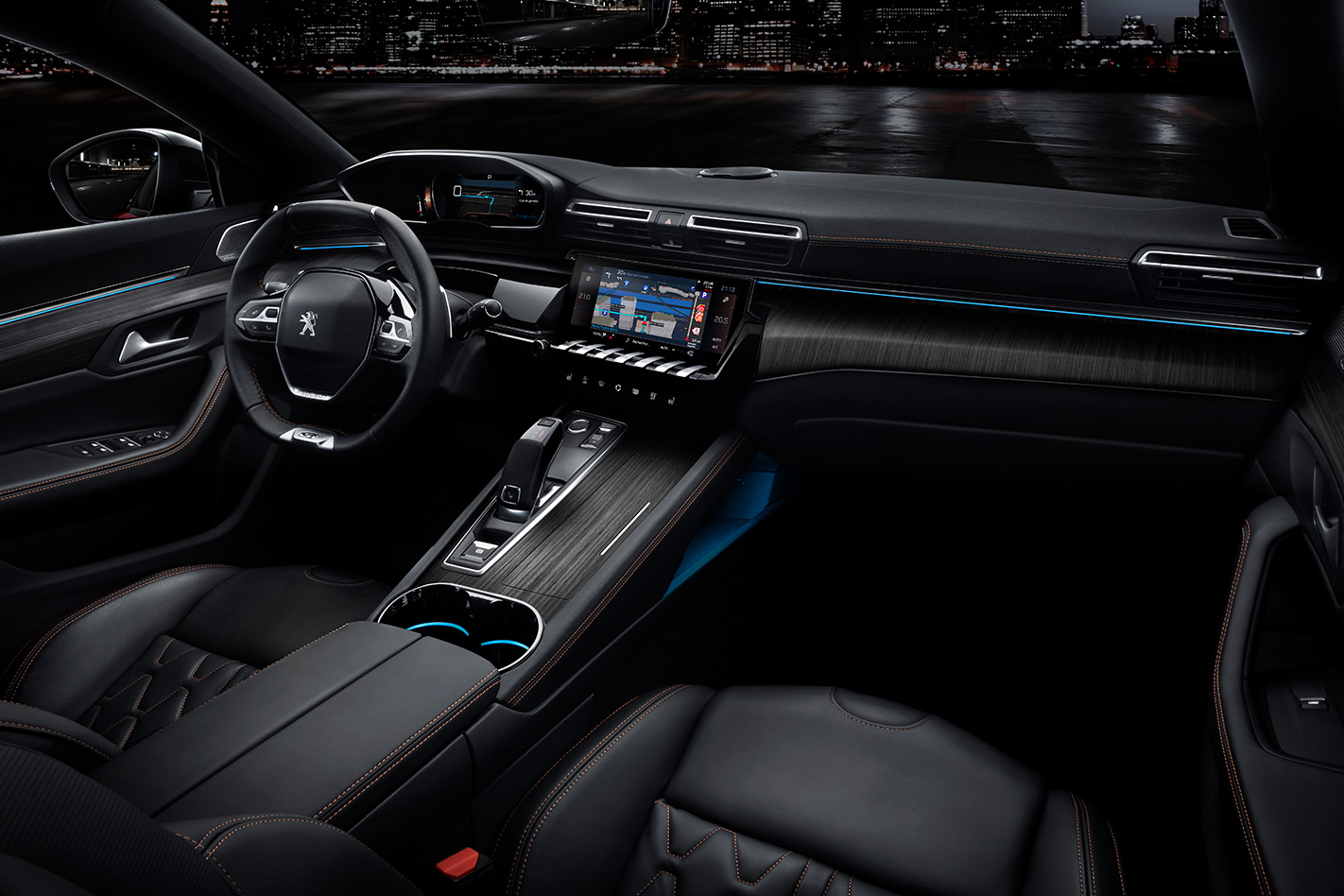
The 508 also gains the latest driver assist systems such as active cruise control, and smartphone connection including Apple CarPlay and Android Auto.
The 88th Geneva Motor Show starts on March 6. Visit wheelsmag.com.au for all the latest new car news and reveals as they happen.
VOLVO has officially unveiled its new V60 wagon ahead of first public showing at the Geneva Motor Show.
As a mid-size wagon, the V60 will rival C-Class and 3 Series wagons, along with Audi’s A4 Avant. Challenging rivals, however as these first official images show, Volvo’s newest two-box family wagon isn’t short on aesthetic appeal.
And the technology story is strong too. Following Volvo’s commitment to electrify all new models by 2019, the V60 has launched the V60 with two plug-in hybrid powertrains: the T6 and T8 Twin-Engine variants.

A non-hybrid petrol T6 engine (228kW twin-charged 2.0-litre four-cylinder), along with diesel D3 (110kW 2.0-litre four-cylinder turbo) and D4 (140kW 2.0-litre four-cylinder turbo) engines will also be available.
Both a six-speed manual and eight-speed automatic gearbox will be offered available, however it’s likely just the self-shifting unit will be sold in Australia, and the manual restricted to low-grade variants overseas.
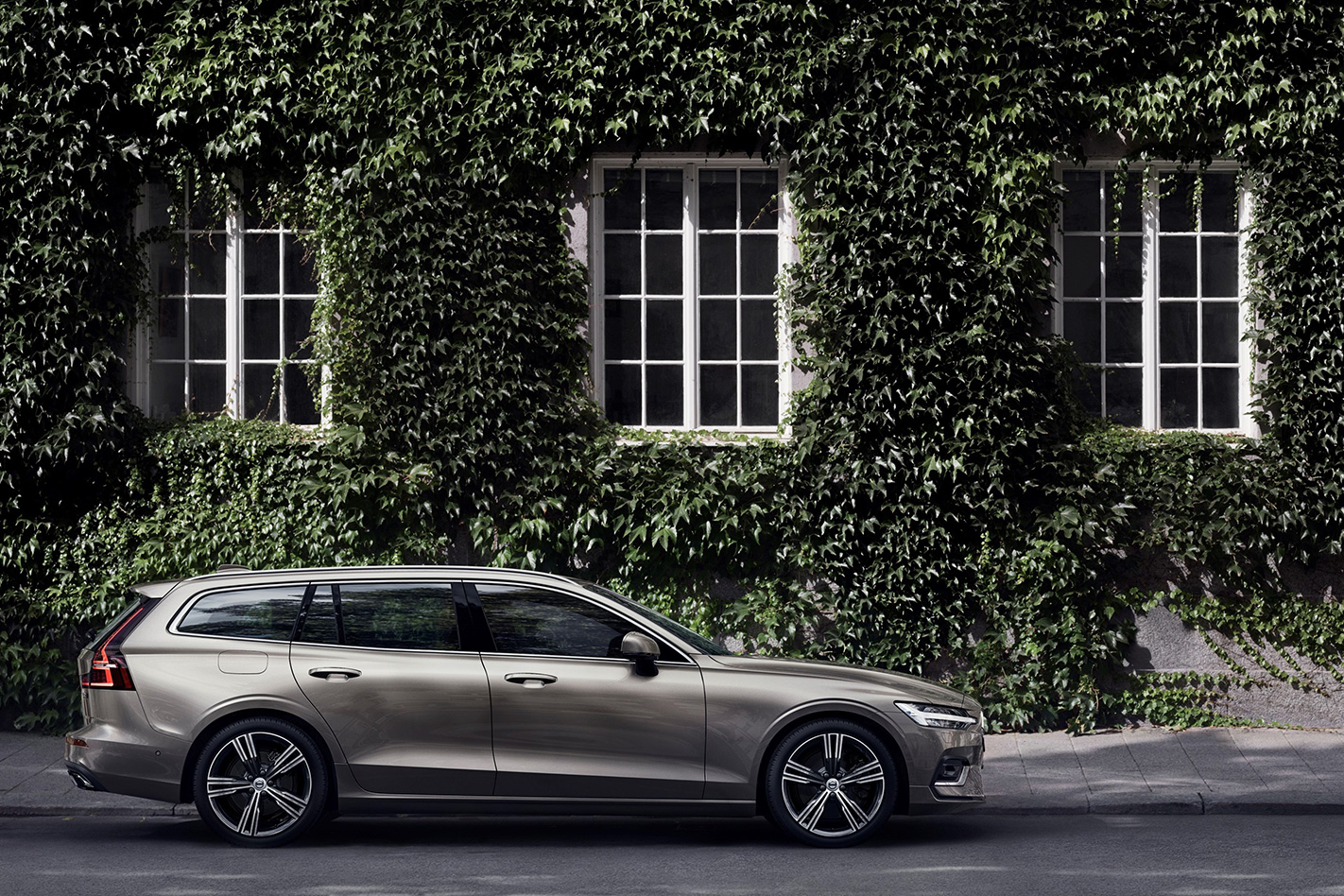
Tipping the scales between 1690kg and 2069kg depending on specification, the V60 has a towing capacity of 1600-2000kg and a boot capacity of 529-litres with the rear seats up. This expands to 1364-litres with the seats folded down and measured to the roof line.
“The family estate driver is an important customer for our business and has been for generations,” said Håkan Samuelsson, President and CEO of Volvo Cars.
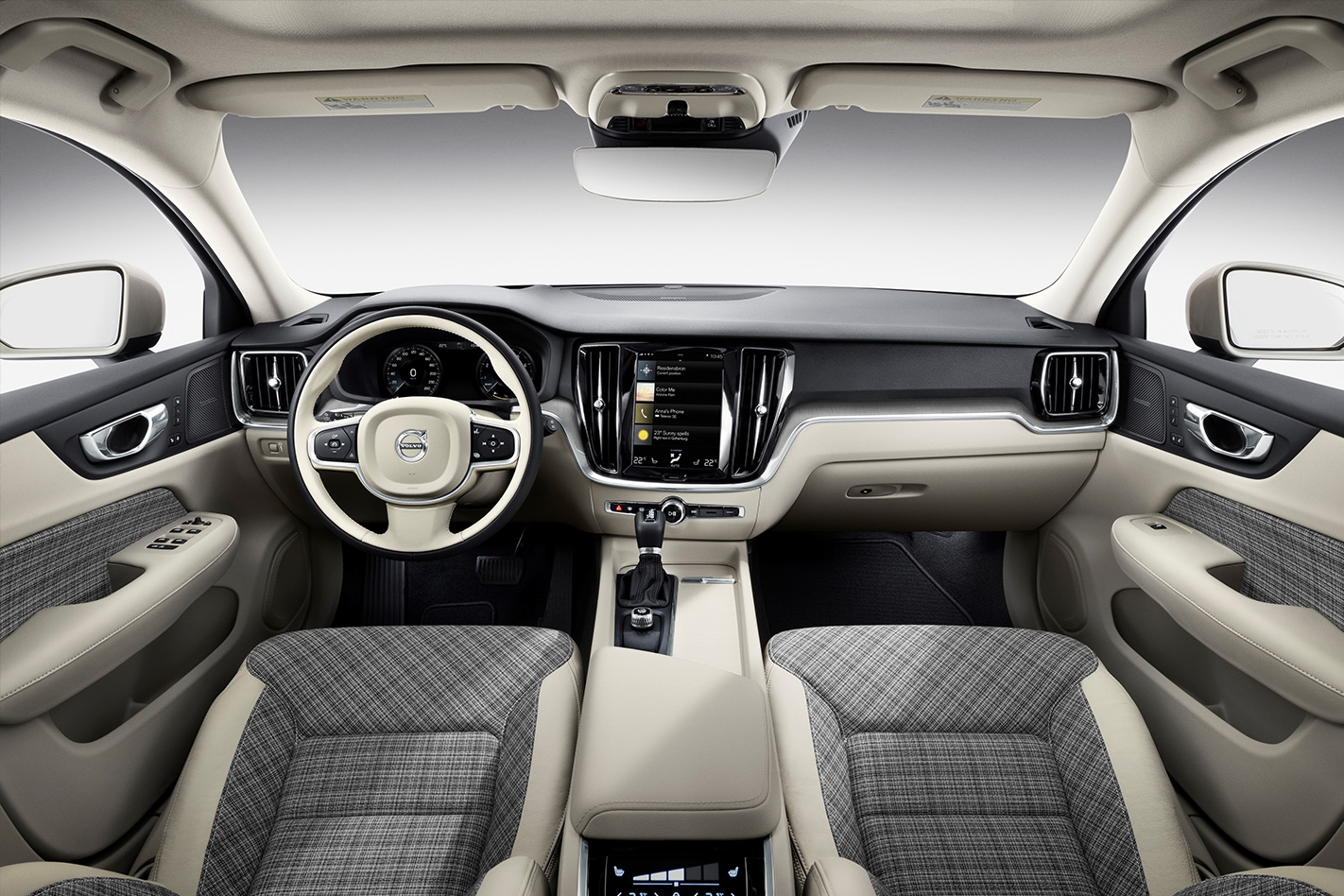
The car also comes equipped with Volvo’s full suite of driver assistance technology, including semi-autonomous ‘piloted driving’ modes.
Australian pricing and arrival will be revealed later in the year.
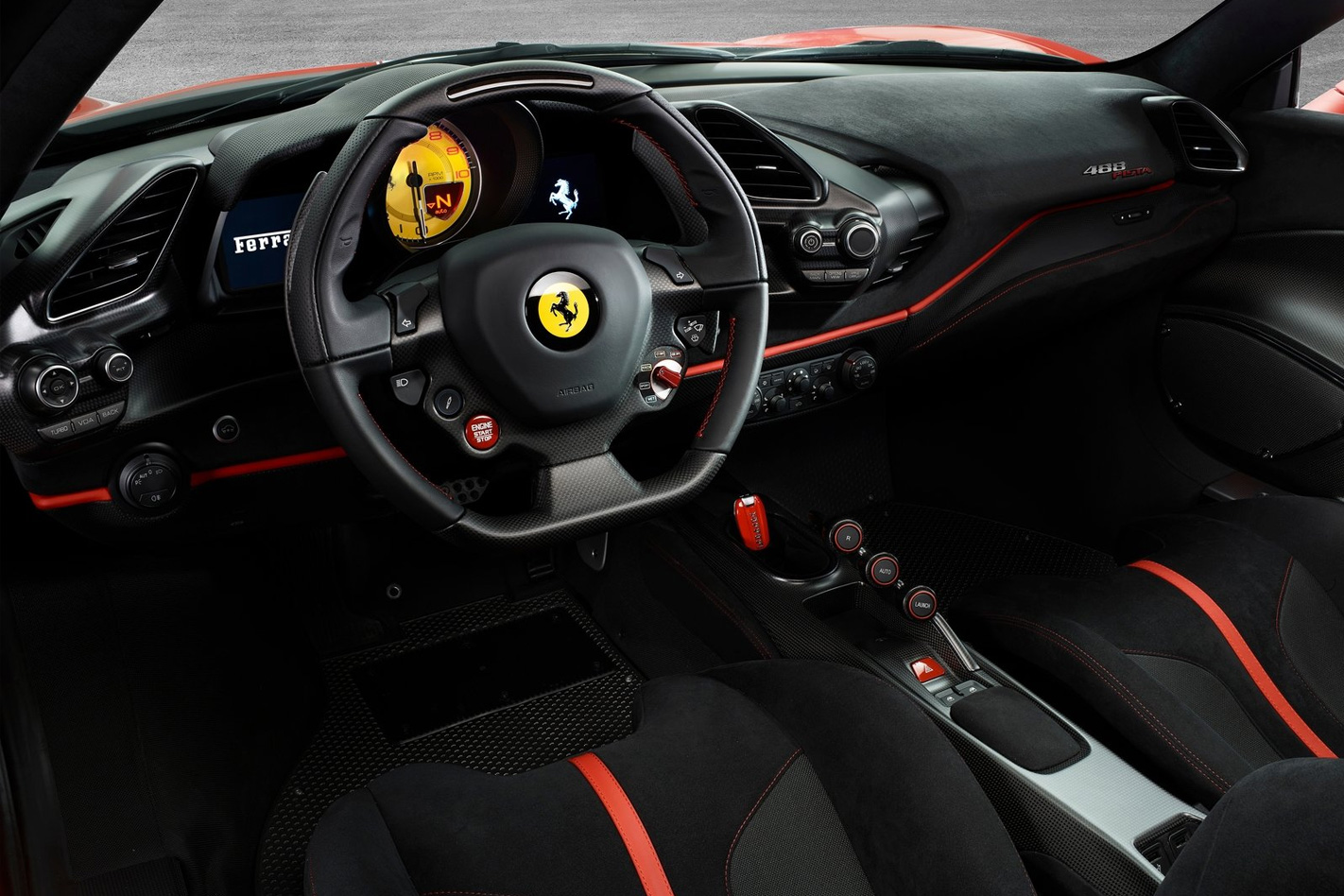
FERRARI has finally uncovered its eagerly anticipated performance-enhanced 488 special edition confirming that the manic road-racer will wear the Pista moniker.
The news puts to bed speculation that the car would recycle one of the company’s numerous rare-breed nameplates that have previously included GTO, Competizione, Speciale, Stradale and Scuderia, instead opting for a name that translates into English as ‘track’.
Like its enhanced mid-engined V8 ancestors, the Ferrari 488 Pista arrives with a comprehensive selection of boiler-stoking and weight-slashing mods that should put the willies up Porsche and its arsenal of track-dominating hardware as well as Lamborghini’s Huracan Performante.
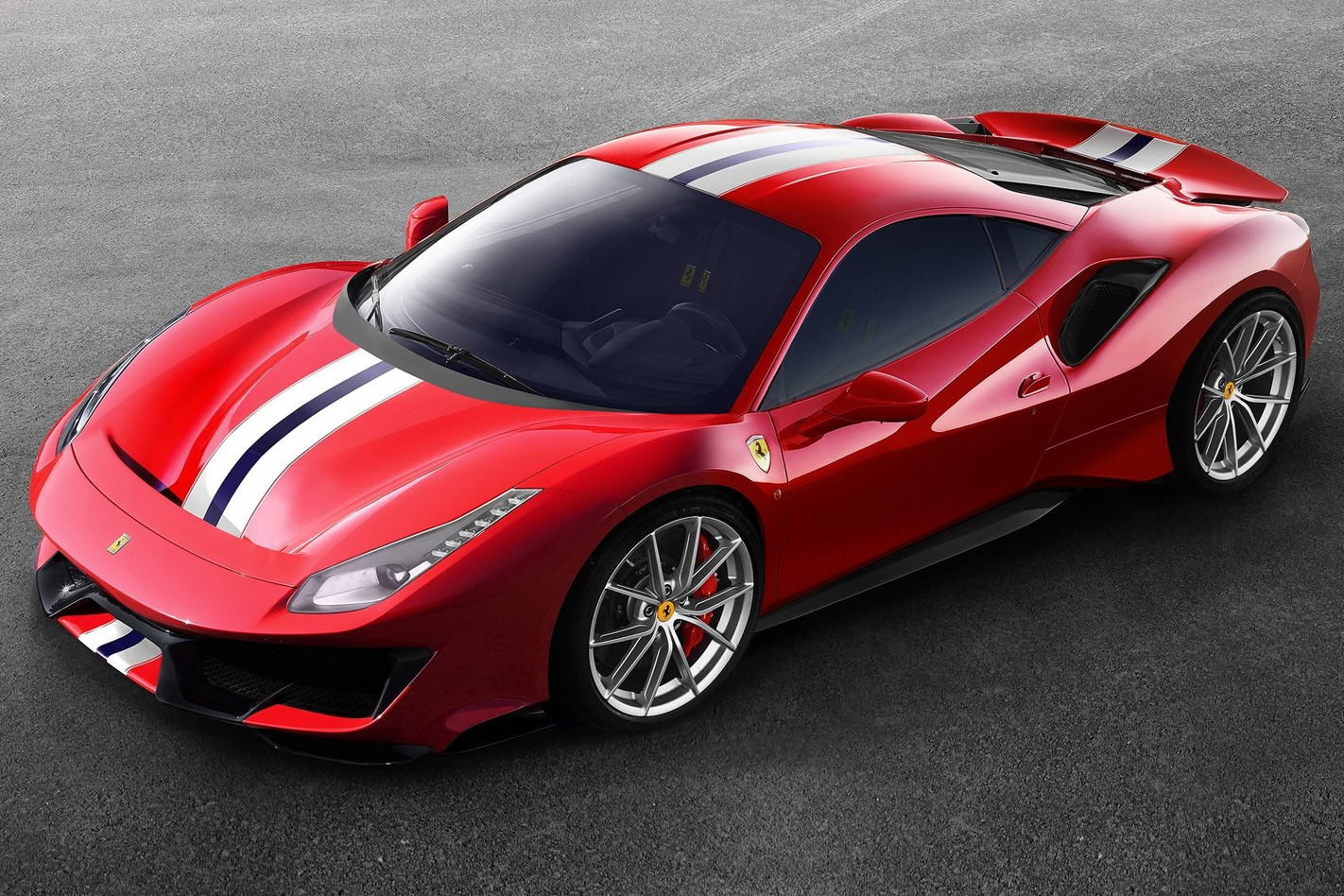
Thanks to its racing pedigree, the 488 Pista was put on a crash diet, which dropped 90kg from the not-exactly portly 488 GTB kerb weight, to tip the weighbridge at a bantam dry weight of 1280kg with all weight-saving options bolted on.
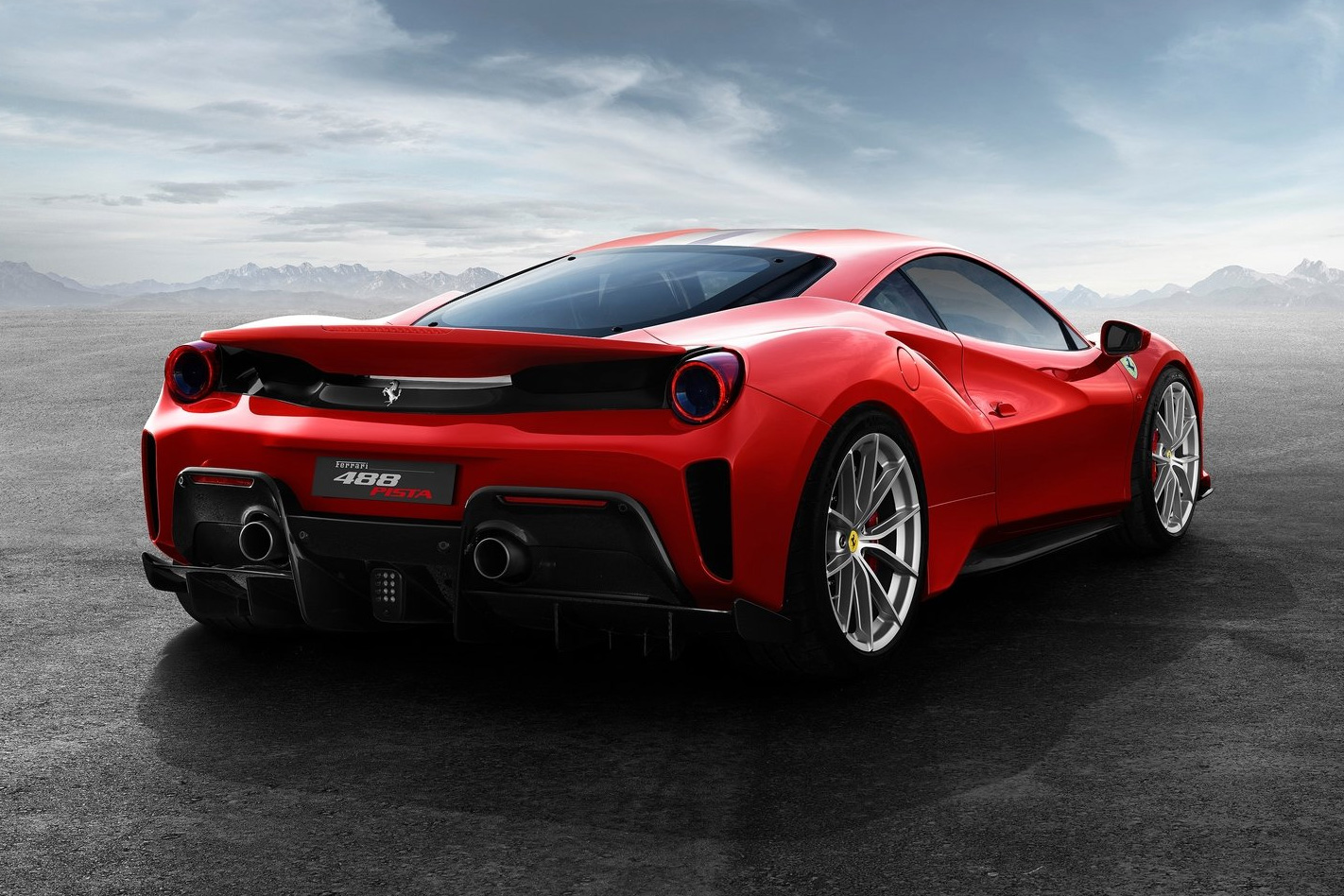
Shedding pounds is just the start of the Pista party, with the 488’s 3.9-litre turbo V8 also fettled by the Maranello mechanics to turn out an extra 38kW for a vicious peak power output of 530kW. Torque is also up 10Nm to 770Nm.
The combination of heft minimisation and muscle maximisation has whittled the zero to 100km/h acceleration to a staggering 2.85 seconds, standstill to 200km/h takes just 7.6s and the top speed has blasted out to ragged fringes in excess of 340km/h.
As you might expect from a car hell bent on obliterating bends, the 488 Pista has been upgraded with a full complement of racing aerodynamics lifted from the GTE including more aggressively angled front diffusers, redesigned underbody vortex generators and a bigger rear spoiler. The result? 20 percent more downforce.
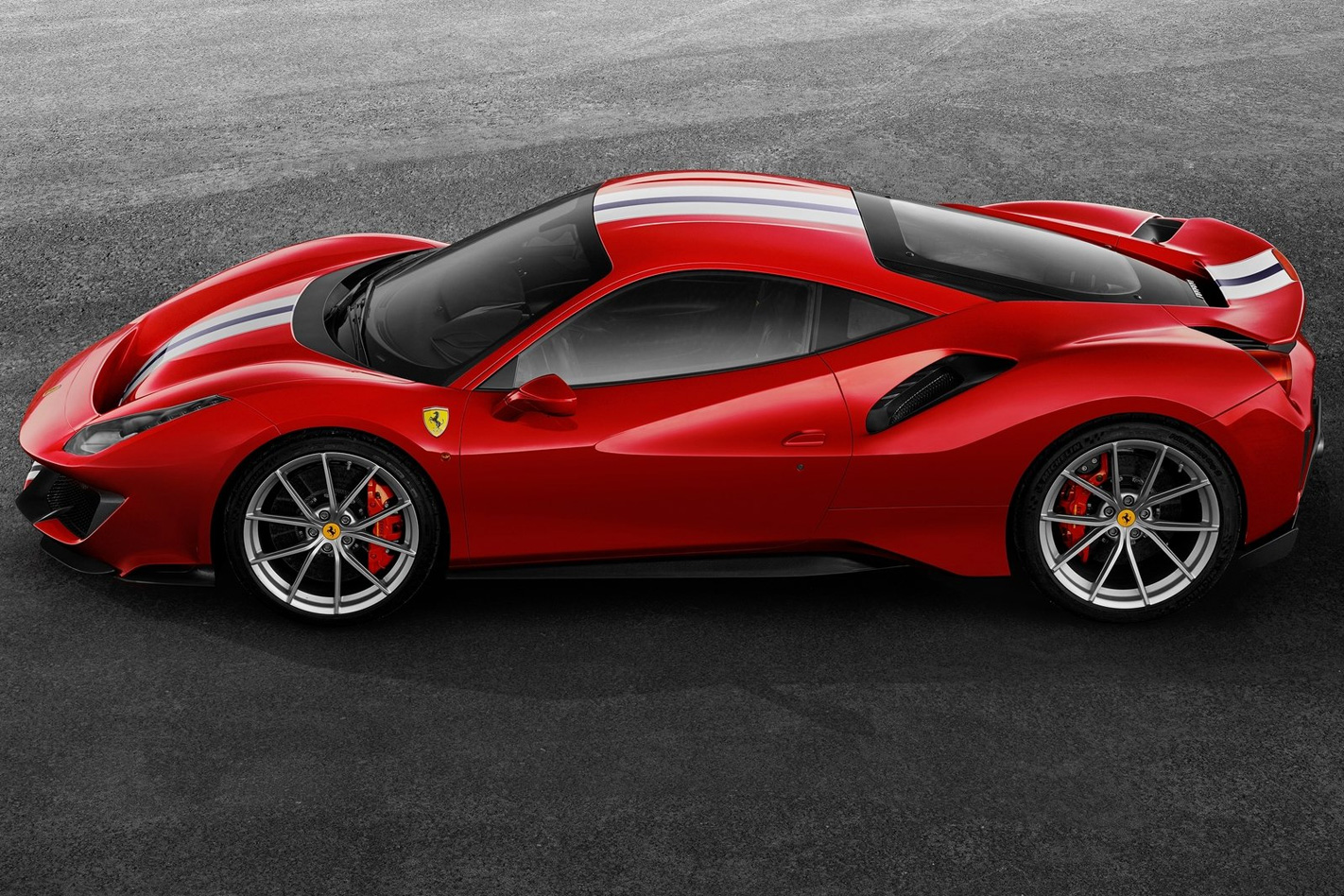
If you’re after your own Pista you might be disappointed. While Ferrari Australasia president and CEO Herbert Appleroth told Wheels a similar number of Pistas to its 458 Speciale predecessor would be coming, the company had already received more than twice the demand for the Pista and all examples have already been assigned to only Ferrari’s most loyal customers.
The upcoming Geneva Motor Show is shaping up to be just as big as last year, with a new model from Italdesign now added to the list of reveals to watch.
The design house, which undertakes the unusual task of manufacturing and branding its own works, was created 50 years ago by legendary designer Giorgetto Giugiaro and Aldo Mantovani.
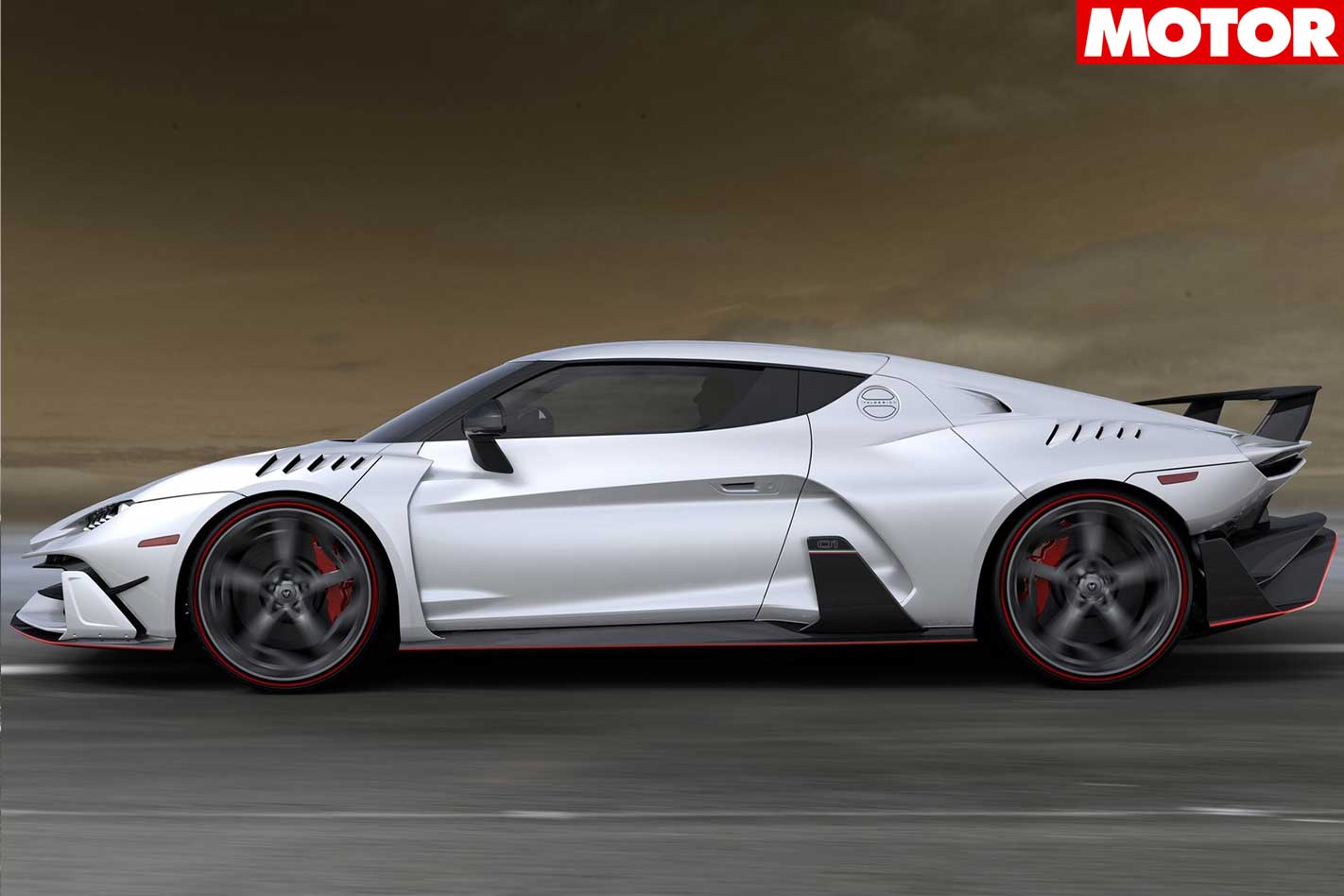
Credited with designing iconic and/or beautiful vehicles such as the original VW Golf, the Lotus Esprit, and the DeLorean DMC-12, the company also build its own vehicle, the low-volume Zerouno.
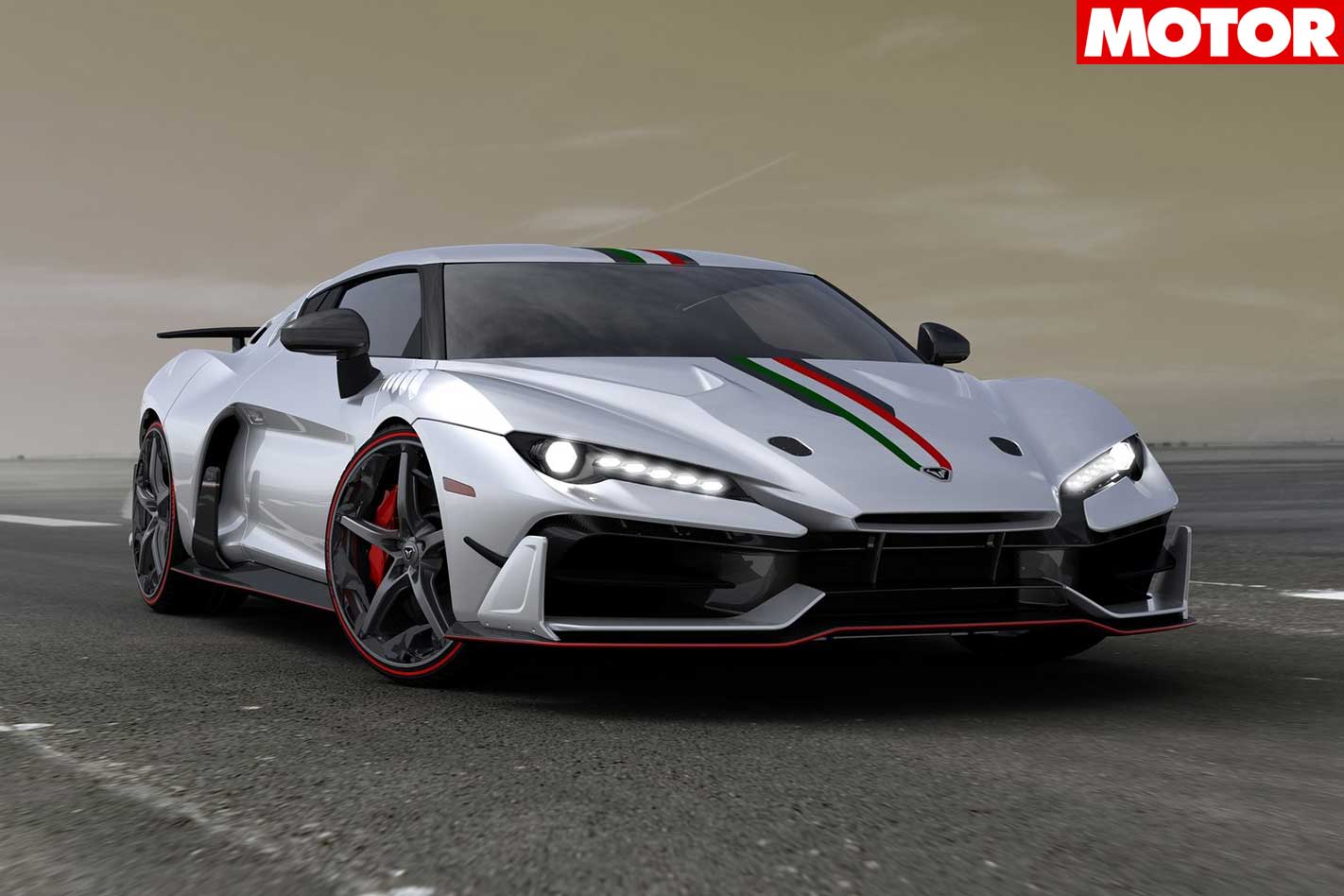
The Zerouno was limited to five units built by the end of 2017, so we expect to see the company follow a similar path of exclusivity for the topless version.
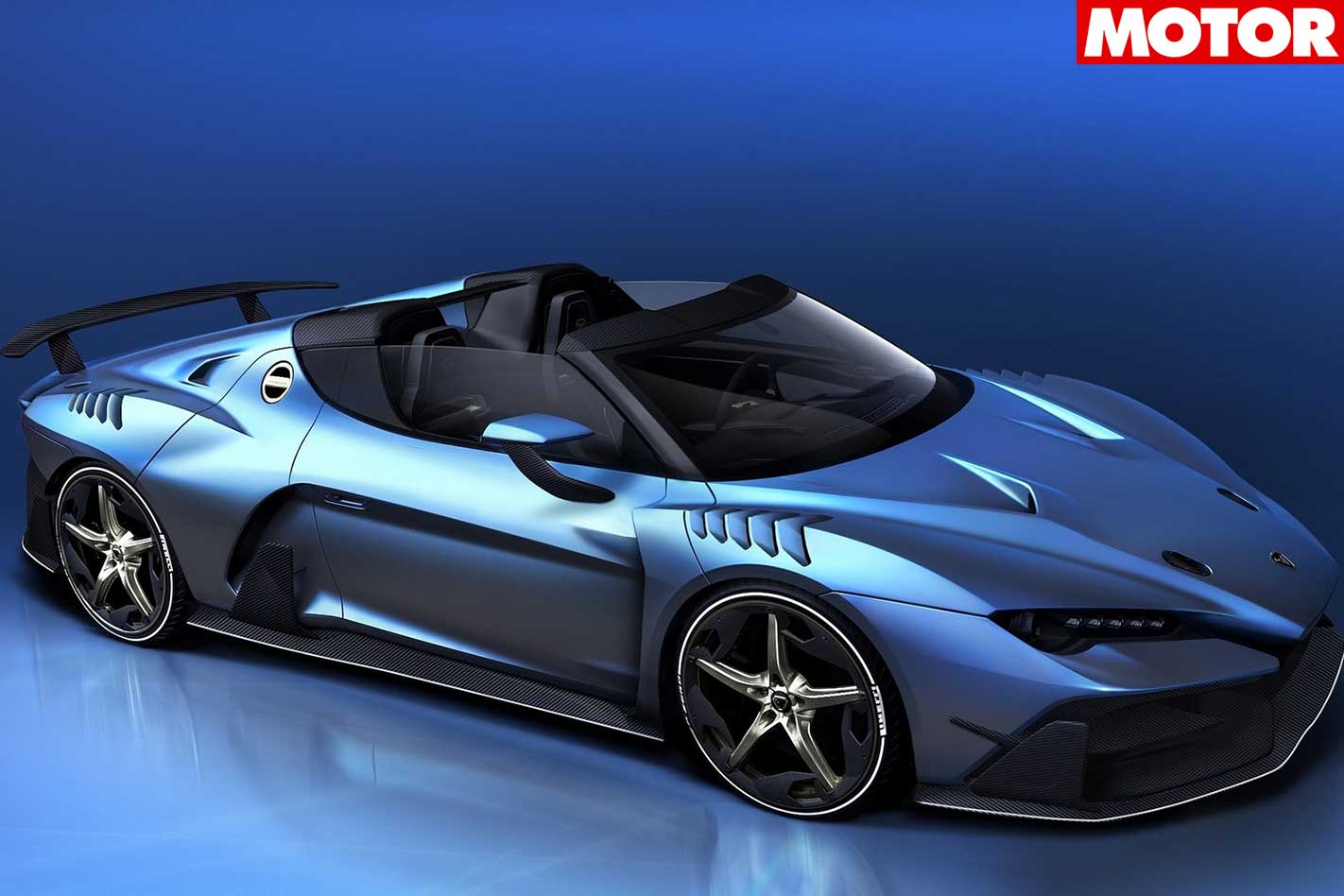
Italdesign CEO Jörg Astalosch says the brand will continue to grow and innovate, building on the success of its half-century so far.
“Italdesign has always stood out for its ability to dare, to be ahead of its time and anticipate the industry’s needs, working daily to raise the bar of quality standards.
“If we look at the many prototypes we are proud to have at our Moncalieri headquarters which were inspirational for many successful projects for our customers.
“This attitude for innovation… is evident even after many decades”.
SAY the name “Supra” and the ears of every Toyotaphile within ten metres will surely prick up.
For decades the Supra was Toyota’s top-tier sports car, a scalp-taking turbo two-door that was rapid enough to keep pace with – or beat – more exotic metal. It’s a nameplate that commands respect, and to some people that’s more important.
- Previously: Mercedes-Benz A-Class – evolution of a badge
First generation – A40
1978. Disco was king and Japan’s auto industry was hitting its stride, with manufacturers across the country – now one of the world’s biggest industrial powerhouses – rapidly expanding their product portfolios beyond the humble compact cars that established them on the global market.
Toyota was especially keen on adding more emotional appeal to its showrooms. It had done a six-cylinder rear-wheel drive coupe before, the gorgeous 2000GT, but that car was a low-volume special priced well out of reach of the average Japanese salaryman.
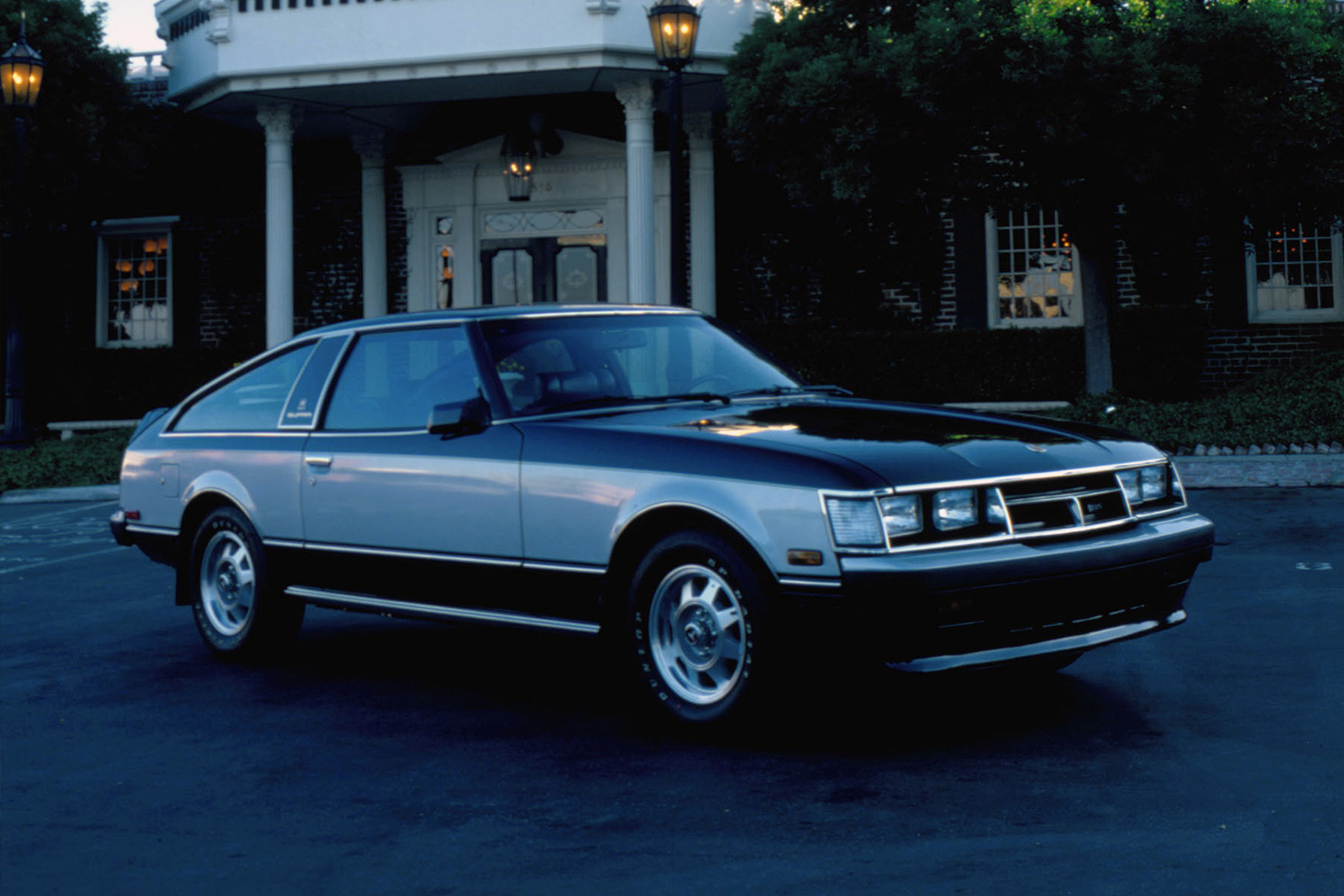
By stretching the wheelbase of an A40 Celica ahead of the A-pillar, Toyota created enough room in the engine bay for a fuel-injected single-cam inline six engine ranged in size from 2.0 litres to 2.8 litres.
Called the Celica XX in Japan and the Celica Supra everywhere else, power wasn’t a strong suit. The Celica Supra offered between 82kW and 92kW at a time when the Datsun 260Z was cranking out upwards of 120kW, and more potent twin-cam versions of the four-cylinder Celica were delivering outputs in the same ballpark.
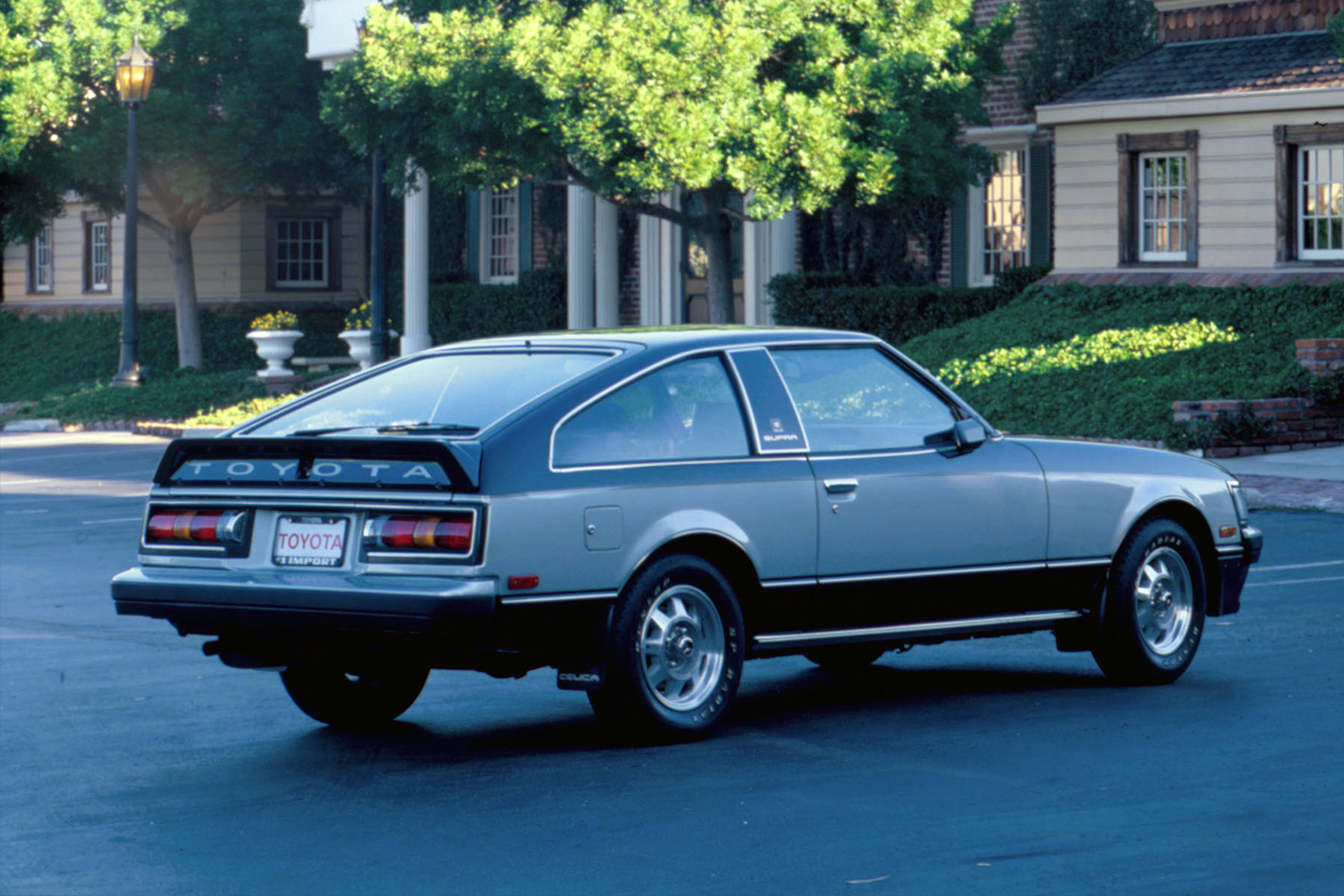
Fun fact: the same platform that sat under the Celica Supra was also the basis for the Celica Camry – a four-door counterpart to Toyota’s rear-drive four-pot coupe that was also the forebear to the much less exciting SV10 Camry. While the Supra name went on to become Toyota’s coolest badge, the Camry name went the opposite direction.
Second generation – A60
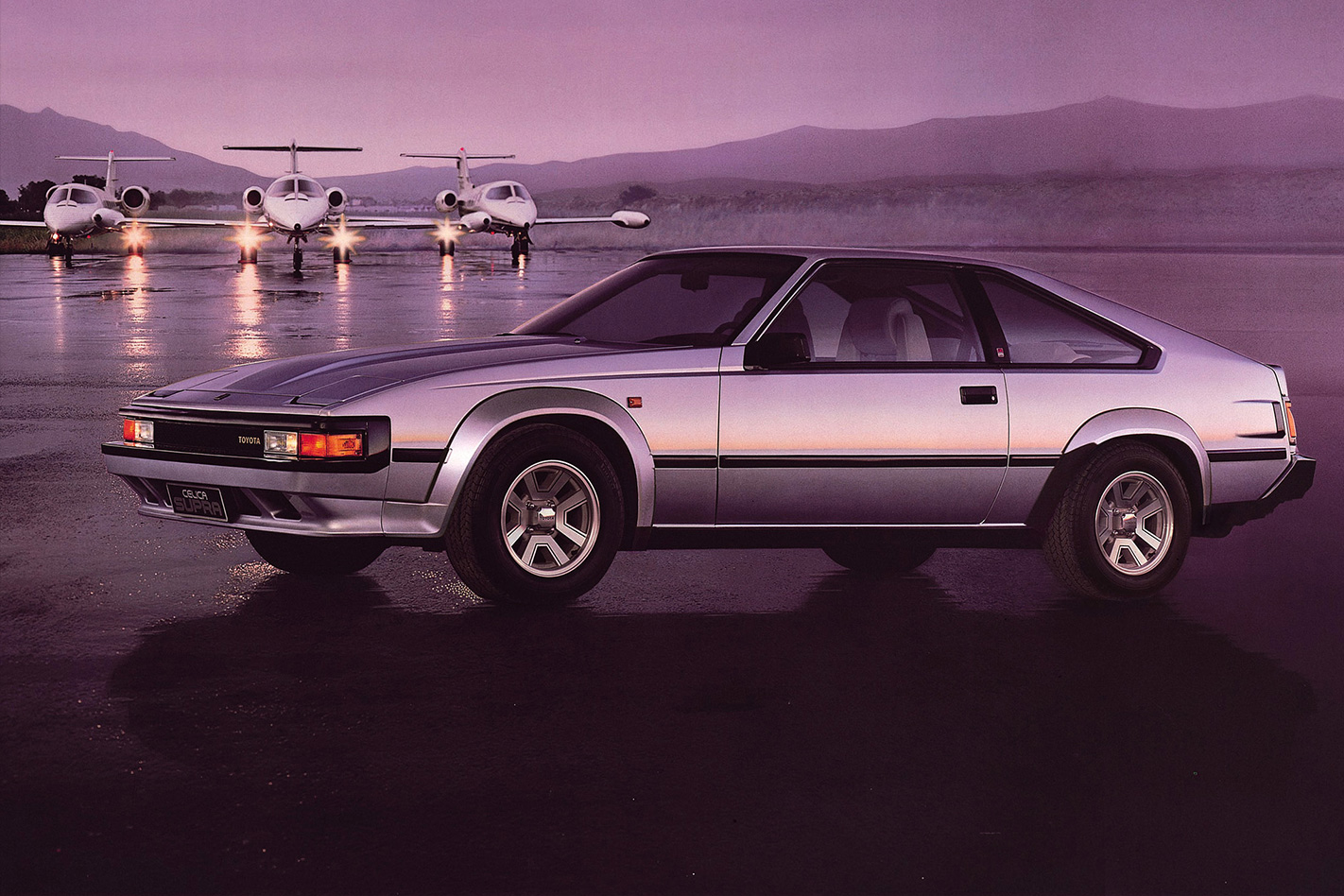
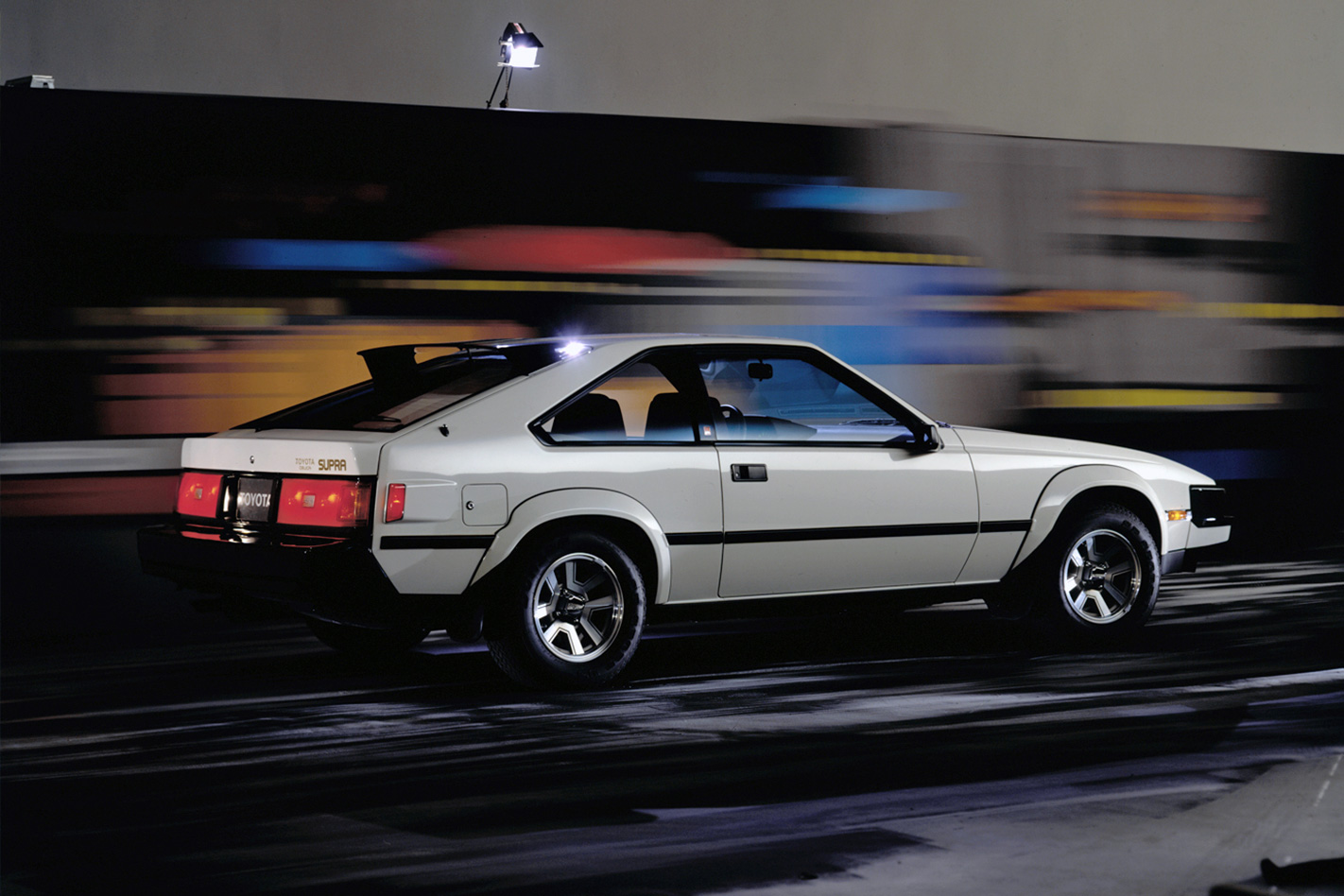
The Celica link continued for the second iteration of the Supra, though the platform received a major update that introduced independent rear suspension and a slightly shorter wheelbase. Sheetmetal continued to be shared with the Celica liftback from the A-pillar rearward, but the second-gen Celica Supra’s longer nose and entirely unique front-end styling – not to mention those fat stick-on overfenders on some variants – set it further apart from its four-cylinder stablemate.
Third generation – A70
Looking somewhat like a Japanese version of the Trans Am used in Knight Rider, the third-gen Supra finally ditched the Celica name from its bootlid and wore its own unique body styling for the first time.
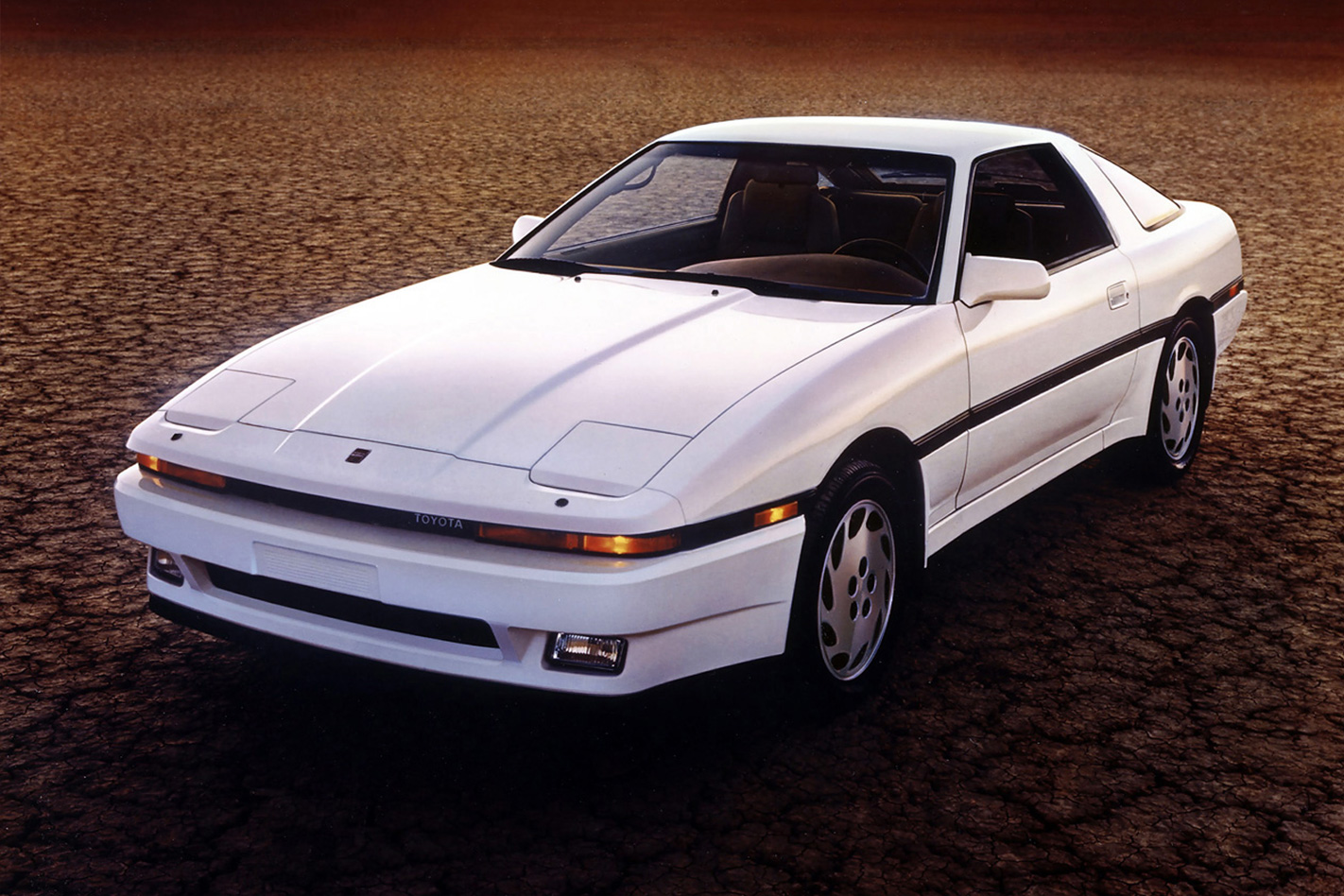
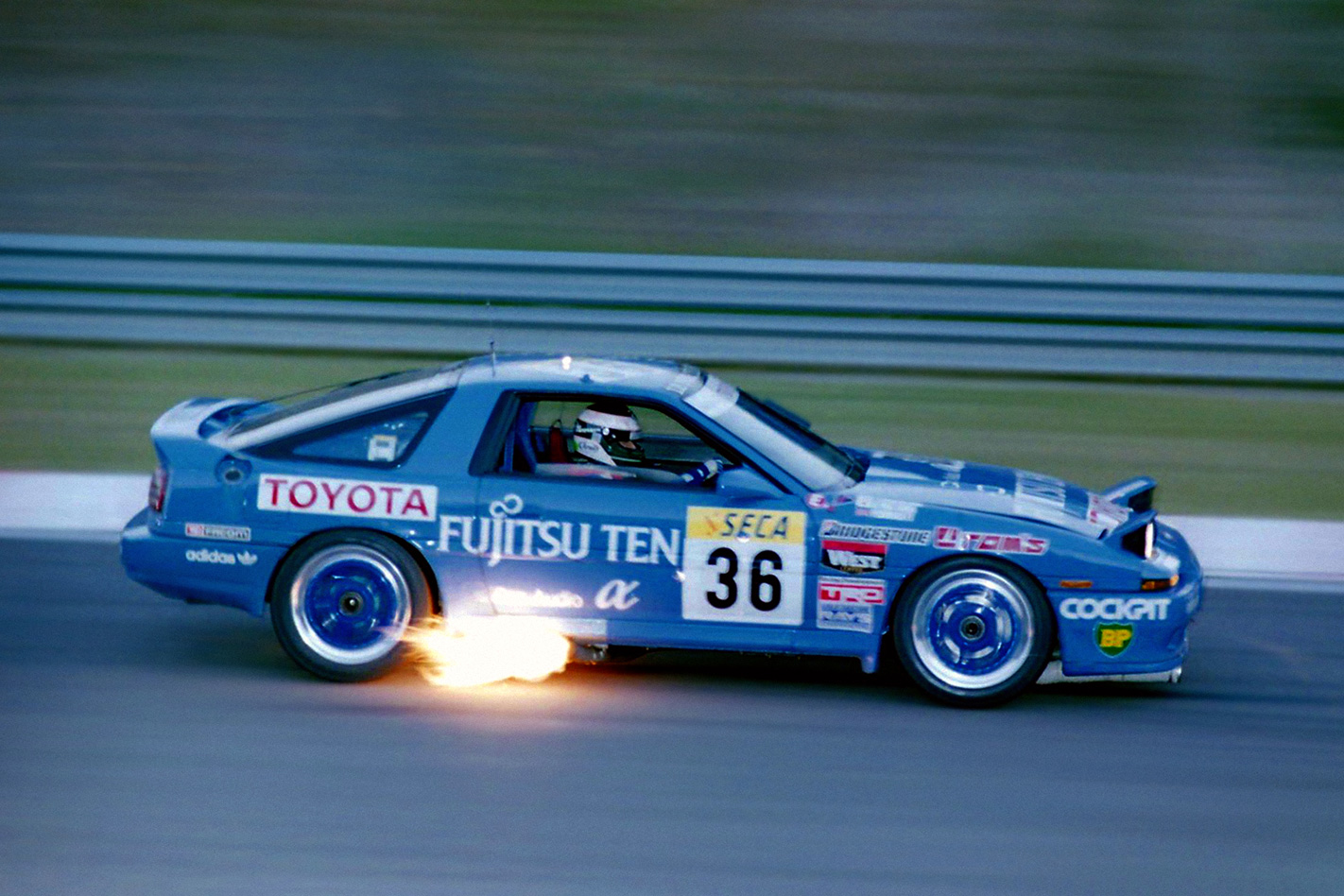
New underpinnings saw the front MacPherson struts of the A60 turfed in favour of more sophisticated double wishbones, and the A60’s rear semi trailing arms were similarly dumped for a proper multi-link arrangement. At last the Supra had proper sporting credentials – even though its handling was geared more toward cruising than cutting laps. That didn’t stop Toyota from campaigning the third-gen Supra in Group A touring car racing.
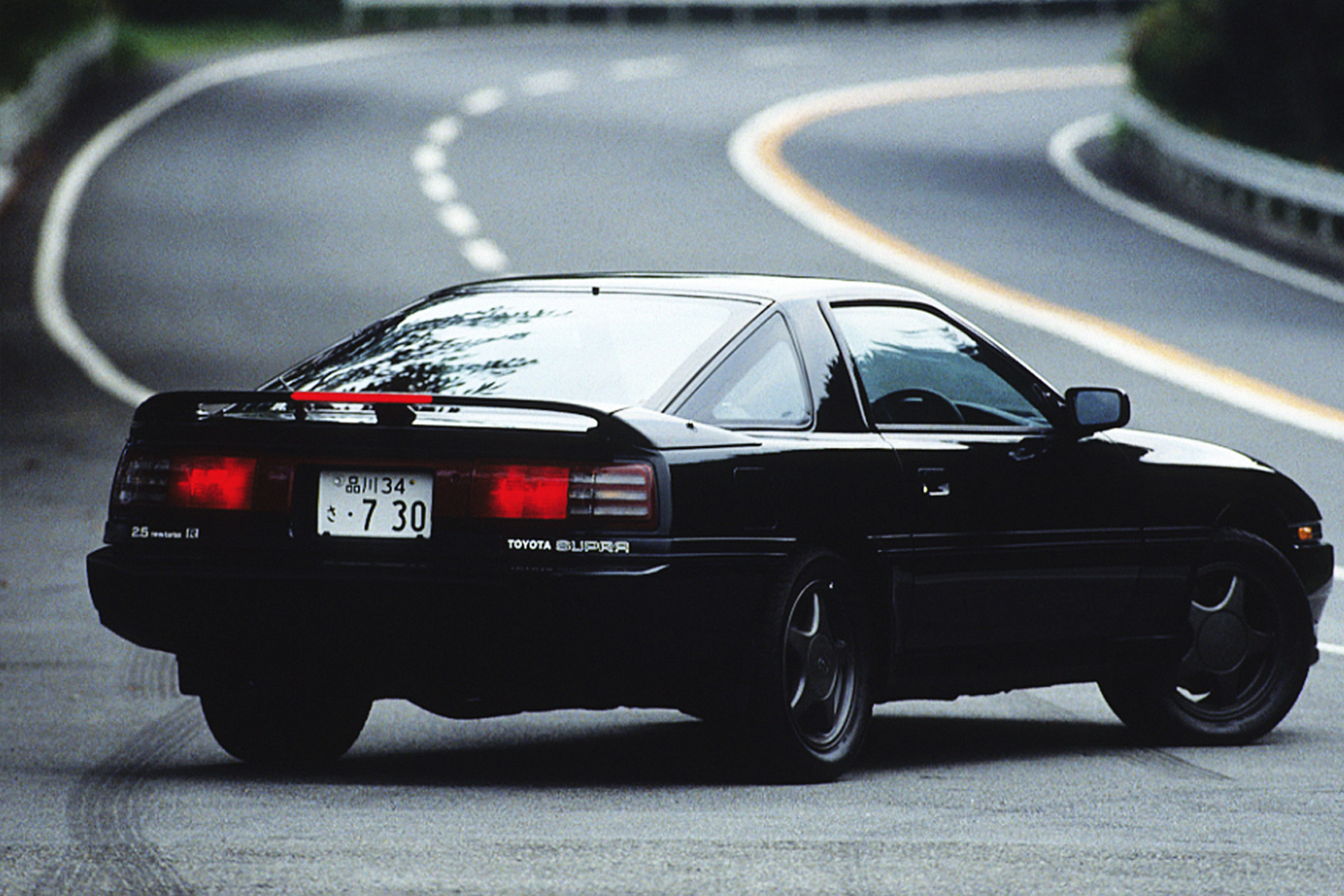
Now liberated from having to share bits with the Celica, the third-gen Supra could finally stand toe-to-toe with its contemporary, the first-generation Nissan 300ZX. However the arrival of the second-gen 300ZX in 1989 once again saw the Toyota sit in the Nissan’s shadow – though that would change when the next Supra arrived in 1994.
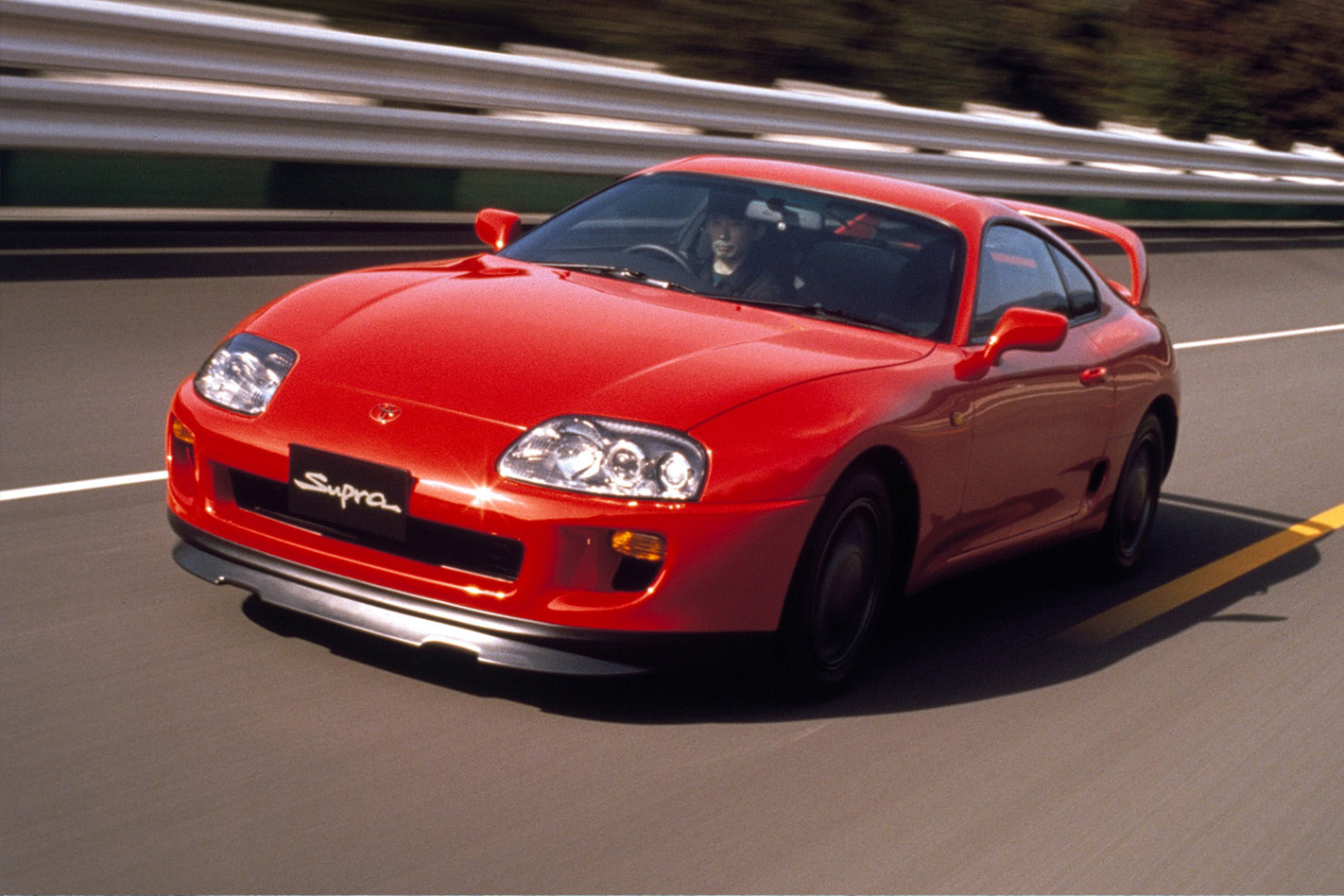
This is the car most will associate with the Supra name – the fat-hipped, long-nosed JZA80 Supra of 1994.
The A70’s eighties wedge styling was out and Toyota’s organic design language of the 1990s was in. Curves replaced creases, and the JZA80 Supra’s meaty haunches and low turret were arguably the most attractive interpretation of the Big T’s new look for the 90s, which also graced the widebody Camry and sixth-gen Celica.
Inside, a driver-focused cockpit featured a dashboard clearly inspired by fighter jets, with space for two adults in a pair of low-slung seats up front and a pair of halflings in the bucket-like rear seats. As always, there was an inline six up front and driven wheels at the back.
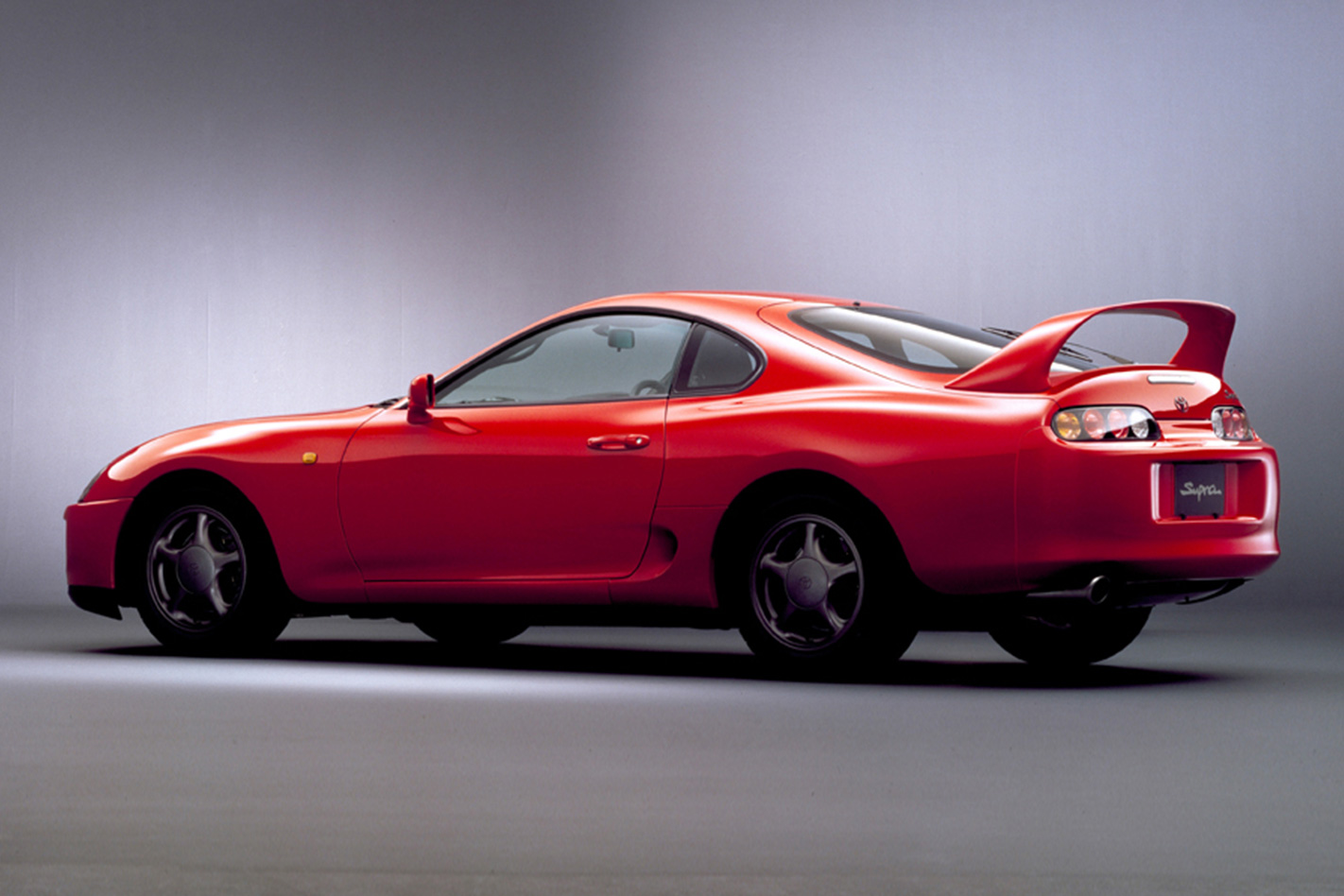
A sequential turbo setup reduced lag and blew enough boost for 243kW in Europe-market Supras (output was strangled down to 206kW in Japan), while peak torque was a fat 431Nm. Remember that this was 1994, and those numbers were Porsche territory. It also made nearly 70Nm more torque than its supercar contemporary, the Ferrari 355, yet retailed at a far more affordable price point.
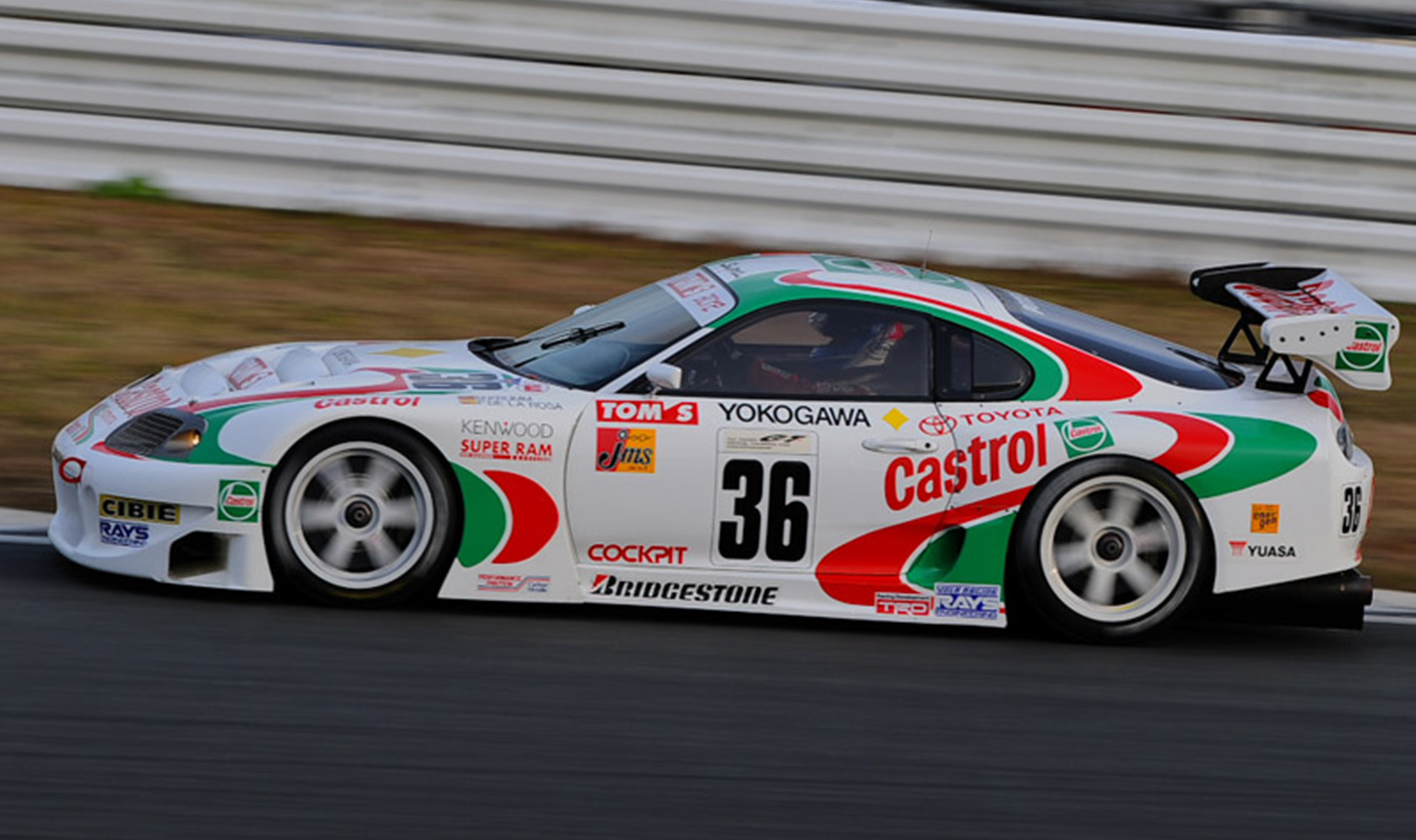
Production ended in 2002 with no replacement, bringing the Supra’s 24-year run to a close. The Celica would survive until 2006, but after that car’s departure Toyota wouldn’t have a single sports car offering until the arrival of the 86 in 2012.
Fifth generation
Now, 16 years after the last Supra rolled off the production line, Toyota will finally bring back its six-cylinder hero. Built on a BMW-designed platform (which will also see service underneath the next-gen BMW Z4) and using BMW engines, the next Supra will continue to use a classic front-engined, rear-drive, six-cylinder format.
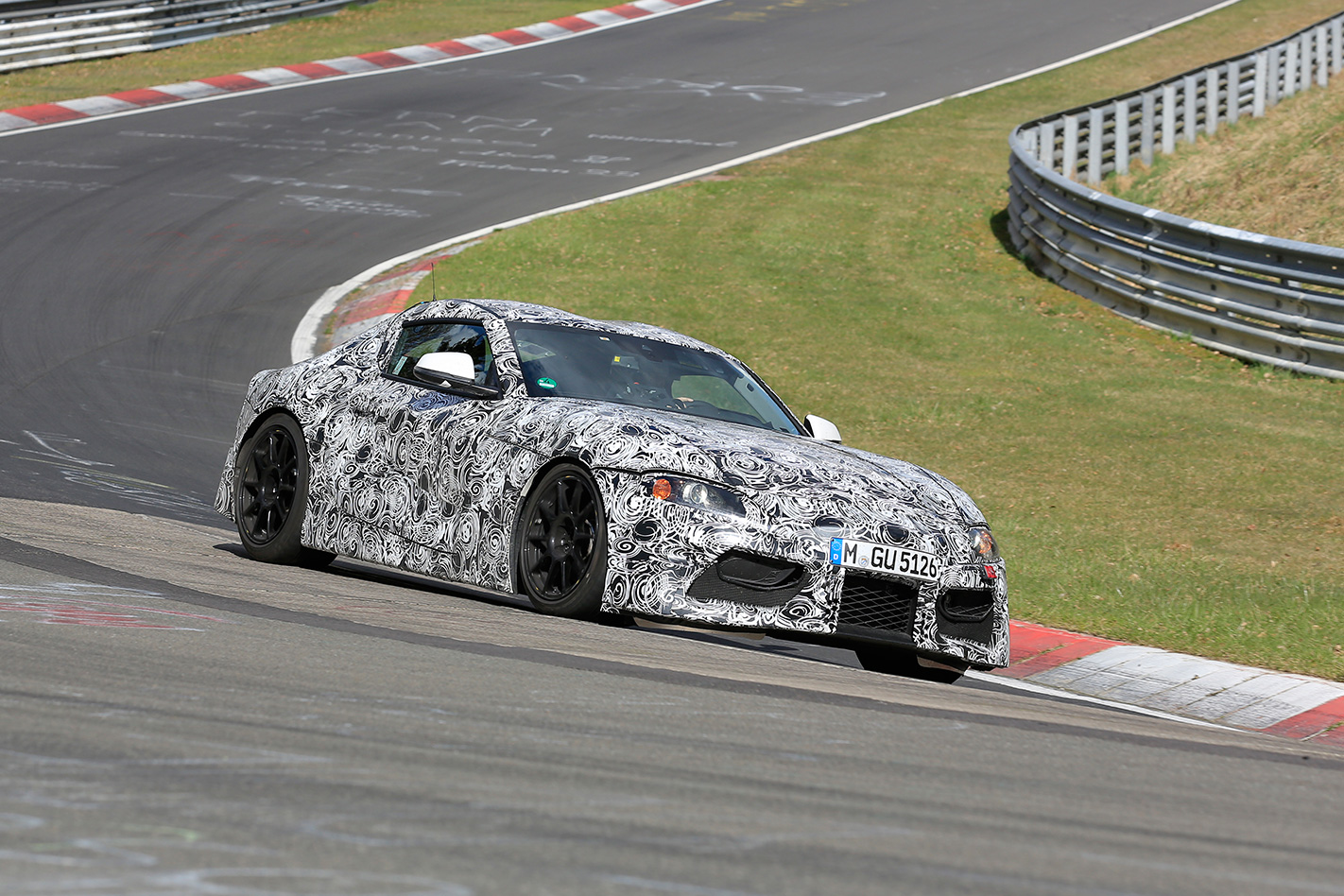
The availability of a four cylinder option would be a first for the Supra, but could potentially see a return of the Celica name on the entry-level variant – a name which has always been associated with four-cylinder power. With the Toyota 86 already nearing the end of its lifespan, a two-powertrain, two-name strategy for the company’s next sports car platform could make sense
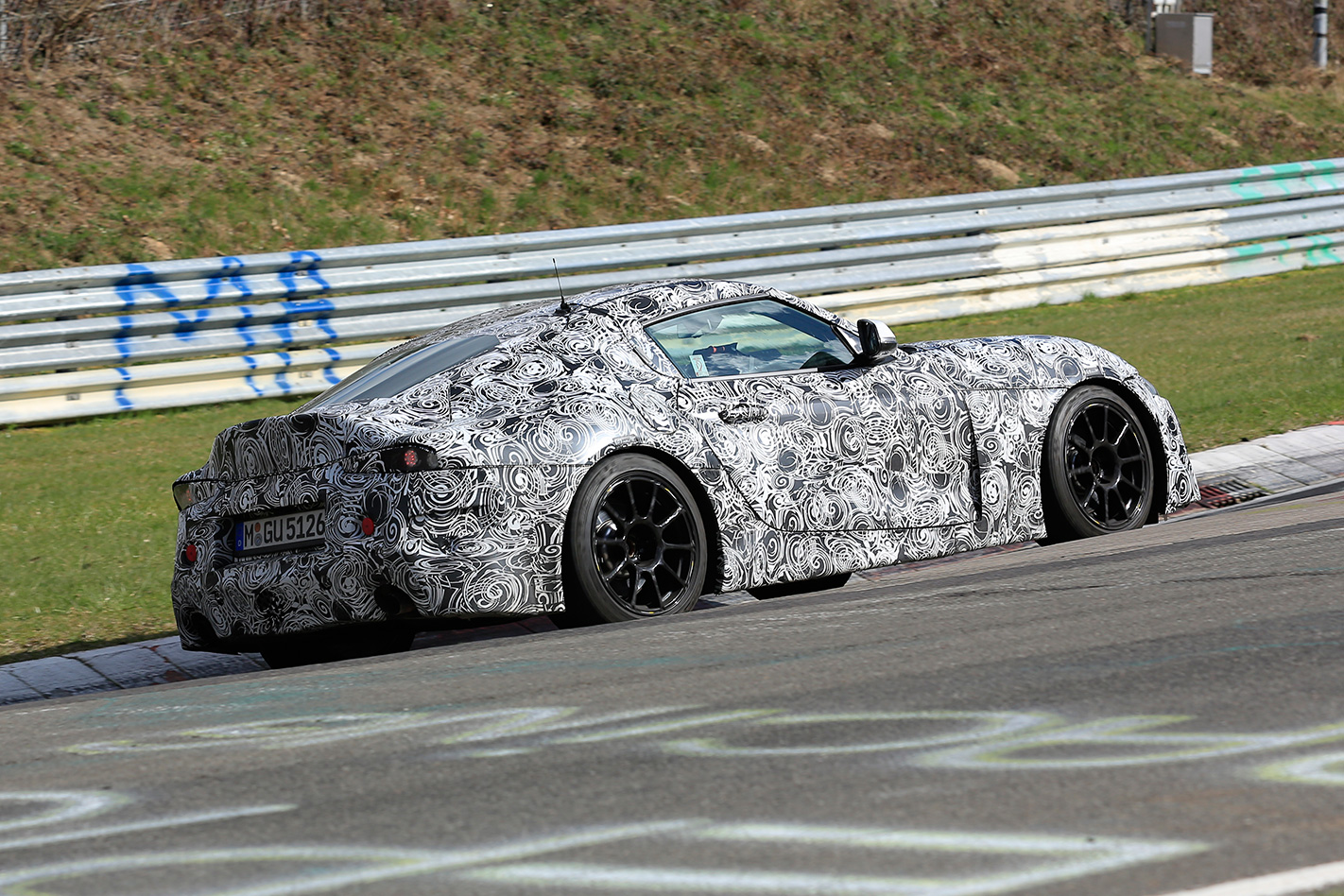
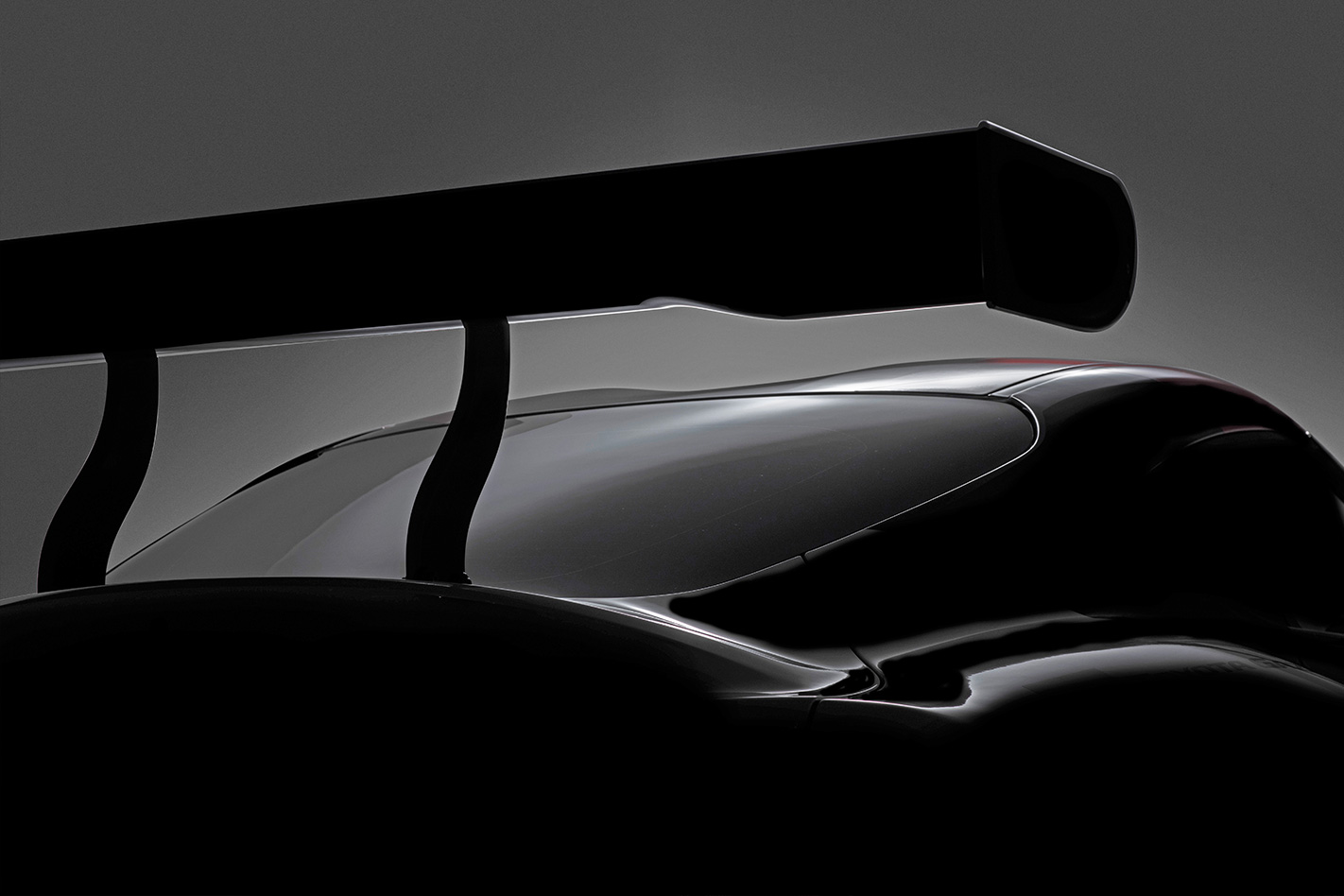
We’ll get our first proper look at it at the 2018 Geneva Motor Show, which opens next month on March 6, and a teaser image (below) suggests many of the FT-1’s styling cues will make it to production. The Geneva showpiece will be dressed up as a racing car, but the sheetmetal beneath its stickers and wings will be the real deal. Confirmation of powertrains will hopefully arrive at the same time.
Stay tuned.