
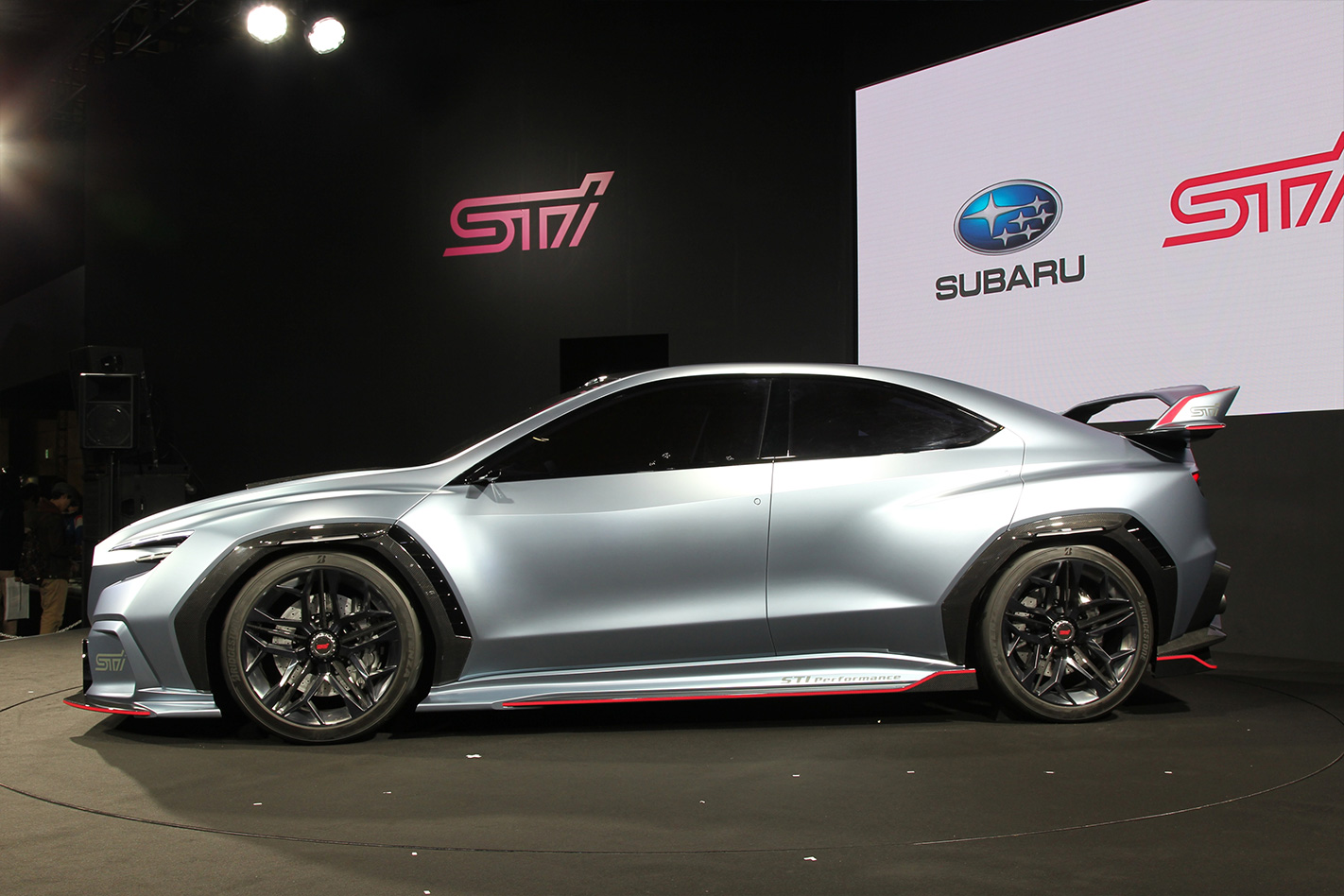
THE covers have been slid off Subaru’s tasty Viziv Performance STI Concept at Tokyo Auto Salon, revealing what is undoubtedly the most stylistically adventurous concept for the Japanese carmaker in recent years.
It also bodes well for the next-generation WRX STI that’s due to launch sometime next year. With a letterbox bonnet vent presumably feeding a top-mounted intercooler and an, uh, prominent wing sitting atop its stumpy bootlid, the STI Concept has all the right ingredients for a top-tier Subaru performance sedan.
The core of it doesn’t differ much – if at all – from the Viziv Performance Concept that bowed at the Tokyo Motor Show late last year, with wide bodywork, boxy guards, carbon wheel arch extensions, a carbon diffuser, quad exhaust tips and frameless door glass all being carried over unchanged. However the treatment here is similar to what’s been applied to previous generations of WRX STIs: it’s all about the bolt-ons.
How much of it will make it onto the eventual WRX and WRX STI production car is anyone’s guess, but Subaru’s prior form isn’t good. The company has a habit of stunning crowds with motor show concepts, only to water down the showroom equivalent.
Unfortunately Subaru isn’t talking about powertrains for its Viziv Performance Concept duo just yet, but our money is on new-generation boxer fours of both 2.0-litre and 2.5-litre displacement churning out more juice than the current WRX and WRX STI’s respective 197kW and 221kW outputs.
A hybrid powertrain has been rumoured, but we’re not expecting that one to drop until 2023.
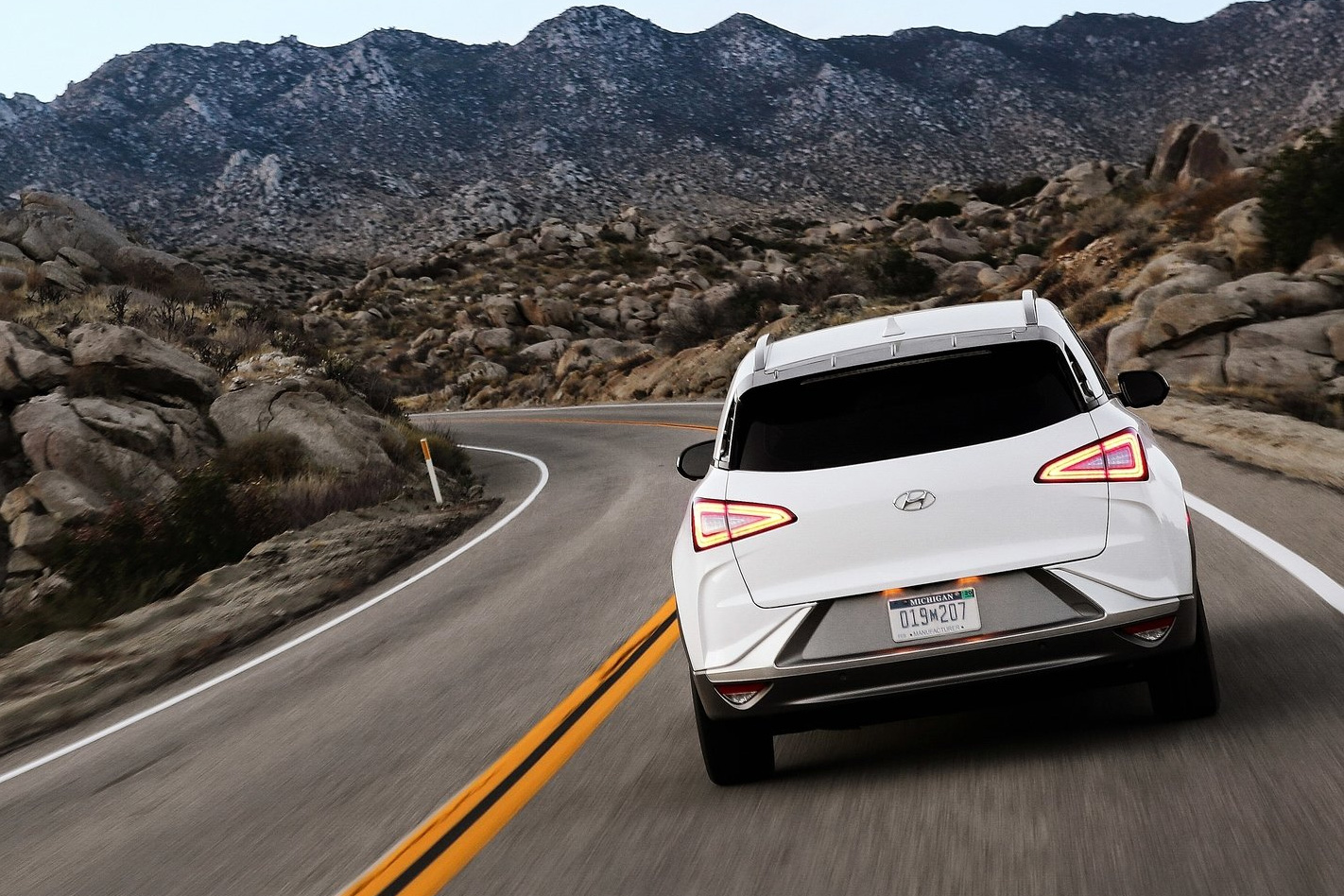
HYUNDAI will sell its Nexo hydrogen fuel cell-powered SUV in Australia in limited numbers from next year, bringing many of the advantages of a pure EV without the recharging challenges.
However, currently there are only two hydrogen refueling stations in Australia. Despite this, Hyundai public relations general manager Bill Thomas told Wheels the Nexo, revealed at the Consumer Electronics Show in Los Angeles last week, would join showrooms here.
“I think 2019 we’ll have some cars for sale,” Thomas said. “How we sell them and how we distribute them, we haven’t worked that out yet.
“We should have 20 [fuel call cars] on the road by mid-2019 so that’s a start. I should imagine the volumes will be around 50 to 100 a year.”
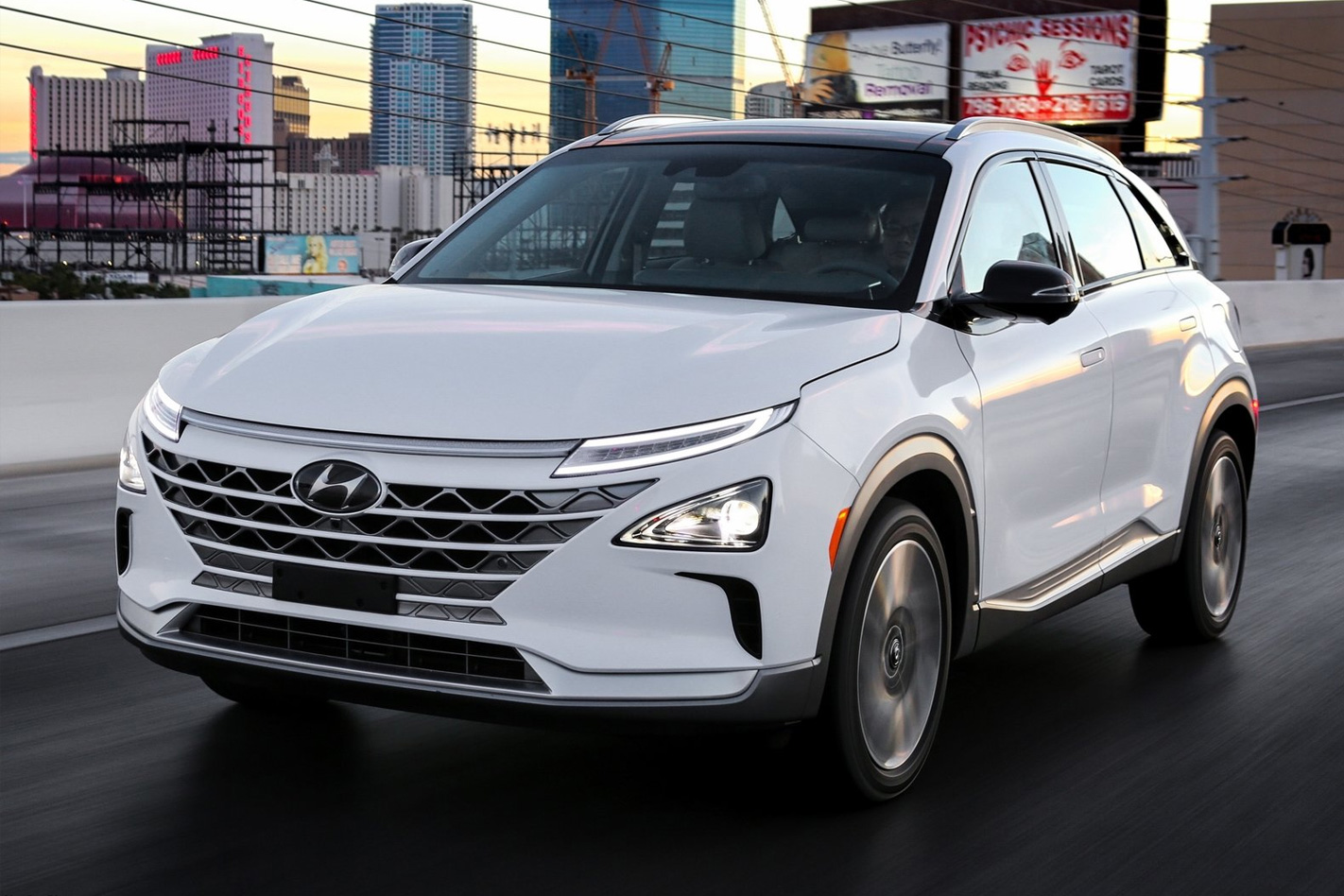
Hyundai Australia future mobility and government relations manager Scott Nargar told Wheels that as well as emitting only water, the Nexo also scrubbed the particulates produced by other vehicles from the air.
“The [fuel cell] car’s a giant air purifier,” he said. “It needs pure oxygen to run the stack so it goes through two very complex filter systems and it takes out 99.9 percent of particulates from the air. Imagine a bus with a stack three times the size of that (the Nexo’s) and cities that run hundreds of buses.
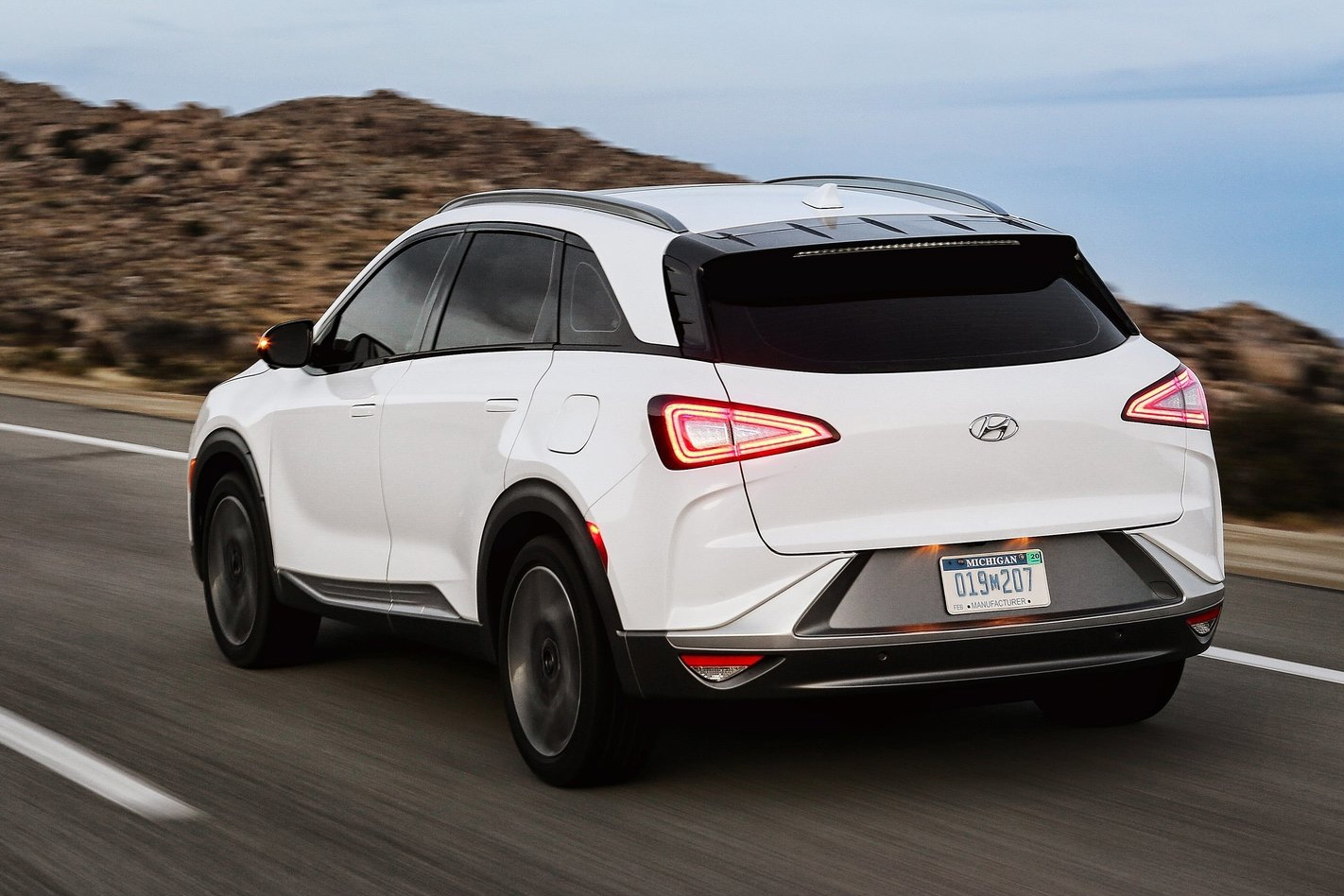
While other sources of hydrogen are potentially harmful to the environment, Nargar said Australia had the potential to be a world leader in the clean production of the fuel.
He said Australia’s CSIRO was working with Hyundai’s spin-off company, Hydrogen Mobility Australia, on a solution that did not rely on fossil fuels to crack hydrogen.
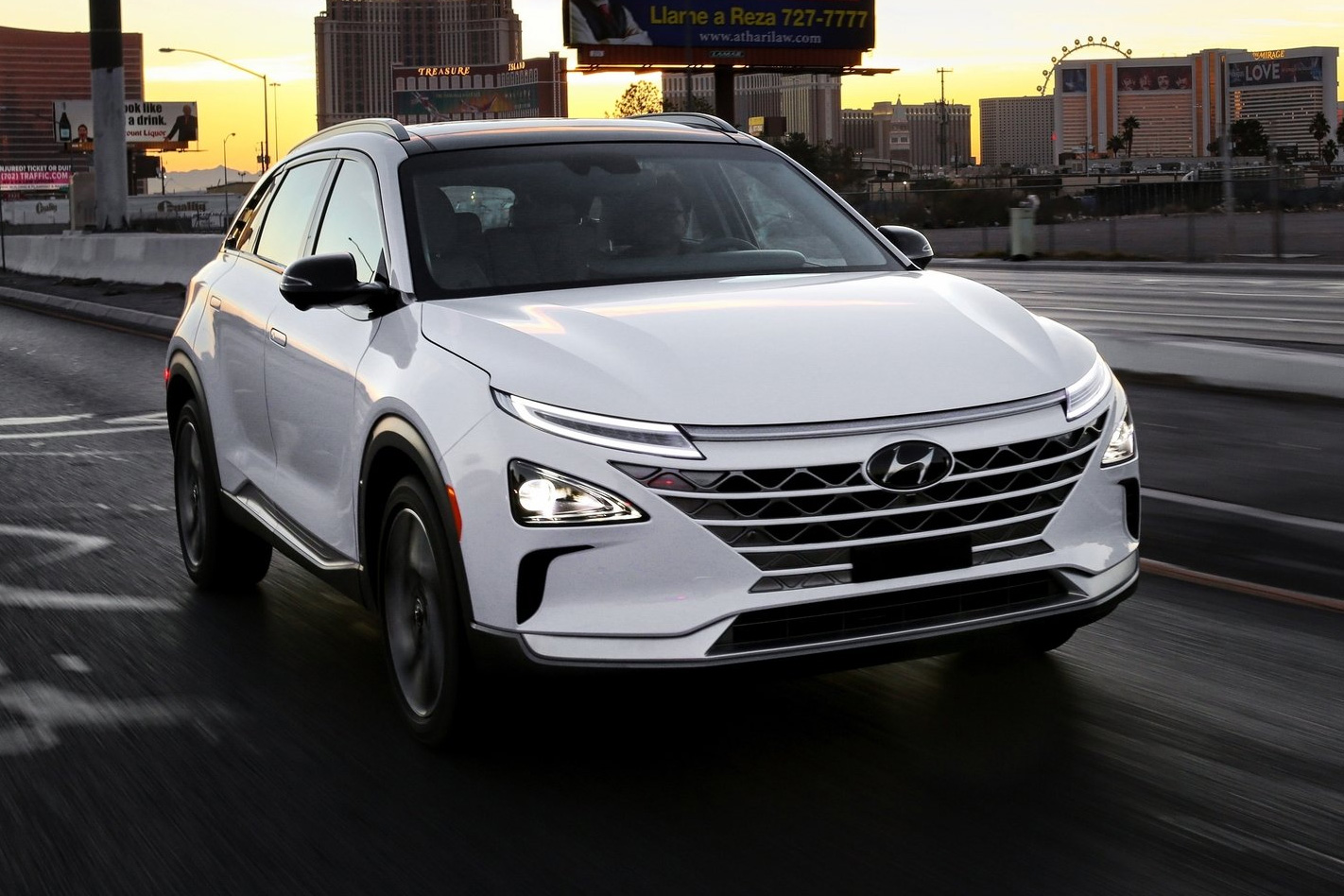
Nargar said other nations were already eyeing the process, which could offer “massive export opportunity”.
“The Korean government is very interested because they’re going to run 26,000 fuel cell buses,” Nagar said. “They need to buy their energy from somewhere in the world, [so] let’s make that green energy. Australia should be able to supply that energy in the form of green ammonia.”
Nagar said as more car makers dedicated resources to hydrogen as a transport fuel, demand was gathering momentum.
“It’s all starting to happen in Australia. We know we are going to see (filling) stations in the coming years,” he said.
“We shouldn’t be followers, we should be leaders.”
THE days of weird and futuristic designs for autonomous and alternative powertrain vehicles may be behind us, with the head of design for Hyundai saying upcoming models will be conventional and “non-aggressive”.
Speaking to Wheels last week at the annual Consumer Electronics Show in Las Vegas, Genesis head of design Luc Donckerwolke said car companies were starting to understand customers required unadventurous and “friendly” designs to help cope with the step-change brought about by buying cars that lack a conventional engine.

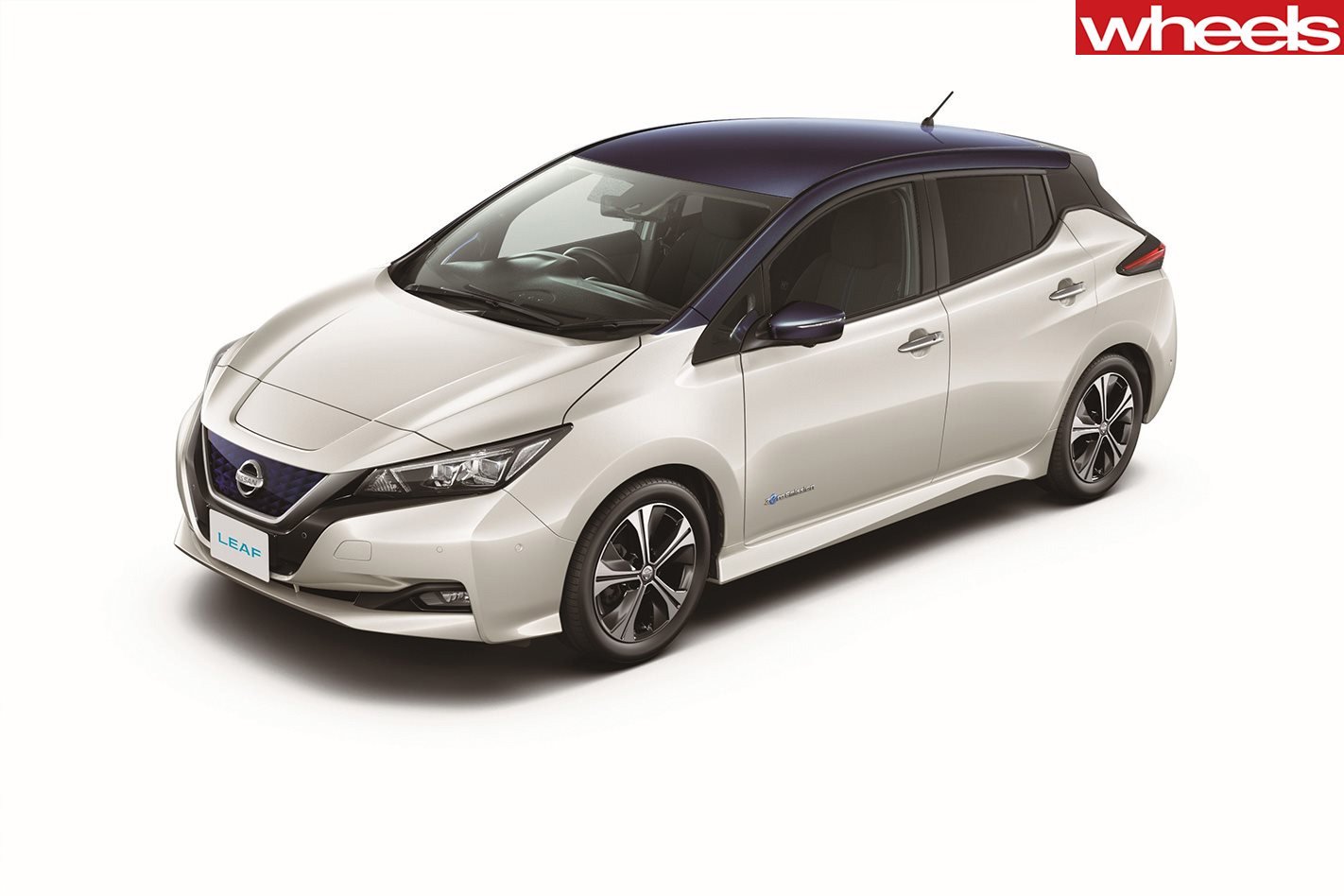
Donckerwolke’s philosophy is already in production, with Hyundai’s second-generation hydrogen car, the Nexo, to sport a conventional SUV body style when it arrives in Australia later this year. Nissan, too, has adopted conventional styling for its all-new Leaf, though Donckerwolke says Tesla provides the best example.
“With Nexo we wanted a car, because of the powertrain, that wasn’t aggressive. It’s a car that has a lot of autonomous support and when you’re driving an autonomous car it shouldn’t look like a racing car. It’s about flowing in an environment, so the whole design has to be non-aggressive, pleasant, harmonised.
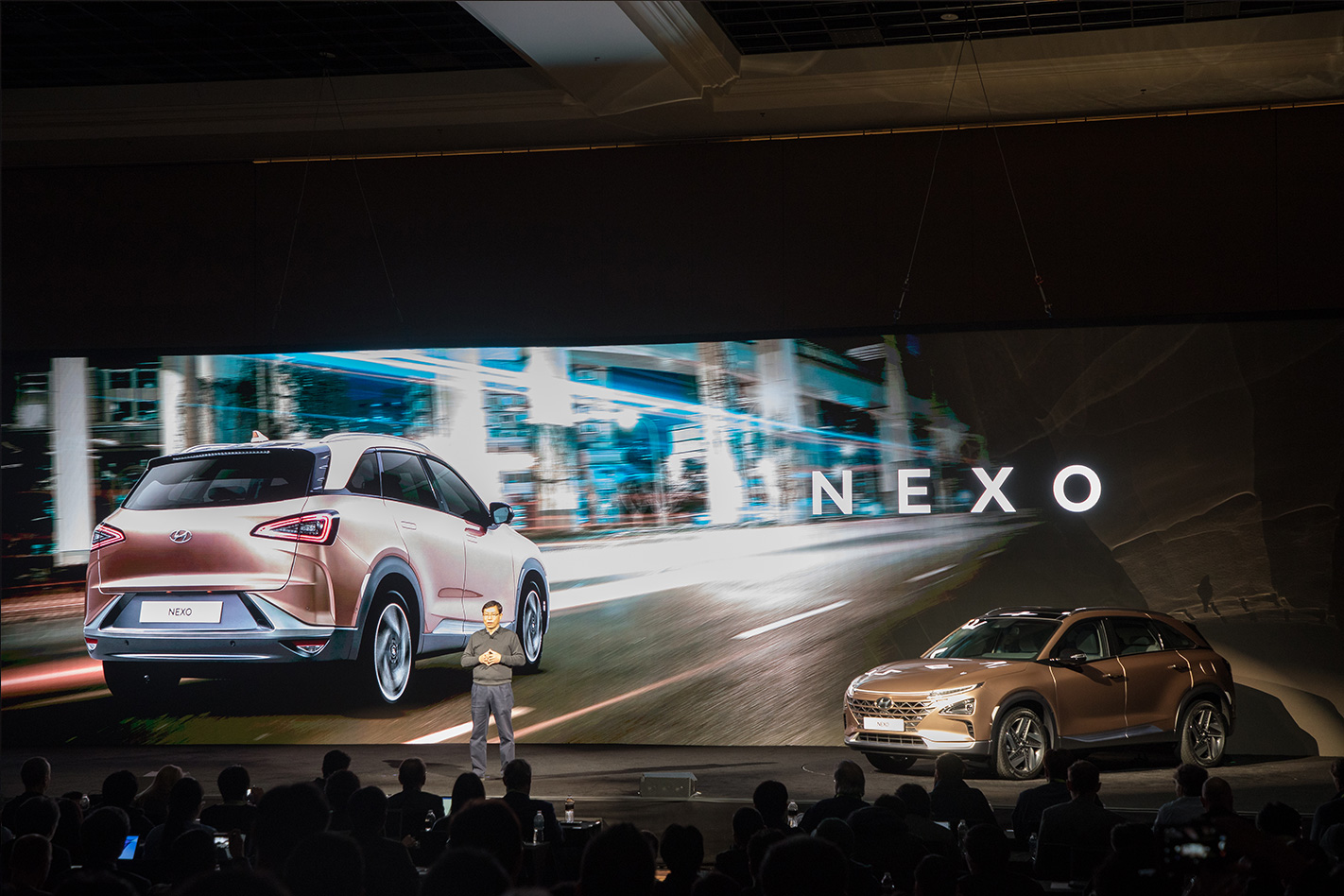
Donckerwolke admitted other companies may take a different tact, especially with sportier models, but confirmed Hyundai’s next wave of autonomous EV and hydrogen-powered cars won’t look that different to what’s already on the road.

Donckerwolke said he believed this theme of convention would continue for a short while, but after that, designers were likely to start exploiting the freedoms provided by batteries or EV powertrains.
“The first generation is about trying to find the answers and the second generation is going to see us accelerate. That will happen in the next three to five years,” he said.
SUZUKI Australia has high hopes for the next-generation Jimny, and expects to have its pint-sized off-roader attacking Australian 4×4 trails before the end of the year.
Speaking to Wheels at the local launch of the new Swift Sport, Suzuki Australia general manager Michael Pachota said the Japanese company’s local arm was hopeful that the as-yet unrevealed successor to the current-gen Jimny would arrive in 2018
“It’s an iconic vehicle in Australia, and it’s got huge demand over here,” Pachota said, singing the praises of the current-gen Jimny, which celebrates its 20th year of production this year.
This time around, though, Suzuki plans to offer the Jimny in more than one specification. Pachota said the next generation of the off-roader would come in a basic stripped-down spec for die-hards, and a more upmarket and city-friendly configuration to capture sales from buyers drawn to the car’s rugged aesthetics more than its dirt-track prowess.
“So our request would be based on having a model variant that’s specific for 4WD enthusiasts that they can build upon, and a model variant that would be pitched at the ‘metro’ driver.
“In that case we’re looking at a good opportunity with the design cues that we’re starting to see already on that car.”
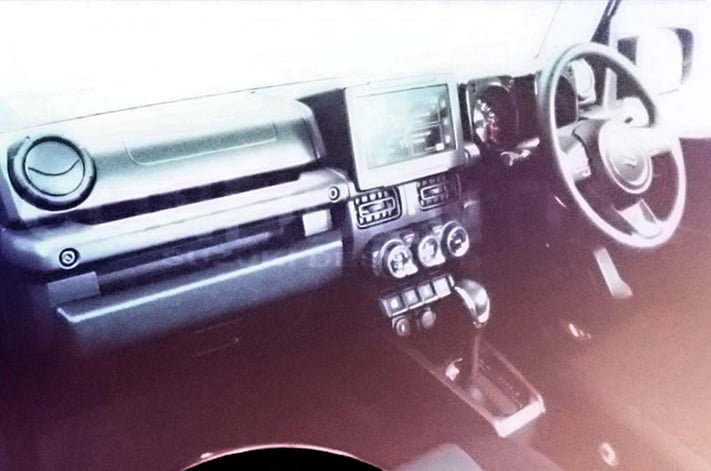
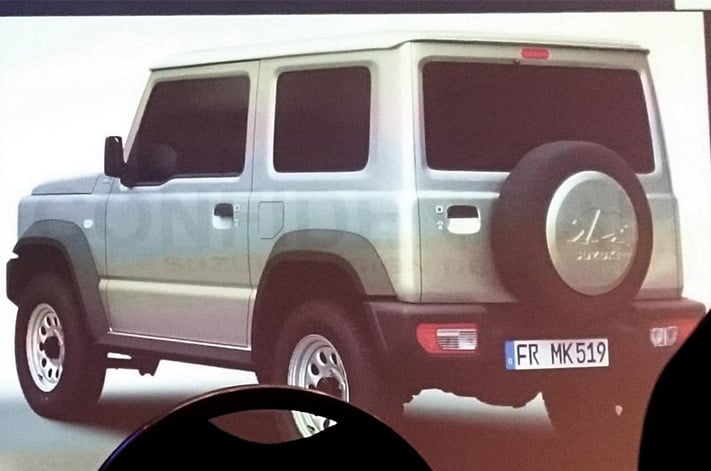
The current Jimny’s successor is expected to make its debut at the 2018 Geneva Motor Show in March, however, a leaked slideshow hit the web last August that revealed the off-roader in its entirety.
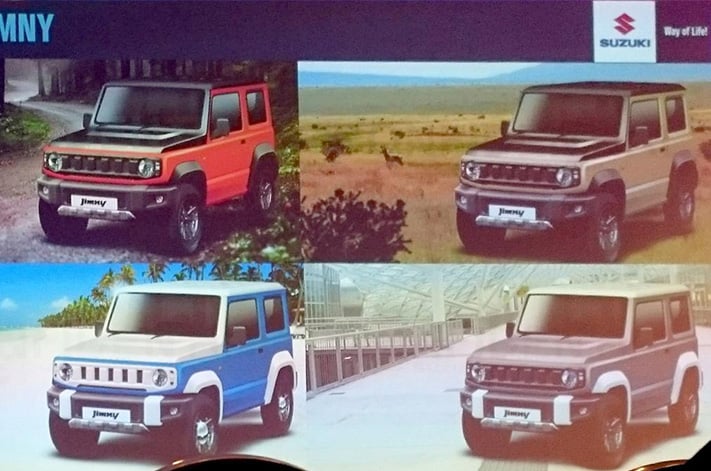
Straight lines and sharp creases are everywhere, with the new car even rocking an old-school gutter around its roofline. Inside, the Jimny’s cabin will be modernised substantially yet still manages to channel plenty of old-world charm via its boxy interior design.
Powertrains are still secret, but Suzuki’s 82kW/160Nm 1.0-litre Boosterjet three-cylinder turbo petrol wouldn’t be out of the question, nor would the company’s existing range of naturally aspirated four-pots. Underneath, the new Jimny is expected to retain a dual live-axle suspension setup for maximum off-road capability.
IT’S A heck of a responsibility being a judge at Wheels Car of the Year.
We like to think that the process ensures that we don’t get the decision wrong, but some winners generate more discussion than others. The thing that connects all of the judges – despite their disparate backgrounds – is a knowledge of and passion for great cars.
They’re people like you, who adore driving and appreciate smart design. They also love the sound of a V8 and the opportunity to go flat-knacker in a 474kW HSV. After all, there has to be some light relief from calculating cost of ownership figures.
So here’s the seven responsible for bringing you Australia’s most coveted new car award.
The man in the big chair at Wheels brings a reassuring calm to the three-ring circus that is WCOTY. Responsible for signing off the official long list, Inwood has the final say on whether a car makes it in. This year he’s bent the rules a little with the HSV GTS-R W1, but nobody’s holding that against him. Wore a bow tie and braces combo to the WCOTY awards night last year; we’re running a book on whether he’ll reprise the look for 2018.
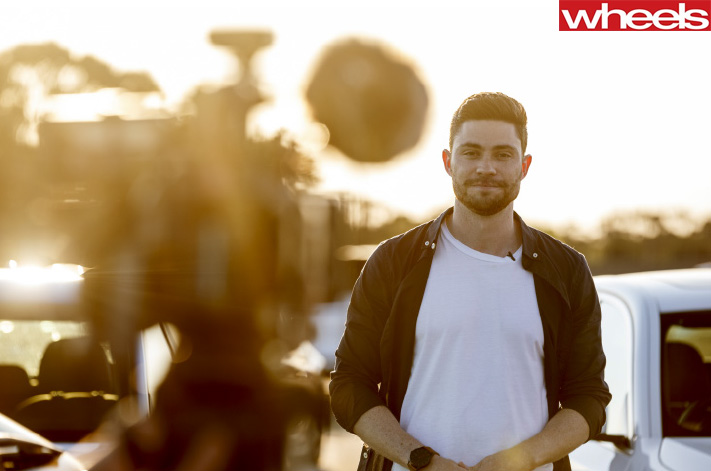
Grizzled, cynical, hard-bitten, uncompromising, incredulous, aprotic: John Carey is all of these things. He’s the nemesis of any bluffer or blowhard and is part of a formidable bad cop/bad cop combo with Hagon. A big proponent of pragmatic, no-nonsense design, Carey arrives from his Italian domicile with a huge appetite yet coruscating disdain for our feeble coffee.
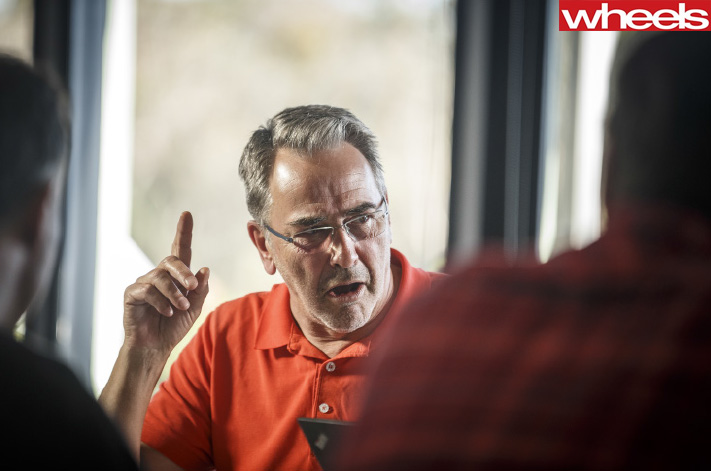
Wheels’ deputy ed might be a WCOTY newbie but he brings 20 years of vehicle testing experience with him, his words having appeared in Car, Autocar, Top Gear and The Times amongst others. Possibly the Arran Banner too, the only British regional title named after a potato. Has spent more time lapping the Nurburgring than is probably healthy and enjoys writing about himself in the third person.
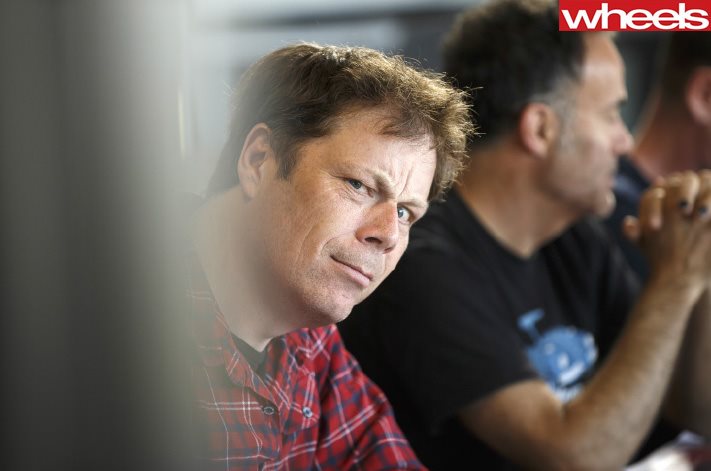
He’s now into double figures as a WCOTY judge and has a fiendishly well-calibrated radar as to which cars are likely to progress. At first this appears to be based on which ones go the furthest sideways on dirt, but beyond the gun wheelmanship there’s a brain that misses no detail of a car’s comparative competence. Somehow tested every car despite spending what seemed like half his time immolating the HSV’s tyres.
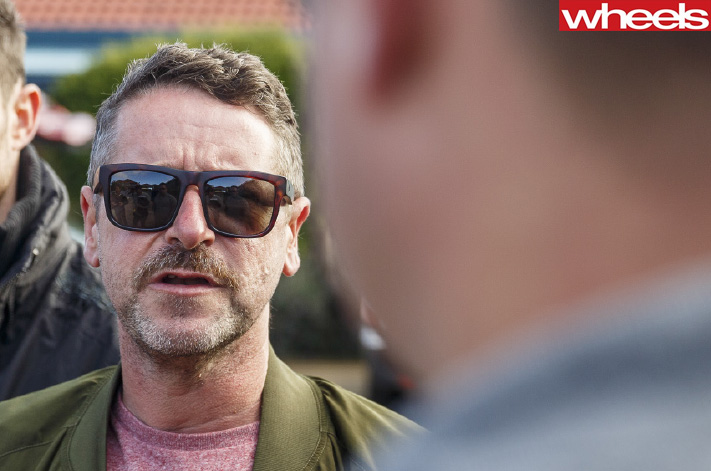
See that look? That’s Hagon’s “I’m listening to you, but there’s a significant probability that you’re talking out of your fundament” look. It’s rapidly followed by a flagellating point-by-point takedown. Arguably the most connected Australian motor noter, Hagon is also the resident parent-in-chief on the test panel, with a keen eye for top tethers, ISOFIX points and easy-wipe surfaces.
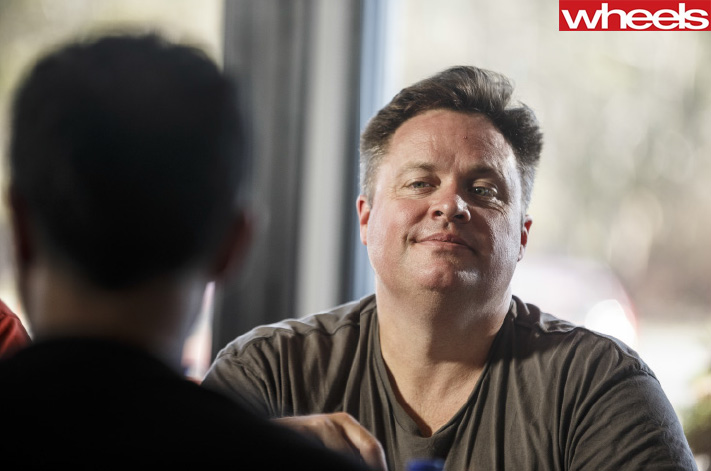
There are moments on WCOTY when you need to know which OE-fit door speakers came with a 1983 Holden Camira SL/X or whether a Renault Fuego Turbo had a Garrett or a KKK blower. Step forward Wheels’ resident mentat, Byron Mathioudakis. He’s more than a walking yottabyte of automotive trivia, though. He can perfectly contextualise any modern car and is intolerant of poor under-thigh support. He’ll be the guy backing the quirky underdog.
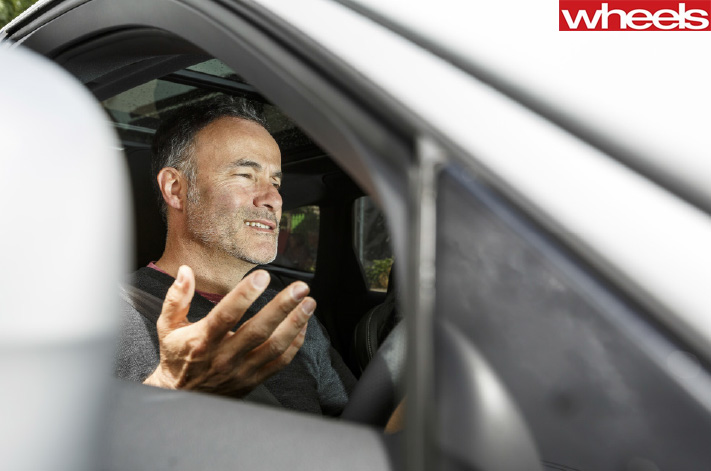
Spend too long in the Wheels road-testing bubble and you start believing that the TE50 Falcon was the very acme of automotive development. Noelle Faulkner’s role was to provide a refreshing counterpoint. A contributor to GQ, Vogue, Elle, Harper’s Bazaar and many other titles that wouldn’t rate our shoes, Faulkner’s also a closet petrolhead, a handy pedaller and speaks fluent millennial.

Wheels Car of the Year has been a constant fixture since 1953.
Over time, the format has been refined in order to give each year’s most deserving recipient the best shot at the title. First up is the selection process of cars that are eligible; this year that whittled the field down to 22 models. These are then judged against six criteria through three rounds until we end up with the winner. It’s as simple as that.
Actually, it’s not at all simple. It’s a massive feat of car-juggling logistics, impassioned arguments, long days of metronomic testing and a requirement to contextualise huge amounts of information. This year’s field had no odds-on pre-event favourite, which only made it more interesting. Any victory for 2108 would have to be scratched out the hard way.
So here are the nuts and bolts of how we arrive at Australia’s most coveted new-car award. Read it and you are fully qualified to point and laugh at the posters in the comments section who think an ineligible car should have won instead.
All COTY contenders are measured against the five criteria listed below, and not each other. In addition to this, where applicable the entrants are judged as a range rather than individual models within that range. The car must be substantially new insofar as it has been introduced in the 12 months leading up to the WCOTY cut-off date and not merely a new engine or trim variant. That said, the last-ever Aussie built car to appear at WCOTY earned an exemption from that last point; we’re hard markers but not hard-hearted.
FUNCTION
Complex and subjective, this is the toughest WCOTY criterion to judge. The objective is to assess every aspect of a car’s function, taking into account its intended role. Put simply, we’re seeking complete satisfaction. Every aspect of design is considered, always in relation to purpose and price: vehicle packaging efficiency; all-round user-friendliness, especially interior layout, flexibility and ergonomics; quality of materials and assembly; visual and tactile pleasure.
Driving dynamics take into account all handling characteristics and their fitness for the car’s role. We’re looking for sweet harmony in the interaction between tyres, suspension, steering and brakes. Comfort must also be considered. Quality of ride on varied surfaces is a major factor, but seating and spaciousness, plus overall smoothness, quietness and quality of noise are also important.
TECHNOLOGY
Remember that today’s state of the art is tomorrow’s ordinary. Important innovations are not common, but are recognised when a car maker does deliver. Incremental improvements rate only incremental adjustments to a vehicle’s score against this criterion. Technical advances in all spheres are assessed: innovative materials and engineering; core vehicle system enhancements; all-new features. Ignore the hype and excitement that often comes with novelty; the question here is whether a new technology can deliver genuine improvement in the driving or ownership experience.
In cases where a manufacturer fails to equip a car with a widely adopted and worthwhile technology – something that’s state of the art, in other words – its score against this criterion reflects the omission.
EFFICIENCY
Our primary concern here is fuel efficiency. The real-world results gathered over the course of the WCOTY program and earlier road tests are given greater weight than the results of official, government-mandated tests.
Fuel is a significant portion of the running cost of any conventional car and any hybrid. But for all kinds of car, including battery electric vehicles and plug-in hybrids, the energy consumed while driving makes up most of its lifetime energy consumption. In the case of conventional cars, according to reputable studies, between 75 and 90 percent of a car’s total energy consumption is the fuel burned during use.
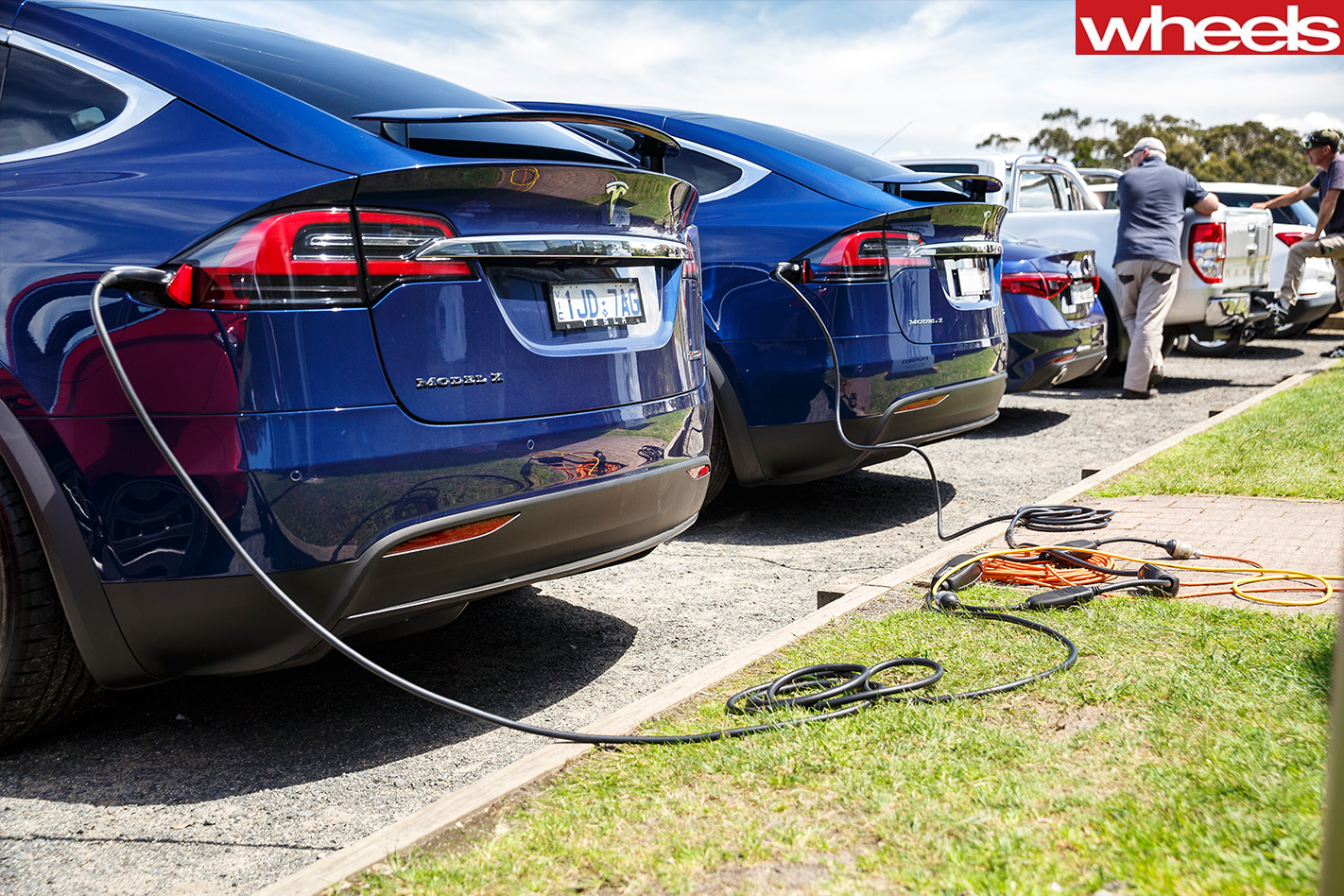
Energy consumption is the bedrock of the scores given a car for this criterion. But the number is fine-tuned upwards in recognition of outstanding and credible efforts to reduce energy consumption and emissions in manufacturing. This also includes measures to boost the use of recycled materials, where significant.
SAFETY
Passive and active safety are assessed separately before an overall score is given against this criterion. In both categories the fitment of advanced and effective safety technology is rewarded. The efficacy of some active safety systems, notably ABS and ESP, is assessed by judges during the WCOTY test program. Passive safety scores are based, where possible, on published data from independent testing. In cases where none is available, judges take into account a vehicle’s array of standard and optional passive safety equipment and the manufacturer’s past achievements in this field.
For both passive and active safety, the focus must above all remain on vehicle occupant protection technologies that work.
VALUE
Affordability is the big thing here. But we’re seeking excellence, even at the lowest prices, and above average engineering and design at any price. A bad car may be very cheap, but never cheap enough to be good value. And an expensive car that’s not extremely good is even worse.
WCOTY judges assess how the car compares with its marketplace peers for space, quality, equipment, refinement, comfort and competence. They must also take into account running costs, including predicted depreciation and maintenance. The price of any special efficiency tech is weighed against the degree of cost reduction it brings, and scores adjusted accordingly.
THE PROVING GROUND
1. Static poke and prod
After a short presentation on each model’s genesis, the judges inspect its every orifice. That includes exterior and interior design, packaging efficiency, seating, cargo space, versatility.
2. Ride and handling: Sealed road (4.0km loop)
The ride and handling loop is used for on-limit handling, bitumen ESC effectiveness, braking stability and steering characteristics.
3. Ride and handling: gravel road (1.4km)
Slippery sand over hard-packed clay, and a slight crown. It is used to assess handling and ESC effectiveness.
4. Dirt ABS test
Full-force panic stop at 80km/h on a silty surface that can become muddy in wet conditions.
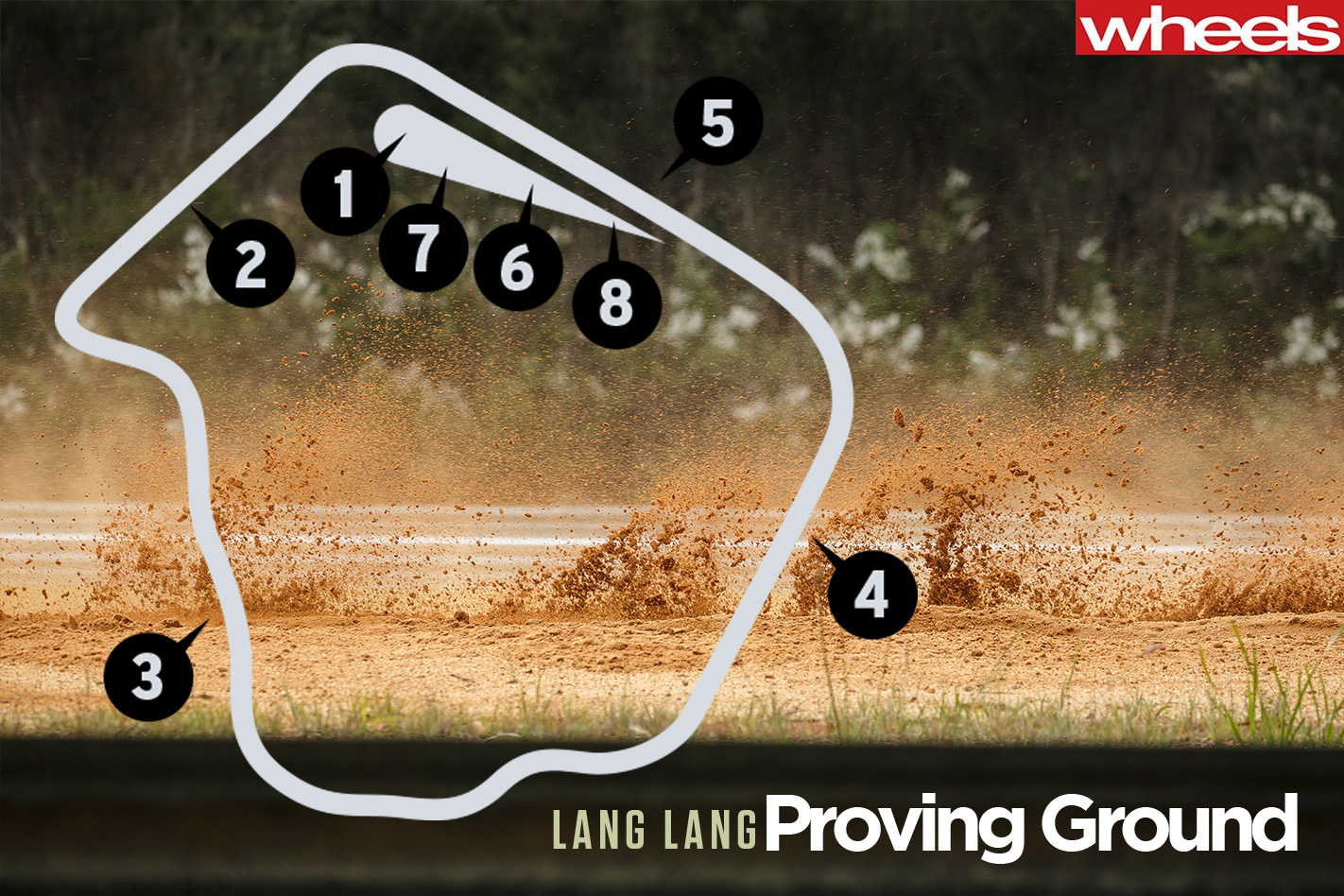
Potholes, patches, lumps and bumps driven at a steady 100km/h reveal plenty about a car’s ride, stability and rigidity.
6. Double lane change (120m)
Simulates emergency avoidance manoeuvre at 80km/h. Primarily assesses ESC system on bitumen.
7. Wet ABS test
Another 80km/h brake test, this time on wetted bitumen. Reveals not just stopping ability, but also stability.
8. AEB TESTING
Autonomous emergency braking-equipped cars have their sensor smarts appraised by two towed rigs that use the rear ends of real cars.
THE ROAD LOOP
Keeping John Carey’s immortal “monotonous repetition is the foundation of great road testing” mantra foremost in mind, WCOTY’s road loop is all about retracing the same roads, at roughly the same speeds, in every variant that makes its way into stage two.
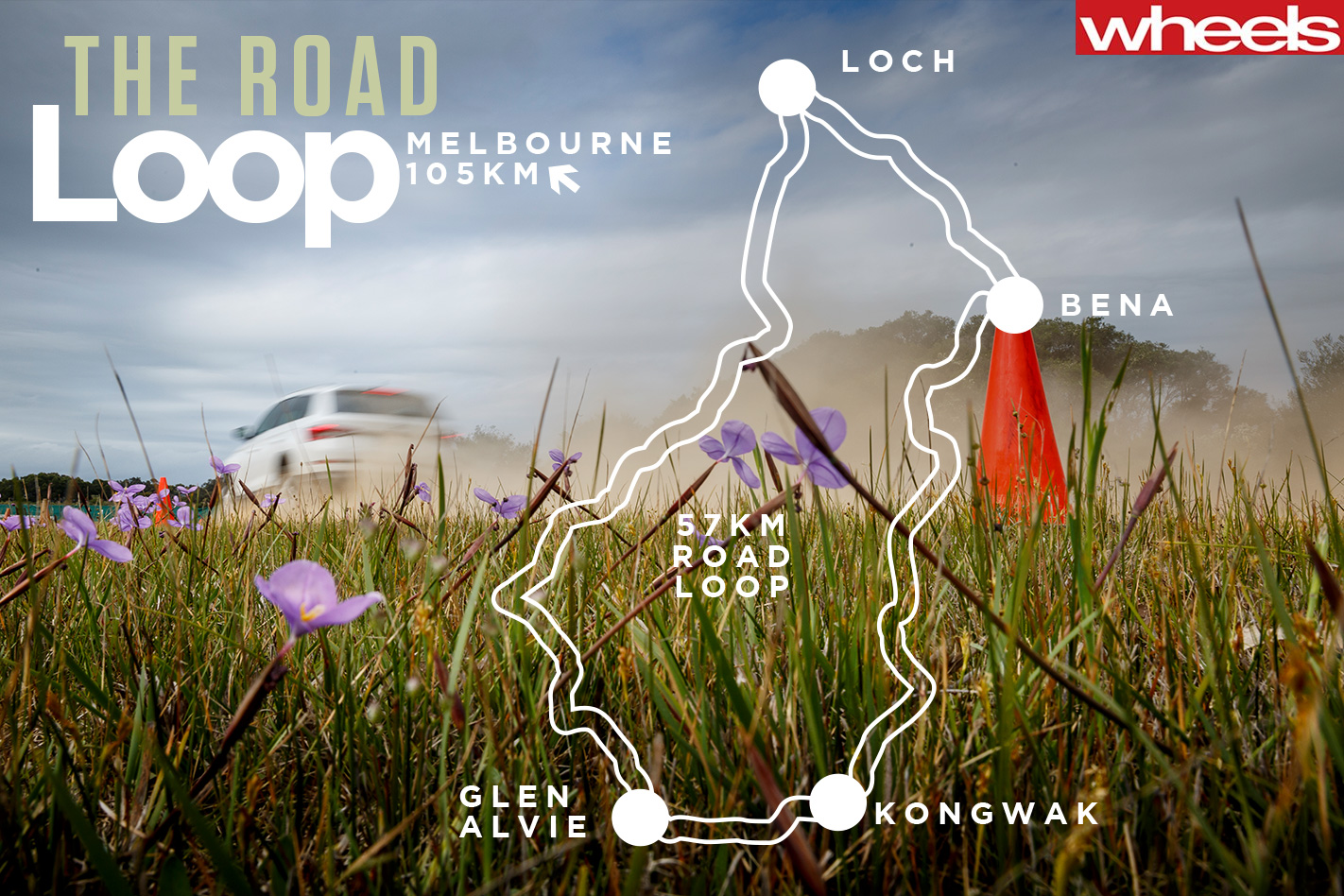
Then it’s left on the South Gippsland Highway – a great test of engine torque, cruise control and driver-assist systems – before returning to Loch. In all, 57km of blissful repetition, to the varying tune of tyre hum, engine revs and judge’s opinions.
FORD has pulled the nostalgia heartstrings of America, releasing a manual-only version of the Ford Mustang called the Bullitt.
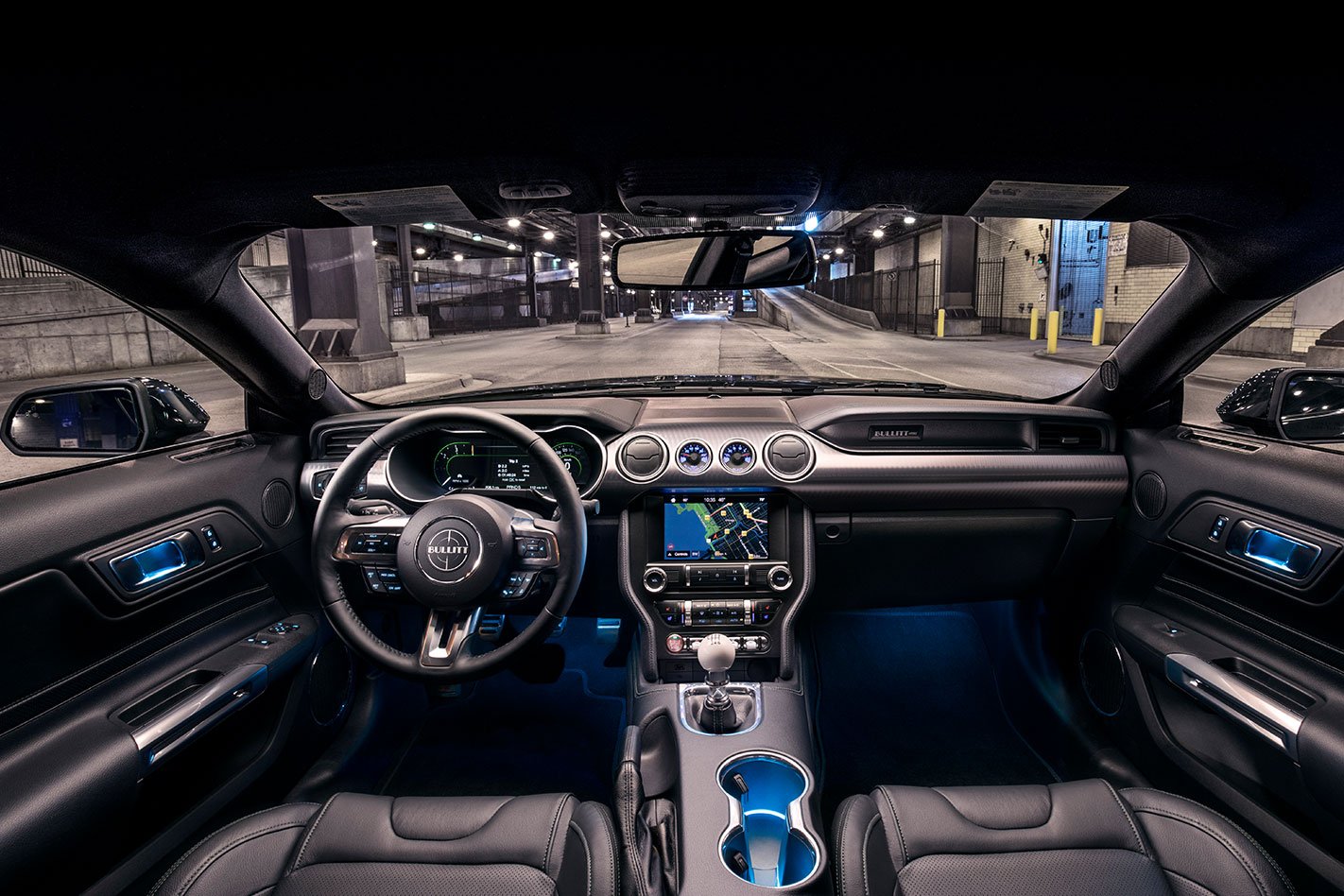
More powerful than a Mustang GT and with a plain white cue ball replacing the standard shift knob, the modern-day Bullitt is a tribute to the ‘Stang from the 1968 Steve McQueen film of the same name.
The reveal, ahead of tomorrow’s official opening of the 2018 Detroit Motor Show, also included the announcement that Ford would reintroduce another Mustang icon, the Mach 1. However, Ford’s plans for this badge are for a performance battery-electric vehicle – think a hybrid version of the Pony Car.
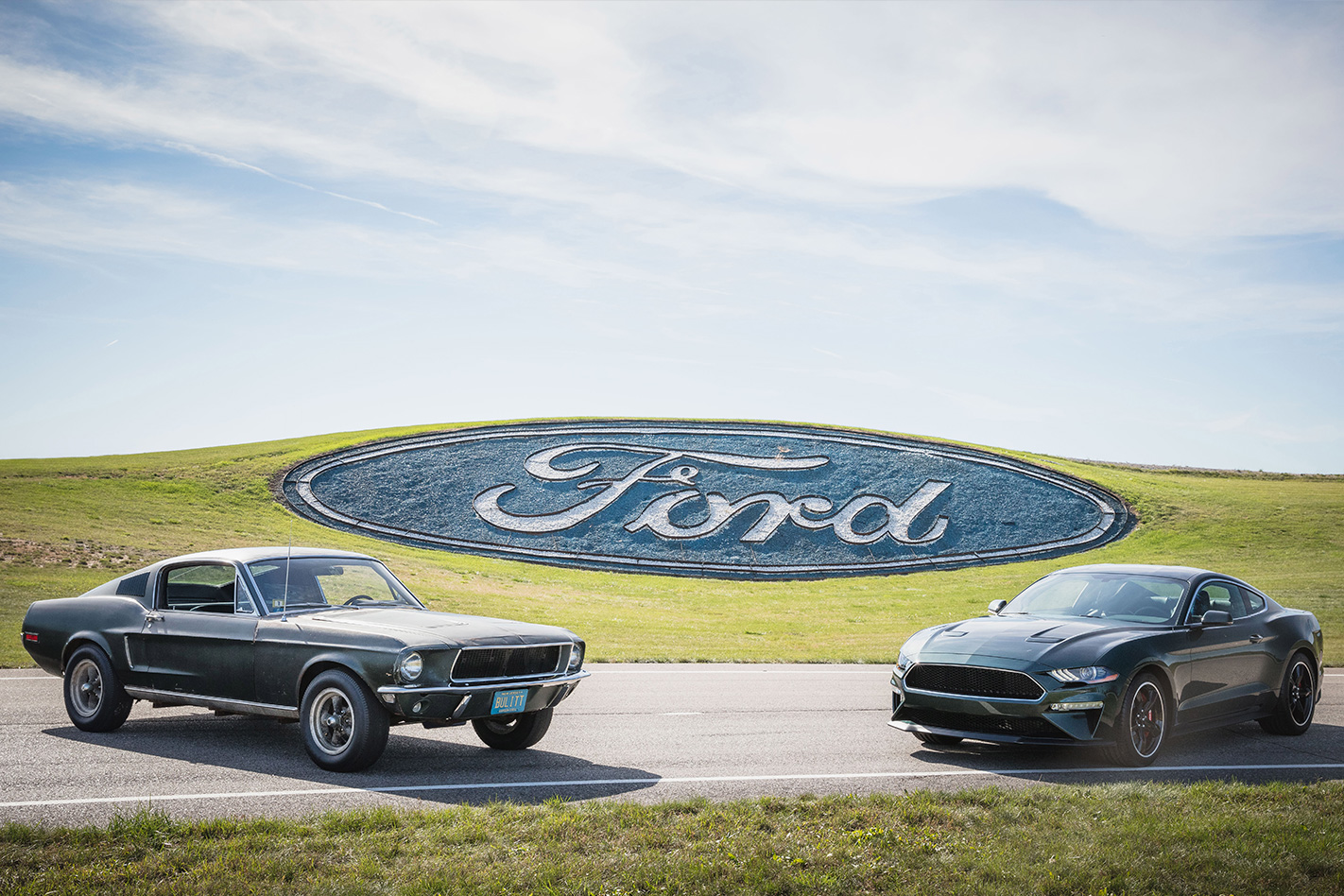
The 5.0-litre Coyote-engined 2018 Bullitt Mustang will spit out 354kW and 570Nm – about 10 percent more than the regular Mustang GT – and wind out all the way to a top speed of 262km/h, 13km/h faster than the car on which it is based.
“This new Bullitt is, as Steve McQueen was, effortlessly cool,” Darrell Behmer, the Mustang’s chief designer, said. “As a designer, it’s my favorite Mustang – devoid of stripes, spoilers and badges. It doesn’t need to scream about anything – it’s just cool.”
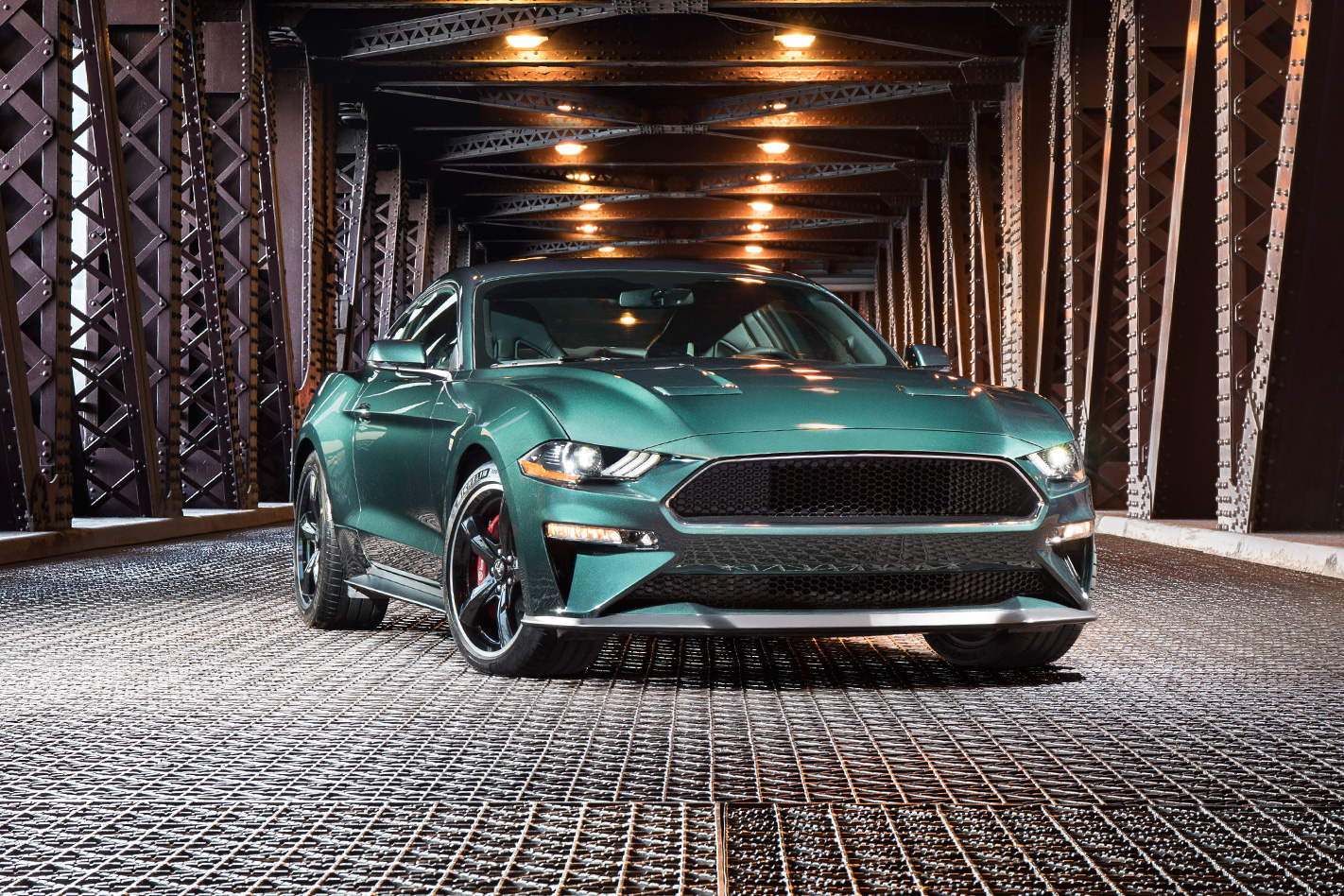
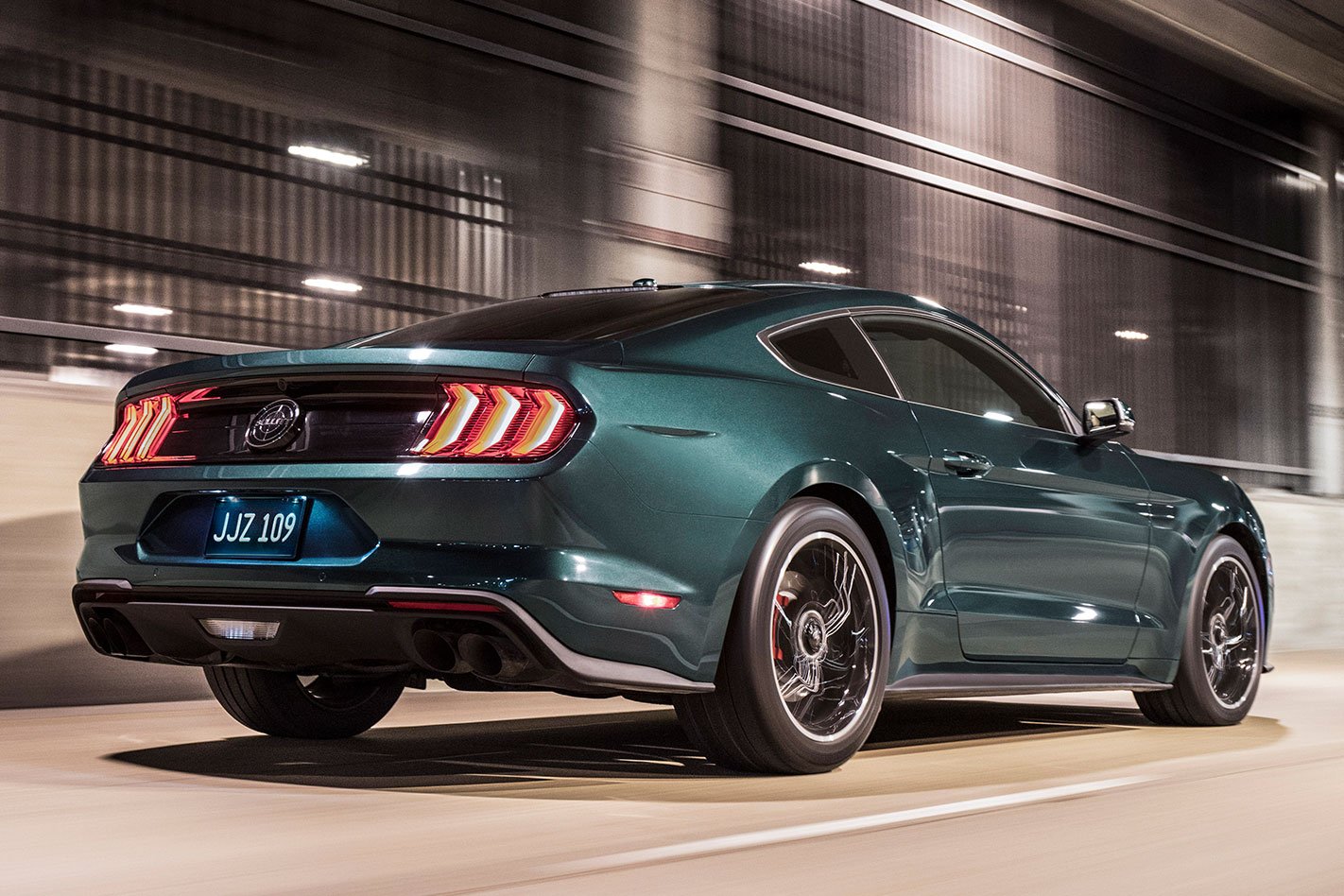
The Bullitt version of the Mustang is a combination of the US-market car’s premium and performance packages. Its exhaust includes an active valve performance system and is framed in exhaust tips finished in black ceramic coating, while the retuned engine gives the car a “signature burble”. The Bullitt also gains an open air induction system – what we’d probably call a cold air intake – and Shelby GT350 intake manifold with 87mm throttle bodies and powertrain control module calibration.
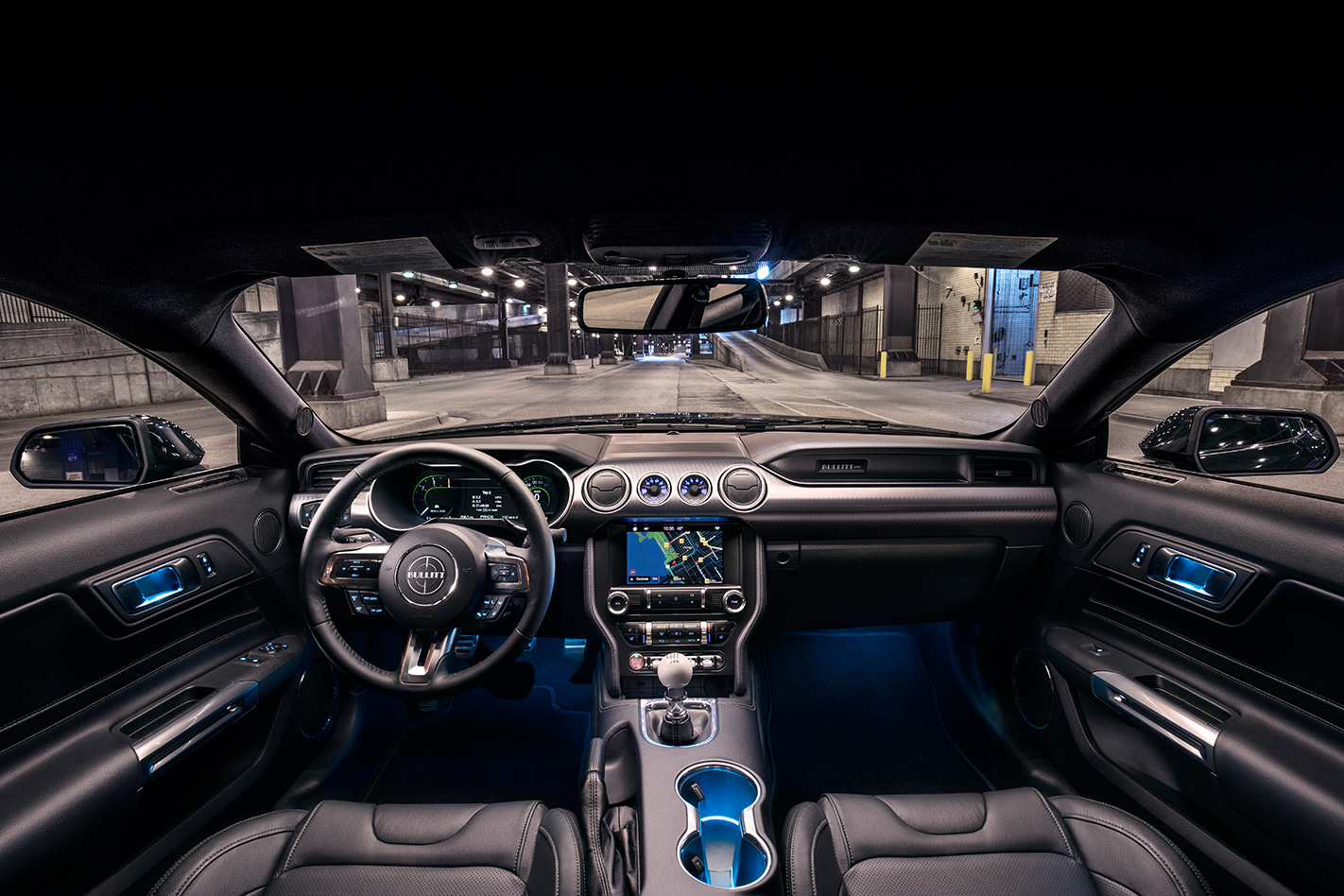
The multimedia system is tweaked to show the original fastback GT on start-up.
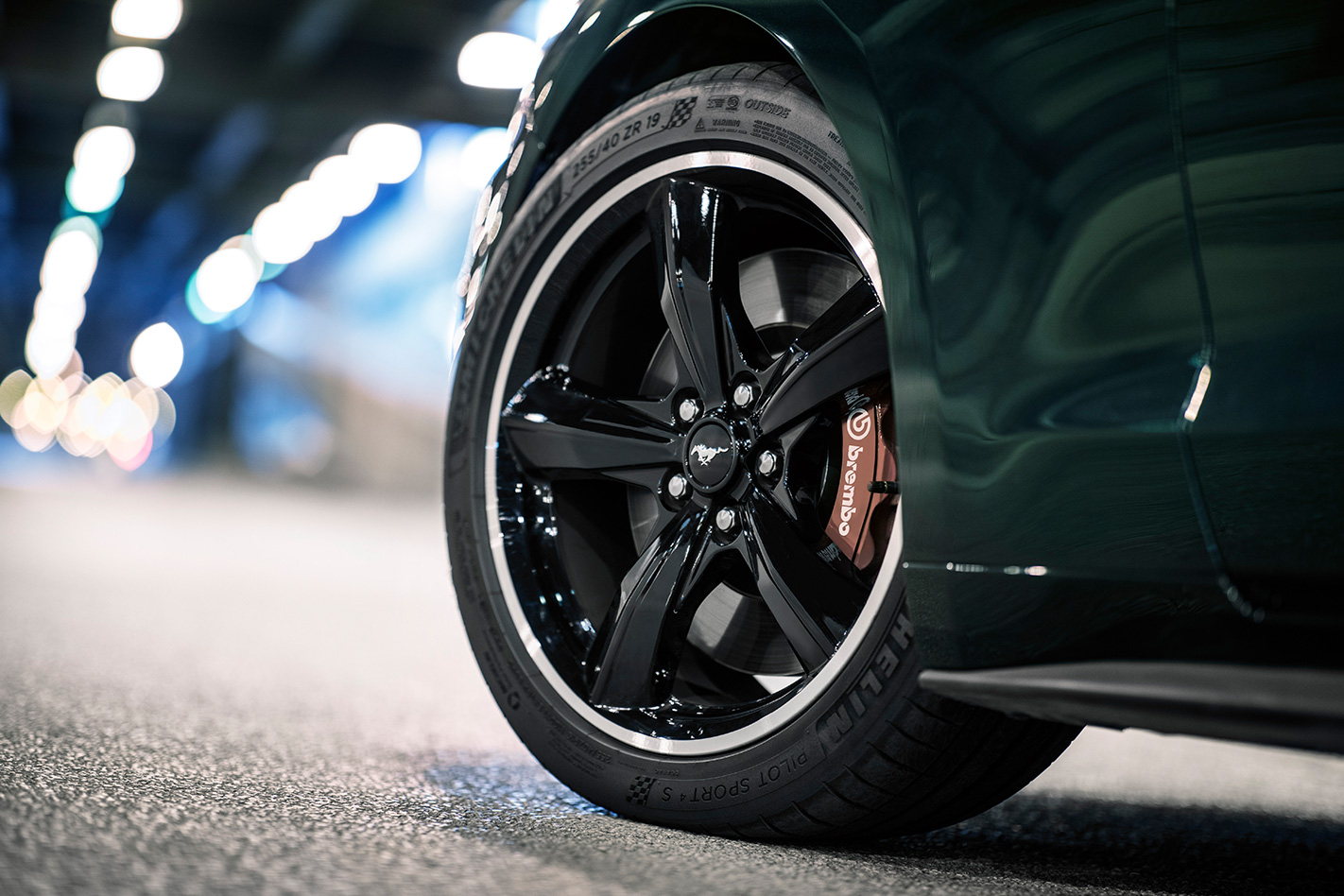
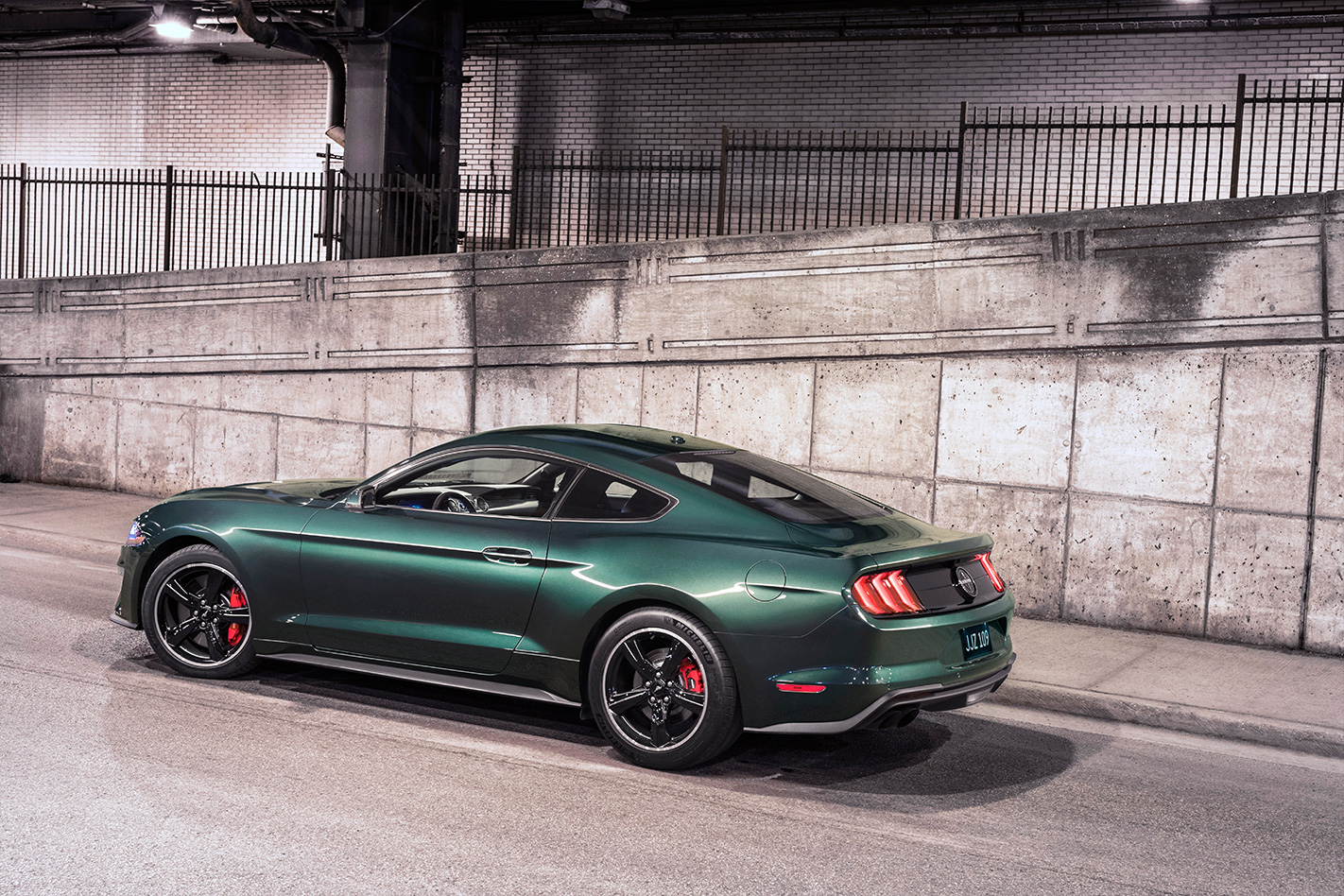
“Other features that pay tribute to the car McQueen drove are subtle chrome accents around the grille and front windows, classic torque thrust (sic) 19-inch aluminum wheels, red-painted Brembo brakes, and a unique black front grille,” Ford said. “Inside and out, the vehicle uses minimal badging; only the circular faux gas cap Bullitt logo on the rear center is visible on the exterior.”
McQueen used two versions of the Mustang for Bullitt; the one he drove, and one used as a stunt double.
The McQueen Mustang was inherited by Sean Kiernan in 2014 from his late father, Robert, who had bought it in 1974.
Kiernan and Ford worked together to reveal the original Bullitt Mustang alongside the all-new one wearing its name at the 2018 Detroit Motor Show.
A spokesman for Ford Australia said the Mustang Bullitt had so far only been approved for left-hand drive, meaning it was not yet on the radar for here.
“Given the Mustang’s popularity here we’re always looking for something that Australian buyers would be keen for,” Damion Smy told Wheels. “The Bullitt Mustang is an emotional and provocative car, so that would fit the bill.”
What’s the best movie car chase of all time? You’re likely to get a range of answers to the question but chances are the consensus will be Bullitt, the iconic 1968 thriller starring Steve McQueen in a dark green Ford Mustang chasing a Dodge Charger through the streets of San Francisco.
To celebrate the 50th anniversary of the movie Ford has released the 2018 Ford Mustang Bullitt at the North American International Auto Show, packed with retro touches and loaded with all the equipment introduced as part of the Mustang’s recent facelift.
The enhancements are mainly cosmetic, though Ford has extracted another 11kW from the uprated 5.0-litre V8 courtesy of a new intake system and Shelby GT350 intake manifold to lift outputs to 354kW/569Nm.
The Mustang Bullitt is available only as a six-speed manual, the gear lever topped by a white ball in deference to the original, while all Performance Package upgrades are present, including stiffer suspension, Brembo brakes, upgraded cooling, staggered wheels and tyres – 255/40 R19 front, 275/40 R19 rear – and a limited-slip diff.
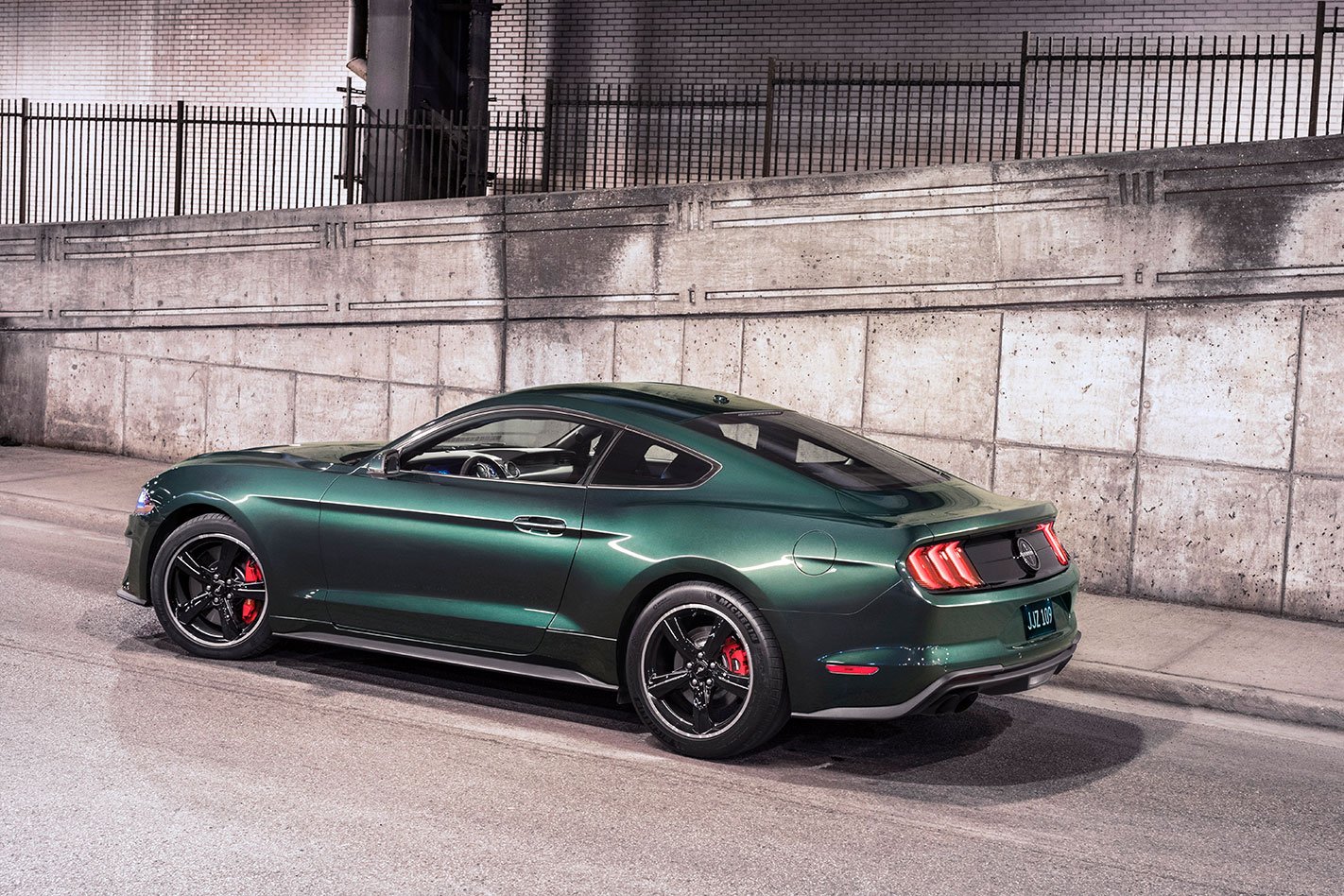
Externally, Ford has applied as many cues as possible from the original 1968 hero car, including the black-painted 19-inch wheels (dubbed ‘torque thrust’), chrome accents around the glass, red brake calipers and black front grille.

The Bullitt benefits from all the technology upgrades fitted to the 2018 Mustang, including active safety equipment and the customisable 12-inch digital LCD instrument screen, though this special edition displays a Bullitt welcome screen with an image of the car on start-up rather than the pony logo of the standard car.
Mustang chief designer, Darrell Behmer, adds: “This new Bullitt is, as Steve McQueen was, effortlessly cool. As a designer, it’s my favourite Mustang – devoid of stripes, spoilers and badges. It doesn’t need to scream about anything – it’s just cool.”

FORD has finally dropped the Aussie designed and developed 2019 Ford Ranger trade ute on the US market – but given it an engine from the Mustang pony car.
Revealed overnight, the US-market version of the Ranger – a competitor for the Chevrolet Colorado that’s also sold here wearing a Holden badge – will exclusively use the turbocharged 2.3-litre Ecoboost petrol engine from the Mustang – performance details are a bit light on the ground at the moment – mated with a 10-speed automatic transmission that includes Ford’s awful gearstick-mounted shifter toggle instead of steering wheel-mounted paddle shifters.

Like Australian versions, the US Ford Ranger will use a double wishbone suspension system up the front, and load-friendly leaf springs down the rear. A Raptor-badged version of the Ranger, which is likely to feature a twin-turbo V6 in the US, but a twin-turbo diesel engine here, is due to be revealed in Thailand early next month.
The US version of the Ford Ranger also takes a big step forward in safety; automatic emergency braking will be made standard across all models, with the system extending to pedestrian protection on higher-cost models. As well, the Ranger will gain the latest version of Ford’s Sync 3 multimedia interface, which is likely to include more consumer-friendly navigation app Waze for the first time.

“Ranger has always held a special place in the hearts of truck fans,” Hau Thai-Tang, Ford executive vice-president of product development and purchasing, said. “The all-new Ranger is designed for today’s midsize truck buyer, delivering even more utility, capability and technology for those who blend city living with more off-the-grid adventures on weekends.”
So just like in Australia, Ford expects the Ranger to wear a suit on weekdays, and a pair of boardshorts on the weekend. It will sell in the US in entry-level XL, mid-level XLT and high-level Lariat variants with available Chrome and Sport appearance and FX Off-Road packages, and in SuperCab or SuperCrewcab configurations.
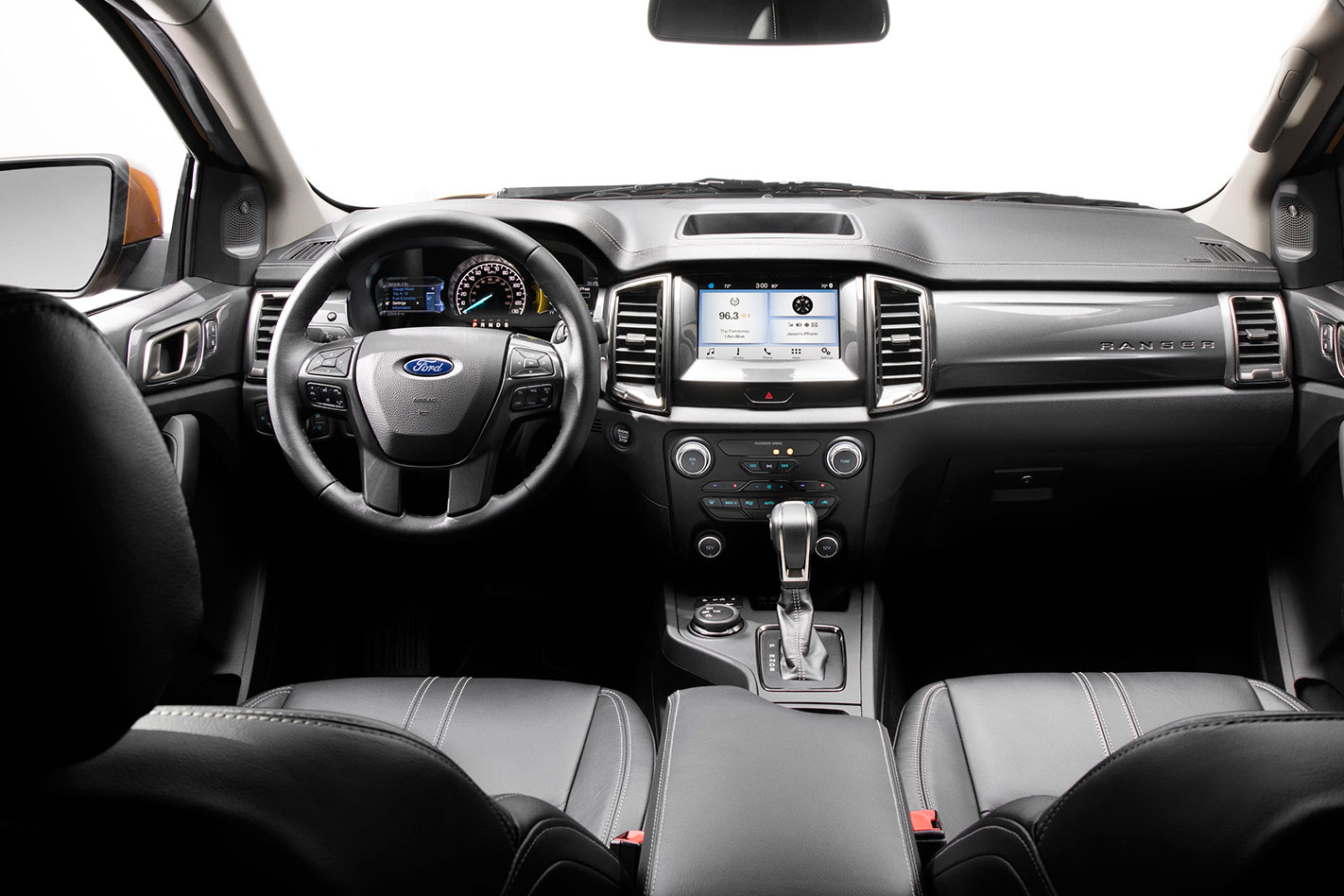
Owners also will be able to set their Ranger up as a wireless internet hub for up to 10 connected devices.
The US version of the Ranger will be built at Ford’s Michigan assembly plant. Ford is keen to catch the midsize truck wave; sales in the segment are up 83 percent since 2014 “as a new generation of midsize truck buyers seek more maneuverable, fuel-efficient pick-ups”.
Australia’s appetite for the likes of the Ford Ranger, Toyota Hilux, Holden Colorado, Nissan Navara, Mitsubishi Triton, Isuzu D-Max and Volkswagen Amarok has not kicked off quite as strongly as in the US, but the brands are recognising the strength of the 4×4 dual-cab segment – the slice of the light commercial vehicle market that’s more popular with private buyers. Even Mercedes-Benz wants a slice of the action, preparing to soon launch its X-Class based on the Nissan Navara.
All-wheel-drive versions of the Ford Ranger outsold those for Australia’s best-selling trade ute, the Toyota Hilux in 2017, 36,932 sales to 35,297, VFACTS figures show. They accounted for more than 14 percent of the 1.19 million vehicles sold in Australia last year.
Sometimes a man finds himself standing at a turning point in history.
Sometimes that man grasps the enormity of his situation and, drawing on a strength not entirely his own, steps forth to do what must be done.
Other times, a man stands at a turning point in history and, being thick as mince, has no idea where he is.
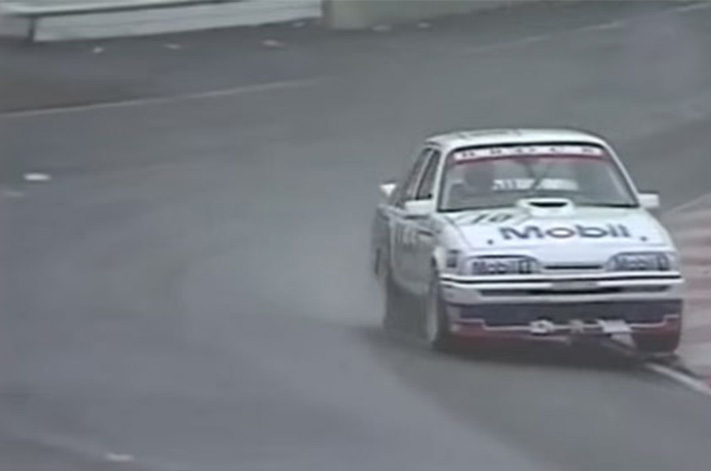
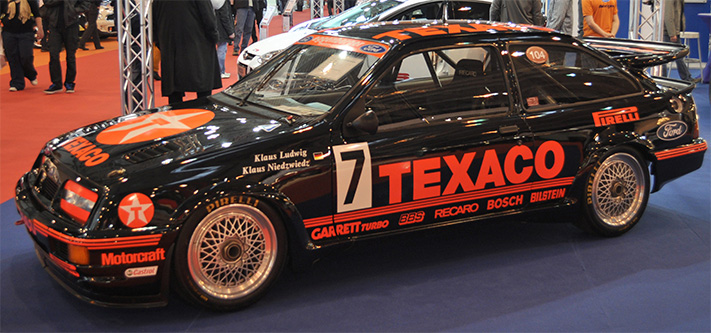
I’ve just learned that, 30 years ago, I was completely oblivious to my part in the downfall of Rudi Eggenberger’s Ford Texaco Racing team at the 1987 Bathurst 1000, the controversy that handed Peter Brock his ninth and final win on The Mountain.
I didn’t.
But when he introduced himself as Greg Read, I immediately remembered. We’d first met in the mid-1980s, when I did a story on his Rover SD1 with a Chev 350 V8.
Greg was and is an engineer with a successful air-conditioning business. He’s also a motor racing nut, and after that initial meeting, I’d sometimes see him at races, where he served as a scrutineer and pit-lane marshal.
Of course, there was also Brock and a number of VL ‘plastic pig’ and older VK Commodores, here hopelessly confronted by technology from the 20th century.
The fastest Commodore (Allan Grice) qualified in seventh – more than six and a half seconds off the electrifying 2m16.96s pole lap of Klaus Ludwig’s Texaco Sierra.
I was running around the pits, writing for a glossy yearbook. Everywhere in the paddock was the odour of rodent.
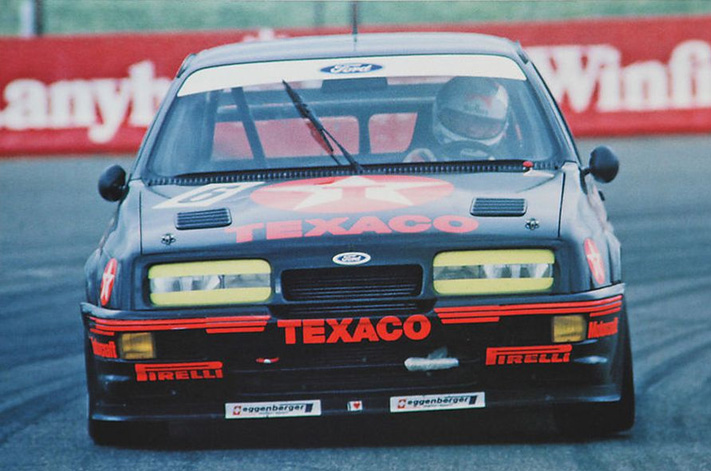
As I remember it, one of the visiting BMW team’s cars was found to have a “mysterious liquid” sloshing about the footwells. The official story was that it must have been trapped during the body’s acid-dipping process.
What everybody believed was that this team was storing octane-boosting toluene in the roll cage.
This would not be the undoing of the 1-2 finishing Eggenberger team, which was excluded from the results several months after the race and the victory handed to Peter Brock.
What got them was illegally enlarged front wheel arches that enabled them to run bigger front wheels and tyres. According to Read, that’s where I came in.
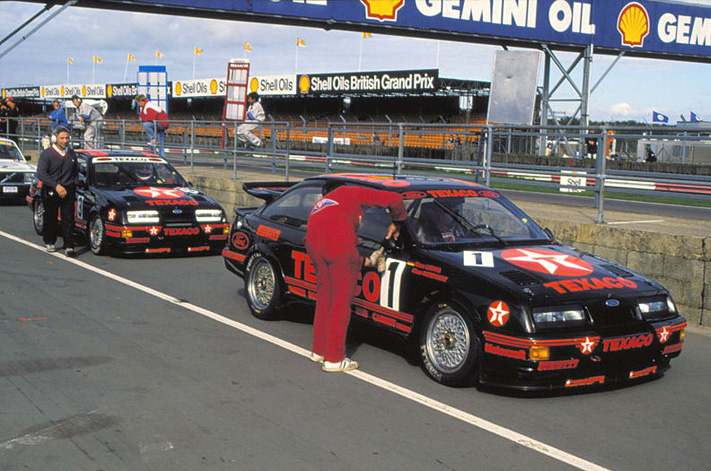
He broke off his conversation and turned to one of the senior scrutineers and started explaining what was happening. As the authority figure remained unmoved, Read’s frustration grew. Until he finally growled: “Look, if you don’t do something about this, I’m going to spill the whole story to my mate, who’s been standing there the whole time – and he’s a very influential journalist!”
Cut to Stahly, momentarily distracted by a butterfly. Looks at the two men. Mouth half-open. Tilts head slightly, like Scooby Doo (“roo-ree?”)
Sound of crickets.
