I’m a big fan of the Tokyo Motor Show. You better believe that a culture that has developed vending machines for dinner suits and does an interesting line in edible gym wear will usually be able to throw a few curve balls when they let their industrial designers off the leash.
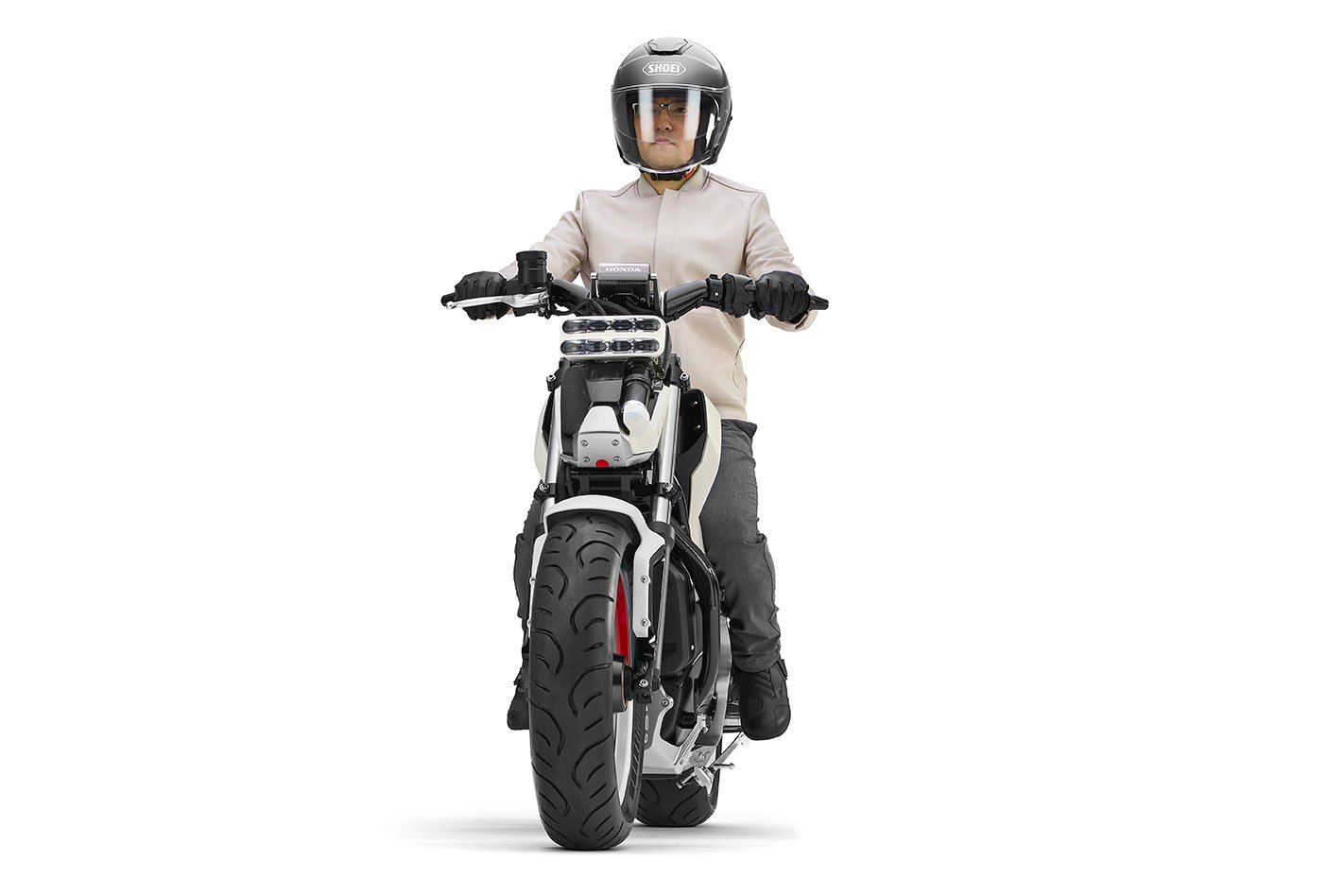
My favourite Tokyo Show concept car was many years ago and amounted to a one-box van with full-length aquariums containing tropical fish where the side windows would go on a van destined for Earth. But I think the Japanese in general, and Honda in particular, are taking the piss this time around. One of the big two-wheeled concepts this year was an electric motorcycle from Honda. Big deal, I hear you say, electric bikes have been around for ages. And, yes, they have. But what makes this one different is that it’s also a self-balancing motorcycle.
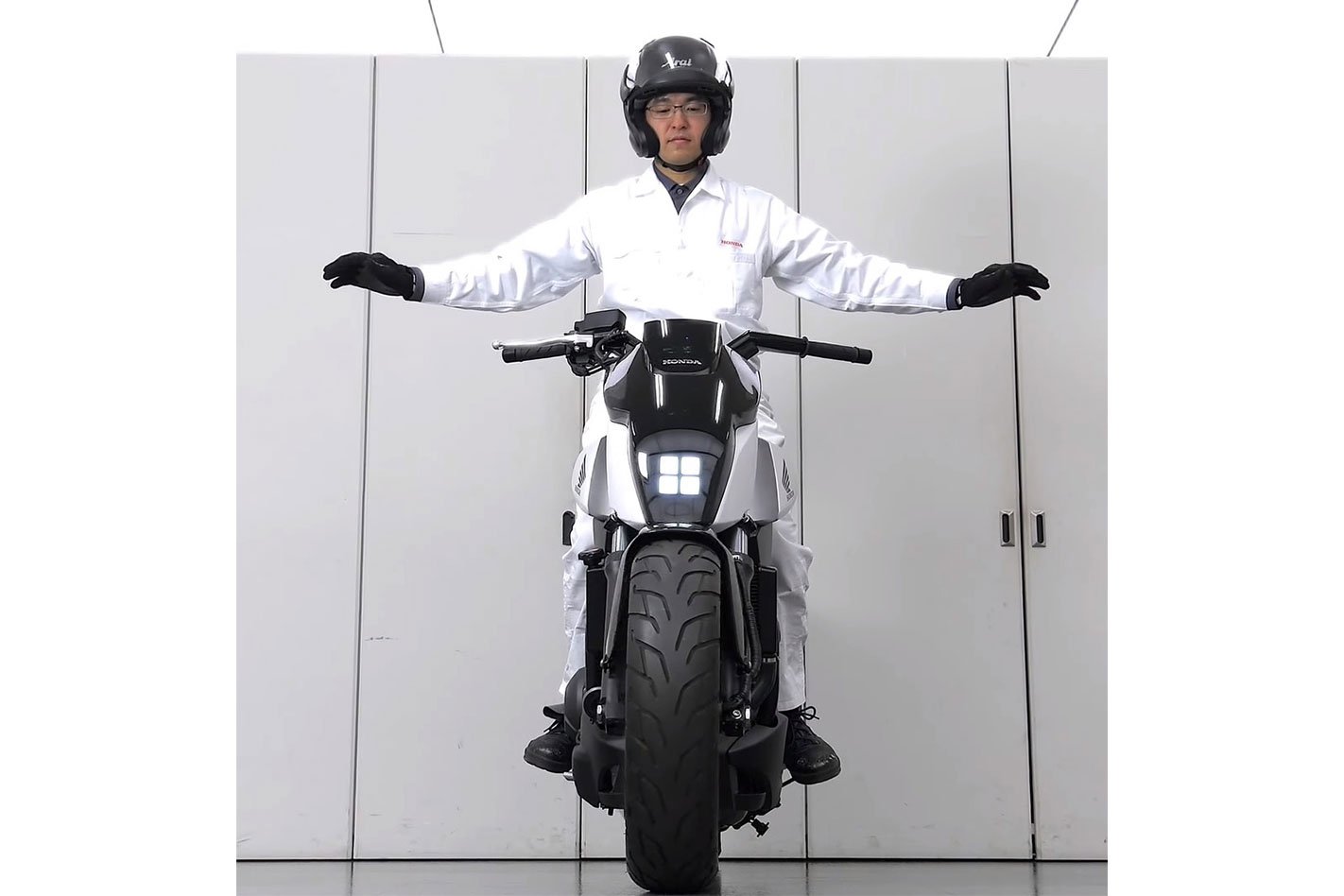
Think about it: balancing a bike on the move and remembering to put your foot down at the traffic lights are skills and responsibilities that you take on when you decide to terrorise the neighbours via a two-wheeler without pedals. Buying a machine that frees you from those responsibilities will only appeal to those who have never done it before. People for whom fear of toppling over in the driveway is possibly the only thing keeping them from riding. So in short, it’s really people who shouldn’t be allowed out by themselves anyway.
Okay, if you somehow lost both legs in a nasty industrial paper-cut incident, then I’m on your side – I’ll help Honda build you a bike. But if you feel you need a self-balancing motorcycle because you’re simply the forgetful type, then, no, you and I aren’t going to find much common ground on this subject.
Opinion: Progress is Overrated
Also, what about the other dangers of riding a motorcycle (not that I’d previously considered a bike that falls over at rest dangerous, just typical)? What’s going to happen the first time the conehead who buys a self-balancing bike hits a wet tram-track on a busy city street? Or gets doored by a bogan leaping from his Belmont to get a few bob on number three in the sixth? And here’s another thing to consider, Honda (and anybody else considering such nonsense): motorbikes are already, and have always been, self-balancing. Once you’re beyond about walking pace, gyroscopic force from the wheels takes over and you stay upright ’til those wheels are stopped by you (via the brake lever) or some other force (a fence paling through the spokes).
The overriding danger of a self-balancing bike is just the same as it is for many other technologies, things like airbags, ESP, autonomous braking, clutchless gearboxes and, of course, the autonomous car. Via technology, you’re making something available to people who are fundamentally not cut out to attempt it in other circumstances. In other words, we’re fooling with natural selection here.
Grandma gets a few things wrong in her old age. Like which end to speak into an iPhone, avoiding your foot in her mobility chair, or throwing out your “very important” magazine collection. However, saying “stick to your roots” is a slice of wisdom that’ll ring true until John Farnham retires.
Take this pair. On one hand we have Ford’s Mustang. It’s as American as a Big Mac and has sold in big numbers. Since 1964, more than nine million have been built, and in its sixth-generation, Aussies have finally been granted a taste.
Those retro, muscular lines have mesmerised local Ford fans, and a 5.0-litre V8 packing more than 400 horses helps. In its first full year on sale, the Mustang bolted to best selling ‘sports’ car success, even eclipsing the four-door Falcon in its final year.
But it’s been decades since anyone’s gushed about a new Mustang. There have been three, maybe four, Americans would rather forget. Today, though, it’s as if the Mustang’s roots were spliced into the brains of everyone who created the new S550. Loaded with grunt, the right looks, independent rear suspension, and an affordable price of less than $60K, all it lacks is some competition. Until now.
With HSV yet to officially confirm the Camaro, and our home-grown heroes gone, the Nissan 370Z is all that’s left to keep Ford’s runaway honest. It’s in the same ballpark for price, but how does a seven-year-old car pick a fight with one almost brand new? It comes down to that badge. Nissan used to let its motorsport arm go nuts on road cars from time to time, then it began on full-time specials in the late-Noughties, but we’ve had to watch everyone else enjoy them until Japan greenlighted the GT-R and 370Z Nismos for Aussie tarmac earlier in 2017.
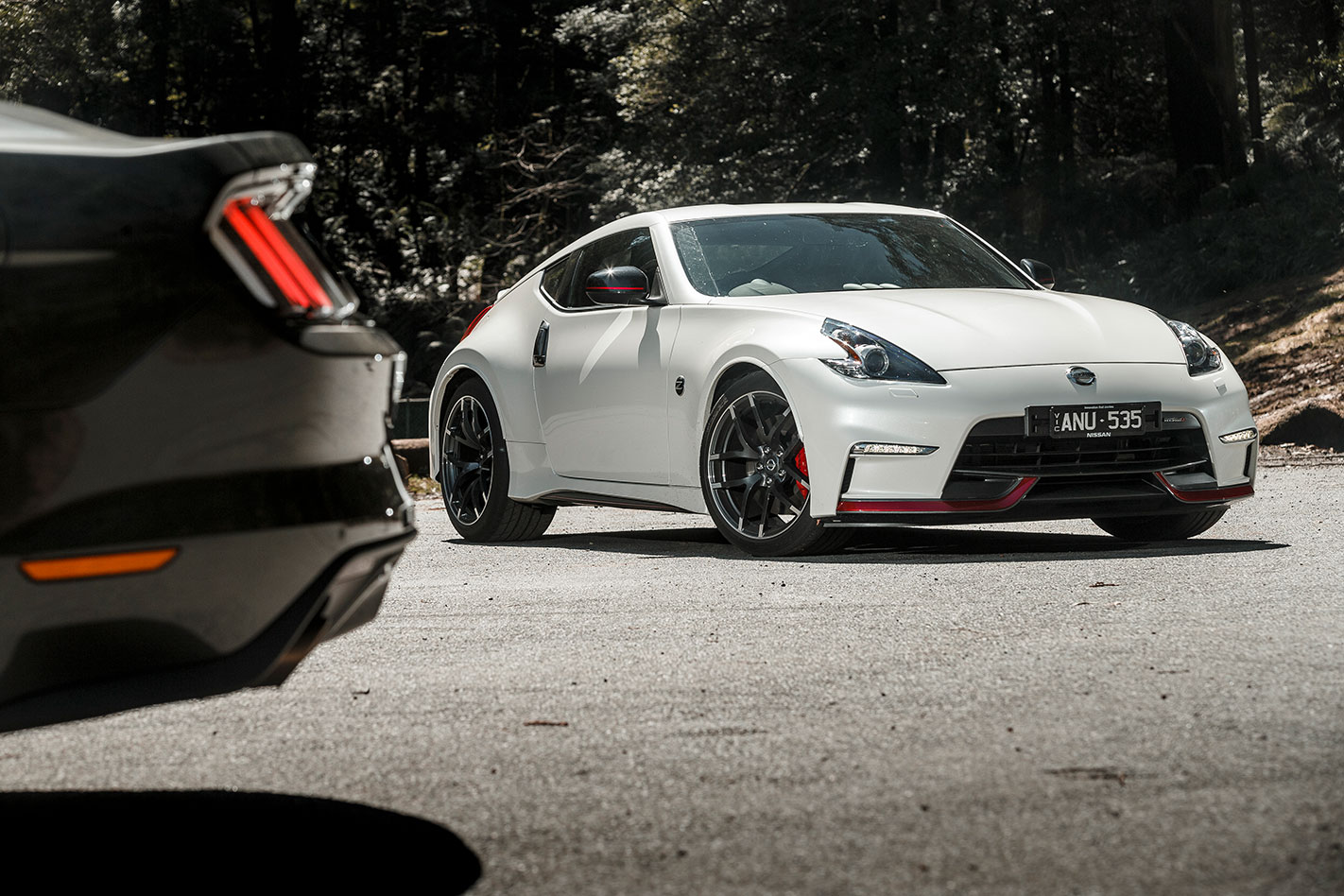
Not that the Mustang is intimidated. People smile and point at it more often than the less iconic Nismo, and multiple creases and sharp lines make it an aggro-looking thing. It’s also much bigger, wearing 19-inch wheels on a longer wheelbase, while its hips bulge out over a wider rear track.
Looks aside, when it comes to drag races the Nismo slaps on the table a 3.7-litre V6 that runs a high 11:1 compression ratio, double overhead cams, oversquare bore-to-stroke ratio and valve lift on intake cams. The Nismo badge brings with it a cat-back exhaust system that better separates gases from each cylinder bank all the way to the tips, while fiddled spark and timing eke out a total of 253kW and 363Nm.
Ford Mustang Ecoboost vs Toyota 86
Aussies have met the Mustang’s 5.0-litre Coyote V8 before (albeit at the core of FPV’s supercharged Miami engine). Carried over from the fifth-gen car, its cylinder heads feature larger valves, stiffer springs, and tubular exhaust manifolds to trample the Nismo with outputs of 306kW and 530Nm.
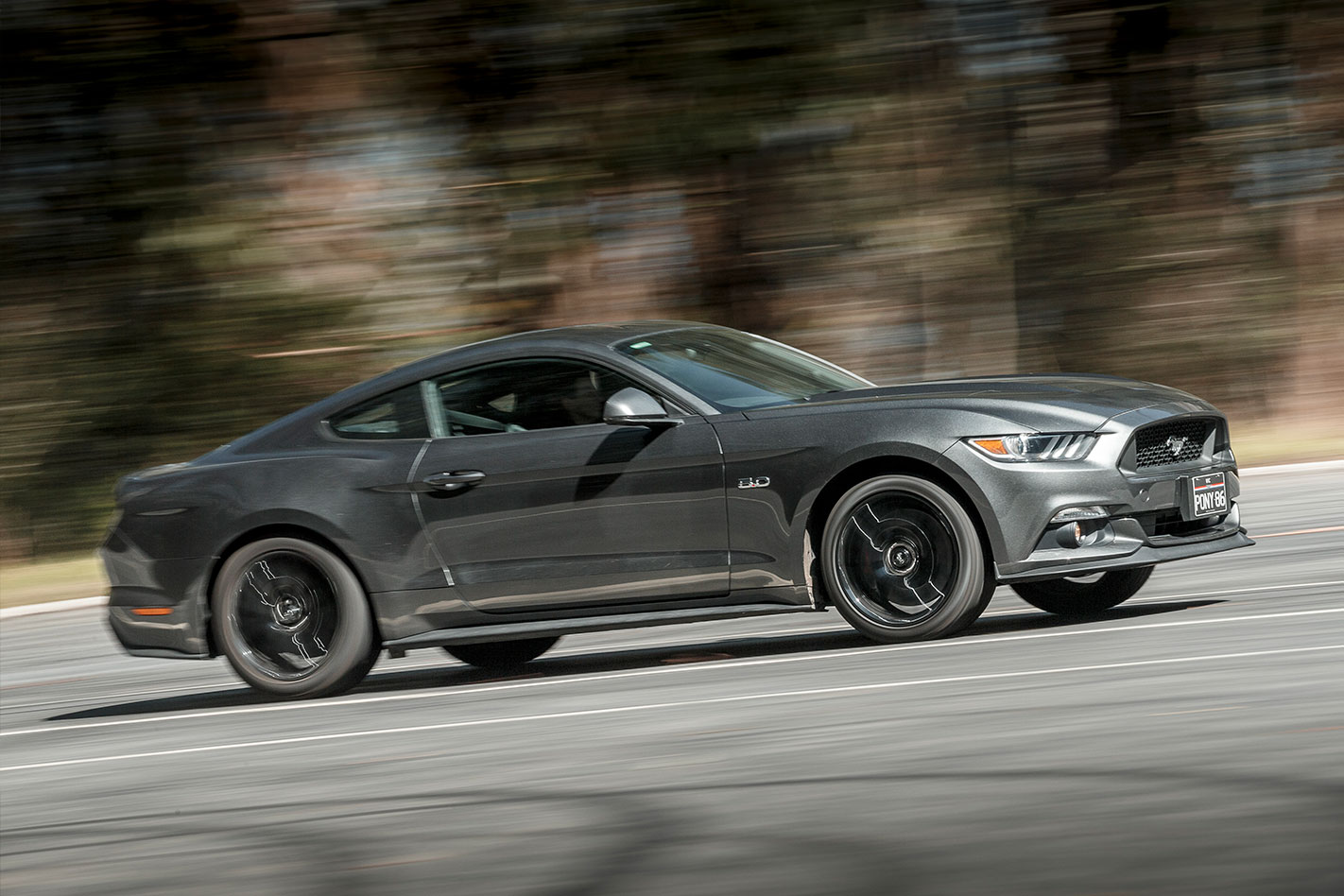
The story changes at the first gearshift. While the Nismo’s six-speed doesn’t like being rushed, as the revs tend to hang for a moment once the clutch is dipped, the Mustang’s relishes the grunt work. So 70km/h to 80km/h with a first-to-second change takes five tenths compared to seven in the Nismo.
A difficult launch and lazy synchros bump the Mustang’s sprint to 100km/h above five seconds, but beyond this speed it’s a force. That Coyote pulls harder the higher it revs, breathing deep and thundering towards its 7000rpm redline with ease. At the 400m finish line the Driftbox flashes 13.32sec at 176.56km/h.
The Nismo, meanwhile, is cursed by longer gearing. Sure, a second-to-third shift at 110km/h helps it snare 100 clicks in 5.69sec, but it only just needs fourth before the quarter mile, whereas the Mustang passes 400m with less than 750rpm to spare in its fourth cog.
Now, more time in gear would be fine if the 370Z sounded like a GT-R Nismo’s baby brother. From the outside it growls with a deep, meaty note, but inside fails to drown out the synthetic engine noise being plumbed through the speakers. Sure, the Mustang’s no Italian symphony, but its rumble is honest, deep, and builds into a heady buzz that’ll have you shifting down much more often. Ultimately, it’s aurally pleasing.
Go searching for a buzz on twisty stuff in Victoria’s rolling hills and the Mustang acquits itself well for a 1700kg lump. Those Brembos feel over-assisted at low speeds but work better at a higher pace, the front-end sniffs out apexes with surprising turn-in and the front-end feels connected despite a bonnet longer than a speedboat’s. You’d fall out of this thing mighty impressed after a back-road blat… if the Nismo wasn’t waiting for you.
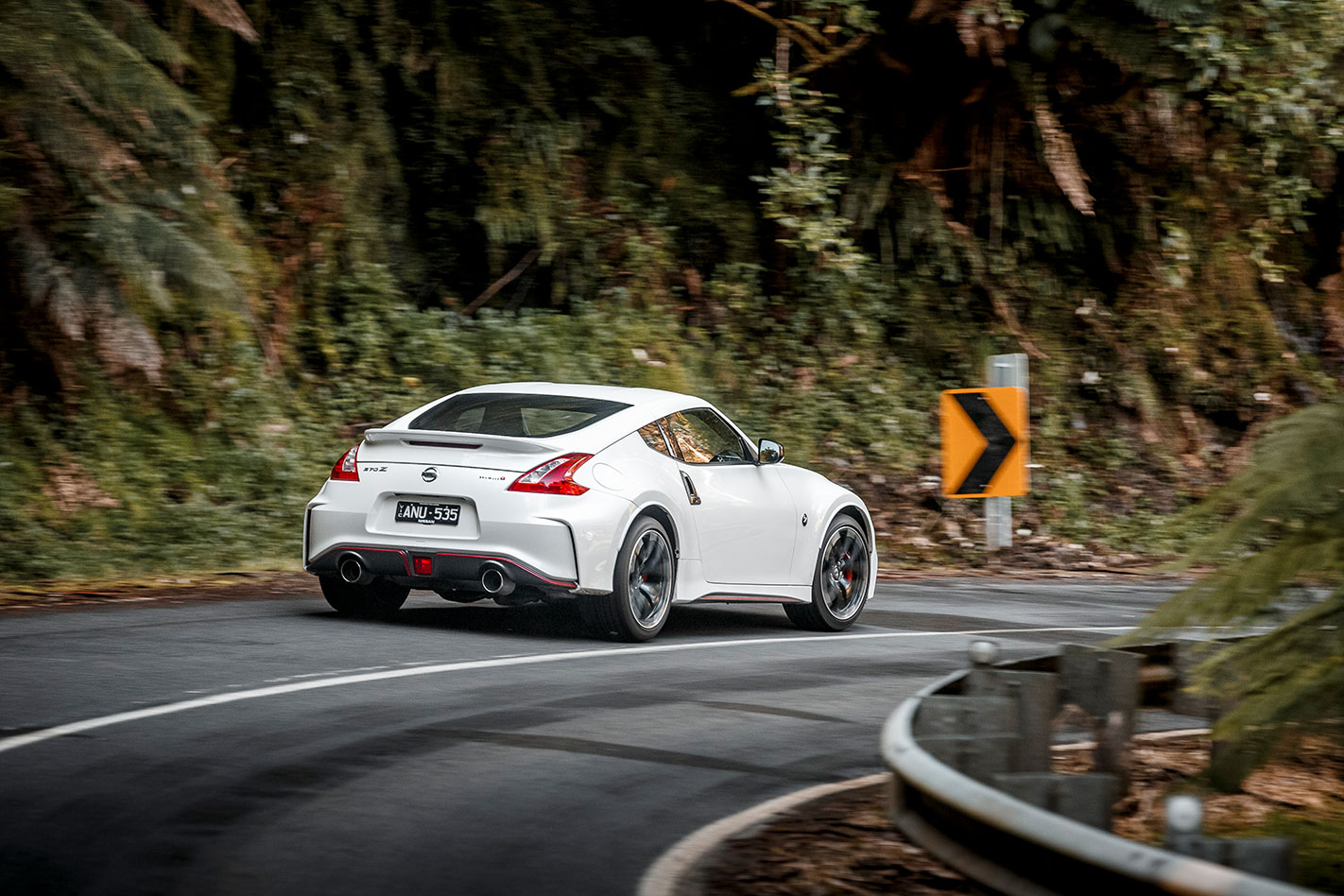
In contrast, the Mustang feeds you little information through its seats, tiller, and pedals. As you start to nudge its limits, the longer wheelbase gives you an earlier warning than the Nismo when things are about to come round, but you seem to watch it happen rather feel it.
Add a bit of grease, or water, into the mix and the Mustang’s rear-end just doesn’t hold the road well enough for a 530Nm rear-driver. Even with an 8.8-inch rear LSD, multi-link rear setup and 53:47 weight balance, where the Nismo has you hooking into corners you’re instead slowing down inputs in the Mustang to bring its physics into check.
That said, the Nismo’s not perfect. While the speed-sensitive steering relays huge amounts of information about available grip, and controls an obedient front-end, it’s not extremely accurate mid-corner. And while you can sense the rear moving, its stumpy wheelbase and firm suspension means it can swap ends quicker than a drift trike. The viscous LSD, too, can get a bit lazy and let the inside rear spin up.

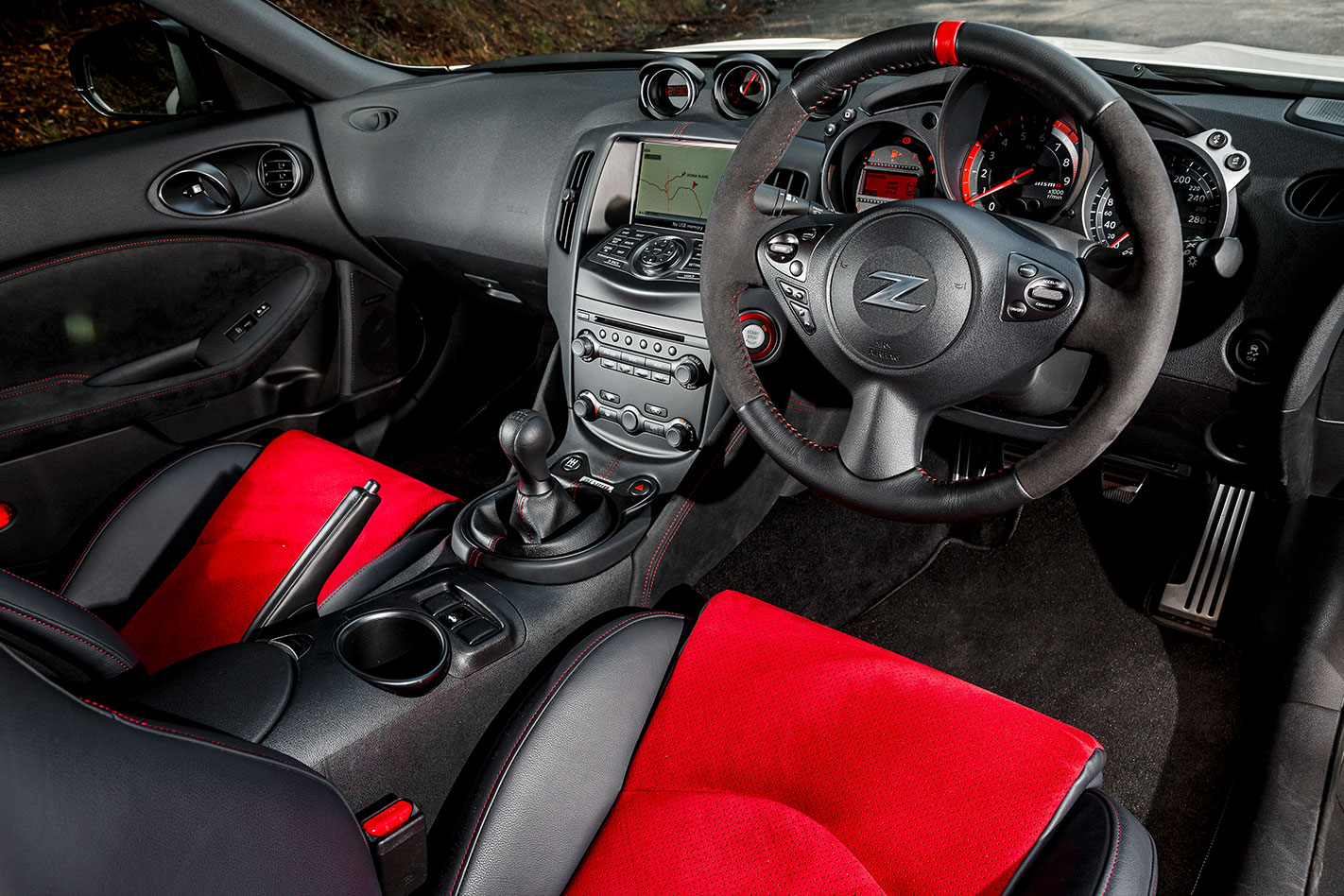
Even the 370Z’s interior is more suited to this drama. You climb in over heavily-bolstered Recaros, dab nicely staggered pedals and grab a well-placed shifter. Its brakes need a firmer squeeze to chomp with the same bite, but they have a nice progression provided you’re not into the anti-lock. The transmission, at least in this setting, also doesn’t baulk like the Mustang’s on every shift, either.
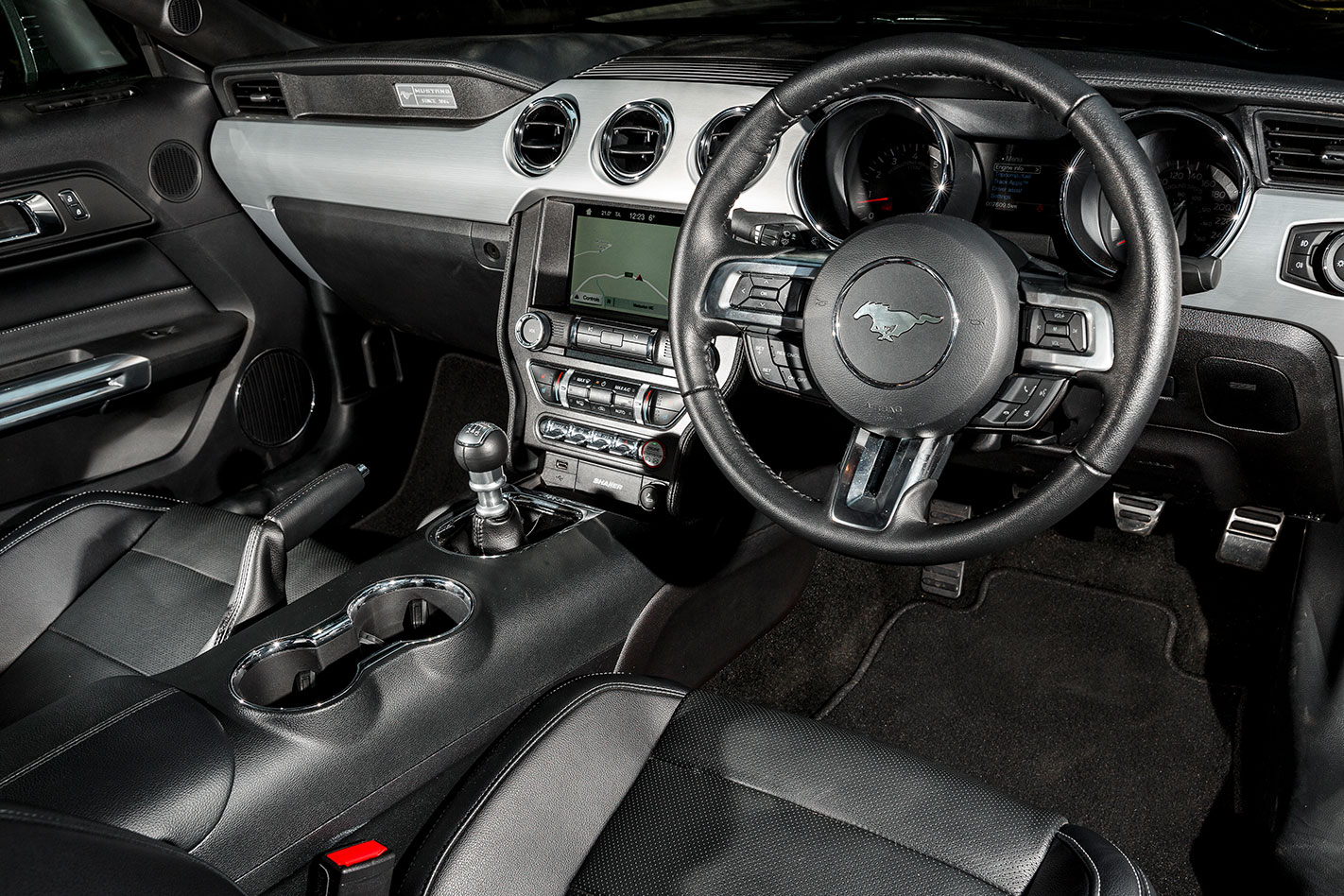
The Mustang’s cabin isn’t so stimulating. The dashboard’s shape is a charming nod to the original car, but the brushed silver inserts, faux-chrome controls, and sea of black produce an uninspiring workstation. It is, at least, comfortable. There’s acres of space under the dash to swing your knees and you can mould into a perfect driving position thanks to electric seats and adjustable steering rake.
The Nismo’s interior, lashed with red and Alcantara, has the glow of a beachside night club, but it’s less charming to live with daily. You’d have better luck finding the Titanic than the Bluetooth menu, and we don’t understand why the Recaro seats don’t have a quick release function to fold forward. Small and baulky items are instead thrown in the boot. We can see why Nissan thought linking the dash with the steering column was a good idea – it keeps the dials visible – but we struggle with why the cruise control buttons press the horn. As will other motorists. Meanwhile, in the Mustang interior, door operation is simple, the vents are within reach, and button functions are easily interpreted. The Sync 3 infotainment system features Apple CarPlay, and the front seats fold forward, allowing access to the rear.
Sure, the Nismo’s body control is tight and it’s allergic to roll, but it just can’t hide from its short damper travel. Its secondary ride improves at more than 100km/h, but at less than that the Nismo would rattle out your granny’s teeth. Oh, not to mention the tyre noise would send her hearing aid into meltdown.
So while the Nismo’s ride is not one-dimensional, it’s simply unacceptable, motorsport-inspired or not. When Honda is delivering a hatchback on 20-inch wheels that rides with the sophistication you’d come to expect from Porsche for about $10K less, it signals the game has moved on. That said, we love that the gear shift and steering are a bit of old-world charm in today’s marketplace. But the Nismo can only shine in very specific conditions and its engine acoustics are unforgiveable. Further weakening its case is the fact its arrival has pushed down the base car’s price to $50K. While you’d struggle to rustle wheels, tyres, body parts, dampers, braces, and an exhaust for the Nismo’s $10K extra ask, the base car’s ride, or noise, can’t be any worse. And it packs only 8kW less.
On the other hand, the 370Z’s future isn’t so bright and executives haven’t committed to a replacement. Nissan didn’t even drop a concept, as expected, at the recent Tokyo motor show.
Ford blew everyone away with its sixth-gen ’Stang, showing there’s a global appetite for a throwback to a legend. It’s time for Nissan to follow Ford’s lead, like in the ’60s, and refresh the Z with something great like the original. Something to make Granny proud.
The Numbers:
Ford Mustang GT | Nissan 370Z NISMO |
0-10km/h 0.42sec | 0-10km/h 0.40sec |
0-20km/h 0.90sec | 0-20km/h 0.84sec |
0-30km/h 1.31sec | 0-30km/h 1.25sec |
0-40km/h 1.79sec | 0-40km/h 1.67sec |
0-50km/h 2.20sec | 0-50km/h 2.19sec |
0-60km/h 2.64sec | 0-60km/h 3.04sec |
0-70km/h 3.34sec | 0-70km/h 3.57sec |
0-80km/h 3.86sec | 0-80km/h 4.26sec |
0-90km/h 4.48sec | 0-90km/h 4.96sec |
0-100km/h 5.27sec | 0-100km/h 5.69sec |
0-110km/h 6.06sec | 0-110km/h 6.85sec |
0-120km/h 6.86sec | 0-120km/h 7.84sec |
0-130km/h 7.73sec | 0-130km/h 8.87sec |
0-140km/h 8.67sec | 0-140km/h 9.92sec |
0-150km/h 9.91sec | 0-150km/h 11.53sec |
0-160km/h 11.12sec | 0-160km/h 13.06sec |
0-170km/h 13.83sec | 0-170km/h 14.61sec |
0-400m | 0-400m |
80-120km/h (3th-6th) 3.2/4.3/6.3/12.8sec | 80-120km/h (Drive) 4.0/5.3/7.2/10.7sec |
100-0km/h 34.59m | 100-0km/h 33.68m |
SPEED IN GEARS | SPEED IN GEARS |
1st 71km/h @ 7000rpm | 1st 69km/h @ 7500rpm |
2nd 107km/h @ 7000rpm | 2nd 112km/h @ 7500rpm |
3rd 155km/h @ 7000rpm | 3rd 161km/h @ 7500rpm |
4th 199km/h @ 7000rpm | 4th 205km/h @ 7500rpm |
5th 261km/h @ 7000rpm | 5th 221km/h @ 7500rpm |
6thu00a0264km/h @ 4610rpm* | 6th 250km/h @ 5890rpm* |
As tested by MOTOR: Heathcote Dragway, 13:37pm, 17 degrees, dry; Driver: Scott Newman; *Manufacturer’s claim
Beast From the East: Nissan’s American Beauty
After seeing what Ford did with the Mustang in the 1960s, Nissan knew it needed its own coupe. The result was the American-friendly ‘Datsun 240Z’ in 1969. Hungry for horse flesh, it wrapped a zingy 2.4-litre straight-six in a sexy two-door body and underpinned it with Japanese reliability.
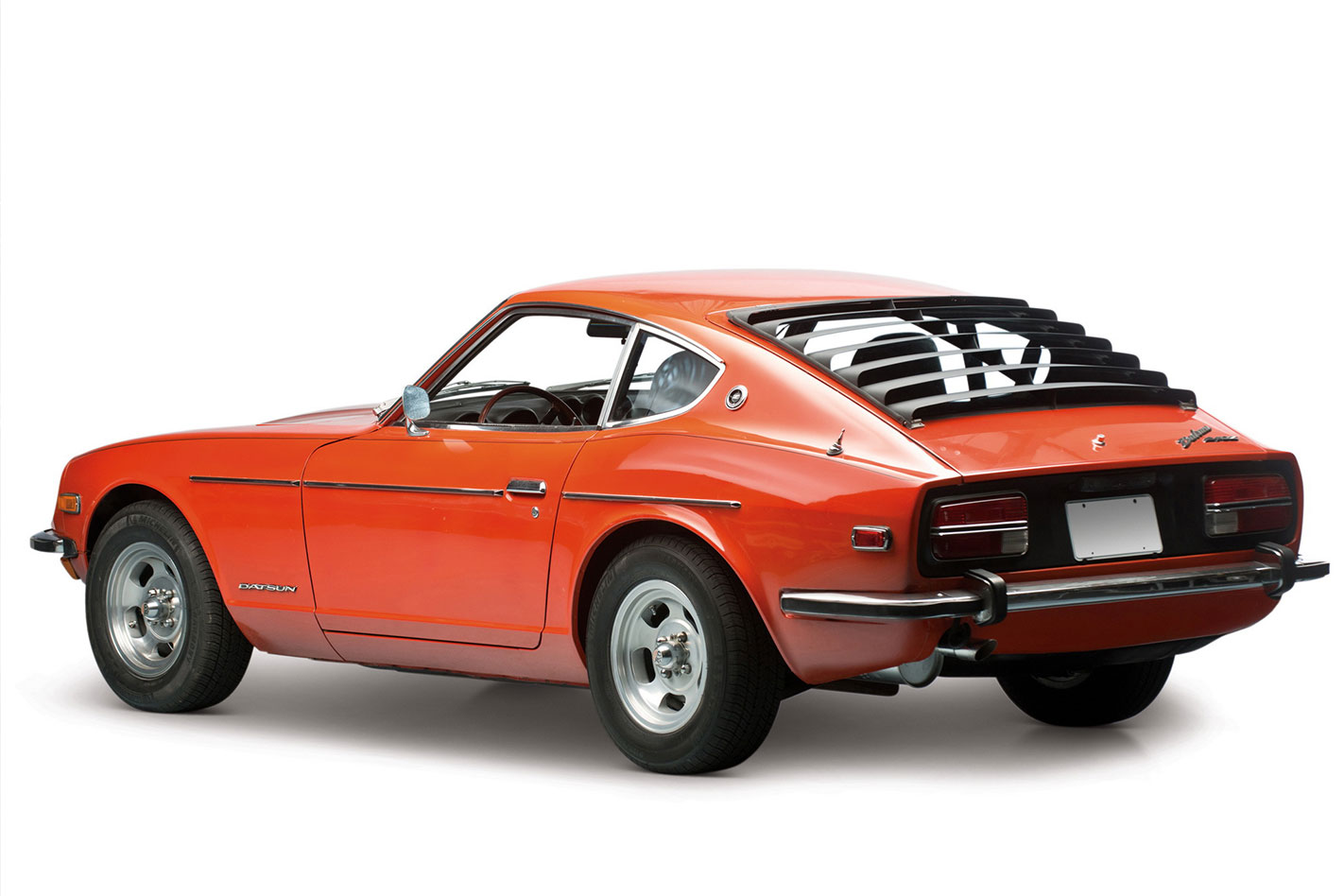
The similarities didn’t end there. It sold amazingly well for a Japanese car in its early years before being succeeded by heavy, luxury-focused flops. The twin-turbo 300ZX provided some hope, but Nissan didn’t pay the original car justice until the 350Z in 2002, which again boasted two seats, six cylinders, and samurai-precise handling. Nissan then cut the wheelbase and stroked its engine in 2009 to give us the 370Z, before a refresh came in 2013 and the third-generation Nismo Z landed in 2015.
Horsing around: The Mustang’s five-decade journey
The Mustang II, which debuted in 1974, would have struggled to tail today’s Holden Spark down a drag strip. Thanks to the fuel crisis, there wasn’t even a V8 option until a year after its launch.
Then, in 1979, not only did generation three look nothing like the original, its downsized 4.2-litre V8 couldn’t push its 0-60mph times under 10 seconds.
Power was less of an issue for the next two models than dynamics. A live-axle persisted under the fourth and fifth generation cars, and so did a shoddy ride and questionable rear lateral grip.
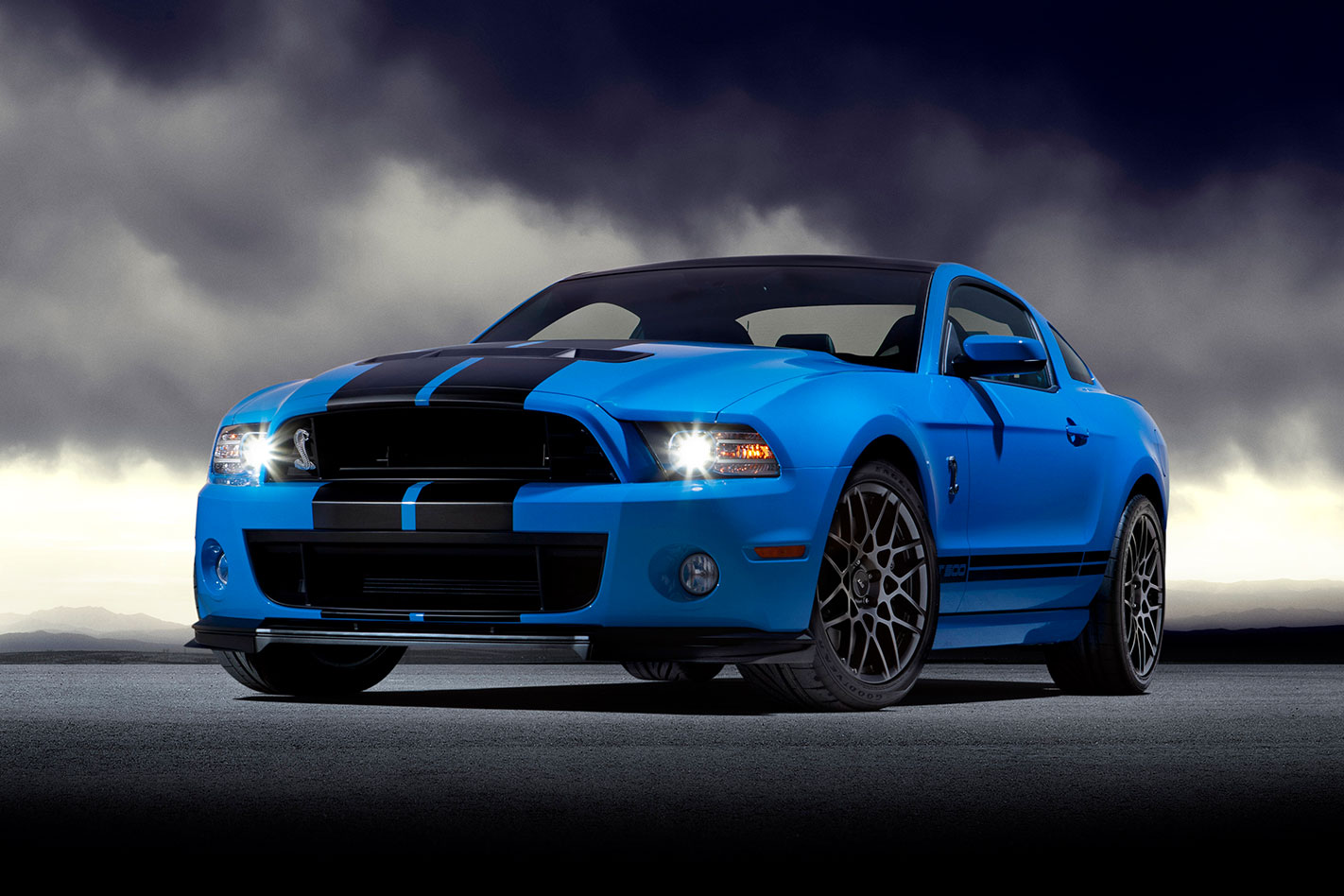
Generation five marked the most significant push towards something worthy. Its styling was a faithful throwback and during its lifecycle Ford plugged it with serious firepower. The 2013 Shelby GT500 made 662hp (493kW). No succeeding generation has sold like the original, but the latest one has the best chance being built in both hooks.
u00a0 | FORD MUSTANG GT | NISSAN 370Z NISMO |
BODY | 2-door, 4-seat coupe | 2-door, 2-seat coupe |
DRIVE | rear-wheel | rear-wheel |
ENGINE | 4951cc V8, DOHC, 32v | 3696cc V6, DOHC, 24v |
BORE/STROKE | 92.2 x 92.7mm | 95.5 x 86.0mm |
COMPRESSION | 11.0:1 | 11:1 |
POWER | 306kW @ 6500rpm | 245kW @ 7000rpm |
TORQUE | 530Nm @ 4350rpm | 363Nm @ 5200rpm |
POWER/WEIGHT | 176kW/tonne | 167kW/tonne |
TRANSMISSION | 6-speed manual | 6-speed manual |
WEIGHT | 1739kg | 1467kg |
SUSPENSION (F) | struts, anti-roll bar | A-arms, dampers, anti-roll bar |
SUSPENSION (R) | multi-links, anti-roll bar | multi-links, dampers, anti-roll bar |
L/W/h | 4784/1916/1381mm | 4330/1870/1555mm |
WHEELBASE | 2720mm | 2550mm |
TRACKS | 1582/1655mm (f/r) | 1599/1580mm (f/r) |
STEERING | electrically-assisted rack-and-pinion | hydraulically-assisted rack-and-pinion |
BRAKES (F) | 380mm ventilated discs, 6-piston calipers | 355mm ventilated discs, 4-piston calipers |
BRAKES (R) | 330mm ventilated discs, single-piston calipers | 350mm discs, 2-piston calipers |
WHEELS | 19.0 x 9.0-inch (f); 19.0 x 9.5-inch (r) | 19.0 x 9.5-inch (f); 19.0 x 10.5-inch (r) |
TYRE SIZES | 255/40 R19 (f); 275/40 R19 (r) | 245/40 R20 94W (f); 285/35 R19 96W (r) |
TYRE | Pirelli P Zero | Dunlop SP SPORT MAXX GT 600 |
PRICE AS TESTED | $57,490 | $61,990 |
PROS | Noise; looks; stopping power | Grip; gearshift; involvement |
CONS | Lack of steering feedback; body control; sheu2019s heavy | Terrible ride; dodgy acoustics; silly cabin quirks |
RATING | 4/5 | 3.5/5 |
Small SUV sales are booming, from 20,000 registrations in 2011 to more than 90,000 a year currently. Hyundai is hoping to get a slice of that pie with the Kona.
Since the departure of the ix35, Hyundai has been missing out the growing demand for small SUVs, but the Hyundai Kona fixes that. The 2.0-litre Active is the base model of the range, and with a $24,500 retail price and healthy equipment levels, offers compelling value for money.
Tell me about this car
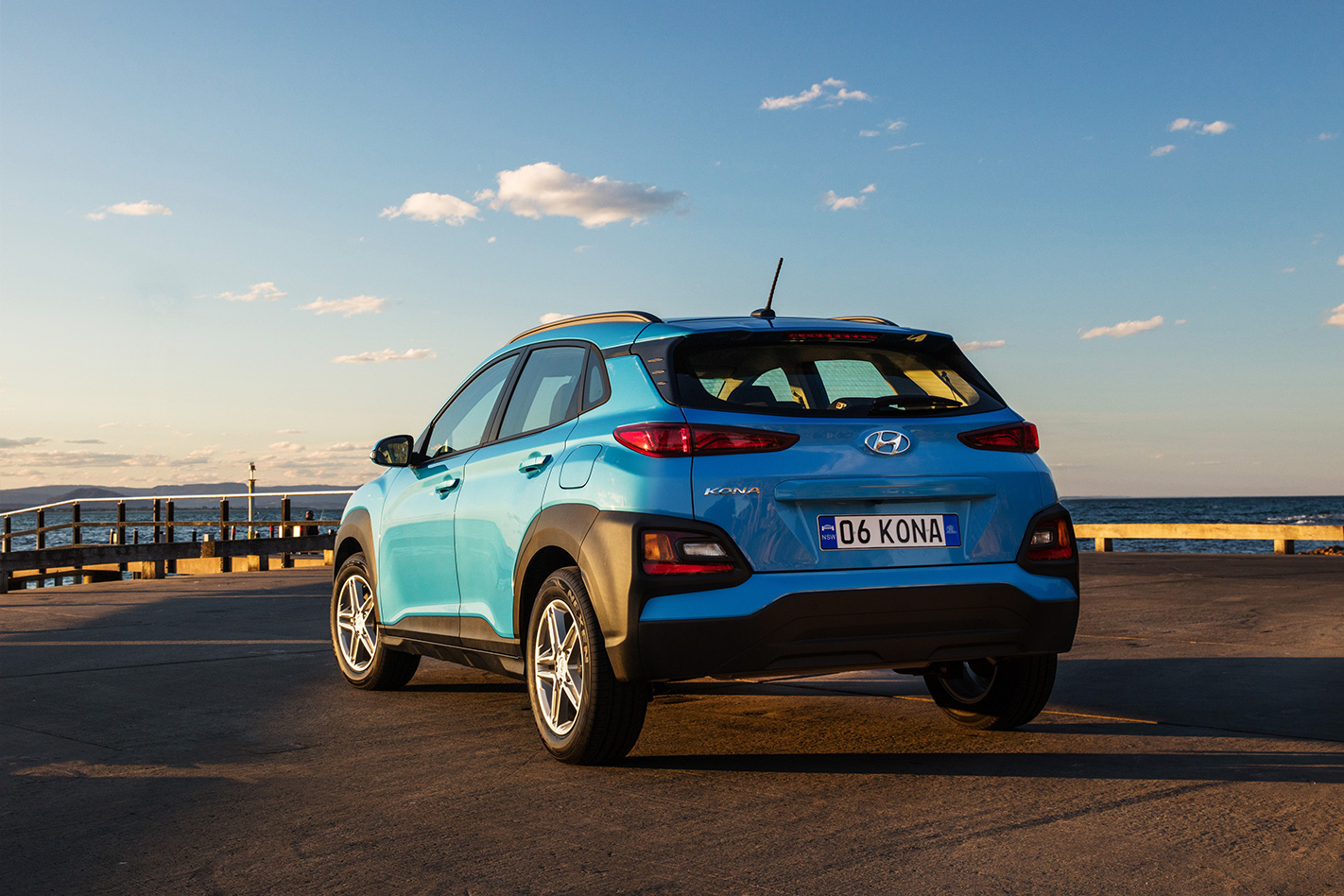
The Hyundai Kona Active is the entry-level variant of Hyundai’s small-SUV range. A 2.0-litre naturally-aspirated four-cylinder petrol sends power to the front wheels exclusively, while an eye-catching exterior design – available in appropriately bright colours – helps the Kona stand out from the sea of other compact crossovers.
The Kona is built on the same platform that underpins the popular i30 hatch, and competes in one of the most crowded segments in Australia.
Strengths
- Cabin space – The Kona is shorter overall than some rivals (in particular the popular Mazda CX-3), however it has a longer wheelbase and is wider. This means more room inside for passengers. Front headroom is ample, and rear passengers won’t feel cramped either.
- Gearbox – The six-speed automatic transmission which is paired with the base model’s naturally-aspirated engine gives the car a smooth and relaxed feel. It works well for the kind of driving the majority of Kona owners will do, with calm power delivery in most conditions.
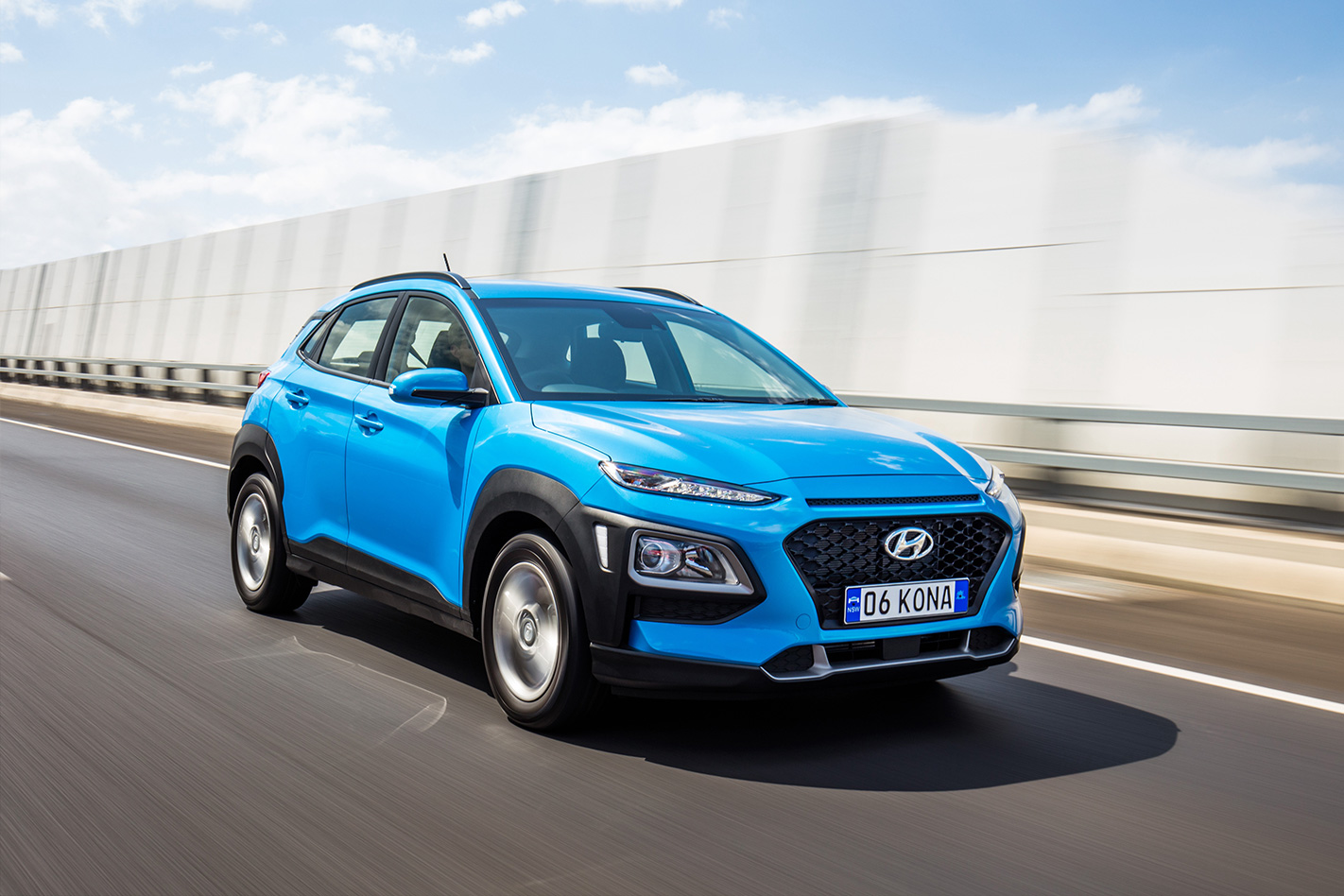
- Ride quality – Hyundai invested lots of time and money in tuning the Kona’s suspension for Australia, and the result is impressive. While the ride is slightly on the firmer side, it isn’t intrusive, and it requires a large and sharp pothole to compromise cabin comfort. The 16-inch tyre and wheel combination on the Active helps soak up bumps.
- Brakes – The pedal feel on the Kona is intuitive, progressive, and the brakes have impressive performance for the class.
- Styling – Hyundai’s designers have divided opinions with the Kona, with striking exterior styling. Regardless of whether you love it or hate it, the Kona’s look is a breath of fresh air and will definitely stand out from the crowd.
Weaknesses
- Engine – While 80 percent of buyers will opt for this engine over the 1.6-litre turbo, the Active’s 2.0-litre unit isn’t as efficient, refined, or smooth. Power outputs of 110kW and 180Nm are on-par for this class, but those figures don’t arrive until quite high in the rev-range. This means the engine is rather vocal when pushed, and requires a gentle right foot to operate quietly.
- Space saver spare – While cabin space is ample, the design of the Kona means compromises were made with luggage room. It has 361 litres of space with the rear seats raised, but this comes thanks to a space saver spare tyre, whereas an i30 has a full size unit.
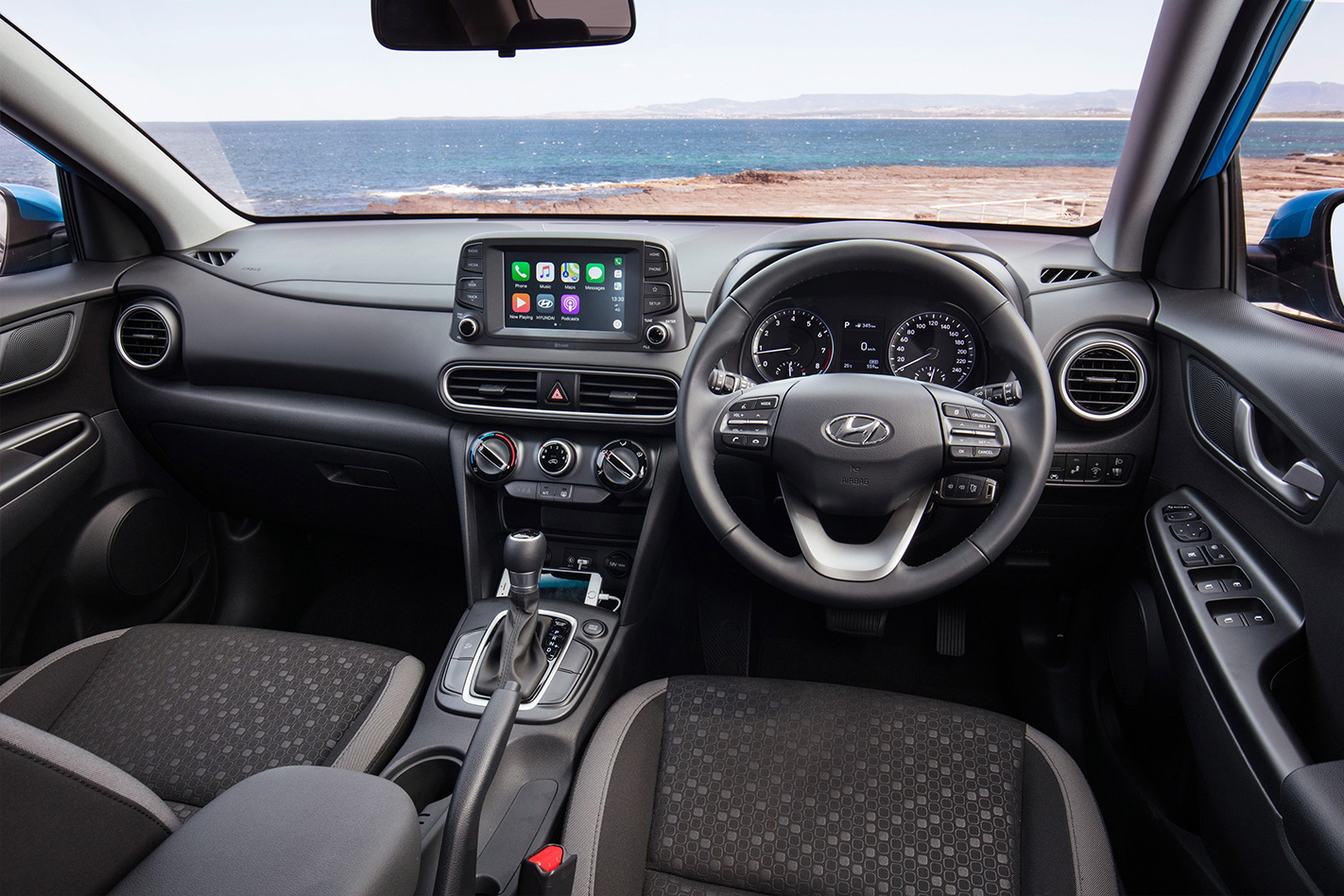
- Active safety an option – As the entry-level model, the Active misses out on a number of safety features as standard including blind spot monitoring, rear cross traffic alert, lane keep assist, forward collision warning, AEB, and a driver attention warning. These can be added as part of a $1500 SmartSense safety pack, which is good value, but in 2017 many of these safety features should be standard across the range.
- Body control – While the ride in the Kona is impressive, it lacks some body control in the corners. It can wallow somewhat while turning, pitching to the outside front tyre.
- Sat-Nav – A navigation system is not provided as standard in the Kona at any trim level. However, Hyundai has implemented a bring-your-own policy, with Apple CarPlay and Android Auto smartphone mirroring allowing owners to use the navigation apps in their phones through the Kona’s infotainment screen.
Any rivals I should consider?
Honda HR-V, Mazda CX-3, Mitsubishi ASX, Subaru XV, Toyota C-HR, Suzuki S-Cross, Peugeot 2008
MORE: Hyundai Kona Range Review MORE: Hyundai Kona Specs, Range & Price
Here at Wheels, it always warms our normally ice-cold hearts when we see carmakers track down dilapidated examples of the cars that put them on the map, and give them a new lease on life.
Remember the formerly Elvis-owned (and thoroughly trashed) 507 that BMW lovingly restored to showroom status? Porsche has done a similar thing, hunting down an example of the 1964 901 – technically the first 911, a car that amazingly has been absent from Porsche’s collection until now – and taking it from rusted hulk to concourse-spec.
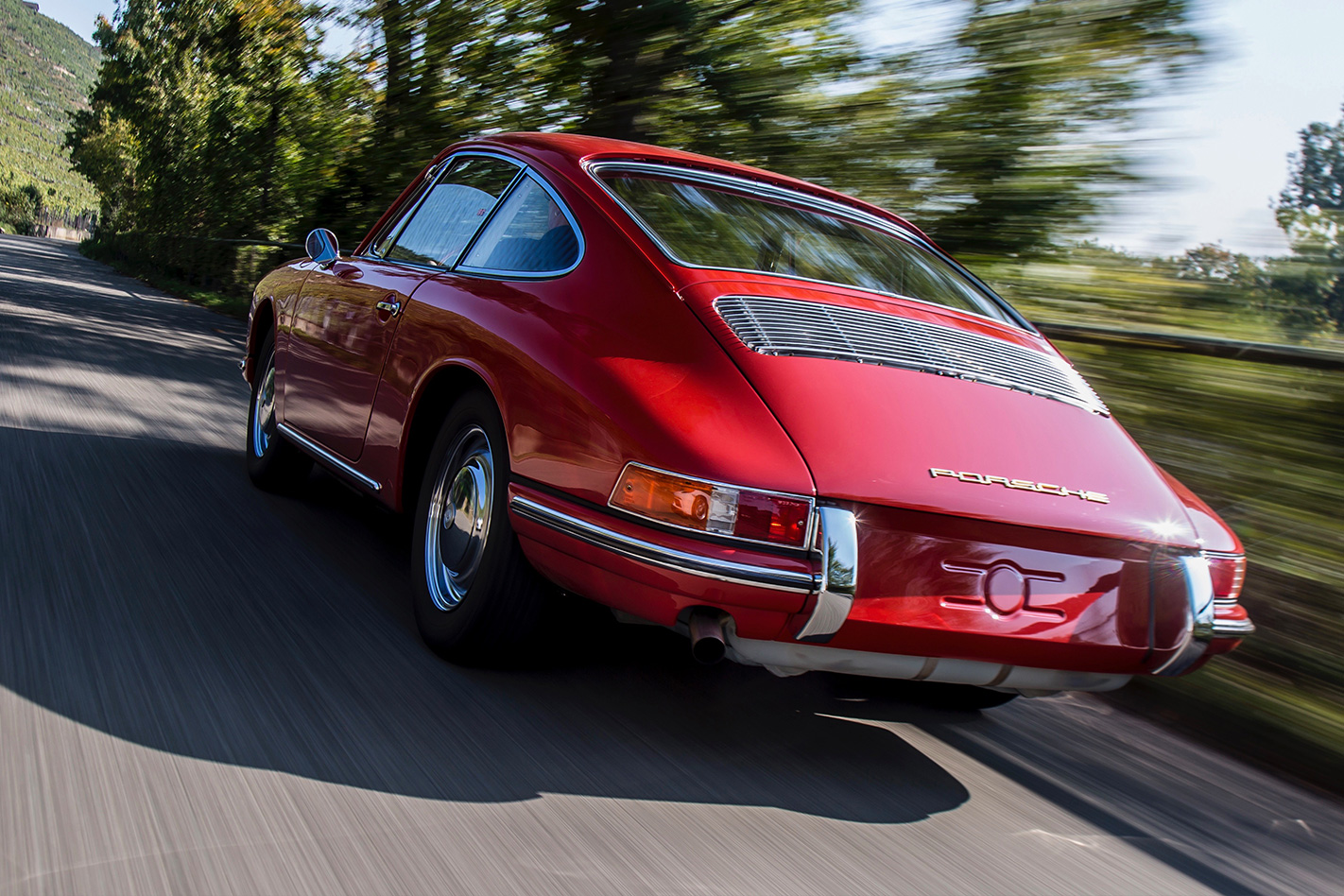
Only 82 901s were built before the name change, but in the intervening years those cars have trickled out to private owners. Given their rarity and status as the 911’s genesis, genuine 901s are ludicrously hard to find – let alone buy.
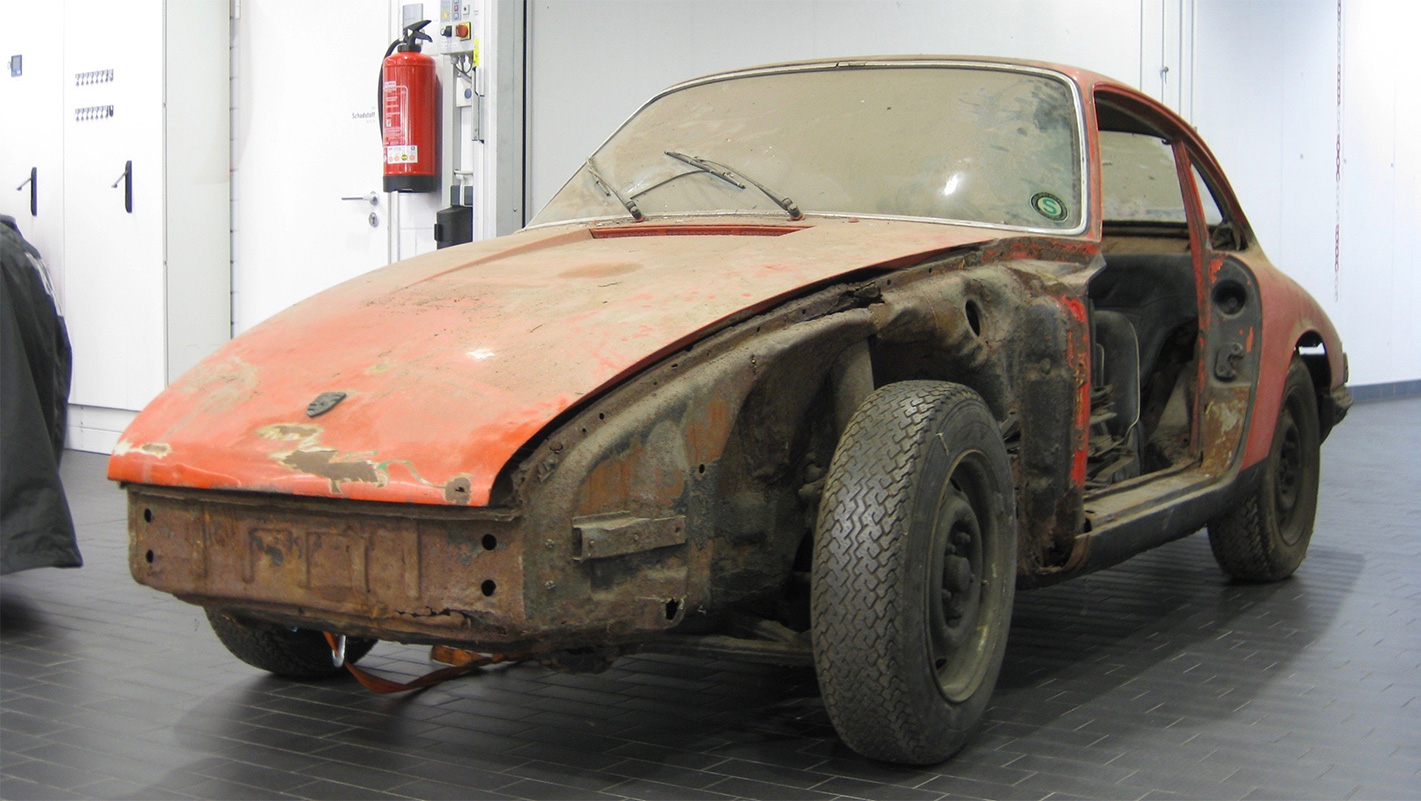
Three years later, after acid-dipping the 901’s rust-ravaged shell, welding in replacement panels from a donor 911 and repairing or replacing the engine, gearbox, interior and wiring harness using period correct parts and techniques (but using water-based paint and modern rustproofing processes), the 901 has been completely restored.

The bodyshell took a full year to restore; the engine took 120 hours of labour. Keen on seeing the result? It’ll be on display at the Porsche Museum until April 8, 2018, which gives you just over four months to scrounge up an airfare.

Ever wondered why humans have five fingers and toes on each limb? Evolution – or a favoured religious figure – settled not on four (presumably too few) and not on six (clearly too many) digits to top our hands and feet. The only clear reason we know why is the fact our tetrapod ancestors could give each other high-fives around 400 million years ago.
What’s good for those clinging to this rock revolving around the golden sun is clearly good enough in the automotive world for Audi. It has banked on five-cylinder engines for a (slightly) shorter time frame, with this year marking the 40th anniversary since a ‘just right’ cylinder count was introduced. Enter a (very) quick history lesson, then a celebration.
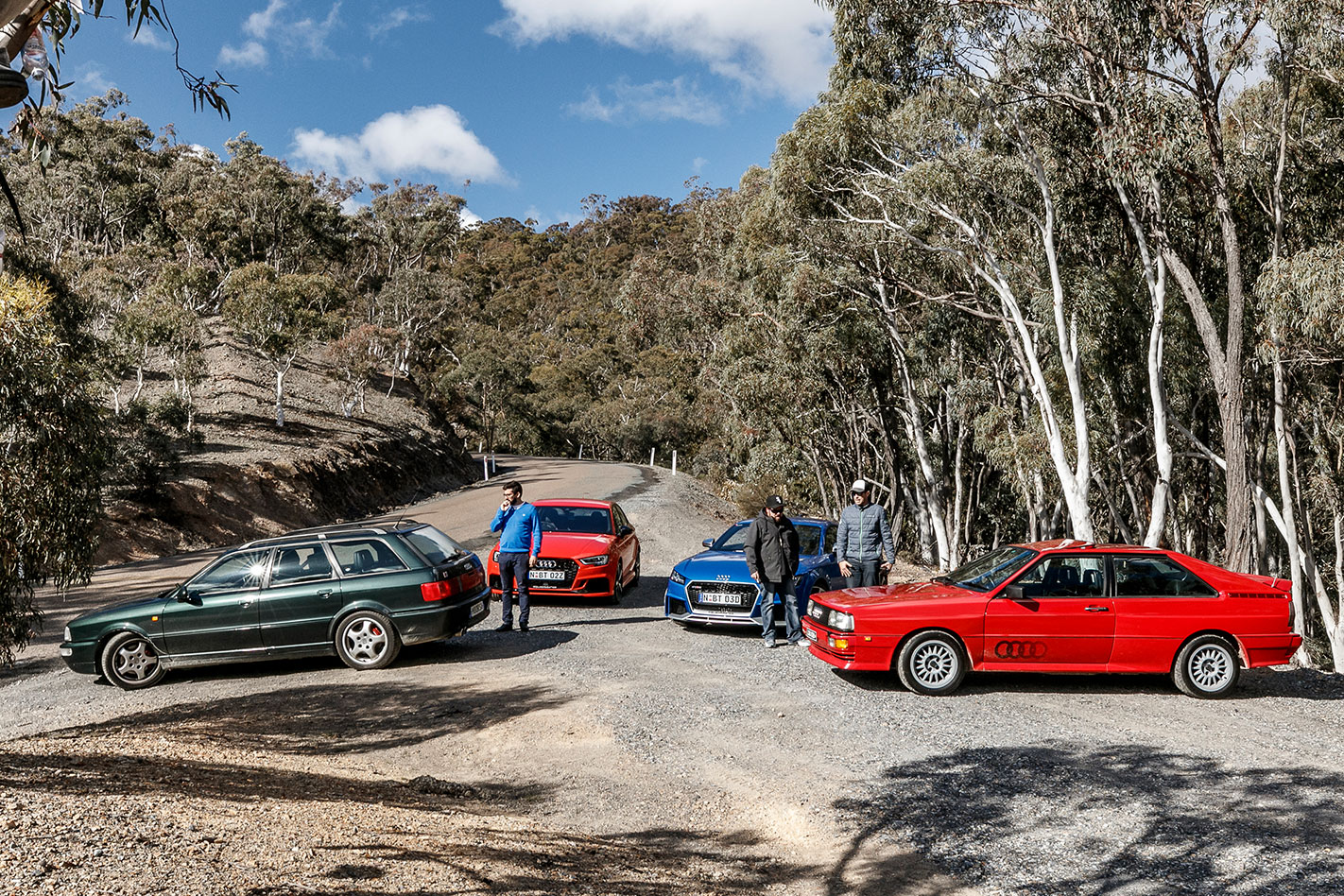
Audi survived and a VW EA827 four-cylinder was lengthened – as opposed to a Holden Starfire four that sliced off two cylinders from a six – to create a 2.2-litre five-cylinder, chosen to provide something more upmarket than a four without the nose-heaviness of a six. It was a simple matter of evolution.
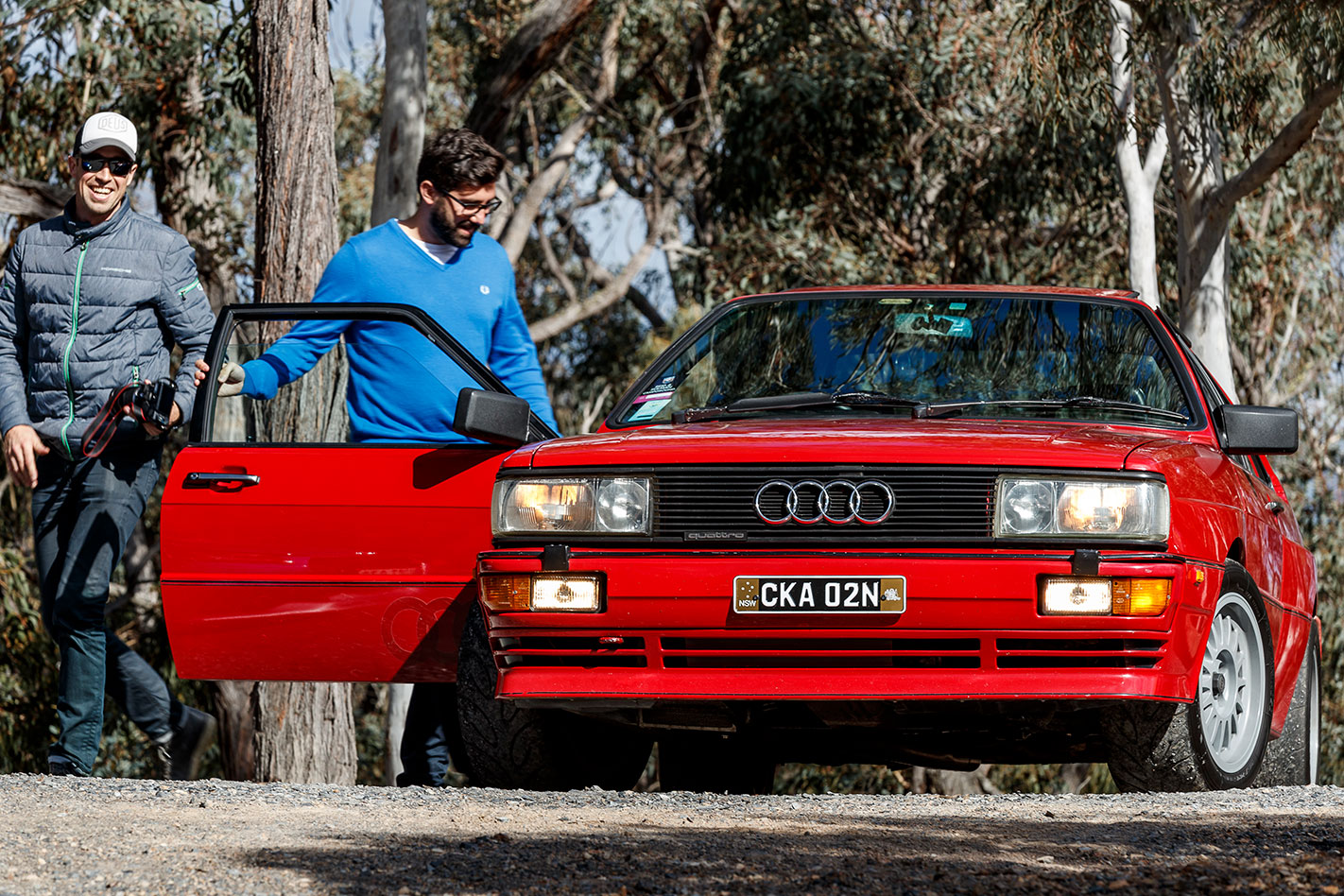
All this pointing at the blackboard about five cylinders must occur to understand the significance of the Audi Quattro unveiled at the 1980 Geneva motor show. Here was a brand, almost dead 15 years earlier, now thrusting itself onto centre stage with a three-door performance coupe offering all-wheel drive and a turbocharged five-cylinder claiming circa-Mk5 Golf GTI outputs – 147kW at 5500rpm and 285Nm at 3500rpm. In a modern context it would have been like GFC-era Daewoo launching a supercar.
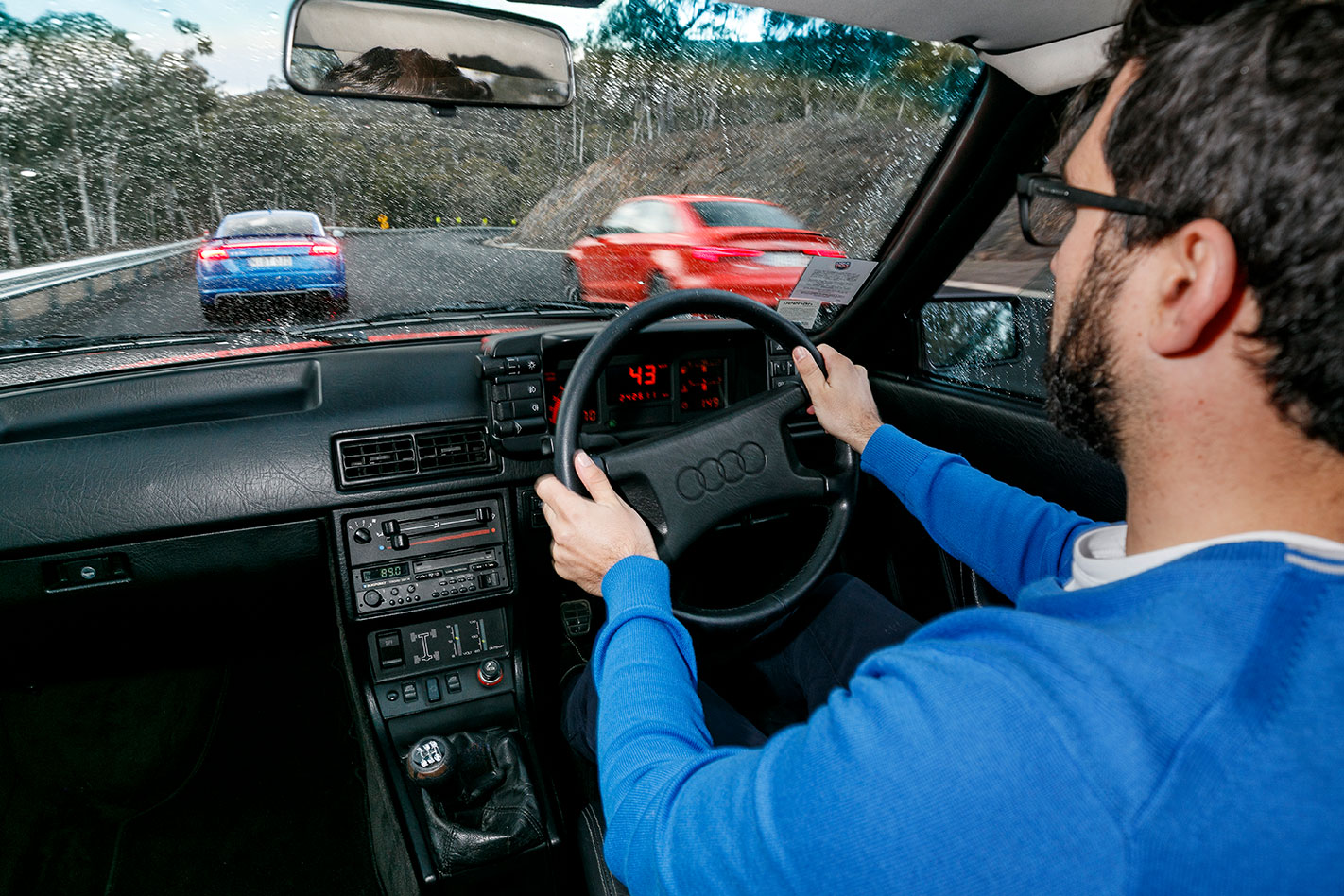
Indeed, nothing could touch a Quattro in snow or on rally special stages. And so began six ‘Quattro years’ where Michele Mouton, Hannu Mikkola, Stig Blomqvist and Walter Rohrl snared 23 rally wins and four titles from behind the many driving lights of the racecar. Audi still claims that its all-paw technology was two years ahead of rivals.
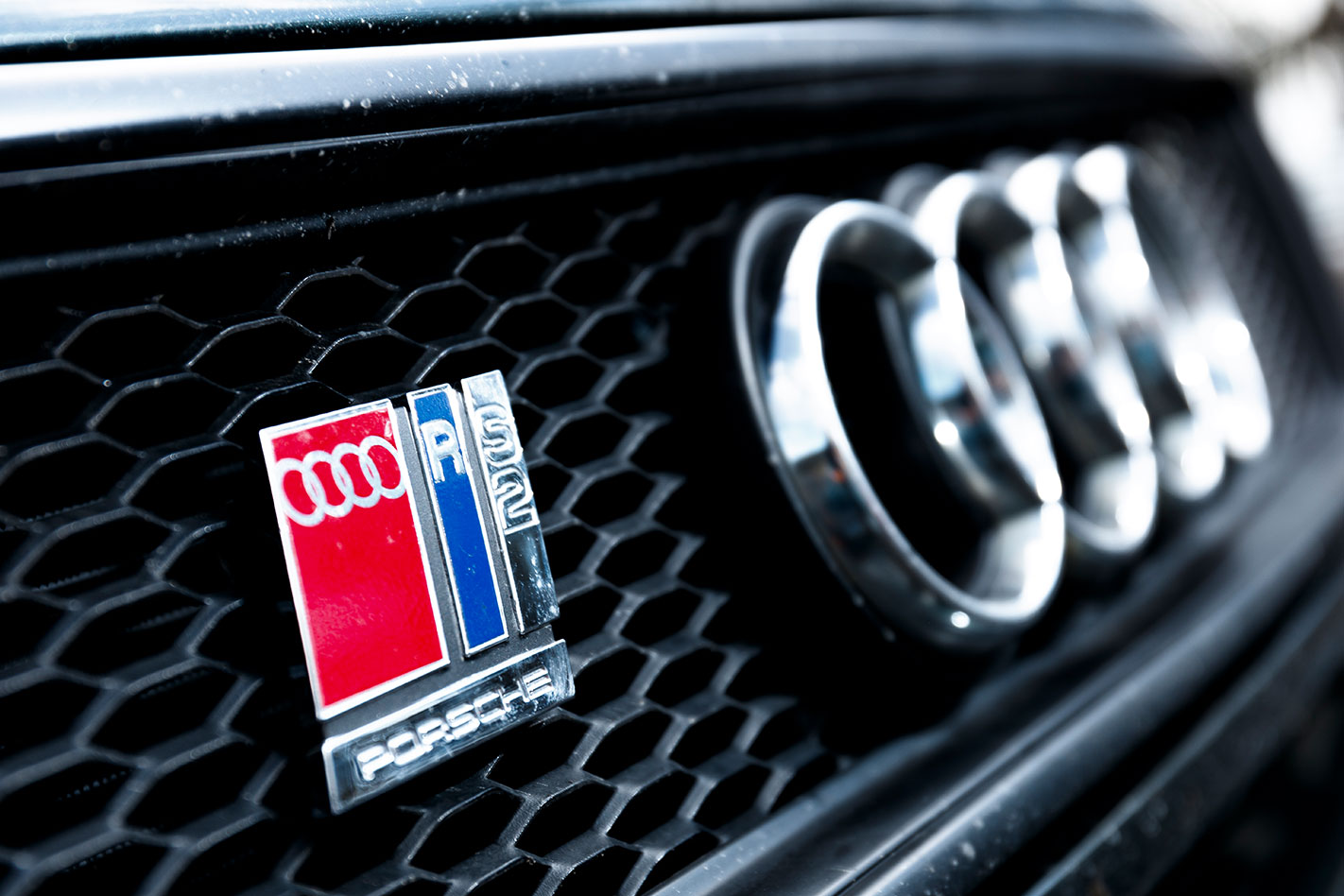
Fast forward about 15 years and Audi, in 1994, built the RS2 Avant in conjunction with Porsche. Walk ahead another 15 years and Audi revived the turbo-five with 2009’s TT RS having ended five-cylinder production in 1997. In 2017 the four-ringed brand has released both its first RS3 sedan and a new-gen TT RS, each sporting an all-fresh fiver.
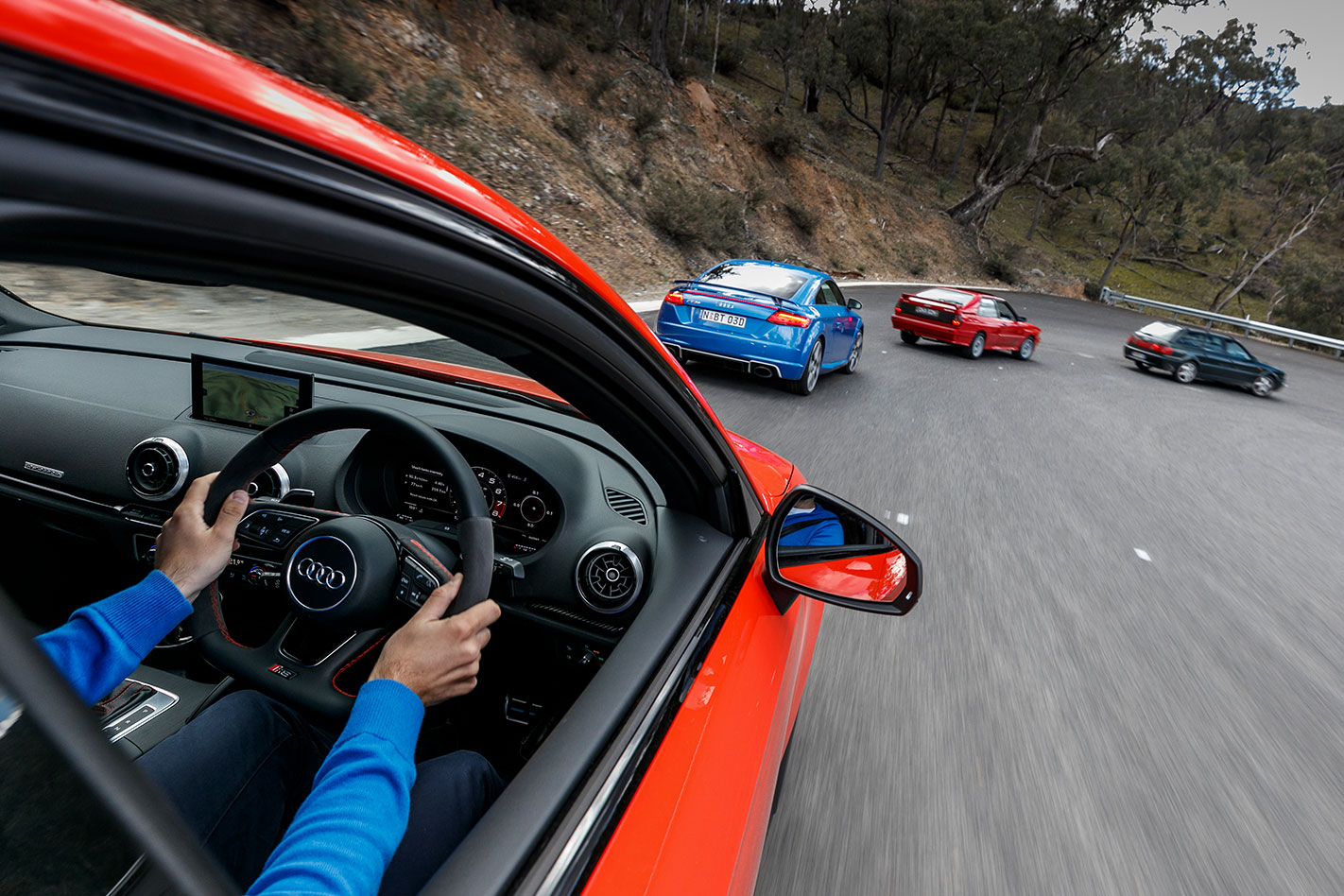
So Audi is sticking with an odd cylinder count, but does that now actually seem odd? Has the ’80s revolution become more about reminiscing over past glories? Either way, a five-pot birthday bash awaits at the epic Abercrombie Ridge hillclimb outside of Goulburn, New South Wales.
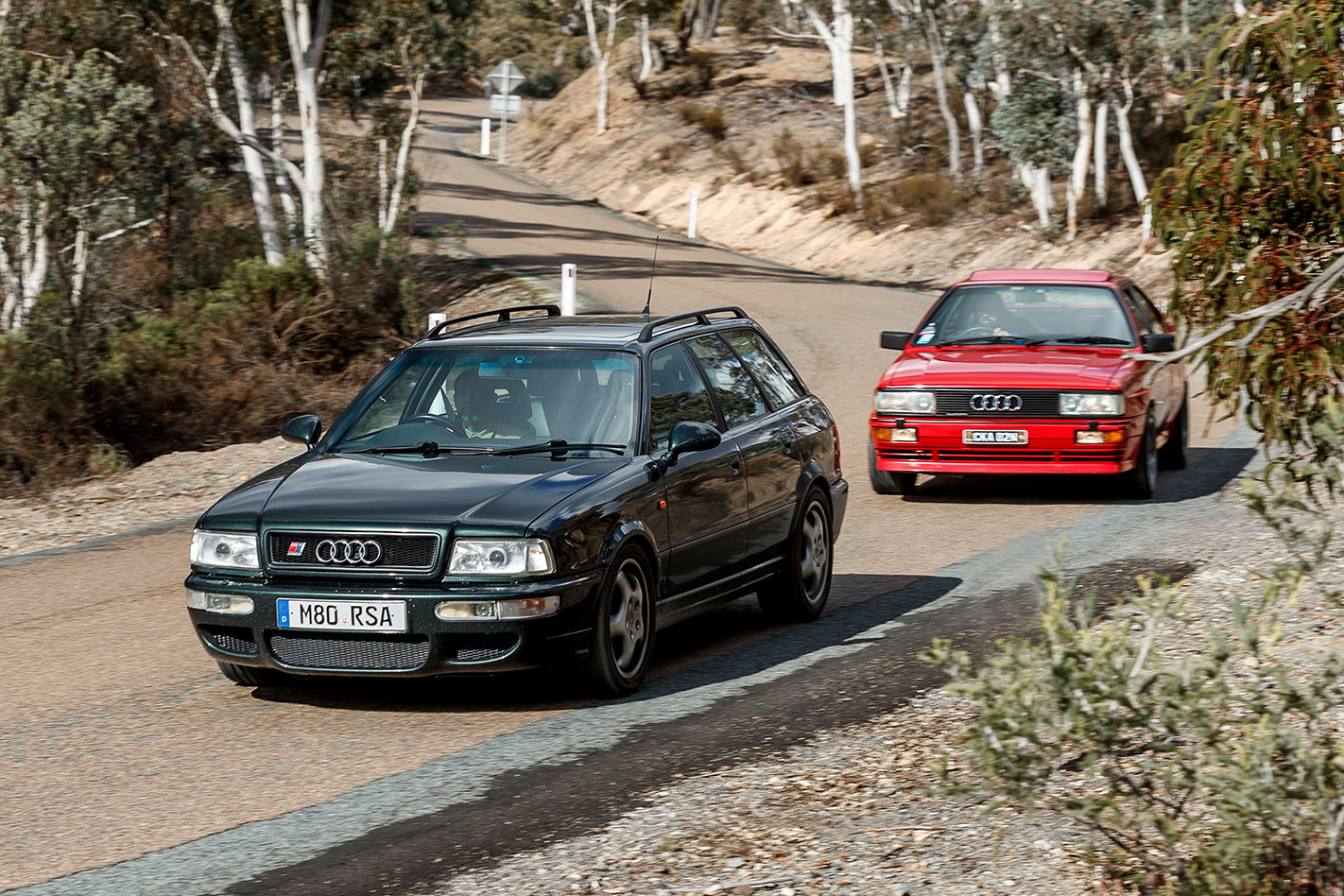
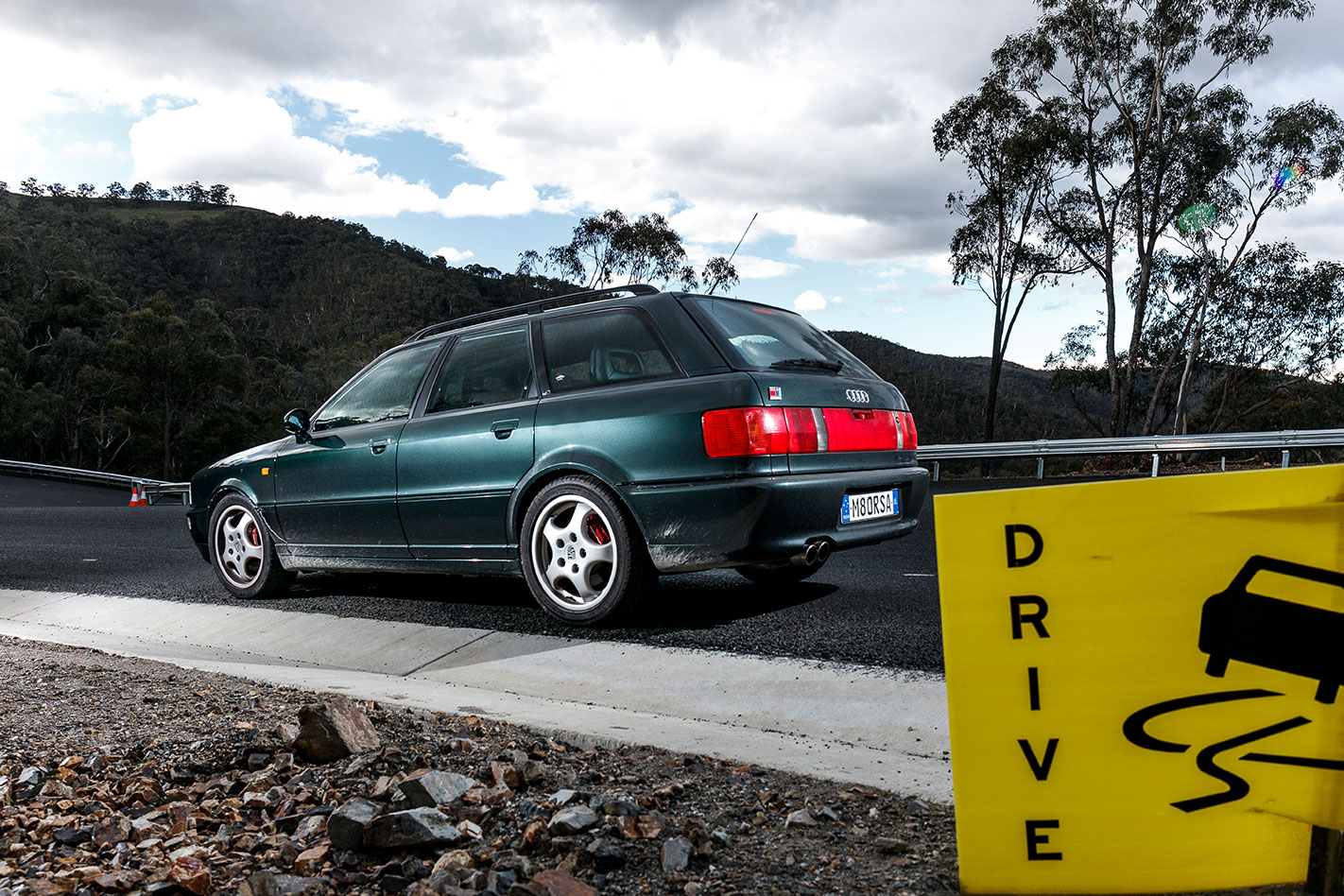
By 1983, Audi produced the 22cm-longer Sport Quattro derivation of the Ur-Quattro original, now with an aluminium engine and 225kW, that was a Group B homologation special and also became the most powerful production car ever launched in Germany. A decade later the RS2 Avant beat this while still using a 2.2-litre swept capacity and 20 valves.
Sporting a larger turbo, uprated radiator and new exhaust system, Porsche raised power from the S2 Avant’s 169kW to 232kW at 6500rpm, teamed with a mega 410Nm at 3000rpm. It retained all suspension and all-wheel drive components – which, like the Quattro, featured a locking rear differential up to 25km/h – but with 964 Turbo wheels and brakes.
Ingolstadt built Avant shells with S2 running gear and sent them to Zuffenhausen for final assembly, with Recaro buckets and special trim added to the mechanical changes, then Audi and Porsche evenly divided the financial fruit of Project RS2.
Approaching an RS2 Avant is a reminder of how big modern cars have become. At 4510mm long its body stops 130mm short of an AMG CLA45 Shooting Brake, while at 1695mm wide it’s 82mm narrower.
The turbo five fires with a baritone burr and slowly enough to surmise that the pistons must be the size of Popeye’s forearms. The six-speed slides into first with a slick, but long-throw action, though clutch take-up is base-Audi-TDI breezy. Then, we pause…
Astonishing turbo lag below 4000rpm, accompanied by the flat whirr a laser printer makes when spitting out paper, illuminates how far forced induction technology has come. Above that engine speed, though, well, Fido’s paws had better be sticky.
If the best four cylinders zing when revved, then this five cylinder bores loudly like heavy machinery cutting into the side of a rock face, complete with hard-edged menace. Only the RS2 Avant is overlaid with wastegate whistle that neither brand would entertain today.
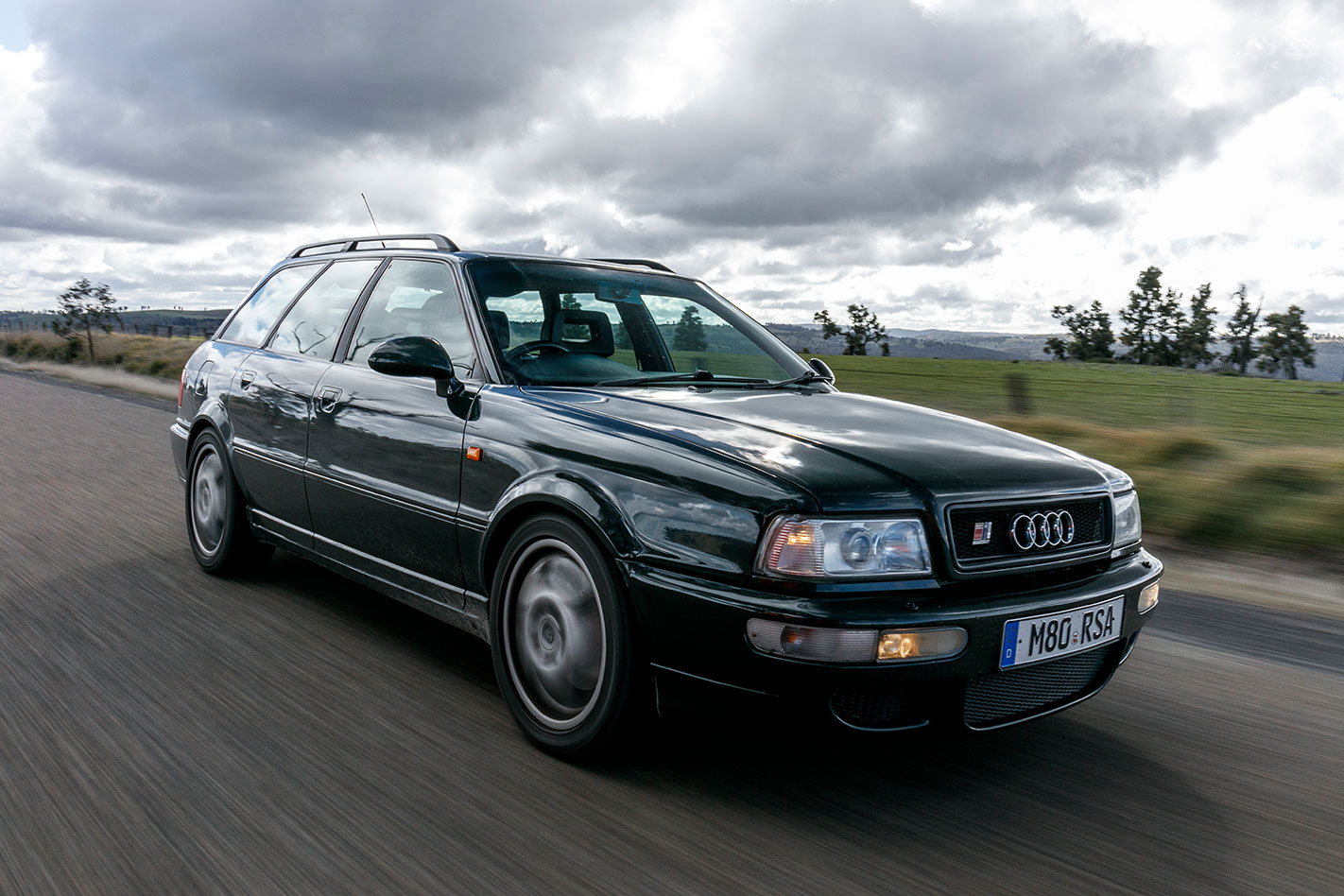
It is this immersive dynamic trait that presents as the clearest link to the Quattro – and presents itself as the greatest departure from the new RS3 and TT RS.
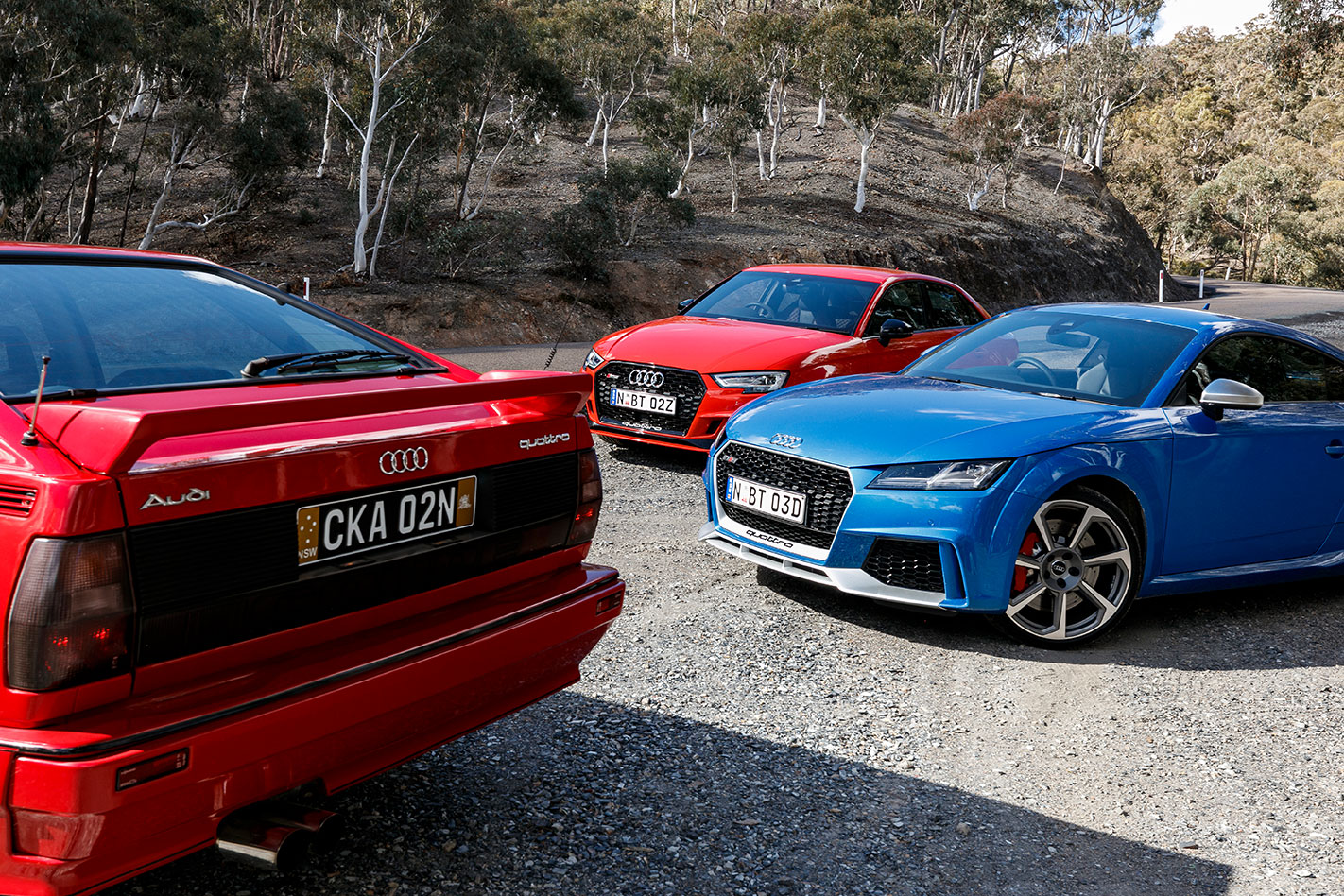
There is clear turn-in understeer, the body heaving over its outside tyre like a human lumbering onto the couch after work. Except in this Audi the driver is perched high with perfect all-round visibility thanks to an upright and shallow dashboard soaked in 1980s orange digital instrumentation, including a diagram showing which way drive is headed. And by this point working that back section is a must.
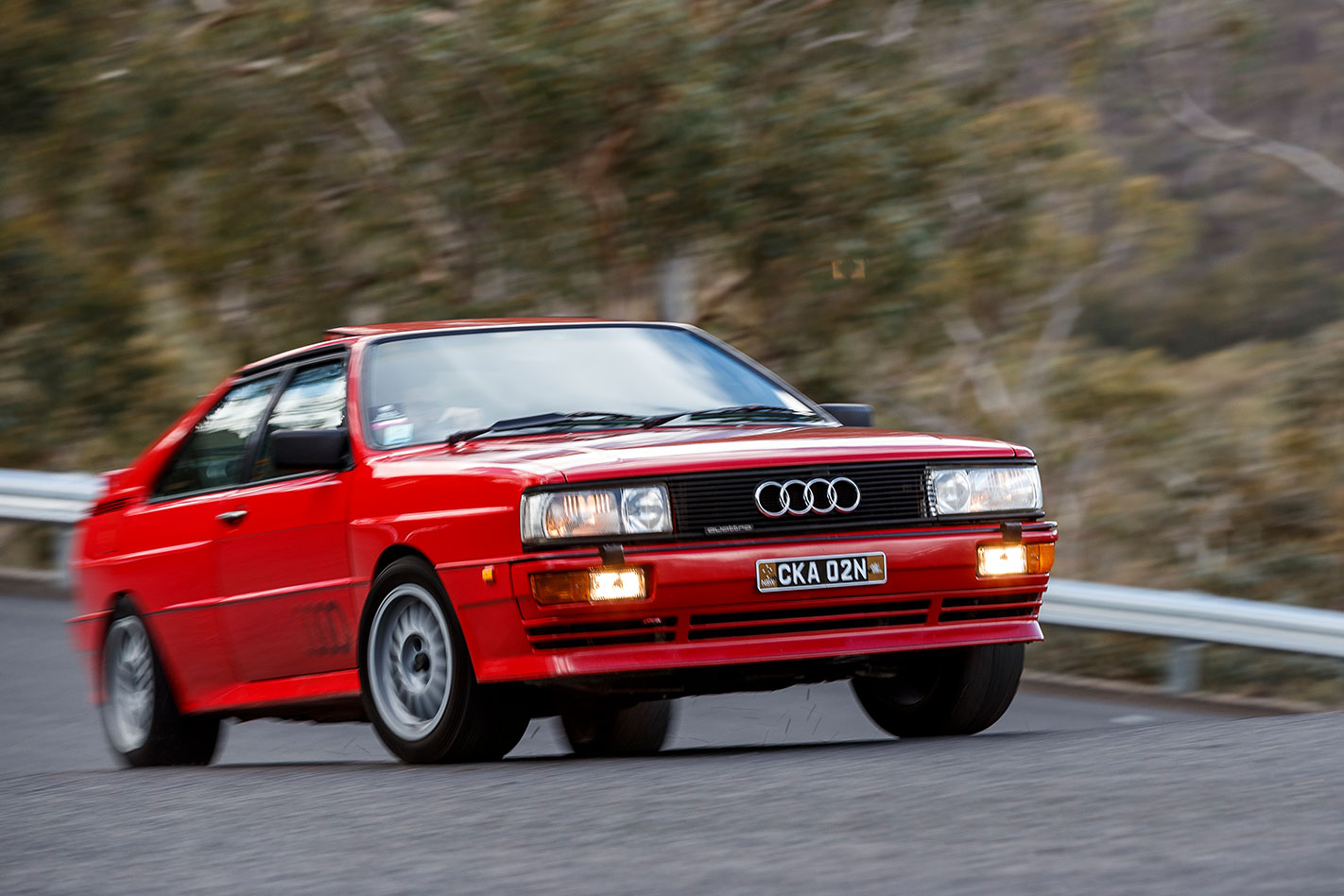
The 2226cc ‘MB’ five driven here (also introduced that year) adds hydraulic lifters and a tech-heavy ECU compared with the original 2144cc unit from 1980. Outputs remain unchanged, but torque is produced lower, with the 0-100km/h sprint falling to 6.7sec.
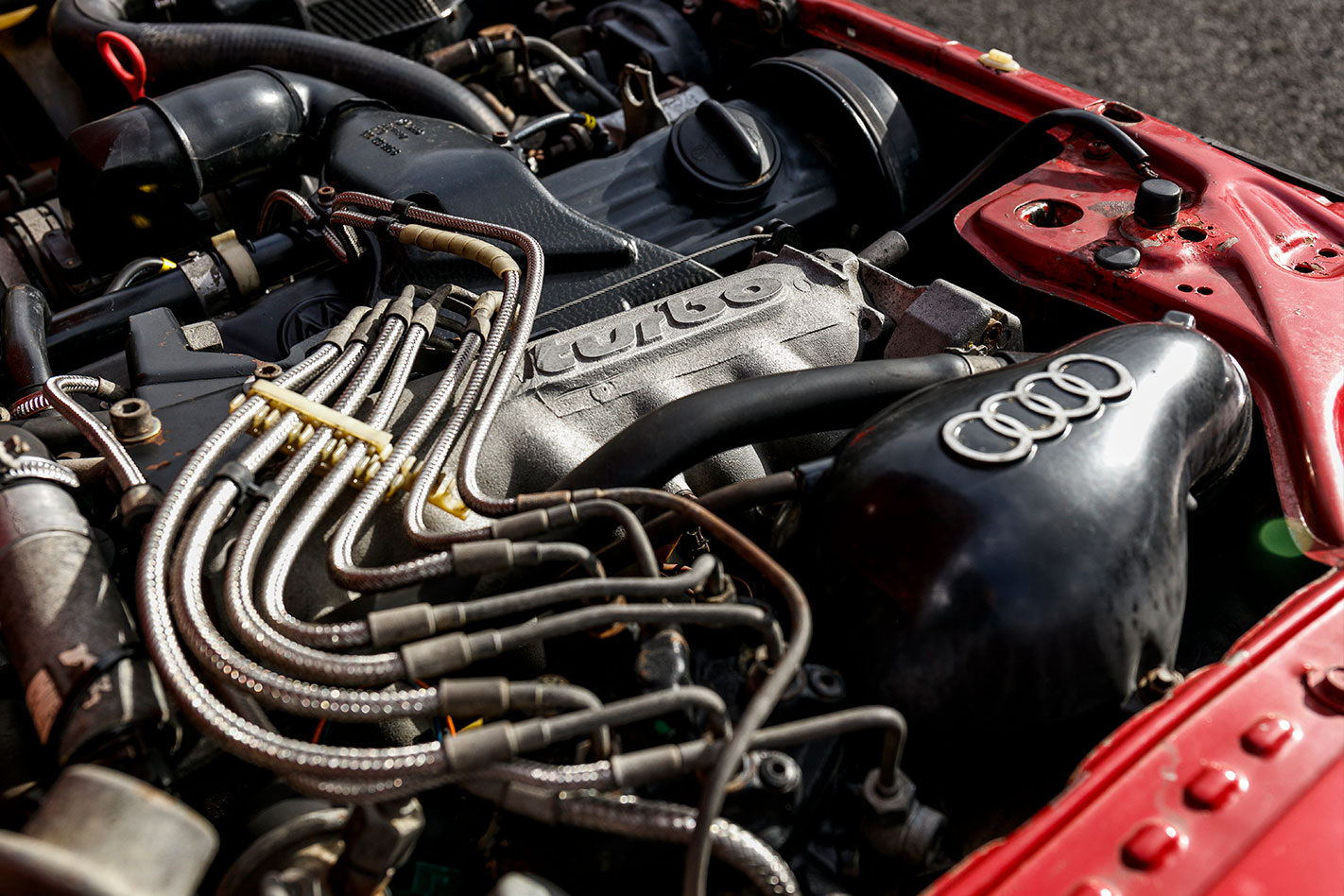
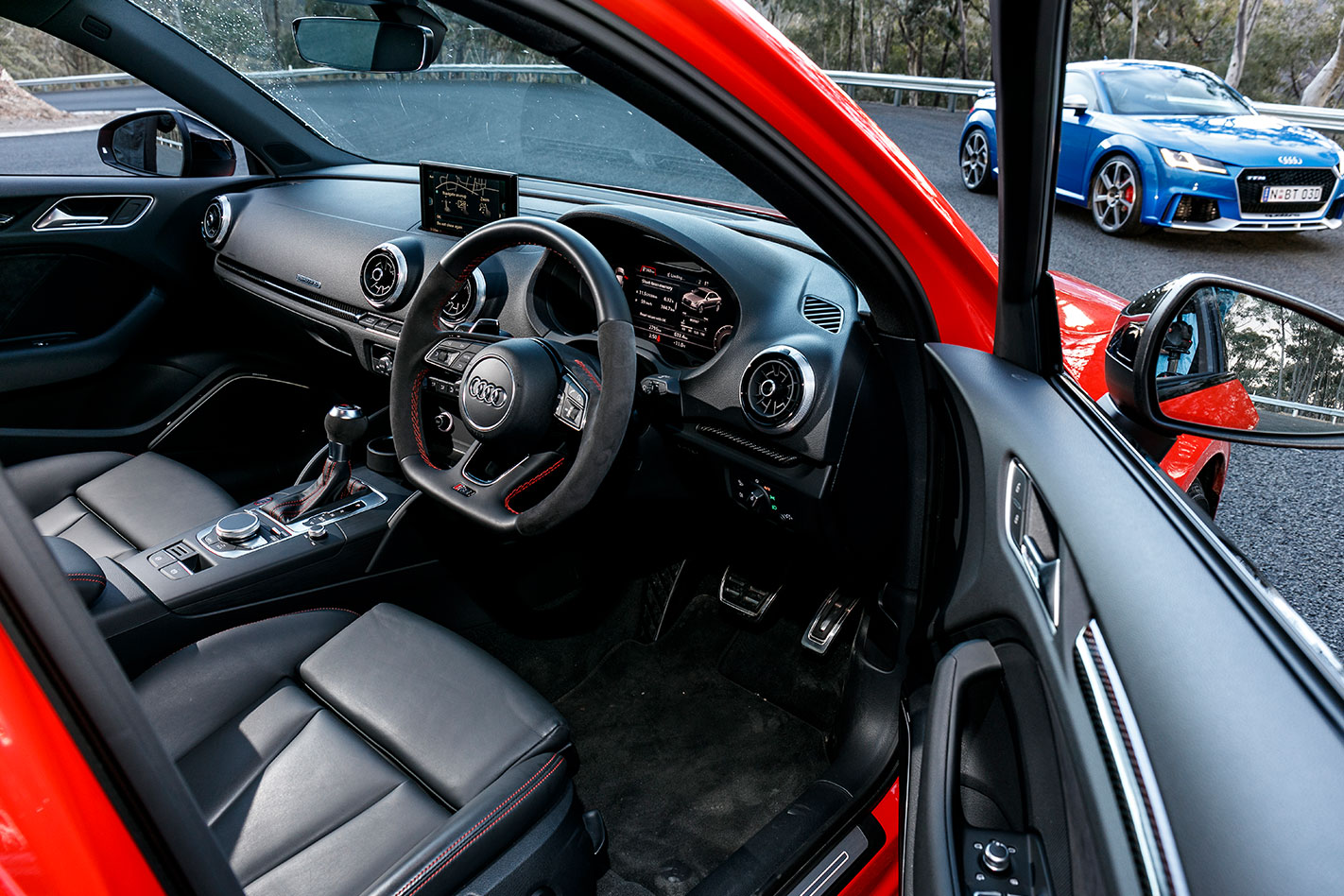
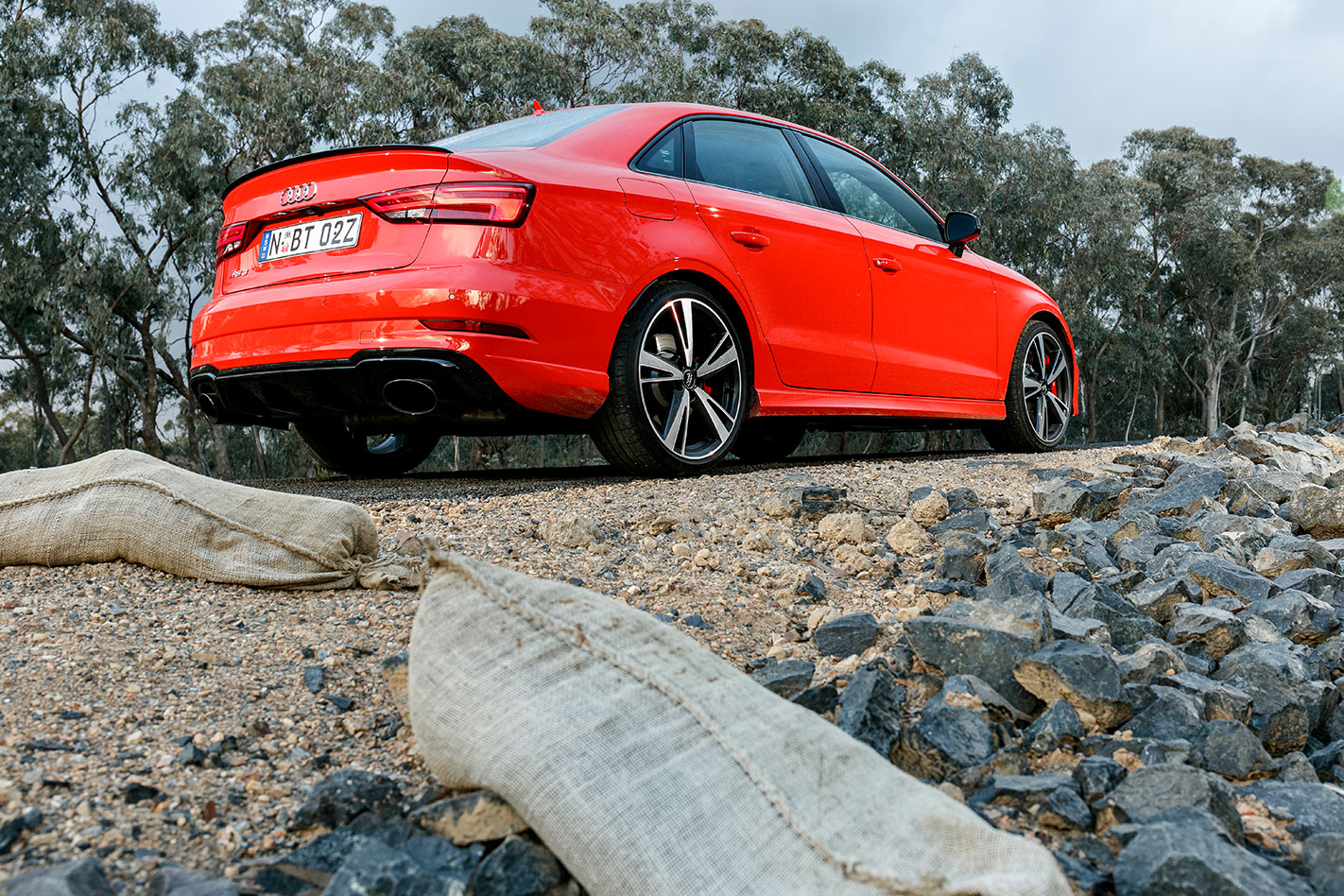
Starting the RS3 leaves a driver in no doubt that an odd cylinder count features under the bonnet. Especially when cold, a staccato thrum shimmies through the Alcantara-clad steering wheel, while a digeridoo-esque blare pumps from the quad tailpipes.
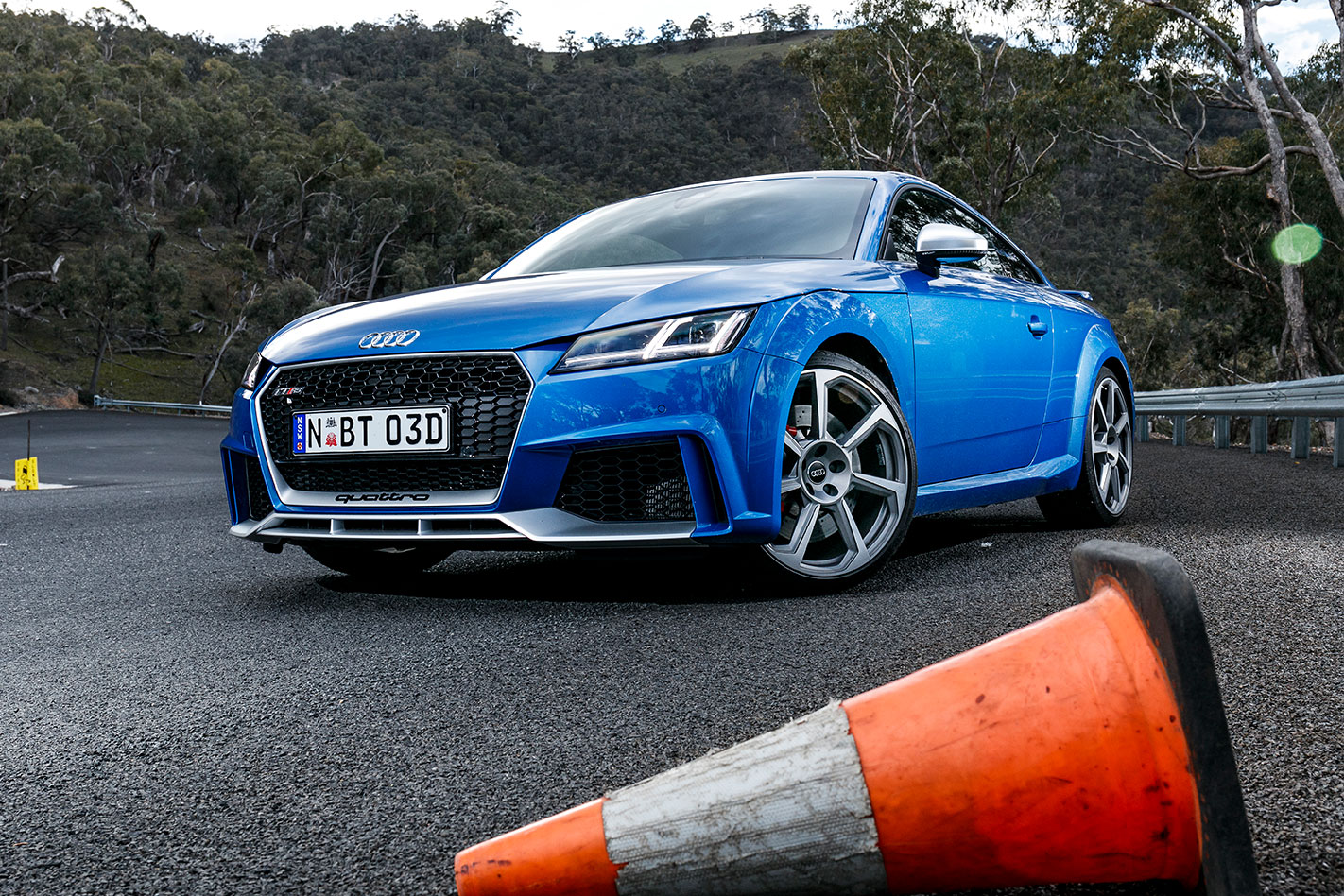
Audi has replaced its seven-time winner of international engine of the year with another five-cylinder, now a 26kg-lighter, alloy-crankcase 2.5-litre port/direct injection turbo unit producing 24kW more than 2009’s TT RS. Cranking 294kW from 5850rpm until 7000rpm, and 480Nm between 1700rpm and 5850rpm, 4.1sec is the 0-100km/h golden ticket for the RS3, which the TT RS slashes to 3.7sec.
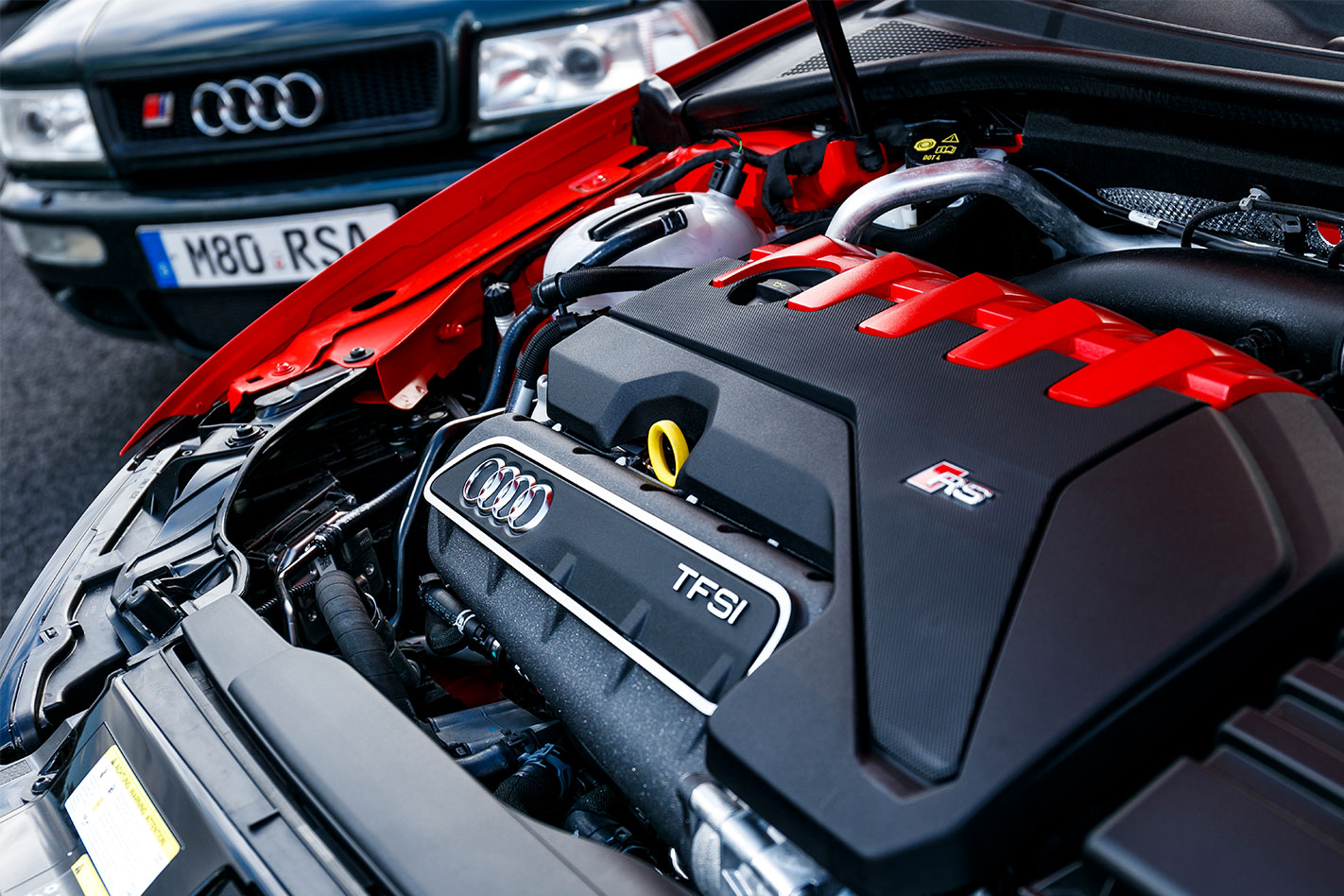
There’s another question here, though: Is a $140K-plus TT RS that much better than an $93K RS3? We figured it wasn’t; but that was certainly challenged.
The 75kg-lighter TT RS pivots around its driver in a way the RS3 cannot. Both suffer from a Haldex all-wheel drive system that can apparently send 100 per cent of drive rearwards, yet doesn’t feel inclined to. Ultimately, the variable system isn’t as engaging or incisive as a mechanical crown-centre diff kitted S4 or S5 that can swing into throttle-induced oversteer.
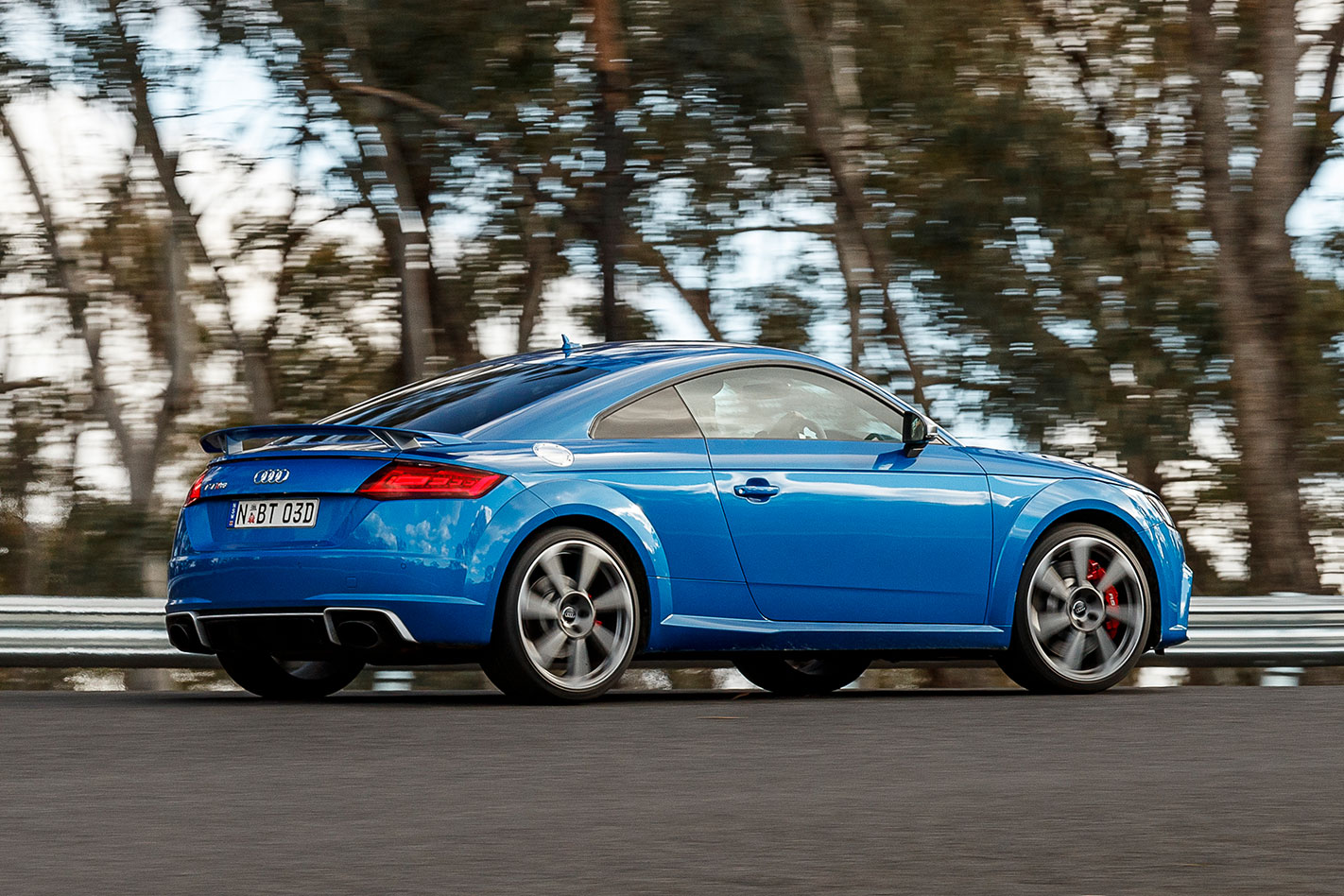
Neither are as playful as a BMW M2 or 718 Cayman, and they don’t ride quite as calmly either – the magnetic-adjustable dampers aren’t harsh, but they create chatter in all modes.
Both Audis also, however, deliver immense point-and-shoot pace that can be mesmerising and deeply satisfying, with a huge part of that pleasure down to superbly light and pin-sharp steering that never resorts to clichéd heavy weighting in Dynamic.
Again, the TT RS ultimately feels more petite and agile than the RS3, aided by a lower driving position and grippier 255mm-wide 20-inch Michelin Pilot Super Sport (versus 255mm front/235mm rear 19-inch Pirelli P Zero) rubber. But it’s that mix of sound and also detail that draws these vehicles together.
Cloud cover rolls over the mountain pass as photographer Ellen snaps away capturing the oldest car here, pouring over its square jaw and across its hard-edged side character crease to its integrated lip spoiler with ‘Quattro’ scripted into the rear-window demister lines. It’s unmistakably ’80s.
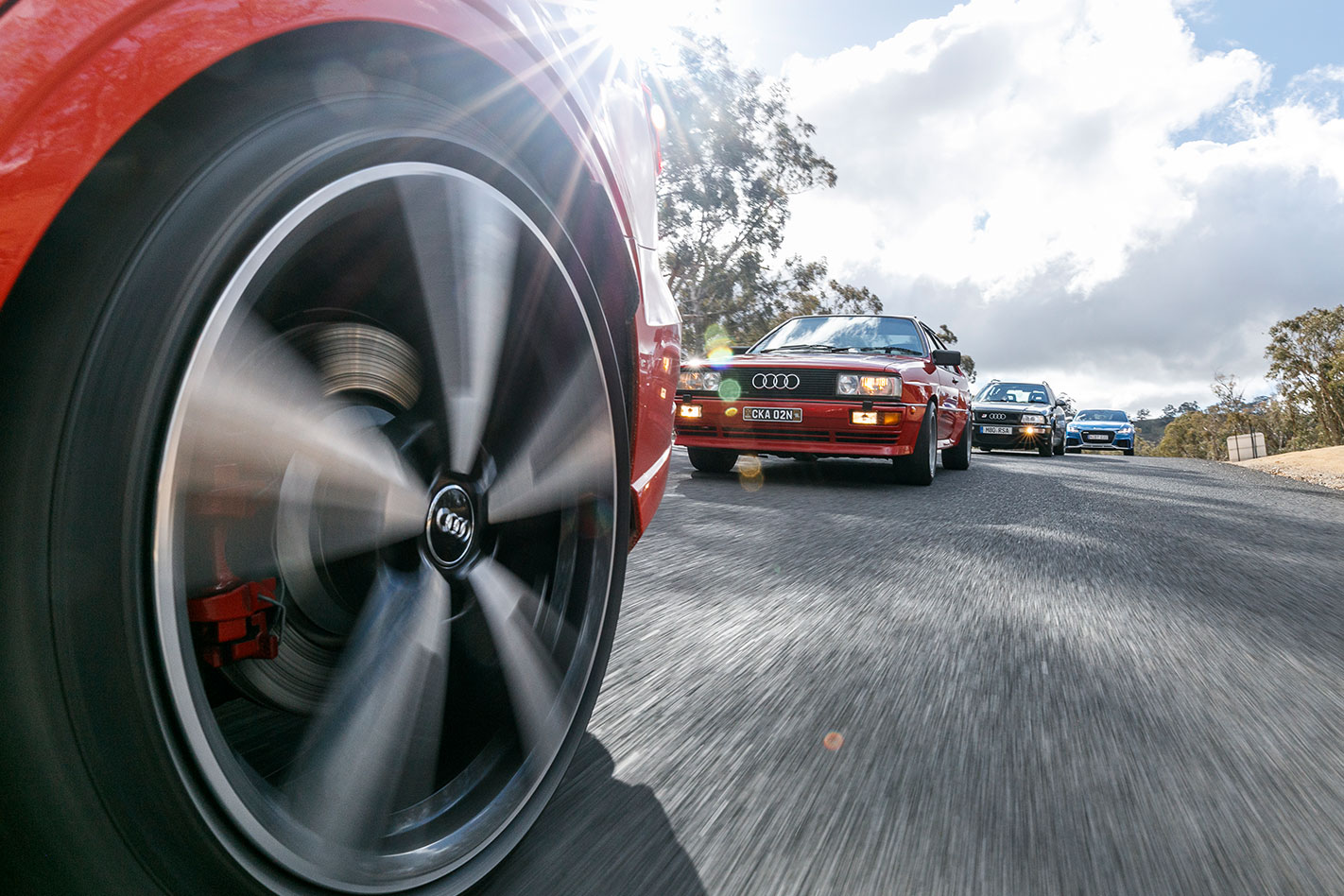
As we convoy home in the rain, anyone standing atop the mountain pass would have understood this was quattro all-wheel drive weather and heard this was echo-chamber five-pot territory. Just as evolution settled on multiples of five as the ideal number of digits, right here, right now it also feels like the ideal number of cylinders.
Audi Quattro – Rorty Rally Revolutionary
Audi RS2 – Original Fast Family Hauler
Audi TT RS – Style Icon gets Angry
Audi RS3 – Booted Five-Pot has Mass Appeal
u00a0 | Audi MB Quattro | Audi RS2 Avant | Audi RS3 | Audi TT RS |
BODY | 2-door, 4-seat coupe | 5-door, 5-seat wagon | 4-door, 5-seat sedan | 3-door, 4-seat coupe |
DRIVE | all-wheel | all-wheel | all-wheel | all-wheel |
ENGINE | 2226cc inline-5cyl, DOHC, 20v, turbocharger | 2226cc inline-5cyl, DOHC, 20v, turbocharger | 2480cc inline-5cyl, DOHC, 20v, turbocharger | 2480cc inline-5cyl, DOHC, 20v, turbocharger |
BORE/STROKE | 81.0 x 86.4mm | 81.0 x 86.4mm | 82.5 x 92.8mm | 82.5 x 92.8mm |
COMPRESSION | 8.6:1 | 9.0:1 | 10.1:1 | 10.1:1 |
POWER | 147kW @ 5800rpm | 232kW @ 6500rpm | 294kW @ 5850-7000rpm | 294kW @ 5850-7000rpm |
TORQUE | 270Nm @ 3000rpm | 410Nm @ 3000rpm | 480Nm @ 1700-5850rpm | 480Nm @ 1700-5850rpm |
POWER/WEIGHT | 113kW/tonne | 146kW/tonne | 194kW/tonne | 204kW/tonne |
TRANSMISSION | 5-speed manual | 6-speed manual | 7-speed dual-clutch | 7-speed dual-clutch |
WEIGHT | 1300kg | 1595kg | 1515kg | 1440kg |
SUSPENSION (F) | struts, coil springs, anti-roll bar | struts, coil springs, anti-roll bar | struts, coil springs, adaptive dampers, anti-roll bar | struts, coil springs, adaptive dampers, anti-roll bar |
SUSPENSION (R) | struts, coil springs, anti-roll bar | multi-links, coil springs, anti-roll bar | multi-links, coil springs, magnetive dampers, anti-roll bar | multi-links, coil springs, magnetive dampers, anti-roll bar |
L/W/H | 4404/1723/1344mm | 4510/1695/1386mm | 4479/1802/1397mm | 4191/1832/1344mm |
WHEELBASE | 2524mm | 2597mm | 2631mm | 2505mm |
TRACKS | 1421/1458mm (f/r) | 1448/1471mm (f/r) | 1599/1528mm (f/r) | 1564/1543mm (f/r) |
STEERING | hydraulically-assisted rack-and-pinion | hydraulically-assisted rack-and-pinion | electrically-assisted rack-and-pinion | electrically-assisted rack-and-pinion |
BRAKES (F) | 280mm ventilated discs, 2-piston calipers | 304mm ventilated discs, 4-piston calipers | 370mm ventilated discs, 8-piston calipers | 370mm ventilated discs, 8-piston calipers |
BRAKES (R) | 245mm solid discs, single-piston calipers | 299mm ventilated discs, 4-piston calipers | 310mm ventilated discs, 4-piston calipers | 310mm ventilated discs, 4-piston calipers |
WHEELS | 15.0 x 6.0-inch (f/r) | 17.0 x 7.0-inch (f/r) | 19.0 x 8.0-inch (f/r) | 20.0 x 9.0-inch (f/r) |
TYRE SIZES | 205/60 VR15 (f/r) | 245/40 ZR17 (f/r) | 255/35 ZR19 (f); 235/35 ZR19 (r) | 255/30 ZR20 (f/r) |
TYRE | Yokohama S-Drive (current) | Michelin Pilot Sport 3 (current) | Pirelli P-Zero | Michelin Pilot Super Sport |
PRICE | N/A | N/A | $93,895 (as tested) | $147,150 (as tested) |
PROS | Communication; balance; sound | Engine; performance; dynamics | Superb engine; point-and-shoot pace | Dynamic delicacy/agility over RS3 |
CONS | Nose-heavy handling; price | Astonishing lag; super rare in RHD | Front-bias AWD; ride | Ride; lacks Cayman poise |
RATING | 4/5 | 4.5/5 | 4/5 | 4/5 |
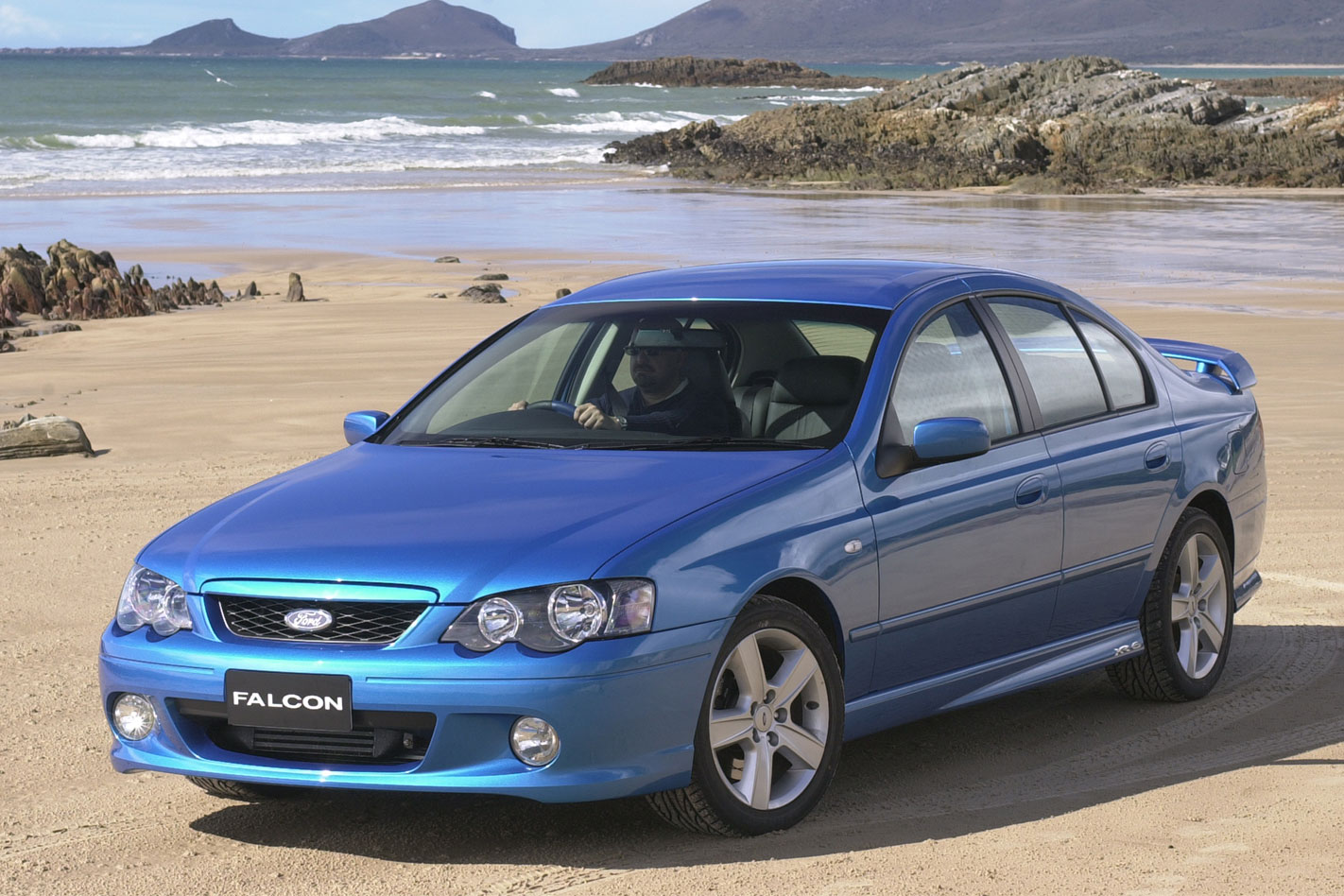
Ford Australia’s homegrown “Barra” straight-six turbo proved that we aren’t just a nation of V8s, but a nation of great engines.
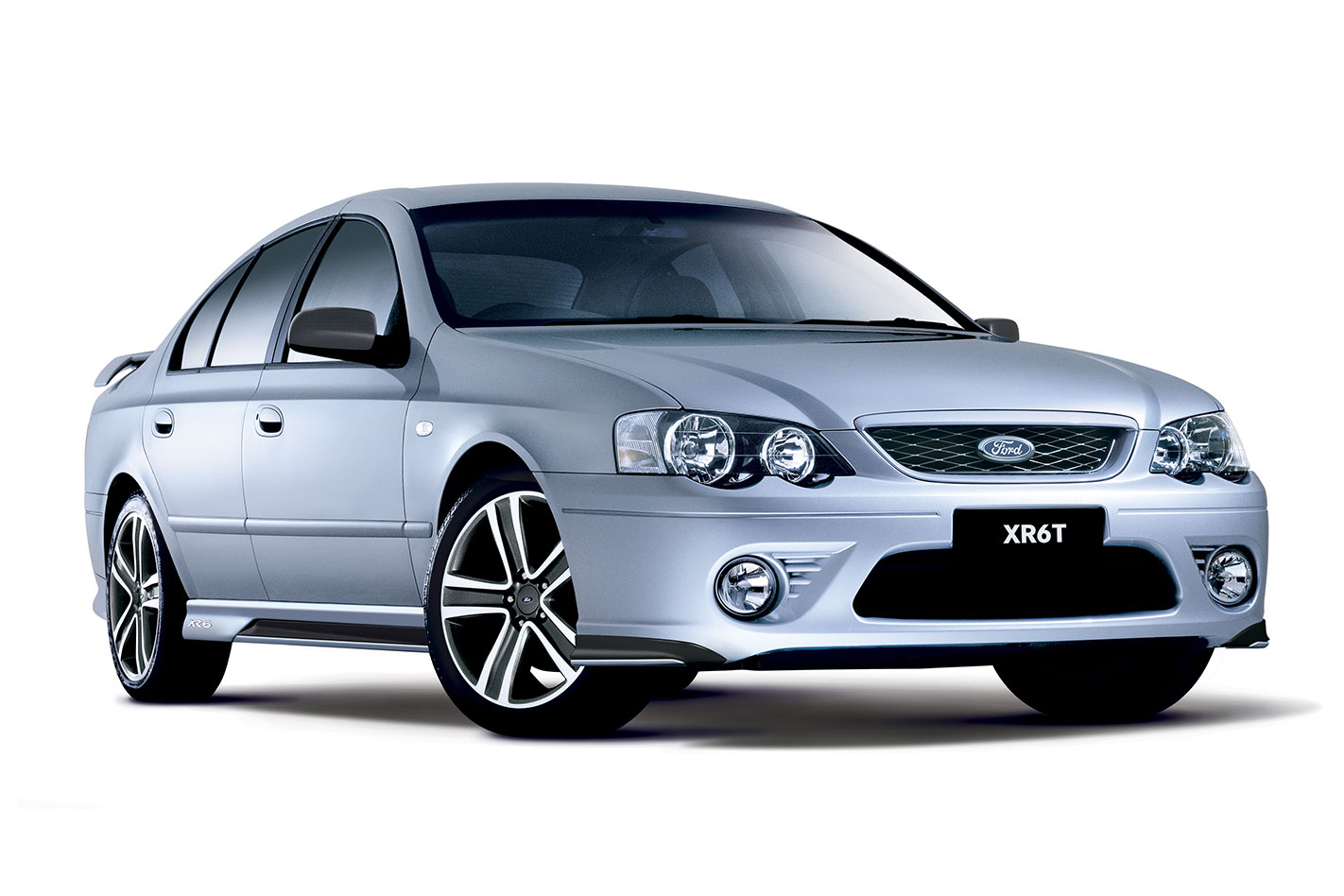
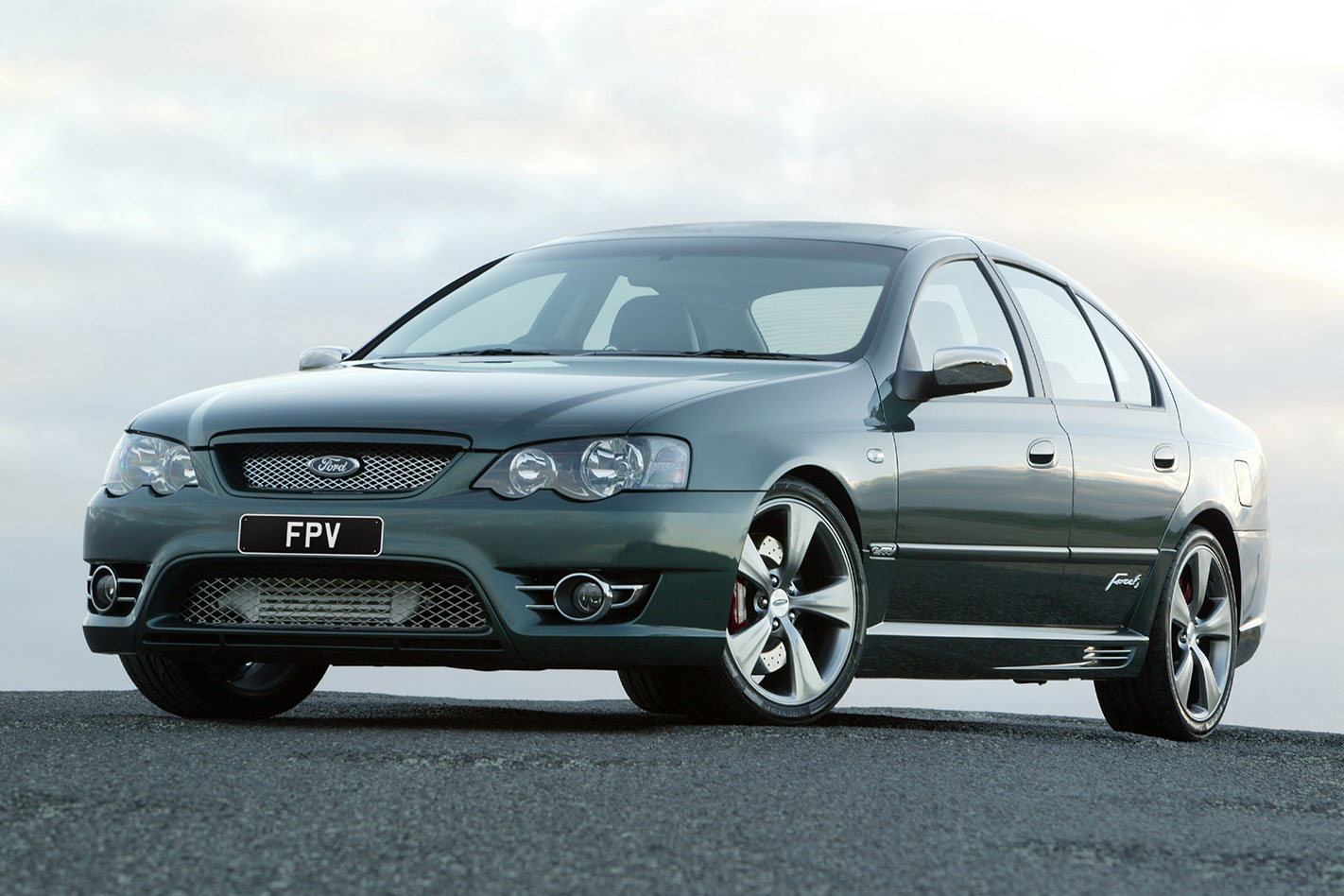
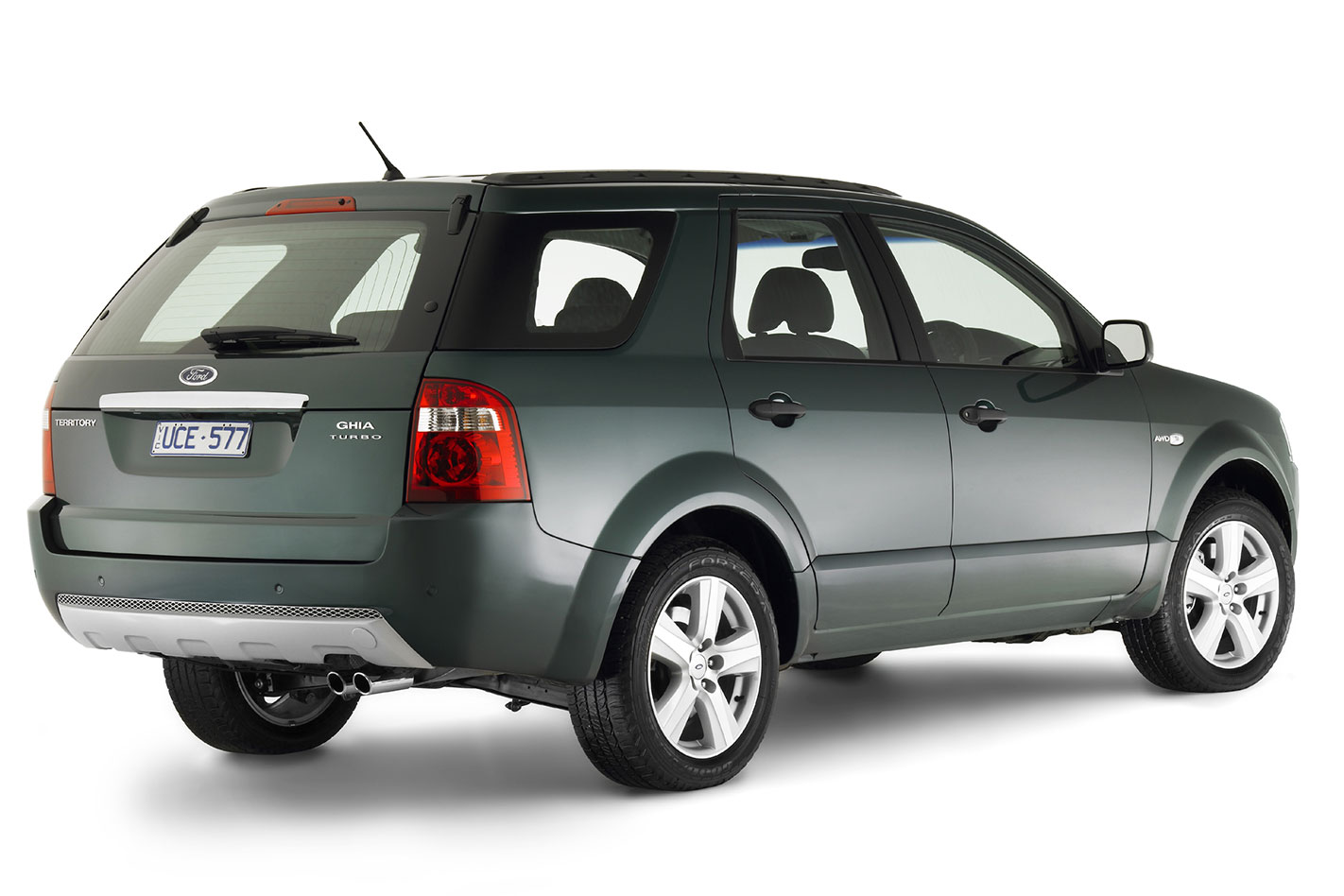
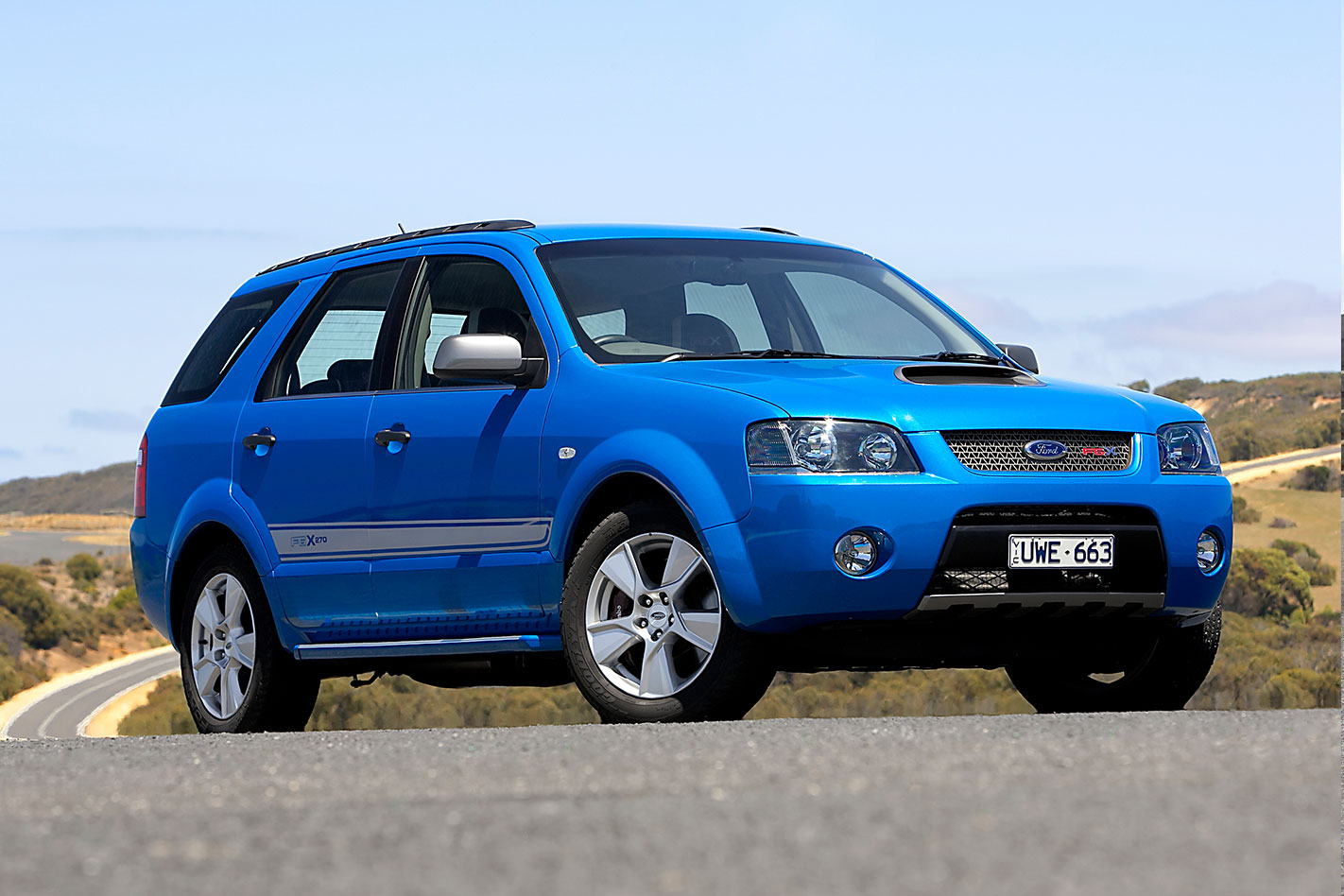
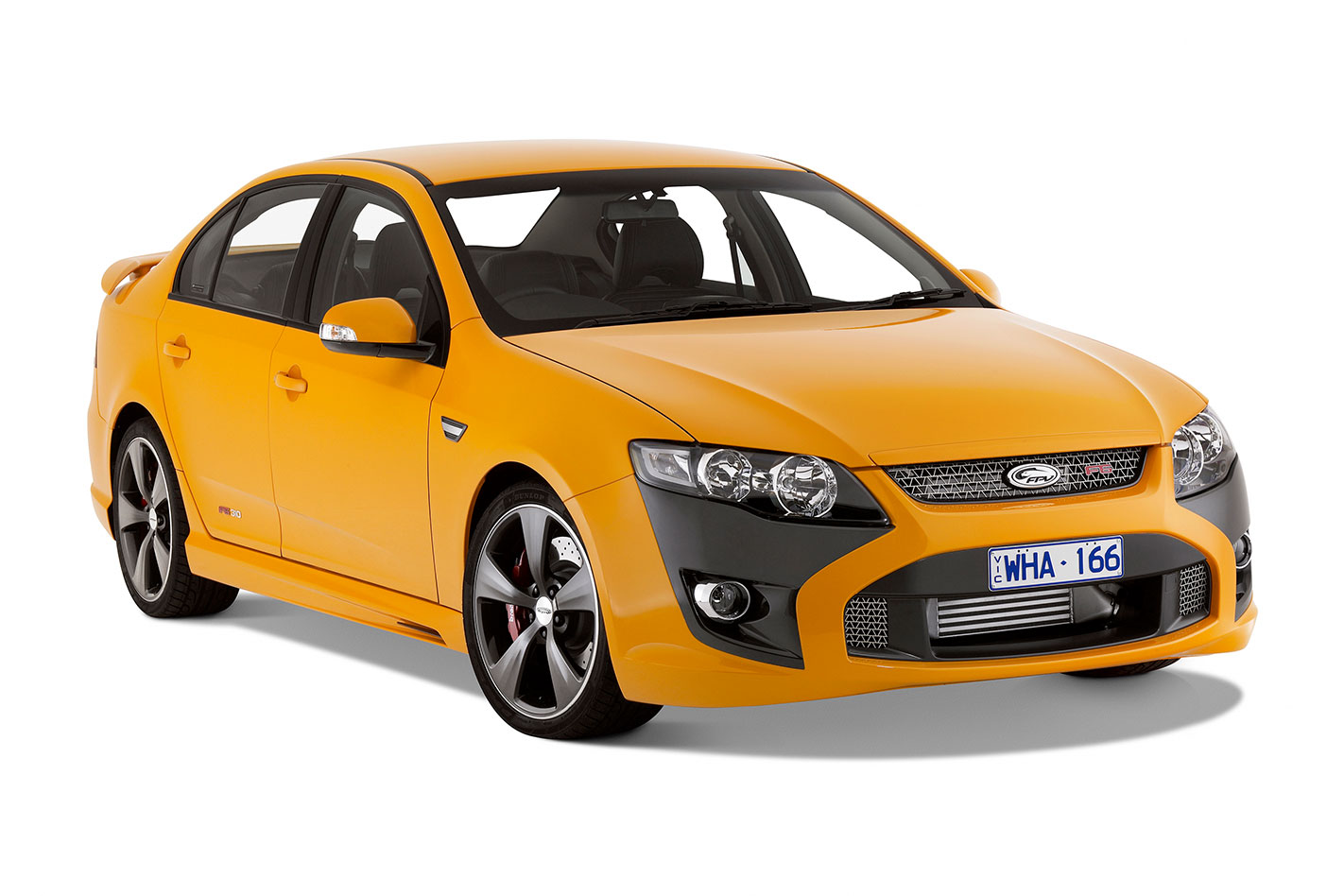
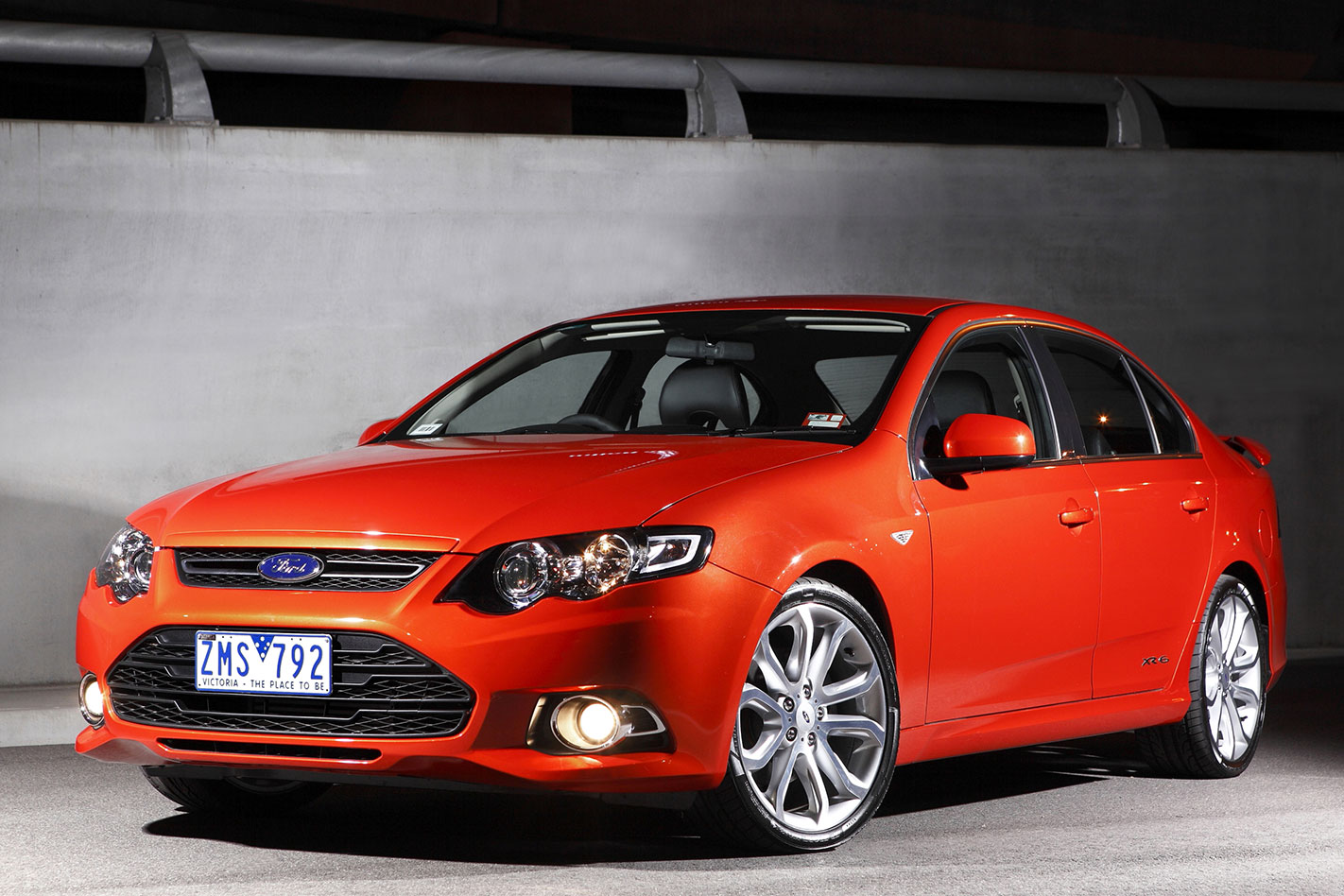
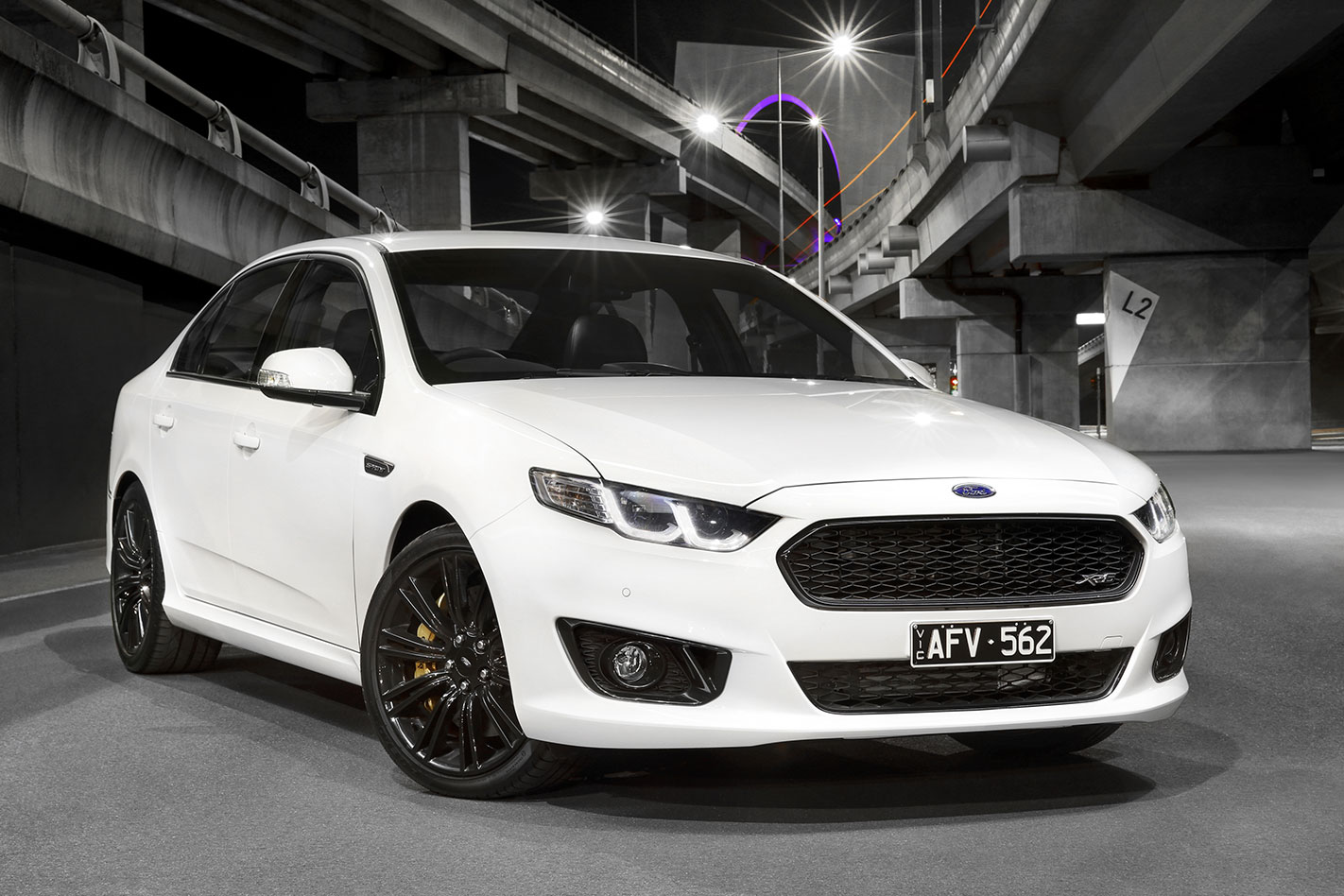
Smooth running, tough, and packing plenty of torque with huge tuning potential, the Barra gave its V8 contemporaries a real run for their money and is often rated as one of the best of its kind. We list the 12 key milestones in Ford’s straight-six masterpiece over the past decade and a half.
1 – BA XR6 Turbo (2002)
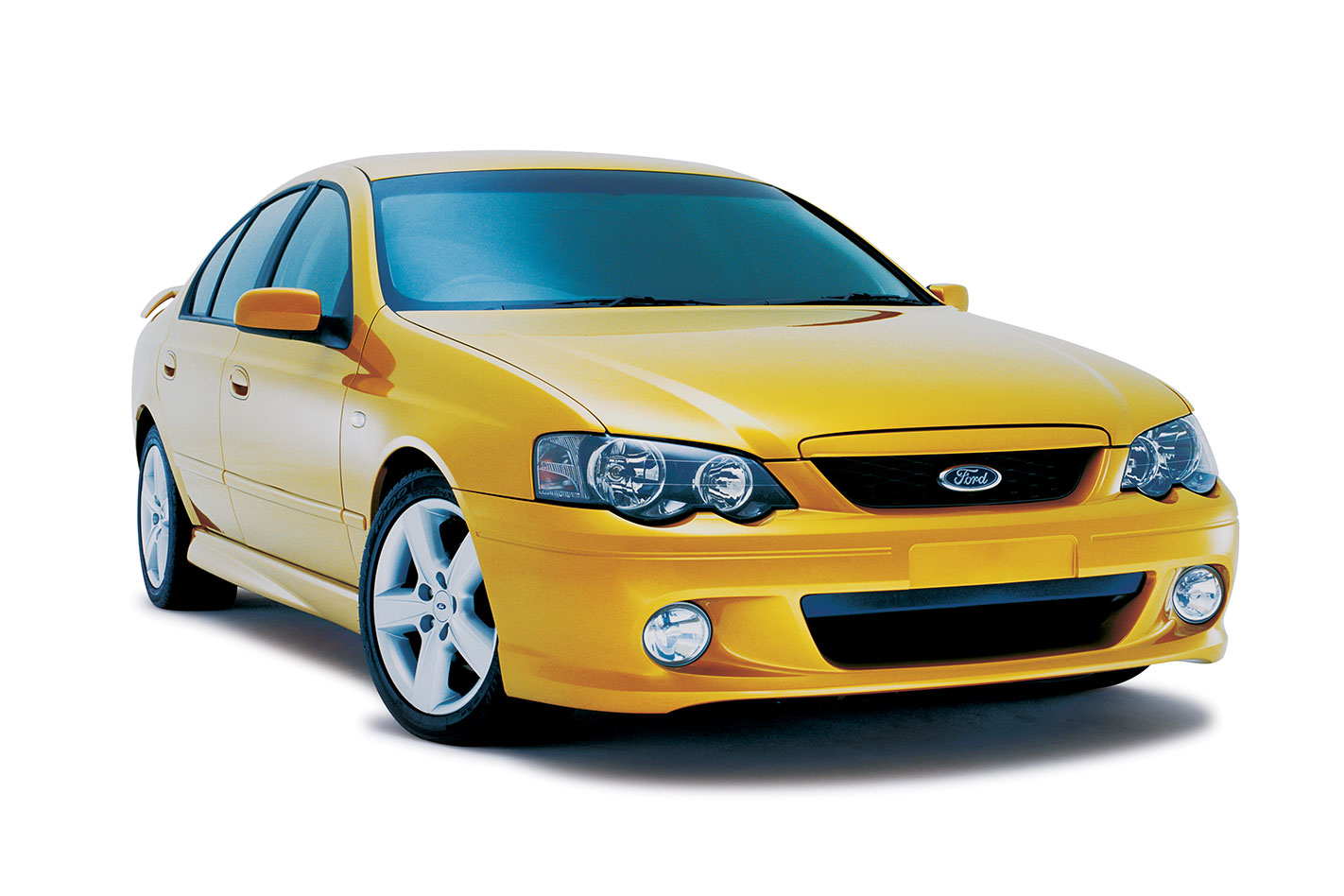
2 – BA II XR6 Turbo (2004)
3 – BA II F6 Typhoon (2004)
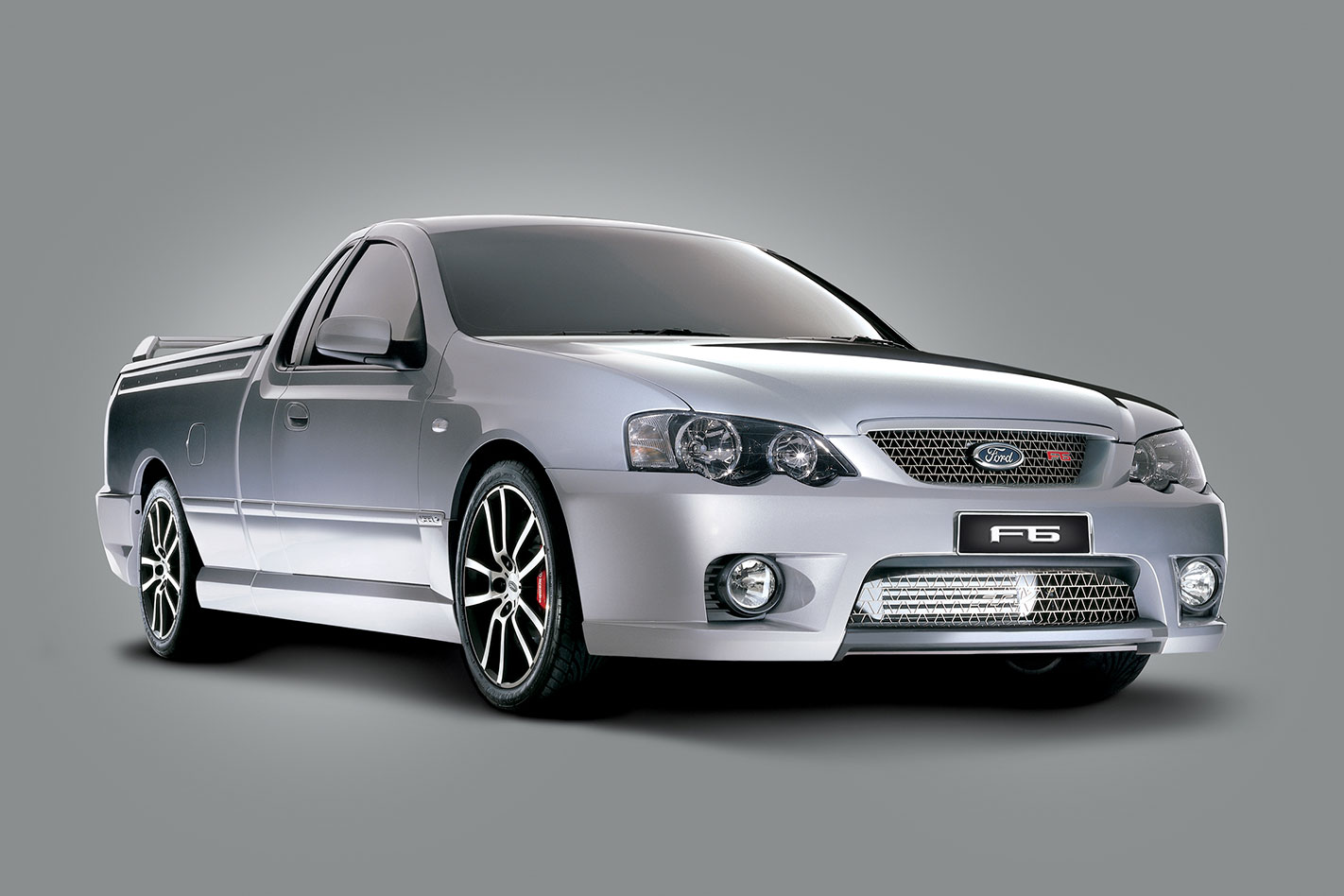
4 – BF XR6 Turbo (2005)
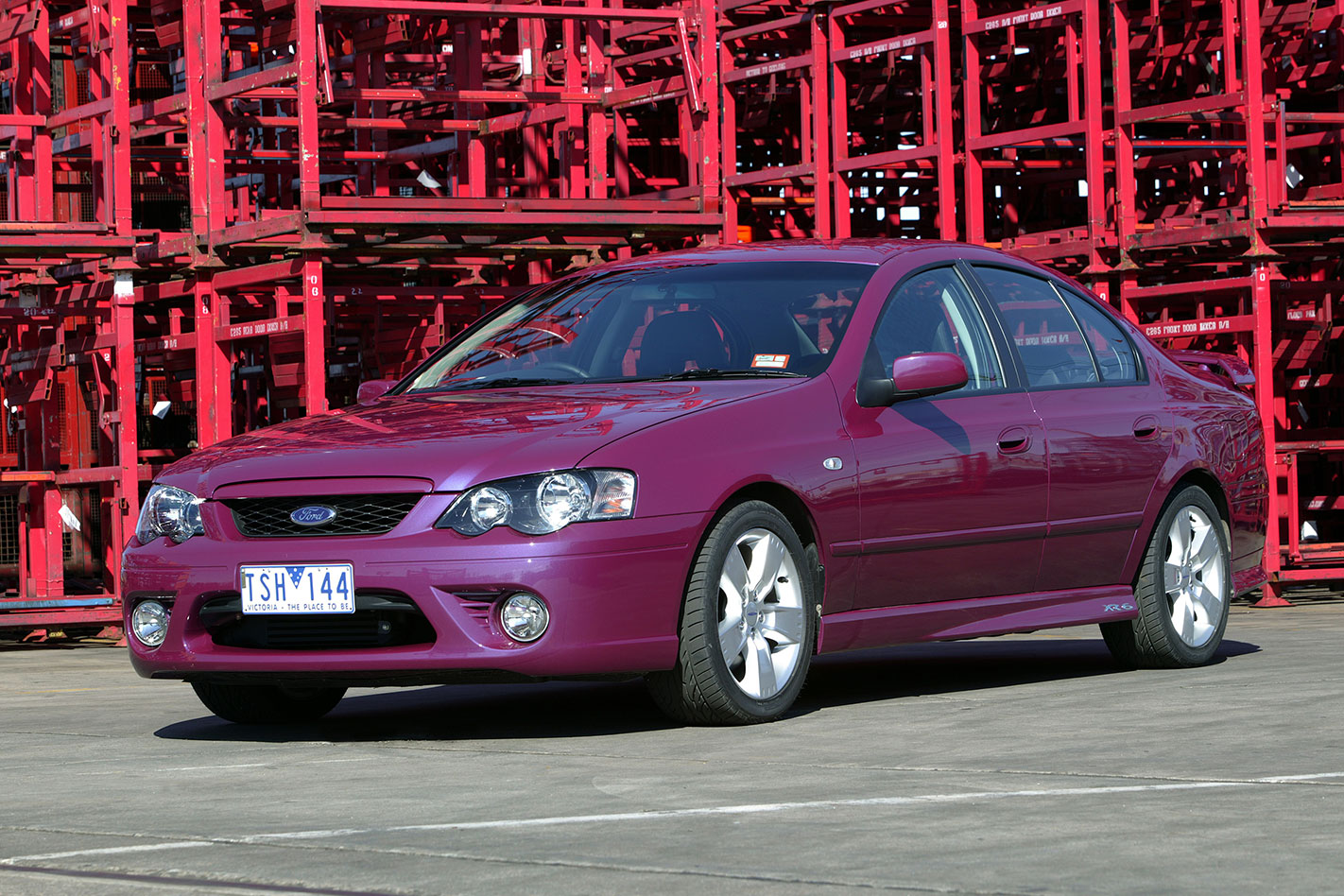
5 – BF II XR6 Turbo (2006)
6 – BF II FPV Force 6 (2006)
7 – SY Territory Turbo (2006)
8 – FG XR6 Turbo (2008)
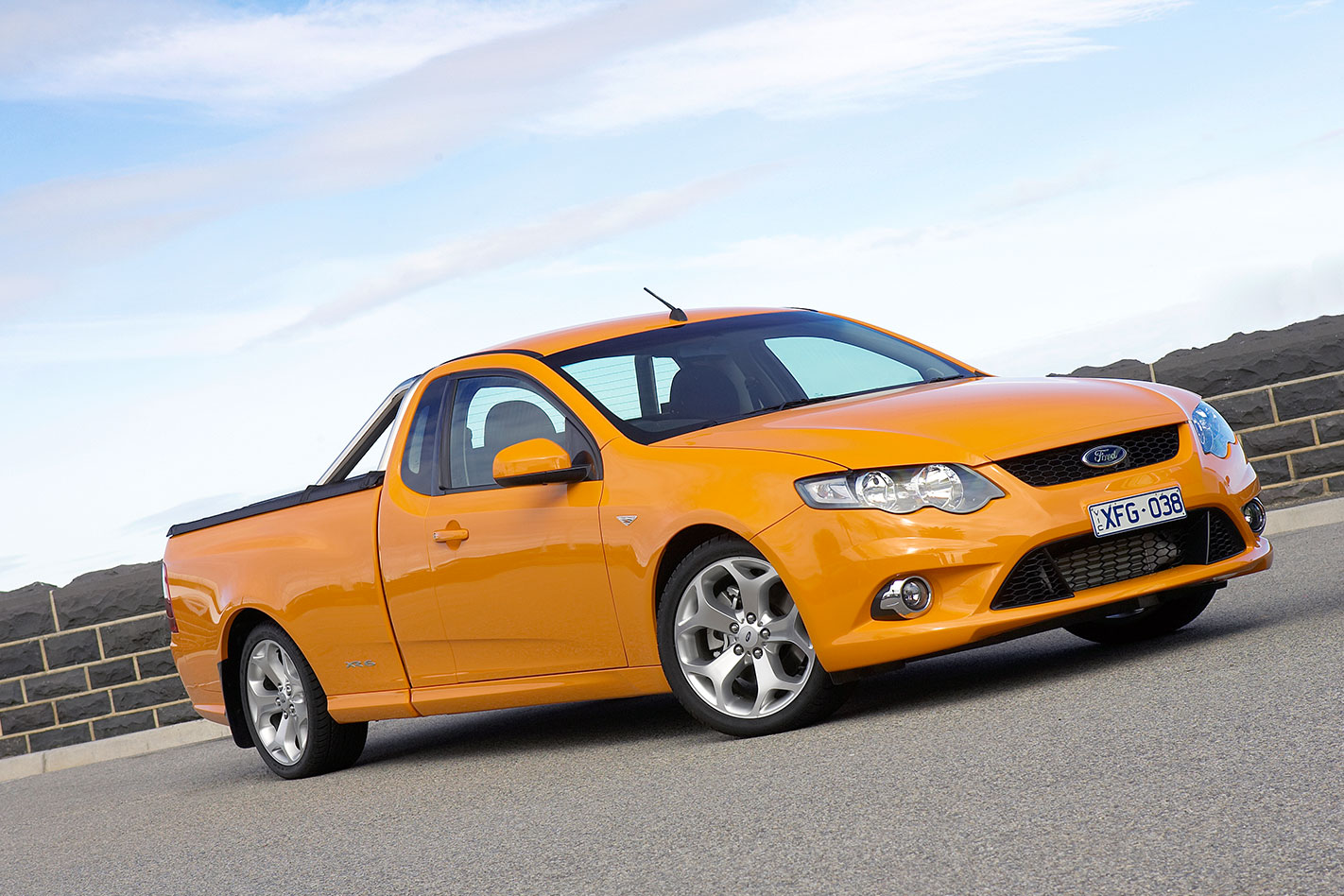
9 – SY FPV F6X 270 (2008)
10 – FG FPV F6 (2008)
11 – FG II XR6 Turbo (2010)
12 – FG X Sprint 6 (2016)
If you were looking at the lots for this weekend’s Lloyds HSV auction and thought something was out of place, you were right. Three Blue Ovals have invaded Lion territory.
While much talk is happening about the HSV W1 currently up for grabs at the auction, a 1971 Ford Falcon XY GT is not doing a bad job of keeping up in terms of bids, with a solid $181,000 racked up on the afternoon before the bidding ends.
The HSV still has it beat with $215K set to it so far.
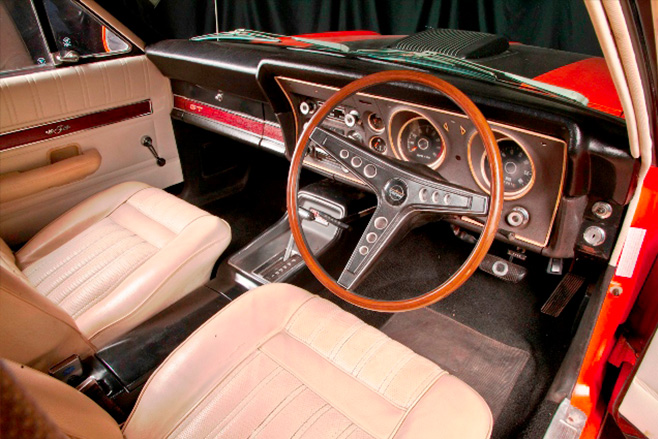
It also sports what looks to be Allan Moffat’s signature from 1999, though no mention is made of this in the listing.
Keeping the XY company are two more slightly more modern Blue Ovals, one being a BF Series 2 Cobra from 2008.
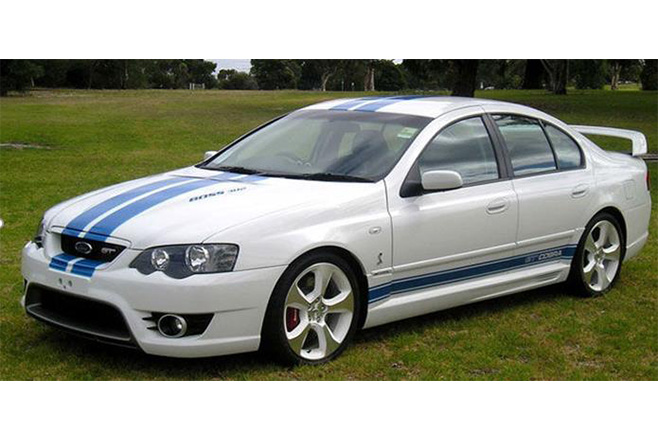
Lloyds says: “Only 126 BFII Falcon Cobras with 6 speed transmission were manufactured that year & this is one of those unique 126 vehicles.”
But the nostalgia doesn’t end there, with one of the last Aussie Ford heroes also up for grabs.
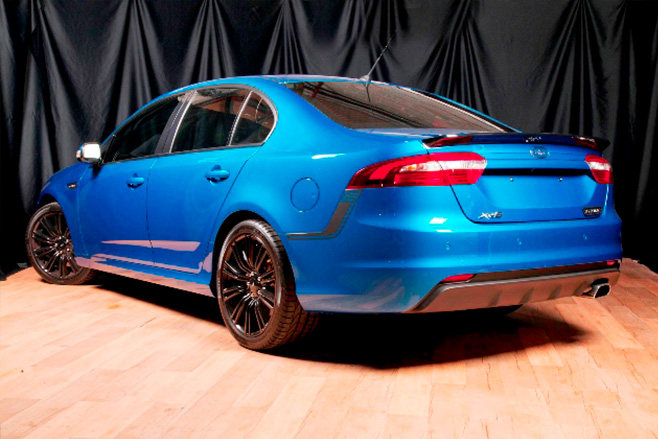
It’s in the “the iconic Ford hue of Kinetic blue,” and sports the number 86 of 500.
If you’re a Ford fan and want an excuse to go peek at some HSVs, this trio is your golden ticket.
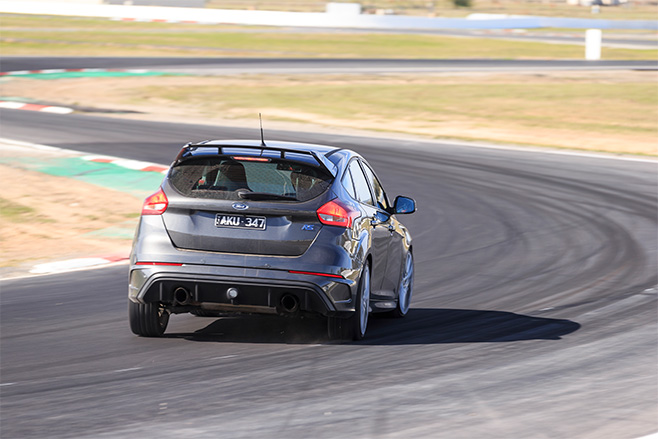
The Ford Focus RS is a benchmark hot hatch but some customers have found the ownership experience less positive due to engine issues.
Ford Europe confirmed the existence of the issues to Autocar, early-build cars had been affected and that some engines had been replaced under warranty with new-specification units.
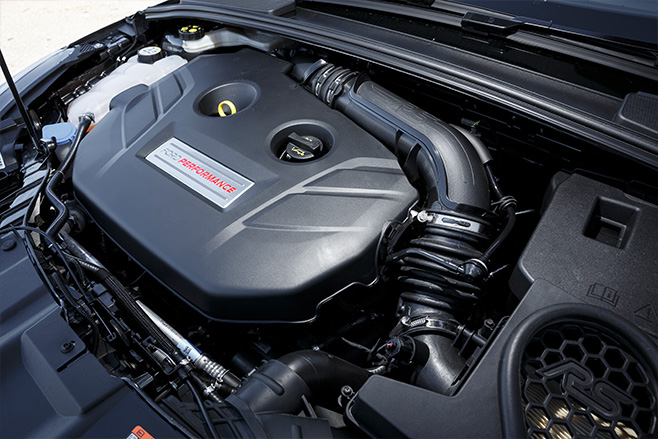
“We are aware of one case in Australia and we are working globally on a repair for all customers. In the meantime, if a vehicle shows these symptoms, of its any RS customer has a concern, we encourage them to call 13 FORD to organise an inspection or repair under warranty.”
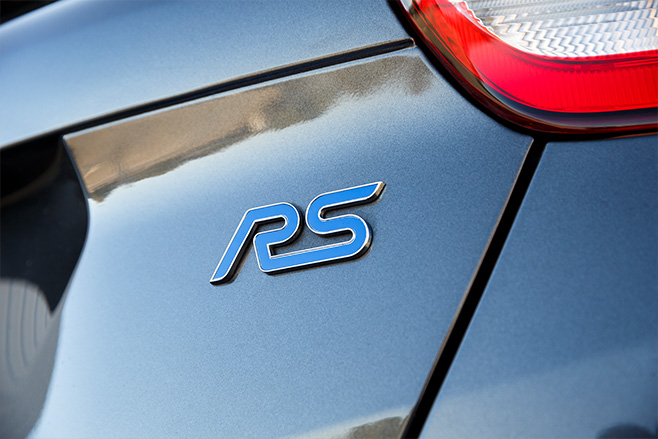
The latest 2018-build Focus RS models are believed to be unaffected due to an updated block design. Ford Australia encouraged customers to contact it directly through 13 FORD rather than through dealers as it allows them to track the complaint more effectively.
It’s HSVs galore at Lloyds’ upcoming Gold Coast auction, set to see dozens of rare vehicles head out the doors this Saturday.
With the likes of HSV GTSs, Maloos, Clubsports, and a few special Holdens in the mix, interest in the auction is sure to be high for fans of the Lion badges.
But the star of the show has already been established, by bidders and Lloyds itself, as the HSV W1.
It has already – with less than 24 hours to go until the auction closes – exceeded its $170K RRP by $45,000.
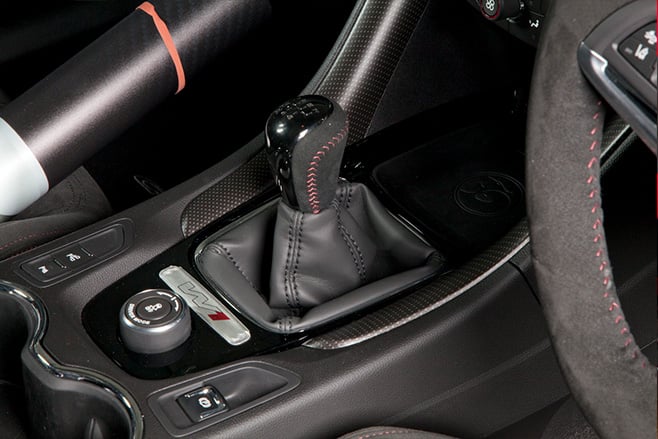
Bill Freeman of Lloyds’ classic car division says the interest in this particular W1 means it should at least break its previous auction sale record.
“$300,000 will set a new record for the newly released W1,” Freeman says.
“This auction has already sparked a lot of interest because of the extreme rarity of these cars, with most in immaculate condition.”
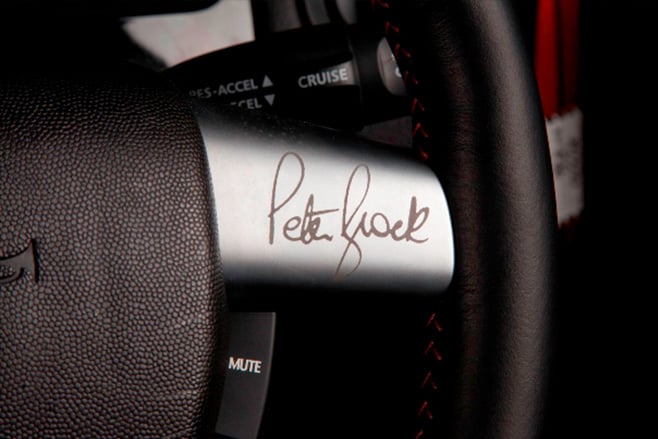
A white 2015 Maloo R8 is also on the block, as well as the last car ever ‘delivered’ by Peter Brock – a ‘Fusion Gold’ Holden Monaro CV8Z Brock Group 3.
With photos of Brock signing the car (and obviously the signatures, above), this car is claimed to be the only one of its kind in the world.
In addition its build number ‘005’ makes it a special car for any Brock fan.
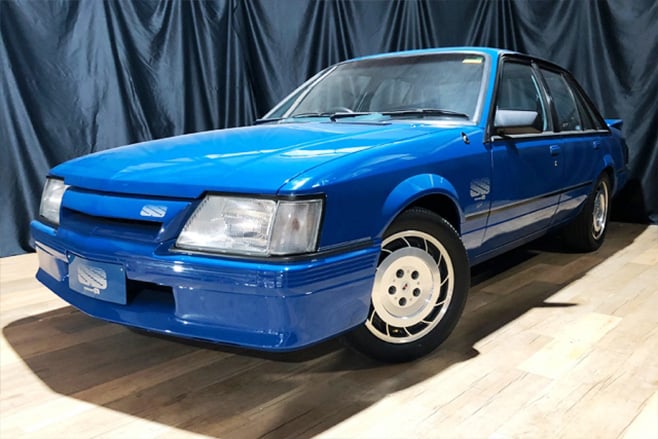
Another car which might surprise punters is a red 1990 VN Commodore Group A in manual, which has already racked up $68,111 in online bids.
The auction ends on Saturday December 16 at lunchtime, and lots can be viewed at the Lloyds website.
NEW CAD drawings have surfaced online which confirm the next-gen ‘C8’ Corvette will be mid-engined – and these computer-generated pics give us a solid look at what’ll motivate Chervrolet’s new hero.
Posted to – and then quickly removed from – corvetteforum.com, the images purport to show the C8 Corvette’s rear subframe, engine, and part of the suspension setup.
What can we deduce from the pictures? The design of the exhaust manifolds is the biggest give-away yet that the C8 Corvette will be mid-engined, along with the layout of the big cast-alloy cradle that it sits upon. Meanwhile, savvy forum commenters identified the bent-eight as the LT1 6.2-litre naturally-aspirated unit from the current front-engined C7 Corvette.
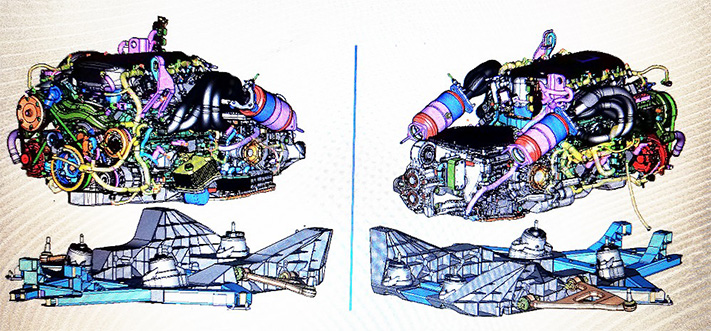
Double A-arm suspension will use coil springs with what appears to be an integrated nose-lift system, which is a departure from the transverse leaf springs that have been used many generations of Corvette.
The images have been uploaded and taken down numerous times over the last day, fanning speculation these are legitimate CAD drawings, with GM scrambling to stop them being distributed.
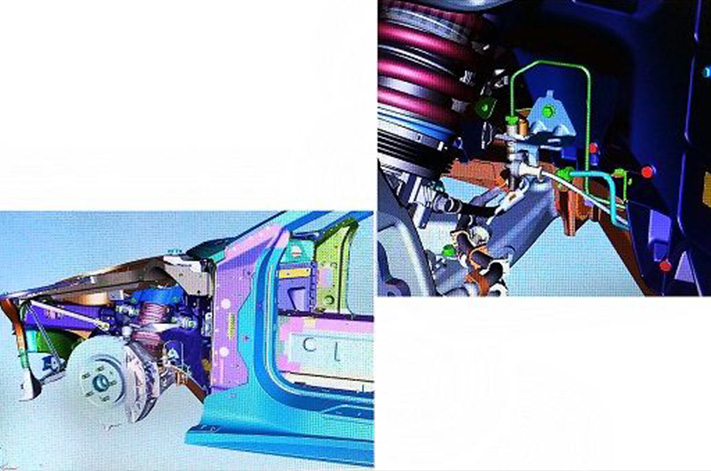
Wheels has previously reported the C8 Corvette is being engineered to be right-hand-drive capable, and will be sold in Australian showrooms badged as a Chevrolet after it is finally revealed.
A mid-engine Corvette is a major departure from the car’s heritage, which until this point has always had the V8 in front of the driver. One thing that won’t change is where that V8 sends its grunt: every Corvette to date has taken power to the rear wheels exclusively, and despite a shift to a supercar-style mid-engine layout the all-new C8 doesn’t look like it will depart from that formula any time soon.