
Just as in Australia, the end of the ‘SS’ badge is upon the United States of America.
Since the Commodore – and therefore the Chevrolet SS – is no longer manufactured, sales of both are starting to dwindle.
But GM’s sales figures revealed a sharp increase in sales of Chevrolet SS models, up from 150 units in October this year to 882 units in November.
For comparison’s sake, only 212 units of Chevy SS were moved in November 2016.
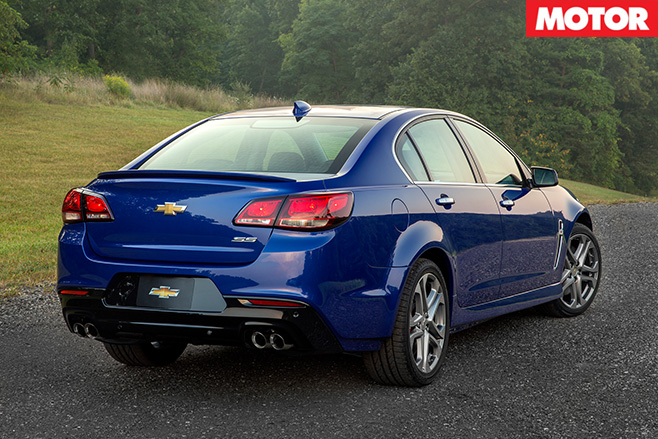
Though the last Chevrolet SS was built in May this year, sales have been reasonably consistent as numbers fall from 250 units per month to around 150.
The last time a spike was recorded in SS sales was during March this year, when 1,217 units were delivered while production wound down.
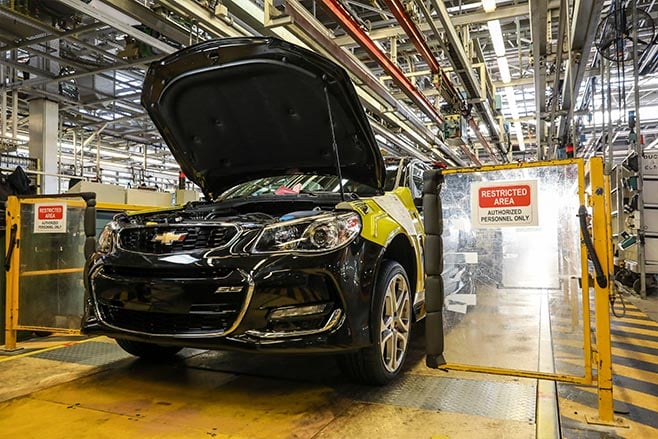
While Australian dealers were barred from doing the same with local Commodores, it was a seemingly necessary move in the US – the Chevrolet SS hasn’t been a strong seller.
Interestingly, however, Chevrolet has managed to shift more units of the SS during the first 11 months of 2017 than it did during all of 2016.
So far, 4,013 SSs have been delivered in 2017, while only 3,013 were shifted in all of 2016.
Amongst the countless Peugeots, Renaults, and Citroens present at the 2017 Rallye du Var was this, an Aston Martin V8 Vantage GT4.
Its roar was easily a highlight, documented by several videos dedicated to following the sounds of the British belter around the various stages of the French rally.
Behind the wheel was French rally driver and former WRC competitor François Delecour.
Though the 55-year-old essentially ended his two-decade-long WRC career in 2002, he has continued to race regularly over the last 15 years.
And this year, he broke out a V8 Vantage GT4 to be his weapon of choice for the Rallye du Var 2017.
While V8-engined cars used to be a pretty common sight on rally all over the world – especially in the Group B days – the sight of an Aston blasting down a narrow strip of tarmac in 2017 is an unexpected sight.
In fact, it was the only V8 to compete in the event.
But its extra cylinders didn’t necessarily result in a better run for the Vantage. In fact, Delecour finished 19th overall in the Rallye du Var, though that was out of 115 finishers.
The man can clearly drive, and the on-board video above is a good bit of evidence to support that.
Unfortunately for Delecour, Skoda Fabias, Ford Fiestas, and Peugeot 208s all appear to be more suited to rallying. Who’d have thought?
Still, we have a lot of respect for someone who can wrangle a much larger V8 through the woods, all while bringing the joyous sounds of the 4.7-litre bent eight to the people. Enjoy!
ONE of the few remaining sanctuaries free of advertising is about to be lost forever. General Motors has announced it will tweak millions of its in-car entertainment systems to start pushing advertising in vehicles sold in the US.
Dubbed Marketplace, the US car making giant said the technology would allow owners to “order food, find the closest gas station to save on fuel, and make dinner reservations on the go”.
“This means Marketplace gives drivers of eligible Chevrolet, Buick, GMC and Cadillac vehicles the opportunity to more safely interact with a growing number of their favourite brands in retail, fuel, hospitality, food, hotel and transportation through the in-vehicle touchscreen,” it said.
It has invited retailers to jump on-board the virtual venture, even suggesting it can push ads in front of people to gain their attention.
GM has labelled people in cars as a ready and willing captive audience for marketers. “For most retailers and consumer brands the daily commute is the only time not accessible in a consumers’ day,” the car maker said. “Marketplace gives merchants the ability to more safely engage with drivers and passengers in a meaningful way that provides true value for our customers.”
The ads are available via GM’s OnStar service – ominously, Holden has announced it plans to roll out a localised version of that service here in Australia from 2019; it has been asked for comment.
At launch, GM says almost four million Chevrolet, Buick, GMC and Cadillac drivers will be able to order and pay for a Starbucks coffee and a bag of Dunkin’ Donuts via their in-car multimedia screen, “fluffy buttermilk pancakes”, book hotel rooms, order fast food, reserve parking and more. One day GM promises owners will even be able to pay for fuel via the service.
The car maker has also talked up the safety of the system, saying it has been designed to minimise distraction.
“Marketplace is designed to be used while driving. It leverages machine learning from real-time interaction data, such as location, time of day and a driver’s established digital relationship with third-party merchants, to offer highly personalized experiences,” it said.
“Adhering to industry distracted driving guidelines, as well as GM’s strict in-house safety guiding principles, GM designs its in-vehicle systems to minimize manual interactions, helping drivers keep their eyes on the road and their hands on the wheel.”
In the GM-sourced car of the future, we won’t need to have hands on our hard-earned, either.
TOYOTA’S luxury division has teased the Lexus LF-1 Limitless, a concept car that’s believed to be its luxury-laden spin on a range-topping SUV.
The single teaser image was released ahead of a reveal at the 2018 Detroit Motor Show, which kicks off in January.
“The Lexus LF-1 Limitless, created by the Calty design studio in southern California, is a flagship crossover that redefines the boundaries of luxury,” Lexus said in a statement.
So, what are we looking at? Speculation hints at a possible replacement for the boxy, bulky LX – effectively a Toyota LandCruiser in drag – or the next-generation RX midsize SUV. Adding weight to the argument that it’s an RX is the fact that the midsize SUV, last overhauled in 2015, is the best-selling luxury car in the US.
Details are limited, with Lexus revealing only that the coupe-profiled LF-1 Limitless – heavily influenced by the Toyota C-HR’s envelope-pushing design, we reckon – was penned inside its Calty design studio based in the US. The image, though, hints that the soft-roader will feature a pair of LCD screens – one in front of the driver and another for the front-seat passenger – as well as a panoramic sunroof.
LED tail-lights integrated into the steeply raked tailgate also appear to wrap around the entire rear of the SUV, flanking the sides heavily.
Also of note is a Peugeot Quartz-like split rear spoiler on the trailing edge of the roof that incorporates high-mounted LED-style brake lights.
We’re not given any information about the drivetrain that the LF-1 Limitless will use, although the blue-lit Lexus badge gives us a hint – it will be a hybrid model. We can rest assured it’s unlikely to be a plug-in hybrid, though, with the Japanese luxury brand constantly talking down the benefits of a bigger electric fuel tank and a smaller petrol one.
The Detroit Motor Show starts on January 15, 2018.
INFINITI is working hard on shaping the look of its future line-up to fit into a world that turns traditional driving, propulsion and ownership values on their heads.
The Japanese sister brand to Nissan is yet to weigh into the realm of autonomous technology and alternative energy, but that hasn’t stopped its design team exploring the possibilities of future vehicles and how they will evolve.
Speaking at the reveal of the new Infiniti QX50 at the Los Angeles motor show, head of design Karim Habib told Wheels that while autonomous and alternative-energy cars would look different – but still attractive – shifting the traditional model of car ownership would not stop drivers caring what a car looked like.
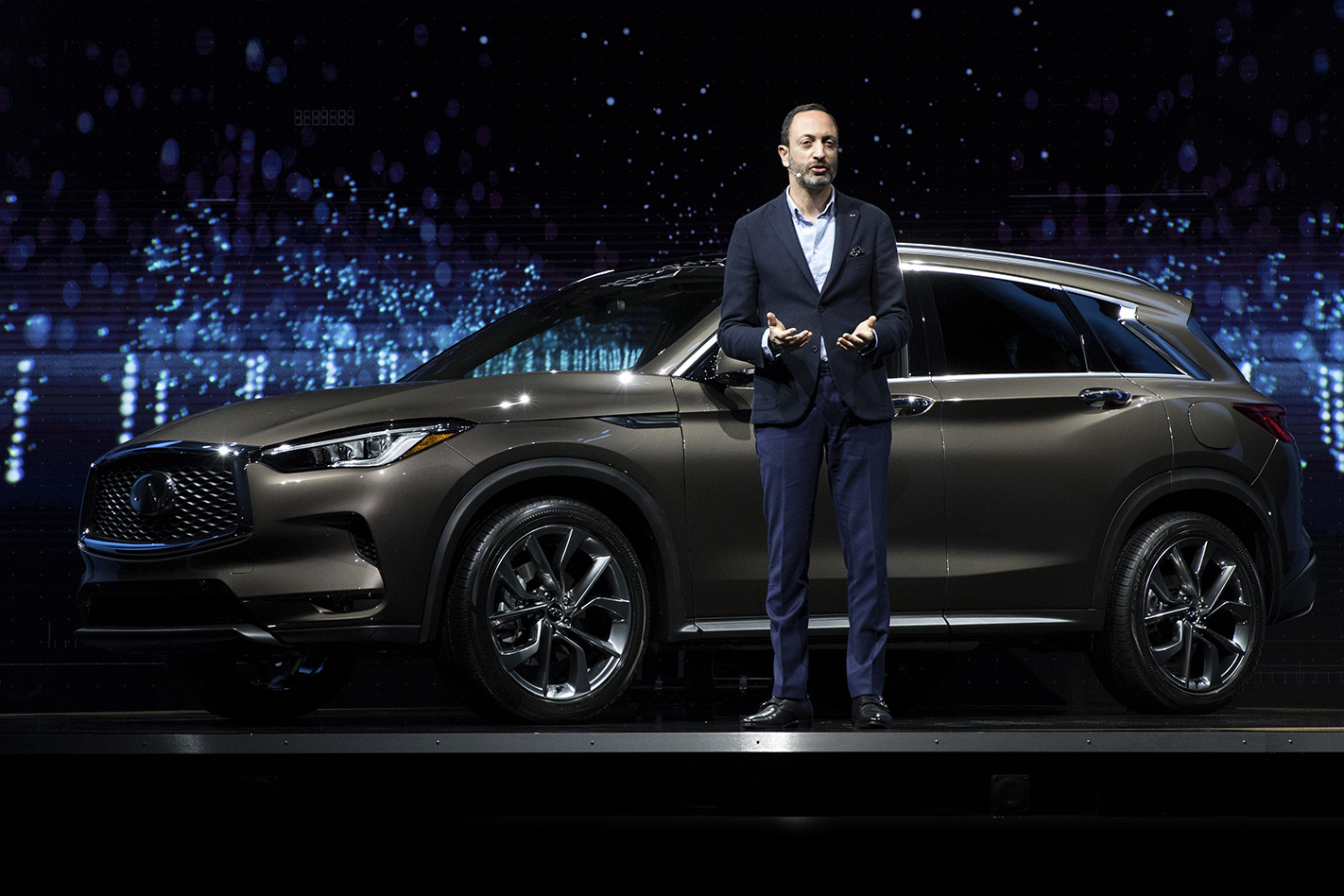
When asked if the car was destined to become another device similar to whitegoods, Habib highlighted the efforts by some manufacturers to market home appliances as desirable.
“You can buy silver aluminium washing machines,” he said.
Habib said the design team was already preparing for the changes that upcoming technology would bring to the automotive landscape.
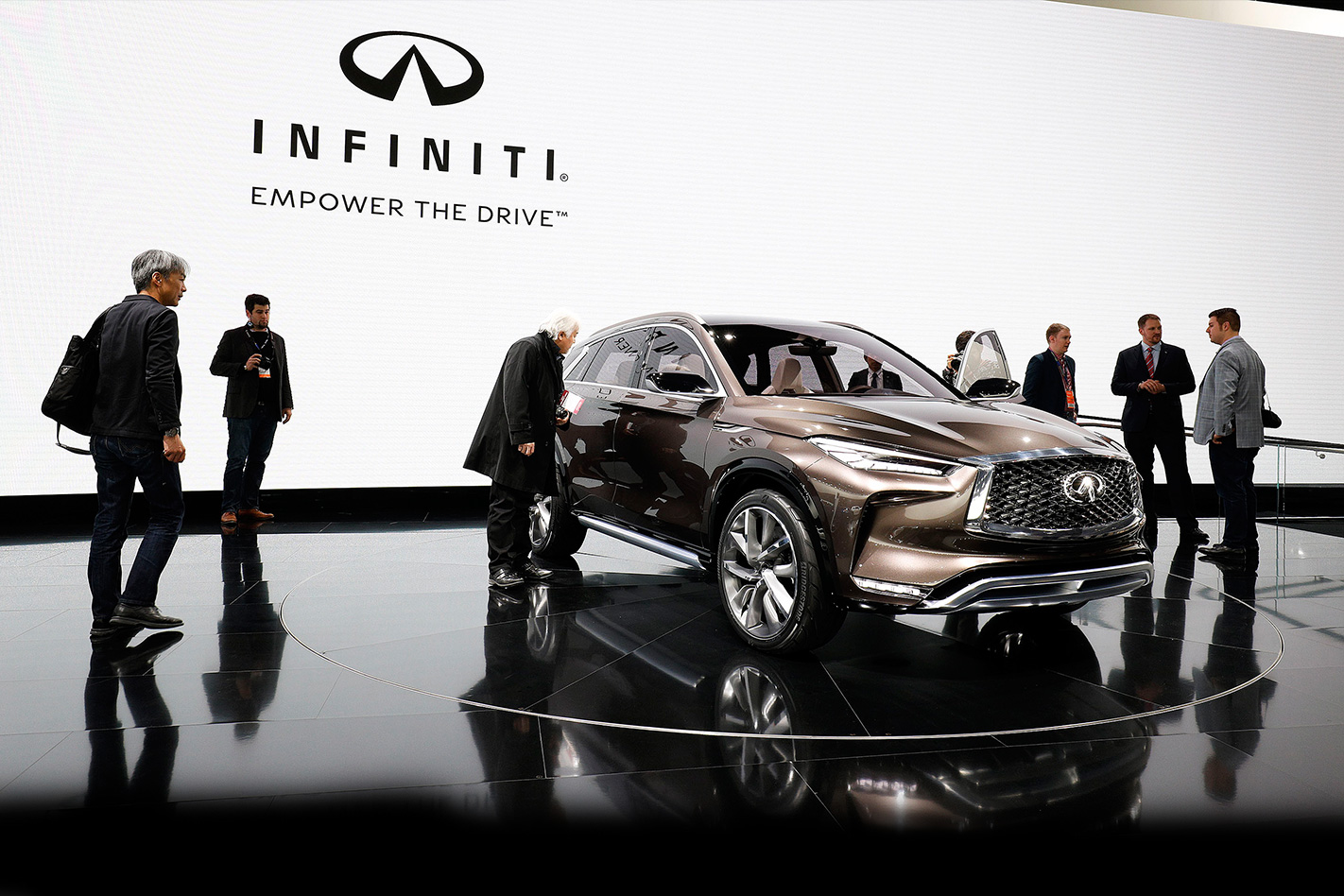
“There’s also the debate about ownership. How much are people really going to own these cars? It’s going to change the way things look and feel.”
But while the idea of a self-driving Infiniti remains a distant fantasy, Habib said the changes were already happening, influenced by emerging driver assistance technology. Using the QX50 as an example, the design chief jokingly described it as wearing “the biggest badge in the history of badges”, but said it was necessary to disguise a large radar sensor for collision mitigation systems.
“Honestly, it’s just the beginning because when it comes to autonomous driving you’re going to have not only radar sensors, you’ll also have laser detection. It’s a big part of what we are figuring out.”
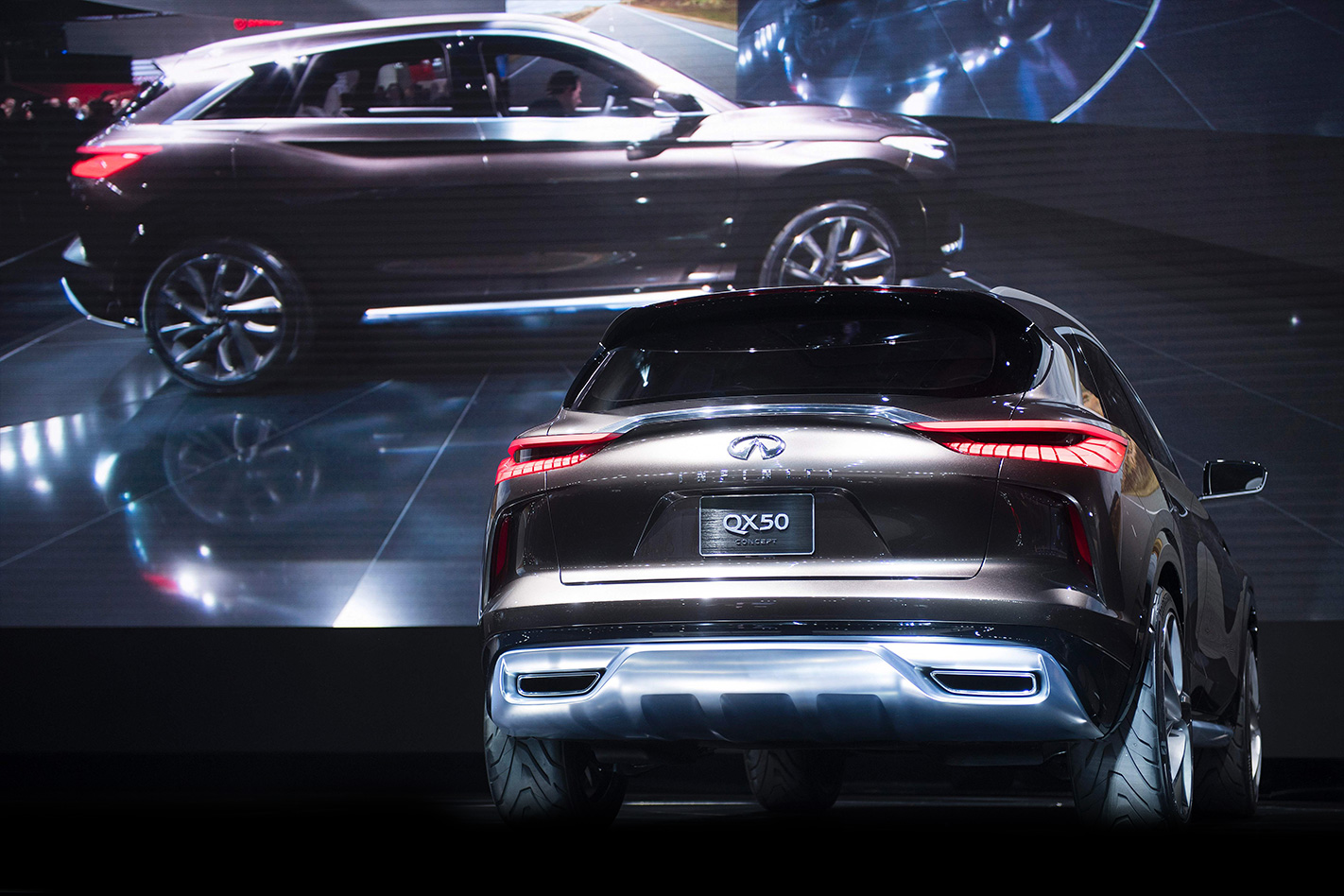
“If we do go to electrified vehicles, there are certain things you can do differently if you don’t have an engine in the front.
“A really important part of the interior architecture is the heating and cooling. It’s a huge piece in the dashboard. If you can get rid of that it’s the Holy Grail for interior designers.
“If you have no tunnel (transmission), the feeling of space inside is changed.”

Whatever the self-driving, communal and electric Infiniti of the future looks like, Habib reassured fans of the brand that the company would continue to produce vehicles with polarising and unusual aesthetics.
“We are 30-years old and it’s a brand that has had the courage to try very different things I think it’s in the DNA of the brand to take risks. There’s a need for familiarity but there’s a need for beauty.”
Augmented reality – the blend of the real world with the virtual one – is just about to arrive in cars. Ford has recently outlined plans to roll out the cutting-edge technology in future products, and as early as next year.
Ford has revealed its Lincoln Navigator, a large luxury SUV, will include a driver assist system that blurs the boundary between both worlds.
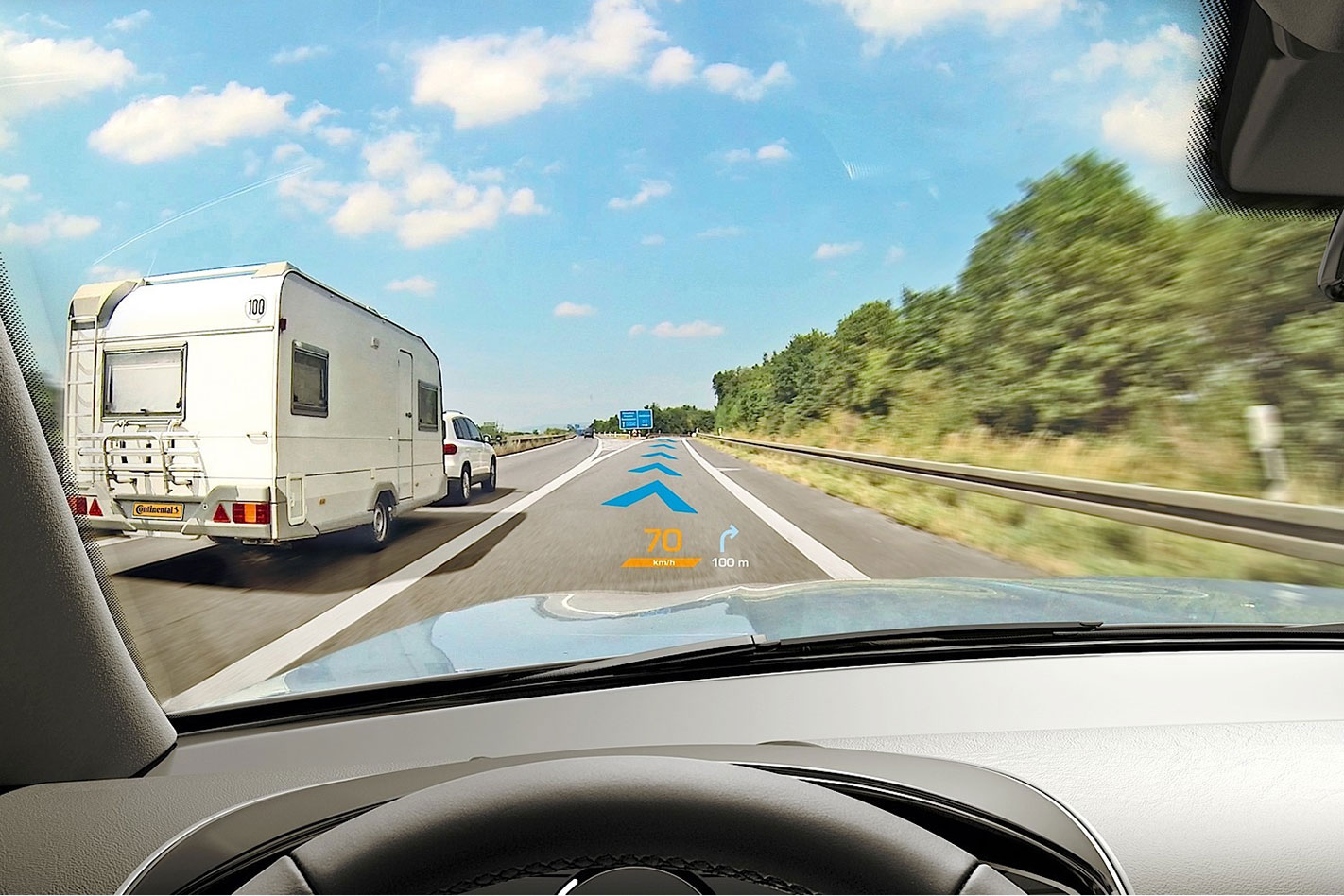
The system rolling out in the Navigator features the same technology used for digital projectors in cinemas, creating an image that’s sharper, more colourful and clearer than those that reflect a LCD display. It’s an important step in the path to augmented reality that will allow an image to project over a much larger area of the windscreen.
Head-up displays help drivers by placing relevant information, such as speed and navigation commands, in the driver’s field of vision. Doing this helps to reduce distraction caused by a driver having to take his or her eyes off the road to look at the instrument cluster or multimedia screen – a common cause of crashes.
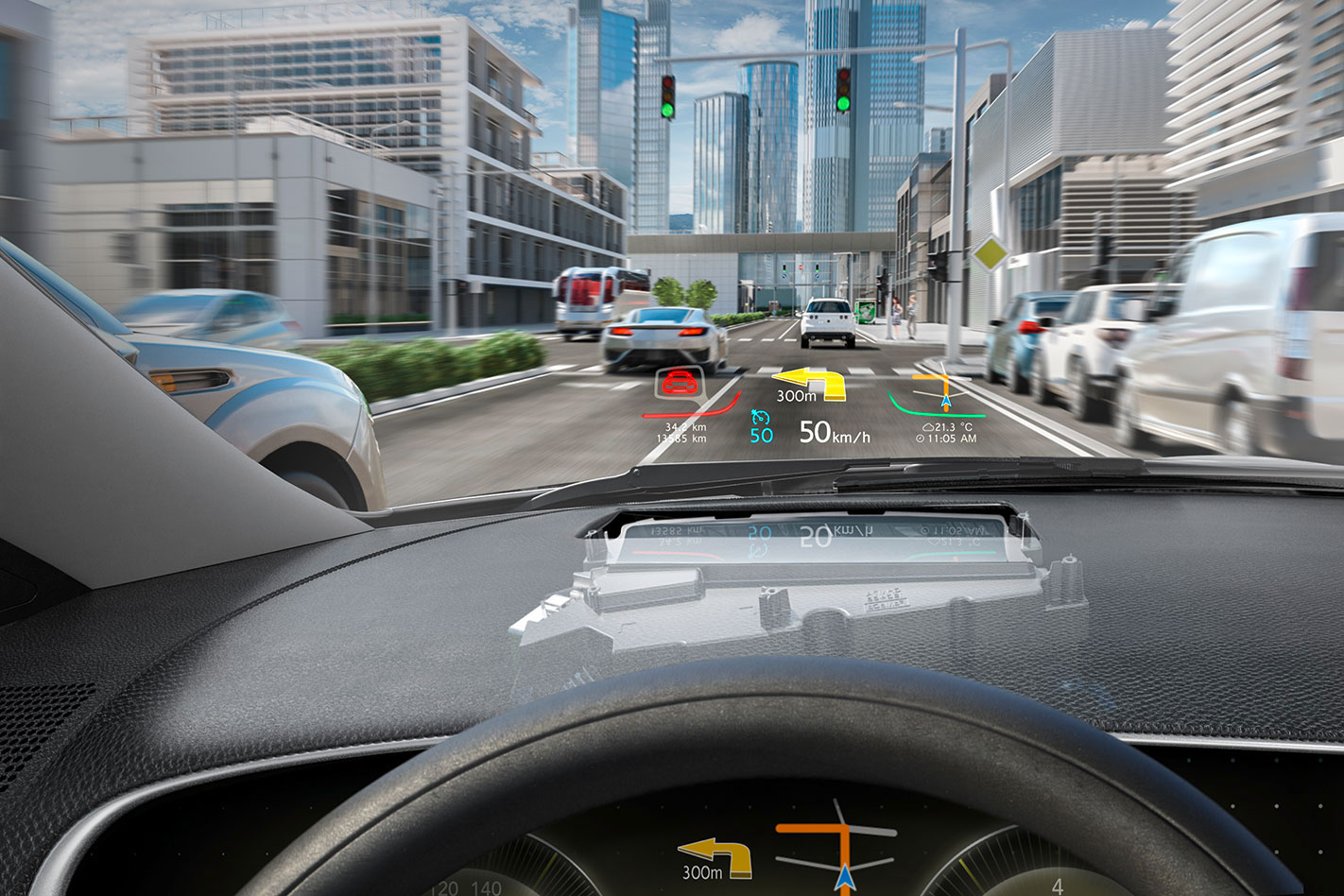
Augmented reality systems work by providing a digital overlay on the windscreen. In time they should even be clever enough to superimpose street signs over intersections, and to indicate if the vehicle ahead is speeding up or slowing by showing a red or green patch in between the cars.
The technology will need to use more of the windscreen than current head-up displays. Systems in use today require a special clear plastic patch on the windscreen to reflect an image, but with future systems needing to map out a path through city traffic, more of what a driver sees needs to be included in the display meaning they will cover more than half a metre of windscreen.
Future systems should be so advanced that instead of just showing turn-by-turn instructions in the head-up display, it can draw a path on the windscreen for the vehicle to follow. Not sure if the next freeway exit ahead is the one you need to take? A series of virtual breadcrumbs tracing the route out ahead of you, superimposed on top of the real road, will lead the way.
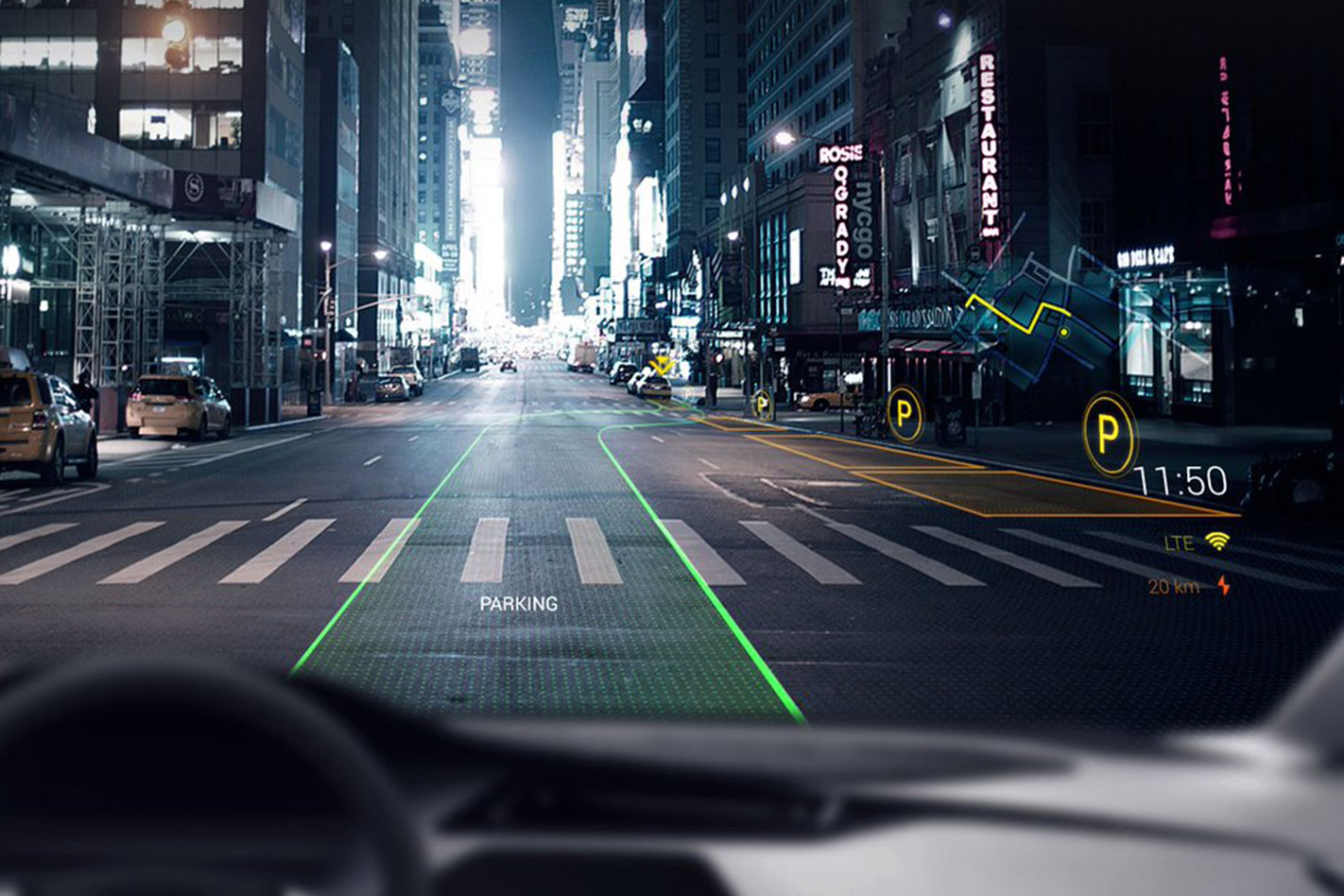
The Lincoln’s system will even allow users to wear polarised glasses – a problem with many of the head-up displays used on the current generation of systems that drop out under a polarised lens.
In order for the augmented reality system to work, it will need to create a digital map of the world around it. A number of vehicles already on sale today already do this, with driver-assist systems such as lane-keeping assist and active cruise control painting a virtual image of the world around them that is used to monitor the driver’s inputs.
The Consumer Electronics Show, an annual electronics extravaganza held in California each January, is turning into something of a technology roadshow for car makers. Expect the latest advances in driver assistance technology to feature strongly.
PORSCHE is committed to building sportscars you can drive on your own, even in the face of an increasingly autonomous future.
Speaking to Porsche’s in-house newsroom, the brand’s Vice President of the Executive Board and Member of the Executive Board, Finance and IT, Lutz Meschke detailed how autonomous tech will be implemented in future products.
The major takeaway is that even once fully-autonomous technology has been put into production, Porsche is committed to providing cars tailored towards the driver.

“The Porsche sports car will be one of the last automobiles with a steering wheel. But autonomous driving will dramatically change the efficiency of using vehicles.”
Porsche isn’t shying away from autonomous tech, but instead of using it to replace the driver, the company intends to implement it to help the driver.
For example, techniques from Porsche factory driver, ex-Formula 1 race winner and World Endurance Champion Mark Webber, will be programmed into the car to teach drivers how to get the most out of Stuttgart’s best on the racetrack.
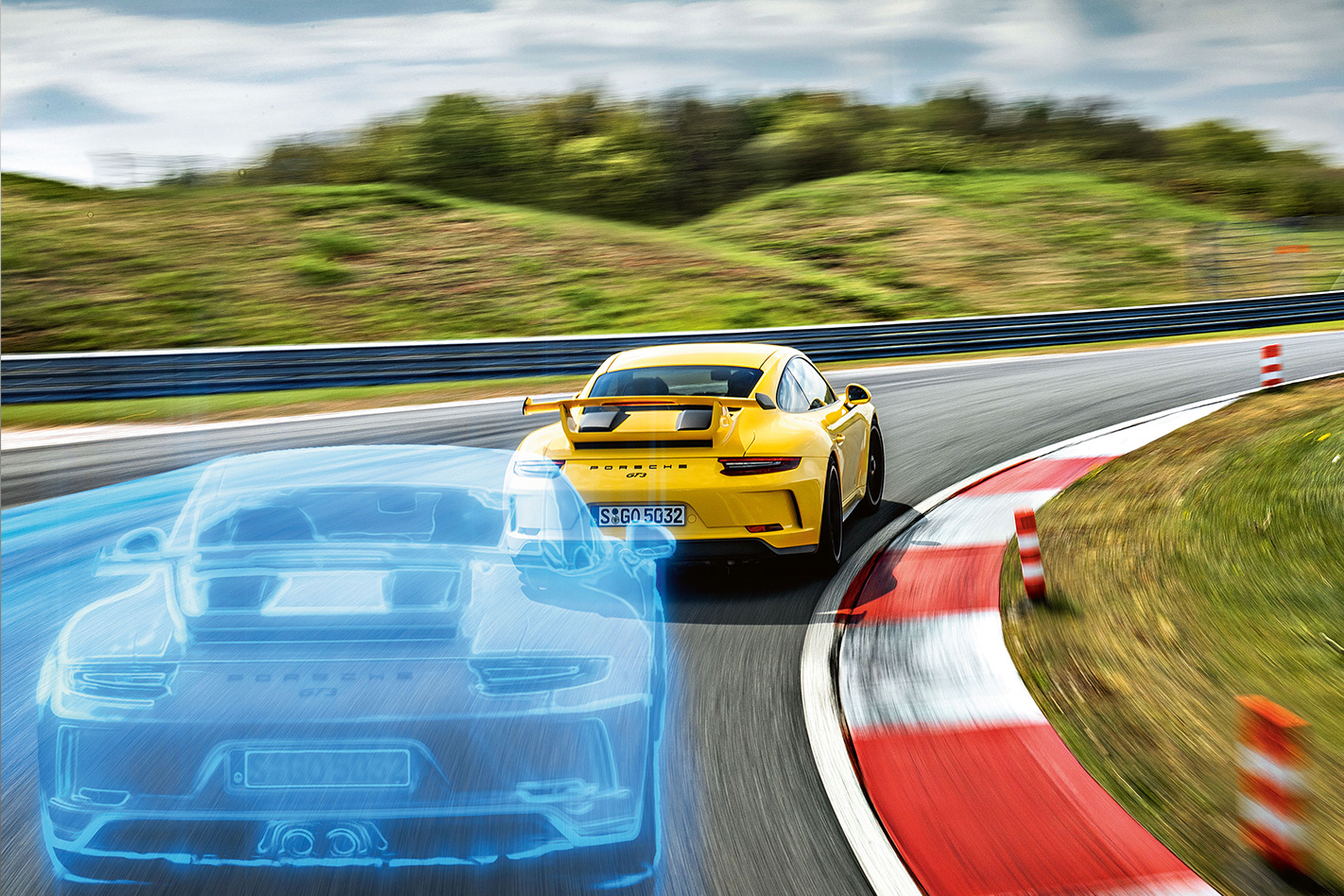
“Nevertheless, there are of course aspects of autonomous driving that are interesting for us: Traffic jam assistants or automated parking, for example. It’s attractive to be able to use the drive into the office during rush hour for my first virtual meeting.
“Or imagine you have dinner plans and are running late – and you can let the car park itself automatically. That’s really useful. In traffic jams and when it comes to parking, the functions of automated driving will soon be “must haves”.
MERCEDES-BENZ is forging a new look for its next generation of vehicles with a simpler design that ditches complicated creases and lines in favour of clean aesthetics and more focus on balanced proportions.
The new styling approach is being spearheaded by the freshly revealed Mercedes-Benz CLS large luxury four-door, which has dropped some of the distracting details of the two previous versions, but the more restrained design strategy will soon be seen on other three-point star models.
Speaking at a preview of the new CLS ahead of its public reveal in Los Angeles, Mercedes-Benz head of exterior design Robert Lesnik told Wheels his team would be working hard to introduce cars that rely on good proportions rather than details to attract attention.
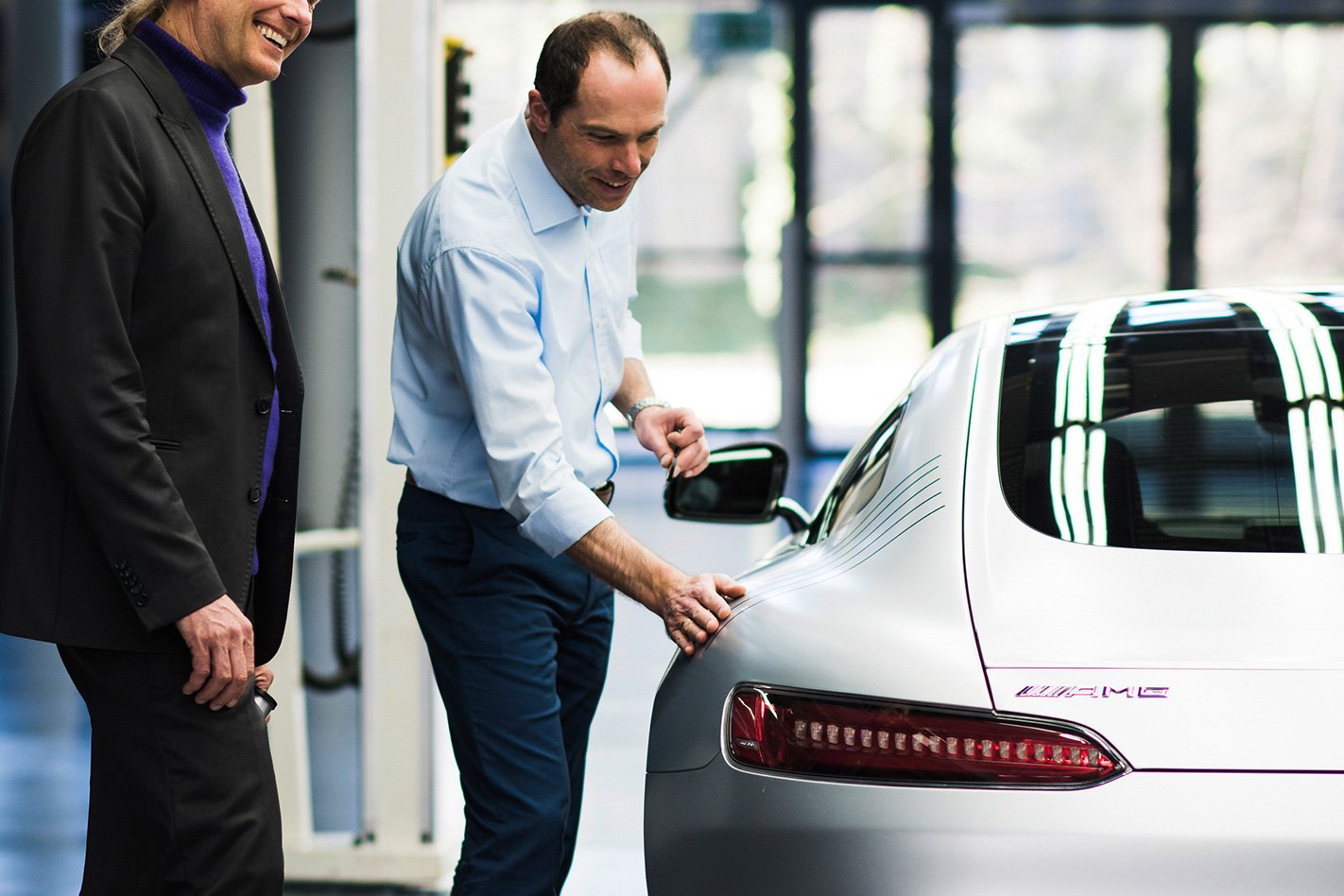
“This is definitely the next step in our essential purity philosophy. Everything is as pure as it can go simply because if the proportions are right you don’t need much.”
For the pioneer of the new design approach, Lesnik’s team looked back to some historic Mercedes models to inspire a less complicated result, which is the polar opposite of some other brands including Honda and its new Civic, for example.
“These days you see so many edges and so many car companies that really pronounce edges and this (CLS) is definitely in contrast to that. In the 50s, the SL300 was also very round and pure and maybe that’s the feeling that we wanted to capture.”
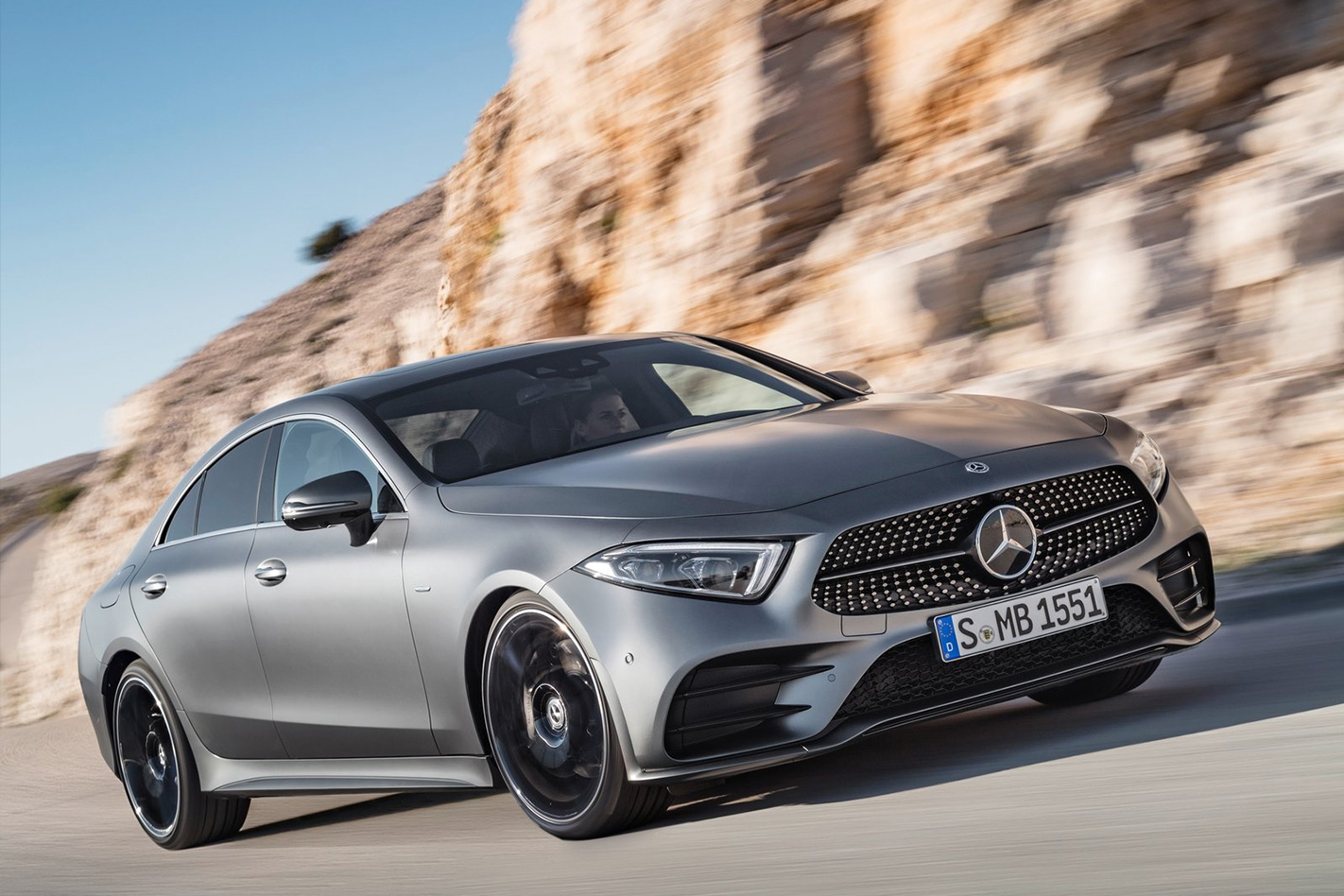
Lesnik described the new more aggressive front end as imparting a “predator look” which wears a new forward-leaning grille, which resembles a bloodhound hunting a scent.
“The angle of the star is negative. It’s leaning forward and we’ve never had this before with any other Mercedes.”
As for what is next in line for the simplifying treatment, Lesnik would not reveal any secrets but hinted that some of the smaller Mercedes family members could be in line for the revision.
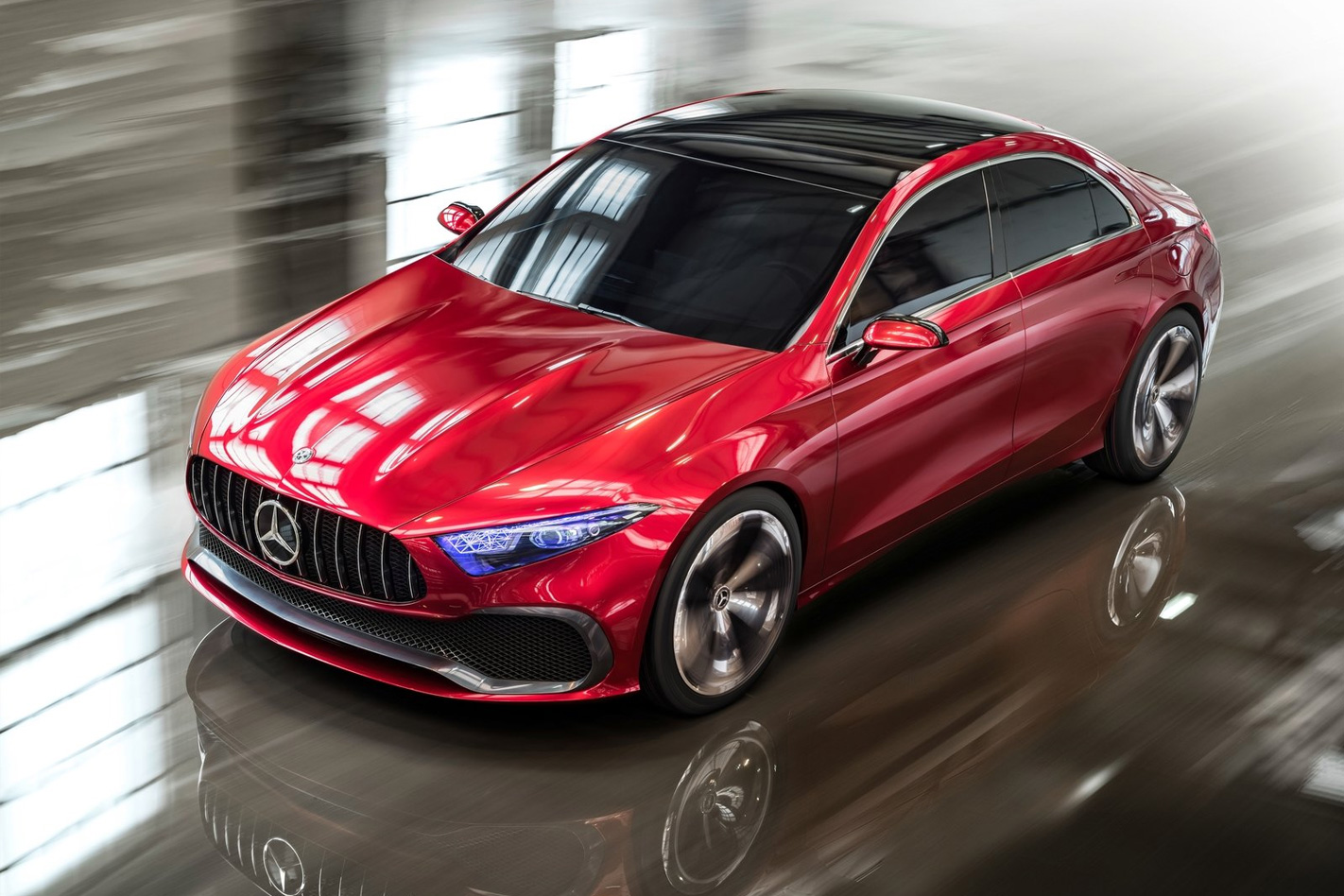
While the sportier coupe-esque and small cars look set to adopt a new look, the Mercedes sedan range has copped some flak in recent years for looking too similar.
When asked why the four-door family had evolved to look so similar, Lesnik recounted numerous occasions when media had criticised the C-Class, E-Class and S-Class line-up for exactly the opposite.
“In the previous generation we had the E-Class with the double headlights and we had S-Class with pronounced wheel arches and they looked completely different to the C-Class. The journalist said ‘why are they so different? I cannot recognise a family. There are other companies that really do this well.’
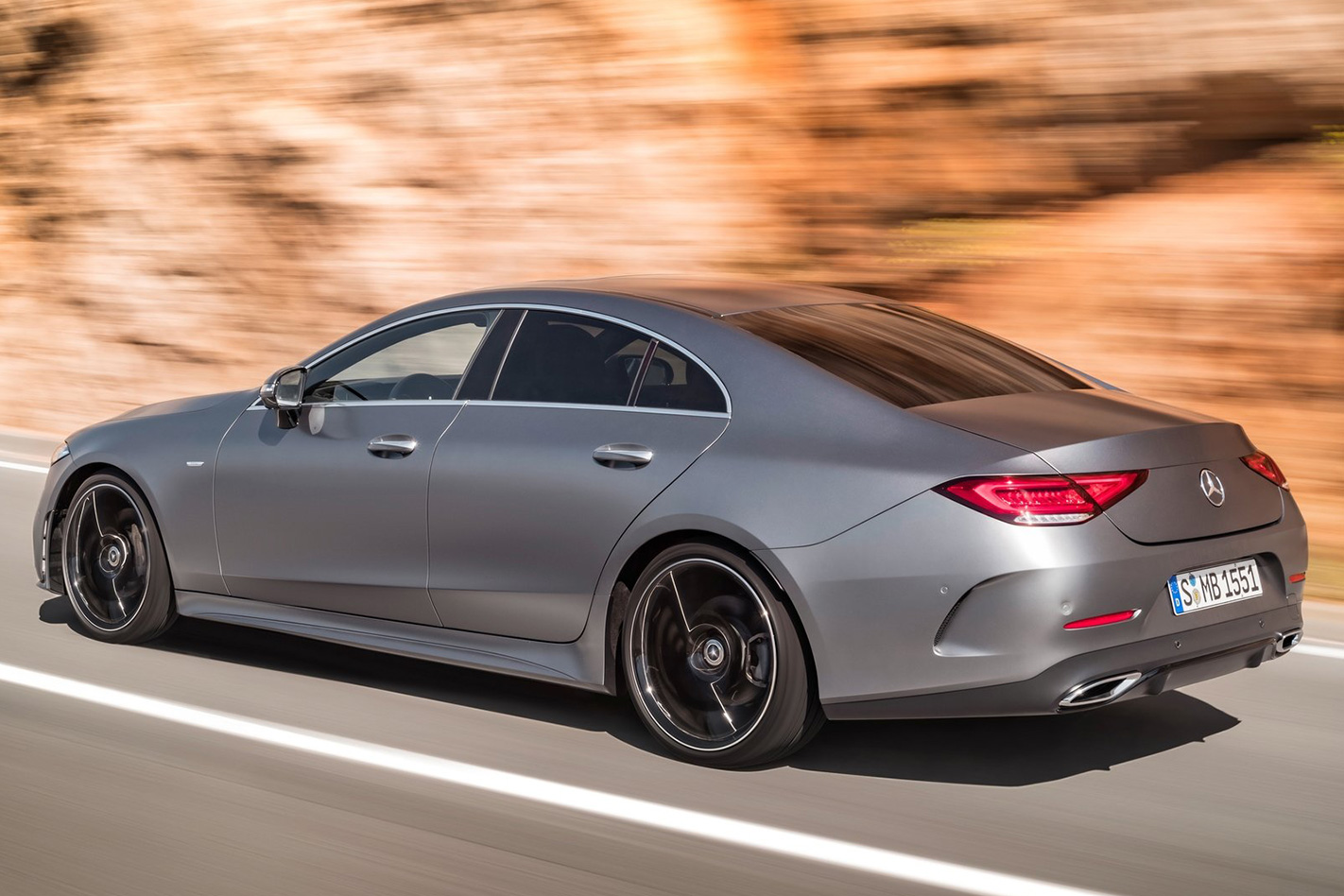
Lesnik explained that the decision to make the three core sedans look similar was no accident and a family likeness was critical for forging a strong identity, and would allow the company to introduce more diversity of design in other lines.
With all three sedans completing the first stage of a long-term plan, Lesnik said his team was now ready to focus on the ‘second round’.
“First we said we wanted to create a family look. We wanted to bring them together so that people will be able to recognise Mercedes.
“The first round is completed but it’s part of the big plan. I cannot explain the whole plan but that was the first. The second might be more differentiation for example.”
Though it won’t be seen on WRC stages in 2018, Volkswagen has revealed its new Polo GTI R5 rally car.
The Polo GTI R5 is set to be run by Volkswagen Motorsports’ customer base, with VW expecting it to be a strong performer based on the experience it has gained in building WRC cars for the likes of current world champ Sébastien Ogier.
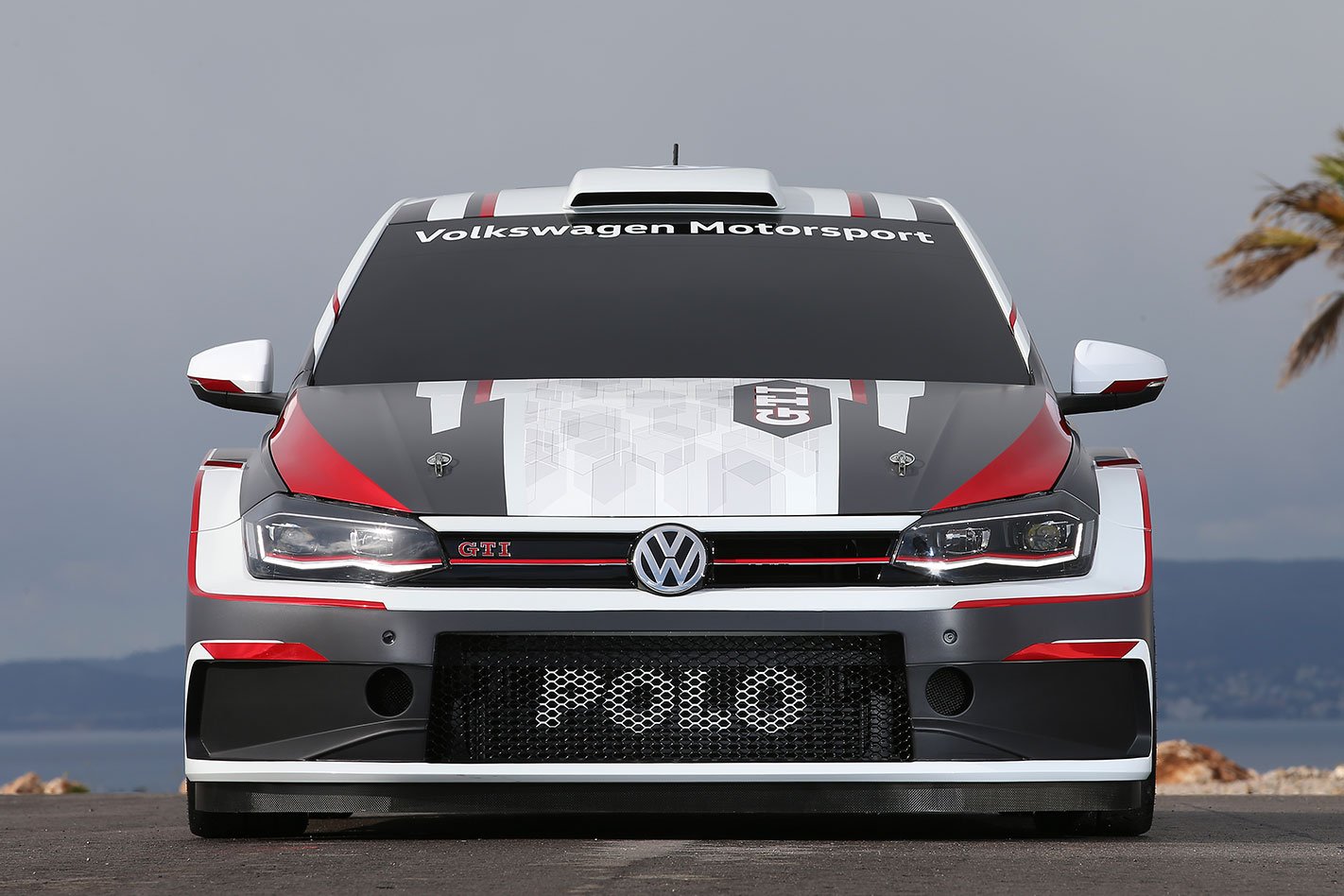
“A close-stepped, sequential, five-speed racing gearbox and permanent four-wheel drive achieve outstanding acceleration on any surface, whether asphalt, gravel or snow,” Volkswagen Motorsport says.
Built in Pamplona, Spain, the R5 is based on a four-door steel chassis, with a roll cage and other safety components to pass FIA standards.
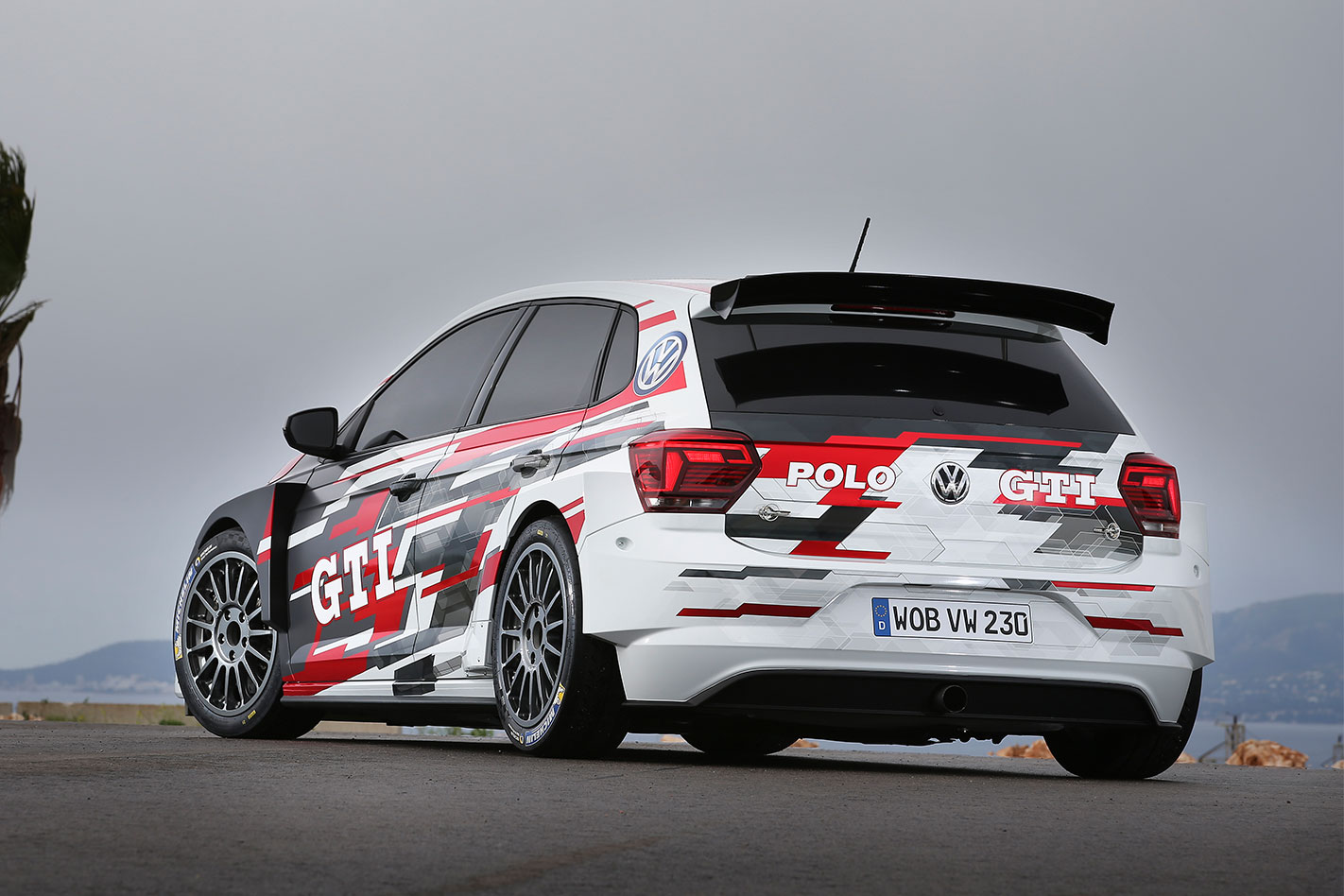
“The Polo GTI R5 came through the initial tests without any problems. The feedback from the test drivers was very positive,” says Demaison.
“It is obviously beneficial to be able to call upon an experienced team of engineers and mechanics, who helped to develop the Polo that won the world championship.”
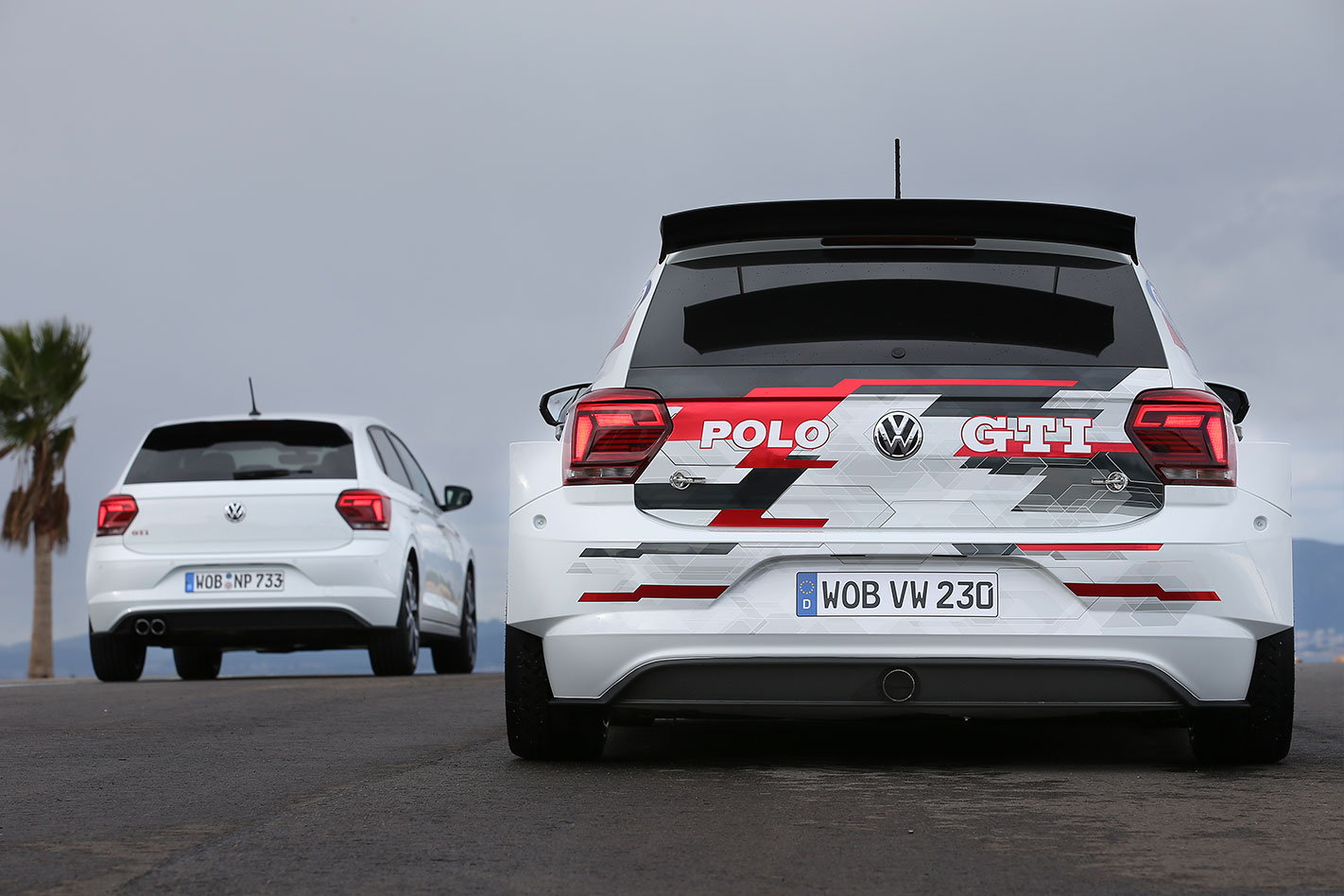
“Presenting the new Polo GTI R5 to the public was a magnificent moment,” says Smeets.
“The close relationship to the road-going Polo GTI is unmistakable. In the rally Polo, the GTI family has another spectacular ambassador.
“Our team and the colleagues at Volkswagen Design in Wolfsburg deserve great credit for this.
“Over the coming months, the Polo GTI R5 must prove itself in a series of tough scenarios, in order to ensure that it can build on the success of its predecessor in the customers’ hands.”
Subaru has given its BRZ an update, while also adding a new member of the range.
The 2018 Subaru BRZ tS is the new top-of-the-range BRZ, with upgrades to sharpen the car’s dynamics and make it easier to live with.
The biggest of these changes are related to suspension, brakes, chassis, and tyres.
Engine and output so far remain unchanged.
The dampers are replaced with upgraded performance dampers, and are surrounded by STI coil springs.
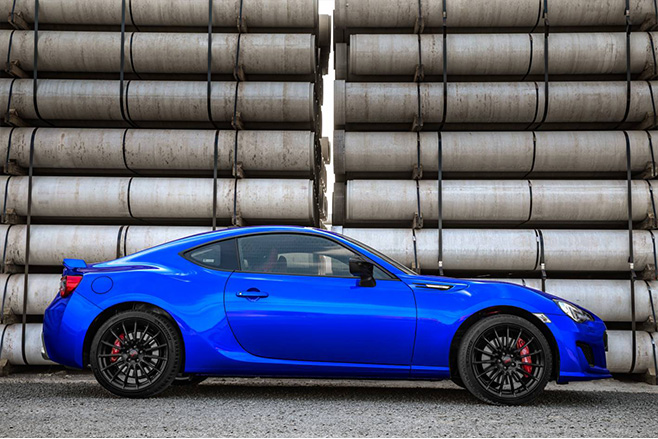
Inside new black STI alloys are Brembo brakes, which assist the Michelin Pilot Sport 4 tyres in slowing and stopping the tS.
Visually, it gains a new front bumper with tS badge, a black rear ‘wing’ and some STI trim, as well as red highlights inside, a new steering wheel with red accents and an STI logo, and red seat belts.
Even the engine start button features an STI logo.
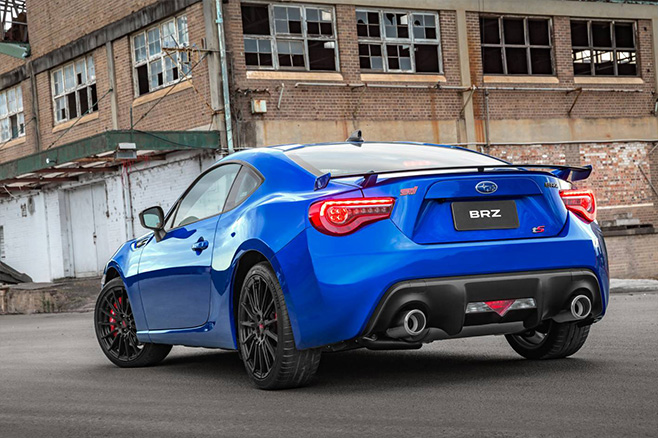
“BRZ has earned a strong following since its launch in 2012 and the addition of the tS to the range will help maintain momentum for this fun sports coupe,” Christie says.
“The combination of suspension, brake and cosmetic enhancements make it an appealing package for sports car fans looking for a bit more edge from their BRZ.
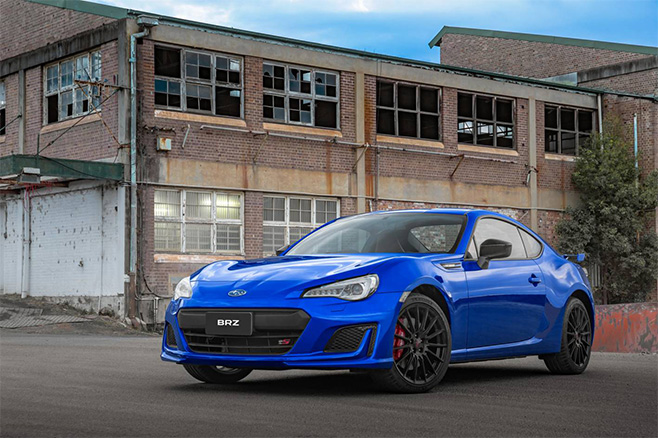
The new infotainment system, which every new BRZ will have, features a 7-inch touchscreen display with Apple CarPlay and Android Auto, as well as updated features to make the BRZ easier to live with.
The base model MY18 Subaru BRZ will cost $33,990 in six-speed manual, while the BRZ premium is priced at $35,490 and the BRZ tS at $41,894. A six-speed auto option is available for each level at an extra $2000.
