
HERE’S our first official look at the next Infiniti QX 50, the BMW X3-rivalling small SUV from Nissan’s luxury brand wrapped around the world’s first engine that can change its compression on the fly.
Due for a LA Motor Show reveal later this week, it’s heavily based on the QX50 Concept unveiled at Detroit motor show in January, sharing many of its design cues including the swept back roofline. However, the production version introduces a slightly redesigned face that includes a lower grille in place of the concept’s metal stone guard.
The bonnet, bumpers, A-pillar, tailgate and enclosed underbody are designed to encourage airflow over, around and under the vehicle, with minimal turbulence, resulting in a six percent lower drag co-efficient than the previous QX50.
Its completely redesigned underpinnings are made from high-tensile material not previously used in automotive construction, which can be moulded into unique shapes, helping to save weight and improve torsional rigidity over the old model by 23 percent. The new material is more resistant to flexing and vibration, too, meaning it should be much quieter.
The platform also supports a more spacious and flexible cabin design, which in the QX50 allows for a sliding rear seat for what Infiniti says is best-in-class legroom, or a considerable 895-litre boot space which stretches to 1699 litres with the rear seatbacks folded down.
The 2018 Infiniti QX50 also offers a range of technologies to enhance the driving experience including its ProPILOT advanced driver assistance technology, including adaptive cruise control, automatic emergency braking and a lane-keeping assist system that works on single-lane highways,
Infiniti says the system is designed to work as a co-pilot and, in what is seen as a direct dig at car industry disruptor Tesla, “is a step removed from the notion of fully-autonomous ‘driverless’ motoring embraced by some car makers”.
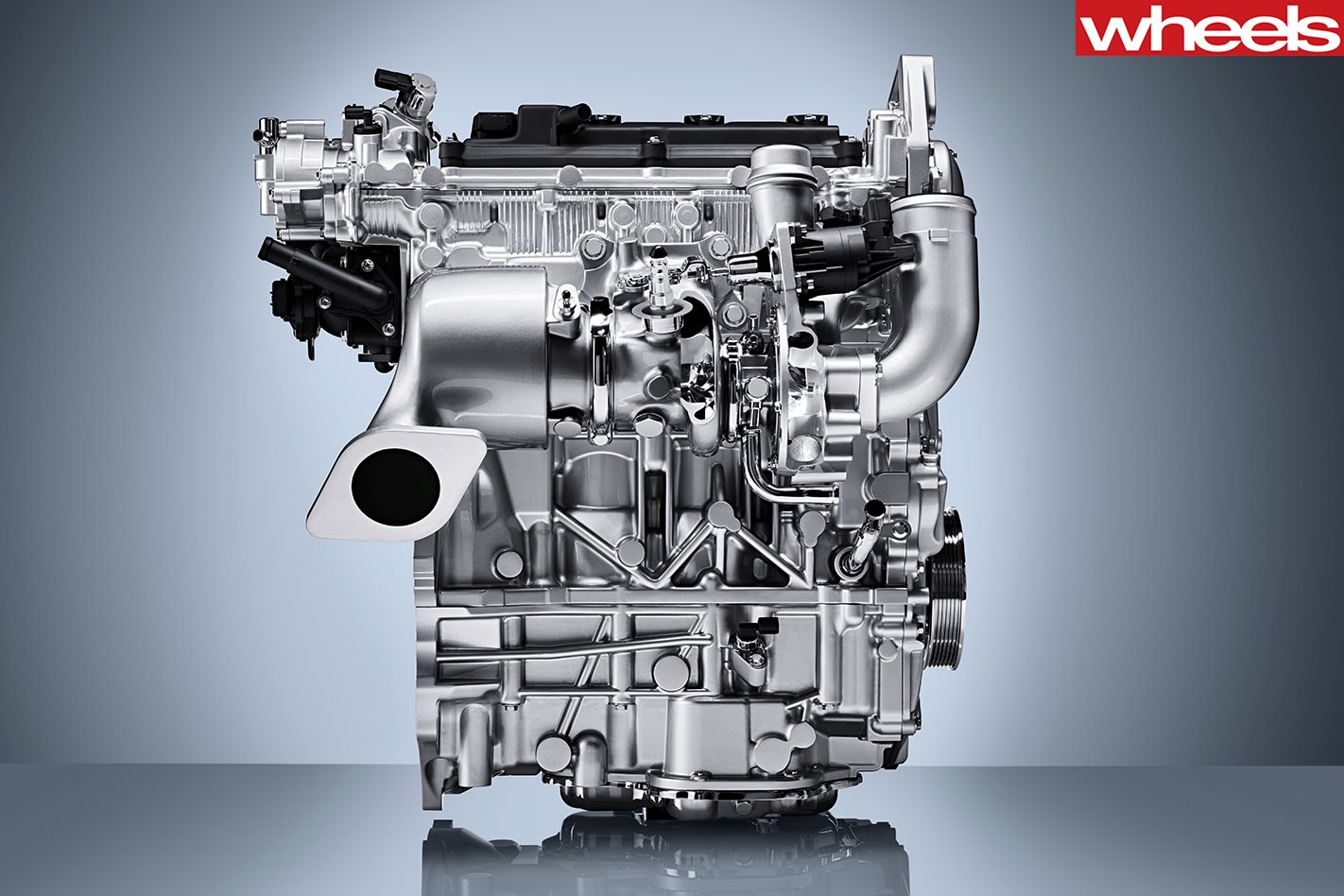
A significant advance in combustion engine design, the 2.0-litre VC-Turbo combines the power of a 2.0-litre turbocharged petrol engine with the torque and efficiency of a four-cylinder diesel by adjusting its compression ratio to optimise power and efficiency.
Paired with a CVT auto, it delivers 200 kW and 380 Nm and in the QX50 delivers a combined fuel consumption of around 8.7L/100km, which is around 30 percent more efficient than the previous model.
Infiniti has long been seen as an also-ran luxury brand, but state-of-the-art technology making its debut on the QX50 might finally see it gain credibility as an innovator.
The company’s global vice-president, Christian Meunier, says the QX50 is the most important model it has ever launched.
“It embodies everything the brand stands for: Beautiful design, advanced technology and empowering performance. As a premium, mid-size SUV, It’s the right vehicle at the right time in one of the world’s fastest growing segments.”
Infiniti will release more details of the Infiniti QX50 when it’s officially unveiled in LA on November 29.
THERE was disbelief all round, even from Red Bull Holden’s Jamie Whincup when his Ford rival Scott McLaughlin gifted the Red Bull driver an unprecedented seventh Australian Supercars championship as the 2017 series came to a crunching, feverish and drama-filled denouement at the Newcastle street circuit.
A shattered McLaughlin was certainly left rueing the brutal truth that he threw away a golden opportunity to secure his maiden Supercars title.
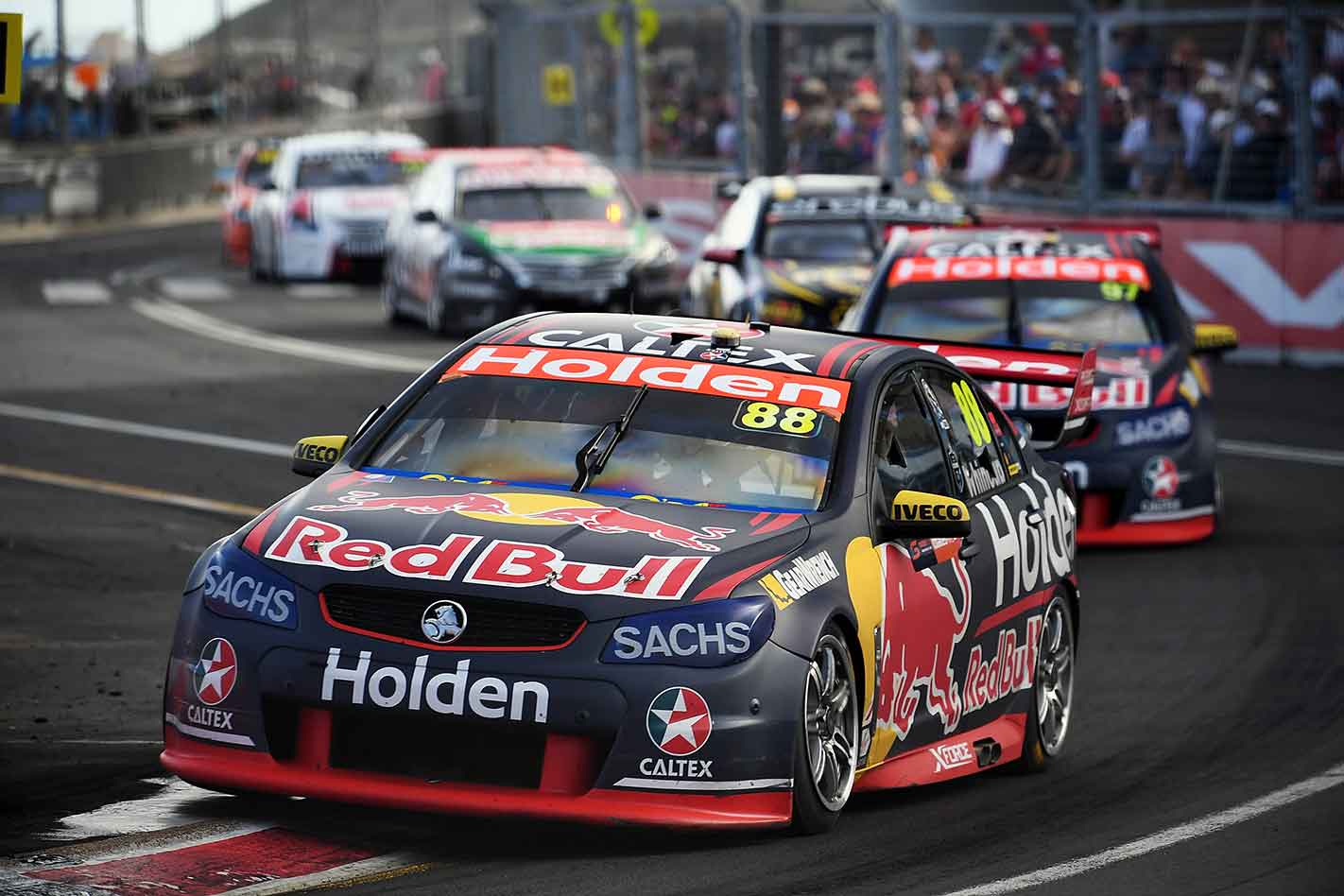
Three big errors from McLaughlin in the final race brought censure from officials and ultimately left his title campaign in tatters.
Whincup’s 2017 season has been one of toil and tenacity. On sheer pace he and his Red Bull Holden often couldn’t match 24-year-old tearaway McLaughlin and the powerhouse Shell V-Power Ford team. Still, consistency is a powerful weapon in long title fights and Whincup held a useful though hardly comfortable 30-point margin going into the title-deciding weekend of two 250km races.
It was a weekend of contrasts for the two teams in the title battle.
Saturday was a disastrous day for Whincup and triumphal for McLaughlin.
The young Kiwi again raced to pole position, his 15th of 2017.
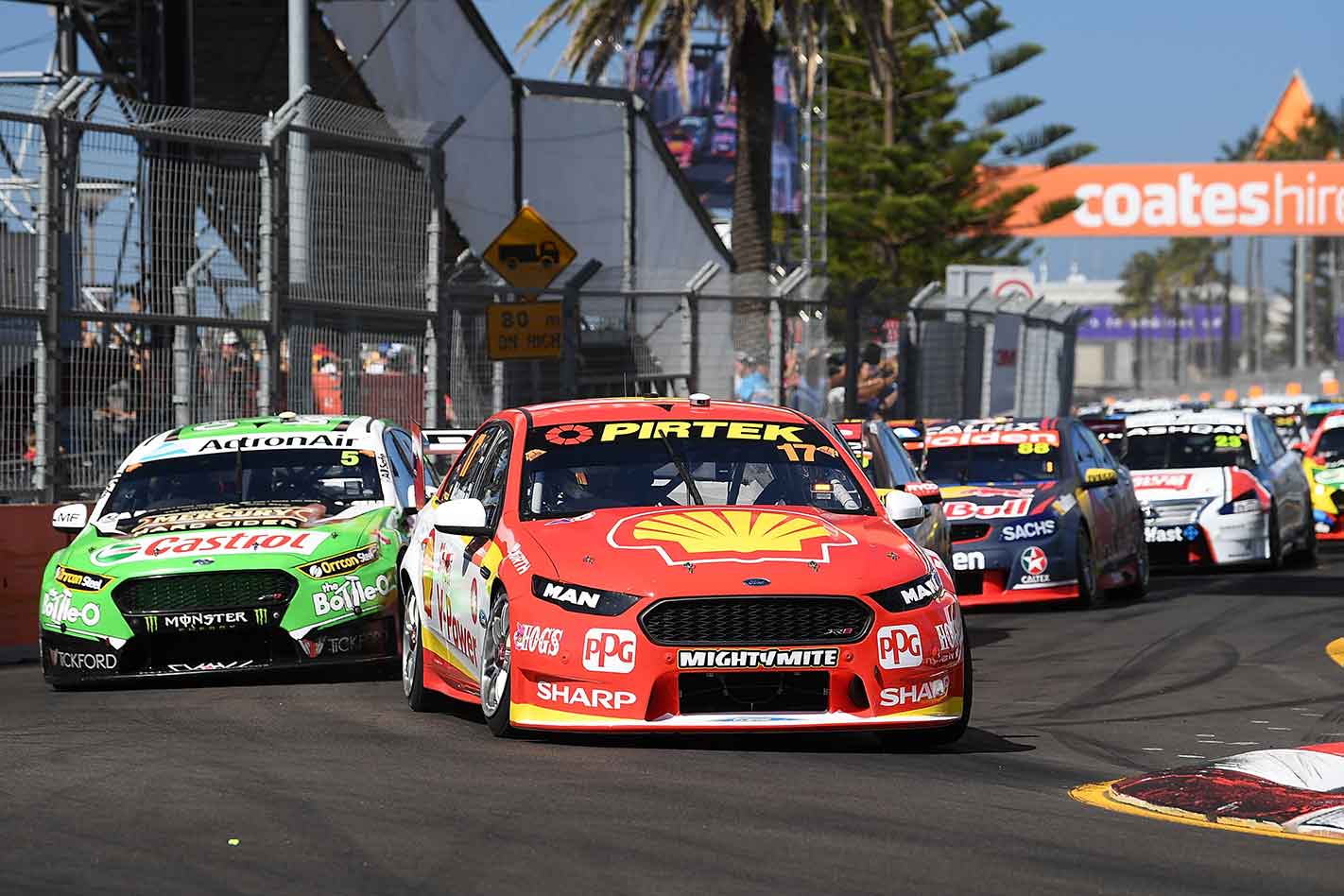
Every position and every point would be crucial. Seconds after the start of Saturday’s race, in the midst of the usual bumping and grinding for an advantage, Whincup was squeezed between the wall and Michael Caruso’s Nissan. The two touched, cutting Whincup’s right front that soon after pitched him into the wall.
While Whincup limped his Red Bull Holden back to the pits with serious suspension damage, rival McLaughlin methodically went about setting up his most important win of the title season.
Crucially, Red Bull got Whincup back out 13 laps down but soon enough for him to be classified a finisher and collect 80 championship points.
But an elated McLaughlin banked 150 points for his eighth win of the year. It was a 108-point swing in McLaughlin’s favour and a huge day for Dick Johnson Racing-Team Penske, with Fabian Coulthard finishing an impressive second ahead of Freightliner Holden’s Tim Slade.
The outcome sealed the team’s championship for the Dick-Roger squad.
Between Saturday’s chequered flag and lights-out on Sunday how often did we hear the observation that McLaughlin had one hand on the trophy?
It would be so difficult – almost impossible – for Whincup to claw back the 78-point deficit. Surely.
Another glorious pole to McLaughlin on Sunday left the Kiwi in command. Whincup could not do better than fifth fastest.
McLaughlin needed only to finish 11th to take his maiden title, even if Whincup was to win the race.
Despite obvious and understandable pre-race nerves, McLaughlin made a perfect start , beating Shane van Gisbergen, Whincup’s always forceful Red Bull Holden teammate, into the first corner, and then controlling proceedings until the first wave of pit stops.
There is usually a moment in time where a championship is lost…
That came at the end of lap 14, when McLaughlin and van Gisbergen swung off into the pits. It looked like a tense yet routine hard-braking stop to meet the obligatory 40km/h pit-lane speed limit.
Rejoining, McLaughlin and van Gisbergen found that David Reynolds’ Erebus Holden had jumped them with an earlier stop – the famed undercut.
McLaughlin would not have been too worried by this as his title rival was still a couple of places behind him.
Then came the crucial title-influencing message from race control that McLaughin (but not the close-following van Gisbergen) had been pinged for being over the pit speed limit on entry. The penalty was a drive through. This left him 23rd.
Up front, Reynolds slid wide and van Gisbergen slipped through to the lead.
The points situation between the two protagonists changed constantly as McLaughlin slowly picked off cars ahead. If he got up to the target of 11th, the title was his. It looked eminently gettable, at least until he lined up Simona De Silvestro’s Nissan.
De Silvestro had been having a great race, aggressively but fairly collecting worthy scalps such as Garth Tander and Tim Slade in her push for a top 10 result. She was never going to be easy for McLaughlin.
Maybe he was too impatient. On lap 47, McLaughlin made his second, and more damaging mistake, a clumsy attempted pass that bunted De Silvestro into a spin.
Race control quickly applied a 15sec time penalty. This dropped McLaughlin to 22nd and upped the degree of difficult another few notches.
On lap 30 of 95, van Gisbergen, playing the Red Bull team game, allowed Whincup through to the lead.
A safety car intervention gave brief respite, but when the race resumed, a scrimmage involving McLaughlin, Scott Pye, Jason Bright and Garth Tander left the #17 Ford with lots of body damage and a rubbing tyre. Could it get any worse for McLaughlin?
Running in 13th, McLaughlin took a couple of laps to clear his head and resume his attack. With Whincup on track for victory, he needed to pass GRM duo Garth Tander and James Moffat.
Behind McLaughlin but catching up fast thanks to a clever pit visit for fresh tyres was Craig Lowndes, Whincup’s Triple Eight Race Engineering teammate. McLaughlin finally forced his way under Tander on lap 90, and then on the penultimate lap, scrambled under Moffat to 11th.
Joy and relief were in short supply though with Lowndes right on his rear bumper. A small mistake by McLaughlin gave Lowndes a sniff and he loomed alongside in the run down the straight for the final time.
McLaughlin steered left to block and Lowndes hit part of the wall that protrudes maybe 50cm, broke his steering , pirouetted and hit a barrier backwards at high speed.
A lightning fast adjudication from race control resulted in a post-race penalty applied to McLaughlin . This third and cruellest penalty of the race dropped him from a title winning 11th to 18th.
The championship was Whincup’s by just 21 points.
A devastated McLaughlin was consoled by his team after the race. He knew he had blown it.
“Oh man, I just gave it my all, gave it my all for the boys,” McLaughlin said.
“I lost my left-hand mirror early and obviously I knew we [he and Lowndes] were close but not that close. I defended my line to [turn] two and we interlocked. I genuinely didn’t mean to push him into the wall and to get pinged like that.”
McLaughlin may well wonder where the title went. He won more races than anyone this year with eight and took an incredible 16 poles.
It was not enough against the nagging, ever-present Whincup, the supreme professional with outstanding survival instincts – his last non finish was 135 races ago. He is the only regular Supercars driver to have finished every race of 2017.
Whincup didn’t realise he had won his record seventh title until after he had crossed the finish line.
“It was an unbelievable day from where I stand!” Whincup said. “Does it get any better than that? We just felt robbed [on Saturday]. We felt like we worked so hard and did so much to get ourselves within championship contention but we didn’t feel like we deserved that yesterday.
“Today, we just thought we had to go out there and do our job, and for things to fall our way. We feel like we’ve worked the hardest and we deserve it and there’s someone looking down on us and we got the ultimate result.”
“We fought hard, didn’t have the quickest car all year but it is all about team work and sport is all mental,” Whincup said.
Like many who witnessed the closing laps, Whincup felt for McLaughlin. . “A massive thanks to the car 17 crew. They stepped up this year and gave us an unbelievable fight. Commiserations to them. No doubt Scotty will go on to win the next eight but I am glad we got one.”
Whincup’s teammate van Gisbergen, who finished second on Sunday, also had thoughts for the loser and fellow Kiwi: “The unthinkable happened today and I feel for Scotty; it really sucks.”
But the outgoing titleholder had praise for the new champ too: “Well done to Jamie. That’s why he has won the championship so many times. He is so consistent, no mistakes. It’s pretty awesome.”
So, ignoring the relentless, repetitive hard sell from the Fox Sports commentators, was the freshly minted street venue in Newcastle a success?
Undoubtedly. Certainly the waterside location is terrific even if Mark Skaife’s regular reference of it having similarities to Monaco may have been a stretch.
It’s an interesting layout, but it has its limitations, like all temporary tracks . The claustrophobic and in places bumpy 2.6km layout did not offer generous overtaking opportunities, as McLaughlin will attest.
Teething problems at a new venue are not a great surprise either, and the track surface breaking up on Saturday fell into that category. After overnight patching the track was good to go on Sunday.
While some local residents in heritage homes facing the track were highly critical, the reality is that the vast numbers of Novocastrians were thrilled to be hosting big-time motorsport for the first time.
Bottas ends season on a high with victory in Abu Dhabi Grand Prix
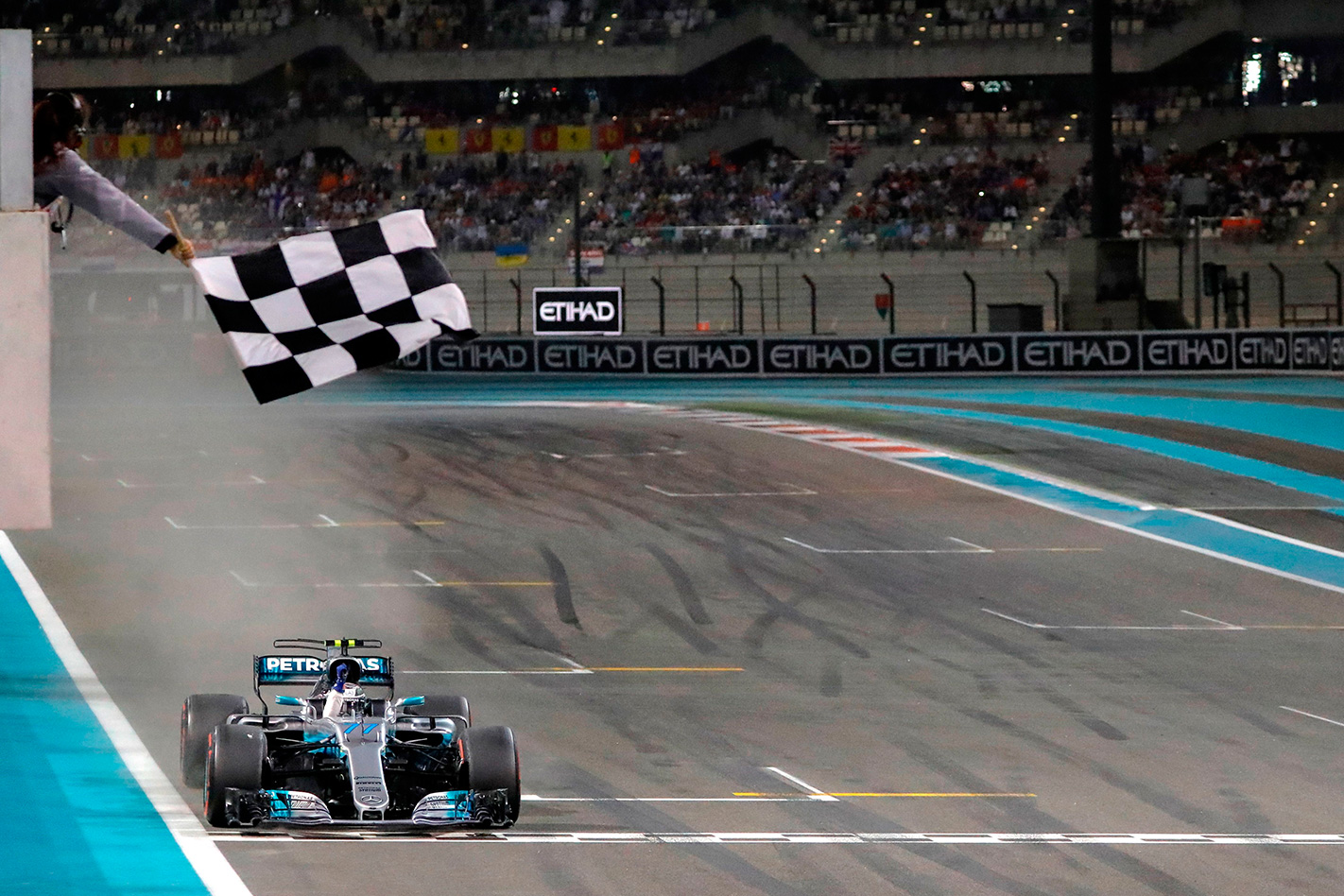
It was Valtteri Bottas’ third career victory, all of them recorded since he joined Mercedes to partner the 32-year-old Lewis Hamilton in January following the unexpected exit of 2016 champion German Nico Rosberg.
Bottas saved one of his strongest performances of the year until last, fighting off Mercedes team-mate and four-times world champion Lewis Hamilton to win the season-ending Abu Dhabi Grand Prix by 3.9secs.
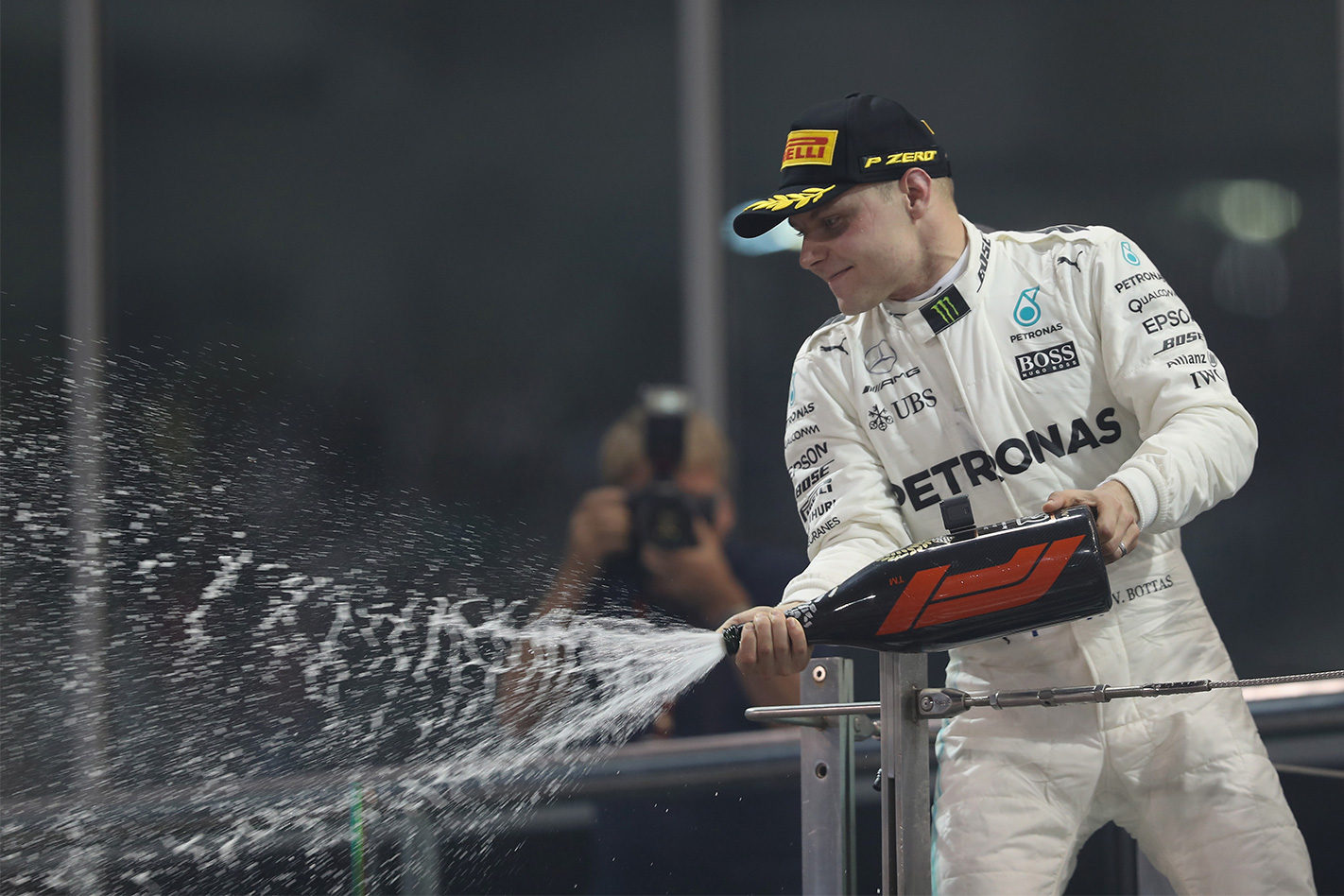
This apart it was a grand prix that had produced little in the way of a spectacle and nothing much to race for as the Briton had already sealed the 2017 world title.
The 28-year-old Bottas, who a day earlier claimed his fourth pole position of the year, was in charge throughout apart from a period following his first pit stop when Hamilton inherited the lead.
“There was a lot of pressure from Lewis from behind throughout the entire race,” said Bottas afterwards. “I knew that one proper mistake could have ruined it. I had to keep my head down and go lap by lap. I couldn’t be happier to end the season like this. Of course, it would have been nice to get the second place in the championship, but Sebastian [Vettel] had a good weekend as well.
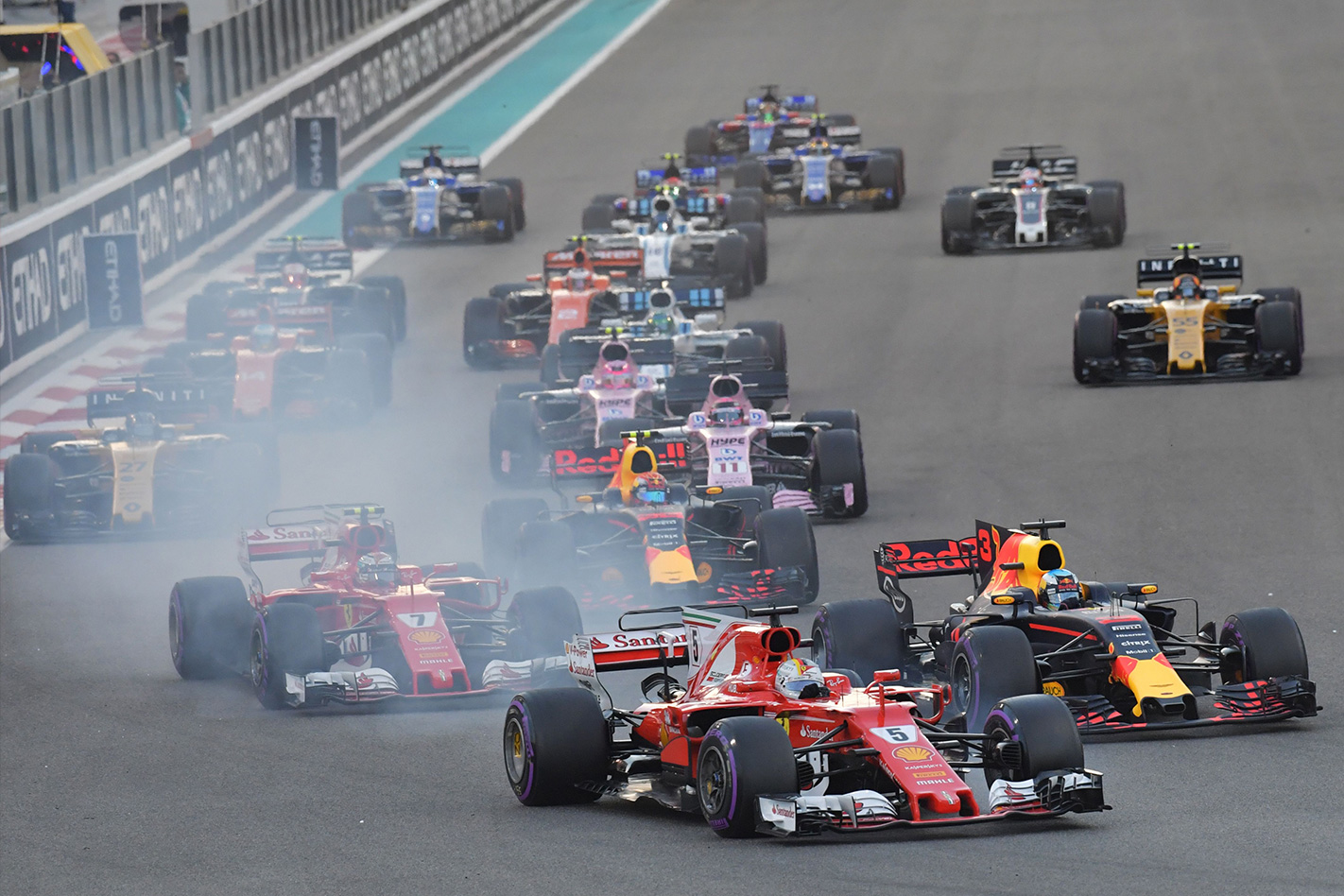
After being thwarted by Bottas, Hamilton called for a re-design of a track with too many corners, declaring that it was impossible to pass.
Ferrari’s Sebastian Vettel took third in Abu Dhabi ahead of teammate Kimi Raikkonen. It was a modest result systematic of a season that offered hope in spades for the scuderia, but instead produced the sobering reality that Mercedes was just too good.
Despite several glaring driving errors this year, Vettel took second in the driver’s championship.
Red Bull-Tag Heuer driver Max Verstappen finished the race in fifth, a long way back from Bottas.
But after splitting the Ferraris of Vettel and Raikkonen in qualifying to claim fourth, two places ahead of teammate Verstappen, Australian Daniel Ricciardo’s race ended early, on lap 21, with a hydraulics problem. It was his sixth non-finish of the year and it dropped him to fifth in the championship standings.
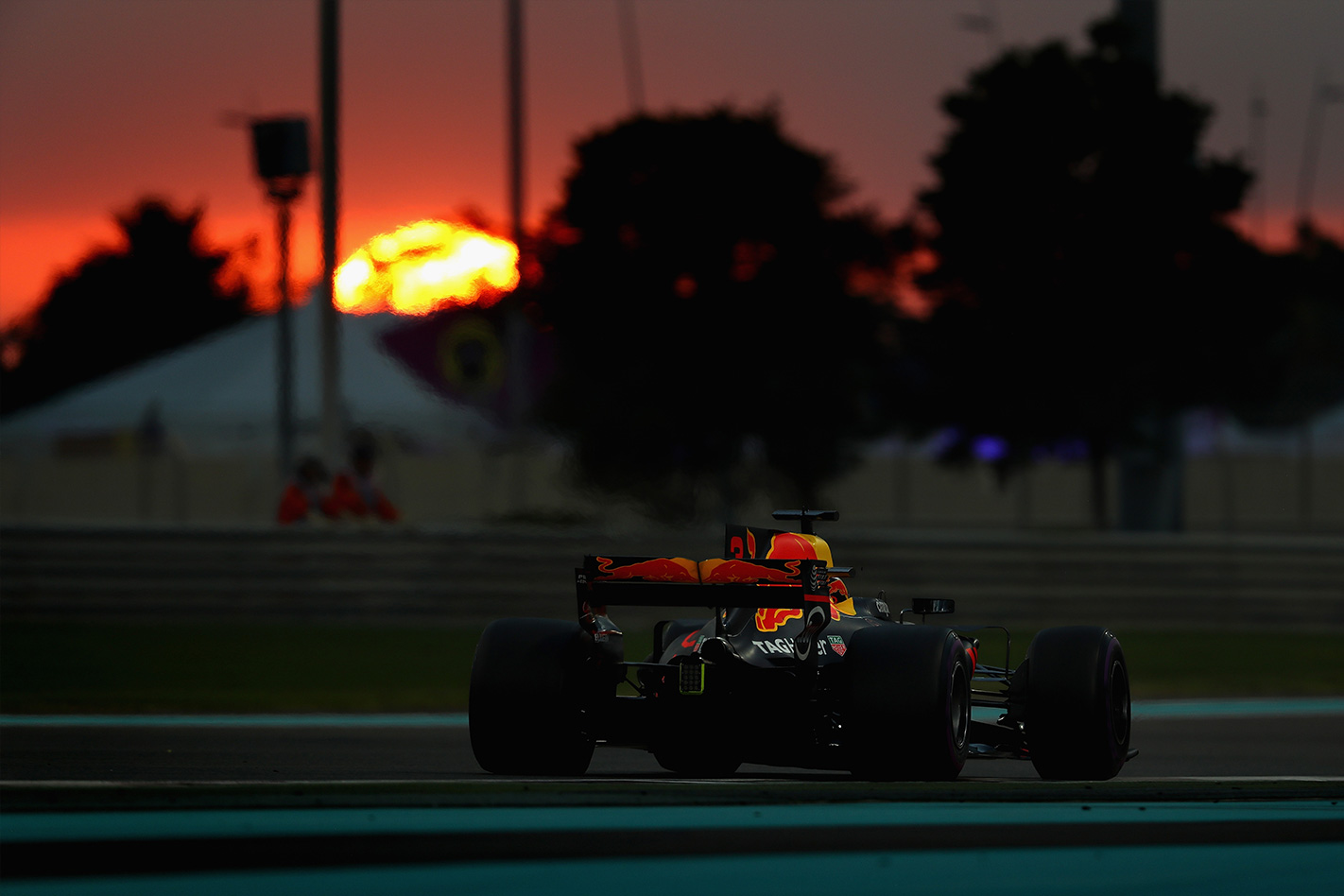
“I’m now excited to go on holiday, really looking forward to the break and hopefully next year we’ll come back stronger,” said Ricciardo, his attention now on anything but racing.
In his last F1 race, Brazil’s Felipe Massa scored a point from finishing 10th. “I can say I am really proud of everything I’ve achieved, all 16 years and all the amazing races, and the great people I met in the paddock, racing against the best drivers in the world. The race was good. I was fighting from the beginning to the end,” he said.
New Zealand’s latest F1 driver Brendon Hartley finished 15th, one place ahead of Toro Rosso teammate Piere Ghasly. “It was always going to be an uphill struggle for us to hang on to that sixth place in the championship and it’s a real shame to lose it… I’m obviously massively disappointed. Going back to this weekend, I had a pretty clean race. I was in a train of cars – a McLaren, a Haas, a Sauber, myself and Pierre behind.
Formula One returns next year for the Australian Grand Prix on March 23-25.
Negotiating the options list of any new car can be a daunting but exciting task with a multitude of extras on offer to enhance the comfort, looks and function of your new vehicle.
Among the range of options including upholstery, trim, equipment and styling packages, more brands are offering premium audio systems as part of the enhancement – and often at a hefty price.
Here is the WhichCar guide to premium car audio terminology and features, and what the extra investment gets you.
Brands
Some major home entertainment brands also offer car-specific technology, and many work with a major car marque so that advances in home entertainment can be enjoyed on the road.
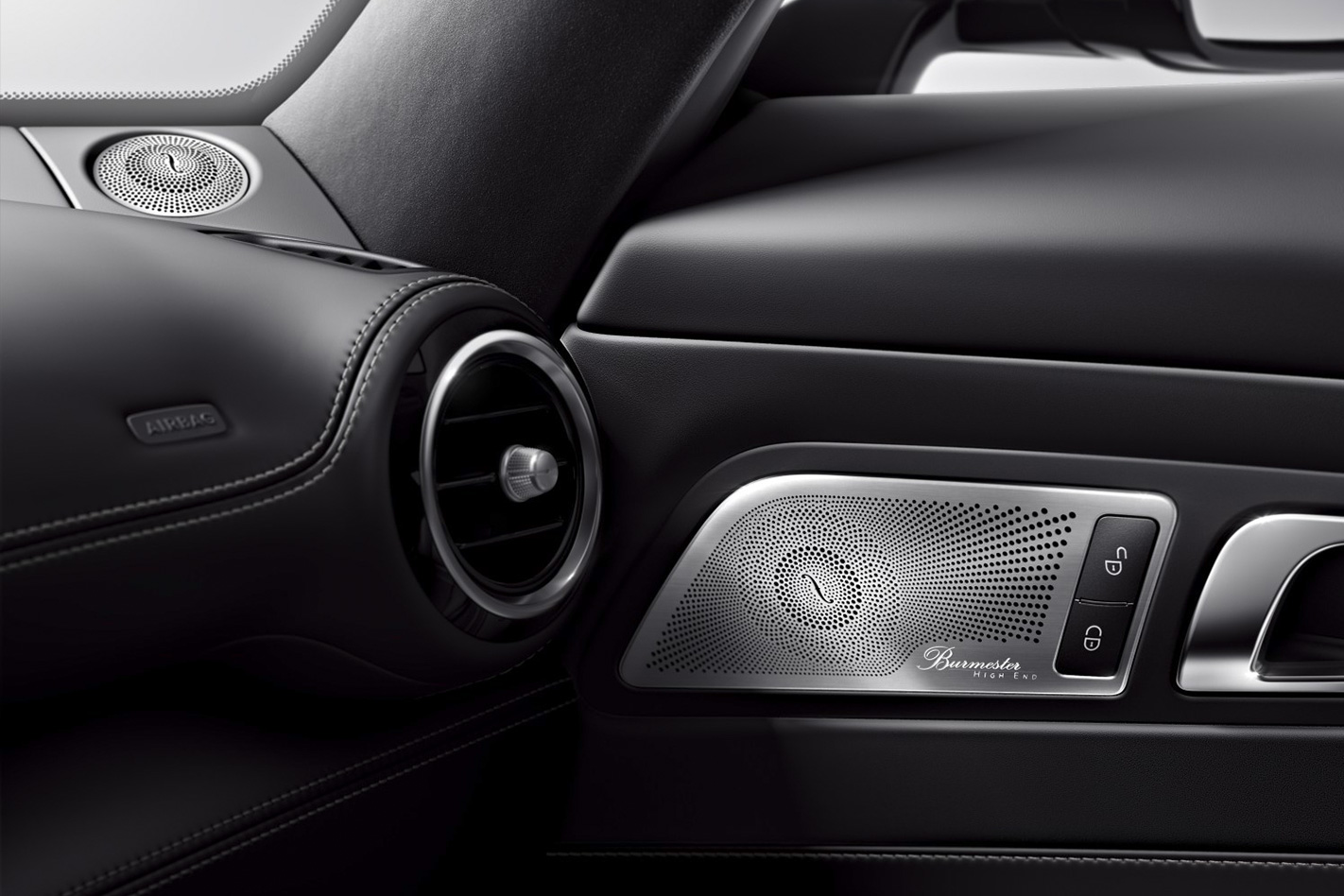
Among others, Mark Levinson provides systems for Lexus, Bose has worked with many manufacturers including Nissan, Mazda and Skoda, Harman Kardon gear can be found in BMW models, high-end Audis have adopted Bowers and Wilkins and Bang and Olufsen, Dynaudio is a relatively recent addition to Volkswagen, Infinity has created systems for Hyundai, Meridian kit graces some Jaguars, Mcintosh is associated with Subaru and Bermester is the preferred high-end stereo for Mercedes-Benz.
Amplifier and channels
Optional upgraded audio systems often list the type of amplifier that is supplied including number of channels. As the name suggests, the amplifier or ‘amp’ is an audio signal booster that increases the power of a stereo allowing it to drive more speakers, and make their output louder.
But with power comes control and a stronger speaker signal also reduces distortion for a clearer sounding, higher quality output.
The number of channels does not relate to channels in the sense of radio or television, but refers to the number of amplifier outputs and how many speakers can be driven. The higher the number, the more speakers there are and the broader the sound range and volume.
Channels are sometimes described by two numbers separated by a decimal point. A 12.2 system has 12 speakers and two subwoofers.
What are watts?
The electrical power of a system is measured in watts. Put simply – the more watts, the more powerful the output. For context, a very basic small car sound system might have about 50 watts, while the most expensive options in large cars can approach 1000 watts. Custom installations built by enthusiasts using aftermarket components can be engineered with many thousands of watts.
Speakers
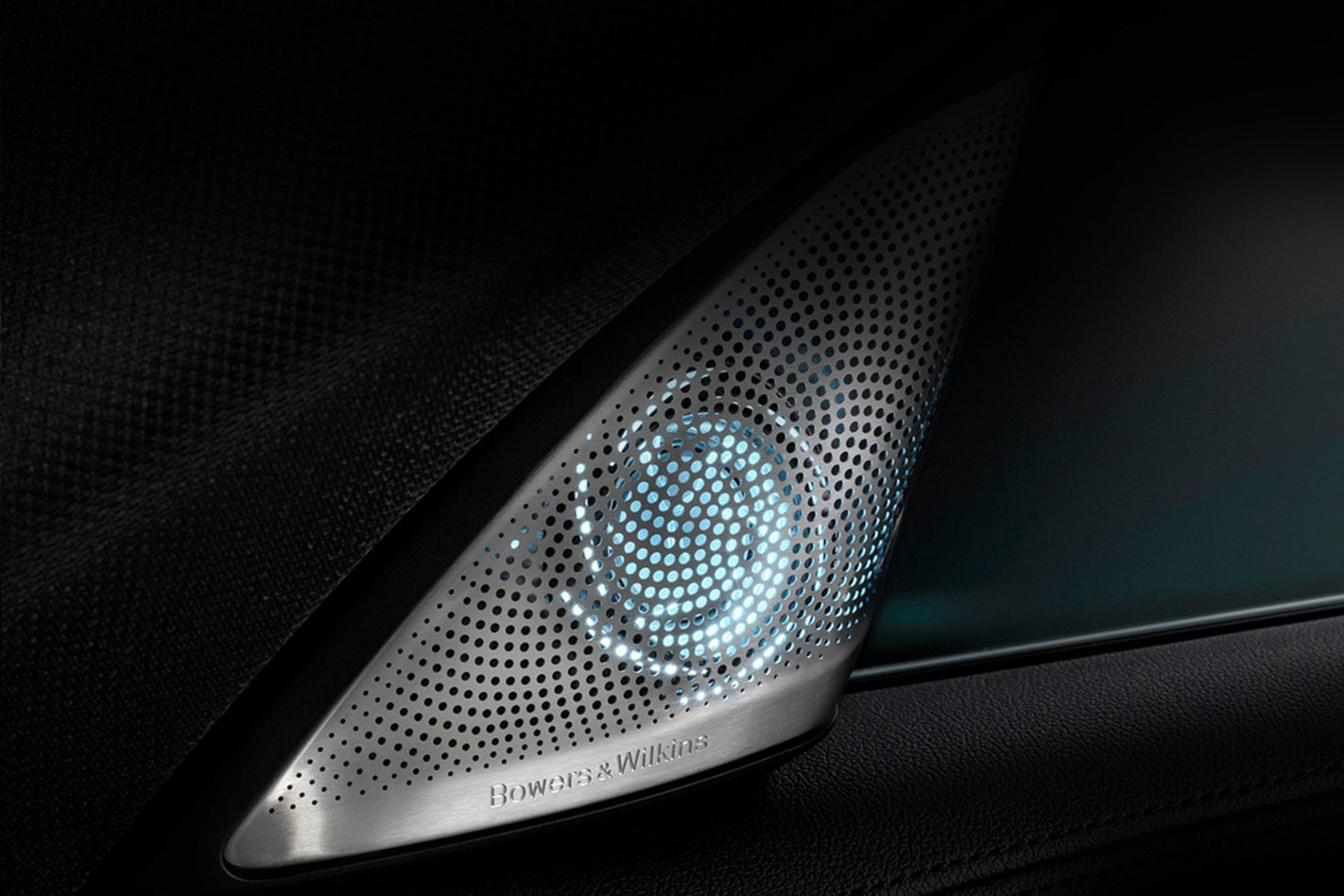
With more amplifier channels, an entertainment system can use a broader range of speakers for a greater audio range. High frequency sounds are reproduced by tweeters, bass is handled by larger low range speakers and subwoofers, while the mid-range is looked after by mid-range speakers.
Tweeters are normally located close to the occupants and in line of sight as upholstery and obstructions can deaden high-frequency sound. The sound from subs, on the other hand, can permeate the entire cabin so can be hidden away.
If a stereo system lists an uneven number of speakers, it usually means a single subwoofer is included.
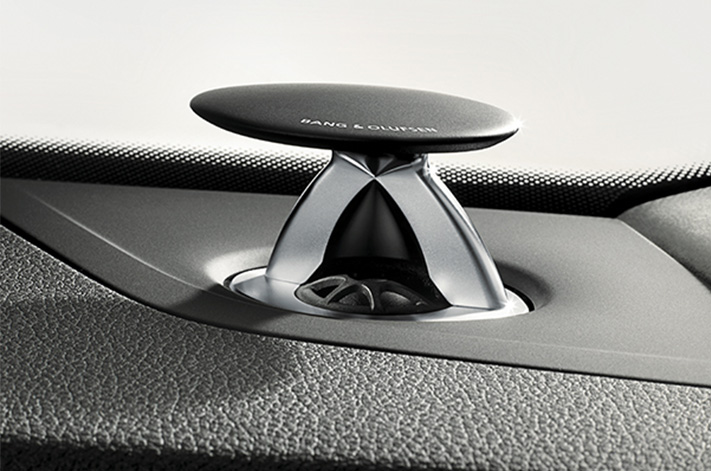
Very high-end systems can include novelty features such as ornate tweeters that rise out of the dashboard, and speakers with inbuilt ambient illumination.
Surround sound
This innovation is an evolution of stereo sound, and uses more a sophisticated system and more speakers placed about the cabin to create a sense of greater depth in the sound.
Dolby is a name given to proprietary technology that may be available in other vehicles but under a different name. Dolby’s technology includes surround sound as well as other reproduction technology, including stereo.
Active noise cancelling
Another relatively recent automotive application, noise cancellation was first applied to military aircraft. The clever system plays the exact inverse sound wave of ambient noise caused by tyres and wind, relaying it through the stereo speakers. The two opposite sounds actually cancel each other out.
It might seem strange that playing additional sound through a speaker might help improve cabin ambience but the systems can be very effective.
Equaliser
While more budget audio systems often offer bass, treble and mid-range adjustment, higher end options usually offer a full equaliser or graphic equaliser.
Rather than just three parameters, an equaliser allows the user to customise the sound quality depending on the type of music being played, or just personal preference.
DAB+ digital radio
Digital audio broadcasting or DAB replaces traditional analogue radio broadcasting for more reliable signal without the hiss associated with a poor analogue reception. The format also allows extra information to be sent with audio transmissions such as displaying the name of the artist on the screen of your entertainment system.
DAB+ provides a more reliable coverage in areas within broadcasting range and also supports MPEG Surround sound for greater depth of sound. However, because it is a digital system, it won’t slowly fade out like an analogue system when the signal starts to weaken. Instead, it will either work … or not.
Australia can’t get enough of dual-cab utes right now, and there’s plenty to choose from. Here’s the best of the bunch.
1st: Mitsubishi Triton GLX
If a dual-cab ute represents your ideal work/family rig, you’re not alone – this increasingly popular segment regularly contributes some of the country’s best sellers outright. Some of these models win sales through refinement approaching a car, loads of equipment and a butch image, while others, such as the Mitsubishi Triton, generate their appeal by delivering a hefty value payload. The diamond-star ute starts with a sub-$40K price tag which, with sound 52 percent three-year resale, means less lost to depreciation than any key rival.
What the turbo-diesel four-cylinder lacks in capacity (and refinement), it makes up with better than average 7.6L/100km official combined-cycle economy. A five-year warranty is a standout in this class (matched only by the Isuzu D-Max) and the 12-month service interval is surely often enough for a rugged workhorse. The average dual-cab ute costs more to insure than most family car alternatives, but happily the Mitsubishi is among the least-costly of the breed, at $859 per annum. Provided you’re talking value and not road manners, the Triton GLX is head and shoulders above the rest.
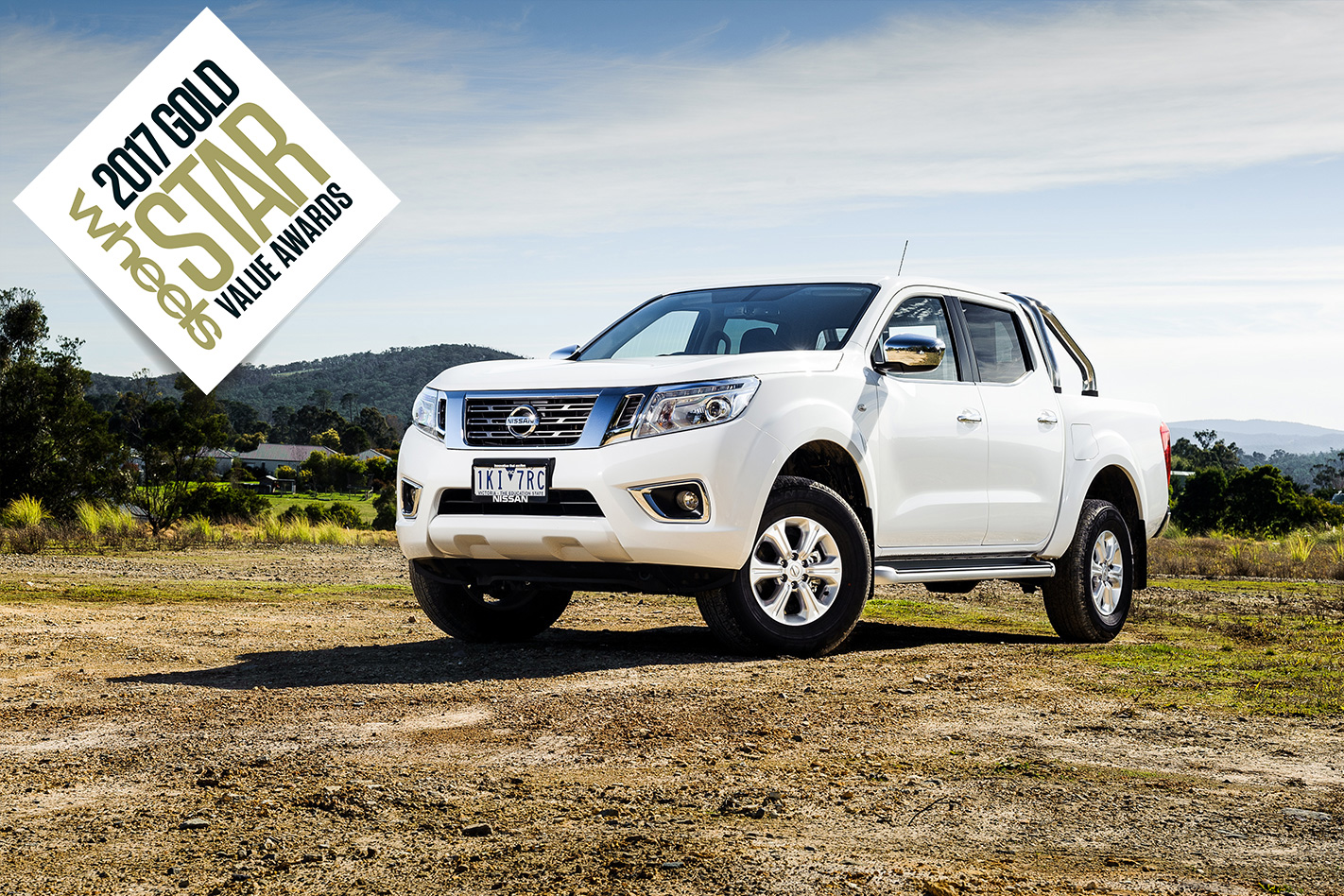
2nd: Nissan Navara RX
The Nissan Navara RX has a slightly smaller, thriftier and more refined engine than the Triton to deliver the lowest fuel cost of all the key dual-cab players, and has a 12-month/20,000km service interval to please buyers who do an above-average number of kays.
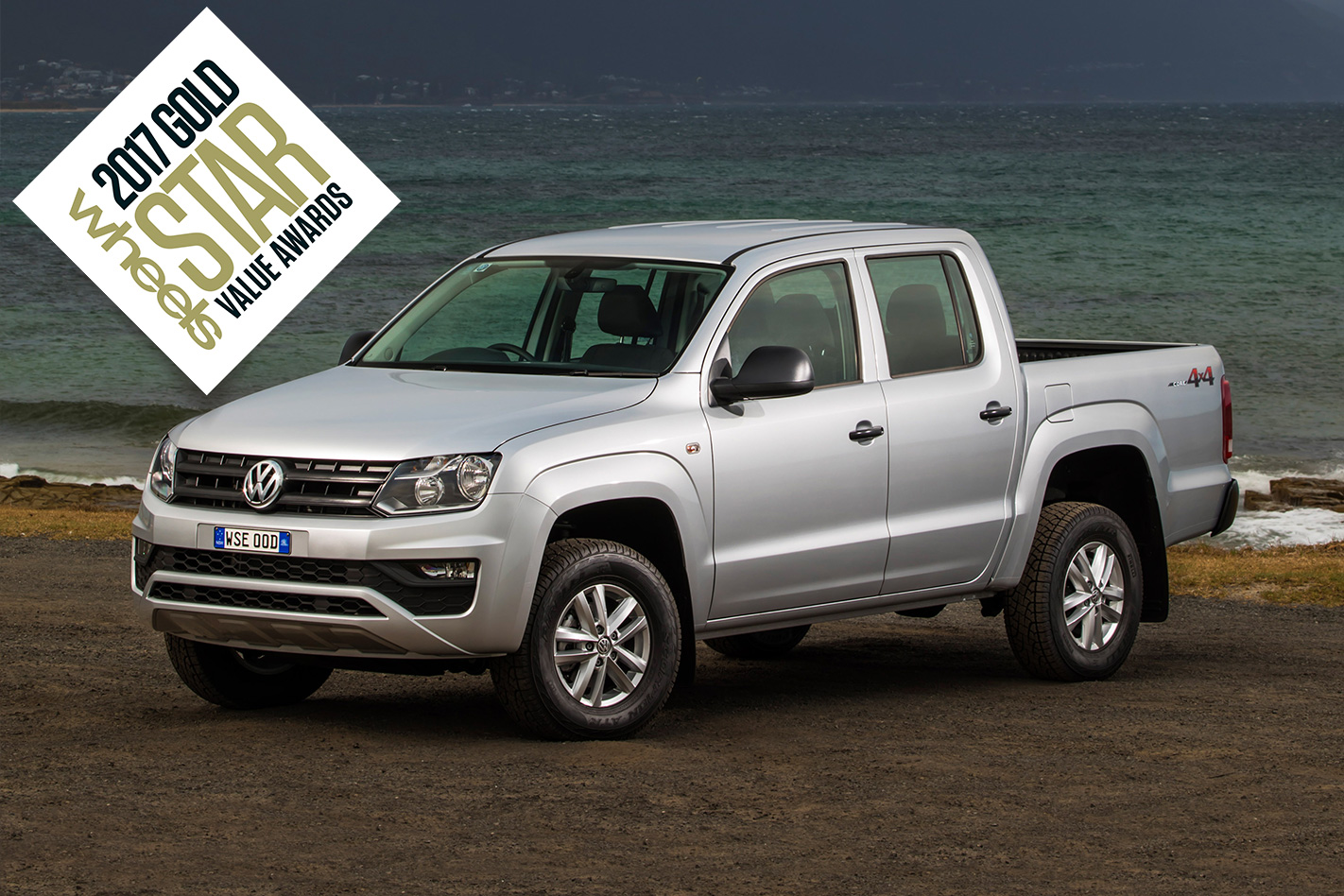
It’s pleasing to see that the most appealingly polished dual-cab ute in the land stacks up on pure value too. The 2.0-litre turbo-diesel, eight-speed auto Amarok delivers a series of consistent performances rather than any one standout to seal a solid third.
AUSTRALIA now has the distinction of having one of the dirtiest fuel standards in the developed world.
Amongst signatories to the OECD – an international economic forum of 35 countries – Australia has the worst record on fuel quality.
Mexico, once ridiculed as the only developed OECD member with fuel quality that fell lower than Australia’s, has recently introduced a 50 parts per million level of sulphur – used as a measure of how polluting petrol can be – in unleaded fuel.
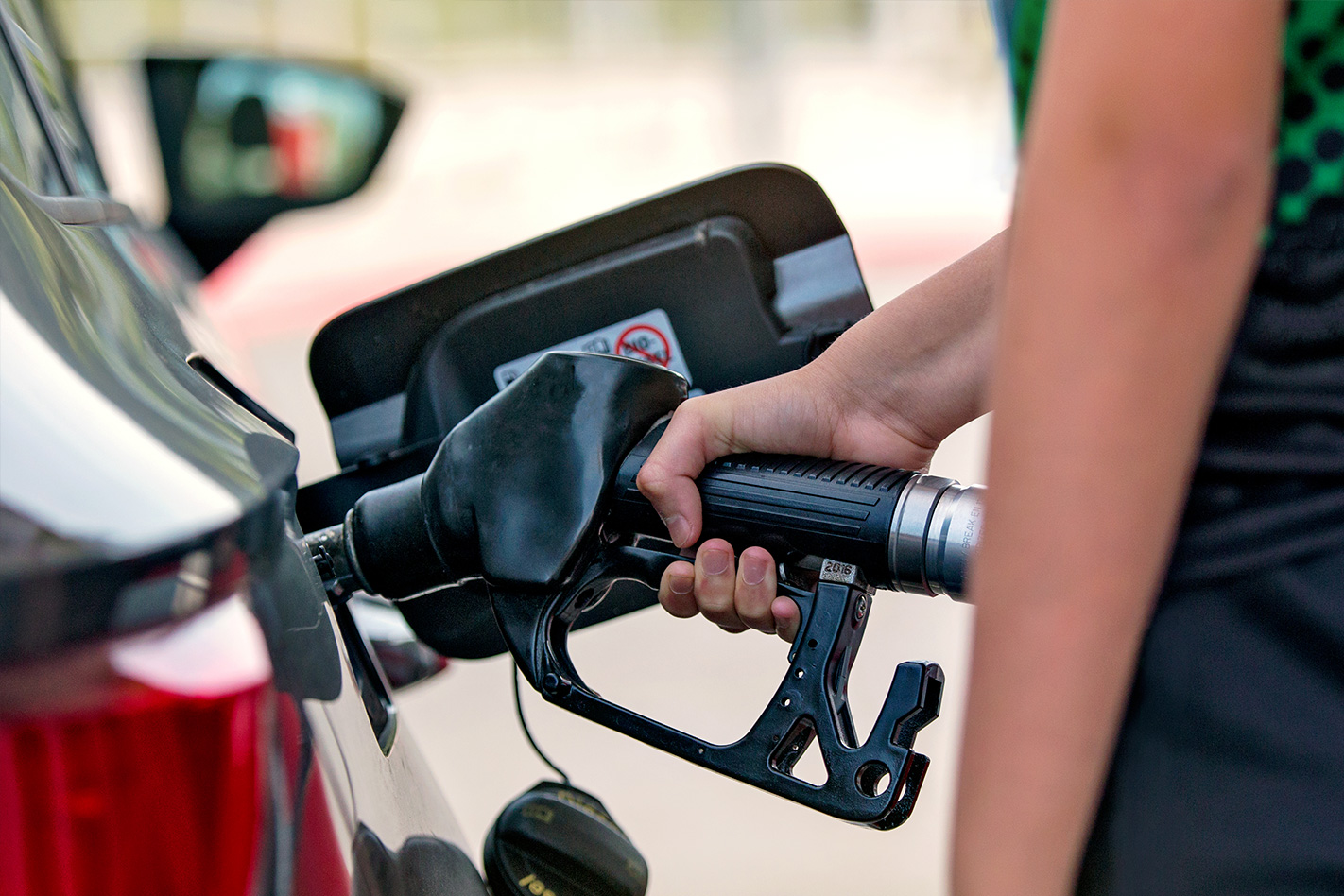
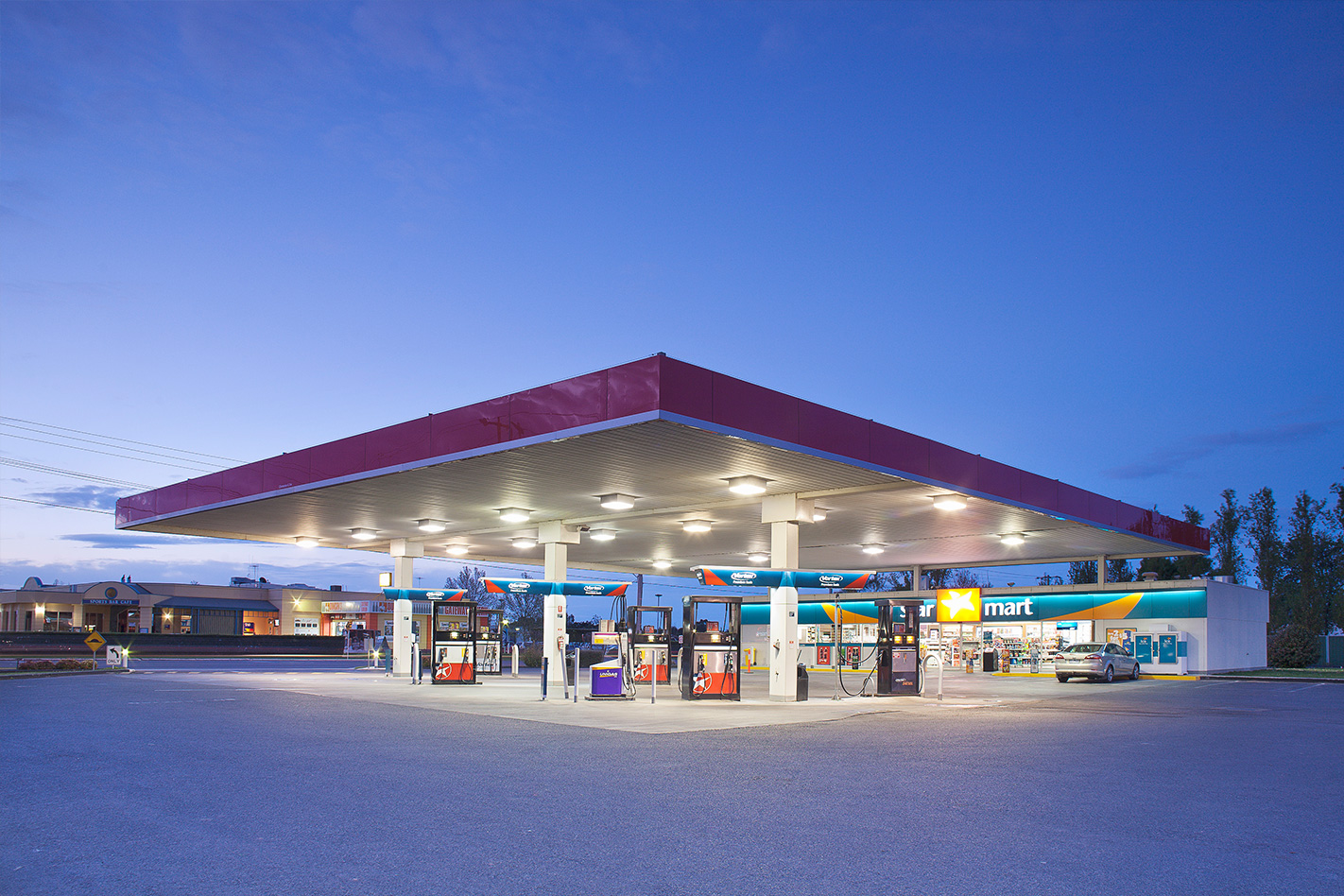
Industry sources suggest part of the problem stems from Australia’s fears over fuel security; the ability to turn barrels of oil pumped out of any one of the nation’s seven recognised oilfields, or brought in via Singapore, into transport fuel. We currently have four refineries along the eastern seaboard that in 2013 produced 15,600 megalitres of fuel for the cars we drive. The fear is that any geopolitical rumblings in Asia could one day shut off the supply lines indefinitely.
But compared with most of the rest of the world, our fuel is filthy. In Australia, 91RON fuel has a 150ppm sulphur content that makes it both cheap to produce and sell. But it also means the most popular fuel in Australia is the dirtiest, pumping significantly more sulphur dioxide – a common cause of breathing problems and generator of acid rain – into the atmosphere than other OECD members, creating excessive engine wear for consumers and even costing us more at the pump, because the dirty fuel doesn’t burn as efficiently as if it had less sulphur.
Even our ‘cleanest’ fuels – 95RON and 98RON – are both rated at 50ppm. Overseas, 98RON and its equivalents are often rated at just 10ppm. Some car brands have to detune their cars for our market, sapping their performance and fuel efficiency, to be compatible with local fuel.
In the meantime, as the US, China and Europe introduce fuel quality standards that either meet or beat 10ppm, and push for even higher targets that will force car makers to electrify drivetrains via hybrid systems within the next few years, Australia is yet to meet petrol quality standards introduced to the European Union in 2009, with the Department of Environment telling Wheels that it “does not have an estimate” of when new fuel quality standards were likely.
Engines being developed for future European cars are unlikely to come here because our sulphur levels will kill them. Not helping the cause are the constant changes sweeping Australian politics: “Each time there’s a change of government or minister, you have to go back to the start and explain it all again,” one industry insider told Wheels.
An FOI request shows that members of the Fuel Standards Consultative Committee, which last met in February this year, are already raising concerns about a potential price shock stemming from improved fuel quality standards, and the possibility of reducing excise – the 40.3 cents the Federal Government skims on top of GST from every litre of petrol sold – to help motorists adjust to the hip-pocket hit.
The easiest solution for the government, one source says, is to increase the cost of 91RON fuel to make it more expensive to buy at the pump than 95RON; a much more manageable solution than going cold turkey and withdrawing 91RON fuel from sale.
Wheels Investigation: Texting and driving – Death by Distraction
The Australian Automobile Association, which represents various motoring-interest unions, says it believes the government should consider any new emissions standards alongside fuel-quality standards.
“This is the best way to ensure the government can meet its climate change and air quality commitments, but do so at least cost to Australian households already spending around 13 percent of their income on land transport, and facing increased pressure from rising energy costs,” it said.
However, any solution may yet be a long time coming, even though the current standard is set to expire in late 2018. With no timeline on when we’re likely to see new standards, and no new targets to aim for, we’re not going to be breathing easy.
Get the lead out for a new millennium Australia has already had the experience of weaning itself off a highly polluting fuel; in 2000, the government withdrew leaded fuel from sale in the interests of public and environmental health – the same time as the European Union.
The 160,000km barrier Assessments of how long we can hold out on improving fuel quality standards appear linked to a 160,000km benchmark – the theoretical tipping point before an advanced petrol engine starts to suffer damage to its three-way catalyst caused by a 50ppm sulphur content.
Proving our numerical scoring weighting is pretty much spot on comes in the form of the news the top three spots in the top six remained precisely as the raw numbers dictated even after the semi-human element (welcome back Robbo) had been stirred into the mix.
This article was first published in MOTOR magazine’s March 2005 issue.
Which means that the Subaru with its brand spanking new active diff and gorgeous billet alloy suspension bits and pieces finishes a fighting third. The engine is equal parts amazing and disappointing, and the torque hole below 4000rpm that has plagued all STis for the last few years remains to spoil the picture.
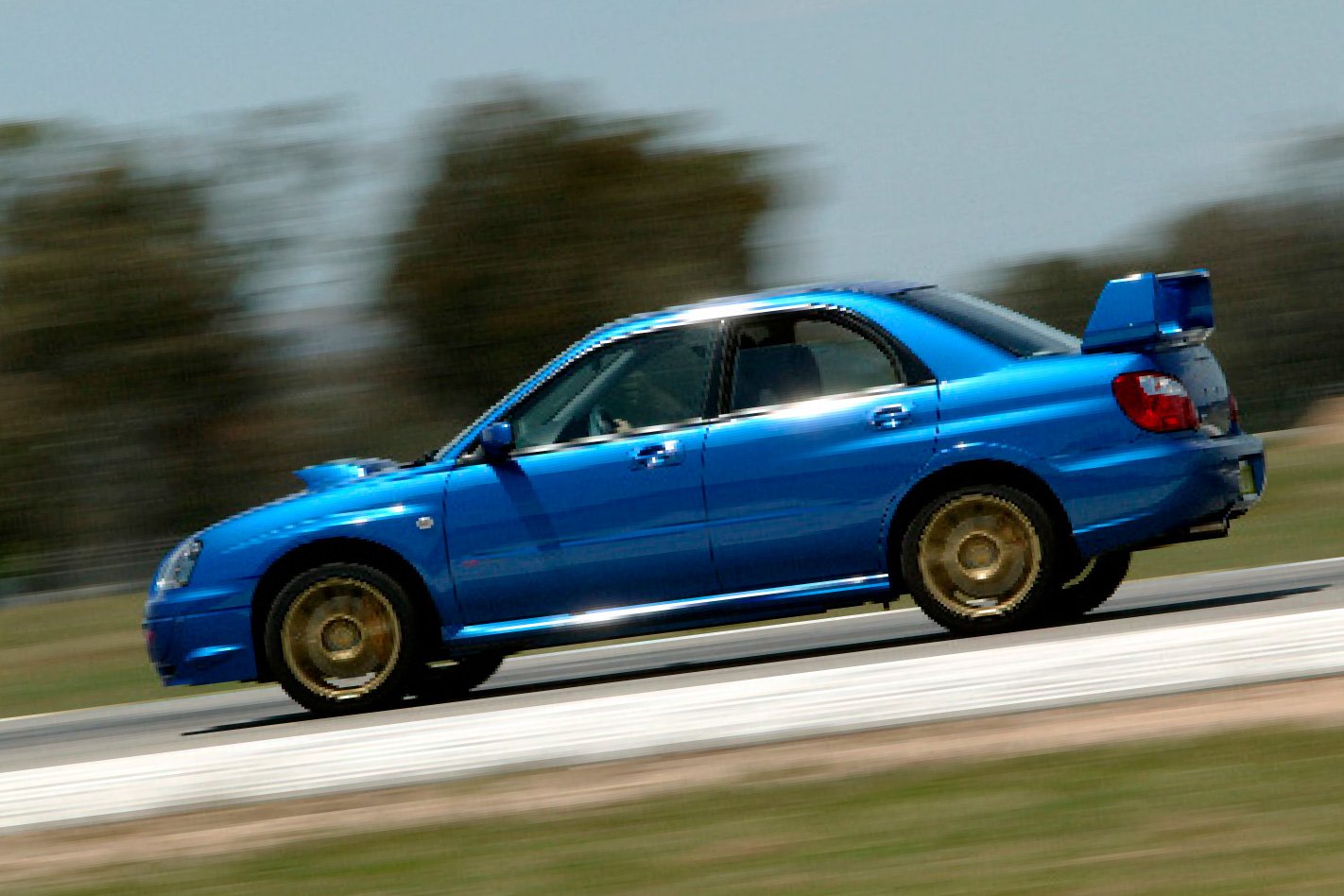
Catch the Subaru in a gear too high and it just bogs down and wheezes away at the job of piling on revs. Until it gets to 4000, that is, when it goes berko and suddenly starts hurling you, it and anything else in the area at next week. This is nothing new in STi-land but it makes us wonder if it doesn’t have variable valve timing after all.
Ride quality is another thing that hasn’t changed. Actually, lack of ride quality is a better description and, once again, while it works beautifully on a racetrack, it’s less than perfect as a road warrior. The sharp ride makes the whole car feel a bit underdone and the flapping rear wing and bonnet scoop (which makes the whole bonnet lift and shudder) is not really good enough.
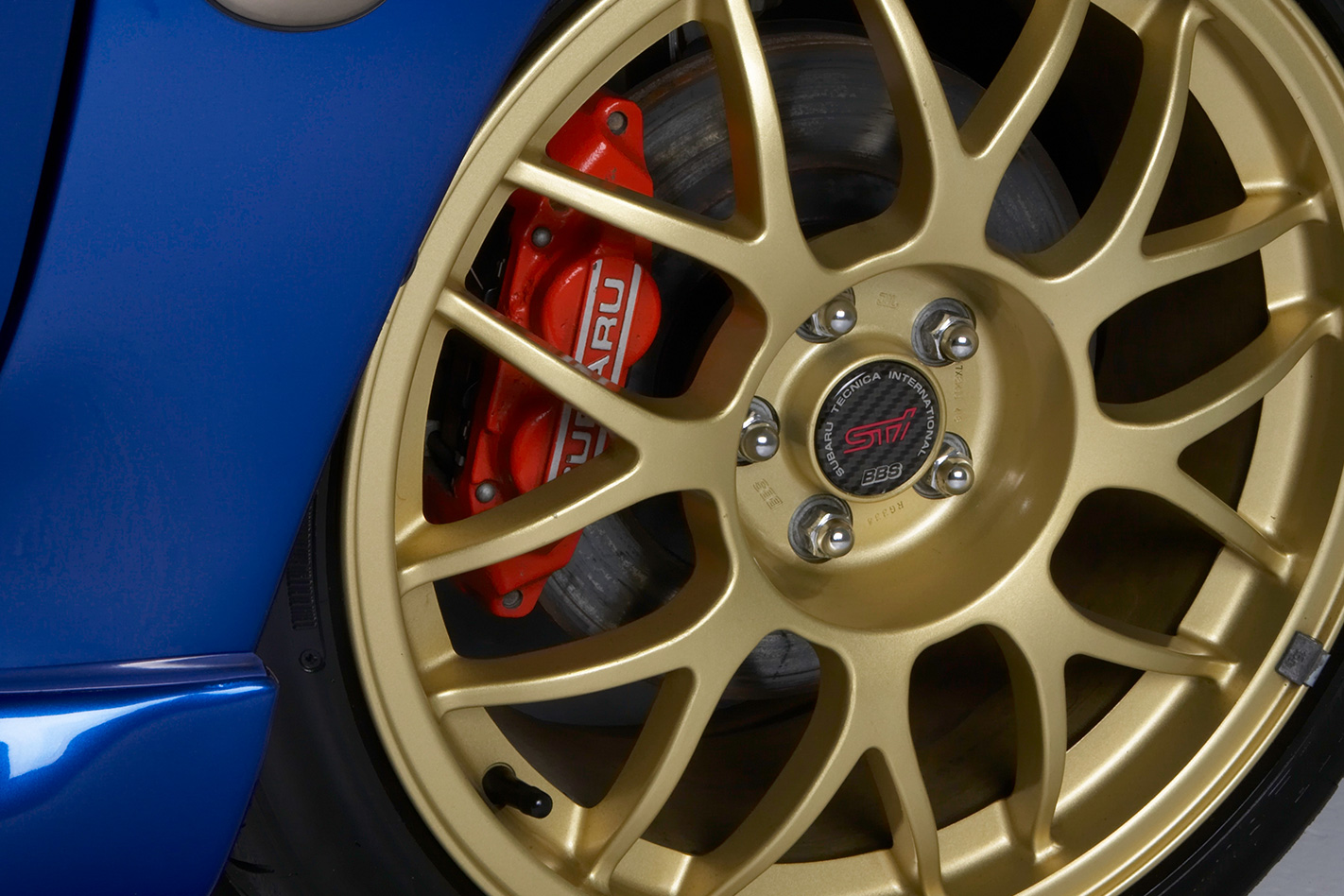
In fact, its poise and balance through the fast Winton sweeper, not to mention its ability to change line, stamps it as something special indeed. The interior feels a bit low rent (but not as cheap as the Lancer’s) but the seats are terrific and allow you to make the most of the grip rather than trying to find some for yourself.
The bottom line with the STi is that it only really works best when you’re driving it like you stole it. Back it all off to five or six tenths and it starts to show its flaws. Then again, PCOTY has never been about sloping around the suburbs at a trickle, short-shifting and playing doof-doof tunes. Hallelujah to that.
SUBY’S THREE WISHES
Speed is the thing in the latest STi, but not, it seems, in a straight line. It’s actually no faster than the last STi we had on PCOTY (2003) in sprinting. Like the C55, though, additions to its chassis package have made an enormous difference to its driveability and, more importantly, its lap times at Winton.
Quicker in all straight fights, the ’03 STi punched to 100km/h in 5.43 seconds, ran over the standing quarter in 13.61 at 161.9km/h and the standing kilometre in 25.15, carrying 207.2km/h. Yet, around Winton it was a stunning 2.3 seconds slower than this year’s STi.
How? Well, the STi now runs three things that make an enormous difference, not only eradicating the trademark mid-corner, on-throttle push, but making smarter use of power as well. Tyres, limited slip front diff, electronic centre diff. There’s the difference, 2.3 seconds, ta.
Subaru Impreza WRX STi Specs: Drive: all-wheel Engine: front-mounted 2.0-litre DOHC 16-valve turbocharged flat-four Power: 195kW @ 6000rpm Torque: 343Nm @ 4000rpm Weight: 1475kg Transmission: six-speed manual Length/width/height: 4415/1740/1440mm Fuel Economy: 19.8 litres/100km (60L tank) Price: $56,630
Performance 0-100km/h: 5.74sec 0-400m: 13.82 @ 160.1km/h 0-1000m: 25.65 @ 201.0km/h Winton lap time: 1:41.47 Winton top speed: 168km/h
McLaren growth is continuing to outpace that of Aston Martin, Ferrari and Lamborghini in Australia.
Sales have soared by 45.8 per cent year-to-date and – with two months of the calendar to go – the British supercar brand is on track to achieve a record 103 sales by the end of 2017.
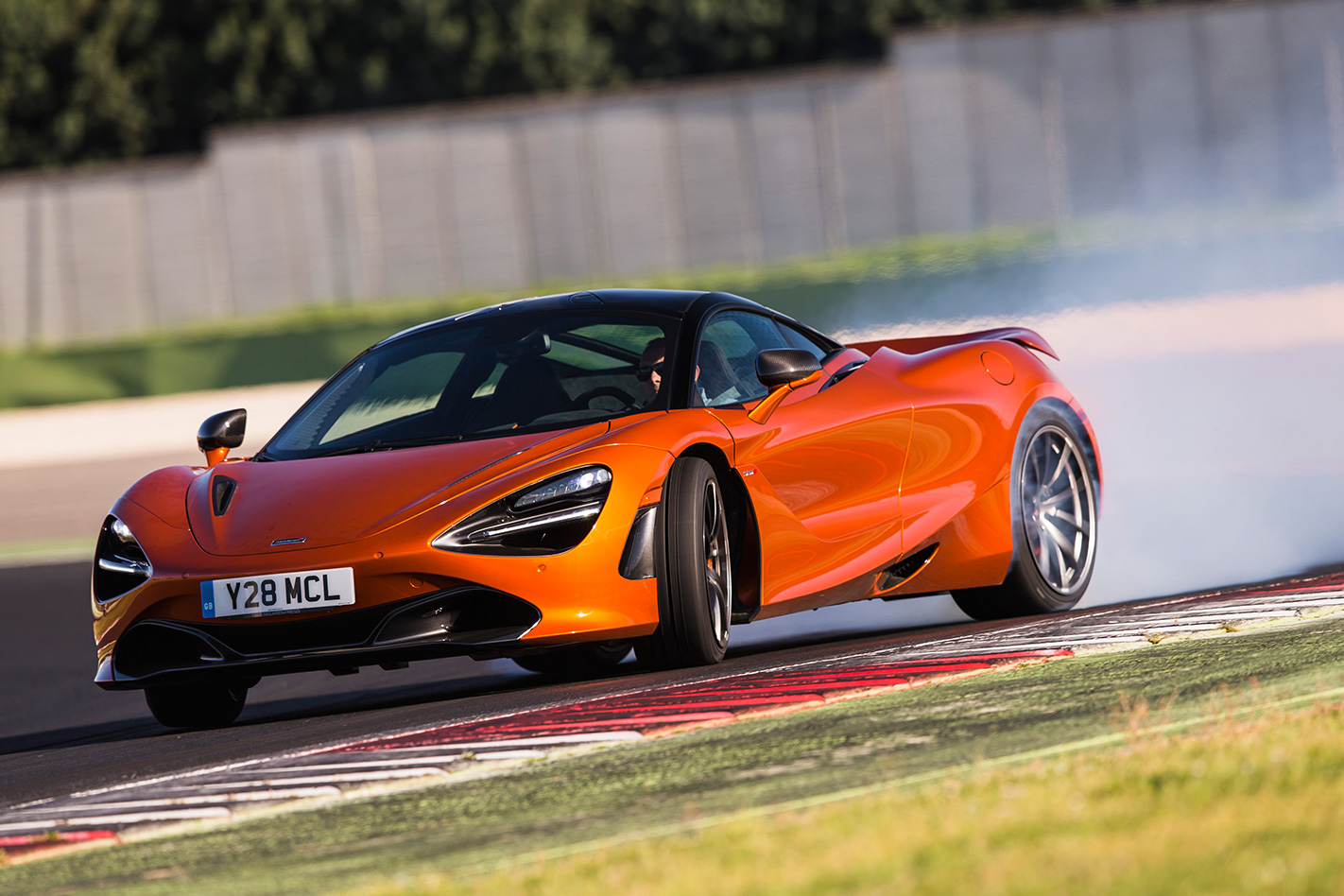
“It’s interesting because all the registrations stuff you see, that’s a lagging indicator,” Biggs explains. “We’re looking at the next six to nine months’ worth of demand. I’m not looking at the previous 12.” Although Biggs failed to nominate specific targets, he expects the 570S Spider to outsell its hard-top equivalent locally, while the incoming 720S should eclipse sales of the 650S.
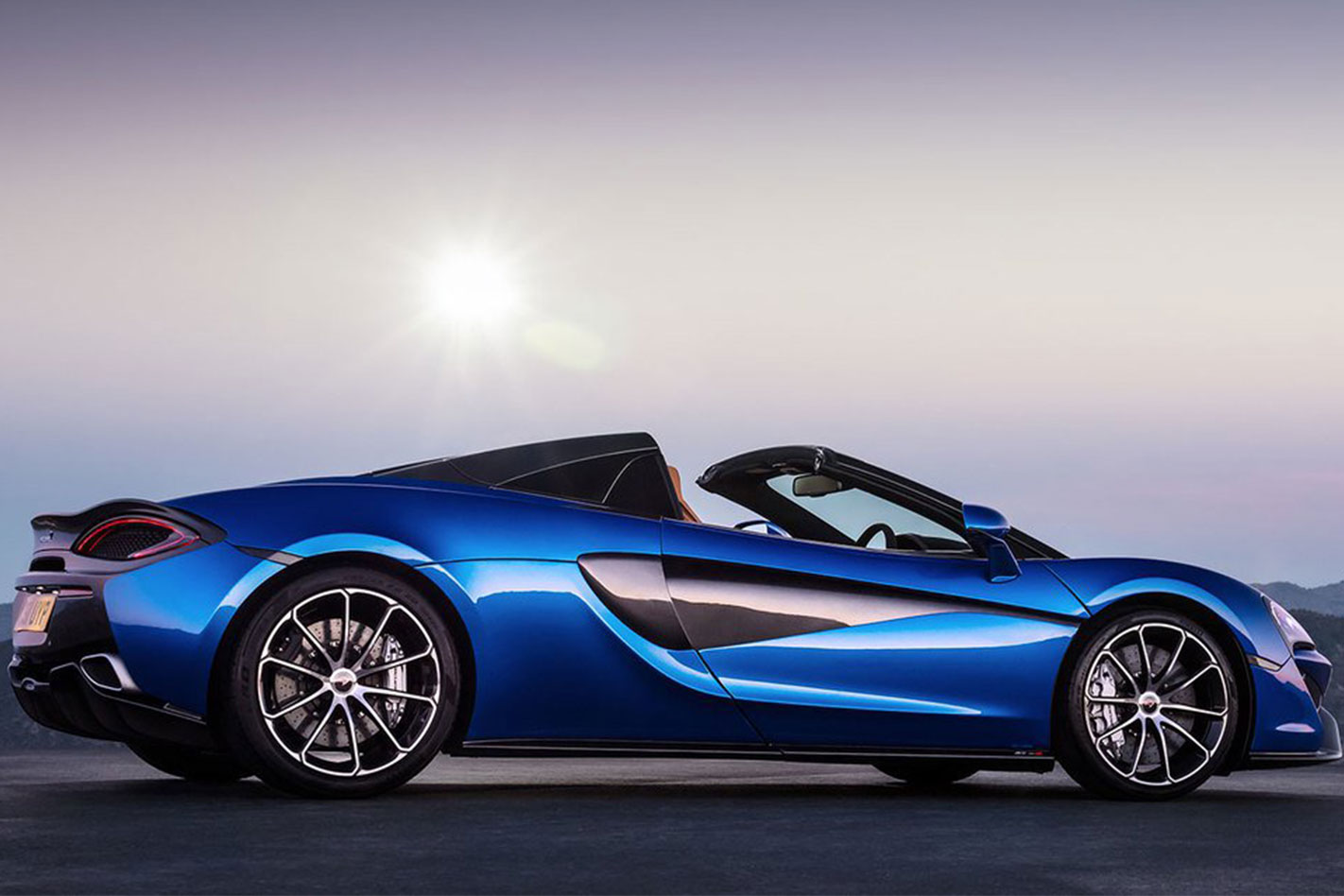
We want to remain exclusive. We’re not chasing down volume … and that remains our objective irrespective of other companies’ strategies.” For comparison, this year Aston Martin is up 21.2 per cent and on track to shift 144 cars, Ferrari is down 4.8 per cent and is tipped to shift 167 models, while Lamborghini is down 18.3 per cent and in line to sell 118 vehicles.
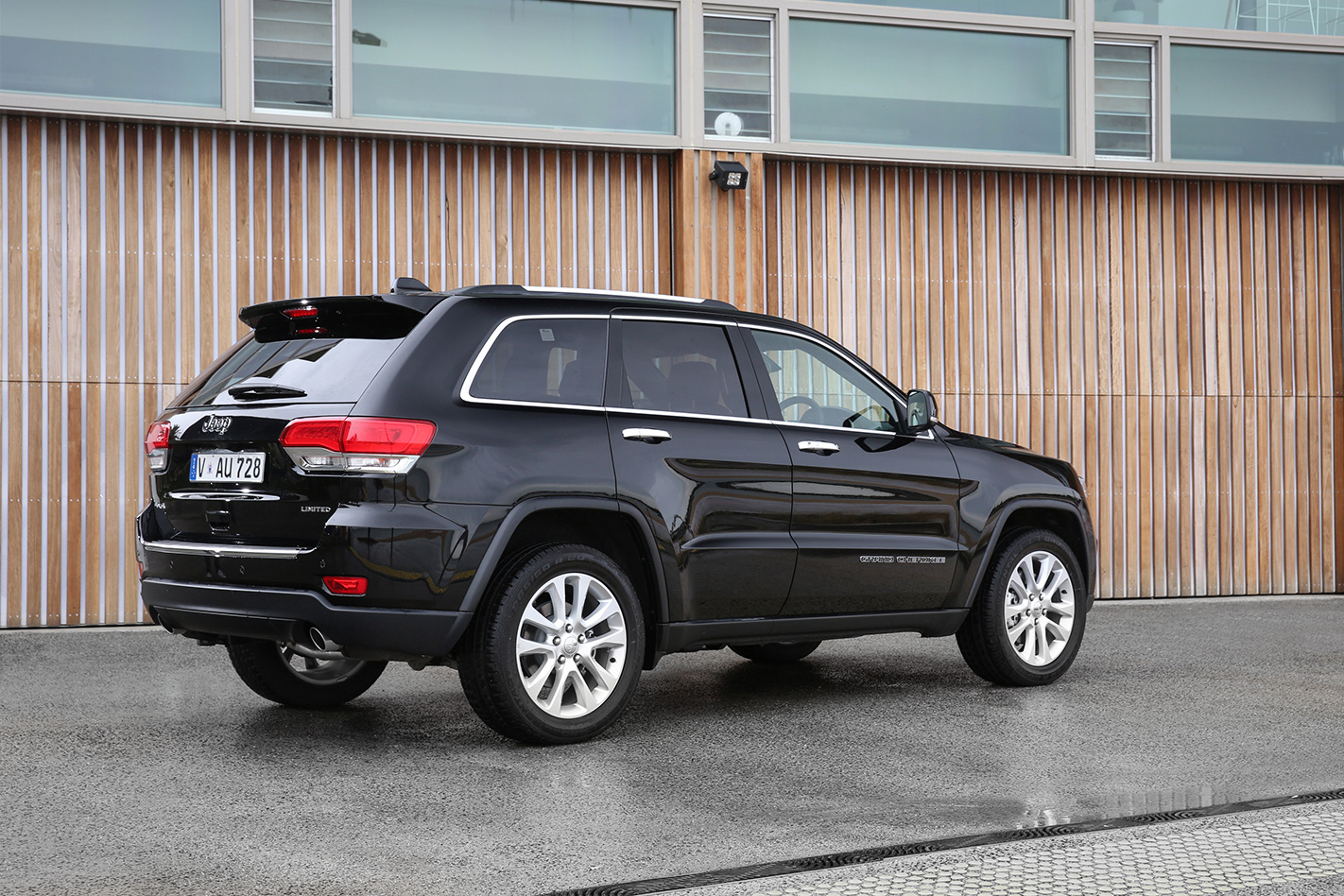
The 2017 Jeep Grand Cherokee has received a significant makeover. Here, we look at the range-topping 4WD petrol V6 version, the 3.6-litre Pentastar-equipped Grand Cherokee Limited.
TELL ME ABOUT THIS CAR
The Jeep Grand Cherokee is one of the oldest products in the off-road specialist’s growing Australian showroom. It has easily been the brand’s biggest seller since its launch here in 2011.
It’s one of the few cars in this segment to base itself on a unibody chassis instead of the trade ute-derived body on frame. It’s also one of the rare ones to offer a mix of SUV-like rear-drive versions that are more at home on city roads, and hardcore four-wheel-drive versions that will get you from one side of Australia to the other without relying on bitumen. Or even a formed road, for that matter.
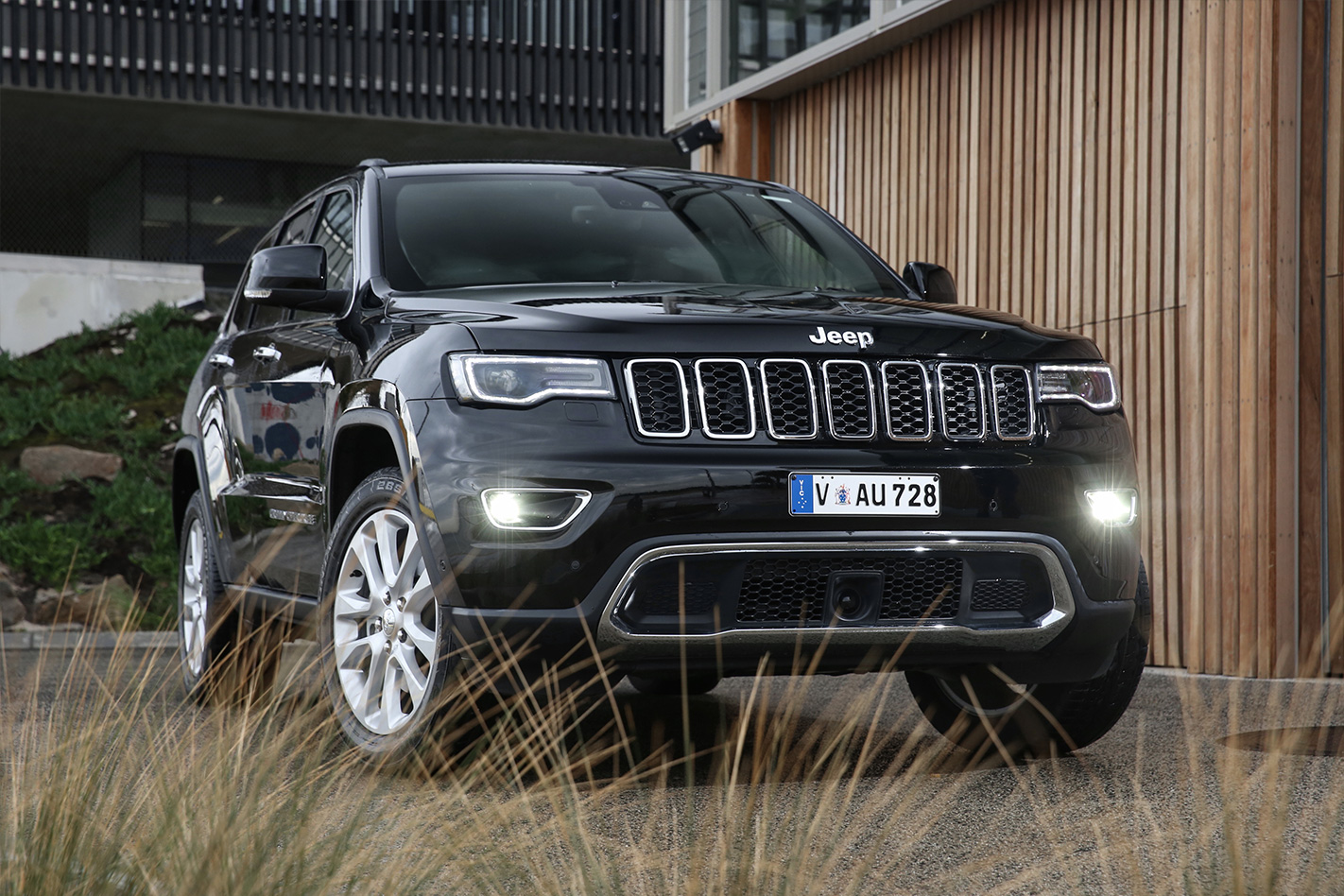
It’s important, then, that any updates to the large premium SUV/off-roader need to keep it ahead of fast-moving rivals including the strong-selling Toyota Prado off-roader and its on-road equivalent the Toyota Kluger, the even older Mitsubishi Pajero, and the Nissan Pathfinder.
In its richly equipped $62,500 Limited form, the petrol V6 Grand Cherokee goes head-to-head with the range-topping Nissan Pathfinder Ti AWD and the Toyota Kluger Grande AWD, and the entry-level petrol-engined Toyota Prado GXL. The Limited is the Grand Cherokee’s best-selling variant.
STRENGHTS
- It’s good value. Prices have gone up by just $500 after this significant overhaul of the Grand Cherokee’s looks and equipment, but it is still significantly cheaper than its direct rivals.
- Standard equipment is good. It has leather seats, powered front seats (driver’s with a memory function) and tailgate, nine-speaker audio system, sat-nav, heated front seats and steering wheel, tinted glass, and dual exhausts.
- It still looks the business. A subtle upgrade to the Grand Cherokee’s nose brings slightly more chiselled, and proportioned, looks to the traditional seven-bar grille that also brings the parking sensors closer to ground level.
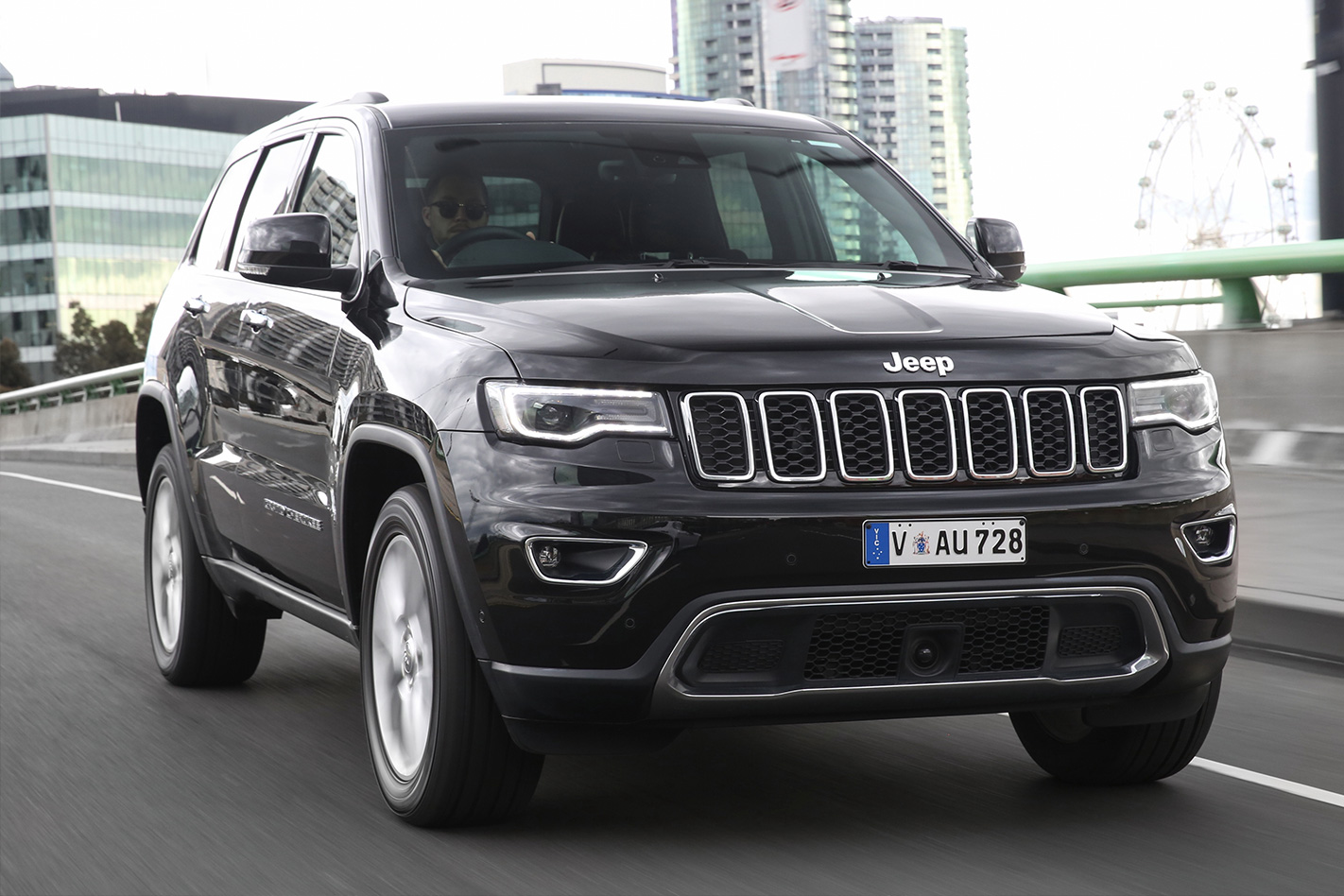
- The overhauled petrol-fuelled Pentastar V6 grows in performance and fuel economy. Power increases slightly from 210 to 213 kilowatts (torque is 347Nm), but more significantly, it adds a stop-start function to help save fuel in city traffic.
- It’s still a nicely quiet SUV to drive. There’s some wind noise from the large side mirrors, and some tyre roar from the 20-inch Continental CrossContact rubber fitted to our test car, but it’s barely noticeable.
- You can switch between active cruise control, and normal cruise control.
- The eight-speed automatic gains paddle shifters (well, half-sized ones that poke out from the top of the steering wheel) and a much more stylish gear selector.
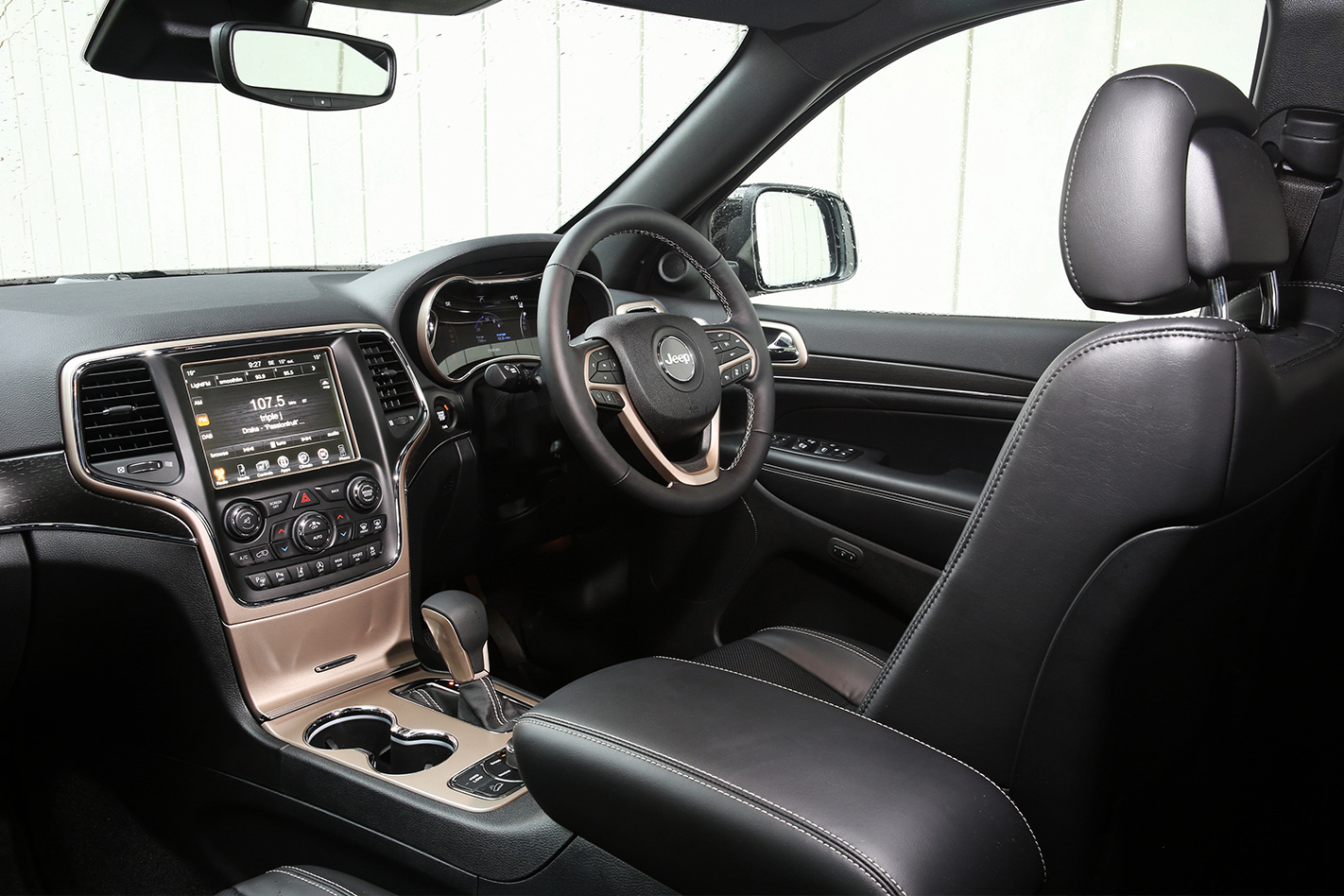
- Jeep doesn’t hold back on the leather used for the seats in the Limited. You won’t need to describe them as “leather trimmed”.
- The Limited includes a high/low transfer box and a five-mode selectable off-road system. Match the setting to the terrain outside the windows, and the off-road system’s electronic brains takes care of the rest.
- You’re not missing out on much in the rear seats. There’s a nice, wide bench, air-conditioning vents on the back of the centre console, two USB ports, and heaters for both outboard seats. Above, there’s individual reading lights for both outboard seats.
- If you need to pack the rear with gear, the back seats’ 70:30 split seatbacks tumble forward automatically to almost flat at the pull of a lever mounted on the side of them.
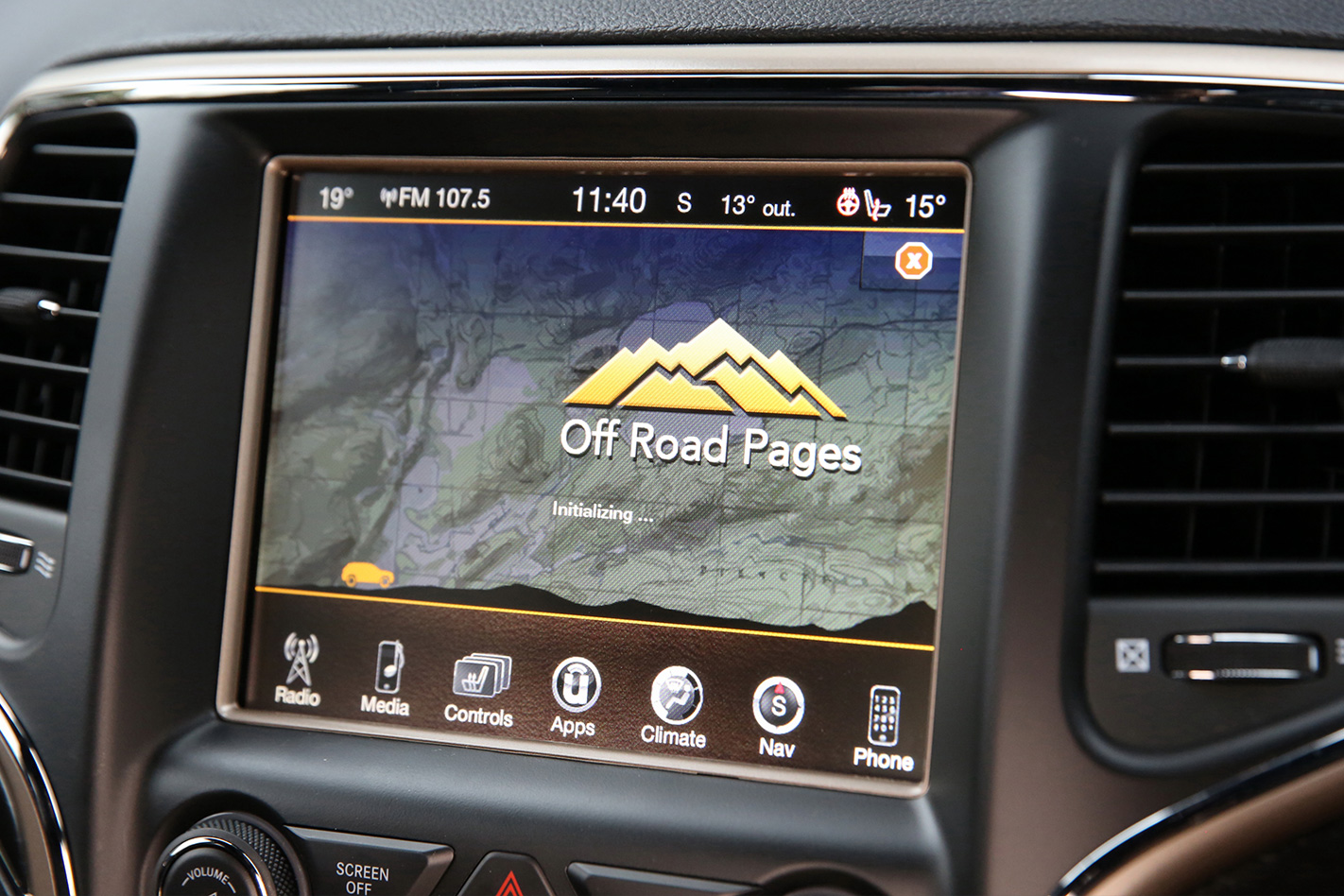
- The upgraded multimedia interface adds a trailer hitch function that lets you check how things on the tow ball are travelling.
- The Limited adds an automated parking function that can help you manoeuvre the big SUV in and out of tight spaces.
- Changes to the petrol V6 engine have extended service intervals to 12 months or 15,000km, while Jeep says the cost of the parts used for servicing have come down. You should therefore need fewer visits to the service centre, and they should be cheaper.
- It gets a full-size spare tyre, which is suddenly very important when you find yourself 200km west of Birdsville with a flat.
DISLIKES
- The Pentastar V6 still likes to drink deep despite its newfound environmentalism. The average fuel economy on test we noted was 12.2L/100km against an official average of 10.0L/100km. The 3.0-litre diesel V6 version will return 7.5L/100km.
- The engine and gearbox still aren’t the best of friends. The throttle pedal is slightly too overly sensitive, and the gearbox will jerk slightly as it hunts for the right gear on a hill.
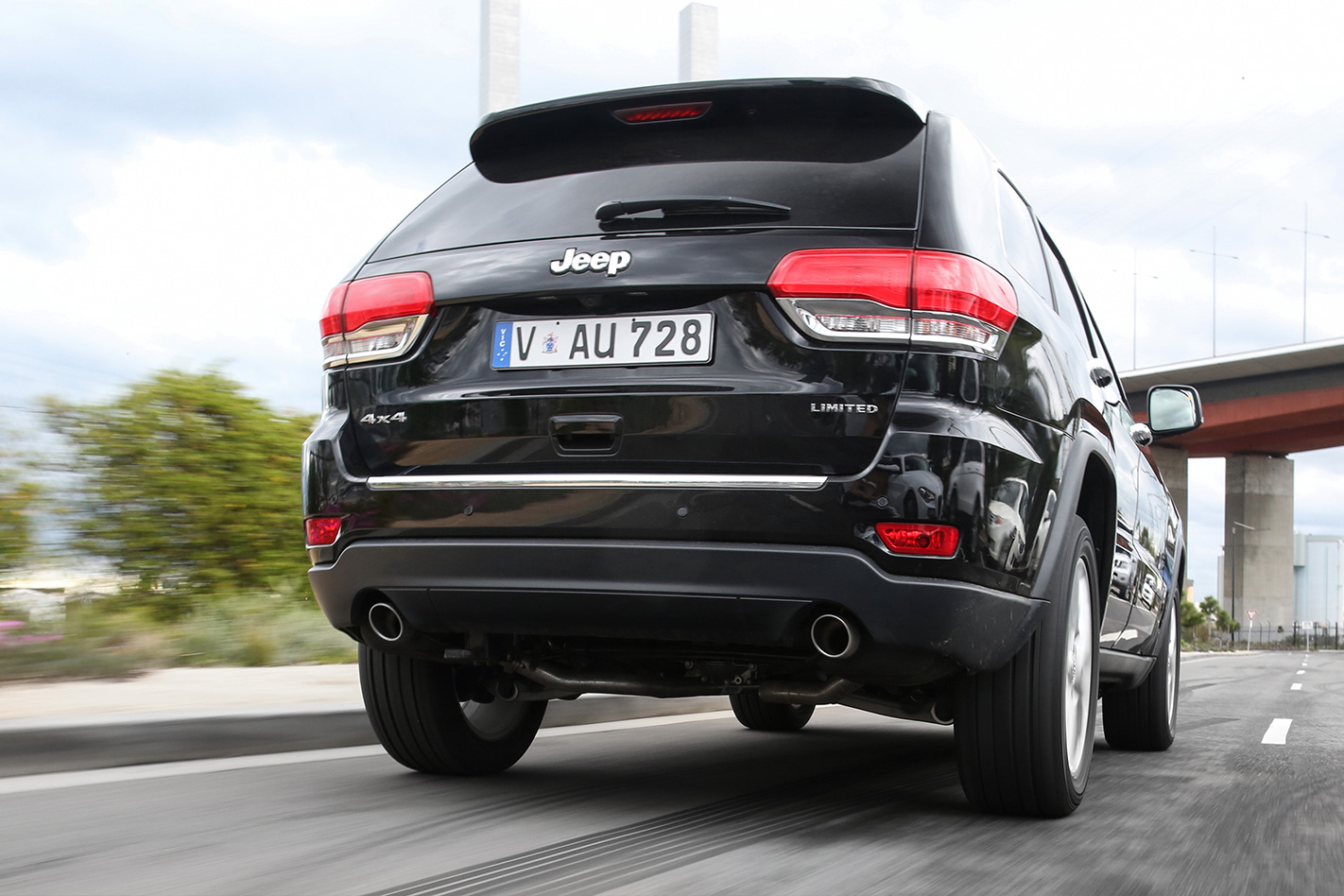
- The mix of analogue and digital instruments on the dash is very well integrated, but the sat-nav system still doesn’t show turn-by-turn instructions in the instrument cluster. Instead, you need to drag your eyes down to the square-shaped 8.4-inch touchscreen to see what’s up next.
- The power steering has swapped over to an electrically assisted system. It doesn’t quite read the road surface as well as the old hydraulic one it has replaced, but adds lightness and that automated parking function.
- The Pentastar adds an “eco” mode activated via a button mounted on the centre console. It’s the electronic equivalent of trying to run in gumboots, sapping the Limited of performance as the throttle dulls and the gearbox hunts up the range and becomes a downshift niggard.
- Controlling the uConnect multimedia/smartphone/climate control/satellite navigation interface can be a bit inelegant. The physical buttons below it are easy to stab, even with a gloved hand, but try and turn the seat heaters on and it’s a glove-off, stop moving affair while you navigate the menus and their physically smaller virtual buttons. And it doesn’t support Android Auto or Apple CarPlay.
ARE THERE ANY RIVALS THAT I SHOULD CONSIDER?
If you plan to head off-road, look at the entry-level Toyota Prado GXL with a 4.0-litre V6, priced from $62,210. If off-road strength isn’t as important, an all-wheel-drive, seven-seat Toyota Kluger Grande powered by a 3.5-litre V6 is priced from $69,617. Our last choice would be a Nissan Pathfinder Ti priced from $66,190 and powered by a $3.5-litre V6.
The Jeep Grand Cherokee Limited is available with a 184kW/570Nm 3.0-litre V6 diesel engine that is much better suited to tapping the 3500kg towing capacity, and the fuel-hungry demands of off-road use. It is a huge $6500 premium over the Pentastar, though.
Got a crowd to move? People movers may have fallen out of fashion, but this bunch provides excellent value for money.
1st: Kia Rondo Si
A proper three-row MPV for mid-spec hatchback money – that’s the Kia Rondo in a nutshell. The underpinnings are familiar from a hatch too, with an atmo 2.0-litre allied to a six-speed auto driving the front wheels. At 1520kg, the 122kW/213Nm Rondo is a modest performer that manages decent 7.8L/100km official economy.
The Kia family wagon’s three-year resale forecast is nothing special, at 46 percent, but that matters little in the context of its $31,490 sticker, which is $6K less than the Odyssey and undercuts its Carnival sibling by more than $10K. Elsewhere, the Rondo’s value vitals look healthy, including a 12-month service interval, low $740 insurance bill and, of course, the brand’s superb seven-year warranty.
2nd: Kia Carnival S CRDi
Kia’s other podium player settles on silver thanks to keen pricing ($43,990), stout resale (59 percent), and a strong turbo-diesel that delivers 7.7L/100km economy and a meaningful 440Nm.
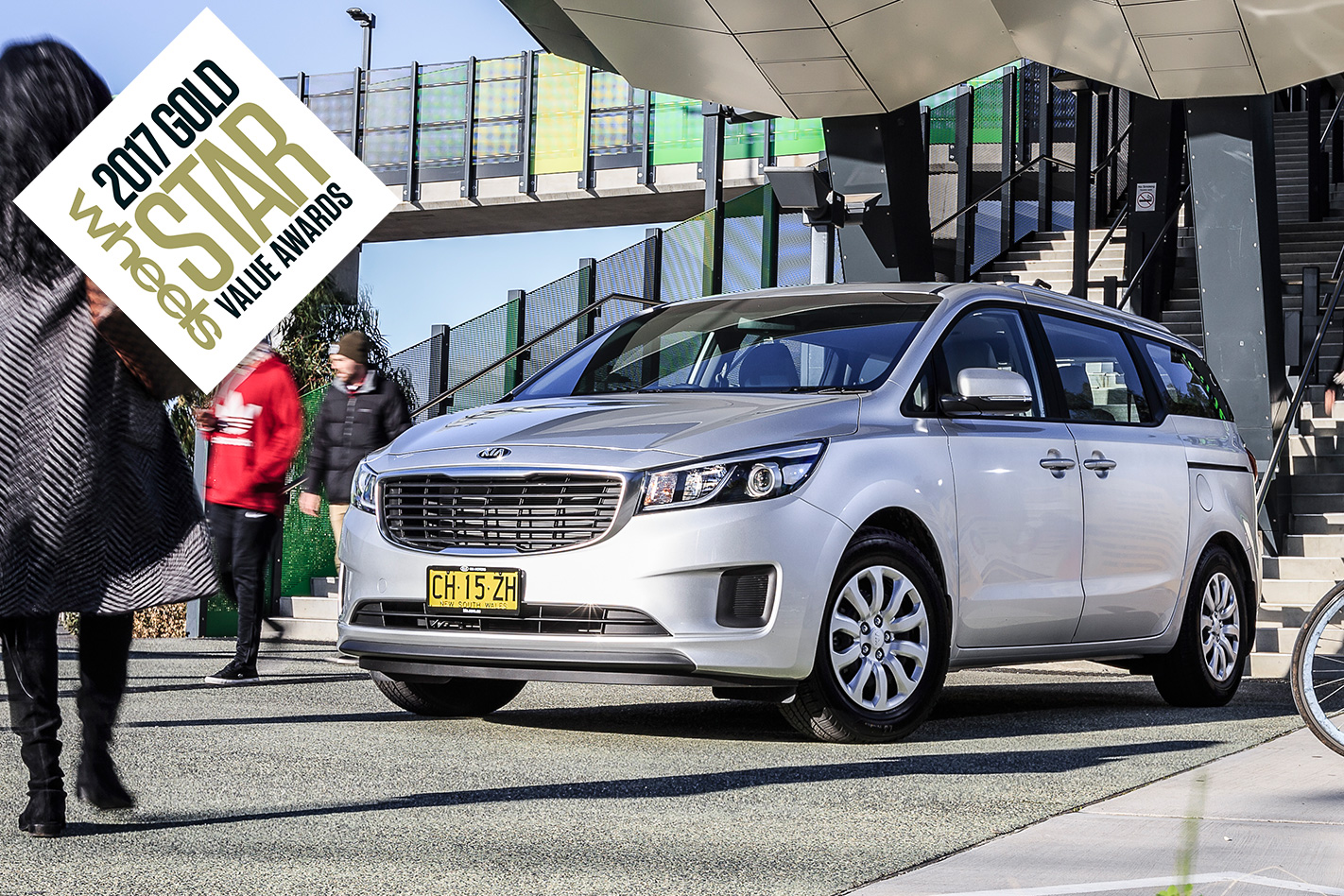
A sharp price and sound resale saw the dowdy Odyssey VTi charge ahead initially by shedding less value than its nearest rivals, but then it stumbled with a relatively short three-year warranty and a six-month service interval.
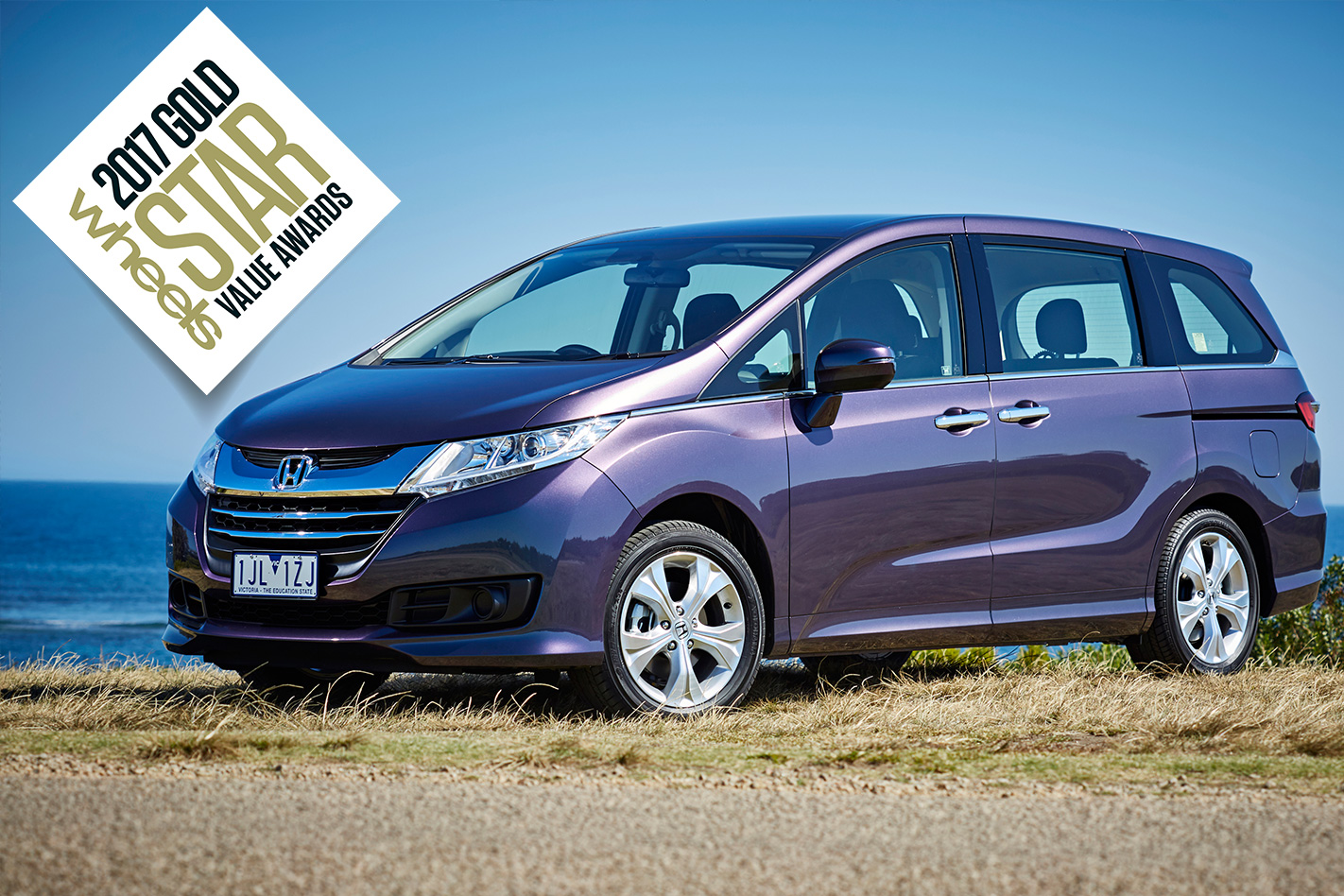
It’s amazing how easy it is to become ensnared in the detail and lose sight of the big picture.
Right now, the best week of the entire year – Wheels Car of the Year – is about to begin, and as much as i’d like to think of the activity occurring outside my office as controlled chaos, really it’s bedlam.
Journos are madly dialling car companies, hotels and restaurants as the final touches are made to an event that involves 25 people, 55 cars and runs for seven long days.
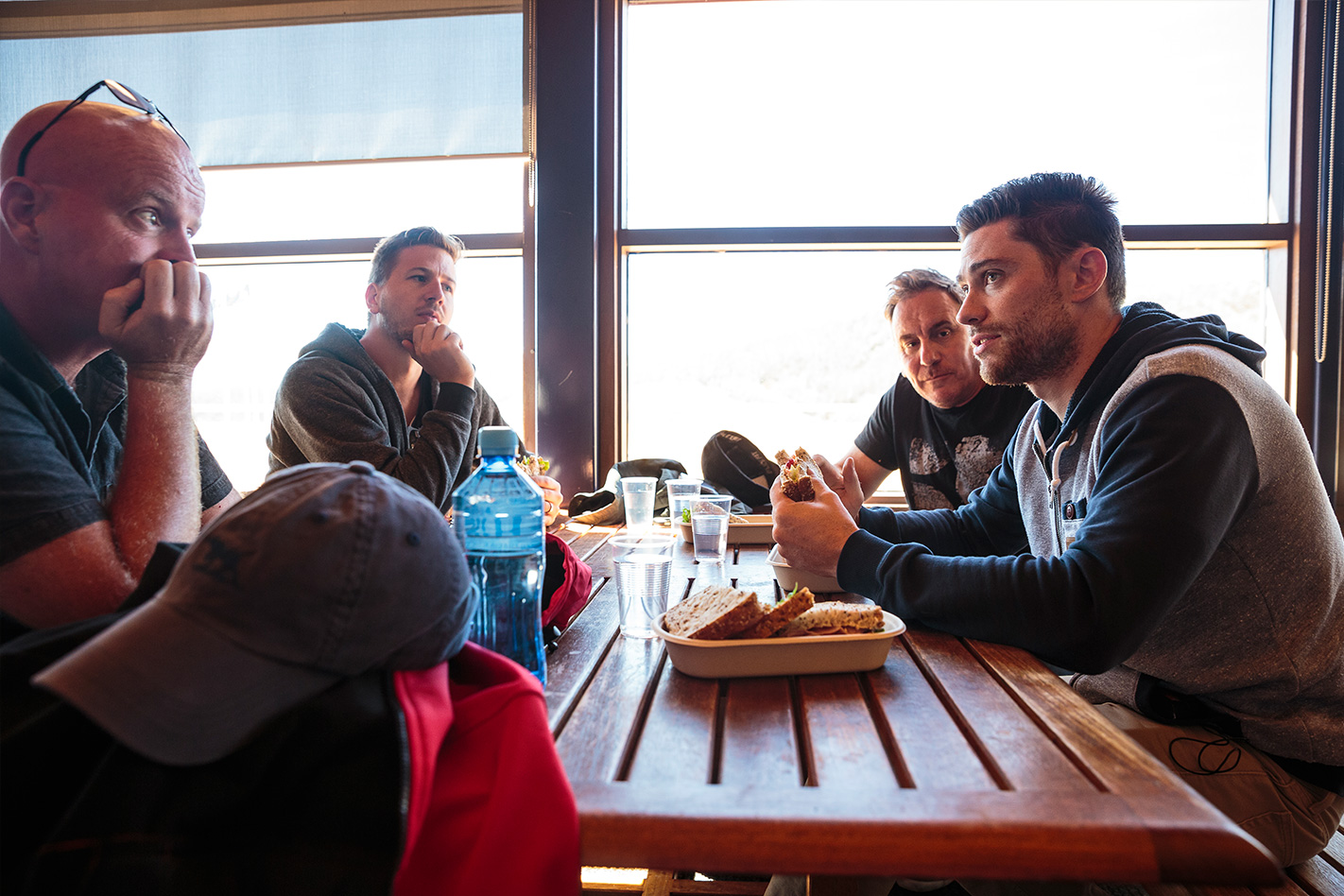
“Huh…” I muttered, glancing at the list of 22 contenders stuck to my living room wall with fresh eyes.
“I … don’t know.”
Whether the judges acknowledge it or not, there are always a few cars that are earmarked as serious contenders before COTY testing begins.
Favouritism is no guarantee of success, of course – history is strewn with cars that promised much only to fail spectacularly in the COTY torture chamber – but past winners such as 2016’s Mazda ND MX-5 and 2009’s VW Golf weren’t what you’d call surprises.
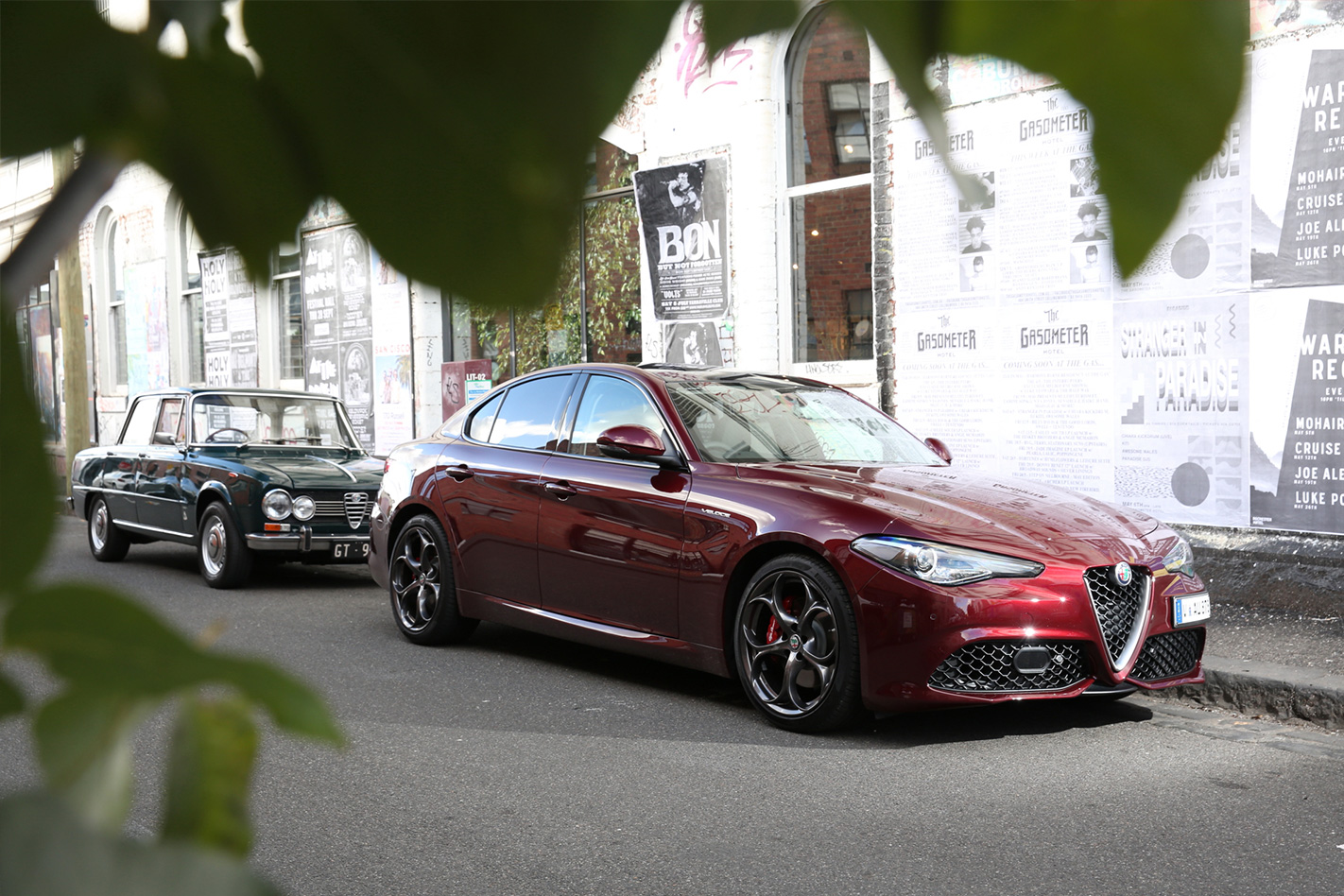
Perhaps the closest to a bookie’s pick are the Alfa Romeo Giulia and the Kia Stinger, both having convincingly won recent Wheels comparison tests to make them genuine contenders to take a first COTY win for their brand.
If Mazda’s much-improved CX-5 triumphs however, that will be three wins on the trot for Hiroshima. Of course, all this speculation is moot: the COTY process – a method that’s been honed with scientific precision over 50 years and is built on the five enshrined criteria of Function, Safety, Value, Technology and Efficiency – will spit out the deserving winner.
What really has me looking longingly at my office door, wishing I was already many kilometres away, at Holden’s Lang Lang proving ground with 55 cars laid out before me, is the joy of the testing. No other event or comparison test comes close to delivering what COTY does: the unbridled pleasure of driving great cars on great roads with the best road testers in the business.
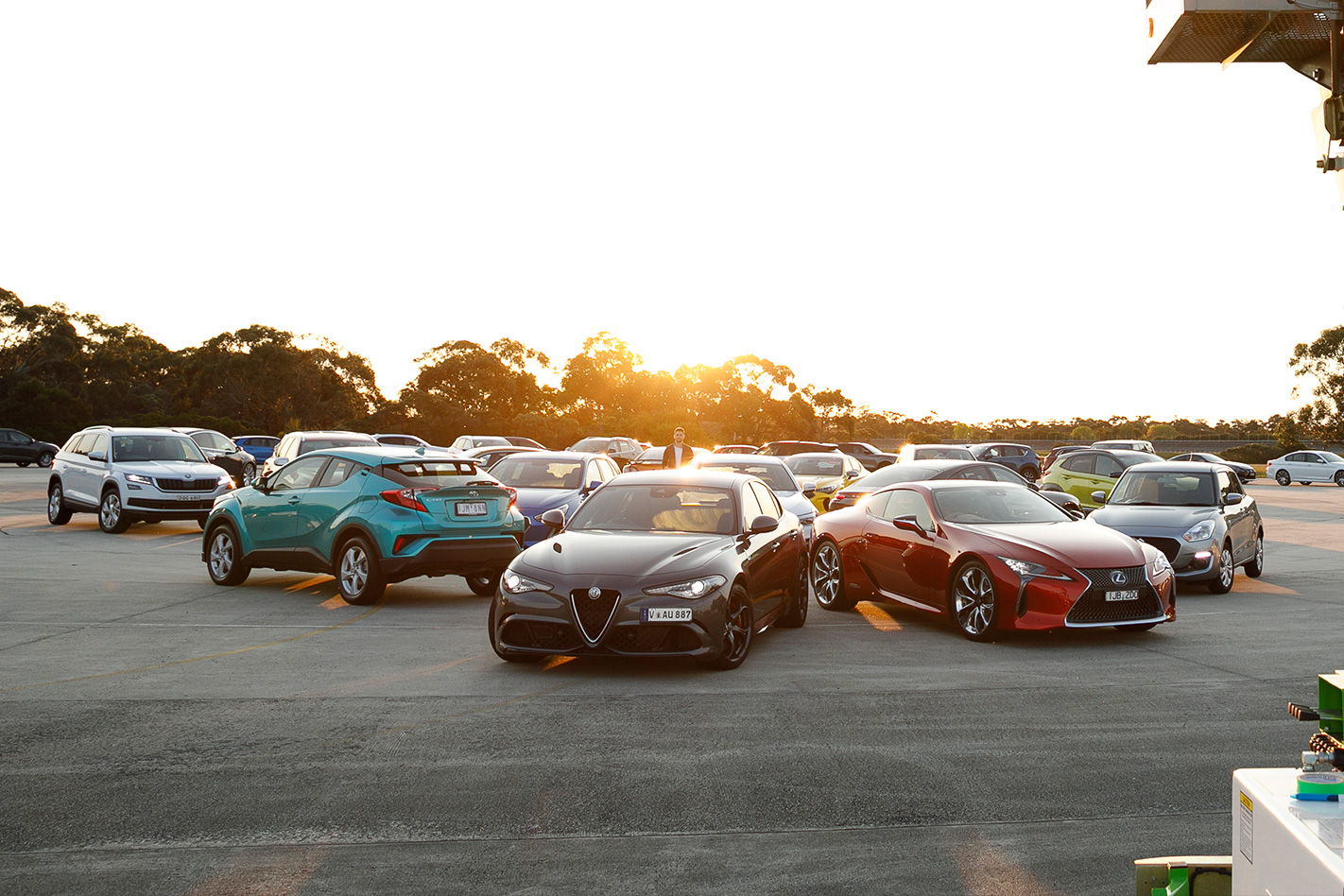
And at the end of it, as I disappear into the nearest bathroom cubicle to tally the final vote in secret – as tradition dictates – I’ll be left with that strange feeling of pride and apprehension as I come to grips with the fact that I’m the only person on the planet who knows what car has won.
Well, I’ll probably tell my wife, and you won’t have to wait much longer. Our COTY announcement is being brought forward this year with the winner revealed in our January 2018 issue, on sale Jan 24.
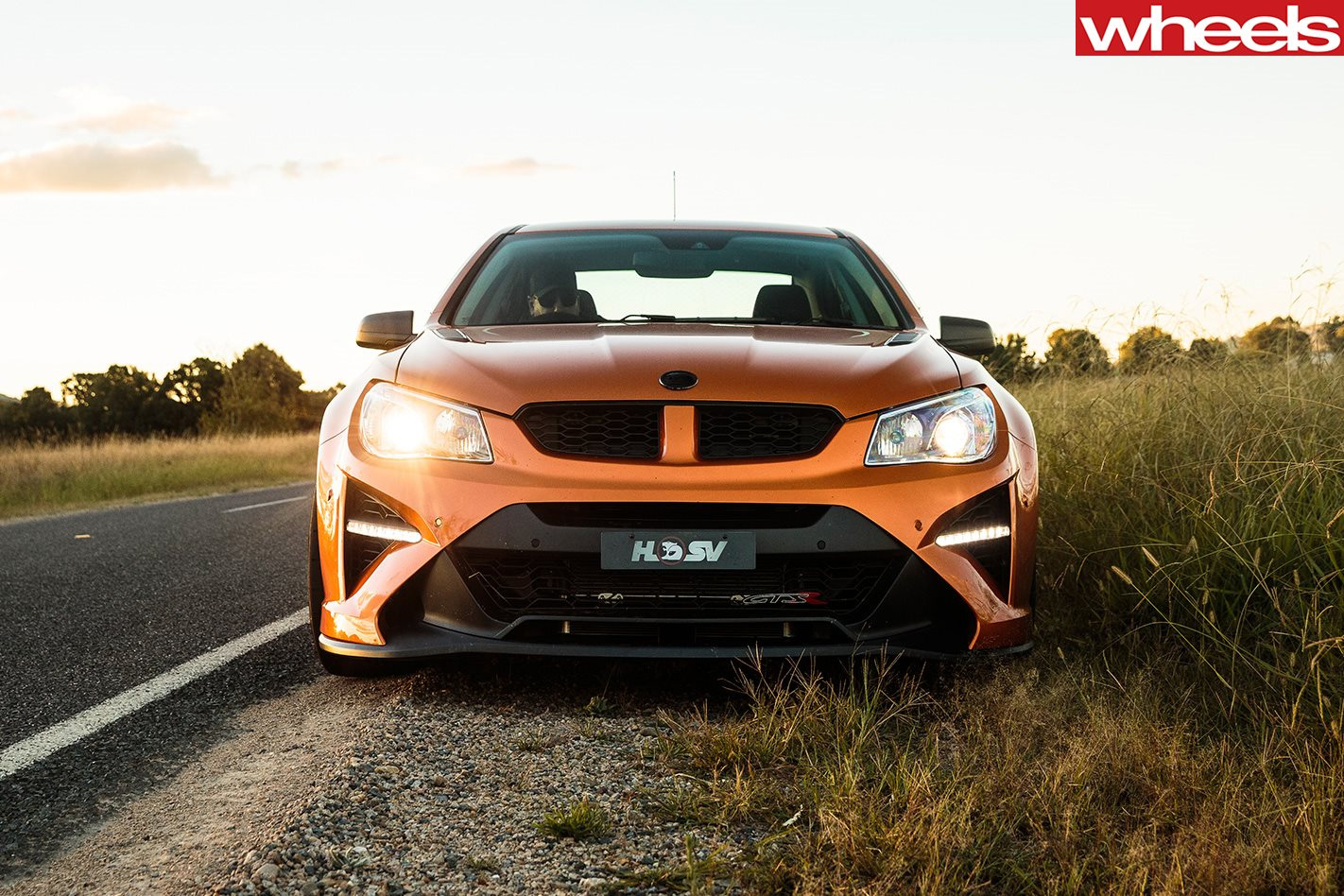
Admittedly its inclusion is lineball, though its unique body panels, track widths and powertrain see it just sneak through our ‘newness’ criteria. Sentimentality played a role here too: the W1 will be the last Aussie-built car to ever take part in Wheels COTY.
