
Australia’s cheapest new cars go into battle to see which is most affordable to own long-term.
1st: Kia Picanto S
Grabbing a bus, an Uber or a GoGet are among the less-costly transport alternatives to a Kia Picanto S. But if you’re intent on new-car ownership and want to do it at minimum cost, with a degree of driver appeal, then the Picanto is king.
The model is offered in a single ‘S’ spec (for now) and opting for the five-speed manual saves you $1500 up front, and a further $120 each year at the bowser compared with the auto. The cost of depreciation here is about $2500/year, which is as good as it gets for a new car, and the Kia kicks goals with the brand’s generous warranty, a handy 12-month service interval and bargain annual insurance.
2nd: Holden Spark LS
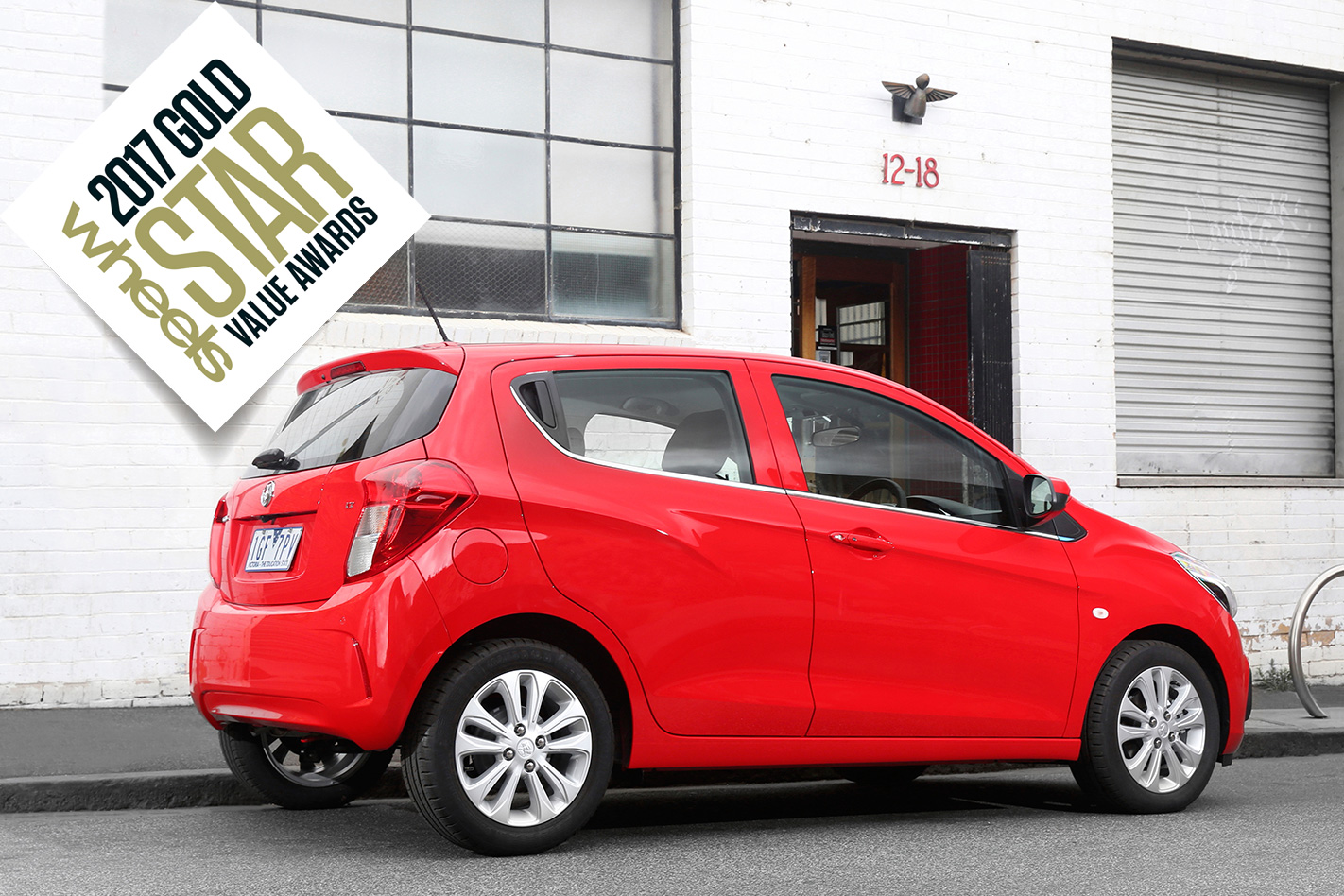
Holden’s baby Spark is actually a more sophisticated car than the bigger, costlier Barina, with good tech and equipment, a lively engine and keen handling. Undercuts the Picanto on insurance cost at $565/year.
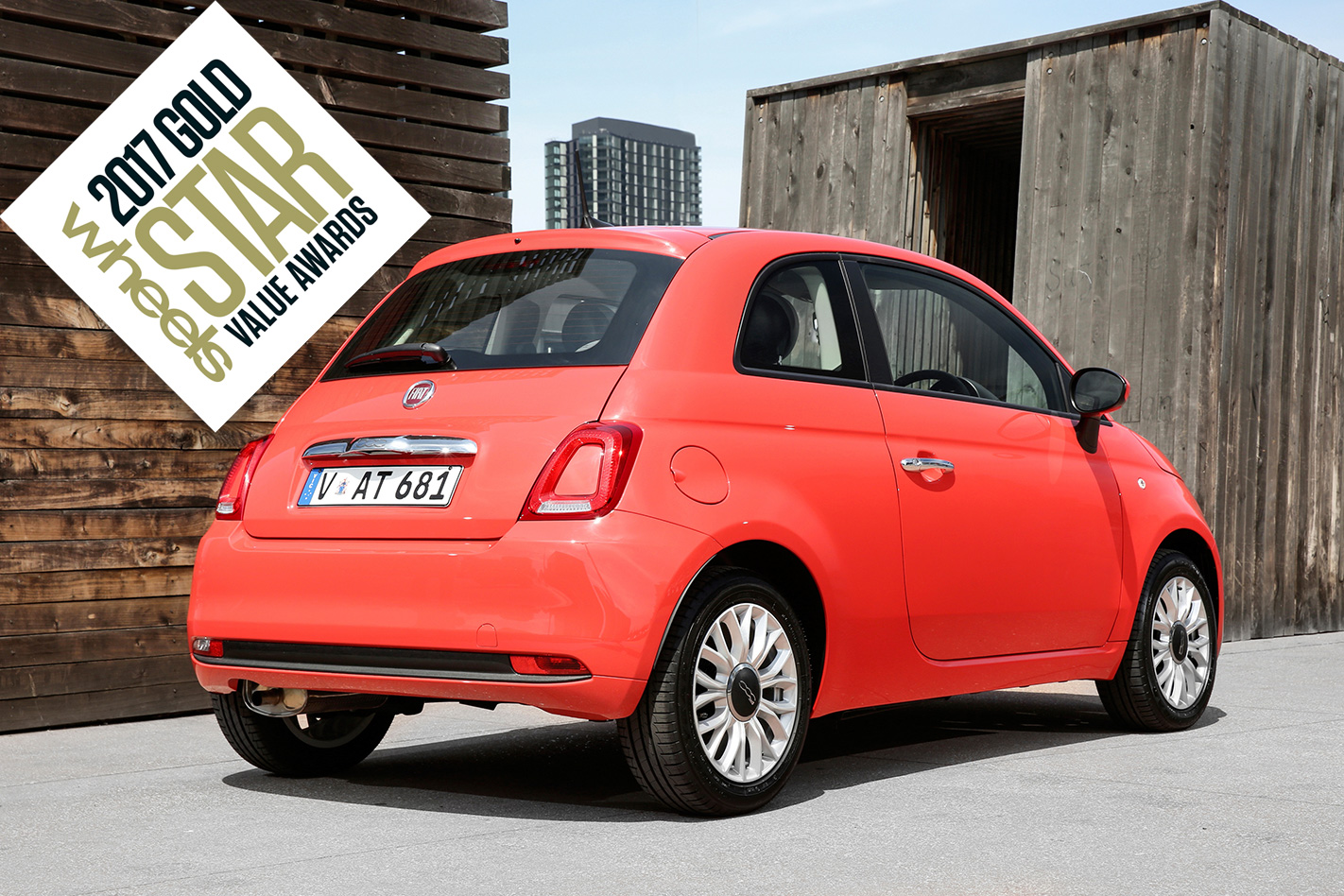
3rd: Fiat 500 Pop
A taste for premium fuel undoes some of the good work of the Italian retro car’s 4.9L/100km official combined-cycle consumption, but it’s still cheap to own, doesn’t cost a whole lot to purchase, and boasts solid resale and a sensible service interval.
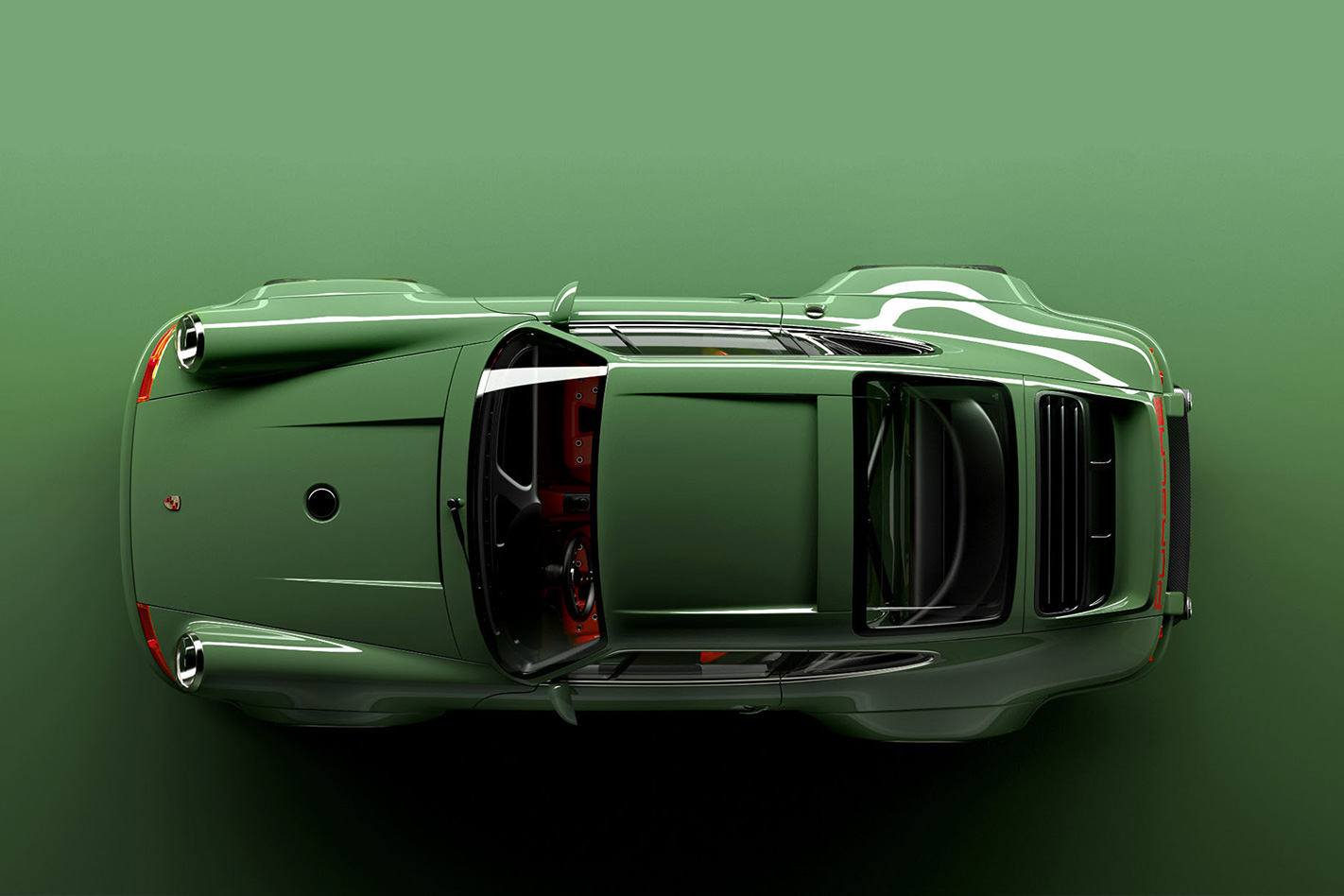
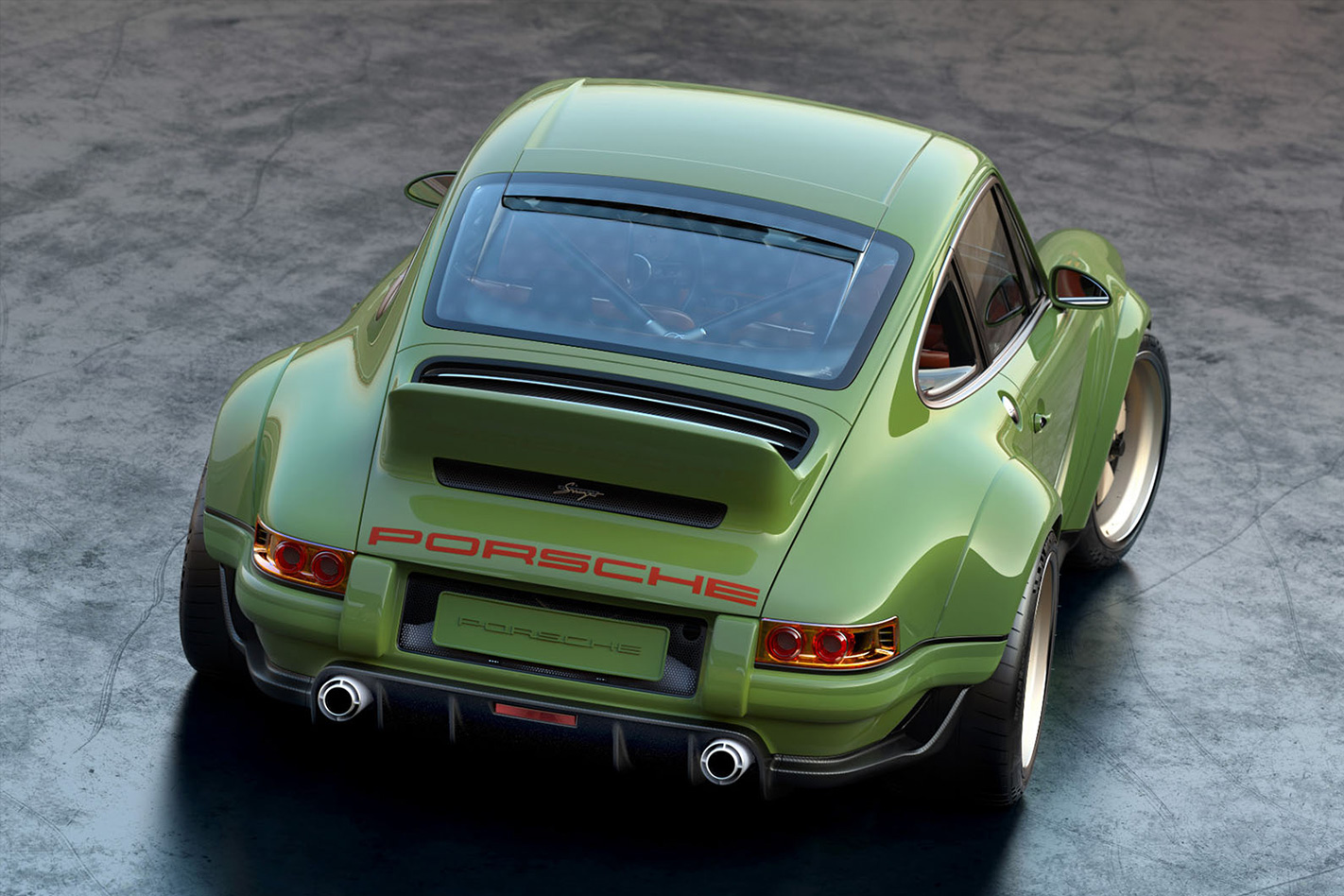
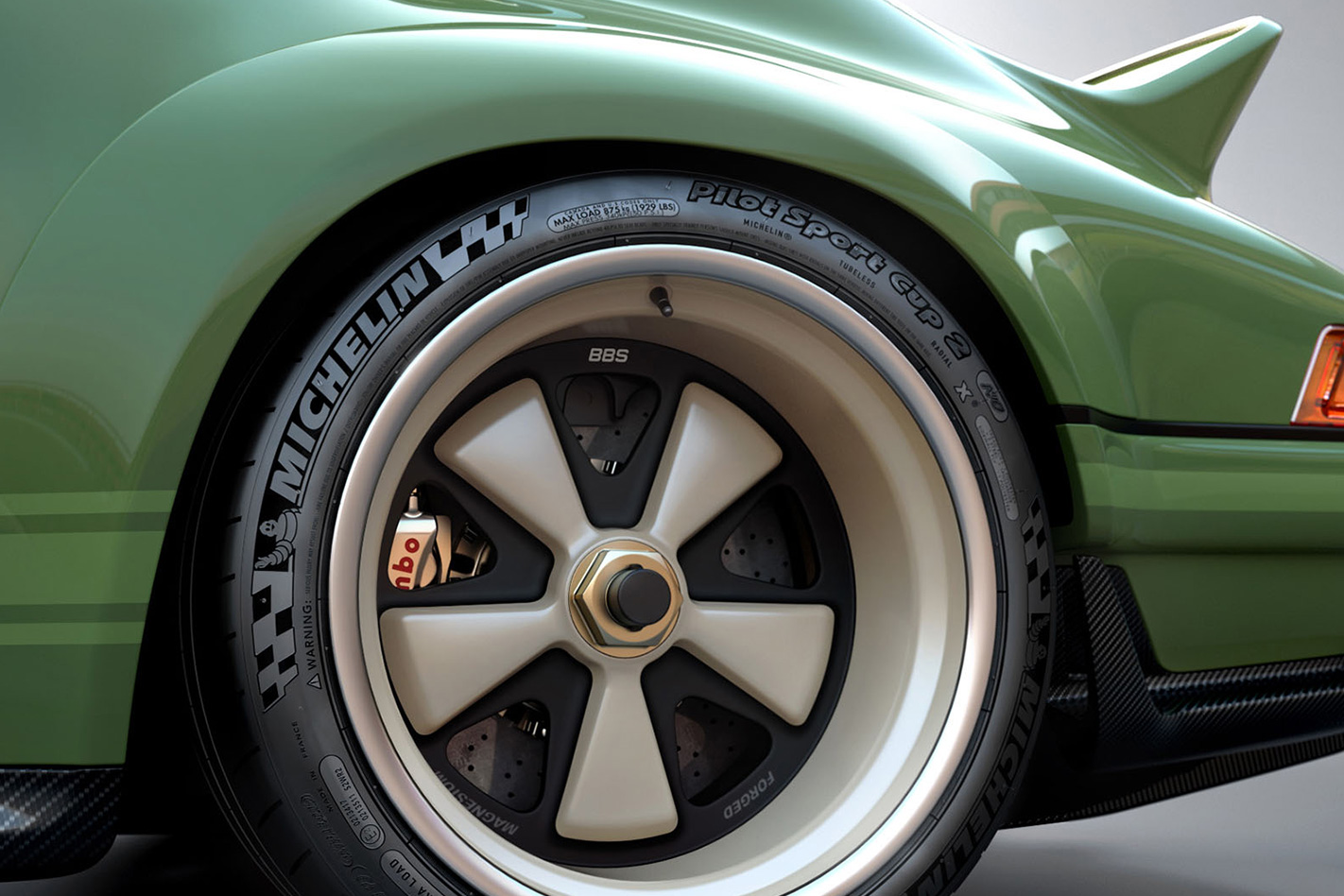
This 1990 Porsche 964 911 may well be the ultimate in air-cooled, naturally aspirated performance.
It’s been given the magic touch of both Singer Vehicle Design, a world renowned Porsche workshop based in California, and Williams Advanced Engineering which bestowed some F1-derived know-how upon the 911.
Porsche-based Gemballa GT Concept revealed
While it’s still air-cooled and atmo, it’s been bored out to 4.0-litres, and now has four valves per cylinder, four cam-shafts, and aluminium throttle bodies.
Cylinders and pistons link with titanium con-rods, the air box is made of carbon-fibre, and the exhaust system is one of titanium.
Now it is worth 373kW, and revs to over 9000rpm.
Thanks to a quick video, we know exactly how it sounds. Feast your ears:
The client who commissioned the work of automotive art, Scott Blattner, already owned the car, and asked Singer to essentially build the ultimate version of the 964 911.
“The guys at Singer have always been receptive to the question “What if?” So, the question became…what if Singer worked on restoring and modifying my beloved 27-year old Porsche 964, with the assistance of an engineering concern born from the world of F1. How would such a car look and how would it perform?”
As a result of this project, Singer will build specialised Porsches in conjunction with Williams for “more than 75 enthusiasts.”
We hope one of them lands on Aussie soil.
A word of warning.
This article was first published in MOTOR magazine’s March 2005 issue.
If you’re looking for definitive, super-fast performance times that either match or beat manufacturer claims or times you’ve seen elsewhere, you may be a little disappointed. Blame the weather. On day one of Performance Car of the Year 2005, mother nature bestowed upon us the exact kind of ambient that made us move PCOTY away from January.
Heat, all 35 degrees Celsius of it, wafted over our acceleration test track while humidity rose and fell. So while the figures are highly comparable, they vary between a few tenths and, in some instances, about 1.2 seconds of their real potential.
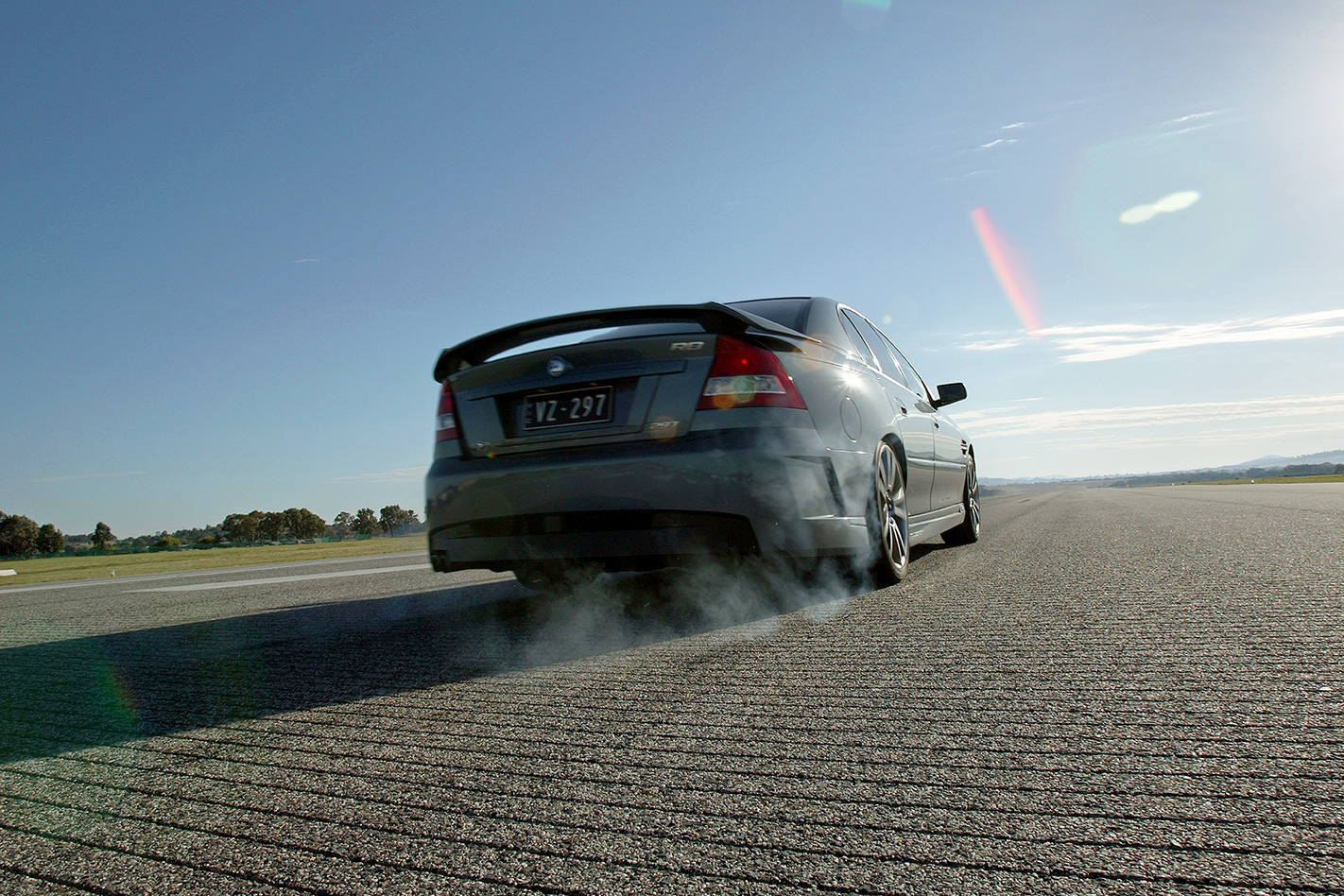
Thanks to Jetstar’s operation evicting us from our previous home at Avalon Airport, we were forced to adopt a new home at Albury Airport’s 2.0km landing strip.
Being one kilometre shorter than Avalon, it discounted our ability to run for top speed, so this element has been lost from PCOTY, but the standing kilometre remains and is more than adequate from a performance perspective. Plus we’ve thrown the time, temperature, barometric pressure and humidity in there in case anyone is that nerdy.
Albury’s surface proved very grippy, so in order from slowest to fastest over the standing kilometre, here is the fast field of PCOTY 2005.
LAST: MINI COOPERS S CHILLI
7:42am, 20°, 1014hPa, 65% humidity 0-100km/h: 7.84 0-400metres: 15.85 @ 145.8 0-1000metres: 28.73 @ 184.0
Mini’s Cooper S opens the PCOTY account as the slowest of the field. The MINI, with its 205/45, 17-inch tyres, has decent grip and loves, needs, lotsa revs to launch cleanly. It was quicker than the TT to the 400 metre mark, thanks to the gearing of its six-speed. After that it faded (just), earning PCOTY 2005’s standing kay wooden spoon.
20TH: HONDA INTEGRA TYPE S
5:42pm, 34°, 1011hPa, 20% humidity 0-100km/h: 7.70 0-400metres: 15.59 @ 146.9 0-1000metres: 28.53 @ 191.1
The 1.8-litre Integra launches well, but isn’t as sharp to 100km/h because it needs two shifts. It’s almost a dead-heat over the quarter-mile with the Clio, and the difference is down to gearing more than anything else. It launches clean with lots of wheelspin, shifts are super light and easy and it makes the most of what it’s got.
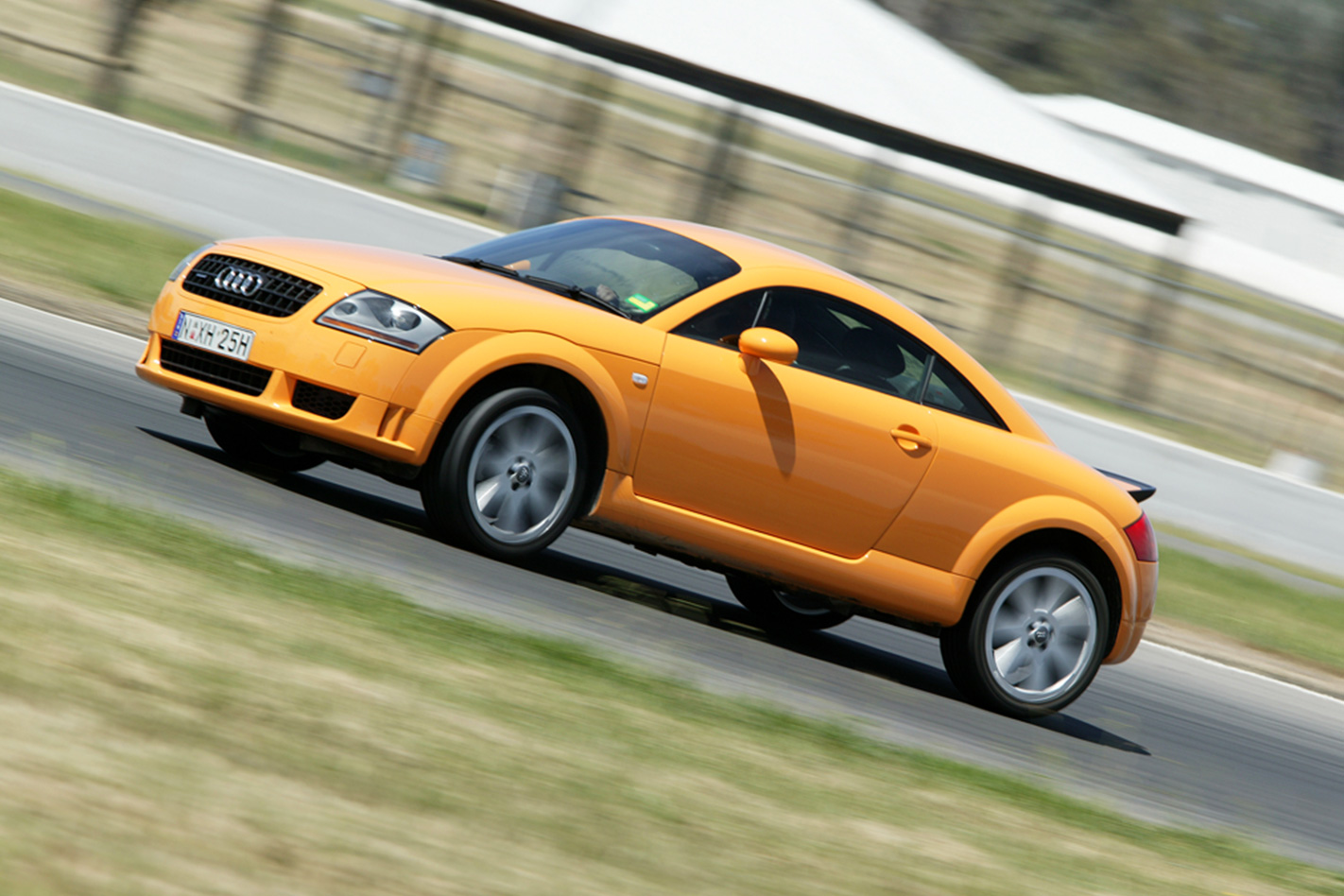
19TH: AUDI TT V6
4:15pm, 34°, 1011hPa, 19% humidity 0-100km/h: 8.20 0-400metres: 15.93 @ 147.6 0-1000metres: 28.42 @ 195.2
18TH: MAZDA MX-5 SE
7:59am, 21°, 1014hPa, 64% humidity 0-100km/h: 7.39 0-400metres: 15.33 @ 147.0 0-1000metres: 28.33 @ 171.1 (184.0)
The SE launches well thanks to its rear-wheel drive and modest turbo torque. With 5000rpm dialled up, a slight feed in of gas gets the rear tyres spinning. The gearbox, normally a tight MX-5 highlight, was a little sloppy in this car and the 5th-to-6th change it needed about 20 metres before the standing kilometre was a big lottery.
It was safer to leave it in fifth, momentarily bouncing against the rev limiter (hence the slow trap speed – the more realistic km speed is in brackets).
17TH: RENAULT SPORT CLIO CUP
3:06pm, 35°, 1011hPa, 18% humidity 0-100km/h: 7.58 0-400metres: 15.52 @ 146.3 0-1000metres: 28.27 @ 190.0
16TH: MG ZT260 V8
1:42pm, 34°, 1012hPa, 21% humidity 0-100km/h: 7.34 0-400metres: 15.37 @ 149.9 0-1000metres: 27.77 @ 193.8
Almost two seconds slower over the click than the next slowest V8. Once the Mustang V8 hooks up (we launched it at 5000rpm) it has good mid-range punch but the last 1000rpm to the six-grand redline is painfully tedious. Upshift early in the MG and it quickly drops out of its powerband bogging down and struggling to puff its way along.
That its speed was slower than the TT at the one kay mark shows how the MG struggles at the top of its rev range.
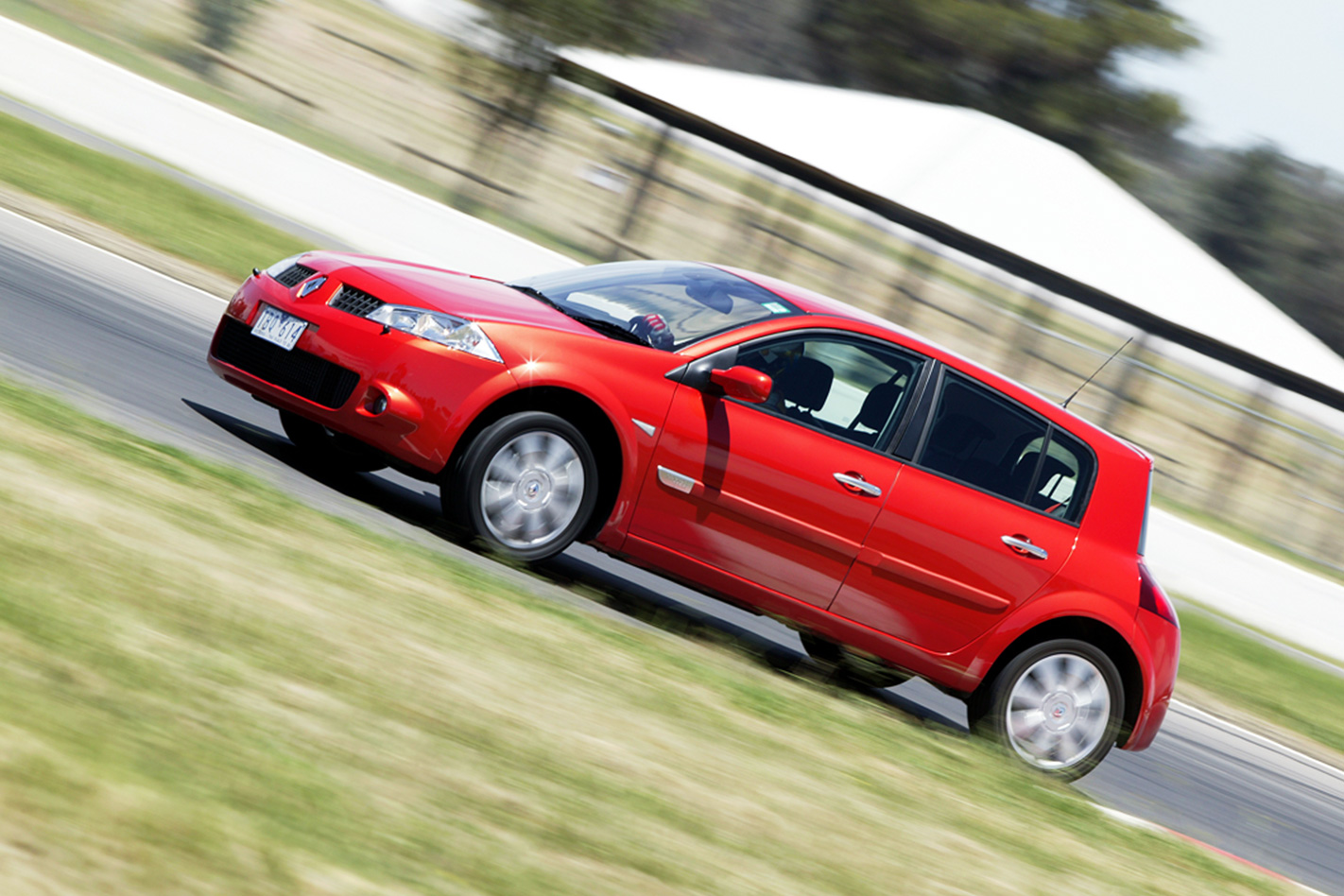
15TH: RENAULT SPORT MÉGANE 225
8:22am, 22°, 1014hPa, 62% humidity 0-100km/h: 7.17 0-400metres: 15.13 @ 154.4 0-1000metres: 27.30 @ 196
The fastest front-drive in the field, the Mégane’s turbo 2.0-litre has heaps of power and torque and a clutch that’s easy to feed in the right amount of slip. With WRX-equivalent torque, it’s easy to light up the tyres, and it’ll actually launch quicker by doing that.
But the bloody traction control system defaults back on at 50km/h slowing progress. And the rev-limiter that cuts in at 7000rpm in first and second, then 6500rpm in third and fourth is oddball and made it hard to get the most out of it.
14TH: VW GOLF R32
5:58pm, 33°, 1011hPa, 22% humidity 0-100km/h: 7.10 0-400metres: 14.97 @ 152.5 0-1000metres: 27.14 @ 198
A right bastard to get off the line, the Golf has masses of all-wheel drive traction, meaning the clutch needs to be slipped a touch for a fast getaway. It winds out with a great sound and easy, quick and unfussed changes through the light and clicky shifter.
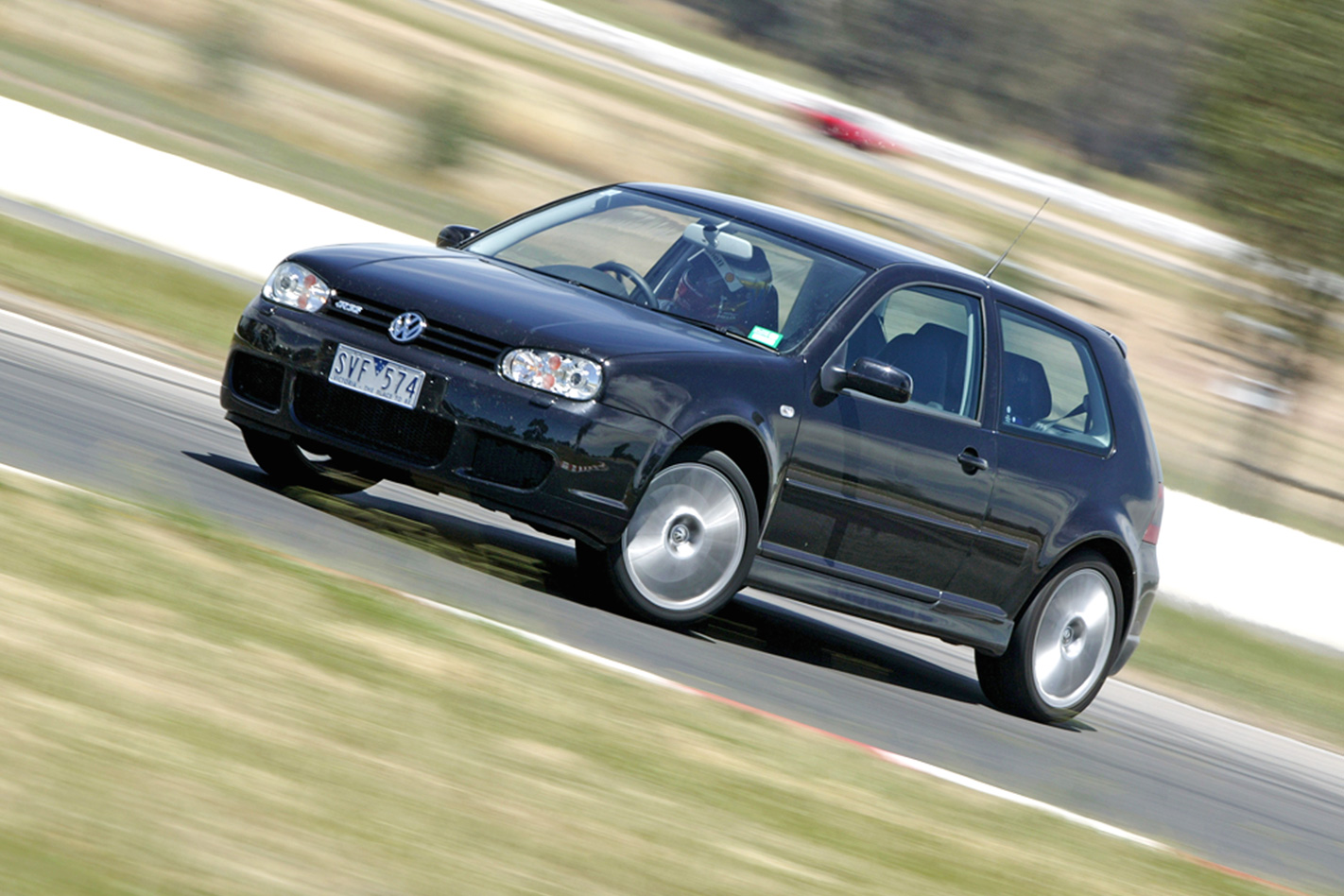
13TH: FPV F6 TYPHOON
8:47am, 24°, 1014hPa, 58% humidity 0-100km/h: 6.40 0-400metres: 14.64 @ 159.9 0-1000metres: 26.24 @ 206.4
Given its speed over the standing kay the Typhoon should have gone faster. Sharpish off the line with a 6.4 from a 4000rpm launch, it likes just a touch of wheelspin to keep it all clean and tidy. What’s interesting is to compare the Typhoon to the XR6T’s figures from 2003: the XR6 is actually 0.2seconds faster to 100km/h and 0.3seconds faster over the quarter-mile and the kilometre. It also suffered from heat, with an earlier ‘cooler’ run netting a slower ET but 161km/h (400m) and 207.5km/h (1000m) trap speeds.
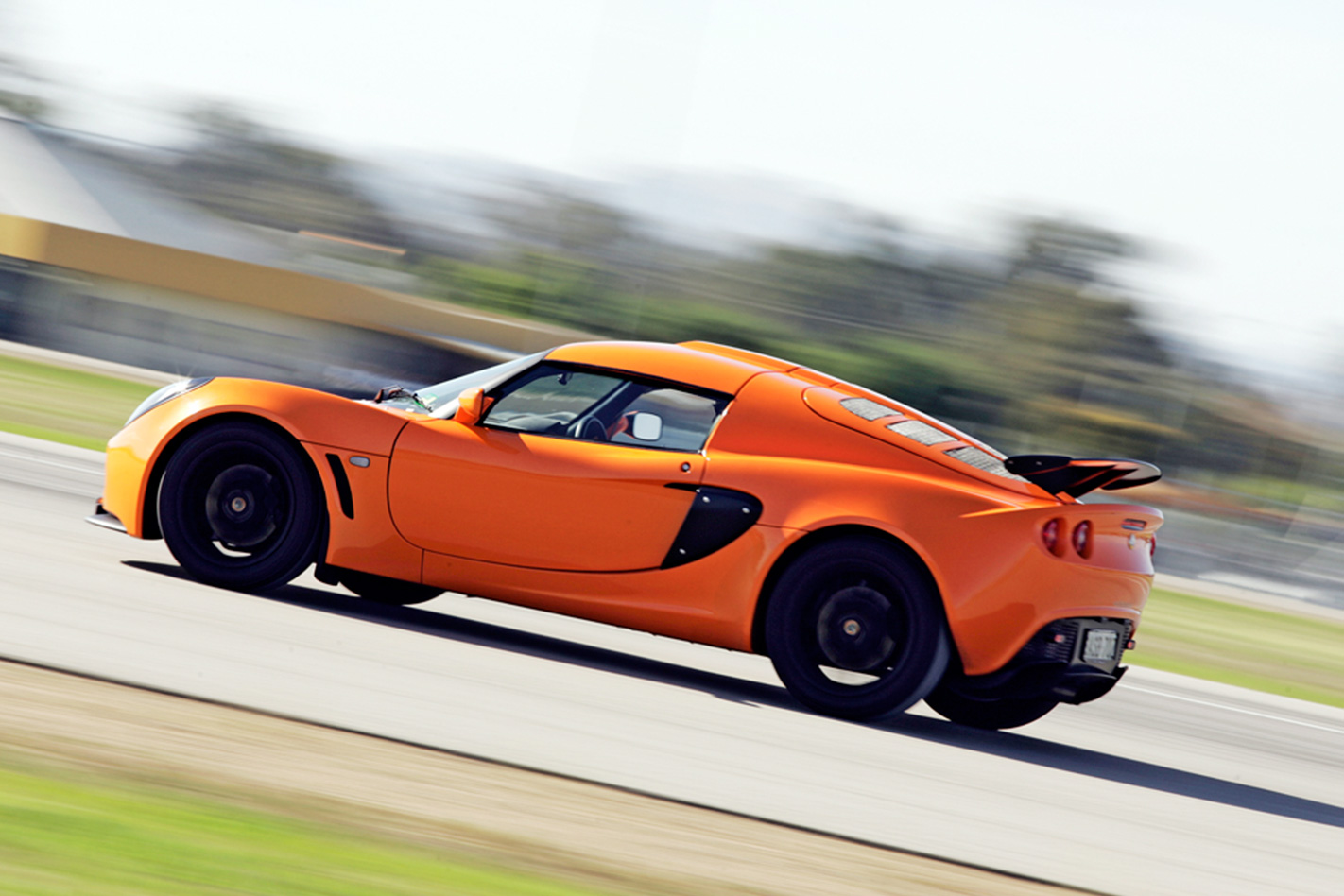
12TH: LOTUS EXIGE
2:45pm, 35°, 1012hPa, 21% humidity 0-100km/h: 5.84 0-400metres: 14.18 @ 158.4 0-1000metres: 26.08 @ 200.0
Step one: fit earplugs. Because when the Exige dials up 8500rpm, there’s an explosion imminent. Pop the clutch and the Toyota-powered Lotus explodes off the line with the sixth-fastest time to 100km/h.
11TH: MERCEDES-BENZ SLK350
3:51pm, 35°, 1011hPa, 19% humidity 0-100km/h: 6.49 0-400metres: 14.45 @ 159.0 0-1000metres: 26.07 @ 210.0
With lots of grip, the SLK350 wasn’t as fast as it could have been because of an ECU that wouldn’t allow more than 5000rpm while stationary. It still put the power down well with a little bog, but the worst part was the second-to-third shift – slightly diagonal, vague and sloppy it leaves you wondering if it’s even in. But it’s hard to argue against such sharp figures for a 3.5-litre V6.
10TH: HOLDEN MONARO CV8
1:18pm, 34°, 1013hPa, 24% humidity 0-100km/h: 6.40 0-400metres: 14.55 @ 160.6 0-1000metres: 25.98 @ 212.8
Run at the hottest part of the day, the Monaro ran times of 7.4, 15.2 and 27.1. Slow. So we had lunch, let the engine cool in the shade and tried again. It ran substantially quicker. The Monaro needs 4000rpm to launch, but is dead easy to get off the line consistently and its top-end keeps it ahead of the SLK350. Its times even beat the more powerful Typhoon and gets close to Falcon GT-P.
9TH: HSV GTO COUPE
6:18pm, 32°, 1011hPa, 22% humidity 0-100km/h: 6.23 0-400metres: 14.29 @ 166.5 0-1000metres: 25.95 @ 218.1
One of just four autos and easily the dumbest, just chuck it in D for drag and stamp on it. No paddles, no buttons, just a thump of 6.0-litre LS2. But for 297kW, the GTO was a little disappointing. Not least for the fact it seemed to suffer most from the heat: the same car had run 4.99 and a 13.0 @ 179km/h only weeks earlier in cooler conditions. In the heat, it just didn’t jump off the line and the auto dulled the sensation.
8TH: HOLDEN COMMODORE SS
11:27am, 31°, 1014hPa, 37% humidity 0-100km/h: 6.24 0-400metres: 14.43 @ 161.3 0-1000metres: 25.80 @ 211.3
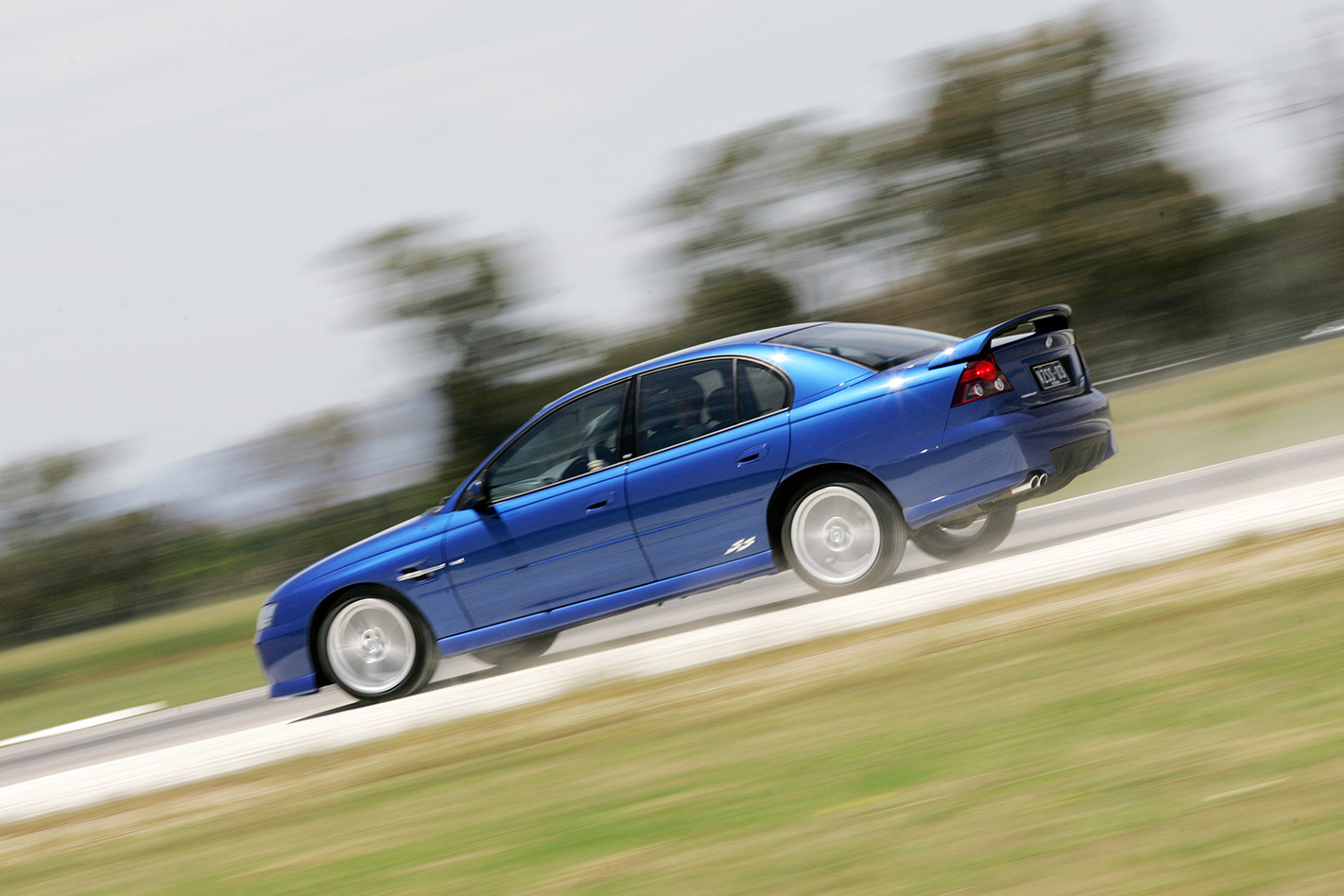
7TH: FPV FALCON GT-P
11:15am, 30°, 1014hPa, 37% humidity 0-100km/h: 6.30 0-400metres: 14.40 @ 163.1 0-1000metres: 25.72 @ 212.3
A mongrel to get off the line, the GT-P needs a massive 4750rpm for its 6.3 second 0-100km/h compared to the R8’s 3900rpm. The gearing is tight and if you can get the revs right (which is trickier than in the Holdens), it belts out with a great sound but a harsh rev limit at 5900rpm.
That’s not a lot of powerband to play with, but the six-speed ratios do help the GT-P. Despite the heat, it’s faster at every increment than the five-speed GT we tested at PCOTY 2003.
6TH: SUBARU IMPREZA WRX STi
7:01am, 18°, 1014hPa, 73% humidity 0-100km/h: 5.74 0-400metres: 13.82 @ 160.1 0-1000metres: 25.65 @ 201.0 BANG.
The loudest thump we’ve ever heard from any Subaru WRX or STi. With copious amounts of turbo lag, the STi needs 7600rpm to get off the line smartly, but this incredible cringe-making explosion happens as the rear diff bangs against its mounts.
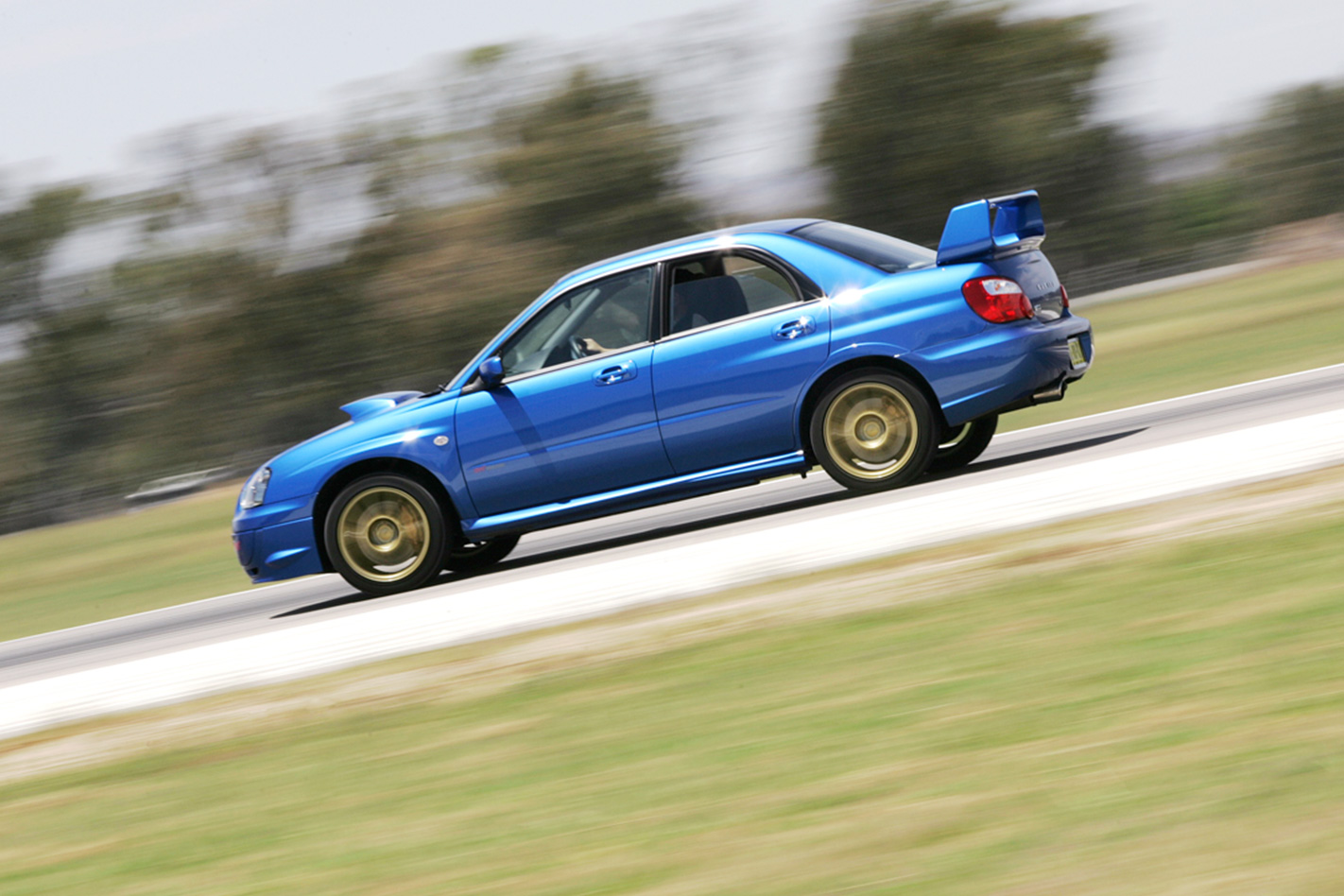
Against the EVO, it’s super close: with identical power, identical weight, just a 12Nm difference, the Subaru’s six-speed isn’t enough to compensate for its top-end falling away – it was actually faster short-shifting at 6500rpm.
5TH: MITSUBISHI EVOLUTION VIII
7:22am, 19°, 1014hPa, 71% humidity 0-100km/h: 5.41 0-400metres: 13.84 @ 161.2 0-1000metres: 25.50 @ 202.7
Like the STi, the EVO VIII uses all-wheel drive to catapult it off the line and jump the queue ahead of where it really should rank. With an ECU-limited 5000rpm neutral limiter, it’s another bastard to launch because five grand just isn’t enough. So it’s a fine balance of slip that gets its quick times.
Not the best way to bed-in a clutch that had only been replaced the night before. But it sure is consistent: a 5.49 seconds 0-100km/h, 13.88 seconds to 400m and 25.65 seconds to 1000m were its next fastest times, with the intercooler spray working overtime.
4TH: MERCEDES-BENZ C55 AMG
6:43pm, 31°, 1011hPa, 24% humidity 0-100km/h: 6.18 0-400metres: 14.25 @ 168.4 0-1000metres: 25.29 @ 220.1
Proving a little tricky to get off the line with the auto and instant response of the V8, there just wasn’t the grip you’d expect a car like this to have. But once it hooked up, whoa boy it rocketed towards the horizon like it was attached to a giant rubber band.
It still hadn’t overcome its slow start, nor beaten the EVO VIII or STi by the 400m mark, but it was really hauling with almost 170km/h, before monstering the 1000m. The C55 is super fast for ‘just’ 270kW.
3RD: HSV CLUBSPORT R8
10:45am, 29°, 1014hPa, 38% humidity 0-100km/h: 5.83 0-400metres: 14.01 @ 169.1 0-1000metres: 24.88 @ 223.2
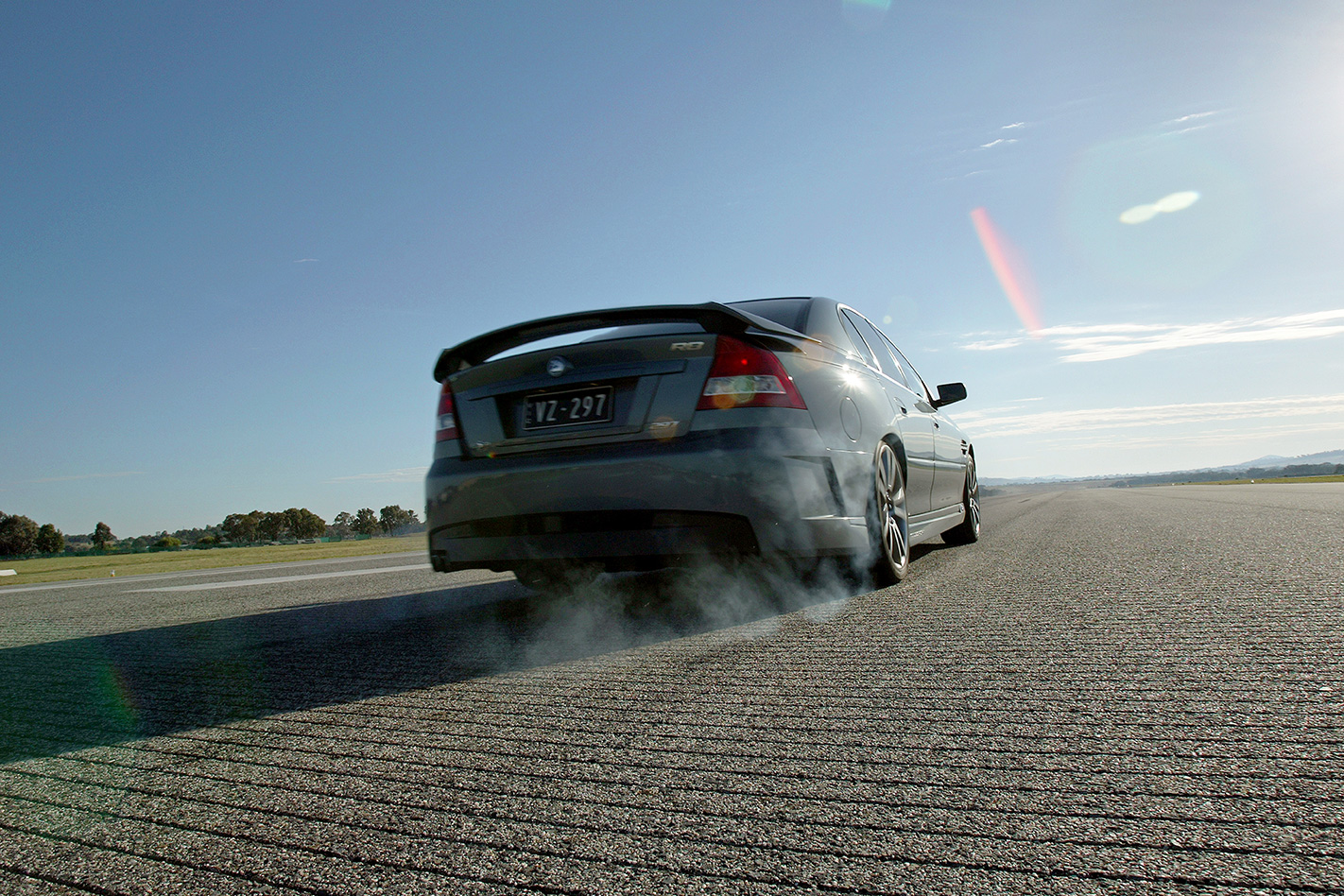
Sitting in the bronze medal position is Australia’s own Big Friendly Giant the HSV ClubSport R8. Packing the new Gen IV motor and 297kW of mumbo it mixes intoxicating power, torque, gearing and fantastic throttle control to be the third-quickest weapon at PCOTY.
2ND: PORSCHE 911 CARRERA S
5:30pm, 33°, 1011hPa, 21% humidity 0-100km/h: 4.85 0-400metres: 13.01 @ 177.9 0-1000metres: 23.42 @ 234.1
A 261kW flat-six with 400Nm sitting right over the fat rear tyres makes for a bullet out of the gates. It’s amazing how the Stuttgart stormer cranks out big horsepower with a virtually flat torque curve despite the lack of forced induction and big cubes.
With 5000rpm dialled in and a side-stepped clutch it fires out of the hole harder than anything else here, but there’s massive amounts of axle tramp. Perfectly geared for the 1000m, with the sweetest shift, it just hits the limiter in fifth as it crosses the line for the runner-up spot.
1ST: MERCEDES-BENZ CL65 AMG
4:30pm, 34°, 1011hPa, 19% humidity 0-100km/h: 4.64 0-400metres: 12.59 @ 190.0 0-1000metres: 22.35 @ 248.1
How 2130kg gets off the line is no great mystery with 1000Nm, but it is a fine balancing act. With traction control disabled, the CL65 wants to torch its rear tyres and it’s a mission to keep the thing from blazing up.
It did a 4.9 and a 5.0 for the 0-100km/h.Then with the traction control switched back on and by carefully feeding in the throttle while trying to keep the T/C from intervening we managed to record a 4.6.
That’s 0.3 seconds faster than the leading Audi RS 6 last year, but in all-time ETs, it’s behind the Viper (4.34), 911 Turbo (4.30) and 911 GT2 (4.1). But then it tops out with 248.1km/h, the highest 1000m speed EVER recorded on PCOTY. A fitting drag star.
You can thank Goldilocks for this little number.
This review was first published in MOTOR magazine’s March 2005 issue.
The house-squatting, porridge-scoffing juvenile who broke into the three bears’ house left a lasting reminder that not all dishes are to everyone’s taste. Subaru’s Impreza WRX has been a performance superstar since its local launch in 1994.
With power creeping up from 155kW to 168kW over the years and all-wheel drive and turbocharging, it reeks of the kind of performance that appeals to both sides of the law, topped off with a recommended retail price that makes most performance cars under $100,000 seem over-priced.
WRX is a cult, and one of THE performance car choices for anyone in the know. If it lacked anything, it was, well, more. So Subaru imported the super-fast STi, with an appropriate price bump, 195kW, and in its latest incarnation, adjustable centre diff and super-sticky rubber.
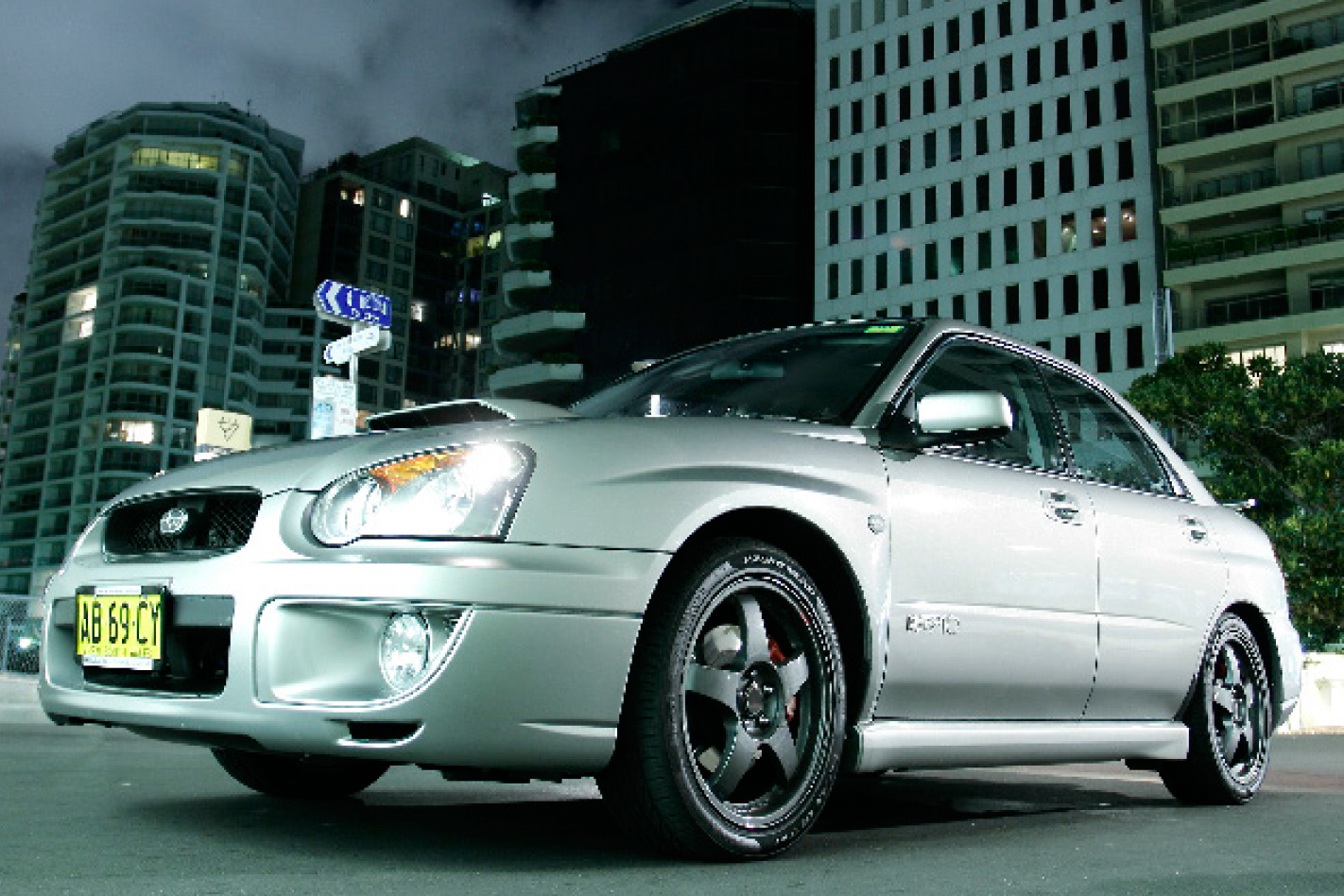
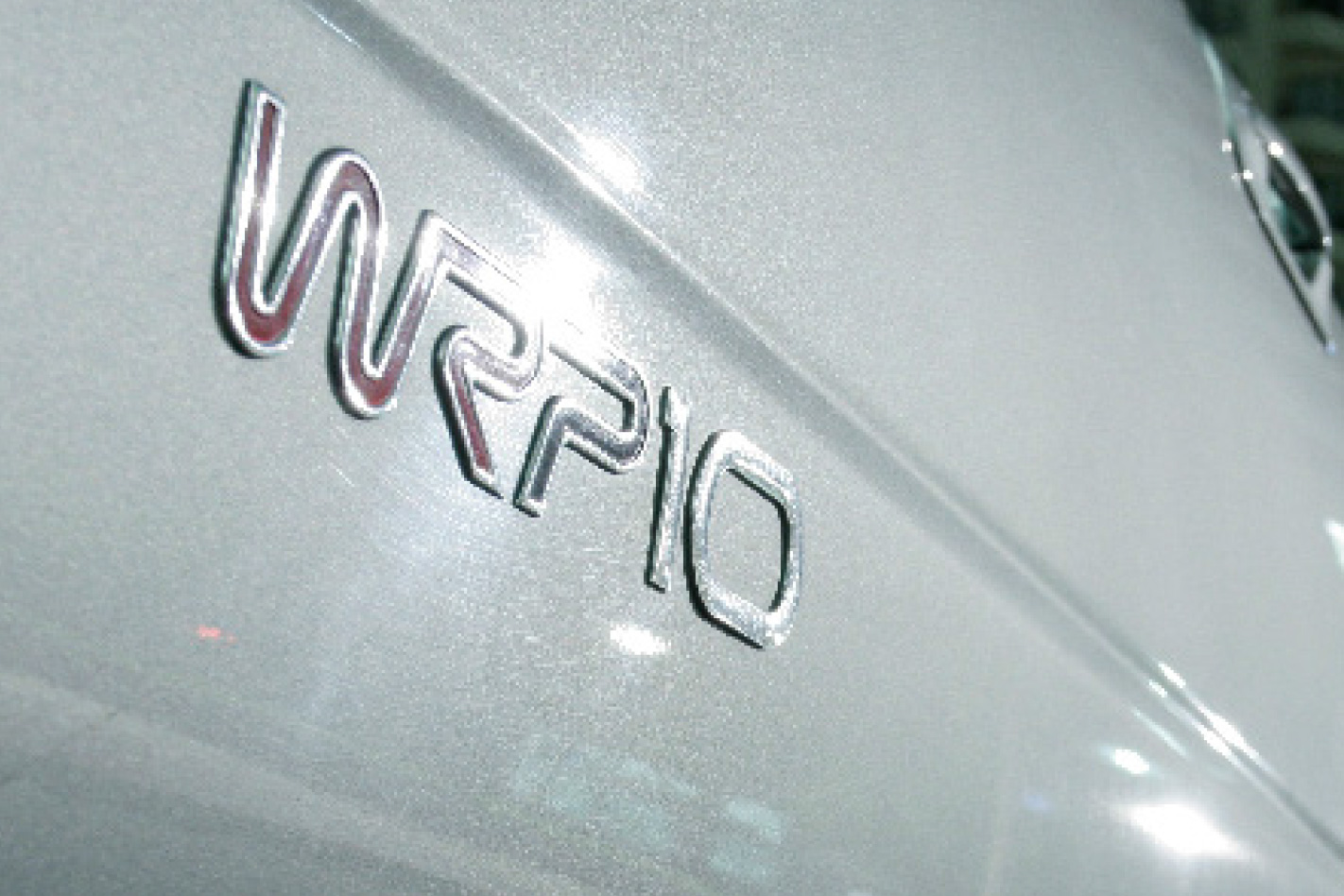
And it’s called the Limited Edition Impreza WRX WRP10. Patience now, it all has meaning: WR for World Rally, P for Pirelli, and 10 for the WRX’s 10th birthday in Australia. Positioned in the tight performance gap between the WRX and STi, the Australian-developed car was careful not to step on either Japanese car’s toes.
Subaru WRX STI Type RA NBR record lap
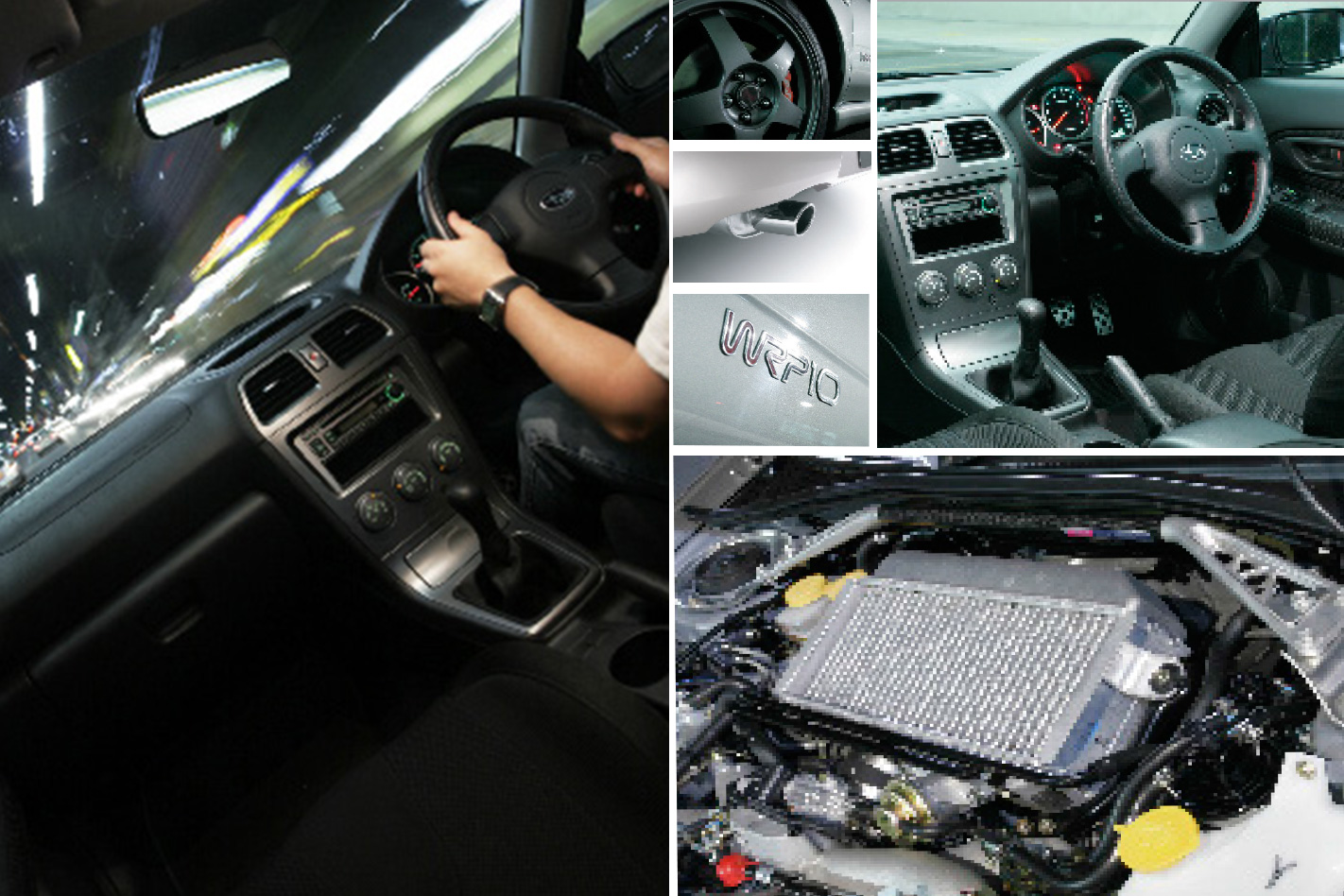
STi’s product specialist (and current ARC co-driver champ) Greg Foletta was given the task to balance the power. If anything, the balance of horsepower is tipped slightly towards the regular WRX. Two key components boost the WRX’s two-litre, flat-four just enough: an STi ECU and single-tip muffler add 7kW and 2Nm, upping the totals to 175kW and 302Nm, the latter at a 400rpm higher 4000rpm.
It’s a fraction throatier, and the pants-o-meter detects a touch more top-end through the gears, especially third and fourth. But it’s the response of the WRP10 that makes it more pleasurable to drive around town than the STi. The VBox makes it clear. Launching the WRP10 is easier than an STi as there’s just enough tyre slip to prevent it bogging.
It carries speed right through to redline, only losing pace – as most turbos do – when it takes a breath for a gear and needs to re-boost. It grabs third just before 100km/h but from there on it’s steaming.
Over a standard WRX, the WRP10 is 0.3secs faster to 100km/h, just breaking into the high fives, and half a second quicker to the 400 metre mark, scraping under 14 with a 13.99. Importantly for Subaru, it’s also 0.2 slower over the markers than the 75kg heavier STi tested this issue at Performance Car of the Year’s sauna.
It’s close in speed too: the P10 is 3km/h faster than a WRX over the 400m, but 1km/h slower than STi. So it’s fast. It’s exclusive too. Subaru plans on building just 200 WRP10s, all Crystal Grey Metallic and five-speed manuals. It suits the sedan in a subtle, on-the-prowl shark way.
And we love how much the body muscles up with such a simple mod of 15mm-lower STi springs that don’t seem to hurt the ride quality either. Despite all this, it’s as absorbent as a standard car but better. Maybe it’s the STi carbon fibre strut brace, maybe it’s the firmer springs, maybe it’s the Pirellis, maybe it’s all three, but the P10 just works.
It’s only when pushed hard through high-load corners and hits a mid-corner bump that the lowered suspension runs out of travel and rides the bump-stops into the body. Even then it’s nothing but a dull thud instead of a harsh crack. Lastly, there’s P at each corner. For Pirelli.
A result of Subaru and Pirelli’s partnership in the World and Australian rally championships, in lieu of the same-size Bridgestones on the regular WRX, and the slightly wider Bridgestones on the STi, the limited edition P10 runs Pirelli PZero Neros at each corner – 215/45 ZR17 91Y, just in case you were wondering.
Oh, you weren’t. They’re wrapped around racing grey super-light Rays Engineering forged alloys that Subaru marks as its own with the STi centre caps. Simple, neat and tough. Which sums up the WRP10. There isn’t a lot to it, but what is there is integrated to exploit the WRX’s strengths and minimise its weaknesses.
Like a boxer in training, it’s tauter, muscled-up and punches harder without, most impressively of all, any real compromise. Well maybe just one. Remembering the standard WRX has just dropped to $39,990, and the STi is $56,630, the retail of the WRP10 sitting at $48,490 is just $180 more than being exactly half-way between the two.
A very smart move from Subaru. Not too soft, not too hard, Subaru’s WRP10 will be just right for 200 lucky bears.
Subaru WRX WRP10 specs: ENGINE: front-mounted 2.0-litre DOHC 16-valve horizontally-opposed turbocharged four-cylinder POWER: 175kW @ 6000rpm TORQUE: 302Nm @ 4000rpm COMPRESSION RATIO: 9.0:1 WEIGHT: 1395kg TRANSMISSION: five-speed manual SUSPENSION: MacPherson struts, coil springs, anti-roll bar (f); dual-link struts, coil springs, anti-roll bar (r) LENGTH/WIDTH/HEIGHT: 4415/1740/1425mm WHEELBASE: 2525mm FUEL: 68 litres PULP PRICE: $48,490
RETRO Porsche tuner Singer Vehicle Design has delivered an automotive bombshell that surpasses all of its previous hardware with a Dynamics and Lightweighting Study (DLS) Porsche – the ultimate interpretation of the iconic Porsche 964.
Singer will produce just 75 of the money-is-no-object vehicles for its most well-heeled customers, but those willing to stump the as-yet unconfirmed base price will get an example of arguably one of the most potent, desirable and collectable air-cooled 911s.
Internal combustion wizard Williams Advanced Engineering was enlisted to help develop the DLS, including the powerplant. Two years of toil has produced a flat six that pumps out 373kW, with what we’d expect is an accompanying soundtrack like no other.
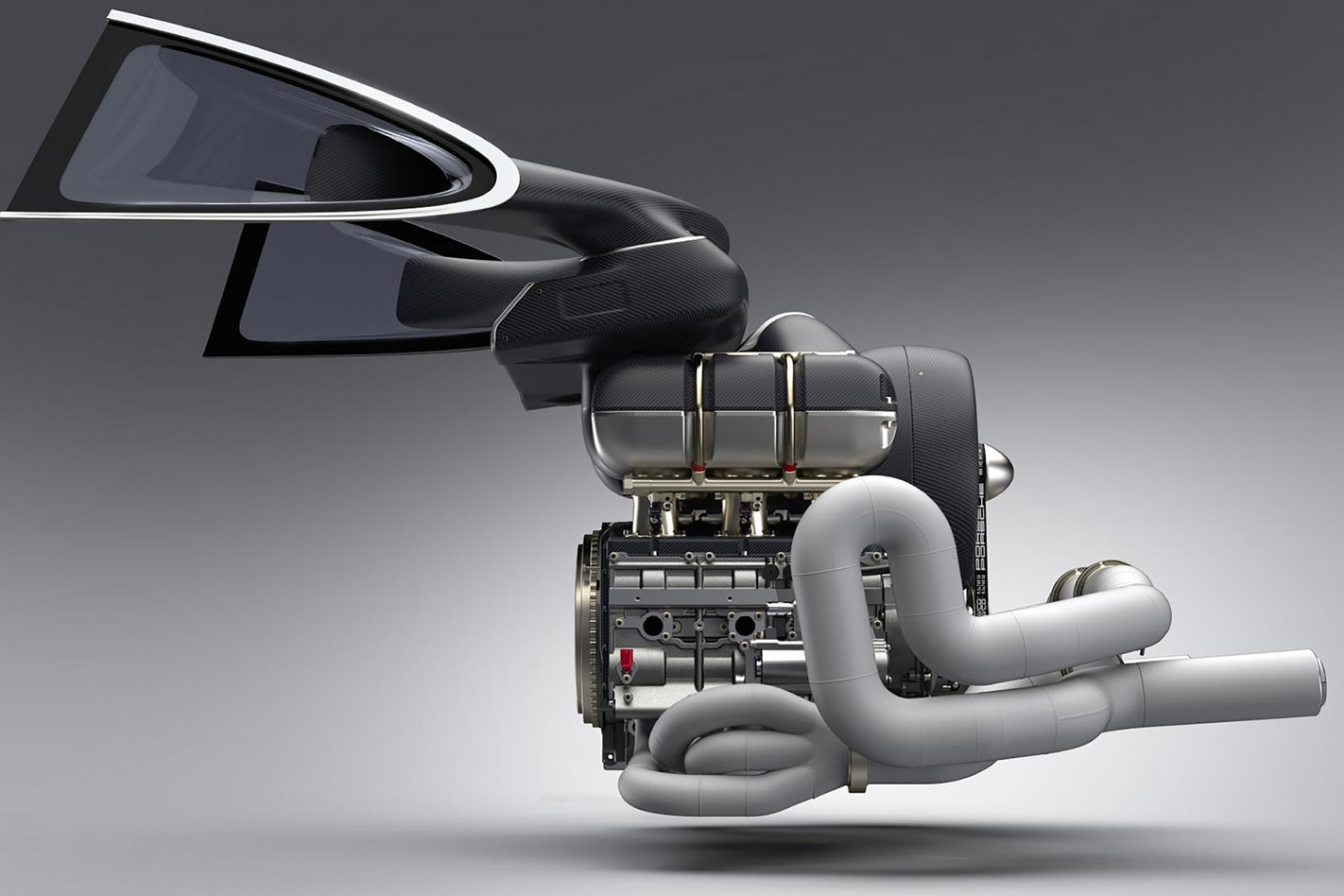
The body is widened and lowered, and painted in a unique Absinthe green. The shell hides a significant re-engineering assault including extensive use of titanium, magnesium and carbonfibre to hack weight without compromising dynamics.
The result is a bantamweight 990kg kerb weight, optimised aerodynamics, monstrous power and dynamics that not even Ferdinand would recognise.
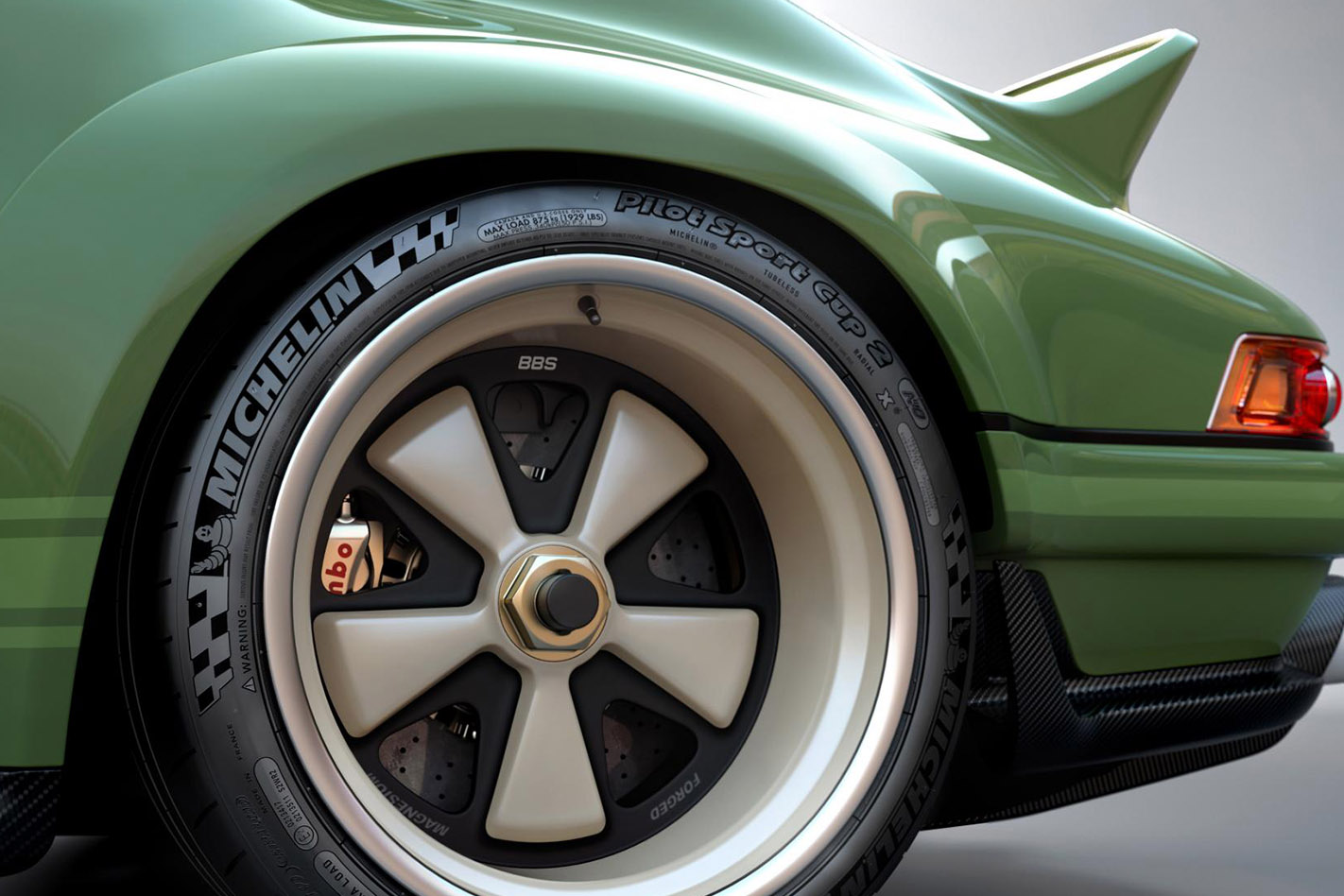
Working with an army of professional drivers, vehicle developers and engineering staff that would put any seasoned sportscar manufacturer in its place, the latest offering from the California-based tuner reporesents “a relentless pursuit of excellence through a lightweight and artistic philosophy and attempt to celebrate an era of lightweight, air-cooled Porsche 911s that targeted ultimate performance on road and track,” says Singer.
Singer does not claim to be a vehicle manufacturer or retailer and instead says its vehicles are “restored and reimagined” and customers are invited to customise their Singer-enhanced Porsche as much as they like.
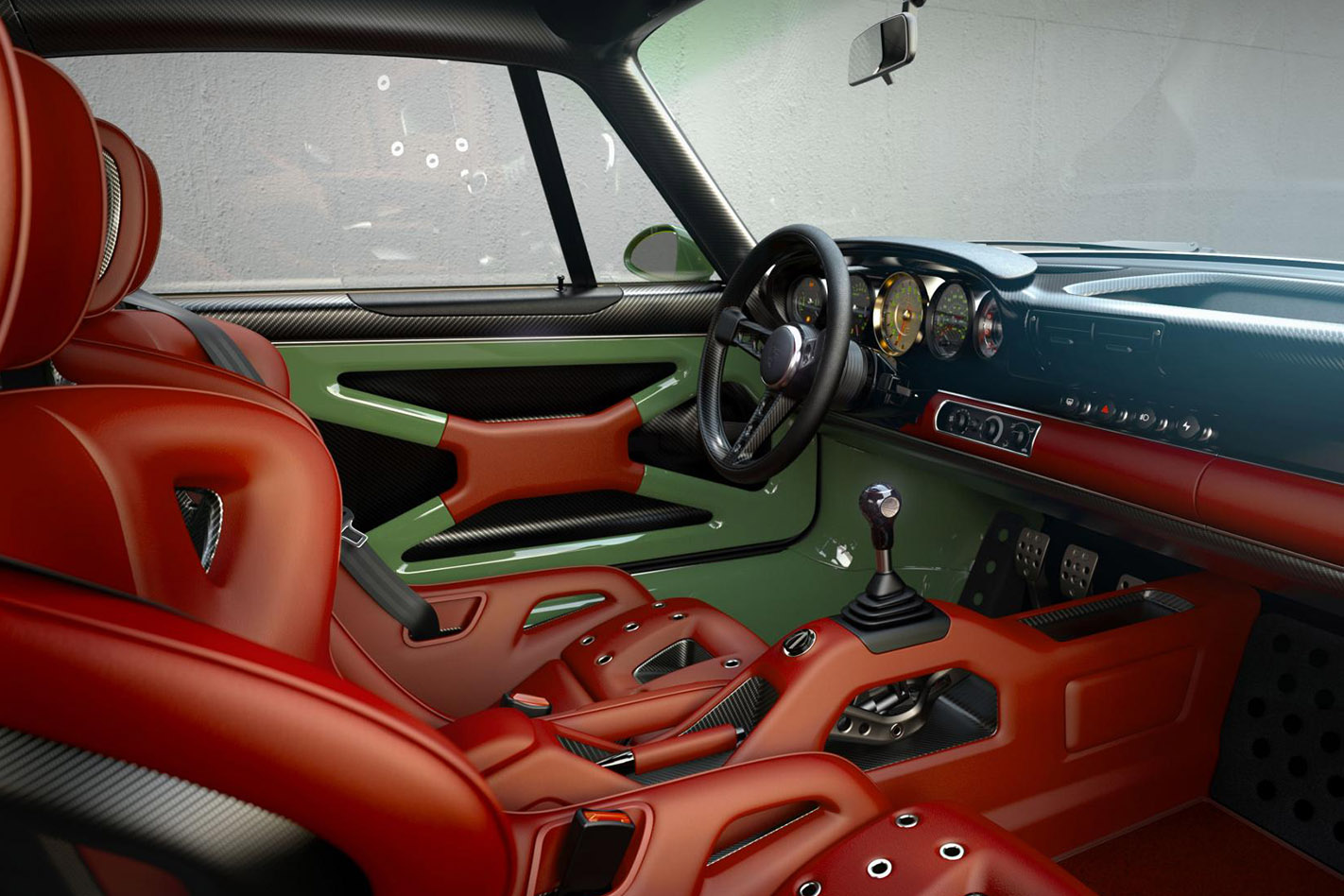
Performance figures have not been released but with more power than a Chrysler 300 SRT and only half its weight, you can expect the latest machine from Singer to be blindingly fast. Think Mazda MX-5 with four times the power.
All versions will be completed at the Williams headquarters in the UK and not Singer’s base in California.
Want one? Yup? So do we.
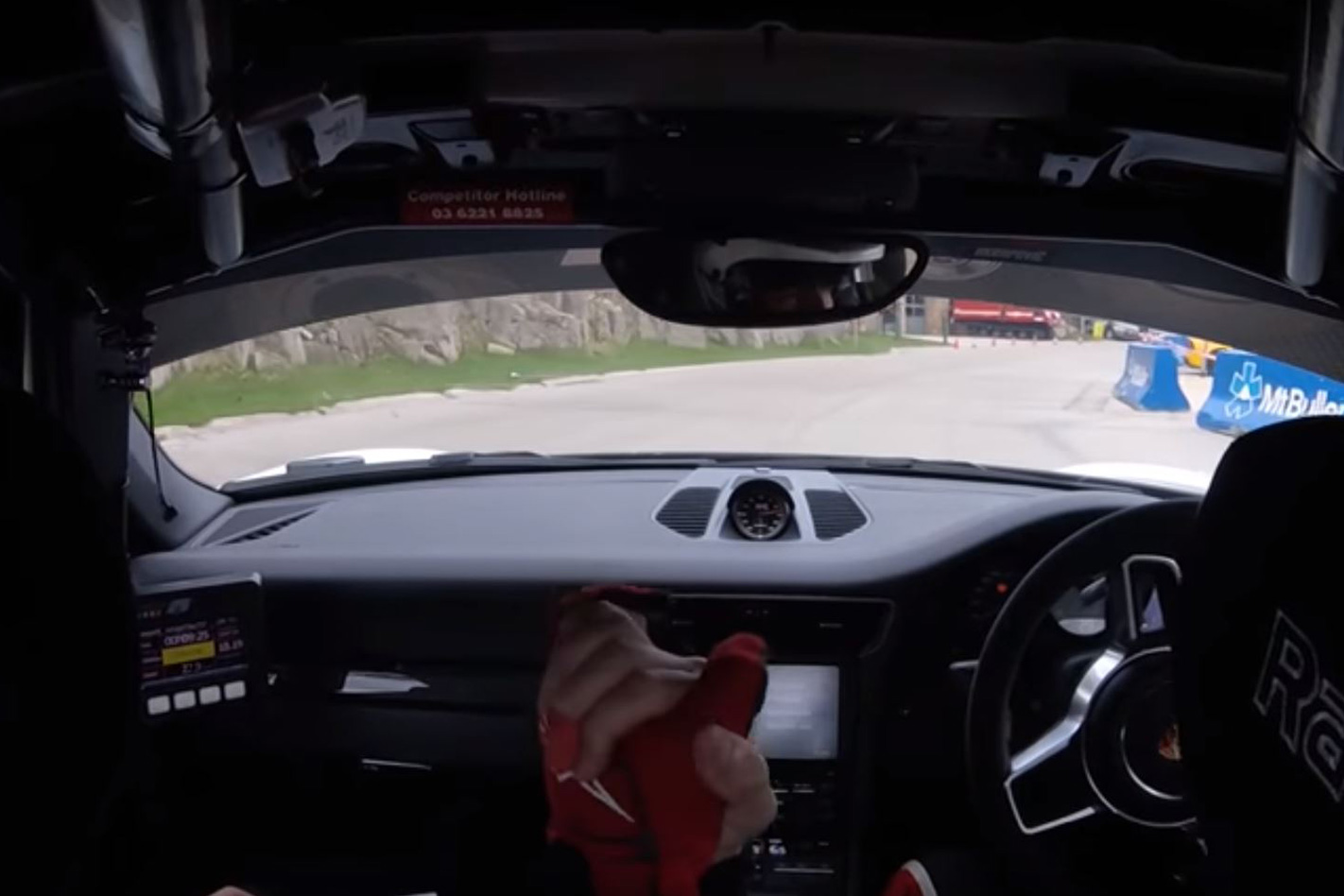
At the wheel of a 2017 Porsche GT3 RS, and with co-driver Cameron Reeves beside him, Matt Close has won this year’s Targa High Country.
And in the process, Close took out an impressive record, managing to make it through the Mt Buller stage in a blistering nine minutes and 25 seconds.
The onboard video of the Mt Buller run posted by Close after the whole weekend was up showed some flat-out and fearless driving, with a few moments that would have shaken most. But Close kept at it and ultimately came out on top.
Winning by a margin of 6m20s overall, Close beat the likes of Peter Nunn’s Porsche GTS, a Lancer Evo VI steered by Ben Calder, and Paul Dowie and his Audi TT RS Plus.
“It’s great to get back to back wins,” Close said.
2018 Porsche 911 GT3 Touring revealed
“We had a great final day, although we drove pretty safely and made sure we kept everything under control.
“Some of the stages today were very slippery, so it would have been easy to put the car off the road, so we were mindful of not doing that.”

Close adds that he was going to try and beat his own record which he set on day one when he returned to Buller on the last day of driving.
“We were hopeful of trying to set a new stage record up Mt Buller, but the road and tyre conditions weren’t as good as they were on Friday, so we just made sure we got to the end.
“Now we’ll focus our efforts on getting ready for Targa Tasmania next year, and trying to win that one as well.”
THE next stage of the British sports car maker’s wild, almost bonkers Ultimate Series roll-out will be revealed next month, the company has confirmed.
The all-new sports car – dubbed the P15 until it receives its official name – won’t be a vehicle for the milk run, with McLaren saying straight up the car will sacrifice daily usability to give its owner “the most intensive driver experience around a circuit”, ranking as “the ultimate track-concentrated McLaren”. What that means is anyone’s guess.
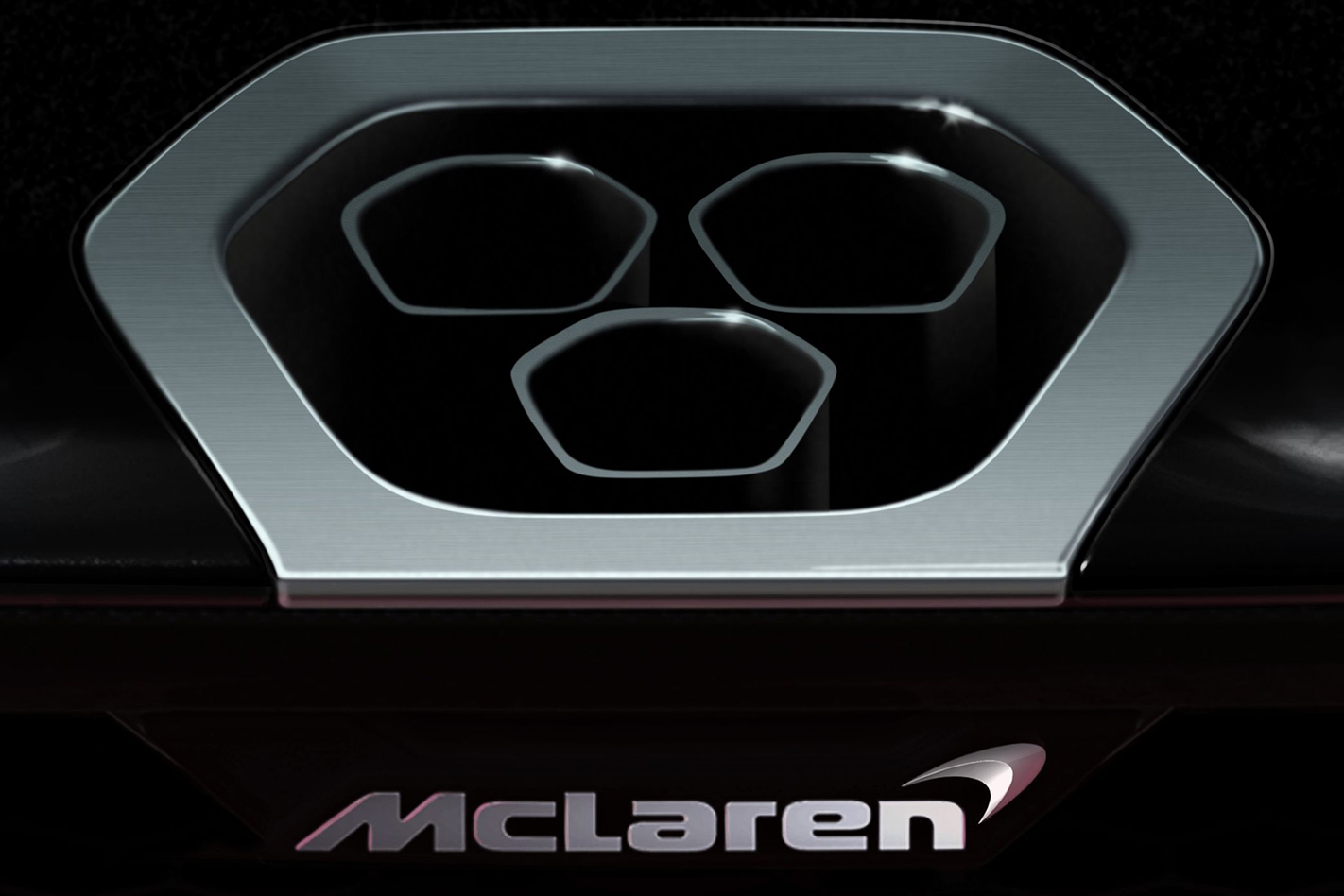
It won’t end there, though, with McLaren revealing the new hyper-GT will be another Ultimate Series model codenamed the BP23 – a vehicle the British sports car maker claims will become the world’s first “hyper-GT”.
Just like the P1 revealed in 2013 that also spawned a more hardcore, track-honed GTS version, McLaren says the P15 and its hyper-GT will sell in strictly limited numbers – only 375 of the P1-badged twin-turbo 3.8-litre plug-in hybrid supercars were made.
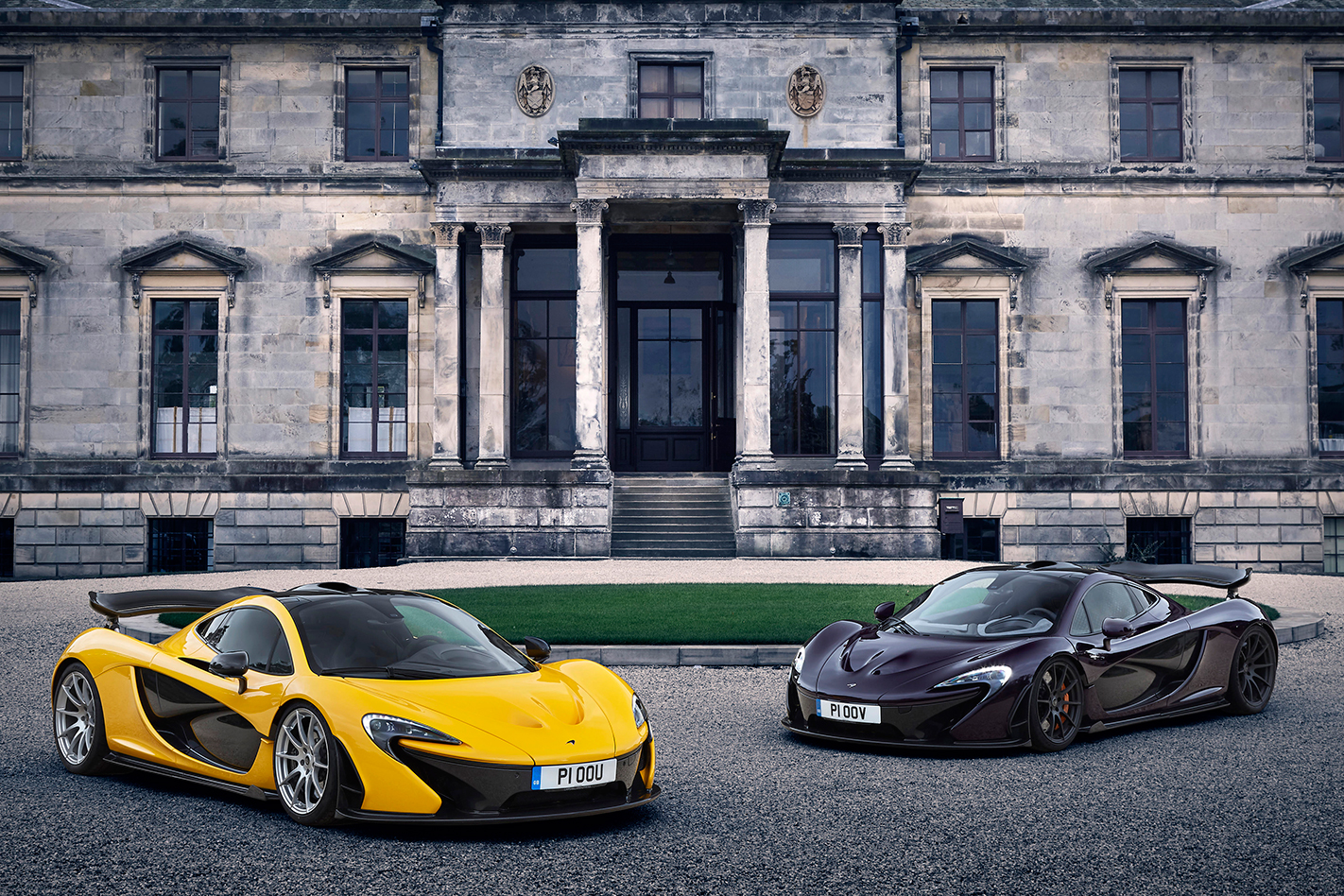
However, the P15 is expected to use a more extreme form of the 3.8-litre V8 developed initially for the P1 – whether it also incorporates the F1-derived MGU-K kinetic energy recovery system, and the MGU-H that’s used to spin up the engine’s turbochargers at low revs to improve step-off performance.
Unlike the F1 engine, though, the P15’s power unit won’t wear a Honda badge.
WHAT IS IT
It’s hard to believe, but the Mercedes-AMG GT S is already three years old and needs this facelift model to keep it in line with the GT family’s newer additions; namely the GT C and GT R. The 2018 GT S gets revised front-end styling and a small performance bump to keep it fresh.
WHY WE’RE DRIVING IT
The AMG GT S has already proven itself as more than a mere boulevard cruiser, but in the midst of strengthened competition, does it still impress today like it has in the past?
MAIN RIVALS
THE WHEELS VERDICT
On face value, the Mercedes-AMG GT S delivers its thrills as a noisy, showy, fun-loving hoon, yet there’s a depth of engineering substance underneath. While it’s not the cosseting grand tourer you may expect, the GT S is a hugely capable performer that ticks emotional boxes like a sports car should.
PROS: Thunderous performance, almighty grip, spectacular styling, dripping with personality CONS: Last-gen infotainment, road noise, no genuine Comfort mode
THE WHEELS REVIEW
YES, you read that right; Mercedes-AMG has updated its theatrical hot rod, the GT S.
No, you probably didn’t notice because the differences are minimal, and Affalterbach’s intramural two-seater felt as fresh beforehand as the day it launched, which – believe it or not – was almost three years ago.
But, since debuting the GT S to establish the range in Oz in 2015, Mercedes has expanded the local GT family to include another five variants, leaving the trendsetting GT S Coupe in need of a mild refresher to bring it up to speed.
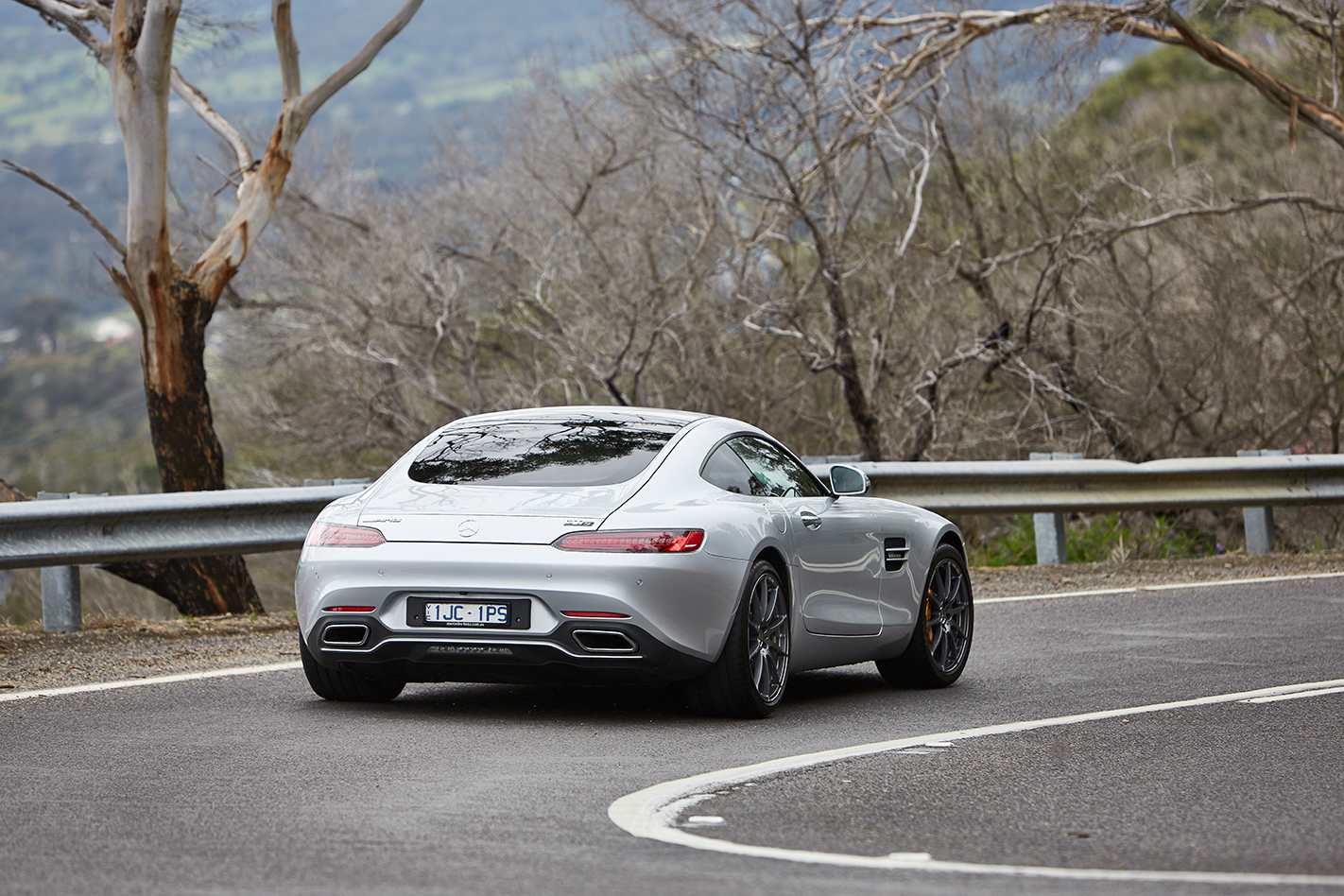
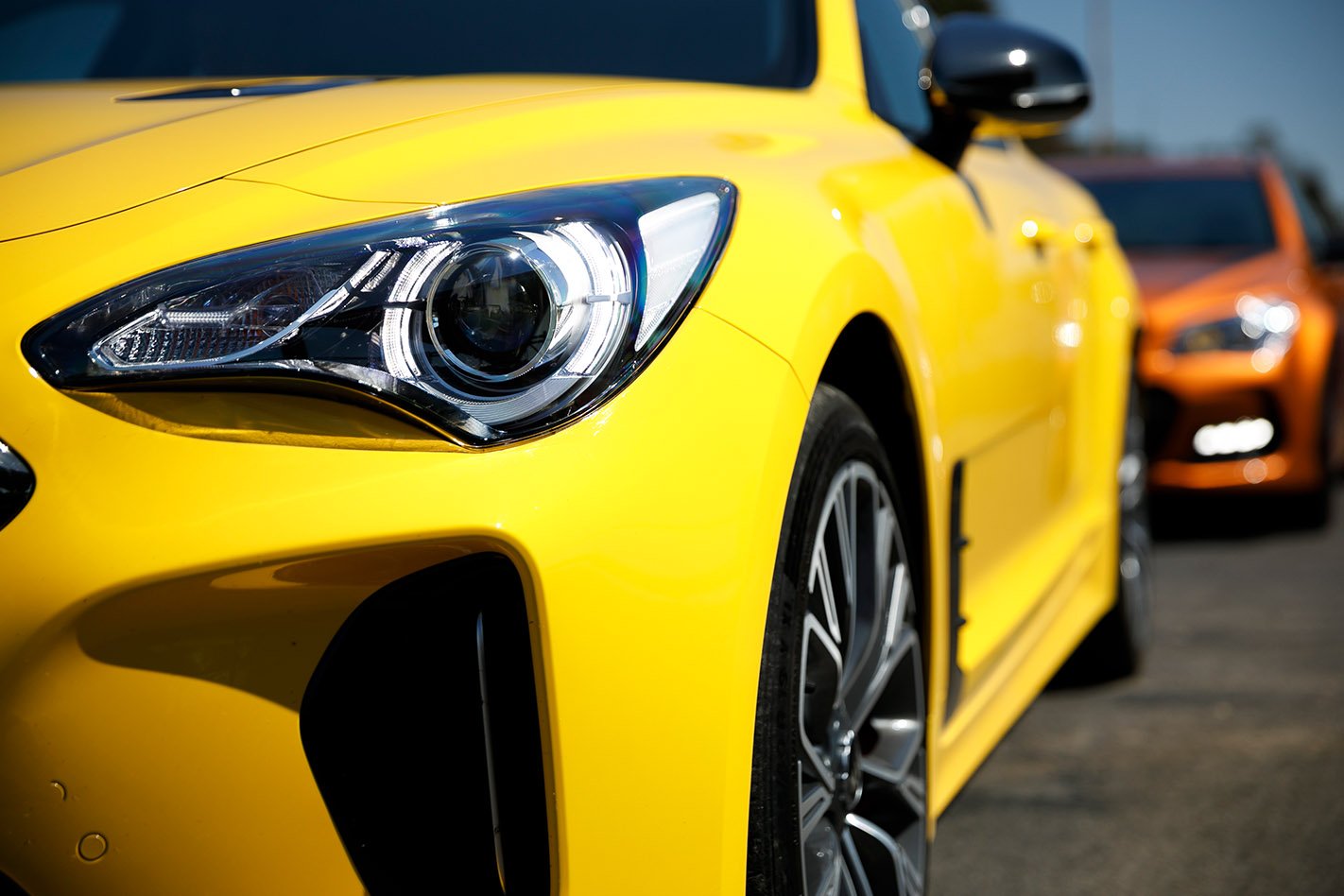
It now sports AMG’s signature Panamericana grille and a lightly restyled front apron with active cooling vents. Elsewhere it’s the same dramatic beast as before; cab-backward silhouette, low roofline and a road presence that oozes menace.
Lurking beneath its long, low bonnet is AMG’s riotous, hand-built twin-turbo V8. A slight performance bump gains the dry-sump lump an extra 9kW and 20Nm, not that you’d notice in the context 384kW and 670Nm totals.
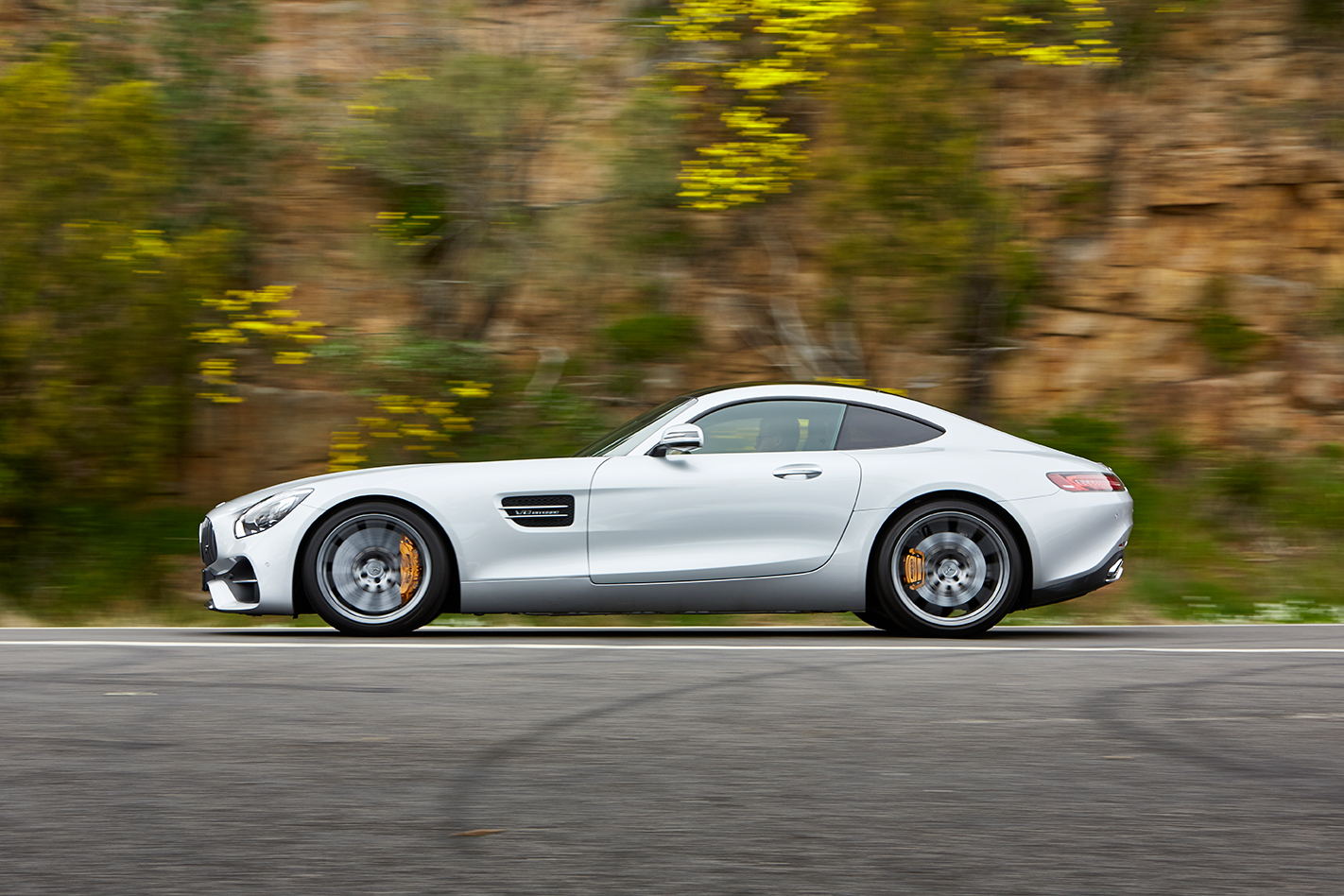
It does that in a couple of ways. Firstly there’s its completely antisocial and wholly addictive exhaust bellow that fractures the air at a ‘can that really be legal?’ volume.
Then there’s the cabin experience that sits driver and passenger closer to the rear wheels than the fronts, which provides the sensation of the chassis pivoting around the occupants’ hip point. The hugely grippy front-end and inherently balanced chassis hunker down through corners and rocket through them with monstrous speed.
There’s a hardened attitude to the way this GT demolishes a road. It’s forever eyeing off any twisty bit of tarmac ahead. Adaptive dampers feature in the GT S (a point of difference to the sub-S GT) with three modes, though the softest of those is Comfort in name only. A resolute ride is part of its demeanour, but that lack of compliance grows tiring over long distances. Same goes for its loud tyre roar. The GT S is a sports car to the core.
AMG has nailed the emotional criteria here. The GT S looks spectacular, sounds ferocious and is made to be seen in. There’s a sense of occasion with this car that’s arguably greater than an equivalent 911, and it always feels special – whether you’ve found a road to fully let the animal off the leash or you’re simply Sunday cruising.
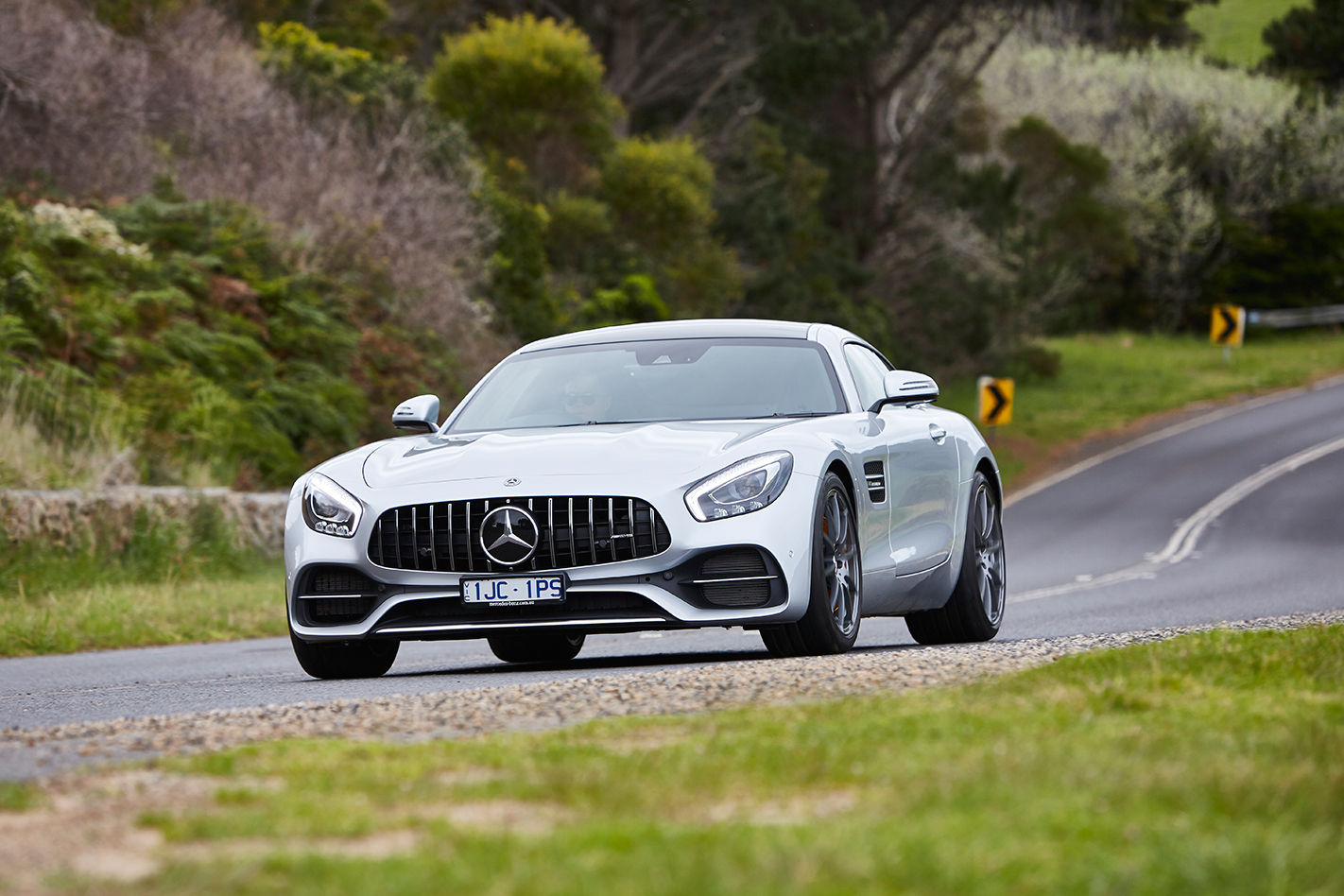
2018 MERCEDES-AMG GT S SPECS
Model: Mercedes-AMG GT S Engine: 3982cc V8, dohc, 32v, twin-turbo Max power: 384kW @ 6250rpm Max torque: 670Nm @ 1800-5000rpm Transmission: 7-speed automatic Weight: 1570kg 0-100km/h: 3.8sec (claimed) Economy: 9.5L/100km Price: $298,711 On sale: Now
THE passing of the locally made Ford Falcon and Holden Commodore means there are no immediately obvious replacements for Australia’s home-grown, rear-drive V8 muscle cars, and it requires a little lateral thinking when it comes to what cars can potentially fill the void.
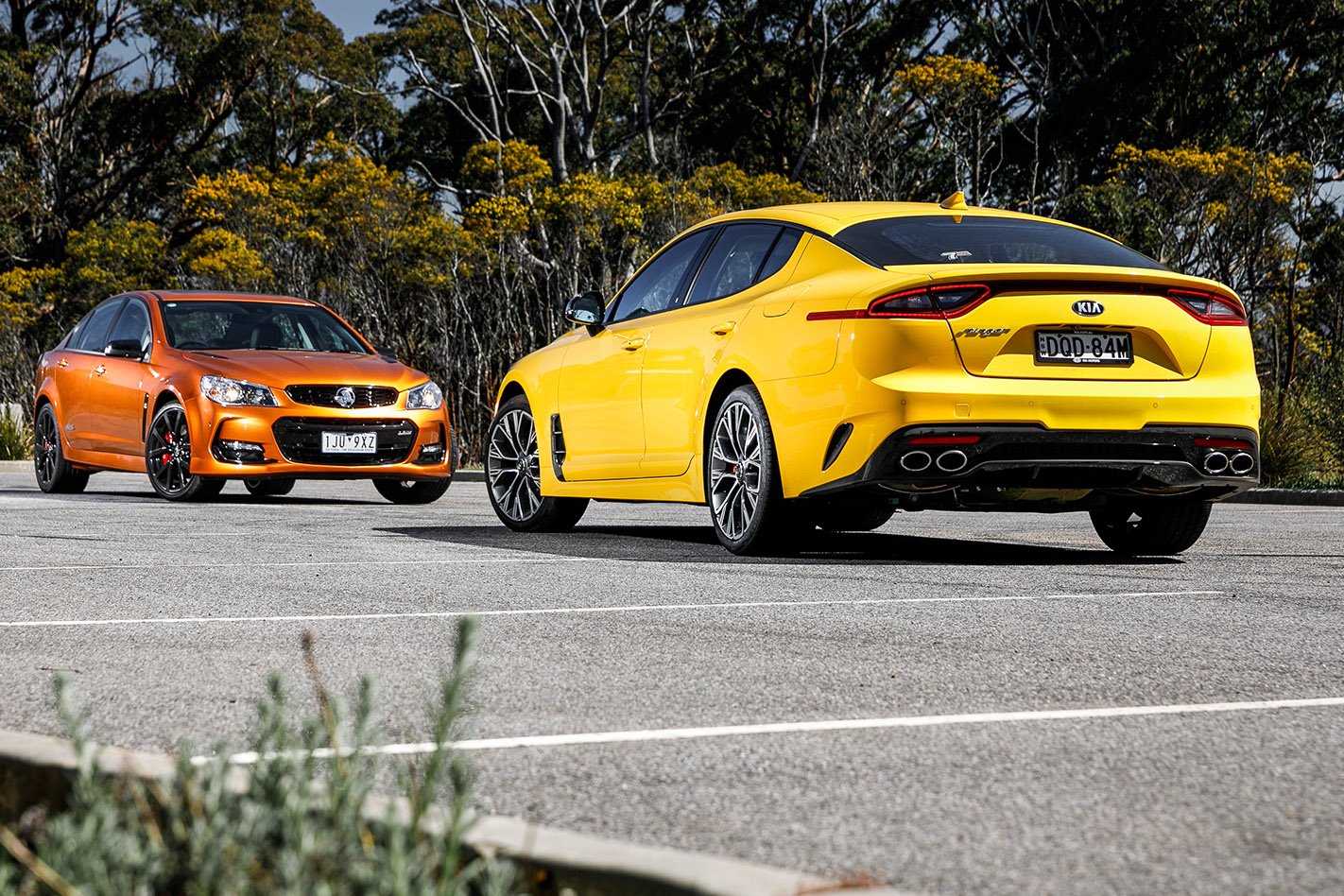
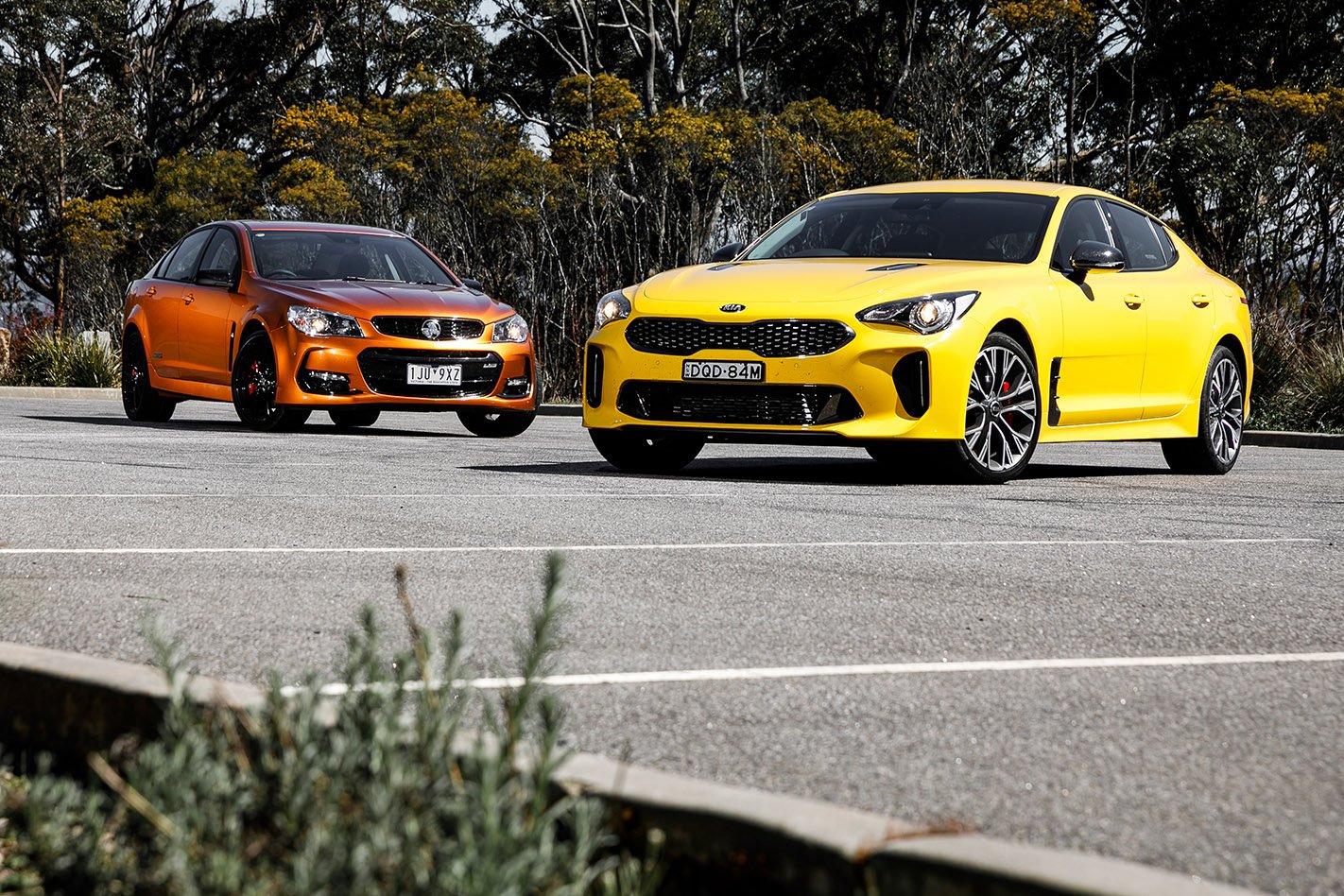
Kia’s Stinger looks like a worthy adversary. It may have two fewer cylinders than the outgoing Commodore SS V, but in almost all other key areas it looks tantalisingly like it is ready to step up to the plate. Similar to the Commodore, it has rear drive, four-doors and a big boot, and the Stinger competes on both price and power. But, does it stack up on tarmac as well as it does on paper?
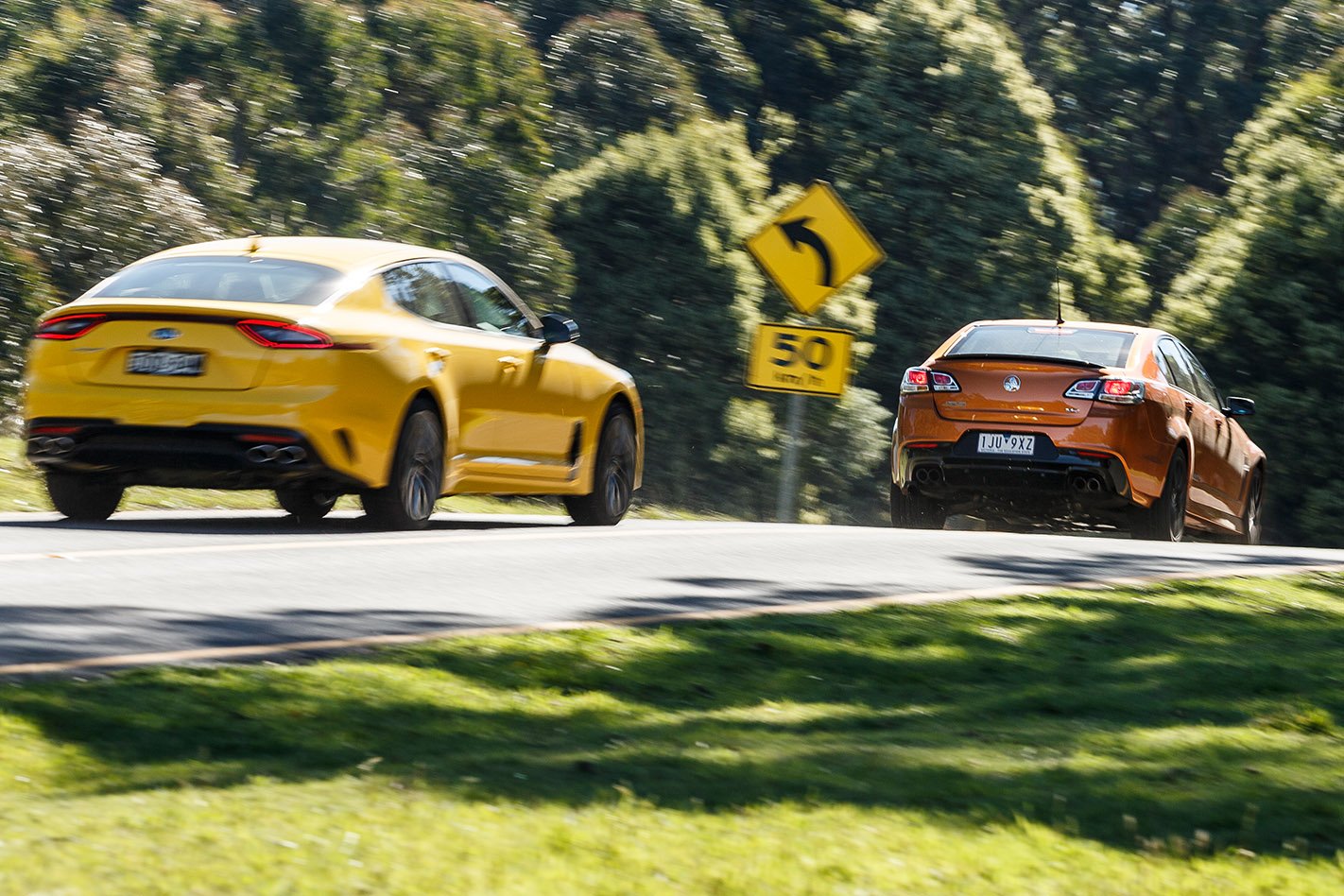
PERFORMANCE
The Commodore’s 6.2 litres of pure, naturally aspirated V8 grunt was always going to be a hard act to follow. Given the ever-tightening noose of emissions regulations, any successor was destined to compete using a downsized engine and forced induction – exactly what the Kia does.
The Stinger falls a little short of the 304kW/570Nm Aussie’s output, but with 272kW and 510Nm the Stinger is properly quick. Unlike the rev-hungry Commodore, the Stinger’s peak torque arrives low down in the rev range via its brace of blowers, boosting early and pushing power on strongly to the redline. The official 0-100km/h time for the Stinger is 5.1secs, about 0.1secs slower than the Holden’s atmo LS3.
The difference, however, is in how the Commodore and the Stinger deliver their performance. Stomp the Commodore’s accelerator pedal to the floor, and both power and torque appear to build in parallel toward redline, with long gear ratios making the delivery feel like it will never end.
Both cars tip the scales at 1780kg but the Kia’s off the mark acceleration makes it feel as though it is carrying less middle-aged spread and its cosier cabin and more coupe feel conjure the impression you are piloting something smaller and lighter.
But where the SS V decisively blows the Kia out of the water is with the aural theatre of the LS3. Even when the Stinger GT arrives with an optional bimodal sports exhaust, we doubt it will come close to the bark of the V8.
RIDE AND REFINEMENT
Surprisingly, the Stinger uses a somewhat soft steel-sprung suspension setting (at least in 330S and 330Si; the GT uses adaptive dampers for variable settings). It’s a surprisingly comfortable long-distance cruising set-up, but aim it at a more exciting road and it shows a surprising amount of sports car handling.
Road noise is respectable with little translated through the 19-inch tyres and even less from turbulence. While the Stinger lacks the soundtrack it needs to launch a convincing assault on the Aussie, the lack of aural theatre does translate to a more relaxing cabin ambience when simply getting somewhere.
The SS V rides on a stiffer FE2 chassis tune and larger 20-inch wheels. The suspension’s local development is patently clear when negotiating Australia’s unique roads, with the Commodore returning comfort and a serene cabin when it has to, but staying flat and controlled when the way ahead turns twisty. Despite a roomy cabin and plenty of space for five adult occupants, the interior is not noisy and the excellent exhaust tune does not boom at low rpm and only makes itself known when the driver invites it.
STEERING AND HANDLING
The Stinger’s steering is initially light in the hands when handling conventional day-to-day driving and its long bonnet is easily pointed, but when the going gets quicker it fails to weight up sufficiently for a truly confidence inspiring front end.
It’s the opposite problem with the Holden, which has a light and vague feel about the central position and while its set-up gains significantly more weight in corners, it feels synthetic rather than genuinely communicative. Both offer impressive grip through bends but the Kia’s softer tune allows it to list and squat with the onset of power, the Holden remains staunch and level. Both are efficient at demolishing winding mountain roads and both feel as though you would need to spend time learning their individual nuances before they will return the confidence to attack a favourite stretch of blacktop near the limit.
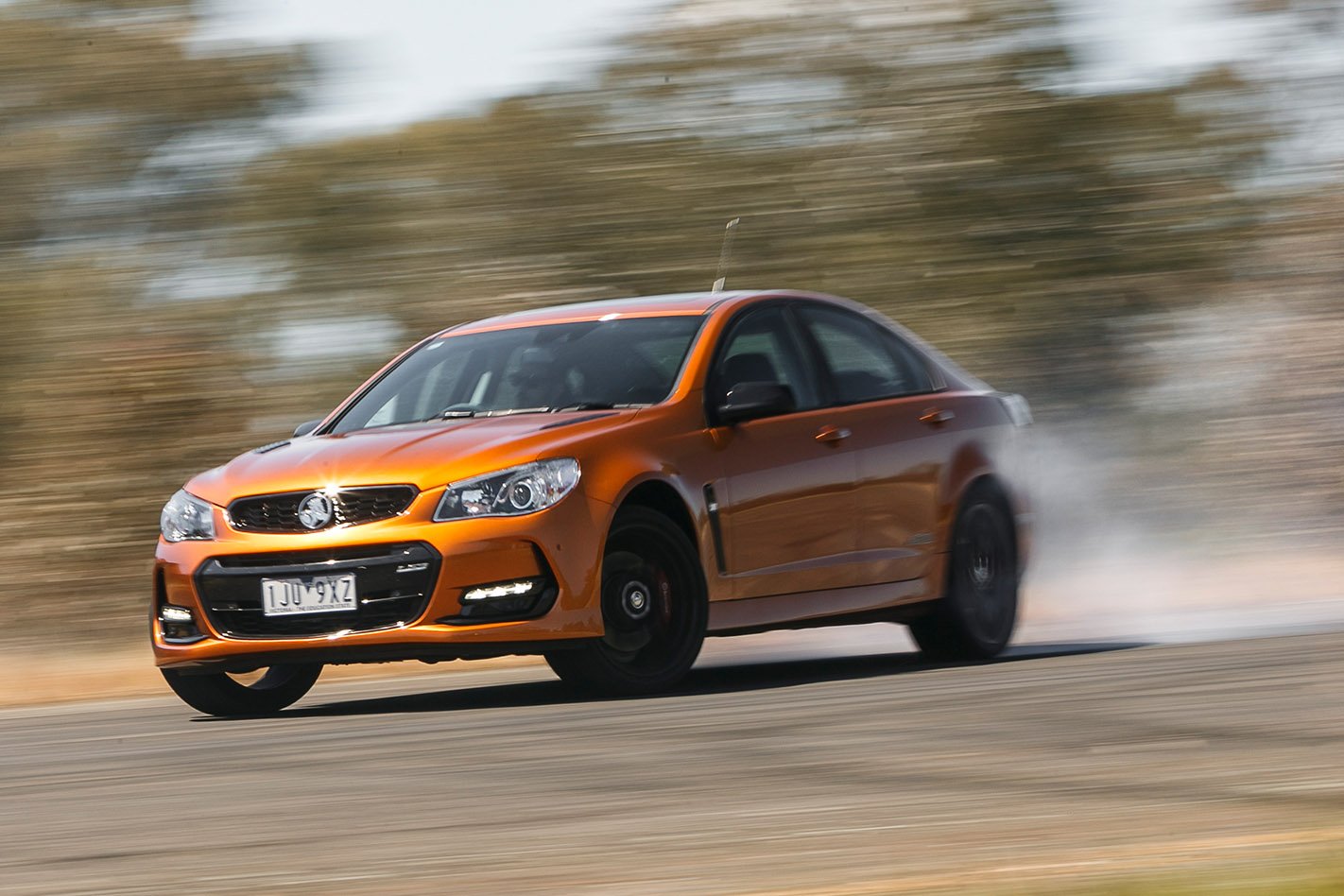
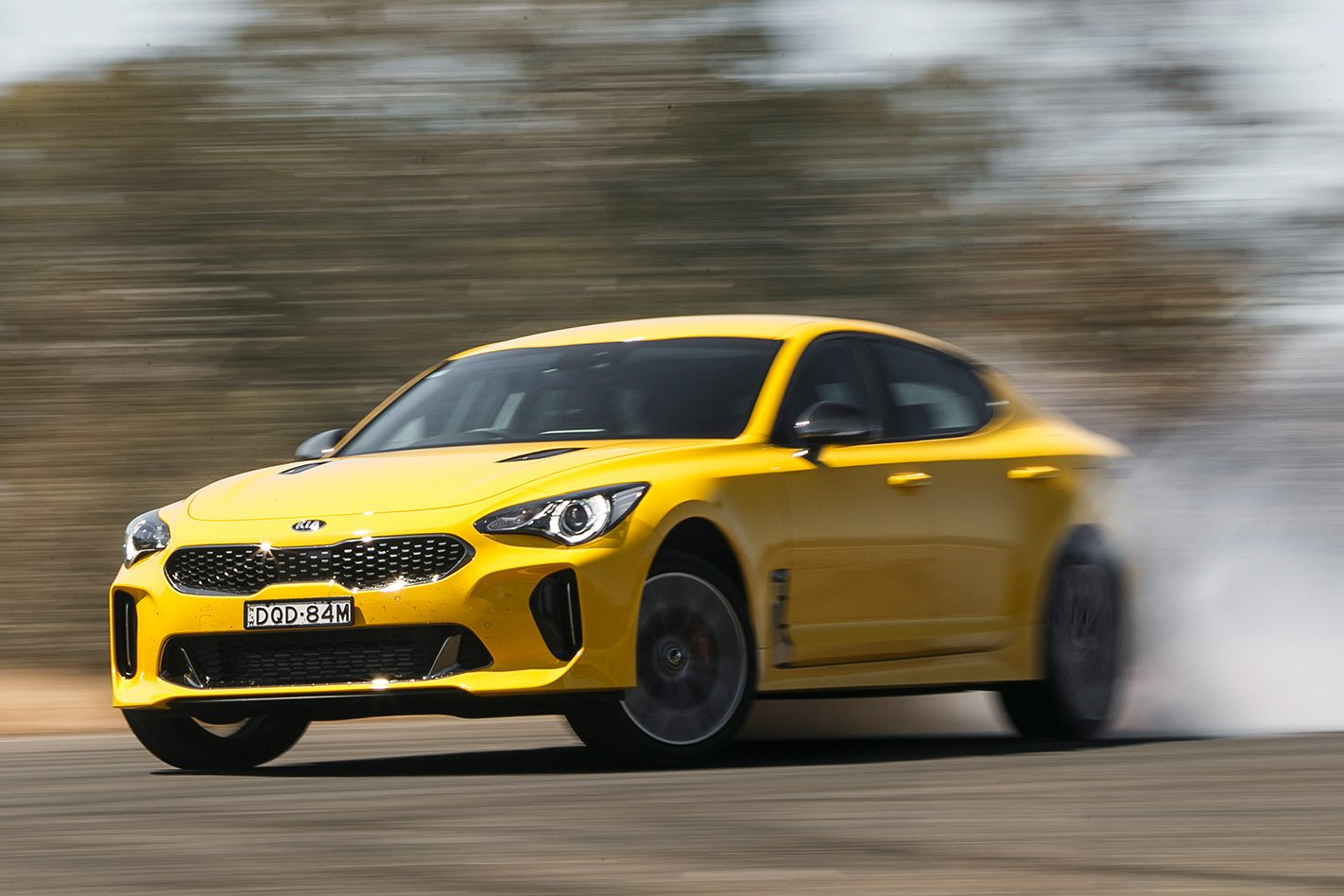
Sitting lower in the Kia imparts a more involving feel and increases the sense of speed compared with the Holden, which insulates some of the sensation of pace with its large proportions and higher driving position. On the limit, both cars will gladly wag their tails free in typical high-powered sportscar slides but where the Kia locks into an almost gyroscopically stable angle, the Holden squirms about its axis looking to either snap straight or complete the circle in a spin.
INTERIOR AND VERSATILITY
Here, the Holden and Kia are very evenly matched. Both offer a generous second row for adults but the Holden wins with more head, knee and shoulder room, while rear passengers will prefer the less obscured view of surroundings. The Kia’s 406-litre boot is big but the liftback bootlid makes the space particularly easy to load, while the Holden weighs in with closer to 500 litres and a more conventional sedan lid.
Inside the Stinger, occupants will appreciate a simple but ergonomic interior, but plasticky parts in contact areas, fake carbonfibre and beige roof liner let it down. By comparison, the Commodore’s cabin is starting to show its age with similarly misleading carbon-look parts and quality that’s on par with the Kia.
When the VF rolled out in 2013, its cabin improvements over the outgoing VE were justifiably loaded with praise, but it’s remarkable how quickly things have started to date. On the flipside, the Kia’s cabin might not be best in class but it certainly is already ahead of the Holden’s and should stand the test of time. As for quality, fit and finish, the early signs are good but only time will tell.
PRICE AND EQUIPMENT
If you’re quick enough to grab one of the last VF Commodore SS V Redlines that have now all rolled off the production lines, you’ll be asked $56,190 when fitted with an automatic transmission, which aligns closely with the $55,990 price tag applied to the auto-only Kia Stinger 330 Si.
While Holden’s touchscreen system is starting to show its age the Kia’s 8.0-inch screen has a fresher look. Both offer hide-upholstered seats and equipment levels expected from mid-$50k cars including smartphone connectivity, Bluetooth and USB connection, while the Kia pips the Commo for driver assistance kit including active cruise control and AEB. Like all Kia’s, the Stinger deal is also sweetened by the company’s seven year warranty deal.
Some will bemoan the Commodore’s asking price for a nearly four-year old design and argue the Stinger is better value by default, but the Kia is a relative unknown quantity as an all-new model for both the market and within Kia’s ranks. But it goes up against the tried, tested, honed and loved local, which many will see as the less risky path to driver-focused high-powered sedans.
VERDICT
Let’s be honest, the only thing that can adequately replace a rear-drive, naturally aspirated V8 large sedan born on red dirt is another V8, rear-drive Aussie muscle car, but since we are all going to have to get used to a future without Ford and Holden V8s the Kia is undoubtedly worthy of a look, particularly in the absence of a more fitting alternative.
It can’t compete for engine character or soundtrack and its ride, while surprisingly capable on Australian roads doesn’t have quite the home ground advantage of the Holden. But, if you can leave your patriotic preconceptions and badge snobbery at the door, the Kia is an enormously capable car. It goes like a cut cat, looks like nothing else on the road and draws the admiring glances to prove it, devours all types of tarmac with ferocity and will leave you wanting for nothing when it comes to practicality.
Ironically, the South Korean may just be the car to take the sting out of losing an iconic Holden.
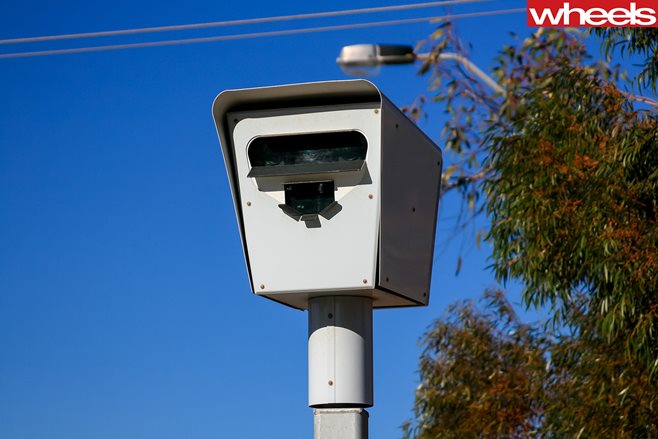
Australian motorists poured more than $1.1 billion into various government coffers in speeding fines alone during the last financial year.
The incredible figure makes the 2016/17 financial year one of the lucrative 12 months in terms of revenue generated through the policing of speed in Australia.
Victorians were the biggest contributors, paying out $363.1 million according to the Department of Justice and Regulation Annual Report.
That’s a 2 percent increase over the previous financial year, when the state received $356.4 million in revenue.
In total, the most populous state in the country brought in $274.7 million worth of fines from its motorists. That’s an increase of nearly $100 million over the last financial year.
Queenslanders also paid heavily, with the state’s drivers spending $226 million on fines.
South Australia’s speed camera strategy focuses largely on mobile units, with the state generating $174 million in revenue.
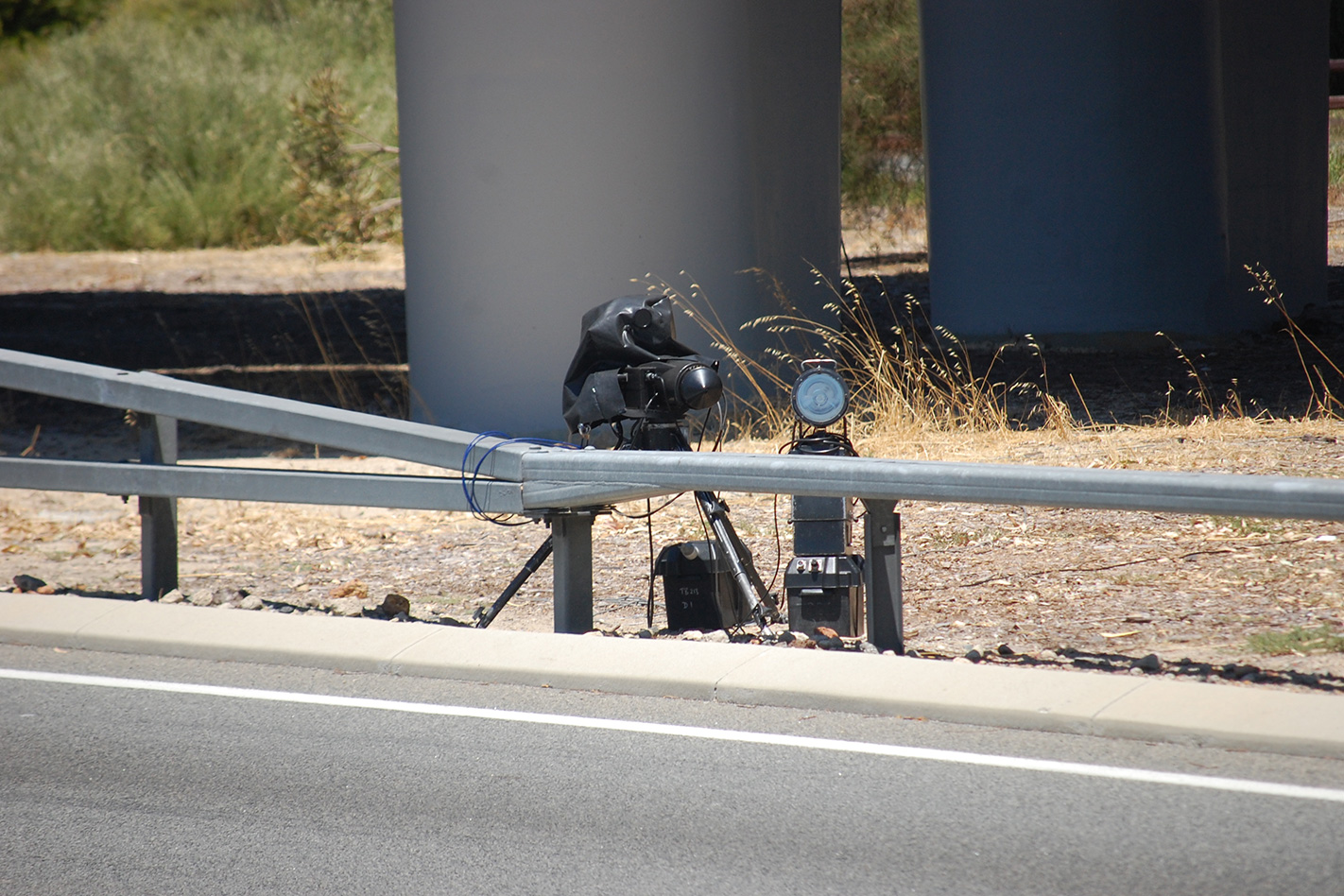
As the state with the smallest population, Tasmania was at the bottom of the revenue ranks, with $1 million being added to coffers.
Victorian drivers generate almost the same amount of speeding fines in a single day as Tasmanians do in an entire year.
South Australian drivers remain the worst hit on a per-capita basis, with $101 worth of revenue raised for each resident of the state. Victorians raise $59 per person.
