
There’s been so much fanfare following the Kia Stinger it’s hard to believe other cars exist.
But Kia reveals there will be plenty to keep interest locked on its new halo model once the hype dies down.
At its local launch we heard there are suspension upgrades, motorsport involvement, and more about a faster, sharper Stinger in the pipeline.
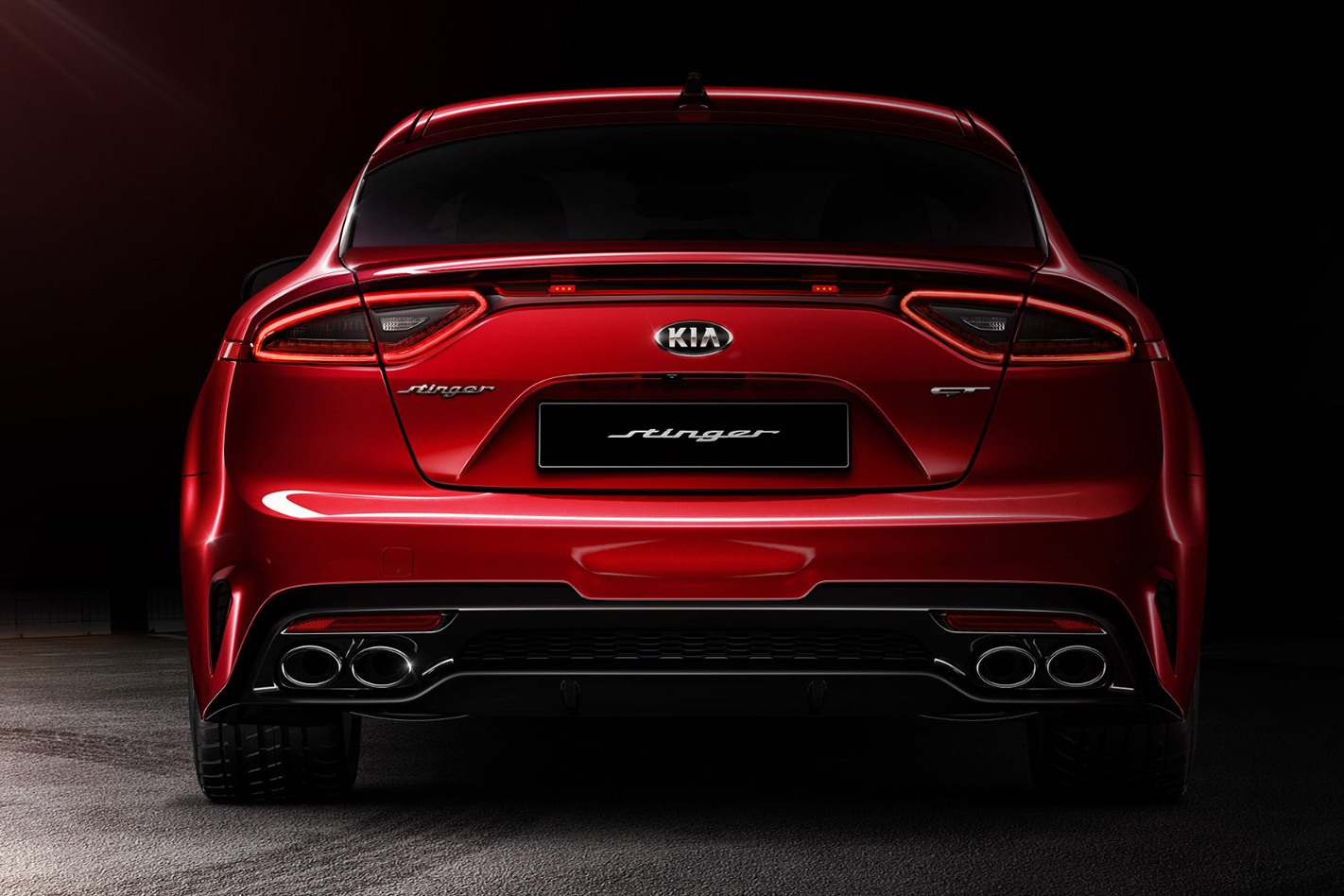
After that it’ll be a Product Enhancement, company speak for a Model Year update accompanied with changes to the car.
Engineers will use this opportunity to refine the car’s suspension tunes and other niggling dynamic sticking points, using a lot of the feedback from press tests.
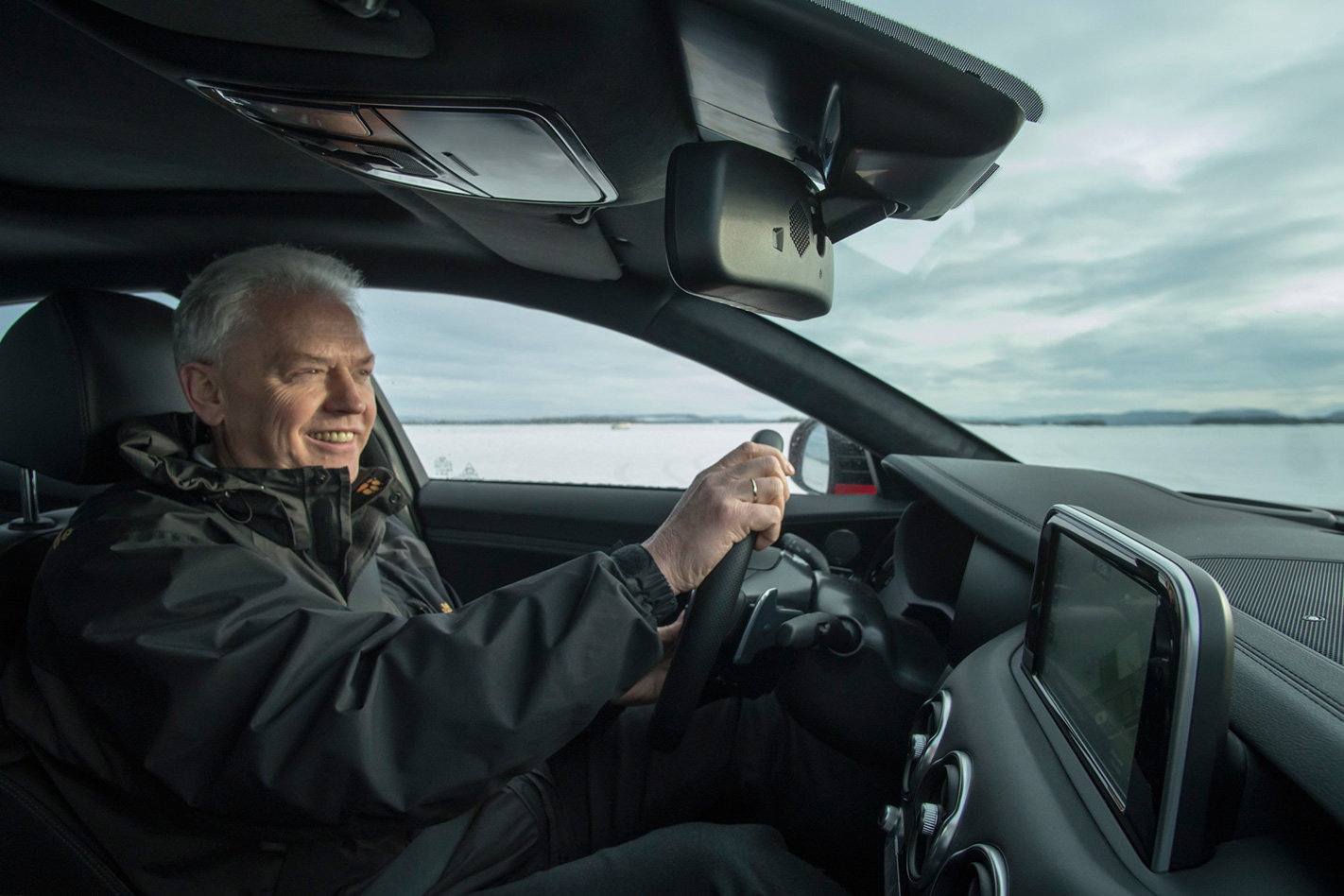
We also were told Michelin’s new Pilot Sport 4 rubber suits the car’s suspension better, all testing on racetrack was done with Stingers equipped on the tyre, as its harder compound rubber and stiff-shoulder blocks inject stiffness back into a soft setup.
Building upon this somewhere in the car’s model cycle will be a hotter, faster version which Hyundai N boss, and former BMW M chief, Albert Biermann has confirmed is in the works.
Solid details on the car remain under wraps, but we’ve learned a few clues. Kia’s local chassis engineer, Graeme Gambold, suggests there’s plenty of “dynamic scope” left in the Stinger.
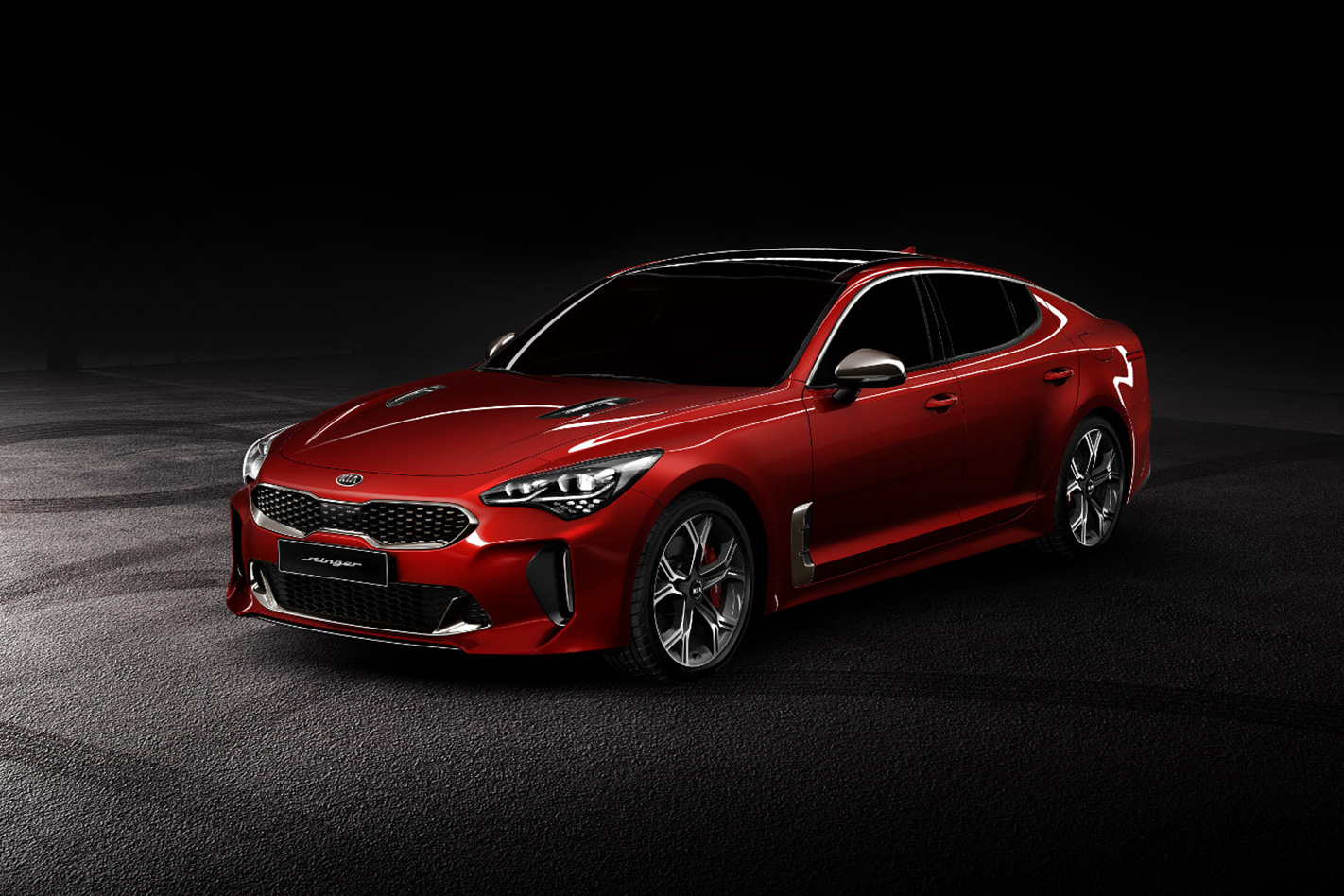
Biermann will want to up rear mechanical stiffness in the car, with the local model at the firmest available settings but still wanting for lateral grip under load and throttle we found.
Kia has ruled out any possible involvement in Supercars. But Damien Meredith, Kia’s local chief operating officer, confirmed it discussed the idea “everyone regarding motorsport”, and is looking at production car racing (think Bathurst 6-hour and 12-hour).
“We haven’t made a decision, we’ve got a few years,” he said. “If we did get involved with it, we probably would make that decision in the latter part of next year, but there are a lot of bridges to cross before we get to that position.”
All this information leaves a lot of grey in the picture, but gives a plenty to look ahead on.
TOYOTA and Jeep could be facing six-figure bills as the AFL teams they sponsor vie for the sport’s premiership title on Saturday.
The Japanese car maker, the biggest automotive brand in Australia, backs the Adelaide Crows in one of the longest-running sponsorship deals in the sport. The Crows will square up against the Richmond Tigers, a club sponsored for roughly the last decade by US adventure brand Jeep, which bounces around at the bottom of the list of top 20 automotive brands on sale here.
At more than 145,000 sales to the end of August, Toyota sells almost 26 of its cars for every single Jeep vehicle rolling out of showrooms.
The sponsorship deals are believed to be bound by confidentiality agreements, so finding out the exact details is a little tricky. However, industry sources have hinted to Wheels that the multi-year contracts the car makers sign with AFL teams can include bonuses for teams that reach the finals round, as well as extra payments if they hoist the premiership cup at the end of the season. The price? Believed to be anywhere between $200,000 to $300,000.
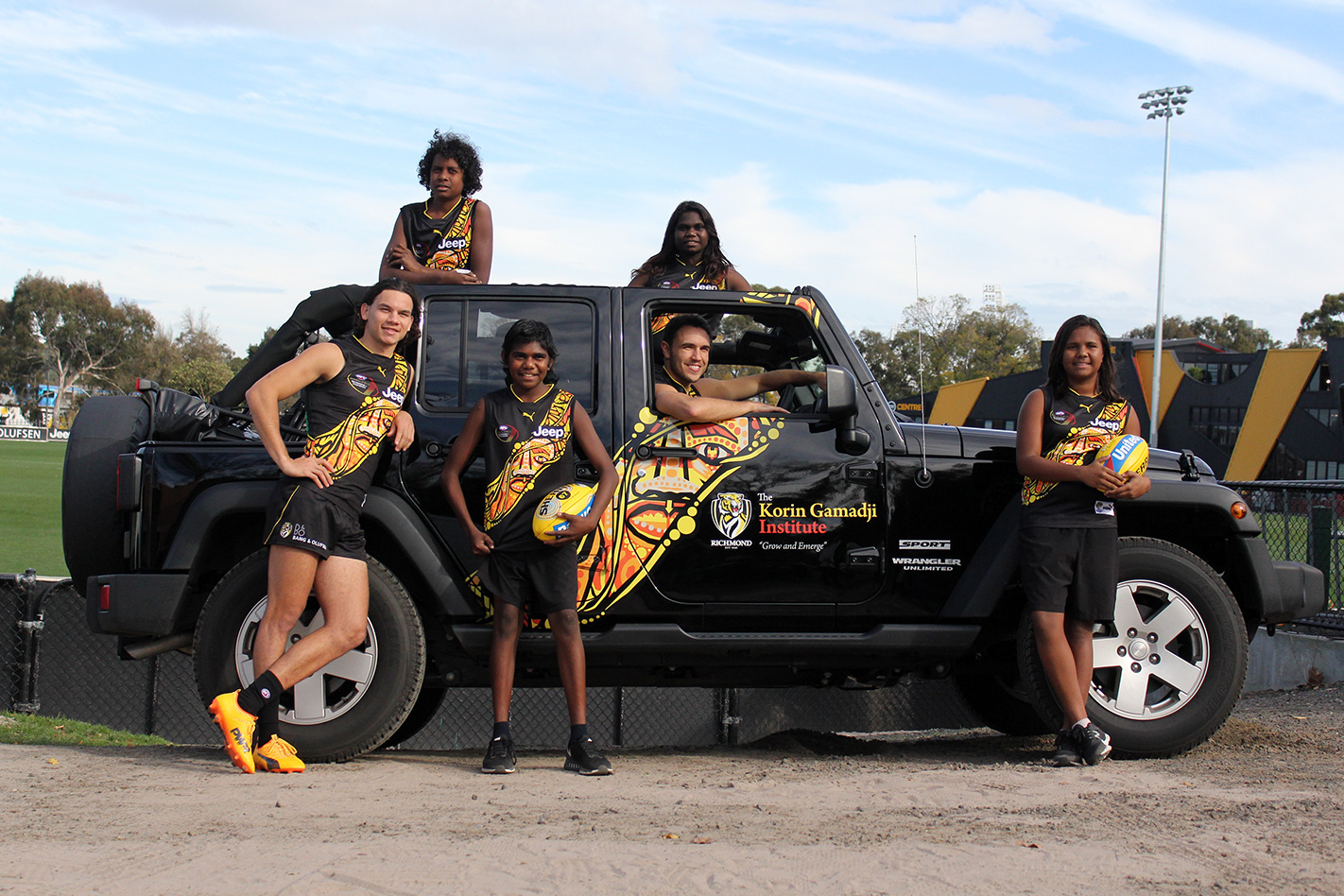
So what is in it for the car makers? First of all, they can usually market directly to the club’s membership, offering exclusive discounts to the rusted-on faithful backing the club financially. Then there’s the not-so-obvious exposure; the branding on the footy jerseys that slips into TV coverage in the month-long build-up to the big day, and on the back pages of the newspapers adding to the hype.
Jeep is facing an unexpected situation with its sponsorship of the Tigers. The club finished third on the ladder after this season, up against the minor premiers the Crows. The last time the Tigers squared up in a grand final was in 1982, which they lost. The last time they have won a grand final was 1980.
In contrast, the Adelaide Crows last won a grand final in 1998.
It’s a long time since a Mini has won Bathurst or an international rally.
This was first published in MOTOR’s November 2008 issue.
So what is the new John Cooper Works Mini actually about? It’s about control – more, a reinvigoration and ‘repositioning’ of the JCW brand as BMW takes the reigns after purchasing JCW outright last year.
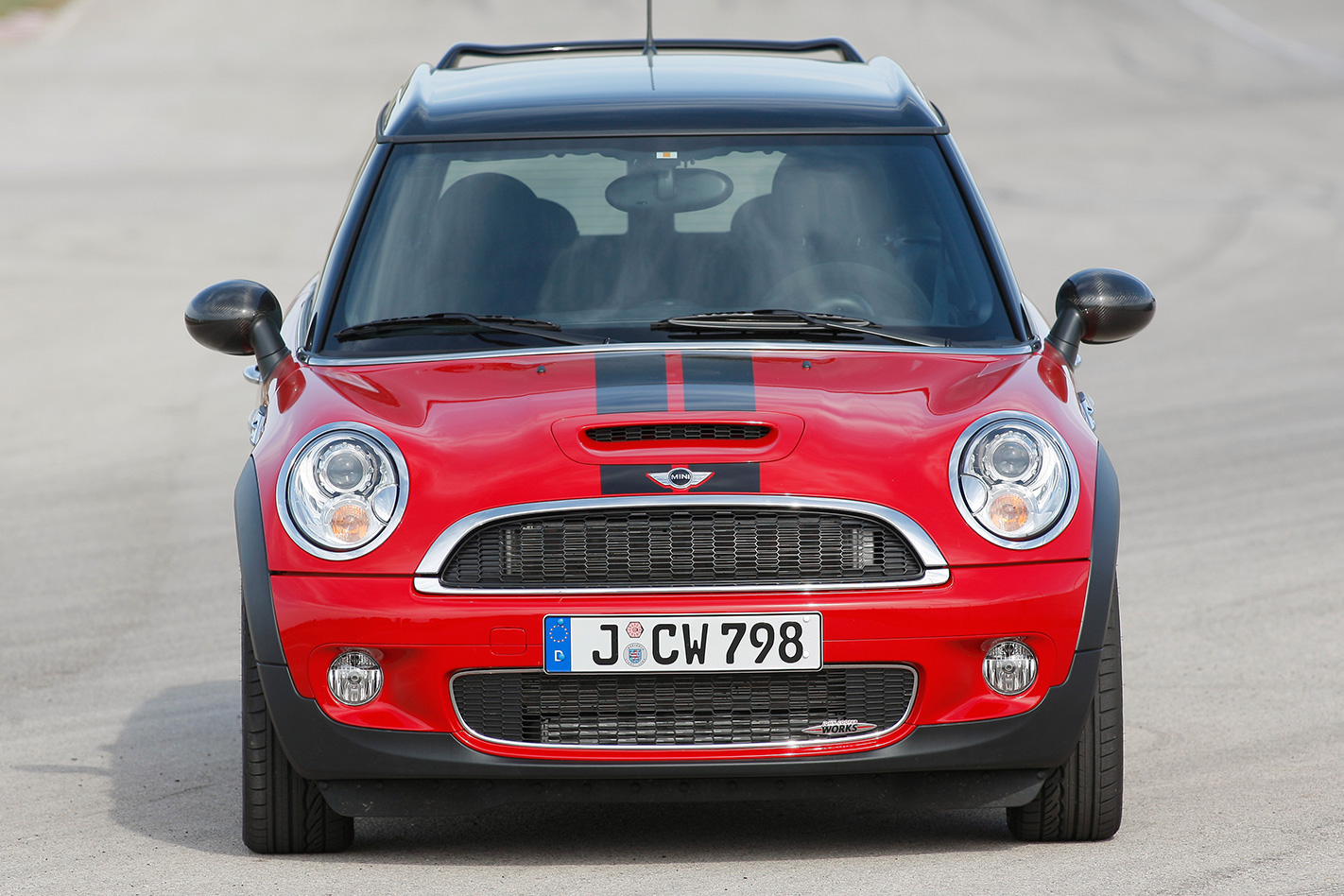
Over the Cooper S, the JCW gets more power from the same turbocharged 1598cc turbo’d four-cylinder (up to 155kW form 128) and 20Nm additional torque, the overboost function offering yet a further 20Nm to 280Nm when in full song.
The gearshift on the strengthened six-speed manual ‘box (which keeps the same ratios as the Cooper and Cooper S) is a little notchy, while the throttle response is smooth but a little laggy and lacks the kick that the old supercharged version offered (which are still available in the cabriolets for the time being).
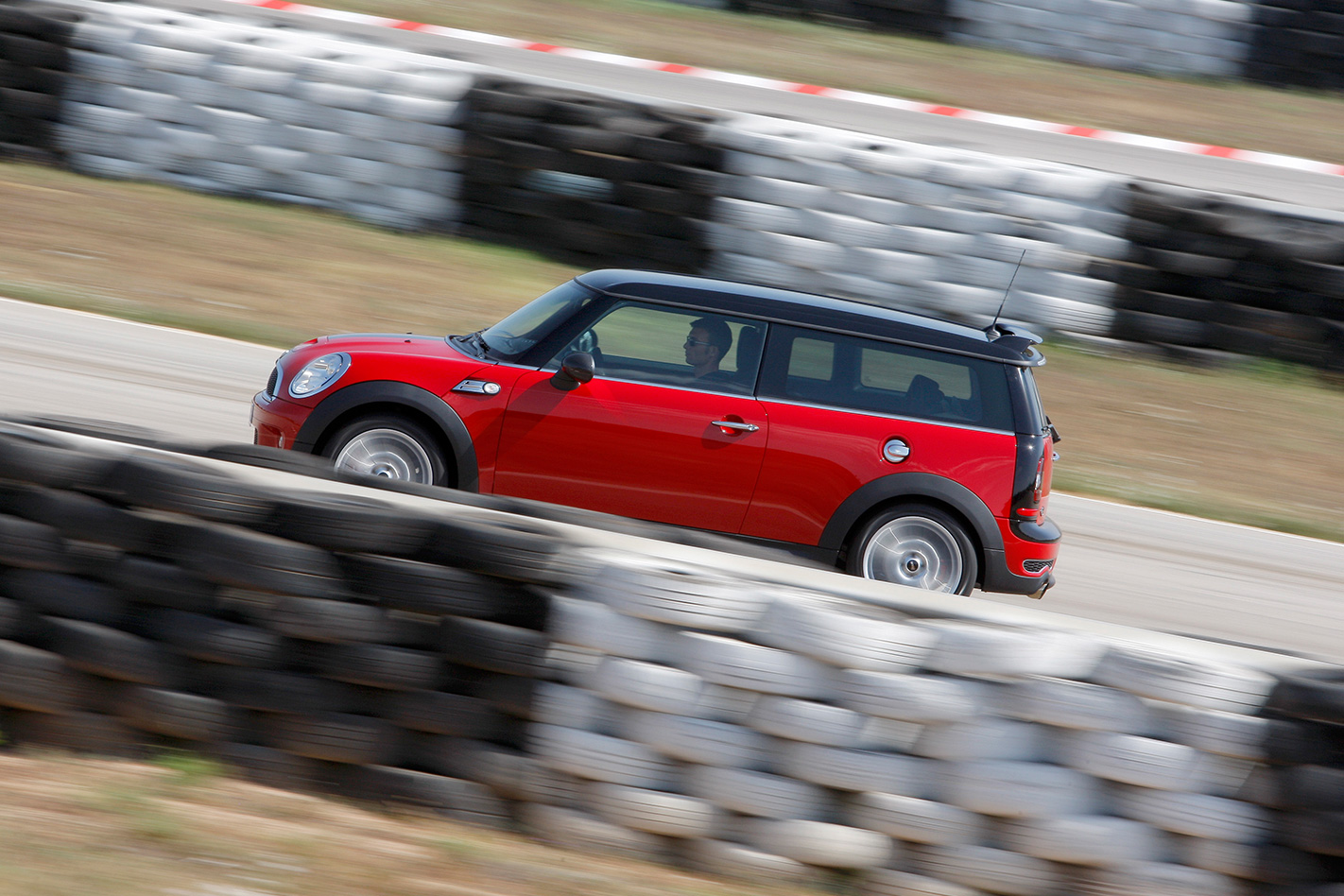
The JCW is fitted with DTC and TC. With DTC on, it’s highly intrusive and you’ll find gaping throttle response as the computer struggles with the excessive wheelspin. With the DTC off, TC will still intervene, so its; best switched off altogether, where you’ll come into a corner and be able to slide the Mini’s tail around the bend in an overdose off lift-off oversteer.
And for the first time, the JCW badge has been fitted to the Clubman. You can’t tell the difference from the driver’s seat – until you adjust the rear vision mirror and see the split windscreen rear doors.
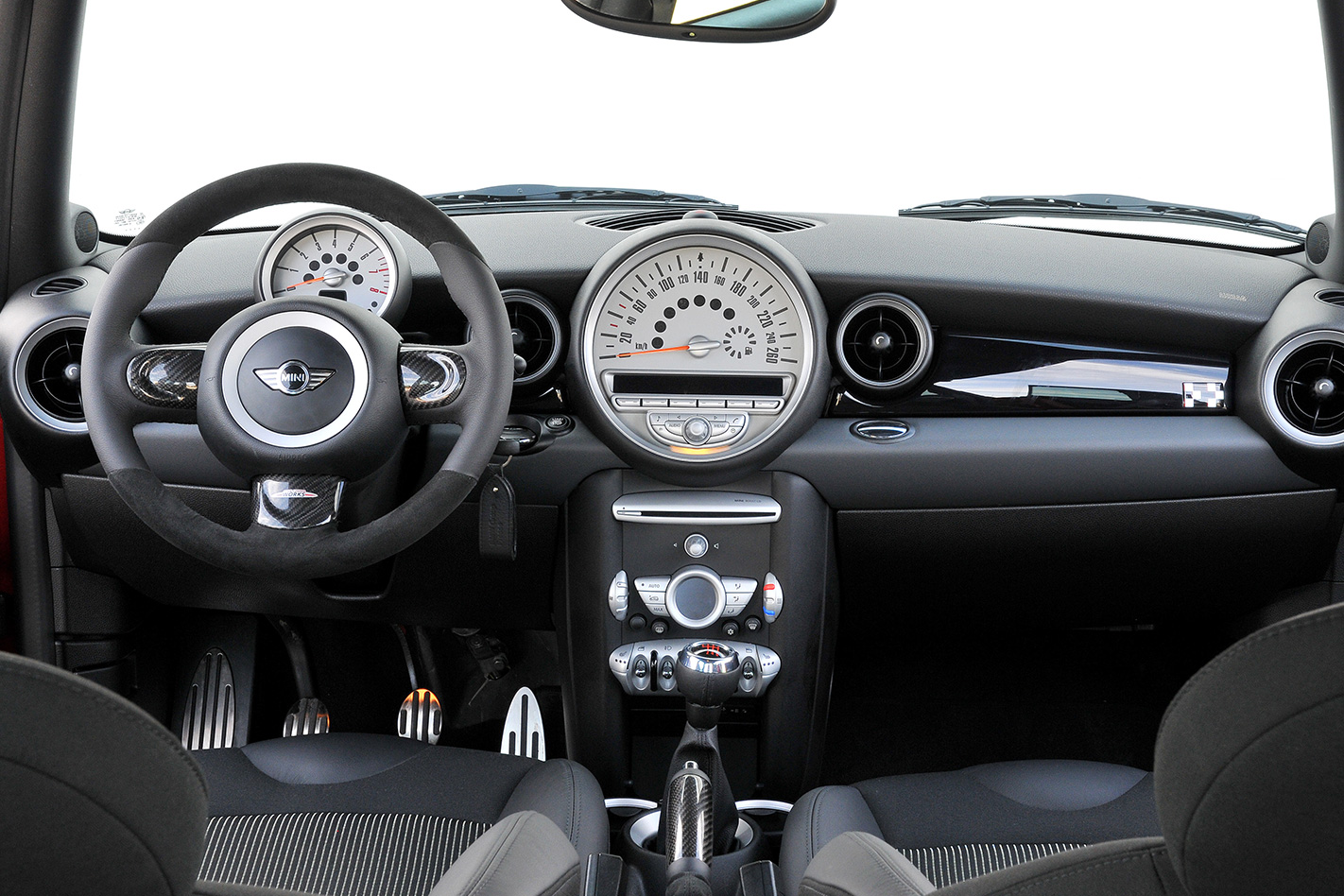
The front are rear discs are larger (now 316mm front and 280 up back) with four-piston calipers painted red on JCWs, while the car’s now fitted with 17s, up an inch over regular Cooper S, while the JCW actually has 5mm ground clearance than the regular S. It rides well, with bumps noticeable but not overly intrusive.
Apart from the visual and (arguably practical) advantages of the Clubman, the kilos and inches means that it actually sits more firmly than the hardtop. Still, it understeers drastically in long, opening corners if you push it, and it’s not helped by missing out on the hardtop’s electronic diff lock.
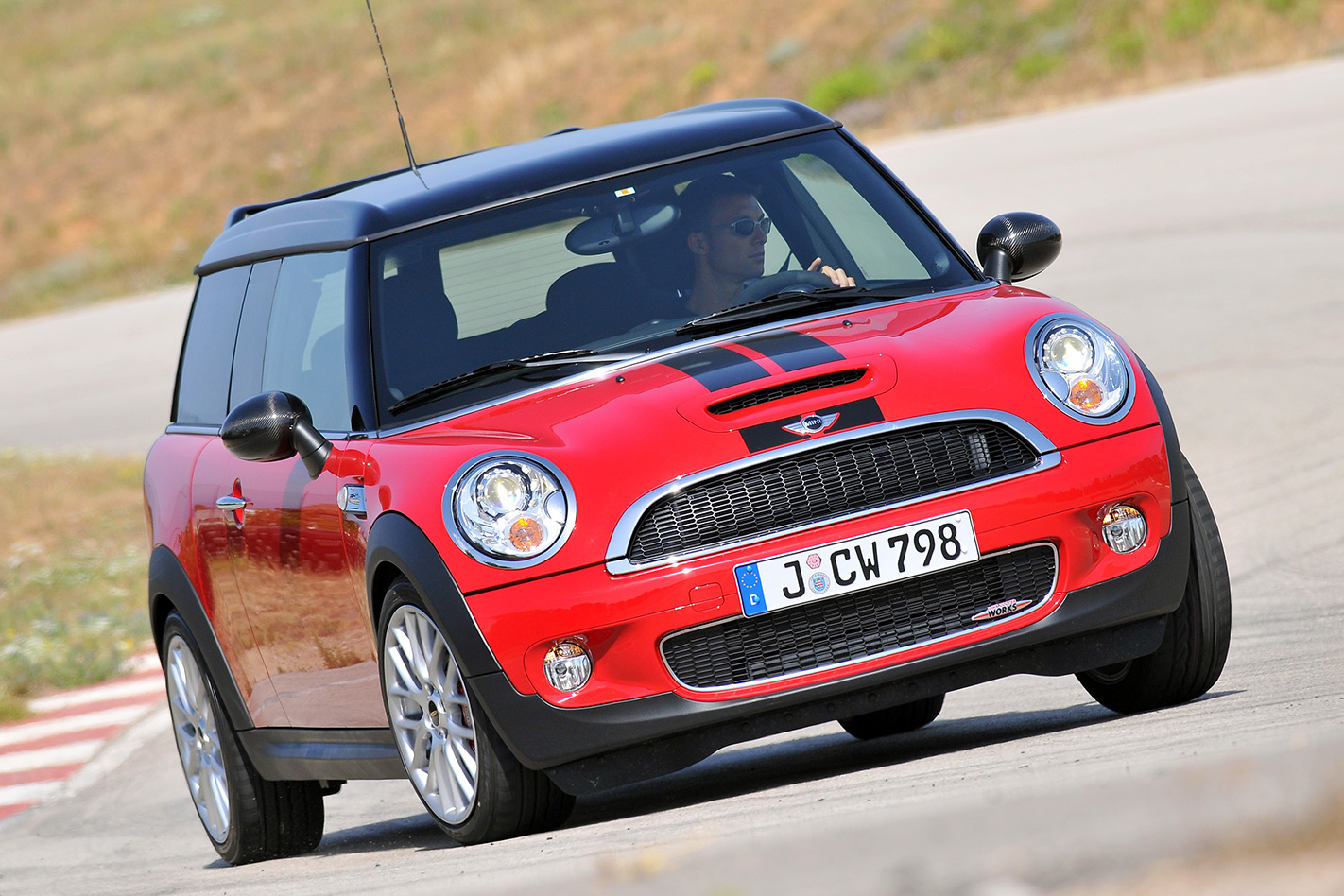
Pricing sees the JCW cost an additional $8,900 over the regular Cooper S, while the Clubman ups the ask $8,100. Despite the extra power and grip, it’s hard to see the value in the car over a Cooper S, so while BMW harp that the model is no longer an upgrade pack, it’s little different: could it simply be that it’s marketed properly now?
Admittedly, some items on the previous JCW kits were fitted at the factory, some not. Now, BMW can fit the complete JCW kit in-house. Perhaps it’s just mincing words: does it really matter where it’s done? Apparently…
Mini Cooper S JCW specs: Engine: 1598cc 4cyl, DOHC, 16v, turbo Power: 155kW @ 6000rpm Torque: 260Nm @ 1850-5600rpm Weight: 1130kg Top Speed: 238km/h (claimed) 0-100km/h: 6.5secs (claimed) Price: $48,800
PORSCHE has confirmed that its stunning Panamera Sport Turismo wagon will be offered in Australia with the most potent V8 turbo powertrain paired with plug-in E-Hybrid performance and efficiency boosting technology for a starting price of $466,400.
Until now, only the sedan version of the second-generation Panamera was on offer locally with the 500kW/850Nm petrol/electric combo, but the big-booted Sport Turismo will now join it at the top of the performance pile from next year.
Customers are being asked for a hefty $75,700 premium over the cost of the next most expensive Turbo Sport Turismo, matching the margin between sedan Turbo and sedan Turbo S E-Hybrid, but the new model offers significant advantages to performance and efficiency.
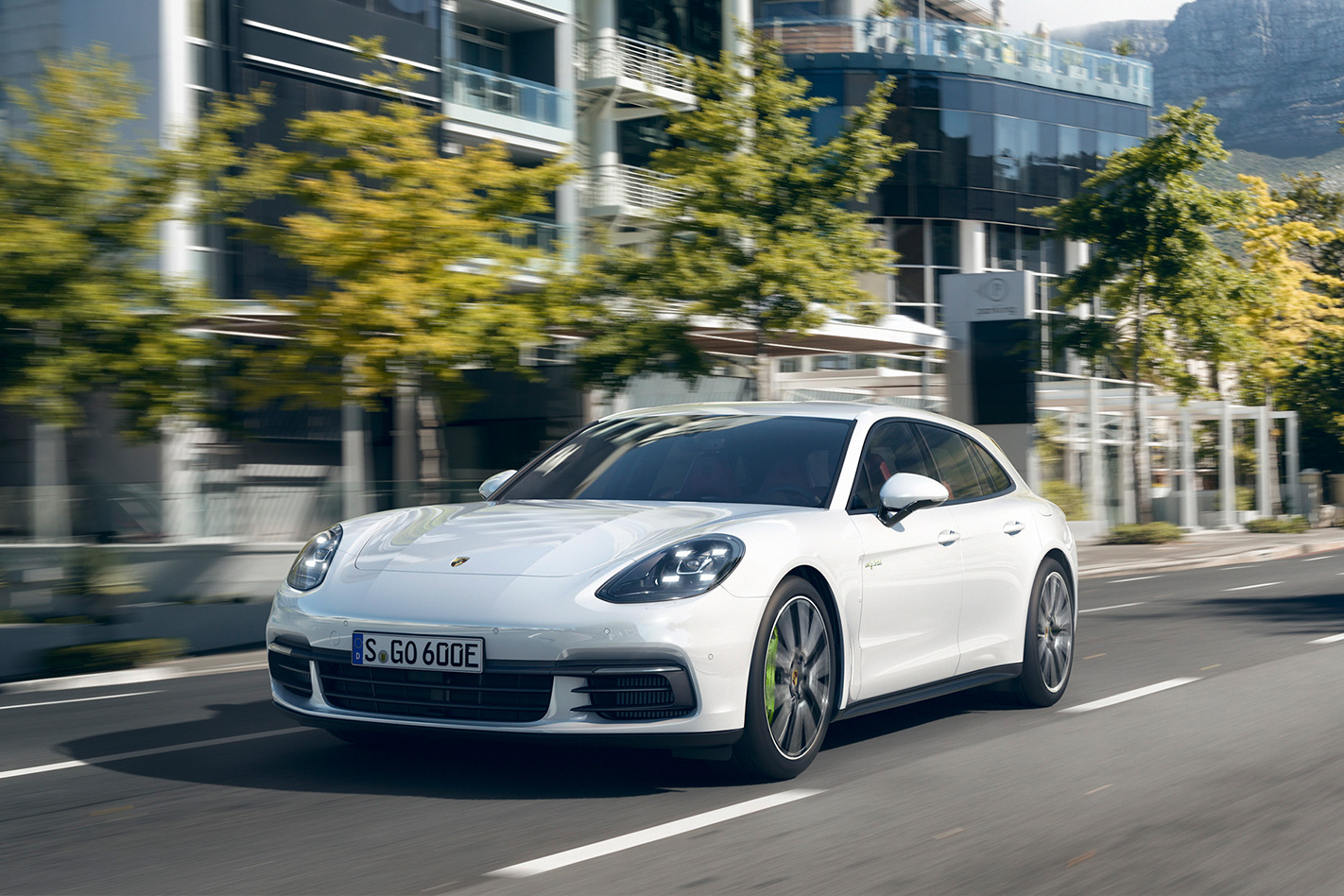
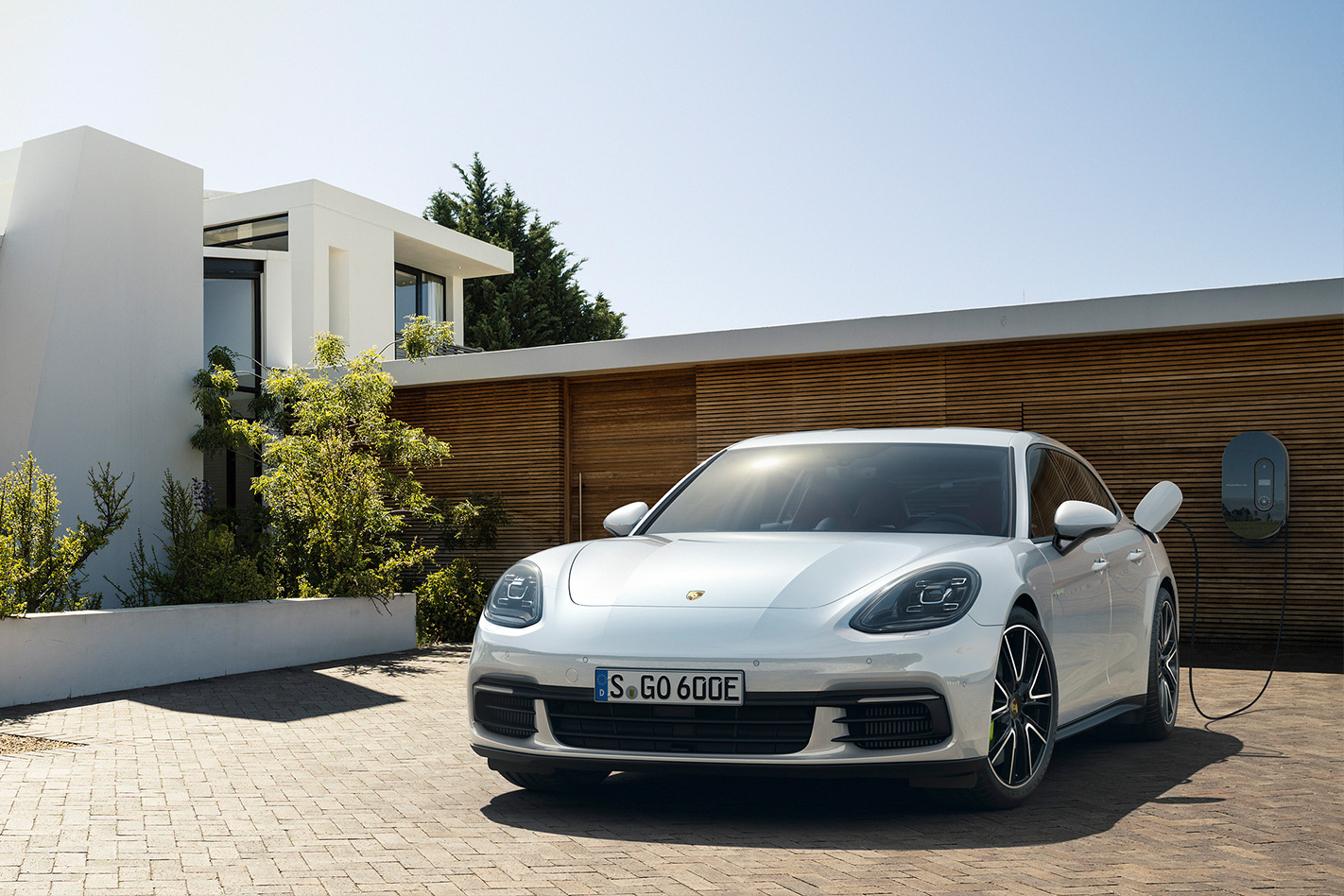
But with a 14.1kWh battery and plug-in charging, owners with a commute of 49km or fewer will not need to use any fuel at all thanks to the 100kW electric motor that can propel the sporty wagon under emissions-free power at speeds of up to 140km/h.
Charging the battery takes between 6.0 and 2.4 hours depending on the charger rate and connection type.
In addition to the unique shooting brake looks combined with the most potent powertrain performance, Turbo S E-Hybrid Sport Turismo owners will also get the added practicality of a 425-litre boot that expands to 1295 litres with the rear seats folded.
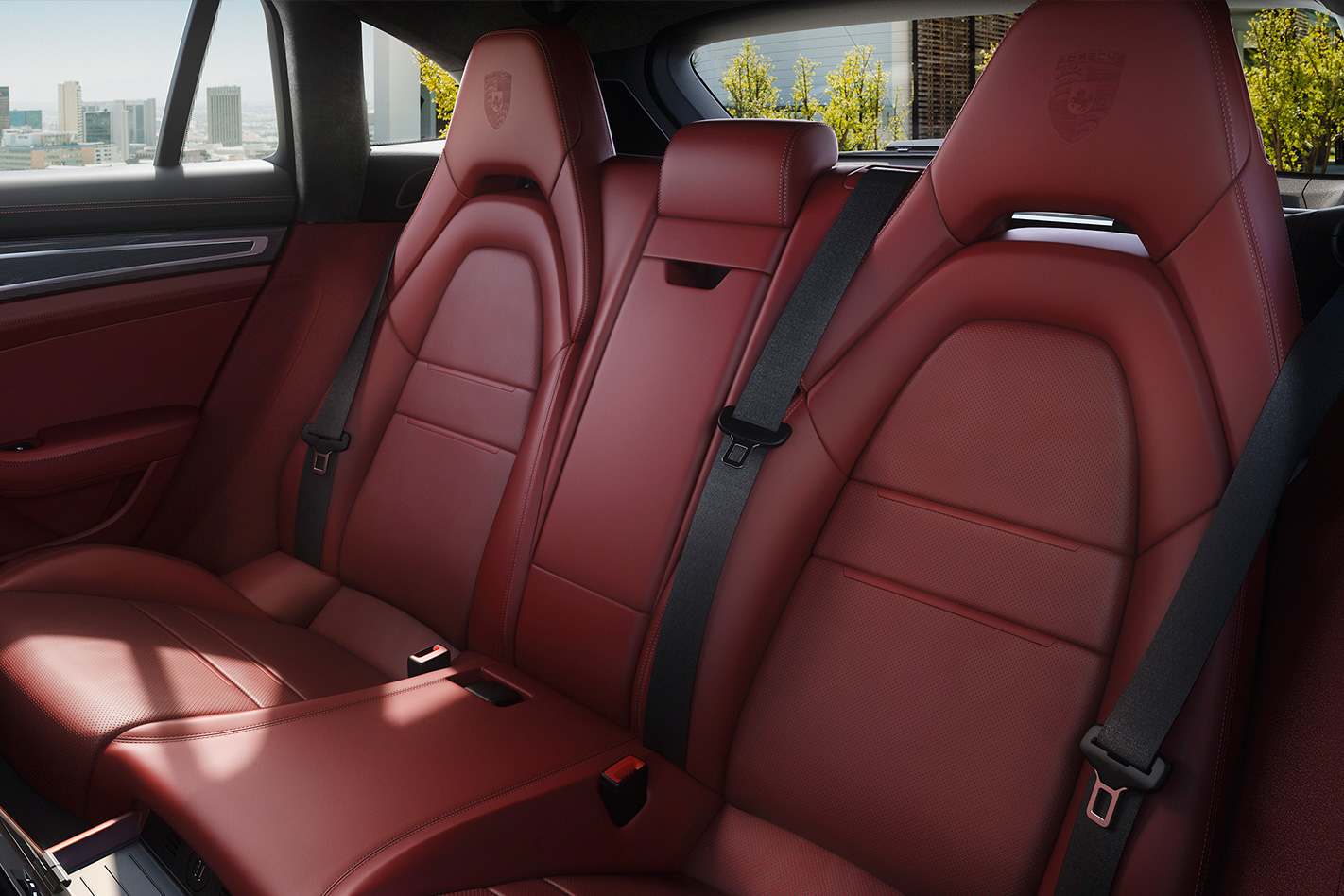
Up to three second-row occupants can be accommodated and the seats fold in a 40:20:40 split with electric unlocking for customising the passenger/load spaces.
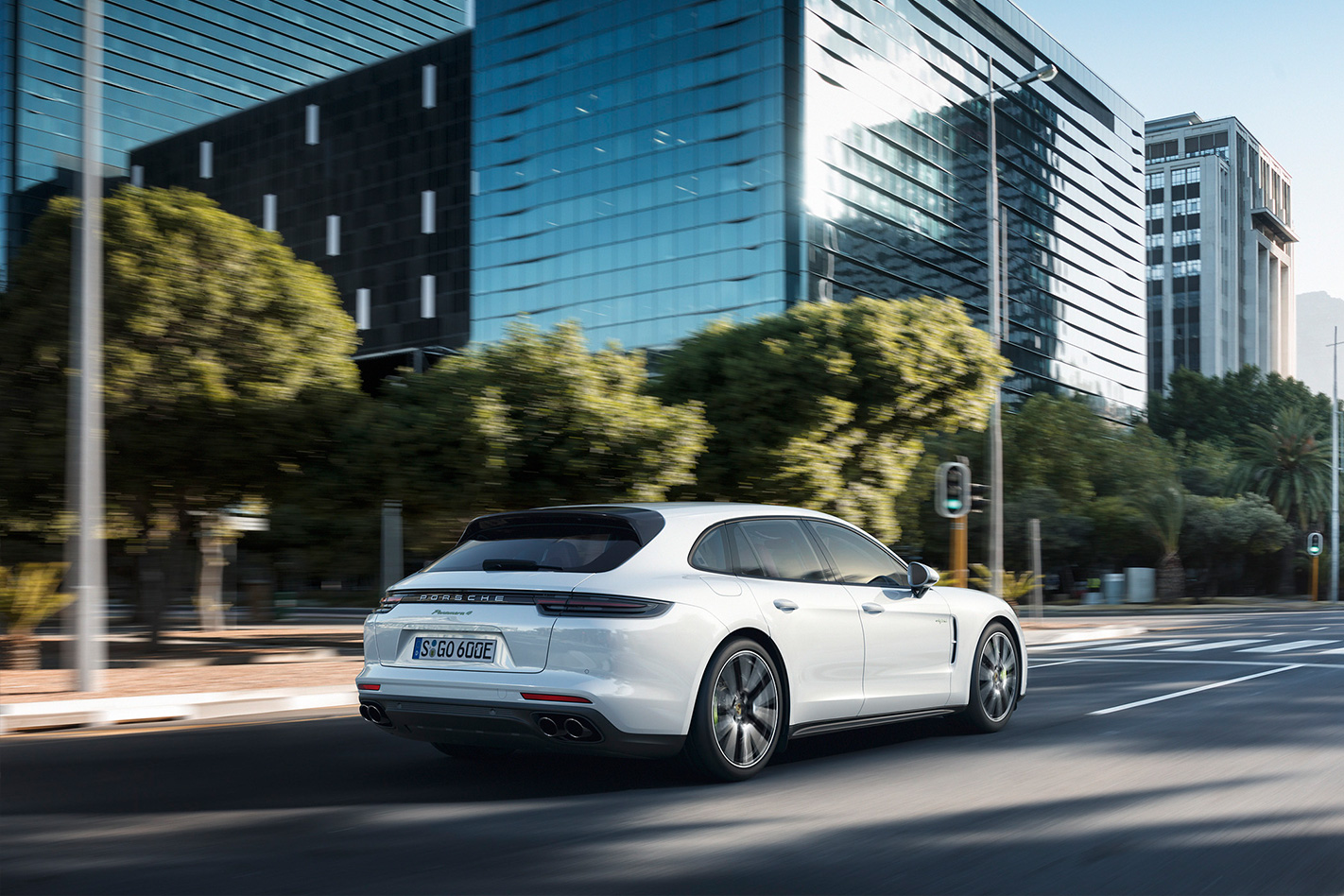
Driving dynamics, grip and handling are also enhanced with an active roof spoiler that moves into three different positions according to vehicle speed and can add up to 50kg of extra downforce for increased tail-end stability. The same spoiler also shifts into a different angle at speeds above 90km/h to minimise cabin turbulence when the panoramic sunroof is open.
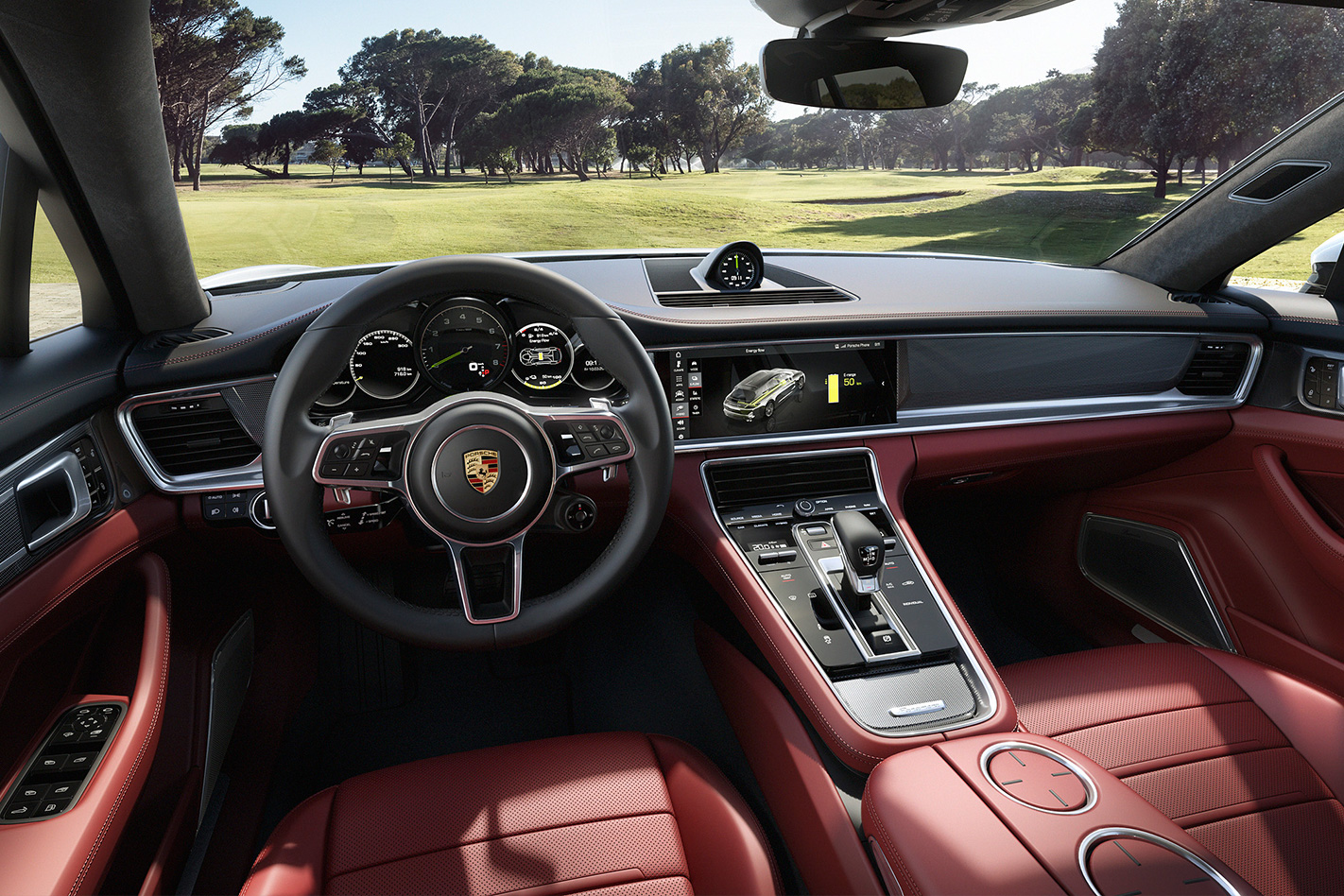
On the inside, Turbo S E-Hybrid Sport Turismo customers will also get an extensive range of customisation options including choices of leather upholstery and trim finishes, as well as Porsche’s Advanced Cockpit digital display and Sport Chrono package.
The new addition to the Sport Turismo family will be available as a special order only with delivery dates to be confirmed for next year.
TOYOTA Motor Corporation Australia‘s 54 years of local manufacturing will officially come to a close at 1pm on Tuesday, October 3.
Wheels can reveal the car maker has scheduled a line-off ceremony for employees and VIPs that will start at 1pm. The car maker has declined to confirm it has already built the last Camry Hybrid, suggesting that it will be present as the last conventionally engined Camry powered by an Altona-cast 2.5-litre engine rolls off the production line, marking an end to half a century of assembly and manufacturing.
Sources have reported the car maker has assembled a collection of cars first built under licence at Port Melbourne in 1963 by Australian Motor Industries, which itself would eventually be bought out by Toyota after it decided that Australia would become the company’s first manufacturing base outside of Japan. This includes a Toyota Tiara, the first Toyota-badged car assembled here.
Toyota either assembled or built a number of models in Australia, including the Tiara, Crown, Corolla, Avalon, Aurion, and the car that gave it the most success, particularly as an export earner, the Camry.
The Japanese car maker was the last of the Australian automotive manufacturing industry’s cards to fall after Ford, and then Holden, bowed to international pressures that made their limited production unviable in an age of falling margins and increasing fuel efficiency standards.
Australia was to have built the next-generation Camry, the car that from late this year will arrive on our doorstep as a fully imported model, but in the wake of Ford and Holden’s failure Japan decided the plan was unable to pay its way – as was a separate plan to build the Toyota RAV4 here to build much-needed production volume – only weeks before the 2014 announcement it too would quit Australia.
“This has been an extremely difficult decision to make. It is one of the saddest days in our history,” Toyota Australia chairman Max Yasuda said. That sentiment was reflected by Toyota’s most senior executive, Aiko Toyoda who said: “It is most regretful for Toyota, and for me, personally, simply heartbreaking.”
The October edition of Wheels magazine, on sale now, includes extensive coverage of Toyota’s history in Australia. WheelsMag.com.au will be following all the breaking news at the car maker’s Altona-based production plant on Tuesday as it happens.
Porsche has announced a new addition to its Panamera line-up, with its Turbo S E-Hybrid Sport now available as a Sport Turismo wagon.
The Sport Turismo was already available with a turbocharged 4.0-litre V8 drivetrain, but now a dash of battery power brings output up from 404kW to 500kW, and torque from 770Nm to 850Nm. Even better, all that torque is now available from 1400rpm, rather than the 1960rpm the V8 alone needed.
This adds up to a 0-100km/h time to match the Panamera Turbo S E-Hybrid sedan at 3.4 seconds.

That means the hybrid Panamera wagon will weigh somewhere around the 2350kg mark, which is usually territory reserved for the likes of Range Rovers. But the extra weight isn’t all dead – most of it comes from the hybrid drivetrain which makes it faster in the first place.
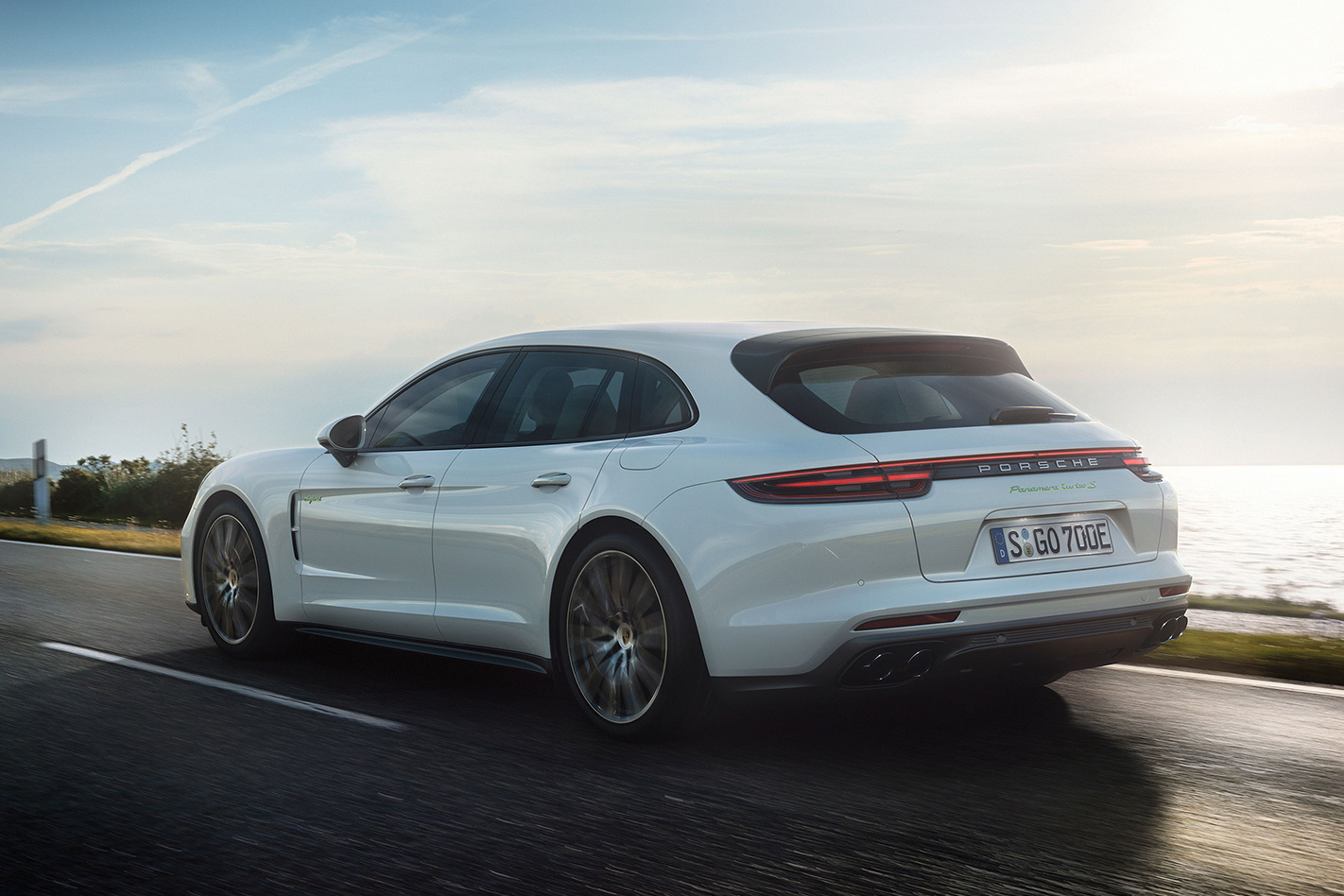
It’s also designed to be more comfortable, too. The Panamera E-Hybrid Sport Turismo interior is pretty much the same as the sedan’s first-class spec interior, but with a third seat in the seconds row.
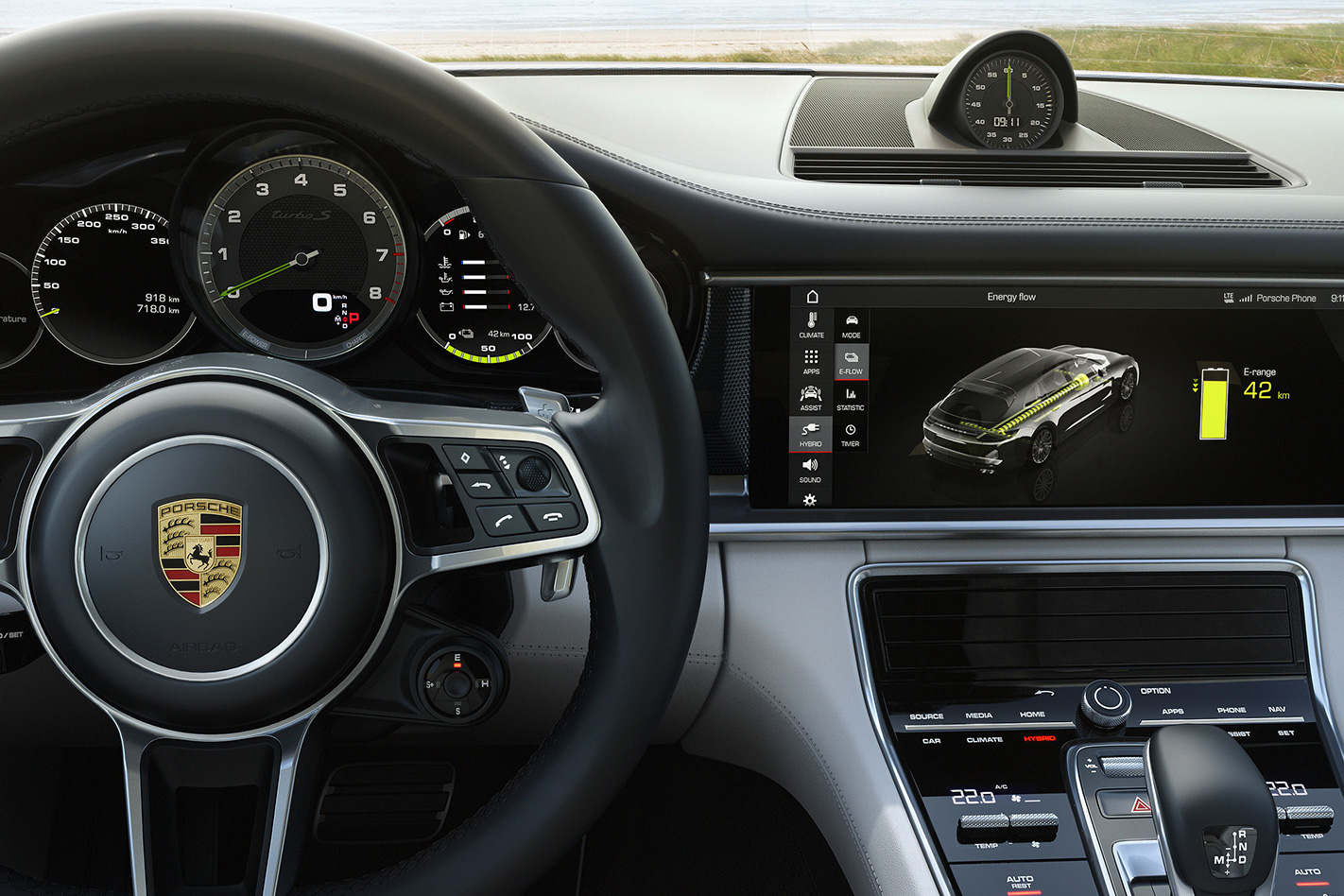
The hybrid V8 wagon is already available to order in Europe, but will be available in Australia by special order only at a price of $466K.
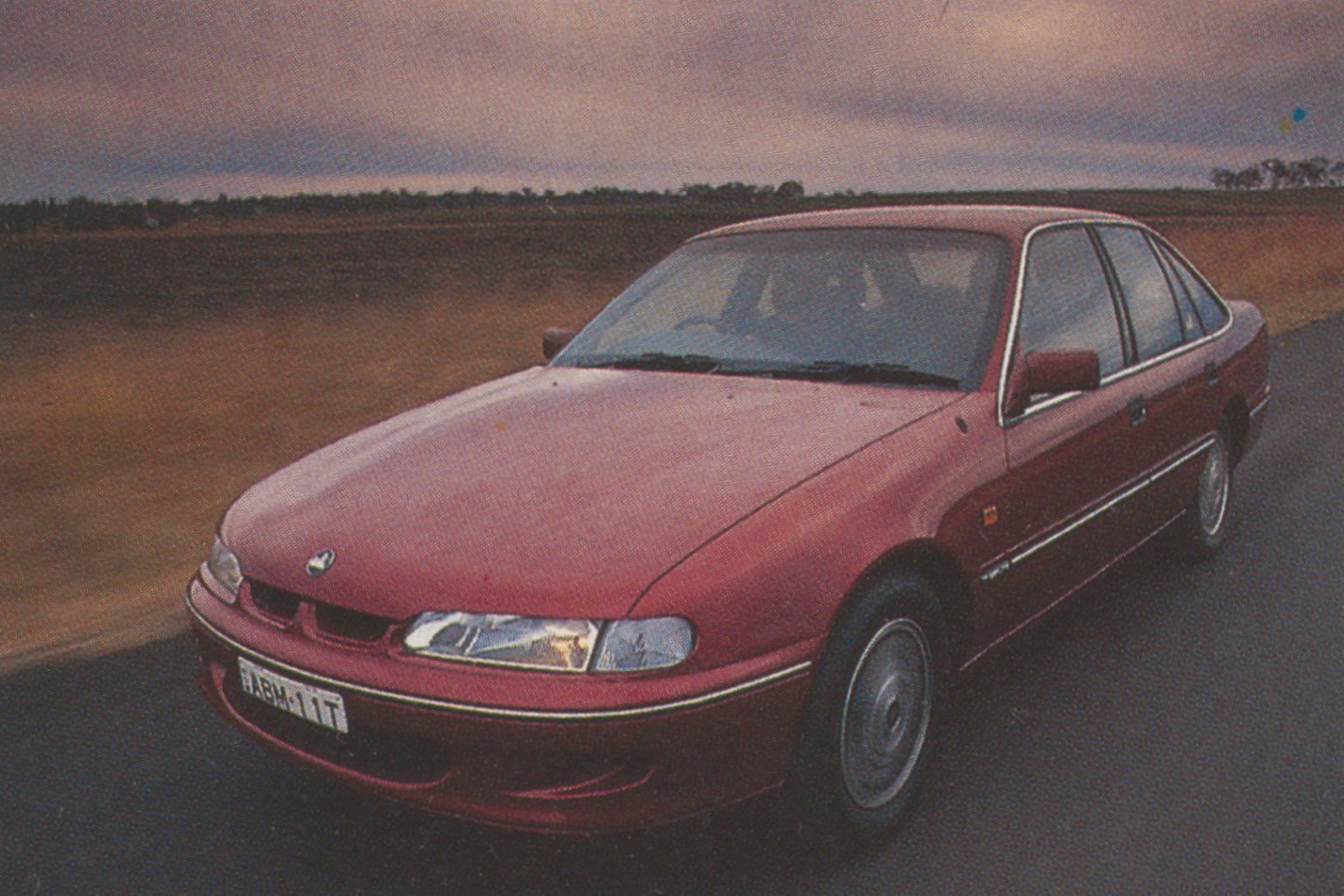
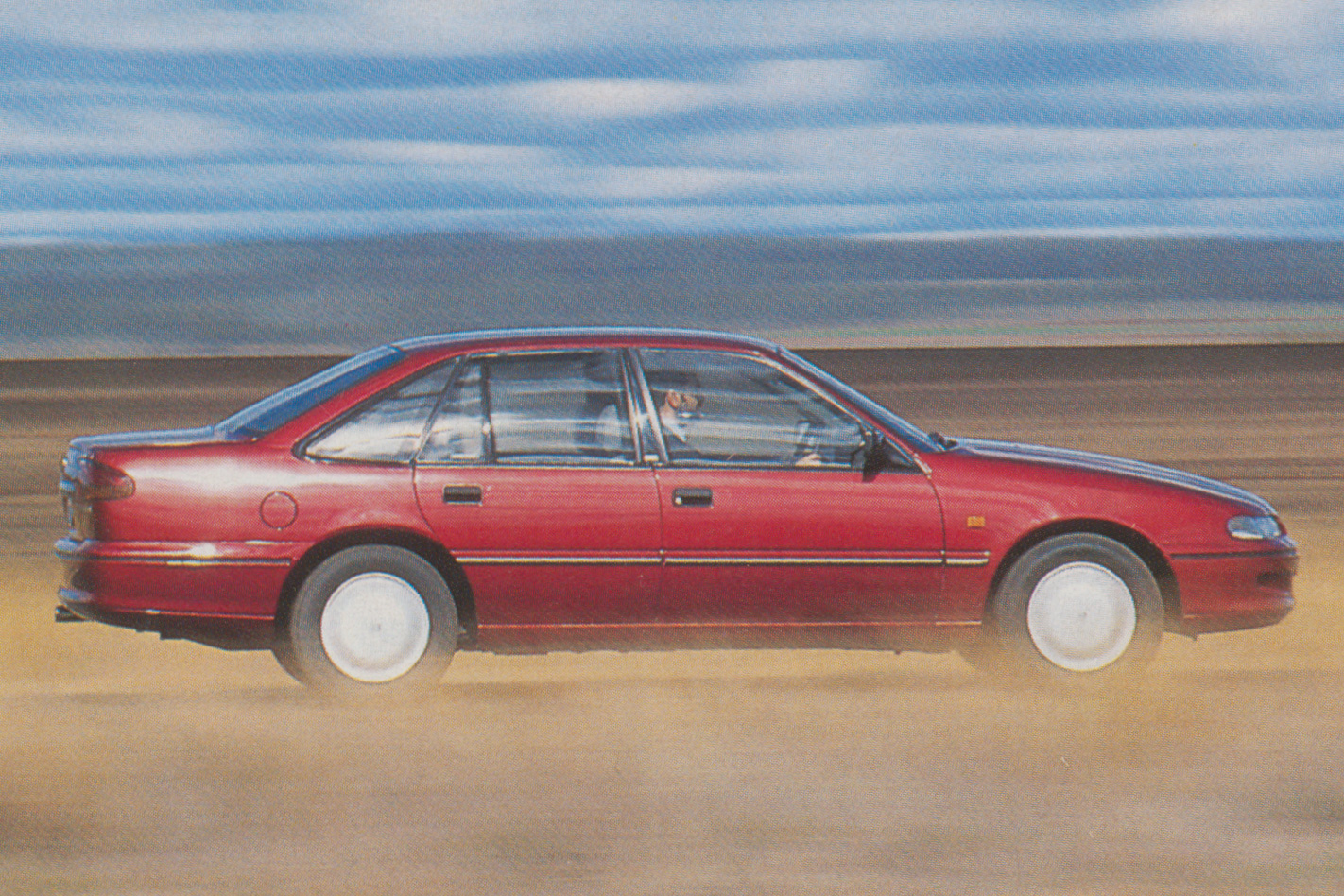
This is more than a mid-life nip and tuck to firm up a sagging face. With VR, Holden delivers a whole package of improvements, affecting every one of the car’s major mechanical systems, and a bunch of sub-systems as well.
VR is also the first Australian-made car with a driver’s side airbag.
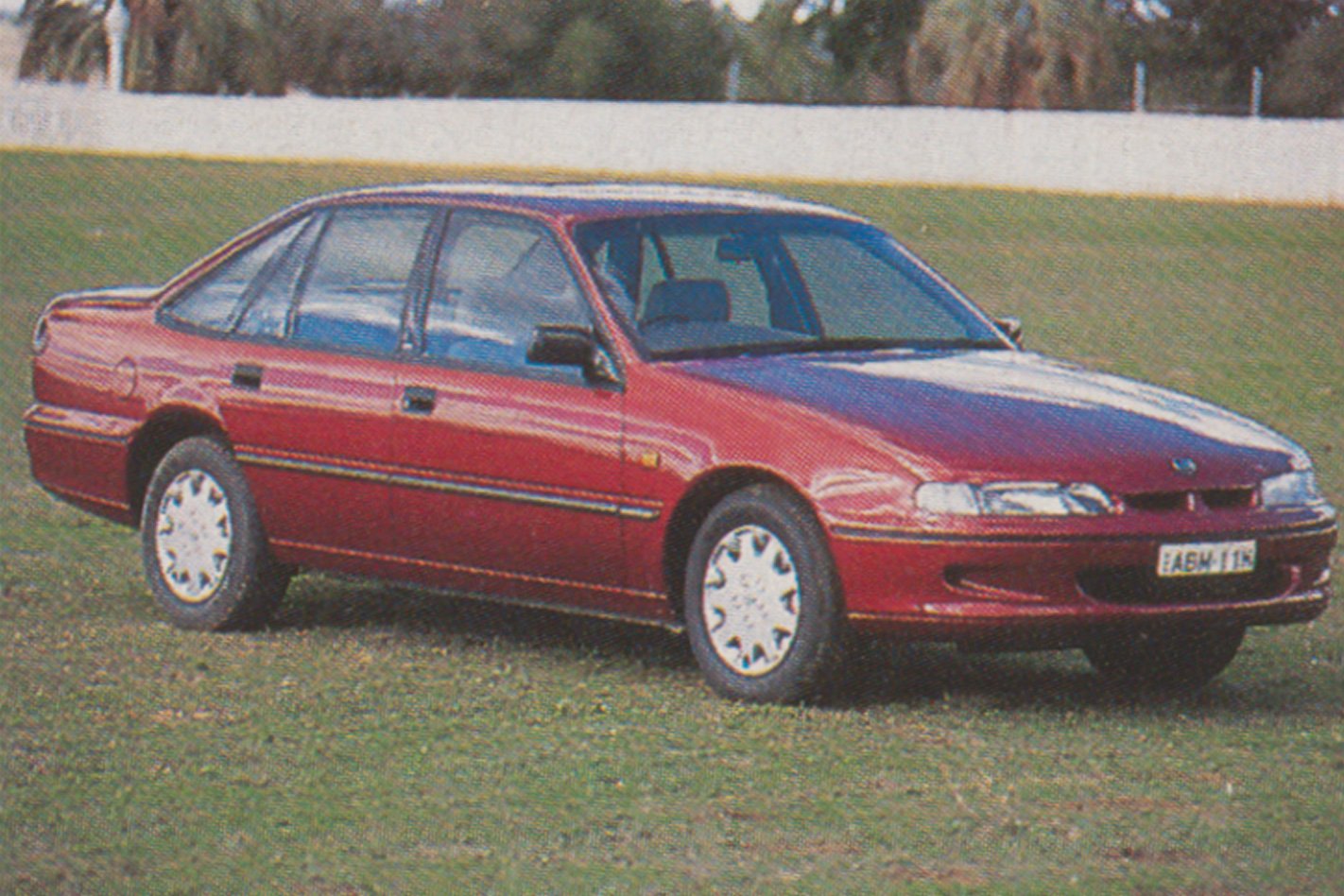
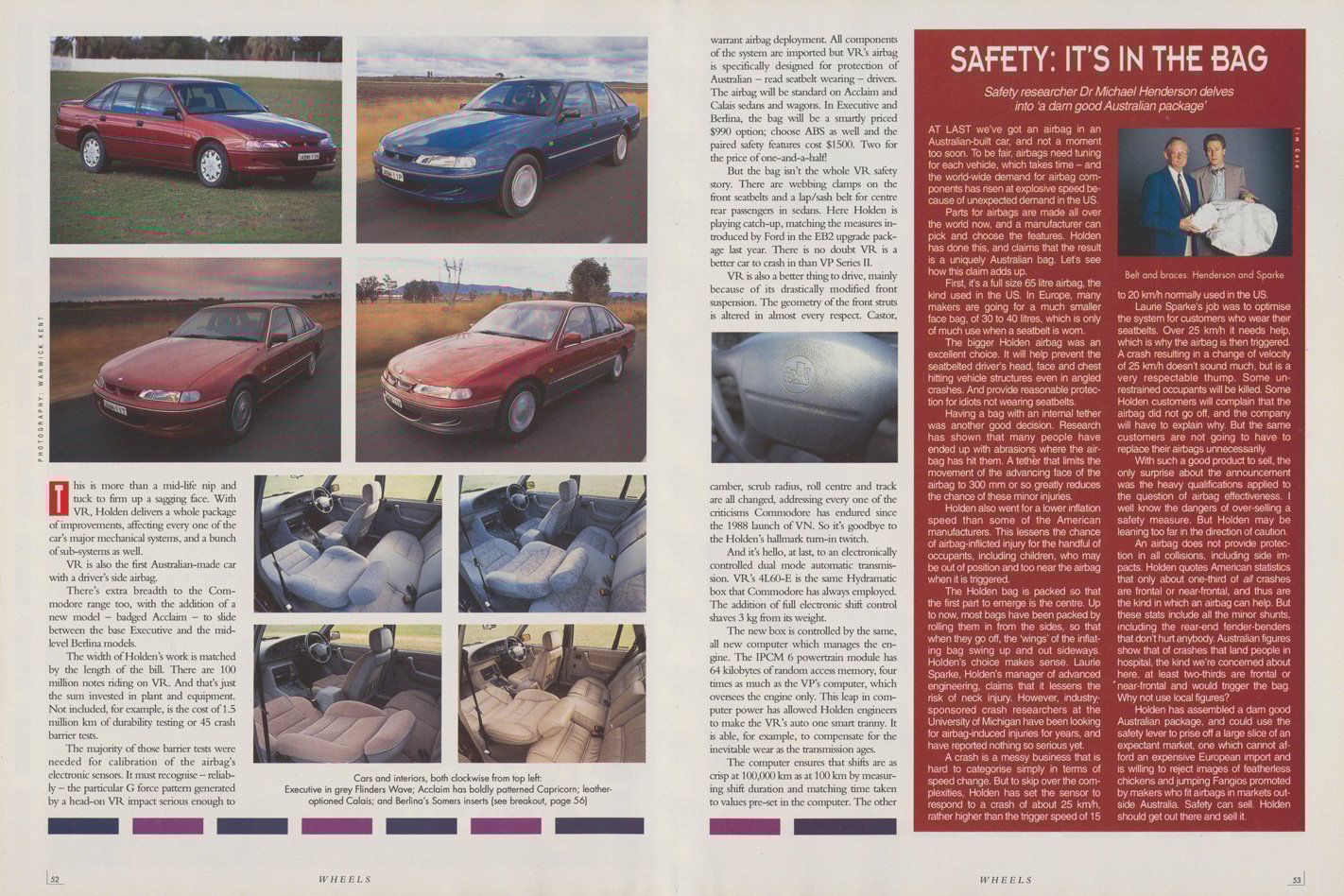
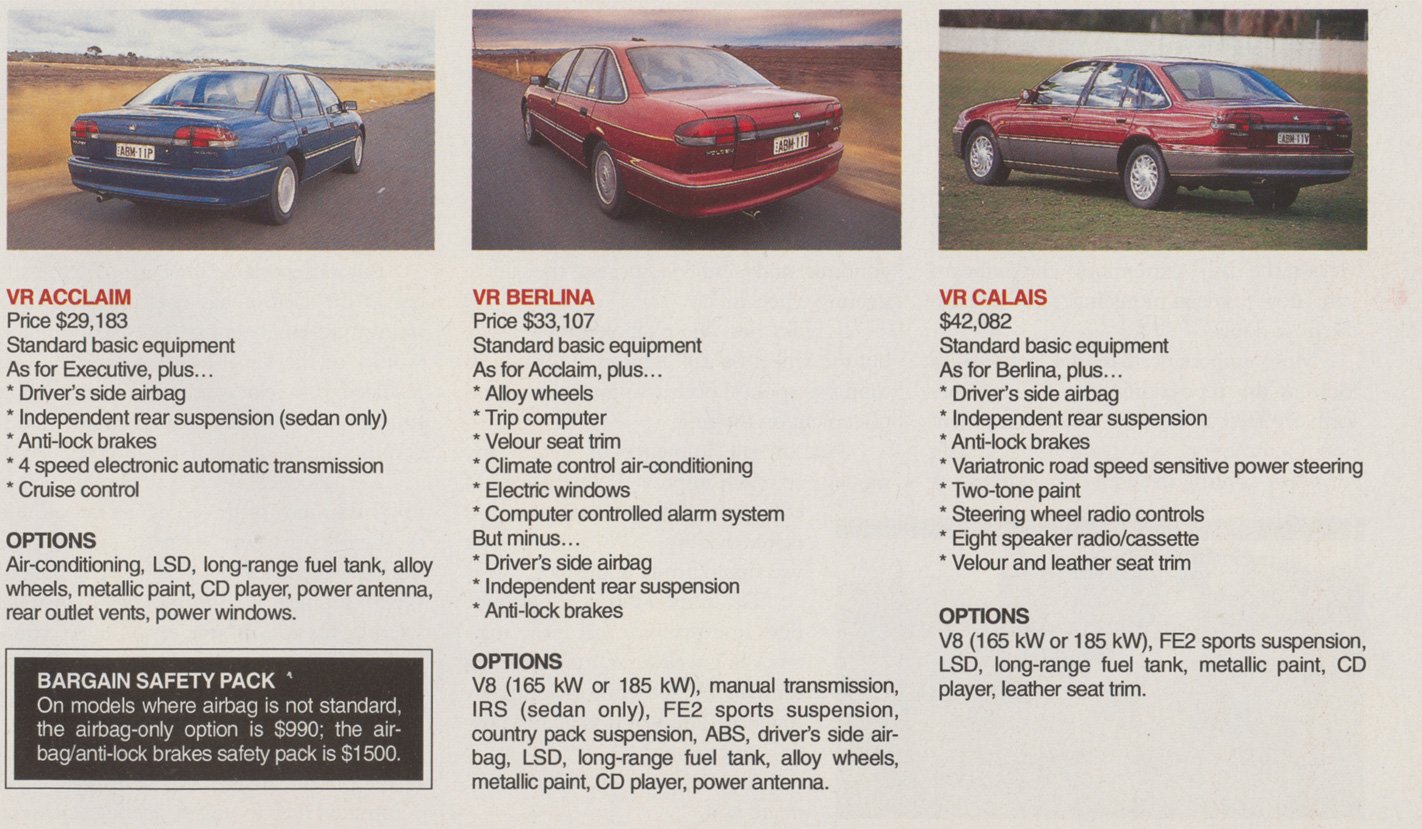
The majority of those barrier tests were needed for calibration of the airbag’s electronic sensors. It must recognise – reliably – the particular G force pattern generated by a head-on VR impact serious enough to warrant airbag deployment. All components of the system are imported but VR’s airbag is specifically designed for protection of Australian – read seatbelt wearing – drivers. The airbag will be standard on Acclaim and Calais sedans and wagons. In Executive and Berlina, the bag will be a smartly priced $990 option; choose ABS as well and the paired safety features cost $1500. Two for the price of one-and-a-half!
But the bag isn’t the whole VR safety story. There are webbing clamps on the front seatbelts and a lap/sash belt for centre rear passengers in sedans. Here Holden is playing catch-up, matching the measures introduced by Ford in the EB2 upgrade package last year. There is no doubt VR is a better car to crash in than VP Series II.
VR is also a better thing to drive, mainly because of its drastically modified front suspension. The geometry of the front struts is altered in almost every respect. Castor, camber, scrub radius, roll centre and track are all changed, addressing every one of the criticisms Commodore has endured since the 1988 launch of VN. So it’s goodbye to the Holden’s hallmark tum-in twitch.
The new box is controlled by the same, all new computer which manages the engine. The IPCM 6 powertrain module has 64 kilobytes of random access memory, four times as much as the VP Commodore‘s computer, which oversees the engine only. This leap in computer power has allowed Holden engineers to make the VR’s auto one smart tranny. It is able, for example, to compensate for the inevitable wear as the transmission ages.
The computer ensures that shifts are as crisp at 100,000 km as at 100 km by measuring shift duration and matching time taken to values pre-set in the computer. The other benefit is that there will no longer be variation in shift points or shift quality from transmission to transmission, because of slight differences in assembly tolerances and adjustment. The egalitarian electronics make all auto VRs equal.
And should the IPCM 6 brainbox flip out, there’s a fallsafe mode. When a glitch occurs, the transmission defaults to third gear and allows the manual selection of second.
The make-over of the V6 is even more comprehensive. Spark control has been fine-tuned, to improve both performance and detonation avoidance. The extra power also allows for grouped fuel injector firing, which reduces emissions and improves idle quality. It also permits the use of more sophisticated software algorithms, the mathematical formulas the computer uses to make its calculations. Put simply, it means more factors are taken into account before plugs spark and injectors inject. Stuff like information from the new heated exhaust gas oxygen sensor, which gives more accurate data on the 02 content of the exhaust. The result? Lower emissions. Other computer systems in VR are overhauled too. Diagnostics are more sophisticated than VP; the body computer, among other things, makes it even tougher for thieves and has headlight auto-off to save flat batteries.
There have been changes to engine hardware, as well as software. Compression ratio of the V6 is up from 8.5:1 to 9.0:1 with the introduction of new pistons wearing equally new rings. The pistons are connected to the crank by more rigid rods with tighter gudgeon pin bearing clearances, with benefits in reduced engine noise. The noise curbing program extends to the valve gear, where roller rocker pivots cut clatter. They reduce friction too.
Combine all the new efficiencies and friction reduction measures and you’re looking at a drop of around five per cent in fuel consumption. And the damned thing was already creditably frugal …
Back to back testing with a VP Series 11 V6 indicates the VR is a shade swifter than the old Commodore. The bolstered torque curve, handful of extra kW and crisper shifting of the electronic gearbox endow it with a 0.3 second quicker standing 400 metre time. The new car’s averaged time was 16.8 secs. To 100 kmlh VR was half a second swifter. The new Commodore was also a shade faster through our rolling start increments.
Since the transmission’s Power/Economy mode button doesn’t affect full-throttle gearchange points, the setting doesn’t alter ultimate performance times. What the console button does change is part-throttle change points. If the engineers had had their way, the VR wouldn’t have had a button at all- in their opinion, the powertrain computer is smart enough to figure when the driver needs performance and when he’s after economy. The marketing men won the argument. How will the punters know it’s an electronically controlled transmission, they asked, if there’s no button?
The VR proved quieter at idle and during hard acceleration than the VP Series II, by two decibels. That’s a difference the ear will easily discern. The VR was also between 1 and 2 dB quieter at a steady 110 km/h. There seemed slightly less wind noise in the new model. Only at a steady 60 km/h were the VP and VR line ball.
Better panel die technology and additional robotics are credited with the tightening of the Commodore’s shut lines. The change is immediately noticeable. You won’t need a set of digital vernier calipers to find the difference between old and new. Along with the sheet metal changes to nose and tail come better fitting plastic bumper fascias. Honda assisted Holden with the creation of the large and expensive moulds for both ends of the car. The new parts fit flush and must therefore be made with greater accuracy.
Though designed here, VR’s new headlights are made in Korea. The lenses are glass, despite an international trend towards hard, clear plastics. Holden’s engineers know that the guts of Australian bugs are unusually corrosive and that plastics subjected to long and repeated splatter attacks would eventually be affected.
New plastic parts also create the most striking impression inside VR. The dash top moulding, including the instrument binnacle, is an all new design. It looks much better, despite variable success with fit in the pre-production run cars sampled. There are no longer face level vents at the dash’s extremities. The outboard vents now reside in moulding; screwed onto the front doors.
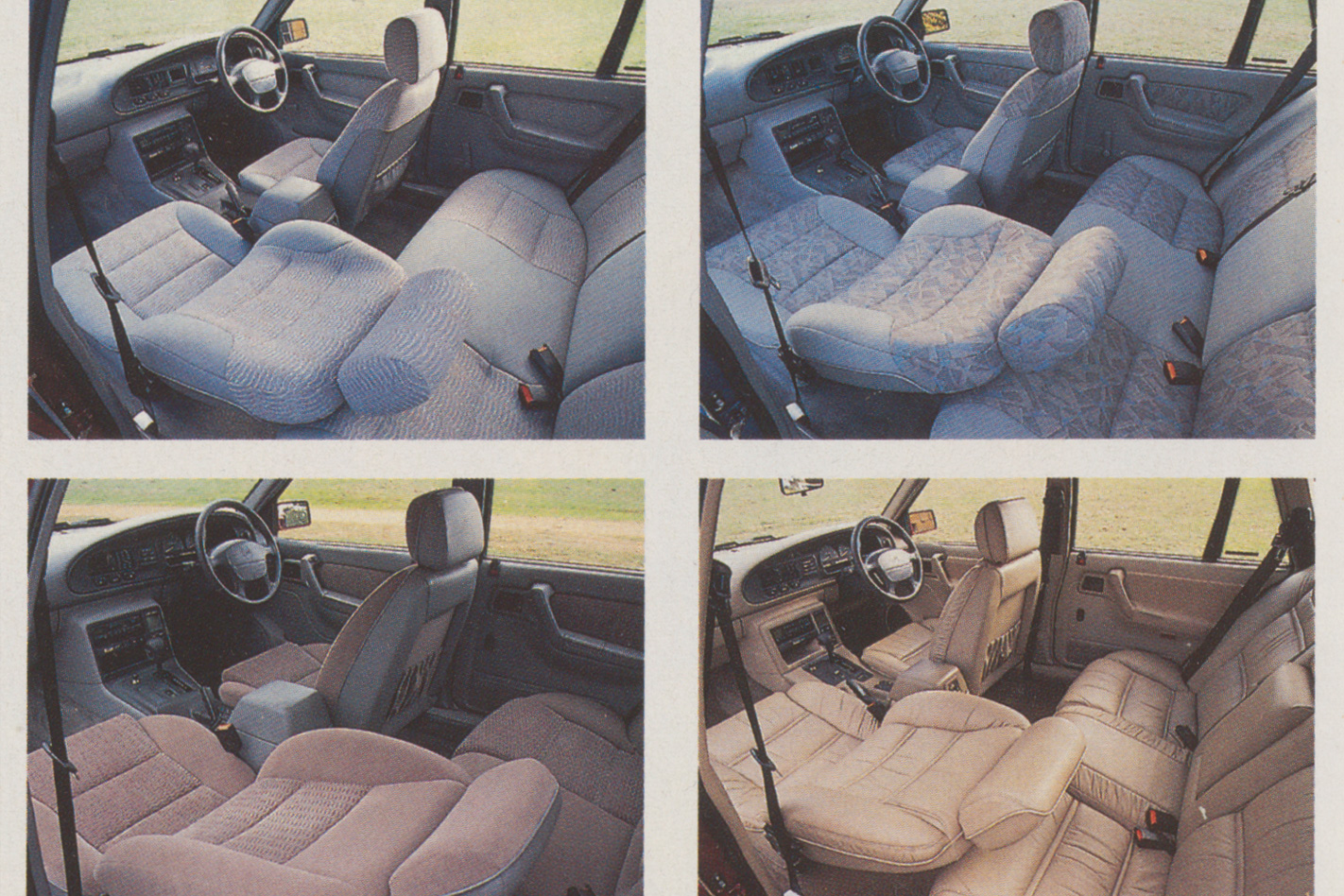
While the new dash layout is an ergonomic and aesthetic success, the airbag steering wheel isn’t. Its bulky boss doesn’t look too offensive, but the wheel isn’t pleasant in the hands, its topmost spokes obstructing natural hand placement on the rim.
The overall ambience of VR – any model – is much improved. The palette of colours and fabrics employed is definitely ’90s. VP’s interior look was mired firmly in the ’80s. The impression is an accurate one.
In every way that really matters VR is a cleverer, more modem car than VP; sometimes measurably superior. This was drastic, not plastic, surgery.
And the patient is much better, thank you..
On the face of it, a feature intended to better protect the heads of Formula 1 drivers should seem like a praiseworthy initiative.
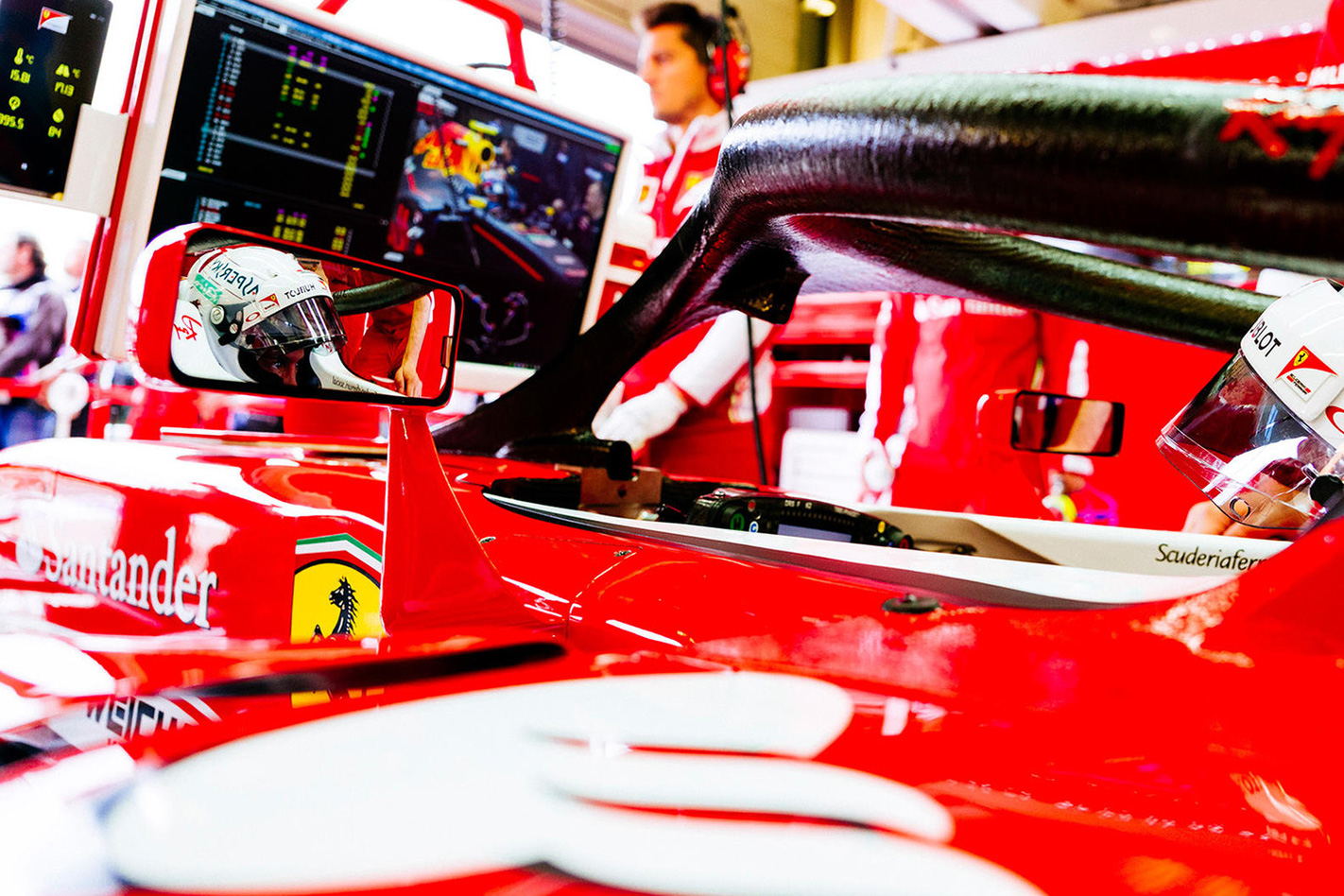
Yet the FIA has been copping flak itself after fans, teams, and many drivers criticised its decision to make a cockpit-barrier device mandatory for 2018. The Halo is understandably controversial in a sport that has been a true open-seater series since its birth.
And it possibly doesn’t help that its design invites comparison with open-toed rubber footwear common to an Australian summer. However, where a thong will afford you some protection from standing on a bluebottle, the Halo has been created to withstand the impact of a 20kg wheel assembly flying at 225km/h.
In the space of six days during 2009, Henry Surtees (son of legend John) was killed by a stray bouncing wheel during a Formula 2 race, and Felipe Massa was lucky to survive with just a battered face after his helmet was struck by a spring that had come loose from the car ahead during Hungarian GP qualifying.
Maria de Villota (2013) and Jules Bianchi (2014) both died months after suffering head injuries after crashing into stationary vehicles, while IndyCar driver Justin Wilson was killed by large debris from a competitor’s crashed car. As the FIA pursued Halo as its likely choice, Red Bull even gave wings to its own, more visually attractive solution called the Aeroscreen in 2016.
The drivers, many of whom tested the Halo device during 2016 practice sessions, remain divided on its implementation. Online forums clearly indicated the sport’s ardent fans aren’t so split. The design of F1 cars and the sport’s element of danger have always formed a large part of Formula 1’s appeal.
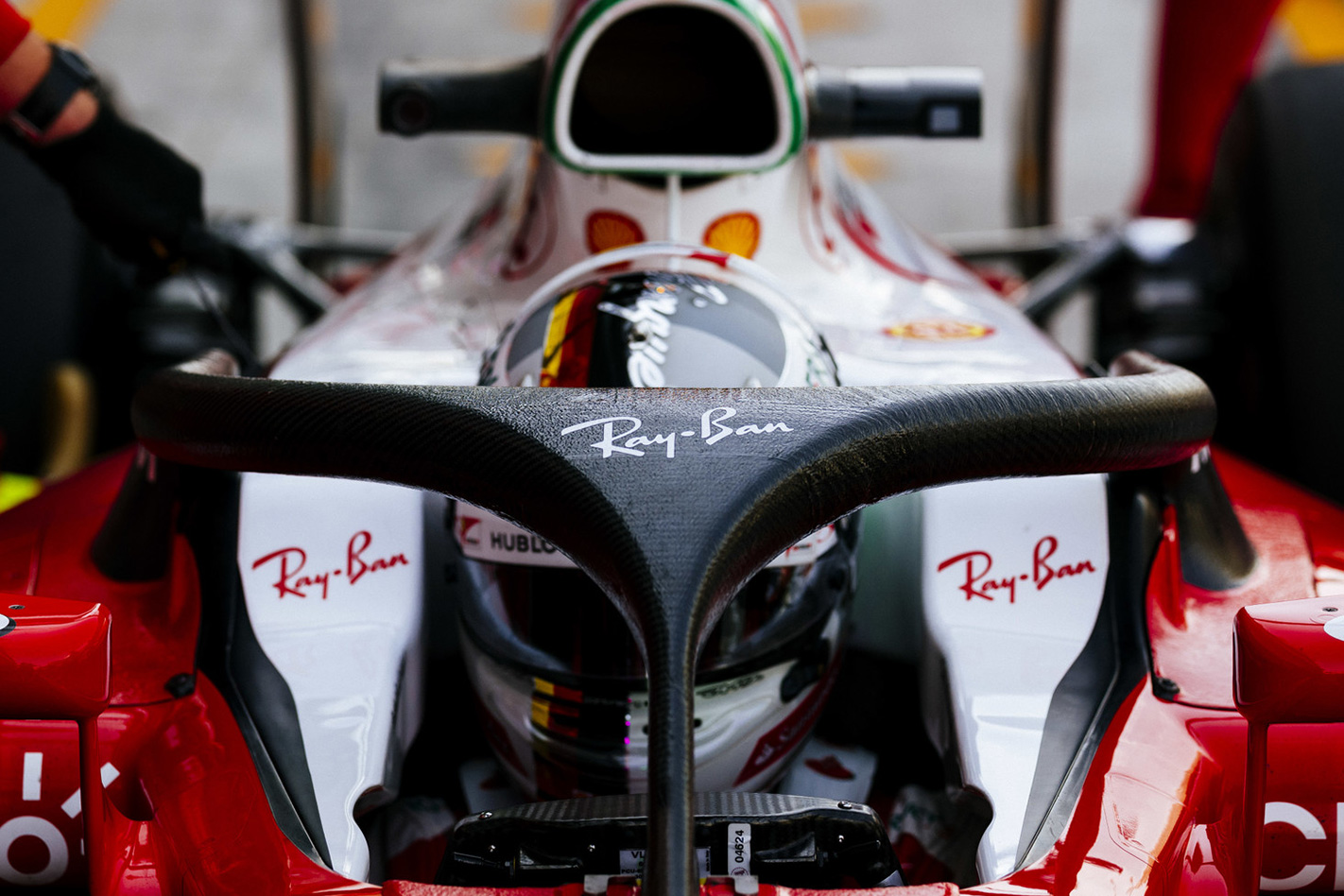
It believed 19 of the cases yielded in “positive” or “positive on balance” outcomes, including saving the lives of Surtees and Wilson. As ever, don’t expect the sport to have put a lid on this discussion.
Rejected Designs
What the FIA didn’t use
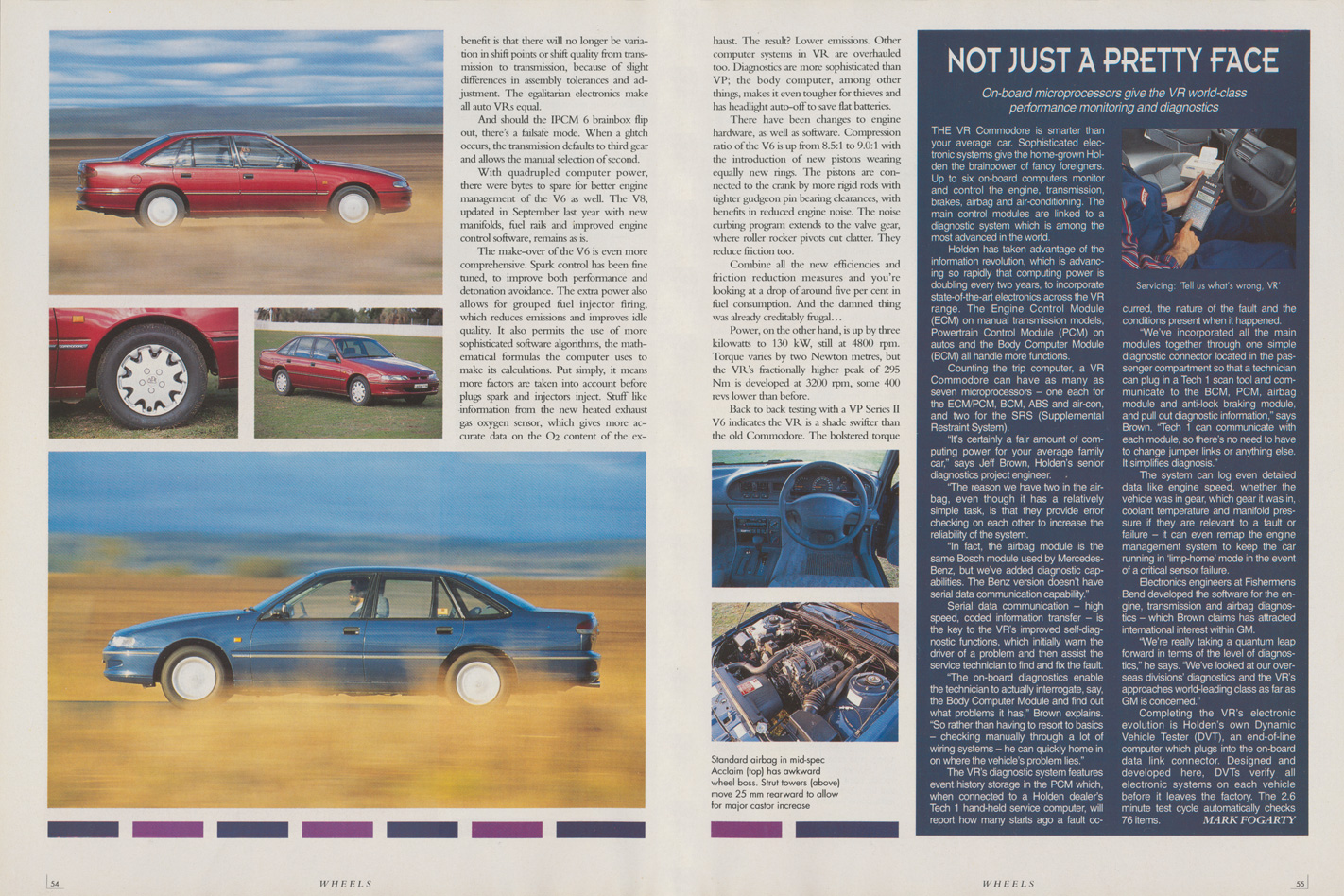
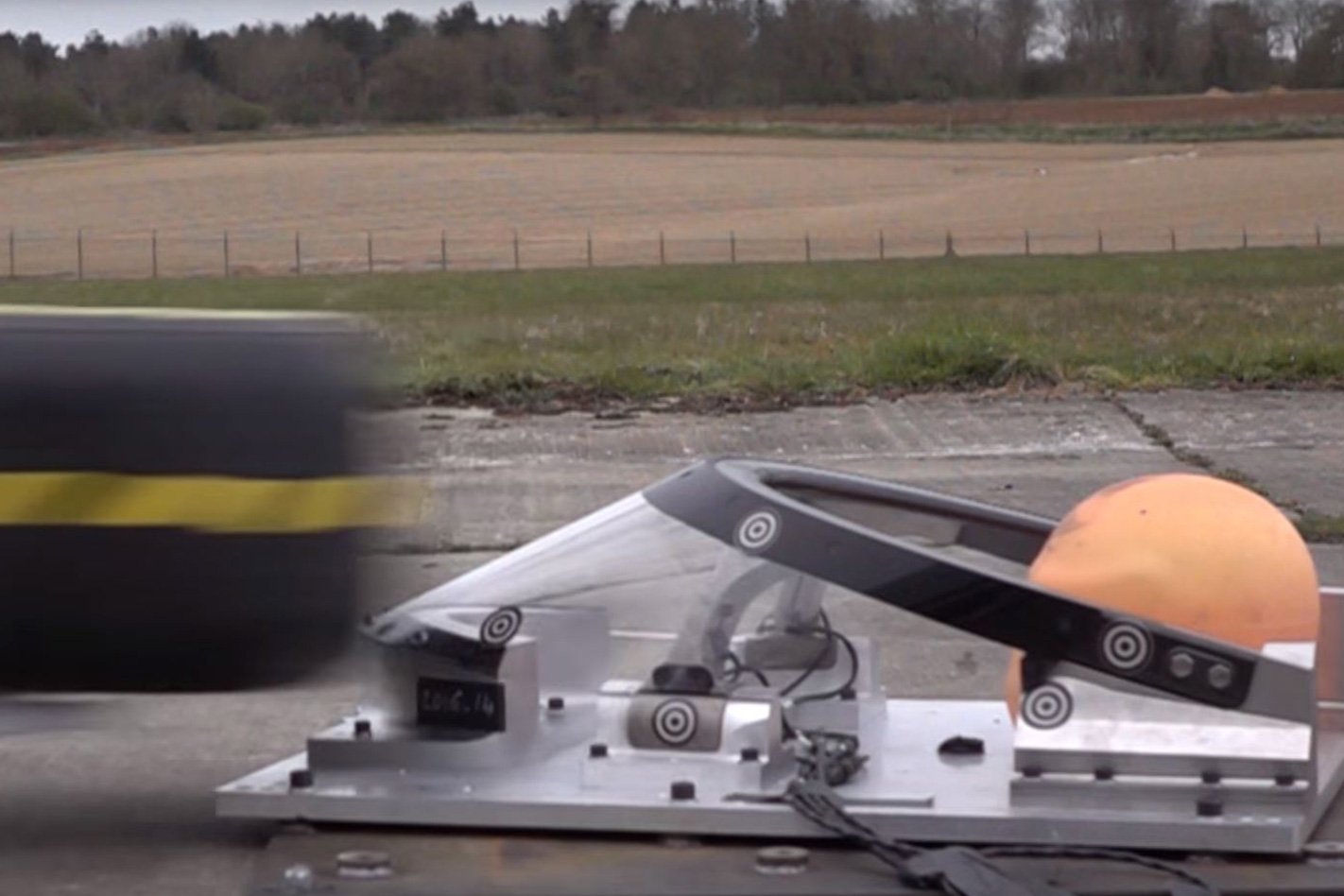
A closed cockpit would be considered even more sacrilegious in F1, yet the FIA did use a jet-fighter canopy for benchmarking purposes during early testing of enhanced-head-protection concepts. At a disused Royal Airforce base, a compound-nitrogen-powered cannon was used to fire a 20kg wheel assembly at both the canopy and a more racecar-like windshield for comparison.
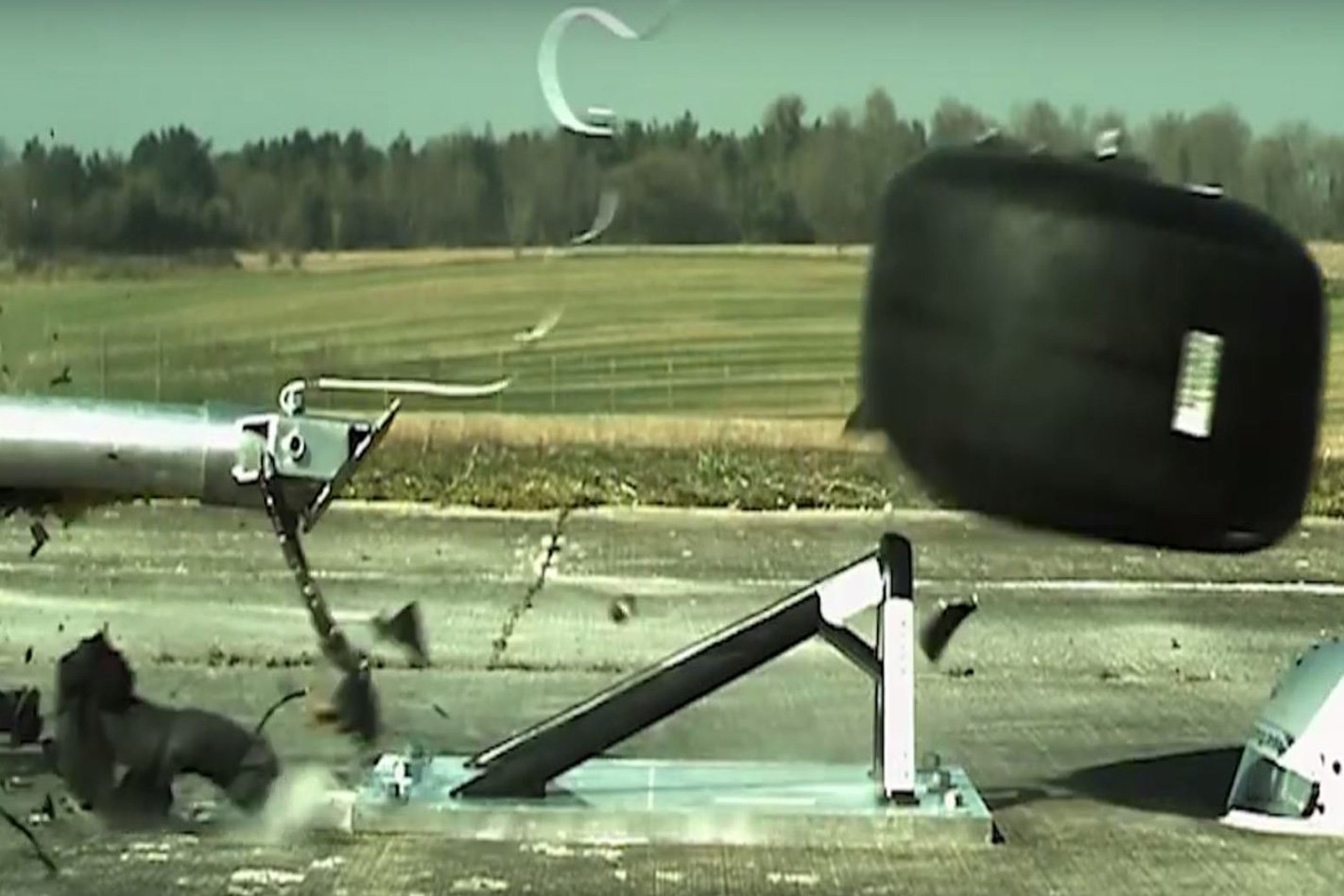
Ideas also included fins positioned ahead of the cockpit, ‘wires’ that ran across the top of the cockpit from behind the driver’s head to the car’s nose, and wraparound screens. All ended up in the ejector seat, however, as the FIA chose the Halo, at least for now, as the most realistic option.
The Detail
How will it work
1. DESIGN
The single-piece Halo has so far been a removable prototype though will eventually integrate into the chassis. (“With the support of the teams, certain features of its design will be further enhanced,” the FIA said.) Teams will have some leeway to play with non-structural carbon-fibre farings along the main tubes to assist with aerodynamics (and aesthetics). The FIA says the Halo will be the strongest part of a 2018 F1 car and is expected to weight about eight kilograms. It will be manufactured by a single supplier.
2. VISIBILITY
The central pillar’s width may be reduced from its current 20mm to about 16mm, though most drivers have said visibility isn’t a major issue after experiencing the Halo. The FIA also pointed out that vision remained superior to that of a closed-cockpit LMP1 Le Mans sports car. It’s not only drivers who will need to adapt, mind – TV audiences will experience the Halo effect, as it were, with the on-board car cameras.
3. SMALL DEBRIS
The FIA admits it doesn’t provide a 100 per cent guarantee against small objects. But after it hurled countless objects at the Halo from multiple directions – it said the tests showed statistically protection significantly increased. In 2012, F1 helmet visors also adopted a Zylon strip – around the area where Massa was struck – for extra strength.
4. EXTRACTION
Some believed the Halo would hinder a drivers’ extraction in the event of the car turning upside down – such as Fernando Alonso’s accident at the 2016 Australian GP. The FIA showed the driver had more space between their head and the ground or barrier, with the Halo bar propping the cockpit higher. The FIA also stresses track marshals should turn a car back onto its wheels, where a driver hasn’t potentially injured their back or neck.
IT WAS almost inevitable that Ken Block’s latest built-for-internet display of tyre-frying antics would be compared to one of the seminal pieces of automotive videography – Climb Dance.
For those who’ve avoided their social media feeds this morning, you may be unaware, but Ken Block has dropped another of his gloriously indulgent videos, this time dubbed, Climbkhana.
Part hill climb, part his traditional gymkhana, the drift wizard’s latest video combines the terrifying challenge of blasting past the tree line to the summit of Pikes Peak in Colorado and the art of precision powersliding a Ford Mustang from hell.
The Hoonicorn Mustang V2, twin-turbo, methanol-fuelled, monster sends 1044kW to all four wheels, transforming the low-slung machine into an instant tyre vaporiser.
Block is up to his usual tricks, with lots of sideways action, plenty of rev-limiter, and now fire-spitting turbos to add some spice.
Fans of the American rally driver will be familiar with his unique brand of automotive ballet and, while his latest action flick is entirely in character, it’s far from growing old. Take nine minutes out of your day to watch the latest instalment and you won’t be disappointed.
There will be the usual array of complaints regarding Block’s now allegedly derivative style, but if you find a 1000kW+ Mustang turning treads into shreds on the most infamous mountain in motorsport boring, that’s your problem.
While remarkably different in driving style, there is a clear connection to Louis Mourey’s 1988 film Climb Dance in which Ari Vatenen pilots his Peugeot 405 T16 to the summit, but at the time, the mountain was unsurfaced and all-dirt, just to make things even more heart-stopping.
Does it live up to that iconic piece of film? Well, that’s a case of personal preference. So we’ve linked both videos in this story so you can start your morning properly.
ASTON Martin will tap into F1 constructor Red Bull Racing’s technology as it plans for even more sports cars that further blur the divide between the road and racetrack.
The confirmation comes as the British luxury car maker announced its branding would appear on Red Bull Racing’s F1 cars from next year, with Aston also flagging its intent to one day build engines for the team to replace its current crop of Renault-sourced power units.
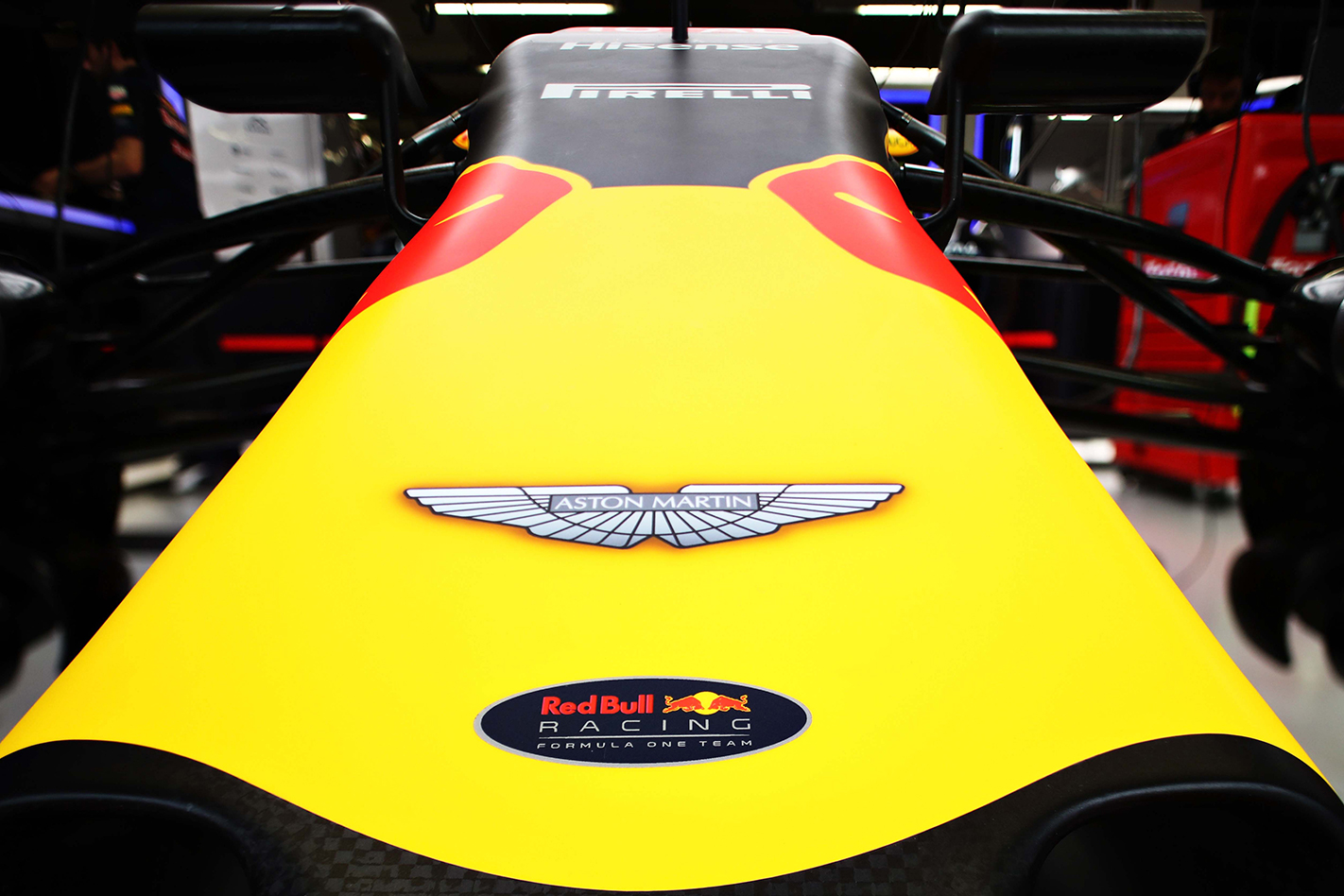
“The British luxury carmaker will also evaluate the opportunity to be involved in the team’s power unit from 2021 after being asked by the FIA to join discussions on future engines for F1.”
However, the engine development plans are conditional on F1’s organisers creating a level playing field for teams. “The power unit discussions are of interest to us but only if the circumstances are right,” Aston Martin chief executive Andy Palmer said. “We are not about to enter an engine war with no restrictions in cost or dynamometer hours but we believe that if the FIA can create the right environment we would be interested in getting involved.”

“The Aston Martin Valkyrie, which sold out on launch, is set to be the first in a line of incredible products to be borne of this innovation partnership will make its first run in 2018 before being delivered to customers in 2019,” it said.
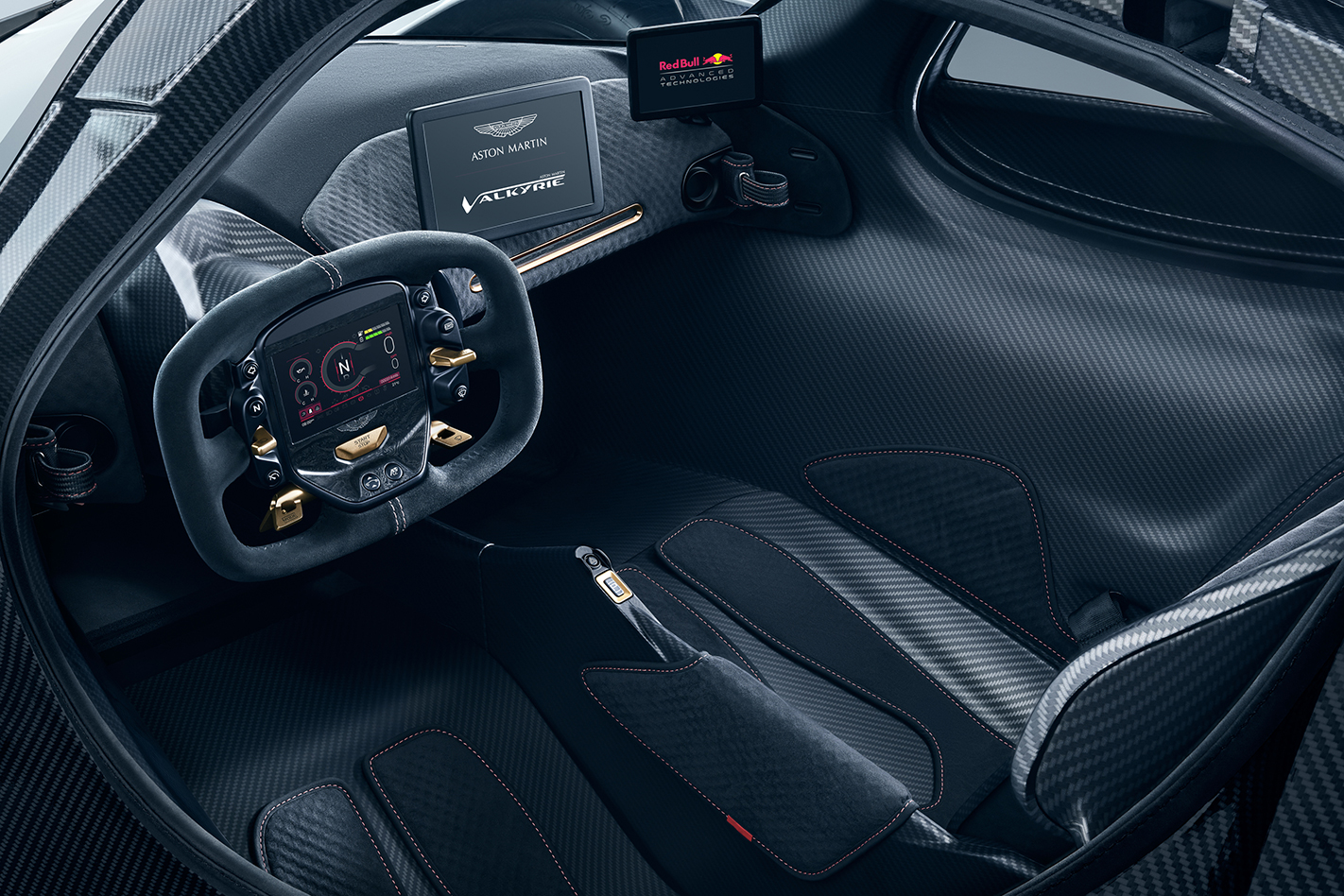
“The new centre will allow a closer working relationship between the two leading brands in their respective fields which will see the adoption of both F1 and road car technology,” it said.
Meanwhile, one of the secrets behind what buyers have to do before taking delivery of their $US3.3 million ($A4.2 million) Aston Martin Valkyrie has been revealed online – they must first buy an Aston Martin Lagonda Taraf, a stretched super-saloon powered bv a 6.0-litre V12 costing around $A1.2 million.
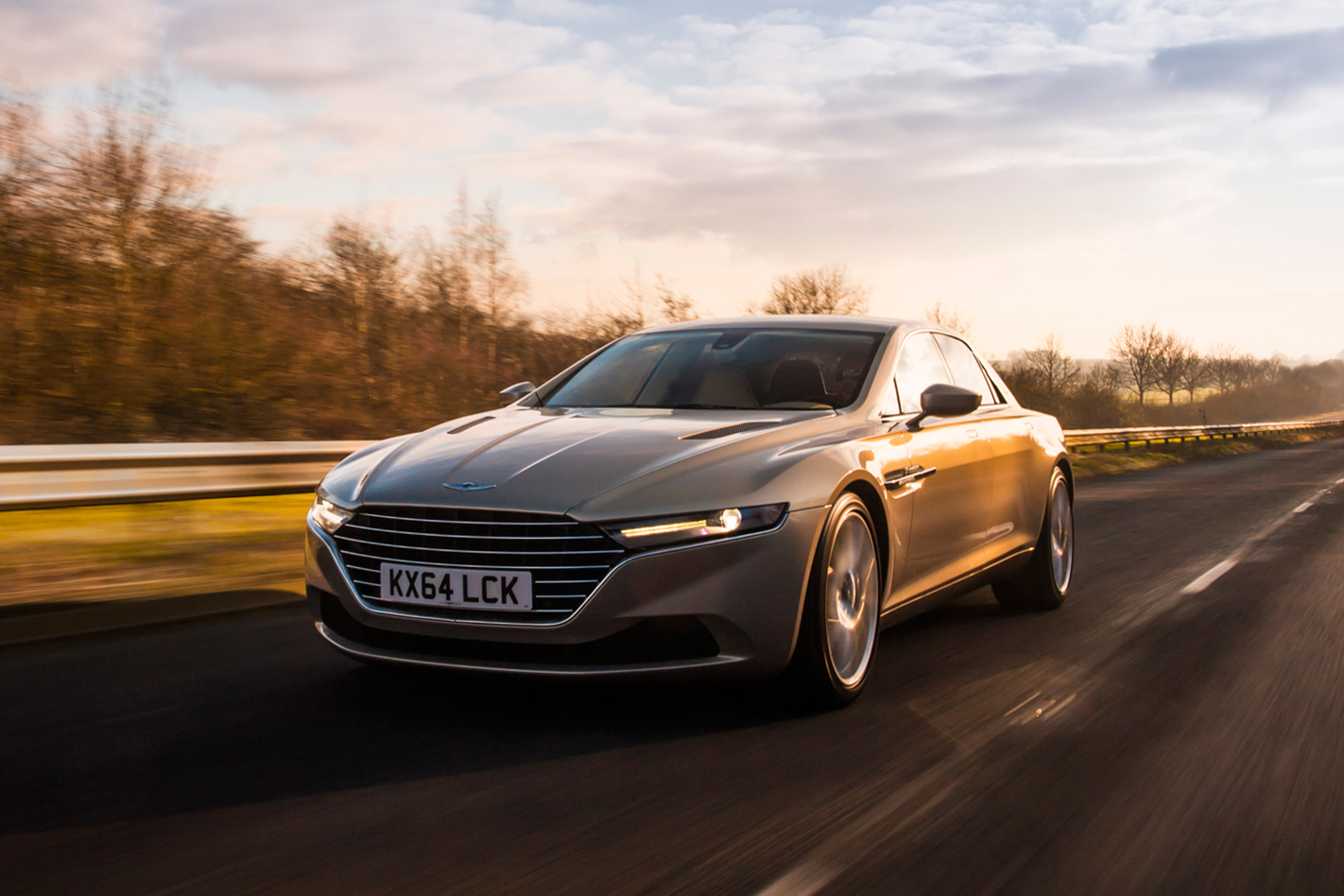
“The build slot available is scheduled for 2019 delivery and is not tied to the obligatory purchase of an Aston Martin Lagonda, a stipulation forced upon original owners,” the website says in a disclaimer attached to the Valkyrie. The website has listed the Valkyrie on behalf of Knight International, a company specialising in the purchase of “rare and valuable supercars and race cars from around the world”.
