
ASTON Martin will tap into F1 constructor Red Bull Racing’s technology as it plans for even more sports cars that further blur the divide between the road and racetrack.
The confirmation comes as the British luxury car maker announced its branding would appear on Red Bull Racing’s F1 cars from next year, with Aston also flagging its intent to one day build engines for the team to replace its current crop of Renault-sourced power units.
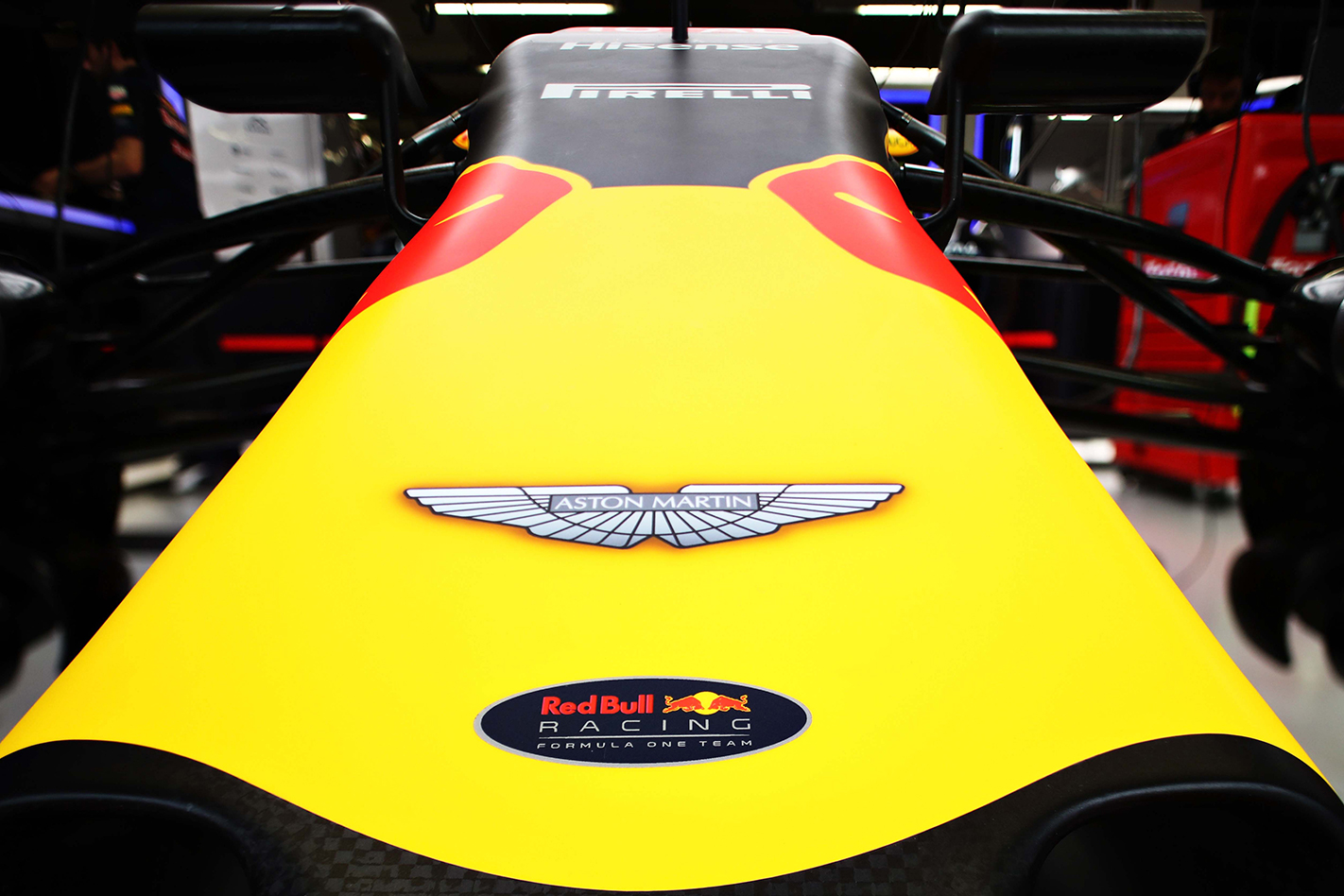
“The British luxury carmaker will also evaluate the opportunity to be involved in the team’s power unit from 2021 after being asked by the FIA to join discussions on future engines for F1.”
However, the engine development plans are conditional on F1’s organisers creating a level playing field for teams. “The power unit discussions are of interest to us but only if the circumstances are right,” Aston Martin chief executive Andy Palmer said. “We are not about to enter an engine war with no restrictions in cost or dynamometer hours but we believe that if the FIA can create the right environment we would be interested in getting involved.”

“The Aston Martin Valkyrie, which sold out on launch, is set to be the first in a line of incredible products to be borne of this innovation partnership will make its first run in 2018 before being delivered to customers in 2019,” it said.
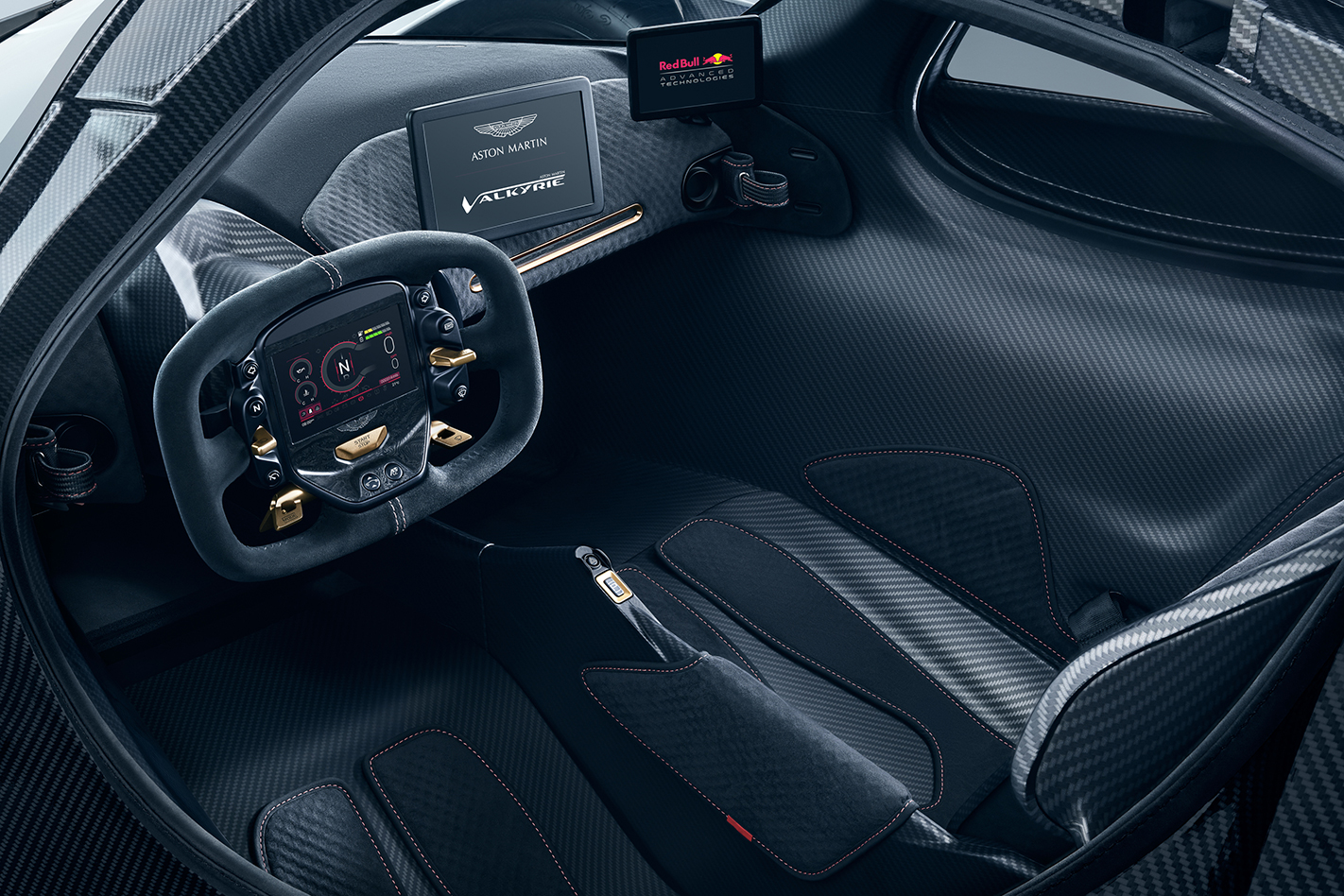
“The new centre will allow a closer working relationship between the two leading brands in their respective fields which will see the adoption of both F1 and road car technology,” it said.
Meanwhile, one of the secrets behind what buyers have to do before taking delivery of their $US3.3 million ($A4.2 million) Aston Martin Valkyrie has been revealed online – they must first buy an Aston Martin Lagonda Taraf, a stretched super-saloon powered bv a 6.0-litre V12 costing around $A1.2 million.
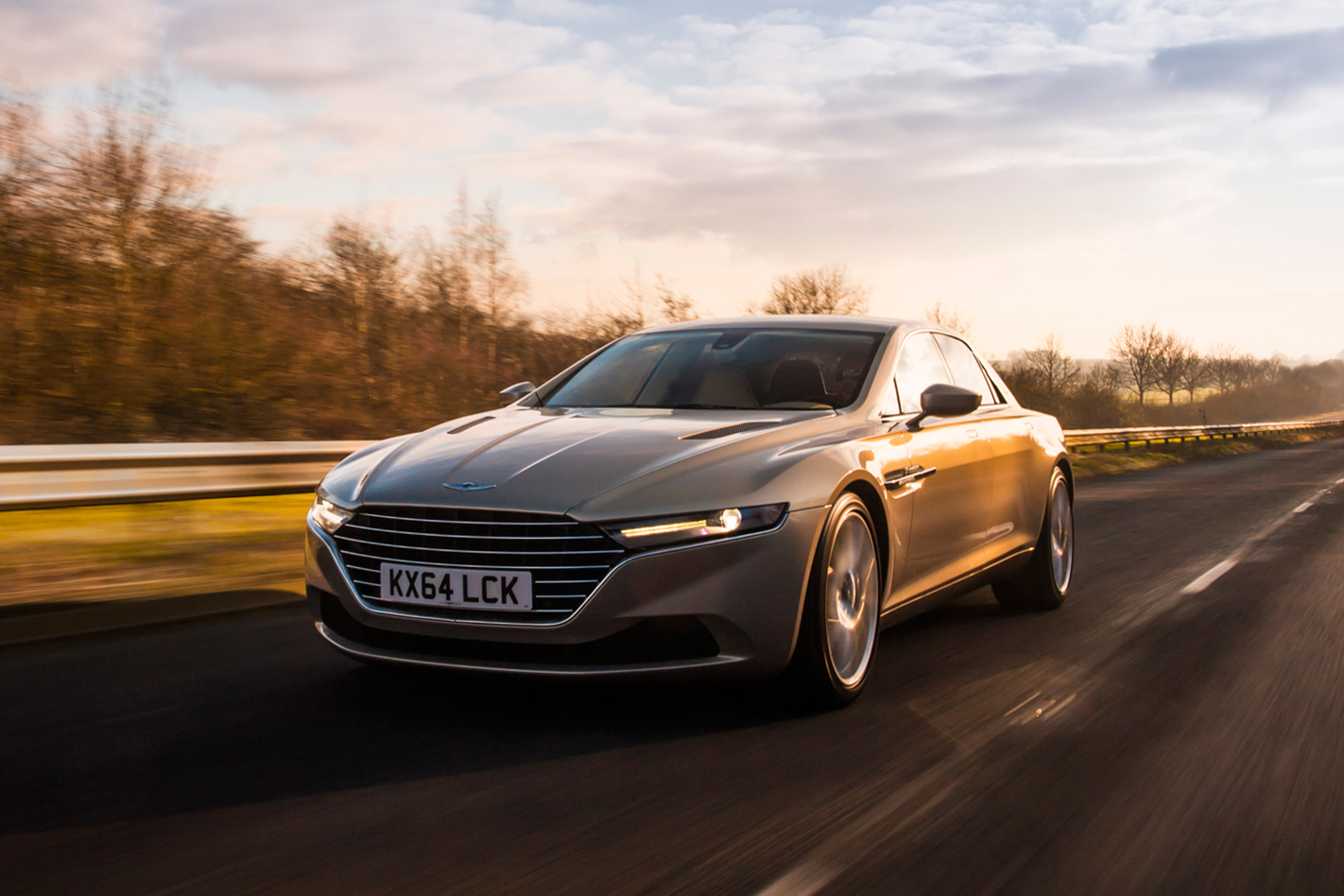
“The build slot available is scheduled for 2019 delivery and is not tied to the obligatory purchase of an Aston Martin Lagonda, a stipulation forced upon original owners,” the website says in a disclaimer attached to the Valkyrie. The website has listed the Valkyrie on behalf of Knight International, a company specialising in the purchase of “rare and valuable supercars and race cars from around the world”.
What stands out?
The mid-sized Jaguar XE sedan has an understated, stylish look, terrific engines, and steers and handles brilliantly. It is more fun than premium German alternatives. Auto braking is standard.
What might bug me?
Discovering that friends who spent much less on Japanese or Korean cars got more luxury features. For example, the Kia Optima GT and Mazda6 Atenza have heated seats and a power-operated sunroof. Neither feature is standard in a Jaguar XE S, which costs about twice as much.Driving at 80km/h on the space-saver spare tyre, until you can fix your full-sized flat.
What body styles are there?
Four-door sedan only.The Jaguar XE drives its rear wheels. It is classed as a medium car, higher priced.
What features do all Jaguar XEs have?
Dual-zone climate control, which lets you set different temperatures for each side of the cabin. Cruise control. A smart key, which lets you unlock and start the car without removing the key from your bag or pocket.A reversing camera, and parking sensors front and rear. A parking assist system, which can steer the car into a parking spot.Windscreen wipers that operate automatically when it rains, and extremely bright bi-xenon headlights that switch on automatically when it’s getting dark.A leather trimmed steering wheel with powered adjustment for reach and tilt, and 10-way power adjustable front seats. A driver’s seat that can remember your setting, which makes it easy to restore after a companion has driven the car.A multimedia system with a CD/DVD player, a radio, satellite navigation, and a tablet-style 10.2-inch colour touchscreen display. Two USB ports and an HDMI socket for media streaming from smart devices. Bluetooth connectivity for phone calls and audio streaming. Control from buttons on the steering wheel.Wheels made from aluminium alloy. A space-saver spare wheel and tyre. A tyre pressure monitor, which warns you if a tyre has lost air (this can give you extra time to get a slow-leaking puncture seen to).Camera-based automatic emergency braking that is effective at speeds up to 80km/h, and lane departure warning. A blind-spot monitor, and a system that warns you, when reversing, of traffic crossing behind you.Six airbags. (For their placement, and for more on Jaguar XE safety systems, please open the Safety section below).Electronic stability control, which can help you control a skidding car. All new cars must have this feature.Every Jaguar XE carries a three-year, 100,000 kilometre warranty.
Which engine uses least fuel, and why wouldn’t I choose it?
Four engines are available in a Jaguar XE, and the 2.0-litre, four-cylinder turbo-diesel in two of the less costly models, the XE 2.0d Prestige and R-Sport, is easily the least thirsty of them. It consumes just 4.2 litres/100km on the official test (city and country combined).This engine accelerates the car effortlessly. In many driving conditions it feels more responsive than all but the most powerful XE engine, the supercharged V6 petrol of the XE S – and it matches that.One reason you might not choose this smooth diesel is that you expect to take your XE out of the city only occasionally. The diesel uses a particulate filter to keep exhaust soot out of the atmosphere, and the filter needs regular highway drives to keep it from becoming clogged.Another might be that you prefer the way a petrol engine drives. The petrol-engined XEs all feel sportier, and when you ask for all the go you can get, they are quicker.The least thirsty of the petrol engines are the 2.0-litre, four-cylinder, turbo petrols that drive the XE 20t and 25t (available in Prestige, R-Sport and Portfolio trim). Both use 7.5 litres/100km on the official test – even though the retuned 25t delivers about 20 per cent more power than the 20t.In a real-world comparison conducted for the April 2016 edition of Wheels magazine, an XE 25t averaged 9.8 litres/100km, using a half-litre more than the most frugal of five medium sedans reviewed, a BMW 330i.The thirstier petrol engine is the 3.0-litre supercharged V6 fitted to the XE S. It is about 70 percent more powerful than the engine in the 20t, and uses 8.1 litres/100km on the official test.All engines have an automatic stop-start system, which saves fuel in urban driving. It shuts down the engine when you stop, and starts it again when you take your foot off the brake pedal to drive away.Petrol engines in the XE have shorter service intervals than the diesel, at 12 months or 16,000km. The diesel needs a service every 24 months, or 34,000km.Every Jaguar XE has an eight-speed conventional automatic gearbox.
What key features do I get if I spend more?
In the XE, Jaguar offers a Prestige style, which emphasises comfort, and an R-Sport style, which emphasises handling. Each brings a choice of three engines: the diesel and the two turbo-petrols as outlined above.In addition, on the comfort side there is a more luxurious style called the Portfolio, offered only with the more powerful of the turbo-petrol engines. And on the handling side there is a faster and more luxurious style called the S, offered only with the supercharged petrol V6.Where an XE Prestige has seats trimmed in a mix of real and fake leather, the more expensive R-Sport prefers a leather-like synthetic trim but supplies more deeply bolstered sports seats (which hold you in place more firmly for spirited cornering). A body kit gives the R-Sport a more racy look, and a firmer suspension tune enhances steering response and holds the car flatter through turns.A Portfolio brings you the same equipment as the Prestige but uses a nicer feeling grade for the leather elements in the seats, wraps the dashboard for a softer feel, and supplies other aesthetic enhancements.Choosing an XE S brings you the sports seats in part-leather. You get lower profile tyres on 19-inch wheels, which are an inch bigger than those on other XEs. These sharpen the steering slightly.You also get a more sophisticated suspension that adjusts the way the car rides, automatically, for how rough the road is and how hard you are driving. Jaguar calls this suspension Adaptive Dynamics.Adaptive Dynamics can be added to any XE as an extra-cost option. It substitutes computer-controlled, electronically valved dampers for the mechanically valved dampers on other XEs.Among other options is Adaptive Cruise Control, which uses a radar to maintain a safe distance to the car in front. It can be ordered with Queue Assist, which will stop you if the car in front stops and then resume when you touch the accelerator (the idea is to make life easier in heavy traffic).You can also order a sunroof, heating and cooling for the seats, and a head-up display – which projects a speedometer and other helpful information onto the windscreen near the driver’s line of sight.And you can option Configurable Dynamics, which allows you to adjust how directly the car responds to the steering wheel and to your pressure on the accelerator pedal. It also lets you adjust the adaptive suspension, if you have it.
Does any upgrade have a down side?
The R-Sport and S ride a bit less smoothly than the other XEs, because their suspension is stiffer – and because the S rides on lower profile tyres, which have less rubber and air cushioning the wheels from the road. However, the difference is quite subtle, and the sports suspended versions still ride very well.Of 18 colours available on a Jaguar XE, only two – Polaris White and Ebony – are non-metallic and come at no extra cost. Other colours cost from about $1300 to $2600 extra.
How comfortable is the Jaguar XE?
The Jaguar XE is stylish inside and out. The dashboard layout is classic rather than cutting-edge, but an unconventional rotary gear-selector dial rises from the centre console on start-up. This brand-signature design element is cool to behold, but you might not find it as intuitively simple to operate as a lever gear selector.The XE is nicer to sit in than a BMW 3 Series, and more traditionally presented than a Lexus IS. But it does not feel quite as classy as a Mercedes C-Class. And the design is not nearly as avant-garde – or as richly trimmed – as interior-quality benchmark the Audi A4, which oozes wow-factor.The cushion comfort of an XE’s front seats is nevertheless excellent, as is the ergonomic relationship of the driver’s seat, wheel, pedals and minor controls. The smooth leather steering wheel is lovely to hold. The sports front seats in an R-Sport or XE S are not so extreme in their extra bolstering that they compromise comfort.The Jaguar’s ride comfort is simply superb, no matter which version you choose. It is a very rare car that can deliver crisp driver engagement on such a bump-absorbent suspension. The XE is one of those cars.The sports suspension beneath an XE R-Sport or S makes it ride a tiny bit more firmly than a Prestige or Portfolio, but the ride-handling balance remains well-judged and they’re very comfy cruisers.The S, with its adaptive suspension (optional on other XEs as Adaptive Dynamics), rides more comfortably than an R-Sport. But the standard suspension is so good that Adaptive Dynamics is not a must-have.The XE is very good at suppressing outside sounds, such as engine, tyre and suspension noise and the din from other traffic, which contributes to its serene cruising ability.
What about safety in a Jaguar XE?
Jaguar XE safety high points include its six airbags, reversing camera, front and rear parking sensors, blind-spot monitor, and autonomous emergency braking.There are two airbags directly in front of the driver and front passenger; one alongside each front occupant to protect the upper body; and a curtain airbag down each side protecting the heads of front and rear occupants.The camera-based autonomous emergency braking system warns of an obstacle in front of the car – typically a slower vehicle – and will apply the brakes if you do not react. Jaguar says is effective at speeds up to 80km/h, and can apply maximum braking.The lane-departure warning, also camera-based, monitors lane markings and generates a vibration in the steering wheel if you are drifting – potentially dangerously – out of your lane, a sign of fatigue.A blind spot monitor warns you, when you indicate to change lanes, if a vehicle is alongside out of view. A sub-system alerts you if a fast-moving vehicle in a neighbouring lane is about to enter a blind spot, while another warns, when you’re reversing, if a jogger, cyclist or other vehicle is crossing behind.Radar-based active cruise control, which maintains a safe distance to the car in front automatically, can be added to an XE as an extra-cost option.The Australasian New Car Assessment Program (ANCAP) awarded the Jaguar XE five stars for safety, in January 2016.
I like driving – will I enjoy this car?
Jaguar’s aim with the XE was to build a medium car that was more fun to drive than the alternatives, and the brand has hit the bullseye.The slick electric-motor assisted power-steering pleases from the very first turn. It’s a lovely, smooth system that gives you an intimate sense of connection with the road – which breeds confidence and brings satisfaction.The rear-wheel-drive Jaguar is superbly responsive to the steering, accelerator and brake, which lets you adjust your cornering line more precisely than is possible in most medium sedans. This makes the XE more engaging to drive than any other prestige mid-sizer.The turbo-diesel engine is effortlessly potent and refined, and will please equally at the fuel bowser.The turbo-petrol four-cylinder, in either 20t or 25t form, is a smooth, punchy and satisfying engine with enough performance to bring out the benefits of the well-sorted suspension.The supercharged V6 is a powerhouse that transforms the XE S into a seriously quick machine. It’s the same engine that comes in the F-Type sports car.Even though it is the high-performance XE, the XE S is a bit less eager to turn into corners than other versions, and less sweetly balanced through the corner, because its bigger engine places more weight over the front wheels. And the absence of engine intake and exhaust theatrics might be a disappointment if you’re expecting the F-Type’s rousing soundtrack.The eight-speed automatic gearbox is a conventional, torque-converter, type – and a very good one. It is smoothly responsive at take-off and quick and slick to change gears. It’s also quite responsive to gear shifter paddles, which adds to the enjoyment.
How is life in the rear seats?
The Jaguar XE is not as easy to get into as most alternatives. If you’re tall, you will have to stoop as you slide into the back seat – because of the sporty, tapering roofline.Once cocooned inside you’re treated to a comfy seat base and backrest, with good side bolstering to keep you in place in the bends. However, these side bolsters locate the outer occupants nearer the middle of the car, which makes it a squeeze for a third occupant in the centre.Leg room is below average and headroom is less generous than in all the main alternatives – another result of the coupe-like line of the roof. Toe room is tight, too.Back-seaters get a fold-down armrest with twin cup-holders, and their own air-conditioning vents.
How is it for carrying stuff?
The Jaguar XE’s 455-litre boot is a bit smaller than that of key alternatives such as the Audi A4, BMW 3 Series, Lexus IS, and Mercedes-Benz C-Class, which can all carry 480 litres.To put them all in context, a large sedan such as an (Australian-built) Holden Commodore hauls about 500 litres of luggage. So, there’s plenty of room in a typical medium sedan, but a bit less in the XE.The XE’s generous boot aperture makes it easy to load, and the 40-20-40 split folding rear backrest brings the versatility to carry long items while two occupants ride in the back.
Where does Jaguar make the XE?
The Jaguar XE is made in England.
What might I miss that similar cars have?
Perhaps a wagon version, which Audi, BMW and Mercedes offer in an A4, 3 Series and C-Class respectively.Perhaps a longer warranty: the Lexus IS is covered for four years.And maybe the poor-weather grip and stability of all-wheel-drive, which you can have in the Audi A4.You might also miss some of the more extensive active driver aids available in the Mercedes and Audi. For example, the ability to let the car hold your place automatically in stop-start traffic.
I like this car, but I can’t choose which version. Can you help?
Our reviewers like the 25t R-Sport. It has more power than the 20t R-Sport but uses no more fuel. And its sportier suspension and grippier front seats make it more fun than Prestige and Portfolio XEs – without the expense, increased thirst and other downsides of the rapid XE S.
Are there plans to update the Jaguar XE soon?
Yes. The Jaguar XE went on sale in 2015, and the model received an update to the infotainment and safety equipment among other equipment changes in 2016.Jaguar has announced a significant update for the 2018 model year, and expects the revised XEs to arrive about November 2017. New and stronger Jaguar-developed turbo-petrol four-cylinder engines (Jaguar calls them Ingenium engines) will replace the Ford-sourced engines in 20t and 25t XEs, and the 3.0-litre V6 in the XE S will become more powerful. Among other changes, a virtual instrument cluster will be available as an option.
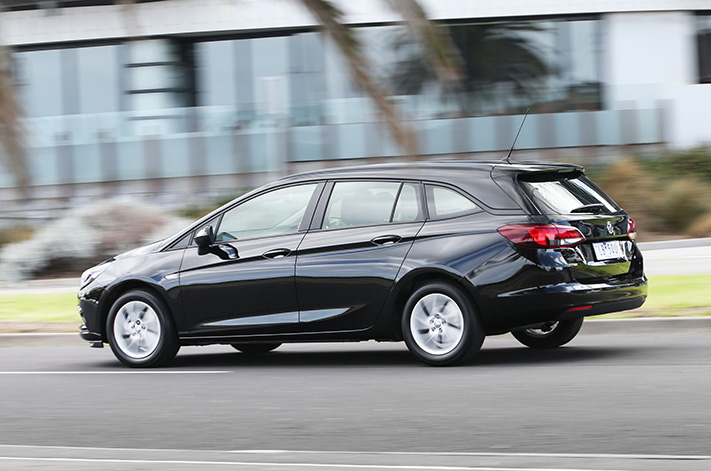
Holden’s Astra range will be complete from October when the European-designed Sportwagon joins the already-arrived hatch and sedan variants.
Starting at $25,740, the Astra Sportwagon will come in two variants, LS+ and LT, both of which will be powered by the same 110kW/240Nm 1.4-litre 4-cylinder turbo petrol engine as found in the hatch and sedan range. Combined fuel economy is a respectable 5.9L/100km, which is 0.2L/100km less than the equivalent sedan.
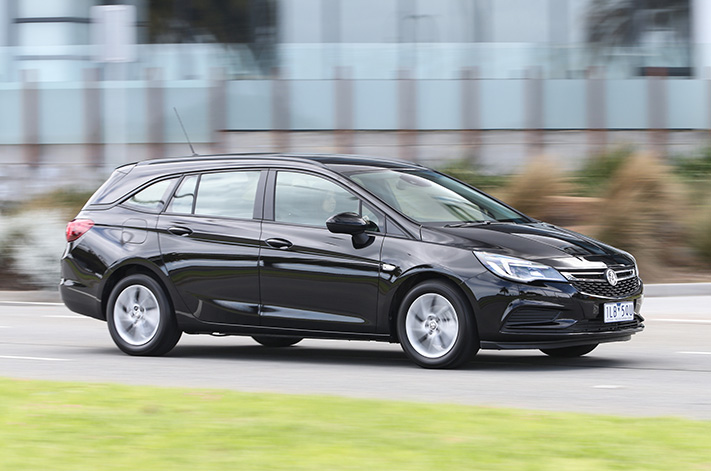
Unlike the other two bodystyles there will be no manual version for the Sportwagon, with power transferred to the front wheels via a six-speed automatic transmission only.
However like the Astra hatch, the Sportwagon originates from Opel, designed in Germany by the same team that penned the hatch and built in the UK at Vauxhall’s Ellesmere Port plant.
Each wagon variant shares the hatchback’s advanced driver assist technology as standard including auto emergency braking, lane keep assist and forward collision alert, which aren’t included in the Korean-built, Chevrolet-sourced sedan.
The wagon also benefits from the same suspension tuning programme as the hatch, having been co-developed by the Holden team over multiple European evaluation drives.
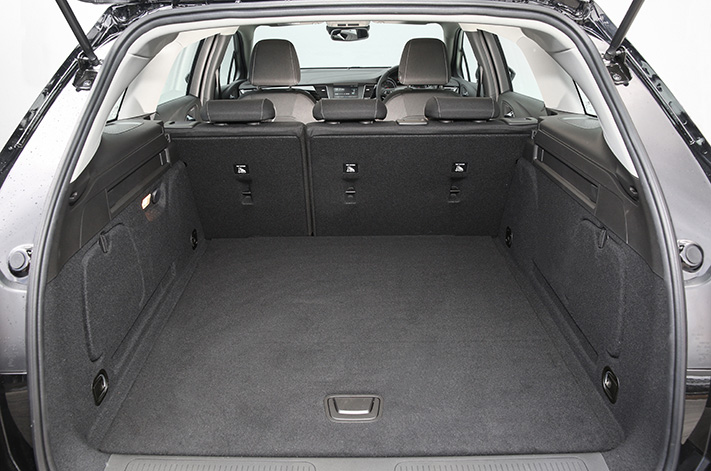
Complimenting its car-like driveability is a healthy does of SUV-style practicality, with 540 litres of seats-up boot space that can be extended to 1630-litres with the 60-40 rear split seats folded down.
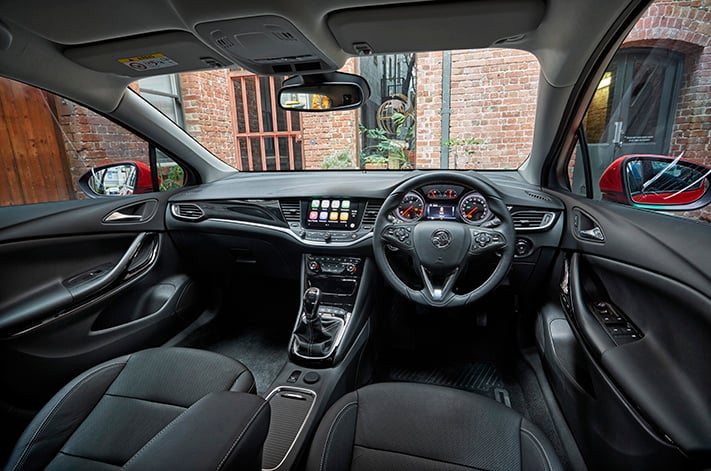
Standard features for the LS+ include:
- 16-inch alloy wheels
- Leather Steering Wheel
- 7-inch colour touchscreen
- Rear Park Assist / Rear Camera
- Holden Eye forward facing camera
- AEB City Stop
- Lane Keep Assist
- Forward Collision Alert
- Forward distance indicator
- Apple CarPlay/Android Auto
- Digital Radio (DAB+)
- Rain sensing wipers
- Electrochromatic Mirror
- Projector headlamps with LED DRL’s
- Six speaker premium audio
- Cruise Control – with speed limiter
- 17-inch alloy wheels
- Leather Interior Trim
- Hands-free power tailgate
- Passive Entry & Push-Button Start (PEPS)
- 8-inch colour touchscreen
- Satellite navigation
- Climate control
- Blind spot alert
- Advanced park assist (automatic park)
- Heated outside mirrors
Holden Astra pricing
- Astra LS sedan manual – $20,490
- Astra LS sedan auto – $21,490
- Astra R hatch, manual – $21,490
- Astra R hatch, auto – $22,490
- Astra LS+ sedan, auto – $22,740
- Astra LS+ Sportwagon, auto – $25,740
- Astra LT sedan, auto – $25,790
- Astra LT Sportwagon, auto – $29,940
- Astra RS hatch, manual – $26,490
- Astra RS hatch, auto – 27,240
- Astra LTZ sedan, auto – $29,790
- Astra RS-V hatch, manual – $30,740
- Astra RS-V hatch, auto, $31,740
Ford’s light hatch is a little dated but still looks sleek and is a one of the better handling light cars with sharp steering and comfortable ride. A new Ford Fiesta has been launched in Europe, however, Ford Australia is yet to announce if or when it will be available here.
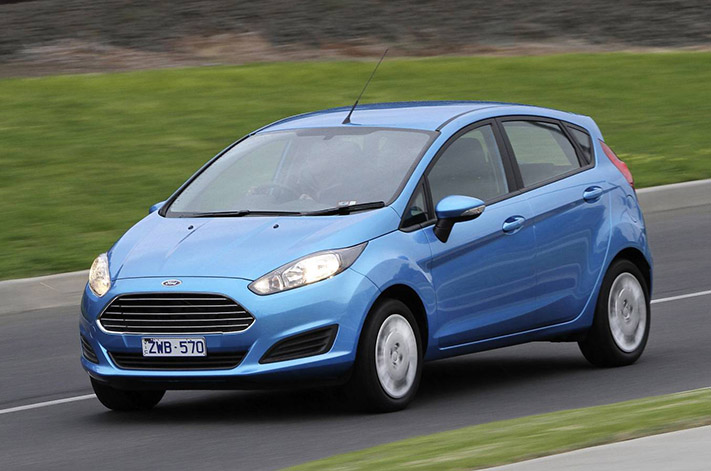
VARIANTS
There are four Fiesta specification levels starting Ambiente (above) with an entry-level price of $15,895 with a smooth shifting five-speed manual transmission. It’s powered by an 82kW/140Nm 1.5-litre four-cylinder engine that’s coupled with the manual gearbox or a six-speed dual-clutch auto for an extra $2000.
The Fiesta Ambiente (interior below) comes with Bluetooth hands-free phone and audio operation but no touchscreen, cloth trim, leather-wrapped steering wheel with audio controls, cruise control, power mirrors, hill launch assist and 15-inch steel wheels with hubcaps.
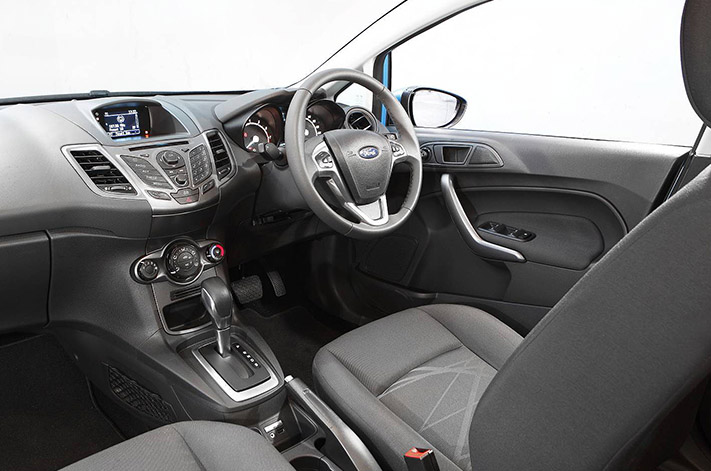
Like all Fiestas, it also comes with Ford’s Emergency Assist, which uses your mobile phone to contact emergency services if the car is in a crash severe enough to trigger the air-bags. This subscription-based service is provided for the life of the car.
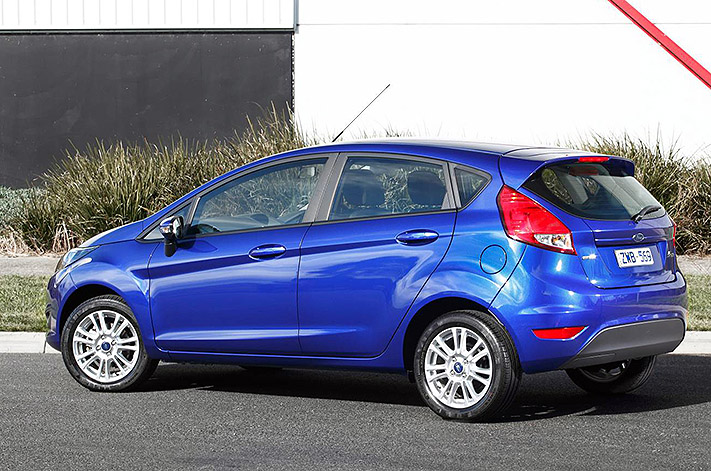
The Fiesta Trend (below) has the same powertrain options as the Ambiente but gains front fog light and 15-inch alloy wheels which doesn’t seem like much for the extra $2000.
The Fiesta Sport is a true step up the range, and comes with the 92kW/170Nm 1.0-litre three-cylinder EcoBoost turbo petrol engine which, as well as being more powerful than the 1.5-litre engine in the Ambiente and Trend, is more fuel efficient. It sips fuel around 5.0L/100km compared the 1.5’s 5.8L/100km.
The Sport also gains 16-inch alloy wheels, partial leather trim, scuff plates in the door sills, ambient lighting, a better stereo and chrome highlights around the windows.
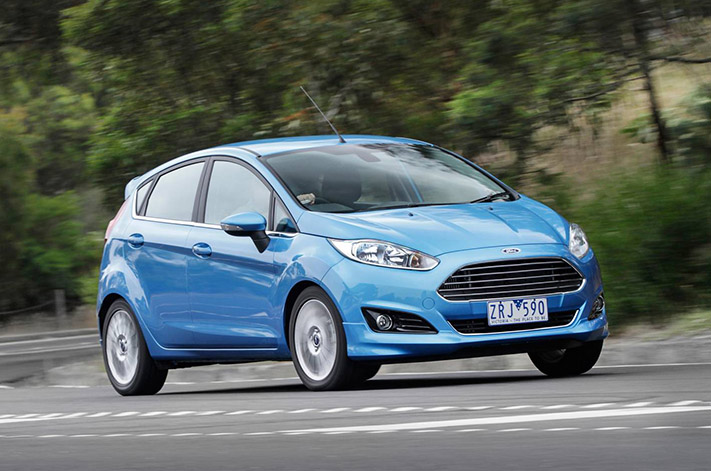
Climate control, rain-sensing wipers, dusk sensing headlights, a perimeter alarm and keyless start can be added as a $1000 Sport Executive Pack.
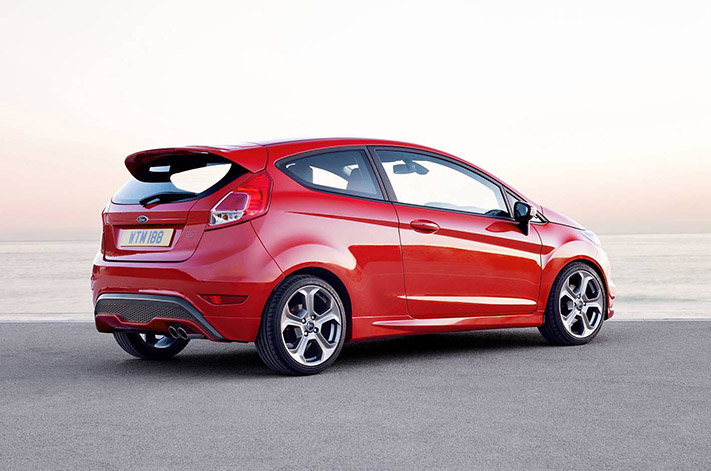
The range-topping Fiesta ST has a range of performance add-ons including disc brakes on all four wheels, red brake calipers, sports body kit, torque vectoring for better grip while cornering to help it deal with its 1.6-litre four-cylinder turbo engine that produces 134kW and 240Nm torque and is coupled with a six-speed manual gearbox with no automatic option.
Other ST gear includes 17-inch wheels with wider and lower profile tyres, sports front seats and puddle lights that illuminate the ground near the front door. It’s also the only Fiesta variant with a 5.0-inch touch screen and reversing camera, which was added last year.
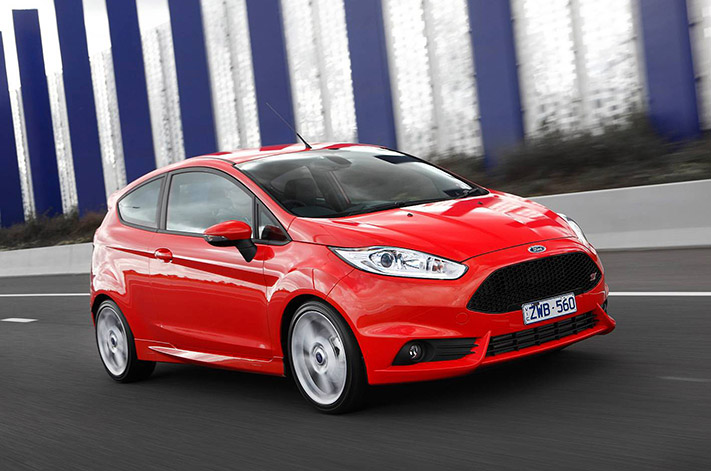
The variants in the Fiesta range which have the dual-clutch ‘powershift’ transmission are currently embroiled in an ongoing saga over reliability.
- Fiesta Ambiente, manual – $15,825
- Fiesta Ambiente, auto – $17,825
- Fiesta Trend, manual – $17,825
- Fiesta Trend, auto – $19,790
- Fiesta Sport, manual – $20,525
- Fiesta Sport, auto – $22,525
- Fiesta ST, manual – $25,990
OUR PICK
The Fiesta ST is the absolute stand out of the range with smile-inducing hot hatch performance without compromising its ability to be a handy daily driver around town.
The Sport is well equipped and provides a nice drive too if you prefer fuel economy to searing acceleration and the Sport Executive Pack adds some useful functions.
AVAILABLE OPTIONS
- Sport Executive Pack – $1000
- Premium paint $500
- 15-inch CSA alloy wheels (Ambiente and Trend) – $1007
- 15-inch 15-spoke alloy wheels (Ambiente) – $1377
- 16-inch CSA alloy wheels (Sport) – $1095
THE WRX and WRX STI are fast approaching retirement, and Subaru’s Viziv Performance Concept – set to take centre stage at Subaru’s Tokyo Motor Show stand – is likely our first look at what will replace them.
Billed by Subaru as a “concept model of a sports sedan”, the Viziv Performance Concept sports several WRX hallmarks like a bonnet scoop, fat fenders and a four-door sedan bodystyle.
All are on prominent display in this pair of teaser images (with the help of some Wheels image enhancement for the scoop), though one traditional WRX STI feature is absent – a lairy WRC-inspired wing. Instead, a subtle bootlip spoiler takes its place on the concept’s short rear deck.
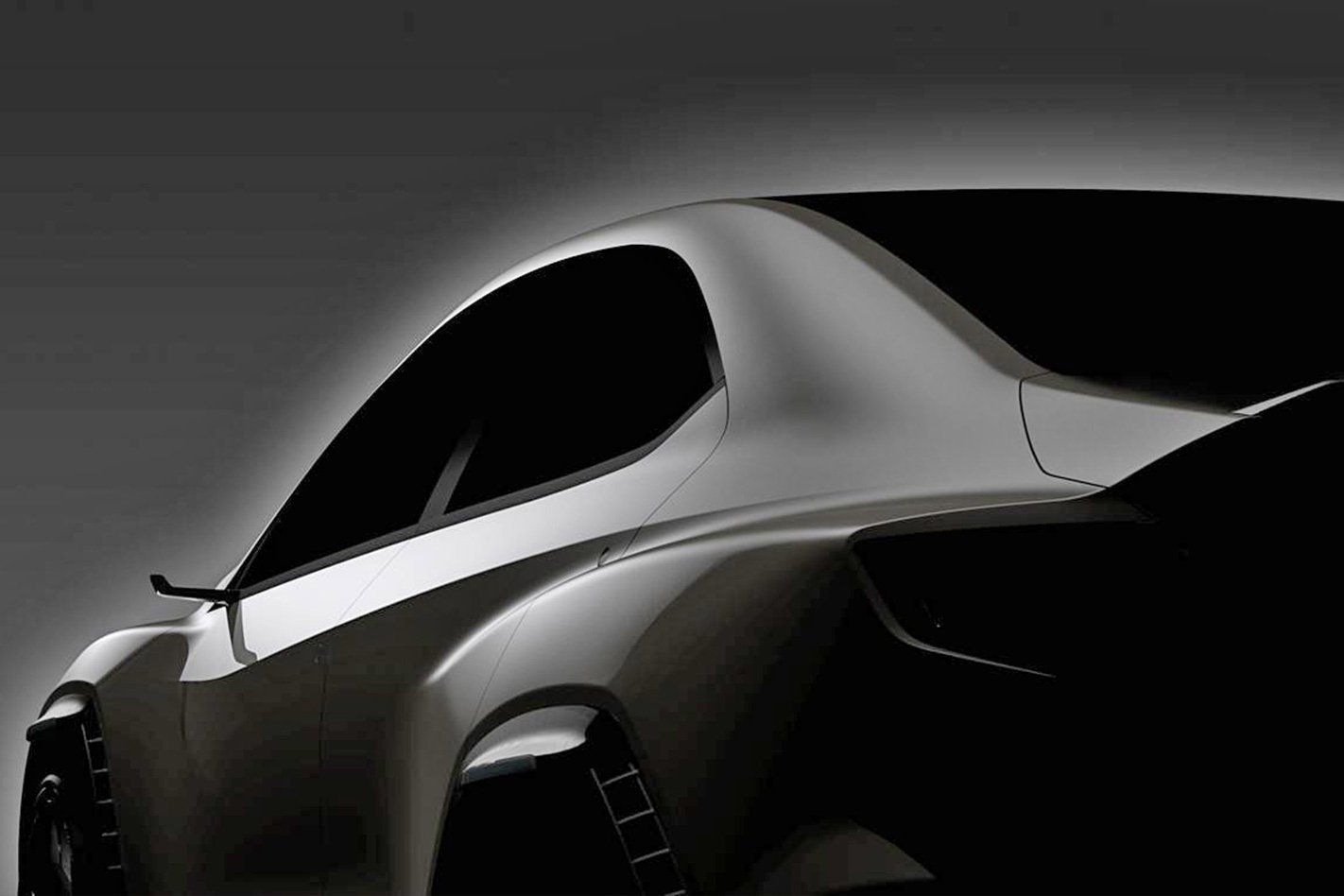
The two humps above its windscreen are ostensibly for Subaru’s Eyesight active safety system, which Subaru says forms the core of an “advanced driver-assist technology” suite that will be showcased by the concept.
The Viziv Performance Concept will make its debut at the Tokyo Motor Show on October 23, however a production-ready replacement for the existing WRX and WRX STI isn’t slated to appear until 2019. Expect the Viziv Performance Concept to morph into a more showroom-friendly form in 2018, before the all-new WRX range – which will be built on Subaru’s modular SGP platform, and be powered by new turbocharged powerplants – rolls off the production line a year later.
The Kia Stinger has finally arrived in Australia, a little bit later than we thought it would and priced slightly higher, but with much of the promised performance.
TELL ME ABOUT THIS CAR
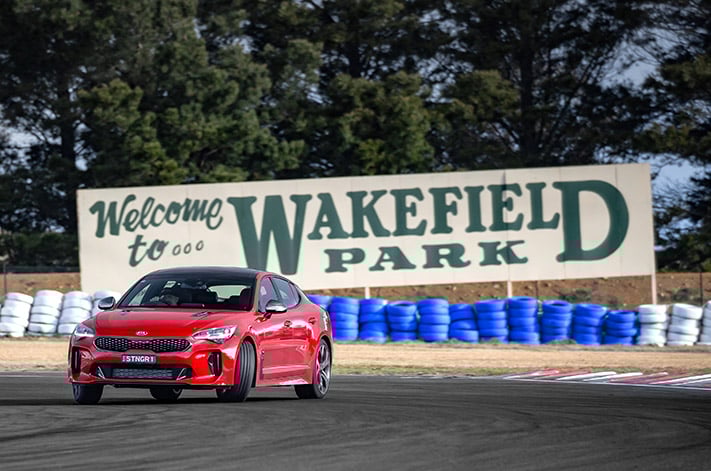
The Kia Stinger GT is the top dog in the Stinger’s six-car line-up. It’s priced accordingly, too, from $59,990. But for that you get a large rear-wheel-drive car with a twin-turbocharged – that’s right, there’s two of them – 3.3-litre V6 engine that provides performance car levels of excitement and engagement. Nothing like this has ever worn the Kia badge before.
STRENGTHS
- It’s a rear-drive car arriving in a world where front-wheel-drive cars are dominating. Packaging and cost requirements are forcing car makers to serve up even more front-drivers, so it’s refreshing to see one of them buck the trend for a more traditional drivetrain.
- The 3.3-litre V6 has 272kW and 510Nm on tap to play with. The turbocharged delivery provides a wide spread of performance that allows you to have a spirited drive, but cruise home gently at the end of the day.
- It’s a roomy car. The only restriction is a low roofline because of the sunroof that robs some headroom for taller drivers.
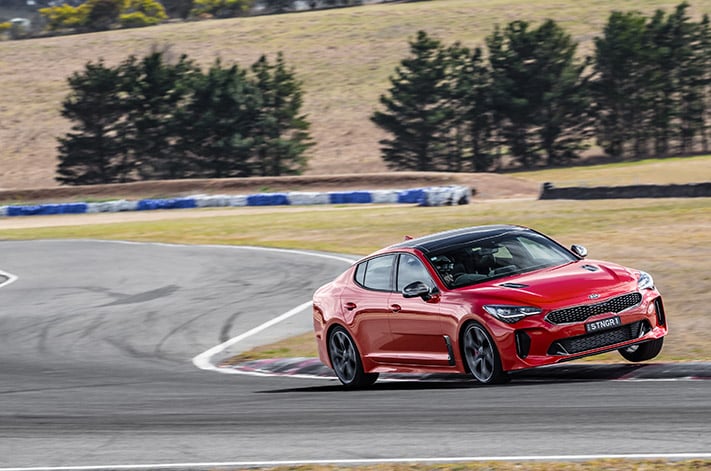
- It hangs on around corners. Drive the Kia Stinger like a sports car and the Continental ContiSportContact hangs on, the locally tuned suspension ensuring the tyres’ contact patches are always attached to the road. The rear tyres are lower-aspect than the front ones, giving better handling.
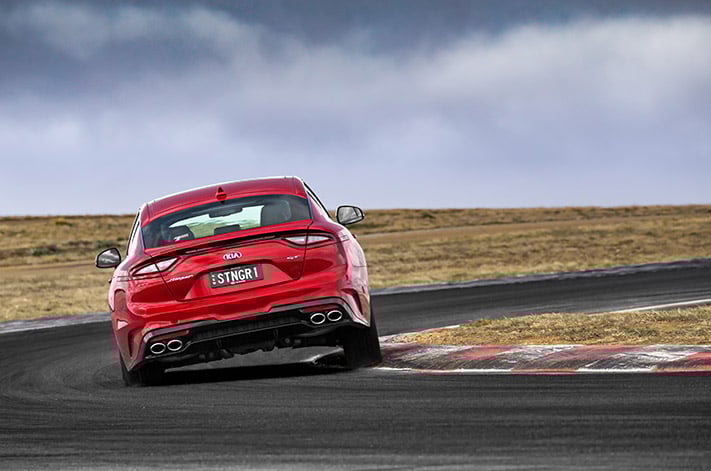
- It has on-the-fly adjustable suspension. At the twist of a dial the suspension goes from a comfort setting that’s softer than the default steel springs on lesser GTs to a firmed-up setting that easily tames twisty bits of road.
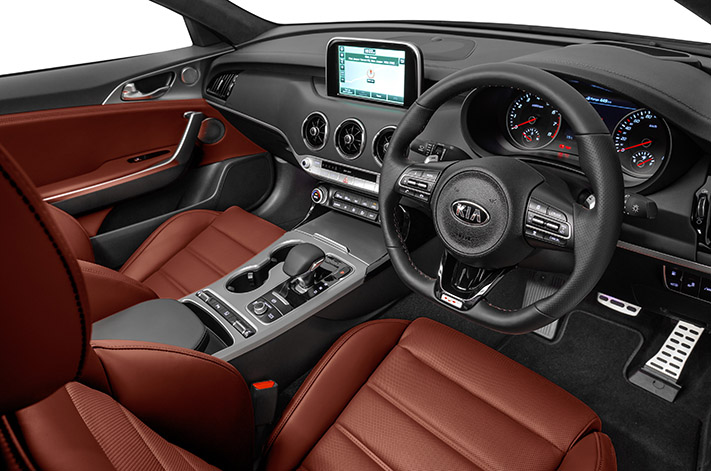
- It’s very well equipped. As the showpiece of Kia’s showroom, the Stinger GT has become something of a technical showcase for the brand. Things like active cruise control and autonomous city braking give it something of a luxury car feel.
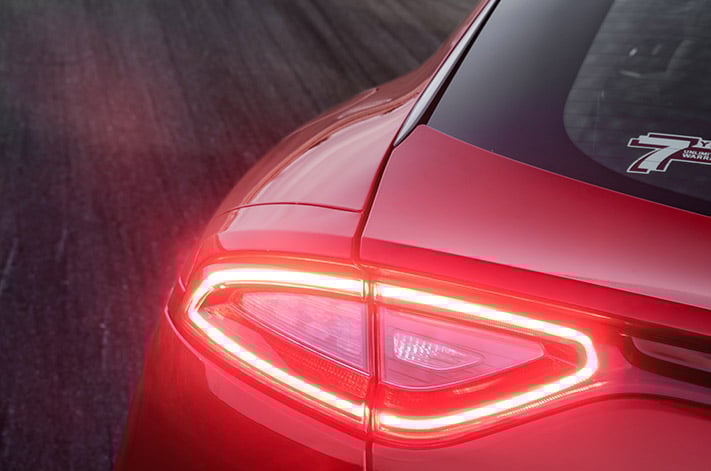
- It’s a sharp-looking car that’s going to turn heads. From the distinct stepped lower rocker to the (pretend) vented bonnet to the fastback styling and a rear framed in Audi-style connected tail light, a subtle rear-lip spoiler and quad exhaust pipes straddling a deep diffuser, the Stinger looks the business.
- The liftback styling provides a versatile luggage space that, while it isn’t tall, is quite long.
WEAKNESSES
- The 3.3-litre V6 produces some big numbers, but it doesn’t sound like a big engine. Instead, it’s fairly muted and uninspired, with some induction noise high in the rev range. There’s just no drama to it. Kia soon will have an optional active exhaust system for the Stinger that adds a bit more audible excitement to the Stinger. We don’t have a price for that yet.
- There’s a 2.0-litre version of the Stinger GT that feels lighter across the nose than the V6 version. It’s about 100 kilograms lighter and $4000 cheaper, but doesn’t get the limited slip differential that better helps the V6-engined version power out of corners.
- The Kia Stinger GT only has a space-saver spare. If you’re going for a long drive, the space-saver will really only allow you to limp to the nearest tyre shop.
- It’s billed as an Aussie car replacement, but there’s really only room in the rear to seat two adults comfortably, largely due to a very intrusive transmission tunnel and the narrow bench.
- Kia Stinger supply will be limited to about 200 cars a month when they go on sale in October. This means it could be a months-long wait to take delivery of yours. This will limit supply for about the first year of sales, Kia warns.
ARE THERE ANY RIVALS I SHOULD CONSIDER?
Think about the Holden Commodore SS-V Redline, the last of Holden’s big, Aussie V8s, or the Skoda Superb 162TSI Sportline that uses the Volkswagen Golf GTI engine.
If Nissan’s GT-R Spec-V had to face off in a ten-round questionnaire against a Porsche, why not choose one of the wildest 911s to ever exist?
This ‘Face Off’ was first published in MOTOR Magazine March 2009.
| Porsche 911 GT2 | 10 QUESTIONS | Nissan GT-R Spec-V |
| The ultimate 911 u2013 tougher, faster, lighter, and more powerful. The closest youu2019ll ever get to driving a race car on the road | What is it? | Nissanu2019s much-anticipated lightweight version of the all-new GT-R is the fastest Japanese road car ever produced |
| Rear-mounted twin-turbo 390kW/680Nm 3.6-litre flat six, six-speed manual, rear drive. Semi-slicks. Two seats. Composite brakes | Whatu2019s it got? | Front-mounted twin-turbo 357kW/608Nm 3.8-litre V6, seven-speed dual-clutch, AWD. Semi-slicks. Two seats. Composite brakes |
| Porsche reckons 3.7sec to 100km/h, even though weu2019ve pulled u2018onlyu2019 a 3.9 (not using launch control!). And sheu2019ll do 329km/h | How fast? | It exists more for track attacks than improving GT-Ru2019s blistering acceleration, but it should tap triple figures in around 3.2 seconds |
| It effortlessly claimed our Performance Car 2008 award, so itu2019s here already. But you wonu2019t see too many of them on the road | Whenu2019s it coming? | The Spec-V was only launched in Japan in February, but weu2019re unlikely to ever officially see it in Australia, unfortunately |
| You could buy a three-bedroom house in most Australian cities for less. A bog-standard GT2 will set you back $447,500 | How much? | Even though the base GT-R is a relative bargain at under $150K, the Spec-V would be $250,000. Thatu2019s why itu2019s not coming here |
| This 997 model is the third-generation GT2, and the most liveable. The original 993 GT2 u2018widow makeru2019 was launched in 1994 | History? | Thereu2019s been a V-Spec version of every GT-R since 1989u2019s u2018Godzillau2019 R32. It was inevitable thereu2019d be an R35 model |
| Whatu2019s not cool about the GT2? Itu2019s blindingly quick, completely civilised, reasonably economical u2026 and itu2019s the best-ever 911 | Cool bits? | Itu2019s lost some of the bulk that has blighted the new GT-R. Composite brakes and semi-slicks will provide wicked track potential |
| Are you effing serious? Okay, maybe its personal-island price tag is just slightly ridiculous. And the front splitter scrapes | Daggy bits? | Why Nissan couldnu2019t pull a few more herbs out of the engine is questionable. And it still weighs over 1600 kegs. And it wears a Nissan badge! |
| GT2 is likely to be a high-ranking executiveu2019s weekend plaything. Expect to see them only in the ritziest suburbs or at track days | Whou2019s going to drive one? | In Oz, probably only a handful of rice burners with too much money. And theyu2019ll probably put a big zorst on it, dump it, and ruin it |
| No question, but donu2019t expect to be able to get too many bags of money in it as thereu2019s hardly an abundance of luggage space | Would you rob a bank in it? | Bloody oath! Not even Michael Schumacher in a VE cop car could catch one. Steal one in black for an even more sinister transaction |
NO MORE than 10 Lexus LFAs were delivered to Australia in 2011 (and not all of those found their way to private customers), but an example of one of the greatest sounding cars ever created is up for sale locally.
Adding this Japanese supercar to your garage won’t come cheap though, with the asking price for this example currently sitting at $1,075,000.
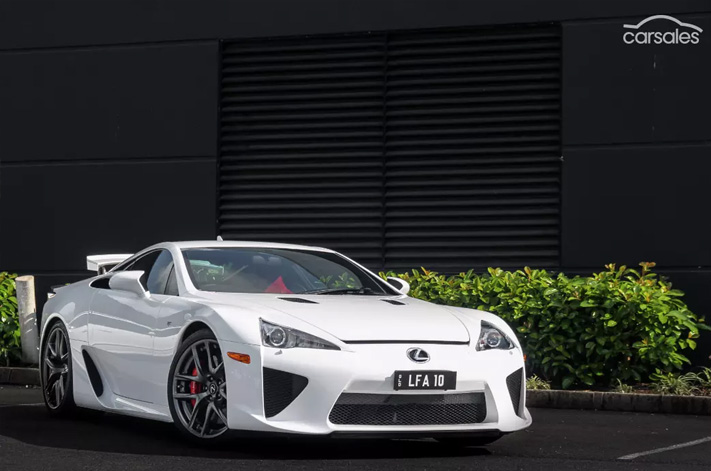
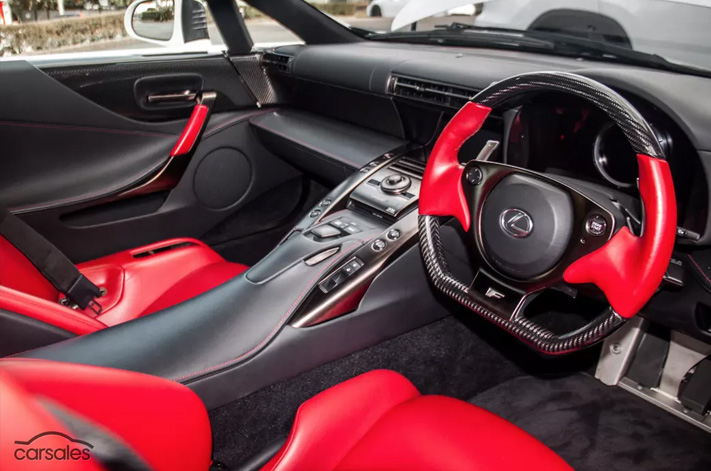
Wearing Whitest White exterior paint matched to a red leather interior, the vehicle looking for a new home is number 177 of the 500 built worldwide.
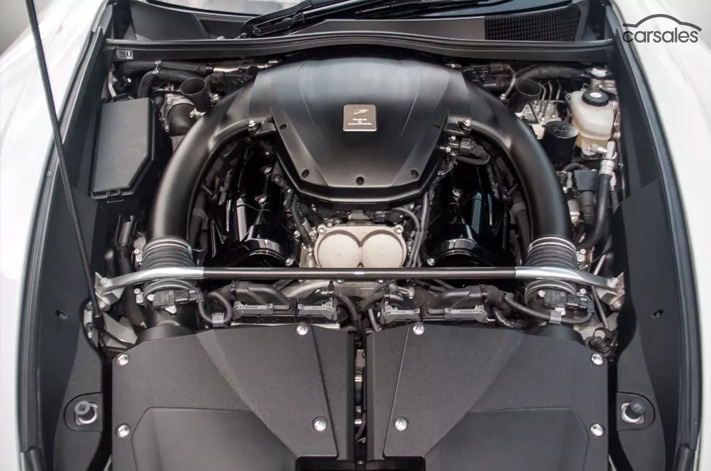
The 4.8-litre naturally-aspirated V10 was developed by Lexus in conjunction with Yamaha, and is considered to be one of the best sounding engines to ever find its way into a production vehicle.
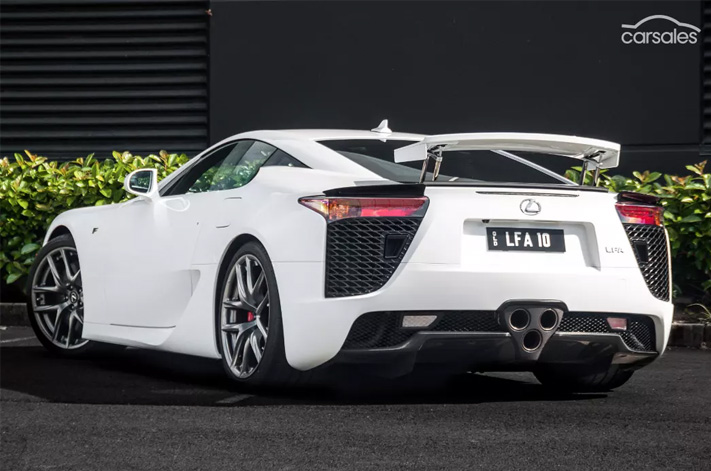
Just 10 LFAs were delivered to Australia when the car was launched in 2011 however, not all of those have been sold to customers, with Wheels aware of at least one dealership which held onto the LFA as a showroom centrepiece.
That means the new owner of this LFA will join an owners club in the single-digits. Oh, but what a club to be a part of.
Things are different on top of the earth. Toilets are said to swirl the other way, it’s hot there when it’s cold here, and most will lay down their hard earned on a 2.0-litre Kia Stinger despite an available twin-turbo 3.3-litre six.
The fact juice is more expensive north of the equator has something to do with it. The four-pot Stinger drinks 2.4 less litres over 100 clicks. However, as we found out after a quick blast in the 183kW/353Nm rear-drive sedan, economy isn’t the only thing the four-pot Stinger has going for it.
The square unit pinched from the Optima range comes with an eight-speed auto and shaves 77kg from the Stinger’s nose, pegging its mass at 1693kg and reeling back the centre of balance. The brakes have shrunk with its waist size, too.
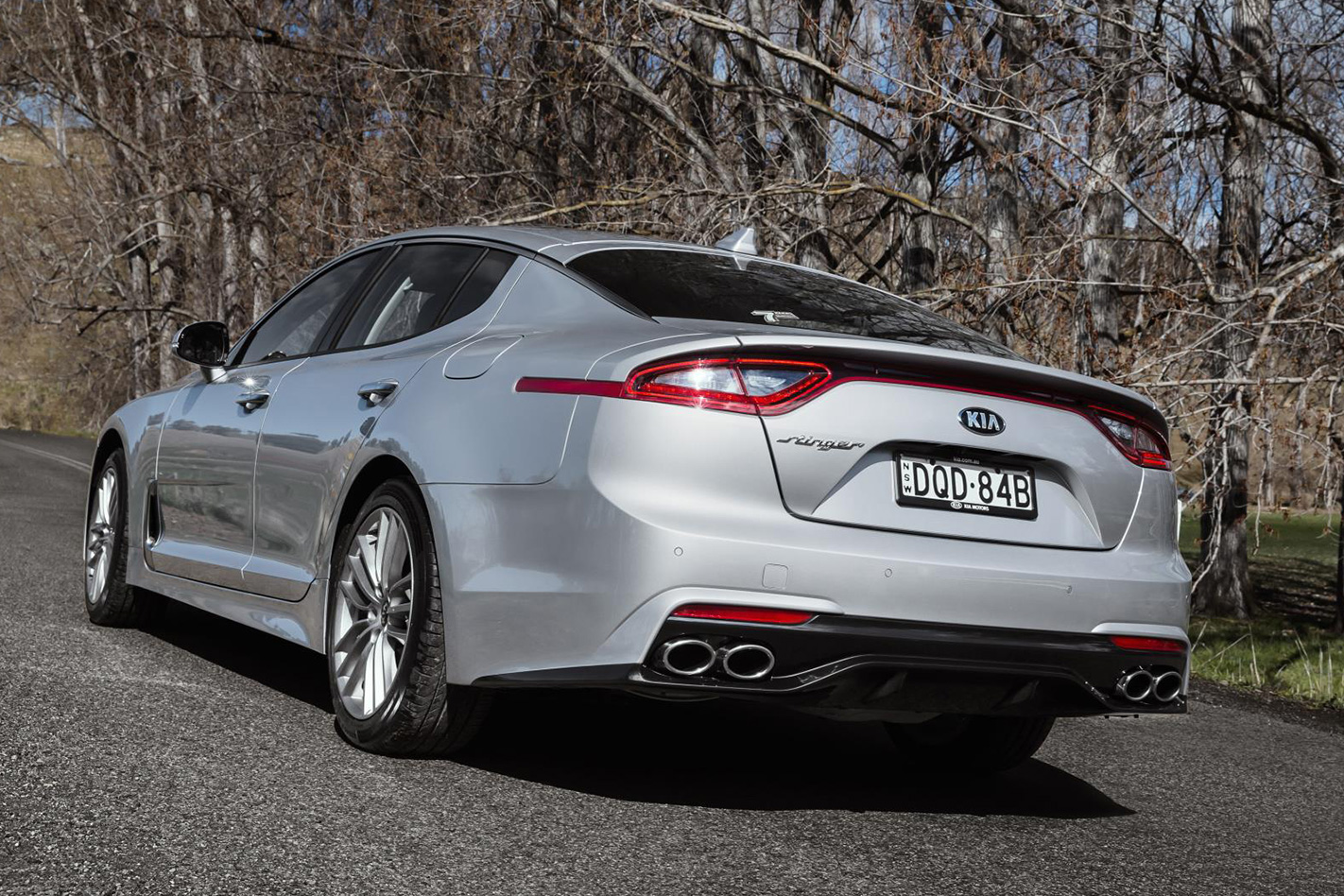
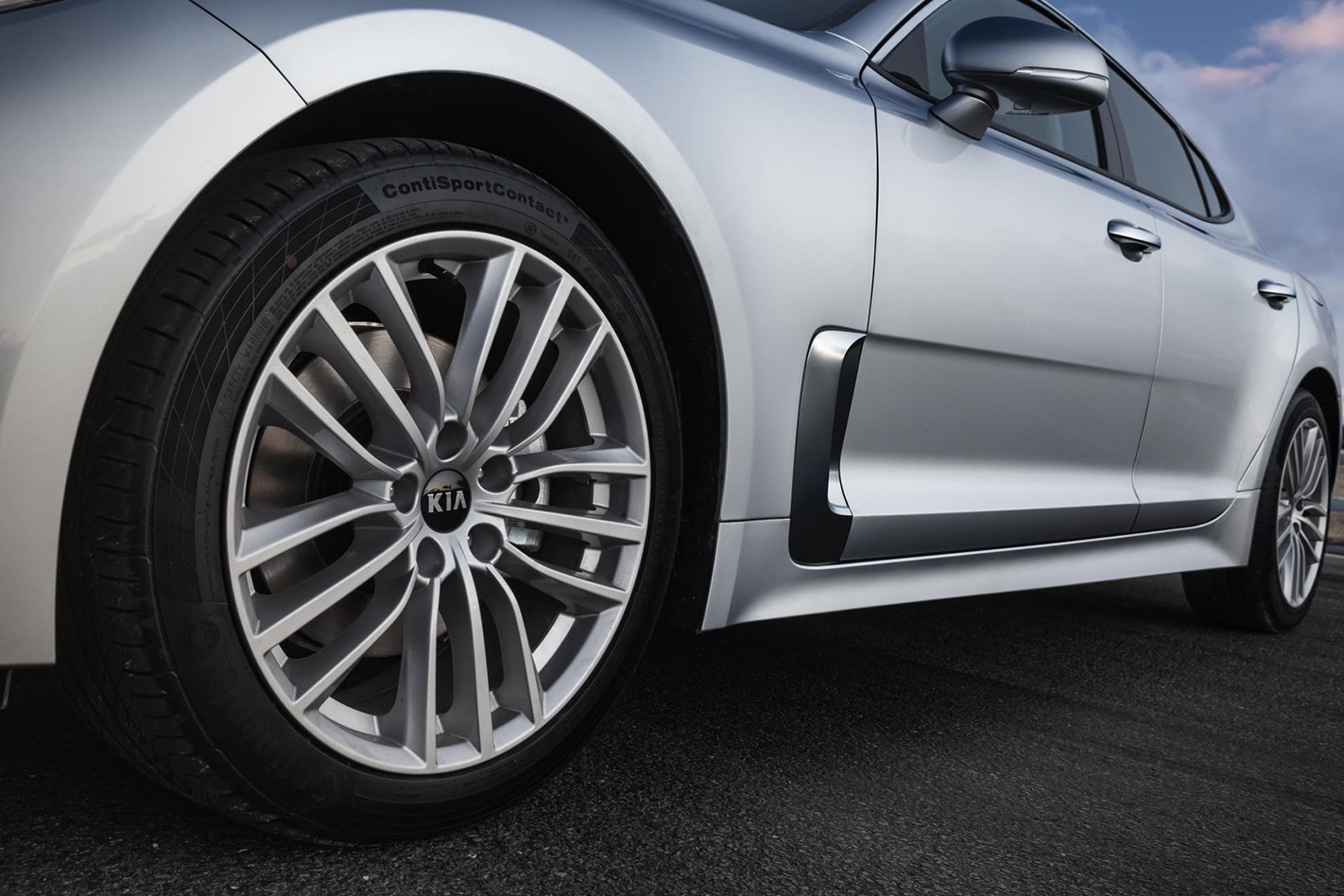
The S and Si variants ride nicely on their passive suspension setup. But the GT-Line’s adaptive dampers and staggered footprint on 19-inch wheels feel more composed when you’re really hooking in.
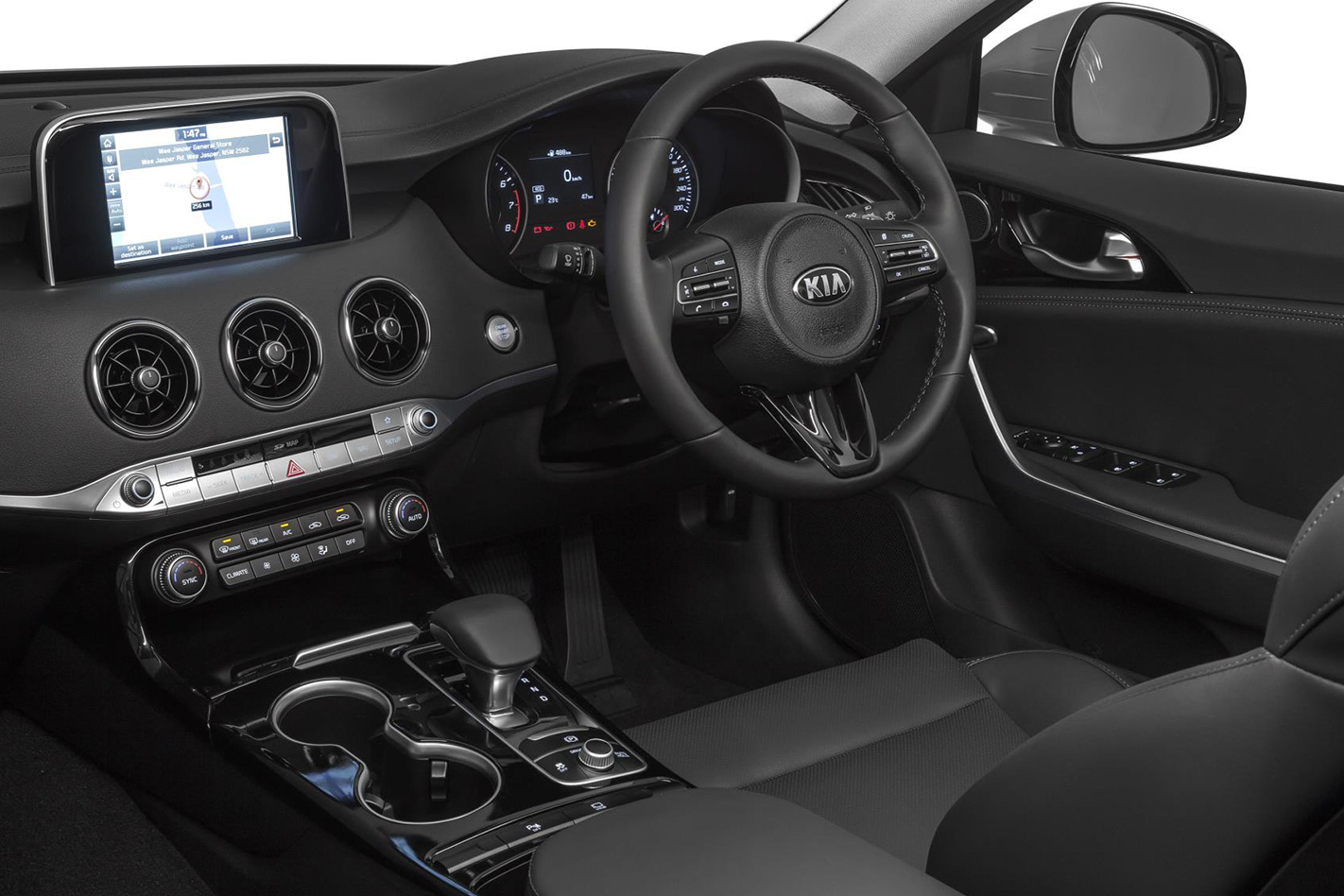
Europeans might disagree. But like we said, things are different up there.
3.5 stars out of five (GT-Line)
Kia Stinger 2.0-litre Specifications:
Engine: 1998cc, DOHC, 16v, turbo Power: 182kW @ 6200rpm Torque: 353Nm @ 1400-4000rpm 0-100km/h: 6.0 seconds Weight: 1693kg (tare) Fuel Consumption: 8.8 litres per 100km (combined cycle)
Price: $45,990 (200S); $52,990 (200Si); $55,990 (GT-Line)
THE BEGINNING of the end of Australian vehicle manufacturing has its roots in 1983 when the Hawke government sought to rationalise the industry.
It would do this by lowering tariffs, which had protected Australian cars from a flood of imports and had encouraged overseas manufacturers to build cars here. Australia would have to compete with the world’s car makers on a level playing field, which meant they had to generate export dollars or fold.
The Motor Industry Development Plan, also known as the Button Plan (named after then commerce, trade and industry minister senator John Button) was hatched with industry consultation in mid-1983. When it came into effect in 1985 its aim was to also reduce production quotas and import restrictions.
The measures regulated the number of models manufactured in Australia, which lead to strange bedfellows by the end of the decade under the United Australian Automobile Industries (UAAI) banner that saw Holden and Toyota sharing models such as the 1989 Camry/ Apollo, 1989 VN Commodore/Toyota Lexcen and 1989 Corolla/Nova.
Ford started 1983 celebrating its victory over Holden, beating it to the top of the sales tree for the first time with the all-conquering XE Falcon, which received a facelift and was renamed the XF in October 1984. The XF didn’t offer much in terms of improved performance and handling but it went on to become Ford’s biggest selling Falcon to date with more than 278,000 rolling out of Broadmeadows.
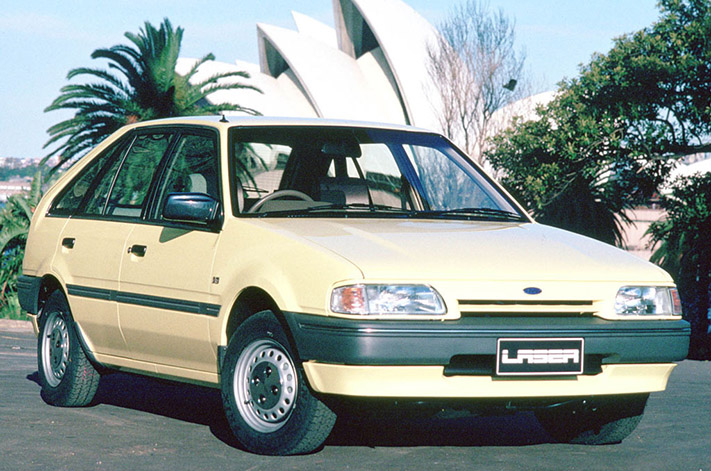
Another big seller for the Blue Oval was the four-cylinder Laser hatchback, which continued to be built at Homebush.
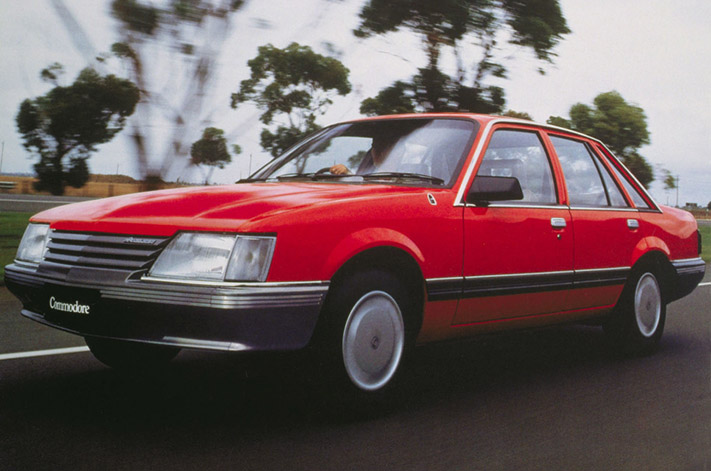
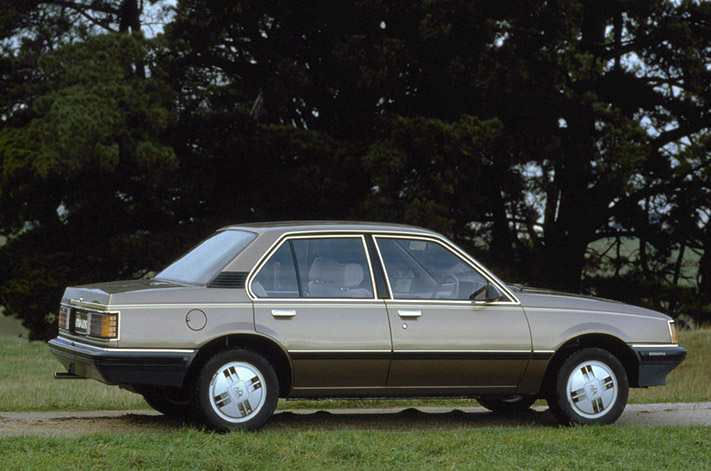
The VK’s launch also introduced new model names to the Commodore line-up including Executive, Berlina and Calais to replace SL, SL/X and SL/E respectively.
VK Commodores rolled out Holden’s Dandenong and Elizabeth plants as well as Trentham in New Zealand and helped boost numbers in the face of the Falcon’s dominance, with 135,000 sales in two years, but it wasn’t the panacea to Holden’s financial woes that the General would have liked.
Meanwhile, sales of the JB Camira, with Fisherman’s Bend-built ‘Family II’ four-cylinder engines under the bonnet, started plummeting due to quality issues that led to Holden’s first ever operating loss.
Adding to Holden’s woes, the Elizabeth-built second-generation RB Gemini, which was launched in May 1985 wouldn’t even see out two years due to fewer sales than its predecessor and was replaced by the Nissan-built Astra.
Holden’s other locally produced cars, the H model-based WB Statesman, ute and panel van were already looking dated and highlighted the lack of Commodore-based alternatives.
Mitsubishi, meanwhile, was still building Sigmas and Colts at Tonsley Park in Adelaide and started producing its highly successful replacement, the Magna in 1985. The mid-sized Magna was built on Japanese platforms that were re-tuned for Australian conditions. It was initially built as a sedan with a wagon version introduced in 1987.
Nissan was still producing cars at Clayton South, though production of the Bluebird had ceased in 1983. Pulsar N12 production continued, with the popular hatch rolling out with Holden Astra badges from 1986 prior to the Button Plan taking effect. The Astra had tweaked body panels to set it apart from the host car’s that were pressed at Holden’s Elizabeth plant.
Local production of the R31 Skyline started in 1985 followed by the Pintara in 1986.
Australian Motor Industries (AMI) was by now an all-Toyota affair, and became AMI Toyota in 1985. During this period Toyota was churning out Corolla E80 and Corona at Port Melbourne.
By the end of 1987 Australia’s five manufacturers were still producing a good mix of popular models across segments, but it was the calm before the storm. Within a decade the Button Plan saw locally produced models slashed, Nissan cease local production and the remaining four deciding that importing models was preferable to sharing production.
Next: 1988-1992 – Strange bedfellows
