
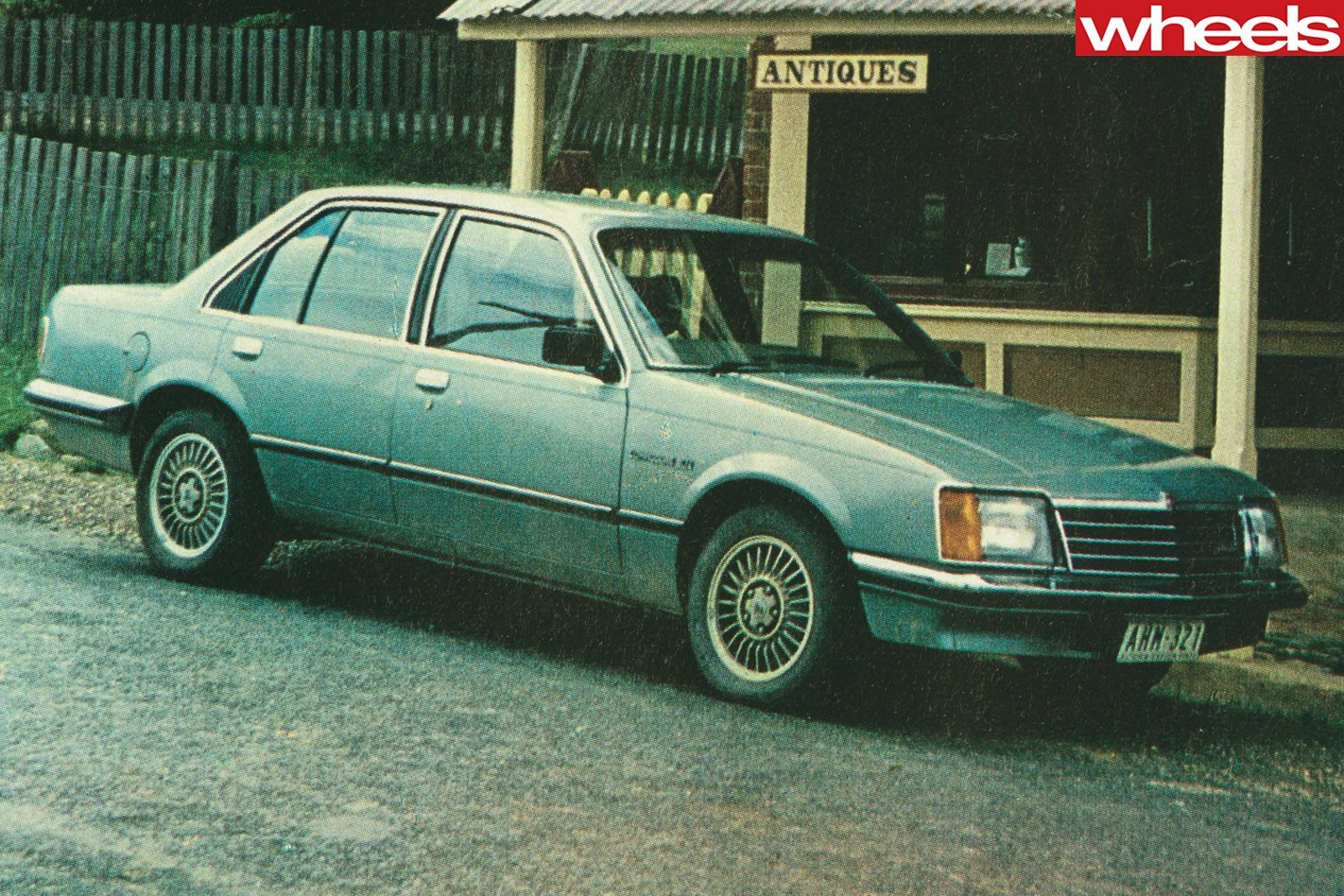
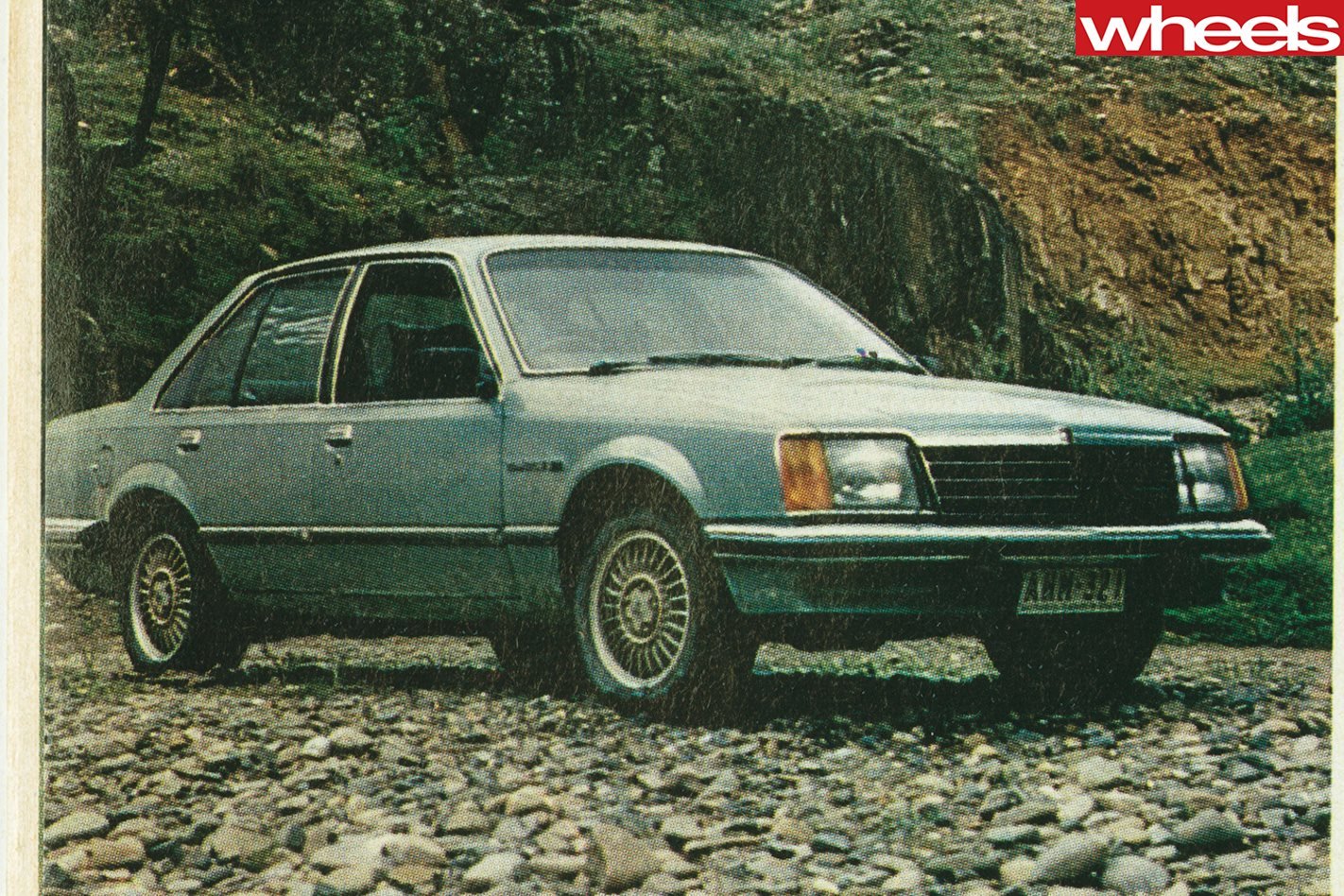
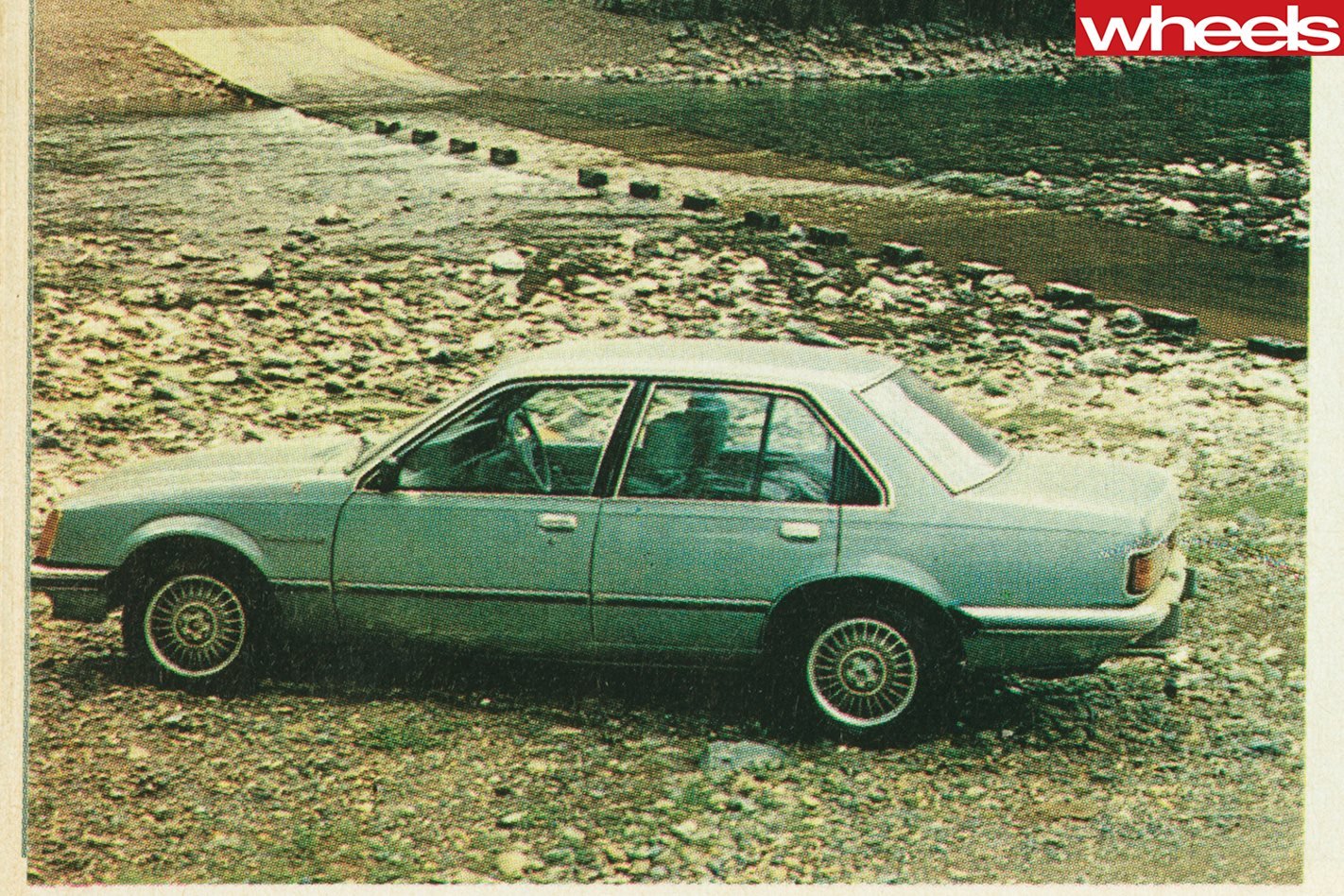
CAR OF THE YEAR: Holden Commodore, Well, it really couldn’t have been anything else, could it?
HOLDEN’S COMMODORE is the 1978 Car of the Year – the 15th winner to take out the prestigious award, the most deserving and certainly the most predictable.
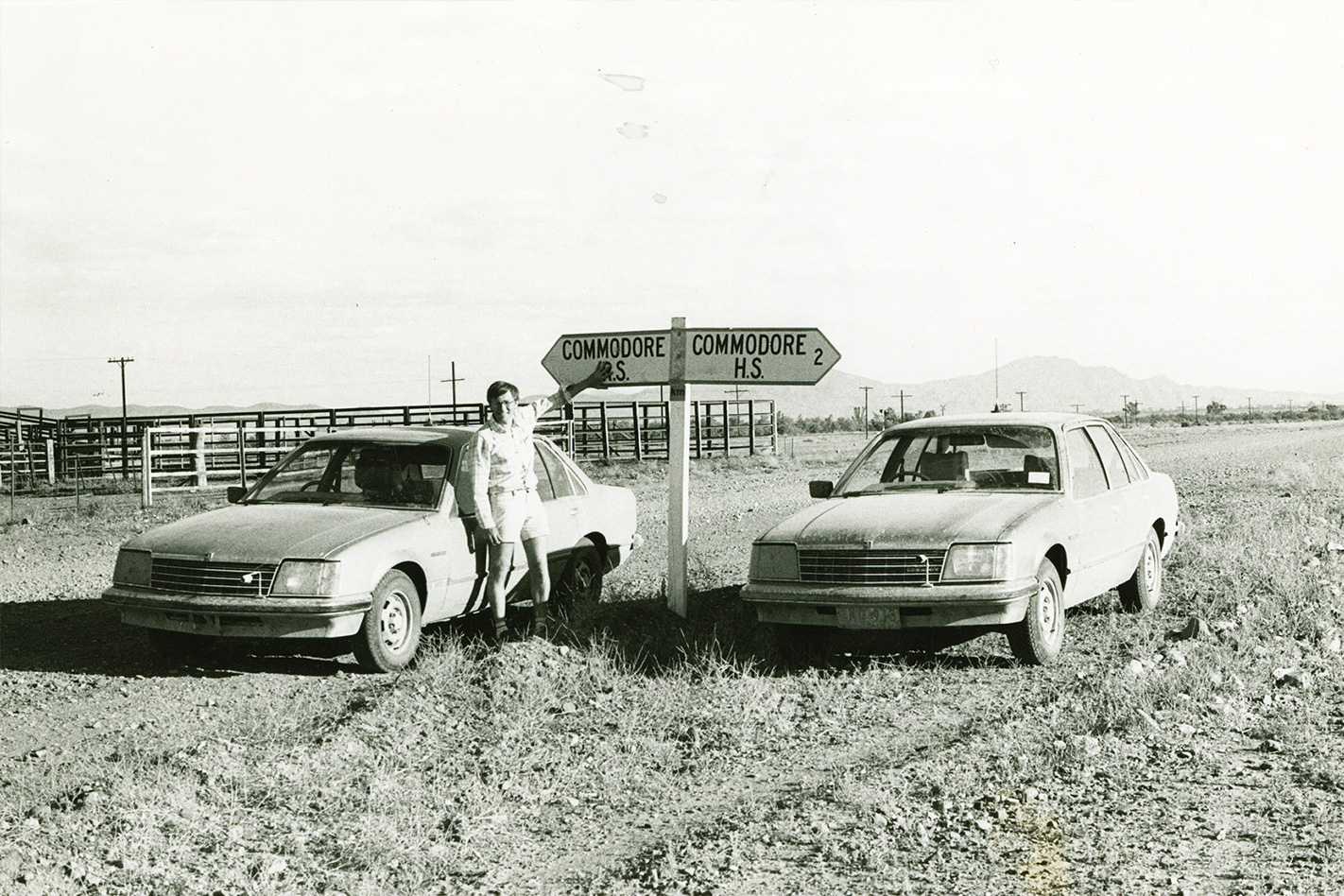
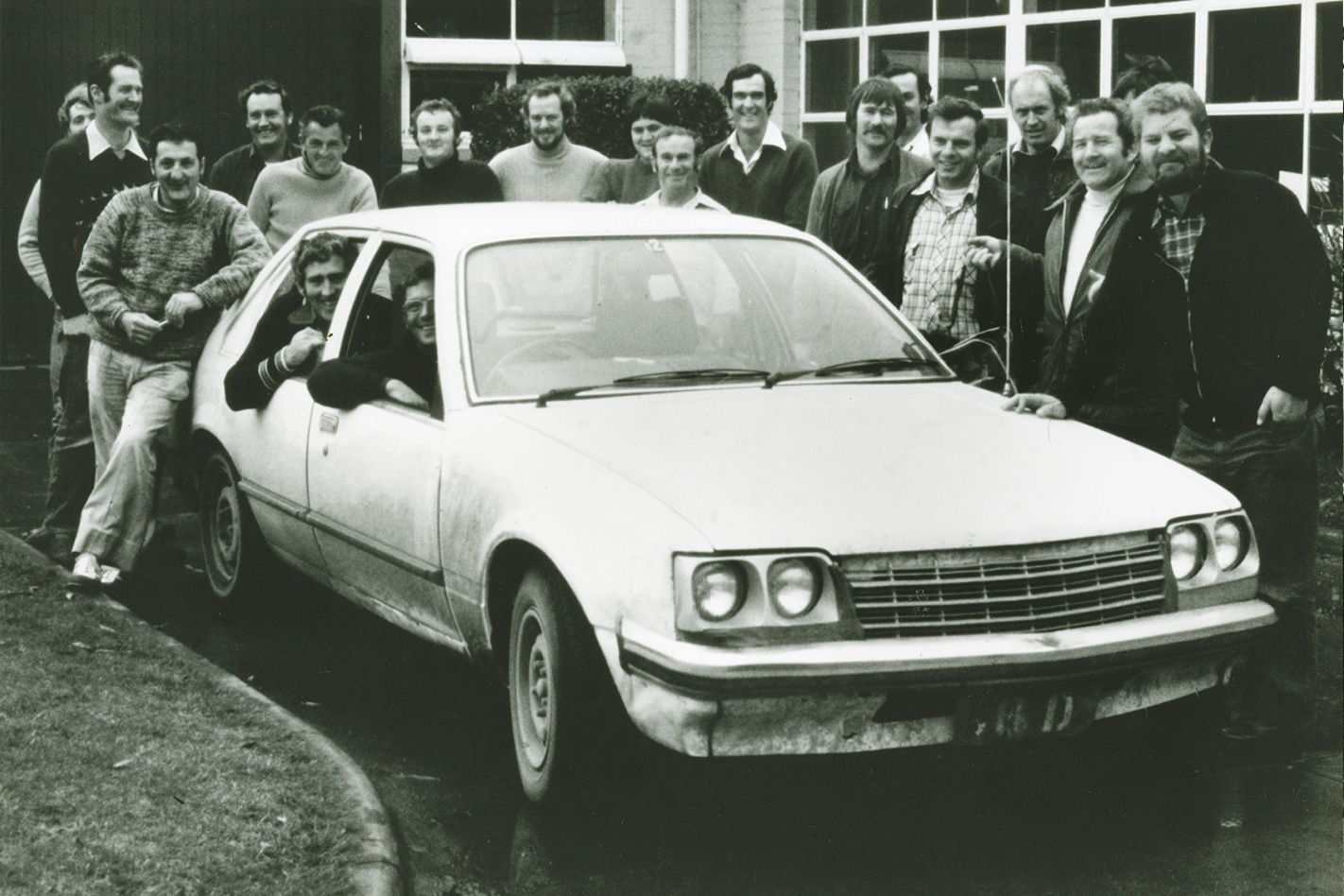
With one grand sweep the Commodore has changed all that. To date we’ve driven 16 Commodores over more than 4000 km in three states to have our initial enthusiasm confirmed and reinforced so strongly that there can be no doubt that here is the best Australian car ever. Let’s go many steps further and say that here is one of the world’s great sedans … a car that offers most of the qualities of the European and Japanese cars together with the traditional virtues of Australians and, best of all, at a price that makes it astonishingly good value for money.
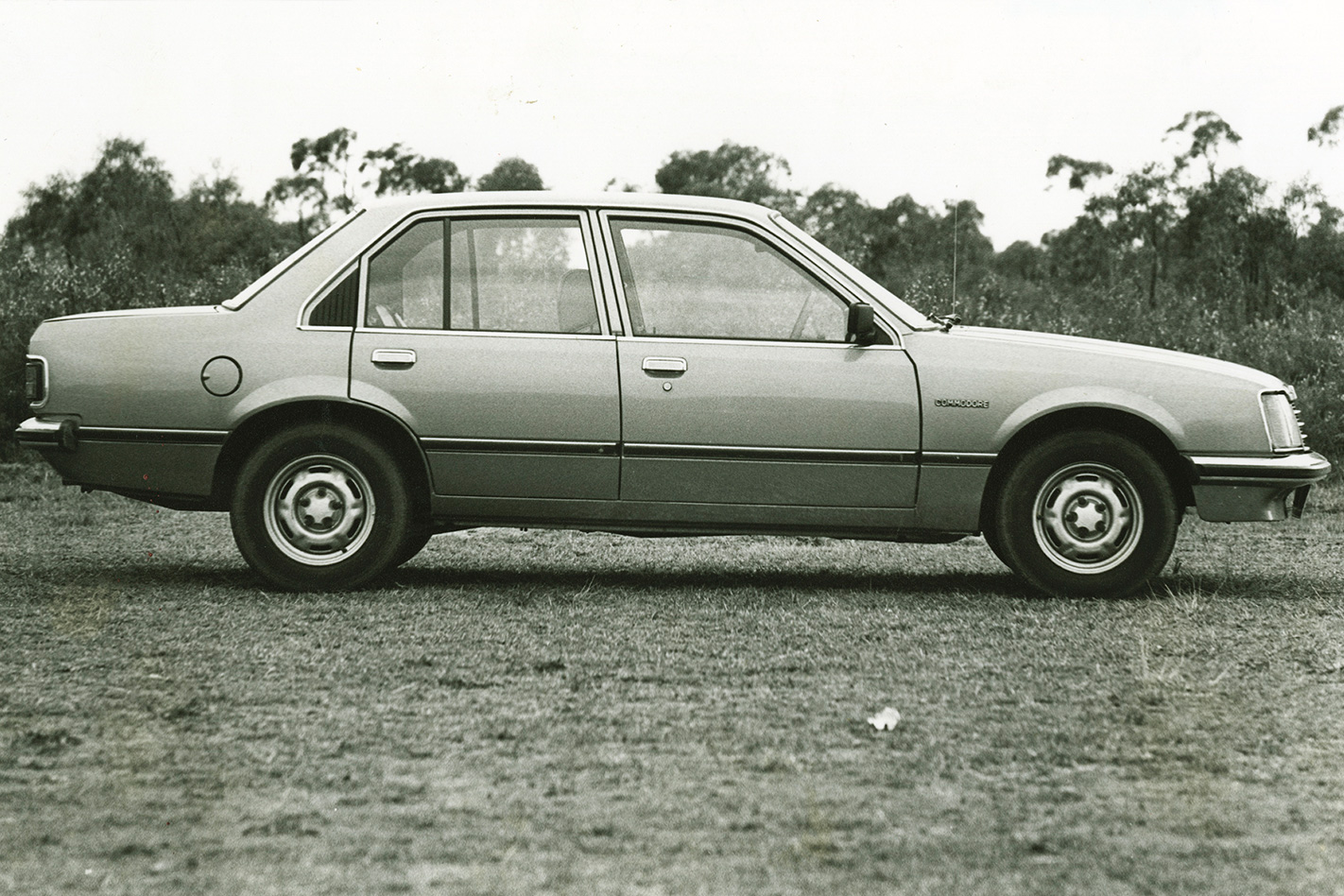
The fact is that the Commodore does live up to the high expectations of a public that has deserted GMH in droves over the past decade because Holdens didn’t offer the kind of motoring expected by a more intelligent, dare we say perceptive, audience. The Holden had changed from being an everyman’s car to the car for the blue collar worker while the white collar people have driven Japanese or European cars.
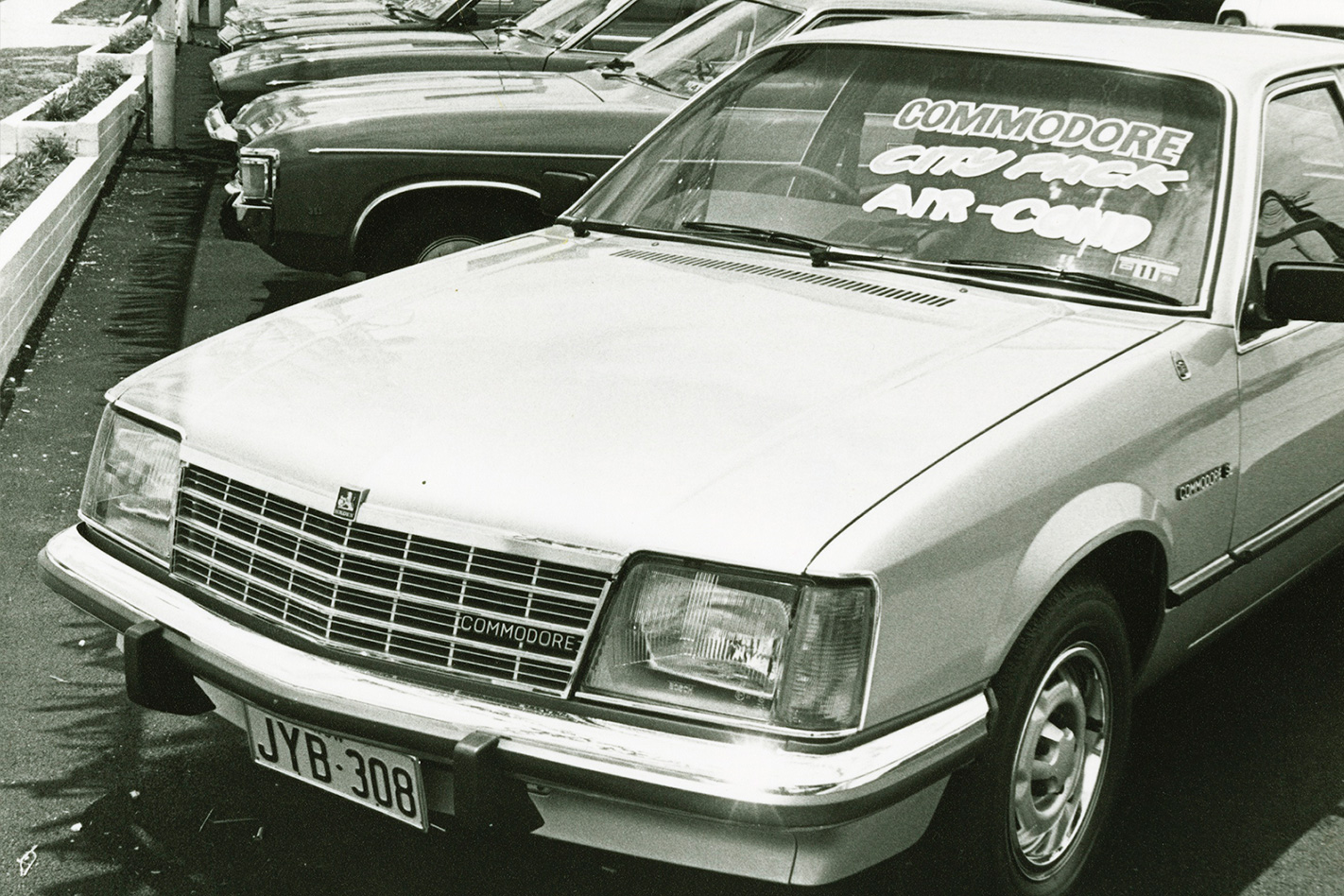
The men inside GM also knew that it needed to be better than just good. For Opel it needed to be sufficiently refined to compete head-on with BMW and Mercedes-Benz; for Holden it had to be so good that it set new standards not just in its class, but across the market in order to re-establish the marque in the eyes of all those people who had switched their allegiance; for Vauxhall it needed to be good enough to break back into a market long ago deserted by the British branch of General Motors; and in South Africa it had to rate in a straight fight against the Ford Granada.
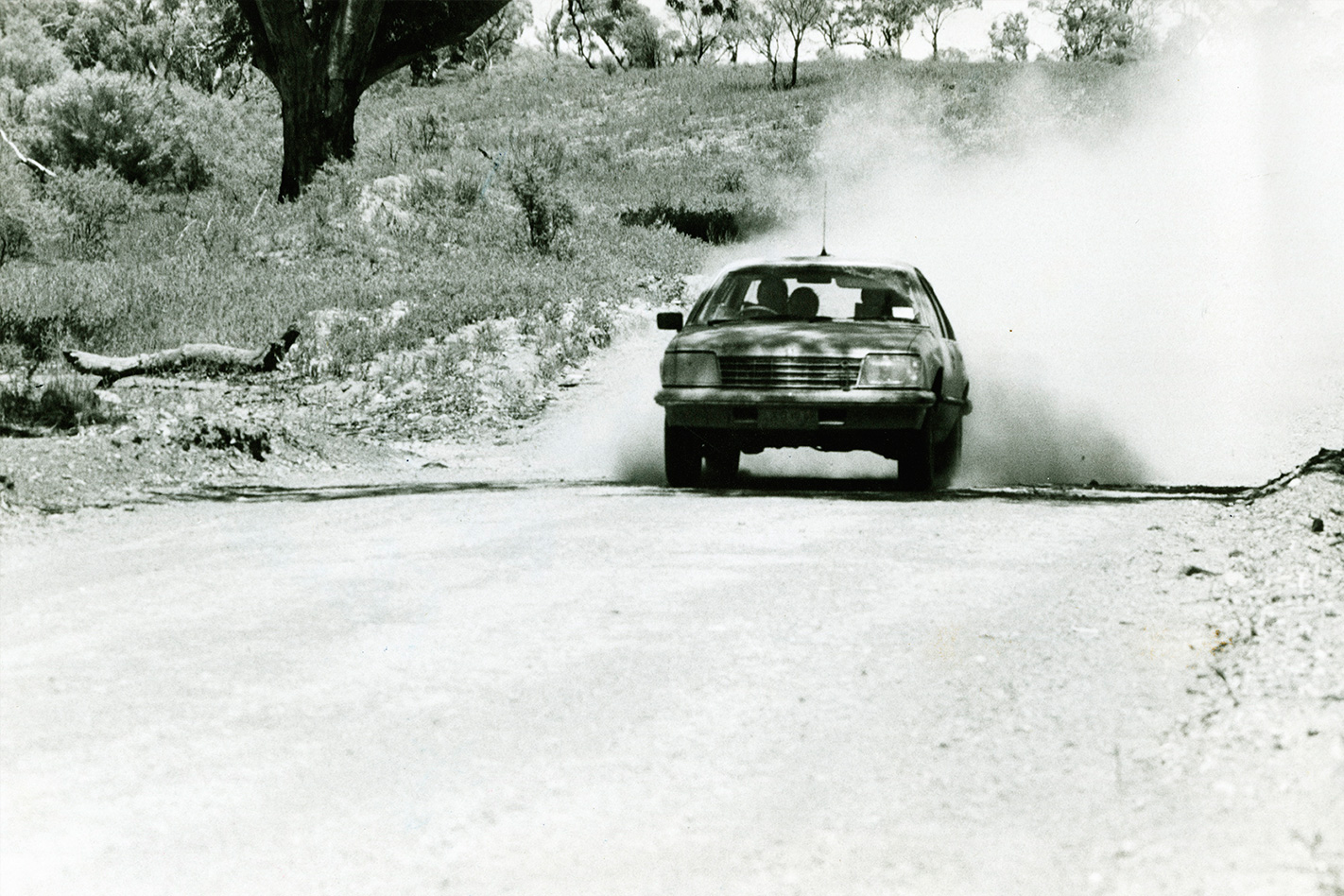
While GMH is at great pains to emphasise the Australian design and component content in the Commodore, it is honest enough to openly admit “Commodore is the product of a marriage of GM’s international resources and GMH’s specific local engineering and design expertise”.
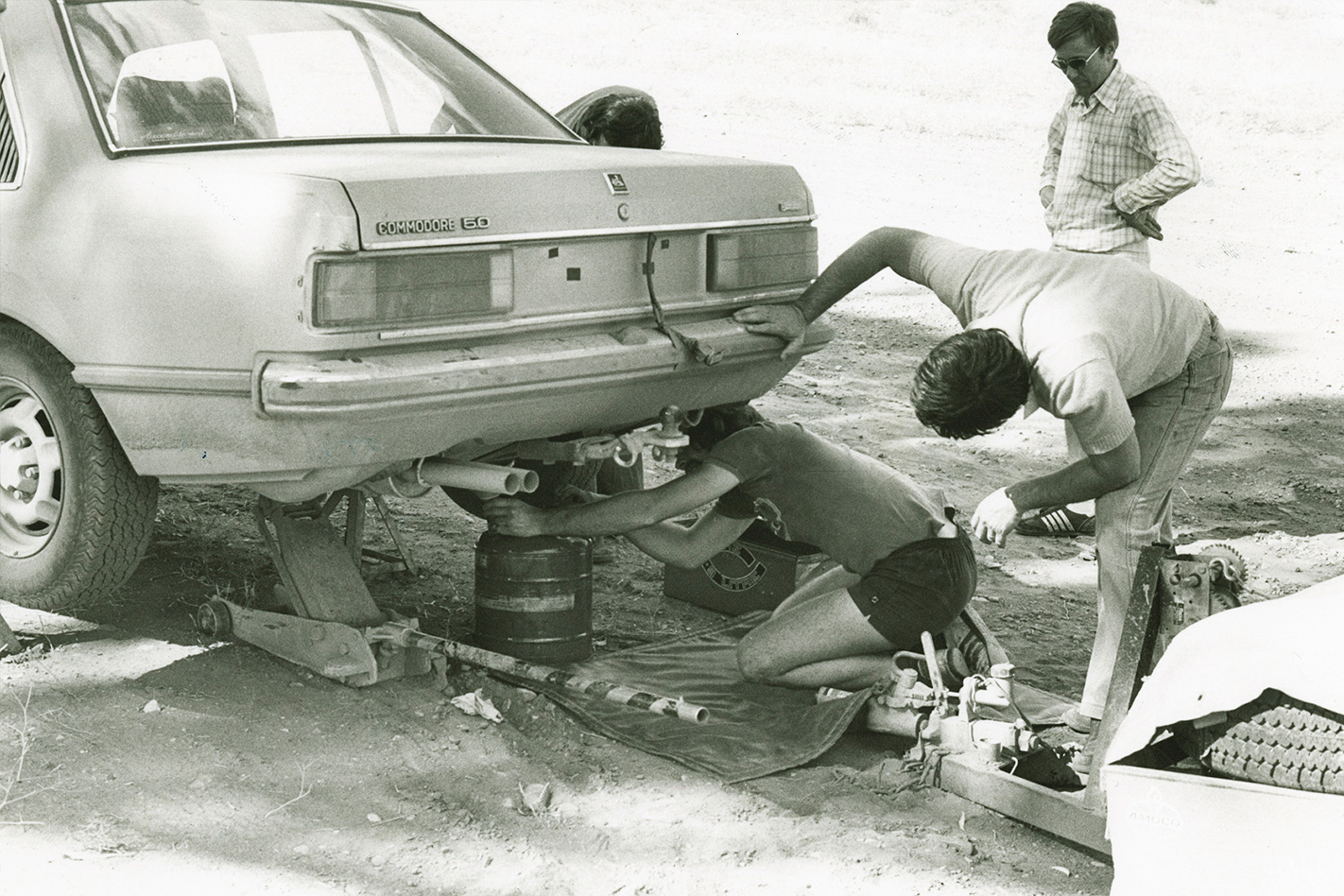
The modifications necessary to adopt the car to take local engines and transmissions were only the beginning of a task which saw the Australian Commodore get a new steering system, much modified MacPherson strut front suspension, improved body strength, dust sealing and rust prevention, and an outstanding new braking system.
Such is the standard of the Commodore that it is going to draw sales away from a far broader spread of cars than just the medium sixes. GMH lists its competition as Falcon, Valiant, Datsun Skyline, Cortina Six, Volvo, Toyota Cressida, and Sigma in claiming that half of the forecast 65,000 Commodores it will sell in 1979 will be business which would otherwise have gone to other companies.
We would go further and say that the new Holden deserves to sell way up-market and should draw sales away from Peugeot, BMW, Mercedes-Benz, Jaguar, Rover, Saab, Citroen, Alfa, and Lancia as well as deep down into the four-cylinder market of Datsun 200B, Toyota Corona, and Mazda. The Commodore will satisfy them all.
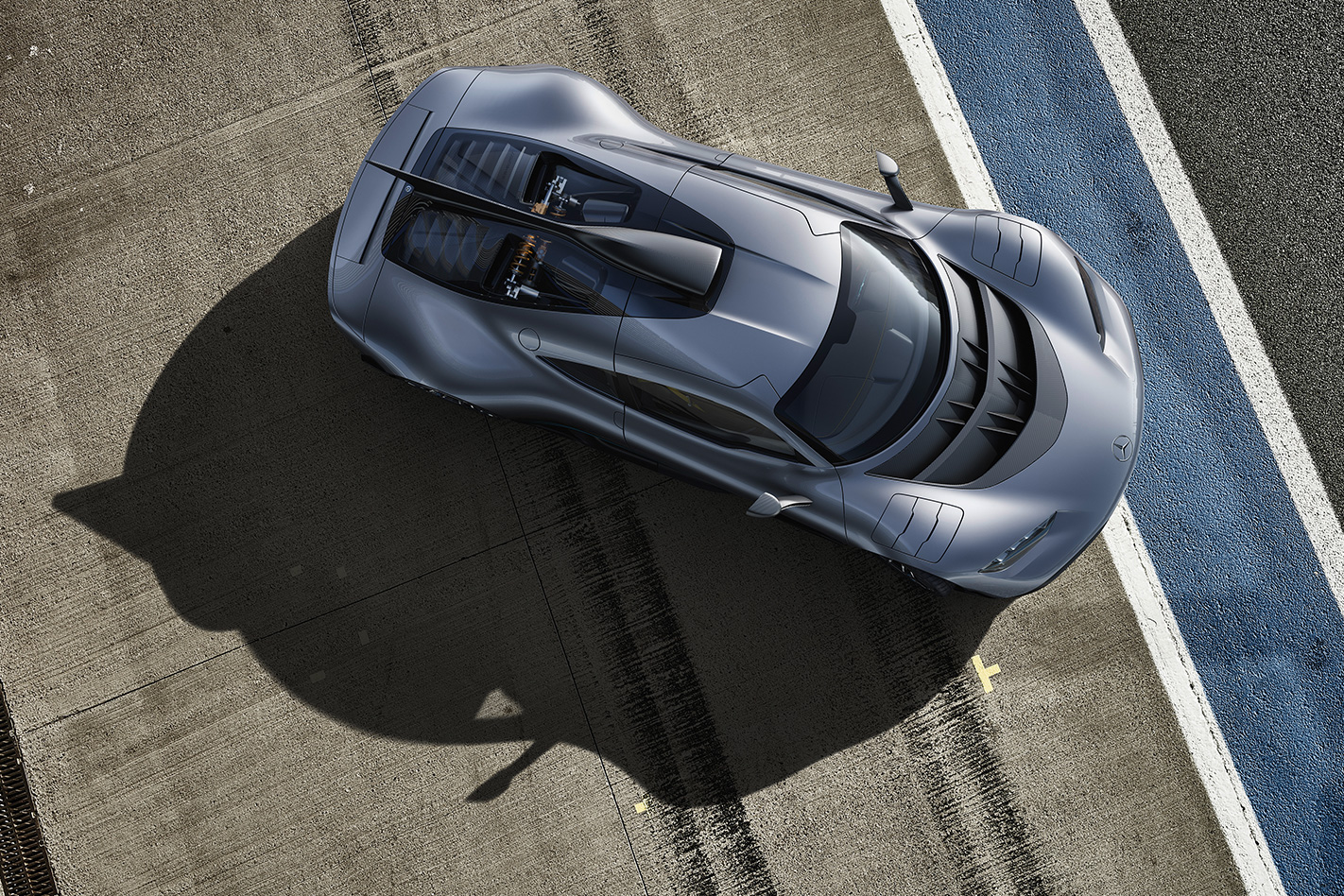
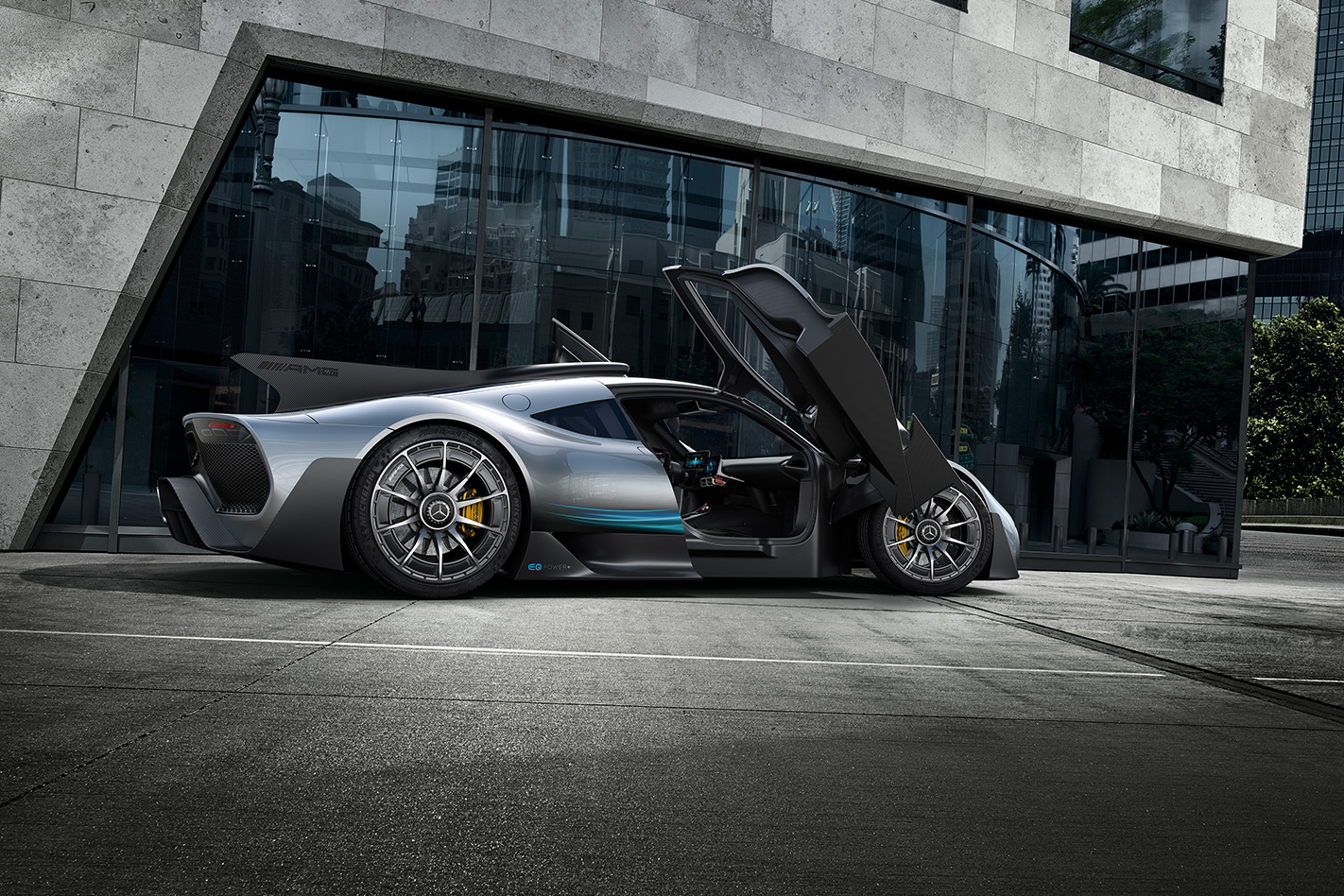
Mercedes’ go-faster division has finally revealed its hypercar concept to the world as a tangible vehicle, and it’s called the Mercedes-AMG Project One.
The hybrid hypercar is essentially an AMG Formula 1 car for the road, with a 1.6-litre V6 being assisted by four electric motors.
Two motors drive the front wheels, one is directly attached to the 456kW V6, and one sits nestled in between turbines of the electrically boosted turbocharger.
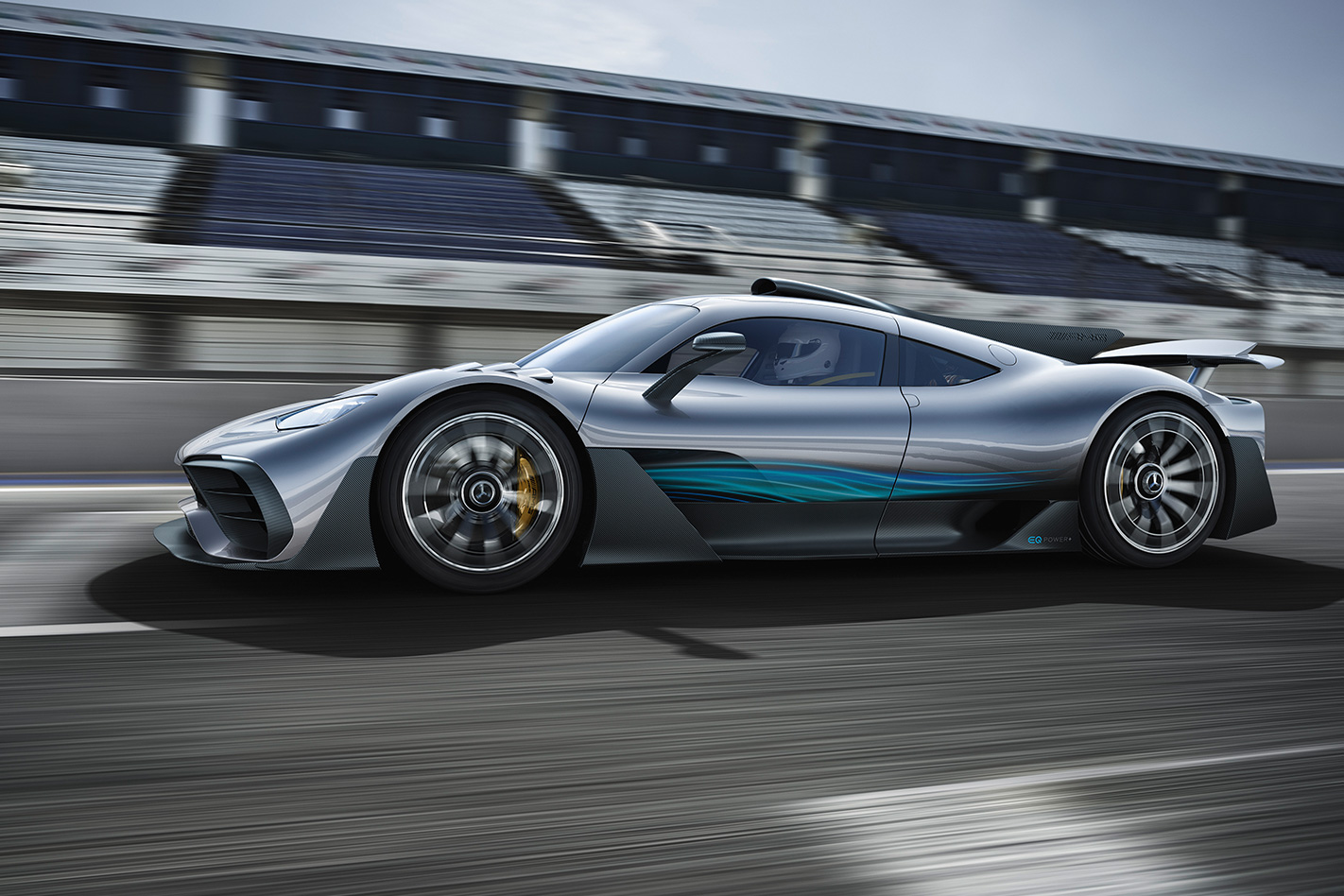
The 90kW MGU-H (Motor Generator Unit Heat) motor in the turbo eliminates lag, while another 120kW comes from the MGU-K (Motor Generator Unit Kinetic) which surplus energy from the exhaust system to generate electricity, and either stores it in the high-voltage lithium-ion battery.
All up, the Project One has more than 740kW to draw from, with more than 500kW going to the rears and 120kW each at the fronts.
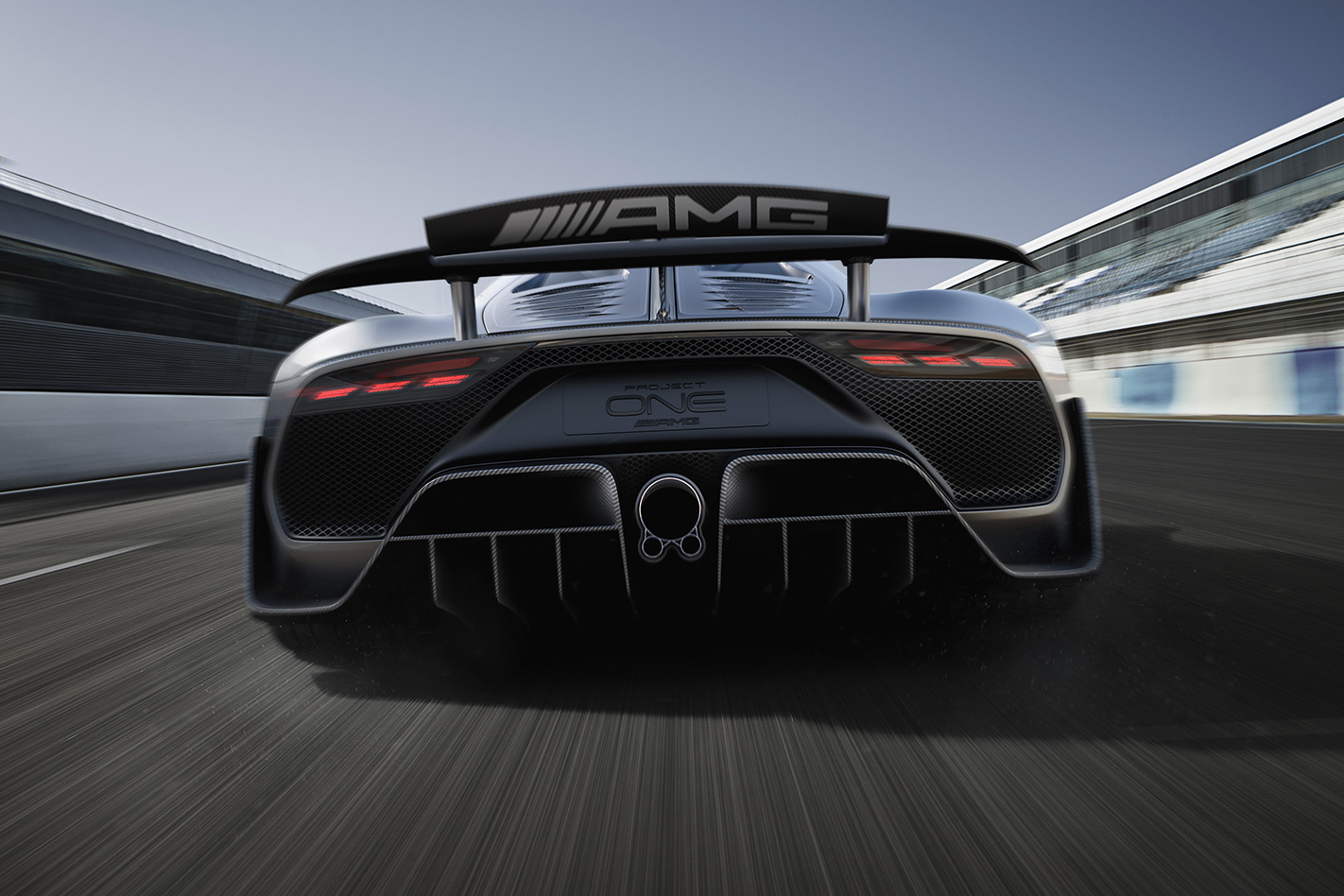
But the power which the Project One is capable of isn’t its only draw.
As well as being built from a steel platform supporting a carbon-fibre tub, adjustable multilink suspension, rear-wheel steering, and five different cooling circuits for various components all feature in a long list of engineering achievements applied to the Project One.
“Motorsport is not an end in itself for us. Faced with intense competition, we develop technologies from which our production vehicles also subsequently benefit,” says Zetsche.
“We are drawing on our experiences and successes from three constructors’ and drivers’ world championships to bring Formula 1 technology to the road for the first time: in Mercedes-AMG Project One.”
Mercedes-AMG head Tobias Moers adds that Project One is the most ambitious project Mercedes has ever undertaken.
“At the same time, Project One provides an outlook on how AMG will define driving performance in the future.”
MOTOR will bring you a closer look at the Mercedes-AMG Project One in the near future.
For decades, Audi has been synonymous with the total traction of quattro all-wheel drive. No longer.
Audi Sport has unveiled a rear-wheel drive version of its R8 supercar at the Frankfurt Motor Show. Dubbed the R8 V10 RWS, it is “made for purists” according to Audi Sport’s recently departed CEO Stephan Winkelmann.
It is “A limited-edition special model for customers with an appreciation for essential driving enjoyment,” says Winkelmann, and “successfully bring the driving concept of our R8 LMS racing car to the streets.”
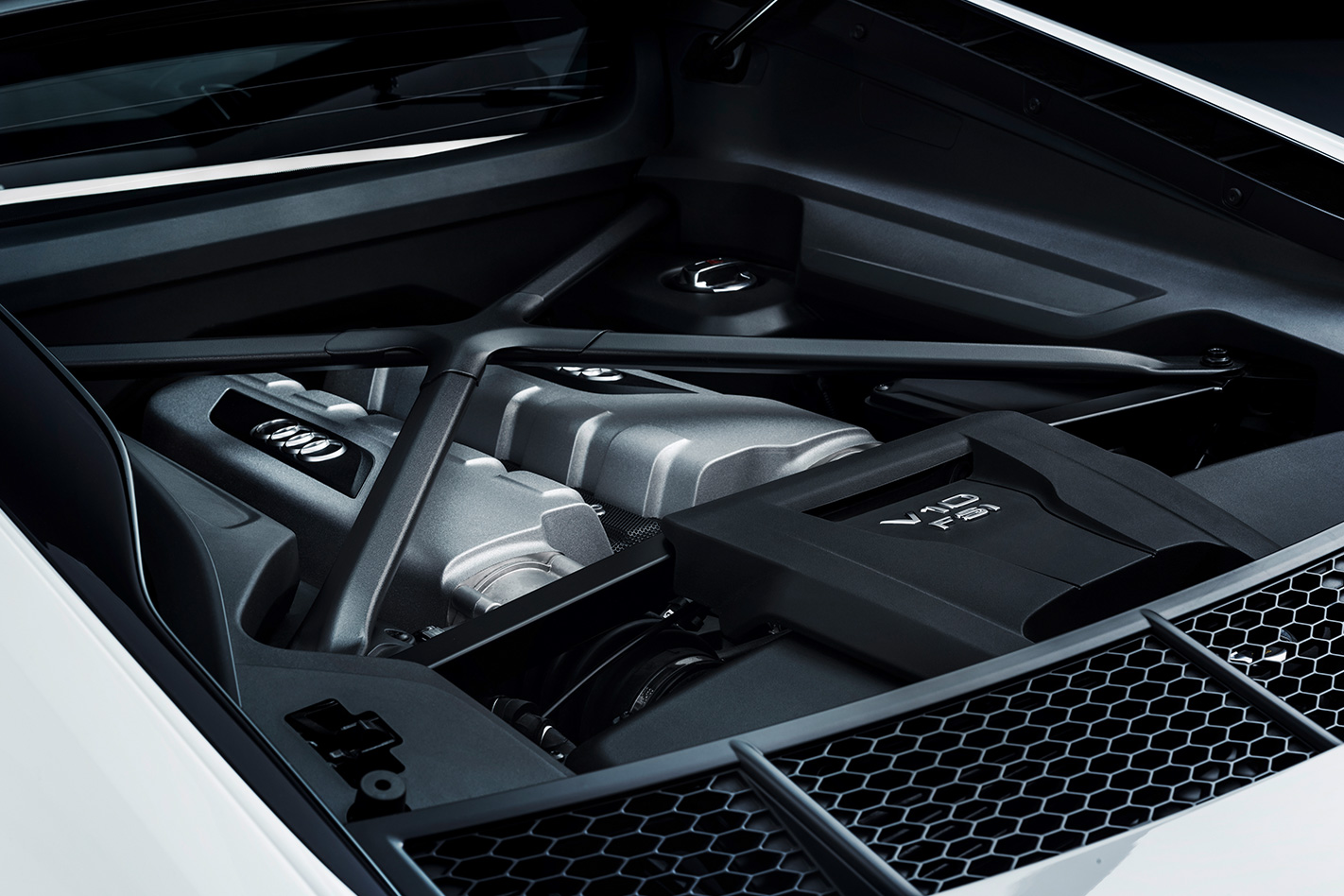
Acceleration is dulled slightly compared to all-wheel drive models, the R8 RWS managing 0-100km/h in a still-brisk 3.7sec (Spyder 3.8sec) on its way to a top speed of 320km/h (Spyder 318km/h). Audi claims the chassis tuning is specially adapted for “incredibly fun driving”, a valid claim if it’s Lamborghini Huracan LP580-2 is anything to go by.
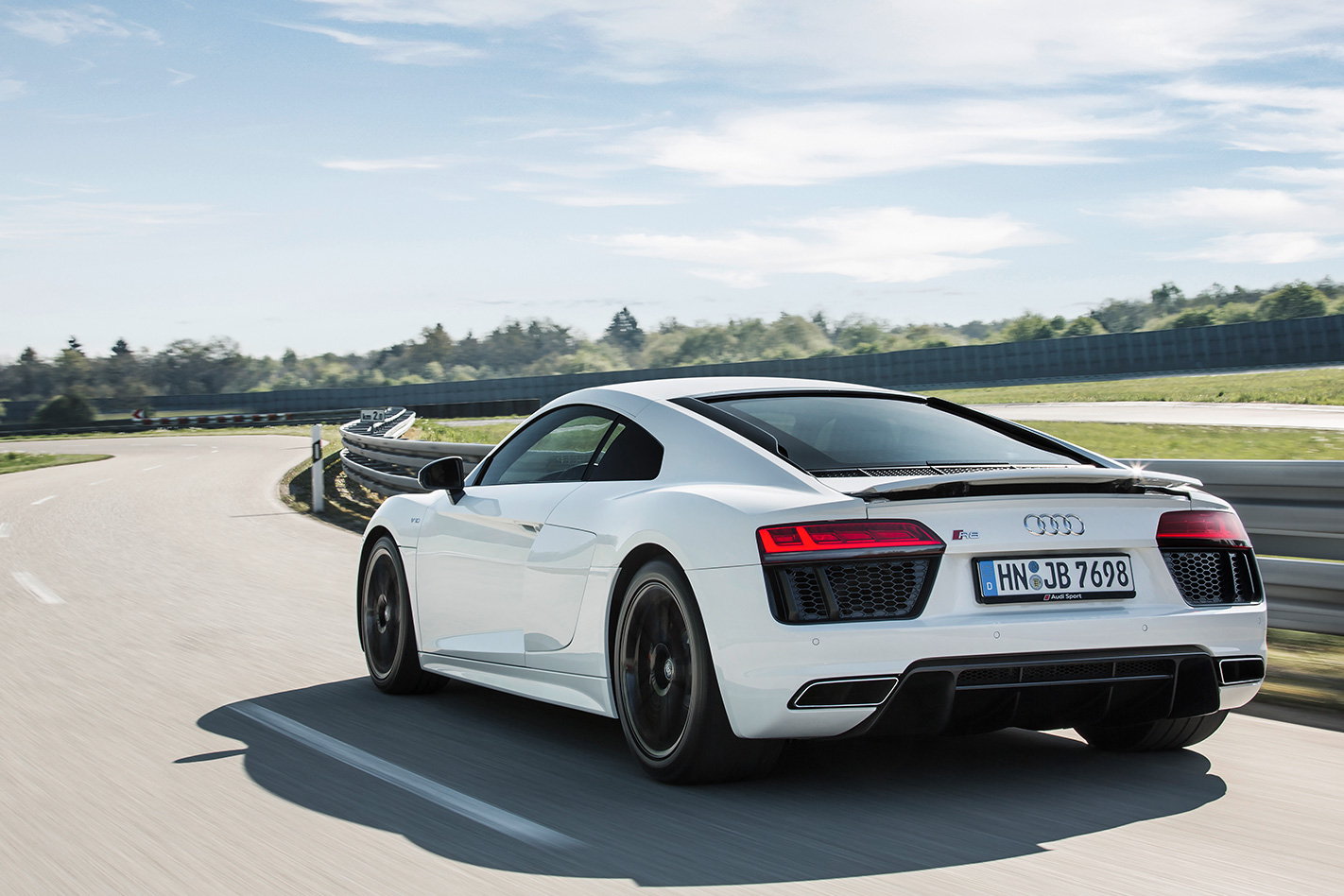
A “very limited number” of R8 RWSs will come to Australia, with delivers expected in March 2018. Pricing is still to be confirmed, but based on the European pricing expect a figure in the region of $400,000.
A CAR safety advocate who helped Australia become the world’s toughest regime for crash test ratings has now taken the top global role for the same job.
Lachlan McIntosh, who headed the Australiasian New Car Assessment Program for more than 20 years, was announced overnight as the replacement for former global motorsport chief Max Mosley as head of the worldwide independent crash safety watchdog, the Global New Car Assessment Program.
“I am very honoured to be elected as Global NCAP’s new chairman,” McIntosh said in a statement. “Global NCAP’s work has fundamentally changed vehicle safety worldwide, I’ve been proud to be part of that work as a member of the board of trustees and look forward to continuing to do so as chairman.”
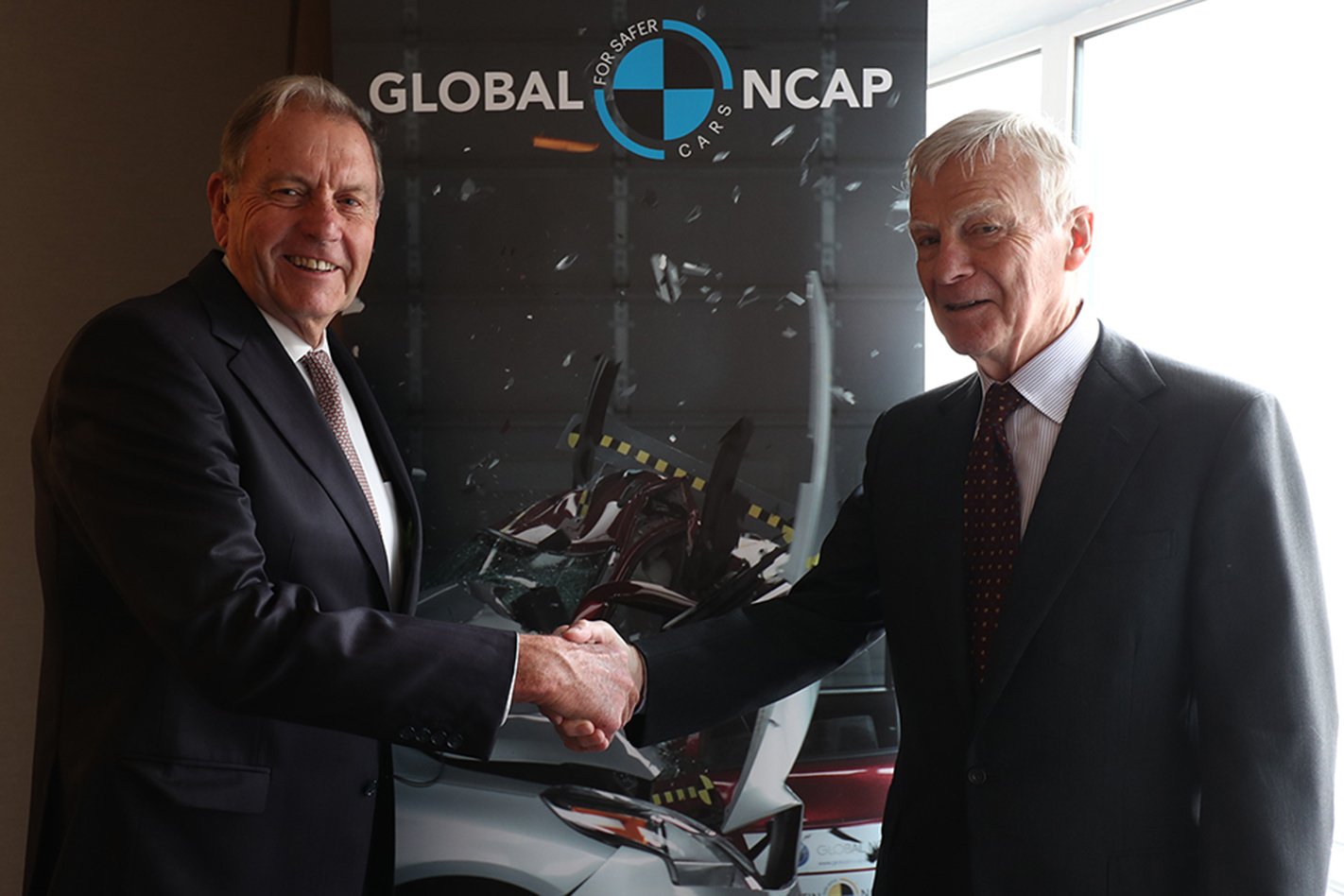
Australia is gradually aligning its crash testing procedures with its European cousin as part of a three-year program that has been widely criticised as compromising on safety.
Under the new rules planned for Australia, the crashworthiness of a car will be assessed on the best-selling model and the score applied to all the vehicles in the range, even if entry-level models lack the active safety features fitted to their more expensive versions. Australia’s current regime of assessing each variant independently means that we have a split rating system – the Ford Focus is a five-star car, but because the RS-badged version lacks side airbags because it is fitted with different sports seats, it is unrated.
The slow switch to the EuroNCAP criteria also hurt Holden’s crash test rating for the European-sourced Astra hatch, with the base model unrated because it lacked the standard safety gear fitted to more expensive versions. In contrast, the Korean-sourced Chevrolet Cruze sedan, badged here as an Astra, has no driver assist systems available, yet gained a range-wide five-star rating.
The alignment with EuroNCAP has also tainted the Ford Mustang, hit with a two-star crash test rating after it was marked down on pedestrian protection and the safety of its rear seats, as well as its lack of driver assist technologies. The pony car has since had its score bumped to three stars after a re-test. Citroen even delayed the entry of its Cactus small SUV to Australia so that it would carry a Euro NCAP five-star rating under the new set of rules rather than be marked down to a four-star ANCAP rating under the old ones.
Australia will fully align with the Euro NCAP standards from next year.
Global NCAP, a registered charity, is focusing its efforts on improving crash safety in developing economies such as India and South America. In 2015 it controversially hit back at media reports critical of Australia’s change to the more relaxed crash test framework, saying it was “baffled” by the negative comments. McIntosh was a board member of Global NCAP at the time.
Calling the JCW Clubman a Mini is right on the tipping point of taking the piss. It’s huge.
In fact, it has more footprint than a standard Mini (itself no tiddler) and not where the original Mini had two doors, the Clubman, not even content with five, gets six. (Okay, the fifth and sixth amount to the vertically split rear doors, but you get the idea.) The charming little 1.6-litre engine of the reborn Mini has also burst its banks to arrive at two litres and 170kW and the goddam thing now drives all four wheels.
Of course, when you melt that down, it becomes apparent that you’re getting lots of metal for the bucks which, in a BFYB sense, can’t hurt – can it? So we’re off to a galloping start, but that changes a bit when you put the Mini against the stopwatch.
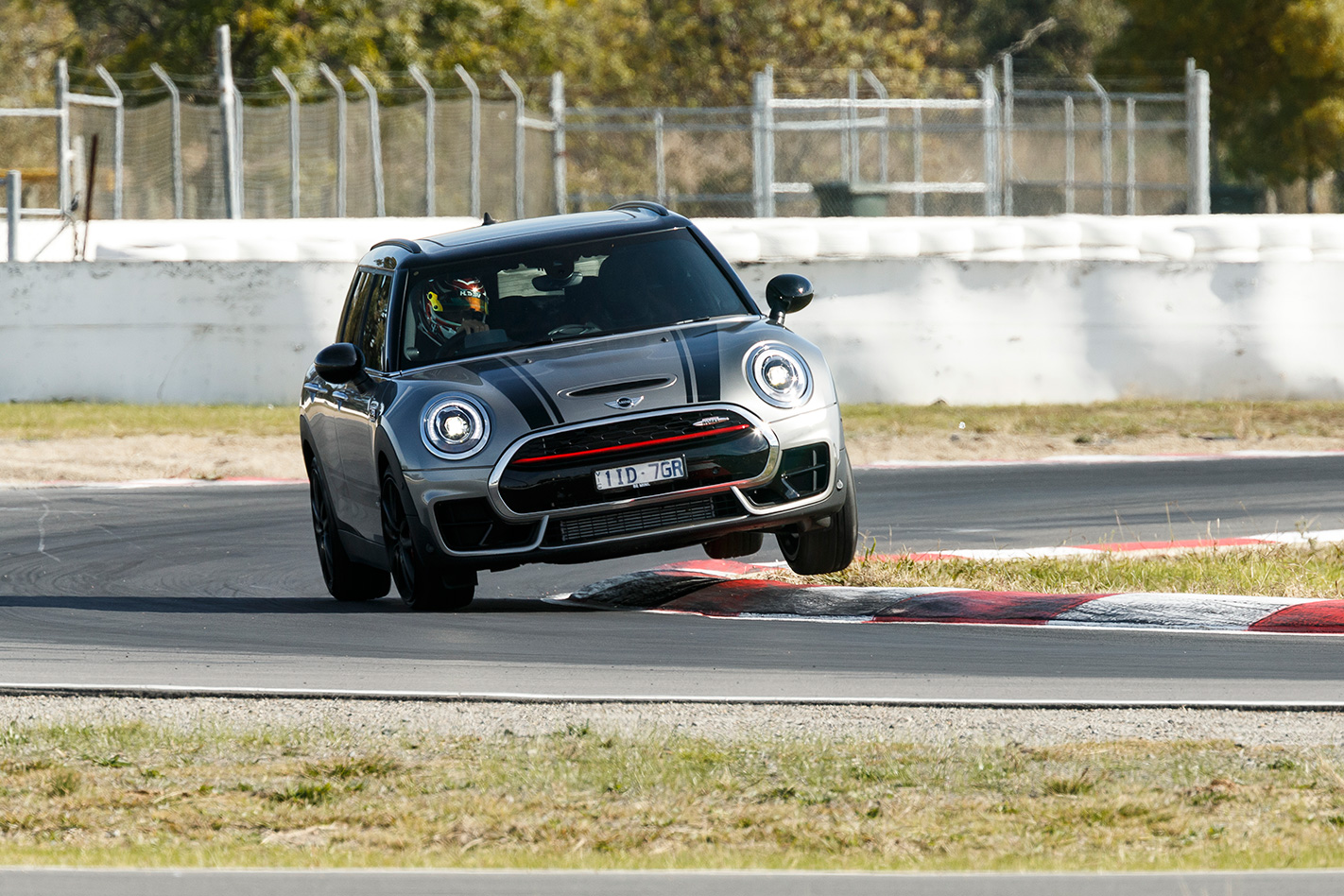
It feels to us as if the engine is actually a bit strangled; as if it lacks the real top-end rush that would turn the Mini into something altogether racier. That’s backed up by a lap time that is rear of the Over-50K grid, too. That theory also holds water when you look at the corner speeds, which are as good as the straight-line results were ordinary.
In fact, the Mini is swift through both fast and slow corners, so presumably it’s the engine that’s letting the side down in the pursuit of lap speed. The Clubman still steers like a Mini, too, which is to say quickly. That said, it’s not quite as pointy as the previous model, but in a good way.

Meanwhile, that typical Mini interior remains which is bound to polarise opinion. Some reckon the fact that it’s different is enough, other reckon a dog’s breakfast is a dog’s breakfast whether it’s different or not.
Certainly, it represents an ergonomic challenge on first acquaintances but, hey, nobody ever accused the Mini of being a conformist.
Specs: Engine: 1998cc inline-4cyl, DOHC, 16v, turbo Power: 170kW @ 6000rpm Torque: 350Nm @ 1450-4800rpm Weight: 1475kg
Times 0-100km/h: 7.13sec (8th) 0-400m: 14.91sec @ 152.65km/h (8th) Lap Time: 1:43.3sec (6th)
Scores Price: $53,900 Bang Index: 50.4 Bucks Index: 125.6 BFYB Index: 80.5
Warren Luff says “It punches out the laptime and it actually does it really easy, but again, it’s one of those cars, from a driver’s perspective, that doesn’t give you enough feedback and enough feel as to what’s going on. You’d like to have a bit more driver input to get the car doing a little bit more.
It’s very nimble and does everything that you’d want, it’s good on the brakes and has plenty of turn with reasonable power and great drive off the corner, but there’s nothing that gives it x-factor.”
Judges notes David Morley – 7th: “Where will the whole Mini thing end? Couldn’t live with the interior” Dylan Campbell – 8th: “I worry JCW is no longer a brand targeting people like you and me” Louis Cordony – 8th: “Promising package let down by lack of grunt” Tim Robson – 5th: “Where has the Mini gone? It should have been a lot more fun than this”
MERCEDES-AMG has torn the covers off Project One at a media event on the eve of the Frankfurt motor show. The F1-engined hypercar is one the most ambitious road-going vehicles ever built.
The claim of “an F1 race car for the road” is one that has been trotted out plenty of times before; but the reality has invariably been a road car that incorporates limited technical elements that happen to be shared with a prototype racer.
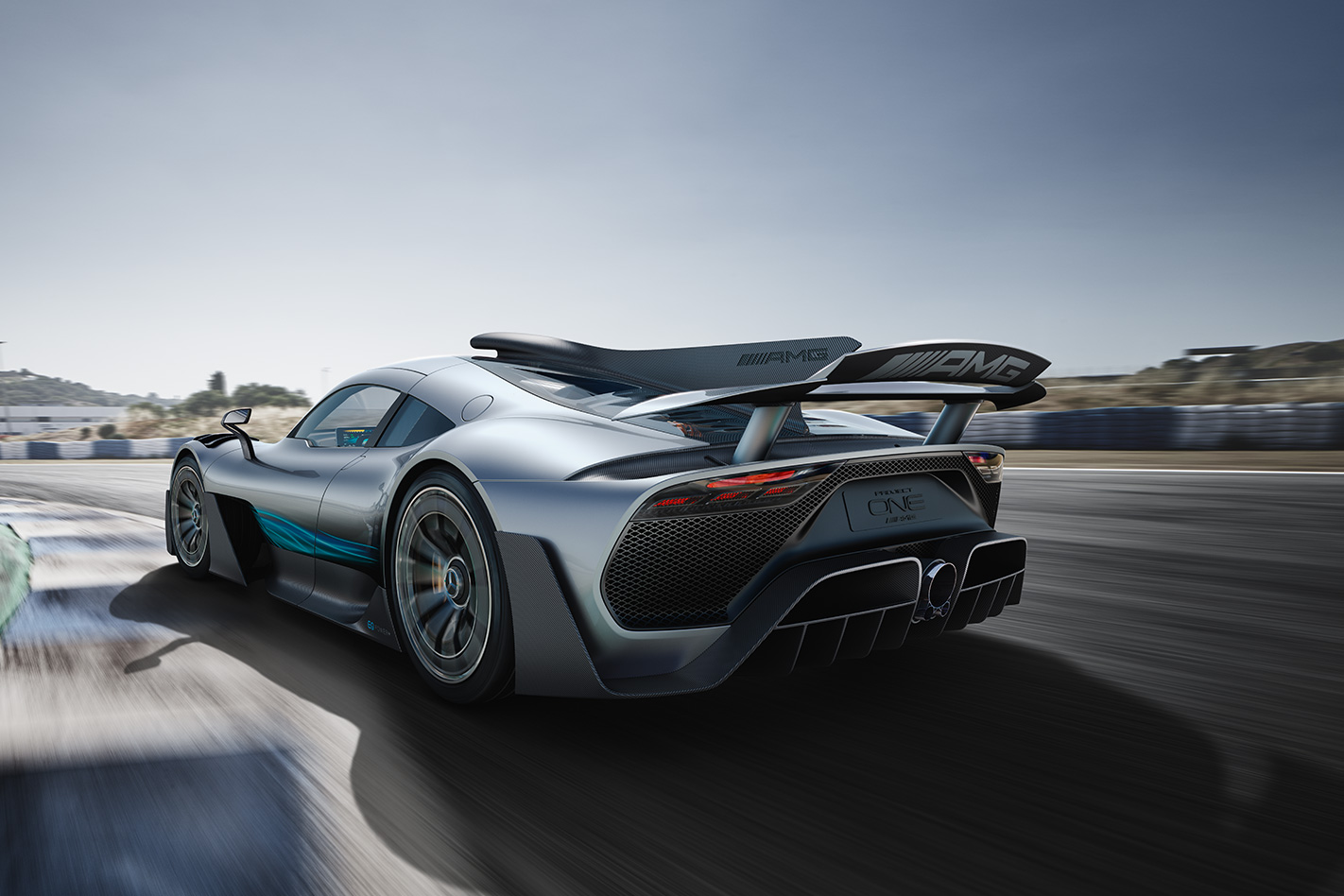
The drivetrain’s centrepiece is a mid-mounted 1.6-litre V6 with two electric motors – one bolted directly to the crankshaft to provide additional torque, the second to eliminate lag for the engine’s massive turbocharger. To allow for the stratospheric maximum engine speed of 11,000rpm, the four overhead cams are gear driven and the valvetrain uses pneumatics rather than conventional springs.
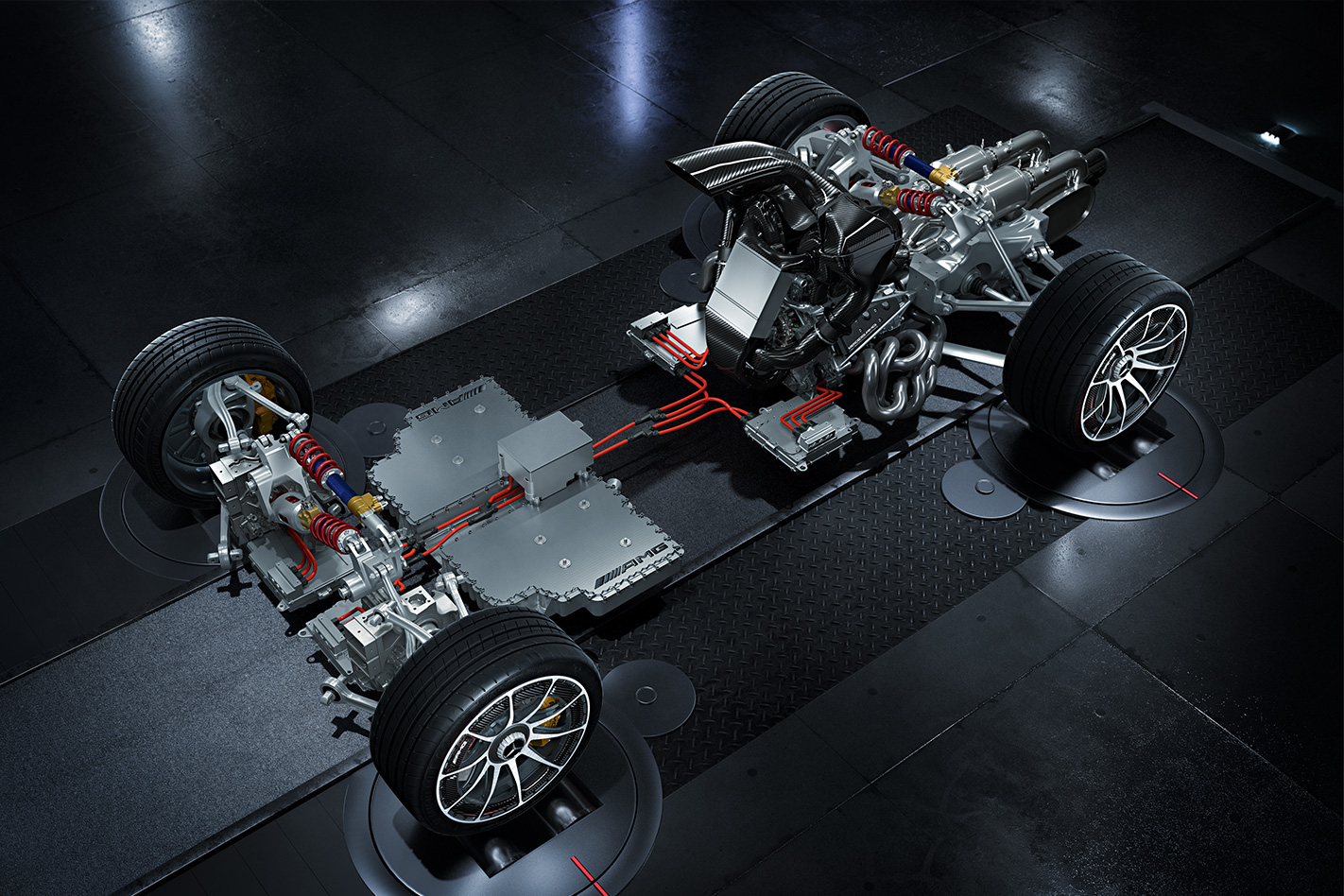
Project One’s combined system output is quoted as in excess of 740kW. That’s around the same figure as Lewis Hamilton’s race car, and enough, says Mercedes-AMG, to hurl the Project One from standstill to 200km/h in less than six seconds. For comparative purposes, the McLaren P1 and LaFerrari hit that mark in closer to seven. On a road long enough, AMG suggests a V-max beyond 350km/h.
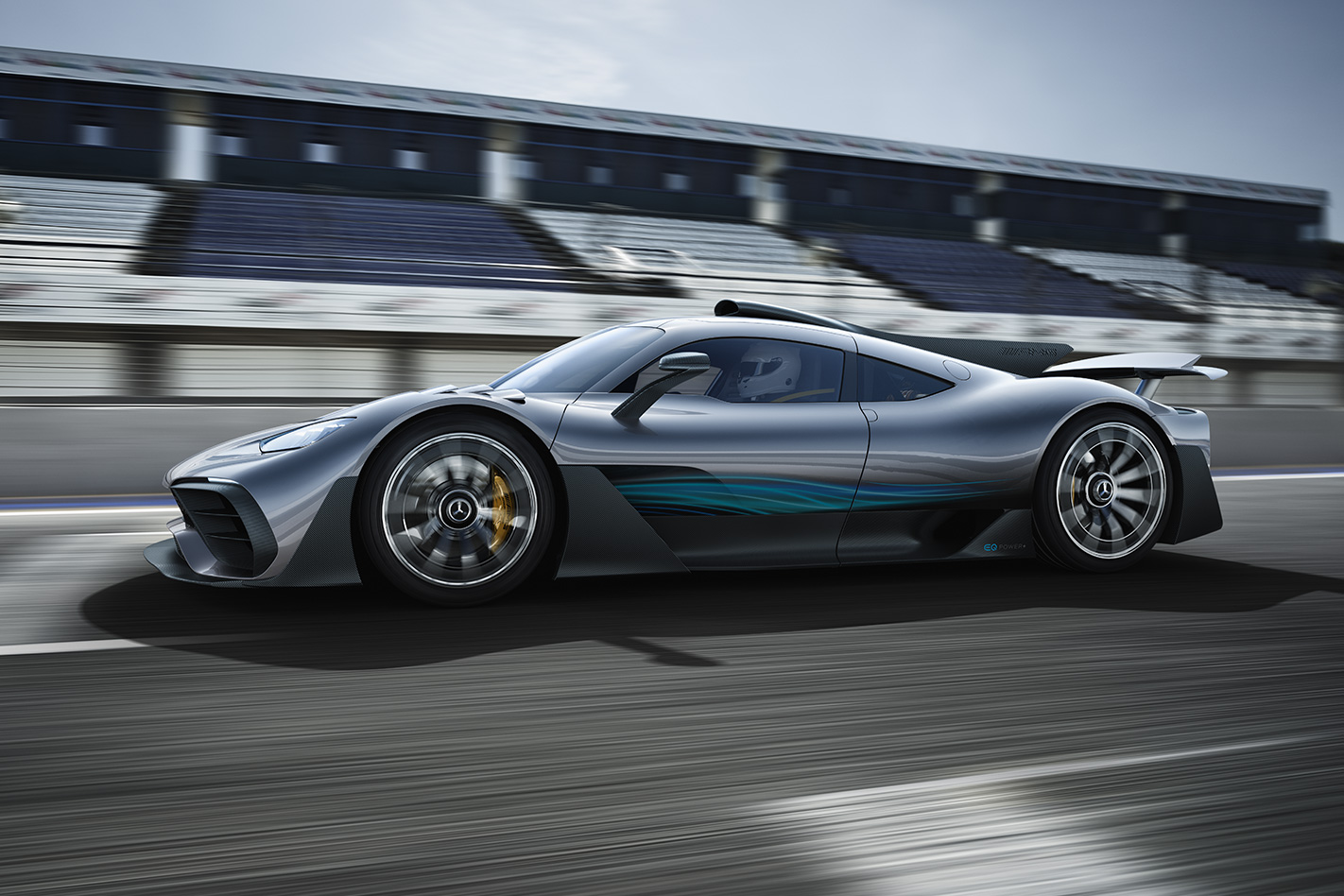
The car’s carbonfibre construction and use of the engine and transmission as a structural member and mounting point for the rear push-rod suspension is heavily F1 inspired.
Active aerodynamic aids, too, are critical to the Project One’s quest for F1-like performance. The large rear spoiler extends in two stages to improve aero efficiency and stability as the air speed increases, while a cluster of smaller fins above each front wheel also control air flow according to road speed.
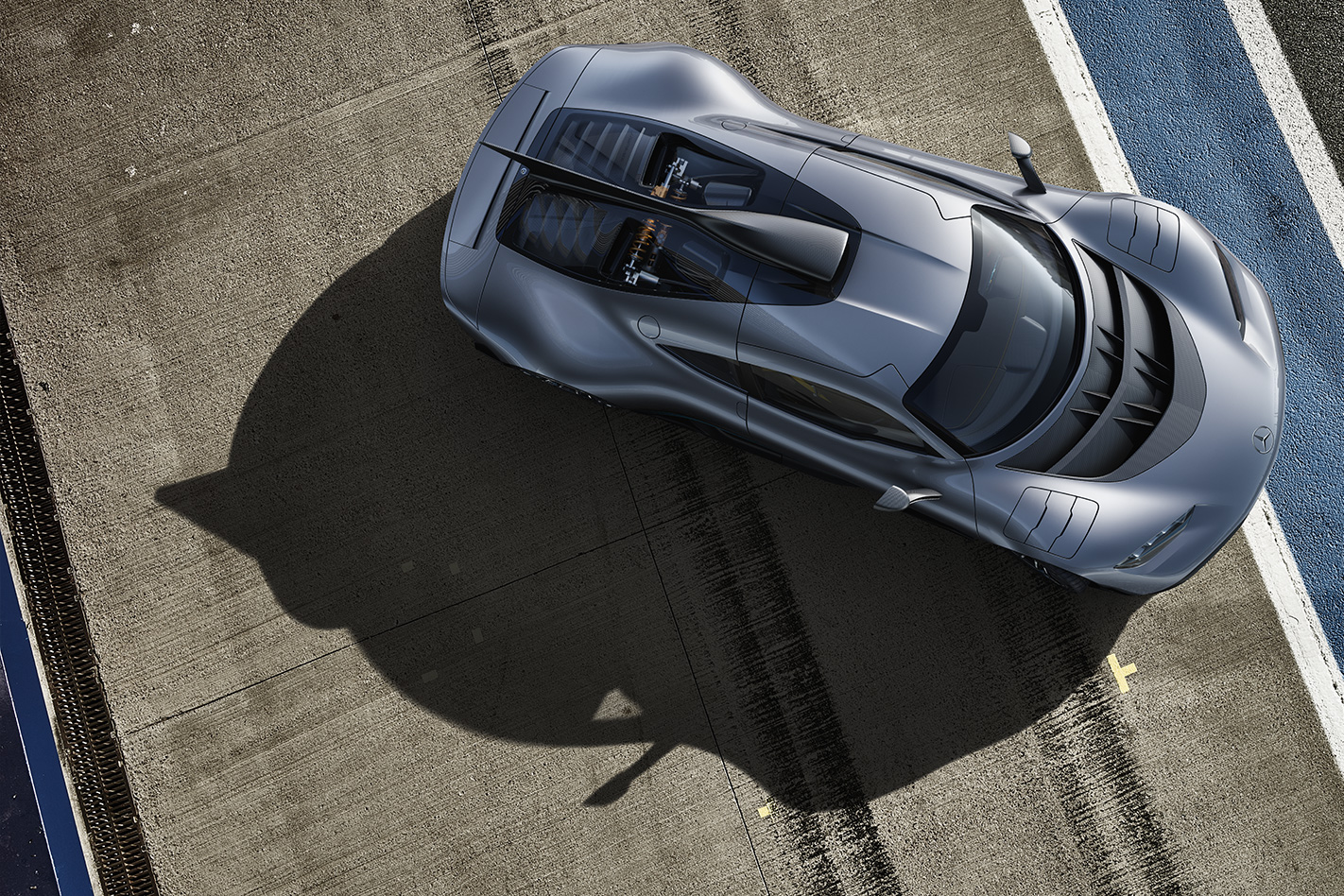
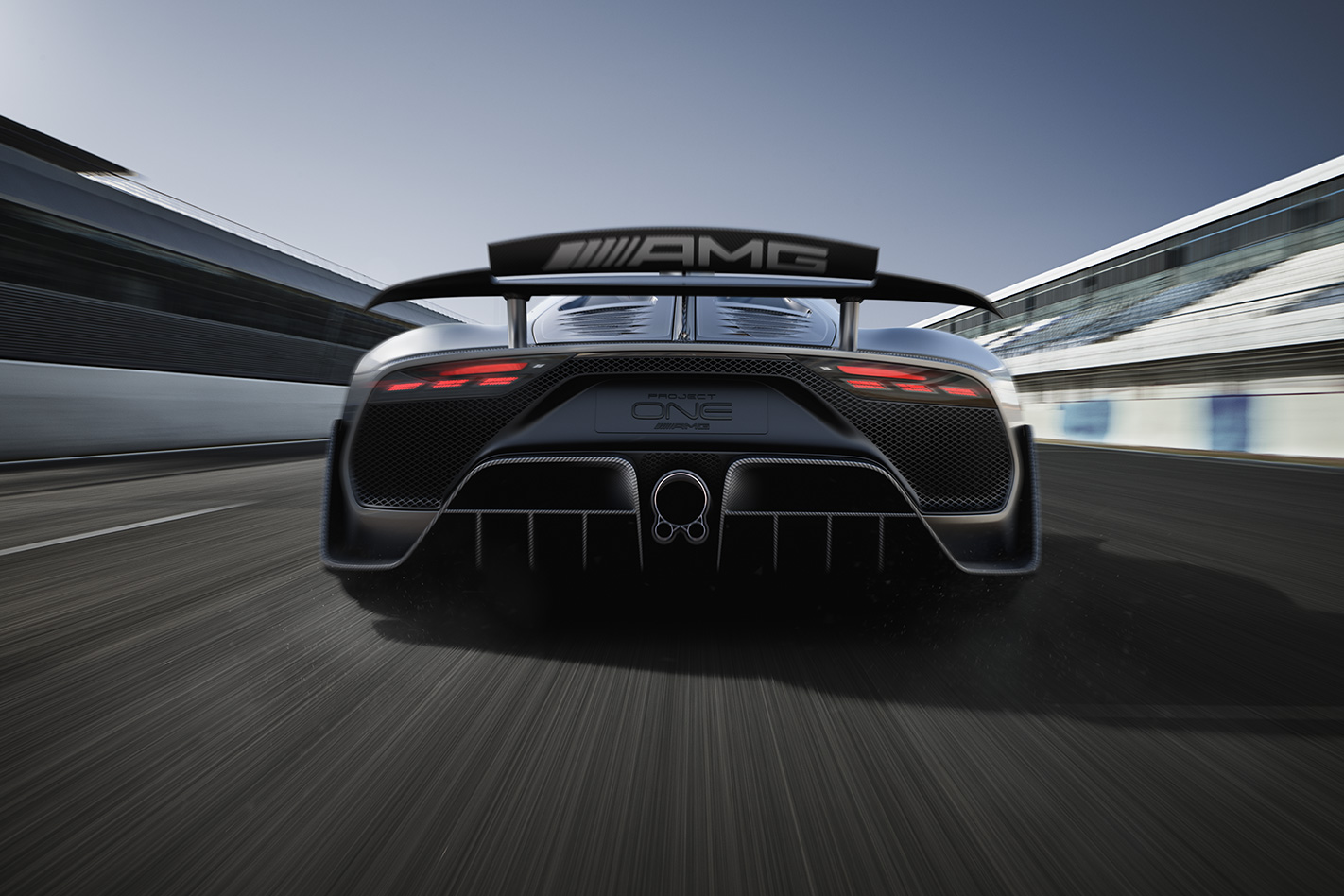
A single large-bore exhaust provides the visual centrepiece of the tail section and appears to have little in the way of silencers. Turbocharged V6 engines may have muted the F1 field on race day, but it seems safe to predict the Project One won’t exactly be subtle-sounding.
Inside is configured for two, with occupants located in place by carbonfibre seats that are incorporated into the car’s monocoque construction. The seats don’t slide, but adjustable backrests, pedals and steering wheel allow passengers to get comfortable.
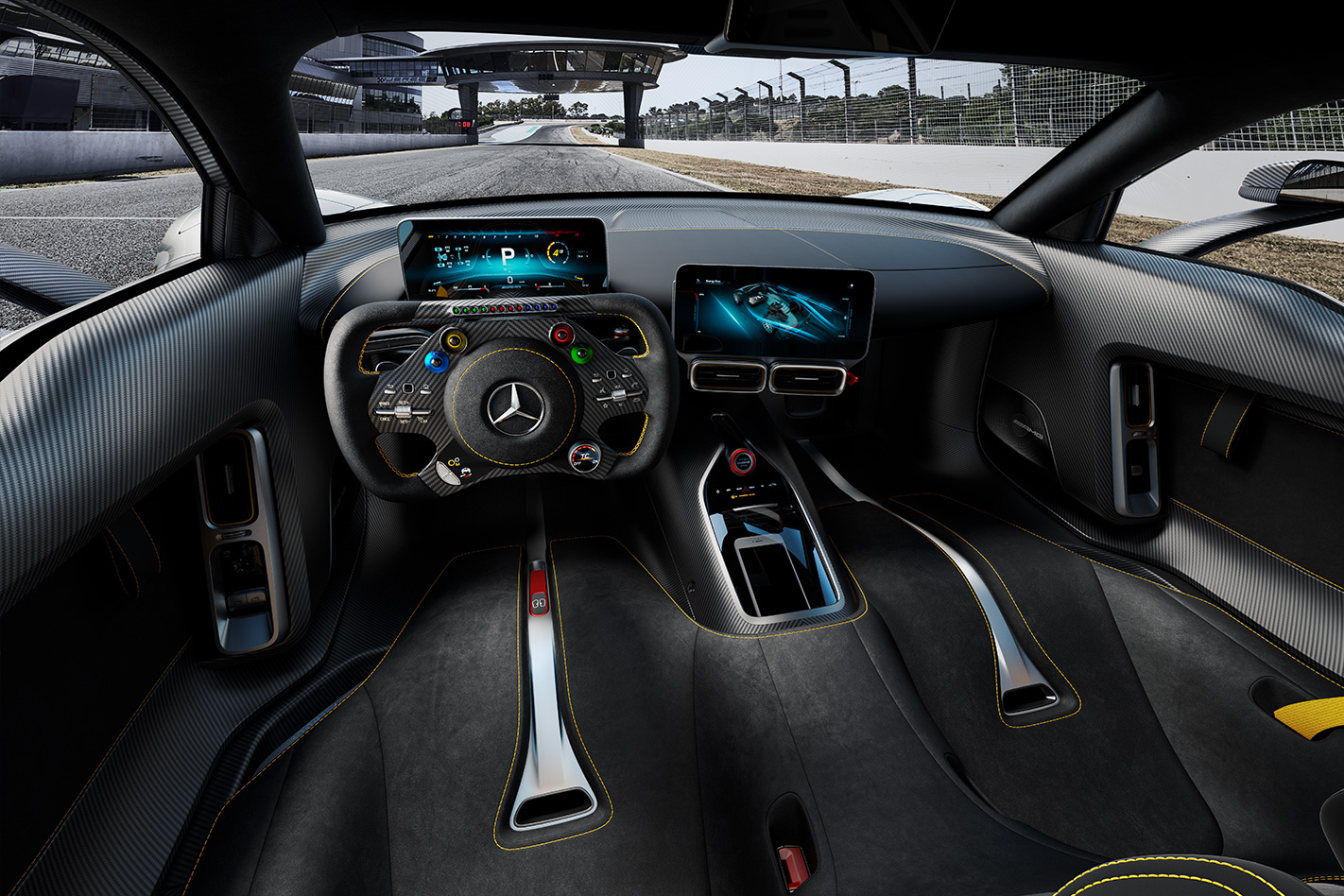
Mercedes-AMG also deemed that air-con, power windows and an audio system were essential, along with storage cubbies behind the seats, and a central compartment with transparent lid. It may have an engine lifted from an F1 car, but Project One is still a Mercedes as highlighted by window switches taken from C-Class.
The benchmarks of hypercar performance, including a Nurburgring lap time, appear to be on hold until the Project One has turned a wheel in public but, already, the mega Merc looks set to bring records tumbling.
Just 275 examples of the Project One will be built, with each selling for around A$3 million. We’re advised that nine are headed for Australia and one for New Zealand.
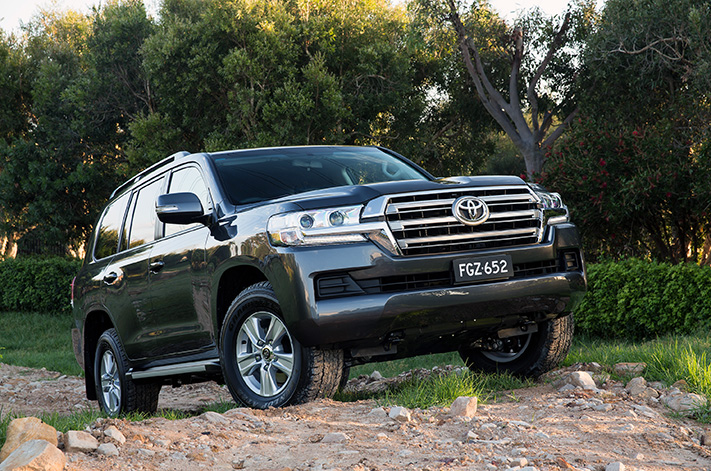
The Toyota LandCruiser 200 is the quintessential outback touring wagon with go-anywhere four-wheel-drive and comfortable ride that – sheer size aside – makes it surprisingly city friendly.
The LandCruiser comes in five or eight seat versions (three in the third row) powered by either a 227kW/439Nm 4.6-litre V8 petrol engine or a 4.5-litre twin-turbo diesel V8 that produces 200kW/650Nm making it perfect for towing a decent-sized caravan. Each engine is mated to a six-speed automatic transmission which can send power to all four wheels via an automatic transfer case.
VARIANTS
The LandCruiser comes in four equipment grades, GX, GXL, VX and the luxurious Sahara. All come with a choice of each engine except for the entry-level GX which only comes with the diesel.
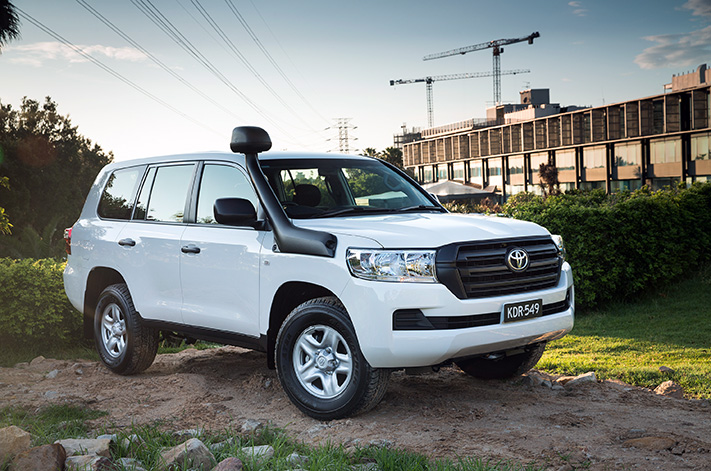
The LandCruiser GX kicks off the range at $77,461 and is work orientated so creature comforts are thin on the ground, but it does come with Bluetooth phone connectivity, cruise control, trailer sway control and crawl control, which aids off-road driving.
The GX also has unique features including a vertically split tailgate, vinyl flooring instead of carpet, steel wheels, five seats instead of eight and a snorkel-style engine air intake as standard.
The LandCruiser GXL gets carpet, leather trimmed steering wheel, 17-inch alloy wheels, a 6.1-inch touchscreen with a reversing camera and satellite navigation, dual zone air-conditioning, side steps, third-row seating, roof rails, keyless entry/start and LED headlights.
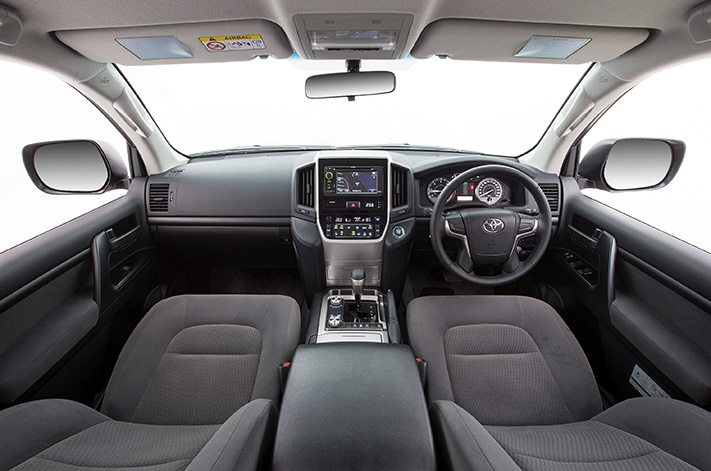
The petrol GXL comes standard with Kinetic Dynamic Suspension System (KDSS) which automatically adjusts the tension on the anti-roll bars for better on-road handling and off-road capability. KDSS is a $3400 option with the GXL diesel.Spend more again for a LandCruiser VX and you get 10 airbags, a bigger 9.0-inch touchscreen, front and rear parking sensors, rain-sensing wipers, 18-inch alloys, dusk-sensing LED headlights, daytime running lights, sunroof and leather and cloth trimmed seats with power adjustments up front and KDSS as standard with either engine.
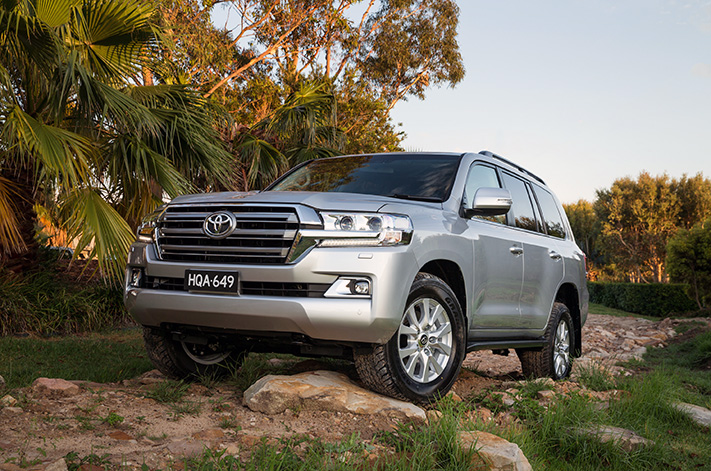
The VX also has Multi-Terrain Select, which allows the driver to tailor the stability control and traction control for different off-road conditions.
The range-topping LandCruiser Sahara has heated and cooled front seats with heated second-row seats, four-zone air-conditioning, DVD entertainment for second and third row passengers, wireless phone charger and cooler box in the centre console.
It also has a memory for the driver’s seating position that moves the seat, steering wheel and external mirror back to driver’s preferred position.
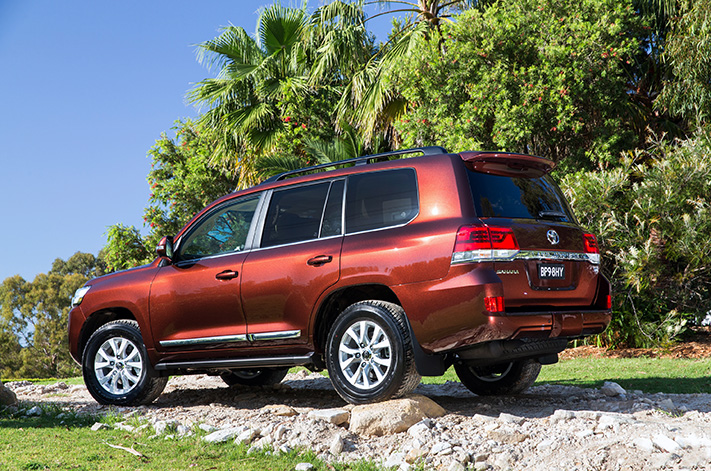
The Sahara is the only LandCruiser 200 to come with active safety features such as autonomous emergency braking, active cruise control, lane departure warning, blind-spot alert, and rear cross-traffic alert. It also has a Multi-Terrain Monitor, which uses four cameras to display obstacles on the touchscreen that might otherwise be obscured.
- LandCruiser GX diesel – $77,461
- LandCruiser GXL petrol – $83,441
- LandCruiser GXL diesel – $88,541
- LandCruiser VX petrol – $93,781
- LandCruiser VX diesel – $98,881
- LandCruiser Sahara petrol – $115,201
- LandCruiser Sahara diesel – $120,301
The only downside to choosing the twin-turbo diesel is paying a $5100 premium but it’s a far better option that gets you a heap more torque for towing or getting through the rough stuff. There’s also a significant fuel economy advantage – 9.5L/100km compared to the petrol’s not-so camel like 13.4L/100km – which results in a not inconsiderable 400km extra range.
The GXL diesel fitted with the optional KDSS is our pick, though the GX is good value for serious off-roading in remote areas.
AVAILABLE OPTIONS
- KDSS (GXL diesel) – $3400
- Snorkel – $520 (GXL, VX, Sahara) – $520
- KDSS and snorkel (GXL diesel) – $3930
- Premium paint – $580
“IT IS absolutely the finest car produced in Australia, probably the finest car built in the world.” Normally, any journalist worth his salt would dismiss such a statement as a figment of a fertile imagination, especially when it is said, not of a Rolls-Royce or Mercedes-Benz, but of a Holden.
But when it comes from a man with the track record of Joe Whitesell, chief engineer of General Motors-Holden’s, it must be treated with respect, the more so when you know it’s a claim he believes can be totally supported.
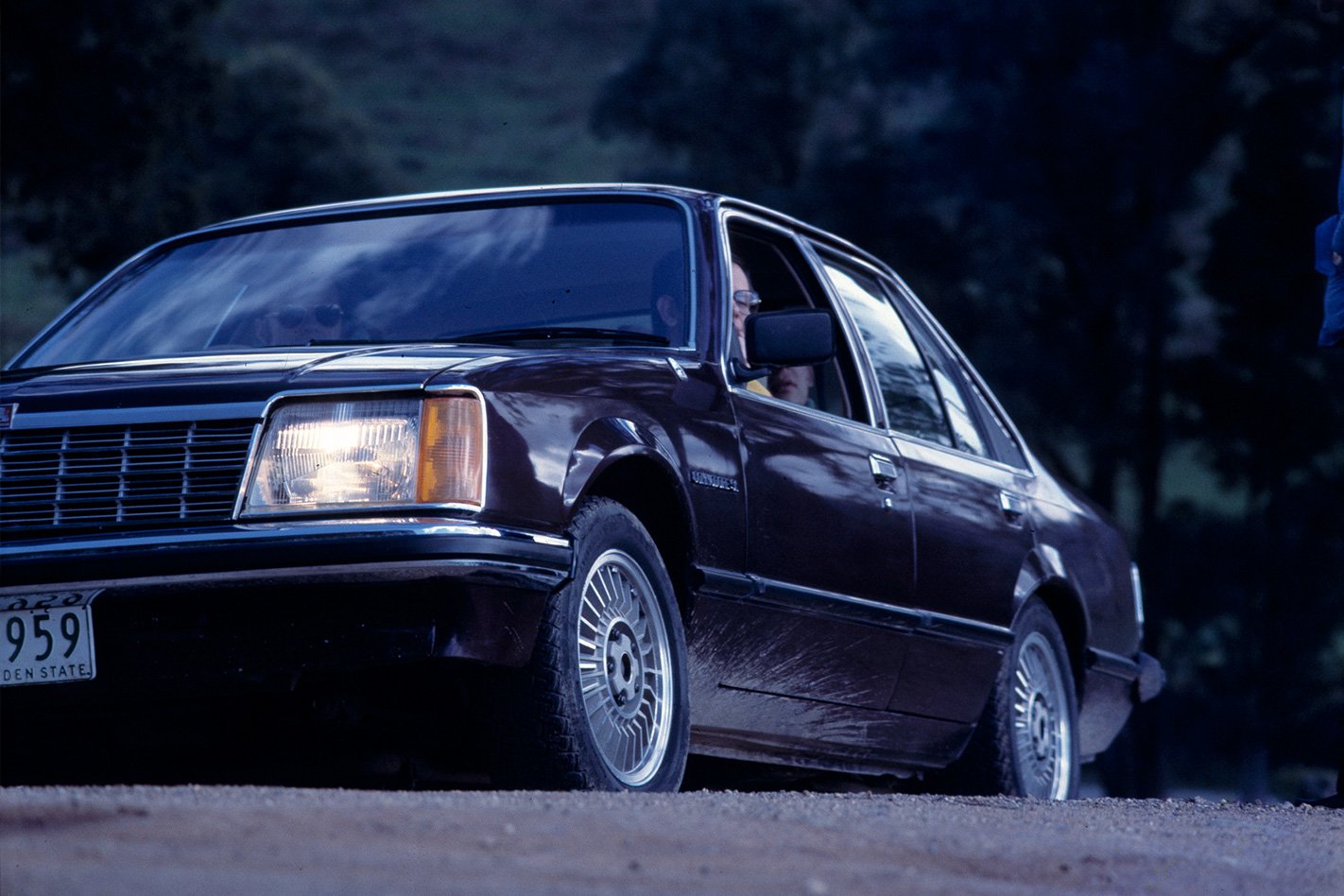
The statement is Whitesell’s way of emphasising that the Commodore “is not an Opel” and really is “The beginning of a new era in motoring in Australia.” Strong, indeed proud words and they’re repeated often during the day until our initial scepticism is almost swept away in a tide of enthusiasm for what is a brilliant – perhaps great – car.
Our final verdict will have to wait, of course, until we’ve had the chance to road test the Commodore in familiar surroundings and through our established test routine. But we now know enough to say that Ford, Chrysler, and the Japanese are confronted by a roaring lion, fully awake and painfully aware of the dangers after his long, arrogant slumber.
The Commodore must represent a new era in Australian motoring if for no other reason than it is the first family-sized Holden since the 48-215 that has not been designed and developed purely in Australia – and even the first Holden was to be an Australian-only product. The coming of Commodore means that there is very little chance of a wholly-Australian car ever happening again, at least from GMH and probably from the entirely local industry, after the XD Falcon.
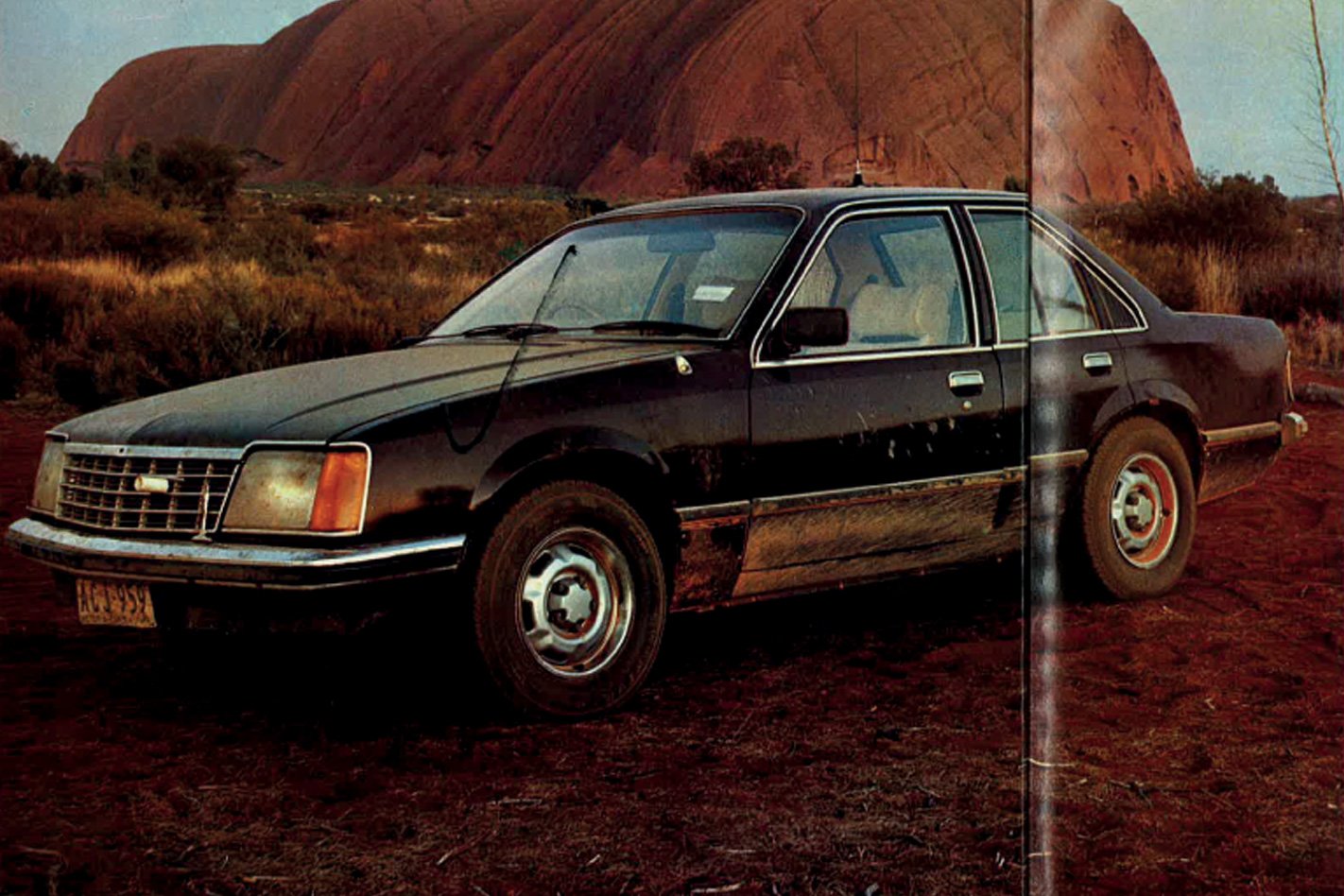
The Chapman/Whitesell team, which has so dramatically changed the philosophy and therefore the cars of GMH, was largely responsible (along with stylist Hank Haga) for the Opel Rekord. But the need to make the Commodore at least 85 percent local (local content is at 85-88 percent now and will rise to 90-94 percent early next year) allowed The General much latitude in tooling so any areas they were unhappy about could be modified or even completely changed to produce a better car.
Having driven the top-line Opel Senator, which is based on the Rekord but has a fuel injected, three-litre six-cylinder engine and independent rear suspension, I can only confirm the view that GMH has indeed built a superior car.
The General believes the Commodore will be the top selling Holden in 1979 – and the top selling car in Australia – although it is only available as a four-door sedan, in three forms, with a station wagon to follow in March/April next year. In exterior size – as we’ve pointed out before – it fits neatly between the Torana and Kingswood, and ultimately it will replace either one or, perhaps even, both. GMH is honest enough to admit it doesn’t know.
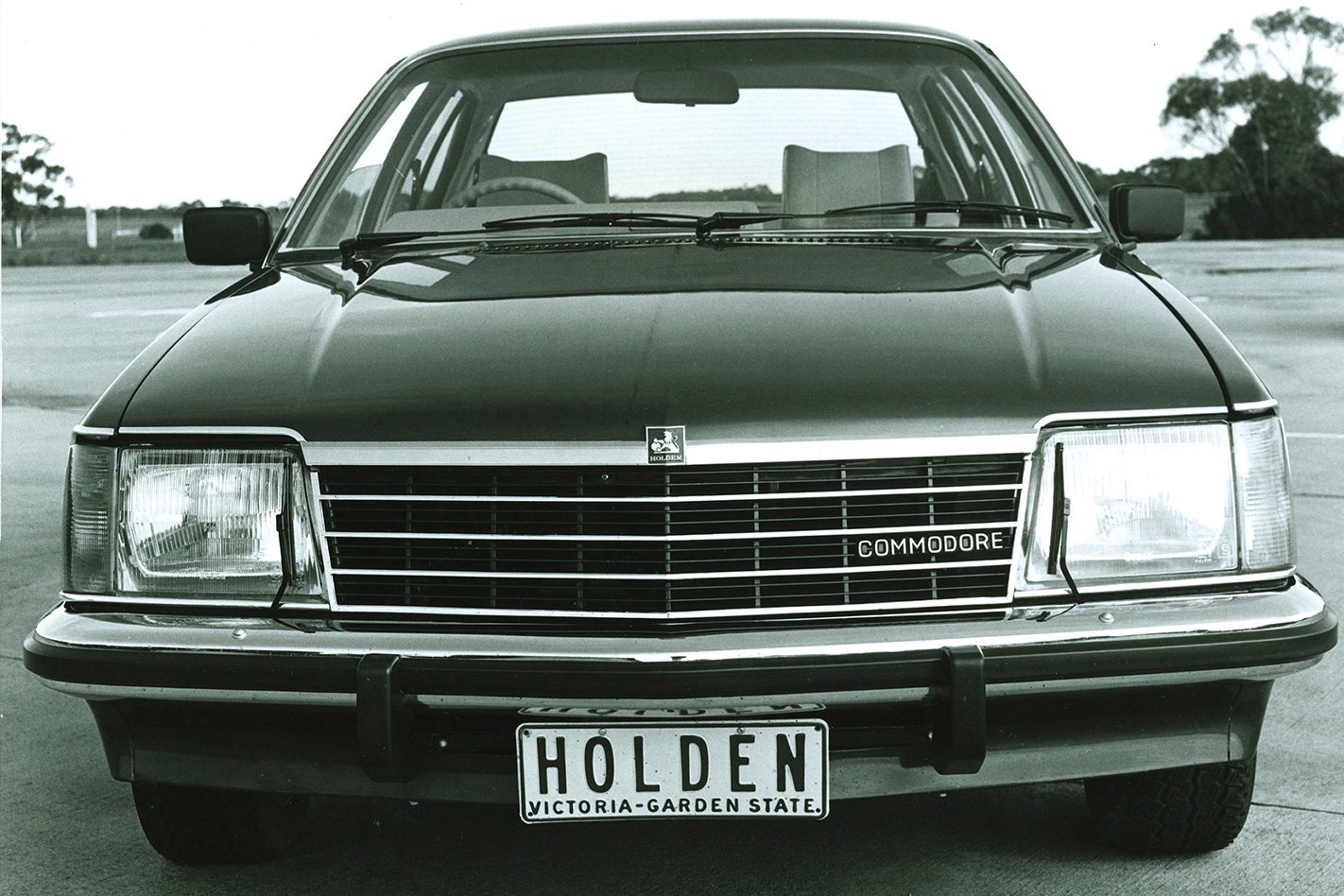
Development work on the V-car program began in Germany in 1971 and even in the preliminary stages it was designed to accommodate engines from all GM’s overseas operations including the Holden eights and sixes. But it was not until early in 1975 that GMH decided the V-car had the potential to become a local best seller. After research clinics in November 1975, July 1977, and August this year it now believes it has a car which will meet the needs of the majority of Australian motorists in the 1980s.
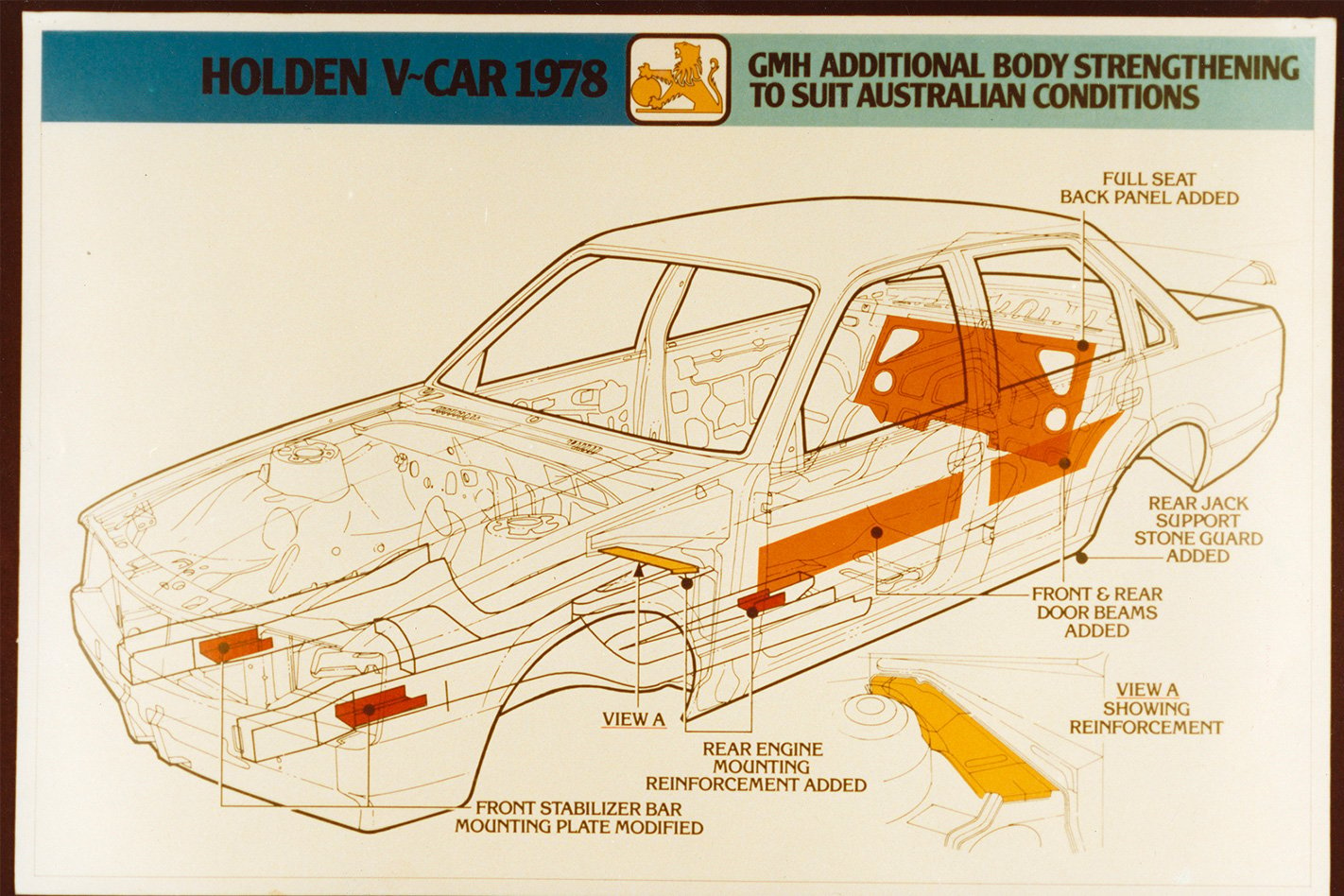
GMH explains the Commodore’s space efficiency by comparing its shadow area – the rectangle formed by the car – with the Torana and Kingswood. The Commodore is five percent bigger than the Torana and 14 percent smaller than the Kingswood, and yet it has 96 percent of the bigger car’s interior room. The only dimension where it suffers by comparison with the Kingswood is in shoulder width where it is about 40 mm narrower but still wide enough for it to be regarded as a full five seater. Also significant is the fact that the Commodore has 14 percent more glass area than the Torana and 4.3 percent more than the Kingswood. Proof that it has an extremely low waist line and large rear window.
But space efficient cars are not necessarily strong cars and GMH’s engineers had to ensure that the traditional Holden qualities of durability and reliability were retained. The Commodore is 130 kg lighter than a comparable Kingswood and only 38 kg heavier than a similar Torana.
The Rekord was designed using the latest “finite element analysis” computer technique, which stress analyses every area of the car’s body to maximise strength and durability while minimising weight. VW used the same process in designing the Golf.
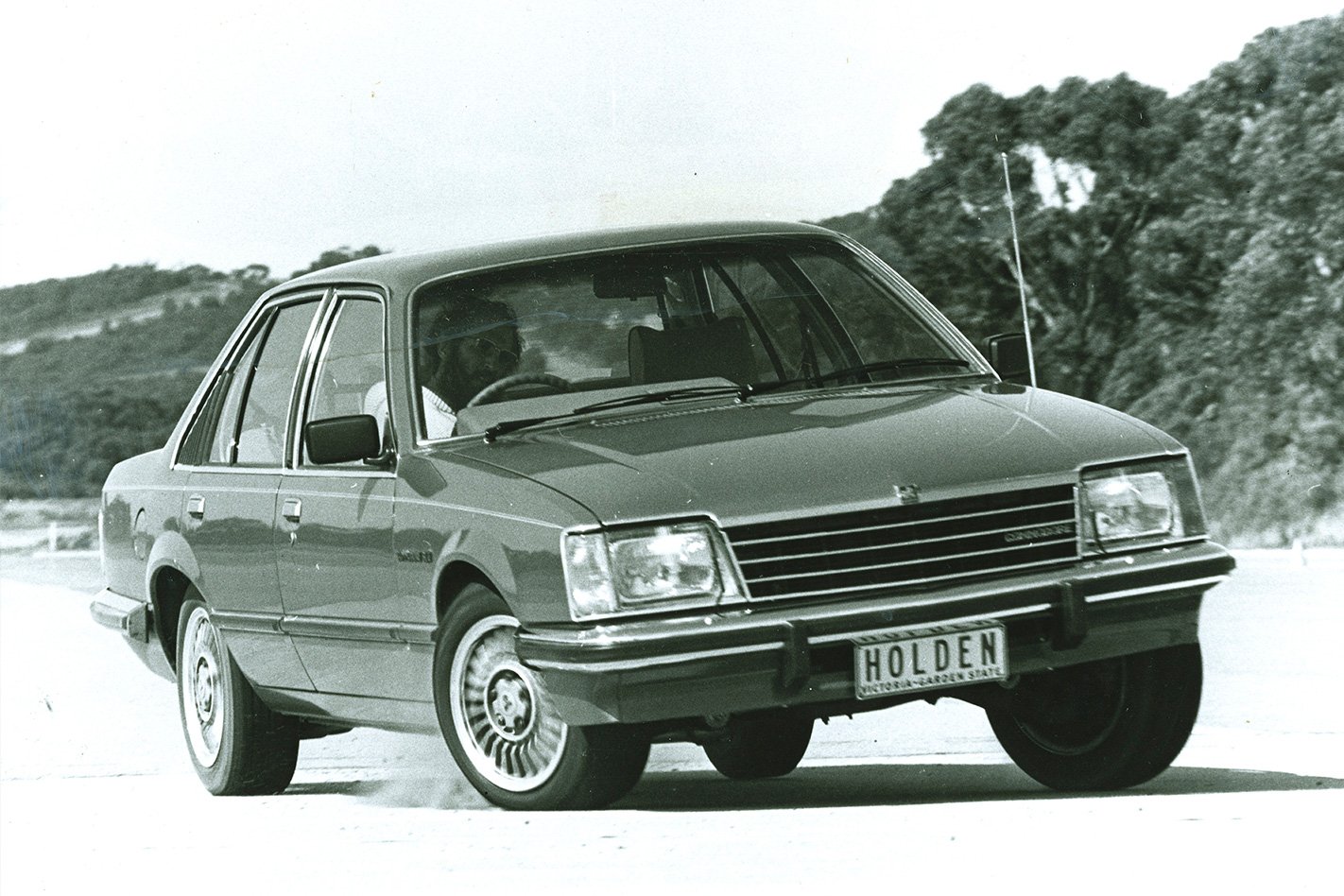
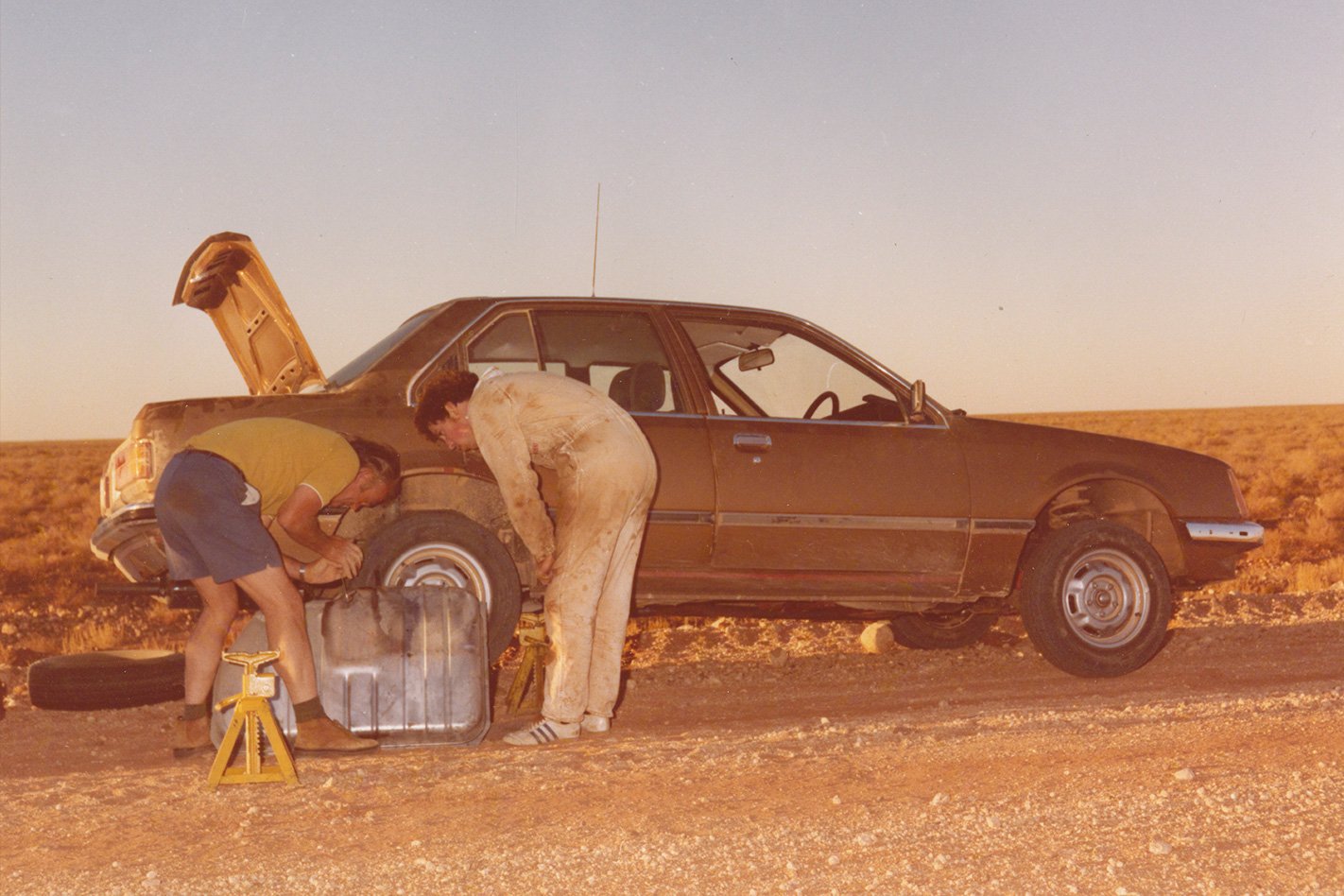
For a while The General considered building two cars – one capable of withstanding all that tough Australian roads could throw at a car and the other suited for normal commuter type work. Sales volumes ensured that only one car be built … we got the tough version. From load spectrum data GMIH has collected on a wide variety of local roads it believes cars in Australia have to absorb three to four times as much punishment as experienced in Europe.
Over 270,000 kilometres of road and proving ground tests in all states of Australia exposed other problems which meant fitting a closed box section from the MacPherson strut front suspension tower to the firewall, a modification to the front stabiliser bar mounting plate, reinforcement for the rear engine mounting, the addition of a full back seat panel, a stone guard support for the rear jacking point, and front and rear door beams.
Now GMH believes it has a car which combines the best of its European design talents with the strength expected from a Holden. It is a formidable combination. Opel used Pininfarina’s wind tunnel to style the car. According to local styling chief Leo Pruneau “you let the tunnel tell you what the car will look like”. Which is probably the perfect answer to anyone who questions why so many of the new designs coming out of Europe tend to follow a look-alike path with the same sloping nose treatment.
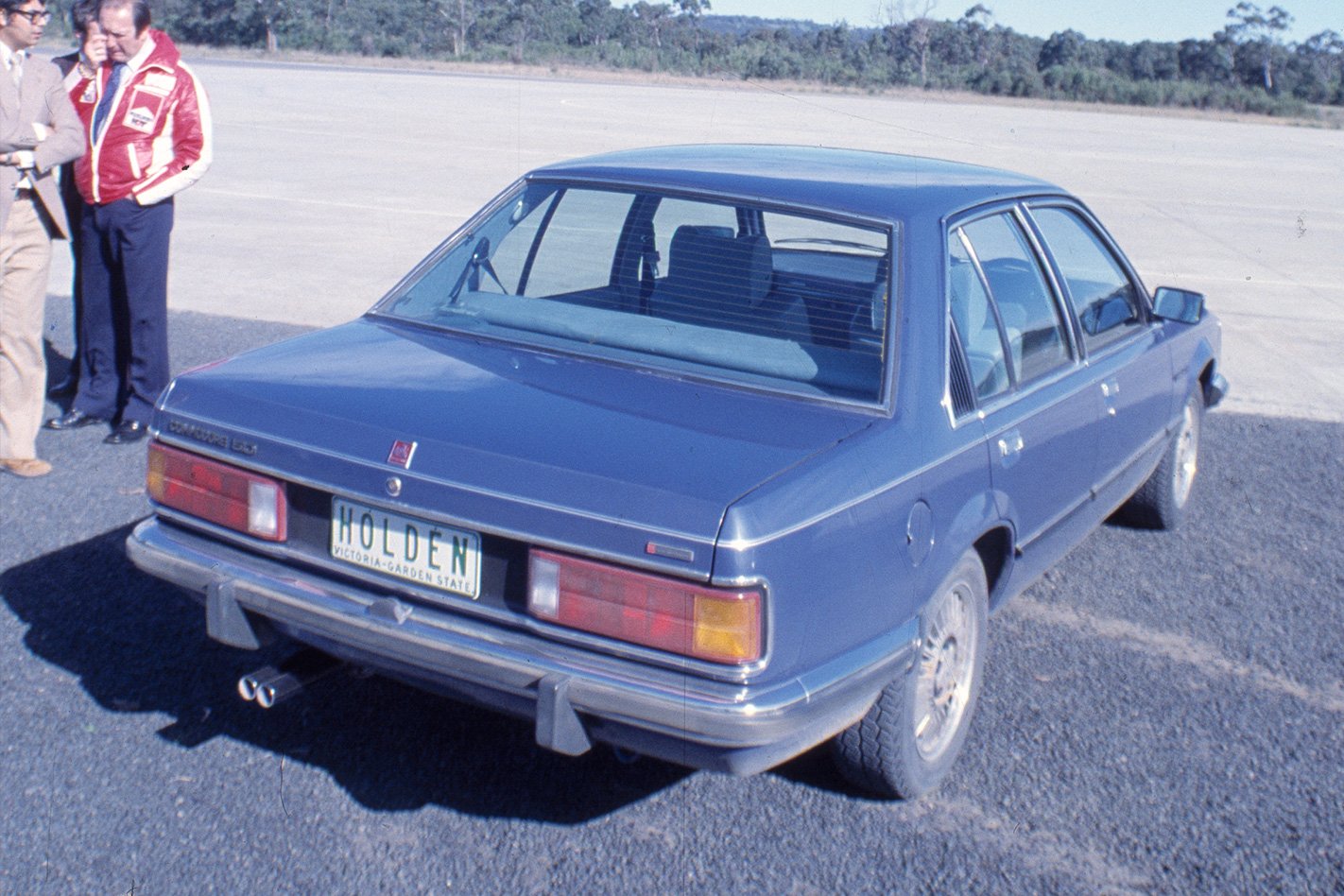
More importantly, the wind tunnel allowed Opel’s engineers to ensure straight line stability is good, that wind noise is kept to a minimum and that any lift forces are reduced. Our brief drive did nothing to indicate the engineers and stylists got their homework wrong.
In addition to producing a body which looks attractive and is strong, GMH went to a great deal of trouble to ensure it can also combat the dreaded corrosion. The Commodore uses a single sided zinc pre-coated steel and all vital areas also get zinc rich pruners or tectyl coating. In fact about one kg of zinc is used on every car. There is also a corrosion resistant prime dip and a wax spray. The General’s objective is for there to be no body panel perforations before 10 years in 95 percent of cars operated in south-east Queensland.
In search of a more comfortable ride, Opel’s engineers adopted a MacPherson strut front suspension. While understanding the advantages of such a set-up, GMH must have been concerned about the durability of the struts in local conditions, especially in view of the poor durability displayed by struts in some British and European cars.
Instead of the cartridge type struts used on the Opel, GMH has developed, with local suppliers Monroe-Wylie and Armstrong, a “wet” strut design. The outer structural tube is filled with liquid which dissipates heat through its large surface and reduces the internal temperature, thus minimising fade.
GMH claims the strut allows precise damping control due to its direct attachment to the wheel and that castor and camber can be easily adjusted one degree plus or minus at the top of the struts.
The front spring rates – the coils are linear rate and not progressive – are almost 50 percent higher than those on the Kingswood and this has been largely responsible for the significant increase in ride comfort. A front anti-roll bar of 23 mm diameter is linked to the lower control arms and passes through rubber bushings mounted on the front sub-frame.
progressive rate rear coils provide 40 mm more suspension travel than the Kingswood – again for improved ride comfort – but still without impairing the precise handling or making for a reduction in roadholding.
The system also makes for a very quiet ride. All cars get a rear anti-roll bar that is mounted directly to the body. The rear dampers are mounted vertically and close to the wheel. There’s no talk of the German independent system being used locally. GMH claims it’s not needed.
Steering was another area in which Holden’s second go at the V-car design meant a genuine improvement over the Opel.
All cars have steel belted radial ply tyres on six inch rims as standard, the six-cylinder models get CR78 S14 tyres, the V8s CR70 H14s, and the new 60 aspect ratio Uniroyal and Olympic BR60 H15 are standard on the SL/E and optional on other models with GMH’s own alloy wheel.
The local engineers have also developed two new braking systems which give a good front and rear balance and restrict lock-up to the point of virtual elimination. They also change the old over-servoed feel of previous Holden brakes to a much firmer pedal with more progressive feel. The base system used on the Commodore and Commodore SL is a disc/drum set-up, the SL/E gets four wheel discs which are optional on the other models. Both share the same vented discs at the front with new lightweight sliding head, front calipers (locally developed with Girlock), and a lightweight master cylinder with in-built proportioning valve. The rear drum brakes have a new GMH manufactured leading/trailing system which maintains good balance and incorporates a self-adjusting mechanism. The rear discs have a similar sheet metal caliper design (it saves five kg over a conventional rear caliper) to those at the front but it incorporates a mechanical duo-servo drum brake for the hand brake.
GMH says 65 percent of the parts in the Commodore are Holden designed and developed, the biggest single contributor to this must be the local six and eight.
Three on the tree is dead. Even the base Commodore has a four-speed manual gearbox and the SL has the Trimatic automatic with console shift as standard. Four-speed manual and Turbo-Hydramatic transmissions are optional on selected models. The four-speed is the Philippines box and is a little notchy in its change action. The clutch is cable operated but on the V8 is sufficiently heavy in its action as to be out of character with the rest of the car.
The propeller shaft is a two piece design with rubber insulated centre bearing and a constant velocity centre joint. GMH’s new found emphasis on noise and vibration has meant the tail shaft has been tuned to match the smoothness of the rest of the car.
With the help of a Fourier analysis computer and a very thorough examination of all relevant areas the engineers have built an extremely quiet car. Noise and vibration has been reduced at their source, natural resonant frequencies of all major mechanical items have been moved outside the driving range and dampening has been used where it was not possible to isolate its natural frequency. This has meant that door seals, the shape of the drip mouldings, the compound of the rubber bushes and even such items as the brake lines, wiring harness, seat springs, and door handles have been designed to eliminate all possible disturbances. The result is a super smooth, quiet car.
The standard ventilation system has a four-speed fan and is capable of changing the air inside the car two and a half times every minute. There are four dashboard vents and two additional vents at foot level; it seems to work very well.
The air-conditioning system is controlled by just one turn knob and uses the same vents as the standard ventilation. It can direct warm air to the feet and cool air at the upper levels. The interior is modern without being revolutionary. The glove box is a bin type and there is a small recessed tray atop of the dashboard in front of the passenger. The instruments and heater/air-conditioner use printed circuits.
The General believes 50 percent of Commodores sold will be the base car, 30 percent SLs, and the rest SL/Es. How Australians will take to a smaller, more efficient and very un-Holden Holden remains to be seen, but we can only agree with an engineering friend who has been involved with the car at the component level, who says “if the Commodore doesn’t succeed then we all deserve to be driving Datsun 200Bs”.
More strong words, but the claims have been made and in future issues we will be striving to discover their truth or otherwise. Somehow we don’t think we’ll be disappointed.
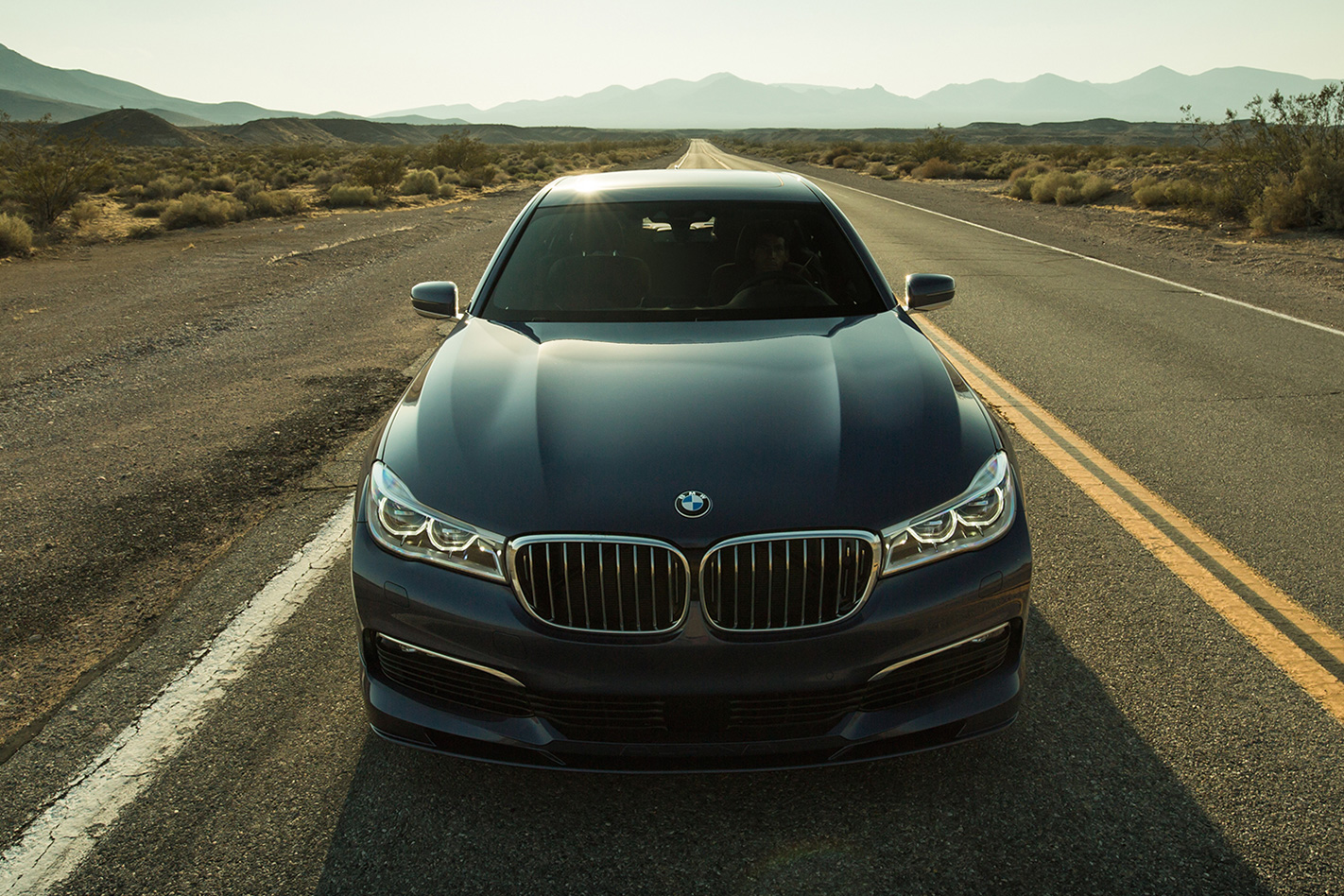
The Alpina B7, based on BMW’s 7 Series, is a 4.4-litre twin-turbo V8 limo which will travel to 100km/h in a claimed 4.2 seconds.
And now you can buy one.
But there’s a catch. With a list price of $272,000 – that’s before the eye-watering GST ($27,200) and luxury car tax ($70,520) – Aussie buyers will be forking out an RRP of $369,720 to get one in their garage.
Alpina Blue or Alpina Green paint is an extra $6409, while a surround sound system upgrade will set you back $10,561.
In the back seat, the Executive seating option will cost $3205, and a rear console is another $5561.
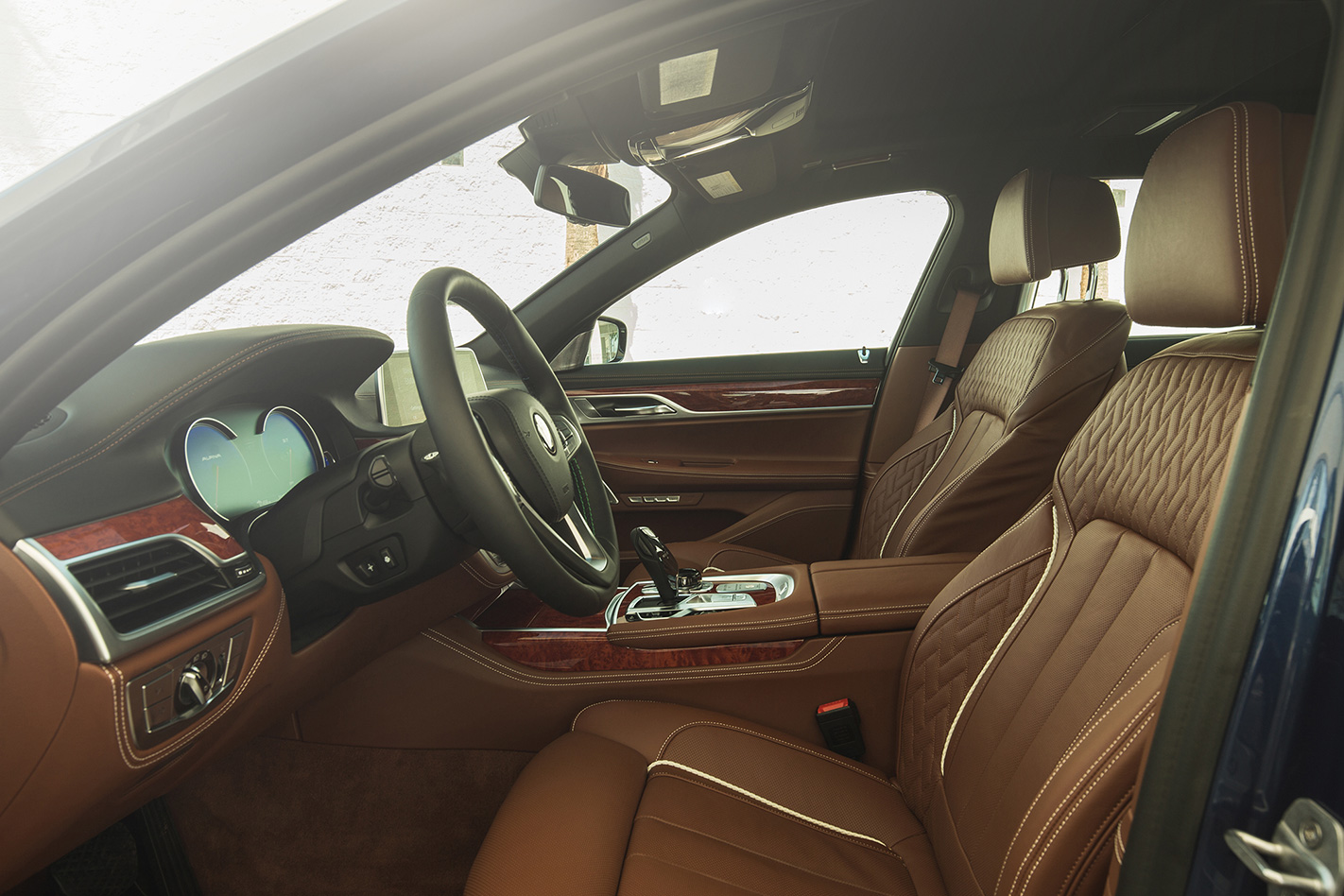
Still, the B7 doesn’t cost as much as it does to buy a BMW M760Li xDrive at $425,000. And you get a little more grunt from the B7, with 447kW topping the Bimmer’s 441kW. Both have 800Nm, though.
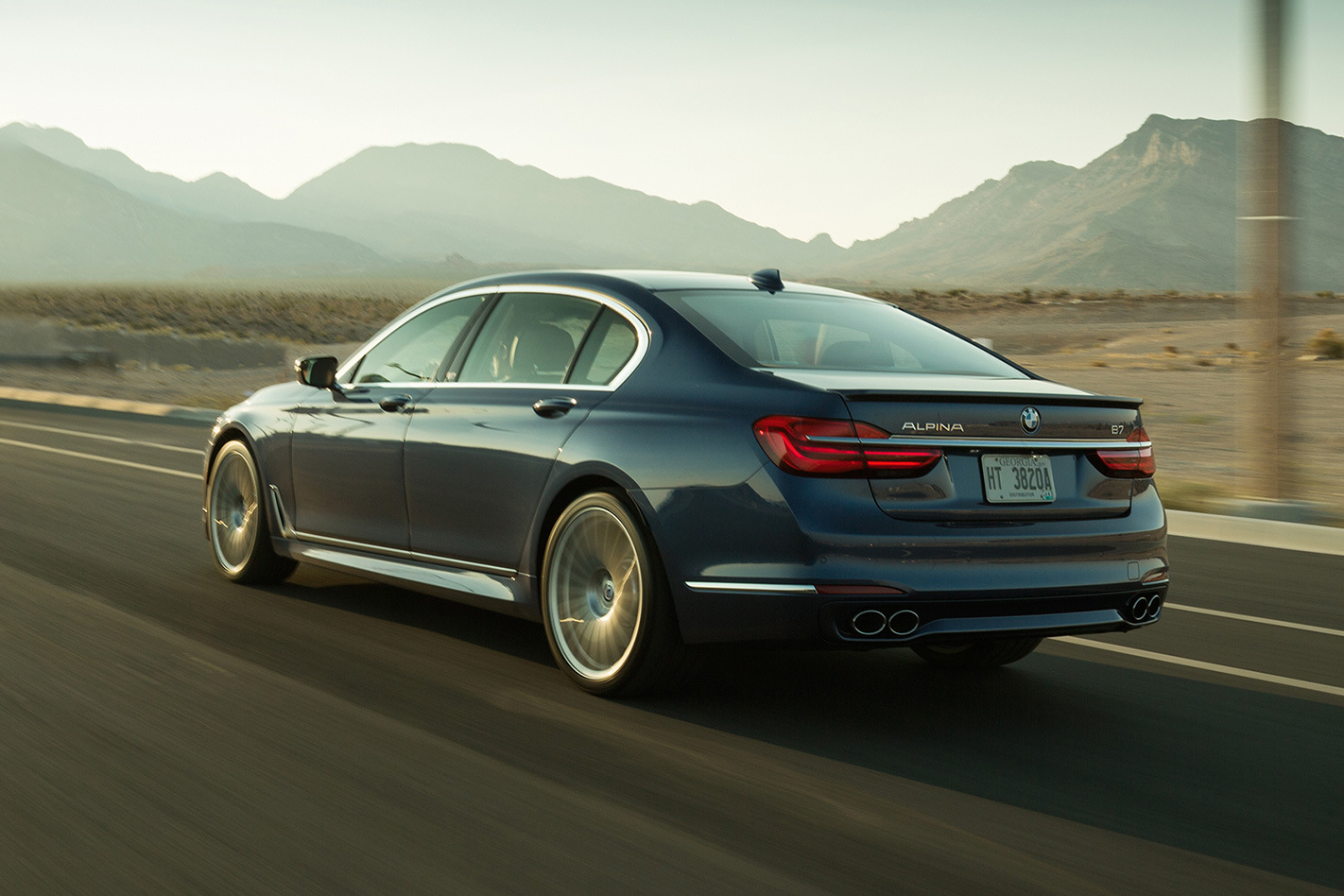
Even still, Alpina says the steering and “extremely rigid” body provide a driving experience that’s “usually the domain of smaller performance vehicles,” but we’ll let you know when we can give a definitive answer, because we haven’t gotten our hands on one in Oz. Yet.
The Tread Mill
AUSTRALIA’s voracious appetite for premium and high-performance cars suggests buyers are increasingly willing to spend up big in order to enjoy their motoring. Yet, at the same time, Wheels’ tyre industry sources say there are plenty of people who will cheap-out when it’s time for a new set of rubber, inadvertently removing handling and stopping performance from their car.
Those that fork out for a fast car would likely do the same for high-quality new tyres, and we can certainly see the value in spending an extra $10K to step from a WRX to an STI, or from a Golf GTI to an R. But what we just don’t get is how to rationalise increasing your car’s stopping distance and reducing its cornering grip and feel, just to save a couple of hundred bucks on tyres.
Without giving too much away, the magnitude of the difference between the best and worst rubber on the 2017 Wheels Tyre Test was 3.2 metres of braking distance in the dry, and 4.6 metres in the wet, which sounds to us like enough of a reason to choose decent tyres.
The difference in lap time on the handling circuit was 1.85sec, which seems like plenty even before you consider that the two-lap dash takes less than 60 seconds. And we didn’t even test any truly dud tyres…
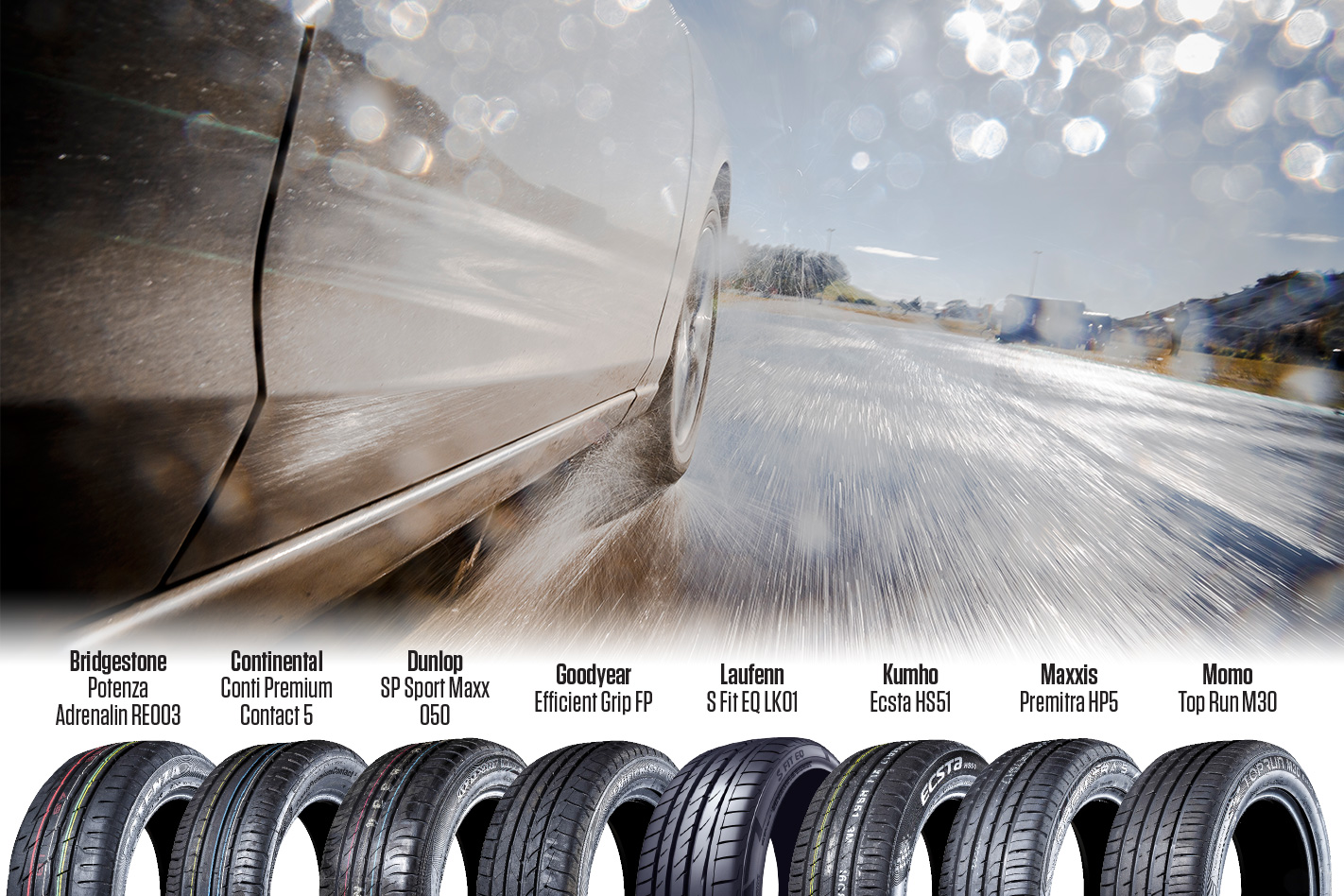
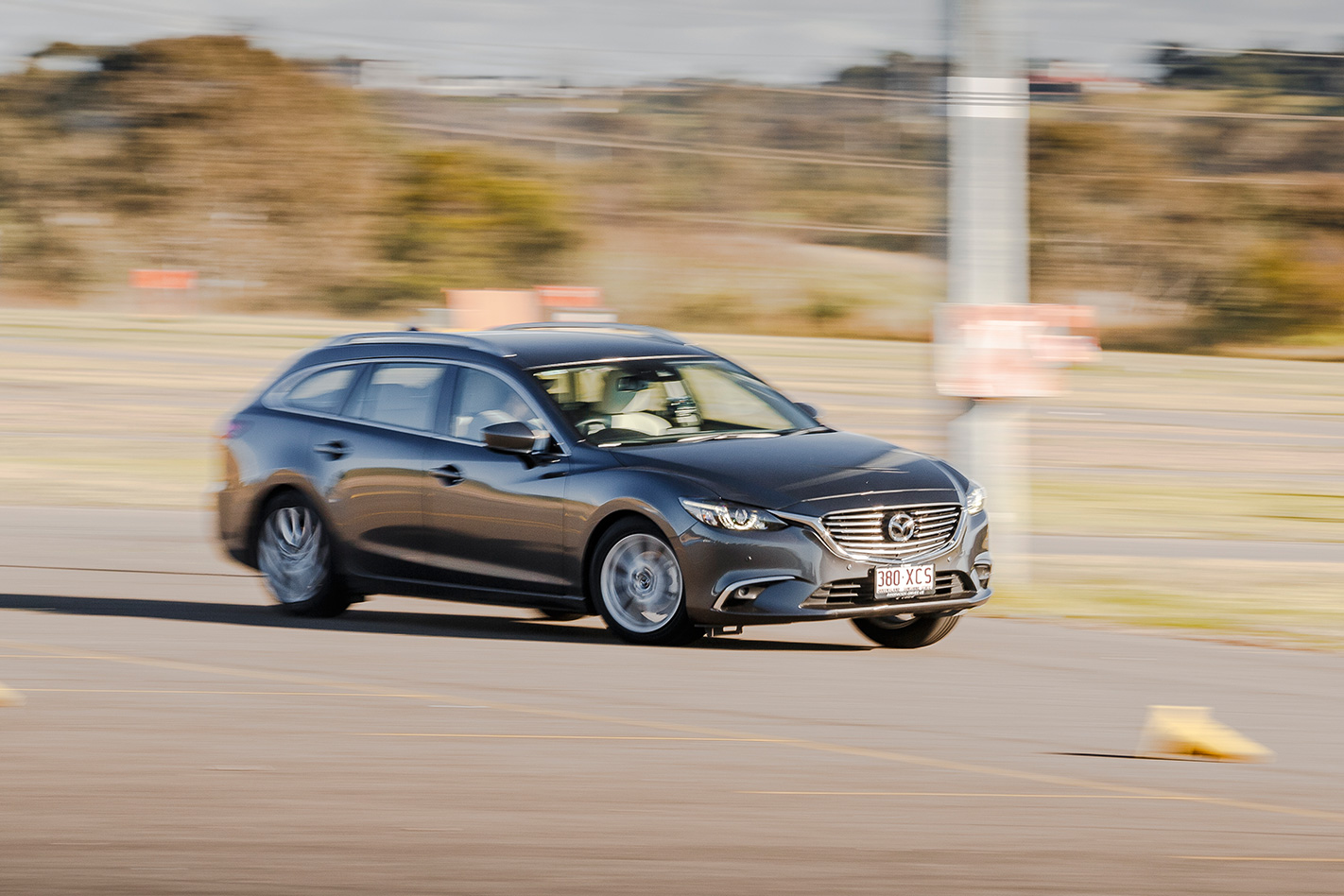
The tarmac surrounding the Sydney Dragway scrutineering shed provided the venue, and the stopwatches and Racelogic Performance Box offered up the data. Seasoned Tyre Test steerer Renato Loberto guided the Mazda 6 Touring wagon while cutting to the core of tyre performance with his insightful observations.
After taking a tyre noise reading at a 60km/h cruise, Ren ripped into a series of hot laps of our compact handling circuit, which served to scrub the surface of the tyres. This led into a trio of circuit sprints against the stopwatch. Then Ren rolled into the slalom and dry braking test, followed by three stops on a consistently wet surface.
Each dynamic test discipline is scored out of 10, and tyre noise is out of five. Scores are assigned relative to the best performer – if one tyre wins all, it would achieve a perfect 100 percent in the final scoring, and our winner got close, at 98.2 percent.
A control tyre was deployed at regular intervals as a means of measuring track and car evolution, which could be addressed in the analysis. The results, served up over the next nine pages, reflect the range of ability on offer in OE-replacement tyres across a moderate price range.
Each tyre pattern tested is available in a wide range of sizes, and the results apply broadly to each of them, as well as on cars with different chassis and drive layouts.
The field
We assembled eight original equipment (OE) replacement tyres for the 2017 Wheels Tyre Test.
Working in the common 17-inch diameter, without excessive width or unduly shallow sidewalls kept the tyres in the ballpark of those fitted to the average car. We used 225/55R17s because that’s the standard fitment on the Mazda 6 test mule. In terms of market positioning and price, major players Bridgestone (Japan), Dunlop and Goodyear (United States) are represented, as is German premium brand Continental; fellow Euros Michelin and Pirelli declined to participate, as did former winner, Japan’s Yokohama.
The car
Arriving at a suitable test car is a straightforward process. We ruled out an SUV or a hatchback to avoid covering old ground, leaving a medium sedan or wagon in the frame. Whichever model we chose had to be a good handler. It’d ideally be a mainstream passenger car rather than a high-performance model, in keeping with the style of tyres on test, and its electronic stability control system had to be one that could be switched fully off, so we could test only the chassis and tyres.
The driver
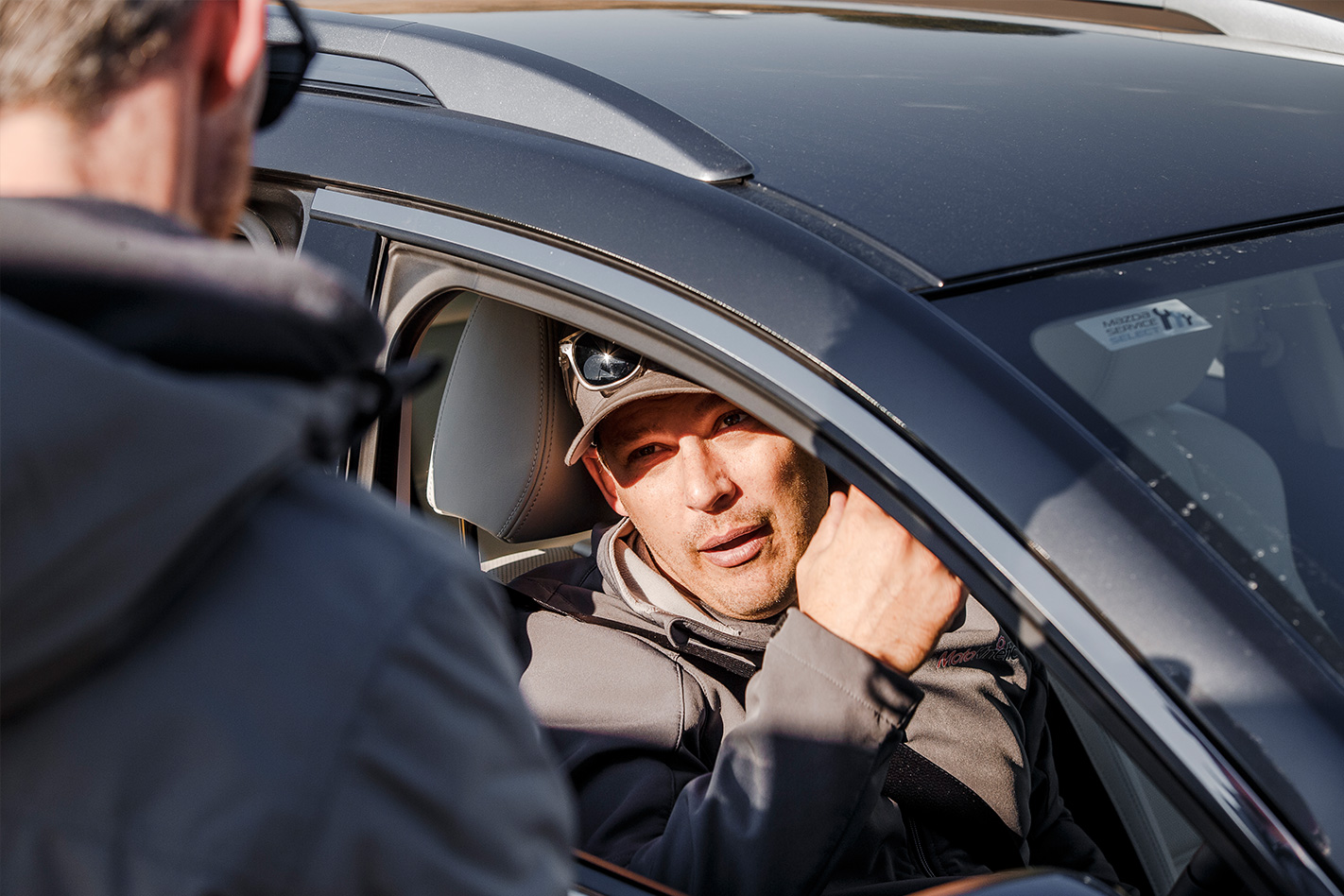
The arrival of his daughter Luna hasn’t slowed Sydney racing driver Renato Loberto one bit, though it has seen him pick up a few new skills. Not that he was lacking in that department, with an enviable set of abilities from automotive engineering to event planning and management, driving instruction and race-car development, all deployed via his MotoKinetic.com.au business.
JAX Tyres and Eagle SMF
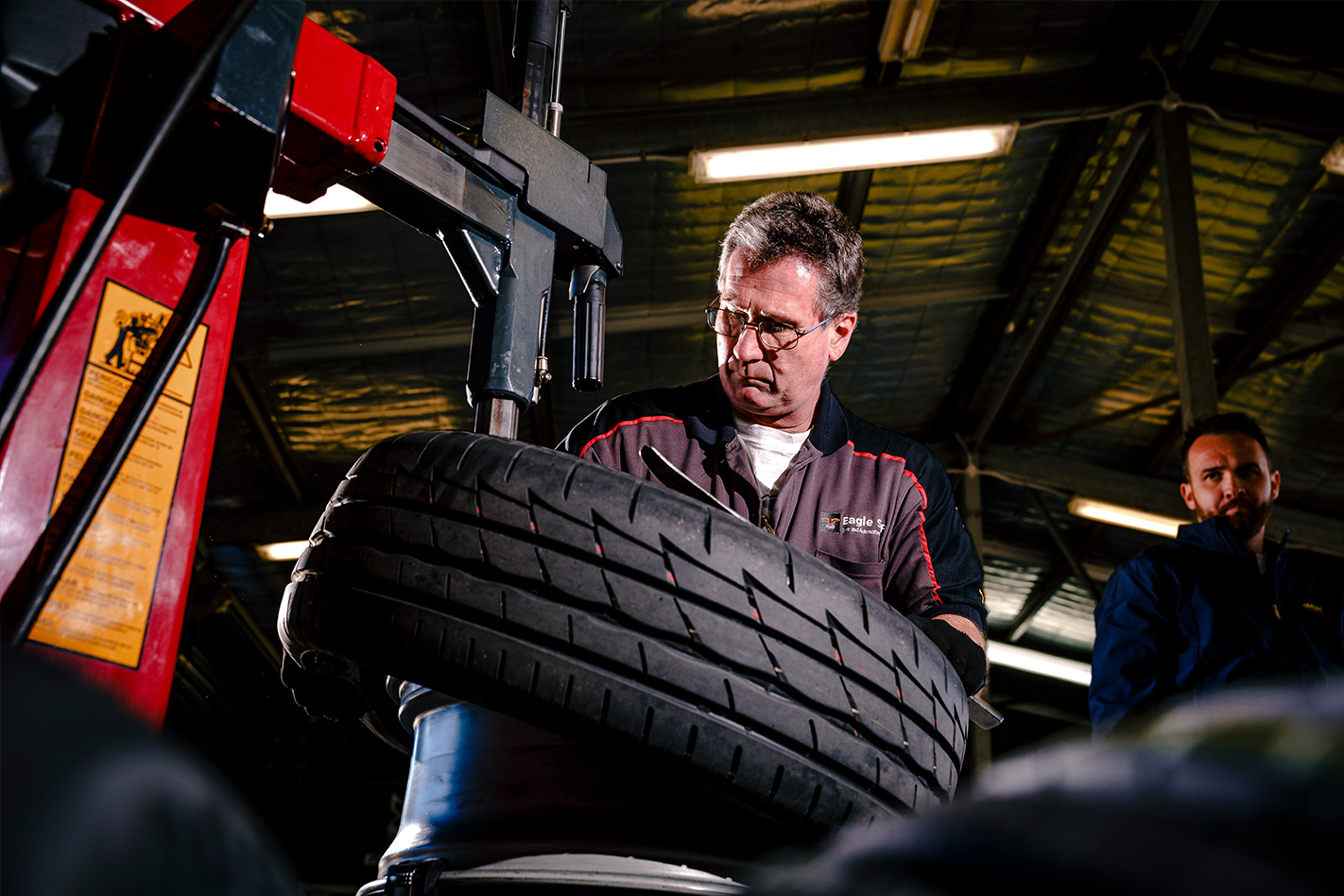
The team from JAX Tyres, with equipment and assistance from Eagle SMF Tyre and Automotive Equipment, had the Sydney Dragway scrutineering shed looking like one of their 80-odd East Coast (and Tassie) retail locations before we’d finished our morning coffee. Their organisation and tyre-fitting speed let us conduct our testing with utter ease.
The ringmaster
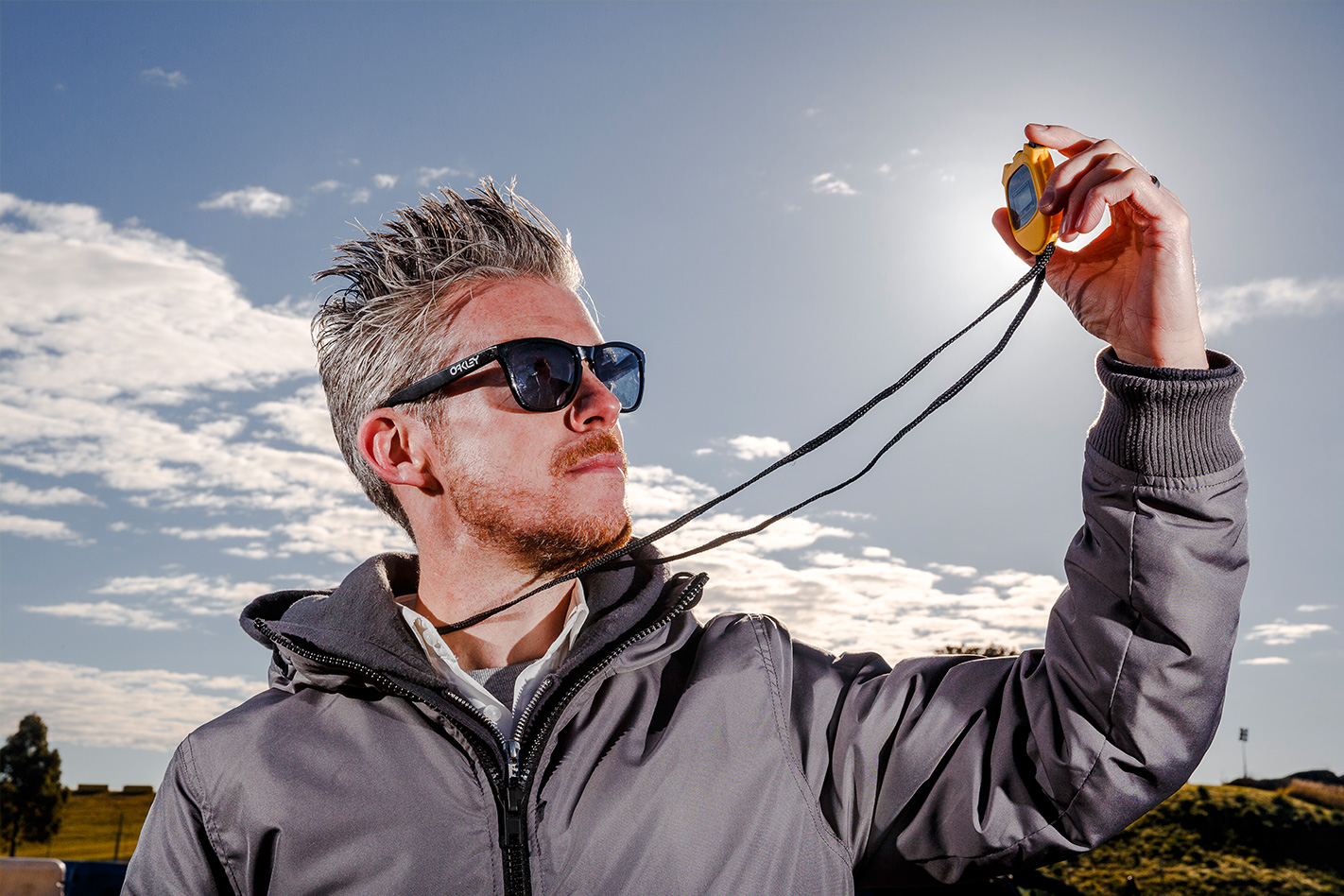
Considerable road-testing experience backed by a degree in engineering sees Sydney motoring journalist Jimmy Whitbourn grid up as Tyre Test data analyst, and author, for the third time in as many years.
Slalom
THE SLALOM, or ‘swerve and recover’ test, is a neat way to gather data on a tyre’s transient grip level – and collision avoidance ability – in the space of six seconds. Ren did upwards of 50 slalom runs, with an entry speed of 65km/h, and rarely clipped a cone marker – it only happened when a tyre let the car slip slightly off line.
But here, with masses of run-off area, the consequences of a lose – or a cone collision – are nil. On the road, the obstacle you find yourself desperately trying to avoid might be a jaywalker or another car. Clearly, a tyre that can respond quickly has the ability to save your bacon. With ESC off, the Mazda 6 was free to express a bit of attitude on some of the tyres – notably, the Continental, which allowed a fair amount of tail-wagging – but the stopwatches and the Performance Box told the full story.
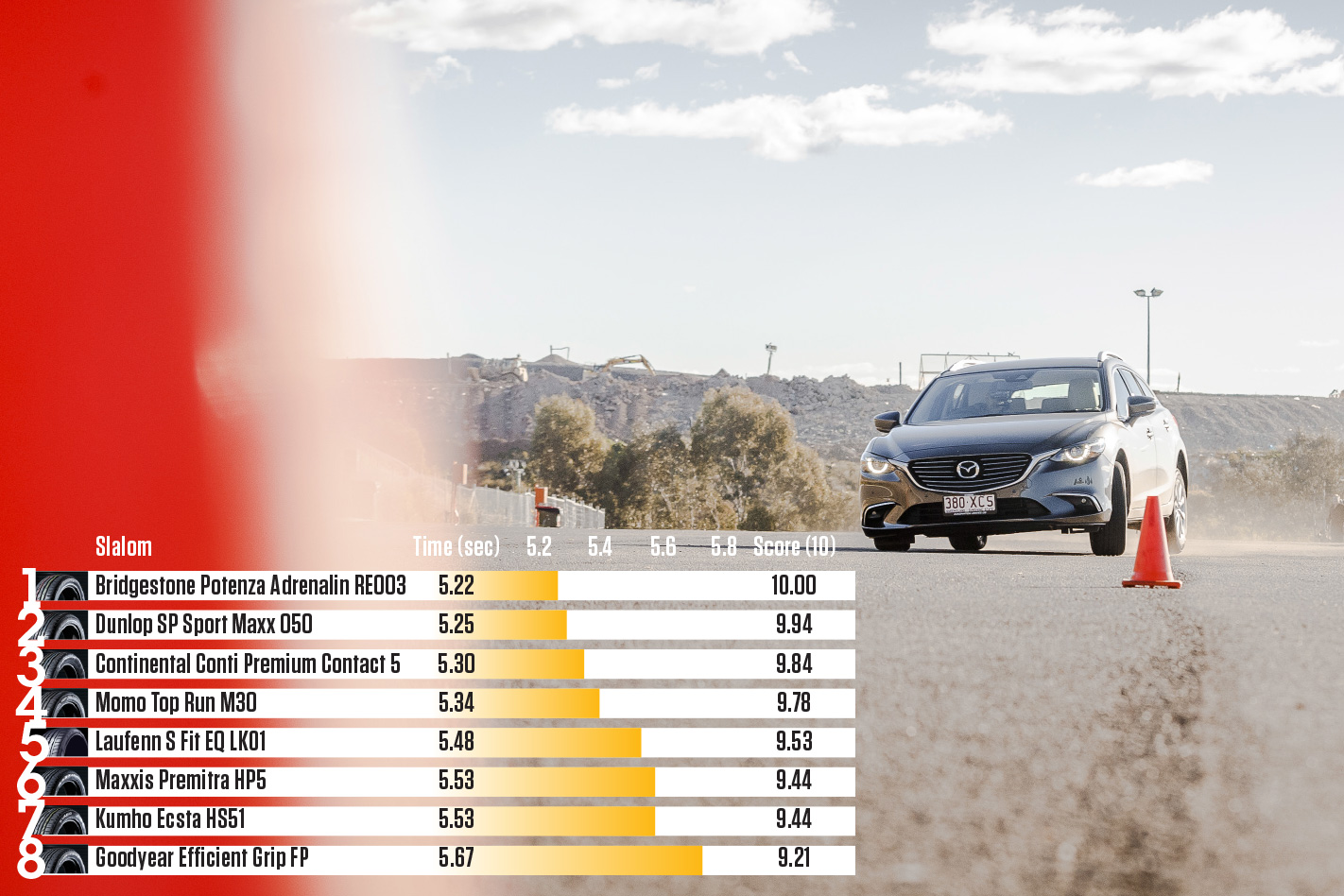
Winner: Bridgestone RE003
“Really direct steering feel,” read Renato’s initial notes on the Bridgestone Potenza Adrenalin RE003. It turned out the Bridgestone was quick through the slalom too, though there was only a tenth covering it and the Dunlop and Continental. This was despite the Continental exhibiting tail-happy tendencies that required constant correction.
The Goodyear Efficient Grip was the exact opposite of the Conti in that it was crisply responsive, but not quick between the cones, trailing the Bridgestone by almost half a second. The Maxxis in sixth place was similar in that it felt good, but couldn’t deliver against the stopwatch.
Dry Braking
Before anti-lock braking became standard in every passenger car, ‘cadence braking’ was the technique used to simultaneously steer and stop. It involves pumping the brake pedal and is essentially the manual version of what ABS does for you in a modern car. Classic car guys still regard the old-school way as a valuable skill, but all most of us need to be capable of is pressing the brake pedal hard.
You don’t need to be strong or skilled to carry out an emergency stop, though it does pay to try it out in controlled conditions before you’re faced with a real panic braking scenario. The pulsing pedal feel and the graunching noise of the system can be disconcerting, but only the first couple of times. Renato carried out dry-surface emergency stops more than 50 times over the course of the Tyre Test, the discipline conducted over the same dusty coarse-chip section of Sydney Dragway, from 80km/h.
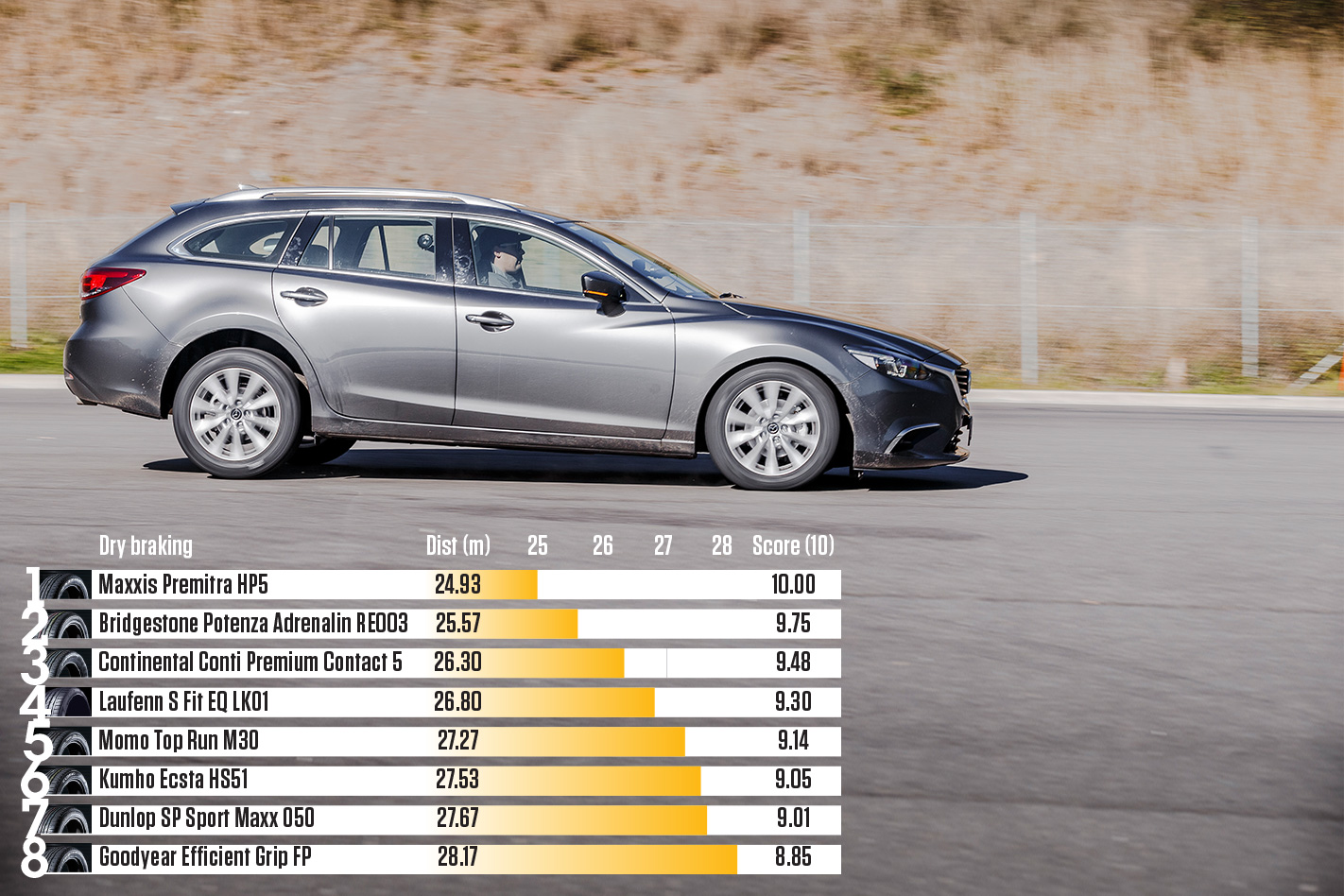
Winner: Maxxis Premitra HP5
Renato noted that the Maxxis “got slightly crossed up,” during the dry brake tests, but the seat of the pants feel didn’t indicate any lack of stopping power. In fact, the Maxxis Premitra HP5 pulled up an average of 0.6m shorter than the next-best stopper, the Bridgestone, which Ren recorded as having “very positive brake pedal modulation”.
Comparing the Maxxis with the dry-braking tail-ender saw its advantage increase to more than half a car length. The dry brake test saw the Maxxis rubber, erm … bounce back, then, from sixth place in the slalom. Yet this wouldn’t be its only podium, or even its sole gold…
Handling Circuit
While the slalom and brake test elements are designed to isolate a tyre’s cornering and braking talent, the handling circuit instead puts every aspect of tyre ability together as a compact way of measuring a tyre’s handling and collision-avoidance capability. The fact that it’s a bit of fun certainly doesn’t hurt driver morale considering the repetitious, analytical nature of the rest of the program. A lap starts with an open right hand sweeper, which feeds into right and left hairpins, followed by a short straight.
Then there’s a 90-degree right-hander, a left/right chicane, and the start/finish line. We use the circuit to scrub the surface of each new set of tyres too, and it’s startling to see how much grip improves after a handful of laps. Every element from transient and steady cornering to braking is tested, and tyre temperature is added to the equation, the left front copping the worst of it over our trio of two-lap dashes.
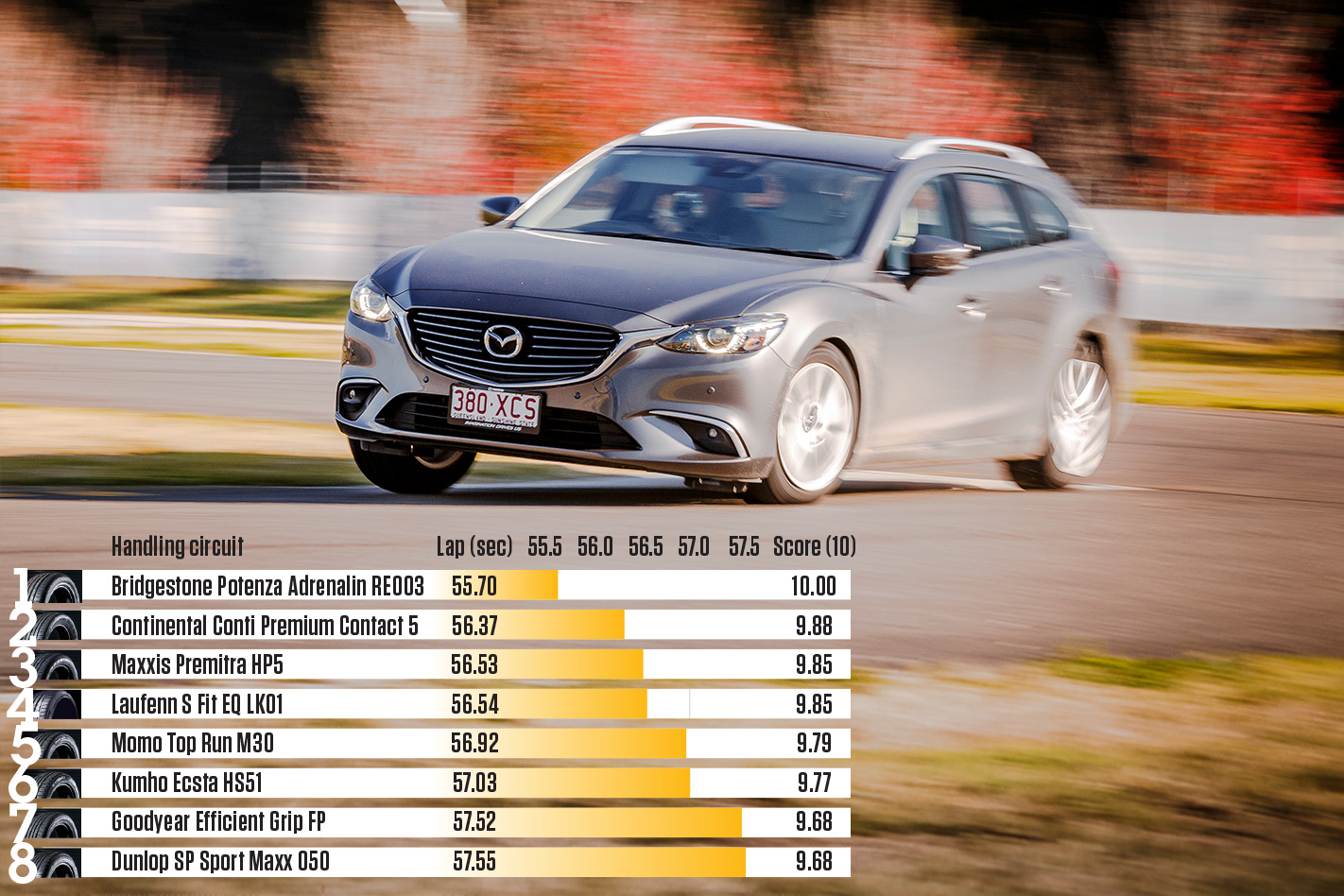
Winner: Bridgestone RE003
The handling circuit set the stage for the Potenza Adrenalin RE003 to claw back ground on the Maxxis, which had thus far prevented a Bridgestone one-two by pipping it under braking. A 0.67sec gap between the Bridgestone and the Continental in second established it as clearly the quickest tyre on test, and the one capable of the highest peak G figure, at 1.01.
The Continental cornered with less lateral force, at 0.93G, yet proved quick. Not to be left in the dust, the Maxxis trailed by just 0.17sec while pulling a peak of 0.96G, with Ren reporting the “excellent handling” on the Conti and “good feel” on the Maxxis.
Wet Braking
Wet braking is the discipline that means the most, because in these slippery conditions a good tyre can help the average driver avert a crash-course in making insurance claims.
Consider the best-to-worst difference in dry braking distance, and increase it by 40 percent. That distance – 4.60 metres – is the difference in the wet. That hypothetical car owner in our introduction – y’know, the bozo that simply wants the cheapest tyres – is still disturbingly common according to our sources. And while we understand that not everyone is into hi-po handling, we’d like to think most people can see the value in tyres that will help them stop quickly in the rain.
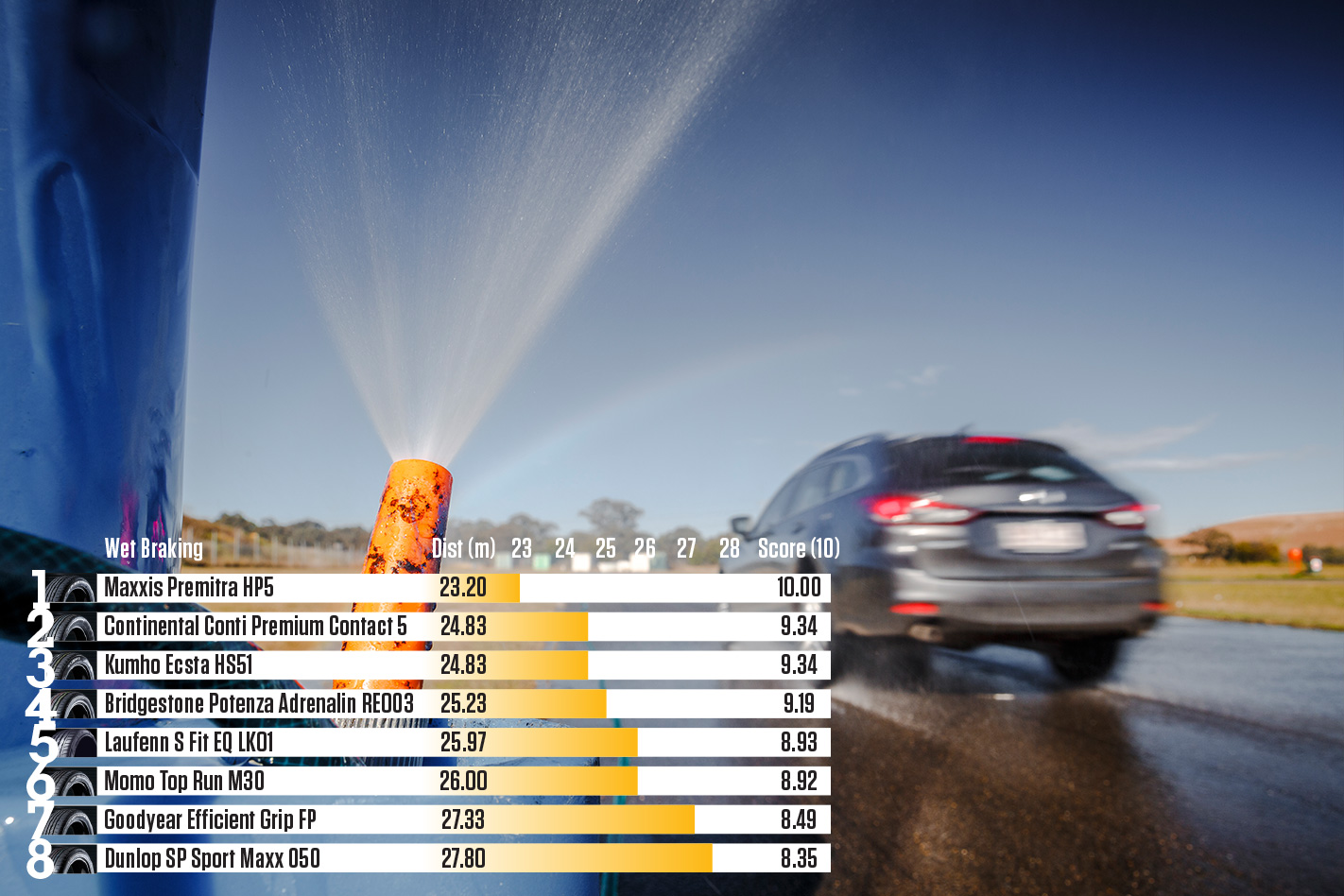
Winner: Maxxis Premitra HP5
With the taps on, 1.6 metres separated the Maxxis’ average braking distance from that of the second-placed Continental. At 23.2m, the Maxxis also stopped 2.5m shorter than the average tyre, and 4.6m shorter than the wooden-spooner.
It also stopped better in the wet than the dry, and it wasn’t the only tyre to display this unexplained phenomenon. In fact, every tyre bar the Dunlop performed better in the wet than the dry, with the Continental claiming second place and the Kumho rising to score its sole podium. As for the winner, the Maxxis is a sure stopper, whether the road is wet or dry.
Tyre Noise
If you take the extremes of road tyres available, it’s easy to come to the conclusion that high-performance tyres are noisy.
After all, semi-slicks drone like bastards (as well as throwing lots of road grit loudly into the wheel arches), while one of the ways low-rolling resistance eco-tyres save fuel is by turning comparatively little of their kinetic energy into road roar. Yet these examples don’t necessarily paint the whole picture, as our tyre noise test illustrates.
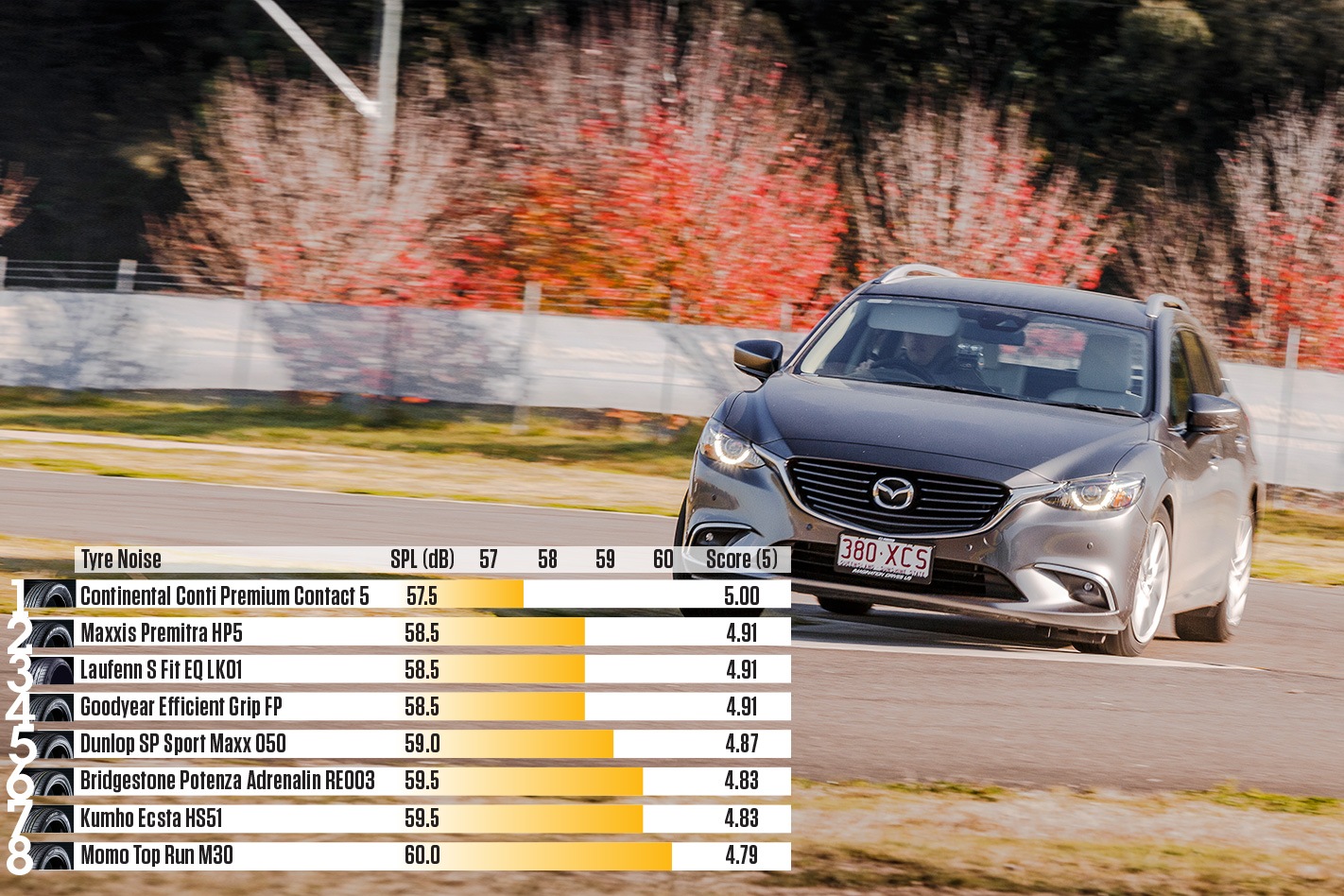
Given the unpredictable noise/grip relationship, the noise test element provides the opportunity for a hushed tyre that’s fallen down elsewhere to gain some ground. The noise score is weighted at half that of the four dynamic disciplines. Too much? Not enough? Grab your calculator and apply your own weighting to tyre noise – just as you can with any of the disciplines – to arrive at your own winner.
Winner: Conti Prem Contact 5
The Continental Conti Premium Contact 5 finished on the podium in every Tyre Test discipline, but its only gold came in the noise test.
Tyre quietness might outweigh all other qualities on a sunny Sunday drive in the country, but is often inversely proportional to grip and performance. That’s not the case with the grippy Conti, though, which at 57.5dB was 2.5dB quieter than the Momo, which Ren noted squealed more than the other tyres on the handling circuit.
The Kumho (59.5dB) was vocal when pushed too, and the Bridgestone and Goodyear were notably noisy during wheelspin.
Winner: Maxxis Premitra HP5
SOMETIMES a tyre goes about its Tyre Test campaign by beating all comers at every discipline. Other times, it’s via a blend of ability that’s reflected in a series of solid showings, which is how it happened in 2017.
The Maxxis Premitra HP5 was a standout when it came to braking, not just out-stopping its rivals, but doing so by a margin that made it clear this tyre has something special under brakes. It was quick enough around the handling circuit to finish third, and it felt good doing it. And the Maxxis was also among a gaggle of tyres in equal second in the noise test.
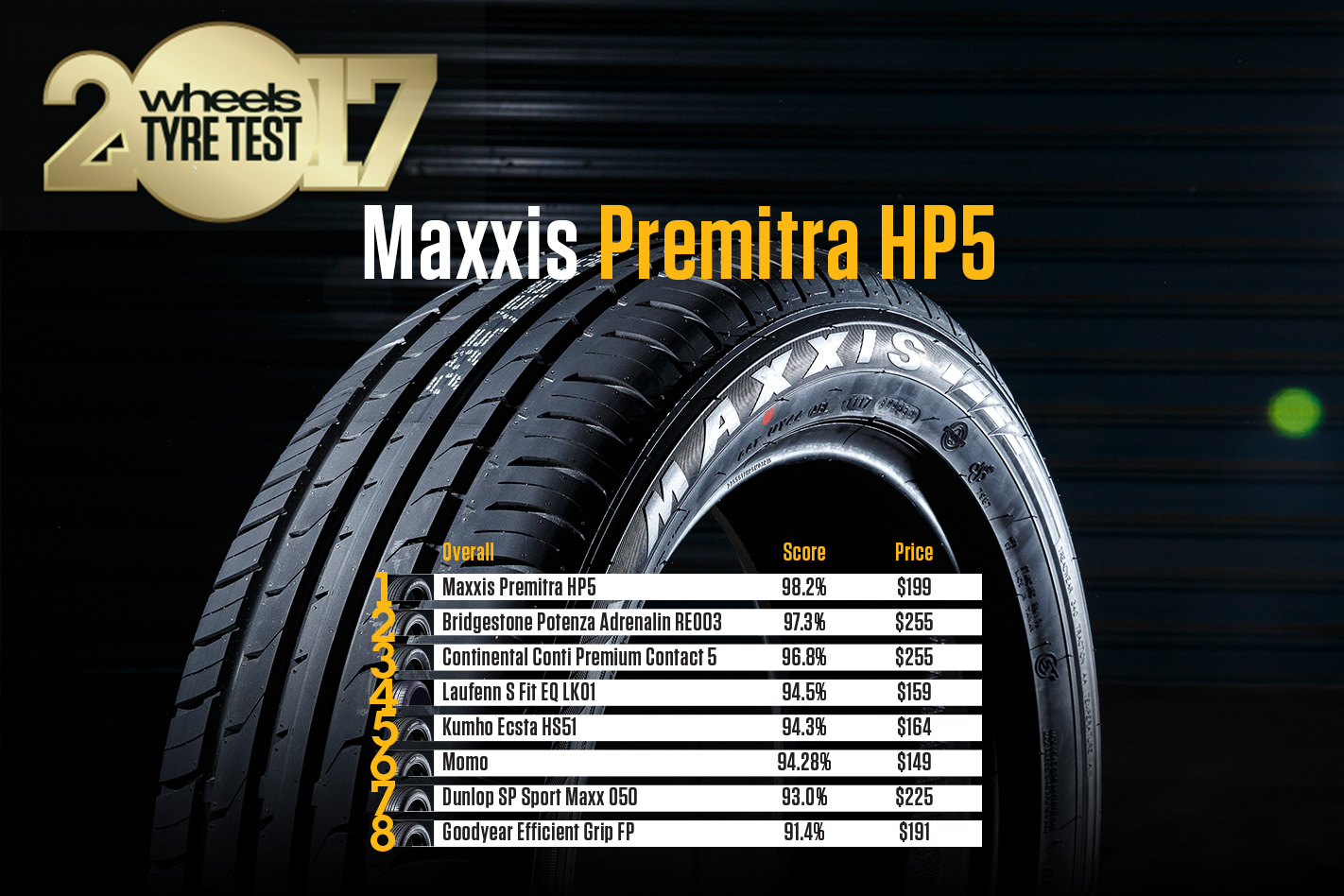
Like the Maxxis, the Bridgestone topped the score sheets in two tests. Its slalom and circuit victories neatly reflect its performance positioning and abilities. With a second and a fourth, respectively, it’s a great stopper in the dry and average-to-good in the wet.
The Bridgestone’s least impressive result of second last in the tyre noise test will bother some buyers more than others. If you take only the dry test results, the Bridgestone finishes first, bumping the Maxxis to second and leaving the Conti third, so it might be the tyre for a sunny Sunday machine.
Despite claiming just one victory (in the tyre noise test) the Continental was in fact more consistent than the Maxxis and the Bridgestone, standing on the dais at the conclusion of every discipline. Second place in both the circuit and wet braking tests and third in dry braking and the slalom reflect an impressive mix of safety- and performance-focussed characteristics. Yet it’s the decently quiet, impressively agile and exceptionally hard-stopping Maxxis Premitra HP5 that tastes Wheels Tyre Test glory for 2017 – a deserved victory.
