
It takes a special type of individual to decide their twin-turbo SUV needs more grunt, but Porsche is nothing if not accommodating.
With 294kW/550Nm, a regular Macan Turbo isn’t exactly short on acceleration, however Porsche now offers a Performance Pack, which lifts outputs to 324kW/600Nm and slashes the 0-100km/h from 4.8sec to 4.4sec.
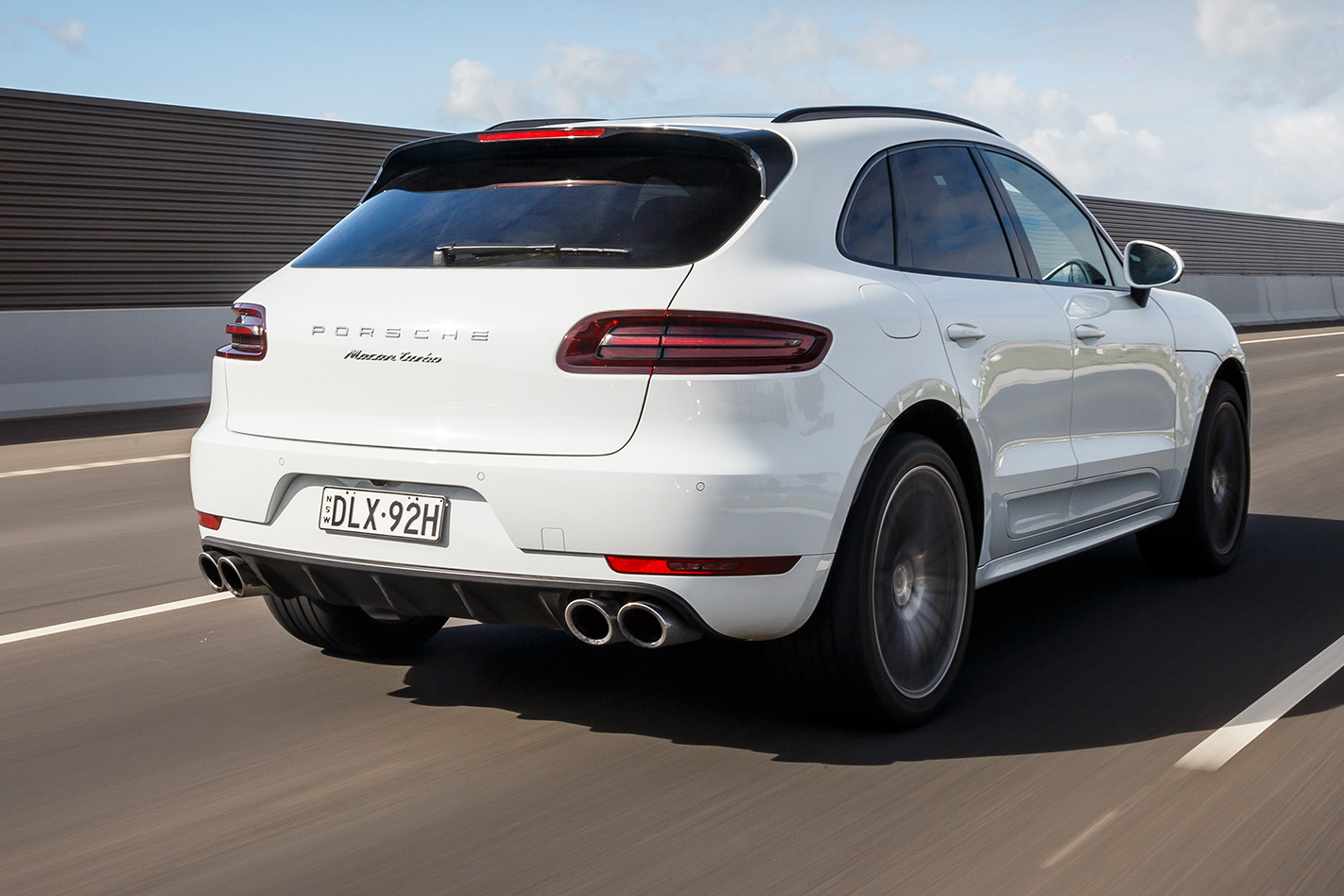
At 272km/h, it’s also now 6km/h faster at the top end for those that own their own runway.
Performance Car Podcast: Porsche 911 Turbo
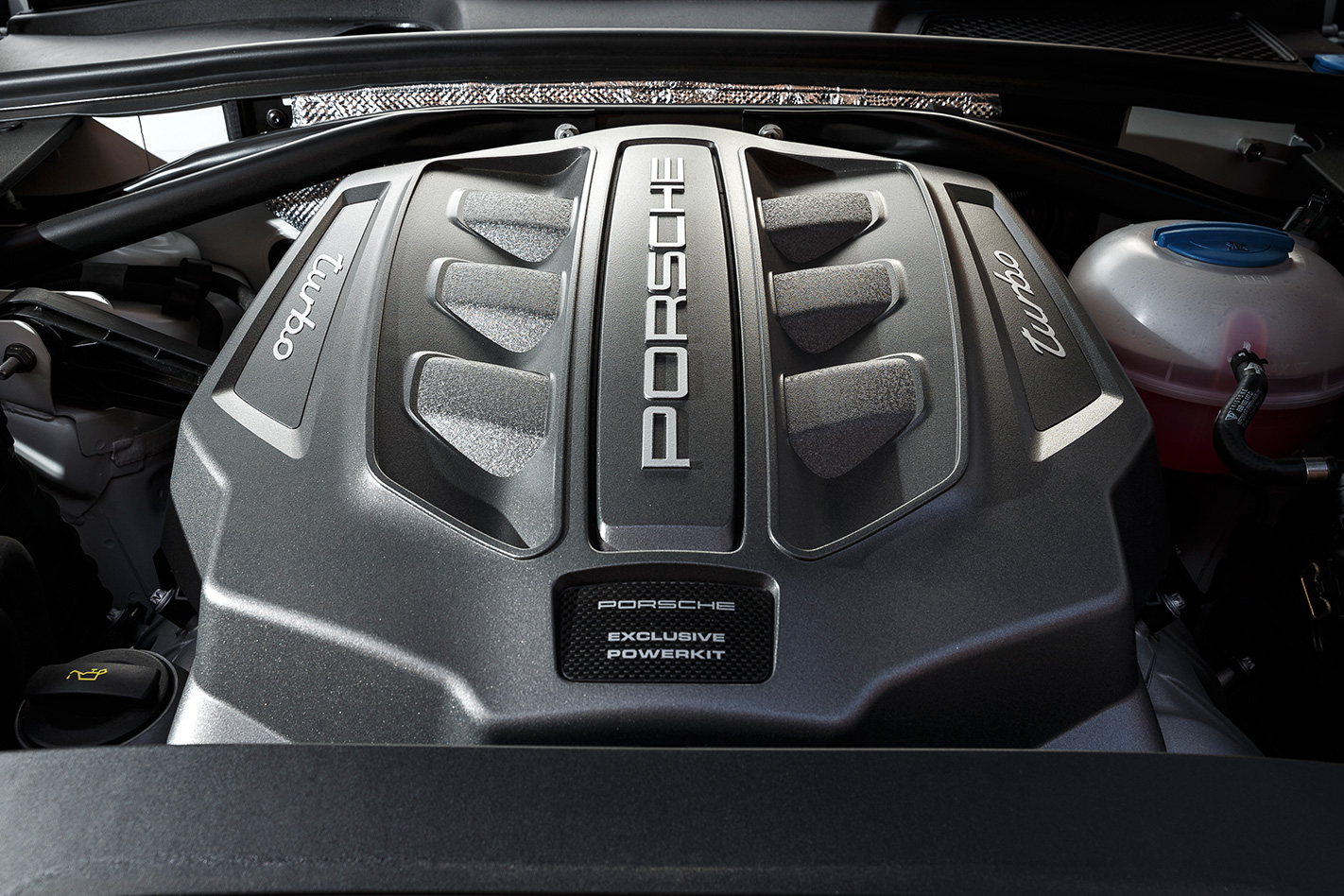
Under the bonnet is a 3.6-litre twin-turbo V6, which provides a broad, linear power curve and a pleasing growl under acceleration, with plenty of pops and bangs on the over-run when you press the “make exhaust loud” button. It’s teamed with a seven-speed dual-clutch gearbox that is virtually flawless in its operation, though a little more reluctant to downshift than Porsche’s sports cars.
Air suspension and adaptive dampers (PASM in Porsche-speak) come standard, albeit with a 10mm ride height drop along with 21-inch rims wearing tyres 235/55 front and 255/50 rear.
Despite the lower chassis and massive rolling stock, the ride is extremely impressive in normal mode, the suspension floating serenely over larger undulations and isolating the occupants pretty well on rougher tarmac.
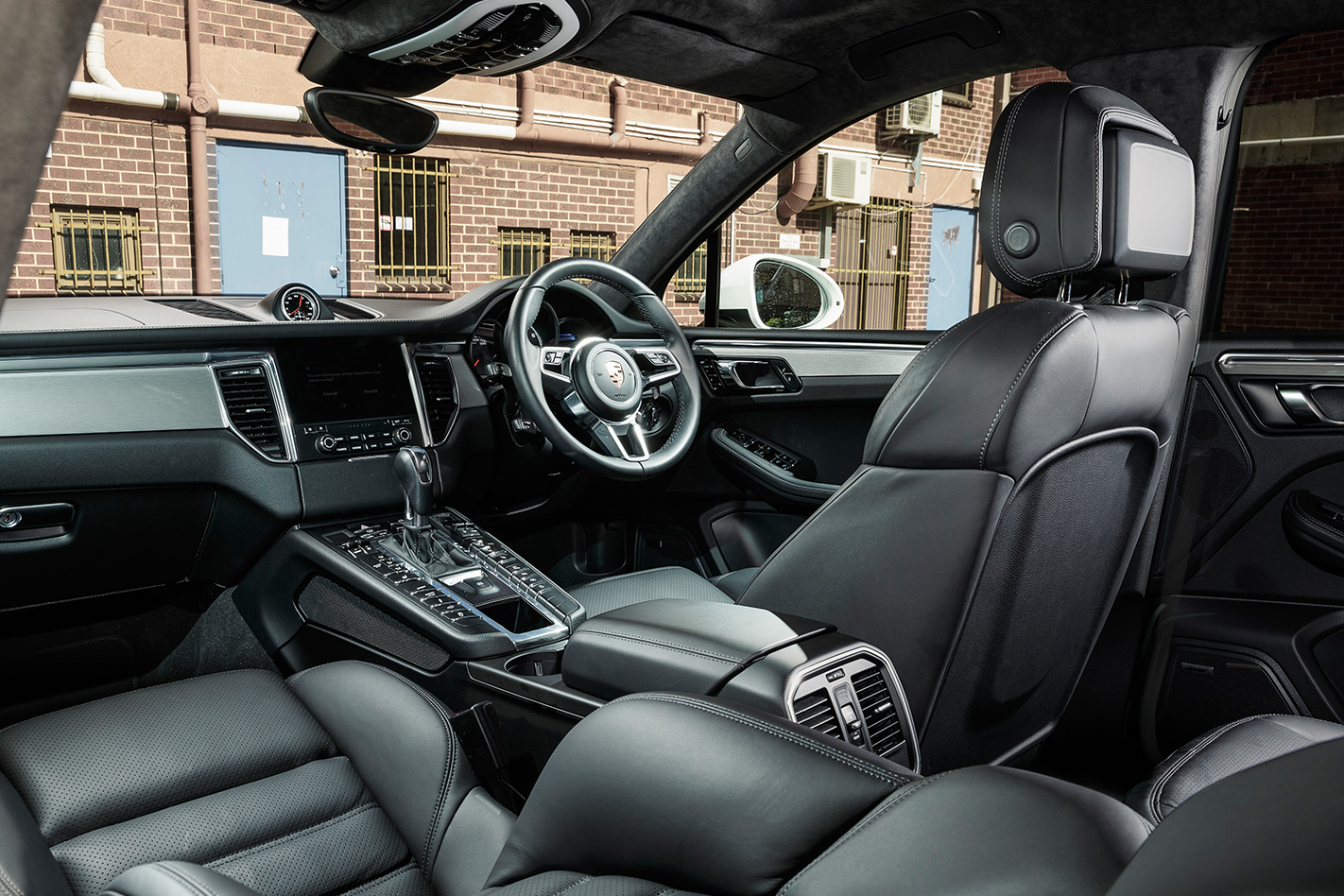
The rear-biased all-wheel drive setup does allow the Macan to be steered on the throttle slightly, though it can get scrappy on corner exit, the rear inside-wheel spinning like it needs a limited-slip differential.
Porsche 911 GT2 RS revealed at E3
On loose surfaces you can back it in like a rally car, though attempting to do so on tarmac would quickly make you aware of the Macan’s size and weight – it’s bigger than you think.
As a Macan ‘Plus’ the Performance Pack definitely ticks the box; it’s as close to a true ‘driver’s SUV’ as you’ll find.
However, if you’re after a fast, practical car with driver’s appeal, something like an Audi S4 Avant offers more for almost $50K less.
4.0 stars out of 5
Specs: Engine: 3604cc V6, DOHC, 24v, twin-turbo Power: 324kW @ 6000rpm Torque: 600Nm @ 1500-4500rpm Weight: 1925kg 0-100km/h: 4.4sec (claimed) Price: $147,300
An LSX-powered Nissan GT-R, a pre-WWII Mercedes racer, and a Russian truck drive up a Billionaire’s driveway…
But this is no joke.
The 2017 Goodwood Festival of Speed has been streaming on the TVs and computers of MOTOR staffers all weekend, much to the dismay of those we live with.
Supercars doing 180-degree skids at Goodwood FoS
But at the same time, it’s hard to watch an entire four-day event from beginning to end without missing anything.
So, we’ve compiled a few of our favourite moments from the classic gathering in a non-exhaustive list for your enjoyment.
Formula 1 car burnouts
Nico Rosberg is probably feeling pretty relaxed this year. He was at the top of the ladder by the time the 2016 F1 season wrapped up, giving him a championship title before his retirement from the competition.
So, with that behind him, he’s turned to shredding tyres on other people’s front lawns. Not a bad way to retire.
With him at Goodwood was Valtteri Bottas, who did much of the same, despite being third in the 2017 standings. Gotta let off some steam/smoke somehow.
Range Rover hillclimbs on two wheels
Stunt Driver Terry Grant set expectations high when he told everyone he was going to attempt to do the hillclimb on two wheels, though a few people probably thought that meant he’d ride a motorbike.
VIDEO: Mad Mike attacks Goodwood
When he revealed that his vehicle of choice was, in fact, a two-or-so-tonne Range Rover.
Just watch, there are no words that can do it justice.
LSX Nissan GT-R drift car
Steve Biagioni, or Baggsy, as many know him, absolutely demolished the tyres on his LS-swapped 900-ish kW Nissan GT-R.
Anyone who thinks Goodwood is just for old people and old cars needs to see this.
1934 Mercedes-Benz W25 tackles the hillclimb
One of Mercedes’ iconic ‘Silver Arrow’ racers, the supercharged straight-8 W25, is a bit of an oddball by today’s standards.
Bathurst keen on Festival of Speed
But the incredibly unsafe and challenging to drive racer is epic to watch. Plus, it sounds amazing.
KAMAZ Dakar truck races the hill
Red Bull sticks its logo on some odd things, but this Russian rally truck might take the cake.
Sure it didn’t set any blistering times, but it was interesting to see the driver save an incidence of oversteer at turn one.
By now, most people following the Goodwood Festival of Speed will have seen the footage of Pat Doran putting the side of a Ford RS200 Evo 2 into a row of bales.
There was some criticism of the crash, though most enthusiasts defended the driver saying the corner is tricky, and that crashing is an acceptable risk of using cars as they were intended.
Doran wasn’t the only one to bite it there, however, as that corner is known as the infamous Molecomb.
It’s best explained by Koenigsegg factory driver Robert Serwanski:
“Molecomb corner is a 90deg left hander which you reach at very high speed after being flat out.
Bathurst keen on Festival of Speed
“The tarmac has some dips and small bumps, which often can be felt quite significantly during braking.
“This corner is the one that catches quite a few drivers out since you must brake before you actually can see the corner itself.”
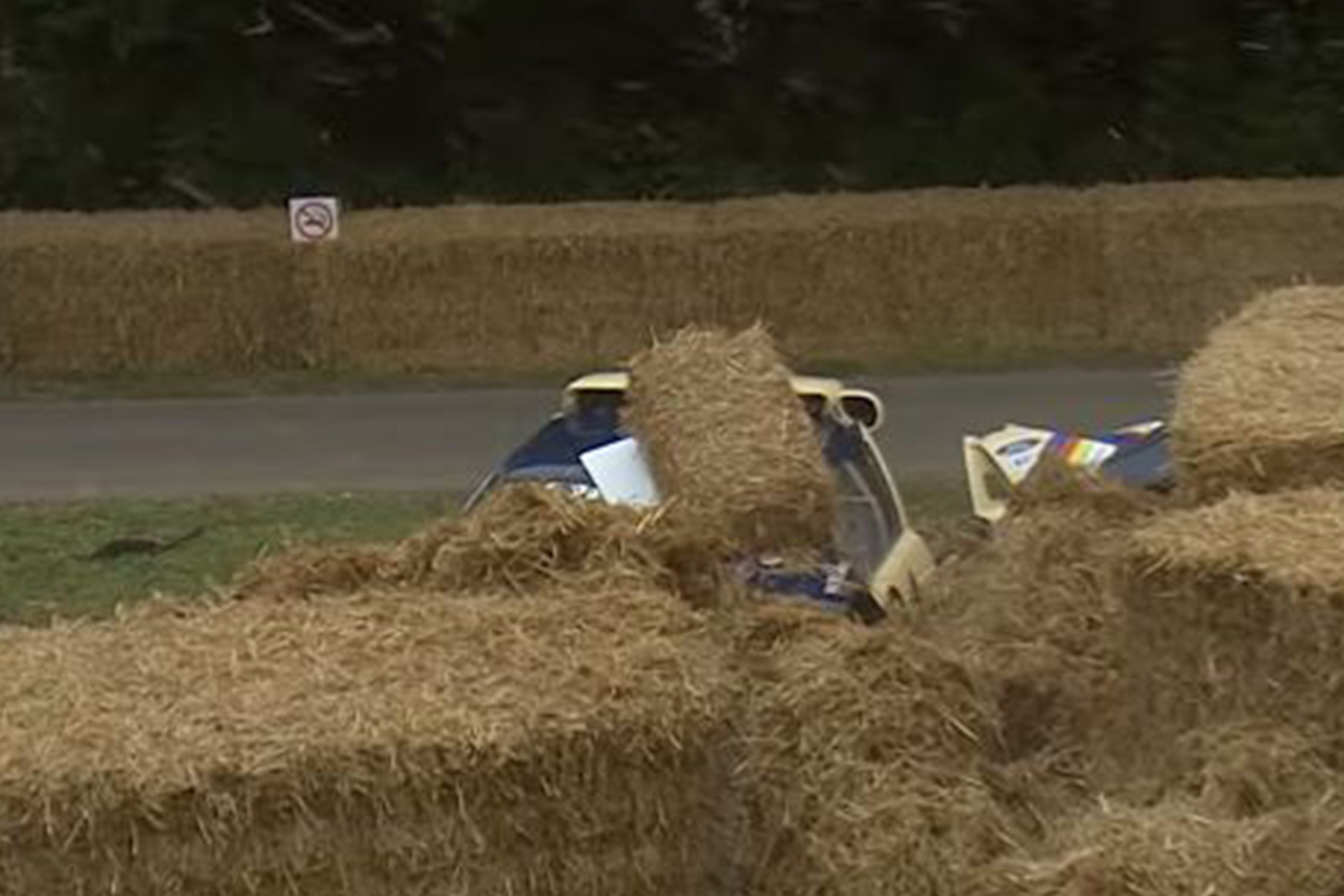
The same happened to three-time Formula Drift champ Chris Forsberg, who did some nasty damage to a Nissan 370Z. Those bales aren’t light.
Want to see a Ferrari eat hay? That happened too.
In a rather spectacular fashion, a 458 GT2 put its tail end into the bales.
There was one more car we thought it worth mentioning that couldn’t quite handle the intricacy of Molecomb at high speed. A 1935 Frazer Nash Monoposto.
With seasoned driver of vintage racers Patrick Blakeney-Edwards at the wheel, the 82-year-old car tried – successfully – to stick its back end out mid-corner.
He managed to save it, and slowed the car enough to result in a relatively gentle reverse nudge into the bales, which didn’t damage the Nash much at all.
Well played, Molecomb. Well played.
Nissan has announced a date for the second-generation Leaf’s reveal, with the next incarnation of the Japanese brand’s all-electric hatchback set to officially break cover on September 6.
And the teaser campaign continues in the lead up to that date, with Nissan letting slip a close-up of the new Leaf’s translucent plastic ‘grille’.
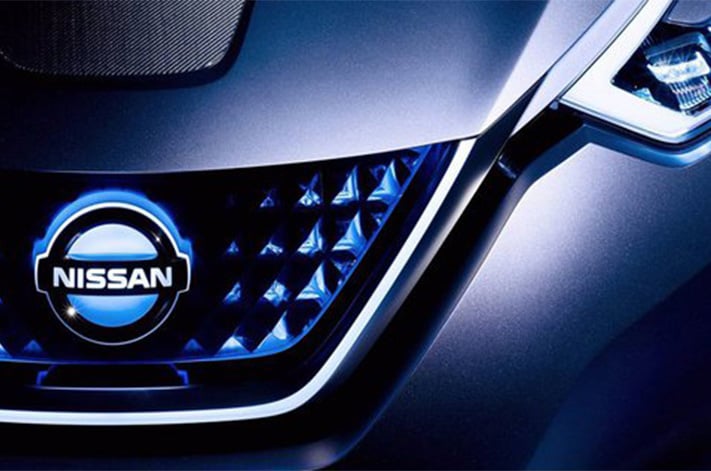
With clear blue plastic covering a diamond-patterned backing, the new Leaf’s grille is a close match to the IDS concept revealed at the 2015 Tokyo Motor Show – a car that was widely tipped to be a preview of the production next-gen Leaf.
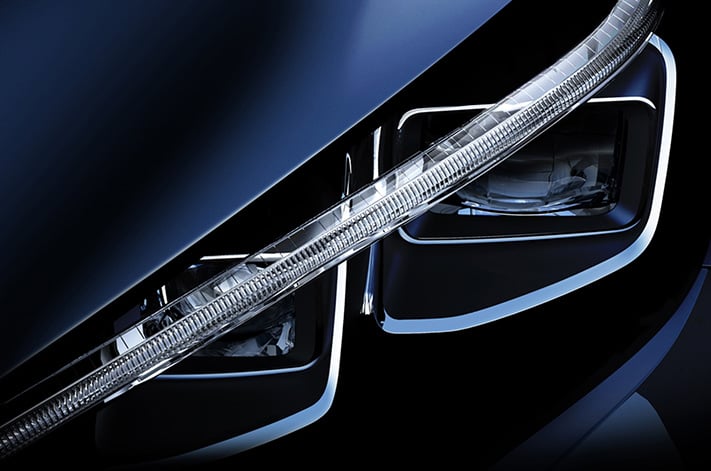
But while the new Leaf’s distinctive grille and headlamp treatment mimic the concept, the rest of the car isn’t expected to replicate the IDS’ sleek and low-slung form. Instead, expect a more practical and upright hatch bodystyle, with more generous glass area and smaller wheel wells.
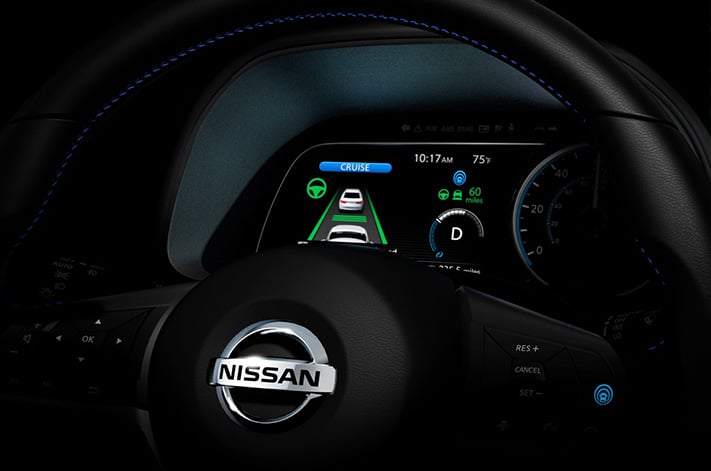
Also expect to see the next evolution of Nissan’s autonomous driving tech, with the ‘ProPilot Assist’ system set to offer drivers and intervention-free piloted driving option when driving on highways. With automated lane-keeping and active cruise control integrated in a more seamless manner than before, Nissan says it will keep a car within a single lane without driver intervention, even in stop-start traffic.
Nissan is keeping vital statistics like power and range under its lid for now, but expect a single-charge range that’s well in excess of the current car’s 150km maximum (170km in overseas markets). With key rivals like the Chevrolet Bolt boasting ranges close to 400km, the Leaf is expected to come close to – if not exceed – those figures.
We’ll find out more on September 6.
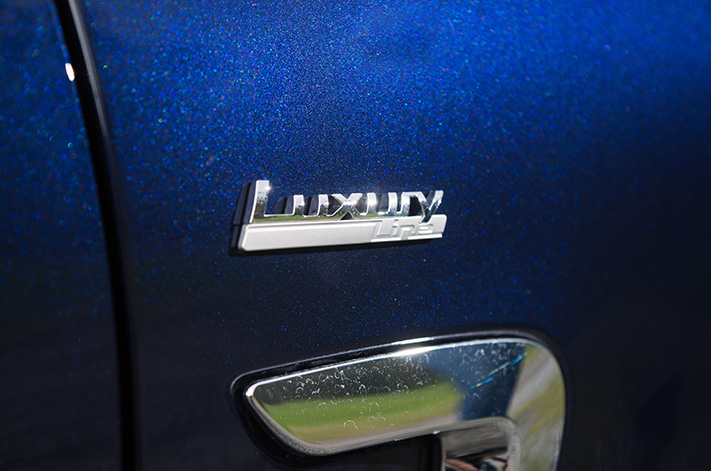
BMW’s entry-level 4 Series variant – the 420i – now comes in a Luxury Edition flavour that adds the most common optional extras as standard to both Coupe two-door and Gran Coupe four-door models and attracts driveaway pricing of $74,900 for each.
Keyless entry and start, metallic paint, front row seat heating, and an electric glass sunroof have been bundled together and equipped as standard for the Luxury Edition variants.
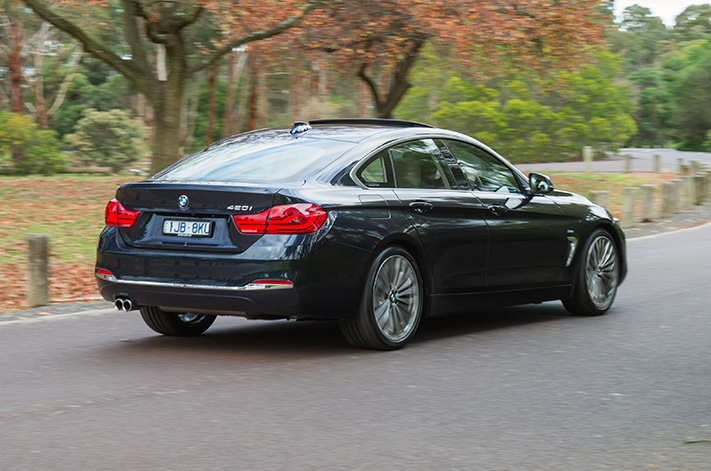
The Luxury Edition builds on the recently updated 420i Luxury Line’s standard features, which notably include:
- 19-inch alloy wheels
- Adaptive suspension
- LED headlights and fog lights
- Auto-dimming wing mirrors
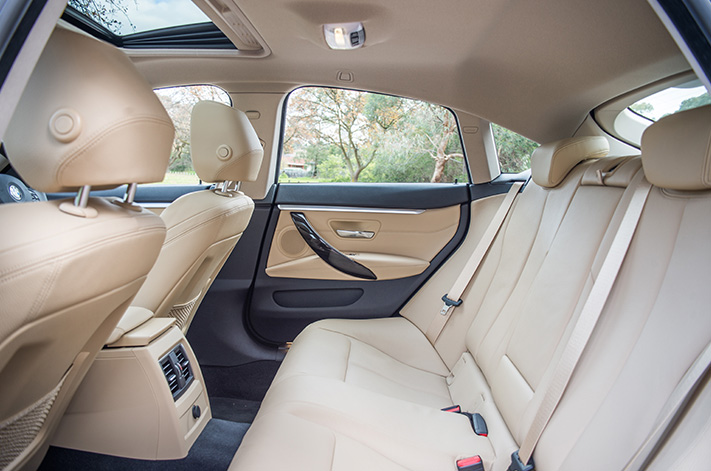
- Electric leather sports seats
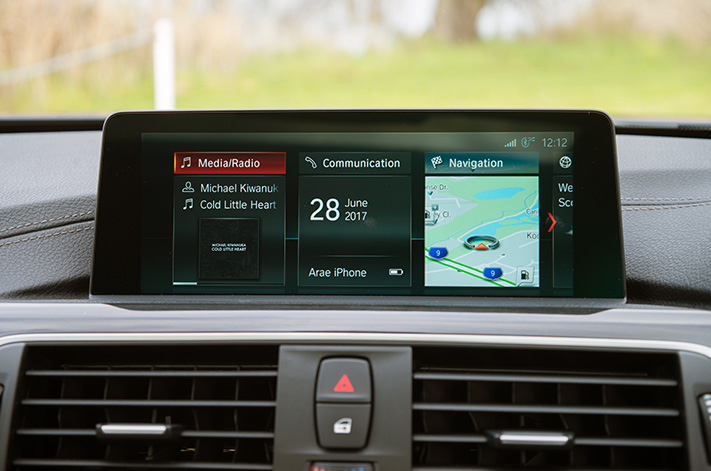
- iDrive6 infotainment system
Power is still sent to the rear wheels via an eight-speed automatic transmission with steering wheel-mounted paddle shifters.
The 420i Luxury Edition models are available in showrooms now.
Driveaway Pricing
- 420i Coupe – $74,900
- 420i Gran Coupe – $74,900
CHIN UP. Look erudite but contrite.
As McLaren CEO Ron Dennis stood alongside FIA President Max Mosley on the steps of McLarens’s motorhome in the wake of the ‘Spygate’ case, Dennis was finding sticking to the script of plucky loser difficult. Intended to portray a no hard feelings, business as usual atmosphere, despite McLaren having been fined USD$100m and being stripped of their constructors points for the 2007 season, the huge fine levied for McLaren being in possession of confidential details of Ferraris’ F1 car appeared to have a personal edge. Mosley reputedly leaned over and whispered in Dennis’ ear: “$10m is for what you did; $90m is for being a c***.”
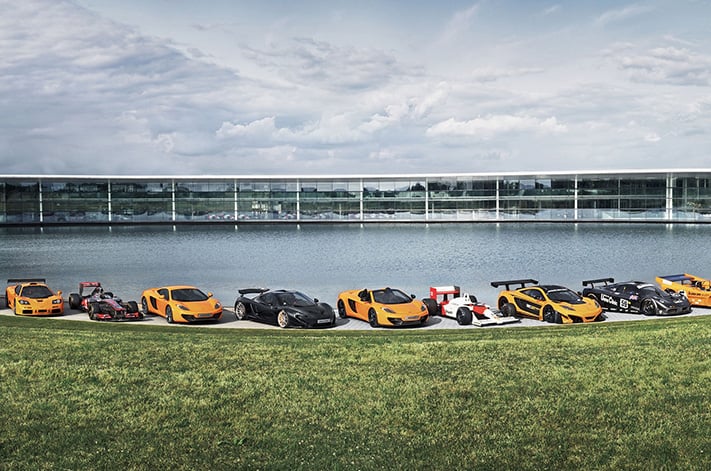
With Ron Dennis it was ever thus. Now that he’s been paid out of McLaren, the two remaining major stakeholders, the Bahrain Mumtalakat Holding Company and the TAG Group, have moved swiftly to merge McLaren Automotive, which builds the road cars, with the McLaren Technology Group (F1 and applied technologies), under the single McLaren Group umbrella. Ron’s $465m better off as a result of liquidating his 25% stake, but his legacy will be one of enormous success, tinged with a metronomic ability to make powerful enemies along the way.
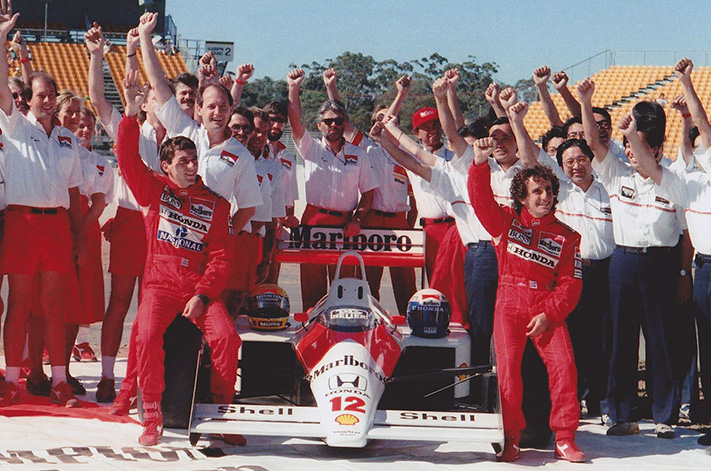
Let’s not lose sight of what he achieved. He demolished the old F1 model of ‘garagistes’ running teams, quickly grasping the importance of a professional approach to sponsorship and marketing. He turned a bunch of guys with oily rags into an automotive business with a turnover of around $1.5bn per year. He eclipsed Enzo Ferrari in bald statistical terms as the most successful F1 team boss in the sport’s history.
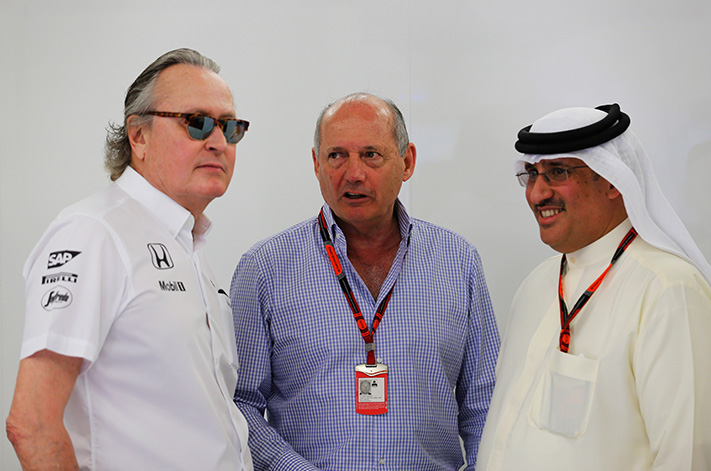
His qualities aren’t hard to grasp. A savvy businessman who steamrollered those unable to compete (think Lotus, Brabham, Tyrell) upping the stakes to a level that many of his erstwhile rivals were unable to compete with. More than anything else, it was his sheer breadth of talent; the former mechanic who proved to be a world class negotiator, technical lead, creative force and financial genius, he was an industrialist in a field of hobbyists. How they laughed when he arrived in the McLaren pits with a briefcase. Despite apparently losing this final game to TAG’s Mansour Ojjeh and Bahrain’s Sheikh Mohammed bin Essa Al Khalifa, one can’t help but feel that Dennis will still be able to raise a smile.

It was always hard for Ron to recover from the taint of the Spygate case, a legal mess that wasn’t helped by question marks about his management of the fractious relationship between Fernando Alonso and rookie Lewis Hamilton in 2007. Alonso attempted to hold Dennis to ransom over emails pertinent to the Spygate case if Ron didn’t back him in the championship. When this was leaked, McLaren was forced to confess the existence of the confidential data to the FIA.

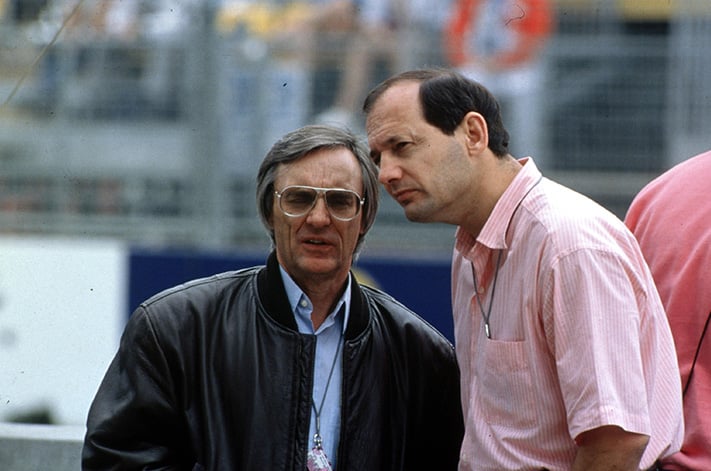
Making an enemy of Mosley, and having a troubled relationship with Bernie Ecclestone was never going to make things easy for McLaren and an abortive coup attempt in 2013, when he was reported to have attempted to woo Chinese investors in a failed takeover bid, effectively ruined his business partnership with Ojjeh. When they attended board meetings thereafter, there was a toxic environment, with agenda points taking a tortuous route back and forth through each man’s personal legal counsel.
In 2014, it all got a bit Game of Thrones, as Dennis ousted team principal and close friend of Ojjeh’s Martin Whitmarsh, who was in hospital recovering from a double lung transplant. The stalemates and petty bickering continued, Ojjeh nixing Dennis’ nomination of Kevin Magnussen to partner Alonso, and insisting on Jenson Button instead. From that point, the writing was on the wall. In October last year, Ojjeh and Dennis had lunch at the McLaren factory in Woking and the French-naturalised Saudi told him that he was going on gardening leave.
Dennis fought this bitterly, issuing vituperative statements claiming that the grounds for his dismissal were ‘entirely spurious’ and making dire predictions for the company’s future. Friday’s McLaren statement might well be a final smoothing of the waters; a face-saving way for all parties to swallow their collective pride and move on.
He may be 70 years old and wealthy enough to no longer have to concern himself with the stresses of high end business, but only a fool would think that Ron Dennis will go quietly. “In difficult circumstances, teams either separate or come closer together, it’s as simple as that,” Dennis once said. McLaren has closed ranks but Dennis is now the outsider. Chin up, Ron. Look erudite.
Kia finally allows us behind the wheel of its much-hyped, rear-drive hero around the famous Nurburgring Nordschleife to see if the promises haven been delivered.
TELL ME ABOUT THE CAR
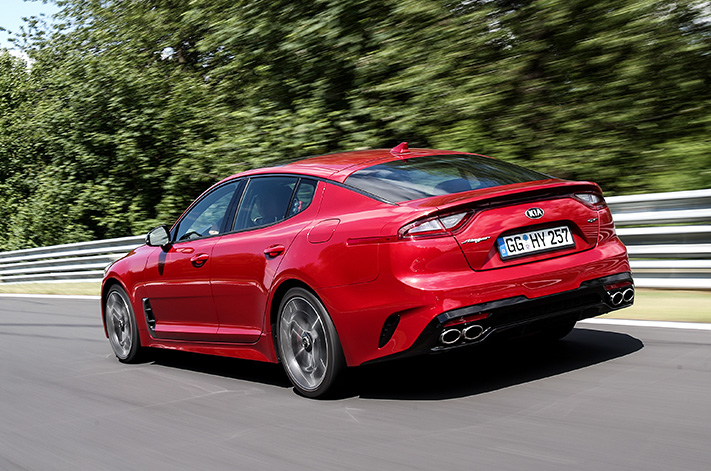
A spacious, four-door Kia sedan that will power oversteer. A Kia with a nicer interior than most Volkswagens. A Kia that doesn’t turn into a smoking wreck after a half-dozen corners on a racetrack – a Kia you might actually want to take for a drive. That’s what we’re dealing with here.
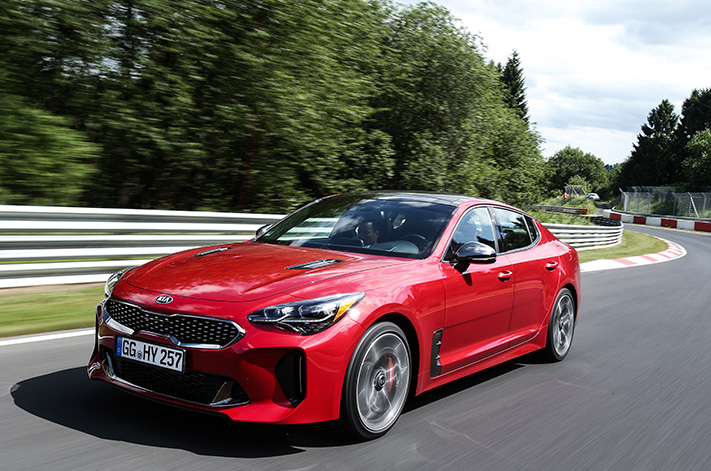
For many this is a car that will absolutely be what the doctor ordered to soothe the anguish of losing our much-loved locals. With 272kW/510Nm, rear-wheel drive and a mechanical limited slip differential in a big, four-door sedan, you bet this is a car that Australians will feel very familiar with, warm to quickly and find easy to like.
Sadly, our time with the Kia Stinger GT was frustratingly brief (just one lap of the track and no on-road driving), but it was enough to notice that this game-changing Kia is fast and powerful.
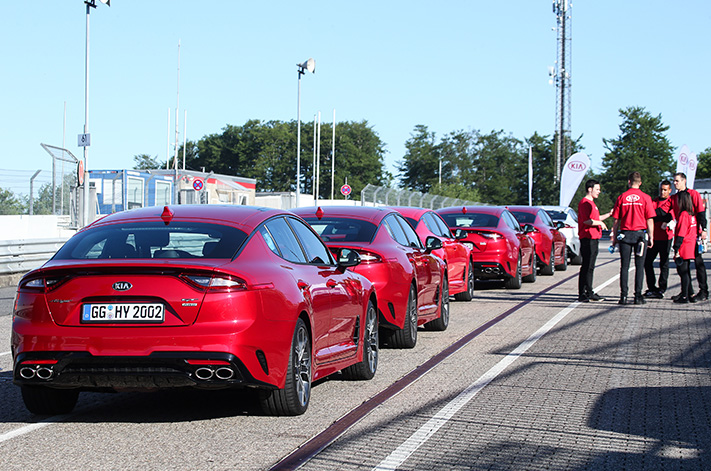
STRENGTHS
- Kia claims 0-100km/h in a launch-control assisted 4.9 seconds, with its 3.3-litre twin-turbo V6 sending power through an eight-speed torque-converter automatic to wide, 255-section Continental ContiSportContact 5 tyres.
- It has cutting-edge chassis electronics that very much work with the car’s power and rear-drive layout, rather than against it. The Stinger GT is a fun car to drive fast.
- A special Australianised suspension tune will be unique to our market, as the version we drove was much more ‘grand tourer’ despite being developed at the ’Ring. Kia Australia wants to make it more of a corner-carver than a long-distance cruiser.
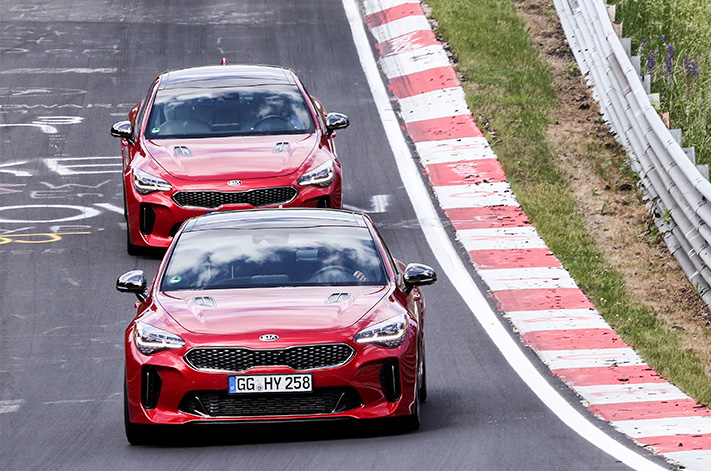
- With 350mm four-pot Brembo front brakes, 19-inch wheels and wide tyres, it drives a lot like a twin-turbo V6 SS Commodore and is incredibly stable at high speeds.
- It’s an aggressive, yet handsomely styled car in the metal, showing off intent with big 19-inch wheels, bonnet vents, quad exhaust pipes, assertive front bar and a fastback roofline.
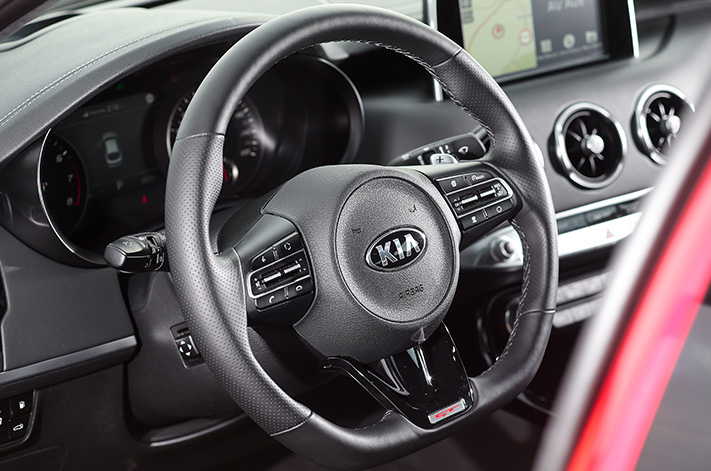
- The interior is mature and high-end with brushed aluminium, Nappa leather, a chunky steering wheel, as well as expensive-feeling materials everywhere – including Alcantara-style microsuede on the A-pillars. It’s spacious and feels more German than Korean with only one GT badge to be seen.
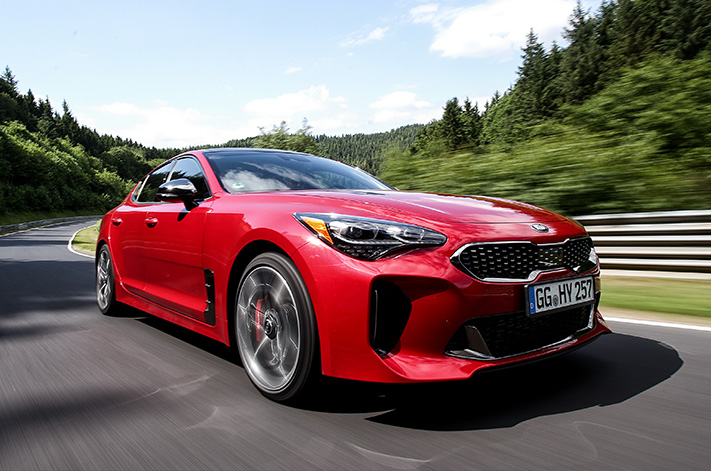
WEAKNESSES
- For a car with sporting pretensions, it feels far more like a grand tourer than a performance car. It lacks a little raw emotion and is somewhat unsatisfying in the noise department.
- If you’re used to a V8-engined Commodore, you might not like the way it sounds – at least for the overseas model we drove. There’s an ‘interesting’ V6 growl (which is actually artificially produced through the speakers), but from the outside it can come across as thrashy and dull. That said, we are getting an Australian-specific bi-modal exhaust.
- The big Brembo brakes started to fade by the end of a lap of the Nurburgring and it isn’t really a car you’d pine to take to a racetrack.
- The eight-speed auto is responsive, but is geared more like a six-speed with two overdrive top gears. It will also, frustratingly, deny a lower gear under hard braking with no dedicated, hardcore manual mode.
- The seats are comfortable, but not fit for performance driving and despite adjustable bolsters, don’t offer enough support when the red mist descends.
ANY RIVALS I SHOULD CONSIDER?
The Kia Stinger GT is, in many ways, a competitor for our Aussie-built, and performance-orientated four-door sedans like the Holden Commodore SS – at least that’s what Kia wants you to believe. If you’re after something Euro-based for comparison, then a Skoda Superb 206TSI 4×4 or Volkswagen Passat 206 TSI are worth a look.
It’s extremely obvious why carbon fibre has been the go-to exotic material for the world’s most exotic cars.
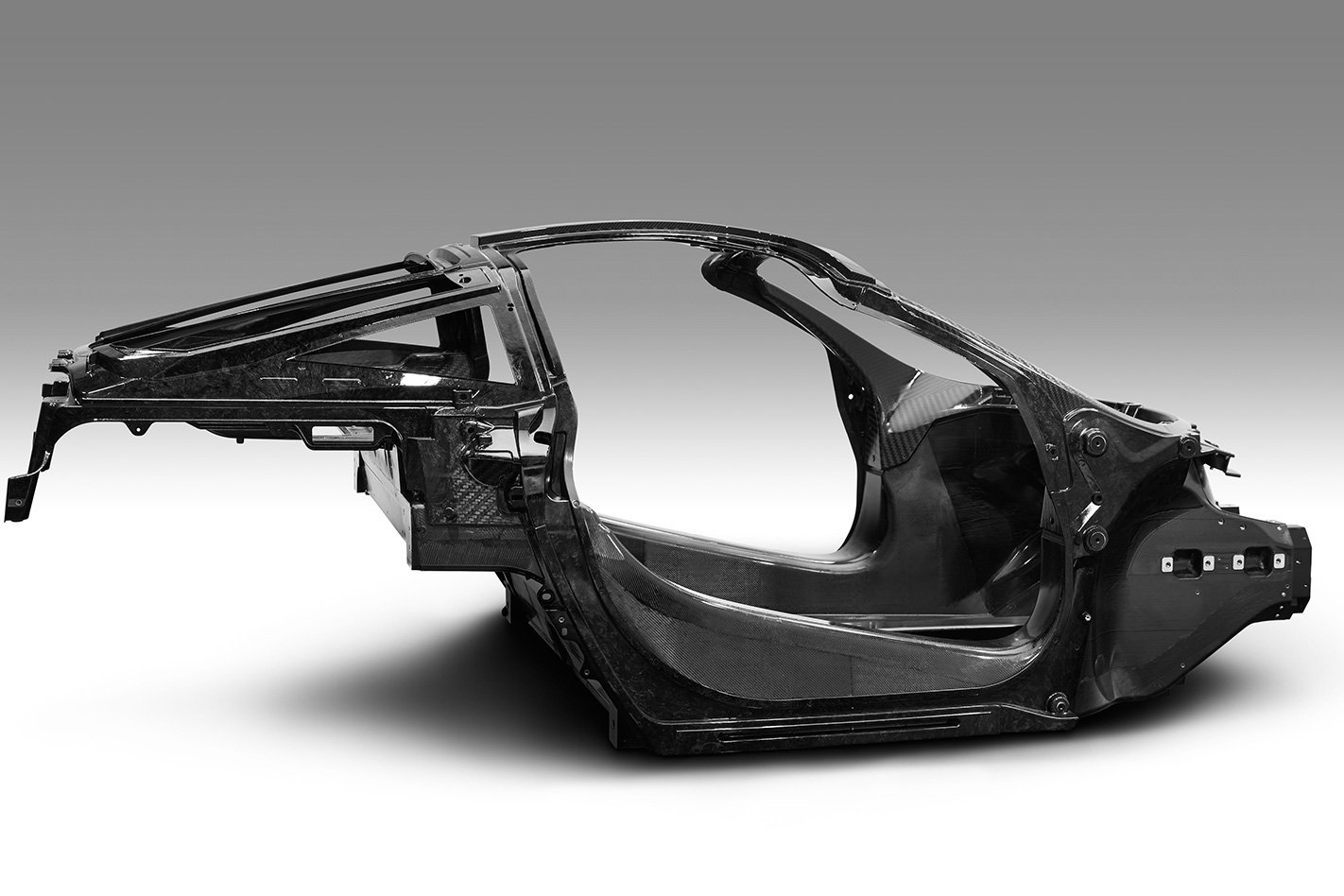
It was perhaps more surprising that the first Formula 1 team to pioneer a monocoque made from the magic black weave would be the first to transfer this advanced construction to the road.
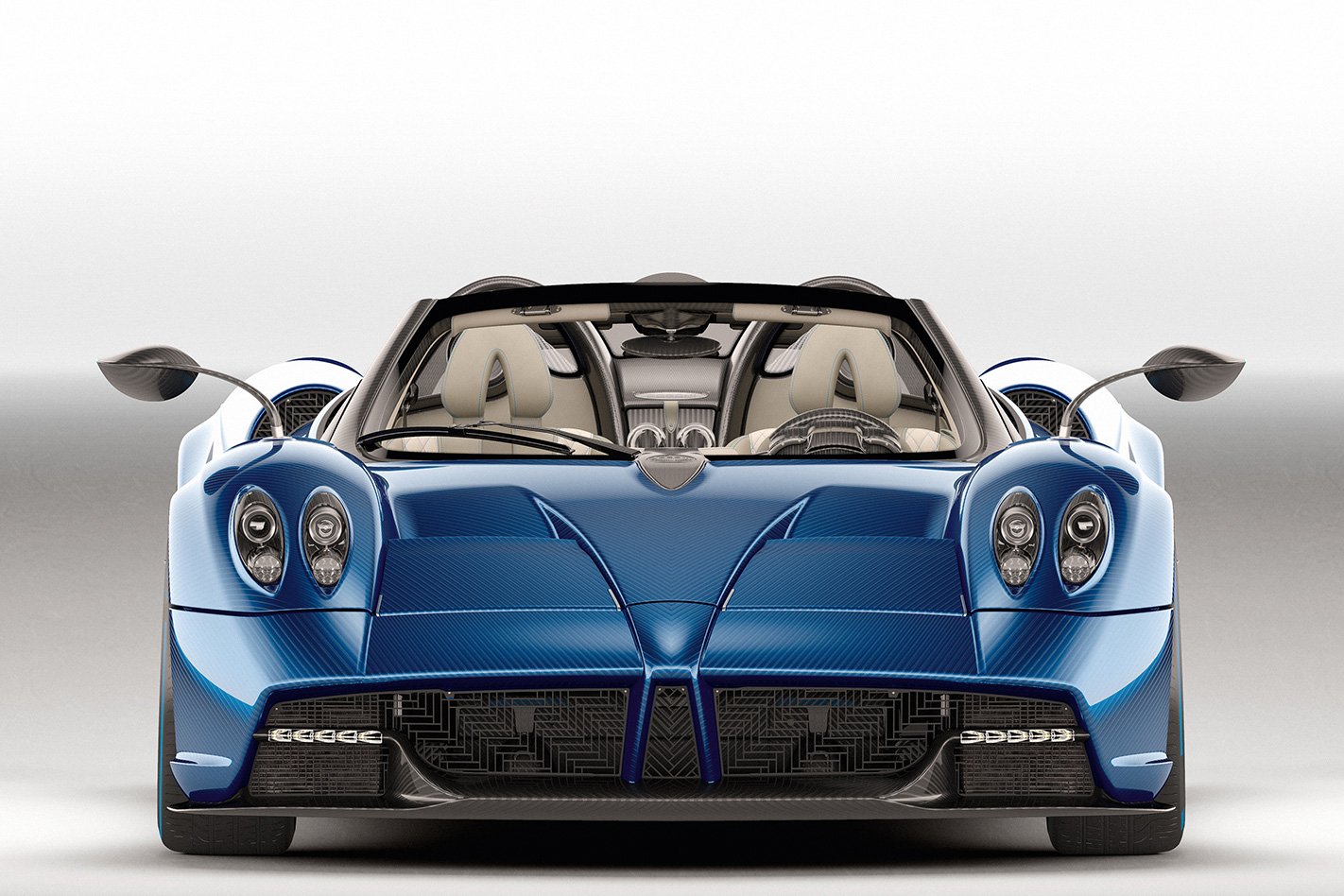
The 1992 McLaren F1’s carbon-chassis approach was exclusive for several years before the Pagani Zonda came along – a car created by the man who had envisioned the composites trend back in 1987 with his Lamborghini Countach Evoluzione concept.
Porsche joined the club with the Carrera GT and, more recently, 918 Spyder, while niche Swedish supercar maker Koenigsegg continues to be arguably the most obsessive user of carbon fibre.
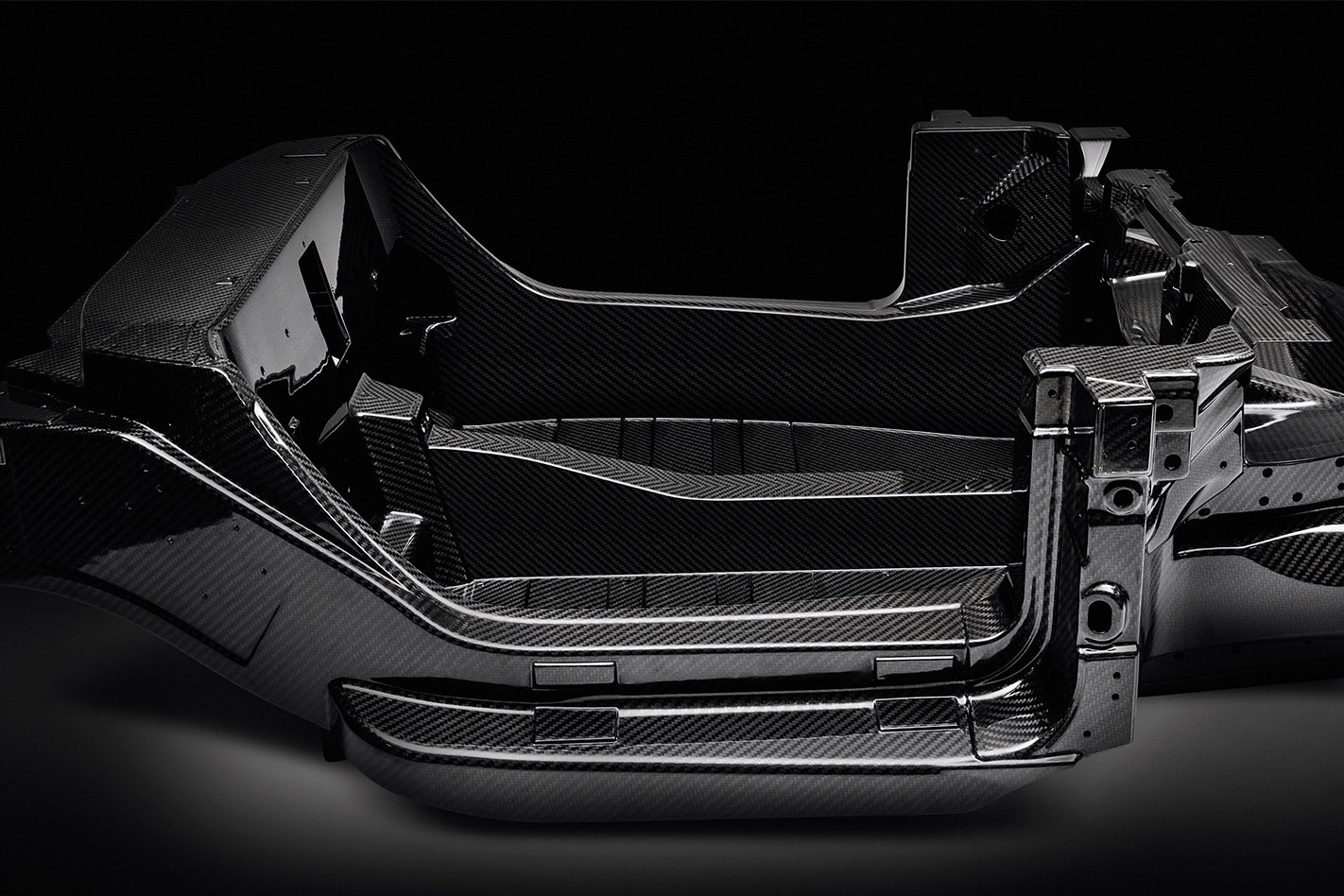
Limitations continue to be set by carbon fibre’s other extreme: cost.
Australia now a carbon fibre manufacturer
McLaren says it moved to new techniques with greater efficiencies to establish a business case for producing carbon tubs for every single supercar it produces. And the company is targeting 4000 sales per year where it built just 106 F1s.
The likes of Ferrari, as well as F1 teams, continue to use the traditional process, where carbon fibre parts are placed in a single-sided tool, pre-injected with resin to create a ‘pre-preg’, and then baked in an autoclave.

Ford GT to wear Aussie-made carbon rims
Where it took McLaren 4000 hours to build the F1’s monocoque, the Monocage II passenger cell of its latest car, the 720S, takes less than four hours. Or, one F1 monocoque was produced a week where Carbo Tech knocks out 10 tubs per day.
Advances over the 25 years since the F1 are not necessarily in lightness, though. The 720S weighs about 150kg more than the F1, though McLaren says comparing the two cars in this respect is not an apples-versus-apples scenario owing to tougher crash regulations and more advanced vehicle systems.
“The F1 was almost an execution of artwork in simplicity: very efficient use of packaging and materials, it had a normally aspirated engine, and there was no sophisticated suspension system on the car.”
The McLaren 720S is still faster than the F1 in almost every measure. And it eclipses its 650S predecessor in both speed and weight (by 18kg).
After all, beyond the inherent safety of a carbon tub – they’ve been known to survive multiple high-speed crashes without incurring significant damage – the desired benefit for owners is performance.
The crash that changed F1’s mind about carbon fibre
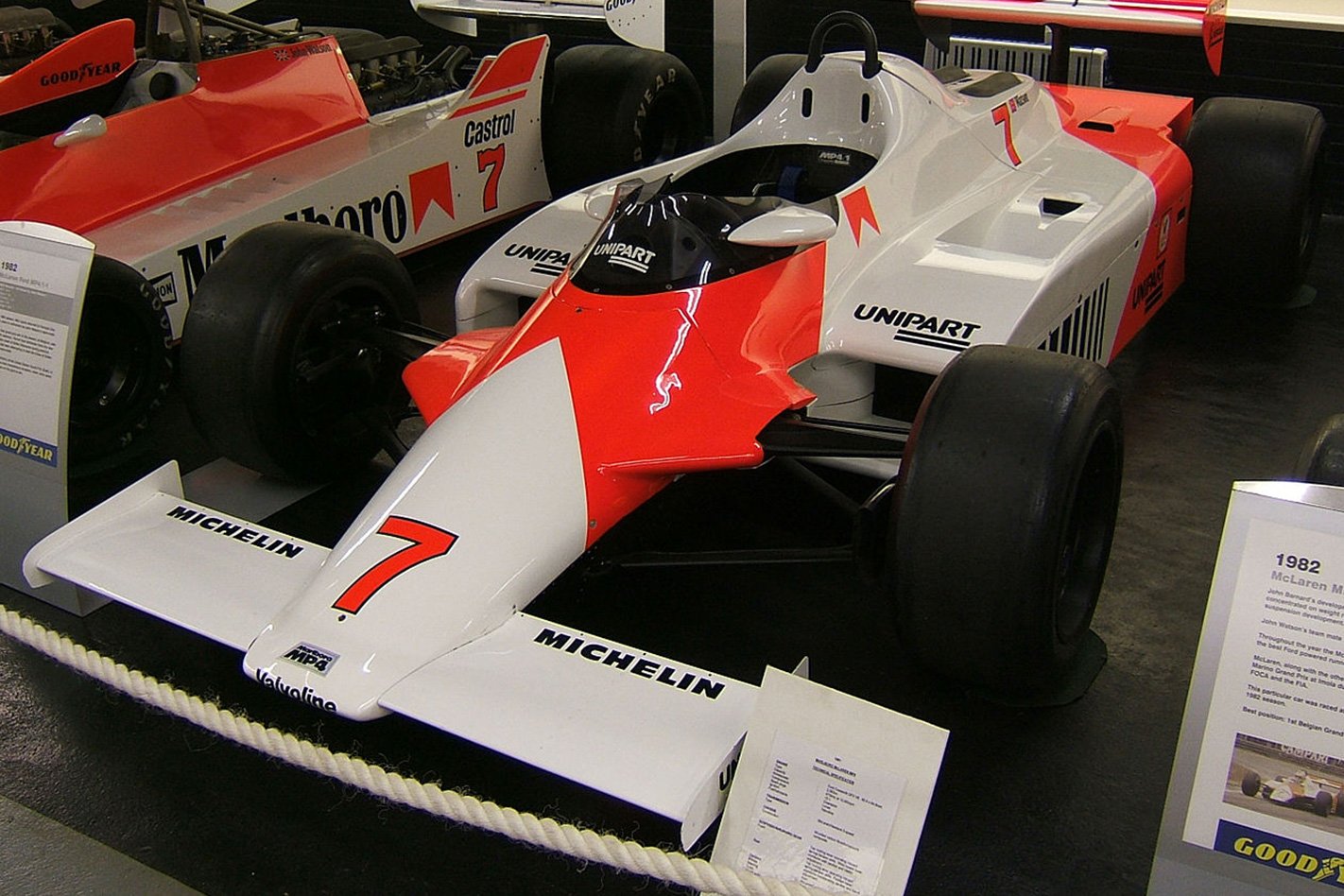
The Formula 1 paddock was initially sceptical of McLaren’s aerospace-industry-inspired move to construct its 1981 MP4/1 race car’s monocoque out of carbon fibre rather than the conventional alumininum sheeting with steel reinforcement.
McLaren’s then designer, John Barnard, believes the turning point was driver John Watson’s high-speed crash during the 1981 Italian Grand Prix, which initially had everyone fearing the worst.
Despite an impact that ripped the engine off the back of his car and snapped the gearbox in half, Watson walked away unscathed.
“That set the tone for carbon monocoques thereafter,” Bernard would say of the crash.
“It became the beginning of the safety cell. It was a huge moment in the carbon composite chassis monocoque life.”
McLaren is recognised as the first team to race a carbon fibre car, though in the same season Lotus also produced its innovative twin-chassis Lotus 88.
The car never raced, however – banned controversially on the grounds it contravened regulations.
The rest of the teams soon followed McLaren’s composite construction, though that didn’t prevent the team from being a major force in the 1980s and 1990s
Mercedes-Benz has announced more powerful engines and more options for the C-Class range for 2017, although this has brought up prices across the range
The C250 petrol variants have been replaced by the C300, which features a 2.0-litre four-cylinder producing 180kW and 370Nm – a noticeable increase of 25kW and 20Nm over the outgoing C250.
The base diesel has also been upgraded, with the C220d replacing the old C200d.
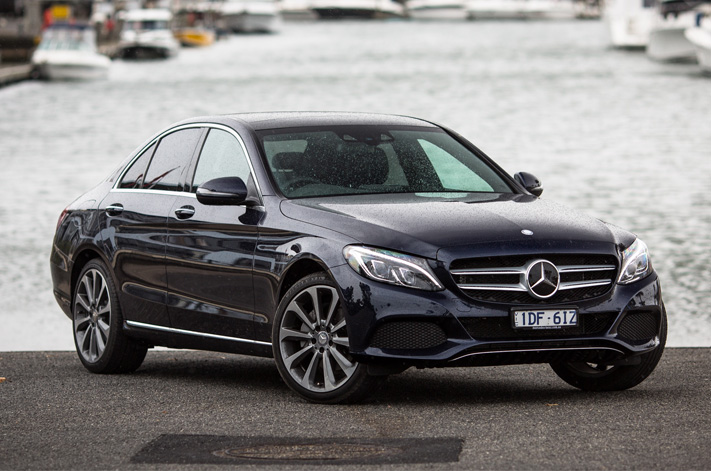
While the C200d used a 1.6-litre four cylinder turbo diesel, the C220d makes use of a 2.1-litre unit providing 25kW and 80Nm of extra grunt, making for a total of 125kW and 400Nm.
The deal for base diesel buyers is also sweetened by the C220d making use of Mercedes’ new nine-speed automatic transmission, replacing the C200d’s seven-speed box.
A new Exclusive Line package is also being made available as a no-cost option to all C-Class variants, spare the C350e hybrid.
This optional package features numerous interior and exterior enhancements, including:
- ‘Exclusive’ upholstery (Artico for C200 and C220d; leather for C300 and C250d)
- Brown ash and silver chrome interior trim
- Agility Control adaptive suspension
- ‘Exclusive’ 18-inch alloy wheels
- Airpanel radiator grille with adaptive closing function (for C200 and C220d)
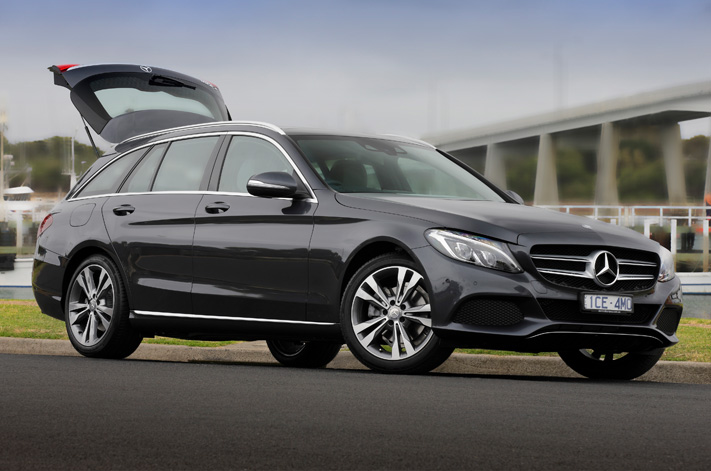
As for AMG variants, the C43 sees increases of $711 for the sedan and $712 for the wagon, while there is a $1,596 price hike for both C63 S variants.
Pricing
C-Class Sedan C200 – $61,900 C220d – $63,400 C300 – $69,900 C250d – $71,400 C350e – $75,900 C43 AMG – $102,611 C63 S AMG – $157,211
C-Class Estate C200 – $64,400 C220d – $65,900 C300 – $72,400 C250d – $73,900 C350e – $78,400 C43 AMG – $105,112 C63 S AMG – $159,711
Note: This pricing includes GST and Luxury Car Tax, but excludes dealer delivery charges on road costs. Drive away pricing can be obtained from dealers.
Honda has announced that all new cars sold from July 1 will be covered by a more generous five-year, unlimited kilometre warranty, a significant improvement over the three-year, 100,000km warranty it replaces.
The new warranty period applies across the range, and extends to selected dealer demonstrator vehicles. If you bought a new Honda in the past two days, congratulations – your long-term costs of ownership just got a little smaller.
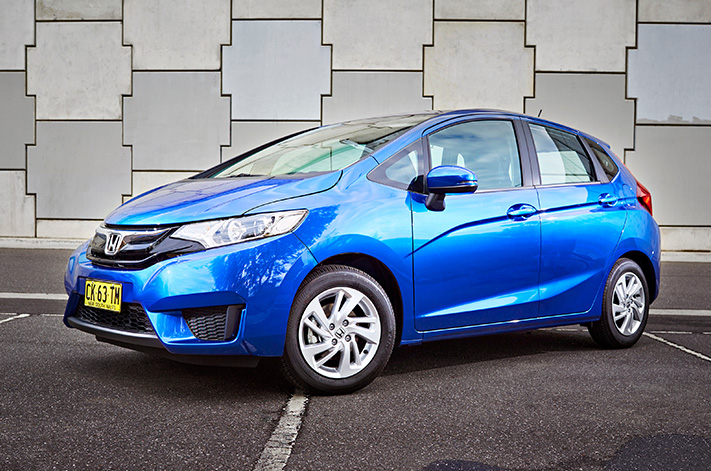
The only exceptions are cars used for commercial purposes, which fall under a five-year, 140,000km warranty scheme – the same length as Honda’s previous extended warranty offering dubbed Honda Warranty Plus.
“Honda has an envied reputation for quality and reliability, the depth of engineering inherent in our vehicles is something our customers can trust,” Honda Australia director Stephen Collins said in a statement.
“So we’re taking things a big step further with this 5-year warranty announcement.
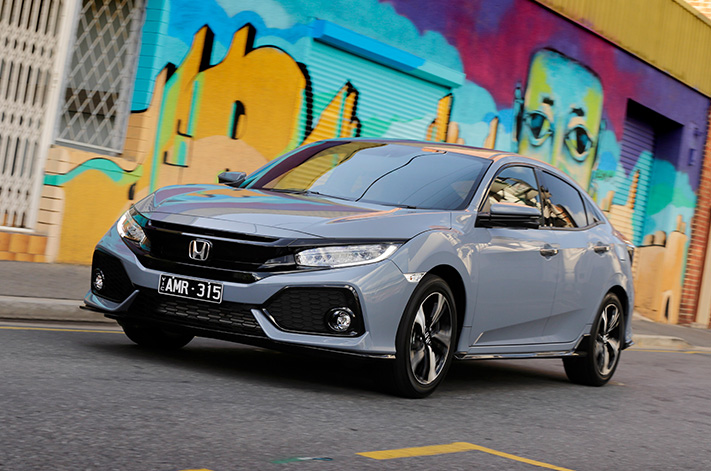
“Given the quality of Honda vehicles they can sometimes be perceived as more expensive, when this is simply not the case. We encourage new car buyers to take a look at our pricing, our ownership costs and our new 5-year warranty against the competition.”
The new warranty puts Honda on an equal footing with Hyundai, Renault and Skoda, which all offer identical warranty periods. Only Kia (7yrs/unlimited), MG (6yr/unlimited) and Citroen (6yr/unlimited) offer more generous warranties, while Chinese car maker Haval comes close with a 5yr/100,000km offering.
