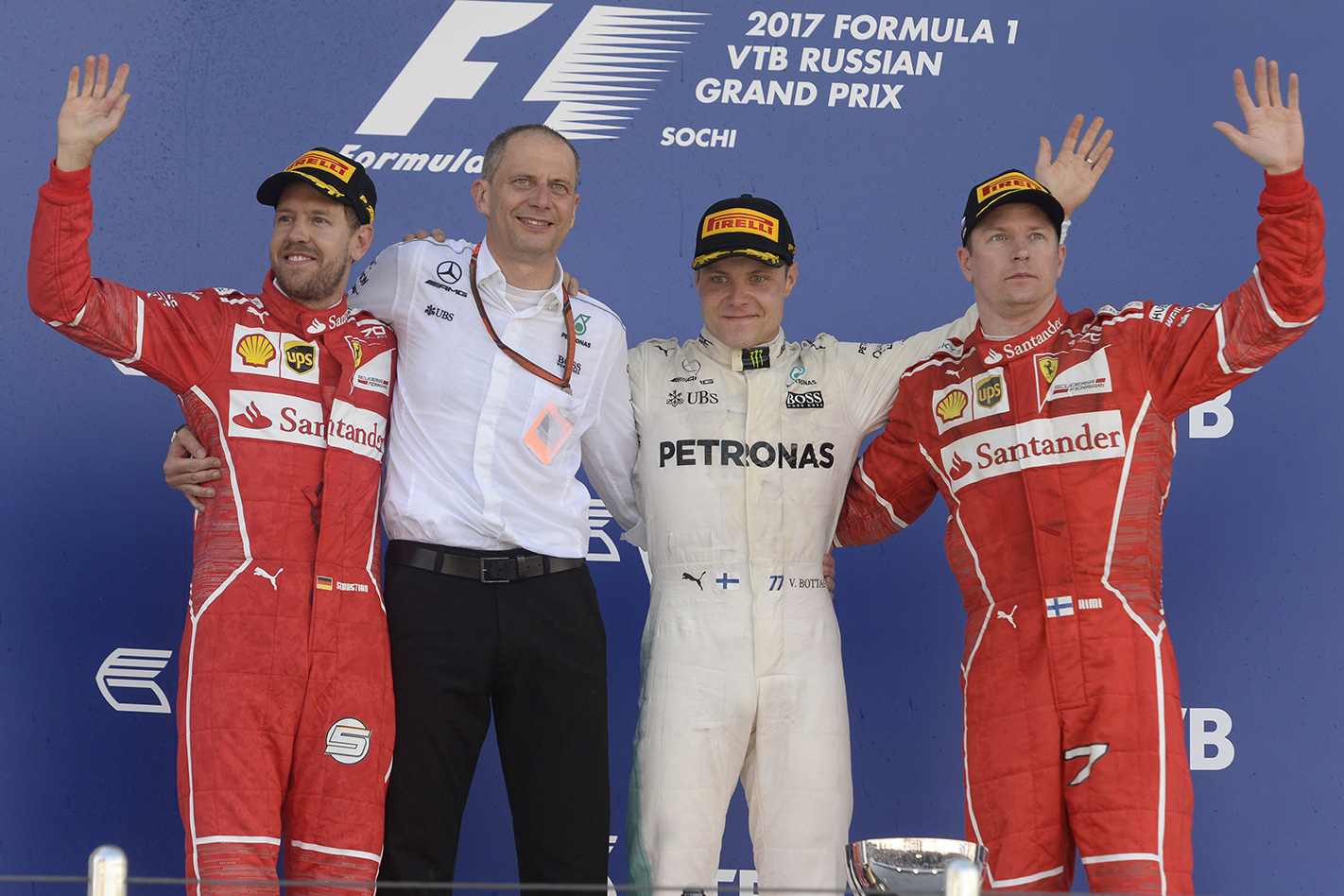
IT WAS a long time coming. After 84 races, Finn Valtteri Bottas has taken his maiden Formula One victory in his fourth start for the Mercedes team, triumphing in the Russian Grand Prix after sustaining heated closing-laps pressure from Ferrari’s Sebastian Vettel.
The Ferraris of Vettel and Kimi Raikkonen earlier locked out the front row in qualifying (the first one-two for the Scuderia since Magny Cours in 2008).
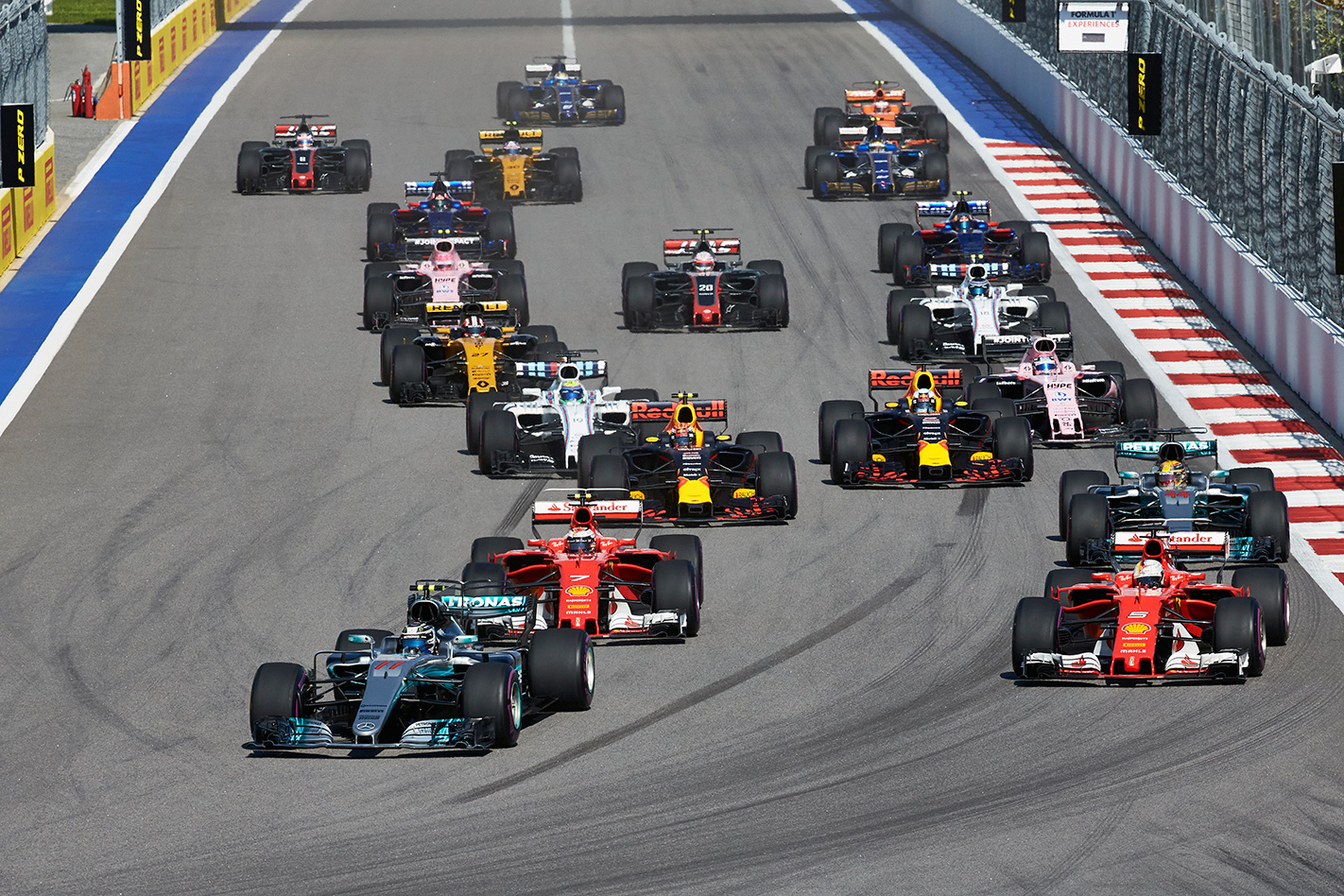
But off the start Bottas, from grid position three, swept around the outside of both the red cars into the lead, and there he stayed.
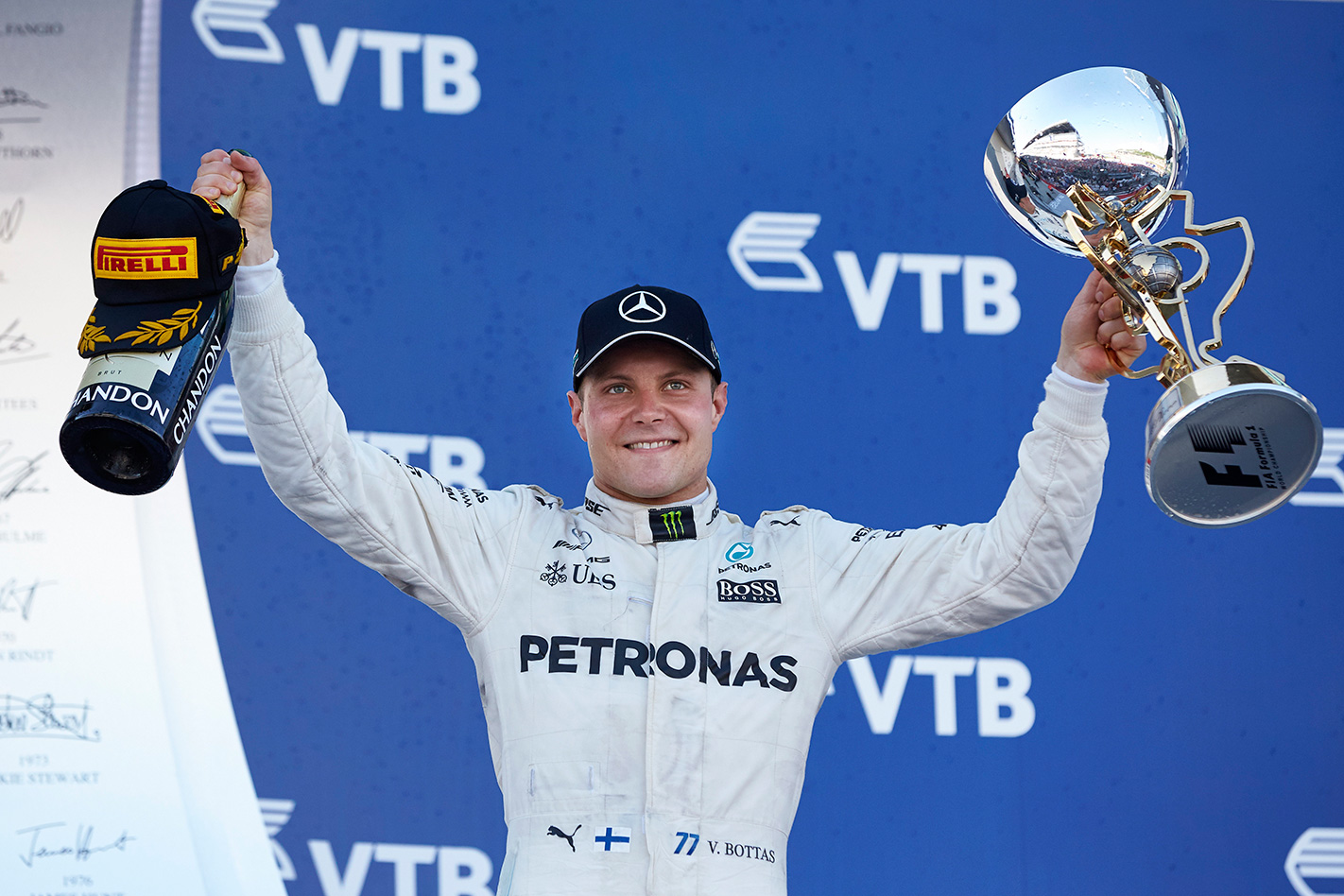
The race only really came alive with 14 laps remaining when Bottas made his only mistake, flat-spotting his left front in a smoky brake lock-up to put his four-second margin over Vettel in some peril.
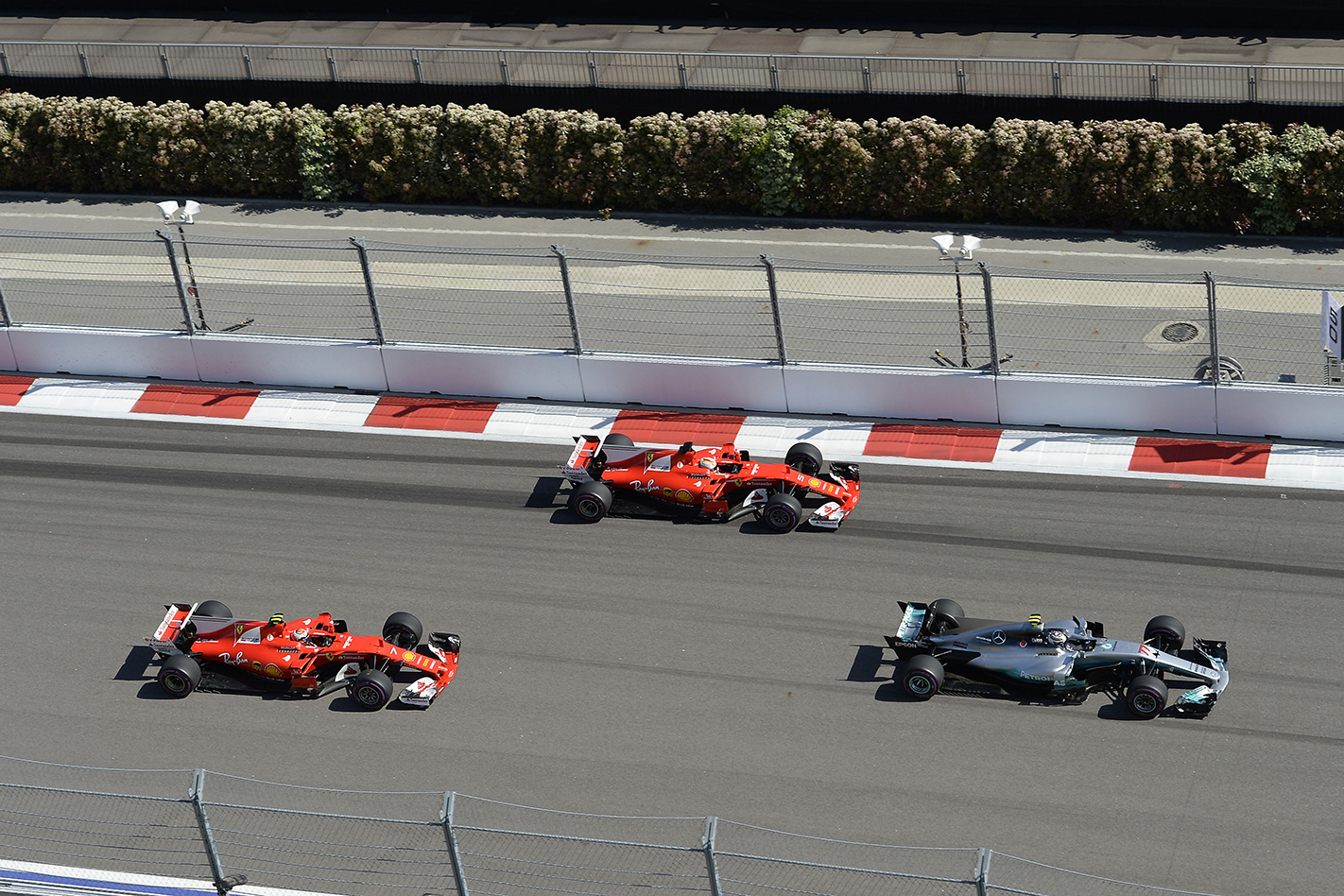
Still Bottas held firm, helped on his final lap by Felipe Massa, his old Williams teammate who held up Vettel enough to take the tension away. The margin at the chequer: 0.6 sec.
“It’s all a bit surreal, the first win and hopefully the first of many. It was definitely one of my best races ever.
“The pressure from Sebastian wasn’t too bad; the main issue was with the lapped cars, trying to get past those. It was tricky to pass them without losing time. I also had a lockup with about 15 laps to go that hurt the pace, but it was manageable. I asked for a bit of radio silence just to get on it and focus.
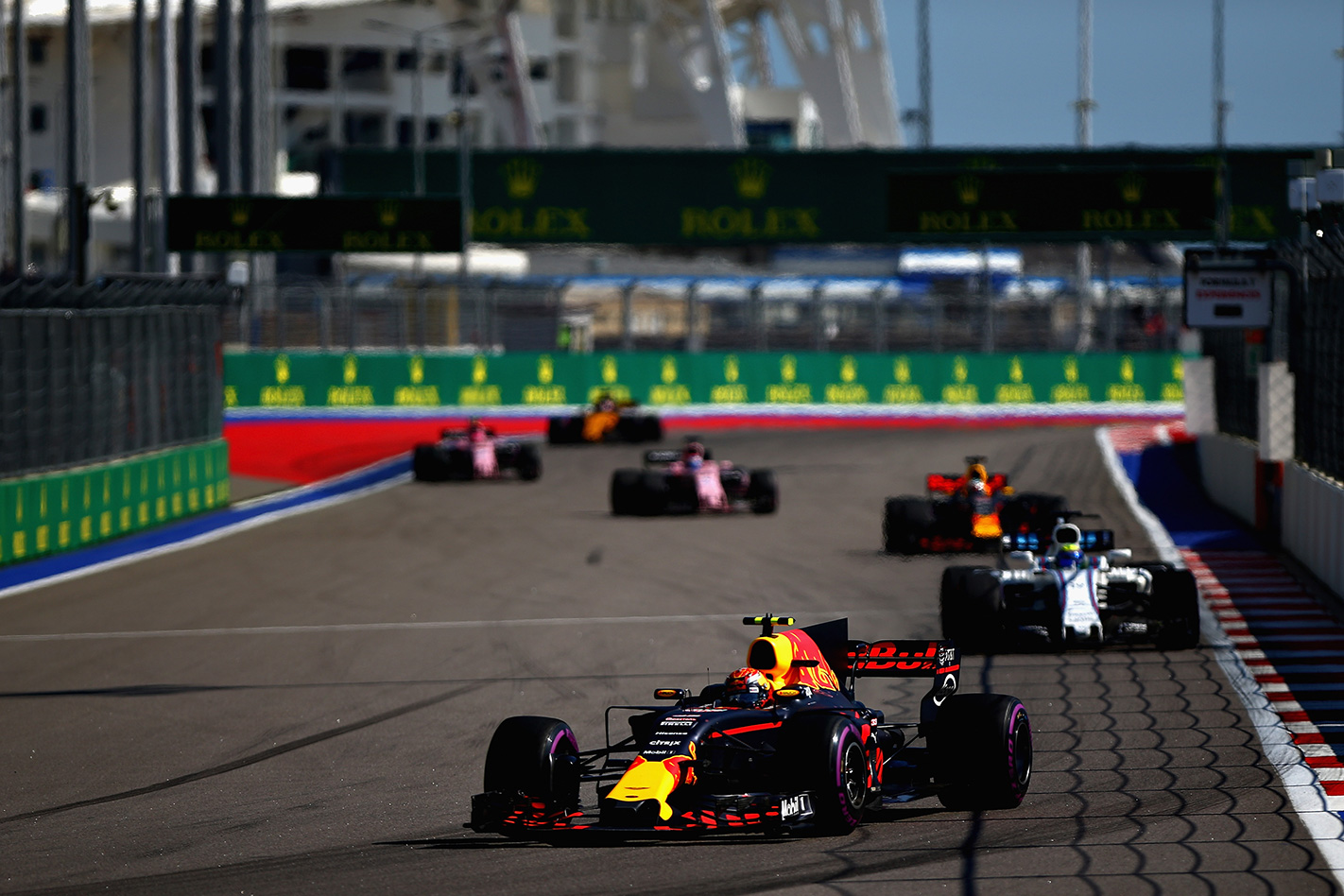
Bottas, a late replacement for the retired Nico Rosberg, is currently on a one-year agreement with Mercedes. His afternoon in Sochi may help swing him an extension.
Raikkonen broke a lengthy podium drought to take third, while Lewis Hamilton battled his overheating Mercedes to finish a distant fourth ahead of a lonely Max Verstappen’s Red Bull. It was a troubling weekend for Hamilton; the triple world champion was never in the fight.
Daniel Ricciardo (fifth) outqualified teammate Max Verstappen (seventh) again but it was plain that the Red Bull Renaults were struggling with straight-line pace and, let it be said, were not great in the corners either.
Then Verstappen’s car developed a water leak that proved hard to trace.The crew worked on the car right up to race time, and it gave no further trouble.The Dutchman found a way past Ricciardo and Massa off the start but didn’t have the firepower to move further forward.
Ricciardo encountered brake failure after spending time behind the safety car, retiring just five laps into the grand prix. A subdued Ricciardo said later: “We don’t know how much the new package will give us until we get it on track in a few weeks but we are hoping Barcelona is the first step to getting closer to the leaders.”

This failure came on the same weekend that Sauber revealed it would use Honda power units from next year. Sauber currently uses 2016 Ferrari engines. Apart from a heavily discounted engine supply, it’s hard to grasp just what Sauber will get from the deal. Honda obviously believes having another team to give feedback and info about its engines will be a help.
Neuville snatches dramatic Rally Argentina
Hyundai’s Thierry Neuville came from behind on the last stage of a brutal Rally Argentina round of the World Rally Championship to snatch a win from long-time leader Elfyn Evans by a mere 0.7sec.

Ford M-Sport’s Evans was a surprise early leader while crashes took out the Citroen pair Kris Meek and Craig Breen, and fellow Fiesta drivers Sebastien Ogier and Ott Tanak struggled in the rough stages.
Evans led by over a minute shrink on Friday, but had his advantage cut by Neuville to just 11 seconds by Saturday night, setting up a tense final day.
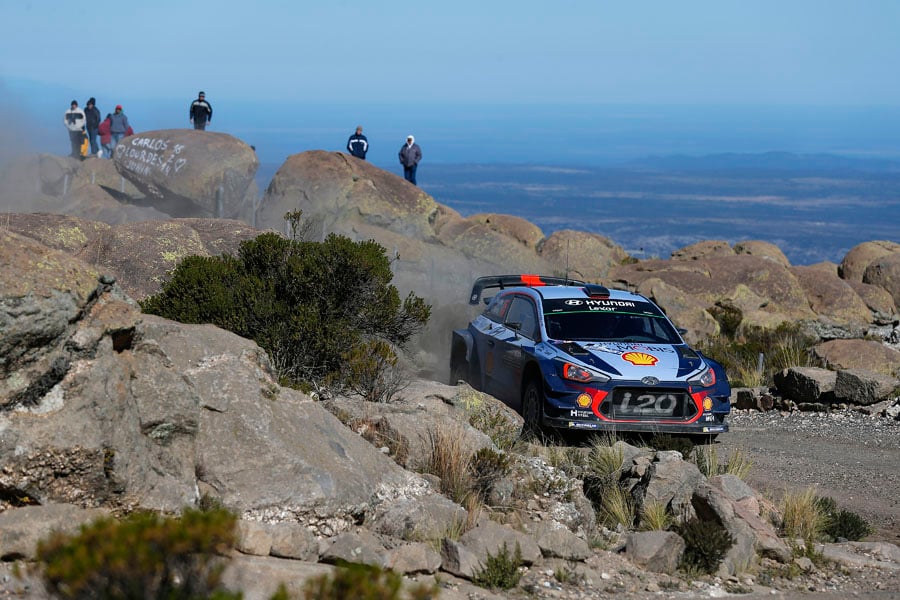
The Belgian then won special stage 17 by more than eight seconds, leaving him just 0.6sec in arrears going into the deciding Power Stage.
Evans appeared to respond spectacularly and was up by more than three seconds well into the Power Stage.
But at the finish he was 1.3secs off the Hyundai’s time.
“Gutted to be honest to lose by such a fine margin after so many issues,” Evans admitted at the finish.
“I need to learn from it to come back stronger and win these rallies in the future.”
Third in Argentina was the Ford Fiesta of Ott Tanak, who extended his lead over his M-Sport teammate Sebastien Ogier during Sunday.
Fifth was Toyota’s Jari-Matti Latvala, 23.4secs back from Ogier, who struggled with a mysterious handling problem on Saturday.
Hyundai’s Kiwi driver, Hayden Paddon, held on to sixth despite having just rear-drive in one stage.
Ogier still heads the world championship on 102 points, from Latvala (86) and Neuville (84).
Unstoppable Whites take sixth Targa Tasmania victory
Jason White and his uncle John White have scored a sixth overall win at Targa Tasmania road rally, bringing them within just two victories of all-time Targa legends greats Jim Richards and Barry Oliver.
The six-day event quickly evolved into a duel between two Dodge Vipers, with White of Devonport and runner-up Michael Pritchard of Hobart both driving the big V10-engined American sports cars.

While they ceded some time on the final day to conserve their tyres, the Whites had a margin of 34 seconds over Pritchard and Gary Mourant at the Hobart finish.
Last year’s Targa winners, Matt Close and Cameron Reeves, couldn’t quite match the overall speed of the Dodges this year, taking third place overall in their Porsche GT3, 1m 16s behind the Whites.
“We were just so lucky with the way it all played out – it was just incredible,” Jason White said.“We had to replace a diff after day one – you only get one opportunity to work on your car and we used ours up very early,” the driver said.
“But we were just so lucky it happened after the George Town street stage, otherwise we would have been stranded somewhere in the wilderness with a broken diff.
“I’ve done Targa 20 times and we’ve won it six times and had it taken away from us when we were leading as many times, so luck does play a part and you can never feel like you’ve got it in the bag.”
Last year the Whites blew the engine in the Viper while leading.
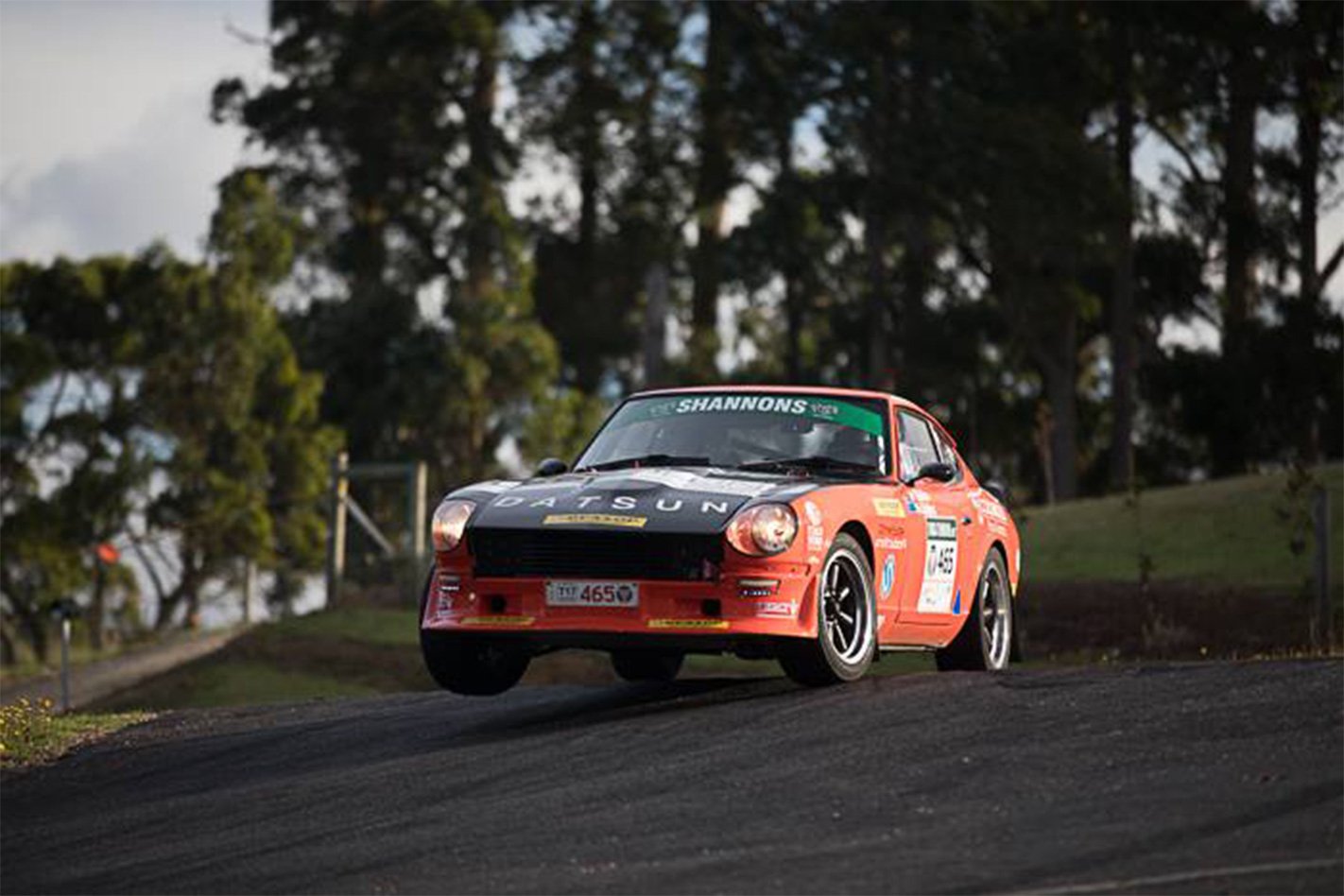
A heroic drive came from Queenslander Jon Siddins, who finished a remarkable ninth outright (and winner of the Shannons Classic GT division) in a 1970 Datsun 240Z with his wife Gina navigating.
A field of 270 entries valued at $30 million contested the 2017 Targa across several classes.
Will Power kick starts his 2017 IndyCar season
Will Power finally landed a strong result in the 2017 IndyCar Championship, taking second place to fellow Team Penske driver, and defending champ, Simon Pagenaud at Phoenix Raceway.
Both qualified towards the front, meaning they missed a five-car shunt in the first 30 seconds of the race. Schmidt Peterson Motorsports driver Mikhail Aleshin lost the rear of his car in turn one and triggered a pile-up that included Sebastien Bourdais, Marco Andretti, Max Chilton and Graham Rahal.All five Honda drivers emerged from the crash unscathed, but none were able to continue.
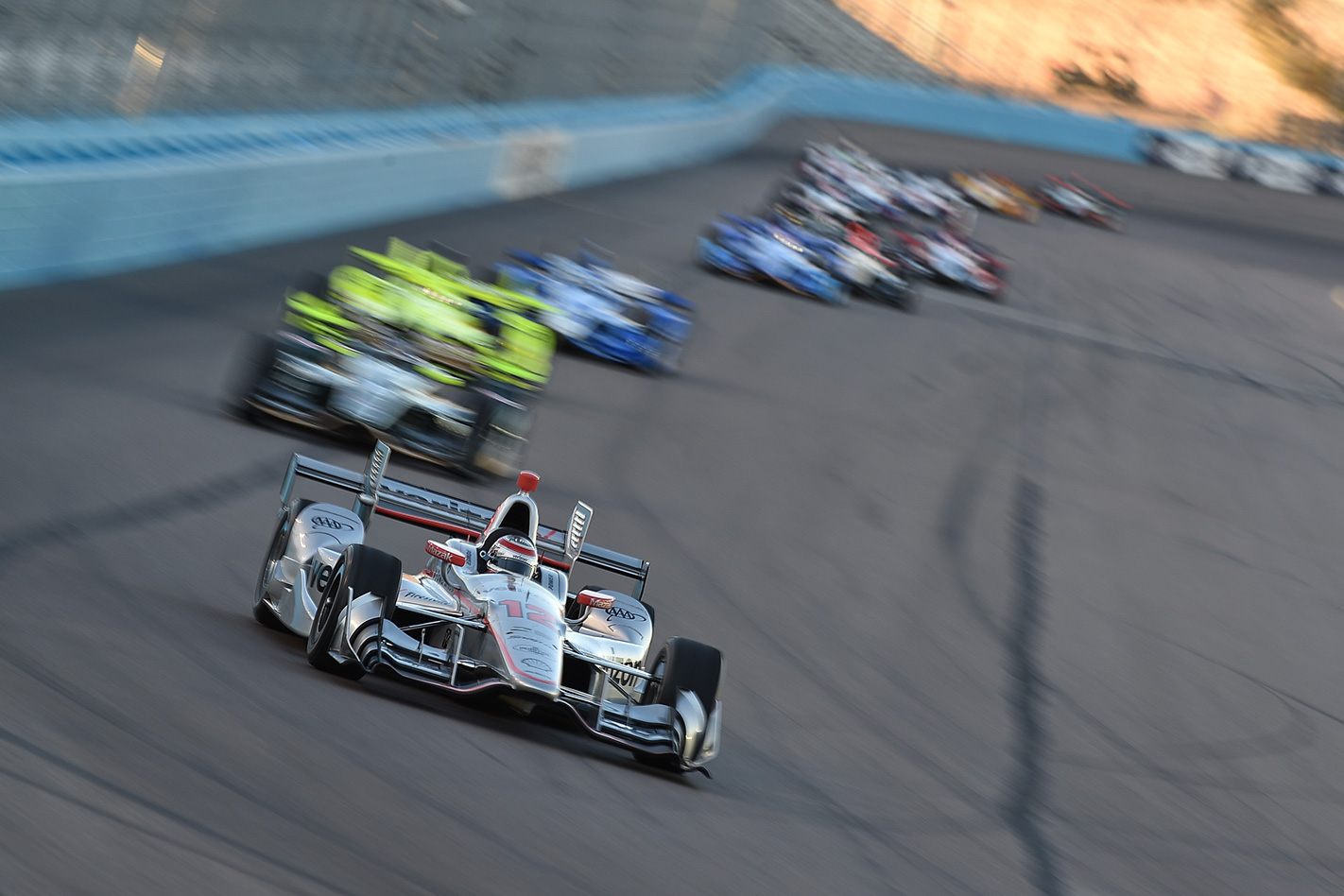
It took the Frenchman 105 IndyCar starts to nail the oval victory but he did it in style, leading home Power by 9.1 seconds.
“I have a button on my wheel that tells me how many laps were left,” said Pagenaud. “I kept pressing it. It was stressful.
“This is incredible. This is my best win. You need to be so strategic to win on an oval and today was the perfect day. I couldn’t be any happier.”
Pagenaud now leads in the points ahead of other 2017 race winners Scott Dixon and Josef Newgarden.
In the fourth race of the year Queenslander Power, who led much of the last race in Alabama before losing all chance with a punctured tyre, has at last banked a decent haul of points although he still languishes way down in the standings.
JR Hildebrand, returning to the cockpit after missing last week’s Alabama round with a broken left hand, also had a strong race to take third in the # 21 Fuzzy’s Vodka Chevrolet. It was Hildebrand’s best result since he took second in the 2011 Indianapolis 500.
Mawson endures tough F3 round at Monza
Joey Mawson’s Monza round of the European Formula 3 Championship were difficult in every way, with the Sydneysider unable to take a trick in the three races dominated by rival Carlin drivers.
After a bad qualifying session – best times were deleted due track limit violations –Mawson’s Mercedes-powered car showed it was missing straightline speed. He finished just 13th fastest

In race two, Mawson moved from 13th to ninth before a rival punctured his rear tyre.
Another good start in the final race – from 18th to 10th on the opening lap – was promising.But then Mawson struggled on old tyres until he was again hit from behind, ultimately classified 16th.
The next round of the championship is at Pau in France on May 19-21.In the meantime, the VAR squad will work to improve the qualifying pace of its cars.
- Part One: Taking One For The Team
- Part Two: No Load Too Small
- Part Three: Bumpy Business
- Part Four: On The Road
Part One: Taking One For The Team
No, we haven’t gone mad here at Wheels, at least not yet. But we have decided to do something we’ve never done before – live with a ute.
We’re not interested in shovelling dirt or working out what’s the best rig for a tradie looking to save a few bucks. Nope, we’re heading to the other end of the market, the dual-cab four-wheel drive loaded with fruit. It’s a booming segment, to the point that Mercedes-Benz is following an SUV-like trajectory into luxury.
For now, though, the Toyota Hilux continues to lead the pack, and this year it’s even in with a shot of becoming the first ute to top the market. Many a Falcon and Commodore driver has traded in their sedan for something with less finesse and a lot more carrying capability.
Perhaps it’s no surprise. Most dual-cabs can now tow 3500kg (the Hilux can, although auto versions are limited to 3200kg). You can option them with leather and all manner of accessories, and dual-cabs can carry five people. But are they worth the $60K-plus spend? That’s what we want to find out.
In what some Wheels readers may see as a cruel experiment, we’ll spend four months with a Hilux SR5; everything from regular driving and family duties to some freeway runs and, possibly, the occasional gravel escapade.

The SR5 comes with satellite navigation, digital radio, climate control and a 7.0-inch touchscreen. There’s also smart-key entry, although it’s not the grab-the-handle-and-go type; instead, you press a button on one of the front door handles to unlock the doors.
Unlike some rivals, the Hilux has reach and rake adjustment for the steering, although the seating position is still quite upright – and high – thanks to the ladder-frame chassis underneath.
An electric driver’s seat and leather are part of the $2000 Plus pack while the auto adds the same again. Ours also arrived with some extra off-road fruit: a snorkel ($685); steel bull bar ($2493); driving lights ($793); and a towbar with trailer brakes ($906). Metallic paint adds another $500 and a plastic tub liner $450 for a total of $63,311.
Yet it’s missing the active safety still rare in this part of the market and gets only single-zone climate control.
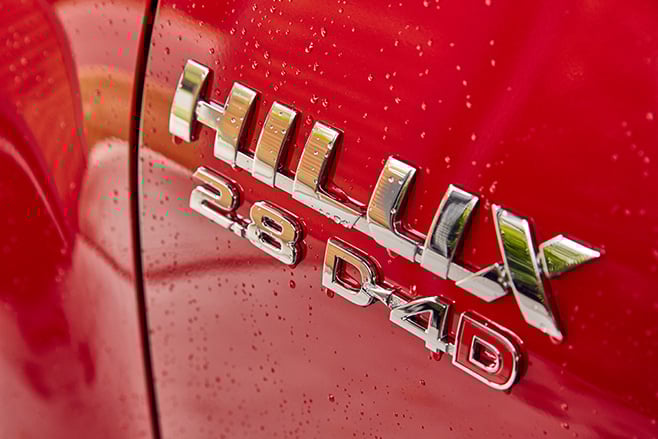
While the SR5 is available with a 4.0-litre petrol V6, it’s the diesel that’s the big seller. The 2.8-litre four-cylinder turbo is all-new, replacing the previous 3.0-litre unit. Peak outputs are nothing special and are easily beaten by others in the class. Power is a modest 130kW, while torque is closer to the money at 450Nm.
Our SR5 arrived with just 631km on the odo, so it might need a few more miles under its 18-inch alloys to reach its best.
Power is channelled through a six-speed automatic transmission, our weapon of choice for this test, or a six-speed manual (with 30Nm less). We love our stick shifts here at Wheels, but let’s face it, a Hilux is not the sort of car in which you’ll be chopping through the gears on the back way to the office.

We learned that early on. This thing is more truck than car, right down to its lacklustre steering and tendency to bounce around over bumps. Workhorse utes are never delightful things unladen, but the Hilux is particularly taut in its tail thanks to leaf springs designed to cope with more than a tonne in the tray. And the snorkel adds to induction noise on part throttle, which provides a hint of character if not much in the way of punch.
Still, there’s something refreshing about being able to tackle speed humps, and not having to worry about ripping the front bumper off on steep driveways. Or scraping a rim when parking.
The Hilux certainly feels tough. Unbreakable, right? Let’s find out.
TOUGH AT THE TOP
Until recent times, the Hilux dominated the ute segment in Australia. That’s been eroded by increased competition, predominantly from the Ford Ranger, which has gone from an also-ran to challenging Toyota for sales supremacy in the 4×4 segment. To the end of September this year the Hilux was still the sales leader — just. But it was the tradie-focused stripper models keeping it on top of a hard-charging pack.
POWER FOR THE PEOPLE
Get ready for utes with more grunt. VW has added a V6 variant to its updated Amarok (with 165kW/550Nm, it’s the most powerful in class), Ford is working on a Ranger Raptor, and HSV on a Colorado.
Toyota was first to test the waters with its Hilux TRD in 2008; a supercharged 4.0-litre V6 petrol lacked nothing for grunt, but getting it to the ground made for lairy sideways moments. Now Toyota is working on something to sit above the SR5, with the TRD name a strong chance to be dusted off.
Part Two: No Load Too Small
Remember when phones were about making calls? And utes were about carrying things?
In this modern connected world, phones seem more about playing music and games, watching cat videos, grabbing an Uber, or helping us not go around in circles. And utes are about loading up the family, towing caravans and carrying surfboards – among other things. Yet this month I learnt all about what utes can actually lug.
It started with a couple of trips to the tip to offload the remains of a hedge that had decided to grow every which way but the direction I wanted. Then there was a bunch of beds and mattresses as part of a toddler shifting into a big bed (said toddler loves “the yoooot”, by the way).
Next was a wine fridge, easily slid across the optional ribbed plastic tray liner and lashed to the corner mounting points with a tie-down.
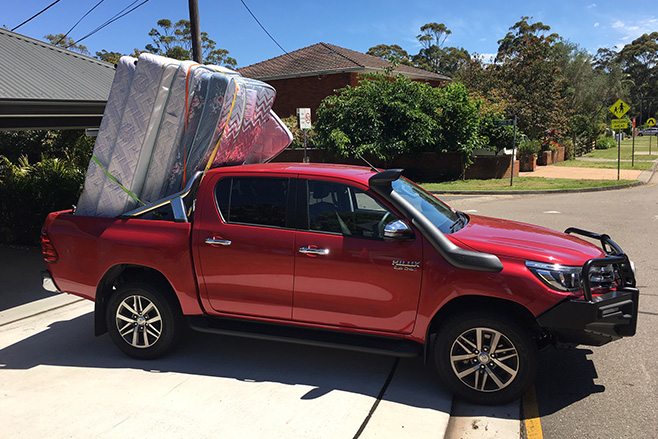
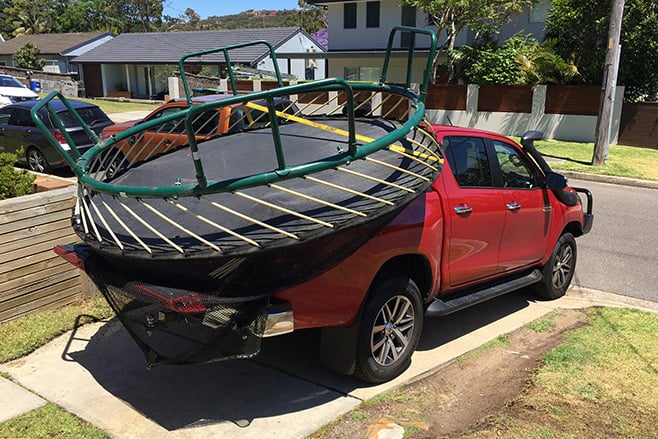
But it was the trampoline that was the most ambitious Hilux carry. The prospect of delicately wheeling this newly acquired 10-foot tramp from a neighbour’s house to mine simply wasn’t on the cards. So onto the back of the Toyota Hilux SR5 it went.
It wasn’t entirely within the confines of the four-door body, but with some tie-downs in place the trampoline was soon on its way, albeit unlikely to appease any of the establishment’s finest had they seen my somewhat optimistic loading.
That’s part of the beauty of having a ute; being able to throw whatever you want at it. Besides, it got the job done, to the point where I’m now on the hunt for other things to launch into the Hilux’s tray. Mountain bikes seem far too simple a task, although it’s the most common addition to my SR5.
I’ve learnt plenty about the appeal of the functionality and practicality that makes the Hilux the weapon of choice, even when there’s a perfectly normal passenger car alongside it in the garage.
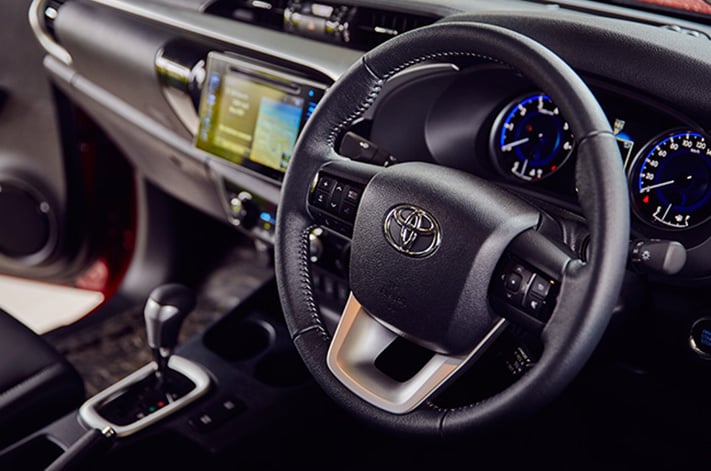
Digital radio is a win, too, although it’s a shame the head unit has frustrating touch buttons for the volume. Combined with more buttons on the wheel, it means lots of pressing to make big adjustments.
The Hilux’s on-road manners also aren’t as endearing as its carry-anything attitude. Those wanting the poise of a BMW X5 or Ford Territory ought to look elsewhere for their cornering fix. The steering is overly light and vague, and the 18-inch Dunlop Grantreks are prone to yelp if you arrive at a roundabout with too much enthusiasm.
The firm rear leaf springs are able to carry almost a tonne without strain, but they lack compliance for everyday unladen duties.
Perhaps it’s time I loaded something really heavy in the back to tie the thing down…
The weakest link
Hilux’s legendary ‘unbreakable’ toughness didn’t get off to the best start. Early on, the flimsy rubber cover that conceals the USB port when you’re not charging a fandangled smartphone tore off as I was removing the charging cable. Of course it has nothing to do with operator error; I blame poor design… Seriously. And I guarantee it’s not the only Hilux to lose what is a fairly useless item in the otherwise well-presented interior.
Part Three: Bumpy Business
UTES are more than just a way to get around. They’re a lifestyle, one that’s built an almost cult-like following with some of the more hardcore fellow ute owners.
And I’ve learned more about Club Ute in recent weeks, having covered plenty of predominantly city kays, where utes are prevalent.
There’s a ute peak-hour (it’s over by about 7.45am and kicks off again at 2.30pm) and a general ute understanding in traffic.
And it pays dividends when dicing for a gap on clogged roads.
Ute-to-ute is so much easier when merging, with merely a glance to acknowledge such courteousness (although, then again, it could be the sheer bulk of the Hilux – bullbar, snorkel and all – that creates openings that didn’t exist moments earlier).
The ute respect works much better in identical vehicles. Spot another Hilux SR5 and I’m almost certain to get a sideways glance and a steady but deliberate raise of a finger off the steering wheel.
But it’s the ability to launch anything at the tray whenever you want that’s the biggest ute win. This month it was a woodfired oven to practice my pizza-making.
The full 300kg disaster was forklifted into the back of the Hilux, where it was a fraction too wide to snug down between the inner wheel arches.
All that extra weight in the tail softened the ride just enough to make it borderline comfortable, adding a healthy dose of compliance to the rear end. And the 450Nm felt almost as strong as ever, comfortably lugging from its 1600rpm peak.
The wooden crate in which said oven was packed dug hard into the extra-cost-option plastic tray liner, but it flexed back into shape once the delicate job of removing the load had been achieved at the other end.
I’m less enamoured than ever with the Hilux’s unladen suspension behaviour, though. The rear end bucks around and does nothing for general comfort levels, which becomes an issue over bumpy roads with the family on board. The kids somehow think it’s fun, the missus less so.
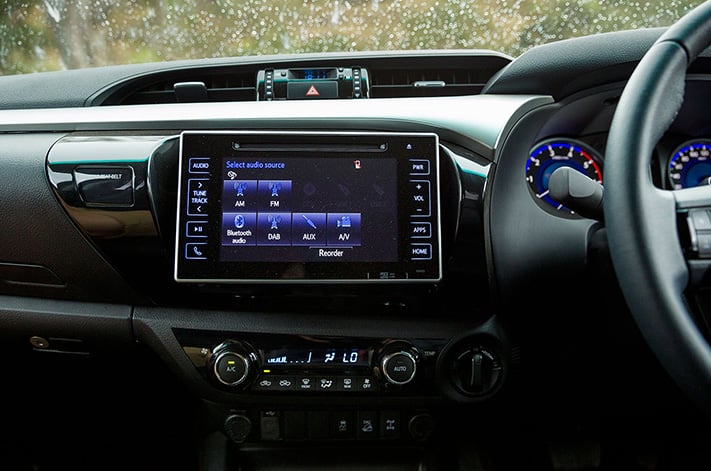
Points are made up with the digital radio tuner, although the speakers are terrible; any hint of bass and they start woofing and croaking. A $60K car laced with leather should have a better sound system than this.
Then there’s the touchscreen, which continues to be a source of frustration when it comes to big volume adjustments and flicking between stations. Overall, though, the Hilux is a welcome addition to the garage and one that continues to get regular use as a family car, around-town runner and light-duty hauler.
Part Four: On The Road
Utes are great at carrying things but not particularly good at keeping said items out of the weather. Such was my last-minute realisation when planning an interstate trip in our Toyota Hilux – a final fling before the SR5 made its way back to Toyota HQ.
With a family and luggage on board, it was typical of the average holiday usage for a ute. Big kays, fervent over-packing and kids who wished they’d arrived before they’d clipped their seatbelts.
Just finding somewhere for our piles of luggage and Christmas presents proved something of a challenge. Despite the cavernous tray, utes don’t provide many decent in-cabin options for stashing things. The Hilux’s twin gloveboxes and centre console are about it.
Fortunately, a friend suggested we buy some plastic tubs and load them with our gear before strapping them in the back. It proved a top idea, ensuring we had more room in the cabin for four people, snacks and toys to keep the kids content.
So it was off on a 2000km, four-day interstate road trip that was more bland freeway than snaking country roads.
A quick check using a GPS app on the phone showed the Hilux was about 5-6 percent optimistic, so there was some room to move at the 110km/h indicated speed.
A few hundred kays in and it was clear the best the Hilux was going to do was about 650km from its 80-litre tank. The fuel gauge is quite pessimistic; over four months, the most I ever squeezed in with the needle below E and the fuel light glowing was 64.4 litres, suggesting there was still 150km of driving in the tank. Not that I wanted to test it.
Even then, the best we posted was 9.9L/100km. That’s still better than the mid-12s we’d been getting around town, but not as low as I’d hoped for freeway motoring. No doubt the weight and aerodynamic drag of the bullbar and snorkel wasn’t helping.
Another thing not helping on bumpier surfaces was the ride. The Hilux is super firm and after four months it’s clear it works better with a few hundred kilos on board. That extra weight is enough to settle the stiffly sprung rear-end and give it some much-needed compliance. Most of the Hume is pretty smooth, but there’s a section south of Albury that keeps things jiggling unpleasantly.
Otherwise, the Hilux is a decent way to travel. Keep the engine at lower revs and it’s quiet and otherwise comfortable, loping along nicely with the cruise control engaged. Just don’t expect a whole lot in the way of excitement.
Despite its flaws, living with a ute has been thoroughly enjoyable. It’ll carry almost anything, devour speed humps and cop all manner of punishment in the process. All of which I’ll miss.
Sign up here to get your weekly dose of Wheels highlights
Today marks the anniversary of the tragic death of Kiwi rallying legend Peter ‘Possum’ Bourne, killed in a road accident on April 30, 2003.
The affable New Zealander dominated Australian rallying during its late-1990s golden era, winning seven straight titles between 1996-2002, and has now been inducted into the Australian Motorsport Hall of Fame.
Every one of Bourne’s titles came behind the wheel of a Subaru, for whom he drove for more than 15 years, beginning in a Subaru RX Turbo before moving through on to the Group A Legacy (Liberty in Australia) and Impreza, then on to his beloved Impreza World Rally Car before a regulation change forced him back to a Group N car in 2002.
The above video comes from the 1992 Subaru team launch, where a brilliantly mustachioed and mulleted Bourne proudly shows off his new Prodrive-built Legacy RS, similar in spec to those driven in the World Championship by the likes of Colin McRae, Markku Alen and Ari Vatanen.
Following the local rule change, which outlawed the mega-dollar World Rally Cars of Bourne and Neal Bates, the New Zealander converted his Impreza WRC into a monstrous 450kW+ hillclimb car, winning Race To The Sky – the Kiwi equivalent of Pikes Peak – in 2001.
The car still competes today, winning the revived Race To The Sky race in 2016 with Alister McRae behind the wheel. Bourne is survived by his wife Peggy and children Taylor, Spencer and Jazlin. Bourne was a key influence on current Kiwi WRC star Hayden Paddon.
QUESTION – BROOK (question asked on 11/8/2016):
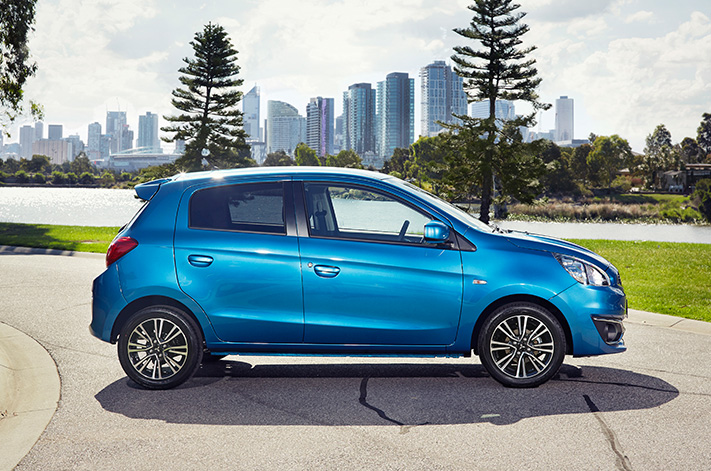
My budget is $15,000 and I can’t decide which car is best for me; Honda Jazz, Suzuki celerio, Nissan Micra, or Mitsubishi Mirage. I live on the Atherton tablelands and work in real estate so I’m looking for fuel efficiency at 80-100ks as well as around town, cheap servicing costs, looks that will last (it needs to not look cheap) and will last a good 10 years, pleasure to drive and good quality phone connectivity for calls while driving.
BUDGET:
$15,000
ANSWER – Anna Kantilaftas:
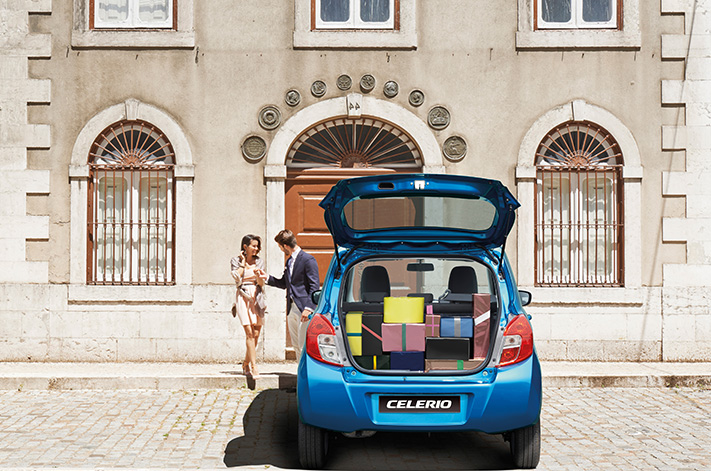
You’re in luck – $15,000 can get you a long way in the urban runabout market these days so you’re certainly not limited for choice. Of your four options, the Suzuki Celerio seems to tick your boxes.
It falls well below your budget as one of the cheapest cars on the market, and its 1.0-litre three-cylinder petrol engine uses 4.8L/100km which is bettered only by the Mitsubishi Mirage but not by much.
The Celerio is attractive, more spacious than you’d expect of most micro cars and it’s fun to drive. For its price, it’s pretty good. The major downside I found in the Celerio is it doesn’t come with cruise control which might be annoying if you use it a lot on long drive.
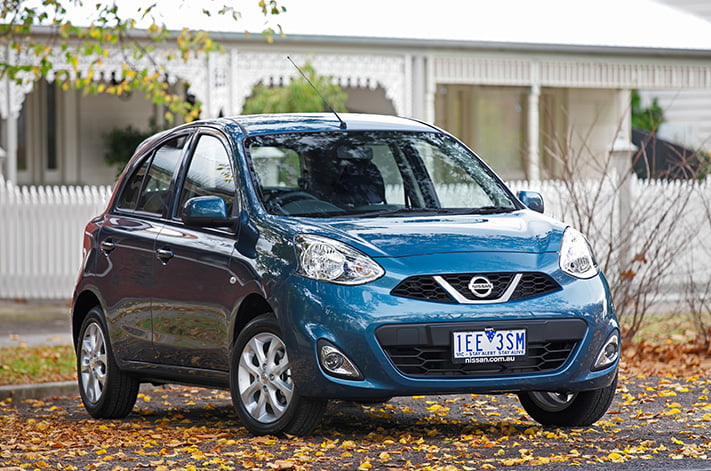
As for the other two: Nissan is set to pull the Micra which could mean excellent run-out deals and while the Mirage may offer the best price and fuel efficiency figures, neither of these would be my top pick in terms of drivability and comfort, especially if you’re spending a lot of time on the road.
In terms of servicing, the service pricing for Suzuki and Honda are different but not by a lot, with Honda costing slightly more per service. Suzuki and Honda both offer capped servicing for five years or up to 100,000km – but ensure you ask for servicing details when visiting your local dealer to see what they’re offering at the time as this may vary.
Daniel Ricciardo is one of Australia’s most famous exports, with the perpetually-grinning F1 driver being hot property both on and off the track.
We cornered Ricciardo to throw some curly questions his way and his answers are entertaining, to say the least. From what his first cars were to what’s presently in his driveway, to revelations about some of the crazier things that superfans have asked him to do, Ricciardo gives us a peek at what his life is like.
And then he waxes lyrical about how he’d like to fight Lewis Hamilton in the UFC Octagon, and he weighs in on that wonderfully loaded question of “who is the best driver in Formula 1”. Hear what he has to say on all of this – and more – in our video.
Nine record-harassing heavyweights of the Nurburgring Nordschleife
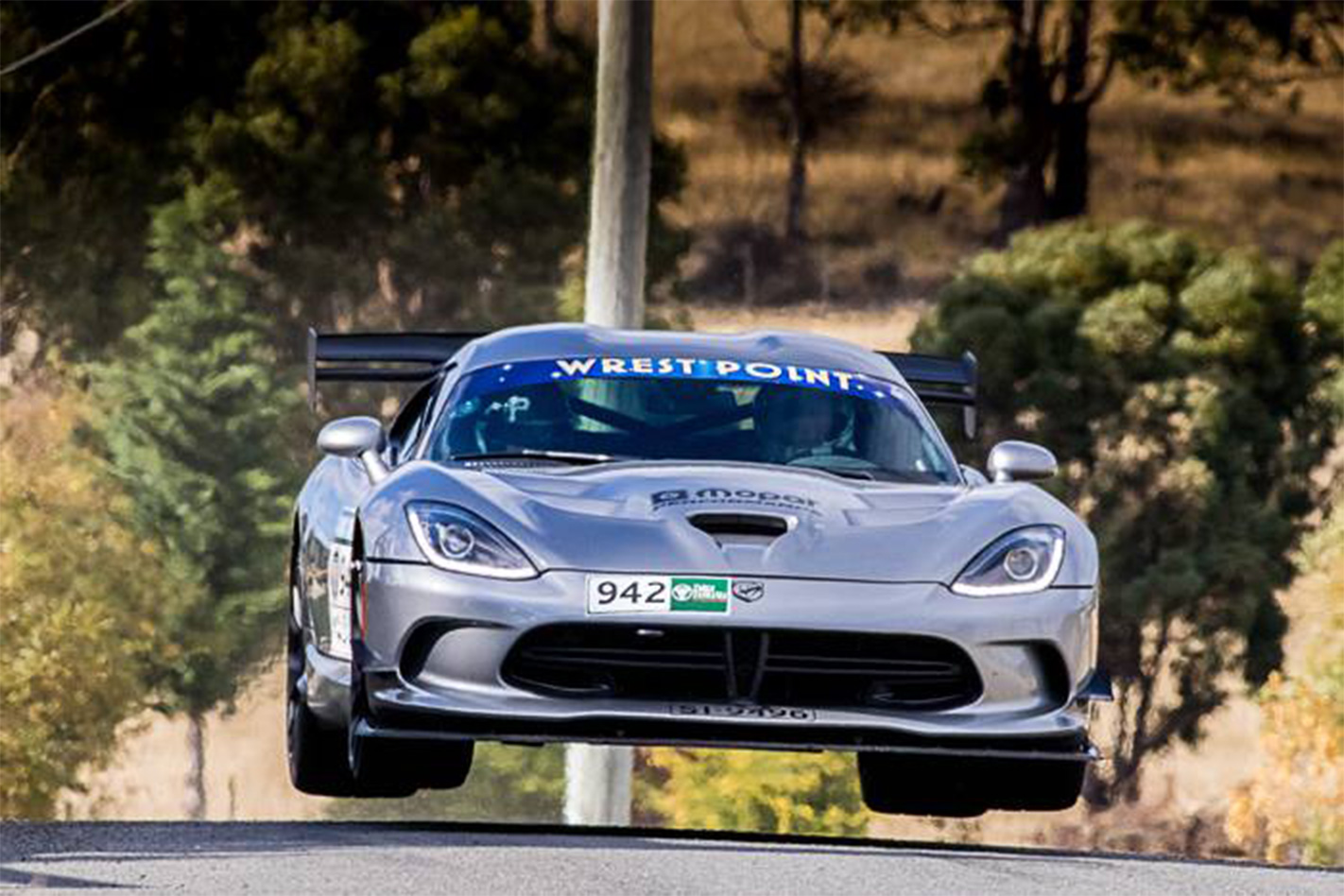
The Tasmanian pairing of Jason and John White have secured their sixth win at Targa Tasmania driving a Dodge Viper ACR Extreme.
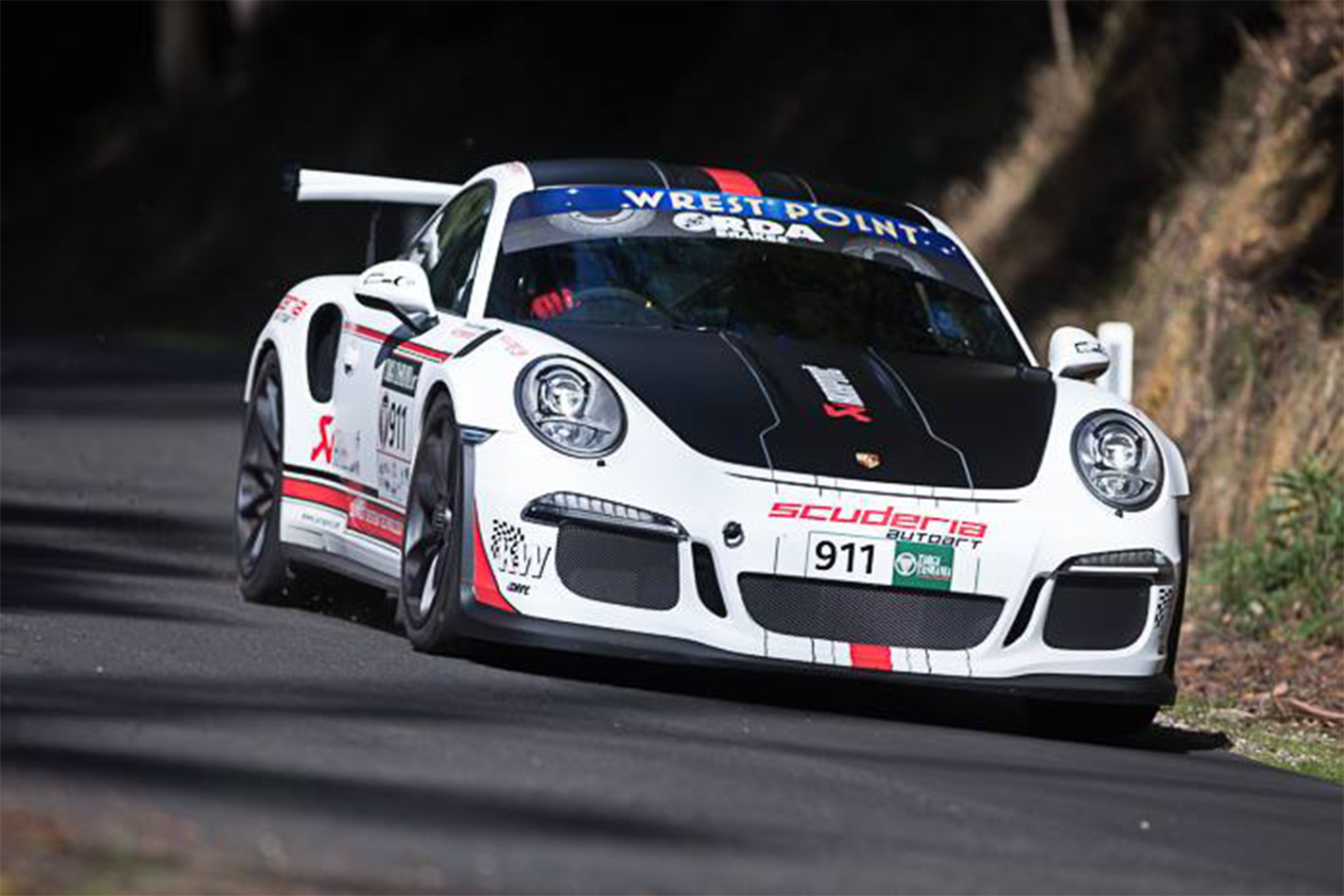
After six hard-fought days of competition and 35 competitive stages, the successful nephew-uncle duo took victory by just 34 seconds over the similar car of Michael Pritchard and Gary Mourant, with the Porsche 911 GT3 RS of last year’s GT2 winners Matt Close and Cameron Reeves a further 42 seconds back in third.
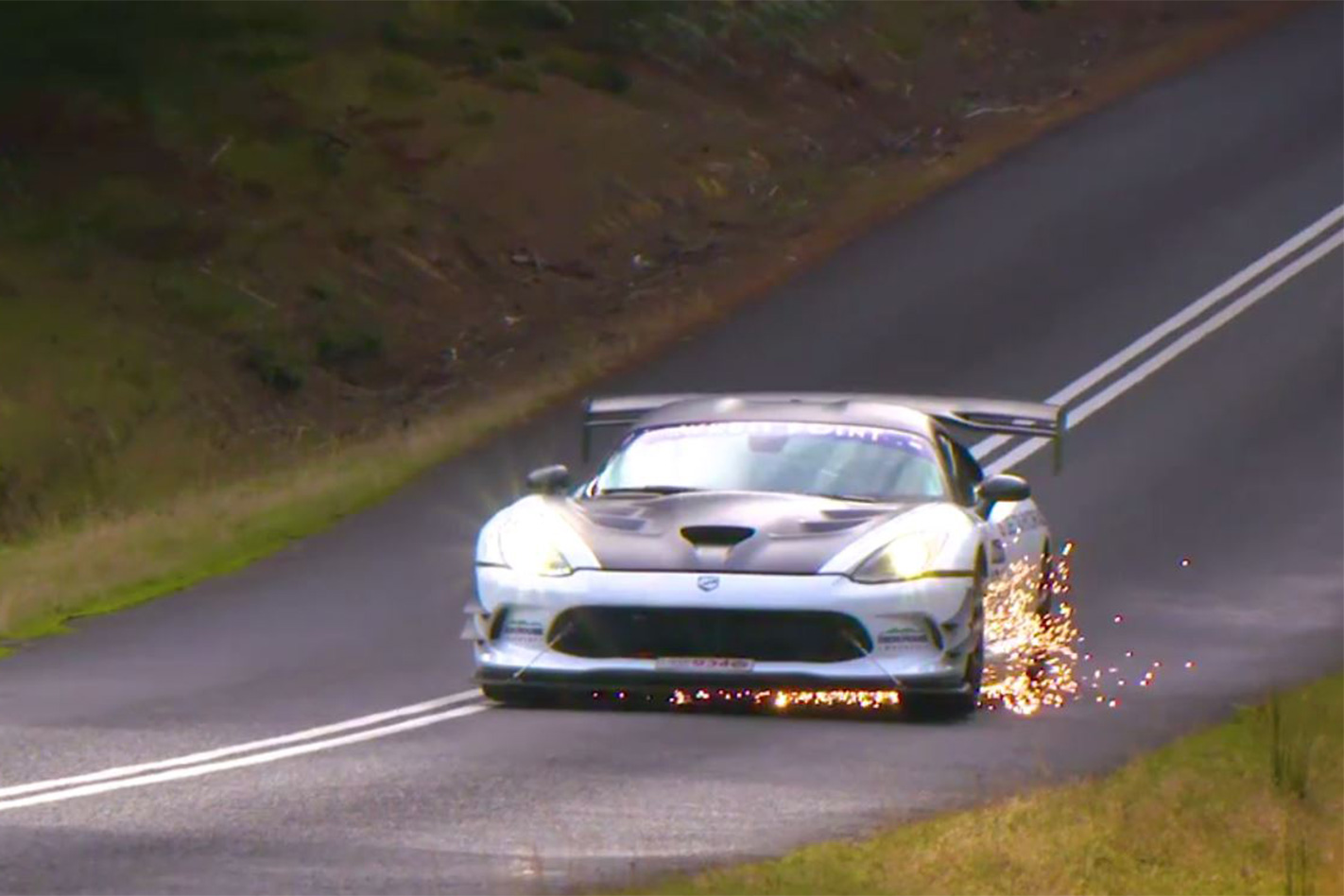
The Whites’ attempt at victory in 2016 ended in heartbreak with the Viper’s 8.4-litre V10 exploding on the second-last day, handing a deserving Close and Reeves their first Targa victory.
If buying a new car wasn’t a big enough deal the first time, you’ll experience it again when it comes to trading it in for another.
But when should you consider upgrading your existing vehicle? Questions worth asking yourself before committing to a new car include: Does it still meet your current lifestyle requirements? How is your current car running? Is it reliable?
A change of vehicle may be dictated by changing circumstances, such as a new job or an expanding family.
The partner and kids, for example, are probably not going to appreciate your two-plus-two sports car, however fast or exciting it is to drive.
If you’ve exceeded warranty coverage and are experiencing costly ongoing maintenance, that’s likely to encourage you to want to offload your problematic vehicle.
Most Australians prefer to rotate their cars every three years, most of whom are no doubt tempted by that new-car smell.
There’s nothing wrong with that, of course. Though whether you simply desire a new car because it is bigger, more sophisticated, or sportier, then it’s worth weighing up the pros and cons of sticking with your current vehicle, whether you own it outright or use it as part of a lease arrangement.
Outright ownership After three years of ownership, it’s worth noting that you have already accounted for the biggest losses on your car – through depreciation. The average rate of depreciation means that unless you’ve purchased a supercar with a long waiting list, the resale value of your vehicle is typically about half, if not less, of the original price.
That means a buyer of your car at this point is the main beneficiary. The most logical move financially is to hang on to your car for as long as possible, essentially running it into the ground and spreading the initial outlay across a decade or so.
However, not only is it challenging to resist the temptation of a newer car for that long but you would also be depriving yourself of the latest vehicle technology – whether it’s related to safety, connectivity, or more fuel-efficient engines.
Of course, even if the value of your vehicle has been reduced by depreciation, the earlier you sell it the more money you will have to put towards your new car. Just be mindful that you will get even less for your car if it’s used as a trade-in (as dealers need to make a profit when they re-sell it).
Unless you have sufficient savings or you’re buying a cheaper or pre-owned vehicle, you will also need to consider finance options to cover the difference between the sale of your current car and the cost of the new one.
The timing of your car change is important. For the best deals on the new car you have your eye on, the months of May and June (end of financial year) and November and December (end of year) are periods when dealers are most focused on sales targets or clearing current model-year stock.
Leasing Whether you are using a car via a business-based finance/car lease, salary-packaged novated lease, or a manufacturer’s Guaranteed Future Value (GFV) scheme, returning it before the agreed lease period has expired will typically result in extra fees.
You can help avoid this at the start by choosing a lease period that ties in with when you think you would like to next change your vehicle. Leases are commonly offered between one and five years. GFV schemes are typically offered as three- or four-year terms.
If you are in danger of exceeding the agreed mileage restriction for the lease period you will also need to start limiting usage of the car unless you’re prepared to incur the associated financial penalties.
| Car buyers guide – is now the best time to buy a premium large car?
Depreciation also plays a key part with leases, as the value of the vehicle at the end of your lease period effectively becomes a ‘balloon’ payment if you want to buy the car outright.
It’s also possible to refinance the lease to stick with the car for another agreed term.
A trade-in is worth considering if you build up equity on your novated lease with good maintenance and restricted mileage – and if the set residual value of the vehicle happens to be higher than its market value, you get to pocket the difference tax-free.
Conversely, you also wear the risk if the vehicle depreciates to a lower point than the defined end-of-lease valuation.
With manufacturer GFV schemes, you can just return the vehicle – providing you’ve complied with the terms – as you’ve essentially been renting it from the car maker, and then choose another vehicle. Or you can pay out the GFV amount to retain the vehicle, or trade it in – using any credit difference between the market valuation and GFV to put towards another new model from that manufacturer.
Ultimately, choosing when to upgrade your car is much like choosing the car itself: it’s a very personal choice.
Hyundai’s high performance, rear-drive answer to the Kia Stinger GT will pick up more luxury, more features and the option of a V8-bashing hybrid drivetrain – plus, it won’t even wear a Hyundai badge.
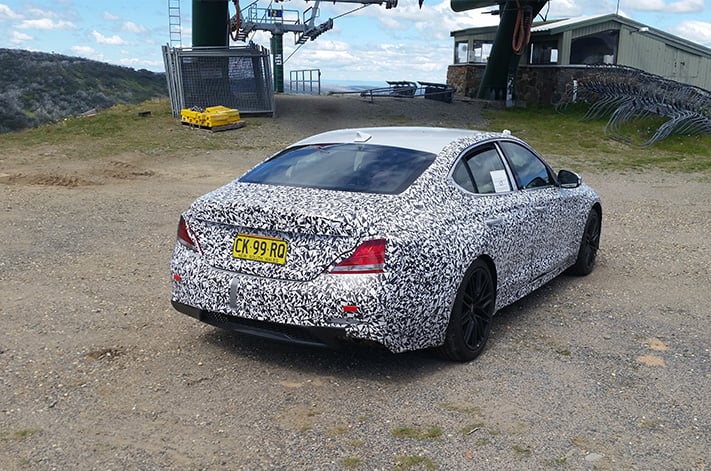
The hotly-anticipated twin turbocharged V6 engine that will appear in the Genesis G70 – the 3 Series-rivalling small sedan due later this year to spearhead Hyundai’s new luxury brand – is set to get an electric upgrade as part of an alternative drivetrain performance push.
Speaking at the recent New York motor show, Genesis chief Manfred Fitzgerald confirmed hybrid and electric drivetrains would form a crucial part of the upcoming six-model range, set to arrive in Australia from late in 2017 with the G70 and G80, the latter an update to the existing Hyundai Genesis large sedan.
“Alternative propulsion systems are at the core of this brand,” says Fitzgerald. “The ICE’s [internal combustion engine] dominance of performance, that’s going to go away.”
In its standard guise, the 3.3-litre twin turbo V6 set to debut in the Stinger within months pumps out 276kW and 510Nm, the latter on tap from 1300rpm.
Even a modest hybrid upgrade is likely to push that peak output to 350kW or more, with torque receiving a decent mid-rev boost too.
Of course, the hybrid system – likely to be a plug-in setup that allows some all-electric driving for about 50km – will add weight, something that will take the edge off performance.
But expect the overall equation to boost acceleration as part of a push towards hybrid performance.
As for a V8, it appears Genesis is keen to rely on technology rather than cubic capacity for its future performance models.
Genesis design chief Luc Donckerwolke was quick to dismiss future Genesis V8 models.
“As much as I like V8 … the electrification is going to be a main element [for performance],” says Donckerwolke.
“Emissions have to be reduced drastically; today a V8 is not exactly responding to that.”
Genesis chief Manfred Fitzgerald says electric is critical to positioning Genesis.
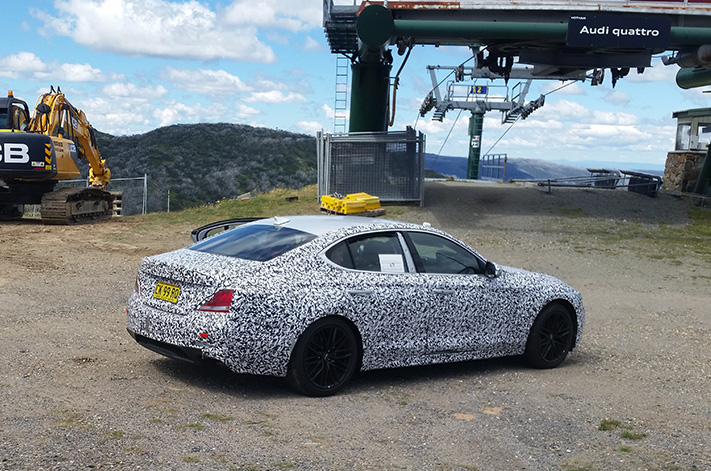
The Genesis G70 will be smaller than the Stinger, with Genesis instead focusing on the driving experience and overall ambience of a car with big luxury aspirations.
So expect greater attention to detail with materials and luxury finishes as well as features more in line with its luxury positioning.
The G70 is expected to start at about $60K, but expect the V6 turbo and hybrid options to push well above that, instead targeting higher output versions of the BMW 3 Series, Mercedes-Benz C-Class and Audi A4.
QUESTION – STEFAN (question asked on 19/12/16):
We’re looking at the Mazda CX-5 or the Subaru Outback. We drive 15,000 to 18,000 kilometres per year and travel over Hotham to the south east coast a couple of times a year. We also drive to Queensland and northern New South Wales, so we need something that can cater for a lot of distance with luggage. As we are both in our 60s, the vehicle would have to be easy to get in and out of. We have had diesel vehicles, and we liked them, so we’d like to own another diesel – we currently have a Volkswagen Jetta diesel and have had no trouble, it’s just getting hard to get in and out of. Decent comfort and build quality are a must and we intend to keep this vehicle for about six years. We also have three grandchildren that we pick up to stay with us.
ANSWER – SAMANTHA STEVENS:
While we would normally give you a blow-by-blow comparison of the two cars you are interested in, your described lifestyle tells us that the CX-5, while an excellent vehicle, would not suit you. The CX-5’s boot is upright and compact, and definitely not suited to your needs. The Outback, on the other hand, has a wide and roomy boot, and its ride height will help entry and egress. It is considered quite a big car these days, and tall enough to suit – though we recommend a thorough test drive to ensure the height works for you, as well as the comfort of the seats. Its diesel is excellent, and the second row will easily accommodate the kids.